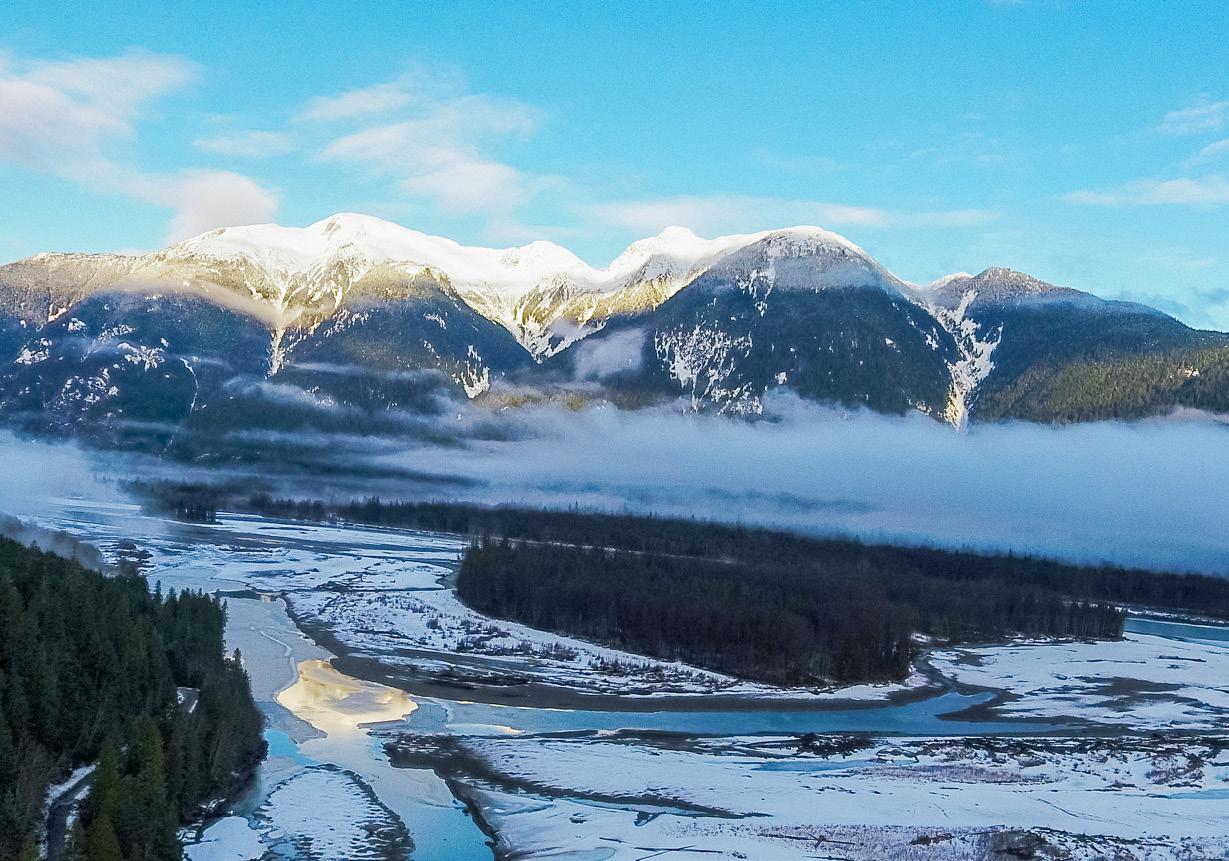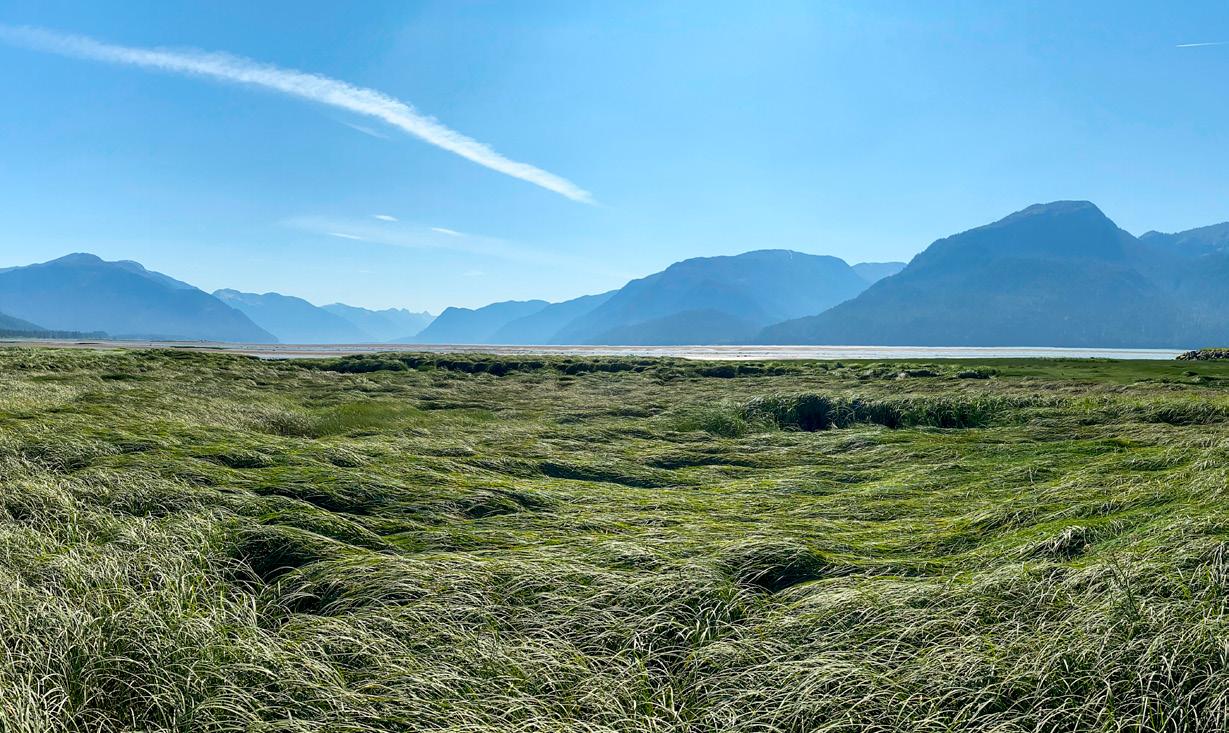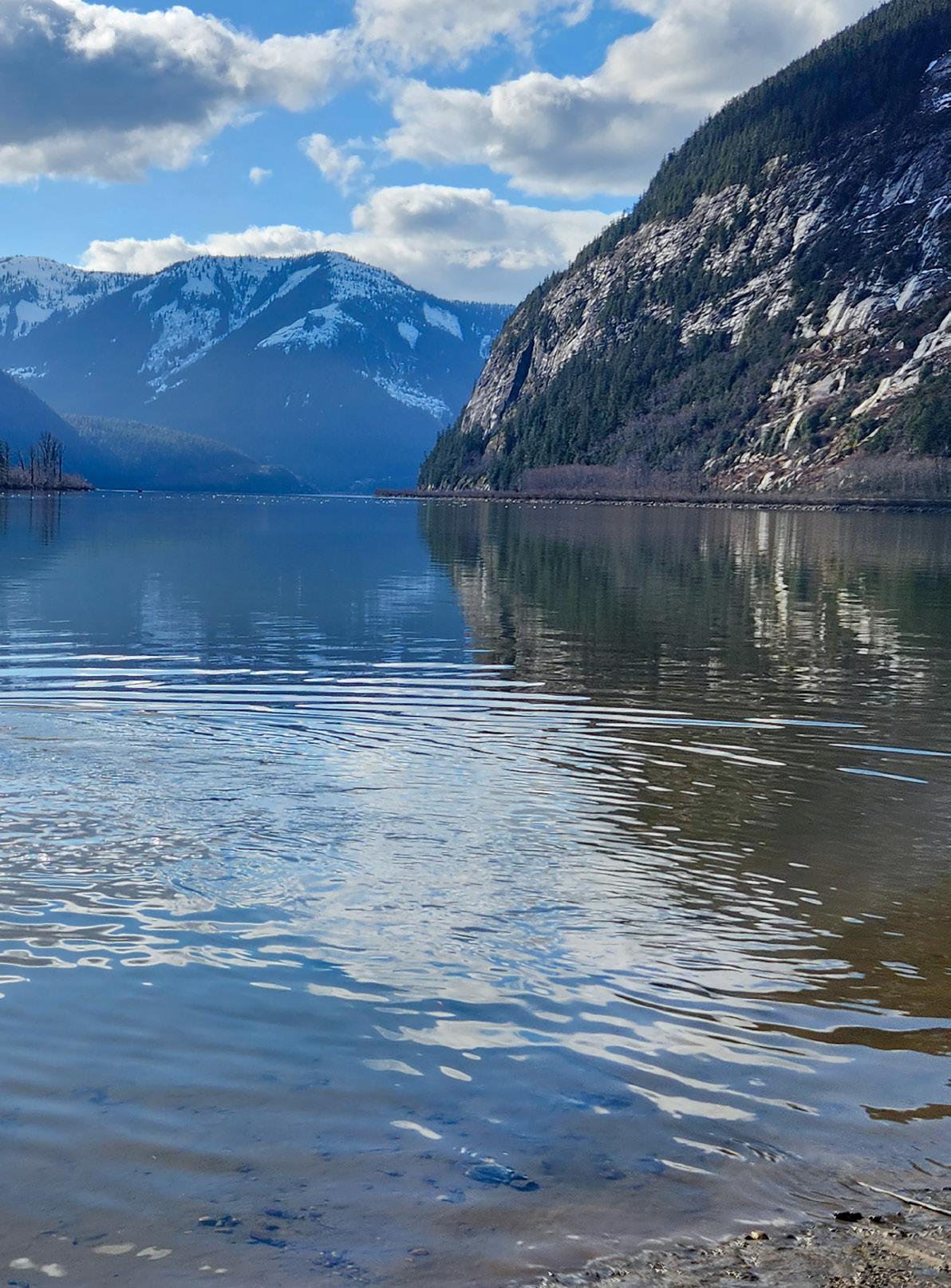
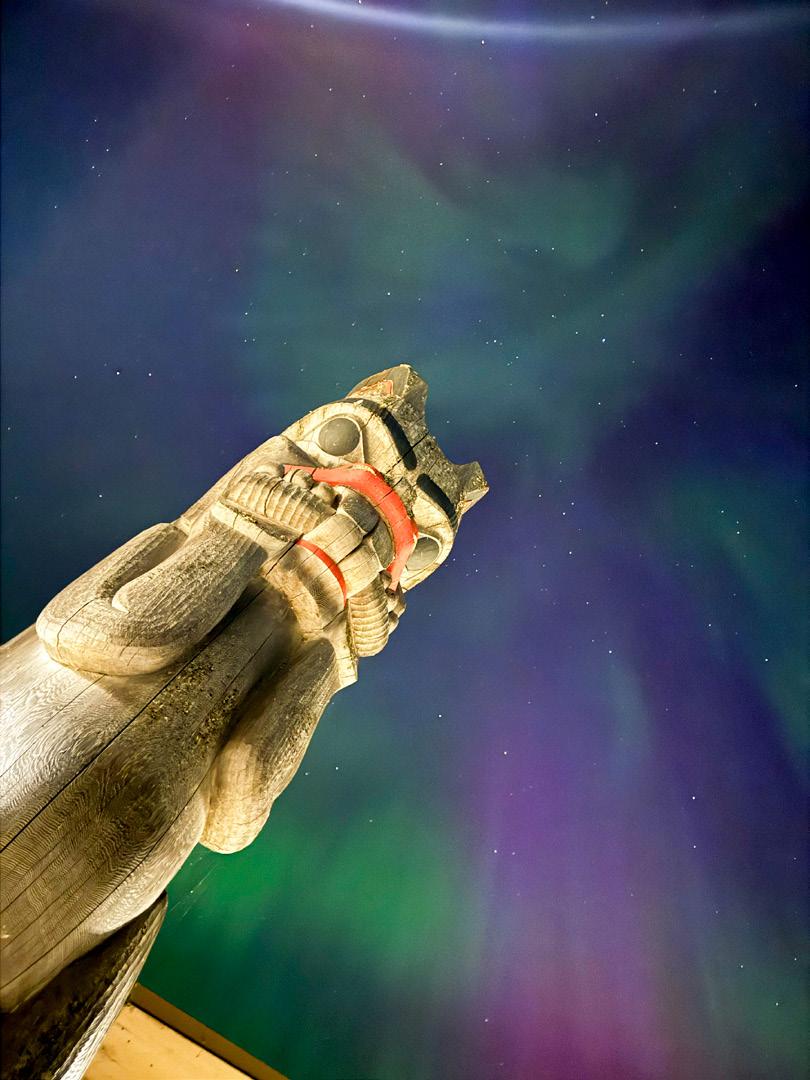
Photos, left and above
Courtesy of Rocky Nabess

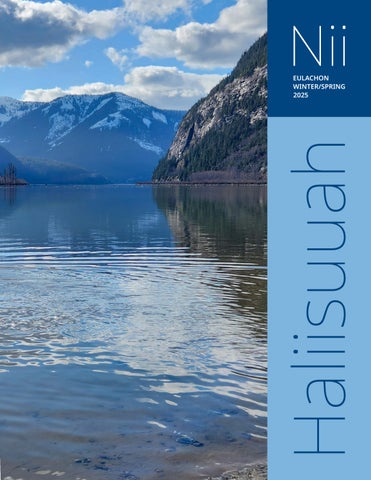
Welcome to the fifth edition of Nii magazine!
In this edition, we celebrate Haliisuuah, the month of the eulachon. We bring news on the eulachon monitoring program as it continues to expand, with results from eDNA sampling and a pilot study of sonar monitoring. This edition includes valuable information for our community. Desiree Bolton, Gitselasu Stewardship Society Coordinator, generously shares her recipe for a healing salve made from Wooms (devil’s club).
A feature article on train traffic explains the upcoming increase in dangerous cargo moving through our territory. It’s imperative to understand possible implications as the rail passes near the Skeena River, which could devastate salmon supply, should a derailment occur. Derailments are of great concern, especially in close proximity to communities.
To promote language revitalization we have a new Sm’a̱lgyax wordsearch puzzle and a quick and easy conversation lesson! We also bring you lots of fun facts about moose, the largest animal found in our territory.
Our Elder Connections feature is a beautiful interview with Stella Wright, written by Brieanna Wright-Seymour. We also want to recognize Rocky Nabess for sending the amazing photos of an Aurora Borealis (northern lights) in the Canyon! The contributions from our community strengthen our collaboration as we come together to celebrate the harvest and environmental stewardship.
I urge all of the community to continue to share your amazing photographs, unique stories, and memorable experiences in this incredible territory you call home. Contact the Lands and Resources Department to share your contributions or discuss our articles.
Toy’axsut nuun, Judy Gerow

KITSELAS LANDS AND RESOURCES STAFF
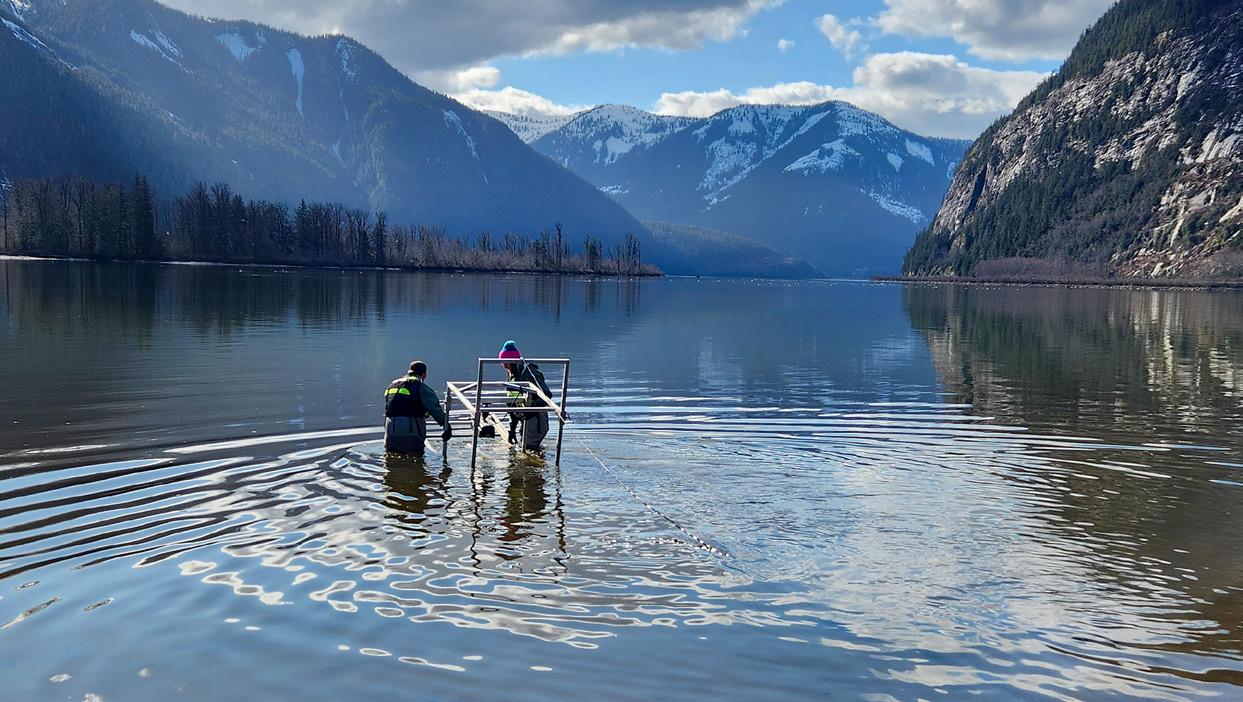
The primary goal of the Skeena River Eulachon Monitoring Program is to improve our knowledge of eulachon presence, distribution, run timing, and abundance. Since 2018, the Kitselas Lands and Resources Department, in partnership with Fisheries and Oceans Canada (DFO), has collected important information about the annual eulachon run in the Skeena River.
Predators are a good sign that eulachon are nearby! From land or boat, Kitselas fisheries staff count mammal and bird predators.
The program expanded to include monitoring tools.
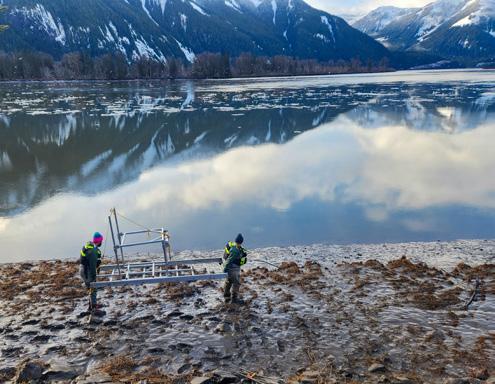
We began a pilot study to collect Environmental DNA (or eDNA) at highway access sites. The data showed a peak in eulachon eDNA on February 25th in the lower Khyex River and a peak at all Skeena River sites on March 5th.
The eDNA sampling program expanded to include more sites. Results were higher in 2023 compared to 2022, with peak detections occurring March 8th and 15th.
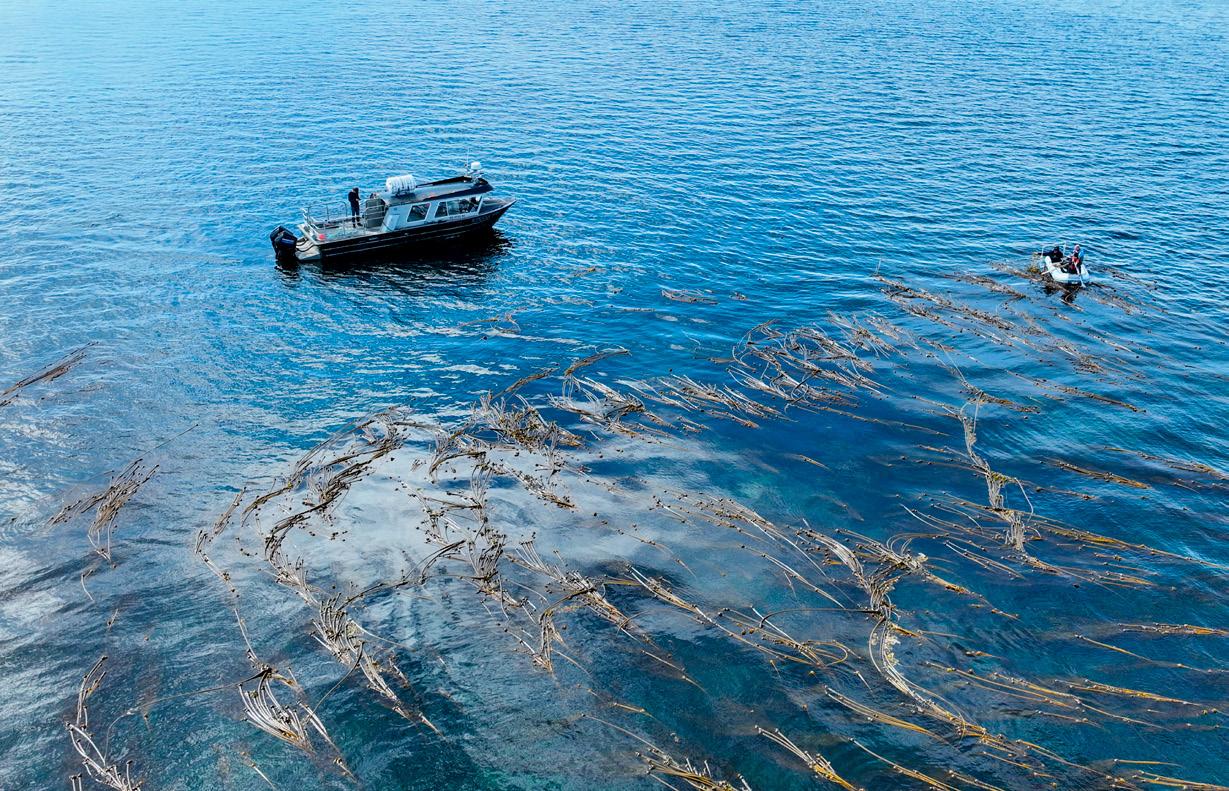
The program expanded again to include more eDNA sampling sites and dates. Samples were taken from early February to late March 2024. We also began a pilot study using sonar to count eulachon on the lower Skeena River at the Kwinitsa boat launch.
Eulachon spawning populations have declined over the past few decades. The condition of eulachon habitat and populations from Washington to Alaska are a source of concern for many people.
Three BC eulachon populations were assessed in May 2011 by the Canadian Committee on the Status of Endangered Wildlife in Canada (COSEWIC). They found that all populations need protection. The Central Pacific Coast and Fraser River populations were designated as endangered. COSEWIC designated the Nass/Skeena River population as “Threatened” in 2011 but re-examined it in 2013 and changed the status to “Special Concern.”
Today, all eulachon populations that spawn south of the Nass River have been severely depleted or are extirpated (see COSEWIC status definitions, right).

To view the full COSEWIC reports, use this QR code to visit the Species at Risk Registry.
COSEWIC status definitions
Extinct (X)
A wildlife species that no longer exists.
Extirpated (XT)
A wildlife species that no longer exists in a certain area, but exists elsewhere.
A wildlife species that is very close to extirpation or extinction.
A wildlife species will probably become endangered if nothing is done to change the situation.
A wildlife species that might become threatened or endangered Not at
A wildlife species that researchers believe is not at risk of extinction if the situation remains the same.
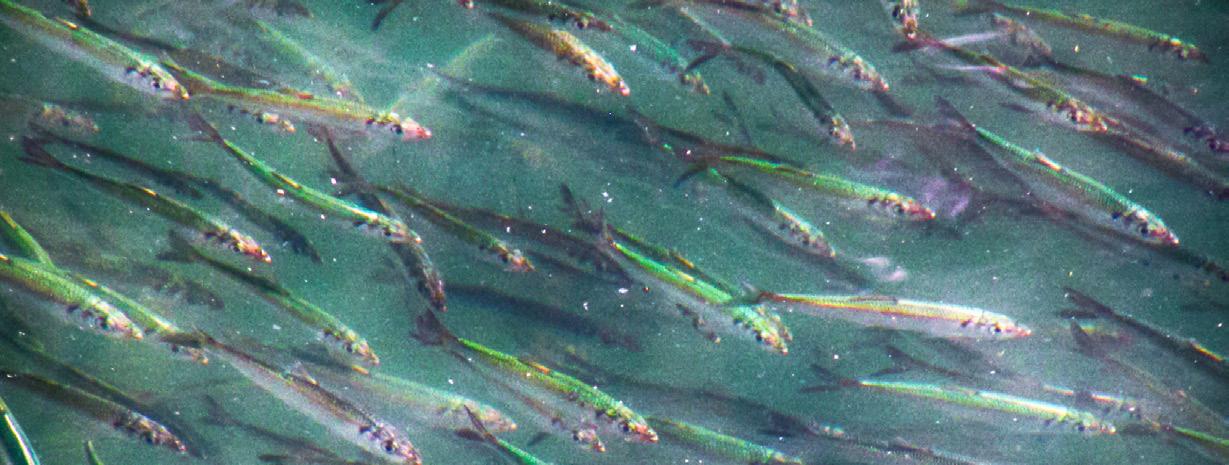
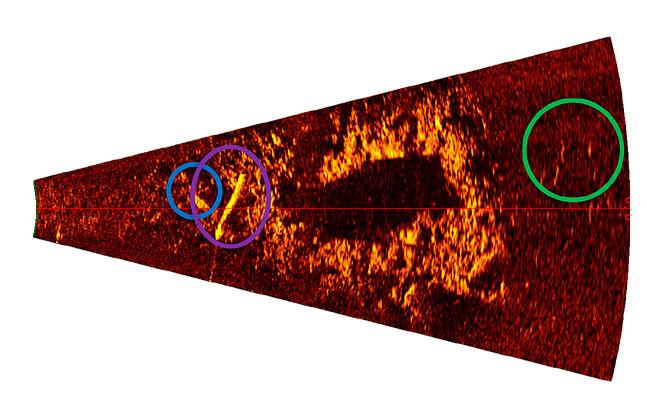
In 2024, the Kitselas Lands and Resources Department added a sonar monitoring component to the Eulachon Program. Sonar has been shown to be an effective tool for monitoring fish in dark and turbid waters.
Detecting eulachon can be challenging because they are small, there are many fish in the runs, and they run during spring break-up in river sections influenced by tides.
In total, approximately 54 hours of quality sonar recordings were captured and a total of 27,485 eulachon were visually counted by technicians. The highest counts of eulachon moving upstream per hour were observed on March 3rd and March 4th. The highest estimate was 16,396 fish/hr in late afternoon on March 4th.
A screen capture from the sonar system shows an underwater scene.
Circles, left to right:
• A rock on the river bottom
• One fish, 85 cm in length (possibly steelhead)
• A group of eulachon
Image taken during the 2024 Eulachon count.
The eDNA results showed that the 2024 Skeena River eulachon run started in low abundance near the Khyex River in early February. The run increased to peak abundance just upstream of the Khyex River at Telegraph Point on March 6th. Abundance remained strong through the end of the program on March 26th, 2024.
The eDNA data were able to capture the increase in abundance as the eulachon moved upstream. The concentration of eDNA
eDNA copies per second (log scale)
1,000,000,000,000
Very cold weather and lower water level means early “scouts” may have left the river or gone to Khyex.
Water can be sampled to detect genetic traces (eDNA) that eulachon leave behind.
at Telegraph Point was higher than the concentration at Kwinitsa East until March 12th when the concentration reversed.
The upstream sampling near the Gitnadoiks River only found a very low abundance of eulachon, similar to 2022 and 2023. This shows that the majority of the run does not reach this high in the river. The concentration of eDNA appears to be consistent across the width of the river.
Four sites on the lower Skeena River
Kwinitsa East
Telegraph Point
Polymar Bar
Sonar Site
The eDNA helps us determine the numbers and location of the species even when we can’t see them.
We plan to increase the number of sampling sites in 2025 and continue to analyze interannual patterns of run timing. We will look to factors that may affect this timing, such as water temperature, air temperature, presence of ice, tide cycles, and river flows.
For more information about the program, please reach out to us at KLRD!
Please be mindful that this article was written in respect to Gitselasu Culture and History.
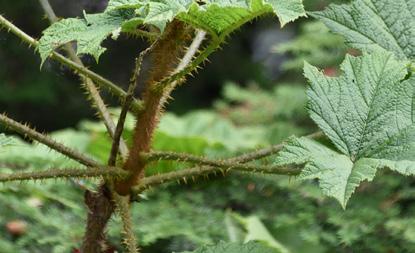
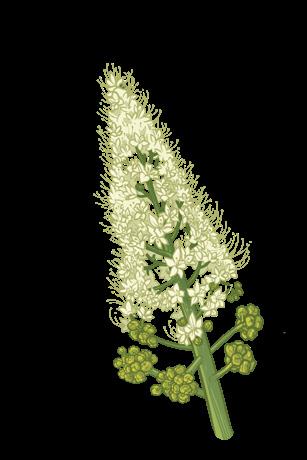
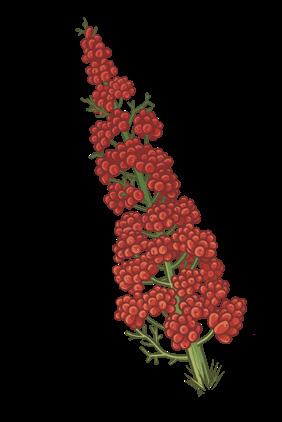
Wooms (devil’s club) is a widely known traditional plant within the Tsimshian territories. This shrub has large leaves and spiny stems. It grows abundantly along streams and watercourses. Wooms flourishes along the Kitselas Canyon trails.
Wooms (devil’s club) is a powerful medicine that affects the body in several ways. Never use wooms without experience or the advice and care of an herbal medicine specialist or family physician.
Wooms has many uses:
• Shampoo to prevent and treat lice and dandruff
• Bathing solution to mask human scent
• Purifier and general medicine (for example, to help with symptoms from type 2 diabetes)
• Salve for arthritis, sore muscles, eczema (or other rashes), and bug bites
There are two harvesting seasons for wooms. For ingestion such as a tea or water, harvesting should be done in spring, just before flowers start to bloom. Wooms that will be used topically (such as for salves) should be harvested in fall when leaves start to decay.
Please note: When harvesting any plants, only take what you need for yourself.
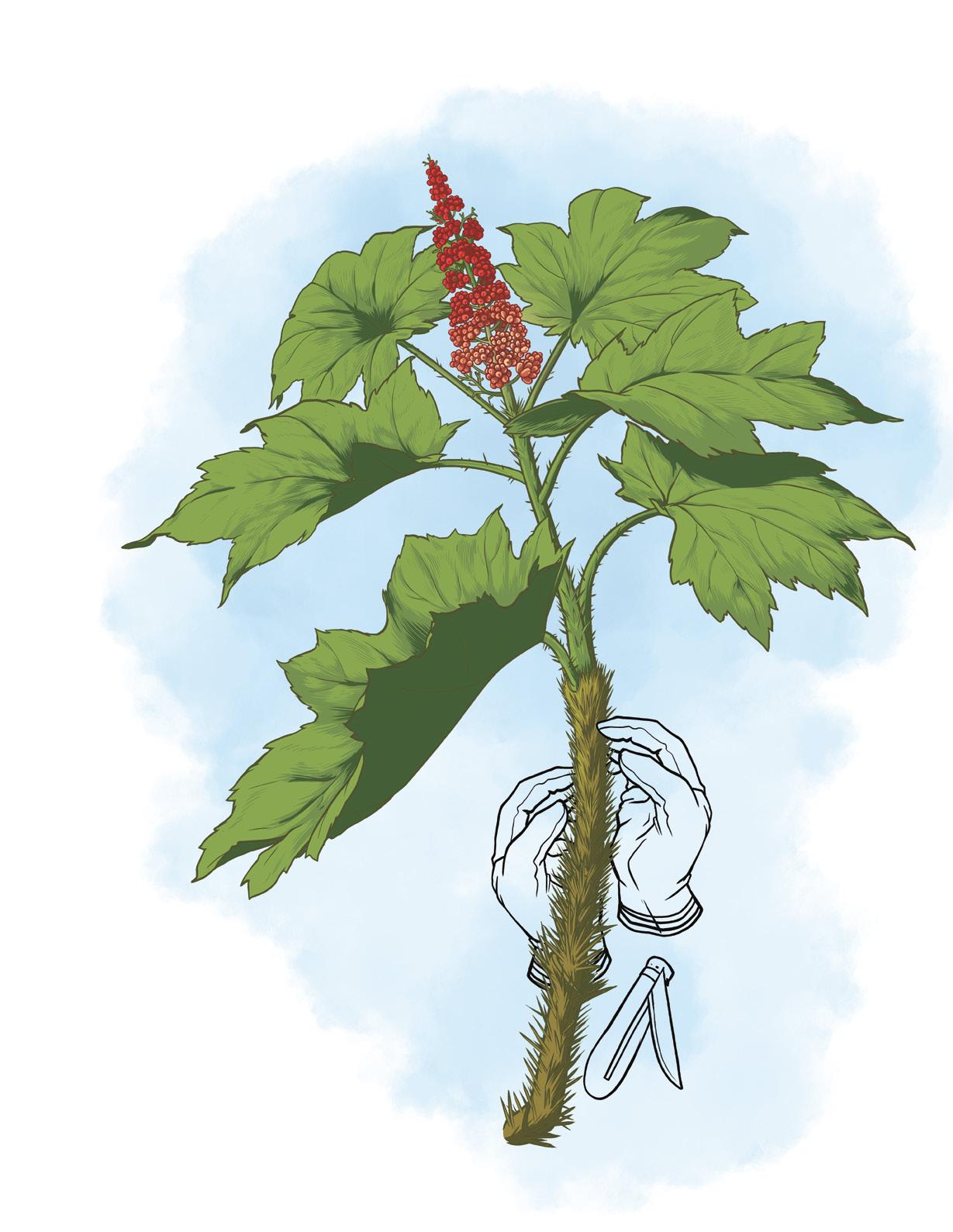
Always wear thick, sturdy gloves and protect your skin when harvesting and processing wooms. Wooms’ sharp thorns can cause intense and painful skin reactions or allergies in some people.
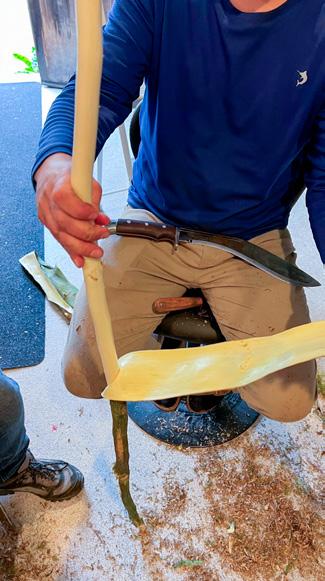
1. Cut the wooms a couple of inches from the ground.
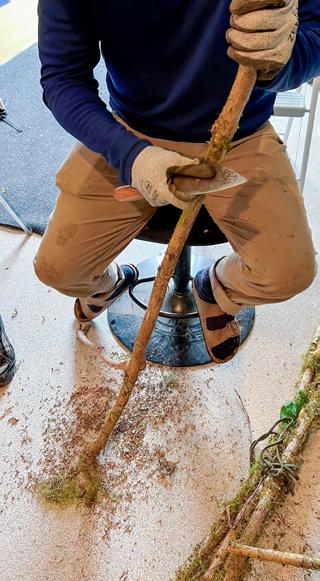
2. Using leather gloves and the back of a knife or butter knife, scrape off the thorns and outer layer of the bark.
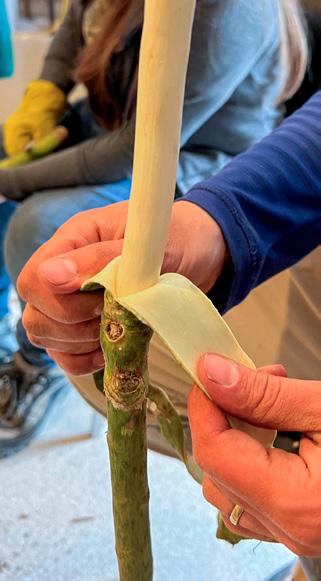
3. With the sharp edge of the knife, score the green inner layer of bark. Peel this thin inner layer of bark off of the stick and cut it into smaller pieces for easier storage.
4. Soak these pieces of the inner bark in water for 6 to 8 hours. This is to prevent mold as well as enhance medicinal properties.
5. Dry the shavings. This can take several days to a week. Once dry, the shavings can be used to make salve right away or stored for later in a brown paper bag. Dried wooms can be kept for a long time.
Do not eat or drink anything made with wooms harvested after the flowers bloom in spring! This should only be used as a bathing solution or topical.
Ingredients
1 ½–2 cups Dried wooms (devil’s club)
1 cup Olive oil
2–4 Tbsp Beeswax (pellets or shredded)
6 drops Vitamin E oil
Tools
• Double boiler pot
• Ladle
• Bowl
• Strainer/sieve or cheesecloth
• One or several heat-proof containers to fit a total of 10–12 ounces of salve
Wooms Salve can be purchased at the Kitselas Canyon gift shop. All items are harvested and prepared by staff on traditional territory.
1. In the double boiler, combine the olive oil and dried wooms.
2. Simmer for 30 minutes.
3. Strain into a bowl, then return the liquid to the double boiler and discard the strained chunks.
4. Slowly add the beeswax to the oil until the salve reaches the consistency you prefer. If you want a firmer salve, add more beeswax. Note it will get firmer as it cools.
5. Turn off the heat and stir in 6 drops of Vitamin E oil.
6. Pour your salve directly into heat-proof containers and let cool.
Only do medicinal salve preparation with positive energy.
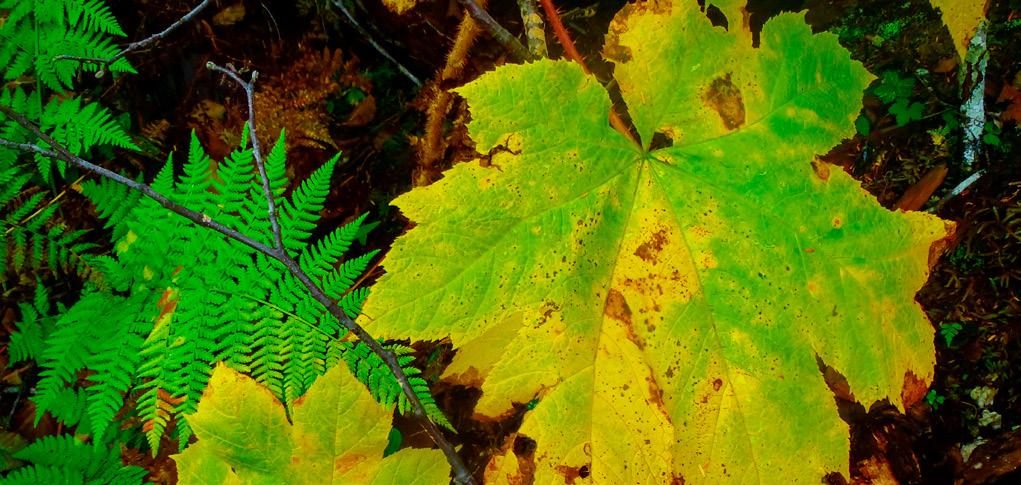
Wooms that will be used for salves should be harvested in fall when leaves start to decay.
KITSELAS LANDS AND RESOURCES STAFF
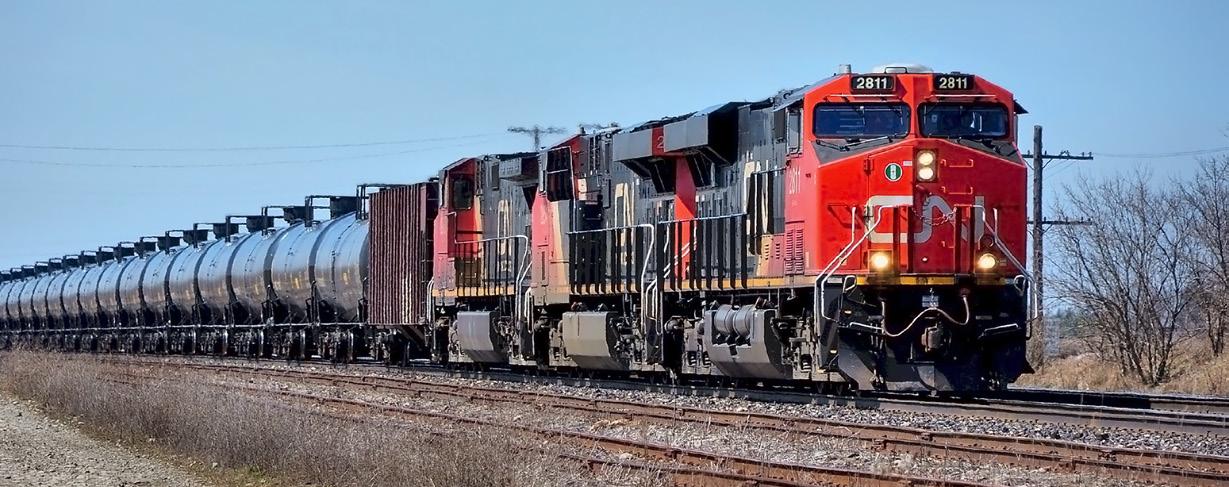
More train traffic through Northwest BC is a topic of significant discussion, especially as it relates to the region’s economy, environment, and community safety. In recent years, there has been a notable rise in train traffic through Kitselas Territory. More is expected as export terminals in Prince Rupert become operational over the next few years. It is true that the
railway benefits the regional economy by transporting goods and natural resources to international markets, creating jobs in both the rail and resource sectors. However, this benefit must be weighed against the potential risks and drawbacks that come with more trains, particularly those transporting dangerous goods.
Anything that might pose an unreasonable risk to health, safety, and property when transported is defined as a dangerous good by Transport Canada. Currently, propane is the only dangerous good transported by rail through the region. The transportation of dangerous goods may soon rise steeply in the Territory in both type and amount. Within the next five years, it is expected that trains transporting propane will double, from 1–2 trains per day to 3–4. Within 10 years, up to 15 trains per day could carry dangerous goods such as LNG, bunker fuel, methanol and ammonia through the Territory. The amount depends on market conditions and project approvals.
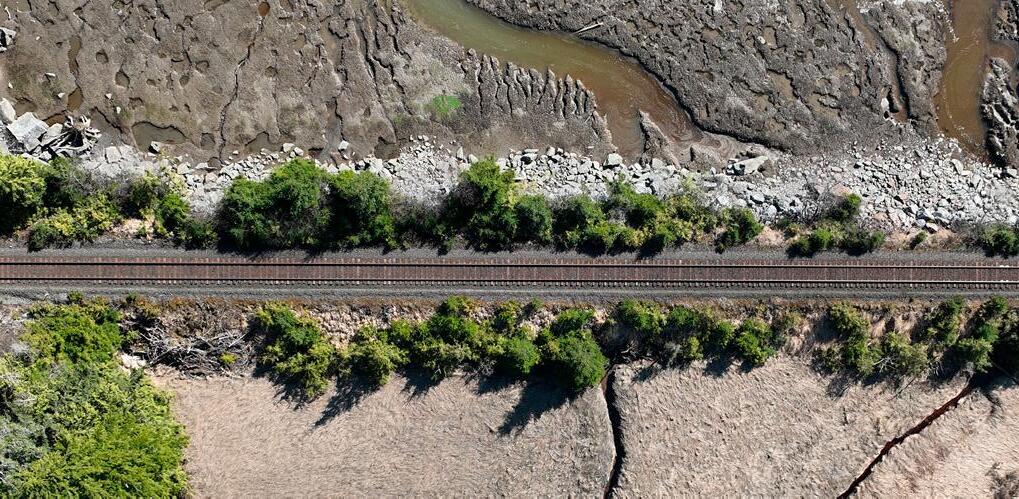
The sensitive environments and hazardous terrain in Northwest BC make it particularly vulnerable to the consequences of spills or accidents. For instance, propane is a flammable gas that will pollute the immediate area with propane fumes, which can make both humans and wildlife ill, particularly if the fumes ignite and cause an explosion. Spilled ammonia can cause respiratory problems for humans and wildlife and lead to eutrophication (harmful nutrient build-up) in water bodies it leaks into. The resulting overgrowth of algae growth can severely impact fish and other aquatic animals. The seriousness of these impacts depends on the amount spilled, where the train derails, and the effectiveness of emergency response. These impacts are often worse for Indigenous people who rely on healthy local plants and wildlife for food and whose Reserves are often intersected by railways, presenting a greater risk to the safety of their communities.
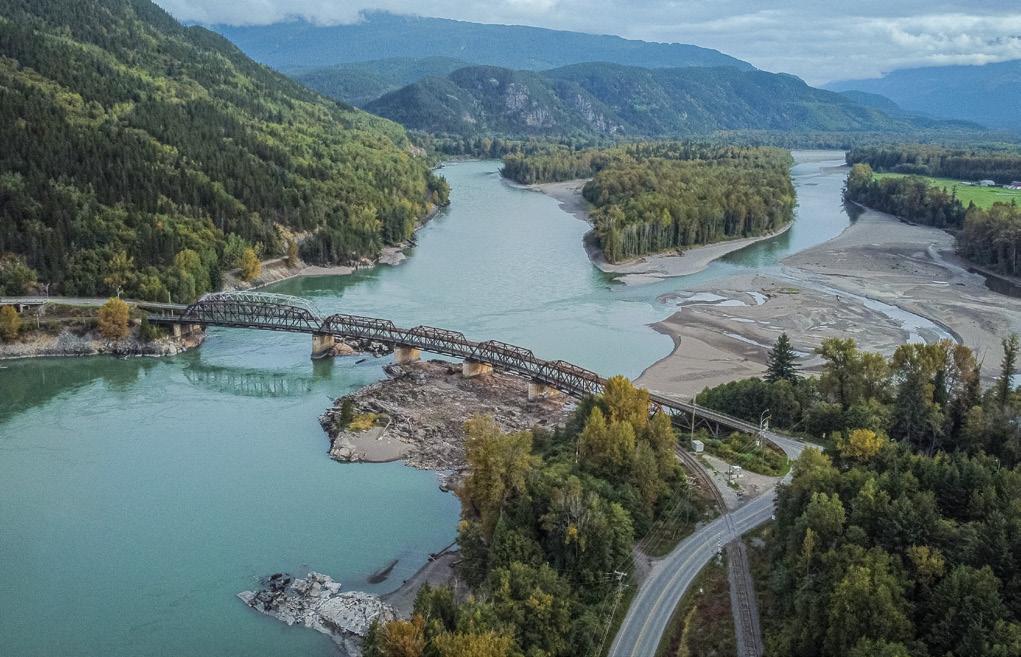
Accidents and malfunctions are always a concern with more trains, whether there are dangerous goods involved or not. The more trains that are travelling, the more chances there are for problems such as mechanical failures, human errors, and collisions. Add rugged terrain and extreme weather, and the chance of accidents escalates. In recent years, rising temperatures resulting from climate change brought fears that wildfires could be sparked by rail traffic. These fears were confirmed when a 2400-hectare blaze was accidentally started by a Canadian National Railway (CN Rail) train near Lytton, BC, in 2018.
Moreover, the aging tracks and equipment in parts of Northwest BC may not be able to handle the increased load of heavy freight trains. Insufficient maintenance and oversight can lead to track failures or equipment
malfunctions, further raising the risk of derailment. Each incident has the potential for loss of life, damage to property, and long-term environmental harm.
More trains can also make it hard to travel in and out of local communities situated near railway lines, such as Gitaus, Thornhill, and Terrace. Ambulances and fire trucks may experience delays because of rail traffic. When trains block roads, it can also make it difficult for residents to reach schools, hospitals, stores, and their place of employment.
Traditional land use is also significantly impacted. The expansion of rail lines and continuous train traffic often leads to the fragmentation of habitat, disrupting the
ecosystems that Indigenous communities rely on for hunting, fishing, and gathering. This division can mean less access to traditional food sources, harming cultural practices and food security. What is more, noise and pollution from trains also undermines the spiritual practices of Indigenous peoples and their connection to their territories.
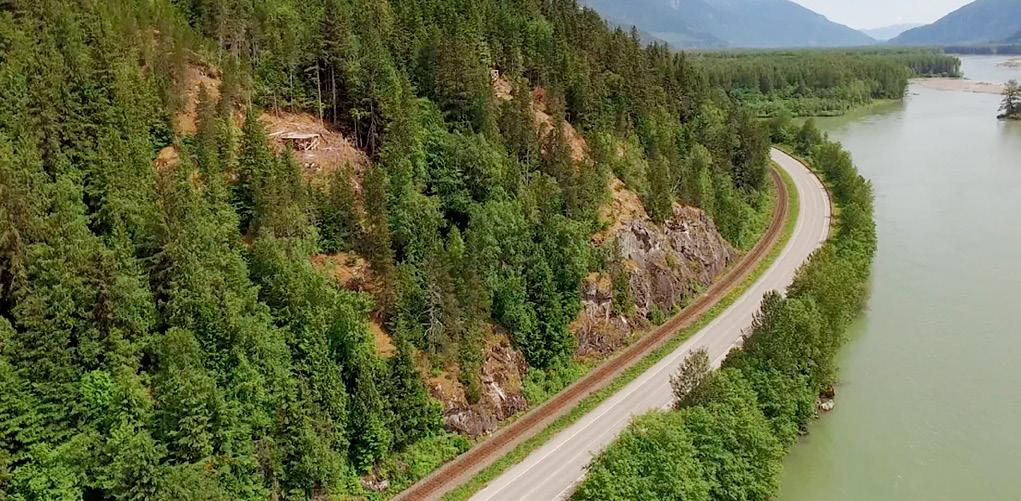
There are broader environmental implications too. Ecologically sensitive areas often surround rail lines, particularly in this region. Disruptions from increased rail traffic has lasting impacts on local ecosystems. Noise pollution, the spread of invasive species, and collisions with wildlife (particularly with moose that use the railway as a travel corridor) are all concerns that accompany the expansion of rail operations.
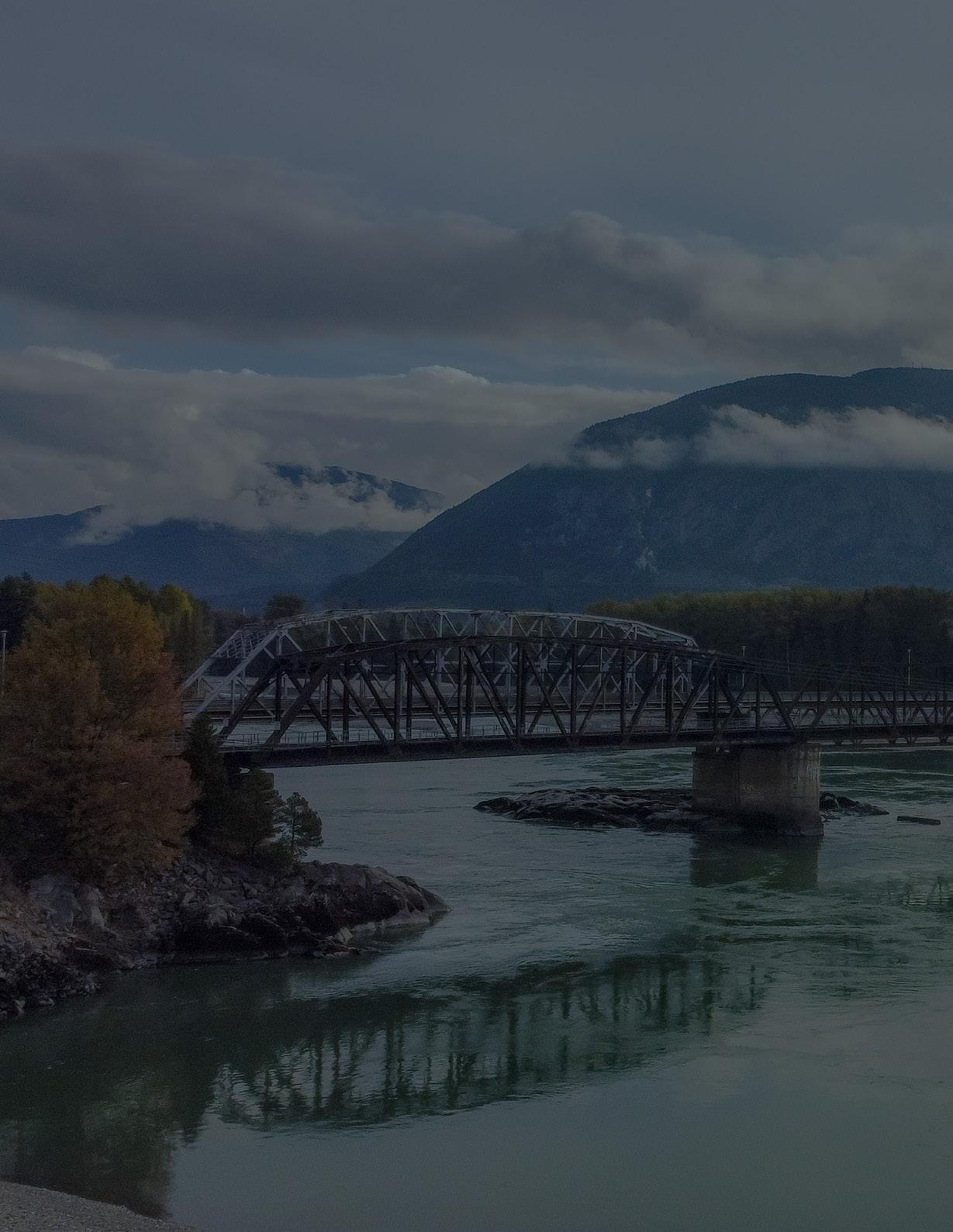
Kitselas has been uniquely impacted by the railway, which passes through Kitselas Indian Reserve No. 1 (Kitselas Canyon) on its west side. Railways hurt Kitselas’ economy, the culture, village sites and sacred places.
Before the railway was built, boats carried people and supplies on the mighty Skeena River. The Kitselas people built their economy
on charging a toll to those who passed through the Kitselas Canyon. Once the railway was built, not only was 28 acres of the Reserve transferred to the Grand Trunk Pacific Railway (now CN Rail) for their use, but it also ended the toll keeping aspect of Kitselas’ economy.
The construction of the railway essentially dismantled Gitlaxdzawk and Tsunyow, historic Kitselas village sites that the Canadian government falsely claimed were “abandoned.” It is said that during construction, Kitselas people were paid to relocate the graves of ancestors in the path of the railway. These injustices have never been rectified. Today, the railway passes through or directly adjacent to half of Kitselas’ Indian Reserves: Gitaus, Chimdimash, Endudoon, and Kulspai. As a means to acknowledge and accommodate for the historic and ongoing impacts, Kitselas began negotiating impact management benefit agreements with major project proponents. This included a “toll” for each rail car passing through Kitselas Territory.
Addressing the implications of increased rail traffic requires multiple approaches. This includes community engagement, monitoring and enforcement, and investment in infrastructure and emergency preparedness. For several years, Kitselas has been a leading participant in the North Coast Rail Forum which
brings together regulatory agencies, Tsimshian Nations, and CN Rail to discuss and address concerns. In partnership with Kitsumkalum and the City of Terrace, Kitselas is also updating our 2021 independent rail risk assessment to include more data and community concerns. Lastly, Kitselas continues to advocate for emergency response funding and training specific to rail to ensure communities are prepared for potential incidents.
Kitselas members, we want to hear your questions and concerns!
Please contact the Project Assessment Officer at the Kitselas Lands and Resources Department:
pao@kitselas.com or 250-641-7618
Only trains carrying dangerous cargo are listed here. But each train will have to travel back empty after delivery, so the total traffic will be double this amount. This table also doesn’t include trains carrying regular cargo such as food.
Trains
Average trains per day
2 Trains
5.25 Trains
13.25 Trains (if all projects go ahead) 2029
5.25 Trains
(if no more projects go ahead)
See if you can find these Sm’a̱lgyax words in the square above!
G’an (tree)
Wuus (blanket)
Gwahlk (burn)
Duula Gan (lumber)
Sk’uniis (mountain)
Oouh (oolichan)
G’willa Muhks (labrador tea)
Hthliion (moose)
Siipk (sick)
Maadm (snow)
Baaskh (wind)
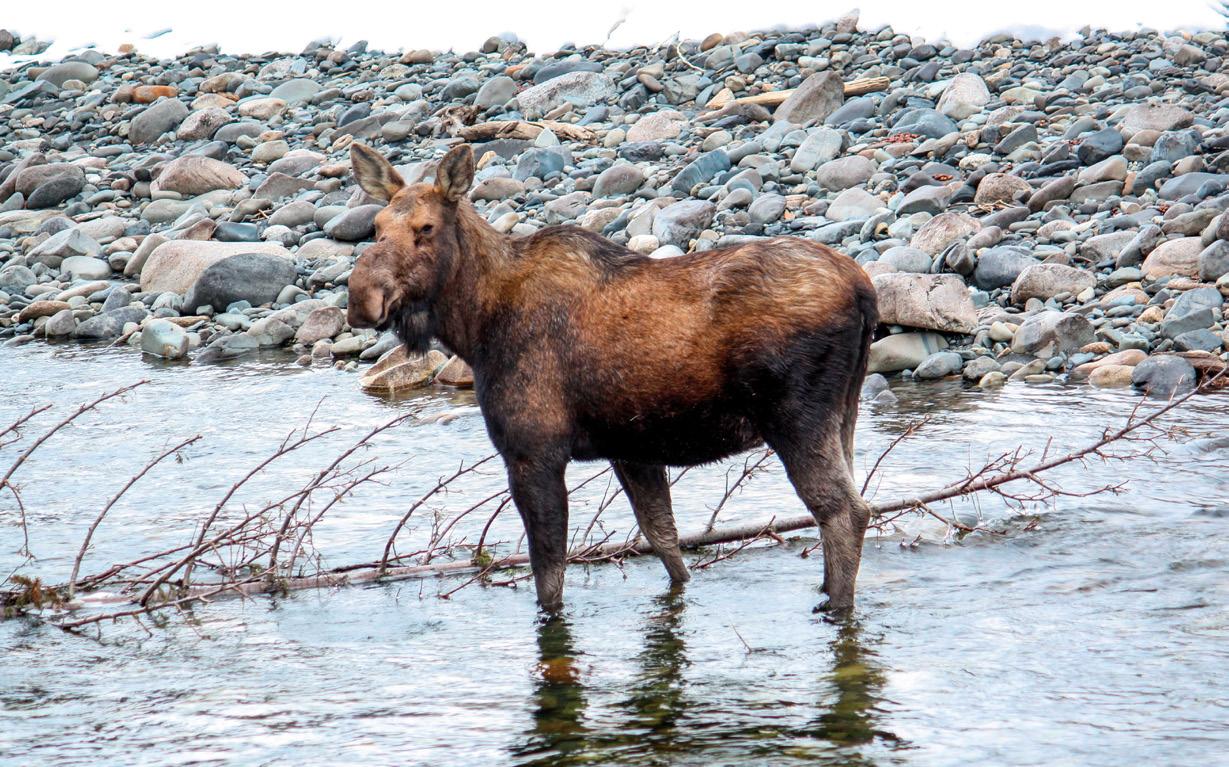
Moose matter! They are important to the ecology, culture, society, and economy of British Columbia.
115,000 to 192,000 moose in BC
Moose live almost everywhere in mainland BC, but their numbers are going down.
Moose are newcomers to Kitselas La̱xyuup!
Moose moved into northwest BC in the last 200 years, records show. They were only seen near Terrace from the early 1940s, arriving as caribou disappeared. Moose became important food for Kitselas.
Moose are the largest animals in the deer family (Cervidae). They are found across North America, Europe, and northern Asia. There are seven subspecies around the world. In Kitselas La̱xyuup (Kitselas Traditional Territory) is the Northwestern Moose.
Sm’a̱lgyax names for moose
There are many words for moose in the Sm’a̱lgyax language, as the word has been added relatively recently.
The words “cow, “bull” and “calf” aren’t just for cattle. These words describe moose, too!
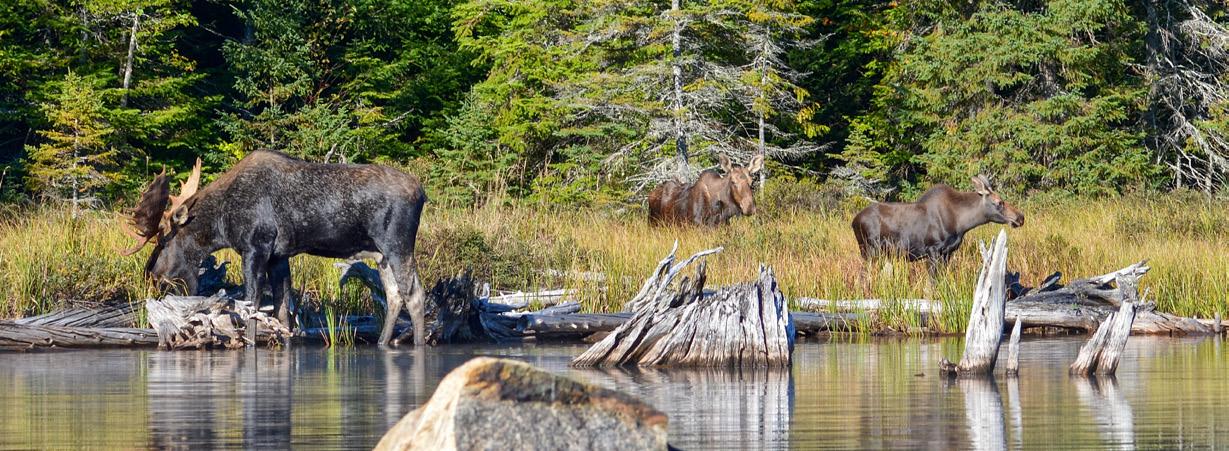
Bulls and cows meet up in the breeding or “rutting” season from September to November. Most cows produce one or two calves every late spring to early summer. Pregnancy lasts eight months then about one year later calves venture off alone.
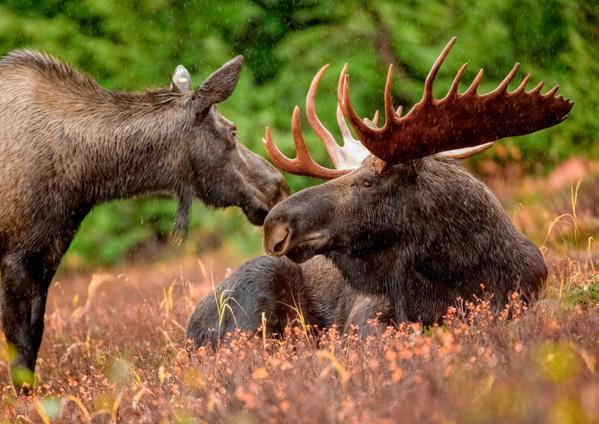
In mating season female moose make loud calls that can be heard from 3 km away!
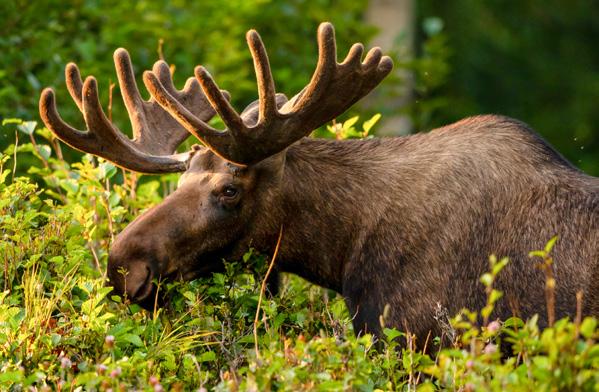
Only bull (male) moose have antlers. They use their antlers to fight each other during the fall rutting season. Once rutting season is over, they shed the antlers. Then they regrow them all over again in the spring! Moose antlers are one of the fastest-growing animal organs.
The antlers have a soft, furry “velvet” covering (photo, above right) with blood vessels that
Unlike other deer species that form herds, moose usually spend their 15- to 20-year life alone. But groups of moose are sometimes found at prime feeding areas. They also gather at mineral licks—areas of exposed clay or rock that hold salt or other nutrients.
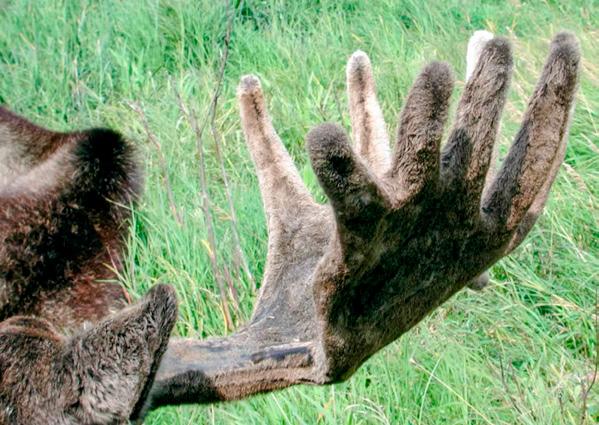
Moose antlers grow to full size in just 3–5 months!
support antler growth. The velvet dries out when antlers stop growing, then the moose rubs it off on trees or shrubs.
Antlers grow larger, wider and flatter every year, but that doesn’t make them reliable to tell age! The size and number of points depend on genetics, food, and other factors. They can be six feet wide and 40 pounds.
Moose move with the seasons. Their long legs help them travel through deep snow. But when the snow gets too deep, they will move on to a different area. They especially prefer forests near rivers and lakes. That makes Kitselas La̱xyuup a great choice!
Heat stress in high summer temperatures makes moose not eat enough. Then they might not gain enough weight to survive the winter.
With a huge size comes a huge appetite! Moose eat up to 30 kg of food a day in the summer and 20 kg in the winter. In summer they eat many different shrubs, trees, and water plants. In winter, they mostly eat buds and twigs. Moose are “browsers” and eat as they wander.
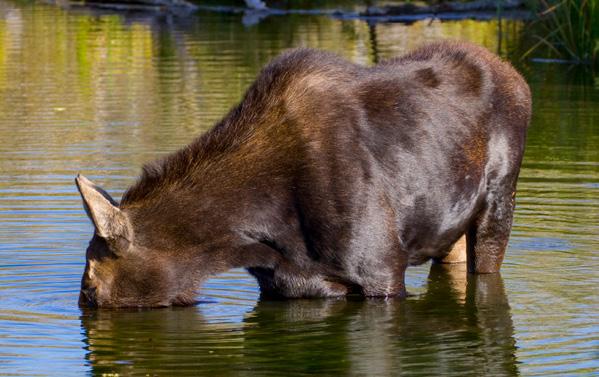
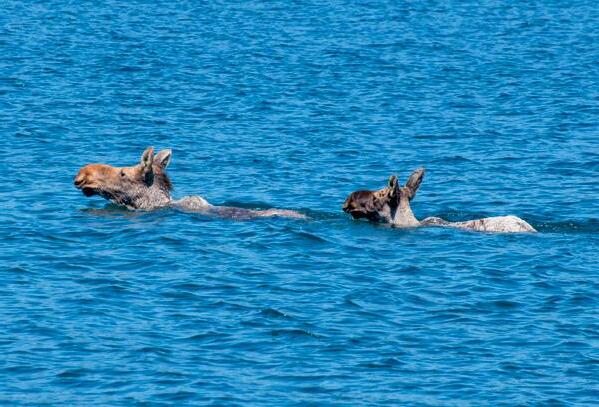
Moose are powerful swimmers and can dive down six meters (20 ft) underwater. Special muscles seal their noses shut to keep the water out. They can even eat underwater! Moose will swim in the ocean as well as lakes and rivers. Sometimes they swim just to cool off in the summer!
There are records of moose being eaten by killer whales. A rare overlap of killer whale and moose habitat happens in BC. The BC coast has many deep ocean inlets with rich forests growing next to the water. Moose graze on the forests and swim to cross the inlets. But transient killer whales might be waiting in the water to catch a slow-moving meal!
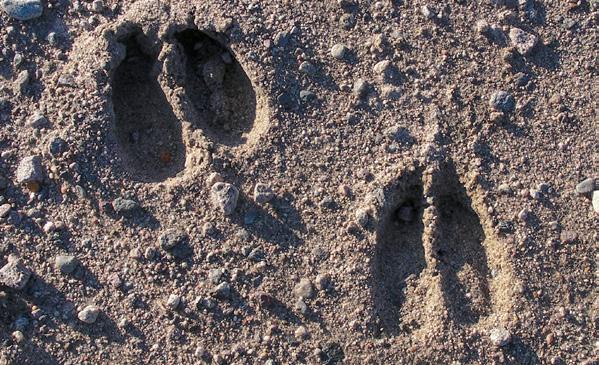
wolves wolverines humans bears
Thousands of ticks can infest one moose. The blood loss from tick infestation leaves a moose weak, and can even cause anemia (lack of blood cells) and death.
Moose are considered plentiful in BC and are not a protected species. However, in the last few decades the number of moose has decreased very quickly. Many people are concerned, and scientists are working to understand it.
Moose will try to rub the ticks off on trees or rocks, leaving bald patches in their hair. They need their insulating hair to survive the winter, even in warmer years.
Why are moose numbers going down?
It seems that there is not just one reason.
• Tick infestations
• Parasites and diseases from deer
• Climate change
• Habitat loss
• Roads and railways
• Predators
• Hunting
________________ di waayu
_______________ di pdeegu
_____________ di wil dzogu
____________ di wil waatgu
________________ is my name
________________ is my clan
________________ is where I live
(Tsimshian, Gitxsan, Nisga’a)
_____________________________ nuuyu
Nda wila waan?
Gooyu dzidzabn?
Gooyu Hasagn?
No yoh gwa’a
Nugwaadu gwa’a
________________ is where I’m from I am
(Tsimshian, Gitxsan, Nisgaa’a)
Hello, how are you?
What are you doing?
What do you want?
This is my mother.
This is my father.
Gispudwada
Laxgibuu
Ganhada
Laxgiik Killerwhale Wolf Frog/Raven Eagle
The Kitselas Lands and Resources Department is hiring in 2025!
To stay updated with career opportunities, please check employment opportunities on the Kitselas website or Facebook page!
kitselas.com/employment-opportunities
Kitselas Administration
WRITTEN AND RECORDED BY BRIEANNA WRIGHT-SEYMOUR
In my interview with Stella Wright, we connected and shared funny memories of how she remembers life when she was my age and the connection she had with her neighbours and family within Kulspai and Kitselas. She shared with me cherished knowledge and words of wisdom that can only come from a respected elder like her. She said we should be doing this more often and not just for newsletters but also to have it written down for future generations and to get more connections in the community between
elders and young people, strengthening the community for future generations.
My first question I asked her about is harvesting and the impacts she has observed over the years in the community. She told me it has gone down in her opinion in the last five years in different aspects. She said it’s hard to keep up with consistency to grow in any direction when there has been too much change, too fast. Over the years she normally never had to ask for fish or when the fish would be arriving, as it would just be there. She’d have it delivered, gutted, and cleaned— ready to cut—without question. Now she’s lucky if they remember her. She appreciates the value of the fish wheel and the people who bring it to the community, but the ways have changed over the years.
From my prerogative as a listener, she and other elders in the community have been used to the care of kindness and community that others have provided and, with the change over the years to suit newer generations, we have forgotten the care we provided to elders in the past. Not everyone has social media or the vehicles to haul fish. Now some ask for money to pay to help or ask “Will you pay for my services and knowledge?” I see that side, as you need to make a living, but listening to how it was before when everything was simple and easygoing, it’s a harsh comparison.
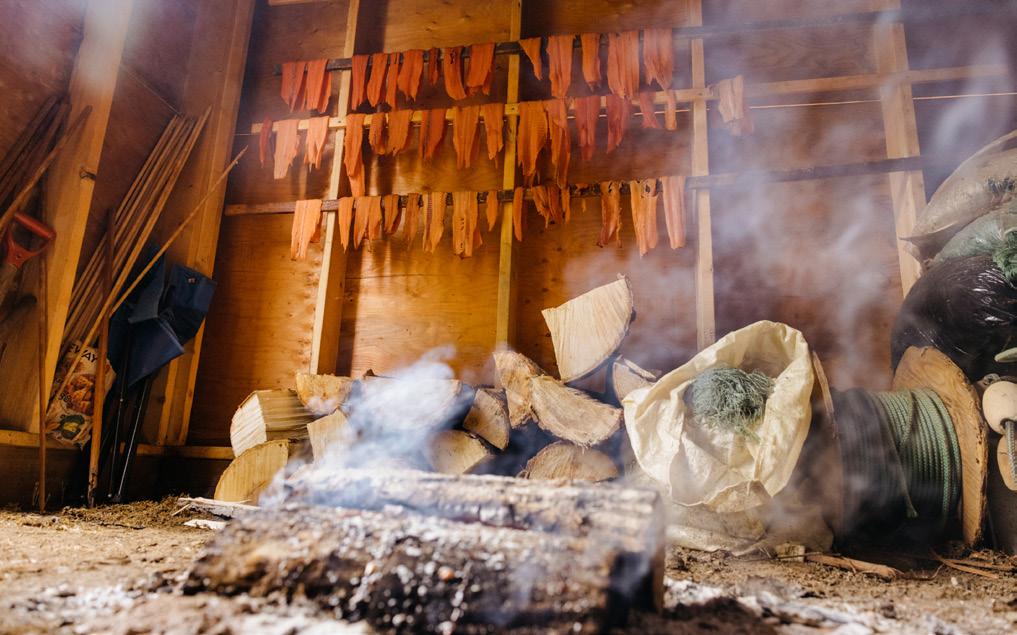
Mrs. Wright shared with me from her memories that she, Merle, Beverley, and Minnie shared the workload of processing and preserving food for the winter/year. Her fondest memory is that they turned her late husband Ralph’s shed into a smokehouse— because at the time it was all they had to work with—and when he came back from work, he came around to the back and said “Oh my dell! My shed is smoking!” We had a good laugh from the memory. With working and sharing the workload of processing and preserving food came new techniques of how to do it. Merle showed her how she was taught to hang and smoke fish, hanging the fish from the tail instead of hanging it from the middle. Throwing the green leaves on top of the fire keeps the house in a very constant smoke to help dry the fish out faster to prevent it from spoiling and to seal in the freshness. She has also observed how difficult it is to take the time to do all these important things! “It is hard nowadays to prepare for your winter feeds because that means you might be choosing to go without any traditional foods, or you have to take time away from work and, with this economy, time equals money.” She claims everyone will be lucky enough to have the luxury to preserve themselves and she said she is lucky enough to have family who does it for her as she has taught them well.
She passes these invaluable memories down to me and now to any readers to pique their interest in learning different ways to smoke fish. She hopes that one day it’ll become a sense of community practice she was lucky to experience in her time; everyone in Kitselas will be able to experience it, as it brought her immense joy to see everyone’s family have enough for the year. Everything Mrs. Wright has learned, she learned from her aunties and grandmother: the ways to process and when to go harvest / where to harvest. She has told me that one thing she has seen that is a struggle, is that young people don’t listen to what elders have to say much anymore—in the sense of taking what they say into account. Elders don’t say stuff to bring hardship but so that the young people won’t have to go through hardships they went through, because they went through it for them.
“Young people need to have a more open mind to the things we tell them, a more open heart to hold what I say in their mind to contemplate,” she said.
The next question I asked her is which amenities she hopes to see on reserve. Stella told me what Kitselas needs is food security and transportation (prioritizing Gitaus members) with the way the world is turning, so to speak. It will create jobs (farming, driving, etc.) and give every family one less thing to worry about and know well what we are putting into our bodies, especially with people who have food sensitivities. She says she can see it generating a sense of independence and structure which everyone deserves; especially with our growing community.
“Young people need to have a more open mind to the things we tell them, a more open heart to hold what I say in their mind to contemplate,” she said.
This is an opportunity for youth to connect with Elders in their family by interviewing their family members and learning from them. We are providing the platform of this article series to demonstrate knowledge transmission from one generation to another.
Are you interested in writing an article for this series?
We are looking for Kitselas youth under 25 who would like to interview their elders and write about that experience in their own words.
We will provide the cost of a one-time meal to facilitate the interview.
We are looking for writing with a minimum of 500 words and a maximum of 1200 words for the article.
• How have you experienced material/processing change in harvesting traditional foods in your family?
• How have you experienced seasonal changes in the timing of harvesting?
• How have our cultural ways experienced change for the better/worse?
• What hopes do you have for your family or for Kitselas?
• Development on reserves: What amenities do you hope for on reserve?
• Knowledge transmission: What is the best way for younger generations to learn about Kitselsas Land Connections?
We recommend providing a sheet with these questions to each elder after the interview. If they forget to mention something and want to include it, they can write down their thoughts later.
Please contact Madison Gerow, LR.Reception@kitselas.com, if you would like to participate!
The next issue of the magazine will be published in the summer.
Kitselas Traditional Territory
Reserve Boundary
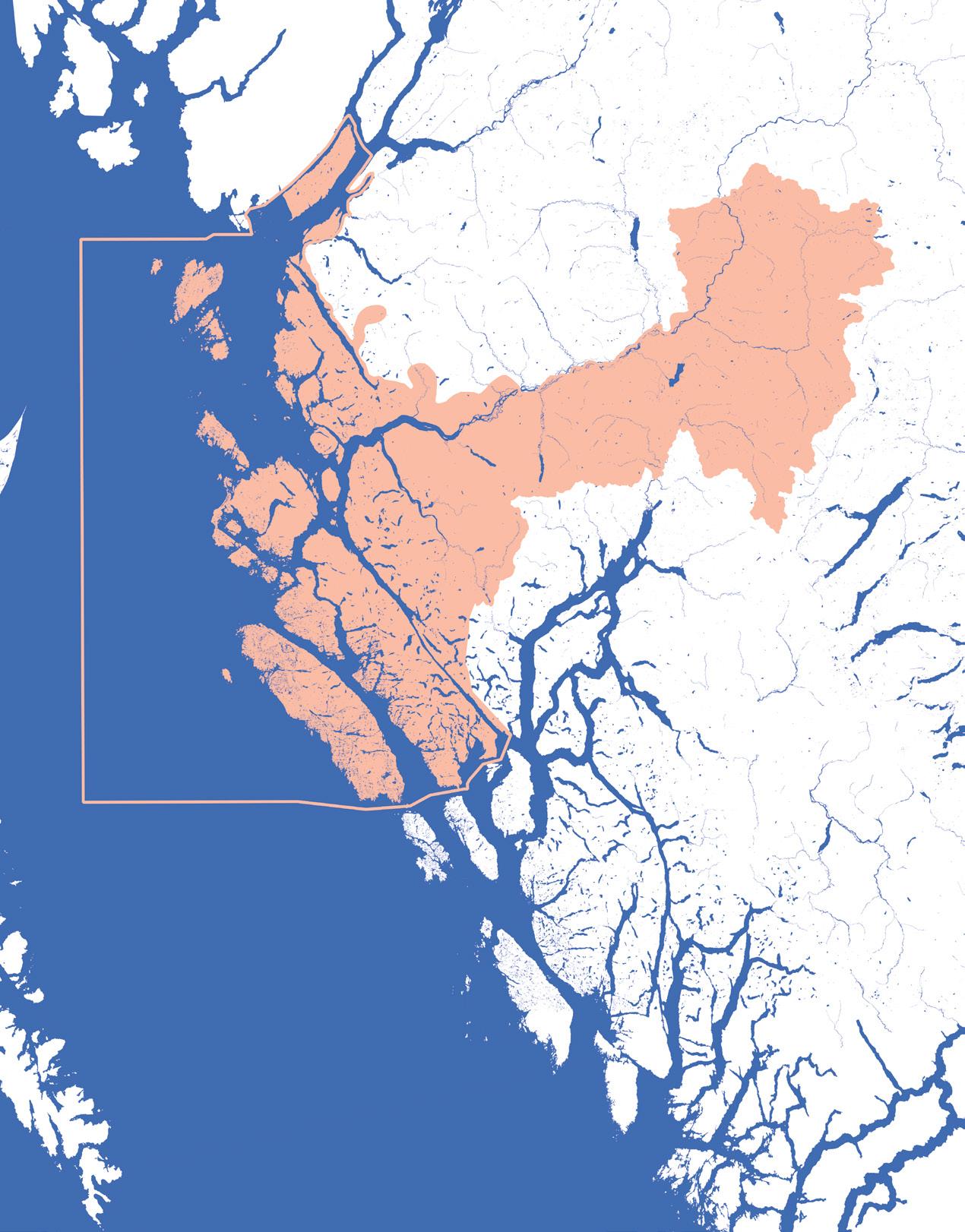
Kitselas Traditional Territory
Kitselas is a Tsimshian (Ts’mysen) Nation whose Traditional Territory stretches from the Pacific Ocean on the north coast, about 200 km inland, to the lower Skeena River Valley. Kitselas culture and history is deeply rooted in the land, as demonstrated by numerous archeological sites and the traditional land and resource management practices of the Gitselasu (People of the Canyon).