FEATURING 286 Industry-First Reviews of Fiction, Nonfiction, Children’s, and YA Books



FEATURING 286 Industry-First Reviews of Fiction, Nonfiction, Children’s, and YA Books
Plus author interviews, genre lists, and the full complement of new reviews

ISBN: XXX-X-XX-XXXXXX-X


BEFORE WE TURN the page on 2025, let’s pause to remember the authors we lost this year; their books are sure to live on. Here are just a few of the most notable: Jeanne Wakatsuki Houston, 90. Incarcerated as a child with her Japanese American family during World War II, she co-wrote an influential memoir, Farewell to Manzanar, that has been a staple of high school and college syllabi since 1973.
Jules Feiffer, 95. The celebrated cartoonist illustrated the 1961 children’s classic The Phantom Tollbooth and published several of his own graphic novels for adults and children, including Kill My Mother and Amazing Grapes Tom Robbins, 92. Both countercultural and mainstream readers of the 1970s and ’80s embraced the
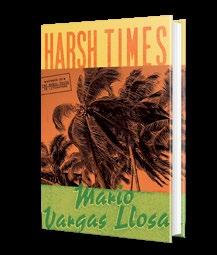
offbeat comic novels of this writer, including Another Roadside Attraction , Even Cowgirls Get the Blues, and Still Life With Woodpecker. Uri Shulevitz, 89. The Polish-born children’s author and illustrator, who survived a refugee childhood during World War II, won the Caldecott Medal in 1969. His books included The Treasure, How I Learned Geography, and Chance: Escape From the Holocaust Joseph Wambaugh, 88. A former LAPD detective, Wambaugh found success as a writer of fiction and nonfiction about cops; his 1973 novel, The Onion Field , was made into a popular film starring John Savage and James Woods.
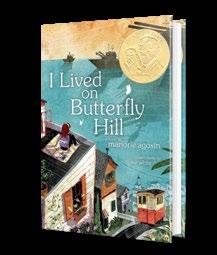
Marjorie Agosín, 69. The human rights activist and author, who was born in Maryland and raised in
Frequently Asked Questions: www.kirkusreviews.com/about/faq
Fully Booked Podcast: www.kirkusreviews.com/podcast/
Advertising Opportunities: www.kirkusreviews.com/book-marketing
Submission Guidelines: www.kirkusreviews.com/about/publisher-submission-guidelines
Subscriptions: www.kirkusreviews.com/magazine/subscription
Newsletters: www.kirkusreviews.com
For customer service or subscription questions, please call 1-800-316-9361
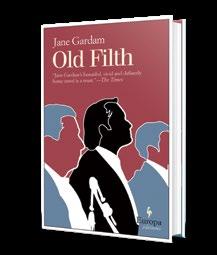
Chile, was known for her fiction, poetry, and children’s books written in Spanish, including I Lived on Butterfly Hill , winner of the Pura Belpré Award. Mario Vargas Llosa, 89. The Nobel Prize–winning Peruvian novelist was one of the key literary figures of the Latin American Boom of the 1960s and ’70s, whose feud with Gabriel García Márquez made headlines. His books include The Time of the Hero, Aunt Julia and the Scriptwriter, and Harsh Times Jane Gardam, 96. The witty English novelist won widespread acclaim late in life with her 2004 novel, Old Filth, the first in a trilogy about a retired judge, his wife, and his legal rival. Her other books include The Hollow Land and The Queen of the Tambourine. Susan Brownmiller, 90. Published in 1975, the journalist and activist’s Against Our Will: Men, Women, and Rape is considered a landmark of feminist writing. Her other books include Seeing Vietnam: Encounters of the Road and Heart and In Our Time: Memoir of a Revolution.
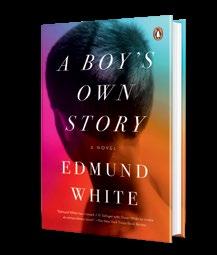
Ngugi wa Thiong’o, 87. The Kenyan author, who spent years in exile, was a passionate advocate for literature in African languages. He wrote many of his books first in Gikuyu, his native language, then translated them into English—among them Wizard of the Crow, Dreams in a Time of War, and Birth of a Dream Weaver. Edmund White, 85. The groundbreaking LGBTQ+ writer chronicled the lives of gay men in numerous novels and memoirs, including Forgetting Elena , A Boy’s Own Story, City Boy, and The Loves of My Life, published less than four months before he died in June.
Jilly Cooper, 88. The English queen of the “bonkbuster”—a commercial novel with plenty of sexual content—ruled the bestseller lists with novels such as Riders and Rivals (published in the U.S. as Players).

Co-Chairman
HERBERT SIMON
Interim Publisher & CEO
JUDY HOTTENSEN jhottensen@kirkus.com
Chief Marketing Officer
SARAH KALINA skalina@kirkus.com
Publisher Advertising & Promotions
RACHEL WEASE rwease@kirkus.com
Indie Advertising & Promotions
AMY BAIRD abaird@kirkus.com
Author Consultant
KEELIN FERDINANDSEN kferdinandsen@kirkus.com
Lead Designer KY NOVAK knovak@kirkus.com
Magazine Compositor NIKKI RICHARDSON nrichardson@kirkus.com
Director of Kirkus Editorial ROBIN O’DELL rodell@kirkus.com
Kirkus Editorial Senior Production Editor
MARINNA CASTILLEJA mcastilleja@kirkus.com
Kirkus Editorial Production Editor
ASHLEY LITTLE alittle@kirkus.com
Copy Editors
ELIZABETH J. ASBORNO ALYSSA CHOINIERE
JOE HONG
NANCY MANDEL
BILL SIEVER
Mysteries Editor
THOMAS LEITCH
Co-Chairman
MARC WINKELMAN
Editor-in-Chief TOM BEER tbeer@kirkus.com
President of Kirkus Indie
CHAYA SCHECHNER cschechner@kirkus.com
Fiction Editor
LAURIE MUCHNICK lmuchnick@kirkus.com
Nonfiction Editor JOHN McMURTRIE jmcmurtrie@kirkus.com
Young Readers’ Editor
LAURA SIMEON lsimeon@kirkus.com
Young Readers’ Editor MAHNAZ DAR mdar@kirkus.com
Editor at Large
MEGAN LABRISE mlabrise@kirkus.com
Senior Indie Editor
DAVID RAPP drapp@kirkus.com
Indie Editor ARTHUR SMITH asmith@kirkus.com
Senior Editorial Assistant
NINA PALATTELLA npalattella@kirkus.com
Senior Indie Editorial Assistant
DAN NOLAN dnolan@kirkus.com
Indie Editorial Assistant
KATARINA YERGER kyerger@kirkus.com
Contributing Writers
GREGORY McNAMEE
MICHAEL SCHAUB
Nada Abdelrahim, Reina Luz Alegre, Jeffrey Alford, Autumn Allen, Kent Armstrong, Mark Athitakis, Kit Ballenger, Audrey Barbakoff, Carole Bell, Nell Beram, Elizabeth Bird, Ariel Birdoff, Christopher A. Biss-Brown, Sarah Blackman, Elissa Bongiorno, Kimberly Brubaker Bradley, Sally Brander, Melissa Brinn, Jessica Hoptay Brown, David Bushman, Kevin Canfield, Hailey Carrell, Rachel Carroll, Tobias Carroll, Alec B. Chunn, Amanda Chuong, Whitney Danhauer, Michael Deagler, Dave DeChristopher, Elise DeGuiseppi, Suji DeHart, Lisa Dennis, Steve Donoghue, Eamon Drumm, Gina Elbert, Elaine Elinson, Lisa Elliott, Chelsea Ennen, Joshua Farrington, Margherita Ferrante, Katie Flanagan, Catherine Foster, Mia Franz, Jenna Friebel, Jackie Friedland, Jackie Garcia, Laurel Gardner, Amanda Gefter, Amy Goldschlager, Emily A. Gordon, Melinda Greenblatt, Michael Griffith, Vicky Gudelot, Tobi Haberstroh, Silvia Lin Hanick, Alec Harvey, Peter Heck, Aaron Hicklin, Natalia Holtzman, Terry Hong, Julie Hubble, Kathleen T. Isaacs, Darlene Ivy, Wesley Jacques, Kerri Jarema, Jessica Jernigan, Danielle Jones, Jayashree Kamblé, Deborah Kaplan, Marcelle Karp, Lavanya Karthik, Colleen King, Stephanie Klose, Lyneea Kmail, Maggie Knapp, Jennie Knuppel, Andrea Kreidler, John Kynch, Megan Dowd Lambert, Carly Lane, Laurel Larrew, Christopher Lassen, Tom Lavoie, Maya Lekach, Seth Lerer, Donald Liebenson, Elsbeth Lindner, Coeur de Lion, Barbara London, Patricia Lothrop, Sawyer Lovett, Michael Magras, Thomas Maluck, Michelle H Martin, Gabriela Martins, J. Alejandro Mazariegos, Kirby McCurtis, Isla McKetta, Don McLeese, Cari Meister, J. Elizabeth Mills, Chintan Modi, Clayton Moore, Rebecca Moore, Andrea Moran, Rhett Morgan, Molly Muldoon, Jennifer Nabers, Christopher Navratil, Therese Purcell Nielsen, Tori Ann Ogawa, Mike Oppenheim, Emilia Packard, Nina Palattella, Megan K. Palmer, George Pate, Hal Patnott, Bethanne Patrick, Deb Paulson, Tara Peace, Rebecca Perry, John Edward Peters, Jim Piechota, Christofer Pierson, Vicki Pietrus, Cathy Poland, Margaret Quamme, Kristy Raffensberger, Matt Rauscher, Sarah Rettger, Peter Richardson, Jasmine Riel, Alyssa Rivera, Gia Ruiz, Lloyd Sachs, Bob Sanchez, Julia Sangha, Caitlin Savage, Christine Scheper, Gretchen Schulz, Jennifer Senick, Jerome Shea, Linda Simon, Wendy Smith, Margot E. Spangenberg, Andria Spencer, Allison Staley, Sydney Stensland, Mathangi Subramanian, Ella Teevan, Eva Thaler-Sroussi, Desiree Thomas, Lenora Todaro, Clayton Trutor, Bijal Vachharajani, Katie Vermilyea, Francesca Vultaggio, Wilda Williams, Kerry Winfrey, Marion Winik, Flannery Wise, Carrie Wolfson, Jean-Louise Zancanella
Access to millions of titles Fast, free shipping
No order or shipment minimums Quick account set-up
Ability to order from any distribution center


Get Started Get Started
These titles, for readers of all stripes and all ages, made for great listening this year.
Chimamanda Ngozi Adichie’s Dream Count (Random House Audio, 19 hours and 4 minutes) feels deeply personal in audio form, which adds a striking confessional tone to the story of four African women coping with modern life in America and Nigeria. The author narrates the novel’s first section as Chiamaka, a travel writer enduring the Covid-19 pandemic alone, in a rich, languid manner that matches the character’s wandering inner monologue. Three other readers—Sandra Okuboyejo, A’rese Emokpae, and Janina Edwards—add their own touches as two of Chia’s friends and her housekeeper, weaving each woman’s story into a compassionate and unblinking reality.
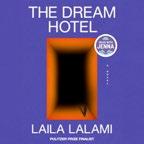
The parallels to modern capitalism in Laila Lalami’s The Dream Hotel (Random House Audio, 11 hours and 42 minutes) make this novel feel like a chilling blueprint for the future. Flying home to Los Angeles after a conference, Moroccan American archivist Sara Hussein is detained by authorities after an algorithm from an implanted device identifies her as a crime risk, landing Sara in a detainment camp. The excellent Frankie Corso reflects every nuance of Sara’s shifting moods as she moves from fear and frustration to hard-won resolve. As the voice of bureaucracy, Barton Caplan is the maddening embodiment of corporate indifference.

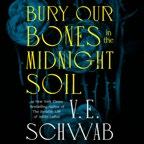
Julia Whelan, Marisa Calin, and Katie Leung narrate V.E. Schwab’s sapphic supernatural novel, and each hones in on what makes its doomed characters get under your skin in powerful and disturbing ways. In Bury Our Bones in the Midnight Soil (MacMillan Audio, 18 hours and 26 minutes), three women are linked across centuries. In their attempts to escape the societies that denigrate them, each finds that freedom comes at an unthinkable cost. This is a compelling story about love and hunger, about the lengths women will go to be valued and live at the mercy of nothing but their desires.
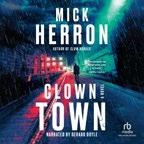
Mick Herron’s latest novel marks reader Gerard Doyle’s ninth time guiding listeners through the world of washed-up British spies and the author’s wicked dark humor, inventive plotting, and maze of idiosyncratic “slow horses,” led by the grotesque but crafty Jackson Lamb. In Clown Town (Recorded Books, 12 hours and 4 minutes), an explosive secret threatens to upend M15 and Slough House, and, as always, Doyle navigates Herron’s trademark cynical worldview with impeccable comic timing and—dare we say it?—a startling moment of empathy from the least expected source. Once again, this series displays the ideal marriage of material and narrator.
—CONNIE OGLE
One of the audio delights of the year is E. Jean Carroll’s memoir of the litigation she brought against Donald Trump for sexual assault that occurred in the mid-1990s. Now in her 80s, Carroll gives her all to the reading, sometimes exulting, sometimes near tears. In Not My Type: One Woman vs. A President (Macmillan Audio, 9 hours and 2 minutes) the gifted humorist delivers a blow-by-blow account of the trial, with killer descriptions of everyone, from Trump’s lawyer Alina Habba Esq., she of the stiletto heels and “stupendous” cheekbones, to Judge Lewis Kaplan, whose eyebrows become a character in their own right.
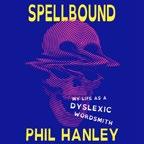
Phil Hanley is a former Armani runway model and popular stand-up comedian, who, despite the challenge of severe dyslexia, has written an excellent memoir and reads it aloud himself. The audiobook of Spellbound: My Life as a Dyslexic Wordsmith (Macmillan Audio, 7 hours and 37 minutes) preserves some of the bloopers and practice reads, interweaving them between the chapters to give an ongoing sense of the uniquely arduous process. Hanley has an important story to tell about learning disabilities, and he tells it with passion and candor.





—Maria Shriver’s Sunday Paper, 2025 Summer Reading List
—Kirkus Reviews (starred review)




Arundhati Roy’s reading of her extraordinary memoir, Mother Mary Comes to Me (Simon and Schuster Audio, 11 hours and 29 minutes), will pull you in from its first lines, spoken in elegantly accented yet intimately confiding tones. The book is essentially a love letter to the complicated mother whom the author left home at 18 to escape. Roy’s account of the creative process behind her acclaimed 1997 novel, The God of Small Things , is stunning and humbling to hear. An international bestseller that won the Booker Prize, the book drew a severe reaction in India. “There were the usual calls for me to be arrested, hanged, shot, and so on.” Through it all, Mrs. Roy loomed large in the author’s mind.
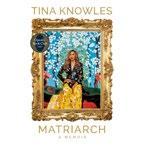
After sweet introductions by Beyoncé, Solange, adopted daughter Kelly Rowland, and niece Angie Beyincé, Tina Knowles—known as Badass Tenie B in her youth—take over narration of her immersive and inspiring memoir. Matriarch (Penguin Random House Audio, 17 hours and 16 minutes) begins with her formative years on Galveston Island, an idyllic childhood scarred by systemic racism. Her storytelling style is perfectly suited to oral delivery, covering her own early musical career; her rollercoaster history with first husband, Mathew Knowles; and the story of how her shy little daughter revealed her leviathan talent and became an iconic star.—MARION WINIK
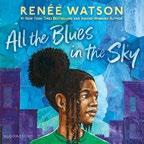
Fan favorite Bahni Turpin delivers again with her tender narration of the middle-grade verse novel All the Blues in the Sky by Renée Watson (Bloomsbury Children’s Books, 2 hours and 14 minutes). Turpin’s warm, measured delivery hits just the right note as she conveys the range of emotions expressed by Sage, a 13-year-old girl in New York City whose friend Angel died in a tragic accident. The first two lines—“I didn’t know / best friends could
die”—set the tone for this story of growth and resilience in the wake of trauma that shows the power of community connection.
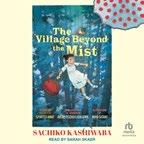
A Japanese classic from the 1970s by one of its most beloved and prolific authors for young people, The Village Beyond the Mist (Tantor Media, 3 hours and 14 minutes) is an enchanting fantasy. Narrator Sarah Skaer, who grew up in Japan, brings the right balance of gravity and whimsy to Sachiko Kashiwaba’s novel, which was translated by Avery Fischer Udagawa. Her sweet voice invites listeners to settle in and be transported to the mysterious hidden village of Misty Valley, where sixth grader Lina Uesugi meets eccentric characters and settles into a delightfully topsyturvy world that’s reminiscent of Alice’s Wonderland.
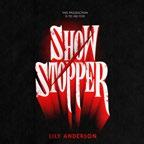
Teens don’t need to be theater kids to get swept away by Lily Anderson’s latest madcap horror novel, Showstopper (Listening Library, 7 hours and 17 minutes), brilliantly narrated by Keylor Leigh. Each summer, Camp Ghostlight pulls off the seemingly impossible: staging a full musical in just three weeks. With 30 driven young stars vying for the best roles in Riverdale, feelings are running high—and that’s before people start being killed by someone in a commedia dell’arte mask. Leigh’s smooth, upbeat narration is the perfect match for the book’s blend of snarky humor, witty banter, and sheer terror.
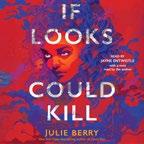
Narrator Jayne Entwistle’s transAtlantic background is an ideal fit for the YA paranormal If Looks Could Kill by Julie Berry (Simon & Schuster Audio, 15 hours and 24 minutes). Entwistle’s range vividly brings to life characters of disparate ages, social classes, and nationalities, making the Victorian era–settings of London’s East End and New York City’s Bowery feel fresh and authentic. Berry imaginatively weaves together the stories of Jack
the Ripper, who leaves London for New York after being attacked by a Gorgon, and Pearl and Tabitha, Salvation Army members who are trying to rescue a girl from a brothel.—LAURA SIMEON
Connie Ogle is a writer in Florida. Marion Winik hosts NPR’s Weekly Reader podcast. Laura Simeon is a young readers’ editor.



Our book-to-screen correspondent highlights eight favorite movies from the past year.
BY DAVID RAPP
EVERY MONTH BRINGS new book adaptations to big and small screens, and we’re dedicated to recommending the very best for readers. In 2024, for example, we sang the praises of Nickel Boys, a powerful and immersive movie version of Colson Whitehead’s Kirkus Prize–winning 2019 novel, as well as the sweeping first season of Shōgun, the FX series based on James Clavell’s iconic 1975 novel, which won a record 18 Emmy Awards. Here are eight of our favorites from this past year:
Dog Man (streaming on Netflix)
This wacky and wise movie draws on multiple volumes of Dav Pilkey’s bestselling children’s book series. It stars an upbeat police officer with the head of a dog and the body of a human, who protects an unnamed city from the machinations of feline criminal mastermind Petey, among other threats. The books, which are framed as the lively comic-book creations of two enthusiastic fourth graders, are spinoffs of the author/ illustrator’s wildly popular Captain Underpants series, and the film, written and directed by Animaniacs’ Peter Hastings, captures all of their wildness and weirdness—as when, at one point, a number of buildings come alive and wreak destruction. However, the film
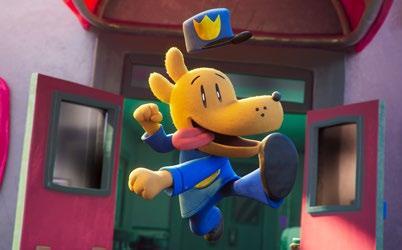
thoughtfully balances the chaos with surprisingly affecting scenes between Petey (voiced by a very funny Pete Davidson) and his goodhearted kitten clone, known as Li’l Petey (talented newcomer Lucas Hopkins Calderon).

The Monkey (streaming on Hulu) Stephen King’s novellas have yielded a number of excellent adaptations. Two from his 1982 collection, Different Seasons, for instance, inspired the Oscar-nominated films Stand by Me (1986) and The Shawshank Redemption (1994). The Monkey, from 1985’s Skeleton Crew, is the basis of this strange and wonderful film, written and directed by horror master Osgood Perkins (Longlegs). It expands the story of a mysterious toy monkey—which causes bizarre deaths every time someone winds it up—and twists it into a film that’s by turns madcap and meditative. Theo James (The White Lotus) skillfully portrays the adult versions of identical twins Hal and Bill Shelburn, whose lives are upended after they discover the toy during their childhoods. It’s all played for laughs, at first—more than one victim literally
explodes—but later, the brothers touchingly search for meaning in the meaningless, leading to an unforgettable ending.
Queen of the Ring (available on video-on-demand)
This ambitious biopic of champion professional wrestler Mildred Burke, directed by Ash Avildsen, is based on Jeff Leen’s deeply researched and compelling 2007 biography, The Queen of the Ring: Sex, Muscles, Diamonds, and the Making of an American Legend Burke gained considerable fame during her heyday from the 1930s to the ’50s, and she helped to popularize women’s professional wrestling worldwide. She was a fiercely determined woman who never let life’s setbacks—including those caused by her unfaithful and abusive husband, pro wrestler Billy Wolfe— keep her from pursuing her ambitions. Arrow’s Emily Bett Rickards is riveting in the starring role in both the brilliantly staged wrestling scenes and in quieter, dramatic moments, while Josh Lucas offers a nuanced performance as Wolfe. Francesca Eastwood also shines as uncompromising wrestler Mae Young, as does Adam Demos as famed showman Gorgeous George. >>>

Bonjour Tristesse (streaming on Starz)
In her directorial debut, essayist Durga Chew-Bose (Too Much and Not the Mood) offers a hypnotic take on French author Françoise Sagan’s 1954 novel. Lily McInerny (Palm Trees and Power Lines) stars as teenager Cécile, who’s spending a lovely, aimless summer in the French Riviera with her wealthy, devil-may-care father, Raymond (played by Dracula’s Claes Bang). Chloë Sevigny appears as Anne, an old friend of Raymond’s who suddenly becomes a much bigger part of his life, complicating Cécile’s easy existence. The girl hatches a plan to separate the two, with unforeseen results. This languorous, gorgeously shot film highlights the serene beauty of its setting, while also giving its fine lead actors plenty of room to spin out engagingly layered conversations. French actor Nailia Harzoune is also wonderful in the smaller role of Elsa, Raymond’s lively and perceptive ex-lover who becomes part of Cécile’s scheme.
Fear Street: Prom Queen (streaming on Netflix)
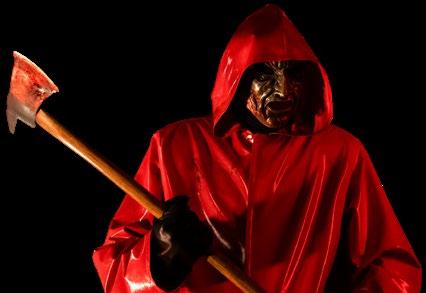
Four years ago, Netflix released three films, directed by Leigh Janiak and loosely based on R.L Stine’s long-running series of YA horror novels. This fourth film entry, based on Stine’s 1992 novel, The Prom Queen, lacks the ambition of that centuries-spanning movie trilogy, which made the list of our favorite book-toscreen adaptations of 2021. Instead, it opts for simpler, old-school slasher-movie thrills. It’s a story, set in 1988, of a masked killer stalking prom-queen candidates—a setup that may remind horror fans of the 1980 film Prom Night Director Matt Palmer also includes entertaining references to Halloween (1978) and I Know What You Did Last Summer (1997), but his nostalgia never keeps him from cranking up the suspense,
and the film’s ending is a welcome surprise. The Agency’s India Fowler, as prom-queen candidate Lori Granger, is an appealing protagonist, but Katherine Waterston steals the show as the terrible mom of Lori’s mean-girl rival.
The Life of Chuck (available on video-on-demand)
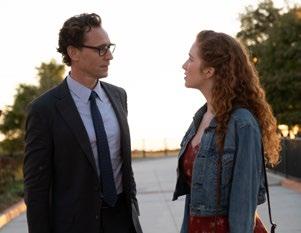
Like The Monkey, this film is based on a Stephen King novella—in this case, from the Kirkus-starred 2020 novella collection, If It Bleeds. Also like The Monkey, it thoughtfully addresses themes of grief, fate, and the meaning of life. Both the novella and film, directed by Mike Flanagan (Doctor Sleep), employ a tricky three-act structure: In the first act, a world comes to an end, complete with a coastline falling into the ocean; in the second, an accountant impulsively dances in public with a stranger; and in the third, readers learn that accountant’s backstory, which features, of all things, a strange cupola, unlike any other. Tom Hiddleston, as the adult Chuck, only has a few scenes, but he absolutely nails them, and the story’s disparate elements ultimately weave together with surprising ease, resulting in a sad but life-affirming work of quiet insight.
Richard Osman’s Kirkus-starred 2020 mystery-series starter inspired this light, entertaining film, directed by Chris Columbus, about a quartet of quirky amateur detectives living in Coopers Chase, an English retirement village. They include retired nurse and ace baker Joyce Meadowcroft (Celia Imrie), ex-spy Elizabeth Best (Helen Mirren), former psychiatrist Ibrahim Arif (Ben Kingsley), and ex–union organizer Ron Ritchie (Pierce Brosnan). They’re all part of the
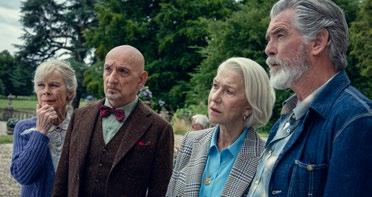
titular club, which attempts to solve cold cases for their own amusement—once a week, every Thursday. Their routine changes, though, when the retirement village’s construction manager is murdered. There’s a good cozy mystery at heart of this film, but the interplay between the four main actors is the main draw: All are at the very top of their games, making for a fun watch that any fan of Agatha Christie–like cozies will surely enjoy.
Springsteen: Deliver Me From Nowhere (in theaters)
The Bear’s Jeremy Allen White stars as Bruce Springsteen in this intriguing, contemplative biopic, based on Warren Zanes’ 2023 nonfiction book about the making of the musician’s haunting 1982 album, Nebraska. At the time, Springsteen was best known for symphonic rock songs like 1975’s “Born to Run”; Nebraska’s songs, recorded on a four-track recorder, were very different, telling quiet, sparse, and often disturbing stories. The title track, for one, is told from the perspective of convicted murderer Charles Starkweather, who awaits execution while speculating about “a meanness in this world.” At the time, Springsteen was struggling with mental-health issues, and the film effectively captures how he, and those around him, were affected by them—and how the artist eventually embraced the benefits of therapy. White’s performance is solid and convincing, and Succession’s Jeremy Strong, as Springsteen’s manager and close friend, Jon Landau, also does inspired work.
David Rapp is the senior Indie editor.


In a year full of distressing news stories, these weird dispatches from the literary world kept us entertained. BY
MICHAEL SCHAUB
AS THE YEAR draws to a close, it’s high time to remember all the good things that happened in 2025. Once those two seconds are over, console yourself by remembering that while this year might not have been the best ever, there were plenty of weird and funny things that happened, which is better than nothing. There was no shortage of unusual book-related stories: An author briefly worked as a model; artificial intelligence recommended nonexistent books and lent its voice to Melania Trump’s memoir; and a fan helpfully reminded George R.R. Martin that he is old. When it comes to the best books of the year, we’ve already got you covered, but for a trip down memory lane that won’t leave you lying prone on the floor and groaning, here are our nine favorite book stories of 2025.
January 10: Patrick Radden Keefe, author of the books Say Nothing and Empire of Pain, has everything: a law degree, a bunch of articles in the New

Yorker, the respect of his peers, and a National Book Critics Circle Award. It’s not fair. Jealous fellow journalists might be hoping that the guy at least has an unfortunate mug, but no. It turns out that the author moonlighted as a model for preppy clothes retailer J. Crew, and looked good doing it. “They couldn’t get Daniel Craig, and they were like, all right, who’s next on our list?” Keefe joked to the New York Times. Great. So in addition to being photogenic, he’s funny, too.
January 13: Books and professional football intersect more often than you might think. Who can forget Green Bay Packers halfback and kicker Paul Hornung, who attributed his performance in the 1961 NFL championship game to a careful reading of John Updike’s Rabbit, Run? OK, that didn’t really happen, but this year, Philadelphia Eagles wide receiver A.J. Brown sent Jim Murphy’s Inner Excellence up the bestseller charts after a camera caught Brown reading it

on the sidelines during a playoff game. It must have helped—the Birds won the game, and, the following month, the Super Bowl.
March 31: James Patterson has a thing for collaborating with unlikely writing partners—he’s worked on novels with former President Bill Clinton and country music icon Dolly Parton, and he has one in the works with actor Viola Davis. This year, he also announced that he’s working on a novel with a Gen-Z favorite: MrBeast, the YouTuber who delights in giving away vast amounts of money to people who can make it through sometimes fiendishly ornate challenges. Zoomers can look forward to the novel, as yet untitled, next year; we only hope it will be bussin’ and bring the rizz and not just be highkey mid. (Did we do that right?)
May 1: Former New England Patriots coach Bill Belichick just can’t catch a break. His new gig leading the University of North Carolina football team is not going as Tar Heels fans would >>>




hope, and if he loses the job and gets a lucrative contract buyout, he’ll be forced to add much more money to his already considerable wealth. He had something else to complain about this spring: In a televised interview that he hoped would promote his new book, The Art of Winning , the big meanies at CBS insisted on asking the coach, who is in his 70s, about his relationship with his girlfriend, nearly 50 years his junior. A clip of Belichick’s girlfriend saying “We’re not talking about this” went viral, angering the coach but delighting millions of still–bitter New York Jets fans.
May 21 : Bibliophiles always look forward to summer reading roundups from their favorite media outlets, hoping to find something to take to the beach when the weather gets warm. Unfortunately, Marco Buscaglia did not understand the assignment in a roundup he wrote for the Chicago Sun-Times , which contained several books that do not actually exist, including The Collector’s Piece by Taylor Jenkins Reid and The Longest Day by Rumaan Alam. Buscaglia apologized and said he used artificial intelligence to generate the list, but, honestly, we’re not giving up on AI just yet. Stay tuned for our own roundup of 2026 books, including The Peaceful and Uneventful Night by Stephen King, Reminders of Forgetting to Remember That It Ended With Them by Colleen Hoover, and Bow Down to Your New Robot Overlords, Worthless Human , by Mitch Albom.
May 22 : Speaking of AI, shortly after the fake book roundup story broke, Melania Trump announced that there will be an audiobook version of her memoir, Melania , which, great for her, would give her something to keep her busy while her husband decides which countries he next wants to hit with 10,000%


tariffs. But no! The audiobook, the first lady said, would be narrated by an AI version of herself, “created under Mrs. Trump’s direction and supervision.” The news was heartbreaking to actors with Slovenian accents who’d been hoping for their big break, but given that a Kirkus critic called Trump’s memoir “slick” and “vacuous,” AI might have been the right call after all.

June 2 : If you’re craving a nice big helping of frozen yogurt and would like to pretend that it’s still 2007, Pinkberry is a logical choice. The chain also evidently has a fan in author Emily Henry, who earlier this year partnered with the brand to promote her novel Great Big Beautiful Life with a sweepstakes in which readers could win an autographed copy of the book, Pinkberry “swag,” and gift cards to the dessert chain. Make ours a chocolate hazelnut with mocha sauce and yogurt chips, please! We’d also like some of Emily Henry’s money if that’s not too much trouble.
August 21 : It would appear that some Game of Thrones fans have decided their era of politely waiting is over. Readers of George R.R. Martin’s Song of Ice and Fire series of fantasy novels have been clamoring for the latest installment, The Winds of Winter , for nearly 15 years, and at the Seattle Worldcon convention, one of them said to the author, “Here’s the thing. George, you’re
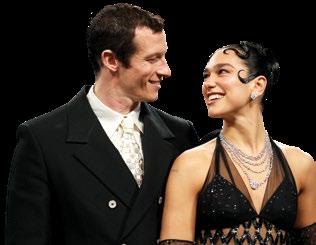
not going to be around for much longer,” then asked if he had considered giving the reins to the series to another author. It was the rudest question posed to an author since Harper Lee got a postcard in 2012 saying, “You will die soon. When do we get 2 Kill 2 Mockingbirds ?” Martin declined to answer the question, which means nuclear winter might well arrive before The Winds of Winter . October 20 : It’s been a tough year, so we might as well end on something sweet. Pop star Dua Lipa and actor Callum Turner have been one of the world’s most enviable celebrity couples, and Turner revealed in an interview that the two first bonded after realizing they were simultaneously reading the same book: Hernan Diaz’s Trust , which won the Kirkus Prize and the Pulitzer Prize. (Does this mean Kirkus might have been responsible for their romance? We’re going to go ahead and say yes and not offer any supporting evidence.) This news should give single readers hope: You could just be one book away from finding the love of your life—if you are a celebrity multimillionaire with unfathomably good looks. Otherwise, you might as well just conspicuously read the latest Patrick Radden Keefe book at your local Pinkberry.
Michael Schaub is a contributing writer.
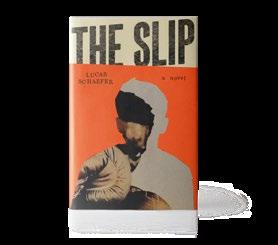
As the end of the year approaches, I always like to look back at the fiction debuts. This year, of course, the Kirkus Prize went to one, Lucas Schaefer’s The Slip (Simon & Schuster, June 3), a wildly entertaining tale revolving around a teenager’s disappearance from a boxing gym in Austin, Texas, in 1998. This is not the stereotypical first novel, slim and autobiographical; among Schaefer’s characters are a Haitian man who works at a rehab center, a female cop, a teen exploring their gender identity, an unhoused man and his twin brother, who’s a clown, and many others whose lives intersect through the missing Nathaniel Rothstein. Our review says that “Schaefer, who’s white, is bold in his approach to issues of Blackness and whiteness, and has invented a truly wild plot in service of exploring them. He is equally fearless
in writing about gender and sex. And the solution to the mystery is a trip and a half.”
Here are some other excellent first novels that came out this year:
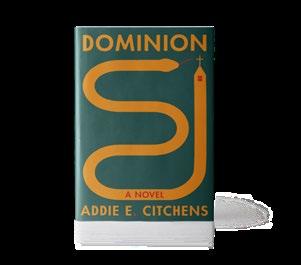
Dominion by Addie E. Citchens (Farrar, Straus and Giroux, August 19): Citchens introduces the prominent Winfrey family of Dominion, Mississippi. The father, Sabre, is the pastor of the Black Baptist church as well as a businessman, but the family is unraveling, especially after the youngest son commits a shocking act of violence. Citchens inhabits the voices of the boy’s mother, Priscilla, and his girlfriend, Diamond, perfectly, according to our starred review. “Nothing in the book is sensationalized,” our critic writes. “This is an important novel that deftly tackles misogyny and hypocrisy. A stunning debut.”
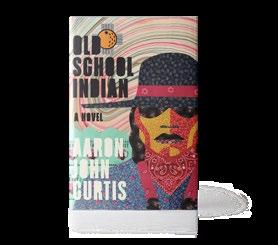
Old School Indian by Aaron John Curtis (Zando, May 6): Abe Jacobs is a poet and a bookseller at a large store in Miami (as is the author, who’s been the quartermaster at Books & Books since 2004). He’s suffering from baffling ailments and a troubled marriage, so he heads to his parents’ house on a Mohawk reservation in upstate New York, where his great-uncle gives him folk treatments and he reconnects with friends and family—while his poetic alter ego, Dominick Deer Woods, breaks into the narrative with snarky commentary. Our starred review calls this “an affecting tale of loss and healing that thrives through its seriocomic style.”
Happiness & Love by Zoe Dubno (Scribner, September 2): Here’s a first novel in the more usual first-novel style: A young New York writer is back home after five years in London. She’s at a dinner party given by a wealthy art-world couple, and she
unleashes her conflicted thoughts about the whole scene in what our review calls “a long, acerbic, and sometimes very funny rant.…A minefield of a novel, whose cutting and often brilliant observations will delight and terrify those in the know.”
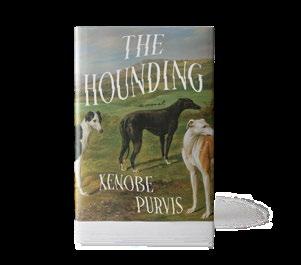
The Hounding by Xenobe Purvis (Henry Holt, August 5): “The girls, the infernal heat, a fresh-dead body”: That’s the opening line, and it hooked me. Set in Oxfordshire soon after the English Civil War, Purvis’ novel tells the story of the newly orphaned Mansfield sisters, ages 6 to 19, whose neighbors are convinced they can turn into dogs. “The novel is a master class in paranoia and strategic ambiguity,” according to our starred review. “Like Shirley Jackson’s ‘The Lottery,’ it shows that the horrors lurking beneath small-town life are timelessly unsettling.”
Laurie Muchnick is the fiction editor.

A dozen stories brimming with life, each as unpredictable as a chain of thoughts. Bordas’ stories don’t defy summary so much as they chortle at it. In the title piece, a father tracks his son’s mental health through drawings during a season of grief; in “The Lottery in Almería,” a Spain-based writer of language-learning books trying to punch up sample dialogue about flirting buys last-minute lottery tickets (non-spoiler alert: he doesn’t win). “The State of Nature” features an ophthalmologist who sleeps through a burglary, then ambivalently goes— with an “apartment therapist”—to a weekend “thieves’ market” where stolen items sometimes surface. “Beyond” chronicles a young adolescent’s
trip to the weight-loss camp he calls “Beyond Fat,” and along the way features a tender scene of juggling. None of these stories has a conventional plot or a tumbler-clicking closure. What they do have is sparkling dialogue, a crackling and often lacerating wit, a buzzy, raucous energy. To call these “slice of life” stories would shortchange them: Bordas is a master vivisectionist of inner life, and her slices, of living flesh instantly mounted on a slide, pulse and pullulate under the scope; there’s just so much there of how minds work, how voices sound, how conversations loop and sputter. Stories can veer, in the space of a paragraph, from Picasso’s many middle names to Bill
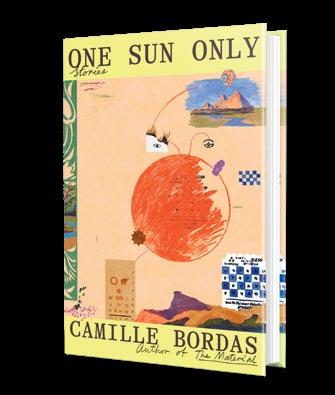
Murray’s net worth, from astronaut envy or the color code of hurricane maps to dialogue with a stranger’s corpse in the Paris morgue (“‘There’s been an accident,’ I said. ‘You died’”). There’s nothing here that feels finessed or artificed. Bordas’ characters don’t feel real because the author has ingeniously lined up
precisely the right details to convey an essence, to convey a message; they feel real because no matter what these characters see or do, what contingencies or oddities or incoherences loom into view, they respond in authentically idiosyncratic ways. An utterly delightful collection.
In the ’80s, the only ones misbehaving more than the teens are the adults.
ALL THE LITTLE HOUSES
Brennan, Allison | Hanover Square
Press (400 pp.) | $30 | January 27, 2026
9781335001412
Feds underestimate a devious serial killer to their peril. Due to the excellent undercover work of Flagler County Detective Kara Quinn and FBI Special Agent Matt Costa, the FBI Mobile Response Team has just scored a major victory, capturing slippery serial killer Garrett Reid. But the celebration is short-circuited by the disappearance of the two investigators. The prolific Brennan’s seventh Quinn & Costa thriller shuffles three major plot threads: the backstory of the nefarious Reid, the methodical search for the dynamic duo, and Quinn and Costa’s attempts to escape their captors. This last is complicated when they discover early on that their remote location may be boobytrapped. When Kara begins to lose hope, reliable Matt is there to bolster her. Meanwhile, Garrett presses Audrey, his intense wife, to eliminate Quinn and Costa, while Garrett’s clear-eyed brother Vince proves a valuable resource to the response team that searches for their colleagues. Brennan’s plotting is balanced and measured. She devotes equal time to each of her three threads and fills her canvas with an immense cast of characters, six in the first two pages alone in addition to Reid’s latest victims. It’s the tried-and-true race against the clock. The predictable plot developments unfold like clockwork, but Brennan’s straightforward prose tends to explain rather than portray. The series’
three major characters, Quinn and Costa and profiler Dr. Catherine Jones, still remain somewhat superficial. A reliable thriller sure to provide comfort food for fans of the genre.
Carr, Jack | Emily Bestler/Atria (560 pp.)
$29.99 | October 7, 2025 | 9781668095256
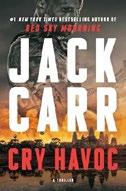
The Vietnam War rages as American operatives conduct secret missions in this military thriller.
In 1968, Navy SEAL Tom Reece is part of Recon Team Havoc in the highly classified Military Assistance Command, Vietnam—Studies and Observations Group, or MACV-SOG. They fight America’s covert war in Cambodia, Laos, and North Vietnam. But too much is going wrong—too many people are getting killed in the ops—and Reece believes there’s a mole back at military headquarters. Indeed, the Soviets are using military intelligence to undermine the U.S. war effort. They get unwitting help from an American National Security Agency employee who thinks it’s safe to share secrets with his West German lover and from North Korea’s capture of the spy ship USS Pueblo. Moscow’s mission is to stall U.S. involvement in Vietnam. They want to capture Americans and interrogate them in Siberia. Targeting MACV-SOG, they send in serial killer Adrik Voronin, who finds his calling as a KGB assassin. He’s a vicious beast and is responsible for one of the most graphic scenes in the story.
Of course, the whole year is horrible for both sides. The January Tet Lunar New Year offensive catches Americans and South Vietnamese completely by surprise. Despite inflicting heavy casualties, the North suffers a military defeat. It’s America’s first televised war, though, and the Soviets expect a big public relations victory in the U.S. They get it. The author, an ex-SEAL himself, writes that this is his most heavily researched book, and it shows. It is a tale of brotherhood, betrayal, and bloodshed. One senses the futility of it all, more so after Tet, where even body counts and bravery ultimately count for little. The U.S. will be ensnared in Vietnam for seven more years, plenty of time for Tom Reece to serve and to fight in a few sequels. He is a brave and decent man who takes pain and dishes it out. No spoiler here—he survives, as his son James is the protagonist of seven more thrillers such as True Believer (2019). Powerful, violent, and engrossing.
Cobb, May | Sourcebooks Landmark (480 pp.)
$19.59 | January 20, 2026 | 9781464245794
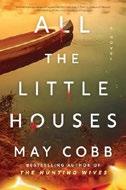
It’s East Texas in the 1980s, and the only ones misbehaving more than the teenagers are the adults.
Nellie Andersen is counting the days until she can leave Longview, Texas. She may be the daughter of one of the wealthiest families, but she’s been all but shunned by her peers, mostly because of her propensity for violence when she doesn’t get her way. Then Jane Swift moves to town with her family: handsome dad Ethan, who builds custom furniture; earthy trad wife Abigail, who sells love potions and offers workshops about the divine feminine; and two boring sisters. Jane is attractive and looking to push beyond the boundaries imposed upon her; she’s also dreaming of bad boy boyfriend Luke, whom she left behind. Nellie hates Jane on sight, and her mother,
Charleigh, who grew up poor but is now one of the richest, most beautiful women in town, wants Abigail out. Then there’s Jackson Ford, who walks the uneasy line between being Charleigh’s best friend but also an employee, and who discovers that there may be more to hunky Ethan’s story than he suggests. Cobb begins at the end: A body floats in the water, not sinking fast enough for the person who put it there. Other than occasional cuts to this moment, the novel shows us how we get here, and who is dead—and who is responsible. This is not an unusual structure for a modern thriller, nor is the use of multiple narrative perspectives, but Cobb builds in more complexity than is sometimes the case. Every character inhabits a moral gray area, stuck and struggling with secret desires, resentments, and plans. Cobb may claim Little House on the Prairie as an inspiration—but this is more Desperate Housewives. The only weakness—though some may see it as a strength and a promise—is the cliffhanger ending.
Curtis, Debra | Thousand Voices/ Ballantine (320 pp.) | $30 February 17, 2026 | 9798217092277
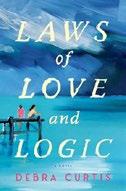
Spanning decades, this New England love story explores the aftermath of tragedy and the boundaries of forgiveness. This is the kind of long-arc story that begins before our star-crossed lovers are born, as newly married Mr. and Mrs. Webb move to the faculty housing of the Priory, a Catholic boarding school in Rhode Island. Mr. Webb is gentle and devout, his wife a 1960s feminist reconciling her faith with her place in the patriarchy, made the more visible at a boys’ school run by monks. When they have Lily, who dreams of saints, and Jane, a math prodigy who imagines the varieties of time, Mrs. Webb instills in
them a fierce independence, a gift that outlives her. Her early death leaves Lily adrift and Jane permanently broken. In high school Lily meets an unnamed boy, whip-smart and destined to be a major league footballer. Their future is set until one night—black-out drinking, a misunderstanding, a push—ruins a whole set of lives. The teens scatter: beautiful and dangerous Jane goes to Yale, the boy to prison, and Lily to Smith, where she meets the ornithology professor who becomes her husband. Years pass, oceans separate them as the boy becomes a merchant marine, but nothing can disrupt their thoughts of one another, and Lily’s guilt that she is to blame for everything. A love story in the grand tradition, the novel also explores cosmology and naturalism as a form of worship and feminism as a path to self-worth. Occasionally the narrative voice veers into lecture, but all is absolved as we wait with our lovers, hoping time needn’t bend backwards for them to meet again.
Thought-provoking, hopelessly romantic, a pinch of tragedy—just the kind of novel to get lost in.
Day, Elizabeth | Viking (304 pp.) | $30 February 24, 2026 | 9798217061983
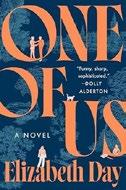
A drama of family and politics, power and comeuppance shines an unflattering light on the upper echelons of British society. Although a freestanding novel, Day’s latest is a sequel to The Party (2017), picking up on the tangle of connections linking a set of upper- and middle-class friends, relatives and colleagues, several of them unhappy, unappealing, or both. The core relationship is between smooth, successful, aristocratic Ben Fitzmaurice—now the government’s energy secretary—and middle-class loner Martin Gilmour, his old school pal, who has long and silently nursed an attraction to his popular buddy. Their relationship was severed at
Ben’s 40th birthday party, seven years ago, and has only resumed now, at the funeral of Ben’s addict sister, Fliss, because Martin has been invited by Ben’s wife, Serena. In a cast that tends toward the stereotypical, other characters include eco-warrior Cosima, one of Ben’s four children, and his repulsive, lecherous financier, Andrew Jarvis. The mystery surrounding Fliss’ drowning— was it suicide? an accident?—is the central enigma, but Day is more interested in the psychologies and inner dialogues of her characters. Martin, having loyally protected Ben after a fatal car crash during their student days, has finally had his fill of Fitzmaurice assumptions and manipulations and is “motivated not by a need to belong, but by a need to bring them down. The whole bloody lot of them.” And once in receipt of the necessary tools, he’s in a position to threaten Ben’s campaign to be party leader and potentially prime minister. There’s a familiarity to this general scenario (think of the movie Saltburn or Alan Hollinghurst’s novels). Some of it is intentional—the prime minister is described in terms reminiscent of Boris Johnson—and some of it not. The chilling self-absorption of the upper classes and their political and personal modes have been charted often. Day’s approach is brightly readable but not exactly original.
Once more unto the British class system.
Denis, Malén | Trans. by Laura Hatry & John Wronoski | New Directions (144 pp.) | $15.95 paper | February 3, 2026 | 9780811239059
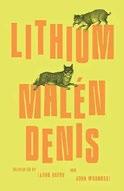
Episodic glimpses of a woman’s life in a time of personal trauma. The speaker of this elliptical novel-in-fragments is a young woman adrift in Buenos Aires at the tail-end of her 20s who has agreed to cat-sit for her ex while he’s in the hospital. The ex is a formative first love, and the malady that prompted his hospitalization
appears to have been psychological, violent, and at least partially aimed at his most recent ex-girlfriend, Violeta, whom his mother refers to as “contained.” As the speaker cares for the volatile cats and their new litter of kittens, she also cleans the apartment she once shared, confronted by lingering traces of violence: “a hank of hair as if pulled out by force, long hair,” “blood in crevices between the floor-tiles.” Meanwhile, the narrator’s own life is stalled by trauma. Her troubled mother has recently died; she herself has suffered the miscarriage of a pregnancy she had only begun to suspect; her graduation date is indefinitely delayed by a “backlog of final exams [she’ll] never be able to pass.” Bolstered by a “modest” inheritance from her mother’s estate, the narrator casts about for an experience, an activity, a love, the clarity of a philosophical truth that will deliver her life back into her control with the same kind of “static and well-lit order” that she seeks to return to her ex-lover’s apartment in the wake of chaos. Articulate and piercing at the sentence level, the books suffers somewhat from the same kind of drifting apathy that afflicts its main character. Though it grapples with larger themes—the economic “apocalypse” of life under Argentina’s austerity-driven government, mental health, wealth inequality, and the commodification of youth—the narrator’s own gaze remains fixed firmly inward on a landscape which, for better or worse, resists the “luminous” clarity of early morning light, when “objects have clear boundaries” and “everything is perfectly defined against its background,” and more often slides into shadow, where “objects [get] in the way of other objects, and everything ends up conveying the sense of an irrecoverable loss.”
A novel of skillfully wrought interiors that struggles to find its vanishing point.

Freeman, Brian | Putnam (384 pp.) | $32 January 20, 2026 | 9798217046218
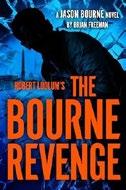
Jason Bourne wants revenge while his Chinese adversaries want dominance in this highpowered thriller.
Johanna, a woman Bourne loved, has been murdered, and he longs for payback. Meanwhile, as an agent for Treadstone, he’s stolen “the Files,” a Chinese AI software engine that collects trillions of data points on just about everything and will convey unlimited power to its possessor. The Chinese want it back, of course, and Bai Ze intends to get it. He’s an agent for the Chinese espionage group Volt Typhoon, which spies in the U.S. Strangely, there is only one irreplaceable copy—what, no backups? Now Shadow, the woman who heads Treadstone, has wrested the Files from Bourne to ruthlessly amass power for Treadstone. As his fans know, Bourne is a man without a past, as he was shot in the head and lost all memory, even of his own identity. Shadow uses him as her “personal agent for off-the-books missions,” and relishes her power over him. She has him see therapist Mo Panov to regress him and try to unlock his earlier memories, while Bourne frets that someone has been manipulating his mind. Poor Jason’s life is chock-full of trouble, as Treadstone owns him and bad guys want to kill him. He has plenty of sex with his boss, but only when she’s her alter ego, Marlen. She’s not his only sex partner, though, which angers her. He can’t resist a damsel in distress, and they can’t resist him. But back to business. Jason must find Bai Ze, whose identity is unknown. Volt Typhoon agents intend to hunt Bourne down, torture him into giving up the Files, and then, of course, kill him. “You can run, Jason, but you can’t hide,” says a billionaire who’s been surveilling him. Readers will barely have time to catch a
breath with the nearly nonstop action. What keeps Bourne going is that he “never trusted anyone,” including Shadow. “That was what kept him alive.” A fast-moving story where Bourne is chased but not chaste.
Garcia, Jessie | St. Martin’s (320 pp.) | $29 January 20, 2026 | 9781250364456
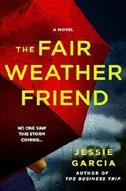
A TV meteorologist is murdered and her fans and colleagues struggle in the aftermath. Faith Richards is beloved in Detroit—a hometown hero who offers nightly weather reports on Channel 9. She has a dedicated fan club, including genial, middle-aged Carol and her thoughtful husband, Jim, as well as their feistyyet-well-meaning niece, Olivia, who has recently been hired as a summer intern at Channel 9. Faith’s coworkers—Laura, the overworked, tired, and frustrated executive producer, a one-time friend; Tom, the peacocking main anchor; and Matthew, the smarmy, complaining, and boring weekend meteorologist— might not think she’s as fabulous as her legions of followers do, but that seems to leave Faith unbothered. But then one night Faith appears on the 6 p.m. news and never returns from her dinner break. Matthew is called in to cover for her on the 11 p.m. show, disturbing a dinner with his fiancée, Tara. And then, much to everyone’s utter shock, Faith is found murdered—strangled—in her car. Chaos ensues: Olivia was the last person to see Faith alive and begins a quiet investigation with her Aunt Carol that parallels that of the police. At a vigil the next day, an unkempt man, Steve, insists he was Faith’s boyfriend, when really he was her stalker. The story twists and turns, jumping in time and point of view among the masterfully rendered characters before depositing the reader at a conclusion so
unexpected it shocks, while at the same time the reader can see the hidden-in-plain-sight breadcrumbs that have been left along the way. Characterization and motivations sing in this absorbing, suspenseful whodunit.
Ginder, Grant | Scout Press/ Simon & Schuster (384 pp.) | $30 February 17, 2026 | 9781668051771
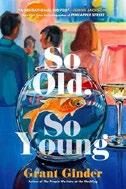
Checking in on a group of college friends as they face the realities of adulthood, one party at a time. It’s two years after graduation from the University of Pennsylvania when we meet them, running out of mixers but not cocaine as they ring in 2008 at a New Year’s Eve party at the funky Lower East Side apartment of a couple of the guys. The point of view rotates among five key players of the extended group as they explore who they’ve become and what they feel about each other now. Looks like some are headed for love, others for substance abuse, others for lucrative careers. We will watch these threads play out as we look in on them four more times: at a Cancún wedding in 2014, a Labor Day birthday party in Amagansett in 2018, a Halloween party in suburban New Jersey in 2022, and, ineluctably, a funeral in lower Manhattan in 2024. The antic high spirits of Ginder’s earlier work—the first, The People We Hate at the Wedding (2017), was truly a riot—have shaded bittersweet; this book is about the pains of aging and the ripple effect of mistakes. Not to say there aren’t still some acerbically funny lines and great set pieces. One character has rejected a suitor with early onset testicular cancer: “I can’t believe you walked away from a guy with cancer.” “Whatever, it has a treatment rate of, like, ninety-five percent.” A newly out young man discovers an obstacle to gay romance: “All they ever wanted to do was lecture him about Larry Kramer. And nothing—not coke, or Nina
volume turns 50 this year.
PUSHCART PRIZE L
Guzman, or a naked Nancy Reagan— could kill a boner quite like Larry Kramer.” The fact is, aging is no fun for this crowd. Whether they become parents or don’t, whether they find love or don’t, adulthood is a narrowing of options, a hardening of patterns, more loss than gain. “If at one point there had been a thousand paths available to her, each choice she had made had slashed that figure in half, and then in half, and then in half again.” Is part of the problem that everyone is so very white and privileged, and had a thousand paths in the first place? That doesn’t come up, but one wonders.
Buoyant and funny page by page, this book nonetheless has a sad and serious heart.
Kirkus Star
Robbie McNeil’s Hit List
Heath, Brianna | Poisoned Pen (368 pp.) | $17.99 paper March 24, 2026 | 9781464242670
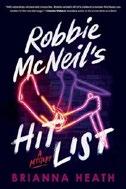
The partners in an Indiana karaoke bar who are “queerplatonic soulmates” double as hit men—sorry, hit persons. And that’s only the opening premise of this criminal romp.
Robin Ann McNeil has a rare combination of skills and limitations— she can read people a lot better than words or music, and she’s utterly incurious—that made her a perfect choice for her mentor, James, to train and hire out as a contract killer specializing in meticulously faked accidents. Dee Machado, Robbie’s “transmasc lesbian” housemate, partner, and friend, but not her lover, is a sniper
who shares both her day and night gigs. Now that they’re branching out still further by planning to stage a musical Robbie wrote and Dee will star in, James, who’s stopped handling Robbie, emerges with a new client for her: Mr. Clark, who offers to pay her $20,000 if she kills the gambler Xavier Landerman, about whom he knows virtually nothing, within the month. Robbie’s first job is to identify the target and track him down. Against all her instincts, she gets so interested in him that she keeps putting off the job, which turns out to be a big mistake. Meanwhile, James presses her to take on another contract against financier Kyle Lynch. The two jobs inevitably conflict with each other, with Robbie and Dee’s day jobs, and with their musical, which runs into serious logistical problems of its own. Luckily, politically minded businessman Fletcher Ingram steps up to help finance the show—but is that such a lucky development after all? And how much sympathy will readers accord hired killers?
Heath’s brightly written debut ends with an extra treat: a Reading Group Guide whose questions are actually worth discussing.
Henderson, Bill | Pushcart (624 pp.) | $38 December 2, 2025 | 9798985469783
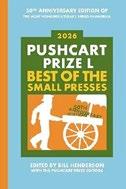
The venerable literary annual turns 50. “Fuck it, is the general feeling here, because we are minimumwage employees in a doomed independent bookstore in Louisville, Kentucky.” So
opens Henderson’s 50th edition (“L in the dead language”) of his prize volume, the words a bitter salvo from Christie Hodgen’s story “Rich Strike.” The year is 1999, the malcontents are young MFA holders who will go on to lives of unquiet desperation. If there’s a theme that runs through this volume, it’s just that: Granted that literary writers tend not to be the happiest bunch, there’s seldom a smile cracked in this portly anthology. There are some nicely ironic turns, though. One comes from Sarah Green’s found poem, “Tinder,” made up of pitch lines from the eponymous dating service, such as this: “I’m sort of like a deer: wild & free; gentle, yet / Love my life, won’t settle, must see stars.” (Now that’s a writer who deserves more space here.) Another irony begins with Ryan Van Meter’s “An Essay About Coyotes,” which is mostly about a dead dog, complete with the admonition to his writing students, “Write the animal essay that only you can write. Please don’t make me read fifteen dead dog essays.” A dead-dog essay follows a few dozen pages later, and an almost-deaddog story follows shortly afterward, one that could be a country song (“Their mother is serving eighteen months in a state penitentiary after a prescription drug–fueled joyride…”). The book’s highlights are many, but the best are nonfiction, one a meditation on cancer by the noted poet Ted Kooser, the other a lovely memoir by Stephen Akey called “The Department of Everything” that recounts time spent as a reference librarian answering questions such as, “What time was low tide in Boston Harbor on May 14, 1932?” Nothing about dead dogs, though…
Essential, as ever, for literary trend watchers, and packed with good reading.
Huf, Tammye | Blackstone (360 pp.) | $29.99
February 3, 2026 | 9798874868376
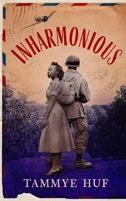
Unfair in love and war.
Huf, drawing on her own family’s history, sets her latest novel in 1940s Florida, where Black people face the indignity of Jim Crow laws and a vicious old-boy culture. Restricted in where they can live and work, buy gasoline, or find a water fountain labeled for their use, still, after the Japanese bomb Pearl Harbor, three friends— Benny North, Lee Peters, and Roscoe Crane—feel the call of duty, eager to stand up and prove their courage. Defying the vehement objections of the women who love them, they enlist. As Roscoe and Lee are dismayed to discover, the Army is strictly segregated, with Black recruits shunted to service postings and given “careless, lazy training.” For Benny, though, the Army proves life-changing: He’s assigned to a white troop by a sergeant who doesn’t want to be accused of trying to integrate the military by sending a light-skinned, blue-eyed soldier to a black battalion. From then on, Benny passes as white. Although as the war intensifies, Roscoe and Lee get a chance to participate bravely, they emerge from the trauma of battle into the same racist society they’d left. They can’t find jobs, and inequitable rules cut them out of the GI benefits that Benny gets as a “white” veteran. But his comfort and opportunity come at a cost. “I learned to take up space in the world and own my manhood,” Benny tells his distraught mother. “I can’t go back to boy and coon and the back of the bus.”
Kauffman touches some of the deeper mysteries of the human condition.
Yet separation from his family and community are wrenching. Huf’s sympathetic, well-defined characters struggle with anger and frustration, desire and longing—and the betrayal of American democracy. An intimate look at the nation’s racist history.
Kauffman, Rebecca | Counterpoint (272 pp.) $27 | February 24, 2026 | 9781640097483
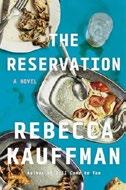
A restaurant-based mystery reveals more than just the culprit in this sprightly drama.
On the morning of what promises to be a very busy day at Aunt Orsa’s, the only fine dining restaurant in a Midwestern town, a crime is discovered. Danny, the owner’s nephew, is making his usual health and safety rounds when he discovers 22 rib eye steaks are missing. The theft, on top of a slew of unusually harsh Yelp reviews, spells big trouble for the restaurant, a community staple largely dependent on business from the local university, which is set to host a famous visiting author that very night. The irascible owner, Orsa, is incensed and immediately starts an investigation. While the rib eyes do represent a financial loss for the restaurant, what bothers Orsa more is the timing. It seems like a deliberate sabotage, but who among the employees she thinks of as extended, if slightly disappointing, family could have it in for Aunt O’s? The investigation proceeds in vignette-style chapters that explore each character’s backstory, delving into their complex interrelationships and the baggage they carry with them to and from work every day. Is the culprit Jane, the Mennonite pastry chef, whose secret appointment after her shift necessitates a disguise she’s stored in her locker? Or Edgar, the hard-partying Guatemalan prep chef, whose car harbors a secret and a terrible smell? Is it Kenzie, a “real-life Barbie,” who is only
waiting tables as a condition of her wealthy parents’ continued financial support, or Shannon, the bitter pantry chef, whose longed-for promotion to front-of-house is permanently delayed? As the day unfolds, replete with all the ordinary chaos of a busy service, the characters’ stories overlap to yield not only the answer to the mystery of the missing steaks, but also a tender tale that seeks the “immeasurable satisfaction” of an ordinary job well-done. In what is largely a light and funny novel, Kauffman nevertheless touches some of the deeper mysteries of the human condition: desire, longing, and an inchoate sense that there is something larger than our circumstances which binds us all together.
A book that proves light touches can leave lasting impressions.
Lawson, Mike | Atlantic Crime (320 pp.) $27 | February 3, 2026 | 9780802167002
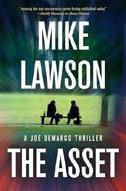
Influential Congressman John Mahoney gets a rare chance to neutralize a long-standing enemy that sounds too good to be true— because it is.
Acting on information he’s received from Diane Lake, of Vicount Analytics, Mahoney wants longtime fixer Joe DeMarco to determine whether Lydia Chang, the much younger wife of Sen. Douglas “Dutch” McMillian, has really been meeting with Zhou Enlai, an intelligence officer at D.C.’s Chinese embassy, whom Diane claims has pressed Lydia to become an agent for the Chinese government. Diane doesn’t want the publicity that would come from outing Lydia, and since Dutch routinely spars with Mahoney on every imaginable front, she figures it’s a great opportunity for him. As DeMarco quickly discovers, however, the situation is more complicated than that. Lydia has indeed been meeting Zhou, and she and her daughter, Jenny, are both walking on
thin ice, subject to all kinds of pressure about a potentially compromising secret they’re keeping. But DeMarco’s friend Mike McGuire, a former CIA agent, doesn’t think the plot smells like a Chinese operation at all. He thinks it’s being engineered by the Russians or the CIA itself. As it turns out, he’s right about the first part but wrong about the second. As usual, Lawson keeps the story moving as fast as a runaway rocket, seamlessly changing gears from “What’s going on?” to “What can we do about it?” to “How can we keep it quiet?” to “How will our attempts compare to our enemy’s?” while implicating more bad actors at every turn.
Readers mourning the death of Thomas Perry are advised to try Lawson’s equally deadpan political thrillers, beginning here.
Lee, Harper | Harper/HarperCollins (224 pp.) | $30 | October 21, 2025 9780063460515
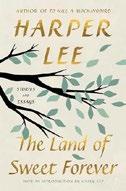
Miscellaneous writings from shortly before and after To Kill a Mockingbird made the author famous. Taken as a whole, the works add up to pleasant ephemera. The eight previously unpublished short stories mostly plumb the same material as Lee’s bestselling novel: small-town life in Alabama, often viewed through the eyes of a child. In “The Water Tank,” a sixth grader is terrified that she might be pregnant based on misleading information from her much older, half-educated classmates. “The Binoculars,” “The Cat’s Meow,” and the title story also address with rueful humor Southern ignorance and narrow-mindedness, though the calm, reasonable father in “The Pinking Shears” foreshadows the counterbalance presented by Atticus Finch in Mockingbird. “This Is Show Business?,” a funny account of a favor turned into a day-long ordeal, and “A Roomful of Kibble,”
about an eccentric acquaintance, are the only tales set in New York, where Lee lived for many years; “The Viewers and the Viewed,” a wry analysis of Manhattan movie audiences’ reactions to bogus film titles, is misleadingly grouped under fiction. The essays published in the decade following her novel’s success are standard-issue magazine fare: a rambling consideration of “Love—in Other Words”; a recipe for crackling bread with the sardonic aside, “Some historians say by this recipe alone fell the Confederacy”; patriotic musings on “When Children Discover America.” The exceptions are a moving piece about the Christmas gift that gave Lee the freedom to write without financial constraints for an entire year and a touching but sharp-eyed tribute to her close friend Truman Capote. A 1983 lecture nostalgically recalls Albert James Pickett’s 19th-century History of Alabama; a 1989 essay written for an American Film Institute program praises Gregory Peck’s “inspired performance” as Atticus; and a 2006 letter to Oprah asks, “Can you imagine curling up in bed to read a computer?”
Agreeable enough, but best for completist library collections and diehard fans.
Leung, Gigi L. | Trans. by Jennifer Feeley Riverhead (288 pp.) | $29 | February 10, 2026 9780593855379
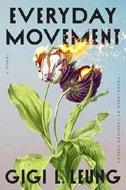
What is worth disrupting your comfortable life for? A novel set in Hong Kong in 2019 explores this question.
Panda and Ah Lei, youthful acquaintances who later become college roommates, confront their circumstances during a time of upheaval and rebellion in different ways. Both actively support the student-led protests opposing an extradition bill that would permit the transfer of Hong Kong citizens to mainland China, which was seen as a potential infringement on the
civil liberties enjoyed by residents of the self-governing area. Panda’s temperament leads her to continue her life much as usual, dressing in cute clothes and following a beauty routine. Ah Lei takes the civic unrest to heart and is preoccupied with the dangers to activists and the future of Hong Kong’s tenuous hold on democratic practices. Leung focuses on the girls’ activities during a violent and uneasy summer of protests but incorporates the activities, ideals, and thoughts of a circle of friends and family members, as well. As the demonstrations—and the government response to them—grow more intense and dangerous, the stakes escalate for everyone involved: Small business owners, for example, need to protect themselves from accusations of favoritism, leaving an aesthetician to remark, “Even beauty has to be political.” Relationships are challenged and family ties ignored as the girls and their friends and loved ones determine how to go forward. Scenes of day-to-day life, meals, and movie-watching amid the chaos alternate with episodes of brutality, violence, and injury. By the time one young couple hooks up while Talking Heads’ “Life During Wartime” plays in the background, Leung’s points are clear: This is a war and sides need to be taken and what you don’t do may matter as much as what you do.
A cinematic, sympathetic view of the personal costs of political conflict, many of which will be frighteningly familiar.
Mara, Andrea | Pamela Dorman/ Viking (384 pp.) | $30 | January 13, 2026 9780593832097
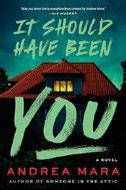
An accidental “reply all” leads to violence and tragedy in an affluent suburban neighborhood. Susan O’Donnell has a fourmonth-old baby and never gets enough sleep. One day, after checking her neighborhood WhatsApp group, she sends her two sisters a snarky message
about Celeste Geary, “mistress of pointy comments,” intending to vent her frustration at Celeste’s latest passiveaggressive post and including insinuations about her husband, daughter, and son: “Urgh. I know. I’m awful. I just needed to get that out of my system.” Several minutes later, she gets panicked replies from Leesa and Greta: Susan has sent the message to the whole neighborhood group chat. By the time she manages to delete it, it’s already been screenshotted and shared around the neighborhood and beyond, and reactions have been put in motion that will result in a brick through a window; a kidnapping; the revelation of at least one extramarital affair; attempted murder; and multiple deaths. To Mara’s credit, she paces the drama perfectly; even as things escalate to an extreme degree, she switches narrators and perspectives frequently enough to prolong a sense of mystery, but not so much that it feels fragmented. At the center of it all is Susan, who’s dealing with her own struggles as a mother as well as the guilt and shame she feels for saying publicly those things that were meant for private consumption. Her humanity grounds the tension, even as the plot threatens at times to spill into the realm of absurd and sensational. No character emerges unscathed, a sobering reminder that secrets—whether harmless or not—rarely stay buried, particularly when they can be broadcast with a single click.
An entertaining cautionary tale in the age of digital gossip and social media.
McMahon, John | Minotaur (400 pp.) | $29 January 13, 2026 | 9781250348326
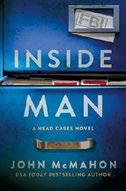
An elite team of eggheads tackles the murder of an FBI informant. After a lively debut in which Mad Dog, a prolific killer of serial killers, was neutralized (Head Cases, 2025), McMahon’s Patterns and Recognition Unit is back and pursuing another savage supervillain under the
guidance of veteran FBI bureaucrat Frank Roberts. The plot is twisty. PAR is brought in to investigate after informant Freddie Pecos is murdered. When recovered video pinpoints a suspect already linked to the murder of multiple women, the team finds itself on the trail of another serial killer. The blossoming series puts a shrewd twist on a familiar formula. There’s the ragtag and diverse cast of specialists, including sniper Joanne “Shooter” Harris and eager newbie Richie Brancato, whose auspicious, mysterious past is revealed in tidbits, along with the backstories of other team members, as the mission progresses. Unlike traditional thriller writers, whose books are highlighted by chases, shootouts, and explosions, with detailed descriptions of munitions and weapons systems, McMahon focuses more on patterns and puzzles, analyzing each development in the complex probe. Analyst and team leader Gardner Camden is a peppy, wisecracking first-person narrator, folding his challenging personal story into the plot. The tale moves briskly on a cushion of rhythmic prose and nearly nonstop banter. Gardner’s relationship with PAR math genius Cassie Pardo inches progressively toward an affair, but readers will have to wait for its consummation. A slick and lively thriller featuring a team you’ll want to hang with.
Miles, Jonathan | Doubleday (176 pp.) | $25 February 10, 2026 | 9780385551915
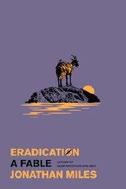
A man heads to a remote island to save the environment— or so he’s told. Miles’ fourth novel, billed as a fable, is a slim but potent study of humanity in extremis. Its hero, Adi, is rudderless: His young son has recently died, prompting the end of his marriage, and he has a lackluster job teaching fourth-grade science. Seeking change and adventure,
he connects with a peculiar foundation that recruits him to help revive the native species on a flyspeck tropical island called Santa Flora. Doing that requires the simple but gruesome task of killing the island’s invasive species, hordes of goats that have grazed the terrain barren. Early on, it’s clear that he’s not quite up to the task: He’s never used firearms, let alone the high-powered rifle he’s equipped with. (He wounds himself firing his first shot, the scope striking his head when the weapon recoils.)
Disposing of goat corpses proves a messy, complicated business. And he has some intimidating company in the form of fishermen treading the waters to poach sharks for their fins. Miles’ observational skills are on fine display—the offbeat premise is fully convincing, thanks to precise details about the island’s flora and fauna, Adi’s equipment, and (in time) the full story of his family’s collapse. But the “fable” element of the story remains appealingly open-ended—the novel can be read as an allegory about contempt for immigrants, our propensity for violence, our relationship to the environment (and the harm we bring upon it), our need for connection, and more. However one reads it, Adi becomes a potent symbol of life in a fearful, desperate moment: “This, right here, was surely where he belonged: alone in the earth’s dungeon, clapped in irons for all his failures.”
A stark, propulsive, and timely man-versus-nature tale.
Wolf Hour
Nesbø, Jo | Trans. by Robert Ferguson Knopf (400 pp.) | $30 | February 3, 2026 9780593803653
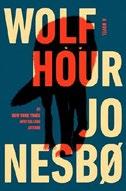
In 2016, down and out Minneapolis cop Bob Oz tracks an elusive sniper killer—a story Norwegian crime fiction writer Holger Rudi comes to Minnesota to research six years later.
The gunman, Gomez—likely the onetime “killing machine” for a Mexican cartel who called himself Lobo—is out to avenge the shooting deaths of his family at a McDonald’s by gang members. His ultimate aim is to take out the city’s National Rifle Association–promoting Democratic mayor at the group’s annual convention. Oz, who has Norwegian roots—his name is an Americanization of Aass—was kicked out by his wife following an unspeakable family tragedy. Since then, he has slept with so many women he can’t keep them straight (his fellow cops call him One-Night Bob). After he beats up the husband of one of them when confronted, he’s suspended from the force but continues pursuing Gomez with his arduously tested partner, Kay Myers. Among his potential witnesses is Lunde, a friendly taxidermist who educates Oz on his craft. Nesbø overworks taxidermy as a metaphor for repression (Lunde’s customers are “frozen themselves, they’re stuffed themselves, you know?”) and creative writing (Rudi, who’s mainly a framing device, sees himself as a taxidermist in “cloth[ing] a character”). The book’s explicitly stated central theme is loneliness, from which both Oz and Gomez openly suffer. But for all its darkness, the novel is a pleasure to read with its engaging, easy-twisting plot, its cerebral touches, and characters like Liza, a bartender whose teasing scenes with Oz are highlights. Nesbø is clearly having a good time immersing himself in American culture, politics, and policing, revealing “Minnesota nice” as “a friendly, polite surface obscuring a conflict-averse and passive-aggressive undercurrent.” Oslo was never like this. Another standout standalone from the author of the Harry Hole series.
Ojito, Mirta | Union Square & Co. (352 pp.) | $28.99 | November 4, 2025
9781454961901
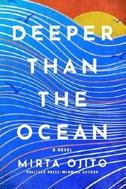
A Cuban-born journalist in search of her family history uncovers longburied tragedies and truths. Weaving her impressive debut around the true story of the 1919 wreck of the Valbanera , “the poor man’s Titanic,” Ojito follows the epic journeys of two women, 100 years apart: journalist Mara Denis, a 55-year-old widow with a 19-year-old son, sent to cover a story in the Canary Islands, and her great-grandmother, Catalina Quintana Cabazas, whose birth certificate Mara’s mother has asked her to track down. As Mara picks out the threads of the long-buried story, she begins to realize much of what her mother believes about the family’s history is incorrect, or incomplete. The first big indication is that Catalina’s name is listed among those lost in the Valbanera shipwreck, along with a husband whose name is completely unfamiliar. We readers know the real story, as we are watching Catalina’s life unfold in parallel, first on the isle of La Palma where she was born, one of three daughters raised on a silkworm farm, and then, after her father promises her to an older businessman, in Cuba, where Mara’s mother and Mara herself were born. No more details can be revealed here, but it is a story of complex passions, tragic destinies, and Latin American culture that recalls the novels
A Cuban-born journalist uncovers long-buried family tragedies and truths.
DEEPER THAN THE OCEAN




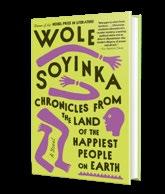
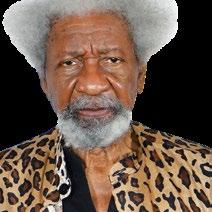
The Nigerian Nobel laureate recently compared President Donald Trump to dictator Idi Amin.
Nigerian author Wole Soyinka says that his U.S. visa has been revoked, the Associated Press reports.
Soyinka, the Nobel Prize–winning writer, said that he believes the revocation of his visa was prompted by his criticism of President Donald Trump.
Soyinka, one of Africa’s most celebrated authors, is known for his plays and novels including The Interpreters and Chronicles From the Land of the Happiest People on Earth
Soyinka was at one time a permanent resident of the U.S. but destroyed his green card after Trump was first elected president in 2016. “I threw away the card, and I have relocated [to Nigeria], and I’m back to where I have always been,” he said. Soyinka recently referred to Trump as a “white version of Idi Amin,” the

despot who ruled Uganda in the 1970s.
The Guardian reports that Soyinka received a letter from the U.S. consulate in Lagos informing him that the visa had been revoked. According to the AP, the consulate directed questions about Soyinka’s visa to the Department of State, which did not respond to a request for comment.
Soyinka said, “It’s not about me, I’m not really interested in going back to the United States. But a principle is involved. Human beings deserve to be treated decently wherever they are.…I have no visa. I am banned, obviously, from the United States, and if you want to see me, you know where to find me.”
—MICHAEL SCHAUB

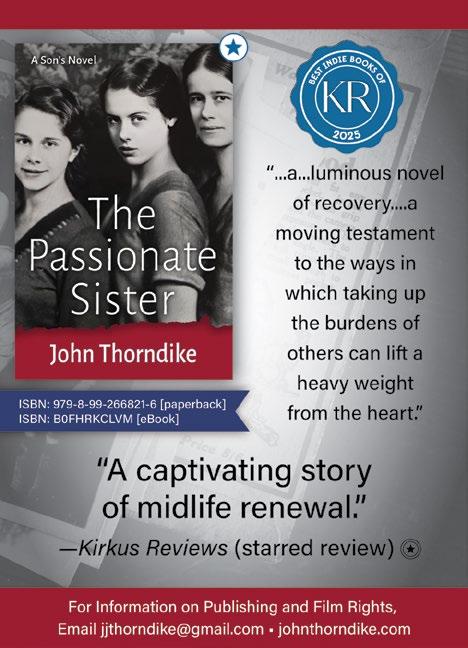
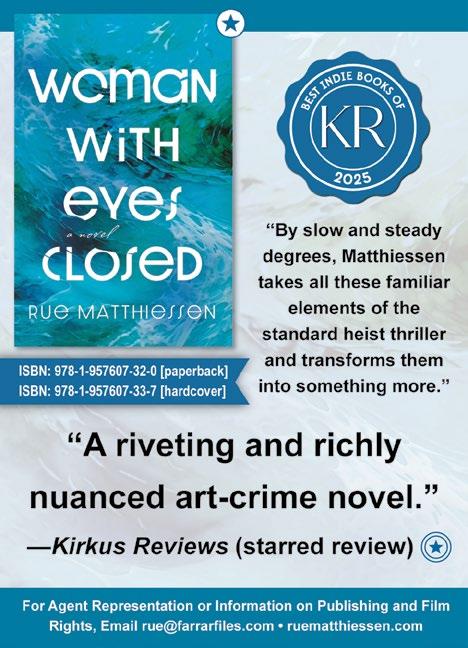
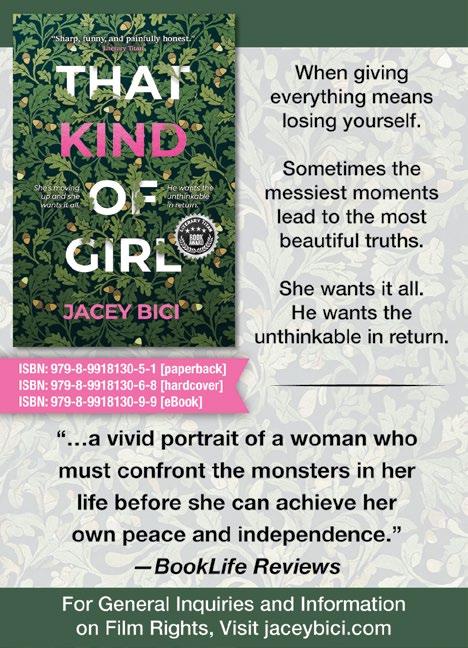
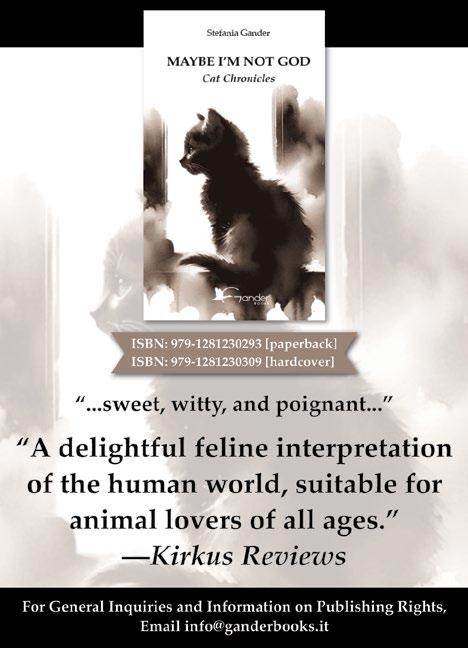
Harper will publish the bestselling author’s Whistler next spring.
Ann Patchett has a new novel coming in 2026.
Harper will publish the author’s Whistler next spring, the press announced in a news release. It calls the book “a moving, luminous book that reminds us of the sweetness and impermanence of life and the power of connection to defy time.”
Patchett made her literary debut in 1992 with the novel The Patron Saint of Liars. Her 2001 novel, Bel Canto, won the Orange Prize for Fiction and the PEN/Faulkner Award for Fiction, and her 2019 novel, The Dutch House, was a finalist for the Pulitzer Prize. Her other novels include State of Wonder, Commonwealth, and Tom Lake Whistler will follow Daphne Fuller, a woman

For reviews of Ann Patchett’s
who reunites with her former stepfather after they run into each other at the Metropolitan Museum of Art. The novel, Harper says, is “ultimately about how love endures, and how the feeling of being known by one other person, even for a short period of time, can change everything.”
Patchett told People magazine, “Whistler was a gift. I was missing a very close friend who had recently died, and in missing him, I imagined what life might have been like if we were two different people in a very different relationship. Nothing that happens in this book happened to us, and we are not these people, but all the love is there.”
Whistler is scheduled for publication on June 2, 2026.—M.S.

THE RENOVATION
of Isabel Allende. If Mara’s storyline slows a bit in the last third of the novel, Catalina’s stays dramatic and intriguing with secrets and twists the reader may not have guessed still to be revealed. As profound a role as the sea plays in shaping the destinies of the characters, the deeper force referred to by the title is likely the maternal bond, so central in every generation of this far-flung family, though never uncomplicated. As Mara, who has convinced herself that she is content with her single and solitary life, finds her world filling up with new faces and connections, this often-tragic story takes a hopeful turn. A strong debut graced by vivid settings, strong female characters, and classic storytelling.
Orhan, Kenan | Farrar, Straus and Giroux (256 pp.) | $27 | February 10, 2026 9780374609429
Are we doomed to be punished by the places that scorned us—and if so, who will serve that sentence?
Turkish American author Orhan (I Am My Country, 2023) expands one of his better short fictions into this claustrophobic, captivating allegory about family, country, and the failure of memory. When Turkish emigré Dilara hires a few cryptic builders to renovate an ensuite bathroom as she prepares her home in Baronissi, Italy, to accommodate her dying father, she’s justifiably impatient to see the
results. She’s not, however, expecting to find a fully functioning prison cell mirroring the inside of a cell at Istanbul’s gargantuan Silivri Prison—complete with guards and fellow inmates with whom she can converse regularly. Other than the obvious anomaly, Orhan plays it completely straight as Dilara, a psychologist and child development specialist, tries to figure out the meaning of this literal hole in her world. Recounting the violence around the 2013 Gezi Park protests, she eventually explains the family’s flight from Turkey and her father’s subsequent descent into dementia that now requires her constant attention. The book is infected by sickness, both the cosmically unfair illness stealing away Dilara’s father and the failure of Turkey to protect its own or live up to the grace of its people. Meanwhile, Dilara’s nameless and endlessly anxious husband, already absent in spirit, flees for a short-term gig elsewhere. As the prison grows more enveloping than her everyday life, her father, formerly a writer and activist, shifts from deteriorating to semi-lucid; Dilara suspects these two things and the strange memories and episodes she’s experiencing are connected. There’s a lot of emotional power between the drama and the premise here—what seems merely impossible is quickly overwhelmed by the tale’s connecting thread, this inability to recover what has been lost. It’s an odd, elegant little book with disarming sincerity that belies its metaphysical hocus pocus, held aloft by keen literary wordplay and an evocative exploration of what homeland really means. A one-way trip to the Twilight Zone via a self-imposed life sentence.
Kirkus Star
Perry, Princess Joy L. | Norton (352 pp.) $29.99 | August 5, 2025 | 9781324105978
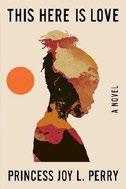
Indelible characters bring to life the drama of bitter survival in colonial Virginia, indicting a society of enslavement and dehumanization.
In this epic tale of early America, abolition is still generations away. Half a dozen disparate characters, Black and white, converge into a center in which they will have profound and often shocking effects on each other’s lives. The novel begins in 1692: open season on Africans for kidnapping for wealth extraction and forced reproduction in the brutal Virginia Colony. As the narrator observes with typical bluntness: “All slaves were vulnerable, women more than men, children more than women, little girls more than all the rest.” One of those little girls is Bless, a great character in a constellation of well-crafted people who make do with the family they’re given and long for the people they’ve lost. Bless has the curdled privilege of being a rich girl’s plaything; later, the reader will learn about outdoor labor: “Field hands had to pluck the worms and grind them beneath their bare heels.” Perry’s descriptions are cinematic, and the dialect is evocative without being grating. She makes reverent nods to Toni Morrison’s Beloved and evokes the rooted magic of Gloria Naylor’s Mama Day. The white men who buy humans and give orders are sometimes well established in the colonies—or like Jack Crewe, they are “the bartered class” of despised immigrants. They, too, have a price, and can’t afford to be sentimental. Perry’s intimacy with the period is palpable, and readers will gain greater knowledge of daily life under slavery, especially the monstrous glossary around the cold assessments of Black bodies. Some slavers flatter themselves: “Benjamin fancied himself a benevolent master,
a caretaker to a rude and backward people.” Laws shift here and there, and we meet Black men who believe they are free. But white people, grasping to climb the next rung of the ladder, break their promises. By the end of the book, it’s an utter surprise what fate appears to unfold for the children of both striver Jack and survivor Bless, who has had to make the hardest decisions of all. Perry takes the long way home, following rich scenes with a slightly distanced narratorial explication that at first may seem redundant. Why show, then tell? It’s a congregation’s call and response. This history must be retold lash by lash, scar by scar, victory by victory, along with the reminder that systematic cruelty is codified, modeled, and taught. A riveting new story about an abiding atrocity.
The Johnson Four Reed, Christina Hammonds Ballantine (496 pp.) | $30 February 3, 2026 | 9780593724484
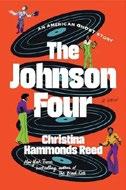
A family band is supported—and disrupted—by an unusual interloper.
Reed’s debut adult novel is a saga about the three Johnson brothers, who, as the story opens in 1968, are an aspiring R&B act: headstrong Roman, sensitive River, and neurodivergent Rocco. Unifying them is Christmas Jones the Third, the ghost of a lynched boy they encountered while driving from Detroit to an audition. He’s missing a hand, fusses with his intestines, and wears the noose he was hanged with, but Reed emphasizes his kindliness as much as his symbolism as an endangered Black body. As the boys’ parents, Odysseus and Emmeline, work to get their sons’ careers going in Pasadena, Christmas’ protectiveness gets the better of him, and he seriously hurts a schoolmate bullying Rocco. Christmas is banished; Rocco is institutionalized; Roman enlists to fight in Vietnam; and River becomes a famous solo act and talk
show host blending elements of Michael Jackson, Marvin Gaye, and Sammy Davis Jr. As the story moves through the ’70s and ’80s, crises abound for the Johnsons: addiction, mental illness, breakups, betrayals, all layered with various forms of racism. Reed conscientiously gives each character plenty of stage time—her portrait of Rocco, whose challenges were misunderstood in this era, is well-drawn, and scenes of Christmas’ exile have lively magicalrealist elements. But River is plainly the star of this show, as he navigates fame alongside obligations to family and his homosexuality, which he feels obligated to conceal. There are moments where Reed heavy-handedly layers the melodrama, and her care with getting the details right about the Vietnam War or the early days of the AIDS crisis sometimes comes at the expense of more nuanced characterizations. But the novel is admirably and remarkably ambitious, capturing a family’s internal struggles along with those of American society. A bulky, big-hearted family saga.
Sallis, James | Soho (240 pp.) | $20.95 paper February 10, 2026 | 9781641298261
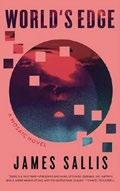
A cautiously hopeful view of the futuristic horrors headed our way is perfectly described by its subtitle: “A Mosaic Novel.”
The United States has gone the way of all those other empires, past and present, fragmenting into separate and variously dysfunctional regions, communities, and neighborhoods, many of them at war with each other not over ideological differences but in endless battles for the affordances that keep them alive. Sallis explores the implications of this disintegration, in which “foundations fall away, one after another,” in five stories. Their titles—“Dayenu,” a Hebrew word meaning “it would have been enough”;
“Carriers”; “Settlers”; “Allotments”; and “Reconstruction”—seem to chart a path from destruction to rebirth, and readers who squint hard enough may see such a progression. What’s much clearer, however, is the repeated patterns among the stories: There’s the veteran who finds returning home more taxing than waging war, the medical provider facing impossible odds, the precocious children fighting their predators, the abrupt disappearance and occasional equally disconcerting reappearance of colleagues, lovers, and old friends, and the mentors whose nuggets of wisdom (e.g., “the only way we get through our lives is by imagining elsewheres and other times”) are ever more treasured as they become more inadequate to the moment. Lacking the razor-sharp premise of P.D. James’ The Children of Men (1993), with which it shares an equally elegiac sensibility, Sallis’ tale, or tales, depends for its power on individual insights and a thematic throughline: Apart from all those unbridled conflicts, the nightmare future it presents sounds a great deal like this morning’s headlines.
A supercut of videos and aphorisms that, like all dystopias, uses prophecies of tomorrow to raise hard questions about today.
Sheinmel, Alyssa | Emily Bestler/Atria (288 pp.) | $28 | January 20, 2026 9781668084007
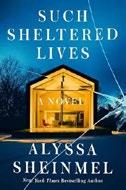
Three troubled celebrities seek treatment at an ultra-exclusive Hamptons rehab center with its own dark history. Shelter Island–based Rush’s Recovery is so discreet it doesn’t have a website and relies on word-of-mouth referrals. There are only three cottages for three “guests” (not patients) at a time, and each guest is assigned their own care manager as well as a personal chef and housekeeper. The new arrivals include Amelia Blue Harris, the daughter of
legendary 1990s rock musicians, who’s struggling with an eating disorder; Lord Edward of Exeter, the blacksheep scion of a British aristocratic family fighting alcoholism and a secret addiction to painkillers; and Florence Bloom, a fading pop star lying low after her latest tabloid scandal. “I’m not here for rehab,” she asserts to her therapist. Amelia Blue, too, has an ulterior motive for her stay; she wants to uncover the truth about her mother Georgia Blue’s fatal overdose 10 years earlier during a stint at Rush’s Recovery. Enlisting the help of Lord Edward, she sets out to explore the grounds at night in a quest for answers. Making her adult fiction debut, bestselling YA author Sheinmel sets up an intriguing premise for a suspenseful thriller but fails in the execution; it’s as if she couldn’t decide whether she was writing a family drama or a thriller. The slow-paced storyline, alternating between the three main first-person narrators and two different timelines, gradually climaxes in a predictable, clunky, and infuriating reveal. While the budding friendship between Amelia Blue and Lord Edward is beautifully drawn, it goes nowhere, and the other supporting characters are flatly portrayed. A disappointment for Sheinmel’s fans.
Kirkus Star
Shree, Geetanjali | Trans. by Rahul Soni And Other Stories (184 pp.) | $19.95 paper February 3, 2026 | 9781916751392
A house both shelters and reveals secrets in this novel translated from Hindi. Through a prism created by multiple viewpoints, Shree— who won the International Booker Prize for Tomb of Sand in 2022—delivers a compact novel exploring broad themes
including grief, memory, and the truths of women’s lives. The complicated social ecosystem of the novel’s setting is sketched out, at first, by Bitva, an adult man struggling to accept the death of his beloved mother figure, Chachcho. Almost all the action of the story, both present and recalled, occurs under the rolling, uneven, and sealike roof of Laburnum House, a complex of hundreds of homes. Shortly after Chachcho’s death, to Bitva’s annoyance and discomfort, Lalna, a woman who had previously been part of the household, reappears and settles in. Carrying the narrative forward, Lalna relates episodes of her relationship with Bitva’s family, most particularly about her intense relationship with Chachcho. The strong bond between the two had been the subject of gossip within the community and the women often sought escape from prying eyes and stifling conventions by climbing to the undulating roof of the complex. Shree’s whimsical descriptions of life on the roof include references to the skylights which offered glimpses of the goings on below: real, imagined, and, in any event, gossiped about. (Doors seem to have ambiguous importance in the almost animate house, as well.)
Doubts about Bitva’s parentage and heredity are alluded to, as are Lalna’s roles in the household and in Chachcho’s stultifying marriage. The more objective third-person narration of the novel’s conclusion invites readers to ponder the actual nature of these relationships. Differing displays of grief and affection are clearly drawn in this enigmatic and often liminal depiction of lives, loves, and losses, examined from various angles. Intricate, subtle, nuanced, perceptive, rewarding.

Kirkus Star
Simon, Dan | Europa Editions (208 pp.) $26 | February 17, 2026 | 9798889661672
A multilayered and richly evocative portrait of a dying New Hampshire mill town, told through the voices of intertwined families during the 20th century.
For this year’s International Booker Prize winner, visit Kirkus online.
“That’s us in a nutshell, mama and me, both of us free but not free of each other,” writes Carolyn, the initial narrator of Simon’s debut novel, set in fictional Ashland, New Hampshire. Carolyn, born in 1972 when her mother, Ellie, is just 17 and her nameless father has already disappeared, might as well be writing about the hold her home state has on so many other characters, from a couple named Edith and Gordon who meet in a 1920s tuberculosis sanatorium to her college writing instructor, Geoff, who admits he has “come to love New Hampshire.” These men and women often recall the region’s heyday with an achingly honest nostalgia: “There was a time when…[t]here was work enough farming the land, in the timber trade, good jobs, and in the mills too.” Yet just as often, they recall times when change came. “The world was slowly slipping away,” laments Carolyn’s uncle, Andy, a contrast to how painful the intersection of public and private can be, such as his brother’s life-altering injury in the Vietnam War. The author’s choice of having first-person narrators, each opening their chapters in medias res, allows each character’s interiority to blossom without question. Whether a section builds on what came before or introduces new information, its voice arrives fully formed, akin to elements of local geography like the Pemigewasett River or a peak in the Great White Mountains. “Live Free or Die” is the New Hampshire state motto, but no one in Ashland is ever
completely free from their origins, whether they leave or stay. Powerfully poetic, this novel serves as a cross section of the Granite State, a testament to American virtues—and flaws.
Stridsberg, Sara | Trans. by Deborah Bragan-Turner | Farrar, Straus and Giroux (288 pp.) | $18 paper | January 27, 2026 9780374619916
In Stockholm, a daughter contends with her institutionalized father’s mental illness.
“I’m fine. Life is a work of grief,” Jackie’s father tells her near the end of Stridsberg’s latest novel. It’s a statement that perfectly encapsulates Jim, who has spent a formative portion of Jackie’s girlhood institutionalized in the well-known Stockholm mental hospital for which the book is named. At first, Jackie visits Jim with her mother, Lone; then, when Lone refuses to return—her relationship with Jim has fallen apart—Jackie visits Beckomberga on her own. She comes to see Jim, but she ends up closely observing the doctors, nurses, and other patients— Olof, a man who has spent almost his whole life at the hospital; Sabina, a glamorous woman reminiscent of Zelda Fitzgerald. Jim’s illness is the defining factor in Jackie’s life. “It is always there,” Jackie realizes, “this threat of being transferred or locked up or sedated. I am the only one free to leave, and all I want is to stay.” Stridsberg takes a casual approach to the novel’s timeline, freely mixing portions from Jackie’s childhood with various scenes from her adulthood, when she’s had a son of her own, or she and Lone have returned to visit Beckomberga. Sometimes dreams are intermingled with the rest, or scenes that Jackie, the steely-tongued narrator, couldn’t have been present for. The result is a narrative that itself frequently feels dreamlike, with recurring descriptions of trees and birds. And while Stridsberg’s
prose is lovely—at one point, she writes, Jim “could smell [Sabina’s] scent wafting past like a wound in the air”—the storytelling, or the pacing, quite often lag. There isn’t much sense of momentum. That might be part of Stridsberg’s point, but it doesn’t make for satisfying reading. The novel’s fantastical quality doesn’t quite make up for a stagnant plot, but Stridsberg’s prose sings.
Sutanto, Jesse Q. | Mindy’s Book Studio (294 pp.) | $28.99 | February 3, 2026 9781662534645
A soon-to-bepublished debut novelist learns that she hasn’t escaped her childhood nemesis, whose first book is also scheduled for publishing year 2020.
The cruelty of mean girl Haven Lee to bottom-feeder Fern Huang during their shared school days in Southern California has had far-reaching effects, and not only because it somehow mysteriously led to the death of a third girl, Fern’s best friend, Danielle Wilder. The refuge the brutally bullied Fern found in reading and writing has led to four novels in the drawer so far, with a fifth manuscript having finally found an agent and then, after more than six months on submission…a publisher! This is Sutanto’s second comedy with thriller elements set in the world of writers and publishing—following I’m Not Done With You Yet (2023), and many books of other genres—and as it opens, her unreliable and somewhat unlovable narrator is slaving away as an assistant to a draconian prewedding photographer to support her so-far unfruitful literary attempts. Fern experiences the happiest moments of her life on the day she can post news of her deal on social media and request admission to the Facebook group for 2020 debut novelists. The joy she finds in belonging to this welcoming, supportive group of women writers is replaced by a rat’s nest of darker emotions when she sees that Haven Lee will also be joining—with
a bigger deal than anyone else, and a better book as well. The hostilities disguised as pleasantries begin immediately. As the clammy grip of the pandemic tightens around the publishing industry, the writers’ Slack channel burgeons with #commiserations and behind-the-scenes intrigue. Scandal, petty crime, cancellation, and warring sourdough starters named Doughlores and Breadley Cooper will all have their day. The emotional resonance of this book is limited by the fact that it revolves around Fern’s arrested-development fixation on a single issue—why doesn’t anyone like me?—and the answer is pretty obvious. Turns out, the world of debut novelists is exactly like middle school.
Sweeney, Cynthia D’Aprix | Ecco/ HarperCollins (288 pp.) | $30 March 3, 2026 | 9780063377684
After fracturing in the divorcehappy 1970s, neighboring families reconfigure in surprising ways over the years ahead. As Sweeney’s satisfying third novel opens in 1977, a Rochester divorcée is buying seven copies of The Joy of Sex for her women’s group; one copy in particular will make its way through the two decades over which the story of the Finnegans and the Larkins unfolds, becoming a formative reading experience for Larkin daughters Clara and Bridie. Sweeney captures the zeitgeist of the ’70s with key passages in cultural history: along with the divorce spike of those years, the plot weaves in the research at Xerox that ultimately led to the personal computer, the early days of cable food shows, the beginnings of the AIDS epidemic, the way people could disappear in a time before email and smartphones and social media, and more. The geographical aspect of the setting—Rochester—is also put to good use; the “lake effect” that makes the weather of western New York so
unpredictable is taken by one of the central characters, Finn Finnegan, to mean “you could never be sure what was coming.” Finn’s affair with his neighbor, Nina Larkin, will lead them both to end their marriages with a quick trip to the Dominican Republic; it’s probably for the best that they haven’t stopped to imagine the fallout for their four children from this rupture and the local scandal surrounding it. An unrelated but coincident disaster at the chain of family-owned grocery stores Finn helms wreaks further havoc. The plot is filled with food, cooking, and food-related enterprises from grocery-store management to food styling, all wellresearched and evocatively described. As in her previous work, Sweeney’s insight into all the ways people who love each other end up at bitter odds gives the big-hearted novel a welcome bite. An inviting family drama with the warmth, interest, and edge readers love in Sweeney’s work.
Telles Ribeiro, Edgard | Trans. by Kim M. Hastings & Margaret A. Neves | Bellevue Literary Press (192 pp.) | $17.99 paper January 13, 2026 | 9781954276505
A collection of four narratives that are like literary labyrinths from which there is no way out. A love of wordplay and the process of storytelling illuminates these pieces. The concluding The Magic Eye —a novella longer than the three preceding entries combined—presents a protagonist who is a writer of stories much like the Brazilian author’s. He describes life as “a set of building blocks,” as well as “a blindfolded race” and “a puzzle in which certain pieces are left out.” The protagonist is not only the writer of this narrative but a character within it, responding to the turns of plot dictated by a dream his wife has shared with him and a visit from their building’s superintendent, who was also in her dream. Within these layers of narrative, they have been isolated from the outside world by
pandemic and quarantine, the two of them trapped within their apartment, where he is trapped inside his head with his sentences and story line: “stories interwoven with dreams and nightmares he had no control over.” He ultimately arrives at “a different view, according to which life could take on the form of an endless canvas, where fiction and reality merged with the inconsistency of dreams.” He seems like an extension of the protagonist of an earlier story, “Albatross,” about a writer (with a dreaming wife) who inherits an island that he’s told is deserted, where he encounters some unexpected visitors. The first and shortest story, “Remains From the Fair,” features a man whose father has Alzheimer’s disease, but a visit from the police suggests that the protagonist is himself confused by his tenuous hold on reality. “Turn of the River” is both the slightest and most fantastical, about an orphan in the jungle who builds his own plane.
Written with care and clarity, each story is something of a puzzle that becomes more puzzling as it proceeds.
Kirkus Star
Thompson, Shailee | Gallery Books/ Simon & Schuster (368 pp.) | $17.99 paper February 3, 2026 | 9781668206713
Leading Lady or Final Girl?
That’s the question in this delightful debut.
Film student
Jamie Prescott is struggling with her dissertation—titled “All’s Fair in Love and Gore: The Intersection of Romantic Comedies and Slasher Films in the Late Twentieth and Early Twenty-First Centuries”—when her roommate and BFF, Laurie Hamilton, insists that she take a break and get ready for the singles event they’re supposed to attend. Jamie doesn’t expect she’ll meet the man of her dreams while speed dating at a club in Bed-Stuy, but she does her hair, spends some time choosing a good dress, and puts on a pair
of heels, anyway. She really doesn’t expect she’ll spend the evening trapped in a locked-room murder mystery in which a knife-wielding psycho is picking off hopeful singles one by one. If she had, she probably would have chosen more sensible shoes. And maybe a dress with pockets. As the resident expert on horror tropes, Jamie serves as advisor to a dwindling company of surviving speed daters, while the coolheaded and obnoxiously good-looking (of course) Wes serves as leader. As the night progresses, though, Jamie starts to wonder if she’s working with the wrong tropes. What if this killer’s bloody spree is inspired by, say, Lloyd Dobler with the boombox, not Ghostface with the hunting knife (or Jason Voorhees with the machete, or Michael Myers with the kitchen knife, or Freddy Krueger with those knife fingers)? Jamie likes to call her more cerebral, less emotive bestie an “elitist piece of shit,” and Jamie’s creator is, herself, engaging in some fancy metatextual shenanigans here, but Thompson wears her smartypants well. She clearly understands not just the demands of genre but also its pleasures. Those who are familiar with romance and/or horror will have some guesses about how this narrative is going to turn out, but Thompson does an admirable job of keeping the reader guessing—and second-guessing—right up until the end.
A delightful celebration of rom-coms, slasher flicks, and the women who love them.
Yagi, Emi | Trans. by Yuki Tejima Soft Skull Press (256 pp.) | $17.95 paper January 27, 2026 | 9781593768270
A young Japanese woman with a talent for speaking Latin gets a part-time job that changes her life in extraordinary ways. Narrator Rika Horauchi’s new position at the local museum isn’t the kind “you [come] across every day.” For a few hours every Monday when the institution is closed to the public, Rika talks with a beautiful Roman statue
of Venus. The job is as dreamy as it is deeply ironic: Latin is easier for Rika to speak than her own language. This unusual juxtaposition of characters is key to understanding Rika, whom Yagi depicts as having long been garbed in an invisible yellow raincoat that protects as it also stifles her: “The coat was always present, regardless of what other clothes I was or wasn’t wearing…like a second skin.” At first Rika searches for reasons to leave a job that puts her in proximity to a naked marble goddess that makes her selfconscious about the “many layers” covering her own body. Over time, the color of her raincoat fades from “blinding yellow” to “the hue of pre-griddle French toast” and Rika realizes that she’s in love with Venus, who tells her of the emptiness she feels at being a perennial—but misunderstood— center of attention. But only when Rika finds herself challenged for Venus’ love by another equally ardent “suitor” does she discover how much she and Venus have transformed each other. Yagi’s characters and the world they inhabit are as inimitably charming as they are whimsical. Through them, the author explores weightier themes like loneliness, love, sexuality, and the meaning of art with flair, zest, and a refreshing touch of the surreal. A magical love story couched in absurdist fabulism.
Zhang, Jenny Tinghui | Flatiron Books (320 pp.)
$29.99 | February 3, 2026 | 9781250369666
A rudderless first-year college student becomes obsessed with a new boy band. Minnie Yang is excited to start attending the University of Texas at Austin. She struggles with her identity, having immigrated from China as a young child and grown up in predominantly white Colorado Springs, and she hopes that in college she will finally flourish: “Here, most importantly, was where she could reclaim her bright heart.” It’s 2014, and a new music sensation is emerging: HOURglass,
a four-member group designed to have “the heart of Western boy bands and the training of Korean pop.” (Three of the band’s members are of Asian descent, while one is white.) Eason Chen, stage name Halo, is less formally trained than his counterparts and assigned the role of “bad boy.” Also, he has several dark secrets about his complicated family that he desperately wants to hide. Following a performance at a music festival, the band is catapulted to extreme fame, complete with highly controlling management and leagues of adoring fans. As Minnie flounders in college, navigating a messy relationship with a belittling older student and reeling from a destabilizing sexual assault, she becomes increasingly engrossed in HOURglass, especially Halo, finding in the fandom solace and a substitute for community she hasn’t found in real life. As the band’s fame grows, threatening the members’ health and friendships and Eason’s tightly kept, ruinous secrets, Minnie inches further into their orbit. Zhang writes about obsessive fandom with the knowledge of an insider, tossing in heaps of scandals and fandom minutiae (eating disorders! drug use! slash fiction! intense blog posts! manufactured fakedating rumors about two band members!) that any boy-band or K-pop fan, especially ones who’ve been around since the book’s era, will recognize as more than plausible. Some of the prose comes off as stilted and oddly formal, and some side characters could have been more developed beyond tropes, but it’s affecting to witness Minnie’s and Eason’s hard-fought journeys to self-acceptance. An earnest exploration of toxic fandom and coming of age.
Zijian, Chi | Trans. by Bruce Humes Milkweed (344 pp.) | $20 paper January 13, 2026 | 9781571311474
explaining why she has declined to move out of her mountain dwelling with most of the rest of her family: “I won’t sleep in a room where I can’t see the stars. All my life I’ve passed the night in their company. If I see a pitch-dark ceiling when I awake from my dreams, my eyes will go blind.” The woman and her family are Evenki people—an Indigenous ethnic group living mostly in northern China and Russia—and they sustain themselves by herding reindeer and trading pelts and antlers for bullets, cloths, and cooking supplies. The narrator tells the story of her life growing up in the mountains with her tight-knit clan, including her parents, Linke and Tamara; her siblings, Lena and Luni; and her uncle Nidu the Shaman, the clan’s “Headman,” who fascinates the narrator with his connection to the spiritual world. The narrator has fond memories of her childhood, but it was far from idyllic: Death is a constant presence in the novel, claiming two of the narrator’s siblings among other family members. The Evenki are forced to deal with the Japanese invasion of China, with the men made to train with the occupying army; after the occupation ends, they have to contend with loggers chopping down the forest in which they live. The author’s writing is unsparing and poignant; she writes ably about the tragedies that mark the narrator’s life as well as her love for her family: “If I am an old tree that has lived through the wind and the rain without falling to the earth, then the children and grandchildren at my knees are branches on that tree. No matter how old I am, those branches continue to flourish.” This is an exceptionally pretty novel and a fascinating look at a people that not many U.S. readers know about. Often unbearably sad, but beautifully told.
An elderly woman tells the story of her life among the Evenki people in northern China. The novel opens with the unnamed, 90-year-old narrator

For the year’s best fiction in translation, visit Kirkus
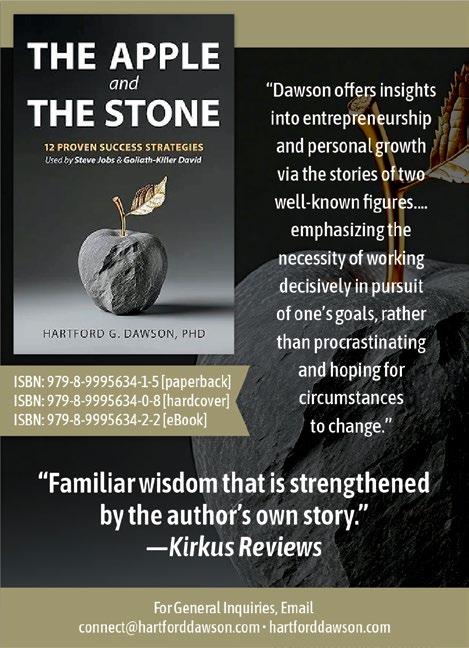
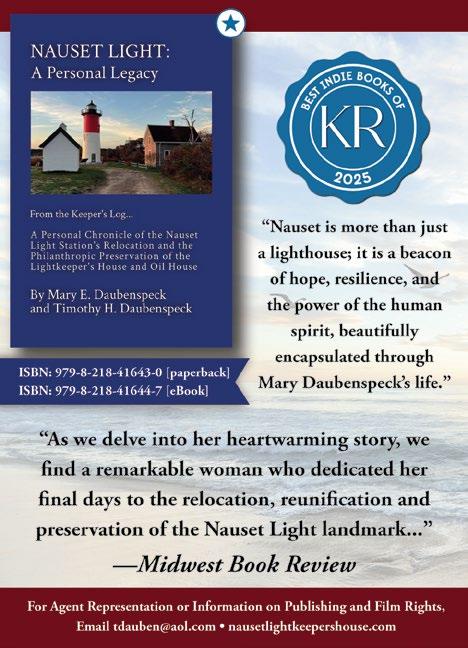

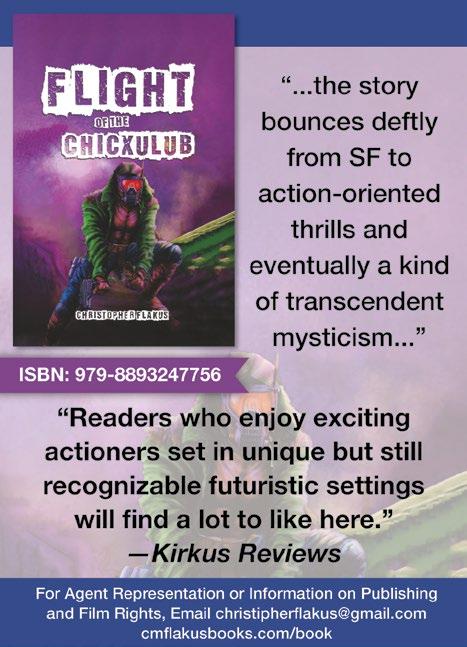


EDITORS’ PICKS:
Self Portrait by Ludwig Volbeda; trans. by Lucy Scott (Levine Querido)
Zohran Walks New York by Millie von Platen (Calkins Creek/Astra Books for Young Readers)
The Man of Many Fathers: Life Lessons Disguised as a Memoir by Roy Wood Jr. (Crown)
Ladies in Hating by Alexandra Vasti (St. Martin’s Griffin)
THANKS TO OUR SPONSORS:
Fox Creek by M.E. Torrey
Stormbringer by G.R. Boden
All Bones Considered by Joe Lex
Goddess From the Machine by Daniel Rodrigues-Martin
Poems: Is Amma Angry? by Vani Desai
Fully Booked is produced by Cabel Adkins Audio and Megan Labrise.
Catherine Newman’s Sandwich family faces a rocky road in this brilliant sequel. BY MEGAN LABRISE
On this episode of Fully Booked, Catherine Newman joins us to discuss Wreck, a follow-up to her 2024 New York Times bestseller, Sandwich. Rocky and her family face a health crisis and a local tragedy in a sequel that Kirkus calls “a heartbreaking, laughprovoking, and absolutely Ephronesque look at the beauty and fragility of everyday life” (starred review). Newman is the author of fiction and nonfiction for readers of all ages, including the novel We All Want Impossible Things , the memoirs Catastrophic Happiness and Waiting for Birdy, and the middle-grade novel One Mixed-Up Night . She writes the Substack Crone Sandwich and has been a regular contributor to the New York Times , Real Simple , O , and Cup of Jo. She lives in Amherst, Massachusetts.
Here’s a bit more from our starred review of Wreck : “Two years after the events of Sandwich, Rocky is back home in Western Massachusetts and happily surrounded by family—her daughter, Willa, lives with her and her husband, Nick, while applying to Ph.D. programs; her widowed father, Mort, has moved into the in-law apartment behind their house. When a young man who graduated from high school with Rocky’s son, Jamie, is hit by a train, Rocky finds herself spiraling as she thinks about how close the tragedy came to her own family. She’s also freaking out about a mysterious rash her dermatologist can’t explain.…Newman excels at showing how sorrow and joy coexist in everyday life. She masterfully balances a modern exploration of grief with truly laugh-out-loud lines.…As Rocky deals with the byzantine frustrations of the medical system, she also has to learn, once


Wreck Newman, Catherine Harper/HarperCollins | 224 pp. | $26.99 October 28, 2025 | 9780063453913
more, how to see her children, husband, father, and herself as fully flawed and lovable humans.”
Newman and I talk humor, reading your own reviews, following up an instant New York Times bestseller, complex relationships, her signature approach to dialogue, mirepoix, Substack, literary awards, and much more.
Then editors Laura Simeon, Mahnaz Dar, John McMurtrie, and Laurie Muchnick share their top picks in books for the week.
Editor at large Megan Labrise hosts the Fully Booked podcast.

To listen to the episode, visit Kirkus online.
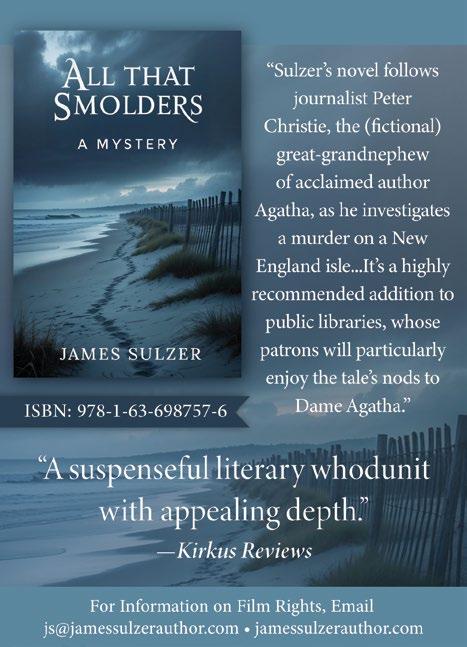

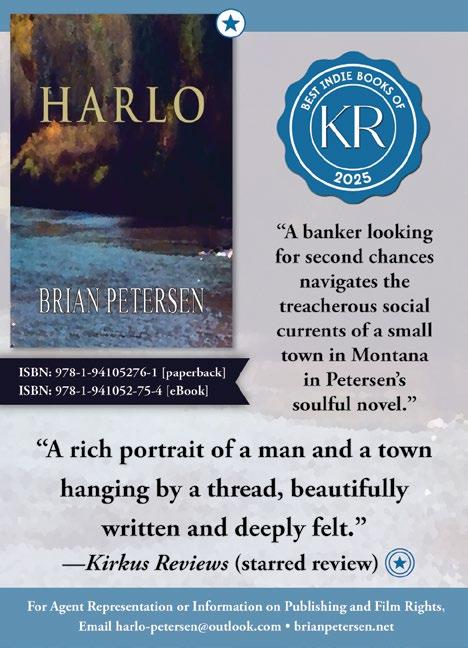
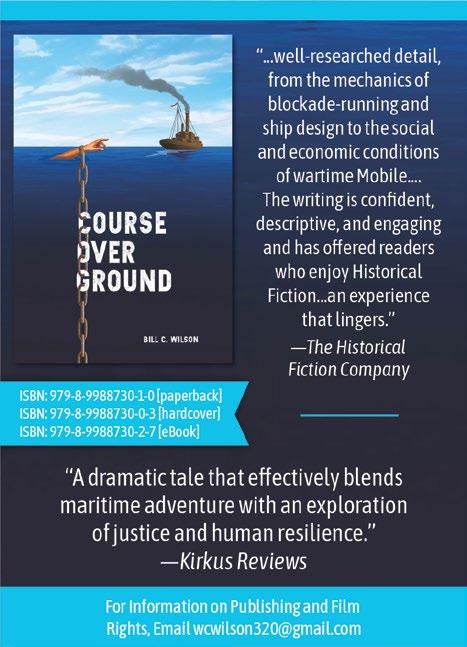
The Netflix series will be based on Charles Burns’ comic book collection.
Jane Schoenbrun will direct a series adaptation of Charles Burns’ Black Hole, Deadline reports.
Burns’ 12-issue comic book series, collected in one
volume by Pantheon in 2005, follows a group of teenagers in 1970s Seattle who are plagued by a grotesque sexually transmitted disease and stalked by a serial killer. A critic for Kirkus wrote of the book, “This volume should expand the cult following of a cutting-edge illustrator.” The book won the Harvey Award for best graphic album of previously published work.
Netflix has given a straight-to-series order for the adaptation, to be written and directed by Schoenbrun, known for helming the psychological horror films We’re All Going to the World’s Fair and I Saw the
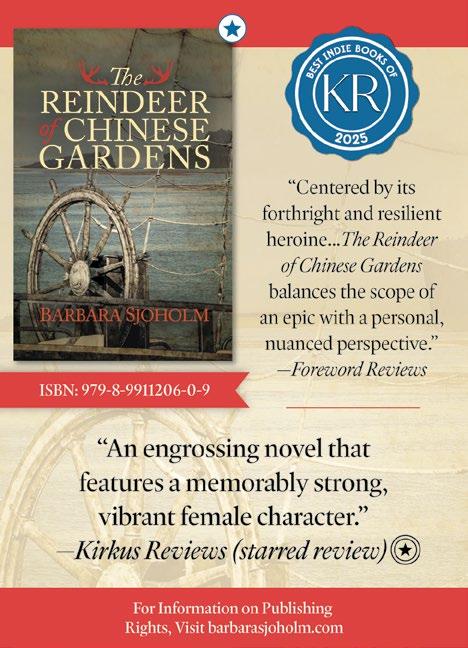
TV Glow. Their next film, Teenage Sex and Death at Camp Miasma, is in postproduction. Executive producers on the Black Hole series include Plan B, Erin Levy (Good American Family ), Burns, Yariv Milchan, Arnon Milchan, Natalie Lehmann, and Laura Delahaye for New Regency.
Adaptations of Black Hole have been planned before, with Alexandre Aja, David Fincher, and Rick Famuyiwa

all attached to direct at various times.
Schoenbrun shared news of the adaptation on the social platform X, writing, “Babe wake up new lifelong dream project just dropped.”—M.S.

Breedlove, Jennifer K. | Minotaur (336 pp.)
$28 | February 17, 2026 | 9781250382610
A return to the happy places of her youth raises many questions while putting a young woman’s life in jeopardy. Willow Stone spent many memorable times on Little North Island, Maine, until her parents told her she couldn’t go there anymore. Now, a letter arrives from the island, reopening old wounds. It’s from her beloved Aunt Sue, inviting Willow to come back for her wedding. Oddly, the letter is dated two months earlier but was only mailed a week ago. Willow learns that Sue’s inheritance of Cameron House infuriated Geralt Talbot, who considered himself the heir. And he may well be, now that Sue’s died after falling from Cameron House’s widow’s walk. Willow’s greeting from Sue’s friends, especially Rina Montalto, whom Sue had planned to wed, is far from friendly. Cameron House is the cause of a feud between Talbot and them. A devastated Willow is even more heartbroken to learn that for years Sue had written her letters that her parents had kept from her. All this time, Sue and Rina had thought that Willow was ghosting them. She’s drawn to Cameron House, where she’s greeted by many ghosts that others can’t see and finds hidden rooms guarding secrets. At the dinner after Sue’s funeral service, Talbot falls ill and dies from what turns out to be lithium poisoning. The police officer in charge is Willow’s old schoolmate and nemesis, Nick Tyler, and they squabble over the murder. Now that Talbot’s dead, a weighty question looms over who will inherit the Cameron estate: Talbot’s much younger wife or an
A complex mystery with a surprise ending bolstered by charming characters.
MURDER WILL OUT
islander whose claims to be a Cameron ring false. With help from the resident ghosts, Willow works to uncover the truth.
A complex mystery with a surprise ending bolstered by charming characters, some of them still alive.
Burns, V.M. | Kensington (272 pp.) | $17.95 paper | January 27, 2026 | 9781496750822
Bookshop owner Samantha Washington and her zany crew go into high gear again when an estate planning workshop ends in murder. If Samantha seems like a tough cookie, her attorney sister, Jenna, has her beat by a mile. So when Bethany Tarkington interrupts Jenna’s presentation at Market Street Mysteries to announce to all present that her companion, her husband’s aunt Alva, isn’t competent to determine how to dispose of her considerable fortune, Jenna schools Bethany but good on the legal niceties involved in making a will. Alva, who’s not nearly as mentally compromised as Bethany makes out, senses an ally in Sam and blinks out a distress message in Morse code. Sam and Jenna manage to get Alva alone, and she gives them an addendum to her will written on toilet paper. By the next day, the wealthy widow is dead. Sam summons her Nana Jo and Nana’s buddies from Shady Acres Retirement Village to investigate. More mayhem ensues, including another
murder, stolen art treasures, and the unlikely romance between shambolic police detective Brad “Stinky” Pitt and Sam’s prospective mother-in-law, Camilia Patterson. The sharp-witted back-and-forth among the characters is a pleasure, as is the interplay between Sam’s investigation and the elements of it she embeds in the World War II–era British mystery she’s writing. But the solution to the puzzle, which incorporates unnecessary twists that add little to its logic, will prove dauntingly complex for most readers.
Enjoy the characters without worrying too much about the plot.
Carter, A.F. | Mysterious Press (288 pp.) | $17.95 paper | February 17, 2026 | 9781613167267
To her usual mix of good guys vs. bad guys and cops vs. other cops, Carter adds a new conflict: Capt. Delia Mariola, chief of detectives for the struggling town of Baxter, vs. the title character. Tom Carney starts out as the muscle for Benny Kaplan, a fence specializing in high-end cars. It’s in that capacity that he beats up burglar Harman Broad, who won’t accept Benny’s word that the six-carat diamond he stole is really a topaz, and goes to jail. But although the story flips back and forth between chapters headlining Carney and Mariola, they’re really on the same side: Carney’s a former Philadelphia cop whom Mariola’s
recruited to go deep undercover. The real conflict between them lies in how they want to handle Baxter’s morass of corruption. Though she often skates on thin ice, Mariola wants to do things by the book; for Carney, it’s all personal, whether he’s working for—that is, investigating— Benny or middle manager George Pratt, or working with Zacariah McBride to convert the Spinning Wheel Saloon into the Blue Skies Tavern, or gathering evidence against some of Baxter’s finest at the request of other cops who are even finer. By the time the story emerges from its Boardwalk Empire episode and closes in on this year’s ringleaders, Mariola—who’s focused on doing what little she can to help her teenage son, Danny, attract the attention of baseball scouts—isn’t even sure she trusts Carney anymore. And in a world as torn by corruption as Baxter on its best day, you can see why not. As usual, Carter’s tawdry landscape is equally pleasurable to enter and to leave.
Chow, Jennifer J. | St. Martin’s (304 pp.) | $9.99 paper January 27, 2026 | 9781250323279
A mini-reunion of high school classmates doesn’t go off as planned. Jin Bakery, the family establishment where Felicity Jin works, is next door to Love Blooms, her boyfriend Kelvin Love’s flower shop. So it’s convenient for Mrs. Robson, who owns a B&B in their small Central California town of Pixie, to ask Kelvin to provide an assortment of flowers to dress up the Pixie Inn and Felicity to provide lots of yummy Chinese pastries for the group of women whose arrival she expects the next day. Jin Bakery’s treats are extra special because they’re infused with a touch of
magic. The woman organizing the get-together is Ashlyn Cook, known as Queen B, and the other three women—Eri, Wren, and Saige—all went to high school with her, although Felicity senses they were not and are not best friends by any means. Soon after Felicity is pressed into service as a tour guide for the squabbling group, Ashlyn is found dead in her tub, which has been enhanced with Yuhua stones that were left at the B&B anonymously as a gift for Ashlyn. Det. Rylan Sun, who has a rocky relationship with Felicity because of her previous meddling, is in charge of looking into Ashlyn’s death, which turns out to have been no accident. Since Felicity’s almond cookies are a possible source of the allergic reaction that killed Ashlyn, she decides that she’d better do some sleuthing—over Sun’s objections. With the help of Kelvin, who has some magical powers of his own, and her magic rabbit, Whiskers, she turns up a number of alternate suspects. A charming cozy with a touch of magic along with the expected recipes.
Cullen, Michelle L. | Crooked Lane (320 pp.) $29.99 | January 27, 2026 | 9798892424622
Rear Window goes to the Ohio suburbs. Of course, there are a few changes. Yes, widowed anthropologist Harry Lancaster, homebound with a fractured hip, starts out by
accepting a gift of high-priced binoculars from his daughter, Ceci, a State Department employee stationed in Delhi. And he depends on his home caregiver, Emma Stockton, for help above and beyond. But when his neighbor Sue Daniels is poisoned with death camas, a plant that looks like wild onion, suspicion is spread over all of Lakeview Estates, a development outside of Columbus. The neighborhood’s principal suspects— retired executive Gautam Patel and his wife, Sakshi; glamorous boutique owner Rachel Valucci; trucking company owner Milo Czesiak; retired chef Jimmy Chatimont; accountant Jack Buchanan, whose teenage son, Conner, Harry sees tossed from a moving car; and local government zoner and planner David Dubois— are hiding so many secrets that by the time Emma, who plays a much more active role than her counterpart in Alfred Hitchcock’s film, muses, “Maybe Sue was blackmailing the entire lane,” her supposition seems more likely than not. First-timer Cullen tosses in two more violent attacks, some late-blooming references to a series of other classic movies, a rushed engagement between Emma and surgeon Blake Derrickson, whom she’s known since childhood without ever really knowing, and a spirited neighborhood debate over installing security cameras that reveals how sharply the denizens of Lakeview Estates are divided against each other on the topic of communal security versus anti-surveillance paranoia. Wonder what those holdouts might be hiding?
A stock neighborhood cozy that ticks all the boxes without adding anything special of its own.
A mini-reunion of high school classmates doesn’t go off as planned. TELL-TALE TREATS
Fields, Helen | Avon/HarperCollins (352 pp.) | $18.99 paper February 24, 2026 | 9780008777661
Deceptively small pieces of evidence gradually come together to create a portrait of a Scottish serial killer. When pro footballer Dale Abnay is dispatched with a single blow to the back of the head, 30-something Edinburgh DS Christie Salter and her veteran mentor, DS Sam Lively, Scotland’s “most irascible detective,” are called in to investigate. Although Fields, author of the popular DI Callanach series, doesn’t skimp on character descriptions and writes with graceful precision, this crisp procedural unfolds like an episode of Forensic Files, in short, datelined chapters. The detective duo remains in the mix, but the story’s focus is wide, including the associates and families of victims as well as the jauntier police duo of dogged Dr. Connie Woolwine, a forensic profiler, and agreeable Brodie Baarda, who together reenact murder scenes. Several chapters come from the perspective of The Watcher, a character stalking his targets: surgeon Beth Waterfall, whom he calls “his plaything,” and her daughter, Molly, the victim of a devastating cybercrime a year earlier that still weighs heavily on her mother’s mind. Beth, meanwhile, embarks on a relationship with DS Lively. Disparate pieces of the puzzle converge as the body count eventually rises to eight. Plot developments and surprises continue at a rapid pace.
Readers can decide whether this adds excitement or confusion. A bonus for the author’s fans: While this is pitched as a standalone novel, the lead detectives have appeared in other Fields mysteries.
A brisk, twisty procedural, long on forensics.
Gunasekera, Yosha | Berkley (336 pp.)
$18.99 paper | February 10, 2026
9798217187539
A hapless Big Apple cabbie becomes the prime suspect in a murder investigation. As a fan of true crime podcasts, 28-year-old New York City taxi driver Siriwathi Perera spends most of her time thinking about murder. She unexpectedly bonds with late night fare Amaya Fernando, a lawyer, over their shared Sri Lankan heritage and the challenges of being a woman in New York. Siri has sometimes dreamed of being an attorney. So it’s only natural that she calls Amaya when her last fare of the night dies in the back of her cab, making her the prime suspect in his apparent murder. Gunasekera’s debut novel is buoyed by Siri’s tart first-person narration as well as her colorful portraits of offbeat characters who could come to life only in the city that never sleeps. Chief among these are her childhood friend Alex, who steps up with her hefty bail and a bit of legwork, and Brooklyn boy Sal Lutrino, proprietor
A Big Apple cabbie becomes the prime suspect in a murder investigation.
of the self-named pizza parlor that’s key to the tangled plot. Feeling like neither an American nor a Sri Lankan, Gunasekera’s cabbie, roaming the dark city streets, is a perfect metaphor for the restlessness of many Big Apple residents. Mystery readers should be drawn to this lively loner, perhaps the most engaging whodunit heroine since Sue Grafton’s Kinsey Millhone. In case there’s any doubt that this is a series kickoff, the first three chapters of Siri’s upcoming caper are included at the end of the novel.
A charming debut mystery told with panache.
Hirahara, Naomi | Soho Crime (336 pp.) $29.95 | February 17, 2026 | 9781641296083
A young Japanese immigrant slowly finds his footing in a dangerous America. The third entry in Hirahara’s series of Japantown mysteries is another deeply researched historical with a noir sensibility and a mystery that arises organically from the plot. The 1943 letter from Ryunosuke Wada to his daughter, Louise, which opens the story, links it to the two previous volumes— Clark and Division (2021) and Evergreen (2023)—which are set during and after World War II. The tale then flashes back to the teenage Ryui’s 1903 arrival in Pasadena, where he becomes fast friends with his new roommate, Torajiro Baba, aka Jack. Other tenants of Riley House include Gigi, a seamstress Ryui finds attractive, and the menacing Boyle brothers. There’s much passing discussion of Jack’s former roommate Eijiro Morita, aka Eddie, who’s gone missing. The hard physical labor that is Ryui’s day-to-day occupation is leavened by his exploration of Pasadena, the Crown City of the title and a melting pot of international
immigrants. Hirahara’s episodic plot introduces dozens of minor characters and includes Jack’s exploits as a newly minted private detective and an array of diversions from an archery demonstration to a game of lawn bowling. The murder of one of the characters, which enlivens the last section of the story, provides more of a metaphor for immigrant challenges than a mystery. A pleasant surprise in Hirahara’s vivid depiction of a significant era in American history is that many of the characters in the large cast are based on real people. A fascinating glimpse of turn-of-the century California, with a mystery kicker.
Knight, Nikki | Keylight Books (240 pp.) $17.99 paper | February 10, 2026 9798887981222
A hit woman discovers that someone’s beaten her to the punch. Former prosecutor Grace Adair is nonplussed when curriculum expert Eric Egan turns up dead in the whale tank at the New Haven Aquarium, where she’s chaperoning her first-grade son Daniel’s field trip. Grace is one of the few present who know that in a former life, Egan was a junior pastor who channeled young boys to a pedophile priest. He was referred for “removal” to a 700-year-old order of female assassins, sacred to the Archangel Gabriel, who’ve made it their business to poison those unworthy to live. Grace was charged with removing Egan, but what with PTA meetings, occasional pleas for help from her defense attorney husband, Michael, and preparations for the upcoming wedding of her handler, Madge Arsenault, she hadn’t gotten around to it—and now, kerplunk! Here’s Egan, sleeping with
Massey again tucks a whodunit into a detailed portrait of colonial India.
THE
the fishes. The central conceit of planting a deadly vigilante in a sea of suburban banality has its edgy pleasures. And quick-witted Grace is fun to ride along with. But Knight’s plotting is a mess. The police consider Egan’s death an accident. Even though Grace knows it isn’t, she makes no effort to find out what’s going on; she doesn’t even call Madge to ask who ordered this hit on Egan. She does meet repeatedly with police lieutenant Carla Luciano, but mainly to eat cannoli and exchange beauty tips. When someone tries to run Grace off the road, her gravest concern is whether her bruises will heal in time for Madge’s wedding. They don’t, but she puts on enough concealer that her friends, all of whom are also invited, agree that she looks great. Knight recognizes the ironic potential of a hard-edged sleuth set loose in the burbs but hasn’t quite nailed it yet.
Massey, Sujata | Soho Crime (384 pp.)
$29.95 | March 3, 2026 | 9781641295093
What’s the connection between the murder of a film censor and the simultaneous disappearance of a glamorous actress? Perveen Mistry, “the sole female solicitor” in Bombay, is excited to meet her new prospective clients, the highpowered Calcutta couple Subhas Ghoshal, a director for Champa Films, and Rochana, his wife and leading lady. Perveen’s fifth case, set in 1922, again tucks a whodunit
into a detailed portrait of colonial India and a relevant period topic, here the beginning of the Bollywood film industry. Perveen and Jamshedji Mistry, her father and boss, visit the Ghoshals’ lush digs to discuss a contract dispute. After the meeting, Perveen invites her friend Alice Hobson-Jones, a Rochana superfan who’s the entitled daughter of Lady Gwendolyn Hobson-Jones, to an advance screening of Rochana’s new film. The evening is memorable, and not in a good way. Blithe Alice brings along Diana, an adorable dog who runs amok and disrupts the luxe event. In the confusion, government film censor Joseph Morgan turns up dead and Rochana goes missing. Throughout Perveen’s ensuing investigation, Alice doubles as insightful sidekick and comic relief. Massey, who’s generous in her historical color, devotes equal attention to Perveen’s singular life and the tangled whodunit. Perveen’s world includes meticulous chief maid Gita, tennisplaying debutante Kitty Daboo, and a secret paramour, British civil servant Colin Sand ringham, who’s mentioned on page 1 but doesn’t appear until after the novel’s midpoint, as Massey’s tale moves with stately elegance to its complex solution.
A lush and leisurely period mystery with a proto-feminist heroine.

AWAY TO ME
McConnell, Patricia | Kensington (320 pp.)
$28 | February 24, 2026 | 9781496757111
A woman with a difficult past finds the peace she’s longed for with a nonhuman partner. The residents of the Wisconsin farm where Dr. Maddie McGowan lives include a small band of sheep, a guard dog, and Jack, the border collie Maddie takes to sheepdog trials. After George, her mentor—a top handler and breeder of working border collies—is shot by a sniper at a trial in front of horrified spectators, Maddie’s life spirals downward. Her thoughts return to her appalling marriage in New Mexico, where her rodeo-star husband mentally abused her while professing his undying love, until he left her for dead in a chest freezer. When she was found by a neighbor after a day and a half, her husband was arrested. Maddie changed her life by financing a college degree in animal behavior studies with the money from her divorce and starting a business working with troubled animals. The director of the nearby shelter where Maddie volunteers asks her help with Cisco, a malnourished shepherd who refuses to eat and is clearly dangerous. Chris, the shelter volunteer who found Cisco, is thrilled when Maddie agrees to take him because she thinks he might be a trained scent dog. Although she’s crushed by George’s murder, her work with Cisco and her support from her friend Grace and neighbor Vince keep her focused on
solving the puzzle. Along the way, she picks the brain of George’s business partner, Tom, who trains dogs for police work, and has a fling with Chris, who admits he was an addict and found Cisco in a drug warehouse. When Cisco is dognapped, Maddie, seeing a link to George’s death, risks her life to discover the truth. A moving fiction debut that explores the deep connection between dogs and their human partners.
Osler, Rob | Kensington (304 pp.) | $27 January 27, 2026 | 9781496749512
Three weeks after her first assignment as the only female operative in Chicago’s Prescott Agency in The Case of the Missing Maid (2024), Harriet Morrow lands a second, even juicier case.
When freelance journalist Eugene Eldridge is discovered dead in the corridor of a South Side tenement, Gerald Cole, leader of the Municipal Voters’ League, wants his old friend Theodore Prescott to find the killer. The police, who’ve already arrested Lucy Fara, the single mother of four who found the body, can’t be counted on for any help, and Prescott is convinced that of all his operatives, Harriet is best able to chat up Lucy’s female neighbors in the University of Chicago Settlement without arousing suspicions. Alexi Scholtz, the Progressive Age editor for whom Eldridge was writing his story, identifies two likely
suspects: Aldermen Irish Dan Walsh and Mike Powers, aka Saloon Micky, both members in bad standing of the Gray Wolves, a cabal of corrupt city officials. Since this is 1898 Chicago, the Wolves’ bench is deep, and it’s clear that Harriet has her work cut out for her. Luckily, Harriet, a barely closeted lesbian, is very much up to the task, whose adventures range from an impromptu lesson in fencing from crossdresser Brunhilda Struff, a first-time horseback ride in pursuit of a terrorist bomber, an evening at the Black Rabbit, the city’s preeminent queer nightclub (whose clientele also includes Matthew McCabe, Harriet’s colleague at the Prescott Agency), and an extended masquerade as Harry Dunn, a role Harriet was born to play. A queer, female-forward dive into fact-based political corruption.
Philipson, Rebecca | Minotaur (368 pp.) $29 | February 24, 2026 | 9781250409430
First-timer
Philipson zigzags between the story of a London Met DI’s search for the person who strangled a young student and the chapters of a how-to manual by a self-avowed serial killer that explains, not how to murder someone, but how to get away with it, time and time again.
The first words go to Denver Brady, whose privately published book How To Get Away With Murder intersperses its commonsensical advice—don’t choose victims you have a motive for killing or people you’re close to or people who live close to each other; make your crimes look like accidents or suicides or the work of obvious suspects like disgruntled boyfriends; don’t go bragging about your deeds to anyone—with matter-of-fact
accounts of the deaths of his childhood friend Jono Glenholme, convent student Sarah Lawrence, and many others. Brady’s tome ends up on DI Samantha Hansen’s reading list when she returns to working for her godfather, DCI Harry Blakelaw, after time off to recover from her assault by a fellow officer Harry had transferred far from London. Dr. Pete Thomson, Sam’s therapist, doesn’t think she’s ready for full-time duty yet, but she’s determined to work the case of 14-year-old Charlotte Mathers, strangled under circumstances that make her a likely candidate for the role of Denver’s latest victim. Has Charlotte really been killed by Denver, whose book was found among her belongings? Is her murder the work of a copycat? Or is Denver’s extended confession nothing more than an ingenious distraction? Philipson manages to produce a startling series of twists and turns in the case while keeping her wildly improbable premise fresh and, it’s to be hoped, wholly original. Caution: Even more than most crime novels, this one really does provide helpful ideas about how to get away with murder.
Reiss, Bob | Regalo Press (272 pp.) | $19.99 paper | January 20, 2026 | 9798895651964

Reiss introduces Mark St. Johns, better known as The Falcon, heir to a master sleuth’s legacy and detective for a most unlikely client.
Abani Singh, who says she saw a man run over twice by a car without a driver, insists that Mark, who lives nearby on New York’s Upper West Side, should investigate. It makes perfect sense that she’d come to The Falcon, who’s been dubbed, like his celebrated late grandfather, the impossible detective because he specializes in solving impossible
An entertaining, too-plausible doomsday scenario.
THE IMPOSSIBLE DETECTIVE
mysteries. What makes her claim even more remarkable is that she’s a 12-year-old child who seems to have been targeted by Desmond Hodge’s non-human killer as well. At first Mark doesn’t believe her, but the more he digs into the incident over the objections of Dr. Nageena Singh, Abani’s protective mother, the more the facts seem to bear out her wild story. As Mark works to persuade Det. Brian Benish, his old grade-school nemesis, of the urgency of the case, God’s Hands—an apocalyptic cult under the dubious leadership of self-styled prophet Kendrick Rainey, whom the Lord speaks to directly—is upping the stakes by moving toward executing a shadowy but unmistakably sinister scheme featuring “an AI that builds other AIs by itself.” Abani’s combination of pointed questions and sharp insights leads The Falcon to promote her from his client to The Sparrow, his apprentice. He’ll need all the help he can get to head off a crime that’s at least as impossible as he is. That’s what everyone thinks until they come face to face with its horrors.
An entertaining doomsday scenario that you’ll wish was more impossible than it ends up seeming.
Sanders, Angela M. | Kensington (304 pp.) $27 | February 24, 2026 | 9781496756466
A decrepit Victorian manse in Astoria, Oregon, is haunted but strangely welcoming to the right people. Lise Bloom is one of three women currently living in Corrie House, whose owner,
Teddy Bright, needs two boarders in order to keep the place solvent. Teddy’s lived an exciting life filled with sex and rock and roll. Fran is a loner who avoids her family while quietly working on a mystery novel. And Lise, who’s searching for her birth parents, works at the Lucky Lotus, a New Age shop whose owner, Dyann, is in a constant battle with her ex-husband, Richard. Dyann plans to change her will to leave an allowance to her son, Murphy, who’s turning 18, and the rest of her money to Blavatsky Manor, a retirement home for psychic mediums. Arriving at work the next morning, following Murphy’s birthday party, Lise, who’s sensitive to smells, notices a strong odor that leads her to Dyann’s corpse. Police officer Signe Rasmussen, a high school classmate Lise recalls without pleasure, clearly thinks she has something to do with the death. When Teddy and Fran encourage Lise to find other suspects, Richard seems like a good prospect. The three start sleuthing and even try to befriend Ornette, a strange man who works at a snake refuge. Now that she’s lost her position at the Lucky Lotus, Lise takes a job at Blavatsky Manor, a haven for nonviolent criminals who add their experience to the search. Richard’s death forces the sleuths to change course in order to find a killer.
The house is one of the stars in a mystery filled with suspects and psychic hints.

Anderson, Liza | Ballantine (384 pp.)
$30 | January 27, 2026 | 9780593976319
A young boy begins a classic coming-of-age adventure when he joins a secret school for training witches to fight monsters…but this story isn’t about him.
Ever since their mother died, Vic has taken it upon herself to take care of her little brother, Henry. Their mother was a witch, a member of the Acheron Order, and she fought terrible supernatural monsters before her untimely (and mysterious) death. Henry, unlike Vic, inherited their mother’s magical abilities, and so Vic is determined to hide him from the Acheron Order, and save him from their mother’s fate. She dropped out of high school and spent years caring for Henry, even becoming a skilled fighter in case she had to defend him. When an Elder of the Order finally tracks them down, he warns that if Henry isn’t taught to use his magic, he will be in danger, and it would be safest for him to go to Avalon Castle, the Order’s headquarters, and be trained. This convinces Henry to go, and Vic begrudgingly agrees on the condition that she can come with him to make sure he’s safe. But Vic is out of place as a regular human among witches, who despise her presence in their classes because they believe that her humanness makes her beneath them. But when Vic finds proof—a mauled body—that magical monsters have been able to breach the Order’s magically warded walls, it becomes clear that the Order is being targeted by a rival organization of witches, and Vic’s days of knowing she
could use her fists to keep Henry safe are over. Making Vic the protagonist is a smart twist to the trope of “chosen boy goes to magic school”; Anderson skillfully sets her up as the kind of curious, determined woman who might stick her nose where she’s been told not to, and figure out that things are not as they seem with the Acheron Order. But while most of the characters are well drawn, Anderson leans heavily enough on the tropes of the genre that the surrounding worldbuilding feels thin. Still, a sharp twist right at the end will make it worth watching for Book Two. A clever switch on the magical-school trope.
Bishop, Anne | Ace/Berkley (528 pp.) $30 | November 11, 2025 | 9780593954089
Humans have a series of eventful encounters with powerful creatures who maintain a very stringent set of rules. Across the river from the mundane human towns lies the Isle of Wyrd, inhabited by the magical beings known as the Arcana, who will, for the right price, read your future and offer you the possibility of changing your fate. It can be a refuge for the vulnerable but a deadly danger to the reckless and unprepared. Changing your fate can involve physical transformation and transportation to all kinds of odd locations, and both are directly shaped by what you say or intend. An author escaping her abusive fiancé, a pair of brutally selfish but well-connected brothers, a pack of teenage bullies and
Humans have a series of eventful encounters with powerful creatures.
TURNS OF FATE
their kind-hearted potential victim, a college professor whose obsessive quest for knowledge overpowers his courtesy and common sense, and a police detective who yearns to understand the truth about herself all get what they deserve by setting foot on the island. Although a lot happens, there isn’t a solid throughline of plot; this first in a series is clearly more about explaining the world, introducing the characters, and setting the stage for future books. Yes, multiple people face perils, but because of well-equipped allies and good planning, the bad guys don’t really stand a chance. There’s also no climactic confrontation between most of the bad guys and their slated victims; the majority receive their comeuppances by magically guided misfortune, the catastrophic consequences of disobeying the rules, or a minor character hired by the good guys. As noted at the launch of her previous series (Lake Silence, 2018), Bishop has a true gift for remixing the same plot elements over multiple books and making you like it, somehow. You’re going to get violent, stupid people who, despite multiple warnings, manage to piss off incredibly powerful beings and get shredded, while polite, kind-hearted people will earn those same powerful beings’ friendship and protection. Aggressively formulaic yet still appealing in its own way.
Fawcett, Heather | Del Rey (368 pp.) | $29 February 17, 2026 | 9780593973257
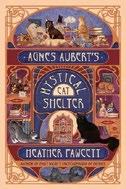
In an alternate early-20th-century Montreal, sparks fly between the operator of a cat shelter and a reclusive magician. Agnes Aubert is not kindly disposed toward magicians, especially not after a magical duel blows a hole in the building that housed her and her cat shelter. Unfortunately, finding another spot isn’t easy, so she’s happy to take the reasonably priced location on the Rue des Hirondelles. But
that’s before she discovers the building’s owner secretly living in the basement: Havelock Renard, the world’s most powerful magician, who also happens to be allergic to cats. As this decidedly odd couple work out a system for cohabitation, Agnes develops some uncomfortable feelings for Havelock; she also can’t deny her attraction to the police detective who thinks (not entirely incorrectly) that the shelter is a front for the illegal sale of magical Artefacts. In comparison to the carefully constructed universe of her Emily Wildeseries, Fawcett’s worldbuilding and plotting are a bit sloppy; the magical system is not laid out as clearly as more pedantic readers might wish, and there’s one part of Agnes’ quandary that gets resolved in a rushed, not truly believable, way. The book also implausibly suggests that an allergy to cats is curable by exposure (rather than managed by a magical antihistamine, perhaps?). But one has to admire the author’s acumen in finding the absolute sweet spot for a cozy fantasy, after all the other ones set in cafes and adorable little shops. It could seem either twee or a cynical grab at the market, but it’s neither; Fawcett clearly understands the complicated but rewarding relationship between humans and cats. It is also charming to set a story in Montreal, where both brioches and bagels are on offer. Doesn’t entirely hang together but still manages to hit the spot.
Myers, Celina | Hanover Square Press (304 pp.) $30 | January 13, 2026 | 9780778387855
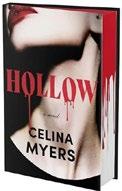
A woman must choose how to spend her afterlife after being turned into a vampire. Mia Adair, once famous as the anonymous Case 37 for her ability to talk to ghosts as a child, now lives an average life as a bookseller with her mother—the author of a book about her case—and her younger sister, a law student. All this changes, however, when she dies in a car
KOKUN
crash and wakes up surrounded by vampires who explain they have turned her and she must now choose which of two vampire families to join. As the Bellamy and Sutton clans vie to have Mia join their ranks, strange disappearances occur around town and some of the vampires may be hiding more than just their supernatural talents. Mia must learn to trust her instincts to figure out who is friend and who is foe while finding her place in this new realty. It’s clear that this entire world has been lovingly crafted by Myers, who’s put thought into every detail, from a character’s clothing choices to the way the two families came to be hundreds of years ago. Unfortunately, beyond the worldbuilding, there’s little going on, as the story lacks forward momentum and fleshed-out characters who grow and change. Part of the problem is the large cast of characters with small roles, making it hard for the reader to become attached or even remember them all. There isn’t much plot, all the action occurring in the last 50 pages, and since there’s is little doubt who the villain is, the grand reveal fizzles. A toothless addition to the vampire genre.
The Girl From the West Uehashi, Nahoko | Trans. by Cathy Hirano Europa Editions (256 pp.) | $18 paper January 13, 2026 | 9798889661580
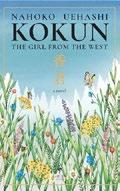
A fantasy abounding with imperial intrigue and ecological sensitivity. This series kickoff features plenty of elements familiar to fantasy readers but soon veers off in an unexpected direction. When it begins, young siblings Aisha and Milucha
Keluahn are on the run; they’re eventually captured by the forces of Lord Jookuchi. Aisha figures out that Jookuchi is being poisoned, which saves the siblings’ lives. Imperial inspector Masyu Kashuga—whose work involves “considering the empire as a whole”— connects Aisha to Olie, who is considered to be the reincarnation of the deity Lady Kokun, and with whom Masyu shares a romantic history. Olie seeks to prevent an agricultural catastrophe brought on by the arrival of insects called giant yoma. As it turns out, Aisha’s preternatural ability to recognize scents suggests that she, not Olie, is the true successor to Kokun, which may have broad political implications for the empire. As Olie points out, “the Kokun is like a beautiful statue of a goddess that has been given an important role to play.” Our heroes attempt to piece together the true history of the Umal Empire, and what hidden documents can tell them about the true location of “the land of the gods.” Uehashi’s attention to detail, in Hirano’s translation, should impress readers fond of palace intrigue, and the cliffhanger ending suggests a shift in direction for subsequent volumes. While some of the dialogue can be overly expository—“They’re descendants of Keluahn—a ruler so despised that his own people drove him from the throne!”—the attention to sensory detail and the theme of history as deception make this an enveloping read. You might be surprised how much dramatic tension can arise from crop layouts. An unconventional but exciting start to a fantasy epic.

by
ONE & ONLY
Blake, Ashley Herring | Berkley (400 pp.) | $19 paper | February 3, 2026 | 9780593816011
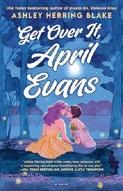
After agreeing to teach art at a New England resort for the summer, two cabin mates realize they have the same ex in Blake’s latest queer romance.
One could say April Evans has been grumpy lately— not only did her best friend, Ramona, move across the country, but April had to close her failing tattoo parlor and rent out her home to pay the mortgage. The one bright spot is her upcoming gig at Cloverwild, a new resort in Clover Lake, New Hampshire. In exchange for free housing over the summer, April will teach an art class and hopefully regain some of her spark. April can’t attribute all of her grouchiness to recent events, however; some credit must go to her former fiancée, Elena Watson. Three years ago, Elena abruptly dumped April for an art student 10 years her junior, leaving her heartbroken. Now in her 30s, April hopes to use this summer as a fresh start, until she learns that her co-teacher and cabin-mate is none other than Daphne Love, Elena’s other woman. At first glance, Daphne is everything April isn’t, and it’s obvious that she has no idea who April even is. At 25, Daphne is young and inexperienced, having grown up in a strict Baptist family that rejected her and then spent her early 20s practically trophy-wifing for her ex, Elena. She hopes this new teaching job can help her mature, and it would be great if her roommate didn’t inexplicably hate her.
As April and Daphne teach together and compete for a lucrative art exhibit in London, they can’t help but grow closer in spite of their shared past. Blake’s new Clover Lake title explores two scorned lovers learning to trust again, crafting vulnerable, real relationships with a fair share of steamy moments. Sasha, their free-wheeling, good-time friend, is a standout character, and fans of Dream on, Ramona Riley (2025) will be glad to see Ramona and Dylan’s romance take the next step. A cozy black cat/golden retriever romance.
Star
Goo, Maurene | Putnam (336 pp.) | $30 February 3, 2026 | 9798217181162
A matchmaker must choose between following fate’s wishes or choosing her own path.
Cassia Park is in the business of love. As a matchmaker for One & Only, she helps love stories come true every day. But One & Only isn’t a regular matchmaking service, and that’s because the Park women have been able to read faces (and see past lives) for hundreds of years, from their roots in Korea to their current lives in Los Angeles. Their matches have an unprecedented 100% success rate because of their magical (and very secret) abilities. Cassia, however, has been waiting to meet the one she calls her “fated” for 10 years, and all she has to go on is his name—Daniel Nam. Cassia is
eager to start a family, but as her 40th birthday approaches, she’s beginning to panic that she may never find Daniel. When a bike accident meet-cute introduces her to 28-year-old Ellis Yang-Cohen, she has a weekend fling that she knows won’t amount to anything— after all, Ellis is way too young for her and he isn’t her fated. But their connection is immediately strong, and they keep bumping into each other. Then she meets his boss, whose name is (surprise!) Daniel Nam. Torn between the man she loved in a past life and the man she’s drawn to in this one, Cassia must learn how to follow her heart and decide her own future. In her adult debut, Goo creates a delightfully dramatic love story that will keep readers on their toes. Ellis and Daniel are both good people and solid matches for Cassia, which makes her inability to decide between them feel sufficiently agonizing. Cassia’s close-knit family includes a wonderful bunch of elderly relatives who add to both the humor and the heartache. A perfect blend of steamy angst and family drama makes for a love triangle that’s impossible to put down.
Krentz, Jayne Ann | Berkley (336 pp.) $30 | January 6, 2026 | 9798217187348
The descendants of two warring psychic families work together to find their missing relatives. Luke Wells is trying to locate his missing Uncle Deke when he makes two shocking discoveries at Deke’s remote mountain cabin. First, his psychic talents tell him that the cabin was the site of violent crime, and second that Deke has been living there with Bea Harper. The Wells and Harper families have been enemies for generations, ever since Luke’s great-grandfather Xavier Wells and Tobias Harper worked together on a project to design and build psychically powered weapons. Even though the two friends had a falling out, they bound their families together in a
pact to keep their dangerous weapons from ever falling into the wrong hands. Now Luke reaches out to Sophy Harper to inspect the cabin with her psychic talents, which are uniquely suited to the problem—using a chime, she enters a trance state where she can read and reconstruct crime scenes. She can tell that someone was killed in the cabin though she isn’t sure who it was, and she has a vision of the killer. The clues send them (along with Luke’s charming and preternaturally observant dog, Bruce) to the Fool’s Gold Canyon Art Colony, a ritzy resort in Arizona. They pretend to be newlyweds, hoping to find Bea and Deke and learn more about who was murdered in the cabin. Instead, they discover the art colony is a front to rebuild the psychic weapons their families are duty-bound to protect. The characters and events of this novel build on the world developed in Krentz’s earlier Fogg Lake series; Luke and Sophy’s romance is very much a subplot, but their investigation of the strange events at the Fool’s Gold Art Colony is entertaining enough. The book explores interesting themes of trust, with both Sophy and Luke exploring how having been betrayed by former lovers has impacted them. A paranormal romance on cruise control, steady but unexciting.
Marr, Melissa | Bramble Books (336 pp.) $19.99 paper | January 13, 2026 9781250364869
Two strangers who hook up for sex discover they have a professional connection.
Kaelee “Lee”
Carpenter and Greta “Marie” Clayborne meet up via a subscriptiononly app for queer women, each planning on just a night of anonymous sex. That one night becomes more when the two establish a deeper connection that goes beyond casual desire. Even though Greta has been afraid to trust another woman
since her fiancée cheated on her, Kaelee makes her want to try again. Kaelee, meanwhile, has also avoided relationships, having seen the toxicity of her far-right-leaning parents’ marriage and suffered sexual assault at the hands of the man to whom they forcibly betrothed her. Having fled that wealthy, conservative world, she’s now a graduate student who uses coursework, a fledgling writing career, and gym workouts to keep true intimacy at bay. But their fiery situationship-turned-romance comes to an abrupt halt when they meet unexpectedly at Greta’s publishing house—because Kaelee is the reclusive new novelist whose debut work Greta is set to launch. An editor can’t be in a sexual relationship with her author. So what are the lovers to do? Now the two women have to come to terms with their personal histories and emotional scars and negotiate their public lives as well. Told through alternating point-of-view chapters, the story balances sizzling scenes of explicit sex with high-stakes issues of professional ethics as well as threats to queer life and love. Despite the piling-on of obstacles, the characters are fleshed out well enough to get readers to root for them. An ensemble cast, some of whom were introduced in Toni and Addie Go Viral (2025), provide a found family that supports the couple as they navigate a fraught path to happily-ever-after.
A Sapphic romance that offers the right combination of lust, laughter, and longing.
Mazarura, Rufaro Faith | Flatiron Books (384 pp.) | $19.99 paper | February 3, 2026 9781250425256
Fake dating leads to real feelings during the 2026 Winter Olympics. It’s the first time Great Britain’s women’s hockey team has made it to the Winter Games, but when an injury means their star
player will have to sit it out, Arikoishe Shumba is expected to take up her mantle. At a New Year’s Eve party in London, Ari retreats to the roof and meets Drew Dlamini, an American photographer and recent college dropout. Expecting they’ll never meet again, they share their biggest relationship red flags and ring in the new year with a kiss. But when the Games begin in Switzerland, they run into each other. Ari wants her snowboarder ex-boyfriend to leave her alone and Drew needs insider access among the athletes to prove himself as a photojournalist during this gig, so they agree to a fake-dating scheme—just until Ari’s final game ends. They know the attraction between them is real, but they also agree they wouldn’t work as a couple, so pretending is a simple, mutually beneficial business transaction. The line between fake and real quickly starts to blur as the Games get underway, but there’s a secret connection between them that could tear them apart before they get the chance to make a real go at a relationship. Ari and Drew are endearing characters with fun, sparkling chemistry. Their honesty and vulnerability with each other about their emotions make them relatable and easy to cheer for, while their professional growth throughout the Games adds excitement. Both also deal with realistic family drama which plays into their insecurities and creates additional tension. The back-and-forth about whether this relationship is real or pretend gets a bit tedious as the story progresses, but their happy-for-now ending is refreshing and satisfying.
A delightful, warm romance with an exciting, sports-filled, wintry setting.

McCollum, Alexandra | Dutton (416 pp.) | $19 paper | January 13, 2026 | 9798217045587
Two roommates contend with sinister forces both mortal and magical. In small-town Ohio, in a cottage at the edge of the Midnight Wood, David Carew lives with his housemate Meredith Schwarzwelder. David, a no-nonsense 29-year-old accountant from Wales, and Meredith, a free-spirited, nonbinary tattoo artist nearing 31, could not be more different. And after five years of mayhem, mishaps, and making mental lists of Meredith’s most frustrating qualities (“He is a frivolous person, an irredeemable eccentric”; “Living with him makes any semblance of a normal, quiet life impossible”), David has started to wonder if it might be time to leave Midnight Cottage for good. He sees an opportunity when he learns that Meredith’s brother Florian is engaged to Adalynn Cartier, daughter of Maitland Cartier, who owns the company where David works. If David can ingratiate himself with the Cartiers, he might have a chance at the promotion he’s been eyeing. This proves more complicated than anticipated when David uncovers the truth of the Schwarzwelder family dynamics, a dark figure appears in the Wood with machinations toward Meredith, and the long-simmering tension between the roommates threatens to boil over. The relationship between David and Meredith—complete with sharp-tongued banter and a swoony will-they-won’t-they vibe—is multilayered and emotionally resonant. And while McCollum’s writing is strong, with realistic dialogue and complex characters, the mortal and magical aspects of the novel aren’t fully integrated. The story’s central focus remains firmly entrenched in real-world issues, including heavy topics like homophobia and familial abuse. It’s easy to forget that wedding planning and house hunting are occurring on the doorstep of witches, werewolves, and time-keeping mice.
Magical references peppered throughout the book often read like afterthoughts, and the fantastical final face-off in the Wood feels ripped from another story entirely. Memorable characters make this sweet, though unsure, romance worth reading.
Morillo, Maria J. | Berkley (336 pp.) | $19 paper | February 17, 2026 | 9780593955246
A messy public breakup becomes a blessing for a control freak in this winning Venezuelan rom-com. For most women, if the best thing you can say about your boyfriend of four years is that he’s reliable, it’s not a great sign. But for Maria Antonieta Camacho—aka Ella the advice columnist and daughter of the actress-singer known as “Venezuela’s sweetheart”—stability is everything. Or at least that’s what Marianto keeps telling herself when, instead of focusing on strategies to reunite with the boyfriend who just dumped her, she finds herself drawn to Simón Arreaza, the musician turned TV judge she’s been hired to assist. A rockstar romance (with her boss!) is the kind of messiness Marianto spent her lifetime avoiding. She’d micromanaged her future like a Pinterest board, from her ideal husband’s profession to the kids, house, and golden retriever. Marianto even thought she knew when her predictable doctor boyfriend would propose and set her phone to capture the scene for posterity. The fantasy crashed when Alejandro announced that she’s too controlling —“You call the shots and I’m just along for the ride”—and demanded a break instead of the engagement she’d been expecting. The blows multiplied when she accidentally posted the breakup video to her work account and lost her job in the bargain. Working on her mom’s new reality TV competition show is a lifeline, but serving as personal assistant to Simón, the singer-songwriter she’s long
admired, is trouble. Their awkward yet fiery chemistry feels refreshingly organic, but the progression of this romance is erratic and not entirely earned. What’s most interesting is how Marianto comes to better know herself. Craving security is only part of her story. She’s rejected everything in her mother’s topsy-turvy life, but being an arts and culture writer keeps her in that world. And for a disciplined person, her life is wonderfully messy. This romance moves slowly then jerks forward in a leap, but it’s a rewarding rollercoaster ride of discovery.
Phillips, Susan Elizabeth | Avon/ HarperCollins (352 pp.) | $30 February 10, 2026 | 9780063248625
The 11th book in the Chicago Stars series features a second-chance romance between a down-on-herluck actress and an NFL quarterback. After suffering through a divorce and a miscarriage, actress Dancy Flynn decides to reclaim her place in the spotlight by appearing at a ritzy Chicago gala. When her ex-husband appears with his newly pregnant fiancée, Dancy panics and creates a drunken, humiliating spectacle of herself. Mortified, she impulsively flees to the Wisconsin home of her high school ex-boyfriend, Clint Garrett, now the quarterback of the Chicago Stars, whose address she finds on her phone right before the battery dies. Clint has avoided the press ever since his girlfriend was found murdered in his home five years earlier, and the last thing he needs is a celebrity trying to hide out on his property. Clint can’t help but pity Dancy’s pathetic state, though, and he agrees to let her stay for a week in the refurbished caboose he keeps on the property. Dancy’s arc consumes most of the novel, with very little time spent developing Clint as a fully rounded character in his own right. A series of unconnected events—Dancy rescues a
dog abandoned on the side of the road, saves a woman from an abusive man in the grocery store parking lot, and finally tells Clint the truth about the events that led to their breakup—helps her recognize that she’s stronger than she thinks. Phillips introduces a host of complications into the slow-burn romance between Clint and Dancy; unfortunately, they leave the romance feeling scattered and unfocused rather than interesting and complex. The repeating plot elements and character types from earlier books in the Chicago Stars series make the romance feel a little stale, even warmed-over.
Too much of a hodgepodge to feel interesting or vitally new.
Tschida, Sam | Forever (368 pp.) | $18.99 paper | January 20, 2026 | 9781538757239
A single mother and rookie spy has to go undercover with—and pretend to be married to—her handsome handler at a suspicious wellness retreat.
Gabby Greene is still figuring out what her life looks like. As a divorcee, mother of two, and fledgling spy, it’s hard to find the balance between intense espionage work and remembering to pack school lunches. There’s also the fact that her ex is keen on reconciliation while Gabby is actively navigating her feelings for her handsome handler, Markus. But when the two colleagues are given their next assignment, Gabby realizes she’s about to be more up close and personal with Markus than she’d anticipated. Their mission is to infiltrate a mysterious couples retreat while faking their own engagement as a believable cover. Their attraction is already mutual, but during this assignment they’ll have to sell a pretend relationship, from wedding planning to sharing the same hotel
Come for the romance, get swallowed up by the lush, atmospheric writing.
THE MAGIC OF UNTAMED HEARTS
room. Will Gabby and Markus even have time to define their own relationship while they’re faking a deeper one, or will their mission have to take priority over their personal connection?
Tschida’s latest rom-com mystery is the second in a series about Gabby’s adventures, following Errands & Espionage (2024), but new readers can jump in thanks to a pairing of clever exposition and just the right amount of setup before the mission gets going. The book also succeeds at both sides of its genre mash-up, blending romance into a mystery that’s engaging without taking itself too seriously. When other characters, including Gabby’s rowdy family, crash the party, the narrative does become slightly overwhelmed with moving pieces, and the investigation isn’t quite as satisfying as Gabby’s romantic ups and downs, but this is a promising installment in a series that could continue for many more books to come.
This page-turner of a rom-com mystery is a mission worth accepting.
Kirkus Star
Vasquez Gilliland, Raquel | Berkley (368 pp.) $19 paper | January 13, 2026 | 9780593952481
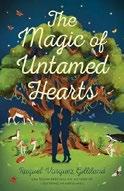
Sky Flores was a ghost for eight years, her consciousness separated from her body, which was sleeping in the woods. Can Adam Noemi, the golden boy of their small town, help her learn to live again?
Like her sisters, Sky has magic. Hers manifests in the ability to communicate nonverbally with animals, which makes her a freaky outcast in the small town of Cranberry, Virginia—where everyone already thought it was strange the way she just disappeared when she was 16 and showed up again eight years later, at 24, having been presumed dead. She knows her older sisters love her, but one is a new mother and the other is preparing to launch a business, so it seems like they have forgotten about her. She finds unexpected comfort in weekly dinner dates with her grumpy elderly neighbor, William. When Adam returns home after losing his dream job as a reporter at the New York Times , he’s worried that William, his grandfather, is showing signs of dementia and is initially concerned about Sky’s motives, but their obligatory initial miscommunication is quickly resolved and Sky suggests that Adam write about her—something she hasn’t allowed any of the reporters who approached her to do since she came back two years ago. In return, all he has to do is be her friend; hopefully, that will make the other residents of Cranberry start to see her as a person instead of an oddity. The final book in Vasquez Gilliland’s Wild Magic series is a sweet, sexy, friends-to-lovers story with a few twists, but it does a lot more. The way Sky and her sisters find their ways back to one another is just as important as the romance between Sky and Adam. Sky’s innocence and curiosity are coded as emerging autism, which the author mentions in her acknowledgements. And the sex is somehow both hot and wholesome. Come for the romance, get swallowed up by the lush, atmospheric writing and Latine magic.

JOHN McMURTRIE
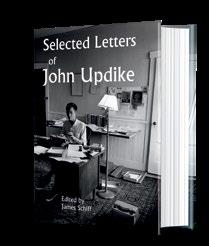
THINKING BACK TO the Stone Age of the pre-internet era, some might recall a time when human beings put pen to paper and wrote each other letters. One person who had a special gift for this now-vanishing breed of writing was John Updike. It should come as no surprise: Updike, who died in 2009, was prolific in many genres, writing more than 60 books—novels, collections of short stories and essays and poems, and even children’s books.
Now we have Selected Letters of John Updike (Knopf, October 21), a posthumous treasure trove of missives that date from his youth (“Dear Pop, I hope you’re feeling fine”) to his autumnal years (“Dear David,” he writes New Yorker editor David Remnick after Updike’s cancer diagnosis, “Your beautifully generous and warm letter made me begin

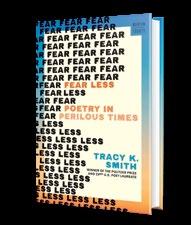
to cry, first when my wife read it to me at the hospital over the phone, and now when I can read it holding it in my hand”).
Brimming with wit and joie de vivre and perspicacious accounts of the literary world, this mighty volume—totaling 912 pages—is a winter treat, a satisfyingly chunky book to pore over when cuddled up against the cold. One can imagine a fire crackling in the background as Updike wrote some of the letters in his old colonial house in Massachusetts.
Like all great writers, Updike was a master of observation. It’s a skill that former U.S. Poet Laureate Tracy K. Smith prizes in Fear Less: Poetry in Perilous Times (Norton, November 18)—another book that’s ideal for cold-weather, contemplative reading. Growing up insecure, Smith writes, “Reading poems

allowed me to take notice of things I too often overlooked. Poems slowed down time so that I could observe, reflect, ask, and even muster the urge to assert what I kept bottled up.”
Marie Kondo, famous for her global bestseller, The Life-Changing Magic of Tidying Up, has a new book out, Letter From Japan (Crown, October 21), that similarly counsels us to slow down and celebrate, for one, the ephemeral beauty of our surroundings. A long winter, for instance, spells the eventual arrival of cherry blossoms; although they fall after just a couple of weeks, Kondo writes, they “capture both the lush vibrance and fleeting nature of life.” She adds that “the simple act of drinking tea” can help make you more present, “grateful for the things that surround you while living in harmony with them.”
And here’s one more book to take in this season: Geoffrey C. Ward and Ken Burns’ The American Revolution: An Intimate History (Knopf, November 11). Marking the 250th anniversary of the start of the war—and published in tandem with the PBS series of the same name—this gorgeously illustrated volume is filled with many colorful paintings and drawings and new maps. What the series and book set out to do is to dust off the Revolution. Burns writes, “We have protected the Revolution as if it were some delicate archeological relic encased in amber; we seem fearful that the inspiring ideas at its core would be diminished if we examined its events too deeply.” How deeply we examine those events remains to be seen.
John McMurtrie is the nonfiction editor.
Thirty-four years later, a brave Chinese writer continues the family history documented in Wild Swans
The 1991 bestseller Wild Swans , with more than 13 million copies sold worldwide, opened eyes to the realities of 20th-century Chinese history through the stories of three generations of the author’s family: her grandmother, her mother, and herself. To this day, it remains banned in China. Chang dedicates the sequel to her 94-year-old mother, “whose deathbed I am unable to visit.” The grounds for this become clear over the course of the memoir, which jumps from one blood-curdling episode to the next in admirably calm and clear tones. The Cultural Revolution began when the author was 14; the atrocities she witnessed at
her school, where honored teachers were beaten, and at denunciation rallies, where both of her parents endured public torture and shaming, helped to ensure that when she left to study in England in 1978, she would never make her home in China again. After her marriage to the historian Jon Halliday, the pair co-authored a biography of Mao that boldly challenged beliefs about him in both the East and the West. As she was writing, “I was conscious that I was writing about true evil,” a signal example being the intentionality of the policies that led to the Great Famine of 1958-1961, which killed nearly 38 million people. Simultaneously banning food imports and increasing exports on an “unimaginable” scale, Mao calmly noted, “With all these projects, half of
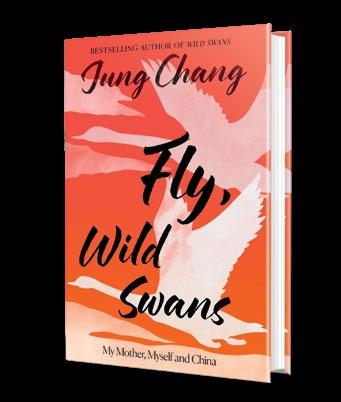
Chang, Jung | Harper/HarperCollins | 336 pp. $35 | January 13, 2026 | 9780063480049
China may well have to die.” While the worldwide popularity of Wild Swans made Chang enough of an international celebrity to keep the Chinese government from taking extreme measures against her (say, throwing her in jail after issuing her a visa to visit her mother), surveillance and restriction increased continually since she was told in 2007 to “renounce
your book or else,” ultimately preventing her from entering the country at all. Her mother’s steadfast support, wisdom, and insight into the perverse machinations of the Communist Party and its representatives shine like a beacon throughout. An essential, unexpectedly relevant account of a people divided and turned against themselves by politics.
Abramsky, Sasha | OR Books (150 pp.) | $17.95 paper | January 20, 2026 | 9781682196762
What DOGE destroyed. Demonstrating the kitchen-table impact of the Trump administration’s attack on civil servants, Abramsky, an academic and journalist, fashions perceptive profiles of people fired by Elon Musk’s Department of Government Efficiency. A reported 148,000 federal employees were idled in the first six months of Trump redux. Those featured here worked in consumer protection, public health, climate science, foreign aid, workplace safety, and tax collection, among others. Dismissed without valid cause and, in some cases, denied severance pay and pensions, Abramsky’s subjects—a racially diverse group of men, women, and nonbinary Americans—struggle to pay bills, obtain prescriptions, and get jobs in a market “saturated” with ex-colleagues axed by DOGE. In enraging detail, Abramsky describes Musk’s lackeys’ “cruelty” and carelessness. DOGE fires employees via wildly unprofessional emails and orders others to stop working entirely while still getting full pay. Angry and anxious, the former employees volunteer in their fields, pray, binge read historical fiction, meet up for “trauma-bonding,” and apply for jobs; one sends out nearly 200 applications. It’s touching that, through it all, the workers remain devoted to their agencies’ missions. An ex-USAID staffer weeps when discussing the agency’s canceled food programs, cuts that almost certainly resulted in preventable deaths abroad. Any organization employing hundreds of thousands is likely to have some waste, a reality Abramsky largely avoids. But his up-close attention to his subjects’ distinct post-government
trajectories presents a poignant tableau “of a country in a profound moment of crisis and dislocation.” An erstwhile IRS staffer says that when DOGE came for his agency, he had to leave the building almost immediately. This made government work forever unappealing. Which, Abramsky’s conscientious reporting suggests, is just what DOGE hoped to accomplish. A compassionate portrait of some of the many who suffered when Musk’s foot soldiers targeted dedicated professionals.
Arndt, David | Bloomsbury Academic (224 pp.)
$68 | January 8, 2026 | 9781350473904
Why write?
This thoughtful, epigrammatic book by a scholar at Saint Mary’s College of California encourages us all to write not simply to communicate with others but to shape ourselves. “Writing changes us,” writes Arndt, author of Arendt on the Political (2019). “In a way, it is similar to practices such as athletics for the body or meditation for the mind: just as the practice of physical exercise changes the body, so the practice of writing changes the soul.” This book goads us into writing well: not just by developing a style but by considering the very ethics of our work, our needs, and our responsibilities to be true and honest to ourselves and others. Marcel Proust offers one guide: We should not “model writing on conversation but on solitary meditation,” Arndt writes. Good writing leads to wisdom: The order of words in the sentence, the structure of the paragraph, and the arc of the essay all contribute to a form of knowing. The first sentence should arrest attention. Rousseau: “Man is born free, and everywhere he is in chains.” There’s high philosophy here, and there’s blunt advice: “Don’t futz
around.” Be concise. Organize your argument. Find the right word. In the end, writing well is about conveying truth beautifully, to “effect some sort of good.” Read this book and you’ll never think of freshman composition in the same way again.
A bracing, philosophically rich argument for writing well as a personal journey and a social good.
Bandelj, Nina | Princeton Univ. (384 pp.)
$32.95 | January 20, 2026 | 9780691270043
A UC Irvine sociology professor examines how children have become the “investment projects” of parents trapped in a cycle of exhaustion and debt.
Parenting in America demands far more of mothers and fathers than simply serving as loving caretakers for their children. According to Bandelj, parenting now means investing “loads of money and our whole selves” into their offspring. Contemporary children are now treated like CEOs who “[dictate] the family’s schedule” and command most of its emotional and financial resources. Drawing from sociological, anthropological, and economic research as well as parenting books, interviews, and her own experience as a parent, Bandelj offers a study that examines what she calls the “three sacred commandments” for parents: invest in, finance, and labor on behalf of offspring.
The author shows how the “post-fifties boom in parenting advice,” in tandem with the rise of neoliberal economic policies, has resulted in the privatization of parenting. The financial aspects of parenting that Bandelj discusses reveal the commodification of childcare and the explosion in debt parents have taken on to help their children through college, leaving mothers and fathers under ever-increasing economic pressures. And
finally, the “all-in” parenting standard that the author explores shows how child-rearing—especially for mothers— relies on a system that normalizes mental, physical, and emotional exhaustion. Rigorous, accessible, and thought-provoking, Bandelj’s book illuminates the subtle and not-so-subtle ways in which the privatization of child-rearing has transformed parenting into a toxic instrument of 21st-century socioeconomic control.
Necessary reading about the troubled state of contemporary American parenting.
Baradaran, Mehrsa | Norton (192 pp.) $24 | February 3, 2026 | 9780393881820
Examining the historical roots of the wealth gap between white and nonwhite Americans. In the late 1960s, the Kerner Commission reported that despite apparent progress in civil rights, America was “moving toward two societies, one black, one white— separate and unequal.” It recommended that the U.S. government assist Black Americans in building the wealth that would put them on more equal footing with whites. But as UC Irvine law professor Baradaran argues, the neoliberal policies that took shape in the following decades only served to reinforce the wealth inequality that had existed from slavery to Jim Crow and beyond. She contends that neoliberalism itself explains the gap as a “natural by-product of market forces” that can be overcome through “self-help solutions or local institutions.” The reality, however, is far more pernicious, the author maintains: Analysis of American history reveals that the government actively subsidized white wealth while destroying attempts by Black people to amass their own capital. Early
this forceful book. UNIVERSITY
Reconstruction initiatives, for example, promised formerly enslaved people 40 acres of land to begin their lives only to confiscate that property and return it to Southern landowners; and during the Depression, Blackowned banks like the Binga State Bank in Illinois received no assistance when white-owned ones did. What minorities did receive was judgment from white-owned financial institutions that they were not qualified for loans because they were “entirely untutored in the business world” or possessed moral failings that made them unworthy. The result, which has only compounded over time, has been a tragic reenactment of what Martin Luther King Jr. identified as a situation where “America has given the Negro people a bad check” that perennially “come[s] back marked ‘insufficient funds.’” As well-researched as it is disturbing, this book lays bare both the injustice and racist failings of a socioeconomic system. An important study that cogently argues the case for Black reparations.
Bollinger, Lee C. | Norton (224 pp.) | $26.99 January 20, 2026 | 9781324124313
No ivory tower. Bollinger, the former president of the University of Michigan and Columbia University, has long argued for the power of diversity in higher education and for the autonomy of colleges and universities from political manipulation. Recent assaults on that
autonomy provoke this brief, forceful book. Its “intellectual basis” is the First Amendment: Speech is free, and this freedom stands behind the unique status of American universities as sites of protected inquiry. Bollinger has, by his own admission, an idealist’s view of his home institutions. He writes, “Universities are intended to preserve and advance knowledge about the human condition, about life and the natural world, and to pass human knowledge and the capacities to pursue it on to succeeding generations.” Nothing about that sentence, he admits, is straightforward. What is knowledge? What is preservation and advancement? He shows that these are categories always up for debate, always contested and changing. The university must be open to the public, full of teachers with the temperament to share and listen, rich in research that can be, potentially, accessible to all. And yet, freedom is not unconstrained. Just because you have a Ph.D. and tenure does not mean that you can say anything you want at any time. Freedom comes with responsibility, and in the end this book is more a sermon on the latter than a call for the former. “Every single day, universities make judgments in accord with scholarly standards and scholarly temperament about what the nation and the world needs. We should embrace and acknowledge this role.” Those judgments may not always be right, but they should never be rash. Bollinger’s university emerges as a place of thoughtful conversation with a social mission and self-regulating financial independence. Would that it could last.
An idealistic vision of the American university as a place of free thought and socially responsible teaching.
art and music, he found his way to graffiti and hip-hop.
Kirkus Star
Everybody’s Fly:
Brathwaite, Fred with Mark Rozzo Viking (336 pp.) | $32 | March 10, 2026 9780593834909
A crucial figure in hip-hop’s development recalls its (and his) evolution. Brathwaite— aka Fab 5 Freddy—is best known for being name-checked in Blondie’s hit 1981 single “Rapture” and for hosting MTV’s first foray into hip-hop, Yo! MTV Raps. But as this memoir makes clear, those high-profile moments came on the heels of deep engagement with—and influence on—early hip-hop culture. He grew up a middle-class kid in Brooklyn’s Bedford-Stuyvesant neighborhood, steeped in his family’s love of jazz— drummer Max Roach was his godfather—and he developed an early love of highbrow art and music. But he was also drawn to street-level art, particularly graffiti and the mobile DJs inventing hip-hop. Smart and sociable, he developed relationships with scenesters like Glenn O’Brien—whose public access show Glenn O’Brien’s TV Party was a salon for punk rockers and visual artists—musicians like Blondie’s Debbie Harry, and graffiti-inspired artists like Jean-Michel Basquiat. Those connections helped serve his ambition to put street culture on high-art stages, helping to launch graffiti shows in Europe and starring in the pioneering hip-hop film Wild
Style. Brathwaite describes all this with a geniality and humility—smartly, he focuses his narrative on the era from the late ’70s to the early ’80s, when New York welcomed all comers artistically, from taggers to punks to jazz artists to rappers and more. A classic connector, he has a story to tell about seemingly every major player at the time, including Harry, Grandmaster Flash, Andy Warhol, and others. The downside arrived in time: Basquiat overdosed, Blondie broke up, the subway cars became graffiti-repellent. Brathwaite is a sharp writer, and he (along with collaborator Rozzo) might have done more critical thinking about what made that era so special. But it’s a fine snapshot of a pivotal moment for street—and American—culture. A rich, gritty remembrance of an artist’s journey.
Cheshire, James | Bloomsbury (384 pp.) $40 | November 4, 2025 | 9781639734283
Looking at maps in a new light. Midway through his handsomely illustrated study of mapmaking, Cheshire quotes diarist Harold Nicolson’s eyewitness account of President Woodrow Wilson kneeling over a map at the Paris Peace Conference of 1919, tracing new borders with his finger. The scene captures the book’s central concern: our enduring desire to organize the world through cartography. As the writer Peter Turchi has noted—a
line Cheshire quotes—“The first lie of a map, also the first lie of fiction, is that it is the truth.” A professor of geographic information and cartography at University College London, Cheshire writes from inside the university’s Map Library, a warren of drawers containing 40,000 maps. He is an infectious guide, tracing how maps evolved from hand-tinted curiosities to instruments of science, propaganda, and power. During World War II, the Allies printed billions of map sheets and raided Axis archives for more, including nine tons seized from a single German publisher. Yet even the most precise charts could not capture the mud and confusion of the trenches; tidiness, he shows, often conceals chaos. Victorian mapmakers such as George Bellas Greenough and Heinrich Berghaus turned geography into both art and ideology. Ethnographic maps hardened into justifications for empire and war, while national atlases—like Finland’s in 1899—helped invent the very nations they depicted. Not everyone approved of cartography’s instinct to capture a changing world. When the art critic John Ruskin ordered a map from Stanfords of Covent Garden (still in business), he insisted it omit the new railway lines, calling them the “oddest” of “stupidities of modern education.” To “tidy the map,” Cheshire reminds us, is to risk mistaking lines on paper for the real world they seek to contain. A concise and engrossing study of cartographers’ urge to make the world behave.
Conn, Jordan Ritter | Grand Central Publishing (336 pp.) | $30 April 21, 2026 | 9781538709092
Four intimate portraits of American men navigating their lives and traumas. Conn, an accomplished journalist and author of The Road From Raqqa: A Story of Brotherhood,
Borders, and Belonging (2020), writes that the purpose of his new book is to explore the gap between the men we think we should be and the men we actually are. He focuses on the lives of four diverse men he interviewed over five years. They are Nate, a Black transgender man living in Youngstown, Ohio; Gideon, a West Point graduate who discovers his wife’s infidelity with a mentor; Joseph, an Iraq war veteran with repressed sexual trauma; and Ryan, a closeted Native American who gradually awakens to his sexuality. The stories are well written, full of narrative tension, and often deeply poignant. “Even as men continue to wield such (often destructive) power, this is also a moment when boys and young men lag far behind their female peers,” Conn writes. “Compared to girls and young women, boys and young men are more likely to drop out of high school and less likely to graduate from college, more likely to die by suicide and less likely to seek mental health care, more likely to abuse drugs and alcohol, and less likely to find romantic partners.” Two of the men in the book struggle with alcohol, and some make unfortunate decisions; their experiences may not be broadly representative of American masculinity, but their challenges raise pertinent questions that any reader can identify with. As Conn writes of Nate, “He was a man. He knew it, and so did everyone else that mattered to him. But settling that question now felt easy. In its place had emerged another one, larger and more shapeless: What kind of man was he going to be ?”
A captivating account of masculinity with personal revelations that will resonate universally.

Currey, Mason | Celadon Books (240 pp.) $30 | March 31, 2026 | 9781250824523
A n astute assemblage of biographical sketches highlights how practical circumstances can complicate artistic ambition.
Artists, as Daily Rituals author Currey posits, live to pursue their art but still require a roof overhead, food to eat, and supplies for their craft. The tension between making the money necessary for survival and making room for art forms the backbone of this engrossing book. Four sections loosely organize artists into those dependent on “Family Money,” “Jobs,” “Patronage,” and “Schemes.” Both Virginia Woolf and Charles Baudelaire received inheritances, but Wolff parceled hers out diligently while Baudelaire spent profligately to the point of destitution. Patronage could be a boon—but the artist might have to shift to suit the patron. Petrarch, for instance, joined the clergy in pursuit of a benefactor. Painters who lived in unheated studios to save money and paint in peace appeal to romantic perceptions of a starving artist. However, the majority of subjects here are white creators from the 19th and 20th centuries, and stories of minority artists like Black sculptor Augusta Savage complicate the book’s premise. A unique talent, she taught and supported other minority artists while her own work went unfunded. Non-white artists, faced with the unlikelihood of recognition and profitability in a biased cultural milieu, beg the question: Is the economic pressure experienced by white creatives working in recognized mediums such a tremendous challenge? Since Currey zeroes in on the stories of compelling individuals, broader economic and cultural realities are gestured at rather than explicated. Nonetheless, as an invitation to create—to push up against limits, to squeeze time from the margins
of the day, and to live on sardines and crusts of bread if necessary—Currey’s case studies may well spark the artistically inclined reader to attend more dutifully to their life’s calling. Thought-provoking, interwoven profiles celebrate the creative drive in context.
Davie, John | Bloomsbury Continuum (288 pp.) $22 | January 6, 2026 | 9781399424790
The glory that was. This lively survey by Davie, a former Oxford lecturer, traces the enduring impact of ancient Greek culture on modern life and literature. Greek city-states fostered a new way of looking at, and talking about, the world. Socrates, Plato, Aristotle, and their heirs observed daily life to explain and question how we live and why. Homer has influenced anyone wanting to tell a story. Sappho taught us how to love. Aristophanes taught us how to laugh. And yet, all was not glory. Early Greek society, for all its claims to participatory democracy, was highly stratified. Perhaps the most important chapter in this book is that on slavery. “Slavery was fundamentally important to the democracy in Athens,” Davie writes. “A man had to be seriously impoverished not to own a slave.” But, he adds, “Athenians seem to have treated their slaves better than did most other people in the ancient world.” The author tries to reconcile the gifts of Greece with ownership of human beings: “Perhaps we should not be too quick in condemning ancient societies as uncivilized for practicing slavery.” Other classicists have been more nuanced in their understanding of these contradictions in Greek life. And classics, as a discipline, is now looking not West but East—to the Black Sea and the Middle East—as the true home of Greek-speaking culture. For general readers, however, this book affirms Western culture’s debt to the
Greek world. It makes you feel good about being smart and educated. It makes you want to lead an examined life. If it papers over the cracks in that Parthenon of the imagination, at least it gets you in the door.
An uplifting survey of our deep debts to ancient Greece, emphasizing civic life and the literary imagination.
Dickson, Ej | Simon Element (256 pp.) | $29 February 10, 2026 | 9781668051115
A n investigation into the badmother/goodmother binary and the way it shapes a mother’s place in society today. Having reported on both popular culture and deeper sociopolitical shifts for outlets such as New York and Rolling Stone, Dickson weaves together her observations to dive deep into a variety of “bad mother” tropes. From stage mothers and unapologetically sexual clichés to ambitious career women, the author’s subjects demonstrate how the “expansiveness” of the bad mom label, applied across political and cultural spectrums, renders every mother subject to judgment, thus reinforcing the broader disempowerment of all women. Dickson’s hope is to spur some measure of empathy, maybe even solidarity, in the reader to counter the systemic forces that erect these mothers as villains. To make her point, she turns to (sometimes mediocre) cult classics and revisits some of her own previous reporting, draping her research in a healthy dose of bewildered snark and a hint of amusement with herself. While frequently entertaining, these witty jabs and asides sometimes dilute the potency of her fury and distract from its gravitas. Dickson is (rightly) quick to acknowledge the privilege of her race and class, keenly
noting how the obsession with and variability of the repercussions of being labeled as a “bad mom” differ across races and economic classes. The author flirts with—but dutifully avoids— offering a clear and authoritative definition of a good mom. Instead, she keeps her focus on the “insanely rigorous standards surrounding motherhood” that have persisted even as women have pursued and found a measure of freedom, success, and support in other domains. She thus suggests a new narrative of female empowerment in a world where social media and sensational media coverage further entrench expectations that mothers be relentlessly selfless, materially unrewarded, and eternally disconnected.
A humorous and potent takedown of the criticism awaiting mothers at—and between—every extreme.
The Tower and the Ruin: J.R.R. Tolkien’s Creation
Drout, Michael D.C. | Norton (384 pp.) $35 | December 2, 2025 | 9781324093886
My precious… “J.R.R. Tolkien’s works are qualitatively different from most other works of twentieth-century literature.” So writes Drout, a professor of English and director of the Center for the Study of the Medieval at Wheaton College. His book seeks to tell us how and why. Tolkien created a world so real-seeming, so larded with lore and language, that the reader enters, stays, and leaves only unwillingly. Tolkien was a scholar of Old English and Old Norse. He contributed to the Oxford English Dictionary. He shaped the runes and rigamarole of Hobbits, elves, and monsters out of the clay of epic. He grounded his imagination in not only medieval but Victorian fantasy: the adventures of H. Rider Haggard and the Nordic mistiness of William Morris. But the author locates
Tolkien’s true distinctiveness not in literary sources but in a moral vision and its powerful emotional content. Friendship and loss emerge as the axes of the drama. “The pain of the lost home has been transmuted into a sadness that we can accept….Transforming…sorrow into something more, into tears that are not bitter, is the great achievement of Tolkien’s art.” This is a book of feelings, then: about Drout’s half-century experience of reading, of his own family life, of his research into early languages and early drafts of Tolkien’s tales, and, finally, of a redemptive relationship to literary art. Some readers may miss the history here: There’s very little on World War I, or the Oxford Inklings, or the realia of what it meant to be a scholar at the time. What we get instead is close reading and praise. Tolkien becomes a “consolation” for the author and for all readers seeking salvation in adventure. An ardent plea for Tolkien as a writer with a moral vision about friendship in the face of love and loss.
Fennelly, Beth Ann | Norton (144 pp.)
$22.99 | February 24, 2026 | 9781324117407

The former Mississippi Poet Laureate explores love and loss in an experimental essay collection. Fennelly intersperses short nonfiction pieces she calls “micro-memoirs” with longer, more traditional essays about relationships that have fundamentally shaped her life in a variety of ways. These essays explore topics like her elderly mother’s mental decline, her relationship with a group of college friends she calls “the roomies,” and an artist who painted the author posing nude. Between these longer pieces are micro-memoirs capturing mundane moments with poetic efficiency. A chapter titled “Birthday,”
for example, is only one sentence long: “Even my earlobes look old.” Others are about the author’s deceased sister, her marriage, her mother-in-law, her battle with garden slugs during the pandemic, and a house full of strangers who accidentally received the author’s annual family Christmas cards. A number of essays explore her sister’s untimely death from pneumonia. In a particularly poignant piece titled “Because My Editor Suggests I Reveal How My Sister Died,” she describes the uncertainties that prevented her from revealing her sister’s cause of death in her previous works, writing, “How dare you people expect me to explain my sister’s death to you, a thing I’ve never successfully explained even once to myself.” Many other essays sparkle with understated delight. Although the book is about the deaths of people, ideas, eras, and self-perceptions, it’s a fundamentally optimistic work concerned with exploring both the emotional underpinnings and transformational potential of aging, grief, and love. A lyrical and tender essay collection about loss.
Garcia, Justin R. | Little, Brown Spark (288 pp.) $14.99 | February 3, 2026 | 9780316594035
We’re building different nests. Garcia, executive director and senior scientist at the Kinsey Institute, describes intimacy as the “experience of closeness, of feeling and being seen, heard and known.” Human motivation for intimacy is distinct from our sex drive, although the two are generally linked and are perhaps equally important. Complicating our need for intimacy, Garcia writes, is
that, while people are evolutionarily wired to be socially monogamous, forming intense pair bonds with others—often one at a time and sometimes for life—we are not necessarily wired to be sexually monogamous. He mixes personal and family anecdotes with research studies to suggest that we find intimacy where we “create emotional connection, experience vulnerability and trust, and engage in mutual care.” Humans (and many primates and even prairie voles) find ways to make it work. The more positive illusions we have about our partners, the more likely we are to stay in relationships through the ups and downs of life.
The author suggests that one of the two most significant events changing romantic long-term relationships was the Industrial Revolution, which caused many Americans to move from rural areas, where cultural norms were well established and shared by prospective partners, to cities, where different cultures met and then needed to reconcile differing values to establish lasting relationships. The other significant event is the proliferation of the internet, where we can find endless potential partners on our smartphones, schedule a sexual hookup through an app, check up on an ex or prospective partner through social media, and even marry people who were born thousands of miles away. Our species did not evolve in this type of environment, nor did our sexual or relational behaviors. Thus, Garcia observes, we are evolutionarily ill-equipped to face today’s new interpersonal challenges.
An astute look at how love, sex, and intimacy are key to long-term relationships—which are harder to maintain than ever.
George, Rose | Norton (304 pp.) | $29.99 November 4, 2025 | 9780393881479
All the fish in the sea face an uncertain future. George is the author of Ninety Percent of Everything (2013), a revelatory and unexpectedly funny book about the shipping industry. In her latest work, she returns to the sea to focus on the fishing industry, another subject that, despite the prevalence of seafood, most of us know little about. It’s a startling account; much of what she shares will hit readers like a blast of shoreline wind. The details are unsettling. “Fish for awful statistics about ocean creatures and you will land a giant catch,” she writes. “For every 300 turtles that swam in the Caribbean, there is now one.” Industrialized fishing has been so destructive that “we spend twice as much effort to catch the same number of fishes as we did in the 1950s.” Huge numbers of other creatures are accidentally captured: In this “bycatch”—the industry term is “discards”—300,000 whales and dolphins are killed every year. This doesn’t even take into account illegal fishing. “One in every five fishes imported by Americans is illegally caught,” the author writes. And then there’s the nasty business of unwanted guests that plague salmon farms, leaving fish “half-eaten by lice.” In her travels, George spends time with fishermen in her native Britain. The crew’s blunt humor is evident when she vomits overboard: “More food for lobsters,” they
“Fish for awful statistics about ocean creatures and you will land a giant catch.” EVERY LAST FISH
say. In a stirring chapter on bygone “herring girls” who gutted fish hour after hour, George describes how these women fought for better safety. It’s still a dangerous profession: Every year, 100,000 fishermen die on the job. It doesn’t help that in the U.S., there’s a lack of training. Some observers, meantime, have mysteriously lost their lives when reporting on human rights violations. All the while, demand for seafood is rising. “By 2050, our fish consumption is predicted to double,” George writes. “Where will it come from?” It’s little surprise that George herself does not eat fish. This humane and impressively researched book might not stop you from buying seafood, but it will make you think twice.
Gibbs, Marla with Malaika Adero Amistad/HarperCollins (288 pp.) | $28.99 February 24, 2026 | 9780063356634
A memoir that proves the author is more than just Florence Johnston. The title of actor Gibbs’ memoir is apt: She was 44 when she landed the acting gig that would transform her into a national star. Gibbs, who is now 94, tells the story of her life and career in this book that begins with an unsparing look at her difficult childhood in Chicago and Detroit: “My young life was defined by circumstances and people who came into my life to set me back and knock me down, sometimes literally, before I could get on my feet for any length of time.” That includes being partially raised by an emotionally cruel grandmother and being assaulted by one of her mother’s boyfriends. She would go on to marry an abusive man, eventually leaving him and moving to Los Angeles, where she fell in love with acting. Her big break came when she was cast as the sassy maid Florence Johnston in the sitcom The Jeffersons,
which premiered in 1975 and ran for 11 seasons. For a while, though, it wasn’t enough to sustain her financially: She kept her job working at United Airlines until she joined with other castmates to negotiate raises. Gibbs had another television hit with the sitcom 227, and her reflections on her show-business experiences are bound to interest pop-culture aficionados. The memoir reads like a lightly edited transcript of Gibbs talking about her life; the timeline is often unclear, and plenty of digressions make for a sometimes jarring read. She does evince considerable charm, though; in one section, talking about her star on the Hollywood Walk of Fame, she writes, “Yes, I am there between Mahalia Jackson and Snoop Dogg, right where I belong. Between the Godly and the street, cause I’m a spiritual gangsta!”
A meandering read, but Gibbs brings the charisma.
Giuffre, Virginia Roberts | Knopf (400 pp.) $35 | October 21, 2025 | 9780593493120
Jeffrey Epstein’s most prominent accuser describes her harrowing victimization.
When Giuffre first fell into the orbit of Epstein and his partner/ aide de camp, Ghislaine Maxwell, she was a teenager who’d already had long experience with sexual abuse. Her father and a family
friend molested her, she writes; later, after escaping an abusive rehab facility, she was raped by a man proffering false promises of modeling gigs. In 2000, her father was working at Donald Trump’s Mar-a-Lago club in Florida and helped her get a job at the spa there. That’s where, she writes, she met Maxwell and Epstein, who, offering promises of massage training, forced her into a two-year hell of sexual service. The first half of Giuffre’s memoir, chronicling this experience, is at once highly disturbing and compelling reading; with the assistance of collaborator Amy Wallace, she’s delivered a composed yet righteously infuriated account of how Epstein manipulated and abused her, then shared her with others. Psychological conflicts abound—she appreciated the money and some of the creature comforts, but she needed to block out the abuses to appreciate them. Giuffre is careful about naming which of Epstein’s famous friends she was trafficked to—one “well-known Prime Minister” goes unnamed, and she admits being afraid to name powerful men. “First and foremost, I am a parent,” she writes, “and I won’t put my family at risk if I can help it.” Giuffre, however, is open about her experiences with Epstein, Prince Andrew, and the late MIT professor Marvin Minsky. The second half of the book chronicles how she balances marriage and raising a family while pursuing legal recompense for herself and other victims following Epstein’s death and Maxwell’s conviction. That material is less bracing, but it helps underscore the importance of the stakes for her. In light of her suicide in April 2025, it makes the story all the more tragic. She was just getting started as an activist, and her voice here is resolute and clear.
A valuable document of abuse, and the strength required to counter it.
Jeffrey Epstein’s most prominent accuser describes her harrowing victimization.
NOBODY’S GIRL
Givony, Ronen | Abrams (368 pp.) | $30 March 3, 2026 | 9781419775260
Not made in Manhattan. Brooklyn wasn’t always the hipster mecca that it has become, as Givony notes in his book about the borough’s indie scene from 2004 to 2014. Manhattan was once the home to cutting-edge music. But as he writes, “The cultural supremacy of downtown Manhattan was yielding to an insurgency in Brooklyn….Compared to Manhattan, the scene in Brooklyn felt more unsupervised and lawless, like the adults had left the kids and gone on vacation. The floor was usually sticky; the bouncers were blasé; the smoking ban, loosely enforced.” It was also, the author adds, “an era of immense anticipation, possibility, adventure, and naïveté: when screens had yet to be ubiquitous; when blogs could launch an artist based on enthusiasm; when bands created venues out of sheer necessity; when life online was more ramshackle, free-wheeling, and democratic than today.” Givony traces the history of Brooklyn’s ascendancy among DIY musicians and related artists, yet he’s not interested in big names. He prefers writing about musicians who “earned no gold or platinum records, headlined no major festivals, performed in zero Super Bowls, and sold modestly, if at all.” This includes acts like Delia Gonzalez & Gavilán Rayna Russom, Parts & Labor, and Dragons of Zynth, as well as venues and art spaces such as Silent Barn, Glasslands, and Death by Audio. He also mixes in memoir, reflecting on his time working for the Lincoln Center and his founding of Wordless Music, a series that pairs classical musicians with rock bands. It would have been easy for Givony to appeal to millennial nostalgia with simple reflections on more popular musicians, but, as he notes, “the Brooklyn scene was overwhelmingly white, male, and privileged, at every level.” Instead, he
writes about the underdogs of the time, many of them women and people of color—which makes for an inclusive and eye-opening read.
A rousing chronicle of Brooklyn’s indie heyday.
Guariglia, Matthew & Brian Hochmans, Eds. | Norton (512 pp.) | $22.99 paper January 13, 2026 | 9781324089377
The blockbuster report that exposed decades of official misconduct. In 1974, investigative journalist Seymour Hersh reported that the CIA, operating at the request of President Richard Nixon, had violated its own charter by amassing intelligence files on more than 10,000 American protestors, dissidents, and activists. Hersh’s New York Times article also hinted that break-ins, wiretaps, and other forms of unwarranted surveillance were routine. The next month, the U.S. Senate formed the so-called Church Committee to investigate improper or unethical intelligence activities. The committee’s charge extended to the FBI, whose methods were partially exposed four years earlier when activists sent purloined FBI documents to the Washington Post. The Church Committee’s six-volume report, which appeared in 1976, detailed a long list of scandalous practices undertaken by national security agencies that Congress had effectively left to their own devices. In this abridged version of that report, edited by historian Guariglia and scholar Hochman, readers will encounter a wide range of infamous programs—including MKULTRA, CHAOS, and COINTELPRO—whose original
A timely reminder about the perils of unchecked power.
Gutner, Howard | Lyons Press (288 pp.) $40 | April 21, 2026 | 9781493085026
The fashions of old Hollywood, and the man who helped define them. If one thinks about Hollywood movies of the 1930s, one is likely to think about the costumes. Together with MGM’s Gilbert Adrian and Orry-Kelly at Warner Bros., Paramount’s Travis Banton was more than just “the vibrant third member in a triumvirate of the most influential Hollywood costume/fashion designers.” In this fun and amply illustrated book, Gutner shows how Banton became so highly regarded that Modern Screen magazine called him “Paramount’s designing genius.”
>>> intent may have been valid but which soon extended far beyond any legitimate intelligence or law enforcement purpose. Indeed, the editors note that modern readers are likely to recoil from the “vindictiveness, recklessness, and unrepentant racism” of those who directed these programs. Among the parade of examples are the FBI’s vile campaign against Martin Luther King Jr., outlandish plans to assassinate Cuban leader Fidel Castro, and the surreptitious administration of LSD to unwitting subjects in efforts to develop chemical and biological weapons. But the list of misdeeds was much longer, and the damage more consequential, than even these high-profile episodes suggest. The Church Committee’s sober report is a forceful reminder of that period’s excesses—not in the social and political movements that the government targeted, but rather among the public servants whose perverseness undermined our constitutional democracy.





The Pennsylvania governor’s Where We Keep the Light will be published in January.
Pennsylvania Gov. Josh Shapiro will tell the story of his life and career in a memoir coming in 2026, the Associated Press reports.
Harper will publish the Democratic politician’s Where We Keep the Light: Stories From a Life of Service in the winter. In the book, the press says, Shapiro “shares powerful stories about his family, his faith, and his career in public service.”
Shapiro was first elected to public office in 2004, winning a seat in the Pennsylvania House of Representatives, where he served for seven years. Elected attorney general of Pennsylvania in 2016, he won the race for governor in 2022, defeating Republican Doug Mastriano by nearly 15 percentage points.
Shapiro was reportedly on the shortlist for former Vice President Kamala
Harris’ running mate in the 2024 presidential election. He survived an assassination attempt in April after a man set fire to the governor’s mansion while he and his family were sleeping.
The announcement of the memoir seems sure to spark speculation that Shapiro is planning to run for president in 2028. Harris herself recently published a memoir, 107 Days, while two other potential candidates have books coming early next year: New Jersey Sen. Cory Booker (Stand ) and California Gov. Gavin Newsom (Young Man in a Hurry ).
Where We Keep the Light is slated for publication on January 27, 2026.—M.S.


TIME’S
Born in Waco, Texas, in 1894, he was raised in Ridgewood, New Jersey, and studied at the Art Students League and the New York School of Fine and Applied Arts. Banton rose from an early stint at the fashion house run by Lady Duff-Gordon, who “is widely credited with inventing the runway fashion show,” to his years at Paramount, where he demonstrated “his aptitude for delineating a character at first glance through costume design.” He dressed all of the studio’s major stars, from Marlene Dietrich—for whom he created a Shanghai Express outfit that was “the ultimate symbolic use of feathers in a costume” (black coque), helping “create one of cinema’s most famous and notorious femme fatales”—to Carole Lombard—for whom he designed a gown for My Man Godfrey, “created from layer upon layer of bugle beads fashioned from glass.” This book will appeal to cinema fans, fashion enthusiasts, and anyone who enjoys juicy gossip. At one point, Banton got so fed up with Claudette Colbert’s complaints about his designs for Cleopatra that he told her she “could slit her wrists for all he cared.” When she returned one set of his sketches, “They were stained and smudged with dried blood. Colbert had apparently cut her finger deliberately in order to express her opinion of the new designs.”
Welcome recognition of one of cinema’s most important designers.

For more about fashion, visit Kirkus online.
Hazen, Robert M. & Michael L. Wong
Norton (176 pp.) | $28.99
February 10, 2026 | 9781324105480
Science’s missing piece. It’s not every day that scientists suggest a new law of nature. But Hazen, a mineralogist and astrobiologist, and Wong, an astrobiologist and planetary scientist, believe that we’ve missed something right in front of our noses. “How can it be,” they ask in this mind-bending book, “that such an omnipresent, awe-inspiring facet of the cosmos is uncodified in the canon of scientific law?” Seeing through the world to its underlying laws requires noticing that seemingly disparate phenomena are actually the same. Sometimes it’s the simple case that reveals the universal truth. For Newton, it was apples. For Hazen, it’s minerals. The universe started out with one kind of mineral—a microscopic diamond—that was reshuffled in the heat of stars into 25 new minerals, then exploded on Earth into 6,000 different species. Melting, freezing, the shifting of tectonic plates, and the activities of life mixed and matched the minerals’ elements into endless new arrangements. Most were duds; only the stable survived. In this, Hazen glimpsed an underlying logic of emerging order that applies not only to minerals but to atoms, isotopes, animals, language, computer code, even scientific knowledge itself, a form of universal
evolution of which the Darwinian kind is merely a special case. While the second law of thermodynamics still holds—the increase of entropy and disorder that defines the arrow of time and marches us toward the heat death of the universe— there is simultaneously, the authors claim, a second trend of ever-increasing “functional information,” “a universal imperative that has been at play since the Big Bang,” that is not precluded by the known laws of physics, but can’t be derived from them either. It’s a provocative claim, one that blurs the line between animal and mineral. The book’s prose is not especially poetic, but there are times when the facts alone exert their own poetry. When this happens in a science book, it can be transcendent.
A paradigm-shifting work of scientific daring that inspires us to reconsider the emergence of life in the cosmos.
Holmes, Richard | Pantheon (448 pp.) $35 | February 10, 2026 | 9780307379672
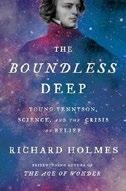
A lfred Lord Tennyson (180992) before he was “monumental and Victorian.”
Focusing on the poet’s “vagrant years,” 1829-1849, veteran biographer Holmes depicts an intense, charismatic, intellectually curious young man whose poetry was infused with the revolutionary scientific discoveries of the day. These discoveries both thrilled and alarmed him with their visions of “a godless universe and planetary extinction,” while Tennyson thrilled friends with his poetic gifts but alarmed them with bouts of depression and an inability to settle down. His father was an alcoholic, and his four brothers suffered from various forms of addiction and mental illness. The poet, in Holmes’ astute analysis, grappled with these issues as well, especially after the sudden death
of his beloved friend Arthur Hallam, only 22 when felled by a stroke in 1833. The tortured fragments Tennyson began writing about this loss, masterfully combined with the existential questions prompted by his scientific readings, would eventually result in the work Holmes judges to be his masterpiece, a sequence of 131 poems called “In Memoriam.” This was finally published in 1850, the year Tennyson married at age 40 and was named poet laureate. Around this time, he also acquired the beard captured in the iconic Julia Margaret Cameron photograph that fixed his image as the quintessential stolid Victorian celebrity. On the contrary, Holmes demonstrates in his brilliant exegeses of such poems as “The Kraken,” “Maud,” “The Two Voices,” and the ongoing pieces that eventually coalesced into “In Memoriam,” Tennyson was Victorian in a much more interesting sense: the perennial struggle waged in his poetry and his soul between scientific skepticism and religious faith, the same battle that sparked the works of contemporaries such as George Eliot and Matthew Arnold. This shrewd, sensitive, beautifully written portrait provides a much-needed restoration of the human being beneath a barnacle-encrusted reputation. A must for poetry readers and a treat for anyone who enjoys fine literary biography.
Hook, Leise | Henry Holt (256 pp.) | $29.99 April 14, 2026 | 9781250845030
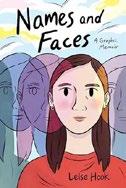
A mixed-race woman reflects on her evolving sense of identity. Hook was born to linguist parents, her mother’s roots in Beijing and Southern China and her father’s in western Germany. From birth, even her names reflected a complex identity. Her mother chose the name Lidun, selecting specific Chinese characters to connote strength and sincerity. Her father’s
choice was the similar-sounding Leise, recalling a childhood friend whose name had a unique pronunciation: LEE-za. This introductory story gives a strong sense of the book’s ruminative tone, a collection of moments circling the titular themes. Hook’s Midwestern childhood was punctuated by a year in Tokyo, where she attended a diverse, substantially mixed Asian school, finding a peer group that reflected her self-understanding. As she grew up, Leise began to see herself as “a bridge” between her Chinese identity and a majority-white society, experiencing the external pressures put upon her to perform that function. In American Girl doll catalogs and stores, she seeks, with limited success, a doll reflecting her appearance and experiences. She lightens her hair out of trend-driven curiosity, and her dark-haired mother reacts with disappointment. A year spent working at a Beijing art gallery leaves her emotionally exhausted from constant code-switching. Expected to play an obliging Asian for foreign visitors, she never feels Chinese enough, in work ethic or language ability, for her local employers. Many of Hook’s experiences feel held at arm’s length for careful observation and sober assessment. Nonetheless, moments like this Beijing sojourn ache with youthful confusion, and specific passages where Hook claims language and appearance rather than waiting for cultural permission feel cathartic and exciting. Drawn in an accessible style, alternating structured panels with looser pages for emotional impact, this book works as both mirror and window. Every face, every name, has a story to tell. An erudite reflection on the experience of holding two cultures within oneself.
Karl, Jonathan | Dutton (448 pp.) | $32 October 28, 2025 | 9798217047000
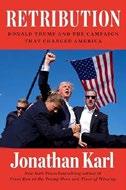
A new standard in presidential recklessness. Other reporters beat this respected ABC newsman to press, but the scoops in his 2024 campaign book were worth the wait. Though last fall’s election results prevented a special counsel investigating Donald Trump from showing his findings in court, Karl’s reporting fills in some blanks. He presents previously unpublished handwritten notes by Mike Pence that describe Trump’s rash behavior on January 6, 2021; details on how Trump “spent most of the afternoon—scrolling through Twitter—as his supporters attacked the Capitol”; and statements that a top Trump staffer, “shocked” by his handling of secret documents, made to prosecutors. Facing this opponent, Democrats found time to accuse one another of subterfuge. Remember Joe Biden’s July 2024 letter telling Democrats to quit trying to oust him as the nominee? “I don’t think he wrote it,” Nancy Pelosi tells Karl. And count Hunter Biden among those who “believed Barack Obama was somehow behind” George Clooney’s op-ed asking Biden to bow out. Striving for “a definitive account,” Karl revisits risible episodes (Whither “childless cat ladies”?) and all-caps social media rage that some readers might rather forget. But there’s a silver lining: It all could have been much worse. Steve Bannon,
Others beat this newsman to press, but the scoops in his book were worth the wait.
How first-generation Jewish immigrants gave birth to our favorite toys.
Trump’s former chief strategist, tells Karl that if he hadn’t been imprisoned for contempt of Congress when a would-be assassin shot at Trump, he would’ve tried to incite unrest by “throwing fucking gasoline on” the smoldering tension. And yet, Karl reminds us, Trump has said he wouldn’t mind the murder of reporters, and in his second term he’s a potentially “more consequential, more radical” president, attacking his enemies, courts, anti-corruption laws, and aid programs. Maybe he won’t “topple American democracy, but he has shown how it can be done.” Karl’s warning stands atop powerful evidence.
A journalist unearths information revealing that the president is even more dangerous than previously thought.
Kimmel, Michael | Norton (432 pp.) | $32.99 February 17, 2026 | 9781324105282
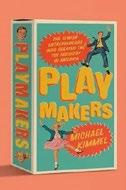
Geppettos to the world.
Jewish men and women have shaped American popular culture with Broadway melodies, Hollywood westerns, advertising slogans—all contribute to the American vernacular sense of self, an ideal of longing for an Eden in the wilderness, a love requited, and a society of justice and acceptance. So too, as this book illuminates, Jewish entrepreneurs gave birth to our favorite toys. Kimmel, a
scholar and great-grandnephew of the founder of the Ideal Toy Corporation, writes, “First-generation Jewish immigrants…remade America—and in particular, American childhood—not in their own image but in the image of what they wanted them to be.” Morris Michtom brought together scraps of cloth, sawdust, and buttons to create the Teddy Bear—like some urban God shaping his Adam from the dust. Louis Marx, dubbed “America’s toy king,” made a fortune in model trains and became one of the first advertisers on the Mickey Mouse Club television show. Ruth and Elliot Handler founded Mattel. Hasbro, Ideal, and Kenner all had Jewish founders. The core of this book is a social history of American childhood told through marketed commodities. It argues that the escape from pogrom and shtetl provincialism in the early 20th century uniquely constellated the desires of these new Americans to make the world their own. Like the émigré musicians who gave us the soundtrack to the Old West, and like Irving Berlin, who gave us “White Christmas,” these toymakers and their families gave us memories and ideals. Barbie, that icon of blond beauty, “began in a Jewish immigrant family.” More than a toy, she has become “a trope, a symbol.” Children aspire through their toys, and they still play with the creations of immigrant aspirants wanting that ideal life.
An enlightening social history of how Jewish family businesses created America’s most iconic playthings.

Lewin, Katie da Cunha | Princeton Univ. (256 pp.) | $26.95 | February 17, 2026 9780691283838
Where inspiration happens. Fascinated by the places where writers create, writer and lecturer Lewin melds memoir and literary history in her search for writers’ rooms, reporting on visits—in person and online—to spaces that she hopes will reveal “the emergence of the writer’s ideas.” House museums often disappoint, appearing “conspicuously clean” in contrast to the messiness of the writing process. At the Freud Museum in London, Freud’s desk “feels much more like a shrine to the writer” than a workspace. The Keats House, too, fails to convey the poet’s spirit, partly because Keats lived there only two years, and the space was embellished with items he never used.
Virginia Woolf’s writing lodge at Monk’s House seems far too curated to evoke Woolf’s presence. Drawing on writers depicted in movies and novels, and reflecting on her own quest to find a spot conducive to writing, Lewin discovers that besides designated rooms, writing often takes place in cafes— where one can feel private in public—and in libraries. For a while, the British Library became a treasured writing place for Lewin; after she had a child, she grew to recognize the ways that writing spaces were affected by the needs of others—in her case, a growing toddler—which meant that a place for creativity was shared with family members. Sometimes, this shared space proves an inspiration: a bustling kitchen table can be a “locus of invention.”
Among the many writers Lewin considers are Honoré de Balzac, Emily Dickinson, Charles Dickens, Thomas Carlyle, the Brontës, Mark Twain, Lucille Clifton, Jane Austen, Victor Hugo, Derek Walcott, Roald Dahl,
James Baldwin, and Joan Didion. Illustrations depict Woolf’s writing lodge and Didion, photographed while being filmed and interviewed in her New York apartment. A modest probing into the sources of creativity.
Lowenthal, Michael | Mad Creek/Ohio State Univ. Press (288 pp.) | $24.95 paper February 9, 2026 | 9780814259665
A reminder that orientation, in every sense, is less about where we land than how we move. In this quiet and elegant collection, novelist and short story writer Lowenthal uses the essay as a means of excavation, uncovering the tensions between his queer and Jewish identities and the desire to belong fully to both. The opening piece, “Out of Nowhere,” sets the tone: It’s a deeply moving examination of family silence, the Holocaust’s long reach, and the burden of inherited stories. When Lowenthal learns of an uncle who perished in Bergen-Belsen, he sets out to trace how the pull of history and desire have both defined and divided his sense of self. In “Ligature,” he recalls the confusions of Dartmouth in the 1980s, when being openly gay meant social exile. A summer spent with an Amish family—whose children experience rumspringa, their brief taste of secular life—becomes his own model for authenticity. “Be more honest, I thought. Be bolder. Be myself,” he writes, a line that captures the book’s ethos. In an essay on Sun Ra, with whom he plays trumpet during a college residency, Lowenthal finds a kindred spirit in the cosmic jazz musician who taught him that fitting in isn’t the point: “Change the space around you.” Throughout, Lowenthal writes with the precision of a novelist and the candor of a confessor. His mother’s unexpected turn from judgment to activist (she joins Parents
and Friends of Lesbians and Gays) illuminates the collection’s many grace notes; his reflections on faith, art, and identity give it heft. By its close, this collection has become not simply a chronicle of one man’s search for belonging, but an act of moral and emotional cartography.
A lucid, searching meditation on belonging and self-invention.
Lucci, Susan with Laura Morton Blackstone (196 pp.) | $29.99
February 3, 2026 | 9798874868284
Daytime television’s most recognizable actress digs deeper in this second memoir. Her careerdefining, four decades–long stint on the daytime soap All My Children as the villainous Erica Kane has made Lucci a recognizable household name in daytime television circles. In this sophomore effort, comprised of a vivid and engaging collection of anecdotes and adventures, the actress reveals more intimate details of her struggles as well as her personal life and professional career. From the time she began performing in high school stage musicals, Lucci admits to always wanting to be onstage. Working through chronic shyness, her selfmotivation and spirit drove her to pursue an acting career despite the many disappointments, callous dismissals, and various roadblocks that stood in her way. She expresses an open admiration for her parents, fellow performers who mentored her up the Hollywood ladder, and Muhammad Ali, who “owned his excellence”, as models of inspiration. Other sections reflect on her time as a working mother, the tricks to “growing old gracefully,” and how her faith, quest for joy, love of reading, and zest for life continue to sustain her. In an effort to create a more balanced memoir, Lucci also opens up to candidly share several sad and unsavory moments like being
told she should probably abandon a career in television because she was too “ethnic looking”; the devastating day All My Children was canceled; the near loss of her son, Andreas, as an infant; and the feeling, upon the death of her husband, Helmut, in 2022, that the light within her “had gone out forever.” However crushing these events in her life were, they were counterbalanced with uplifting triumphs and only served as motivators to continue pushing forward to seek out the success and happiness she knew she deserved. With verve and perseverance, Lucci gleefully boasts about her starring roles in off-Broadway hits and concurrent film roles, yet, in her late 70s, she remains deeply grateful and humble and shows no signs of stopping anytime soon.
Lucci’s legion of fans will adore this gracious nod to her career longevity and positivity.
MacDonald, Eve | Norton (368 pp.) | $39.99 January 13, 2026 | 9781324123279
Early Rome’s bitter rival. MacDonald, senior lecturer at Cardiff University and author of Hannibal: A Hellenistic Life, has not chosen a generously endowed historical subject. Rome defeated Carthage in three wars, razed its capital in 146 B.C.E., and then wrote all the histories. Scholars agree that while the Roman cities and empire dominated the western Mediterranean, the original Carthaginians were Phoenician-speaking people from the east, related to the Canaanites of the Hebrew Bible. Great seafarers and traders, they sailed widely, beginning in the first millennium B.C.E., settling and establishing cities throughout the Mediterranean. By 300 B.C.E., they dominated a patchwork of colonies, vassals, and satellite states across North Africa, Iberia, and the Mediterranean islands. This was the period when Rome completed its conquest of the Italian
peninsula and cast an eye on Sicily, then partly occupied by Carthage. MacDonald admits the difficulties of specializing in Carthage because Rome demolished it so thoroughly that essentially no documents survive. The author pays close attention to archeology, which reveals clues to Carthaginian culture, but mostly relies on surviving accounts from GrecoRoman writers whose readership had no doubt that Carthage deserved its fate. Combined with the fact that the ancients admired warriors more than we do, histories of Carthage mostly describe preparations for war, war, and preparations for the next war. The result is that this is largely an account of the Punic Wars. In the first, Rome expelled Carthage from Sicily. The second describes Hannibal’s brilliant descent on Italy from the Alps, his dazzling victories, and his ultimate defeat. In the third, a nasty business, Rome determined to obliterate its rival. Few readers will complain: A serious scholar, the author has no problem admitting that many ancient historical controversies will never be resolved, and she writes well. An intelligent study of a shadowy empire.
Mars, Rogier | Princeton Univ. (240 pp.) $24.95 | March 10, 2026 | 9780691238920
Food for thought.
Tracing the origins of Earth’s inhabitants from the first primordial clumps of cells to complex societies of vertebrates, Mars, a professor of neuroscience at Oxford, confronts a research roadblock: Bones fossilize, but soft brain tissues leave no trace. Using comparative anatomy and advanced imaging techniques, he uncovers this hidden history, showing how the brains of modern organisms—their size, structure, and activity—point to their evolutionary trajectories. Mars notes that Earth’s catastrophic mass extinction events and environmental upheavals opened space
for new brain variations. The book shines when Mars links abstract science to vivid examples—bonobos’ capacity for empathy, London taxi drivers’ spatial awareness—revealing how experiences shape the brain. His discussion of brain size and social complexity is particularly sharp, connecting the evolution of social intelligence to the advantages of cooperation as a survival strategy. The author’s research lab concentrates on developing quantitative tools to identify and compare brain structures and organization of function across species, and the book’s focus sometimes leans toward evolutionary determinism, downplaying the influence of culture and environment. Yet the broad synthesis of theories of change over time is engaging and persuasive. Mars ultimately presents an optimistic view of the power of adaptation: “Through slow modification by slow modification, different species ended up with different brains that produced a behavioral repertoire that allowed them to deal with the challenges they faced when finding food and staying alive.” Illustrations and references make the neuroscience accessible without diluting its depth. This is an absorbing, intelligently crafted look at how evolution built the brain.
A brisk, richly rewarding tour through evolution—showing how eating to survive ultimately taught the brain to think.
Matthews, Chris | Simon & Schuster (176 pp.)
$26 | November 11, 2025 | 9781668010938
A reverential homage to Robert F. Kennedy on his 100th birthday from the Hardball host and longtime political commentator.
Matthews revisits themes from his earlier biography, Bobby Kennedy: Raging Spirit (2017), condensing them into 10 brief “lessons” meant to show why RFK’s character and
ideals remain relevant in a fractured America. The narrative, barely 90 pages, padded with generous white space and followed by a lengthy appendix of Kennedy’s speeches, reads like a quick-tomarket companion piece rather than a substantive reassessment. Still, Matthews’ admiration is heartfelt and sincere as he recounts Kennedy’s tenure as attorney general (1961-1964), his belated awakening to civil rights following the brutal attack on his aide, John Seigenthaler, while assisting the Freedom Riders, his pivotal role in the Cuban Missile Crisis, and his tragically brief but galvanizing run for the 1968 Democratic presidential nomination. Matthews frames these episodes within a polemic against today’s political dysfunction, and his outrage is unmistakable. He castigates Donald Trump’s authoritarian impulses and the Democrats’ weakness in response, drawing explicit parallels between RFK’s moral courage and today’s lack of leadership. Yet notably, Matthews avoids any mention of Kennedy’s son, Robert F. Kennedy Jr., now a prominent and highly controversial figure in the Trump administration—a telling omission in a book otherwise steeped in present-day commentary. Matthews’ reflections are organized around thematic chapters. “Heal the Divide,” “Admit Your Mistakes,” “Uphold Human Rights,” and others use anecdotes and quotations from RFK’s contemporaries—journalists, aides, and historians—that add color but seldom much depth; admiration repeatedly eclipses analysis. Still, his closing reflection captures something of the mystique that endures: “It is fascinating to me, as an American and as a historian, how Bobby Kennedy’s memory has survived these many years. We see him as a strong leader but also as a vulnerable human being.”
A commemorative volume that honors RFK’s moral legacy but feels slight in both scope and depth.

McDonough, Frank | Apollo/Bloomsbury (416 pp.) | $45 | January 27, 2026 9781035912483

The painful details. Third Reich scholar McDonough, author of The Gestapo: The Myth and Reality of Hitler’s Secret Police, completes his four-volume history of Germany from 1918 to 1945 with this year-by-year narrative of the Holocaust. When the Nazis took power in 1933, 525,000 native-born Jews lived in Germany, numbering 0.76% of the population. Most Germans had little contact with Jews and didn’t participate in the nationwide wave of assault, vandalism, and humiliation by Nazi activists that followed. International outrage over the attacks was dismissed by Nazi officials who maintained that Jews controlled the media. Violence and anti-Jewish laws began immediately but became genocidal only after war began. Ninetyfive percent of all Jewish murders occurred after Germany’s 1941 invasion of the Soviet Union. Many were murdered in extermination camps, of course, but many also died of starvation, disease, or overwork or were shot in face-to-face massacres. McDonough excels in research, and he delivers a steady stream of facts on anti-Jewish legislation, increasingly violent persecution, planning, construction, and operation of major camps, biographies of staff and victims, and consequences, if any. Some high- and low-level Nazis involved in the Holocaust were punished after the war; most weren’t. About 80% of Jews under Nazi control were murdered. Most Germans looked the other way. Most citizens of the democracies disapproved of Nazi mistreatment but refused to help. Although happy to welcome Albert Einstein and other celebrities, most Americans opposed accepting refugees who were fleeing Nazism. Allied leaders learned of the mass murders in 1942, but none took action. Although “Nazi”
When “resurrectionists” (body snatchers) plied their trade in colonial America.
THE DOCTORS’ RIOT OF 1788
remains a reviled word everywhere, the 21st century has seen an embrace of leaders who owe their success to the belief that outsiders are “poisoning” their nations. McDonough reminds readers that Hitler’s policy during the 1930s was not to murder Jews but to deport them. Ghastly history, well told.
McPhee, Andy | Prometheus/ Globe Pequot (248 pp.) | $29.95 January 6, 2026 | 9781493088058
Science and religious sentiment clash at the dawn of the Republic. Before formaldehyde and refrigeration, writes author and retired nurse McPhee, anatomists took extraordinary measures to study the body’s inner workings. In England and colonial America, medical schools were given the bodies of executed convicts or the recent dead from almshouses. Even then, because of the speed at which bodies decay, demand for study subjects outpaced supply. Thus arose the shadowy profession of the “resurrectionist,” better known as the body snatcher, who traded in expertly procured bodies from fresh graves. In New York City in April 1788, as revolutionists Alexander Hamilton and John Jay were publishing the Federalist Papers in local broadsheets to argue for the yet-to-be-ratified Constitution, a young boy playing with friends near New York Hospital noticed a severed arm hanging from a window of an anatomy class and was told by one snotty student, “This is your mother’s arm! I just dug it
up!” Turns out the boy’s mother really had just died, and as news of the incident spread, an outraged mob formed to teach these students a different lesson. Three days of rioting ensued, during which Hamilton and Jay, along with other dignitaries and luminaries of the Revolution, tried to calm the crowd and suffered injuries for their troubles. Shots were fired, and a rioter killed. With an enchanting vividness, McPhee tells the story of New York in its colonial days, when familiar institutions were then new and the people whom city streets and landmarks are named for were still walking the earth. The author places his account in the medical, cultural, and racial context of the time. Although interesting, a consideration of contemporary practices, including unsavory for-profit organ markets, is, alas, anticlimactic. A brief, fast-paced history, loaded with surprising detail.
Technology and Barbarism: Or: How Billionaires Will Save Us From the End of
Nieva, Michel | Trans. by Rahul Bery & Daniel Hahn | Astra House (240 pp.) | $20 paper | February 24, 2026 | 9781662603181
A portentous collection of essays about big tech and literature in the Anthropocene. Built on the idea that “technology is the border between civilization and barbarism,” these serpentine essays explore advancements in science and medicine and highlight the cultural casualties lost in society’s race toward the future. Sarcastically titled “Capitalist
Science Fiction: How Billionaires Will Save the World,” the first part of the book showcases the influence of science fiction on the likes of Elon Musk and Sam Altman but highlights how “contaminating” their work is: “This disassociation between the dazzling ecological technologies that will save humanity and the contaminating and highly precarious conditions of their production is the pasture that feeds the colonial discourse of capitalist science fiction.” Nieva (Dengue Boy, 2025) notes that a Tesla’s lithium battery depends on the “consumption of 2.2 million liters of drinking water for each ton of mineral, which happens to be extracted from desert areas with water deficits,” such as Argentina, where the author was born. Nieva finds many paths back to Argentina throughout the collection, to the extent that readers might question whether this book is more interested in technological developments or Argentina’s storied history. He writes, “Argentinian literature is born from, and imbued with, this problematic crux…their exact point of encounter, of friction and crossing.”
Other essays repeatedly invoke Domingo Faustino Sarmiento’s Facundo and the stories of Jorge Luis Borges. Nieva revels in placing seemingly incongruent outlooks in proximity to illuminate their hidden connections. Observing Silicon Valley through the lens of vintage science fiction exposes the rottenness beneath its futuristic ambitions. One essay discusses virology and expands to explore Argentina’s borders and wars. Elsewhere, a Stanislaw Lem text leads to a critical take on ChatGPT. The apocalypse looms in these energetic texts, but their outlook often lands more cloudy than stormy. Nieva attempts to explore so much, but in doing so leaves his ideas lacking cohesion. An ominous, occasionally blurry vision.

Oppenheimer, Mark | Putnam (480 pp.) $35 | March 10, 2026 | 9780593714447
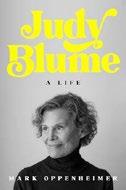
Ormerod, Peter | Bloomsbury
Continuum (256 pp.) | $28
For more on AI, visit Kirkus online.
Yes, she’s there. From Are You There, God? It’s Me, Margaret (1970) through a string of novels featuring both children and adolescent characters, Judy Blume has made personal development and social conflict the core of her work. This biography by Oppenheimer—a scholar and author, most recently of Squirrel Hill: The Tree of Life Synagogue Shooting and the Soul of a Neighborhood —traces Blume’s literary development, from her childhood in a secular Jewish home in New Jersey, through marriages, children, divorce, and remarriage, to her aspirations to be the next Dr. Seuss. The book paints a picture of a diligent, driven writer seeking a unique voice. We get a year-by-year (at times, almost day-by-day) chronicle of Blume’s balancing of home life and motherhood with imaginative writing. We get insights into the publishing process, too, through the correspondence she had with editors and publishers and through the many reviews of her books. Blume changed young people’s literature. Oppenheimer writes, “As libraries, booksellers, and classrooms accepted the new realism of the YA literature—so good for generating bookstore profits, so successful at getting children to read in school and check books out of the library—they were primed to welcome the same kind of realism for even younger readers.” Blume’s books often met with criticism from parents and librarians who wanted safer stuff. But we see little of this conflict in this relentlessly upbeat biography. Blume emerges as a hard-working, ambitious, successful writer. Each book was welcomed by her readers. “She was shooting arrows to their hearts, again and again,” Oppenheimer writes. Her books taught generations to love to read. More importantly, they taught generations of young people to love themselves. A buoyant biography of a writer who redefined young people’s literature.
January 13, 2026 | 9781399422826

A critic attempts to parse the cryptic rock star’s spiritual seeking.
David Bowie (1947-2016) wasn’t an overtly religious musician, but he spent much of his life pondering metaphysical matters. As Guardian journalist Ormerod notes, Bowie read widely about Christian, Jewish, and Buddhist traditions, studied up on occult figures like Aleister Crowley, and occasionally worked matters of faith into his performances. (Most famously, at a 1992 tribute to Queen frontman Freddie Mercury, he dropped to his knees and recited the Lord’s Prayer.) Bowie would occasionally make explicit religious references in his songs—an early song, “Silly Boy Blue,” was inspired by his investigations into Buddhism, and his late musical and song “Lazarus” had clear Christian overtones. But more often a listener has to do a lot of reading between the lines, a task at which Ormerod is only intermittently convincing. It’s interesting to know, for instance, how Bowie’s song “Station to Station” was informed by the Stations of the Cross and how the musician worked his Buddhist interests into a soundtrack to the TV adaptation of Hanif Kureishi’s novel The Buddha of Suburbia. But often, Ormerod overreaches. There’s nothing substantively religious about Bowie playing “rock god” during his Ziggy Stardust era, and Friedrich Nietzsche’s writings about dancing don’t make “Let’s Dance” more than a featherlight pop tune. No question, religion mattered to Bowie, and the book is filled with quotes from the man about his interests and inspirations. But it is only intermittently persuasive that “when you look at Bowie’s career in this way, it becomes illuminated anew”; it’s more correct to say that some of his songs gain a few more intriguing opacities, which might
have been better asserted in a substantive essay rather than in a book.
An ambitious but only semi-successful effort to find God in the lyric sheet.
Paul, Caroline | Bloomsbury (256 pp.) $27.99 | February 24, 2026 | 9781639734993
Open skies.
At the age of 58, with her marriage ending, Paul, a former firefighter and author, became obsessed with flying a gyrocopter, which she describes as “a large rotor attached like a wide-brimmed hat to what looks like a go-kart.” She needs to get a special certification to fly the contraption, and she can fly only with a certain visibility and when she can maintain a prescribed distance from cloud cover. Although her flights are circumscribed, flying fulfills “that most human of needs, to feel a little in control, to step off the foundation that is crumbling under me onto something firmer.” Paul discusses the physics of flight; the difficulties that make takeoff and landing precarious; navigation strategies; and techniques pilots use for not getting lost, such as dead reckoning, pilotage, and, helpfully, GPS. Climate change, she reports, has affected piloting: Air turbulence has increased by 55 percent since 1979 and is predicted to triple by the end of the century. In response to birds’ changing habitats, scientists, conservationists, nature preserve volunteers, and pilots have established Operation Migration, which uses small aircraft to reintroduce endangered birds to migration patterns that they have lost. The author pays homage to women’s brave forays into the skies, singling out Black pilot Bessie Coleman, a contemporary of Amelia Earhart, overlooked by aviation historians. Though the memoir is threaded with a sense of loss, Paul has a light touch in contriving metaphors from flying. After love’s “heady feeling of promise” that feels much like a takeoff, she knows that for her
and her wife, it’s time to land: “to bring the plane toward a gentle touchdown on a runway we have been circling, circling, for too long now.”
An engaging memoir of exhilaration and sadness.
Kirkus Star
Phillips, Jayne Anne | Knopf (208 pp.) $28 | April 21, 2026 | 9780593804933
A collection of personal essays by the much-awarded fiction writer. While many of the 22 essays included in this collection contain memoir material, others report on topics such as the Hatfield-McCoy feud or a shooting at a church in Kentucky; there are moving portraits of writers Stephen Crane and Breece D’J Pancake and a lovely tribute to Barbara Stanwyck and The Big Valley. Phillips’ prose is unflagging in its beauty and rhythm, and the memoir-leaning pieces have a special glow, infused with her profound nostalgia for her Appalachian childhood. From a dreamy, seductive recollection of the beauty salon in her small West Virginia town: “Quiet now, they lay back in their chairs, heads swallowed up by the deep, slotted sinks. I noticed how their legs fell slightly apart. Their hands relaxed. Uniformed girls massaged their scalps with careless efficiency, and the women closed their eyes….Women went to the beauty shop to be with other women, to engage in private rituals that supposedly had to do with men, yet the men were wholly absent.” Her mother is a strong presence in the book; the topic of her death is the ultimate topic of the final essay, “Premature Burial.” An essay devoted to refuting Kenneth Tynan’s assertion that writers hate to write contains an encomium to the novelist’s labor that begins like this: “We might compare getting started on a story to starting a relationship (oh, that first time together, lying down skin to skin!), or beginning a novel to committing to a
marriage. Each long-term liaison is laden with its own miracles and traps: There is the young marriage, the second marriage, the late marriage in which indolent time does not exist and all is revealed at the first touch.” Buy the book to read the rest of this paragraph alone. But know that it grew out of many previously published pieces and is more enjoyable if you don’t go into it expecting the immersive flow of a memoir. West Virginia has no more eloquent and grateful daughter. Boy, can she write.
Pinkham, Sophie | Norton (352 pp.) | $35 January 20, 2026 | 9781324036685
Telling the story of an empire— and beyond— by looking at its trees.
Pinkham, a Cornell University scholar, writes that trees in Russia, which make up roughly one-fifth of the world’s forests, lie at the heart of Russian culture—“a symbol of what is good and what must be preserved, the last bulwark against annihilation.” Most Russian histories begin with medieval Kiev, the first Slavic state, and move north to Muscovy before expanding east into Asia. This book begins with Siberia’s vast woodlands and the people who inhabited them thousands of years earlier. Siberia functions in the Russian imagination “as a paradoxical place of liberty and exile, possibility and punishment: a land of bandits, rebels, recluses, and adventurers.” Recounting its conquest from the 16th to the 18th century, scholars rarely ignore the parallel with America’s manifest destiny, with its brutal subjugation of Indigenous people and seizure of their land, culminating in massive 19th-century deforestation. As Russian society grew more turbulent and movements for both reform and revolution gathered momentum, admiration of rural life grew, led by their greatest writers: Tolstoy,

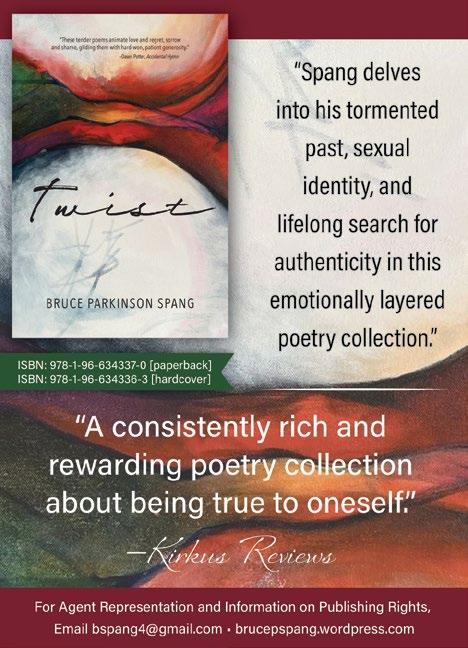

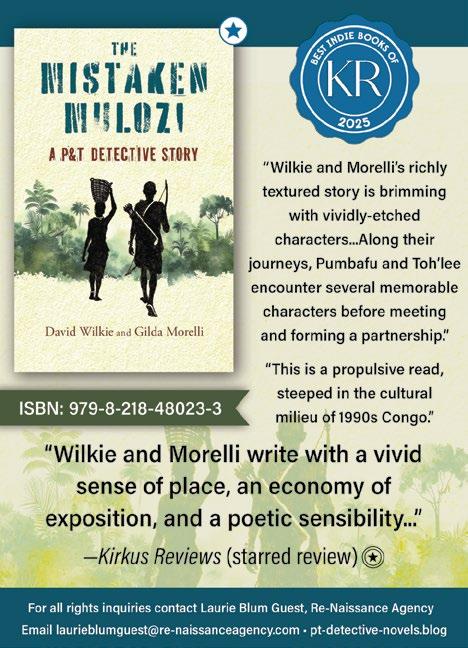


EDITORS’ PICKS:
Truth Is by Hannah V. Sawyerr (Amulet/Abrams)
This Is Orange: A Field Trip Through Color by Rachel Poliquin, illus. by Julie Morstad (Candlewick)
Letter From Japan by Marie Kondo with Marie Iida (Crown)
THANKS TO OUR SPONSORS:
Mt. Forgotten by Kevin Abrams
The Ghost Writer by Brian Warner
Stormbringer by G.R. Boden
Fully Booked is produced by Cabel Adkins Audio and Megan Labrise.

Joyce Vance issues a clarion call to her fellow Americans: Help save our democracy. BY MEGAN LABRISE
On this episode of Fully Booked , Joyce Vance joins us to discuss Giving Up Is Unforgivable: A Manual for Keeping a Democracy “A look at the wreckage wrought thus far by the present administration, and what can be done about it,” Kirkus writes in a review of this “hopeful manifesto for a renewed democracy.”

Vance served as the U.S. attorney for the Northern District of Alabama from 2009 to 2017. She is a distinguished professor of the practice of law at the University of Alabama School of Law, a legal analyst for MSNBC, the author of the popular Substack Civil Discourse , and the co-host of two podcasts, #SistersInLaw and Cafe’s Insider. She lives in Birmingham, Alabama, with her husband, Bob, a retired judge, and a menagerie of children, chickens, cats, and dogs.
Here’s a bit more from our review of Giving Up Is Unforgivable : “Former U.S. attorney Vance—she resigned the day before President Trump’s first inauguration—opens with the realization that, in the first salvos of his second term, she had been focusing on all that was wrong and not with all that was right: ‘The rule of law was being bent, but it was not broken.’ She then exhorts readers, ‘Don’t be the frog,’ the one in the pot that’s being slowly heated and will thus cook to death without complaint. The metaphor is useful to the extent that, as she notes, that’s how dictators come to power, in ‘a slow slide toward tyranny, easily dismissed for far too long by far too much of the populace’.… Vance, it should be said, is no Pollyanna.…[She] offers useful pointers on how to avoid the pot

a Democracy Vance, Joyce Dutton | 224 pp. | $28 October 21, 2025 | 9798217178117
and exercise one’s constitutional rights, most important of them voting, reminding us—optimistically—that ‘the way to challenge the bully is at the ballot box.’”
Vance and I discuss our Constitutional rights, the Civil Rights movement and the power of collective action, voter ID laws, the importance of ongoing civic education, creative ways to help defend democracy, and much more.
Then editors Laura Simeon, Mahnaz Dar, and John McMurtrie share their top picks in books for the week.
The TikTokker will write about his experience of learning to read as an adult.
A book by Oliver James, who used his popular TikTok account to talk about his journey learning to read in his 30s, is coming in 2026.
Union Square & Co. will publish James’ Unread: A Memoir of Learning (and Loving) To Read on TikTok next winter, the publisher said in a news release. It calls the book “a moving reminder to all of us that words and stories have

power, and that, no matter our past, it’s never too late to grow.”
James, a personal trainer in Costa Mesa, California, struggled with learning disabilities as a child and graduated from high school despite being functionally illiterate. At 32, he decided he would learn how to read, giving himself an ambitious challenge and chronicling his journey on TikTok, where he currently has nearly 350K followers.
In a TikTok video posted in late 2023, he updated followers on his goal. “In the beginning of the year, I set off to read 100 books. And finally, thanks to all of you, we accomplished our goal,” he said, holding up a copy of Louis Sachar’s novel Holes
“Despite the many roadblocks that have been in his way,” Union Square says, “Oliver has committed himself to bettering his life through books, and his memoir is a reminder to all of us that words and stories have the power to change our lives.”
Unread is slated for publication on February 24, 2026.—M.S.
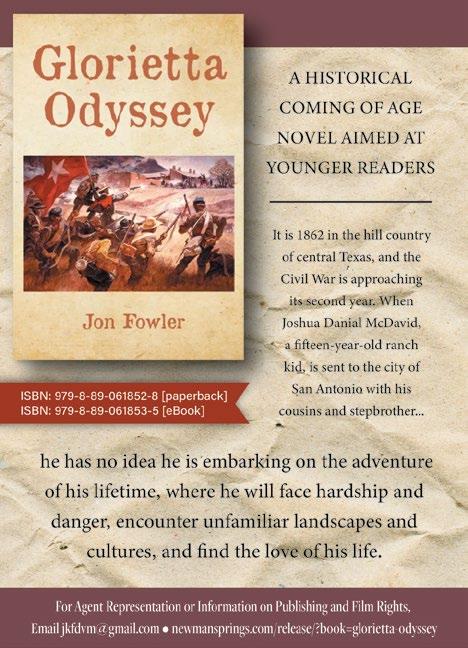
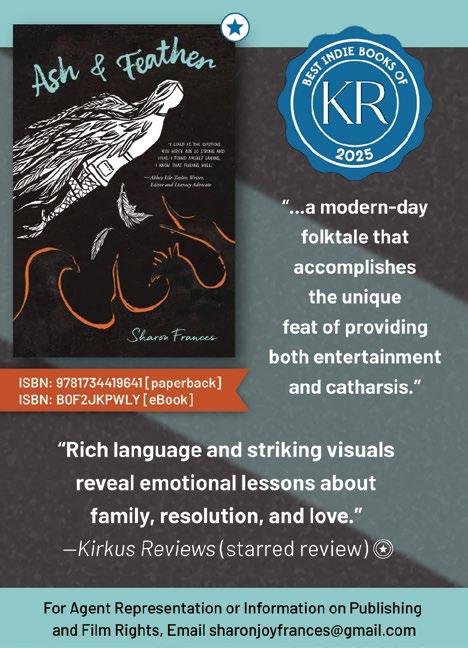

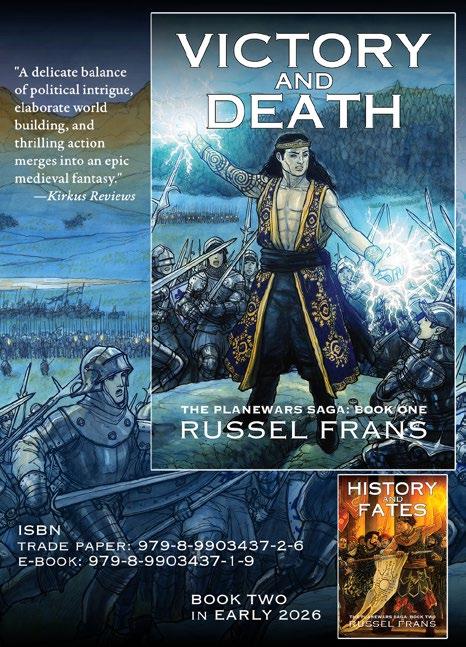

Annette Bening and George Clooney will star in the adaptation of Amy Bloom’s memoir.
Amy Bloom’s memoir, In Love, will be adapted into a film starring Annette Bening and George Clooney, Deadline reports. Bloom’s book, published in 2022 by Random House, is an account of her husband’s decision to end his life through physicianassisted death after being diagnosed with Alzheimer’s disease. In a starred review, a critic for Kirkus wrote of the memoir, “You will never forget this book, and if you do, let’s hope someone close to you remembers.”

Bening, whose films include Being Julia , The Kids Are All Right, and Nyad, is attached to star, as is Clooney, known for his roles in Syriana , Michael Clayton, and Gravity. The film will be directed by Paul Weitz ( Bel Canto, Fatherhood ) and written by Weitz and Bloom.
“Amy’s memoir is a contemporary fable of love, wit and existential stakes,” Weitz told Deadline. “I can’t wait to do it justice with this amazing cast.”
Bloom said, “I have been so lucky to work with [producers] Eddie [Vaisman] and Julie [Lebedev], so lucky to write with Paul and so grateful that this story of lasting love gets to be told on the screen, in Paul’s gifted hands, by two of the greatest actors in America.”—M.S.
Turgenev, and Chekhov. Almost overnight, the Bolsheviks repudiated this vision, and more than half the book recounts events after 1917 as Soviet leaders and their successors vowed to make Russia great again. Their new exploitation of the forest took place as industrialists logged huge territories to fulfill five-year plans with little thought of replanting. “The idea that the forest could be irretrievably damaged was mocked as a scary fairy tale,” writes Pinkham. “Forest management was to be replaced by forest exploitation.” The author expresses little regret at the Soviet collapse, which revived Russia’s love of its wilderness— but only as an element in a macho explosion of nationalism.
An inspired account that succeeds in seeing a nation through its forests.
Preszler, Trent | Algonquin (224 pp.) | $29 December 2, 2025 | 9781643756707
Their central role in American life and history.
Preszler, professor of practice at Cornell University and director of the Henry David Thoreau Foundation’s Planetary Solutions Initiative, opens with a paean to Christmas trees. Introduced by 19th-century German immigrants, they’ve become a symbol of peace and goodwill for the religious and unreligious alike. They’re also disappearing. Since realistic plastic models appeared in the 1980s, 75% of U.S. households have switched. Having absorbed this news, readers will proceed to learn that the first genuine bonanza discovered by 17th-century Europeans in North America was not gold or freedom but trees. Most will be surprised to read that pilgrim voyages to Massachusetts were financed by British timber merchants who expected to be paid back in their product. England’s forests had been logged past recovery, and the Royal Navy hated importing its masts from the Baltic. Of the miseries endured
by these pious pioneers, cutting and hauling trees remained prominent. In fact, Preszler maintains that lumber was the nation’s largest industry for several centuries. “Timber framed the nation, both figuratively and literally, bankrolling America’s rapid expansion at devastating human cost.” There follows a painful account of the destruction of Eastern forests for construction as well as farming, followed by the massacre of Western pines and firs and 95% of sequoias. The author ends with another chapter on Christmas trees—the operation of a tree farm, a grueling hands-on enterprise to ensure production, after seven to 10 years, of a beautiful, fragrant, symmetrical product that keeps its needles until the New Year. Profits are slim, and most go to the retailer. An irony is that holiday evergreens, today mostly an agricultural product no less than apples, are portrayed as environmentally irresponsible, although artificial trees end up in landfills with their plastic spreading across continents and oceans and into our bodies. Good history and science, if short on optimism.
Reed, Trevor with Jim DeFelice Morrow/HarperCollins (368 pp.) | $30 January 27, 2026 | 9780063428546

Fighting for a cause—and for payback.
Born in Texas in 1991, Reed grew up in California. Joining the Marines after high school, he was chosen to be one of the guards at Camp David and was photographed with President Obama. After the Marines, he worked for a company providing security to State Department personnel overseas. On an online dating site, he met Lina, a Russian woman. They became close; he decided to join her in Moscow and learn the
language. One evening, with a group of Lina’s friends, he became drunk and aggressive and was taken to a police station to sober up. He was charged with assaulting the arresting officers. Remanded to custody awaiting trial—at which he was found guilty despite no proof of the crime—Reed began his experience with the Russian penal system. With the help of co-author DeFelice, he describes his ordeal in direct, vivid prose.
“Two of the twenty or so guards at the prison were decent, one probably because he was being bribed,” he writes. “The rest were bastards to the nth degree, going out of their way to treat inmates like dirt. The system itself breeds contempt and sadistic behavior.” Reed found that the Russian mafya—career criminals—were the key to surviving prison life, providing contraband, including cell phones and a communications network that kept him in touch with Lina and his parents. Reed refused to cooperate with his jailers and went on hunger strikes. Meanwhile, his parents lobbied the government, and after three years, he was exchanged for a Russian arms dealer. Back home in the U.S., he decided to seek his revenge: He’d go to Ukraine to join the fight against Russia. “The Russians had stolen nearly three years of my life,” he writes. “I was going to make them pay.” What ensues is his quest to do the right thing, no matter the cost.
A powerful memoir, especially for its close-up portrait of life in a gulag.
Ritchie, Hannah | MIT Press (296 pp.)
$27.95 | March 3, 2026 | 9780262052740
It’s never “too late” to fight climate change, says a data scientist. Media coverage and political rhetoric about climate change is often confusing and contradictory. The solution, says Ritchie, is to examine the numbers. She does just that in her
second book (after Not the End of the World ). Climate change is a “massive but solvable problem,” she writes, and we already have many of the tools needed to solve it. Perfect climate solutions don’t exist, and postponing action while searching for them wastes time when workable answers do exist. “We have good—even great—ones, but many have some environmental or social cost that we need to deal with,” she writes. Every generation has solved problems while creating new ones, the author says, and no energy source is completely pollutionor impact-free. Addressing 50 commonly asked questions about climate change, her book provides actions that individuals and countries can put into practice. The path to global climate change and energy sustainability is “a journey with no finish line; humanity will never be problem free,” she writes. But the relatively small and solvable problems should not block the path to moving forward: “We need to deploy these technologies, invest money, and form policies while we work on making them better.” Individuals, for one, can eat less meat and more plants, use public transportation when possible, and drive electric cars; business and industry can replace gas and oil burners with heat pumps in office buildings and factories; and governments can support the use of renewables, revive nuclear power, set standards for decarbonizing cement and steel, and provide incentives for building electric vehicle charging stations. “We need to rethink and rebuild almost everything around us,” Ritchie writes. “This transition is not a sacrifice; it’s an opportunity to build a better, fairer, and more sustainable world: one that works for those who are alive today and is compassionate for those who come after us.”
A hopeful guide to solving climate change offers some steps we can all take now.
Roberts, Dorothy | One Signal/Atria (320 pp.) $30 | February 10, 2026 | 9781668068380
A scholar turns her deceased father’s research on interracial marriage into the book he never got to write.
After her father died, Roberts—a University of Pennsylvania professor and author—received 25 boxes containing his papers. Inside, she found transcripts of interviews that her father conducted with interracial couples over three decades, as well as multiple rejections of his attempts to turn his work into a book. While she remembers that her “father’s book dominated our family life” in the 1960s, until she opened the boxes full of his possessions, she hadn’t realized that he actually started the work in the 1930s. This is shocking not only because Roberts underestimated the profundity of her father’s work, but also because his interest in interracial marriage—he was white—predated his own interracial marriage to Roberts’ Black Jamaican mother. Roberts had always assumed that her parents’ marriage prompted her father’s research interest. She writes, “As a child, I saw my father’s research as a reflection of the love my parents had for each other….This new timeline suggests that an academic interest in mixed marriages might have prompted my father to pursue one himself.” Consequently, Roberts spends the book simultaneously analyzing her father’s fascinating interviews—some of which her mother helped collect—and interrogating her own ideas about her family history. The result is a rich and riveting blend of memoir
“We need to rethink and rebuild almost everything around us.”
and research that tackles issues ranging from redlining to intersectional racism and sexism to personal musings about discovering her mother’s scholarly voice and her father’s commitment to building community. What results is an insightful and fundamentally joyful narrative about uncovering a family’s hidden past. A history of interracial marriage that perfectly balances scholarship and memoir.
Roussel, Christine | Brandeis Univ. (222 pp.) $35 | April 23, 2026 | 9781684583041
The story behind an iconic American photograph. Rockefeller Center archivist Roussel is well situated to explore the famous photograph “Lunch on a Beam” as a work of art, a work of commerce, and as strategic, impassioned propaganda. On September 20, 1932, a photo was taken of 11 ironworkers on an I-beam smoking, talking, and eating 850 feet above Rockefeller Center, with New York City spread out below. Also known as Lunch Atop a Skyscraper, the photo first ran in the New York Herald Tribune. Roussel feels it is “among the most famous photographs ever made.” The center was designed by a committee of architects and financed by John D. Rockefeller Jr. at 30 Rockefeller Plaza on Sixth Avenue. In the spring of 1930, during the Depression, buildings were purchased and torn down, providing work for thousands. In January 1932 construction of the RCA Building began. When the building had a topping-out ceremony in September 1932, many photos were taken, including the famous choreographed beam photo by, Roussel conjectures, photographer Charlie Ebbets. Rockefeller liked the idea of art and decoration in the center, especially sculptures and murals done by outstanding artists. It would reflect his own social and spiritual values. An exception was a mural by Diego Rivera, featuring Lenin, which was destroyed. The author describes
dangerous jobs undertaken by workers, especially the ironworkers who molded 75,000 tons of structural steel. Some fell to their deaths. Roussell reveals that another photo was taken with the 11 men holding out their hats. She details her extensive research trying to identify the men, including insightful profiles of a number of mostly immigrant, Mohawk, and Kahnawake ironworkers and interviews with relatives who provide enticing information. Sadly, she notes, Black workers are missing from the story because unions did not admit them. A lavishly illustrated book brings a famous photo into sharp historical focus.
Sanders, Bernie | Crown (160 pp.) | $14.99 paper | October 21, 2025 | 9798217089161

Another chapter in a long fight against inequality. Building on his Fighting Oligarchy tour, which this year drew 280,000 people to rallies in red and blue states, Sanders amplifies his enduring campaign for economic fairness. The Vermont senator offers well-timed advice for combating corruption and issues a robust plea for national soul-searching. His argument rests on alarming data on the widening wealth gap’s impact on democracy. Bolstered by a 2010 Supreme Court decision that removed campaign finance limits, “100 billionaire families spent $2.6 billion” on 2024 elections. Sanders focuses on the Trump administration and congressional Republicans, describing their enactment of the “Big Beautiful Bill,” with its $1 trillion in tax breaks for the richest Americans and big social safety net cuts, as the “largest transfer of wealth” in living memory. But as is his custom, he spreads the blame, dinging Democrats for courting wealthy donors while ignoring the “needs and suffering” of the working class. “Trump filled the political vacuum that the Democrats created,” he writes, a resonant diagnosis. Urging readers not to surrender
to despair, Sanders offers numerous legislative proposals. These would empower labor unions, cut the workweek to 32 hours, regulate campaign spending, reduce gerrymandering, and automatically register 18-year-olds to vote. Grassroots supporters can help by running for local office, volunteering with a campaign, and asking educators how to help support public schools. Meanwhile, Sanders asks us “to question the fundamental moral values that underlie” a system that enables “the top 1 percent” to “own more wealth than the bottom 93 percent.” Though his prose sometimes reads like a transcribed speech with built-in applause lines, Sanders’ ideas are specific, clear, and commonsensical. And because it echoes previous statements, his call for collective introspection lands as genuine.
A powerful reiteration of principles— and some fresh ideas—from the longest-serving independent in congressional history.
Smith, Patti | Random House (288 pp.) $30 | November 4, 2025 | 9781101875124
More personal narrative and soul-searching from the prolific musician/poet/ literary intellectual. Readers who fell in love with Just Kids (2010), Smith’s National Book Award–winning memoir of her relationship with Robert Mapplethorpe, but were less taken with follow-ups—featuring a lot of elegant writing about very little—are advised to give her another shot. The question of that grave, seemingly Victorian young woman who materialized on a park bench in New York City in the first pages of Just Kids and where she came from is answered in an engrossing first section covering Smith’s Dickensian childhood in the late 1940s, including tuberculosis, an iceman, a ragman, a glass inkwell at school, and this heartbreaker: “On Christmas Eve after a long day waiting tables, before she boarded the crowded bus home, my mother bought two large
lollipops and two small hand-painted wooden penguins for our stockings, all she could afford. When she got off a strap dangled; someone had cut it and made off with her shoulder bag.” Her romance with and marriage to Fred “Sonic” Smith, a spiritual twin, fellow traveler, and father of her two children, is lovingly evoked, as are her close friendships with William Burroughs, Sam Shepard, Michael Stipe, Allen Ginsberg, and her brother and tour manager, Todd; when Fred and Todd died less than a month apart in 1994, she went into a tailspin. Who else but Fred would ever be able to join her in the game of choosing a Jackson Pollock painting and interpreting it musically as “unfettered cries for the chaos of the world”? A fascinating part of the book deals with Smith’s discovery, after both parents have died, that her sister is only her half-sibling—she digs up the truth with the help of a child she gave up for adoption at age 20, with whom she’s since reunited. The reality of her parentage made a surprising kind of sense, once she knew. Included are numerous black-and-white photographs chronicling the writer’s rich life. Smith’s poetic style and sensibility and her Rimbaudian flights are grounded here in beguiling storytelling.
Solnit, Rebecca | Haymarket Books (176 pp.) $16.95 paper | March 3, 2026 | 9798888904510
A declaration of hope. In her latest book, Solnit surveys the past 60 years of social, scientific, political, and cultural changes that inspire her to feel hopeful for the future. “The rise of Indigenous influence, the shift in scientific understanding, the return to a view of nature as essential and omnipresent,” and the achievements of human rights movements all have transformed the world into which Solnit
was born in 1961. Despite a world “rife with white supremacy, misogyny, authoritarianism, transphobia, savage hypercapitalism, tragic consumerism, ecocide, and climate denial,” the author sees evidence of positive change in the ways we understand gender, sexuality, race, nature, equality, and, most importantly, interconnectedness. The past decades, she asserts, have seen a shift “toward the idea that everything is connected, that the world is a network of interrelated systems, that the isolated individual is at best a fiction.” A climate and human rights activist, Solnit examines the insidious consequences of the ideology of isolation, to which she attributes current virulent efforts at suppression, fear of diversity, and denigration of ideas considered “woke.” Instead, she offers persuasive evidence of the acknowledgment of the connection of humans to wilderness, nature, and one another: local groups cleaning up salmon streams and watching the fish return; an energy revolution focused on renewables; the impact of anti-racist, feminist, immigrant, disability-rights, and queer-rights movements; the emergence of environmental awareness in creating laws and systems to protect the natural world; the shift to decolonization globally. “We assume,” she writes, “that the present is not in labor to bring forth a future unlike itself—and it is easier to see the old world dying than the new world being born. But beginnings are what come after endings.” A convincing vision of a brighter future.
Tulsky, Rick | Pegasus (432 pp.) | $29.95 February 3, 2026 | 9798897100422
When an innocent man fights his murder conviction against all odds, truth is the only weapon he has.
In journalist Tulsky’s account, we first meet Lamonte McIntyre as a 17-year-old sitting in
an adult jail for a crime he did not commit, convinced he will shortly be released because, as he wrote in his journal, “there was no way the state could convict an innocent man.” But, Tulsky writes, McIntyre was convicted of two murders despite flimsy evidence, shoddy police work, and dubious eyewitness accounts. He was sent to an adult prison, Hutchinson Correctional Facility, 220 miles from his home in Kansas City, Kansas. He was old enough to be sentenced to two life terms, but not old enough to buy cigarettes from the commissary. As McIntyre’s quest for exoneration unfolds, Tulsky writes that the guilty verdict resulted from the “perfect storm of a dirty cop, an unethical prosecutor, deplorable court-appointed defense, and a judge who had an affair with the prosecutor.” McIntyre’s mother tried hard to overturn her son’s conviction, hiring a private attorney and a private investigator and seeking help from Centurion Ministries, an organization known for helping exonerate the wrongly convicted. They learned that proving someone innocent after conviction is enormously difficult, even when the only eyewitnesses recant and the victim’s family testifies for your innocence. The author details a history of racism and corruption that stretched back for decades in Kansas City political circles and the police force. After writing about McIntyre’s case, Tulsky broadens the narrative to analyze endemic causes of injustice nationwide, highlighting the efforts and obstacles to reform. This book is a page-turner; its tension is enhanced by language as crisp as a court reporter’s and as intimate as an inmate’s private journal.
A gripping exposé reveals that the true criminal is not the man behind bars.

Vail, Jennifer R. | Belknap/Harvard Univ. (248 pp.) | $27.95 | January 13, 2026
9780674290662
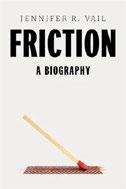
Who knew there was such a thing as tribology? Humanity’s relationship with friction stretches back some million years to the first swipes and scuffs to spark a fire. It continued as Da Vinci wrestled with perpetual motion and Galileo rolled balls down planes and proceeded through the cogs and gears of the Industrial Revolution to 1965, when, according to the author, the field of tribology was born. Vail, the founder of DuPont’s first tribology research lab, explains that the science of friction seeks to understand how the bumps and barbs that make up an object’s surface snag and deform as they clamber over one another. It’s a force made of contradiction—friction is created by motion but it also impedes motion and at the same time enables it. Without it, wheels would spin in place rather than roll forward. Too much, and you wear down the wheel. From violin bows to tire treads, friction is everywhere. It’s slowing the rotation of the Earth itself, setting the moon drifting away from us. It’s sapping energy from our machines, which means, Vail suggests, there may be “tribological solutions” to climate change. But friction is complicated. Understanding it requires mechanics, thermodynamics, chemistry, quantum physics. Vail covers them all in her efforts to measure, control, and engineer friction. Her prose is friendly and clear (“Polymers are, in very scientific terms, squishier than ceramics and metals”), with historical tidbits and everyday anecdotes sprinkled among technical descriptions. (Teflon was a classified material in the Manhattan Project; WD-40 followed 39 false starts.) There’s something wonderful about a book that dives so deep into a topic so niche. At the same time, niche is niche. The science of coatings, lubrication theory—there’s more to friction than most of us want to know. The author’s
passion for the topic reduces the drag, and the book is sure to inspire any future tribologists. For the rest of us, it can feel more like rubbing sticks, and not so much like catching fire. A knowledgeable, readable, but overly detailed survey of the history and science of friction.
Vincent, Caitlin | Scribner (320 pp.) | $30 January 13, 2026 | 9781668084069
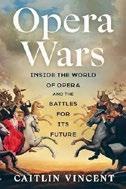
A behind-thescenes look at the state of opera today, by an industry insider. Currently an opera librettist and lyricist, Vincent spent a decade as a professional singer; during five of those years, she founded and ran a small opera company in Baltimore, so she’s well equipped to explain the nuts and bolts of an art form frequently seen as mysterious by outsiders. Her determination not to intimidate sometimes makes her prose a little chirpy, and frequent operagoers will be familiar with much of the material, but this is a solid introduction for readers intrigued by but unfamiliar with the genre. The author takes readers by the hand through the process of creating, performing, and (not incidentally) selling an opera; her chapters are helpfully subtitled to flag subjects of debate—or, as Vincent prefers to call them, “battlegrounds” between opera traditionalists and those trying to coax it into the 21st century. In “The Score, or, That Should Be in a Museum!” she dissents from the view that a score is an unchangeable expression of the composer’s intent, reminding us that many operas have come down through history in multiple versions. In “The Stage, or, (Yellow) Facing the Music,” she describes with amusement far-out productions such as La bohème set in outer space, but it reminds those insisting that operas should be staged as they always have
been that the traditions they defend include white singers in blackface playing Otello or taping their eyes and coyly flourishing fans in Madama Butterfly, while African American and Asian singers were denied employment. In “The Singers, or, She’s Got the Look,” she discusses the pressure on singers, women in particular, to keep their weight down, exacerbated by the fact that many opera performances are now broadcast. Frequent quotes from Vincent’s interviews with other opera professionals add weight to her arguments, while interpolations about her personal experiences give the book a human touch.
A bit basic for longtime fans, but great for opera newbies.
The Atlas of World Embroidery: A
Vogelsang-Eastwood, Gillian Princeton Univ. (400 pp.) | $60 February 17, 2026 | 9780691261911
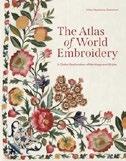
Celebrating an ancient craft.
VogelsangEastwood, a design historian and textile archaeologist, offers a visually captivating, deeply informative overview of the materials, tools, designs, and symbols represented in embroidery from around the world, from prehistory to the present. Organized geographically by region and country, the entries are illustrated with more than 300 color images, amply fulfilling the author’s goal of creating a “feast for the eyes.” The oldest extant samples of embroidery, she reveals, come from garments in the tomb of Tutankhamun, and embroiderers were at work throughout the Middle East as early as 1400 B.C.E.; by 1000 B.C.E., embroidery was practiced from Europe to Asia to Africa. Technology affected the craft: The development of the printing press in the 15th century led to the
production and dissemination of embroidery pattern books, and in the second half of the 19th century, machine embroidery was introduced, though it did not overtake handwork. The author provides a brief inventory of tools, from ari hooks to thimbles, and examines the plethora of fibers used for threads and fabric, such as silk, wool, hair, felt, leather, bark cloth, cotton, flax, hemp, raffia, and straw; she looks also at materials used for embellishment, such as beads, seeds, and metal coins. Stunning illustrations depict embroidered items from distinct regions of the Americas, Europe, Africa, the Middle East, Central Asia, the Indian subcontinent, China, Mongolia, Japan, Korea, and Southeast Asia. For each region, Vogelsang-Eastwood details materials and techniques, such as the gold-thread embroidery of Sumatra, quilted armor of the Sahel, and delicately patterned Kashmir shawls from Pakistan. An appendix provides a motif directory, with line drawings that may be used as a template for personal use.
An exquisite, fascinating volume.
Wimpenny, Jo | Bloomsbury Wildlife (320 pp.) $28 | April 28, 2026 | 9781399417617
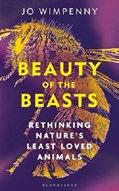
Sharks and mosquitoes get their time in the spotlight in this lively natural history. In what she calls “a love letter to the underdogs,” British science journalist Wimpenny (Aesop’s Animals) sets out to “challenge some of the kneejerk responses that we all show towards certain animals.” While considering in thoughtful detail the many reasons human beings have historically come to feel an aversion to them, she finds much to praise in the predators who “remind us that we’re still part of the food chain”: venomous snakes, maggots, vultures, rats, and other “vermin.” She advises us to look at the advantages of animals such as the
often-detested wasps, who serve key roles as pollinators and keep other insects under control. She also takes a lighthearted look at the other side of the spectrum: photogenic and charismatic animals whose behavior leaves a lot to be desired, including sexually predatory otters and dolphins guilty of “porpicide.” The author asks engaging and provocative questions of researchers—from the herpetologists at Liverpool’s Centre for Snakebite Research & Interventions to the curator of cockroaches at London’s Natural History Museum. As readers, we join her as she travels the world in search of her maligned subjects, from Pinnacles National Park in California for bats and tarantulas to Kenya’s Masai Mara National Park to watch vultures and crocodiles at work. Behind the amusing anecdotes lie some important missions. Wimpenny would like us to think about our unexamined prejudices and to recognize that we live in a web of other lives that deserve our attention. Readers are bound to come away not just with more knowledge but with an increased appreciation for animals we’ve either disliked or never fully considered. A charming, entertaining glimpse into the lives of unjustly scorned animals.
Wrenn, Chris | Running Press (240 pp.) $29 | February 10, 2026 | 9798894140872

The story of a young record label owner who found a way to cash in on Boston’s rivalry with the New York Yankees. For decades, more than a few Red Sox fans have filled Fenway Park with the chant “Yankees suck,” a cheerfully vulgar insult directed at their New York opponents. In his fascinating memoir, Wrenn, himself a lifelong BoSox fan, explains, “In Boston, hating the Yankees was just as much a part of a fan’s
identity as supporting the Red Sox.” One of Wrenn’s friends decided to cash in on the slogan, joining several other street vendors around Fenway selling shirts emblazoned with the battle cry (such as it is), which gave Wrenn the idea to follow suit in 2000, selling bumper stickers and buttons instead. It didn’t take long for Wrenn’s operation—just him, at the beginning—to bring in serious money, which he had earmarked for Bridge Nine, the hardcore punk record label he founded as a college student. Wrenn kept building his label, which featured bands including American Nightmare, Carry On, and the Hope Conspiracy, at the same time diversifying his merchandise into T-shirts and items with different slogans. His Fenway operation, much like his Red Sox fandom, was not always a smooth ride: Code enforcement officers, rival vendors, and unhappy Boston fans made his job difficult at times, but he persevered, turning his merchandise business (now called Sully’s) and his record label into businesses that are still at it today. The author chronicles his success in merchandising and music with something like a wry disbelief; at no point in this book does the reader get the impression that he is at all impressed with himself. That’s part of what gives this entertaining memoir its considerable charm.
A wicked good read about music and baseball and a city that’s wild about both.
Kirkus Star
Yousafzai, Malala | Atria (320 pp.) | $30 October 21, 2025 | 9781668054277

A global activist entwines personal and public trials and tribulations to uncover more complicated and magnificent understandings of both.
The Taliban’s attack on Yousafzai was not only an act of message-sending violence that
launched its victim into the epicenter of an international movement. It was also a private experience of trauma for an adolescent girl and her family and friends. In her new book, Yousafzai wrests her narrative back from the public imagination, where she has been both sanctified and vilified, depending on audiences and agendas. Centered on her years as a student at Oxford, the author’s story unfolds from a closed circle of surveillance and high expectations—products partly of her notoriety and partly of her culture— into a tale of deeply relatable human joy and pain. These eventful years include her long-wished-for return to Pakistan, her first love, the Covid-19 pandemic, and the removal of U.S. troops from Afghanistan. With so many inflections, the image of Yousafzai as possessing unparalleled confidence, ability, and power rubs against the ostensibly simpler dreams and insecurities of a young woman struggling to balance schoolwork with new friendships, fashion freedom, and midnight adventures. She recounts insecurities and feelings of awkwardness, loneliness, and stress, nudging her reader to consider the fragility of the individuals we hurl onto the pedestals of saintly activism. For Yousafzai, the fate of persecuted girls worldwide seems to hang in the balance of every decision, celebration, and setback, but the nightmares of personal memory and experience demand her attention and care. In her candid attempts to wrestle with both, she positions herself as an authentic, enduring voice not only on girls’ education, but also on topics such as mental health, the institution of marriage, the value of friendship, and the nature of risk and reward.
An earnest, charming, and empathetic memoir from a woman as determined as her younger self.

IT’S BEEN A maddening year for librarians—and anyone committed to young people’s literacy—as censors continue to wage war on children’s lit. The good news? Those of us fighting the good fight aren’t alone. I was reminded of that fact this October when I saw The Librarians , a documentary directed by Kim A. Snyder that spotlights nine librarians working to protect young people’s right to read. Several have been fired for refusing to compromise their ethics. In addition to worrying about their livelihoods, many of these librarians fear for their very lives; they face verbal harassment and even death threats.
And yet they persist. More than that, they’re inspiring the next generation. The film follows several high
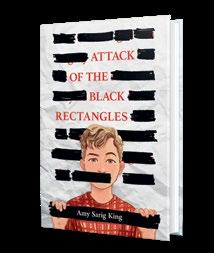
school students at a public school in Granbury, Texas, who form a Banned Books Club and deliver impassioned speeches at school board meetings, noting that titles by queer authors and writers of color are being disproportionately targeted.
Middle and elementary school students are also affected by censorship; thankfully, authors are empowering children to speak up. In 2018, A.S. King learned that a teacher at her local elementary school had blacked out words pertaining to nudity and the female body in
Jane Yolen’s The Devil’s Arithmetic. Incensed, King wrote the novel Attack of the Black Rectangles (published under the name Amy Sarig King), in which her sixth grade protagonists hold protests, write to
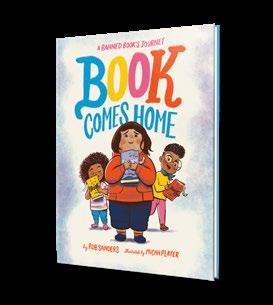
Yolen, and attend school board meetings to defend their intellectual freedom. King concludes with an author’s note urging young people to follow suit; she includes resources from PEN America and the National Coalition Against Censorship so her readers can fight back, too.
While preschoolers and early elementary school students may not be holding rallies or lobbying their school boards, they’re old enough to understand that they have the right to read, and I’m glad to see more picture books illuminating the issue. Rob Sanders’ Book Comes Home: A Banned Book’s Journey, illustrated by Micah Player (Random House, March 25), follows a personified library book who brings joy to patrons—until the day a
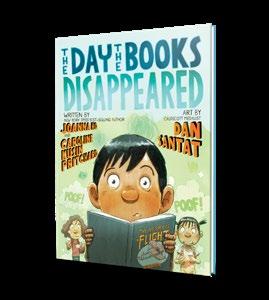
nefarious “someone” banishes her to a closet with other banned titles. Sanders keeps the reasons for censorship fairly general (“Someone didn’t like me” and “They said kids wouldn’t understand me” explain some of Book’s new friends in the closet), but the fear and anxiety that accompany it are palpable, and backmatter offers further context; this is an ideal launching pad for age-appropriate conversations on book banning.
In Joanna Ho and Caroline Kusin Pritchard’s The Day the Books Disappeared (Disney-Hyperion, July 15), a boy named Arnold, bored by his classmates’ reading material, wishes all books but his favorite one would vanish. When the other titles disappear, he’s initially pleased—until his own cherished book joins them. By turns dramatic, funny, and poignant, Dan Santat’s expressive images trace Arnold’s trajectory as he realizes that while he may not like every story in his classroom, he doesn’t have the right to control what his classmates read— a lesson that should accompany any discussion on book banning.
Mahnaz Dar is a young readers’ editor.
Shamir’s adaptation of a variety of Traister’s writings is an accessible primer on the history of women’s activism in the United States.
Organized into three parts (“Colonial Period1920,” “1920-2016,” and “Resistance”) plus an introduction and conclusion, this work covers immense ground, starting with restrictive and horrifying marriage laws in Colonial America. The book shines a spotlight on Black women’s activism, deftly connecting the fight for the abolition of slavery with women’s rights advocacy. Sarah and Angelina Grimké, Elizabeth Cady Stanton, Susan B. Anthony, and Lucy Stone are among the early
suffragists who appear. Readers learn that labor activism was often led by women organizers, including Mother Jones, Ella Reeve Bloor, Clara Lemlich, Rose Schneiderman, and Margaret Haley. The section on secondwave feminism explores Florynce Kennedy’s work and her connection to Gloria Steinem, positioning Kennedy’s activism as a particularly powerful form of effective anger, especially in the fight to legalize abortion. Traister shows how groundbreaking some women politicians—Shirley Chisholm, Barbara Lee, Patricia Schroeder, Carol Moseley Braun—were in challenging gender barriers to gain access to political
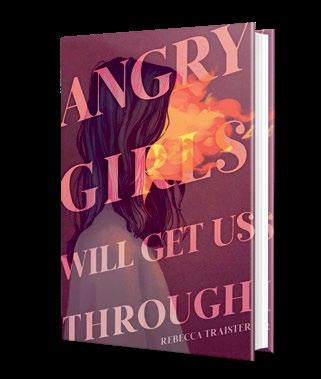
Traister, Rebecca | Adapt. by Ruby Shamir Simon & Schuster | 240 pp. | $17.99 February 17, 2026 | 9781665943352
office. This inclusive work also touches on the Chicago underground abortion network the Jane Collective and the involvement of trans women and lesbians at the Stonewall uprising. Ending with the #MeToo movement and 2024 presidential election, this book is comprehensive,
engaging, and motivating. The focus on earlier history is especially significant because it encourages readers to reflect on how far women organizers have come. A brilliant overview of essential history. (selected bibliography) (Nonfiction. 10-16)
food-themed fare with this irrepressible canine hero.
CLYDEO VERSUS PEANUT BUTTER
Aniston, Jennifer | Illus. by Bruno Jacob Harper/HarperCollins (32 pp.) | $17.99 $5.99 paper | December 30, 2025 9780063372412 | 9780063372405 paper Series: I Can Read!

In actor and dog lover Aniston’s latest, a floppyfurred foodie is rendered incommunicado by a vexing new ingredient.
In Clydeo Takes a Bite out of Life (2024), the adorable sheepdog pup discovered his passion: whipping up delectable dishes. Now his family members, their many faces shaggily half-hidden, ask the young baker for peanut-butter cookie treats. Kitchenconfident Clydeo gets to work. Thinking it prudent to taste the new ingredient before using it, he gulps down a huge spoonful, only to find his mouth glued shut. Speechless, he attempts to convey his predicament to his baffled relatives, by pointing, grunting, miming, and drawing—to no avail. A note is equally useless: His handwriting is illegible. But Mom sees the jar and (of course) guesses the situation. Can she help him? She offers milk, but, unable to swallow, he pours milk over himself. Happily, a straw does the trick! Now everyone has just one final question: “Where are our peanut butter cookies?” Clydeo isn’t bothered. He’ll bake again—but now it will be sugar cookies! Peanut butter has stymied many a young foodie, and readers will cheer for a solution as the pages fly past. The anthropomorphic but cartoon-cute dogs animate every page, and pale teal backgrounds make even those pages
not in multiple colors appear fresh and vibrant.
More feel-good, food-themed fare with this irrepressible canine hero. (Early reader. 4-8)
Arcand, Kimberly K. & Megan Watzke Illus. by Robert Ball | Sourcebooks eXplore (112 pp.) | $12.99 paper | February 10, 2026 9781464227097
Two astro-experts explain that there’s nothing to be afraid of in outer space (bwa ha ha).
Among the
many astronomical wonders modern observers have discovered in our solar system and beyond, no few have turned out to be deadly—not to mention, as Arcand and Watzke point out with some relish, downright creepy or terrifying. Airless Mercury, “a two-faced world of suffering” that can hit +800⁰ F on the sun side and -290⁰ in the shade, kicks off a grand tour of select moons, planets, exoplanets, supe rnovas, and even farther-flung phenomena, from black holes and magnetars to colliding galaxies that will leave unprotected visitors burnt, frozen, flayed, poisoned, spaghettified, or otherwise obliterated. Meanwhile, on the way to a (theoretical) universe-ending “Big Rip,” background information on types of telescopes and galaxies, on space probes, how distant exoplanets reveal themselves, and other astronomical topics put all the thrillingly fatal
scenarios on a sound scientific footing. Echoing the tone of the melodramatic headings (“Eta Carinae: An Expanding, Exploding Brain in Space”), Ball’s images of eerily grimacing planets and other fancies add lurid highlights to the visuals, which also include actual space photos provided by NASA. A substantive introduction to the universe with an unusually rousing approach. (glossary) (Nonfiction. 9-11)
Bahr, Kathleen | Illus. by Ramona Kaulitzki Knopf (40 pp.) | $19.99 | March 17, 2026 9798217024728
Hooray! It’s Mama’s birthday! It’s the morning of July 30, and Henry, a sweet young raccoon in red overalls, can’t wait to celebrate his mother’s big day. He bounds out of the house “up the hill, through the forest, along the creek all the way to the field!” It’s filled with sunflowers—“Mama’s favorite”—and he picks one as a gift. On his way home, he encounters numerous anthropomorphized forest denizens who compliment the sunflower (“Those petals look soft and feathery”); in return, Henry generously offers them bits of the golden bloom, like seeds, petals, and a piece of the stalk (“Mama won’t mind,” he reasons). After going on an adventure of his own, Henry is left with nothing to give Mama. With some ingenuity, he makes an imperfect facsimile of her gift, and, with a little grace and understanding, Mama and Henry joyfully celebrate her special day together. Bahr and Kaulitzki have crafted a warm look at familial love and the well-meaning enthusiasm of children. Kaulitzki’s digital illustrations provide an appropriately idyllic setting for this sweet, at times sentimental story of a youngster who gets caught up in the moment. Filled with onomatopoeia, effective page
turns, and expressive characters, this will make for a solid read-aloud. Gentle reassurance that in the end, it truly is the thought that counts. (Picture book. 4-8)
Baptiste, Tracey | Little, Brown (272 pp.)
$17.99 | February 24, 2026 | 9781643753829
Series: Boy 2.0, 2

Still reeling from a harrowing kidnapping and trying hard to adapt to his loving new foster family, an artsy Black middle schooler with a lot on his mind is caught at the crossroads of biotech and personal growth.
Win Keegan, who goes by “Coal,” inherited his special ability to camouflage his body at will from his ancestors’ traumatic experiences in the Jim Crow South. He’s a superpowered child who (unfortunately) had to take care of himself for too long. Now, in between secret missions for his foster siblings and bestie, as well as art commissions for his classmates, he’s feeling pulled in too many different directions and facing expectations that don’t give him the space to figure out who he wants to be. When a rogue robot starts following him around, he’s alarmed. He’s all too aware of the unethical history of racialized medical practices like the Tuskegee Experiment and the treatment of Henrietta Lacks, and he can’t help wondering if he’s caught up in something similar. The philosophical threads of this sequel to Boy 2.0 (2024) are complex, but the action is fast-paced while allowing Coal, his always-hungry best friend, and his supportive (but privacyinvading) foster family time to reflect on the nature of care, ethics, and support for the most vulnerable. The refreshingly accessible story contains elaborate and entertaining set pieces that balance the heavier, sadly relatable elements. Powers of invisibility bring a lot to light in this compelling sequel. (Science fiction. 9-14)
Kirkus Star
Barnes, Derrick & Christian Gregory Illus. by Frank Morrison | Amistad/ HarperCollins (40 pp.) | $19.99 February 3, 2026 | 9780063357525
In 1976, comedian and activist Dick Gregory ran from coast to coast to advocate for those without enough food to eat. “What would you do if you knew someone who goes to bed every night without having supper?” The authors pose that question before explaining Gregory’s “wild idea” of running from the City of Angels to the Big Apple— seven million steps total. By consuming nothing but “fruit juices, vitamins, water, and maybe sunflower seeds,” he plans to raise awareness about food insecurity. Written in second person from the perspective of an elder addressing a child, the text places readers in Gregory’s sneakers as he runs 50 miles a day seeing “America from different angles.” People diverse in age and skin tone start to run alongside Gregory—“a cavalcade of support” that includes Indigenous “brothers and sisters” and boxer Muhammad Ali. When the run gets tough, hazy images of faces appear in the clouds as if to cheer Gregory on, “step by grueling, glorious step.” This collaborative picture book—cowritten with Gregory’s son—joyfully brings its subject’s voice to the mic and tracks the stops along the run where Gregory would address onlookers. The work’s final question becomes a moving call to action—both to the Black child seen next to Gregory and to readers themselves. Morrison’s dynamic artwork is a feast for the eyes, with detailed brush strokes rendering bodies in motion, gorgeous scenery, and expressive faces. An inspiring, kinetic look at an unconventional act of activism. (more information on Dick Gregory, authors’ notes) (Picture-book biography. 4-8)
Barnett, Mac | Illus. by Shawn Harris Knopf (40 pp.) | $19.99 | March 3, 2026 9798217033171
The future is now…and it’s exceedingly silly. “This book is from the future.” What are things like there? Barnett enlightens readers: “The sun is called the moon and the moon is called the sun.” Readers learn that apples no longer exist (Barnett doesn’t explain why), that lots of people are named “Charlie Cheese Face” (“There’s an interesting reason why, but we don’t have time for that story”), and that instead of “goodbye,” people now say, “You smell like a baby!” The work closes with a ridiculous conversation between two characters who somehow manage to work in most of the new terms. This tale’s raison d’être seems to be coming up with the goofiest alternatives to normal day-to-day terms and interactions. Barnett gets seriously silly as he thinks up gags ideal for reading aloud at storytime. As for Harris’ art, aside from the occasional cool pair of sunglasses or hair dye, the future feels pretty early-21st-century; his colorful ink and gouache illustrations are rife with visual gags. Futuristic terms look as if they were printed on a label maker. Human characters vary in skin tone. It doesn’t take a fortune teller to predict the laughter that will emanate from this world of tomorrow. (Picture book. 4-8)

Belote, Ashley | Random House Graphic (80 pp.) | $10.99 | March 3, 2026 9780593897829 | Series: Squirrel Lock Holmes, 1
A distraught rabbit whose pet rock has gone missing seeks help from a squirrel detective.
Vowing to leave “no stone unturned,” Squirrel Lock Holmes quickly agrees to help Reggie the Rabbit. Squirrel Lock interviews suspects (among them Reggie’s teacher Mr. Iggy and classmates Maggie, Mel, and Clark), checks alibis, and eliminates possibilities. Belote mines humor from every possible rock reference: Reggie’s pet rock is named Dwayne, Squirrel Lock’s mole sidekick Watson worries about hitting “rock bottom,” and Squirrel Lock Holmes spouts catchphrases like “It’s sedimentary, my dear Watson!” The cartoony panels burst with visual energy: Reggie ping-pongs across scenes making wild gestures and exaggerated expressions of distress, while the earth-toned forest backgrounds keep the focus on character reactions. Speech bubbles overflow with exclamations and sound effects, and the page layouts range from traditional grid formats to more dynamic diagonal arrangements that propel the madcap investigation forward. Vocabulary like geologist appears with definitions conveniently placed nearby. The mystery-solving framework encourages young readers to examine clues alongside the detectives, modeling logical deduction through an accessible case. Backmatter extends the fun with a guide outlining
the six steps of solving a mystery and a tutorial on drawing the characters. An exuberant, pun-heavy romp for readers who like their mysteries served with maximum silliness and steady sleuthing. (Graphic fiction. 6-9)
Bobrow, Claire Wrenn | Illus. by Ilaria Urbinati | Atheneum (48 pp.) | $19.99
March 31, 2026 | 9781665957878
A high-stepping tribute to a young dancer who hit her stride not onstage but at a rodeo. Though she did become a renowned choreographer— and much more besides—the path that young Agnes de Mille takes from dance-obsessed childhood to breakthrough success in this gracefully illustrated account is neither straight nor easy. Invariably posed in a balletic stance or leap, her slender figure whirls across the pages from California to New York to London, studying for years ways to incorporate “a bit of ballet, / a fragment of folk, / a morsel of modern” into her own personal style of expression. Her fortunes change at last when, bouncing back from a Broadway flop, she spins memories of a visit to Colorado into a ballet titled Rodeo, about a “plucky, misfit cowgirl— / a bit like Agnes herself.” Urbinati ends with the curtain drawing back on opening night; Bobrow goes on in an afterword to fill in the details of that 1942 premiere (22 curtain calls!) and to analyze how, in her “long and illustrious” life, de Mille’s distinct
Destined to be a classic and a favorite; everyone needs this book.
sensibility “captured not only the spirit of a cowgirl but the heart of a nation.” That she worked with both Black and white dancers in the 1930s goes unmentioned by the author, but Urbinati picks up on it, and the dancers’ sense of movement— everyone looks ready to burst into action—strongly reflects the narrative’s buoyant, irresistible energy. En pointe for any lovers of dance or its history. (photograph, selected sources) (Picture-book biography. 7-9)
Bonilla, Rocio | Trans. by Eleanor Holmes Albatros Media (40 pp.) | $18.95
March 3, 2026 | 9788000076065
After six days a week of structured time, Minimoni dreads the boredom of Sundays.
Pixie-haired, wide-eyed, tanskinned Minimoni has grown quite a bit: “I’m already going to a school for BIG kids!” Minimoni proudly shows off a diary: Monday is for spending time with friends, Tuesday is for hockey practice, Wednesday is for going to the library, Thursday is for painting, Friday is for visiting Grandma Lola, and Saturday is for hiking. But Sunday? “On Sundays there is NOTHING to do!” Here, the tale turns hilariously dramatic as Minimoni flops on the ground, moping. Bored, Minimoni seeks help from “the mouse who lives behind the red door,” who sends the youngster on a journey—down a mysterious tunnel, to an icy landscape, to outer space, all in search of a cure for ennui. Suggestive of watercolors, Bonilla’s slyly funny artwork tuns increasingly impressive, building effectively on the text. The book wraps up with Minimoni finally asking Mom for help. Readers will smile knowingly at Mom’s response (“Do you EVER get bored?”); indeed, a quick look at Minimoni’s cluttered bedroom, filled with toys and artwork reflecting the youngster’s flights of fancy, makes it
clear that the answer’s a resounding no. Starring a self-possessed, precocious protagonist who rivals Kay Thompson’s Eloise in moxie, this Spanish import is a quirky love letter to a child’s endless creativity— and a reminder that there’s nothing like unstructured time to let it truly run wild.
A charming paean to the imagination. (Picture book. 3-6)
Brown-Wood, JaNay | Illus. by Erin K. Robinson | Astra Young Readers (40 pp.)
$19.99 | January 13, 2026 | 9781662620867
An ode to natural Black hair and those who have the honor of wearing it.
“This hair” does, and has done, many things, according to Brown-Wood’s poetic text. It has grown from the heads of kings and queens; it shrinks, it waves (“like rivers that span Africa’s grand lands”), it curls, and it stretches (“like the banks of the Nile”). “This hair” is thick; it “may tangle,” and it “might stick out”—but it is beautiful, it is magic, and it belongs. It belongs in reality, and it belongs in legend, and it is “not for the faint of heart.” Neither Brown-Wood’s text nor Robinson’s art tells a single story here: Both are busy immersing readers in a rich tapestry of Black history and culture through rhythmic spoken word and layered, detailed art showcasing lush colors, gorgeous patterns, and an incredible variety of hairstyles. The verse goes straight to the heart, where it takes up residence, while the illustrations offer a loving display of the inheritance of Black hair. At crucial moments, the text highlights “you,” the child reader, enveloping young people in a sense of belonging and pride, inspiring them to understand their relationship with their hair in new and exciting ways. Backmatter offers details about African history and cultures, hair, and hair care. Myriad
En pointe for any lovers of dance or its history.
COWBOYS AT THE BALLET
books have explored Black hair; this one is among the very best. This testament to Black beauty is destined to be a classic and a favorite; everyone needs this book. (author’s note) (Picture book. 4-8)
Buckley Jr., James & Ellen Labrecque Illus. by Steffi Walthall | Sourcebooks eXplore (128 pp.) | $16.99 | April 7, 2026 9781728275123
An inspirational gallery of DEIhard pathfinders who made strides in science. Well-crafted, alphabetically arranged entries, each consisting of a one-page profile and a formal painted portrait, describe how 50 trailblazers facing racism, ableism, and misogyny excelled in fields from medicine to astrophysics. Some, such as Benjamin Banneker—the first known Black scientist in the U.S. and the oldest member of the roster—and agriculturalist George Washington Carver, are already iconic figures, but most will be new to young audiences. A handful are even still active or at least living, including blind oceanographer Amy Bower and still-rising Cuban American star Sabrina Gonzalez Pasterski, who as a teenager built and flew her own airplane on the way to becoming a prize-winning theoretical physicist. To provide a broad historical perspective, the authors add shoutouts to the work of Historically Black Colleges and Universities and to the 1965 Immigration Act—both of which helped to break down barriers impeding
marginalized people—and place their chosen figures on a timeline at the end. Readers intimidated by all the achievement on display here can take heart from their assurance that “the people here were not simply born geniuses. They worked hard at what they loved, stayed curious, and never gave up despite the challenges.” That’s a workable strategy for anyone. A notably diverse array of STEMcentric role models. (index, find out more) (Collective biography. 8-11)
Budde, Mariann Edgar | Adapt. by Bryan Bliss | Dutton (192 pp.) | $19.99
$12.99 paper | October 21, 2025
9798217113811 | 9798217113828 paper
Thoughts and reflections from an Episcopalian bishop who has drawn the ire of the current Presidential administration for remonstrating with its tone and values. Boiled down only a little from the most recent edition of Budde’s How We Learn To Be Brave (2023, 2025), this version for younger audiences calls on literary examples like Frodo and Harry Potter, along with biblical and historical ones from Esther and Eleanor Roosevelt to Martin Luther King Jr., to show courage in action, but most of the discourse’s more rarefied intellectual foundations remain intact. While meditating on topics such as the central importance of persistence, of (as a chapter head puts it) “Stepping Up to the Plate,” and of accepting the reality of suffering and failure in the course of our personal “courageous journey,” the
author draws insights from not only her own experiences but, to pick a few, Ignatian spirituality, the interracial ministry of Howard Thurman, and womanist theologian Dr. Kelly Brown Douglas. It’s heavy going, but an emphatic foreword from Bliss, himself a theologian, and an eloquent opening plea to honor “the inherent dignity of every human being” in the face of a burgeoning “culture of contempt” may provide enough impetus for serious and concerned readers to stay the course. Not easy reading, but certainly timely, and as compassionate as it is cerebral. (end notes) (Nonfiction. 11-18)
Burgerman, Jon | Boxer Books (32 pp.) $18.99 | March 3, 2026 | 9781454713234
The basics of narrative structure tell their own tale. This lighthearted story hinges on its protagonists breaking the fourth wall. On the very first page, Beginning, a friendly square, greets readers and offers familiar examples of famous beginnings. Middle, a slightly sassy rectangle, jumps in to start the action, a bit too soon for Beginning’s liking. Their arguing awakens End, a grouchy triangle with a shock of green hair. Fed up, End angrily departs (via a humorously labeled “plot hole”). Beginning and Middle are in a pickle— they can’t finish their job alone! An infinitely paged, literally endless book stretches out to the horizon line, conveying their conflict. But the solution is surprisingly simple: A second “plot hole” helps them reach a satisfying resolution. As a tool for introducing story elements, Burgerman’s work gets straight to the point and makes its points clearly. Aesthetically, it’s less successful. The illustrations feel like an afterthought, with slapdash, stick figure–like characters interacting on chaotically laid out backdrops that frequently shift in hue, making for a visually discordant tale. A useful guide to storytelling that falters in design. (Picture book. 3-6)
A bird lover goes in search of creatures that “slither, creep, and crawl.”
SPARROW LOVES REPTILES
Burgess, Matthew | Illus. by Julie Benbassat
Clarion/HarperCollins (48 pp.) | $19.99
January 27, 2026 | 9780063216716
A youngster learns to forage by himself. Mungo and his mother, a pair of adorable, big-eyed foxes, share a warm den in the forest. Red berries are on Mungo’s mind, and his mother agrees that it’s time for him to search for them on his own. Setting off for the faraway berry bush, the little fox encounters creeping sounds, icy water, a beast “with flashing eyes” (readers will identify it as a car), and a twisted thorn thicket seemingly filled with spooky faces. Mirrors for his feelings, Mungo’s yellow eyes and shivering orange fur pop against the dark, immersive forest illustrations. He almost turns tail and returns to his den, but a change in mindset pushes him to continue, and at last, he accomplishes his tasty goal. His night journey demonstrates that bravery and fear often walk side by side and reminds readers to draw strength from existing knowledge and memories of happier times. Nature shares a surprise wintry first to celebrate Mungo’s perseverance, and youngsters will join in the joyful acknowledgement of growth and pride. Burgess’ soft text poetically reflects Mungo’s ups and downs, potentially sparking conversations about his emotions—or how a child might feel in Mungo’s paws. Benbassat’s illustrations adeptly convey big feelings like fear; sensitive readers may find some spreads a bit frightening. Youngsters will fall for this cute little fox on his exciting journey of courage and growth. (Picture book. 3-7)
Burgess, Murry | Illus. by Tamisha Anthony Christy Ottaviano Books (40 pp.) | $18.99
April 14, 2026 | 9780316307932
Series: Sparrow Loves Animals, 2
A young bird lover shifts focus and goes in search of creatures that “slither, creep, and crawl.”
Carrying a backpack, binoculars, and a sketchpad, the protagonist of Sparrow Loves Birds (2024) visits a park with her father to look for reptiles. In Anthony’s colorful, softly swirling artwork, brown-skinned Sparrow’s cornrowed braids bounce up and down as she observes the world around her. The illustrations vary, from close-ups of the animals (sometimes seen through binoculars or a hand lens) to broader views of their surroundings. Meanwhile, Burgess peppers her text with facts—what reptile scales are made from, where these creatures can be found, and how to tell if a snake is venomous. Though Sparrow has apparently boundless energy, she frequently pauses to closely examine everything from snapping turtles to cottonmouths and to draw what she sees. Her dad, perhaps the source of the informative commentary, seems equally enthusiastic. The information Burgess provides is sound, but it’s Sparrow’s curiosity, patience, and perceptiveness that will truly inspire young naturalists as she draws on a vast store of knowledge to seek out wildlife; indeed, animals are often closer than we might think. While the book focuses on reptiles found in the southeastern United States, all readers, no matter their location, will find it a useful introduction.
An eye-opening reminder that nature truly is all around us. (author’s note, tips for discovering reptiles, reptile glossary) (Informational picture book. 4-7)
Calmenson, Stephanie | Illus. by Shannon McNeill | Beach Lane/ Simon & Schuster (32 pp.) | $19.99 March 17, 2026 | 9781665958394
T he elephant and human child introduced in How To Cheer Up a Friend (2024) continue to deal with the ups and downs of friendship. The two carry a large basket full of colorful blocks, and the brown-skinned youngster quickly constructs a tower, only for the elephant to place a yellow truck on top, sending the blocks tumbling. Does the pachyderm take responsibility? At first, the animal looks a bit embarrassed. Meanwhile, an unseen narrator poses thoughtful questions: “What do you do… // when something you’ve done… / really, really / upsets someone? // Do you say it’s something you’d never do? / A squirrel did it— / of course not you!” The child is visibly upset, and the elephant’s mind races (thought bubbles indicate the pachyderm’s varied emotional responses). Eventually, the elephant utters those magic words: “I’m sorry.” The narration continues: “The answer you want might not come right away. / But if you wait… / and wait… / they might finally say… / ‘I forgive you. We’re okay.’” McNeill’s softly hued, smudgy mixed-media illustrations, a combination of gouache, pencil, and cut paper, blend with Calmenson’s plainspoken text for a straightforward yet sensitive exploration of a situation encountered by most kids; the expressive elephant cuts an especially sweet figure—initially hiding behind a tree, drooping with worry, and, at last, cheerfully helping to construct a new tower. A quiet tale to spur useful conversation about blame, accountability, and apologies. (Picture book. 3-5)
Cargill-Martin, Honor | Illus. by Jaimee Andrews | Sourcebooks eXplore (48 pp.)
$16.99 | February 3, 2026 | 9781464258213
Meet some monarchs of misfortune! As the preface stresses, the royal court of Henry VIII was “a dangerous place.” The job requirements for queen were exacting, terminations frequent, and not all applicants were volunteers. Each queen is briefly introduced with a page that includes a one-paragraph biography, key dates, and other concisely presented facts (dowries, allies, motto). The very readable text, written in a conversational voice that makes the centuries vanish, proceeds largely chronologically. A flashback, written in present tense, recounts a significant episode for each queen: Catherine of Aragon led an army into battle while pregnant; Katherine Parr managed to talk Henry out of a warrant for her arrest. Elaborate borders in the style of bejeweled Renaissance frames incorporate heraldic imagery; for the most part, the art eschews gore, though the section on Anne Boleyn concludes with an image of an executioner’s sword dripping with blood. The queens’ faces, uniformly young and beautiful, all resemble one another, with slightly different coloring. Andrews poses the subjects with modern-day insouciance and takes mild liberties with the fashions of the period but for the most part depicts dress accurately. Occasionally adjacent aristocrats are shown with darker skin. A Tudor family tree illustrated with thumbnail portraits, a timeline, and a final spread on Henry’s important future-regnant children, Edward VI, Mary I, and Elizabeth I, clarify and continue the story of this powerful and vulnerable family. Majesty can be messy—a hip history that’s at times bloody yet never dull. (Nonfiction. 7-12)
Correia, Tony | Orca (144 pp.)
$10.95 paper | February 17, 2026
9781459842458 | Series: Orca Currents
A gay middle schooler hoping to become a YouTube sensation falls in love while taking a stand against censorship. Seth has only two weeks before summer vacation begins, but a final book report inadvertently makes this last fortnight stressful. The only other queer kid in class, activist Pluto Morrow, challenges Seth to read Alice Oseman’s Heartstopper Reading it, Seth is moved—and inspired to work with Pluto to create a Pride display in their school library to draw attention to other LGBTQ+ books that are “hiding in plain sight.” The display is a hit, but then their bigoted classmate Rebecca checks out all the books with the intention of keeping them away from her classmates until they can be officially removed. Correia takes some big swings, some of which result in home runs while others are misses. The dialogue and romantic tension between Seth and Pluto feel stilted at times, but the author offers a realistic depiction of the flawed systems and biased authority figures that allow censorship to take root. The conclusion leaves many of the subplots unresolved, but in ways that ring true. Readers open to narratives that don’t wrap up with neatly packaged endings will find that this tale sparks meaningful conversations with caregivers, friends, and educators about the long-reaching harmful effects of censorship. Physical descriptors are minimal. An authentically messy coming- of-age tale. (Fiction. 9-12)

A how-to guide for young writers that’s jam-packed with tips and ideas.
Kirkus Star
Faruqi, Saadia | Illus. by Chaaya Prabhat Quill Tree Books/HarperCollins (336 pp.) $19.99 | February 10, 2026 | 9780063389533
Hurricane Harvey brings epiphanies and unlikely friendships. In Houston, Texas, in 2017, the worlds of three middle schoolers collide. Pakistani American Yasir Manzoor wants to become eighth grade soccer team captain. White and South Asian American Mona Jennings-Shah is a talented artist who’s fascinated by flood stories from world mythology. Cody Bevin, who’s white, is the current soccer team captain—and a bully who’s been raised on racist, anti-immigrant propaganda. The hurricane compels them to face their worst fears, which don’t seem as scary when they’re surrounded by people who are willing to help. Faruqi turns her firsthand experience of the hurricane into a powerful work of fiction, much like Mona who continues to sketch, creating beauty amid disaster. The author depicts Mona’s struggles with sensitivity and insight; she helps care for her younger brother, Omar, while her parents travel to academic conferences. The evolving relationship arc between Yasir and Cody is moving: Both boys learn more about each other, going beyond initial impressions. Instead of oversimplifications that classify people as heroes or villains, Faruqi puts her characters into situations where their innate goodness
can shine. The supporting cast members, especially Omar, Yasir’s mother, and a dog named Killer, infuse the story with joy and unconditional love. Weather reports add a realistic touch, and the flood myths from different cultures allow readers to reflect on how humans make sense of natural calamities through stories. A heartwarming, skillfully wrought tale of courage, forgiveness, and new beginnings. (author’s note) (Fiction. 8-12)
Kirkus Star
Forde, Patricia | Illus. by Mary Murphy Little Island (296 pp.) | $16.99 February 17, 2026 | 9781915071903
A how-to guide from Ireland for young writers and readers that’s jam-packed with practical tips and ideas.
Laureate na nÓg Forde’s warm, enthusiastic tone and wealth of prompts offer readers a solid grounding in story construction. Chatty contributions by notable authors like Eoin Colfer, Derek Landy, and Sheena Wilkinson go behind the scenes through letters to readers that follow each short but information-packed chapter. The first seven chapters suggest ways to create and structure a story, from finding inspiring narrative catalysts to building convincing characterization, developing a plot, creating a setting, starting your story, crafting an ending, and worldbuilding.
The next four chapters decode popular genres: comedy, mystery, historical fiction, and legends and fables. The final chapter advocates for thorough editing. The book avoids hard-and-fast writing rules: Imagination and fun are clearly as important as craft. Inventive exercises support practice and can also free a stuck writer. The book is especially valuable because it offers readers a springboard to understanding how the various elements of narratives work— Forde introduces point of view, voice, protagonist, conflict, arc, tone, exposition, motive, and much more. Murphy’s clever spot-art vignettes, depicting children with different skin tones and abilities, and diagrams clarifying the writing principles add energy and humor and helpfully present the material. The friendly voice, useful strategies, and excellent advice make this a valuable and accessible resource. Entertaining, comprehensive, and encouraging; for anyone who’s curious about how stories work. (contributor bios) (Nonfiction. 8-12)
Forgettable, Fern with Piper CJ | Random House (272 pp.) | $14.99 | January 20, 2026 9780593810538 | Series: Fern’s School for Wayward Fae, 3
The Grim Reaper’s daughter must solve puzzles both magical and interpersonal.
In this third visit to Fern’s School for Wayward Fae, all the new students are gearing up for the annual Yule Hunt, a magical winter solstice scavenger hunt that will help them develop their gifts. The competition also gives the winner (or winners) an unspecified, though highly sought-after, prize. Thirteen-year-old Rosemary is eager to learn how to manage her visions, which show her how people will die, especially since she’s recently had a vision of her own death as the result of an icicle that “a masked stranger” throws at her. She’s
unable to focus fully on the Hunt, however, since she’s also dealing with some of her friends, who are shunning her after learning that her father is the Grim Reaper. Then her roommate, Trym, begins acting strangely, and soon Rosemary develops suspicions about who’s to blame, although she’s unsure of their motivations. Readers will enjoy solving the Yule Hunt puzzles alongside Rosemary and seeing how quick thinking gets her out of some scary situations. The ending raises the stakes considerably for the next installment. Meanwhile, Rosemary’s developing relationship with her father provides a subplot with heart, and fairy Fern’s occasional interjections add humor. Central characters are cued white, and there’s diversity in the supporting cast. An engaging adventure that’s sure to please series fans. (Fantasy. 8-13)
Kirkus Star
Flowers for Mama
Freedman, Deborah | Viking (40 pp.) $18.99 | March 31, 2026 | 9780593695494
Four kittens prepare gifts for their mother’s special day in this tender celebration of artmaking and family.
Freedman’s spare text follows siblings Oleander, Tulip, Herbie, and Blossom as they each create flower-related gifts for Mama. Blossom writes a song about flowers, Herbie constructs floral collages from “saved-up bits and scraps,” and Tulip experiments with printmaking to create her flowers. Oleander plants a seed but worries as Mama’s day approaches with no bloom in sight. The illustrations showcase Freedman’s masterful use of composition and color; early spreads employ muted grays and browns as the kittens work against a backdrop of textured brick walls and graph paper, their fur rendered in delicate graphite. After Tulip uses an orange crayon to create C-shapes for petals, washes of color begin appearing.
She continues exploring on a vibrant double-page spread where she swishes and splatters with forks, creating an exuberant explosion of orange and pink blooms. Freedman demonstrates how negative space directs attention—a single kitten on a white backdrop draws the eye more powerfully than busy backgrounds. And though we never see Oleander’s flower blossom, gentle Mama praises his gift all the same. The quiet pacing and low text load make this ideal for the storytime crowd, while the process-focused narrative validates diverse creative approaches. An enchanting story that honors both the artistic journey and the blooms that—eventually—result. (about the art) (Picture book. 3-7)
Garfinkle, Debra & April Patten Kar-Ben (280 pp.) | $18.99 February 3, 2026 | 9798765639795
Rebecca Weiss, a thoughtful 12-year-old with dark curls and “honeycolored” skin, is struggling to prepare for her bat mitzvah
while navigating shifting friendships and an emerging sense of identity. Rebecca’s mother died several years ago, and now Hailey, her best friend, seems to have abandoned her for people in drama club. Rebecca’s world expands when Nikki Davis from affluent Portland Heights transfers into eighth grade. With her long blond hair and flair for fashion, Nikki, who’s Christian and cued white, has long tried to blend into her friends’ polished world of expensive clothing and fancy living. When her divorced mother loses her job and they move into a modest apartment, Nikki becomes determined to hide her changing circumstances, constructing increasingly elaborate lies to preserve the illusion. Told in chapters alternating between the girls’ perspectives, the novel offers a layered portrait of learning, sometimes painfully, to see oneself and
others with honesty and empathy. Rebecca’s faith and moral grounding, which are tested by her upcoming bat mitzvah, provide an illuminating contrast to Nikki’s insecurity and hunger for acceptance. The authors deftly balance weighty themes—social class, faith, grief, and parental indifference— with moments of levity, including first crushes and babysitting mishaps, that deliver genuine comic relief. With emotional candor, the novel blends humor and heart with a contemporary sensibility. Cookie recipes mentioned throughout appear at the end, adding a charming touch and symbolizing creativity and connection.
A tender, insightful exploration of friendship, forgiveness, and the courage to live authentically. (Fiction. 8-12)
Gavin, Elyssa | Illus. by HifuMiyo Union Square Kids (48 pp.) | $19.99 February 10, 2026 | 9781454946830
Series: People Who Shaped Our World
Japanese mountain climber Junko Tabei never gave up. Not many 10-year-old children are capable of scaling a mountain, but Junko Tabei was, despite being small for her age and weakened by pneumonia. In 1949, she climbed Mount Nasu on a class hiking trip; despite her classmates’ doubts, she put one foot in front of the other and set her sights on the summit. The mountains continued to call to her, and she found other women with a similar passion for climbing. They withstood ridicule and exclusion from male climbers by forming a club; they trained and raised funds to tackle Mount Everest. When the day came, the women and the sherpas who guided them headed out, step by step, through bitter cold, snow, and wind. The women encouraged one another through each obstacle, but one evening, disaster struck! An avalanche mangled a tent in which Junko and four other climbers were sleeping. Injured and uncertain about going on,
ARCTIC ADVENTURE
Junko rested for several days before setting out again. Her resilience was rewarded by a spectacular summit view and the respect of the global community. Relying on a palette of warm oranges, cool blues, and earthy browns, HifuMiyo’s illustrations lend Gavin’s detailed, earnestly worded story a vintage charm. Endpaper sketches depict the array of tools used in climbing. A compelling testament to inner strength and deep friendship. (author’s note, timeline) (Picture-book biography. 4-8)
Gliori, Debi | Beach Lane/Simon & Schuster (32 pp.) | $19.99 March 10, 2026 | 9781665982764
A little fox named Small learns that unconditional love is always worth celebrating.
Many years after her beloved No Matter What (2008), Gliori reimagines that book’s central conceit for a new generation of potential Smalls. Despite the covetable hygge kitchen setting, Small is having “A Bad Day.” Small’s parent, Large, made some mouthwatering muffins, but baking has clearly been an ordeal, and Small stands amid a chaos of broken eggs and spilled ingredients. Soon Small progresses to a full-on “wobbly,” aka a tantrum, table overturned, feet stomping, fists flailing. Scooping up the distraught little fox (and a basket of muffins), Large walks out into an idyllic spring landscape, and they begin their ritualized dialogue: “What if I was a dinosaur?” Or a hulking tiger? Or an
enormous stinging insect? Each time, Large reassuringly repeats, “I’ll always love you, come what may.” As in the earlier book, the sky provides the ultimate appropriate analogy: Even “a dreadful mood” passes as quickly as stormy clouds, and “like the sky / when the clouds move away, / Love stays forever, unchanged… // come what may.” Cool, mostly blue backgrounds highlight the pair’s warm russet fur. Relatively flat scenes give way to expansive landscapes and boundless skies. Gliori’s delicate lines and colorful details, like swaths of pastel lupines and Italian cypresses, both pointing heavenward, provide visual delight, subtly signaling the emotional uplift. Reliable rhythm, rhyme, and repetition confirm the comforting stability of a caregiver’s love. (Picture book. 2-5)
Gopal, Jyoti Rajan | Illus. by Alexandra Cook Feiwel & Friends (40 pp.) | $19.99 January 6, 2026 | 9781250385444
Two families embark on a warmhearted journey through one of the chilliest places on the planet. In the Arctic tundra, where “starlight gleams” and “winter morning dawns,” Little Fox and Mama Fox set out to explore their snowy home. A pale-skinned, rosy-cheeked human mother and child carrying a telescope (the better to take in their surroundings) travel alongside them. As the vulpine pair saunter through their chilly habitat, they encounter a
polar bear, a narwhal, and a flock of rock ptarmigan going about their daily routines. When a storm hits, separating both kit and child from their parents, they rely on each other to find their loved ones just in time to witness a stunning spectacle in the night sky. Cook and Gopal have created a loving look at the wonders and realities of one of Earth’s most rapidly changing environments. Gopal’s third-person text is vibrant yet soothing, filled with snappy onomatopoeia (“Crackle! / Snap! / Ice breaks”) and lilting alliteration (“Until, as suddenly as it started, the storm stops”). Cook’s mixed-media illustrations are beautifully detailed with swirls of light blue, purple, green, and deep black capturing the wintry setting along with the warm emotions felt by both duos. Extensive backmatter offers more information on the animals featured, climate change, and Svalbard, the Norwegian archipelago where the story takes place.
A tender look at the bond between parent and child—and the natural beauty of the Arctic. (Picture book. 4-8)
Grimes, Nikki & Stacy Wells | Illus. by E.B. Lewis | Heartdrum (40 pp.) | $19.99 January 27, 2026 | 9780063264755
After learning about the courage and resilience of his Choctaw and African American forebears, a young Oklahoma boy confronts his fears.
Eight-year-old Dante awakens screaming from a terrifying nightmare of a shadowy figure pursuing him. His mother holds him and shows him photographs of two ancestors, his maternal great-great-grandmother, Taloa Homma, a Choctaw woman “stronger than” the Trail of Tears, and his paternal great-grandmother, Ora Lee Scott, a Black woman “stronger than” the Tulsa Race Massacre. When Dante asks about those events, his mother encourages him to seek the
answers himself; at the public library the next day, he immerses himself in history. The violence, cruelty, and destruction that his people faced sadden him, but he discovers another feeling—pride in the people who were “stronger than a nightmare” and confidence that he must be, too.
Grimes and Well’s (Choctaw) quiet text feels a bit didactic at times, but it’s wholly edifying, and Dante’s journey hits poignant emotional notes. Lewis’ (Lenni Lenape) signature watercolor art uses vibrant color for present-day scenes and sepia tones to distinguish the historical figures and moments; he welcomes young people into Dante’s world yet offers them a level of remove from the events he reads about so that readers can decide when and how to learn more.
Enlightening and empowering. (authors’ notes, historical context, Choctaw-English glossary, note from Heartdrum author-curator Cynthia Leitich Smith) (Picture book. 4-8)
Abdullah’s Bear Needs a Name!
Hanif, Yasmin | Illus. by Sophie Benmouyal Floris (28 pp.) | $18.99 | February 10, 2026 9781782509585
When a young Muslim boy receives a well-loved teddy bear for Eid, he’s encouraged to discover for himself what its name is. Abdullah carefully unwraps his parents’ gift and discovers a plush bear softened by years of love—it’s his father’s childhood toy. Ecstatic, he asks what its name is. “Why don’t you guess?” says Abba. “You’ll know in your heart when you’ve found the right one.” Over the next week, Abdullah takes his toy everywhere, trying on many different names. He considers his classmates’ names, like Katie or Anna, and old names he sees on museum exhibits, such as Archibald, but none seem to fit. Still, Abdullah’s sure that
the bear has a name. After hearing a bedtime story about Abba’s Pakistani grandfather, he drifts off to sleep while looking at a family picture. Suddenly, it hits him. Maybe his bear has a name like his! Inspired by Hanif’s experiences growing up with a lack of Pakistani Muslim representation in literature, as well as her time spent working with South Asian children in Glasgow, this tale emphasizes the importance of recognizing one’s cultures and traditions through the power of names. Benmouyal’s blend of hand-drawn textures with a digital finish, dominated by hues of blue, green, gold, and red, convey Abdullah’s love for his new toy with expressive facial features and gestures. A short glossary of unfamiliar words supports comprehension without disrupting the flow of the story. A charming and important entry encouraging the joyous celebration of cultural heritage. (the story behind the book) (Picture book. 4-8)
Harbison, Niall | Farshore/HarperCollins (224 pp.) | $18.99 | November 11, 2025 9780008798864
After rescuing an abused dog named Tina, Dublin native Harbison works to build a hospital in her honor on a Thai island. Off the grid, in the jungles of Koh Samui, the author runs Happy Doggo Land, a sanctuary that delivers nutritious meals to street dogs, sterilizes as many dogs as possible, and finds homes for rehabilitated dogs.
With humor, heart, and delightful photos, Harbison shares their stories. There’s Buster, a neglected pitbull described by the owner he was rescued from as “extremely aggressive”; with loving care he’s revealed to be a caring goofball who lets puppies steal food from his bowl. Abandoned puppy Buttons strolls out of the jungle and is adopted by Oasis lead singer Liam Gallagher. And there’s Tina, the golden retriever who, after being rescued from squalor, greets each day with gratitude, joy, and a tennis ball in her mouth. Inspired by her resilience, Harbison builds an animal hospital for Thailand’s sick and injured street dogs, taking readers through the ups, downs, and detours in his journey. The descriptions of animal abuse and care are candid, although readers will find themselves shedding many happy tears too. With short chapters and accessible prose, this story is well-adapted for middle-grade readers from the adult edition. Harbison sensitively expresses the life-changing experience of a dog’s friendship and the honor of witnessing a beautiful canine life, lived to the fullest. Heartwarming and memorable: an ode to every good doggo and a call to action for animal lovers. (Nonfiction. 8-14)
Harris, Cherise | Denene Millner Books/ Simon & Schuster (40 pp.) | $19.99 March 31, 2026 | 9781665960564
A boy grieving his recently deceased grandmother, who was once a pilot, takes to the skies to keep her memory alive.
Following a memorial service for his grandmother, a Black child
An ode to every good doggo and a call to action for animal lovers. TINA
This review originally ran in the April 1, 2021, issue.
A shy child surrenders her special sitting place when an unhappy stranger comes along.
Resembling the sweet, flop-eared white bunny of Garland’s Share (2014) more in looks than character, Nook much prefers to sit silently apart pressed safely against a wall, beneath a table, or, best of all, nestled in a cozy hollow in an old elm tree outdoors; she’ll join the play of her more outgoing animal friends in spirit rather than body. Mostly they give her the space she needs, inviting her
to join them just often enough to let her know she’s included. Disaster looms one day, though, when she finds a big, angry badger sitting in her special place: “Mine!” it snaps. “Go away!” With no wall or corner to retreat to, Nook feels her panic rising—and suddenly her friends are all gathered behind her. “That’s Nook’s place.” “Yes, Nook needs to sit there.” When the interloper won’t be moved, Nook’s friends lead her away to be with them in the middle of the playground…and that turns out

Nook
Garland, Sally Anne
Sunbird Books | 40 pp. | $12.99 May 1, 2021 | 9781503758483
to be OK, because now that she understands that they will always have her back she no longer needs the refuge. Garland uses vigorous strokes of brush and colored pencil to give her figures a plushy surface, and though she depicts them as animals, so human are their
understated expressions and gestures (and clothes) that young readers may not notice. Both Nook’s gentle nature and the kindness and loyalty of her friends positively shine. A sensitive character study with feelings that run deep. (Picture book. 6-8)
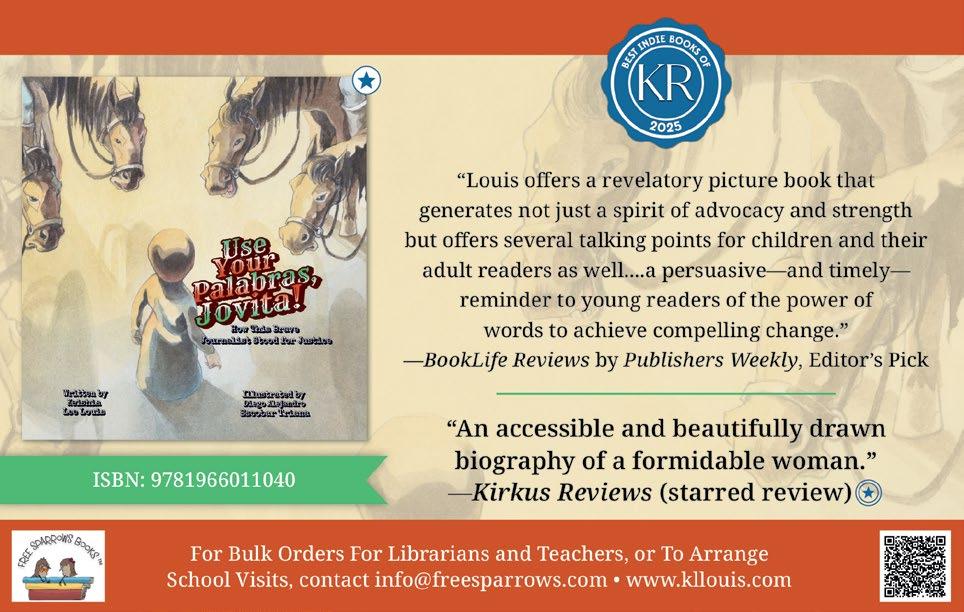
Michelle Jing Chan

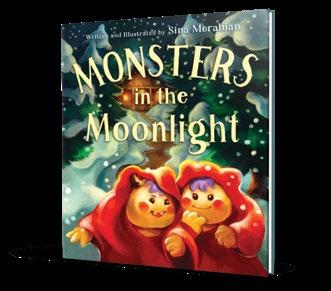
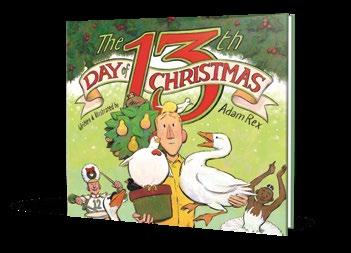




Katherine Rundell’s bestselling series of children’s fantasy novels launched in 2024.
Disney has acquired the rights to Katherine Rundell’s Impossible Creatures series of children’s fantasy novels,
the entertainment company announced in a news release.
Rundell’s series kicked off last year with Impossible Creatures, illustrated by Ashley Mackenzie and published by Knopf. The novel follows Christopher and Mal, two children who go on a quest to the mysterious Glimouria Archipelago to discover why magic is disappearing from the world. In a starred review, a critic for Kirkus called the book “an epic fantasy with timeless themes and unforgettable characters.” The series continued this fall with a second book, The Poisoned King, also illustrated by Mackenzie.
Three more installments in the series are planned, and Disney says that Rundell is “in discussions” to expand it even further.
Rundell will write the screenplays for the first two planned live-action movie adaptations, producing them under her Impossible Films company.
Disney CEO Bob Iger said, “When I read Impossible Creatures, I knew it belonged here at Disney. I was immediately drawn into the vibrant world Katherine imagined and the possibilities of what we could do

For reviews of the Impossible Creatures books, visit Kirkus online.
together with this story. Written by Katherine herself, these movies are in the best of hands with our Walt Disney Studios team, and I can’t wait to see this tale brought to the screen.”
—M.S.

An Ode to Big Emotions, Origami, and the Hope Inside All of Us





CAPTIVATING.
Kirkus Reviews, starred review
story reminds readers that feelings come naturally in waves and that little ones have the strength to ride through them with loved ones by their side.”
The Bulletin, starred review

The Horn Book, starred review




named Leonard sits outside on a swing, clutching a sepia-toned photo depicting his grandmother in pilot attire, standing before a single-engine airplane. The boy’s father hands him a red toy plane—“Leonard wanted to be a pilot like his granny,” explains an omniscient narrator—and he whooshes it around. After the plane gets stuck in a tree, the story veers into fantasy: A bird makes off with the toy, and Leonard stumbles trying to reclaim it, landing on the back of a giant white bird. As they fly after the stolen plane, Leonard’s grandmother, who has taken the form of a phoenixlike creature, comes to his aid before flying away. Harris’ effort to offer solace to grieving young readers tends toward metaphor (“Sometimes a memory is an adventure… / lifting you high above the clouds”) and affirmation (Leonard recalls his grandmother’s admonishment “Remember, you are brave”). Getting the message across less abstractly, and perhaps more effectively, are Harris’ digitally tweaked mixed-media illustrations, which are sure-handed, sensitive, and inviting. A winningly tenderhearted fantasy about navigating grief. (Picture book. 4-8)
Hay, Sam & Roald Dahl | Penguin Young Readers (272 pp.) | $8.99 paper October 17, 2025 | 9798217053162
Trying to save their seedy amusement park, the Twits tackle a group of young orphans. Setting the tone with an opening flood of liquid meat from a hot dog factory, this novelization of the 2025 animated movie The Twits spins an original plotline around gross bits and some even grosser characters drawn from Roald Dahl’s 1980 novel, with added elements from his other stories and current events. Mr. and Mrs. Twit are determined to recapture the family of magical, monkeylike Muggle-Wumps they kidnapped from Loompaland to
power Twitlandia, the uncommonly dangerous tourist attraction they built in their backyard. They steal a local election with outrageous lies and seize the orphanage where the fugitives are sheltering. But intrepid 11-year-old orphan Beesha—who’s brown-skinned in the film but, like other cast members, minimally described in the book—has other ideas. Various narrow squeaks, punctuated by exploding buttocks, sucking on a toad’s toes, and like delights, culminate in a counter-prank that leaves the noxious neighbors from hell unharmed but at least temporarily at bay. Hay doesn’t succeed in pulling the patchy plot into even a semblance of coherence, but that doesn’t keep him from stuffing it with gross-out moments aplenty. Lessons about the costs of bad behavior may fall flat, though, since the Twits, awful as they are, seem almost admirable for their sheer resilience in the wake of repeated humiliations. Episodic but sure to delight those who appreciate the ick factor. (Fiction. 7-10)
Star
Henkes, Kevin | Greenwillow Books (32 pp.) $21.99 | February 24, 2026 | 9780063469259
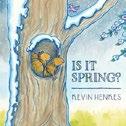
Henkes answers the question on everyone’s lips and within everyone’s hearts each winter.
“Is it spring?” Some signs indicate yes: the flowers down the street, the buds on the trees, the birds in the sky. But wait! An opposing opinion comes from the wind, “turning icy and sharp.” The gray clouds swoop in, and the sleepy animals stay in their homes. “Is it spring?” A late snow bedecking the tulips gives a resounding “No, no, no!” “Will it ever be spring?” This time the affirmative comes from the very sun itself, “warming the wind and melting the snow and calling the animals out of their dark homes.” “Yes! Yes! Yes!” Henkes leans into the frustration experienced by both children and adults yearning for green grasses and balmier days. Relying on
minimal yet well-chosen words and elegantly crafted art, he beautifully evokes the betrayal many feel when snow unexpectedly returns; the pinks, purples, and greens that appear in scenes of flowers, grasses, buildings, and benches are often obscured by thick layers of snow. Henkes deftly allows color to work its magic on readers’ emotions; even the shifting hues of the page backgrounds behind the titular refrain are well chosen. Masterfully captures that nebulous time when spring feels simultaneously imminent and worlds away. A seasonal triumph. (Picture book. 2-6)
Hevron, Amy | Beach Lane/Simon & Schuster (48 pp.) | $19.99 | February 24, 2026 9781665962674 | Series: Tiny Habitats
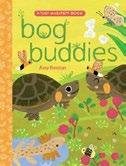
Learn fascinating facts about bogs’ functions and the many animals and plants that call them home. Bogs, often considered swampy and unwelcoming, don’t have the greatest reputation. But this deep dive is so inviting, enlightening, and playful that readers will eagerly soak up the captivating details. Following one year in the life of a bog, it starts with summer rains being “gulped up” by grinning personified peat. While the bog filters water, varied wetland creatures “slip-slide” in. After Hevron chronicles the bustling ecosystem’s expansion, she comes full circle as rain refills the bog once again. She doesn’t miss any chances to communicate information graphically or linguistically, starting with a title page showing a conveniently labeled bog and then seamlessly alternating between single and double-page spreads and comic book–style panels. Gauzy art, made from digitally collaged acrylic, marker and pencil, is anything but murky. Color shifts signify the changing seasons, and the bogs’ inhabitants are adorably charismatic. Critters like beavers, turtles, and wood ducks are fashioned from minimalistic but evocative shapes and feature sunny, arched line faces—even
flora, like pitcher plants. A similarly light touch ensures that the text never feels bogged down. It bounds along with springy alliterative phrases (“beaver kits kidded in cattails”) and speech bubbles overflowing with puns and witty one-liners (“I’m likin’ you!” says one gnome lichen to another).
A wisecracking work of nonfiction that will surely be read on re-peat. (more about bogs, author’s note, additional reading, selected sources) (Informational picture book. 4-8)
North American Birds
Hillenbrand, Will | Holiday House (40 pp.)
$19.99 | March 3, 2026 | 9780823462551
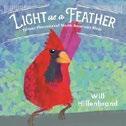
Hillenbrand invites young readers to discover the fascinating world of avian life.
Structured around 15 North American species—from the familiar northern cardinal to the majestic sandhill crane—this picture book balances natural history with visual appeal. Hillenbrand’s textured, layered artwork brings each bird to vivid life: The cardinal’s brilliant crimson plumage practically glows against a snowy branch, while the eastern bluebird’s azure feathers demonstrate the physics of light refraction through a clever infographic showing how “only blue escapes; the feather captures all other colors.” An image of a brown pelican, rendered in soft grays and tans, emphasizes the bird’s grace. Each species profile includes measurements, habitat information, and conservation concerns, presented through child-friendly text that answers questions
like “Why do woodpeckers drum?” and “Why are feathers so light?” Diagrams and scale comparisons enhance comprehension without overwhelming. In the backmatter, Hillenbrand describes his artistic technique—using cut paper and paint to create dimensional birds—as well as his desire to find “shapes within shapes” when he creates. Offering individual profiles, thematic explorations, and practical resources, the book encourages both browsing and deeper engagement, while the author’s note reveals that the work began as a series of illustrations sent to a friend recuperating from an illness.
A well-crafted blend of art and science that will spark curiosity about our feathered neighbors. (online resources) (Informational picture book. 4-8)
Kirkus Star
Ocean’s
Hoffmann, Jilanne | Illus. by Khoa Le Millbrook/Lerner (32 pp.) | $19.99 March 3, 2026 | 9798765643464
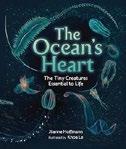
Zooplankton may be minuscule, but their impact is epic. Every night, microscopic ocean dwellers travel from the depths to the surface, then back again. Hunger drives these zooplankton, but they carry vital nutrients that power an entire ecosystem. Hoffmann relies on accessible phrasing as she explores complex ecology topics; food is “far above the zooplankton’s home,” and light is “not a friend” to the tiny creatures, who rely on darkness to hide.
A wisecracking work of nonfiction that will surely be read on re-peat.
BOG BUDDIES
Meanwhile, poetic phrasing—“Behold their strange and glorious beauty!”— enlivens the information and begs to be read out loud. Le’s compositions echo the lyrical writing. She employs dynamic diagonals as zooplankton make their ascent, churning curves that reinforce interconnectedness, and flat planes that anchor pivotal moments in pacing. The digitally rendered illustrations glow like delicate ghosts, rendering the animals in multihued pastels against inky, full-bleed backdrops; the effect is incandescent. With ample moments for narrative interaction, the book is ideal for schoolage storytimes. Hoffmann invites readers to cheer on the tiny heroes as they strive for the surface and flee predators; a lilting refrain—“rise, paddle, and rise”—may prompt choral reading and movement. In one scene, three kids—one brownskinned, two pale-skinned—pilot a boat through the waves. Their delight in the sea life around them serves as a tender reminder of how all life benefits from ocean ecosystems. This shimmering tale of interdependence and survival is STEM storytelling at its best. (more information, infographic, selected resources) (Informational picture book. 6-8)
Holderness, Penn & Kim Holderness lllus. by Vin Vogel | Little, Brown (40 pp.) $19.99 | October 14, 2025 | 9780316597678
A diverse group of kids are welcomed to the ADHD clubhouse. In rhyming verse, the Holdernesses teach kids with ADHD about the special ways their brains work while also introducing them to Bill Gates, Simone Biles, and other luminaries who have had this condition. Verse and images depict youngsters cavorting at a treehouse getaway: “This is our club, and now you’re a member.” The kids discuss the downsides (“Sometimes we are squirmy, sometimes we’re forgetful”) as well as the positives, like creativity and spontaneity. The authors also throw in a few traits
thrown in that seem only tenuously related to ADHD, such as loyalty and open-mindedness. Many kids will feel seen and may learn a few things about seeing their diagnosis as a benefit rather than a problem to be overcome. It’s also clear that the Holdernesses know their audience; it’s easy to envision kids gleefully screaming “fart!” when prompted by the text. Vogel’s illustrations are fun and colorful, depicting a diverse group of children. On the other hand, the scansion is often awkward. This, along with repetitive meter and the lengthy text, makes the book lag in the latter half. While this title is full of supportive messages, most of the really useful information is relegated to the backmatter, where some young readers may not absorb it. Children with ADHD would likely benefit from exposure to the ideas in this book, but it’s more of a conversation starter than a title they’ll reach for repeatedly. Valuable takeaway for neurodivergent kids, though the execution is a mixed bag. (authors’ notes, more information on ADHD) (Informational picture book. 5-9)
Hughes, Langston | Ed. by Shamar KnightJustice | Illus. by Various | Harper/ HarperCollins (48 pp.) | $19.99 January 20, 2026 | 9780063327054
This collection, illustrated by 23 Black artists, highlights recurring themes that appear throughout Hughes’ work: night, water, dreams, Harlem, jazz, Blackness.
Editor Knight-Justice, who contributes two illustrations, explains in a note that at age 14, Hughes’ poem “Mother to Son” not only introduced him to poetry’s rich possibilities, but deepened his understanding of his relationship with his own mother. He writes, “This is what poetry did for me, and I want it to do the same for you.” Some poems receive double-page spreads, while others, thematically aligned,
An inventive, immersive celebration of curiosity, courage, and learning.
BRIARWOOD
appear on facing pages. “Dream Variation,” like other selections, sees night as a solace—a warm, positive reflection of Blackness: “Then rest at cool evening / Beneath a tall tree / While night comes on gently, / Dark like me— / That is my dream!” The facing poem, “Harlem Night Song,” invites a loved one to roam nighttime streets pulsing with jazz. To visually unify the project, the artists adopt a palette of blues and purples accented with warm yellows, oranges, and the varied skin tones of the mainly Black and Brown children and adults that enliven each spread. Styles vary, from Islenia Mil’s sepia-rich nightclub scene for “Jazzonia” and Janelle Washington’s stylized seascape for “Long Trip” to Frank Morrison’s epic painting for “The Negro Speaks of Rivers,” in which families aboard a wooden craft struggle amid high waves below a stormy sky.
Well-chosen poems and spirited illustrations celebrate the legacy of a Harlem Renaissance luminary. (biographical note, photograph of Hughes, timeline, artists’ thumbnail biographies with photos) (Picture book/poetry. 6-9)
Hyde, Natalie | DCB Young Readers (236 pp.) | $14.95 paper | February 28, 2026 9781770868199
C alpurnia “Callie” Garcia dreams of spending a summer at selective, secretive Camp Briarwood, which is reserved for the brightest of minds. When Callie aces her Briarwood entrance exam (thanks
in part to having studied the science journal belonging to her great-grandfather Teodore Gartzia, who worked with Nikola Tesla), her teacher accuses her of cheating and withholds her results from the contest. But when a personal invitation arrives from the camp director, her summer takes an unexpected turn. Knowing her proud father will reject the much-needed scholarship, Callie agrees to earn her way by working as an assistant mechanic, helping to keep the steam-powered machines humming. Briarwood isn’t about typical summer camp activities like kayaking and crafts—it’s filled with mechanical marvels and science in which “inspiration and creativity combine in weird and wonderful ways to produce something unexpected.”
As she navigates new friendships, self-doubt, and a missing-persons mystery, Callie comes to realize that innovation depends on both intelligence and learning to trust and work with others. The camp setting is vividly imagined and bursts with energy. The prose is clear and brisk, making even complex concepts accessible, while the plot balances the thrill of discovery with reflections on belonging and confidence. Though one subplot feels underdeveloped, the worldbuilding and emotional resonance make up for it. Readers will find themselves wanting to revisit Briarwood. Callie’s parents are immigrants from an unspecified country that’s “halfway around the world.”
An inventive, immersive celebration of curiosity, courage, and learning. (Mystery. 9-12)
Jameson, Karen | Illus. by Ramona Kaulitzki Beach Lane/Simon & Schuster (48 pp.) $19.99 | March 10, 2026 | 9781665975407
A mind-expanding read for those who think that only birds build nests.
“Twigs in branches, /
Bumpy swell, / Leafy perch in which to dwell. / Who nests in trees?” The answer may seem obvious, but in fact there’s not a bird to be seen in Kaulitzki’s misty woodlands or the rest of the peaceful natural habitats that follow. Instead, in her simple interrogatory rhymes, Jameson offers two dozen alternative answers to the titular question—from squirrels, gall wasps, and orangutans and other apes that shelter in trees to rock dwellers like snow leopards and octopuses and other creatures that build safe homes in mud, sand, water, snow, and soil. The artist adds extra appeal to the wild animals she depicts, even the termites and the king cobra, by giving most of them human eyes and posing many with cubs, kits, or other young. Plainly aware that her revelations can’t help but arouse curiosity in readers, the author adds digestible tidbits of scientific information about each entry at the end before closing with guidelines for young observers and nature lovers: “Leave rocks, shells, pine cones, and other natural elements as they are. They may be someone’s home.”
A cozy selection to share with curled-up human nestlings.
(Informational picture book. 5-7)
Karas, G. Brian | Random House Studio (40 pp.) | $18.99 | February 10, 2026
9780593902608
In this deft work of informational fiction, doubts beset a tiny flier. It isn’t that our hummingbird narrator hasn’t made the flight from the northern to southern hemisphere before. But it’s such a daunting voyage that the protagonist is beset by anxiety whenever the trip comes up in thought or conversation. The days are getting shorter and cooler, and while all the other hummingbirds talk it up, “All I do is worry about the big trip.” It would be different if they could all go together, but “hummingbirds don’t fly in groups.” Still, friends and family are supportive in the lead-up to the journey, and as the day in question arrives, our minuscule hero just goes for it. It takes a lot of work, and the little bird encounters some doubts near the end, but finally, “There it is. Home, sweet winter home.” A closing note written from the perspective of the hummingbird offers additional facts about this flight. Laudably, Karas acknowledges the stress that accompanies a big life change, even one you’ve experienced before. Kids who feel a bit of anxiety as they return to school each year—or who must confront other life changes on their own—will appreciate this one. Karas adeptly sets his protagonist amid intricately detailed backgrounds where the
A mind-expanding read for those who think that only birds build nests.
WHO NESTS HERE?
bird is always visually dwarfed by the larger surroundings. Flitting and flying with a confidence that its hero initially lacks, this small tale soars. (Picture book. 3-7)
Keane, Claire | Random House Studio (40 pp.)
$18.99 | March 24, 2026 | 9798217029136
A youngster explores the great outdoors— and, along the way, carves out a sense of self. Keane’s energetic lines infuse a sense of vitality into her illustrations of a blond, ruddy-cheeked, paleskinned child who, accompanied by a basset hound, walks, climbs, and explores while considering the titular refrain as it resounds from within while also seemingly emanating from the natural world. Our young narrator expresses a oneness with the surroundings: “I am the solid rock beneath me / the soft clouds above me / and the air moving through me.” The palette and illustrations have a retro feel, but this isn’t mere nostalgia or idyll. A fall from a tree can be interpreted as a symbol of challenges in forging identity or achieving mindful connections, for example. This mishap is not tragic, however; nor are the troubles that the child encounters while heading home through rain and then a dark forest: “I am the trail I cannot see. I am lost.” The youngster finally returns home to a warm welcome; Keane makes clear to readers that her protagonist will be just fine, despite scraped knees and perhaps a chill from the rain. A pitch-perfect closing question—“Tell me, who are you?”—will invite contemplation and imagination long after readers finish this earnest tale. An artful invitation to big questions and connections. (Picture book. 4-8)
Kenseth, Lars | Balzer + Bray (32 pp.)
$18.99 | February 10, 2026 | 9781250408747
Moby-Dick ’s long been considered the great American novel; now it’s time to get the title character’s perspective on things. Meet Moby! After checking out “the dry parts of the world,” the exuberant whale notices a ship. Charmed (it looks like “a fish with a funny hat”), Moby comes over to play. Much like an overly enthusiastic toddler with a family pet, Moby begins frolicking with the ship. The marine mammal’s joyful antics don’t go over well with the terrified crew, particularly Captain Ahab. Even a contrite apology does little to assuage Ahab’s anger. That’s when Moby realizes that “not everybody will get you. But that’s okay.” Moby’s innocent obliviousness in the face of the sailors’ anger and fear ratchets up the humor. Even children who have never heard of Herman Melville’s novel will appreciate the silliness as our misguided hero attempts to make friends. For the most part, Kenseth’s art is simple, with pure digital lines and colors, though Ahab receives a full-page spread where he gazes at the whale, his face a mask of utter malice and rage, that offers a bit of unexpected complexity. Thar she blows! A hump like a snow hill! It is Moby, and a sweeter little antagonist you’ll rarely find elsewhere. (Picture book. 3-6)
Korman, Gordon | Harper/HarperCollins (272 pp.) | $19.99 | February 3, 2026
9780063429291 | Series: Ungifted, 3
In the third book in the Ungifted series, hypergifted Noah Youkilis graduates from eighth grade and unwillingly starts off his summer at Wilderton University.
Making matters better (or maybe worse), he gets to bring his best friend, Donovan Curtis, who “barely squeaked through eighth grade,” to help him adjust before the fall semester begins. “Trouble magnet” Donovan will spend his days as a counselor-in-training with fellow 13-year-old Raina Overbrook and five energetic 8-year-olds. Living and working on campus requires way more effort than the lazy summer he’d hoped for. Meanwhile, 13-year-old Noah shows that he’s leaps and bounds ahead of many of the college students as he develops an elite AI program, but he’s behind the curve socially and struggles to fit in with the older students. Noah is bent on joining the university’s top-secret Society of the Gavel, seeing it as a way to finding friends and a great intellectual challenge (he has an IQ of 206). Joining the society proves difficult, however, and Donovan and Noah can’t help but engage in hijinks, including hiding the school mascot—a 300pound pig—in their dorm room. Will they survive the summer without being caught pig-handed? Told from multiple points of view, the story is laugh-outloud funny, and readers will be entertained as Noah and Donovan try
Fundament-ally sound approach to natural history, with built-in hilarity.
to make sense of college life. The main characters present white. A hilarious romp. (Fiction. 9-13)
Lavelle, Kari | Sourcebooks eXplore (40 pp.) | $14.99 | March 3, 2026 9781464233067 | Series: Butt or Face?
The fourth entry in a tail-wagging game for young animal lovers. With a fresh set of artfully angled and framed photos, Lavelle again challenges viewers to guess whether they’re looking at the “fetching faces” or “beguiling butts” of 13 creatures, from a pink fairy armadillo to an emperor penguin. Turning the page reveals not only the answer, with a full-body photo, but boxes of pun-laden invitations to “Face the Facts” or go “Beyond the Backside” to learn a few basics about each animal’s habits and habitat. “You can’t spell ‘repeat’ without e-a-t,” she writes, for example, about the quokka’s habit of chowing down on food it has just barfed up, and thanks to coral-like tubercules on its skin that help it hide from predators, the reef-dwelling pygmy seahorse is “hard to sea!” “What a re-leaf!” she notes after describing how, once a week, sloths slowly travel to the forest floor to defecate. As usual, she ends with a clever kicker—a baby wombat peeking from its mom’s backward facing pouch, so that both answers are correct—on the way to closing deposits of additional data. Fundament-ally sound approach to natural history, with built-in hilarity. (author’s note, sources, map) (Informational picture book. 5-7)

For more by Kari Lavelle, visit Kirkus online.
Thar she blows! A sweeter little antagonist you’ll rarely find elsewhere.
CALL ME MOBY
Lerwill, Ben | Illus. by Xuan Le Nosy Crow (32 pp.) | $19.99 March 3, 2026 | 9798887772332
Lerwill delivers the dirt on soil’s composition and importance, as well as some of the flora, fauna, and fungi that call it home.
Burrowing into his topic—“lovely, mucky, wormy, squirmy soil!”—with contagious enthusiasm, the author loudly conveys the message that we wouldn’t exist, or at least the world wouldn’t be the same, without it. Or without its many denizens, from the mycelial networks that connect the roots of trees to the furry creatures, the microbes, and, in between, the many types of “creepy-crawlies” that burrow into it. In mostly cutaway views, Le starts off with a picture of our planet with its subterranean layers exposed, then goes on to close-ups of the swarms of living things that turn its topmost layer into “an ENORMOUS underground city where everything works together” and at last gives readers a glimpse of deep layers of tunnels and tubes beneath an actual, human city. Throughout the art, two children, one dark-skinned, one pale-skinned, act as wondering observers on the way to a final stand in which they turn to offer hands full of the “muddy, MAGICAL, MARVELOUS MIRACLE! ” Whether or not they check the understandable impulse to do some mucking around of their own, young readers will come away with a heightened
appreciation for the treasures lying just beneath their feet. Digs up plenty of fascinating facts and presents them in notably effusive tones. (Informational picture book. 5-7)
Lu, Bo | Abrams (40 pp.) | $18.99 February 3, 2026 | 9781419769221

Jarred by her recent emigration, a young girl recalls her grandmother’s magical stories as she makes soothing connections.
When her parents announce they “are moving to the West,” Ren’s impending separation from her beloved storyteller grandmother leaves her trembling. But Popo gives her a special pencil and tells her, “You will make your own magic there.” Still, whirling words and unusual colors underscore the realization that she’s “far from home.” Suddenly, she’s called Lauren. Cutting her long hair means that “even the face in the mirror look[s] unfamiliar.” Worst of all, Ren can’t see herself in the stories contained in her new books. But Popo’s magic emanates from Ren’s pencil, and though she may not always find the right words, she can use it to make her own stories come alive: Sharing new experiences with new friends lets her imagine stories where she truly belongs. Taiwanese American author/illustrator Lu’s softly whimsical pencil and watercolor illustrations get “a little help from Nora Ren Toft,” Lu’s real-life
daughter, who provides the drawings that young Ren creates. Lu empathically mirrors Ren’s linguistic disconnect by not translating details of her phone call with Popo, conducted in Chinese, about missing each other, dumplings, and Ren’s new friend.
A deft combination of the quotidian and fantastical transforms immigration challenges into a healing creative journey. (Picture book. 5-10)
Mahoney, Daniel J. | Farrar, Straus and Giroux (40 pp.) | $18.99
September 30, 2025 | 9780374392512
This secret agent is ready to prevent a cat-astrophe. Blond-haired, pale-skinned young Samantha knows that Walter, the family’s cat, is no ordinary feline; his code name is “Agent Kitty Pants,” and he regularly embarks on very important, top-secret missions. Samantha’s parents are exasperated when Walter takes Dad’s newspaper into the litter box, shreds the plumber’s pants, and bullies the neighbor’s cat, and they’re skeptical when Samantha tries to defend the mischievous kitty (the neighborhood cat had weapons of mass destruction… really!). Readers may be a bit unconvinced themselves, though scenes of Walter holding out his diploma from the Secret Agent Academy for Gifted Felines or sneaking about the house do provide some evidence—and make for some delightful imagery. Youngsters will be on Samantha’s side after they witness Walter use a fancy wristwatch—and his “dazzling secret agent moves”—to stop some mice from taking over the basement, and Mom and Dad are fully persuaded when Walter prevents Samantha from falling from a tree. Reminiscent of James Marshall’s work, Mahoney’s inviting, informal art is occasionally inconsistent in terms of perspective but always brimming with caricaturish charm. Walter’s more miraculous adventures
WHAT’S FOR DINNER?
are given nearly as much space as his more outrageous ones. Is he truly a secret agent? Unclear, but Mahoney clearly understands that all felines contain multitudes.
Chaotic and offbeat feline fun—cats and cat lovers are sure to approve. (Picture book. 4-8)
Kirkus Star
What’s for Dinner?
Maliush, Larysa | NorthSouth (32 pp.)
$19.95 | March 17, 2026 | 9780735846142
Big Gray Wolf wonders whether to spare the life of a lost rabbit. Each full moon, the wolves must sing for the moon to ensure good luck on their hunt. Something of a loner, Big Gray Wolf steps away to howl on his own. Amid the sounds of the wolves’ “AAA-WOOO!” he hears a highpitched “AAA-WAAA!”—and sees a tiny baby bunny. The youngster stops crying and gazes hopefully at Big Gray Wolf, who suddenly has a hard time following the Wolf Rule that “anyone found in the woods after nightfall [is] supposed to be eaten.” Adding to his moral dilemma is a note in the baby’s pocket, offering a “super delicious meal” in exchange for the return of “our dear little Bunkins.” A clever cost-benefit analysis (“What if they just gave him lettuce? Well, perhaps this bunny had a more appetizing brother or sister”) is followed by a hilarious sequence of the wolf braving myriad challenges to return Bunkins to his family—and perhaps to devour the hapless rabbits as well. Maliush’s stylized visuals
depict a delightfully anthropomorphized cast, from large-snouted Big Gray Wolf to Bunny, who’s nearly all ears. Her thoughtfully crafted text and art validate kindness and generosity while simultaneously maintaining suspense and keeping anxiety at bay for younger readers. Meanwhile, she also humorously cajoles older readers to ponder complex themes such as questioning societal rules and assumptions and weighing selfishness against altruism. A perfectly packaged—and perfectly funny—primer on situational ethics. (Picture book. 4-8)
Marino, Gianna | Philomel (40 pp.) | $18.99 March 24, 2026 | 9780593528839
Seven animals celebrate their physical similarities and differences.
When a lonely mule comes upon a pair of familiarlooking ears, she makes a new friend—and is introduced to several other animal pals, each with some physical similarity to another in the group. Mule and Rabbit notice their long ears, Beaver and Duck realize that they both have webbed feet, and Deer and Fox compare their slender snouts. The group members happily agree that they are similar in some ways and different in others, but that’s when Bear shows up. Bear doesn’t have anything in common with the other animals, and most of them are quick to tell him so. Bear turns to leave, but that’s when Mule points out that no one else has hooves like hers; soon, the friends realize that everyone has a unique feature that’s worth
celebrating, Bear included. Marino’s direct, slightly silly, dialogue-driven text is packed with conversation starters, making for the perfect read-aloud, with plenty of opportunities for participation. The illustrations reinforce the physical features of the lovable critters, giving our subjects lots of detail with plenty of white space across spreads. Marino emphasizes the repeated words similar and different , encouraging young readers to brainstorm what they know, notice, and wonder about the animal cohort.
Sure to jumpstart a constructive discussion about delighting in one another’s differences. (Picture book. 3-8)
Matheson, Christie | Sourcebooks
Jabberwocky (40 pp.) | $18.99
February 3, 2026 | 9781728272108
While we wait for bunnies to appear, some unusual collective nouns hop past.
As in her earlier book, A Mischief of Mice (2024), many of Matheson’s group labels are lesser known: “a charm of goldfinches,” “a bale of turtles,” “a parcel of deer,” “a kaleidoscope of butterflies,” and “a banditry of chickadees.” These fascinating collectives are naturally integrated into a sweet story. When a rabbit goes missing, the friendly local animals— among them “a scurry of squirrels,” “an army of frogs,” “a loveliness of ladybugs”—express concern. A sleuth of wise bears finally arrive with an explanation: She might be “busy feeding someone, deep in that cozy nest.” And right on cue, the mother rabbit arrives, “leading a fluffle of bunnies.” The writing, in large type and a readable font, is clear and poetic, with rhyming text but no rigid meter. The rhymes are sometimes slant or near: for instance, shifty matched with swiftly. Matheson’s pastel watercolors are perfectly
suited to her gentle text. Set against flat, wallpaperlike florals, the fauna are mostly realistic, though sometimes they stand upright and strike human poses. Backmatter includes facts about the animals and notes a few additional nouns; for instance, deer collectively can be called by the more common herd , butterflies are also a swarm or flutter, and swans are also a bevy, a wedge (when in flight), and a bank (on land).
A delightful tale to extend a budding logophile’s lexicon and a young naturalist’s knowledge. (Picture book. 4-8)
McLaughlin, Eoin | Illus. by Guilherme Karsten | Nosy Crow (40 pp.) | $18.99 March 3, 2026 | 9798887772257
With help from a human author, a book retraces its journey from seed to codex.
“I was a pine tree,” the proud narrator proclaims. “I was tall, green, and handsome.” Before that it was a pine nut that was eaten by a hungry squirrel named Derek, then passed on to an industrious dung beetle named Barbara before ending up in just the right woodland spot to sprout and grow to towering size. Then it was chopped down (“I KNOW. I was fuming”), fed into a series of machines to be made into paper, and transformed into a book—which is amazing because, of course, “books are magic. And stories are forever.” Switching occasionally to a vertical orientation for retro-style illustrations, Karsten carries the effusive explainer from forest floor through Derek’s intestines and on to a set of complex but generic factory machines and finally to a library where a racially diverse set of children are happily poring over and sharing their bookish finds. McLaughlin skips a few steps along the way—those interested in the
nuts and bolts of book manufacturing may be disappointed—but in conjunction with Aliki’s outdated but still useful How a Book Is Made (1986), he does provide a broad picture of the process, and the earnest message about the value of books and stories is a lovely bonus. Enlightening and affirmative, if a bit skimpy on details.
(Informational picture book. 6-8)
February 17, 2026 | 9781836004158
Being the biggest can be both exciting and difficult.
“I used to be the only little in my house,” says the book’s intrepid, tan-skinned narrator as two parents gaze at a squirming infant. “That’s me. The teeny tiny baby right there.” But then a new bundle of joy comes along, and the “little” becomes “the oldest, the big one, the biggest little.” Being the biggest, the tot explains, comes easily. “I am a good helper…a patient teacher…a kind sharer…and a confident leader.” Each of Woodward’s images shows the older sibling engaging sweetly with the younger one. Still, our protagonist gets frustrated when “grown-ups forget that I’m no longer little,” and even a confident big sibling can feel overwhelmed when starting school or learning to swim. Sometimes, the narrator explains, “I don’t want to be the biggest anymore.” As the youngster curls up in a ball, Mommy steps in with reassuring words. “No matter how big you grow…you will always fit here next to me.” Becoming a big sibling can elicit many different reactions, but Mead validates those complex feelings. Gentle, smudgy vignettes, mixed with full page spreads, follow the many facets of growth and love of this multiracial family.
An upbeat yet realistic look at growing up from an eldest child’s point of view. (Picture book. 3-6)
Meikle, Fidan | Kelpies (296 pp.) | $11.99 paper | February 10, 2026 | 9781782509301
A refugee narrative unfolds through the eyes of a gifted Afghan boy who’s navigating trauma and displacement. Thirteen-yearold Samim Ali, a boy from Ghazni, Afghanistan, recounts the journey he undertook after losing his family in a devastating airstrike; they were targeted by the Taliban for being Shia Muslim Hazaras. Ten-year-old Samim fled with his Uncle Roshan and his neighbor and best friend, Zayn (who also lost his home and family), embarking on a nearly-threeyear journey spanning six countries, which ends with Samim arriving alone in the U.K. Comforted by Zayn’s ghostly presence, Samim shares his story with his caseworker while struggling to adjust to his new circumstances. His foster family and his brilliance in math and chess offer solace amid the trauma. Meikle’s lyrical prose captures the emotional weight of displacement and survival, offering middle-grade readers a heartfelt glimpse into refugee experiences. The gripping dualtimeline narrative adds depth, balancing past horrors with present challenges, including facing bullying and the uncertainty of applying for asylum. However, the story occasionally falters in its framing of complex geopolitics and the nuances of religious and societal differences. For example, Samim’s repeated reflections on contrasting social norms around mixed-gender interactions in Afghanistan and the U.K. show one aspect of his adjustment process but risk reinforcing a flattened, binary view of cultures and potentially lack the
that breathes new life into a timeless tale.
SUN, MOON, AND STAR
nuance necessary for readers to grasp the diversity of global experiences. Poignant and lyrical but marred by oversimplifications. (map, author Q&A) (Fiction. 10-14)
Melvin, Leland & Joe Caramagna | Illus. by Alison Acton | First Second (208 pp.) $22.99 | $14.99 paper | February 3, 2026 9781250782786 | 9781250782793 paper Series: Space Chasers by Leland Melvin, 2
In this second series entry, an 11-year-old budding astronaut must use his mental fortitude and emotional acuity to work with his team and reach his true potential.
Steven Amiabelle, a Black boy who’s a wheelchair user, is training in NASA’s Neutral Buoyancy Lab when he injures his shoulder during an exercise. He returns home to recover, only to be babied by his mother and persecuted by his school bully. Steven’s grades drop, and he renews his determination to return to Houston and the STEAM Team. Steven, who has cerebral palsy, works on physical and occupational therapy exercises, and reunites with his teammates, ready to learn about living on the Moon. Major Allen Bolden from NASA’s Office of Safety and Mission Assurance joins the kids—he’ll be traveling with them during their second try at a successful space mission. Moon Base Alpha offers new challenges for Steven and the rest of the STEAM Team. The challenges of navigating miscommunication and interpersonal dynamics will resonate with readers who have played
team sports or participated in group activities. Moonquakes help maintain tension in the narrative, accentuating the multiracial team’s dynamics. Co-author Melvin, an engineer and educator who’s a former NASA astronaut and NFL player, brings firsthand experience to this entertaining tale. Acton’s engaging illustrations enhance the characterization and bring the varied settings to life.
A fascinating look at the interdependence inherent in negotiating both space travel and friendships. (authors’ note) (Graphic science fiction. 8-12)
Middlemiss, LaRonda Gardner | Illus. by Reggie Brown | Roaring Brook Press (32 pp.) $18.99 | April 21, 2026 | 9781250843050
Upon receiving affirming messages from a caregiver, a youngster surges in confidence. Parent and child, both presenting Black and dressed for cool weather, walk along the shore, a small unleashed gray dog in train. On each spread, the little one asks, “Do you see me?” The adult responds affirmatively, listing in turn the many positive traits that the child displays: “Yes indeed, I see you helping friends in need,” “I see courage when you face fear,” “You fill my eyes. / I see adventure and surprise.” Meanwhile, Brown’s images depict the child comforting the dog after a crab claws at its paw, inching bravely across a suspended log, and excitedly venturing onto the rocks as the waves
splash. When the parent turns the question to the child, asking, “Do you see you?” the little one responds with self-praise (“I see myself, warm and caring”) and eagerness for the future (“I’m ready to learn, to grow, to be”). On the penultimate spread, the two return home, where another parent embraces the first, rounding out an image of a loving, tightknit Black family. Middlemiss’ empowering verse has a simple rhyme scheme and makes for a pleasant read-aloud despite the inconsistent meter and the occasional forced rhyme. What Brown’s digital art lacks in warmth, it makes up for in its convincing rendering of a seaside town, with its cliffs, sparkling water, charming shops, and views of the horizon. This celebration of childhood adventure and freedom is a breath of fresh air. (Picture book. 3-6)
Miller, Nancy So | Holiday House (32 pp.)
$18.99 | February 24, 2026 | 9780823459407
A resourceful trio of sisters confronts a cunning tiger in this inventive retelling of the Korean folktale “The Three Little Girls.”
A mother’s simple warning sets the stage for a tense showdown between clever children and a menacing predator. Before leaving for the village, Eomma gives each of her three daughters a gift and tells them to watch over one another. When a hungry tiger shows up at the door, the girls must outmaneuver the interloper, with help from the Sky God, who lowers a rope from the heavens; the creature attempts to climb it, to its detriment. With reverence and a modern touch, Miller reimagines a centuries-old tale. Loaded with detail and brimming with charm, her meticulously constructed cut-paper images are the book’s standout feature. Watercolor
depictions of the characters are positioned among tiny hand-crafted sets created from clay, paper, wood, wire, and moss and then photographed. The orange tiger blazes across one double-page spread, while the rope glows against a dusky sky. In her backmatter, Miller notes that she drew influence from Korean folk arts and crafts and discusses honoring the source material while making carefully thought-out changes (for instance, giving her female cast more agency and character development).
A visually rich and respectful retelling that breathes new life into a timeless tale. (bibliography) (Picture book. 6-10)
Miller, Sharee | Little, Brown (40 pp.) $18.99 | August 19, 2025 | 9780316592284
On the eve of picture day, a young Black boy mulls a big decision. While all the other students have big plans for their hairdos, Jordan isn’t so sure about his own look. He adores his big, soft, cloudlike hair, which “sits on top of [his] head like a crown,” but Grandma, Daddy, and Mama all agree that it might be time for a change. Jordan is reluctant, but Mama is warmly encouraging as the two head to her barbershop, where they meet an assortment of people who vary in gender, complexion, and hairstyle. “I even see my friends from school,” Jordan observes. He contemplates the options (a high top? A cool design shaved into his hair?), but, inspired by seeing the barber giving Mama the perfect cut, Jordan realizes what he wants. With a whisper to the barber, who has a crisply parted flattop, Jordan gets the style of his dreams; Miller builds anticipatory excitement over the next few pages as she eventually reveals Jordan’s look. Now sporting a bow tie, a well-coiffed Afro, and a big grin, Jordan is at last
ready for his close-up, alongside a class full of kids with lovely, widely varying ’dos of their own. Illustrations rendered in watercolor and colored pencil with thick black ink outlines on textured paper depict a bright, inviting world where change initially seems daunting but becomes manageable, even rewarding, with the support of friends and family.
A picture-perfect tale of self-love and acceptance. (Picture book. 4-8)
Star
Moore, Clement C. | Illus. by Lauren Semmer
Clarion/HarperCollins (40 pp.) | $19.99
September 30, 2025 | 9780063373594
The classic Christmas poem gets citified. Everyone knows Moore’s yuletide mainstay: “ʼ Twas the night before Christmas, / when all through the house,” and so on. In the typical picture-book treatment, the home at the poem’s center is a single-family dwelling, its closest neighbor too far away to hit with a snowball. In Semmer’s rendering, the words “So up to the housetop the coursers they flew” are accompanied by an image of Santa’s reindeer on the roof of an apartment building that’s part of a city block. This time around, “the moon on the breast of the new-fallen snow” is paired with an illustration of, not a pristine lawn, but a snowdusted cityscape, and the spread announcing “I knew in a moment it must be St. Nick” finds a brownskinned guy, not a white dude, wearing the red suit. The book’s narrator is a Black child who lives in a beautifully appointed apartment with a cat and two siblings, two parents, and a grandparent. Semmer’s blocky, digitally tweaked pencil art, which suggests cut-paper tableaux, is micro-detailed and thoroughgoing—there is no unused
Morrell, Christyne | Delacorte (272 pp.) $17.99 | February 24, 2026 | 9798217117253
A plucky 12-year-old tries to save her mother’s business. Avid Agatha Christie fan Amber Adler is determined to find criminals at the Cozy Koi Bed-and-Breakfast. She believes that doing so will reunite her separated parents by bringing her “world-famous detective” Dad back to their small town from New York City. Numerous false accusations later, Amber is no closer to catching a culprit. The arrival of the wealthy Willoughbys for a family reunion piques her interest. Ignoring Mom’s directive—“no creeping, no peeping, no prying, no spying”—she listens in on a guest’s cryptic phone call and infers it to be a plot to murder E.B. Willoughby, family patriarch and owner of the Scarlet Snakebite, a ruby worth $6.2 million. Terrified but excited, Amber scrutinizes the guests during their cocktail party and rummages through their belongings during turndown service. Her feverish sleuthing and warning about his safety endear her to E.B., who enlists her to work the case and protect him. But when someone steals the ruby, Amber’s mom is framed. With help from Tai, her theater kid friend, and librarian Mrs. B, Amber solves the case, learning hard truths about herself and her family along the way.
>>> space—and the traditional Christmas colors are represented by variants like tomato red, mint green, and mustard gold. Absolutely everything is alluring, especially the Christmas cookies, which sit on a dining table that faces not a Currier and Ives print, but a picture window overlooking a suspension bridge. Good tidings indeed. (Picture book. 4-8)
This review originally ran in the December 15, 2021, issue.
“Fighting Shirley” was no ordinary politician.
The story opens in Barbados, where Shirley Chisholm spent a relatively carefree early childhood with her sister, Muriel, on their grandparents’ farm. Upon being sent to live with her parents in Brooklyn, Shirley had to adjust to much stricter household rules. She excelled academically throughout her school years, and after graduating from Brooklyn College, began her teaching career in early childhood education. As an administrator of child care centers, Chisholm
devoted herself to child welfare and community affairs. Her work put her in touch with the needs of working people and their families, and she labored ceaselessly to get candidates elected who would make meaningful changes. Eventually, she decided to run for office herself and became the second Black woman elected to the New York Assembly and, after that, the country’s first Black congresswoman. Aggs relates how Chisholm dedicated her efforts to improving the lives of her constituents, often finding herself at loggerheads with

Shirley Chisholm: A Graphic Novel Aggs, Patrice; illus. by Markia Jenai Sunbird Books | 48 pp. | $10.99 | February 15, 2022
9781503762411 | Series: It’s Her Story
colleagues. Chisholm’s boldness and desire for change led her to seek the Democratic Party nomination for president of the United States. Although she was unsuccessful, her groundbreaking campaign was a momentous sociopolitical event. This lively, optimistic biography is an accessible introduction to Chisholm’s life for younger


readers, highlighting her determination to stay true to herself and her ideals. The illustrations aren’t particularly original, but the colorful panels effectively propel the narrative.
An interesting portrait of an American mover and shaker refreshingly presented in graphic novel format. (Graphic biography. 8-10)

THE TALE OF THE WICKED OLD WOMAN AND THE VERY NICE ‘BEAST’ OF CROUCH END
BY LANCE LEE


“…gorgeously unusual…” —Kirkus Reviews






“…charmingly illustrated…inspiring…” —Booklife Reviews (Publishers Weekly)
—LoveReading4Kids UK



“…lyrical….a story to be shared across generations.”
—Readers’ Favorite, 5 stars
Paperback: 979-8-21830-614-4
Hardback: 979-8-21830-612-0



“…a quick, light-hearted read…[a] magical tale.”





Random House will publish Sing the 50 United States! next spring.
A new Dr. Seuss book is coming in 2026, nearly 35 years after the death of the iconic children’s book author and illustrator.
Random House Children’s Books will publish Seuss’
Sing the 50 United States! next spring, the press announced in a news release. The manuscript for the book was discovered earlier this year at the Geisel Library at UC San Diego alongside a cover sketch and notes about the art direction; Tom Brannon illustrated the book based on those notes.
Seuss, whose real name was Theodor Geisel, is one of the most enduring creators of children’s literature of all time. His books, including If I Ran the Zoo, The Cat in the Hat, Green Eggs and Ham, and The Lorax, are still staples in homes and classrooms. Several books by Seuss have been published posthumously.
Susan Brandt, the president and CEO of Dr.
Seuss Enterprises, said in a statement, “Uncovering a new work from Ted is like finding a time capsule of his imagination. Sing the 50 United States! celebrates his boundless creativity, genius with words, and enduring ability to inspire young readers everywhere. We’re honored to share this new Dr. Seuss treasure with readers across America during such a meaningful milestone year.”
Sing the 50 United States! is slated for publication on June 2, 2026.—M.S.

For reviews of Dr. Seuss’ books, visit Kirkus online.

The prize will be judged by a panel of adults and children.
A new Booker Prize is coming next year.
The Booker Prize Foundation announced in a news release that it will launch the Children’s Booker Prize in 2026, with the first winner receiving the award in 2027.
The Booker Prize, given annually to “the best sustained work of fiction written in English and published
in the U.K. and Ireland,” was established in 1969. In 2005, the foundation launched the International Booker Prize, now given to an author and translator for a book written in a language other than English.
The Children’s Booker Prize, the foundation says, will “celebrate the best contemporary fiction for
children aged eight to 12 years old, written in or translated into English and published in the U.K. and/ or Ireland.”
The award will be judged by a panel of adults and children. The first prize jury will be chaired by Frank Cottrell-Boyce, the U.K. children’s laureate and author of books including Millions, The Astounding Broccoli Boy, and Sputnik’s Guide to Life on Earth.

Frank Cottrell-Boyce

For more literary awards news, visit Kirkus online.
The prize will come with a cash award of 50,000 British pounds (about $67,000) to be split among the author, illustrator, and translator, if applicable.
Gaby Wood, the chief executive of the Booker Prize Foundation, said of the new prize, “It aims to be several things at once: an award that will champion future classics written for children; a social intervention designed to inspire more young people to read; and a seed from which we hope future generations of lifelong readers will grow.”—M.S.
First-person narrator Amber, who reads white, is clever, humorous, and endearing, and readers will feel all her emotional ups and downs. Morrell includes small details that young sleuths will enjoy noting as they try to solve the case alongside Amber. Intelligent and funny, just like its narrator. (floor plan, suspect tracker) (Mystery. 9-13)
Birdy
Moss, N. West | Christy Ottaviano Books (272 pp.) | $17.99 | February 17, 2026 9780316446419
In Moss’ debut, 11-year-old Birdy grieves the death of her mother and tries to adjust to her new life.
Although Birdy’s mother had been in and out of hospitals, struggling with cancer “for pretty much as far back as Birdy could remember,” she never made provisions for Birdy and her 7-year-old brother, Mouse. The children’s father died many years ago. Six weeks after Mom’s death, the siblings move from New York City to upstate New York, where they’ll live temporarily with elderly Aunt Mitzie, a distant paternal relative, and her husband, Uncle Shadow. Mitzie and Shadow have a full fridge, plenty of room, and lots of time, but Birdy is anxious enough about their situation that she takes some of Mitzie’s housekeeping money. As the summer passes, the siblings explore the fields around their new home, learn to swim at summer camp, and get to know another
relative they never knew they had. Birdy is understandably angry, resentful toward her mother for dying, tired of being grateful, and slow to trust, but before summer ends, the characters have reached a peaceful resolution. A lot of things happen, but there isn’t much of a cohesive plot. Although Birdy and Mouse grew up poor, young readers will wonder why they have no clothing or special belongings connecting them to their former lives—only “one suitcase between them,” with basics like toothbrushes and pajamas purchased by kind neighbors. Characters read white. Pleasant prose but lacking in nuance and depth. (Fiction. 8-12)
Nafousi, Roxie | Penguin Workshop (240 pp.) | $8.99 paper | February 3, 2026 9780593890936
A n uplifting guide for kids to cultivate positivity, handle tough emotions, and pursue big dreams. This young readers’ debut by bestselling British author and self-development coach Nafousi is both practical and approachable. It introduces manifesting —defined as “using the power of your mind to positively change your life”—through a clear two-part structure. The first section explains the “Four Steps to Manifesting”: understanding emotions, building confidence and self-belief, practicing gratitude, and setting goals. The second section, “The
Journal,” provides a thoughtfully designed seven-week guided template where readers can apply the steps by answering prompts. Each chapter introduces concepts in a chirpy, age-appropriate tone, then provides practical tools for applying them. The first step addresses fear, worry, guilt, embarrassment, anger, and sadness, reassuring readers that these emotions are normal and offering exercises to manage them, including affirmations, breathing techniques, and meditation. The next step explores the distinction between self-belief and confidence, with concrete strategies for developing both. The author presents the final two steps—gratitude and goal-setting—through relatable examples and scenarios that will resonate with young readers, such as the pitfall of comparing ourselves to people on TV or social media. The explanations of why the four steps work respect children’s curiosity and intelligence and avoid getting bogged down in heavy brain science or psychology. The activities, presented without condescension, are simple, engaging, and achievable. Ideal for any young person needing a boost in confidence, motivation, or stress-management. (journal) (Nonfiction. 9-13)
Newman, Lesléa | Illus. by Sarita Rich Charlesbridge (32 pp.) | $18.99 March 24, 2026 | 9781623545710
A child helps a friend grapple with the loss of a relative. Lizzie’s mother is making brownies to take to Joshua’s house; Joshua’s grandfather has just died, and, as Mom explains, he and his family are sitting shiva, the Jewish period of mourning. At Joshua’s home, people explain various customs to Lizzie, like ritual handwashing and covering mirrors. Though informative, these moments sometimes feel a bit clunky, clearly intended to educate readers unfamiliar with shiva rather
than advance the narrative. Rabbi Sarah arrives to lead prayers and hold space for the family to share stories about Joshua’s grandpa. The family’s dog, Queenie, provides moments of levity, keeping the serious topic from becoming overwhelming and demonstrating that it’s OK to laugh even amid grief. After, Lizzie sits with Joshua while he cries and recalls his grandfather telling him to nosh on something sweet every day, because life shouldn’t be bitter. Joshua decides to eat two brownies— one for himself, and one for his grandpa—representing the sweetness that exists even in times of sorrow. Newman handles the complexity of loss with care and authenticity in an age-appropriate way. Rich’s muted, expressive watercolors are well suited to the gently solemn tone of the story. Lizzie and Mom are brownskinned, while Joshua and his family are lighter-skinned; their community is diverse.
A sensitive introduction to grief and to Jewish mourning rituals. (author’s note) (Picture book. 4-8)
Odeh, Maysa | Illus. by Nadine Issa Henry Holt (32 pp.) | $18.99 January 6, 2026 | 9781250365552
Malak and her grandmother observe Ramadan by cooking a cherished meal together. This Ramadan, neither Malak nor her Teta will be fasting—Malak’s too young, and Teta’s on a new medication. So they decide to find another way to make the holy month special. Malak asks her grandmother to show her how to prepare iftar, the meal eaten to break the fast each evening. But what to cook? Their Palestinian family’s favorite meal—makloubeh! The dish contains layers of meat, rice, and fried vegetables, but everyone prefers a different kind. Malak’s grandfather likes eggplant makloubeh best, while
her mom’s favorite is cauliflower. As the ingredient list grows, Malak worries: “What if everything doesn’t go together?” But, as Teta points out, “Every makloubeh is unique…Just like each family.” Soon, the meal is nearly ready, and Malak’s uncle places a tray over the simmering pot and, per tradition, flips it upside down before serving it (indeed, makloubeh is Arabic for “upside down”). While many children’s stories about Ramadan emphasize fasting, this charming tale, rooted in the author’s own experiences, notably shifts focus to the iftar. Issa’s cozy, digital illustrations exude familial warmth and feature deeply meaningful threads of cultural identity such as the traditional Palestinian thobe, keffiyeh, olives, and keys hanging on the wall, symbolizing the right of return. A vibrant, soulful feast of tradition, identity, and love. (author’s note, recipe for makloubeh) (Picture book. 4-8)
Paul, Ann Whitford | Illus. by David Walker Farrar, Straus and Giroux (32 pp.) | $18.99 January 13, 2026 | 9780374391942 Series: If Animals Kissed Good Night
Paul and Walker celebrate the many ways that very young animals might express their love. With numerous series titles under their belt—among them If Animals Kissed Good Night (2007), If Animals Said I Love You (2017), and If Animals Loved Books (2025)—the creators take the theme in a different direction, geographically speaking, focusing on Australian natives. A wombat, a striped orange cat, a koala, a quokka, a kookaburra, a magpie, a wallaby, a skink, a dingo, a possum, and a kangaroo show their love for their mothers in various ways: making a card, gathering tasty leaves, writing a tender note of appreciation, baking a cake (Mama’s
favorite: “beetle-bug cake”), going for a walk with Mama, giving her a rest, and offering her gifts. Of course, just saying “I love you” is also a sure thing! Each gesture is imbued with thoughtfulness and appreciation. Paul’s steady rhymes anchor her sweet sentiments. Round, blue-tinged Wombat takes center stage throughout, backed by an adorable supporting cast of cuddly, soft semi-anthropomorphic creatures brought to life by Walker’s vivid pastels. His watercolorlike illustrations depict a couple of Australian trees as well: eucalyptus and banksia. With its inclusion of Australian fauna, the creators’ latest sets itself apart as it continues to demonstrate the universality of love.
A meaningful new series addition, suffused in warmth and tenderness. (Picture book. 2-5)
Paul, Miranda & Baptiste Paul | Illus. by Christopher Silas Neal | Clarion/ HarperCollins (40 pp.) | $19.99 February 3, 2026 | 9780358576594
Families in different circumstances and varied locales welcome bedtime under the same nighttime sky. On one page, a family enjoys milk and cookies together, while on another, a different child snuggles up as Grandma reads a story. Elsewhere, others are missing loved ones, like a sister away serving in the military or a caregiver working the late shift. “Some apartments and houses sit empty today”: One family has been displaced by natural disaster, another is traveling, and yet another welcomes a new baby at the hospital. Whether in a bed, on a ship, or by a tent, families of all shapes and sizes can find comfort in the commonality of “a roof made of moonbeams and twinkling stars” as they say goodnight. Careful viewers will spy an owl soaring through the dark blue
evening sky, visiting these diverse families. The calming cool tones of Neal’s appealing illustrations, paired with the Pauls’ soothing, rhyming verse, make this a lovely choice for a bedtime story. An especially stunning spread depicts the northern lights; throughout, cozy comforts and loving embraces contribute to a warm and hopeful tone. Emphasizing love, compassion, and connection, this story will be particularly comforting to children experiencing hardship. A gentle, reassuring bedtime book that encourages readers to feel solace in the stars above and the love that is all around. (Picture book. 4-8)
Kirkus Star
Pimentel, Annette Bay | Illus. by Faith Pray | Henry Holt (48 pp.) | $19.99 March 31, 2026 | 9781250358448
Marking the 100th anniversary of the first Winnie-thePooh book, a paean to that silly old bear and the team that brought him to life. With a skillful nod to the original titles, Pimentel fashions her story of Pooh Bear’s origins as a conversation between Christopher Robin and his ursine pal. As she recounts author Alan Alexander Milne and artist Ernest Shepard’s complicated relationship— Milne initially rejected Shepard as a potential illustrator—she weaves in information about what making the book entailed. In other children’s books at the time, “images stood guard at the beginning of a chapter” or “simply leaned against the words,” yet Milne, Shepard, and their editor had “revolutionary ideas about how words could work with pictures.” Pimentel softens technical jargon into ideas sure to spark young
A paean to that silly old bear and the team that brought him to life.
HOW A BEAR BECAME A BOOK
readers’ imaginations, while her unmistakable fondness for the subject matter shines through. She elegantly explores lofty concepts (“They imagined Alan’s words and Ernest’s pictures dancing together”), anchored by Pooh’s deliciously twee rejoinders (“I suppose even bears of very little experience can dance!”). Backmatter even introduces readers to this book’s editor, art director, and team. Meanwhile, Pray references Shepard’s style yet imbues her work with an impressive originality, portraying Pooh as a vague collection of words that grows more distinct as his first book nears publication. A stunning tribute to a classic that also offers insight into the bookmaking process. (bibliography) (Informational picture book. 4-8)
Platt, Cynthia | Illus. by Josh Cleland Clarion/HarperCollins (32 pp.) | $12.99
January 20, 2026 | 9780063483033
Series: Holidays in Disguise
It’s nearly time for the Easter egg hunt…but where’s the guest of honor?
The minutes are ticking away, but the eggs haven’t been hidden, and the Easter Bunny (described with they/them pronouns) is lost! Five children, who vary in skin tone, decide to shepherd the bunny to the city park where the hunt is being held, but they face delays at each turn. Knowing that grown-ups will “fuss and hover” if they notice the Easter Bunny, they disguise the rabbit as a street musician, but a crowd gathers to listen. A wagon, a bonnet, and a pacifier
transform the bunny into the cutest baby ever, but they swiftly draw a horde of admirers. Later, a minimally disguised Easter Bunny joins a random throng of turkeys in the park—a shoutout to the creators’ Turkeys in Disguise (2025)—and somehow avoids detection. Eventually, all the eggs are hidden, and the Easter Bunny hops away. Realizing that they’ve missed the egg hunt amid the chaos, the children are dismayed until they discover the perfect treats that the rabbit has hidden just for them. Cleland’s vibrant digital cartoon illustrations have a scribbly, childlike feel as they depict the fun-loving kids cooperating and actively problem-solving; readers will enjoy searching for the eggs and the sometimes hidden Easter Bunny. Platt’s jaunty, action-packed rhyme includes vocabulary to engage older listeners as well. A rousing tale worth sneaking into youngsters’ Easter baskets. (Picture book. 4-8)
Porter, Billy with Chris Clarkson | Illus. by Charly Palmer | Abrams (40 pp.) | $19.99 March 17, 2026 | 9781419745836
Actor Porter exhorts readers to dream big as he revisits his difficult childhood—and the talent that allowed him to finally soar. Billy’s mother, who uses a wheelchair, calls him her songbird and says that his voice is bigger than his body. When Billy sings, he feels self-assured; when he remains silent, he feels “like a songbird with its music turned off.” At school, he’s quiet, attempting to tamp down who he is to fit in, but kids don’t like how he walks or talks. (An
afterword explains that children at school bullied him for his looks and that at his Pentecostal church, he was dubbed “a little funny”—a “‘nice’ way of saying they thought I was queer.”)
But Billy’s music teacher, Ms. Irene, boosts his confidence as she encourages him to raise his voice in song. At the school talent show, he shines. No longer bullied, he gains the admiration of the other children, which helps him believe more fervently in himself. Porter’s earnest, first-person narration pairs well with Palmer’s explosively energetic acrylic paintings, which abound with birds of many kinds and colors. The peacock feather on the title page nicely foreshadows the climax when Billy sings from the stage, sporting a full display of peacock feathers, which readers (but not the characters) also see on his back during his standing-ovation performance. A feel-good biography with illustrations as bright and ostentatious as the fabulous Billy Porter himself. (Picture-book memoir. 4-8)
Questlove with S.A. Cosby | Illus. by Godwin Akpan | Farrar, Straus and Giroux (304 pp.)
$18.99 | February 17, 2026 | 9780374393175
Series: The Rhythm of Time, 2
In this follow-up to The Rhythm of Time (2023), young time-traveling adventurers face their biggest challenge yet, forcing them to question themselves and one another. Rahim looks forward to starting eighth grade with best friend Kasia even though he anticipates a tough transition after homeschooling. Kasia makes friends as seamlessly as she makes the cool beats that Rahim skillfully raps over. Although Rahim, who’s a target for bullies, feels a bit left behind, the duo still has their music and a rather unusual extracurricular: on-demand time-travel adventures at the behest of their future selves and the
As bright and ostentatious as the fabulous Billy Porter himself.
SONGBIRD IN THE LIGHT
mysterious Aevum Organization. Rahim’s parents place a lot of pressure on him and dismiss his hip-hop dreams as impractical. Adult Rahim and Adult Kasia present the pair with a mission to 1978 Honolulu, where temporal anomalies have been detected. They’ll be facing Chrononauts, time travelers who are trying to change the world to suit their own selfish ends. This entry markedly raises the stakes in ways that challenge even Kasia’s genius. Rahim’s intuition and emotional development are thoughtfully plotted as the kids leave their parents in the dark and take big risks. This nuanced story centering on Black middle schoolers explores trust and care, putting friendship to the test even as the Hawaiian setting offers a provocative allegory for being thoughtful about our global (and interdimensional) impact. Final art not seen. A smart sequel that’s filled with surprises and heart. (Science fiction. 10-13)
From the Fields to the Fight: How Jessica Govea Thorbourne Organized for Justice
Quezada Padron, Angela | Illus. by Sol Salinas | Atheneum (48 pp.) | $19.99 March 24, 2026 | 9781665946704
A life of courageous activism unfurls in Quezada Padron and Salinas’ biography of an unsung Latina labor organizer.
Like other children of migrant workers, young Jessica Govea Thorbourne toiled in the fields under the hot California sun
alongside her family, enduring horrific conditions and subsisting on paltry wages. Cesar Chavez’s arrival in her town spurred her parents into joining la causa, and as they organized in their community, the budding activist learned to hone her own leadership skills. Weaving in the Delano grape strike of the late 1960s, led by Chavez and fellow labor leader Dolores Huerta, Quezada Padron ingeniously ties Jessica’s developing social consciousness to the emergent U.S. farm labor movement, underscoring a pivotal moment in the fight for labor rights. This focus, however, reduces the contributions of Filipino labor leaders and farm workers to a passing reference. As the grape strike led to an increasingly effective, widespread boycott, Jessica stepped into a prominent role in the United Farm Workers Union, eventually spearheading boycott efforts in Canada. Salinas’ vivid depictions of Brown communities working to effect change enhance the narrative, and Quezada Padron helpfully supplements this truncated spotlight on Thorbourne with a brief addendum about the activist’s life, a quick exploration of crucial words like union and pesticides , a short call to readers interested in organizing, and a timeline of the UFW.
A rich and much-needed portrait of a brilliant activist. (Picture-book biography. 4-8)

For more
Kirkus Star
Renkl, Margaret | Illus. by Billy Renkl Greenwillow Books (40 pp.) | $19.99
February 24, 2026 | 9780063432819
If you pause and observe, you’ll find a flourishing ecosystem within a humble wildflower garden. Writing in a welcoming and authoritative second-person voice, author Margaret Renkl invites readers to imagine themselves as different animals living among the thriving blooms: “If you’re a robin, you tilt your head, listening this way, listening that way. Do you hear an earthworm deep in the dark earth, tunneling between the weedy roots?” Some pages prompt deeper consideration of needs the garden fulfills—for example, the way that a cottontail rabbit hides its babies under leaves. Other pages simply revel in garden glories, like a turtle discovering “wild strawberries, warm in the sun.” The book ends with a paleskinned child sitting cross-legged, absorbed by the lively scene. Succinct text that makes frequent use of the phrase “weedy garden” results in a soothing read-aloud, with poetic, sensorial language brimming with vocabulary-boosting descriptors. The “slender green snake” in a “glimmering world” paints as vivid a picture as the splashy multimedia collaged art provided by Billy Renkl, the author’s brother. Bursting with primary colors, his deeply layered
floral extravaganza pops. Varied perspectives immerse readers in the hubbub while keeping the focus on the naturalistic animals. An author’s note extends the introductory information—that robin really does hear a worm underground! Linger over this exquisite garden filled with earthly delights. (planting and container gardening how-to, artist’s note) (Picture book. 4-8)
Reynolds, Peter H. | Orchard/Scholastic (40 pp.) $19.99 | March 3, 2026 | 9781339000350
A student discovers a newfound confidence when she reframes her dreams of the future. “What do you want to be when you grow up?” Miss Rayna gives Charley and her classmates a daunting prompt as part of Dream Big Week. “I want to be an astronaut!” “I’m going to be a famous actor!” “I’m going to be an engineer!” Students excitedly spout off goals, inscribing their dreams on a pair of custom wings that Miss Rayna hands out. Charley doesn’t share her peers’ enthusiasm—she has no idea how to answer such a big question. As Charley’s anxiety swells, Reynolds uses color, tone, and perspective to show just how overwhelmed she feels; one particularly strong illustration depicts a rocket blasting off, reflected in her large round glasses, a look of dizzying panic on her face. Walking home, Charley feels frozen with uncertainty when she notices something that points her in the right direction—and has her
A rousing story to kickstart conversations about growth and determination. WHEN YOU DREAM BIG!
feeling determined, confident, and ready for her wings. Reynolds conveys a message of perseverance, reassuring readers that it’s OK not to have all the answers. His airy, inspiring illustrations burst with warm orange tones. The story is sure to spark similar activities or dialogue among classrooms participating in their own Dream Big Week–type celebration. Charley is tan-skinned; her class is diverse.
A rousing story to kickstart conversations about growth and determination. (author’s note) (Picture book. 4-8)
Riley, James | Labyrinth Road (240 pp.) $18.99 | February 3, 2026 | 9780593813218 Series: The Dragon’s Apprentice, 2
In this sequel to 2025’s The Dragon’s Apprentice, an impulsive apprentice, a crotchety dragon, and an enigmatic prince clash over the truth of the ancient past. Having found her ancestor Bianca’s spellbook, awakened dragon Scorch from a thousand-year nap, learned magic, and helped save her town, 12-year-old Ciara’s next challenge is teaching magic to her friend Meg. Scorch, Ciara’s teacher, is appalled: When his apprentice Bianca attempted to teach magic to a non-apprentice, it brought about an invasion of Revenants and led to war. Fortunately—or unfortunately—the arrival of Prince Aiden, the Emperor’s son who’s about Ciara’s age, sends them all into hiding. Convinced Aiden and his father are evil, Ciara sets out with her usual panache to prove she’s right, provoking Scorch’s fury. But the powerfully magical Aiden turns out to be annoyingly friendly and helpful. He claims he can prove Revenants are real. Is he telling the truth? Memorable characters, nuanced relationships, a complex magic system, laugh-out-loud humor, deadly peril, and a cliffhanger ending
combine in this fast-paced sequel. Hotheaded, insouciant Ciara is tremendous fun, whether she’s riding roughshod over Scorch’s pained attempts at reason or being thwarted by Aiden’s unflappable good cheer. The story goes beneath the surface, though. As they explore questions of truth, trust, and illusion, the characters experience genuine growth. Aiden has “russet-brown skin” and “dark brown hair,” and other major human characters present white. A hilarious, swift-paced, thoughtful, and heartbreaking fantasy adventure. (guide to Draconic words) (Fantasy. 9-13)
Rosen, Sybil | Illus. by Nancy Carpenter
Anne Schwartz/Random (40 pp.) | $18.99 March 17, 2026 | 9780593705681
Can a child help stop the destruction of a beloved tree?
Sadie and her mother walk through the forest greeting trees like old friends. One of their favorites is a “two-hundredyear-old beech with a trunk like an elephant’s leg.” This beech, called a mother tree, helps feed others by cooperating with fungi to bring nutrients to new saplings through its root system. When spray-painted orange circles appear on some of the trees, Sadie discovers that loggers will be cutting them down to make paper. Carpenter perfectly captures the emotional wallop of the moment by juxtaposing two spreads: a close-up of Momma revealing the sad news and a long view of the girl sprinting off, the orange circles surrounding her ominously. Devastated to learn that the mother tree is slated to be cut down, Sadie vows never to use paper again; Momma tenderly explains that it’s OK to use the resources that trees generously give to us as long as they aren’t wasted. Sadie hatches a plan to save
Linger over this exquisite garden filled with earthly delights.
THE WEEDY GARDEN
the beech tree, because “the new forest will need her and we need the oxygen.” Rosen doesn’t sugarcoat the drama of hearing saws whining and the thuds of falling trees, emphasized by Carpenter’s sly details (a table lampshade and a teacup jostled by the vibrations). The stark, denuded landscape that follows brings tears, but also some joy as Sadie realizes she has the power to effect change. Sadie and Momma are pale-skinned and dark-haired.
A heartfelt, empowering STEM story. (information on how young readers can protect trees) (Picture book. 4-8)
Rothman, Scott | Illus. by Linzie Hunter Sourcebooks Jabberwocky (40 pp.)
$18.99 | March 31, 2026 | 9781728296722
There’s nothing pleasing about the beach…or is there?
A white bunny with red spectacles and a striped swimsuit sits on a towel, arms defiantly crossed. “Too hot.” A smiling sun radiates heat as other frolicking rabbits toss a beach ball and go parasailing, but our bunny protagonist is unyielding. “Bad.” Nothing about the seashore charms our hero. The sea creatures are gross (“Yuck”); the sand castles aren’t impressive: “Anyone can make that.” The rabbit looks on resentfully as the others share ice cream cones, and readers may catch on; perhaps the rabbit is just lonely. When a beach ball hits the bunny on the head, prompting a comically exasperated
response (“Why must you be so ROUND?!?”), a brown rabbit retrieves the ball and apologizes. The newcomer invites the judgmental bunny to play. At first, everything is awful, just as our protagonist imagined, but then a different perspective brings it all into a new light. Hunter’s squat bunnies clad in beach attire and Rothman’s spare, grumpily humorous prose will elicit guffaws. The bespectacled hero cycles through a variety of emotions behind those big red frames, happily landing on acceptance and joy—except where beach balls are concerned.
A lighthearted reminder to challenge assumptions and be open to new experiences. (Picture book. 3-6)
Roubique, Christopher | Viking (304 pp.)
$18.99 | February 24, 2026 | 9798217039043
A boy with a destiny finds it with a little help from his friends, in this original fantasy “inspired by the rich cultures that have called North America home since long before the words ‘North America’ were ever spoken.”
When the pale-skinned Tenemusuh, invaders from beyond Gonoka, the World Turtle of the Ay’do people, steal Gonoka’s Egg, 13-year-old Kyta knows it’s his destiny to restore it and save the world. Together with brave and quick Yudove, bellicose Tumuhv, and timorous Eno Blackfeather, Kyta ventures forth to recover the Egg. But it’s guarded by a terrible beast—whose own victimization at the hands of the
Tenemusuh is revealed in occasional interstitial chapters that darken the narrative significantly. This adventure is Roubique’s debut, and it bears the signs of an author who’s still mastering the craft. A ponderous beginning and shaky sense of geography will lose some readers. But those who persist will be treated to a sturdy heist plot, a likable team of young people, occasionally stunning figurative language, and the beguiling concept of “living myths” who interact with mortals. While the line between good and evil is clear and unsubtle— “If I have the strength to take what’s yours, I am no thief: I am your better,” the Tenemusuh’s leader gloats— Roubique, who’s “part of the Indigenous Diaspora,” thoughtfully problematizes the genre’s chosen-one trope. The Ay’do people have copper skin and black hair, and Eno uses they/ them pronouns.
A satisfying adventure. (author’s note, glossary and pronunciation guide) (Fantasy. 10-14)
Santat, Dan | Roaring Brook Press (160 pp.) | $19.99 | April 14, 2026 9781250359995 | Series: Sashimi
A fish out of water goes undercover in elementary school. Dressed in a hoodie tied tightly (perhaps to conceal some anatomical anomaly?) around his enormous-eyed, super-sweaty, orange-skinned face, Sashimi—part fish, part human—cuts an odd figure. His first day at Barnacle Bay Elementary doesn’t go swimmingly; he’s barraged with questions from curious classmates (“Why do you smell like fish?” “Why don’t you have a nose?”), can’t stop guzzling water, and encounters bullies. But Sashimi chuckles at his tormentors’ puns, confidently gobbles fish flakes at lunch, and finds kinship with the class goldfish. He’s
Silly yet sincere, a satisfying start to a serial story of self-discovery.
SASHIMI
trying to blend in so he can complete his mission—to locate the fabled Beast of Barnacle Bay and uncover answers about his own origins. In the process, he befriends Joey, the class nerd, and meets other oddballs in search of the sea monster, including Joey’s grandpa, Poopdeck Pete. Sashimi’s efforts to appreciate what makes him unique while finding a sense of belonging form the book’s central theme, while issues with the school budget, a soda-induced sugar rush, and the annual local Beast hunt offer episodic antics that enrich the narrative. Goofy, exaggerated facial expressions telegraph Sashimi’s shock, Joey’s worry, and Poopdeck Pete’s comedic determination to face his aquatic foe. A yellow-green color scheme evokes bayside swampiness. Introducing a hero who’s both relatable and ridiculous, this first in a new series promises more compelling adventures ahead. Human characters vary in skin tone. Silly yet sincere, a satisfying start to a serial story of self-discovery. (Graphic fiction. 6-10)
Santopolo, Jill | Illus. by Momoko Abe Rocky Pond Books/Penguin (32 pp.)
$18.99 | April 21, 2026 | 9780593858851
The answer to the titular query is a definite no, but the loving caregiver at the center of this fanciful book can do what matters most.
Each sentence in Santopolo’s rhyming text, presumably spoken by an adult in
response to a child’s request, begins with the words “I can’t.” “I can’t hear an earthworm’s laugh or make a spider laugh.” “I can’t bathe a brontosaurus.” Meanwhile, a brown-skinned parent and youngster move through realistic settings (a kitchen, a zoo) and more fantastical ones (an “ice cream lake,” an outer-space world populated by aliens). The repetition may get a bit tiring for little ones, and though the work closes with a touching promise (“No matter what, I’ll find a way to show my love for you”), this sweetly sentimental message feels more pitched to adults. Young listeners may also be somewhat confused by the illustrations, which show the very activities the caregiver claims to be unable to carry out. They’ll likely have an aha moment on the final pages, however, when the child’s toys and décor reveal connections to the youngster’s questions. Abe’s lively artwork features plenty of whimsical characters, including worms and spiders having a party and a trio of tiny multicolored cows serving the characters milkshakes. Lots of pink, orange, gold, and green throughout add energy and fun but can’t quite compensate for the narrative’s weaknesses.
A litany of love more likely to warm parents’ hearts than catch the interest of their children. (Picture book. 4-8)

Sauer, Tammi | Illus. by Kyle Beckett
Doubleday (32 pp.) | $18.99
March 3, 2026 | 9780593518083
Dinosaurs are awesome, pizza is delicious, and the combination? A prehistoric treat!
Tailor-made for an audience of dinosaur-loving pizza aficionados—in other words, nearly all kids—this title kicks off with an inviting “You look like someone who knows a lot about dinosaurs.” The unseen narrator conspiratorially notes that readers likely are well acquainted with the likes of Tyrannosaurus rex, Stegosaurus, Triceratops, Apatosaurus, Ankylosaurus, and Velociraptor. “But there’s another dinosaur who really delivers”—the “supremely special” Pizzasaurus. The other dinosaurs, resentful of the newcomer, jockey for readers’ attention (Apatosaurus can sport 96 scarves at once! And Triceratops is “practically a prehistoric unicorn!”), but Pizzasaurus, who lives in a pizza-themed home and gobbles pie after pie, is the star of the show. Until he goes missing. Was he eaten (we’re looking at you, Tyrannosaurus)? Caught in an erupting volcano? Nope! He’s back with pizza for everyone! The dinos agree: “He’s a very special dinosaur indeed.” Dinosaur books are plentiful, and though this one’s light on plot, it’s heavy on humor. Beckett’s bright, cheery illustrations feature rubber-faced dinos frequently breaking the fourth wall to stare at readers with eyebrows arched in disbelief. The pizza-themed puns and wordplay ramp up the read-aloud potential. Cheesy in all the best ways. (Picture book. 4-8)
Kirkus Star
Smith, Cynthia Leitich | Illus. by Aphelandra | Heartdrum (32 pp.) | $19.99 February 10, 2026 | 9780063374690
Caring adults support a Muscogee child’s development. Things start small in this beautiful picture book from Smith (Muscogee). As River gardens with his mother, Auntie Abbie comes to help. Auntie Vicki is his second grade teacher; yet another auntie takes him fishing. When Auntie Emma stops by his class to teach a Native history lesson, River declares, “It’s a good day to be Indigenous!” and the book’s full focus emerges. Aunties, by kin and by community, accompany River in moments of celebration—powwows and weddings—and solemnity as they consider personal loss and tragedies in both Black and Native history. The tale also marks the flow of seasons, with leaf piles, quiet snowfall, and butterflies blessing River’s pregnant Mama on Mother’s Day. As River finishes the school year, these empathetic adults celebrate his achievement; when his baby sister arrives, they’re right outside the door, eager to begin the cycle of love again. Set on an Oklahoma reservation populated by Muscogee Nation citizens and other Indigenous and non-Native people, this tale feels lived-in in the best ways; wellchosen details from River’s life, in both word and image, are deeply relatable to any reader yet
Caring adults support a Muscogee child’s development.
gloriously his own. Aphelandra’s (Oneida) auntie roster includes women of various ages, skin tones, and body type; though her painting style is lightly abstracted, each auntie is so vibrantly imagined that it feels like you might know her yourself.
A rapturous reflection on community worth holding close to one’s heart. (author’s note) (Picture book. 4-8)
Somper, Justin | Illus. by Teo Skaffa Penguin Workshop (224 pp.) | $9.99 paper
February 17, 2026 | 9798217050420
Series: Pirate Academy, 1
The year is 2507: Sea levels have risen, technology is largely absent, and a “golden age of piracy” reigns in this series opener centered around the Pirate Federation’s Academy in the Coral Sea Province Jasmine Peacock, Jacoby Blunt, and their peers hone their seafaring skills and develop friendships with the rest of the Barracuda Class. Calm and well-liked Jasmine, noisy and messy Jacoby, and 13 other 11-year-old recruits from the most prominent pirate families worldwide have formed tight but competitive friendships. They’re united by their class motto: “Wound one Barracuda and you wound us all.” Not long after the term starts, Jasmine’s parents and their ship, the Blue Marlin , go missing, and a newcomer named Neo Splice joins the Barracudas. Knot-tying classes, races in training yachts, and combat lessons with swords keep the kids busy as they bounce from having adventures to fighting evil. The short chapters are punctuated by Skaffa’s modern, stylish art that evokes anime. The violence and gore are tame, even as the Pirate Academy team battles the League of True Pirates at Skullhead
Rock. This action-packed series opener focuses on moving the plot along and emphasizes positive messages about friendship rather than devoting a lot of time to in-depth worldbuilding. Names and appearances signal ethnic diversity among the cast members. A jolly high-seas adventure. (Pirate Academy class names, activity prompts) (Adventure. 8-12)
Soto, Gary | Illus. by James Otis Smith Clarion/HarperCollins (288 pp.) | $19.99 January 6, 2026 | 9780063360877
Two seventh grade boys from Visalia, California, become overnight rock stars and tour the world. Until now, longtime childhood pals Sean and Jason have led fairly average lives filled with football games and boring chores. One day, inspired by a decades-old video clip of classical pianist John Cage’s entirely silent composition, 4’ 33” , Jason suggests the duo launch their own rock band, Gormax—being silent would be helpful since they can’t actually play any instruments. Soon Metallic Z (Jason) and Half-Lo (Sean) are off, living an extended youthful daydream with minimal adult supervision or involvement. The 12-year-olds perform across Europe and even Japan, Tahiti, and Argentina. The agent calling all the professional shots for Gormax is Chase, a business-savvy sixth grader they’ve nicknamed “White Socks.” White Socks decides Gormax needs some help on tour. He adds eighth grader Samantha (“Skylark”) and a chatty, multilingual cockatiel named Zep to the band. The quartet’s fame skyrockets. Action and humor are packed into every page. The band’s zany adventures take them everywhere from a zoo (where the chimps
A pleasing and informative exploration of a storm-drenched world.
are refusing to eat their bananas until they get to meet Gormax) to a hot-air balloon ride. The bandmates relish their newfound riches and work through creative differences, jealousy, and heartbreak. But when fame and fortune threaten to run out, the boys must fall back on their friendship to help figure out their future. Smith’s lively, entertaining illustrations complement the story, showcasing the racially diverse cast. An imaginative, madcap escape. (Adventure. 8-12)
Spicer Rice, Eleanor | Illus. by Fiona Lee MIT Kids Press/Candlewick (40 pp.)
$18.99 | March 3, 2026 | 9781536236385
A youngster ventures outside in the wake of a rainstorm. Driven inside by a short shower, the unnamed protagonist, accompanied by Lucy the dog, returns to Grandma’s garden to marvel at the “after-therain” smell and encourage creatures that have taken shelter to come out again. Grandma urges the little one to look more closely at anthills and sprouting mushrooms. In a simplified explanation of the “wood wide web,” she notes that trees talk to each other by “[twisting] their roots together like people holding hands.” Spicer Rice tells this story mostly through the pair’s dialogue. Each spread illustrates their discoveries, highlighting a different topic—some connected to the rain, like petrichor, puddles, and evaporation, and others
to animal behavior such as migrating, burrowing, or foraging. These words each appear on a different spread and are also explained in more detail in the backmatter, where Spicer Rice adds that fungi are also involved in tree communication. In Lee’s colorful art, the garden plants are stylized; the child is brownskinned, while Grandma is pale-skinned with a nose as rosy as her cheeks. Readers will eagerly pore over these illustrations, whose extra details, like a raindrop-spangled spider web, enrich a narrative that exudes enthusiasm for nature. A pleasing and informative exploration of a storm-drenched world. (Informational picture book. 3-7)
Girl, Rise: Our Sister-Friend Journey. Together for All.
Steinem, Gloria & Leymah Gbowee | Illus. by Kah Yangni | Orchard/Scholastic (40 pp.) $19.99 | February 3, 2026 | 9781338888942
Activist Steinem and Nobel Peace Prize winner Gbowee join voices in this feminist call to action.
As a child, Gloria travels the United States with her parents, noticing the inequities faced by girls and women. Meanwhile, Leymah is a curious youngster growing up in the lush Liberian rainforest, where, starting in 1989, civil war rages, disproportionately affecting women and girls. The two don’t know it, but they are walking a road of activism that will lead them to one another. On Easter Sunday in 2009, the
two—now grown women—meet in person and become “sister-friends,” igniting their shared mission to build a more feminist future. Their lyrical narrative is bolstered by Yangni’s playful mixed-media illustrations. Despite its inspiring message of female strength and solidarity, however, the book feels unfocused. After briefly touching on Gloria’s and Leymah’s childhoods, it shifts to scenes of girls and women preparing for protest, with vague observations about resilience and unity but no clear goals or context. The rallying cries are powerful, but readers may be left unsure what actions to take or how Gloria and Leymah fit into feminist history. Background characters in the artwork are uniquely and carefully rendered, diverse in race, body shape, and ability.
A visually powerful feminist primer that inspires emotion, even if it stops short of showing the way forward. (how this story came to be) (Informational picture book. 5-7)
Stewart, Erin | Aladdin (336 pp.) | $17.99 February 3, 2026 | 9781665952286
Twelve-year-old Lucy’s feelings overwhelm her, and she blames herself for that.
Not knowing what to do with Lucy after she has a particularly dramatic meltdown during a school trip to the aquarium, her parents deliver her to Grandpa’s house on Prince Edward Island for the summer, far away from their New York City home. Grandma died years ago, and Grandpa is taciturn, which is fine with Lucy. Afraid of the intense feelings that drove her best friend away, she has no desire to make friends on the island. But Lucy
didn’t reckon on meeting Poppy Anne Montgomery, a red-haired self-described “amateur sleuth,” who tells Lucy that her family is “basically island royalty” thanks to their famous relative, L.M. Montgomery, the author of Anne of Green Gables Similarities to that beloved classic run through this story, which has a modern twist that deftly illuminates and validates the emotional overwhelm that empaths experience. A magical camera focuses Lucy’s emotions, and a surprise discovery helps her begin to see her strong emotions more positively. Readers who are familiar with Anne Shirley will recognize the themes of helping others and feeling deeply. Stewart lays out clues that readers will understand and be able to follow, and the emotional elements are full of insights—and even a revelation— that are as sorely needed as they are deftly presented. Characters read white.
Lyrically validating for sensitive children. (Fiction. 8-12)
Stewart, Melissa | Illus. by Sarah S. Brannen Beach Lane/Simon & Schuster (48 pp.) $19.99 | March 3, 2026 | 9781665962711
Stewart and Brannen illuminate the parallel lives of two butterfly species. The author focuses on the familiar orange monarch and the less-celebrated brown mourning
cloak, comparing their adaptations through accessible verse. Poems like “Spotting Butterflies” contrast the monarch’s warning coloration (“Bright orange wings / keep it safe. / They scream, ‘Poison!’ / They stand out— / warning predators / to stay away”) with the mourning cloak’s camouflage strategy. Brannen’s illustrations, rendered in watercolor, pen, and pencil, evoke authentic field sketches, complete with color- swatch palettes, date and time stamps, and observational notes presented in a naturalist’s handwriting. The golden meadow spreads capturing monarchs gliding through purple coneflowers and daisies feel sun-drenched and alive, while forest scenes depicting mourning cloaks among oak trees use cooler greens and grays to convey shadowy woodland habitats. The stunning “A Winter’s Rest: Monarch” spread demonstrates Brannen’s meticulous attention to detail—hundreds of individual monarchs clustering on fir branches in their Mexican hibernation site create a mesmerizing tapestry of orange and black against evergreen and sky blue. Additional text expands on the poems with substantial scientific information about anatomy, life cycles, and survival strategies, while a spread titled “The Joy of Journaling” encourages readers to create their own nature notebooks. The sheer amount of information might overwhelm casual browsers, but enthusiastic young naturalists will devour every detail.
A pretty, thoughtful celebration. (sources, further reading) (infor mational picture book/ poetry. 4-8)
Full of insights that are as sorely needed as they are deftly presented.
THE MYSTERIOUS MAGIC OF LIGHTHOUSE LANE
Sutherland, Suzanne | Illus. by Dharmali Patel Orca (96 pp.) | $9.95 paper | March 17, 2026
9781459842663 | Series: Orca Echoes
A boy begins a mysterious transformation on his birthday. Lou ChandraPine’s life seems typical. Sure, his wildlife biologist parents might be keeping a secret or two—and they run a bat rescue out of the attic. But, like any kid, Lou squabbles with his older brothers, and he’s more than a little disappointed when his biggest birthday gift is a “musty old book” (“This was what being the youngest, smallest one in the family got me”). Putting on a brave face, Lou blows out his candles, wishing to become “a total beast,” so he’ll finally be noticed. Unfortunately, his wish comes true. He starts scarfing down raw steak, his feet sprout hair, and he feels an undeniable urge to howl. Lou might just be growing up, but the signs do seem to point toward a certain canine monstrosity. This story of selfdiscovery is told in first person, with lots of winking asides and flights of fancy—the hallmarks of any kid with an active imagination. Patel’s goofy, hyperexpressive illustrations accompany brief, chatty chapters, offering an experience sure to entertain and engage. In the black-and-white artwork, Lou appears tan-skinned; his mother’s surname, Chandra, implies South Asian heritage, while his father presents white. Cute, capable fun for fans of silly scary stories. (Chapter book/ supernatural fiction. 7-11)

The provocative tale of a hero who truly finds pleasure in the journey.
HOW MR. FELIX ENTERED A BICYCLE RACE
Svetina, Peter | Illus. by Ana Razpotnik
Donati | Trans. by Gregor Timothy Čeh
Albatros Media (24 pp.) | $16.95
March 17, 2026 | 9788000076041
A n eccentric man surprises the residents of his town by entering—and excelling in—a bike race. Mr. Felix leads a solitary but satisfying life; his pleasures include acquiring books, braiding his beard, and entertaining local students with “wild, wacky facts.” On the day of the Grand Bicycle Race, Mr. Felix spontaneously borrows a rusty bike and tries to catch up with the racers, who have already taken off. Why? “He had never considered himself a good cyclist, but maybe this was his chance to try something new.” That understatement is followed by a scene of Mr. Felix easily passing the other cyclists, from stragglers to leaders. Here begins a clever sendup of hyper TV commentators (“If he had wings, he would simply fly off! Unbelievable! Un-be-lie-va-ble!”) and fickle crowds. Everyone is excited until Mr. Felix calmly pauses at a cafe for refreshment. After dispersing in disappointment, the spectators reappear as our protagonist regains his lead. The ending may baffle readers immersed in a culture of competition, but it will delight those who march to the beat of a different drummer. This is not a retelling of “The Tortoise and the Hare,” but rather a provocative and
wildly original tale of a hero who truly finds pleasure in the journey. Svetina’s wordy but graceful text, translated from Slovenian, is best suited for older or more advanced readers. Donati’s lighthearted, stylized art depicts an idyllic, diverse community; Mr. Felix is pale-skinned and red-haired. Humorously subversive. (Picture book. 4-8)
Tarantino, Kris | Illus. by Cori Doerrfeld WaterBrook (40 pp.) | $15.99 February 3, 2026 | 9780593797754
A well-known nightly scenario plays out with an unusual cast.
Like this author/illustrator team’s Be My Valenslime (2023), this tale stars a crew of wacky but nonfrightening monsters. Happily playing outdoors with some animal friends, they hear a call from a nearby cave: “BEDTIME!” But these little ones resort to some familiar delaying tactics (“You can’t find me!” “I’m thirsty!” “More snacks!”) as their parents attempt to shepherd them to bed. A horned creature named Iggy initially resists bathtime, but a bit of imaginative play makes his ablutions much more enticing. Fleck throws a tantrum when Daddy tells him he can only have two stories before bed, but Daddy gently cuddles his little one, and the “bedslime blues” quickly dissipate. At last, the night wraps up with prayers, hugs and kisses, and a yawn. Everyone, including the
woodland creatures (among them, a unicorn and its child), sleeps tight. Despite the final assertion that “bedtime really is slime-tastic,” there’s not much slime to be found here, though one of the monsters drips a strange green substance. Occasional rhymes rock the rhythmic, well-paced text. Doerrfeld’s distinctive, firmly outlined cartoon style gives her monstrous cast, whom fans will recognize from the first book, original attributes and vibrant moves.
Another warm hug from Tarantino and Doerrfeld. (Picture book. 3-6)
Thomas, Anita | Illus. by Sarah Wilkins & Anita Thomas | Walker Books Australia (32 pp.) | $19.99 | February 3, 2026 9781761602535
Spend a week with a scientist who’s devoted her life to studying the ocean.
A marine biologist’s day begins early! By 8 a.m. on Monday, blue-haired, pale-skinned Emma is in her office. She notes the weather in her journal (with temperatures provided in Celsius) and eagerly looks ahead to the adventures her six-day work week will bring. Emma’s schedule is seemingly nonstop; starting at 5 a.m. on Tuesday, she’s out on the water, observing right whales in Fowlers Bay, off the coast of Australia. Wednesday finds her at the hatchery, transferring baby clownfish to a new tank; Thursday sees her diving with giant cuttlefish; on Friday, she discovers a new specimen of sea snake; and on Saturday, she observes wildlife at a man-made oyster reef. Sunday brings a much-needed day off, but even as she surfs with a friend, her scientist’s mind analyzes the physics of waves. Emma’s engaging voice vibrates with enthusiasm for her work; each day is different but
equally absorbing. Fascinating bits of information are deftly interspersed: a checklist of necessary equipment, a trick to avert sea sickness, stats on ocean life. Bright, stylized but accurate, saturated-color scenes convey a lively you-are-there vibe, while carefully labeled, limpid drawings of sea creatures provide rich information about the environment and its inhabitants. Vicarious immersion in a sea-soaked vocation. (glossary, suggestions for would-be marine biologists) (Nonfiction. 8-12)
Thompson, Kenan with Bryan Tucker | Illus. by Tony Neal | Feiwel & Friends (40 pp.) $19.99 | January 13, 2026 | 9781250364814
Saturday Night Live mainstay Thompson makes his picture-book debut with the tale of a young rabbit who discovers that being the class clown is harder than it looks.
To make a splash on his first day of school, Bunny decides to adopt a new persona: Funny Bunny. He performs his act for his classmates, who are a tough audience…or is the material the problem? (Sample joke: “What town does milk come from? Milk-waukee! ”) Actually, Bunny wins over one classmate: Hedgehog thinks Bunny has comedy chops and just needs practice. This gives Bunny an idea: Why don’t they work together? (Thompson’s co-author knows something about collaborating on jokes: Tucker has been an SNL writer for two
decades.) Bunny and Hedgehog’s writing sessions are fruitful, and when Bunny tries out his new material on his classmates, he brings down the house. Clearly, teamwork and persistence pay off in this silly yet heartening tale, although laughs aren’t Bunny’s only reward. In Hedgehog he has found a friend (and, from the looks of things, perhaps a manager). The book’s jokes, including two pages’ worth that conclude the story, will be manna for punsters, who presumably aren’t supposed to notice that there’s no qualitative difference between the jokes that amused Bunny’s class and the ones that bombed. Neal’s appealing digital art focuses heavily on reaction shots from an all-animal cast living in a world of amusement park colors. No laugh track required: This story should generate genuine giggles. (Picture book. 3-6)
Underhill, Scout | Colors by Liana Sposto | Feiwel & Friends (272 pp.)
$21.99 | February 24, 2026
9781250834379 | Series: DnDoggos, 2
The gaming skills of the DnDoggos are tested once again as they battle Maxilla for a second time. Level two pups Tonka, Pickles, and Zoey embark on a second tabletop role-playing game session led by Game Master Magnus. The three heroes must conquer complex rule books to acquire new spells and gain
No laugh track required: This story should generate genuine giggles.
UNFUNNY BUNNY
hit points while Magnus encouragingly aids the party in leveling up. When new feline friend Toast joins the game, the party gains a sorcerer who’s unafraid of casting risky spells from a book of Feral Magic. Pickles, Zoey, and Tonka (who uses he/they pronouns) will need Toast’s help facing the Dog Bone Fang Gang and once more defeating Maxilla, the evil mastermind who woke the world’s giants using the Ultimate Squeaker. Following the same format as the series opener, the gameplay scenes are differentiated from the tabletop scenes through contrasting artistic styles, a design choice that highlights the power of imagination to create full immersion when playing. Original creatures such as ponpons and camagoats contribute to the fantastical world in which the DnDoggos find themselves playing. Demonstrating gameplay tips, such as the “rule of cool,” creative minis, and the leveling process, this sequel educates those who are newer to TTRPGs while entertaining both novice and experienced players.
Creatively showcases the immersive power of tabletop role-playing games. (gaming tips) (Graphic fantasy. 8-12)
Weninger, Brigitte | Illus. by Eve Tharlet NorthSouth (32 pp.) | $19.95 | March 10, 2026 9780735845961 | Series: Davy
When an old rabbit needs help tending her garden, a young bunny and his family step up. Mrs. Elsie’s once lush and beautiful paradise is now an overgrown mess. When Davy discovers the elderly rabbit trying to lug home a watering can for her garden, he offers to fetch her some water from the stream. Seeing how much help she needs, Davy calls in his family as reinforcements. All summer long, they lend a hand, caring for her garden haven. With some quick thinking, Davy and his siblings save her garden when the stream floods, and Mrs. Elsie celebrates their kindness with a community-wide harvest
party. The message in this Swiss import, translated from German, is simple and straightforward: It pays to take care of one another, and there’s value in sharing one’s abundance. Weninger’s lengthy text makes the tale most appropriate for older preschoolers and early elementary schoolers. Tharlet’s illustrations do much of the storytelling, with the rabbits’ expressive faces showing nuanced emotions, from tired hopelessness to anxiety to growing excitement. Soft colors and rustic elements give the narrative a timeless, classic feel. Though Weninger and Tharlet tread familiar ground, they provide a deep sense of comfort and familiarity that will draw in readers. Sweet and heartwarming. (Picture book. 5-7)
Wilde, Jen | Scholastic (256 pp.) | $8.99 paper | February 3, 2026 | 9781546152385
A tween learns the truth about her family’s magick. After relocating with her family from Brooklyn to small-town Oak Grove to help care for her
Nana, 12-year-old white girl Maggie Havercroft has a chance to start fresh at a new middle school. But, as it turns out, being a Havercroft in Oak Grove means having a target on your back because everyone thinks you’re a witch. The rumors start immediately, and school bullies lock onto Maggie and her new friend, Ivy, a bleachedblond Wednesday Addams. Meanwhile, something creepy is going on at Nana’s house. The walls seem to breathe. Lights flicker on and off, revealing dark figures. Nightmares
that feel like actual memories make Maggie wonder if it’s the house that’s haunted—or her. It turns out her family is just cursed. It’s up to Maggie and Ivy to find a way to break the curse for good. Wilde’s atmospheric writing combined with Maggie’s tight first-person narration makes for deliciously slow reveals and goosebump-inducing scenes. The overall plot may feel familiar, yet the queer and feminist overtones and inclusive cast make this a fresh, witchy brew. Maggie’s autism, ADHD, and anxiety are thoughtfully depicted, with the notable inclusion of details like noise-canceling headphones. Ivy is trans, and one of Maggie’s parents is nonbinary. The story contains some transphobia, homophobia, and ableism, but the central prejudice explored in the book is “witchphobia.” Toil and trouble with a satisfying dash of just deserts. (Paranormal. 9-12)
Wolff, Tracy | Aladdin (448 pp.) | $18.99 February 3, 2026 | 9781665985468
Series: The Aftermyth, 1
Can Penelope survive her first, disaster-ridden months at Anaximander’s Academy, where graduates earn gifts from their Greek god patrons?
In this series opener, 13-year-old Penelope Weaver and her twin brother, Paris, eagerly anticipate joining Anaximander’s intellectual and well-ordered Athena Hall, like their parents before them. But the moment they reach the school grounds in western Massachusetts, Penelope—and no one else—ricochets
Toil and trouble with a satisfying dash of just deserts.
THE GHOSTS BEHIND THE DOOR
from one supernatural adventure to another, ruining all her plans. To her and her family’s horror, she ends up being assigned to the cheerfully chaotic Aphrodite Hall. More disasters follow. Penelope’s muse is rude and useless, her 12 assigned labors make no sense, Paris (who’s in Athena Hall) grows distant and unsupportive, their parents are disappointed, and her terrifying adventures keep derailing her education. She’s ready to give up and leave—but her roommate, Fifi, becomes a supportive friend, and the Aphrodites prove much nicer and more fun than the Athenas. Maybe if Penelope soldiers on, the chaos might start to make sense? Anaximander’s provides a creatively imagined and well-described setting for the hapless, sympathetic, and resilient Penelope’s adventures. Her evolution from an uber-controlled “Athena girl” into someone more flexible who learns what true friends are is believable and gratifying. While her adventures are compulsively readable, many story elements remain frustratingly lacking in context. The secondary characters lack depth; Fifi reads Black, and her characterization evokes the Black best friend trope. Penelope’s family is cued white. Exciting, if largely unexplained, adventures fill this Greek mythology–inspired boarding school fantasy. (Fantasy. 10-13)
Yoon, Salina | Bloomsbury (64 pp.)
$12.99 | March 3, 2026 | 9781547612451
Series: Kat & Mouse
Accommodating BFFs return in Yoon’s kindhearted follow-up to Kat & Mouse: I Like Cheese! (2025). Mouse and Kat are enjoying solo activities when Kat is struck by inspiration: “Let’s have a SLEEPOVER!” The pals’ personality differences are reflected in their packing choices. Mouse, a
A friendship tale sure to encourage flexible thinking.
KAT & MOUSE
pragmatic blue rodent with red glasses, brings “a sleeping bag for sleeping, books for reading…and sheets to build a fort!” Kat, a lavender feline who sports a pink polka-dotted hair bow, embraces a more Dionysian approach: “I will need nachos for snacking, records for dancing…and costumes for playing dress-up!” Excitement runs high for their first sleepover, and the pair’s conflicts—noisy Kat interrupting Mouse’s reading; disagreements over their next activity— are low-stress and highly relatable. The result is an adorable sleepover etiquette guide in which friends quickly and expertly model the art of compromise to fuse their ideas of fun. Thick-lined digital artwork in solid secondary colors with clean backgrounds keeps the focus on the characters, while color-coded speech bubbles (green and bubble-gum pink) with minimal, bold text will suit emerging readers. This gently humorous second entry in the series continues to hit familiar beats for buddy animal stories, with obvious appeal to fans of Norm Feuti’s 2019 Let’s Have a Sleepover
A good-natured friendship tale sure to encourage flexible thinking. (Graphic early reader. 5-7)
Yu, Rin-rin | Nancy Paulsen Books (192 pp.) | $17.99 | February 17, 2026 9780593858080
A young girl navigates fifth grade with cheer and determination. Ping-Ping’s family is no stranger to big moves. Long before Ping-Ping was born, her mother moved from
China’s Anhui Province to Taiwan to the United States, where she met Ping-Ping’s father. Now, her father’s job with the United Nations has the family traveling the world each summer. Still, Ping-Ping is shocked to discover that her father’s upcoming promotion might result in the family relocating to Nairobi, Kenya. Worried that the move is financially motivated, Ping-Ping and her younger brother, Xy, find ways to make extra money. But new worries emerge: Can she take pride in her Chinese heritage and still be 100 percent American? Would her bully (who’s inexplicably saddled her with the nickname French Fry) leave her alone if she changed her name to Megan? Can she perfect the threekick routine before her taekwondo belt test? Through it all, Ping-Ping’s experiences are anchored by empathetic parents and supportive friends who validate her feelings. Short chapters move the plot along briskly, briefly integrating other relatably funny or frustrating minor conflicts—Ping-Ping getting new glasses or commiserating with Xy over dry Thanksgiving turkey. Ping-Ping’s strength and thoughtfulness when navigating microaggressions based on race and gender will especially resonate with readers who share her background; her humor and tenacity will win over all.
A comforting coming-of-age tale that celebrates family and friendship. (Fiction. 8-12)

For more comingof-age tales, visit Kirkus online.
WINTER BREAK: a time for books that will retain the attention of tired teens who may be worn out after final exams, in the throes of college applications, or overwhelmed with the busyness of holidays and family visits. What could be more refreshing for mind and spirit than retreating for a few hours with a book that invites you to escape into another world? The titles below cover a variety of genres and formats, but each one will draw readers into a well-built world populated by intriguing characters in whose fates they’ll become invested. Whether your teen is a bookworm who’s stuck in a rut or one who’s less bookish, there’s something here to tempt them.
In a world populated by superpowered people, Tru must flee with little Thea when armed killers break in during what should have been an ordinary babysitting job. The Assassin’s Guide to Babysitting by Natalie C. Parker (Candlewick, January 7) is an intense story filled with breathtaking suspense and riveting action sequences. When a post on BountyApp frames Tru’s guardian for murder and offers $100,000 to take him out, Tru bands together with friends to clear his name and protect baby Thea.
Sydney is grateful for the heart transplant that saved her life—and deeply curious about her donor. She scours obituaries and, when she finds Mia’s, is convinced she’s the

one. After she befriends Mia’s brother, Clayton, under false pretenses, they grow close. But Sydney’s ongoing lies loom over their budding romance and her other relationships. In Every Borrowed Beat (Delacorte, March 11), author Erin Stewart, who survived heart failure, writes poignantly and sincerely about mortality, hope, and human connection. Expertly blending complex family relationships with a winding mystery, Brittney Morris pulls readers into This Book Might Be About Zinnia (Simon & Schuster, July 1), a dual-timeline story about secrets, lies, and tender dreams. When the new book by 18-year-old Zinnia’s favorite novelist contains startlingly specific details that describe her own life, she becomes convinced the author is her birth mom. In the second storyline, set in 2006, a gifted teen writer named Tuesday is struggling after being forced to hide her pregnancy and relinquish her baby.



Trumpets of Death, written and illustrated by Simon Bournel-Bosson and translated by Edward Gauvin (Graphic Universe, August 5), is a surreal, visually striking, and multilayered graphic novel from France. Homesick Antoine is staying in the countryside with his busy, chatty grandmother and harsh, intimidating grandfather, a keen hunter. While foraging in the woods, Antoine picks a glowing white mushroom that transforms him into a white stag. Self-aware and able to communicate with animals, he grows in his confidence and awareness in the lead-up to a dramatic ending.
The glowing, romantic color palette of On Starlit Shores by Bex Glendining (Abrams Fanfare, September 30) perfectly complements this magic-infused story of grief and discovery. Alex and her best friend head to the quintessential British seaside town where Alex lived as a child. They’re cleaning out Grandma’s cottage following her death, but as they explore her belongings and the local area, glimmers of memory, surprising revelations, new acquaintances, and a mysterious black cat come together in unexpected ways.
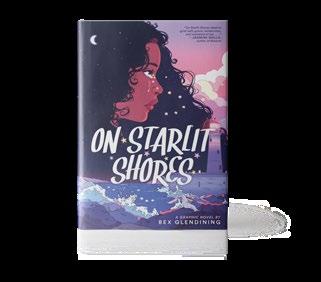
Laura Simeon is a young readers’ editor.
A book ban sparks student activism in this graphic novel based on real events. When Marjane Satrapi’s graphic memoir Persepolis is abruptly pulled from classrooms in Chicago Public Schools, a diverse ensemble of teens at Curtis Tech express their outrage. Best friends Aoife and Kendall plan a walk-out protest. Student journalists Xochitl and Jackson are determined to use the power of the press to make a stand. The ban brings up painful memories for Stanford-bound senior Weston, who’s aware, thanks to traumas in his personal history that are mirrored by events in Satrapi’s book, of the risks
of speaking out. Aditi, an immigrant who works hard to make her parents’ sacrifices worthwhile, is jolted into re-evaluating the cost of achievement. Meanwhile, teachers push back in their own ways, fostering conversations about freedom of access and the motivations behind censorship. As the movement gains national attention, Aoife and Kendall’s friendship is tested, but they—along with the other students— begin to realize the power and potential that they hold. Kang’s limited color palette of muted shades of blue effectively complements Dungo’s clean and expressive artwork that
Lea Beddia
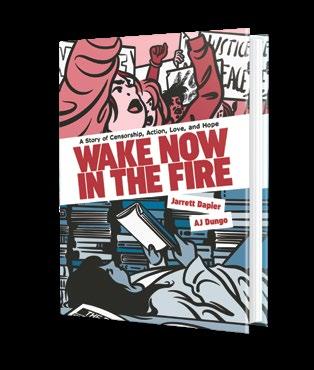
Dapier, Jarrett | Illus. by AJ Dungo | Colors by Angie Kang | Ten Speed Press | 464 pp. $38 | February 3, 2026 | 9780593838044
features thick, fluid black lines. The cover of Persepolis adds occasional pops of red. The characters are drawn with wit and warmth, emphasizing the deeply human stories that anchor the story. Dapier, a librarian who witnessed
the 2013 ban firsthand, interviewed student leaders to shape the story. An inspiring, clear-eyed tribute to intellectual freedom and the impact of youth-led resistance. (author’s note) (Graphic fiction. 13-18)
Celebrates a girl’s determination to be comfortable with her body.
NO BRAINER
Modifications: How
Andra, Kayla | Twenty-First Century/ Lerner (64 pp.) | $35.99 | $14.99 paper January 1, 2026 | 9798765644201 9798348029579 paper
Series: Focus on Climate Change
An accessible, evidence-based guide to how societies, ecosystems, and individuals adapt to and mitigate the impact of climate change. Andra defines climate change as “the long-term shift in global climates, temperatures, seasons, and weather patterns,” outlining the human impact on the greenhouse gas effect, a driver of global warming, and its devastating consequences. She explains climate change mitigation, biological and behavioral adaptations, and the vulnerability score, a measurement used to allocate resources effectively. Successes include “native, community-managed forests” in Nepal and Bangladesh and Africa’s Great Green Wall, in which native shrubs protect against drought, desertification, and erosion. Failures include costly, ineffective carbon capture projects. The author highlights biological changes—for example, Australian parrots are growing larger bills for heat regulation—and emphasizes the role of biodiversity in climate resilience. The chapter on multilevel adaptation stresses the importance of linking international institutions’ efforts with communities. Andra provides a global perspective— low-income nations are hit hardest by
climate change, despite producing just 10% of emissions—and covers individual and grassroots efforts. She underscores the need for clear, actionable communication across every social stratum. The book blends solid science, clear explanations, ample photographs and diagrams, real-world examples, and practical advice, all of which are elevated by the author’s heartfelt passion, making for an engaging and motivational read. Combines knowledge, urgency, hope, and a call to action; for anyone who cares about the future of our planet. (glossary, source notes, selected bibliography, further information, index, photo acknowledgments) (Nonfiction. 12-18)
Beddia, Lea | Orca (96 pp.) | $10.95 paper February 17, 2026 | 9781459841963
Series: Orca Anchor
A teen girl takes a defiant stand when it comes to the nuances of her high school’s dress code.
Liv isn’t a fan of bras—not sports bras, which give her a uniboob look, or sexy ones, which are “a waste of money.” She prefers to freestyle it. On the first day of 10th grade, she watches the boys playing volleyball shirtless in the gym, knowing that girls would never be allowed to do that. The PE teacher divides them into teams, and when they begin playing, a boy named Jerry starts body-shaming Liv
for being bra-free. A flustered Liv serves, and the volleyball accidentally hits Jerry in the crotch and levels him. Thus begins a cycle in which uncomfortable adults and immature classmates frustrate Liv with their judgment and commentary. Regarding playing against Liv, Jerry tells the principal, “I couldn’t block a spike. You know, with everything bouncing around, I didn’t want to get accused of touching her.” He starts a petition he titles “Free the Boob…allow girls to go braless,” ridiculing Liv while claiming to support her. Liv’s best friend, Mia, suggests they create their own campaign, giving her a platform for challenging societal norms. This accessible book for reluctant readers is nuanced and well written. It celebrates a girl’s determination to be comfortable with her body, defy double standards, and stand up for her beliefs while showcasing nonjudgmental support and unity. Most characters present white.
Fearless and filled with jubilant moxie; a must-read. (Fiction. 12-18)
Bolte, Mari | Twenty-First Century/Lerner (64 pp.) | $35.99 | $14.99 paper | January 1, 2026 9798765662731 | 9798348029630 paper
Series: The Rise of Anime and Manga
An overview of some aspects of Japanese animation. This short introduction to anime, like the genre itself, diverges in many directions. Six chapters highlight aspects of the industry, beginning with “The Anime Renaissance,” a chapter establishing the contemporary context of Japanese animation. The author argues that anime is central to Japanese culture; the robot cat Doraemon holds an official government position as “anime ambassador.” Internationally, the
streaming service Crunchyroll has played a huge part in bringing anime to viewers outside Japan. Later chapters explore stylistic features of anime, the world of anime voice acting, anime’s influence on international animation culture, cosplay, and 2.5D adaptations of animated shows as live-action plays. The final chapter on fan culture centers on the ongoing popularity of Pokémon video games and trading cards and the growing worldwide demand for licensed character merchandise. Overall, this work feels incomplete, and the audience is unclear. There are curiosity-inducing points that will encourage deeper research, but for an introductory reference guide, it assumes more knowledge than readers new to the topic may have and lacks the robust historical perspective and artistic analysis that would make it a stronger resource. Each chapter is loosely organized; end-of-chapter summaries would have supported greater comprehension of the material. For young anime fans, this work only scratches the surface.
Full of fun facts and interesting statistics, but a neither cohesive nor easily navigable read. (glossary, source notes, selected bibliography, further information, index, photo credits) (Nonfiction. 12-16)
Ed. by Carpenter, Nora Shalaway
Charlesbridge Teen (352 pp.) | $19.99
February 24, 2026 | 9781623546533
A gathering of 16 short stories exploring climate change through a broad variety of perspectives. This climate fiction anthology addresses the “severe anxiety over ecological devastation and disasters” experienced by “Gen Dread,” a term coined by Dr. Britt Wray, a researcher in
climate change and mental health. The diverse contributors address readers through entries that include realistic, historical, and speculative fiction as well as a personal essay and explore water, trash, ecology, land use, climate disasters, flora and fauna, and more. Together, they convey both a slice-of-life quality and a feeling of urgency. Optimism blossoms in Erin Entrada Kelly’s “The Care and Feeding of Mother,” which is set in a futuristic, over-farmed, storm-battered world. Extinction takes center stage in the midst of student government elections in “The Manatee Is Not a Meme” by Gloria Muñoz. Jeff Zentner’s “Tellico Lake,” written in verse, is a powerful retelling of history reshaped by a dam. Many of the pieces will linger with readers. In Karina Iceberg’s “Worldfall,” the prose crackles as wildfires blaze. In “The Divining,” by Kim Johnson, water diviners find hope in both stories and water. And “Critobis,” by Aya de Leon, is a searing story of remembrance and survival set in a landscape reshaped by rising oceans. A QR code takes readers to general resources that help with action, inspiration, and mental health support, as well as materials connected to each story. A powerful look at a shifting world. (contributor bios) (Anthology. 12-18)
Day, Kelsey | Viking (272 pp.) | $19.99 February 24, 2026 | 9798217038947
Ametrine is not only an expansive virtual reality world, it’s the setting of the exclusive annual birthday bash hosted by Madison Pembroke, daughter of the game’s ultra-wealthy designers. Bree Benson was Madison’s best friend—until the summer after middle school. Since the Ametrine parties started in ninth grade, Bree, like many other hopefuls, has waited in vain for an invitation. This year, 12th grade, is her final chance. If Bree didn’t have
kind and supportive boyfriend Devin, she’d be completely friendless. When Bree and Devin receive coveted spiral keys—the invitation to the 12-hour event—Bree, who’s hopeful about rekindling her friendship with Madison, ignores her doubts. But the surreal paradise of Ametrine isn’t what it seems. Both Bree’s real life and the world of Ametrine are enticing, vivid, and fully realized. Readers’ hearts will race right along with the fast-paced, nail-biting narrative, and the welldeveloped characters will keep readers riveted as Ametrine shifts from magical utopia to torturous hellscape. Some readers might have trouble suspending disbelief regarding some elements of the party and the technology, and the ending is somewhat simplistic. But all in all, this gripping thriller, filled with ample queer representation, is a wickedly delicious read that’s ideal for fans of Marie Lu’s Warcross and Ernest Cline’s Ready Player One. Central characters present white. An engaging debut that pulls readers into its own twisted reality. (Thriller. 14-18)
Douglass, Ryan | Harper/HarperCollins (384 pp.) | $19.99 | January 27, 2026 9780063312487
A queer Black reimagining of The Great Gatsby Seventeen-yearold Nick Carrington of Greenwood, Oklahoma, comes from a long line of Black journalists, and he, too, wants to be a writer. When tragedy strikes, Nick seeks refuge with his extended family in Harlem. His cousin Daisy is ambitious, and she encourages Nick to apply to the prestigious West Egg Academy, which Jay Gatsby Sr. and Tom Buchanan co-founded, in order to make connections and find his way in New York. Nick receives a scholarship, but he soon realizes the supposedly integrated
haven where “migrants from the South [can] escape prejudice and access the opportunities of an elite education” is just a smokescreen. African American students are pushed into the manual labor track and live in subpar housing. As Nick wrestles with exposing the truth, he starts to fall for biracial Jay Gatsby Jr. and must decide if love is worth compromising on liberation. The setting is well developed, and as part of establishing the historical texture, the book uses the language of the times, including terms like Colored and Negro. Unfortunately, the execution is challenged by trying to pack in numerous historical elements—the Tulsa Race Massacre, the Harlem Renaissance, Prohibition, and Marcus Garvey’s Universal Negro Improvement Association—without sufficient room to fully develop them, resulting in a story that lacks cohesion. The character development is also insufficient, making it hard to connect or empathize with the main characters.
An interesting premise that doesn’t quite deliver. (Historical fiction. 13-18)
Eason, Sarah | Cheriton Children’s Books (48 pp.) | $11.99 paper | January 1, 2026 9781917509619 | Series: Money Matters
A bare-bones guide to budgeting basics. Demystifying and demonstrating financial concepts to teenagers requires honest dialogue about how money works. This book’s first chapters explain the importance of financial literacy and budgeting in clear terms that are broken up across bite-size blocks of text. The accessible layout helps readers who may feel overwhelmed by walls of prose, and handy recap pages reinforce key concepts. The meaningful nuggets of wisdom include mindful budgeting, thriftful spending, and establishing long-term goals. The author endorses useful apps and websites, including
You Need a Budget and Credit Karma. However, some of the advice stops short of providing the specific details that teens deserve: Eason expresses great confidence in their tech savviness, but these skills may not help anyone unfamiliar with navigating banking sites. The book closes with a look ahead to “budgeting as a fullyfledged adult,” with a brief overview of rent, mortgages, further education, taxes, pensions, and more. Due to the work’s brevity, many important topics go unaddressed; “rate of interest” is defined, but there’s no mention of dividends or compound interest, which could help teens understand potent motivations for building their own savings accounts. Unfortunately, the cast of diverse teens pictured staring into their credit cards, calculators, and phones could find more relevant and comprehensive information elsewhere. An adequate starting point that falls short of a complete journey. (picture credits, glossary, resources, index) (Nonfiction. 12-18)
Eulberg, Elizabeth | Illus. by Liz Parkes Scholastic (288 pp.) | $12.99 paper January 6, 2026 | 9781546176756 Series: The Taylors Version, 2
This lively follow-up to Love Stories (2025) spotlights friendship, first love, and high school summers. The four Indiana teens, who are all named Taylor—Taylor “Teffy” Bennett, Taylor “Tay” Johnson, Taylor “TS” Shaw, and Taylor Perez—have wrapped up their freshman year of high school in this Taylor Swift–themed sequel. Each girl faces new pressures. Teffy, an aspiring songwriter, is feeling more inspired than ever even as her feelings for neighbor Liam Yoon challenge her focus. Tay leans into cheerleading while balancing a crush on classmate Reece Matthews. TS pours her energy into
keeping up with varsity soccer training while exploring a gentle romance with British teammate Gemma Walker. And Taylor sets her sights on being a summer camp counselor. The chapters alternate among the friends’ perspectives, giving readers an intimate view of each girl’s inner life while weaving together their shared stories as Taylor Swift superfans. The novel sparkles with concert references and song lyrics, but its heart lies in its depiction of the shifting bonds of adolescent friendship among the racially diverse characters. The writing is brisk and contemporary, balancing humor, romance, and heartfelt reflection as the Taylors navigate crushes and setbacks and search for a sense of authentic identity. A fun, heartfelt anthem celebrating community, ambition, and growing up. (gallery of cast members, playlist) (Fiction. 12-16)
Fletcher, Jenni | McElderry (368 pp.)
$20.99 | February 3, 2026 | 9781665990578
A Formula 1 racer enters a fakedating relationship to salvage his bad boy image.
Maisie Evans, a former competitive downhill mountain biker, suffered a careerending accident, breaking multiple bones, sustaining a concussion, and leaving her with a strong aversion to cycling. Now studying sports psychology at a university in London, Maisie, who presents white, takes on odd jobs during her summer break. While working as a server at an event, she’s startled by a dashing young man, drops a tray of champagne flutes, and gets fired. The cause of the mishap, 21-year-old German-Italian racing driver Giovanni Bauer, decides to annoy the catering manager by inviting Maisie to be his plus one. Gio’s wild antics jeopardize his F1 career, but a wholesome relationship with someone “normal,” “grounded,”
and “low maintenance”—like Maisie—could improve his reputation. After signing the contract, which promises generous financial compensation, Maisie finds herself immersed in the world of F1 racing. As Gio and Maisie spend time together, their relationship evolves into a genuine friendship with undeniable romantic undertones. Both initially hesitate to acknowledge their mutual attraction, but once they drop their defenses, their passion ignites. The narrative explores how trauma from accidents and the pressure of extreme sports contribute to poor decisions, fleshing out the characters and testing their relationship’s fragile boundaries. Riveting, visceral accounts of races ground readers in the intensity of the sport. Full of heat and adrenaline. (Romance. 16-adult)
Francis, Kate | Sourcebooks Fire (352 pp.)
$12.99 paper | February 24, 2026
9781464253249
Kidnapped teens face down grief, guilt, and revenge in a twisty battle to the death. When high school senior Ana Reyes and six of her classmates win a coveted vacation in the school raffle, the last destination they expect is rundown Motel Loba in the middle of the desert. But sinister cell phone messages reveal the truth: They’re each responsible in some way for the fire that killed Ana’s twin brother, Danny, at school one year ago. Now, a stranger has lured them to the remote motel for punishment. Every hour they must banish the guiltiest person among them, who will die—or they will all be killed. The stranded teens are familiar archetypes—jock, goth, stoner, and so on—and the story is invigorated by the third-person narrative that pivots among their viewpoints. The cast presents as diverse in ethnicity, sexual
The writing is brisk, balancing humor, romance, and heartfelt reflection.
CRUEL SUMMER
orientation, and gender identity, and their identities are subtly and naturally cued. As their tangled motives and interpersonal histories emerge, social cliques turn into deadly alliances. The hourly deaths, while deeply jarring, contain minimal gore. Francis’ debut is strongest when centering Ana’s growth through guilt and grief as she battles for survival. It’s undisputably her story, but other characters have their share of heroic, villainous, and even comedic turns. Ending on a hopeful note, the action closes with a nuanced take on forgiveness and redemption.
Readers who enjoy macabre drama tinged with poignancy will devour this character-driven thriller. (Thriller. 14-18)
Grenier, Elle | Feiwel & Friends (304 pp.)
$19.99 | February 17, 2026 | 9781250329783
Series: Remixed Classics
In this reimagining of The Picture of Dorian Gray, a young transgender noble caged by societal expectations makes a wish that has haunting consequences Smothered by the oppressive shadow of her grandfather, 16-year-old Dorian longs for friendship and freedom from the demanding perceptions of others that shape her fragile sense of self. Sheltered from London society, which “has fallen from grace,” Dorian sees glimpses of the outside world only when she sneaks out her window at night. That changes when she meets Basil, a young artist who offers to paint her portrait, and
Basil’s friend Henry, a hedonistic and provocative nobleman. Captivated by—and also envious, ashamed, and resentful of—the beauty and ethereal gender ambiguity of the figure in Basil’s portrait, Dorian offers her soul for a reversal of fate, causing the portrait to age so that she can embody its eternal perfection. Dorian doesn’t realize the impact of her wish until her life begins to spiral, and the figure transforms, reflecting every desperate choice Dorian makes in pursuit of freedom as well as her misguided attempts to protect the people she loves. Grenier’s prose aches with immersive melancholy. As a remix, the story acts in conversation with the history of the original work and uses its scaffolding to explore relevant themes of identity, abuse, and trauma. Despite the brooding tone and the heaviness of Dorian’s circumstances, the resolution is meaningfully empathetic. The characters primarily present white. Artfully atmospheric, sensitive, and nuanced. (author’s note) (Historical paranormal. 14-18)
Hunter, Nick | Cheriton Children’s Books (48 pp.) | $11.99 paper | January 1, 2026
9781917187695 | Series: Twenty-First Century Debates

A quick overview of current issues related to gun control. Though too cursory to provide fodder for serious debate, this proand-con–style report on the rising tide of gun-related crimes, accidents, and mass murders in
the U.S. invites readers to understand the scope of the problem and reflect on why it has led to polarized positions on gun control. Casting his narrative into easily digestible blocks that are light on specifics and statistics (and even lighter on sources for his numbers), Hunter presents position statements on facing pages. He covers issues ranging from whether or not gun ownership is a right to whether the next generation will find a solution for gun violence. In laying out explanatory background, the author’s efforts to sound even-handed lead to the potentially inflammatory claim that “police officers must assume that most suspected criminals are armed” and the dismally bland formulation that the use of firearms by police is “often controversial.” Hunter successfully avoids using coded, politically partisan language, and mentions important contextual data, such as the fact that fewer than 100 of the 40,000 lives lost on average to guns in the U.S. each year are due to terrorist action. Many photos break up the text, showing memorials, crime scenes, and racially diverse people protesting for and against gun-related issues. The resource lists at the end contain just four books and three websites. Thin on facts but perhaps enough to get a discussion going. (picture credits, glossary, index) (Nonfiction. 12-14)
Ixta, Carolina | Quill Tree Books/ HarperCollins (384 pp.) | $19.99 February 3, 2026 | 9780063287914
In the historically agricultural Southern California town of San Fermín, high school senior Paloma laments the changes around her. The vast green spaces are being replaced by warehouses for the mega-corporation Selva, where her father and other farmworkers are now employed: “a tomb where the trees used
to be. A massive block of gray where there had been pasture.” Sometimes school is canceled because of pollution from the exhaust of Selva’s semitrucks. People are getting sick and dying. After learning that another warehouse will be built next to Paloma’s school, her mother wants to move home to Pasto Verde. In that mostly white college town, she and Pa can work in the family’s Mexican restaurant. But community-minded Pa insists on finishing the strike for better working conditions at the Selva warehouse. Julio, Paloma’s ex-boyfriend and former best friend, resurfaces after their devastating breakup, hoping she’ll collaborate with him on a life-changing college scholarship project. Paloma must navigate the pressures of her fracturing home life with her rekindling feelings for Julio. Set against a backdrop of dismal polluted skies, this novel feels dystopian but is inspired by real concerns. Pura Belpré Award winner Ixta’s sophomore novel is a nuanced and deftly woven story that will inspire readers to examine their own moral compasses.
Strong writing and a layered, evocative exploration of hope make this a standout. (maps, author’s note, bibliography) (Fiction. 13-18)
Mafi, Tahereh | Storytide/HarperCollins (512 pp.) | $17.99 | September 30, 2025
9780063315341 | Series: This Woven Kingdom, 4
A wedding is the catalyst for the journey to restore the Jinn queen’s magic in this follow-up to All This Twisted Glory (2024).
Alizeh, the Jinn queen, and Cyrus, the king of Tulan, have reached their much-anticipated wedding day, a celebration that’s unfortunately darkened by conflict. Cyrus, newly bound by a blood oath and his vow to serve Alizeh, wrestles with his longing for her—the woman who’s sworn to kill him while seeking to best the devil Iblees and save
his kingdom. Alizeh is similarly torn by her desire for the emotionally guarded Tulan leader. She also hopes to secure the survival of her people, something that Prince Kamran of Ardunia proposes he can deliver—if they enter a political marriage following Cyrus’ death. Facing encroaching threats, the trio, along with some of Alizeh’s friends, set forth on the quest to reclaim her magic. But the devil is watching—and waiting to strike. Flying on dragons’ backs and trekking through perilous mountains advances the plot, yet these sequences are more languorous than action-packed. Mafi’s masterful command of sensuous prose weaves in the yearnings of the starcrossed would-be lovers, but the length of these meditations makes for glacial pacing and adds little to the characterization established in previous entries. The secondary characters also lack the dimension and development of earlier books in the series. However, a stunning late twist creates promising opportunities for the next installment in this series set in a Persian-inspired world. An exquisitely written, slow-burning romantic fantasy. (Fantasy. 14-18)
McCarthy, Cory | Dutton (240 pp.) | $19.99 February 17, 2026 | 9780593618240
A disparate group of surviving sapiens creates a found family after society collapses. West was 12 when “the grids went down,” and the world as he knew it ended; he’s pretty sure he’s 18 now. For the past few years he’s been sailing around the archipelago of what was once Cape Cod with a man he calls Captain. When a handsome young man on a sailboat full of guns appears, Captain makes a trade: West and some Benadryl for a gun and a single bullet. The sailor, Emil, takes West to the only thing resembling a community that he knows of: Karen, a
conservative Christian, has a well-kept mansion and lighthouse, and Ani, a queer woman, lives in a circle of RVs and spends much of her time lying on top of a mass grave, talking to her dead husband. Simultaneously tragic, existentially terrifying, heartwarming, and sensual, the narrative blends these contradictions into a compact, beautiful, and well-wrought whole. The prose is poetic and considered while not shying away from explorations of death and the human condition. During the fall of humanity, West remains largely upbeat—a “postapocalyptic Pollyanna” who reminds us to appreciate living while we can. West is cued Arab American, while Emil and Karen read white, and Ani is racially ambiguous. McCarthy’s striking black-and-white linocut print illustrations adorn the text and offer more content for readers to ponder.
A deep story to read on an overcast afternoon while contemplating existence. (content warning) (Fiction. 14-18)
McCrina, Amanda | Carolrhoda Lab (192 pp.) | $18.99 | February 3, 2026 9798765670811
A Polish noblewoman is tried for a wartime crime in the Austro-Hungarian Empire.
It’s 1916 in Galicia, and Countess Renata Zamoyska, once a woman of privilege, now works as a doctor’s assistant. Renata has been accused of disrupting the war effort and faces trial as a traitor. After the brutal loss of her entire family and her own trauma at the hands of the Russians, Renata lives alone in what little remains of her home after Russian soldiers set fire to it—until the night two soldiers, Polish deserters from the Russian army, appear on her doorstep just before a terrible snowstorm. One is gravely ill with gangrene, his leg in desperate need of amputation, and the other refuses to leave his companion’s
side. Trapped by the storm, Renata must decide whether to help the men, and in doing so she confronts the boundaries of compassion, duty, and survival. Told through Renata’s testimony, the narrative unfolds in precise prose, revealing not only the events that led to her arrest but the moral and emotional turmoil she was forced to navigate. What begins as a story of wartime legality becomes a meditation on morality, culminating in a shocking twist. A thoughtful examination of boundaries between right and wrong, carried by the moral tension and strength of the characters, this novel challenges readers to question ethical certainties. Sharp, compelling, and thoughtful. (content note with resources, map, author’s note, discussion questions) (Historical fiction. 14-18)
Montoya, Angela | Joy Revolution (464 pp.) $19.99 | February 3, 2026 | 9798217024469
Former lovers reunite and uncover the sinister secrets of a traveling circus. Time is running out for almost-19year-old Esmeralda Montero. To stay in the Carnival Fantástico and earn enough to escape Costa Mayor, where she faces “a one-way ticket to the frontlines of war,” she must come out on top in the Running, a competition to determine the Carnival’s next brightest star. When Esmeralda finally receives an invitation to perform for the Running as La Paloma Blanca: Fortune Teller Extraordinaire, she’s determined to shine. She’s shocked to run into ex-boyfriend Ignacio Olivera, the son of the comandante who sent her to prison, with whom she has a complicated history. The cruelty of his tyrannical and murderous father, Héctor, compels Ignacio to defect from the army and expose his father’s corruption. While searching Héctor’s office for evidence, Ignacio finds flyers for the Carnival; on their reverse are mysterious letters written in the same ink Esmeralda used in her
last letter to him, one that broke his heart. Esmeralda and Ignacio team up to help one another achieve their goals, soon realizing how much they need each other if they hope to survive and save their kingdom from threats they uncover. The leads’ second-chance romance simmers with passion and clever banter. Beneath her feisty exterior and his disciplined image, they long to feel special and worthy, feelings they validate in one another. Most characters in this early20th-century, Latine-inspired world are brown-skinned.
Deliciously romantic and drenched in dark magic. (Fantasy. 13-18)
Lamar: Revolutionary
Mooney, Carla | Twenty-First Century/ Lerner (80 pp.) | $37.32 | $14.99 paper January 1, 2026 | 9798765688632 | 9798348029616 paper | Series: Icons
A thorough and approachable tour through the life, impact, and artistry of a rap luminary. Teen hip-hop heads and novices alike will relish this biography of Kendrick Lamar, a revered Black artist whose work has been in dialogue with America’s racial and political landscape for over a decade. The introductory chapters describe Lamar’s multifaceted youth. Even his supportive parents, who explained to an artistic and conscientious young Lamar how their Section 8 housing worked, couldn’t spare him from the harrowing realities of 1990s Compton. The narrative follows him as he refines his craft from early mixtapes to a Pulitzer-winning album, peppering in funny anecdotes and A-lister cameos, such as when hip-hop titan Dr. Dre called and Lamar, thinking it was a prank, hung up. The biography successfully highlights how Lamar not only lived through the shifting American discourse on race but helped shape it, from sharing the personal pain of poverty and racism to providing a
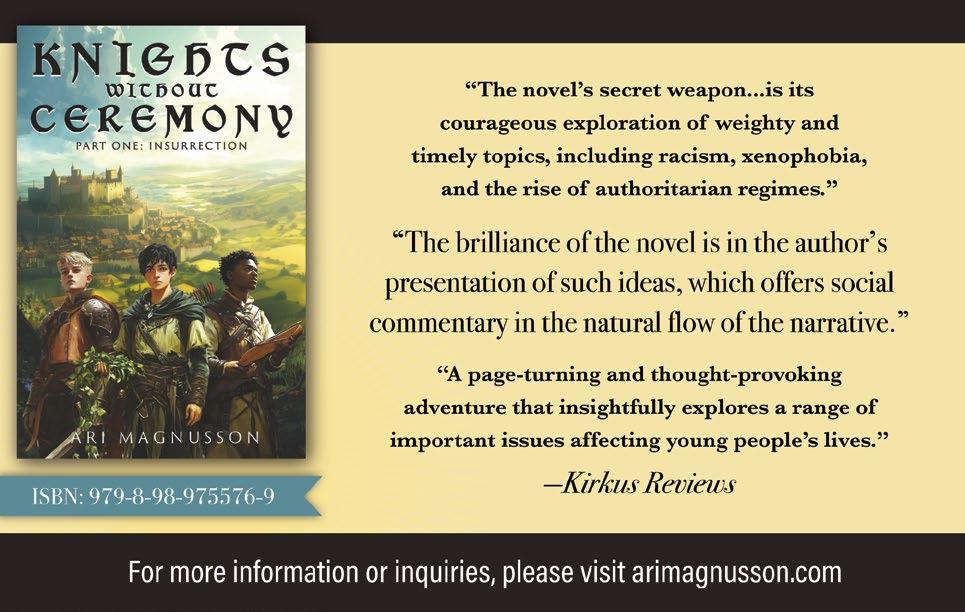



Jodi Picoult Says School Canceled Between the Lines Musical
An Indiana high school scrapped plans to stage a musical based on her 2012 YA novel.
Jodi Picoult is hitting back at an Indiana high school after a planned performance of a musical based on one of her books was canceled, the Associated Press reports.
Mississinewa High School in Gas City, Indiana, had planned to stage a production of a musical based on Between the Lines, the 2012 young adult novel written by Picoult with her daughter, Samantha van Leer. The story follows Delilah, a teenage loner who falls in love with the fictional prince in a book she loves after he comes to life. A critic for Kirkus called the novel “fizzy fairy-tale fun.”
The school’s superintendent, Jeremy Fewell, said the production of the musical—which features a story by Timothy Allen McDonald with music and lyrics by

Elyssa Samsel and Kate Anderson—was canceled after concerns were raised over the show’s “sexual innuendo” and references to drinking alcohol. The novel and the original show featured a nonbinary character, but the version licensed to the school removed references to their gender in a bid to make it more acceptable to conservative audiences.
Picoult reacted to the musical’s cancellation on TikTok, saying, “I now have the distinction of being the author who has been banned in two different types of artistic media.…When we ban books and theater, we are effectively saying that only certain lives and certain stories are worth hearing about.”
—M.S.

For a review of Between the Lines, visit Kirkus
The movie will conclude the Amazon Prime streaming series based on Jenny Han’s novel trilogy.
Amazon Prime’s television adaptation of Jenny Han’s The Summer I Turned Pretty trilogy of novels isn’t over after all.
The streaming service will air a film conclusion to the series, Deadline reports. The news comes as a surprise to fans who thought that the show had ended after three seasons.
Han’s young adult romance trilogy launched in 2009 with The Summer I Turned Pretty ; the novels It’s Not Summer Without You and We’ll Always Have Summer followed in 2010 and 2011, respectively. The books tell the story of
Isabel “Belly” Conklin, who’s in a love triangle with brothers Conrad and Jeremiah Fisher.
The series adaptation, which stars Lola Tung, Christopher Briney, and Gavin Casalegno, premiered in 2022. The third and final season aired its last episode in September. The series was a huge hit for Amazon.
The film conclusion of the series will be directed by Han, who will also co-write the screenplay with Sarah Kucserka (High Fidelity ). Stars Tung and Briney are confirmed to return.
“There is another big milestone left in Belly’s journey, and I thought only a movie could give it its proper due,” Han told Deadline. “I’m so grateful to Prime Video for continuing to support my vision for this story and for making it possible to share this final chapter with the fans.”
—M.S.

For a review of The Summer I Turned Pretty, visit Kirkus online.

soundtrack and rallying cry for Black Lives Matter protests with his hit “Alright.” Throughout, text boxes and single-page segments introduce related people and concepts, including Tupac Shakur and freestyle rap. Mooney acknowledges and contextualizes themes from Lamar’s work, such as police brutality, substance abuse, and sex addiction, without sensationalizing them, highlighting his skills as a storyteller. An accessible introduction to a hip-hop virtuoso that trusts teens’ ability to tackle complex social issues. (glossary, source notes, selected bibliography, further information, index, photo acknowledgments) (Biography. 13-18)
Nino, Myra Rose | Random House Graphic (240 pp.) | $24.99 February 3, 2026 | 9780593180594
Two Italian American aspiring chefs cook up a romance in this Sapphic comingof-age story.
Sofia Carini has a blazing passion for cooking—but she doesn’t have the skills to back it up. She’s struggling through her senior year of high school, distracted by her goal of recreating one of her late grandmother’s recipes. Luckily for her, she’s able to persuade Anna Marie, her perfectionistic classmate whose parents own a restaurant, to give her some culinary tutoring. At first, Anna Marie is cold and snappy, but she gradually warms up to Sofia as they form a genuine friendship. All the while, Sofia grapples with isolation—her overworked mother hasn’t been able to continue the time-honored cultural traditions of Sofia’s grandmother. And she must prepare for her tight-knit friend group to separate when they go off to college, something she’s not sure she wants to do. Despite all this, Sofia’s drive to express her heritage through cooking remains strong. The budding romance that emerges from Sofia and Anna Marie’s friendship is authentic and
compelling. Sofia’s relationship with her mother is also a highlight. The appealing artwork has a warm color palette, detailed backgrounds, and charming character designs that accentuate facial expressions. The visual style is loose and playful, perfectly complementing the tone of the story.
A delight to read, this delectable debut will leave readers hungry for more. (Graphic romance. 12-18)
Randall, Christen | Atheneum (416 pp.)
$21.99 | February 3, 2026 | 9781665939843
A nonbinary neurodivergent teen in Kentucky fights to find a safe space after their school magazine is cancelled. Mal Flowers has always followed The Plan: They’ll be the editor of their school’s literary magazine, get good grades to keep their hypercritical mother happy, and support their sister until they both leave their small town for college. When the school loses funding, making it impossible for Collage to continue publication, Mal feels lost. And they’re not the only student desperately seeking another creative outlet. Loud and exuberant Emerson suggests the group go rogue and create a zine. Though Emerson is seemingly Mal’s opposite in every way, the more they work together, the more Mal feels like they’ve finally found a place where they belong and a person who gets them. Emerson, who’s bisexual and has ADHD, depression, and anxiety, offers Mal the comfort of being understood. Mal is a well-realized character, a fat teen who describes their experiences with dyslexia, ADHD, and possible autism in ways that are understandable and relatable. Alongside their sweet romance, Randall also realistically explores Mal’s struggles with family pressure and finding their own interests; these relationships are
exceptionally well drawn. Interspersed between chapters are pages from Mal’s planner, text messages, emails, and pages from the zine, adding visual interest. Mal and Emerson are white, and the zine crew is diverse in race, sexual orientation, and gender identity. A rich, authentic, and affirming story about building your community. (Fiction. 13-18)
Reeve, Philip | Scholastic (288 pp.) | $19.99 February 3, 2026 | 9781546138266
Hired to guard a mobile town of archaeologists while it makes one final journey, the doughty crew of the airship Fire’s Astonishment find themselves battling foes ranging from a traitor within to bloodthirsty pirates and a mad reanimated brain.
It seems like an easy enough gig at first: Having accepted mighty London’s offer to peacefully ingest its invaluable collections of ancient books and artifacts, the small city of Museion is poised to fire up its long-dormant engines and set out toward the planned rendezvous. But the journey quickly takes on a Mad Max quality. Hot pursuit by scruffy nomads riding roaring kampavans and the predatory, segmented Experimental Suburb of Crawley (abetted by a traitorous insider) keeps fearless young Tamzin Pook, one-armed cyborg warrior Eve Vespertine, and their trio of companions on their toes. Reeve expertly raises the stakes while shepherding his rolling battle to a properly melodramatic climax at the high and dangerously rusted titular bridge. This follow-up to Thunder City (2024) features full measures of Reeve’s customary combination of violent action, gruesome twists, and sneaky sense of fun (a character’s throwaway “Fool of a Pook!” will elicit chuckles from Tolkien fans). Most main
ACCORDING TO PLAN
characters present white, and Tamzin has olive skin and black hair.
Pedal to the metal action, roaring over rutted terrain in a steampunk dystopian future. (Science fiction. 12-16)
Schroeder, Rebecca | Twenty-First Century/Lerner (64 pp.) | $35.99 | $14.99 paper | January 1, 2026 | 9798765644225
9798348029593 paper | Series: Focus on Climate Change

A slim volume explaining the far-reaching effects of human activity on climate change and efforts to understand it and find solutions.
With an introductory reference to severe flooding in South Asia, Schroeder notes the increasing incidence of natural disasters across the world, including in areas with no prior history of them. She explains the impact of growing amounts of greenhouse gases released into the atmosphere since the Industrial Revolution, connecting the dots between the resulting rise in global temperatures that affects biodiversity, precipitation, crop patterns, and human health, and the loss of homes, livelihoods, and food security. Coastal cities are under threat of flooding as sea levels rise, and the fate of small island nations like Kiribati looks grim. The book underscores the responsibility of wealthier nations to fight the impending crisis—their actions generate a disproportionate amount of global emissions—and describes some ways that countries are adapting to the impacts of the changing climate. The crisp text and structured flow make this an informative and accessible
read. The book features stock photographs but unfortunately lacks diagrams and other visual representations of the information presented. A short list of suggested actions offers young readers ways to be involved in movements to reduce climate change, while making no mention of how their consumption patterns directly relate to the worsening situation.
A concise and informative primer on a looming crisis. (glossary, source notes, selected bibliography, further information, index, photo acknowledgments) (Nonfiction. 12-18)
Skye, Jasmine | Feiwel & Friends (480 pp.) $19.99 | February 24, 2026 | 9781250872616
Series: Witch Hall Duology, 2
Shaw, Rosamund, and friends finish senior year at Witch Hall while fighting internal and external enemies in a prophesied war. After a surprise attack on the Cursed Kingdom, Shaw, the future Witch Queen, must prepare for war with Vinland, the nonmagical empire that’s threatening to obliterate their world. Unfortunately, she’ll have to do it without Rosamund as a familiar and partner, which she finds more devastating than she’d expected. Recognizing her responsibility to the people of her kingdom, Shaw trains with elders—including her father, the Witch King—for the coming war until they discover that the ideological divide between their generations might be too great. Without abandoning the romantic core of the first book, this conclusion dives into military strategy, political lore, and the world’s hierarchies. The analogies to contemporary politics and generational
tensions are subtle yet clear, and there’s a focus on peace, inclusivity, and responsibility over power. Despite these strengths, the large swath of characters and their powers becomes confusing, and readers may need to refer to the earlier volume to refresh their memories. The in-depth explanations of military tactics slow the pace, and the tension feels one-note until the end. Despite being so drawn out, the novel wraps up in a satisfactory way. Skye creates a world in which queer sexualities, including polyamory, are a given. The leads present white, and names and physical descriptions cue diversity in the supporting cast.
A dense duology closer that should satisfy returning fans. (content warning) (Fantasy. 14-18)
Stochitch, Camille, Alexander Berman & Estelle Laure | Simon & Schuster (368 pp.)
$19.99 | January 6, 2026 | 9781665950626
When Love Thompson shoots to social media stardom, she thinks she has it all—but she soon learns that fame has a price. Love has spent her entire life working toward her dreams of being a singer and dancer, and she’s on the way to fulfilling them. She has a full-ride scholarship to a university in Tennessee, making her the first in her family to attend college. Then a video of her at graduation goes viral, transforming her dreams into reality as she heads to Los Angeles and teams up, both professionally and romantically, with singer Lil’ D. But the spotlight isn’t all she thought it would be, and when everything blows up spectacularly, Love must try to repair her image. What better way than with a fake romance with wholesome Austin, a boy she had a meet-cute with? Austin’s father recently died, his girlfriend broke up with him, and now his family faces financial struggles and might have to sell their diner. Then Love pops up in his DMs. What starts as a way to show her followers that she isn’t a hot
mess turns into something real—and she needs to decide what she really wants. The highs and lows of social media are on full display, and readers will connect with the dilemmas it poses. The growth of the white-presenting leads, who share the narration, is a real strength. A timely love story that will encourage readers to reflect on life and priorities. (Romance. 13-18)
Stout, Cara | Avon A/HarperCollins (352 pp.) | $12.99 paper | February 3, 2026 9780063480476
A flirty debut exploring coming-of-age themes.
Imogen Rogers is great at quitting things. The 16-year-old has “started enough jobs to fill several résumés.” When her best friend, Divya, gets her dream internship at a media company—with a cash prize for the best piece of investigative journalism—Imogen agrees to work at theme park Fairytale Gardens over the summer and gather evidence that will confirm Divya’s suspicions that the owner is committing financial fraud. Imogen’s childhood love for the park—and crush on the owner’s cute son, Tristian—is a bonus. When the lead princess breaks her ankle, Imogen is cast as her replacement. Now she’s spending her days performing opposite her prince, Tristian, torn between helping Divya and her growing feelings for Tristian. For his part, Tristian feels like a “fake prince trapped in a life [he] never got to choose.” He’s mourning his recently deceased mom and trying to figure out
what he really wants, apart from his dad’s dreams that he’ll join the family business. The white-presenting leads’ alternating points of view show their struggles to define their own paths as well as the development of their sweet romance. Their heartfelt conversations and fun adventures will charm readers. The plotline following the investigation provides necessary conflict, although the quick resolution feels a bit too tidy. There’s racial diversity among the supporting cast members.
A sweet, character-driven romance with a delightful, fairy-tale-themed setting. (Romance. 13-18)
Tang, Andrea | Putnam (304 pp.) | $19.99 February 10, 2026 | 9780593858219
Two 18-year-olds collide in a bid for glory—and vengeance.
In a modern fantasy world where magical dueling is a spectator sport, Tamsin Blackwood, who’s of Chinese and Irish descent, is the next big prodigy in the arcane arts. Being the only child of the infamous magician Master Mateus Blackwood comes with a lot of public attention—and pressure that’s exacerbated by Dad himself. He’s invested everything in making sure Tamsin lives up to his legacy. When Tamsin receives a risky, possibly even career-ending, offer to face Lysander Rook, “the young terror of the dueling circuits,” she accepts. Winning would grant her the financial independence she needs to escape her father’s control. Chinese American Samantha Chan’s scheme to pit her champion, Rook, against Tamsin is part of her plan to seek
Fast-paced duels and dynamic depictions of arcane magic flesh out the world.
TO THE DEATH
retribution for Mateus’ role in the death of her brother, Jamie, four years earlier. Sam needs to see Mateus’ daughter utterly destroyed, “physically, mentally, emotionally.” But it isn’t easy for Sam to stay the course when the two girls find comfort and connection in one another that they’ve never had before. Tang presents a high-stakes thriller told through the two highly driven protagonists’ perspectives that explores themes of family, revenge, and internal and external expectations. Fast-paced duels and dynamic depictions of arcane magic flesh out the world, while the complicated relationships bring drama and tension.
A rewarding page-turner that’s filled with deception and intrigue. (Fantasy. 14-18)
Turner, Sadie | Delacorte (384 pp.) | $19.99 January 6, 2026 | 9798217024223
In a world where all magical people are effectively enslaved, a teen hopes for the least painful future assignment possible. There are four kinds of Orha in the Queendom of Nenamor: Mudmouths, Sparkmouths, Gustmouths, and Floodmouths, like Corith and her best friend, Zennia. They’re wards of the state, destined at age 18 for a mandatory service placement. A month ago, Zennia was sent to be the Floodmouth at House Shearwater, which like all noble houses keeps a set of one of each Orha type. Now it’s Corith’s birthday, and to her horror, her placement is House Shearwater. No noble house would keep two Floodmouths— and Corith’s terrible suspicions are confirmed: Zennia died in “an unfortunate accident.” At House Shearwater, she has occasional important magical tasks but is mostly engaged in menial labor. Surprisingly, the nobles make enslaved Orha mages perform tasks such as fetching water from the well and mopping floors. But Corith isn’t bored—she’s received a secret note promising
information about Zennia’s fate, found a letter in code that Zennia left for her, and been recruited by local rebels. Throw in some cute noble boys, counterfeit magical jewelry, political intrigue, and illicit pamphlets espousing Orha rights, and the result is so many plot points that character development gets short shrift in the sometimes clunky prose. In this primarily white world, Corith is cued white. Action-packed yet mostly flat; lacking human authenticity or satisfying worldbuilding. (map) (Fantasy. 13-16)
Valentine, Stefany | Joy Revolution (320 pp.) | $12.99 paper | January 27, 2026
9780593571620 | Series: Love in Translation
In Valentine’s sophomore novel, a budding fashion designer from Washington, D.C., goes to Japan to pursue her dream, finding unexpected love and inspiration along the way.
Seventeen-year-old Lilyn Jeong, who’s of Japanese, Taiwanese, and Korean descent, dreams of attending the Contemporary Institute of Fashion in New York City. She’s been feeling uninspired lately, but she hopes this will change during her upcoming summer in Tokyo. There, she’ll be interning with the renowned designer Hana Matsumoto, who’s descended from a storied line of silk spinners. After she makes mistakes and gets off to a rocky start with her mentor, Lilyn discovers she must design a whole collection in 10 days in hopes of impressing Mrs. Matsumoto. Struggling to mix her own goth style with traditional Japanese fashion, Lilyn turns to Yua, Mrs. Matsumoto’s daughter, for help. As the stylish, tattooed, and confident Yua offers guidance to spark Lilyn’s creativity, a sweet romance grows between them. Dating Yua brings warmth, excitement, and inspiration, but with all the sewing she must finish and her looming return to the U.S. at summer’s end, Lilyn isn’t sure this relationship can last. The girls’ struggles with familial expectations, cultural norms,
and perceptions of love lend depth to the story, and the detailed descriptions of food, neighborhoods, landmarks, and sericulture bring the setting to life.
A charming stand-alone queer romance that highlights Asian fashion and cultures. (Romance. 12-18)
Young, Suzanne | Simon & Schuster (368 pp.) | $19.99 | February 24, 2026
9781665983532
An attempt to solve a 40-yearold Florida mystery turns into a high-stakes thriller when a recent murder comes to light. Decades ago, a young socialite ended up dead, a local teen went on the run, and animosities flared between Cape Hope’s locals—labeled Chasers—and the rich and powerful resort community called the Collective. For years, the Everglades have hidden the secrets of the crumbling Starline Hotel on Rum Runner Island, but a powerful storm churns up the past. In alternating first-person chapters, Noa Acosta and Jamie Matthews—along with their friends, Tech Mendez and Shawn Callen—search for evidence to unravel the mystery that’s shaped the town, stop the hostility that’s brewing between its communities, clear a family’s name, and offer a chance at redemption. Young creates an ominous tone, immersing readers in a visceral and vivid setting—a lush landscape, where a dead body is clasped in a “marsh’s wet embrace” and a “thick, sludgy kind of quiet” permeates the air. The stakes are high—with threats both from the unforgiving nature of the landscape and from those who want to keep the truth buried. Elements of the past and current murders are expertly woven together with carefully laid backstory. Jamie and Shawn read white, and Noa and Tech are cued Latine.
Atmospheric and suspenseful; readers will be engrossed until the last page. (Thriller. 13-18)
Vol. 2
Yu, Han-ryeo | Illus. by A Hyeon | Trans. by Ciel | Random House Graphic (288 pp.)
$24.99 | February 3, 2026 | 9780593901311
Series: My Life as an Internet Novel, 2
A n emotionally layered second installment following Dani’s adventures living inside an internet novel. This translated work from South Korea opens with a flashback to three years earlier, with a scene in which Dani and Cheonyeong share a sweet moment that sparks their friendship. But after Cheonyeong—in front of the whole class—turns down an invitation from another girl to go on a date, Dani reminds herself that she must be careful around these boys. After all, they’re the male leads in the novel she’s been transported to. Regardless, it’s difficult for her not to get her hopes up when it comes to Cheonyeong, especially when he comes out and says that he likes her. The contemporary storyline resumes, and readers learn about the leads’ recent fight, which led them to stop talking. Cheonyeong believes he can’t trust Dani, but she can’t get over something he said years ago. Their friends want to help them make up, but Dani can’t shake the reality that they’re not real people. Dani’s anxiety is portrayed well as she experiences vivid dreams of going back and forth between worlds, belonging to neither. The beautiful artistic style that’s a hallmark of romance manhwas uses dreamy colors and cute emoticons to tell this relationship-driven story. Unfortunately, the vague time markers and constant back-and-forth between timelines make following the story confusing at times. Engaging, if sometimes unclear. (Graphic fantasy romance. 12-18)

For another story about entering the world of a book, visit Kirkus online.
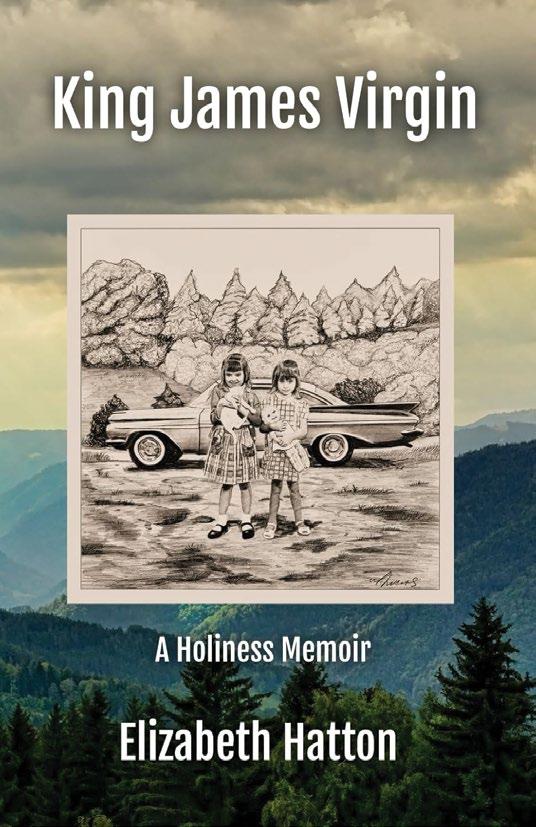





When organizing a TBR list, the big Pulitzer/Booker/Kirkus Prize–winning novels usually handle themselves. But books that give in-depth access to singular events also deserve a spot on the nightstand. Unique memoirs stole the Best Indie Books show this year—one depicts life as a sixth grader in WWII Hiroshima, another describes the destabilizing experience of being stalked, and a third chronicles the joyous adoption of a baby found in a New York City subway station.
Andrews, John F. | 46 North Publications (326 pp.) | $23.99 | $13.99 paper
November 9, 2023 | 9798989383559 9798989383511 paper
Rousing historical fiction with a feminist bent.
Bailey, Christy | Self (318 pp.)
$49 | $18.95 paper | April 28, 2025
9798281683753 | 9798281681520 paper
A triumphant story of a long journey of self-acceptance.
Barrett, Leia | Illus. by Shannon McKeon
Stories by Leia (40 pp.) | $13.67 June 3, 2025 | 9781736710340
Irresistibly adorable illustrations and heartwarming humor.
Barsukov, Yaroslav | Caezik SF & Fantasy (300 pp.) | $19.99 paper November 12, 2024 | 9781647101367
Mind-expanding fantasy and SF.
Baskin, Edie | ACC Art Books (216 pp.)
$65 | October 7, 2025 | 9781788843430
A sumptuous and revelatory collection of 20th-century iconography.
Basran, Gurjinder | Douglas & McIntyre (224 pp.) | $16.95 paper | May 27, 2025 9781771624169
A warmhearted, entertaining, and recognizable family saga.
Bellows, David with Barbara Held Maine Authors Publishing (162 pp.)
$13.95 paper | October 24, 2024 9781633814240
A touching and fascinating memoir of a little bird with a big personality.
Berends, Bianca | Self (200 pp.) | $45 June 30, 2024 | 9798329027228
A visually dazzling artistic odyssey, full of sharp insights and warmhearted encouragement.
Blackhurst, Joseph | Self (380 pp.)
$9.49 paper | September 14, 2024 9798988484325
Distinctive worldbuilding and unforgettable characters make this bloody tale a must-read for fantasy fans.
Blackwell, Maegan | Illus. by Joanne Wong Rosebank Books (38 pp.) | $15 paper February 3, 2025 | 9798991380904
A valuable book that makes PPD easier to discuss, showing children they’re not alone.

Blake, Kazuko with Sandra Vega
Wide Angle (163 pp.) | $17 paper
October 1, 2024 | 9798990803213
An involving memoir of ordinary life in WWII-era Hiroshima.
Boylan, Chrissy & Heather H. Kirby
Self (310 pp.) | $14.95 paper
August 23, 2024 | 9798218489502
An emotional...look at the real-life struggles and triumphs of trans people.
Caraway, Kathryn | After Dark Ink Publishing (426 pp.) | $17.99 paper
October 28, 2025 | 9798999054500
A powerful, riveting account about a woman being victimized by a modern-day monster.
Carlson, Scott D. | Chucklehead Press (270 pp.) | $25.99 | $12.99 paper
October 6, 2025 | 9798998991219 9798998991226 paper
A thoughtful and funny historical romp featuring a fascinatingly sympathetic Marx.
Carney, Rob | Texas Review Press (86 pp.)
$21.95 paper | September 1, 2024
9781680033922
A terrific collection that grounds an anguished ecological sensibility in gorgeous writing and deep emotion.

Carp, Roger | Self (224 pp.) | $49.95
November 6, 2024 | 9781933600079
A visually engrossing, thorough history of how Lionel trains came into being and ruled the toy world.

Chow, Pauline | Ghastly Goings-On Press (310 pp.) | $17.99 paper
July 1, 2025 | 9781964733036
A dazzling blend of fantasy intrigue and historical drama that will haunt readers long after the final page.
Chrysler, Larry | Acorn Publishing (292 pp.) $27 | $17.99 paper | September 10, 2024 9798885280952 | 9798885280945 paper
A frank and touching look at being gay in America throughout the 20th century.
Coffee, Brenda | She Writes Press (256 pp.) | $17.99 paper | May 20, 2025 9781647429065
These true, well-crafted stories provide wild entertainment and deeper messages of self-worth.
Daubenspeck, Mary E. & Timothy H. Daubenspeck | Keeper’s House Press (242 pp.) | $29.95 paper | June 18, 2024 9798218416430
An engrossing...record of the end of Nauset Light Keeper’s House’s private ownership.
How to
the
DeLong, David | Longstone Press (326 pp.) | $19.95 paper | January 28, 2025 9780988868625
A forceful and thought-provoking call to diversify the workforce.
DeRossitt, Kathryn | Self (411 pp.) | $9.99 paper | May 4, 2025 | 9798998884917
An odd and wonderfully impressionistic history of Memphis.
Dickey, Edward | Self (170 pp.) | $9.99 paper | July 7, 2020 | 9798664380866
An absorbing and elegantly written examination of the spiritual wisdom in Shakespeare.
Downing, M.M. & S.J. Waugh
Fitzroy Books (214 pp.) | $14.95 paper March 18, 2025 | 9781646035694
A third series installment that offers compelling storytelling with emotional depth and chilling suspense.
Dumiere, Jean | Fickle Wind Press (117 pp.)
Dreamy illustrations and enchanting prose make for an uplifting, poignant tale of growing up and letting go.

Fasteau, Marc & Ian Fletcher | Cambridge University Press (836 pp.) | $49.99 January 2, 2025 | 9781009243070
A stimulating call for government action.
Fox, Annie | Electric Eggplant (322 pp.) $8.60 paper | February 13, 2024 9781943649082
A compassionate exploration of friendship and betrayal wrapped up in a true page-turning mystery.
Frances, Sharon | Self (242 pp.) | $16.95 paper | April 1, 2025 | 9781734419641
Rich language and striking visuals reveal emotional lessons about family, resolution, and love.
Galuppo, L. | River Grove Books (326 pp.) | $19.95 paper March 18, 2025 | 9781632999528
Vicious alien conquest and oppression drive this provocative YA/SF thriller.
Gay, Steve | Rook Abbey Press (421 pp.) | $13.12 paper | July 24, 2024 9781838217723
An outstanding SF series debut that explores what it means to be human.

George, Matt | Catharsis (526 pp.) | $25 paper | May 26, 2023 | 9781955690454
A well-balanced collection of some of the best surf writing ever done.
Grea, Aaron | Oakberry & Inkwell (242 pp.) | $28.76 paper
October 28, 2025 | 9781968152062
A compelling thriller that effortlessly balances horror with humor and heart.

Griffith, Sandra K. | She Writes Press (256 pp.) | $17.99 paper
February 24, 2026 | 9798896360803
A standout Southern family mystery filled with lush settings, dazzling characters, and chilling surprises.
Groff, Bree | Page Two (246 pp.) | $19.11 paper | July 15, 2025 | 9781774585597
An entertaining and trenchant case for humane workplaces and enjoyable jobs.
Groff, Meg | Rivertowns Books (282 pp.)
$21.07 paper | March 4, 2025
9781953943477
An inspiring, intelligent memoir focused on the challenges of advocacy.
Hamilton, Richard Ashley | Illus. by Marco Matrone | Maverick (180 pp.)
$14.99 paper | December 10, 2024
9781545812440
Noir-infused fantasy with high stakes, gorgeous art, and social justice themes.
Harvey, Michael DB | Steady State Press (434 pp.) | $19.95 paper
November 30, 2024 | 9798990015616
An intensely intriguing if seemingly unreachable vision of a new future for the world.
Hatton, Elizabeth | Big Hill Press (242 pp.) | $12.99 paper
October 5, 2024 | 9781736402610
A luminous, richly textured portrait of family and faith, beautifully written and vividly remembered.
Huhn, William | BlazeVOX (86 pp.) | $20 paper | July 2, 2024 | 9781609644680
An enthralling collection, with themes both grand and intimate and verses that pack a wallop of feeling.
Irvin, Sam | Self (406 pp.) | $40.51 paper
October 17, 2023 | 9798864623428
A lively and enthusiastic in-depth exploration of an obscure TV horror classic.
Johnson, C.W. | Baryon Dreams Press (348 pp.) | $19.99 paper
September 24, 2024 | 9798991428422
Heartbreaking and hilarious.
Johnson, Thomas Penn | Atmosphere Press (200 pp.) | $24.99 | $15.99 paper
July 15, 2025 | 9798891327559 9798891327191 paper
A captivating body of stories spanning much of American history.
Kalaichandran, Amitha | Heliotrope Books (374 pp.) | $34 | $24 paper
January 14, 2025 | 9781956474558 9781956474534 paper
A...call for a medicine that takes the soul as seriously as the body.
Kedar, Karyn D. | Central Conference of American Rabbis Press (210 pp.) | $18.95 paper | July 3, 2025 | 9780881236668
An excellent resource for readers seeking a deeper High Holidays experience.
Keech, Rea | Real Nice Books (270 pp.)
$31.95 | $14.95 paper | April 1, 2025 9798988503460 | 9798988503477 paper
A wry and fast-paced spy thriller unfolding in the shadow of the Hagia Sophia.
Kelly, Eileen | Flexible Press (233 pp.)
$17.67 paper | July 3, 2024 | 9798988721369
An engrossing yarn about innocence-turned-malignant, by turns hilarious and haunting.
Konstant, Bill & Glenn Mason | Archimedes’ Printing Shoppe & Sundry Goodes (200 pp.) October 15, 2024 | 9781955517096
A captivating coffee-table study of a small, vibrant Eden, pairing lush visuals with engrossing writing.
Konstant, Bill | Archimedes’ Printing Shoppe & Sundry Goodes (301 pp.) | $24.95 paper | May 1, 2023 | 9781737285120
A visually beautiful and inviting memoir of the travels of a nature enthusiast.
Kreppel, Jonas | Trans. by Mikhl Yashinsky White Goat Press (575 pp.) | $24.95 paper October 14, 2025 | 9798990998056
Wide-ranging, offbeat mystery tales—a valuable addition to Yiddish literature in translation.
Kwakye, Benjamin | Cissus World Press (533 pp.) | $20 paper | October 1, 2025 9798988974550
A complex and suspenseful novel that will keep readers engaged.

Lafferty, Paula | Erewhon (536 pp.) | $19.99
December 16, 2025 | 9781645662891
Series: Lives of Guinevere, 1
An original and fascinating take on the romance of Arthur and Guinevere.
LeBaron, Charles | Amplify Publishing (200 pp.) | $22.46 | August 6, 2024 9798891380431
A powerful, important expert’s analysis of the opioid epidemic.
Lew, Leslie | Illus. by Seyma Arslan
Global Bookshelves International (24 pp.) | $16.99 paper | May 1, 2025 9781957242248
An uplifting and affecting work for readers of any age.
Linkhart, J.M. | Goblin Booth Productions (456 pp.) | $22 paper May 6, 2025 | 9798348153519
A fantasy tale that hums with magic and originality, featuring extensive worldbuilding and a compelling cast of ne’er-do-wells.
Louis, Keishia Lee | Illus. by Diego
Alejandro Escobar Triana | Free Sparrows Kids (36 pp.) | $20.99 September 17, 2025 | 9781966011040
An accessible and beautifully drawn biography of a formidable woman.
Love, Joseph | Marble Books (557 pp.) $19.89 paper | October 3, 2024 9798218984106
A compelling speculation on the divergent destinies of man and robot.
Ludwig, Gene | Disruption Books (200 pp.) $28 | September 30, 2025 | 9781633311343
A hard-hitting indictment of the data underpinning federal economic policies.
Because I Knew You: How Some Remarkable Sick Kids Healed a Doctor’s Soul
Macauley, Robert | Chehalem Press (370 pp.) | $33 paper | June 3, 2025 9781594981517
A mix of plangent emotion and deep insights into end-of-life medicine, delivered in limpid, moving prose.
MacDuff, James & Mirriam Mweemba Pottersfield Press (160 pp.) | $24.95 paper February 28, 2025 | 9781990770715
A charming joint memoir of navigating continents, cultures, and Covid-19 for love.
Master Version 1.1: A Near-Future Sci-fi Techno Thriller
Marcelionis, Antanas | Trans. by Martynas Majeris | Self (230 pp.) | $9.99 paper December 15, 2024 | 9786090806715
A blistering and relevant near-future military-SF yarn.
Martin, Daniel | Self (456 pp.) | $19.99 paper | March 26, 2025 | 9798992027204
Vivid worldbuilding and an irresistibly fierce protagonist make this intricately woven SF thriller an absolute gem.
Matthiessen, Rue | Latah Books (302 pp.) | $17.99 paper | June 20, 2025
9781957607320
A riveting and richly nuanced art-crime novel.
The
McGregor, Michael N. | Korza Books (370 pp.) | $20 paper | January 28, 2025 9781957024103
An entertaining, deeply felt story of giddy hopes straining against harsh realities.
McMullan, Miles with Derek Sallmann & Ryan Sallmann | Pelagic Publishing (376 pp.) | $29.99 paper | March 25, 2025 9781784275426
A superb and concise bird compendium.
McPherson, S.E. | Metaltail Press (382 pp.) | $17.99 paper
March 25, 2025 | 9798992254310
A compelling tale with well-drawn characters and beautifully executed LGBTQ+ romance.

There: We Found Our Family in a New York City Subway Station
Mercurio, Peter | ACE Doe (258 pp.) | $19.99 paper June 3, 2025 | 9798992637328
An engaging celebration of queer joy and diverse families.
Miller, Jonathan R. | Self (300 pp.) $11.99 | June 18, 2025 | 9798284208939
A strange, inventive tale that evolves into a challenging and rewarding odyssey.
Miller, W.R. | BearManor Media (852 pp.) | $64.79 | November 15, 2024 9798887710914
An invaluable account of the creation of a legendary Batman TV series.
Moore-Ede, Martin | Circadian Books (282 pp.) | $19.98 paper | June 17, 2024 9798990686908
A passionate and practical overview of the importance of healthy lighting and how to achieve it.
Muehlbauer, Jesse | Allaire Publishing (364 pp.) | $22.99 | $14.99 paper
March 1, 2022 | 9798985493504 9798985493528 paper
A superior SF thriller with universally relatable moods of loss, regret, and longing.
Mulvahill, Karen | EnvelopeBooks (296 pp.) | $18.95 paper | March 7, 2025
9781915023582
An ingeniously plotted fiction debut with well-drawn characters and plenty of historical depth.
Nash, Nikki | Sibylline Press (300 pp.) | $20 paper | August 19, 2025 | 9781960573421
A dazzling kiss-and-tell that brings vintage Hollywood to life.
Neely, Essence | Illus. by Hameo Pham Eden Storyhouse (38 pp.) | $15.99 paper February 5, 2025 | 9798992597301
A beautifully written book that finds its real emotion in its lovely illustrations.
Nolan, Kathryn | Entangled: Amara (400 pp.) | $17.99 paper | July 1, 2025 9781649378491
A trove of adventure, romance, and queer joy that’s not to be missed.
O’Connor, Robert B. | OKPI Publishing (348 pp.) | $15.99 paper November 21, 2024 | 9780990888451
A wild ride with entertainers serving during WWII.
LBJ and McNamara: The Vietnam Partnership
Osnos, Peter L.W. | Rivertowns Books (178 pp.) | $17.95 paper November 12, 2024 | 9781953943552
An insightful and informative look at a familiar piece of history.
Pascal, Y.S. | Self (512 pp.) | $24.99 paper September 11, 2024 | 9798339019138
A rambunctious space opera and metafictional celebration of the power of imagination.
The Dancer and the Swan Peters, James L. | Six by 9 Publishing (504 pp.) | $16.95 paper | August 1, 2025 9798998588402
A moving story of friendship, family, and recovery.
Petersen, Brian | Pronghorn Press (396 pp.) | $24.95 paper | June 15, 2025 9781941052761
A rich portrait of a man and a town hanging by a thread, beautifully written and deeply felt.
Pronko, Michael | Raked Gravel Press (288 pp.) | $19.99 paper | April 30, 2025 9781942410379
An excellent book for readers interested in international jazz and Japanese culture.
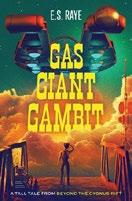
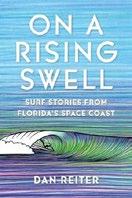
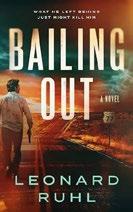
Raye, E.S. | Alex Parker Publishing (411 pp.)
$18.99 paper | September 16, 2025
9781963029109
An imaginative, genre-bending gunslinger tale with a compelling queer protagonist.
Reiter, Dan | Univ. Press of Florida (174 pp.) | $24.95 paper | April 29, 2025
9780813080970
A wonderfully colorful and inviting paean to Cocoa Beach surfing.
Ruhl, Leonard | Big Corner Publishing (298 pp.) | $23.99 | $12.99 paper
November 4, 2025 | 9798987302682
9798987302668 paper
Pulse-pounding action and complex characters.
Schon, Katie Wray | Waxwing Books (48 pp.)
$18.99 | April 1, 2025 | 9781956393156
An accessible and inspiring minibiography, delightfully illustrated.
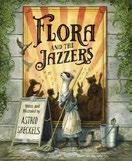
Sheckels, Astrid | Waxwing Books (40 pp.)
$18.99 | October 7, 2025 | 9781956393187
A sumptuously illustrated Jazz Age Cinderella story.
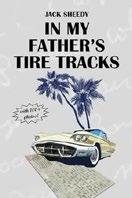
Sheedy, Jack | Self (307 pp.) | $25 paper
March 5, 2024 | 9798882954276
A fitting tribute to a father-son relationship.
Silva, Candelaria Norma | Illus. by Justin Aquidado | Self (50 pp.) | $11.99
$12.99 paper | December 1, 2021 9781735138534 | 9781735138541 paper
An exuberant portrayal of the mother-daughter dynamic.
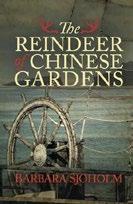
Sjoholm, Barbara | Cedar Street Editions (368 pp.) | $19.95 paper
February 1, 2025 | 9798991120609
An engrossing novel that features a memorably strong, vibrant female character.
Starling, E.L. | Entangled Teen (400 pp.)
$14.99 paper | July 1, 2025 | 9781649378408
Titanic -inspired romance set in space with thrilling action and social justice bent.
Stelmach, Orest | Penwood (404 pp.)
$24.99 | $13.99 | paper | 9780999725344 9780999725337 paper
A caustic, mordant depiction of the war in Ukraine with a true underdog as hero.

Sutaria, Kalpana | Atmosphere Press (230 pp.) | $24.99 | $18.99 paper
December 10, 2024 | 9798891325791 9798891325418 paper
A smart, energetic, and wideranging series of ideas for more climate-responsive building.
Swanborough, P. A. | Two Feathers Press (217 pp.) | $20.69 | $16.99 paper
March 22, 2024 | 9781763500020 9781763500006 paper
A debut that will enchant readers with its poetic prose and haunted realism.
Sway, Amora | Self (255 pp.) | $12.99 paper
October 18, 2024 | 9798343591965
Like rich chocolate gelato: dark, delicious, and decadent.
Thorndike, John | Beck & Branch (268 pp.)
$15 paper | September 15, 2025 9798992668216
A captivating story of midlife renewal.
Wilkie, David & Gilda Morelli Self (316 pp.) | $7.99 paper
October 10, 2024 | 9798218480233
The game is afoot with two unlikely sleuths; this looks like the beginning of a beautiful series.
Willett, Richard | Magic Show Press (248 pp.) | $17.99 paper | June 15, 2025
9798992339819
A captivating tragicomedy that celebrates the lives lost to AIDS.
Wind, Lee | Illus. by Kelly Mangan Cardinal Rule Press (32 pp.) | $18.95 June 3, 2025 | 9781945369735
An ideal guide for readers of any age to learn how to be an ally.
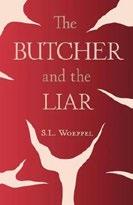
Butcher and the Liar Woeppel, S.L. | Books Fluent (430 pp.) $19.99 paper | September 11, 2025 9781953865908
A haunting, inventive, and genre-blurring serial-killer tale.
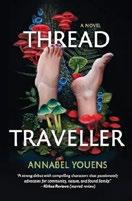
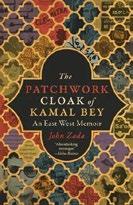
Youens, Annabel | Salt Line Press (270 pp.) | $17.99 paper
October 3, 2025 | 9781069512208
A strong debut with compelling characters that passionately advocates for community, nature, and found family.
The Patchwork Cloak of Kamal Bey: An East-West Memoir
Zada, John | Terra Incognita Press (320 pp.) $17.99 paper | September 17, 2025
9781777357122
A breathtaking travelogue that invites readers to rethink what “home” really means.
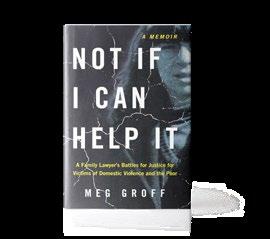

EVERY YEAR , the list of the year’s best Indie books is a thrill, full of smart mysteries with spooky settings, nature-based poetry collections, true stories of exploration and survival, immersive story collections, and more. This year, Indie editors saw all of the above, but the books that most stood out in 2025 captured how everyday people, and, in one case, a parakeet, left indelible marks on the world.
Meg Groff had no intention of becoming an attorney. She was a mom living in the Pennsylvania countryside working odd jobs (taxi driver, sock-factory worker), but witnessing the local police department’s tepid response to domestic violence galvanized her interest in fixing, in whatever way she could, a broken system. In her warm, funny memoir, Not if I Can Help It: A Family Lawyer’s Battles for Justice for Victims of Domestic Violence

and the Poor, Groff recounts her career in family law and “remains relatable until the end, never shying away from describing her own selfdoubt,” in the words of our reviewer. “An inspiring, intelligent memoir focused on the challenges of advocacy.”
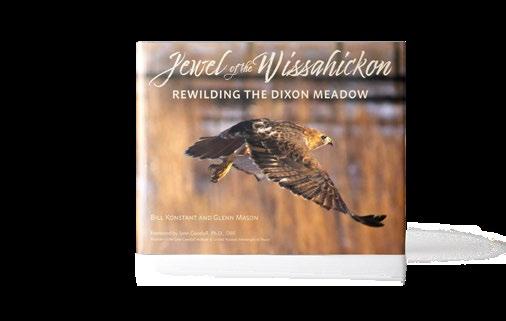
extensive list of resources, as well as intimate anecdotes, this anthology could prove to be a true lifeline for trans youth and adults. An emotional, engaging, and informative look at the real-life struggles and triumphs of trans people.”
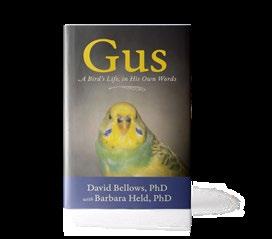
In their book, Chrissy Boylan, the parent of a transgender young adult, and Heather H. Kirby, a therapist working with gender-diverse teens, present personal testimonies by transgender youth—on creating identity, dealing with family disapproval, crushes— accompanied by definitions of key terms, parenting tips from a therapist, and workbook-like prompts. Trans Anthology Project: Reflections of Self-Discovery and Acceptance depicts multiple experiences and gender expressions, teaching readers how to understand and provide gender-affirming care to trans kids. Our review says, “With an
Bill Konstant, a wildlife biologist, made such a significant impact that he has two books on Indie’s Best of 2025 list, Wrestles With Wolves: Saving the World One Species at a Time and Jewel of the Wissahickon: Rewilding the Dixon Meadow, which Konstant co-wrote with Glenn Mason. Both books recount Konstant’s lifelong commitment to conservation—from global campaigns to save crocodiles, sharks, and gorillas, etc., to local efforts to rewild a 14-acre island outside Philadelphia with native plants, sustaining pollinators, mink, and fox. You know you’re on the side of the angels when Jane Goodall said you’re
“dedicated to saving animals and the natural world.” Lastly, Gus, a 1.4-ounce yellow parakeet, forever changed his owners’ lives. Gus wasn’t originally wanted by David Bellows, until Bellows’ spouse, Barbara Held, convinced him. They adopted the bird and were amazed by a very rara avis, whom they write about in Gus: A Bird’s Life, in His Own Words. Our reviewer notes, “While the book’s humor is uniformly winning, its most memorable element is the underlying pathos of genuine interspecies communication; long before the halfway point, Gus no longer seems like any kind of pet but rather a smart, mischievous person in the mix. When Bellows declares, ‘I was fascinated by what was in his little birdy mind and wanted to learn more–much more,’ there’s hardly a reader who won’t agree.”
Chaya Schechner is the president of Kirkus Indie.
Laws proposes a revolutionary plan for a truly just existence.
The author opens her rabble-rousing new book at full throttle, describing the current world as “a hell-hole, slaughterhouse, and never-ending Auschwitz from the perspective of nonhumans” filled with “millions of little Hitlers, wantonly splattering blood, asserting unfettered dominance, desperately clinging to the theory that ‘might makes right,’ and deluding themselves into believing humans are the anointed ones.” This is strong stuff—necessarily so, since Laws is here proposing an entirely new set of governing principles deeply rooted in the ethos of the animal rights movement and dedicated to addressing the practical
issues of free will, agency, and collective good. She points out that the world’s natural resources are dwindling due to human activities such as deforestation, grazing, and urban sprawl, with the obvious observation that this is a concern to all living beings on the planet, whether they are aware of it or not. The author describes the role of animal “advocates” who would act as decision-makers in the “omniocracy” she proposes, humans who “become collectors of interest, seekers, investigators, and scouts, always open to further inquiry and passionate about evidence.” Laws is tremendously passionate and convincing about all of this; she lays out a program that certainly seems workable—in the
By Kelly Isley
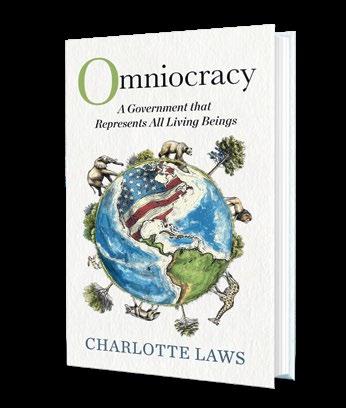
Laws, Charlotte | Stroud House
Publishing | 332 pp. | $19.95 paper
October 4, 2025 | 9781733341011
likely impossible event that the international community would ever adopt it. “All oppression is woven together like a patchwork quilt,” she writes, making an argument that will fall on deaf ears, even though she’s entirely right; the system Laws envisions would benefit humans every bit as much as it would all of humanity’s countless
victims. She movingly asks her readers to take down the artificial barriers they’ve erected to this kind of thinking and allow all other living things to “join the human on the elite side of the divide”; one can only pray she changes some minds. A heartfelt and richly detailed thought experiment positing a better, fairer world.
W.R. Miller
Leonard Ruhl
Bayko, Faye | Tellwell Talent (512 pp.)
$17.99 paper | November 26, 2024 9781779624789
Bayko’s debut mystery novel explores the intersection of hippie culture and murder on the Pacific Northwest coast.
On Vancouver Island’s west coast in the spring of 1968, the counterculture of the ’60s collides with the lingering ghosts of earlier frontier days. Sandy Chambers, a 20-year-old, hitchhikes north from Victoria, hoping to escape her conventional parents and find freedom among the hippies, surfers, and American draft dodgers camping along the beaches of Tofino and Ucluelet. When Sandy accepts a ride from a charismatic Californian named Geoff, she’s swept into the illusion of an idyllic, carefree world—but she hadn’t expected the beach to be so far from everything, “nor had she anticipated the depth of darkness at night.” In the morning, Geoff turns up dead, and suddenly the pristine foggy beaches change from a love-in to a menacing crime scene. Sandy resolves to stay, integrating herself with the other young people working at the majestic old inn near the beach. It’s there that she starts to uncover surprising information about her new friends that may be the key to solving Geoff’s murder. As the investigation unfolds, the era’s hazy mix of idealism and indulgence gives way to unsettling rumors about drug smuggling and growing tensions between longtime locals and freewheeling surfers. Bayko’s story leans on familiar mystery structures, but its vivid sense of place helps to set it apart. The beaches, fog, and the “magic castle” of the Wickaninnish Inn make the “edge-of-the-Earth feeling” of Vancouver Island tangible. Bayko has an ear for dialogue—especially among inn workers and locals grumbling that “the draft dodgers and hippies have taken over Wreck Bay again”—that captures the
A fine reference about Haiti’s past and a guide to building its future.
FROM TAINO SUNS TO PHOENIX FLAMES
era’s fascinating generational friction. The mystery resolves with a conventional, if satisfying, twist, but it’s the sensory immersion in fog, surf, and danger creeping in that will have readers wanting to return to this beach.
A whodunit with a straightforward plot but engaging atmosphere.
Bockian, Jonathan | Künraht Press (360 pp.) | $17.99 paper | October 20, 2025 9798218667931
In Bockian’s historical novel, a young woman in 17th-century Italy sets out to learn what really happened after her beloved brother is murdered.
In the year 1672, Yehudit Baldosa Parenzo is a widow in her mid-30s living in the Ghetto of Venice (located in Italy’s Cannaregio district and currently considered the oldest Jewish ghetto in the world). Her world crumbles when she discovers that her beloved brother, an unassuming merchant named Mordechai, has been found dead with his throat slit and his body burned. Obsessed with finding out who murdered her brother and why it was done, Yehudit plunges into an increasingly labyrinthine investigation that takes her through Mordechai’s last days. Uncovering his involvement with an increasingly fractured “Garden” group that regularly debates holy texts (“It often seemed to him that in the layers upon layers of texts and commentaries, the practice of explicating words was as central to
Ebraismo [Judaism] as the belief in one God”) and his apparent plan to run away to Amsterdam with his courtesan lover, Yehudit is left to wonder: How well did she really know her brother? And what barriers is she willing to break in order to find and speak the truth? Bockian crafts an intricate story set against the backdrop of the arrival of Shabbetai Tsvi (a man who claimed to be the Messiah) and the revolutionary writings of the “heretic” Benedict Spinoza. The author compellingly contrasts Yehudit’s personal journey to resilience and personal strength with her brother’s experiences (via flashbacks) as they both push back against tradition. The sheer amount of historical detail makes for a dense text that may overwhelm more casual readers, but the story (based on true events) includes enough twists and turns to move forward at an engaging pace. With a capable narrative voice that explains without lecturing, Bockian effectively explores timeless themes of religion, family, and societal expectations.
A fascinating historical drama.
Clermont, Woody R. | Self (234 pp.) | $19.99 paper | October 5, 2025 | 9798232841607
Clermont, a Haitian American judge, chronicles the layers of Haiti’s culture from the indigenous Taíno to the 20th century in a tribute to the island nation that also serves as a call to action.
The story lovingly portrays the mythology, agriculture, trade, and spiritual practices of pre-colonial Haitian society, calling it a “symphony of ecological intelligence, spiritual reverence, and social cohesion” and introducing historical figures, including Taíno poet Anacaona and Guarionex, the cacique of Maguá. This idyllic society is brutally interrupted by the arrival of Christopher Columbus, described as a “storm masquerading as salvation.” No detail is spared in viscerally recounting the atrocities of Columbus and the French colony that followed. Clermont juxtaposes the ideals of the Europeans with their actions, calling attention to the hypocrisy of Enlightenment ideology as renowned figures of the time “betrayed their own principles in pursuit of wealth, status, or national pride” and “Governors quoted Rousseau while drafting plantation ordinances.” He also explores the racism of those who theorized that Africans were “durable enough to survive plantation economies.” As Clermont recounts life under colonial oppressors, the 1791 uprising of enslaved people that would eventually lead to the founding of the country of Haiti feels inevitable and necessary. Historically important Haitian revolutionaries, such as Toussaint L’Ouverture and Jean-Jacques Dessalines, and military general Thomas-Alexandre Dumas, make appearances, and the author emphasizes the influence of Haiti and Haitians on the wider history of the Americas, including the American Revolution, the liberation of Venezuela, the Louisiana Purchase, and the founding of Chicago. The brief mentions of what happens to the nation after its independence may compel readers to additional sources, as some events and ideas are mentioned multiple times without elaboration. Overall, however, this unflinching look at colonialism offers an important perspective. The author’s passion for his subject is clear, and its recommendations of how Haiti might thrive again are carefully considered.
A fine reference about Haiti’s past and a guide to building its future.
Coyle, Harold | Master Wings Publishing (418 pp.) | $19.95 paper | October 28, 2025 9798985788648
Coyle dramatizes the early events of the Revolutionary War in this historical novel.
The war is on, and everyone must decide where they stand. Blacksmith’s apprentice
Anthony Carter made his choice early: The 16-year-old militiaman was one of those who fired on the king’s soldiers as they marched back from Concord to Boston, and he helped defend Breed’s Hill until the ammunition ran out. Farther south, Edward Shields is the heir, on his mother’s side, to one of New York colony’s great mercantile dynasties…that is, if his family’s property makes it through the war intact. It’s hardly a sure thing, given that his loyalist father is seeking to win the crown’s favor by joining the British Army. Edward, a born rebel and member of the Liberty Boys, has decided to join the conflict as well—though not on the same side as his father. Lady Katherine Trent, a rare businesswoman of the era, has loved ones on both sides of the conflict; her unorthodox career has given her no love of the status quo, and she harbors a deep belief that “long shots had a habit of paying off, provided one was willing to set aside their fears and persevere.” A Scottish frontiersman, a French military observer, and a loyal British soldier help fill out the cast of characters, all of whom discover that the smallest decisions can take on the towering weight of history. Coyle renders the calculations of colonial Americans with greater nuance than one normally associates with tales of the Revolution: “That a day of reckoning was coming was never in doubt…more uncertain...was what the cost of victory would be, even to those who had allied themselves with the winning side.” He deftly weaves his characters through events of the first year of the conflict— up to Washington’s crossing of the
Delaware—in a way that somehow makes the outcome seem in doubt. Readers will not only feel transported to the time period—they will see it anew. An engrossing account of history on a personal scale.
Curtis, Kaci | Wild Rose Press (322 pp.) $19.99 paper | October 22, 2025 9781509263165
In Curtis’ historical novel, a teen girl travels in a caravan from Missouri to the Willamette Valley. Seventeen-yearold Winnie Hayes wants to feel as excited as her Papa does about the free land in the Oregon Territory available to new arrivals settling there for a five-year period, but the family’s 2,000 mile journey there from Missouri as part of a covered wagon caravan is grueling. Winnie’s delicate newlywed sister, Nora, is even less enthused about the trip; however, her little brother, Elijah, perks up as he hopes to encounter some Indigenous people. Though Winnie misses the animals on the family farm, she soon finds other interests; one is the cowhand Hal Clark, who is sweet on her, and a friendship also grows with Mae Cook, daughter of the caravan’s trail guide, Big John. Winnie admires unmarried Mae’s freedom—she’s “a doer,” confident on a horse and able to handle firearms. Winnie wants to be similarly brave, but unlike Mae, she fears the Indigenous population. This distrust is one of the many attitudes Winnie must adjust during her eventful voyage. Bear and bandit attacks, injuries, sickness, deaths, and births bring about realizations regarding important subjects like marriage and bearing children, valuing different cultures, the existence of God, and what constitutes a family. While the author takes on large-scale issues, Curtis’ unadorned writing never feels heavyhanded. After a man’s accidental shooting death, Winnie reflects simply
that “His body would lie here, all alone. Beneath a giant prairie sky.” There is an authenticity to the likable characters, even the most minor ones, including a fiddle player in the caravan and a grieving mother. The author has a gift of summing up people concisely; “tall and gangly” Jeb, Nora’s husband, is always “leaning this way or that, like a stalk of wheat.” Nora and Winnie are contrasted as being like “a gentle breeze” and “a runaway horse.” Whether the scenery is enormous rock monoliths, the carbonated waters of Soda Springs, or prairie grasses “tossing about like a rooted sea,” the compelling descriptions of the landscape along the Willamette Valley command attention.
Deft portrayals of people and their surroundings distinguish this historical journey.
Dáil, Paula | Historium Press (446 pp.) | $24.99 paper October 17, 2025 | 9781964700373
In Dáil’s historical novel, a woman discovers her Jewish lineage when her estranged mother dies. Prompted by the serendipitous discovery of her own previously unknown Jewish lineage, the author was inspired to imagine the life of a young woman leaving behind Germany and her family in 1912 to reconnect with a fiancé who had already emigrated to the United States. This story of the fictional Nathalie Weiss, her daughters Sarah and Rachael Rosenblum, and her namesake granddaughter, Natalie Barlow, is also an account of the struggle of Jewish immigrants who found themselves unwelcome in an increasingly antisemitic America. Readers meet Nathalie in 1910 Germany as she argues with her parents, who insist that it is time for her to marry. The matchmaker has chosen 29-year-old Eitan Rosenblum to be her betrothed (“he is now ready to finally settle down and become serious about life”). Despite
Eitan’s determination to emigrate to the United States, a marriage contract is signed, and the couple agrees that Eitan will leave first, with Nathalie following him when she is ready to leave home. Two years later, she arrives in Elyria, Ohio, but despite her best efforts, she always feels like a stranger in an unfamiliar and threatening land. (Being both Jewish and German is a double hit.) Her daughters counter the bigotry by adopting false identities: When they leave home, Sarah changes her name to Sally Rose, and Rachael becomes Charlotte Rose. Charlotte’s daughter, Natalie, slowly unravels the complicated, occasionally confusing web of family secrets revealed through the letters and journals Charlotte left behind, written mostly in German. When Natalie enlists translation help from a disenchanted priest, their ensuing romance lifts the weight of America’s long-standing history of bigotry toward immigrants and anyone not white, Protestant, and male. The narrative, alternating between past and present, is packed full of information about the Jewish experience; Dáil skillfully captures Sally and Charlotte’s terror of being discovered. The story, a carefully composed study of emotional and psychological damage endured by those forced to hide their heritage, also serves as a cautionary message relevant to today’s culture of hostility toward immigrants. Poignant, disturbing, and historically and dramatically riveting.
Diggs, Tom | NineStar Press (305 pp.)
$18.99 paper | August 26, 2025
9781648908880
In Diggs’ novel, a TV writer returns to his hometown following his mother’s death and meets a man who makes him reevaluate his life. Gabe Hartman uses a pen name for his job in Manhattan, where he writes scripts for one of star Aurora Helms’ last
remaining televised soap operas. Keeping his identity secret is essential, since he gets all his ideas from gossip his mother shares about the goings-on in his tiny hometown of Concord Valley. Unfortunately, when Gabe’s mother dies unexpectedly, he loses not only the wellspring of ideas for the show he writes, but also the only person he truly loves. Having been burned in relationships in the past, Gabe meets men through a hookup app, but he’s not interested in actually dating any of them. Once he returns to Concord Valley and discovers that his mom had money trouble he’ll need to take care of, Gabe meets Owen Greene, the handsome young lawyer who knows just how to help. Gabe is so disarmed by Owen that he quickly begins second guessing his “no dating” policy, until he learns Owen is already married to another man. Although Owen assures Gabe that he’s in an open marriage, Gabe insists he wants no part of it. Problem is, he can’t stop bumping into Owen, and he also finds himself using their connection as fresh inspiration for the soap. Told in the third person, the book mostly follows Gabe, though the narrator does periodically jump into Owen’s head without warning. Concord Valley is the perfect Hallmark-style town, its quaint inhabitants and traditions bringing a real charm to the story. Although the book is longer than it needs to be, foodies will enjoy the abundance of romantic cooking scenes involving Gabe and Owen, as well as the lessons on gardening and farm-totable dishes. Moreover, also included are a few R-rated sex scenes that serve to underscore the connection between the characters. Though some readers may find some plot points predictable, the witty banter and endearing characters keep the story feeling fresh. A feel-good story perfect for those who enjoy sexy romantic comedy.

For more Indie content, visit Kirkus online.
Doonan, William | Self (352 pp.) | $9.99 paper | August 17, 2025 | 9798284534052
Series: The Motherland Trilogy, 1
In Doonan’s novel, the last male FBI agent must prevent war with Mexico in a future when women control the government of the former United States. FBI agent Robert Hyde has some advantages— his late wife was wealthy, and her family is politically connected—but he has much more stacked against him. After suffering an epidemic called the Pox, the world’s population was decimated, chaos broke out, and women were hunted. After that awful period, the U.S. is now known as the Matriarchal States of America. For safety’s sake, men were left with no rights; they can’t have money, bullets, or even enjoy a soda (bottled water is all they can drink, and it is laced with a drug that prevents erections). Violence against women has plummeted, and now there is almost no femicide. Robert, who is the FBI’s last remaining male agent, has a daughter, but his senator mother-in-law wants full custody, which she can easily obtain if the father commits a crime. In the midst of this dystopian mess, Mexico is threatening war: Aztecs are amassing at the border, and Robert is sent (with a female minder) to negotiate for peace. It’s a tall order, he’s off the bottled water, and a beautiful princess named Xochil is waiting for him upon his arrival (“‘You’ll never want to leave,’ she whispers”).
Doonan’s premise of a female-controlled authoritarian state is audacious, and both the novel’s backstory and present reality are full of gritty details that give the narrative a unique plausibility. The Matriarchal States isn’t a pleasant place, but Robert and other characters make wry, sarcastic observations that lighten the mood and add a necessary human aspect to the stark landscape. (It is also intriguing to see what Mexico is like in relation to the former U.S.) The characters are clearly drawn and have convincing motivations. The plot grows slightly convoluted when Robert reaches Mexico but returns to form nicely later on.
A unique action story with a compelling conceit, a tenacious lead, and believable characters.
Dupal, Stephanie | Swan Abbey Press (300 pp.) | $16.95 paper November 25, 2025 | 9780996510318
O ver the course of 15 short stories, Dupal showcases dynamic, daring characters unafraid to explore the darkest parts of themselves. These tales take place in a wide range of settings, from Hollywood’s Golden Age to the earliest days of the Covid-19 pandemic to 18th-century France and beyond. A woman embarks on a dangerous hike despite warnings of a storm in “Over the Mountain Steep.” In “A Baby of the Ganges,” a grieving mother, abroad and struggling to
A unique action story with a compelling conceit.
THE MOTHERLAND AND MR. HYDE
reconnect with her partner, regrets and reneges on a choice which might have helped her. In the collection’s title story, a retired university professor imagines seducing the man whom her niece has recently started dating while unveiling his own seedy history, while the opening tale, “To Lie Engulfed in the Waves of the Sea,” introduces a woman who, after a debilitating accident, is forced to lie in order to get a job, where she continues to lie in order to help someone with a secret wish. In another story, “Olympic Hopeful, 19, Dies After Winning U.S. Figure Skating Championships,” two adopted sisters must rely on each other, due to their mother’s neglect. Throughout, Dupal convincingly paints distinct character portraits and evokes vastly different time periods and locales. Still, her lyrical prose provides an identifiable signature across the entire work, inviting readers to languish in the language: Cello strings are “alive and wanting”; a necklace charm covered in candle drippings is “blemished with the pearly wax of a benign ritual.” Certain beats may feel familiar, as when a judgmental, disgruntled older woman softens, due to the childish exploits of a young boy with whom she shares a train car, or when a young couple is forced to reconcile with their various hang-ups while staring down parenthood. Overall, though, Dupal’s acute attention to detail often gives way to glimmering insights. A well-polished and enjoyable first set, demonstrating impressive range and focus.
Eppley, Harold | Orange Hat Publishing (292 pp.) | $14.99 paper November 18, 2025 | 9781645385851
In Eppley’s middle-grade novel, a bullied Milwaukee boy with a neurological disorder brightens lives with his delightful humor. Most people can’t tell when seventh-grader Jackson is
A.J. Grea
Peter Mercurio
Kathryn Nolan
Richard Willett
E.S. Raye

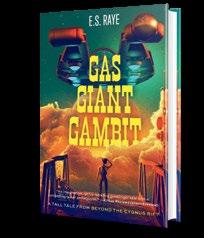
Larry Chrysler
S.E. McPherson
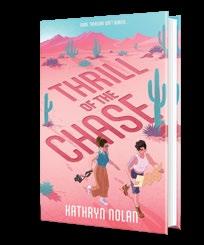
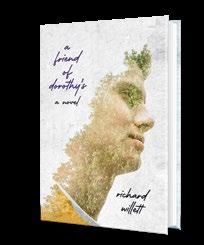
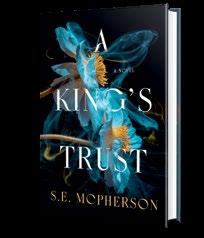

The author of There answers our questions.
ON AUGUST 28, 2000, Peter Mecurio’s life changed for good, when his thenboyfriend found an unattended baby in a New York City subway station. In There, he candidly chronicles their journey to becoming a family. In a starred review, Kirkus calls his profound account “a must-read for anyone who’s been told that a home is incomplete without a mother and a father,” and it made our list of the Best Indie Books of 2025. Over email, Mercurio told us more about his story.
What was the original idea that started you working on There?
In 2013, the New York Times published a personal essay I wrote about my family’s story. The response was overwhelming—something I hadn’t remotely expected. Readers wrote to me, and people in the publishing world reached out, encouraging me to turn it into a book. At the time, I resisted. I thought of myself as a playwright who writes dialogue, not an author who writes chapters. But eventually curiosity won out. After many starts, stops, and rewrites, I finally got the book I wanted out into the world. (Fittingly, one of its main themes is about overcoming resistance—mostly my own.)
What has it felt like to have There out in the world? What’s the reception been like?
Because it’s such a personal story, I worried about how the book would be received—and what impact it might have on my family. But the response has been deeply humbling. Readers seem to connect with different parts of the story, and many have told me it made them both laugh and cry. I especially love when readers reach out to share what
resonated with them or how the book reflected something in their own lives.
What inspired you during the writing of the book? What were you reading, listening to, watching? My husband, Danny, and our son, Kevin, were my greatest inspirations. Music also played a huge role—I wrote while listening to a playlist filled with Mary Chapin Carpenter, Bruce Springsteen, Indigo Girls, Brandi Carlile, Stevie Nicks, the Avett Brothers, Kim Richey, and others. I might have to share that playlist one day. As for reading, two memoirs especially inspired me during the process: Brandi Carlile’s Broken Horses and Bruce Springsteen’s Born to Run
Where and when did you write the book? Describe the scene, the time of day, the necessary accoutrements or talismans.
Better question: Where and when did I not write the book? The process pretty much took over my life. I carried a pocket-size notebook everywhere and kept a larger one on my nightstand for those middle-ofthe-night ideas—which came often. When it came time to shape all those notes into a real manuscript, I spent countless hours in coffee shops around Chelsea and the West Village. I work best with the hum of background noise; my brain doesn’t do well with silence.
What was most challenging about writing this book? And most rewarding? The biggest challenge was learning to write prose instead of dialogue. I’m used to writing for characters onstage, not narrating them on the page. I read everything I could to help—Anne Lamott’s Bird by Bird and Stephen King’s On Writing were invaluable. And I kept Steven Pressfield’s The War of Art




There: We Found Our Family in a New York City Subway Station Mercurio, Peter ACE Doe | 258 pp. | $19.99 paper June 3, 2025 | 9798992637328
close by whenever resistance crept in. The most rewarding part was reliving and reconnecting with some of our family’s most sacred moments. I cried a lot during the process—not recommended in a coffee shop.
What book or books published in 2025 were among your favorites? Yikes—I haven’t made it to any 2025 releases yet! I’m still working through a long list of must-reads from years past. Recently I finished Mark Woods’ Lassoing the Sun, which resonated because my family and I love exploring National Parks. And to give you a sense of how far behind I am, I’m currently in the middle of Joan Didion’s The Year of Magical Thinking.
Interview by Megan Labrise
happy. He can’t smile or even move his eyes side-to-side because of Moebius Syndrome, a rare condition that causes facial paralysis. He loves telling jokes, much like his father, a popular standup comedian who left the family years ago. Jackson mostly keeps to himself while his best friend, Ethan, keeps the bullies at bay. He and Ethan plan to break a world record involving a bouncing basketball. Then Covid-19 hits; by the time eighth grade rolls around, he’s behind a face mask at a new school and making his classmates laugh uproariously. He also catches the attention of a girl he likes. But what will happen when his mask comes off? Will everyone see the same “blank face” that has caused so many others to treat him differently?
Eppley’s exuberant narrative, which is written in free verse, hops excitedly from one situation to the next. Jackson confronts endless hurdles, including a reunion with his estranged dad, who has startling news for the family. The story tackles the boy’s condition frankly—one bully relentlessly mocks his drooping lip, and Jackson constantly worries that he’s the topic of people’s whispers. Comedy nevertheless takes center stage, and Jackson delivers all sorts—puns, knock-knock jokes, and lowbrow humor—that send others into fits of laughter, including Ethan, a familiar face at Jackson’s new school, and Jackson’s little sister, Maisie, whose giggles never stop (“Tell me jokes, Jackson, pleeeeeeease”).
Although Jackson’s condition is rare, his plight is relatable as he learns about the ways in which people of various races, body shapes, and sexual orientations battle mistreatment and disrespect.
A struggling but charming protagonist distinguishes this touching story.
Feltman, Susan Greenberg | ANJ Press (333 pp.) | November 19, 2025
Series: Starlight and Ashes Trilogy, 3
Feltman’s final novel in a speculative trilogy tells a tense, intimate postapocalyptic story of familial conflict, set in the subway tunnels of what used to be New York City.
The Colony of New York, built underneath the ruins of the city following the great hurricane of 2085, faces mounting challenges as the 24th century draws to a close. Violent gangs draw in disillusioned youths. Increasingly frequent tremors (“The earth surrounding the tunnels was warming, shifting and changing”) damage buildings and cause pipes to leak or burst. Air quality is on the decline, leaving people fatigued and unable to work. Dealing with all of these problems would be enough for Manny Stewart, the Colony’s police commissioner and one of its wealthiest citizens, but he must also deal with his son, Zach, who’s become increasingly defiant and seems to have come under the sway of bad influences. Manny’s desperation to keep Zach out of trouble, combined with his own trauma of growing up with an abusive alcoholic father, causes him to come down harder and harder on his son—but the more he tries to control him, the more he resists. The generational conflicts reflect the tension between anxiety and hope that pulls at the Colony as it seeks its future.
Feltman’s postapocalyptic setting is well developed and filled with the just
the right amount of detail to make it feel lived in, without inundating the reader with minutiae. However, much to the novel’s credit, the setting mostly serves as a backdrop to a taut, unflinching portrayal of a difficult father-child relationship with high stakes that extend well beyond their home. Feltman excels at ratcheting up tension, but she also finds hope in unexpected places, leading to some hard-earned, authentically joyous and optimistic moments. Manny, in particular, is a memorable protagonist, often difficult to like but ultimately deserving of the reader’s admiration. Strong postapocalyptic worldbuilding supports a gripping family drama.
Feria, Brittany | Illus. by Wandson Rocha Blue Balloon Books (24 pp.) | $19.98 July 8, 2025 | 9781966786108
In Feria’s picture book, a pup visits the doctor for a check-up. Tan-furred puppy Sammy is fast asleep when his mom wakes him in the morning for a doctor’s appointment. Confused, Sammy is worried and doesn’t know what to expect from this trip. “Mommy, is the doctor mean?” he asks. His mother playfully chides him for being silly and explains what will happen next. The toys in the waiting room at the doctor’s office instantly make Sammy feel more comfortable. Once the nurse calls him inside, she weighs and measures him before asking his mom about his diet and exercise routine. A kindly giraffe doctor then comes in to listen to Sammy’s heart and instructs the nurse to give him a few shots, which scare Sammy but turn out fine. Sammy invents a whole new game that he can play with his mom based on his experience. Providing clear step-bystep description of a trip to the doctor’s office, Feria’s debut picture book is a well-executed social story that may help to calm young readers’ fears about
going to the doctor themselves. The thoughtful text effectively describes the process in a personable manner that keeps the narrative from becoming pedantic. Rocha’s illustrations add an element of fun by portraying everyone as animals in a colorful world without too many distractions. A reassuring look at seeing the doctor.
Ferrell, Marcus R. | Tellwell (256 pp.)
$35.58 | September 27, 2024
9781779620354
A chance encounter at a Halloween party becomes the starting point for decades of reflection in Ferrell’s memoir. The memoir opens with a moment of remembrance—the death of the author’s father in 2022—which prompts him and his wife, Maureen, to revisit the story of how they met. “Each time we explained our situation,” he writes, “we just skip over the details and tell the partial truth—that we both met at a Halloween party.” The book reveals the “whole story” behind that simple line: two young professionals in 1980s New Jersey, navigating tangled friendships, fragile egos, and manipulative personalities. What begins as a lighthearted tale of flirtation—Maureen dressed as a devil, Marcus as Dracula—gradually becomes a psychological journey of love, loss, and narcissistic abuse. The author introduces Chuck, a domineering roommate he later calls “Narcissist One,” whose controlling behavior foreshadows the deeper theme of the narrative. As Marcus and Maureen’s relationship develops, they confront the lingering trauma left by Maureen’s ex-boyfriend, Ted, a man Ferrell identifies as having “narcissistic personality disorder.” Through these episodes, the book explores how empathy and self-awareness can coexist with vulnerability: “Maureen became better at it as time and experiences went on. She did it
with perseverance. With patience. With sympathy.” Ferrell’s storytelling is often conversational and deeply personal, rich with reconstructed dialogue and careful emotional observation. The pacing sometimes slows under the weight of detail, but the intimacy of his voice gives authenticity to scenes of both humor and heartbreak. Ultimately, Ferrell offers more than a nostalgic love story. His “devil’s road” through narcissism becomes a meditation on how compassion survives manipulation and how self-knowledge can transform pain into endurance. A reflective, heartfelt memoir of surviving and understanding the subtle devastations of narcissism.
Fields, Gary | SparkPress (336 pp.) | $17.99 paper | February 24, 2026 | 9781684633487
In Fields’ thriller, a trio of young professionals unexpectedly find themselves caught up in a murder mystery spanning millennia.
Arriving at Judge Maloch’s house for a meeting, new lawyer Josh Sutton witnesses the old man’s murder. Escaping with the laptop that Maloch died to protect, Josh enlists the help of doctoral candidate Samantha “Sammi” Bollinger and her tech-savvy friend Mark Roth to decode the mysteries left behind. These include an email from a man called Master Zhou, who may have ties to the mysterious organization known as Falun Dafa, an offshoot of ancient China’s Xiulian tradition that emphasizes achieving a “higher state of consciousness” and is now viewed largely as a cult. The three eventually come to suspect that Maloch’s murder is directly related to those of various historical judges hinted at in the Bible itself, and that it is up to them to stop the next murder—if they can escape the assassin who is hot on their trail. Interspersed between the scenes of modern-day action are flashbacks to ancient judges who experience a type of divine guidance
(called “The Words”) that simultaneously helps them and puts their lives at risk. Fields delivers a twisty thriller with a delightfully unusual plot that takes readers from 11th-century Normandy and England to 13th-century Beijing and beyond. The glimpses into various human rights cases over the centuries— and the judges who struggled with those cases within the contexts of their respective ages—add richness to the present-day murder mystery. The protagonists’ deep dive into Biblical secrets is somewhat reminiscent of Dan Brown’s The Da Vinci Code (2003)—historical purists may balk as the action grows increasingly outlandish (and even strays toward possible ancient alien sightings: “If you look at the actual language used in the Bible...God’s appearances could easily be that of an extraterrestrial”). Ultimately, these elements combine for a fun and thoughtful adventure through the ages. A unique premise with just the right balance of camp and mystery.
Harper, Garry | Self (201 pp.) August 22, 2025 | 9798218692810
A famous artist suffers an artistic crisis in Harper’s latest literary novel. Pablo Navarre is a perfectionist. The celebrity artist refuses to unveil work that isn’t ready and is willing to scrap massive— and expensive—pieces even as his next big show is only months away. He wasn’t always so precious. Over a decade ago, he was a scruffy young punk taking the New York art world by storm. Now he’s a calculating grouch in Versace glasses. Stymied by his latest sculpture—a massive hunk of Carrara marble that’s supposed to personify “capital-C Creation”—Pablo reflects on his past work and wonders if perhaps he’s lost his identity as an artist. While out drinking one night with one of his buyers, he runs into a
homeless man, Bao Qi, who makes grotesque smiling faces out of beer cans. As soon as he sees them, Pablo knows he has the idea for his show. “The importance of hyperproductivity in the modern age,” he explains to his horrified manager. “Needing to churn out something just to keep everyone else satisfied. Well, this is what they get—if they can’t wait for perfection, then I will give them the most imperfect pieces imaginable.” Pablo assumes the beer-can show will be a bomb, just the sort of career implosion that will free him from the gilded cage he has constructed for himself. Of course, his plan backfires: The show is a massive hit with both critics and buyers, heralded as the beginning of a new phase for his singular genius! Now Pablo truly has no idea what to think or what to be. He is sent on a spiraling, self-destructive journey through the streets and substances of New York City, risking his career, wealth, and marriage in an attempt to understand the cryptic wisdom of Bao Qi: Happiness is all around you.
The art world is an evergreen object of satire, and Harper’s barbs land on many familiar targets—the pretension of artists, the cynicism of buyers, the self-delusion of critics, the gullibility of the public. “Tate Bevan inspires me about as much as Bazooka Joe,” gripes Pablo in one of several tirades against his contemporaries (in this case, an artist who blindfolds visitors to his show so that they can “manifest” the art on their own). “He may have a lot of buzz right now, but only until the next stuntman comes along.” Pablo is no less pretentious, cynical, or self-delusional. His rebellion against his industry comes across as petulant, his journey of self-discovery as self-indulgent. That isn’t necessarily a problem for the novel. Pablo’s anxiety that everyone around him is a fraud (and that he might be one too) gets at something inherent to the art-making process, and it’s compelling to watch Harper grapple with these ideas against the lovingly caricatured world of New York art. In a move straight from Pablo’s playbook, Harper plans to update the novel regularly going forward, slowly altering its form like the
eponymous vessel and perhaps eventually rendering this review obsolete. Whether readers will feel compelled to revisit the work in future iterations is perhaps beside the point: As Pablo claims late in the novel, “It’s ephemerality that begets immortality; constant change…keeps the subject alive!”
An impressive, daringly conceptual novel set in the world of conceptual art.
Horseman, Natalie | Illus. by Kelsey Marshalsey | Self (35 pp.) | $12.99 paper September 2, 2025 | 9798296602725
Horseman’s picture book tells the story of an offbeat pumpkin who learns to treasure his differences.
With Halloween approaching, Bumpy Pumpkin can’t help but feel anxious, because it’s “pumpkin-picking time.” Farmer Ray grows all kinds of pumpkins, but Bumpy is the most unusual one in the patch. The others laugh at him for his bumpy exterior and odd shape, making him worried that he won’t get picked: “What if being different means I’m left behind? ” Families wander through the rows, choosing big, smooth, orange pumpkins, but no one stops for him. He wonders if anyone will ever see his worth. Later, a young girl, Olivia, comes to the farm looking for the perfect pumpkin—and she chooses him, proclaiming how wonderful his bumps are. She takes him home and makes him the star of her Halloween decorations. Horseman’s story is a simple yet sweet tale of acceptance and discovering value in one’s special qualities. Marshalsey’s full-color cartoon illustrations are vivid and cheerful, bringing the characters to life, especially when depicting Bumpy’s expressions as he experiences a range of emotions, from worry to joy. Together, the text and art deliver an endearing message that will linger in young readers’ minds long after the story ends.
A heartfelt autumn story that celebrates uniqueness.
Kirkus Star
Isley, Kelly | B&ib Publishers (164 pp.) $55 | June 18, 2025 | 9780988751842
An illustrated guide to hummingbirds in the Grand Canyon State.
Isley, a photographer, here presents an overview of the 15 hummingbird species that make the American Southwest their home. The author details the amazing biology of these birds, whose wings flap 50 to 80 times a second and whose hearts beat up to 1,360 times per minute. Their brisk metabolisms and specialized feeding strategies are covered in detail before Isley moves on to identify the species most likely to be seen in Arizona, such as Anna’s Hummingbird (Calypte anna), whose males are “known for their beautiful iridescent pink to red throat and crown feathers, while females have an understated greenish appearance with a hint of pink”; “A single Anna’s hummingbird may need the nectar output of 1,000 flowers to get water and calories daily that it needs to survive.” The author discusses hummingbird migration patterns by species to both demystify these incredible creatures and help readers attract them to their yards and bird feeders. (Hummingbirds are territorial, readers learn, so multiple feeders in one yard space will help to facilitate the presence of more than one species for viewing and conservation.) Isley’s magnificent full-color photography adorns every page of the book, and the information she provides is both sweeping and specific. She advises her readers, for example, on the practicalities of bird rescue: “If the hummingbird is conscious and seems to be in need of food, you can offer it a very diluted sugar water solution (about one part sugar to four parts water)”; “Don’t force it into the bird’s beak, and avoid using honey, as it can be harmful to them.” It’s easy to enjoy the visit of a hummingbird on a bright summer day, and this lovely
book will enhance that enjoyment in every way.
A beautiful and informative reference work.
James, Libby | Reflection House Productions (352 pp.) | $17.99 paper December 6, 2024 | 9798991952002
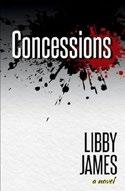
A Texas oil team’s business trip to Oman unravels in James’ slow-burning corporate thriller. The novel begins with an eerie midnight death in Oman’s Rub’ al Khali desert, a scene that hums beneath the surface of everything that follows. One year later, Olivia Stevens, the only woman on a Houston-based energy-company team, flies to Muscat with her boss, Daniel Hernandez; his business partner, Nick West; and Nick’s son, Neil, to finalize drilling rights for Block 19. What should be a celebratory victory lap instead becomes a complicated clash of egos and ethics. Their Omani liaison, the charming Qasim Al Shanfari, is all warmth and ritual hospitality, but Olivia’s journal entries reveal her doubts about his motives. The team’s interactions with their potential partners, which include the imposing Fatin Zadjali and his brothers, Salim and Bahir, showcase the potential dangers of underestimating local power. As meetings drag through the OmaniMinistry of Oil and Gas and yacht parties blur business with temptation, the tension coils tighter until Olivia discovers a hidden partnership agreement that links Qasim and the Zadjalis, exposing a network of deceit that could sink them all. James tells this tale with cinematic clarity. The desert’s heat shimmers off every page, boardroom talk crackles with menace, and even a cup of cardamom coffee feels loaded with ritual: “Olivia has learned that her cup will continue to be refilled until she gives it a little wave.” Alternating between brisk third-person scenes
and Olivia’s more intimate first-person reflections, the work balances suspense with introspection, taking a close look at how professional ambition can corrode personal integrity. Although the middle chapters occasionally linger on procedural negotiations, the payoff is rich: a meditation on power and the price of survival.
A shrewd, elegantly paced novel about the dangerous bargains that people strike in pursuit of oil, money, and absolution.
Raven Kelley, Robert T. | High Frequency Press (312 pp.) | $19.95 paper | October 28, 2025 9781962931359
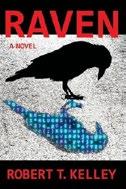
A computer whiz with a troubled past is given a second chance in life in Kelley’s novel.
Having weathered a family scandal back in Missouri and been expelled from the local state college, Mev is thrilled to be recruited for a prestigious computer program at MIT. The recruiter is Prof. Randall Fitzroy III (“Fitz”) a renowned computer scientist, and Mev will be his special protégé. She (and we) soon realize that Fitz is smooth to the point of suspiciousness. Rich and sophisticated, he is also a spy as it turns out, stealing top secret stuff from the powerhouse labs in the Boston area and selling it to the Russians. But as his savvier grad students will attest, Fitz is not really as talented as advertised. His forte is grooming truly talented students like Mev to do the hacking for him. And the fact that she is also beautiful, well, that’s icing on the cake. As a supposed test assignment, he tricks her into
hacking a premier lab so that she is compromised and controlled. But Fitz has to keep feeding his expensive lifestyle and, tapped out on the usual loan sources, he borrows from Bank Erin not realizing that it is controlled by the Boston Irish mob. Suspicious, the FBI puts agents Paul Ostrowski and Carl Philips on the case. Paul is old school and a straight arrow; Carl is the next generation, a young and very computer savvy Black man. They soon make for a good team. More complications ensue, the risks multiply, and Fitz gets more and more desperate. Mev then must ponder a risky move—hoping to bail herself out of it all. Kelley’s debut is impressive. He seems to know the territory: not just Boston but also the world of computer geeks. Fitz is a classic villain: vain, narcissistic and, when push comes to shove, a genuine psychopath. (At one point he says to Mev plaintively, “Why are you making me hurt you?” and of his undergraduate conquests, “They loved it when you pretended to care.”) The rich characterization alone should make this a worthwhile read. A well-spun morality tale that also believably combines academia with spy thriller intrigue.
Klarxon, Cager | Surrender Point Press (156 pp.) | $15 paper | October 14, 2025 9798899655951
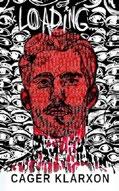
An alien intelligence invades the body of a virtual-pornography performer in Klarxon’s bodyhorror novel. In a preface, the author isn’t joking when he warns that Loading “isn’t a story you’ll wanna >>>

1 Gus
By David Bellows & Barbara Held
A touching and fascinating memoir of a little bird with a big personality.
2 Cooling Our Environment
By Kalpana Sutaria
A smart, energetic, and wide-ranging series of ideas for more climate-responsive building.
3 Wrestles With Wolves
By Bill Konstant
A visually beautiful and inviting memoir of the travels of a nature enthusiast.
4 Field Guide to the Birds of North America
By Miles McMullan with Derek Sallmann & Ryan Sallmann
A superb and concise bird compendium. 5 Jewel of the Wissahickon By Bill
Konstant & Glenn Mason
A captivating coffee-table study of a small, vibrant Eden, pairing lush visuals with engrossing writing. 6 The Book of Drought By Rob
Carney
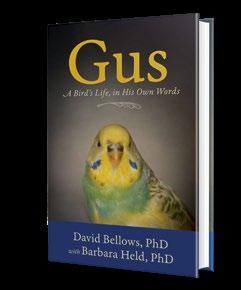
The translator of Adventures of Max Spitzkopf answers our questions.
ONE OF OUR very favorite Indie books of the year is Adventures of Max Spitzkopf, a collection of stories by Jonas Kreppel from the early 20th century, featuring a brilliant detective billed here as “the Yiddish Sherlock Holmes.” Spitzkopf, like Holmes, is a genius investigator and master of disguise assisted by a staunch companion, but he’s distinguished by his Jewishness and dedication to the Jewish people. The stories are now available in English thanks to the sterling efforts of translator Mikhl Yashinsky, who has made Spitzkopf’s adventures accessible to his biggest audience yet. We interviewed Yashinsky via email about his process.
What was it about the book that initially attracted you to the project?
I was familiar with the line from our Yiddish Nobel laureate Isaac Bashevis Singer, who remembered the books as having first fired his literary fantasy as a boy. That line is how most anyone in this century knew of the Spitzkopf stories, before now at least, as they are almost impossible to find even in Yiddish, having been printed as cheap little pamphlets in 1908. When a bound edition of five of the 15 stories turned up at the Yiddish Book Center [in Amherst, Massachusetts], where I was working at the time, it was like a little treasure being dredged up in the mire.
Were you already a fan of detective fiction?
Yes! I dedicate the book to my father, Dr. Gary Yashinsky, who used to read Encyclopedia Brown as bedtime stories to my brother Sam and me. Later, I graduated to Sherlock
Holmes, Spitzkopf’s ostensible model (he is called on the original covers “The Viennese Sherlock Holmes”), though these pulpy, action-packed, wacky little sensation stories are different from Conan Doyle’s slower burns. I loved rendering the settings…and meeting all the virtuous victims and loathsome crooks and killers, the latter rather more fun than the former.
What inspired you during your translation of the text?
I love to listen to music as I translate, something that brings me into the particular spirit of each story, like Oscar Straus’ stately “Bulgaren-marsch,” or Richard Strauss’ dark and misty “Alpensinfonie,” for rendering the story of murder in a mountain resort. The various Strauses and Strausses of Vienna were good for getting me in the mood.
Where and when did you work on the translation?
Most often in cafes in Chelsea, in Brooklyn, and in Amherst when I got an early enough start and when the day was otherwise occupied. If not, then late into the night at my desk, by lamplight.
What was the greatest challenge in translating Kreppel’s work?
The refined Yiddish literati would have called the Spitzkopf stories shund, the label for cheap, lowbrow entertainment that the public loved. Penny dreadfuls. I tried to capture the shundishkayt of the shund—the trashiness of the trash—as I translated, transmitting its antique charm and plentiful thrills but also its delicious foolishness, its soul and


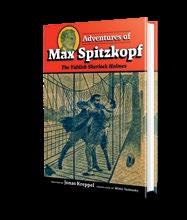
Adventures of Max Spitzkopf: The Yiddish Sherlock Holmes Kreppel, Jonas; trans. by Mikhl Yashinsky White Goat Press | 575 pp. | $24.95 October 14, 2025 | 9798990998056
sense of fun, its ribaldry and play, amid all the horror of the particular criminal situations. That was the challenge but also the reward.
What book published in 2025 was among your favorites?
The Mother of Yiddish Theatre: Memoirs of Ester-Rokhl Kaminska, a Yiddish gem as rare as Spitzkopf. I happen to be the translator of that one, too, so I cannot help but give a shout to Madam Kaminska, who wrote this beautiful reminiscence 100 years ago, the year of her death. For the past several years, I’ve been communing across time with the words of her and of Kreppel—two relationships for which my heart is happy.
Interview by Arthur Smith
tell at parties”; rather, it’s “what crawls out when the screen gets a hard-on for your eyeballs,” and his cleverly designed layout opens each chapter with a warning: “If you want to stop the installation process, press the ‘Esc’ key.” Marshall, born Markus Jensen, endured a nightmarish childhood—a dad who rejected him, a drug-addicted mom, and a raging bully of a stepfather—and things didn’t go much better after he hit college, where his ex-boyfriend put their sex tape all over the internet, shortly after their breakup. Now, Marshall is a 30-something sex worker in Thread City who entertains male clients out of his hotel room and uploads the resulting sex videos, all in a grab for attention and money, which he achieves—although he feels like he’s starting to lose his humanity. Marshall feels “empty” and “hollow,” which, it turns out, makes him the perfect vehicle for a concoction someone feeds him during a feral orgy with 12 men. As it turns out, the participants have more than sex on their minds; they’re apostles of a new kind of god, merging humanity and computer code, which now gestates inside Marshall. It won’t take high technology for readers to figure out what Klarxon is getting at in this horror tale—in fact, he lays it all out in his introduction: It’s about our “hunger for content . . . a portrait of a world where nothing’s too extreme, too private, too sacred to be sold.” The author is obviously a gifted writer with a strong, if clangorous, voice (“His veins, he could see them, feel them, glowing from within, / blue lightning beneath translucent, alien skin”); a social conscience; and a salient point to make. Readers who don’t mind this book’s general lack of subtlety are sure to love it.
An inventive body-horror jaunt for readers who like their social critique served up with a dollop of the grotesque.
Kirkus Star
Chikasa 1889:
Ed. by Lokosh (Joshua D. Hinson), Juliet Morgan, Samantha Cornelius & Kimberly Johnson | Chickasaw Press (288 pp.)
$28.97 paper | October 5, 2024
9781952397196
A team of Chickasaw linguistic experts explore their nation’s language in this edited anthology of two 19th-century works. A Methodist minister, politician, and educator, Judson Dwight Collins was a central figure in mid-to-late-19th-century Chickasaw history. In addition to serving in various high-profile roles within the Chickasaw government, including its Supreme Court, as well as overseeing the Collins Institute school, he also collaborated with Swiss ethnologist and linguist Albert Samuel Gatschet to document the Chikashshanompa’ language. The duo published two manuscripts: Words, Phrases and Grammatic Elements of the Chicasa Language Obtained from Judson Dwight Collins and Chikasa: Lexical and Syntactical Collection Obtained from J.D. Collins. Published together here, these two documents “are the earliest to contain whole narratives and examples of complete, interconnected speech in sentence form” of the language, as well as vocabulary lists, verb declensions, and archaic and novel words that do not appear in Chickasaw dictionaries. Housed at the Smithsonian Institution since the 1920s, the manuscripts are offered to a
general audience in this groundbreaking anthology. Seeking to maintain the eclectic transcription style of Gatschet, the book provides high-resolution scans of the original, handwritten manuscripts on the right page, with a typed and annotated version provided on the left. Beyond offering the full versions of both manuscripts, the authors provide several essays that introduce readers to the historical context of the documents and discuss their linguistic methodology. All of the editors are experts on the Chickasaw nation’s linguistic history; most have served in leading positions within the Chickasaw Nation Language Preservation Division. The work includes an academic bibliography and ample footnotes that complement the translations. And while the book’s goal is the continued preservation and study of Chikash shanompa’ among the scholarly community, it remains accessible to nonexperts by offering an approachable introduction to the language. The inclusion of photographs, newspaper clippings, and other visual elements makes for an intellectually stimulating and visually stunning work.
An important, well-researched look into the printed history of an Indigenous language.
MacKinnon, Colin | Self (260 pp.) | $17 paper September 9, 2025 | 9798992958003
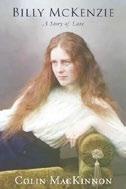
A professor investigates traces of a long-ago affair in MacKinnon’s delicate palimpsest of a novel.
Irish-born Flora Bowles Lijak lives in late-Victorian-era England and marries a Polish exile. Decades later, she tries to write the truth of her brief, incandescent affair with the American anarchist Billy McKenzie. Their romance, sparked in the charged milieu of fin-de-siècle London
radicalism, is doomed by ideology, geography, and history. Billy dies abroad, betrayed; Flora survives, entombed in her marriage and her memories. In 1918 New York, she glimpses his ghost in Washington Square (“She did not believe in spirits, yet Billy’s apparition – striding smartly along, his face set like flint, his hair dusted with snow – had been as vivid as life”). The sight unleashes both grief and revelation. A century later, Ozzie Hosseini, a Georgetown professor with her own tragic story, stumbles upon Flora’s unpublished manuscript and reconstructs her life through letters, archives, and spectral traces of text. Ozzie roams Greenwich Village with her camera, folding past into present and scholarship into séance. Beneath the novel’s scholarly rigor runs a feminist reclamation of a woman’s voice, silenced by propriety, that insists on being heard. Themes of memory, authorship, erotic freedom, and historical recovery drive the intricate narrative. MacKinnon’s prose—elegant, dryly witty, and thick with archival texture—is agile enough to move between worlds without embalming the past. The settings of Victorian London, early-20th-century Manhattan, and contemporary Washington, D.C., feel researched yet lived-in, and the metafictional framing lends contemporary resonance to Flora and Ozzie’s struggles. The novel’s scholarship sometimes overshadows its sentiment, but this imbalance seems partly intentional; emotion survives via annotation. In the end, MacKinnon delivers both a conventional romance and a moving meditation on how stories outlast the bodies they once described.
An erudite, melancholy consideration of love, loss, and the immortality of text.
McMahon, Gavin | Otterpine (352 pp.) $25 paper | September 18, 2025 9781955671613
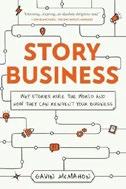
McMahon presents an energetic and informative exploration of the value of storytelling in the corporate world.
In this debut business book, the author synthesizes theory and observation to develop a framework for successfully using storytelling in a business capacity. After examining early human history to explain the fundamental role of narrative in humanity, McMahon divides business storytelling into six genres and guides readers through the creation and use of value, product, brand, sales, leadership, and culture stories. Each chapter includes examples of successful case studies illustrating the genre in question, along with six key rules for telling that type of story. Sales stories, for instance, “show how every step forward is a step toward becoming, turning aspiration into achievement.”
The author discusses how companies, including Slack, Amazon, Pepsi, Fifth Third Bank, Microsoft, IKEA, and Ferrari, put stories to work in their businesses and delves into history to use the Brooklyn Bridge and Charles Babbage’s early computers as object lessons. McMahon also applies his storytelling rules to his own text, resulting in a dynamic and enthusiastic investigation of what stories can do, which, in itself, is a compelling and cohesive narrative. The author moves from one example to another at a rapid pace that feels entirely appropriate, neither hurried nor uneven, and the anecdotes engage the reader while staying close to the central thread of the book. The examples are well chosen, concisely conveying relevant qualities while balancing informative
detail with narrative focus. Myriad infographics, bulleted chapter summaries, and eye-catching formatting make the book an effective reference tool to refer back to. While cynics may feel that McMahon is too credulous regarding the corporate messaging he describes in the book (like Pepsi’s focus on healthy customers or the positive changes in Microsoft’s culture over the last decade), he would likely argue that a well-told story can counter skepticism. A tribute to effective storytelling that serves as its own example.
Miller, W.R. | BearManor Media (742 pp.) $115 | $58 paper | November 15, 2024 9798887710990 | 9798887710983 paper
The exhaustive oral history of Batman in animation continues. In this hefty fifth volume of the ongoing interview series covering the famous comics character Batman through one animated series after another (starting in 1992 with the critically praised Batman: The Animated Series), Miller traces the character’s appearances in animated media after the cancellation of Batman Beyond in 2001. This installment follows the pattern of earlier volumes by framing its narrative via a series of interviews with virtually everybody connected with the projects discussed, from artists and storyboarders to writers, directors, producers, and the voice actors who brought all the characters of the extended Batman mythos to life (the most famous being the late Kevin Conroy as Batman). Once again, Miller has filled virtually every page with photos and color stills, from raw storyboards to pics of convention appearances by stars
and showrunners over the years, making these volumes a unique visual resource on this subject. In addition to the interviews, the text also includes detailed episode guides for Batman’s appearances after Batman Beyond in shows such as Justice League, Justice League Unlimited , and several straight-tovideo feature productions. As with all the previous volumes, Miller presents the perfect blend of fan appreciation and industry-insider details. Animator Bruce Timm, for instance, reflects on the workintensive nature of the two-part 2003 Justice League episode “Wild Cards” (which featured Mark Hamill reprising his role as the Joker): “We probably spent more man-hours in the editing bay on that particular show than any other JL episode. It seemed like practically every single shot needed some kind of trim or ‘speed-up’ or ‘slow-down’ or re-take.” Throughout the work, Miller’s respect and affection for the character and his animated incarnations are evident in many of the interviews, such as when executive producer Michael Uslan sums things up with, “So, that’s I think where it begins and ends. It’s story. It’s quality.”
Another sumptuous must-have reference for Batman fans.
Monier, Barbara | Amika Press (130 pp.) $15.95 paper | November 1, 2025 9781956872873
In Monier’s novel, a grieving widow grapples with the possibility of life after death.
Enid, who’s nearly 70, is no stranger to grief, having lost her brother at a young age, but nothing prepares her for the death of her husband, Hugo. The two built a quiet life together, marked by pleasant morning coffees and strolls through the local grocery store. As they
grew older, however, they came face-toface with the inevitable: One of them would have to go on living without the other. Hoping to ease their future pain, the couple turned to Assembled Souls—a new artificial intelligence technology that digitally recreates loved ones after their deaths. Enid was initially uneasy with the idea, but after Hugo died unexpectedly in his sleep, she must now confront the unthinkable. With just a year to decide whether to activate Hugo’s holographic Assembled Soul, Enid wrestles with uncertainty, writing letters to her late spouse, reflecting on their shared past and on her future without him. When she finally decides to bring the Assembled Soul online, she’s struck by how familiar the simulation seems: “He was perfectly Hugo. A shudder went through her. And then another.” Although she’s troubled by inconsistencies in its memory and the impossibility of physical touch, she soon settles into old patterns with the new Hugo. Equal parts heartwarming and bittersweet, Monier’s novel reimagines the universal experience of grief through the lens of technology, addressing both the comfort and the uncanniness that AI can bring. With cutting-edge technologies emerging around the globe, the author effectively asks what this kind of tech-assisted afterlife would look like in the real world, where people are already turning to chatbots to fill emotional voids. Some readers may wish that the novel probed the emotional and ethical implications of its premise more deeply. However, the bond between Enid and Hugo remains tender and affecting, while also reminding readers that not everything that technology allows can replicate reality.
A touching meditation on love and loss in a futuristic world that may be closer than one thinks.
Murray, David | Disruption Books (140 pp.) | $14.99 paper | April 14, 2026 9781633311374
Journalist Murray chronicles his experiences as the parent of a soccerloving daughter. This memoir offers an eyeopening account of the hypercompetitive world of elite travel soccer—the primary pathway for most American players to top-level collegiate programs. As it happens, college soccer coaches don’t spend much time watching high school games; instead, they recruit players at regional tournaments, which bring together myriad talented players from a wide area. Murray knew very little about soccer when his young daughter started playing in a mid-2000s “Lil’ Kickers” program in Chicago— and he knew even less about travel soccer. In these pages, he aims to educate parents in similar circumstances. To that end, his book describes the joys and camaraderie of competitive athletics, but it dwells more on the challenges that families face—specifically detailing the financial strains and the tremendous time commitments required by competitive travel sports. Over the course of the book, Murray notes the pressures that the sport put on his family life, which became dominated by his daughter’s college-sports ambitions; the sport was no longer a source of recreation, he writes, but a means to an end. One of the book’s most striking aspects is its discussion of how parents get children involved in sports at very young ages; Murray’s own daughter started at
A clear-eyed survey of the tradeoffs of elite youth competition.
SOCCER DAD
the age of 3, and he writes about a parent who recommended a specific coach for 4-year-olds. The author also effectively notes that many parents voiced disapproval of parents “living vicariously” through their child’s athletic accomplishments: “That’s not said much anymore, because it would hit too close to too many homes.”
A clear-eyed survey of the tradeoffs of elite youth competition.
Nacey, Jason | DangerNacey Publishing (262 pp.) | $16.99 paper | May 20, 2025 9798998617409
Success in sports, business and other aspects of life depends on your mental outlook and habits of thought, according to this muscular self-help book.
Arguing that “life is 90% above the shoulders”—that is, determined by what’s in your head, not your body or external circumstances—Nacey, a sports marketing executive, contends that it’s mainly our own lassitude, fear, lack of focus, and self-defeating thoughts that prevent us from achieving our dreams. He draws on the insights of Olympic athletes and from his own experiences in Ironman Triathlons and other competitions to construct a Mental Mastery Pyramid of techniques to enable readers to power through obstacles and pain when their instincts are begging them to stop. The author recommends breaking down seemingly insurmountable problems into small, manageable chunks as a way of getting over the hump of inertia (he found that setting a goal of simply putting on his running shoes in the pre-dawn darkness generated enough momentum to carry him into hitting the road). Nacey suggests undertaking measured doses of discomfort—like a cold shower in the morning—to accustom the mind to doing hard things
and to rewire the brain and improve its plasticity by embracing new cognitive challenges. (He notes that the fiendishly difficult navigational training given to London taxi drivers causes their brain’s memory centers in the hippocampus to grow.) The author urges readers to replace anxieties about failure and inadequacy with positive narratives and to visualize success in vivid, concrete scenarios. (“I visualized the gold around my neck every night until my brain couldn’t imagine any other outcome,” recalls skier Alex Ferreira.) Nacey also enjoins his audience to cultivate a sense of gratitude for opportunities and a sense of obligation to give back to others.
Nacey grounds his ideas in an erudite but lucid mix of neurobiology, performance science, and cognitive behavioral therapy, applying them to a range of problems from athletic training to meeting workplace deadlines to overcoming stage fright in public speaking. The author distills his advice into snappy aphorisms—“Life Rewards Action, Not Overthinking”—and provides readers with practical regimens for calming anxieties, exiting ruts, or switching from downbeat ruminations to optimistic hopes. Nacey writes with nuance and insight about the ordinary but powerful psychological barriers that paralyze resolve: “The snooze button sits there, smug, whispering, Come on. Just five more minutes,” he writes of the universal struggle to get up in the morning. “Your mind joins the mutiny: No one will know. It’s too early. Too cold. Too much.” When he recounts his tougher ordeals, his writing takes on an epic, visceral intensity: “My legs felt like concrete pillars, each step a negotiation between a body desperate to stop and a mind that refused to listen,” he writes of an Ironman contest. “Each breath burned. Salt crystals formed white patterns on my skin. My heartbeat pounded in my ears like a tribal drum, drowning out everything but a single thought: One more step. Just one more step.” The result is a captivating homage to true grit and the drive to overcome one’s own limitations.
A stirring success guide that combines practical wisdom with colorful and rousing prose.
Nevill, Frances | Bordighera Press (112 pp.) $18 paper | May 13, 2025 | 9781599542171
Florida serves as the backdrop for Nevill’s piercing short stories. Southern womanhood, loss, and fragile resilience are front and center in this collection of stories that explore the hidden turmoil that exists within typical lives. The author examines that turmoil through nine linked stories that depict marriages ending, parents disappearing, and dreams crumbling under the burden of memories and remorse. The first entry, “Bread of the Mizer,” follows a protagonist embarking on a physical and psychological journey with her estranged husband while visiting her mentally ill mother, culminating in a heart-wrenching and dreamlike experience. Nevill guides readers through different personal spaces in “Mangroves,” in which a man faces his past love and drinking problems in the Florida wilderness, and “Cloud Cover,” which details a bride’s panic on her wedding day as dark skies and family apparitions approach. In “Bad Seeing,” a couple’s move to the Pacific Northwest unearths the ghosts of their marriage as an antique telescope becomes a portal to everything they’ve lost. The author uses vivid sensory descriptions of Florida to create both a mystical atmosphere and a disturbing sense of imminent danger. The female characters often exist in a state between self-preservation and self-destruction as they search for emotional clarity that only emerges after their worlds collapse. The title story showcases Nevill’s ability to create powerful metaphors—the fragile colorful shells known as coquina, which appear after storms, represent the people in her work who display beauty, fragility, and strength (“You learn over time what to
By Astrid Sheckels
A

Katie Wray Schon
The author of Jump! Jump! Jump! Stacey answers our questions.
WRITE WHAT YOU KNOW is advice that Candelaria Norma Silva takes seriously. She’s long drawn inspiration from her children and grandchildren; many of her young relatives now demand to know when it’ll be their turn to star in one of her stories. Her latest picture book, Jump! Jump! Jump! Stacey, illustrated by Justin Aquidado, follows a young Black girl who’s far too busy to take her afternoon nap; she’s busy dancing, skipping, and, of course, jumping. The book was selected as one of Kirkus’ Best Indie Books of 2025; Silva told us more by email.
What was the original idea, character, or scene that started you working on the book?
My granddaughter, Saige, and her Uncle Cy, when he was a toddler and preschooler, always tried to negotiate nap times. Amber, Saige’s mother, worked from home for many years and so, through personal experience as a young mother, observations as a grandmother, and my imagination, I wrote this and two other books featuring Stacey.
Where and when did you write the book?
I wrote the book in one of the many notebooks I carry with me and then would type it in my office on the second floor of my colonial house in Boston. Saige came for summer visits for two to four weeks from the time she was 3, so I’d notice the things she would do. Photos of her were prominently displayed in my office, so I could feel her joy surrounding me as I wrote.
Your first book, Stacey Became a Frog One Day, follows the same character.
What other adventures are in store for Stacey?
I’ve published a third book as well, What’s the Baby’s Name, Stacey?
Her mom is pregnant in Jump. In that book, Stacey wants to announce her brother’s four names at the family gathering but has been so busy jumping, imagining, and playing that she forgets it. As she walks around to hear his name for her relatives, everyone calls him pet names, not his “real” name. Her uncle helps her figure it out.
I have several more manuscripts I’m working on that are inspired by my grandson, Tommie, and I’m working on a chapter book inspired by my youngest granddaughter, Molly. Once you feature one grandchild, they all clamor to have a character named after them. All my grandchildren and my two children will have books rooted in something true about them or a character named after them.
Why was Stacey such a significant name for you in these books?
In the first drafts, the character was named Tracy. I woke up one morning with the realization that if I changed the name to Stacey, I could say hello to my children and two of my grandchildren: S for Saige, T for Tommie, A for Amber, C for Cy, E for Everyone, and Y for You, Too (the other grandchildren). I am also an admirer of Stacey Abrams and have a friend named Stacey who I lost touch with over many years. I’ve dedicated the book to them as well.
What was most challenging about writing this book? And most rewarding?
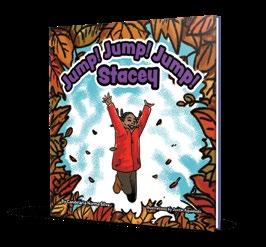
Self | 50 pp. |$11.99 December 1, 2021 | 9781735138534
Jump was written, edited, illustrated, and brought to print during several months of Covid-19 lockdown and uncertainty. I wondered when libraries, schools, and other community organizations would open again so that I could share the books with children in person. The world did open up, and we all learned, rapidly, to keep in touch via Zoom.
I’m delighted when parents and educators share how much their children like the Stacey books and send photos of them reading it. I also find it immensely rewarding, fun, and nerve-wracking to do storytimes and author visits.
Interview by Mahnaz Dar
HOW THE RHINO LOST HIS HORN
keep and what to toss back to the sea”). Throughout the collection, the author takes a precise and compassionate approach to storytelling, creating sentences that build tension through a combination of poetic description and direct confrontation. The recurring water imagery and reflective and mirage motifs establish a dreamlike connection between stories. The work reads like a slow Florida tide—receding into silence before returning with quiet, devastating power.
A moving exploration of human fragility and resilience.
Rathmell, Jack | Whitefox (398 pp.) | $15.99 paper | January 13, 2026 | 9781917523264
Rathmell presents a thoughtprovoking account of his time spent abroad in South Africa. In 2014, the author traveled to Muizenberg, a community near Cape Town to volunteer as a gym teacher at a local school. A teenager from Pennsylvania Amish country, he was eager to leave home for a far-flung corner of the world. In South Africa, he found adventure, diving with great white sharks, bungee jumping from a bridge, and encountering lions on safari. As he returned for a series of return trips, he navigated interpersonal relationships, interacting not only with the locals but also with other wanderers from all over the world. Difficult roommates Chet and
Fergus made his living situation comically dysfunctional, and he struggled to get along with other members of his volunteer group. Still, he forged friendships and made meaningful connections as he bonded with his students and met members of various stratified South African social groups. The work is at its best when it explores these connections, particularly in how it addresses the complexity of South African life. The country was in the process of healing from its apartheid past, but the ghosts of that past still loomed large, Rathmell notes. As he explores these dynamics, he uses vivid descriptions to illustrate the tension between the country’s natural beauty and society’s broader tendency to ruin such wonders, calling the area “a landscape so impossibly beautiful that any sign of human civilization—our trappings of steel, brick, and cement— no matter how well designed or aesthetically pleasing, would have been an eyesore.” Although diversions from the narrative into lengthy philosophical and political discussions slow the pace, at times, its approach remains engaging. Rathmell tackles both personal anecdotes and tough, timely topics—including South African and U.S. politics, tensions between different racial and socioeconomic groups, and the ethical implications of “voluntourism,” among others—with insight and moments of humor.
A skillfully written personal narrative that doesn’t lose sight of the wider world.
Kirkus Star
Ruhl, Leonard | Big Corner Publishing (298 pp.) | $23.99 | $12.99 paper November 4, 2025 | 9798987302682 9798987302668 paper
G, a “stone-cold assassin” for a family-run cartel, wants out, but several players would see him dead first in this masterly thriller.
For more Indie content, visit Kirkus online.
Ruhl, who previously published Takedown in 2023, begins with some artful misdirection as a man named Ray is compelled to attempt vehicular homicide in a bid to erase his son’s debts to some very bad people. This opening is gripping enough, but Ray’s predicament very quickly takes a back seat to his intended target, G. Folk songs have been written about this near-mythical character who had “taken out most of the major players of a rival cartel five years earlier and had become a legend, even though only a select few knew his name.” But now G is married with a baby on the way. He knows quitting his half uncle’s criminal organization that “makes more profit than Walmart” isn’t as simple as giving two weeks’ notice, and after the attempt on his life, he realizes “alliances had shifted—like they always do….This was no accident. It was a hit. They wanted him dead. This wasn’t over.” But who is “they”? Who can he trust? For G, where there’s a will, there’s a way. There were no lost causes, he muses, because if there were, Carmen would have never married him. Ruhl has a keen eye for scene-setting (“Ray’s ’71 Chevelle sat empty…by the back steps of a tiny house at the end of tire tracks forged in dead dry grass—what passed for a driveway in rural Oklahoma”) and indelible character grace notes (“He was only forty but had more miles on him than his old car”). There are enough twists and turns, suspect alliances, and betrayals to keep readers on edge, and G is a finely etched character who is at once “sensitive” and “an unrelenting, absolute tool of destruction.” Pulse-pounding action and complex characters.
Sanchez-Ballado, Tian | Self (98 pp.)
$16.95 paper | October 15, 2025
9798999066336
Sanchez-Ballado’s poems explore themes of inheritance, identity, and the transformation of pain into sweetness.
Across five sections that trace a path from survival to self-recognition, this poetry collection weaves memories of family, illness, queerness, and cultural displacement into a single tapestry of becoming. The speaker moves through experiences of shame and illness to reclaim joy and belonging through love, ritual, and language. What begins as endurance becomes reclamation as the work depicts the ways in which the body and its history can still bloom after breaking. In “I Brought a Dead Animal to School,” the poet recalls the humiliation of bringing homemade Cuban food to class, only to learn that fitting in requires erasing the flavors of home. “The Last Cafecito” turns that loss into reverence as brewing coffee for a late grandmother becomes an act of memory and survival. “Florida Man” widens the speaker’s lens to address queer existence under censorship and fear. “The Fruity Group” celebrates chosen family through the bustle of a group chat that doubles as a support network, a modern version of communal storytelling. The title poem ties these threads together with the image of a wasp dissolving inside the fig, a haunting metaphor for sweetness born of sacrifice and the ways family legacies live within the body (“My tía has our abuelo’s green eyes. / I have them too. / Nobody else”). Sanchez-Ballado writes with clarity and tenderness, grounding emotion in the physical world. The poems blend precise imagery with conversational rhythm, creating a music that feels lived-in and unforced. Everyday objects, such as a coffee pot, a fig, and medications, become vessels for memory, ritual, and care. The sequencing offers a subtle emotional progression as each section deepens the
sense of transformation and connection. Throughout, humor and grief coexist easily, revealing a voice that understands healing as not linear nor clean but sacred in its persistence. The language is intimate yet controlled, honest but not despairing; this debut establishes a poet fluent in both the ache and the grace of survival. A singular and unflinching collection that redefines survival as radical presence.
Steck, Fredric | Fast Company Press (168 pp.) | $25.95 | October 28, 2025 9781639081578
The art of selling— and much else in life—is all about relationships, according to this soulful business self-helper.
Steck, a former partner at Goldman Sachs investment bank, looks back on his career selling securities to extract lessons on cultivating long-term personal relationships with customers. These include the importance of face-to-face meetings, which convey far more engagement, rapport, and nuance than screen-mediated, emoji-strewn texts (or even Zoom calls). Empathy is a must for understanding a prospect’s perspective, the author asserts, and requires attentive listening. (Steck recommends taking careful notes with pen and notebook rather than laptop or smartphone so customers can see you are listening to them and not fiddling with an app.) Salespeople must be willing to take calculated risks and show some vulnerability, the author argues, starting with the ordeal of cold-calling and the agonizing likelihood of demoralizing rejection. (On the epic end of the risk-taking spectrum, one Goldman Sachs executive managed to pitch an aloof prospect by somehow booking the seat right next to him on a
trans-Pacific flight.) Assiduous following-up with contacts is crucial to building the relationship and closing a sale, Steck contends; 80% of sales require an average of five follow-ups, yet 44% of salespeople give up after just one follow-up, he reports. Keeping an account requires persistent study of the client’s industry and needs— this enables salespeople to make creative suggestions on improving the business. Most of all, selling requires dogged commitment to the relationship; Steck spent time chatting and spit-balling ideas with one client with nothing to show for it…until, out of the blue, he decided to buy $200 million worth of securities.
This brief for business humanism stresses virtuous salesmanship that strives to understand people and treat them well. The author illustrates his argument with winsome anecdotes about passionate restaurateurs, inn-keepers, and other entrepreneurs, as well as his own adventures training quarter horses at his ranch. (Winning over clients, he suggests, is a lot like getting a skittish colt to accept a saddle blanket on his back for the first time.) Steck distills his pointers on building sales relationships into pithy aphorisms: “The goal of the first meeting should simply be to introduce yourself, learn more about the person in front of you, and get a second meeting.” There is, at times, a lyrical, almost spiritual quality to Steck’s writing when it pays homage to the sacredness of the ordinary: “I find a greater return, both in sales and my personal life, when I r emember to be present and available to what is at hand—at a red light, in conversation with my server over the wine list, talking to a loved one, chatting with the man operating the garbage truck on my street, or checking out at the grocery store. These moments all have gifts to give, when I extend myself to give and receive them.” Contrary to the stock image of desperate men sweating bullets and cutting throats for a sale, Steck offers the reassuring possibility that salesmanship can be a
path to human connectedness and fulfillment.
An insightful commentary on the work of a salesman that conveys homespun wisdom in colorful prose.
Wang, James | Manuscripts (288 pp.)
$19.99 paper | October 15, 2025
9798889265825
A debut author and technologist surveys the present landscape, and potential, of artificial intelligence. The national conversation surrounding AI, writes author Wang, “remains a manic seesaw between glee and terror.” Compounding the confusion is that the most informed sources on AI are riddled with technical jargon and buried in academic publications. In response, Wang offers readers a thorough, yet decisively nontechnical work (readers looking for in-depth discussions of loss functions or tanh activations can look elsewhere). Divided into three parts, the book’s opening chapters place AI within a larger historical context of technologies that have disrupted now obsolete professions while opening new avenues elsewhere. The rise of the computer in the 1950s, for example, eliminated a range of logistics and navigation jobs that relied on human computations. But by the 2020s, almost a quarter of all jobs in the U.S. were in science, technology, engineering, and mathematics. Rather than closing off workers’ access to jobs, the computer created entirely new fields of expertise. This favorable tradeoff, per the author’s reading of history, is the story of technological leaps writ large: It’s almost always a net
positive. Part Two is more pragmatic and surveys the practical applications of AI, both in the present and potentially in the future. The final section makes the case that “the rise of AI will likely increase the value of our very humanity.” Given demographic trends, AI will be essential, per the author’s cogent argument, in supplementing the vital work of electrical and electronics engineers, for example. While the tone of the volume is generally positive towards AI, its nuanced approach acknowledges the role of the technology as a force that “will disrupt” not only the workforce, but multiple facets of human life from armed warfare to the workforce. Wang, who has been involved with AI for more than a decade through work with Google and as a venture capitalist, supports his argument with 350plus research endnotes. A well-researched, balanced, and optimistic case for the future of AI.
Young, Daniella Mestyanek & Amy Reed Otterpine (352 pp.) | $35 | January 20, 2026 9781955671828
A cult survivor and her co-author tell her story and comment on American society in this nonfiction work.
“You’re probably in a cult, you just don’t know it yet,” Young and Reed declare in the book’s opening lines. Unafraid to ruffle feathers, the authors assert that since the arrival of the Pilgrims and other “religious extremists,” Americans have been “defined by the distrust of institutions, a persecution complex, and stubborn self-righteousness”; in other words, “cults are the most American thing there is.” Born into the infamous sex cult known as the
Children of God, Young has an intimate knowledge of the power of cults to isolate, warp, and control their members. Combining Young’s personal story with academic research from psychologists, anthropologists, and other scholars referenced in more than 400 endnotes, the authors provide straightforward criteria for identifying cults. These include a shared “sacred assumption,” a mission of such import that it requires personal sacrifice, a jargon understood only by insiders, and high exit costs. Using these identifiers, the authors note the presence of cults throughout American society—from the U.S. Army to Hugh Hefner’s Playboy empire. Offering cogent, often frightening social commentary, the book similarly highlights the fast-growing ubiquity of internet cults that thrive in Reddit threads, social media, and YouTube channels. By expanding readers’ ideas of what constitutes a cult, the authors hope their argument will disrupt “some of our most sacred assumptions” and alert their audience to the ways in which they are being manipulated by politicians, religious leaders, and even bosses in the workplace (psychopathic traits, often masked as charisma, are 12 times more common among business leaders that the general public, per the authors). Young’s deeply personal, ingrained disdain for cults is complemented by co-author Reed’s knack for engaging, accessible prose. This volume includes ample ancillary materials, including an essay by anti-racist TikTok creator Rebecca Slue, a “Quick Reference Guide” to spotting cultish groups, and questions for book club discussions. A well-researched, deeply personal commentary on the role of cults in American life.

Your patrons don’t want to wait – and neither do you. IngramExpress® ensures you get the books you need when you need them.
Discover IngramExpress at ingramcontent.com/express
Sign up Today: Save up to 40% on books over $16.99 through January 31, 2026. In-Stock inventory Fast, free shipping Order from any distribution center No order or shipment minimums Competitive discounts IngramExpress Benefits