Fourth Year INFORMATION


Fourth Year marks the formal beginning of GCSE study in most subjects
Students are expected to show increased independence and maturity in their approach to learning
Teachers will begin covering exam board content, so attendance and engagement are crucial
Work Ethic & Study Habits
Students should be completing regular homework and revision to consolidate class learning
Time management and organisation are key skills to develop early
Parents are encouraged to help monitor workload and provide a quiet space for study
Some subjects (e.g., English, Art, DT, Drama) begin coursework components in the Fourth Year
By the end of the Summer term 2026, Fourth Year Art students are expected to have completed their Food Project and made a start on their Personal Project.
The Fourth Year begin their GCSE Coursework on Monday 1 June 2026 with a deadline of the end of the Spring term 2027 (Fifth Year)
For Component 2 (Devising) Fourth Year Drama students have a Devised Performance in June 2026 (worth 20 marks) and they complete the Coursework in June 2026 (finalised over the summer holiday and reviewed in September 2026). This is worth 60 marks. Component 2 is worth 40% of the final GCSE
English Literature
Shakespeare text (Macbeth): the deadline is the end of the Autumn half term (October 2025)
Post-1914 literature text (Kindertransport): the deadline is the end of the Spring term (March 2026)
English Language
Creative Writing: the deadline is the beginning of the Spring term (Wednesday 14 January 2026). Poetry and Prose Comparative: the deadline is the end of the Spring half term of the Fifth Year (February 2027).
Fourth Year Music students do a solo performance (recorded) and submit one composition in the Summer term 2026 as part of their GCSE assessment
Deadlines will be communicated clearly by departments.
Tutors and subject teachers will monitor progress and flag concerns early Intervention strategies may include study support sessions, mentoring or parentteacher meetings
How the school supports students emotionally and socially.
KGS places student wellbeing at the heart of school life, ensuring every student feels supported emotionally and socially Wellbeing is embedded in the PSHE curriculum and enhanced through pastoral workshops, guest speakers, and national events such as Mental Health Awareness Week Students also benefit from peer mentoring and leadership opportunities such as becoming Junior Prefects The pastoral care system includes Form Tutors, Heads of Year, Assistant Heads of Year, Heads of Section, School Counsellors, and the Nursing Team, all working together to create a safe and inclusive environment.
Who to contact for concerns (e.g., safeguarding lead, school counsellor)
-First point of contact: Your child’s Form Tutor
-If unresolved, the Form Tutor will direct you to the appropriate staff member -Wellbeing contacts:
Mr Grant – Head of Year
Mr Dowd – Head of Learning Support
Safeguarding Team
Nursing Team: Mrs Moledina and Mrs Walker
School Counsellors: Mrs Ghauri and Ms Singer
Strategies for managing stress and workload covered in the Tutor Programme. There is open and ongoing communication between parents and school to provide bespoke care
Access to pastoral workshops and PSHE lessons focused on resilience and coping strategies
Support from counsellors and mentors for emotional regulation and stress management.
Opportunities for leadership and peer mentoring to build confidence and social skills.
KGS has high expectations with regards to attendance and punctuality Not only does this promote valuable life skills but also supports young people’s wellbeing and establishes routines to manage busy workloads. Authorised absence will only be granted in exceptional circumstances and we actively discourage parents from removing their children from school during term time.
Studies show that educational attainment and public examination results can be severely impacted by absence from school. 90% attendance would equate to missing one school day per fortnight; 80% would mean missing one day per week or the equivalent of a whole school year of secondary education by the time of their GCSE exams. Government target figures of 96% attendance for all students would still equate to missing a whole half-term of school between the start of the First Year and end of the Fifth Year Obviously, if a student is not well enough to attend school, they should rest and recuperate at home but, otherwise, we expect students to be in school for registration each day to maximise their learning potential
Please report your child’s absence on the day via the absence form on My School Portal (you can find this under ‘Parent Information’) Any request for future absences, including for medical appointments, family events or religious observance, should be emailed to absence@kgs org uk
Microsoft Teams is used as the organisational tool for each teaching set at KGS. From here, students can access any of their homework assignments together with their OneNote ClassBooks. They are also able to view their timetable from the Teams Calendar. Microsoft Teams is the ' one stop' location for all academic information relating to the curriculum.
All homework is set using Microsoft Teams assignments This ensures homework is consolidated into a single list and gives students the tools to sort and filter their tasks to help them manage their workload Parents can view the homework tasks using My School Portal along with any marks the teacher has given
Given the range of homework tasks across subjects, there is not a single standardised method for submitting homework, and students should follow the instructions provided by the class teacher. Nevertheless, where homework is required to be submitted via OneNote, students can do so by typing directly into the platform, or by taking a clearly legible photo of their written work and then uploading it. Homework should not be emailed to a class teacher unless explicitly requested by exception.
Guidance safe internet use.
Please refer to our comprehensive Online Safety Policy POLICIES & GUIDANCE
How and when progress is assessed.
What reports parents can expect and when.
How to interpret grades and feedback Reports and Grade Cards 2025/26 is published to parents on MySchoolPortal There are three grading categories Although the specific content of academic reports will vary from subject to subject, there is a consistent framework for each report which highlights individual strengths as well as areas for development
-How parents can support learning at home
Encourage regular review of class notes and homework.
Discuss topics studied in class to build understanding.
Provide a quiet, distraction-free space for study.
Monitor deadlines and help with time management.
-Opportunities for involvement
Attend parent information evenings and progress meetings
Join PSA class reps
Support extracurricular activities (e g , performances, sports fixtures)
-Communication channels (Weekly Bulletin, MySchool portal, email).
Careers & Higher Education guidance: Morrisby Profile in June 2026
Alumni events: Thursday 5 March – Careers in Finance, Thursday 7 May – Careers in Law
Bi-annual Careers Evening: January 2026
The following residential trips which will be open to students in the Upper School over 2025-27 (Not all of these are yet confirmed and therefore destinations may change and prices are subject to change )
Parents can find visibility of upcoming trips which are open to their child via Evolve on MySchoolPortal: Trips
February Half Term
CCF Range Camp – Fourth and Fifth Year
Ski Trip (Canada) - Fourth and Fifth Year
Easter Holidays
CCF Adventure Camp (Wales) - Fourth and Fifth Year
Rowing Camp (TBC – likely Shiplake) - Fourth and Fifth Year
Classics Trip (Italy) - Fourth and Fifth Year
April (during term time)
DofE Silver Award Practice Expedition (South Downs) – Fourth Year
May Half Term
MFL Austria (Salzburg) – Fourth Year
June (during term time)
DofE Silver Award Qualifying Expedition (South Downs) – Fourth Year Summer Holidays
CCF Summer Camp (TBC) - Fourth and Fifth Year
CU Camp - Fourth and Fifth Year
October Half Term
CCF Recruit Camp - Fourth and Fifth Year
Rowing Camp (likely Spain) – Fifth Year
MFL (Spain, likely Andalucia) - Fourth and Fifth Year
December (Christmas Holidays)
French Trip to Paris - Fourth and Fifth Year
February Half Term
CCF Range Camp - Fourth and Fifth Year
Cricket Tour (Dubai) – Fourth Year
Easter Holidays
CCF Adventure Camp (Wales)
Rowing Camp (TBC – likely Shiplake)
Ski Trip (TBC) - Fourth and Fifth Year
Cricket Camp (TBC) – Fifth Year
April (during term time)
DofE Silver Award Practice Expedition (South Downs) – Fourth Year
June (during term time)
DofE Silver Award Qualifying Expedition (South Downs) – Fourth Year
Summer Holidays
CCF Summer Camp (TBC) - Fourth and Fifth Year
Hockey & Netball (South Africa) – Likely to be Fifth Year
CU Camp - Fourth and Fifth Year
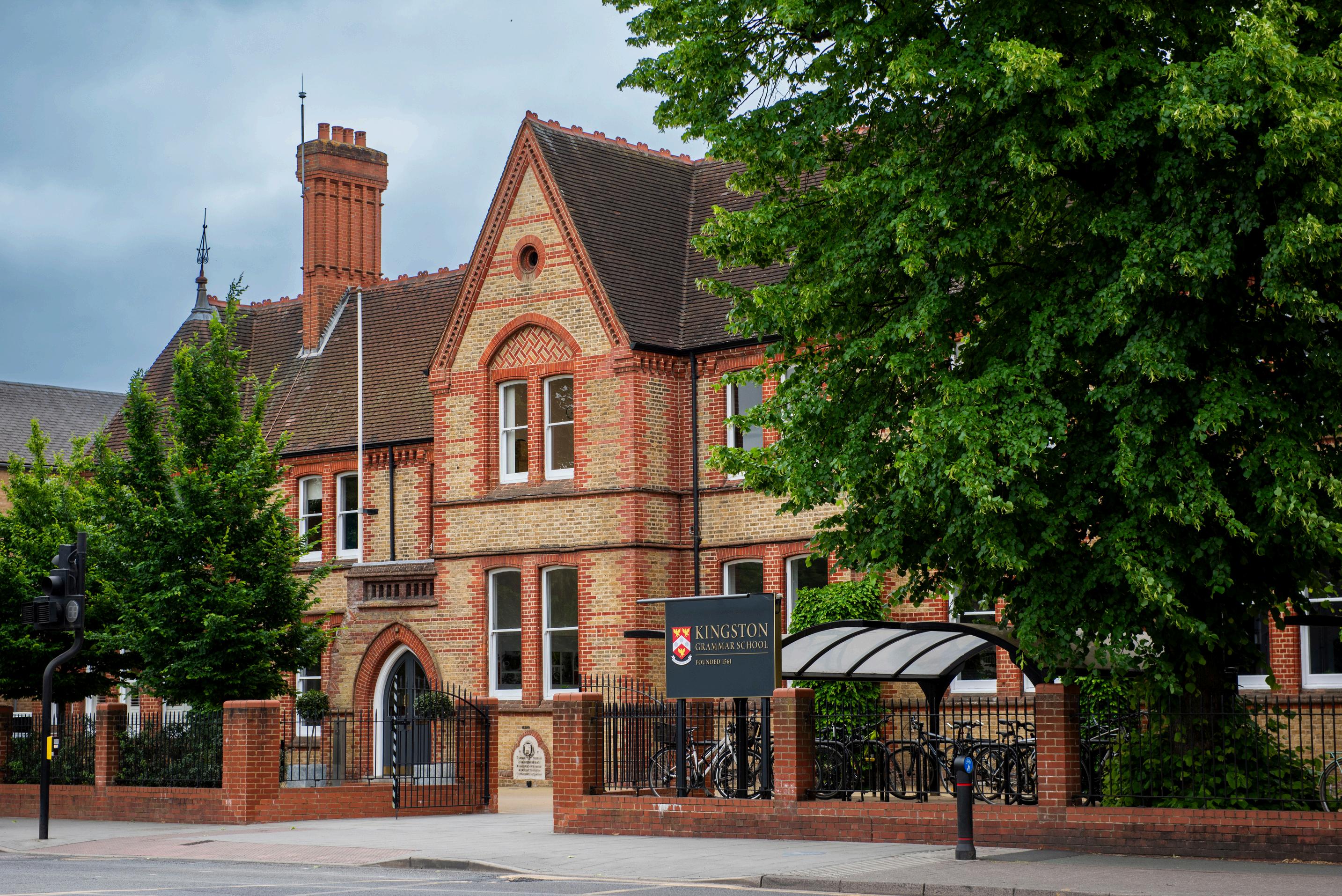

Kingston Grammar School
London Road Kingston upon
Thames KT2 6PY