

HELPING FARMERS INVEST
IN PROPANE
TECHNOLOGY


Legacy Energy Consulting has over 30 years of direct industry experience. Since forming our family - owned business in June of 2020, we have successfully completed over 25 sales nationwide.
chad@legacyenergyconsulting.com
Trust the sale of your business to experienced professionals with proven results.
Strategic Planning Services
We use a proprietary strategic planning process to outline future vision, assess the current state of critical operational areas, and develop strategies, tactics, timelines, and resource allocations to help businesses reach their goals.


MATT SOLAK
PPGA MEMBERS LEAD THE WAY IN CUSTOMER SAFETY
Safety has always been the foundation of the propane industry, and that commitment is demonstrated every day by the members of PPGA. From small family-run businesses to larger regional operations, our members are the professionals who ensure propane is delivered, installed, and maintained safely for the customers and communities they serve. We all know that propane is a reliable and efficient energy source, but its safe use depends on the skill, training, and diligence of the people working with it every day. That responsibility rests with the technicians, drivers, service personnel, and managers across our member companies who take pride in doing the job the right way. Their work often happens behind the scenes, but it is essential to maintaining the trust customers place in our industry.
Customer education is another critical part of this effort. Our members take time to help homeowners and businesses understand how propane systems operate and what steps they can take to use them safely. From explaining how to recognize potential warning signs to sharing guidance on proper equipment use, these conversations empower customers and reinforce a culture of safety that extends beyond the job site.
Technology and equipment continue to evolve, and propane professionals are committed to adopting innovations that enhance safety and efficiency. From improved system components to advanced monitoring tools, our members consistently look for ways to strengthen the reliability and safety of propane service.
While safety programs and industry standards provide the framework, it is ultimately the people within our member companies who bring those standards to life. Your professionalism, attention to detail, and commitment to continuous improvement help ensure propane remains one of the safest and most dependable energy options available.
PPGA is proud to represent and support these dedicated professionals. Through advocacy, resources, and collaboration, we work to strengthen the industry and promote the highest safety standards. But the true credit belongs to you—our members—the individuals who demonstrate every day that customer safety is more than a requirement. It is a responsibility and a promise.



JENNY DRESLER
BUSY SESSION CONCLUDES WITH DEALMAKING AND PEACE
The 2026 Oregon legislature is moving quickly toward adjournment sine die. It is very likely to happen in the coming hours.
This final past week produced a rush of dealmaking to expedite the conclusion of the session, and for how contentious the session was and how many issues were in play, the session is concluding in a relatively peaceful and organized way.
The Public Affairs Counsel team will be compiling all of the bills for each of you and producing our 2026 client reports throughout the next week or so.
We are going to make every effort to have your complete 2026
Legislative Report to you as soon as next week, but in any case no later than by EOD Friday, March 20th.
Thank you for your confidence in us to represent you in the legislative process. This was by far the most difficult short session we’ve ever navigated due to the sheer volume of issues involved in such a short time frame – the 35-day “short session” concept has very much gone off the rails and has departed greatly from its original intent.
Nevertheless, it is our great pleasure to represent you and we look forward to discussing next steps as we assess direction and strategy for 2027.
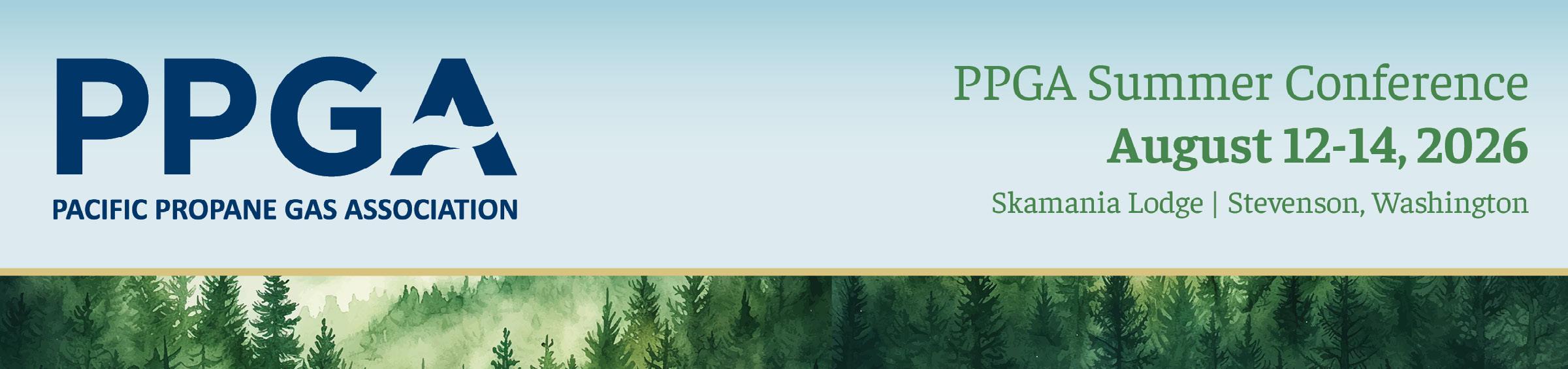
Pacific Propane Gas Association is returning to Washington for our PPGA Summer Conference to be held August 12-14 at Skamania Lodge in Stevenson, WA. We are asking for your help to sponsor this special event by committing to one of the opportunities below. Your continued support is appreciated and vital in making this a successful event.
To participate, please register online using the button below. For assistance, contact Lauren Concannon at 844.585.4940 or lauren@kdafirm.com. The deadline to be included in printed items is July 15.


JIM HEDRICK
PROGRESSIVE TAX REFORM DEFINES 2026 SESSION
As the 2026 legislative session races toward its March 12 adjournment deadline, lawmakers in Olympia tackled major housing, privacy, tax, budget, and policy battles this week. With Friday night marking the opposite-house floor cutoff, several high-profile proposals moved forward while others quietly faded as time ran out.
Governor Bob Ferguson also stepped off the sidelines this week and inserted himself into the debate over the proposed Millionaires Tax. Whether the proposal ultimately passes or fails, progressive tax reform has clearly emerged as the defining issue of the 2026 legislative session; and one Democratic leaders appear poised to make a central theme of the 2026 election cycle.
MILLION DOLLAR DRAMA
The proposed Millionaires Tax, which currently awaits a vote on the House floor next week, had appeared doubtful earlier in the week. In an email to supporters, Governor Ferguson acknowledged the proposal faced uncertain prospects and lacked clear support in the Legislature.
By Thursday night, however, the political landscape had shifted. Negotiations intensified and momentum began building behind a revised version of the measure. On Friday, Ferguson announced he would sign the latest version of the proposal if it reaches his desk, signaling that a compromise may finally be within reach and that the long-debated tax could be nearing the finish line.
For review, the millionaires tax imposes a 9.9% state income tax on earnings above $1 million, affecting roughly 30,000 Washington taxpayers and generating an estimated $4 billion annually once it takes effect in 2028. The newest version of the bill reflects several changes made during negotiations with the governor. Most notably, it directs a significant portion of the new revenue toward universal school meals for K-12 students, while dedicating five percent of the proceeds to child care and early learning programs. Lawmakers also expanded targeted tax relief aimed at offsetting costs for some families and businesses, a change that helped bring the governor on board.
Notably absent from the revised proposal is funding previously set aside to help cities and counties manage rising public defense costs, a removal that has drawn concern from local governments already grappling with increasing legal obligations.
While the governor’s endorsement removes one major obstacle, the bill still faces procedural and political hurdles. The Senate has already approved its version, but the House must now pass the revised measure before the Legislature adjourns next week. Republican lawmakers are expected to challenge the proposal on the floor and may attempt to slow the process through amendments and procedural tactics. Even within the Democratic caucus, there remains some caution about establishing what many view as the state’s first true income tax. If the bill ultimately passes and is signed into law, the political fight will
likely shift quickly from the Legislature to the courts and the ballot box. Washington’s longstanding constitutional interpretation treats income as property, raising questions about whether a graduated income tax can withstand legal scrutiny. As a result, the debate over the measure may be far from over even after the legislature adjourns.
THE GROUND FLOOR
Governor Ferguson’s signature affordable housing bill, SB 6026 (Alvarado, D-Seattle), passed another major hurdle this week. The bill, aimed at expanding residential development in areas traditionally reserved for commercial or mixed-use purposes, passed the House on a 69-27 vote after the Senate had approved its version earlier (36-12). The Senate is expected to vote to concur with the House amendments next week, sending the legislation to the Governor for signature.
The legislation reflects the state’s ongoing housing shortage and focuses on encouraging development in areas already served by infrastructure, employment centers, and services. Cities with populations of 30,000 or more, along with non-rural counties under the Growth Management Act, will be required to allow residential uses in commercial or mixed-use zones—
with certain exceptions such as industrial areas, sensitive shorelines, historic districts, and lands outside urban growth areas.
The bill also eases regulatory barriers that have slowed housing development. For example, it limits local requirements to include ground-floor commercial space to no more than 40% of commercial zoning, while publicly subsidized affordable housing is fully exempt. Developers can request waivers or reductions, and local governments must consider whether doing so would help create more housing. Local ordinances will need to be updated within 18 months, or the state rules will take effect automatically.
LAW ENFORCEMENT
Technology and Privacy Protections Privacy advocates and law enforcement alike saw progress this week on SB 6002 (Trudeau, D Tacoma), a bill that regulates the use of automated license plate readers (ALPRs). The Senate passed the bill 40-9, and the House approved its version 84-10. With broad agreement between lawmakers, local governments, the ACLU, and law enforcement agencies, the Senate is expected to concur with the House version next week.












SB 6002 establishes clear rules for when and how ALPR systems can be used, aiming to balance public safety with privacy rights under the U.S. and Washington Constitutions. ALPRs may be used to track stolen vehicles, missing persons, outstanding warrants, and serious criminal investigations, as well as limited traffic and parking enforcement. Most collected data must be deleted within 21 days, and sharing or selling data is strictly prohibited. The bill also protects sensitive locations including schools, places of worship, health care facilities, and food banks from ALPR monitoring. Agencies must register their systems, adopt usage policies, train staff, report annually, and conduct internal audits. Violations can carry criminal penalties, civil liability, and consumer protection enforcement. With an emergency clause, the bill takes effect immediately to safeguard privacy.
HOUSING
HB 2266 (Peterson, D-Edmonds) aims to expand housing options and address homelessness by changing how Washington cities and counties regulate supportive and emergency housing. The bill requires jurisdictions to allow transitional and permanent supportive housing anywhere residential units or hotels are permitted and indoor emergency shelters where hotels are allowed, removing local zoning barriers that have slowed development.
The bill limits local governments from imposing more restrictive development or operating standards than those applied to other residential or lodging uses, while allowing objective requirements like setbacks, stormwater, and building codes. Local authorities retain limited power to address health and safety, such as requiring shelter operators to notify neighbors, hold community meetings, designate emergency contacts, and adopt operational policies. In specific cases near schools or other shelters, cities may negotiate additional safety protocols. Jurisdictions cannot restrict shelters in ways that prevent meeting projected housing needs, but existing protections remain for critical areas, natural hazards, and agricultural, forest, or mineral lands. Cities and counties must update zoning and development rules within two years or by their next comprehensive plan update.
Supporters say the bill ensures consistent statewide rules to speed housing delivery for vulnerable populations, while critics warn it limits local land-use control. Overall, HB 2266 reflects the Legislature’s strategy to accelerate housing production and address homelessness through statewide zoning reforms.
EXPANDING AUTHORITY OF THE STATE ATTORNEY GENERAL
This week the legislature considered SB 5925 (Hansen, D-Bremerton) that would expand the Attorney General’s
authority to issue civil investigative demands (CIDs). The proposal gives the office the power to request documents, written responses, and oral testimony from individuals or entities when there is reason to believe state or federal laws have been violated.
The bill is designed to apply before any civil proceeding is initiated, allowing the Attorney General to gather information efficiently. It covers a wide range of potential violations, including constitutional rights, labor and employment laws, public health and safety statutes, and consumer protections. Notably, the authority does not extend to criminal investigations or federal agencies performing official duties.
Key safeguards include demands must be specific, relevant, and reasonable, and cannot require the disclosure of privileged information. Individuals and entities can petition the court to modify or quash a demand, and the court can impose sanctions consistent with civil discovery rules. The legislation also includes confidentiality provisions to protect sensitive materials and restrict disclosure. Copies of documents or testimony may only be shared under strict terms, primarily for enforcement purposes, and cannot be used in criminal prosecutions.
Finally, the bill requires the Attorney General to report to the Legislature within four years on the use of these investigative demands, including how many were issued, set aside by courts, resolved informally, or enforced through court action. In short, this bill aims to provide the Attorney General with modern tools for civil law enforcement, while maintaining checks, transparency, and protection of rights.
DATA CENTER OVERSIGHT FAILS
Not every bill survived the legislative gauntlet this week. HB 2515 (Doglio, D-Olympia), which would have required utilities and data center companies to protect ratepayers from rising costs and provide transparency on environmental impacts, failed after the Senate Committee on Ways & Means did not bring the bill to a committee vote.
The bill had strong support from environmental groups, Tribes, and ratepayer advocates, who warned that the rapid expansion of data centers could strain the grid, increase electricity costs, and impact water resources. However, major tech companies like Microsoft and Amazon lobbied heavily against it, with Microsoft publicly calling the bill “uniquely anti-competitive” just before the committee deadline.
Proponents argued the legislation was a common-sense step to hold tech companies accountable for their climate commit-
ments and protect communities, while opponents emphasized the economic and infrastructure benefits of the data center sector. Lawmakers like Rep. Beth Doglio (D-Olympia) vowed to continue pursuing solutions, emphasizing the ongoing impact on the grid, utility bills, and environmental sustainability.
WHAT’S NEXT
The regular legislative session adjourns Thursday, March 12. Between then and now there will be an agreed to operating, transportation, and capital budgets released, revenue bills to create resources to support those budges, about 150 bills that need votes to have their differences reconciled between the House and Senate, and an historic vote on this final version of the millionaires tax.
HB 2215 CCA COMPLIANCE
HB 2215 passed by the Senate 41-7. Bill must go back to House for a concurrence vote, suspect Rep. Fitzgibbon will accept the bill and have the House concur. Many Senate Republicans voted
for the bill because it removed lubricants; that issue also was seen by Washington Oil Marketers Association as a big victory.
Sen. Bohenke offered the amendment to place propane operating after January 2023 back to the current law 25,000 metric tons. Amendment failed on a voice vote.
The Senate retained the poorly crafted Senate Ways & Means Committee amendment placing fuel suppliers that began operating after January 1, 2023, if the fuel supplier demonstrates it transports fuels in a company-operated vehicle with valid registrations.
The Senate version also requires, as one condition for a seller of covered fuels to be eligible for a state or municipal procurement contract, the seller to demonstrate the fuel being sold was purchased from a covered or opt-in entity registered in the Cap-and-Invest Program, and that emissions from the fuel are covered emissions for the applicable entity.
H APPY 250TH BIRTHDAY AMERICA!
In celebration of our nation’s birthday, we are offering a Propane Parts Order Promotion.
Place a qualifying parts order during the promotion period and earn a discount based on your order total. Buyer must mention code ‘PROMO250’ at time of order. Multiple orders cannot be combined to qualify.
Contact your Sales Representative for complete details!












SCHEDULE OF EVENTS
MONDAY, MAY 11, 2026
8-10 AM Exhibitor Truck Move-In – Select Trucks ONLY
4 PM Guest Check-In at Host Hotel
5-7 PM Welcome Reception at Hyatt Regency Portland Western Convention Attendee LoungeRegency Club, 3rd Floor
TUESDAY, MAY 12, 2026
6:30 AM - 2 PM Golf Tournament at Pumpkin Ridge Golf Course
8 AM - NOON Exhibitor Truck Move-In – Select Trucks ONLY
8 AM - 2 PM Portland Sites & Gardens Experience Waterfall & Nature Experience
NOON - 5 PM Registration Desk Open
1-5 PM Exhibitor Booth Set-Up
2:30-3:30 PM NPDA Membership Meeting
3:30-4:30 PM APGA/APERF Membership Meeting
4:30-5:30 PM PPGA Membership Meeting
7-9 PM Off-Site Reception, Punch Bowl Social
WEDNESDAY, MAY 13, 2026
8 AM - 3 PM Exhibitor Booth Set-Up
8 AM - 7 PM Registration Desk Open
8 AM Seminar: Integrating A.I. & Technology
9 AM Seminar: Growth of the Power Generation Market
10 AM Seminar: Industry Update from PERC
11 AM Seminar: Government & Regulation
NOON Seminar: Panel Discussion – West Coast Supply
1:30-3:30 PM WPGA Board of Directors Meeting
4-7 PM Trade Show Opening Reception
7 PM Raffle Prize Drawing
THURSD
FRIDAY, 7:30-11 AM 8-8:30 AM 9-10 AM 9-11 AM 11 AM

SMAY 11-15, 2026
WESTERNPGA.ORG SCHEDULE OF EVENTS
THURSDAY, MAY 14, 2026
7:45-9 AM RMPGA Coffee & Doughnut Social
8 AM - 3 PM Registration Desk Open
8:30 AM Breakfast for Exhibitors
9-10 AM Breakfast for Attendees
9 AM - 3 PM Trade Show Open
9 AM Training Session: Get to Know Women In Propane (WIP)
10 AM Training Session: Safety on the Job Site
11 AM Training Session: Navigating Insurance Challenges
NOON - 1 PM Lunch for Attendees and Exhibitors
NOON Training Session: Food Trucks & Mobile Kitchens
1 PM Training Session: Consumer Education
2 PM Training Session: Understanding NFPA
6-9 PM Hospitality Night Reception at Met Tavern
10 PM - MIDNIGHT Late-Nite Cocktails & Dessert at Hyatt Regency Portland Western Convention Attendee LoungeRegency Club, 3rd Floor
FRIDAY, MAY 15, 2026
7:30-11 AM Registration Desk Open
8-8:30 AM Exhibitor Appreciation Breakfast Training Session for Exhibitors ONLY: Working in Heat Environments
9-10 AM Breakfast for Attendees
9-11 AM Trade Show Open
11 AM Grand Prize Raffle Drawing
SEMINARS
OREGON CONVENTION CENTER
Integrating A.I. & Technology
Technology is evolving as fast as possible, and right before our eyes. In a few short years, the rapid development of artificial intelligence has made it possible to talk to customers, plan delivery routes, and assist with backoffice work more effectively. Remote technology makes it easier to monitor customer tanks and anticipate what future demands will look like What may the next leaps of technology mean for the industry, and how can you prepare? Join this seminar to hear from experts and find out
Wednesday, May 13 8 AM
MAY 11-15, 2026
WESTERNPGA.ORG SEMINARS
Growth of the Power Generation Market
Electricity costs are soaring across the country while new power demand is skyrocketing. Between wildfires, transmission failures, and aging infrastructure, providing consistent power has become a question mark for consumers – and one that propane can answer Hear about the latest trends in power generation, from residential backup generators to large-scale utility-grade turbines, and how to grow gallons in the power market
Industry Update with PERC
Always a high point of the Western show, hear from the experts at the Propane Education & Research Council about the latest developments within the industry and trends in the national propane market.
PERC will highlight the ways in which the propane market is evolving, and how marketers and vendors can stay at the forefront of the always changing consumer market
Wednesday, May 13 10 AM
Wednesday, May 13 9 AM Wh ad su sta do pa sta reb go he wit se wit dis exp of me
gh point of the ow, hear from the he Propane & Research out the latest nts within the d trends in the opane market.
ghlight the ways in ropane market is nd how marketers s can stay at the the always onsumer market
esday, May 13 10 AM
Government & Regulation
While the federal administration may strongly support the propane industry, state and local governments do not always agree. In particular, challenges from states seeking to serve as a rebuttal to the federal government can create headaches for companies within the propane industry seeking to simply comply with the law. Join this discussion to hear from experts about what the future of government action would mean for your business.
Panel Discussion: West Coast Supply
With the loss of two refineries in California and increased reliance on fuel imports from the Eastern U.S. and Canada, it’s more important than ever to consider long-term suppliers of propane. From rail terminals to bulk plants to additional storage where you can site it, join this panel discussion and hear from industry experts about what trends they think are coming and how to prepare your business for the future.
Wednesday, May 13 11 AM
Wednesday, May 13 Noon
SESSIONS
TRADE SHOW FLOOR
Get to Know Women In Propane
Women in Propane was established to provide positive opportunities for industry professionals both women and men to support the advancement and success of all employees in every scope of business operation and professional development
Founded by women, our mission today champions the principles of diversity, equity, and inclusion.
Be sure to join us for this informative session to find out how you can become involved!
Thursday, May 14, 9 AM
Safety on the Job Site
There is no quicker way for a supplier, vendor, or marketer to hurt their pocketbook than by a workplace injury From lost productivity to increased workers’ compensation costs, learn how to improve your safety record to protect employees and save money
Thursday, May 14, 10 AM
Navigating Insurance Challenges
The insurance industry has been battling against increased payouts from natural and manmade disasters and those costs have impacts rippling outwards: increased coverage costs, restrictions on the siting of equipment and tanks, or demands regarding business operations. Learn from experts on how to prepare and address any insurance challenges coming your way
Thursday, May 14, 11 AM
ane tive n and s of all of ssion iples of on. out ved! AM
Safety on the Job Site
There is no quicker way for a supplier, vendor, or marketer to hurt their pocketbook than by a workplace injury From lost productivity to increased workers’ compensation costs, learn how to improve your safety record to protect employees and save money
Thursday, May 14, 10 AM
Navigating Insurance Challenges
The insurance industry has been battling against increased payouts from natural and manmade disasters and those costs have impacts rippling outwards: increased coverage costs, restrictions on the siting of equipment and tanks, or demands regarding business operations. Learn from experts on how to prepare and address any insurance challenges coming your way
Thursday, May 14, 11 AM
Food Trucks & Mobile Kitchens
One of the most popular sources of propane is in use for mobile food service – trucks, carts, mobile kitchens, and more With changes to code and the growth of the mobile food market, marketers and suppliers need to understand the do’s and do not’s of serving these customers.
Thursday, May 14, Noon
Consumer Education
Our industry understands propane extremely well, but the average consumer may only know us by the barbeque bottle they have in their backyard. During this session, learn from experts about how to better communicate with consumers about the value of propane, what it can mean for their bottom line, and how to sell yourself and your business in a competitive marketplace
Wednesday, May 14, 1 PM
MAY 11-15, 2026
HOST HOTEL
HYATT REGENCY PORTLAND
ROOM RESERVATIONS
The Hyatt Regency Portland has been selected as the official host hotel of the Western Convention; located directly across the street from the Oregon Convention Center.
To make your room reservation, click here. Reservations must be made by April 18, 2026 to receive the group rate of $229 plus tax/fees.
Reservations should ONLY be made by using the registration link below. NO OTHER FIRMS (such as Trade Show Housing, etc.) are authorized to act on behalf of the WPGA or ANY OTHER STATE ASSOCIATION to make reservations for this show.
CLICK HERE FOR RESERVATIONS
REGISTRATION
To register, click the convention logo found below.
For additional show details, including sponsorship, click here. If you would like to be recognized as a sponsor of the Western Propane Trade Show & Convention, please email Summer Leon.
ATTENDEE PRICING
Early-Bird Pricing Deadline: February 28th
Trade Show & Seminar Entry
Opening Night Reception ONLY
Thursday/Friday Trade Show ONLY
$320Member / $370 Non-Member
$95 Member / $145 Non-Member
$150 Member / $200 Non-Member
NOTE: Opening Night ONLY reception passes are intended for guests outside of the industry who may be traveling with you. A Trade Show & Seminar Entry must be purchased by the industry member in order to obtain this pass.
REDUCING RELIANCE
ON DIESEL POWER GENERATION FOR AI DATA CENTERS


BY TUCKER PERKINS PRESIDENT AND CEO PROPANE EDUCATION & RESEARCH COUNCIL
At the PowerGen Conference in January in San Antonio, 573 exhibitors showed off their wares and did their best to connect their product specs to prospects. The propane booth was hopping. I had great conversations with old friends, industry leaders, and newly interested specifiers throughout the three-day event. When I asked several people what was top-of-mind for their businesses, the universal answer was, “AI.”
Many of the discussions focused on current and future uses of AI, but scant attention was paid to the issue of powering AI data centers themselves. I’ve been posting about the relationship between AI data centers and off-grid power, and the advantages on-site power generation offers, including grid independence and siting benefits. What always strikes me is that in the power generation game, nothing is free, including the subject rarely talked about at conferences like PowerGen: the environmental and social costs of AI data centers.
Each ChatGPT query requires 2.9 watt-hours versus just 0.3 watt-hours for a traditional Google search—a tenfold increase in energy consumption. With demand surging, these facilities create a double environmental burden: harmful air emissions and significant noise.
REDUCING AIR QUALITY IMPACTS
As AI demand accelerates, hyper-scale data centers the size of small counties packed with power-hungry servers are proliferating around the country, and with them comes an air quality threat to the health of nearby communities. By 2028, the respiratory health consequences from data center emissions could cost up to $20 billion annually in the United States.
To ensure 24/7 operation, data centers often deploy large fleets of diesel generators as backup power. While smaller facilities might use just a handful of generators, massive AI-focused projects require dozens—or even hundreds—of these pollution-producing machines. One proposed Maryland data center campus features plans to install 168 diesel generators capable of delivering 504 MW of power.
These diesel behemoths, ranging from 1.5 MW to over 3 MW each, don’t sit idle waiting for emergencies. They’re turned on and tested monthly, and every time they start, a plume of toxic emissions enters the air. The health consequences are severe and well-documented. Diesel exhaust contains fine particulate matter (PM), nitrogen oxides (NOx), sulfur dioxide (SO₂), and carbon dioxide (CO₂)—pollutants that degrade air quality, contribute to climate change, and pose serious health risks. When people inhale polluted air, particulates embed in their lungs and bloodstreams, causing heart and lung disease. Even short-term exposure can trigger breathing problems, particularly for those with existing respiratory conditions like asthma.
From a greenhouse gas standpoint, training a single AI model can emit as much carbon as five cars over their entire lifetimes. The International Energy Agency projects that approximately 2,700 data centers in the U.S. account for over 4% of the nation’s electricity use, a figure expected to rise to 6% in 2026.
Propane-powered generators offer significant environmental advantages over diesel while meeting the demanding power requirements of modern data centers.
Goldman Sachs forecasts this will reach 8% by 2030—more than double current levels.
REDUCING SOCIAL EQUITY IMPACTS
Beyond air quality, diesel generators create substantial noise pollution. Large industrial diesel generators typically operate at 75-85 decibels (dB) at 23 feet—roughly equivalent to standing next to busy highway traffic. Some larger units can exceed 100 dB, comparable to a chainsaw or jackhammer. When data centers deploy dozens or hundreds of these units, the cumulative noise impact can be overwhelming.
Chronic exposure to noise pollution can cause sleep deprivation, cardiovascular stress, cognitive impairment in children, mental health impacts including anxiety and depression, and


reduced property values. For data centers that test generators monthly and run them during grid disruptions, the cumulative noise exposure for neighboring communities can be substantial.
Communities near large data centers regularly experience respiratory issues and other health problems from this concentrated pollution. The social implications are clear: disadvantaged populations often bear the health burden while digital economy benefits flow elsewhere.
INCREASING PROPANE POWER GENERATION
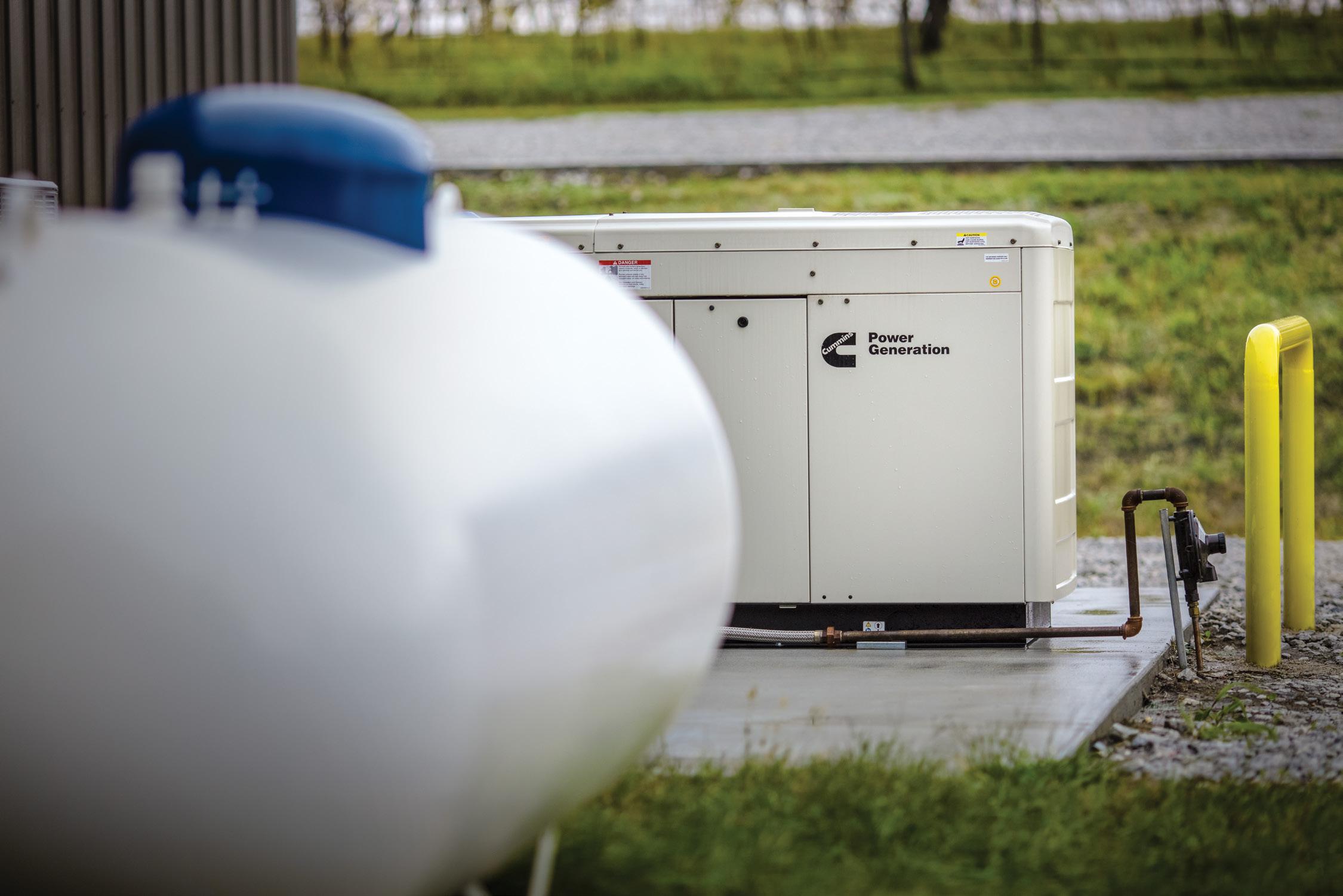
Propane-powered generators offer significant environmental advantages over diesel while meeting the demanding power requirements of modern data centers.
First, emissions are substantially lower. Propane-powered generators produce:
• 97% less nitrogen oxide (NOx) than diesel generators—the primary contributor to smog formation and respiratory problems
• Virtually zero particulate matter—eliminating the fine
particles that penetrate deep into lungs
• 16% fewer greenhouse gases than diesel, and 11% less than natural gas
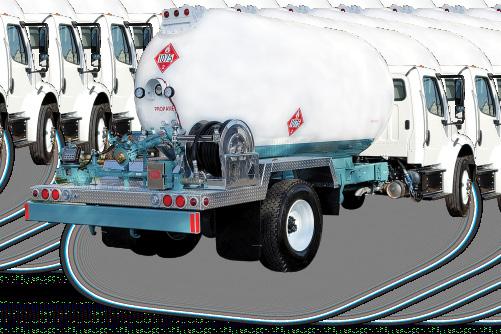
Second, companies such as Rolls Royce and Mesa Power Solutions offer high-capacity propane generators that operate with less noise than diesel counterparts—typically from 5-10 dB quieter than comparable diesel units. Propane’s cleaner combustion produces less mechanical vibration and exhaust noise, and the absence of diesel’s characteristic “knock” makes propane generators easier to acoustically isolate.
When coupled with modern acoustic enclosures designed specifically for propane applications, noise levels can be reduced to 60-65 dB at the property line—comparable to normal conversation and acceptable for residential areas. This represents a transformational improvement for communities near data centers.
MANY MORE FACTORS FAVORING PROPANE
Weather Independence: Unlike diesel fuel, which gels when
temperatures fall below 10 to 15 degrees Fahrenheit or -12 degrees Celsius, propane performs reliably in temperatures from -40°F to extreme heat. On-site fuel storage eliminates dependency on real-time delivery and vulnerability to transmission line damage from storms, fires, or ice.
Fuel Stability: Unlike diesel fuel, which oxidizes in as little as 30 days, propane can be stored indefinitely without degradation. This eliminates fuel replacement costs and ensures generators are always ready for operation.
Near-Zero Transmission Losses: Traditional centralized power plants lose as much as 67% of energy through waste heat and transmission losses. Co-located propane generation virtually eliminates these losses, with power generated steps away from where it’s consumed.
Grid Independence: Unlike the power grid, propane generation is reliable and always on during extended grid outages, eliminating single point-of-failure risk and protecting against grid congestion and brownouts during peak demand.
Lower Costs: Unlike diesel fuel, propane is cost effective with more stable pricing, typically costing 50% less per gallon than diesel, enabling better budget planning. Likewise, propane engines require fewer oil changes, no diesel particulate filters or exhaust fluid systems, less engine wear, and minimal downtime for servicing.
Ultra-low Carbon Option: Propane offers a pathway toward even cleaner performance with renewable propane. Produced from waste oils, agricultural residues, and purpose-grown non-food crops like camelina, renewable propane offers carbon intensity as low as 20.5—dramatically lower than the average of grid electricity at 130
The environmental and health costs of diesel-powered backup generation are simply too high to ignore, particularly when a cleaner, quieter, more reliable alternative exists.
Propane-powered, co-located generation offers data centers a pragmatic solution that addresses multiple challenges simultaneously.
2026 MEMBERSHIP DUES RENEWALS
The 2026 PPGA membership dues renewals were due January 1. If you have still not renewed, simply fill out the payment information, make any needed changes to the contact information, and return to us. You are also able to pay dues directly online.
If you have any new employees who would like to receive PPGA information or changes to other employee’s contact information, we ask that you share that information on an additional sheet of paper. This will assist us in keeping our membership information up to date.
If you have any questions or concerns about your 2026 renewal, please feel free to contact Trina Miller in the PPGA office or call 844-585-4940 and she will be happy to assist you.

EVERY DAY SAFE PROGRAM
Building a safety culture isn’t about a single training session or a manual on a shelf; it’s a commitment to the well-being of every employee and the families they return to each night. To support this mission, the Propane Education & Research Council (PERC) has launched the Every Day Safe Program.
This initiative is designed specifically for propane marketers to strengthen their safety culture through manageable, consistent steps: one habit, one goal, and one day at a time.
ASSESS: KNOW YOUR STARTING POINT
The journey begins with an internal deep dive. Leadership is encouraged to evaluate current safety practices, policies, procedures, and training. By identifying gaps or areas for improvement today, companies can build a more resilient foundation for tomorrow.
SET GOALS: MAPPING THE FUTURE
Once the assessment is complete, the program guides managers in setting clear, actionable milestones for the next six months, one year, and three years.
These evaluations and touchpoints are for internal company use only. PERC does not collect or store this data, ensuring that your company’s internal reviews remain private.
TAKE ACTION: RESOURCES AND ENGAGEMENT
The “Action” phase is where the culture truly takes root. The program provides a wealth of resources to keep safety top-ofmind:
• The Learning Center: Access to specialized training on safe driving, workplace safety, delivery best practices, consumer safety, and more.
• Monthly Webinars: 30-minute sessions featuring external safety subject matter experts to provide fresh perspectives.
• Real-World Steps: Engage with the community through fire department visits, hold weekly safety meetings, and participate in industry celebrations like National Truck Driver Appreciation Week.
STRENGTHENING THE INDUSTRY TOGETHER
When one company improves its safety habits, the entire propane industry becomes stronger and more reputable. By enrolling in the Every Day Safe Program, you are choosing to make safety an active, everyday priority for your co-workers, your customers, and the communities you serve.
Ready to take the next step? Visit propane.com/EveryDaySafe to enroll your company and begin building a safer future.
Every Day Safe Training Resources & Categories
Once enrolled in the program, you’ll have access to a full library of hands-on learning tools — built by and for the propane industry.
Live Webinars
Participate in interactive sessions with PERC safety experts and peers from across the industry.
On-Demand Learning
Access courses through The Learning Center at any time, for any team member.
Incident & Accident Habits
Learn how to document, investigate, and prevent incidents using proactive safety practices.

Community Preparedness
Strengthen preparedness with resources for emergency responders and consumers, from severe weather guidance to what to do if someone smells gas.
Daily Practice Tools
Reinforce habits through short safety talks, meetings, and practical training you can use year-round.
Start Today and Stay Safe Every Day
Visit propane.com/EveryDaySafe to enroll and begin building your company’s safety legacy.
Simple Steps to Build Safer Habits Every Day
The Every Day Safe program outlines a clear path for propane companies of all sizes. Leaders will assess current practices, set goals, and strengthen their safety culture through practical, adaptable steps.
Complete the SelfAssessment
Watch the Culture of Safety Orientation Video
Leaders begin by completing a brief self-assessment to evaluate current safety practices, policies, and company culture. The results will provide valuable insight to guide subsequent steps and establish a clear direction for improvement.
This survey is for internal use only; PERC does not collect this information.

Company leaders and their teams watch a short introduction video that reinforces the importance of a strong safety culture, defines everyone’s role in building it, and features propane marketers sharing real-world experiences.
STEP 1
STEP 2
Map Your Safety Journey with Clear Goals and Milestones
Leaders use the Safety Journey Mapping tool to identify their company’s starting point, clarify priorities, and outline a clear path toward continuous improvement. This process helps shape meaningful, measurable goals and milestones that track progress over time.
Put Your Plan into Action
Leaders select focus areas based on their goals and use tailored toolkits to put their plans into action — at a pace suited to their operations. This includes assigning training, sharing resources, and integrating safety into every meeting, task, and interaction.
To support these goals, leaders may opt to complete any three of the following action steps to earn additional Every Day Safe participant recognition:
• Invite a local fire department to visit your facility.
• Host or participate in emergency response training with first responders.
• Hold regular safety meetings for employees.
• Present Every Day Safe materials at state association meetings.
• Share consumer safety social posts.
• Celebrate National Truck Driver Appreciation Week.
• Recognize and reward employees for safe behavior.
Complete Periodic Check-Ins
At six months, one year, and three years, leaders complete a brief check-in to reflect on their company’s progress and identify any shifts in safety practices, training, and culture. These reflections are for internal use only; PERC does not collect this information.
At the one-year mark, leaders can choose to submit testimonials or completed action steps to earn the next Every Day Safe participant badge — a meaningful way to recognize team commitment and celebrate progress.
Every Day Safe turns safety awareness into safety action. Through reflection, planning, and consistent habits, companies build a sustainable culture of safety — one day, one goal, one habit at a time.
BUILDING RELATIONSHIPS WITH TRADE ALLIES
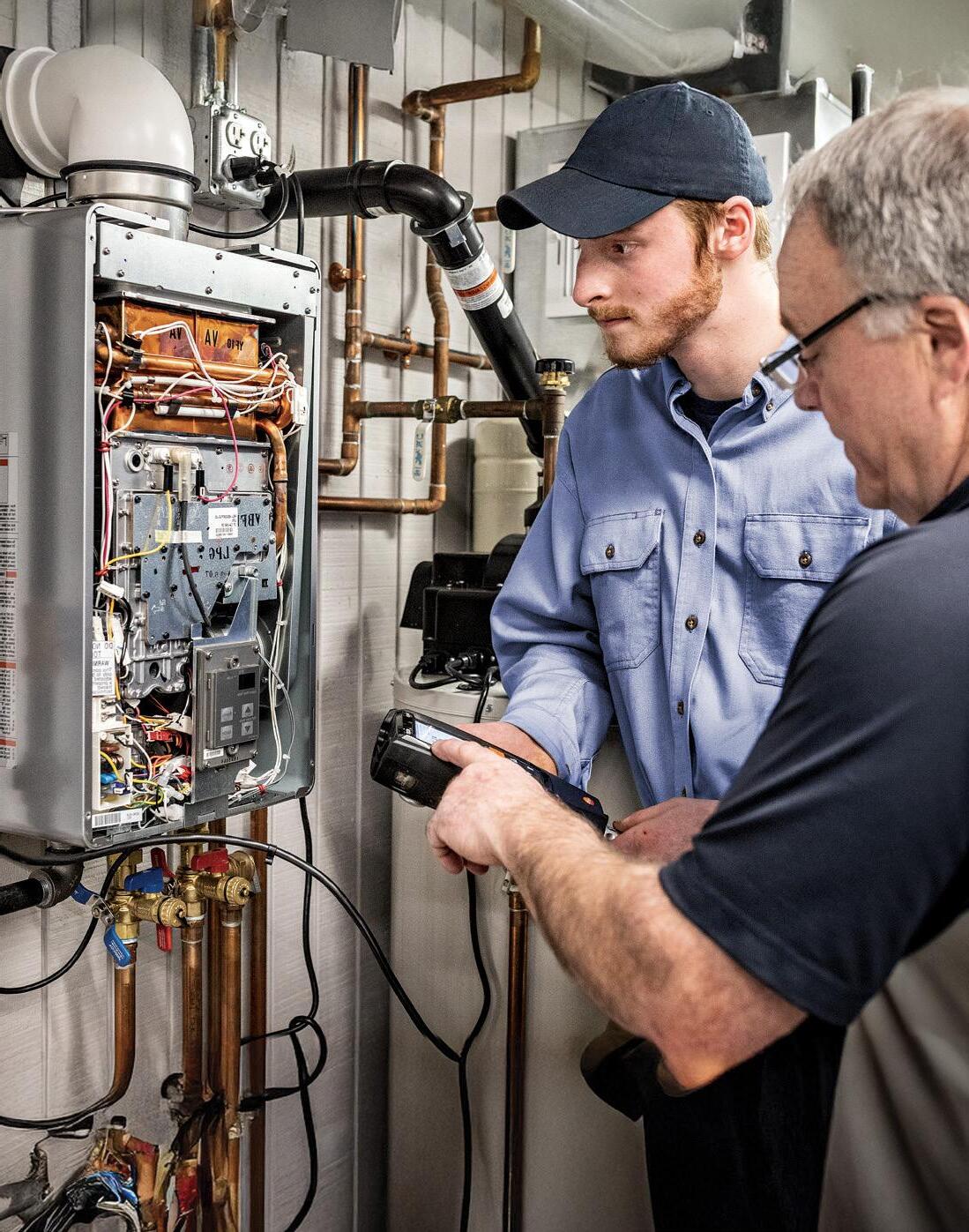
Trade professionals such as residential builders, HVAC and plumbing contractors, and real estate agents are more than just service providers; they are key decision-makers. When a homeowner is considering a new heating system or choosing between gas and electric appliances, they look to these experts for advice. By partnering with these professionals, propane marketers can ensure that propane’s benefits are effectively communicated at the point of decision.
A THREE-STEP APPROACH TO STRATEGIC ENGAGEMENT
Identify Local Partners: The first step is to locate potential allies. Marketers are encouraged to look for professional organizations like the Plumbing-Heating-Cooling Contractors Association (PHCC) or the National Association of Home Builders (NAHB). To assist in this process, PERC provides specialized training through its online Learning Center, offering marketers the tools they need to make meaningful initial connections.
Share Valuable Resources: Once relationships are established, the goal is to provide these partners with the resources they need to succeed. PERC offers a wealth of free training courses and programs through its website. One standout initiative is
the Propane Construction Research Program, which offers up to $1,000 per home for builders who integrate propane systems and appliances. By sharing these resources, marketers position themselves as valuable partners who contribute to the success of the builder or contractor.
Invest in Education: Building for the future means investing in the next generation of trade professionals. PERC’s HVAC Technical School Grant Program has already awarded grants to more than 100 schools across the country. These grants facilitate hands-on training in propane technology, ensuring that future contractors are comfortable and competent with propane systems. For marketers, this represents a long-term strategy for market growth and stability.
STRENGTHENING MARKET PRESENCE
The ultimate goal of these efforts is to grow propane usage and maintain market share in a rapidly evolving residential market. By building strong, collaborative relationships with trade professionals and educational institutions, propane marketers can create a robust network of advocates for their product.
Give Builders and Contractors More Reasons to Choose Propane
PERC RESOURCES HELP MARKETERS ENGAGE KEY PARTNERS THROUGH FUNDING AND EDUCATION
Residential builders, HVAC and plumbing contractors, REALTORS®️, and educators influence critical energy decisions. PERC equips marketers with practical tools to build stronger relationships with these partners — including research and demonstration programs, post-secondary curricula, and investment support they can use right away. Stronger partnerships help grow gallons and protect residential market share.
Put these tools to work at propane.com/providers





Agriculture THE 2026 PROPANE FARM RESEARCH PROGRAM
HELPING FARMERS INVEST IN NEXT-GEN TECHNOLOGY AND EQUIPMENT
Today’s producers face relentless pressure to maintain profitability amid tight margins, unpredictable fuel costs, and growing concerns about the stability of the electric grid. PERC is making it easier for farmers to upgrade essential equipment that delivers real value through participation in the Propane Farm Research Program
The PFRP helps farmers integrate technologies that deliver reliable performance and financial savings. With funding available for key equipment categories, PERC makes it easier than ever to invest in propane-powered equipment that works when you need it most.
WHAT IS THE PROPANE FARM RESEARCH PROGRAM?
The Propane Farm Research Program awards farmers who adopt and test new propane-powered technologies. In exchange for these cost savings, participating farmers provide real-world feedback to help refine these technologies for the unique demands of agriculture.
One previous applicant to the program, Randy Vana of Wilber, Nebraska, says the program “makes that propane engine very, very economical in comparison to what a diesel would cost you. It’s really simple to do. In fact, the current program, they’ve made it even simpler than it was just a couple of years ago as far as paperwork that you fill out.”
KEY BENEFITS FOR 2026
Financial Relief for Tight Margins: The program offers substantial compensation for new propane-powered industrial engines ($600/liter displacement), prime power generators ($60/ kW), backup generators ($30/kW), and poultry house sanitizers ($2,000 per unit). Producers can save up to $10,000 on qualifying purchases to offset the cost of essential upgrades.
Grid-Independent Reliability: Propane equipment operates independently of the electric grid, providing peace of mind during outages, extreme weather, and peak load pricing. When the grid fails or becomes too expensive, propane keeps your farm running.
Superior Value Over Diesel: Propane-powered equipment typically costs less upfront than diesel alternatives and delivers lower operational and maintenance costs over its lifetime. Farmers can reduce fuel expenses while maintaining productivity and reliability.

Versatility for Modern Farms: Propane powers a wide range of applications, including irrigation engines, water heating, poultry house sanitizers, and flame weed control systems. This versatility helps farms adapt to changing needs and maximize efficiency.
Tools for Smarter Decisions: PERC’s propane irrigation engine and grain drying cost calculators help farmers estimate savings and propane needs, supporting informed investment decisions.
HOW TO PARTICIPATE
Farmers interested in saving on eligible propane-powered equipment can learn more and apply directly online at propane.com/pfrp
POWERING PROGRESS IN 2026
The Propane Farm Research Program remains a valuable pathway to modernizing your farm, controlling costs, and gaining a competitive edge in today’s challenging agricultural landscape. By leveraging propane’s unique advantages like cost savings, reliability, and versatility, farmers can make smart investments that pay off now and in the future.
Embrace the future of farming with propane: fueling progress, powering efficiency, and helping you thrive despite tight margins and input pricing uncertainty. Learn more about eligible equipment, access useful tools, and apply today at propane. com/agriculture.

$2,500 Scholarships Available Through PPGA!
The Pacific Propane Gas Association (PPGA) is offering scholarships in honor of R. M. Dick Start whose tireless contributions and passion advanced the propane industry and his community. The Dick Start Scholarship Program is for graduating high school seniors or first-year students whose parent is employed by a PPGA member and are attending or planning to attend any community college, university, vocational or technical school. This year, the PPGA will award up to four scholarships between $1,000-$2,500 each. The application deadline for the 2025-26 academic year is March 31, 2026. Visit pacificpga.org for an application.
10% TEMPORARY IMPORT DUTY
On the evening of February 20, 2026, President Trump issued a new Executive Order, invoking section 122 of the Trade Act of 1974, imposing a 10% ad valorem import duty on articles imported into the United States for a period of 150 days. The temporary import duty will take effect February 24 at 12:01 am EST.
Certain goods are exempt from the 10% duty, including energy and energy products as well as certain light, medium, and heavy duty vehicles. Additionally, the following are not subject to the temporary import duties: USMCA exempt goods from Canada and Mexico (including propane from Canada) and goods such as steel, aluminum, autos, and auto parts that are already subject to “sector level” tariffs. A summary is set forth in this White House Fact Sheet: Fact Sheet: Temporary 10% Import Duty
ORAL ARGUMENTS HELD ON NY GAS BAN CASES
On Friday, January 30, 2026, the US Court of Appeals for the Second Circuit held oral arguments in both the NYC and NY State gas ban cases. NPGA and NYPGA are plaintiffs in the state case. Collectively, arguments on these cases were held for well over an hour. Both NPGA President and CEO Steve Kaminski and NPGA Associate General Counsel Kate Gaziano helped prep our counsel and were present for the arguments in Manhattan. As a reminder, the state-level ban was set to go into effect on January 1, 2026, the plaintiff group was able to get the state to agree to a stay pending the outcome of appellate litigation.
The judges stressed a commitment to interpreting the text of the statute and what it meant, with Judge Perez telling Intervenors’ counsel that she was not interested in “policy arguments.”
The argument spanned from questions on how to properly test appliances, whether setting a zero limit on an appliance would be preempted, and to a careful
analysis of the text of the statute. The judges also seemed to seriously weigh the Ninth Circuit’s decision in CRA v. Berkeley, which struck down Berkeley’s gas ban.
NEW MEXICO REJECTS GHG EMISSIONS REDUCTION LAW
Across the country, 13 states have statutory requirements to reduce greenhouse gas (GHG) emissions, with many of these located on the West Coast and in the Northeast. These emission reduction laws have been used to justify numerous programs that impact the availability and price of propane, including capand-invest programs, clean heat standards, zero-emission space and water heating standards, excise taxes on carbon emissions, and the elimination of vehicles and building equipment powered by combustion.
Last week, New Mexico’s effort to become the 14th state with a statutory requirement to reduce GHG emissions came to an end. Senate Bill 18, called the New Horizons Act, sought to codify in state law an emissions reduction schedule that ultimately would have required net-zero GHG emissions by 2050. However, the New Mexico State Senate, on a strong bipartisan basis, rejected the measure on the chamber floor. Further evidence that New Mexicans, just like all Americans, are squarely focused right now on energy costs and affordability.
Tom Clark, Executive Director of the New Mexico Propane Gas Association, applauded the bill’s demise in the legislature. “New Mexicans have seen the damage when bad energy policy becomes reality,” said Clark. “Higher costs, imported power, and no true emissions reductions. This bill’s failure sends a clear message: Don’t force unrealistic and unaffordable mandates on our state.”
NEW PROPOSED RULES FOR CLEAN FUEL CREDITS
On February 6, the Internal Revenue Service proposed new regulations regarding the clean fuel production credit, aimed primarily at biofuels, such as renewable/bio-propane made from vegetable and seed oils, and manure. The proposal aims to expand consideration for domestic production of biofuels, increase credit rebates, and diversify the transportation fuel market. Most importantly, eligible fuel for the tax credit must be suitable for use in transportation, but need not be actually used in transportation. Therefore, transportation-grade renewable propane used for heat would be eligible for the credit. The rule, Section 45Z – Clean Fuel Production Credit is a technology-neutral federal tax credit enacted under the Inflation Reduction Act of 2022, and later extended and modified by the One Big Beautiful Bill Act of 2025, recorded in Title 26 of the Code of Federal Regulations, Parts 1 and 48.
The 45Z credits apply to the producers of transportation fuels with low lifecycle greenhouse gas emissions. Under the new amendments, producers will be able to qualify for rebates under a broad range of production methods, replacing older fuel-specific tax incentives that screened out fuels made as by-products. The proposed amendments clarify that credits will be applied only to source producers of fuels, not transporters or consumers. Producers are defined as processors who alter source-elements into useable fuels—which in the case of propane, applies to the refiner. The credits will apply retroactively to all fuels sold during 2025 and thereon until the end of 2029.
Specific fuel eligibility is determined using the DOE’s 45ZCFGREET lifecycle modeling framework already in use. The upto-date GREET model will be required for each year of tax filing, eliminating grandfathered statuses based on previous years’ standards. Additionally, GREET will now disregard indirect landuse changes, including unintended emissions from the cultivation of previously fallow land, reducing emissions portfolios for biofuels. One of the largest new points of interest is a requirement that producers be American-owned or controlled and use American-sourced feedstocks to produce fuel. No specific fuels are highlighted in this new regulation for favor by evaluators, leveling the playing field for new and improved biofuels.
45Z establishes a base credit of twenty cents per gallon, equivalent for fuels under 50 kg CO₂e/MMBtu and a maximum credit of up to one dollar per gallon. Paragraph (b)(20)(iv) of the proposed amendment provides the lower heating values of some non-liquid fuels for qualifications purposes: The lower heating value of low-GHG dimethyl ether is 12,417 Btu per pound, liquefied petroleum gas (LPG) (other than propane from HEFA) is 19,873 Btu per pound, and LPG (propane from HEFA) is 18,568 Btu per pound.
HOW 45Z IMPACTS PROPANE
45Z explicitly recognizes low-greenhouse gas LPG—including bio-propane—as a qualified transportation fuel eligible for tax credits. This is a major structural shift, as bio-propane now receives equal policy treatment with SAF, renewable diesel, ethanol, biodiesel, and renewable natural gas. Because bio-propane is co-produced alongside renewable diesel and SAF, the new amendments to 45Z encourage large refinery expansions that automatically increase bio-propane output, making renewable propane economically attractive, even though it is a byproduct, driving supply scaling, lowering costs and expanding market availability over time.
Support Your Industry, Donate to NPGA’s
The NPGA is committed to being a powerful and effective voice for the propane gas industry in Washington, D.C. PropanePAC, the political action committee of NPGA, strengthens the association’s advocacy efforts by supporting pro-industry lawmakers in Congress.
Businesses, including NPGA’s corporate members, are forbidden from directly contributing money to PACs. All contributions to PropanePAC must be from individuals, such as propane company executives and employees. The success of the PAC is dependent on receiving financial support from individual supporters.
PROPANEPAC ELIGIBILITY
To be eligible to contribute to PropanePAC, your company must first grant prior authorization to NPGA.

PROPANEPAC WEBSITE ACCESS
If you are already eligible to participate in PAC activities, you can access PropanePAC’s website.
Under the new amendments, bio-propane qualifies for very high 45Z credit values because it typically scores well below the 50 kg CO₂e/MMBtu threshold required. There are also multiple production pathways that may qualify for near-maximum credits, allowing producers to price bio-propane competitively. The extra earnings could help to expand current blending into conventional propane supplies and penetrate fleet, heating, industrial, and backup power markets dominated by non-renewable fuels.
NEXT STEPS
The proposed amendment will now undergo a comment and response period; Written or electronic comments must be received by April 6. A public hearing to address these amendments will be held on May 28, at 10:00 EST. Requests to speak and outlines of topics to be discussed at the public hearing must be received by April 6. Requests to attend the public hearing must be received by 17:00 EST on May 26, 2026.
DOJ SUES TWO CALIFORNIA CITIES OVER GAS BANS
On Monday, January 5, the U.S. Department of Justice (DOJ) filed suit against the cities of Morgan Hill and Petaluma, California, challenging local ordinances that restrict the use of natural gas and propane in new construction. NPGA is working closely with the U.S. Department of Justice on this matter.
This lawsuit reflects the administration’s increased focus on challenging municipal energy bans that conflict with federal law and exceed local authority. These ordinances unlawfully interfere with federal control over energy markets and appliance standards, violate the Energy Policy and Conservation Act, and directly conflict with the CRA v. Berkeley decision. The cities have already responded claiming that they are not currently enforcing their bans.
NPGA has long raised concerns about local fuel bans and has been in communication with the DOJ for months outlining the legal and practical problems these ordinances create as well as helping identify local laws in conflict with federal law. In earlier
communications, NPGA emphasized that municipal energy bans can restrict consumer choice, increase costs, undermine energy reliability, and conflict with federal statutes governing energy policy.
The DOJ’s actions against Morgan Hill and Petaluma demonstrate that these concerns are being taken seriously at the federal level. As Assistant Attorney General Brett A. Shumate said: “Especially during winter, Americans deserve reliable, affordable energy [and]…radical local efforts to undermine American energy dominance must be stopped.” NPGA will continue to engage with federal policymakers and keep members informed as the litigation proceeds, while advocating for policies that recognize propane’s role in the U.S. energy system.
MASSACHUSETTS CLEAN HEAT STANDARD DELAYED
The Massachusetts Department of Environmental Protection recently stated that the Clean Heat Standard (CHS), which was originally scheduled to go into effect in 2026, will be delayed and implemented “no earlier than 2028.”
The CHS framework creates financial penalties for the delivery of conventional heating fuels while simultaneously forcing the electrification of building stock through an annual quota system. Under the regulation, propane suppliers would need to generate clean heat credits themselves or purchase credits from third parties in the marketplace. Credit generation would be limited to the delivery of certain renewable fuels and building electrification efforts, such as the installation of heat pumps.
The Standard itself is designed to financially penalize the use of conventional thermal fuels, including propane and heating oil. Leslie Anderson, Executive Director of the Propane Gas Association of New England (PGANE), has been combating the Clean Heat Standard since it was originally proposed in Boston. “After over seven years of intense advocacy efforts, delaying the CHS is a huge win for PGANE members in New England and for the environment as well, as propane is cleaner than electricity in the Massachusetts,” said Anderson.
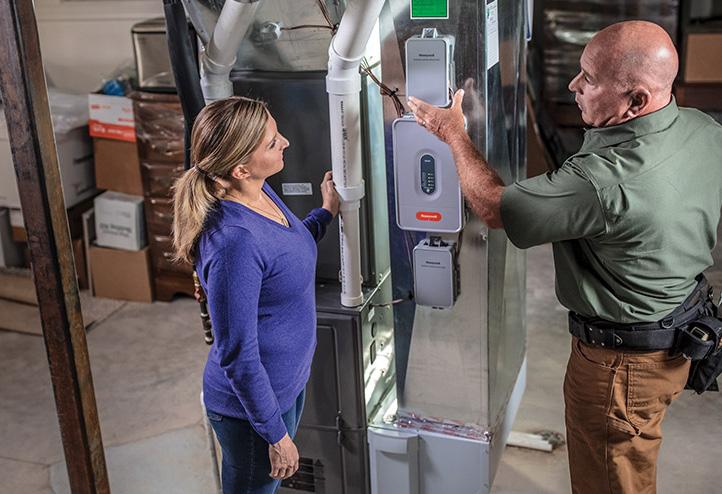
2026 REBATES AVAILABLE
The PPGA has rebate funds available for you and your propane customers to take advantage of in 2026. Click here for more information.
2026 rebates include:
• On Road Propane Vehicle Rebate
• Regulator Rebate

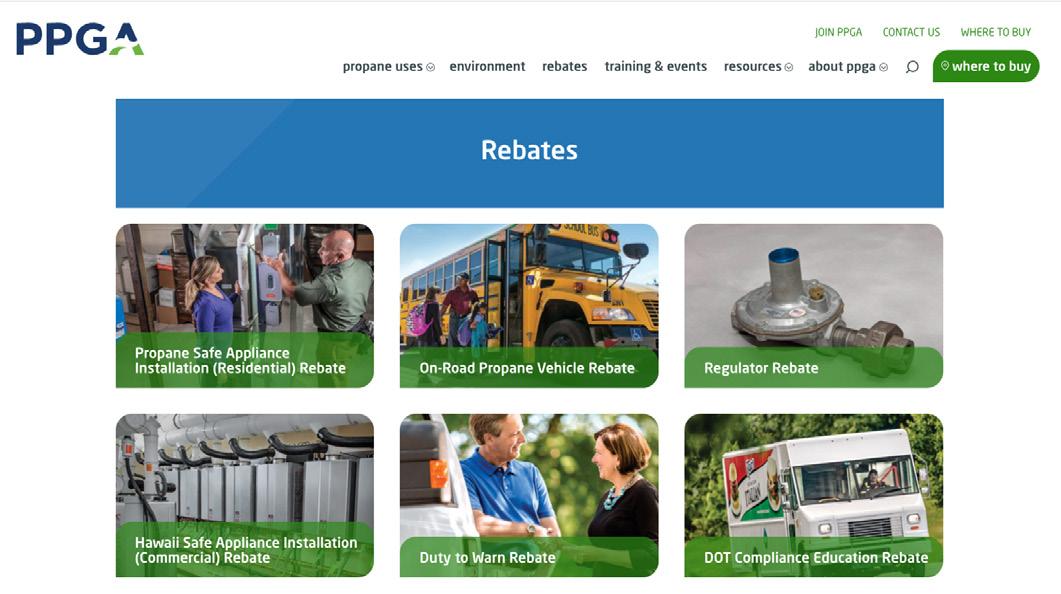

• Propane Safe Appliance Installation (Residential) Rebate
For more information and applications, visit pacificpga.org and click on Rebates.
• Hawaii Safe Appliance Installation (Commercial) Rebate
• Duty to Warn Rebate
• DOT Compliance Education Rebate
Rebates are available until December 31 or while funds are available.
PRESIDENT
Gary Kelly City Service Valcon
VICE PRESIDENT
Glen Willmott
Kiva United Energy
SECRETARY/TREASURER
Ryan Nootenboom
Skagit Farmers Supply
DIRECTORS
Bryan Adams CoEnergy Propane
Jeremy Ball American Gas Services
Justin Carey Valley Wide Co-op
Casey Dell American Distributing
Bruce Engeman
R&D Propane
Alex Gallard
Blue Star Gas
Emily Ochoa Christensen
Adam Schultz
LPG Specialties
Bert Turn FEI, Inc.
Alaska State Director
Casandra Russo
AmeriGas
Hawaii State Director
Zoe Williams
Hawaii Gas
Oregon State Director
Ryan Buller
McMinnville Gas
Washington State Director
STAFF
Executive Director Matt Solak matt@kdafirm.com
Deputy Executive Director Derek Dalling derek@kdafirm.com
Events Director Lauren Concannon lauren@kdafirm.com
Financial Director Erin Dalling erin@kdafirm.com
Member Services Director Trina Miller trina@kdafirm.com
Creative & Communications Director
Melissa Travis melissa@kdafirm.com
Administrative Assistant Brooklyn Heath brooklyn@kdafirm.com
April