As we continue moving forward together, I want to thank you for the vital role you play in strengthening Michigan’s fitness and wellness community. Every day, our members are improving lives, supporting local economies, and advocating for healthier communities across our state.
A key part of the Michigan Fitness Association’s mission is legislative advocacy, and I’m pleased to share that we remain actively engaged with state policymakers on issues that directly affect our industry. We are closely monitoring proposed legislation related to small business regulations, workforce development, and health and wellness initiatives.
On that note, I’m pleased to share an important update on Michigan House Bill 5256. This bill, sponsored by Representative Mark Tisdel and several colleagues, would create a state income tax deduction for certain physical facility services, including gym memberships, fitness classes, and related wellness services. It’s designed to make fitness more affordable and accessible for Michiganders by allowing individuals to deduct qualified physical facility expenses beginning in January 2027. HB 5256 has advanced out of committee and was recently reported with recommendation for second reading in the House, bringing it one step closer to floor consideration.
This legislation represents a meaningful opportunity for our industry and aligns with our long-standing advocacy goals to reduce barriers to physical activity and support broader public health. MFA is actively engaging with lawmakers and will keep you informed as the bill progresses.
Is there a particular topic you would like to see covered in MiFitNews? Please let us know! Contact
Equally important to our success is member involvement. Our committees are where ideas turn into action—whether it’s education, events, advocacy, or member engagement. I encourage you to consider volunteering for a committee and lending your expertise and perspective. Getting involved is one of the most impactful ways to shape the future of MFA while building meaningful connections with peers across the state. Click here for details.
Thank you for your ongoing commitment to excellence and for being an active part of the Michigan Fitness Association. Together, we are stronger, more influential, and better positioned to lead Michigan toward a healthier future.
81%
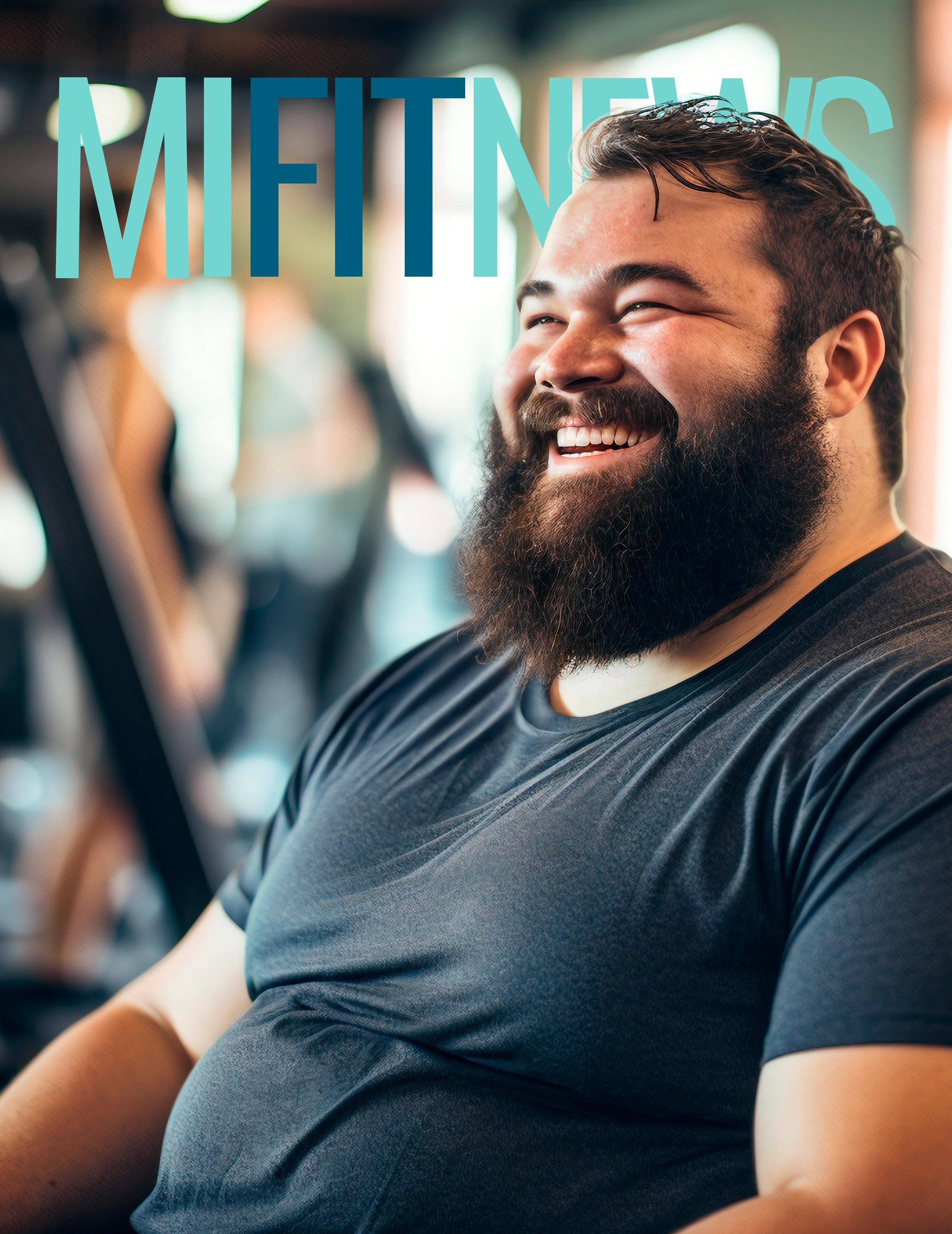
STOP SELLING SIX-PACKS, START SELLING
STRESS RELIEF
The Marketing Edge Fitness Business Owners Are Missing
BY BRENDAN KELLY THE WELL BEING
Since joining the MFA a couple of years ago, I have heard several times about the “80/20 Problem” that we are facing in the United States. The “80/20 problem” highlights that historically, only about 20% of the U.S. population typically holds and
utilizes memberships at local fitness centers. While the fitness industry has done well in making “the fit, fitter and the healthy, healthier”, it has struggled to attract the remaining 80% to join and participate. For the fitness industry, this represents significant untapped revenue potential. Moreover, it indicates that a large portion of the population is not engaging in vital physical activity at gyms, fitness centers, or health clubs.
How can we shift this 80/20 ratio in a positive direction? What strategies can the fitness sector employ to draw individuals from the “80%” group and encourage them to join and start going to their nearby fitness facility? In my opinion, the fitness industry needs to shift its emphasis away from promoting the physical health advantages of working out, such as weight loss, and instead highlight the mental health benefits. After years of attempting the former approach, the outcomes indicate that it’s time to try this new approach.
Fitness centers often present as an intimidating environment, particularly for individuals who do not fit the “ideal” body type or are grappling with mental health challenges. A quick Google search for “fitness ads” displays a plethora of advertisements showcasing extremely fit, toned, and muscular individuals, accompanied by slogans like “New Body Plan,” “United We Sweat,” and “Don’t wait. Get in shape.” Such images and catchphrases can be daunting and even discouraging for many.
Imagine you’re dealing with being overweight or obese and come across one of these advertisements. Imagine you’re also struggling with depression. How likely is it that the ad would inspire you to join a gym? Perhaps it might, but what if you’ve attempted this before? If you’ve previously joined a gym and tried to lose weight without success, would you feel hopeful thinking, “I can do it this time,” or might you think the opposite?
Every January, local fitness centers are packed with individuals pursuing New Year’s resolutions. Many resolve to “get in shape” or “lose weight.” Yet, within a few months, many of those individuals who were going to the gym in January are no longer going. The challenge and time commitment required for weight loss through exercise are significant, and often, the desired results do not materialize. This lack of the weight loss “reward” can lead to a sense of hopelessness about weight loss, causing many to abandon exercise entirely.
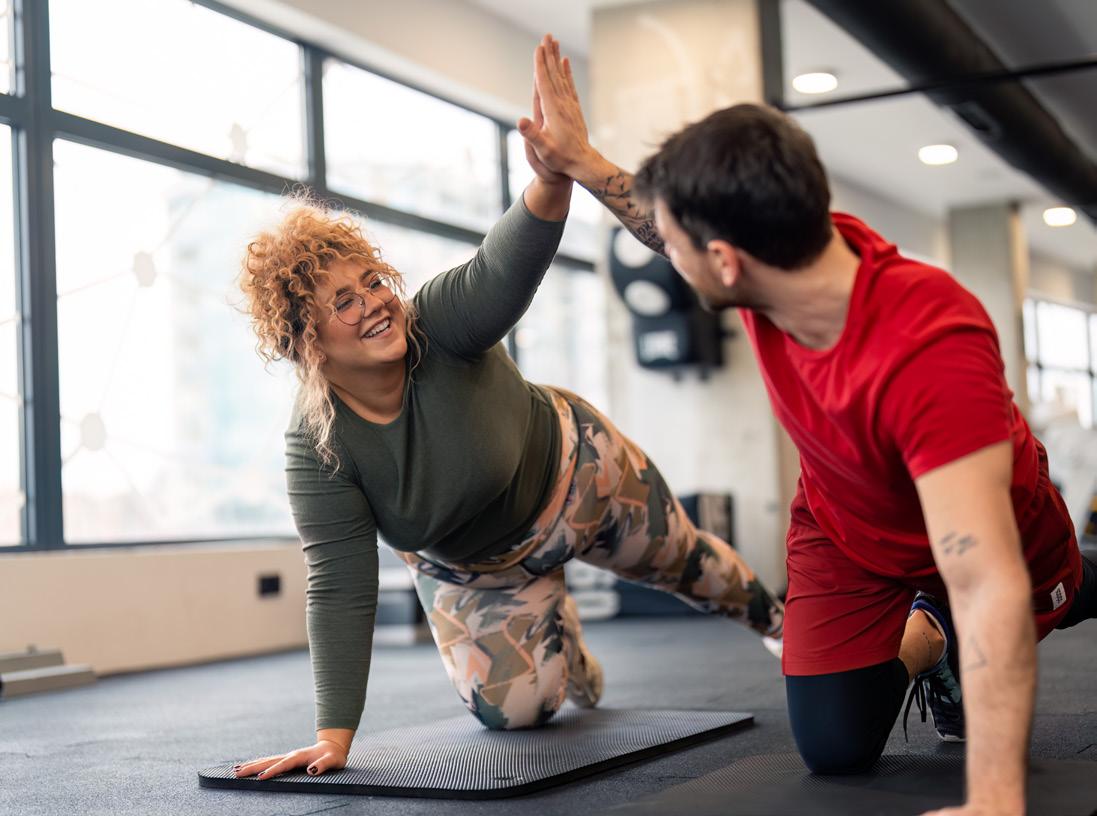
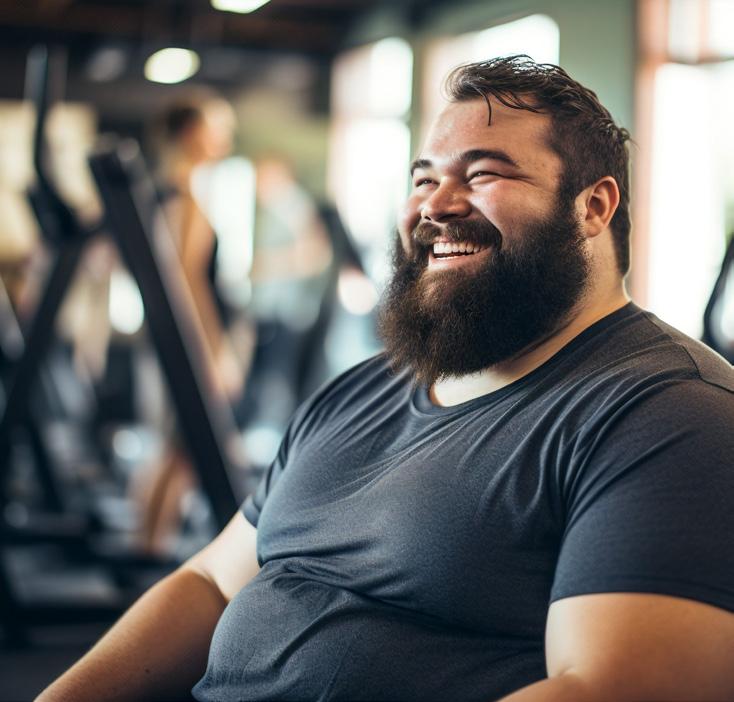
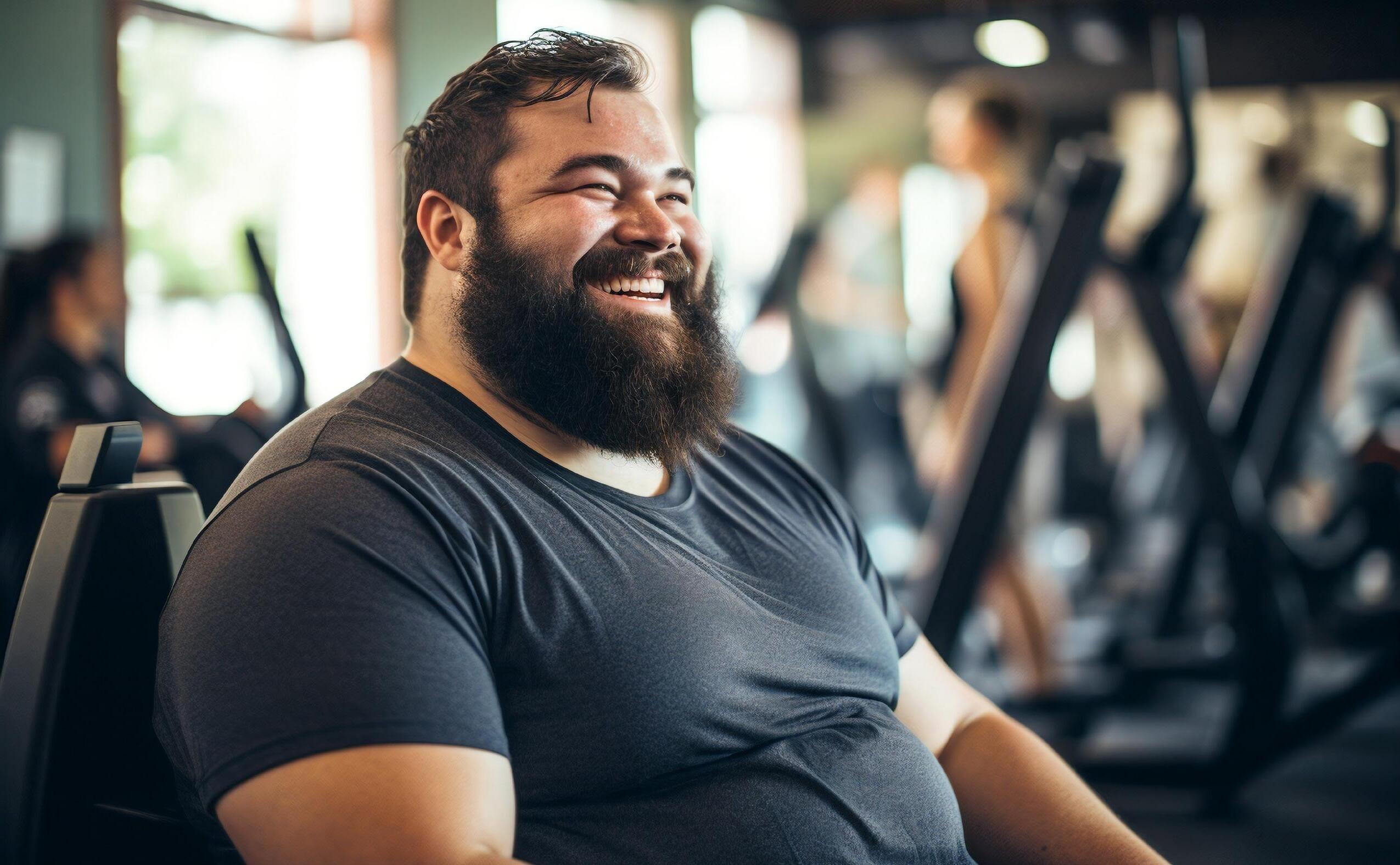
If instead of super fit people being featured in the ads, imagine if the ads featured pictures of people of many different shapes and sizes and body types? What difference could that make? How much less intimidating might that be? If, instead of the perceived goal for working out was to end up with a ripped body, what if the perceived goal was to simply get healthier? Or better yet, happier?
Imagine if the gym’s appeal wasn’t about achieving a “new body” or “getting in shape,” but rather about “feeling better,” “happier,” “less stressed,” “less anxious,” “more energized,” or “more focused and productive” at work or home. How might
that shift in focus impact motivation? Consider if the fitness industry set aside the physical health benefits of exercise and concentrated their marketing on the emotional well-being benefits, promoting the gym as a means to “feel better.” They could highlight the fact that research supports the notion that exercise can make a person feel noticeably better. Perhaps even significantly so.
Over the course of her 30-year career, Michelle Segar, PhD, has investigated the motivational factors that either facilitate or impede a person’s ability to develop and sustain a consistent exercise routine. Her research has led her to the definitive conclusion that physical health benefits, like weight loss, are ineffective motivators for ongoing exercise adherence. This is
WHEN INDIVIDUALS REALIZE THAT EXERCISE MAKES THEM “FEEL BETTER” ALMOST INSTANTLY AND QUITE NOTICEABLY, THEY ARE FAR MORE LIKELY TO MAINTAIN A CONSISTENT EXERCISE ROUTINE
BY BEING MORE FOCUSED ON THE IMMEDIATE REWARD.
because the rewards sought are not immediate; one will not achieve the desired weight loss overnight. In reality, it may take a considerable amount of time.
Shifting focus from the long-term physical benefits to the immediate mental health rewards can greatly boost motivation for regular exercise. When individuals realize that exercise makes them “feel better” almost instantly and quite noticeably, they are far more likely to maintain a consistent exercise routine by being more focused on the immediate reward. They now go to the gym to “feel better” afterwards, instead of being driven to lose weight.
If the fitness industry were to shift its messaging from emphasizing physical health benefits to highlighting the mood-enhancing effects of exercise, it could not only draw more individuals to their gyms, health clubs, and fitness centers but also retain a greater number of these patrons. The traditional approach has not addressed the “80/20 problem.” To make a significant impact, the industry must reconsider its strategy.
Brendan Kelly is the co-founder and CEO of The Well Being, Counseling and Fitness Center in Grand Rapids, Michigan. He earned his Master’s degree in social work from Western Michigan University in 2003 and has over 20 years of experience as a practicing therapist. He has delivered numerous presentations on the therapeutic value of exercise and strongly believes that The Well Being’s integrated treatment model represents a paradigm shift in traditional outpatient mental health care.
BY ELAINE ECONOMOU MOVE WELLNESS
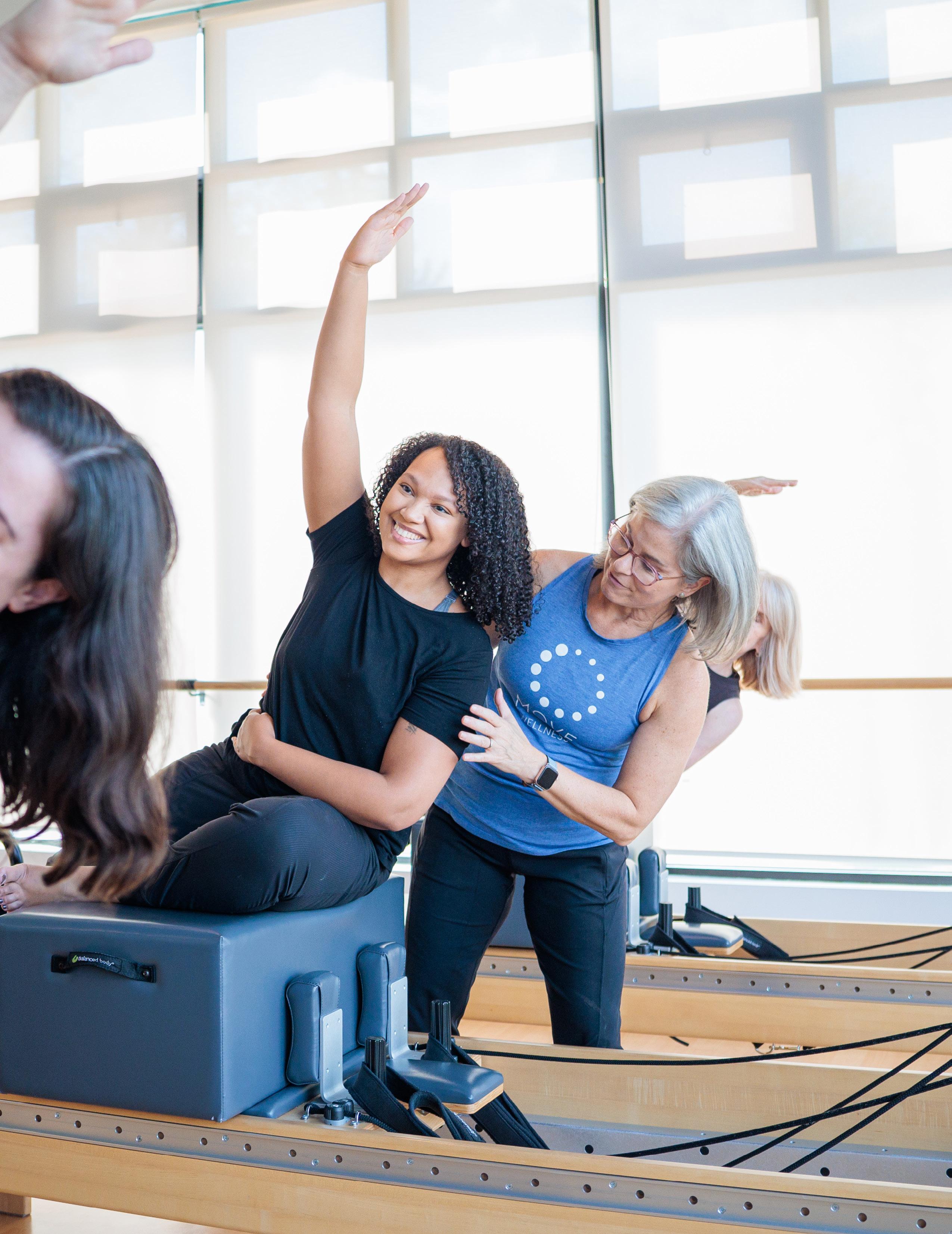
Pilates is experiencing explosive growth world wide. Whether it is a traditional boutique private session and small group studio, a group reformer studio or gym-based group exercise mat classes, Pilates is taking the exercise industry by storm and is predicted to play a significant role in the 1.5+ trillion dollar global wellness market expected by 2030.
For those of us who have been teaching the method for years, we are not surprised. After nearly three decades of teaching clients in group classes and private sessions and ten years of training instructors, I am thrilled by this growth and continue to be entertained by those scratching their heads wondering from where this came.
First, it is important to understand that this is not a “new” trend. Joseph Pilates began to develop the method, originally called Contrology, during WWI. He grew up in Germany and emigrated to the US just before WWII broke out. He lived and worked in New York City where he continued to develop the system of movement, exercises and equipment (most famously, the Pilates apparatus called the Reformer) throughout his lifetime. His belief was that the method was for every body and would provide every human optimal health and well being through its regular practice. His book, Return to Life, remains a testament to his beliefs and perspectives on human movement and exercise.
REDEFINING WHAT FITNESS LOOKS LIKE
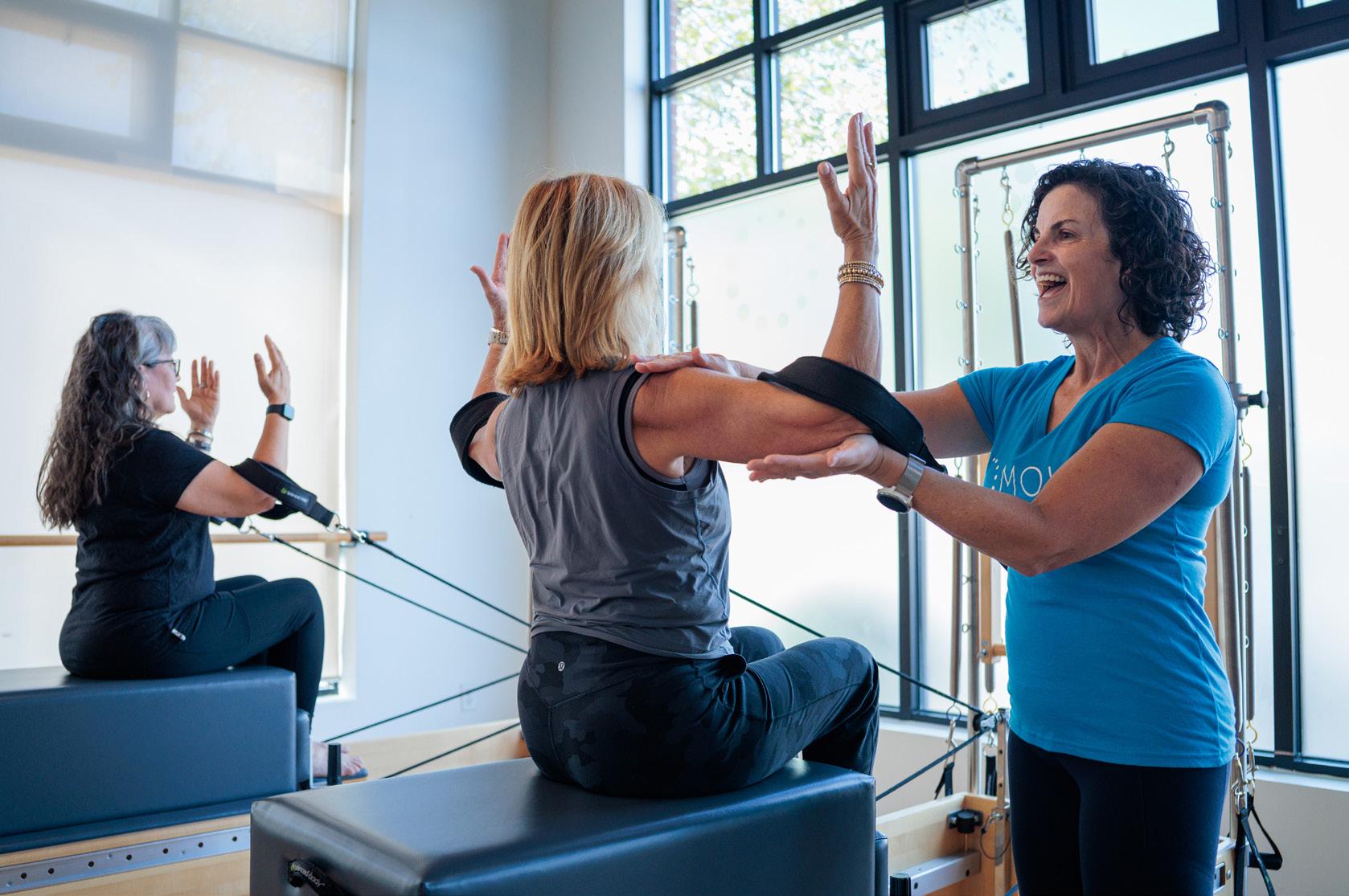
Pilates has proven to be an efficient, effective and safe way to build mobility and strength. As it has become more available in the form of mat classes in a gym, boutique studios using the full range of equipment and the current trend of reformer studios, it provides a mindful, whole body workout. My personal observation is that Pilates has evolved from what I think of as the “movement” world, not the mainstream fitness world. For those of us who have dedicated our lives to learning and teaching movement, often as dancers, we were easily
drawn to the mindful focus that Pilates requires as well as the multi-dimensional, whole body challenge of the exercises and progressions.
Once clients try a class or session, they most often genuinely feel better and begin to understand their own unique body in executing the exercises and then, how that exercise translates out in the world. We often hear that they genuinely enjoy their sessions, no matter how challenging they are, and we know from behavior change science that this enjoyment is the secret sauce of building self-efficacy.
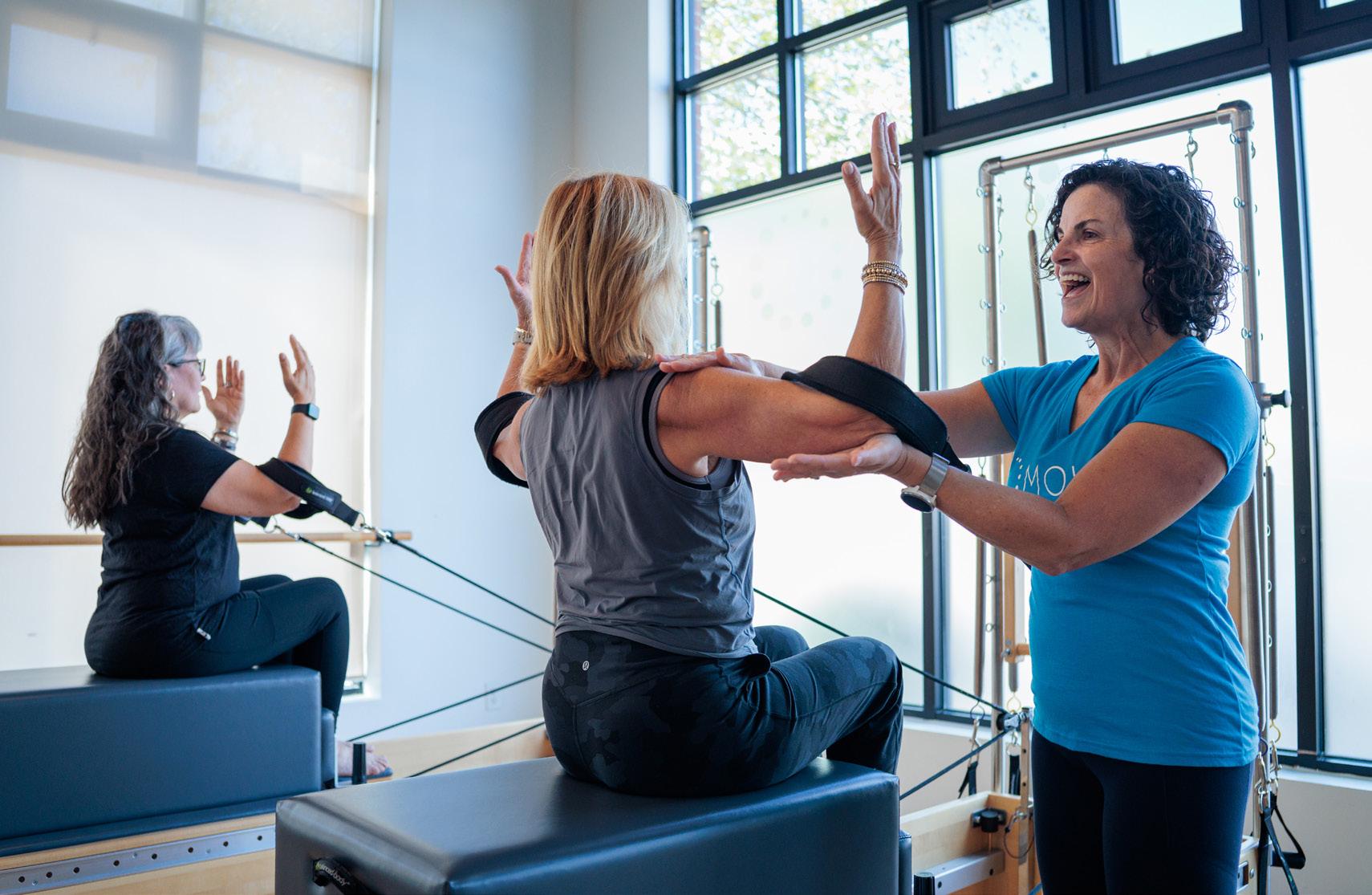
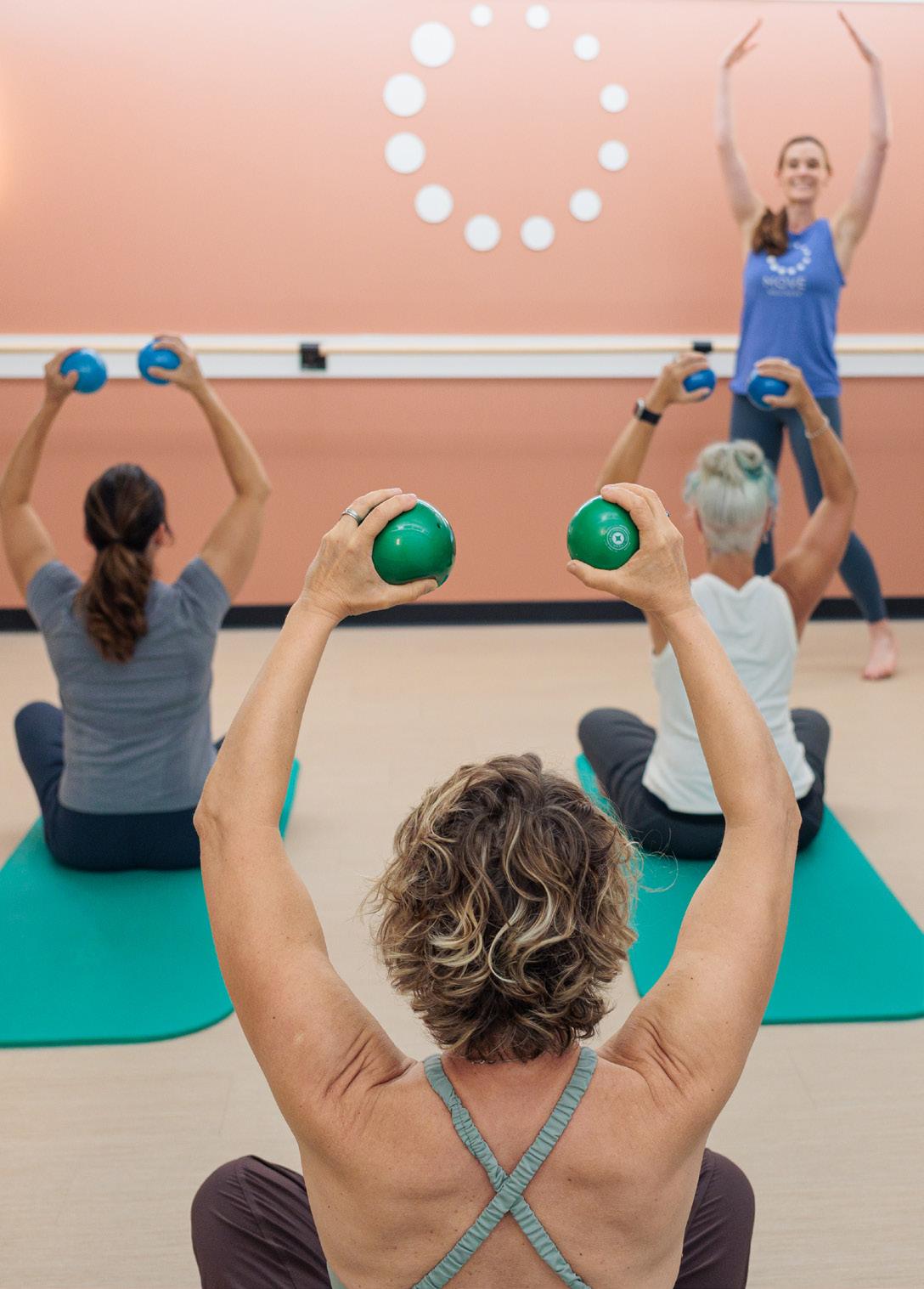
Practicing Pilates is practicing mindfulness. It requires clients to connect the sensations of the body and breath with what and how each exercise is executed. This focus on breath energizes the body which is part of why they feel better overall after doing Pilates. The method also casts a wide net for whole body exercise and balanced mobility that can prevent injury. It prepares tissues for load, either through the progressions of the repertoire or in other fitness settings like strength training. The focus on mobility helps with balance, gait and can be modified for any programming goal, sport, injury or special population. The evidence base is growing. Pilates is now considered one of the top three modalities for low back pain and demonstrates a reduced fall risk in older adults.
PILATES IS A SYSTEM
At a recent conference hosted by The Pilates Journal, a panel of industry leaders from major equipment and education compa-
nies agreed that the emphasis on growth of the industry must maintain an emphasis on the comprehensive nature of the system of Pilates. The method is an interrelated one, with principles of movement and foundational exercises building throughout the repertoire. What that means for fitness business owners is two-fold.
First, there is a case for hiring credentialed teachers. Certification by the National Pilates Certification Program (NPCP), which is the only accredited Pilates certification available, or another major certifying body, will ensure that clients are receiving quality and safe instruction. Currently, the NPCP offers both a comprehensive (450+ hour) certification and a mat-only (100+ hour) certification. It is important to note that there is no accredited reformer-only certification available. Trainers are expected to complete at least the mat course before or in tandem with doing any reformer or equipment training. There are other major companies, such as STOTT Pilates, offering comprehensive certification. Owners should vet trainers and their certifications during the hiring process.
Comprehensively trained teachers have the capacity to support clients’ individual issues and provide customized programming - increasingly a priority with clients. My studio has always been a place where people trust us to care for them post-rehab and we see that need growing year over year. Training instructors who understand how to communicate and coordinate with healthcare providers is a key part of the education process.
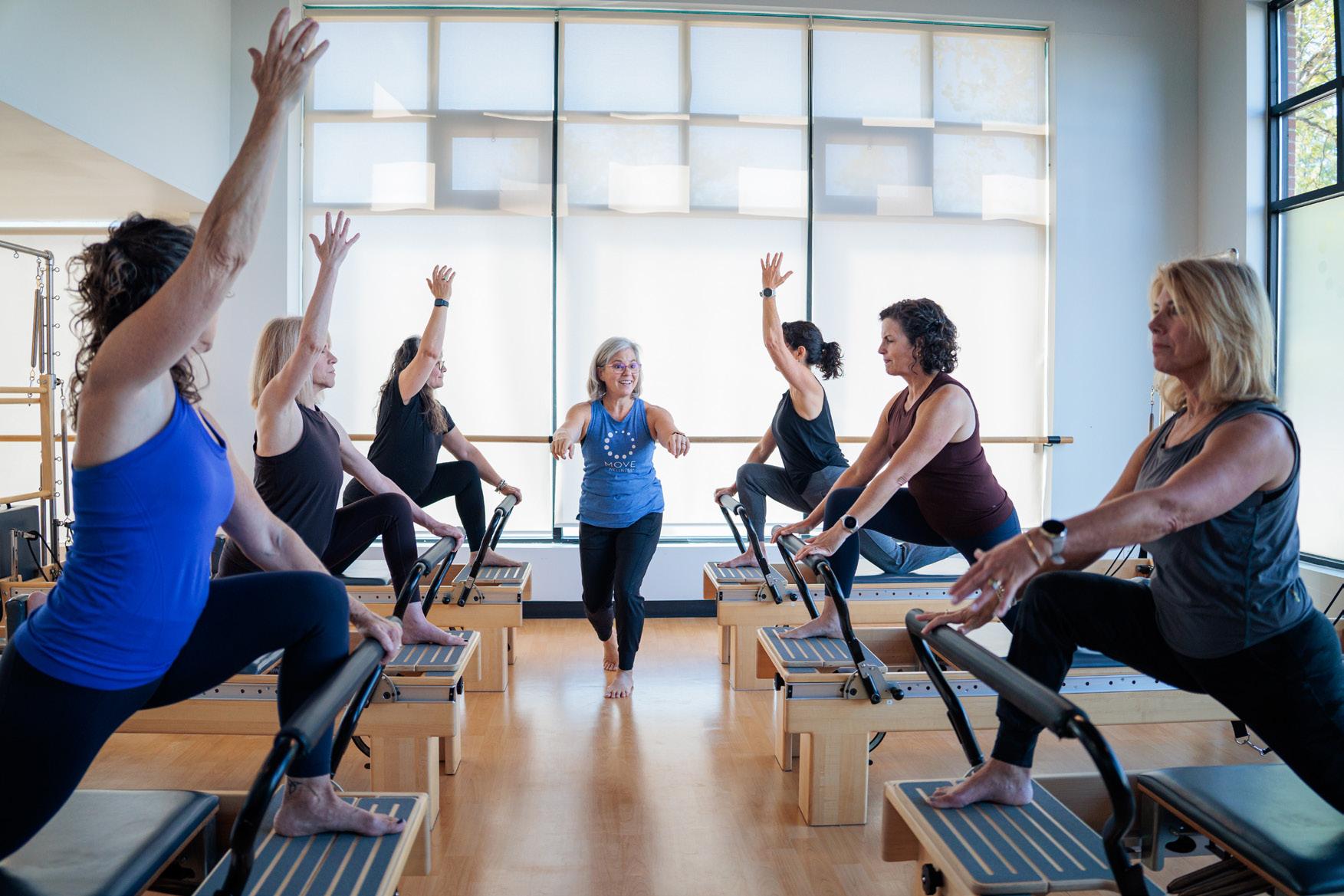
Second, there is an opportunity to bring Pilates to fitness facilities as a group exercise class on the mat. Mat classes use only light props without the costly investment in equipment at first, or maybe ever. These classes can be offered as a foundation to all training as well as targeted toward specific populations such as osteoporosis-safe training, a healthy backs class or a runners class. Classes can be done on a mat or modified as a chair class for the active aging population. If a gym decides to expand beyond mat classes and add Pilates equipment to its offerings, in addition to the reformer, which can be pricey for high quality and safe equipment, other equipment such as the Pilates spring
wall and chair can offer the spring based resistance training and programming of the method, as an investment alternative.
A CASE FOR FITNESS BUSINESSES
Clients are increasingly taking charge of their health and making choices to invest in their fitness to avoid and manage chronic disease. Women of all ages are an economic force in the fitness world and understand the need for exercise to maintain optimal health. Pilates training is ideal for all the stages of a woman’s life, especially mid-life where the experience and community of a Pilates class or session can be as important as its impact. As women are told to “lift heavy” to maintain bone health and the other changes that come with the menopause transition, Pilates prepares the body for loading safely and as those loads increase, helps maintain mobility and flexibility. The well known Liftmor study, which points to the positive effects of strength training for women in menopause, included a preparation period where participants built up to their full capacity. This is an ideal application for a Pilates program, in a small group setting, incorporating mat based exercises and equipment like the reformer or spring wall.
Other opportunities for businesses are to build Pilates based programs that focus on their clientele. Male and female conditioning for sport at all levels is rising with professional athletes turning to Pilates to enhance their performance and overall fitness to avoid injuries. Pathology focused training in groups or individually can provide not only the individual support needed
for each person’s unique issues but also the community and connection that comes with training in a group.
Offering Pilates classes whether mat based or incorporating equipment provides a strong foundation for integrating any exercise program and injury prevention. With an eye toward the comprehensive system and hiring certified instructors, fitness business owners can confidently invest to add value and revenue knowing that Pilates has been around for a long time and is here to stay.
Elaine Economou, NCPT, is the co-founder and CEO of MOVE Wellness, a Pilates and Gyrotonic studio based in Ann Arbor. She developed and directs the MOVE Education and Pilates Instructor Training Program, holds multiple Pilates and Gyrotonic Expansion System certifications and is a certified menopause coaching specialist. Elaine is deeply committed to extending wellness beyond the studio walls through partnerships with healthcare professionals, nonprofits, sports teams, and fitness clubs, including collaborations with Trinity Health, Cancer Support Community of Greater Ann Arbor and the University of Michigan. She currently serves on the board of the Michigan Fitness Association and volunteers for the Michigan Medicine Women’s Health Leadership Board. She can be reached at elaine@movewellness.com
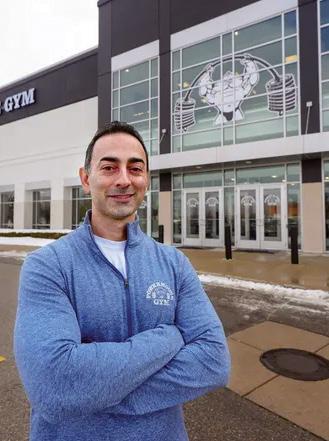
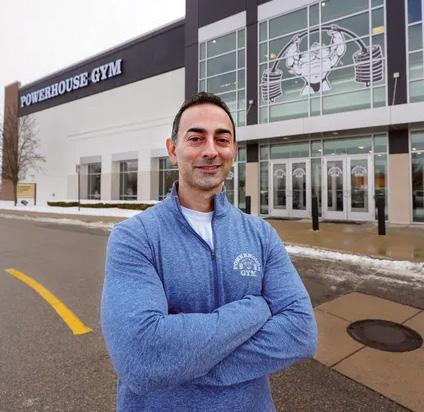
MEET HENRY DABISH FROM POWERHOUSE GYM
WHAT IS YOUR #1 PRIORITY AS AN MFA BOARD MEMBER?
My top priority is ensuring that gyms and fitness centers across Michigan have strong representation at the state level. It’s critical that our industry has a voice when laws are being proposed — both to support legislation that benefits our businesses and to oppose policies that could negatively impact gym owners. Advocacy is essential to protecting and strengthening our industry.
WHAT IS YOUR FAVORITE PART OF YOUR JOB?
I love seeing the successful opening of a new Powerhouse Gym location — especially the reaction from members when they walk in and experience new equipment or a newly built facility. Recently, I spoke with a member who praised my father for motivating him to lose 200 pounds. Watching people transform their lives and knowing we provide an environment that helps them reach their goals is incredibly rewarding.
WHAT IS THE BIGGEST HIDDEN GEM IN YOUR AREA? Powerhouse Gym of course!
IF YOU COULD CHOOSE ANYONE AS YOUR MENTOR, WHO WOULD YOU CHOOSE AND WHY?
That’s an easy one. My mentor has always been my father, William K. Dabish. He is a hardworking man of strong character who offers invaluable advice on both life and business. He
co-founded the business our family operates today, and I’ve learned firsthand what it takes to build something that lasts.
WHAT IS THE BEST THING ABOUT BEING A MEMBER OF MFA?
The ability to network with fellow gym owners, business leaders, lobbying representatives, and members across the organization is invaluable. Having peers in the same industry to lean on — people you may never have connected with otherwise — creates a strong support system that benefits us all.
WHAT DO YOU ENJOY MOST ABOUT VOLUNTEERING?
Watching the MFA grow from the ground up into the only state fitness association still operating is something I’m incredibly proud of. Seeing our collective efforts — whether through grants, lobbying, or member support — make a real difference for gym owners is deeply fulfilling.
WHAT IS THE BEST PIECE OF CAREER ADVICE YOU HAVE EVER RECEIVED?
I was told to build something that works without me, generates cash consistently, and compounds over time. For example, a business that is profitable with oversight while paying a manager to handle the day to day operations frees me up to look at future opportunities for growth.
WHAT’S ONE CHALLENGE YOU’VE FACED IN YOUR CAREER AND HOW DID YOU OVERCOME IT?
The COVID-19 shutdowns were the biggest challenge I’ve faced. What started as “15 days to slow the spread” turned into six months of closures in Michigan and other states where we operate. We weren’t just responsible for our own families — we were responsible for our employees, their families, and our licensees. We responded by connecting with local gym owners to form the Michigan Fitness Association. We hired lobbying groups, developed safe reopening guidelines, participated in webinars about PPP, Employee Retention Credits, SBA EIDL loans, and local grants, and shared critical information across our network. By collaborating and advocating together, we were able to navigate an incredibly uncertain time.
IF YOU WEREN’T IN FITNESS, WHAT CAREER PATH WOULD YOU HAVE CHOSEN?
My background is corporate finance, but I think I would have pursued real estate.
WHAT’S THE LAST BOOK YOU READ? Meditations by Marcus Aurelius.
FROM RESOLUTIONS TO RESULTS WHAT KEEPS MEMBERS COMING BACK
IN FEBRUARY AND MARCH
BY ALEX HARRIS SMART STRENGTH & CONDITIONING
January brings energy. February and March test it.
For fitness centers across Michigan, the real measure of success isn’t how many new members join in January—it’s how many keep showing up once the excitement fades. The good news? Member retention in late winter is less about motivation and more about experience.
PROGRESS BEATS PRESSURE
By February, many members feel discouraged if they don’t see dramatic results. The most successful fitness centers shift the conversation away from perfection and toward progress. Simple check-ins, visible milestones, and trainer feedback help members recognize wins they might otherwise overlook. When people feel improvement—strength gains, better energy, or increased confidence—they’re far more likely to stay engaged. Cold weather naturally pulls people inward. Fitness centers that lean into community during winter months see stronger retention. Group classes, small challenges, and social interactions create accountability without pressure. Members are more likely to show up when they know someone will notice— and welcome—them.
This doesn’t require significant events or costly programs. Consistent instructor engagement, name recognition, and a friendly atmosphere go a long way in building belonging.
Late winter is not the time to overwhelm members with complicated programming. The most effective approach focuses on simple, repeatable routines that fit real life. Clear schedules, predictable class formats, and flexible options help members maintain consistency even when weather, work, or family demands compete for attention.
When fitness feels manageable, it becomes a habit—not a hurdle.
COACHING MATTERS MORE THAN EVER
February and March are prime months for coaching touchpoints. Trainers and staff play a critical role in helping members adjust goals, refine technique, and stay encouraged. A short conversation on the gym floor or a quick program tweak can reignite commitment and prevent drop-off.
Members don’t expect perfection—they want guidance, support, and reassurance that they’re on the right path.
RESULTS COME FROM FEELING SEEN
At its core, retention comes down to connection. Members who feel recognized, supported, and valued are far more likely to continue their fitness journey beyond January. By prioritizing progress, community, consistency, and coaching, fitness centers can turn winter months into a powerful foundation for longterm success.
When members move from resolutions to results, everyone wins—especially in February and March.
Alex owns and operates Smart Strength & Conditioning, a 3200 sqft training facility in downtown Albion, Michigan. After the culmination of his athletic career and graduation from Albion College with a B.S. in exercise science, he earned a M.S. in Exercise Physiology from Michigan State University. From athlete to student to trainer, Alex has approached fitness from nearly every angle and has learned to appreciate the life-long benefits it provides.
SBAM SIMPLIFIES HR FOR SMALL BUSINESSES
NEW TOOLKIT SUPPORTS EVERY STAGE OF THE EMPLOYEE LIFECYCLE
BY KELLIE NEIRYNCK SMALL BUSINESS ASSOCIATION OF MICHIGAN
Navigating the complexities of hiring and managing employees just got easier for Michigan’s small businesses. SBAM is excited to introduce the new HR Toolkit – an affordable, comprehensive resource now available exclusively for members.
With everything from job descriptions and onboarding checklists to performance reviews and employee handbooks, the HR Toolkit offers a wide range of customizable templates, compliance-friendly policies, and time-saving tools designed to support every stage of the employee lifecycle.
“We created this toolkit to take the guesswork out of HR,” says Scout Sparks, SBAM’s Director of Human Relations. “Whether you’re hiring your first employee or managing a growing team, the toolkit provides practical support and peace of mind. These templates aren’t just theoretical – I use them regularly in my
work. They’re tried-and-true resources that consistently deliver results.”
The HR Toolkit provides the opportunity to build a foundation for fostering a compliant, well-structured, and engaged workplace. It empowers business owners and managers to confidently and consistently handle essential HR tasks, helping reduce risk and impose team alignment.
To ensure members can make the most of the resource, SBAM is also offering step-by-step tutorials that highlight key features and offer expert guidance.
If you’re ready to strengthen your HR operations and support your team confidence, now is the time to take advantage of this exclusive benefit. Access the SBAM HR Toolkit today at sbam. org/hrtool.
MFA is a Strategic Partner of the Small Business Association of Michigan. Through this benefit that MFA leadership authorized, MFA members are joint SBAM members. To learn more about the SBAM Strategic Partner benefits, contact Sherry Bryan, Director of Strategic Partnerships & Certification, at sherry.bryan@sbam.org or (517) 712-8343.
FITNESS INSTRUCTOR WANTED: HUDSONVILLE, MICHIGAN
Get emPowered Fitness Studio in Hudsonville, Michigan is seeking passionate and energetic individuals for the role of part-time contracted group fitness instructor and/or personal trainer. This position is ideal for those who have a zeal for fitness and a desire to help others achieve their health objectives. This role offers flexible hours, competitive compensation, and growth opportunites. Interested candidates should contact Raeanne, the owner, at raeannen@comcast.net to learn more about the opportunity or to schedule an interview.
This position offers not just a job, but a chance to make a genuine difference in people’s lives through fitness. The right candidate will find a supportive environment at Get emPowered Fitness Studio, dedicated to both staff and member wellness.
Y O U R
M E M B E R
B E N E F I T S
O N T A C
T
S H E R R Y B R Y A N
D I R E C T O R O F S T R A T E G I C
P A R T
O R V I S I T O U R W E B S I T E A T
W W W . S B A M . O R G
B E N E F I T S
B
P o o l e d E m p l o y e r R e t i r e m e n t P l a n
v a n
S T A Y C O M P L I A N T
A s k A n E x p e r t H o t l i n e ( L e g a l , H R & C y b e r s e c u r i t y I s s u e s ) b y
T a y l o r | E n g l i s h , t h e A m e r i c a n S o c i e t y o f E m p l o y e r s & S e n s C y
P a y r o l l S o l u t i o n s p o w e r e d b y T h e A h o l a C o r p o r a t i o n
P r e m i u m O n l y P l a n s & F l e x i b l e S p e n d i n g A c c o u n t s b y K u s h n e r & C o .
E R I S A C o m p l i a n c e S e r v i c e s b y K u s h n e r & C o .
C O B R A A d m i n i s t r a t i o n S e r v i c e s
F r e e S u m m a r y P l a n D e s c r i p t i o n ( f o r m e m b e r s e n r o l l e d i n a n S B A M -
s p o n s o r e d h e a l t h p l a n )
D i s c o u n t e d
e m p l o y m e n t s c r e e n i n g & e m p l o y e e t r a i n i n g
S A V E M O N E Y O N E X P E N S E S
F e d E x S h i p p i n g , P r i n t i n g & C o p y D i s c o u n t s
O f f i c e S u p p l y d i s c o u n t s p o w e r e d b y D B I , I n t e g r i t y B u s i n e s s
S o l u t i o n s & O f f i c e E x p r e s s ( O E X )
M e r c h a n t S e r v i c e s t h r o u g h U p P a y m e n t
D e b t C o l l e c t i o n b y C B M S e r v i c e s
S B A M E n e r g y S o l u t i o n s
B E P R O T E C T E D
A c c i d e n t F u n d W o r k e r s ' C o m p e n s a t i o n C o v e
i s k A s s u r e C y b e r R i s k S c a n n i n g T o o l
A l l s t a t e I d e n t i t y P r o t e c t i o n
I G A N . W I T H
T H A T M E M B E R S H I P C O M E S T H E
A B I L I T Y T O P A R T I C I P A T E I N T H E S E
M E M B E R B E N E F I T S P A R T N E R S I N
*Current direct members of SBAM who are also members of MFA are ineligible for Strategic Partner membership under this partnership
O T H E R S E R V I C E S
S m a l l B u s i n e s s C e r t i f i c a t i o n
O w n e r 2 O w n e r n e t w o r k i n g e v e n t s
S u b s c r i p t i o n t o F o c u s M a g a z i n e
S u b s c r i p t i o n t o S m a l l B u s i n e s s W e e k l y a n d L a n s i n g W a t c h d o g ,
S B A M ' s m e m b e r e - n e w s p u b l i c a t i o n s
S B A M A d v o c a c y & G r a s s r o o t s N e t w o r k
A c c e s s t o o n l i n e r e s o u r c e s
MICHIGAN’S OBESITY CHALLENGE A CALL TO ACTION FOR HEALTH AND FITNESS
BY JAYNE SZUKALOWSKI ANYTIME FITNESS
Michigan continues to face a major public health challenge: obesity. According to the most recent data from the Michigan Behavioral Risk Factor Surveillance System (MiBRFSS), an estimated 35.4% of Michigan adults have a body mass index (BMI) of 30 or higher, the clinical definition of obesity. Michigan’s adult obesity rate places the state among those with some of the highest levels in the nation. In fact, national reporting suggests that Michigan’s rate is above 35%, a threshold only met by a minority of states, and reflects concerning long-term trends in weight and health.
UNDERSTANDING THE NUMBERS
• Adult Obesity in (2023): Roughly 35.4% of adults aged 18+ in Michigan are classified as obese, based on self-reported height and weight.
• Racial and Ethnic Disparities: Some recent reports indicate significant variation among different groups, with higher rates in certain populations.
• Trends Over Time: Michigan’s obesity rate has climbed substantially over the past two decades, mirroring national patterns of rising weight and sedentary lifestyles.
Obesity isn’t just a number; it’s connected to chronic conditions and labeled diagnoses, such as: type 2 diabetes, heart disease, hypertension, and certain cancers. These conditions place enormous strain on individuals, families, and healthcare systems costs. National estimates link rising obesity prevalence to billions of dollars in medical expenses and lost work productivity every year.
WHY IT MATTERS TO MICHIGAN
These trends have real-world implications for Michigan:
• Obesity increases risk for serious health conditions that lower quality of life and can shorten lifespan.
• Higher prevalence of obesity contributes to greater healthcare costs across the state.
• Youth physical activity and nutrition habits are deeply influenced by adult lifestyles and community environments.
While some childhood obesity figures in Michigan are older, past reports show about 17% of youth were classified as obese, far above healthy targets and highlighting the need for early intervention.
THE ROLE OF FITNESS AND COMMUNITY
MFA plays a critical role in reversing these trends. Physical activity, accessible fitness/nutrition programming, and
MFA PLAYS A CRITICAL ROLE IN REVERSING THESE TRENDS. PHYSICAL ACTIVITY, ACCESSIBLE FITNESS/NUTRITION PROGRAMMING, AND COMMUNITY SUPPORT ARE PROVEN DRIVERS OF HEALTHIER WEIGHT AND IMPROVED WELLBEING.
community support are proven drivers of healthier weight and improved wellbeing. From structured strength training and nutritional education, to engaging group classes with educational sustainable lifestyle and habits, fitness professionals are on the frontlines of this effort.
MOVING FORWARD TOGETHER
Obesity doesn’t have a single cause, and it requires a collective responsibility. That means:
• Encouraging regular physical activity of all ages
• Supporting nutrition education and access
• Creating environments that promote healthy choices
• Advocating for policies and programs that reduce barriers to healthier lifestyles
The numbers we’re seeing today aren’t a reason for defeat; they’re a clear mandate for action As fitness leaders across Michigan, we are uniquely positioned to inspire change, champion healthy living, and help our communities thrive!
ADVERTISE WITH MFA
BOARD OF DIRECTORS
President Bryan Reif
Vice President .............................................................. Alyssa Tushman
Treasurer............................................................................. Henry Dabish
Director ............................................................................ Harrison Brode
Director ............................................................................ Michael Dabish
Director ......................................................................... Elaine Economou
Director .................................................................................... Alex Harris
Director ............................................................................... Brendan Kelly
Director ...................................................................... Jayne Szukalowski
STAFF
Executive Director ............................................................... Lauren Gass
Event Director ........................................................... Lauren Concannon
Finance Director .................................................................... Erin Dalling
Member Services Coordinator .............................................. Erin Theis
Creative & Communications Director ......................... Melissa Travis
Marketing Consultant ............................................................... Joe Ross
Lobbyist Jim Ryan
MiFitNews is published quarterly by the Michigan Fitness Association, 629 W. Hillsdale St., Lansing, MI 48933. Michigan Fitness Association (MFA) is a membership organization that represents the fitness industry in Michigan. Our mission is to unite, protect, and promote the interests of health and fitness businesses in the State of Michigan.
Opinions expressed by guest writers do not necessarily reflect the views of the MFA. MFA’s position on key issues will be clearly stated. MiFitNews accepts unsolicited manuscripts but reserves the right to edit due to space limitations. Editorial submissions must be typewritten and sent via email to melissa@kdafirm.com.
MiFitNews does not constitute endorsement of the advertiser, its products or services nor does MiFitNews make any claims or guarantees as to the accuracy or validity of the advertiser’s offer and reserves the right to reject any advertising deemed unsuitable. Advertising rates and additional information are available at www.mfafit.org.
MiFitNews is a digital publication emailed quarterly to all members and legislators throughout the State of Michigan. The publication reaches the desks of over 400 fitness professionals in Michigan. Our members spend millions of dollars annually on products and services relating to their wellness facilities.
The average open rate is 67% with a 10% click through rate! All ads are hyperlinked to the advertiser’s website. Tap into this highly engaged market today!
2026-27 CLOSING DATES ISSUE DEADLINE Spring March 25 Summer June 25 Fall September 15 Winter January 10