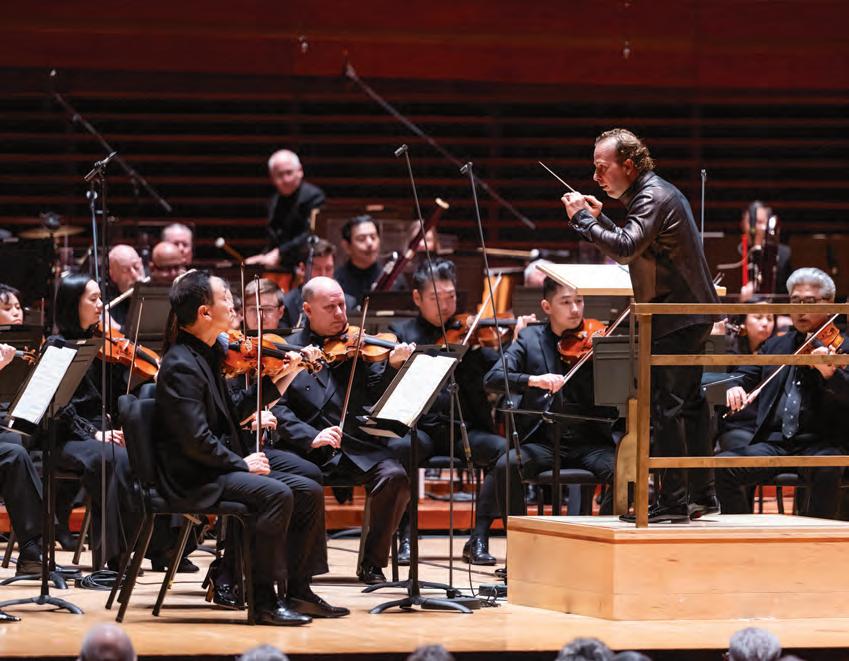
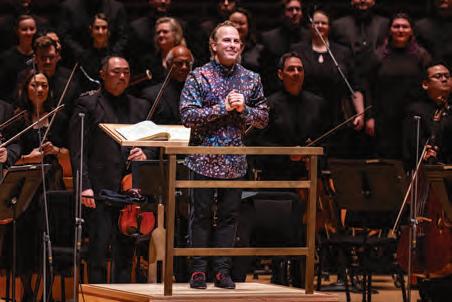
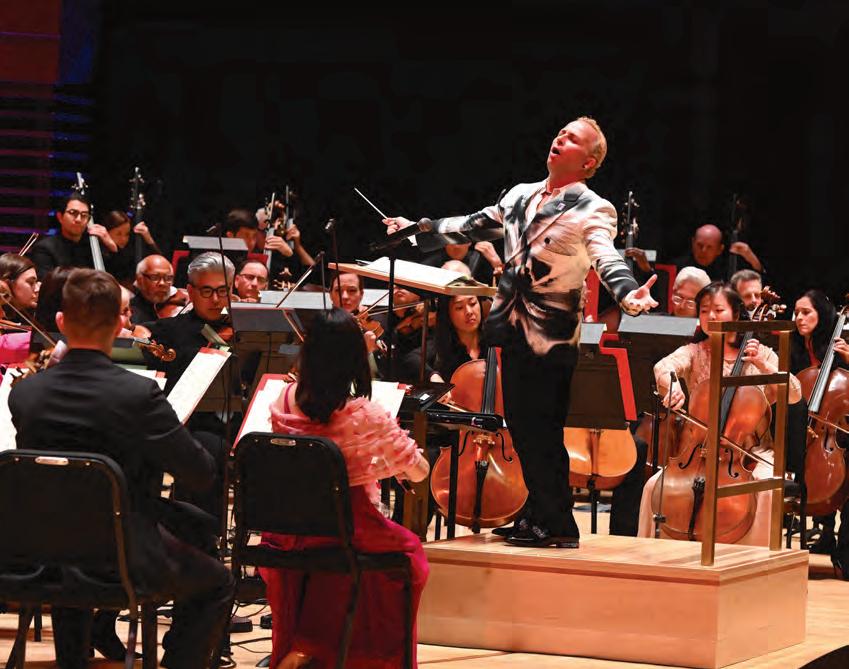
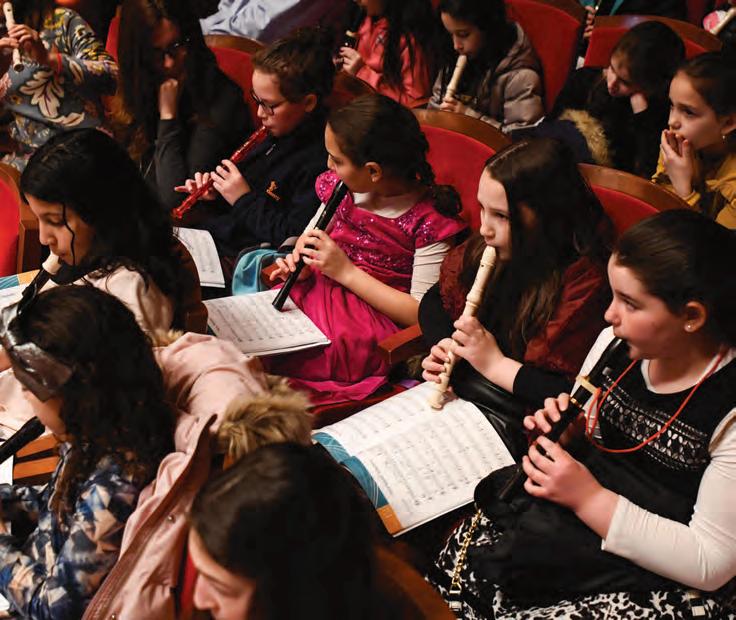
The holidays are a truly magical time to be with us! That magic isn’t just found on our stages, it also shines in the moments we share together as a community. One standing ovation and one thrilling performance at a time, we’re here to make spirits bright and to remind everyone that music and art are the ties that bind our city, now and always.
This season, holiday traditions return to fill our halls with joy and wonder. From The Philadelphia Orchestra’s performances of the Glorious Sound of Christmas and Handel’s Messiah (this year led by Music and Artistic Director Yannick Nézet-Séguin), to Philadelphia Ballet’s George Balanchine’s The Nutcracker and our signature Ensemble Arts holiday offering A Soulful Christmas, many of the events we offer at this time of year have become cherished traditions, bringing special meaning and joy to generations of audiences.
We also recognize that the holidays are a time for giving back. Once again, we’re proud to join the annual CBS Philadelphia Joy of Sharing Toy Drive, benefiting the Salvation Army and Mothers In Charge. We invite you to help make a child’s holiday shine a little brighter by donating new, unwrapped toys at collection boxes in the Kimmel Center, Academy of Music, and Miller Theater through December 18.
And don’t forget, Philadelphia Orchestra and Ensemble Arts Gift Certificates make the perfect stocking stuffer!
Whether you’re returning for a treasured classic or discovering something new, our doors are wide open to everyone, inviting all to gather, give back, and let the warmth of the arts light up this city we love.
I wish you and yours the happiest of holidays.
Best regards,
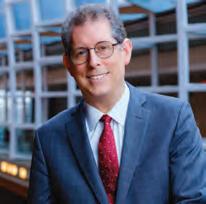
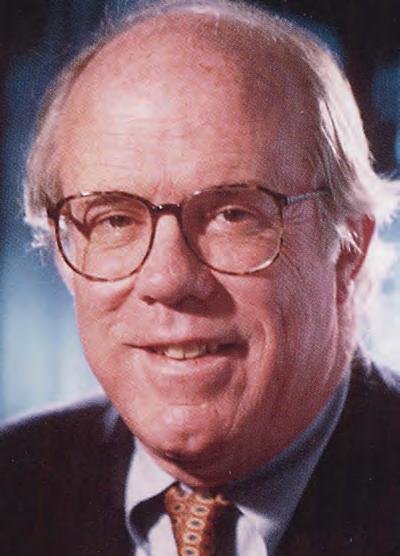
Ryan Fleur President and CEO
Jeff Fusco
Music and Artistic Director
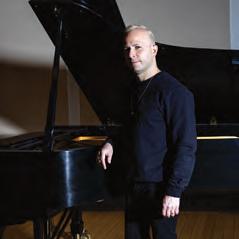
Canadian-born conductor and pianist Yannick Nézet-Séguin is currently in his 14th season with The Philadelphia Orchestra, serving as music and artistic director. An inspired leader, Yannick is both an evolutionary and a revolutionary, developing the mighty “Philadelphia Sound” in new ways. His collaborative style, deeply rooted musical curiosity, and boundless enthusiasm have been heralded by critics and audiences alike. The Philadelphia Inquirer has said that under his baton the Orchestra is “at the top of its considerable form”; the Associated Press has called it “a premier orchestra at its peak”; and the New York Times wrote, “the ensemble, famous for its glowing strings and homogenous richness, has never sounded better.”
Yannick has established himself as a musical leader of the highest caliber and one of the most thrilling and sought-after talents of his generation. He became the third music director of New York’s Metropolitan Opera in 2018. In addition, he has been artistic director and principal conductor of Montreal’s Orchestre Métropolitain since 2000. In 2017 he became the third-ever honorary member of the Chamber Orchestra of Europe. He served as music director of the Rotterdam Philharmonic from 2008 to 2018 (he is now honorary conductor) and was principal guest conductor of the London Philharmonic from 2008 to 2014. He has made wildly successful appearances with the world’s most revered ensembles and at many of the leading opera houses.
Yannick has shown a deep commitment to expanding the repertoire by embracing an evergrowing and diverse group of today’s composers and by performing and recording the music of underappreciated composers of the past, including Florence Price, Clara Schumann, William Dawson, Lili Boulanger, Louise Farrenc, and William Grant Still. In 2018 he signed an exclusive recording contract with Deutsche Grammophon. Under his leadership The Philadelphia Orchestra returned to recording with 15 releases on that label, including Florence Price Symphonies Nos. 1 & 3, which won a GRAMMY® Award for Best Orchestral Performance in 2022.
A native of Montreal, Yannick studied piano, conducting, composition, and chamber music at Montreal’s Conservatory of Music and continued his studies with renowned conductors, most notably Carlo Maria Giulini; he also studied choral conducting with Joseph Flummerfelt at Westminster Choir College. Among Yannick’s honors are an appointment as Companion of the Order of Canada; Companion to the Order of Arts and Letters of Quebec; an Officer of the Order of Quebec; an Officer of the Order of Montreal; an Officier de l’Ordre des Arts et des Lettres; Musical America’s 2016 Artist of the Year; ECHO KLASSIK’s 2014 Conductor of the Year; a Royal Philharmonic Society Award; Canada’s National Arts Centre Award; the Prix Denise-Pelletier; the Oskar Morawetz Award; and honorary doctorates from the University of Quebec, the Curtis Institute of Music, Westminster Choir College of Rider University, McGill University, the University of Montreal, the University of Pennsylvania, Laval University, and Drexel University.
To read Yannick’s full bio, please visit philorch.org/conductor.
The Philadelphia Orchestra
2025–2026 Season
Yannick Nézet-Séguin
Music and Artistic
Director
Walter and Leonore
Annenberg Chair
Marin Alsop
Principal Guest Conductor
Ralph and Beth Johnston
Muller Chair
Joe Hisaishi
Composer-in-Residence
Naomi Woo Assistant Conductor
Joseph Conyers
Education and Community Ambassador
Mark and Tobey Dichter Chair
Charlotte Blake Alston
Storyteller, Narrator, and Host
Osagie and Losenge
Imasogie Chair
First Violins
David Kim, Concertmaster
James and Agnes Kim Foundation Chair
Juliette Kang, First Associate Concertmaster
Joseph and Marie Field Chair
Christine Lim, Associate Concertmaster
Marc Rovetti, Assistant Concertmaster
Dr. James F. Dougherty Chair
Barbara Govatos
Robert E. Mortensen Chair
Jonathan Beiler
Hirono Oka
Richard Amoroso
Robert and Lynne Pollack Chair
Yayoi Numazawa
Jason DePue
Larry A. Grika Chair
Jennifer Haas
Miyo Curnow
Elina Kalendarova
Daniel Han
Julia Li
William Polk
Mei Ching Huang
Second Violins
Kimberly Fisher, Principal
Peter A. Benoliel Chair
Paul Roby, Associate Principal
Sandra and David
Marshall Chair
Dara Morales, Assistant Principal
Anne M. Buxton Chair
Philip Kates
Peter A. Benoliel Chair
Davyd Booth
Paul Arnold
Joseph Brodo Chair, given by Peter A.Benoliel
Boris Balter
Amy Oshiro-Morales
Volunteer Committees Chair
Yu-Ting Chen
Jeoung-Yin Kim
Willa Finck
John Bian
MuChen Hsieh
Eliot Heaton
Violas
Choong-Jin Chang, Principal
Ruth and A. Morris Williams, Jr., Chair
Kirsten Johnson, Associate Principal
Kerri Ryan, Assistant Principal
Burchard Tang
Renard Edwards
Anna Marie Ahn
Petersen*
Piasecki Family Chair
David Nicastro
Che-Hung Chen
Rachel Ku
Marvin Moon
Meng Wang
Hsiang-Hsin Ching
Cellos
Hai-Ye Ni, Principal
Priscilla Lee, Associate Principal
Yumi Kendall, Assistant Principal
Elaine Woo Camarda and A. Morris Williams, Jr., Chair
Richard Harlow
Kathryn Picht Read
John Koen
Derek Barnes
Alex Veltman
Jiayin He
Michael Katz
Eugene Lin
Basses
Joseph Conyers, Principal
Carole and Emilio Gravagno Chair
Gabriel Polinsky, Associate Principal
Tobias Vigneau, Assistant Principal
David Fay
Duane Rosengard
Nathaniel West
Michael Franz
Christian Gray
Some members of the string sections voluntarily rotate seating on a periodic basis.
Flutes
Jeffrey Khaner, Principal
Paul and Barbara Henkels Chair
Patrick Williams, Associate Principal
Rachelle and Ronald Kaiserman Chair
Olivia Staton
Erica Peel, Piccolo
Oboes
Philippe Tondre, Principal
Samuel S. Fels Chair
Peter Smith, Associate Principal
Jonathan Blumenfeld
Edwin Tuttle Chair
Elizabeth Starr
Masoudnia, English Horn
Joanne T. Greenspun Chair
Clarinets
Ricardo Morales, Principal
Leslie Miller and Richard Worley Chair
Samuel Caviezel, Associate Principal
Sarah and Frank Coulson Chair
Socrates Villegas
Paul R. Demers, Bass Clarinet
Peter M. Joseph and Susan Rittenhouse Joseph Chair
Bassoons
Daniel Matsukawa, Principal
Richard M. Klein Chair
Mark Gigliotti, Co-Principal
Angela Anderson Smith
Holly Blake, Contrabassoon
Horns
Jennifer Montone, Principal
Gray Charitable Trust Chair
Jeffrey Lang, Associate Principal
Hannah L. and J. Welles
Henderson Chair
Victoria Knudtson, Assistant Principal
Christopher Dwyer
Chelsea McFarland
Ernesto Tovar Torres
Trumpets (position vacant) Principal
Marguerite and Gerry Lenfest Chair
Anthony Prisk
Sam Huss
Trombones
Nitzan Haroz, Principal
Neubauer Family Foundation Chair
Matthew Vaughn, Co-Principal
Jack Grimm
Blair Bollinger, Bass
Trombone
Drs. Bong and Mi Wha
Lee Chair
Tuba
Carol Jantsch, Principal
Lyn and George M. Ross Chair
Timpani
Don S. Liuzzi, Principal
Dwight V. Dowley Chair
Angela Zator Nelson, Associate Principal
Percussion
Christopher Deviney, Principal
Charlie Rosmarin, Associate Principal
Angela Zator Nelson
Keyboards
Davyd Booth
Harp
Elizabeth Hainen, Principal
Librarians
Nicole Jordan, Principal
Holly Matthews
Stage Personnel
Dennis Moore, Jr., Manager
Francis “Chip” O’Shea III
Aaron Wilson
*On leave
Marian Anderson Hall
On June 8, 2024, Verizon Hall at the Kimmel Center for the Performing Arts was officially rededicated as Marian Anderson Hall in honor of the legendary Black contralto, civil rights icon, and Philadelphian. The first major concert venue in the world to honor Marian Anderson—85 years after she was barred from performing at Constitution Hall in Washington, D.C., because of her race—the hall is a permanent monument to its namesake’s artistry and achievements, a reflection of the inclusive future she helped to engender, and an active testament to the intersection of music, art, and positive social impact. We look forward to honoring Marian Anderson in perpetuity with a venue that reflects the ideals by which she lived her life: equity, justice, freedom, and the belief that the arts are for everyone.
Marian Anderson Hall was named in her honor by a visionary $25-million philanthropic gift from Richard Worley and Leslie Miller. Worley has been a member of The Philadelphia Orchestra’s Board of Trustees since 1997 and served as board chair from 2009 to 2019. Miller is a former Kimmel Center trustee and previous acting president of the Kimmel Center. They are among the largest donors in Philadelphia Orchestra history. Additional generous support for Marian Anderson Hall was given by Sidney and Caroline Kimmel.
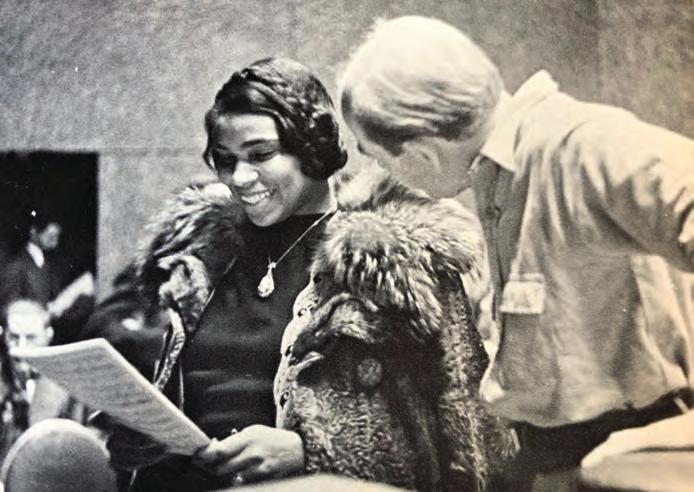
Marian Anderson with Music Director Eugene Ormandy during a Philadelphia Orchestra rehearsal at the Academy of Music in December 1938
Adrian Siegel Collection/Philadelphia Orchestra Archives
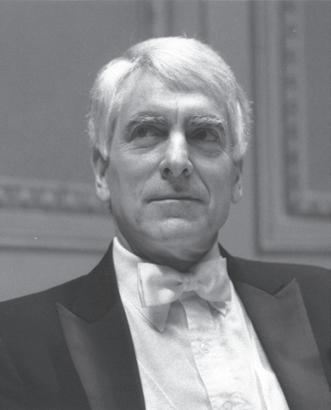
Witness to History: Edward G. Rendell
Part of a season-long series of oral histories
By Judith Kurnick
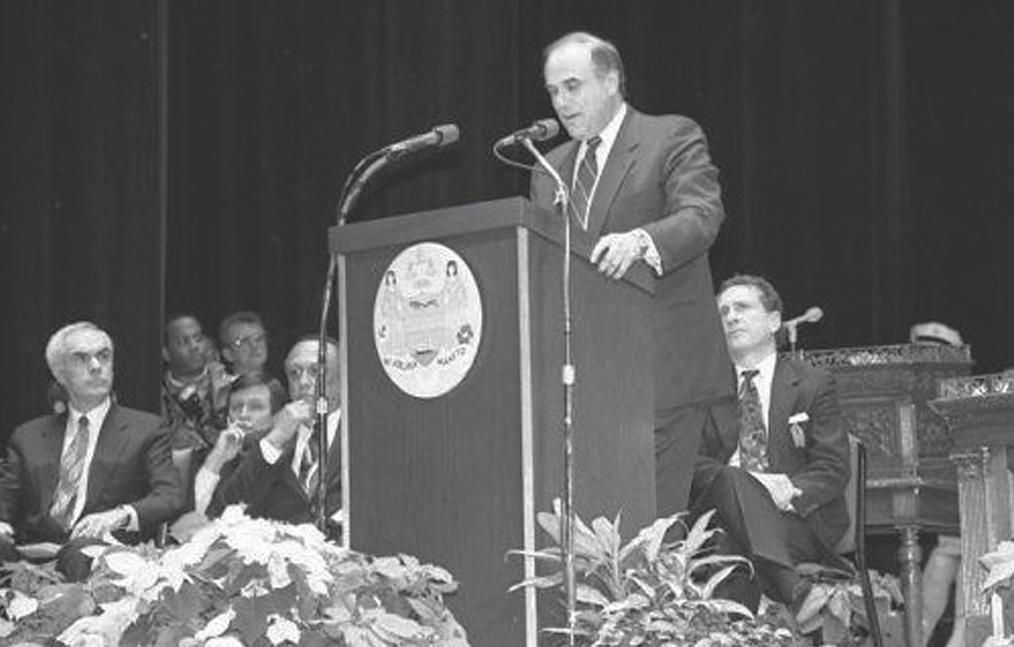
Philadelphia Mayor Ed Rendell with Pennsylvania Gov. Robert P. Casey, Sr. (left) and United States Senator Arlen Specter
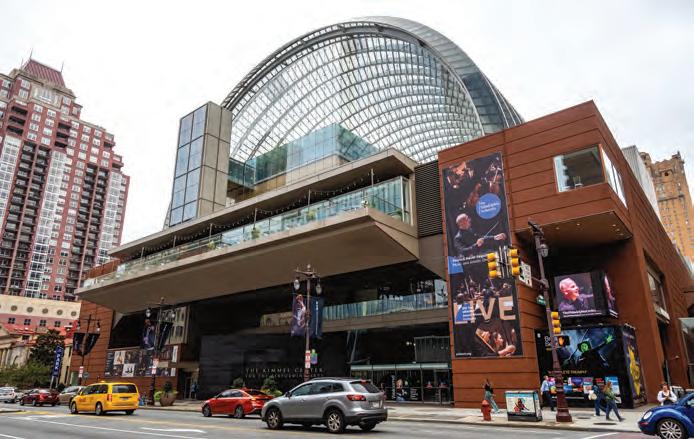
Edward (Ed) G. Rendell loves to tell stories. One of his favorites is how a strategic gamble he made when he became Philadelphia’s mayor back in 1992—and a dose of luck—sparked a turnaround in the city’s fortunes. One lasting result of that gamble was the development that became the Kimmel Center for the Performing Arts.
“People and companies were moving out and we were losing our tax base,” Rendell, now 85, recalls. “More than that, we were losing what made us attractive as a city, because we couldn’t get any major new businesses to come in. We were really in a downhill spiral.”
“When I was elected, I knew how we could get rid of our deficit, but I also knew that this would take two and half, maybe even three years. And I didn’t want to let the bleeding continue. So we had to think of something that would stir a sense of optimism, because people had given up on the city. That was the worst part. They had given up and just left because they thought there was no hope. We had to find something to inject hope quickly.”
“So I did a lot of reading from the time I won the election, in the first week of November, until I took office in January. And sometime in early December, somebody handed me a booklet from the Central Philadelphia Development Corporation.” The report called for the creation of an arts district along
Philadelphia
City Archives
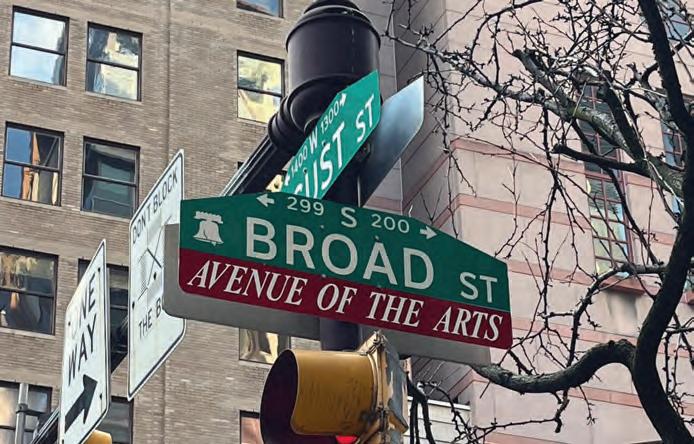
Broad Street, with multiple venues united by an attractive streetscape and lighting. “And I thought, this is a good idea. Maybe we could parlay this into something.”
An informal survey of local arts groups showed that there was a need for spaces to train and perform, with one project already backed by the William Penn Foundation, and that there was great excitement at the prospect of a unified arts district along Broad Street, which was already home to the Academy of Music and Merriam Theater (now the Miller Theater). That “something” became the Avenue of the Arts.
When Rendell, as mayor (and later, governor of Pennsylvania), took hold of an idea, he was a force to be reckoned with. His version of what happened next: “We got lucky. After we announced the concept, I persuaded Governor Casey to give the Avenue of the Arts $84 million to start. That paid for the streetscape—the fancy streetlights and other things that kept the Avenue together as one. And then we got lucky that the Wilma was looking for a new theater and they wanted to be on the Avenue of the Arts. The Orchestra was looking to build a new home there. So, we had a lot of natural suitors for the Avenue the Arts, but they all needed help in raising money.”
“And the way I thought we would do this,” Rendell continues, “is we would make the Avenue of the Arts the end destination that would draw spectators. In fact, I used to say, ‘We won’t know that we’re a success until you can walk down the Avenue on a Saturday night at around 10:40 … and see 10 or 15,000 people coming out of the theaters all at once, and going to dinner, going to clubs, etc.’”
This Avenue of the Arts vision captured the imaginations of many, but reality required a pivot. Recalls Rendell, “We decided that there wasn’t enough money to build both a new venue and a place for the Orchestra to have its own concert hall. So, we developed a plan for a Regional Performing Arts Center. It would house the Orchestra in one hall and have another theater that would house several smaller groups like the Chamber Music Society and Philadanco. The plan was to keep the Academy up and running because it’s a wonderful place for shows and for opera.”
Pete Checchia
The funding base for this new performing arts center included many Orchestra donors, Rendell notes, but there were also some who “thought it was heresy for the Orchestra to move out of the Academy. Riccardo Muti (then the Orchestra’s music director) would say to me, ‘Mayor, the Academy is a great opera house, it’s a great theater for shows. It is not a concert hall. We need our own concert hall.’ And Riccardo Muti was very important because he converted a lot of the recalcitrant donors to donors for the new performing arts center. They were skeptical, but he said, ‘You can’t keep this great orchestra in an opera house. You’ve got to give it its own hall.’”
Rendell asked his wife, Marjorie (Midge), then an attorney and arts afficionado, to lead the Avenue of the Arts. And he was able to persuade real estate developer Willard (Bill) G. Rouse III to take over the project as a joint developer. “Bill Rouse did it as a civic gift,” Rendell adds. “It was very little money for him. And he did a fabulous job. Midge and Bill Rouse were a team. There were many heroes in the performing arts center story,” Rendell says. “I’d rank Bill Rouse number one and Muti and my wife, Midge, probably tied for number two.”
“Well,” he continues, “the story was that the Orchestra ran out of money to build a concert hall. And the other groups that were going to go in could pay rent but couldn’t afford anything to add to the capital. So, we were sort of stuck, and we did something that supercharged it. With the state money and a little money from the city, and the private contributions, we’d raised about $180 million and had $20 million that we were pretty sure we could raise. But architect Rafael Viñoly came to us and said, ‘Look, for $200 million, I can give you a very good performing arts center. But for $250 million, I can give you a great performing arts center.’
“When Bill Rouse and Midge came to me and said, ‘We’ve got to raise another $50 million,’” Rendell admits, “my first inclination was that $200 million was enough. But then I thought, ‘This will benefit the city for at least 50 years. And we can’t let $50 million, as hard as that was going to be to raise, be the impediment to finishing a great building.’
“So, we were going to roll the dice and try to raise the money,” Rendell continues. “And (yet again) we got lucky. Somebody introduced me to Sidney Kimmel, and we were able to persuade him to give the main gift to build a performing arts center. I think he pledged $12 million of the original $50 that we needed, and we got the Annenbergs and a number of people to kick in.”
The Philadelphia Orchestra’s first commercial recording, Brahms’s Hungarian Dance No. 5
Rendell is especially proud of the project’s civic appeal. “Eight thousand citizens of Philadelphia contributed money,” he points out. “Some of them contributed $25, some $50, some $100, some
Willard G. Rouse III
Allie
$200, $500, etc. They are also heroes. And we did produce a great building. Viñoly was tough to deal with, but he was a terrific architect. He had real vision.”
“We beat the expectations,” Rendell adds. “Not only did we open it on time, on budget, but it’s beautiful. There were some changes necessary, a couple of things that needed to be tweaked, but it was a remarkable building.”
What about Rendell’s own success measure for the Avenue of the Arts? “People who never go to a concert or a show go at lunchtime. People would walk in just to show it [the Kimmel Center] to their friends, and it became a staple, and a sort of a symbol of the city’s revival, as did the whole of the Avenue. So, it turned out that when I sat on the balcony outside of the Kimmel Center and looked out over Broad Street, I did see more than 10,000 or 15,000 people on a Saturday night. And it was really the key to the city’s revival.”
When asked to look ahead, Rendell says, “My hope is that we continue to put the right money into maintaining the performing arts center and that we continue to maintain the streetscape. And I think we just need to continue to keep the flow of people coming to live in Center City, because that will be all that the Avenue of the Arts needs to keep going strong.”
And maybe a little luck.
Judith Kurnick has written about music for the New York Times, the Philadelphia Inquirer, and media outlets in Europe. She was The Philadelphia Orchestra’s vice president for communications from 1983 to 1989 and 2000 to 2005 and held the same role at the League of American Orchestras from 2008 to 2013.
Scan the QR code to visit the Orchestra’s special 125th anniversary website, including more oral histories.
The Kimmel Center for the Performing Arts
Musicians Behind the Scenes
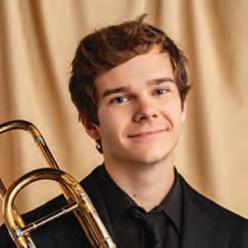
Jack Grimm Trombone
Where were you born? Fairfax County, Northern Virginia. What piece of music could you play over and over again? Anything from Wagner’s Ring Cycle.
What is your most treasured possession?
A tennis ball from the 2022 U.S. Open signed by Carlos Alcaraz.
Tell us about your instrument.
Right now, my horn is a brand-new trombone from Edwards instrument company. Over the summer I spent two days in Elkhorn, Wisconsin, trying out different bells, tuning slides, hand slides, valves, and metals to find something that would be the perfect fit for me. I even took two bells to try with the Orchestra over our summer season before landing on something that feels right for me.
If you could ask one composer one question, what would it be? I would ask Gustav Mahler what the inspiration was for the short violin solo in measure 612 in the last movement of his Second Symphony (“Resurrection”). Listening to that always leaves me awestruck that he had the creativity to write such a unique and touching moment after composing more than an hour of some of the greatest music ever written.
What piece of music never fails to move you? The Prelude to Act I of Wagner’s Lohengrin.
When did you join the Orchestra? In November 2024.
Do you play any other instruments?
Euphonium, bass trumpet, bass trombone, and on the more amateur side of things, piano, trumpet, and tuba.
What are you reading right now? Sound in Motion by David McGill.
What do you like to do in your spare time? Play tennis, hike, run, go to coffee shops, and watch football.
In your opinion, is there a piece of music that isn’t in the standard orchestral repertoire that should be? The Tempest by Tchaikovsky is rarely performed, but in my opinion it’s one of his best works and can stand up to any Strauss tone poem.
What’s the first album you ever bought or downloaded? Center:Level:Roar by Youngblood Brass Band.
What’s your go-to karaoke song? “Love on Top” by Beyoncé.
Other than Marian Anderson Hall, where is your favorite place to perform? Probably a very stereotypical answer, but it’s hard to beat Carnegie Hall in terms of the history that one gets to be a part of performing there.
What advice would you give to aspiring young musicians? You can separate your drive, dedication, and ambition in music from a need to “make it” as a full-time musician. Some of my most productive months musically were when I was also studying LSAT materials and considering applying to law school.
To read the full set of questions, please visit www.philorch.org/blog.
Noted in Passing
The Philadelphia
Orchestra mourns the passing of former Associate Principal Second Violin Robert dePasquale on October 4 and former violinist Louis Lanza on October 5.
Robert dePasquale began violin studies with his father in his native Philadelphia and went on to be a student at the New School of Music. He gave many recitals in Philadelphia and Washington, D.C., while he was a member of the U.S. Navy Band. He was a member of the New York Philharmonic for eight seasons before joining The Philadelphia Orchestra in 1964. He was assistant principal second violin from 1966 to 1988 and associate principal second violin from 1988 until his retirement in 1997. A sought-after teacher, he served on the faculties of Haverford College, the University of the Arts, and the Academy of Community Music, which he co-founded with his wife, Ellen Fisher, in 1983. For over 40 years, he was a member of the dePasquale String Quartet and artist-in-residence at Haverford College and Villanova University. He was the last of four exceptionally talented brothers, Francis, Joseph, and William, who were all members of The Philadelphia Orchestra.
A native Philadelphian, Louis Lanza studied with his uncle, Michael Pascuccio, and Frank Costanzo. While in high school he received a scholarship to attend the Philadelphia Conservatory of Music. He received a four-year Board of Education Scholarship and entered the Juilliard School. Following graduation, he enlisted and served three years in the U.S. Army Band. He played for three years in the first violin section of the National Symphony and in 1964 joined his brother, Joseph, in the second violin section of The Philadelphia Orchestra, from which he retired in 2011. He was the driving force behind the initiation of an annual party honoring musicians retiring from the Orchestra, which he helped organize for many years. He was also principal second violin of the Reading and Trenton symphonies and the Amerita Chamber Orchestra. He made frequent solo appearances with his late wife, Joan, a pianist and singer. They later formed Lanza Family Presents, giving concerts in schools and elsewhere alongside their children.
Chris Lee
2025–2026
Marian Anderson Hall
Chamber Orchestra of Europe
Wednesday, December 10, at 7:30
Yannick Nézet-Séguin Conductor
Veronika Eberle Violin
Jean-Guihen Queyras Cello
Brahms Tragic Overture, Op. 81
Brahms Concerto in A minor for Violin, Cello, and Orchestra, Op. 102 (“Double”)
I. Allegro
II. Andante
III. Vivace non troppo
Intermission
Brahms Symphony No. 1 in C minor, Op. 68
I. Un poco sostenuto—Allegro
II. Andante sostenuto
III. Un poco allegretto e grazioso
IV. Adagio—Più andante—Allegro non troppo, ma con brio—Più allegro
This program runs approximately two hours, five minutes.
Chamber Orchestra of Europe
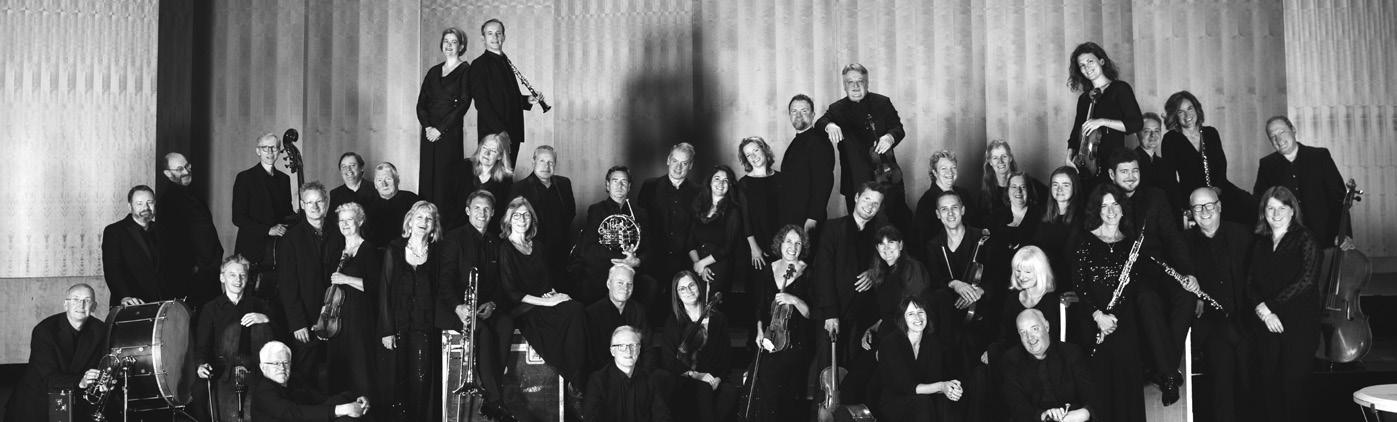
The Chamber Orchestra of Europe (COE) was founded in 1981 by a group of young musicians who became acquainted as part of the European Community Youth Orchestra (now EUYO). There are now about 60 members of the COE, who pursue parallel careers as principals or section leaders of nationally based orchestras, as eminent chamber musicians, and as tutors of music. From the start, the COE’s identity was shaped by its partnerships with leading conductors and soloists. Claudio Abbado served as an important mentor in the early years. He led the COE in numerous operas and concerts featuring works by Rossini, Schubert, and Brahms in particular. Nikolaus Harnoncourt also had a major influence on the development of the COE through his performances and recordings of all of the Beethoven symphonies, as well as through opera productions at the Salzburg, Vienna, and Styriarte festivals. Past associations with Sándor Végh, Alexander Schneider, Paavo Berglund, and Bernard Haitink are also important highlights in the life of the COE.
Currently the Orchestra works closely with Yannick Nézet-Séguin, Antonio Pappano, Simon Rattle, András Schiff,
and Robin Ticciati, who are honorary members (following in the footsteps of Mr. Haitink and Mr. Harnoncourt). The COE has strong links with many of the major festivals and concert halls in Europe. It has been “Residenzorchester Schloss Esterházy” in Eisenstadt, as well as the firstever orchestra-in-residence at the Casals Forum in partnership with the Kronberg Academy since 2022. The COE works with all the major recording companies and has recorded over 250 works, winning numerous international awards, including three Gramophone Record of the Year awards and two GRAMMYs.
The COE created its Academy in 2009 and each year awards scholarships to talented postgraduate students and young professionals to study with principal players when the Orchestra is on tour. The COE is a private orchestra that receives invaluable financial support, especially from the Gatsby Charitable Foundation and a further number of friends including Dasha Shenkman, Sir Siegmund Warburg’s Voluntary Settlement, the Rupert Hughes Will Trust, the Underwood Trust, the 35th Anniversary Friends, and American Friends.
Julia Wesely
Chamber Orchestra of Europe
Violins
Lorenza Borrani
(Leader Chair supported by Dasha Shenkman)
Maia Cabeza
Sophie Besancon
Fiona Brett
Christian Eisenberger
Lucy Gould
Rosa Hartley
Mairead Hickey
Maja Horvat
Matilda Kaul
Stefano Mollo
Peter Olofsson
Fredrik Paulsson
Joseph Rappaport
Håkan Rudner
Aki Sauliere
Martin Walch
Elizabeth Wexler
Violas
Pascal Siffert
Hector Camara Ruiz
Ida Grøn
Wouter Raubenheimer
Riikka Repo
Hanne Skjelbred
Pierre Tourville
Cellos
Richard Lester (Principal Cello Chair supported by an anonymous donor)
Luise Buchberger
Henrik Brendstrup
Tomas Djupsjobacka
Sally Pendlebury
Double Basses
Enno Senft
(Principal Bass Chair supported by Sir Siegmund Warburg’s Voluntary Settlement)
Philip Nelson
Dane Roberts Axel Ruge
Flutes
Clara Andrada (Principal Flute Chair supported by the Rupert Hughes Will Trust)
Josine Buter
Piccolo
Paco Varoch
Oboes
Philippe Tondre (Principal Oboe Chair supported by the Rupert Hughes Will Trust)
Carolina Rodriguez
Clarinets
Romain Guyot
Julien Chabod
Bassoons
Daniel Matsukawa
Christopher Gunia
Contrabassoon
Ulrich Kircheis
Horns
Benoit De Barsony
Elizabeth Randell
Jan Harshagen
Peter Richards
Management
Peter Readman, Chairman
Simon Fletcher, General Manager
Tiago Carvalho, Stage and Project Manager
Camilla Follett, Planning and Personnel Manager
Coralia Galtier, Business Development Manager
Derri Lewis, Tour and Project Manager and Librarian
Giovanni Quaglia, Finance and Project Manager
Trumpets
Neil Brough (Principal Trumpet Chair supported by the Underwood Trust)
Julian Poore
Trombones
Håkan Bjorkmann
Helen Vollam
Bass Trombone
Nicholas Eastop
Tuba
Jens Bjørn-Larsen
Timpani
John Chimes (Principal Timpani Chair supported by the American Friends)
Soloist
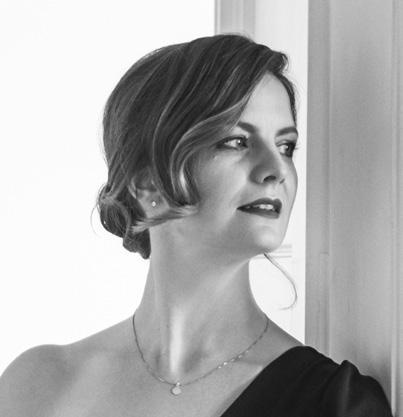
Violinist Veronika Eberle ’s exceptional talent and the poise and maturity of her musicianship have been recognized by many of the world’s finest orchestras, venues, and festivals, as well as by some of the most eminent conductors. In the 2025–26 season she makes her Carnegie Hall debut during this current tour of Europe and the United States with the Chamber Orchestra of Europe. Other notable debuts include the Konzerthausorchester Berlin under the baton of Thomas Søndergård, the Helsinki Philharmonic with Anja Bihlmaier, the Tokyo Metropolitan Symphony with John Storgårds, the Hyogo PAC Orchestra with Andreas Ottensamer, and the Royal Scottish National Orchestra with Jörg Widmann. She also makes returns to the Dresden and Brussels philharmonics, the BBC National Orchestra of Wales, and the Gürzenich Orchestra. Recent performance highlights include debuts with the New York Philharmonic, the Boston Symphony, and the Cleveland Orchestra, and returns to the Los Angeles Philharmonic, the Montreal Symphony, and the Budapest Festival Orchestra. Ms. Eberle’s other key collaborations include with orchestras such as the London Symphony, the Royal Concertgebouw Orchestra, the Munich Philharmonic, the Gewandhaus Orchestra, and the Berlin Radio Symphony, as well as with conductors including Simon Rattle, Daniel Harding, Christian Thielemann, Lorenzo Viotti, Louis Langrée, Robin Ticciati, Paavo Järvi, Alan Gilbert, Heinz Holliger, Antonio Pappano, and Andrés Orozco-Estrada. She has worked closely with composers such as Toshio Hosokawa, who dedicated his Violin Concerto (“Genesis”) to her, and Mr. Widmann, who composed new cadenzas for Beethoven’s Violin Concerto, which she recorded with Mr. Rattle and the London Symphony. A dedicated chamber musician, she performs regularly with artists such as Sol Gabetta, Steven Isserlis, Julia Hagen, Beatrice Rana, Nils Mönkemeyer, and Dénes Várjon, performing at festivals including Klosters Music, Menuhin Festival Gstaad, Rheingau Musik Festival, Festspiele Mecklenburg-Vorpommern, Mozartfest Würzburg, Carinthischer Sommer, and Vevey Spring Festival, to name a few. In the 2024–25 season she returned to Wigmore Hall as artist in residence.
Ms. Eberle has benefited from the support of a number of prestigious organizations, including the Reinhold Würth Musikstiftung, the Nippon Music Foundation, the BorlettiBuitoni Trust (Fellowship in 2008), the Orpheum Stiftung, the Deutsche Stiftung Musikleben, and the Jürgen-Ponto Stiftung. She was a BBC Radio 3 New Generation Artist from 2011 to 2013 and a Dortmund Konzerthaus “Junge Wilde” artist from 2010 to 2012. She won First Prize at the 2003 Yfrah Neaman International Competition in Mainz and was awarded Audience Awards by the Schleswig-Holstein and Mecklenburg-Vorpommern festivals. Born in Donauwörth, Germany, she was a junior student at the Richard Strauss Conservatory in Munich with Olga Voitova, later continuing her studies with Christoph Poppen and Ana Chumachenco. She plays the 1693 “Ries” Stradivarius, which is kindly on loan from the Reinhold Würth Musikstiftung.
Louie
Thain
Soloist
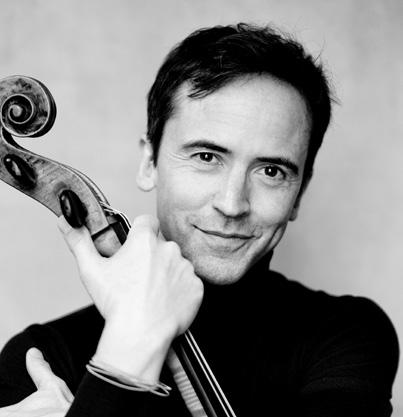
Curiosity, variety, and a firm focus on the music itself characterize the artistic work of cellist Jean-Guihen Queyras . Three key elements contribute to a successful performance: the alignment of the inner worlds of composer, performer, and audience alike. He learned this interpretative approach from Pierre Boulez, with whom his artistic partnership spanned many years. This philosophy—alongside a flawless technique and a clear, decisive sound—shapes every performance and informs his approach to historical and contemporary repertoire, notably in his collaborations with the Freiburg Baroque Orchestra and the Akademie für Alte Musik Berlin. He has given world premieres of works by Ivan Fedele, Gilbert Amy, Bruno Mantovani, Michael Jarrell, Johannes Maria Staud, Thomas Larcher, and Tristan Murail. Mr. Queyras also recorded Peter Eötvös’s Cello Concerto, conducted by the composer to mark his 70th birthday in November 2014.
Mr. Queyras was a founding member of the Arcanto Quartet and performs as part of a trio with violinist Isabelle Faust and pianist Alexander Melnikov. He has also collaborated with zarb specialists Bijan and Keyvan Chemirani on a program featuring music of the Mediterranean. Mr. Queyras’s versatility has led numerous concert halls, festivals, and orchestras to invite him to serve as artist in residence, including the Concertgebouw Amsterdam and the Aix-en-Provence Festival. He appears often with renowned orchestras including The Philadelphia Orchestra, the Mahler Chamber Orchestra, the Orchestre de Paris, the London Symphony, the Gewandhaus Orchestra, and Zurich’s Tonhalle Orchestra, working with conductors such as Yannick Nézet-Séguin, Iván Fischer, Philippe Herreweghe, François-Xavier Roth, John Eliot Gardiner, and Roger Norrington. Mr. Queyras’s recordings of the cello concertos of Elgar, Dvořák, Philippe Schoeller, and Mr. Amy were met with critical acclaim. His Schumann project, spanning three albums of works by the composer, includes the complete piano trios recorded with Ms. Faust and Mr. Melnikov, as well as the Cello Concerto alongside the Freiburg Baroque Orchestra under the baton of Pablo Heras-Casado. Mr. Queyras records exclusively for Harmonia Mundi.
In addition to the current European and United States tour with the Chamber Orchestra of Europe and Yannick Nézet-Séguin, highlights of Mr. Queyras’s 2025–26 season include tours to Japan, Korea, and Taiwan. Together with pianist Alexandre Tharaud he will premiere a new double concerto by Oscar Strasnoy. He also performs under the batons of Dima Slobodeniouk, Andris Poga, Juraj Valčuha, Duncan Ward, Karina Canellakis, Aziz Shokhakimov, and Christian Reif. Mr. Queyras holds a professorship at the University of Music Freiburg and is artistic director of the Rencontres Musicales de Haute-Provence festival in Forcalquier. He plays on the “Kaiser” Stradivarius made in Cremona in 1707, kindly made available to him by Canimex Inc. of Drummondville (Quebec), Canada.
Marco Borggreve
Framing the Program
Parallel Events
1876
Brahms
Symphony No. 1
1880
Brahms
Tragic Overture
Music
Ponchielli
La gioconda
Literature
Mallarmé
L’Après-midi
d’un faune
Art
Renoir
In the Garden
History
World
Exhibition in Philadelphia
Music
Tchaikovsky
1812 Overture
Literature
Zola
Nana
Art
Cézanne
Château de Medan
History
New York streets first lit by electricity
1887
Brahms
“Double”
Concerto
Music
Stainer
The Crucifixion
Literature
Conan Doyle
A Study in Scarlett
Art
Klinger
The Judgement of Paris
History
Queen Victoria’s Golden Jubilee
This evening features Yannick conducting the Chamber Orchestra of Europe in an all-Brahms program that offers an overture, concerto, and symphony.
In the summer of 1880, Brahms composed two concert overtures: the Academic Festival Overture and the Tragic Overture . The first, a cheery work, was meant to acknowledge an honorary doctorate bestowed by the University of Breslau; the other, its unidentical twin, is a serious dramatic piece. Brahms said of them that “one laughs and the other cries” and conducted them together in Breslau in January 1881.
Brahms wrote four concertos and four symphonies. By the 19th century, concertos usually featured one soloist, so it was somewhat surprising that he composed the “Double” for violin and cello. It is a marvelous partnership, the teaming up of the two string instruments in conversation with the full orchestra.
In 1853 Robert Schumann hailed the 20-year-old Brahms as the potential savior of German instrumental music. The lavish praise generated enormous expectations for the young composer, especially with regard to writing a symphony. Ever since Beethoven’s death in 1827 the musical world had debated what form and style symphonies should take—Brahms’s answer was eagerly awaited. At age 43, he finally completed his First Symphony, which was immediately hailed as “Beethoven’s Tenth.” Without programmatic titles, chorus, or obvious extramusical references, Brahms’s First helped to reinvent the genre of the symphony.
Italian Getaway
Thursday, January 15
Postcards from Spain
Thursday, May 14
Photo: Margo Reed
The Music
Tragic Overture
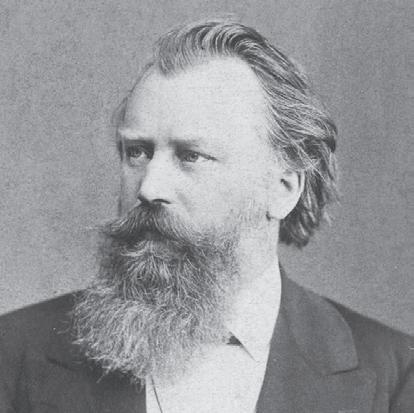
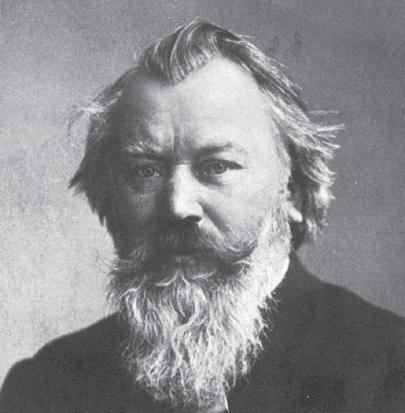
Johannes Brahms
Born in Hamburg, May 7, 1833
Died in Vienna, April 3, 1897
Despite his eventually composing some of the greatest symphonies, overtures, and concertos ever written, Johannes Brahms’s production of orchestral music was slow to start. Robert Schumann’s declaration in 1853 that the 20-year-old Brahms was the musical messiah for whom everyone had been waiting since the death of Beethoven in 1827 proved a mixed blessing. Such lavish praise was deserved (and turned out to be prescient), but it also raised the stakes for the young composer. Brahms acutely felt the pressure to show what he could do. His youthful piano and chamber music earned the admiration of musicians, critics, and audiences alike, but everyone wondered when he would turn to what really mattered: symphonies and operas. Of course, Brahms never did write an opera, and his First Symphony took more than another 20 years to arrive, with abortive attempts on the way diverted into other compositions, such as the First Piano Concerto. Unwilling to write programmatic symphonies along the lines of the ones by Liszt and others, Brahms remained true to his Classical ideals.
After the success of the First Symphony in 1876, orchestral masterpieces flowed with greater ease and frequency. The Second Symphony appeared the next year and a few years later Brahms composed two concert overtures, the Academic Festival Overture, Op. 80, and the Tragic Overture, Op. 81.
Twin Overtures The happy birth of these pieces, unidentical twins, occurred during the summer of 1880 when Brahms was vacationing at Bad Ischl. The circumstances leading to the Academic Festival Overture are well known—Brahms was awarded an honorary doctorate from the University of Breslau in 1879 and wrote the Overture as a gesture of thanks. While composing the piece, however, he felt the need to provide a companion. “The Academic has led me to a second overture that I can only entitle the ‘Dramatic,’ which does not please me.” Problems with a title continued, as he informed the Breslau Orchestra Society, “You may include a ‘Dramatic’ or ‘Tragic,’ or ‘Tragedy Overture’ in your program for January 6; I cannot find a proper title for it.” Eventually the title Tragic was chosen, although it is meant as an overture to a tragedy, not an expression of personal pain or grief. Indeed, performances of Goethe’s Faust in Vienna’s Burgtheater , for which Brahms contemplated writing incidental music, may have been in his mind.
Hans Richter, the noted conductor, led the Vienna Philharmonic in the Overture’s premiere
in December 1880 and Brahms conducted both overtures in Breslau the following week.
A Closer Look As is the case with Brahms’s other orchestral music, there is no public story or other extra-musical element attached to the Tragic Overture —simply the idea of it preceding a tragedy. Yet the composer Hugo Wolf was unwilling to listen to the work innocently, on Brahms’s terms, and therefore provided a story, just as he no doubt would have had he composed the piece himself. As one often encounters in writings about music at the time, Wolf’s plotline helps to orient listeners. (Wagner and others often did this for Beethoven’s music.) In one of his more favorable reviews of Brahms, Wolf writes: Brahms’s Tragic Overture reminds us vividly of the ghostly apparitions in Shakespeare’s dramas who horrify the murderer by their presence while remaining invisible to everyone else. We know not what hero Brahms murdered in this Overture, but let us assume that Brahms is Macbeth and the Overture is the embodiment of the murder of the spirit of Banquo, whom, with the first down-bows falling like the blows of an ax, he is just murdering. In the course of the composition the ghost of his victim appears again and again, the blows of the ax reintroduce the motif of the murder as at the opening of the Overture, reminding him pointedly of these events. Horrified, he turns away and seeks in feigned repose to pull himself together. Brahms–Macbeth expresses this excellently in a very stilted, artificial middle theme. This spectacle repeats itself until the end of the Overture.
This description captures some of the most striking musical moments in the work, from the two thundering chords that open the work (and that look back to Beethoven’s concert overtures) to the stark conclusion. A dark and mysterious mood pervades the entire composition, even when the thematic material is treated with warmth and tenderness. This is an underrated and somewhat neglected composition, but a great and most characteristically Brahmsian one.
—Christopher H. Gibbs
Christopher H. Gibbs is James H. Ottaway Jr. Professor of Music at Bard College and has been the program annotator for The Philadelphia Orchestra since 2000. He is the author of several books on Schubert and Liszt, and the co-author, with Richard Taruskin, of The Oxford History of Western Music, College Edition.
Brahms composed the Tragic Overture in 1880.
Brahms scored the piece for piccolo, two flutes, two oboes, two clarinets, two bassoons, four horns, two trumpets, three trombones, tuba, timpani, and strings.
Performance time is approximately 15 minutes.
The Music
Concerto for Violin, Cello, and Orchestra (“Double”)
Johannes Brahms
The ensemble concerto with multiple soloists, a favored genre of the Baroque era, became a rarity during the 19th century. This can be explained partly in terms of the changing nature of the soloist’s role: By the early 19th century, the chamberlike concertante approach that had governed even the early Classical concerto was being replaced with something more nearly resembling a titanic struggle. Beethoven, in his Third Piano Concerto, had already hinted at the expanded role a soloist might play, and with this and other works after 1800 he established and developed a new prototype for the concerto: a heroic and grandiose model that would be embraced by composers from Mendelssohn to John Adams. Since there was rarely room for more than one “hero” in a concerto, however, the collaborative approach of the Baroque concerto grosso was temporarily eclipsed, not to be revived until the Neo-Classical works of the 20th century.
Two notable examples of 19th-century multiple concertos have survived to take their place at the center of the orchestral repertory—Beethoven’s “Triple” Concerto from the early part of the century (1804) and Brahms’s “Double” from 1887, which appears to have taken Beethoven’s model as a jumping-off point. Each work is an anomaly, and each handles quite differently the problems inherent in the genre. Beethoven’s extroverted piece glories in the riches of “too much talent,” while Brahms’s Concerto deals in shadowy contemplation and stern outbursts of almost frightening potency.
A Peace Offering The “Double” Concerto, Brahms’s last orchestral composition, was designed partly as an offering of friendship and reconciliation to Joseph Joachim, the great violinist who had staunchly championed the composer’s orchestral and chamber works throughout his career. During Joachim’s divorce in 1881, Brahms had meddlesomely sided with the violinist’s wife, and a rift had ensued. Determined to make things right again, Brahms began working on the piece that would become the “Double” Concerto in 1887. Rather timidly he wrote to Joachim that “the idea of writing a concerto for violin and cello has been too strong for me, much as I have tried to resist it.”
Some have speculated that writing another violin concerto would have been too direct and overt a peace offering and might have produced an embarrassing situation. Instead, he presented the unusual concerto to Joachim and Robert Hausmann, the cellist of the Joachim Quartet. In any case the composer needn’t have worried, for Joachim—who had
never lost respect for his fellow musician–friend—was all too eager to reinstate the tie. “I did not think it possible that we could ever again come together personally,” Brahms wrote to Simrock. “But a short communication I sent, leaving him full freedom of action, was so eagerly embraced by him that we are to try the work together with Hausmann very shortly.”
Later that summer Brahms met in Baden-Baden with the two soloists to go over the piece together. “Joachim and Brahms have spoken to one another again after years of silence,” wrote Clara Schumann, who was present at the rehearsals, in her diary. The first public performance was in Cologne on October 18, 1887, with Joachim and Hausmann as soloists and the composer leading the Gürzenich Orchestra.
A Closer Look Neither as straightforward nor as immediately coherent as the composer’s concertos for piano or for violin, the “Double” Concerto is full of elusive structural and gestural elements that require study and multiple hearings to grasp. The work opens unconventionally and tantalizingly, with a discursive introduction of the soloists without orchestra, in quasi-recitative style. The two principal themes, one jagged and succinct, the other lilting and hesitant, are expanded and developed with remarkable brevity, considering the challenge of giving each soloist his virtuosic due within the confines of the concertoallegro form. The development section of this Allegro is especially dramatic, even operatic, in its passagework and powerful chiaroscuro. The slow movement ( Andante ) is one of Brahms’s most frankly sentimental moments, with long and lyrical lines that break into loose-limbed passagework and nostalgic heart-on-the-sleeve expressions. The finale ( Vivace non troppo ), written in the composer’s alla zingarese (gypsy) style, is full of the vigor and down-to-earth passion of Brahms’s best instrumental music.
—Paul J. Horsley
Paul J. Horsley is performing arts editor for the Independent in Kansas City. Previously he was program annotator and musicologist for The Philadelphia Orchestra and music and dance critic for the Kansas City Star.
Brahms composed his Concerto for Violin and Cello in 1887.
Brahms scored the Concerto for solo violin and cello; pairs of flutes, oboes, clarinets, and bassoons; four horns; two trumpets; timpani; and strings.
The work runs approximately 32 minutes in performance.
The Music
Symphony No. 1
Johannes Brahms
As a young composer, Johannes Brahms enjoyed the close friendship and enthusiastic support of Robert and Clara Schumann, two of the most influential musical figures of their day. In 1853, when Brahms was only 20 years old (and with merely a handful of songs, piano solos, and chamber pieces under his belt), Robert proclaimed to the world that his young friend’s piano sonatas were “veiled symphonies,” and that this composer was the rightful heir to Beethoven’s stupendous musical legacy.
Schumann’s enthusiastic promotion of Brahms was a double-edged sword. While it was flattering to be regarded as the savior of German music, Brahms was intimidated by the pressure to write symphonies worthy of the standard Beethoven had established. It would take him another 23 anxious years, and several abandoned attempts, before he could bring himself to tackle a symphony “after Beethoven,” as he put it. And even then he worried it would not be good enough.
The Path to a First Symphony Brahms began sketches for a first symphony as early as 1854, though subsequent progress was slow and sporadic. In 1862 he showed the first movement of a proposed symphony in C minor to some friends. Then, six years later, he sent Clara a postcard with the alphorn melody that would eventually find its way into the finale of his Symphony No. 1 in C minor. But by the early 1870s, Brahms despaired of completing the work, lamenting to a friend, “I shall never write a symphony! You have no idea how it feels for someone like me always to hear the footsteps of such a giant as Beethoven marching along behind me!”
Still, the specter of a first symphony did not prevent Brahms from writing other orchestral works in the meantime. He produced two orchestral serenades, a piano concerto, and the masterly A German Requiem , all of which had started out with symphonic aspirations. And in 1873 his orchestral Variations on a Theme of Haydn enjoyed enough success to convince him that perhaps a real symphony was not as impossible as it had once seemed. By 1876 Brahms had completed his Symphony No. 1 at the relatively advanced age of 43.
An Homage to Beethoven Brahms tackled the looming shadow of Beethoven by making his own symphony an homage to the master. While Wagner claimed that the only possible path after Beethoven was the music drama and the single-movement symphonic poem,
Brahms attempted to show that the four-movement model of the Classical symphony was still ripe for development, and he used Beethoven’s own symphonies as a springboard. Indeed, Brahms’s First Symphony from the start has frequently been referred to as “Beethoven’s Tenth.”
A primary inspiration for Brahms’s First Symphony was Beethoven’s monumental Fifth. Brahms chose the same key, C minor, and used both the rhythm of its famous “fate” motif and the final apotheosis into C major at the conclusion of his own symphony. The main theme in the finale of Brahms’s First bears a striking resemblance, however, to the “Ode to Joy” theme from Beethoven’s Ninth. Brahms meant for these references to be overt—when it was mentioned to him that this work shared some resemblances to Beethoven, he reportedly shot back with indignation, “Well, of course! Any idiot can see that!”
A Closer Look The Symphony’s first movement opens with ominous drumbeats ( Un poco sostenuto ), over which chromatic lines in the strings and woodwinds weave an anxious tapestry. The drumbeat echoes continue throughout the slow introduction before giving way to the dramatically agitated Allegro. A gentler second theme adds the contrast that provides the musical light and shadow in this movement. Brahms’s natural gift for lyrical melody and rich harmonizations are evident in the opening of the second movement ( Andante sostenuto ), which then proceeds through a restless middle section before reprising the sumptuous melody in a new scoring for oboe, horn, and solo violin. The brief third movement ( Un poco allegretto e grazioso ) functions as a kind of intermezzo, with a rustic freshness that recalls some of Brahms’s earlier orchestral serenades.
The final movement begins like the first, with a slow introduction ( Adagio ) that reintroduces the portentous timpani drumbeats and sinuous chromaticism. But the “alphorn” theme soon clears away the lingering melancholy, turning the harmony toward a triumphant C major ( Più andante ). The strings then present a stately hymn ( Allegro non troppo, ma con brio ) that, together with a majestic trombone chorale, forms the basis for a variety of thematic iterations before reaching a glorious, even euphoric coda ( Più allegro ).
—Luke Howard
Luke Howard is associate director of the School of Music at Brigham Young University, and for many years wrote program notes for The Philadelphia Orchestra, the Aspen Music Festival, and Utah Opera. His research focuses on classical music in popular culture and the reception histories of well-known concert works.
Brahms composed his Symphony No. 1 from 1862 to 1876. Brahms scored the work for two flutes, two oboes, two clarinets, two bassoons, contrabassoon, four horns, two trumpets, three trombones, timpani, and strings.
Chorale: A hymn tune of the German Protestant Church, or one similar in style. Chorale settings are vocal, instrumental, or both.
Chord: The simultaneous sounding of three or more tones
Chromatic: Relating to tones foreign to a given key (scale) or chord
Coda: A concluding section or passage added in order to confirm the impression of finality
Concertante: A work featuring one or more solo instruments
Concerto grosso: A type of concerto in which a large group (known as the ripieno or the concerto grosso) alternates with a smaller group (the concertino). The term is often loosely applied to any concertos of the Baroque period except solo ones.
Harmony: The combination of simultaneously sounded musical notes to produce chords and chord progressions
Intermezzo: A short connecting instrumental movement in an opera or other musical work
Op.: Abbreviation for opus, a term used to indicate the chronological position of a composition within a composer’s output.
Opus numbers are not always reliable because they are often applied in the order of publication rather than composition.
Recitative: Declamatory singing, free in tempo and rhythm. Recitative has also sometimes been used to refer to parts of purely instrumental works that resemble vocal recitatives.
Scale: The series of tones which form (a) any major or minor key or (b) the chromatic scale of successive semi-tonic steps
Serenade: An instrumental composition written for a small ensemble and having characteristics of the suite and the sonata
Sonata: An instrumental composition in three or four extended movements contrasted in theme, tempo, and mood, usually for a solo instrument
Sonata form: The form in which the first movements (and sometimes others) of symphonies are usually cast. The sections are exposition, development, and recapitulation, the last sometimes followed by a coda. The exposition is the introduction of the musical ideas, which are then “developed.” In the recapitulation, the exposition is repeated with modifications.
Suite: During the Baroque period, an instrumental genre consisting of several movements in the same key, some or all of which were based on the forms and styles of dance music. Later, a group of pieces extracted from a larger work, especially an opera or ballet.
Symphonic poem: A type of 19th-century symphonic piece in one movement, which is based upon an extramusical idea, either poetic or descriptive
Tonic: The keynote of a scale
THE SPEED OF MUSIC (Tempo)
Adagio: Leisurely, slow
Allegretto: A tempo between walking speed and fast
Allegro: Bright, fast
Andante: Walking speed
Con brio: Vigorously, with fire
Grazioso: Graceful and easy
Sostenuto: Sustained
Vivace: Lively
TEMPO MODIFIERS
Non troppo: Not too much
Più: More
Un poco: A little
Located inside the Kimmel Center
Regular Hours
Tues–Sat 8 AM–10 PM
Sun 10 AM–8 PM
Extended Hours
Open late on performance nights, with last call one hour post-performance.
Join Us for Happy Hour!
Tues–Fri 4–6 PM
Audience Services
We want you to enjoy each and every concert experience you share with us. We would love to hear about your experience at the Orchestra and it would be our pleasure to answer any questions you may have.
Please don’t hesitate to contact us via phone at 215.893.1999, in person in the lobby, or online at ensembleartsphilly.org/contact-us.
Please visit ensembleartsphilly.org/ tickets-and-events/ticket-information for information on Audience Services and Box Office hours and locations.
On concert dates (two hours before concert time and through intermission), the Box Office will be located at: The Kimmel Center Broad and Spruce Streets Philadelphia, PA 19102
Web Site: For information about The Philadelphia Orchestra and its upcoming concerts or events, please visit philorch.org.
Individual Tickets: Don’t assume that your favorite concert is sold out. Subscriber turnins and other special promotions can make last-minute tickets available. Visit us online at philorch.org.
Subscriptions: The Philadelphia Orchestra offers a variety of subscription options each season. These multi-concert packages feature the best available seats, ticket exchange privileges, discounts on individual tickets, and many other benefits. Learn more at philorch.org.
Ticket Turn-In: Subscribers who cannot use their tickets are invited to donate them and receive a tax-deductible acknowledgement by calling 215.893.1999. Twenty-four-hour notice is appreciated, allowing other patrons the opportunity to purchase these tickets and guarantee tax-deductible credit.
PreConcert Conversations: PreConcert Conversations are held prior to most Philadelphia Orchestra subscription concerts, beginning one hour before the performance. Conversations are free to ticket holders,
feature discussions of the season’s music and music-makers, and are supported in part by the Hirschberg-Goodfriend Fund in memory of Adolf Hirschberg, established by Juliet J. Goodfriend.
Lost and Found: Please call 215.670.2321.
Late Seating: Late seating breaks usually occur after the first piece on the program or at intermission in order to minimize disturbances to other audience members. If you arrive after the concert begins, you will be seated only when appropriate breaks in the program allow.
Accessible Seating: Accessible seating is available for every performance. Please visit philorch.org/patron-services/plan-your-visit/ accessibility for more information.
Assistive Listening: With the deposit of a current ID, hearing enhancement devices are available at no cost from the House Management Office in Commonwealth Plaza. Hearing devices are available on a first-come, first-served basis.
Large-Print Programs: Large-print programs for every subscription concert are available in the House Management Office in Commonwealth Plaza. Please ask an usher for assistance.
Fire Notice: The exit indicated by a red light nearest your seat is the shortest route to the street. In the event of fire or other emergency, please do not run. Walk to that exit.
No Smoking: All public space in Ensemble Arts Philly venues is smoke-free.
Cameras and Recorders: The taking of photographs or the recording of Philadelphia Orchestra concerts is strictly prohibited, but photographs are allowed before and after concerts and during bows. By attending this Philadelphia Orchestra concert you consent to be photographed, filmed, and/or otherwise recorded for any purpose in connection with The Philadelphia Orchestra.
Electronic Devices: All watch alarms should be turned off while in the concert hall and all cellular phones should be switched to silent mode.
Board of Trustees
The Philadelphia Orchestra and Ensemble Arts
BOARD OF TRUSTEES
Ralph W. Muller, Chair
Ryan Fleur, President and Chief Executive Officer
Yannick Nézet-Séguin, Music and Artistic Director, The Philadelphia Orchestra
James P. Brandau
Patrick J. Brennan, M.D.
Jeffrey Brown
Karen Dougherty Buchholz
Elaine Woo Camarda
Joseph Ciresi
Michael M. Cone
Joseph Conyers*
Robert R. Corrato, M.D.
Sarah Miller Coulson
Robert Curley
Robert J. Delany, Sr.
Mark S. Dichter
Jeff Dittus
Carl E. Dranoff
Joseph M. Field
Ryan Fleur*
Mark J. Foley
John Fry
Lauren Gilchrist
Donald A. Goldsmith
Amy Gutmann, Ph.D.
Julia Haller, M.D.
Robert C. Heim
Nina Henderson
Osagie O. Imasogie
Patricia Harron Imbesi
Philip P. Jaurigue
Kenyatta Johnson*
Bennett Keiser
Christopher M. Keith
David Kim*
Neal W. Krouse
Lauren Lambrugo*
Joan Lau
Brook J. Lenfest
Jeffrey A. Leonard
Bruce G. Leto
Tod J. MacKenzie
Joseph M. Manko, Sr.
John H. McFadden
Jami Wintz McKeon
Stan Middleman
Dara Morales*
Ralph W. Muller
Yannick Nezet-Seguin*
Benjamin Persofsky
Richelle Rabenou*
Jon Michael Richter
Caroline B. Rogers
Charles E. Ryan
Kerri Ryan*
Adele K. Schaeffer
Peter L. Shaw
Adrienne Simpson
Matthew A. Taylor
Jennifer F. Terry
Tiffany Thurman*
Michael R. Vennera
Rev. Dr. Alyn Waller
Nathaniel West*
Robert Wilson
Richard B. Worley
Joseph Zebrowitz, M.D.
Bin Zhang
* Ex officio
THE PHILADELPHIA ORCHESTRA AND ENSEMBLE ARTS PRESIDENT’S LEADERSHIP COUNCIL
Robert Bogle
Sheldon M. Bonovitz
Kathleen P. Chimicles
Gerard P. Cuddy
Peter Dachowski
Kenneth E. Davis
Rodney D. Day III
Peter J. Dean, Co-Chair
Thomas A. Decker
James F. Dougherty, V.M.D., Co-Chair
Stacy M. Dutton
Carole Haas Gravagno
William P. Hankowsky
H. Edward Hanway
Martin A. Heckscher, Esq.
David F. Hoffman
Joseph H. Jacovini
Lisa D. Kabnick
Ronald L. Kaiserman, Esq.
Susan Y. Kim
Frederick W. Kyle
Elizabeth M. Mahoney
David G. Marshall
Sandra G. Marshall
Joseph J. McLaughlin, Jr.
Edward A. Montgomery, Jr.
Hilarie L. Morgan
Henry N. Nassau
Jeremiah P. O’Grady
Charles P. Pizzi
Robert Pollack
Hon. Marjorie O. Rendell
Lyn M. Ross
David B. Rubenstein
John F. Salveson
Molly D. Shepard, Co-Chair
Richard L. Smoot
Leonard A. Sylk
Sheldon L. Thompson
Brian P. Tierney
Charles K. Valutas
Ramona Vosbikian
James W. Zug
As of October 2025
THEN: The Philadelphia Orchestra with Stokowski, 1936
MAKE A GIFT MAKE HISTORY
CELEBRATE 125 YEARS OF MUSIC
NOW: The Philadelphia Orchestra with Nézet-Séguin, 2024
Since 1900, The Philadelphia Orchestra has relied on support from patrons like you to create a legacy of exceptional music. The generosity of our donors makes it possible to present hundreds of performances each season, including free community and education events for audiences of all ages. Make a gift and be a part of the next 125 years of music history.
In appreciation, donors receive a variety of benefits, including:
• Access to Open Rehearsals and other members-only events
• Advance purchase opportunities for the best seats in the house
• Discounts on concessions, Curtain Call Cafe and Lounge, and Leo Restaurant and Bar
• And more exclusive opportunities that bring you closer to the art you love
Explore our membership levels, benefits, and flexible payment options at philorch.org/membership.
Photos: Allie Ippolito
Annual Fund
Philanthropic support inspires and sustains Your Philadelphia Orchestra’s work on stage, in our local communities, and around the world. We are proud to recognize our generous Annual Fund donors by name on this and subsequent pages. We extend our deepest gratitude to every donor, including those listed anonymously and at levels not included in this program.
For more information about donating to the Annual Fund at any level, please contact us at 215.893.3151 or development@ philorch.org, or visit philorch.org/donate.
Contributions listed were received between March 1, 2024, and October 12, 2025. Please contact us if your name has been omitted in error or if you would like to update your recognition name.
Artistic Council
$500,000 and above
Estate of M.J. Fischer
Estate of Robert T. Foley
Otto Haas Charitable Trust
Neal Krouse and Karl Fong
Leslie A. Miller and Richard B. Worley
Elizabeth Wiegers
Constance and Sankey Williams
Anonymous (2)
Artistic Council
$125,000 to $499,999
Lois and Julian Brodsky
Elaine W. Camarda and A. Morris Williams, Jr.
The CHG Charitable Trust
Dr. Alan R. Cohen and Michele Langer
Constance and Michael Cone
Tatiana Copeland
Tobey and Mark Dichter
Dr. James F. Dougherty
Susan and Jonas Ellenberg
Robert Heim and Eileen Kennedy
Osagie and Losenge Imasogie
Innisfree Foundation
Gretchen and M. Roy Jackson
Bennett Keiser and Joy Wilf Keiser
James and Agnes Kim Foundation
Dr. Richard M. Klein
Estate of Winifred Mayes
John H. McFadden and Lisa D. Kabnick
Ralph and Beth Johnston Muller
Estate of Dr. Betty T. Richards
Caroline B. Rogers
Peter and Mari Shaw
Dr. Cecilia Segawa Seigle Tannenbaum
Dr. and Mrs. Joseph B. Townsend
Estates of Dr. and Mrs. Robert Williams
Presenters Circle
$75,000 to $124,999
Estate of Sherrin H. Baky-Nessler
Estate of Dr. Noel Cawley
Estate of Dr. Barbara Comins
Sarah Miller Coulson
Jerome L. and Thao Dodson
Joseph and Marie Field
Mrs. Penelope P. Harris
Sandy and David G. Marshall
Carol Tyler
Presenters Circle
$50,000 to $74,999
Dean S. Adler and Susanna Lachs Adler
Estate of Jean Bodine
Dr. and Mrs. Robert R. Corrato
Christos Coutifaris and Deborah Driscoll
Estate of Thomas and Floramae Force
Mr. and Mrs. Chris Keith
Marguerite and Gerry* Lenfest
Joseph M. Manko, in loving memory of Lynn Manko
Joe Neubauer and Jeanette Lerman-Neubauer
Estate of Ron North
Mr. Charles Ryan
Salkind Family Foundation
Mr. Oscar Tang and Dr. Agnes Hsu-Tang
Anonymous
Presenters Circle
$25,000 to $49,999
Vijay and Susan Aggarwal
Janet M. Andereck
Dr. James R. Anderson
Donald E. Barb, Esq., and the Rev. Bruce H. Davidson
Peter A. Benoliel* and Willo Carey
James and Micaela Brandau
Judith Broudy
Karen Dougherty Buchholz
Mr. and Mrs. Christopher B. Chandor
Mr. and Mrs. John Fry
L. Patrick Gage
Barbara and Jerome Glickman
Linda and David Glickstein
Juliet J. Goodfriend and Marc R. Moreau
Julia A. Haller, M.D.
Nancy S. Halpern
Ed and Ellen Hanway
Ann S. and Steven B. Hutton
Patricia and John Imbesi
Rachelle and Ronald Kaiserman
Gay and Donald Kimelman
In honor of Katherine O. Leone
Mr. and Mrs. Bruce Leto
Chris and Jeffrey Libson
Mrs. Catharine Maxey
Susan and Frank Mechura
Dr. and Mrs. John L. Neigh
Estates of Adolf and Geraldine Paier
Ameline Pappas*
Claudio Pasquinelli and Kyong-Mi Chang
Robert and Lynne Pollack
Robert L. Pratter
Red Moose Charitable Trust
Jon and Karen Richter
Beth L. Rogers
Lyn Ross
Vincent N. and Lila Russo
Allan Schimmel and Reid Reames*
Kate Groark Shields
Constance Smukler, Trustee, Smukler-Lasch Family Trust
Michael L. Spolan
Michael and Renee Vennera
Thomas and Patricia Vernon
Jennifer and Ralph Watts
Zisman Family Foundation
Anonymous
Presenters Circle
$15,000 to $24,999
M. Therese and Barry Bentley
Estate of Mark J. Bojanowski
James and Doris Brogan
Carol W. Buettger
Drew Camarda
Joslyn G. Ewart
Estate of John Farmakis
Mr. and Mrs. Moses Feldman
Claudia and Richard Fischer
Ryan Fleur and Laura Banchero
Drs. Peter and Pamela Freyd
Ken and Sue Greathouse
Peter Grove and Nancy Greene
Joseph and Bette Hirsch
Toba and Lawrence Kerson
Mr. Kevin King and Mrs. Susan West King
Drs. Joan and Brook Lau
Lurie Family Foundation
Tom and Linda McCarthy
Mr. and Mrs. Bruce McKittrick
Miriam Ort and Lawrence Hirsch
Jane G. Pepper
The Estate of Miss E. Irene Reymann
Dianne and Jeffrey Rotwitt
Joan N. Stern
Mr. and Mrs. Sheldon Lee
Thompson
Mr. Wayne Titerence and Ms. Vicki Mechner
Dr. Bettyruth Walter
Steve and Mary Beth Young
Anonymous (2)
Presenters Circle
$10,000 to $14,999
John R. Alchin and Hal Marryatt
Mr. and Mrs. James Allison
Charles Arnao and Rosemary Watt
Barbara B. and Theodore R. Aronson
Jim and Janet Averill
Drs. Robert and Jean Belasco
Jill and Sheldon Bonovitz
Dr. and Mrs. Patrick J. Brennan
Mr. and Mrs. Jonathan Broder
Judy and Mark Brodsky
Dr. Eugenio* and Giuliana Calabi
Dr. Rosemary Cook
John Cornell
Joyce Creamer
Richard and Patricia Cummines
Mr.* and Mrs. Edward C. Dearden
Edith R. Dixon*
MaryAnn Edwards
Alex J. Ettl Foundation
Eph and Pat Fithian
Mr. and Mrs. David M. Friedman
Donald Goldsmith
In memory of Rena and Morton C. Grad and John de Lancie
Vivian and Mark Greenberg
Gni Grossman and Christopher Murray
Leon and Miriam Hamui
Mr. and Mrs. Stephen Harris
Hannah L. Henderson
Richard H. Holzer Memorial Foundation
Terry and Ann Marie Horner
Ms. Lisa R. Jacobs
Andrew Jacobson and Carol Overvold
Erika James
Lyn Kratz and Pamela French
Dr. Peter Langmuir and Dr. Colette Desrochers
Carol and Howard* Lidz
Nestor Llorente and Don Jones
Sally and Tod MacKenzie
Nicholas Maiale*
Dr. Ann Elizabeth Mayer
Mr. Paul H. McKelvie
Missy and Bob McQuiston
Estate of Mary and David Meese
Dr. Jill Mortensen
Yannick Nézet-Séguin and Pierre Tourville
Mrs. Sarah Peterson
Mrs. Vivian W. Piasecki*
Dr. and Mrs. Joel and Bobbie Porter
Susan and David Rattner
Marney Roia
Diane Schneider
Xiaomei Shao
Lee F. Shlifer
Edward and Shelley Sigman
Kathleen and Roger Smith
Richard and Amanda Smoot
Samuel and Rosanne Spear
Mary Ann Stehr
Mr. and Mrs. William Stone
Walter and Alice Strine, Esqs.
Charles and Suzanne Valutas
The Vert Charitable Trust
Penelope and Thomas Watkins
Mary E. Webb
Carol A. Westfall
James W. and Debora C. Zug
Anonymous (3)
Ambassadors Circle
$5,000 to $9,999
Erika Aaron and Marc Fliegelman
Mrs. Neysa Adams
Peter J. Allen
Larry and Dr. Marcia Arem
Drs. Janine and Barry Arkles
Lynn Axelroth and Cricket Handsaker
Richard and Jane Baron
Jeff Benoliel and Amy Branch
John D. Benson, Esq.
Isabelle Benton and Aileen White
Andrea Biondo and Kenneth Hartzell
Allen D. Black and R. Randolph Apgar
Alfred Anthony Brown and Hai-Ye Ni
Dr. and Mrs. I. Stephen Brown
Mr. and Mrs. James M. Buck III
Estate of James Buttenwieser
Malcolm and Carla Cain
Jennifer and David Cardy
Robert Carmichael
Alice Chen-Plotkin and Joshua Plotkin
Kathleen and Nicholas Chimicles
Kristine Christensen
Celia Mendes Chumaceiro
Georgette P. Ciukurescu
Earl* and Margaret Clime
Mrs. Marlynne Clothier
Dr. Robert Cody
Stephen Cohen and John McNett
Ruth M. and Tristram* C. Colket, Jr.
Peggy Cooke
Jeffrey Cooper and Nancy Klaus
Kenneth and Nancy Davis
Stephen and Rhoda Davis
Evelyn S.* and Rodney D. Day III
Mr.* and Mrs. Willem K. Dikland
Dr. and Ms. James Doghramji
Ellason Downs Perpetual Charitable Trust
Ms. Carol S. Eicher
Dr. Bruce Eisenstein, in memory of Dr. Toby Eisenstein
Mr. and Mrs. Spencer Ervin, Jr.
Audrey Escoll
Andrew E. Faust and Ann Russavage-Faust
Mary Felley
Allen R. and Judy Brick Freedman
John R. and Karen S. Fulton III
John and Beth Gamel
The Gant Family Foundation
Patsy and Ed Garno
Jim and Kay Gately
Howard and Norah Goldfine
Mary L. Goldman
David and Bonnie Goldmann
Charles and Alison Graham
Lyn and Harry Groome
Fred and Michelle Harde
$5,000 to $9,999 cont.
Diana and Robert Harding
Katherine Hatton and Richard Bilotti
Hope and Stephen Heaney
Martin and Cynthia Heckscher
Mr. and Mrs. Christopher Henkels, in memory of Paul M. Henkels
Ms. Rhoda K. Herrold, in memory of Deenie and Yale Evelev
Maria Hoek-Smit
Eric and Lenora Hume
Stockton Illoway and Mac K. Griswold
Mr. and Mrs. Joseph Jacovini
Mr. and Mrs. Scott M. Jenkins
Susan E. Kane
Arthur M. Kaplan and R. Duane Perry
Estate of Robert Michael Kelly
Dr. Stephanie and Mr. Andrew Kirk
Ms. Gabrielle Kissling
Dr. and Mrs. Anton J. Kleiner
Dr. Mel Kohn
Leroy E. Kean
William Lake Leonard
Jeff Lewis and Mary Ann Rossi
Mr. James P. MacElderry* and Ms. Marilyn S. Fishman
Drs. Leon and Elsa Malmud
Mary L.C. McAdoo
Susan and Graham McDonald
Mr. and Mrs. James M. McGrath
Robert and Claire McLear
Mr. and Mrs. Charles Meacham
Mr. and Mrs. Marshall Meyer
Madelyn Mignatti
Mr. and Mrs. Stephen Miller
Mr. and Mrs. H. Laddie Montague, Jr.
Mr. and Mrs. Rodman W. Moorhead III
Mr. and Mrs. David J. Morgan
Mrs. Robert Morris
Ms. Susan Mucciarone and Mr. David Moore
Dr. Robert and Carla Myerson
Mr. and Mrs. Benjamin R. Neilson
Dick and Mimi Nenno
Arthur E. Newbold IV
Alexander Nikas and Dr. Marianne Ruhl Nikas
Marie O’Donnell and Bruce Satalof
Norman Olson
Mr. and Mrs. Richard Palmer
Lili Perski
Marjorie M. and Irwin Nat Pincus Fund
Susan C. Porcino and Peter R. Porcino
Dr. Carol A. Raviola
Nancy J. Remy
Maria and Eric Rieders
Mr.* and Mrs. Richard Rizzo
Sevgi B. Rodan, Ph.D.
Mrs. Willa Rosenbloom
Dr. Louis and Mrs. Val Rossman
Linda S. Rothermel
Dr. Marta Rozans and Prof. Ilan Peleg
Mr. and Mrs. Charles Schelke
Mrs. Carole L. Schultz
Valerie and Will Schwartz
Fredda L. Segal
Dr. and Mrs. Hass Shafia
Christine J. Shamborsky
Mr. and Mrs. Robert L. Stevens
Elizabeth Stokes and Lynne Brown
Cynthia Tehan and Ed Dougherty
Ms. Nancy L. Tindall
Mr. and Mrs. Archbold D. van Beuren
Richard and Carolyn Veith
Maria Parisi Vickers
Nina Robinson Vitow
Dr. R.J. Wallner
Rebecca Wells and John Tobias
Alan and Leni Windle
Mr. and Mrs. Harold L. Yoh III
Martin Zeldin and Bill Brinkman
Stephen Zeller
Anonymous (12)
Ambassadors Circle
$3,500 to $4,999
Amaranth Foundation, Joan M. Moran, Trustee
Gary and Mary Ammon
Dr. Ronald and Mrs. Catherine Anderson
Mary Jo Ashenfelter and Thomas S. Heckman
Myrna and Howard* Asher
Mr. and Mrs. James R. Bacon
Sarah Batchelor and Kirk Schneider
Carol Beam
Mr. and Mrs. Eugene Beier
Narinder and Tracy Bhalla
Jan R. Birsch
Mr. and Mrs. Stephen Bleyer
Samuel A. Bobrow and Maxine Blum
The Bohan and Fox Family
Ms. Donna Brennan and Mr. James Bergey
Ira Brind and Stacey Spector
Nancy Carey and DeWitt Brown
The Clarke Family Fund
Barbara R. Cobb for the Hamilton Family Foundation
Ms. Eileen Courtney
Ana V. Diez Roux and Jose Tapia
Ray Dombroski and Colleen DeMorat
Henry and Katherine Donner
Mr. Jay M. Donner
Dr. Andrew F. Drake
Barbara Eberlein and Jerry Wind
Dr. Pamela Edmonds and Mr. David Chianese
Helen and Phillip Escaravage
Nina Maria Fite
Debbie and Bob Fleischman
Ms. Jane Foster and Mr. Arthur Willson
Sara Fox
Mr. and Mrs. Lawrence Fridkis
Dr. Deborah Gaspar and Mr. Mark Gaspar
Robert Gelsher
Anna Marie and Michael Gewirtz
Eduardo Glandt and George Ritchie
Susan Kohn Gleeksman
Joseph and Jane Goldblum
Robert Graff
Mrs. Jane M. Hastings
Mr. Charles Head, Jr., and Mr. John Faggotti
Archibald C. Hewes
Lois Horgan
Dr. and Mrs. Leonid Hrebien
Ralph Johanson
Mr. and Mrs. Melvin Jones
Clare Kahn
Donald and Dorothy Kardon
Dr. Maureen Kelly
Mr. and Mrs. Robert C. Kline
Kenneth Klothen and Eve Biskind Klothen
Mrs. Beth Ann Wahl Kolpen and Mr. Jack Kolpen
Shira Kramer and Leon Josowitz
Sanford and Carol Levy
Mrs. H. Gates Lloyd*
William A. Loeb
Robert Logemann
Drs. W.B. and Sarah S. Long
Dr. and Mrs. Michael B. Love
Robert and Lynn V.D. Luft
Mr. and Mrs. Robert Lukens
Joseph Manko, Jr., and Jennifer Porges
Dr. Bernard A. Mason and Jane R. Mason
Denise McCleary and Paul von Behren
Mr. and Mrs. Joseph J. McLaughlin, Jr.
Russell L. McTague
Mr. Mladen Milic and Dr. Barbara Wolf
Michael and Anna Minkovich
Margarita Montanaro
Mr. Edward A. Montgomery, Jr.
Dr. and Mrs. A.H. Nishikawa
Mr. and Mrs. Stuart Ockman
Ellen J. Odoner and Edward W. Kerson
Mr. Frederick Oster and Ms. Catherine Jacobs
Linda and David Paskin
Barbara L. Phillips
Mrs. Vivian W. Piasecki*
Allan Rayfield
David Rhody
David Richman and Janet Perry
Dr. Elizabeth and Mr. Hershel
Richman
Pamela and Gresham Riley
Mr. and Mrs. Mark E. Rubenstein
John Salveson
Marilyn C. Sanborne and Richard J. Labowskie
William and Klare Scarborough
David Seidman
Mr. and Mrs. Robert W. Seminack
Dr. M. Lana Sheer, in memory of Dr. J. Peter Jesson
Janet A. Simon and Georg U. Simon
Joseph Sinkus and Christopher Labonte
Stacy Stone and Stephen McMillan
John and Sandra Stouffer
Mr. Brian A. Stumm
Dr. Norman L. Sykes and Mrs. Gabriella Sykes
Nancy and Bruce Urbschat
Mr. and Mrs. Michael Vogelmann
Jack and Ramona Vosbikian
Peggy Wachs
Laurie Wagman
Daniel V. Walls
Julie D. Williams
Ursule Phaeton Yates
Walter Zanchuk
John Zurlo and Margaret Kreher
Anonymous in memory of Jan Popper
Anonymous (5)
Friends Circle
$2,500 to $3,499
Maury and Sally Alsher
Dr. Janice Asher
Theodore H. Ashford
William and Sylvia Barone
Ellen W. Baxter and Robert W. Kavash
Joel D. Beaver
Cathy and Saul Behar
Drs. Bruce and Carole Bogdanoff
Richard A. Brand
Linda Bross
Ms. Marilyn A. Brown
Estate of Elia Buck
Mrs. Linda Burke
Mark and Cindy Butler
Selden Cooper and Paige Edwards
Alice B. Cullen
Karen and John Cunningham
Stacy Maria Dutton and
Charles McMahon
Dr. and Mrs. William L. Elkins
Robert N. and Doris D. Fanelli
Paul and Judith Farber
Mr. and Mrs. William W. Fox, Jr.
Ellen W. Freeman
Charles and Judith Freyer
Ms. Phyllis S. Gitlin
Joe and Madeleine Glossberg
Marybeth Henry
Joseph and Bette Hirsch
Kathy Hirsh-Pasek and Jeffrey Pasek
Mark and Sally Hurwitz
Eva R. Jackson
Richard and Gail Johnson
Lori Julian
Denise and Robert Keyser
David and Jane Kim
Mrs. Sylvia Kreithen
Mr. Robert D. Lane, Jr., and Ms. Randi Zemsky
Dr. Leona Laskin
Sylvia and Norman Lieberman
Jay Lippincott
Lawrence and Nancy Ludgus
Elizabeth M. Mahoney
Dwight and Christina McCawley
Elizabeth McLean
Virginia Montgomery
Dr. Margaret Motl
Charles and Etta Nissman
Dr. and Mrs. R. Barrett Noone
Kay and Jerry O’Grady
Mr. and Mrs. Lanny R. Patten
Judy and Jim Pohlman
Ms. Nancy Pontone
Mr. and Mrs. Alfred Rauch, Jr.
Gretchen and Jay Riley
John and Claire Rodgers
Ms. Ann Rosewater and Mr. Robert Kronley
The Rev. Canon Dr. Alan K. Salmon
Joyce Seewald Sando
Howard J. Sedran and Martha Levine
Irene Shabel
Paul and Susan Shaman
Catherine and Stephan Schifter
Ms. Katharine Sokoloff and William B. McLaughlin III
Dr. Christina A. Stasiuk and Mr. George M. Farion
Dr. Mary K. Stom and Ms. Dru E. Hammell
Ardith Talbott
Dr. Alan E. Tasoff and Jacalyn Shelley-Tasoff
Mr. and Mrs. Luciano Virgili
Ms. Carol P. Webber
Mr. and Mrs.* David R. Wilmerding, Jr.
Barbara Duby Wilson
Earl and Jackie Wolf
Anne Jeffrey Wright
Sherley Young
Ms. Margaret G. Zehner
Benjamin E. Zuckerman and Marian Robinson
Anonymous
We are proud to recognize the following musicians, retired musicians, and staff who have generously contributed to the Annual Fund.
Davyd Booth and Carlos Perez*
Colleen Coffey-Snyder
Joseph H. Conyers
Julie and Neil* Courtney
Tanya Derksen
Helen and Phillip Escaravage
Ryan Fleur and Laura Banchero
Andrea Gartner and Lee Clements
Anna Marie and Michael Gewirtz
Barbara S. Govatos
Jennifer Pratt Johnson and Fred Johnson
Ruth Kasow
Neva and Matthew Kelly
Herold R. Klein
Sophia Konopelsky
Marjorie and Nolan* Miller
Margarita Montanaro
Kathleen Moran and Nicholas Smith
Yannick Nézet-Séguin and Pierre Tourville
Hai-Ye Ni and Alfred Anthony Brown
Samantha Noll
Hirono Oka
Doris Parent
Leslie M. Patterson-Tyler
Henry and Yumi* Scott
Joseph Sinkus and Christopher Labonte
Tubas for Good, Inc., Carol Jantsch, President and Founder
Anonymous (2)
*Deceased
Institutional Support
Generous support from corporations, foundations, and government agencies sustains
The Philadelphia Orchestra with vital funding for performances, education programs, and a variety of innovative projects. We are proud to acknowledge our current institutional donors.
For more information, please contact Ruth Auslander, managing director of institutional giving, at 215.790.5829 or rauslander@ ensembleartsphilly.org.
Contributions listed were received between March 1, 2023, and October 12, 2025.
$500,000 and above
City of Philadelphia
Department of Community and Economic Development
Ford Foundation
The Hess Foundation
The Knight Foundation
William Penn Foundation
The Pew Charitable Trusts
The Presser Foundation
$100,000 to $499,999
Dr. Robert C. and Veronica Atkins Foundation
Bank of China
Bells Grocery Stores
Casamigos Tequila
CHG Charitable Trust
Jessie Ball duPont Fund
The Hearst Foundation
The History Channel
Independence Blue Cross
Merck & Co. Incorporated
MKM Foundation
National Endowment for the Arts
PECO
Pennsylvania Emergency Management Agency
The Pew Center for Arts and Heritage
PNC Arts Alive
TD Bank
U.S. Department of State
Wyncote Foundation
$50,000 to $99,999
Paul M. Angell Family Foundation
China National Tourist Office
New York
Chubb
Dietz & Watson
Eagles Autism Foundation
KeyBank
KPK Development Co. LP
US-China Cultural Institute
Vault Communications
Verizon Pennsylvania
TN Ward Company Builders
Anonymous
$25,000 to $49,999
Abington Neurological Associates
Brotherston Homecare, Inc.
The Chamber of Commerce for Greater Philadelphia
China Center for International Communication Development
John Ciccone Playhouse
Comcast NBCUniversal
Drexel University
Faegre Drinker Biddle & Reath LLP
Amy P. Goldman Foundation
Gray Charitable Trust
Hamilton Family Charitable Trust
The Christian Humann Foundation
Kind Insurance
The Lincoln Financial Group Foundation
Megawholesale
The Andrew W. Mellon Foundation
Ollin, LLC
PHLCVB
Raynier Institute & Foundation
Rhubarb Hospitality Collection
Sun Cruiser
Wells Fargo Foundation
$15,000 to $24,999
Louis N. Cassett Foundation
Julius and Ray Charlestein Foundation in memory of Malvina and Morton Charlestein
Cozen O’Connor
Duane Morris LLP
The Anne M. and Philip H. Glatfelter III Family Foundation
The Hassel Foundation
Independence Foundation
The Blanche and Irving Laurie Foundation
Lyft
JPMorgan Chase & Co.
Philadelphia International Airport
Mrs. Ressler’s Food Products
SpotHero
Tito’s Handmade Vodka
Universal Health Services, Inc.
$10,000 to $14,999
Action Karate
Always Best Care Senior Services
Ardmore Toyota
Chameleon Cloud Service
Elliot’s Vending Company
Elliott-Lewis Corporation
HUB International
JKG Florida Business Corp.
Katznelson Associates LP
Laudenbach Periodontics and Dental Implants
Law Office of Ana Ferriera
M&T Charitable Foundation
The McLean Contributionship
One Source Reps
Origlio Beverage
Pennsylvania Council on the Arts
Power Marketing Group
Qlik
The H. Glenn Sample, Jr., M.D., Memorial Fund through the PNC Charitable Trusts Grant
Review Committee
MJ Settelen Construction, LLC
Subbio Center for Plastic Surgery
Team Clean
Truist
Universal Health Services, Inc.
White and Williams
$5,000 to $9,999
AARP Pennsylvania
Accordant Advisors
Corinne R. and Henry Bower
Memorial Trust
Dorothy V. Cassard Fund of the Philadelphia Foundation
The Connelly Foundation
Dolfinger-McMahon Foundation
Four Seasons Hotel Philadelphia at Comcast Center
The Gitlin Family Foundation
Grant Thornton, LLP
Christian R. and Mary F. Lindback Foundation
M3 Printing
The McCausland Foundation
New Music USA
Leo Niessen, Jr., Charitable Trust
Ninja Transfers, LLC
Rush Order Tees
Rutgers University—Camden
WSFS Bank
Wyatt Elevator Company
The Volunteer Committees for The Philadelphia Orchestra
The Volunteer Committees for The Philadelphia Orchestra are dedicated to supporting the Orchestra through audience development, educational programs, fundraising, community relations, and special events. The Committees were first formed in 1904 and have the distinction of being the oldest auxiliary volunteer organization associated with an orchestra in the United States. We are profoundly grateful for the Volunteers’ leadership and support throughout the years.
For more information about the Volunteer Committees for The Philadelphia Orchestra, please contact Samantha Noll, assistant director of development events and volunteer relations, at 215.893.1956 or snoll@philorch.org.
List complete as of October 12, 2025
Executive Committee Officers
Richelle Rabenou, President
Sara Cerato, Immediate Past President
Deborah Ledley, Vice President
Mrs. Diane Larzelere, Treasurer
Sheila Cox, Secretary
Governing Board Chairs
Central: Jean Park
Main Line: Jill Acker
New Jersey: Mrs. Diane Larzelere
Rittenhouse Square: Marlena Kleit and Fran Schwartz
Starlight Circle: Mrs. Anna Minkovich
Standing Committee Chairs
Annual Giving: Nancy Galloway
Education: Deborah Ledley*
Marketing: Kelsey Larzelere
Special Functions: Jennifer Porges
Volunteer Archives: Elizabeth A. Crowell
Volunteer Committee Members
Dennis Adams
Dr. Susan C. Aldridge
Pam Alles
Barbara A. Alleva
Rosana Anchondo-Issak
Mrs. Betsy Anderson
Dr. Marilyn H. Appel
Mrs. Daniel G. Bancroft
Mrs. Mercer B. Barrows
Mrs. Thomas E. Beach
Mrs. H. Binney Beale
Ms. Sandra Blumberg Beatty
Mrs. Nancy Belber
Susan Segal Berrigan
Charlotte H. Biddle
Mrs. Thomas H. Bliss
Ann Young Bloom
Mrs. Peter Bodenheimer
Mrs. Eugene T. Borish, Jr.
Lois Boyce
Judith Bradley
Sibby Brasler
Mrs. Leanore Brookman
Judith Broudy
Ms. Carol Melman Brown
Mrs. Roland K. Bullard II
Mrs. Howard Butcher IV
Mrs. John P. Butler III
Mrs. Donald F. Cafiero
Mrs. Alfred M. Campbell III
Beverly Caplan-Freeman
Lorin Carlson-Healy
Nicole A. Cashman
Mrs. Thomas A.V. Cassel
Mrs. Kristine Christensen
DeAnn P. Clancy
Rebecca Clement
Marsha Cohen
Frances Connolly
Peggy Cooke
Sarah Miller Coulson
Mrs. James E. Crutchfield
Alice B. Cullen
Karen Cunningham
Chris D’Ascenzo
Mrs. J. David Davis
James F. Davis*
Mrs. Gerard de Lisser
Colleen DeMorat
Mimi Dimeling
Denise Dolan
Katherine Donner
Mrs. Virginia Dowd
Mrs. John G. Drosdick
Duc Duclos
Lynn Duclos
Roberta Epstein*
Mrs. William H. Eyre, Jr.
Mrs. Charles B. Fancher
Mrs. C. Richard Farmer
Kathleen Fitzgerald
Mrs. Timothy E. Foster
Mrs. Richard Freed
Katherine Garber
Ms. Janine Gardner
Judi Garst
Nancy J. Gellman
Robert Gelsher
Mrs. Kimberly Gerson
Mrs. Micki Ginsberg
Mrs. Jean Givey
Judy Glick
Dr. Janice Taylor Gordon
Dr. Thelma B. Gosfield
Mrs. Richard B. Gould
Carole H. Gravagno
Grete Greenacre
Ms. Nancy V. Gulick
Kate Hall
Noel Butcher Hanley
Fred Harde
Michelle Harde*
Mrs. John S.C. Harvey III
Mrs. Jane M. Hastings
Mrs. Patricia Heidler
Marybeth Henry
Mrs. Frances Herr
Eileen Higgins
Mrs. Robert B. Hobbs, Jr.
Joan R. Holmes
Mrs. Stephen R. Holstad
Eric Hume
Lenora Hume
Ms. Adrienne Jacoby
Yardly R. Jenkins
Karen Jones
Mrs. Mary Anne Dutt Justice
Mrs. Wilma C. Katz
Ms. Phyllis Kauffman
Marie Kenkelen
Kris Kent
Liz Knudsen*
Ms. Ellen G. Kopeland
Mrs. Bernice J. Koplin
Laura Bender Koropey
Mrs. Anthony Lame
Mrs. MaryAnn Landmesser
Molly Lawrence
Matthew Ledley*
Mrs. Margery P. Lee
Sheila Leith
Mrs. Dana Thompson Lerch
Mrs. Roy Lerman
Anita Leto
Mrs. Bruce Leto
Mrs. Stephen Levin
Mrs. Rosemary Livingston
Miss Phoebe Loh
Carol Love, M.D.
Mrs. Robert S. Lovett II
Elizabeth Mahoney
Joseph Manko, Sr.
Sandy Marshall
Linda Massey
Mary MacGregor Mather
Mrs. James McAdam
Susan McChesney
Mrs. Stella McSparran
Ms. Peg Mertz
Mrs. Barbara G. Miller
Mrs. Keiko Miller
Leslie A. Miller
Mrs. Philippus Miller, Jr.
Michael Minkovich
Rochelle Mogarick
Mrs. Robert F. Morris, Jr.
Ingrid Morsman
Ms. Cathy Moss*
Joanne Muhr
Linda Mui
Mrs. J. Brien Murphy
Mrs. Albert B. Murphy III
Carol Neiman*
Mrs. John J. Nesbitt III
Mrs. Patricia Ann Nogar
Mrs. R. Barrett Noone
Terry Norton-Wright
Mrs. Wilber W. Oaks, Jr.
Kay O’Grady
Diane Oliva
Mrs. Mimi O’Malley
Mrs. Eleanor Oxman*
Mrs. Mary S. Page
Alice Pakman*
Mrs. Regina H. Pakradooni
Mrs. Sandra Pfaff
Mrs. John W. Piasecki
Linda Pizzi*
Elizabeth Pontillo
Mrs. Malcolm D. Pryor
Michelle Fella Przybylowski*
Mr. Kameron Rabenou
Mrs. Ellen Ragone
Jill Raich*
Mrs. Alfred Rauch, Jr.
Kate Brady Rauscher
Josephine Rees
Mrs. A. Gerald Renthal
Mrs. J. Todd Robinette
Deborah L. Robinson
Caroline Rodgers
Caroline B. Rogers
Mrs. Randy S. Ronning
Dr. Lucy B. Rorke-Adams
Miriam Rosenwasser
Mrs. Dianne Rotwitt
Mrs. John E. Royer, Jr.
Mrs. Thomas I. Rozanski
Mrs. Phyllis St. Onge
Lynn Salvo
Joyce Seewald Sando
Mrs. Harold F. Scattergood, Jr.
Mrs. Michael P. Schwartz
Mrs. Gay Scott
Faye Senneca
Linda A. Serotta
Carol C. Sherman
Ms. Diane Silberman
Ms. Irina Sipe
Marina Smirnova
Mrs. Carol Smith
Ann Sorgenti
Carol Spinelli
Joyce Stein
Robin Bender Stevens
Lois Stick*
Mrs. Kathleen Stone
Stacy Stone
Dr. Judith Sills Swartz
Roberta R. Tanenbaum
Ms. Faith Tarangelo
Ms. Mary Tattersfield
Barbara Taylor
Ling Tran
Kathryn E. Tusler*
Mrs. Hope Ulrich
Mrs. Annegret Voparil
Mrs. Ramona Vosbikian
Mrs. Jeffrey Warzel
Mrs. Nancy Weiss
Janine Weller
Mrs. Henry Wendt
Dr. Erlis Wickersham
Mrs. Brooke N. Williams
Julie D. Williams
Mr. Alan Windle
Ms. Marian Wissman
Lisa Yakulis
Bonnie Young
Mrs. Gilbert G. Young
Mrs. V. Scott Zelov
Anonymous (5)
*Denotes current members of the Philadelphia Orchestra Docent Program
The Volunteer Committees for The Philadelphia Orchestra gratefully acknowledge the following benefactors for their generous support of the Main Line Committee’s 2025 Notable Kitchen Tour:
Bluebell Fine Cabinetry & Design
Devon Tile & Design Studio
Ferguson Home
High Swartz Attorneys at Law
Kountry Kraft
Main Line Kitchen Design
Period Architecture
Pinemar
The Hope and Tim Ulrich Fund
Lisa Yakulis Properties
Endowment
We proudly recognize our generous donors to The Philadelphia Orchestra’s endowment. Their leadership gifts support the Orchestra and its programs in perpetuity, helping to ensure the legacy of the ensemble for the next generation.
To learn how you and your family can be permanently associated with The Philadelphia Orchestra through an endowment gift, please contact Helen Escaravage, managing director of philanthropic engagement, at 215.893.1819 or hesca@philorch.org.
List complete as of October 12, 2025
Transformational Gifts
The Annenberg Foundation
Silicon Valley Community Foundation
$10,000,000
Leslie A. Miller and Richard B. Worley
The Neubauer Family Foundation
$1,000,000 to $9,999,999
The Acadia Fund
Peter A. Benoliel* and Willo Carey
Mr.* and Mrs.* J. Mahlon Buck, Jr.
Estate of Anne M. Buxton
Elaine Woo Camarda and A. Morris Williams, Jr.
Sarah and Frank* Coulson
Mark S. and Tobey Dichter
Dr. James F. Dougherty
Estate of Dwight V. Dowley
Samuel S. Fels Fund
Joseph and Marie Field
Carole and Emilio* Gravagno
Joanne T. Greenspun*
Otto Haas Charitable Trust
Phoebe W. Haas Charitable Trust
“A” as recommended by Carole Haas Gravagno
Phoebe W. Haas Charitable Trust “B”
Robert Heim and Eileen Kennedy
Hannah L. and J. Welles* Henderson
Mr. Paul M.* and Mrs. Barbara B.* Henkels
Hess Foundation
Osagie and Losenge Imasogie
The Kaiserman Family
The James and Agnes Kim Foundation
Dr. Richard M. Klein
Drs. Bong and Mi-Wha* Lee
The Lenfest Foundation
Sandra and David Marshall
Robert E. Mortensen*
Ralph and Beth Johnston Muller
Caroline B. Rogers
Estate of Mary R. Romig-DeYoung
Constance and Joseph* Smukler
Estate of Edwin E. Tuttle
Raymond H.* and Joanne T. Welsh
Constance H. and Sankey Williams
Ruth W.* and A. Morris Williams, Jr.
Richard B. Worley Tribute Fund
Zisman Family Foundation
Anonymous (3)
$500,000 to $999,999
Lois G. and Julian A. Brodsky Foundation
J. Alexis* and Patricia M.* Burland
T. Norwood* and Doreene* Collins
Evelyn S.* and Rodney D. Day III
Mrs. F. Eugene Dixon, Jr.*
The Horace W. Goldsmith Foundation
Gray Charitable Trust
The Hamilton Family Foundation
Mr. and Mrs. John C. Imbesi
Orton P.* and Noël* Jackson
Billy Joel Fund for Music Education
Peter M. Joseph* and Susan Rittenhouse Joseph*
Christian R. and Mary F. Lindback Foundation
Estate of Katharine S. Matthews
Vivian W. Piasecki*
Lyn and George* Ross
Gary and Ruthanne Schlarbaum
Scott and Cynthia Schumacker
Charlotte and Bob Watts Anonymous (3)
$250,000 to $499,999
Mr. and Mrs. James M. Buck III
Peter Buttenwieser* and Terry Marek
Ruth M. and Tristram C.* Colket, Jr.
Michael and Constance Cone
Kenneth Conners*
L. Patrick Gage
Toni and Bob Garrison
Ed and Ellen Hanway
Mrs. Winnifred Howard*
Mr. and Mrs. Berton E. Korman
William A. Loeb*
Mr.* and Mrs. A. Bruce Mainwaring
Winifred Mayes*
Estate of Joseph F. McCrindle
Mrs. J. Maxwell Moran*
Mitchell and Hilarie Morgan
Wendy and Derek Pew Foundation
Robert and Lynne Pollack
Lorraine* and David* Popowich
Mrs. Eleanor K. Read*
Ronald* and Marcia Rubin
Peter and Mari Shaw
Mr. and Mrs. Frank P. Slattery, Jr.
Ann and Harold* Sorgenti
Mr.* and Mrs. Bernard Spain
Mr. and Mrs. Wilson H. Taylor
Donors to the Allison Vulgamore Legacy Endowment Fund
Anonymous (4)
$100,000 to $249,999
Mr. and Mrs.* Leonard Abramson
Lorraine and Ben* Alexander
Mr. and Mrs. Sid R. Bass
Donna and Jon Boscia
Mr. Theodore A. Burtis*
Donald R. Caldwell
William B.* and Elizabeth* Chamberlin
Catherine R. and Anthony A. Clifton
Marie* and Peter* Dooner
Michael and Joan Emmi
Peter and Catherine Ernster
The Moses Feldman Family Foundation
Dr. Betty Gottlieb*
The Frederick and Colette B. Heldring Charitable Fund
Hirschberg-Goodfriend Fund established by Juliet J. Goodfriend
Lynn and Tony* Hitschler
David and Gale Hoffman
Estate of Howard Hornstein
The Hovey Foundation
Joseph and Ann Jacovini
Estate of Jane Kesson
Joseph K.* and Bernice J. Koplin
Neal W. Krouse
Elena and Frederick Kyle
Joanna M. Lewis
Lomax Family Foundation
Trust of Helen T. Madeira
Joseph and Lynn* Manko
Donors to the Lynn K. Manko Volunteer Endowment Fund
Gene and Linda Massey
The McCausland Foundation
Stephanie and Michael Naidoff
Jeffrey P. Orleans
Estates of Mr. and Mrs. Eugene Ormandy
Francis H. Rasmus
Harold* and Frances* Rosenbluth
Dr. Harry Rosenthal
Frank Joseph Saul and Joseph Donald O’Keefe Endowment
Christa and Calvin Schmidt
Mr.* and Mrs.* John J.F. Sherrerd
Richard and Amanda Smoot
John and Sandra Stouffer
Sunoco
Mr. and Mrs. Leonard Sylk
Robbi and Bruce Toll
Mrs. Joseph B. Townsend*
Mr. and Mrs. Archbold D. van Beuren
The Wahl Endowment Fund for Music Education, established by Beth Ann Wahl
James W. and Debora C. Zug
Anonymous (4)
$50,000 to $99,999
Estate of Phyllis H. Bernstein
Mr. Frank Boni and Mrs. Julia Ann Gehman*
Richard P. Brown, Jr.*
Mr. and Mrs. William C. Buck
Mr. and Mrs. Roland K. Bullard II
John* and Helen* Christy
D. Walter Cohen* and Family
Stacy Maria Dutton
Deborah E. Glass
Mrs. William Gerstley II*
Martin A. and Cynthia P. Heckscher
Richard B. Kent, M.D.
Ken and Molly Lawrence
Doris and Joseph Levine
Mrs. Elsie H. Lisovitch*
The Malmud-Kravitz Foundation/ The Henrietta Varbalow Kravitz Fund
John H. McFadden and Lisa D. Kabnick
Frances C. Middleton*
The Helen Sewall Minton Memorial Fund
Janneke Seton Neilson*
Mr. and Mrs. Jeremiah O’Grady
Louise and Alan* Reed
Mr.* and Mrs. Norman P. Robinson
Dr. and Mrs. Francis Schumann
Carol C. Sherman
Mr. Oliver I. Shoemaker*
The Sidewater Family Foundation
Mr.* and Mrs.* Lewis S. Somers III
Joseph and Joyce Stein— The Philibosian Foundation
Karen and Shel Thompson
James and Wendy Undercofler
Mrs. Francis L. Van Dusen*
Jack and Ramona Vosbikian
Anonymous (2)
$25,000 to $49,999
The Reba Bacharach Trust
Helen and Jack* Bershad
Stephen Breman
David E. Brinson*
Estate of Harold W. Brown
In memory of Richard P. Brown
Kathleen “Kit” Cafaro
Mr. Joseph L. Castle*
Cordelia E. Clement
Don* and Viki Denny
Charley* and Rogie Dickey
In memory of David P. Eastburn
Mr. David B. Ford
Joanne B. and Arthur Frank
Charles* and Beatriz Furr
The Eugene Garfield Foundation
Peter G. Gould and Robin M. Potter
Mr. and Mrs.* J. Barton Harrison
Joseph Kluger and Susan Lewis
In memory of John B. Leake
William Lake Leonard
Mrs. Anna Hayward Lisle*
Mr. and Mrs. David S. Loeb, Jr.
Dr.* and Mrs.* Francis R. Manlove
Charles and Etta Nissman
R. Steward Rauch*
Mr.* and Mrs. Richard Ravenscroft
Lois and Gerald Renthal
Dr. and Mrs. Yale Richmond
Robert and Caro Rock
The Rubenstein Foundation
Mr.* and Mrs. Samuel J. Savitz
Mr. Nathan Snader*
Mr. and Mrs. Robert L. Stevens
Harue and Gaisi Takeuti
Memorial Fund
Bradford Wm. Voigt
Allison Vulgamore
Mary E. Webb
Elizabeth C. Wiegers
Richard C. Woodhams and Kiyoko Takeuti
Anonymous (5)
*Deceased
Academy of Music Restoration & Preservation Fund
We gratefully acknowledge the following individuals, foundations, and corporations for their generous support of the Academy of Music Restoration Fund. We extend our gratitude to all supporters of the Academy of Music, including those not listed below and event sponsors.
For more information about making a gift to the Academy Restoration Fund, please contact the Annual Fund office at 215.893.3151 or AcademyofMusic@philorch.org.
Gifts received between March 1, 2024, and October 12, 2025
Proscenium Circle
$25,000 and above
Joanna McNeil Lewis
Pennsylvania Department of Community and Economic Development
Caroline B. Rogers
Mrs. Adele K. Schaeffer
Twenty Fifth Century Foundation
Anonymous
Directors Circle
$10,000 to $24,999
Mr. and Mrs. S. Matthews V. Hamilton, Jr.
Mr. and Mrs. Harry Edward Hill III
Mr. and Mrs. Bruce Leto
Ms. Jacqueline Badger Mars
Presidents Circle
$5,000 to $9,999
Lois and Julian Brodsky
Gay and Donald Kimelman
Sandra and David Marshall
The Philadelphia Contributionship
Benefactors and Patrons
$1,500 to $4,999
Barb and Clarke Blynn
Mr. and Mrs. James M. Buck III
Ian and Marci Comisky
Penelope P. Harris
Ms. Rita W. Ingersoll
Robert and Margo Keith
The McCausland Foundation
John and Tammy Murabito
Harold A.* and Ann R. Sorgenti
Mr.* and Mrs. Bernard Spain
Mr. and Mrs. Archbold D. van Beuren
Friends
$1,000 to $1,499
Frank and Sandra Baldino
Sibby Brasler
Bob and Cheryl Carfagno
Barbara R. Cobb
Ryan Fleur and Laura Banchero
Peter G. Gould and Robin M. Potter
Gail Howard
Mr. and Mrs. Kenneth E. Jones
Maxine de S. Lewis
William A. Loeb*
Ms. Stefanie W. Lucas and Mr. Christopher Thompson
Asuka and Karen Nakahara
Mrs. Bonnie Rocap, in memory of Richard S. Rocap
Catherine A. Worrall
*Deceased
The Frances Anne Wister Society
Individuals who have included The Philadelphia Orchestra in their estate plans are recognized through membership in the Frances Anne Wister Society. Miss Wister made a long-lasting mark on the Orchestra through decades of volunteerism and by leaving a major portion of her estate in support of its continued excellence. We gratefully acknowledge the generosity and foresight of those who have joined the Wister Society, and we welcome others to follow their example and make the Orchestra the beneficiary of a bequest or other form of planned gift.
If you would like more information about how to make a planned gift to the Orchestra, please contact Helen Escaravage, managing director of philanthropic engagement, at 215.893.1819 or hesca@philorch.org.
List complete as of October 12, 2025
Hon. Lynne Abraham
Joseph and Julia Anisko
Mr. and Mrs. Robert S. Balter
Dr. F. Joshua Barnett* and Dr. Heidi Kolberg
Mr. and Mrs. Clifford W. Baumbach, Jr.
Joel D. Beaver
Peter A. Benoliel* and Willo Carey
Ms. Jane Berryman
Jan R. Birsch
Jill and Sheldon Bonovitz
Dr. Elizabeth M. Bowden
Mrs. Frances Brenner
Beth* and Edward B. Brunswick
Dr. Robert A. Bubeck
Carol W. Buettger
Mrs. Laura T. Bullitt
Mrs. Carolyn S. Burger
Peter L. Buttenwieser* and Terry A. Marek
Ms. Kathleen Cafaro
Mr. Donald R. Caldwell
Mr. and Mrs. Frank J. Campbell III
Beverly Caplan-Freeman
Lawrence Chanen
Mr. and Mrs. Anthony A. Clifton
Gianne Conard
Mrs. M. Todd Cooke
Joyce J. Creamer
Ann Csink
Malcolm and Seta Demurjian
Tobey and Mark Dichter
Lisa and Peter DiLullo
Norman E. Donoghue, Esq.
Mrs. Anne Dooley
MaryAnn Edwards
Dr. David J. Eschelman
Dr. and Mrs. John Farmer
Gilbert Feinberg and Nadeen Van Tuyle
Anne S. Foote
George and Joan Forde
Mr. and Mrs. William W. Fox, Jr.
Joanne B. and Arthur Frank
Mr. Charles* and Mrs. Beatriz Furr
Rosalie K. Gerson
Dr. Alfred E. and Adele* Goldman
Betty and Gary Grunder
Nancy S. Halpern
Donna K. Hammaker, Esq., and Dr. Thomas M. Knadig
Nimmi Harisinghani
Mr. and Mrs. Henry Hauptfuhrer
Martin A. Heckscher, Esq.
Robert Heim and Eileen Kennedy
Mrs. Rhoda Hershman
Dr. Archibald C. Hewes
Kris and Dick Hughey
Linda R. Jacobs
Jerome Kaplan, Esq.
Dr. Richard B. Kent
Robert E. Keppler
Carolyn Kidder
William E. Kindley
Dr. Richard M. Klein
Mr. and Mrs. Robert C. Kline
Dr. Charles L. Knecht III
Dr. Deborah Komins
Bernice J. Koplin and Joseph K. Koplin*
Ms. Deborah Krauss
Drs. Bong and Mi-Wha* Lee
Dr. Sherman Leis
William L. Leonard, Esq.
Doris and Joseph Levine
Denis Lohman and Ellen Feldman Lohman
Mrs. Robert S. Lovett II
Mr.* and Mrs. A. Bruce Mainwaring
Mr. Donald Malpass, Jr.
Dr. and Mrs. Robert L. Meckelnburg
Carol R. Meister
Mrs. Philippus Miller, Jr.
Arlene Notoro Morgan
Stephanie and Michael Naidoff
Dr. and Mrs. Samuel K. Nash
Dr. and Mrs. John L. Neigh
Charles and Etta Nissman
Hon. Joseph D. O’Keefe
Mrs. Frank J. O’Malley
Mrs. Peter B. Pakradooni
John N. Park, Jr.
Claudio Pasquinelli and Kyong-Mi Chang
B.J. Phillips and Kath Howarth
Barbara L. Phillips
Robert and Lynne Pollack
Nancy D. Pontone
Roger T. Prichard and Astrid M. Caruso
Janet T. and Frank P.* Reiche
Mr. David Rhody
Dr. and Mrs. Yale Richmond
James. M. Roland
Mr. Edward Rorer
Dr. Harry Rosenthal
Lyn and George* Ross
Mr. and Mrs. Richard L. Rothermel
Harold and Marianne* Sacks
Jeffrey and Kendell Saunders
Catherine and Steve Schifter
Allan Schimmel
Mr. and Mrs. Gary G. Schlarbaum
Dr. and Mrs. William Schwartz
Robert and Joan Shaffer
Mr. Richard J. Shaginaw
Edward and Shelley Sigman
Mr. and Mrs. Richard L. Smoot
Yara Snylyk and Christina Snylyk
Dr. Norman Solomon and Dr. Merwin Geffen
Mr. and Mrs. Harold* A. Sorgenti
Marilyn and Dean R. Staats
Alyce and Howard F. Stick
John and Sandra Stouffer
Dr. Norman L. Sykes
Leonard and Barbara Sylk
Andrew J. Szabo
Peter H. and Elizabeth V. Talbot, in memory of Peter H. Talbot, Jr., and Frank A. Talbot
Dr. Cecilia Segawa Seigle Tannenbaum
Mr. and Mrs. Sheldon L. Thompson
John and Gina Torzolini
Mrs. Herman B. Wagner
Nicholas A. Walls
Ruth W.* and A. Morris Williams, Jr.
Jackie and Earl L. Wolf
Dr. and Mrs. Theodore V. Yuhas
Walter Zanchuk
Ms. Margaret G. Zehner
Benjamin Zuckerman, Esq., and Marian Robinson
Anonymous (9)
*Deceased
MAKE A PLANNED GIFT to The Philadelphia Orchestra
Ensure your legacy, benefit your loved ones, and support The Philadelphia Orchestra—today and for years to come—with a planned gift.
Planned giving can include a variety of deferred donations, such as bequests, IRA rollovers, and charitable gift annuities. Consider including The Philadelphia Orchestra in your estate plans.
To learn more about planned giving, or if you’ve already arranged for a legacy gift, visit philorchlegacy.org or contact:
Helen Escaravage
Managing Director of Philanthropic Engagement hesca@philorch.org 215.893.1819
I included The Philadelphia Orchestra in my estate plans because it is the cultural gem of Philadelphia, and I want to assure that future generations enjoy what I have been privileged to enjoy.”
— Joel Beaver, Wister Society member
Photo:
Administrative Staff
The Philadelphia Orchestra and Ensemble Arts
EXECUTIVE OFFICE
Ryan Fleur, President and Chief Executive Officer
Crystal Brewe, Executive Vice President and Chief Operating Officer