The shift towards AI that assists human judgment, enhancing creativity and strategic decisions
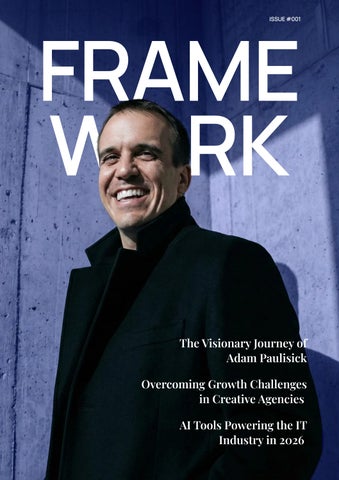
0 The Visionary Journey of
Adam Paulisic
Explore the innovative strategies and creative ethos that define Adam Paulisick's leadership and impact
Content
0 The Internet Needs AI That Guides, Not Just Informs
Exploring how AI can transform online experiences by offering personalized guidance and support
0 Overcoming Growth Challenges in Creative Agencies
Strategies for navigating the hurdles of scaling a creative business while maintaining quality and innovation
Content
0 Jasper AI for Marketing Made Eas
Unlock the power of Jasper AI to revolutionize your marketing strategy with our easy-to-follow guide
0 CES 2026: A New Era of Edge AI Innovation Unveiled
An exclusive behind-the-scenes look at the groundbreaking Edge AI technologies showcased at CES 2026
0
AI Tools Powering the IT Industry in 2026
A deep dive into the AI solutions poised to redefine IT, enhancing efficiency and sparking innovation
AI‑Guided, Not Algorithm‑Driven:
How Skilly Is Reimagining Internet with Conversational Intelligenc
Introductio
he internet was built to connect people with knowledge. But in today’s AI-powered, alway on world, finding the right information at the right moment has become harder than ever. Endless search results, static web pages, and algorithmdriven feeds often leave users overwhelmed, clicking endlessly without real clarity.
As artificial intelligence reshapes how we work, learn, and make decisions, a new expectation is emerging: digital experiences should guide us, not confuse us. This shift has given rise to a new movement, AI-guided discovery and leading this transformation is Skilly (formerly SkillBuilder.io).
Skilly is pioneering the concept of the Guided Internet, where AI-powered conversational guides replace passive browsing with intelligent, goaloriented dialogue. Instead of searching, users are guided. Instead of navigating alone, they are supported by AI that understands intent, context, and continuity
The Industry Shift: From SearchFirst to AI-Guided Discover
For many years, the internet operated primarily on a search-driven model: users would input keywords, sift through results, and assemble their answers piece by piece. This approach was effective when the web was relatively small, but in today’s vast digital landscape, it often leaves users feeling inundated with information. The emergence of AI, conversational interfaces, and context-aware systems has brought to light the shortcomings of traditional browsing methods.
Today's users seek more than just raw data—they crave guidance. They anticipate systems that not only comprehend their intent but also retain context and adjust in real time. This evolving expectation is influencing various sectors: from conversational commerce in retail to AI-assisted productivity tools, streamlined SaaS onboarding processes, and tailored educational experiences. The transformation is unmistakable: users have shifted from asking, “What pages are available?” to inquiring, “How can I achieve my objectives?” Skilly is designed specifically for that pivotal moment
Achievements and Momentu
Skilly’s evolution from SkillBuilder.io to a broader Guided Internet platform reflects both market validation and strategic clarity. The company has successfully repositioned itself at the intersection of conversational AI, user experience design, and adaptive web technology.
Its core achievement lies in redefining how guidance is delivered online, not as an afterthought, but as the primary interface. By shifting the focus from pages to pathways, Skilly has created a framework that is scalable across industries, from education and enterprise platforms to content-heavy websites and customer support ecosystems.
Skilly’s growing adoption underscores a key insight: the future of the internet is not about more content, but about better guidance
Solving Real Problems in the Digital Experience Economy Toda
Skilly’s innovation directly addresses some of the most persistent problems of the modern internet
Information Overloa
Users are overwhelmed by excessive content with little contextual prioritization. Skilly curates answers in real time, presenting only what matters most at that moment
Fragmented User Journey
Traditional websites force users to jump between pages, tools, and platforms. Skilly bridges these gaps by creating seamless, guided pathways across resources
Low Engagement and High Drop-O
When users feel lost, they leave. Skilly’s adaptive conversations keep users engaged by continuously aligning content with intent
One-Size-Fits-All Experience
Static websites treat all users the same. Skilly personalizes every session, ensuring that interactions feel relevant and purposeful. By solving these challenges, Skilly enables businesses to build trust, clarity, and long-term relationships with their audiences
AI That Guides, Not Distract
The future of the internet is not about more AI it is about better AI. AI that understands intent, respects context, and guides users toward meaningful outcomes. As digital experiences become increasingly complex, the demand for clarity, personalization, and direction will only grow.
Skilly’s Guided Internet vision arrives at a critical moment. By transforming static websites into intelligent, conversational experiences, Skilly demonstrates how AI can make the internet more human—not more overwhelming
Redefining What the Internet Can Feel Lik
Perhaps Skilly’s most compelling contribution is emotional rather than technical. In a digital world often characterized by noise, confusion, and friction, Skilly introduces a sense of calm and clarity. It makes the internet feel less transactional and more human.
Every Skilly guide acts as a smart connector, helping users make sense of complexity, discover what matters, and move forward with confidence. This is not just a product innovation; it is a philosophical shift in how digital experiences are designed.
At its core, Skilly reimagines guidance, not as rigid instructions or overwhelming choices, but as thoughtful companionship. It meets users where they are, anticipates intent, and nudges them toward clarity rather than decision fatigue. The result is an experience that feels less like navigating a system and more like being understood
In an era dominated by algorithms chasing attention, Skilly offers AI that guides with purpose.
The Visionary Journey of Adam Paulisic
n a world where technology often moves faster than humans can keep up, Adam Paulisick is rare kind of leader, one who not only predicts the future but actively builds it. As Co-founder and CEO of SkillyAI (formerly SkillBuilder.io), Adam operates at the intersection of entrepreneurship, artificial intelligence, and academia, turnin
complex ideas into digital experiences that feel effortless, intuitive, and profoundly human. From shaping the minds of Carnegie Mellon students to pioneering AI-driven solutions that guide, not overwhelm, Adam combines strategic vision with hands-on execution in a way few can
A Career of Impac
Adam’s professional journey is defined by translating complex ideas into actionable solutions. Before founding SkillyAI, he held senior leadership roles at top organizations. As Chief Product Officer at the Boston Consulting Group (BCG) following the acquisition of MAYA Design, Adam helped global clients integrate human-centered design into products and services
Earlier, as Senior Vice President at Nielsen Company after the BuzzMetrics acquisition, Adam led international teams across the US and Europe, managing complex, high-impact projects that combined consumer insights, digital analytics, and market research. He translated large, diverse data sets into actionable strategies for global brands, helping them better understand audience behavior, optimize campaigns, and make evidence-based decisions. This experience strengthened his core belief that technology truly succeeds only when it complements human intent, simplifies decisionmaking, and delivers real, measurable value
Adam also gained firsthand experience managing cross-cultural teams, navigating organizational change, and fostering collaboration across regions, lessons that continue to influence how he builds teams, designs products, and drives innovation today.
These experiences underscored a fundamental principle that continues to shape his approach: technology is most impactful when it enhances human capabilities and simplifies decision-making processes. This conviction fuels his drive to create solutions that are both innovative and intuitive, ensuring that technology consistently serves humanity s best interests
Educator at the Forefron
Alongside his entrepreneurial work, Adam maintains a distinguished academic career at Carnegie Mellon University (CMU). He is an Adjunct Professor of Entrepreneurship at the Tepper School of Business and a Lead Executive Education Instructor at CMU’s School of Computer Science. He also teaches in the Master’s of Artificial Intelligence program and at the Human-Computer Interaction Institute (HCII), the first graduate HCI program globally
Adam’s classrooms are experimental spaces where students tackle real-world challenges and design AI-powered solutions. For him, education is about fostering critical thinking, practical skills, and responsible innovation
Maad labs: Turning Ideas into Actio
Beyond SkillyAI, Adam founded maad labs (www.maadlabs.io), a “do tank” where experimentation meets execution. The lab develops AI/ML products, conducts digital experiments, and consults with startups and global companies
“Most innovation happens at the intersection of risk, experimentation, and human insight,” Adam says. maad labs embodies this philosophy, turning ambitious ideas into tangible solutions that solve real problems
Leading with Purpos
Adam’s work is defined by a human-centered philosophy. Across startups, enterprises, and academia, he emphasizes clarity, guidance, and meaningful outcomes. He believes AI should amplify human potential, not replace it, and that technology must be designed with empathy and usability
In an era dominated by algorithmic noise, Adam’s approach offers a refreshing alternative: digital experiences that guide, empower, and clarify, helping users achieve goals efficiently and confidently
The Internet Needs AI That Guides, Not Just Inform
he internet was built to connect people with knowledge. But in today’s AI-powered, alway on, AI-driven world, access to information no longer guarantees understanding. Endless search results, static websites, and algorithm-driven feeds often overwhelm users, leaving them lost in noise. The challenge is not the volume of information—it’s how we interact with it.From my perspective, we are at a critical inflection point i
digital experiences. Businesses and technology leaders face a common dilemma: the digital ecosystem is more complex than ever, and users are no longer satisfied with raw information. They want clarity, guidance, and actionable outcomes. In short, the internet must evolve from being a repository of pages to a partner that helps people achieve goals
The Industry Shift: From Search-First to Goal-Firs
For decades, digital experiences were search-driven: users typed keywords, scrolled results, and pieced together answers. That model worked when the web was smaller, but today it places the cognitive burden entirely on the user. AI, conversational interfaces, and context-aware systems are highlighting the limits of traditional browsing
Across industries, users now expect direction, not just information. Retailers offer conversational commerce for personalized guidance, productivity tools embed AI copilots to anticipate tasks, education platforms provide adaptive learning, and SaaS platforms streamline onboarding
The trend is clear: the focus is shifting from information retrieval to intent fulfillment. Users no longer ask, “What pages exist?” They ask, “How can I achieve my goal?” Companies that ignore this risk disengagement, lower retention, and a weakened brand.
AI in Its Current State: Promise and Pitfall
AI adoption across industries has grown at an unprecedented pace. Yet much of this adoption emphasizes efficiency over human understanding. Many AI solutions simply automate existing workflows without improving the user experience or decision-making quality. In practice, this can overwhelm users with recommendations, data points, or irrelevant alerts—creating friction rather than clarity. From my experience leading SkillyAI, the critical issue is human-centered AI design.
The goal isn’t just to automate or scale—it’s to anticipate intent, provide guidance, and simplify complex journeys. AI should feel like a trusted partner, not an impersonal tool
This requires a shift in mindset across the industry: from measuring AI success purely by speed, scale, or accuracy, to evaluating how effectively AI enables people to achieve meaningful outcomes
The Opportunit
The opportunity is immense for innovators and decision-makers. Companies that embrace guided, human-centric AI will distinguish themselves by crafting digital experiences that are intuitive, effective, and trustworthy, fostering user loyalty and advocacy. Meanwhile, those that persist with static content, keyword-driven search, or purely algorithmic feeds risk irrelevance, losing ground to competitors who prioritize user empowerment and engagement. The future belongs to those who harness AI to elevate human potential, not replace it
The future of AI lies not in merely expanding its capabilities, but in enhancing the human experience. It should enlighten, lead, and strengthen users, all while honoring their unique perspectives, desires, and choices. We believe AI should be a collaborative partner, amplifying human potential and driving meaningful progress
At SkillyAI, the focus is on driving this next evolution of technology. Their vision goes beyond creating just another set of web pages—they aim to build an internet that acts as an intuitive partner, understanding users deeply, anticipating their needs, and empowering them to effortlessly achieve their most important goals. They envision a digital world where technology seamlessly complements human intelligence, enhancing clarity, efficiency, and delivering an exceptional user experience
Key Trends and Insights for the Industr
Intent-Centric Experiences Will Dominat
Businesses must design experiences that understand what users want to achieve, rather than just what they search for
Conversational AI Will Become Standar
Chatbots and AI guides are no longer optional—they are central to delivering clarity in complex environments
Context and Continuity Are Critica
AI systems must remember past interactions and anticipate next steps to maintain relevance and trust
Human-Centered Metric
Success will be measured by user satisfaction, clarity, and goal completion—not clicks or impressions alone
Cross-Industry Convergenc
Solutions developed in one sector (like retail or education) are influencing others, demonstrating the universal need for guided experiences
Case studie
Plan A Kommunikasjo
Overcoming Growth Challenges in Creative Agencie
In today’s competitive design landscape, creative agencies often face a paradox: the desire to expand their service offerings while maintaining the quality and efficiency their clients expect. Many agencies despite having strong foundations in strategy, visual identity, and creative design, encounter significant challenges when scaling their operations or branching into technology-driven services.
Agency Challenges & Need
Creative agencies primarily focus on branding, packaging, communication design, print illustration, and digital marketing. Their core strength lies in crafting holistic visual identities and delivering impactful creative solutions. However, expanding into additional service verticals, such as web design, e-commerce, mobile apps, and animation, requires an influx of specialized talent and increased operational capacity. Finding the right blend of skills while managing costs becomes a major hurdle.
A lack of technical expertise often compounds these challenges. Agencies may struggle to understand or deliver on complex client requirements in technology-driven projects, which slows down response times and affects client satisfaction. This gap in expertise creates frustration for both the agency and its clients, as research and project execution take longer than anticipated
Problems Face
Resource Constraints
Handling a growing number of tech-related projects can stretch internal teams thin, forcing agencies to divert attention away from their core creative services
Delayed Project Timelines
Limited technical knowledge can lead to longer turnaround times on web development, ecommerce, and digital marketing projects, negatively impacting client trust and retention
Scalability Challenges
Without access to a flexible and skilled workforce, agencies find it difficult to take on larger or more complex projects, hindering growth opportunities
Rising Competition
As client demands evolve, agencies must keep pace with competitors offering integrated creative and tech solutions. Falling behind in service offerings can result in missed opportunities and revenue
Solutions & Resolutio
Agencies addressing these challenges have successfully implemented a combination of strategic planning, talent augmentation, and workflow optimization. By leveraging external expertise or partnerships, agencies can access the technical skills required for web, mobile, and e-commerce projects without inflating internal headcount.
Streamlined processes and clear project workflows ensure that creative teams can focus on design and strategy, while technical execution is handled efficiently. This division of labor allows agencies to maintain quality, reduce project timelines, and increase client satisfaction.
Furthermore, adopting scalable digital solutions, such as cloud-based collaboration tools, project management platforms, and automated e-commerce setups, enables agencies to manage multiple projects simultaneously while keeping operational costs in check.
Scaling a creative agency in today’s market requires more than just talent in design and strategy; it demands the ability to adapt to technology-driven client requirements and evolving market expectations. By identifying gaps, optimizing workflows, and leveraging external technical resources, agencies can overcome growth challenges, deliver superior client experiences, and expand into new service verticals with confidence
How-To / Tutoria
Jasper AI for Marketing Made Eas
Introductio
n today’s fast-paced digital world, brands need content that’s not only high-quality but also authentic, engaging, and tailored for their audience. Enter Jasper AI – a powerful AI-powered content creation tool that’s transforming the way marketers craft copy, blogs, social posts, and more. But here’s the challenge: How do you use AI without sounding like, well… a robot?
This guide walks you through using Jasper AI step by step, helping you create content that’s human, compelling, and on-brand
Define Your Goal Clearl
Before opening Jasper AI, ask yourself:
What type of content am I creating? Blog, social media post, ad copy, email campaign?
Who is my audience? Millennials, professionals, parents?
What action do I want readers to take? Subscribe, buy, or engage?
Tip: The clearer your goal, the better Jasper can help you. Think of it as giving your co-writer (AI) a roadmap rather than a blank page
Jasper AI offers a variety of templates designed for different content needs, including blog post intros, social media posts, email subject lines, ad copy, and product descriptions. Choose the template that matches your goal for instance, if you’re writing a blog, the Blog Post Intro template provides a strong starting point without generic fluff.
Clarify Your Strategic Objectiv
Users can enhance their output with Jasper AI by providing: a topic, tone of voice, and optional keywords for SEO. Specific instructions yield tailored content. For example, instead of vague prompts, use: "Write a 300-word blog intro for small business owners on AI tools for marketing ROI in a friendly tone.
Generate and Refine
Hit Generate and let Jasper do its magic. Don’t expect perfection on the first try think of it as a draft. Then:
Edit for clarity and voice: Make sure it sounds like your brand, not a generic AI bot.
Check facts and data: AI is great, but always verify numbers or claims.
Trim unnecessary fluff: Keep sentences concise and impactful
Personalize and Humaniz
This is the secret sauce. Even the most advanced AI output can feel robotic if left untouched. Add:
Personal anecdotes or brand stories
Conversational phrases (e.g., “You’ll love this tip… or Here’s the thing…”)
Questions or calls to action to engage the reader
When Jasper writes the base, you add the personality this is what makes the content feel human
Optimize for SEO (Optional but Powerful
If your content is going online, consider:
Including primary and secondary keywords naturally
Using meta descriptions and headings
Structuring content for readability (short paragraphs, bullet points, and subheadings
While tools like Jasper AI offer immense power to marketers, their true potential is unlocked when paired with human ingenuity. By setting strategic goals, crafting detailed prompts, and meticulously refining outputs, marketers can leverage AI to create authentic and compelling content that elevates their brand
Marketers should view AI not as a replacement, but as a tool that boosts creativity, speeds up workflows, and helps brands stand out. Used thoughtfully, it enables content that resonates with audiences and drives meaningful results while keeping a genuine, human voice
AI Tools Powering the IT Industry in 202
A Review of Leading Platforms and Enterprise Feedbac
Artificial intelligence has become foundational in IT workflows — from strategic analytics and productivity to code generation and research. Below is a review of the most influential AI tools in use across large enterprises today, including feedback from major corporate deployments
ChatGPT – Enterprise‑Wide AI Assistan
Overview: OpenAI’s ChatGPT remains the most widely used generative AI platform across industries. Enterprises use it for research, internal knowledge retrieval, brainstorming, and automation because of its strong natural language capabilities and broad applicability.Enterprise Feedback
A Wharton survey shows ChatGPT is used in ~67% of enterprises, often preferred for broad tasks like summarizing data and generating insights.
Large corporate adoption is supported by rising business spending on OpenAI models, indicating use in development, finance, support, and automation workflows at scale
Microsoft Copilot – Embedded AI for Productivity & I
Overview: Integrated into Microsoft 365 and Azure ecosystems, Copilot assists with drafting content, meeting summaries, data analysis, and developer tasks via GitHub Copilot
Enterprise Feedback:
Organizations including Kyndryl, HP, Infosys, Insight Enterprises, and HCLTech report measurable productivity gains. Copilot deployments have boosted creative output, reduced routine work time, and improved collaboration across teams.
Large Indian IT firms like Cognizant, TC S, Infosys, and Wipro are deploying hundreds of thousands of Copilot licenses, showing strong enterprise investment and belief in its value
GitHub Copilot – Developer A
Overview: GitHub Copilot accelerates software development by suggesting code, automating repetitive tasks, and improving collaboration within IDEs like Visual Studio Code
Enterprise Feedback:
Widely adopted by major organizations (e.g., HP, Infosys, ZoomInfo) and GitHub reports millions of enterprise developers using Copilot for code generation and quality improvement.
Independent studies confirm developer satisfaction and measurable increases in productivity and code review efficiency with AI assistance
Google Gemini – Multimodal Enterprise A
Overview: Google’s Gemini offers conversational intelligence with multimodal capabilities, blending text, images, and structured data, increasingly used in enterprise search, reporting, and automation
Enterprise Feedback:
While enterprise adoption lags behind Microsoft and OpenAI, Gemini’s integration with Google Workspace and collaboration tools is driving corporate use in content drafting, data summarization, and internal assistance.
Perplexity AI – Research & Contextual Insigh
Overview: Perplexity AI blends generative AI with up-to-date search results and source citations, which is invaluable for detailed research, complex technical problem-solving, and broad enterprise knowledge exploration. Its ability to provide sourced answers makes it a reliable tool for professionals needing quick, verifiable insights
Enterprise Feedback:
Adoption is growing, with organizations using Perplexity to connect internal documentation and external data for reliable, sourced answers
The Augmented Architec
The role of AI in IT is now about augmenting human capability, speeding up innovation cycles, and enabling strategic advantage not just automating tasks. With real deployment feedback from major enterprises and widespread adoption metrics, it’s clear that the right AI tools can transform how IT organizations operate, innovate, and deliver value
CES 2026: A New Era of Edge AI Innovation Unveile
Introductio
as Vegas — The Consumer Electronics Show (CES) 2026 once again proved that the future of technology isn’t just coming — it’s already being built. This year’s show was defined by solution bridging data, compute, and intelligence closer to where business actually runs: at the edge. For IT leaders and software strategists alike, the central theme was clear — real‑time processing, on‑device intelligence, and seamless integration are now top enterprise priorities.
A highlight of the event was the unveiling of Lantronix’s new Edge Compute and Real‑Time Intelligence Platform — a suite of hardware and software tools designed to bring powerful analytics and automated decision‑making to where data is generated, without relying on centralized cloud resources. Promising faster insights, greater reliability, and reduced latency, this launch underscores a pivotal shift in how enterprises architect their digital infrastructure.
Why This Matters for IT and Software Industr
In recent years, enterprises have grappled with exploding data volumes and the limits of centralized cloud processing. Regulatory and privacy concerns — especially in sectors like industrial automation, utilities, and critical infrastructure — make constant cloud connectivity impractical or risky. At CES 2026, industry leaders emphasized that IT roadmaps are now incorporating edge‑first architectures alongside cloud strategies.
“Instead of sending every byte of data back to a central server, we’re moving intelligence closer to the source,” said an enterprise architect attending the event. “When decisions happen at the point of data creation — on a factory floor, a power grid sensor, or an autonomous vehicle — latency drops and efficiency soars.”
This perspective reflects broader industry research showing that real‑time processing and localized compute are no longer niche experiments but core parts of enterprise digital transformation strategies
The Launch: What to Kno
Lantronix showcased several innovations that directly address these enterprise demands
High‑Performance Edge Compute Module
Compact yet powerful compute units optimized for real‑time analytics and software workloads traditionally handled in data centers
Integrated Software Framework
SDKs and APIs that enable enterprise developers to deploy, manage, and scale applications at the edge with familiar DevOps tooling
Smart Operational Analytics
Pre‑built analytics modules that process sensor data, detect anomalies, and trigger automated actions — all without waiting for cloud round‑trips
These innovations were demonstrated through live showcases at the Lantronix CES suite, where software teams saw real‑time analytics visualizations, autonomous robotics demos, and latency comparisons that highlighted the performance gains of edge‑centric deployment
Beyond the Launch: The Broader CES 2026 Narrative
The Lantronix platform was just one part of a wider story at CES 2026 that reflects the ongoing evolution of IT and software industries:
Processor Innovatio
Major chipmakers unveiled next‑generation silicon targeting mixed workloads — from high‑performance cloud inference to low‑power edge processing
Ambient Intelligenc
Software platforms that blur the line between user experience and context‑aware automation were highlighted, hinting at how enterprise applications will evolve beyond traditional UIs
Industrial Digitizatio
Established industrial players showcased how software‑driven insights embedded at the edge are enabling predictive maintenance, supply chain optimization, and smart infrastructure at scale.
Together, these announcements signal a clear shift: enterprises are no longer questioning the value of real-time intelligence and edge computing they are actively building architectures that move computing closer to where business happens
From Showcase to Strateg
CES 2026 highlighted that the next phase of enterprise IT isn’t just about bigger data pipelines. it’s about smarter, faster, and more autonomous systems. The launch of Lantronix’s edge compute platform demonstrates how real‑time intelligence is moving into the heart of enterprise software architectures, enabling applications that react, adapt, and act — without cloud dependency
For the IT and software industries, the message is clear: the future belongs to architectures that democratize intelligence across the network, accelerate insights, and support innovation at speed