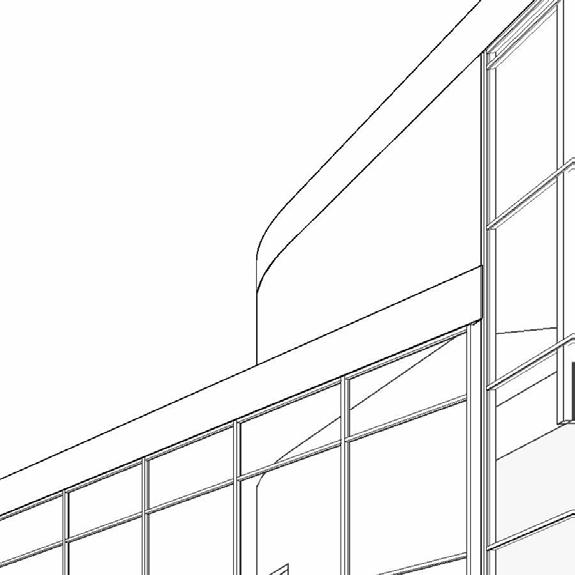
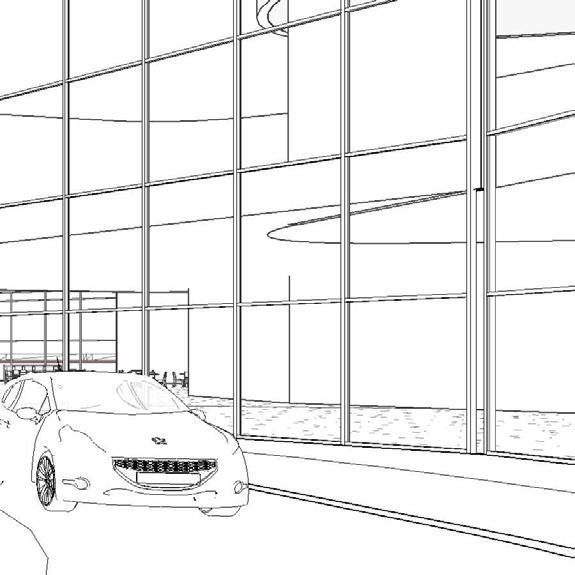
Certificate in Building Façade Art Science and Technology
Magna Cum Laude
NOMAS at USC President
SoCalNOMAS Member
SPACE Graphic Designer
2024-2025
Since 2023
Since 2023
PROFESSIONAL EXPERIENCE
HMC ARCHITECTS
Los Angeles, CA 2023 - 2025
UNDERGRAD EDUCATION
TEXAS TECH UNIVERSITY
Bachelor of Architecture
Minor in General Business
Magna Cum Laude
TTU COA Student Union Rep.
AIAS Member
Study Abroad - Seville, Spain
TTU Men’s Soccer Club
PUBLICATIONS & EXHIBITIONS
August 2024 - Present
Design Apprentice Los Angeles, CA
Assisting in K-12 projects across various design phases, developing drawings and specifications.
Architectural Intern
June 2024 - August 2024
Assisted in various projects focused on schematics design, creating info graphics and program diagrams
GRADUATE CLASS ASSISTANT
January 2024 - May 2024
University of Southern California Los Angeles, CA
Acted as a mentor for second year design students to provide additional support and guidance as they worked on studio projects
HNTB
March 2024
Architectural Externship Los Angeles, CA
Completed a one-week shadowship, gaining hands-on experience from design professionals in the aviation and sports department
STUDENT ASSISTANT
January 2023 - May 2023
Texas Tech University Lubbock, TX
Assisted with the lecturer to oversee attendance and student projects and provide students additional assistance.
DESIGN SPECIALIST
May 2022 - August 2022
Ship & Print Plus Katy, TX
Graphic designer for customer posters, business cards, and clothes.
Lubbock, TX
- 2023
SocalNOMA Student Design Competition 2024 3rd Place Winner
Dezeen Architecture projects by students at USC 2024
“Corita Kent Foundation”
A + D Musuem Los Angeles: A Model City 2024
“Corita Kent Foundation”
CROP Issue 10: YIELD 2024
“A house for the Tourist, the Traveler & the Gambler”
SPACE Vol 1: Delirium 2024
Chapter 7
NOMA National Student Design Competition 2023 3rd Place Winner
AWARDS
Chapman Harvey Architecture Scholarship
Terry & Linda Fuller Architecture Scholarship
USC School of Architecture Scholarship
John Parkinson Scholarship
SKILLS
2021 - 2022 2022 - 2023 2023 - 2024 2024 - 2025
EKWUEME KENECHUKWU
Keneekwueme@yahoo.com
Los Angeles, CA
A HOUSE FOR THE TOURIST, THE TRAVELER & THE GAMBLER
TOPIC STUDIO
MIXED-USE HOUSING
LAS VEGAS, NEVADA SPRING 2023
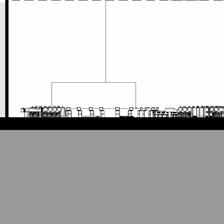
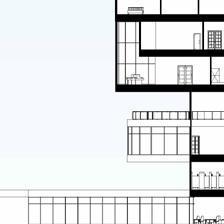
Sin City, a name so illustrious it gives a hectic deminer on a wandering traveler, a family of tourists, and an inspiring gambler. The strip of Las Vegas, now a mega center of ecstasy and grand resorts each with established themes and decades of events and parades, yet seems like one cohesive body. chose to explore what makes this street an attention grabber and how can create a structure to dilate the hecticness of the strip as it relates to the new explorers. The House of Cards is the name given to the illustrious tower of eye-cashing angles, thirteen floors stacked, and rotated with each level to illude to the chaos of the strip ahead.
Although it seems random, the movements are specific. To the virgin eye, it seems like nothing going on, with an alcove circulation with an illustrious pool in the center and a Mall to the right. When settled in, each floor of the tower has many different activities roaming from adults to children. You never know if the room behind a door is a yoga studio or a three-story casino.
Unlike the Las Vegas Strip, this tower seeks to discreetly conceal the mischievous activities designed for adults. Departing from traditional floor plans, the design plays with shifting volumes, creating a dynamic experience of single, double, and triple-height spaces that intertwine seamlessly. Depending on the room you book, you’ll enjoy unparalleled views of Vegas, offering a fresh perspective every time you visit this iconic building.
SECTIONPERSPECTIVE
WEAVING CONNECTIONS
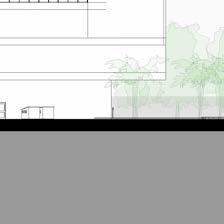
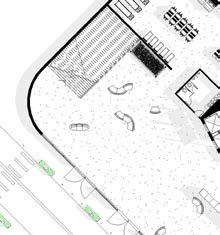
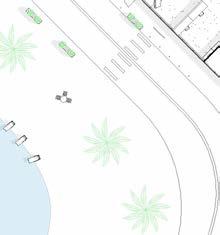
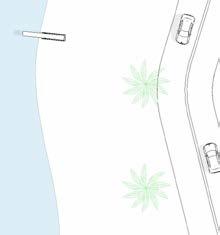
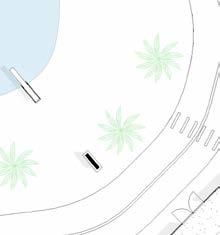
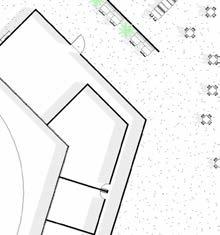
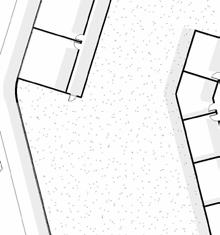
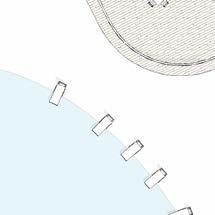
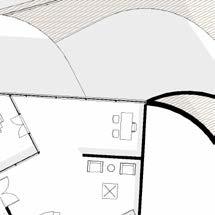
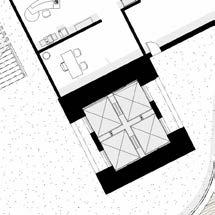
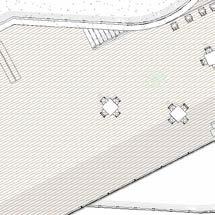
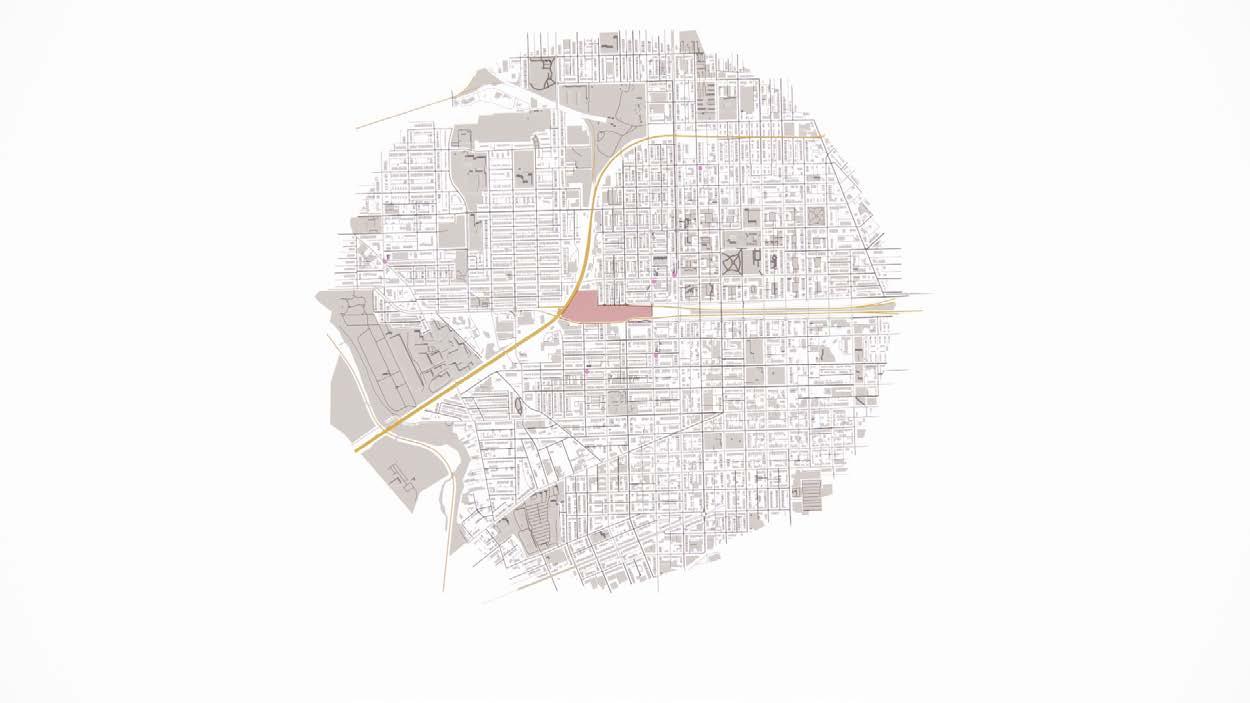
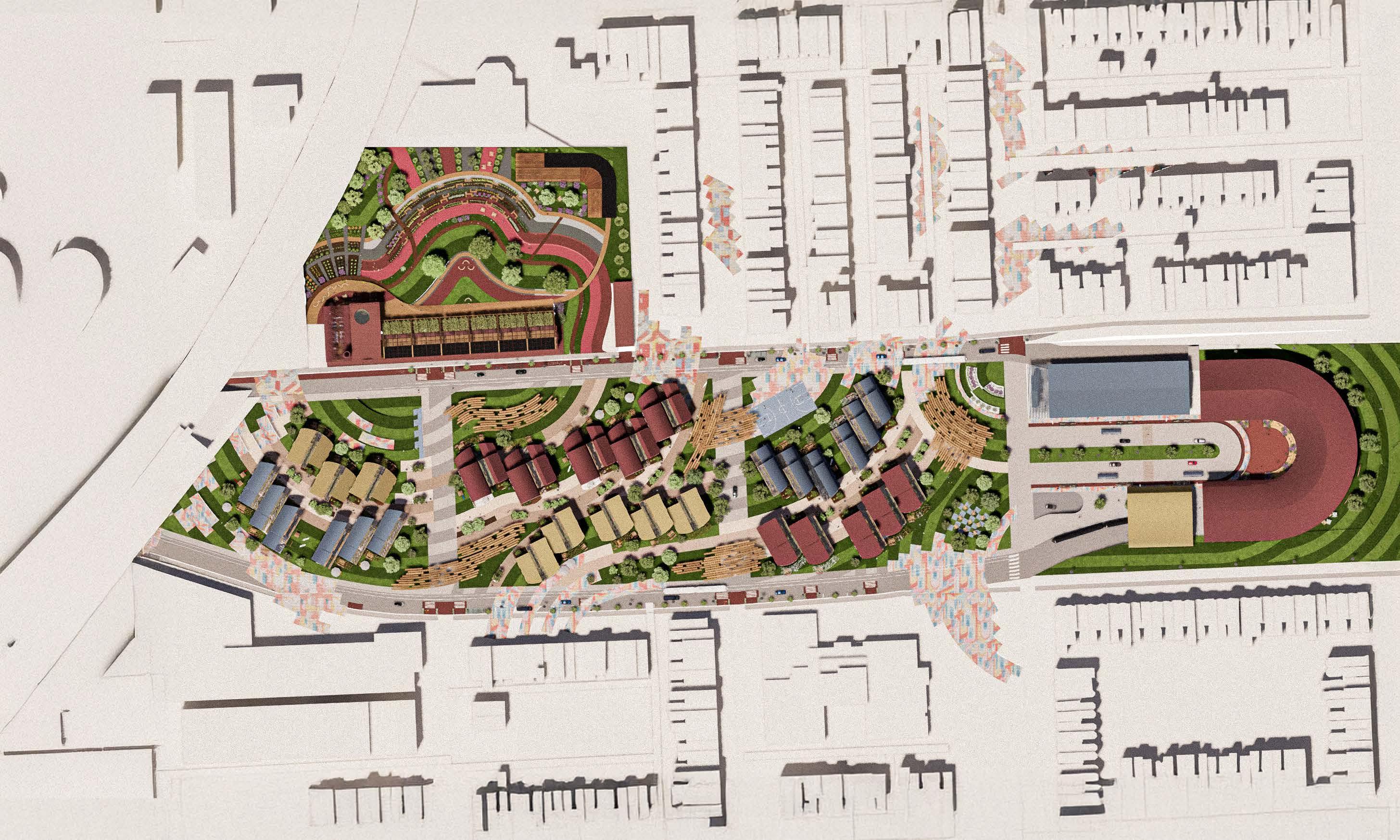
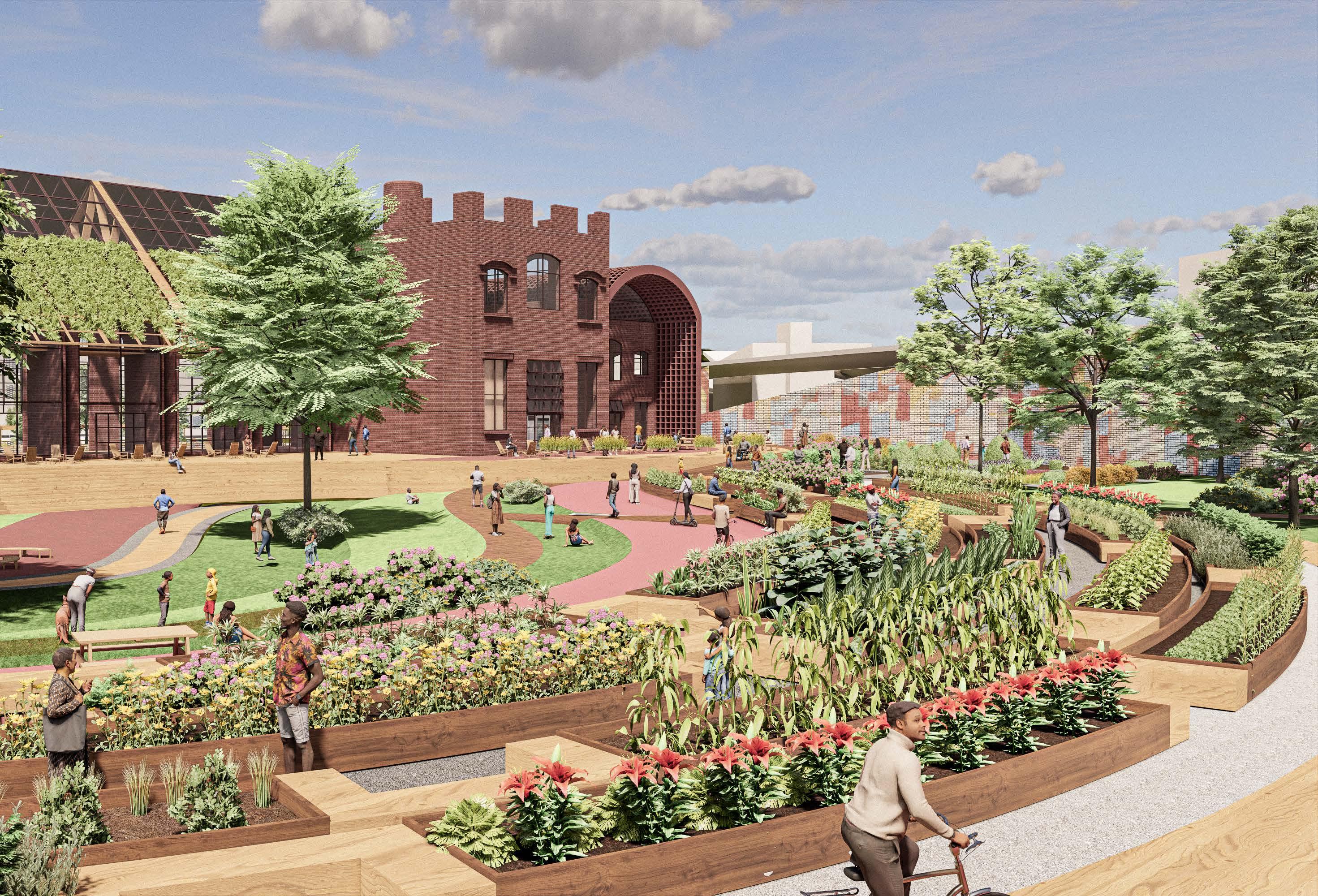
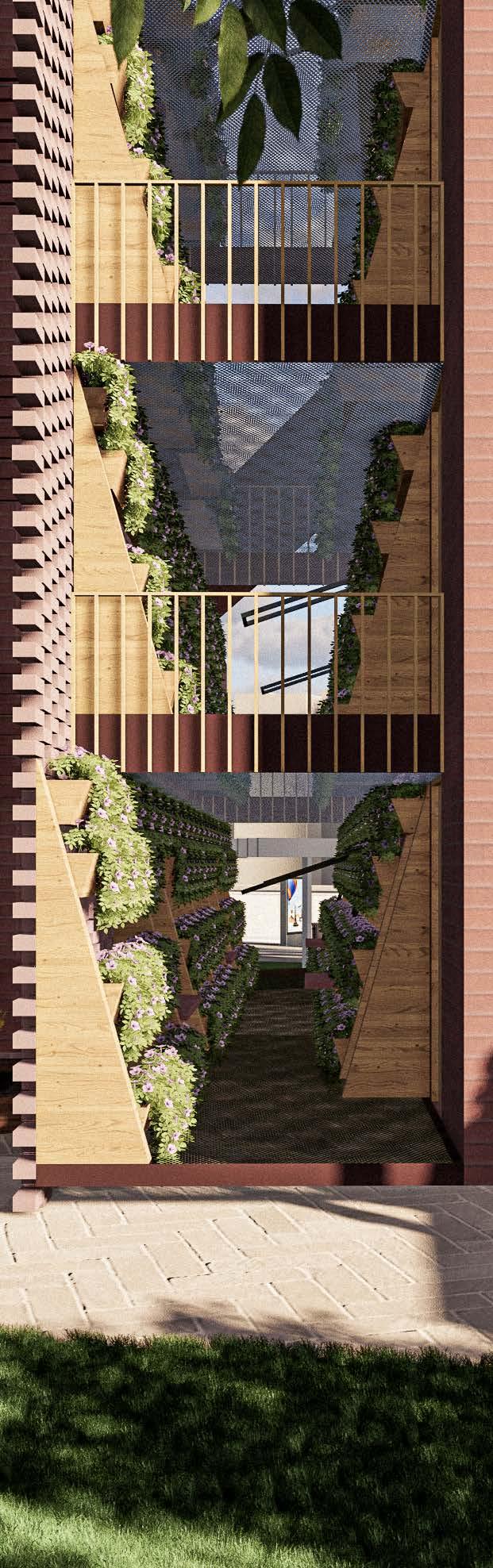
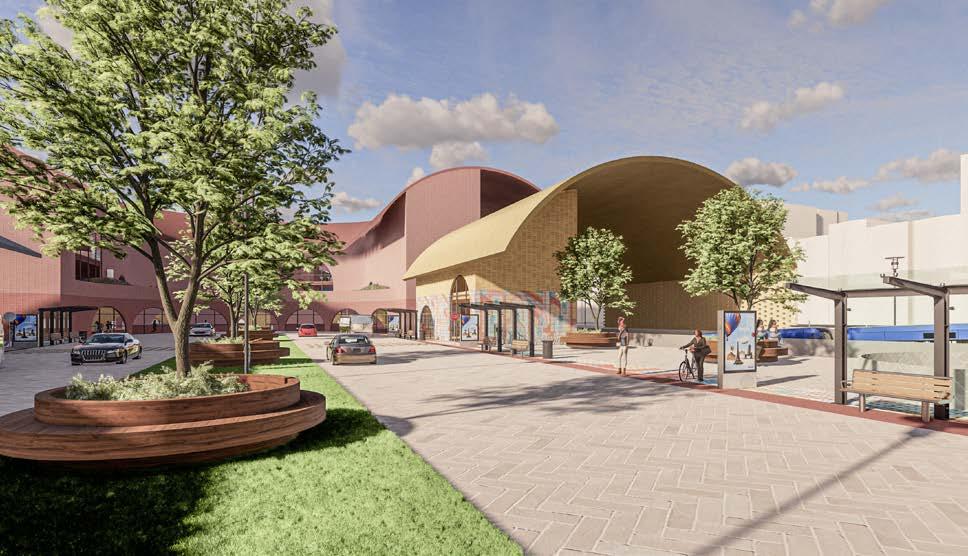
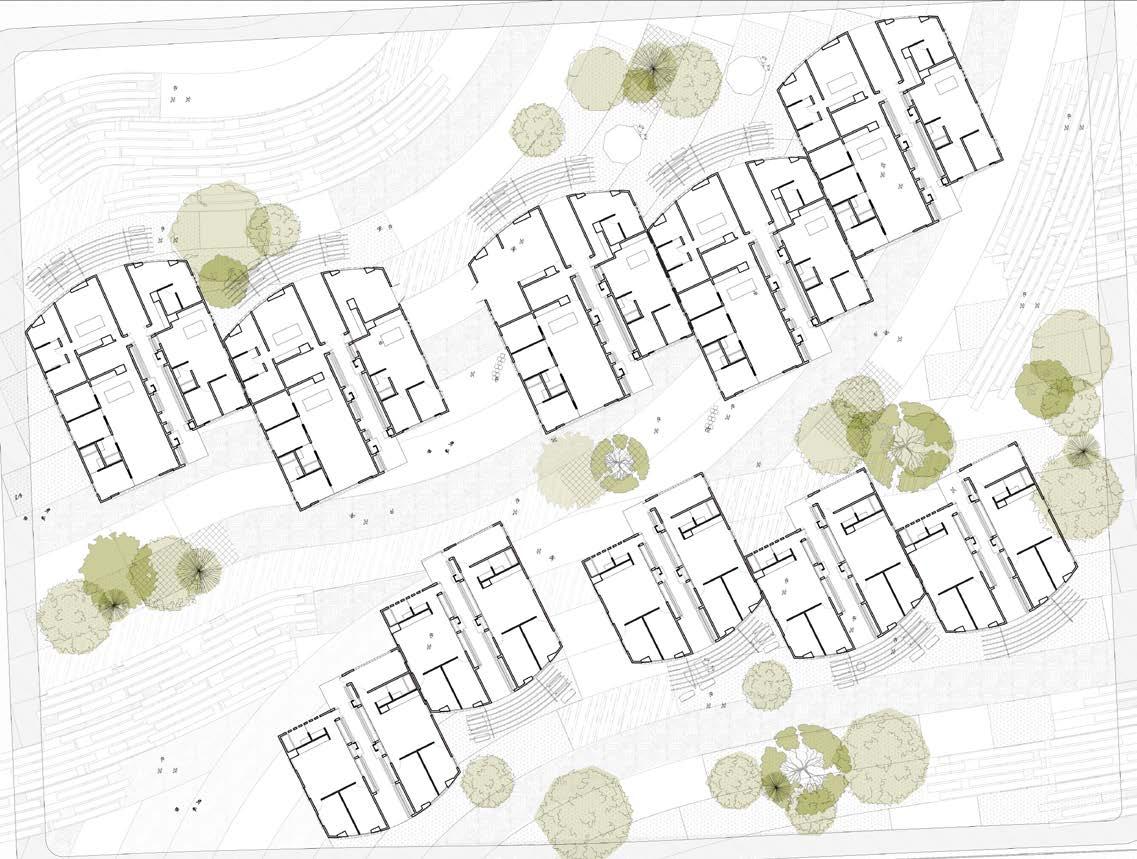
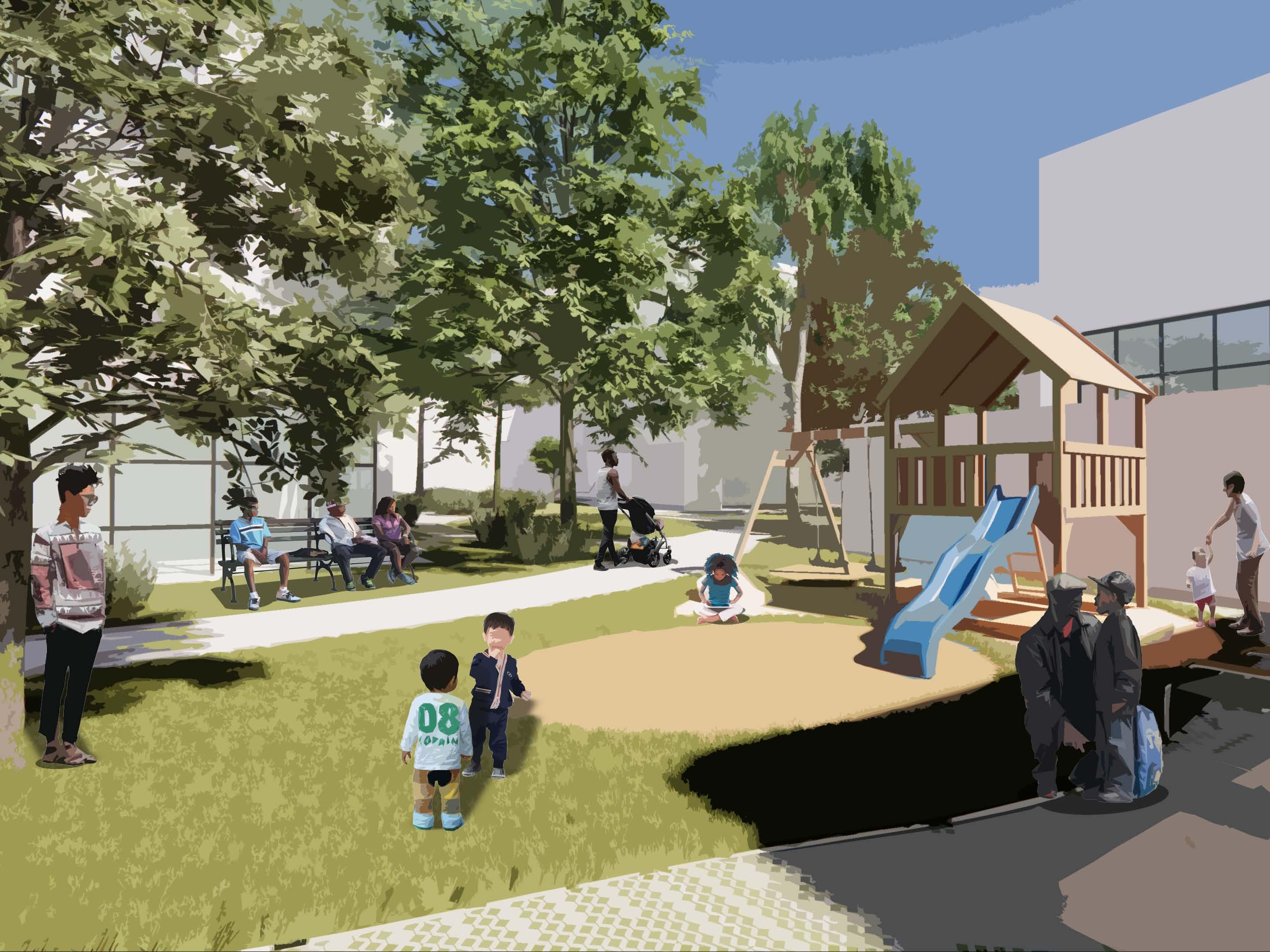
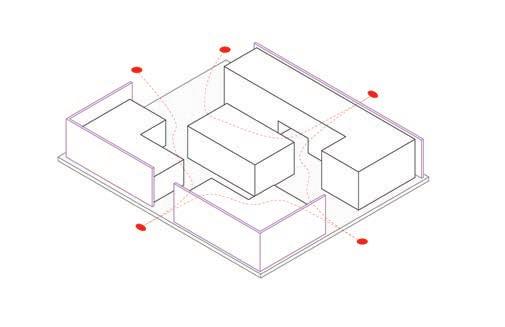
Midtown Edmonson, a primarily African American community since the 1940s, was one of many neighborhoods bisected by the U.S. I-40 Highway, displacing thousands, creating food deserts, and reducing public green spaces. This project strengthens community identity by integrating green spaces, art studios, communal kitchens, and marketplaces. These elements enhance the city’s public areas and contribute to Baltimore’s arts and culinary scene, fostering a deeper connection to local creativity and heritage.
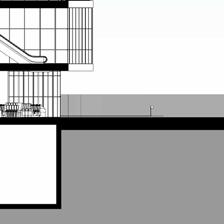
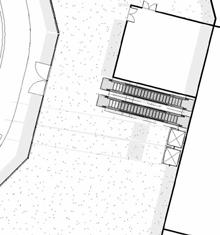
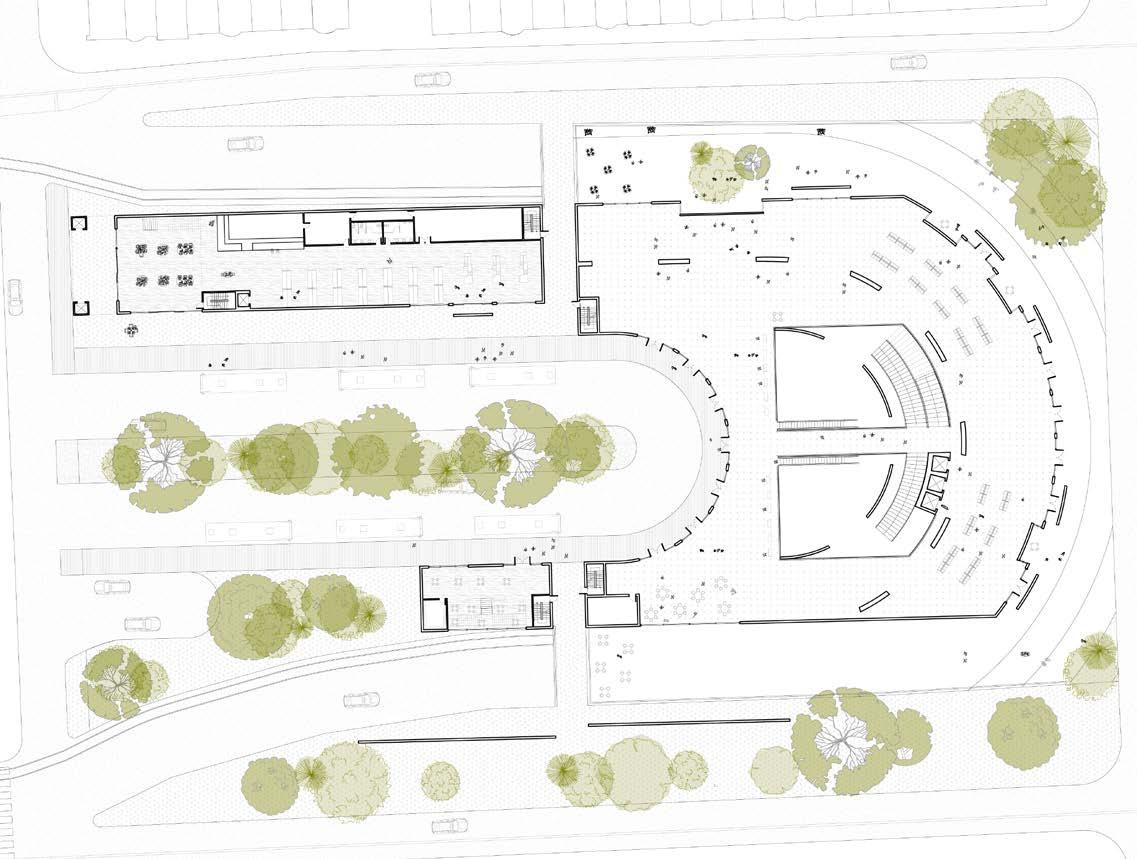
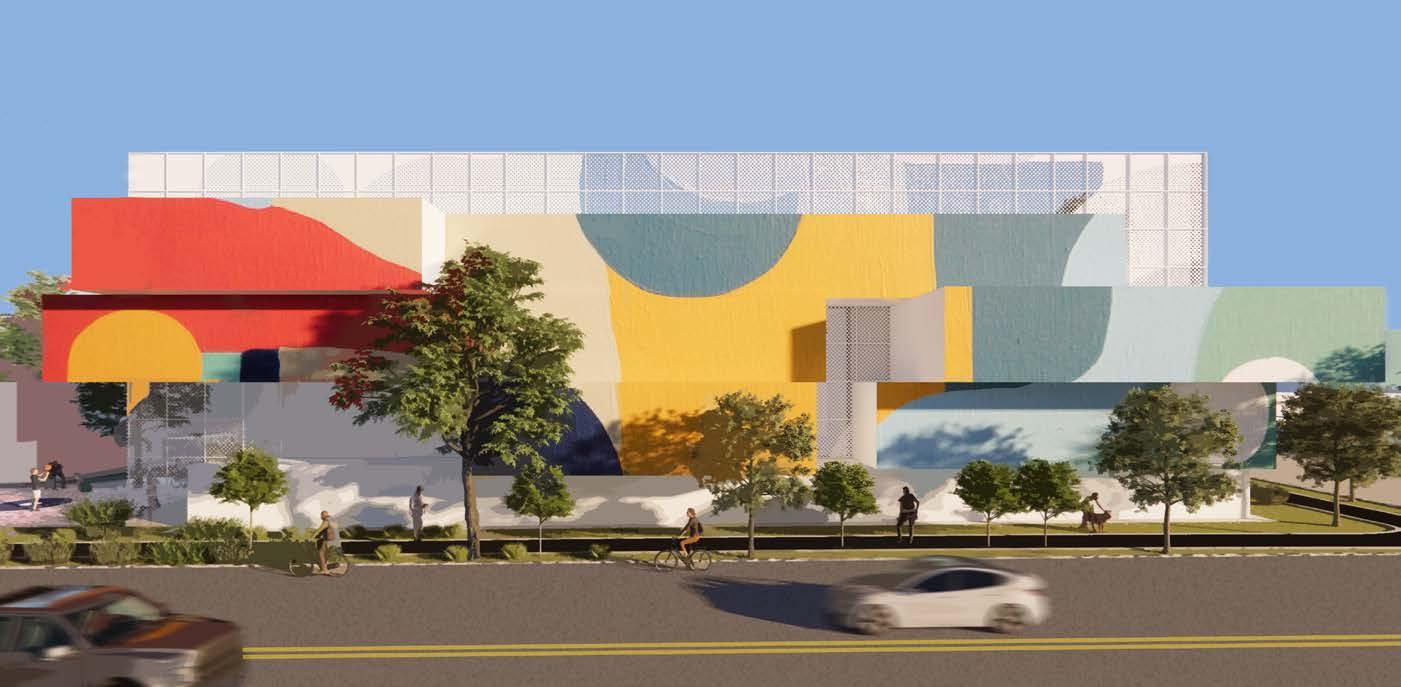
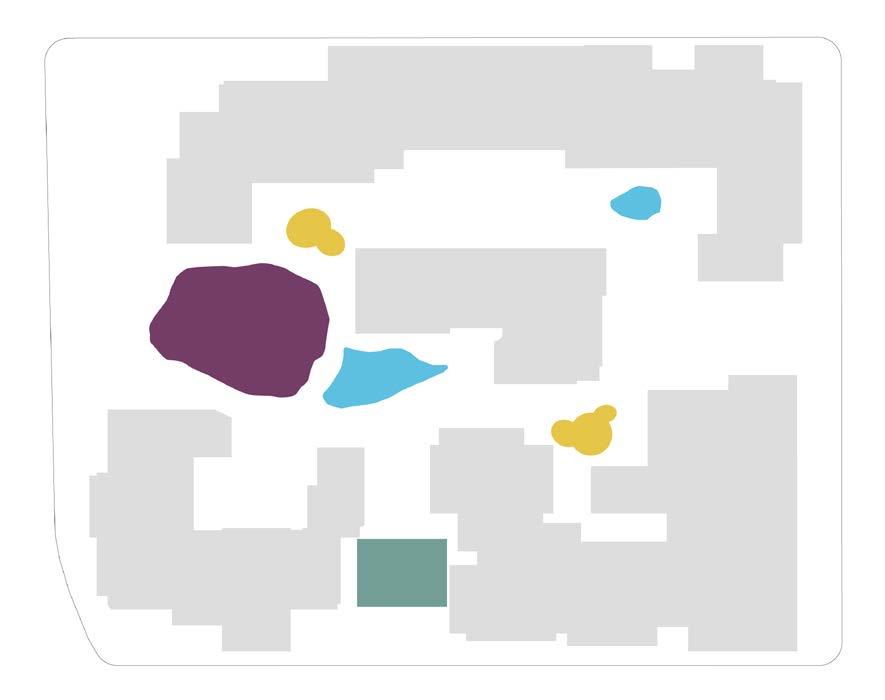
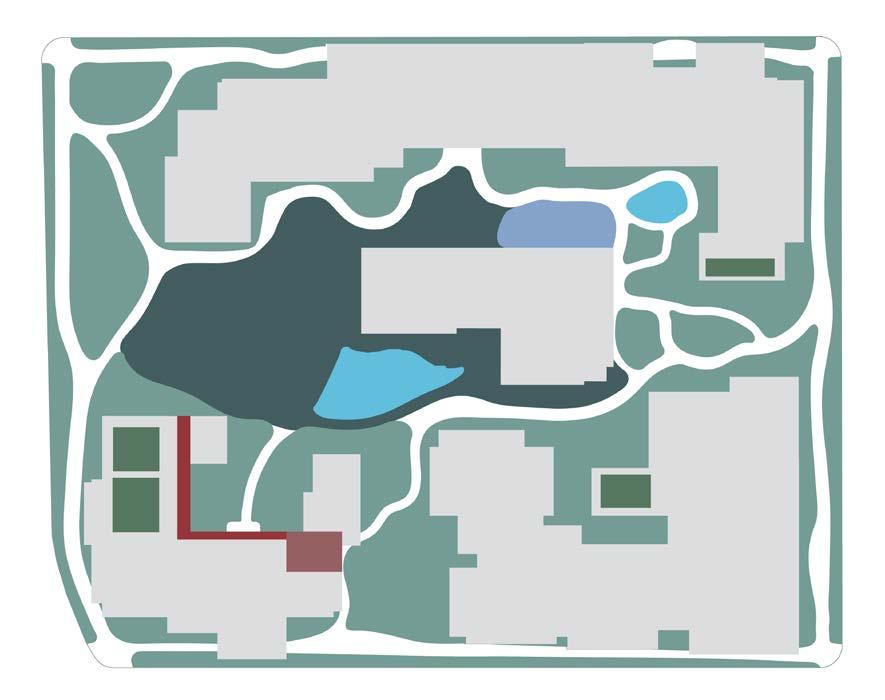
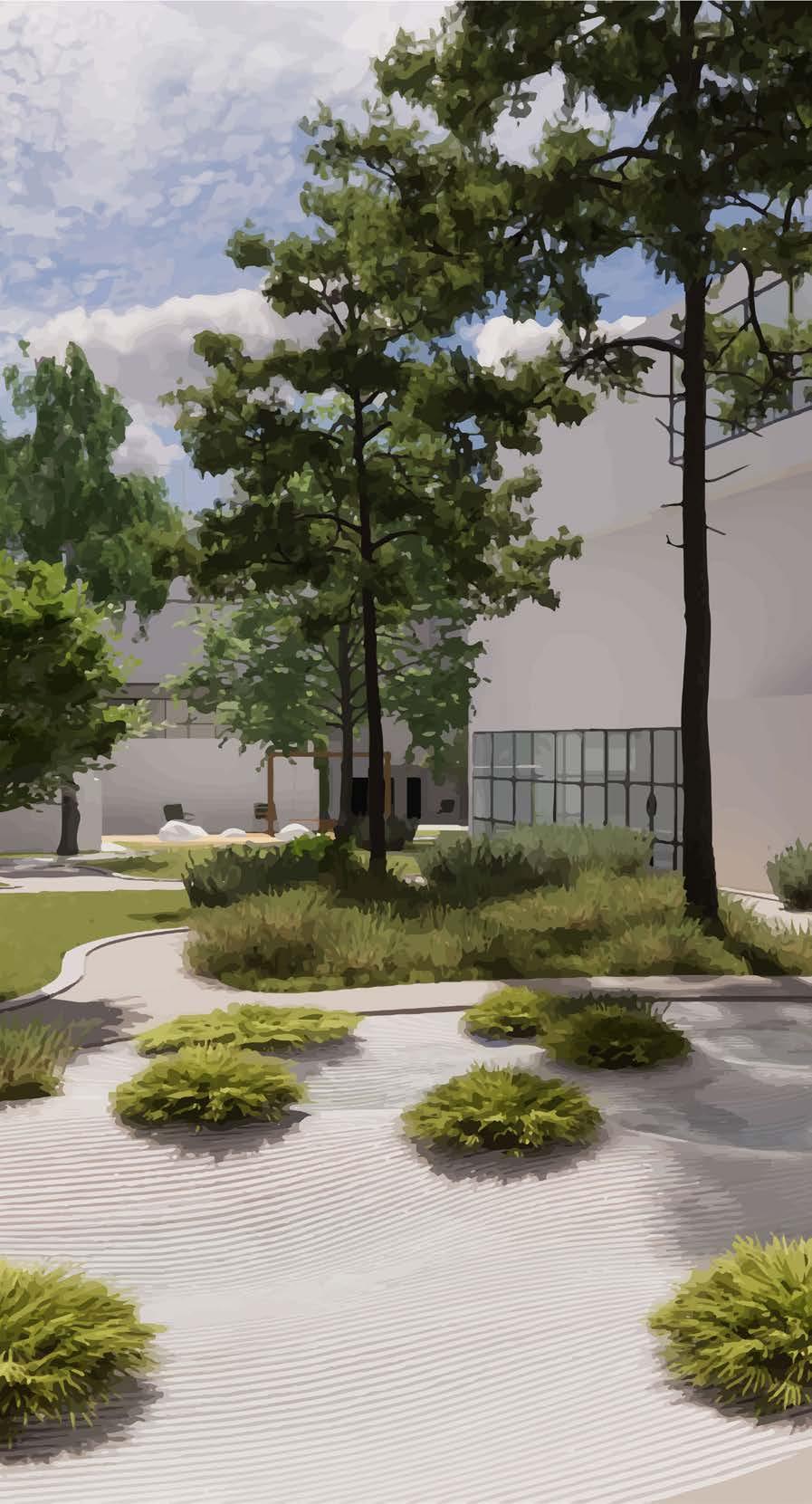
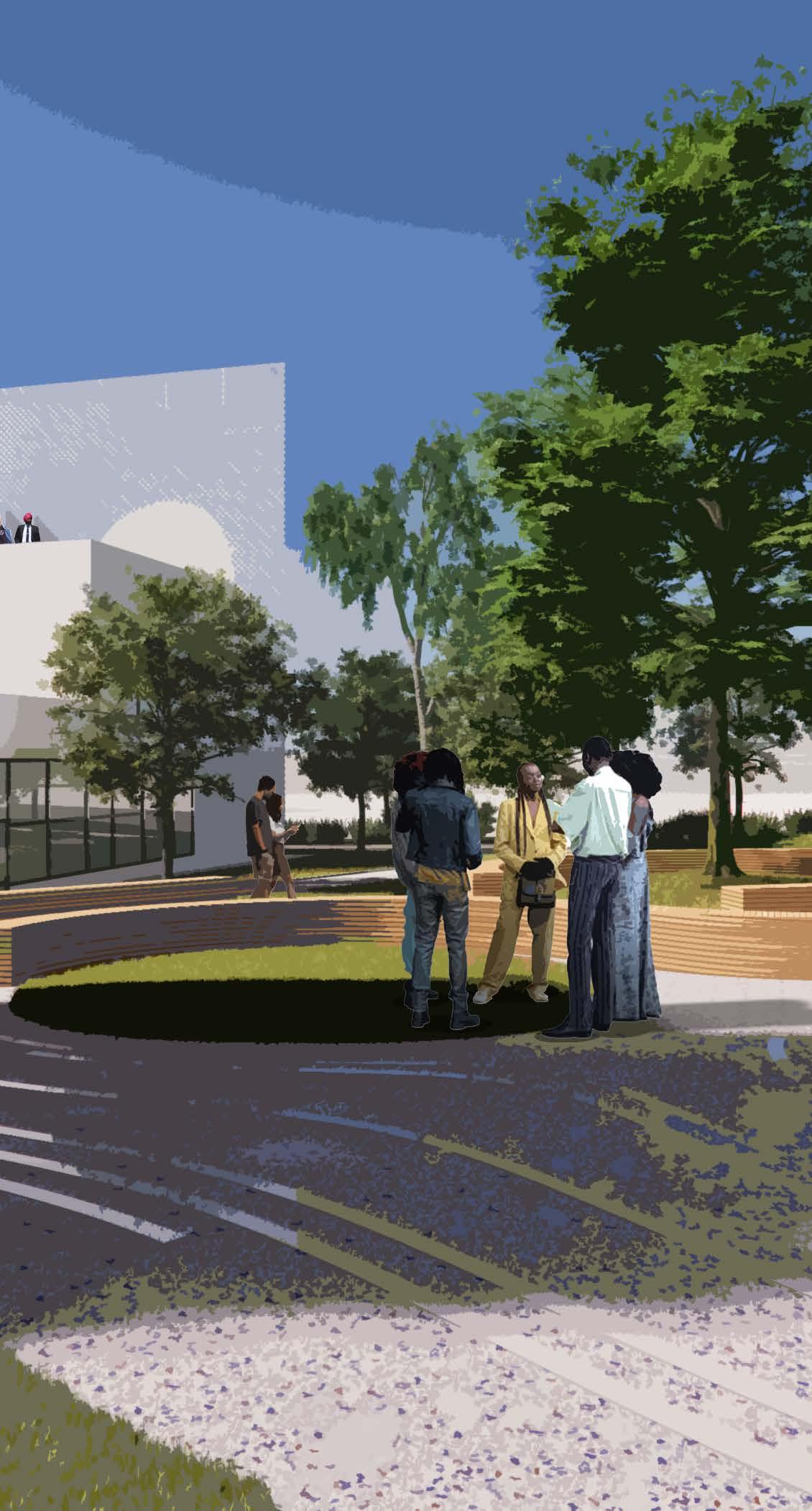
The site’s pattern creates a cross-site language that seamlessly blends greenscapes, hardscapes, and programs, in order to connect the surrounding neighborhood back to the site, while ground murals welcomes the neighborhood and creates a wayfinding affect. meanwhile,the form of the housing and transit hub are inspired by the surrounding row house architecture typology. Within the affordable housing complexes are integrated art labs to promote arts education and engagement with local artists. where The metro station includes local art exhibition spaces. Meanwhile the American Ice Co. transforms into a food hub with a farmers markets, a community kitchen, greenhouse and outdoor growing space for the cultivation of fresh produce. Project done in collaboration with the Nomas at USC student chapter.
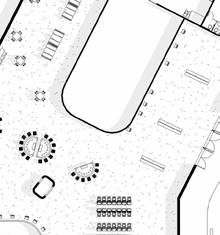
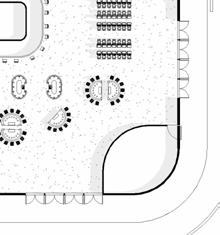
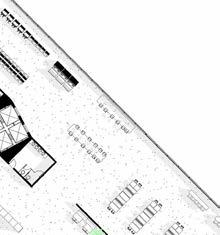
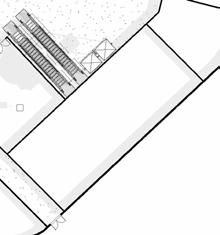
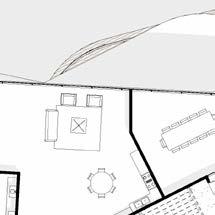
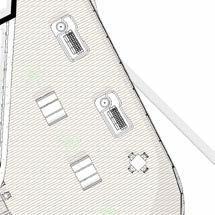
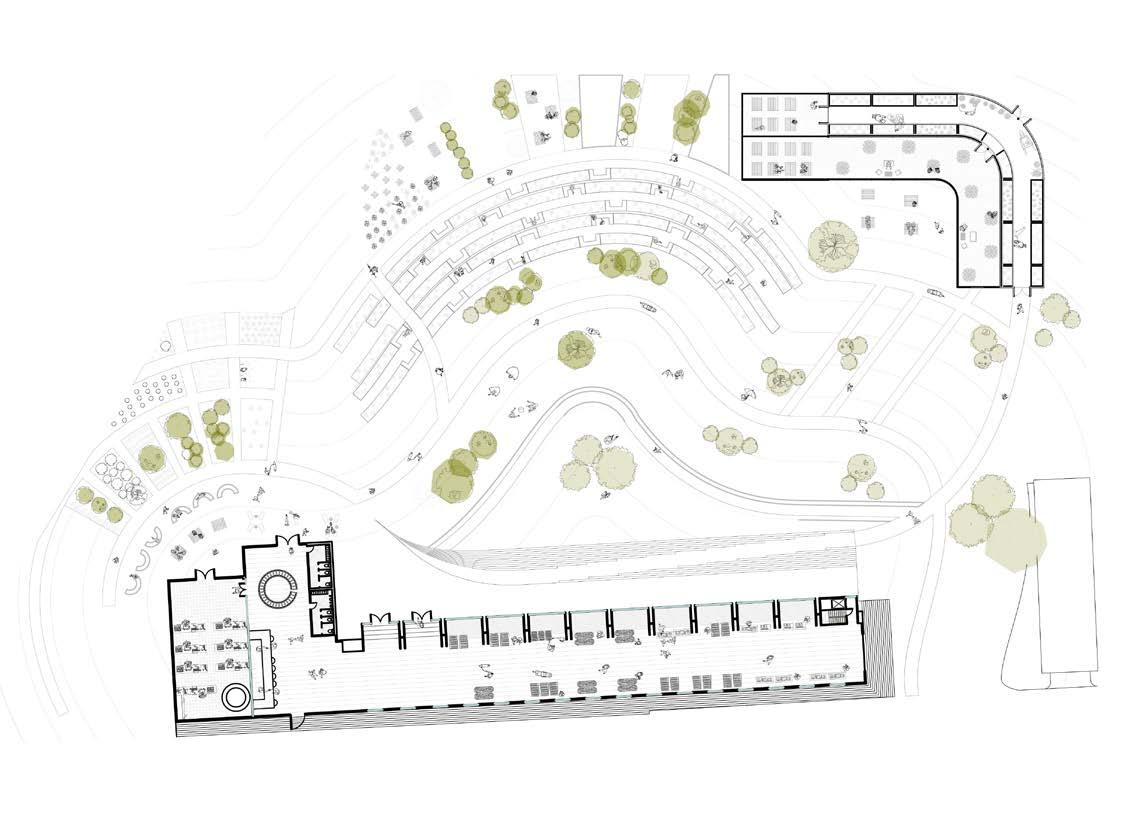
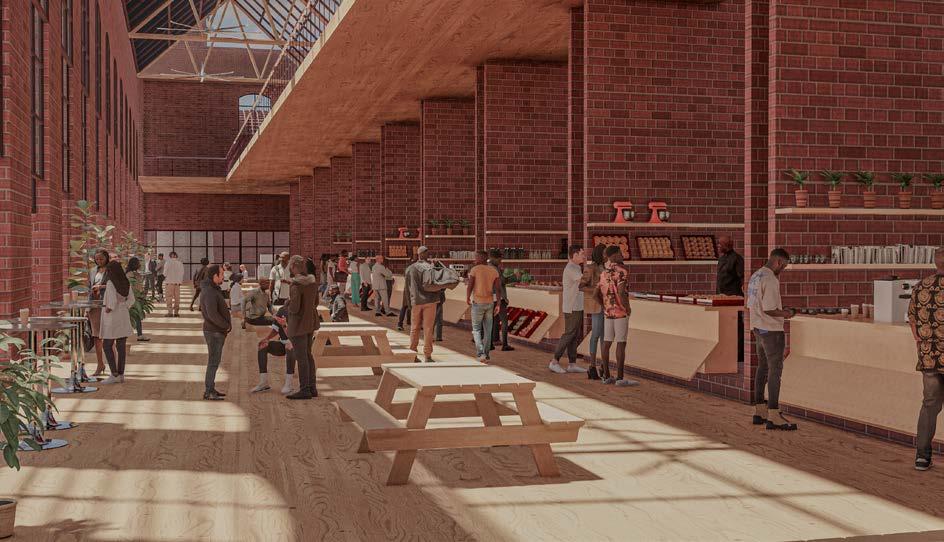
The American Ice Co. Factory was designated as a historic building under Baltimore’s historic preservation guidelines. Through adaptive reuse, we transformed the building’s interior into a vibrant farmers market, incorporating a double-height atrium to bring in natural light and a communal kitchen at the far end. This design fosters a sense of togetherness, creating a space for community events and strengthening connections within the neighborhood.
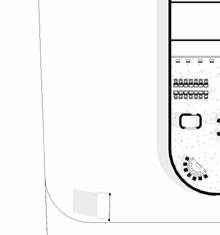
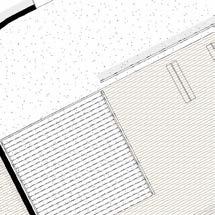
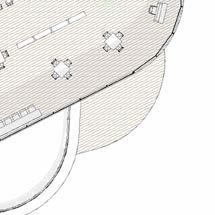
FOOD HUB FLOOR PLAN
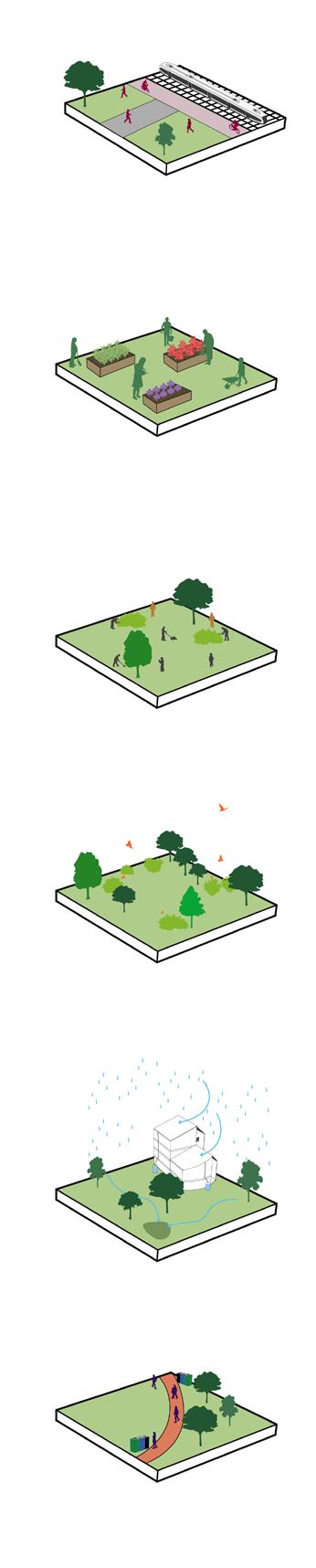
Promoting Public Transportation + Pedestrian Friendly Movement
Public transit and pedestrian movement will be promoted and encouraged throughout the site by constructing the transit hub, safe and wide crosswalks, bus station shelters and bike racks and paths.
Growing Food as a Community
Growing food on site will confront the issue of the site being located in a food desert. Along with this, growing food together will foster a sense of community among the residents and surrounding areas. In addition, growing food will help in promoting good health and well-being within the community.
Creating Jobs for Site Residents+ Community
The City of Baltimore and the Transit Hub Council could create a job training program that would allow residents on site and surrounding community members to learn how to maintain the landscape which will lead to a land stewardship model.
Increasing Biodiversity + Polllinators
Using native plant species to the site will increase the amount of biodiversity and attract local fauna such as pollinators. Because of this, this will allow residents and community members to feel more connected to nature while providing aesthetic beauty.
Incorporating Rainwater in Design
To reduce the amount of water use on site, it is essential to capture and reuse rainwater for irrigation of the landscape. One method that could be potentially utilized are rain barrels next to the buildings. Another strategy that could be used is grading the topography to create bioswales and depressions in the landscape to collect rainwater to allow infiltration to take place.
Composting+ Recycling Programs
Having composting and recycling bins on site, especially along walking paths will reduce the amount of waste generated.
ONEVIEW COLLEGE
COMPREHENSIVE STUDIO
COMMUNITY COLLEGE
LUBBOCK, TEXAS
FALL 2022
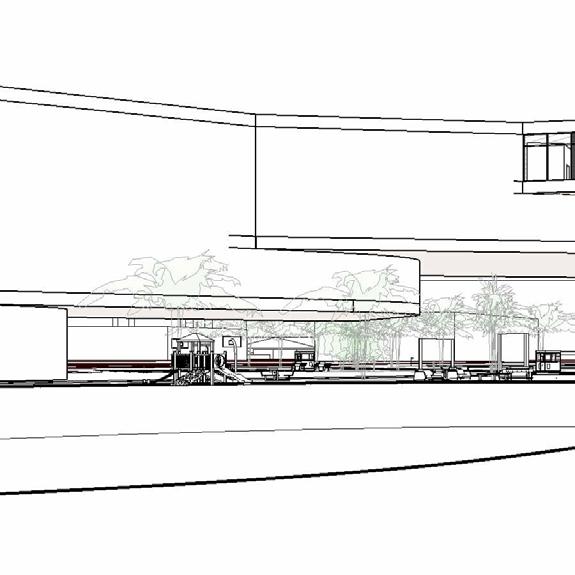
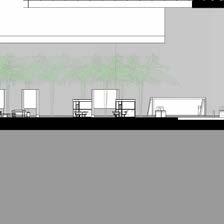
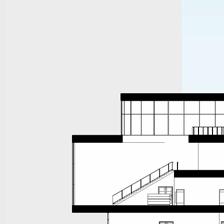
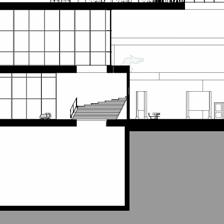
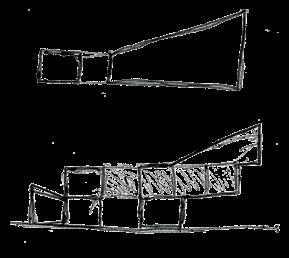
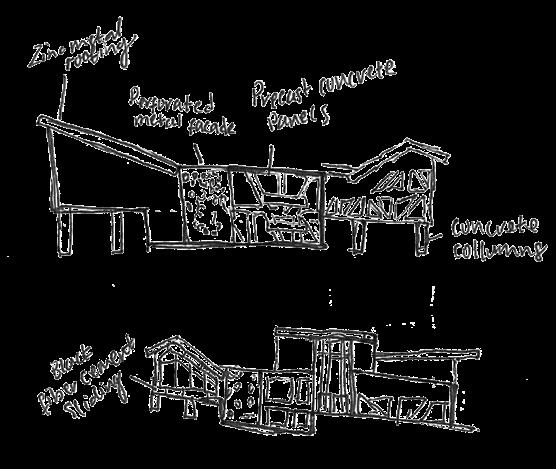
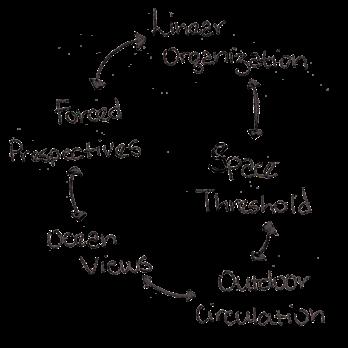
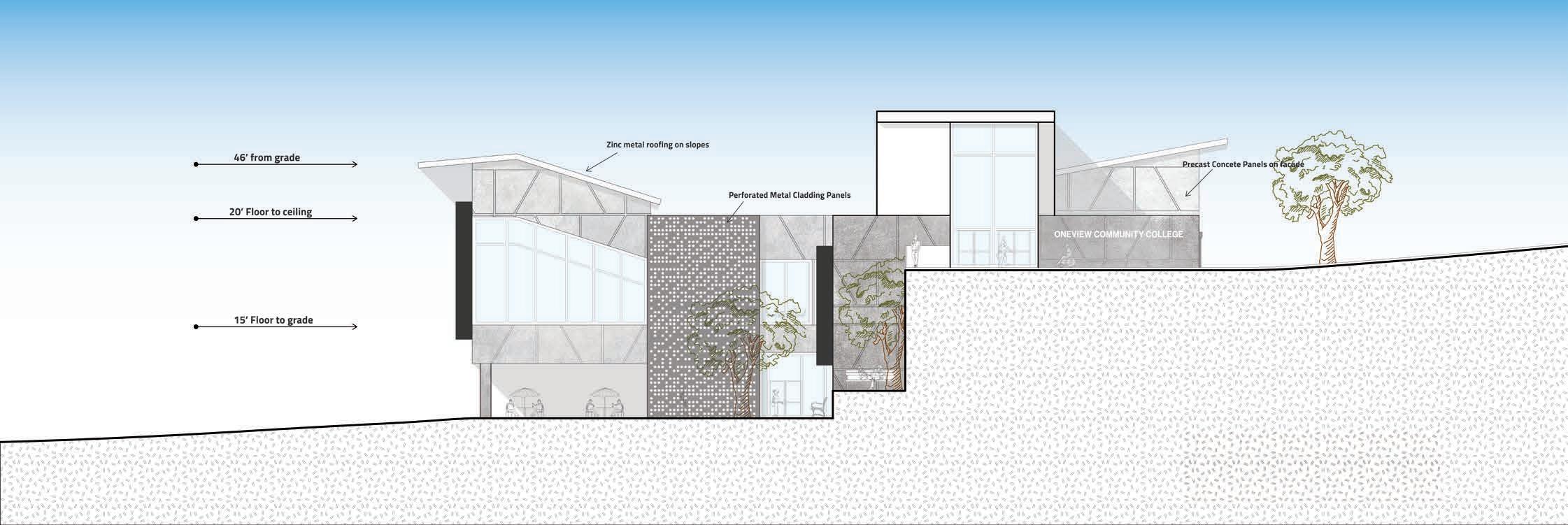
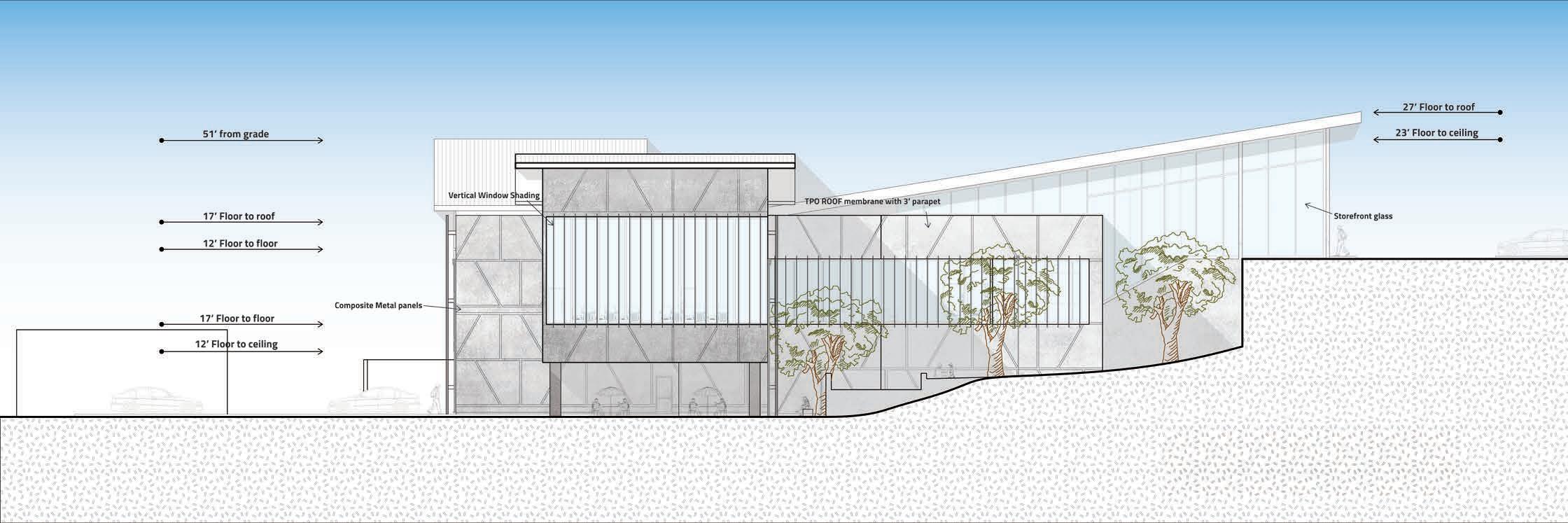
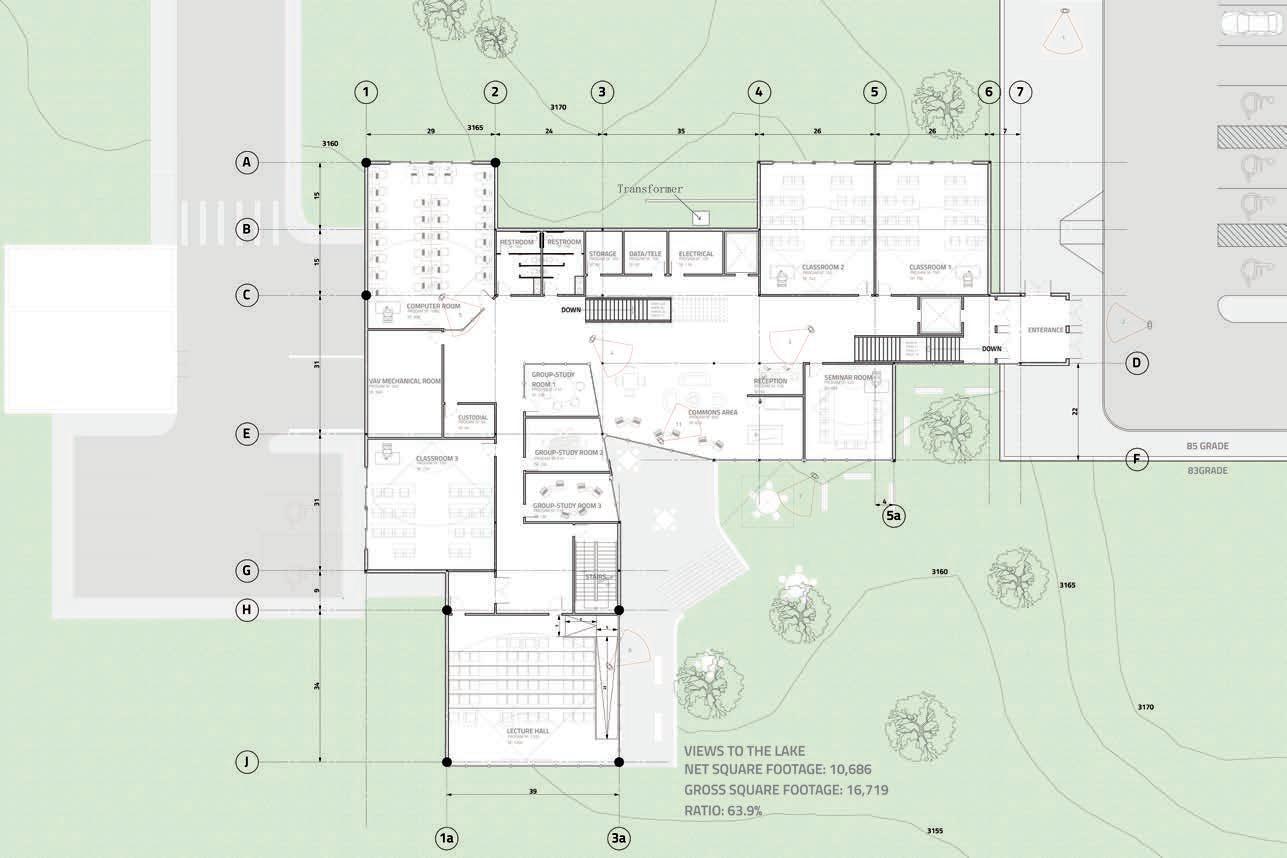
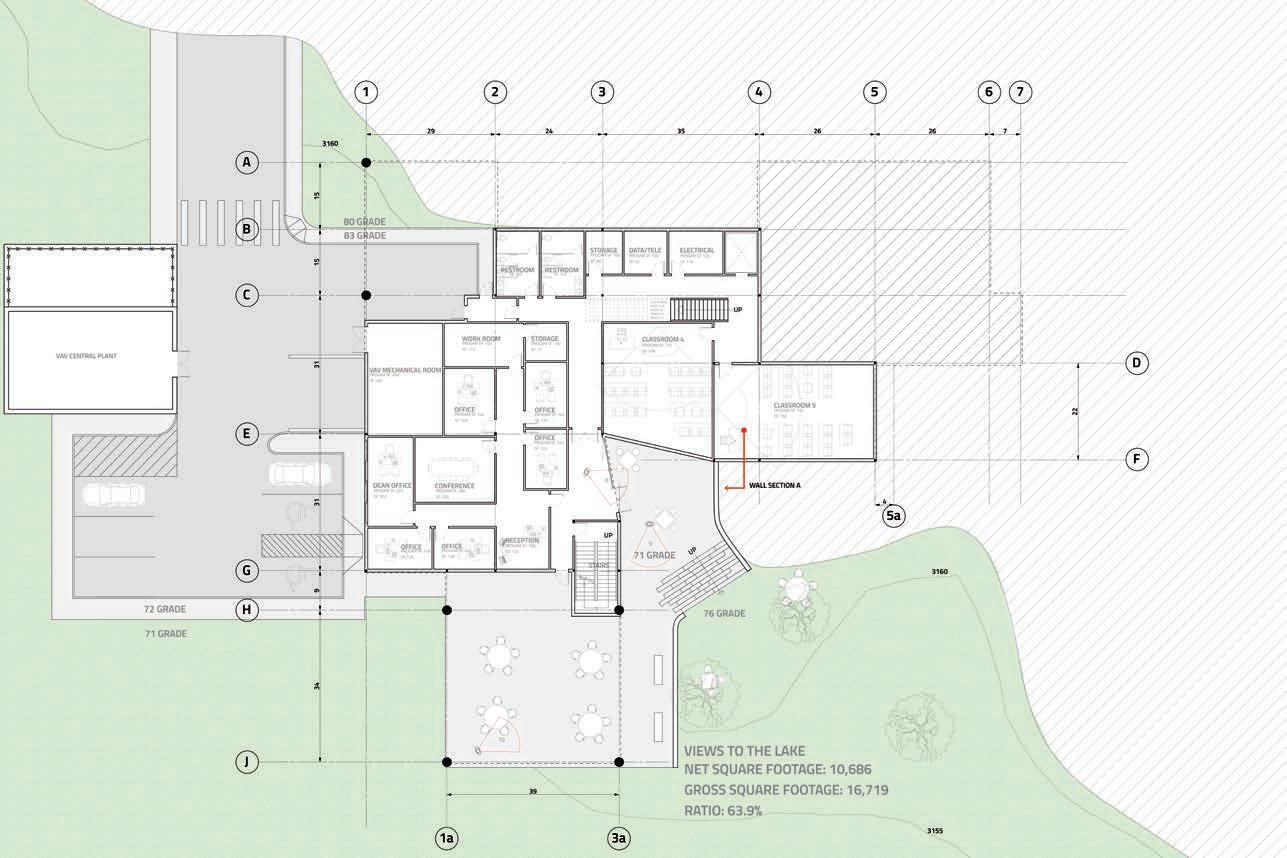
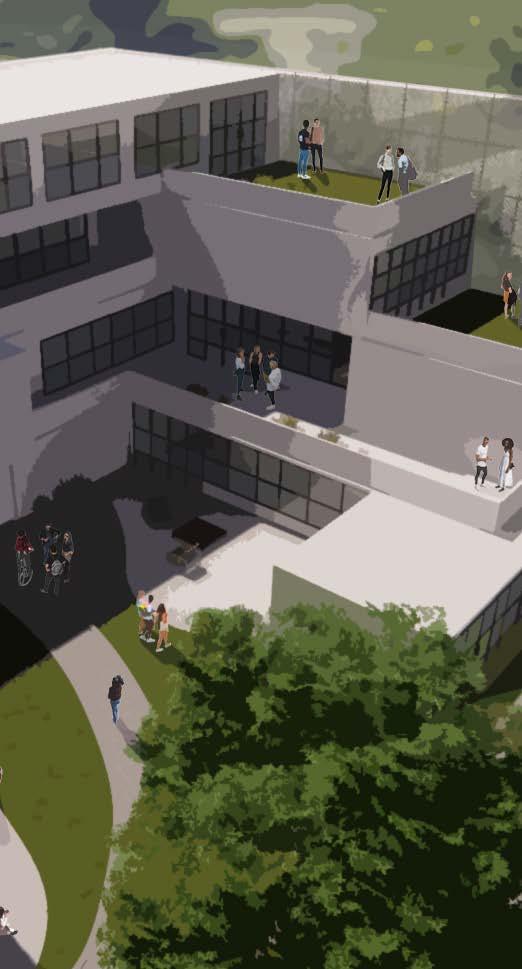
Oneview community college is a harbor for community learning with stunning floor-toceiling views throughout the south side of the building facade overlooking the canyon lakes. The building has an L-shaped linear organizatlon with slanted ceiligns showcasing the different hierarchies of spaces within the building leading people to flow from the high point downward which all leads to the big community common space for the students. The building was intentionally put on this part of the site to allow for a multi-level grade entrance and an outdoor courtyard on the south facade. Most views out of the apertures throughout the buildmg overlook the same views entailing the same goals and ideas this community space provides, encouragmg interaction from anywhere in the building.
VERTICAL PLAYGROUND
800,000SF MIXED-USE COMPLEX
LOS ANGELES,CA
FALL 2024
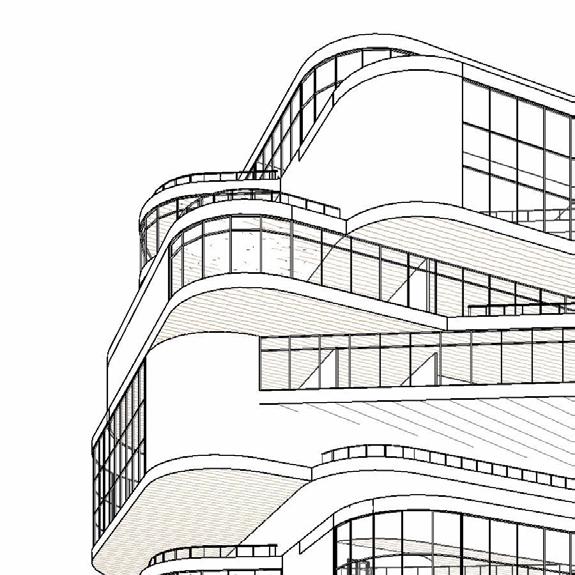
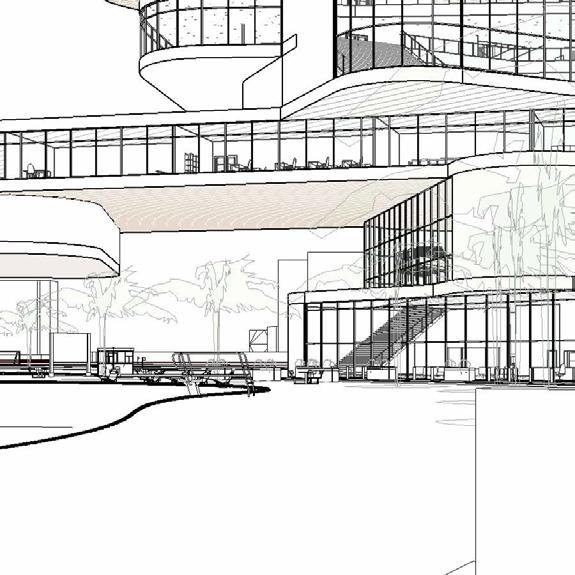
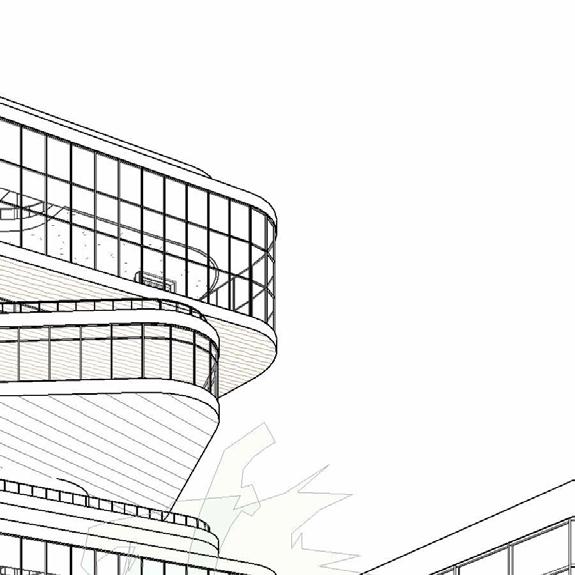
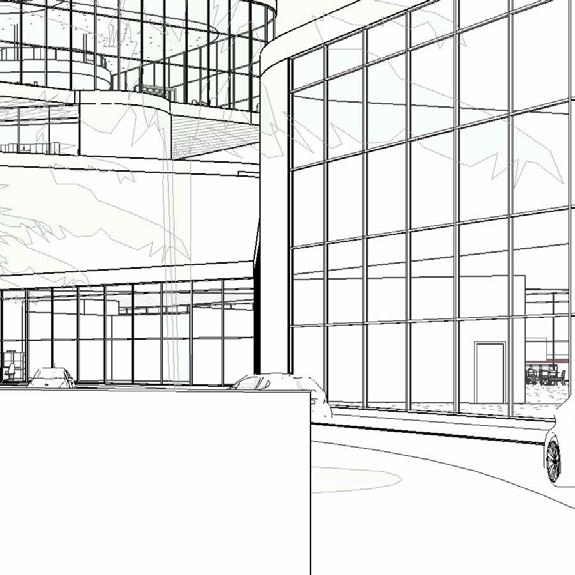
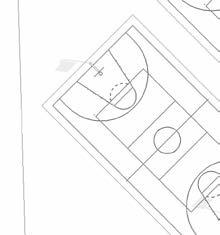
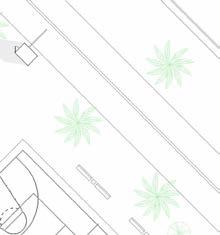
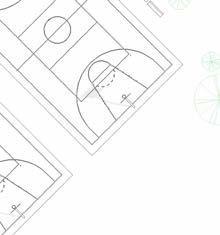
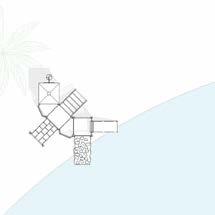
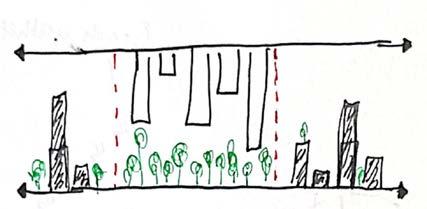
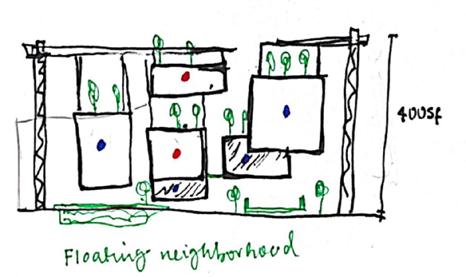
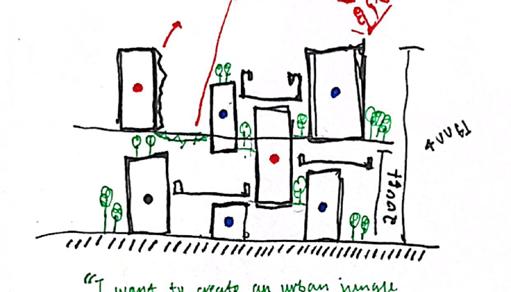
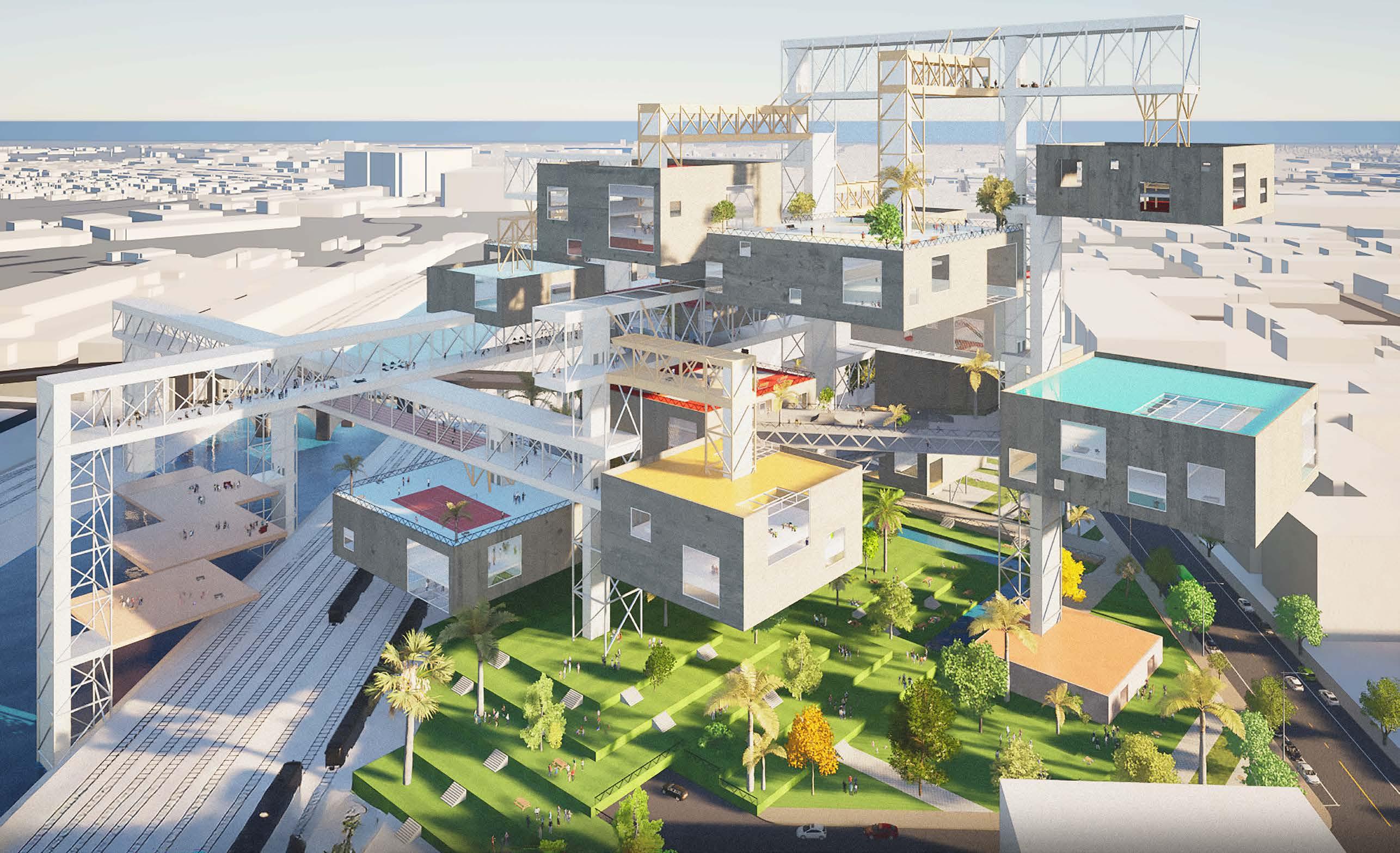
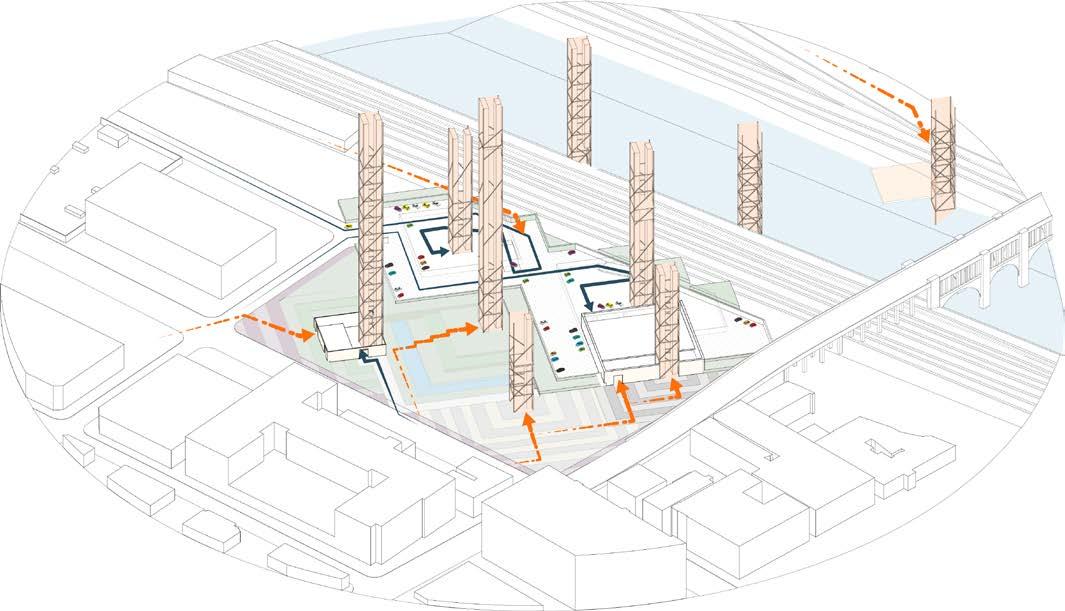
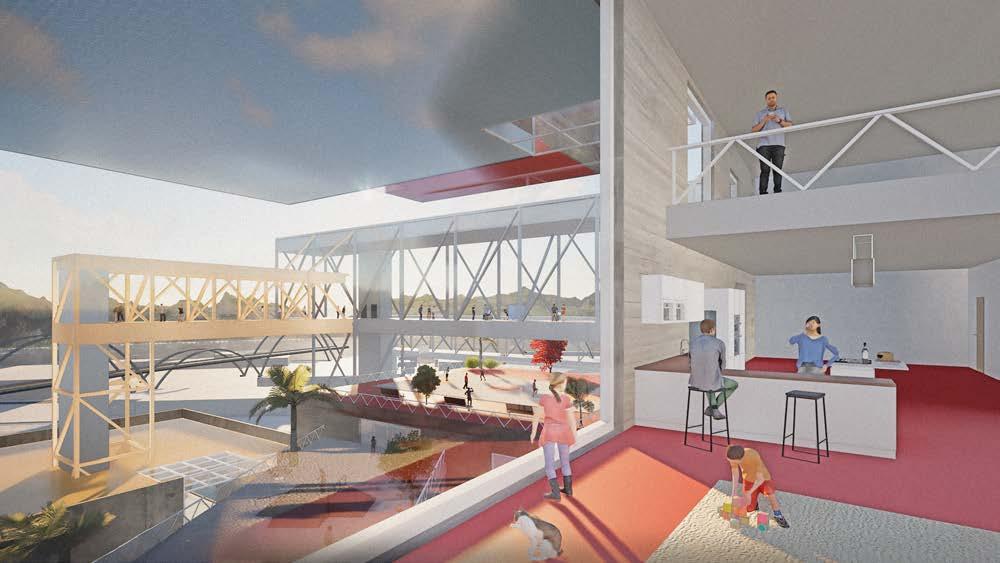
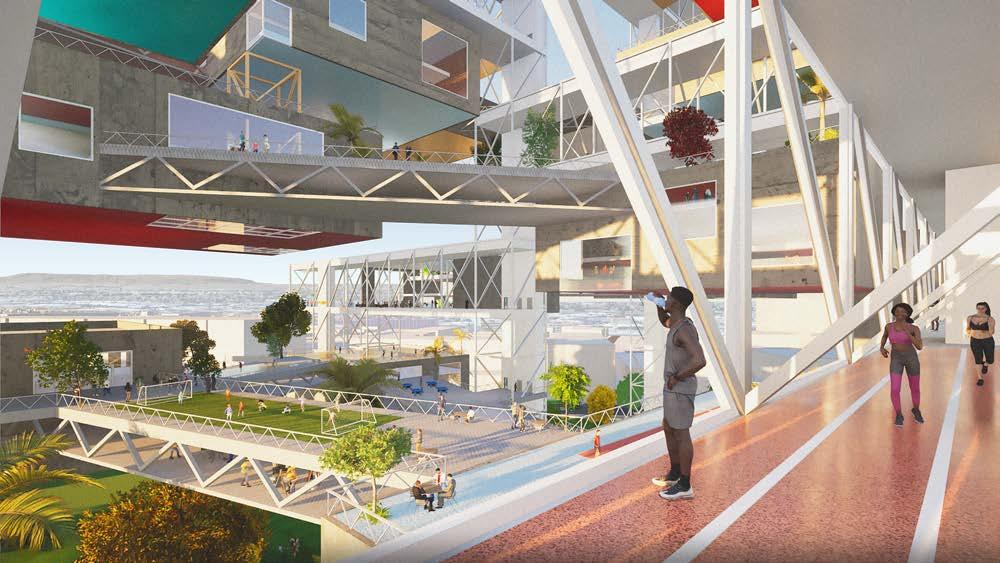
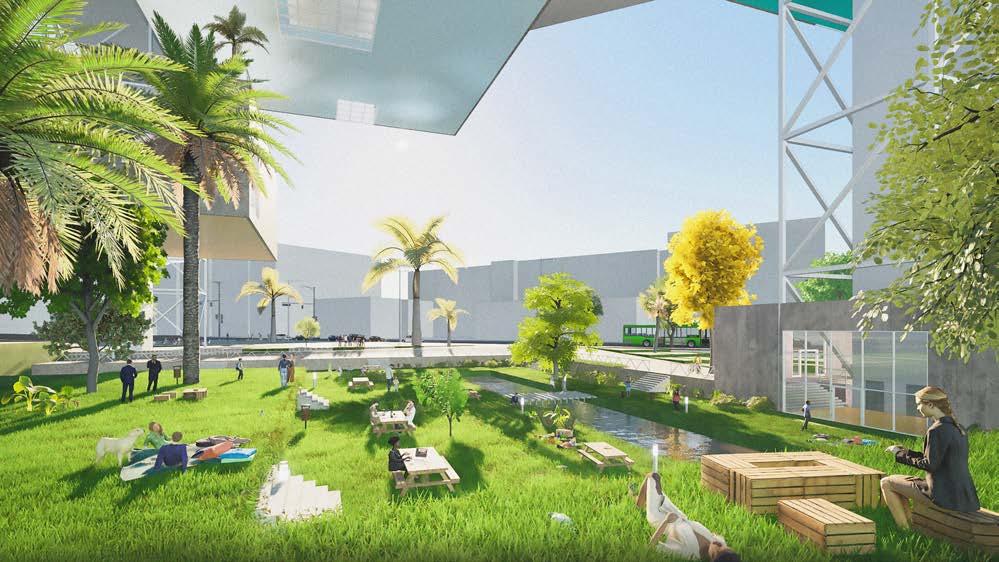
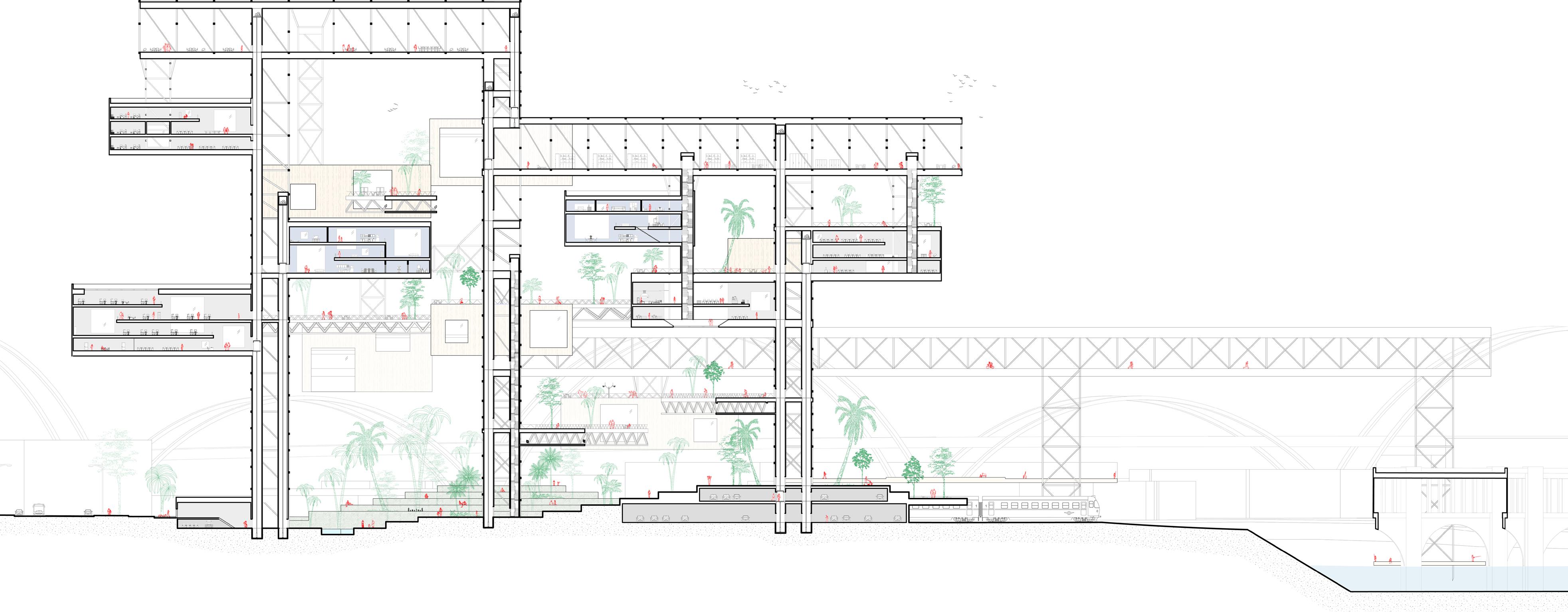
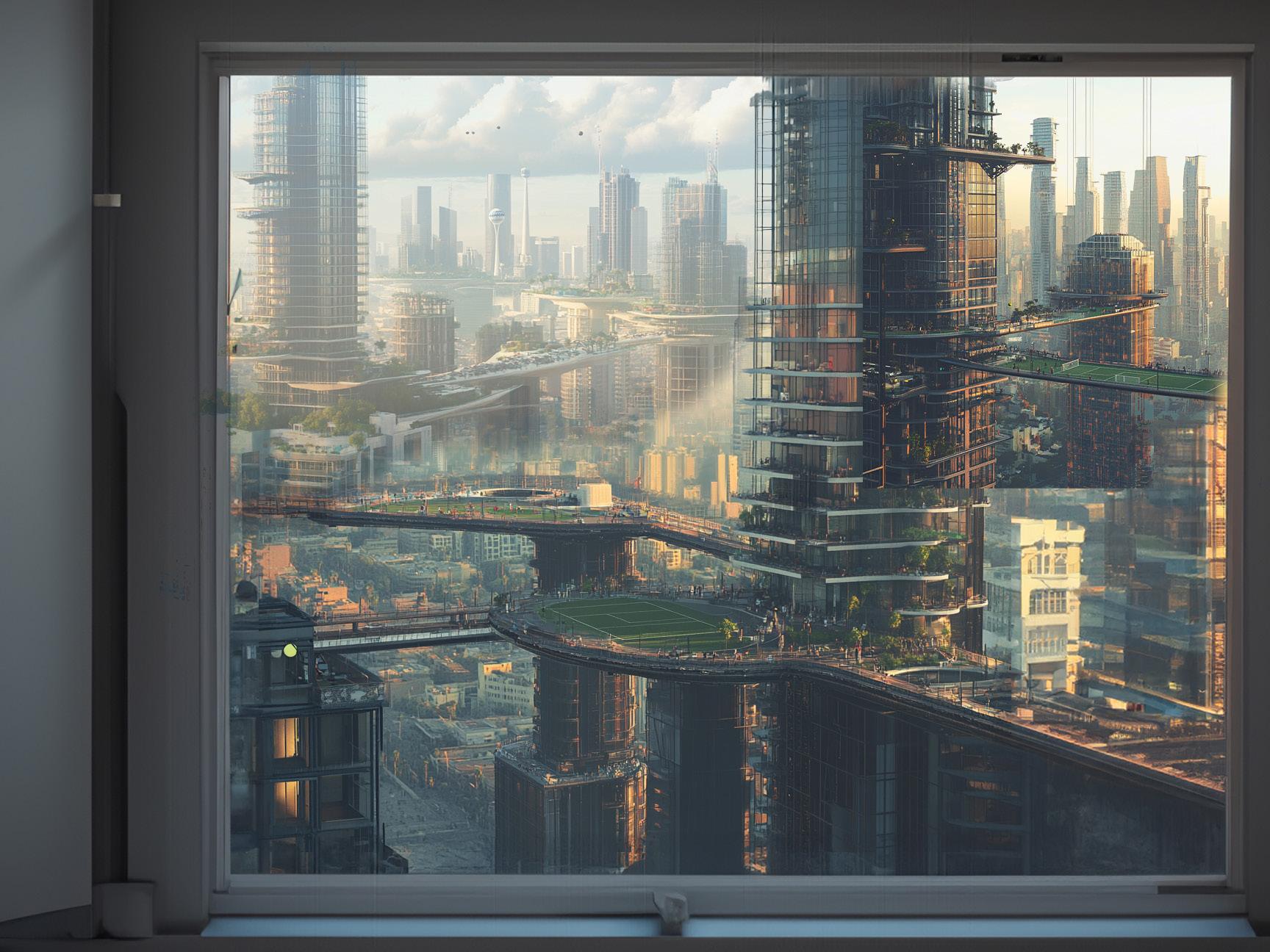
The densely packed urban ground plane offers little room for new development, forcing us to look upward for solutions. To address these challenges, I propose a new typology that integrates layered spaces for sports and cultural activities within urban environments. By going vertical rather than expanding horizontally, we can alleviate stress on the ground plane reviving the lack of green space in the Los Angeles metropolis and create a new skyline that provides immediate impact for those below. This superimposition of sports onto existing structures becomes a template for designing infrastructure that accommodates cultural and recreational activities alongside residential and commercial spaces, a new ideal for all things linked rather than individual.
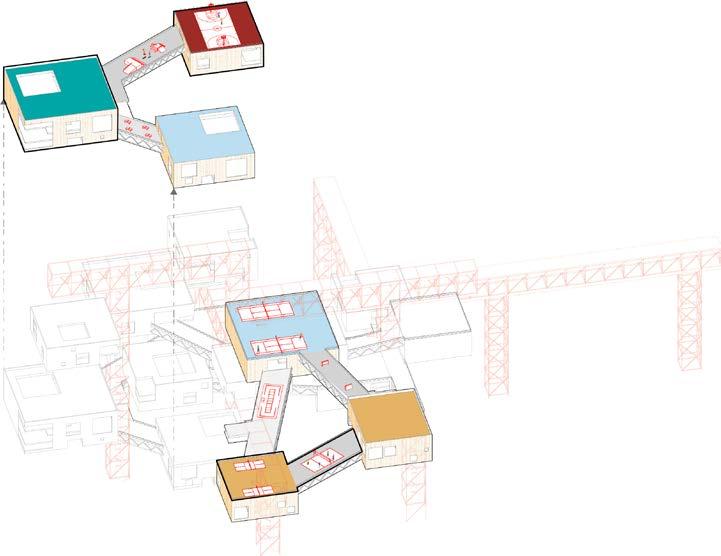
My vision is to design a series of cores, strategically elevated to create a sensation of floating within the urban landscape. These structures will serve as dynamic spaces that house a variety of sports and physical activities, offering a unique experience as you ascend through them. The overarching concept is to evoke a sense of independence and freedom, where individuals are empowered to choose their own path at every level, fostering an atmosphere of personal exploration and mobility.
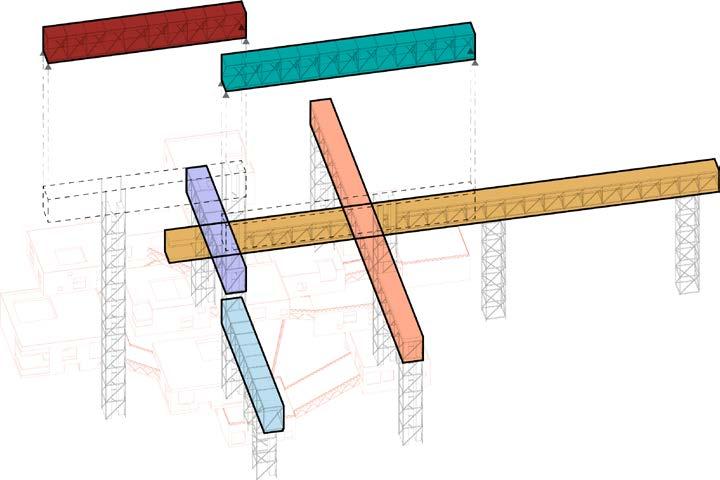
DIAGRAM PLAYGROUND DIAGRAM
THE NEYBORHOOD
HOUSING STUDIO
CLT CO-DIVIDUAL HOUSING
LOS ANGELES, CALIFORNIA FALL 2023
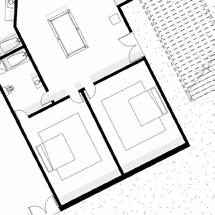
1X MINI SHARED QUARTERS
3X WASHER DRYER UNITS
2 PODS 4X BATHROOMS EACH
2 PODS 8X BEDROOMS EACH
1X FLEXIBLE SPACE
1X KITCHEN
2X OUTDOOR
1X SHARED LIVING
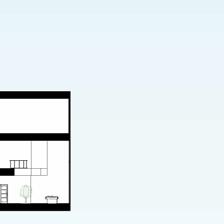
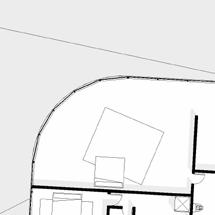
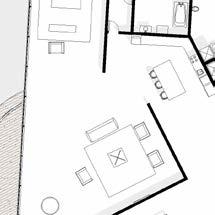
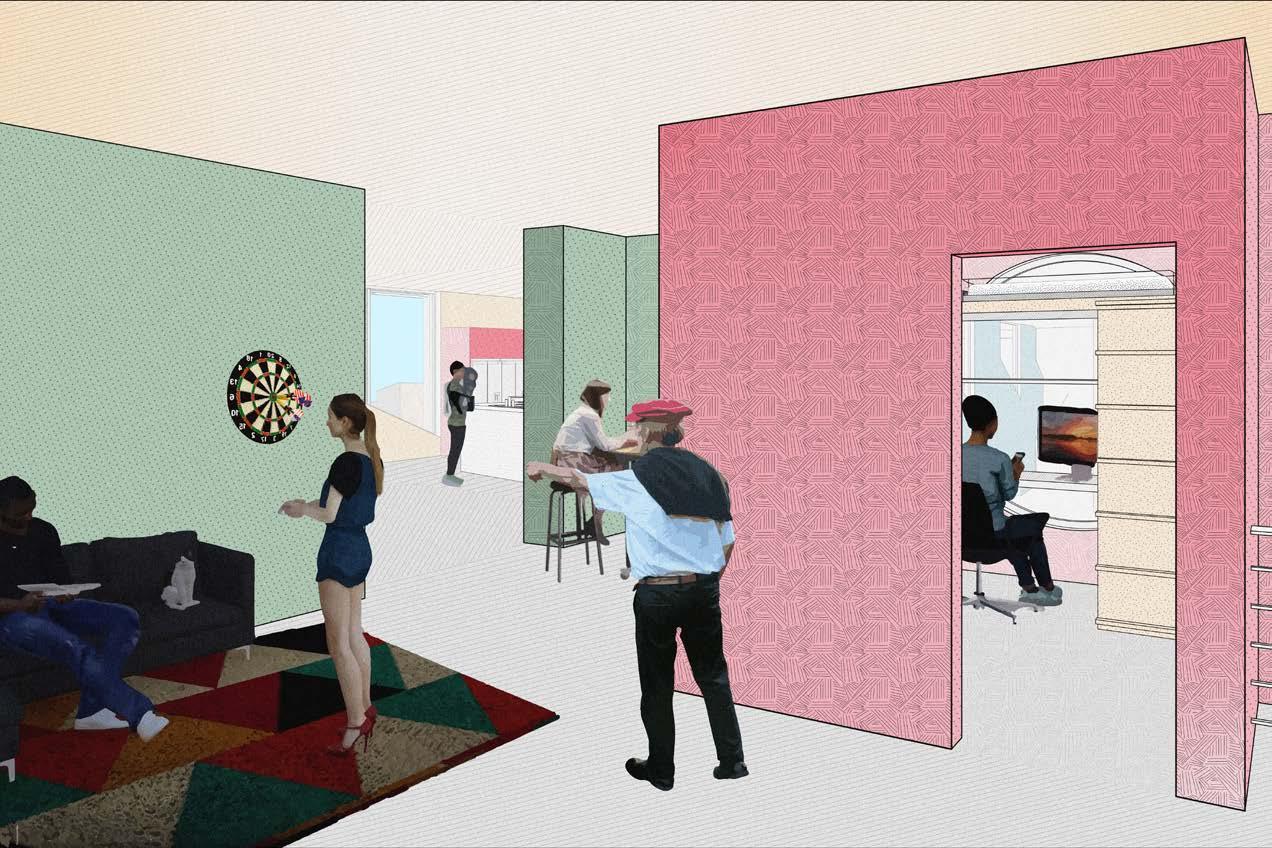
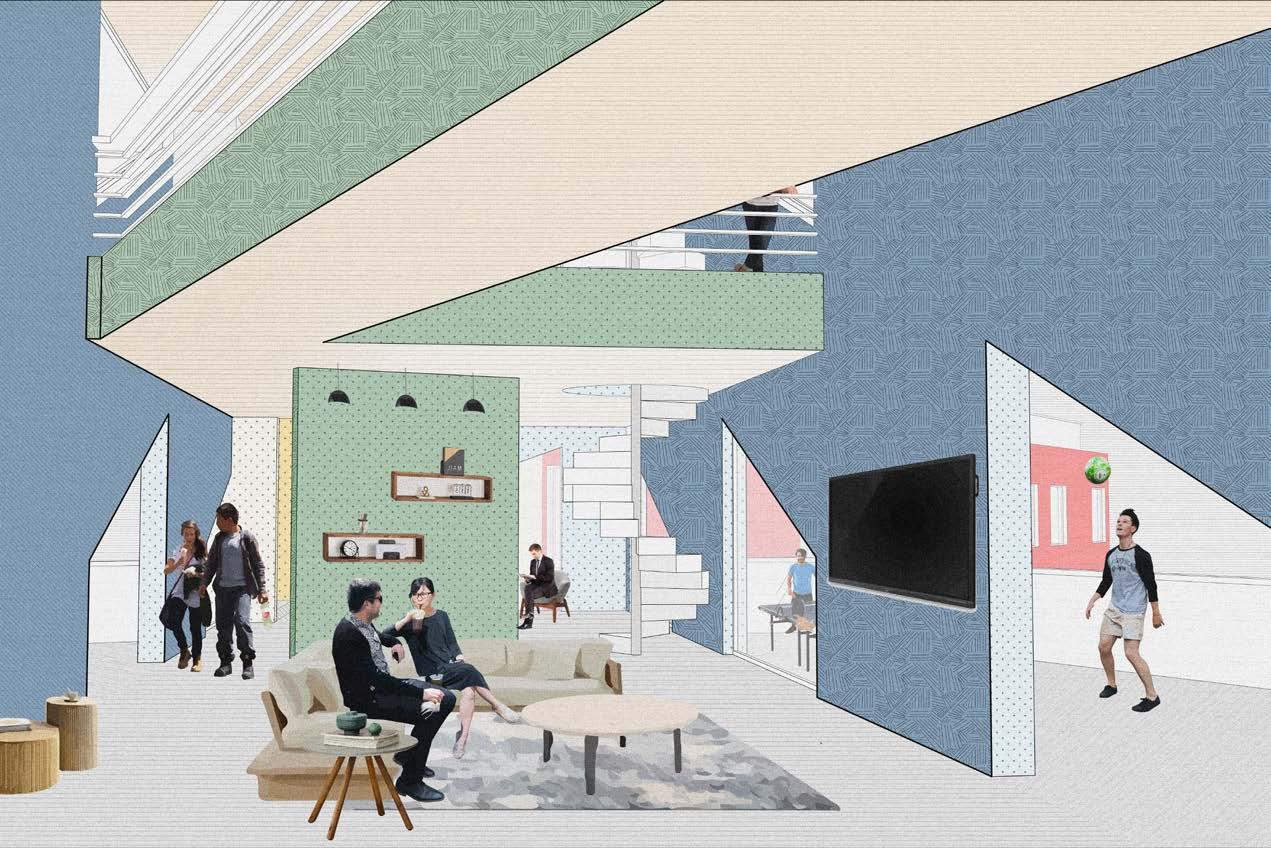
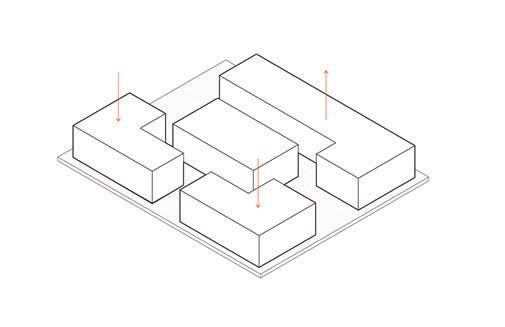
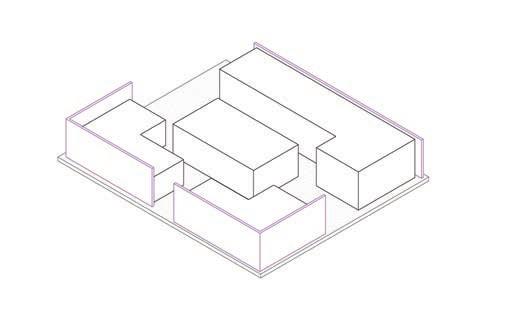
The Neyborhood is a reimagining of the balance between individual and shared, private and public. Drawing inspiration from co-dividual housing concepts, the design separates private and communal spaces by floor. Private bedrooms are placed on one level, while shared living and cooking spaces occupy another. This vertical separation elevates daily activities like cooking, eating, relaxing, and entertaining to a distinct plane, highlighting the value of shared experiences and fostering a sense of community. Project done in collaboration with Gregor Tillman
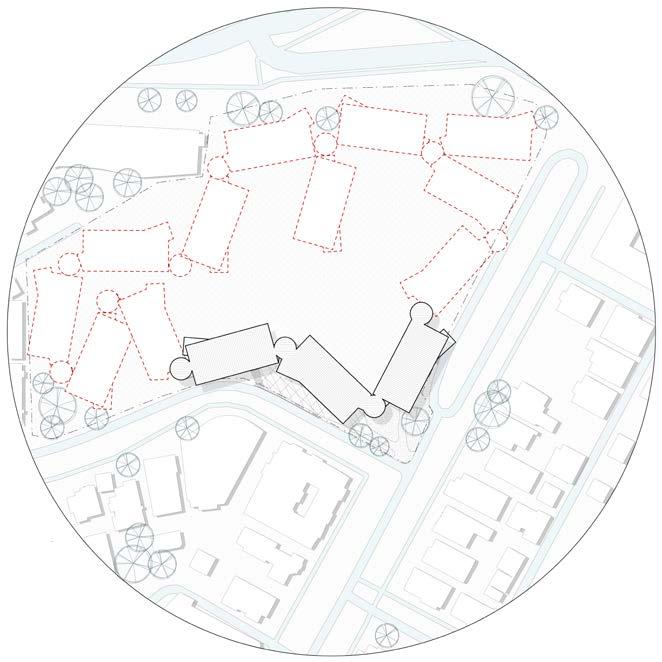
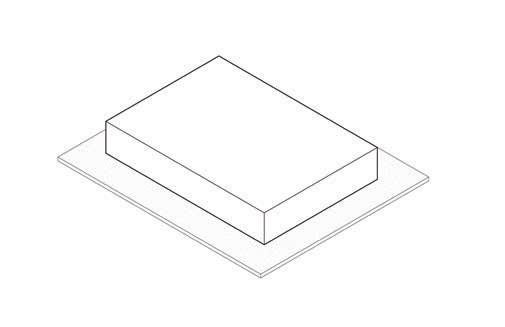
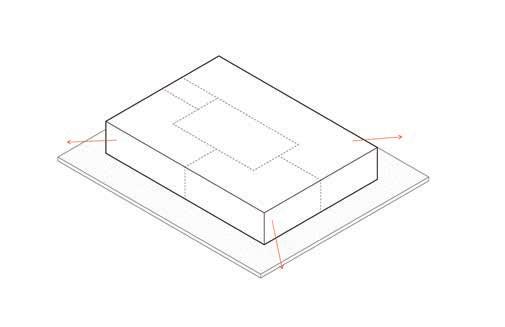
The modular typology is designed to adapt and expand, fitting seamlessly into the dense and irregular landscape of Los Angeles. At the heart of the structure is a circular core housing the elevator and egress stairs. This core can be tangentially attached to any building, creating a unique, meandering journey through the neighborhood.
SLEEPING FLOOR TYPE
OUTDOOR PERSPECTIVE
GROWING FOWARD: PLANTING GENERATIONAL ROOTS
NOMAS STUDENT DESIGN COMPETITION
MIXED-USE GENERATIONAL HOUSING
PORTLAND, OREGON FALL 2023
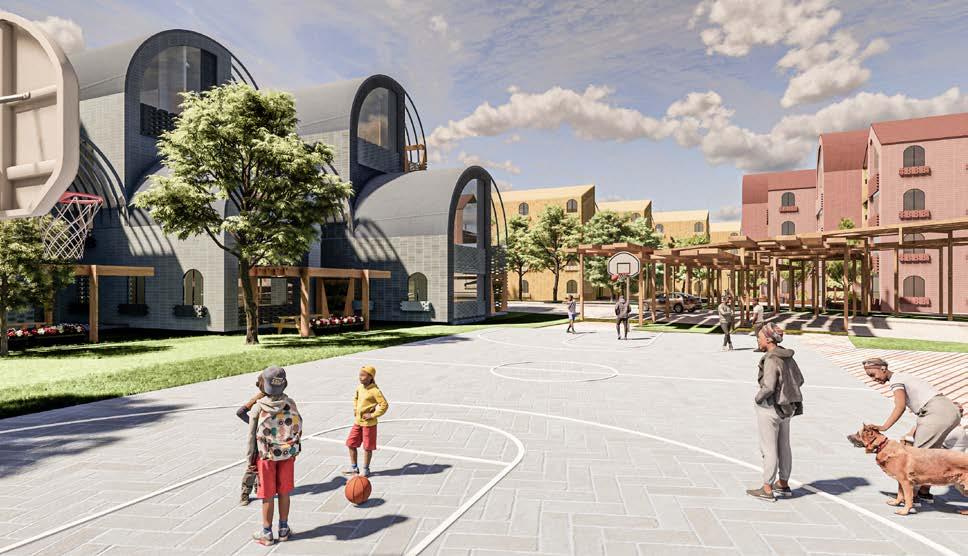
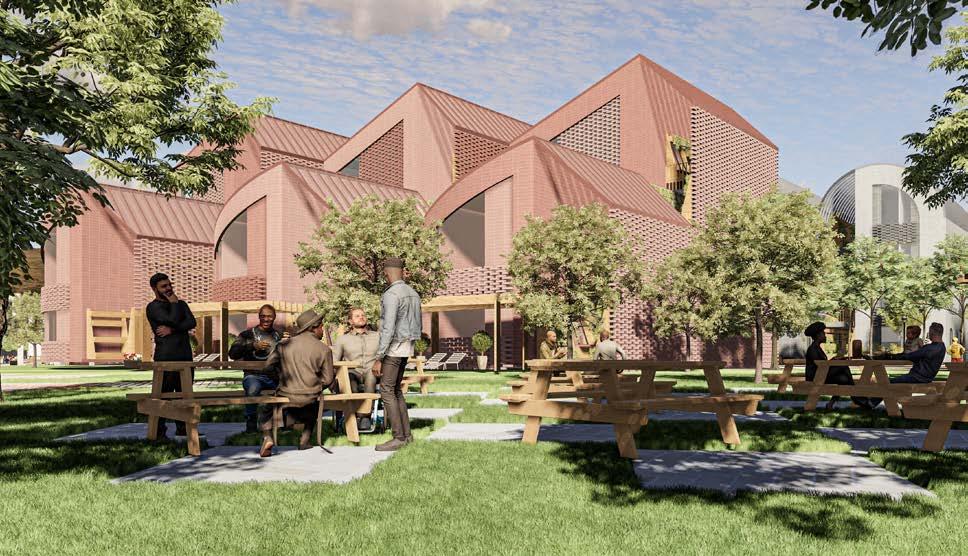
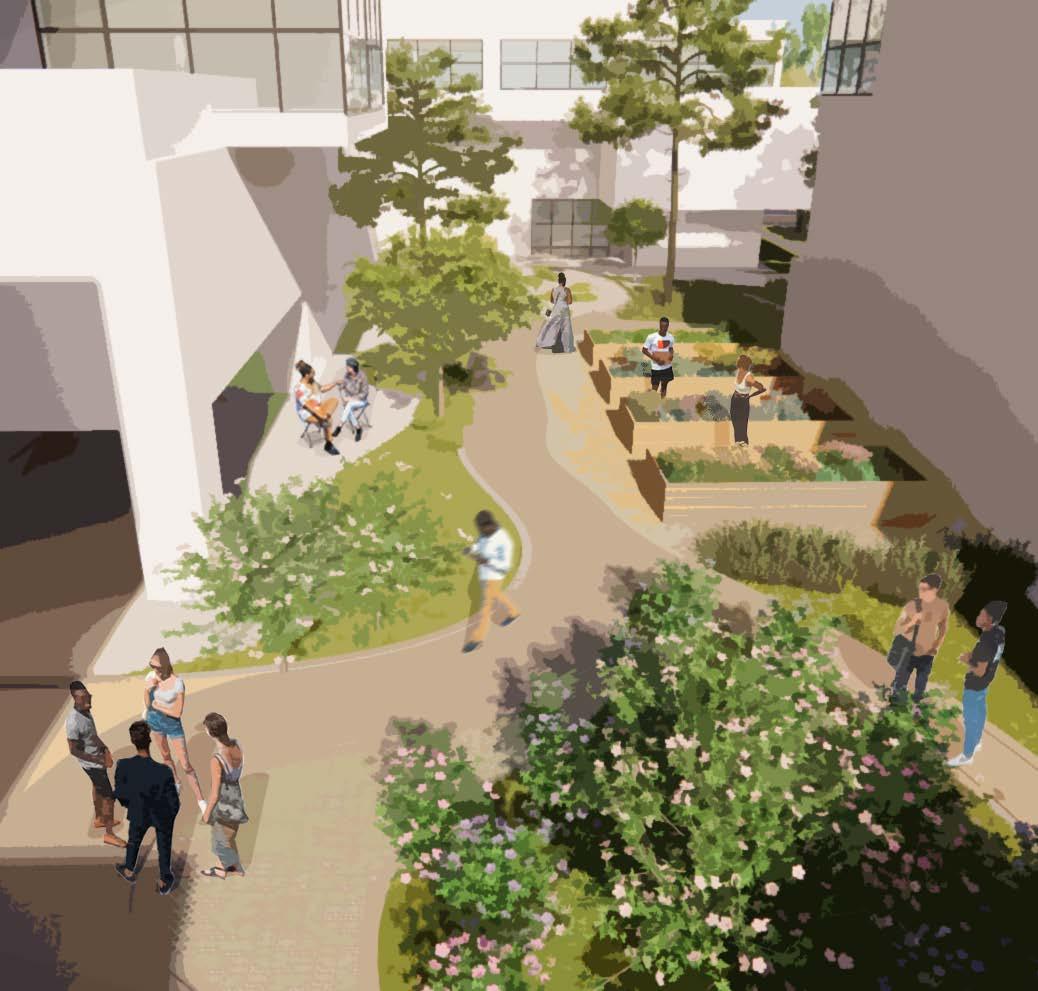
Growing Forward: Planting Generational Roots is about connecting generations through the retelling of history as well as cultivating intergenerational interactions. The documentation of the historically black Eliot neighborhood is present not only through the library but through the murals of Daren Todd, whose artwork focuses on capturing the significance of the black community in Portland. Through its residential spaces, courtyard green spaces, urban forest and gardens, and retail programs, Growing Forward fortifies intergenerational links that ensure Eliot’s legacy remains resilient. Project done in collaboration with the Nomas at USC student chapter.
COMMUNAL AMENITIES DIAGRAM
URBAN LANDSCAPE DIAGRAM
CORITA KENT FOUNDATION
COMPREHENSIVE STUDIO
CLT MIXED-USE COMMUNITY ART CENTER
LOS ANGELES,CA SPRING 2024
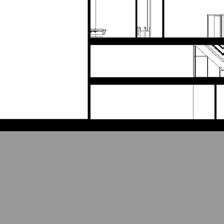
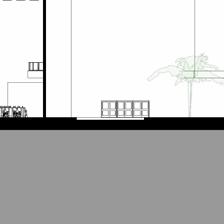
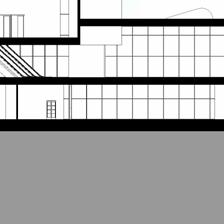
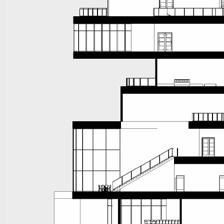
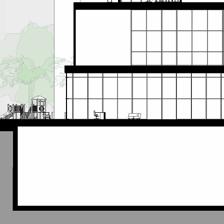
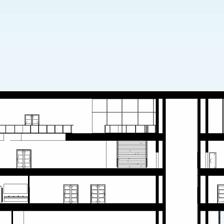
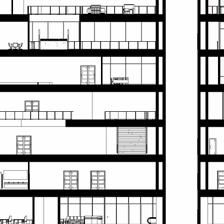
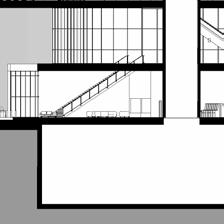
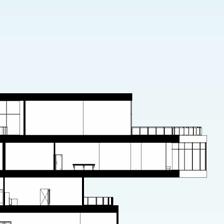
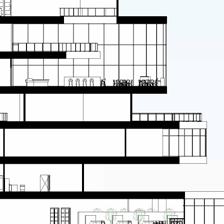
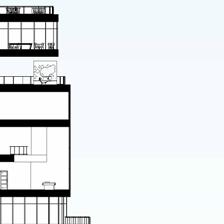
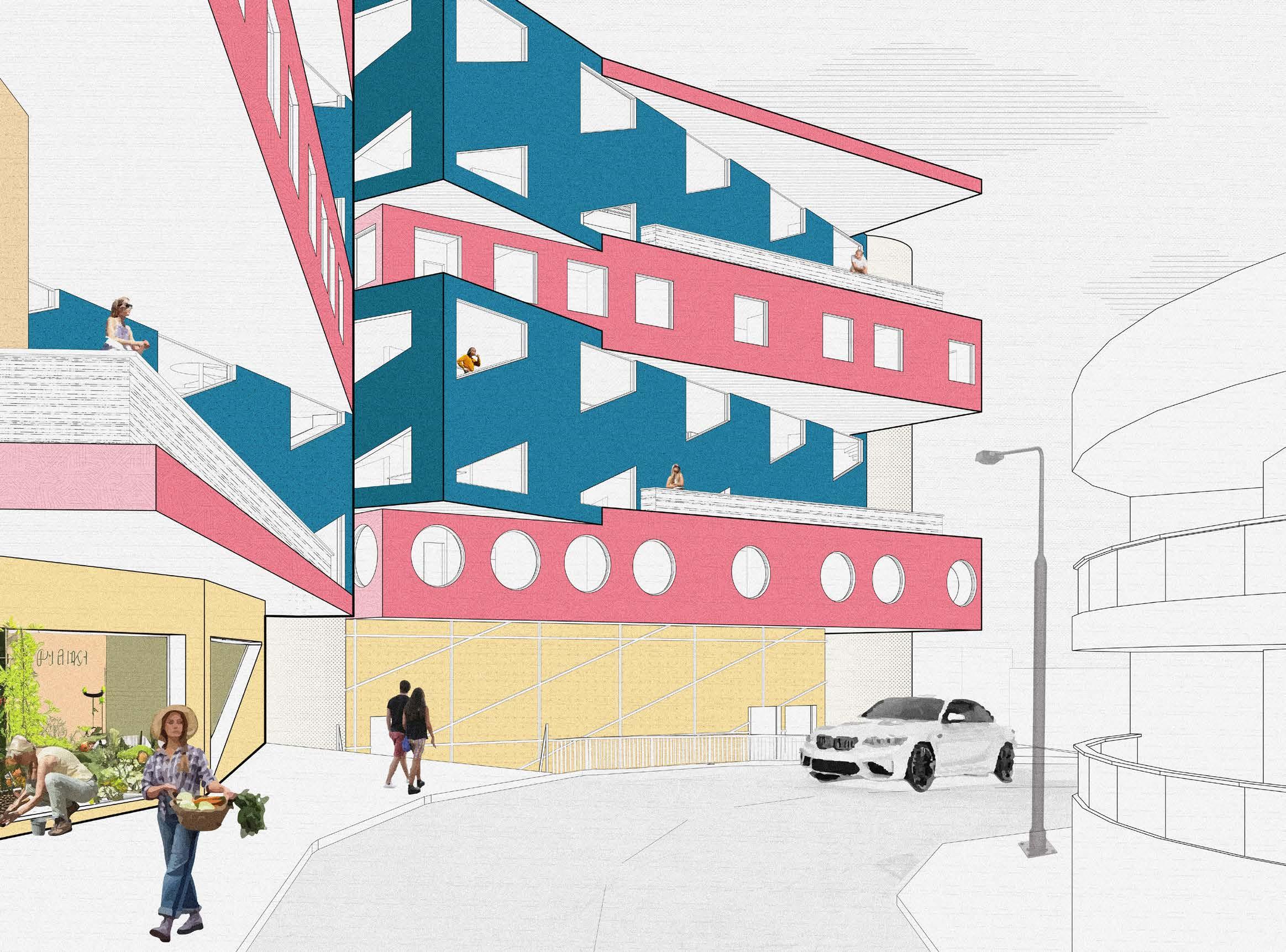
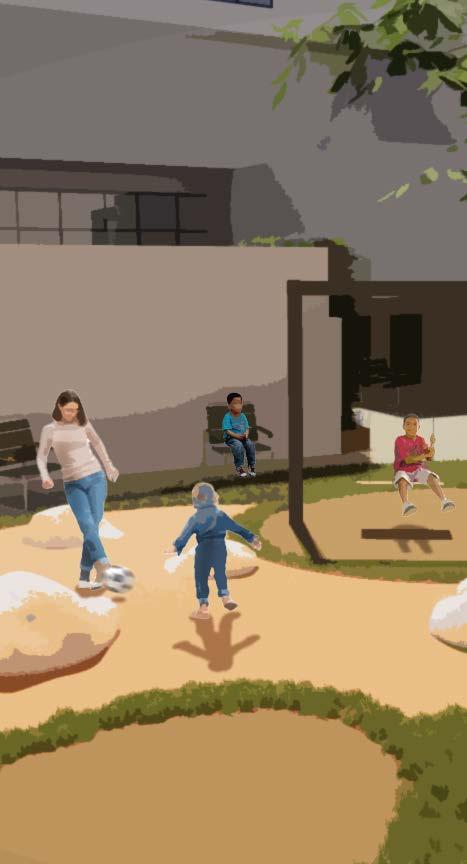
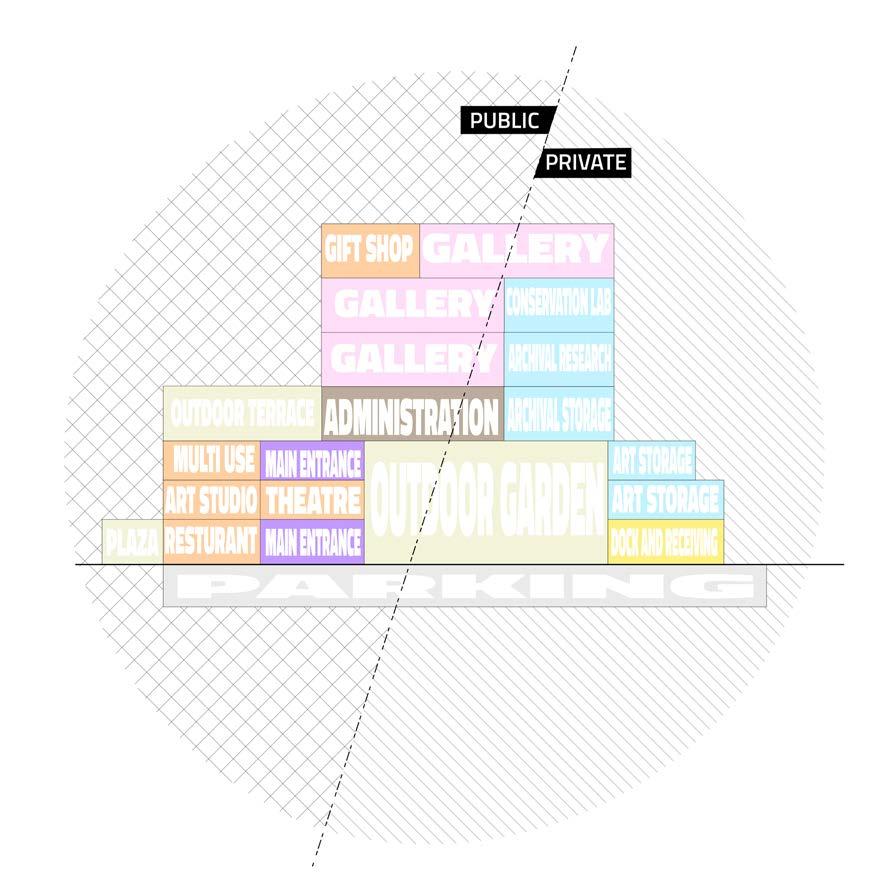
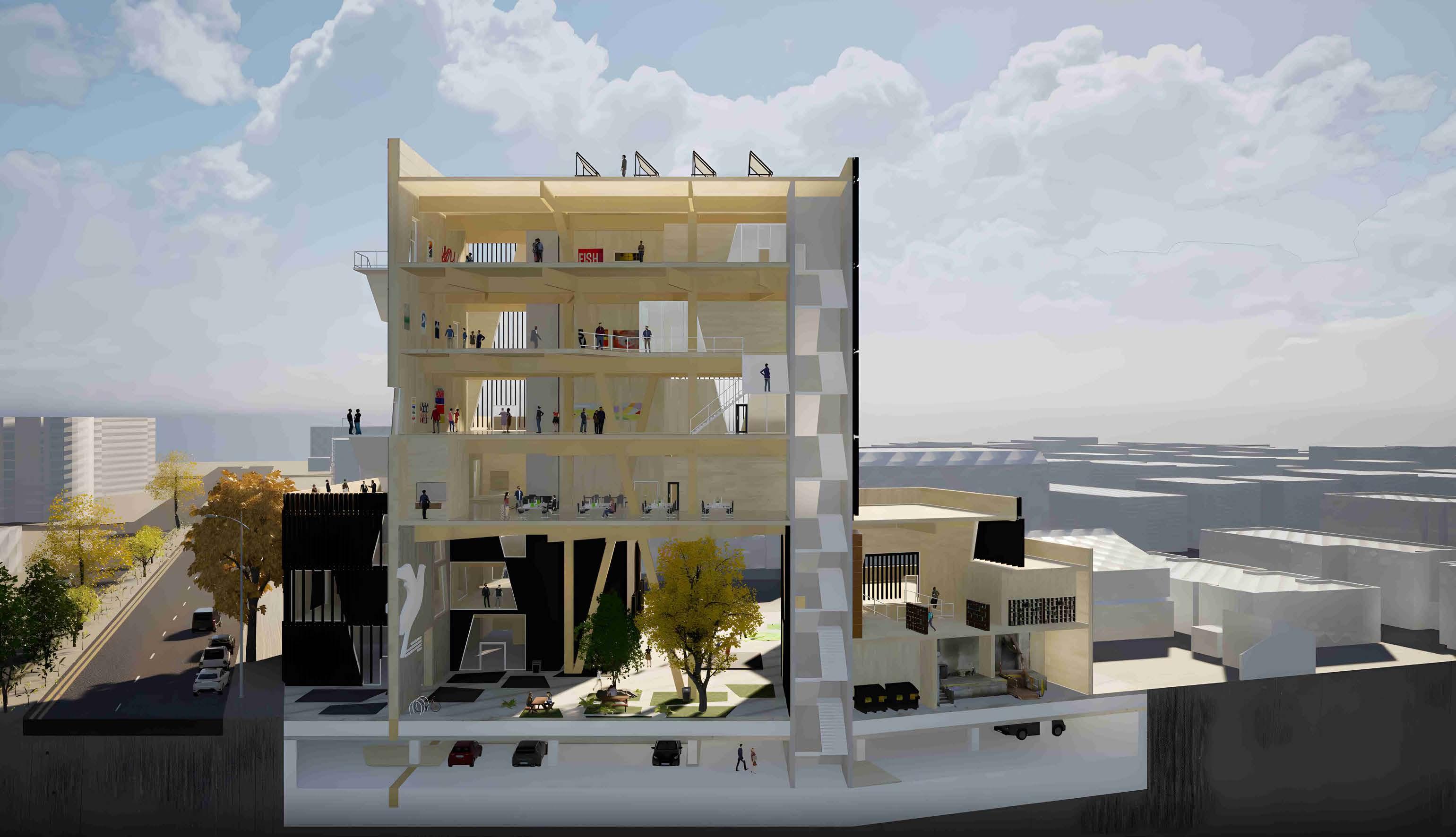
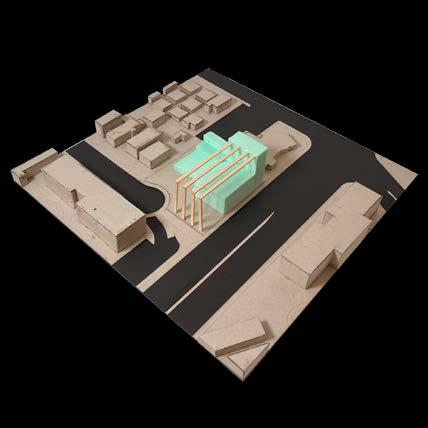
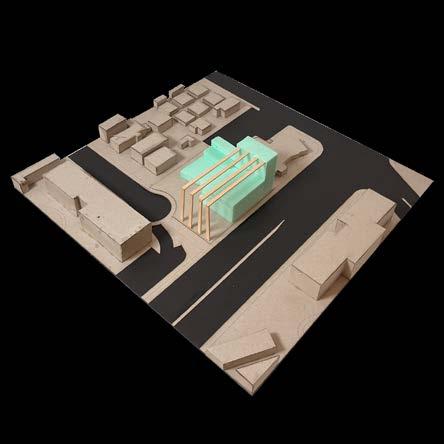
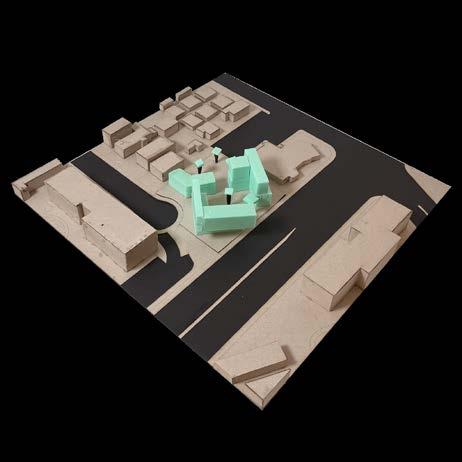
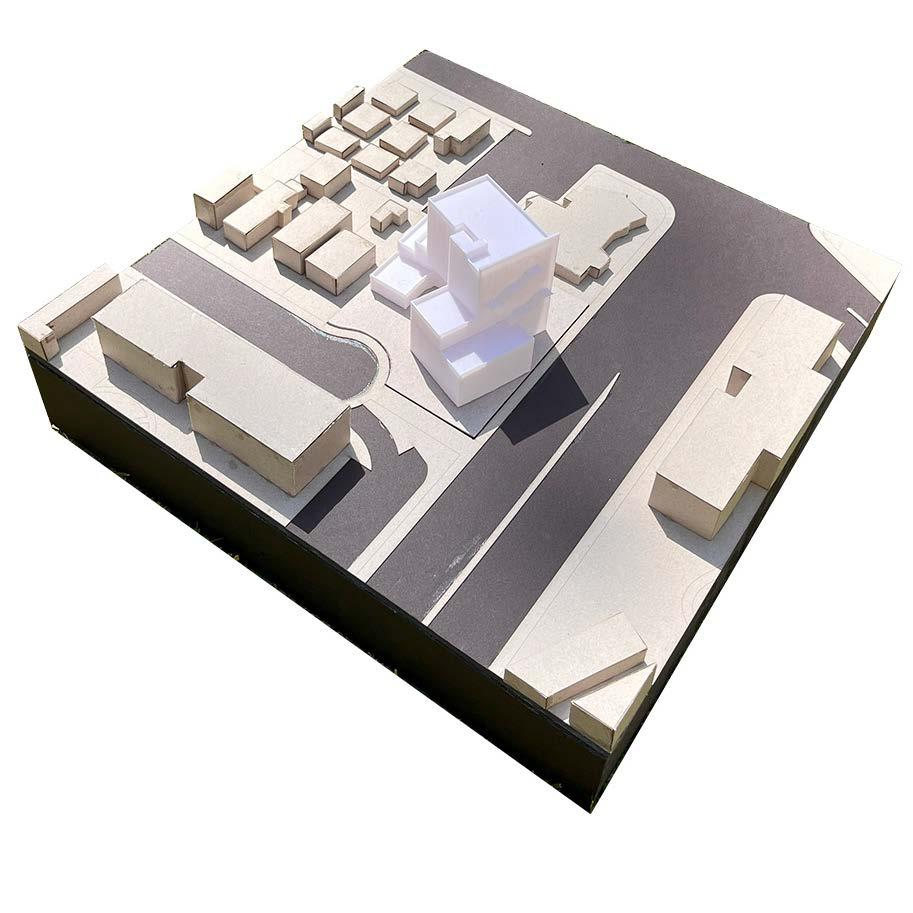
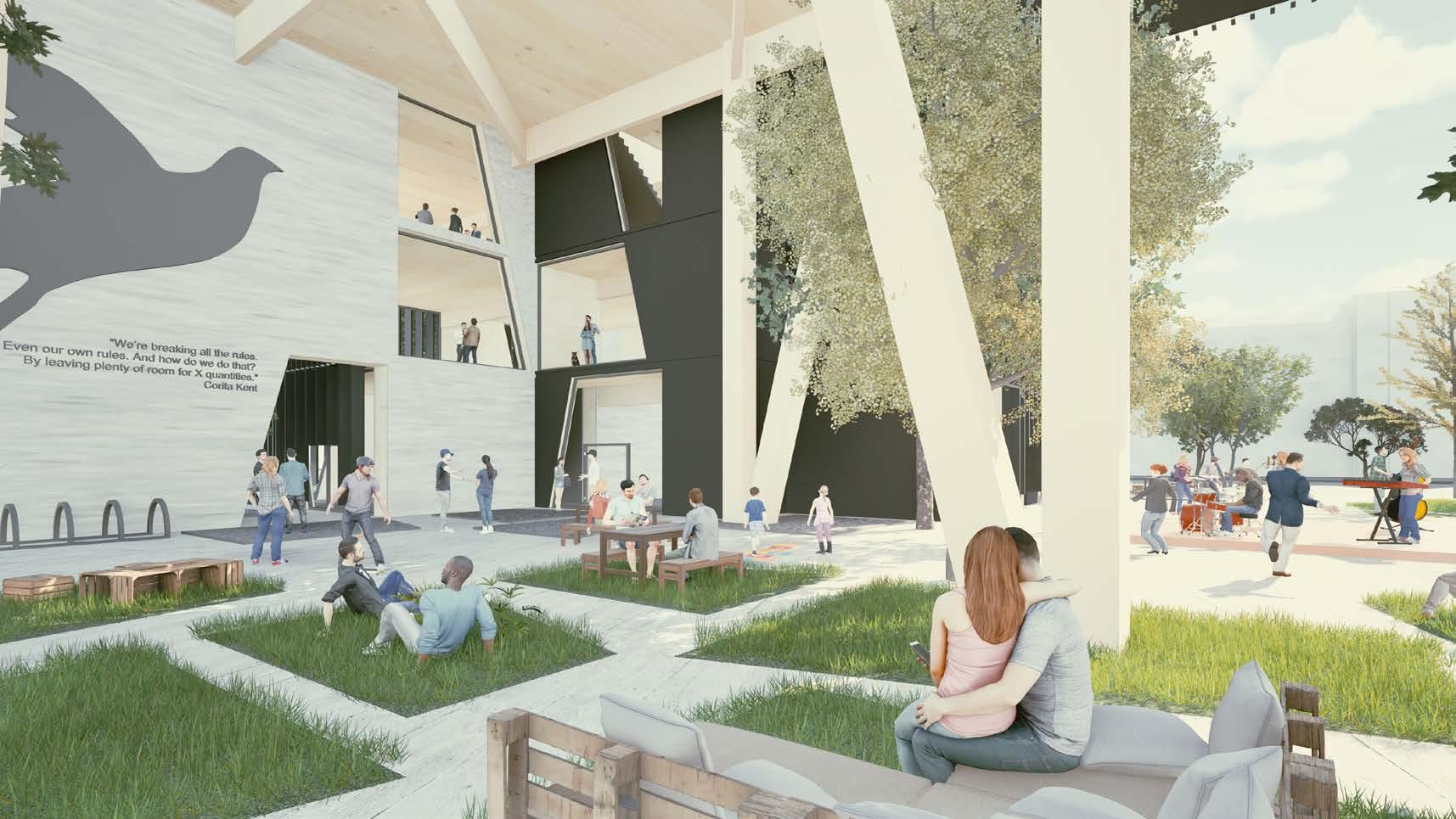
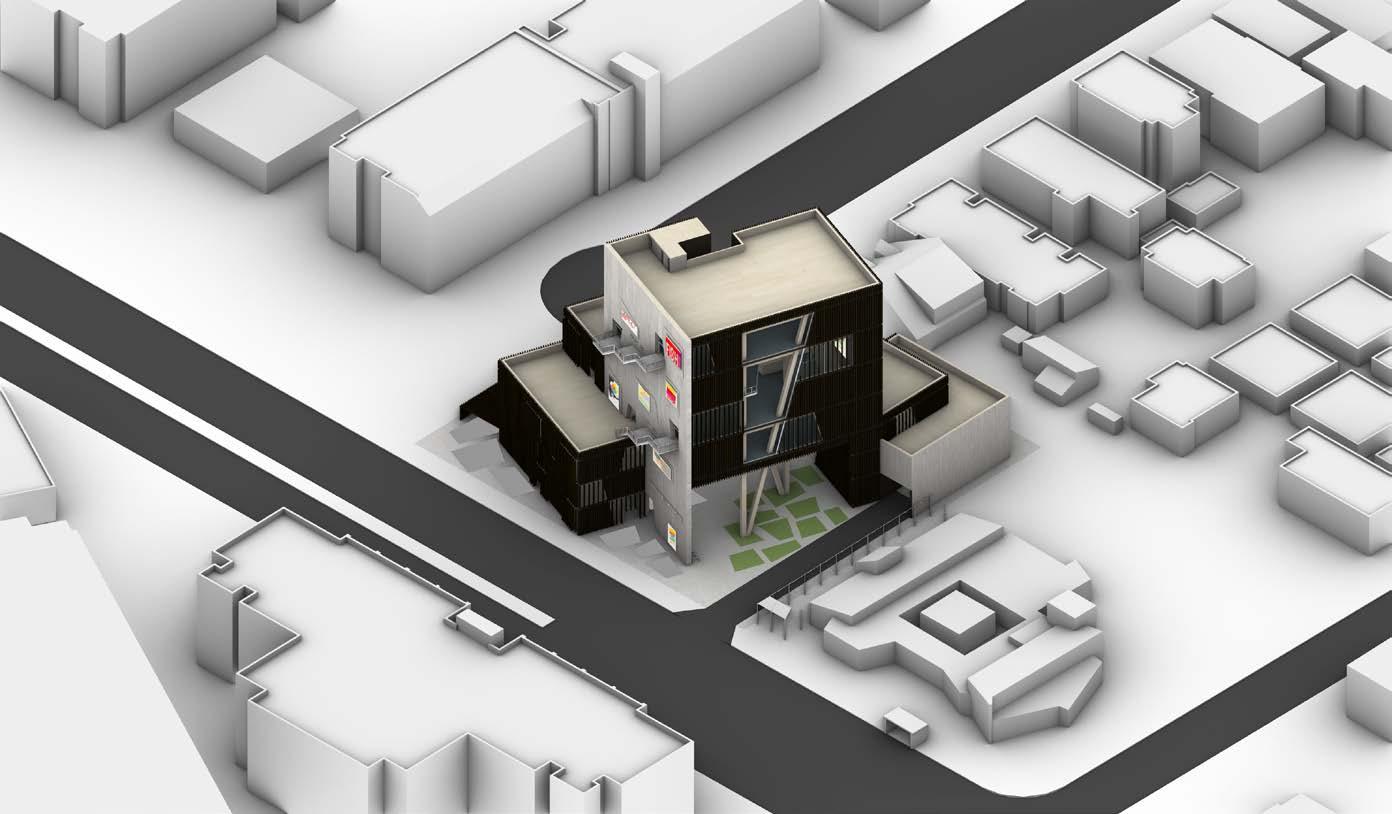
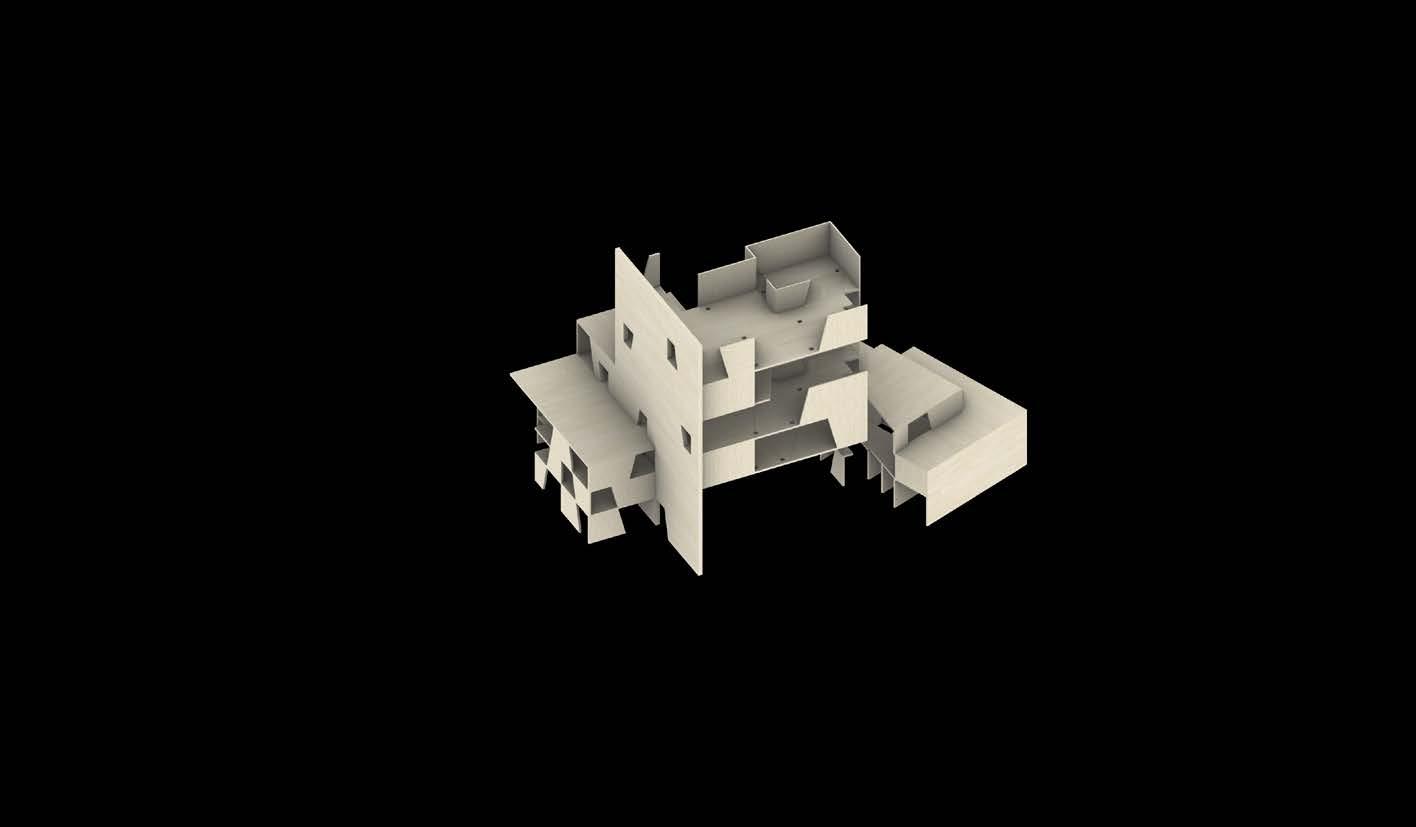
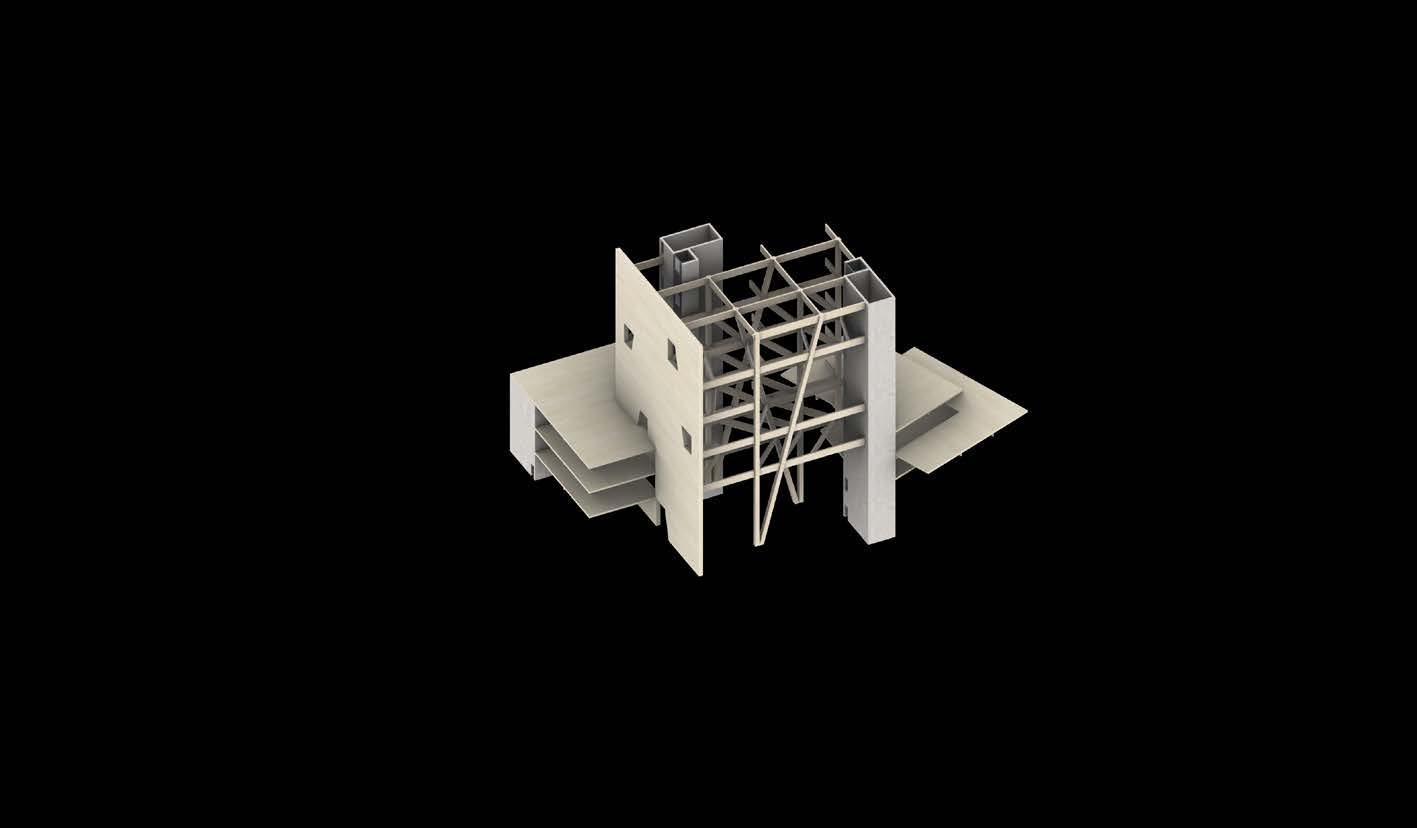
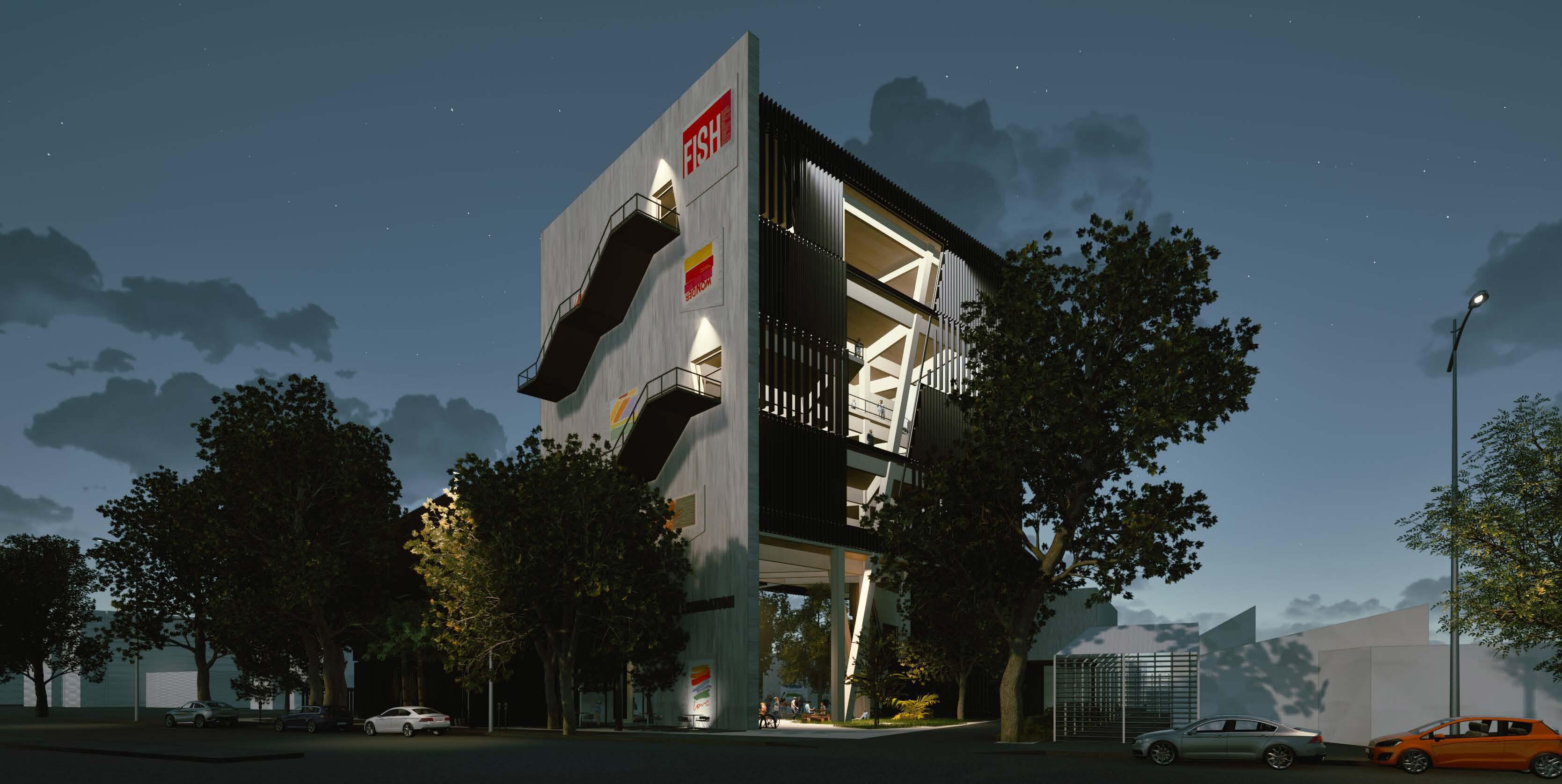
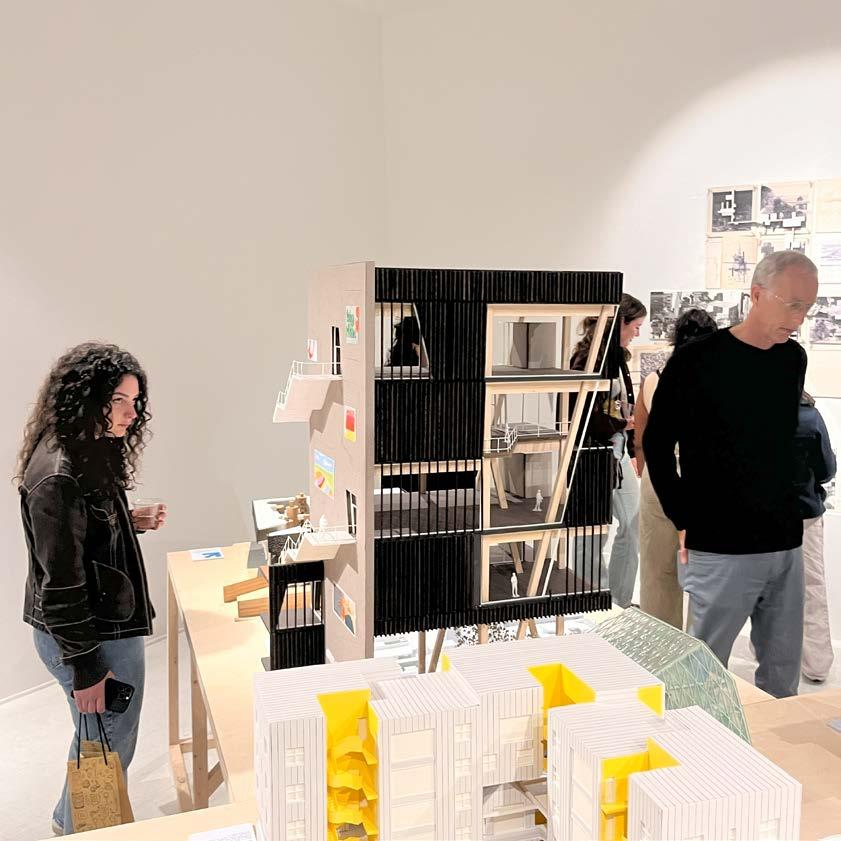
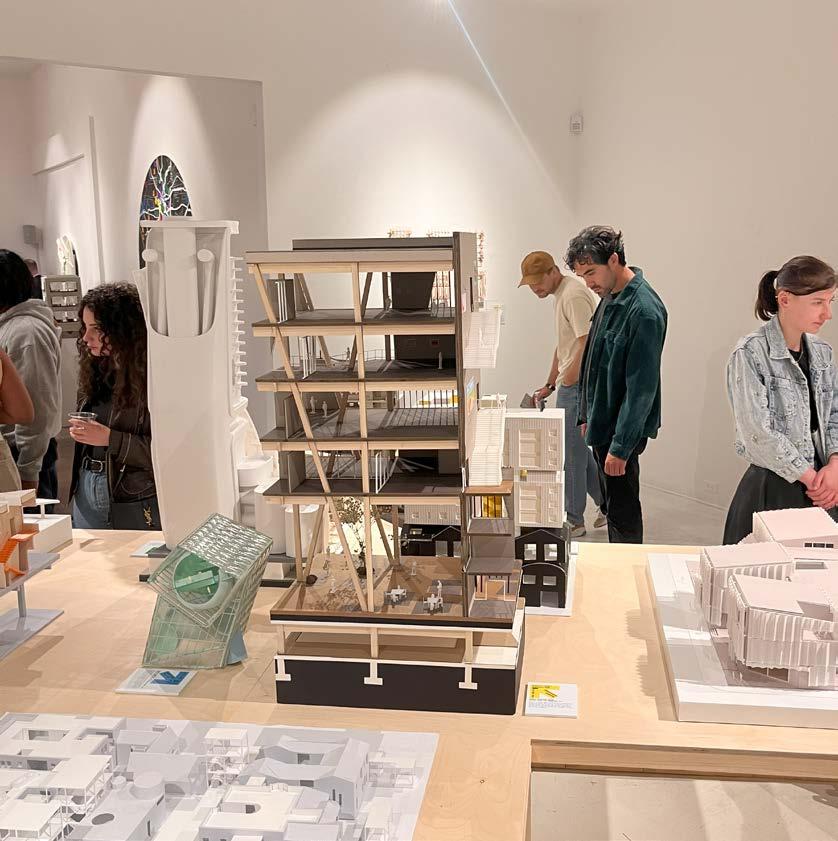
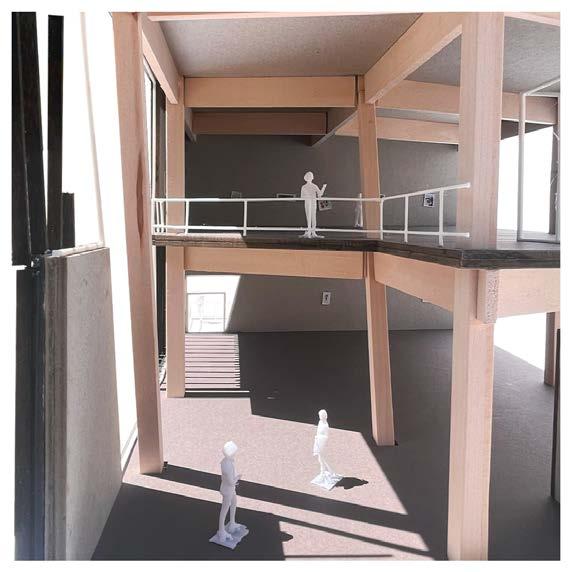
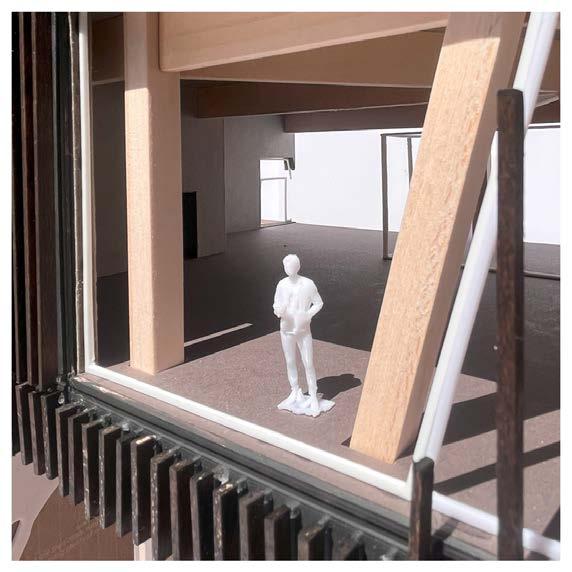
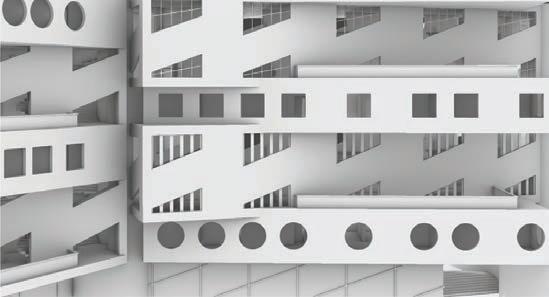
The Corita Kent Foundation represents the selfless artist and her advocacy against poverty, racism, and war. Her messages of peace and social justice permeate this building and extend to the surrounding neighborhood. The seven-story split tower, constructed with a mix of CLT blanks and mass timber columns, features a cantilevered ground level, transforming the site into a community park for safe gatherings and activism. Additionally, the stacked CLT walls serve as a billboard, urging the city to wake up and recognize societal trends. With the tower oriented toward the city, guests get a chance to look back at the world and see different issues Sister Corta Kent has been fighting for.
SECTIONPERSPECTIVE
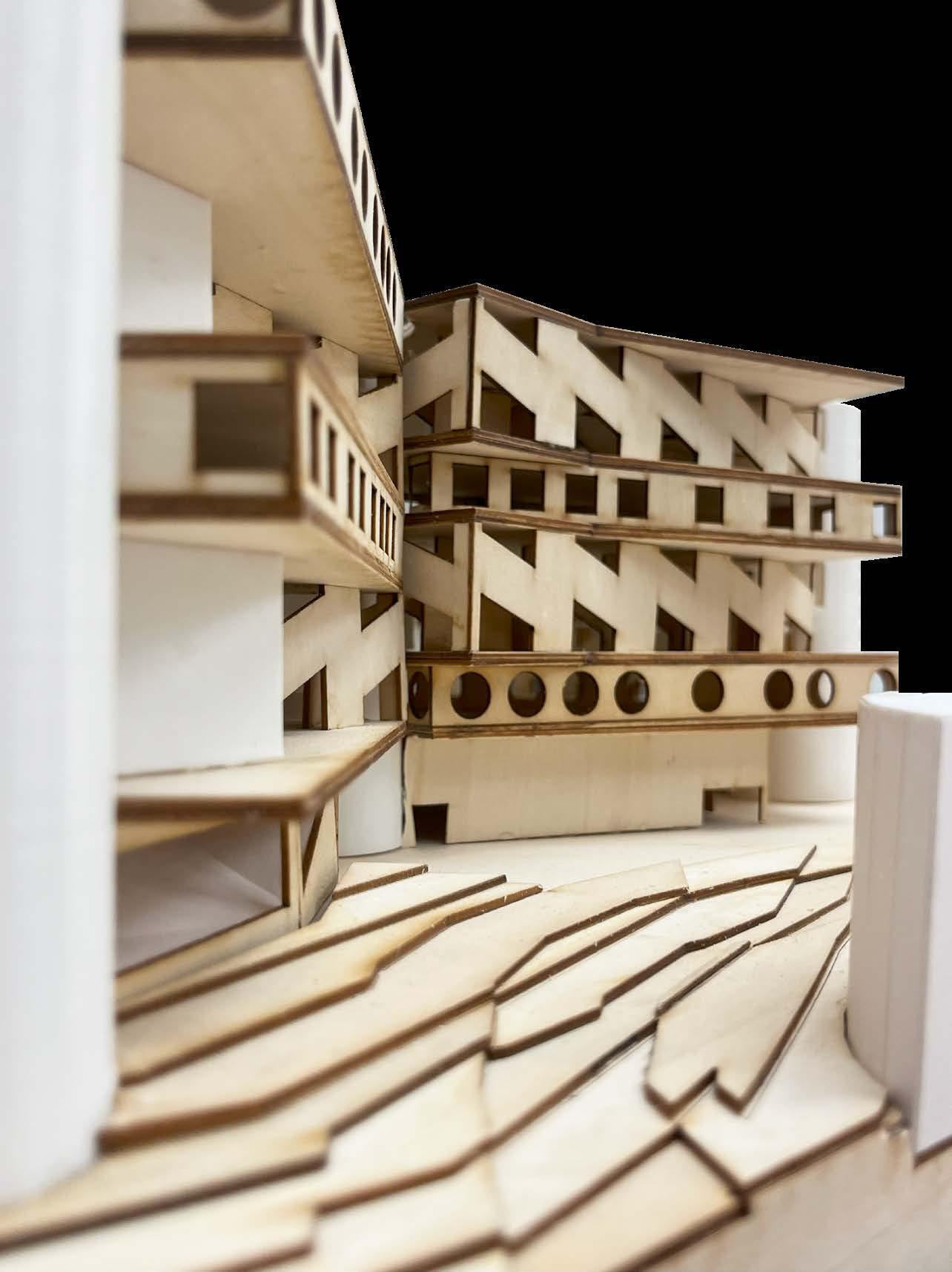
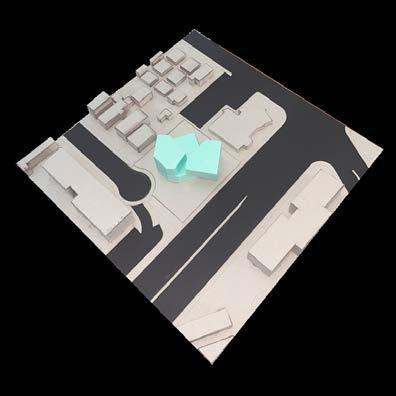
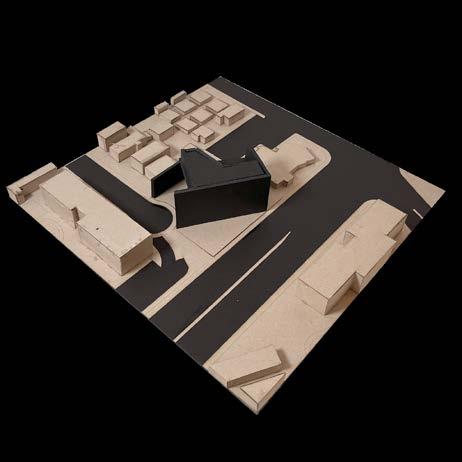
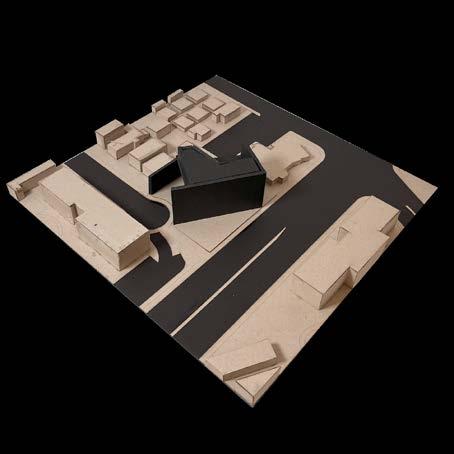
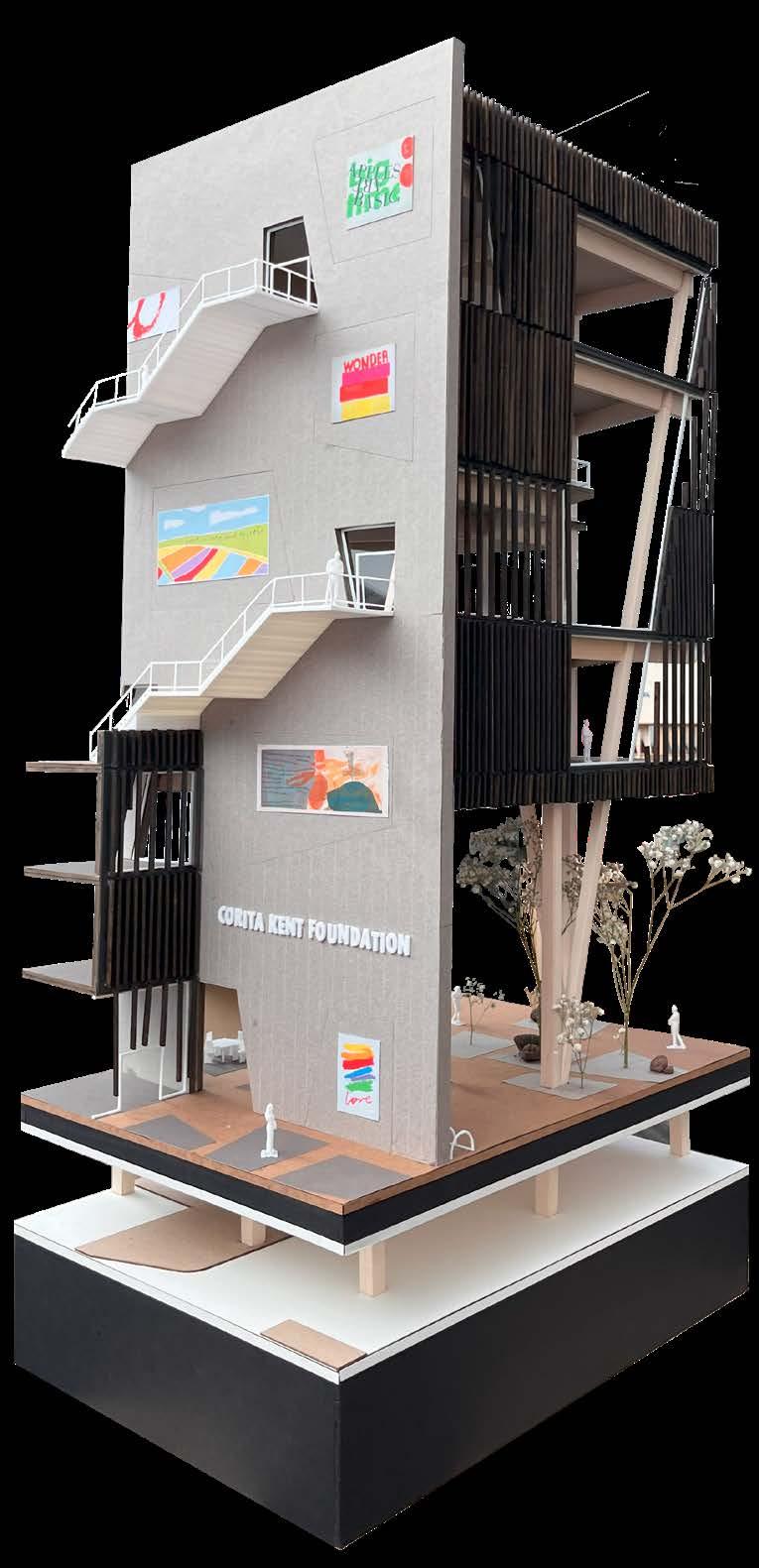
At the intersection of conceptual exploration and technical problem solving, lies the architectural model. Los Angeles: A Model City is a celebration of architectural imagination and the physical embodiment of ideas through the craft of model making, featuring works from schools of architecture in Greater Los Angeles.
Los Angeles has always been both a muse and a laboratory. LA is a model city in its own right, where freeway infrastructures, urban strategies, housing models, and the iconic Case Study Houses have carved out a space for experimentation and innovation in the built environment. Each model in this exhibition, sited within the diverse landscape of Los Angeles, is a testament to the city’s enduring role as an incubator for architectural ideas.
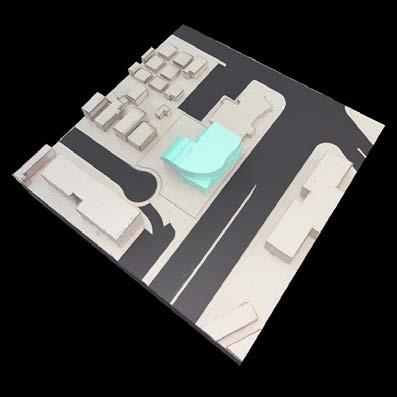
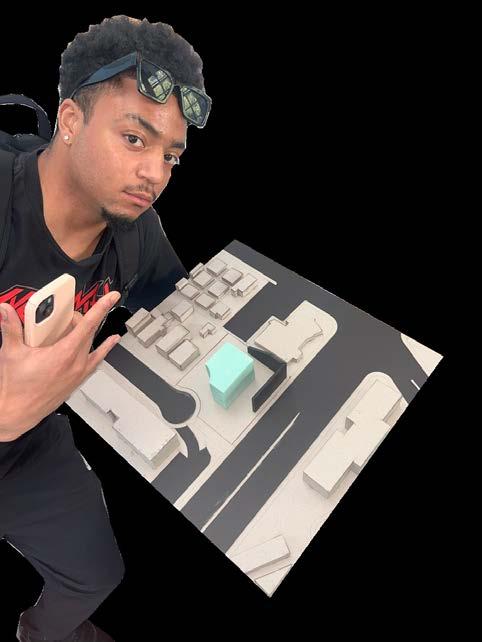
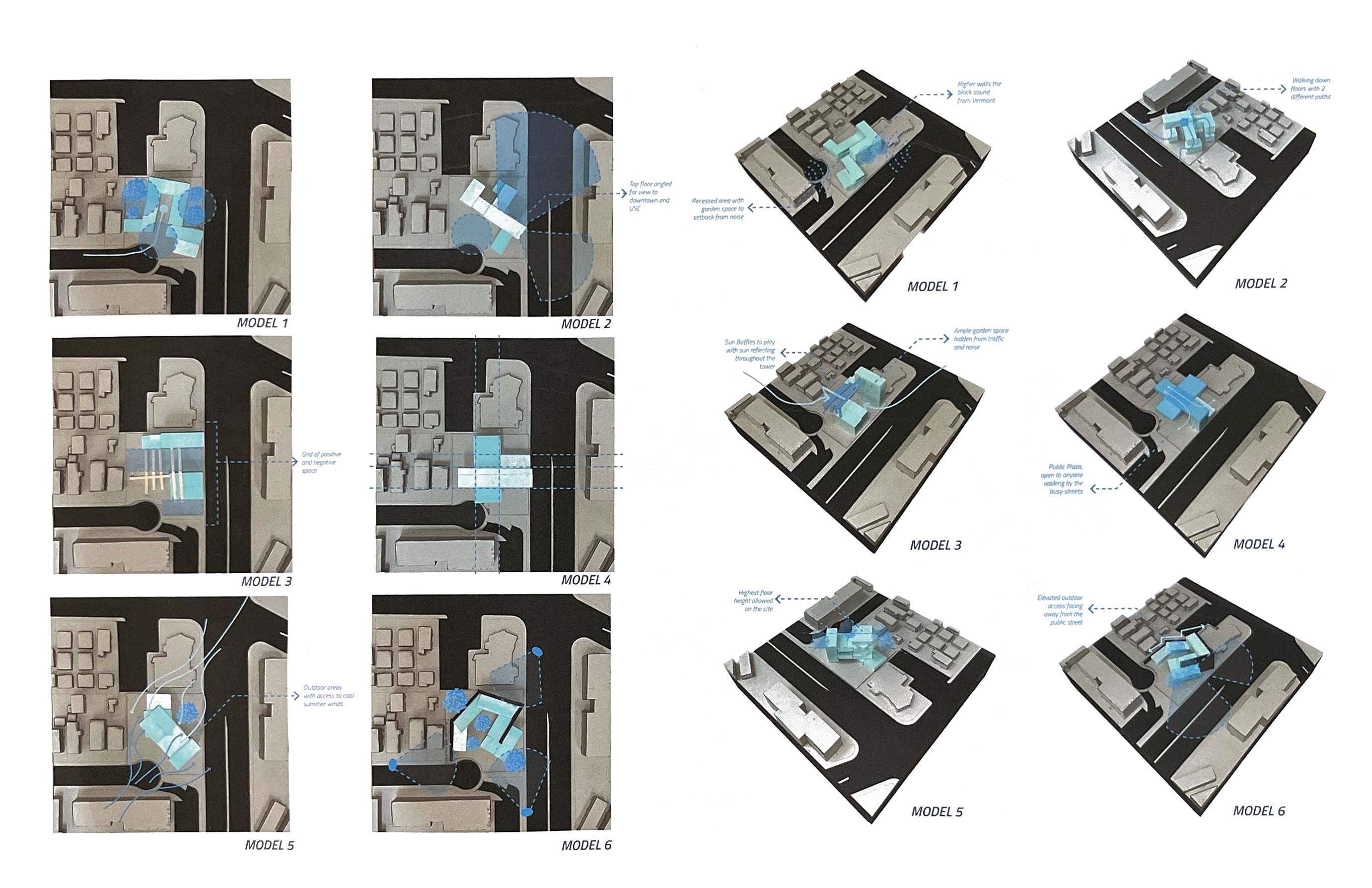
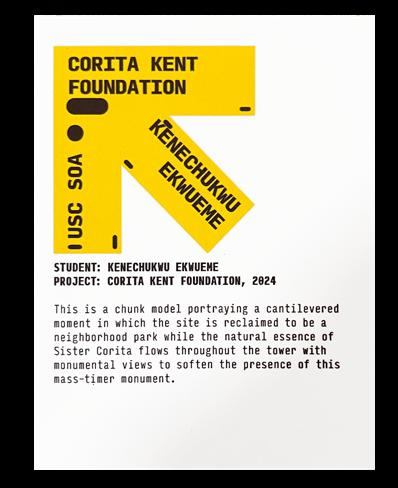
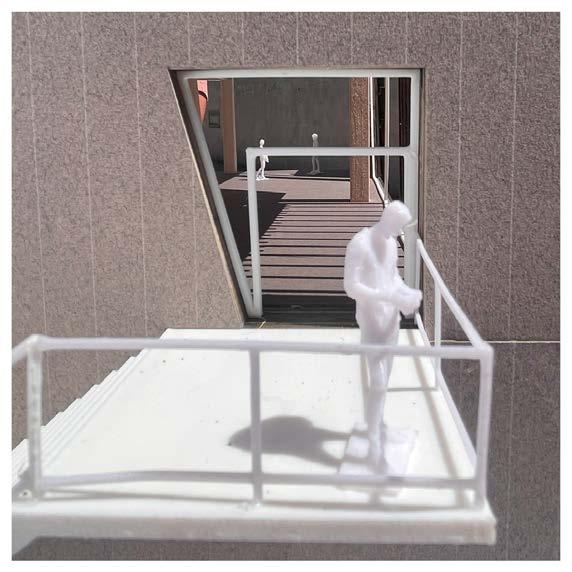
My chunk model portrayes a cantilvered moment in which the site is reclaimed to be a neighborhood park while the natural essence of Sister Corita flows throughout the tower with monumental views to doften the presence of this mass-timber momument.
Los Angeles: A Model City
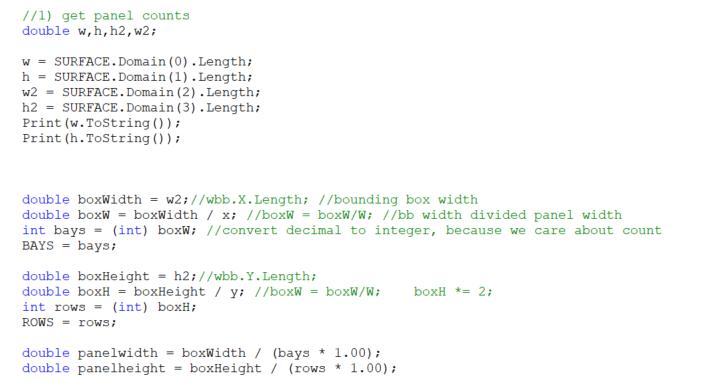
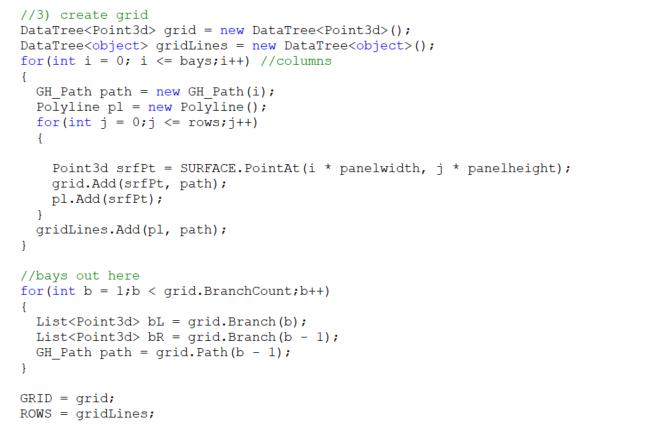
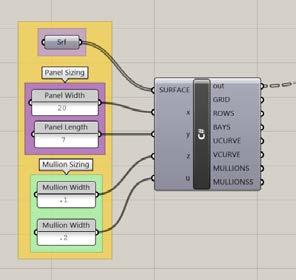
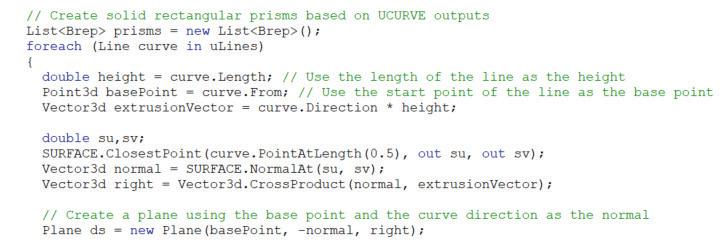
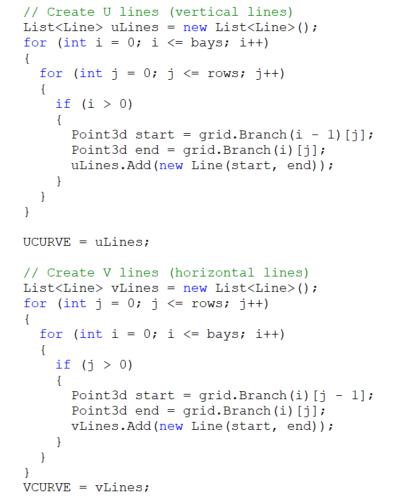
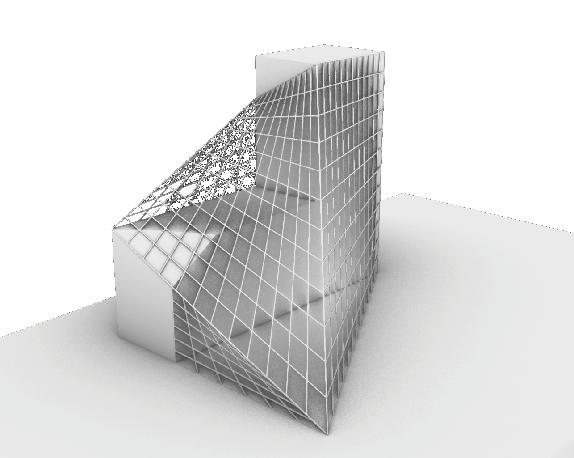
Advanced computation script that allows me to create a modular window mullions by inserting any single or double-curve surfaces. This script gives me the ability to streamline my design process giving me the freedom the explore unique apertures that enhances the urban facade.
The sole requirement for the digital tool is that it involves C# components—no native Grasshopper Components permitted. The component can replicate an existing Grasshopper plugin component, as long as that component is not open-source.
Extracting surface edge dimensions from the given surface inputs
Creating the sizing of the mullions to be from the mullion width and length input parameter
Creating a grid pattern based on the panel width and length given along the surface dimensions
Creating the rectangular mullions to follow the path of the UV lines extracted from the grid no matter the direction
Extracting the U V lines from the grid to separate layers for ease of control in the mullion making processes
After reading Learning from Las Vegas, was intrigued by the topic of the sign is more important than the architecture. That statement has so many layers in how buildings relate to human communication. One complements the other. We sometimes forget the importance of signage in everyday life. The book states, “If you take away the signs away, there is no place.” (Izenour, Denise Scott Brown & Venturi, 1977, p. 12). It is redundant what a building’s shape or size is, but if there is a circular red and white sign, everyone will know it’s a Target. In learning of las vegas, the use of the sign as a building like that of the Long Island Duckling, merges the sign as a building making a stronger connection, making it a usable and reasonable design exploration of a multi-use facility. agree with that statement because believe it doesn’t matter how much thought you put into a building. If the facades or entrance isn’t grand and imposing, it removes a considerable impact of the building’s intentions.
For my map of Las vegas, I chose to highlight the significant superstructures throughout the city, highlighting the effective signage throughout the buildings helps the users navigate and experience spaces in a peaceful matter, but also taking into account important design constraints like transportation routes and major transits from the existing signs and buildings to stand out attracting the most tourist, travelers, and gamblers. Its no coincidence the area of high congestion falls on the Las Vegas Strip.
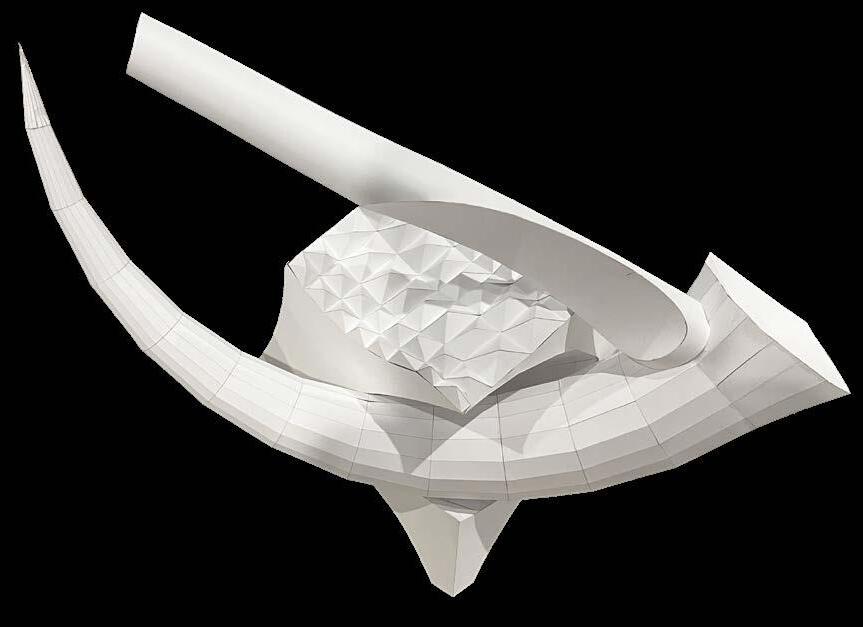
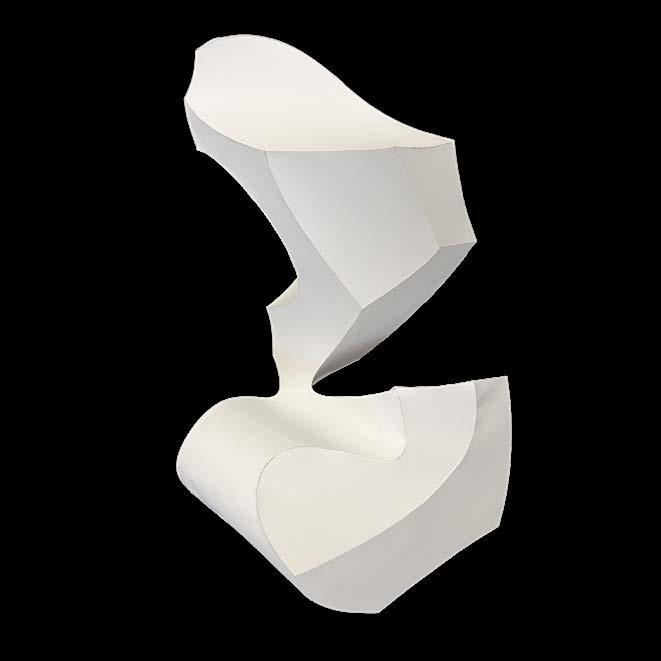
The ubiquity of digital modeling software has enabled the generation of complex forms without requiring explicit knowledge of the underlying mathematical and geometric principles governing those digital forms. While this has led to profound innovations in form creation, there has been a lack of reciprocity in translating these abstract geometric concepts into principles for building construction. Today, the digital medium has created an imbalance between design and the means and methods of construction, disrupting the reciprocity between the digital and the physical.
It is necessary to develop a geometric lexicon that navigates between curved forms and the industrial constraints of building assemblies. This vocabulary, derived from projective and topological geometry, establishes a reciprocal system of structure that can be used to discretize curved forms into flat panels, thus enabling the translation of complex forms into constructible surfaces at an architectural scale.
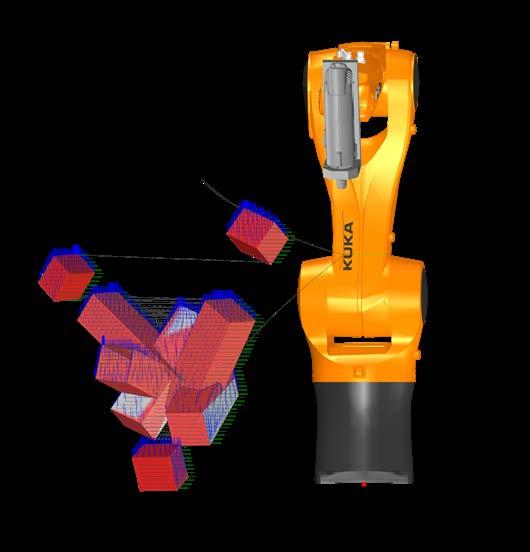
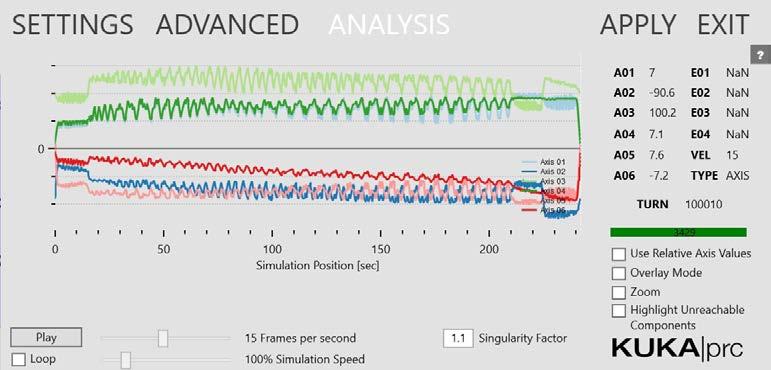
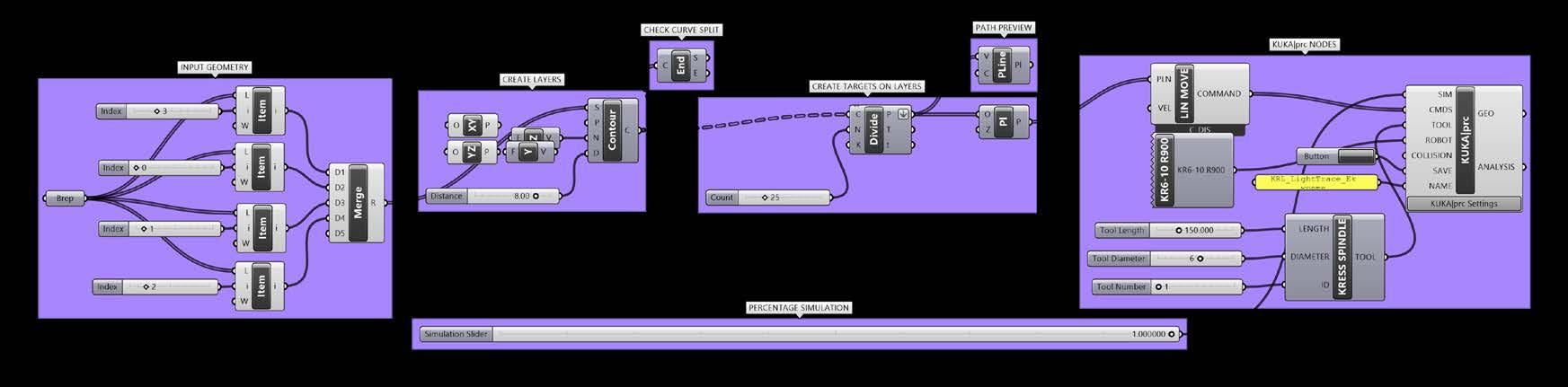
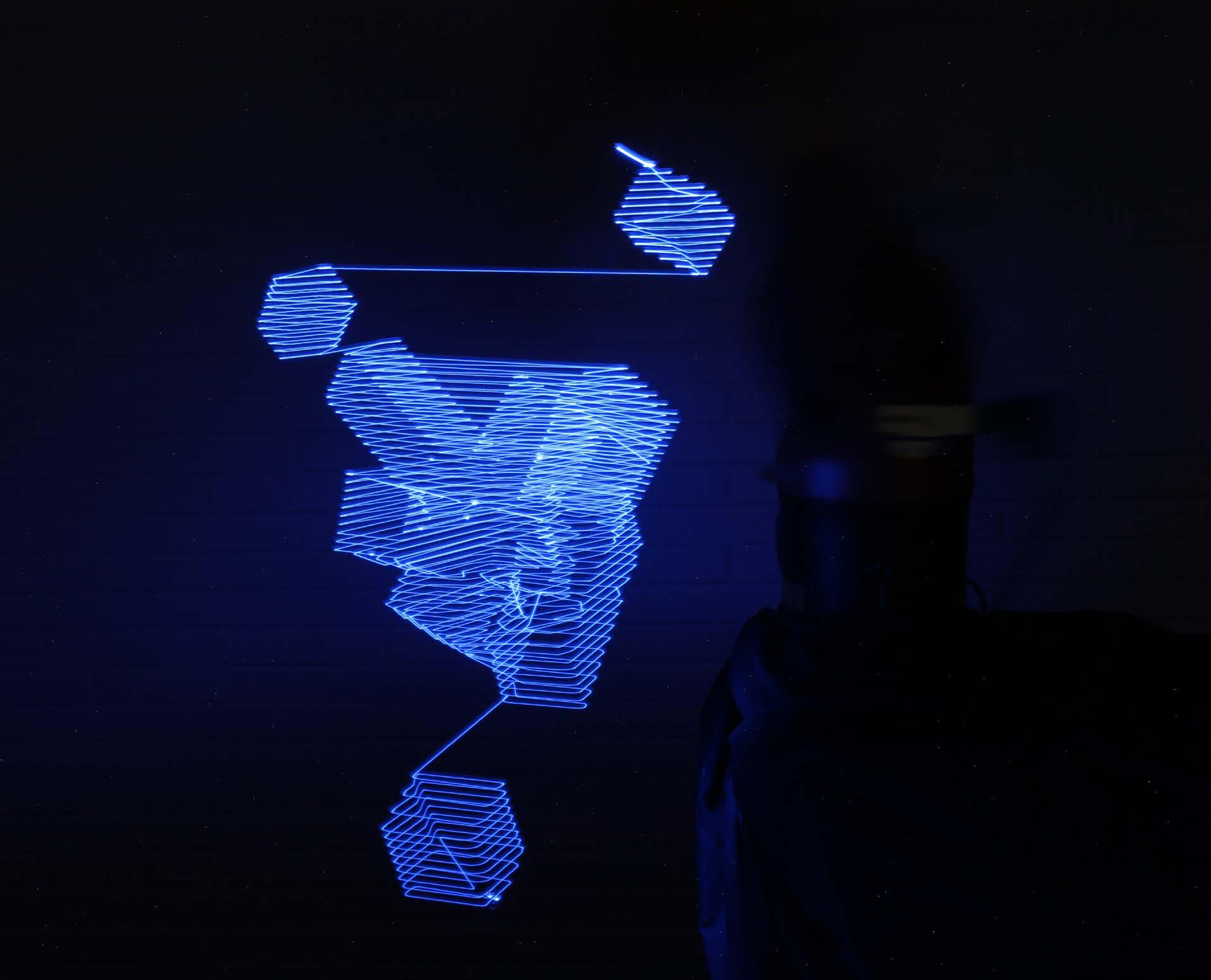
Using KUKA 6-axis robotic arms. With the reliability, accuracy and flexibility afforded by these machine, we hope to change the way we understand and engage digitally driven tools for fabrication. With the use of the KR6 Agilus industrial robot, was able to translate rhino massing and surfaces with the newly developed parametric plugins such as KukaPRC allow direct interface between Rhino/Grasshopper and the robot arms. the translate strucutre into a layers path tracers in wihc the robot can accuratly and consistantly replicate. Increasing my skills in becoming well versed in the language of robotics and kinematics, becoming the de facto programers and operators.
Creating Layers and tangent lines in a linear motion to create a linear path of travel from start to finish
Inputing Rhino geometry and diconstructiong the surfaces
Implementing the path of travel into the Kuka prc plugin to set in space, configure and analyse the robot to follow my path
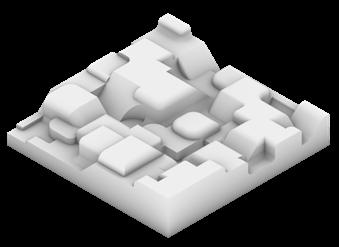
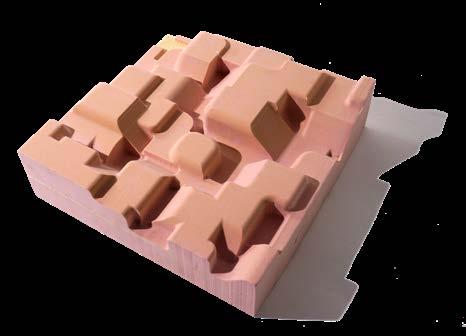
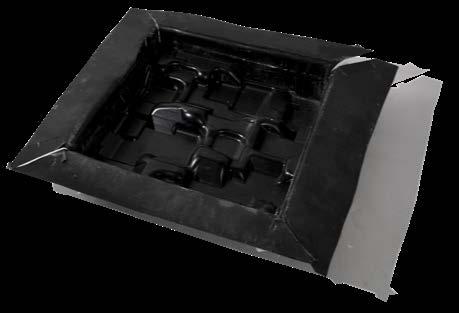
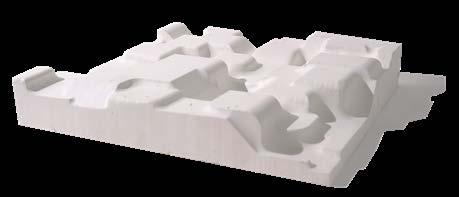
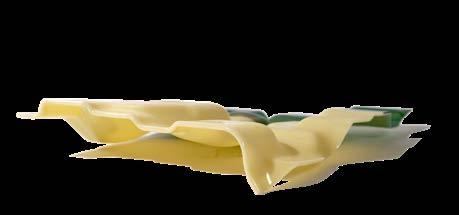
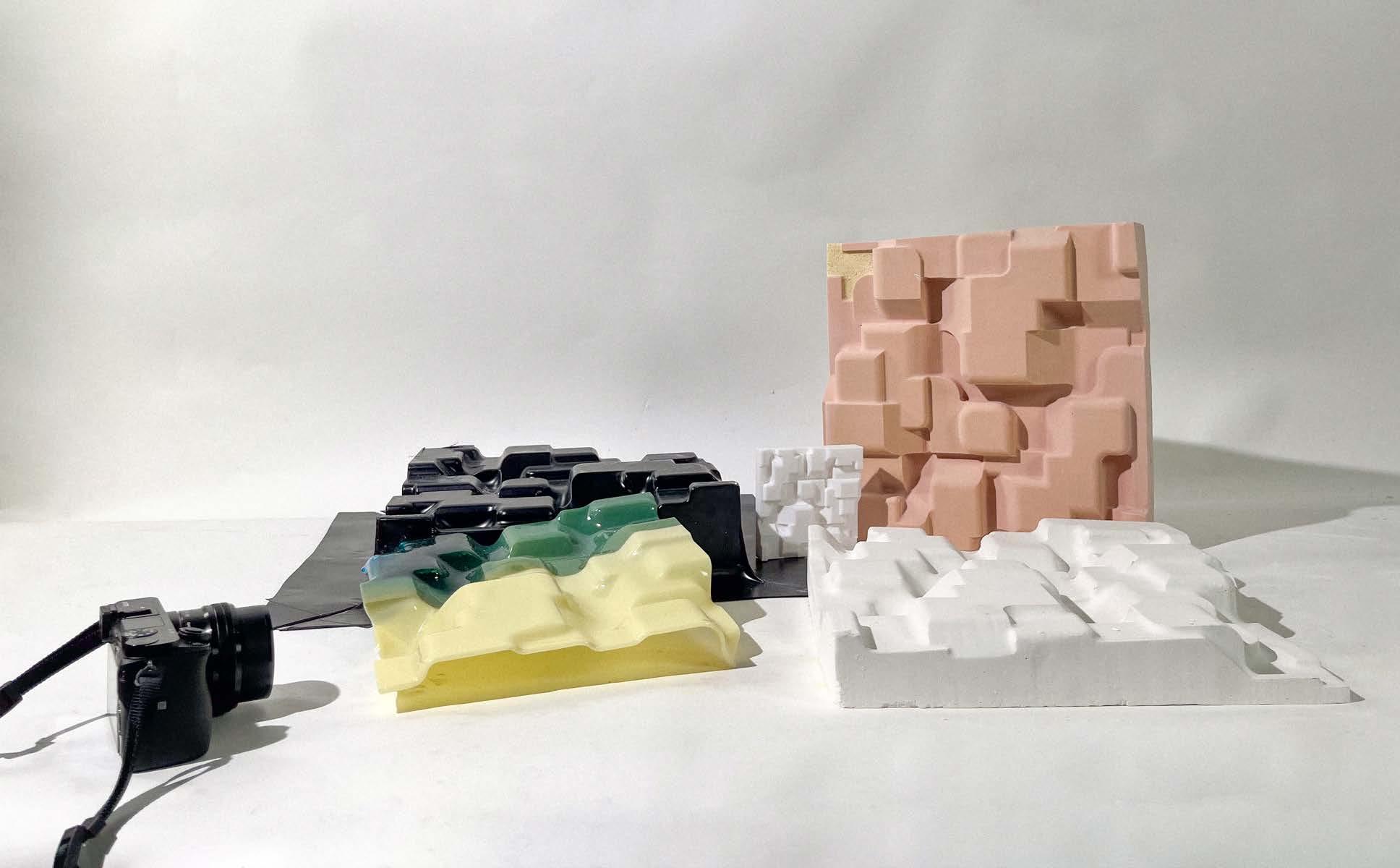
4” x 4” 3D print of rhino polysurface
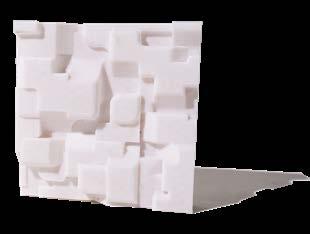
12” x 12” CNC foam
12”x12” vacuum form mold made by CNC foam
12” x 12” Plaster mold made by plaster pour on vacuum form mold
6” x 6” Formed Glass using plaster model as mold
Rhino polysurface
I aim to create a new skyline on top of existing urban cities that supplements what is lacking underneath. With the new “road system” that encourages communal engagement through recreational activities and public open spaces, which are deprived in such a dense urban fabric.
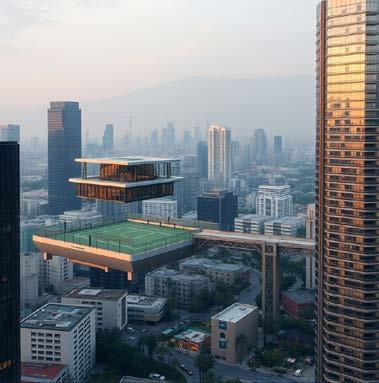
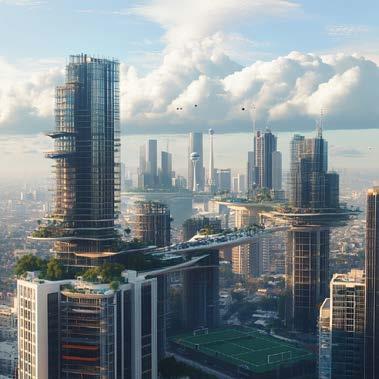
FIRST PROMT INTO AI GENERATOR:
Candid image, photography, natural textures, highly realistic light, editorial, Create a series of elevated mixed use buildings anchored by light structures on top of the Los Angeles skyline with a mix of recreational sports activities like basketball, running, and soccer on top of the Los Angeles skyline connected by sky bridges which are being used as a social gathering space that have entry from the ground. Make them on multiple levels with office spaces also in an urban environment.
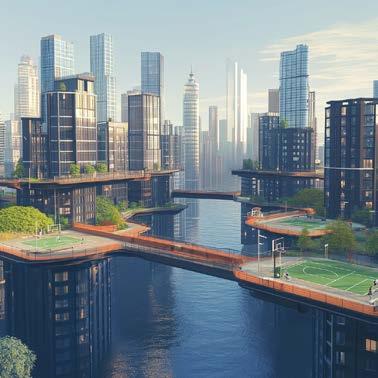
SECOND PROMT INTO AI GENERATOR:
Expend this image by add more floating buildings cresting a second skyline, connected by bridges that serve as a gathering space and recreational, with soccer basketball tennis all happening
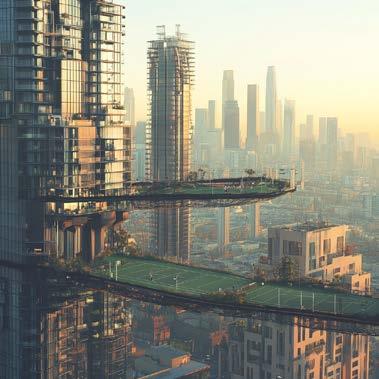
THIRD PROMT INTO AI GENERATOR:
Remove the buildings in the background and duplicate the composition of the skybridges all throughout adding more green space and diverse building typology
PHOTOSHOP AI GENERATOR:
merged this image outcomes together in photshop then asked photoshop AI to; Extend the image from a first person POV to seem like you are looking at the buildings from the same height