GSPublisherVersion 0.4.100.100 Illustrated Guide to Designing the Ideal Inpatient Private Ward For all Professionals in the Healthcare, Design and Construction Industries. Space & Spirit MAY 2024 | ARTICLE 003 HEALTHCARE ARCHITECTURE
While there is no “ideal design” in architecture, we always work towards achieving the best possible outcome in any kind of design.
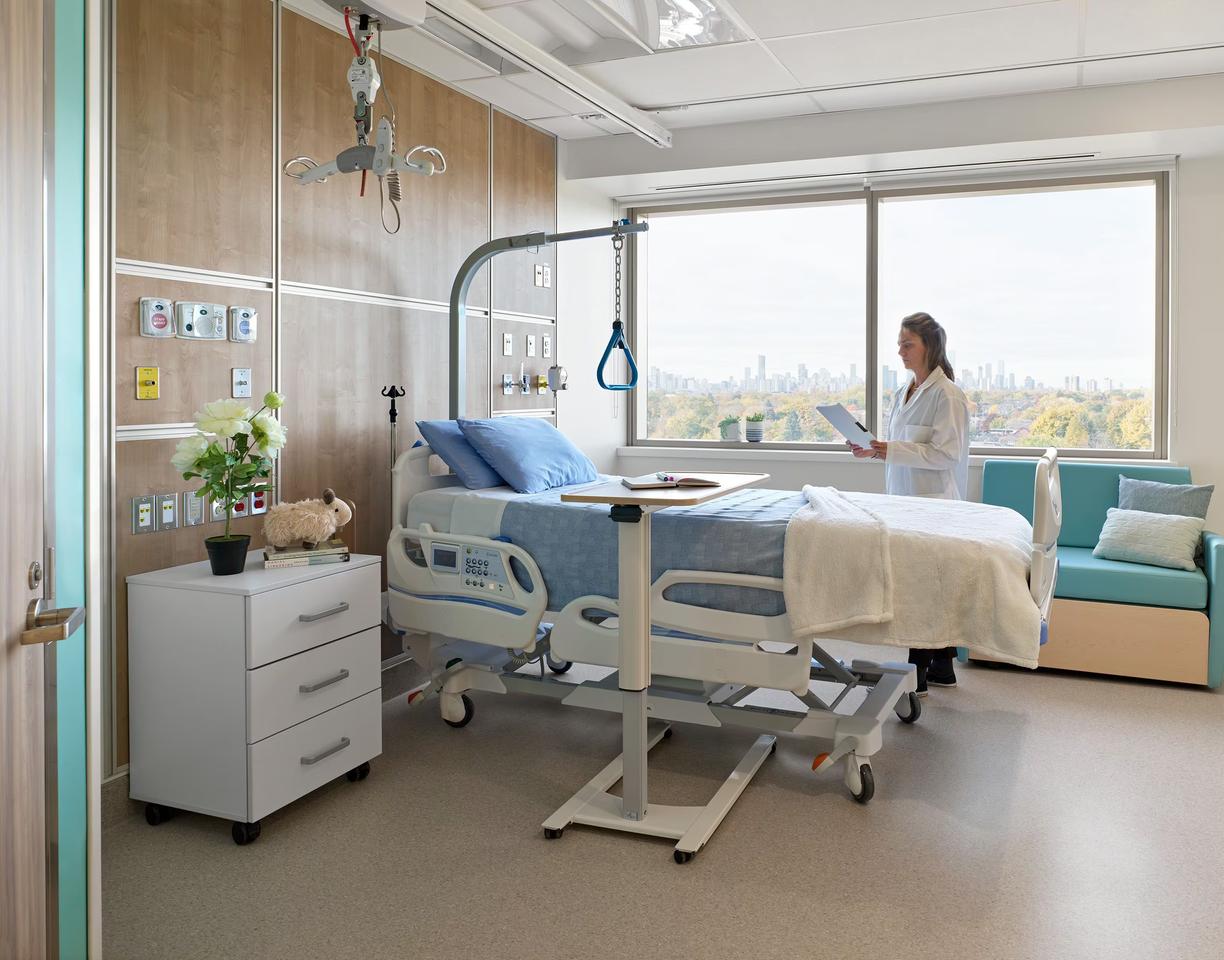
Designing a private inpatient room requires careful consideration of various factors to ensure user comfort and functionality. These factors include; the room layout and size (which we will expound on with clear and dimensioned illustrations), The needs of the users (i.e. the patient, staff, and patient’s family), accessibility (consider the mobility of patients in wheelchairs and stretchers), Lighting (natural light is very important in the healing and recovery phase. Artificial lighting should also be incorporated), among other factors.
Let's start with an example inpatient room:
AIf the space is not limited, more spacious rooms are ideal. These allow for flexibility and ease of mobility.
For a standard unit, we can use the layout shown on A below. In this layout, the room is spacious enough for all the necessary furniture and equipment. It also gets enough natural light and outside views for the patient. The bathrooms are placed towards the outside which allows for natural ventilation and lighting. We also get a spacious notch for the nurse station.
Bare minimums for designing an ideal Inpatient Private Room:
1 Natural lighting and exterior views for the patient.
2. Easy patient mobility.
5. Minimum 1m main door width.
6. Necessary furniture and equipment.
AHowever, most of the time in design you find that you are constricted on space and need to achieve the same functionality but with minimal space. In the follow up examples below, we are going to see how to achieve that while still respecting the bare minimums for Inpatient Private ward design.
In this example, while maintaining the same room dimensions as in A above, we reduced the overall floor area by having one of the toilets on the inside.
While this might be a more favourable layout as we don't need a nurse station for every two rooms, the downside is that one of the toilets might need to be mechanically ventilated, depending on the layout and height of the rest of the hospital building
CIn this example, both toilets are moved to the inside to reduce the overall floor area even more while still maintaining functionality and user comfort.
This layout would help a lot when constricted on space. The downside is the same as in B above only that now its both toilets that might need to be mechanically ventilated, depending on the layout and height of the rest of the hospital building.
In this example, we combine the smaller layout in C above with the B layout to get an even larger suite on one side. This could be helpful for a patient who has an higher number of visitors as lounge space is bigger.
The downside, like in B above, is that the toilet for the smaller unit might need to be mechanically ventilated, depending on the layout and height of the rest of the hospital building.

XIn as much as this layout solves the issue ventilating the toilets while maintaining low floor areas, the downside is it kills the views to the outside for the patient, which is an important aspect of the healing process. Ventilating the toilets mechanically would be a lesser evil than killing the views and reducing the window area.
This kind of layout should therefore only be applied as a last resort It is nonetheless still functional and fulfills all other bare minimums.
"Ways that look good in the eyes of men, but are an abomination in the eyes of the Lord" - How not to do it:
There are also other factors, beyond the layout, that need to be considered as explained below:
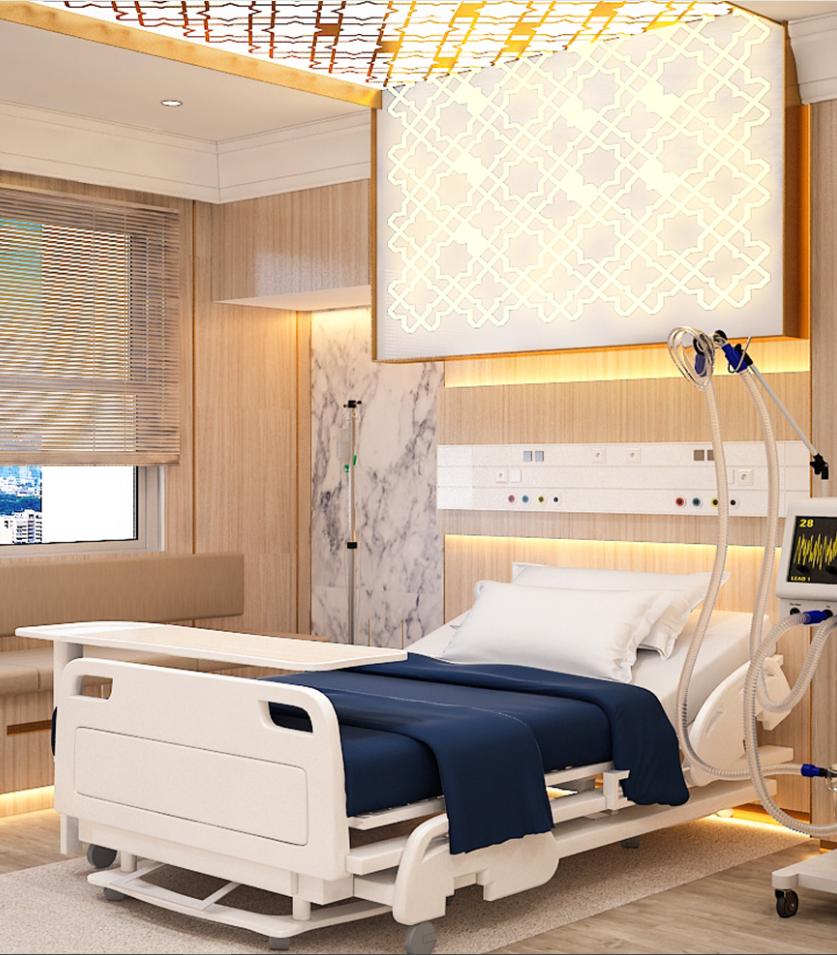
Incorporate technology into the room design to enhance patient care and communication This may include bedside monitors, medical gas outlets, electrical outlets for medical devices, and telemedicine capabilities for remote consultations.
Design the room with infection control measures in mind to minimize the risk of healthcare-associated infections. Choose easy-to-clean surfaces, such as smooth flooring and wipeable wall materials. Install hand hygiene stations and designated areas for storing personal protective equipment (PPE).
Enhance patient comfort by including amenities such as comfortable seating for visitors, a television with entertainment options, Wi-Fi access, and temperature control options. Provide ample storage space for personal belongings and medical supplies.
Install safety features such as emergency call buttons, fire alarms, and extinguishers within easy reach of the patient bed. Ensure all electrical outlets and medical equipment are properly grounded and maintained.
Working with professionals might be relatively expensive, but working without them might be even costlier in the long run. Ensure to get an experienced Architect for your hospital project.
If you are an architect but not well experienced with hospital projects, collaborate with an architect who is.
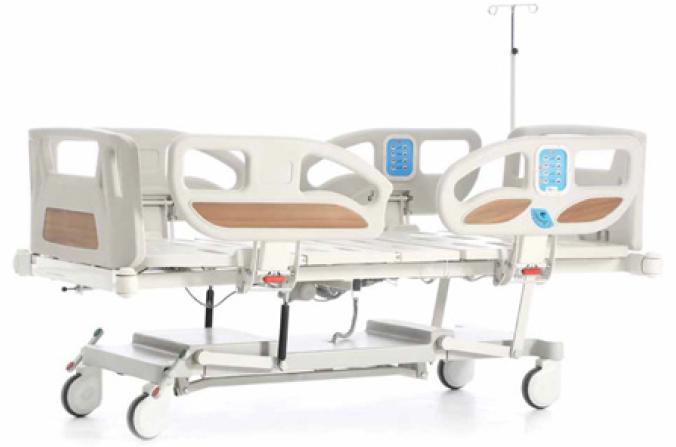
Hospital Bed:
Setting up a modern private ward requires a variety of equipment to ensure the comfort, safety, and efficient care of patients. Here's a list of essential equipment along with their purposes:
The central piece of equipment, designed for patient comfort and safety during rest, recovery, and medical procedures Adjustable features allow for customization based on patient needs.
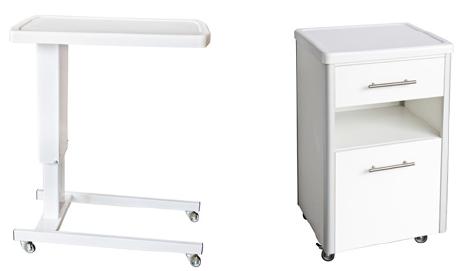
Bedside Table:
Provides a convenient surface for patients to place personal items, water, medications, and other essentials within easy reach
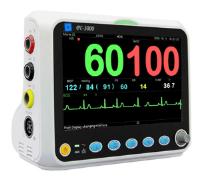
Patient Monitoring System:
Monitors vital signs such as heart rate, blood pressure, oxygen saturation, and temperature. This helps healthcare providers to track patient health status and detect any abnormalities promptly.
Infusion Pump:
Administers fluids, medications, or nutrients intravenously at controlled rates. Essential for patients requiring continuous infusion therapy
Suction Machine:
Removes fluids, secretions, or debris from the airway to maintain clear breathing passages, particularly useful for patients with respiratory issues or those undergoing surgery.
IV Pole:
Holds intravenous (IV) bags or infusion pumps, ensuring safe and stable delivery of fluids and medications to the patient
Defibrillator:
Used in case of cardiac emergencies to deliver an electric shock to the heart to restore normal rhythm. Vital for treating sudden cardiac arrest.
Diagnostic Equipment:
This may include items such as a stethoscope, blood pressure cuff, thermometer, otoscope, and ophthalmoscope, essential for routine patient assessments and diagnostic purposes.
Call Bell System:
Allows patients to summon assistance from healthcare staff when needed, promoting patient autonomy and safety
Hand Hygiene Station:
Equipped with hand sanitizers or soap and water for maintaining proper hand hygiene, crucial in preventing the spread of infections
Emergency Cart:
Contains emergency medications, airway management equipment, and other supplies needed to respond quickly to medical emergencies within the ward
Comfort Items:
These include pillows, blankets, and adjustable lighting to enhance patient comfort and promote relaxation
Communication Devices:
Such as telephones or intercom systems for patients to communicate with healthcare staff and for staff to communicate with each other efficiently.
Kelvin Ngei has over six years experience in the construction industry both as an Architect and Project Manager. He is goal oriented and very capable of adequately designing, overseeing and executing varied construction projects to successful completion He has been part of several health, hospitality, institutional and residential projects from 2018 to present.
He has a particular focus on Healthcare Architecture which has seen him involved in several Hospital projects including Cure International Hospital Kijabe (2018), AIC Kijabe Hospital (2018), Komarock Modern Hospital - Kitengela (2021), Komarock Modern Hospital - Chuka (2021), Juja Road Hospital - Ruiru (2022), St. Johns Hospital - Juja (2023), TransElgon Hospital Eldoret (2023), Better Living Hospital - Nairobi (2023), Vitalife Hospital - Juba, South Sudan (2023), The Mater Hospital Master plan - Nairobi (2024), among others.
He is currently the Design Lead at Renaissance Per Salut Architects and oversees all projects from conceptualization to completion. He manages a team of employees and interns from various construction related fields
Have an healthcare project you would like to us collaborate on? Please get in touch.
Contact: +2547 08 059 380 Email 1: kelvin@rpsa.co.ke
Email 2: kelvingei.arch@gmail.com LinkedIn: www LinkedIn com/in/kelvingei/