10BaitBoatEdgesMaster24CastingTips BaitingtheCatapult Tactics
10BaitBoatEdgesMaster24CastingTips BaitingtheCatapult Tactics
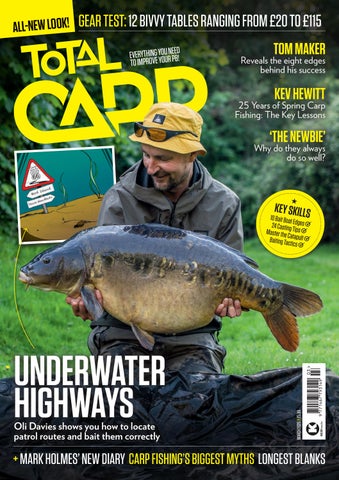
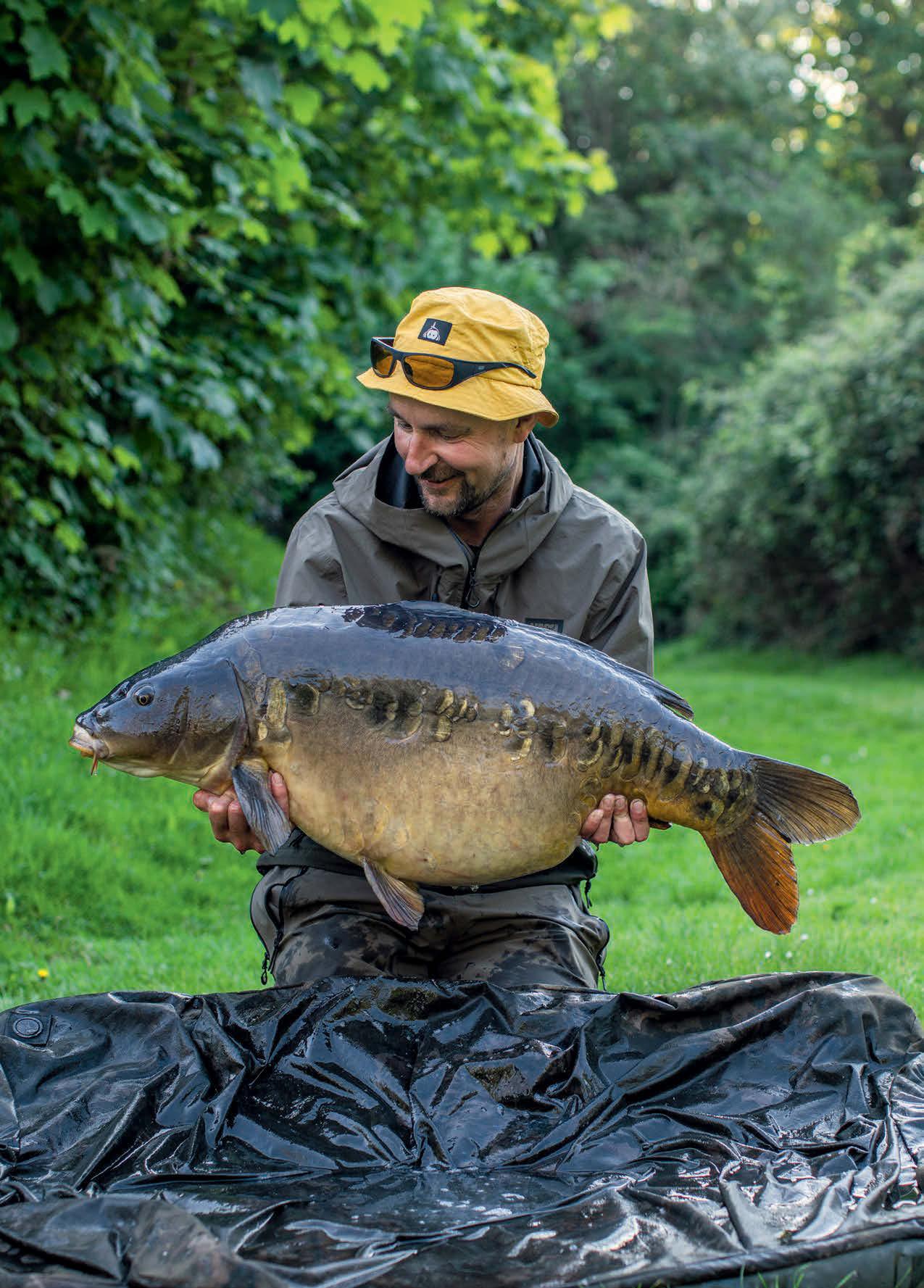
Oli Davies shows you how to locate patrol routes and bait them correctly











(COVER STORY)
How does the fresh angler waltzing up to a rock-hard carp lake, unencumbered by bitter experience and perceived wisdom, swiftly go about emptying the place? 072
034
HEAD OF THE CLASS (COVER STORY)
Tom Maker reveals his top eight edges behind his consistent success.
040
NEVER IN DOUBT!
For John Kneebone, the main element of any good carp-fishing approach is consistency—as well as being able to adapt that approach when needed, but never change it.
048
THE MAKINGS OF A MAVERICK
Big-carp angler Mark Holmes starts his new bi-monthly diary series, and knowing Holmesy, there’ll certainly be a few talking points!
056 CARP FISHING’S BIGGEST MYTHS
Think everything you hear is correct? Think again!
062
PATROL ROUTES AND BAITING PATTERNS (COVER STORY)
Oli Davies explains how to read and understand the carp’s underwater highways.
076
THIS MUCH I KNOW…’ (COVER STORY)
16 clear and practical lessons from Kev Hewitt when it comes to spring fishing
082
ANATOMY OF… THE (HUMBLE) CATAPULT
A timeless tool that Julian Cundi has refined through decades of use.
All-round great guy Frank Warwick shows how, thanks to a clever product, daytime wrapping-up casting accuracy can be carried seamlessly into darkness.





086 OPINION POLL…
What the biggest names think on a certain subject.
This month: what shape and weight of lead do you use and why?
090 IMPROVE YOUR CASTING
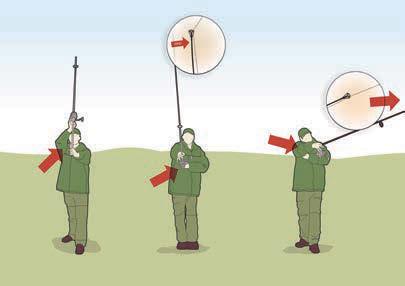
24 ways to improve all aspects of your casting, from accuracy and distance to feeling for a ‘drop’
098 ASCENT INTO SPRING
Oz Holness reflects on the subtle shift from winter into spring.
004 EDITORIAL
The editor’s key takeaways.
005 LETTERS
Where you tell us what you think.
006 EXTENDED CONTENTS
Talking you through the issue is Hassan Khan.
008 INSIDER
What are carp fishing’s best job?
010 ‘MY LONGEST BLANK’
Feeling gutted after a 48
hour blank? Imagine how these guys feel…
015 COOKING ON THE BANK
A quick-fire, crowd-pleasing classic loaded with cheese, salsa and just enough heat.
020 BECOME A BAIT BOAT PRO!
10 hacks, tips and edges that break from the norm.
022 ALTERNATIVE CARP ATTRACTORS
Clever additives that are easily picked up in supermarkets.
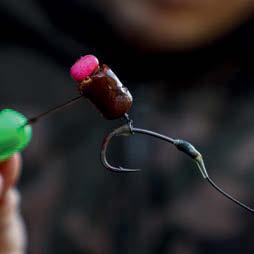
023 IT’S ALL ABOUT HOOKBAIT SHAPES!
Why size of hookbait isn’t the issue—it’s the shape that makes all the di erence.
024 BAITING APPROACHES AND SCENARIOS
Revealed: a method of baiting that’s super e ective.
028 RETAINING A CARP
A landing net, a retaining sling or a sack?
032 RIG MINISTRY
Your step-by-step guide to tying the German Flippa Rig.
106 LOW COST, HIGH PERFORMANCE
Daiwa’s Black Widow range is reborn.
109 UNBELIEVABLE VALUE
Three alarms, receiver and case for under £50!
110 SUPER HOT!
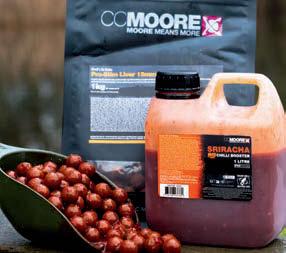
Sriracha: the en-vogue bait additive gets the CC Moore treatment.
112 STACKABLE (DRY) STORAGE
Nash’s popular Waterboxes get an upgrade.
114 BUILT FOR BAITING
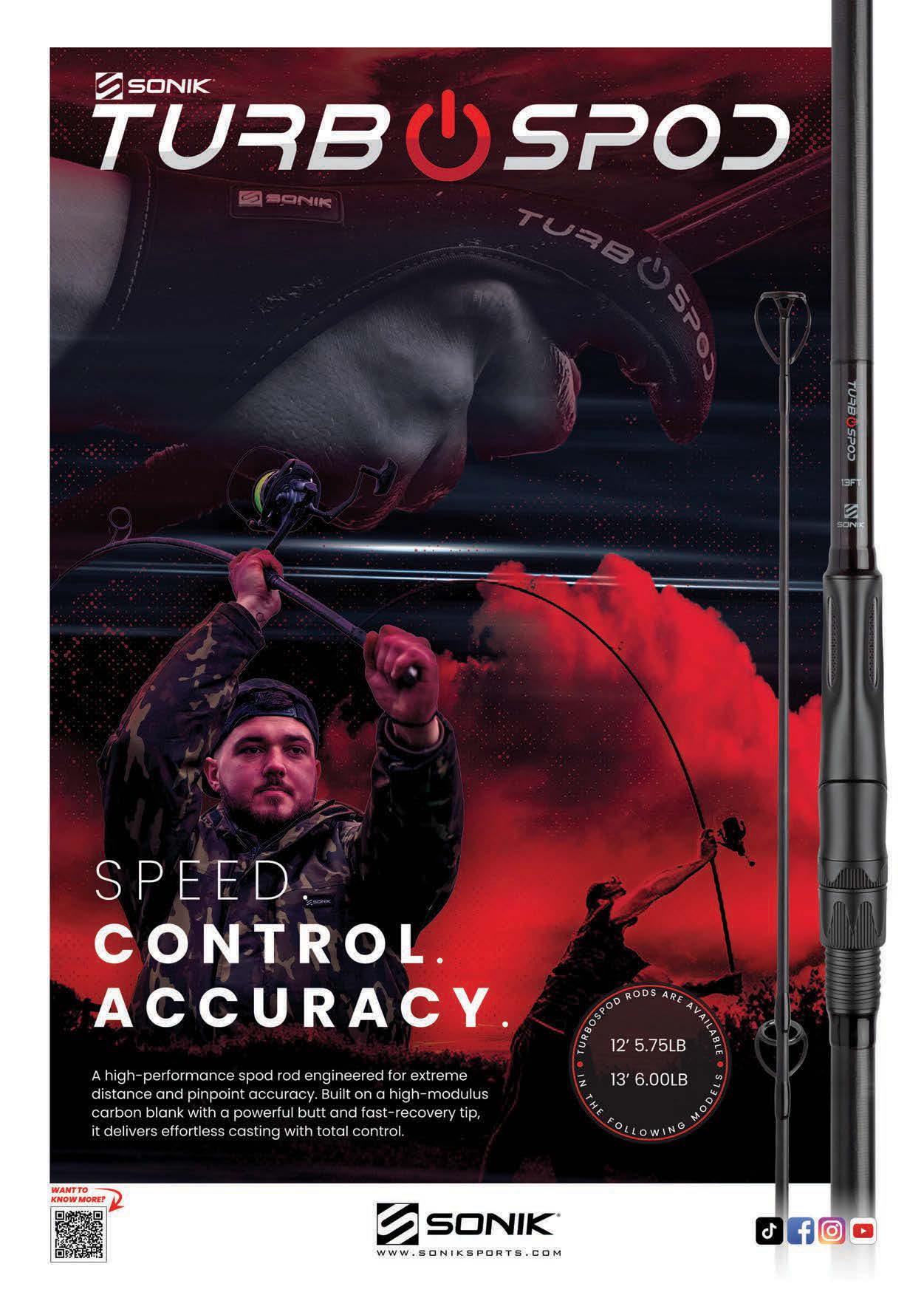
Sonik’s new Turbospod Rods have a 6lb TC!
116 TOOLS OF MY TRADE
This month: Philipp Braun, who likes to travel ultra light.
117 THE BULLETIN
News from around the trade.
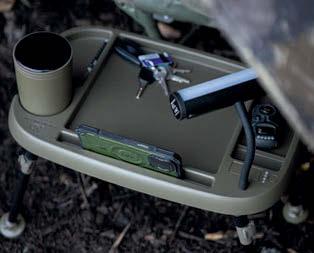
118 BIVVY TABLES: TESTED! (COVER STORY)
From ultra-compact budget options to full-blown bankside workstations.

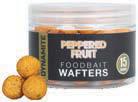
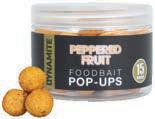
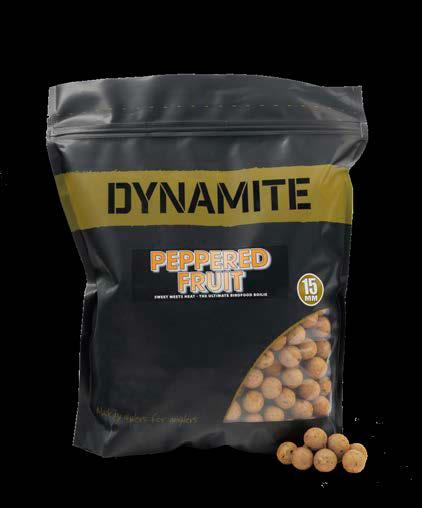
A highly attractive, nutritionally balanced birdfood and milk protein boilie, bursting with bold fruity attractors and a fiery pepper kick. Peppered Fruit offers something truly different, providing a clear edge on pressured waters.
• Birdfood, milk protein, fruit palatants and spice base mix
• Liquid attractor package: fruit flavours, fruit and spice essential oils, fruit palatants, corn steep liquor and hemp oil
• Highly digestible even in lower temperatures
• Optimum time of use: All-season
• Boilie Sizes: 12mm, 15mm, 20mm & 26mm
• Bag Sizes: 1kg, 1.8kg & 5kg
• Available in shelf-life and freezer baits





N


5KGforPrice of4kg 5kgforPrice of4





















EVERYTHING YOU NEED TO IMPROVE YOUR PB!
E-MAIL: JOSEPH.WRIGHT@KELSEY.CO.UK 03/26





How do you squeeze a quart into a pint pot? (Which, for the avoidance of doubt, requires first knowing that a quart is actually two pints…)
It’s a question that neatly sums up what we’re trying to do with Total Carp right now. The page count stays fixed at 132 pages, but our challenge is to pack more into the same space: more pictures, more illustrations, more words, more information. More know-how. More inspiration. And I’m pleased to say, I think we’ve bloomin’ well done it!
The eagle-eyed amongst you may also have noticed that this issue looks a tad chunkier and feels a little weightier in the hands. That’s because we’ve stepped things up with a higher-quality paper stock, chosen to help all those images, graphics and illustrations really stand o the page. It’s another small change, but one we think will make a big di erence to your TC experience.
We kick things o this month by looking at what could be deemed as the ‘Best Jobs In Carp Fishing’ (p.8) and find out whether they’re actually as good as they’re cracked up to be. Also up front is Frank Warwick and his ace nighttime casting tip in Edge Of The Month (p.14).
Have you ever wondered what really makes top angler Tom Maker so consistently good? As we found out from this month’s guest to our Head Of The Class feature, there’s no single magic trick and no secret edge. In fact, it’s a collection of simple but well-executed skills, stacked together, and you can learn them all from page 34.
And finally, at the rear of the magazine we have the Gear section which continues to evolve too. Alongside our usual reviews of all the latest kit, we introduce our first in-depth Gear Test comparison feature. This time, we take a close look at bivvy tables—and while none of those tested are undeserving of your money, there’s a few that really do stand out and you can find out which ones they are from page 125.
As always, I hope you enjoy the issue and I’ll catch up with you all in the April edition, which goes on sale on the 3rd of April.
JOSEPH EARL-WRIGHT, EDITOR-IN-CHIEF
You arrive at a new venue with no prior knowledge. How do you identify the areas that carp will likely frequent, and how do you go about setting traps to intercept them as they move about their home? Oli Davies is here to help you understand a carp’s highway. P.62



/totalcarpmagazine @totalcarp /user/totalcarpmagazine @totalcarpmagazine

Editor Joseph Earl-Wright joseph.wright@kelsey.co.uk
Publisher Oswin Grady oswin.grady@kelsey.co.uk
Advertisement Sales Robert Bell 07717 455423 robert.bell@kelsey.co.uk
Design Z16 Creative paul@z16creative.co.uk
Kelsey Media Ltd, Media Centre, Morton Way, Horncastle, Lincolnshire LN9 6JR
Subscriptions, Enquiries & Back Issues 01507 529529 (Mon – Fri, 8:30am – 5pm) cs@kelsey.co.uk
Distribution: Frontline Distribution Solutions, 2 East Poultry Avenue, London EC1A 9PT
Kev Hewitt is up there as one of the best, with an incredible track record, especially when it comes to early spring angling. In this feature, Kev distils twenty-five years of spring carp fishing into 16 clear, practical lessons which you can’t fail to learn from. P.76
Casting is one of angling’s fundamental skills, and despite advances in technology, it remains by far the most popular method of delivering a baited rig to a spot. Here, we reveal 24 ways to improve your casting— from accuracy and range to feeling for ‘a drop’. P.90
helping me get back into a sport I hadn’t realised I’d missed— largely because family life had taken over. Thank you, Graham, via email
number of great competitions lined up in the April edition (one being some lovely Okuma Obsidian Spod reels!), with many more to follow.

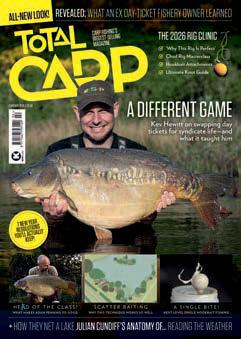
A note to say thank you for the updates to the magazine. It’s nice and clear to read, and the layout is much better. Previously, some articles were difficult to read, with background colours behind the text not always being ideal (though that may just have been me). I’m a carp angler in Scotland, which is tough at the best of times, as you probably know. The magazine gives good general ideas on how to tackle different waters with rigs and bait. As I’d been away from carp fishing for the last 20 years, it’s been good and informative in
Office Obsessions MARCH 2026
I just wanted to email to say how impressed I was with the January Issue 2026. I’ve been a subscriber to CARPology for many years and love the content, especially Adam Penning’s diary… but Total Carp is now brilliant. The content from cover to cover is amazing, especially the pictures, diagrams and general features, and having Adam in there as well is a bonus. The old magazine was becoming stale, in my opinion, but rest assured I can’t wait for the next issue. Are you going to do competitions and merchandise— i.e. stickers, T-shirts, etc.?
Paul Holder, via email
I’ve just taken out a 13-issue subscription and noticed that in the January and February issues there were no competitions, either in the magazine or online. Will there be any more?
We’ll answer this email— and Paul’s lovely message above—when it comes to the competitions element. We’re pleased to say we have a
Just a quick question on spodding: what is the general rule on shortening the length of your spod rod to match the dropback of your lead so I’m baiting accurately over my spot? Thanks, Kev B, via email
We’ve called in the top brass to get this 100% right: Fox’s carpcatching machine, Mark Bartlett.
“Starting with your plumbing rod, I clip my actual fishing rods to exactly the same distance—so, if I found a nice spot with my leading rod at 25 wraps and three feet, I’d clip my fishing rods to the same number. As a rule of thumb for the spod: in anything less than nine feet of water, I clip the spod up exactly the same as the fishing rods. In anything over nine feet, I start to clip the spod one foot shorter for every three feet of depth. So, for example, if I were fishing in 11.5 feet of water, I’d clip my spod up at exactly 25 wraps, while my fishing rods would be at 25 wraps and three feet.”
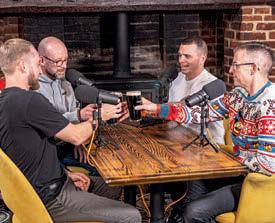
We’ve long been fans of the original Korda Thinking Tackle Podcast, but we have to say, we really do love the Uncut version. Damo, Dovey, Spooner and Reedy provide both entertainment and education in equal measure.
If you’ve never tried the EVA-style waterproof luggage items that started cropping up in manufacturers’ line-ups a few years back, then we urge you to take a look. Nashy’s new range is excellent (p.112).
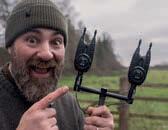
If you haven’t already checked it out, head over to the Total Carp Fishing TV YouTube channel and hit subscribe. We’re currently uploading a steady stream of new content, everything from how-to tutorials and tactical advice through to in-depth reviews, many of which tie in directly with the written features you’ll find in the magazine. The channel is headed up by the ever-reliable and wonderful Neil Golden, who’s busy putting the latest kit through its paces and delivering honest, hands-on insight. Search ‘Total Carp Fishing TV’ on YouTube now.
We’ve not had any Reader Top Tips sent in this month—so take this as a gentle nudge for next issue! In the meantime, we’ve called upon the wonderful Adam Penning. He may not feature with a main article this month, but he’s come up trumps with a cracking tip.
Our sister magazine, CARPology, has a special edition out. It’s one of three editions this year that will be printed on much heavier, thicker paper stock. If you love print, you’ll love this so be sure to check it out!
“These are what I call Carp Milkshakes! It’s blended peanut and hemp, which is then added to a spod mix. Take your cooked hemp and cooked peanuts and blend them in a food processor. Doing this creates a supercharged liquid, packed with oil and fine particulates, and it’s got so many uses. It’s absolutely phenomenal. And if you can’t use nuts, just blend the hemp— hemp milkshakes are brilliant as well.”
And yes, we will now be running a more in-depth feature on Adam’s Carp Milkshakes next month!
Each month, we’re going to run a ‘Readers’ Top Tip’ panel, so if you’ve got a great edge or tip you’d like to share with fellow TC anglers, send it to: joseph.wright@kelsey.co.uk
YOU THROUGH THIS MONTH’S EDITION OF TOTAL CARP IS ALL-ROUND LOVELY GUY AND TOP ANGLER, HASSAN KHAN
We’ve all su ered the pain of a long run of blanks, but what’s the greatest number of sessions—or longest period of time—you’ve gone without catching?
As much as I’ve tried to erase it from my memory, I think back to a fair few bleak winters chasing the dream of a big ‘un from venues with very little winter form. I think six nights is my longest spell blanking, before heading to a high-stock runs water for a much-needed bend in the rod. I love a bite too much to go any longer than that!
‘MY LONGEST BLANK’, P.10
Frank Warwick serves up an excellent tip when it comes to recasting at night in Edges Of The Month. What’s your current favourite edge that’s working for you right now?
In all truth, I haven’t done much this winter. I’ve got a very busy spring, summer and autumn ahead, so fingers crossed. Last year, though, an edge that really paid o for me was targeting and e ectively fishing in weedy, very silty areas of the lake rather than the more conventional, cleaner spots. It certainly brought me a fair bit of success.
EDGES OF THE MONTH, P.14
Zigs and hi-attract single hookbaits are most anglers’ go-to tactics come spring, but 20 years ago we were all ‘bit fishing’ thanks to Nick Helleur’s Dynamite Stick.
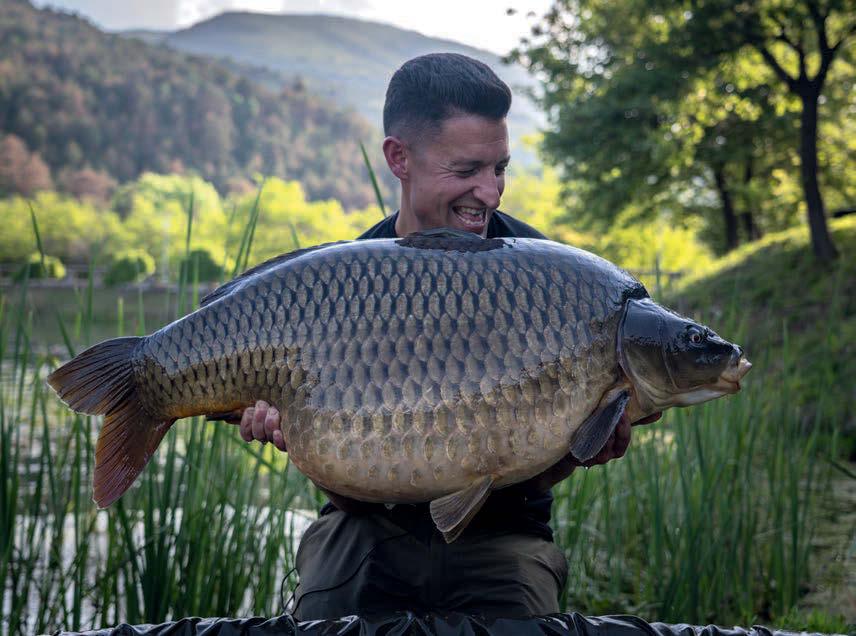
What’s your favourite ‘bit fishing’ hookbait today?
You simply can’t beat a fake piece of corn with a few maggots tipping it o . That’s a bite!
BIT FISHING, P.40
There’s a lot of rubbish spouted in carp fishing, but what would you say is the biggest myth you’ve heard?
I think the most common one I’ve heard is, “you can’t catch them o the top”. I’ve heard that loads and then gone on to have some of the best surface fishing I can remember! At the right time and in the right conditions, all carp are suckers for a mixer!
CARP FISHING’S BIGGEST MYTHS, P.56
We’ve all heard the stories of the ‘new kid on the lake’ who turns up and empties it quickly because his approach is di erent to the norm. Have you got any examples of where you’ve had great success by doing exactly that?
I think back to the summer of 2016 and my first session on Eric’s Willows, where I managed to bank a good hit of 20s and 30s, topped o by the Twisted Scale Common at 41lb 5oz. I simply chucked 4ft Zigs long to where the fish were showing, while everyone else was fishing with bait boats, winch cams and worms.
THE NEWBIE, P.72


Kev Hewitt reveals 16 nuggets of spring-related information he’s built up over 25+ springs on the bank. What’s your single best spring tip?
Be mobile! Don’t put a load of bait out and wait—chase them with onebite tactics and you’ll catch them. THIS MUCH I KNOW, P.76
We look at 24 ways to improve your casting—can you give us one more tip, covering any aspect of casting?
This may just be a personal thing, but when I’m spodding at range I grip with all my fingers in front of the reel seat. This definitely helps increase my tip speed and, therefore, distance. Give it a go. 24 WAYS TO IMPROVE YOUR CASTING, P.90
This month we review and rate 12 bivvy tests. What’s your favourite ‘bivvy luxury’ that always comes with you?


I don’t do groundsheets, Cobs, diesel heaters or even a pillow, believe it or not— but I have to have the very best fresh co ee! I can’t go fishing without it, trust me!


BIVVY TABLES: TESTED! P. 125



JOB TITLE: ESP Product Development Manager
HOW DID YOU GET INTO THE JOB?
“I saw a job for an Assistant Warehouse Manager advertised in Carp-Talk around June ’96 and started in August. When Adam Penning left in early ’04, it felt like a natural progression for me to move into ESP Product Development Manager.”
IS THE JOB WHAT YOU EXPECTED?
“Yes, because I’d already had an insight through working and angling with Adam. I guess you subconsciously become a sponge for information and how the development process works.”
IS THERE A HEALTHY WORK–LIFE BALANCE?
“We work Monday to Friday, so yes. After so many years, I couldn’t imagine working weekends!”
HOW MUCH OF THE JOB IS FISHING?
“I tend to keep my own fishing very separate from work, as I see it as something personal to me. That said, we’re regularly out testing new products, plus of course relying on feedback from consultants and sponsored anglers. Much of the day-to-day is desk-based, though, corresponding with suppliers and attending meetings with colleagues.”
WHO DO YOU WORK WITH DAY TO DAY?
“In-house, an average week might involve Peter Drennan, who is still actively involved on a daily basis, along with our technical director, CAD designers, purchasing team, graphic designers, production and engineering sta , and the media team. There’s also daily correspondence with various manufacturers overseas.”
WHAT’S THE HARDEST PART OF THE JOB?
“Probably coordinating product launches so that key products are released at the optimum time. There are often various intangibles involved that can cause setbacks—production schedules, delayed shipping times, and so on. Having said that, we don’t tend to rush products out. There’s also the constant demand for something new.”
BIGGEST MISTAKE YOU’VE MADE?
“Nothing that has proved significantly costly!”
BIGGEST MYTH ABOUT YOUR JOB?
“I’ve no idea—there’s nothing mythical about it.”
JOB TITLE: Sticky Baits and TA Content Creator

JOB TITLE: Owner of Fish On Tackle
HOW DID YOU GET INTO THE JOB?
WHAT ADVICE WOULD YOU GIVE TO SOMEONE WANTING TO DO THIS FOR A LIVING?
“Angling experience and at least a reasonable technical knowledge of fishing tackle are essential. Add a qualification or experience in CAD or engineering, and you’d likely be ticking all the right boxes you need.”
HOW DID YOU GET INTO THE JOB?
“I have always been into photography and had a public portfolio. It was always a dream to work with Sticky and TA, but I never believed it would actually happen. Then one day they reached out to me, and that was it!”
IS THE JOB WHAT YOU EXPECTED?
“It is strangely what I expected. I knew it wouldn’t be your normal job and I was well up for it.”
IS THERE A HEALTHY WORK–LIFE BALANCE?
“Although the workload is random at times, it doesn’t feel like I’m working. A balance between being creative, family time and my own fishing works perfectly for me, even during the longer working hours.”
HOW MUCH OF THE JOB IS FISHING?
“There is the odd opportunity for me to get the rods out on shoots, but nine times out of ten I prefer not to. My job is 90% out on the bank and that scratches the itch for me—seeing the guys catch is a real buzz.”
WHO DO YOU WORK WITH DAY TO DAY?
“I work remotely most of the time, so the people I see are the people I’m shooting. That’s mainly our consultants and team members. Of course, there are a few regulars—Oz [Holness] and Lew [Read] being just a couple.”
WHAT’S THE HARDEST PART OF THE JOB?
“I’d say the hardest part of the job is constantly keeping the content new and fresh, whether that be typing captions for the socials or the creation of the content itself. That is, however, the nature of the job and I enjoy finding creative solutions.”
BIGGEST MISTAKE YOU’VE MADE?
“Forgetting that I can get as creative as I like. That’s certainly changing this year, though.”
BIGGEST MYTH ABOUT YOUR JOB?
“The biggest myth is that we make up what the anglers have been using to make sales, or get lakes to pre-bait spots before a shoot. Integrity is huge in everything we do, and we’d rather not promote anything if that was the case.”
WHAT ADVICE WOULD YOU GIVE TO SOMEONE WANTING TO DO THIS FOR A LIVING?
“I’d say work on your craft and enjoy improving at it. In terms of how you present yourself online, less is more—quality over quantity every time.”
“I did work experience at a local tackle shop and, at the end of my two weeks, the boss o ered me a Saturday job… that then developed into me becoming manager and, eventually, opening my own store.”
IS THE JOB WHAT YOU EXPECTED?
“No! It was a lot harder. Savage long hours, financially demanding and extremely stressful at times. Plus, who knew looking after maggots was so demanding and challenging?!”
IS THERE A HEALTHY WORK–LIFE BALANCE?
“Initially, no. But now, after many years, yes! I fish two nights a week, Sundays with the missus, and manage some decent holidays each year. I’ve now got what I’d called a good work-life balance. Happy days.”
HOW MUCH OF THE JOB IS FISHING?
“It’s become a lot more fishing over the last five years, mainly because the shop is in a good place. I’ve been asked to do a few film projects with various firms, which is good for business. But I have long periods over the winter where I hardly fish due to shows, etc.”
WHO DO YOU WORK WITH DAY TO DAY?
“I have four sta who all have their own roles within the store. All di erent anglers too—some carp, one match and one predator. So a nice mix, which can be very helpful for our customers.”
WHAT’S THE HARDEST PART OF THE JOB?
“Every part has its di culties!”
BIGGEST MISTAKE YOU’VE MADE?
““Many! Too many to list! But you learn from them.”
BIGGEST MYTH ABOUT YOUR JOB?
“That there are loads of margins in fishing tackle.”
WHAT ADVICE WOULD YOU GIVE TO SOMEONE WANTING TO DO THIS FOR A LIVING?
“Running your own business is not a 9 till 5 job. It’s long days, sleepless nights, lots of stress and lots of money to start. But if you’re prepared to be creative and give it your all, then success will come your way.”
WHAT ARE THEY, HOW DID THEY GET THEM, AND ARE THEY REALLY ALL THEY’RE CRACKED UP TO BE?

JOB TITLE: Content Creator and Angler
HOW DID YOU GET INTO THE JOB?
“Over the years I’ve focused on my videography skills, along with creating a platform for myself on social media. I was noticed by Fox eight years ago and from there I’ve built a relationship that has helped me get into the position I’m in today.”
IS THE JOB WHAT YOU EXPECTED?
“I never thought my hobby would become my job! I haven’t got to the stage yet where I really see it as a job… Fishing in Europe whilst creating content for Fox allows me so much freedom. I’m incredibly grateful and wouldn’t change it for the world!”
IS THERE A HEALTHY WORK–LIFE BALANCE?
“Fishing and content creation become the forefront of all my thoughts, but I love what I do so I don’t mind it consuming most of my days. Is it balanced? I don’t think so…”
HOW MUCH OF THE JOB IS FISHING?
“Fishing is just the start of the whole process for me; the real time spent is behind a computer trying to make sense of my bumbling and blabbering to the camera. I’d say around a third of the time is dedicated to fishing.”
WHO DO YOU WORK WITH DAY TO DAY?
“Me, myself and I. It can be quite isolated at times—sat by myself, staring at myself, sat by myself, but I do love it.”
WHAT’S THE HARDEST PART OF THE JOB?
“Coming up with new video ideas and executing them. Creating engaging content regularly is hard—not everyone likes to watch the same thing all the time.”
BIGGEST MISTAKE YOU’VE MADE?
‘I’ve not made too many so far. Not tying the rowing boat up and being stranded for a day was pretty bad, though…”
BIGGEST MYTH ABOUT YOUR JOB?
“That it’s easy and glorified. It really isn’t. It can be cold, wet and tough at times. Carp fishing in France is quite an emotional game—you get annoyed and stressed pretty easily. Not to mention the boring slog of thousands of miles sat behind

JOB TITLE: Founder of Carp Angle
HOW DID YOU GET INTO THE JOB?
“Once Carp-TV was sold, I was burnt out from 20 years working in the trade and fancied a break from it all. After a couple of years with a taste of retirement, I started considering my own show. After a lot of encouragement from the public, I decided to launch Carp Angle.”
IS THE JOB WHAT YOU EXPECTED?
“I knew what to expect from this kind of position, having spent 15 years at Carp-TV. The unknown territory was putting it on YouTube, turning o the adverts and running it purely on voluntary contributions, with no idea whether people would support that model. Thankfully, I was able to run it like that for the first three years.”
IS THERE A HEALTHY WORK–LIFE BALANCE?
“Balance is something I’ve always struggled with, but yes: I work when I want and go travelling when I want, so it suits me perfectly. I’m in control of my own life and do as I please, without having someone who earns more than me thinking they’re more powerful than me.”
HOW MUCH OF THE JOB IS FISHING?
“That really depends. It’s a mixture of fishing, filming, editing, marketing and general admin, as I’m a one-man band. If I’m on a campaign, I can put as much time in as I want. I could fish for threequarters of the month if I wanted to.”
WHO DO YOU WORK WITH DAY TO DAY?
“Me, myself and I—and occasionally a guest angler on the show.”

JOB TITLE: Fishery Manager, Arrow Meadow complex
HOW DID YOU GET INTO THE JOB?
“I’ve been doing fisheries management for 25 years in my spare time at Willow Lake in Tamworth. When Alan Hicks took control of Willow Lake, I approached him and said, “You need me to continue to manage this place!” as I’d been fishing there since 1988! In April 2025, Alan o ered me the full-time role of Head Fisheries Manager for Arrow Meadows Exclusive Syndicates.”
IS THE JOB WHAT YOU EXPECTED?
“Most definitely—and more! The best part of the job is that you’re continually bettering yourself and learning more about fisheries management.”
WHAT’S THE HARDEST PART OF THE JOB?
“Marketing. I hate selling stu or over-promoting anything, so I don’t put much e ort into that side of things, which doesn’t do me any favours. Thankfully, the people who subscribe love the show because of its non-commercial angle: no advertising and no sponsors. It’s as real as it gets.”
BIGGEST MISTAKE YOU’VE MADE?
“Deleting a memory card by accident. We’d just filmed a match at Norton Disney and the anglers had worked their socks o all day. I deleted half the footage from one of the anglers, which meant the whole day was a write-o .”
BIGGEST MYTH ABOUT YOUR JOB?
“Probably that it pays well! It doesn’t. That said, I live my life the way I choose to live it and have more freedom than most people will ever experience, which has kept me in a good place for the last five years.”
IS THERE A HEALTHY WORK–LIFE BALANCE?
“Yes. There can be long hours—up to 16 hours a day in some cases—but generally it’s a very good work–life balance and keeps you incredibly fit!”
HOW MUCH OF THE JOB IS FISHING?
“I tend to only fish on my days o , which are weekends. I didn’t get much fishing done last year, but this year I’ll be taking my 9ft rods with me when I’m working and, if I have an hour or so, I’ll do a bit of stalking or chuck out a couple of PVA bags.”
WHO DO YOU WORK WITH DAY TO DAY?
“I’m a lone worker, but on nettings and big projects Alan loves to get involved. We currently use the OK Alone app, where Alan can monitor my whereabouts via GPS to ensure I’m safe. It’s an incredibly good app which sends an alert every hour that I need to respond to.”
WHAT’S THE HARDEST PART OF THE JOB?
“It’s non-stop. I have 16 lakes to manage, which keeps me constantly on the go—but I love the challenge!”
BIGGEST MISTAKE YOU’VE MADE?
“Not coming into this job sooner. Looking back, I’d have gone and studied fisheries management in more depth.”
BIGGEST MYTH ABOUT YOUR JOB?
“It’s definitely no walk in the park! I get comments like “All you do is cut grass!” or “Playing in the water again!” but it’s hard, physical graft every day, especially with so many waters to manage.”
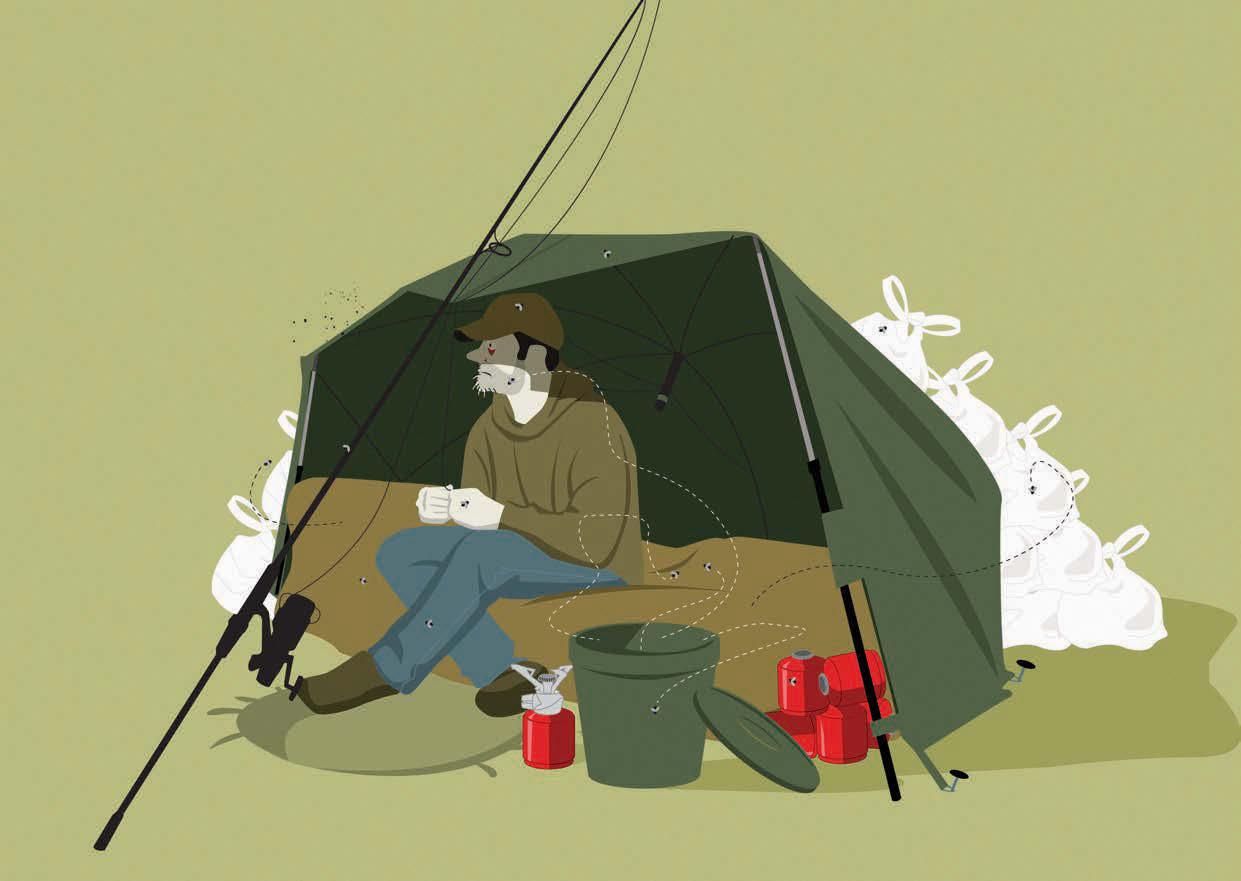
Feeling gutted after a 48 hour blank session? Imagine how these guys feel…
SCOTT KARABOWICZ
“5th November 2018 to 13th October 2019: this was a real head-scratching period of my angling! I’d started on Dinton’s Black Swan in October ’18 and really hit the ground running, with a 29, 31, 41 and 32 under my belt by fireworks night. I had ultimate faith in both my bait (Krill) and rigs (D-Rigs) as the winter encroached, and I was really looking forward to the weather warming back up in the spring and getting amongst them again.

“Long story short, aside from losing one in the summer, the next autumn soon came around—I’d changed nothing at all, and what seemed to work so well the previous year had failed me dismally, despite my e orts to get on fish during the busy weekends. Then it happened, on the Hunter’s Moon: Spike, at 52lb 2oz, a new PB and a lake record to boot. It’s funny how things work out, eh?”


OVER 11 MONTHS!


“I don’t consider myself an expert in many aspects of carp angling, but when it comes to blanking, I’m your man… From memory, my longest period without catching came when I was in my early twenties; I took the plunge and, along with a couple of mates, travelled to deepest Kent to The Tip Lake at Darenth. I was fishing a water in Shropshire that closed for fishing in midAugust at the time, so realistically my Darenth sessions were limited to September through until the close of the season.
“Money for fuel, and having not the most reliable car at the time, didn’t particularly help, but I had quite a few trips to Darenth over two years, including some lengthy deep-winter tendayers… I had one take at The Tip and lost it!”
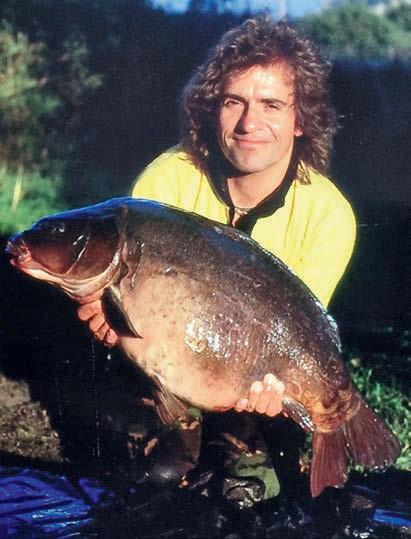
Black Flier, the
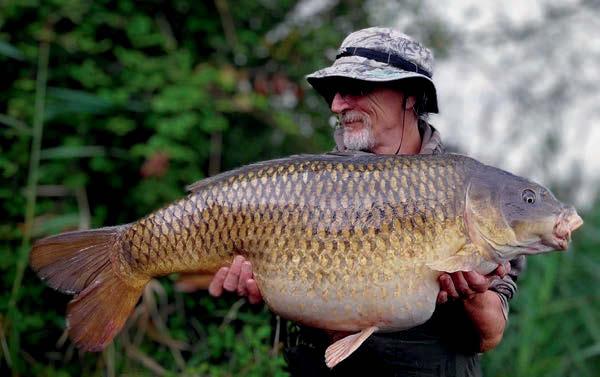
“Blanking is an important part of any challenge; in fact, it’s necessary. Nothing that’s worth anything ever comes easy.
“A couple of seasons ago I fished a farm reservoir I called Reedy Fen, and you can watch the films on my YouTube channel and read the articles I wrote about it on my blog. I spent the first two months on the lake blanking—well, I had two bites but lost both to hook pulls; it was a hit-and-hold, locked-up situation.
“When I first started to fish the lake I was told, “Put your bait a few inches from the far reeds, Steve—that’s how to catch them.” After losing those two fish and two months of blanking, I decided this wasn’t a viable method. It’s pointless continuing with methods that don’t work, expecting a di erent outcome.
“So I decided to fish it completely di erently to everyone else. After figuring out the topography, the make-up of the lakebed and carefully noting fish activity, I
decided on a formula. I also felt it was important to time my sessions for the best two mornings of the week: warm, wet, overcast and a lovely low pressure.
“My first session doing this produced one of the smaller ones. I started to refine my methods, thinking hard about what I was doing and why. This led to more fish being landed and eventually to multiple captures o the back of two short day sessions a week. I only did two nights in six months of fishing.
“Given that only about 50 fish are caught from the lake each season, I felt I did really well. I had 23 captures and, on one session, four runs in six hours, landing three of them. My best was a 37lb common—a new PB! It got to the point where I was expecting to catch every single session and the thought of a blank was forgotten.
“There’s always a key to catching them. Sometimes it takes a lot of work and e ort, but the rewards are there for those determined enough. Happy fishing!”
were baiting Three Lakes heavily with Nutrabaits
“‘More Blanks Than NATO’ was the way my season (so far) was so aptly described in gossip column in Carpworld, in late summer ’98. I’d had many good years at three di erent overnighter venues on Nutrabaits Enervite Gold, and Enervite Gold mixed 50/50 with Hi Nu Val. I’d heard two lads were baiting Three Lakes heavily with Nutrabaits Biollix but knew I had nothing to fear (whoops).
May
“A few good fish in April and May had me smiling, but when the blanks started to mount up I couldn’t just put it down to spawning/bite times/swims/luck… anymore. I was watching them catch carp in front of me from multiple swims at the same time I was fishing the lake.
“After a TWENTY-EIGHT night blank (6 p.m. to 6 a.m. mid-week overnighters), one tripped up in early September… thank God. It taught me that no matter how good your bait is, occasionally a bait will dominate a water so much that pushing water uphill is plain stupid!
“And guess what: Biollix for me in ’99 was so
“And guess what: Biollix for me in ’99 was so e ective that I never forgot that lesson again—be it Biollix/Key/Scopex Squid, etc.”




Adrenaline
hopefully leave me alone! Luckily, after only one day trip
fully clothed at 2 a.m. to sack it up. The next day

“Early spring 2004, I fished a three-acre gravel pit with only four carp in it. After countless nights and tench to over 8lb, I gave up in September. I vowed to come back in the winter, when the tench would hopefully leave me alone! Luckily, after only one day trip and two nights in January, I caught the carp of my dreams. The buzz was unreal! I waded out fully clothed at 2 a.m. to sack it up. The next day my dad came to take some pictures. Adrenaline was so high I never once felt the cold, despite being soaking wet.”

“A long time ago I started fishing Johnson’s Railway Lake in Kent and it was a proper headbanger! I tried every natural bait, particle and boilie, including the latest fishmeals that were taking waters apart, but all failed miserably. Eventually, in my third year on there, I started making my own highly flavoured pop-ups and they were the answer. They loved the little boosted singles, just fished out there on their own, and I went from nothing in many, many nights to eight runs in a week. There’s always a way to catch them if you can find it.”
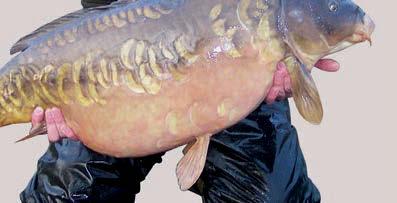
“My longest blank was on a lake that I was fortunate enough to have sole access to. It was home to just four carp in perhaps 10 acres. I fished it from 2002 to 2004 and racked up in excess of 150 nights. At the time I was fishing it, none of the carp had ever been caught. The biggest was a common of around 40lb and the second biggest was a mirror. The common never met the bank, but the mirror got caught not long after I left at 37lb.
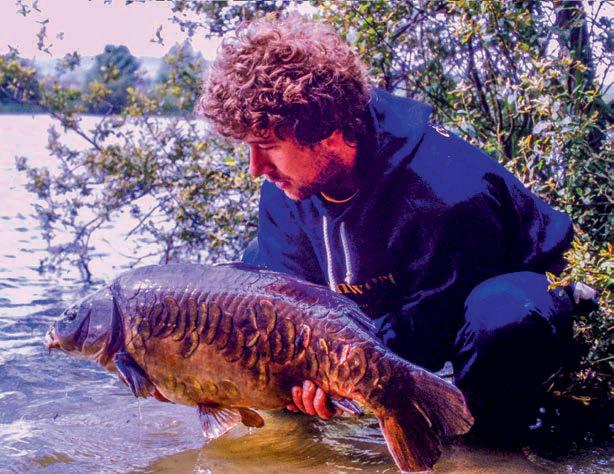
“I like to think that fish got caught because I’d spent so long weaning them onto bait, but in actual fact I think I just didn’t fish it well. All my angling was based around prebaiting and, at the start of a session, I’d go out in the boat and drop my rigs for the weekend. The problem was that the carp hated any disturbance and really avoided the areas once I’d gone afloat.
“Fishing a night a week, it was a hard mission to crack, but I would have got there eventually and would have carried on trying to crack the code for as long as it took. The lake was leased by my employer and when I made the decision to change jobs the fishing went as well, so I never got to see the campaign through.”
“I can clearly remember getting a golden ticket for the Caravan Park at Maxey. After nigh-on two months, I realised that it wouldn’t be a walk in the park. I had to change my approach to mid-water weed fishing. I have written about the semi-buoyant set-up I used many times.
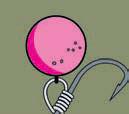
“By incorporating a critically balanced ledger, high-viz pink freebies as well as a hookbait, I was able to fool the carp into picking baits on top of the dense weed. Everyone else was looking for holes in the weed, which at the time didn’t exist. With slack lines and rods so high up it looked like I was sea fishing; when my first carp was a stunning 33lb common that looked as if it had never been caught, I was up and running… and what a run it became.”
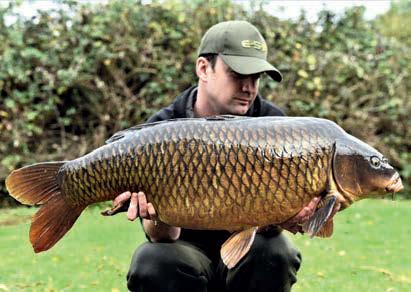
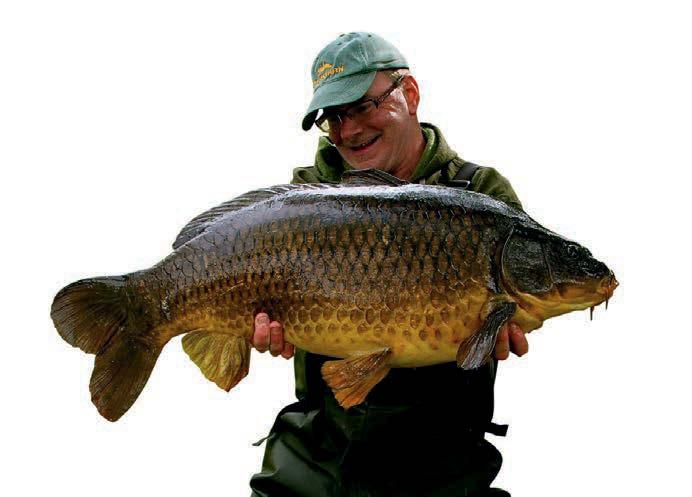
“My longest run of blanks was undoubtedly when fishing the Horton Boat Pool. I was only fishing overnighters and struggled, often packing up when the fish started showing. In my first season I only managed five fish in 20 nights, and three of them were in one night!
“On my second season I sacrificed the overnighters but fished a lot more two-hour sessions straight after work, choosing to stalk fish out of the edge rather than stay static. I caught a lot more and finished on 16 fish in nine trips.”
18 MONTHS!
LEWIS READ “I’m pretty sure I went about 18 months between bites on the CP at one point! Crazy… I have no idea what fish broke that blank spell (probably Pearly, as I had her a few times). Why the serial blanking—well, obviously I fished poorly: slotting in at weekends on a busy pit, poor observation, not moving when I should. Rigs and baits were okay, but on a venue like that it’s all too easy to fall into the trap of needing to be there and nowhere else. Even if you turn up and the gaps left are realistically highly unlikely to do a bite, I would never consider going somewhere else. Blind commitment—but still, I enjoyed it (and was never more than mildly suicidal!).”

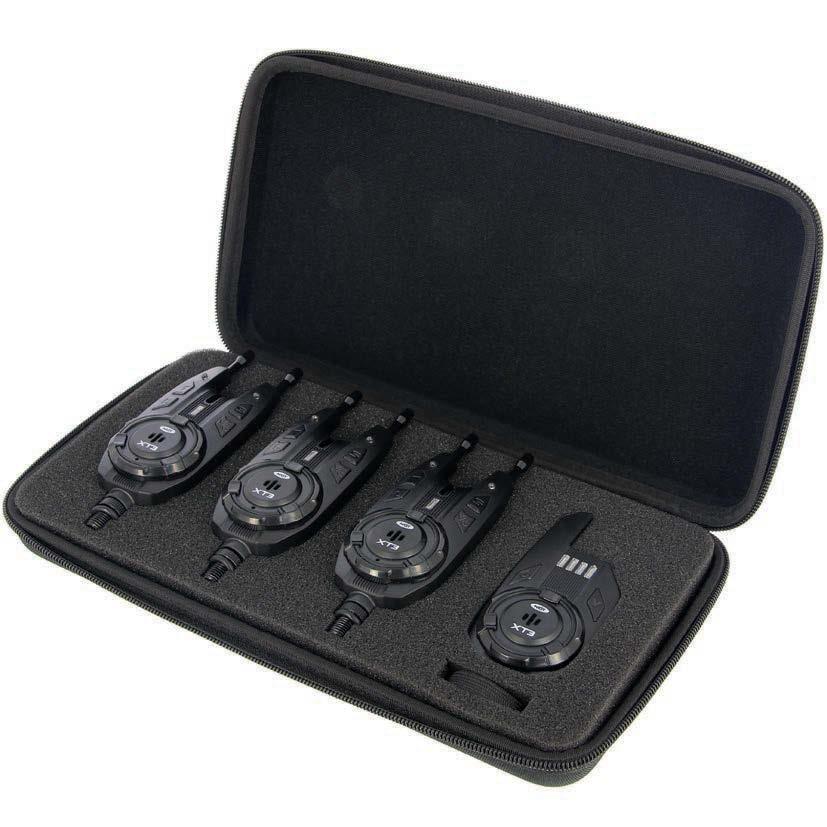
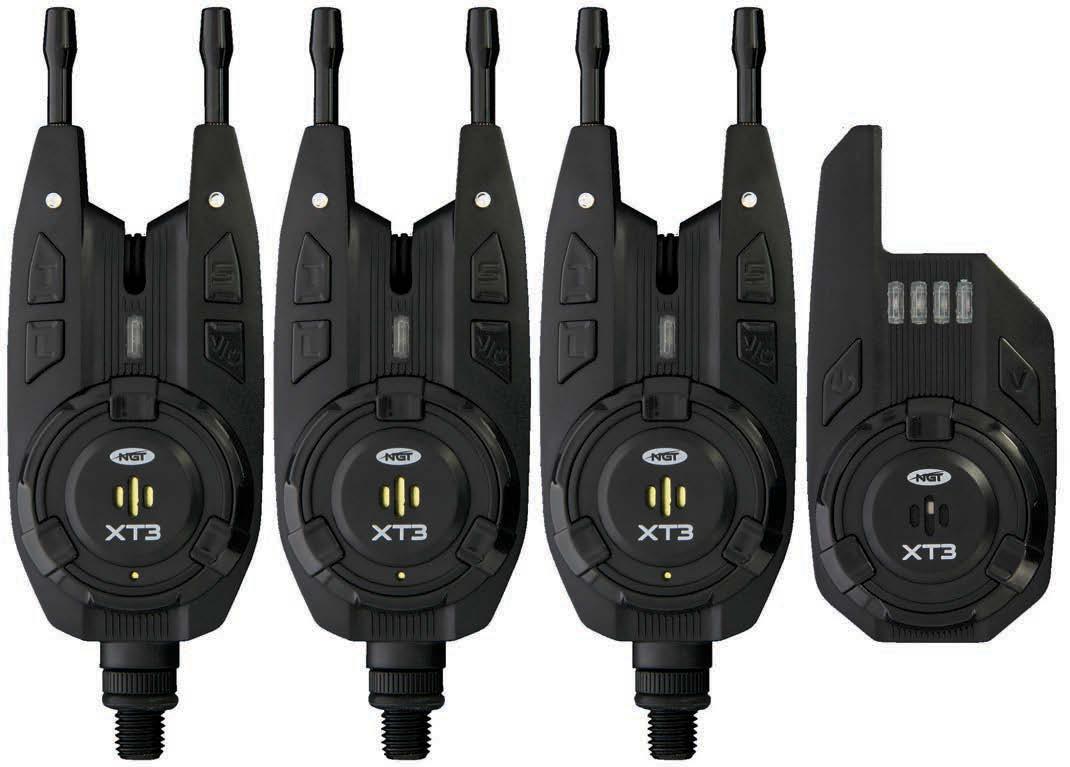
FEATURE PACKED 3 PIECE WIRELESS
ADJUSTABLE VOLUME, TONE, SENSITIVITY AND LIGHT WITH RECIEVER
■ 3 alarms with multi-coloured LED’s
■ Wireless range of up to 400m
■ Variable latching settings
■ Volume and tone control
■ Vibration mode
■ Black snag bars included
■ Rolling code function

EXPECT TO PAY
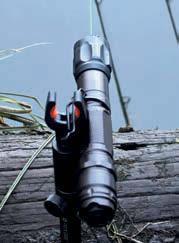
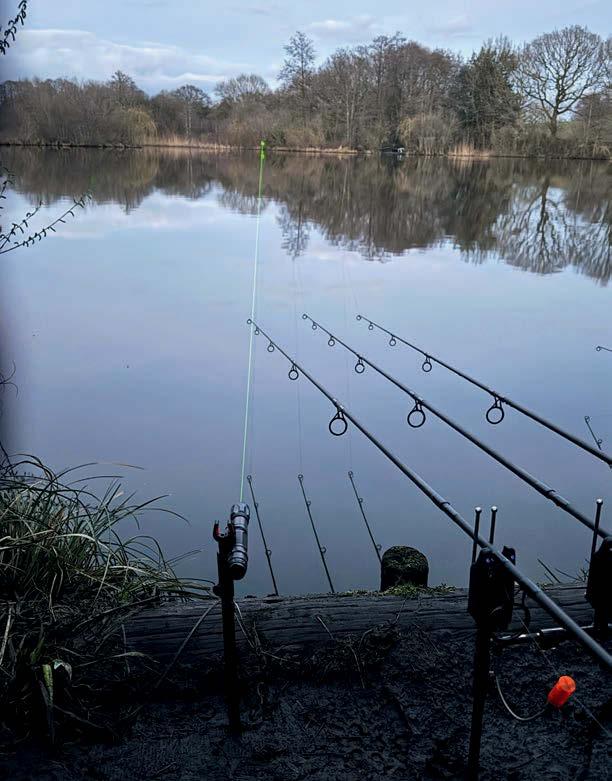
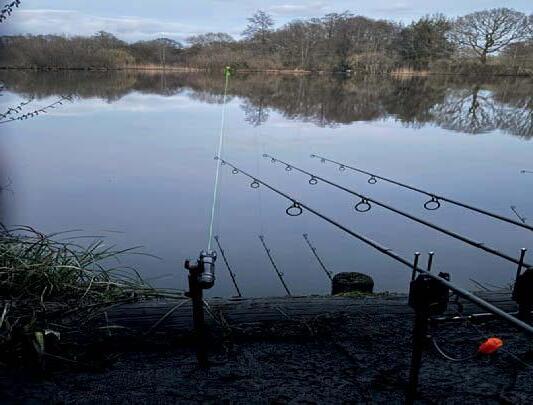
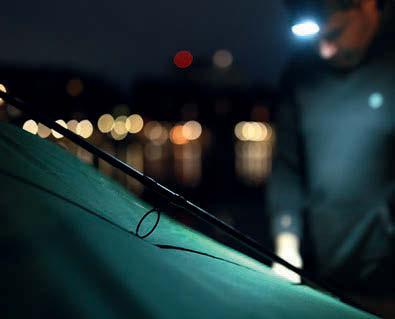
All-round great guy Frank Warwick shows how, thanks to a clever product, daytime wrapping-up accuracy can be carried seamlessly into darkness
“Everyone’s obsessed with numbers of wraps and getting their distance exactly right,” states carp-fishing veteran and pioneer of so many of today’s rigs and baits, Frank Warwick. “That’s all well and good, and using distance sticks is a perfectly legitimate process,” he continues. “But what about at night, when there’s nothing on the horizon to aim for, you’re fishing to an area the size of, say, an unhooking mat, and you want to put three rods on the spot? It becomes a bit chuck it and chance it. Even though you’re feeling for the clip, you could be there for hours, in and out. And with three rods? Nightmare! You might have three di erent spots, too.
“What I do is use Chinese lasers. You can get them for about £5 each, in di erent colours—red, blue and green. You fit them to a small adjustable bankstick and, just before dusk, aim them down your lines at a slight angle. When you get a take at night, you’ve already got your number of wraps noted for each rod, so you might think, Ah, left-hand rod, green laser. You flick the green laser on and it gives you the exact line to the surface of the water. You cast out to the spot, hit the clip… lovely!
“Yes, you do have to be careful with lasers when there are people on the opposite bank, but it only takes a few seconds to get your alignment, so it’s no big deal.”
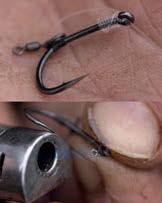
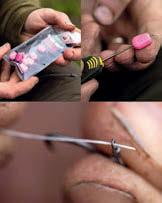
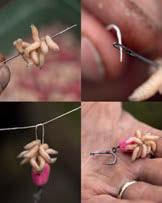
SCOTT SWEETMAN REVEALS A LOVELY, REFINED, SUPER NEAT SET-UP FOR PRESENTING MAGGOTS
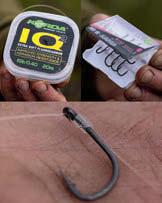
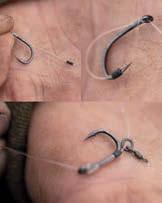
“Like many, I often incorporate natural bait into my angling during the winter and early spring, where permitted. I rarely feel the need to use loads; just a few spods of straight casters or maggots is often enough to get me a bite. I stick to the same rig throughout winter—my faithful D-Rig. It’s just the hookbait that changes, often opting for a single piece of fake, slow-sinking corn or maize, topped o with a few maggots. It’s the perfect hookbait: a nice bait with a subtle visual element, but still carrying all the attraction of a natural bait. Here’s how I tie it…”
5.
a
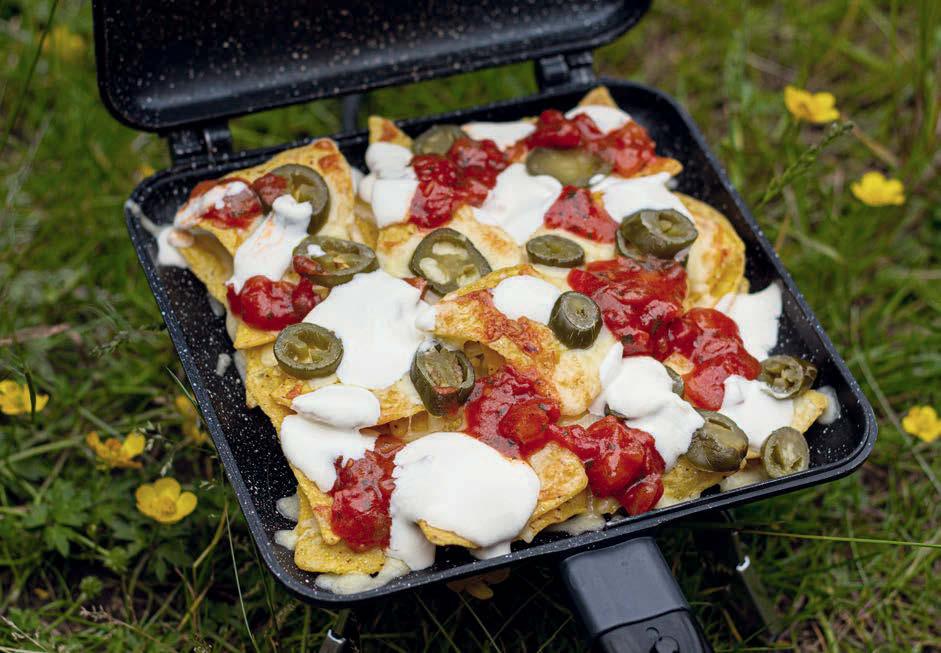
A quick-fire, crowd-pleasing classic loaded with cheese, salsa and just enough heat— what’s not to like?
Crispy, cheesy and loaded with flavour, these nononsense nachos are the ultimate snack—perfect for sharing with friends or indulging all on your own.
Topped with melted cheese, zesty salsa and a kick of jalapeños, they’re simple to make and irresistibly delicious.


Simple cookbag staples that Matt Eaton relies on to make bankside cooking easier, tastier and far more versatile
A small bottle of olive oil will allow you to fry healthily and even make garlic bread.
A selection of powdered, readymade sauce blends is a great way to make life easy. The packets take up very little


This 116-page cookbook is a brilliant companion for anyone who likes to eat well whilst on the bank. With 50 recipes on o er, it covers everything from hearty breakfasts and next-level toasties to ‘fakeaway’ favourites and proper desserts. £14.99

Ingredients
• 1 bag of tortilla chips
• 250g grated cheese (Cheddar) • 100g sliced jalapeños (optional)
• 3 tbsp salsa • 3 tbsp sour cream
Method
1. Spread the first layer of tortilla chips evenly in your pan, making sure they cover the base without overlapping too much.
2. Sprinkle some of the
space, weigh next to nothing and come in a wide variety of flavours.
Tinned ingredients, especially vegetables, definitely have their place for the bankside cook. Sweetcorn, broad beans, French beans, tomatoes,
WE CATCH UP WITH TRAKKER’S JON JONES

Nickname? “Shoes.”
Occupation?
“Product Development and Videographer.”
Describe yourself in three words:
“Creative, forward-thinking, talkative.”
Who is your favourite carp angler in history and why?
“I’ve said this a few times in the past and it hasn’t changed: Rob Maylin. Personally, he changed carp fishing and put it on track to become what it is today.”


Who is your best mate in carp fishing?


grated cheese over the nachos, ensuring every chip gets a hit of cheesy goodness.
3. Repeat the previous two steps, then scatter the sliced jalapeños (if using) over the top.
4. Set your stove to a medium heat and cook for a few minutes on each side, making sure the cheese has fully melted.
5. Serve with a dollop of salsa and sour cream.
beans and pulses make fine additions to casserole-type meals. Tinned potatoes are simply wonderful, gently fried in a little oil. A few tins left in the car will also come in handy if your services are pressed into action at a social!

“My mate Des. If it wasn’t for him, I wouldn’t be fishing now. We started carp fishing back in the 1980s and, although he hasn’t fished hard like I have over the decades, we still try to meet up now and again to get the odd session in from time to time.”
Something you always take on a session?
“I struggle sleeping, so I have to have some kind of podcast, radio or TV on in the background. I’m not sure why it works, but having something on helps me fall asleep. To avoid making any noise, I always bring a small set of earphones with me.”
If carp fishing introduced one rule everyone had to follow, what would it be?
“Etiquette.”
What’s the best piece of advice you’ve ever had?
“If you have the chance to do something you love doing, do it.”
Who is the most competitive angler you know?
“Having worked with Rob Hughes and Simon Crow, I’d 100% say those two. Without doubt the most competitive anglers in the industry—and I’m sure they’d both agree.”
Proudest moment?
“Having a product idea, designing it with the manufacturer, and then seeing happy customers using it.”
What are the three key elements to the perfect carp fishing session?
“You know that feeling when everything just goes right: the swim looks perfect, the first ten spod casts land spot-on, and your rigs hit the bottom with that satisfying thump. That’s when you know it’s going to happen.”
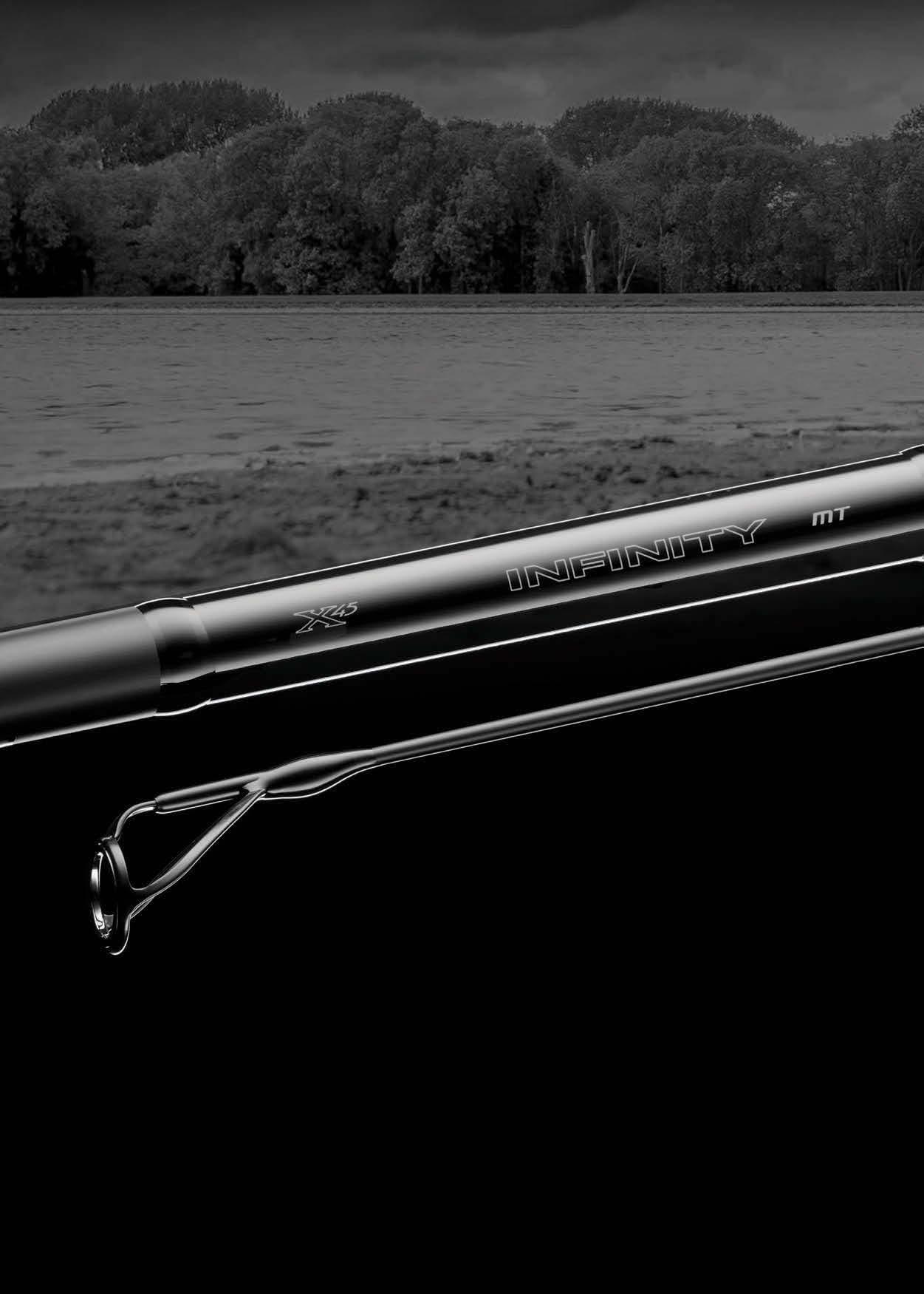
INFINITY is one of the most iconic names in carp fishing and the latest INFINITY MT X45 rod has taken it to the next level.
Awarded BEST CARP ROD in National Angling Awards 2025
The unique profile of Magnum Taper combined with the untouchable carbon tech of X45 and HVF sees Infinity MT rods now surpass all levels of performance that has gone before them.
Delivering truly outstanding numbers in testing, every model hit improved distances with some by over 10%.
Further yes, but importantly maintaining the superior casting accuracy they are already known for.
With over 30 years of Made in the UK pedigree, the Infinity mark has long been a standard that many have tried to follow. But with now even greater reach and still pinpoint delivery, that level has now been raised.
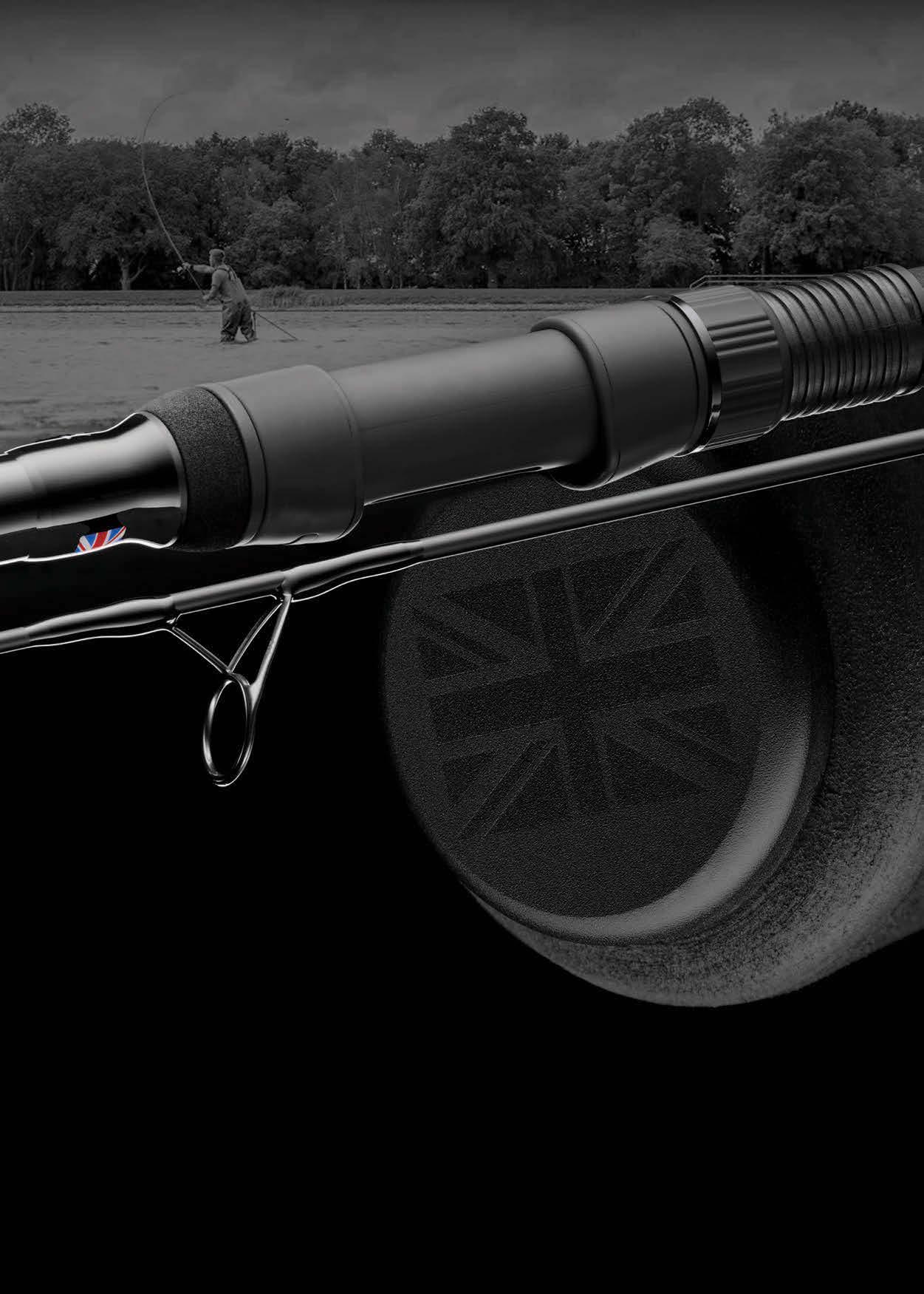
• Magnum Taper blank profile
• X45 - Bias Carbon technology
• HVF - High Volume Fibre
• V-Joint Alpha
• American Tackle TiForged AIR guides
• 50mm butt guide on 12’ and 13’
• 40mm butt guide on 10’ models
• American Tackle reel seat with soft touch finish
• Japanese Shrink Grip handle with flare
• Laser etched UK flag on butt cap
















EVERYTHING YOU NEED TO IMPROVE YOUR PB!



GEAR TEST: 12 BIVVY TABLES RANGING FROM £20 TO £115



behind his success










25 Years of Spring Carp do so well?






KEYSKILLS10BaitBoatEdgesMaster24CastingTips BaitingtheCatapult Tactics
























Oli Davies shows you how to locate patrol routes and bait them correctly











IT’S A BIT FORWARD, ISN’T IT?













MARK HOLMES’ NEW DIARY CARP FISHING’S BIGGEST MYTHS LONGEST BLANKS


You’ve just spent £5.99 on the magazine, settled down for a decent read about your favourite pastime and—before you’re even a quarter of the way through—here we are asking you to spend a bit more. Sorry about that. But the truth is, we really do care. Every issue, our aim is simple: to help you catch more carp. To inspire you with new ideas, sharper thinking, better tactics and the best kit out there. Subscribing means you never miss an issue, spend less time hunting the magazine down in the shops, and more time doing what really matters: being on the bank. You’ll save a bit of money too, which can only ever end up being spent on more fishing gear! That sounds like something we can both get behind, doesn’t it?
Joseph Earl-Wright, Editor-in-chief
√ Advice from the country’s best anglers, helping you win more matches
√ Stay updated on the latest and greatest gear to hit the market
√ Delivery direct to your door – hassle free!
√ Save money on the shop price!

Terms & Conditions: You will pay £39.50 for 6 issues of
Carp and the products
You will then continue to pay £25 every 6 months via continuous payment thereafter. Gifts are subject to availability and while stocks last. Gifts available for UK only. Gifts will not be dispatched until first payment has successfully been taken. Prices are correct at time of printing and are subject to change. For full terms and conditions visit shop.kelsey.co.uk/terms To see how we use your data, view our privacy policy at shop.kelsey.co.uk/privacy-policy. You may unsubscribe at any time. If you choose to cancel your subscription, we will stop any further payments being taken and send you the remaining issues that you have already paid for. Offer ends 31st May 2026. Lines are open Mon-Fri 8:30am-5pm. Calls charged at your standard network rate.


10 hacks, tips and edges to master different baiting situations, presentations, and rig drops that break from the norm
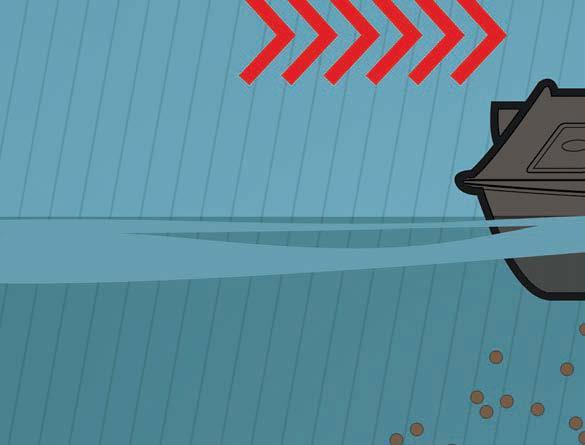


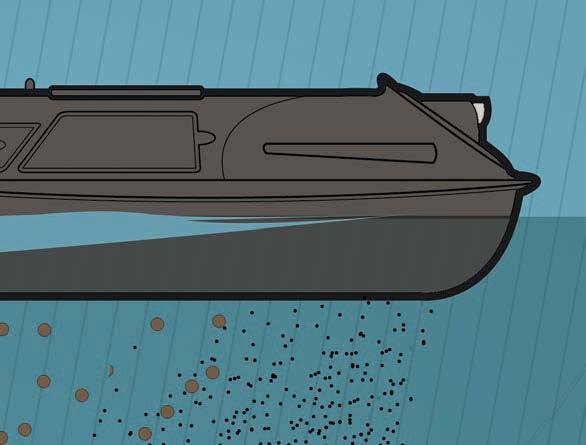
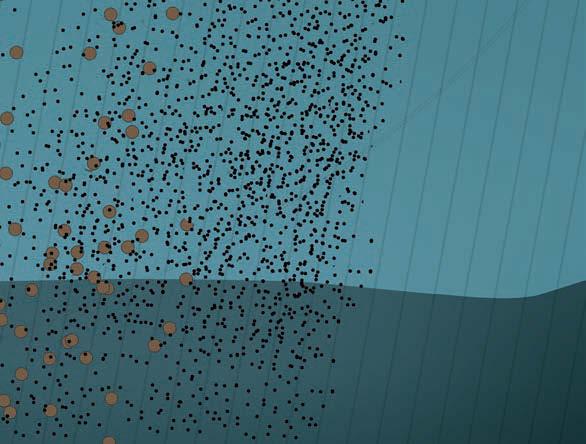
When carp become wise to getting hooked on the same type of presentation time and again, it can pay to do something di erent. On waters where bait boats are allowed, this is often when fish grow cautious of tightly baited spots. Spreading the bait is the answer— but that’s not easily achieved if everything’s dropped in one go. Try instead approaching your spot at speed and releasing a mix of di erent-sized baits as the boat moves. The varying sink rates will help scatter them naturally, and with a little practice you can create a wide, even spread that encourages a far more confident feeding response. 1

“THERE’S FAR MORE TO BAIT BOAT ANGLING
There’s far more to bait boat angling than most people realise—well, good bait boat angling, that is! Many assume it’s a lazy way (reading: “it’s cheating!”) of fishing, but to be truly effective, it requires a lot of effort, skill and thinking through. There are countless ways to gain an edge over the next bait boat user when it comes to baiting patterns—and here are ten of the best…
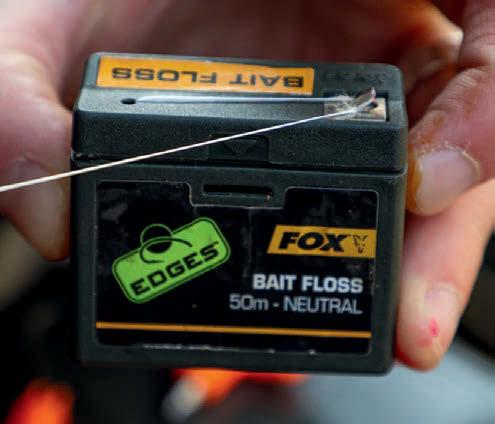
With boats that have two hoppers, it’s possible to load a quantity of feed in one hopper and a single hookbait rig (and just three or four freebies if you wish) in the other. Once the boat is positioned out on the lake, the feed can be dispatched in one go—just like most boat users do, and as the carp will typically encounter a baited area. The hookbait can then be taken a short distance away—say, a rod length— and dropped separately. Fishing your hookbait on the fringes of the main baited patch is something carp won’t usually see on waters pressured by bait boats, and it can be a genuine edge.
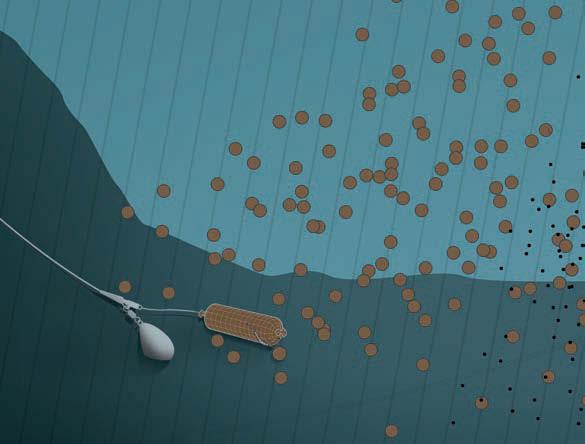
One of the main advantages of any bait boat is the ability to deposit your hookbait and feed in exactly the same spot. Using large solid PVA bags takes that benefit even further—not only allowing you to fish smaller, more precise spots, but also ensuring your rig remains completely tangle-free. Fill the bag with a mix of micro to mediumsized pellets and groundbait, and you can even create your own clean patch within low-lying weed.
Now let’s look at how PVA bags can be given an extra edge with the ‘Parachute Bag’ method. First, attach one or two PVA nuggets to the hookbait, then lower it into the bag, which is filled with larger pellets to help trap air pockets.
The bag should only be filled enough to cover the hookbait and the final quarter of the hooklink. When the bag hits the lakebed, it initially remains suspended above the lead. As the PVA dissolves, the contents begin to fall, leaving the hookbait hanging momentarily before it gently settles onto the pellets— guaranteeing the hookbait’s perfect position above the feed.
A great tactic is to combine the best of both worlds when it comes to baiting—by creating a spread of freebies around a tightly baited spot and your hookbait. Take your rig and free bait to the fishing spot and present it as normal. Then, while the boat is still positioned over the spot, use it as a visual marker to apply a scattering of boilies with a throwing stick or catapult. You’ll also find that, while the boat’s in place, bait-robbing gulls are far less likely to swoop down for your spinning boilies—they’ll steer clear of the dark object bobbing on the surface. Ideal!
Zig Rigs can be a nightmare to present at the best of times—a long hooklink waving about behind you, catching the bivvy or branches before you cast, and then hoping it doesn’t tangle. A bait boat removes most of those hazards, as long as you load it correctly. The best way is to only load the lead arrangement into the hopper, leaving the hooklink trailing freely out the back with the main line. The buoyancy of the Zig keeps it at the surface, trailing neatly behind the boat and preventing tangles—a simple tweak that makes all the difference.
Accuracy when repositioning rigs, whether after a bite or a long wait, is crucial. One of the beauties of a bait boat is that there’s no need to use wrapping sticks. Simply mark your line with pole or marker elastic after dropping your rig the first time. Then, each time you return, guide the boat towards a fixed landmark on the far bank until you reach the elastic marker. If you overshoot, just reel the boat back slightly to position the rig bang-on every time.
Years ago, simply owning a bait boat gave you an edge. In 2026, having GPS on your bait boat is the next big one. If your boat’s equipped with it, make sure you use it! GPS allows you to set a ‘Home’ point, so after dropping your rig you can just hit the ‘Home’ button and the boat will automatically drive back to you while you sink your line. Even better, once you’ve found your chosen spot, you can mark that too—meaning the boat will travel in a dead-straight line to it every time. That ensures your main line runs perfectly direct, rather than zigzagging all over the place because of imperfect steering. It’s a serious edge, so if your boat has it, make full use of it.
A common pitfall when using bait boats is overdoing it—it’s all too easy to dump far too much feed on a spot. The temptation to fill the hoppers to the brim is massive, but it can dramatically reduce your chances, especially of a quick bite. So it pays to know exactly how much bait you’re using. A simple trick is to use an empty pop-up tub or baiting scoop (RidgeMonkey and Spomb both sell them) as a measure when loading up. But even that amount of bait can often be too much. If you’re fishing across to a far margin—an area almost 99% of anglers will also be targeting—try using just three or four free baits. It might feel unnatural, as your instinct will be to put in a good scoop, but just remember: everyone else will be doing exactly that.
It takes a bit of practice, but holding your rod while manoeuvring the boat is well worth it—it really is a big edge. Doing so lets you manage line tension, preventing a big unwanted bow when you drop the rig. More importantly, it allows you to feel the lead down onto the lakebed, just as you would with a cast. Not only does this confirm the rig’s landed cleanly on the spot, it also helps the hooklink kick out straight, reducing the risk of tangles and boosting presentation confidence.
Total Carp dishes up a few clever additives that break from the norm, are easily picked up in supermarkets and, better still, cost next to nothing
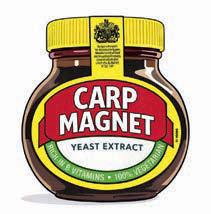
Yeast extract is a massive carp-puller and these two products are packed with the stuff. Use in: Stick mixes or for wrapping around your hookbait. Big fish angler and all-round lovely guy Bill Cottam swears by this stuff.
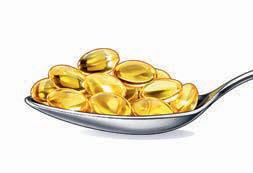
Get Pearls Capsules. Use in: Fish it on the back of the hair with your hookbait - Ken Townley style from the ‘90s. The capsule will slowly melt and you’ll have goodness all around your hookbait. Give it a try.
This works so well with sweetcorn.
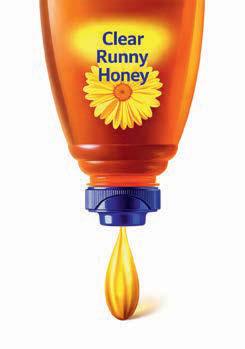
Use in: Get some corn, glaze it with running honey and then freeze. Also try Fructose—a perfect hookbait soak. Honey is a massively underrated ingredient, so give it a good.

Also known as ‘Devils Dung’! Use in: Available in both powdered form and as an essential oil and both are perfect for Stick and Method mixes. You’ve been warned though: it really does stink!

PERFECT FOR SPOD MIXES
Brilliant when combined with groats and flake maize. Use in: Add to your spod mix if you want to create a cloudy baited zone—just as Brian Skoyles suggests on page 24 this month.
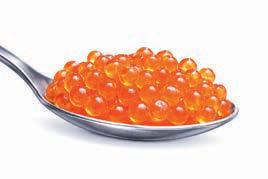
All of these work really well: pressed cod roe, lumpfish, caviar (expensive!), or fresh cod roe. Use in: Stick mixes or blended in with boilie mixes or pastes. It looks awful but it really does work a treat.

A brilliant alternative to fish oils.
Use in: Try the following for alternatives to standard oils: pistachio nut oil, peanut, walnut, olive oil, or Oz Holness’ favourite: toasted sesame oil.
PENNING EDGE

Adam Penning swears by these. Use in: Add up to 10 finely chopped, deskinned garlic bulbs to your hemp, then follow up with a few generous scoops of garlic powder— the equestrian stuff. More on this next month.
Why size of hookbait isn’t the issue—it’s the shape that makes all the difference…
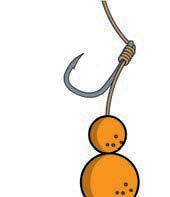
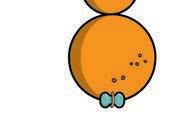

Perfect for those who favour long hairs, and bigger baits tend to result in hook-holds well inside the mouth, whereas delicate rigs with smaller baits often lead to edge-of-the-lip hook holds. A proven approach is a triple-bait arrangement, stepping up in size—such as a 10mm closest to the hook, followed by a 15mm and a 20mm on the end. This does mean running a longer Hair— sometimes alarmingly long—but that’s no bad thing.
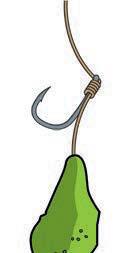

Teardrop-shaped baits leave the hook point nicely exposed, helping create strong, reliable hook-holds. They’re easy to make with a sharp knife, but it’s important to leave the tougher skin at the base to prevent the bait slipping off. Fished as a critically balanced hookbait on a short sliding hair, the shape also helps reduce tangles and improves how the hook turns when a carp picks it up.
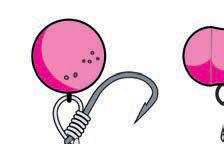
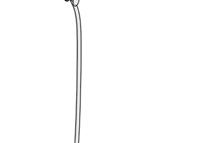

Everyone uses a round pop-up hookbait—usually 13–15mm—on a Chod Rig (and Hinged Stiff Link for that matter), right? But what about a barrel-shaped pop-up? It’s easier to tie on, leaves the hook point more exposed and, thanks to its shape, can be more buoyant and sit up better over debris. More importantly, it offers something very different to the norm, which can be enough to trip up pressured fish in twenty-twenty-six.
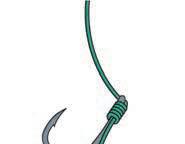
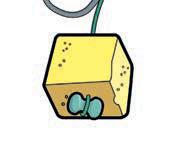
Cubed baits have long been effective, particularly when used as free offerings, but they also make excellent hookbaits when slightly misshapen. Shaping them into longer, rectangular cubes helps keep the bulk of the bait away from the hook point, improving hook penetration. This profile also works extremely well for floating hookbaits, where stability and consistent hook presentation are key.
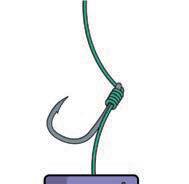
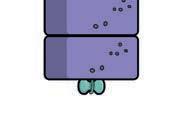
Dumbbell-shaped baits are highly effective but are often fished singly. Fishing two side by side on a hair—such as a pair of 12 x 20mm baits—creates a larger mouthful (which goes back to Point 1) and adds extra weight to the presentation. That additional mass helps the hook turn and drop more positively, improving the chances of a solid hook-hold once the hookbait is inhaled. This is definitely one to give a go.
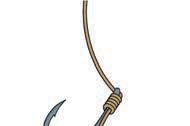
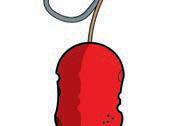

Any round bait can be trimmed to make an effective hookbait. Apple-core popups work particularly well, as trimming the sides allows extreme critical balancing to be achieved with ease. It’s important that the hair enters and exits through the tougher skin at the top and base of the bait, as nuisance fish can otherwise pull it off before a carp has a chance to pick it up. This is how Tom Maker balances his Spinners.

‘CLOUDING UP’

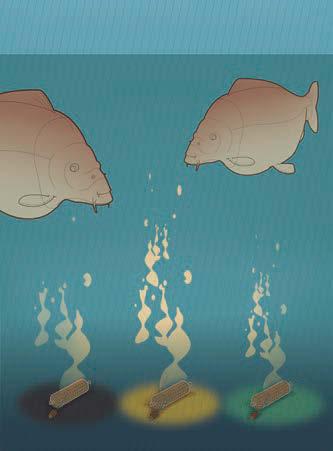
Brian Skoyles explains how he, or rather his son, Martyn, came up with a method of baiting that’s proved more than effective when all other tactics have failed…


WRITTEN BY
BRIAN SKOYLES
BY
ILLUSTRATION BY MARK
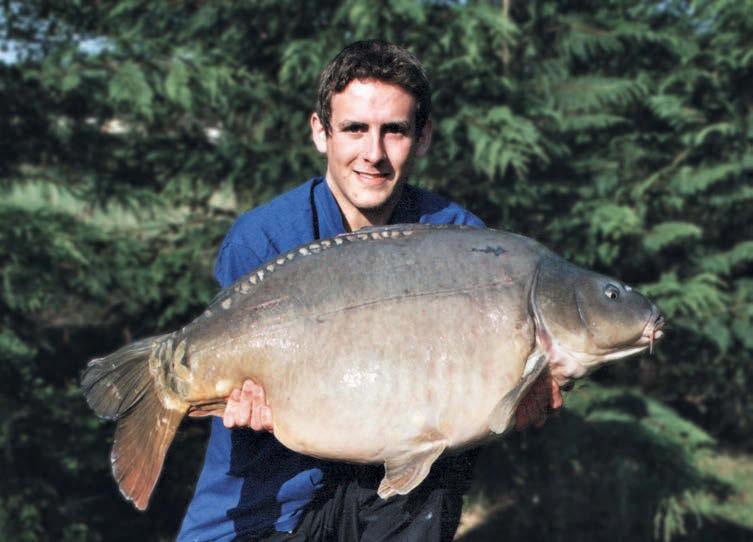
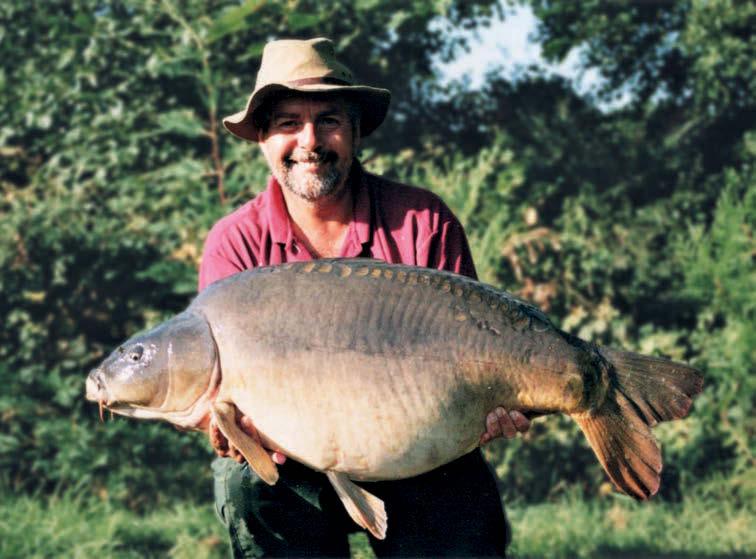
TOTAL CARP: How did you discover the ‘clouding up’ method, and why do you think it can prove so e ective?
BRIAN SKOYLES: “I suppose I have always understood, right from my early float-fishing days as a teenager on the Norfolk Broads, fishing mainly for roach and skimmers, that by creating some sort of cloud in the water you can attract fish into the area where your hookbait is. Being fairly thick, however, I never brought that knowledge to my carp fishing until much
later, when, during a session with Martyn, my son, the lightbulb lit up, so to speak.
“It was a summer session at a water called Le Mans. The weather was settled, it was calm and it was very hot. Martyn and I had the lake to ourselves and were catching well through the night and during the very early morning. The rest of the day, however, was a waste of time, given that the bulk of the fish were enjoying the sun and, from what we could see, not doing a lot else. Although we tried
Multimino to the lake water when we soaked everything.
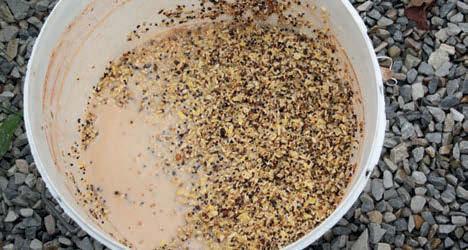
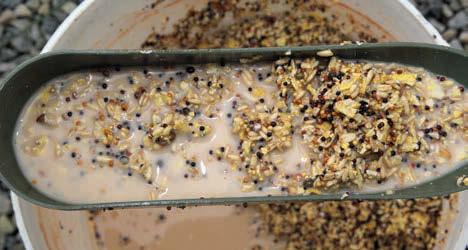
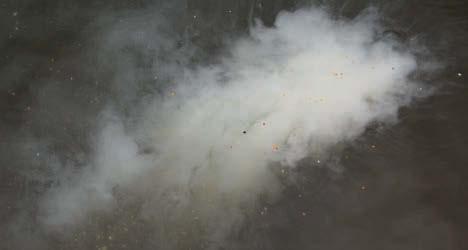
“On this particular occasion, we had overdone the liquids a bit. Left over from the previous night, we had some really sloppy mix—more liquid than particle mix. We had the use of a rowing boat, so Martyn brought in one of his rods, put on a fresh hookbait, poured some of the slop into a small bucket and rowed slowly out into the lake. There, he tipped the bucket of slop over the side and then lowered the hookbait into the milky cloud. A few minutes later, back on the bank, he had a one-toner. It was the first of several fish we had after rowing out small buckets of slop. The fish seemed to find it irresistible, and I guess it was the combination of the cloud and the tiny particles slowly drifting towards the bottom that drew them in— and then down.”
TOTAL CARP: Are there any particular types of venue where the approach excels, or any suitable length of session?
BRIAN SKOYLES: “These days, Spombing sloppytype mixes is a recognised technique when fish are midwater and taking on Zigs, but I have found it equally e ective when I’m fishing on the bottom in the margins, where you can use any sort of baiting spoon to create the clouding e ect easily. The more liquid you can add to the slop, the better, but this does create problems with getting it into the water, unless you have access to a boat or can use a baiting spoon. I’ve regularly ended up with slop in my hair or splattered all over my gear when trying to use a standard spod or Spomb.
them, they showed no interest in surface baits, so we were stuck in our routine of slapping on the factor 50 and just sitting in the shade, waiting for the time to pass.
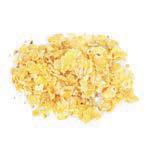
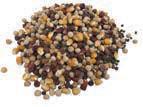
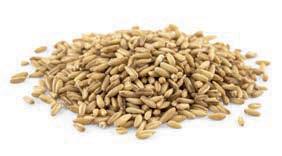
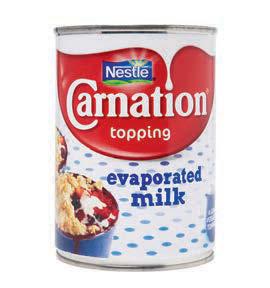
“Martyn wouldn’t settle for that, though, and decided to try something di erent. At the time, one of our go-to baits was a particle mix comprising flaked maize, groats and Partiblend (Hinders French Mix). What made this mix so e ective was the addition of evaporated milk and Nutrabaits
“For many years now, I have used a Gardner screw-on baiting spoon in conjunction with my landing net pole, but these days there are other options to consider, like the Nash Bushwhacker system.”
“For obvious reasons, clouding up does have its limitations, and essentially it’s a margin tactic best suited to quieter waters where you can wander around looking for likely ambush points. If, however, you have access to a boat, it opens up a whole new



range of possibilities, as Martyn and I found out years ago.”
TOTAL CARP: What liquids do you use to create your cloud? And along with your favourites, are there any types of liquids you steer clear of?
BRIAN SKOYLES: “I think the key ingredient is evaporated milk. It clouds the water brilliantly, but after that there is a lot of choice. Before making your decision, it’s worth finding out how some of your options behave in water. For example, Nutramino dissolves through the water column, but Multimino does not. Multimino sinks and settles on the bottom, so a combination of evaporated milk, Nutramino and Multimino is always good.
“These days, most bait companies have a range of liquid boosters and glugs, and these can all be good options. My personal favourite is a combination of evaporated milk and Trigga Ice Liquid Booster, and it complements the Trigga Ice boilies I like to use. I steer clear of oil-based liquids for the obvious reason that they don’t sink, although they can be of use if you are looking to encourage the fish to move up through the water column rather than move down it.”
TOTAL CARP: How long does the resultant cloud of attraction hang around in the water, though?
BRIAN SKOYLES: “From a visual point of view, the cloud e ect does not last long, but my guess is that the overall stimulus from the various smells you introduce lasts much longer. I’ve often had fish move on to a spot quite some time after the cloud has settled. If you are using some form of baiting spoon, you can top up reasonably easily
and without disturbing the swim.
“If you’re lucky, the fish will also play their part, as I’ve had situations where fish have moved in and started clouding up the water themselves in the hunt for food that isn’t there!”
TOTAL CARP: Are you looking to cloud the whole water column or just create a haze e ect in the bottom third, say?
BRIAN SKOYLES: “When I have used this method, with the ingredients I favour, the mix tends to cloud the whole water column. Eventually, though, everything will settle on the bottom. Again, in more recent years I know some anglers have taken this idea a bit further. They’ll now add smaller, almost neutrally buoyant food items that take much longer to sink. Some items will even float back up in the water. They can then react to how the fish respond and either fish floaters, Zigs or bottom baits over the top.”
TOTAL CARP: Have any patterns emerged over the years of you using the approach?
BRIAN SKOYLES:
“Realistically, clouding up is not a technique that suits a wide range of angling conditions, but it really comes into its own during what I have in the past described as the summer doldrums: those hot, still days when the heat is oppressive and everything seems to slow down. The fish seem disinterested and basically you just sit and wait for the sun to go down.
“On days like these, you have two options. You can reach into the cool box and relax with a cold beer, or you can try a bit of clouding up. Over the years, the method has certainly caught me bonus fish. On the other hand, you could always do both!”
Just add plenty of evaporated milk and you’re good to go!
“Clouding up sounds like a lot of mucking about, but it doesn’t have to be. Most of the time, it is just a matter of tweaking your usual spod mix and making it sloppier by adding more liquid. Without doubt, my key ingredient is evaporated milk. Just take a small bucket, add a couple of handfuls of your spod mix, add a tin of milk and it’s job done. It’s a method that’s worth a try when most others aren’t making it happen.”
What’s best, and when? A landing net, a retaining sling or a sack—here are all the answers
HOW LONG CAN I KEEP A CARP IN A RETAINING SLING?
Retainers are ideal for keeping fish in for up to around 45 minutes if you need to wait for someone to arrive and take photos of a big fish, or for the light to improve slightly at dawn. They don’t carry many of the risks associated with sacking fish, largely due to their buoyant nature. If a retainer isn’t tied to the bank properly and breaks free, the worst-case scenario is that it will float away, but it will remain visible, making rescuing the fish with a boat relatively straightforward. Because of this buoyancy, however, the fish is always
held in the upper layers of the water, which tend to be warmer, especially during the summer months when the sun is beating down on the retainer. This exposure to increased water temperature is why retainers are not suitable for holding fish for as long as a sack. Where possible, position the retainer in a shaded area to reduce stress caused by direct sunlight. Another key factor to consider when using a retainer sling is wind strength and direction—something that’s equally important when keeping fish in a net or sack. If there’s a strong headwind blowing into your bank, it’s not always advisable to retain fish, as there’s a risk they’ll be knocked
IN WHAT SITUATION IS IT SUITABLE TO RETAIN A FISH IN THE LANDING NET?


In some situations, the most stress-free way of retaining a carp for a short period is to leave it in the landing net. This is suitable for up to around 15 minutes and avoids the need to transfer the fish into slings or sacks. It’s typically done while camera equipment, scales and the unhooking mat are being prepared. Ideally, all of this preparation should be carried out while the fish remains in the water, ensuring it is out of the water for the minimum time possible.
about in the waves or blown into very shallow water. In these situations, try to find a more sheltered area, or alternatively use a sack with a long cord, which will allow the carp to sink into deeper, calmer water.
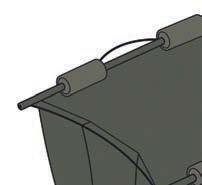
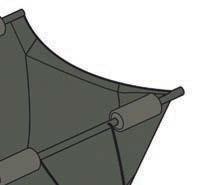

When retaining a carp in a landing net, it’s important that the mesh is deep

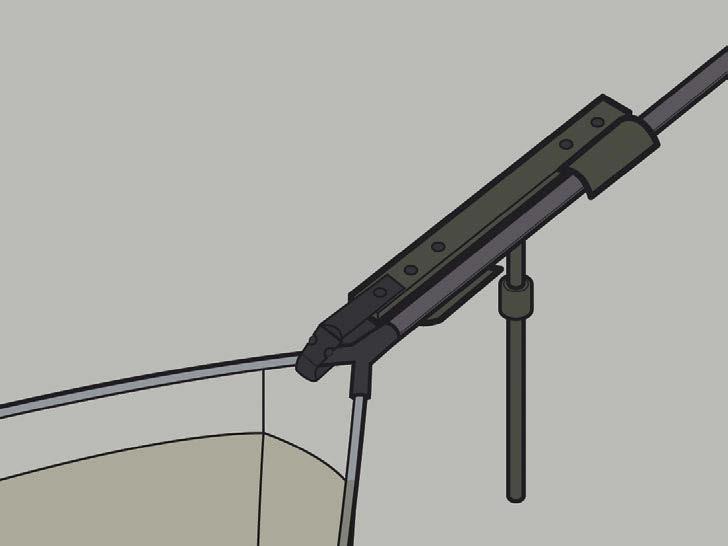
enough for the fish to sit upright and that the water in front of the swim is at least 2–3ft deep. There are a number of ways to do this. In years gone by, the most common method was to hang the net over the front of the swim so the spreader block sat just back from the edge. To prevent the fish escaping—or pulling the net in—you could either push a bankstick or peg through the spreader block, or place a heavy object such as a loaded bait bucket on the handle of the net. Nowadays, there are two other methods. The first is to use a couple of banksticks, with something like a JAG Net Locker or a buzzer bar and back rests screwed on, positioned out in the lake, which requires wading out. The
second—and now the most common—is to push the end of the landing net pole into the lakebed at an angle. This approach has become so popular that most landing net poles now come with a spiked end. If the carp looks like it may try to jump out, you can simply lay a sling or unhooking mat over the top. Fox also sell a ‘Net Cover’, which toggles around the net to create a similar cover. This method isn’t suitable for retaining fish for any length of time and is primarily a way of avoiding leaving a carp lying on the unhooking mat while you’re in the bivvy searching for your camera. It also provides a good opportunity for the fish to recover from the fight before weighing and photography.
BEST FOR: When a retaining sling isn’t an option and you need photos but don’t have the necessary equipment to take them on a self-timer.
MAX TIME LIMIT: Up to five hours
If used incorrectly, sacks can be very dangerous and, as a result, have been banned on many fisheries. Carp can be retained in sacks for up to four or five hours without causing undue stress, but anything beyond this is strongly discouraged.
Traditionally, sacks were most commonly used when fish were caught at night and the light wasn’t good enough to take a decent photograph. However, with the improvements in cameras, there’s now very little need to sack a fish for more than around 45 minutes—and in those situations, a retainer sling is generally the more appropriate option anyway. It’s far more important to ensure you have a good-quality camera with a remote or timer, combined with a tripod and good flash/continuous lights. With this setup, and a bit of practice, you’re perfectly capable of getting a good photo of a special carp, day or night, without having to retain it for any length of time.
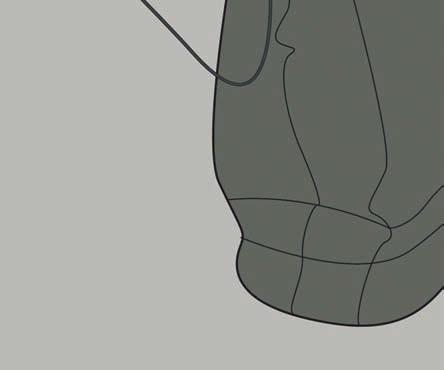
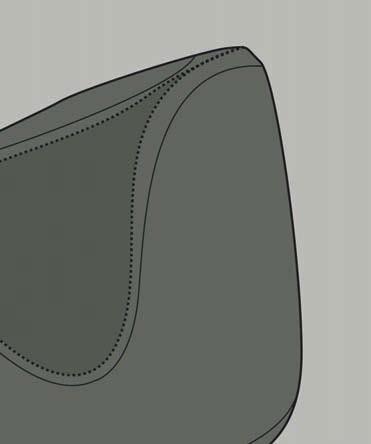
If, for whatever reason, you do need to retain a carp in a sack, it’s vital to ensure the margins in front of the swim o er su cient depth. Ideally, this should be over 5ft so the fish isn’t exposed to rapid temperature changes that occur in shallow water. You must also make sure the sack is large enough for the fish being retained, allowing plenty of space. Any sack should have a 12ft nylon cord attached, enabling the fish to reach deeper water in front of the swim. Once the carp























has been placed in the sack, it should be checked regularly to ensure it’s sitting upright and not showing any signs of distress.
It’s also vitally important that any sack or retainer is secured to the bank correctly to prevent the fish escaping while confined. If a carp escapes while still in a sack, its chances of survival are extremely low and it will almost certainly face a slow death unless found and released. Thankfully, most sacks are now sold with buoyant H-Block floats, so if the worst does happen, you’ll be able to locate it easily.









In summary, if you need to retain a carp, do so for the shortest time possible. The more you can reduce this period and keep handling to a minimum, the more you will reduce the stress the fish is subjected to. Always check the carp regularly, and if it shows any signs of distress—such as loss of balance or lying on the surface—return it immediately. A good photo is never worth the life of a fish.
If it’s not happened to you yet, chances are that as we move into spring and summer—with all the extra weed and lily pads—it will. Here’s a quick guide to dealing with it when it does…
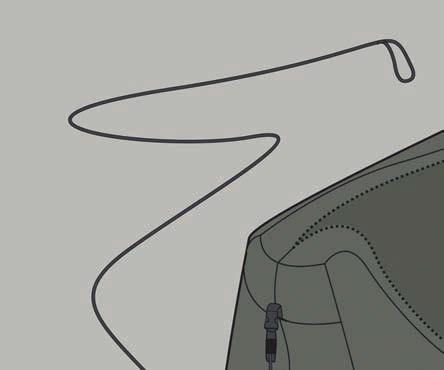
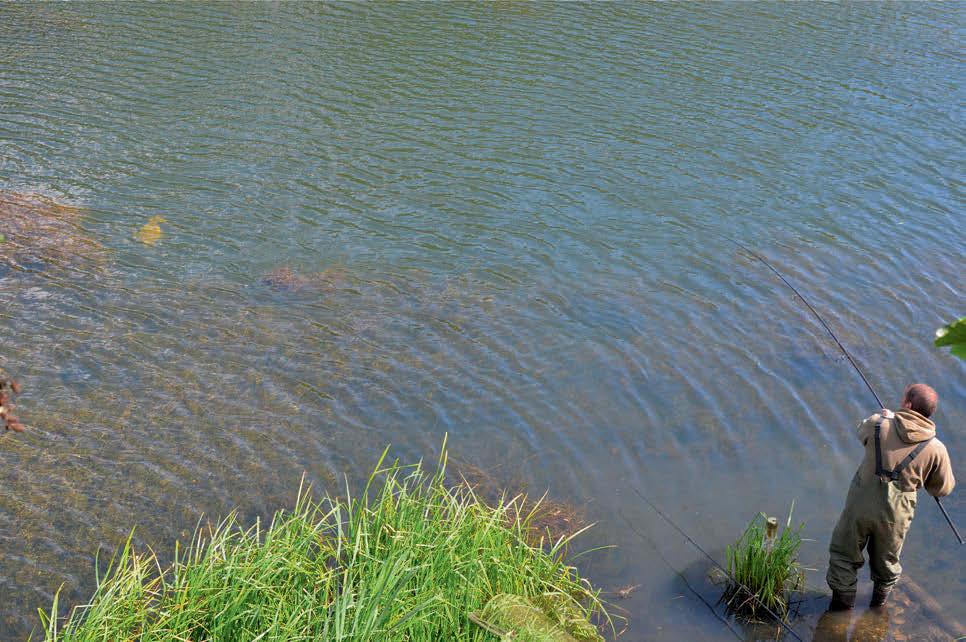
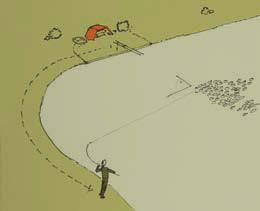
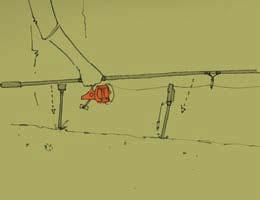
This is a subject that’s difficult one to give a definitive answer on, as every snag situation is unique and different actions can either free the carp or result in lost tackle. That said, in most cases we’ve found the best starting point is to keep steady pressure on and, if you can, try gently pulling from different angles. If there’s room, walking a few yards up or down the bank can often help—sometimes a slight change in angle is all that’s needed to free the fish. If that doesn’t work, the next step is to put the rod back on the rests, slacken the clutch right off and give the situation time to resolve itself. It’s surprising how often a fish will swim out of the weedbed it’s sitting in once the tension has been dropped. What we would never advocate is pointing the rod directly at the
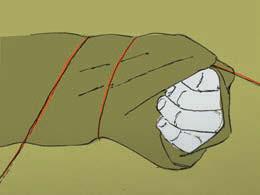
snagged fish and walking back. Not only is this dangerous for the carp, but it also poses a real risk to the angler and anyone nearby, as a lead can come back at frightening speed. If the fish still doesn’t come free and a boat isn’t available to recover the tackle or land the carp, a final option is to carefully wrap the line around your arm a few times—ideally with a hoodie or similar layer on to prevent the line cutting into the skin. Keeping your arm low and close to the water’s edge, apply slow, steady pressure to minimise the chance of the lead returning towards you. Using this method, it’s often possible to retrieve everything apart from the rig, and on occasion the fish will even kick free at that moment— allowing you to pick the rod back up and safely play it into the net.
OPTION 1
Try to get up higher and from a di erent angle.
OPTION 2
Place the rod on the rest, loosen the clutch and wait.
OPTION 3
Wrap the line around your arm and pull back slowly.
Hide AND HIDE XL
• 10,000mm Hydrostatic Head
• Velcro Rod Retaining Straps
• High-Strength Titan Centre Block
Hide Pro and Hide Pro XL
Hide Camo Pro and
Hide Camo Pro XL
• 20,000mm Aquasense® Hydrostatic Head
• Vapour Shield
• Rear Mozzi Mesh Vents
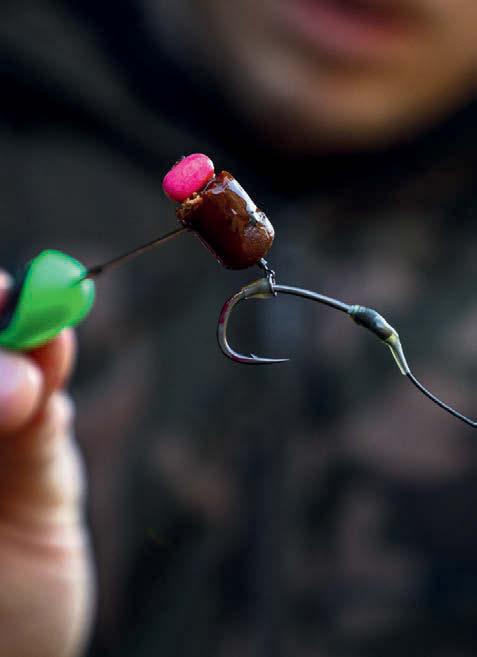
The perfect rig for presenting wafters or bottom baits, and a go-to for ex-England champ, Harry Charrington. Here’s everything you need to know…
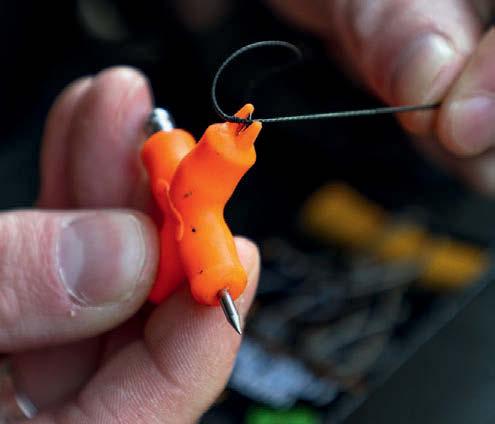
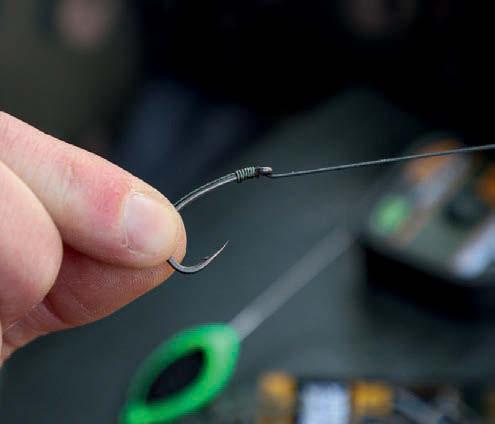
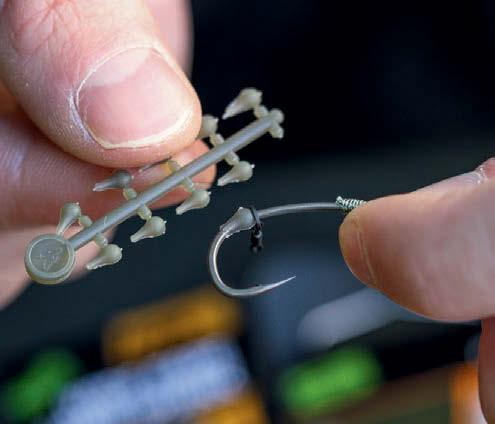
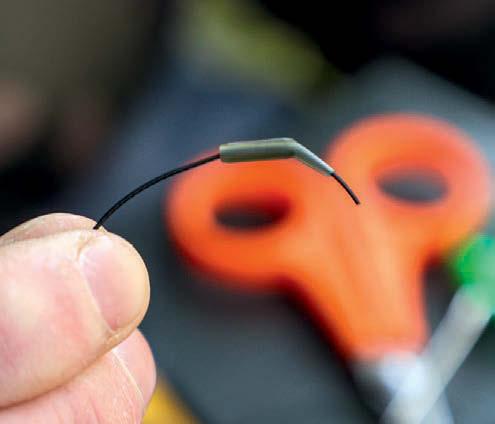
The German Flippa Rig is a slightly tweaked version of the classic German Rig. Fox’s very own Harry Charrington has become a big fan of the German Flippa Rig, believing it takes the standard German Rig to a whole new level in hooking e ciency. Whilst the rig can be fished with a bottom bait hard on the lakebed, we believe that to get the very best from this presentation, a critically balanced ‘wafter’ hookbait should be used.
Due to the nature of this rig, we would not recommend fishing it over weed or debris; it is far more e ective when presented on a clean lakebed such as gravel, sand, clay or firm silt.
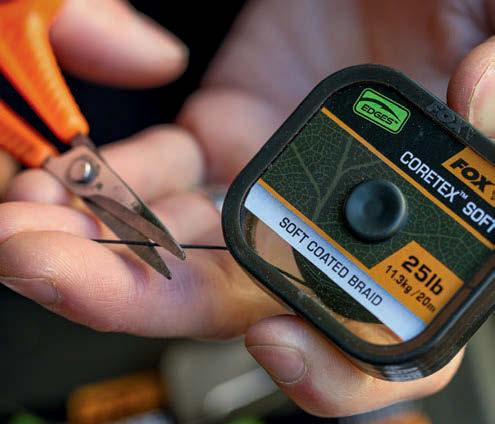
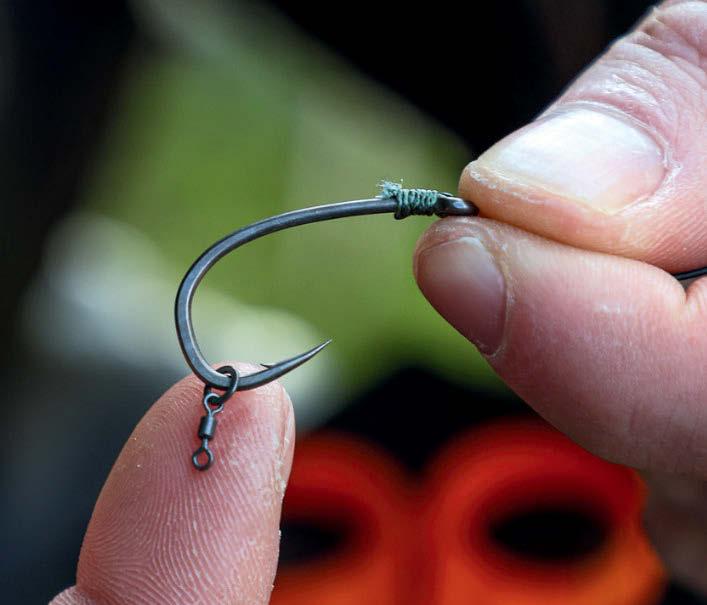
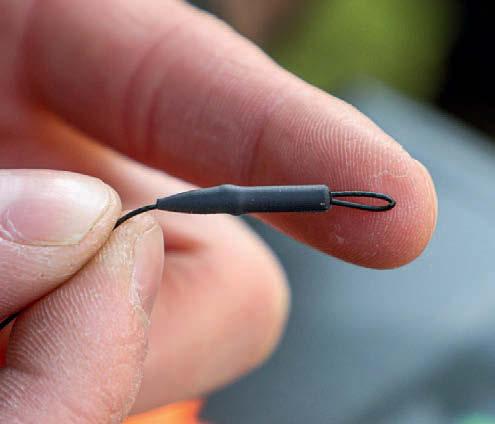
This presentation is very versatile, as it can be utilised as part of a boilie-only approach, with a wafter boilie hookbait presented amongst boilie free o erings. It is equally e ective when used over a spod mix of particles, boilies and pellets, with a critically balanced tiger nut or even a plastic corn hookbait fished over the top. Here’s how you tie it…
ACCURACY
CASTING
WEATHER MAN
ORGANISATION
RECASTING
SIMPLE RIGS
HOOK SELECTION
COMMITMENT
SO WHAT ARE THE SECRETS OF THE BIG NAMES WE SEE ACROSS SOCIAL MEDIA, ON YOUTUBE AND IN THE MAGAZINES WEEK IN, WEEK OUT? IN HEAD OF THE CLASS , WE SET OUT TO FIND OUT—AND THIS MONTH TOP CARPER TOM MAKER REVEALS HIS TOP EIGHT EDGES BEHIND HIS CONSISTENT SUCCESS
WORDS: TOM MAKER
PHOTOGRAPHY: JAKE BARKER

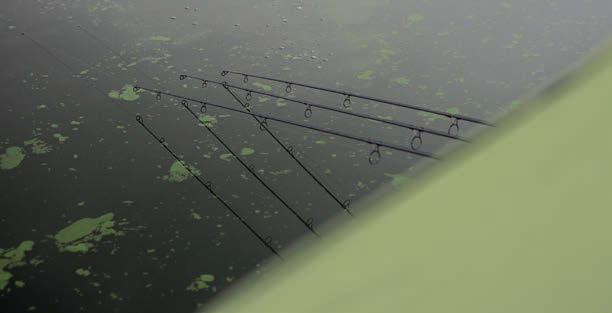
I think accuracy is the biggest factor in carp fishing. Being able to get your rod back out onto the spot with minimal casts definitely puts more fish on the bank. Fishing more accurately than the guys around you also puts more fish on the bank. If you’re getting fish competing in a very tight area and you can condense them down, and you can get your rigs and bait back on the same spot every time, that will certainly catch you more fish. If you can fish to a sensible range that you know you can maintain that accuracy, you’ll keep catching carp from the start of your session to the end.
“If you can fish to a sensible range that you know you can maintain accuracy, you’ll keep catching carp from the start of your session to the end.”

Looking at the weather and correlating that data to the lake plays a huge part in my angling. What I mean by that is a lot of people don’t know which way the wind blows on their particular lake. The first thing I will always do is look at a compass in relation to the lake and work out exactly which way the wind blows. So before I go, I’m going to know what the weather’s
doing, and I’m going to be able to see where that wind’s going to be blowing into, which bank it’s hitting and which bank will be off the back of it. If I find that information prior to my trip, I can make a half-educated guess at where I think I’m going to start and where I think I’m going to see fish, based on how the lake is going to be affected by the conditions.
3

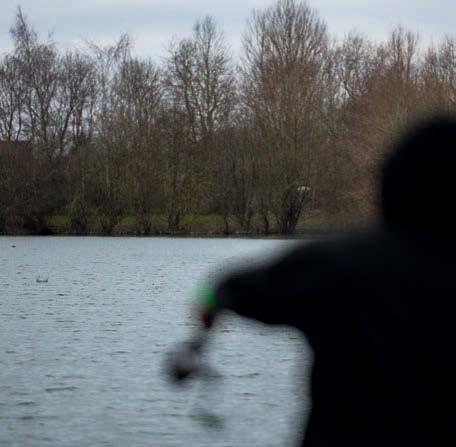
I would say to anybody: practise your casting as much as possible. I’ve been very fortunate that from a young age I was able to naturally take to casting. Now, I see a lot of lads on the bank struggling to hit, say, 80 yards, and they’ll try and fish at 100 because they think that by fishing further they’re going to catch more fish. But if you can fish a sensible distance that you can easily hit, you will catch more fish. By practising your casting, if you’re ever faced with a situation where it’s windy and you’ve got to go a little bit further, or you’ve got to try and combat that wind, being able to chuck a distance will make your fishing so much easier.
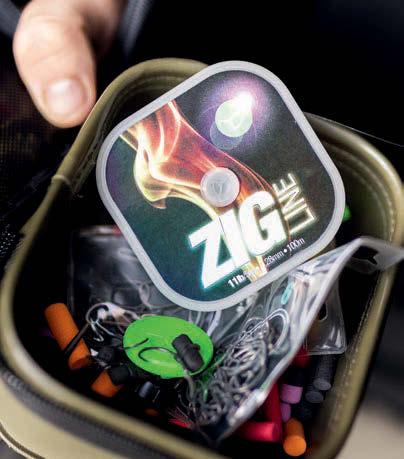

It’s so easy in this day and age to take everything—including the kitchen sink—and more. But I’ve managed to refine my gear down so that if I need to change between fishing a lead clip on the bottom, fishing a Zig, fishing a solid bag or switching to a helicopter setup, or putting a Chod out in weed, I can do it very, very quickly. I have a small bag for each of those individual tactics inside my main holdall. I think a lot of people I fish with, by the time they’ve thought about making a change and eventually made it, the situation they were faced with has been and gone. Being organised is vital and definitely makes me a better angler because I’m always ready to rock and roll and can change things at the drop of a hat.
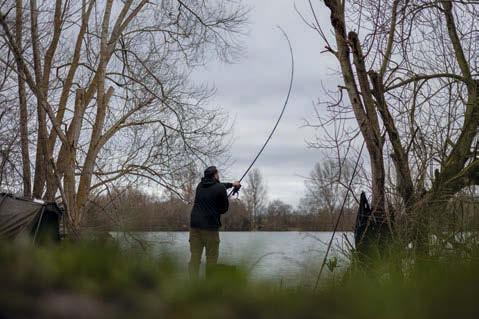
“If I think I should have had a bite, I’ll rechuck my rods.”

Don’t be afraid to recast. It’s written so often that once your rods are out, you must leave them there and not cause any more disturbance. Even on the busiest and easiest places—and equally on the hardest—I’ll recast regularly. For argument’s sake, I might be fishing somewhere like B1, which everyone knows has a lot of fish and competition for food, but I’ll then go to my syndicate and fish exactly the same way. If I think I should have had a bite, I’ll rechuck my rods. We’ve all seen it on underwaters: your presentation can so easily be hindered. If you can’t see it with a camera, there’s every chance that two out of your three rods on that spot could be compromised by something on the bottom. Laying a fresh trap by recasting is something that certainly catches me extra fish. In fact, I know it does—the number of times I’ve rechucked and had one almost instantly proves it. Being able to recast confidently and regularly 100% catches more carp.
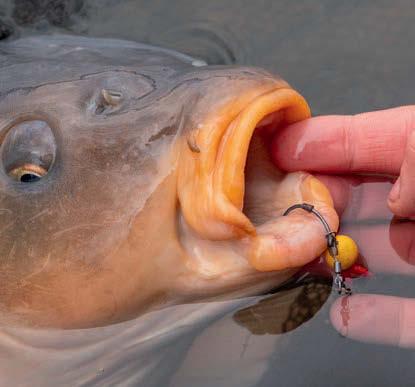

Choose a hook you’re happy with and stick with it for all your presentations. I see a lot of people chopping and changing hooks because they’ve read something or think one hook
looks better with a certain rig. In reality, you can tie as many fancy rigs as you want, but what matters is knowing that once your hook goes into a carp’s mouth, it’s going to stay there.
Chop and change
too much and you might suffer eight or ten hook pulls before going full circle back to your original pattern.
Let’s be honest: if you’ve got a hook pattern you trust, it will always work for you.
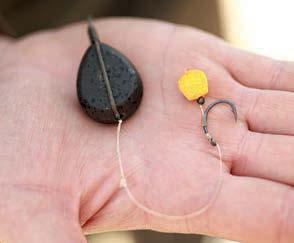
I use either a Spinner Rig, a D-Rig or a Multi-Rig; each serves a purpose. The Spinner Rig needs no introduction—it’s a great all-rounder. The hook can move freely, and you can fish it with a bottom bait, wafter or pop-up. I usually fish it with a fluorocarbon boom so I can chuck it as far as I

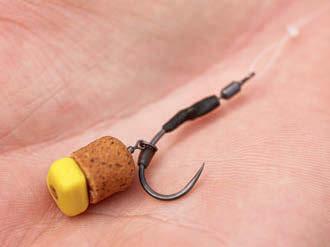
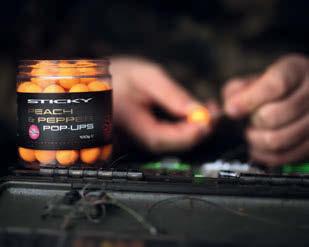
want, knowing it won’t tangle. The D-Rig is for fishing a bottom bait or wafter when I know the lakebed is completely clear. More recently, I’ve started using a Multi-Rig because I can tie it with a more supple material. On places like the Wharf, where the bottom is more uneven and you’re not fishing as far,
I can follow it through the air and watch it go out, so I know it hasn’t tangled. The softer hooklink follows the contours of the bottom, and again it can be used with a bottom bait, pop-up or wafter. With these three rigs, I can cover all bases without tying anything complicated or stressing about presentation.
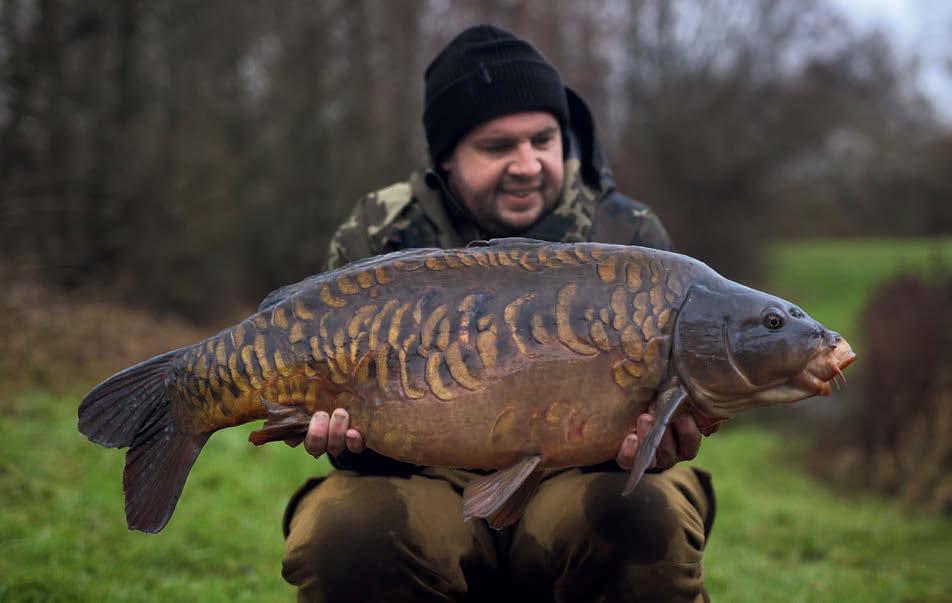
“Treat every session as if it were your last, put 110% e ort in, and a ‘that’ll do’ attitude isn’t good enough.”
Pretty much all of carp fishing comes down to one question: how much effort do you want to put in? I fully appreciate everyone’s circumstances are different—work,
family, time—but when I go fishing, I treat every session as if it’s my last. I put maximum effort in. If I’m catching carp through the night and the conditions are rubbish, I’ll
stay up and make the most of it, because you might go three or four weeks after that without the same sort of action. You’ll always regret thinking, ‘Why didn’t I try a bit harder that night?’ Treat every session as if it were your last, put 110% effort in, and a ‘that’ll do’ attitude isn’t good enough. If it ain’t perfect, don’t leave it.
TOM MAKER
Linear Bait & Tackle boasts a massive range of products that includes all the bait and terminal tackle you could possibly require, and even includes a few brands you won’t find elsewhere.
We also stock fresh maggots and worms as well as a good selection of luggage, clothing, alarms, rods and other associated products.
We can take orders for pretty much anything and you can pre-order your bait so it’s ready for you when you arrive at the fishery. There is also a convenience store section that is well-stocked with drinks, meat, confectionary, frozen foods, toiletries and much more.
The shop is open to everyone – you don’t need to be fishing at Linear to shop at Linear Bait & Tackle!


Open 9am-5pm, Monday – Saturday and 9am-4pm, Sunday We are open every day except Christmas Day and Boxing Day
Tel: 01865 548199 Email: carl@linear-fisheries.co.uk
Linear Bait and Tackle, Off the B4449, Near Hardwick Village Witney, Oxon OX29 7QF
FOR SOUTH WEST CARPER JOHN KNEEBONE, THE MAIN ELEMENT OF ANY GOOD CARP-FISHING APPROACH IS CONSISTENCY—AS WELL AS BEING ABLE TO ADAPT THAT APPROACH WHEN NEEDED, BUT NEVER CHANGE IT
WRITTEN BY JOHN KNEEBONE
PHOTOGRAPHY BY JOHN KNEEBONE & FRIENDS
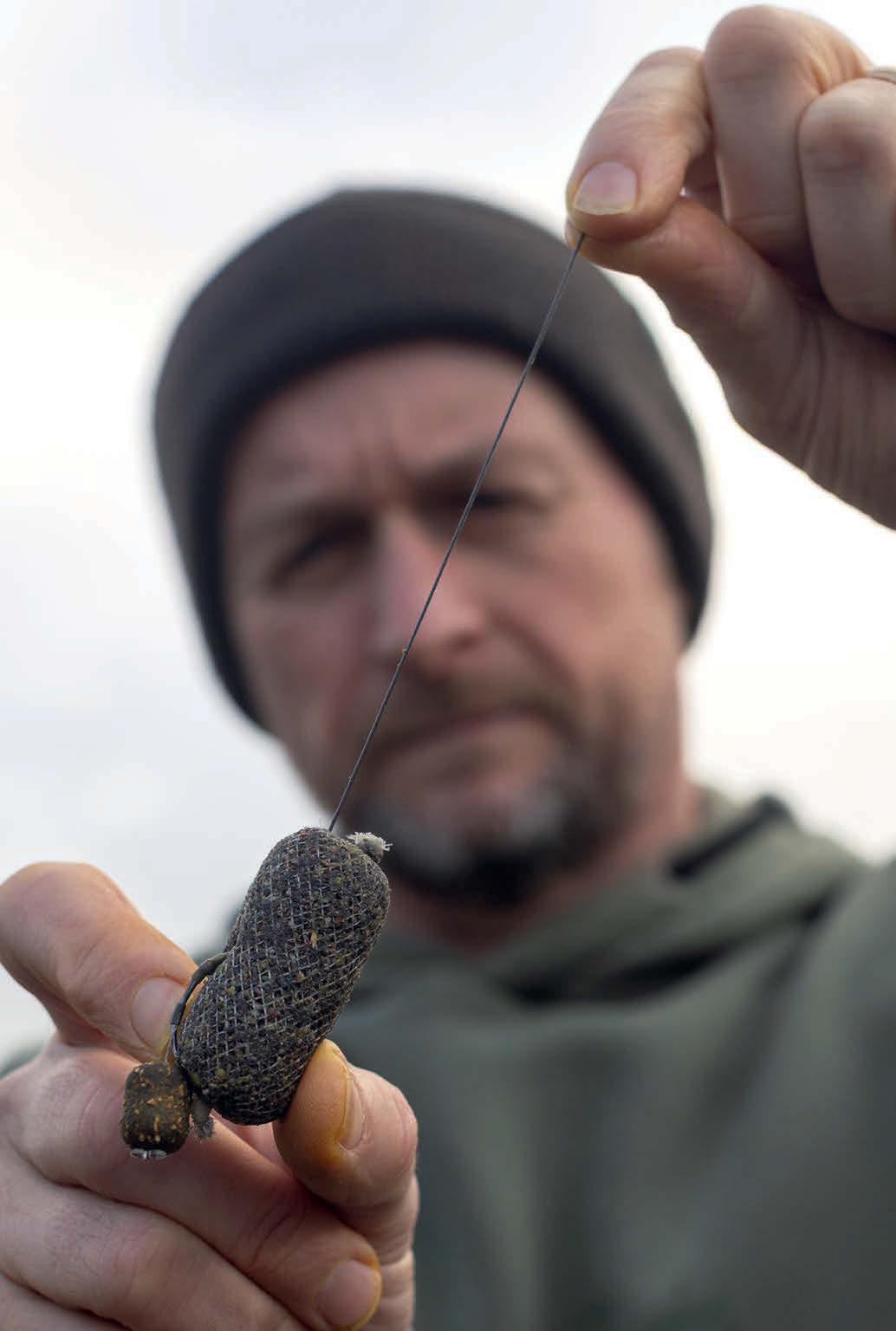

HOW TO BE CONSISTENT (BUT STILL ADAPTABLE)
Uncertainty in fishing is a ball ache! There’s no doubt about it: as soon as you find yourself secondguessing any element of your angling approach, catching carp becomes much more difficult. What’s worse, this uncertainty can carry into the next session and the session after that, and before you know it you’ve fallen into a spiralling abyss of changing things for no real reason—a place far removed from the consistency and confidence any angling approach requires for regular success.
There are certain times of year or fishing situations where the risk of twisting your melon in this way is higher than others. For me, these occasions often relate to transitional periods and/or variables within the feeding habits or activity of the carp. Take early spring, for example. Yes, the fish are more active than in winter, but probably not quite as hungry as you’d think. So, yep, you do need to provide some feed—or at least a raised food signal—but judging the optimum levels of bait to apply is still unclear and variable.
Seeing carp hurl themselves out of the water all over the place is another similar situation. It’d be easy to think, “Yeah boy, it’s
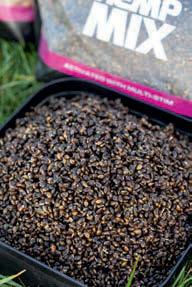
on like Donkey Kong!” reach for the spod rod and perhaps wrongly fill it in.
So, what is the answer? What can we do to keep our approach controlled and effective—or help keep your head, at least? Well, for me, the first thing to do is remember or identify the things you categorically know work, and the things you have 100% confidence in. So, what does this achieve? Firstly, it gives your approach stability and a set of constants upon which you can gauge results and any reaction from the fish. This doesn’t mean you’re not going to ‘tweak’ things occasionally, but it does mean you won’t ‘change’ them radically and see your approach fall apart at the seams.
Let’s start by looking at the ‘givens’ of our approach. Firstly, we’re going to need a rig; next, a suitable hookbait; after that, some free offerings— however minimal or heavy—and lastly, components that can enhance these things. So, a presentation, a bait and a style of fishing that you’re confident in using and applying. If all these things are already ‘givens’ for you, then
you’re halfway there. If not, don’t panic—all you need to do is put a bit more thought into it.
Look at the venue you’ll be fishing and research the things that work, and perhaps those that don’t. This could be done by checking the venue’s website or social media accounts for catch reports, or by talking to the bailiff. If you’re still a little unsure, then keep it simple and use a rig that you can expect to work well in most situations—something like the Spinner Rig, for example. The same applies to bait. You’d go a long way to find a venue where The Cell didn’t work well. It’s been around a long time, has arguably the best track record of any bait ever, and is a proven bait and flavour you can trust. This could just as easily be particles such as hemp, tigers or sweetcorn— again, obvious baits that you know will work.



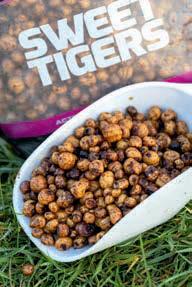
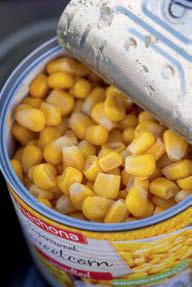

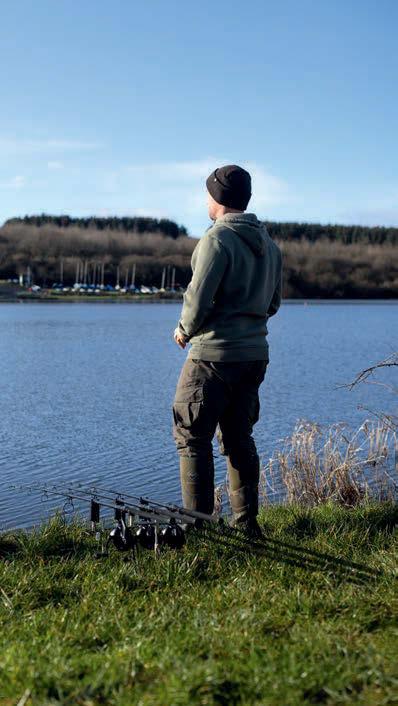



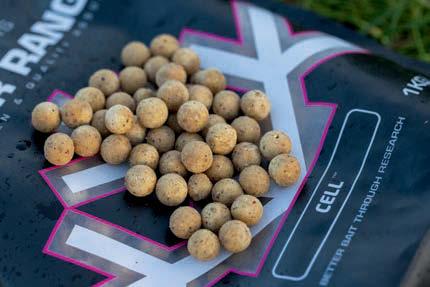
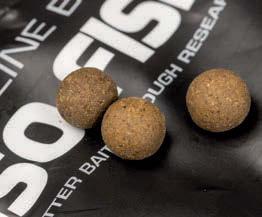
Start with three boilies— I’m using three 15mm ISO Fish baits.
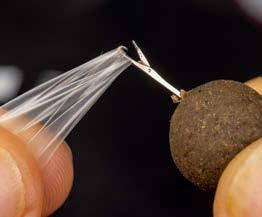
Fold the PVA tape over on itself and loop onto the latch needle.
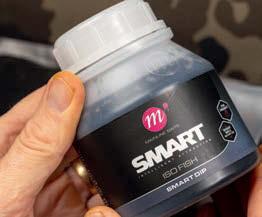
We’re now going to boost the attraction levels with Smart Dip.
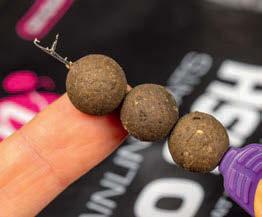
Thread the boilies onto a stringer needle or a latch end needle.
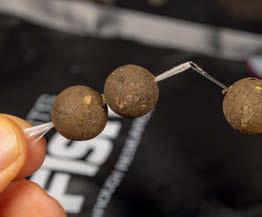
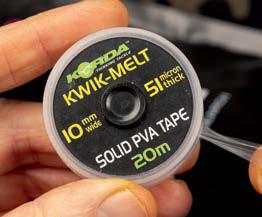
Now cut away a length of PVA tape around 10 to 12cm long and go to Step 4.
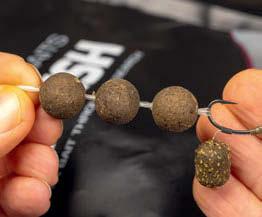
But here’s the most important part: whatever these things are for you, do not change them. Without some kind of constant, you won’t learn anything and you won’t remove doubts and uncertainties; in fact, you’ll just end up increasing them. Instead, you’re looking for stability so more of your angling thoughts can be focused on watercraft—things like where the carp are, what they’re doing and how they’re behaving, whether they’re up for a feed, and so on. To help explain these principles, let’s look at the mainstay parts of my approach next…
THE SIMPLE WAFTER RIG
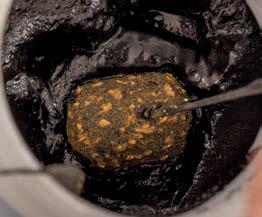
Now carefully thread the three baits onto the PVA tape like so. Push the whole stringer and hookbait down into
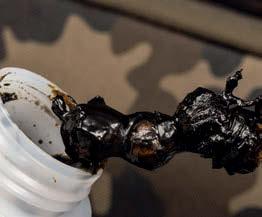
Space out the baits so the PVA can melt and hook onto the rig. The presentation is supercharged with attraction and ready to go.
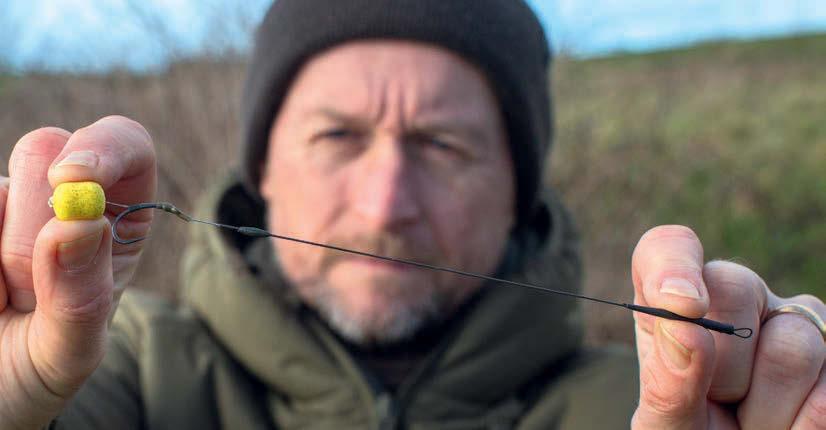
For want of a better term, this presentation is a Combi Rig using a coated braid—nothing that I’d lay claim to inventing or anything like that. I just call it the Simple Wafter Rig because it is exactly that, and I do use this rig a lot for a few good reasons. Firstly, it’s dead easy to tie. Simply strip back some of the coating from a coated braid material to expose the soft braid within and tie a Hair Loop. Thread on your hookbait and tie to a size 6 Kurv hook with a Knotless Knot and you’re nearly there. Add a kicker to help the rig turn and a little putty to pin it down, then an anti-tangle sleeve. Finish the rig with a Figure-Of-Eight Loop knot for easy attachment to a quickchange swivel and that’s it—you’re done! Easy-peasy, but perhaps the best thing about this rig is that you can use it with a few different hookbaits—mainly balanced bottom baits, as the wafter part of the name suggests—as well as in a number of different fishing situations. Clean ground like clay
You’ll need a groundbait or Stick & Bag Mix like this to start.
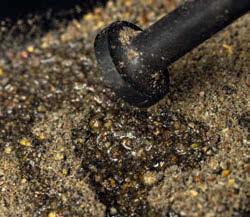
Begin mixing the liquid through and add a little more if needed.
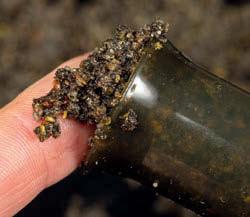
Now add a small amount of the mix to a PVA mesh tube like so.
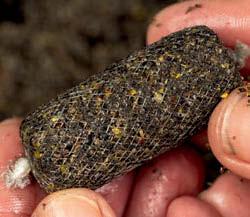
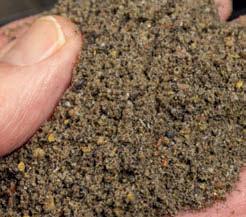
Crushed particles and fine powders that will absorb some liquid.
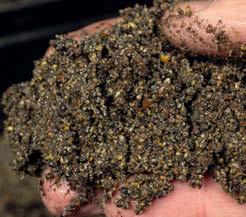
Once evenly wet, leave the mix to stand and absorb all the liquid.
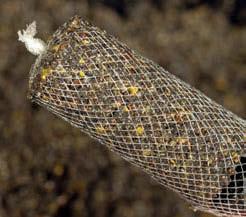
Compress the mix into the tub and feed out to form a PVA Stick.
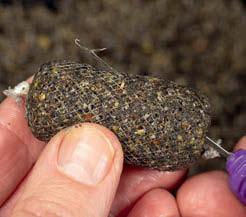
The PVA is ready for next time and you’ll be left with your Stick. Thread a stringer or latch end needle through the Stick like
I’m going to start off with salmon oil to create a nice oily mix.
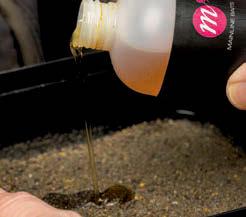
Add a little liquid to the powders in a small bait dish or bucket.
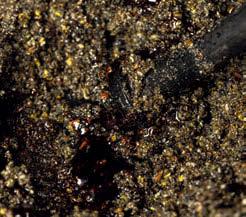
Begin adding the Stick Mix Liquid and again mix through evenly.
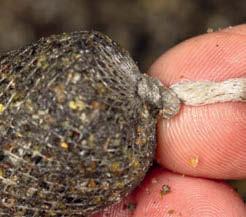
Next up, PVA-friendly Stick Mix Liquid in the ISO Fish flavour. Tie a simple Overhand knot tight behind the PVA stick to seal it.
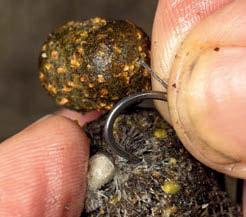
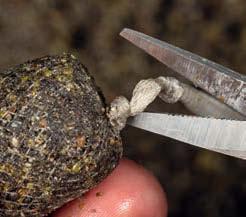
Now tie a second Overhand knot and cut between the two knots.
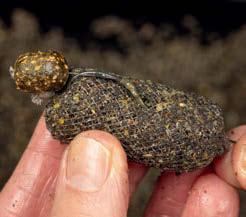
it! One oily PVA Stick presentation ready to go.
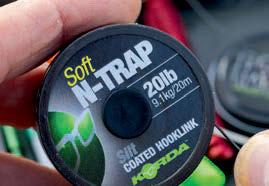
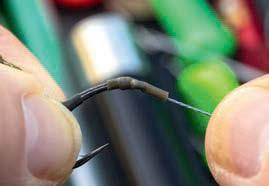
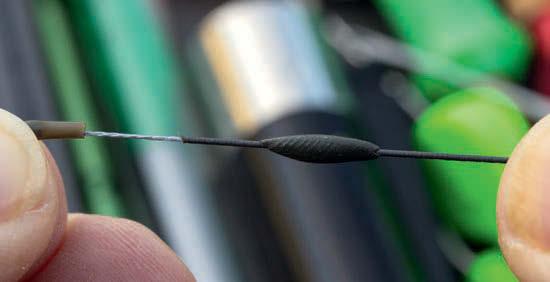
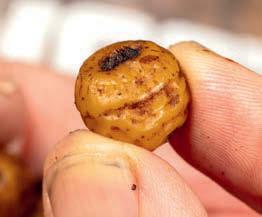
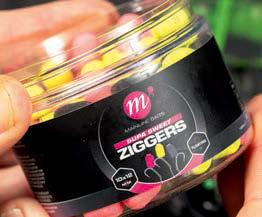
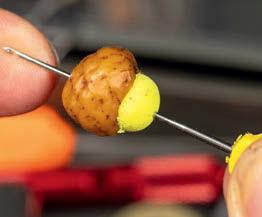
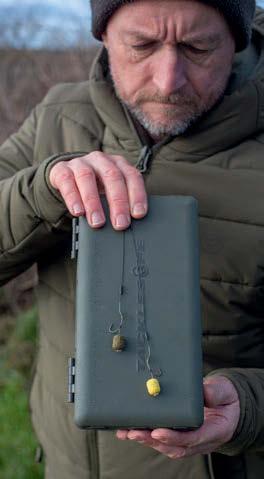
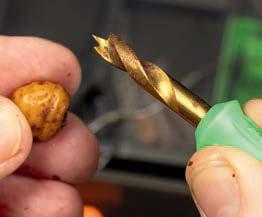
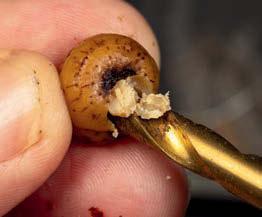
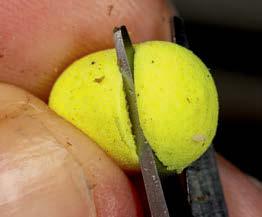
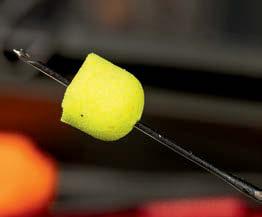
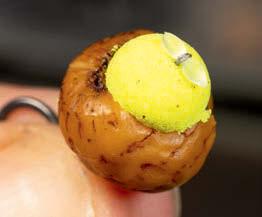
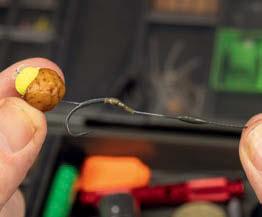
and gravel? Yep, no probs. Silt and chod? Perhaps lengthen the rig, but yes again. Light weed or silk weed? Again, maybe increase the rig length, but yep, you’re good to go!
It’s not just the fishing scenario that’s covered—it’s the baiting situation too. A massive plus point of this rig is that it can be combined with various baits and bait presentations. When we’re talking about negating doubt, this is a particularly brilliant benefit. I’m sticking to a rig I’m confident in, but still able to tweak my approach when required, as I can use this rig with boilies, particles, pellets— whatever my feed may be—and at any level of bait application, from a minimal PVA mesh bag or stick right through to heavily baited spots.
Okay, so the Simple Wafter Rig gives me huge levels of rig confidence. Now let’s look at combining that with bait confidence and presentation options. For me, the best place to start is with the bait I probably turn to the most: the boilie. First things first, in most cases when I’m boilie fishing I’ll be using a foodsource-style bait with a flavour profile that I’m confident in and stick to. Let’s say that’s Cell or ISO Fish. When the fish are ‘having it’ feeding-wise, I’ll happily apply boilies in large quantities and fish the Simple Wafter Rig over the top. In contrast, when the fish are coming out of winter and could potentially be put on edge by a large amount of bait, I can scale things right back to the bare minimum and still maintain my confidence.
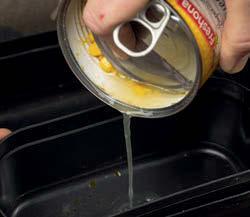
Start by draining off the excess water from a tin of sweetcorn.
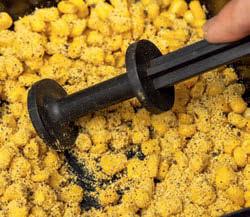
Mix through to help dry the corn and repeat where necessary to dry out.
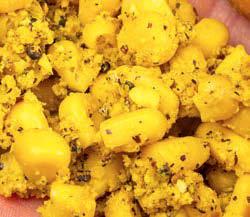
Okay, the mix is now PVA-friendly and should look like this.
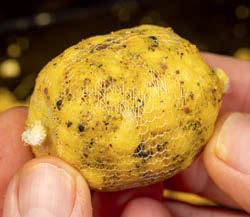
The result should be sweetcorn PVA mesh bag like this one. It’s got ‘winner’ all over it!
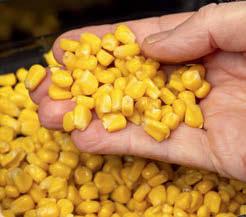
Now tip around half the tin of sweetcorn into a small bait dish.
Sweetcorn Smart Liquid is a perfect liquid to enhance the mix.
Now it’s time to make a bag. Scoop some mix up into a PVA mesh system like this next.
You will need a dry powder, such as this Stick & Bag Mix next.
Smart Liquid will also provide further PVA-friendly qualities to the mix.
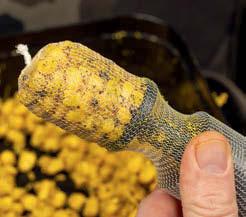
Compress the mix and feed out to form a tight PVA mesh bag.
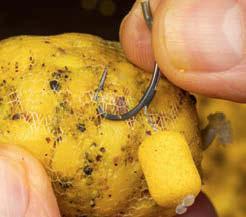
Sweetcorn Clone Wafter is the perfect hookbait for the rig and set-up. Carefully hook on the PVA mesh bag without hooking any corn inside the bag.
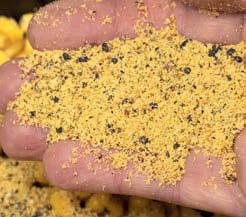
Sprinkle some mix over the corn to absorb some moisture from the sweetcorn.
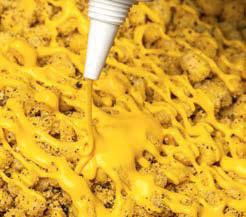
Begin adding the Smart Liquid and again mix through evenly throughout the mix.
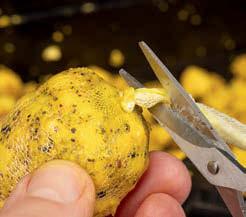
Tie two Overhand knots next and cut between the two knots.
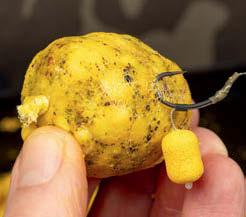
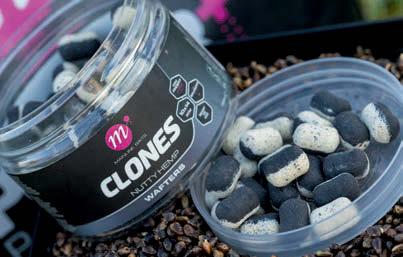
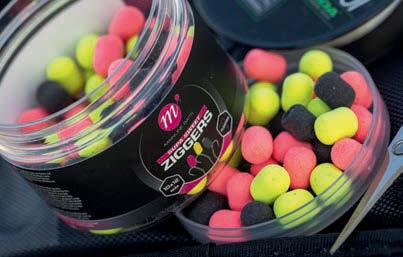
This may be as simple as attaching a small PVA mesh bag of boilies to the rig, or a small three-bait PVA stringer. Just a mouthful of bait that still provides the food signal I have confidence in—and one that I can further boost with a Smart Liquid or dip. One of my favoured methods for scaling down the feed is using a PVA Stick. So okay, it’s no longer a boilie I’m using, but as long as I combine a Stick mix and liquid of the same
flavour as my boilie feed, I’m keeping my confidence going—and, more importantly, a food-source signal that the carp will be confident with too.
The same PVA Stick tactics can be used when fishing with particles and/or pellets. Again, I’d be attaching the old faithful—the Simple Wafter Rig—to the business end of my tackle; the only di erence would be a
change of hookbait. This could be as simple as using a hemp or Maple Clone Wafter, but where rules allow I’d probably have a few tiger nuts in a particle mix and may even be using them as the sole feed. When this is the case, I like to use one of these tiger nuts as the hookbait.
So again, I’m using my trusted rig—I just need to add some balance to the tiger nut hookbait for maximum confidence. There are a few ways you can do this, and my preferred method is to balance the nut with a Supa Sweet Zigger. These are small, buoyant hookbaits which, as the name suggests, are primarily designed for Zig Rigs. You could simply add one to a longer hair to balance the tiger nut snowman-style, but I prefer a di erent method for this.
Instead, I use a bait drill to drill a hole into the core of the nut, into which I can push a Zigger. This adds buoyancy to balance the tiger nut, but also introduces some visual attraction via the bright Zigger, as well as flavour attraction from its sweet blend.
There’s not a carp alive that won’t eat a bit of sweetcorn, making corn a great addition to any spod mix, as well as a sole feed item. What’s more, corn really lends itself well to forming minimal bait presentations. You know carp like it and it’s visually attractive even in small quantities, so you’re halfway there—I just like to take that attraction further and add a stronger food signal.
Firstly, I’ll add some groundbait or Stick & Bag Mix to the corn. This not only adds some finer particles of attraction to the corn, but it also begins the process of making it PVA-friendly. Then again, I’ll turn to a liquid attractor, where the Sweetcorn Smart Liquid is absolutely perfect—seriously boosting the overall attraction of the corn and presentation, while completing the aforementioned process and making the corn PVA-friendly.
In the past, I’d probably have used some fake corn as a hookbait, but now I’d much rather use
a Sweetcorn Wafter from the Clones range. Matching the flavour and colour of the corn, it’s the perfect hookbait to complement the Simple Wafter Rig. Attach a PVA mesh bag of the now PVAfriendly sweetcorn mix and you have a balanced presentation packed full of attraction and confidence.
The great thing about these presentations is that they can be used e ectively as a minimalfeed tactic, as well as being incorporated within a fuller baiting approach. So, when in doubt—and when the fishing situation isn’t clear regarding the feeding or activity levels of the carp—you can begin with a minimal approach that will work just as well should you decide to up the baiting levels later on. You’re not drastically changing anything, merely tweaking things and fundamentally maintaining your confidence in rigs, bait and all the elements that will ultimately lead to you catching more carp!
JOHN KNEEBONE
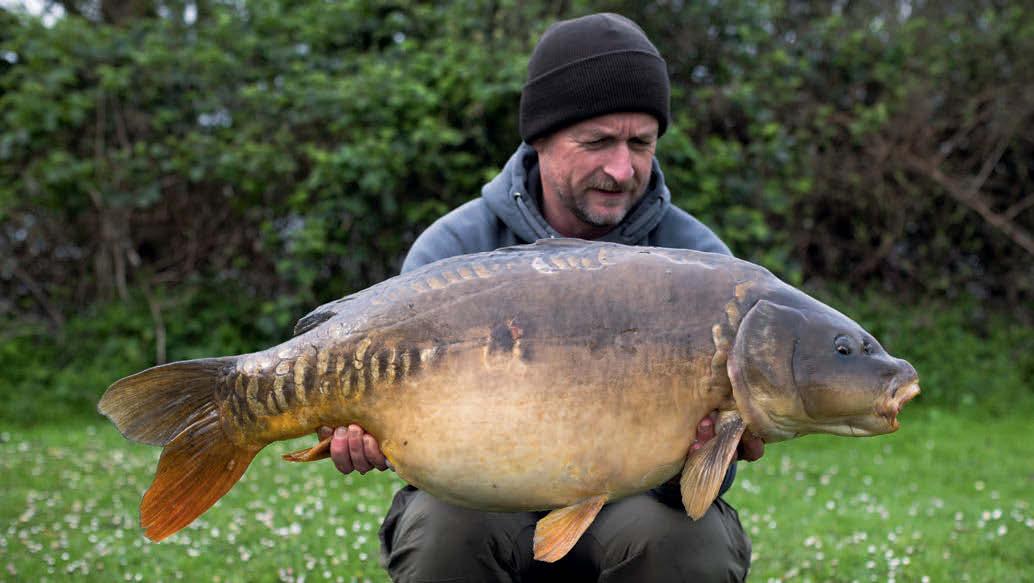
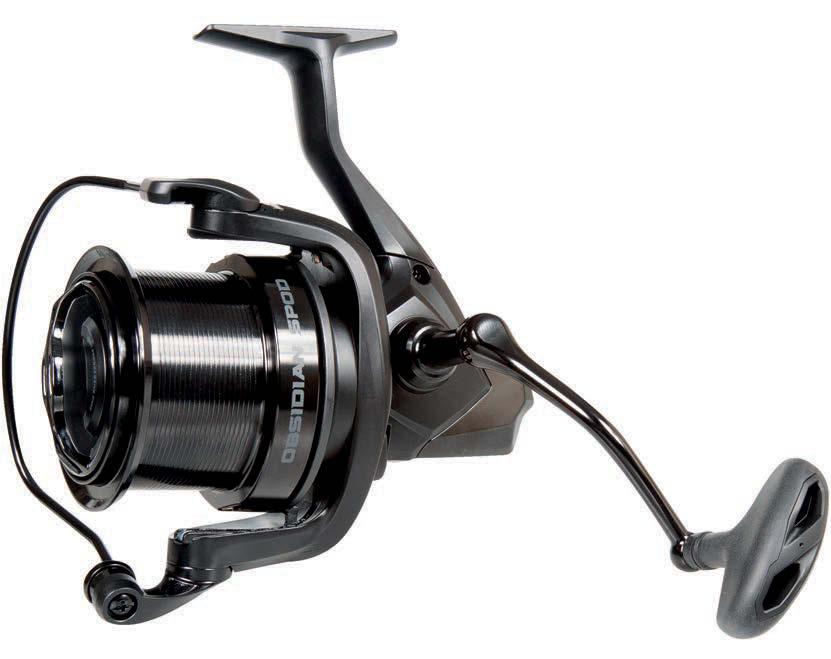
Built for relentless spodding, the Obsidian Spod delivers effortless power. Its lightweight C-40X carbon construction reduces fatigue, while a frictionless main shaft guarantees smooth retrieves. Combined with super-slow oscillation, it provides incredible line lay, helping to maximise distance and accuracy on every cast. The reel that makes spodding a joy!
Weighs only 500g • Ultra-lightweight C-40X carbon frame & side plates • 9+1 HPB bearings • Gear ratio 5:1 providing an ultra-fast retrieve (121cm/turn) • Worm shaft transmission system • Super slow oscillation for perfect line lay • Manual one-piece bail arm to help avoid crack-offs • Dual, spring loaded, line clips • Rotor with tangle guard • Shallow spool (line capacity - 0.30mm/390m).
RRP £159.99
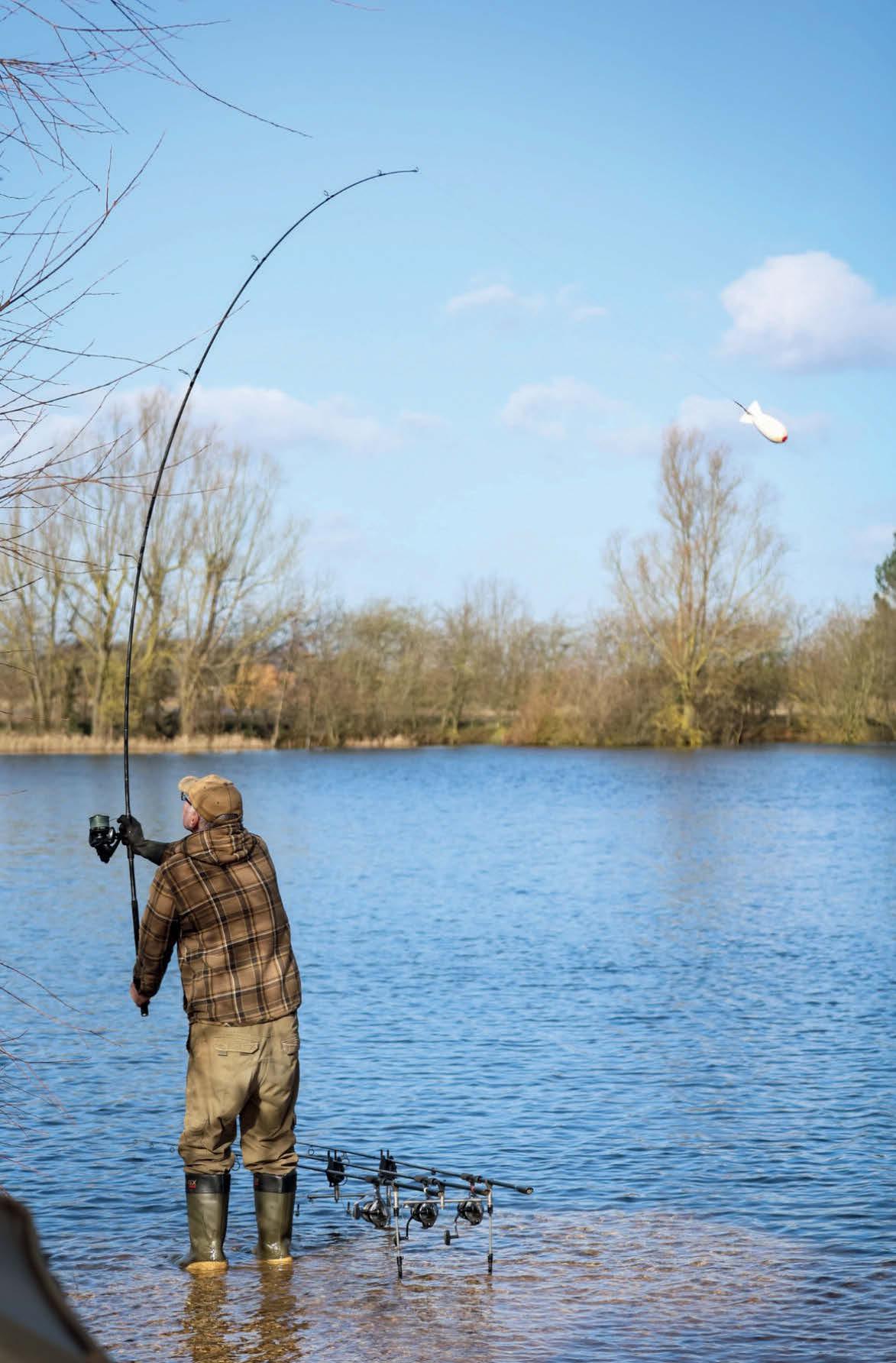
PHOTOGRAPHY

LET’S GIVE ANOTHER BIG TOTAL CARP WELCOME TO LONG-TIME BIG-CARP ANGLER MARK HOLMES, AS HE STARTS HIS NEW BI-MONTHLY DIARY SERIES. KNOWING HOLMESY AS WE DO, THERE’LL CERTAINLY BE A FEW TALKING POINTS IN THIS!
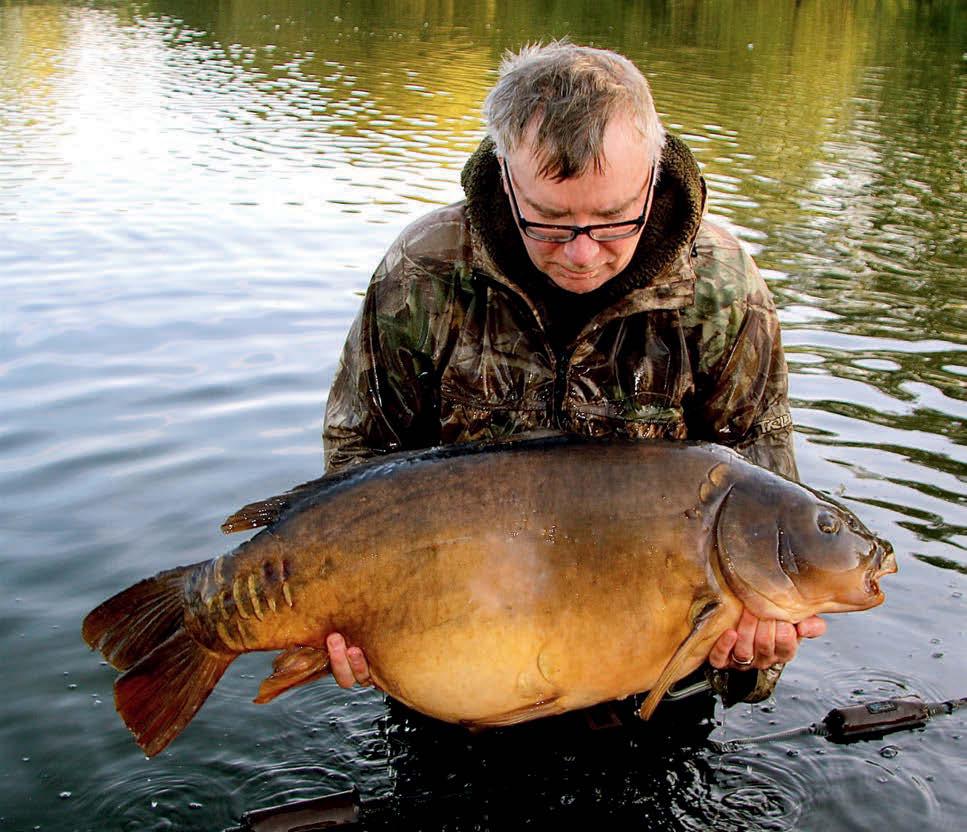
‘Some things never seem to change while other things never seem to stay still’. If ever a sentence was apt, then this is the case with my new Total Carp diary piece. The written word can appear to be on the wane and even more so the deep, descriptive, story-type pieces. I can remember, nigh-on 20 years ago now, realising two very important things about the strange world of carp magazines. The first—and probably most important—is NEVER to be bland in your writing and photographs! This was told to me by probably the biggest magazine maverick of them all, the late David Hall. I remember him clearly saying to me, “I don’t care if it has people jumping up and down while reading it… that’s what I want!”
‘GET THEIR ATTENTION’!

Unfortunately—or fortunately— that fits right into my own mindset and has always been the reason for my style of writing. Some said I couldn’t write, some said it was brilliant… either way, I wasn’t too fussed as I never set out for praise. No. I have always classed myself as an angler first and a journalist


second. However, for any writer to be understood, liked, disliked or
1 Spomb accurately and repeatedly. ‘Little and often’ is the way to bait during the colder, darker nights
2 At 41lb, this mid-winter carp was braced with a huge 46lb leather… happy days!
3 My biggest February carp at 46lb 2oz. An unforgettable winter’s result I can tell you


remembered, he needs to be opinionated or, at the very least, acknowledged for his own creative style. Being opinionated is tough these days where everyone has a mouthpiece via social media and, more importantly for debate, a different opinion. I don’t mind that and think it stimulates constructive discussion and pushes us all to understand each other’s opinions, not just our own. However, Trolls-R-Us do tend to pile in, which is hardly surprising, but in essence is just white noise.
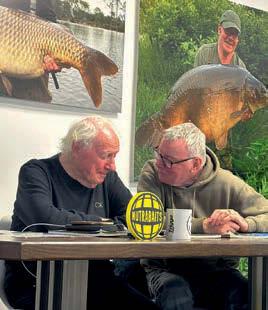
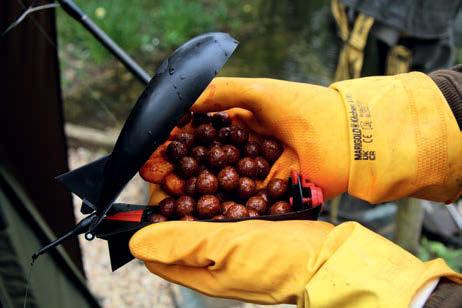
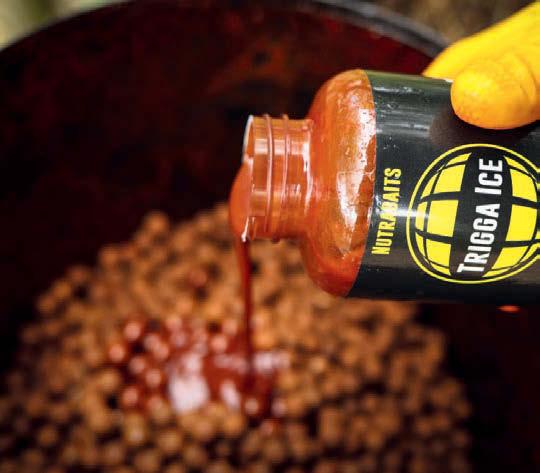

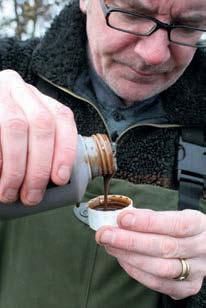
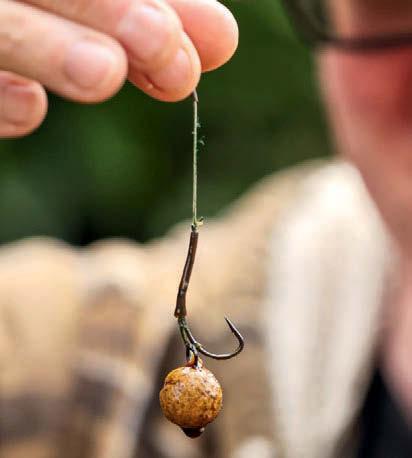
Advanced Carp Fishing and so,
The other point of reader understanding for me was that Total Carp magazine was not Advanced Carp Fishing pictorially, it had to be simple and the writing had to be of an instructional bent. Of course, the days of Advanced Carp Fishing magazine have long since bitten the dust but, in essence, that is still the edict. It’s important to understand these two points because they will be the basic principles that I will be adhering to in this diary piece.


trying to inform, entertain, provoke and prepare you for your own big carp fishing campaigns. That is far more important to me than cultivating favour and looking for likes or pats on the back.





will be the basic principles that ‘documentary’ style piece as compilers ‘lift’ a expression to


Now don’t get me wrong— that will not dilute the impact—but it’ll be a more ‘documentary’ style piece as I take you with me during 2026. With it will come many issues and I will not duck from giving my opinions, but they will be based on



Those days have long since gone for me and, although it does play into the hands of the haters… so be it. As an aside, I do chuckle to myself when editors or social media compilers ‘lift’ a single sentence or expression to try and
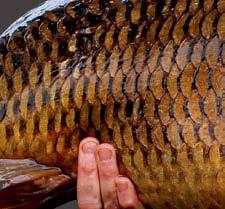
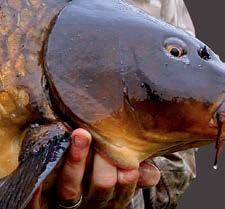

germinate interest. Remember, I have been an editor back in the days of mass sales and competition—not like today’s ‘last man standing’ situation. However, ‘snippet reading’ and simply looking at images is fast replacing anglers actually reading. Some may say it’s already too late and all that ‘old uns’, or older anglers, do is lament. That, I can assure you, is not the case here!
The title of this year’s diary is The Making of a Maverick and I really like this as it perfectly sums me up. The literal dictionary translation of maverick is a free thinker, and that is something I’ve always been. Yes, all of us can learn from other people’s ideas, but the reality is only by practising something yourself will you gain true understanding. IF YOU KNOW, YOU KNOW!
So what has been happening since I last wrote of my exploits? You may remember that I was in full campaign mode on my Yorkshire venue. Unfortunately, the key to successful cold-water carp fishing is to really focus on trying to stop the carp closing down completely on their searching for food.
Now, of course, in cold-water conditions—I actually class 10°C water temperature or less as cold water—that is not constant.
I believe that when a carp’s ecosystem is working at 100 per cent, at 12°C water temperature or above, they are like dogs or other animals who are always looking for food and can often be tempted, even in the most severe weather conditions. I think where anglers fall down is that we don’t quite get the ‘how’ of tempting them in cold water right. This can often be because the carp’s food items are too small or, in some cases, not solid enough to take a hook.
Let’s see how far we would get if we had to try and use liquids only as our hookbaits.
I’m sure there would be a YouTube clamour as to how to do this liquid-as-bait jigsaw. Of course, there are even rigs and hookbaits now to accommodate just liquids, so even what once may have seemed impossible is now possible. However, having never used them or seen them in action, I can’t give an informed answer about their attributes.
So I try and work tirelessly on solubility as the number one requirement in winter. This can be in various guises but, in essence, I tip my philosophy on its head. I change from trying to catch carp using baits that are nutritious—that is, creating a food source—into working on the attraction aspect first and foremost.
As I have often said, nutrition isn’t identified immediately, yet attraction is. It is this that is of paramount importance in coldwater carping. The real partner of this is also how to dissipate that attraction in the water to lead carp not only into your location, but to your hookbait offerings too. One simple way of realising this is to try and use baits that are consistent and leak—giving off attraction over the course of your session. Now that session could be daylightonly, as well as a campaigning session of a couple of days. One issue that I have always mentioned and railed against is this conception that naturals are the way to go in cold water. I have long since said that I believe the use of certain naturals, particularly worms, is being done by some known anglers as the soil can be used to hold various potions that are harmful to the carp. There, I’ve said it! It has been known for many years now about what has been—and still is—going on. Legalities stop me from saying too much, but come on lads, just stop and think for a moment. The catches of some very, very talented guys, who have always been at the top of the carp fishing game, have
1 The legend that is Tim Paisley has a laugh with our diarist during a break in the filming. Some brain power there!
2 Heavily glued/ soaked freebies are carefully loaded into the Spomb. A messy but necessary job
3 Using liquids on the bank has always been our diarists attack during all seasons
4 The dedicated liquid food booster that Nutrabaits suggest is quite simply a carp magnet
5 Dipping low viscosity liquids is only a temporary attraction… continued soaking is what is needed
6 Well, if there’s a more classic-looking English common than this specimen of 37lb, Holmesy hasn’t seen one!
7 An outstanding big carp of 51lb on a biting winter’s day… what a result!
suddenly rocketed into unknown and unseen incredible results. Where, or why—even more so, how—has all this been possible? Those in the know… know! Anyway… moving on.
Us mere mortals in this carp fishing game generally are boilie users, and I make no excuses that all I do bait-wise is try and create situations where Mr Carp is picking up my boilie hookbait. Even more important given that I’m currently 15 months into the development of a new Nutrabaits boilie. Now, contrary to popular belief, I have to work hard at this and try and give clear, concise information for Nutrabaits gurus Richard Hughes and Jason Callaghan. I smile when I see anglers calling themselves consultants when they don’t even know the names of the owners of the company they’re supposed to be consulting with, let alone how to change, tinker and develop baits.
But as with all things, eventually those baits that are built on solid foundations, such as attraction, nutrition and, more importantly in my opinion, consistency, will stand the test of time. If ever you needed confirmation of that, take any established bait company and think of their top-selling boilie. I bet you it has been around quite a while, whereas the newer type boilies from smaller companies are generally subcontracted to foreign boilie makers for next to nothing and then sold for a ridiculous margin. That will not, and does not, stand the test of time, and when campaign fishing you need stability.
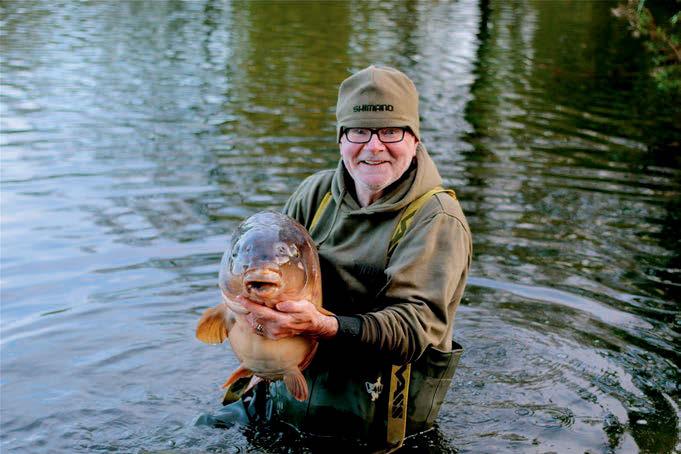
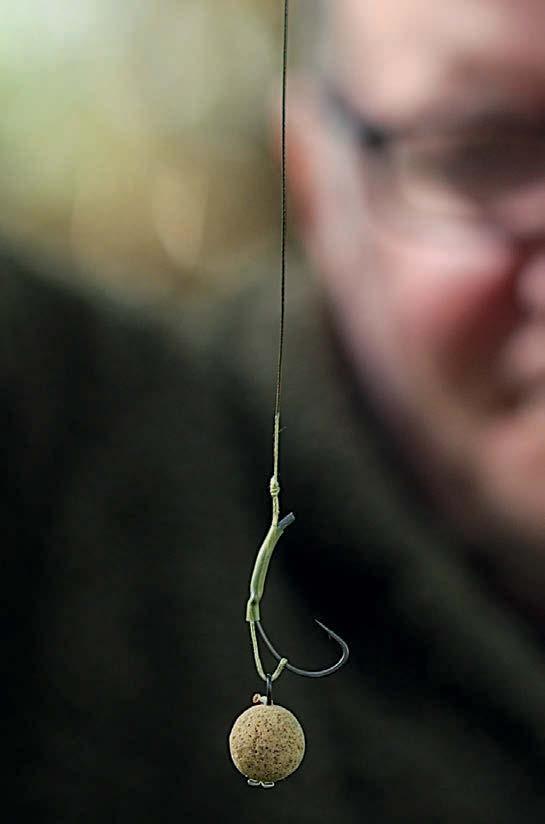
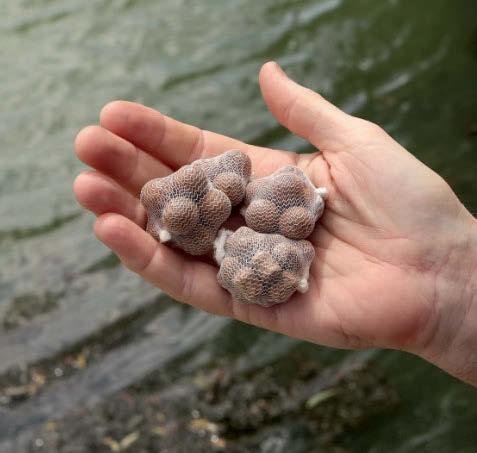
1 The Weighted Hook Rig in all its glory. The hook falls down into the bottom lip with either pop-ups, wafters or bottom baits
2 The options for various bait and shape sizes are limitless when using PVA mesh. If hooked onto the rig, it stops tangles and straightens out the rig. Importantly, make sure you watch for two splashes, though
3 Mark is a big fan of nude leather carp and they don’t come any better than this 43lb example



understand that the emphasis needs to revert to attraction, not nutrition.
However, I’m going to contradict myself here and say that if the winter season is the fourth consecutive season you’re using the prototype boilie, then you should have established it as a regular food source for the carp. Now this puts you into a different fishing situation.


That way, think clearly about what will be an all-round boilie for all four seasons. As I have said earlier, winter or coldwater conditions are the main hurdle to get over in order to call a bait ‘all seasons’. It is even more important to realise that imponderables such as location, accuracy and time can give a distorted view of a bait’s prowess. This is evidenced by seemingly the same usual suspects catching.



liquids, glugs, pop-ups, wafters, different sizes, hard hookers, etc., etc., you quickly realise that to do the job correctly takes time.

The bait is food in the carp’s mind, so how can you keep them coming in winter then? This is where location, tactics and bite indication become so very important. Bite indication is a strange one, but obviously vital. If carp can suck and eject the hookbait without you getting any indication, you have a problem.



R&D is a top, top angler who finished article and need real-


Of course, like all sports or pastimes, that might just be because the angler doing the R&D is a top, top angler who always catches. That is why you have to adopt a forensictype brain to understand that prototype baits aren’t the finished article and need reallife, on-the-bank situations to be judged properly.






That’s a tough one, given successful fishing years. Given that it some going. So when the temperatures

That’s a tough one, given that we live in a world of instant gratification. However, 2025 had seen my catches not dwindling at all—in fact, 2025 was one of my most successful fishing years. Given that it represented my 49th year fishing for them, that’s some going. So when the cold-water temperatures plummet,


In a world where developing a boilie is only part of a bait product list that includes
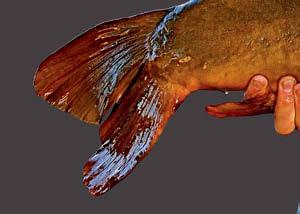


tighten up. As I have often advocated, I also make sure that I always fish at an angle to where my hookbait


The way around this is to watch the line, which should be bow-string tight, where it enters the water. If I receive any indication such as line movement or tip progression, then I will often advocated, I sure hookbait is. I call it ‘barbel style’




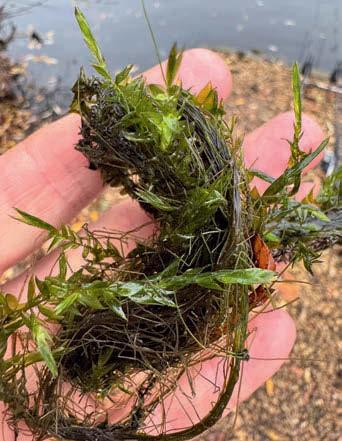
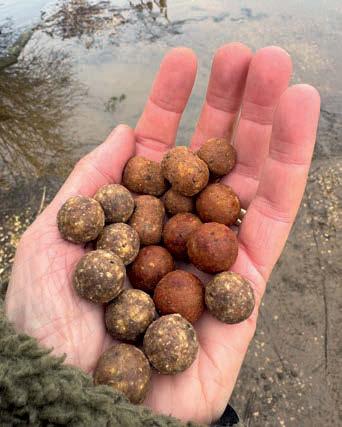
and you’ll always see me reacting to this and its movements rather than waiting for one-toner type of takes.
Now don’t get me wrong, in the darker, longer nights of winter most of the time you do have to revert to simply listening for a buzzer to sound. This being the case, if your alarms allow sensitivity to be increased, I have them at their most sensitive and will only change them if it’s storm-like conditions. Bleep, bleep all night does my actual nut in and I’d challenge anyone to sleep through them.
The other vital aspect is to have rigs that work on a spotfeeding principle. Now spot feeding is simply where a carp sucks a bait in while it is on its head and then rights itself. So what are we talking? Literally six inches of movement. In these situations I always want the rig to drop down inside the carp’s
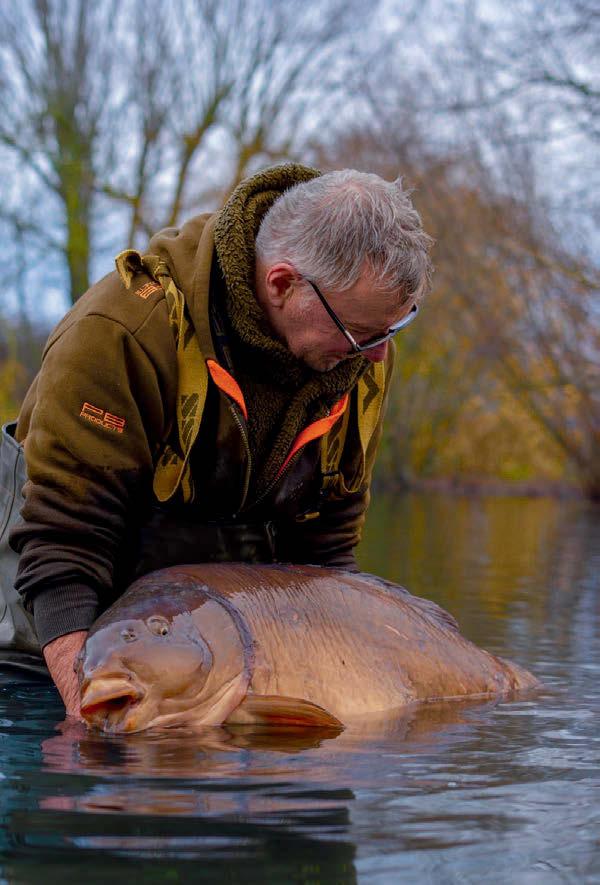
mouth, and this can be done by either a shot-on-the-hook type or my weighed hook.
I also believe that it is vital that the pivot point of the rig is supple. Therefore, near the hook a braid or a stripped-back coated braid is used. The length of this should really match the size of the carp’s mouth and however you want the hookbait to pop up. This mathematical inference, however, goes out of the window if you are using bottom baits.
I could actually write a second article simply on the use of bottom baits. In fact, I’d go so far as to say two massive factors in my recent successes have been using bottom baits only. I actually use hard hookers, as I think they have the robustness to be picked up by diving birds and not be overly damaged. This cannot be said of my loose feed, which in cold water is a combination of solubles, heavily liquid-food
4 Weed is a real nono during the hours of darkness due to oxygen depletion and certainly not the best lakebed for a liquid approach
5 Solubles, boiled and dumbells. The choice is endless so don’t let your concerns get too detailed
6 Still my biggest winter carp at a ridiculous weight of 55lb 3oz. The water was bloody freezing but certainly made a live feature a memorable one!
infused, and the odd whole boilie. The main change from warmer water temperatures is the placement of the loose feed. I will dispense with the throwing stick approach and use a Spomb for introductions. This keeps everything accurate and more accessible for my loose feed. One other vital aspect to this approach is to make sure you are fishing in amongst your loose feed. I do smile these days when I hear carp anglers talking about the extreme distances they fish. It is madness to me to fish beyond or short of where your loose feed is.
That’s why I see most longdistance lads on the lakes I fish using solid PVA bags. This makes sure that there is always a parcel of food for carp as well as the dangerous hookbait. However, I try and keep away from solid bags. Instead, I use mesh PVA stockings—Web PVA—and put
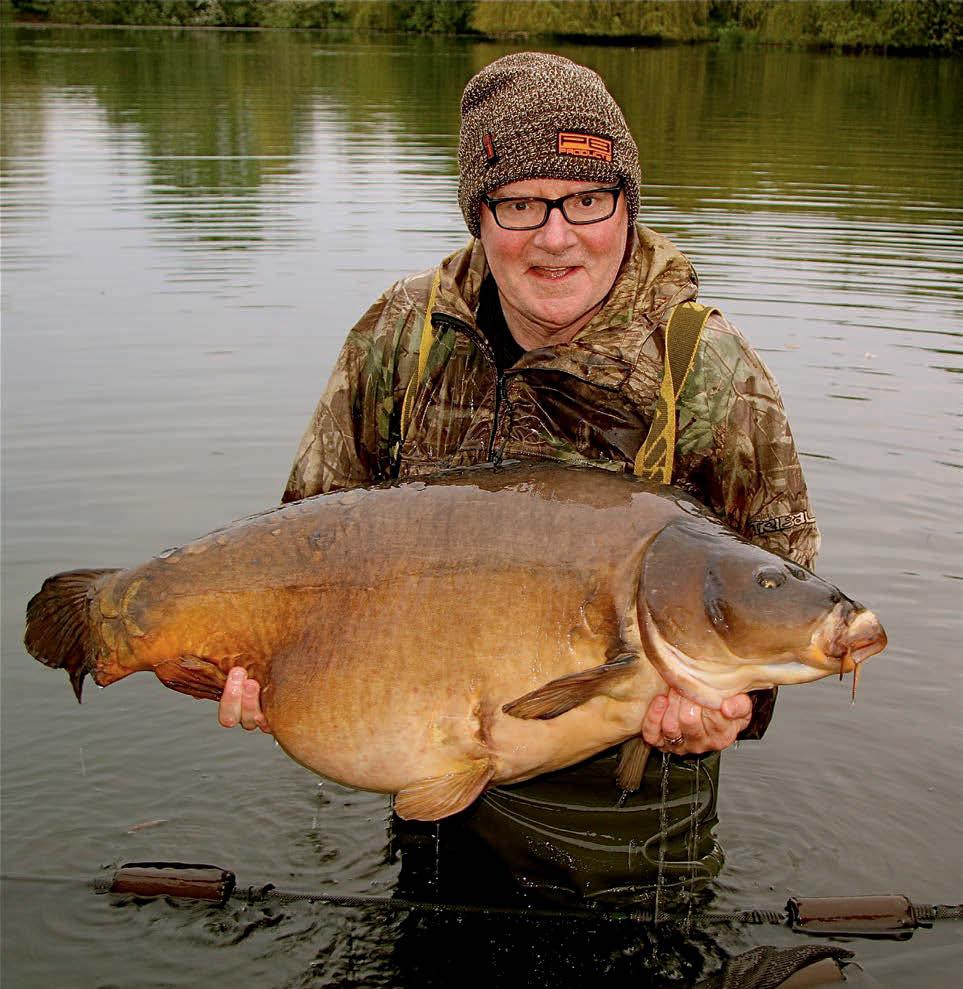
whole boilies in there. This stops tangles, with the supple end of the rig being susceptible to tangling, and allows the bait to be fished at the full length of the rig, not tangled around itself as can happen with solid bags, which can lead to abortive takes.
So it goes without saying that you need to be fastidious when placing your bait, how you place it and how you watch it. Recently, I started this very approach on the eve of the first big storm of 2026. Armed with the meteorological knowledge that a storm was on its way, I was soon putting down my trusted hookbait onto spots that were clear of any lingering weed. Again, this is another massive tip. In colder weather, where I
have introduced freebies that are either liquid-based or solubles that break down quickly, it is important that any feeding carp there are on the bait—not on a mixture of the bait plus a few remaining naturals in weed or debris. Of course, this flies in the face of popular thought, but when attempting to measure whether a new boilie is working, no additional food chances can be given to the carp. If they are, you can get a false impression as to whether the bait is really working or not.
Of course, on a barren, clear spot, if you see signs of activity— bubbling, water displacement, shows, etc.—then there’s a reason why the carp are there… yes, your new bait.
1 As the winter starts to turn to spring, the daylight hours play a crucial part in informing the fish of the coming seasons. As global weather changes fluctuate, moon phases and daylight hours are a vital consistent feature for carp
Well, in typical Holmesy luckyb*stard style, I managed to catch four lovely carp, topped by a 46lb 2oz common and a 38lb mirror, which certainly made up for taking on the uncompromising weather conditions. Let us hope that this is the worst storm I have to manage on the bank in 2026… somehow I doubt it, but as I type this back in the warmth of my study at home, I’m certainly smiling at a great result and start to the 2026 campaign. I look forward to introducing you to my famous spring, or pre-spawning, tactics in the next instalment—and I think a few of you will be surprised as to how I have reshaped this approach as time goes by. See you on the bank.
MARK HOLMES
• Super-Comfy World-Wide Hybrid Mattress System
• World-Wide Camo Modular and Reversible 5 Season Bag
• Reversible base and mid layer, offering 6 different options, to ensure the bed is suited to your comfort requirements
• Reversible layers offer fleece one side and a lush smooth material on the opposite side
• Moulded crash zips
• Elasticated Pillow–Attachment loops
• World-Wide Camo Peach Skin mattress outer material
• Polar Fleece Inner mattress material
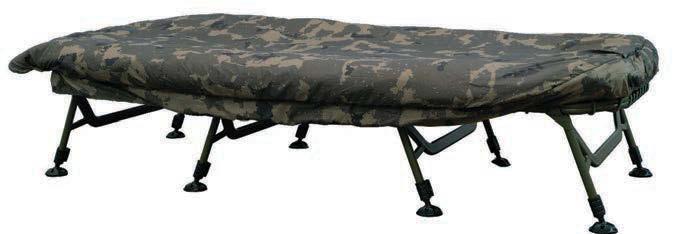
• Solar’s Unbeatable Lumbar support system
• High-Tensile Aluminium Bedchair frame
• Spring-Loc adjustable legs
• Lay-Flat bed hinges
• Compression straps, to ensure neat packdown
• Swivel Mudfeet
• Super-Strong 8 Leg frame

• Super-Comfy World-Wide Hybrid Mattress System
• Elasticated Pillow–Attachment loops
• World-Wide Camo Peach Skin mattress outer material
• Polar Fleece Inner mattress material
• Solar’s Unbeatable Lumbar support system
• High-Tensile Aluminium Bedchair frame
• Spring-Loc adjustable legs
• Lay-Flat bed hinges
• Compression straps, to ensure neat packdown
• Swivel Mudfeet
• Super-Strong 8 Leg frame
• Super-Comfy World-Wide Hybrid Mattress System
• World-Wide Camo Modular and Reversible 5 Season Bag
• Reversible base and mid layer, offering 6 different options, to ensure the bed is suited to your comfort requirements
• Reversible layers offer fleece one side and a lush smooth material on the opposite side
• Moulded crash zips
• Elasticated Pillow–Attachment loops
• World-Wide Camo Peach Skin mattress outer material
• Polar Fleece Inner mattress material
• Solar’s Unbeatable Lumbar support system
• High-Tensile Aluminium Bedchair frame
• Spring-Loc adjustable legs
• Lay-Flat bed hinges
• Compression straps, to ensure neat packdown
• Swivel Mudfeet
• Super-Strong 6 Leg frame
• Super-Comfy World-Wide Hybrid Mattress System
• World-Wide Camo Peach Skin mattress outer material
• Polar Fleece Inner mattress material
• Solar’s Unbeatable Lumbar support system
• High-Tensile Aluminium Bedchair frame
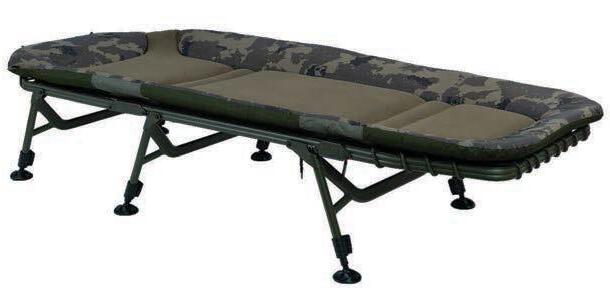
• Spring-Loc adjustable legs
• Lay-Flat bed hinges
• Compression straps, to ensure neat packdown
• Swivel Mudfeet
• Super-Strong 6 Leg frame



Light leads won’t hook a carp
pH is a t�ing �hen it co�es to bait
Carp spook off big beds of bait
Fi���eals won’t wo�k in the �in�e�
THINK EVERYTHING YOU HEAR IS CORRECT? THINK AGAIN. WE SPOKE TO SOME ANGLERS WHO KNOW A THING OR TWO ABOUT CARP (I.E. SEASONED CARP-FISHING PROFESSIONALS) TO SEE WHERE WE’RE GOING WRONG




I’m more likely to find carp if I keep an open mind and look everywhere

making is a





Yo� ha�e to �ea� camo ����ing to cat�h complex s�b�ect
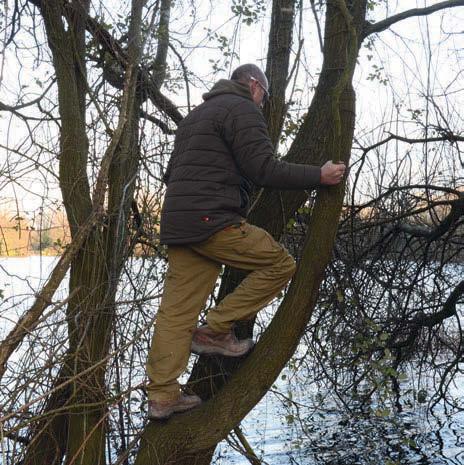
MATT EATON ‘Carp a�e eas� to ��e�ict’
“When it comes to location, I never cease to be amazed at just how often carp are where they aren’t supposed to be. Well-meaning advice such as, “They follow a fresh wind on here.”, “They’re always in the Car Park Bay when it’s sunny.” or “They’ll be sheltering from this cold easterly.” should always be qualified with ‘often’ or ‘in my experience’.
“Yes, carp will sometimes be found where we expect them to be, but they are located elsewhere just as often. Against all my instincts, I’ve found them in two feet of water on the end of a bitter north-easterly, on a halffrozen lake. There are too many variables, with fish behaving di erently on various venues in a plethora of conditions. Whilst I might have ideas as to their location, I always try to approach location with an open mind and look everywhere. They are where they are.”


‘Light leads won’t hook a carp’
“One of the biggest myths I hear a lot (especially after owning a tackle shop for the last nine years!) is that you need a big lead to hook a carp! My dad and I have caught thousands of carp on leads of 1.5oz or below. This also includes my two UK 50s and numerous other 40s and 30s. With my preferred light leads, I find they don’t make as big a sound or splash as a heavier lead, and they won’t bury into the silt as deeply. This allows me to use my short 4–5-inch rigs without having to constantly worry about silt depth or rig length.”
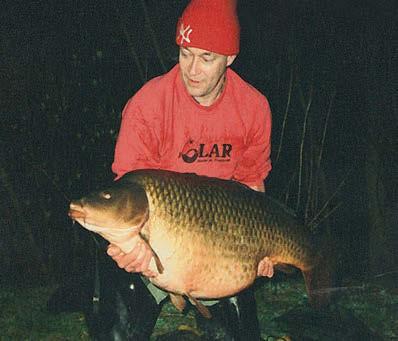
‘Bait making has to be complex’
“When Joe, the editor, asked me to write a short piece on carp fishing myths, I thought, “Hmm, that’s a tough one.” Most myths are opinions, and they can have at least an element of truth about them. They can be hard to conclusively prove or disprove one way or the other.
“I guess if I had to choose one subject, though, it would probably be bait making and ‘the secret/must-have ingredients’. I once said, “There are no secrets to bait making, only knowledge,” and I think that still holds true.
“Over the years, I’ve received an awful lot of emails where people are seeking advice on bait making, and they often include their recipes. The one thing that stands out above all else is
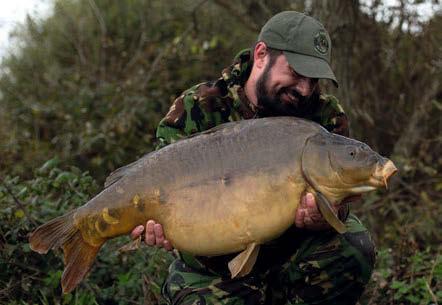
A light lead did the business here!
‘Carp spook off big beds of bait’
“What a load of old rubbish! Whenever has anyone witnessed a carp swimming along, seeing a baited area and thinking to himself, ‘Oh no, too much food—I’d better do the o as quickly as I can!’ I think not.
“Sure, there are times when too much bait is going to slow the takes down—maybe 20kg in January or February won’t do you much good—but as for spooking o because there’s too much?! Carp spend their lives swimming about and eating; conditions dictate just how much they eat and for how long they feed. If Mr Carp has been seen quickly vacating an area, I would guess it’s something other than the bait that’s causing this reaction.”
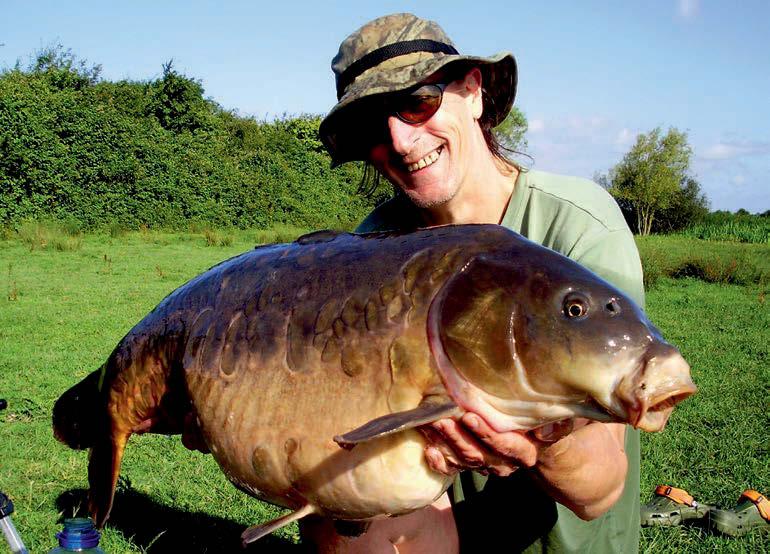
how complicated they seem to make them.
“It’s a myth that if you include all, or many, of the known attractors in a bait it’s bound to work and will out-fish all others because of it. Some recipes I’ve received can have up to 20 di erent
ingredients. However, this is missing the point entirely: carp are not gourmets.
“The bait that carp will most readily eat is one they haven’t repeatedly been caught on and that they find attractive. The best baits I’ve ever made and used really
successfully have no more than five or six ingredients: two binders, maize/semolina, two fishmeals (standard white/pre-digested), paprika or Robin Red, and salmon oil. Simple, easy to roll, works like a dream—and absolutely no myths.”
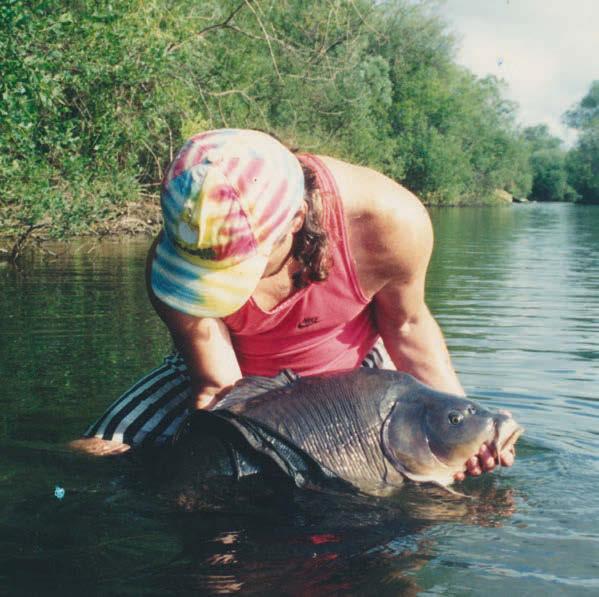
‘Hea�� leads, �l�ra-�la�k �i�es, camo ����ing… the�e’s loads!’
“In the halcyon days of Richard Walker and the Carp Catchers Club, it was firmly believed that using a lead on the line would spook the carp due to the resistance it o ered. In fact, the only time a lead (about half an ounce) was advocated was when fishing anchor crust. In the ’50s, ’60s and even the early ’70s, the use of free-lining was the advocated method. We know now the e ects of what is commonly called the bolt rig!
“In years to come, the advocacy of using large, heavy leads became the trend, made easier with the modern development of carbon-fibre, highloading rods. Don’t be fooled into thinking that carp learn their way around this situation, and quite often use a heavy lead as a fulcrum with
which they can rid themselves of the hook. Many successful anglers use the lightest leads they can get away with, running, and by using stickysharp hooks they are more often than not ‘NAILED’!
“Another in-vogue method was to fish ultra-slack lines, believing that you would get more takes. What people don’t consider is what a carp can get away with on a very slack line. This remains a controversial subject, as the anglers advocating the use of ‘laser-tight lines’— brought into vogue by long-range anglers fishing Harefield and Savay in the ’80s—felt that such methods induced better hooking, even after the hair rig was invented. The position of the bite indicator will show you far more about what
MIKE WILLMOTT
‘Fi���eals don’t wo�k in �in�e�’
“I think possibly the biggest myth I’ve heard over the years is that fishmeals don’t work in winter! I’ve lost count of the number of times I’ve heard that one. I remember fishing a local club water all through the winter during the mid-’80s and having a phenomenal number of fish on one of my early fishmeal recipes, with very low levels of garlic essential oil. I’d embarked on a baiting campaign between November and February and couldn’t put a foot wrong. In truth, I was trying to keep the eels o , because they were a big problem on the venue, and the fishmeal/ garlic combo definitely minimised their attention—but certainly not the carp!
might be going on in your swim (line bites) than an indicator lying flat on the ground.
“This was, of course, well before social media and everything was very hushhush, which was just the way I wanted to keep it. At one point I had an angler come into my swim, which was handy because I was on the verge of packing up after a day-only session and I had three carp sacked in the edge! Before realising this, the angler in question proceeded to tell me that the reason no one was catching in recent weeks was because they were using fishmeals and, in his very own words, “the carp won’t touch fishmeals after November.”
“I listened with interest before asking him if he would mind taking a few pictures. Being a relatively tricky venue, he was most shocked to hear that I’d had three carp in a day-only session and asked me what bait I was using. I didn’t have the heart to tell him fishmeals, so I told him they were all caught on single Tuttis chucked out into the middle of nowhere! His reply was a classic: “That’s definitely the way to catch ’em. I thought for a moment you were going to make a fool out of me and say they were caught on fishmeals!”

“In the ’50s, carp anglers fishing night sessions would use tents and even sleep in pyjamas. As carp angling became more cult-like, the likes of Jack Hilton, Jim Gibbinson and others donned camo jackets and drab clothing, even putting camo netting screens in front of their swims. Then the dawn of the mid-’80s and ’90s disco carp scene saw some of the most successful anglers wearing bright-coloured clothing. Did it put the carp o ? Obviously not—as Total Carp’s sister magazine, CARPology went on to prove in one of their on-thebank Below The Surface tests!”


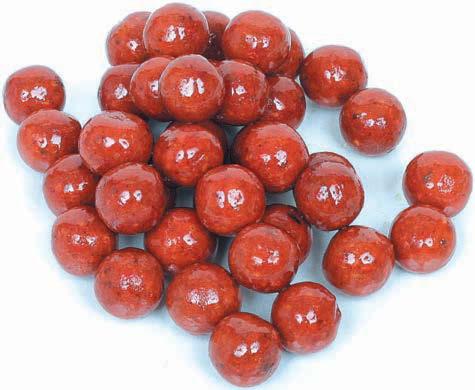

“There is a myth that surrounds the subject of pH and its alleged relevance to bait. This includes any flavours or additives incorporated in the overall recipe. Some commentators have strongly endorsed the importance of pH, although I cannot find any meaningful information that might support their theories.
“pH is a known value or score that defines the acidity or alkalinity of an aqueous body. It has been claimed that pH is a significant factor in the way carp might react to bait, and most specifically boilies. The theory being that the acidity of bait, potentially altered and controlled by adding flavours, dips and other ingredients such as citric acid, will influence or enhance the feeding response of carp. The inference is that these fish will be attracted by some kind of underwater reaction process driven by chemicals often contained in ‘commercial bait products’ such as liquid bait dips, coatings and other preparations.
“This idea is much more than just a rumour, and yet it seems ridiculous. In fact, it is about as true as the old 16th-century fairy tale told to the uninformed masses and gullible believers of that time—that the Moon is made of cheese!
“The pH value of bait is, in my opinion, irrelevant. I say this because when a hookbait is cast into water, the immediate dilution effect of the water body, in relation to the size of one small bait, almost instantly terminates any influence it may have in the surrounding water column. My own experience dictates
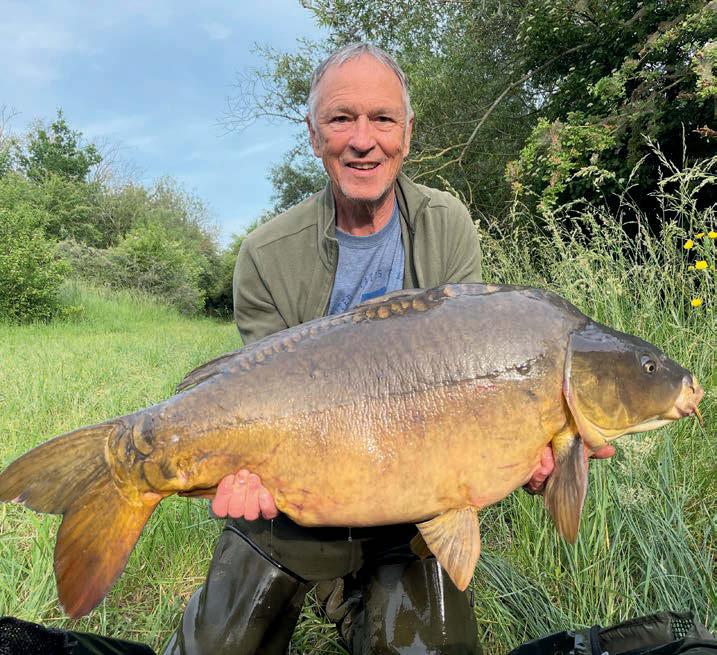
that importance should be placed on the taste of the bait, its inherent design and its core ingredients. We already know carp will instinctively return to eat bait they prefer, because our target should be to make a bait—not create something that is no more than an over-enhanced lure.
“The habitual use of well-advertised bait dips, glugs and other concoctions most certainly catches more anglers than it does fish. Having read various writings on this very topic, I remain concerned. I say this because it is clear to me that some quite highprofile writers are talking pH nonsense. This is a fact, but it is also a shame, especially when there is such an abundance of other fascinating bait topics that would be of far more use to keen readers.
“I have studied bait both for my own private interest and in a commercial capacity for well over 50 years, and during this time I have never had any kind of sponsorship. For this and many other reasons, I feel I have earned the right to
comment on what is clearly a grossly misreported subject. It is also interesting to note that people who speak with the loudest voice are those who very often gain a commercial benefit in doing so.
“Avid readers of bait articles or social-media followers never really know if what they read or see is true, or how they might use the information to their advantage on the bank. If anglers happen to see a topic being covered enough times, they are more likely to buy the bait products that are linked to it—and this is the nub of the matter. History dictates that embedded beliefs about bait are developed via confirmation bias, but very rarely via real chemistry.
“The writer, for example, might imply that some theory or another is true and, by implication, tell the reader to follow their belief, but without explaining why. This basic example of influencing the public is commonly known as Fake News.
“I am too old in the tooth to join the bandwagon of
media hype so often put out for the purpose of selfgratification, monetary gain, to satisfy a sponsor, or a combination of all of these. Time will pass, however, and most of us will happily carry on doing the things we have done before. Some of us will continue to believe we are right because it is a reassuring way of supporting our own beliefs.
“I would urge all dedicated users of specialist bait to view much of what you see with a large pinch of Himalayan rock salt! Let’s face it, carp will eat just about any bait, providing it is properly made and not drenched in some awful gungy stuff. Even in our wildest dreams we know carp don’t carry a packet of litmus paper around with them.
“In conclusion, I offer some heartfelt advice to all would-be bait chemists by respectfully asking that they take careful steps to check their facts before they put pen to paper. As a writer myself, I always bear in mind that someone, somewhere, may be checking my work.”



WORDS & PHOTOGRAPHY OLI DAVIES ILLUSTRATIONS MARK SMITH

Understand Carp Roadways So what’s their South Mimms Services?
NASH TACKLE’S OLI DAVIES EXPLAINS HOW TO READ AND UNDERSTAND THE CARP’S UNDERWATER HIGHWAYS—AND THEN HOW TO BAIT THEM CORRECTLY
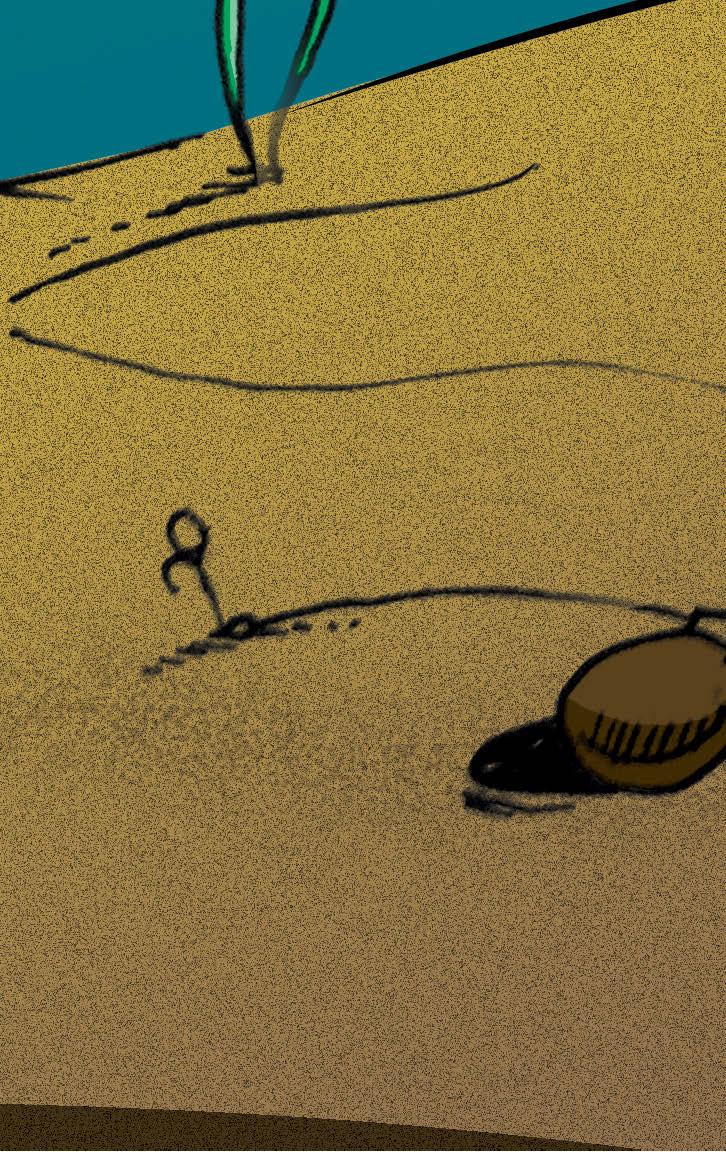
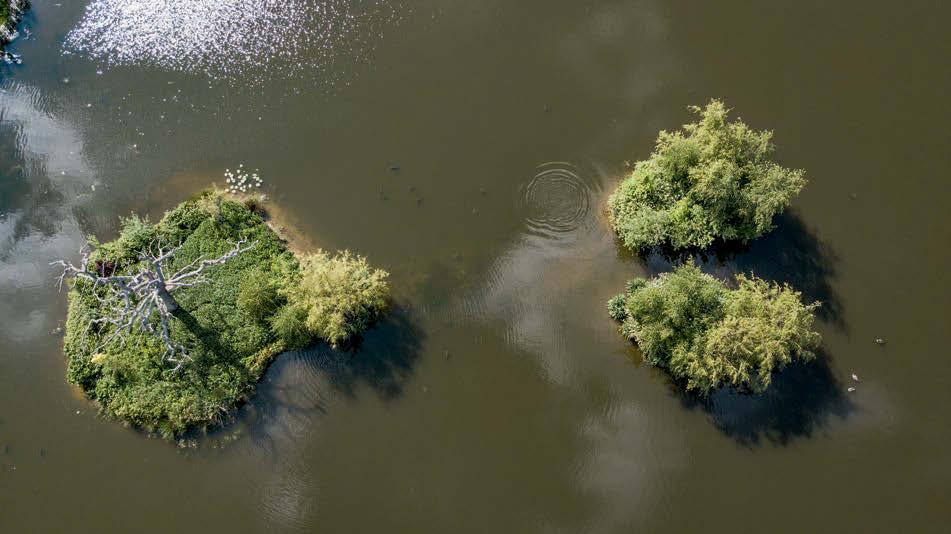
You arrive at a new venue with no prior knowledge. How do you identify the areas that carp will likely frequent, and how do you go about setting traps to intercept them as they move about their home? This simple guide will assist in locating those hot spots and help put more carp on the bank…
- 01 -
Islands are a carp magnet, o ering shelter, sanctuary and a waypoint as the carp travel around the lake, and are one of the most obvious visual features to look out for. Often, these are some of the most productive areas too, as they are an ideal point at which to intercept and lay a trap for the carp. One-bite tactics can be consistently successful, but getting the fish feeding always increases the chances of a pickup.
Fishing tight to an island should be approached in the same way as fishing any margin. It is unlikely to be an area where you will have many fish feeding at the same time, so don’t overdo the bait. A scattering of boilies to get the fish picking, or tight baiting with particle baits via accurate spodding or baitboat, are both good methods.
Alternatively, if the fish are passing by the island close but not tight to the margin, a much wider spread of bait may be needed to grab their attention. By using the island to force the carp to swim past it, you are e ectively funnelling them in from quite a wide area and increasing the chances of your bait getting noticed.
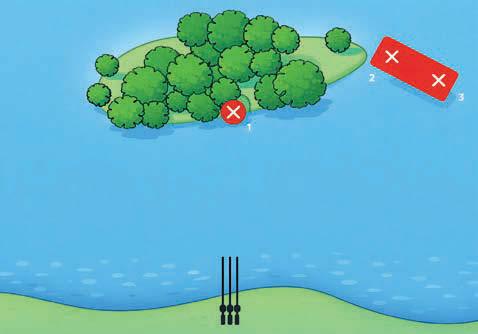
“Islands are often some of the most productive areas.”
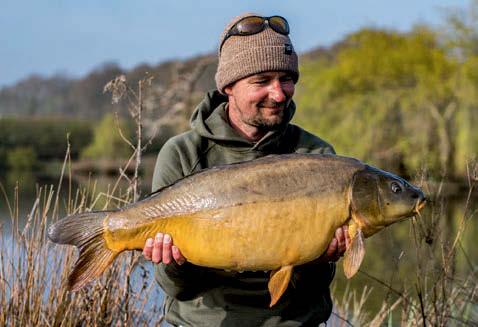





















Bars are a natural patrol route and favourite feeding area for carp. Weed often grows on the top of the bar and food collects at its base. Carp use bars like highways, so they are great features to target. How you bait very much depends on the size and shape of the feature, as well as the weather conditions.
High pressure and sunshine will see the fish up in the water and patrolling the top of the bar, where they can be tempted to feed in the shallower water. Low-pressure, wet and windy conditions will find the carp feeding hard at the base of the bars and in the silt gullies between them.
Presentation is often improved by fishing over the top of the bar rather than on the near side, as the line is better concealed, especially when the fish are approaching from the back. A good spread of bait on the back of the feature, either Spombed or catapulted when the fish are feeding hard in low pressure, or alternatively light baiting or a one-bite trap on the top of the feature in high pressure, are simple guidelines to follow.
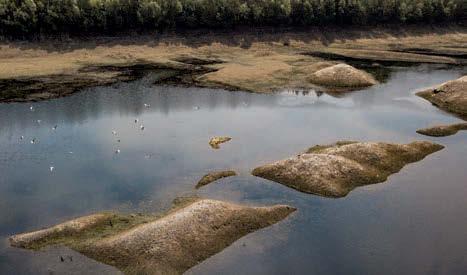
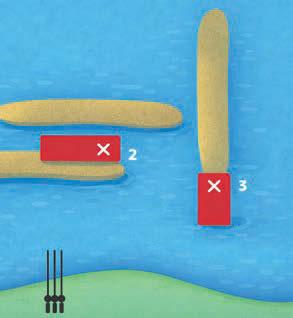

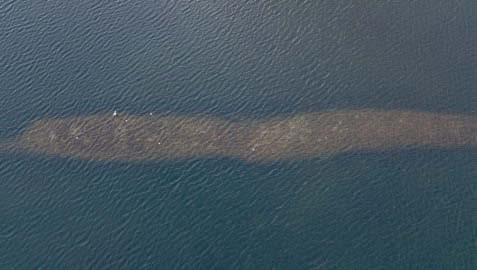
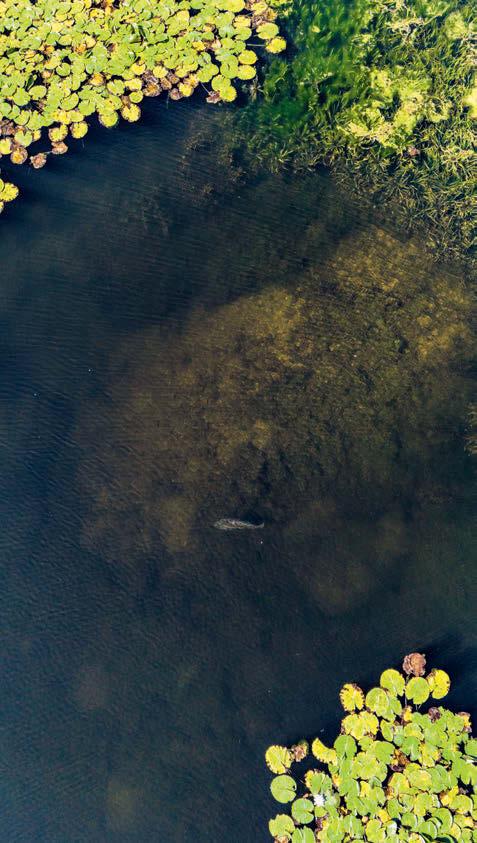
- 03 -
Weed shapes a carp’s world and can form a system of ‘roads’ that the carp use to travel around the lake. Holes and channels in the weed can be real hotspots. Generally, the larger the hole, the more bait can be applied and the more rods fished in it. While the fish will feed in the hole, they will feed more confidently around the edges, so placing the hookbait(s) on the periphery will bring quicker bites.
Holes can also be created by the careful application of particles, using the fish themselves to help clear the weed. The fish can be encouraged to clear holes in weed by regular baiting, and over time these can grow considerably. The channels and tunnels between weedbeds are patrolled by the carp and are also great places to place baits. At the entrances to these channels, a patch of bait can prove hard to resist, but these spots are best fished as you would a margin spot and baited and fished for one bite at a time.
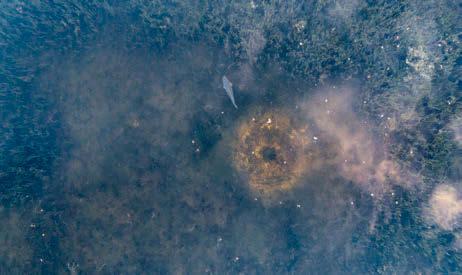
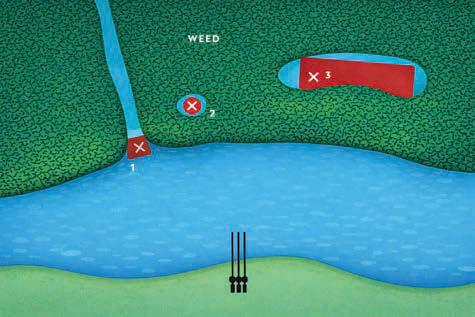
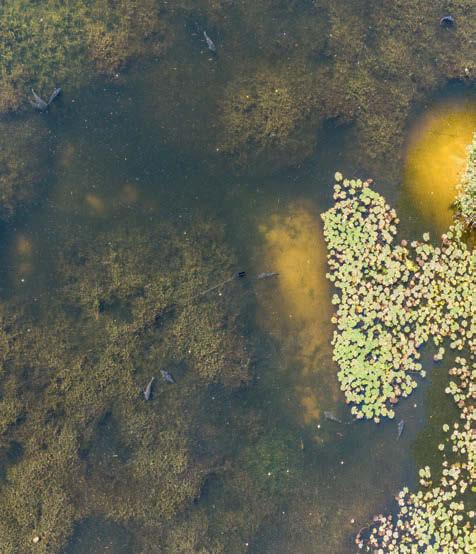
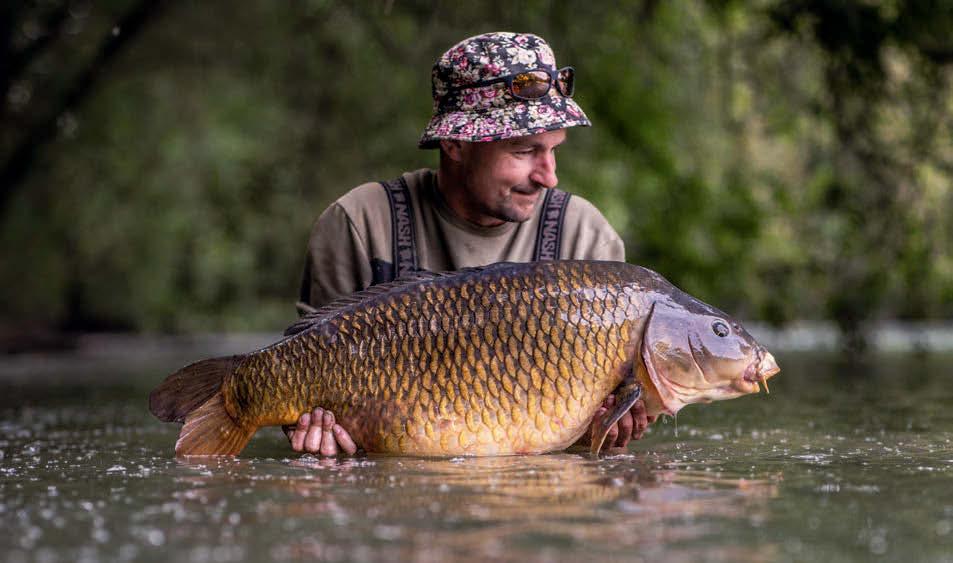







“Holes and channels in the weed can be real hotspots.”
The biggest feature on any lake is the margins, and they are surprisingly overlooked by many. Carp will regularly patrol the margins, and this is the place to lay small traps rather than pile it in. A scattering of baits around the rig, or a handful of particles such as hemp and pellet, should be enough to stop a carp in its tracks and occupy it long enough to get a bite.
Margins also o er us the opportunity to watch our quarry at close quarters, and these observations help us decide where and how we should be baiting, and where our rig needs to be to give us the best chance of a pick-up. Margins allow a wide range of accurate baiting options, and this ease of delivery allows us to be extremely precise with the placement of free o erings—even allowing us to choose exactly where each one goes in some circumstances.
Baiting from the top to the bottom of the shelf ensures that we maximise the chances of attracting a passing carp, but depending on the conditions we can choose to fish at di erent depths. On wet, windy days the carp will be more likely to be found patrolling the deeper water at the base of the shelf, while on hot, sunny days they may be found closer to the edge in shallower water.
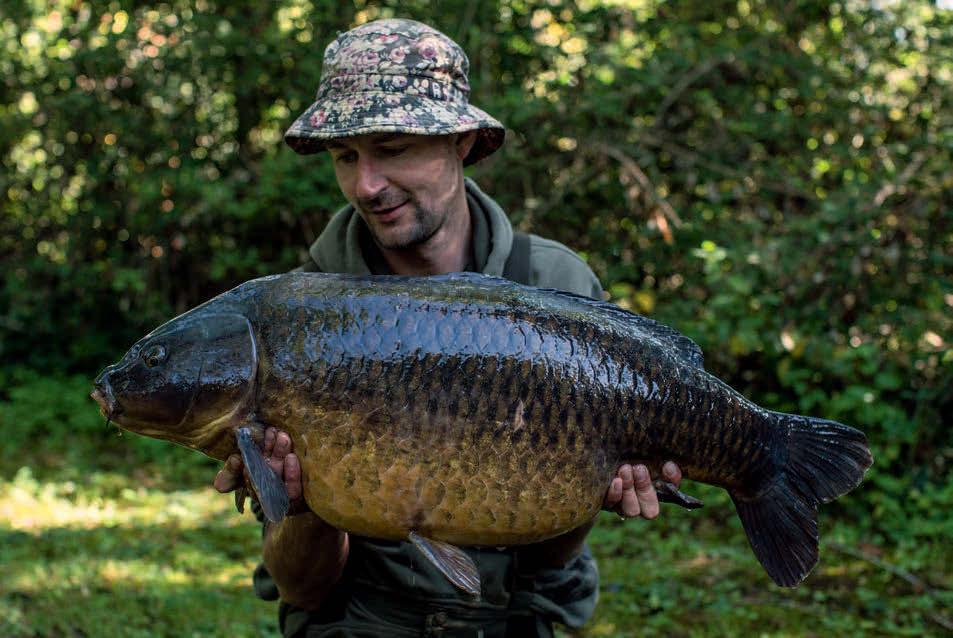






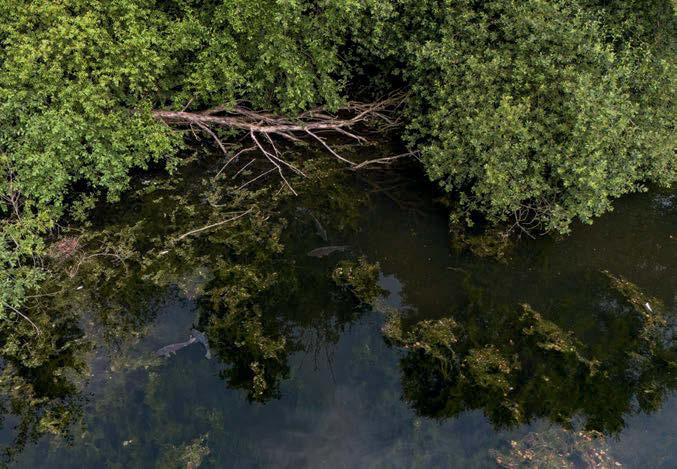
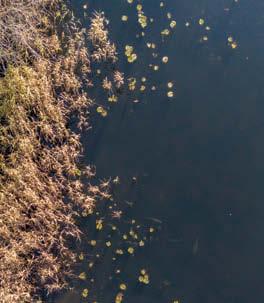


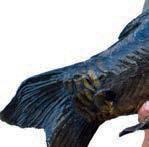

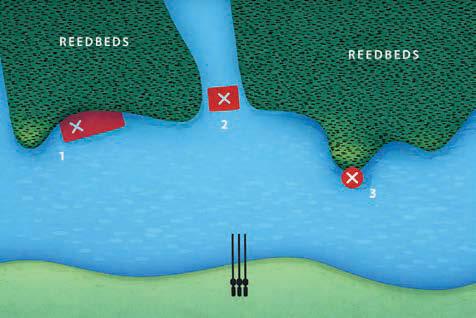
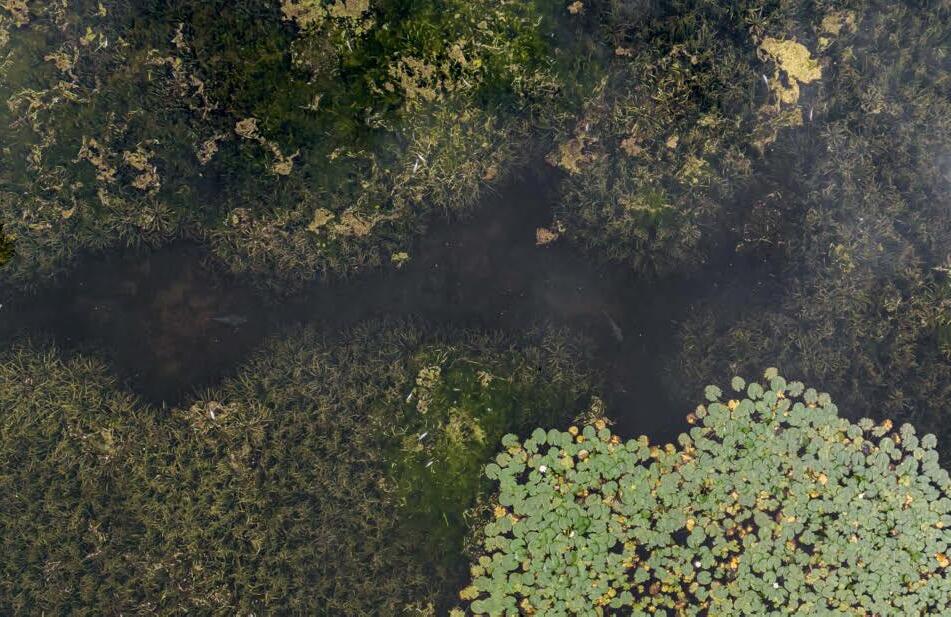
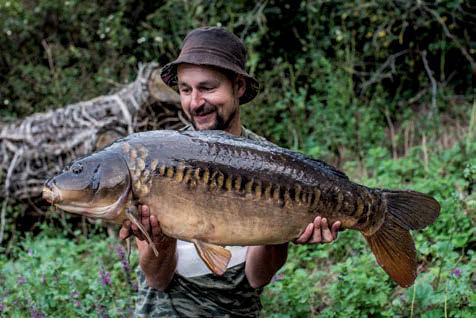






Carp love snags and will make visiting them part of their regular routine. The time at which the fish visit will depend on when the sun hits the snags. In order to receive a bite, we either need to draw the carp out with bait or intercept them on their way in and out. Obviously, care should be exercised when baiting, and it is better to try and draw the fish to the hookbait in an area where they can be landed safely.
This can be done by leaving a ‘trail’ of bait from the snag to the rig. Carp will often approach, enter and leave snags by a particular route, so again observation can help determine where to intercept the fish en route. A small trap might work best if it is a margin that the fish are using, whereas a larger spread of bait is a better option if the fish are travelling across open water.
With reedbeds, there will be channels and clear areas that the carp prefer to use regularly, along with points where the reeds protrude and force the fish out into the open—these are the places to look first. The reeds twitching can be a giveaway as to these routes. Scattering bait tight to the reeds will get the fish picking up baits and less cautious, while tight patches of bait at the entrances to any channel can be very di cult for passing carp to resist.
- 06 -
Channels between islands and the bank create bottlenecks, forcing the fish to travel through a very specific area. We can take advantage of this by making the carp swim over our bait. If the channel is narrow, then you can bait generously to form a ‘wall’ of bait stretching across it, which is almost impossible to avoid. If the channel is wider, then it is likely the fish will hug the margin as they pass through. In this case, a trap on either point at the entrance to the channel gives two chances to intercept a fish.
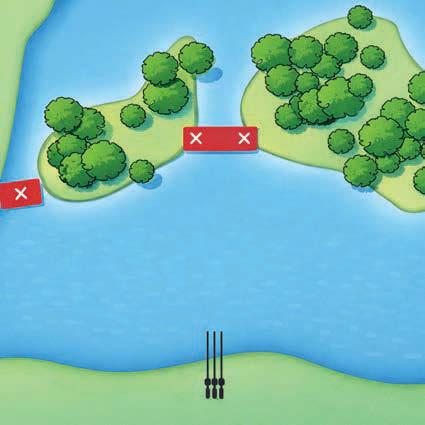
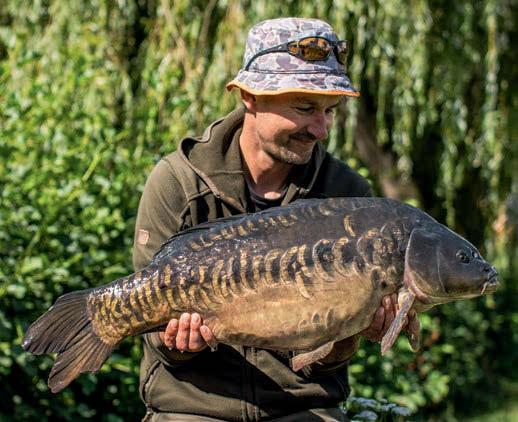
- TOOLS -
Picking the right one for the right occasion
Something every angler should own, these can be used to deploy a variety of baits at short to medium range. Single boilies can be accurately fired out to create a tight pattern, or more baits added to increase the spread. Particle baits can also be spread accurately at close range.
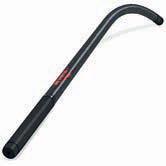
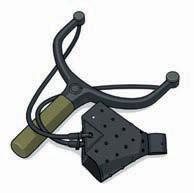
Less accurate than a catapult, a throwing stick is designed to be used solely with boilies. Ranges of up to 100 yards can be achieved with larger baits, and these are a good choice for applying a spread of bait.
The ultimate stealthy tool for placing traps at close to medium range, the Bushwhacker Baiting Pole is quieter than a bait boat while offering pinpoint rig placement and enough bait to get a bite with the small head, or for heavier baiting scenarios with the large spoon.
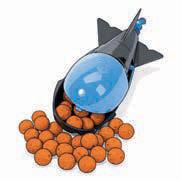
Ideal for bulk baiting, the spod or Spomb has a large capacity and allows quick delivery, making it the method of choice for many anglers. It can be used to apply just about any kind of bait in patches over the top of your rig, either at the start of the session or with regular topping up. It is, however, less stealthy than the other options, which can work against you on shorter sessions, but conversely on higher-stocked venues can actually attract fish. The spread of bait from Spombing works well in open water and for attracting groups of carp to feed, with the chance of multiple catches.
Perfect for tight, accurate and discreet trap-laying and baiting at longer ranges, this is a useful tool for laying a trap on a small spot, in a hole in weed or tight to an island margin, without too much disturbance and where casting may be difficult.
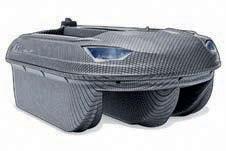
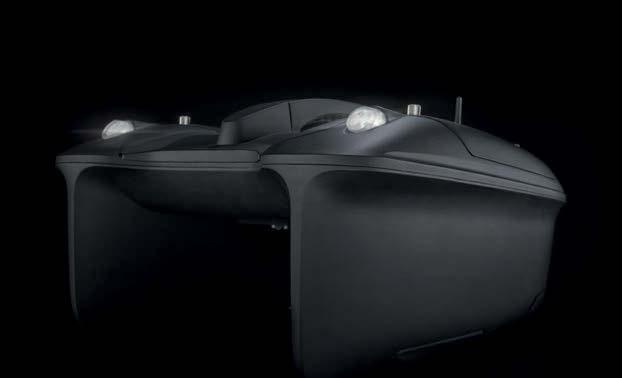



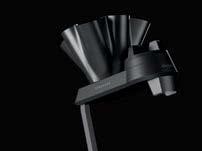

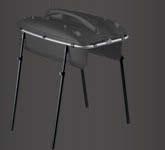



























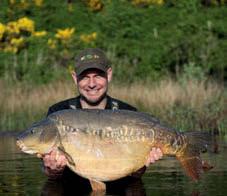



















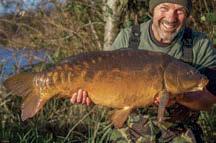















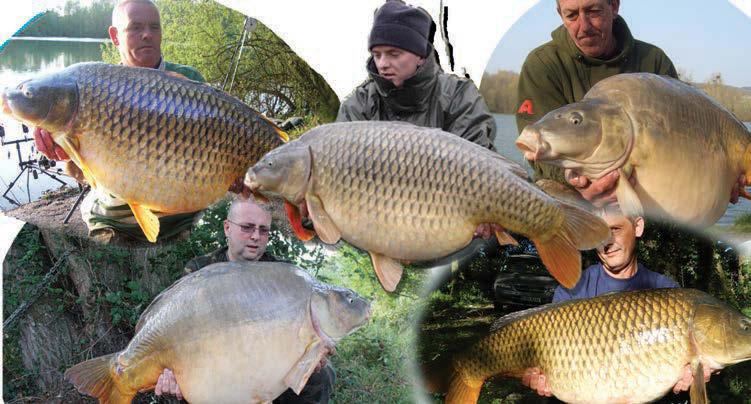
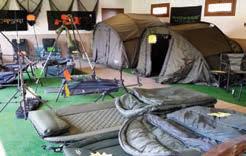
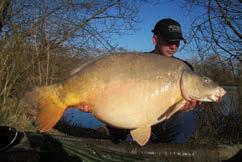






How does the fresh angler waltzing up to a rock-hard carp lake, unencumbered by bitter experience and perceived wisdom, swiftly go about emptying the place? A romantic notion that offers hope to us all



Admit it: each and every time you’ve visited a new venue you’ve fantasised on the way there about arriving with hitherto unseen or discarded tactics and shocking the carp into submission, making the stuck-in-theirways regulars hail you as a new messiah. It’s a captivating thought, woven into the hope and expectation we’re all subsumed by ahead of a new challenge. But is it grounded in reality?
In short, it certainly can be. We all know that wise old carp can become suspicious of being targeted in the same ways for year after year. Doing something di erent—even if it flies in the face of everything the regulars swear by—can certainly jolt the carp into more curious, carefree behaviour.
Consider the case of a 21-year-old Darrell Peck on the notoriously di cult Yateley Car Park Lake if you want some inspiration. Fresh-faced young Pecky initially struggled on the granite-hard venue and blanked for 30 nights, but rather than bowing to the going tactics, he went completely against the grain and was eventually rewarded with some of the best fish in the lake. On a water dominated by ultra-tight patches of nuts and particles, Darrell
went the other way entirely and baited with 20mm boilies to reap the rewards of some leftfield thinking.
Was it Darrell’s ingrained skill or his unorthodox bait choice that made the di erence?
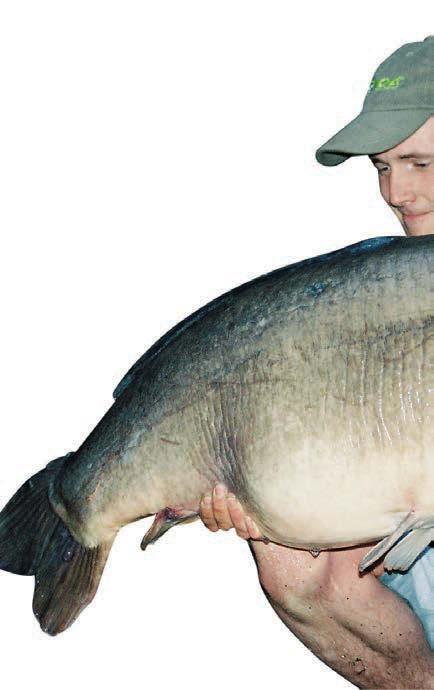
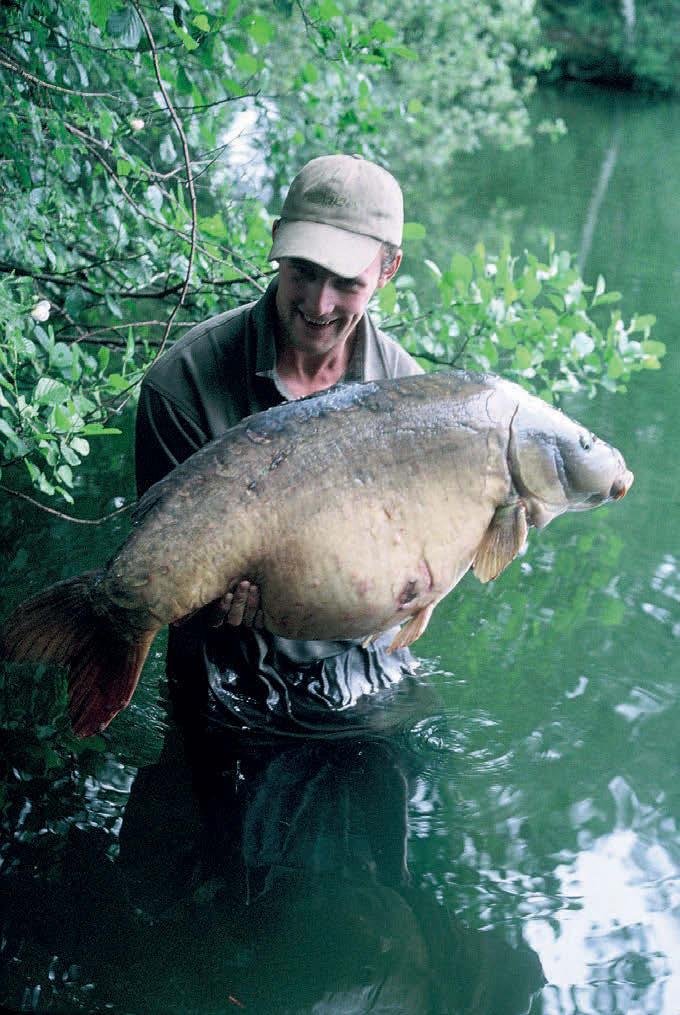


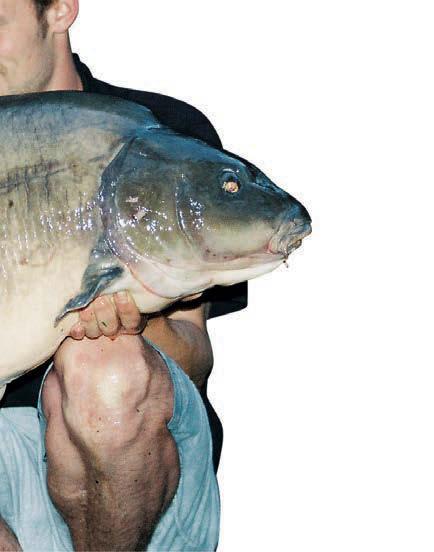
“Rather than bowing to the going tactics, he went completely against the grain and was eventually rewarded with some of the best fish in the lake.”

SOME ARE MASSIVE SHIFTS IN TACTICS AND APPROACH; OTHERS ARE SIMPLY TWEAKS TO THE GOING METHOD TO MAKE THEIR BAIT, RIG OR OVERALL APPROACH EVER SO SLIGHTLY DIFFERENT. HERE ARE FIVE EXAMPLES OF ANGLERS WHO DID JUST THAT, AND THE RESULTS WERE OUTSTANDING
2.
At a time when Car Park Lake was dominated by ultraminimal baiting: bait boats delivering four-inch hooklinks with a pinch of hemp, a couple of tigers and five grains of corn, Pecky did the unthinkable. He went big: heavy 20mm boilies and long(ish) braided hooklinks that flew in the face of prevailing wisdom, yet it proved devastatingly e ective. It was a textbook example of how contrast, not conformity, can catch pressured fish o guard.
During the Fish With The Stars event held at Horseshoe Lake, the majority of the 80 competitors fell into the ‘Standard Horseshoe Approach Line’: spodding hemp, corn and boilies. Frank Warwick, however, went in the opposite direction. Armed with his Korda Eazi-Stik, Frank fed straight 20mm boilies across the entirety of his swim and went on to dominate that section of the lake, which wasn’t a particularly renowned area for producing big hits.
Back in the early 2000s, most anglers went large when it came to maggots: spodding them out by the bucketload using one of the enormous Free Spirit Bait Launchers of the time, then presenting a massive Medusa-style hookbait over the top. Rob Maylin took a far more refined route: a small hook with a single fake maggot over the eye and two or three maggots nicked onto the hook, fished in conjunction with a small mesh bag of maggots.
By the late 2010s, a “pinch of hemp and five tiger nuts” were still very much the order of the day on Car Park. Gaz Fareham stayed within that framework, but added a subtle twist. Instead of introducing fresh boilies, he presoaked this in hemp for three days before arriving. When they finally landed on his spots, they appeared and smelled like baits that had already been for days. That single refinement—making new bait appear old and safe—proved hugely e ective for Gaz.
SOME OF THE FALLACIES THE BIG NAMES HAVE HEARD DOWN THE YEARS
FRANK’S FAVOURITES
Frank Warwick is world renowned for going against the grain. Method feeders for big carp? Pah! Using worms when there’s nuisance fish around? Unthinkable. 12-inch hooklinks? Madness. But as Frank and both his analogue and digital photo albums will prove, being part of the ‘other crowd’ can pay o handsomely. Here’s his top five…
1. Zigs and floaters don’t work during the night
2. Shorter rigs are more e ective than long ones
3. The Method feeder is a noddy, small-fish tactic
4. You’ll only catch over big beds of boilies
5. There’s too many nuisance fish in here to use maggots and worms
‘PINEAPPLES HAVE BLOWN ON HERE’
While most anglers on St Johns were keen to get set up in doublequick time and spod out a particle mix over their three-rods-ona-spot, Adam Penning did the opposite. After locating some carp, he spent the first 36 hours not fishing at all. Instead, he quietly introduced boilies with a throwing stick, in e ect pre-baiting while sitting in his swim with zero lines in the water. When Adam finally cast out, what followed was a masterclass in patience and long-term thinking, topped by the bigget common.
FOLKLAW:
Dave Lane: “Over a decade ago, whilst fishing on West Stow, I was categorically told that pineapple pop-ups had blown, and the fish would just spook off them. Have you ever heard anything so ridiculous? Needles to say I caught on my first night but again I was told that this was just a fluke, probably never to be repeated. A few short sessions—and eleven fish later— I had landed more fish than anyone else and all on the yellow perils.”
Most lakes have a deep and silty corner swim that just gets ignored because… well, it’s deep and silty. But let’s break it down: carp like silt, they quite like deep silt as well and, nine times out of ten, the deep and silty corner is the same depth as everywhere else and full of carp that never see a mainline let alone three. For a great example of this, look at Jim Shelley’s success during the late 2000s at Waveney Valley Lakes in Norfolk. Jim heavily baited and then fished Choddies in the siltest areas on the lake(s) and his success outstrips any other angler— and by quite some distance.
However, as Darrell himself has pointed out in the past, his success was not just the result of being di erent. Big boilies were just one piece of a complex jigsaw for him, with a swift move onto showing fish being a potentially bigger catalyst for success than the end-tackle tactics. If, perhaps, Darrell was destined to catch regardless (due to his location and watercraft skills) then we’ll obviously never know exactly how much impact his unorthodox bait choice had, but it’s probably worth heeding a well-worn carpy truism in this instance: if you fish the same way as everyone else, expect the same results as everyone else.
That might sound quite appealing to many anglers who are perfectly content with getting a few bites and enjoying relatively stress-free sessions. But if you pluck up the courage to try something markedly di erent from the masses then be prepared to expect di erent results—good or bad!
Dave Lane’s Burghfield campaign is another example of challenging the accepted norms and coming away smiling. At the time, back in 2014, Dave was led to believe by the regulars that the Burghfield Common was a loner who wouldn’t get caught during the same session as other captures and would only feed in the narrower, shallower areas of the lake. Dave famously sco ed at this and did it his way—building multiple captures over lots of bait and eventually landing the common from a deeper area of open water.
That said, Dave was also granted permission to create his own swim in a previously overgrown and out-of-bounds zone, so location alone might have been the deciding factor in his capture of arguably the best fish in the country.
Whether ploughing your own tactical furrow has a massive or minor impact on your results, it’s clear that it’s a gamble. Turn up at a BCAC match on Linear, for example, and do something drastically di erent to the top match pairs and you’re likely to come a long way down the leaderboard. At these kinds of heavily stocked venues it tends to be minor edges and supreme accuracy that tip the odds in your favour, rather than anything completely out of the ordinary.
Dave eventually caught the Burghfield Common from a deeper area of open water
The best in the land!
That’s how it feels to have caught the BC!
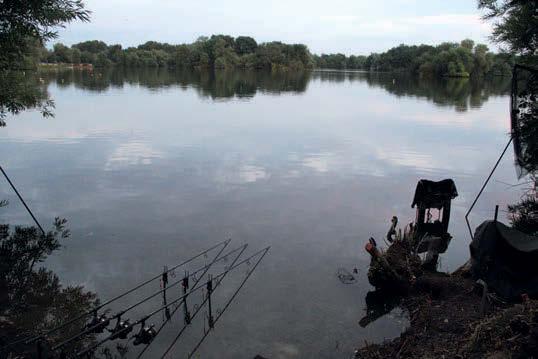
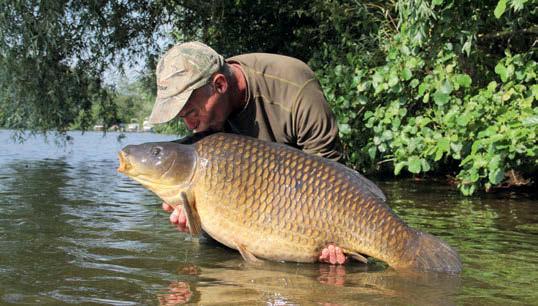
On typical club and syndicate venues, though, a leftfield gamble could leave you wallowing in Blanksville or, quite possibly, see you hitting the jackpot in a way that has never been seen before. Before we leave this fascinating eternal dilemma, let’s take a step back and consider something called ‘confirmation bias’. That’s the very human tendency to notice and recall information that supports our existing beliefs. It’s a natural thing to do, and in fishing it might be evident in theories like ‘big commons get caught during full moons’. We tend to remember the times a big common is caught during moonlit nights, rather than the many times this doesn’t happen. Could the same be true
of the “newbie’s good fortune” theory we’re exploring here?
Quite possibly. When a new angler joins a venue and has good results it’s natural for that to stand out and become a talking point. Unintentionally, you might be completely ignoring the many more venue debutants who struggle, because such mundane events don’t tend to plant a flag in our memory banks.
In conclusion, then, it’s clear that being fresh and di erent can be a huge advantage on some of the hardest carp waters around.
But don’t let your mind trick you into believing that going against perceived wisdom for its own sake—absent any rhyme or reason—is the be all and end all for cracking tough venues.




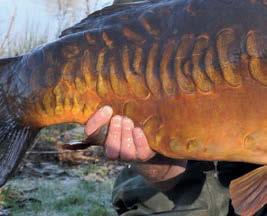
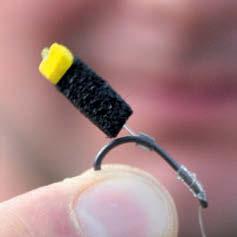
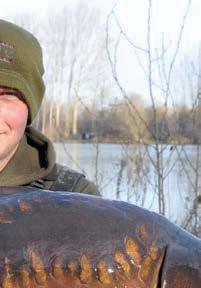


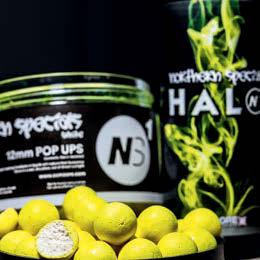
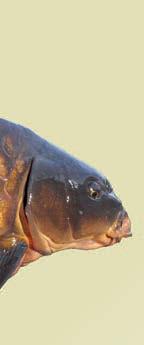
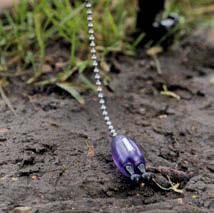
16 KEY SPRING LESSONS FROM 25 ‘SPRINGS’
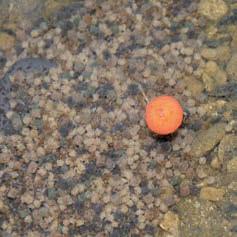
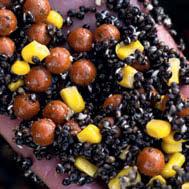
‘THIS
Here’s what twenty-five years of spring carp fishing, distilled into clear, practical lessons from Kev Hewitt, looks like
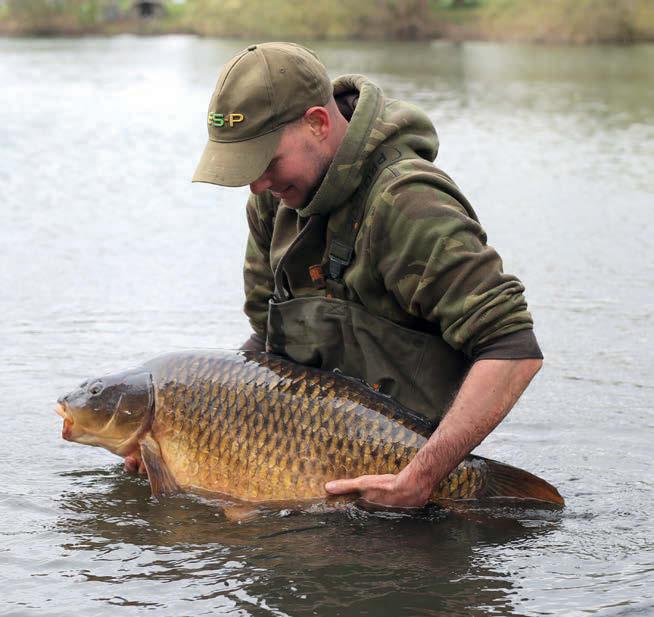

Through decades of angling for carp during the spring months, one thing that is evidently clear is that the fishing can be tricky at first, but once you unlock the key to success on a particular venue, the fishing will get better and better as spring progresses. It really is a great time of year to dust o the carp rods and make the most of the increasing hours of daylight. I’ve had some great success over the years during the spring, so let me invite you into some of the key lessons I have learned over the past 25 years.





“Quite often in carp fishing you will find that small tweaks, or combining two things that work, can search you out an extra bite or two.”


KEV’S TACTICAL APPROACH WHEN IT COMES TO THE SPRING
I really do believe that carp are aware of, and react to, the increasing daylight hours which in turn come with rising temperatures. Winter campaigns can be tough, with the carp very seldom giving away their location, but without doubt this very much changes in the spring. The carp will be more active and they will always give away their holding areas, sometimes with subtle shows and other times with more obvious acrobatic displays. My very first, and perhaps most important, tip is to watch the water and get set up on showing fish. They will give themselves away.
My number one tactic that has brought me considerable success, particularly during early spring, is without doubt the humble Zig Rig. A single slither of black, red or yellow foam, or more recently the CC Moore ultra-buoyant Zig Hookbaits, have accounted for literally hundreds of fish for me over the years. When you think about it, the upper layers of the water are always going to be the first to warm up and could quite feasibly be a few degrees warmer than the depths, and it is in those upper layers that I would certainly find myself if I were a carp. A great starting point would be to present a Zig hookbait around two or three foot below the surface, so in twelve foot of water a ten-foot Zig would be the perfect starting point.
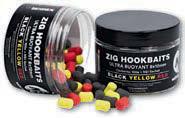
On venues where Zigs have been used quite a lot, try combining two colours of foam or cut two Zig hookbaits up. A combination that has worked really well, and has been my ‘go-to’ in the last couple of years, is a hookbait that is three-quarters black tipped with a red or yellow top. Quite often in carp fishing you will find that small tweaks, or combining two things that work, can search you out an extra bite or two, especially on heavily pressured waters when fish have become accustomed to seeing the same thing week in, week out.
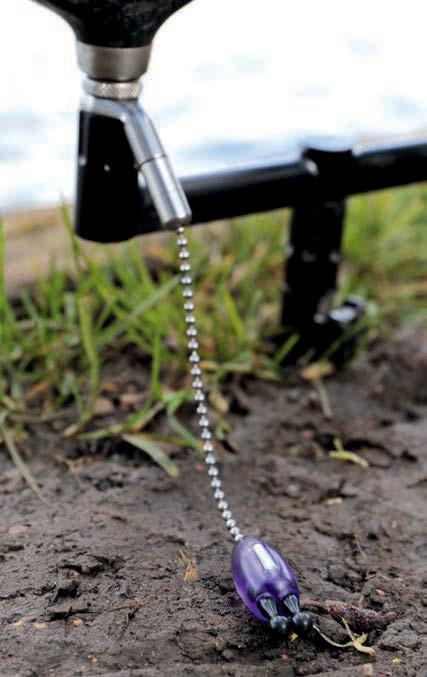
The advantage of all of the above tips is that you do not need to carry loads of bait or get stuck in a trap where you have filled it in and are reluctant to move swims— we have all been there, right? I find myself doing more day or shorter sessions and can often move swims two or three times in a day. It is so easy to travel light when PVA bag and Zig fishing, and any time a fish shows in a different area it really is easy to wind in a Zig or a bag and recast to where a fish has shown. This has got me so many quick bites over the years and nicked me fish on short sessions too.
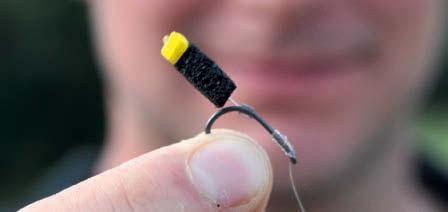
Nine times out of ten I like to use a tight line. However, there are times where I would use a lighter bobbin and fish slack lines. If fish are not showing in spring, they are still likely to be much more active, swimming around more than they would have in winter. By slack lining you can spread your rods and fish for liners. The more liners you get will help you pinpoint their location, and when you stop getting liners there is a good chance they may have moved, and a recast to a different area could be what is needed to seek out their location.

Another fantastic tactic that is effective in spring, and all year round for that matter, is a solid PVA bag. A little package of mixed pellet with a small bright wafter or popup often offers more than enough attraction to entice a carp to drop down for a mouthful of bait, causing it to trip up. The great thing about this time of year compared to the warmer months is that the lakes are often weed-free, allowing you to cast a solid bag to showing fish and fish with confidence knowing your PVA bag is presented well.






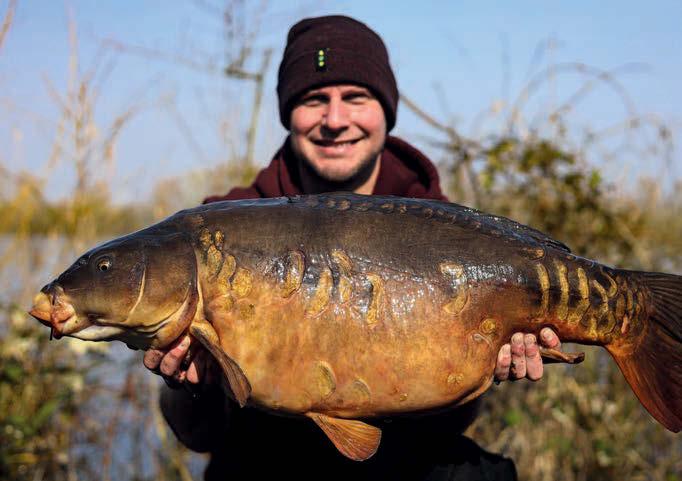




SPRING FISHING IS ABOUT BEING REACTIVE TO WHAT’S HAPPENING IN FRONT OF YOU, SO BEING PREPPED IS ESSENTIAL
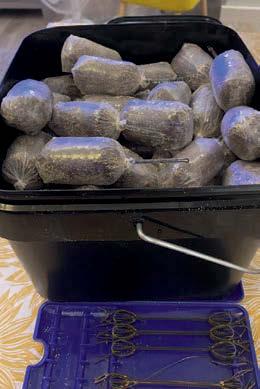
Be organised and be prepared. I have plenty of solid PVA bags tied up ready to go on quickchange stems or short leadcore leaders where rules permit. This means I can have the rods out in no time, and if I need to recast or move swims I already have rigs and PVA bags ready to go, with a simple loop-to-loop system allowing me to quickly swap a used bag rig for a solid bag that is ready to go.
Perhaps this should have been my first tip, but one thing I always do before spring is respool my reels with fresh line. I tend to fish less in winter, so I use the spare time to re-spool my reels for the season ahead. Before I spool up, I always write the date and breaking strain on a small sticker and sellotape it to the inside of the spool. That way, if you have multiple spools like I do, you can always see what breaking strain is on the spool and, equally important, how long the line has been on there, which gives a great indication of when it will need to be changed. And don’t forget to drop your used line into your local tackle shop to be recycled.
WHAT KEV FOCUSES MOST ON DURING THE SPRING MONTHS
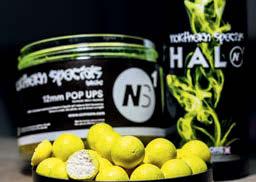
10.
Whether it is a single hookbait, a hookbait in a solid bag or a hookbait over a small bed of bait, you want maximum attraction and leak-off from your hookbait. My go-to would be a bright Northern Special pop-up or wafter soaked in Halo liquid. The high-viz colour stands out so the carp cannot miss it, and the slow leak-off from the Halo will draw the fish towards the hookbait and trigger a feeding response.
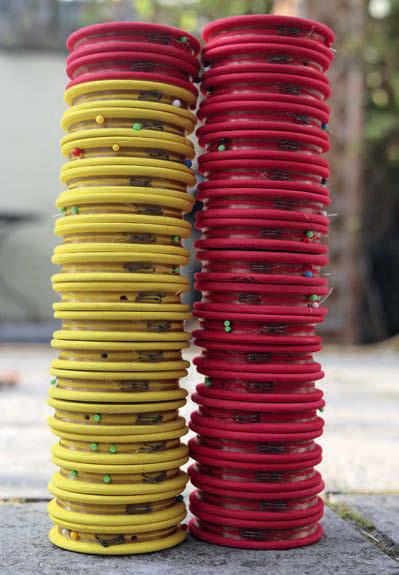
Whilst we are on the subject of prep and tackle, this is the time of year it is worth having a clearout of the tackle box. We all carry way too much gear, and before spring starts it is a good idea to go through the tackle box and look at the items that you have not used in the past year and are unlikely to need, and clear those items out. Also make a list of all the bits that need replenishing and get yourself down to your local tackle shop to top up on all of your essentials.
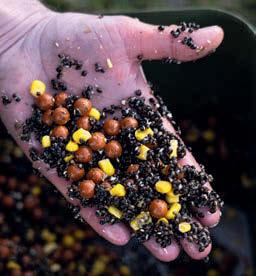
As spring progresses, the chances of getting bites over bait increase. On many venues I quite often find that around the first week of April the bait fishing starts to kick in. A lowfeed approach is always best through spring, but by the back end of spring I would be looking to up the feed.
12. HIGHLY
When it comes to baiting in spring, you need to remember the carp’s metabolism is still fairly low, so it is best to present a spod mix that is highly digestible but also provides enough food content to replenish the nutrition lost through winter. Particles are a great bait to get them grubbing around. The likes of hemp and sweetcorn are full of attraction and easily digested without filling the carp up too much. Carp will also be looking for higher nutritional items such as boilies and pellets. Pro Stim Liver is my go-to boilie due to its high nutritional content, as well as its incredibly high leak-off of flavours and attractors.
13.
When adding pellet to any mix, avoid using high-oil pellets until the water warms up. A smaller mix of lower-oil pellets will leak off more attraction and provide the perfect nutritional balance for a carp during the spring.
IT’S EVEN MORE IMPORTANT AT THIS TIME OF YEAR
If fishing a new venue, spend a few hours walking round with a marker float, plumbing up swims and always keep a map of the depths and features such as deep holes or raised bars. This will massively help determine the right spots to fish throughout the year. Not only that, but when casting a Zig out you will already know the depth and therefore know what length Zig to tie up. The last thing you want is to see a fish show and have to cast a marker to plumb the depth before casting out a Zig, risking scaring the fish away.
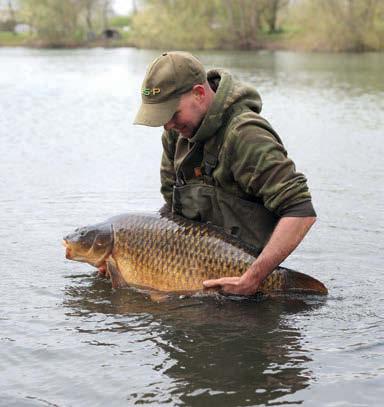
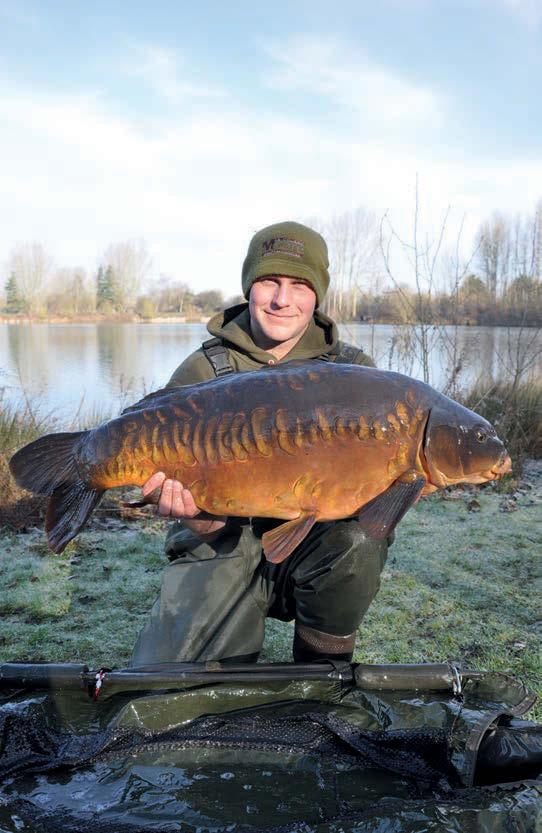
If there are snags, overhanging trees or good marginal features, then keep an eye on these on a regular basis. As the water warms up, carp will start to move into areas that they have not frequented all winter, and when they do they can become very catchable. Look for signs of polished-off areas under trees or next to reedbeds; these will be a big giveaway of areas that carp are starting to visit.
16. WATCH THE WEATHER
The weather will play a huge part in which areas of the lake you will find carp and how active they are. Very often a warm southwesterly in spring will get the fish moving onto the end of a new wind, so keep an eye on the weather, and setting up on the end of a new warm wind will put you in the right place more often than not.
KEV HEWITT
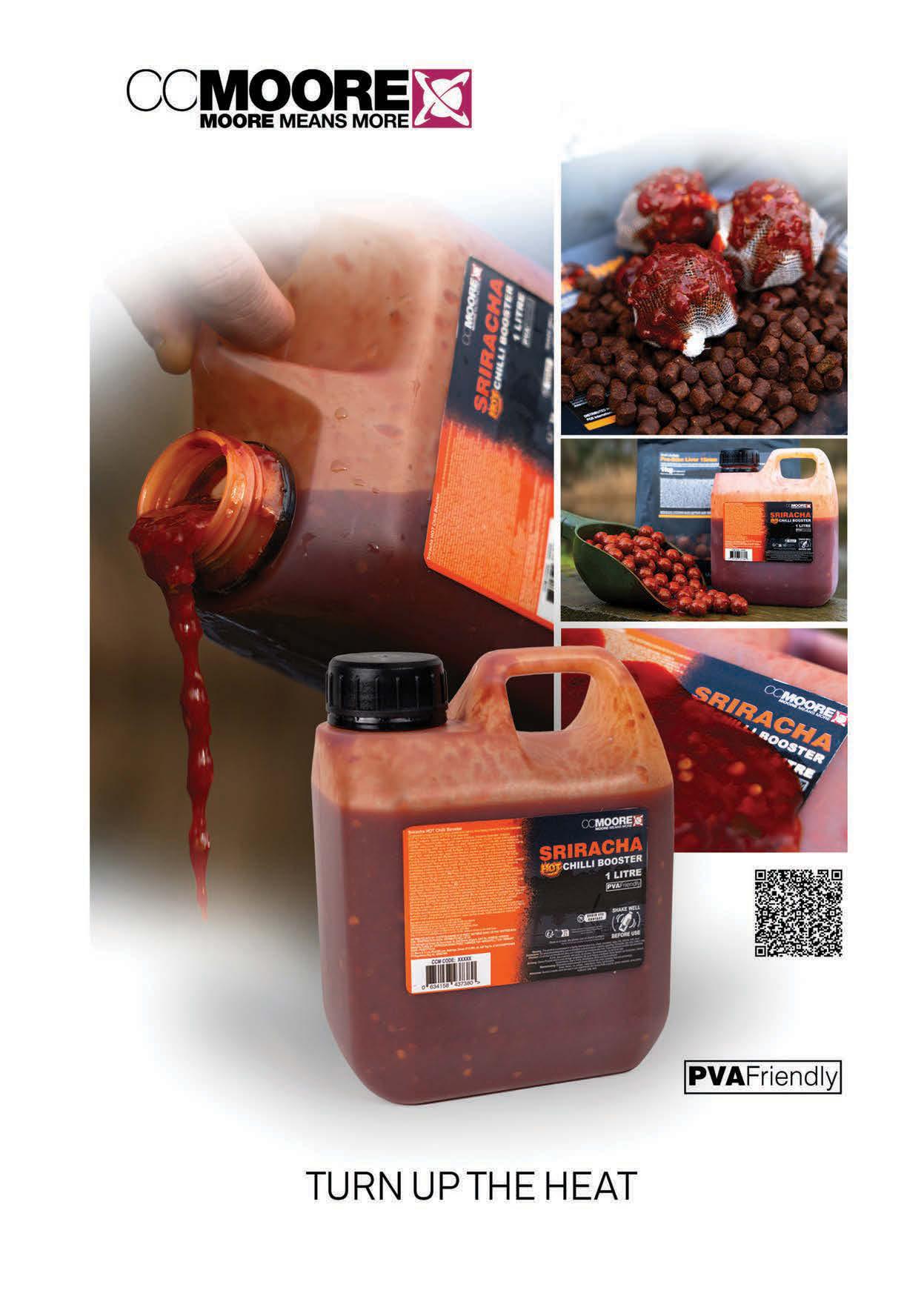





A TIMELESS TOOL THAT JULIAN CUNDIFF HAS REFINED THROUGH DECADES OF USE, AND ONE THAT STILL OUTPERFORMS PLENTY OF MODERN BAITING METHODS WHEN ACCURACY REALLY MATTERS. HERE’S EVERYTHING YOU NEED TO KNOW…
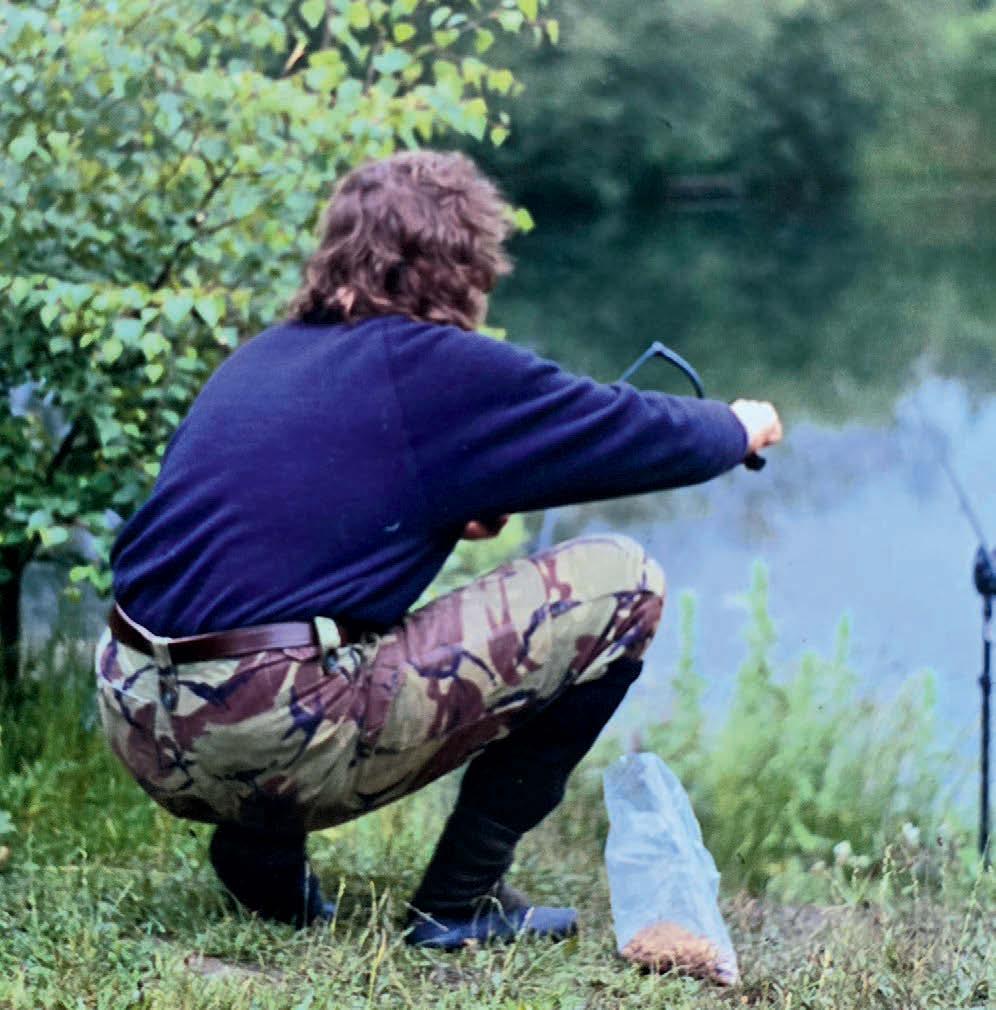
THE ULTIMATE CATAPULT GUIDE
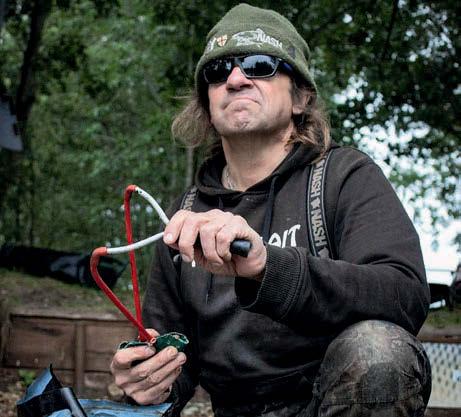
Without a doubt, technology and innovation is a massive part of modern-day carp fishing, and I guess if you’re new to the game you’ll not know any di erent. But believe me, back when carp fishing first took o (late eighties onwards?), bait delivery for the majority of us was pretty simple and, if truth be told, archaic. By hand, by catapult or by a
primitive form of throwing stick or spod. Carp fishing was (in that aspect) not better back in the (cough) good old days…
Nowadays, we have it all, I guess? Hand, catapult, throwing stick, baiting spoons, Bushwhackers, radio-controlled boats, spods, Spombs, rowing baits, the owner boating it out for you—and I’m sure soon drones will
drop it o for you too. So does that mean that the (humble) catapult is a museum piece? Not at all, and if you’ve watched some of the recent underwater films you’ll see that it can be more e ective than Spombs or boats! So, a brief résumé of my catapult history, so you can understand why I think mine in ’26 is such an advantage.
“My ‘Frankensteins’ have served me proud for 20+ years and, just like Trigger’s Broom, are still going strong…”
As a coarse then specialist angler of the late seventies, catapults were always part of my armoury for delivering maggots, sweetcorn and hemp. When carp fever bit (for me) in 1984, I couldn’t help but think that the catapults many carp anglers were using were… awful. Black Widows were in vogue but were lethal for blackening nails, crushed the boilies you were firing and were hopelessly inaccurate. Me, I stuck with my humble Drennan Feederpult! Then came the era of throwing sticks which, once again, could put baits out at range—but if you wanted accuracy, no way (despite claims they were…). Most of my fishing was up to 70/80 yards and, year by year, I’d tweak my catapult (frame –elastic – pouch – approach) until it got more and more efficient, which is where you join me in 2026.
TOOLS OF THE TRADE
When it comes to catapults for carp fishing, we’ve never had it so good, and from just the days of a Black Widow or Drennan Boilypult, we’ve now got excellent alternatives from the likes of Korda, Trakker, JAG, Gardner, Fox, ESP and many others. Whilst they are definitely good/popular, and I occasionally use light match fishing catapults for firing out mixers and small particles/boilies at close range, my ‘Frankensteins’ have served me proud for twenty years-plus and, just like Trigger’s Broom, are still going strong…
Frame: Drennan or Trev Tomlin metal frame
Elastic: Drennan Groundbait
Soft Action Latex (red, black and now green too)
Pouch: Tackle Box Scru y Bob in Large and Extra Large (green, now brown)
Cable ties: To secure elastic at pouch end
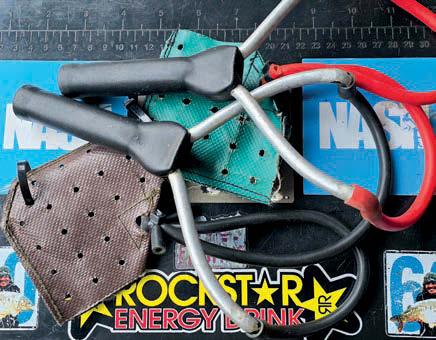
1. Frame
Although I’ve used plastic frames from my Feederpult days, I still prefer a metal frame that never breaks when you accidentally stand on it, multiple years of abuse, sunlight damage, etc. As soon as I got mine, the elastics and pouches were binned, of course. I know some anglers/firms prefer the frame design where the elastic goes through the frame; I prefer to have it threaded over it.
2. Elastic
As with everything, things change and what was red elastic is now green; but thankfully it seems to be and perform exactly the same. Elastic is a massive part of catapult accuracy, I promise you. Too sti and the spread is awful (width). Too soft and you can’t hit the range. When you find the one that works, buy it all. I emptied Lindholme’s onsite stocks when I was there!
3. Pouches
Lee Jackson gave me the heads up on these decades ago and I’ve never looked back. Scru y Bob Pouches (exclusively from The Tackle Box, Kent) are the ones in Large and Extra Large. The cradle/no-hold design means you are not crushing them to pull the pouch back, so improving accuracy and tightness of baiting. 90% of the time I use the XL, but occasionally the L for single 20mm freebies I want to put out accurately.
1. Make up two catapults and have them with you. The elastics last ages, but if one goes it’s a lot easier to reach for catapult two than fa ng about with new elastics.
2. Store them flat in your bucket, be it vertical or horizontal. Twisting elastics when storing them is a sure way to lose range/accuracy.
3. Keep the pouches clean, especially if you are using oily/glugged baits. Stickiness will kill range/accuracy. With very sticky/oily baits, I often dip the pouch in lake water between ‘firings’.
4. When an elastic goes, don’t just trim it down and reuse it. Use the other catapult. Shortened elastic reduces range/accuracy.
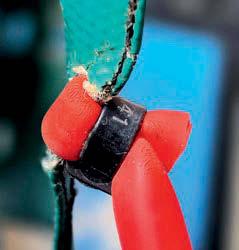
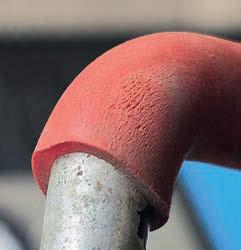
1. Take one of the elastics and thread it through the pouch from the inside to the outside, pulling approximately 30mm through. Take a cable tie and place it as tight to the pouch as possible. As you pull it tight, keep the elastic tight too. Trim o the excess cable tie and repeat with the other side of the pouch.
2. Wet one side of the metal frame and the inner of the elastic you are pushing over it. Push it over the metal frame that’s facing you until it just starts to go round the curve. The trick to this is removing friction between elastic and metal by adding spit (moisture). Ensure that when you do this, the pouch hole and frame line up so there’s no twist. When it hangs down, it should all be in line.
3. Repeat with the other side. Once you’ve wettened the top of the frame and inner of the second elastic before you push it on, ensure that the pouch will hang in line and is not twisted. Once you push that elastic on a few millimetres, it becomes very hard to take the twist out, so get it right from the start.
4. Now you’re ready to benefit from having the best catapult you will ever need.
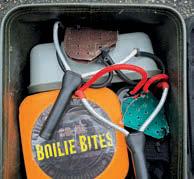
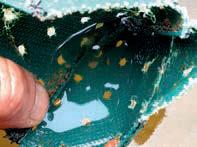
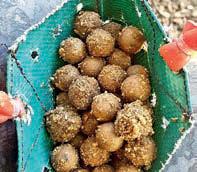


Trigga, I use the frozen
1. Practice makes perfect. 2. Harder baits go out more accurately and further, so your choice of free o ering makes a di erence. When baiting up with 12mm Nutrabaits Trigga, I use the frozen ones, but with the 15mm shelf-life baits, the steamed versions are perfect. 18/20mm baits go out a long way, very accurately, when you use the L pouch version.
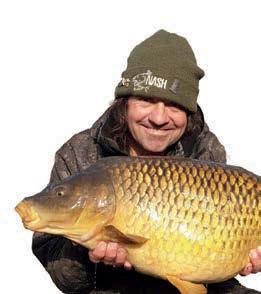

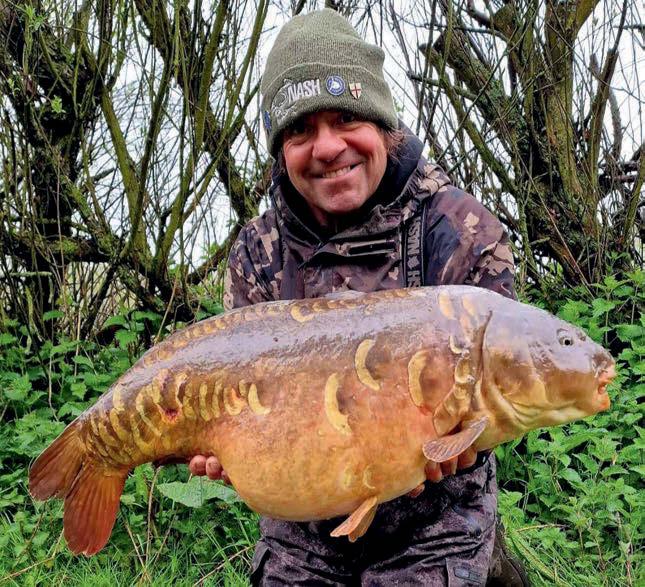
1. Practice makes perfect.
2. As the underwater films show, the advantages of a GOOD catapult and PRACTICE are that although you can be accurate with the bait, the spread is enough to focus them on an area, but to move enough between mouthfuls to improve rig mechanics. You won’t get that with Spombing, radio-controlled boats or throwing sticks.
you are baiting up in. If you’ve got a nasty head/ crosswind, sometimes it’s better NOT to bait up than scatter it all over the place.
5. If it’s calm when you arrive and you are not ruining an opportunity, get your bait out first in case conditions change.
you, firing them high will really carry them a good distance.
8. Rhythm baiting is the key, so just like Spombers do, have that open bag of bait or bait box at a level you can easily reach without really looking. When you’re in the groove, you literally can pepper the ripples of the last pouchful.
9. Baiting at night deters seagulls and ducks.

3. Once you get into a rhythm it’s very easy to get a lot of bait out there. Be careful you don’t ‘overbait’.
I’ve had that happen to me; rods on the money at normal catapult range, then the wind comes in and… it’s stringers and mesh bags only.



If you are seeking accuracy, then think about the conditions

6. Sometimes (if acceptable) it’s easier to bait up out of the swim (left/right/far bank), especially if you are using a marker float.
7. If the wind’s behind
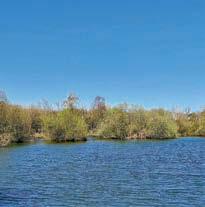
10. Feeding the swim/ topping up spots regularly/after bites is a great match technique and an underused carpfishing one. Catapults are great for this: being quiet, quick and e cient.
JULIAN CUNDIFF
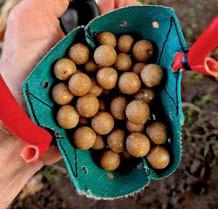









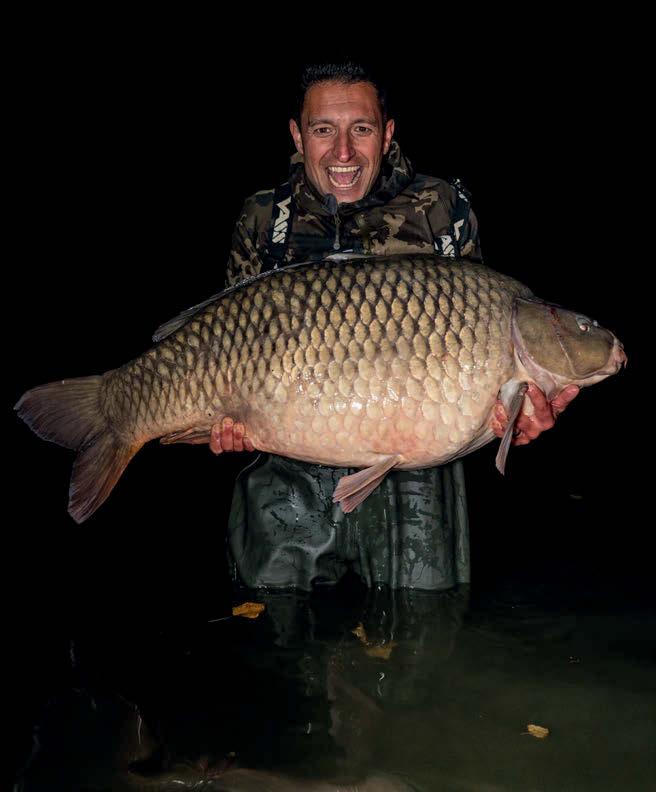
‘I KEEP IT SIMPLE’
“I’m going to be classically clichéd, but accurate, to be fair, when it comes to lead choice. Like every other part of my angling, I keep it simple. Too many options in terms of sizes and shapes just mean too much choice and, invariably, far too much clutter for me. I’ve got to the point where the
majority of my fishing is done with 4–5oz Tournament leads. This shape and weight offer the perfect balance of aerodynamics, even in the most savage crosswinds, while also providing good resistance for hooking fish and tightening lines at range without moving your presentation. “The only other leads


I use are 4oz flat pear in-lines, which are reserved for my solid bag fishing. Once again, the shape-and-weight combination is ideal, whether I’m fishing in the edge or 30 wraps out in the lake.
“Those two leads cover all of my fishing and give me complete peace of mind whenever I head out on a session.”
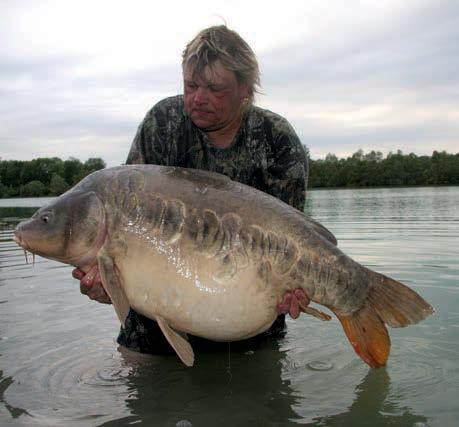
Bill Cottam
‘A BIG LEAD’
“For run-of-the-mill situations, I use either Korda 4oz Square Swivel Leads or Pear Swivel Leads in the same size. For more extreme use overseas, or when fishing at long range where baits are invariably dropped by boat, I use Korda Big Grippers in 8oz or 10oz. All of the aforementioned leads are used in conjunction with Hybrid Lead Clips.”
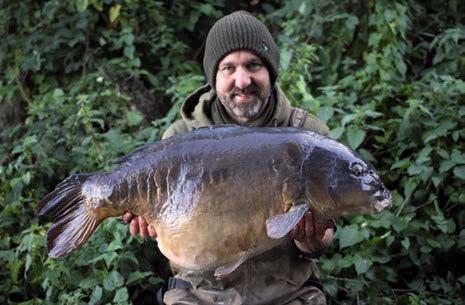


‘I GO SMALL AND POINTY’
“I think I buck common trends on lead size and shape because, for most of my angling, I prefer 1.5oz pointy distance leads for the stealth benefits they offer, getting rigs in as quietly as possible. Of course, that’s rangepermitting and dependent on individual venue rules. For instance, I like distance pears with lead clips when I have to use them, or when I’m faced with specific angling issues that warrant a change, I’ll happily do something a bit different.
“At the moment, I’m fishing a small and very busy water with a leader ban, so I’m using small in-lines that slide after initially pricking the fish. This is because it’s a versatile arrangement that can also be used with Zigs, and a few lads have had leads shaken off clips. This alternative setup doesn’t allow that to happen.”





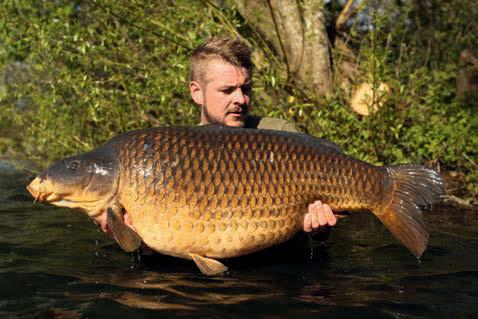
‘IT

“I get all my leads from Donk Leads, a little family business in Norfolk. I’m not sponsored by them, but I like supporting them; they do a brilliant product. My favourite colour is ‘Colour Number Seven’, which I find fits in just about everywhere and looks very natural.
“In terms of size and shape, my favourite is probably the Tournament Zip. It just enters the water so quietly, so I find myself using those a lot in three-and-a-half ounces. That’s probably my go-to. The other lead I use is like the Roger and Kerry style (‘heli lead’) that Donk do, which has a sort of flattened bottom and gives you a really good ‘donk’ contact on



“I carry a variation of lead sizes and it all depends on the situation. I might be Chodding and only using half an ounce to an ounce because I’m only fishing 30 or 40 yards—little heli leads—as I’m trying to sneak the rods in quietly.
“If I’m laying a rig in the edge or dropping from a boat, I might choose 6 or 8oz flat pears. If I’m casting for distance, then it’s a 5oz Tournament style. For me, it’s all different shapes and sizes depending entirely on the situation.
“I do like a dumpy distance lead because they fall over really nicely on the lakebed. I’ve dropped them into a few different spots from the boat while testing, and they go in and settle very cleanly and abruptly, so you know they’re lying down rather than standing up in the lakebed.
“I’d say the lead I use for around 90% of my fishing is a 5oz dumpy distance—or a 4oz, depending on the situation. But really, it’s all sorts of shapes and sizes, and you’ve got to carry them all… even if it’s only a couple of each.”
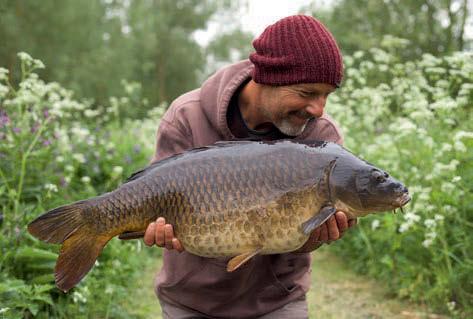
the deck. Again, in ‘Colour Number Seven’.
“I like those in two-and-a-half ounces for standard helicopter setups. The aforementioned Zips in three-and-a-half or four ounces are obviously dependent on range and also depth. I think a lot of people overlook the fact that if you’re faced with really shallow water, dropping the lead size is one of the first things you should do if you want to feel the bottom properly—that’s really key.
“The only other lead I use is a five-ounce flat pear, which I’ll use for margin traps or if I’m dropping a rig out of a boat, which is pretty rare.”
‘IN-LINES FIRST’


“My preference is for 1.5–2oz in-line leads, as long as I can reach the fish, for the quicker jolt they give compared to the swivelling and gradual tightening of a swivel lead before the jolt. If I have to go heavier, I use dumpy swivel leads, but with a ring replacing the swivel to speed the ‘jolt’ up.


“Over the past couple of years, I’ve also been using round-nosed distance leads with the ring coming out of the blunt end, so they look almost upside down. Again, this gives a much quicker jolt.”



“For almost every occasion, I use the smallest lead I can comfortably reach the fish with. I think the advantage of stealth created by my usual 1oz or 1.5oz leads far outweighs the hooking benefits of heavier ones, and handsharpened hooks mean there’s less reliance on the lead to prick fish.


“When lowering leads in the margins, where there’s no splash, I’ll go bigger. The same applies when dropping from a boat, where a larger weight is less susceptible to being pulled out of position on the row back to shore. It’s almost always a distance or similar pattern for two reasons: they cast more subtly, creating minimal splash and disturbance, and their streamlined shape rarely gets caught in weed.”
‘A STANDARD DISTANCE SWIVEL LEAD’


“Most of the time I use a standard distance swivel lead. I prefer a lead clip setup as it’s so easy to use and makes changing leads straightforward when needed. Most of the time— unless I’m fishing small, shallow water, when I’ll drop down to a 3oz—I tend to use a 3.5oz or 4oz lead.
“The key reasons are distance and wind, especially a crosswind. If it’s windy, the lead will always be bigger, even if the cast feels comfortable with a lighter one, as I like to ensure there’s no bow in the line and that the lead drops on a tight line.”


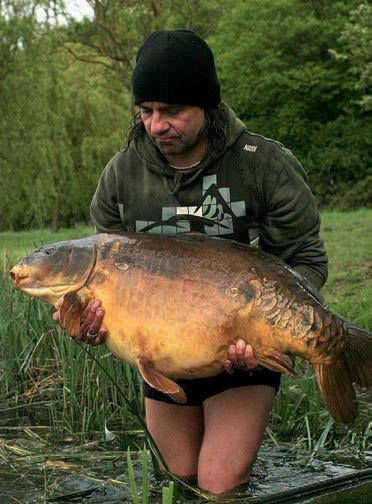

‘ENOUGH
TO HIT THE DISTANCE’
“Although I do occasionally use a drop-off in-line lead, the majority of my fishing is done with either a helicopter or lead-clip end tackle. In both cases, I use a flat in-line pear setup.
“For the helicopter setup, I use the lightest lead I can to hit the spot— generally 2oz—relying on the leadcore and a super-sharp hook to prick the hook home. With a lead clip, it’s the same approach: the lightest lead possible to hit the spot, again relying on hook sharpness and rig mechanics.
“In weed, I prefer uncoated, dull leads as they’re less likely to pick up debris. With anything other than in-line leads, the hook is the most important part of the hooking process, and no amount of lead weight can compensate for a lack of hook sharpness.”
Simon Crow ‘IT’S A GOOD ALL-ROUNDED’
“In the UK, I mostly use Avid Extremity Distance leads, ranging from 2.5oz for close-in work through to 5oz for range casting. I’ve used this style of lead for years, although I did go through a phase of using in-line leads for a while,
mostly for open-water fishing where dumping the lead isn’t necessary.
“The distance leads are great all-rounders, suitable for most situations, and they work well—so I’ve loads of confidence in them. For overseas fishing,
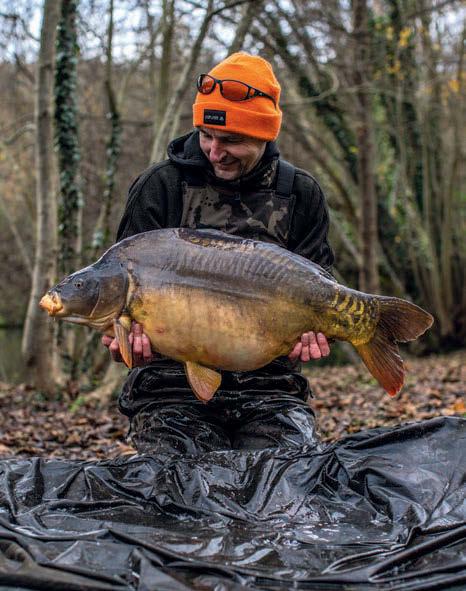





it depends on the venue, but for boat work on big waters I’ll go with gripper-style leads of 8ozplus. I’ve even been known to use rocks off the bank, which work great too, especially on Salagou.”
‘I PREFER AN IN-LINE’
“I use in-line leads for the vast majority of my fishing, and more specifically flat pears fished drop-off style. They offer the very best hooking potential whichever rig I choose to use, whether that’s a Multi-Rig, a Mag-Aligner or even a Zig. The inline lead setup is tidy, streamlined and about as anti-tangle as it gets.
“Unless I’m fishing at extreme range or in flow, I tend to use quite light leads, usually around 2.5oz. If I want to lose the lead, I’ll use a heavier one, but most of the time I prefer to keep it, and a lighter lead will generally stay on unless it hits heavy weed.”

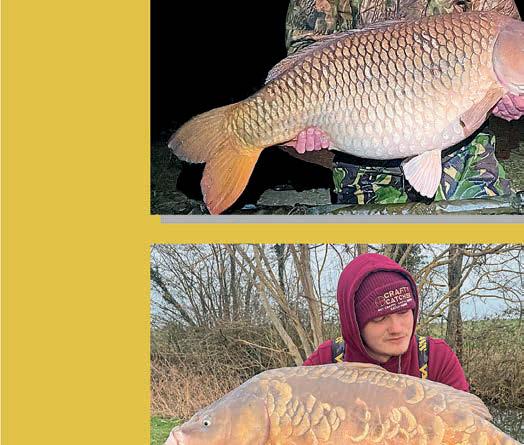
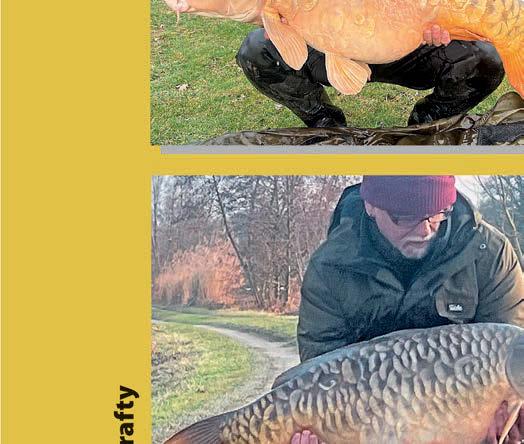

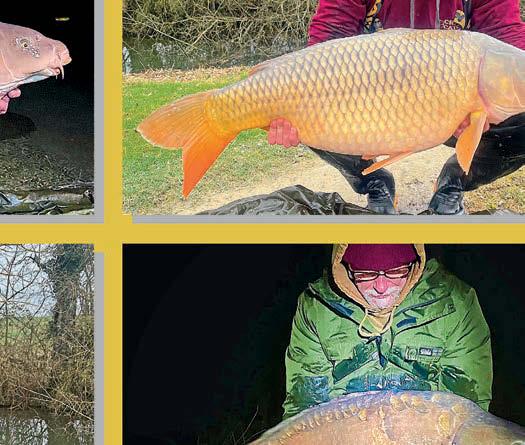
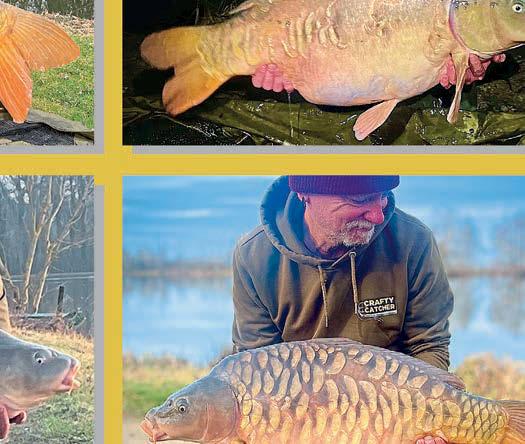


Casting is one of angling’s fundamental skills, and despite advances in technology, it remains by far the most popular method of delivering a baited rig to a spot. The distance you’re able to reach is not the only measure of your casting prowess. Accuracy is equally important, if not more so, as is an ability to feel for a drop.
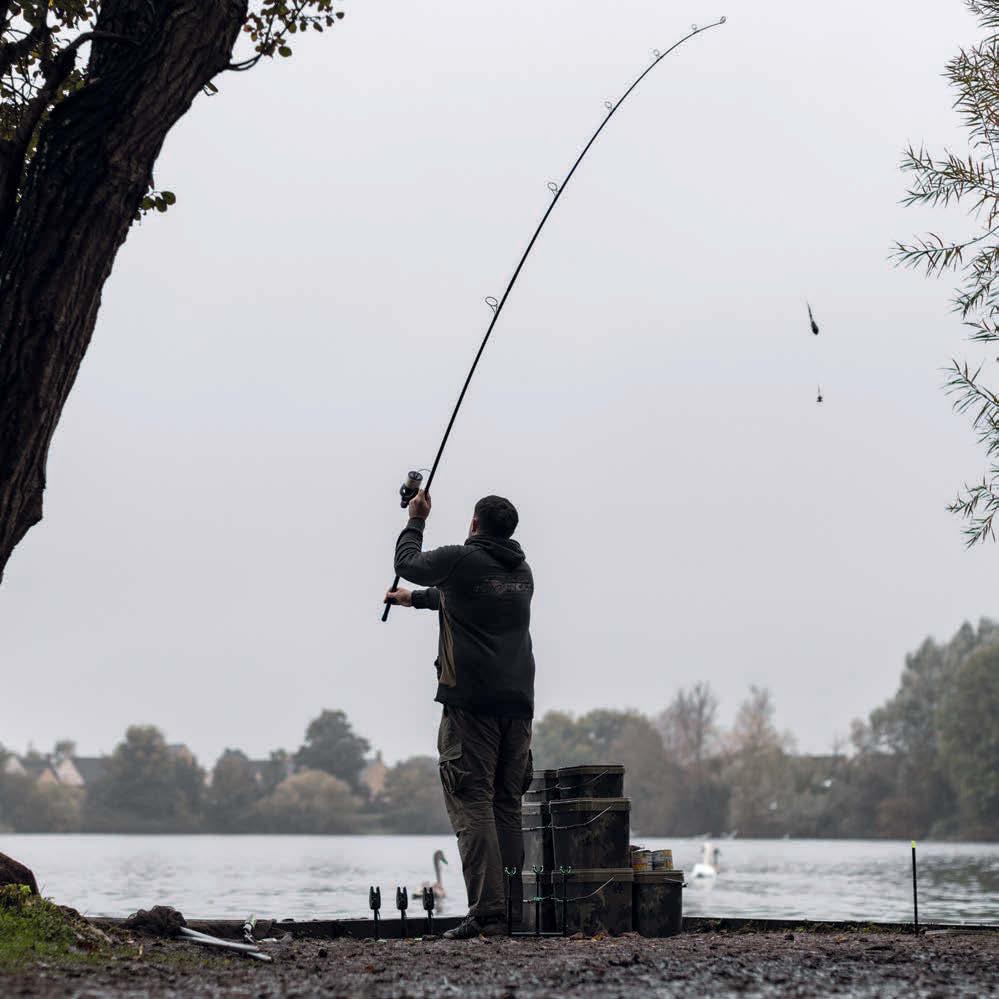
Casting, whilst requiring a degree of force and movement, should not be undertaken tensed up. You’ll be smoother and more accurate, and you’ll achieve greater distance if you’re at ease. You’ll also likely snatch at your cast if you’re at all on edge. Should things go badly, don’t get flustered. Put the rod down, go for a walk or make a brew. Calm yourself down before you have another go.

How you fill your spools will have a huge influence on your casting, not only in terms of distance, but also with how smoothly the whole process goes. Should you overfill your spool, line will spill off prematurely. This will result in tangles, line wrapping around your butt ring and crack-offs. If your spool is under-filled, distance will be compromised. As such you’ll fall short, and you’ll be forced to increase your lead size.


Look after your line and keep it clean. By checking for damage during and at the end of your session you’ll suffer fewer problems and will be able to rely on it. Removing the last few yards will reveal smoother, fresher line, but once it gets low, coils roughly or becomes scuffed further back, it’s time to re-spool. If you use backing, it will only be necessary to replace the last 200 to 300 yards, unless you’re boating out rigs to the horizon. You can (should) recycle your old line via the Anglers National Line Recycling Scheme, at a participating tackle shop or venue.
Whilst there will be a little variance between anglers, generally, the best compression, accuracy and distance will be achieved by casting with the lead hanging halfway down the rod, by the spigot. With a shorter drop it’s difficult to compress the rod, especially if you’re using a beefy, distance-casting blank. You’ll also send the lead on too high a trajectory. Too long a drop, however, will make your casting unwieldy, and the rod won’t have enough travel to exert sufficient power as you cast.

STRONG HEADWINDS CAN MAKE IT DIFFICULT TO ACHIEVE DISTANCE ON ANY CAST, BUT HERE’S HOW TO BEAT THEM
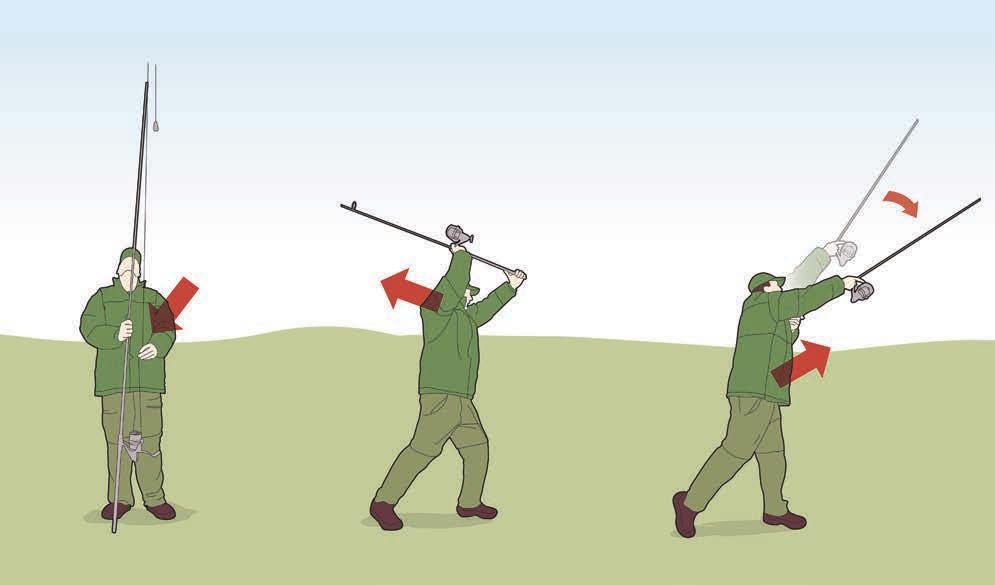
1. Shorten the Drop
When casting into a headwind, the first thing to do is shorten the drop (the amount of line between the tip ring and the rig). Adjust it so that when the rod is in the upright position, the lead sits level between the second and third rings of the rod.
2. Stepping Further
As you cast, make sure you step further forward than you normally would. This shift in weight puts more power into the cast and helps you achieve the low, hard punch needed when casting into a headwind. This will push the lead harder through the air.
3. Letting Go Later
On a normal cast, you’d release the line when the rod is at roughly a 45-degree angle. When casting into a headwind, aim to release closer to 55 degrees. This forces the lead to travel lower and harder, reducing drag on the line and helping you achieve greater distances.
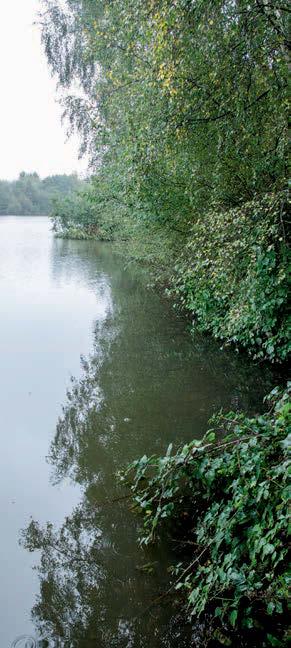

If there’s a tree branch or any other obstruction anywhere near where you swing back, it will affect your casting performance. You may be a foot clear of trouble, but if it’s in your sightline as you glance back, it will remain in the back of your mind. No amount of checking will prevent you from making a tiny, subconscious, sideways movement during the cast as you look to ensure you don’t hook the obstruction, and this will send your cast off course. You’ll free yourself only by moving either the source of the subliminal adjustment or your casting position. Think about your casting as you erect your shelter, and keep it away from the casting zone. In tight swims you might have to stand in front of your bivvy to keep your lead hanging well away from any danger.
Tidy up your carp-care equipment after captures. A rod breakage may well be on the cards should you try and cast a wet unhooking mat into the water! Whilst you might be able to trim a few twigs, almost all venues insist that vegetation remains as it is. It’s often possible to tuck a branch behind another. You might also be able to tie it back, but ask a bailiff for permission before you remove any.

Whilst we’re on the subject of branches, it’s often the case that an overhanging branch prevents you reaching the perfect margin spot. You want to flick a lead hard left to a little gravel hump in the corner, perhaps, but an overhanging branch is in the way. Sometimes, you’ll be able to tie such branches back, out of the way. Strong braid will hold thinner branches, but it can pay to have a length of rope in the car for such eventualities. Remove your braid or rope before you leave, as others will take advantage of your ingenuity should you forget to do so.

Another way to access a spot made otherwise unfishable by overhanging vegetation is to cast over the top of the offending tree or bush before moving the rod outwards during the lead’s flight. You’ll need to concentrate, though, as introducing an extra step to the proceedings will seem a little alien. By using your line clip, you’ll be able to get under the branches and into those little spots that others can’t reach. Clip up so the lead lands just shy of the overhang. Then, add on just enough so you’ll reach the target area, but be aware that this must be less than a rod-length. Once the lead is in flight, move the rod to the side and hold it at 90 degrees until you hit the clip. Allow the lead to drop until it’s low enough for you to clear the branches before you swing the rod tip forward so the remaining inertia carries your rig under the overhang. It’s a tricky procedure as it’s largely intuitive and requires fine judgement. Initially, practise with a bare lead until you’ve mastered it.
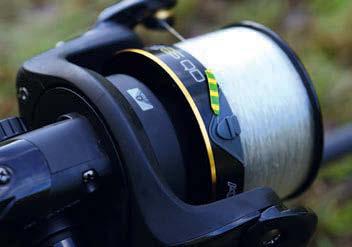

When casting repeatedly to bait up, you’ll be much more consistent if you don’t have to keep bending over in between. Elevate your bait bucket and make the process more comfortable. There are products specifically designed for this, but storm poles or buckets placed on top of each other will do the trick.

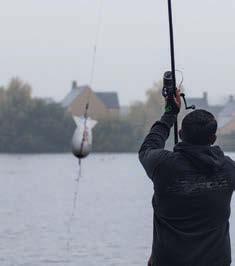

Casting to the clip is second nature to most. Should you hit your clip too hard, however, your lead will bounce back towards you. Learn to cushion its impact by holding the rod vertically as it hits the clip. Then allow the tip to absorb the lead’s momentum as you lower your rod.

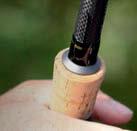
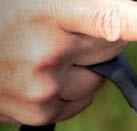
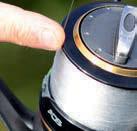

A CROSSWIND WILL OFTEN RESULT IN A FRUSTRATING LOSS OF ACCURACY, BUT HERE’S HOW TO OVERCOME IT
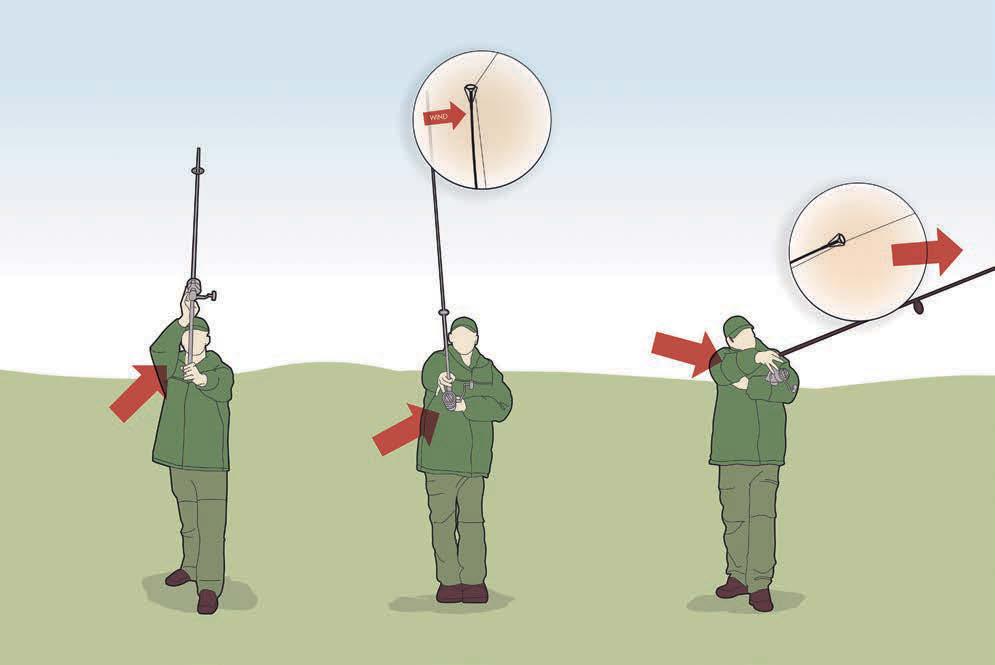
1. Make the Cast
Make the cast exactly as described when fishing into a headwind. This helps ensure a low, hard projectile, meaning the wind won’t catch the line as much as it would on a normal higher cast, thus reducing the chance of putting a large belly in the line.
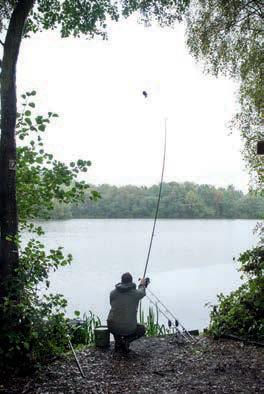
2. Crosswind Bows
After the cast is made, you would normally hold the rod pointing straight at the marker float and allow the line to peel off the spool. However, in a crosswind, holding the rod straight results in a bow forming in the line as it leaves the tip ring at an angle. This creates friction and resistance, slowing the rig down, reducing distance and affecting accuracy.

Thirteen-foot rods are always going to cast further than twelve-foot ones. If you discount the first two feet for their handles, you’re left with 10 feet for a 12-foot rod and 11 feet for a 13-foot rod. That’s a 10 per cent difference in their effective lengths, meaning the lead will travel in a 10 per cent bigger arc, and therefore 10 per cent faster. This equates to a potential 10 per cent greater distance. Longer rods may be a little more unwieldy, but there’s no doubting their improved casting potential.
3. Point the Rod
By pointing the rod to the side just after the cast, with the tip aimed in the direction the line is travelling, friction is greatly reduced. This minimises the bow in the line and improves both distance and accuracy. It will also help to straighten out the mainline between you on the bank and the lead.
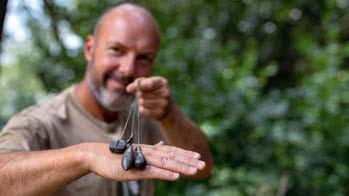


The aerodynamics of your end tackle will have an effect on the distance you’ll be able to cast. Helicopter and pendanttype lead-clip arrangements are far more aerodynamic than an inline set-up as the lead travels weight-forward.

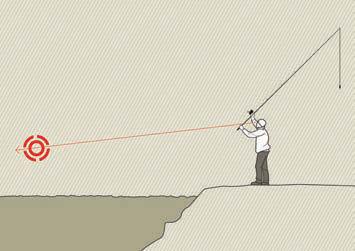
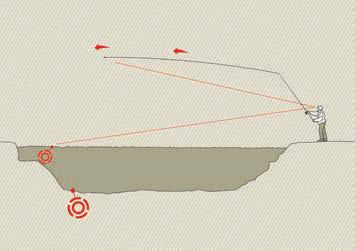
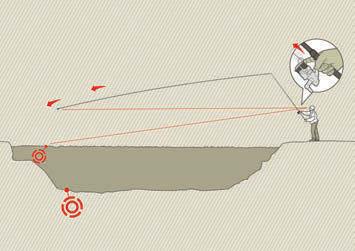
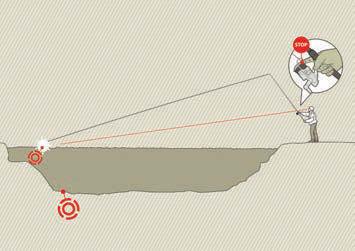
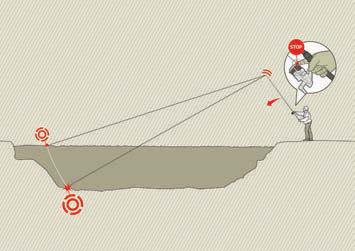
Your full concentration needs to shift as you feel the drop, so you know what you’ve landed on. As soon as the lead hits the surface of the water, sweep the rod up and lay everything out nice and straight as you also eliminate any stretch. You can revert to whatever angle you prefer, vertical being best for consistency and the ability to judge. Be aware that you are pulling the lead back, and that it’ll hit the bottom closer to you than where it impacted the water, so you’ll need to adjust your clip to over-cast your marker (45 degrees equals 5 feet; vertical equals 10 feet). Drop the tip whilst keeping in contact with the lead until it makes contact with the bottom and the vibration transmits back up the line to the rod. This all takes practice, but it will become second nature in time. Lighter leads don’t impart as much stretch, whilst heavier ones are easier to stay in contact with on the way down and will transmit more feel. Start off with a 2oz lead and continue to use one of that size as you get used to the technique.
This method will allow you to feel for a drop even in very shallow water. Use the lightest lead you can get away with to reach the spot as you need to eliminate the stretch quickly. Follow the same steps as above, but perform the process earlier, whilst the lead remains airborne. Hit the clip a little higher, cushion the impact and sweep the rod back to vertical just prior contact. You’ll then be able to follow the lead down as it touches the surface. Again, it’s a tricky procedure, but it is possible.
An easier way to feel the lead down is to keep the rod where it is, pointing forwards, and let the lead descend on a tight line until it hits bottom. This method is less accurate, though, because rather than dropping vertically, the lead will swing back a distance towards you, depending on the depth. Also, depending on what lead size is used and the degree of force imparted on the cast, a degree of stretch will remain in the line.
15

Make a note of a particular stone, tuft of grass or whatever when you cast, and stand in exactly the same position each time. This will allow you to maintain consistent accuracy.

16

Pick nice, clear sight lines that will remain visible at night. Church towers, prominent trees and pylons are the sort of thing to look for. Take a photo or make a note of what they are, and also record the distance you’re casting and the number of wraps.

If the sight line is hard to pick out on a particularly dark night, illuminate it with your laser pen. Keep the beam low to avoid any danger of affecting aircraft.
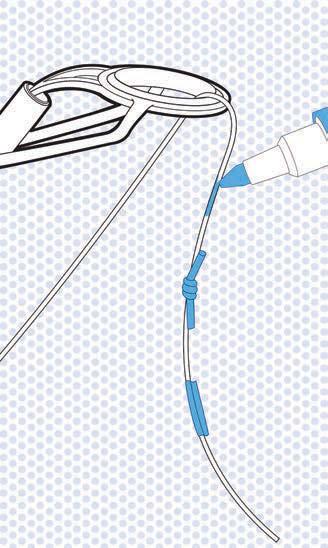

Whilst not as in vogue these days, there’s a lot to be said for line markers as they are a fuss-free and precise way of ensuring distance accuracy. Braided ones have great longevity but are tricky to remove. Pole elastic works well, but it deteriorates quickly and doesn’t take kindly to being moved. Power gum works really well, too, being robust enough to be slid along the main line, but it is also easy enough to remove with a few swift to-and-fro strokes. Tie it on by the reel where it will be clipped, rather than at the rod tip where it can’t interfere with the flow of line during casting.

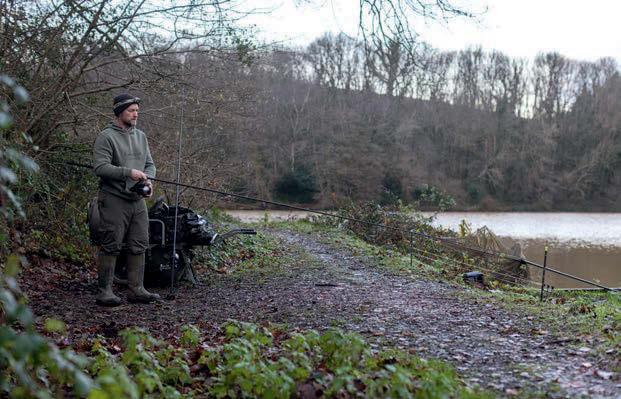

Various means of measuring and consistently hitting the same distance utilise the reel’s line clip and prevent casts going further than required. Each method involves clipping up to ensure that each cast reaches the same distance, as long as a similar casting trajectory is maintained. Wrapping sticks have become the go-to means of accurately measuring the distance at which we fish and clip our lines. Make a note of the number of wraps you’re fishing to, especially if you move a rod to a different spot. Don’t allow your wrapping sticks to become a trip hazard for dog walkers or other anglers—they may choose to justify the casting aid’s name by wrapping them around your neck! Tuck them away, or better still, remove them after use. They are susceptible to being moved by prankster mates, and this would drastically affect your accuracy.
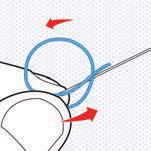
1. Make A Loop Take around five inches of your chosen marker material and make a loop against the main line.
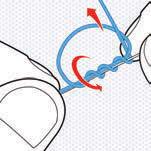
2. Four Turns Take the tag end and pass it through the large loop you’ve created four times like so.
When it’s very dark or you’re fishing at range, it can be impossible to see exactly where your lead has landed. If it sounds or feels right, tighten up, let the line settle and check which way your line’s pointing. If it’s straight along your sight line, it’s happy days, but take account of any tow during rough weather.
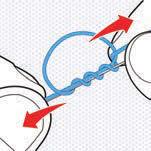
3. Pull The Ends
Wet the loops well and then pull each end of the material to close the knot together as shown here.
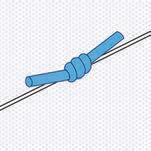
4. Trim To Finish
With the knot pulled tight together, take a pair of scissors and trim the two tag ends like so.
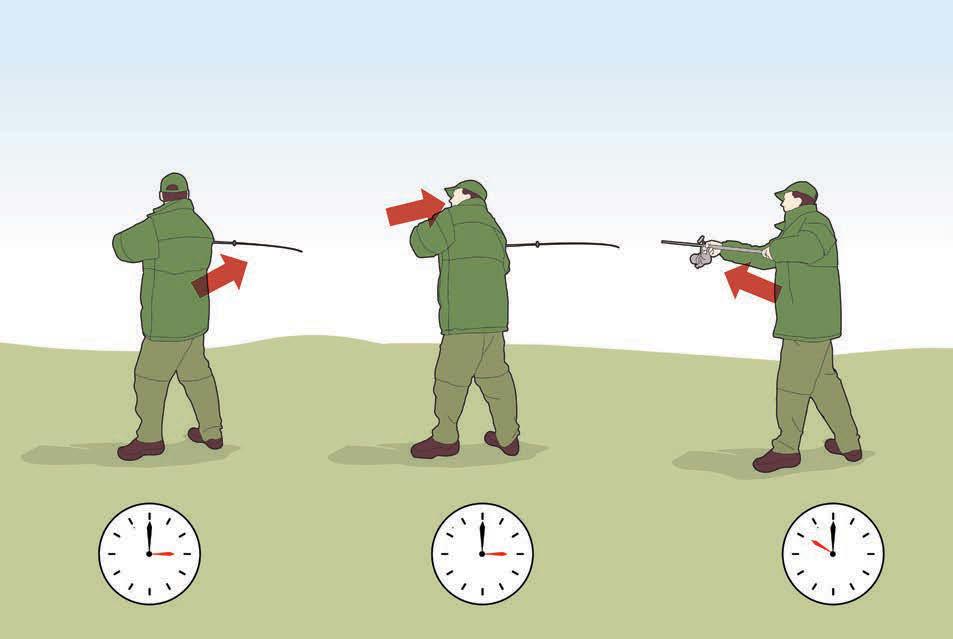

THIS STYLE OF CAST IS CRUCIAL FOR GAINING ACCESS TO AREAS THAT ARE AWKWARD TO REACH AND SO OFTEN LEFT UNFISHED
1. Check It’s Clear First, place your feet where they feel comfortable and where you can complete the whole cast without moving. Set the rod at 3 o’clock, keep it as still as possible, and avoid swinging the rig back and forth before casting.
2. Look at the Target Your feet, legs and body should remain in the same position throughout. Look directly at your chosen target (9 o’clock) and don’t follow the rod around with your eyes. This will greatly improve your accuracy with a side cast.
3. Feather It Down As you make the cast, move your arms smoothly around, finishing at 9 o’clock. Once the cast is made, keep your eyes on the target and feather the line to slow it down, eventually stopping it over the intended area.

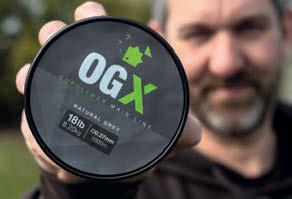
Monofilament lines for distance work need to be supple. Those with a lower diameter will create less friction on the spool lip and rings. The thinner you go, however, the more susceptible your line will be to damage and the more likely you’ll suffer cut-offs. Whilst a cheap, ‘agricultural’ type might suffice for general work, it’s worth opting for quality and better abrasion resistance when fishing at range.

A long rig that flaps around will hinder casting and will susceptible to tangling. Short rigs made from stiff materials are ideal for distance fishing. Even the size of your hookbait can make a difference, so go for a 12mm pop-up rather than 20mm donkey choker!






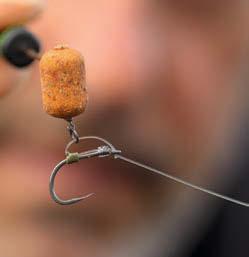





Changing to braid won’t automatically see you achieve greater distance, and the wrong choice will reduce your range rather than increase it. Braided line is made mostly from Dyneema, an extremely strong but light fibre. Sinking braids have additional, heavier elements added to them to increase their weight, but they have a much higher diameter as a consequence and this makes them unsuitable for casting any distance. For long-range work, thin, floating braids are what you’ll need.












Fast sinking braided line -
Superb abrasion resistance and strength- Available in 25lb and 40lb on 200m and 600m spools -
100% pure fluorocarbon line- Offers tip to terminal camouflage- Available in 14lb and 16lb on 200m and 600m spools- The perfect all-round monofilament- Excellent sinking properties- Available in 12lb, 15lb, 18lb and 20lb on 1000m spools -





















WORDS: OZ HOLNESS
PHOTOGRAPHY: OZ HOLNESS AND FRIENDS
THIS TIME AROUND, OZ HOLNESS REFLECTS ON THE SUBTLE SHIFT FROM WINTER INTO SPRING, SHARING HARD-EARNED LESSONS ON TIMING, RESTRAINT AND READING CARP BEHAVIOUR DURING WHAT CAN BE THE MOST MISUNDERSTOOD PHASE OF THE SEASON
Over the past couple of articles, we delved deep into the tricky and often uninviting prospect of pushing right through and angling for carp over the bleak winter months. I truly hope it gave you enough of a push to give it a go, and if you have been out and about on the bank, I hope you have been successful in banking one or two! If it’s been tough, I hope the little nuggets of info on how to ‘survive’ and enjoy time out in the elements have been helpful.
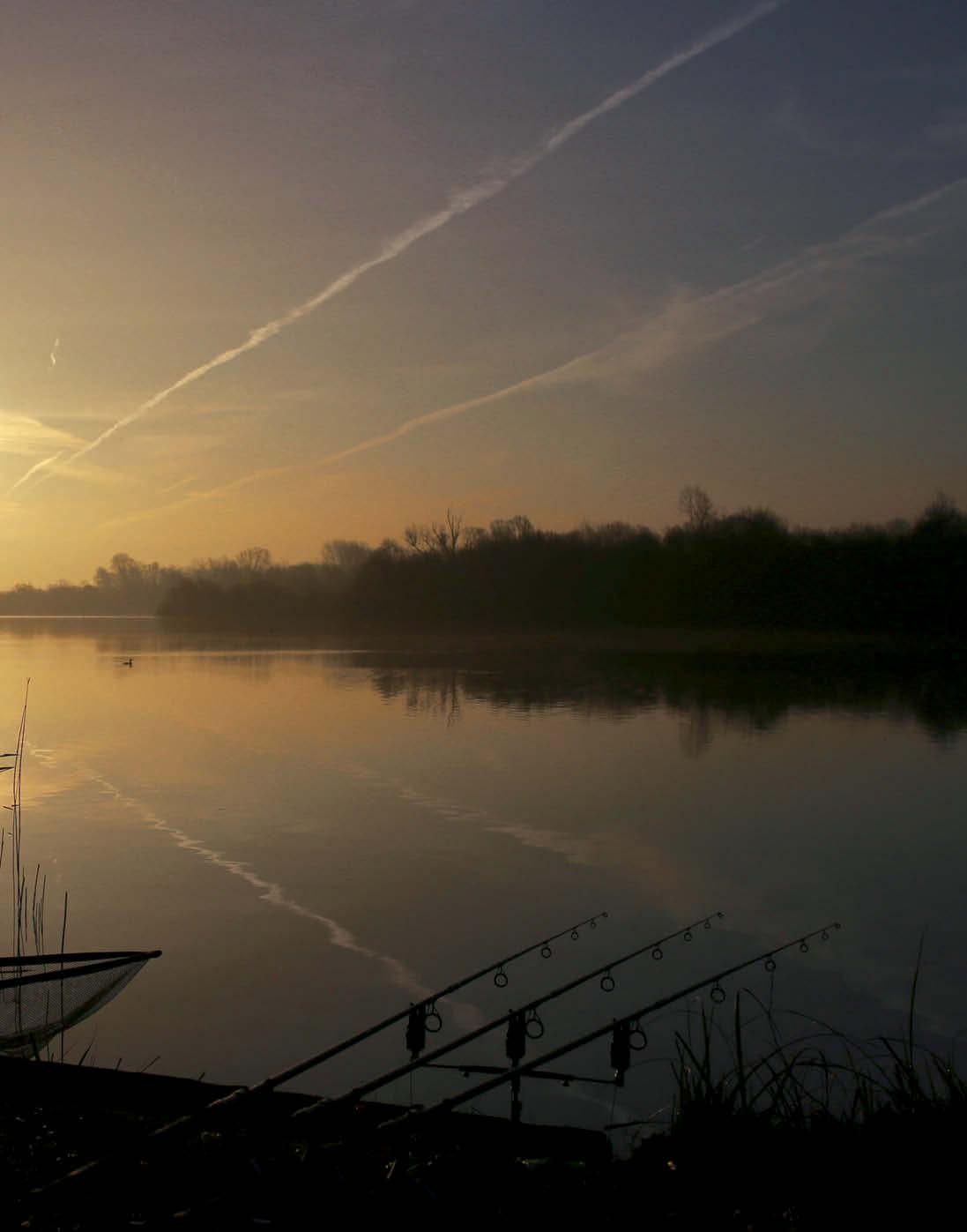
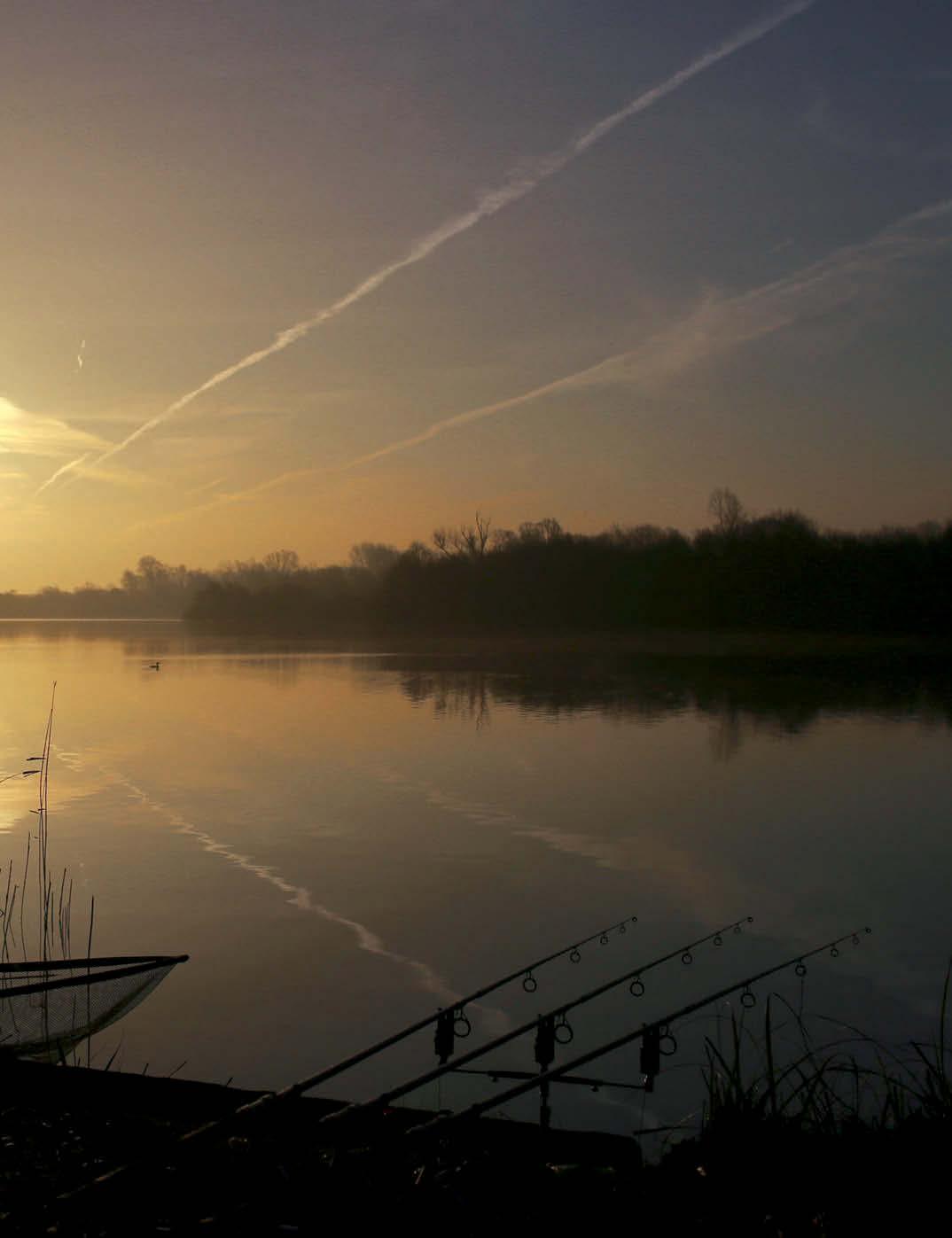
By the time you read this next offering, we will be in the first real transitional phase of the carp angling year—a very important and somewhat complicated one too! All too often misunderstood or misinterpreted, this is the move from the winter phase into meteorological spring and the stirring of the natural world from a winter slumber into its awakening phase. I say misinterpreted because it is very easy, as anglers, to see signs that haven’t been noticeable for months—a big change in carp activity and sightings, for instance—and then respond in an entirely inappropriate manner that will not get you the results you may be expecting from such a quick acceleration in activity. Let me explain.
The carp are cold-blooded creatures, as we have covered previously, and to that end are acutely responsive to micro changes in the temperature of their immediate environment. Alongside this, the daily increase in light levels as we approach the equinox will have a significant effect on the waking up of the natural world. Light, and the ever-increasing height of the sun in the sky, will slowly but surely get those carp moving about and adjusting themselves into
Above: More looking than fishing at times
Right: Little reed-fringed corners come to life as the weather improves
comfortable areas where they can maximise the effects of solar power and the little increases in temperature it provides.
For those carp that have been laid up for some time, maybe in silt pockets or old, dead weedbeds, the parasites and leeches they gather on the body will now be an irritation. Explosive crashing out of the water, rubbing on submerged branches or subterranean structures such as buoy ropes, etc., will now be seen at times throughout the day, and on the warmest days the carp will often be seen touching the surface. All these signs can create a false impression that they are not just up and about, but ‘up for it’ in terms of feeding. That is very rarely the case in my experience! It is very often the trigger for some anglers, having seen the fish, to hoof in a load of bait thinking that
increased visual activity from carp will lead to a whole host of bites. This may be true in May or June, but in March and April it’s a different outcome altogether!
The early phase of the spring transition is all about gentle encouragement, an understanding of the carp’s requirements and a subtlety of approach that will get you a bite to begin with rather than a hit… one at a time with the right approach will build into a hit if you get it right anyway. Be patient and adaptable rather than a ‘bull in a china shop’!
Very often most of the early activity is the older carp trying to rid themselves of parasites. You know the score: imagine waking up and not having a good old stretch as you get out of bed, followed by a shower to clean up and set yourself up for the day. Well, it’s the same for the carp;
“All these signs can create a false impression that they are not just up and about, but ‘up for it’ in terms of feeding. That is very rarely the case in my experience!”
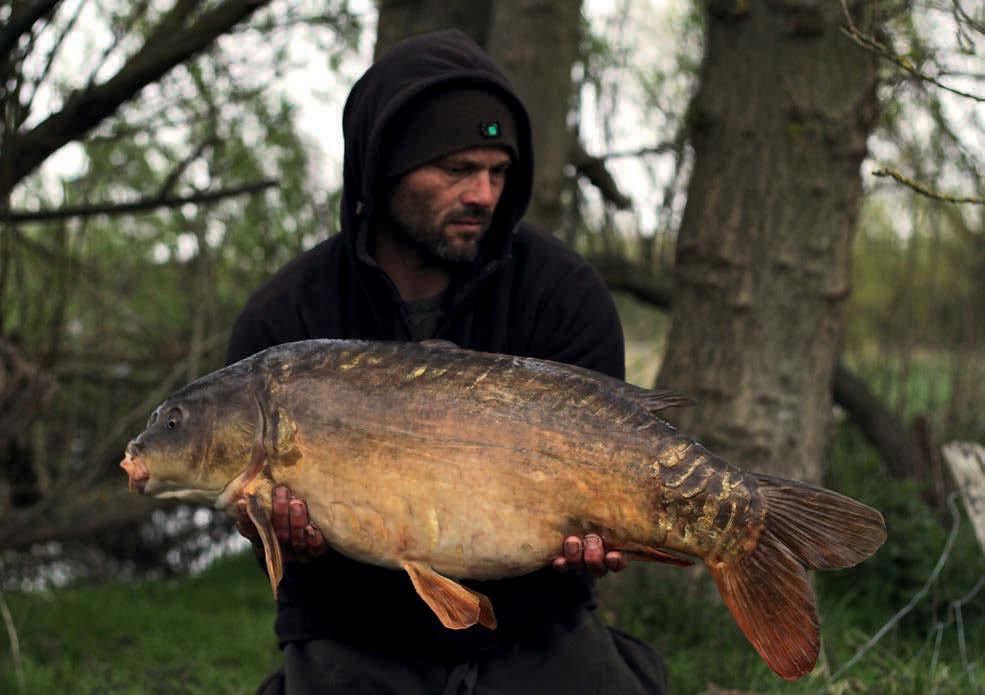
they really need to have a good sort out before they acclimatise to conditions, all well before the urge for food is top of the agenda.
Of course, there are always very narrow windows of feeding: short, usually very distinct feeding spells that we have narrowed down through the winter months, often lasting no more than half an hour and fairly predictable. As we move out of winter, we can watch these windows become far
less predictable and more wideranging, often dictated by weather, sun and stock levels versus natural food, etc.
So, we can safely say that early spring is very much a time for reactivity and taking advantage of our hunting and watercraft skills— things we have spoken about much in previous articles spanning the past few years.
The carp, once they have reacted to the rising temperatures
and sunlight, will begin to travel around the lake much more than they will have done for maybe a few months now, and begin visiting areas that have seemed barren for weeks. The critical thing we have to get right as this behaviour ramps up over a number of weeks is location and depth of water. This brings up two subjects: how busy is your water, and how do we fish for these nomadic fish— and in what depth?

“My first, and most important, lesson from this reflection is that less is more!”
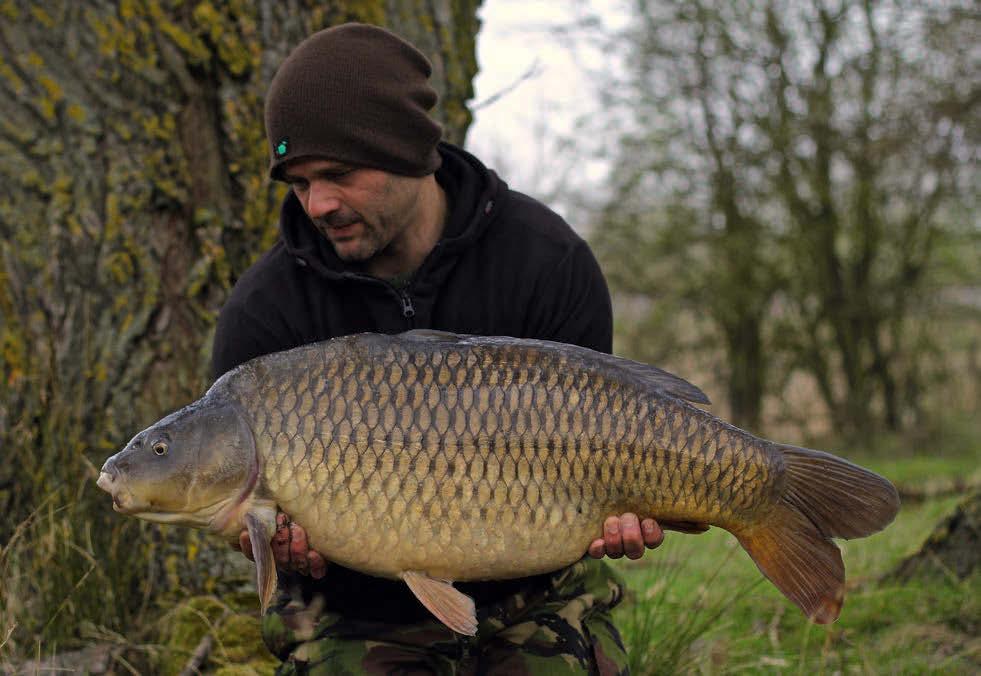
As you all know by now, I write these articles from a purely personal perspective and so I am usually referring to the type of angling I will have been used to, which is club lake or syndicatetype waters. These tend to be less busy and maybe lower stock than many day-ticket waters, but the ideas I put forward can be relatable to all… carp are the same; it’s just stock density and pressure that make a bit of difference, and maybe you won’t be able to move around as freely on a day ticket.
But my first, and most important, lesson from this reflection is that less is more! I’m a great advocate of consistent baiting throughout the winter months, as I have found
Above: A result on a short morning session
Below, left to right: Small ‘bits’ mix
A classic bright mix for early spring A few wrigglers for margin browsers
Chods will play their part in my spring rig choice
out to my cost in the past that as soon as the food stops going in, the carp very often shut up shop and stop looking for it. After that, you are at the mercy of the weather alone, and only a big low front with 50mph south-westerlies and double-figure air temperatures seem to stir them into any sign of activity, let alone wanting a bit of grub in their bellies!
But once spring sunshine enters the mix and daylight hours increase, the first thing these coldblooded creatures are interested in (once they have had their scratch up) is warmth! All the movement and activity is instigated so they can position themselves into the warmest layers of the water column and
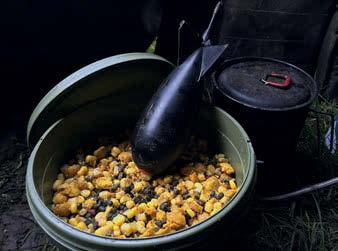
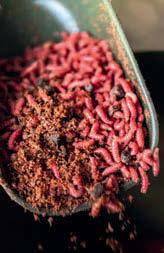
get as much sun on their backs as possible… you can’t blame them either!
Once you realise this and can get out of the mindset that seeing them means they must be up for it, you can start to set some plans to actually catch them with a little thought and stealth.
So realistically, we need to react to and understand the needs of the carp and think how best to approach the angling situation. If the carp are up in the water column because the sun is attracting them to the warmer surface layers, then it’s hardly worth chucking hookbaits into the inky depths of the lake! Better still, the sun may have triggered an insect hatch of some sort, but either way,
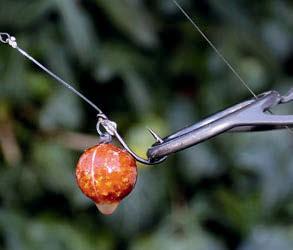
a well-positioned Zig in the zone will often elicit a response from an inquisitive carp.
For sure, Zig kit and an understanding of how it all works is of prime importance in the early part of spring. In fact, the carp will possibly be spending 80% or more of their time in the upper layers of the lake at this time of year—March into early April. Of all the methods, this one for these six weeks will probably put you in with the most consistent chance of bites.
I personally am not a great fan of this method, having seen many carp get foul-hooked and returned without a picture, having fought like tigers after being hooked in the pec or undercarriage. I prefer to hedge my bets in the shallow areas of the lake and fish the edges or around snags, visually watching fish or plotting their routes and setting small, discreet traps for the night-time. There are always other ways to plot a carp’s downfall and, if you want to stay consistent, all strings to the bow need to be flexed—so keep in touch with your chosen venue and stay openminded.
My good friend, the late Paul Forward, always said to me to fish more like a match angler and feel your way into a session by dripfeeding a swim or situation until you buy a reaction. This has always been sound advice, and never more so than in early spring. I have always found that a more matchangler-style approach to both bait and the angling situation was a great starting point. Small food items trickled in consistently at the right depth was always the best way once you found a group of fish, and a few handfuls of boilie crumb, a sprinkle of corn or a handful of maggots was generally enough to elicit a feeding response.
At the same time, I have handfed crumbed boilie or pinches of flake from a tree and seen them take it on the drop, but anything that fell through and touched bottom was left unmolested. On these occasions, a Zig or a pop-up straight off the lead was always the winning tactic!
To this end, my early spring approach to bait has always been minimal and has consisted of bits and pieces in a mix for setting traps, or a small bright pop-up with a light scattering of small baits dotted about with a stick or catty.
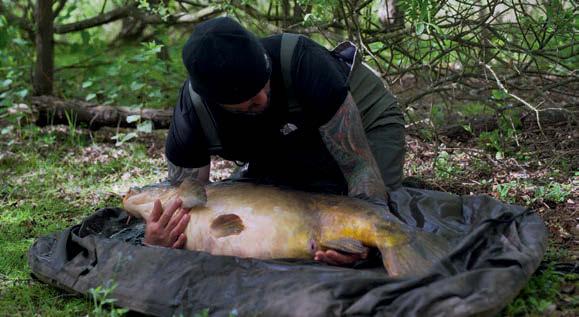
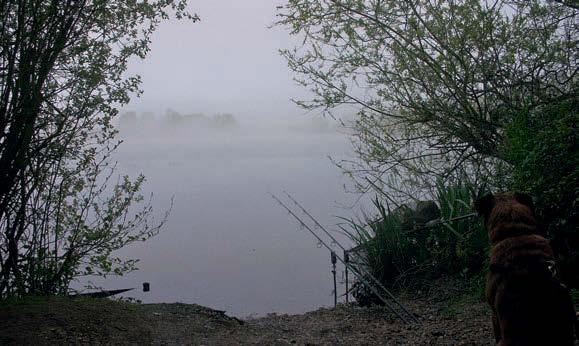
These simple tactics have served me very well, alongside single hookbaits cast at shows and the classic small PVA stocking or stick with a few crushed baits and a bit of salt added. Keep it simple and minimal, and work from there.
A Memorable Trip Way back in the mid-Noughties, I had spent the whole winter on a notoriously tricky club water with a lowish stock of big carp for the time. The consistent application of a good-quality, digestible boilie had paid o in the one swim I had tracked the fish down in, and after picking the most prime spot of glassy silt I had applied bait regularly, catching a good few of the stock even in adverse conditions. As February turned into March, the weather improved and the carp became a little scarcer, obviously getting about the lake, moving with the sun and the undertow dragging warm water to new parts of the lake.
As we approached the equinox, a warm day
with bright sun had me reeling in from the productive spot and walking the pit looking for signs of their whereabouts. I soon found the bulk of the stock up in what we considered the shallows, on the back of the wind and just a few inches under the surface.


Rushing back to the swim, I grabbed a rod and a few bits and legged it back to the shallows to set a trap. I really thought it was game on, but as the day wore on it was clear the carp only wanted sun on their backs, and I’m sure if I could have waded in I could have picked them up out of the water— so chilled out were they! As the sun dropped lower in the sky they slowly sank away, and I thought my chance was on. Despite high hopes, looking down the length of the pit I saw a good fish
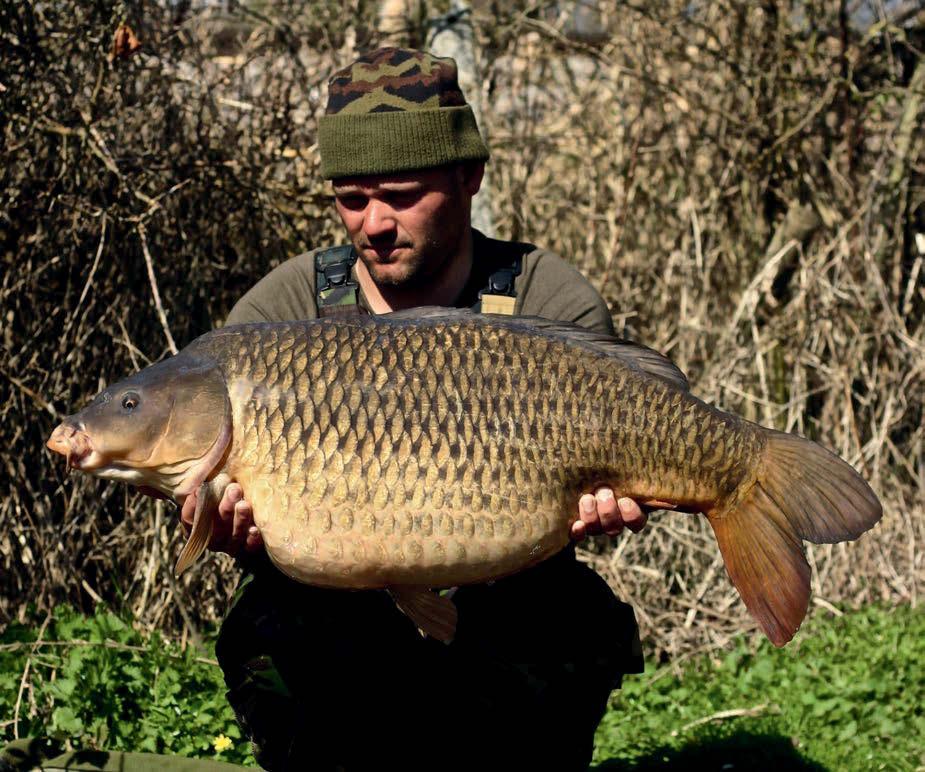
show in my original plot over deeper water.
Reluctantly, I reeled in the single rod and made my way back to the other end of the lake and set my kit back up in the winter swim. At least one had showed! The spot had gone from glassy silt to something resembling a paving slab over the few months I had baited, so the old pop-up Multi Rigs had been replaced with simple D-Rigs and, before casting, I attached a small PVA bag of crumb and rock salt. The two rods were dispatched to the marks and I settled in for a tea with a mate who had just turned up for a chat. I relayed the story of the day and said what opportunities may present themselves over the coming
weeks now the fish were moving about. I was a little bored of sitting in the same swim now and, to be fair, was looking forward to moving on to pastures new for the rest of the year.
As we sipped the tea, the left-hand bobbin pulled up tight and held… a bite for sure! I lifted into a slow-moving carp and after a ponderous battle in the deep water I soon scooped up the biggest common in the lake, one known as Odd Lip. We did the pictures in the fading light of that March evening, and I soon had the rod back out for the night ahead, full of expectation and chuffed to bits with my result!
The night was flat calm and frosty, typical of those highpressure early spring weather
systems—a warm sunny day often followed by a clear, cold night. As the sun rose the following morning, that same rod fired into life and a big battle ensued. After a heart-in-themouth scrap, a big chunk of a common rolled in the sparkling chop and I swiftly scooped her up… One Pec, probably the rarest of the stock to slip up at the time!
I was elated and, after fishing both ends of the lake that trip, the two big ’uns came to the simplest of tactics and less than a palmful of bait between them!
I hope you have the best of springs and, above all, enjoy that transition into sunnier times— and if you’ve been on it this winter… we’ve earned it!
OZ HOLNESS
“After fishing both ends of the lake that trip, the two big ’uns came to the simplest of tactics and less than a palmful of bait between them!”

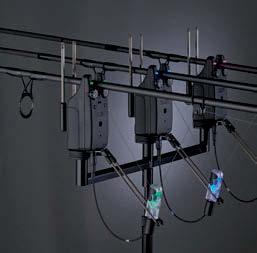
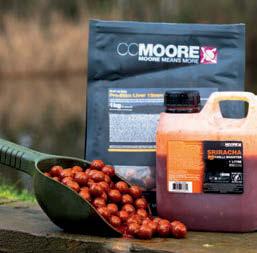
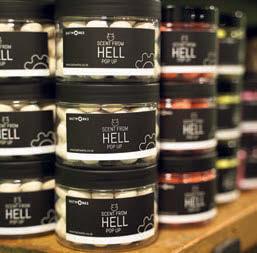
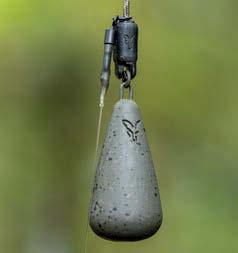
BOASTING A BUDGET-PRICED CARP ROD FOR EVERY SITUATION, DAIWA’S BLACK WIDOW RANGE IS REBORN. HERE’S EVERYTHING WE KNOW…
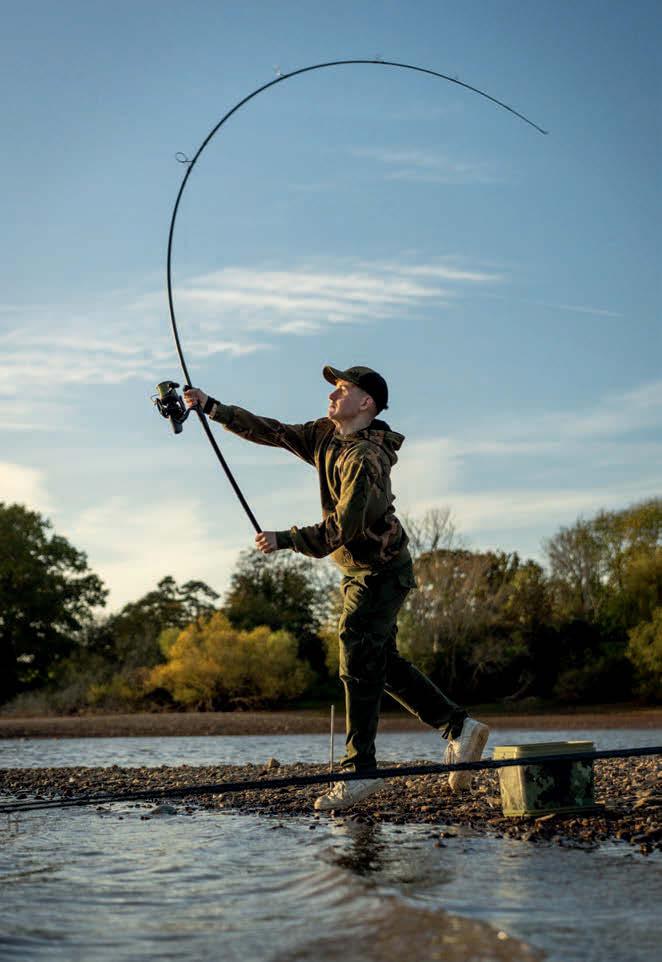

There aren’t many companies that have as much carp-fishing pedigree as Daiwa. A mere mention of the name and you immediately think of premium reels and high-end rods. You’d be right to do so, as they have been making them practically since carp fishing began, but you might not know that, for years, they’ve also catered for the cost-conscious with their Black Widow label, containing reels, luggage, pods, slings, chairs and more. Of course, rods comprise the mainstay of the range and it’s the launch of an entirely new range that we’re looking at here, aptly named ‘Black Widow+’.
When a company with so much carbon fibre expertise sets itself the task of creating a new range of sticks, you’d expect them to be capable— but these are nothing short of sensational at this price point. So, what’s been improved? Well, for a start, they weigh less and are the lightest editions Daiwa have ever created. Weight is minimised by the use of skeletal
The new guides have helped reduce the overall weight of these rods significantly
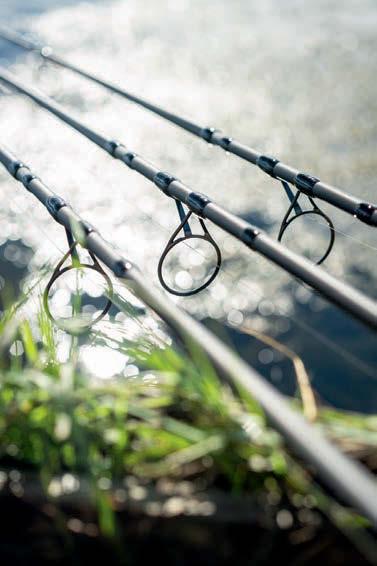
guides, which, in turn, increase tip speed during the cast.
Casting ability is where these really stand out and they will chuck a lead further than they have any right to. Fast recovery from flex means greater distance and this is nowhere more apparent than on the 13ft 4lb test curve edition. Aimed
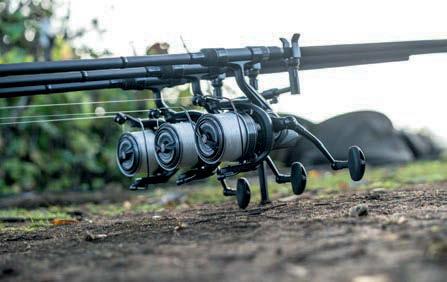
Light in the hand… and on your wallet!
at those who need to go long, these easily smashed leads way past the 150 yard mark during testing.
Despite their casting capability, the rods aren’t at all aggressive, displaying a forgiving nature while doing battle. The benign action is achieved with an innovative blank design that adopts a progressive curve to
lovely machined
protect hookholds and fine lines, although plenty of power is available lower down should you need it to turn big fish or in hitand-hold situations.
Whether you angle on intimate little waters, big pits or anything in between, you’ll find a model to suit, as the Black Widow+ range is truly comprehensive. Small
venues, stalking and close-range work are covered by the 10ft 3lb and there is a 3.5lb ten-footer for boat work. These are complemented by a similar-length 4.5lb spod/marker rod. Twelve-foot rods in 3lb and 3.5lb cover most carp fishing and the 4lb model suits distance or solid bags, whilst extreme range
The first half-an-hour
01 02 08 15 16 21 25 30
Holy moly! These are light—and they look stunning, too!
How much did you say they were?!
1. Keep your rods in a rod holdall or sleeve to protect them from damage, both at home and on the way to your swim.
The biggest upgrade has to be the guides—very slim.
I love the old-school Duplon look above the handle.
For such a budgetpriced rod, the recovery is great.
Cosmetically, they’ve nailed it. The matt black is lovely.
It is noticeable how much lighter these new ones are.
2. Take care when putting your rods in your carp wagon and make sure they aren’t sticking out before shutting the doors.
3. When threading line through the rings, never lift the rod by the tip section— always lift from the butt, otherwise it’ll get expensive!
RANGE 10FT 3LB/3.5LB, £44.99; 10FT 4.5LB, £49.99; 12FT 3LB/3.5LB/4LB, £49.99; 12FT 4.5LB, £59.99; 13FT 4LB, £59.99 WHY WE LIKE THEM INCREDIBLE BUILD QUALITY FOR THE PRICE POINT WHAT WE WANT TO SEE A 9FT TELESCOPIC VERSION WOULD BE GREAT.
is the domain of the 13ft 4lb beast. To cap the selection off, a 4.5lb TC spod/marker rod takes care of your baiting needs.
With a matt finish to the blank, a shrink-tube grip handle and machined aluminium butt cap, their appearance belies their price point as well as their performance.
NOW WATCH THE REVIEW
I’m keeping hold of these—a proper nice bit of kit!
4. When it comes to casting, make sure the area behind you is clear of unhooking mats, bivvies, trees and bushes, etc.
If you want to see these rods in action, head over to the TC YouTube channel now—just search ‘Total Carp’
5. Don’t lay rods on the ground where they can get scratched on gravel or are susceptible to being trodden on.
WHEN CARP AREN’T VISITING THE LAKEBED, IT’S TIME TO GET ZIGGY WITH THESE DYNAMITE HOOKBAITS THAT PUT FOAM IN THE SHADE
High-pressure conditions often see carp leaving the lakebed and using the higher zones of the water column, where they feel more comfortable. At no time is this more apparent than early spring, when it’s still cold but the sun is shining and warming the upper layers. Now is the time to get the Zig Rigs in play, and these new purpose-made hookbaits from Dynamite Baits are just the thing to get you a bite.
Suspending several feet of nylon is actually quite demanding on a small hookbait. Fear not, though, as N-Ticers are designed specifically for Zig use and have been made super-buoyant to achieve this feat for long periods.
Particularly useful on venues that don’t allow artificial baits, their 12mm x 6mm barrel shape makes them suitable for attaching to ZigAligners, bait screws, hair rigs and bait bands. They make good surface baits and toppers too.
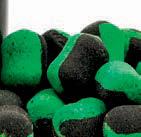

N-Ticers are visually attractive and come in four permutations. Colour options of black, black and red, black and yellow and black and blue, enable you to ring the changes to see what the carp want on the day.
Manufactured using highly effective essential oils, these beauties beat foam hands down when it comes to smell. Whatever the temperature, they’ll release olfactory attraction from the moment they enter the water—and will keep doing so over the long term.
Boosting hookbait attraction, N-Ticers Sprays comprise proven attractants, palatants and feed triggers, such as essential oils and N-butyric acid. Supplied in 30ml atomiser bottles, they come in a host of flavour profiles: (New) Peach & Black Pepper, (New) Choccy Malt, Pineapple & Banana, Tutti-Frutti, Mulberry Florentine, Squid & Octopus and Shellfish. Zig Hookbaits or Spray, £3.99
1. Vary the length of your Zig Rigs until you establish the depth at which the carp are sitting.




Five tips to up your zig game
2. Try di erent coloured hookbaits and switch to what’s working once you start getting bites.
3. You’ll need to drop the lead, so use a decent-sized one on a lead clip to aid ejection is a good call.
4. Use a fairly heavy bobbin to show dropback bites, which are very common when you are Zig Rigging.
5. Zig bites can be finicky, so set your alarm to maximum sensitivity and don’t fish too slack.
The remote has a range of 400m, which in a realworld angling situation means you’ll always have a solid signal.

NGT have always been synonymous with products that suit the budget-conscious angler, but they’ve taken the phrase ‘bang for your buck’ to a whole new level with the XT-3 Wireless Alarm Set. Currently on offer at a ridiculous £44.95, you get three alarm heads, a remote receiver and a lanyard, all housed in a zipped presentation case. Seriously!
Entry-priced tech doesn’t usually look ‘all that’, but the XT-3’s sleek, modern aesthetics are a welcome surprise. The storm-proof construction incorporates built-in snag ears, along with a threaded locking ring and rubber O-ring, all finished in black. Functionality hasn’t been compromised either, and the raft of features is equally impressive. Alongside the usual volume, tone and sensitivity adjustment, there’s a night-light function, anti-theft feature, lowbattery warning and a drop-back function—meaning you don’t have to get out of bed for a liner.
The wireless remote boasts a potential range of 400m, meaning that in a real-world angling situation it’s sure to pick up a signal, no matter how dense the foliage is between you and your rods. It also features a vibration mode for those who prefer to keep their success to themselves. Each alarm head requires a 9V battery, while the receiver runs on three AAA batteries.
£65.95 but on an offer price of £44.95 ngtonline.co.uk
The perfect companion for your new tasty bite alarms

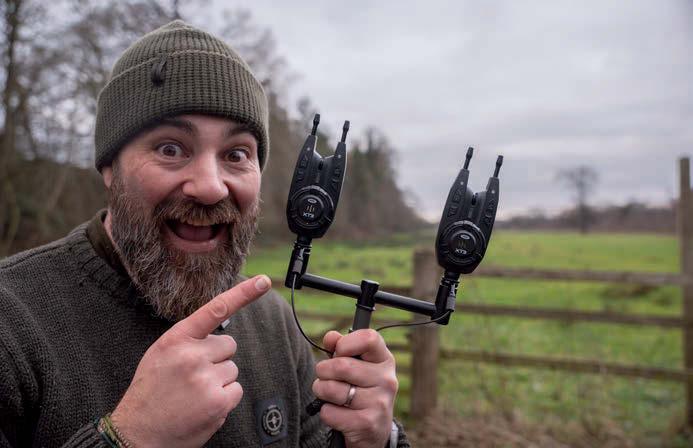
For such a budget-price, the XT-3’s actually look pretty good
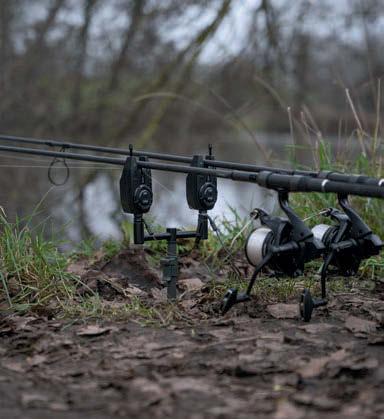
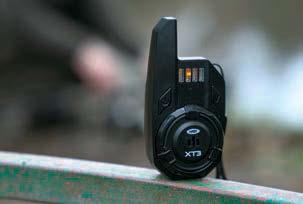
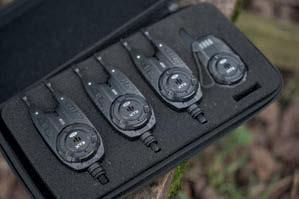
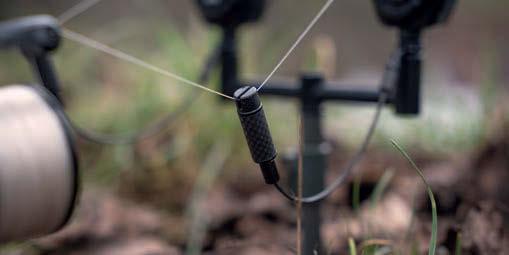
Complementing their alarms, and equally modern in appearance, is NGT’s XT Carbon Indicator Set. Manufactured from strong 3K carbon, they’re durable as well as lightweight (25g) and will suit a wide range of angling situations. Aluminium hockey sticks and a sheathed, flexible cable complete the subtle black vibe. £11.95
This liquid is particularly e ective when combined with Pro-Stim Liver boilies and matching Booster Powder to create coated baits. Lightly coat your baits and allow to soak in for 2+ hours before dusting your baits with your chosen CC Moore Booster Powder.

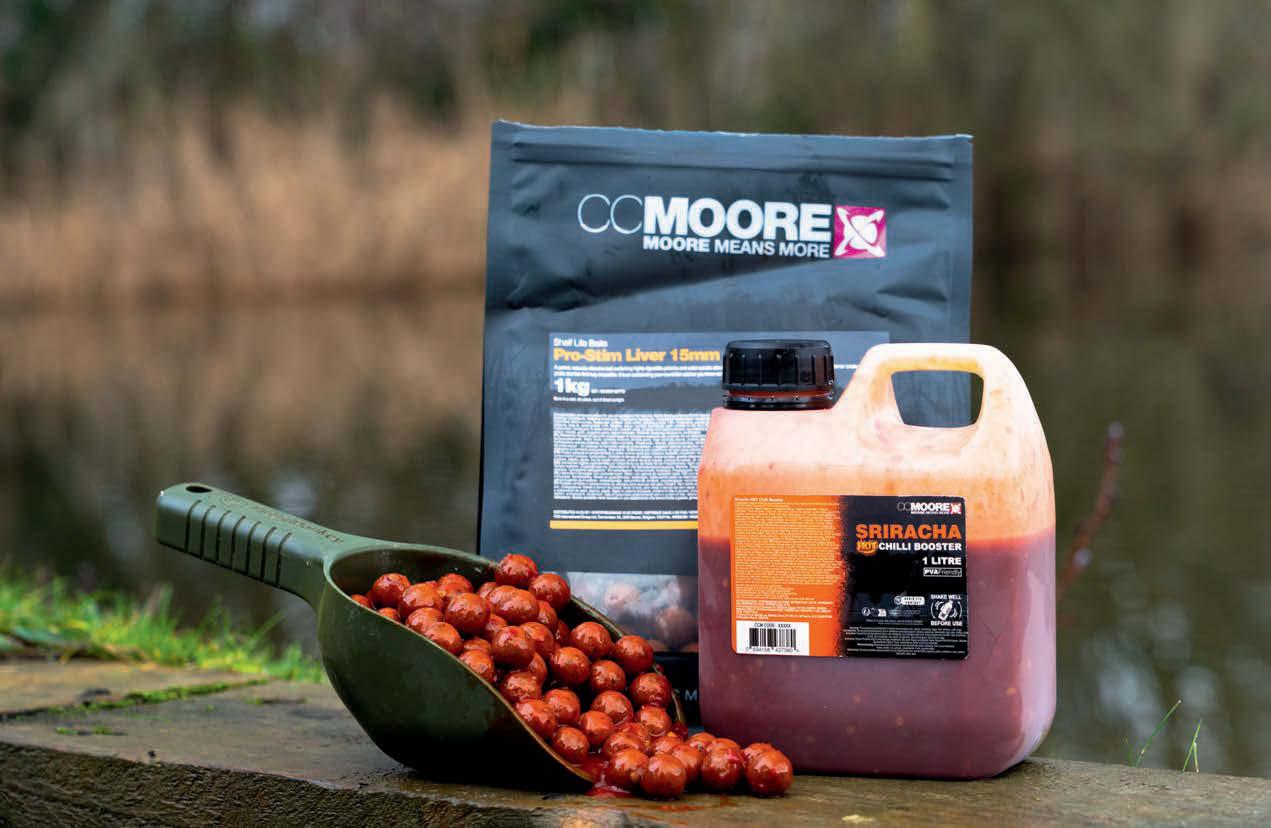
You can also dunk your PVA bags into it
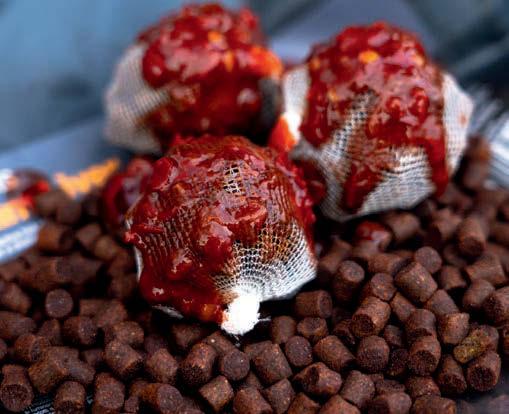
Hailing from Thailand, sriracha chilli sauce is the latest craze in bait—and for good reason. It’s long been accepted that carp have a sweet tooth and a penchant for salt, whilst chilli has been used in particles for yonks. It’s no wonder carp love it.
CC Moore’s Sriracha Hot Chilli Booster is a far cry from just an “off-the-shelf” supermarket hot sauce. This liquid additive is far more potent and contains elevated levels of key feeding triggers called oleoresins, thanks to its high chilli and paprika content. Exclusively sourced ingredients from Asia have been used in a concentrated format to produce a deep, rich, orange/red liquid that’s bursting with flavour, food signals and the kick of a mule!
Effective throughout the year, it sinks quickly, releasing a distinctive orange
cloud of natural attraction around the rig or baited area. During the height of summer and in the depths of winter, when carp frequent the upper layers and midwater, some of the team recommend blending the Sriracha Hot Chilli Booster with CC Moore’s Chilli Hemp Oil to get the spice working throughout the water column. Besides adding it to spod mixes, the possible uses are endless. Being PVA-friendly, it is ideal for dampening Stick mixes, dunking mesh bags or injecting into solid bags. It’s great for adding to particles, where it’s particularly effective in conjunction with Himalayan Rock Salt. Simply coating your boilies will give them a spicy kick, but why not go one further and dust them in the bait’s matching PVA Bag Mix or Booster Powder?
£11.99 for a 1lt bottle
COMBINING STYLE, COMFORT AND PRACTICALITY, WE TAKE A LOOK AT THE BRAND NEW CLOTHING LINE FROM THE THINKING ANGLERS STABLE
Just like on the high street, your bankside attire says a lot about who you are and what you’re about. When it comes to cool brands, you can’t get much more cult than Thinking Anglers, so if you want to look the part this season, you might want to consider their new clothing range.
1. OLIVE FOLD BEANIE
This ribbed beanie is fantastically warm. The quick-drying, machinewashable knit wicks moisture away and features a soft TA logo patch. £12.49
2. HOODIES

The perfect combination of comfort, durability and insulation is achieved by constructing these garments from a premium 330gsm, 70/30 cotton/polyester brushed fabric. Structured on the outside, they feel soft and snug inside, making them the perfect winter midlayer or outer for the rest of the year. Smart in black, easy in olive, or brand-loyal in Camfleck. Sizing: S to XXXL. £39.99 to £42.49
3. JOGGERS
Made from the same material as the hoodies, these comfortable joggers are soft, warm and durable. Suited for lounging at home or on the bank, they feature a thick elasticated waistband, drawcord and cuffed ankles. Available in Olive and Camfleck—try a complementary colour to your hoody for a chilled vibe, or match it for the full TOWIE look.
Sizing: S to XXXL. £34.99 to £37.99


Premium, brushed 220gsm cotton ensures these soft but long-lasting tees are comfortable and breathable. As you’d expect, the branding on the chest is subtle. Styled for a laid-back look, they’re available in black and a very carpy olive, as well as TA’s trademark Camfleck pattern. Sizing: S to XXXL.
£19.99 to £22.49
Designed with comfort and freedom in mind, these loose-legged shorts are super comfy. A lighter 260gsm 70/30 cotton/polyester premium fabric makes them suitable for warmer summer conditions. Lightweight and breathable, they’re also ideal for wearing overnight in the sleeping bag. Available in Thinking’s own Camfleck or Olive. Sizing: S to XXXL. £24.99 to £27.99


Bucket hats are the perfect alternative to baseball caps for essential sun protection. These cotton twill versions scream quality and feature a black chin cord and leather adjuster. Whether you go for the Camfleck with olive lining or the black-lined olive version, you’ll bring some ’90s cool to your clobber. One size fits all. £14.49 and £15.99


Available in digitally printed Camfleck or the carp angler’s go-to olive, this classic sixpanel flat-peak cap is stylish and practical. Adorned with a felt-rubber logo badge with embroidered border, it has a Velcro adjuster to ensure a secure and comfortable fit. One size fits all. £14.49 and £15.99









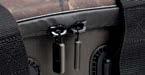

















Fully waterproof EVA pouches with rigid, box-style construction
Designed to integrate seamlessly with Waterbox Carryalls

Stackable, modular shapes for e cient packing
Reinforced structure resists crushing and deformation

Translucent lids for instant content identification
Internal zipped mesh pocket









NASH’S POPULAR WATERBOXES GET AN UPGRADE TO BRING ENHANCED WATER PROTECTION AND AN IMPROVED MODULAR CONFIGURATION
The original Waterboxes have proved an unmitigated success, with the waterproof luggage system finding favour with a great many anglers. Their popularity comes as no surprise, as they form a sort of halfway house between hard plastic box storage and traditional luggage, bringing the best of both types.
Stackability, simplicity and sheer versatility are all good reasons why so many have converted to this luggage but, primarily, it’s the waterproof construction that o ers obvious advantages in an outdoor environment. Anyone who appreciates being able to leave their kit outside without fear of it getting soaked will love Nash’s Waterboxes—and will do so even more now they have been upgraded.
Technology is constantly improving, enabling tackle to evolve and cater to the needs of an ever-changing carp angling scene. Comprising three carryalls and five pouches, the range has been refined for those who require durability, modular organisation and total protection. Here’s what’s changed…
A redesigned lip configuration has been used in conjunction with higher-spec, upgraded waterproof zips to improve water resistance. The closed-cell EVA material is impervious to water and welded construction eliminates stitching, so there is simply nowhere for water to find its way in. Whilst we wouldn’t advocate submerging
them for hours, the contents of a Subterfuge Waterbox will remain completely dry if dropped in the water or left out overnight in the worst weather.
The Nash design team have gone to great lengths to improve the way the new Waterboxes stack and work together. Although the modular principle remains at the heart of the range, the carryalls and pouches have had sizing tweaks to make them more compatible with the Subterfuge luggage. Essentially, you can fit the pouches neatly inside carryalls, mixing and matching between both types to tailor the storage to your requirements.
3. DURABILITY
Undoubtedly, this stuff is built to last. Reinforcing at key contact points prevents wear on gravel banks, boat decks and van floors, whilst strengthening has been applied to attachment points for the Neoprenecushioned handles and optional Subterfuge Universal Shoulder Strap. The welded seams provide structural rigidity to prevent pouches collapsing and creasing, even when empty.
4. PRACTICALITY
Total protection is one thing, but storage systems are nothing without being practical to use, and the wipeclean Waterboxes score highly in this regard. The carryalls’ moulded camouflage lids






































With the previous Waterbox range, there were over 50 permutations of how you can pack and stack the Waterboxes!










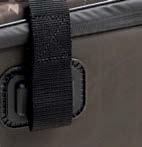

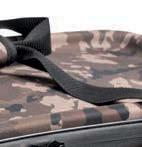
double up as work surfaces or bivvy tables, and the lids of the pouches are translucent for quick identification. Grabbing contents is made easier by the curved corners and internal mesh pockets aid organisation.
5. SPACE EFFICIENCY
We all seem to take an ever-increasing amount of kit, meaning space is at a premium—be that in the car, on your barrow, in the bivvy or onboard a boat. The rectangular shape of both the carryalls and pouches means they take up minimal room and can be stacked or positioned next to one another to form a neat, flexible and space-efficient tackle storage solution.








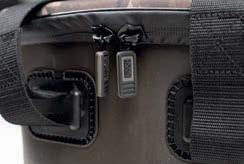
SMALL 24L:
27(h) x 30(w) x 30cm(d) £44.99
MEDIUM 36L:
27(h) x 44(w) x 30cm(d) £64.99
LARGE 47L:
27(h) x 58(w) x 30cm(d) £84.99
SMALL 1.2L:
MEDIUM 2L:













8.5(h) x 12(w) x 12cm(d) £18.99
8.5(h) x 19(w) x 12cm(d) £20.99
LARGE 2.6L:


8.5(h) x 26(w) x 12cm(d) £22.99
XL 4.2L:

8.5(h) x 26(w) x 19cm(d) £24.99
XXL 5.7L:
8.5(h) x 26(w) x 26cm(d) £26.99






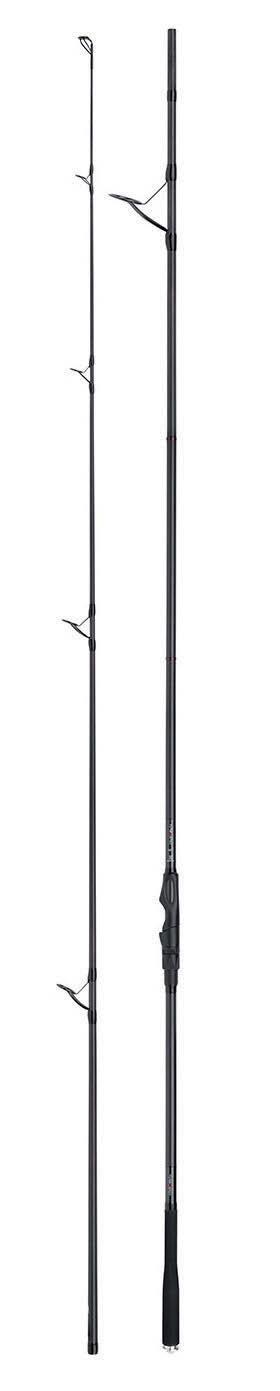
DESIGNED SPECIFICALLY FOR THE BUSINESS OF INTRODUCING BIG BEDS OF BAIT, SONIK’S NEW TURBOSPOD RODS MAKE SPODDING A PLEASURE
Meet the Sonik Turbospod Rod: the natural partner to last year’s bombproof Turbospod Reel and every bit as unapologetically overbuilt. Crafted from high-modulus, lowresin carbon with a matt armoured-carbon helix wrap, it’s a spod rod made for serious distance work—and when we say serious, these things come with 5.75lb and 6lb testcurve ratings. Here’s everything you need to know…
1. BLANK
Built on a high-modulus, low-resin blank, these rods possess an ultra-powerful butt that gives way to a progressive tip. The multidirectional fibres in the BulletPoint tip ensure swift recovery and pinpoint accuracy. In essence, they have all the grunt required to propel the biggest Spombs without being unnecessarily unwieldy.
2. GUIDES
Both distance and ease of use are enhanced by the choice of technologically advanced ringing, starting with a 50mm K-Style Seaguide TCG Zirconia guide and culminating in a 16mm Seaguide XUT (seamless weld) anti-frap tip ring, allowing leader knots to pass through with ease.
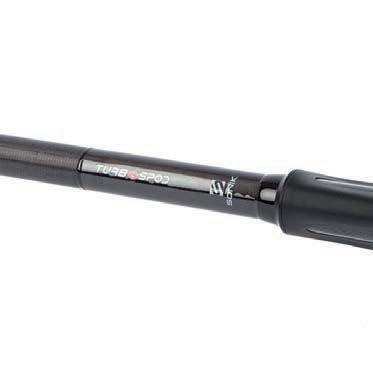
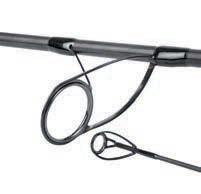
3. HANDLE
The abbreviated handle has been elongated. Why? Quite simply, bait-delivery devices are a whole lot heavier than leads, and the increased leverage makes it far easier to overcome the inertia of a large Spomb or spod and get it moving—helping it travel faster and further.
4. EXTRAS
The beautiful yet practical matt-black Seaguide XSS-18 reel seat features twin-lock collars to keep your reel rock-solid during the rigours of baiting, while an enlarged shrinkwrap butt grip provides a secure purchase. A pointed, stand-off stainless-steel butt cap aids balance, and handy depth markers at 1ft and 2ft complete the package.
5. RANGE
These are serious tools and, as such, feature test curves designed to deliver particles, spod mixes, boilies and more out to range—fast. The 12-footer boasts a test curve of 5.75lb, while the even beefier 13ft model is rated at a full 6lb!
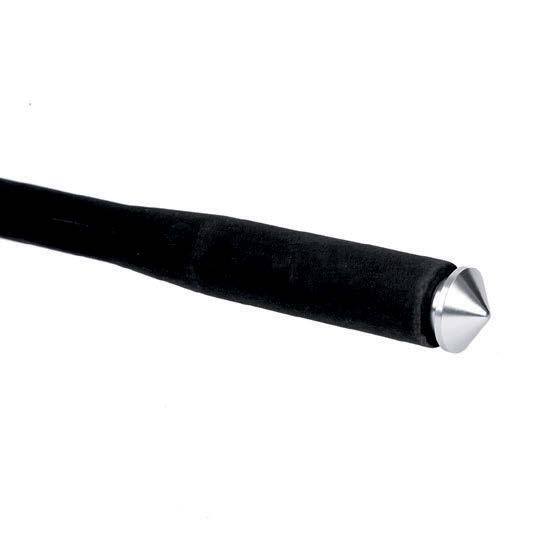
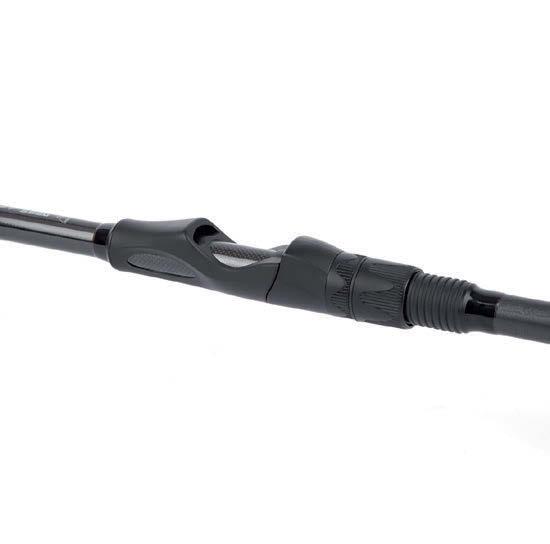
1. Raise your bait bucket by placing it on another one to avoid bending when refilling your spod/Spomb. And fill the bottom one with water.
5. Adjust the position of your line in the spool clip to subtly vary distance and create a wider spread of bait in your swim. Five tips to make spodding
2. Refill the Spomb or spod with the same amount on every cast to help achieve consistent distance when casting.
3. Keep an old towel next to your bucket to wipe bait from your hands and prevent your finger slipping during a big cast.
4. Always use a fingerstall or casting glove to avoid braid cuts (they are nasty) and give yourself the confidence to really hit it.
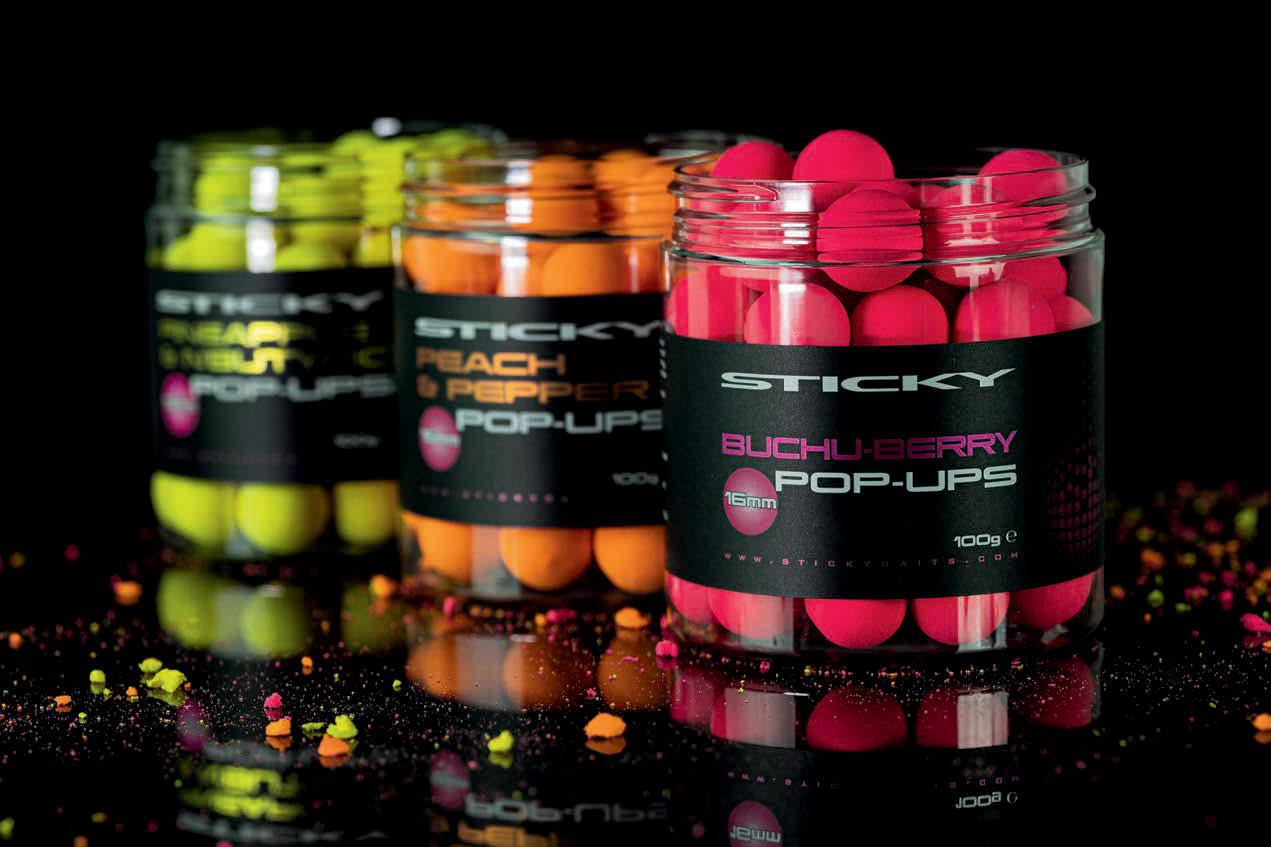
KNOWN FOR PRODUCING SOME OF THE VERY BEST FOODBAITS, STICKY PROVES IT ALSO KNOWS A THING OR TWO ABOUT HIGH-ATTRACT POP-UPS AS WELL
Spring is nigh and, seriously, what self-respecting carper would head into the season without a few pots of bright pop-ups for single hookbait fishing? Carp that are waking up rarely fancy a big feed, and a single Sticky Baits Fluoro, in the right place, could well be the answer. Here’s how their range shapes up…
We don’t know what a buchu berry is, but we do know these popups smell absolutely gorgeous! Reminiscent of blackcurrant but smoother and rounder, the fruity aroma comes from aromatic sulphur-based compounds and a unique essential oil which, when used in combination with a special feed-inducing palatant blend, really makes them sing. As well as being excellent as singles, these bright pink beauties are great as a slightly brighter alternative over red boilies such as Sticky’s Bloodworm.
Once the go-to hue for winter singles, orange is often overlooked but is no less effective. Let’s face it, what other colour seems right for the perfect peach pop-up? Pop the lid and you’ll get a hit of peach that smells almost juicy, before picking up a warm, peppery undertone. Black pepper essential oil is a winter favourite and, in conjunction with Peach Melba, produces an attractor package that does the business all year round.
3. PINEAPPLE AND N’BUTYRIC
If we had to pick just one hookbait for a spring bite, it would have to be a yellow pineapple pop-up. The all-time classic single hookbait flavour combination never tires, and Sticky’s version is just right. Fresh pineapple is immediately apparent and then there’s a barely discernible background note of something savoury and intriguing.

That’s the N’butyric acid, which reacts with esters in the pineapple flavouring to cause a pH shift, drawing attention and proving irresistible. These super-buoyant pop-ups will stay up for days and are available in 12mm—ideal for Zigs, snowmen and PVA bags— and 16mm, perfect for Ronnies, Hinge Rigs and Chods. All tubs retail for £7.50.
“Singles are synonymous with springtime, largely because carp are at their most transient right now. As it is vital to fish singles in amongst them, I adopt a mobile I mean not just upping sticks and moving to the other side of the lake if need be, but also casting to where I see activity or simply moving baits around, at all ranges, until I get a chance.”









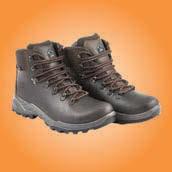
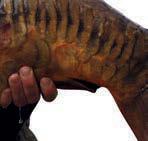



THE TOOLS OF DIFFERENT ANGLERS’ TRADES. THIS MONTH: GERMANY’S PHILIPP BRAUN, A RENOWNED BIG-FISH ANGLER WHO LIKES TO TRAVEL ULTRA LIGHT
1. TRIG HAMMERS
“No part of your equipment is as important as your hook. It’s the one piece you need to have 100% confidence in, and where you require the perfect combination of strength and sharpness. I have personally found this in the ESP Cryogen Trig Hammers. I use them in a big size 4, with a big piece of shrink tubing and a long hooklink. This set-up won’t catch you every carp, but it will catch you the rare ones we really want—trust me! You choose your own weapon, but your hook should be top of mind when planning your equipment.”
2. LO PRO MK 2 BROLLY
“One of the biggest design principles when planning my equipment is travelling light. I can’t even remember the last time I used a proper bivvy and I only try to carry a strippeddown brolly with me—no groundsheet, no front, no storm poles, reduced number of pegs. I used an Aqua Fast & Light for years and recently switched over to an ESP Lo Pro, which is even lighter and has a very
stealthy profile. I don’t even set it up unless it’s going to rain and just sleep under the stars if that’s possible.”
3. SMALLEST POSSIBLE ARMY RUCKSACK
“Whilst on the subject of travelling light: I highly recommend that you sort out all your equipment by laying it out on the floor and then radically cutting out anything that’s not absolutely needed. Once you’re left with a pile of the purest essentials, go to a local army shop and try to find the exact rucksack size for yourself—one that is just big enough to carry those essentials. The goal here can be to reduce your tackle so much that you can even ditch your barrow. Try to find your perfect size; my own has a 40-litre capacity.”
4. WALKING BOOTS
“Observation requires mobility and on big lakes this can mean loads of walking. You want a hiking boot that’s lightweight, yet durable and functional in di cult weather conditions. Ditch your old trainers and invest in a proper pair of boots
that will give you the stability you need on uneven trails. I personally use the Fortis Trail Boots, which o er incredible quality at a very reasonable price.”
“I never go fishing without my polaroids and, whilst on the subject of observation, polarised glasses can give you access to a whole other level. Amber has proven to be my favourite colour for seeing into the water in changing light conditions. I currently like the Finseekers from Fortis. You can wear them in town as well!”
“You didn’t see that one coming! Ever since I was little, I’ve carried the latest fishing print mag with me and, still to this day, I love the smell of fresh print in my rucksack. Put your phone to one side— there’s no need to carry extra power banks and chargers— and enjoy a proper print mag or, even better, a good oldfashioned book. Your eyes will thank you, and so will your heart and mind!”

“Most anglers confuse themselves by carrying far too many hookbaits in di erent colours, flavours and sizes. I apply a very minimalist approach here, which helps me reduce the mental clutter: pick one hookbait you truly believe in and leave the rest at home. My all-time favourite is Baitworks’ Scent from Hell, which now comes in a pot of mixed pastel colours. You pick your own favourite but, once chosen, stick with it and don’t doubt your choice any more. There’s no need to carry loads of pots and tubs!”
The long-awaited release of Fox’s version of a helicopter lead-release clip is finally here—and we’re impressed. It’s both beneficial and safer to eject leads when fishing near snags, weed, etc., and the Edges Heli-Clips facilitate this. Clever—and very simple—mechanics (just rotate the outer jacket 90º) also mean they can be set to retain the lead when required.
Sold as a kit containing everything needed to make three complete set-ups, they’ll work with leadcore, Fox’s Copper Core, all lead-free leaders or tubing—or, with the aid of the included sleeves, when fishing naked.
Available in two translucent shades, they’ll blend in over any lakebed. The darker ‘Natural’ version is ideal for silt and weed, while the ‘Camo’ variant won’t look out of place on sand, gravel or clay.
£7.99 for a pack of three
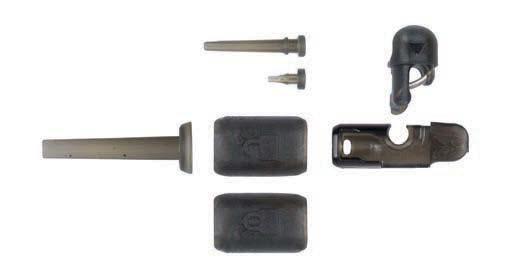
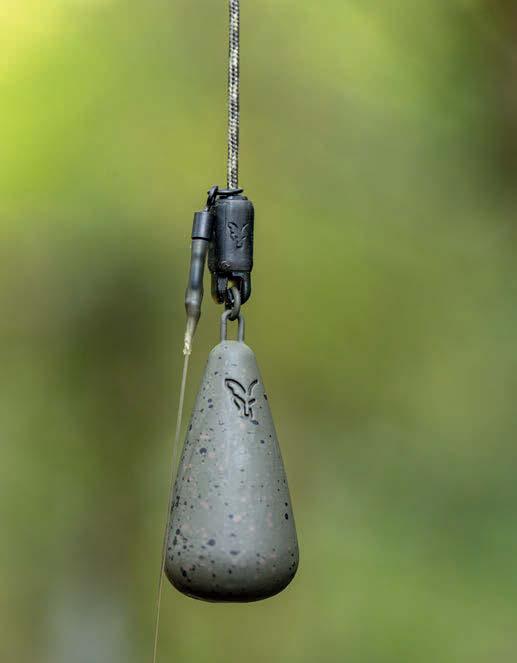
MAINLINE HOT CHILLI SMART LIQUID
If this one is anything like the rest of the Smart Liquids range, it’ll work its way through the water column to give a real boost to your spod mixes, PVA Sticks, pellets, boilies and more. With the proven track record of the chilli/hemp combo, we can see this as the ideal additive to give your particles a spicy kick. £12.99 for 250ml
RIDGEMONKEY ROCK BOTTOM CRIMP AND KNOT COVERS
These streamlined, tungstenimpregnated sleeves are designed to cover crimps and knots, eliminating snagging points and reducing weed build-up and tangles. The wide end of the tapered bore slides over knots, while the narrow end grips hooklinks securely, and the ribbed exterior provides a solid anchor for putty.
£2.99 for 10





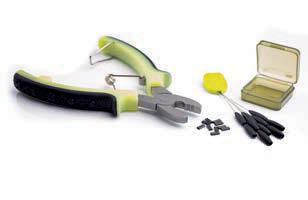







If you’re a fan of beautiful print products, then you’re going to love the April edition of TC’s sister title, CARPology It’s the first of three special editions this year and has been completely redesigned and printed on significantly higher-grade paper throughout—from cover to final page. Heavier in the hand. Richer on the eye. And yes… it’ll smell incredible. There’s an exceptional line-up of contributors, too. It’s on sale now, in all the same places you’ll find Total £6.99
SOME NEW, SOME TRIED AND TRUSTED—BUT ALL HIGHLY RECOMMENDED, AND ALL FOR UNDER TWENTY POUNDS












New in are these stylish hoodies and sweatshirts from the Nash camp. Displaying nostalgic graphics, these warm and comfortable garments are available in a refreshing range of colours, including black, charcoal grey and navy blue. Check out Angling Direct, who are offering a whopping 56% off the RRP: £45.99 | AD price: £19.99

























Designed to keep your feet toasty on demanding winter sessions, these socks are made from 55% merino wool to provide natural insulation and help regulate temperature. Warm, super comfortable and reassuringly heavyweight, they’re just the thing to give your feet a hug. £19.99




























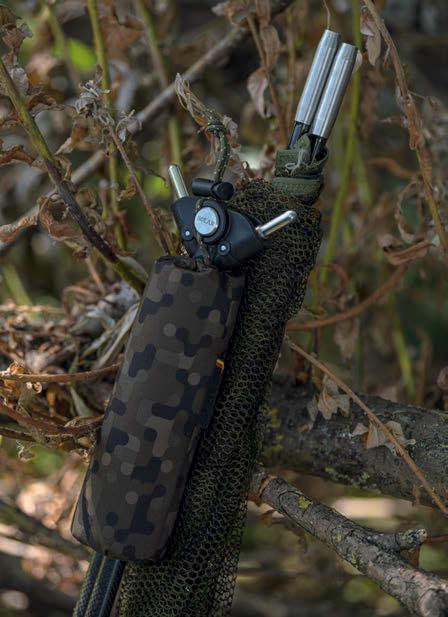
At 20cm by 6cm in diameter, this net float possesses sufficient buoyancy to keep your net afloat without excessive bulk. The luxurious peach-skin outer is finished in Solar-Cam and features a drawcord fastener to ensure a snug fit. Compatible with all Solar and most other landing nets. £9.99
In addition to incredible flavours and amazing hookbaits, niche brand Forgotten Flavours produces this rather handsome 10-litre bucket. With a strong, ergonomic handle, it’s finished in Flecktarn camo along with logo artwork, giving it a funky Euro look. Yes, it’s a bait bucket—but it is a really nice one. £11.99 standard price.

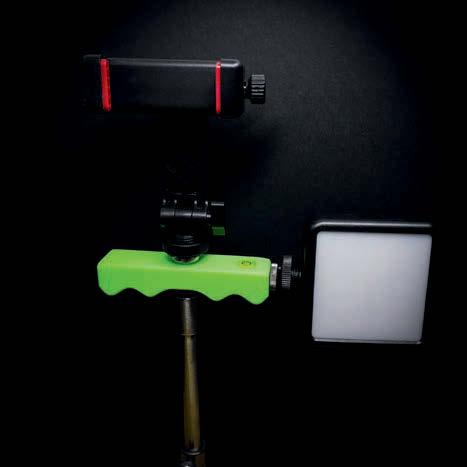
Custom bobbin makers Tackletek have come up with this natty solution to tricky self-takes. Fitting a standard bankstick, pod or buzzbar, it has four camera threads to attach your camera, phone mount, lights and other photographic accessories. It glows in the dark and even has a built-in spirit level to keep everything straight. £14.99
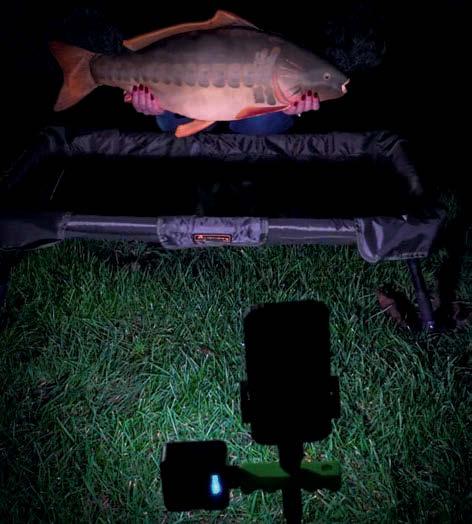


















A little more distinctive than a standard baseball cap, this military-style cap is made from cotton twill to be both comfortable and cool enough to wear on those hot summer days when you need it most. Finished in TA’s synonymous Camfleck pattern, it has an embossed metal buckle for size adjustment. £15.99






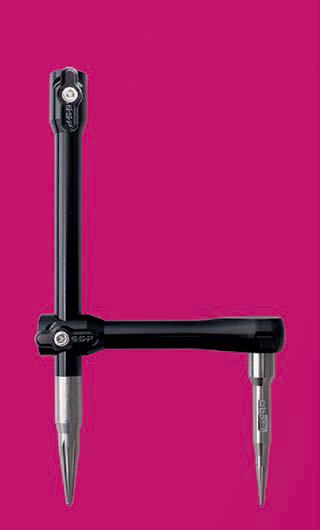
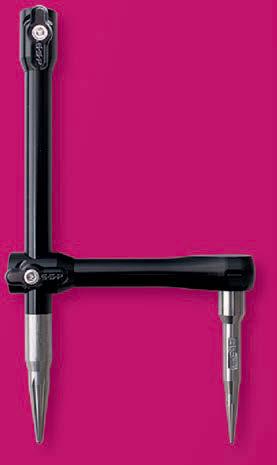





Buzzer bar users will understand the need for bankstick stabilisers when encountering loose gravel or soft ground. These classy-looking ones from ESP effectively eliminate twist from your rod support set-up. Packing away neatly, the high-grade stainless point fits inside the hard-anodised body and is held in place by captive thumbscrews. £14.95
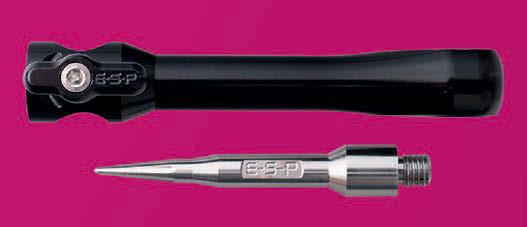



Session anglers will appreciate this uncomplicated wash bag, with enough room for everything you need to stay human. Its 20 x 10 x 10cm dimensions hold deodorant, shower gel, toothbrush, toothpaste, tablets and more. The 600D Dark Kamo outer features a wipe-clean interior, heavyduty zips and a carry/hanging strap. The perfect solution to bankside hygiene. £11.99


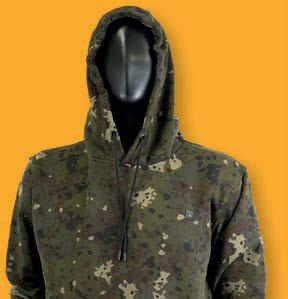

The Camfleck pattern on these quality garments will instantly identify you as one of the TA tribe. Made from premium 300gsm cotton/polyester material, they’re hard-wearing yet internally soft and snug. Not only do they look the part, they’ll keep you warm on those chilly spring mornings. £42.49


Teddy fleece-lined and warmer than gloves, this is a concept we like for those extremely cold sessions. You won’t be tying rigs with them on, but the flexible, grippy fingertip and palm sections allow you to do most things, like setting up camp, brewing up and playing fish. £24.99
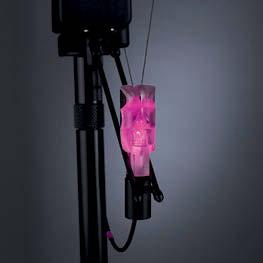
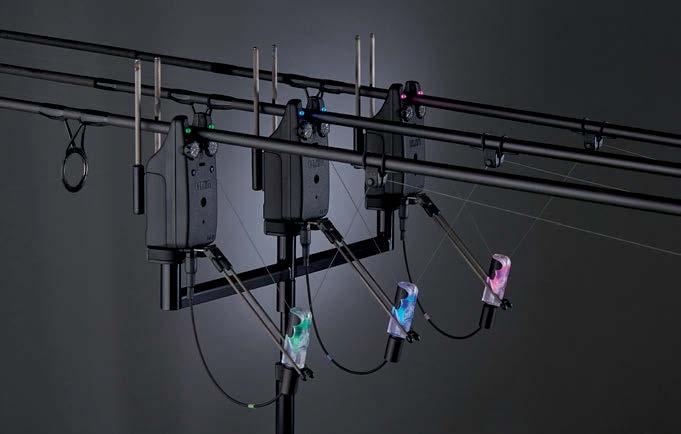




This tidy indication set is a lot more than just a bobbin. Twin carbon stabilising bars eliminate wind movement and the additional weights mean you can tailor the set-up to suit a multitude of situations. Plugging into the 2.5mm socket of your Delkim alarm, it will replicate all its LED functions. £37.99





In anticipation of warmer weather, check out this carpy, khakicoloured footwear from Fox. The canvas upper lets your feet breathe and the flexible vulcanised sole is nice and grippy. The relaxed skate style is just the one for lazy summer days, both on and off the bank. £29.99






















From the masters of bait delivery, this grey, low-diameter braid is super slick and made for baiting at long range. Low air resistance and minimal friction through the rod rings allow you to maximise your casting ability and reach the feeding zone. Supplied on a 300m spool. £39.99 the bank.




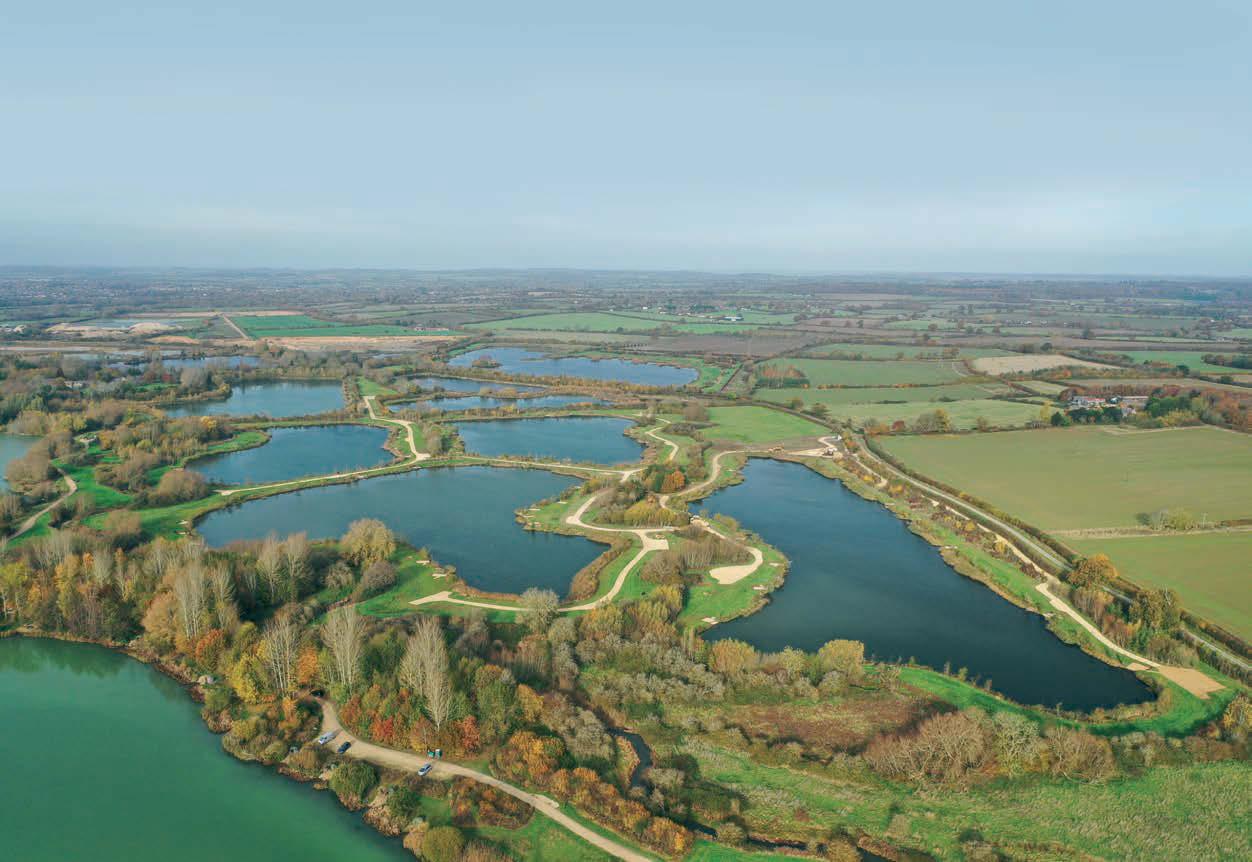
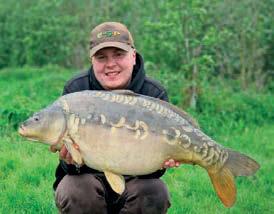
• High stocking of carp – over 2,000 fish!
• Fish range from 10lb to over 40lb
• Five stunning Tar Farm Waters (52 pegs)
• On-site tackle shop and showers available
• Ongoing stocking policy
• Three easy-access, wheelchair-friendly pegs


















Of Carp Porter’s six barrows, this one sits at the top of the tree. Swivelling rear wheels, allterrain tyres and sealed bearings make it manoeuvrable, while weather-resistant electronics provide smooth, quiet yet powerful performance. With an adjustable frame, lashing points and drop-in bag, it can be tailored to requirements, transporting even the bulkiest loads. Off-road excellence. £1,499.99










be tailored to requirements,




Sold with either a 6ft one-piece or a two-piece 8ft carbon handle, the Lever Lok’s clever block mechanism and magnetic arms mean you can say goodbye to wrestling with your landing net when setting up or collapsing it. The premium build includes camo mesh, a pointed stainless butt cap and shrink-wrap grips.
goodbye to wrestling with your landing
6ft one-piece, £159.99;























Set up in seconds, Solar’s unique Quick Up frame is stable and durable thanks to its reinforced steel construction and 50mm leg adjustment. The fish-protecting unhooking platform is easy to clean and features padded attachments, an elasticated blackout cover and rapid drainage. Finished in SP C-Tech cosmetics with a matching premium 600D camo bag. Standard, £111.99; XL, £122.99




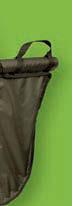








At 109 x 57 x 44cm, this short-term retainer has ample room for large carp. Ultra-buoyant support bars, camo mesh vents, anti-snag zips and a 5m cord are designed to keep fish safe whilst camera gear is readied. The fully supportive shape, double grab handles and metal eyelets make for easy weighing and returning. £59.99





These textured gunsmoke reels have an understated appearance, blending old-school detail with modern aesthetics. Exceptional component quality includes a whopping 8+1 bearings, carbon clutch cap and anti-twist roller. Super-slow oscillation, Fast Drag and spring-loaded, line-friendly clips all go towards making them a joy to use. 8000, £139.99; 10000, £149.99






















These fur-lined winter boots from wader experts Vass have a thick sole and are reinforced to make them tough and durable, as well as warm and toasty. Their three-quarter height not only makes them more comfortable when worn for long periods but also easy to put on in a hurry. Available with studded and non-studded soles. £64.99
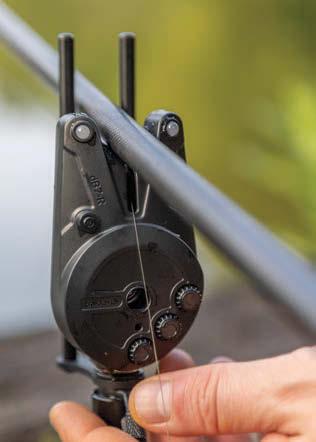


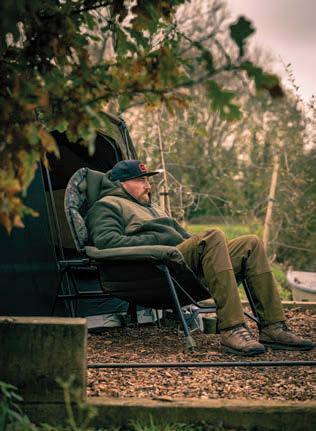

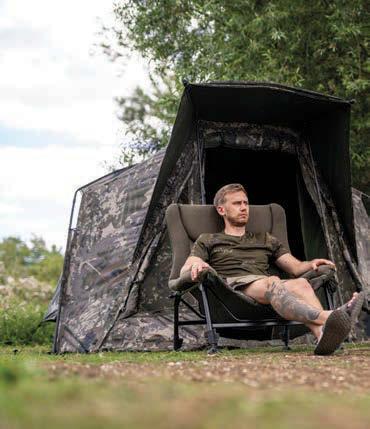











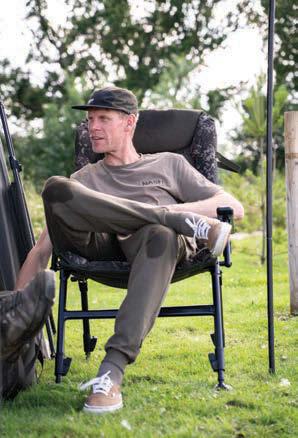










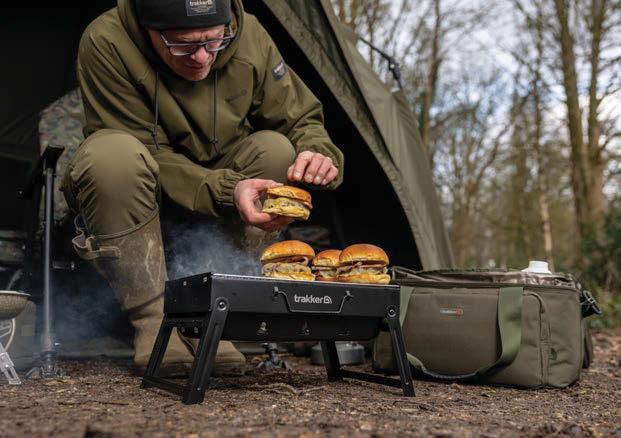
























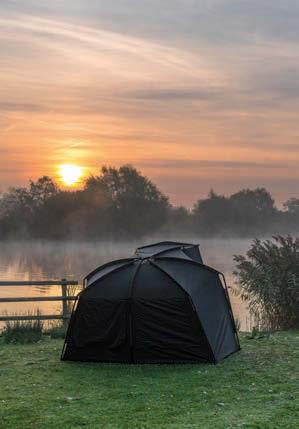


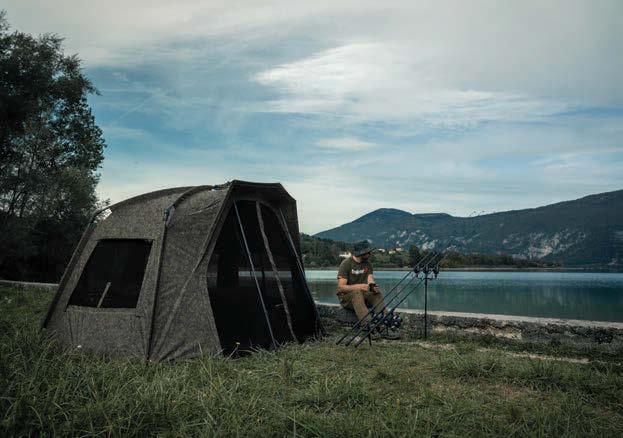

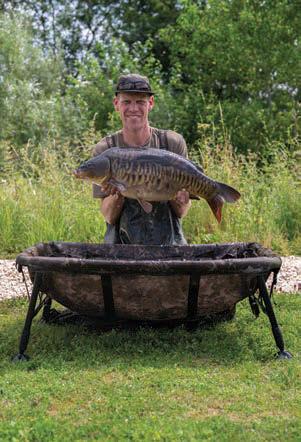




FROM ULTRA-COMPACT BUDGET OPTIONS TO FULL-BLOWN BANKSIDE WORKSTATIONS, WE TEST 12 BIVVY TABLES TO FIND WHAT REALLY EARNS ITS SPACE IN YOUR BANKSIDE REAL ESTATE!
Bivvy tables have evolved dramatically in recent years, mirroring the wider shift towards more and more comfort and practicality on the bank. Just as bedchairs have progressed to eight-leg frames, deep memory-foam mattresses and five-season sleeping bags complete with power packs and USB ports, bivvy tables have followed a similar path. Once a simple extra that a handful of anglers bothered
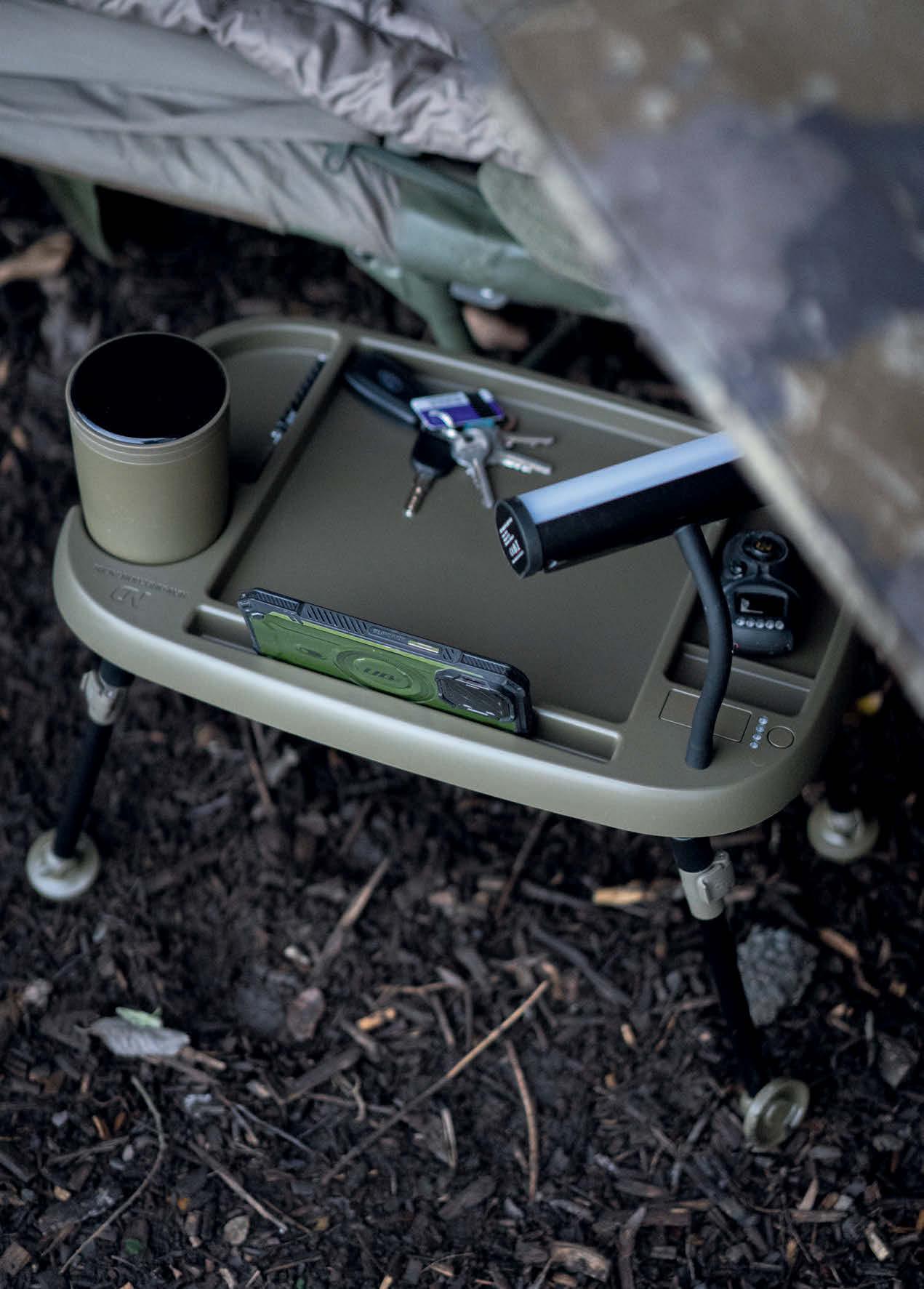
with, they’ve now become genuinely advanced, with two-tier designs, integrated power-pack storage and even smartphone and tablet holders built into the tabletop.
As with most areas of carp fishing kit, the range is vast— from basic, no-frills options through to premium models o ering serious bankside luxury. For this feature, we’ve looked 12 bivvy tables that span that full spectrum, from
budget-friendly designs right through to feature-packed tables costing well over £100. Each has been assessed by size, weight, three standout features, the manufacturer’s sales pitch, and our own honest verdict—highlighting what works well and where compromises exist.
Every table here does its job, and in most cases the price accurately reflects what you’re getting. Our favourites aren’t
necessarily the ‘best’, but simply the ones we’d choose to use ourselves. And yes, we even included a table from Temu, which is surprisingly decent, if aimed at a very specific angler. Ultimately, whichever you choose, build quality isn’t the issue; it’s about deciding how much space, weight and functionality you really need for your style of fishing.

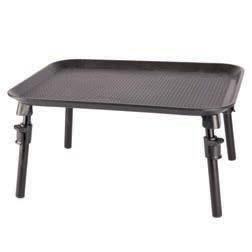
£19.99
SIZE: W35 x L45 x H23 to 34cm
THREE KEY FEATURES: 1. Lightweight, high-impact plastic construction. 2. Fully adjustable legs. 3. Compact, fl at design.
WHAT THEY SAY: ‘The Advanta Bivvy Table is a compact, lightweight table designed to keep essential tackle organised and o the ground. Featuring fully adjustable cam-lock legs with fl at ends to protect ground sheets, it’s easy to store, quick to set up and ideal for day sessions or smaller shelters.’
WHAT WE SAY: The Advanta Bivvy Table is very much the budget option on test, and it feels it—but not in a bad way. The lightweight plastic tray construction explains the £20 price tag, yet it still o ers a practical surface for a tackle box, brew, phone and essentials. The screw-adjust legs take a little longer to set up than quick-release systems, but once locked down they’re really stable, helped by secure cam fi xings. There are no bells or whistles here, but it’s solid, functional and does exactly what it needs to. Cheap, cheerful—and better than expected for the money.
SONIK BANK-TEK BIVVY TABLE
£34.99
SIZE: W47 x D30 x H22 to 33cm
WEIGHT: 0.90kg
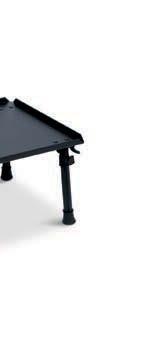
THREE KEY FEATURES: 1. Ultra-lightweight (900g). 2. Packs down fl at. 3. Strong value price point. WHAT THEY SAY: ‘Strong, light and extremely compact, the Bank-Tek Bivvy Table is made from all-aluminium and weighs just 900g. It features a 47 x 30cm tabletop with raised edges, height-adjustable cam-lock legs (22–33cm), nonslip feet and folds fl at for easy storage in a chair or bed.’
WHAT WE SAY: What really stands out with this table is just how light and compact it is. The cam-lock leg system is spot on: simple pull-back levers let the legs lock into position or drop away quickly when packing down. Folded fl at, it’s about as compact as a bivvy table gets. It does come with a nylon carry bag, which is a nice freebie, although we’d imagine most anglers won’t bother using it. Stability is the only real compromise: even at its lowest setting there’s some movement, and there are sturdier tables out there, but they’re also heavier.
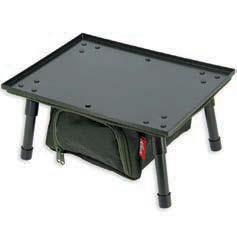
£23.21
SIZE: L34 x W25 x H15cm
THREE KEY FEATURES:1. Integrated storage bag. 2. Compact, space-saving footprint. Lightweight and portable. WHAT THEY SAY:‘The Temu Bivvy Table Organiser is a compact, lightweight table designed to keep essential items organised and within reach. Featuring a fl at tabletop and an integrated storage bag beneath, it o ers a practical solution for storing tackle and valuables while fi tting neatly into smaller bivvies or shelters.’
WHAT WE SAY: This is the smallest table on test and clearly aimed at anglers who like to keep things ultra-minimal (think: Holness, Hearn and Helleur). It’s ideal as a mini bedside table, o ering just enough space for a sounder box, phone, keys and a brew. Despite its size, it’s surprisingly solid, with strong spring-loaded legs that deploy quickly and feel stable in use. There’s no leg adjustment, so it sits low. The integrated storage bag initially feels unnecessary, but the Velcro cable port reveals its real role: housing power packs o the fl oor. Simple, compact and more useful than it fi rst appears.


FOX BIVVY TABLE
£39.99
SIZE: W28 x L47 x H24 to 33cm
WEIGHT:0.98kg
THREE KEY FEATURES:
1. Ultra-slim folding design.






2. Spring-loaded, cam-lock legs. 3. Lightweight but still a decent size.
WHAT THEY SAY: ‘It features an innovative perimeter-folding leg design, making it extremely slim when packed away. Spring-loaded, quick-action legs with Fox cam locks allow fast height adjustment from 24–33cm. Lightweight at just 988g, it o ers a stable, compact and practical surface for essential bankside items.’
WHAT WE SAY: The Fox Bivvy Table is a true classic and one of the longest-serving designs still in use—and for good reason. Its clever leg system sees the legs fold neatly into a recessed channel, keeping the table ultra-slim at just 2.6cm deep when packed away. Once set up, the legs lock evenly and securely, with noticeably less movement than many rivals. The tabletop is a sensible, usable size, comfortably holding a tackle box, receiver, hookbaits and a brew. Slim, lightweight and easy to stow on a bedchair—it comes with a big thumbs up from TC
£29.99
SIZE: W30 x L50 x H18 to 27cm
THREE KEY FEATURES: 1. Solid aluminium table top construction. 2. Spring-loaded legs. 3. Compact pack-down.
WHAT THEY SAY:‘The Revolve Table features a strong yet lightweight gunsmoke aluminium construction with a compact pack-down design. Spring-loaded, fully adjustable legs allow fast setup and a stable platform on uneven ground, while the generous tabletop provides an organised workspace inside your bivvy or shelter.’
WHAT WE SAY: It’s slightly heavier than some similarsized rivals, but the tabletop itself is very robust thanks to that aluminium construction. The spring-loaded leg system is simple and e ective, although the adjustable legs did feel a little sti initially and o er a fairly limited height range. It’s also the lowest table on test, which won’t suit anglers wanting bedchair-level height, but will appeal to those who prefer a lower, more ‘carpy’ look. There’s more leg movement than others here, though it’s rarely an issue.

NGT PROFILER BIVVY TABLE
£45
SIZE: L58 x W40 x H25 to 37cm
THREE KEY FEATURES:
1. Large, heavy-duty tabletop. 2. Integrated underside storage bag. 3. Slot to hold a phone/table.
WHAT THEY SAY: ‘‘The NGT Profi ler Bivvy Table is a large, heavy-duty table designed for organised bankside use. Featuring adjustable twist-lock legs, an integrated underside storage bag, a phone or tablet slot and a soft cable grommet, it folds fl at for easy storage and transport.’
WHAT WE SAY: Another heavyweight option that leans fi rmly into ‘bankside comfort’. The large tabletop o ers plenty of usable space, complete with a raised outer lip and an integrated phone or tablet slot. Setup is quick thanks to spring-loaded legs, with height adjustment handled via a twist-lock mechanism—not quite as confi dence-inspiring as cam locks, but secure enough when tightened properly. Beneath the table sits a generous storage compartment with a cable port, ideal for housing even the largest power packs o the fl oor. Stability is good, aided by rotating mud feet.
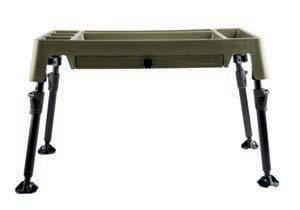
£49.99
SIZE: W28 x L48 x H32 to 44cm
THREE KEY FEATURES: 1. Integrated rig station design. 2 Built-in tackle organisation. 3. Stable and adjustable.
WHAT THEY SAY: ‘The Tackle & Rig Station combines a stable bivvy table with an integrated rig-tying and storage system. Featuring multiple compartments, a slide-out rig drawer with rig board and length markers, it folds fl at with adjustable legs to provide an organised, e cient workspace for longer sessions.’
WHAT WE SAY: As its product name suggests, this is very much a purpose-built workstation rather than a simple bivvy table. The standout feature is the internal slide-out drawer with integrated rig board. The tabletop is divided into multiple compartments, with a central measuring board, keeping smaller items organised but limiting space for large tackle boxes— bigger Fox System Boxes won’t sit neatly inside for example. The screw-fi xing leg system with rotating mud feet takes longer to erect, but adds way more stability than many rivals.


NASH BANKLIFE


BEDCHAIR STATION
£77.99
SIZE: L40 x D34 x H40cm
WEIGHT: 2.5kg
THREE KEY FEATURES: 1. Integrated bedside storage station. 2. Detachable tabletop. 3. Compact pack-down. WHAT THEY SAY: ‘The Bedchair Station combines a detachable wipe-clean tabletop with integrated 600D nylon shelving for organised bedside storage. Featuring quick assembly, three-sided zip access, adjustable legs and compact pack-down, it provides a practical, space-e cient solution for keeping tackle and essentials close to hand.’
WHAT WE SAY: The BankLife Bedchair Station sits well beyond a conventional bivvy table and like the other Nash table, fi ts fi rmly into bankside living territory. Best thought of as a bedside station or compact cupboard, it o ers huge storage capacity beneath a clip-on tabletop workspace. The internal shelving and removable solid tray create a genuinely usable storage system, ideal for housing everything from power packs and camera kit to food and clothing. Setup is quick for its size and build quality is typically robust. For long stays where comfort and organisation matter, it’s a superb solution.
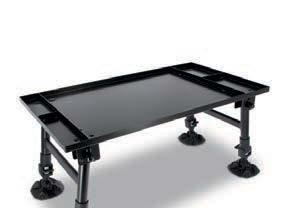

£50
SIZE: L60 x W35.5 x H28 to 38cm
WEIGHT: 2.5kg
THREE KEY FEATURES: 1. Large, fi ve-section tabletop. 2. Full aluminium construction. 3. Adjustable mud feet.
WHAT THEY SAY: ‘The NGT Dynamic Bivvy Table features a large fi ve-section tabletop and full aluminium construction for strength and durability. With four fully adjustable mud feet for stability on uneven ground and an easy folding system, it provides a spacious, organised and robust workspace for longer fi shing sessions.’
WHAT WE SAY: This is very much one of the heavyweight contenders on test and is aimed squarely at anglers who want a proper worktop rather than a lightweight side table. At 2.5kg it’s not one for travelling light, but if you’re barrowing or fi shing straight from the van/car, the trade-o is a big, practical workspace. The fi ve-section layout easily accommodates even the largest tackle boxes, with additional compartments for phones and essentials. The bedchair-style leg system locks positively into place and, combined with large rotating mud feet, delivers excellent stability.


FOX 2 TIER BIVVY TABLE
£59.99
SIZE: W38 x D57 x H32 to 50cm
WEIGHT: 1.8kg
THREE KEY FEATURES: 1. Two-tier design. 2. Ultra-slim pack-down (2.6cm). 3. Quick-locking legs.
WHAT THEY SAY: ‘Designed to keep your bivvy organised, the Fox 2 Tier Bivvy Table features a dual-level layout for separating essential items. Its moulded lightweight construction packs down ultra-slim at just 2.6cm deep, with spring-loaded locking legs and adjustable height from 32–50cm for versatile use.’
WHAT WE SAY: The Fox 2 Tier table impresses with its leg design. These fold neatly into a recessed inner, allowing the table to sit completely fl ush when packed down, making it one of the thinnest on test. Adjustment is quick and easy thanks to Fox’s familiar cam locks, which feel solid, but as with most adjustable tables, there is some movement, especially at full height. The standout feature is the upper tier tray, ideal for phones or sounder boxes, although it limits space for large tackle boxes underneath so bear that in mind if you own a large system-type tackle box.

NASH BANKLIFE
ADJUSTABLE TABLE
£99.99
SIZE: L80 x D60 x H48 to 62cm
WEIGHT: 5.5kg

AVID DOUBLE DECKER BIVVY ORGANISER
£114.99



SIZE: L55 x W35 x H23 to 29cm
THREE KEY FEATURES: 1. Large, shatterproof work surface. 2. One-touch adjustable legs. 3. Fold-fl at design. WHAT THEY SAY: ‘The BankLife Adjustable Table features a large, shatterproof and weatherproof work surface with one-touch leg adjustment for the perfect working height. Swivel mud feet protect groundsheets and improve stability, while the fold-fl at design makes transport easy.’
WHAT WE SAY: This sits well beyond the realms of a typical bivvy table and into full bankside workstation territory. It’s big, heavy (5.5kg) and unapologetically so, but that’s exactly the point. As anglers like Henry Lennon have found, the sheer surface area transforms how you fi sh, allowing everything to be laid out and kept to hand. The bedchair-style adjustable legs lock rock solid, the swivel mud feet o er superb stability (with pegging points), and setup is simple despite its size. There are no gimmicks here: just a huge, incredibly stable worktop that excels for rig-tying, organisation and even cooking duties.
WEIGHT: 1.6kg
THREE KEY FEATURES: 1. Two-tier organiser system. Integrated power and device support. 3. Adjustable ‘Lockdown’ legs.
WHAT THEY SAY: ‘The Double Decker features a hinged two-tier tabletop with an organiser pouch for comprehensive bankside storage. Fully adjustable Lockdown legs with pivoting mud feet ensure stability, while integrated USB ports, a tablet holder and clip-on gas pouch keep essentials organised, powered and within easy reach.’
WHAT WE SAY: To use Avid’s own strapline, this table is a ‘next-level’ option. Supplied in a tough carry case you’ll actually use, it’s a substantial, feature-packed unit. The screw-fi t adjustable legs lock down extremely tight and sit on decent-sized mud feet, giving excellent stability. The two-tier layout works well and a huge undercarriage for power packs and other essentials. A clip-on gas canister pouch adds further practicality. It’s heavy, bulky and not designed for frequent moves, but for barrow or van anglers who want a proper workstation rather than a simple side table, it delivers in spades.


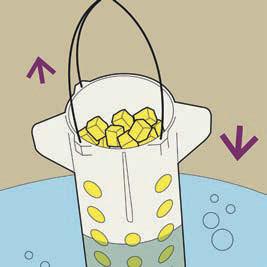











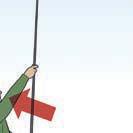
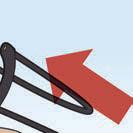
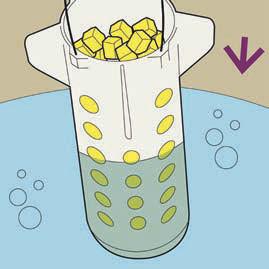
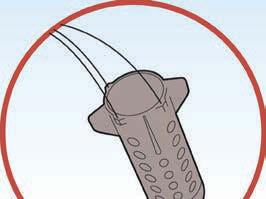

SPOMB LIKE TOM MAKER
USE A BAITING POLE LIKE DAVIES AND CUNDIFF
READ A GRAVEL PIT AND UNDERSTAND CARP SHOWS
AVOID THE HELL OF HOOK PULLS
MOT YOUR KIT READY FOR SPRING 2026 AND MUCH, MUCH MORE
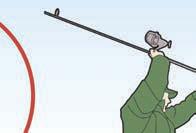
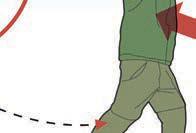







• MICRO RIGS VERSUS MASSIVE RIGS



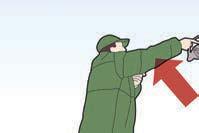
• CONQUER ‘SMALL-WATER CARPING’
• UNDERWATER THEORIES DEBUNKED
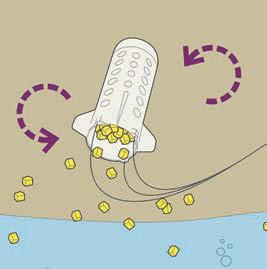
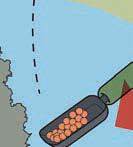
• APPROACHING DIFFERENT VENUES

• TESTED: CHOD RIGS AND STOVES