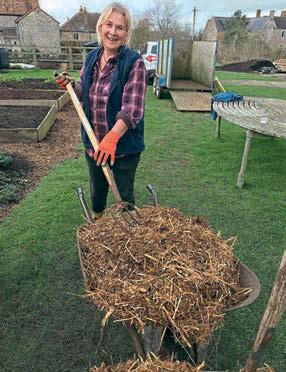
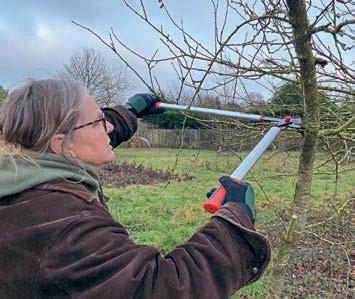
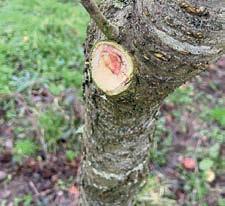
I’ve been putting off pruning my apple and pear trees all winter. Work deadlines, Christmas, weeks of rain – the usual excuses... but with time running out, and a welcome break in the weather, I nipped out to get on with it before I missed the boat – again. I put the orchard in 18 years ago and I’m afraid the trees have been pretty much left to their own devices ever since – I’m sure some of you can relate.
In the summer, I noticed one of the Victoria plums had silver leaf and, as I passed it today, I got briefly sidetracked into having a closer look. It’s been badly affected and I fear it may have to come out – a shame, as the chickens spend their summers in the orchard and are particularly fond of a windfall plum or two.
It was so nice to be outside again, and I was only brought in by the onset of dusk – although my daughter helpfully suggested a head torch!
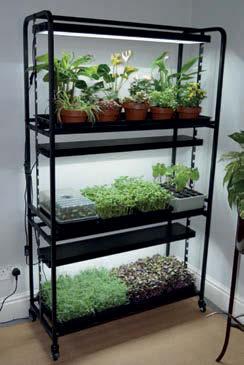
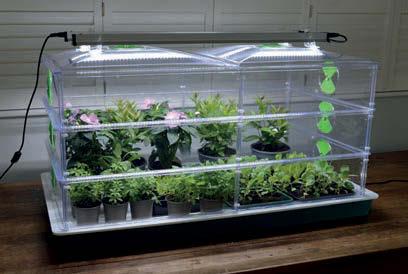
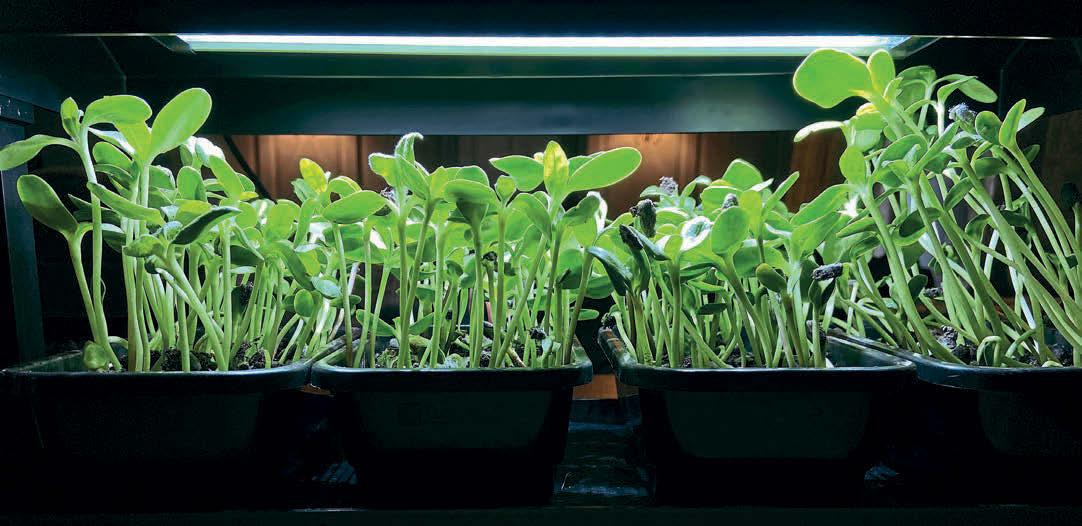
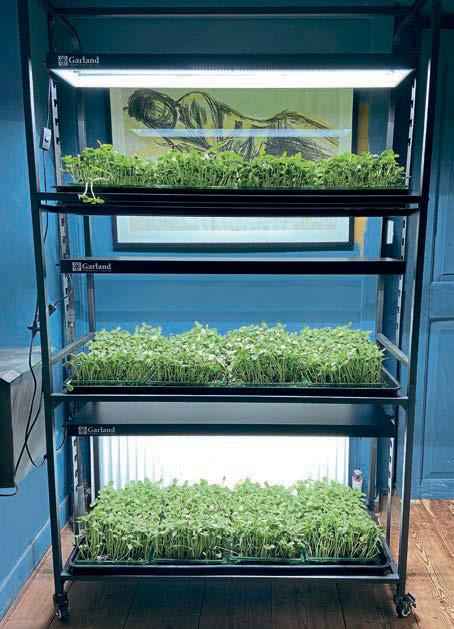
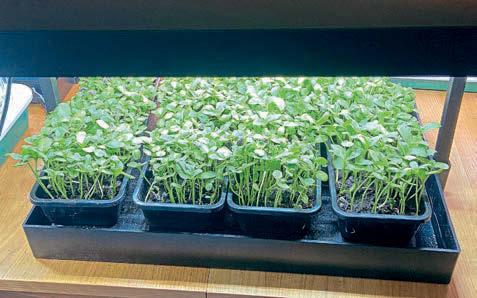
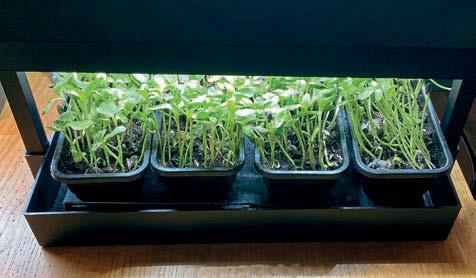
My office was also the setting for one of our grow light tests this month, and I hadn’t realised quite how much I’d missed the smell of growing seedlings until I walked back in, cold and muddy, and caught it properly for the first time. That soft, green, slightly earthy scent felt like a promise –a small, indoor preview of everything that’s about to begin again outside. It’s made me genuinely excited for the arrival of spring, even though I know better than to get carried away. I’m not counting my (plum-thief) chickens just yet – we could easily be plunged back into a run of very cold weather, and March has a habit of keeping us on our toes. But that’s part of the pleasure of gardening for me. It constantly asks you to slow down, to watch, to wait – and to accept that progress isn’t always neat or predictable.
Being patient isn’t very ‘me’, honestly. I like plans, lists and momentum. Growing has taught me something different. You can prepare, you can test, you can prune and tidy and make the best decisions you can – but in the end, so much of it comes down to timing and trust. Sometimes that means stepping back, and sometimes it means picking up the secateurs and getting started – even when you’re not quite sure how it will turn out. Either way, spring always finds its own moment to arrive.
Rachel Graham, editor
YOUR PLOT
6 JOBS FOR THE MONTH ✪
March jobs, indoor, outdoor and under cover. Stephanie Hafferty explains what to do now for a great start to the gorwing season 10 WHAT’S NEW?
Catch up on the latest news, events, and advice from the world of kitchen gardening
KG readers share their experiences and offer their top tips
Our experts answer your urgent gardening questions 22 KG
Sara Barlow has transformed two plots and her children sometimes lend a hand
Save
Looking ahead to April's KG
GET GROWING
16 SALAD DAYS ✪
Benedict Vanheems reveals how to grow leafy salads from spring to the height of summer – even when the weather turns hot, and pests try their luck!
26 SUPER SPICY TREAT
Rob Smith successfully grows wasabi – but not for the root!
32 LET'S GET STARTED ✪
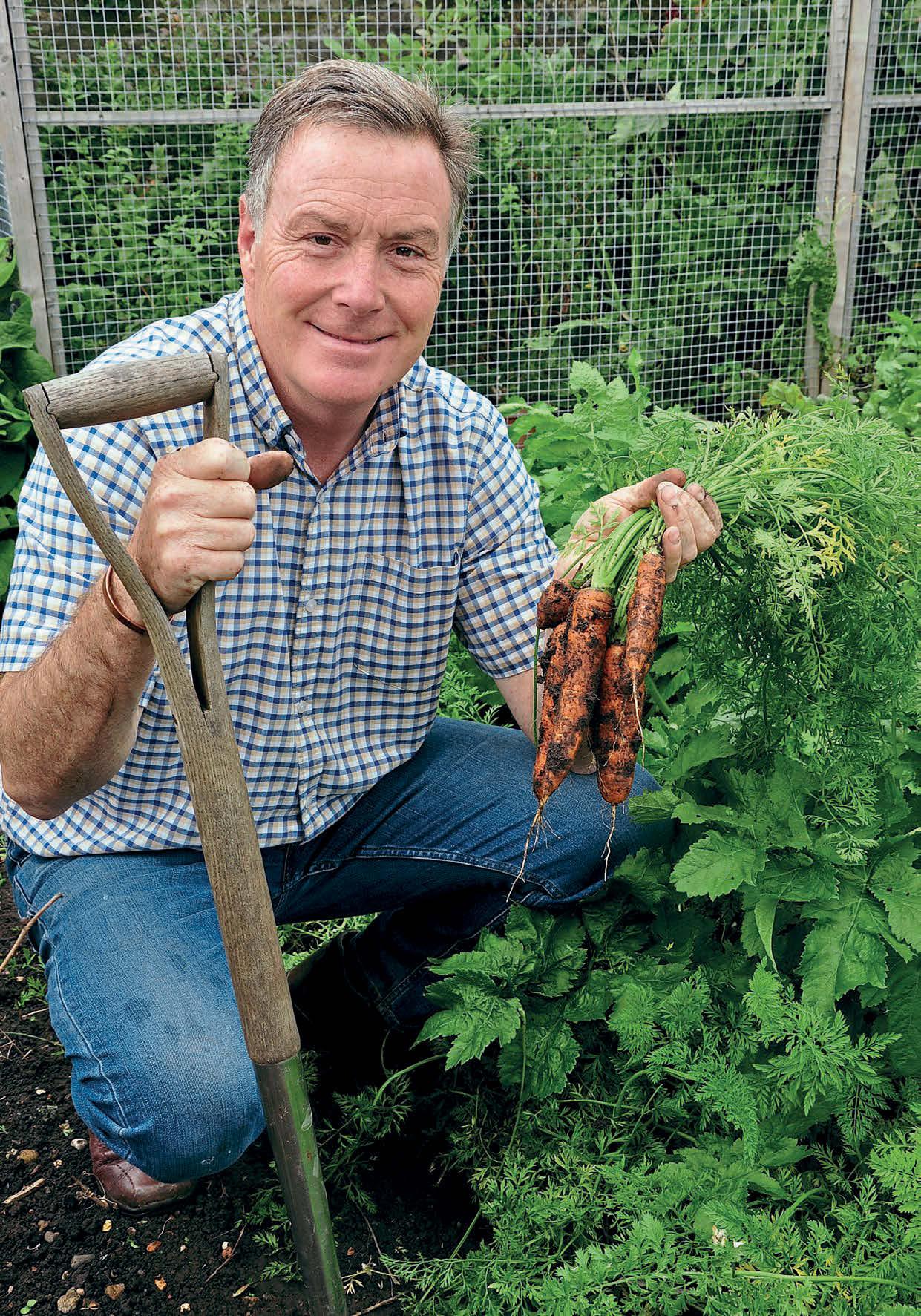
Martin Fish shares his practical advice for growing carrots and parsnips – and now’s the time to begin
39 HERB OF THE MONTH ✪
Old-fashioned lovage has a strong form and an intensely savoury flavour
42 LIVING WITH SLUGS
Garden Organic's Anton Rosenfeld debunks the 'all slugs are bad’ mantra
44 PERMACULTURE PRINCIPLES ✪
Stephanie Hafferty continues her series with advice on ‘obtaining a yield’ – and it’s not all about harvests
58 WAYS TO SAVE WATER
Practical tips on how, why and where to start saving water for the summer ahead
62 SOIL CREATURES ✪
Becky Searle explores the visible and invisible inhabitants of your soil
70 UNUSUAL BERRIES ✪
David Patch takes a look at some lesscommon edible berries that could be adding variety to your summer harvests
74 GROW LIGHTS TEST
We compare a range of indoor grow light systems to see which genuinely deliver –and which fall short
WHAT TO BUY
66 £1,025! GIVEAWAYS ✪
Hand tools, coir products and garden defence bundles
68 GARDEN STORE
A chance for KG subscribers to take advantage of some exclusive offers
76 READER OFFERS ✪
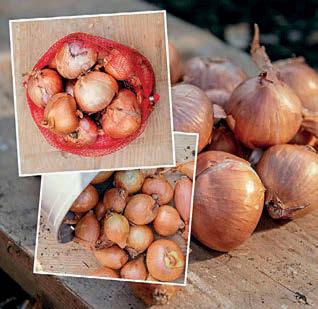
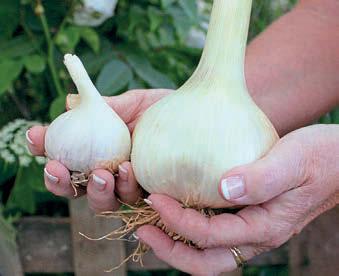
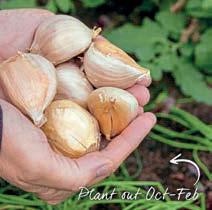
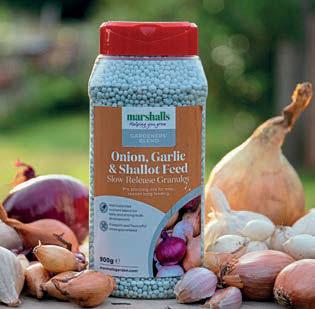
Exclusive savings on spring-planted onions, garlic and shallots – order now!
M CH
Stephanie Hafferty sets out the key early spring jobs, guided by weather, soil and timing
PLANT BARE-ROOT
Finish planting bare-root trees and bushes while they are still dormant. If the ground is completely frozen they can be potted on temporarily, and planted out later on
CHECK FLEECE
Check supplies of horticultural fleece and other row covers to make sure they are clean and in good shape before the main spring sowing and planting begins
HOE WEEDS
Keep hoeing and weeding seed beds to remove any germinating weeds. It’s surprising how quickly weeds can flourish after a day or two of March sunshine!
PLANT GARLIC
Finish planting spring garlic varieties. This will crop later than overwintered garlic, in late July or August
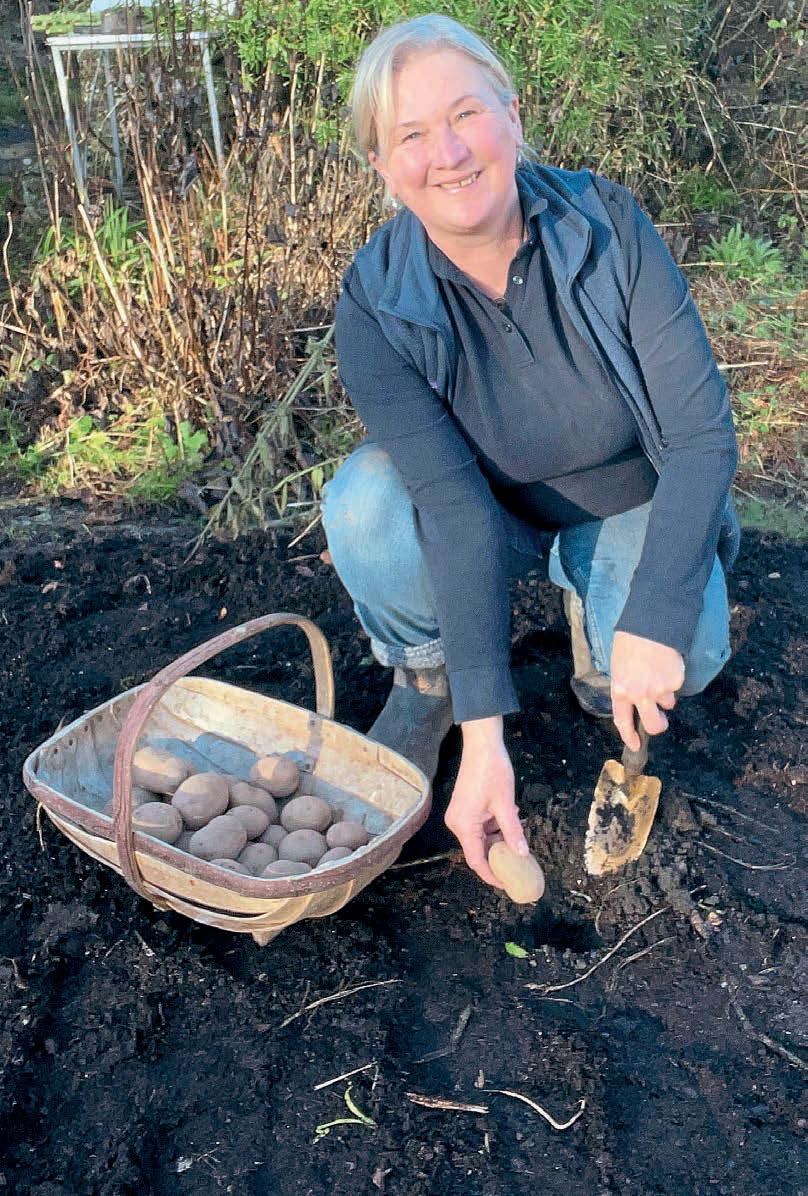
Freshly harvested new potatoes, served with rst peas or baby beetroot, are one of the joys of spring. It’s time, weather permitting, to plant rst-early potatoes such as Arran Pilot or Rocket. For something di erent, try Bim, which has purple skin and esh (rich in anthocyanin).
First earlies don’t need chitting and can be planted as soon as the conditions are right. If the ground is frozen or waterlogged, place the seed potatoes in a light space at room temperature. I use egg boxes on a shelf, which hold each tuber neatly in place.
To grow an extra early crop of potatoes, or if it’s very cold, plant three tubers in a large pot of compost undercover in a greenhouse or polytunnel. ey’ll crop in May. In mid to late March, plant the seed potatoes 15cm deep, 30cm apart, in rows 60cm apart using a trowel. Cover with soil and some compost. e potatoes will be ready to harvest in around 12 weeks, giving you plenty of time to plant another crop, such as kale or salads.
GROWING MULTI-SOWN PEAS
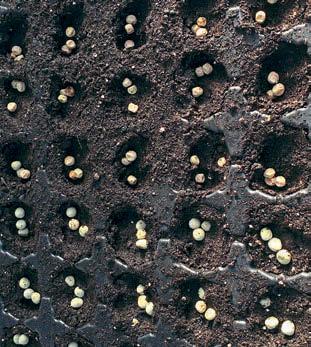
STEP 1: Starting peas off undercover in modules is a great way to ensure good germination. It will also help to prevent the peas from being eaten by rodents. Fill modules (or loo roll tubes cut in half if you don’t have modules!) with multipurpose compost, firm down and sow three peas in each module.
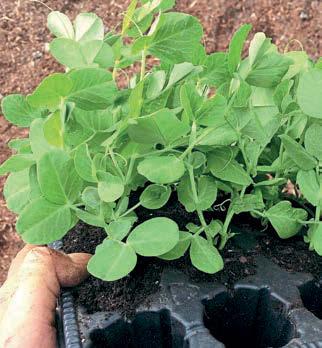
STEP 2: Keep a careful eye on how the crop is developing. Wait until the peas are around 10cm tall then, using a dibber or trowel, plant out the whole clump of three seedlings in a row, with each clump 8cm apart. If planting a double row, you need to allow 30cm (1ft) between each row. Water in well.
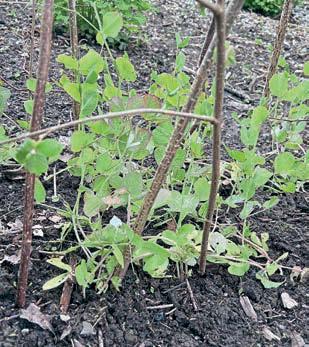
STEP 3: Shorter pea varieties will benefit from being given twiggy pea sticks to scramble up. This also helps protect them from wind damage. For taller pea varieties, make a frame from tall, twiggy pea sticks (I use hazel) or bean poles, and use biodegradable string to support the peas as they climb.
MOLES GET BUSY
■ PERENNIAL WEEDS
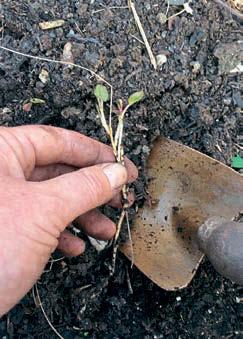
Perennial weeds, including bindweed and couch grass, will be starting to sprout and spread. Prevent them from invading your beds by removing any shoots with a trowel. Soak these in a bucket of water until they turn to mush (the liquid makes a useful plant feed), then put them on the compost heap.
■ BIRD DAMAGE
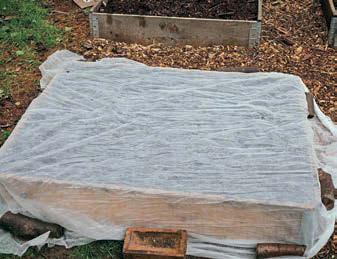
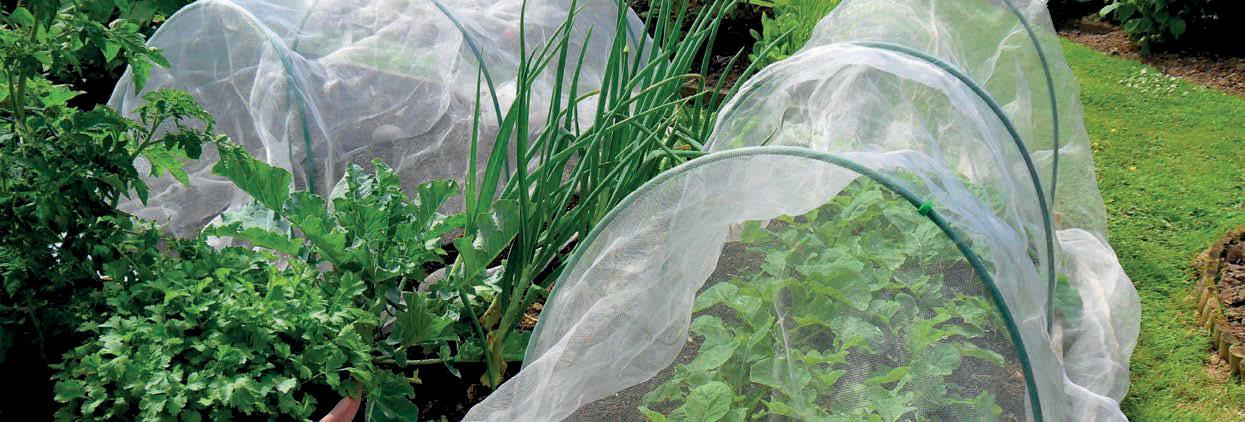
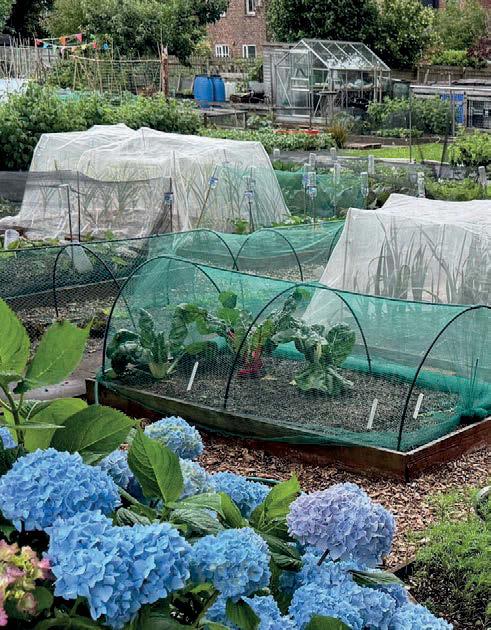
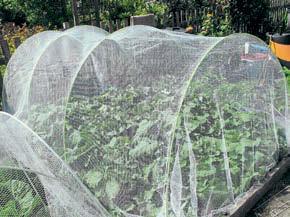
Sparrows love young beetroot, lettuce and spinach seeds and can quickly devour a whole bed of tender leaves. Protect young plants by securing fine veg mesh or butterfly netting over the beds. Always make sure all netting is properly secured to prevent wild creatures from becoming tangled or trapped.
■ THE PESTS THAT LIKE TO HIDE AWAY!
Keep checking under trays and pots in the greenhouse for slugs, snails and woodlice. They especially love living under module trays. Relocate these enthusiastic seedling munchers to a wild part of the garden, where they can live out their lives as beneficial nutrient recyclers and part of the food chain.
Mole activity is increasing as spring progresses, a sign that they are happily hunting underground. While they are rarely seen by the gardener, we know they’re present by the molehills that suddenly appear in veg beds and lawns. Moles help to maintain a balance of insects in the soil, eating many grubs that feed on our crops. Their tunnels help to keep soil healthy, improving drainage and also adding to fertility with their droppings.
The tunnels rarely cause harm in the plot, although it can be a surprise when planting if the trowel or dibber suddenly drops unexpectedly into a tunnel! Moles do not harm plants themselves. They are carnivores, feeding on invertebrates.
Molehills are their gift to us gardeners. Gather up this beautifully crumbly soil and use it as is for potting, or mix it with onepart leaf mould (or coir or garden compost) and one-part fine grit for a multi-purpose compost mix.
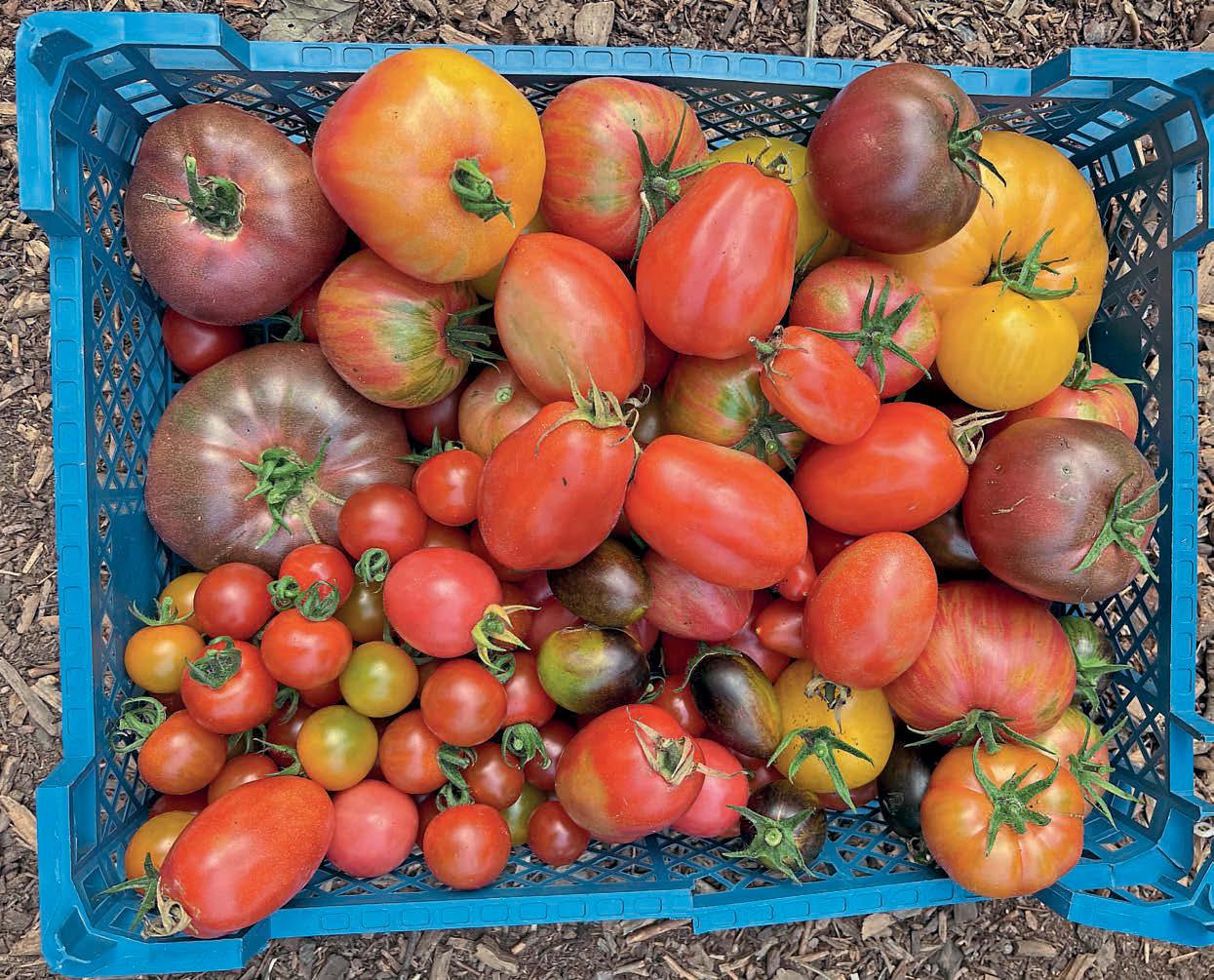
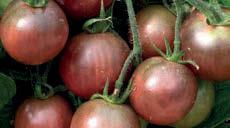
In recent years, the choice of tomato varieties available to home gardeners has increased enormously. e delightful di culty is deciding what to choose from all the gorgeous colours and shapes available. To avoid feeling overwhelmed by choice, rst decide which kinds are best for your growing space.
Cordon (indeterminate) tomatoes are tall, ideal for growing up supports undercover and also outside.
Bush (determinate) varieties are more compact, and ideal for growing on windowsills, in pots or in hanging baskets.
If you can, choose di erent varieties that o er a wide range of eating and cooking options – sweet cherry tomatoes for snacking, plum tomatoes for making preserves and bottling, medium-sized tomatoes for salads and huge beefsteaks, which taste amazing in a sandwich. I recommend adding storage tomatoes to the plot. ese traditional varieties are harvested in the autumn on their trusses and hung in the kitchen, where they’ll slowly nish ripening and can be enjoyed all winter.
Choosing heirloom varieties means you can save seeds each year, saving money since you only need to buy them once. For those without undercover spaces, blight-resistant tomatoes are a practical choice. And don’t forget to add one or two of the dazzling multi-coloured tomatoes for the sheer joy of growing them.
PLANT COMFREY TO MAKE YOUR OWN TOMATO FEED
Comfrey makes an excellent free plant food for tomatoes and other crops. The nutrient-rich leaves can also be used to mulch and protect veg beds, and are a fantastic addition to compost heaps. It’s a garden hero, a dynamic accumulator with a very deep taproot. Comfrey is beneficial to wildlife, including foraging insects, and is easy to propagate by dividing the roots.
Comfrey can be extremely invasive, so unless you have a really large garden, it’s best to choose non-invasive varieties such as Bocking 14. Plants are available to buy online, or ask around in your local community and see whether anyone has some spare roots.
Plant 60cm apart, 10cm deep if planting roots or about level with the pot for potted plants. Water in. Comfrey is a resilient plant, with few pests and diseases.
KEEPING SEEDLINGS AND YOUNG PLANTS WARM
STEP 1: The last frost date is still a long way away for most of us, so it is important to keep tender seedlings and plants warm, especially on cold nights. 30gsm horticultural fleece, bubblewrap or even layers of newspaper spread over the top can help to prevent freezing.
YOUR KEY JOBS FOR MARCH
■ Hand-pollinate peaches and nectarines, which flower before there are many pollinating insects about. Do this on a dry day for outdoor fruit, or anytime for undercover-grown trees. Using a small paintbrush, carefully dab the centre of each flower in turn. Repeat over several days to ensure good pollination.
■ Check that you have enough bean poles, pea sticks and other plant supports. Gather suitable material (with permission) from hedgerows, or buy from local garden suppliers. It’s a good idea to make sure that you have enough string now, too.
■ Keep harvesting over-wintered vegetables, including parsnips, kale, leeks and Brussels sprouts. If the parsnips are growing leaves again, harvest them all and store them before the centres become too woody. The shoots of all brassicas are delicious and edible. Pick and use just like purple sprouting broccoli.
■ Keep an eye on local weather forecasts and be prepared for spring snows and hard frosts. Have insulating covers, including horticultural fleece, bubblewrap, newspaper or card to hand to protect tender crops from very cold weather.
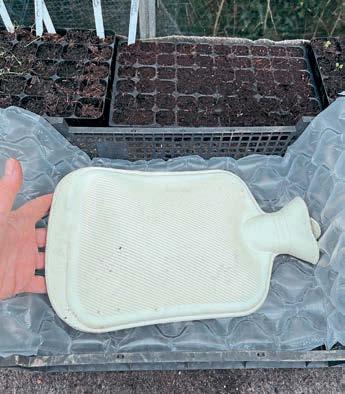
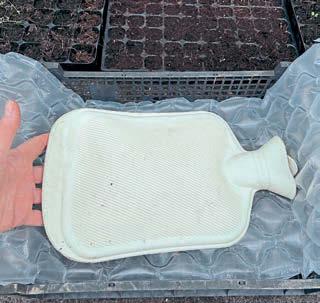
STEP 2: Electric propagators and heat mats are ideal for maintaining a cosy temperature. For an off-grid option to keep plants warm, fill a hot water bottle with hot water, wrap it in bubblewrap to insulate and place seed trays on top. The water will need to be replaced at least once a day.
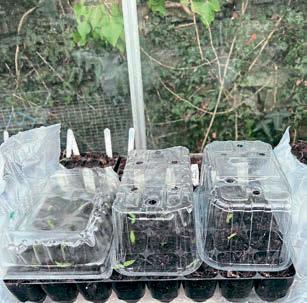
STEP 3: Clear plastic propagating lids protect seedlings from cold weather and fit snugly on top of trays. Alternatively, repurpose clear plastic food containers to create warm, mini-greenhouse microclimates. The round kinds for hummus or yoghurt are especially good for fitting on top of pots.
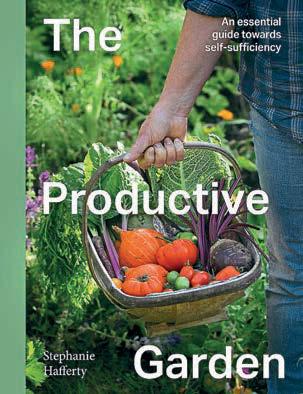
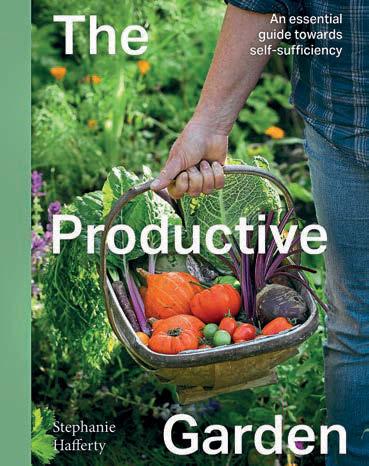
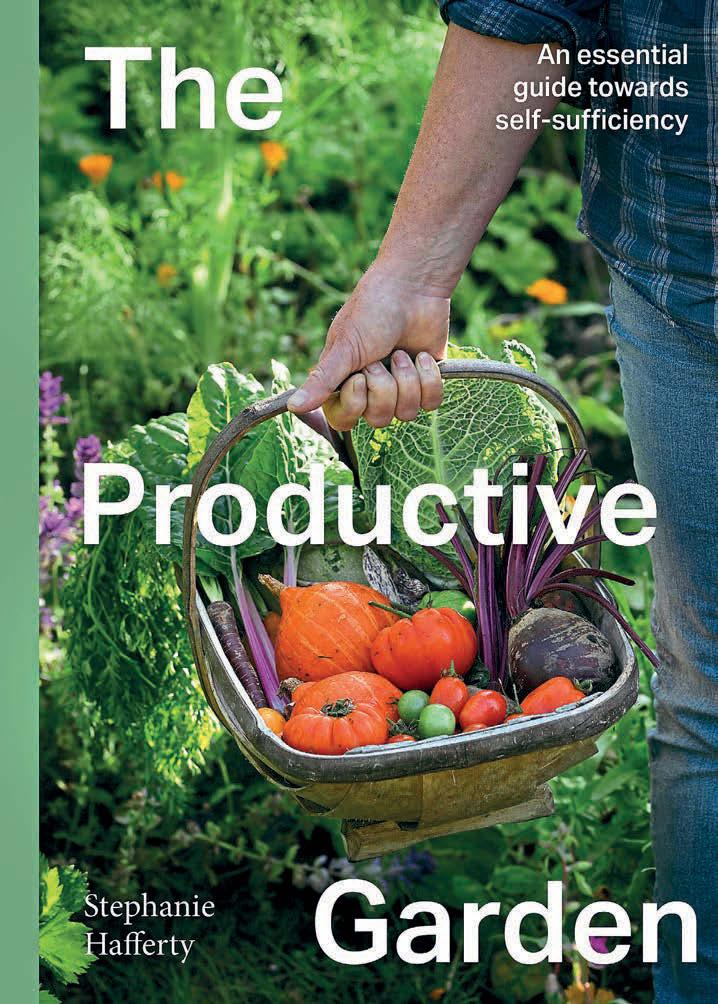
Stephanie’s latest book The Productive Garden is released on March 26 (Frances Lincoln, £25.99), and you can read an extract, starting on page 58
Start sowing companion flowers to place outside and undercover alongside your crops. They can help to maintain a balanced ecosystem by attracting beneficial predators and pollinators. Calendula, nasturtiums, cornflowers and viola are fantastic for growing in polytunnels and greenhouses, and are all edible flowers too. They’ll also grow outside, but wait until after the last frost date before sowing nasturtiums outside, as they are not frost-hardy. Sow into pots or modules under cover, and plant out when they are healthy transplants. Growing companion flowers helps to increase biodiversity above and below the soil. Adding flowering plants to veg beds can help confuse pests, and they look beautiful.
YOU
ALL THE LATEST NEWS, PRODUCTS & FACTS FROM THE WORLD OF KITCHEN GARDENING
THE IRON PROBLEM GARDENERS DON’T KNOW THEY HAVE
Yellowing leaves, weak growth and tiredlooking plants are common frustrations for gardeners – especially when the cause isn’t obvious. In some cases, the problem can be one of two things: either a lack of iron in the soil, or – more commonly –iron is present but unavailable to plants because alkaline soil conditions prevent roots from absorbing it effectively. Either way, insufficient iron uptake can leave plants struggling to grow, resulting in pale foliage and poor overall health. Thankfully, Maxicrop’s Growth Stimulant and Sequestered Iron can help restore rich green colour and healthy growth by tackling iron deficiency quickly and effectively.
But why is iron so important?
It’s a vital nutrient that supports healthy plant growth and rich green foliage. It also plays a key role in the production of chlorophyll, the pigment responsible for a plant’s green colour and its ability to make energy through photosynthesis. When iron is lacking, plants can develop
chlorosis – a condition where leaves turn yellow while the veins remain green. Iron also supports several other essential plant processes:
■ Energy for growth: iron supports photosynthesis – the process plants use to turn sunlight into energy
■ Internal plant processes: iron is needed for other important chemical reactions inside the plant so it can grow and develop properly
■ Helps oxygen movement within the plant: iron supports internal transport processes that keep leaves, stems and roots healthy Sequestered iron is a specially treated form of iron that has been added to an organic mixture. This binding process protects the iron, keeping it soluble
green. Iron also supports several gardens – particularly those with
to plants even when it is shields the nutrient from
inactive, allowing plant roots time to absorb it. Because of this stability, sequestered treatments. ways – to correct visible
first signs of yellowing
and readily available for plant uptake once it is applied to the soil. In many gardens – particularly those with alkaline or chalky soils – ordinary iron can quickly become ‘locked up’, making it unavailable to plants even when it is present. Sequestered iron shields the nutrient from soil conditions that would normally cause it to become inactive, allowing plant roots time to absorb it. Because of this stability, sequestered iron provides longer-lasting results than standard iron treatments. Sequestered iron can be used in two ways – to correct visible iron deficiency or as a preventative measure. It should be applied at the first signs of yellowing leaves and repeated as needed throughout the growing season. Because it works quickly, greener, healthier leaves are often visible within just a few days. In gardens with chalky or alkaline soil, regular application helps maintain adequate iron levels, keeping plants strong and productive throughout the season.
Maxicrop Growth Stimulant and Sequestered Iron is easy to incorporate into a regular garden care routine. It can be watered directly into the soil around affected plants or applied to borders, containers, fruit, vegetables and lawns showing signs of iron deficiency. Regular use helps restore deep green leaf colour, improve plant development and overall appearance, and support healthy growth while helping to prevent recurring iron deficiency, particularly in alkaline soils.
• For more information on Maxicrop products, visit seezon.co.uk
PLANTABLE PENCILS THAT OFFER A PLASTIC-FREE ALTERNATIVE TO PENS
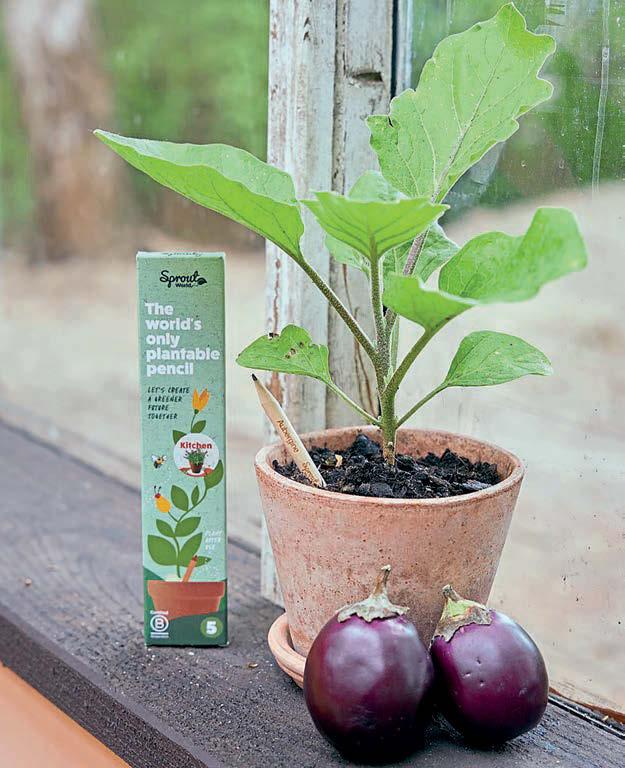
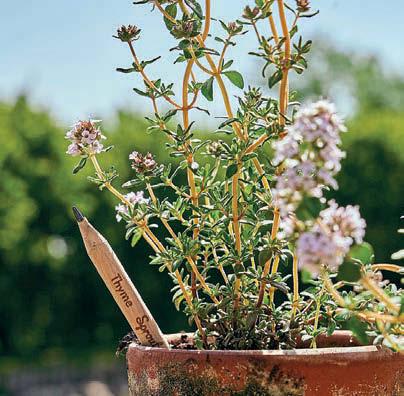
SproutWorld produces wooden pencils that can be planted after use and grown into plants and trees. Each pencil contains a small seed capsule in the end of the stub. Once the pencil has been used it can be planted in soil and, with water and sunlight, the capsule grows
into a vegetable, herb, flower or tree. The company says around 175,000 plantable pencils can be made from a single tree sourced from sustainably managed forests, where a new tree is planted for each one harvested. Since the pencils are designed to be planted after use, the material from one tree is reused and replaced through new plant growth.
PRACTICAL SELFSUFFICIENCY FOR EVERYDAY GROWERS
A new book by KG regular Stephanie Hafferty aims to make small-scale self-sufficiency realistic for home gardeners, whatever the size of their plot. The Productive Garden brings together growing, preserving and household skills in a practical guide for gardeners who want to produce more from their own space and reduce their reliance on bought-in food and products.
The book is built around the idea that selfsufficiency does not have to mean a full lifestyle overhaul. Drawing on more than 30 years’ experience of growing food at home, Stephanie focuses on achievable systems for gardens, allotments and balconies, combining food production with soil care, composting, water use and biodiversity.
The content is divided into three main sections. The first looks at how to plan and manage a productive plot, including planting plans for different spaces, practical composting and water-saving methods, protecting crops and improving soil health, and working with nature to manage pests and encourage wildlife.
The second provides a seasonal guide to reliable and productive crops, covering vegetables, fruit, herbs and flowers, with an emphasis on varieties that perform well over long harvest periods.
The final section moves beyond growing to show how harvests can be used and stored, with guidance on preserves, oils, ferments, vinegars and cordials, alongside recipes for a homegrown larder. It also includes projects for making simple household products such as cleaners, as well as garden crafts and wellbeing products.
• The Productive Garden by Stephanie Hafferty is published on March 26 by Frances Lincoln, £25. See page 58 for an exclusive extract from the book
The range includes themed packs such as Kitchen, Grow a Garden, Spread the Love, and Happy Bee, as well as Thank You and Christmas packs. Packs are available via Amazon and from sproutworld.com
Typical prices are £12.50 for a pack of eight pencils and £9.50 for a pack of five.
YOU YOUR PLOT
KG SEEDS SET A RECORD
I am very pleased with the free carrot seeds from last year’s KG. Thank you, and I wanted to share some feedback.
At the allotment, I sowed 3 x 10ft rows, of Nantes 5 and Chantenay Red, successionally over a month. Then I spread a layer of Strulch along each side of the row, immediately covering with fine net cloches. Feeding (Growmore) and watering
were a bit ad hoc due to the weather. My soil is clay. I’m glad to say they were hardly affected by the dreaded carrot fly.
I started harvesting on July 23, 2025. I still have half a row to lift on February 1, 2026. Weight so far: 16lbs! I have never had such a yield in 18 years at my plot.
Such a versatile veg, for stews, soups, curries, salads and as crudites, and so tasty,
SEND US YOUR LETTERS AND TIPS:
compared to shop-bought. I haven’t given any away either (unlike courgettes and rhubarb!)
One year, all the carrots on the site were scavenged by a badger. He was seen on a night camera, which was incredible.
I am now eagerly awaiting the new sowing season.
Christine Kingham, Epping
TOP FRUIT TIPS IN A TOP BOOK
I simply had to email you. In the article The Winter Chop by David Patch, he recommended the book The Fruit Tree Handbook by Ben Pike, which I have bought.
I have never read such an interesting and comprehensive book as this one, written in layman’s terms, although I have some experience of fruit trees and have several books on the subject of top fruit. This is by far the best one I have ever read, so please thank David for recommending it. His articles are good as well, I hasten to add!
Chris Turner, Hertfordshire
TAKE A RISK
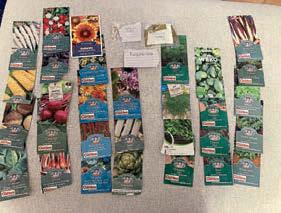
Instead of buying seeds, sets, bulbs and tubers this year, I thought I would try using up all my expiring or recently expired seeds. Possibly this will be a disaster of poor germination, or I will feel really good about using all my previous years’ cast-offs… we will see! I will get back to
you on the outcome – my husband is saying it will be a disappointing year. I’ll ignore him and give it a go anyway!
Harriet, Leigh-on-Sea
It’s amazing how many packets we accumulate over the course of a year or so, isn’t it? The ‘sow-by’ dates on seeds are usually very
conservative. I bet you’ll get great results. Do let us know later in the year. Ed
HAVE A QUESTION ABOUT YOUR KG SUBSCRIPTION? JUST CALL 01507 529529
CHIEF EXECUTIVE OFFICER Steve Kendall DIVISIONAL MD Fiona Mercer
SUBSCRIPTIONS MARKETING MANAGER Emily Hancock
RETAIL DIRECTOR Steve Brown
PRINT PRODUCTION CONTROLLER Hayley Brown
SUBSCRIPTIONS AND BACK ISSUES
Customer Service: Tel 01507 529529
Telephone lines are open: Monday-Friday 8.30am-5pm 24hr answerphone help@classicmagazines.co.uk www.classicmagazines.co.uk
SUBSCRIPTION: Full subscription rates (but see page 50 for offer): 12 months 12 issues, inc post and packing) – UK £95.88. Export rates are also available – see page 50 for more details. UK subscriptions are zero-rated for the purposes of Value Added Tax.
DISTRIBUTION
Frontline Distribution Solutions, 2 East Poultry Avenue, London, EC1A 9PT PRINTING
William Gibbons & Sons, Wolverhampton PUBLISHED
Monthly by Kelsey Media Ltd, The Granary, Downs Court, Yalding Hill, Yalding, Maidstone, Kent ME18 6AL Tel 01507 523456, Fax 01507 529301 THE TALKING KG Kitchen Garden is available on audio CD or USB at very reasonable rates to anyone unable to read normal type. Details from the Talking Newspaper Association of the UK on 01435 866102. ISSN 1369-1821
Once you have read and enjoyed your copy of Kitchen Garden magazine, why not recycle it? Remove the glossy cover and shred the rest before adding to your compost heap or bean trench. Subscriber copies now come in recyclable paper, while the polythene sleeves in which KG is supplied in
Send us your tips and pictures and if your letter is published you will get a £10 Dobies voucher. If you are lucky enough to have yours chosen as our Star Letter you will get a £25 voucher. You can choose to spend your
winnings on a fabulous range of seeds, young plants and gardening sundries, all available on the Dobies website, or you can get hold of a free copy of the 2026 catalogue now by phoning 0844 701 7625 or going online to: dobies.co.uk
Email your letters to kg.ed@kelsey. co.uk or post to: Letters, Kitchen Garden, Kelsey Media, Media Centre, Morton Way, Horncastle, Lincs LN9 6JR, and remember to include your postal address. Reach us via our Facebook page. Search: KitchenGardenMag or via our Instagram page: growwithkg
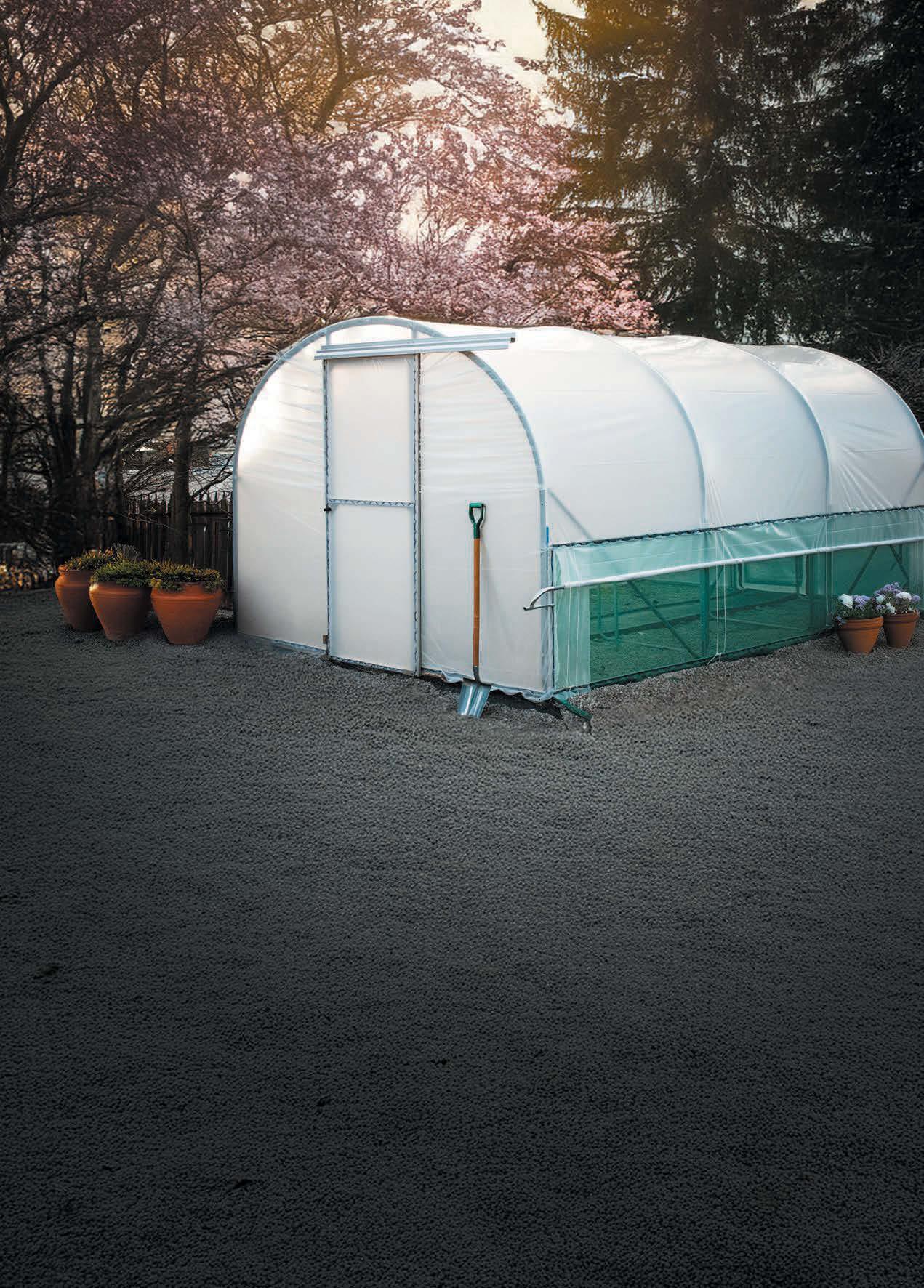
Withsuperstrong50mmovalprofile tubesand auniquecovertensioning system -anEasyBuildisthelast tunnelyou’lleverneedtobuy.
YOU YOUR PLOT
GOT A FRUIT OR VEG PROBLEM? ASK KG FOR HELP
CUTTING THROUGH CHALLENGE OF COUCH GRASS
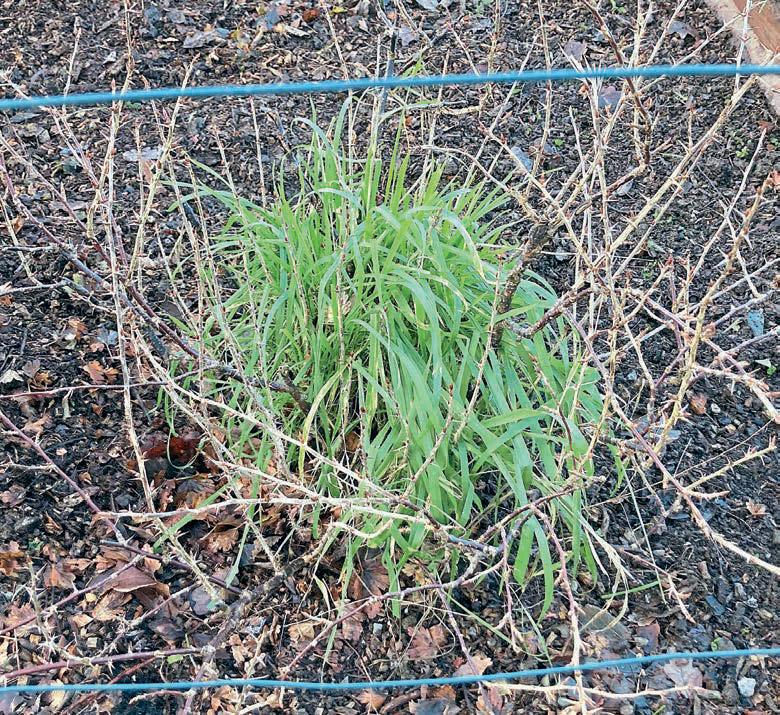
Q. How can I get rid of the couch grass growing through two of my gooseberry bushes without damaging the bushes?
It seems I will have to dig up the bushes, which are well-established, maybe five years old. I’m not sure they would survive such treatment. Any advice, please?
Martin Gill,
Plymouth
A. Couch grass is awkward around established bushes because its long, brittle runners weave through the root system and snap very easily when pulled. In most cases, it’s better not to lift a five-year-old bush to deal with it, as disturbing the roots to remove every runner can set the plant back for a season or more.
A more reliable approach is to initially remove as much of the couch grass as you can in situ, then weaken what’s left. Start by cutting the leafy growth of the main clump back to just a few centimetres above soil level with a sharp knife. This makes it much easier to see exactly where the shoots are emerging and exposes the crown, which is the part of the plant you need to tackle. Work in small sections, cutting away from yourself and the stems of the bush – this will be tricky with a multi-stemmed, prickly gooseberry, so take your time. It may help to gently tie back some of the stems, to give yourself room to work.
Using a narrow hand fork, fine trowel or hori-hori (or, if space is really tight, a sturdy kitchen knife), gently ease the soil away from the base of the clump and lift the crown slightly, then begin to follow the pale, rope-like runners outwards through the soil rather than digging straight down and chopping through them. Work slowly, from the outside edge of the clump, and tease the runners free, a bit at a time, loosening the
soil along their length and lifting them in sections. Some will inevitably snap, but removing as much runner as possible is far more effective than pulling out the green tuft alone.
It’s unrealistic to expect to remove every last piece in one session when working around a shrub. The aim at this stage is to lift the main crown and take out the thickest, most accessible runners, then switch to a programme of regular follow-up.
After this initial tidy-up, inspect the area frequently and remove any new couch grass leaves as soon as they appear. Each shoot feeds the underground runners, so repeated removal gradually exhausts
the plant and, over time, it will die back. Applying a mulch afterwards, such as compost topped with cardboard or a thick layer of woodchip, will help to suppress regrowth and make new shoots easier to spot, provided it is kept clear of the gooseberry stems. Avoid hoeing or repeatedly slicing the growth off at soil level, and don’t stab blindly under the bush, as this just fragments the runners and encourages the grass to spread. Although it is possible to lift and replant gooseberries, it’s best avoided if possible. Careful hand removal followed by patient, persistent follow-up is usually the safest and least disruptive way to clear it.
Kitchen Garden, Kelsey Media, Media Centre, Morton Way, Horncastle, Lincs
SALAD DAYS
Struggling with salads? Benedict Vanheems reveals all you need to know to grow leafy salads successfully from spring to the height of summer – even when the weather turns hot, and pests try their luck!
Few garden pleasures rival stepping outside on a warm summer’s evening, scissors in hand, to snip a bowlful of fresh salad leaves for supper. Crisp, cool and bursting with avour, homegrown salads are among the very quickest and most rewarding things you can grow – and now, joyously enough, it is the perfect time to get them started.
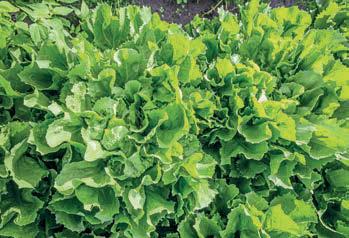
Leafy salads such as lettuce, endive and chicory are ideal for gardeners of all abilities thanks to their incredible adaptability. ey thrive in everything from raised beds to patio containers. Best of all, they reward the eager gardener not once but many times over multiple weeks or even months, if harvested correctly.
Salad leaves deserve pride of place in every garden. Many are ready to harvest in as little as four weeks, while a solitary packet of seeds can produce vast numbers of fresh pickings, making supermarket bags of salad look positively mean. Leaves picked minutes before eating are sweeter, juicier, and generally better all-round. And, of course, by growing your own, the variety of luscious leaves opens wide, from buttery greens to peppery reds and gently bitter chicories –you control what goes into your bowl!
WHAT TO GROW?
e term ‘salad leaves’ covers a wonderfully broad and sometimes eccentric breadth of plants. Mixing di erent types not only improves the avour and texture of a garden salad but also spreads risk – if one crop struggles in hot weather, another may thrive.
LETTUCE
Lettuce is the cornerstone of the salad garden and comes in several distinct types:
■ Loose-leaf: ey don’t form tight heads and are ideal for repeat picking. ese ‘cutand-come-again’ lettuces include oakleaf types, popular varieties such as Salad Bowl, as well as Batavian lettuces. ey are especially reliable and forgiving.
■ Butterhead: Soft, rounded leaves with a mild avour. ey can be harvested leaf by leaf or left to grow on to form a loose heart.
■ Cos: Also known as the Romaine lettuce, these upright plants have more elongated leaves that o er crunch and substance – the starting point for a delicious Caesar salad.
■ Crisphead: Includes iceberg types. Less popular with avour purists but useful enough for texture and child-friendly salads.
For beginners, mixed packets of looseleaf lettuce are a brilliant starting point and quickly reveal personal favourites. ➤
TOP TIP
In hot weather, shade just-sown rows with a plank of wood until the seedlings appear. This simple step will help retain moisture and keep conditions a little cooler, dramatically improving germination
ENDIVE AND CHICORY
If you enjoy a little bitterness, especially when paired with richer foods, these are well worth growing.
■ Endive: Its frilly leaves have a gently bitter edge, making them the perfect counterpoint to smoother, creamier lettuce.
■ Chicory: is comes in both leafy forms and forcing types for the winter months. e leafy forms are what we need to ll the summer salad bowl.
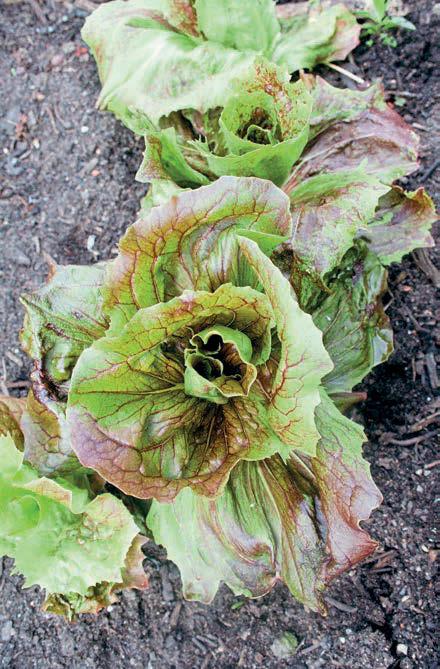
■ Radicchio: With its striking red leaves, this is technically a type of leaf chicory. It is surprisingly easy to grow and less attractive to pests than lettuce.
Chicories and endive are particularly valuable in summer, as many cope better with heat than lettuce.
SUPPORTING PLAYERS
To add interest and avour, consider smaller sowings of peppery brassicas (rocket, mizuna and mustards), baby spinach (best in spring and early summer), and beetroot or chard for leaves, picked young and tender. Herbs such as basil or mint, used sparingly, will transform an average salad into a truly magni cent work of art with groaning bags of avour.
THE BEST SALAD DAYS
Contrary to popular belief, salads don’t want blazing sun all day. In fact, light shade, especially on summer afternoons, helps keep leaves tender and delays bolting, when plants stretch to ower, putting a stop to leaf production. Part-shaded corners that might struggle with fruiting crops like tomatoes or courgettes are often ideal spots for salads.
Good air ow is important too, particularly in warm weather, to reduce stress and pest problems, while leafy salads thrive in nutrient-rich, moisture-retentive soil. Before sowing or planting, incorporate plenty of well-rotted garden compost into the soil to improve its structure, helping it to hold more moisture and release nutrients steadily.
For container growing, a quality peat-free multipurpose compost is just the job, and because salads are shallow-rooted, pots don’t need to be that deep, though they will need regular watering.
Bolted lettuce tastes incredibly bitter and is best lifted to compost
Container-grown salads will need more regular watering
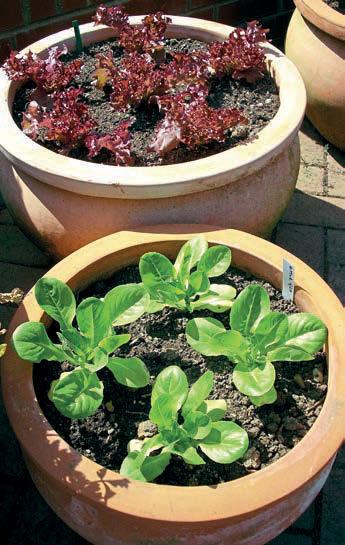
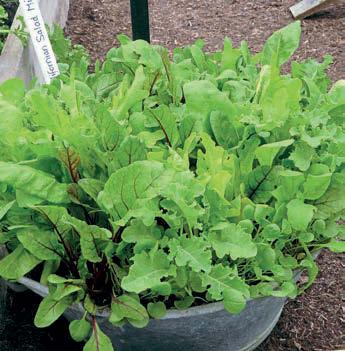
Salad leaf mixes are perfect for container growing
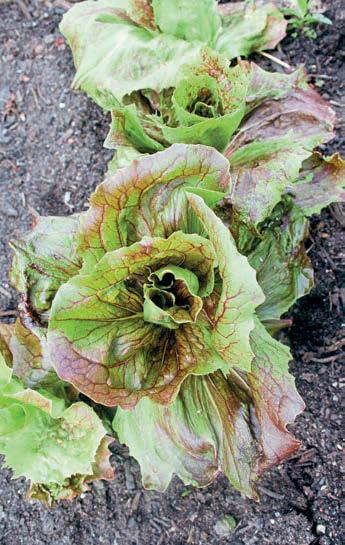
Leafy chicory tastes as good as it looks!
Spinach offers smooth, creamy notes –delicious in salads or in smoothies
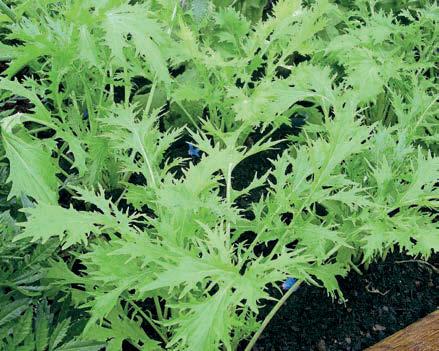
Many Oriental salads, such as mizuna, have beautifully textured leaves
STEP-BY-STEP: STARTING OFF SALAD CROPS
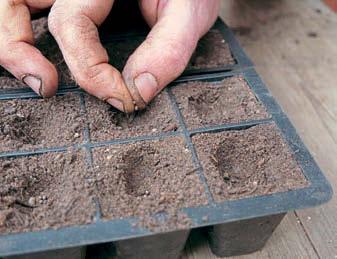
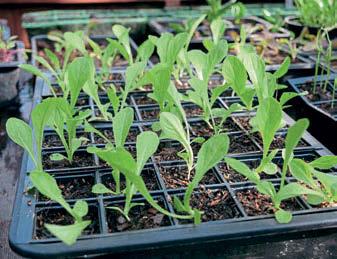
1. Steal a march on the season by sowing into modules. Fill with multipurpose compost, make depressions with your fingers, then sow one or two seeds. Lightly cover over and water gently.
2. Germinate your early salads in a greenhouse, cold frame or on an indoor windowsill. Once the seedlings are up, keep them in a bright spot and water as needed.
3. The seedlings can be planted out into their final positions once they have a few true (adult) leaves. Set them out 25-30cm (10-12in) apart in both directions.
4. If the weather is still a little chilly, add some cloches (old plastic bottles are great for individual plants), or lay some fleece over the top to help the young salads settle in. Remove after a week or two.
RIGHT TIME TO SOW
Mid-February to early April is prime time for sowing summer salads. e very rst sowings from February are more reliably made in a greenhouse, cold frame or even on a bright indoor windowsill. en, as soon as the weather starts to warm up and the soil dries out a bit, it’s the turn of direct outdoor sowings.
I like to make most of my salad sowings into module trays, which gives me more control at planting time, ensuring accurate spacing and minimal waste.
Direct sowings are reserved for cut-andcome-again salad mixes, which are thinned in stages to leave a few inches between plants and cut regularly for precious baby leaves. To sow, mark out a shallow drill about 1cm (0.5in) deep, then pre-water along the drill if it’s dry and warm. Allow the water to drain, then water again. is primes the soil the seeds will fall into, creating a cool, moist environment for germination. Sow seeds thinly, then cover lightly before watering again to settle.
However you sow, continue sowing little and often, every two to three weeks, to maintain a steady supply of luscious leaves.
KEEP WATERING
Water is the single most important factor behind salad success. Uneven watering leads to bitter leaves and encourages bolting. Keep soil consistently moist, though never waterlogged. Soil improved with plenty of compost should hold onto valuable soil moisture for longer, but make the e ort to water regularly in dry weather, aiming the water at the soil rather than the leaves to help reduce the risk of disease. ➤
SALAD SOWING CALENDAR
MONTH
Mid-February/March
April
May
June
July
August
WHAT TO SOW
Lettuce (under cover then outdoors), spinach, rocket
Additional sowings of all salad leaves
Lettuce, endive, chicory, radicchio
Heat-tolerant lettuces, chicories, brassica salads such as salad kale
Rocket, Oriental leaves for late summer
Chicory and radicchio for autumn harvests
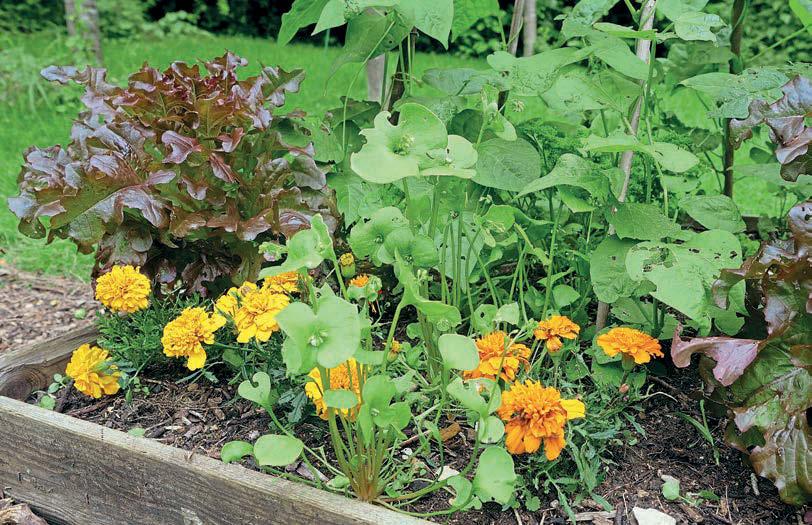
Include nectar-rich flowers such as marigolds to attract pest-munching beneficial bugs like hoverflies
Salads are relatively light feeders, though fast growth depends on the availability of nutrients. Well-prepared soil shouldn’t need additional fertilising, though salads growing in containers will bene t from an occasional liquid feed, such as a seaweed or sh emulsion, to boost growth.
Crowded seedlings compete for water and nutrients, so thin direct-sown seedlings early, eating the thinnings as baby leaves – nothing needs to go to waste! Loose-leaf lettuces can be grown closer together when harvested young.
KEEP THEIR COOL
Salads are cool-season crops, and summer heat is their biggest challenge. Growing salads in pots makes it easy to move plants into shade during our increasingly regular heatwaves. Terracotta pots dry out faster than plastic pots, so check them daily in hot weather, or consider lining terracotta pots with plastic, taking care to puncture holes in the bottom to allow drainage.
Last summer I resorted to setting up some temporary shading, a common practice in hotter climates where shade cloth is regularly
wielded to tame the glaring sunshine. Consider cutting greenhouse shading mesh into manageable sections, then position them over leafy salads by securing them to a basic frame of bamboo uprights capped with upturned plastic bottles or tennis balls.
DEFENCE MEASURES
Sap-sucking aphids love soft salad growth. Encourage natural predators such as ladybirds and hover ies by planting owers like alyssum, calendula and marigolds nearby. Aphids rarely become a big problem, and small infestations are easily blasted o leaves with a jet of water from the hose.
Flea beetles are a far more common threat to rocket and mustard leaves, where their feeding can leave hundreds of tiny holes like tiny shot holes. Protect plants with a ne horticultural eece, or grow these cabbagefamily salads later in summer, when the ea beetle pressure tends to ease.
Slugs are perhaps the biggest ne’er-dowells in the salad garden, rasping their way through tender leaves at an often alarming speed. Young lettuce seedlings are especially vulnerable. If slugs become a real problem, try growing susceptible salads in containers to raise them above the threat, and smear on an inch-wide layer of Vaseline along the outside of the container so the slugs nd it harder to slide up and over into the pot. It’s also worth removing sluggy hideouts, such as lying debris or nearby long grass, and, while a little tedious, regular hand-picking can really make a di erence over time.
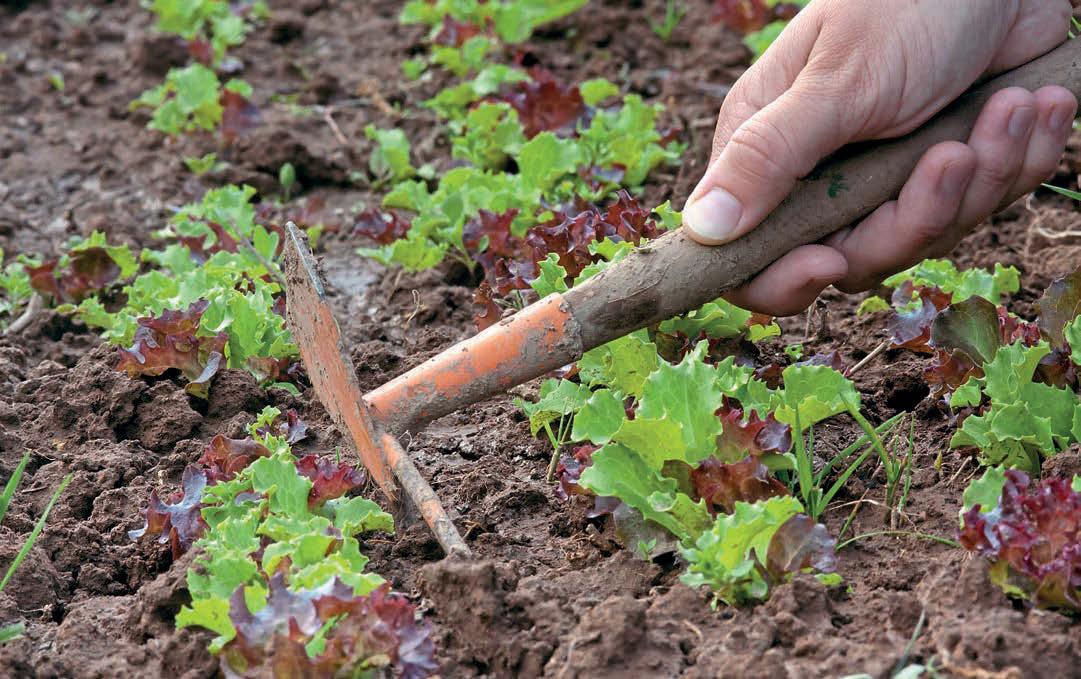
Pull out or hoe off weeds growing between plants to minimise competition
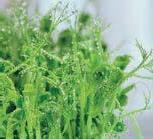
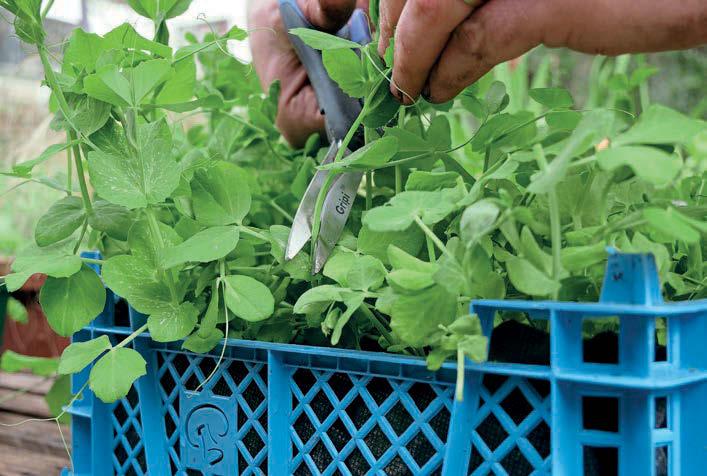
Pea shoots are a fantastic space-saving and quickgrowing salad option
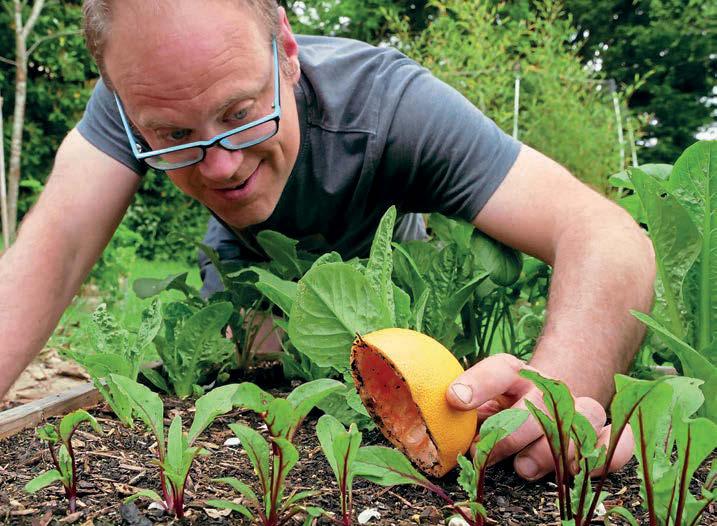
Beer traps can also make a dent in local slug populations, but don’t set them too close to leafy salads, or you may inadvertently attract slugs into the general area! Another option is to lay hollowed-out grapefruit shells as cool daytime hangouts for the malevolent molluscs, then check regularly to remove and dispose of opportunistic visitors.
CUT LITTLE AND OFTEN
How you harvest determines how long your salads keep producing. It’s all a matter of little and often.
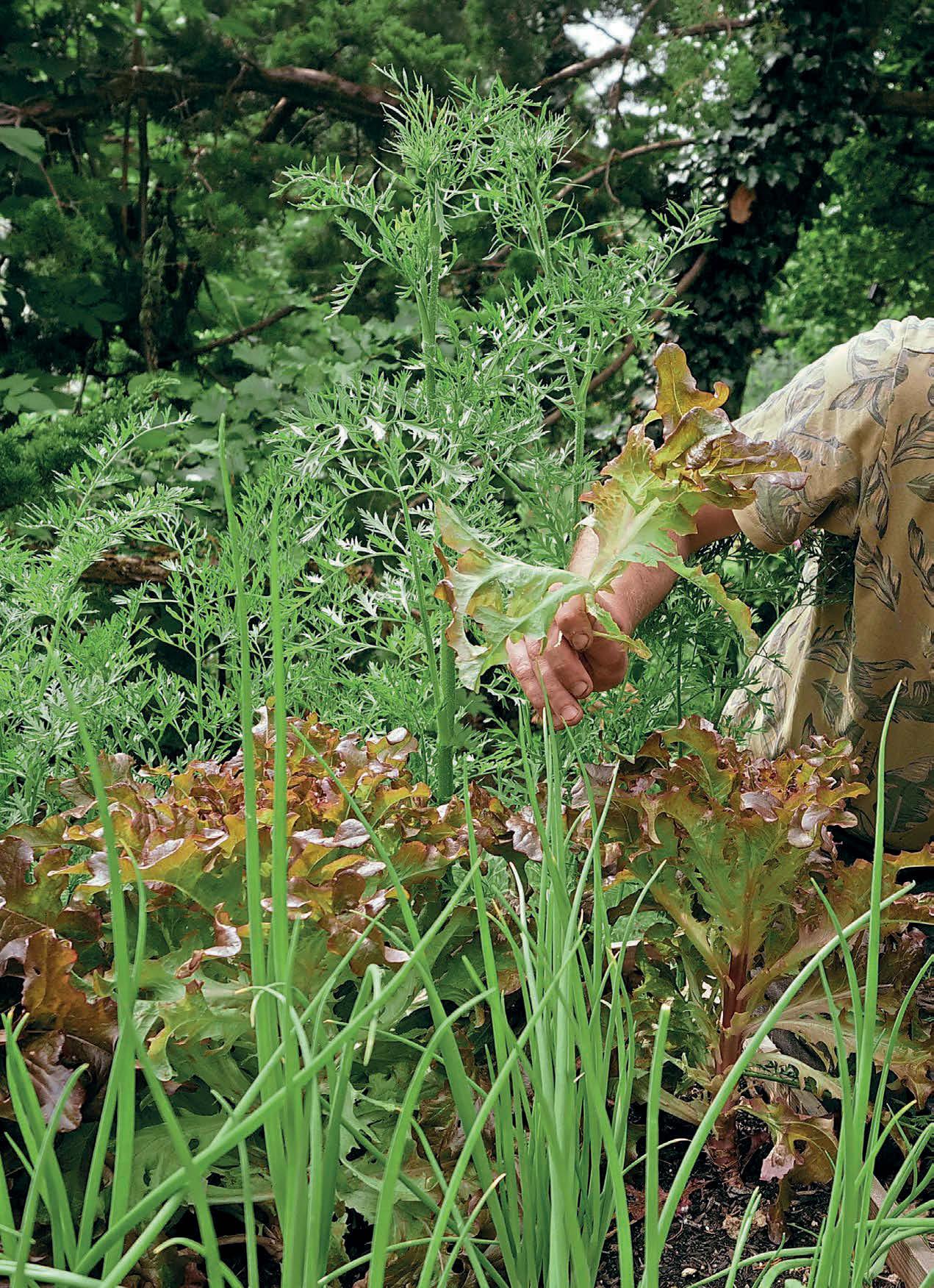
For loose-leaf lettuces and cut-and-comeagain mixes, harvest by pinching o the outermost leaves, leaving the centre intact. Taking just two or three leaves from each plant at any one time ensures that the central leaves that remain can grow on to produce the next harvest. A simple ‘click’ between fore nger and thumb at the base of the leaf neatly detaches the leaf. Alternatively, cut plants about an inch above soil level for regrowth. is cut-and-come-again approach can give several weeks of harvests from the same plants.
For head-forming lettuces, it’s ne to pick a few outer leaves early in the plant’s lifecycle
before leaving plants alone to head up, ready to cut whole. Plants can quickly go over, turning bitter, so harvest promptly and be sure to sow small batches regularly. e best time to harvest any salads is early in the morning, when plants are still turgid from the cool of the night. Evenings come a close second. Immediately plunge leaves into cold water after harvesting to refresh them and keep them from turning limp (which seems to happen within minutes of harvesting on warm days).
LEAFY LOVELIES
Leafy summer salads are the ultimate con dence-boosting crop – quick, generous and endlessly adaptable. With a little planning, regular watering and a willingness to sow in small batches, you can enjoy bowls of fresh leaves from spring right through summer, even in the trickiest weather.
Whether you are growing in a single pot by the back door or dedicating a whole bed to a rainbow of lettuces, endives and chicories, now is the moment to get sowing. In just a few weeks from now, you’ll be so glad you did – scissors in hand, salad bowl at the ready. ■
HALTING BOLTING
Bolting – when plants flower prematurely, reducing harvests
– is triggered in leafy salads by a combination of heat, drought and long days. To reduce the risk:
■ Water: Water generously and regularly so plants are never short of what they need
■ Shade: Use shade cloth, fleece, or taller nearby plants to provide afternoon shade, especially during hot spells
■ Grow more heat-tolerant salad varieties, including Batavian lettuces and chicories
■ Re-plant: Replace bolting plants promptly with fresh sowings to keep the harvests coming
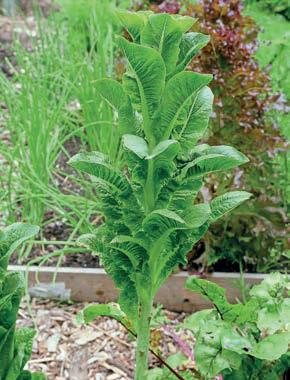
Bolting romaine lettuce
Position half grapefruit shells among salad beds. Check and remove slugs regularly
Endive’s slightly bitter notes contrast perfectly with the mild leaves of lettuce
Hearting lettuces, such as iceberg types, are typically planted 25-30cm (10-12in) apart
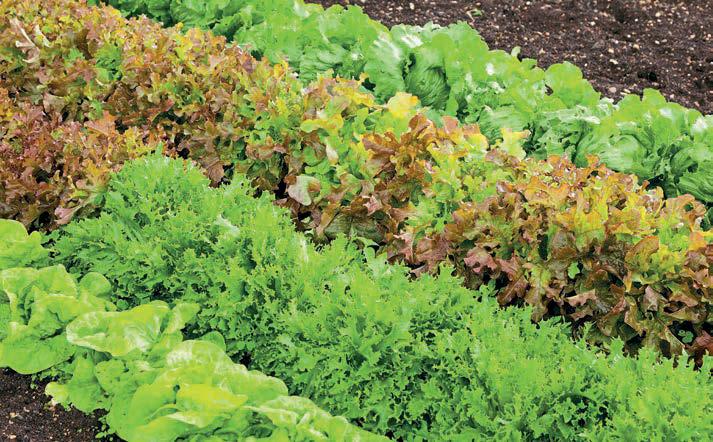
Contrasting salad leaf shapes and colours look the business in beds – and on the dinner plate
OUR TOP PLOTTERs
Back in the summer we launched a competition to find our Top Plotters, with the top three winning some great prizes and all being featured in Kitchen Garden magazine this year. Here we meet our third-placed plotter...
Sara grows flowers alongside her crops –and the sweet peas are a reminder that the plot is as much about joy as it is about veg
Sara Barlow, from Manchester, has transformed a couple of overgrown half-plot allotments into two thriving family plots – combining organic food growing, recycled materials and wildlife-friendly planting, all while passing on a love of gardening to her three children
Do you tend your plot on your own, or do you have help?
I spend a lot of time on my plot on my own when my children are in school. I love the peace and quiet and enjoy having a cup of tea with my allotment friends.
My three children look forward to strawberry season and love coming down after school to pick them for a healthy snack. ey even have their own plot now, next to mine, and love planning each year what they are going to grow.
Do you have an allotment, a veg patch at home – or both?
No, I do not have an allotment or veg patch in my garden, just a trampoline and a football net.
How long have you been growing your own vegetables?
I took on half a plot in 2021, just after the pandemic. I am so pleased with the progress I have made with it, and each year it just gets better. It was an overgrown mess when I took it on, with lots of rubbish to get rid of or recycle. It was covered in bindweed and mare’s tails, which I still struggle with now, but it’s more manageable. I lost my swimming business after the pandemic, so I had the time to make it what it is now: my paradise and my therapy. I didn’t have a clue what I was doing, but I had a vision of what I wanted it to look like. Not only did I want to grow organic produce for my family, I also wanted it to look beautiful. I have learnt so much over the past few years, a lot of it is just trial and error.
Do you grow any crops in containers? If so, what do you grow and how?
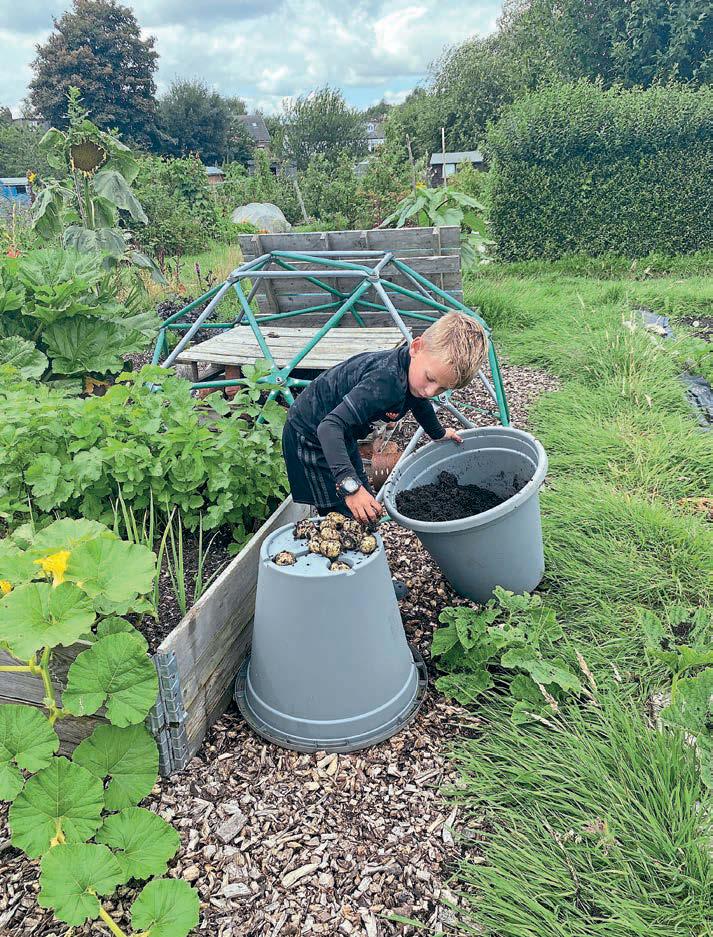
I grow potatoes in large buckets, which my son drilled some holes in for me for drainage. I’ll put a layer of compost over them, then keep adding compost as they grow until the bucket is full. I then just leave them to do their thing, often forgetting about them until
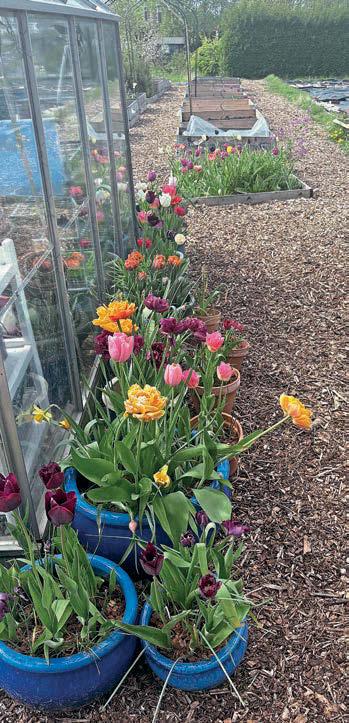
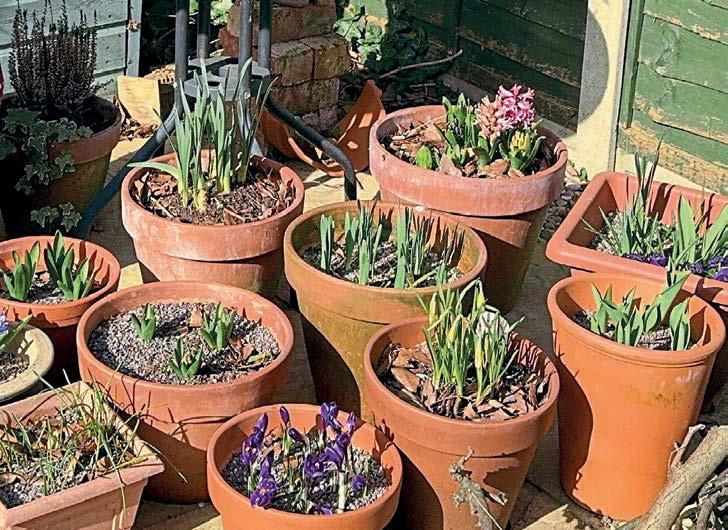
they are ready to dig up. Once we are ready to harvest them, my son will tip them into our wheelbarrow. We get very excited sifting through the compost to nd them all. ey taste amazing fresh, but we also store some in a dark cupboard in mesh sacks or paper bags. We use the leftover compost to top up our raised beds. We have 36 in total, so lots of growing space. I also grow tulips, da odils and alliums in plant pots I have sourced for free over the years. ey line the side of my greenhouse in spring, opposite where I sit with a cup of tea, so I can admire the owers and plan what I am going to grow that year.
Can you talk us through how you grow one particular crop, from sowing to harvest? We love growing tomatoes, and have grown many di erent varieties over the past few years. We sow them from seed in tiny pots with sifted compost, adding some vermiculite to the surface. Once they have outgrown their pots and the roots are poking out of the bottom, it’s time to pot them on into bigger pots and leave them in the greenhouse until they are ready to plant out. We will put them in the cold frame for a week or so before we plant them in their nal place, adding bamboo canes I sourced from someone’s garden. I upcycle tins to put on
the top of the bamboo canes so we don’t poke our eyes out. We will then feed them once a week with some homemade comfrey tea.
Do you reuse or recycle materials on your plot? If so, how?
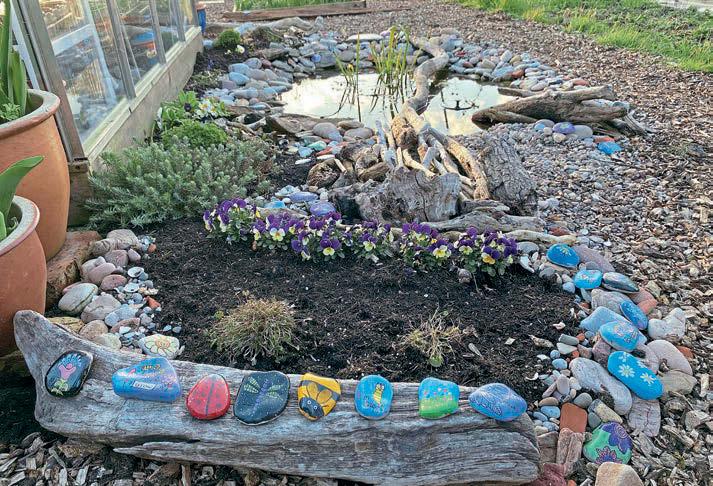
I love nding a purpose for something that would have gone into land ll. Our raised beds are made from pallet collars, and I got my shed for free from Facebook Marketplace. We have made three compost bins out of pallets from a skip, and have sourced lots of driftwood for around our pond from several beaches. I upcycle tins for the top of my bamboo canes. I love getting things for free and managed to get a six-seater table for when we have barbecues on our plot in the summer.
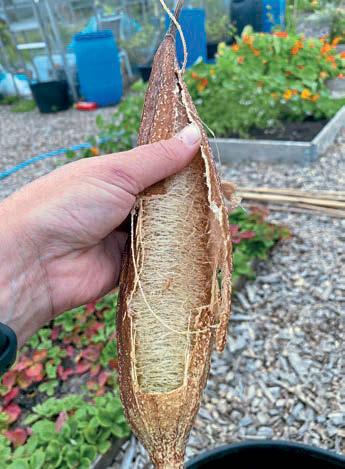
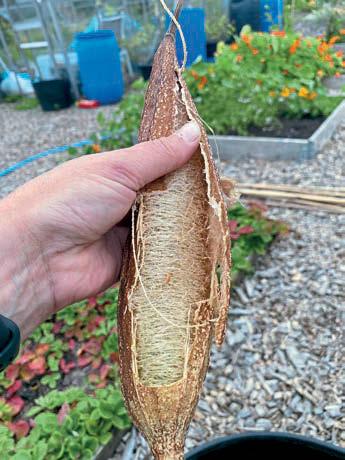
Have you tried any new or unusual vegetable varieties that you’d recommend? I have grown lu as for the past two years, but haven’t been very successful. I don’t think it’s hot enough in our country, but I will try again this year. I was hoping to use them as scourers, as they are compostable and better for the environment, but I only managed to get one, which I was disappointed about, as they take up a lot of space. Most people think they grow in the sea and don’t realise they are vegetables. ➤
Reused pots of spring bulbs bring early colour to the plot – and make the greenhouse a place to sit, reset, and plan the season ahead
Potatoes in buckets are one of Sara’s simplest family wins – easy to grow, easy to harvest, and brilliant for getting children involved in working on the plot
Early in the season, the greenhouse is used for sowing and propagation before switching over to growing crops later on
Re-use runs through the whole plot – from reclaimed timber and pallets to a layout designed around making the space work hard without costing the earth
OUR SPONSORS
The following companies kindly sponsored our 2026 Top Plotter Competition
GARDENING NATURALLY gardening-naturally.com
KENT & STOWE kentandstowe.com
NEMASYS nematodesdirect.co.uk
PRO-GROW pro-grow.com
STRULCH strulch.co.uk
VEG PLOTTER vegplotter.com
I also dug up a dahlia tuber that looked rotten and didn’t have any obvious eyes, but decided to plant it anyway as a little experiment. I was so happy to see it send up new shoots, and it now lls a twin bed with beautiful pink dahlias.
If you could invite one famous person, past or present, to join you for a drink in your shed, who would it be – and what would you talk about?
It would have to be Sir David Attenborough. I have been watching his documentaries since I was a child, and continue to do so with my three children. I would ask him about all his adventures around the world and what his best experience has been. I would love to show him around our plot and hope he would be very happy with how I have got my children involved in growing their own fruit and veg and recycling materials to help the environment.
How did you get your children involved in growing?
My children have been involved in our plot since day one, from clearing the plot to sourcing materials for free from skips. We had half a plot, and each had a raised bed to grow what they liked, and another one that I made into a sandpit. Once my neighbours’ plot became available, we took it on, and each of them has a third. ey drew out their ideas for how they wanted their plot, and I helped them clear all the weeds and rubbish as they helped me. My eldest daughter, Emily, has the front, where she grows owers for pollinators and lots of herbs. My middle daughter, Charlotte, has the middle part where she grows corn on the cob, tomatoes, and sweet peas up her arches. And my son has the back where he has used his climbing frame to make a star-shaped raised bed to grow French beans, cucumbers, blueberries, potatoes, strawberries, and calendula. We used the calendula to make a salve for his eczema. We picked the owers and let them sit in some argan oil to infuse for a few weeks. Once it was infused, we drained it and added some local beeswax and shea butter to make a salve. It worked wonders for his skin. My husband is a tree surgeon, so we get free wood chips for our paths, and we love a barbecue with our freshly-picked produce.
What do you do on your plot to encourage pollinators and wildlife?
We grow a lot of owers, which encourage pollinators onto our plot. is year, I was taking home between eight and 12 bunches of owers for around ve months. I upcycle large tins I get for free from a café, put them in, and give them away to my neighbours and teachers when I have too many for my house. We also have a bug house, and I have
dug my own pond. We have lots of driftwood around it, and we were amazed to nd a newt hiding under it.
In October, my son found 12 baby newts – we were delighted. We had an amazing amount of frog spawn this year, and we love seeing them grow into little froglets. We also have a fox den at the back of our plot, where I put the soil from the pond, and the sun ower and corn-on-the-cob stems. I love to sit and watch my pond, seeing the frogs popping up and the birds drinking from it.
Why are you passionate about your plots? I love my allotment. It’s my therapy. It’s a place of calm where I can enjoy the peace
and recharge. I love to see the children’s reactions when they arrive at the plot, to see how many strawberries they have, or how big their pumpkins have grown. We have all learnt so much over the past few years, and continue to grow. is year, we are going to grow more medicinal owers, like camomile and lavender, to make tea or balms. We have an amazing community, and I have made so many allotment friends who are like family now. It’s such a nice place to spend time away from work, school, and screens, and to get an amazing education for us all. I am looking forward to what this year will bring. Hopefully more than one lu a! ■
Not every crop is a guaranteed success in the UK, but Sara keeps trying – and luffa is an ongoing challenge!
The hand-dug pond isn’t just decorative – it’s a working wildlife feature that’s brought frogs, newts and constant interest for the whole family
Flowers and food harvested together sums up Sara’s approach – abundance for the household, with plenty left over to share with family and allotment friends and neighbours
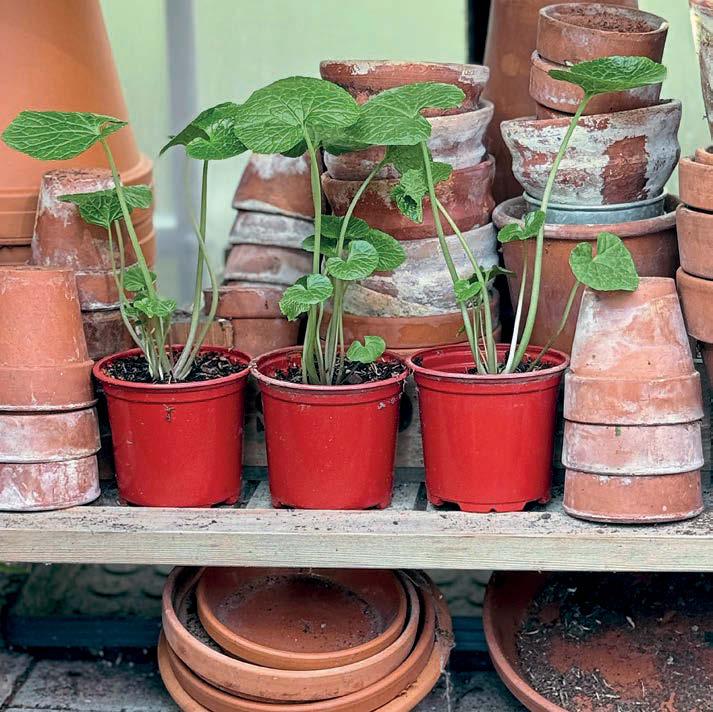
The broad, heart-shaped leaves of wasabi have a sharp, mustardy flavour, which is the main reason many gardeners grow the plant
TRY WASABI in a SHADY spot
Rob Smith looks at how wasabi can be grown for its punchy leaves in the cool, shady corners where other edibles struggle
Wasabi (Wasabia japonica) has been grown in Japan for over a thousand years. It’s best known for its ery root, freshly grated at the table in high-end sushi bars, though that root is only part of the story. In its natural home wasabi lives beside cold mountain streams, growing steadily along gravel beds in dappled shade. e plant spreads slowly and prefers cool, moist conditions with plenty of air ow, which tells you straight away that it’s not your typical vegetable. Over there, it’s called ‘hon-wasabi’, meaning ‘true wasabi’, and it’s treated with care. Farmers grow it by hand, often in spring-fed beds, and it can take two or three years before a decent-sized rhizome is ready to harvest. at root, grated fresh, has a clean, tingly heat that fades quickly rather than burning the back of your throat.
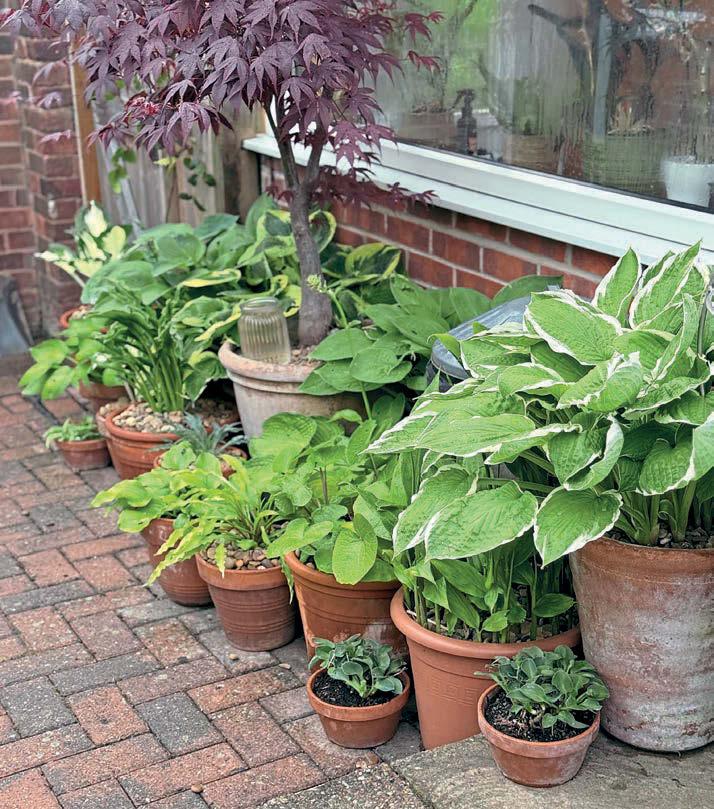
Now, before we go any further, I’ll say this: I’ve never grown wasabi for the root! I don’t have the patience. I grow it for the leaves, which are brilliant. ey have a sharp, mustardy avour that’s perfect in stir-fries or scattered into salads. e young leaf stems are juicy and crunchy too – they’re excellent pickled and make a spicy topping for rice or sh. For me, the plant earns its keep without ever having to dig it up. And the best bit? Wasabi thrives where most veg would sulk, as it likes cool, damp shade. If you’ve got hostas or ferns that do well, the chances are that wasabi will be happy too. In fact, it’s a great way to make use of those forgotten corners behind the shed, beside the pond, under a tree, and still get something tasty for the kitchen. ere are two main types available for growing at home. e traditional form is green with pale stems and broad, heartshaped leaves. en there’s the newer redstemmed one, which has the same shape and avour but with deep red stalks that really stand out in a shady border. Both grow the same way, and both have earned their place in my garden. ➤
Healthy plants form a dense clump of leaves, which can be harvested regularly from the outside
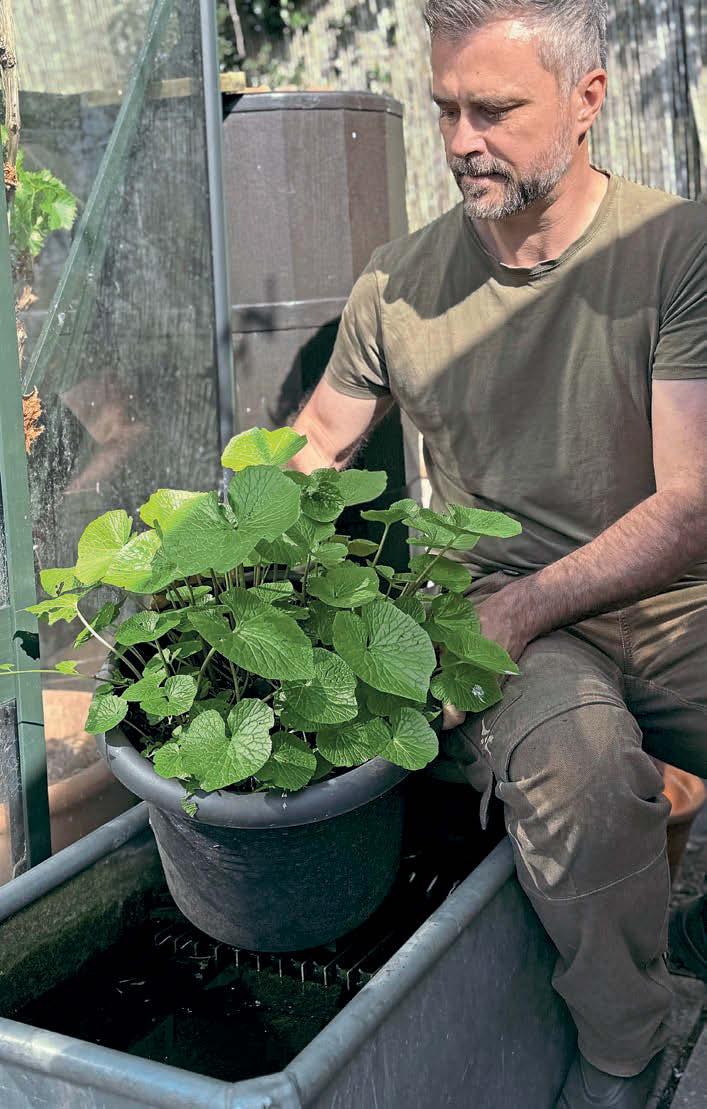
WASABI CAN WORK WELL IN THE UK – INCLUDING GROWING IT IN POTS
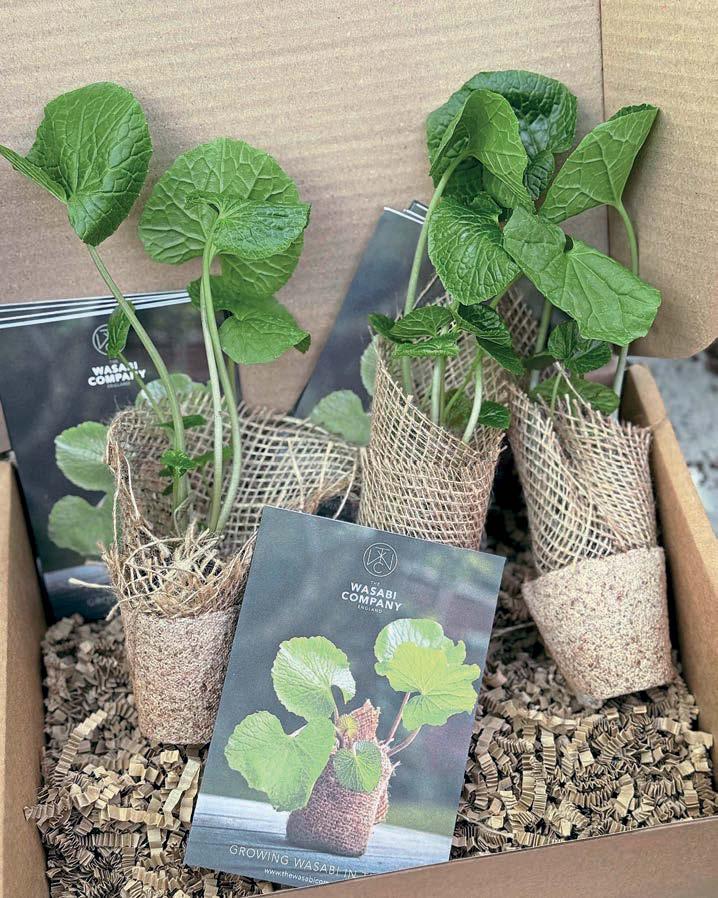
Wasabi is a perennial brassica, which means it’s in the same big family as cabbage and broccoli, but behaves more like a woodland herb. It grows from a central crown and spreads slowly over time, with new leaves coming up from the base. You’ll have more luck starting with a plant than with seed (if you can nd it). It’s tricky stu to germinate, and most commercial growers use division or tissue culture to get reliable young plants.
Buy from a specialist supplier, and plant in spring or early autumn when it’s cool and damp. Choose a spot with light or broken shade – wasabi doesn’t want full sun, especially in summer. It much prefers dappled light or gentle morning sun with afternoon cover. Under a deciduous tree is ideal, or the north side of a wall or shed. I’ve grown it behind a greenhouse where nothing else would thrive, and it’s done well, and my current crop is in pots alongside my hostas.
Dig in plenty of compost or leaf mould to build a rich, moisture-holding soil, as wasabi likes its roots to stay damp but not waterlogged. Raised beds can work if you mulch heavily and water often, but you’re better o with a naturally moist site. If you’re growing in a pot, use a loam-based, peat-free compost with a bit of grit for drainage, and make sure the pot is at least 30cm deep and wide, ideally about 10L. Once planted, keep the soil evenly moist and cool. It’s the change in moisture and heat that tends to upset wasabi, not the cold. I mulch mine with damp bark chips in summer to stop the soil from drying out.
A red-stemmed variety, with thicker petioles and subtly different colouring to the more common green form
Plants are best bought from a specialist supplier, as wasabi seed is difficult to germinate reliably
Plants grown in pots can be moved into an unheated greenhouse over winter to protect them from hard frost
BEST PLACES TO PLANT
In its natural setting, wasabi grows beside fast- owing streams, in cool air and with consistent moisture, which gives us a good guide to what it likes. It likes shady conditions, high humidity, and rich soil that doesn’t get dry. e perfect place is somewhere most veg don’t like – a damp, shady bed beneath a tree, or a bog garden or pond edge. e kind of spot where your hostas thrive, and slugs roam. I’ve had good results planting wasabi alongside ferns, chives, and wild garlic in a sort of edible woodland corner. It also looks great in a damp ower border, especially the red-stemmed type. e leaves catch the light and add bold texture, and because it doesn’t need constant feeding or pruning, it can be left to do its thing. If you’re growing in containers, try placing them where you can keep an eye on them – a shady back step, under a bench, or tucked among your potted herbs is ideal. Just remember that pots dry out faster, so regular watering is essential.
CARING FOR YOUR CROP
Wasabi needs steady conditions – it doesn’t like sudden swings in temperature or moisture. Keep the soil damp, not soggy. In pots, water little and often rather than ooding, and in the ground, mulch each spring and autumn with compost or leaf mould to lock in moisture and build up nutrients. Feed lightly through the growing season – a liquid seaweed or balanced organic feed every few weeks in summer is plenty. Too much nitrogen will make the leaves big but thin and more prone to damage. In colder areas, protect young plants from hard frost. Mature wasabi can cope with temperatures down to -5°C if it’s sheltered and well mulched, but eece or a cold frame will help new plants settle in. I tend to move my potted ones into the unheated greenhouse through winter, then bring them back out in spring.
As with many leafy perennials, remove any yellowing or damaged leaves as they appear. It keeps air ow moving and helps prevent fungal problems. Wasabi isn’t usually troubled by pests, though slugs will take a bite, and aphids sometimes show up on soft new growth, but it’s nothing that a bit of attention won’t sort. You don’t need to divide the plant unless it gets congested. If it does, lift and separate in early spring, and replant the best sections. at’s also the best way to multiply your stock if you want more.
HARVESTING AND USING THE TASTIEST LEAVES
You can start picking once the plant is well established. In the rst season, go easy and take the odd outer leaf now and then. By the second year, it will be much more productive, and always harvest from the outside of the plant, leaving the centre intact. e leaves are the star in my kitchen. I use them raw in salads, layered into sandwiches, or torn over a bowl of noodles. ey’ve got a lovely, clean heat that clears the palate without overwhelming the dish. Lightly cooked, they add a sharp note to stir-fries or steamed sh. e leaf stems are juicy and crisp. You can chop and pickle them with a splash of vinegar and sugar, or just snack on them fresh. e
owers, when they come in spring, are small and white, with a mild wasabi avour. ey’re edible too, and make a pretty garnish. As for the rhizome, you can try for one if you’re patient. It takes two to three years to bulk up, and only forms if conditions are just right. You’ll spot it forming at the base of the leaf stems, a knobbly green growth just above soil level. Lift and trim it in winter if you like. But honestly, the leaves are easier and just as tasty.
IT’S A QUIET STAR FOR THE SHADIER GARDEN
Wasabi isn’t fast, and it isn’t ashy. But if you’ve got a bit of shade, some patience, and a love for something a little di erent, it’s a cracking addition to your garden. It gives back with minimal fuss and lls a gap where other edibles won’t grow. I love how it just gets on with things. No bolting, no ower spike racing for the sky, no endless pests. Just a steady supply of fresh, avourful leaves in a quiet corner of the plot. at’s good gardening in my book. Green-stemmed or red, in a pot or beside the pond, wasabi is well worth growing. Even if you never see a root, you’ll have something to pick most of the year, and something to brag about when friends ask what that strange leafy plant over there in the shade is. ■
Thriving in cool, damp shade, wasabi suits pots tucked alongside hostas and other shade-loving companions
Grated fresh from the rhizome, true wasabi delivers a clean, fleeting heat that’s very different from shop-bought paste
Nowwithbiggerplugsizes, your newsungoldplantswill establish fasterandwith 3xmoreroot youget evengreateryields.
ORDER TODAYAND WE WILLSEND YOU6PLANTS FOR
NEW LARGER PLUGSIZE
RO�TING FOR A GREAT START
Martin Fish explains how to get carrots and parsnips off to a strong, straight start, whether you’re sowing outdoors or under cover
Carrots and parsnips are both popular root vegetables and very closely related to each other – you might say cousins! ey’ve been grown for hundreds of years for their sweet roots that can be eaten fresh from the garden or stored for winter use.
Both are biennials with a two-year life cycle. In year one they grow their eshy root, and in the second growing season they ower and produce seed. In the veg garden we grow them as annuals, and eat the roots during their rst growing season.
SOIL CONDITIONS
Carrots and parsnips prefer a light, sandy, well-drained soil to allow their long taproots to grow deep. On clay or heavier soils, improve the area by working in plenty of well-rotted garden compost or soil improver in autumn and winter to open up the soil structure. Where possible, avoid very stony soils as the roots will be short and often forked.
Both of these root crops can also be grown in deep pots or containers lled with a freedraining compost mix.
SOWING CARROTS
Seeds are best sown directly where they will crop, as the roots dislike being transplanted.
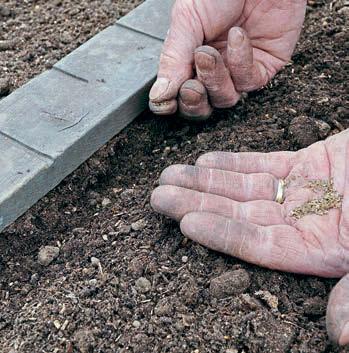
Sowing of early varieties can start in March as the soil starts to warm up, or earlier if growing under cover. Rake the seedbed to form a ne tilth and take out a shallow drill around 1.5cm (½in) deep. Sow the seeds thinly along the drill, rake the soil back over
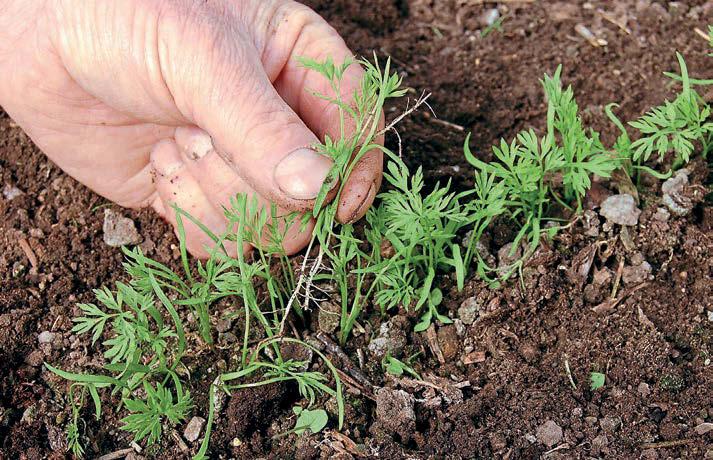
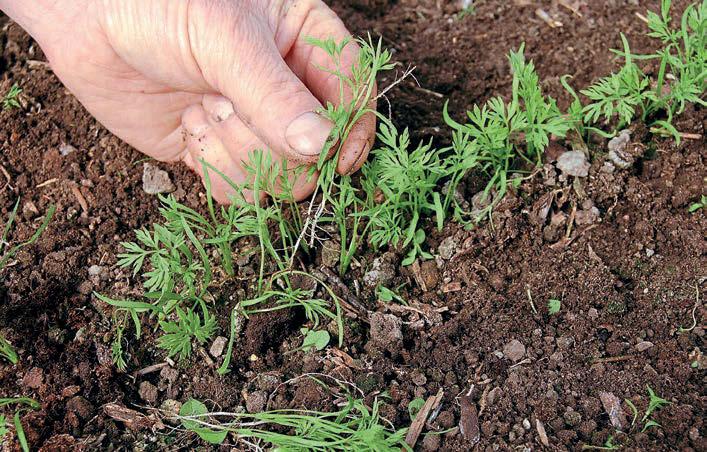
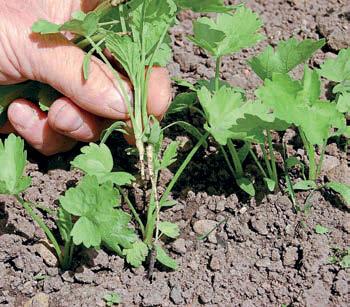
the seeds, and lightly tamp the soil to make sure it’s in contact with the seeds. If the soil is moist, there’s normally no need to water. When seedlings appear and are large enough to handle, carefully thin them out by hand so that the seedlings are spaced approximately 2.5-5cm (1-2in) apart to allow space for the roots to develop.
PROBLEMS WITH PESTS
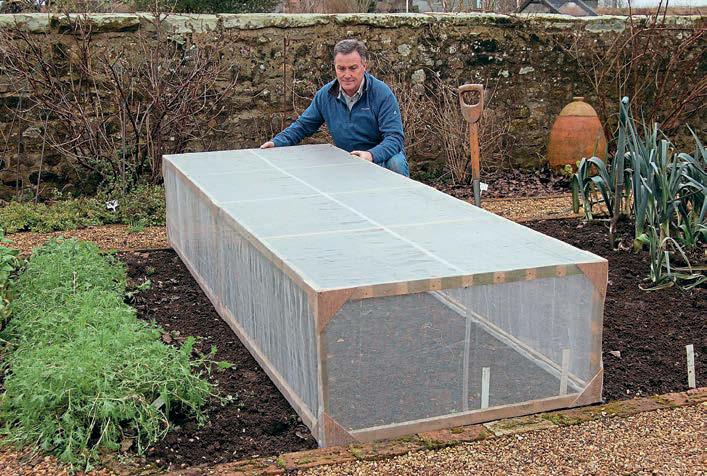
e main pest is carrot root y. e scent of the foliage attracts this small y. Eggs are laid on the soil at the base of the carrots, and larvae hatch and burrow into the roots, causing a great deal of damage. Once you’ve had an attack, it will come back every year. e most e ective control is to create a barrier with ne-mesh netting to prevent the ies from laying eggs. e two egglaying periods for carrot root y are MayJune and August-September, so it is vital that the carrots are protected during those times. ➤
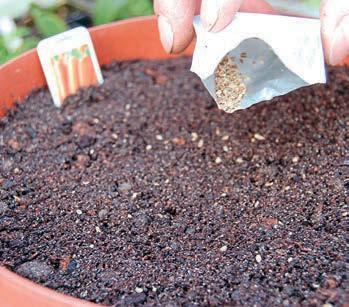
Sowing carrots very thinly along a shallow drill
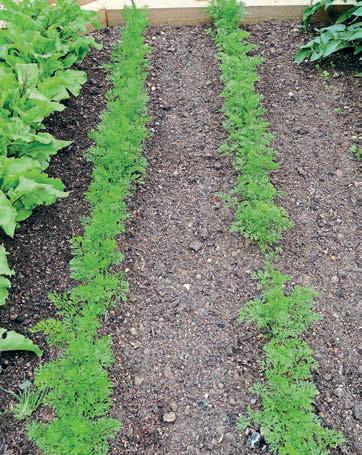
Carrot seedlings making strong growth
A mesh-covered frame helps to keep off carrot root flies
Carrot seedlings being thinned
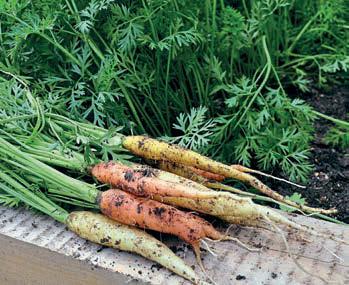
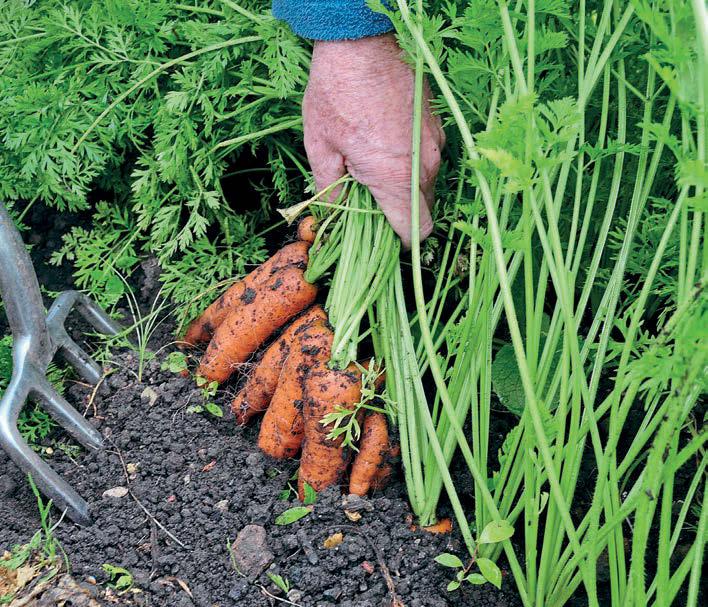
Mixed coloured carrots
Crop rotation is also important because the pupae overwinter in the soil. Nematode control is also available, or you can try resistant varieties such as Maestro, Flyaway and Resista y. Although they o er resistance, they do not give full immunity!
Some people also swear by growing onions or garlic close to carrots so the scent of the onions confuses the carrot y, but I’ve never found this very e ective!
SOWING PARSNIPS
Again, I prefer to sow directly into the ground so that the roots can grow straight down into the friable soil. Sowing is between March and May, depending on where you live, but don’t be in too much of a hurry to sow if the soil is wet and cold. Seed can take several weeks to germinate in cool conditions, so be patient.
Take out a drill 2cm (3/4in) deep and, if the soil is dry, water along the drill.
As parsnip roots can grow large, space the seeds well, sowing two or three every 10cm (4in) along the row, then back ll and lightly rm the soil.
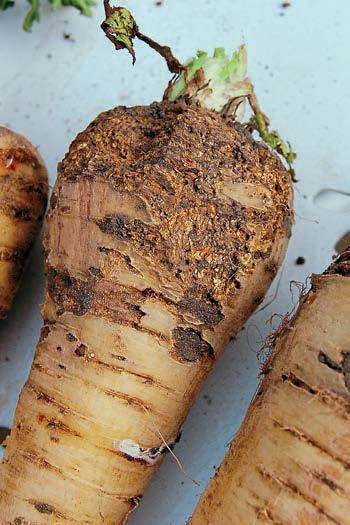
Parsnip canker and carrot root-fly damage
Sowing parsnip seeds in shallow drills
Raking soil over the parsnip seeds
Smaller, late sown parsnips
Carrots love a nice drink, but don’t overdo it
Once the seedlings are an inch or two tall, thin them out, leaving one strong seedling at each sowing station to grow on to maturity.
PARSNIP PROBLEMS
Carrot root y can also attack parsnips, so if this is an issue, grow them under mesh for protection.
A more likely problem is canker, a fungal disease that causes orangey-brown rot at the top of the roots. It is worse in wet, heavy or acidic soils. Once in the soil, the spores remain for many years. Several varieties have good resistance to canker, such as Gladiator, Palace, and Tender and True.
AFTERCARE ADVICE AND HARVESTING HINTS
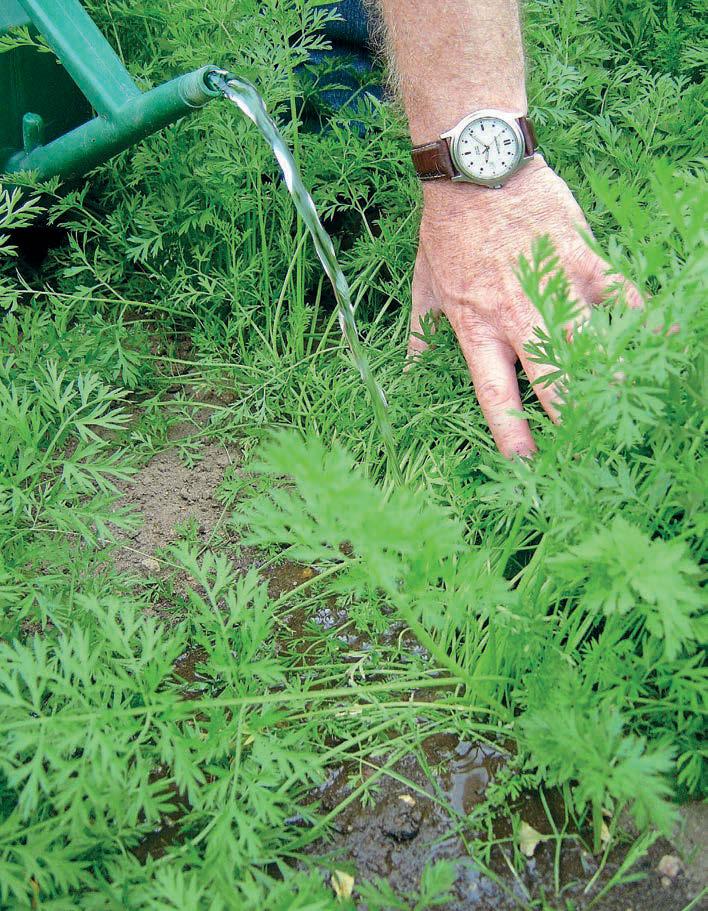
Carrots and parsnips don’t need lots of water, but to encourage long, straight roots, water the seedlings during dry weather. As water drains down through the soil, the roots will grow in search of moisture, forming long roots.
Weeds compete for light, water, and nutrients, so keep the rows weed-free by hoeing or hand-weeding.
Both carrots and parsnips can be lifted from the soil at any stage of growth, as needed.
SOWING IN POTS
is is a great way to grow an early crop of carrots, especially if you have a greenhouse or polytunnel. I mix 50:50 multipurpose compost and sieve loam or garden soil. Fill the container, sow the seed thinly on the surface, and cover lightly with the same mix before watering with a ne rose.
Seedlings should be thinned when large enough to handle to allow the roots to develop, and they should always be kept moist. Pull the roots when they are small and tender.
You can also sow parsnips this way, but they will need deeper pots as the roots need more space to ll out. ■
GREAT VARIETIES TO CHOOSE FROM
■ Carrot Adelaide – small finger carrot ideal for early sowings
■ Carrot Amsterdam Forcing 3 – a reliable early variety with sweet, tasty roots
■ Carrot Paris Market – round roots ideal for early sowings and growing in containers
■ Parsnip Pegasus – excellent quality white roots, with high canker resistance
■ Parsnip Palace – reliable, fastgrowing, with some resistance to canker
OUR TOP TIPS
■ Avoid buying carrot seedlings from garden centres in spring as, when grown on, the roots are often forked
■ For early sowings, cover the soil with cloches to warm it and protect the seedlings
■ Use fresh parsnip seed each year, as older seed has a lower germination rate
APPLE FALSTAFF - Averyheavy croppinglate seasondessert apple.Crispandjuicywith arefreshingfruityflavour. Easy togrow. Resistanttolatefrosts.Storesuntil December. SF.
APL006C Usually£37.95 NOW£34.15
APPLE LORD LAMBOURNE -A populartraditionaldessert apple, over 100 years old Bursting withjuice, crisp, sweetandaromatic. Heavy cropping and reliable for almost anywhere inthe UK. Ripens midseason Requiresa pollinator (either Falstaffor Winter Gem).
Exceptionalflavour Reliable,rapidestablishment
APL037C Usually£37.95 NOW£34.15
Plantintubsorbeds Heavycropsonsmalltrees
NewSummer Raspberry
RASPBERRYGLENMOR -Describedasa game-changer,thisnewearlysummer varietyhasbombproof resistancetoroot rotso isanidealchoice forwetter soils.Theberriesareconsistentlylargeallseasonand have asuperb, sweetflavour.Cropping over a5-6 week period,yieldsareheavierthanGlen Ampleandaftera hotsummer,thespine-freecanescanfruitatthetips intheautumn. Season:late June -lateJuly.Plantcanes 40cm(16in)apart.
PEAR CONCORDE -Excellentlatepearsuitableformost locations.Largefruitswithsmooth,juicyflesh &rich,sweetflavour.Crops heavilyand reliablyfromanearlyage.Storesverywell. SF
PER001C Usually£37.95 NOW£34.15
PLUMVICTORIA -TheUK’s best knownplum. Pinkish red fruitwithsweet, yellow, juicyflesh. Averypopulardessertvarietybutalso excellentcooked. Heavy cropping. Canbegrowninthenorth. SF
PLM003C Usually£37.95 NOW£34.15
CHERRYSUMMERSUN -Thisdarkreddessertcherry isan excellentchoiceforthenorthandmore exposedareas,cropping welleven inpoorsummers. Large,sweetfruits.Excellentflavour. SF
CHR003C Usually£37.95 NOW£34.15
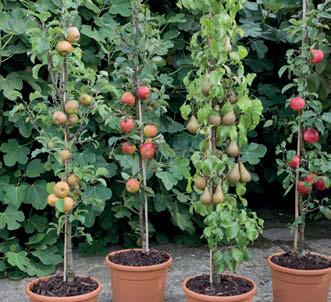
Cordonson the Patio
Apple Winter Gem
Pear Concorde
AppleFalstaff
Plum Victoria
Apple Lord Lambourne
SAVE UP TO £8 ON ASPARAGUS PLANTS
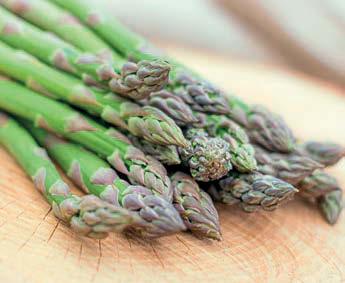
Asparagus is expensive to buy in the shops but easy to grow, and tastes delicious freshly harvested from the garden. ere is no other vegetable that beats home grown asparagus, simply steamed and served with melting butter – the best way to enjoy full- avoured, deliciously sweet and tender spears! Once established, 12 plants will produce an average crop of 10kg (22lb) annually for 12 years or more. Pomona supplies large one-year-old crowns that will establish quickly, so that you can harvest your rst crop just one year after planting.
ASPARAGUS BACKLIM F1
HOW TO ORDER
To order, call 01255 440410 with your credit or debit card, quoting offer code KG3ASP. Alternatively, order online at pomonafruits.co.uk/KG3ASP or fill in the order form and post with payment to: Pomona Fruits Ltd, Department KG3ASP, The Barn, Brook Farm, Stones Green Road, Great Oakley, Harwich, Essex, CO12 5BN. Offer closes on April 12, 2026. Offer is available to UK addresses only (excluding Northern Ireland). Plants will be delivered in April.
This all male F1 hybrid is very popular with commercial growers, producing heavy crops of exceptionally thick, succulent green spears with excellent flavour. It can also be grown as white asparagus if the plants are covered with a mound of sandy soil and harvested before they push through the ground. Very reliable, boasting good disease resistance. Season: mid/ late.
12 plants for £23.50 inc p&p (ASP001) Normally £26.50
Price includes p&p for UK addresses (excluding Northern Ireland)
I enclose my cheque for £………….. made payable to Pomona Fruits, or please debit my Visa/Mastercard/Maestro/Delta card for £……………..
ASPARAGUS RAMIRES F1
This all male F1 hybrid is popular with commercial growers, as it produces heavy crops of thick green spears very early in the season. In comparison to other early varieties, the spear diameter is outstanding (typically in the range of 16-26mm). It can also be grown as white asparagus planted under ridges of light, sandy soil. The flavour is excellent. The plants are suitable for a wide range of soil types and have good resistance to leaf diseases. Season: early.
12 plants for £23.50 inc p&p (ASP012) Normally £26.50
24 CROWN COLLECTION (12 OF EACH VARIETY)
Make the biggest savings by ordering 12 each of Backlim and Ramires F1.
24 plants (12 of each variety) for £45 inc p&p (ASP925) Normally £53
date
No (if applicable)
No (last 3 digits)
AT A GLANCE
Hardiness: fully hardy
Position: full sun to partial shade
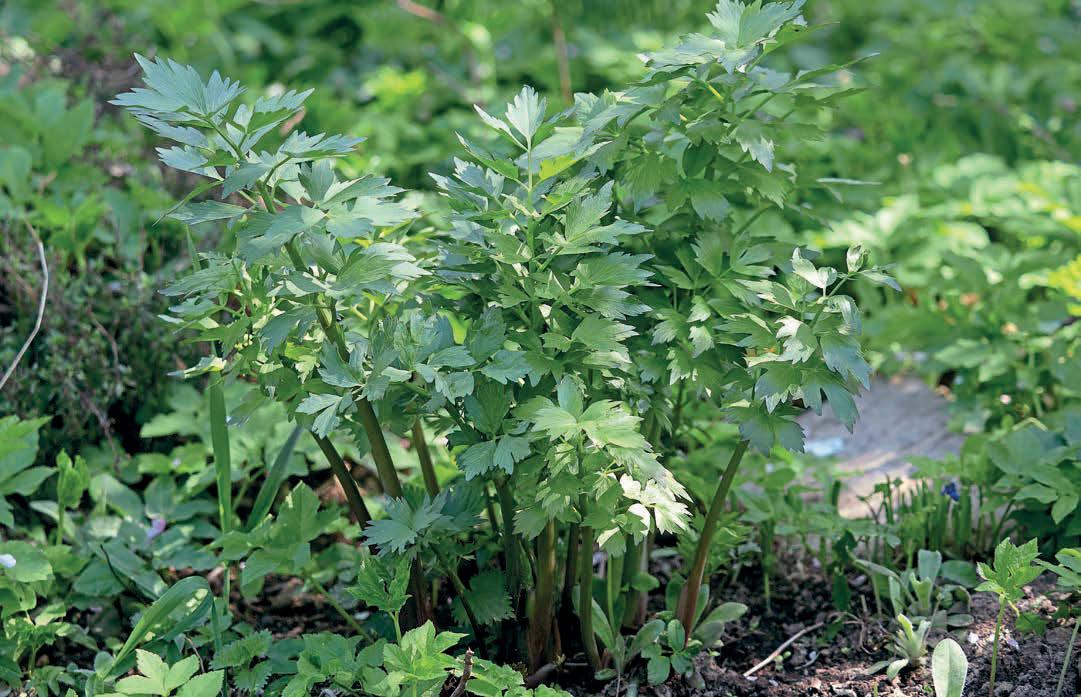
LOVAGE
Big, bold and quietly brilliant, lovage is one of those oldfashioned kitchen garden plants that earns its keep year after year. With its tall, architectural habit and intensely savoury avour, it brings a deep, celery-like richness to soups, stocks and slow-cooked dishes – but with far more depth than celery leaf.
Once established, this long-lived perennial is dependable and generous, producing fresh growth from early spring and sending up tall stems topped with soft yellow umbels in early summer. It works just as well in a productive plot as it does tucked into a mixed border, where its height and structure add interest as well as harvests.
MAKING IT THRIVE
Lovage thrives in moisture-retentive soil enriched with plenty of organic matter. Before planting, dig in well-rotted compost or garden compost, especially on lighter soils. A neutral to slightly alkaline soil suits it well.
Plant in spring or early autumn, spacing generously – mature plants form substantial clumps and produce tall owering stems. Water well during the rst season and mulch to conserve moisture.
Lovage is a hungry plant and bene ts from an annual top-up of compost or well-rotted manure in spring. In dry spells, regular watering keeps growth soft and productive. Cut plants back to ground level in autumn once the foliage dies down.
You can remove owering stems to prolong leaf production, but allowing a few to bloom is useful if you want seed.
GOOD IN CONTAINERS
Lovage can be grown in a very large, deep pot, but it will never be as productive as a plant in open ground. Use a loam-based compost, water consistently and feed regularly during the growing season.
PROPAGATION HINTS
Divide established plants in early spring or autumn. Lift the clump, split into strong sections with good roots and replant immediately. Division is quicker and more reliable than seed.
HARVESTING AND USE
Pick leaves from spring to early autumn, taking the outer stems rst and allowing the centre of the plant to keep growing. Younger leaves have the cleanest avour but older leaves are best used in cooking.
Soil: moist, fertile, well-drained
Height and spread: 1.5-2m x 60-100cm
Flowering: June-August
Meet a powerful, old-fashioned favourite which definitely earns its keep, bringing height and structure outside on the plot and a delicious, deep taste to the kitchen
Lovage is powerful – a small amount goes a long way. It is particularly good in:
■ vegetable, chicken and beef stocks
■ soups and broths
■ lentil and bean dishes
TOP TIPS
slow-cooked stews and casseroles
■ Give plants plenty of space – they grow quickly
■ Feed well in spring for stronger, softer leaves
■ Use sparingly in the kitchen – the flavour is intense
potatoes and root vegetables e hollow stems can also be used as aromatic stirrers for Bloody Marys and other savoury drinks.
PRESERVING
than
Lovage freezes very well. Chop the leaves and freeze in small portions, or in ice-cube trays with water or stock. Drying is possible, but the avour is noticeably weaker than frozen.
QUICK PROBLEM CHECKS
Slugs and snails can damage young growth, tall stems may need shelter from strong winds, and yellowing leaves usually point to dry or nutrient-poor soil. Divide congested clumps every few years to keep plants vigorous. ■
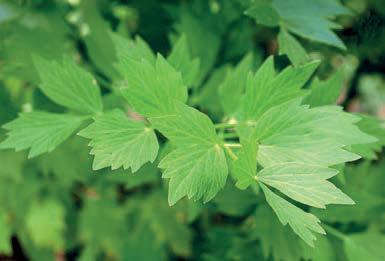
The glossy, divided leaves are harvested from spring to early autumn for cooking
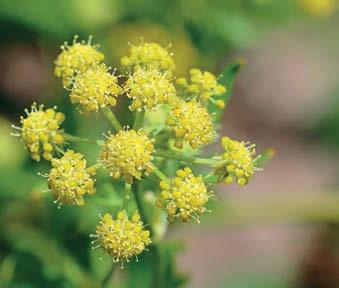
Pale yellow umbels appear in early summer if plants are allowed to flower
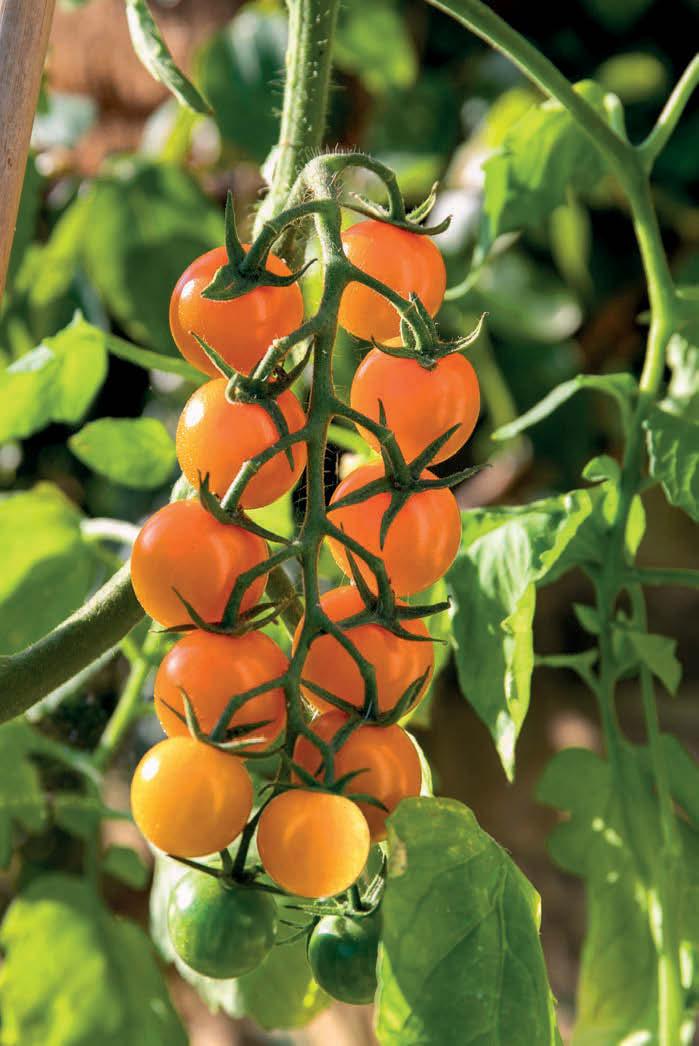
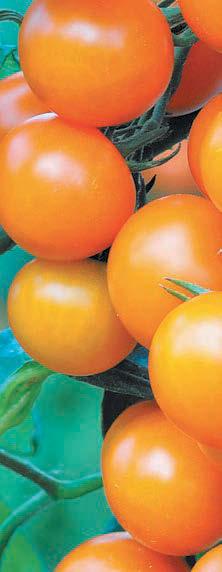
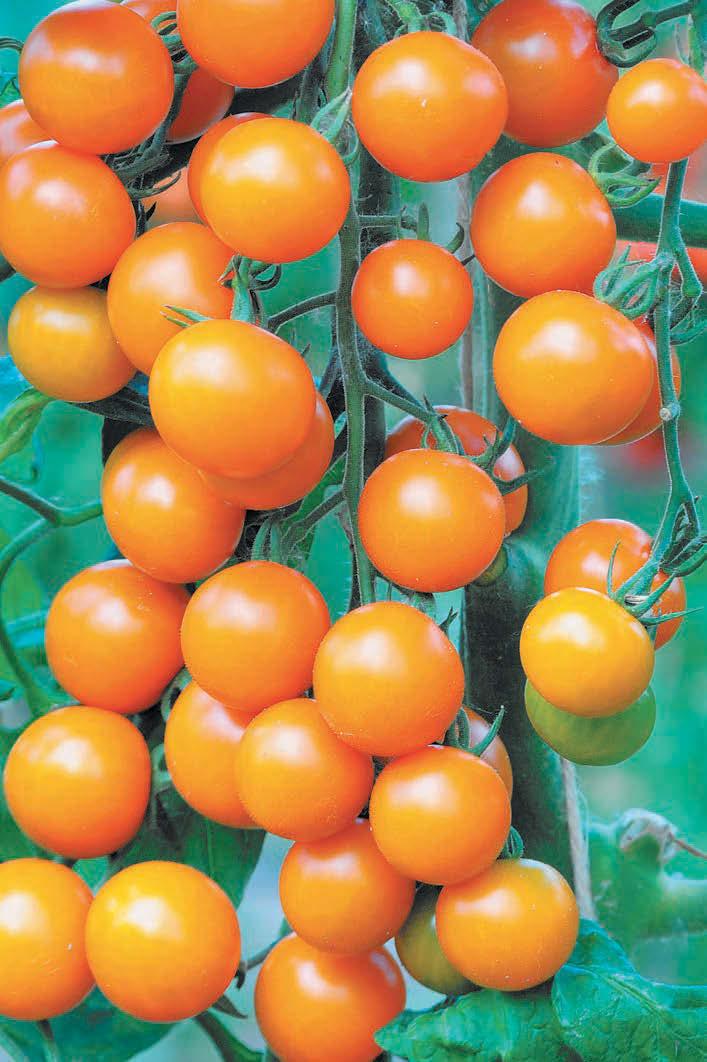
Sungold Super Sweet really is the sweetest of tomatoes. In fact, with a ‘Brix’ reading of 11.5% it’s sweeter than most strawberries! Its very thin skin and sweet juicy flesh
And so easy to grow whether in the garden, pots or baskets. Simply plant them, water and feed and wait for the fruit. You’ll yield up to 10lbs of cherry sized fruits from every Plant outdoors for non-stop crops from late June to October – even longer if you transfer them to a
Your Tomato ‘Sungold Super Sweet’ plants will be delivered nursery fresh for growing on then planting outdoors from May. So, if you like to grow, pick and enjoy your own sweet and tasty tomatoes you must take advantage of this exclusive introductory offer from YouGarden – hurry as stock is limited!
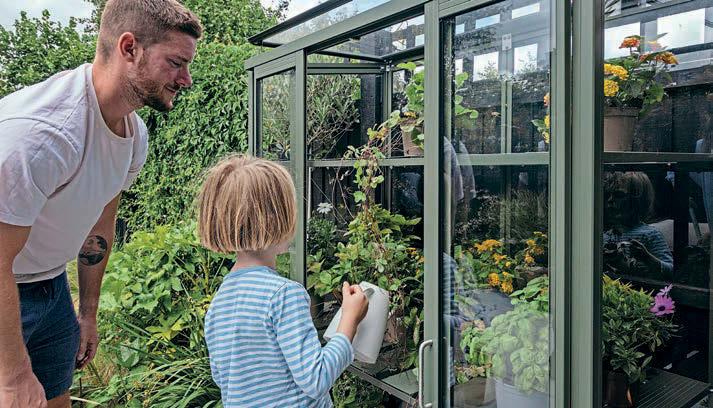
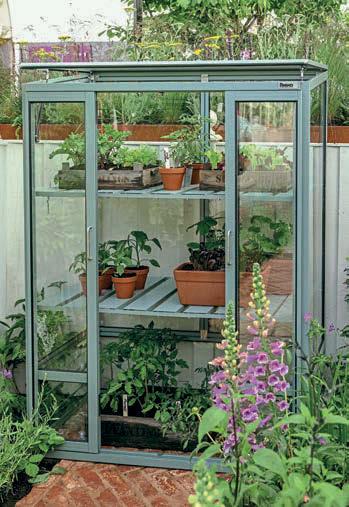
A RHINO ULTIMATE WORTH £1,599 WIN! PATIO GREENHOUSE
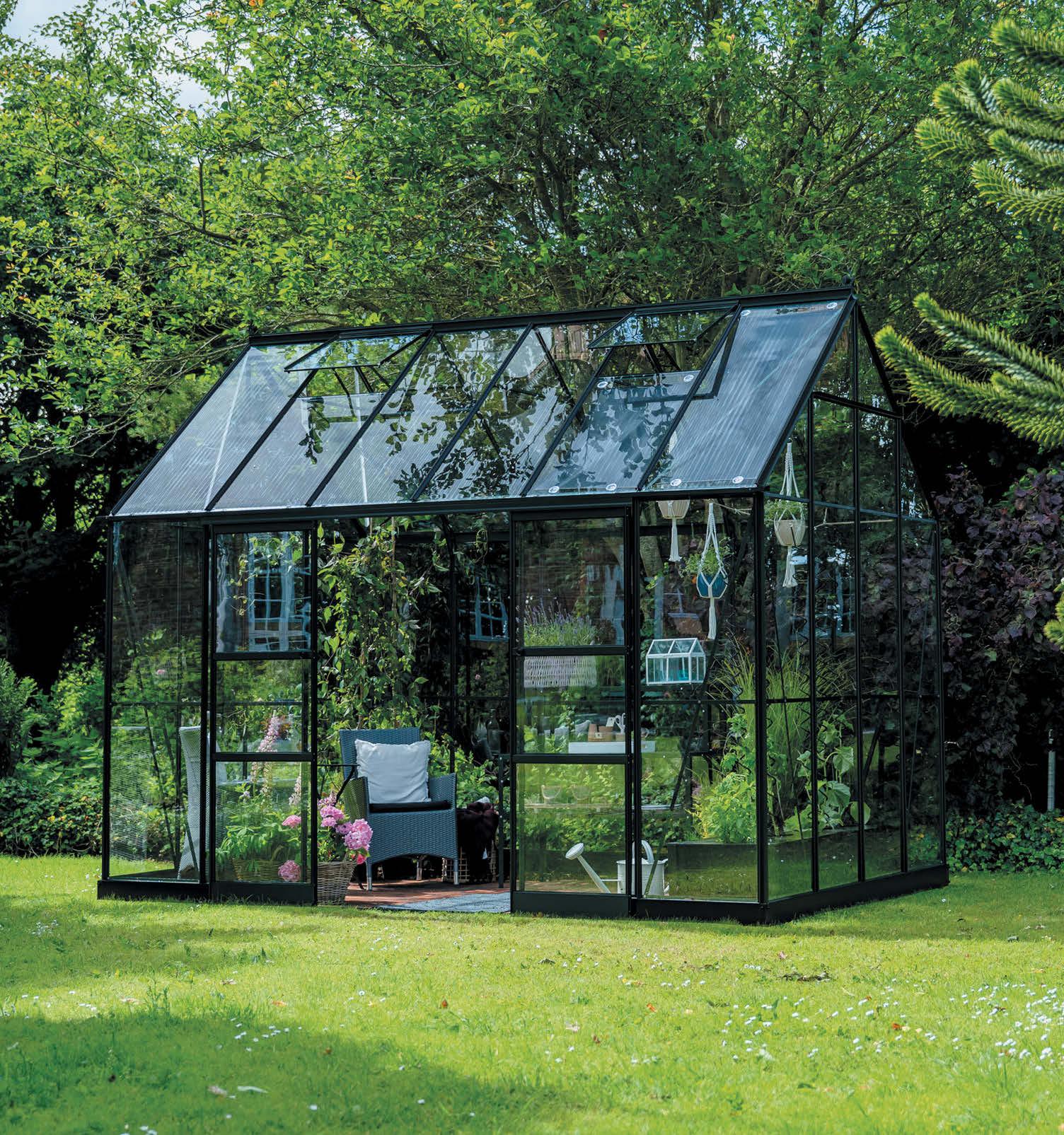
Create extra growing space with the Rhino Ultimate Patio Greenhouse – a compact yet robust structure designed to fit neatly into patios, courtyards and smaller gardens
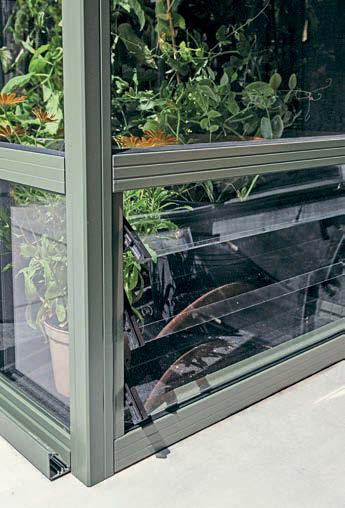
Ideal for beginners and experienced gardeners alike, this space-saving greenhouse features double sliding front doors for easy access, a flexible shelving system, and excellent ventilation via the doors, automatic roof vent and louvre panes. Even when it’s full of plants, everything remains easy to reach. Built to withstand the elements, each greenhouse is made from super-strong box-section aluminium and 4mm toughened safety glass, and comes with a 25-year guarantee for complete peace of mind. With a choice of four colours – Midnight Slate, Tuscan Olive, Silver Sage and Blue Grass – it’s easy to find a finish that suits your garden.
To enter, visit kitchengarden.co.uk/marchgiveaway and answer this simple question:
Where are Rhino Greenhouses manufactured?
a) Suffolk
b) Norfolk
c) Essex
Designed by gardeners, for gardeners, Rhino is Britain’s best-loved greenhouse brand. Each greenhouse is manufactured in Norfolk and can be personalised with a wide range of accessories. You can see the full range at rhinogreenhouses.co.uk
LIVING WITH SLUGS
Anton Rosenfeld of Garden Organic looks at practical ways to manage slugs by working with, rather than against, nature
Slugs have long been misunderstood. Perceived wisdom was to destroy them at all costs, with many gardeners poisoning them – and other wildlife – with blue metaldehyde pellets. After these were banned, many turned to ferric phosphate pellets which, although less harmful, still raised concerns about their impact on soil life.
But recently, slugs have been elevated from the status of low-life garden pests to ecological recyclers of organic matter. And we’ve begun to give them a chance... that is, until they go and spoil it all by holding an overnight party among our courgette seedlings.
e organic way to tackle slugs is somewhere in between. Rather than outright chemical elimination, if we took a little more time to understand how they operate, we could adapt our gardening practices to coexist with them while minimising their damage.
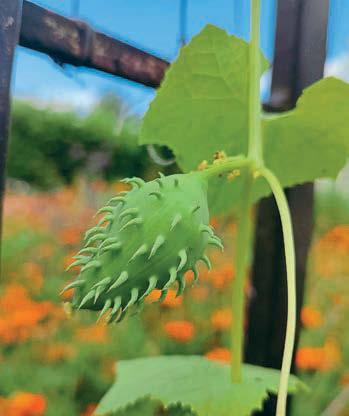
Achocha, a spiny South American cucumber, has proved remarkably resilient to slug damage, even in bad slug years
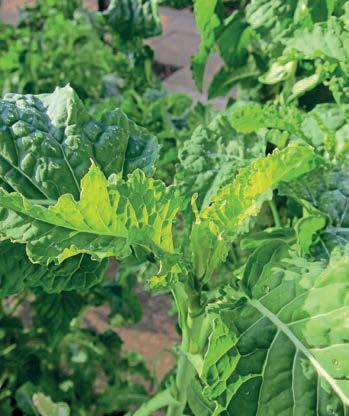
Long-term perennial crops such as Taunton Deane kale are far less vulnerable to slug attack than young seedlings
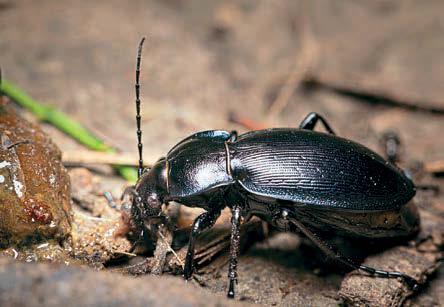
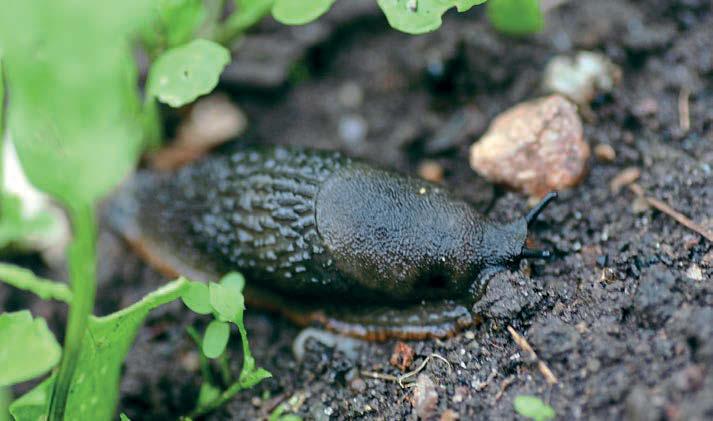
The large black slug Arion ater is often blamed for garden damage, but many spend much of their time recycling decaying material
HOW A SLUG WORKS
Slugs evolved from snails, managing to survive without a shell by coating themselves with a moisture-retaining mucus.
ere are more than 40 species of slug in the UK, but only four of them regularly cause damage in our gardens. ese are the pale grey eld slug (Deroceras reticulatum), the common garden slug that is dark with a yellow or orange sole (Arion hortensis), the common keeled slug (Tandonia budapestensis), which is dark grey with a distinct keel down its back, and the large black slug (Arion ater) – a larger slug, which is dark black or brown.
Most cause damage both above and below ground, but the keeled slug in particular causes damage to root crops and potatoes. Slugs in ict their damage with a radula – a rasping, tongue-like structure that is said to have up to 28,000 teeth!
However, the majority of species prefer rotting material and in ict very little damage on our cultivated plants.
NATURE HAS ITS OWN SOLUTION TO SLUGS
A slug is a tasty snack for many creatures in the garden, which do a good job of preventing them from getting out of hand.
Ground beetles are thought by many to be one of the most important, eating large numbers of eggs and smaller slugs. ey live among leaf matter and in wood piles, so make sure that your garden has some of these habitats for them to thrive.
Frogs and toads will also eat slugs and their eggs, so a pond or a small patch of water is invaluable in keeping the balance within your garden.
Many bird species, especially starlings, blackbirds and thrushes, like to eat slugs and can be seen wiping their slime o on the grass to make them more palatable. Make sure that you provide shelter, water and some food to encourage them.
Nematodes are microscopic worms that naturally occur in soil. Some species will enter the slug and infect it with bacteria, causing it to die. Biological controls augment this by boosting the numbers of these microscopic worms, and can be watered into the soil to provide around six weeks of protection.
Hedgehogs undoubtedly consume slugs, but it isn’t so well publicised that they also consume large numbers of the ground beetles that would otherwise feed on the slugs. However, with dwindling hedgehog numbers, it still makes sense to take measures to attract them into your garden.
Other slugs, such as the leopard slug (Limax maximus), will regularly consume other slugs, including the harmful ones. ey often thrive in compost heaps, so this is an easy way to build up their numbers.
HOW TO LIVE WITH SLUGS
■ DON’T TIDY AWAY ALL YOUR LEAVES AND ORGANIC
MATTER
Jo Kirby, a gardener, biologist, and author of e Good Slug Guide, pointed out that the way we lay out our gardens creates a slug problem. Often, we are too hasty to sweep
away all the organic matter, which not only provides valuable habitat for ground beetles but is also the preferred food source for many slugs. Take it all away, and who can blame them for eating our plants instead?
■ GROW YOUR PLANTS TOUGH!
Seedlings are most vulnerable to slug attack, but if we take time to harden them o by moving them outside during the day, we end up with plants that are tougher and more resilient.
■ MAKE SURE TO CHOOSE A BULLETPROOF PLANT
e year 2024 was coined by some gardeners as Year of the Slug. Many Garden Organic members grew achocha, a spiny South American cucumber, and found that it was often still the only plant left standing amid other plants reduced to a sea of slimy destruction. Perennial vegetable plants such as Taunton Deane kale are also much better at withstanding slug attack by virtue of the fact that they’re a long-term established plant that does not have to go through that highly ‘slugvulnerable’ seedling stage. ■
Join Garden Organic as a member before the end of March and you’ll receive a free copy of its First Steps in Organic Growing – full of tips about sustainable growing techniques. For this and a whole host of other member benefits, visit gardenorganic.org.uk/join and click Kitchen Garden Reader Offer in the dropdown menu
Ground beetles are one of the most effective natural slug predators, feeding on eggs and young slugs hidden in soil and leaf litter
Frogs and toads help keep slug numbers in check, making even a small pond a powerful tool for natural control
Only a small number of slug species cause most garden damage, while many others prefer rotting organic matter rather than your precious seedlings
Steph fills a wheelbarrow with manure and straw for a hot bed
planning for a great yield
Stephanie Hafferty explores number three of the 12 permaculture principles, explaining how it can help us produce more abundant gardens and allotments
The third key permaculture principle is ‘Obtain a yield’. is one is certainly relatable for us home growers and gardeners, keen to make the most of our plots. It’s a lovely one to think about in March, when we’re busy planning the growing year ahead and starting to sow and plant properly.
‘Obtain a yield’ encourages us to take time when designing veg gardens and allotments, to create sustainable, productive plots that also save time and money. is includes producing food crops, conserving
water, creating and maintaining healthy soil, supporting biodiversity, and providing other bene ts such as well-being and support for our communities. ese social yields include sharing resources like saved seed and surplus plants or harvests, sharing advice, and having fun.
is principle isn’t just about growing as much as you can. It also includes an idea called ‘yield stacking’. is means choosing plants, tools, structures, etc in our plans and designs for our plots, which have more than one function.
A good example is planting fruit trees. ey produce fruit for us to eat, of course, and also:
■ Flowers for foraging insects and using as edible owers
■ Shade for other plants and for us to enjoy on a hot day
■ Sticks as part of annual pruning maintenance for making plant supports and wildlife habitats
■ Produce oxygen
■ Act as a carbon sink
■ A habitat for many kinds of fungi, insects, birds, and small mammals
■ Leaves to feed the soil, use as a mulch or make into leaf mould
■ A play area for children
■ Beauty for us all to enjoy ➤
Ducks used as pest control at a vineyard in Paarl, South Africa
Horse manure can be used fresh, for hot beds
GET GROWING
Even pathways between veg beds can serve as multipurpose ways to obtain a yield. A woodchip mulch will help create a safe place to walk. As it gradually breaks down, it will feed the soil life beneath, including any plant roots from the adjacent beds growing under it. e mulch creates a habitat for small insects, which in turn provide food for other wildlife and nutrients for the soil. It will also keep the soil beneath
protected from the weather, including very dry summers. After a year or so, when the mulch has mostly broken down, gently rake it up and spread it over the neighbouring beds as a compost mulch to continue feeding and protecting the soil. is principle encourages us to look at plants usually grown as one-o annual crops in a di erent way. Many will re-sprout, producing more harvests, edible owers, and
seed heads. For example, after harvesting a cabbage, cut a cross into the stem carefully with a sharp knife. Over the next few weeks, four shoots will start to grow. Whilst they won’t quite produce four more cabbages, they do resemble tasty spring greens. Or leave bolting radish in situ and enjoy the delicate owers in salads, and the spicy green seed heads eaten raw or pickled – more delicious harvests for free.
If you have pets, then as well as providing companionship and entertainment, they can also be part of obtaining a yield. Pet rabbits or guinea pigs recycle garden waste into useful manure and bedding, boosting compost production, or can be used to make hot beds. Ducks or chickens provide eggs, manure and bedding, and also help to reduce pests such as slugs. On a larger scale, ducks are used in some commercial growing projects, including vineyards. Here, they
A hot bed filled with manure and straw
A hot bed set up outside, covered with a cloche made from horticultural fleece
Stephanie’s Welsh Harlequin ducks recycling slug-filled chicory prunings into eggs
spend all day foraging for slugs and other insects, fertilising the ground as they explore and helping to protect crops from pests so no arti cial pesticides are used. ey are brought in at night to protect them from predators.
Hot beds are an excellent example of obtaining a yield. ey have been used for centuries to create a warm environment for growing crops. Create a four-sided frame using pallets or old timber (skips are a good source of this). Hot beds are most e ective when deep, so make them tall and narrow rather than shallow and wide.
Next, ll with fairly fresh nitrogen-rich manure and bedding. You want it to be fresh so that it heats up when composting. Local horse stables are a good source of fresh manure and will often gladly let you come and collect bags of it. You can also use ‘dags’ – the soiled parts of sheep eece discarded by farmers.
To make a veganic hot bed (one with no animal manure or by-products) use grass clippings, leaves, seaweed, straw, hay, comfrey, human urine, co ee grounds, plant waste, and shredded natural- bre rags to make the heap. It may take a little longer to heat up. Covering with old plastic, such as opened-out compost sacks, will help speed this up.
Once made, the manure and bedding will start to heat up. is is due to microbial activity during the composting process. You can use the hot bed in two ways. One way is as a heat source for germinating trays of seedlings and keeping young, tender plants warm. is works best in a greenhouse or polytunnel. Place a pallet or similar frame on top of the hot bed, and put the seed trays on top. Cover with some horticultural eece or bubblewrap for extra insulation. If the hot bed is outside, make a microclimate with a cloche. Fix hoops across the hot bed and cover with a sheet of clear polythene.
Alternatively, place a cold frame or cloche on top and ll with at least 15cm of compost. You can sow directly into this compost. e warmth coming from the manure beneath will encourage germination and growth. Keep the seedlings protected from the worst of the weather by covering with the cold frame lid or cloche (clear plastic or 30gsm horticultural eece). Ideal seeds to sow in March on a hot bed outside include salad, beetroot, carrots (shorter varieties), radish, turnips, spring onions and spinach. You’ll be harvesting these weeks before soil-sown crops are ready.
Ventilation is important to ensure the growing environment remains healthy,
especially in hot beds set up inside a greenhouse or polytunnel.
Later, once these early crops have been harvested, either fork out the hot bed material onto a bed as mulch, or plant squashes, courgettes, tomatoes, cucumbers or melons into the hot bed. ese hungry crops will love the nutrient-rich, now partially decomposed, hot bed lling.
roughout the process, the hot beds will also provide habitat for many insect and fungal species and a foraging ground for birds and small mammals.
In the autumn, the manure and bedding will have completely matured into gorgeous compost, ready to use as a mulch in the garden. ■
Radish flowers
Propagating on the hot bed
Radish pods
WIN £300 OF VOUCHERS! COMPLETE OUR SURVEY
Tell us what you really think about Kitchen Garden
We want Kitchen Garden to be as useful, enjoyable and inspiring as possible – and the best way to improve the magazine is to listen to the people who actually grow from it.
By taking part in our short reader survey, you can help shape what appears in future issues – from the crops we focus on and the depth of practical advice we give, to how we present features, projects, trials and seasonal jobs.
Your feedback will directly influence how the magazine looks, feels and works for you as a home grower.
The survey takes no more than 10 minutes to complete, and your answers will help us make Kitchen Garden
■ easier to use
■ more relevant to the way you grow
Kitchen Garden: more relevant to the way you grow
■ clearer and more practical
■ more enjoyable to read, from cover to cover
You can be completely honest –we are interested in what works well, what feels less useful, and what you would like to see more (or less) of in the magazine. Your responses are confidential and will be used only to help guide future content and design decisions for Kitchen Garden
As a thank you, everyone who completes the survey will be entered into a prize draw to win £300 of garden vouchers.
(or less) of in the magazine. Your responses are confidential will draw to win £300 of garden vouchers.
Simply complete the questionnaire online at smartsurvey.co.uk/s/KG2026
This 15cm Mini Pruning Sawdeliversprofessionalgradecutting powerina compactdesign—ideal forusers of allexperience levels.Weighing-in at just 1.8kg, it’s light, manoeuvrable, and perfect forpruning branches and logs up to 13cm thick. The ambidextrous design makesitcomfortablefor left-and right-handed users. Whetheryou’re keepingthe gardentidy or prepping firewood, it’s made forhassle-free, precisioncuts.
Safe andSimpletoUse
Designed with safety in mind,the Mini Sawfeatures aprotective hand guardand tool-lesschain tensioning forquick adjustmentson thego. It’s readytouse straight outofthe box—just clickinthe battery, and you’re good to go!No complex set-up,nostress.
LowMaintenanceDesign
Effortlessgardening!With virtually maintenance-free design,spend lesstime tinkeringandmore time
admiring your beautifully pruned garden.
PartoftheONE+Family
PoweredbyRyobi’s 18V ONE+ batterysystem, this sawiscompatiblewith over 200other Ryobi tools,
giving you incredible valuefor money and flexibilityas collection gr
Save over –orderno
what it says andI have no hesitationin recommending it to others! TerryRegan,online g – order now! the Ryo Pru for just £99.9
Order theRyo 15cm Mini Pr forjust£99.9 free delivery plus a3-year guarantee—savingyou over £95! Don’tmissout on this fantastic offer!
ITALIAN INFLUENCE
Lawrence Owen of Ebenezer Cottage Garden shares how Italian flavour-led growing, no-dig methods and a 10-metre greenhouse shape a calm, productive kitchen garden – and why taste will always come before yield
Tell us a little about Ebenezer Cottage Garden. What kind of space is it, and how did it come to be what it is today?
e house was a eld worker’s cottage dating from the 1820s. e outdoor space had previously been used as a productive market garden about a century ago. Once we moved in, I couldn’t help but feel the garden had lost its way. It was very overgrown, with lots of unnecessary brickwork and landscaping fabric – and a dilapidated caravan at the end of the garden for good measure! From here, the challenge was to establish a productive kitchen garden to get the garden growing food again. is space has developed over the years, but I think I’ve now got to a place where I’m happy with the current layout and design. e 10-metre greenhouse has transformed the space, allowing for much more experimentation when it comes to heat-loving plants. When it comes to my gardening
methodology, I mainly practise no-dig, but I’m not afraid to experiment with new ways of growing.
Your garden feels very food-led. How much does cooking in uence what you choose to grow?
conditions
timing
Most of the crops I grow are directed by the meals I eventually want to cook with them. I rst started growing vegetables about 20 years ago, on a mission to grow Italian varieties that I couldn’t nd in UK supermarkets. My ultimate challenge was to successfully grow cime di rapa, or broccoli raab, in the UK. After many years of planning, experimentation and ignoring the instructions on the packet, I’ve nally cracked how to grow certain crops e ectively, including my beloved cime di rapa. e choice is always led by taste rather than yield, achieved by selecting speci c varieties and timing the harvests just right. I can get cheap vegetables in the supermarket, but my garden is about avour. For example, I love picking courgettes when they’re slightly smaller, with the ower still attached, as I would never
nd them like this in my local supermarket. e thought of being able to go into my own garden and pick all the ingredients I need for a meal is what excites me. Sometimes I go out not knowing what I am going to cook until I see which vegetables look best that day.
You grow an impressive range of crops, many of them not the obvious ‘safe’ choices. Which plants earn their place in your garden year after year, and why?
e backbone of the kitchen garden is my tomatoes. I have a core selection that I grow each year. e best all-rounder for me is c
Cime di rapa – a much-loved Italian crop that has taken years of trial and
to grow reliably in UK
Carosello Pugliese, a traditional Puglian crop grown for salads and light dishes, and still little known among UK gardeners
Cuore di Bue, but I can’t go a season without growing San Marzano. I love growing any kind of leafy vegetable – Swiss chard is a favourite. I will always experiment with something new each year. With every growing year, I get a better understanding of which varieties work best in my garden.
Your Italian heritage clearly shapes how you grow and cook. How has that in uenced your approach to the kitchen garden?
Italy has in uenced everything I do in the kitchen garden, especially when it comes to the varieties I grow. Growing and cooking Italian vegetables – especially anything from Puglia – is crucial to staying connected to family heritage. It also transports me back to childhood nostalgia through the taste of the food cooked with my produce.
Vegetable and fruit markets in Italy are amazing places – you can always nd
something new, and the vast quantity of produce on o er in Puglia is a sight to behold. ere’s a strong culture of vegetables being prominent and celebrated, with people excited about what’s in season and even what tastes best that week or month.
Some of my earliest memories are of seeing my grandmother reach over a fence to pick fresh, jammy gs, or an uncle wearing gloves to stop himself getting spikes in his hands while peeling prickly pears. What I’m trying to do is not only to grow Italian varieties, but to recapture that feeling of being in touch with the seasons.
Many gardeners struggle to bridge the gap between growing and actually using what they harvest. How do you make sure your produce ends up on the plate? It’s not always easy! I remember on one occasion, I had to put a wheelbarrow full of beetroot on my drive with a sign saying
‘Free beetroot’ (they all went, thankfully). However, there are some staple methods of preservation I use each year. e rst is pickling – the best candidates for these are beetroot, shallots and gherkins. I grow grafted aubergines, and once they get going they can produce an aubergine every three days – far too many to use fresh but they’re fantastic preserved in oil, along with other antipasti veg such as artichokes and sun-dried tomatoes. I usually dry tomatoes in my dehydrator. I would love to use the traditional method of sun-drying, like I remember my aunt doing in her garden in Italy, but it’s virtually impossible to guarantee a stint of baking sun in the UK.
I’m experimenting with fermentation, as the health bene ts of kimchi and sauerkraut are too good to pass up! I have also produced a lot of wine. e obvious choice for winemaking is soft fruit. I particularly like strawberry, raspberry and gooseberry, though I’ve produced more unusual varieties, like elder ower and rose petal wines. I worked in the wine industry for 10 years and once got a tip-o that pea pod shells make a wine not too dissimilar to a Sauvignon Blanc. I’m not entirely convinced, but I may give it a go!
Your garden looks productive but also calm and intentional. How do you balance aesthetics with practicality?
e garden has been a big project over the past seven years. I have completely transformed the space. e look and feel are important to me. It’s still quite an open space, as we have low hedging and a cow eld around us. On social media I mainly show the vegetable garden, but I’m sharing the ornamental side as it develops, too.
e layout of the vegetable garden was purely practical – a matter of how many beds I could t in while allowing room for a wheelbarrow to move between them. I have three-year-old twins, and I want the veg garden to be a place where there are lots of smells, textures, and places for them to explore. My goal for the vegetable garden is for it to be as full as it can be with vegetables and owers, while remaining practical and
Puntarelle, an Italian chicory prized for its crisp stems and distinctive, slightly bitter flavour
Palla rossa chicory, grown for winter salads and cooked dishes
Purple sprouting broccoli, part of a wider focus on growing a range of leafy vegetables
An early-season salad bed for unusual varieties, grown for flavour
productive. All the paths are covered with wood chips. As fungi break them down, the mycelial network is clearly visible, growing and working its way into the raised beds, which is hugely bene cial for the plants.
Are there any crops you think more UK gardeners should be growing for the kitchen, but often overlook?
I think we should embrace leafy veg more. We all have a shady spot where you think nothing will grow. Something like Swiss chard is perfect there. It’s important to work out which vegetables you cook with most, as you can make countless dishes with only a handful. Puglia is the vegetable garden of Italy, so I am spoilt for choice for regional dishes I can make. e staples for Italian dishes are tomatoes, onions, garlic, leafy veg such as chard or cime di rapa, and beans (I love growing borlotti in particular), and herbs such as basil, parsley, and rosemary. It’s great to have multi-use plants in the garden and the ultimate example has to be the courgette. You can pick the fruit at various stages and you can also pick and cook with the owers and even the stems. I do have one variety I like to grow that’s not particularly well-known in the UK, called Carosello
Pugliese. It’s somewhere between a cucumber and a melon, and can be served dressed in a salad or as a dessert after a meal.
How do you approach the seasons in the garden? Are you a strict planner, or do you leave room for instinct and adaptation? I always have an idea of what I plan to do but I try not to be too regimented about it, as, over time, it’s become more instinctive. Each season o ers something di erent. Spring imparts a feeling of hope, while summer and autumn o er abundance. Winter may provide fewer crops in the garden, but I’m always thankful for the time to have a good tidy-up and plan. It is better to try to do something in the garden each day, rather than leave all the jobs for the weekend.
What does a good growing year look like to you – is it about quantity, quality, or something else entirely?
Each year has its own successes and challenges. Every year at least one thing will do very well, but I also accept that there may also be a crop that struggles. 2025 was a fantastic year for tomatoes – I had 39 plants and nearly had more than I could process! You can also see this in nature with weeds. ere is always a weed that seems to do particularly well, then the next year it may be another. It’s all about seeing the plants thrive, having a good harvest while knowing I have done my part to support nature, gardening as organically as I can by making my own plant feeds and supporting pollinators. I love trying something new and having it work (such as melons last year), but also getting a ‘did you really grow that?’ as I hand over an unusual crop to a friend. As the twins get older, they’ll hopefully become more interested in growing food. Hopefully, I can give them that feeling of being in touch with the seasons in our garden.
Social media has played a big role in sharing your garden. What do you enjoy about documenting your growing, and what do you hope people take from it? Firstly, it allows me to have a creative project, by combining two hobbies
that I love – gardening and video editing. e other is sharing the garden with a community of like-minded people. Part of the reason I started growing vegetables was I refused to believe certain Italian vegetables could not grow in the UK. I hope people watching my YouTube videos or looking at my Instagram come away with the sense that growing it all is possible – it just takes a bit of persistence. ink about the number of times you hear somebody saying ‘I tried growing cauli owers once’ and they never tried again because it didn’t work. You have to keep going, making adjustments and trying new techniques to nd your own way. It also provides me with a way to document each growing season. I love looking back at old videos to revisit standout crops – for example, the garlic crop of 2021 was fantastic!
Finally, what’s next? Any crops, projects or ideas you’re excited about this year? Getting the children growing more! ey are four this summer, and this will be the season where it would be nice for them to experience the full cycle of planting their own seeds, watering and harvesting. I have always composted but plan to compost more this year.
Garden waste is always recycled. I see it as a valuable resource for mulches, lling raised beds, or making fertilisers. I don’t have a brown bin. I think it’s a shame just to throw away nutrients you could just put back into your garden.
I’m also trying some more Italian varieties of chicory. ere is one called scarola you can cook into a soup, which is particularly interesting. I have a few varieties of g I would love to get fruiting. I’m still guring out how to grow them. And nally, I think there may be a book in me, so I may start thinking about that and begin putting pen to paper. ■
• You can follow Lawrence on YouTube at: ebenezercottagegarden and Instagram: ebenezer.cottage.garden
Borlotti beans, a staple crop for Italian cooking
Lawrence teaches his daughters where their food comes from by involving them in growing
Handmade orecchiette with cime di rapa, showing how home-grown Italian crops are used in everyday cooking
OPTIMISED ROOFPITCH& REINFORCED ROOFRIDGE
ROBUST SLIDING DOOR WIDE GUTTERS
HALLSICON
MOREGREENHOUSE FORLESS
TheICONseries takestheclassicHallsgreenhouse to anew level–withimproved solutions,increaseduser-friendliness,and astronger,moreharmoniousdesignthat integratesbeautifullyintoany typeof garden.
EXPLORETHENEWRANGEAT LOW THRESHOLD
Manufacturingqualityeasy to construct Polytunnelsfor over35 years
We areafamilybusiness,basedinDevonanddeliveringnationally. Ouraimis to providequalityproductsandpersonalservice at a reasonableprice.
Polytunnelsizes rangefrom8’ to 24’ wide(2.4m to 7.3m) Awide rangeof coversandaccessories to create yourperfect polytunnel.
View Polytunnelsonsite by appointment www.ferrymanpolytunnels.co.uk•info@ferrymanpolytunnels.co.uk
Start saving water now
With drier summers becoming the norm, now is the ideal moment to set up simple, practical ways to capture and store rainwater for the months ahead. In this exclusive extract from her new book The Productive Garden Stephanie Hafferty explains how to do it and offers some simple DIY solutions to help
Late winter and early spring are the perfect time to prepare for how you will water your plot this summer. Gutters, water butts and simple harvesting systems are far easier to install before growth takes o – and every litre you collect now is one less you’ll need from the tap when dry weather arrives. But how to start? The Productive Garden o ers plenty of advice on how to capture rain from roofs, tunnels and structures, and how to store and use it e ciently to support productive growing through the season ahead.
WATER HARVESTING
I try to collect as much water as possible to have plenty in reserve for times of drought. Harvesting rainwater from roofs and other surfaces is better for garden plants (they prefer it to tap water) and also reduces my water bill.
Ecologically, it is bene cial because it saves energy, involves none of the chemicals used in water processing, and makes the most of a free resource. It’s a good idea to have as many containers as you can for harvesting and storing water, whether it is a small pond, a water butt or a 1,000 litre IBC (intermediate bulk container).
WATER BUTTS
Water butts usually come with a tap and lid, and optional extras including a stand (so that a watering can ts underneath the tap) and a rainwater diverter, which is attached to a downpipe and diverts water into the butt. Once the butt is full, the water ows back down the pipe into the drain. If you have the space, you can buy (or make) connectors to link two or more water butts together.
You can make water butts from all kinds of objects, including old dustbins, wooden barrels (if they are still watertight) or an old bath with the plug in, for a practical dipping pool/pond. Make your own stands from breeze blocks or similar. I have fashioned a stand from an old car wheel.
COVERING WATER BUTTS
It is important to have some kind of lid to prevent evaporation, keep leaves and other debris out, and importantly stop children, pets or wildlife from falling in. A tted lid also discourages insects such as mosquitoes or midges from laying their eggs. Alternatively, make a lid from metal mesh: this deters most of the above, except the mosquitoes or midges (although looking on the bright side they are a valuable food source for other creatures).
USING FENCING AND WALLS
is method involves xing guttering with downpipes to fences and other vertical spaces. It does not harvest as much water as a roof, but is relatively simple and will ll water butts during heavy rain.
MULTIPURPOSE WATER BUTTS
Water butts are permanent features, so I like to make them as multifunctional as possible. Everything can easily be lifted o for cleaning inside the container.
■ Hang planters from the tops or around the sides to make them more attractive and productive.
■ Grow plants on the lid.
■ Attach bird feeders, wildlife water baths or bug hotels to the containers to increase biodiversity in your garden. Make sure they can’t fall into the container. If the container is raised from the ground, you can create a wildlife habitat underneath too.
MAKING THE MOST OF THE WATER FROM YOUR POLYTUNNELS
ere are several ways to harvest the water that pours down the sides of polytunnels. If a side bar is in place already, fasten guttering to the side and connect to the water-collecting containers. For longer tunnels, some upright supports such as wooden stakes help to strengthen the gutter and reduce movement in wild weather, which could damage the plastic. Place supports every 1.2-1.5m (4-5ft).
Alternatively, make a frame along the side of the polytunnel using timber, with regular supports to keep the structure in place. Fasten a length of guttering to the frame using guttering xings and attach this to the polythene with polytunnel tape or similar strong waterproof tape. Close one end and x a drainpipe to the other, leading into your water butts.
WATER HARVESTING AND IRRIGATION
Using water e ciently includes using methods of harvesting rain which suit your plot, and also e ective irrigation techniques. Making sloping surfaces on top of composting bays can provide a way of collecting rainwater and help to keep the compost from becoming too soggy.
Simple wooden composters made from pallets are excellent because it is easy to x a water harvesting roof and guttering to them. A roof needs to be weatherproof and allow water to ow into the guttering. On top of the log store here we use a large sheet of pre-used plastic fastened to a wooden frame. Corrugated roo ng materials, a panel from a dismantled polycarbonate conservatory or a sheet of marine ply are all possibilities. An olla (pronounced ‘oy-yah’) is a porous vessel, normally made from terracotta, which has been used to irrigate crops for millennia. Ollas are found in
China, Africa, the Middle East, South America and India: a global method for saving water and time. ey are a simple and e ective way of slowly releasing water into the soil. e olla is buried so that only the top is visible above the surface. Tiny pores in the terracotta allow water to be slowly absorbed into the soil when it is dry. e terracotta is so e ective and water-e cient that when the soil is wet, during rainy weather, the water stops seeping out until needed again by the plant roots.
e vessels are made with a round bottom and a tapered neck, rather like a wine bottle top. Once buried in the soil, with a little of the neck above the surface for ease of re lling and to prevent soil from tumbling in, the tops are covered with a lid to prevent evaporation and insects falling in.
If you live in an area with hard winter frosts, remove the ollas in the autumn to prevent cracking.
HARVESTING WATER FROM COMPOST BAYS
You will need:
■ guttering, running outlet, stop end, downpipes and xings
■ drill, screws, string and tape ■ wood for the structure
1 Fasten the guttering to the top of one of the sides of the composter, with the running outlet (the part that lets the water descend). Fix securely, making sure that the running outlet is in a suitable place for placing the water butt underneath, and fasten a stop end there if it doesn’t already have one. Fasten a stop end at the other end of the guttering to prevent the water from owing out, or attach another running outlet for a second water butt.
2 To ensure the maximum amount of water possible pours into the guttering, the roof must slope toward the gutter. e front supports should be slightly higher than the rear supports.
3 Fasten the roof securely to the structure, so it will not blow away.
4 If you wish, x some edging to the sides of the roof to reduce water run-o and for greater stability.
The Productive Garden by Stephanie Hafferty £25, Frances Lincoln
MAKE A TWO-POT OLLA
You will need:
■ unglazed terracotta plant pots, whatever size is appropriate for your growing space, two of the same size per olla
■ weatherproof glue or silicone sealer
■ something to cover the holes at the bottom – old wine cork or pieces of pottery
■ a lid for the top – plant saucer, old saucer from the kitchen or piece of stone
■ a funnel for lling the olla
1 Choose which pot is going to be at the bottom and seal the hole completely using an old cork cut to t, or by gluing a piece of broken pottery or similar across the hole. Fill any gaps with silicone sealer so that the water oozes slowly out of the tiny holes in the terracotta and not quickly out of the hole at the bottom.
2 Glue two pots of the same size together – with one pot turned upside down onto the other to create a barrel-like vessel – and leave to dry somewhere protected from the weather. is could take up to 24 hours.
3 Bury in the soil leaving a small amount of the top above the surface. Make sure the sealed base is at the bottom.
4 Place the funnel into the hole at the top and ll with water. Cover with a saucer or similar.
SIMPLE ONE-POT AND SAUCER OLLA
You will need:
■ a terracotta plant pot
■ a saucer which ts snugly over the top
■ glue and something to cover the hole at the bottom
Cover the hole at the bottom as for the two-pot olla. Place the pot in the soil, leaving a little above the surface. Fill with water. Cover the olla with the saucer. Check every week or so to see whether it needs re lling.
Looking closely at what’s living in your soil helps build a clearer picture of how healthy and active your soil ecosystem really is
UNSeen heroes of super soil
Becky Searle reveals how the life in your soil that you can’t easily see can be encouraged to quietly improve plant health and productivity
For too long, gardeners have been focused solely on growing plants. We obsess about making compost teas, getting high-quality manure, and selecting the best vegetable varieties. But there’s a key element of gardening that has been woefully overlooked for centuries, except by a select few. I am, of course, talking about soil. Soil is crucial to the lives of our plants. e lower half (approximately) of most plants exists underground. e soil is as critical to plant health as our digestive systems, and actually works in a similar way. We use our digestive system to break down our food and release nutrients, and plants use the soil for this. Plants also need the soil to provide them with water and oxygen.
Our soil is home to tens of millions of di erent microscopic lifeforms. Some estimates say that one handful of healthy garden soil can contain more life than all the humans who have ever lived on this planet. Happily, the soil ecosystem has evolved over many millions of years to look after our plants, because the soil needs our plants just as much as our plants need the soil. is kind of relationship is called a symbiotic relationship, in which both the soil and the plants bene t from the arrangement. As gardeners, we are simply required to be facilitators, making sure that the soil has plenty of organic matter and as little disturbance as possible. But it’s di cult to visualise all these lives and all this activity happening beneath our feet, especially when most of it is microscopic. So, let’s meet some of the important players in the soil ecosystem and nd out what they do.
FABULOUS FUNGI
One of the most important organisms in soil is mycorrhizal fungi. ese are fungi that live beneath the soil surface. ey exist in a delicate web of structures in all directions throughout the topsoil. ere are two types of mycorrhizal fungi: ectomycorrhizal fungi, which form a sheath around plant roots and
root cells, and endomycorrhizal fungi, which penetrate the cells of the plant’s roots.
Fungi can be considered as an extension to the root system. Like roots, they can seek out water and nutrients in the soil and bind soil particles, holding the structure in place. ey can also help extract nutrients from soil minerals and excrete organic glues that hold the soil structure together and create what we gardeners know as ‘peds’ (a nice crumbly soil texture). Fungi can also protect plants from soil-borne diseases and other harmful pathogens.
BACTERIA BONUS
Bacteria are another big player in the soil world. ey are very abundant in the soil, just as healthy bacteria are in our guts. And just like in our guts, bacteria in the soil help to release nutrients to plants. Bacteria also help create good soil structure by adding signi cant amounts of organic matter and competing with pathogens, making the soil environment safer for your plants.
Some bacteria play a very important role in making nutrients available to plants, particularly nitrogen. Bacteria in the soil ➤
Fungi fruiting bodies in the soil are a visible sign of a thriving underground network, helping break down organic matter and supporting plant health
help x atmospheric nitrogen and convert it into a plant-available form. ese bacteria are so highly valued by plants that some have developed speci c root nodules to house them. Next time you pull up a clover, bean, pea or something else in the legume family, look at the weird knobbly bits on the roots that are home to billions of bacteria!
VITAL EARTHWORMS
Of course, we all know earthworms and, as gardeners, it’s impossible not to like them. One of the rst things we learn about soil from growing in it is that more worms usually mean better soil and healthier plants. Earthworms are amazing. ey help to mix up the soil and create good soil structure. Coming to the surface to feed, they then retreat to the safety of the earth, dragging that organic matter back down into the soil with them. is is a process called bioturbation. eir poop is rich in bene cial bacteria and other bene cial microbes too, helping to populate the soil with these useful creatures.
An amoeba, a type of protozoan
Devil’s Coach Horse beetle larvae
Healthy soil means healthy plants
Earthworms are a brilliant sign of healthy soil –mixing organic matter through the ground and improving structure as they feed and burrow
NEMATODES’ KEY ROLE
Tiny, worm-like organisms visible only under a microscope, nematodes play a wide range of roles in the soil, depending on the species. Some help control pests, such as slugs, while others feed on microorganisms in the soil, helping cycle and release nutrients. Some species can damage plants, but in a healthy soil ecosystem there will be plenty of other organisms to protect your plants from them and prevent them from proliferating.
ACTINOMYCETES
ese bacteria-like microorganisms are responsible for that glorious ‘earthy’ smell. ey are excellent decomposers, breaking down tough materials like cellulose in wood and producing humus. Actinomycetes are useful in the later stages of decomposition. ey also suppress harmful microbes by producing natural antibiotics.
PERFECT PROTOZOA
ese useful little microorganisms help to control bacterial populations, maintaining balance in the soil ecosystem. ey eat bacteria, and when pooping them out they release excess nutrients that are in plant-available form. Amoebas are a type of protozoa and are fun to watch under the microscope as they move around, eating tiny bacteria.
MARVELLOUS MILLIPEDES
ese gentle creatures help create good soil structure by moving through the soil, and also help break down plant matter in the early stages of decomposition, readying it for smaller creatures such as bacteria and fungi.
CENTIPEDES AND GROUND BEETLES
ese are amazing predators in the soil, helping to manage pests and maintain ecological balance. ey eat a wide range of pests, including aphids, slugs, caterpillars, eggs and larvae. Some ground beetles are also granivores, which means they eat seeds. is can help to reduce weed populations in your garden.
ere are many more things living in the soil than I’ve been able to describe here,
and I urge you to take any opportunity you can to look closely at your soil and get to know what is in it. It really is a fascinating world.
Remember that all these organisms will make their own way to your soil. All we have to do is let them. To help grow healthy soil, keep live plant roots in the soil as much as possible, mulch with organic matter once a year and keep disturbance to a minimum.
• To learn more about the soil and how to care for it, check out Becky’s book Grow a New Garden (Chelsea Green Publishing UK, £25). ■
Mycorrhizal fungi
Nematode
There’s plenty to see when you look under a microscope
Soil food web painting by Anna Platts from Becky’s book Grow a New Garden
Comparing dark, organic-rich, biologically active soil (left) with lighter, less structured soil (right) shows how organic matter and soil life improve structure and moisture-holding capacity
TO ENTER OUR GIVEAWAYS SEE PAGE 67 OR VISIT THE KG WEBSITE
GREAT GIFTS FOR GARDENERS
With impressive credentials gained from over 260 years’ experience in designing and manufacturing high-quality garden hand tools, you can be sure that when you choose a Spear & Jackson gift, you’ll be giving your loved one tools they can trust.
This spring we’re offering a chance to get your hands on the new Botanical Gift Set (RRP £35.99) from the premium Spear & Jackson Kew Gardens Collection, comprising a Weed Fork and Hand Trowel plus a pair of leatherpalm gloves – an ideal gift for a green-fingered loved one or indulgent treat for yourself!
10
GIFT SETS TO GIVE AWAY
The hand tools have easy-clean, rustresistant, mirror-polished stainless-steel heads with weatherproofed hardwood handles sourced from sustainably managed forests, and are tanged to ensure sufficient space between the soil and your knuckles. The gloves have flexible polyester backs that carry an iconic Kew botanical design, combined with hardwearing supple leather palms and fingers. Find out more at spear-and-jackson.com
COIR GROWING FOR ALL AGES
Encourage curiosity, responsibility and the joy of growing with CoirProducts.co.uk’s Grow Your Own packs – the perfect introduction to gardening for children of all ages. From colourful vegetables to fragrant herbs, each pack is thoughtfully designed to be easy to use, mess-free and fully biodegradable, giving young growers a hands-on experience while teaching them the fundamentals of plant care and sustainability.
The coir-based compost ensures seeds germinate successfully with optimal aeration, moisture retention and drainage, creating the perfect environment for little green fingers to flourish. Parents and grandparents can share in the excitement of planting, nurturing and harvesting, making it an engaging family activity that promotes patience, responsibility and a love of nature.
Unique in the UK, CoirProducts.co.uk offers a range of eco-friendly, peat-free Grow Your Own packs, combining premium quality with sustainability – the perfect gift for young gardeners.
BUNDLES TO GIVE AWAY
We have three CoirProducts prize bundles, each worth £100, to give away sustainability – the perfect CoirProducts
We have 10 Kew Gardens Collection Botanical Gift Sets to give away
SPRING GARDEN DEFENCE
Prepare, preserve and protect your garden wood with the Roxil Wood Furniture and Shed Total Protection Bundle – a three-step treatment that will clean, guard and waterproof your exterior wood for years to come.
First, apply Roxil Wood Scrub Gel to revive the natural appearance of weathered softwoods. This oxalic acid-based cleaner removes greyed patina and dirt. Follow up with Roxil Wood Preserver, a primer that prevents fungi and wood-boring beetles in a water-based, solvent-free formulation.
Finish with Roxil Wood Protection Cream, a silicone waterproofer that reduces mould and algae growth and improves resistance to warping. One coat offers long-term softwood and weathered hardwood protection.
Plus: defend your garden beds with NOPE! Slug Killer Pellets –approved by Organic Farmers & Growers. These protein-rich wheat discs are dust-free, rainfast and mould-resistant. Each disc is packed with ferric phosphate – tough on slugs and safer for wildlife and pets. Juvenile slugs struggle to eat traditionally shaped pellets, but NOPE! discs feature unique nibble edges that juveniles can handle.
Find out more at safeguardeurope.com
We have three prize bundles, each worth £121.96, to give away
BUNDLES TO GIVE AWAY
Franchi 1928 Vintage Seed Range
We specialise in endangered, ethical, heritage and local Rewild your garden with our English Wildflower seeds
Order your catalogue - Tel: 020 8427 5020 Email: customerservice@italianingredients.com www.FranchiSeeds.co.uk
what you love with a magazine subscription
WHAT IS BEST OF BRITISH?
Best of British is the UK’s premier nostalgia magazine, covering every aspect of life from the 1930s to today.
Packed with content celebrating classic entertainment, transport and more, plus Postbag and the Yesterday Remembered memoir section, a subscription to Best of British is always great value. Simon Stabler, editor
KG MARCH GIVEAWAYS
Simply fill in the details below and return to us at: Kitchen Garden March 26 Giveaways, Kelsey Media Ltd, PO Box 99, Horncastle, Lincolnshire LN9 6LZ. You can also enter online for free at: kitchengarden.co.uk
Closing date for entries: Friday March 27, 2026
SEED COMPANY CONTACTS
DT BROWN & CO tel 0333 003 0869 www.dtbrownseeds. co.uk
DOBIES SEEDS tel 0844 736 4209 www.dobies.co.uk
MR FOTHERGILL’S SEEDS tel 0333 777 3936 www.mr-fothergills. co.uk
JUNGLE SEEDS tel 01491 614765 www.jungleseeds.co.uk
KINGS SEEDS tel 01376 570000 www.kingsseeds.com
MARSHALLS SEEDS tel 01480 774555 www.marshallsgarden. com
MEDWYN’S SEEDS tel 01248 714851 www.medwynsof anglesey.co.uk
MOREVEG tel 01823 681302 www.moreveg.co.uk
THE ORGANIC GARDENING CATALOGUE tel 0844 693 4977 www.organiccatalogue. com
PLANTS OF DISTINCTION tel 01449 721720 www.plantsofdistinction. co.uk
THE REAL SEED CATALOGUE tel 01239 821107 www.realseeds.co.uk
W ROBINSON & SON LTD tel 01524 791210 www.mammothonion. co.uk
SARAH RAVEN tel 0345 092 0283 www.sarahraven.com
SEEDS OF ITALY tel 0208 427 5020 www.seedsofitaly.com
SHELLEY SEEDS tel 01244 317165 www.shelleyseeds.co.uk
SIMPSON’S SEEDS tel 01985 845004 simpsonsseeds.co.uk
SUFFOLK HERBS tel 01376 570000 www.kingsseeds.com
SUTTONS tel 0844 736 4208 www.suttons.co.uk
THOMPSON & MORGAN tel 0844 573 1818 www. thompson-morgan.com
To enter: Once you have supplied your details, cut out and send this coupon to the address above and you will automatically be entered into the following competitions:
Kew Gardens Collection Botanical Gift Set ✔
Roxil Wood Furniture and Shed Total Protection Bundle ✔ CoirProducts prize bundle ✔
WHAT TO BUY
BRING THE PLOT TO YOUR PATIO
With a mission to make the joy of ‘planter to plate’ gardening accessible to anyone, regardless of outdoor space, age or ability, VegTrug has expanded its range to include an extensive array of planters, raised beds, mini greenhouses and much more. The Classic Greenhouse Frame and Multi-Cover Set (pictured), compatible with small and medium Classic VegTrugs, combines a polyethylene greenhouse that traps heat with a micromesh layer to exclude insect pests. Each layer is zipped separately, with wide openings for easy access.
Prices: Classic VegTrug from £159.99; Classic Greenhouse Frame and Multi-Cover Set from £79.99
vegtrug.com
Tel: 01206 230025
SUBSCRIBER
SAVING:
15% off all VegTrug orders until March 31, 2026
SUBSCRIBER
SAVING:
Get 30 bare-root plants for just £15.99 plus p&p
Are you a subscriber to Kitchen Garden magazine? Then visit mudketeers.co.uk for details of how you can take advantage of the exclusive subscriber-only deals on these pages!
IT'S IN THE BAG
STRAWBERRY SEASON
Savour the flavour of your own home-grown strawberries for longer! The Strawberry Full Season Collection from Thompson & Morgan gives you three varieties – Honeoye, Cambridge Favourite and Pegasus – specially selected for an extended cropping period so
you can harvest a constant supply of sweet, juicy fruits. Buy 15 bareroot plants for £14.99 plus £6.99 p&p (normal price £15.99 plus p&p) – or pay just £1 extra to get 30 plants for £15.99 plus p&p (normally £31.98 plus p&p) – a saving of 50%!
thompson-morgan.com Tel: 0333 400 0033
The new Felco 482 Gardening Bag Mini has the same quality construction and practical layout as the Felco 481 – but in a compact package. The green, water-repellent canvas stands up to the elements, while waxed buffalo leather pockets keep your tools secure. The leather base adds durability, while parachute fabric lining protects the contents from moisture. Inside, Dori elastic straps keep your tools in perfect order. The bag measures 25cm by 20cm by 10cm (10in by 8in by 4in).
Price: £34.20 worldofsecateurs.co.uk
Tel: 0208 829 8850
CUT IN COMFORT
Wilkinson Sword’s Ultralight Shaping Shears boast precisionground blades, lightweight aluminium handles and bump stops to reduce fatigue. At 470g (16½oz), they are over 50% lighter than a traditional pair of hedge shears, so you can work in comfort for longer.
Price: £25.99 wilkinsonsword-tools.co.uk
NEXT-GENERATION COMPOSTS
Durston Garden Products’ new Advanced range is a high-performance peat-free compost collection engineered for serious gardeners and growers. Delivering up to 150% bigger plants and more flowers than competing peat-free and peat-based mixes in trials, the Advanced range combines expert recipes with responsible, future-ready ingredients. It includes multipurpose and John Innes formulas and seed, cutting, bulb and houseplant variants, each with enhanced nutrient profiles and moisture control.
Prices: from £6.99 durstongardenproducts.co.uk
BIRDS, BEES AND BUGS
The new elho B’s organic range, comprising a bird feeder, bird house and insect hotel, has been designed in partnership with wildlife experts to support local biodiversity. All three products feature double walls for optimal insulation and strategically placed ventilation to keep moisture in
check. The earthy tones and flowing forms are designed to blend into natural surroundings. Like all elho products, they are made from 100% recycled plastic, produced using renewable energy.
Prices: £19.99 each elho.com Tel: +31 (0)13 751 57 50
* REMEMBER: To claim your exclusive discounts you MUST first go to mudketeers.co.uk and log in using your subscriber number to discover the voucher codes required. Terms and conditions may apply.
FEED FOR ALL
New Envii Allgrow is an organic, balanced liquid fertiliser with an NPK of 6-2-4, formulated to feed plants of all sizes, from seedlings to mature crops and flowers. Its wellrounded nutrient profile supports healthy root development, greener leaves, stronger stems and greater resilience to pests and stress. Just mix 15ml into five litres of water and apply directly to the soil every seven days through the growing season. One litre makes up to 330 litres of feed.
Price: from £8.95 for 500ml envii.co.uk Tel: 01246 240880
SELF-WATERING IN THE ROUND
The new Lechuza Puro Color 20 is a stylish, selfwatering planter ideal for small indoor plants and herbs. With its smart integrated reservoir system, it can keep plants watered for up to 12 weeks. This spherical, wicker-effect planter is 20cm (8in) in diameter and 16cm (6½in) high, with a 1.2 litre plant volume and removable liner for easy repotting. It is available in five colourways –matcha, pastel pink, sand brown, slate and white.
Price: £19.99 thelechuza.co.uk Tel: 0203 929 3489
The silver-haired, bristly calyx of Japanese wineberry is one of the features that makes this an unusually ornamental fruit plant
BERRY different
David Patch’s guide to easy-togrow, lesser-known fruiting shrubs that are as decorative as they are delicious to eat
From hardy shrubs that cope happily with cold winters and mixed soils, to compact plants that slot easily into borders and containers, many unusual berries are far easier to grow than gardeners expect. Most will thrive in ordinary garden soil, need little more than sun and reasonable moisture to crop well, and require only light, straightforward pruning to stay productive. As well as o ering reliable harvests, many also earn their place for spring owers, colourful stems or autumn foliage – making them valuable garden plants in their own right, not just fruit bushes.
SASKATOON
Also known as Juneberries, these are all named forms of Amelanchier alnifolia
Originally native to the northwest of the US and Canada, the name is a corruption of the Cree Indian name for the fruits (mis-sask-quah-too-min).
These are extremely cold-hardy plants and very easy to grow. They will grow in full sun or part-shade, and tolerate a wide range of soils, although they prefer a relatively free-draining site if given the choice. They can sometimes sulk a little in the first year after planting, but a little extra feed and water early in the growing season can overcome this. Otherwise, they are very straightforward to grow, and provide both a mass of highly decorative white blossom in spring – large sprays of pure white flowers in early April just as the new foliage is emerging – and lovely autumn foliage colours, in addition to the delicious fruit.
Pests and diseases are few and far between. The biggest problem will be birds, who will try to get the fruit before it is fully ripe if given half a chance! Netting or growing in a fruit cage will solve this. Otherwise, the Saskatoon is generally healthy and trouble-free.
Saskatoon plants begin to bear fruit at 2-4 years old. The flowers are frostresistant, and the plant is completely self-fertile, so no pollinating partner is needed. Fruit is produced on both oneyear-old wood and on older wood.
Prune in early spring once the worst winter weather is over, but before the plant starts into growth. Remove all weak or damaged branches, and thin out the centre of the bush to improve air circulation and fruit ripening. Major pruning will not be required until the plant is 7 or 8 years old, at which stage you will need to start removing some of
the old wood back to the base of the plant. This will encourage new, young, vigorous growth and keep yields high.
The fruit is produced in clusters, starting small and red before swelling through the early summer and turning a dark purple-black when fully ripe in late July. It ripens evenly, so you can normally pick it all in one go – up to 3kg per bush. Sweet and juicy, it has some of the flavour of a sweet cherry, with a hint of almond. Best eaten fresh, but it also cooks well with a little lemon, making a superb jam.
CHINESE RASPBERRY
Rubus pentalobus (syn. Rubus calycinoides) is a choice, low-growing ground cover plant, which is superb when planted in tall pots or raised beds where the trailing stems can drape gracefully. It forms a dense, spreading mat of rounded, softly hairy, 3-5-lobed leaves with a distinctly crinkled surface, which are fresh green in summer and often colour well in autumn. Small white flowers appear in early summer, followed by attractive raspberry-like fruits in late summer, which ripen from yellow to orange-red and are pleasantly sweet. Hardy down to -20°C and semi-evergreen in milder locations, it needs little pruning and is valued as much for its ornamental foliage as for its edible crop. No wonder it was a personal favourite of the plant collector Ernest Wilson, who introduced this species from China around 1900. The stems carry small hooked thorns, so some care is needed when picking the fruit, but otherwise this is a superb ‘edimental’ plant – ornamental, easy to grow and genuinely useful in the garden. ➤
Saskatoon berries form even-ripening clusters, allowing most of the crop to be picked in one go
Saskatoon produces masses of white spring blossom, followed by a reliable summer crop of sweet berries
Saskatoon earns its place in the garden with vivid autumn colour as well as useful fruit
In cooler weather, Chinese raspberry foliage colours up, adding ornamental interest alongside the edible harvest
Chinese raspberry forms a dense, decorative groundcover with crinkled leaves and sweet, raspberry-like fruits in late summer
Jostaberry combines the flavour and usefulness of blackcurrants and gooseberries on vigorous, thorn-free stems
JOSTABERRY
The Jostaberry is a hybrid berry – the result of breeding the gooseberry with a blackcurrant. The first attempts at this particular blend of species were produced in 1883 in Yorkshire, but it wasn’t until the late 1950s that the first successful fruiting hybrid plants were produced in Germany. The name chosen for this new plant comes from the German words for currant (Johannisbeere) and gooseberry (Stachelbeere).
The plants are extremely hardy and more vigorous than either a gooseberry or a blackcurrant – they can grow to 2 metres tall in rich soil. The stems are completely thorn-free, making pruning and picking fruit trouble-free, and the leaves do not have the characteristic blackcurrant aroma. The fruit,
which is borne prolifically in late June and July, is black and midway in size between a blackcurrant and a large gooseberry. It’s extremely high in vitamin C, and also high in pectin, so it makes a very useful addition to summer fruit jams and jellies.
The fruit is produced both on one-yearold wood (like a blackcurrant) and on spurs on older wood (like a gooseberry), which means that the yield from a single plant can be as much as 5kg! Luckily, the fruit freezes exceptionally well.
Jostaberries will thrive in just about any soil, within reason, but like their gooseberry parent, prefer a soil that does not dry out in the summer. Plant bare-root specimens in the winter months, between November and March, or if you are lucky enough to have a neighbour with a plant, ask nicely for some
hardwood cuttings in late autumn. One of the main advantages of planting a Jostaberry is that it is completely untroubled by mildew, a perennial nuisance for the gooseberry grower. It is also resistant to the gall mites that can attack blackcurrants.
Japanese wineberry produces bright red fruits that sit inside their distinctive bristly calyx until fully ripe
JAPANESE WINEBERRY
Another distinct species of raspberry (Rubus phoenicolasius) native to China, Japan and Korea, the wineberry is certainly an unusual and exceptionally pretty plant that should be much more widely grown, producing long, arching, red stems covered in fine silver hairs, which would not be out of place in a decorative border. The fruit, appearing from August onwards, seem to hide in their calyx coverings until they are fully ripe, at which point they are bright red jewels. Sweet enough to eat fresh, they also make a fantastic jam. The Japanese Wineberry is also incredibly easy to grow, thriving in pretty much any soil, as long as it gets a decent amount of sunlight to help the fruit ripen. Allow plenty of space, as the stems can get to over 2m in length.
Long, arching stems of Japanese wineberry are decorative in the border as well as productive
Ripe jostaberries hang in loose clusters and are ideal for summer jams and freezing
CHOKEBERRY
HONEYBERRY
Native to Siberia and parts of Japan, Lonicera caerulea is a form of honeysuckle, although honeyberries grow as a shrub rather than as a climber. Growing to about 130cm, semi-evergreen, and producing tubular pale-yellow flowers in spring, they are an excellent choice as a ‘background’ plant in a mixed border. Exceptionally hardy, they are happy in most soils and will even tolerate some shade. They are very easy to grow. The real bonus is the fruit, resembling elongated blueberries, which appears in mid-summer, and tastes like a blueberry with a hint of lemon acidity. Delicious eaten fresh, or to make an exceptional jam – you won’t see another jar of Honeyberry Jam in the local village show! No maintenance required and, unlike blueberries, you don’t need to grow them in acidic soil. They are not selffertile, however, so do plant two different varieties to ensure a good crop.
produces early crops of elongated, blueberry-like fruits on an easy, hardy shrub
A rather unfortunate name for a rather lovely plant! There are three main species of Aronia, a hardy deciduous shrub that is native to woodlands in eastern North America, which are widely grown for both their ornamental value and their fruit. In spring, they produce pretty sprays of white flowers which look like hawthorn blossom, which by late midsummer become bunches of currants which are either red (A. arbutifolia), black (A. melanocarpa) or dark purple (A. prunifolia). All three have naturally high levels of tannins in the fruit – hence the name – but wait until the fruit is fully ripe. They are very nice to eat straight from the plant. They also juice well and are great for jams and jellies, as well as for making an excellent wine, popular in Lithuania. They all have quite a shallow, compact root system, and thrive in soils that are on the damp/heavy side. As a bonus, the autumn foliage is often a spectacular mix of reds and oranges. ■
Honeyberry
A compact honeyberry bush cropping heavily in early summer, well suited to mixed borders and smaller gardens
Honeyberry’s honeysuckle-like flowers signal the approach of one of the earliest soft-fruit harvests
Black chokeberry carries reliable clusters of vitamin-rich berries for jams, jellies and juice
Chokeberry produces hawthorn-like sprays of white flowers in spring, making it as useful ornamentally as it is for fruit
Black chokeberry combines heavy crops of dark fruits with striking autumn foliage colour
Sunflower seedlings grown under the adjustable Grow-Light Garden Black LED (32W) system, showing compact, even growth and good leaf colour
light and bright
From tall shelving to grow-light systems of different sizes, we compared a range of indoor grow lights using sunflower seedlings grown in identical conditions, to see which genuinely deliver uniform, healthy growth – and which fall short
THE WAY WE TESTED...
We sowed sunflower seeds into John Innes No 2 seed sowing compost, using identical trays and the same capillary matting watering routine across every set-up.
Each unit was run indoors on a 14-hour photoperiod (9am–11pm), with curtains closed so plants received light only from the grow-light systems. No bottom heat was used, although one product offered that feature (see below). One budget tray was sown two days later, but its poorer performance could not be explained by that delay alone.
All plants were grown until cotyledons were fully open and early true leaves had developed. No transplanting or feeding was carried out mid-trial, so density, uniformity and growth quality could be judged directly. As a result, seedlings were beginning to exhaust the available nutrients in the compost and some surface mould developed towards the end of the trial.
HIGH-RISE LED INDOOR LIGHT GARDEN (3X48W)
Best for growing on and capacity
Price: £369.99
A high-capacity grow light system with three full-width growing levels and a tall frame, making it genuinely usable beyond the seedling stage. Each shelf has its own integrated LED light and can be run independently, which is useful when trays are at different stages. Height adjustment is in fixed 5.5cm steps. We began at the lowest setting and kept the lights close to the plants. In hindsight, we should have raised the lights one full step earlier and would do so in future, as results elsewhere in the trial showed that strong, even growth can be maintained with a greater lightto-canopy distance. Growth was even and dark green across all trays, and the large trays and wheeled base made dayto-day use easier. While all the systems on test could be used year-round for herbs or microgreens, this is the only unit that also offers enough height to grow plants on well beyond the seedling stage, making it easier to justify as a longer-term investment.
VERDICT: Excellent for volume propagation and extended growing stages
High-Rise LED Indoor Light Garden – three independently lit growing levels allow trays at different stages to run together, while the tall frame makes it suitable for growing compact crops such as chillies later in the season
GROW LIGHT GARDEN BLACK LED (32W)
Best for dependable home propagation
Price: £129.99
This larger, adjustable-height unit produced healthy, wellcoloured seedlings with good leaf size and even coverage, and the integrated water sump made watering straightforward.
TIP: We initially kept the lights close to the canopy. Raising them slightly earlier would likely improve lateral spread and airflow as seedlings grow.
VERDICT: A capable, easy-to-use everyday system that balances performance and convenience
60CM LED PROPAGATOR LIGHT KIT (32W) FOR THE VITAPOD HEATED PROPAGATOR
Best for early germination (and cool conditions, tested in the last issue)
Light kit price: £69.99
The Vitapod produced some of the most uniform, dark-green seedlings in the test, with consistent height and leaf development across the single tray. The enclosed environment and dedicated light delivered reliable results with minimal adjustment.
BUDGET OPTIONS
CLIP-ON LEDS Price: around £19
We also included low-cost clip-on LED lights from Amazon (around £19 each, with many similar models available) as a comparison.
Both the red LED and white LED versions underperformed compared with purpose-designed systems. Growth was uneven, particularly at the tray edges, and in the red-light version overall development lagged noticeably – a pattern not explained solely by the two-day sowing delay.
VERDICT: Not recommended for reliable propagation when compared with dedicated grow light systems
MICRO GROW LIGHT GARDEN BLACK LED (8W)
Best for small spaces & occasional sowings
Price: £59.99
This compact version performed well for its size, producing even, upright growth across a single tray. It is not as powerful as its larger sibling, but is well suited to growers with limited space who do not need to run multiple trays at once.
As with the larger version, the lights could have been raised sooner in the growth cycle, particularly once the canopy began to close.
VERDICT: Practical and small-footprint, ideal for lightweight propagation
Mould began to develop in the final days of the trial, largely because the seedlings were deliberately left in the system longer than would be normal and because the Vitapod creates a more enclosed, humid environment than the simple roof-style lids used on the other systems. In normal use, seedlings would be transplanted into larger modules well before this stage.
The additional benefit here is optional heat. In cooler conditions – very early spring or unheated rooms – the Vitapod is particularly reliable for germination and early establishment.
VERDICT: Outstanding for germination and early growth – move seedlings on promptly to avoid excess humidity
Micro Grow Light Garden Black LED (8W) – the same adjustablelid design in a smaller footprint, suited to limited spaces and occasional sowings
Grow Light Garden Black LED (32W) – consistent, healthy growth across the tray, with the built-in water sump making routine watering simpler and more forgiving
The 60cm LED Propagator Light Kit fitted to the large Vitapod Heated Propagator –produced the most even, dark-green and uniform seedlings in the trial
Vitapod towards the end of the trial – surface mould developed only because plants were deliberately left in the propagator for the test, longer than would be normal in real use
(AGM is the RHS Award of
SPRING PLANTING SHALLOTS DUO PACK
Red Sun and Golden Gourmet – the shallots that reward you with bigger clusters and better flavour!
Enjoy twice the flavour with this Shallot Duo Pack, featuring Red Sun and Golden Gourmet varieties.
With around 30 sets in total, this pack delivers crisp, flavoursome bulbs perfect for summer cooking, pickling, or enjoying fresh from your garden.
This handy planting pack includes approximately 15 sets each of two wellloved varieties, ideal for growing at home and enjoying through summer.
■ Two top-quality shallot varieties
SPRING PLANTING ONION SETS, HEAT PREPARED BOLTRESISTANT COLLECTION
This exceptional onion collection has undergone a 20-week heat treatment to significantly reduce bolting. This process also extends the onions’ growing period, allowing you to achieve much higher yields. Includes varieties Rumba, Corrado, and Karmen. Your collection includes 6575 sets of three garden-trusted varieties chosen for reliability:
“From planting to plate: The easiest way to grow dependable onions, shallots and garlic” SPRING PLANTING ELEPHANT GARLIC
varieties with crisp, white flesh. SAVE £5 SAVE £5
■ Approx 15 sets of each
■ Perfect for summer cooking and storing
■ Grow in beds, borders or raised planters
Included varieties:
■ Red Sun – One of the best red-skinned
varieties with crisp, white flesh. Excellent for cooking, salads and pickling.
■ Golden Gourmet – It has an attractive golden skin with a mild, fresh taste. Perfect for light summer dishes or delicious fresh from the garden.
1 x Duo Pack delivered within 3-5 days Was £10.48, now £5.48
■ Rumba – A sweet, versatile main-crop that grows into lovely round bulbs
■ Karmen – A popular red onion with crisp, mild flesh and great colour
■ Corrado – A vigorous, dependable golden onion that stores beautifully
Simple to plant, steady to grow, and reassuringly resilient – this is the ideal introduction to onion growing, helping you harvest a crop you’ll be proud of.
3 x approx 65-75 sets of each variety Was £11.97, now £6.97
*Delivered early March
“Elephant Garlic – Plant one clove... harvest a
“Elephant Garlic – Plant one clove... harvest a bulb that stops people in their tracks”
Elephant Garlic cloves are mammoth in size. They produce big bulbs made up of multiple big cloves, making them an extra productive member of the allium family.
■ Produces mammoth bulbs and cloves – up to four times the harvest of traditional garlic
■ Milder, sweeter flavour than standard garlic, perfect for roasting or raw use
■ Plant in spring in full sun with well-drained soil
■ Grows up to 1m (3.5ft) tall, with striking purple flower heads (best removed for larger bulbs)
■ Hardy, high-yielding, and ideal for beds, pots, raised gardens, or plots
6 x Spring Planting Cloves £9.49
12 x Spring Planting Cloves Was £18.98, now £13.98
Specially formulated for garlic and other alliums, this concentrated, slow-release fertiliser is high in trace elements. This ensures strong bulb development and growth, early ripening and maturity, good skin and bulb firmness as well as great flavour. 1 x 900g
Marshalls Garden is proud to offer its exclusive premium Vegetable Growing Compost, perfectly crafted for vegetable growers.
■ 60% peat content for optimal growth
■ Specially blended with organic matter, slow-release fertiliser, and phosphorous
■ Feeds plants for six weeks
■ Creates perfect drainage to moistureholding ratio
■ Ideal for container growing and perfect for root vegetables, legumes, greens, and salads
£17.49 with
£26.98 Save £8.00 + FREE delivery
You can order online or by post. To order online, visit: marshallsgarden.com and enter the discount code RMGKG101 at the checkout. To order by post, please send the completed form to: Offer RMGKG101, Marshalls Garden, Alconbury Hill, Huntingdon, PE28 4HY. Please add £6.99 P&P to your order. Orders despatched withing 3-5 working days, unless otherwise stated. Offer is subject to availability and in the event that this offer is
oversubscribed, we reserve the right to send suitable varieties of the same or a higher value. Offer closes on April 30, 2026 or while stocks last. Delivery to UK only. Full product details and T&Cs at marshallsgarden.com
using what’s ready now
Anna Cairns Pettigrew shares four flavour-led recipes using early spring spinach and stored beetroot – simple, flexible dishes for what’s likely to be available now
SPINACH, WILD MUSHROOM & BUTTERNUT SQUASH RISOTTO WITH CREAM CHEESE
Early spring spinach is one of the first rewarding crops on the allotment after winter. Cold-tolerant and quick to mature, it’s often ready to pick when little else is flourishing. These tender leaves are rich in iron, vitamin K, and antioxidants, giving a much-needed nutritional lift after the darker months. Folded into a warm, creamy risotto, fresh spring spinach becomes the star of this dish
Ingredients
■ 1 tbsp olive oil
■ 1 tbsp butter (14g/0.5oz)
■ 1 medium onion, finely chopped (about 150g/5.3oz)
■ 2 cloves garlic, minced
■ 200g (7oz) arborio rice
■ 300g (10.5 oz) diced butternut squash
■ 150g (5.3oz) wild mixed mushrooms, such as shiitake, oyster, chanterelles (you can buy exotic mixes in the supermarket)
■ 1 litre (34 fl oz) vegetable stock, kept warm
■ 85g (3oz) fresh spinach
■ 120ml (4 fl oz) dry white wine – optional; replace with extra stock if preferred
■ 25g (1oz) grated Parmesan or vegan hard cheese
■ 45-60g (1.6-2oz) cream cheese or vegan cream cheese for topping
■ Salt and black pepper to taste
■ Optional garnish: fresh thyme, lemon zest, or toasted pine nuts
Method
1. Heat the olive oil and butter in a large pan over medium heat. Add the onion and garlic and cook until soft and fragrant.
2. Add the butternut squash and cook for 5-7 minutes, until it starts to soften. Stir in the mushrooms and cook until they release their moisture and begin to brown.
3. Stir in the arborio rice and cook for 1-2 minutes until the grains turn glossy.
4. Pour in the white wine (or extra stock) and stir until mostly absorbed.
5. Add the warm stock a ladleful at a time, stirring often. Let each addition absorb before adding the next. Continue for around 18-20 minutes until the rice is creamy, yet still slightly firm.
6. Stir in the spinach and let it wilt. Mix in the Parmesan and season with salt and pepper.
7. Serve the risotto hot, topped with a spoonful of cream cheese. Add thyme, lemon zest, or pine nuts for extra flavour.
ARTICHOKE & SPINACH DIP
This quick and indulgent dip is a brilliant way to celebrate early spring spinach from the allotment. Its tender leaves blend beautifully with jarred artichoke hearts and a creamy cheese base, creating a rich dip that works perfectly with crusty bread, crackers or vegetable sticks
Ingredients
■ 200g (7oz) spinach, fresh or frozen
■ 400g (14oz) artichoke hearts, drained and chopped
■ 200g (7oz) cream cheese
■ 120ml (4 fl oz) sour cream or Greek yoghurt
■ 100g grated mozzarella (3.5oz) – plus an extra 50g/1.7oz for topping
■ 50g (1.7oz) grated Parmesan or vegan hard cheese – plus an extra 25g/0.9oz for topping
These beetroot burgers are earthy, hearty, and hold their shape well, making them a good option for using up homegrown beetroot. Topped with grilled halloumi and a few easy trimmings, they make a satisfying veggie burger that’s quick to assemble
Ingredients
For the beetroot patties
■ 300g (10.5oz) raw beetroot, grated
■ 150g (5.3oz) cooked chickpeas, mashed lightly
■ 1 small onion, finely chopped (about 80g/2.8oz)
■ 1 clove garlic, minced
■ 70g (2.5oz) oats
■ 1 egg (or 1 tbsp ground flax + 3 tbsp water for vegan)
■ 1 tbsp olive oil
■ 1 tsp ground cumin
■ ½ tsp smoked paprika
■ Salt and black pepper
Method
1. If using fresh spinach: sauté with olive oil for 1-2 minutes until wilted. Squeeze out excess liquid and chop.
2. If using frozen spinach: thaw and squeeze very well to remove moisture.
3. In a mixing bowl, combine the cream cheese, sour cream (or yoghurt), 100g mozzarella, 50g Parmesan, garlic, salt and pepper. Mix until smooth.
4. Fold in the chopped artichokes and spinach. Stir until evenly incorporated.
5. Spread the mixture into a small ovenproof dish. Top evenly with the extra mozzarella (50g/1.7oz) and extra Parmesan (25g/0.9oz).
6. Bake at 180°C (160°C fan/350°F/gas 4) for 20-25 minutes, until the top is melted, golden and bubbling at the edges. Serve hot.
For the toppings
■ 200g (7oz) halloumi, sliced
■ Lettuce leaves
■ Tomato slices
■ Pickles or relish
■ Burger buns (4)
■ Optional: red onion slices, mayo, mustard, chilli jam
Method
1. In a large bowl, combine the grated beetroot, mashed chickpeas, onion, garlic, oats, egg (or flax mix), cumin, smoked paprika, salt and pepper.
2. Mix well until it comes together. If the mixture feels too wet, add a few more oats.
3. Divide the mixture into 4 patties. Press them firmly to hold their shape.
4. Heat the olive oil in a pan over medium heat. Fry the patties for 4-5 minutes per side, until firm and lightly crisp on the outside. Alternatively, bake at 190°C (170°C fan/375°F/gas 5)for 20-25 minutes, flipping half-way.
BEETROOT, FETA and THYME TART
If you still have some stored beetroot in the ground, now’s your chance to get cooking. Paired with feta and a bit of thyme, this is a straightforward tart that’s easy to put together
■ 300g (10.5oz) cooked beetroot, sliced or cut into wedges
■ 150g (5.3oz) feta cheese, crumbled
■ 1 medium onion, thinly sliced (about 120g/4.2oz)
■ 2 tbsp olive oil
■ 1 tbsp balsamic vinegar
■ 1 tsp fresh thyme leaves (or ½ tsp dried)
■ A handful of rocket
■ Salt and black pepper
■ Optional: honey drizzle, extra thyme sprigs, toasted walnuts
Method
1. Preheat the oven to 200°C (180°C fan/390°F/gas 6). Unroll the pastry onto a baking sheet lined with parchment. Score a 2cm (¾ inch) border around the edge, being careful not to cut through. Brush the border lightly with the egg.
2. Heat the olive oil in a pan over medium heat. Add the sliced onion and cook for 5-7 minutes until soft and slightly caramelised. Stir in the balsamic vinegar, a pinch of salt, and some black pepper.
3. Spread the cooked onions evenly across the centre of the pastry.
4. Arrange the beetroot slices or wedges on top. Scatter over the crumbled feta and sprinkle with thyme.
5. Bake for 20-25 minutes.
6. Drizzle with a little honey for added sweetness, top with rocket and walnuts.
7. Serve warm or at room temperature.
5. Heat a dry frying pan or griddle. Add the halloumi slices and cook for 1-2 minutes per side or until golden.
6. Lightly toast the burger buns
7. Lay out lettuce, tomato, relish, pickles, or your preferred extras.
8. Place a beetroot patty on the bun base. Top with grilled halloumi, then add lettuce, relish and any extra toppings you enjoy. Or put everything on the table and let your guests make up their own combos. Finish with the bun lid.
The Last Word
The days are getting longer, the light feels different, and we gardeners are energised, leaning forward. Sarah Purser asks: should we take the leap?
March is unpredictable. One moment you’re sowing seeds with the greenhouse door ung open, the next you’re brushing snow o your boots and wondering if winter has decided to make an unwelcome return. Frosts, heavy rain and even late snowfall are all very real possibilities and, despite what many seed packets suggest, March is not always the green light to sow everything at once. I’ve learned, often the hard way, that it’s far better to take your cues from your own growing space than from the back of a seed packet. Cold, waterlogged soil has never yet rewarded my enthusiasm, no matter how eager I am feeling.
And yet, for all that caution, I feel so much joy in March. In a world that often feels heavy and hostile, this month is where transformation truly begins. A reminder that light always follows darkness.
Every year, without fail, 17 March is a signi cant date in my gardening calendar. It is the day we sow my grandad’s corn ower seeds. As a family, we have done this for more than 20 years, saving corn ower seeds from the plants grown one year to sow again the next – rst by my grandad, then my mum, and now by me.
Early colour is a lovely morale boost, but this is the moment I’m consciously shifting my focus back towards growing food rather than just filling gaps with flowers
March is when the garden begins to look full of possibility again – empty beds, early plantings and just enough warmth to make taking the leap feel worthwhile
My grandad was one of my favourite people in the world and a huge gardening inspiration. Every year, as those corn ower seeds touch the compost, I feel that familiar connection to him returning, despite the years that have passed. is simple act bridges the gap between time and space. Grandad put down his trowel for the nal time many years ago, but the magic he created still lives on. It is now my responsibility to carry that magic onwards, to nurture and to care for it until, one day, hopefully many years from now, it is time for my boys to pick up the trowel and take his legacy forward.
STEADY PROGRESS AND GENTLE TASKS
March brings with it a long ‘to-do’ list, but I try to respond to conditions rather than rushing ahead. Seed sowing certainly ramps up now, both vegetables and owers, but I always keep one eye on temperature and light.
is year, I’m sowing an even wider mix of owers to interplant with vegetables in both the kitchen garden and at the allotment. My aim is to move closer to a polyculture approach, which is a natural next step for me. In doing so, I hope to encourage biodiversity, support soil health and invite bene cial insects into my growing spaces to keep pests in balance. Gardening alongside nature, rather than against it, feels increasingly important.
I also lift and divide my ever-expanding snowdrop collection in March. I spread them around the spring garden while they are still ‘in the green’, to enjoy an even better display next year. March is also when I plant my rst early potatoes, including my ever-reliable Red Duke of Yorks. ere is something deeply satisfying about setting those chitted tubers into the soil, knowing they will be on our plates in just a few months.
TIDYING, TENDING AND DOING SMALL FIXES
Maintenance is still a high priority this month, too. I tidy my chimney pot herb garden, clear the strawberry beds of old leaves, and my dahlias come out of storage to be checked and potted up.
In addition, after a winter of being enjoyed by two enthusiastic little boys, our lawn usually needs some attention this month, too. Reseeding bare patches helps it recover before summer, although we aren’t too precious about it, allowing moss and wild owers to creep in where they choose. March is often the ‘deep-clean’ month in our greenhouse, as well. As I wash and reorganise, I always nd moss tucked into corners where winter damp has lingered. Rather than discarding it, I carry it over to the bird feeder and leave it resting on top. Nesting season is well under way now, and the birds appreciate this small o ering.
COMMUNITY, CHARITY AND SIGNS OF SPRING
March also brings a host of gardenthemed events at garden centres and local supermarkets. Seed displays and gardening promotions are popping up everywhere, a clear sign that the growing season is well under way, and I always pop along in search of a bargain.
is month also holds a cause close to my heart. Every year, I like to take part in the Marie Curie Great Da odil Appeal,
and last year, I hosted a small plant sale on our driveway, raising vital funds for the charity while celebrating the arrival of a new growing season with our friends and neighbours. It was such a lively community event, and I really hope to repeat it in some way in 2026.
As the clocks change at the end of the month, March asks us to step forward with enthusiasm. We sow with intention, and we tidy with care, all the while staying alert and responsive to whatever Mother Nature throws at us.
Despite the changeable weather, growth is gathering pace now, and more signs of spring are popping up at every turn. As you gaze out of your window, the garden is calling, so step through the door and let March greet you with open arms. Ready yourselves, gardeners. ere is an energy in the air, and it’s almost time to leap! ■
• Sarah Purser is passionate about seasonal growing and kitchen-garden living. She is sharing her adventures with us throughout 2026, and you can also follow her on YouTube, Instagram and TikTok under the handle sundaysinthegarden
These
for ‘the right
and start getting things growing, even if it still feels a
A small patch of cornflowers always makes me think of my grandad – a reminder that what we grow often carries stories as well as seeds
Simple, productive and easy to reach for while cooking – these chimney pots are my way of making sure useful crops stay front and centre this season
pots are my quiet nudge to stop waiting
moment’
little early
Pre-order our professionally grown plug plants June or July. ew our full range online or in our catalogue.