In this issue... Glimpse of the future page 49 Tech treats and Hanover highlights Outcome-based pricing page 61 Launch of the Lists page 8 AHDB unveils Recommended varieties Black eye on scurf page 72

Volume 21 Number 11
December 2019
Opinion
Talking Tilth- A word from the editor.
Smith’s Soapbox - Views and opinions from an Essex peasant…..
Last Word - A view from the field from CPM’s technical editor.
Technical
Recommended List launch - A baker’s dozen AHDB has expanded its Recommended Lists with almost 30 varieties added for 2020 and OSR markets looking set to see the biggest change.
Theory to Field - New perspective on RL
A new variety selection tool has just been released by AHDB.
Spring cropping - Patience will pay
The monsoon this autumn has dictated an unplanned swing towards spring cropping as ground conditions prevent drilling.
Real Results Pioneers - Challenge set for new chemistry
One of the farmers who’s been comparing a new azole with his standard farm approach is building a picture on how it’s best used.
Pulses - A virtuous spirit

Editor
Tom Allen-Stevens
Technical editor
Lucy de la Pasture
Technical writer
Charlotte Cunnigham
Writers
Tom Allen-Stevens
Charlotte Cunninghan
Nick Fone
Design and production
Brooks Design
Advertisement co-ordinator
Peter Walker
Publisher
Angus McKirdy
Business development manager
Charlotte Alexander
To claim two crop protection BASIS points, send an email to linda@basis-reg.co.uk, quoting reference CP/84198/1920/g.
To claim two NRoSO CPD points, please send your name, NRoSO member number, date of birth and postcode to angus@cpm-magazine.co.uk
*the claim ‘best read specialist arable journal’ is based on independent reader research conducted by Research Engine (Mar 2018)
Editorial & advertising sales
PO Box 4856, Shrewsbury, Shropshire SY1 9NX
Tel: (01743) 861122 E-mail: angus@cpm-magazine.co.uk
Reader registration hotline 01743 861122
Advertising copy
Brooks Design, 24 Claremont Hill, Shrewsbury, Shropshire SY1 1RD
Tel: (01743) 244403 E-mail: fred@brooksdesign.co.uk
CPM Volume 21 No 11. Editorial, adver tising and sales offices are at PO Box 4856, Shrewsbur y, SY1 9NX England.
Tel: (01743) 861122. CPM is published eleven times a year by CPM Ltd and is available free of charge to qualifying farmers and far m managers in the United Kingdom.
In no way does CPM Ltd endorse, notarise or concur with any of the advice, recommendations or prescriptions reported in the magazine.
If you are unsure about which recommendations to follow, please consult a professional agronomist. Always read the label. Use pesticides safely.
CPM Ltd is not responsible for loss or damage to any unsolicited material, including photographs.
The Arbikie Highland Estate in Scotland is noted for the award-winning spirits distilled on site from a staggering array of local produce.
Better buying,better selling - Testing times for the grain trade?
A grain trade that’s ready for Brexit needs to be efficient, far-reaching, fully digital and trustworthy.
Weed control survey - Shifting strategy
Blackgrass has dominated the headlines as the weed to watch for, but now it appears other issues are causing similar headaches.
Fertiliser - Urea on a knife edge?
The urea versus ammonium nitrate debate has always been a fiery one.
Machiner y
LAMMA preview - Tractors,combines and tyres
Next month’s LAMMA event looks set to be a hotspot for innovation.
LAMMA preview - Drills ’n’ hoes
A huge array of cultivation kit was launched at Agritechnica.
LAMMA preview - Spread and spray
From guidance sensors to triple-fold booms, the market has made great strides. Agritechnica - The future is now
There were plenty of interesting innovations on display Tech Talk - The fertile furrow
Drills that deliver fertiliser into the rooting zone are back in vogue. Robots - Small robots roll out ambitious plan
In less than two years, the Small Robot Company has progressed from mere concept to a commercial, high resolution weed ID service.
Innovation
Global briefing - No gain, no pay
Bayer and BASF announce plans for outcome-based pricing.
Research Briefing - How application affects efficacy
Ever y spray droplet counts when it comes to blackgrass control.
Pushing performance - Acquiring knowledge through experience
Understanding is growing about when to use Bridgeway to best effect.
Roots
72
Tuber treatments - Rethinking tuber treatment?
For growers who’ve relied on Monceren its withdrawal means a change of strategy
4 6 75 8 12 16 23 26 30 33 20 3 crop production magazine december 2019
37 42 45 49 54 57
61 64 67
Rob Jones
Lucy de la Pasture
What is truth?
Whatever your political persuasion or hopes for the future,it’s hard to imagine a level of political posturing lower than what we’ve witnessed during this General Election campaign from those who would presume to govern us.
Empty promises wouldn’t begin to describe the pithy pledges put forward by candidates across the political spectrum who don’t even care if we believe them, so long as they can persuade us they’re lying less than their opponents.
But could this be the last election in which truth is distorted and used in an attempt to manipulate voters in such a damaging way? A phenomenon that’s fascinating marketers, pollsters and consumer analysts currently is the rising influence of Generation Z. This includes those people born loosely between 1995-2010 –– they’re true digital natives, exposed to the internet, social networks and mobile systems.
According to management consultants McKinsey, what defines this generation is their search for truth. It’s often said we’re living in the post-truth era, which is influenced by the
Millennials –– those born from 1980-94, and sometimes called the “me generation”.

Millennials (Generation Y) are more idealistic, more confrontational, and less willing to accept diverse points of view. While Generation X (1960-79) and Baby boomers (1940-59) generally accept authority and scientific fact as the root of truth, Gen Y feels that strong-held opinion carries equal weight. Politically this is important and in farming it’s critical –– it doesn’t matter so much that neonicotinoids and glyphosate, for example, are scientifically proven to be safe if the perception, no matter how ill-founded, is that they are not.
This idealism and the authority of opinion pervades every aspect of our society and it’s not all bad, I’d argue –– CPM itself relies on the opinions of others as much as scientific fact to convey to you the roundest and most concise picture of a new product development or farming progression.
The difficulty is that this system is very open to abuse by unscrupulous individuals. Throw in the internet, social media, a healthy dollop of Russian, state-sponsored disruption, and suddenly it can become very difficult to trust the arbiters of truth or even know who they are. It’s in this maelstrom of conflicting information and fake news a voter’s asked to put a cross on a piece of paper and make an important choice.
So enter Gen Z, tipped to be the most influential generation that’s ever lived. And if you don’t
believe that, just look at the influence of Greta Thunberg, the ultimate Gen Zer. McKinsey carried out an extensive study of people’s behaviour in Brazil, where Gen Zers already make up 20% of the population, to understand how this new generation’s views might affect the broader population.
The study concludes that the search for truth lies at the root of all Gen Z behaviour. They have an ‘undefined ID’, expressing and exploring individual truth, rather than one stereotype. They are ‘communaholics’, connecting to different truths, in which online and physical worlds combine. They are ‘dialoguers’, understanding and accepting differences of opinions. And they are ‘realistic’ –– pragmatic and analytical, they unveil the truth behind the vast amount of information at their disposal.
A good illustration of this ultimate truth is bitcoin, the currency Gen Z invented. This is built on blockchain, in which a wide community of networked computers agrees on the value of bitcoin. An individual can’t change or influence its value, nor even a government. The value only changes if the entire network agrees it can change through a defined protocol.
Extend that idea into other areas where trust and integrity are important and it holds real merit. There are already pilots underway using blockchain for farm assurance, for example. You’ll no longer be able to retrospectively change your grain temperature records, but the integrity, ethics and sustainability of your production system will carry right

through to the consumer. There’ll be no more manipulation, masking or distortion by other actors in the chain.
Another example of this ultimate truth is crowd-funding, perhaps. In the past, for a good idea to raise capital and become a ground-breaking invention, this required a large company or venture capitalist to back it. Now a community can decide, each individual putting in a relatively modest amount of capital, that can build into a considerable collective total.
Data may become the foundation of ultimate truth. If you have a platform that can connect and make sense of the vast amounts of data that define your farming system, there’s arguably no better way to get a true picture on how it’s performing. And then there’s knowledge –– while the authority of a scientist interpreting a set of trials is valuable, maybe the ultimate truth is reached when a community of growers all conduct their own trials, following an agreed protocol, and pool the results.
So as we enter a new decade, maybe this will be the one where Gen Z’s search for truth bears fruit. Let’s hope so, because the sooner it’s safe from political manipulation, the sooner farming can find the true route to positive change.
Tom Allen-Stevens (Gen X) has a 170ha arable farm in Oxon and is heavily influenced by four Gen Zers.
tom@cpm-magazine.co.uk
@tomallenstevens

2020 Vision
So 2019 reaches its final furlong and 2020 beckons. It’ll be remembered for ever in many people’s minds for its wet back-end which proved the mother of wet back-ends.
At the moment we’re in the odd situation of having, on the one hand, the smug satisfaction of a reasonably full grain stores from a good harvest. But on the

other hand, out in the field, prospects for 2020 look rather ominous –– it’s a bit like the field of fat cows staring over the fence at a field of thin cows.
A kind winter and spring will do a lot to put things right, but it seems nowadays you seldom hear the words ‘kind’ and ‘weather’ in the same sentence. We were lucky here in as much that we had a lot of first wheats last year meaning an increase in spring-sown break crops hasn’t really rewritten the cropping programme significantly. That’s assuming we can get all the seed we want.
In hindsight I wish I’d grown a few acres of spring wheat as a weather-proofing measure but that’s hindsight wisdom. The old
farming lore that you should never set too much store from the experience of last year is probably as apt this year as ever. But so is the observation that we’ve had yet another year with abnormal weather. What the heck ‘normal’ is nowadays seems a tricky question.
Weather is always a farming obsession and the endless analysis the internet provides just feeds the fixation. Radar maps are the worst here where I’m as aware of the weather in Cornwall as much as in Essex. Quite why I think I need to note weather conditions on the Isle of Bute I’ll never know but there I am poring over global reports that show its sunny in the Sahara.
Then there are the weather records where the Met Office tells you what sort of weather you’ve recently had, as if you didn’t know. These Met Office actual/anomaly maps reckoned north east Essex had ‘average’ rainfall. That doesn’t help explain why our 16ha potato field would now make an excellent place for a historical re-enactment group to play out the Battle of the Somme.
So we now look forward to
Guy Smith grows 500ha of combinable crops on the north east Essex coast, namely St. Osyth Marsh –– officially the driest spot in the British Isles. Despite spurious claims from others that their farms are actually drier, he points out that his farm is in the Guinness Book of Records, whereas others aren’t. End of.
@essexpeasant

a new and better year in 2020. I remember a few years ago in 2010 I chaired a conference called ‘20:20 vision –– a look forward to see what the next decade might bring’. While contributors wisely foresaw things like increased commodity price volatility and increased resistance to fungicides and herbicides, no one predicted we might leave the EU with endless consequences for UK agriculture. If someone had predicted this, how many of us would have gone home and put some plan in place? No one would have because it was about as likely as the possibility of glyphosate being banned.
A cartoon from 1963 shows the then NFU president Harold Woolley urging a British farmer to “look West”not East when thinking of his farming future.Interestingly in the early 1960s,the NFU was against joining the EEC. Today this question as to whether our trade in food will look East or West is suddenly very pertinent again.
Source:Farmer & Stockbreeder,1963.

6 crop production magazine december 2019

New options
Technical Recommended Lists
AHDB has expanded its Recommended Lists with almost 30 varieties added for 2020 and OSR markets looking set to see the biggest change. CPM takes an in-depth look at who’s come and who’s gone.
 By Charlotte Cunningham
The 2020/21 Recommended Lists are overall slightly bigger in size,with a notable 27 varieties added to this year’s lists,filling the spots of 21 predecessors who have been removed. With 13 new entrants, it’s fair to say that OSR has experienced the biggest shake up. So what’s new and what’s been dropped?
Oilseed rape
OSR has been in the headlines lately and all for the wrong reasons. However, the crop looks to attract a little more positivity with a baker’s dozen new varieties making their way onto this year’s Recommended List, broadening the options for growers.
Despite a tough time for the crop at present, the new options for all regions present growers with a step forward in yields, combined with improved disease resistance, comments AHDB’s Dr Paul Gosling.
Of the 13 new entrants, eight slot into the
crop
A baker’s dozen
general purpose category with Limagrain claiming the title for the most represented breeder with five new varieties –– Acacia, Ambassador, Aurelia, Artemis and Aardvark.
“It’s certainly an exciting time for the Limagrain OSR-breeding programme as this is the first time that any breeder has achieved this leading position with this many varieties,” comments Vasilis Gegas, Limagrain’s OSR european portfolio manager.
Acacia sits at the top of the table with an impressive 110% gross output yield in the East/West region. “This high yield isn’t to the detriment of agronomic characteristics either, with the variety presenting itself as fairly stiff strawed and a similar –– if not better ––disease resistance compared with current varieties,” adds Paul.
It doesn’t, however, benefit from TuYV resistance, although according to Paul a quarter of varieties on the RL now do.
With a score of 8 for both light leaf spot (LLS) and phoma –– as well as TuVY ––Aurelia is worth noting for those growers
looking for a beefier, more robust OSR variety. For the East/West region, new entrants Dazzler and Darling –– from DSV ––combine good yields with a strong disease package, including stem canker ratings of 8 and TuYV resistance.
For growers in the North, newcomer Blazen –– from KWS –– boasts high GO yields of 105% (based on limited data), good disease resistance and short, stiff straw, says Paul.
Shifting focus to the specialist varieties, Crocodile –– from DSV –– and Croozer from LSPB have been recommended for the for the East/West region. According to Paul, these varieties offer resistance to clubroot and are noted for having short, stiff straw as well as yields of 105% and 102%, respectively.
In terms of visual representation on the RL, specialist clubroot varieties have been separated and come with a warning to farmers considering growing them. “The clubroot pathogen exists as different strains and the relative proportion of these strains will vary from location to location,” explains Paul. “Clubroot resistant varieties are resistant to common clubroot strains and are recommended for growing on infected land.
“Some strains of clubroot may overcome the resistance in these varieties and growing them repeatedly could select for these more virulent strains, potentially causing the resistance genes to become ineffective.”
SY Tungsten looks set to offer a double whammy, says Tracy Creasy,with the potential for both brewing and malt distilling.
For the first time in a while, a semi-dwarf has been added. PX131 –– from Corteva ––is a ‘described’ semi-dwarf variety with good stem canker and light leaf spot resistance. How this will fare in the market, is yet to be
8
production magazine december 2019
“
for all regions present growers with a step forward in yields,combined with improved disease resistance.
”
Recommended Lists
confirmed, adds Paul.
Also recommended for this region is the herbicide-tolerant (Clearfield) variety Nizza CL. The variety from RAGT boasts stiff straw and good phoma stem canker resistance, however does fall short on the LLS resistance front with a rating of 4.
Finally in the OSR category is described variety, Resort –– a high erucic acid rape variety which has replaced Ergo. Compared to Ergo, Resort offers increased yield and better disease ratings, notes Paul.
At the other end of the spectrum, the varieties Campus, Aquila, Flamingo, Wembley, Alizze, Mentor and Ergo leave the list for 2020/21.
Barley
Things look to be less dynamic on the winter barley front with no new malting varieties recommended but two new feed varieties, recommended for the UK.
Newcomers KWS Hawking, from KWS, and Jordan from Elsoms Ackerman Barley have replaced KWS Infinity and Sunningdale and boast UK yields of 104% and 103%, respectively –– pipping their nearest competitors, KWS Gimlet and Surge to the post.
There’s a little more diversity for spring barley growers, which after this season could be a more popular option, notes Paul.
Olympus, KWS Irina, LG Tomahawk, Scholar, Ovation, Chanson and Hacker have slipped off this year’s RL in favour of potential malting types: SY Splendor (Syngenta); Firefoxx (Elsoms Ackermann Barley); SY Tugnsten (Syngenta); Iconic (Agrii) and new feed varieties –– Fairway and Prospect –– both from Senova.
SY Splendor heads up the newcomers with the potential for brewing and boasts an impressive UK yield of 107%. It does, however, falter slightly with an increased susceptibility to brown rust (4), adds Paul.

From the same stable, SY Tungsten looks set to offer a double whammy, with the potential for both brewing and malt distilling, giving growers more bang for
RGT Saki delivers an impressive 104% of control in fungicide-treated trials and 86% in untreated trials.

their buck, so to speak.
According to Syngenta’s Tracy Creasy, the variety raises the bar for an important quality trait that end users look for as a measure of alcohol yield. “It has the highest hot water extract figure on the spring barley RL, at
When checking out the 2020/21 RL,it’s obvious that there are some fairly poor scores for yellow and brown rust,but what has caused this? “Reports of unexpected levels of rust on some varieties in 2019 led to questions about new rust races emerging and the veracity of the RL rust ratings,”explains Paul.“As a result, yellow rust and brown rust RL data were subject to additional checks which showed that varietal resistance was generally in line with recent years.”
Despite this,some varieties have had their rust ratings reduced by one point,with KWS Firefly’s brown rust rating losing two points.
While the scores give an indicator of the potential of a variety,being vigilant in the coming season is essential, adds Paul. “It’s important to emphasise that the RL disease ratings reflect an average UK situation.
RL trials cover a wide range of agronomic and climatic conditions, but yellow and brown rust populations are highly diverse and dynamic, with potentially different races being present across fields and, in some cases, even from plant to plant.”
This has been reflected in this year’s RL design, with rust scores highlighted and advisory notice to the same effect as the above warning in place for growers.
Rust resurgence ▲
Recommended Lists
New winter OSRs at a glance
VarietyScope and type Breeder/contact
AcaciaConventional Limagrain
Ambassador Hybrid Limagrain
AureliaHybrid Limagrain
ArtemisHybrid Limagrain
AardvarkConventional Limagrain
DazzlerHybrid DSV
DarlingHybrid DSV
BlazenConventional KWS
CrocodileHybrid DSV
CroozerHybrid LSPB
Nizza CLHybrid RAGT
Resort Hybrid LSPB
PX131Hybrid Corteva
Variety Scope and type Breeder/contact
RGT SakiSoft Group 4 RAGT
SY Insitor Hard Group 4 Syngenta
KWS Kinetic Hard Group 4 KWS
TheodoreHard Group 4 DSV
New barleys at a glance
VarietyScope and type Breeder/contact
KWS Hawking Two-row feed KWS
Jordan Two-row feed Elsoms
SY Splendor Spring malting Syngenta
FirefoxxSpring malting Elsoms
SY TungstenSpring malting Syngenta
IconicSpring malting Agrii
FairwaySpring feed Senova
ProspectSpring feed Senova
Points to note
Very high treated GO for both East/West and North. High treated GO in East/West and North.Resistance to lodging and LLS.
High resistance to LLS and TuYV.Recommended for UK but high treated GO in East/West and North.
Relatively tall but high resistance to lodging. Early-maturing and boasts TuYV resistance. High treated GO for East/West and North.High resistance to lodging,good stem stiffness and good on LLS. Recommended for East/West regions.Good resistance to stem canker and is resistant to TuYV.
Recommended for East/West,early-flowering and very stiff-stemmed at maturity.
Recommended for the North.High resistance to stem canker.
Clubroot resistance variety for East/West.High treated GO but susceptible to stem canker.
Clubroot resistance variety for East/West.High resistance to stem canker and relatively early-maturing. Specific recommendation for East/West for its tolerance to specific herbicides (Clearfield).Susceptible to LLS.
Described HEAR variety Higher UK GO than Ergo. Described semi-dwarf variety.
Points to note
Very high-yielding but low specific weight and rated 'poor' for distilling.
High specific weight,medium tall,OWBM resistance but susceptible to brown rust.
High specific weight and good yields.Resistant to OWBM. Low specific weight but highest rating for septoria resistance on the RL.
316.8. This is in addition to a low grain nitrogen content of 1.43% and a very good 67.7kg/hl specific weight.”
Oats
With just Griffin removed and no new entries, it’s quiet on the winter oat front. But there is one new spring variety making its way onto the list.
WSPB Isabel is a husked variety bred by KWS which boasts very good quality as well a 2% yield advantage over Canyon and Aspen, at 104% (UK treated). “It also has low screenings of just 2.3% which when added to its other attributes make for a variety with strong appeal to both growers and end users,” says KWS’ Will Compson.
Wheat
Four new winter varieties have been added this year, with Group 4 hard wheat growers set to benefit the most.
New for the soft Group 4 market is RGT Saki, while the Group 4 hard sector sees the addition of SY Insitor from Syngenta, KWS Kinetic from KWS and Theodore from DSV. All but Theodore have been recommended for the UK, while the DSV variety is suited mainly to the West.
These newcomers replace KWS Trinity, Myriad, Evolution and Senova’s much-loved JB Diego which has finally fallen off the RL after first being recommended in 2008 and dominating much of the market share during its reign.
RGT Saki comes in at 104% for UK treated yield –– pipping its nearest competitor LG Spotlight to the post. “Untreated yield is the
Digital revolution
Points to note
High-yielding two-row feed.Performed particularly well in East region and on heavier soils.
High-yielding two-row feed.Highest yields in untreated UK trials for two-row feed varieties on the RL.
High-yielding with potential for brewing.
High-yielding,potential for malting.Low specific weight. Brown rust also an issue.
Potential for brewing and malting.High resitance to mildew but susceptible to brown rust.
High resistance to mildew, potential for brewing and high treated yields in North and West.
Susceptible to brown rust,but high resistance to mildew. Early maturing and high yields in East and North. Also susceptible to brown rust, but high yields particularly in the East in untreated trials.
As well as announcing the latest recommended varieties,AHDB also released the news of its new app which is set to replace the Pocketbooks and should be available from next year, designed to make the RL more accessible.
While the fully-functioning version isn’t expected to be available until May next year, the new RL app will be available to all levy payers and will be available on Apple and Android.
A particularly neat feature of the app is that users will be able to benefit from updated information about candidate varieties throughout the season as they achieve National Listing.
VarietyScope and type Breeder/contact
WPB IsabelSpring husked KWS
Points to note
High-yielding variety with impressive kernel content and a high specific weight.
The levy board is also expanding its web-based services with a new variety selection tool which is available immediately (see more on p12).
10 crop production magazine december 2019
▲
oats
winter wheats at
glance
New
at a glance New
a
best indication we have of how durable a variety is, but to be a commercial success the variety also needs a very high treated yield,” says RAGT cereal and OSR product manager, Tom Dummett. “This combination has proved elusive until now. RGT Saki delivers an impressive 104% of control in fungicide-treated trials and 86% of treated controls in untreated trials.”
Moving on to Group 4 hard wheats, new entrant Theodore appears to be quite an exciting addition, with the highest untreated yield on the Group 4 RL apart from KWS Extase. As well as this, it also boasts a robust disease package and is likely to attract the attention of septoria-ridden growers in the West, with an impressive score of 8.2 –– the highest on the RL this year.
The slight flaw is the lack of
OWBM resistance, as well as a tendency to give low specific weights, says Paul. “However, newcomers SY Insitor and KWS Kinetic do tick the OWBM box and also boast fairly high treated yields across the UK.”
There’s only one change in the spring wheat category, with KWS Willow replaced by the firm’s new KWS Giraffe –– a soft Group 2, boasting good Hagbergs, grain proteins and specific weights.
“Despite its name, the variety is actually fairly short in height at 80cm –– compared to 84cm from its nearest competitor, KWS Cochise,” explains Paul. “Over three years testing, KWS Giraffe presented similar analytical qualities to Mulika, with good gluten quality. However, there was some variability in baking performance, hence its listing as a Group 2, but nabim supported its inclusion on the list.” ■
Pulses steady,despite bumper crop
There’s not a lot of excitement on the new PGRO Recommended Lists for beans,according to PGRO’s Stephen Belcher.But a new white pea with an “exceptional”yield has joined the line-up of combining peas for 2020.
Kameleon from Senova has a yield score of 114%, outyielding the next best (large blue Kactus) by a full 7%.“It’s been a long time since a new introduction has outyielded significantly, and that difference is huge,”notes Stephen.
White peas don’t represent a major market for the UK, with 85-90% of the 40,000ha sown to blue and marrowfat types.
“Worldwide, white (AKA yellow) peas represent the bigger cropped area –– it’s a market unlikely to come to the UK but is this one we should be looking at?” he asks.
Prospects for the 2019 pulse crop look good, reports Pulses UK president Lewis Cottey He puts the overall size of the bean crop at around 600,000t, following a good harvest. That’s considerably higher than last year,resulting in a large exportable surplus, but the trade has had some success in finding
homes for this already,he says.
“We’re seeing strong demand from Sudan for beans for human consumption,but note this is a market that closes in Feb.Also, bruchid damage means over 85% of the UK crop is only suitable for feed.”
With the scale back on this autumn’s UK oilseed area and poor winter cereal plantings, the latest AHDB Early Bird survey estimates the 2020 pulse area will rise by 24%, and it’s a rise Lewis welcomes.“The UK is really the only country currently in the EU with an exportable surplus, with demand steadily rising each year,”he notes.

“Seed availability in 2020 will be a limiting factor, and growers must aim for a quality sample.But despite a large 2019 crop and the prospect of the same next year, I don’t see that the market will turn mega-bearish.”
The winter 2019 issue of the Pulse magazine,included with this issue of CPM,has Lewis’ full report on the market. There’s also a four-page pull-out of the full PGRO RL,and Stephen’s analysis.
New perspective on RL
When it comes to variety choice and management the AHDB Recommended List (RL) is the go-to source of information. Even though the RL already contains a huge amount of data, some of it can prove difficult to extract and even more complicated to analyse,according to the results of AHDB’s Look Ahead activity which is designed to make sure the RL is fit for purpose
As part of the project, a comprehensive survey found that the way people were using the RL was changing, explains AHDB’s Dr Paul Gosling, who manages the RL programme.
Definite shift
“There was a definite shift in attitude from when the survey was last conducted, five years ago. Growers and agronomists are now attaching more importance to disease resistance ratings than they are to the headline yield figures,” he explains.
So the decision was made to bring the RL to life and develop an interactive variety selection tool that enables growers to easily interrogate the RL’s mine of information to find the varieties most suited to their situation.
By Lucy de la Pasture
Charged with making the RL into a dynamic digital tool is AHDB research data analyst, Dr Bastiaan Brak. He’s been

working with industry focus groups to make sure the new variety selection tool is intuitive to use and easily provides information that has previously taken a considerable amount of effort to prise from the RL in its static, two-dimensional format.
Underpinning the digital tool is the concept of agronomic merit, a metric that

Bastiaan Brak has developed the variety selection tool which allows users to interact with the Recommended List.

“
Using agronomic merit as the basis for the digital tool gives a very different view of the RL. ”
12 crop production magazine december 2019
A new variety selection tool has just been released by AHDB and provides a dynamic way of looking at the Recommended List. CPM finds out how it can rapidly sift through the varieties on offer to help pinpoint the ones most suitable for the farm.
How is agronomic merit calculated?
*Default importance weightings for the North region displayed.
**RL resistance ratings use a simple scale:from 1 (least resistant) to 9 (most resistant). Ratings for Skyfall displayed.
Source:AHDB,2019
aims to capture the genetic potential of varieties for their resistance to different diseases and lodging, explains Bastiaan.
Agronomic merit was first introduced in 2015 as a concept to assist the RL committee identify varieties with good agronomic traits that may have otherwise slipped through the selection net. The principle works by giving factors such as resistance to disease and standing ability an importance and ‘weighting’ them accordingly to provide an overall agronomic score for a variety
“For example, Septoria tritici is of very high importance so it’s given a weighting of 10. Thisfigure is used to multiply a variety’s resistance rating to work out its
agronomic merit for the trait. A disease of lower importance has a lower weighting and the overall agronomic merit of a variety is its combined score for all the agronomic traits,” he explains.
Agronomic merit allows growers to look at the relative importance of individual diseases and lodging in their situation, either in isolation or in combination. The new tool makes light work of drawing out differences in varieties that could easily be overlooked when the RL is looked at on the page.
“The RL booklet compartmentalises the resistance ratings for each disease and does the same with the lodging data, but by using agronomic merit as the basis for the digital tool it gives a very different view
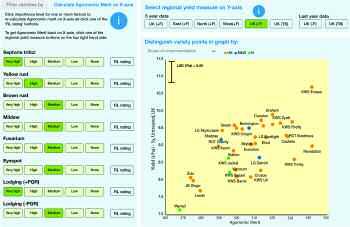
Interface of the new variety selection tool
of the RL,” says Bastiaan.
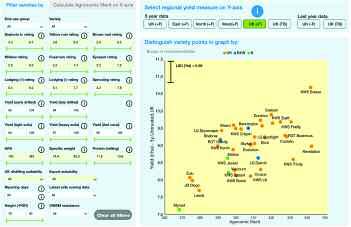
The main interface for the tool appears as a simple graph, with agronomic merit plotted against a number of options for five-year yield data –– UK treated, regional treated (East, West, North), UK untreated or UK treatment benefit –– with the additional choice of using just the previous year’s data for both UK untreated and UK treatment benefit information.
Agronomic merit
“Once the yield-type has been selected, the position of each variety on the graph is determined by its agronomic merit in relation to yield. An error bar is displayed so that it’s very easy to see where yield is significantly different by how far apart varieties are vertically on the graph. Those with the best score for agronomic merit are found furthest to the right on the graph,” he explains.
The default settings for each disease and lodging factor can be over-ridden by the user and given more or less importance, he continues.
“The tool allows you to isolate any of the factors that make up agronomic merit. That means it’s easy to look at how varieties relate to each other by –– for example, just their resistance to septoria alone. Or if a disease such as fusarium ear blight is a known problem on the farm, then the user can increase its importance by clicking the relevant button. This then is reflected in the agronomic merit calculation and alters the position of the variety on the graph,” explains Bastiaan.
Further filters can be used to remove unwanted varieties, narrowing the number shown to those relevant to the markets the crop is being grown for or above a certain disease or lodging rating selected. The output of the graph can be refined even further so that factors such as time of drilling, soil type, grain quality, sprouting resistance and orange wheat blossom midge resistance can all be taken into account.
Perhaps one of the most revealing yield criteria that can be selected is ‘treatment benefit’, which reveals the differences between varieties’ response to fungicides. “This looks at both the treated and untreated data for a variety and gives a rough proxy of the economics of growing it,” comments Bastiaan.
Agronomic merit of varieties based on their untreated yield.
Source: AHDB Variety Selection tool, 2019
“Myriad is furthest to the left on the x-axis of the graph which indicates it has the lowest agronomic merit and is highest up the y-axis, showing it’s the most responsive to fungicide treatments. In contrast, KWS Extase is the least responsive to fungicides
Theory to Field
13 crop production magazine december 2019 ComponentImportance*Weighting*ResistanceScore rating** (rating x weighting) Septoria tritici Very high105.959.0 Yellow rustHigh75.437.8 Brown rustLow18.48.4 MildewHigh74.934.3 Fusarium ear blightLow16.76.7 EyespotHigh75.840.6 Lodging (+PGR)Very high108.080.0 Lodging (-PGR)Medium47.630.4 297
▲
Theory to Field
but has a very similar agronomic merit to Revelation,” he highlights.
Treatment benefit isn’t available on a regional level because there aren’t enough untreated variety trials to estimate a regional average but Bastiaan believes there will be a future opportunity to incorporate a harvest results tool within the variety selection tool.
“The harvest results tool would provide data from 6-8 locations with treated and
untreated yields. This would only provide single year data but could be used to highlight the regional differences in treatment benefit between varieties,” he comments.
Consistency in performance is something many growers will rate highly when selecting varieties and this information is easily available within the tool, across different seasons and regions.
“The RL resistance ratings and yield
Agile tool helps clarify variety choice
Will Hamilton sits as chair of the RL wheat committee but also farms 970ha on the Berwickshire coast in south-east Scotland.As such,he is a grower with an insider’s view when it comes to making variety choices.
Even so,Will really rates the new variety selection tool Bastiaan has developed because it makes it easy to filter out unnecessar y information which then clarifies variety choices.
“The RL is often criticised for containing too many varieties but by using the filters you can narrow down the choices to just a few varieties. For instance,here in Scotland there’s no market for Group 1 milling wheats but there is a market for wheat for distilling so I can use the tool to screen out all the unsuitable varieties,” he explains.
While Will is already very familiar with the varieties he currently grows,he believes the tool will enable him to look at new varieties as they come through and compare them with existing varieties.
“The tool makes it very easy to filter out varieties using their disease resistance ratings, so
you can dismiss any with a septoria resistance rating below 5.7,for example.It also lets me reduce the importance of brown rust, which isn’t a problem for us,and increase the importance of mildew which helps me assess their agronomic merit on my farm.”
Four years ago,he rated markets as his number one variety selection criteria,with yield a close second and agronomic traits in third place. His emphasis has now completely changed, with agronomic traits coming first on the list when he appraises varieties and he pays closer attention to their untreated yields.
“Most growers attitudes to winter wheat have changed a lot in recent years and the economics of growing the crop has risen in importance. Wheat breeders have made huge advances in recent years and varieties which are even better agronomically are on the way,which is very encouraging,”he says.
“But there are a lot of challenges coming up, with the loss of active ingredients and increasing pathogen resistance,but there’s also uncertainty about how the politics will evolve.The loss of
consistency data for a variety is visible in a pop-up box when you hover over it on the screen,” he adds.
Developing the new digital tool hasn’t been without its challenges, says Bastiaan. One of those has been to get all the necessary information on the tool’s dashboard without it appearing confusing. He believes the extensive consultation process at every development stage of the tool has played a key part in developing something that growers and agronomists will find easy to use.
“As a developer, I understand the concept so it’s very easy to become blind –– everything seems very obvious. We’ve learned it’s important not to develop the tool in isolation so, to keep on the right track, we’ve used a fresh focus group at each stage of the consultation process to make sure the tool is intuitive enough,” he explains.
Paul believes the new digital tool will enable growers and agronomists to use the data already contained within the RL much more quickly and easily. It was launched alongside the new RL earlier this month, supported by a user guide.
Initially the variety selection tool will cover winter wheat and spring barley, but the intention is to add oilseed rape and winter barley over the winter, says Paul.
“The RL is continuing to evolve and in spring 2020, a new app will be available
chlorothalonil has significantly altered my variety priorities, with resistance to Septoria tritici now of number one importance,even with two new fungicides on the way,”he comments.
Will has watched the variety selection tool evolve since Bastiaan produced the first prototype and he describes the end result as ‘flexible and easy to work.’ He believes that once growers have spent 10-15 mins familiarising themselves with the tool then they’ll probably find they agree.
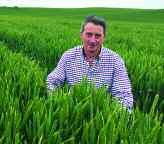
The importance of agronomic factors can be adjusted
Source: AHDB Variety Selection tool, 2019
Will Hamilton believes the new variety selection tool will help him screen new varieties suitable to find the most suitable ones for his farm.
14 crop production magazine december 2019
▲
Variety data and consistency
which has been designed to replace the pocketbook. The app will provide live updates to any key changes to disease ratings and will be welcomed by agronomists who are increasingly going paperless,” adds Paul.
“In the longer term, the RL will stop assessing winter wheat varieties for resistance to Septoria nodorum and winter barley for yellow rust as both have become of relatively low importance in those crops.”
OSR varieties will be subject to additional tests for verticillium wilt and pod shatter and for the first time the RL will consider
vigour, he says.
“The aim is to look at what vigour is and how it can be measured. There appears to be a high correlation between vigour and seed quality/seedbed preparations. So we need to address whether these factors are more important to a variety’s inherent vigour.”
AHDB also intends to respond to calls to speed up the flow of information, adds Paul. “The new RL is available online in Dec and the objective will be to produce the RL booklet a month earlier than previously.”
The variety selection tool can be found at ahdb.org.uk/vst ■
Treatment benefit shows variety differences

4.0 3.5 3.0 2.5 2.0 1.5 1.0 0.5 0.0 -0.5 260270280290300310320330340350 Scope of recommendation KWS Extase Dunston KWS Zyatt LG Motown KWS Siskin Graham KWS Firefly Revelation KWS Trinity Costello Elicit Skyfall Gleam Evolution Shabras Crusoe LG SkyscraperElation LG Spotlight LG Detroit RGT Gravity KWS Basset KWS Jackal KWS Barrel KWS Lili Zulu JB Diego Leeds Myriad T r e a t m e n t b e n e f t ( t / h a )5 y , U K UK E&W N Agronomic Merit
Source: AHDB Variety Selection tool, 2019 RLratings(yearsofdata) Septoria Yellow rust Brown rust Mildew Fusarium Eyespot Lodging (+PGR) Lodging (-PGR) (3) (3) (3) (3) (3) (3) (5) (5) Yield consistency across Regions (% of UK Yield) and Years (% control varieties) Number of Yld trials (5y, U, UK) 110 105 100 95 90 6.5 8.9 2.9 6.2 6.0 4.5 7.9 7.3 Crusoe Cordiale x Gulliver Scope UK Limagrain For more info, check the RL variety comments available here: https://ahdb.org.uk/rl 64 R e l a t i v e y d p e r f o r m a n c e ( % ) RL regionsYears West East North 2017 2018 2015 2014 2016
Source: AHDB Variety Selection tool, 2019
Technical Spring cropping Patience will pay
the ground but moving inland the situation isn’t as good –– parts of Cambs/Lincs for example have an awful lot left to do. Nationally we reckon only 25% of the wheat area has been planted (end of Nov),” he says.
By Lucy de la Pasture
It’s been an autumnus horribilis for many, with a stubbornly positioned jet stream funnelling in low pressure systems one after the other. It’s barely stopped raining since the end of Sept and the continuous wet weather has hit wheat drilling hard.
According to AHDB’s Early Bird Survey, as a result of the weather UK growers now intend to plant 1.65 million hectares of wheat compared to 1.82M last year. The reality of ground conditions in the areas of the country most delayed means it may yet prove to be an optimistic estimate unless things improve dramatically in coming weeks, says Agrii’s head of agronomy, Colin Lloyd.

“In a recent straw poll of agronomists from around the UK, the amount of cereals drilled is hugely variable. Scotland managed to get winter crops in, parts of Essex have 70% in
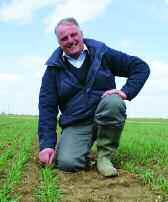
Looking at the data from Agrii meteorological stations across the country, it’s easy to see why drills are laying idle. At the Agrii trials site at Stow Longa in Cambs, there’s been 130mm of rain since the last week of Sept –– that’s been enough to make drilling difficult, says Colin.
Rainfall adds up
“Further north in Lincs there’s been 300mm and in Yorks, 400mm of rain. Moving west to Glos, the rainfall adds up to 330mm. These are hugely significant levels over a couple of months,” he says.
“While there’s a prospect of still getting some winter wheat in before the end of Jan on some fields, the time for winter barley has already passed because yields would take a big dip if planted now,” says Colin. “KWS Firefly, KWS Zyatt, Dunston and LG Spotlight can be drilled up until mid-Feb, with Skyfall to the end of Feb.
“Winter beans can also go in late. In Agrii trials we’ve found winter beans planted at the end of Feb yielded as well as the best of the spring beans. Is it the usual thing to do? No, but then it isn’t a normal season,” he says.
“Winter oats are often drilled in the spring
in Scotland when the weather goes against them and this is another option for growers because the crop will do well enough, but there might be a slight loss in grain quality and of course they’ll mature later.”
Colin says that many growers are now putting the frustration of the autumn behind them and looking at a plan B, which generally means more spring crops.
“The most popular option is likely to be spring barley but for those that don’t have seed ordered already, it’s going to be a case of what’s available rather than which variety.
We reckon only 25% of the wheat area has been planted.
“ ”
The monsoon this autumn has dictated an unplanned swing towards spring cropping as ground conditions prevent drilling. CPM looks at some of the options growers may have for their unplanted land.
16 crop production magazine december 2019
Colin Lloyd says that many growers are now putting the frustration of the autumn behind them and formulating a plan B.
Spring beans have already sold out. Spring oilseed rape would be my least preferred option because of pest problems with both cabbage stem flea beetle and pollen beetle to consider,” he says.
“Linseed is another option to consider, but you have to consider that diquat has gone so it will need to be a kind Sept for harvesting”
Where growers have spring barley in the grain store, home-saving some seed may be a good idea, he adds. “Needs must if there’s not enough certified seed to go around, but it’s important to send some into the seed lab and get it tested. Applying a single purpose seed dressing is also essential, with the addition of manganese to aid establishment worth considering, so consider a mobile seed cleaner.
“Planting home-saved seed without testing or treating just adds another layer of risk to growing the crop,” he says.
Farmacy agronomist Alice Cannon says her growers in North Lincs currently have around 10% of winter wheat in the ground and on some farms winter beans have already been planted in place of winter barley.
Alice points out that with so many autumn crops not in the ground, there will
The rooting profile of different cover crop species
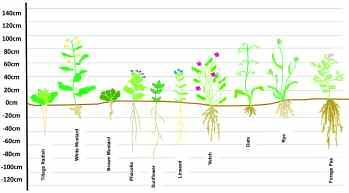
Cover crop mixes should include at least three different species to utilise their different root structures. Source:Farmacy,2019.
be a significant knock-on effect –– with any crops still to go in likely to be later to harvest, beginning a late cycle which will affect the following crop. Consequently she believes it’s a good idea for growers to have an eye on autumn 2020 when making decisions for this spring.

Both agronomists say patience will be a
virtue well worth having when the ground eventually begins to dry out. Getting itchy feet and muddling crops in is the worst thing that could happen, with consequences that will be seen in the next year’s crop and possibly further into the rotation.
Alice says soils are fragile after all the ▲
Spring cropping
Spring cropping
is trapped in the soil profile, even in a min-till situation.
Cover crops could play an important role where soils need a helping hand to restructure. Where potatoes, onions or sugar beet crops have been harvested in difficult conditions, there’s likely to be a range of soil damage and for the very worst of these it may be prudent to consider taking the land out of production and focusing on repairing it for next autumn, believes Colin.
Reasonable condition
still offer financial benefits, as well as environmental ones –– encouraging predators and making it easier to farm in a sustainable way. A longer-term cover crop is another option, such as oats/clover/linseed mix or radish and phacelia may be helpful here too.
“It would enable early entry in autumn 2020, having done its job pumping water out of the soil and making it more friable. It can also be a good way of managing soil moisture before planting OSR or winter barley,” she says.

rain, with some slumping and silt washing through the profile. “It’s going to be important not to force things which will justcompound any problems with the soil. The best time to assess soils is when they start to dry out, usually in Feb, and go and inspect with a spade to figure out the best plan of action. Some soils will have compaction at depth, which may need metal to lift it but at the correct depth.”
Colin agrees a spade will be an essential tool and will show where water
“You need to get the soil back into reasonable condition to grow a decent crop. In most cases if you know where the soil is at then it’s possible to rectify it but, in some cases, it may be best to look towards a successful autumn drilling in 2020. It may just be a tiny percentage of the farm, field specific or may be more widespread.”
Alice is in agreement with Colin about the longer-term effects of damaging soil structure. “The effects can often be seen in following crops for a couple of years but on heavy land which has been badly mauled, it may take 5-8 years before it recovers with major yield penalties for the following crops.
“Some of the environmental mixes will
Alice highlights that if a cover crop is going to be in the ground throughout the summer then it’s best not to allow it to go to seed, either topping or grazing to prevent unwanted seed return. She warns against using a mix with phacelia because volunteers can be problematic if the parent is allowed to go to seed.
“If you’re grazing with sheep then mob graze, where sheep are stocked at high density for a short period of time to take the cover crop down to about 2.5cm and then the stock are moved to allow regrowth. This method gives a more even graze and distribution of manure/nutrients.”
In situations where fields haven’t been planted or have failed, Alice suggests leaving any volunteers that are currently
 Alice Cannon suggests keeping autumn 2020 in mind when making decisions for the spring to limit the knock-on effects to following crops.
▲ 18 crop production magazine december 2019
providing ground cover.

“Prioritise any brown fields to get a crop in and don’t worry about spraying off volunteers now until before drilling. Most drills can cope with a little bit of biomass and the volunteers are now acting as a water pump, so will help with an earlier entry in the spring.

“The same applies where an OSR crop has failed and leaving what’s left of the crop means the soil will be in a better condition when replanted,” she says.
Colin suggests growers prioritise the order of planting where different spring cereals are planned. “Spring wheat should be the first to drill and then either spring barley or spring oats, which is the most aggressive and will ‘go for glory’, so it won’t matter if they’re last to be drilled. If spring wheat is planted late then the incidence of gout fly damage and ergot will increase,” he explains.
In Agrii trials at Stow Longa last year, spring barley planted

on 20 Feb, which was a very kind month, performed less well than crop planted a month later. “The yield penalty for drilling early on heavier land was 1.5t/ha where ground was ploughed and over 2.0t/ha after a cover crop or a deep cultivation system was adopted. The key is to drill in a drying seedbed with increasing soil temperatures to get the crop in and out of the ground as quickly as possible.
“Even more patience is going to be needed when it begins to dr y up in 2020. The success of spring barley to compete with blackgrass is purely down to percentage establishment, so you could be defeating the very reason you’re growing it by going to early
“But what we have seen over the last six years of extensive study, is that if you get this right there are some very useful gross margins ear ned, so cer tainly all is not lost and plenty to gain,” he concludes. ■
Mob grazing cover crops that will remain in the ground over the summer will stop plants going to seed..
With spring barley seed in short supply,home-saving seed is an option but be sure to check germination and dress before planting.
Real Results Pioneers
Challenge set for new chemistry
With the first new azole in around 15 years launched this month, CPM visited one of the farmers who’s been comparing it with his standard farm approach to build a picture on how it’s best used.
By Tom Allen-Stevens
It feels good to stand in Julian Thirsk’s wheat crop,not just because it looks to be flourishing in the mid-November sun. The fact he has a wheat crop at all is an achievement in itself in one of the toughest autumns growers have faced in recent years.
Julian’s concerns are not for the establishment challenges he’s tackled, though, but for the disease quagmire he’s yet to face. As well as running the family farm –– Flaxley Lodge near Selby, N Yorks –– Julian is an agronomist for NIAB TAG, looking after around 7500ha in S Yorks to Northumberland. He gets first-hand access to small-plot trials information, and for many years has carried out his own on-farm trials.
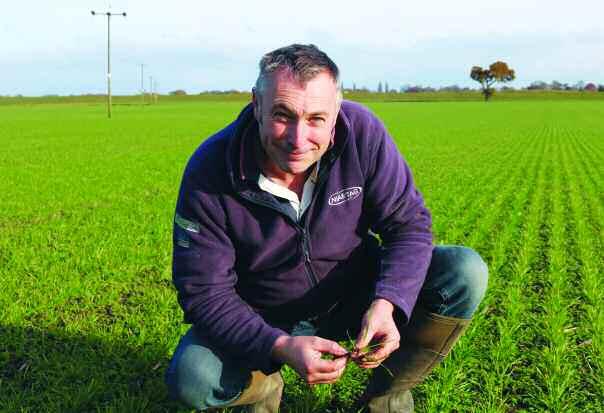
“We’ve seen both prothioconazole and epoxiconazole break down over the years. SDHIs offer considerably less efficacy than they did when they were first introduced, and now we’re losing chlorothalonil (CTL), that’s been protecting the chemistry we have,” he says. “That puts a lot of pressure on the new chemistry coming through, and if we rely too heavily on that, it won’t be effective for long.”
High disease pressure
Towards the end of a fairly quiet year disease-wise this summer, Julian noticed unusually high levels of late disease coming in, causing wheat crops to senesce early “Septoria is matching yellow rust in its complexity, and I believe we’re seeing strains creep in we haven’t had to deal with before.”
It’s to get a head start on how this pans out that Julian’s been taking part in BASF’s Real Results trials. For the past three years, he and 49 other growers have been pitching their farm standard fungicide programme against BASF’s Xemium approach, based on Adexar and Librax. This year, however, there’s been a change –– the Ad/Lib approach has been replaced with Revystar, BASF’s new fungicide that will be available in the New Year and which combines Xemium and Revysol (see panel on p21).

“The interesting aspect about the trial is there was no CTL included –– purposefully, to see how the new chemistry performed in the absence of multisites,” he explains. “The variety was Grafton, which is dirty and old and the ultimate test, really. Going forward, I think variety choice has to be the first line of defence against disease. But there’s not a lot of choice in the early slot for northern growers, with many of the newer varieties suffering from weak straw.”
In another change from the usual Real Results approach, this year Julian pitched three approaches against each other. “My farm standard is based on Ceriax as I’m a strong believer that strobilurins still make a contribution to yield and extend green leaf area,” he says.
This is based on a long history of on-farm
This year’s wheat crop may be thriving,but the concern is for the disease quagmire it’s yet to face.

20 crop production magazine december 2019
We’ve started to look at all things around the crop,rather than just the crop itself. ”
“
Flaxley Lodge 2019 Real Results trials
Comparison standardBASFFarm approach
T1 (24-Apr) Ascra (1 l/ha) Revystar (1 l/ha)Ceriax (0.9 l/ha) + EPX (0.45 l/ha) + CTL (1 l/ha)
T2 (21-May) Ascra (1.2 l/ha)Revystar (1.2/ha)Ceriax (0.9 l/ha) + Adexar (0.4 l/ha) + CTL (1 l/ha)
Variety – Grafton; all of the trial field received a T0 spray of epoxiconazole and a T3 of Amistar, tebuconazole and PTZ.

Ascra contains bixafen+ fluopyram+ prothioconazole (PTZ); Revystar – fluxapyroxad+ mefentrifluconazole; Ceriax – fluxapyroxad+ epoxiconazole (EPX)+ pyraclostrobin; CTL – chlorothalonil; Adexar – fluxapyroxad+ epoxiconazole; Librax – fluxapyroxad+ metconazole; Elatus Era – benzovindiflupyr+ prothioconazole; Amistar – azoxystrobin.
“We’ve always done tramline trials to test a new crop or product development,” he says. “I’m lucky in that David Tuer, our farm foreman, takes an interest in them, which is essential as it’s quite a commitment to ensure they’re done correctly.
Hybrid barleys
Real Results Pioneers
as the Real Results trials,there are oilseed rape trials,looking at the spring vigour of InVigor varieties and the value of different dressings.

trials Julian’s carried out at the 320ha farm. The land is split between heavier silty soils, created from natural warping centuries ago by the River Ouse, and lighter land. Potatoes and sugar beet are included in the rotation on the lighter soils, along with oilseed rape and peas, which also provide the break crops between wheat and barley grown across the rest of the farm.
What is Revystar?
Revystar is the new cereal fungicide from BASF that combines the intrinsic and proven activity of its Xemium SDHI chemistry with Revysol,the first new azole fungicide to come to market in around 15 years.
Revysol is the first isopropanol-azole,a chemistry discovered and developed by BASF combining good performance with a favourable regulatory profile and selectivity.The molecule is claimed to be unique in that it’s the only one within the triazole group where the triazole ‘head’ sits on the ‘neck’ of a flexible isopropanol unit. This constellation allows the molecule to assume different conformations, resembling a ‘hook’.
Its flexible hook means Revysol binds to the target enzyme up to 100 times more powerfully than conventional triazoles, says BASF. What’s more,where target site mutations have developed, the molecule folds its hook

“We started them when hybrid barleys came in. We were growing Colossus, but back then, all the fungicide recommendations were based on two-row conventional barleys. Hybrid six-rows are a completely different crop, and we soon discovered they respond differently to fungicides.”
This was where Julian learnt the value he was getting from strobilurins, which he still uses routinely across both wheat and hybrid barley crops. “We’ve looked at strob/CTL mixes at the T2 spray timing on hybrid barley, and more recently have focused on SDHIs. The conclusion we’ve come to is that the crop does benefit from two SDHIs –– six-rows tend to have good disease
resistance, but brown rust can come in at the end.”
This is where he sees strobs still playing a role in particular. “They give us something on both the wheat and barley and it’s not just disease protection –– we consistently see a yield benefit, and I wonder whether that’s down to better end of season N utilisation. But this is the value of testing different chemistry through on-farm trials –– at the end of the day, it’s all about understanding the chemistry to achieve the best value from it in terms of yields and output.”
This has also been his approach with Real Results. “When it started it was purely about the chemistry. For the first two years, it was the Ad/Lib approach that performed better than the farm standard, so we’re using Ceriax now as the standard fungicide at both T1 and T2 as this also contains pyraclostrobin.
“But the involvement with YEN (Yield Enhancement Network) now brings in much
conformation,allowing it to bind tightly to the same target site, which results in the death of the fungal pathogen.
After application,Revysol is rapidly taken up by the leaf, according to tests undertaken by BASF. This gives the molecule good and immediate curative effect against a number of significant fungal diseases, says the company.After uptake, the active ingredient is translocated up to the leaf tip,ensuring protection for those parts of the plant that were not reached during application.
Revysol builds inner-leaf reservoirs, says BASF,leading to a long-lasting protection from environmental influences. This complements the activity of Xemium, which leads to a broad range of activity in Revystar against key pathogens in cereals.
Revystar is also characterised by good mobility, says BASF,with Xemium showing a similar quick
Revysol folds to a ‘hook’ conformation,binding up to 100 times more powerfully than conventional triazole fungicides.
uptake and translocation through the leaf.The fungicide offers long-lasting protection due to what BASF terms its “double-depot”function: Revysol is well protected inside the leaf thanks to the inner-leaf reservoirs,while Xemium forms on-leaf depots,which release the active ingredient gradually.
21 crop production magazine december 2019
Julian Thirsk uses strobilurins to help extend green leaf area and is concerned that he’s now dealing with strains of septoria he hasn’t come across before.
As well
▲
Real Results Pioneers
The Real Results Circle

BASF’s Real Results Circle farmer-led trials are now in their third year.The initiative is focused on working with 50 farmers to conduct field-scale trials on their own farms using their own kit and management systems.The trials are all assessed using ADAS’ Agronomics tool which delivers statistical confidence to tramline,or field-wide treatment comparisons –– a unique part of Real Results.
In this series we follow the journey,thinking and results from farmers involved in the programme.The features also look at some in-depth related topics,such as SDHI performance and data capture and use.
We want farmers to share their knowledge
and conduct on-farm trials.By coming together to face challenges as one,we can find out what really works and shape the future of UK agriculture.
To keep in touch with the progress of these growers and the trials,go to www.basfrealresults.co.uk
more than just chemistry. It relates the results to soil analysis and more recently to grain and leaf tissue analysis. So we’ve started to look at all things around the crop, rather than just the crop itself,” notes Julian. He feels this more holistic approach will be essential when it comes to managing the introduction of new chemistry. “Revystar represents a big step-up in efficacy, and with CTL also dropping out of the picture, resistance will build in no time. We must look
at how plant breeding can help, but also how we can nurture the crop so it’s under less stress and builds its own resilience.”
The results of this year’s trials have not yet been returned –– all 50 growers receive a report that compares their approaches using ADAS’s Agronomics approach. This uses spatial modelling and statistics to allow yield-map data from the combine to be assessed with scientific rigour
Cautious optimism for new chemistr y

“The difference on the flag leaves between the Revystar and the farm standard approach was really quite staggering.”
The comparison treatment,on calcareous silty clay loam, was 0.8 l/ha Elatus Era at T1,followed at the T2 timing with 1.0 l/ha Ascra. Revystar was applied at T2 at 1.25 l/ha in the BASF plot,following a T1 treatment of 1 l/ha of Adexar.
Alex Borthwick noticed a staggering difference on the flag leaves between the Revystar and the farm standard approach.
A marked difference in the level of disease on the flag leaf is
Results this year have been held back until the launch of Revystar in mid-Dec, and Julian’s reserving judgement on the new chemistry until then. “To the naked eye, there was little difference in terms of disease between the treatments. But I’ve learnt with on-farm trials that, provided you do them correctly, you should never draw conclusions until you have the real results.” ■
to too much septoria pressure because we’ll simply build resistance,”he says.

“So I see it fitting better at a T1 timing,giving good eradicant and some kick back potentially,once CTL has gone, which will keep the plant healthier and lower the disease pressure going into the T2 timing.”
20% had been drilled by the beginning of Dec,to KWS Siskin and Extase,which both have good ratings for Septoria tritici
With 350ha of winter wheat originally planned this year,that’s been revised to 240ha.But only
“I’d like to try Revystar on some KWS Kerrin we’re hoping to drill, mainly in the second wheat slot,as it’s a tougher variety to keep clean. But looking ahead we’ve got to focus on varietal resistance to reduce septoria pressure, and look after the chemistry,” notes Alex.
The NDVI maps,taken in late June,really showed up the difference where no CTL had been applied across the treatments,located towards the bottom of the field.
what
Alex Borthwick,agronomist at Hoehill Farm near Market Rasen, Lincs, noticed across the farm’s Real Results plots.“In our trial,we only used Revystar at the T2 spray timing,but there was some heavy rain around 10 days later and disease started to develop, especially in the upper canopy,” he recalls.
“With no CTL across the treatments,you could tell the difference compared with the surrounding crop that had received it.This really showed up on the NDVI maps supplied as part of the monitoring of the trials.But there was still less septoria in the Revystar plot.”
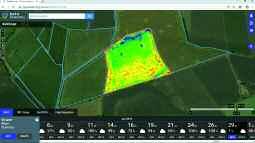
Alex reckons the biggest threat to disease control going forward will be the loss of CTL,but is wary of relying on new chemistry to fill the gap.
“Revystar has valuable eradicant activity at T2,but we have one last year with CTL –– once it’s gone,we can’t expose the new chemistry
22 crop production magazine december 2019
Looking beyond the chemistry,at how nutrition can help build crop resilience,is how Julian plans to preser ve the efficacy of new fungicides.
▲
Technical Pulses
The Arbikie Highland Estate in Scotland is noted for the award-winning spirits distilled on site from a staggering array of local produce. CPM visits to find pulses may soon form the basis of the industry’s first-ever carbon-positive product.
By Tom Allen-Stevens
If you enjoy a good whisky,the lines of barrels that stretch away into the gloom of the store at the Arbikie Highland Estate Distillery will fill you with anticipation. But you’ll have a long wait,explains John Stirling,director of the diversified business and fourth-generation farmer on the 900ha family-owned estate near Montrose on the east coast of Scotland.
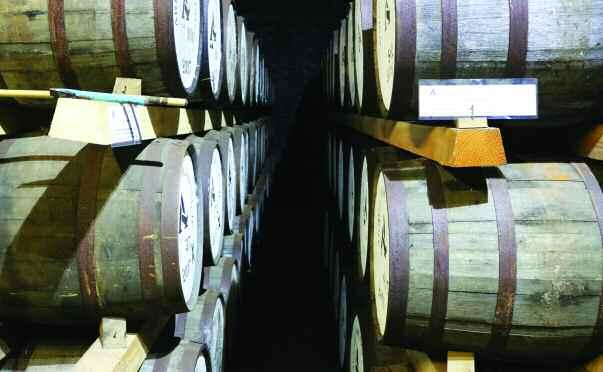
“It’s laid down as an 18-year old single malt that won’t be released until it’s correct,” he says, which takes it to 2033 at the earliest. “It’s a long-term project, so what makes the business model is the gin and vodka we distil. Underpinning this is that everything is grown and bottled on the farm, which gives us complete control over the
A virtuous spirit
quality and provenance of the product.”
Nor is this just a marketing gimmick, John counters. “It started as a sensible marketing strategy, but actually it’s way more important than that. Now it influences everything we do on the estate, from how we grow the crops to the rotation itself.”
Staggering array
This has paved the way to a plan that will see oilseed rape dropped from the all-arable seven-year rotation across the estate’s red sandstone soils. Alongside spring and winter barley, wheat and 140ha of potatoes, next year peas are set to be reintroduced. These, along with a staggering array of other crops, will also go through the still, provided the first –– and somewhat ground-breaking –– commercial test batch goes to plan, and this is due to take place early in the New Year
The story starts around six years ago when the estate took its first steps on a new path, led by the three brothers who took on the family business. “We each had different backgrounds,” explains John. “Iain had worked in the drinks industry, David was in marketing, while I had trained as an accountant.”
Their combined skills led them to a gap they identified in Scotland’s growing market for craft distilleries. “70% of spirits consumed in the UK are made in Scotland, and there’s a booming export market. But most of the UK’s gin, even from so-called
craft distilleries, is produced using bought-in grain-neutral spirit. Our aim was for a genuinely single-site, field to bottle operation. We wanted all the ingredients forall our spirits planted, sown, grown and harvested close to the distillery.”
The key to making it work has been the skill of master distiller Kirsty Black, who joined the business in 2013, having completed an MSc programme in brewing and distilling at Heriot-Watt University. “We started with just an empty shed and it was the farm’s potato crop that was the initial driver for the still,” she explains.
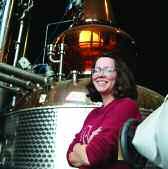
“While the barley crop had always been grown for the premium malting market, as
What drives it for Kirsty Black is the experimentation, and for her,the raw materials are as important as the end product.
23 crop production magazine december 2019
“
▲
We want to create a proper environment for growing crops and our passion with the distillery is for the raw materials that pass through it.
”
Inventory of inputs and outputs for a single batch of gin
much as 10% of the potatoes can’t be sold into premium markets because they’re a funny shape, bruised or skinned.”
This shaped how the distillery developed –– while the barley, malted off site, is processed and distilled for the whisky, the misshapen potatoes form the basis of a vodka, distilled through two tall copper columns on one side of the shed.
“Vodka is traditionally a potato spirit, although the raw material doesn’t have the natural enzyme present in wheat and barley that turns the starch into alcohol ––this has to be added. Nor does it produce as much –– one tonne of grain gives you about 400 litres of alcohol, compared with 100 litres from the same amount of potatoes.”
There are subtle differences between a potato and grain-based vodka, claims Kirsty, and this is where the master distiller’s art comes into its own. She uses the shape of the still and tweaks the process itself to bring out the flavour in the end product. “A range of factors affect the congeners, which are biologically active chemicals produced during fermentation. What I’m particularly interested in is how you can influence the congeners through the choice of raw material.”
But she acknowledges these differences are probably too
slight for the average consumer to notice. “A premium straight vodka is never going to sell in high volumes, so what we do is flavour it with juniper and botanicals and put it through the still again to produce a gin. It’s a question of choosing the right botanicals to complement the congeners.”
So the distillery has come to six products it bottles and puts on sale from farm produce that can be traced back to the field. Three are made from potatoes, a blend of Maris Piper, King Edward and Cultra, with Tattie Bogle, a Scot’s name for a potato scarecrow, as the unadulterated pure spirit. Home-grown chipotle chillies are also soaked in it to produce Arbikie’s Chilli Vodka, while Kirsty’s Gin brings in kelp, carline thistle and blaeberries from the local landscape.

The other three are wheat based, with Group 3 variety Zulu now giving way to Viscount as the variety of choice to produce the pure, Haar Vodka, named after the local coastal fog. Peter Stirling, a cousin who farms next door, supplies fruit to flavour Arbikie’s Strawberry Vodka. Black pepper, cardamom and locally produced fresh honey flavours AK’s gin, named after John’s father Alexander Kirkwood Stirling, with £1 per bottle donated to a local motor neurone disease charity.
Taking into account the potential to displace soymeal and its associated environmental costs, gin made from peas comes out carbon-positive in a life cycle assessment.
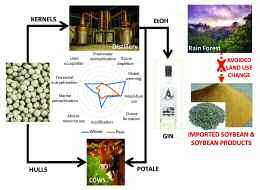
Units WheatPea Cultivation and harvest AN kg440 Ureakg180 P2O2 kg 17 39 K2O kg 25 20 Lime kg 209 245 Diesel kg 85 52 Seed kg 27 123 Agrochemical 2 1 Land m2 4182 9811 Output Grain kgDM 2703 4558 Used in grist kgDM 2703 2782 Straw kg 1871 0 Residual N* kg 23 58 Gin produced L 1886 Potale used as fertiliser Potale produced L 10,547 Transport t·km 53 spreading m3 11 Fertiliser contribution AN kg -27 -59 P2O5 kg -20 -25 K2O kg -22 -27 Net land occupation m2 4149 8110 Net global warming potential kg CO2 e 5847 2075 Potale used as animal feed DDGS producedkg12131514 Transport t·km109136 Energy kWh 201 250 Pea hulls processed as pelleted feed Pellets produced kg-1777 Transport t·km - 571 EnergykWh-407 Avoided animal feed soybean meal kg -628 -2243 barley grainkg-569-542 Net land occupationm2 1893395 Net global warming potential kg CO2 e 3772 -4149
Brothers (L to R) Iain,John and David Stirling combined their skills and identified a gap in Scotland’s growing market for craft distilleries.
24 crop production magazine december 2019 ▲
Source: T Lienhardt, et al., 2019. The inputs and outputs of the distillery operations, gin bottling and packaging were included in the study and were the same for peas and wheat, although they’re not shown here. *Residual N assumes wheat straw is incorporated. Inputs and outputs of de-hulling the peas are only included in the net results where potale was used as animal feed.
Pulses
Launched just five years ago, the field-to-bottle spirits been a great success by any measure. But Kirsty is particularly pleased with the awards they’ve earned. “The first major one that got us noticed in the UK was a bronze medal at the 2016 World Vodka Awards. There have been quite a few since, including inaugural winner of both Gin Distillery of the Year and Best New Whisky Distillery in Scotland, and it’s the gins that have been the most successful –– when bottles start going out on large pallets, rather than in small boxes you realise things are taking off.”
What drives it for Kirsty is the experimentation. “I was always told that strawberries are the hardest to capture in a spirit, but we may have found the secret. To us, the raw materials are as important as the end product –– there’s so much more to their properties than hot water extract and nitrogen content. It’s through exploring these that you can discover new experiences in the spirit.”
And that’s led her to perhaps her most ambitious project –– exploring the distilling potential of leguminous crops, and faba beans and peas in particular. It’s a PhD study she’s carrying out with James Hutton Institute and Abertay University, started in 2014. “You can make alcohol from anything with a starch content. The difference with peas and beans is they’re much better environmentally,” she notes.
Small-scale trials in the lab have proved

the concept that peas and beans are a suitable raw material for distilling. “In the lab we can’t recreate the purity of spirit we can in the distillery itself. But we’ve carried out blind tastings with the resulting vodka and believe the spirit to be comparable to that produced from potatoes or wheat.”
TRUE project
Kirsty’s study is part of the wider TRUE Project (TRansition paths to sUstainable legume based systems in Europe), funded under the EU’s Horizon 2020 programme. This aims to identify the best routes to increase sustainable legume cultivation and consumption across Europe. It consists of nine work packages, carried out by R&D institutes across Europe and co-ordinated by JHI.
“The real story with distilling pulses lies in the protein value of the dried distillers grain with solubles (DDGS),” says Dr Pietro Iannetta of JHI. Potale –– the by-product of the distilling process –– is a liquid of around 8-10% solids, which typically contains 25-60% protein. This is currently applied as a liquid fertiliser on the Arbikie Estate. There’s also the “draff” –– the spent cereal grains from the mash –– which, once dried to DDGS, contain around 33% protein, and form a valuable animal feed.
“Initial tests from small-scale trials carried out by Horizon Proteins, based in Heriot-Watt University, indicate DDGS from pulses can have their protein concentrated to more than 90%. If that valorises, or holds true at a commercial scale, it could make a significant contribution to replacing the UK’s grain legume requirement –– 80% of this is currently supplied with imported soymeal.” Scotland’s farmed salmon industry is a ready market for the high protein feed, he adds.
As part of the TRUE project, a life cycle assessment (LCA) has been carried out on peas used in distilling compared with wheat, using figures supplied by the Arbikie Estate. This takes account of all input and output resources and assesses the environmental burden across 14 impact categories, including land occupation and global warming potential (see table on p24). The LCA of the gin on its own was assessed, and then the study was expanded to account for the potential for the by-product to replace applied fertiliser or soymeal.
Peas score favourably against wheat, mainly as a result of the crop’s ability to fix its own nitrogen –– applied fertiliser has a very high carbon footprint. But this advantage is largely offset by a higher land requirement attributable to its lower yield. Once the value of the by-product is taken into account,
Pietro Iannetta believes there’s great potential to scale up the use of legume starches in production of alcoholic beverages and biofuels, while also delivering home-grown sustainable protein.

however, it changes the figures significantly. Such is the potential to replace South American soymeal, with its high transport and deforestation costs, pea gin and associated by-products actually come out carbon positive.

“Each litre of bottled pea gin avoids 2.2kg CO2 e and makes use of two of Scotland’s great industries –– alcohol and aquaculture,” notes Pietro. Currently less than 1% of Scotland’s arable area is cropped with legumes at present, but 15% should be the aim for a more sustainable approach, he believes, and adds that there’s good demand for the high-protein feed from the DDGS.
“This is an opportunity to re-establish the natural nitrogen cycle within a sustainable cropping programme, and there’s great potential to scale up the use of legume starches in production of alcoholic beverages and biofuels, while also delivering home-grown sustainable protein.”
While the future of pea gin hinges on the first commercial test batch, due to pass through the Arbikie fermentation chambers and distilling columns next month, John has high hopes for what the new crop may bring to the estate. Exactly what type of peas will be grown has yet to be decided, but there’s no OSR in the ground, and he has no regrets.
“OSR was the only non-cereal crop in the rotation, apart from potatoes, but it has few benefits and is heavily dependent on glyphosate, a chemical we’re aiming to move away from,” says John.
“Peas fix their own nitrogen and are so much better for the soil. We want to create a proper environment for growing crops and our passion with the distillery is for the raw materials that pass through it. We also want to make a real difference in the industry –– if it’s a success, we hope major companies will support spirits from legumes, put them into bars and restaurants worldwide and bring about a step change in global emissions.”
The polytunnel at Arbikie where Kirsty grows and tries out different botanicals.
The two tall copper columns distil the pure spirit, while it’s the shape of the still,along with choice of raw materials and distiller’s art that defines the taste.
■ Pulses 25 crop production magazine december 2019
Technical Better buying,better selling
Testing times for the grain trade? trade?
customers and also more exotic destinations and exported as much as we could before 31 Oct. As the UK’s largest farmer-owned co-operative, we’ve played our part ––we have access to all the main ports, the infrastructure to manage the logistics, an understanding of phytosanitary barriers and other overseas requirements, and we’ve built up trust with customers around the world.”
Cereal exports
By Tom Allen-Stevens
It’s fair to say this year’s large exportable UK cereal surplus –– the first one in wheat since 2016 –– combined with the threat of a no-deal Brexit at the end of October, have given the grain trade something of a challenge.
Between July and the end of October, 1.25M tonnes of new crop, or around 42,000 lorry loads, were sold for spot movement, according to AHDB –– double the figure for the same period last year. The 2.88M tonne surplus from the 2019 cereal crop kept ports working like fury, and it’s estimated more than half of this was shipped across the water between harvest and Halloween. So the UK’s managed to shift the load from its swollen stores in double-quick time at a price point that’s remained above a respectable £120/t for feed wheat –– no mean feat into a global demand situation AHDB describes as “comfortable”.
According to Richard Jenner of Openfield, the past few months have been a good illustration of a logistics and fulfilment operation that’s ready for the rigours of Brexit. “The UK grain trade has done a pretty good job of engaging with EU

Nor are these just words –– Openfield was responsible for 26% of the cereal exports traded between July and the end of Oct. Just last month, 64,000t of feed barley was sourced from growers across the South West and loaded onto the MV Sidari, destined for Saudi Arabia, through Openfield’s deep-water facilities at Portbury Grain Terminal.
“Trading internationally can be a closed tender procedure, but buyers come to us because we’re recognised as a trader with a more developed process –– we understand their requirements. The Japanese buyer likes to audit facilities, for example, the North African market doesn’t take grain above 14% moisture and feed barley sold to China has to be completely free of sterile brome,” notes Richard.
“Only when you’re constantly engaged with those markets, when you’re trading the lion’s share of UK exports with them, can you be relied on to manage requirements that could perhaps be perceived as a little more rigorous.”
Closer to home, long-standing year-on-year agreements with maltsters in Germany and Holland, and soft wheat millers in Spain, have led to trading agreements built on trust. “If a tariff was imposed on exports to the EU, there’s no
doubt it would have an impact on the market, but those relationships won’t disappear overnight,” he says.
Here in the UK, Richard believes there are good opportunities to take forward similar relationships with domestic food and drink customers. “A good illustration comes from when Hovis closed its Southampton mill in Jan 2019, which was supplied by large commitments from southern co-operative stores, such as Trinity Grain, as well as by individual growers whose grain we market,” he notes.

“We’ve developed relationships, such as with Heygates, and adapted logistics to ensure affected growers can continue to supply the premium milling market and that end users get grain of the right spec when they want it.”
Richard recognises the home-grown market faces a potential threat from zero-tariff imports, but insists Openfield is well placed to address this. “Firstly, we’re
Openfield has played its part in a major logistics and fulfilment operation to ship Britain’s exportable surplus before 31 Oct,says Richard Jenner.
“ ”
Buyers come to us because we’re recognised as a trader with a more developed process –we understand their requirements.
A grain trade that’s ready for Brexit needs to be efficient, far-reaching,fully digital and trustworthy. CPM assesses how Openfield,Britain’s only national grain-marketing and arable inputs co-operative, measures up.
26 crop production magazine december 2019
Better buying,better
Trust puts smoothness into a locally grown beer
When Suffolk-based brewery Adnams was looking for local growers to supply its site in Southwold,it was Openfield that Simpsons Malt,who supply the brewery,turned to.“Adnams,in line with a number of other similar-sized UK breweries,are looking towards benefiting from the provenance of producing beer from locally grown barley –– mainly in Suffolk and Norfolk,”explains Mike Dagg.
“Openfield is our preferred partner,and also bring in the number of growers who can produce to the right spec in the local area.”The contract on offer was for max 1.65%N spring barley,which started with Propino,but has now moved to RGT Planet.
While much of the Planet for Adnams is brought in at harvest from local farms straight into Simpsons’ stores,Openfield supplies barley of the correct quality for a number of other contracts,
the only national UK trader that’s entirely owned by its member farmers. So we work exclusively in the interests of the UK farmer, and we won’t be bringing in imports.
“But equally important is the relationship we have with the end user. It’s an open and honest relationship, flexible in a mature supply chain.”
He points to the ability for Openfield to deliver to certain sites on a vendor-assured basis, where the load is tested before it
running an intake on Simpsons’ behalf.This is operated on a vendor-assured basis,with quality checks carried out by Openfield.“For a relationship like this to work well,there has to be an element of trust,”says Mike.“But there are benefits for all from the efficiencies this builds into the supply chain, with fewer delays on deliveries and shorter turnaround times.
“These shouldn’t be underestimated –– there are currently massive problems with haulage in the south of England,and it can be difficult to find operators at the standard required for assured grain who can meet the commitment we’re looking for,” he adds.
Five years on,Mike reports that both the Adnams contract and the relationship are working well for all involved.“We’re in the process of undertaking a similar contract with another
reaches the mill. This adds flexibility and improves turn-around times, while the buyer can be confident of receiving what they expect without having to test.
But perhaps more exciting are the recent developments in data analytics and some of the digital services Openfield has introduced. “Haulage is by far our most significant spend,” Richard explains.
“Ultimately the most efficient system for farmer and end user, as well as for us, is
Uncertain times call for disciplined decisions
Think carefully before switching land destined for winter cereals into a spring option,cautions Openfield’s head of compliance,research and shipping Cecilia Pryce.There may be a disappointing proportion of the UK’s cropping requirement currently in the ground,but that is no guarantee that a poorly grown spring crop will shine on the grain market after harvest.
“Whatever you put in the ground,you have to know where it’s going and you must be confident you’ll get the quality.That’s even more important for some spring crops,”she says.
Previous experience shows that many growers are wooed by the high premiums available for human consumption spring oats and pulses,for example.“Good quality peas and beans are currently like gold nuggets.But these tend to be very inelastic premium quality markets,and a heap of thin oats,for example,will not achieve a high return,especially if there’s an increased area grown.”
A further problem that may face all cereals, other than wheat and barley,is that there’s no tariff-rate quota (TRQ) available.So if sold into the EU under a no-deal Brexit,oats face a €89/t tariff
currently,effectively putting a further cap on the market,she adds.
“A spring crop may also upset your rotation,so it’s worth considering whether a cash crop should go in the ground at all.The soil could benefit better from a cover crop that sets the land up well for next year.”
Looking ahead,Cecilia believes there may be export opportunities,but prospects for those not supplying a quality market could be bleak.“If the world does change its eating habits away from meat, there could be less demand for feed wheat and barley.Those growing them will also face stiff competition from maize.
“Export opportunities will depend more on market conditions –– if it’s a non-EU destination, that may turn out to be bad news for your ex-farm price if you’re not near a deep-water port. Economies of scale count when shipping commodities around the world and domestic markets need to be prepared for this”.
Like Richard,though,Cecilia’s confident in the future.“We have a trade and farm assurance system that’s probably the best anywhere in the world.It’s worth recognising that and ensuring our
Adnams are looking to benefit from the provenance of producing beer from locally grown barley,mainly in Suffolk and Norfolk.
brewery,and there may be other similar-sized customers who’ll look to strengthen the provenance of their raw material.”

just-in-time delivery. The grain trade is some way off being able to achieve that, but we are making significant progress. Digital systems are the key, and what we’ve done so far has been very well received.”
At the centre of the new developments lies Openfield’s logistics app created in-house to manage somewhere in the region of 150,000 deliveries made annually (see panel on p29). Track My Truck is the farmer-facing element of this, that allows the
Spring crops grown for quality markets can command a decent premium,but a heap of thin oats,for example,will not achieve a high return.

buyers know its importance. Logistics is also what Openfield does best –– we have access to a range of ports suitable for a full range of ship sizes and buyers who what UK grain know we are the UK’s largest grain shipper
“But with Brexit,misinformation will be rife, and growers should be wary of unintended consequences from ill-informed decisions. Those who focus on growing the crops to the best of their ability and working with a grain partner they trust will put themselves in the strongest marketing position,”she concludes.
selling 27 crop production magazine december 2019
▲
Better buying,better selling
Better buying,better selling
Supplying grain to certain sites on a vendor-assured basis,where the load is tested before it reaches the mill,adds flexibility and improves turn-around times.
grower to anticipate when a lorry’s on its way tothe farm. Data gathered when tipping goes straight through to Insight, Openfield’s web portal, where results can be viewed within minutes by growers.

This means there’s a staggering degree of data gathered on individual loads that can be aggregated and analysed so that inefficiencies and problems can be addressed. “A common issue is when lorries are delayed when tipping,” explains Richard. “We can identify sites and times where unacceptable delays are occurring and seek to address
these. The important element is to have the data, so you can come at it from an informed standpoint and find a solution that works.”
The system also allows for digital recording of many of the critical checks required for grain assurance. “It’s not fully digital yet –– there’s still some paper in the system, such as grain passports. But we’re ready to move to a digital system and there’ll be credible benefits for UK grain on both domestic and export markets when we do,” notes Richard.
This will add to Britain’s strong position as a trusted grain
To remain at the forefront of arable farming and to maximise the value from every hectare of crop grown requires a keen understanding of the grain market,the seed to supply it,and the fertiliser to feed the crop.Through this series of articles, CPM is working with Openfield to provide a market insight and help farmers to focus on these major business decisions to ensure better buying of inputs,and better selling of the produce.
Openfield is Britain’s only national farming grain-marketing and arable inputs co-operative,owned by over 4000 arable farmers.Openfield’s

producer going forward, he says. “We firmly believe that the UK assurance system is the best available and should provide a competitive advantage. That’s not to say we would always achieve a higher value, but it does help put the UK at the front of the queue. Robust grain
team works with a total of 6000 farmers to supply some of the biggest and best-known names inthe British food and drink manufacturing industry.
But there’s more than just grain to Openfield,supplying seed and fertiliser,providing grain storage and offering expert advice on grain marketing and risk management. This delivers innovative supply chain solutions to its farmers and clients.
assurance along with the good trading relationships we already have and smart logistics put us in a great place as we continue through a turbulent political and trading environment. So there’s every reason to be optimistic, whatever happens with Brexit.” ■
▲
Insight on logistics is key
If you’ve ever sat around at your grain store waiting for the lorry to arrive and considered the host of other jobs you could be doing,Track my Truck is a service that’ll appeal. This automatically sends a text message to Openfield farmers when the grain lorry comes within a certain distance of the farm.
It’s part of a new app that Openfield has developed to manage its logistics and plan hundreds of thousands of journeys every year. “We needed a system that was easy to use and under our control to allow everyone to work as efficiently as possible,”explains Openfield head of IT,Mike Goodyear.
Suitable for both Android and iOS users,the smart phone app is used by an increasing number of Openfield hauliers to record weights, weighbridge tickets and grain assurance details with an inbuilt geolocator.It provides the basis for a mesmerising degree of data
that allow Openfield’s team to co-ordinate lorry movements and speed up the flow of information back to the grower.

“It all ties in with Insight, Openfield’s web portal,and farmers using this will have noticed a number of key changes we’ve introduced over the past 12 months,”continues Mike.
“There’s a lot more information and functionality now,especially financial information on contracts and commitments.Following feedback, we’ve provided summaries so growers can quickly see progress of grain movements and marketing activity through the season.And passing information through is a simpler, smoother process –– at some sites, an analysis of a load will be available to view within minutes.”
The system’s still constrained by the large number of third parties Openfield deals with,Mike admits. “While most hauliers use the app or enter information direct into Insight,
some have their own systems,so we’re developing APIs (application program interfaces) to allow a seamless transfer of data.We’re also developing a mobile Insight app that will allow growers access to all their information on the move and the ability to key in essential data,” he adds.
“It’s our ambition that all grain should be bought,sold and transferred from farm to end user without generating a single piece of paper,and information should be available to all relevant parties in real time.It’ll take some time for the industry to get there,but we’ve made significant progress.”
Track my Truck automatically sends a text message to Openfield farmers when the grain lorry comes within a certain distance of the farm.
Better
buying,better selling
Technical Weed control survey
Shifting strategy
thing I’ve picked up in my experience, is that bromes and other grassweeds and broadleaf weeds are starting to appear where farmers are making decisions not to use certain products to control blackgrass,” he adds.
While surprised that blackgrass didn’t sit head and shoulders above the rest, AICC agronomist Peter Brumpton agrees that this could indeed be as a result of a shift in product choice.
“In the case of wild oats, I wouldn’t say there’s an increasing population. However, the move away from products like Atlantis (iodosulfuron+ mesosulfuron) could be resulting in a greater presence of other weed burdens.”
By Charlotte Cunningham
There’s no denying that the rising occurrence of grassweed issues have been a heavy burden carried by farmers over recent years. However,while much of the focus has been on blackgrass,other yield-robbing grassweeds have been creeping up,causing problems right across the country.
In a recent survey carried out by CPM and Bayer, 84% of growers and agronomists revealed that it’s actually wild oats that top the list when it comes to the number one weed to control in winter wheat crops –– compared with blackgrass which got 78% of the votes.
“Where you are geographically will have a massive influence on your key weed burden,” says Ben Coombs, herbicide campaign manager at Bayer “Blackgrass is still a huge issue, but there are also many other weeds out there, and thought needs to be given to those too.”

Brome also ranked high in the weed control league table, with 67% noting it as a key issue to control in winter wheat. “One
Residual chemistry
Though there have been arguments to suggest that the longevity of residual chemistry is running out of steam, the strength of such products could put weight behind the declining focus on blackgrass, adds independent agronomist, Luke Cotton. “A lot of money goes into residuals and blackgrass tends to be dealt with by using those.”
So as a broader range of weeds creep into the forefront of priorities, how exactly has the weed control outlook and strategy for winter cereals changed in recent years?
More than half (53%) of growers and agronomists revealed that while blackgrass was still a challenge, the autumn is the key time for control and less of a focus in the spring.
In Peter’s opinion, little can be done if there’s a high blackgrass burden in the spring so pressure needs to be put on in the autumn. “Once you’ve got to the spring and have grassweeds that are resistant, then it’s game over and you need to focus on the broadleaf weed control.”
Ben agrees: “Blackgrass control in the
autumn is effective and arguably better than in spring. Spring control is really the last piece of the puzzle, rather than the body.”
Across the same time frame, 26% claimed their blackgrass problem has improved ––compared to 23% who said it’s getting worse. But what do our experts think?
“Over the past three years, in general, there has been pretty decent control of blackgrass,” explains Ben. “Spring 2016 was a very challenging year, but since then, it has been pretty good. However, that’s not to say blackgrass isn’t a severe issue from an individual farm perspective.”
For those growers experiencing an improved blackgrass outlook, this is likely to be as a result of incorporating cultural controls, believes Luke. “Certainly in my area, there’s been a big push on optimising cultural controls. The fact of the matter is, we simply can’t rely on post-em chemistry for blackgrass control.
With less efficacy from post-em products against blackgrass, it’s perhaps no surprise that more than half (53%) of growers and agronomists said that the spring window is now for focusing on broadleaf weed control,

30 crop production magazine december 2019
Blackgrass has dominated the headlines as the weed to watch for,but now it appears other issues are causing similar headaches. CPM has teamed up with Bayer to get a better handle on autumn strategy and how growers can maximise spring weed control.
As an investment,sound weed control is an invaluable asset to have.
“ ”
Be pragmatic with decision making,says Ben Coombs.
Which weeds do you aim to control in your winter wheat crops?
Weed control survey
with the number of growers using it to control broadleaf weeds increasing to 38% last year, compared with 30% five years ago.
In reverse motion, the survey also revealed that just 10% of growers prioritised post-ems for blackgrass control last year, compared with 18% five years ago, highlighting just how much strategy is being switched up.
So what is the best approach for maximising a broad-spectrum of control in winter wheat crops, without compromising on blackgrass management?
Has the weed situation in winter cereals changed in recent years?
Blackgrass is still a challenge but autumn is the focus for blackgrass control and it is less of a focus in spring
The blackgrass problem is getting worse
The blackgrass problem is getting better
Brome is increasingly a problem
Ryegrass is becoming more of a problem
Broadleaf weeds are becoming more of an issue in cereals
I‘m not too concerned about broad leaf weeds in cereals as there are lots of herbicide options
We are much better at using cultural controls against a wide range of weeds
I can control most weeds, but I rely on multiple herbicide treatments
Don’t know
while pre-em programme is for grassweeds.
As well as this, a further 21% seconded this notion of change, stating that their focus has shifted from blackgrass control in the spring to a wider range of weeds.
“The use of Liberator (flufenacet+ diflufenican) in the autumn means that good control
Wet,wet,wet
can be achieved then, freeing up farmers to focus on other issues in the spring,” explains Ben. “Having to focus on blackgrass solely in the autumn and the spring was tiresome and gave no time to address other challenges.”
This change in mindset has been reflected in the usage of post-em herbicides in the spring,
While getting onto fields to drill crops is something many are dreaming of at the moment –– let alone applying pre-ems –– consideration ought to be given to how the wet autumn conditions may affect spring weed control.
According to the survey, growers and agronomists revealed that their top two concerns at present are increased weed problems in the spring, and fears over not being able to travel on waterlogged ground.
Interestingly,17% stated that they don’t think there will be a huge difference this year So what can we expect?
“The first is to think about is whether or not
“How exactly you decide to use spring post-em herbicides really comes down to the individual situation,” explains Ben.
Weed headaches
According to Luke, if you’ve got visible blackgrass in the spring ––that has escaped the plight of pre-em controls –– it’s difficult to control. “However, what you don’t want is a whole load of other weeds starting to cause headaches, so that’s where you can optimise the use of spring post-em herbicides.
Peter agrees: “If you’ve got high blackgrass populations in the spring, the only thing you’re going to control it with is glyphosate, as it’s pretty much past the point of no return. So this window is the opportunity to manage other weed burdens.”
In slight contrast, Ben believes that while blackgrass should ideally be controlled in the

farmers got their pre-emergence products on or not,”says Peter.“From a crop establishment point of view, the weather hasn’t been so great.However, if the wheat isn’t growing, neither are weeds.”
“The pressure may not be there,so when we can travel, it might not be too big a job,and will hopefully mean less expenditure on chemistry.”
Peter advises to also be aware of the effect the weather may have on the efficacy of products.
“It’s important to remember that in certain weather conditions some products don’t work as well, so keep your dosage rates up.
“In the short-term, spring 2020 is going to be a bit different compared to a ‘normal’ year,so
We simply can’t rely on postemergence chemistry for blackgrass control,says Luke Cotton.
autumn, it shouldn’t be ignored in the spring. “The focus needs to be on managing populations and reducing the number of seeds returning to seed banks.
“Even in very challenging populations, some products can give 30-40% control which will really help to reduce seed return.”
When it comes down to product selection in the spring, 27% of growers and agronomists noted good control of blackgrass as the key consideration.
This was followed closely by control of grass and other broadleaf weeds (20%) and 17% said cost was a major factor for them.
These results would, however, seem slightly contradictory given the lack of efficacy and proven shift away from blackgrass control in the spring, so what’s the expert verdict?
“Ultimately, it comes down to selecting something that suits the weed spectrum that you’re

growers will possibly have to adapt their strategy. This autumn has seen it much more difficult to get the autumn programme on, so there’s a great likelihood that a reduced amount of herbicides have been used.”
The keynote message from Ben is to scrutinise the fields before doing anything.“If crops,or more importantly weeds,aren’t growing then applying herbicides is a poor decision.
“There could also be more weeds –– of all kinds — coming into spring 2020,and more blackgrass in the mixture because of the lack of pre-ems. So don’t take the pressure off. One bad year can set you back several.”
31 crop production magazine december 2019
▲
Blackgrass Brome species Annual meadow grass Ryegrass Wild oats Cleavers Poppies Charlock Mayweed Chickweed Other 050100150200250
The move away from products like Atlantis could be resulting in a greater presence of other weeds, believes Peter Brumpton.
presented with,” says Peter. Ben agrees: “From my perspective, controlling a broad spectrum of weeds is what you want from any herbicide, so selecting a product that covers as many bases as possible is key. Though other weed pressures may be on the rise, growers can benefit from a wide range of control options in the spring.”
While cost undoubtedly has an impact, Luke believes growers are willing to shell out on products if they can live up to their claims. “Across all aspects of farming, cost does form the basis of a lot of decision making. If there was a product that could control blackgrass and broadleaf weeds in the spring, then I’m sure people would be willing to pay. In essence, if something is costly and ineffective, growers won’t use it.
“What I would add though, is that there is no prescriptive strategy for broadleaf control ––it’s all about dealing with what’s in
front of you at the time.”
Getting into the details of the individual products themselves, Fluroxypyr-based products came out on top in terms of grower preference, with 73% noting Starane and Spitfire (includes florasulam) as tools in their armory for post-em weed control in winter wheat last year.
Over half of growers and agronomists (58%) claimed to use broadleaf weed sulfonylurea-based products –– such as Ally (metsulfuron) and Quantum (tribenuron) –– while 51% opted for Mesosulfuron-based products like Atlantis and Pacifica.
But in the chemistry edition of Top Trumps, does one outweigh the other in terms of effectiveness?
“Chemistry choice really does depend on where you are on the weed spectrum,” says Peter.

According to Luke, broad-spectrum issues are more likely to be prevalent and on a greater scale than specific problems, so the advice from him is to keep this in mind when selecting products. “I think, in general, broadleaf weeds tend to be more commonly found.
“If your following crop is something like OSR, you don’t want a load of cleavers in the field, so the primary job is to take control of these adequately.”
As well as this, the advice from Ben is to consider two main things when selecting a product. “The first is timing –– particularly for grassweed-type products ––so being realistic about timing
Specifics on Pacifica Plus
As of next spring, the next generation of Pacifica ––Pacificia Plus –– will be available for growers and Ben believes this could change the game for broad-spectrum grassweed and broadleaf weed control.
“Pacifica as it stands is a really widely-known product that’s proven in providing a robust level of grassweed control.The new Plus version boasts the addition of amidosulfuron which will extend that control again, and covers a really broad-spectrum of broadleaf weeds.
“With the proven ability to cover a wide range of
Which
products did you use for post-emergence weed control in winter wheat last season?
Pyroxsulam-based products (e.g Broadway Star, Palio, etc)
Pinoxaden-based products (e.g. Axial
How
fungicide programmes will weigh heavily on product choice.

“The second, of course, is the type of weed and weed pressure you’re dealing with. It’s important to take a bit of a horses-for-courses approach when it comes to weed control and to be pragmatic in your decision making.”
If grassweeds are the main problem, then going for something like Monolith (mesosulfuron+ propoxycarbazone) might be a good option, he adds. “However,
grassweeds –– and with the inclusion of meadow grass in the spectrum –– we really do feel like it’s one of the most complete products that will be available to wheat growers.”
According to the label, Pacifica Plus combines mesosulfuron-methyl,iodosulfuron-methyl-sodium and amidosulfuron to provide foliar and some root activity against blackgrass, wild oats, ryegrasses, bromes,meadow grass,cleavers,common chickweed, mayweeds,charlock and volunteer oilseed rape in winter wheat.
While much of the practical application
if its broadleaf weeds that are causing you a headache, then opting for a product like Pacifica Plus –– which will be available from spring 2020 (see panel below) — will offer very good control.”
Despite what individual product you select for your situation, what’s important to remember is that good products provide true, measurable value for money, finishes Ben. “As an investment, sound weed control is an invaluable asset to have.” ■
elements will remain the same, the only critical change is the use pattern, explains Ben. “Pacifica Plus can be used from 0.4kg/ha from 1 Feb and 0.5kg/ha from 1 Mar, so think about what broadleaf mixtures need to go in.”
While the increased level of control means it’s less likely to need a mixture –– compared to standard Pacifica –– it can be tank mixed with a residual herbicide such as Liberator to increase protection against late germinating grassweeds and followed with a specific broadleaf weed treatment later if required,he adds.
32 crop production magazine december 2019
One, Axial Pro, etc) Broadleaf weed sulfonylureabased products (e.g. metsulfuron (Ally) tribenuron (Quantum), etc Fluroxypr-based products (e.g. Starane, Spitfire, etc) Don’t know
I think weed problems will be worse than normal this spring I think there will be fewer problems this spring I don’t think there will be a big difference in weed problems this year I‘m most concerned about not being able to travel on waterlogged ground Dont know 0255075100
are you expecting the wet autumn conditions to affect spring weed control?
▲
Weed control survey
Urea on a knife edge?
Technical Fertilisier
the emissions of ammonia (NH3) and agriculture is responsible for 88% of the total in the UK. The biggest offenders are organic manures and slurries but approximately 23% comes from inorganic mineral fertilisers, with urea in the spotlight and likely to be the main target of regulations to reduce emissions and the unintended consequences of air pollution.
Clean Air Strategy
By Lucy de la Pasture
The new Agriculture Bill and the associated Clean Air Strategy announced earlier this year may be languishing in Westminster while Brexit dominates proceedings,but once it resumes its passage through Parliament the implications to farming may be rapid.
Air pollution has become a hot topic, not just because of the effects on the climate but its effect on human health. Ammonia reacts with nitrous oxide and sulphur dioxide in the atmosphere to form particulate matter which can significantly impact human health, causing respiratory disease. For a hard-pressed NHS, it’s a real problem and in Oct it released a report which pointed the finger at air pollution for being responsible for 40,000 avoidable deaths each year
One of the main objectives in Defra’s draft Clean Air Strategy is to reduce
The draft Clean Air Strategy document suggests a move away from urea to ammonium nitrate as one solution to reduce ammonia emissions, says CF Fertilisers arable agronomist, Allison Grundy. The alternatives are to incorporate or inject urea into the soil or to use it with an urease inhibitor.
“Since nitrogen fertiliser creates the greatest return on investment of all inputs in cereal production at around 5:1, choosing which form to use is one of the most important decisions a business can make,” she says.
A key factor to consider is nitrogen fertiliser utilisation efficiency –– an indicator of how much of the N applied is recovered by the crop, says Allison.
“Values can be as high as 75% in arable cropping for ammonium nitrate but are usually around 10% less when urea is used. This is because of volatilisation, where urea loses nitrogen as ammonia gas to the air.”
Urea is the world’s primary global
mineral nitrogen source, adds Richard Corden, Business Development Manager for BASF.
“In the UK, around 20% of the mineral fertiliser used is in the form of urea with the majority of farmers using a source of ammonium nitrate, either produced in the UK or imported,” he explains.
The pros and cons of using urea and ammonium nitrate are well known to growers but the recommendations within the Clean Air Strategy has created a whole new area of debate. One approach to improving the efficiency of urea is to use urease
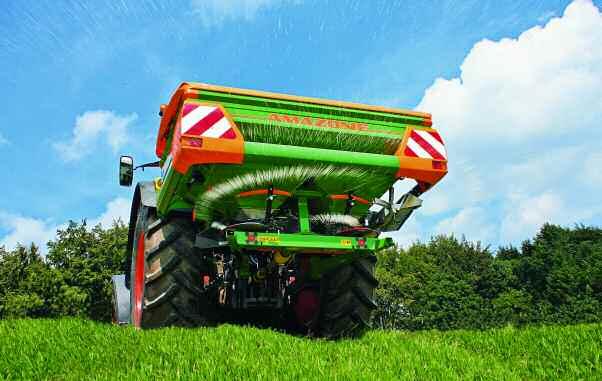
The urea versus ammonium nitrate debate has always been a fiery one and strongly divides opinions. Proposed government measures to deal with greenhouse gas emissions has added fuel to the fire. CPM reports.
Losing N to the air can be reduced with inhibited urea over straight urea.
“ ”
Allison Grundy says the draft Clean Air Strategy document suggests a move away from urea to ammonium nitrate as one solution to reduce ammonia emissions.
33 crop production magazine december 2019 ▲
Fertiliser
Sajjad Awan is concerned that not enough work has been carried out to assess whether there’s an affect from urease inhibitors on soil biology in the longer term.
inhibitors to delay hydrolysis and increase the time available for sufficient rain to fall and move surface applied urea into the soil, thereby reducing ammonia loss.

AHDB’s Dr. Sajjad Awan is concerned about the long-term effects of inhibited urea use on soil health and biology.

“Scientific literature suggests that up to 30% of soil microbiome produces urease as part of their natural biochemical processes and if we manipulate this biological process it could prove detrimental to the vital balances in soil microbiology.
“Furthermore, if we’re encouraging growers to go down more soil-friendly production routes such as min till and no-till, it is likely that more urease inhibitors will be needed in urea fertilisers in such situations.”
He believes that it’s imperative for the industry to carry out independent research regarding the long-term effects of using fertilisers containing urease inhibitors before their widespread use in agriculture is fully accepted.
Richard says that part of the challenge with urease inhibitors is that the technology is often misunderstood. “Urease inhibitors have been used for decades globally, with very high use rates in some markets. For example, in the USA around a third of the urea used is treated with an inhibitor and no
reports of effects on soil microorganisms have been reported,” he says.
“Furthermore, urease inhibitors are only effective in the soil that immediately surrounds the fertiliser. It’s in this location where urea is first hydrolysed into ammonia. If the build-up of ammonia is not diluted by rainfall/irrigation or natural diffusion into the soil, a localised spike in the soil pH can occur around the site of application.
“It’s this pH spike that causes the ammonium to change to ammonia which can then be lost to the atmosphere. Urease inhibitors work by temporarily stopping the urease enzymes, effectively preventing the pH spike, increasing the time
The formulation technology used in BASF’s new urease inhibitor,Limus,resolves some of the problems associated with storing inhibited urea products.
34 crop production magazine december 2019
Source:Amberger und Vilsmeier (1984,in Sturm et al.1994) SoilTime for transformation of temperature (OC)urea into ammonium (days) 24 102 201 ▲
Speed
urea
becomes available to plants
available for enough rain to fall and move surface applied urea into the soil,” he explains.

“Once washed into the soil the transformation of urea to ammonia begins and because the concentration is much more diluted the pH spike no longer occurs. This ensures that there is no delay in uptake of nitrogen by the plants of an inhibited urea when compared to standard urea,” he adds.

Yara’s technical manager Mark Tucker says that if you put all other arguments aside and just consider ammonia emissions alone then moving to an ammonium nitrate form of nitrogen fertiliser is the sensible option.
Unknown element
Yara operates globally and produces fertiliser products based on both the main nitrogen forms (urea and ammonium nitrate) as well as an inhibited form of urea. Even so, he’s in agreement with Sajjad that there is an element of the unknown as far as the effect of urease inhibitors on soil biology. He also notes that traces of dicyandiamide (DCD) found in milk in New Zealand in 2013 were reportedly linked to the use of urease inhibitors.
Mark believes such uncertainties over their use may explain the different approaches taken across Europe –– while in Germany all urea will have to be inhibited from 2020, France hasn’t yet moved to legislate solely for
the use of urease inhibitors.
Inhibited urea products could also present somewhat of a regulatory challenge for DEFRA should the UK chose to go down the same route as Germany.
“One of the problem areas is policing to make sure that inhibited urea products meet the new EU fertiliser regulations, which state the level of urease inhibitor they must contain at the point of application,” he says.
That may prove problematic with some inhibited products because of historic problems with degradation during storage. Recent advances in formulation technology has led to improvements in product shelf life, with newer products now supporting at least a 12-month storage period without degradation occurring, comments Richard.
Allison remains unconvinced that urea can perform as consistently as ammonium nitrate under UK conditions.
“Losing N to the air can be reduced with inhibited urea over straight urea, but the problem of how N becomes available to plants remain constant for both options. While the N in ammonium nitrate is in forms that can be directly taken upby crops, the N in urea becomes available to the plant through the process of hydrolysis which relies on soil biology and conditions,” she says.
Richard points to trials data which shows that the time taken for urea to transform into
▲
Ammonium nitrate has a proven track record under UK conditions and has an 80% share of the UK’s nitrogen fertiliser market.
Mark Tucker says that if you put all other arguments aside and just consider ammonia emissions alone then moving to an ammonium nitrate form of nitrogen fertiliser is the sensible option.
ammonium is surprisingly rapid, even at low soil temperatures.
“The use of inhibited urea products was also tested as part of the Defra’s NT26 research programme. These trials based over three years concluded equivalent performance of urease inhibited urea and AN in ten cereal trials.”
Inhibited urea
Mark points out that there’s a danger that inhibited urea could be a victim of its own success if there’s a swing from traditional ammonium nitrate towards using those urease inhibitors which promise equivalent performance at a lower price.
“Whatever the UK regulators decide, it will be obvious whether the regulations are working in time. If ammonia emissions don’t decrease, then there’s a problem and it’s possible that a rise in the use of inhibited urea at the expense of ammonium nitrate will see an overall increase in emissions because inhibited urea fertilisers still lose more ammonia to the air (6-7%) than
Cancer risk from sulphur shortage
Inadequate levels of sulphur applied to UK crops could raise the prospect of dangerous levels of acrylamide in processed foods. This was the warning given by scientists at the first ICL Technical Agronomy Symposium near Grantham last month.
Dr Tanya Curtis from Curtis Analytical at Rothamsted explained that acrylamide is a neurotoxin and a probable carcinogen that forms during frying,roasting and baking potato and cereal-based products at a high temperature. Concerns over a lack of awareness among consumers has led to new risk-management measures imposed on food manufacturers, including requirements to monitor acrylamide levels and implement mitigation measures.
“Free asparagine and reducing sugars such as glucose,fructose and maltose are established precursors for acrylamide formation,”said Tanya. “Free asparagine is the key parameter in wheat and it accumulates at high concentrations in response to a number of biotic and abiotic stresses. Sulphur deprivation in particular causes a massive accumulation in the wheat grain.”
Dr Steve McGrath of Rothamsted Research echoed these findings,presenting a number of AHDB-funded and other independent studies that have shown routine applications of sulphur to cereals and oilseeds consistently result in yield and quality benefits. “The risk of deficiencies relates to soil type and overwinter rainfall,” he added.
But data he presented from the British Sur vey of Fertiliser Practice (BSFP) show that over a quarter of wheat crops and around 75% of potatoes do not receive S.
Soil analysis data from Lancrop Laboratories indicates an increasing trend of soil sulphur deficiency,with 85% of arable samples tested in 2019 found to be deficient.What’s more,sampling of cattle slurries suggest organic manures are not delivering the levels of S to the crop indicated by RB209,said Lancrop’s Jon Telfer.
“Timely use of leaf analysis allows for in-season assessment and adjustment,while post-harvest grain analysis evaluates the efficiency of your nutrient strategy,”he concluded.
A series of recent proprietary and independent trials results using ICL’s PotashpluS,PKpluS and Polysulphate fertilisers were presented.These showed the material,derived from the world’s only commercial polyhalite mine in N Yorks,performed well across a range of crops.
PKpluS performed better than TSP and MOP applied over replicated plots in an autumn fertiliser trial on KWS Zyatt winter wheat,carried out at Agrii’s site at Sanction,E Yorks.Low and high rates were applied in the autumn,with P and K then balanced in the spring.
“The addition of sulphur from the PKpluS was useful,”concluded Agrii’s Tom Land.“It improved crop biomass and NDVI in Nov and gave a slight edge in yield compared with a TSP/MOP blend.Spring was the most responsive
ammonium nitrate (2-3%).”
Reducing ammonia emissions is going to be a challenge for the whole sector but with targets in place there’s a growing sense of urgency, adds Mark. “I’m picking up that governments across Europe are getting frustrated by the slow speed of change in agriculture, so things really are on a knife-edge at the moment.”
Allison believes the debate will continue, but in her opinion the position of AN remains agronomically strong.
“You simply can’t avoid the fact that AN has a proven track record in all manner of growing conditions gained across many years and it’s known to perform reliably in the UK’s maritime conditions. I don’t believe there’s the same body of evidence for any form of inhibited urea.
“When we’re all being encouraged to focus on mitigating risks and using inputs as efficiently as possible and with N use being such a critical element of modern production, inhibited urea may be a leap of faith too far for some growers.” ■
time for nutrient weighting.”
First year sales of PotashpluS, which has joined ICL’s family of polyhalite-derived fertilisers, exceeded expectations said the company’s Howard Clark. “The feedback from customers and farmers has been really positive. Our agronomy trials programme,which includes our own and independent trials,shows all Polysulphate-based products performed as well and often better than traditional products.”
A naturally occurring mineral,Polysulphate releases its nutrients to the crop over an extended period of time.It contains sulphur,potassium, magnesium and calcium,has a carbon footprint of 0.033 kg CO2e/kg (claimed as the lowest footprint of any equivalent fertiliser) and is approved for use in organic systems.At 37% K2O, PotashpluS has a higher content of potash.
36 crop production magazine december 2019
▲
Fertiliser
Growers may not be applying sufficient sulphur to wheat and potatoes to avert the risk of high levels of acrylamide in processed foods.
LAMMA preview
Tractors,combines and tyres
From SmartGlass display screens to Europe’s first combine without a steering wheel, next month’s LAMMA event looks set to be a hotspot for innovation.
CPM takes a look at some of the new launches scheduled to be on display.
By Charlotte Cunningham
Whether you’re a loyal fan to life-long brand,or are looking to shy away from the norm in a bid to find something else to boost productivity, there’s no denying that there’s an abundance of options when it comes to purchasing a new tractor or combine.
To help growers compare and contrast, the NEC is opening its doors once again next month to host one of the UK’s biggest shop windows for agri-machinery.
But if you can’t wait until the New Year to see what’s on show at next month’s LAMMA event (7-8 Jan), here’s a look at some of the latest tractors, combines and tyres on the market.
Hold your horses
McCormick
A new range of more power ful stepless transmission tractors from McCor mick will be represented by the top model in a new-look line-up making its UK debut –– on the Argo Tractors stand –– at the LAMMA show in January.
Adrian Winnett, managing director of Argo Tractors operations in the UK and Ireland, said: “The push for more per formance is relentless so Argo Tractors has taken the opportunity when switching to Stage V emissions-compliant engines to introduce more powerful VT-Drive models to the McCor mick range.
“Our previous CVT models in the X7 Series peaked at 195hp but with the X7.624 VT-Drive they go to 240hp, giving far mers and contractors a very powerful but versatile package with all the per for mance and driver-comfort attributes of a stepless transmission.”
The McCormick X7.624 VT-Drive boasts a pony count of up to 230hp for draft work and 240hp for pto-driven implements and road transport and is the most powerful model in the latest X7 Series.
In an attempt to slimline running costs, engine service intervals have been doubled to 1200 hours as a result of optimised fuel filters, a more comprehensive oil filtration system, and
a new engine oil specification.
Power and torque from the new range’s higher output engines are channelled through the ZF Terramatic TMT20 transmission.
According to McCormick, this uses four planetary gear sets, wet clutches and hydraulic speed variation to provide seamless ground speed adjustment, with high levels of mechanical efficiency across the 0-50km/h envelope.
Claas
While Claas has remained tight lipped about potential launches in recent months, the firm unveiled its latest additions at last month’s Agritechnica, which CPM got an exclusive preview of in September.

Among the new launches, was the news ▲
A new range of more powerful stepless transmission tractors will be on display from McCormick.

The push for more performance is relentless ” “
37 crop production magazine december 2019
that the Axion 900 Terra Trac has now entered full production, following the announcement of its development in 2017. Two models will be available –– the
Tyre technology
Amongst shiny new kit,it’s arguably fairly difficult to make tyre developments look glamorous. However, the innovation behind some of the latest launches and tyre technology really do have the potential to make a huge difference to your operations.
CEAT
Designed for use on high power tractors and combines,CEAT have launched two new ranges of tyres:The Torquemax and the YieldMax.

According to the firm the Torquemax range has been engineered to ensure constant and smooth transfer of torque from the tractor to the ground –– particularly during fieldwork.
As well as this,it also boasts low rolling resistance and longevity,helping drivers to boost productivity while also keeping a lid on costs,adds the firm.
When it comes to the design,the Torquemax features new casing with stepped lug design and lower lug angle at the shoulder and an extra-wide footprint along with a rounded shoulder,in a bid to keep soil compaction to a minimum.
Incorporated within the range is the IF (Increased Flexion) models which have been designed to give 20% higher load carrying capacity at the same pressure,compared with conventional radial tyres.
For those looking for some new shoes for your combine,the YieldMax range from CEAT boasts a flexible radial carcass and deep tractive lugs that help provide high traction, designed to work as part of modern sustainable and precision farming by minimising harvesting’s impact on the soil.
Available in 650/75 R 32 and 620/75 R 26, the firm believes this offers the potential to
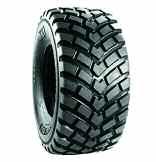
445hp Axion 960TT and the 355hp Axion 930. According to Claas, the Axion TT is the first half-track tractor on the market to feature a fully suspended track system. This, combined with the front axle and 4-point cab suspension, is claimed to improve ground contact and reduce wheelslip, as well as boosting driver comfort.
Drive to the Terra Trac unit is via a standard Cmatic transmission, but in place of the trumpet housings there are ‘saxophones’, which bridge the differences in height and length, says Claas.
The actual drive is through a cardan shaft between the PTO shaft and the Terra Trac intake shaft. “Unlike other track units, the Axion Terra Trac unit is able to pivot over a range from +8°to -15°. Compared
to full track or rigidly mounted half-track systems, this ensures that optimum ground contact is maintained at all times,” says the firm.
Fendt
Fendt’s planned tractor line-up for the NEC includes the latest models of proven favourites, including the new 942 tractor that produces well over 400hp from its MAN six-cylinder, 9-litre engine. It’s fitted with TA300 vario transmission. Other models on display include 828, 718, 516, 312 and 200 models and the MT 943 tracked tractor,.
Visitors will also be able to sample the new Fendt 700 Series cab, or “driving workstation”, using Virtual Reality headsets, which is set to be available from July 2020.
increase load capacity without the need to move to a wide tyre.
Key design features include interlug terracing at the base of the lugs,which helps to maximise the tyre’s self-cleaning capability,while durability is enhanced by a rounded lug base, designed to make the tyre more robust and resistant to stubble and sharp stones,says CEAT.
These features also contribute to optimal lateral stability,even on difficult and very uneven terrain, plus low vibration levels and high comfort in all working conditions,it adds.
BKT
With a focus on soil protection,visitors to next month’s LAMMA event will be able to find out more about BKT’s V-Flex and Ridemax FL 699 tyres which have been designed for trailers and agricultural implements.
The V-Flexa uses VF (very high flexion) technology, combined with tread equipped with steel belts to create a tyre that enables the transport of heavy loads with an inflation pressure that’s 30% less than that of a standard tyre of the same size.As well as this,the tyre has three additional steel-belted layers of heavy duty steel and features a ‘super-resistant’ sidewall to further improve performance.
According to BKT, the extra-large contact area allows an even load distribution, meaning soil compaction is minimised.
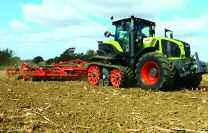
Suited for use on trailers and trucks, the Ridemax FL 699 features a reinforced bead, to ensure stability,even at high speeds.
Though it’s predominantly designed for road use, the Ridemax FL has also proven itself in the field,according to BKT,and also boasts high mileage and long durability.
With a focus on soil protection,visitors to next month’s LAMMA event will be able to find out more about BKT’s V-Flex and Ridemax FL 699 tyres.
LAMMA preview
Claas’ Axion 900 Terra Trac has now entered full production,following the announcement of its development in 2017.
Designed for use on high power tractors and combines,CEAT have launched two new ranges of tyres.
38 crop production magazine december 2019 ▲ ▲
Not at LAMMA,but worth a mention…
John Deere


Though John Deere won’t be present at next month’s LAMMA event,Team Green did launch a vast amount of kit at Agritechinca,which will no doubt be influential in the tractor and combine market (see Agritechnica - Innovation roundup on p49).
Among these included the latest generation 7R series,as well as the launch of the brand new 8R series.
When it comes to the 8R series,John Deere claims to be the first farm equipment manufacturer to produce a range of standard tractors offering three different drive concepts,with the launch of the new 8R Series wheeled tractors,8RT models with two tracks and the 8RX versions with four tracks.
Developed to balance soil preservation with high performance,the 8RX series is said to provide the lowest contact surface compression in this class,along with a transport width of less than 3m and 40km/h unrestricted road speed, according to John Deere.
Under the hood,the 8R series retains John Deere’s existing 9-litre engine,with an increase of 40hp for the 8RT 410.
Established transmission options include the 16/5 PowerShift,which is now available up to the 8R 340 model,the modern e23 with Efficiency Manager and the stepless AutoPowr.The rear brakes have been massively reinforced,so front brakes are no longer necessary even at 50km/h, although additional front brakes can still be ordered,says the firm.
Deere also chose Agritechnica 2019 as a platform to preview an addition to the top end of its combine harvester range with the all-new X9 model and matching draper header,specifically designed and developed for tough European harvesting conditions,according to the firm.
Compared to the S790,(the largest model in the current line-up),the firm believes the the X9 will deliver increased performance and productivity while also offering a boost in efficiency.
This is set to be achieved through a combination of the wide body,improved crop flow, an increase in active threshing and separation areas and a larger cleaning shoe,all while maintaining a transport width below 3.5m on both wheels and tracks,says the firm.“Taken together,these features allow very high throughput and very low losses with improved grain and
straw quality,and address the needs of large farmers looking to maximise their productivity and profits.”
 John Deere launched the new 8R Series wheeled tractor at last month’s Agritechnica.
LAMMA preview
Deere also chose Agritechnica 2019 as a platform to preview an addition to the top end of its combine harvester range with the all-new X9 model.
Valtra
For those looking to impress with the glitziest new technology –– or just something that really does look pretty cool –– Valtra will be showcasing its new heads up display (HUD) SmartGlass.
According to Valtra, this allows the operator to see vital tractor information in the centre of the windscreen and despite



presumptions that glass is perhaps not the most suitable of materials to have on board a workhorse, Valtra says the SmartGlass is based on transparent display technology laminated between two glass surfaces, making it very robust.
As well as this Valtra is set to launch the latest addition to its tractor series which will be on sale in the UK in early 2020.
The F Series –– a new vineyard and orchard tractor –– comprises four models from 75 to 105hp. Models range from 1.3 to 1.5m wide with standard equipment such as heated and air-conditioned cab.
The F Series comes with a 24-speed transmission, available with either a mechanical or hydraulic forward-reverse shuttle and Powershift, while the hydraulics produce from 68 to almost 100 l/min of output depending on the model.
The four-cylinder 3.4-litre common rail engine complies with Stage III B emissions regulations for narrow tractors.
The updated Valtra Guide automated steering system will also be on show. Settings now appear in the map screen and can be changed or checked without having to exit the screen while selecting fields and creating waylines has also been made simpler.
JCB
JCB has been hot in the headlines lately, after breaking its own world record to reclaim the title of the world’s fastest tractor with its vamped-up Fastrac Two design. While such engineering is probably not suited to day-to-day activity, growers will be able to get up close and personal to a slightly more practical development from the firm at LAMMA next month ––as well as getting a glimpse of the world’s fastest tractor.
The Fastrac 4000 series has had some
Fendt’s planned tractor line-up for the NEC includes the latest models of proven favourites, including the new 942 tractor.
▲ LAMMA preview
Valtra will be showcasing its new heads up display (HUD) SmartGlass.
heavy-duty upgrades and now boasts axles with 33% higher load ratings, larger hubs, bearings and external disc brakes, and a larger front axle differential with positive locking rather than limited slip for maximum traction.
New ‘VF’ category tyre options also offer enhanced traction by operating at a lower inflation pressure for a given load to create a larger footprint on the soil, adds the firm. Conversely, they can carry a heavier load than less sophisticated tyres of the same size without resorting to higher tyre inflation pressures and therefore preserving soil structure by avoiding excessive compaction.

The new tyres complement the inherent 50:50 unladen weight distribution of the Fastrac 4000 Series tractors and the consistent ride height and operating weight distribution provided by the active front and rear suspension systems, according to the firm.

Extending engine service intervals for oil and filters from 500 hours to 600 hours helps drive down cost of ownership, as does the new Auto-Stop feature, which eliminates unnecessary fuel use by shutting down the engine after a period at idling speed –– a feature that can be disengaged in situations when this is inappropriate, says JCB.
Combines
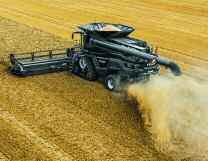
With its striking matte black livery making the Fendt Ideal combine look like something from a sci-fi film, the firm is no doubt set to impress further with its top-of-the-range Ideal 10, which will make its debut at LAMMA next month.
In the guts of the combine is a new MAN 16.2-litre, Stage V emissions-compliant engine which boasts a pony count of up to 790hp.
Other features include a new cleaning system, together with the Dual Helix separator, a combination said to deliver the highest grain quality and the least grain losses.
What’s perhaps the most headline-grabbing feature is that the 10 claims to be the first standard combine in Europe to be operated entirely without a steering wheel.
With Fendt IdealDrive steering, the machine is controlled proportionately to the movement of a joystick on the left, with all the same functions on the joystick on the right armrest. For easy access to the driver’s seat, the left armrest can be folded up.
Available to order from July 2020, Fendt say the new Ideal 10 will be ready for the 2021 harvest. ■
Fendt’s top-of-the-range Ideal 10 will make its debut at LAMMA next month.
JCB’s Fastrac 4000 series has had some heavy-duty upgrades.
LAMMA preview
LAMMA preview Drills and cultivators
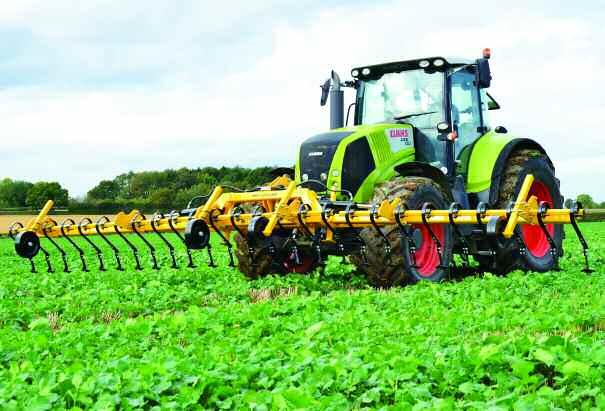
From direct fertiliser drills to interrow hoes,there was a huge array of cultivation kit launched at last month’s Agritechnica.But what’s relevant to the UK market?
And what can farmers expect to see on display at next month’s LAMMA event?
CPM finds out more.
Drills ’n’ hoes
Väderstad
After launching on the market in November, Väderstad will be showcasing its new Carrier XL 425-625 cultivator –– fitted with the CrossCutter Disc –– at the NEC next month. Designed for conserving moisture in the seedbed, the cultivator has the ability to work at ultra-shallow depths of only 3cm, as well as down to 5cm, across the full working width of the machine. According to Väderstad, this enables efficient mixing of crop residues within the topsoil and encourages an early weed chit.
available on the 12 and 18 row Tempo L models and is based on the same high capacity Fenix III metering system as the 5000-litre hopper, delivering up to 350kg/ha fertiliser at 15km/h planting speed, says the firm.
Pöttinger
Though visitors won’t be able to see it in the flesh at LAMMA, the Terrasem Fertiliser Pro mulch seed drill (with direct fertilisation) is the next big thing from Pöttinger.
With an increasing focus on preserving and getting the best from our soils,there’s never been a more important time for drills and cultivation kit. But regardless of whether you’re looking for something that’s deep-working or fast-moving, chances are there’s something to suit you on the market.
To give CPM readers a flavour of what to expect in the drill and cultivation department at next month’s LAMMA event (7-8 January), we’ve picked out some of the key developments.
“A shallow stale seedbed increases the number of seeds germinating, and encourages earlier emergence,” says UK marketing manager, Andy Gamble. “This then means the following crop can either be drilled earlier or with the extra time created, used to prepare an even better seedbed.”
Also new and set to be on display at LAMMA is the latest addition to Väderstad’s Tempo L range –– the Tempo L 8 –– which is claimed to combine high-speed precision drilling with high capacity output of both seed and fertiliser.
As suggested in the name, the Tempo L 8 has eight row units, boasts a 3000-litre fertiliser hopper, and is available in row spacing options from 700-800mm, making it a fairly versatile tool.
The new 3000-litre fertiliser hopper is also
One of the real selling points of this piece of kit is that the simultaneous use of tool combinations (for example, front board with tillage discs) in combination with applying fertiliser while drilling avoids multiple passes –– a particularly important consideration for many growers as pressure builds on the industry to work towards reducing emissions and cutting costs.
So how exactly does it work? “Seedbed preparation is taken care of by the compact disc harrow or low disturbance wave disc harrow,” explains the firm. “The fertiliser is then placed by the Fertilizer Pro coulter in a double-shoot row between every second seed row.”
The placement depth of fertiliser can be adjusted hydraulically within a range of 10cm independently of cultivating and sowing depth, adds Pöttinger “The surface
By Charlotte Cunningham
“
With cost pressures and herbicide resistance increasing, conventional growers are showing an interest in inter-row kit. ”
42 crop production magazine december 2019
is then consolidated across the whole area by the packer before the seed is planted.
“The Fertilizer Pro coulter then uses precision techniques to place the fertiliser next to the seed. Not only does this save fertiliser and minimise unproductive losses, it also promotes faster development of the root mass and contributes long-term to optimum yield.”
Vredo
Netherlands-based manufacturer, Vredo, are expected to showcase a number of innovations at LAMMA, after launching in Hannover last month.
Among them is the Vredo overseeder which now boasts a new crop drill system
feature that allows farmers to sow arable crops directly onto stubble, without any tillage, on 15cm rows.
Now available on the Agri Twin and Agri Air series, the base of the machine
Dance of the inter-row cultivators
With questions over the future of glyphosate still looming in the air,it’s fair to say that the industry is seriously beginning to consider the implementation of other solutions,should we lose the chemical control.
With that in mind,there’s been an increasing number of manufacturers adding inter-row kit to their armoury.
Claydon
Among them is Claydon,set to debut a 6m version of its new TerraBlade heavy duty inter-row hoe at the NEC next month.

Claimed by Claydon to be “simple,reliable and economically priced”the TerraBlade Inter-row has been designed to help eliminate weeds alongside herbicides in a conventional arable system as well as providing a robust solution for organic growers.
Launched as a result of farmer demand for the existing TerraBlade range,the new 6m,20 tine and 8m,26-tine heavy duty versions will sit alongside the four other pre-existing standard models and have been optimised to perform even on heavy soils.
Carried on the tractor’s front linkage and and steered manually,the TerraBlade incorporates a heavy-duty box section steel frame with a fixed centre section and two vertically folding wings. Tines can be adjusted to suit any row width and the fine blades mean the TerraBlade can work effectively up to 30mm deep.
In terms of power requirements,the 8m model requires a minimum 80hp tractor and has an optimum working speed of 6km/h,providing an average work output of 4ha per hour,according to Claydon.
“The TerraBlade provides a valuable additional weapon in the agricultural industry’s weed control armoury,”says Jeff Claydon.“We developed it for
farmers who need an effective,reliable,low cost, mechanical method of removing weeds from their crops, which is becoming increasingly important, for several reasons.
“In recent years numerous agrochemicals, including herbicides, have been lost to more stringent legislation,some of those which remain are becoming more costly and less effective,while an increasing number of farms are turning to organic production where such products cannot be used.”
Opico
Also making waves in the interrow market is Opico, who have launched a complete range of Hatzenbichler inter-row cultivators for UK farmers.
Austrian firm,Hatzenbichler,is well known for its comb weeders, grass harrows and seeders, but although the manufacturer has been building inter-row cultivators for 65 years,it’s only recently that precision guidance technology has made them a realistic option for mainstream arable production.
“We’ve traditionally sold most of our comb harrows to organic producers wanting to control weeds in broad-acre combinable crops and vegetable producers looking to reduce herbicide usage,”explains Opico managing director James Woolway “However over recent years, with cost pressures and herbicide resistance developing more and more, conventional growers are showing an interest.”
With working widths stretching from 3m right up to 18m, the new Hatzenbichler cultivator is likely to provide a solution for a variety of cropping options and row spacings,says Opico.
The principle for all versions remains the same –– tines mounted on parallelograms with individual depth wheels running between the crop rows –– which work to cultivate the soil surface by
comprises a pair of cutting discs with an inter-row distance of 7.5cm.
To sow arable crops deeper, every second pair of discs can be pulled up high hydraulically. “This way a sowing distance ▲
slicing through weed roots leaving unwanted plants to die on the surface.
There’s a choice of points and tines which need to be matched to the job in hand,for example, A-shares mounted on S-tines for deeper work,or duckfoot shares and L-blades mounted on the Hatzenbicher Vibro-tine.On top of that there’s a whole raft of additional options icluding plastic finger wheels that flick out weeds in the crop row and crop protectors that shield delicate plants from soil throw.
LAMMA preview
The Terrasem Fertiliser Pro mulch seed drill (with direct fertilisation) is the next big thing from Pöttinger.
Claydon’s TerraBlade Inter-row has been designed to help eliminate weeds alongside herbicides in both conventional and organic arable systems.
Opico have launched a complete range of Hatzenbichler inter-row cultivators for UK farmers.
43 crop production magazine december 2019
Building on its existing EasyDrill and MaxiDrill range,Sky Agriculture are set to announce a whole host of updates at LAMMA 2020.
of 15cm is being created,” says the firm. “This system doesn’t cultivate the soil, instead, it only slits it, meaning less machine power is needed.”
The overseeder is also suitable for grassland, making it a fairly versatile investment for growers.

Sky Agriculture
Building on its existing EasyDrill and
Amazone
Although Amazone aren’t going to be present at next month’s LAMMA event,the firm did drop over 60 new innovations at Agritechnica that are worth noting.
This included the extension of the Catros range of compact disc harrows,with the introduction of the new CatrosXL in widths from 3m up to 8m.
According to Amazone, the 610mm diameter discs offer the chance to handle more organic matter as well as potentially deeper working depths.
Upfront the CatrosXL can be equipped with either a straw harrow or the new knife roller to pre-work crop residues ahead of the cultivator.
On the seeding front,there was a buzz around the new mechanically-driven Cataya conventional seed drill and the new Avant 02 front tank drill combi.The Avant features the FTender front tank which can be used,not only for seed,but also for fertiliser in combination with such as a rear-mounted Centaya air drill combi,explains Amazone.
For more on seed and feed drilling,see Tech Talk on p54.

Horsch
Another name not anticipated at the event is Horsch.However,the firm did use Agritechnica as an opportunity to launch a neat new trailed compact disc harrow, designed to boost flexibility.

MaxiDrill range, Sky Agriculture are set to announce a whole host of updates at LAMMA 2020.
The new 20 Series updates to the EasyDrill and MaxiDrill include a redesigned electronics package with blockage sensing, individual row shut off and ISObus control as well as a second “Pro-Hopper” allowing four products to be individually metered and distributed at once.
With grain and fertiliser main tanks as standard and the possibility of adding one or two smaller Pro-Hoppers, the range of possible applications the machine can be employed for is effectively extended. “The operator can now place seed, fertiliser, companion crops and plant protection products accurately in one pass,” says the firm. “For example, an oilseed rape can be sown with fertiliser, alongside a companion crop of beans and phacelia to reduce insect predation and insecticide usage.”
As with the previous generations of Sky drills, 20 Series machines have two outlets.
Designed for conserving moisture in the seedbed, Väderstad’s cultivator has the ability to work at ultra-shallow depths of only 3cm.
The first being the disc coulter and the second, a placement tube with three different positions to allow depth to be varied.
The top-spec option for the new drills is ‘E Drive Premium’. As well as offering left and right section control, E Drive premium provides electronic shut-off for each individual outlet, with the result that the drill can be set to seed with any number of row configurations from the touch of a button.
This added ability to shut off individual rows means that whatever the width of the sprayer or spreader, it no longer needs to be a multiple of the drill width –– simply enter the sprayer or spreader width into the control box and the tramlines will be calculated and set automatically
Amazone dropped over 60 new innovations at Agritechnica,including the new CatrosXL widths.

“With sustainability and the environmental agenda at the forefront of most farming minds, the control update and option of a fourth hopper and metering unit delivers a multitude of options for farmers to reduce their input costs and more accurately target where products are placed,” says Joe Redman, Sky Drills specialist at Opico. “There’s also greater opportunity to improve soil health and reduce chemical usage through companion cropping. Sky has delivered what our customers have been asking for.” ■
Horsch used Agritechnica as an opportunity to launch a neat new trailed compact disc harrow, designed to boost flexibility.
On the new generation Joker RT, users will find 52cm serrated discs –– for aggressive working –– arranged in pairs on the suspension and therefore allowing a large clearance for harvest residues.
Flexibility has been optimised by the customer ability to add tools –– such as a knife roller ––in front of the discs.
Vredo overseeder boasts a crop drill system feature that allows farmers to sow directly onto stubble,without any tillage.
44 crop production magazine december 2019
The
LAMMA preview
▲
Not at LAMMA, but worth a mention…
preview
Sprayers and spreaders
From guidance sensors to triple-fold booms,the sprayer and spreader market has made great strides in recent years. CPM takes a look on what will be on display at next month’s LAMMA event,7-8 January.
By Charlotte Cunningham
Sprayers and spreaders have come into their own in recent years,with advances in technology,many of which were on show at Agritechnica last month, meaning application is more precise and cost-efficient than ever before. But whether you’re looking for self-propelled or trailed or perhaps something that boasts auto-leveling features,or maybe a triple-fold boom, there’s sure to be something to tick your boxes at LAMMA next month.
Ahead of the event, CPM has picked out some of the key launches that are sure to impress crowds at the NEC.
Fendt
This year has been a fruitful one for Fendt, with a number of new launches causing quite a buzz in the industry
On the sprayer front, the firm has updated its Rogator 300 trailed sprayer –– which is now available with a boom width of up to 36m –– and will be displayed in all its glory at next month’s LAMMA event.
From track widths of 1.8m, the new hydropneumatic single-wheel suspension is available on the Rogator 300 as of January
Spread and spray
2020. According to Fendt, two hydraulic cylinders cushion the vehicle to increase stability during cornering, in difficult road conditions and on slopes. The suspension reduces the load on the tractor and boom and allows for higher application accuracy, even at high speeds, it adds.
Available with up to five OptiSonic sensors that guide the left and right boom arms individually over the target area, the triple-folding booms are able to maintain a consistent distance from the target crop for evenness of application.
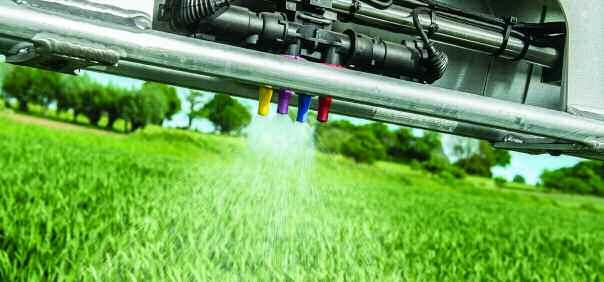
The unbendable lightweight aluminium linkages ensure the nozzles are protected and also easy to change, according to the firm.
With the Fendt Stability Control automatic levelling system, the Fendt Rogator 300 is claimed to guarantee safe use on the hillside and stable road positioning.
When driving parallel to the gradient, the single-wheel suspension design also allows a slope compensation of up to 7°, or 12%. Single wheel suspension also comes into play in filling processes with plant protection products, as it allows the Rogator 300 to be automatically levelled for even more accurate filling, adds Fendt.
Kuhn
Precise nozzle selection is one of the key elements of Kuhn’s latest addition, Oceanis 2 –– a 7000-litre trailed sprayer, boasting operating widths of up to 48m.
The range is available with Kuhn’s MultiSpray system, which uses electric nozzle holders to enable in-cab nozzle selection, automatic nozzle selection to suit the forward working speed –– and to maximise the accuracy of variable rate applications –– plus individual nozzle control to reduce overlapping, says the firm.
The Oceanis also features Kuhn’s self-levelling boom system, which keeps the spray boom in the position and height irrespective of field and crop conditions, and therefore increasing spraying precision and reducing spray drift, it adds.
Another neat feature is the hybrid-mode option, which uses three sensors to distinguish between crop canopy and ground level to improve spraying accuracy in high density crops such as oilseed rape or potatoes, or where the crop has lodged.
Househam
Househam sprayers used last month’s Agritechnica to debut its AirRide and Predator sprayers, which are also set for a guest appearance at LAMMA.
The self-propelled AirRide sprayer boasts a spray capacity of 3000 to 4000 litres, with a ground clearance of up to 1.7m.

A hydraulic folding boom comes as standard and is available in widths from 12-24m with further options of up to 36m on the triple-fold boom.
Under the hood is an MTU 4R1000 diesel engine with pony power of 170-228hp.
Bateman
New from Bateman is the firms BBL boom-levelling system which is now
” “
Precision application of liquid manure enables modern agriculture to operate more sustainably.
LAMMA
45 crop production magazine december 2019 ▲
Househam’s self-propelled AirRide sprayer boasts a spray capacity of 3000 to 4000 litres.
available on its RB35 and RB55 self-propelled crop sprayers. This feature works by following ground contours, enabling the operator to spray under a wide range of conditions without changing settings. As well as availability on all VG contour booms, it can also be retrofitted.

Agrifac
Agrifac’s latest offering –– the Condor Endurance –– is among many sprayers set to make its LAMMA debut next month.


A key feature includes the new EcoTronicPlus II design, which boasts a fully integrated armrest and a joystick for
Joint partnership brings high precision
Joining forces to promote a more sustainable organic fertiliser application system is the latest project from John Deere and Vogelsang ––which was one of the key themes at for the manufacturers at last month’s Agritechnica. While John Deere aren’t on the exhibitor list for this year’s LAMMA,Vogelsang will be on hand to discuss the project further.
According to John Deere,the firm’s Section Control –– in combination with Vogelsang’s automatic partial-width Comfort Flow Control section system –– enables highly precise spreading of liquid manure.
“We are using our joint expertise to ensure that plants can be supplied with the necessary nutrients through more precise slurry application,”says Alexander Berges, John Deere.
Precise organic fertilisation has significant advantages over mineral fertilisation,he adds. “It improves the CO2 balance of agricultural production and reduces ammonia emissions. Higher yields, more consistent plant growth and protection of water courses are further positive benefits.”
Harald Vogelsang,managing director of Vogelsang,added:“The site-specific and need-based application of liquid manure enables modern agriculture to operate more sustainably and to promote the triad of economy,ecology and social acceptance.”
This joint technology project demonstrates in practice how accurately slurry can be applied using Vogelsang’s new BlackBird trailing shoe system with CFC automatic partial-width section control and ExaCut ECQ precision distributors. Operated via the in-cab Generation 4 Display,
John Deere Section Control opens and closes the system’s individual hoses automatically and very precisely according to the tanker’s GPS position. This reduces overlaps and errors to an absolute minimum and avoids over- or undersupply of nutrients to the plants.
Vogelsang has also developed new valve technology,with air bellows in the hose outlets of the spreading devices for switching off the individual boom sections.The inflated air bellows close the individual boom sections or boom section groups,and to release the respective hose outlets the operator lets out the air.This electro-pneumatic control of the individual hoses enables fast,precise switching operations,says the firm.The application booms are available in versions with single hose control or with control of hose outlets combined in sections.
John Deere’s Section Control is compatible with all common satellite correction signals, ranging from the free SF1 up to the high-precision and repeatable RTK signal. This allows up to 255 boom sections to be controlled fully automatically to an accuracy of +/-3cm in previously defined areas of the field, adds Deere.
Complete integration of both systems into the John Deere operating terminal enables Section Control and CFC to ensure precise slurry application,while additional integration of the HarvestLab 3000 manure sensor enables continuous measurement of the nutrients in the slurry –– so not only m3/ha but also kg/ha N,P and K can be applied,as with mineral fertilisers. The HarvestLab sensor is DLG certified for measuring accuracy with N and P,which is at the same level as accredited laboratories.
A key feature of Agrifac’s latest offering is the new EcoTronicPlus II design.
46 crop production magazine december 2019
LAMMA preview ▲
New from Bateman is the firm’s BBL boom-levelling system.
Fendt’s Rogator 300 trailed sprayer is now available with a boom width of up to 36m.
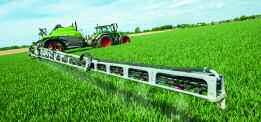
impressive 1200m of 12.7cm umbilical hose.
At the core of the new models is a Vogelsang macerator with stone trap, while a twin macerator is an available option on the 12m version in order to ensure even spread on slopes, says SlurryKat.
Vredo
SlurryKat’s latest launch –– the Duo (Dual Purpose) Dribblebar range –– will make its UK debut at LAMMA, following its global premiere at Agritechnica. Available in 10m and 12m widths, the vertical folding dribblebar can be tanker-mounted or used on an umbilical system. Both versions feature a lower frame height to maximise visibility to the rear when operating the system on an umbilical set up.

Thanks to the heavy-duty frame, the redesigned Bak Pak reeler system can be accomodated, which boasts the ability to carry up to an
With an increase in popularity of self-propelled kit –– due to the need for high capacity and minimum soil compaction ––Dutch firm, Vredo, has made its VT4556 series self-propelled slurr y vehicles suitable for attaching 24m dribble bar/trailing shoe implements.

This has been made possible by the 50/50 weight distribution of the self-propelled tanker and the reload docking arm mounted at the front, explains the firm.
The tanker can still be driven in crab steer, meaning only one wheel in each track that’s claimed to help achieve very low ground pressure. Implements can be equipped with section control, manual or in combination with a GPS steering system.
Booms fold next to the tank, keeping transpor t width below 3.5m, adds Vredo.
Precise nozzle selection is one of the key elements of Kuhn’s latest addition, Oceanis 2. 47 crop production magazine december 2019
▲ LAMMA preview
maximum ease of use and productivity, according to the firm. As well as this, simplicity is maintained within the design with one screen in the cab for both spraying and GPS. From a practical point of view, the Condor Endurance has an 8000-litre tank and boom widths ranging from 24-55m. All filling operations take place in the front zone of the sprayer –– induction hopper, main tank, clean water tank, diesel or AdBlue –– while the pump systems and electronics are located at the back.
SlurryKat
Joskin
New from Joskin is the Tornado spreader, with the T5513/14 models set to represent the range at the show.
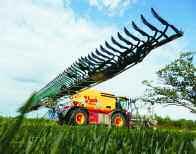

These 13t/14m3 capacity machines have a 5.5m long body, 150 single axle with 420x180 brake shoes and two vertical beaters.
The leaf suspension has been replaced by a hydropneumatic drawbar with closed circuit in a move to absorb shocks better and produce a more precise spread, while the moving floor slats and the transmission
shaft have also been beefed up, according to the firm.
Joskin are also set to showcase machines built to its recently introduced “Advantage” concept, using shared assembly lines to produce identical series of machines, reducing costs and delivering a high-tech product at the price of a standard one, it says.
Advantage machines include three tankers –– the 11m3 single-axle Modulo2 and 7.5m Pendislide Basic trailing shoe; the 12m3 twin-axle Modulo2 and the 16.5m3 twin axle Volumetra.
Tramspread
Suffolk-based firm, Tramspread, have added a remote controlled, contractor trailer pump unit to its armoury.
Boasting a hose capacity of 2000m and a 900-litre fuel tank, the Bauer SX2000 slurry pump is powered by a 170hp diesel engine and controlled by a SIL Vision IV remote control.
The compressor and divert valve are also remote controlled, with information shown via large colour display, adds Tramspread. Flow and pressure can be monitored with the addition of flowmeter and pressure gauge. ■
Vredo has made its VT4556 series self-propelled slurry vehicles suitable for attaching 24m dribble bar/trailing shoe implements.
Tramspread have added a remote controlled, contractor trailer pump unit to its armoury.
New from Joskin is the Tornado spreader,with the T5513/14 models set to represent the range at the show.
▲
LAMMA preview
The future is now
Agritechnica
Innovation roundup
Away from the glitz and glamour of the big players’ show stands at Agritechnica last month there were plenty of other interesting innovations on display. CPM rounds up a few of the more unusual bits of kit on show.

 By Nick Fone
In the midst of a new age of technology, global engineering is making great strides in innovation to bring some of the most ground-breaking bits of kit onto the market for farmers.
Though it might be some time before some of the newest kit makes its way onto UK show stands, there was a vast amount to be seen at last month’s Agritechnica.
In case you didn’t make it to Hannover, here’s a look at some of the most game-changing innovation that caught our eye.
Alternative fuels
The show was awash with manufacturers showing off different machines running on alternative fuels. Belarusian harvester specialist Gomselmash had its natural gas-powered Palesse combine on display, while Steyr’s diesel-electric hybrid ‘Konzept’ tractor took centre stage on the CNH stand. And over in the materials handling halls there were a whole host of hybrid and fully-electric loaders.
But it was a tiny turquoise tractor tucked away in a modest booth in a hall full of nondescript irrigation kit that represents possibly the biggest step forward in tractor technology.
Dubbed the HAV –– Hybrid Agricultural Vehicle –– it’s built by Indian company Proxecto which has helped Italian compact tractor specialist Carraro develop its first electric machine.
But the HAV is a completely different proposition. It has no clutch, no gearbox and no axles. In fact, the only thing conventional about it is that it uses an internal combustion engine.
Not constrained by the conventions of traditional mechanical drivelines, the engineering team have taken a truly fresh approach to how power is transmitted from the engine to the ground.
In place of the clutch there’s a big
alternator strapped to the engine flywheel. This provides power to electric motors within each hub. Without axles, the hubs are connected to the body of the tractor via elongated king-pins. That’s enabled the company to add four-wheel steering and, by integrating hydraulic rams into the king-pins, each wheel gets simple hydro-pneumatic suspension.
Integrated into the big alternator/generator is a separate hydraulic power pack. This provides oil flow for the linkage and external hydraulics.
And it’s this final feature that could bring the biggest benefits to rural parts of the
49 crop production magazine december 2019 ▲
Acres hope its iTarra tracked robot will be a hit with anyone looking at driverless technology
developing world. Once the working day is done the tractor can be parked up and used as a mobile genset, providing




electrical power for homes that would otherwise go without.
The other interesting thing about the HAV management is their attitude to pricing. They take the view that to have something more expensive than what’s already on offer simply won’t succeed. To that end they’ve set about designing it to come in at no more than €13,500 (£11,540).
Buyers currently have a choice of two fuel sources for the HAV. They can either opt for a 2.2-litre 47hp Yanmar four-cylinder diesel or a 1.8-litre 52hp Avtec four-pot that runs on compressed natural gas. For the future Proxecto says it’s not a huge leap to swap out the internal combustion engine for a battery bank where there’s a ready source of electrical power.
One of the biggest benefits of going
to a hybrid electric drive is that it could significantly help to reduce energy usage in farming, according to the firm. Because the engine is not powering a direct mechanical driveline, the loading is much more stable.
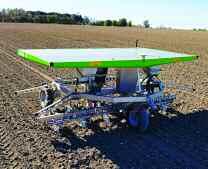
With different operating modes selected via the weather-proof touchscreen, sensors in the wheel motors and electric pto motor detect power requirements and alter engine speed to increase or reduce electrical output as required.
The company says this leads to up to
John Deere unveiled its high clearance autonomous sprayer at the event.
John Deere’s autonomous machine has two 250kW electric motors.
HAV is a completely different proposition.It has no clutch,no gearbox and no axles.
There are 12 of FarmDroid’s autonomous seed’n’weed robots out working in the field.
Agritechnica 50 crop production magazine december 2019 ▲
a 30% reduction in diesel consumption. Switch to a CNG-fuelled motor and the saving could be as much as 50-60%.
Without torque peaks, this more steady loading is kinder on the engine with the result that service intervals could be extended beyond 1000-hours.
This all sounds perfect but are we likely to see any of the benefits here in Europe? Proxecto says it has big plans to produce hybrid tractors for the western world and recognises it’ll need to develop larger models if it’s to have any success in areas where farms tend to operate on a larger scale. To that end it has plans for a 75hp HAV that will comply with Stage V emissions rules and European Type Approval and anticipates that we might see turquoise tractors arriving on our shores as soon as 2021.

Autonomous kit
Dominating the core of the monstrous John Deere stand was the company’s circular ‘Innovation Zone’. Focusing on technology of the future, it showcased a range of working prototypes that may or may not make it into the mainstream in the next decade or so.

Central to this was a huge multi-rotor
‘Gigadrone’ suspended from the ceiling. Developed by German firm Volocopter, the original concept was conceived to transport people around congested urban areas. With the ability to airlift a 200kg payload, John Deere saw the opportunity to adapt the UAV to carry a sprayer capable of making low volume targeted applications of plant protection products.
At the other end of the spectrum, the firm had its swarm spot-sprayer concept on show. A collection of smaller drones able to carry 3-litres of spray liquid and detect weed/disease areas, they work autonomously and return to the ‘hive’ to recharge and refill.
Sticking with agrochemical applications, Deere also unveiled its high clearance autonomous sprayer. Designed for large-scale broadacre crops, the tracked machine uses petrol/electric hybrid technology borrowed from the automotive world.
Kitted out with a vast array of sensors and the computing power of a small office-block (thanks to the green giant’s acquisition of tech specialist Blue River two years ago), it will apparently be capable of making its own decisions about what to apply. Falling firmly under the artificial
The theory is that a swarm of Continental’s tool-carrier robots could perform all the tasks between cultivation and harvest.
intelligence banner, this ‘See & Spray’ technology could see machines diagnosing pest and disease outbreaks and deciding how best to deal with them all by themselves –– not good news for agronomists….
Perhaps the most difficult to fathom item on display was a twin-track cab-less, driverless tractor. Designed to work as par t of a team of similar machines in a follow-the-leader system, the autonomous machine has two 250kW electric motors
▲
Agritechnica
Agritechnica

–- one for ground-drive, the other for the pto and hydraulics.
It has a complex hitch arrangement that means there’s weight transfer between the implement’s axle and tractor, effectively creating a balanced, twin axle rig when the two are coupled together. This concept is a way off making it into production however as battery technology is not yet capable of providing enough storage capacity.
Seemingly a much more realistic proposition, was a set of retro-fit sensors that can be mounted on the nose of a conventional tractor to convert it to work as a semi-autonomous machine in a master-and-slave set-up.
Designed to help deal with labour-shortage issues, it’s currently being evaluated in
orchard spraying scenarios but the company says there’s no reason why it couldn’t be rolled out further into mainstream agriculture.
Yanmar
Japanese tractor and engine maker Yanmar has adapted one of its conventional tractors to work under its own steam. The snappily-titled 113hp YT5113A is equipped with SmartPilot –– a telematics-linked system developed in house that uses a combination of laser sensors and GPS to enable the machine to work either completely autonomously or paired with another manned tractor in a master-and-slave arrangement.
Currently there are over 100 units out working in rice-paddies across the Land of the Rising Sun. It’s in full factory production, this is no concept. Available in Europe for the princely sum of €120,000 (£102,577), the autonomous YT5113A costs about 20% more than a standard tractor.

Continental
While Continental might be a name you instantly associate with tyres, the company actually has a whole host of other strings to its bow.
In fact, rubber products account for just 40% of the business’ turnover with automotive components such as parking sensors, adaptive cruise control systems, digital displays, etc… making up the lion’s share of revenue.
With this arsenal of high-tech kit on offer, the Ger man company has recently taken a fresh look about how this existing technology can be redeployed into other industries including agriculture. The result is this autonomous implement carrier.
With either 2kW/hr or 3kW/hr batteries, the machine has an electric motor on each side driving the wheels, a differential providing skid-steering. In between is a central docking bay designed to accommodate a range of slot-in implements. Continental says it has no plans to develop these itself, preferring instead to work with existing equipment manufacturers to miniaturise machinery for the purpose. The theory is that a swarm of these tool-carrier robots could perform all the tasks between cultivation and harvest –– seeding, spraying, weeding and making targeted fertiliser applications.
FarmDroid
Unlike many of the autonomous bits of kit at the show, the FarmDroid is a commercial reality that’s actually in production.
Japanese tractor and engine maker Yanmar has adapted one of its conventional tractors to work under its own steam.
52 crop production magazine december 2019 ▲
Developed by Danish farming brothers Jens and Kristian Warming, there are 12 of these autonomous seed’n’weed robots out working in the field.
It combines two machines in one and in its primary role it’s a precision drill capable of planting row crops such as beet. Once that job is done, it returns two to three weeks later and starts to hoe, both between the rows and in between the plants.
Unlike all the fancy ‘konzept’ machines at the show designed to do similar jobs, it’s very simple in the way it works. Rather than using banks of sensors to detect which are crop plants and which are weeds, its simply uses a GPS feed to record where it places the seeds and then on its subsequent weeding passes (every one to two weeks) it shoots out a blade between each growing plant to keep the area in between weed-free.
The big solar ‘wing’ provides the power with two small batteries providing a bit of back-up. The company says it’ll generally keep running for 22 hours a day mid growing season but if there’s not enough daylight to make that possible it can simply be plugged into the mains for a boost. On that basis they suggest it’s possible for each unit to plant and look after about 40ha of crop.
At €65,000 (£55,563) it seems pricey, but when you factor in that you’ll have no labour or fuel costs, it actually begins to look pretty sensible.
The company is now working on a version for larger seed crops such as maize and is looking into the options for targeted fertiliser placement and a possible spot-sprayer Watch this space…

Acres
Irish inventor David Doran hopes he’s hit upon something that’ll resonate with anyone looking seriously at driverless technology with his iTarra tracked robot.
At its core is a Caterpillar diesel genset capable of pumping out 110kW, as well providing the track units with hydrostatic drive. It can be operated in one of three ways –– remotely with the operator in line-of-sight, via virtual reality goggles and 360deg camera or completely autonomously with TopCon GPS guidance, radar and laser ‘Lidar’ proximity sensors.

The machine itself has a couple of novel features, the first being its multi-axis hitch. Unlike anything currently in circulation, the iTarra has a four-sided coupling that locks into a similarly shaped cup on the implement. Capable of swivelling and twisting through three dimensions, this
box-section drawbar completely encloses the pto shaft. But power doesn’t have to be transmitted mechanically –– there’s also a 500kW electrical socket for equipment of the future.
Its other innovative attribute is what’s tagged ‘adaptive load and traction technology’. Designed to avoid surface scuffing when turning, the skid-steer machine will lift the front of its track units when changing direction so that the contact point with the ground is reduced and delicate surfaces aren’t damaged.
Currently the prototype is undergoing testing with the backing of certain big players like Keenan/Alltech and it’s hoped production will start by spring next year. Expect a basic machine to start at around the €150,000 (£128,221) mark. ■
Agritechnica 53 crop production magazine december 2019
John Deere’s spot-sprayer concept drones work autonomously and return to the ‘hive’ to recharge and refill.
Seed-and-feed drilling
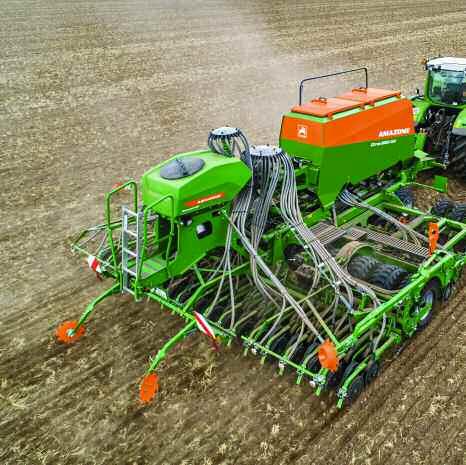
Amazone has always been at the forefront of drilling technology;with the combination of a cultivator and drill in the 1960s,the introduction of tramlining to farmers and then the adoption of targeted consolidation to the seed row for improved germination and seedling development.Their experience in combined drilling of grain and fertiliser goes back to the 1970s with its use in direct-drilling systems.
The fertile furrow
Drills that deliver fertiliser into the rooting zone are back in vogue as growers aim to optimise establishment and target nutrition. CPM assesses how to get the best results from the technology now available.
By Tom Allen-Stevens
Getting the most benefit from applied fertiliser has always been a key objective for any grower. But the regulatory imperative to do so has perhaps never been greater.
One route to ensure this is to target inputs more precisely to the crop, and there’s clear trials-based evidence of agronomic benefits where this is carried out at establishment, according to Agrovista technical manager Chris Martin. The same drilling technology has benefits for those establishing cover and companion crops, he points out.
The kit used to achieve this has also come on in leaps and bounds, and there are now a number of choices, depending on growers’ individual situation and priorities.
Amazone technical specialist Bernd


Lummer offers an insight into what these are.
What is seed and feed?
The principle of crop nutrition relies on making nutrients available to the crop at the point it requires them. Applying fertiliser complements the exchange of nutrients that occurs naturally between those held by soil reserves and available in the soil solution.
A seedling’s limited root system can draw these only from the small zone into which it’s placed or from seed reserves. In the case of oilseed rape, for example, the seed supplies enough for just the first 5-6 days of the plant’s life, which isn’t enough to ensure a decent tap root –– vital for good crop establishment.
So applying a small amount of
key nutrients within easy reach of these young roots can bring significant benefits –– it effectively gives the seed its own individual growbag.
Why apply fertiliser with seed?

Phosphate is a key nutrient during establishment, helping a plant develop its root system and it’s needed for photosynthesis. But it’s very immobile in the soil, so a small amount applied in the root zone at establishment gives the plant a valuable boost.
Likewise nitrogen may not be readily available from soil reserves at drilling, especially in no-till situations, as a degree of soil disturbance is usually required to mineralise the N. Mineralisation hits a low point in cold and wet soils, and this makes N
fertiliser applied at drilling particularly beneficial to spring crops.
Applying these nutrients at drilling not only makes them readily available to the young seedlings, it also allows them to be targeted. On average, only a third of the field is treated,
Mineralisation hits a low point in cold and wet soils,points out Chris Martin, and this makes N fertiliser applied at drilling particularly beneficial to spring crops.
“
Applying a small amount of key nutrients within easy reach of young roots effectively gives the seed its own individual growbag.”
54 crop production magazine december 2019
so the rate can be cut accordingly, or the application can be more concentrated while staying within N-max limits. So there are both cost and environmental benefits.
What trials evidence is there?
Agrovista has carried out numerous trials on applying fertiliser with seed at drilling through Project Lamport, looking specifically at spring crops, and the National GrowCrop Gold trials, which have focused on OSR. In every year autumn N has been applied to OSR at establishment, this has resulted in a yield benefit that has ranged from 0.2-1t/ha.
For spring cropping, trials have shown the practice to be a no-brainer. Typically 50% of the total N requirement for spring barley should be applied in the seedbed,
and spring wheat has a similar requirement. Where soils are cold and wet, the most immediate requirement is phosphate, making diammonium phosphate (DAP) an ideal fertiliser to put down the spout at drilling. An applied rate of 160kg/ha would deliver 30kgN/ha and about 80kg/ha of P2O5. By placing the fertiliser closer to the seed, this rate can be significantly reduced which saves money, while also minimising any potential environmental issues associated with N and P.
What are the environmental and crop safety considerations?
Growers must adhere to statutory N-max limits and closed periods (see panel below). Care also needs to be taken to ensure seed is not placed too close to fertiliser as high nutrient concentrations can impact on germination. Small seeds are most at risk, and urea or fertiliser that contains ammonium N tend to cause the most damage.
What about cover and companion crops?
For those who have the capability to apply both seed and fertiliser at drilling, it makes sense to consider how the drill can be set up to achieve best establishment from cover and companion crops.
Typically, more than one seed will be drilled at the same time, and these are often of different sizes.
Experience at Agrovista GrowCrop trials has shown certain seeds can settle out, so the ability to use two or more different hoppers has benefits. Generally, the bigger the seed, the deeper it should be placed, so drills with dual coulters offer advantages.
Examples here include vetch, a large seed that should drilled to about 25mm, and berseem clover, which is best established closer to the surface. Together these make an excellent cover crop. Good results have been achieved drilling OSR with a companion crop of buckwheat. But buckwheat seed is large and hexagonal in shape, so can prove problematic if mixed in the same hopper with the small, spherical OSR.
What drill configurations are available?
Seed and fertiliser can be applied in a single-shoot or double-shoot configuration. A single-shoot system places the seed and fertiliser together through the same coulter. A double-shoot set-up separates the two by at least 2cm.
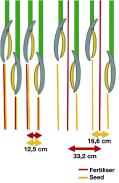
A single-shoot system works best when seed is placed into cold and wet soils in either autumn or spring, making it ideal for direct-drilled or min-tilled situations. Since the fertiliser is delivered together with the seed, emerging roots get direct access to the nutrients, although care should be taken to keep applied rates below a level that may damage the seed.
Typically a double-shoot system places fertiliser into a furrow between each pair of seeding lines. This means all the required fertiliser can be applied through the drill, ensuring better availability than broadcasting on the soil surface, but with less chance of seedling damage.
What about delivery?
A single-shoot system does not require any special coulters. The seed and fertiliser are metered from a split hopper and carried down the same conveying line to the coulter. With double-shoot, an extra set of coulters is required, which are
typically located in front of the seed coulters and will work around 3-5cm deeper. Double-shoot systems are supplied via a separate conveying line, and sometimes a separate tank. This raises the capital cost and draft requirement, but there’s more flexibility and these are ideal for establishing different seed mixtures, such as cover crops. On some systems, both conveying lines pass to a single special coulter that enable spatially separated seed and fertiliser.
Another consideration is fan speed. With combined delivery, where seed and fertiliser pass
N-max limits for growers in Nitrate Vulnerable Zones (NVZ)
Autumn or early winter-sown wheat2208
Spring-sown wheat1807
Winter barley 180 6.5
Spring barley1505.5
Winter oilseed rape2503.5
Sugar beet 120 -
Potatoes270-
Forage maize150-
Field beans0Peas0Grass300-
Source:Defra.For wheat and barley,an additional 20kgN/ha is permitted for every tonne that expected yield exceeds standard yield.Milling wheats may receive an additional 40kgN/ha.OSR can receive a maximum of 30kgN/ha during the autumn and an extra 30kgN/ha total for every half tonne that expected yield exceeds standard crop yield.Spreading of manufactured fertiliser is prohibited during the closed period of 1 Sept to 15 Jan on tilled land.OSR is exempt,subject to the maximum permitted autumn rate.
Tech Talk
Crop N-max limit Standard crop (kgN/ha) yield (t/ha)
A single-shoot system (left) places the seed and fertiliser together through the same coulter,while a double-shoot set-up separates the two.
55 crop production magazine december 2019 ▲
Seed-and-feed: top tips
● Enrich the rooting zone –
Put immobile P within easy reach of small seedlings, while N may not be readily available in cold, wet or direct-drilled situations.
● Tailor the technology –
Consider whether single-shoot, double-shoot or a combination of both are what you need.
● Flexibility focus for cover crops – Separate hoppers and additional coulters allow good establishment of different-sized seeds.
down the same line in a single-shoot system, the blower fan speed must be increased. With separate application, the air volume must be divided between the two conveying lines.
What’s the latest tech in this area?
The new Amazone Cirrus-CC drill, that made its UK debut at the Cereals Event this year, is one example of a drill that combines the latest in seed-and-feed technology. This has a second conveying line, offering up to four combinations:
● Sowing just one seed variety via RoTeC pro or TwinTeC+ coulters

● Sowing seed and fertiliser (or a second crop) in the same seed furrow via the single-shoot system
● Sowing into two different seed furrows utilising double-shoot mode and the additional FerTeC coulters
● A combination of both singleshoot and double-shoot modes. If required, a third crop can also be metered and applied via the on-board GreenDrill 501 hopper,
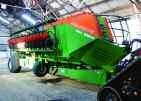
which passes seed through a separate conveying line to either baffle plates at the rear of the drill or a second entry point on the coulter. Calibration and adjustment of the twin metering units is handled by the optional TwinTerminal 3.0, located on the machine, with rotation speeds displayed on the ISOBUS terminal and adjustable from the tractor seat. The three drill hoppers can also be calibrated via the mySeeder App on a smartphone. ■
Sponsor message
With the current susceptibility to dry weather in the spring,it is becoming increasingly important to ensure there is an adequate root structure to maximise the potential of both spring and winter-drilled crops. The Single-Shoot system, employed on all trailed drills such as the Cirrus,Cayena and Citan, provides a supply of phosphate within the seed row for improved seedling development as well as having the flexibility of adding some
Feeding the seed brings notable crop improvements
below the seed. But what we were looking to do was put the fertiliser right next door to the seed to give it that instant hit.”
As manager of Belvoir Farming Company in Lincs,Keith establishes around 1080ha of combinable crops on heavy Fladbury and Denchworth series soils.“We wanted to move to disc coulters that wouldn’t shift too much soil and encourage blackgrass,” he says.
Keith Challen was looking to put the fertiliser right next door to the seed to give it that instant hit.

Greater precision and success in targeting nutrients where they’re needed are what Keith Challen has achieved since investing in a 12m Amazone Citan drill three years ago.It has an 8000-litre tank split three ways with three separate metering rollers.But all grain and fertiliser are channelled down the same conveying line in a single-shoot system.
“That was an attraction of the drill for us,”explains Keith.“We’ve looked at drills that place fertiliser to the side or

“We also needed a drill that fits with our 12m Controlled Traffic Farming (CTF) system and one that would cover 100-120ha/day so we could pick and choose the right days to drill. A seed-and-feed drill was a key requirement and we wanted a rear harrow that sweeps the soil sideways, rather than raking it vertically.The Amazone Citan 12001-C was the only one that met all our requirements, was reasonably priced and it’s proven itself,”notes Keith.
For oilseed rape,the main requirement is a crop that establishes quickly to stay ahead of cabbage stem flea beetle.“We apply enough MAP or
DAP to give it 30kgN/ha,but that’s across the whole field, so the seeding zone gets a rate that’s substantially higher.That also gives the crop 50-80kg/ha of P2O5,”he says.
“For spring crops on heavy clay, our biggest problem is cold wet soil at establishment.It’s why we still carry out minimal cultivations,and we’ve found cover crops don’t suit us as we need soils exposed to the wind to help dry out the surface.
“That shot of N at establishment is essential for spring barley –– we put on 100kg/ha of MAP,that gives the crop 11kgN/ha and 52kg/ha of P2O5.”
The results are now showing in leaf tissue analyses,says Keith.“We used to rely on soil samples but were getting nutrient deficiencies even where indices were OK.So we take leaf tissue samples coming out of dormancy,before the T0 spray timing and pre-T1. It’s clear from these the crops are now getting the nutrients they need with marked improvements in P We can now tailor our inputs much more closely to crop requirements,which is also achieved at
N where permissible,such as alongside winter OSR.The nitrogen being removed by the breaking down of crop residues can be supplemented by the use of MAP or DAP in the seed row.
Higher rates of seedbed fertiliser can then be applied in between via the FerTeC coulter when sowing small seeds in dry areas where there might be an increased chance of scorch. The new CC system gives the grower the best of both worlds with its ability to carry out both DoubleShoot and Single-Shoot simultaneously.
drilling as we sow at a variable rate.”
One surprise result has been putting Polysulphate down the spout when drilling spring beans.This puts potash, magnesium and calcium as well as a good dose of sulphur into the rooting zone.“We tried two tonnes applied at 160kg/ha across some of beans in 2019 and it lifted the yield by 0.4t/ha to 4.8t/ha where it had been applied,” says Keith.
“The drill’s done everything we wanted and more –– you drill into stale seedbeds and you can hardly see it’s been through thanks to the minimum disturbance.What’s more,it’s fitted with RoTeC Pro coulters that haven’t blocked once, and that’s a benefit in itself.”
The Citan drill with RoTeC coulters ensures minimum disturbance in the CTF system.
The Cirrus-CC drill is one example of a drill that combines the latest in seed-and-feed technology.
Tech Talk 56 crop production magazine december 2019 ▲
The FerTeC coulters apply the fertiliser in front of and slightly below the seed coulters.
Small robots roll out ambitious plan
Machinery Robots
co-founder Sam Watson-Jones. “Our aim is to deliver per-plant understanding of a farmer’s crop to maximise the effectiveness of how it’s treated through the season.”

The first stage of this service is now available –– for £15/ha you get four visits through the season from SuperTom, who will travel through the field, covering up to 20ha/day making accurate assessments of your crop. To be fair, all Tom currently does is take high resolution, geo-located photos of every cm2 of the field, using sensors mounted on a 4m boom, carried about 1m above the crop.
By Tom Allen-Stevens
Last month, a small autonomous robot rolled into a wheat field in Hampshire, putting into practice a service that,less than two years ago,was little more than a concept.
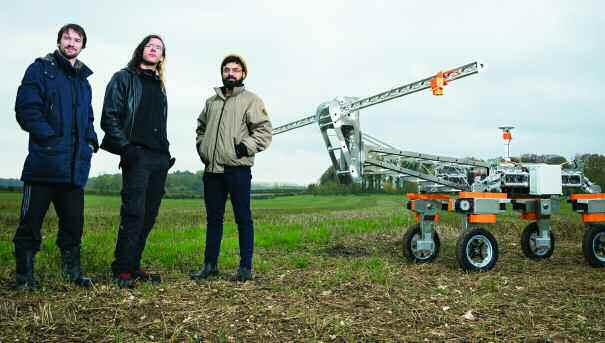
SuperTom, as he’s affectionately known by the project team, is the mark two prototype of the scouting robot developed by the Small Robot Company. He can identify wheat and broadleaf weeds and locate the plants exactly to an astonishing level of detail. This has now been rolled out as a commercial service to a small initial customer base who receive highly accurate maps of their fields, showing the location of every single wheat and broadleaf weed plant they contain.
“A detailed digital view of a wheat crop was one of our initial goals when we presented SRC and Farming as a Service (FaaS) for the first time at the Oxford Farming Conference in Jan 2018,” notes
Artificial intelligence
These are then uploaded to the cloud and the data are assessed by Wilma, the ar tificial intelligence (AI) behind the system. Wilma’s spent the past 18 months analysing hundreds of thousands of images and has now “learned” what wheat plants look like as well as distinguishing these from broadleaf weeds.
“She can ver y accurately locate every plant,” continues Sam. “That gives you highly detailed information on plant counts to infor m treatments, such as slug control, and tailor your nutrition programme. Knowing where your broadleaf weeds are may not affect your early residual herbicide programme, but can give you feedback on its effectiveness. While for organic growers, this is highly valuable information when it comes to planning inter-row hoeing.”
The precision of the system allows SuperTom to retur n to the exact same location in the field, which highlights a
unique element of the service, he notes. “Wheat growers currently don’t measure the effectiveness of field operations –– you simply can’t with any degree of accuracy. This allows them to do so on a per-plant basis and build up a picture year-on-year. Combine this with the high level of science growers now have on how to treat wheat plants for maximum yield and you can make a step change to both crop per formance and resource efficiency.”
It’s this potential that has attracted widespread interest. Since its initial launch, SRC has raised more than £1 million of public funding, mainly through the government’s Industrial Strategy Fund. A crowd-funding campaign, launched exactly a year ago, reached its initial target of £500,000 within 15 minutes of going live, eventually raising a total of £1.2 million.
This capital has allowed the company to develop the technology and the team
▲
Sam Watson-Jones believes the precision delivered by small robots will make a step change to both crop performance and resource efficiency.
“ 57 crop production magazine december 2019
Our aim is to deliver per-plant understanding of a farmer’s crop.
”
In less than two years,the Small Robot Company has progressed from mere concept to a commercial, high resolution weed ID service. CPM assesses what’s on offer now and what the next two years may bring.
SuperTom takes high resolution,geo-located photos of every cm2 of the field,using sensors mounted on a 4m boom,covering about 20ha/day.


behind it, explains co-founder Ben Scott-Robinson. “Launching SuperTom has been massively exciting for us. We now
have a platform that’s robust, rugged and reliable to develop the in-field monitoring service.”
SuperTom is a marked step-up from the previous prototype, known as Rachael, who looked very similar to a remote-control car. The new farmbot is a ground-up bespoke build, based on an aluminium frame and weighing in at around 150kg, including his battery pack. With his boom, SuperTom’s been likened to a long-horned ox and should be able to travel through a wheat crop until close to the end of the growing season, says Ben.
“He’ll cover up to 20ha/day, which was always our aim, scanning a width of 6m. He collects 6TB of data per eight-hour
day, with images geolocated up to 2cm accuracy and at sub millimetre resolution. Currently he takes just visual images, but we are working with partners on developing a ‘nose’ that will detect a host of soil-related qualities. We’re also considering how audio detection can help gather data on in-field wildlife, for example.”
Tom is just the first farmbot, however. Under development is Dick, the feeding and precision-treatment robot, and Harry, who will plant the seeds. “Both Dick and Harry have reached proof of concept technology that has been validated in lab,” reports Ben.
“We’ve built and refined Jack, the
Crowdcube opportunity to lead agriculture’s fourth revolution
Those who invested in SRC’s first round of crowd-funding,the majority of whom are farmers, have seen the value of their investment almost double in just one year,notes Sam.Now the company is opening a second round,looking to raise a further £1.5 million.
“The first round has delivered SuperTom and a commercial service.That’s a huge achievement that we’re looking to build on,so we have some very specific targets from this next round,” he says.
The aims over the next 12-18 months are:
1.Grassweed identification. Developing the AI to reliably identify blackgrass,brome grasses and ryegrass remains the core focus.
2.Weed zapping. SRC is keen to equip Dick with RootWave technology and carry out initial trials controlling weeds using electricity.
3.Build the commercial service. The plan is to increase the area covered with the
limited weed-mapping service,with the aim of launching a full commercial offering, including grassweed ID,in autumn 2021.
4.Manufacture machines. SRC has partnered with the same company that builds robots for Ocado to move Tom from protype to a full industrial design.The aim is to build the first 10 Toms before the full commercial service is launched.
“I believe there are plenty of farmers with the right mindset who we hope will come on board,” notes Sam.“You can be big or small,looking for an interesting investment or just inspired by the technology
“What we offer,that we believe is unique,is the opportunity for farmers to proactively make a difference to how land is farmed and be right at the forefront of the fourth agricultural revolution. We’re not a faceless multinational corporation, but a British farm-led agtech start-up,surrounded

and grounded by farmers with a talented and passionate team of skilled engineers and focused scientists. Investing in us is a great way to make a positive impact for your industry,and could be the most valuable thing you’ve ever done,” he concludes.
www.crowdcube.com/smallrobotcompany
Developing the weed-zapping technology with RootWave is one of the aims from the next round of crowd funding.
58 crop production magazine december 2019
Robots
▲
multipurpose prototype that will form the basis for both Dick and Harry. Jack will take a 1t payload, including batteries, He has been designed to carry different booms for efficiency of utilisation, and also to fit inside a van, so we can easily transpor t him from farm to farm.

“Jack has been developed to test the drive and control mechanisms, and has already had some very early testing in field. Like Tom, we are revising our design of Jack to make sure it will deliver weeding for trial in 2020, and commercially in 2021.”
But it may not be herbicides Dick will use on weeds. SRC is partnering with RootWave, another UK start-up that’s developed a system to kill weeds using electricity. “We’ve carried out the first in-lab trials and know the technology works. Provided we target weeds that are small enough, Dick will be able to effectively control them using power from his on-board batteries.”
Harry is likely to utilise a punch-planting technology to precision drill the crop. “This

negates the need for draft force, so we can drill with a low payload. It means a much wider planting window and will reduce or eliminate compaction. We’ve proved the concept, but are yet to develop the system further,” Ben reports.
Also under development has been the human-robot interaction (HRI). SRC is working as part of a cross-industry consortium on developing protocols and procedures that will establish how autonomous robots will operate safely and effectively. The aim is to work with Government to pre-empt and co-design relevant regulation.
Technical challenges
This is one of several technical challenges identified by SRC chief technology officer (AKA head of robot ‘awesomeness’) Joe Allnutt. “Elsewhere in the industry, robots tend to operate indoors in a controlled environment, but ours are in the field, so they need to know what to do if they come across people, deer or other wildlife.”
It also affects their geolocation. “The advantage for us in an open field is that our robots can pick up satellites easily, but there are few reference points, and the environment changes through the season.
“Exact positioning and being able to return to the same plant in a field is a very important part of our service,” continues Joe. “We’ve made huge strides with the sensors and motors we’re now using on SuperTom to enable this.”
Weed identification is the most immediate challenge, however. “Our aim is to identify grassweeds and blackgrass in particular. It’s been a key focus for Wilma, who has worked her way through many
thousands of grassweed images. We’re hoping to have developed a really good solution by next spring.”
Many of the challenges levelled at the technology simply aren’t an issue, though, he notes. This includes operating and maintaining very complex and novel on-farm technology which won’t be a concern for the farmer –– not only do the robots have no driver, they’re owned and maintained by SRC, hired in by the farmer through FaaS on a per ha basis, similar to a contracting or contract farming arrangement.
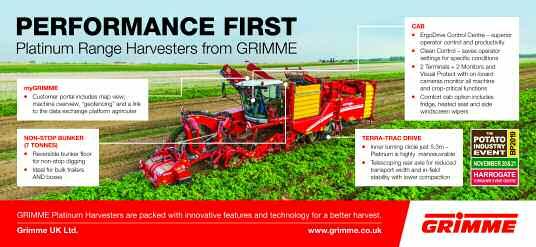
“Some far mers have also questioned the low payload, but less than 1t is all we will need since Dick and Harry will work from a service vehicle parked at the field edge,” explains Joe. “This will be manned initially, but eventually will also become autonomous. Tom will operate 24/7 from an on-farm kennel to which he’ll retur n to swap out battery packs
▲
Sam with Jack,the multipurpose prototype robot, FAG member Andrew Hoad of Waitrose’s Leckford Estate,and Joe Allnutt.
Robots
For Callum Weir,it’s a farmer-focused technology that has the right ethos,delivering for nature without compromising crop productivity.
59 crop production magazine december 2019
Robots
Digital Direction
Per-plant precision could tailor what the crop needs far more closely and makes so much sense from a soil health point of view,notes Martin Lines.
and upload data.”
This is actually where the biggest technical challenge comes in, he notes, and one that was unexpected. “Tom very quickly gathers vast amounts of data –– each pass of each field generates terrabytes that can take many hours, even days, to upload to Wilma with today’s typical broadband speeds. We’re currently having to physically transport hard drivesto upload centres on superfast connections. But we will need to refine this, perhaps by doing some data processing on site.”
Guiding the technical development is the Farmer Advisory Group, 20 farmers and agronomists who have invested in the technology. They host trials performed on their crops and meet regularly for updates and to provide feedback.
Callum Weir is farm manager for the National Trust on the 1000ha Wimpole Estate in Cambs, directly responsible for 400ha of arable land farmed organically. “Our head of soils and farming Rob Macklin attended Sam’s initial presentation at Oxford Farming Conference and saw the potential for robots to perform a range of farm operations with less power and much reduced soil compaction than current farm machinery. We’re keen to develop sustainable management systems for the benefit of tenants across the entire National Trust estate, and the services offered by Small Robot Company could be part of that,” he says.
“For me as an organic grower, the real value is the weeding technology. Inter-row hoeing isn’t ideal as it moves soil, while identifying and zapping weeds is far more sustainable. There’s also the potential to provide a nature map of each field, including the position of lapwing nests and rare arable plants, for example. This a
As arable farms progress towards a digital future,it can be difficult to know which forms of data generation,capture and analysis provide a really worthwhile benefit to the business,and which are costly and time-wasting distractions. CPM is working with some of the industry’s leading companies in this area to bring growers some Digital Direction.These articles track the significant steps on the journey towards the data-enabled farm,and also explain and profile the technologies involved.
CPM would like to thank the Small Robot Company for sponsoring this Digital Direction article and for providing privileged access to staff and material used to help bring it together.
farmer-focused technology that has the right ethos –– it can really help deliver for nature without compromising crop productivity.”
It’s a benefit echoed by Cambs grower Martin Lines with 540ha at Papley Grove Far m, Eltisley. He’s recently helped set up and is the UK chair of the Nature Friendly Far ming Network, which has over 1100 far mer members aimed at championing a way of farming that is sustainable and good for nature.
“Moving from part-field to per-plant precision makes so much sense from a soil health point of view I know there are parts of my fields that yield 12t/ha and others that produce just 6t/ha. This technology could tailor what the crop needs far more closely,” he notes.
Individual weeds
“With the ability to target individual weeds, you can also pick out and zap the problem ones but keep rare arable plants and those that benefit soil structure, so there’s an additional benefit for in-field biodiversity. What’s more, the impact on the land will be further improved without the use of large machines.”
Lincs grower and FAG member Andrew Ward, farming 650ha near Sleaford, sees this as a major benefit. “As someone who bought a new Quadtrac last year, I believe it could be the last one we ever buy We’re currently going through a five-year transition to direct drilling and cover crops. Once SRC launches as a full commercial service, I can see we may well make a similar transition over to this technology.”
The ability to target blackgrass will be a game-changer for Andrew. “We’ve managed to reduce our chemical usage considerably, and this offers the

Small Robot Company is reimagining farming with robotics and artificial intelligence.Its farmbots Tom,Dick and Harry will plant,feed and weed arable crops autonomously,with minimal waste.This will enable farmers to be more efficient,more precise and more productive,and is also kinder to soil and the environment.
www.smallrobotcompany.com

opportunity to take it a significant further step. I hope in time SRC will offer the same with disease identification and control.
“Currently the cost of the service doesn’t stack up against the benefits it offers. But it’s heading in the right direction, and the more it develops, the more it makes sense. What’s more, with the loss of chemistry we face and other regulatory changes, it’s a direction of travel we may be forced to take, so I’d rather be at the front of the queue than the back.”
Tom Pearson, farming 450ha at Caxton Manor Far m, west of Cambridge, has signed up for the new broadleaf weed mapping service. “As a farmer who applies a full pre-emergence blackgrass programme, I’m not super-convinced it will bring me immediate value for money, but this is part of the end game and I’m keen to have an early sight of what it does,” he says.
“In five years’ time, I can see that we may well have an almost herbicide-free weeding programme, and if that’s all SRC delivers that would be fantastic. But there are other developments it’s bringing on and I’m most interested in the nutrition side. You can spend hours doing tissue sampling and still treat the field as a whole, so the potential here to tailor the programme to the plant could be immense.”
As an FAG member, he’s also a strong advocate of the farmer-backed approach. “It’s a good group and I enjoy sharing the knowledge and being involved. The feedback we give does make a difference to how the service shapes up. As the data and experience grows, all those involved will benefit from sharing their results, and that will speed up how farming itself progresses.” ■
60 crop production magazine december 2019
▲
No gain, no pay Innovation Global briefings
Leading agchem giants Bayer and BASF both announced plans at their global press briefings to introduce outcome-based pricing. CPM was there to push them to explain.
If you’ve ever bought a crop input and hadn’t received the expected yield or productivity benefit,you’d probably wish you didn’t have to pay for it. But surely that won’t ever happen?
Well now it is, and it’s closer than you might think. Two of the world’s leading crop protection companies, Bayer and BASF, have both announced plans to introduce “outcome-based pricing”. These were unveiled to the world’s press at separate events this autumn –– Bayer’s Future of Farming Dialogue at their headquarters near Monheim, Germany, and BASF’s Media Event at Nunhem in the Netherlands.
“Imagine a world where Bayer makes a recommendation to a grower and, for example guarantees a certain amount of yield, and we get paid according to whether or not that prediction comes true,” said president of Bayer’s crop science division Liam Condon.
“This wasn’t possible in the past because
no one had the predictive capabilities to make a promise about an outcome. That is rapidly changing as we now have so much information about what is happening on the farm.”
Liam’s talking about FieldView, Bayer’s digital farming platform the company acquired with its purchase last year of Monsanto. Launched in 2015, there are now farmers across 36M ha paying to use the platform, mainly in N and S America –– an area increase of 50% in the past year alone.
Site-specific recommendations
What FieldView does is process farm-specific information –– weather, soil, past cropping and yields, etc –– combines this with data Bayer has on its products and makes site-specific recommendations. It’s been in field trials for the past 12 months across Europe, including the UK, and is set for commercial launch here in 2020, although this won’t include outcome-based pricing –– that’s being launched only in the US to start with.

“We can put the data through a predictive model and make a recommendation to a grower that if you use a certain portfolio of products, you will get a certain outcome, and we will price accordingly,” continued Liam. “So if you don’t get the outcome, the price you pay is lower, if you get more we share in the upside.”
This theme of feeding farmers’ data back to Bayer was picked up by Dr Bob Reiter, head of R&D at the company’s crop science division. He talked of the creativity required
for the “transformative changes” he believes Bayer has to make as agriculture faces up to its challenges.

“Many of the big transformative breakthroughs often occur at the interfaces,” he said. “In Bayer we have many tremendous interfaces we have created within our research organisation, between our expertise in chemistry and in biology, for example.
“We now have capabilities in digital and we’re leveraging them not just by using data within Bayer, but by using customer data from the farm. This richness of information in terms of capacity and knowledge is what will allow us to drive forward these transformative changes.”
So are farmers happy with their data being used in this way? CPM put the question to Sam Eathington, chief strategy officer with ▲
By Tom Allen-Stevens
“
If you don’t get the outcome,the price you pay is lower, if you get more we share in the upside.”
61 crop production magazine december 2019
Bob Reiter (centre) and Liam Condon (right) say Bayer now has a wealth of data on which to base outcome predictions and drive transformative change.
Climate Corporation, the subsidiary of Bayer responsible for FieldView, who explained how outcome-based pricing works.

“In the pilot we ran in the US this year, we needed to have some information about the farming operation that comes through on FieldView, which is the way we capture the information and understand what’s going on. We set up a way to measure whether we were correct with our recommendations through FieldView so that the farmer can see it in real time. So FieldView becomes the arbiter of the truth in each and every field.”
He explained there was a lot of sensitivity four to five years ago when they first started talking to farmers in the US about helping them assemble their data. “But we have a
What’s in the pipeline?
Bayer’s invested €2.3bn in crop science R&D in the past year, claimed Bob Reiter.“We’re very proud of our leading R&D pipeline with 75 projects in seed and traits,crop protection and digital ag pipelines,” he added.
Chief among these are short-stature corn,set to bring significant productivity benefits to the crop when it’s introduced to the market, starting in Mexico next year,and its second-generation Roundup-ready soya.Already bringing a claimed 20M extra tonnes of productivity in Latin America, further varieties and introductions are planned.
There’s not much to excite the European grower from this bristling pipeline,apart from Iblon,a new fungicide for cereal crops,and of course FieldView.Claimed to be the first third-generation SDHI,Iblon is based on the active ingredient isoflucypram, delivers “healthier crops and consistently higher yields”than current standards,and is due to arrive in the UK in 2021-22.
Liam Condon admitted the company has suffered a “disastrous”first half to 2019,but strong performance predicted for the second half will see growth for the year reach about 3%,he

very clear data policy that says it’s the farmer’s data, and the farmer decides how it’s used and who they share it with,” he said.
“When it came to sharing pricing information to reach the outcome-based pricing, in fact more than 90% of our farmers accepted the data-use policy. When you get to the point where you’re creating value and they see it and trust what you’ve done with the data, then the conversation goes away.”
Healthy fields
At BASF Agricultural Solutions’ Media Event, president Vincent Gros introduced the concept of what the company calls Healthy Fields. “Here the idea is to have outcome-based business models,” he said. “So in a nutshell, we won’t sell individual crop protection products, but we will sell the assurance and the convenience of a well protected field –– a weed-free and disease-free crop.”
This is built around xarvio, BASF’s digital farming platform, acquired last year from Bayer and due for commercial launch across Europe in 2020 although this won’t include Healthy Fields at launch. In the first instance, this acts to “smarten and support” BASF’s existing crop protection portfolio, said Vincent. It’ll be used with new introductions to provide tailored, localised support to help growers get the best from the new fungicide Revysol, for example.
The next step is to interact with digital systems growers already have, and establish a data relationship through xarvio to improve decision making on farm. “We want to establish data relationships with growers and other partners in order to enhance our digital offering,” continued Vincent.
So will this have the effect of restricting the scope for farmers to make decisions? Not at all, assured senior vice president for BASF’s Europe, Middle East and Africa (EMEA) region, Livio Tedeschi. “The concept we are pursuing is to use the technology to optimise different decisions. So that’s around which varieties to use and which crop protection products, the timing of application and the way to apply the product,” he said.
“This will vary across the EMEA region and farmers feel strongly it should be tailored to their situation. But farms get to a certain size at which you need a system that allows you to manage the many different situations and the decisions these involve. So it’s not about taking decisions away, it’s about empowering a much better informed decision. xarvio uses modern technology to manage variables that are not manageable by the individual.”
With a product that hasn’t yet been launched as a commercial offering, however, BASF’s still working through the business model behind Healthy Fields, Livio admitted.
said.4% growth per year is the company’s target, fuelled by a €25bn investment in its R&D over the next 10 years,expected to deliver up to €30bn in peak sales.
BASF is on target to grow by 5% per year, on average,said Vincent Gros.Investing €900M/year in R&D, the company’s aiming for a 50% increase in sales by 2030, with a sales target of €22bn by 2025.
A pipeline boasting 30 new “blockbuster” products set for launch by 2028 have a claimed peak sales potential of €6bn,with Revysol set to take €1bn alone. BASF’s Luximo blackgrass herbicide is set for launch from 2021. Both will be supported by xarvio.
“Europe is a ver y important region for BASF –– it accounts for more than one third of our business,”said Livio Tedeschi.“This is where we started our business, and our partnership with farmers and others in the supply chain is one of the things we’re most proud of.”
Balancing productivity with biodiversity, political, climate change and regulator y pressures define the challenges for the European grower,he said.“So our pipeline is not just a
series of new products,it represents a mindset that is in line with the priorities faced by our customers.”
BASF now has seeds and traits in its portfolio,which includes InVigor oilseed rape, and new hybrid wheat technology,which will be available in the mid-2020s,said Livio. “We’re in a very promising area to deliver not only an improvement in yield but also varieties that will cope better with weather extremes,so more consistent performance,”he said.
62 crop production magazine december 2019
Europe is a very important region for BASF, said Livio Tedeschi.
Global briefings ▲
More than 250 participants from over 30 countries attended Bayer’s Future of Farming Dialogue.
Easyconnect promises safe spray transfer
A new closed-transfer system to improve the way crop protection products are handled has been launched by Adama,BASF,Corteva Agriscience,Nufarm and Syngenta.
Easyconnect consists of two components:a unique screw cap –– pre-fitted with no foil on the containers –– and a coupler,which transfers the product directly into the spray tank and rinses the container.By 2021/22,a broad range of containers is planned to be equipped with the standardised IS63 screw cap in 1-15 litre sizes.
“Easyconnect allows crop protection products to be directly transferred from their original container to the spray tank and to accurately measure the volume of the chemical being transferred,”explained Livio Tedeschi.“This significantly reduces operator exposure and environmental risks from splashing or spilling.”
It’s been trialled on farm in selected countries,including the UK,since 2015.Based
“Where there is a positive outcome, it’s a question of making sure there is a fair share of value in the outcome for both the farmer and for BASF. When it comes to preventing a negative outcome, we are working with yield-guarantee models in a number of countries and there will be different forms of insurance models as part of an overall package.”
Pilot trials of xarvio have been running across Europe, and although BASF claims it’s a platform suited better to the European
Easyconnect’s screw cap fits to a coupler, which transfers the product directly into the spray tank and rinses the container.
on farmers’ feedback,the system has been steadily improved in terms of handling and speed,making the filling faster than via the commonly used induction hopper,and has now been given the thumbs-up by those who’ve used it,added Livio.
grower, it hasn’t amassed anything like the on-farm data bank claimed to power
FieldView
So how do farmers feel about sharing that data? Northants grower Andrew Pitts was among a number of farmers from across Europe who attended the Media Event.
“It’s too early to tell whether this concept of Healthy Fields will be beneficial or not. We’re certainly open to trying it, and I have no problem with sharing my data, but it has to be a mutually beneficial agreement
New venture to explore how on Oerth to protect crops
Bayer has launched a new venture with Arvinas, a biotechnology company pioneering the development of a new class of drugs. Oerth Bio will explore crop protection applications for targeted protein degradation,a field Arvinas has led, focused to date in the pharmaceutical sector

The new CEO of Oerth,John Dombrosky,told CPM there was “huge opportunity” to use Arvinas’ Protac technology in agriculture. “We could reverse weed resistance,disease resistance and perhaps address resistant insects as well.”
The technology harnesses a natural mechanism known as proteolysis.“This is biomachinery that all living things have on board in order to degrade proteins that are becoming dangerous, or not useful anymore,into simple amino acids.It’s similar to CRISPR in that it’s targeted and highly specific. So at extremely low rates we could control specific weeds or diseases very effectively.”
It differs from conventional crop protection chemistry, explained John. “Much of crop
protection hinges around finding a small molecule that fits like a key into a target pathogen,blocking a pathway that kills it. With proteolysis,there’s the same specificity to a target site,but you delete the entire door.”
Bayer has committed over $55M to fund the company,based in Connecticut,USA.“It’ll take 2-3 years to develop initial products in the lab –– our first job will be around assessing what’s different about a plant species,identifying a mechanism of action and then targeting that protein, before we then bring the technology out into the field for trials,”noted John.
“But we want farmers to be involved in its development early on. We want them engaged with the technology,to understand it and shape how it develops,because it really matters how they will explain it to the end user and to the consumer.A fantastic technology like this that has huge potential to radically change the way we approach crop protection into the future needs a
At BASF Agricultural Solutions’ Media Event, Vincent Gros introduced the concept of Healthy Fields.
recognising the considerable value of that data, and it has to be the right overall package,” he said.
But German grower Stefan Cramm had reservations. “I’d use xarvio’s predictive and recommendation tools, but would be wary of giving up my data,” he said.
“I know my farm better than BASF, so I don’t think I have anything to benefit from sharing my data, while BASF has everything to gain. There will be a lot of farmers in this situation, so BASF stands to gain a huge amount of value from farmers sharing their data, but the individual farmers will gain very little in return.”
BASF Agricultural Solutions head of marketing for UK and Ireland Ben Miles noted that farmers are becoming increasingly used to sharing data with a growing range of apps and services, such as Google.

“Data sharing only happens if we perceive there’s value in doing so, as is the case with the xarvio range of services,” he added. ■
John Dombrosky believes Protac technology has huge potential to radically change the way we approach crop protection.
wide stakeholder base to be involved, to ensure we put it to the right use,”he pointed out.
Following extensive regulatory and safety testing, the first product is expected to be on the market in 10-12 years’ time.
63 crop production magazine december 2019
Global briefings
How application affects efficacy
Innovation Research Briefing
The person charged with the trials work to establish these is well-known specialist Tom Robinson. He believes elements of the work are long overdue.
“I’ve been asked by growers for Atlantis application advice since it was first launched but there was little proprietary data we could draw on,” he says.
By Lucy de la Pasture
Growers with blackgrass need no reminder that it’s a costly problem to battle with. No one measure will stop it advancing but efforts on many fronts each make incremental gains. With that in mind,making the most of blackgrass herbicides means squeezing every drop of activity out of them.
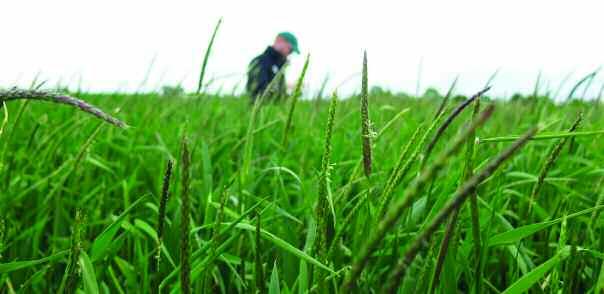
It’s not just herbicide efficacy that matters, application is just as important, explains Life Scientific UK technical manager, Ruth Stanley. The Dublin-based company brings products to market rapidly when they become off-patent because of its ability to reverse-engineer, a process which pulls apart the formulation of reference products and recreates an identical version.

“Although our aim is to bring off-patent products to the market as quickly as possible, we also want to help growers get the most out of them in the field,” she says.
“Blackgrass control is known to be application sensitive and we felt that not enough application work had been carried out for the Cintac and Niantic (mesosulfuron+ iodosulfuron-methyl) reference products (Pacifica and Atlantis), so we were keen to fund some work to develop better application recommendations,” she comments.
Tom has looked at the spring application of Cintac in field-scale trials at Thurlow Estates and further replicated trials at a site near Peterborough, using both self-propelled and hand-held equipment.
Blackgrass challenge
“The first trial got underway late in the season during March 2018, so it was a challenge to find blackgrass in what had been a good autumn for grassweed control. Having found a site at Thurlow, there wasn’t enough blackgrass present to conduct a trial looking at control levels, but we were able to carry out a field trial to investigate spray coverage from four different nozzle types and the effect of different boom heights –– 40cm, 50cm and 100cm.”
The nozzles chosen for the trial were the air-induction Guardian Air-05 nozzle, representing a commonly used low drift option; the traditional 1100 flat fan-05 to deliver a medium spray quality; a narrower 800 flat fan-05 to deliver higher energy and consequently more penetration of the canopy; and the Defy 3D-05 angled nozzle, placed on the boom to deliver spray on a forward and backward trajectory.
Water-sensitive paper was placed as targets within the crop at GS30 in order to assess spray coverage in both the vertical and horizontal planes and this was measured using the SnapCard app, a digital tool that’s freely available for smart
phones, explains Tom.
“We’re looking at where the spray is going, and coverage gives a useful insight into this. But it’s important to differentiate spray coverage from the actual deposition of the herbicide, which is influenced by factors such as run-off and droplets bouncing off the target,” he explains.
The trials found that boom height had a big influence on the amount of spray getting down to the target, with the two lower boom heights delivering the most, comments Tom.
“The work showed that coverage on the vertical targets doubled at 40cm and 50cm compared with 100cm boom height for all nozzles. But it was the Defy 3D that achieved the best coverage of both front and back vertical surfaces, with two times more coverage than any other nozzle tested.
“Even on the best sprayers it’s difficult to keep the boom at a consistent height. Bumps make booms wobble, so it’s vital to use a nozzle which operates reliably over the widest range of possible boom heights,
64 crop production magazine december 2019
Ruth Stanley says this is the first application work carried out using mesosulfuron+ iodosulfuron-methyl products.
Every spray droplet counts when it comes to blackgrass control. CPM investigates the effect of application on post-emergence herbicide performance.
” “
Bumps make booms wobble.
particularly ones that produce a consistent spray pattern at the lower range.
So what does this mean in practice? Quite simply, if there isn’t good control of the boom when it’s running at 50cm, then you won’t get the performance Cintac is capable of, he explains.
Tom also looked at the effect of boom height on spray pattern for each of the four nozzles using a Hypro patternator, using the internationally recognised Julius Kühn Institute (JKI) standard to appraise each nozzle’s consistency in performance at different boom heights.
This test really sorted out the differences in the nozzles, he explains. “Using the JKI as a reference, a nozzle needs a coefficient of variation of less than 7% at 50cm, plus 10cm below and above this height to perform reliably in the field.
“The results showed that the Guardian Air and Defy 3D nozzles were the best patternators and were the only two nozzles that met the JKI standard at all the heights tested –– 40-100cm,” explains Tom.
“The 800 flat fan only produces a good spray pattern at 80cm. It’s a bit like a pressure washer –– its narrow angle produces a spray with high energy that penetrates well but it doesn’t produce a good pattern over the range of boom heights,” he comments.
“The 1100 flat fan is a bit like a camera lens, it drifts in and out of focus but only delivers the JKI standard over a narrow range of boom heights, most reliably at 50cm,” he adds.
The trial using water-sensitive paper was repeated in 2019 using Cintac applied at 0.5kg/ha plus 1.0 l/ha (adjuvant) in 200 l/ha water, using all four nozzle types at a forward speed of 12km/h and a boom height of 50cm. This time blackgrass headcounts were taken to assess the level of blackgrass control, with yield predicted from the results.
“The second trial gave slightly different coverage results with the water-sensitive paper but again the Defy 3D gave the most consistent coverage on the front and back of vertical surfaces,” explains Tom.
New application recommendations for Cintac
● Water Volume 200 l/ha
● Nozzle Height:Maximum 50cm above crop
● Forward Speed:12 km/h (maximum)
● Nozzle Type:Defy 3D (preferred:top performance,least drift,best patternation) 1100 fan jet also recommended.
Blackgrass head counts were made in May and showed that all the treatments had provided effective levels of control compared with the untreated control, which had 232 heads/m2. There was variation between the levels of blackgrass in the different nozzle treatments with the Guardian Air nozzle having the highest mean count (180/m2) and the Defy 3D the lowest (108/m2).
Financial cost
“Using yield loss and head count data from Dr Stephen Moss we were able to predict yield loss and determine the financial cost of using the different nozzle types to apply Cintac,” explains Tom.
While all the treatments had a commercial benefit when predicted yield figures were analysed, using the Defy 3D nozzle gave the highest predicted yield benefit of 1.3t/ha over the control, worth an extra £175.50/ha (with wheat at £135/t).
The 1100 flat fan nozzle was marginally lower, giving a yield benefit of 1.2t/ha over the control (worth £162). The 800 flat fan was predicted to give a yield benefit of 1.0t/ha (worth £135) and the Guardian
The trials carried out by Tom Robinson show the Defy 3D nozzles will give the best chance of blackgrass control under the widest range of conditions.
Air was predicted to yield worst of all, producing an extra 0.5t/ha (worth £67.50).
“The 1100 flat fan and Defy 3D nozzle gave very similar results but the 3D would be my choice,” says Tom. “Knowing how good the 3D is at patternating will give more reliable control under a range of different conditions, whereas the 1100 will perform well only as long as you can control all the variables.”
Tom puts that into context saying, “If you
Coverage on water sensitive paper
Spray pattern at 50cm boom height for all nozzle types
65 crop production magazine december 2019 50 45 40 35 30 25 20 15 10 5 0 Fan 80Fan 110G.AirDefy 3D Front hor Rear hor Front vert Rear vert % c o v e r a g e
Source:Life Scientific,2019 80 70 60 50 40 30 20 10 0 FF80 50FF110 50G.Air 503D 50 Front flat Rear flat Front vert Rear vert % C o v e r a g e o f W S P
Source: Life Scientific, 2019 Research
▲
The solid black line indicates the JKI standard.
Briefing
were a Formula One driver at the beginning of the season then you’d want to drive a Mercedes because you’d have more chance of winning races. The Defy 3D is the Mercedes of the nozzles tested. It won’t win all of the time, but it will win more often than the others.”
The new trials work may have come at an opportune time given the awkward autumn, which has seen repeated bursts of wet weather forcing Oct-planned drilling to become much later than intended, believes Ruth.
“Even where crop is in the ground, the temptation is to put on a hefty stack of
Research Briefing
To help growers get the best out of technology used in the field,manufacturers continue to invest in R&D at every level,from the lab to extensive field trials. CPM Research Briefings provide not only the findings of recent research,but also an insight into the technology,to ensure a full understanding of how to optimise its use.
CPM would like to thank Life Scientific for sponsoring this Research Briefing and for providing privileged access to staff and material used to help bring it together.
Life Scientific specialises in bringing high quality off-patent crop protection products to

chemistry. But it’s so wet in places and under these conditions there’s a large potential for crop damage, especially as days get shorter and crop growth slows down.
“While getting pre-emergence herbicides is still a priority, it’s a season to be mindful of how much active to put on and post-em’s could become of more importance than they’ve been for the past few seasons. These trials will give confidence that Cintac makes financial sense.” ■
Zero-tolerance approach to blackgrass


Jonathan Drury is manager of the 5000ha Thurlow Estate Farms on the Cambs/Suffolk/Essex border and hosted the Life Scientific trials in 2018. He adopts a zero-tolerance approach to blackgrass but stresses there’s no one-hit solution to managing the grassweed,it demands a whole farm strategy employing a range of cultural strategies to support herbicide use.
The cultural foundation to the estate’s blackgrass control strategy is a seven-year rotation which must include spring cropping, he explains. Winter wheat precedes winter barley,which is the followed by oilseed rape before returning to winter wheat. Next in the rotation is a spring crop which may be peas,linseed or spring barley before returning to winter wheat again,then finally spring beans.
“We use a traffic light system to highlight the level of blackgrass in each field and this dictates our management strategy.For instance we’ll drill a hybrid barley in red and amber fields because it’s more competitive than conventional varieties and allows us to drill later,”he explains.
Drilling date is also dictated by the traffic light system,with red fields the latest to go in.Like growers across the country,wheat drilling has been frustratingly delayed by the wet weather in Oct,but the farm is well equipped to make rapid
progress when conditions are right.
“We make sure no cereal crop is sown without the field receiving glyphosate in the preceding 36 hours.We have two 40m self-propelled sprayers,one runs in front of the three 8m drills and the other follows with a pre-em herbicide,” he explains.
The sprayers are fitted with the latest boom technology and have individual nozzle control to minimise any overlaps.Jonathan prefers forward and backward facing Defy 3D nozzles for blackgrass control,using an 06 for pre-em application.Autumn herbicides are applied in water rates from 100-150 l/ha,but he says this will increase to 200 l/ha in the worst areas for blackgrass.
“We’re stacking chemistry so would follow Liberator (flufenacet+ DFF) with Crystal (flufenacet+ pendimethalin) in a dry season, targeting the worst blackgrass areas with Avadex (triallate) using maps we’ve created in Gatekeeper,”he explains.
The wet conditions this autumn mean a more careful approach,comments Jonathan.“We need to avoid herbicide damage and part of this is to be consistent with drilling depth.The rain is making things more challenging and we’re having to time applications to reduce the likelihood of pre-ems
market with the goal of providing customers with better options to meet their plant protection needs.

The comany’s R&D focus is forward looking as it aims to provide growers and agronomists with innovative formulations and novel combinations of products.At the same time,Life Scientific works hard to support established products through trials,application advice and the most up to date technical data.
necessary.
being washed into the rooting zone.”
Jonathan doesn’t plan to use post-em herbicides which are often less effective and therefore expensive,but he accepts that sometimes the season dictates one may be necessary.Where blackgrass has got away his preferred policy is to burn off the crop and although a drastic measure,he’s been impressed with how effective the strategy is,with following crops much cleaner.
“Last year we burned off 5-6ha where blackgrass control had failed.In these fields follow with a spring crop before returning to winter wheat again,”he adds.
66 crop production magazine december 2019
Jonathan Drury doesn’t plan to use post-em herbicides,but he accepts that sometimes the season dictates one may be
The pattern produced by each nozzle was assessed at different boom heights using a Hypro Patternator to see how consistent their performance was.
Briefing ▲
Water-sensitive paper was placed in the crop to assess both horizontal and vertical coverage using different nozzle types.
Research
Acquiring knowledge through experience

Innovation Pushing performance
Understanding is growing about when to useBridgeway to best effect. CPM digs into the research carried out over the past three seasons and looks at the trends in different crops and seasons.
By Lucy de la Pasture
The subject of biostimulants is one of those that divides opinion. Some growers and agronomists are exploring their potential,others have reservations and are waiting to be convinced. Whichever camp you may fall into, there’s a growing dataset behind Bridgeway that’s beginning to tell its stor y.
Gaining experience from using the product is shedding light on just where biostimulants usage can pay dividends, believes Stuart Sutherland, technical manager for Interagro. According to the great scientist Albert Einstein, ‘Information is not knowledge. The only source of knowledge is experience. You need experience to gain wisdom.’
“In more recent times the late scientist Dr Chris Green also used to say that experience means nothing if you don’t lear n from it,” he comments.
Stuar t believes that we’re on the path to knowledge but are still scratching the sur face when it comes to really understanding how biostimulants are working, let alone how to get the best out of them. While that may not seem reassuring, it’s a realistic appraisal of the current status quo and a pattern is emerging about where it’s best to target a biostimulant product, he says.
More knowledgeable
“We have 221 data points from the past three years, so we’re a lot more knowledgeable than we were before. The 2019 season provided a very different growing season to 2017 and 2018 and it’s given us a greater understanding of when to expect payback,” he comments.
The experience to date shows in some seasons, the response to biostimulants has been greater than others, in much the same way as the response to fungicide treatments.
“Investing in a top rate fungicide programme doesn’t always pay back and sometimes you don’t need to if disease pressure is low. The same looks to be true
with biostimulants –– sometimes they’re not needed so you don’t get the full return on input costs –– they’re not a blanket approach,” says Stuart.
His comments come on the back of trials data collected in winter wheat in 2019, which didn’t reflect the large-scale yield responses seen in the two previous seasons. So why was this? In a nutshell, it was down to the weather, he explains.
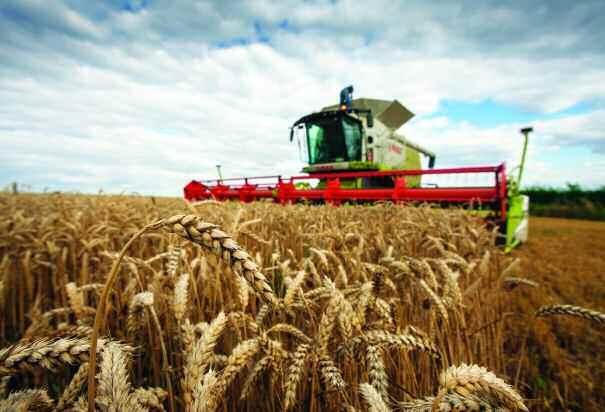
“Looking into the weather data during the core growing months in each season we can see a picture developing. It shows
▲
Experience means nothing if you don’t learn from it. ”
“
Work conducted by Deborah Green shows that Bridgeway application to sugar beet produced significant yield responses in both 2018 and 2019.
67 crop production magazine december 2019
Average yield benefit from applying Bridgeway to winter wheat 2017-2019
Yield benefit from applying Bridgeway to winter wheat – 2017-2019 – average of all results
Bridgeway is most beneficial to crops ahead of abiotic stress, such as the heat or drought as experienced during April to June in 2017 and 2018, which put crops under considerable stress (the average yield benefit in cereals was 1.73t/ha in 2017 and 1.17t/ha in 2018).
“In contrast 2019 started quite showery, May was war m and sunny with 93% of average rainfall but June was
exceptionally wet. Most wheat crops weren’t under stress at the critical growth stages and didn’t show much of a response to biostimulant treatments (average 0.05t/ha),” he explains.
But it was a different story in other crops, with sugar beet in par ticular showing a positive response to Bridgeway application across the seasons, as underlined in a two-year study carried out by Crop
Good responses in sugar beet
According to Frontier Agriculture agronomist Max Howlett,there’s a bewildering choice of biostimulants products available and it’s a case of sifting through them to find the good ones,with performance potential not necessarily reflected by their price.

“It’s in our best interest to look out for the farmer and find the best products for them to use. There needs to be a margin over input costs to justify using a biostimulant,”he says.
With that in mind,Max has worked with sugar beet growers in Suffolk and looked at a couple of tramline trials in 2019.
“The Interagro trials in sugar beet have shown good yield responses to Bridgeway so we needed to establish whether we were missing a trick.”
One of the tramline trials was conducted over 0.76ha in a commercial crop of sugar beet near Stowmarket and drip fed a reduced rate of Bridgeway (1.25 l/ha) throughout the rapid growth stages of the crop.
“Applications were made on 29 April (five true leaves),15 May (6-8 true leaves),4 June (12 true leaves and a final application was made on 18 June.We applied with insecticide applications for virus yellows control,manganese or as a sole
Management Information (CMI), based near Grantham in Lincs.
CMI director, Deborah Green, says there’s a lot of interest in the wealth of new products appearing in the market, loosely classed as biostimulants and biologicals.
“These are receiving a lot of attention in agricultural research in the hope of countering the pressure, in ter ms of both legislation and biochemistry, on
current pesticide usage. One school of thought suggests biostimulants and biologicals may help plants through periods of stress,” she explains.
The aim was to investigate this in sugar beet grown in a commercial situation, explains Deborah. “Application timing to the canopy was modified in an attempt to define optimum stages and sequences for the use of biostimulants. In both
application,”he explains.
Asked whether there were any visual differences between the Bridgeway-treated area and the commercial crop,Max says there was none.“We used Soyl biomass imagery to monitor the canopy but didn’t detect any changes, although these would most likely have been taking place underground in the roots.”
Test digs in different areas of the field were carried out just prior to lifting the field towards the end of Sept and revealed that that’s precisely where the Bridgeway was having an effect ––on the biomass below ground.Both the yield and sugar content were markedly higher where the biostimulant treatments had been applied when samples were processed by British Sugar.
“The untreated sugar beet had a clean yield of 86.3t/ha (adjusted yield 94.9t/ha) with sugar of 17.5%,whereas the Bridgeway treated yielded 98.3t/ha (adjusted yield 118.3t/ha) with sugar at 18%. That’s a 23.4t/ha increase in adjusted yield,” he comments.
Max believes that the more people begin to experiment with using Bridgeway,the easier it will be to refine a reliable treatment protocol.
“Growers need to be able to see a benefit over
Max Howlett says there was no discernible difference in the canopy of sugar beet crops treated with Bridgeway but at harvest both yield and sugar content were greater.
the cost of using the product and sugar beet seems to be a stand-out crop in delivering this, with a consistent 0.5% increase in sugar as well as elevated yield,”he comments.
Max highlights that it was only the result of one trial in one season,so Bridgeway still has to prove itself.But he’s seen enough to convince him that it’s worth taking a more extensive look at applying biostimulants to his crops in 2020.
68 crop production magazine december 2019
performance 2.00 1.80 1.60 1.40 1.20 1.00 0.80 0.60 0.40 0.20 0.00 2017201820193 Year weighted average 1.73 1.18 0.05 0.35 A d d t o n a l y i e d f r o m a p p l y n g B r i d g e w a y ( t / h a )
Pushing
3.50 3.00 2.50 2.00 1.50 1.00 0.50 0.00 -0.50 2017 Total volume of Bridgeway applied over the full test period (l/ha) A d d i t o n a y i e d f r o m a p p l y i n g B r i d g e w a y ( t / h a 2018 2019 0 2468101214161820
Source: Interagro,2019.
Source:Interagro,2019.
▲
Weather summary – key growing months,2017-2019
Pushing performance
applied in sequence at the same timings plus an additional three applications at 10-14 day intervals, making a total of six applications. In this treatment the final three applications were made during a period of high temperature and drought in June and July.
Source:Met Office,2019.
years, Bridgeway was the chosen product applied at one or two rates and a range of timings.”
Looking at Bridgeway application in two very different seasons, the results showed a positive trend in both.
“The growing season of 2018 provided an ideal opportunity to study the application of amino
acid solutions to a crop that was to become stressed by heat and potential water shortage. The experiment site was drilled into moist conditions after a wet spring, but the month of June proved very hot and below average rainfall. July and August followed in a similar trend,” she explains.
The first three treatment
Plans afoot to put Bridgeway to the test
Toby Hogsbjerg manages 1,000ha near Kings Lynn in Norfolk growing winter wheat,winter barley, spring peas, spring barley, sugar beet and potatoes, with some land also rented out for parsnips and onions.
His interest in biostimulants was sparked by the late Chris Green of CMI, who had identified them as a new technology that was worth investigating.The spark was flamed after a lifestyle change prompted him to look after his own health better,and he changed his philosophy on growing crops as well.
“I believe you have to be open-minded about new technologies and look at more natural ways of growing crops.People are eating our produce, so it makes sense to reduce the dependency on pesticides by increasing plant health,which means crops are better able to thrive without as much intervention and cope with adverse conditions,” he says.
Toby describes the disease pressure in his part of the world as ‘average’ –– yellow rust isn’t as much of a problem as it is in The Wash and septoria is less severe than in the West.
“The less agchem we use, the better,so rather than use a routine T0 I’d prefer to look at supporting plant health through nutrition and biostimulant use in the run up to T1 and T2 fungicide applications,” he says.
Toby’s not alone in taking that approach and he’s had a keen eye on other growers’ results, which he says have been variable but promising.
“Most of us believe that it’s the fungicides we apply that are giving us crops that yield,but what they’re doing is stopping the plant from getting
application timings –– a single dose of Bridgeway at 2, 4 or 6 true leaves –– were applied prior to the onset of a period of excessive heat and drought. There were two further treatments –– in the second treatment Bridgeway was applied at 2, 4 and 6 true leaves in sequence. For the final treatment, Bridgeway was again
the disease.So even though undeniably fungicides help build yield,there are also other ways of improving plant health so that fungicides can be used more appropriately,” he comments.
Last year Toby didn’t have the chance to set up any replicated trials on the farm,but he did use Bridgeway on some winter wheat and spring barley The field of wheat was drilled after a crop of onions and came out of the winter with yellow stripes marking areas of compaction.Bridgeway was applied as a 2.0 l/ha standalone treatment in March and Toby reports the crop greened up and the biostimulant appeared to help alleviate the stress.
The spring barley crop provided an opportunity to look at splitting the dose of Bridgeway (two x 1.0 l/ha) as well as applying a single dose at the recommended rate of 2.0 l/ha.
“Where Bridgeway was applied there were increases in yield, with the split dose providing a smaller increase than the standalone full dose of Bridgeway.There were differences in fields and varieties so you can’t read too much into the results,but it’s been enough to make me want to take a closer look this season,”he explains.
Moving forward the plan is to put more science into the farm trials to get a more meaningful idea of what biostimulants can bring to the party and Toby intends to look at three different products. He will also carry out split field experiments over the farm to gain even more insight into application rates and number of timings.
“We’ve got to start learning to grow crops without as much chemistry and doing our own research work on the farm is a good way of doing
There were significant differences between treatments in the weight of beet per hectare at all dig dates. All treatments increased the weight of beet over the untreated, but the biggest significant differences were at the earliest dig date on 28 August 2018, highlights Deborah.
“After this date, the drought broke and the additional moisture from rainfall allowed the untreated plots to ‘catch up’
▲
Toby Hogsbjerg believes that growers will have to start learning how to grow crops without as much chemistry and doing his own research work on the farm is a good start.

this.But we need to make sure we’re not making recreational applications of biostimulants because it could be good for the crop,they do need to make a difference,”he comments.
Already this season the weather has thwarted Toby’s plan to look at a split application of Bridgeway applied in autumn and spring,but he intends to select trial fields in the New Year with the aim of applying Bridgeway at the end of Jan/beginning of Feb and again a month later.
“We’ve had to abandon min till and we’re ploughing and following with a combination drill so we’re likely to see more soil structure problems and stressed crops than would be the norm,”he says.
From his experience so far Toby believes that this is one of the situations where biostimulants will be most likely to deliver.
Record breaking hot weather -5th warmest on record 7th wettest March. Beast from the East fb Storm Emma brought significant snow & low temperatures 5th wettest March on record as a whole Exceptionally dry in England, Wales & Scotland – 30% of average rainfast. 10th driest on record Cold & unsettled start fb remarkably high temperatures, with hottest April day since 1949 Started cool with showers fb more settled &warm conditions 2nd warmest May on record. Month of 2 halves. North & west below average rain; South & East wet Sunniest May on record. Little or no rain May to July Mix of showers & warm sunny weather. Rain 93/% of average Hottest June since 1976. Scotland wettest since 1910; UK overa l 6th wettest June 5th sunniest June. 3rd driest on record for England. Storm Hector 8th wettest June since 1910 in England – 177% ofaverage. Sunshine 95% of average Flash floods, thunderstorrms & torrential downpours 6th sunniest July. Summer overall –Driest since 2003, sunniest since 1995 Highest temperature ever recorded in the UK – 38.1 C in Cambridge Parts of UK saw 2x rainfall 2017 Storms& heatwaves 2018 Storms& drought 2019 Wetwet wet WeatherMarchAprilMayJuneJuly
69 crop production magazine december 2019
2018 trial during drought year
2018, these differences could possibly be explained with reference to the hot, drought and the known ‘stress busting’ capabilities of amino-acid applications such as Bridgeway,” she says.
Final dig – change in beet yield compared to untreated plots which were yielding 49t/ha on 11 Dec 2018.
2019 results – a year of moisture
But what was unexpected was the massive response found in 2019, when the summer had been dominated by above average rainfall, so drought stress wasn’t a factor. In both years the same trend in beet yields was found across the treatments tested –– six applications conferred no benefit over three, while three were more favourable than one.
Favourable timing
“The difference between 2018 and 2019 was that the single application could have been applied at two, four or six leaves to the same effect in 2019, while six leaves was the favourable timing in 2018.”
Bridgeway has had a pronounced effect on sugar beet yield and sugar content in two very different seasons.

Sugar content was not significantly affected by treatments in 2018 but an increased beet yield meant an increased gross yield of sugar, she says, adding that figures for 2019 aren’t available yet.
Final dig – change in beet yield compared to untreated plots which were yielding 65t/ha on 21 Oct 2019.
Source:CMI,2019.
and so treatment differences were reduced, but there were still significant increases from some treatments,” she comments.
But perhaps of even more interest was the response to different treatment timings, with the biggest effects from the three and six applications. The next best was a single application of the highest rate of Bridgeway (2.0 l/ha) at six true leaves, which was the timing immediately prior to the drought period.
Six applications of Bridgeway made no significant difference to beet yield compared to three treatments applied sequentially at two, four and six true leaves in the 2018 season.
“From the work conducted in 2018, it’d be easy to conclude that applying Bridgeway to
sugar beet at six leaves was favourable, and that three applications were better than one, but more applications conferred no fur ther benefit,” says Deborah.
In spite of the significant differences recorded between treatment regimes, visually there was no difference between them in ter ms of canopy, she adds.
“In 2018 or 2019 visual observations of the canopies were no indicator of what was going on underground. Neither green scans (with a hand-held Crop Circle Scanner) nor dig weights of canopies showed any significant differences at any of the dig dates.
“It was therefore a surprise when such big differences in beet yields manifested themselves in either year. In
In an attempt to explain the difference, Deborah highlights that on 22 Oct 2018 untreated yields were 46t/ha, while on 21 Oct 2019 they were 65t/ha.
“The two sites were on two different farms, but the difference may also have been affected by the available moisture,” she says.
Pushing performance
At the heart of good crop production lies careful use of chemistry to protect the plant and maintain performance, right through the season. But optimising the efficacy of plant protection products can be challenging, while increasingly restrictive regulations limit just how far you can go.
This series of articles explores the science behind the use of adjuvant and biostimulant tools to help power both chemistr y and crop performance, as well as increase understanding of why they’re needed and what they do. We’re setting out to empower growers and drive crops to reach
According to Stuart, Bridgeway has been consistently beneficial in sugar beet in all trials to date, but in wheat, experience over the past three seasons indicates the most reliable responses were seen under conditions where the crop comes under stress during the critical growth stages, he concludes. ■
their full potential.
CPM would like to thank Interagro for kindly sponsoring this article,and for providing privileged access to staff and material used to help put the article together.
Bridgeway is a foliar biostimulant containing all 18 amino acids essential for plant health.Certified to organic standards, Bridgeway is designed to help plants build resilience to abiotic stress and release yield and quality potential.

2 eaves unrolled4 leaves unrolled6 eaves unrolledAll three timings plus 3x more (10-14 day intervals) All three timings 1.9 3.9 3.3 4.5 2 6.9 5.1 9.1 8.3 2.0 l/ha Bridgeway 1.0 l/ha Bridgeway 2 0 1 8 r i aF n a d i g 1 1 D e c e m b e r C h a n g e n b e e t y e d t / h a u n t r e a t e d = 4 9 t / h a
Source:CMI,2018. 12.0 10.0 8.0 6.0 4.0 2.0 0.0 2 0 1 9 t r aF i n a l d g 2 1 O c t o b e r C h a n g e n b e e t y e l d u n t r e a t e d = 6 5 t / h a 2 leaves unrolled 7 7 4 leaves unrolled 6.8 6 leaves unrolled 6.7 All three timings 10.9 2.0 l/ha Bridgeway
Pushing performance 70 crop production magazine december 2019 ▲

Rethinking tuber treatment?
“Most growers don’t bother with testing seed for R. solani because they know it’s likely to be seated in the eye tissue, even if black scurf is not visible on the tuber. Also because tuber treatments are a reasonably inexpensive means of protection, it makes sense to use them as a matter of routine. But there may be some growers who’ve forgotten how effective tuber treatments are,” he adds.
Roots Tuber treatments
A few weeks ago Bayer voluntarily withdrew their stalwart potato seed treatment,Monceren.For growers who’ve relied on the treatment for many years it means a change of strategy. CPM looks at the considerations.
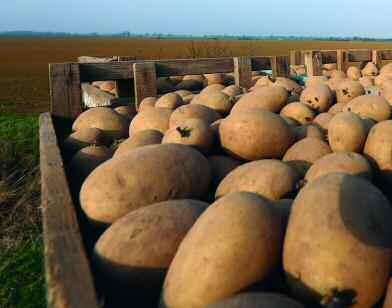 By Rob Jones
For more than a decade, growers have relied on Monceren DS (pencycuron) to control black scurf and reduce the incidence of stem canker, two diseases caused by Rhizoctonia solani that have the potential to reduce yields and quality. Recent proposals to alter the maximum residue limit published by the European Commission have led product manufacturer Bayer to withdraw Monceren from the market, meaning many growers will have to find another means of protecting crops.
So why has Bayer taken this unprecedented step? Bayer’s Edward Hagues explains that the EU proposal was to reduce the MRL for pencycuron to just one-tenth of the existing level.
“The outlook is far from clear, but if the proposal is adopted it would mean all seed would have to be treated before April 2020 and all harvested potatoes sold by Oct 2020 to avoid contravening the new MRL,” he says.
“Clearly this is impractical, so Bayer was left with little alternative but to suspend Monceren
sales with immediate effect. Should the proposals be dropped or a new MRL that is more favourable to Monceren be proposed, Bayer will resume sales,” he adds.
Bayer data shows that Monceren DS, which is the powder form, was the preferred means of treating seed potatoes against the effects of R. solani, probably because it was easy to apply, relatively inexpensive and highly effective, comments Edward.

Reliable control
Aside from its reliable control, Monceren appealed to growers because it could be applied to seed without specialist equipment, he believes. “In recent years many growers have chosen to install on-planter applicators to improve the accuracy of application and ensure all seed was treated. Separate manual application directly over the seed in the hopper simply couldn’t match the accuracy of application nor operator safety delivered by on-planter machinery.”
The non-availability of Monceren means those growers who have in the past opted for separate application now have to choose from the alternative methods. “For the majority, the decision will likely be determined by which system (liquid application over a rolling conveyer or table or on-planter applicator) best suits their situation. For others, it’ll be more important to ensure the best possible level of protection.
“All of the alternatives to Monceren, Emesto Prime DS (penflufen), Rhino (flutolanil) and Maxim 100 FS (fludioxonil) have their merits, but I would urge growers to make their choice based on which product delivers the greatest marketable yield,” says Eric Anderson, senior agronomist with Scottish Agronomy.
Some growers might choose to plant untreated seed, but this would be to underestimate the incidence of the rhizoctonia carried on seed, comments Eric.
It’s a valid concern and one that was highlighted by AHDB seed testing, performed as part of its review of rhizoctonia management practices. The levy body found that in GB, 70% of seed had detectable levels of inoculum (using PCR) and 47% had visual (black scurf) symptoms in 124 seed stocks assessed both visually and with real-time PCR between 2005 and 2007.
Identifying which treatment gives the best protection is far from easy, points out Eric. “There’s a difference in performance between products that isn’t reflected in the AHDB literature. From our experience, Emesto Prime sets the new benchmark for protection against seed-borne rhizoctonia and adheres to the seed just as well as Monceren did,” he says. The loss of diquat is something else growers should factor in when it comes to making seed treatment decisions, highlights Eric. The alternative desiccation methods will all mean an increased threat of black scurf infection.
“Black scurf invasion is most rapid after senescence starts or haulm destruction, but because diquat was a fast-acting desiccant it meant the time elapsed between spraying and lifting was reasonably short. This afforded some protection of its own, but without diquat the time between destruction and lifting is likely to be much longer, increasing the threat
Monceren seed treatment has been voluntarily withdrawn due to the implications of a possible change to its MRL.
“ 72 crop production magazine december 2019 ▲
All of the alternatives to Monceren have their merits.
”

Edward Hagues says that Bayer will resume sales of Monceren if the EU stance on a new MRL for pencyuron becomes more favourable.

of rhizoctonia infection. This highlights the need to use the best means of protection,” he says.
Once a seed tuber treatment has been decided upon, the next consideration is how best to apply it. This is where growers who previously applied Monceren by ‘the sandwich technique’ need to think ahead, explains Danny Hubbard of equipment manufacturer Team Sprayers.
“We have an effective solution in the Team Powder Applicator and are the only manufacturer with an on-planter applicator already calibrated for Emesto Prime. The
applicator, which can be retrofitted to most brands and sizes of planter, uses an auger to apply a measured quantity of product to the seed potatoes as they pass along the belt or into the cups, depending on the machine used. Because the process is short in time and distance involved, there is minimal wastage,” he explains.
Discharge rate
“The discharge rate will vary according to ground speed so as to maintain a constant application rate, while the applicator itself contains an agitator to prevent the product from bridging inside the hopper. Growers using a Digimon controller programmed with version 4.1b, or later, will already have the settings needed for Emesto Prime pre-installed. Those running earlier versions can have them updated by returning them to us,” he adds.
Another on-planter solution is the Techneat Powder Pro which also uses an auger to measure out powder, says Tom Neat of Techneat Engineering.
“We have an effective solution in the Powder Pro powder applicator which can be retrofitted to most brands of cup and belt planter, including Standen and Grimme. It uses a 25-litre hopper, which limitd the number of fill-ups required, and the rate control box can be connected to a GPS
Open eyes to Maxim seed treatment
Crops protected with an effective seed treatment can quickly build bigger and stronger root systems, which are able to support higher number of tubers with more even size and maturity at harvest,according to extensive trials undertaken by Frontier Agriculture.
Paul Overton, the company’s potato seed treatment specialist, reports the trials with Maxim (fludioxonil) have shown it will consistently enable more eyes to open and stimulate extra rooting.


“More viable eyes which increase stem numbers per ha is key to increasing overall yields,” advocates Paul. “On farm, that has translated to more even initial movement in the seed storage box,and typically means crops are faster to reach 100% emergence.”
He believes achieving a more consistent crop with the seed treatment has benefits for agronomy right through the season.
Frontier’s dedicated store at Sutton Bridge has been designed specifically to accelerate seed-borne diseases on seed lots. “If we can identify seed issues before planting, it gives the chance to make the best decisions on what treatments to recommend. We can also get a better understanding of Maxim treatments on
different varieties.”
For salad varieties,he reports combinations of ethylene and Maxim have been shown to stimulate far greater shoot numbers. For varieties that typically exhibit strong dormancy,such as processing varieties Brooke and Taurus,they’ve appeared more likely to break dormancy with the seed treatment,he points out.
“Stolon numbers are the absolute framework for carrying tubers and increasing the yield potential.With the Maxim treatment the cleanliness and vigour of the stems is incredible, so growers and agronomists can really begin to influence potato plant population dynamics for higher yields and marketable quality.”
Fludioxonil is particularly well suited as a seed treatment since it’s relatively immobile in the soil, meaning it surrounds the tuber and protects roots for longer.“Treatment in store pre-planting is controlled,convenient and saves another task for planter operators,”says Paul.
Field trials and lab studies by Frontier and Syngenta,have shown in-store application has beneficial all-round effects on a range of skin diseases,including skin spot and fusarium,as well as R.solani,black dot and silver scurf,which are
The loss of diquat is something else growers should factor in when it comes to making seed treatment decisions,believes Eric Anderson.
sensor or the tractor’s ISOBUS terminus to ensure the application rate is maintained, even during changes in forward speed,” he says.
“It’s important to ensure that the machine is properly calibrated to the product being applied,” adds Tom. “All the available powders have different densities, so operators should not assume that the calibration settings for one treatment will be suitable for another
“Calibration is a simple process, with a dump test carried out to determine the product output in grams over a known number of auger revolutions. The rate-controller setting is then updated to ensure an accurate application is achieved,” he says. ■
all on the Maxim label.
For growers buying in bagged seed,unloading into boxes within 48 hours of arriving on farm provides an ideal opportunity for Maxim treatment,he highlights.
“Over past seasons most of the seed treatment has been applied at source or by a specialist contractor on-farm,but many growers are now kitting up with their own applicators for convenience and greater selectivity, targeting seed to for specific fields or risk situations.”
Tuber treatments 74 crop production magazine december 2019
Effective seed treatment aims to achieve even, 100% emergence of the crop.
▲
Tis the season to be jolly –– or is it?
This autumn is proving to be one of those awkward ones ––drilling has fallen dramatically behind and many growers will be nervously looking up the latest drilling dates for varieties as their bags of seed corn gather dust in the barn.
The story is even worse for some potato growers who are facing the second bad year in a row –– ironically one because of a drought, the other because of the wet. There are still crops in the ground and plenty of fields that have ruts that would make even the least soil-aware farmer blush in embarrassment.
Farming has always been a high-risk business, with a high capital investment and very limited cash. With the best laid plans gone to pot this autumn, financial uncertainty is likely to be the net result for many for a whole host of different reasons –– poor blackgrass control, crop loss, lower gross margins from spring crops, unused pre-emergence herbicides in the spray shed…
There are few eras in farming when there’s been so much uncertainty –– Brexit, changes in support payments, climate change and all the ramifications of the measures that could be used politically to address it.
Combine all that with the knock-on effects of a difficult harvest and autumn then farming can soon feel like climbing a mountain and constantly falling back to the bottom.
Last month the AHDB’s Hereford monitor farm held a meeting on managing stress. Professor Alan White from The Centre for Men’s Health talked about how to take control of stress and ensure that you’re not adding to it unwittingly. According to a friend that was there, the meeting was well attended and the conversation from fellow farmers was frank and supportive.
One of the areas covered in the meeting was recognising the signs of depression in others and knowing what to do. It may be useful information for agronomists who have an unusual business relationship with growers –– they often act as sounding boards, confidents and friends. Listening is something they do a lot of, but I wonder how many have training in their de facto role of giving ‘counsel’?
At this time of year when there’s precious little agronomy going on, who else would you talk to about the stack of unused pre-ems sitting in the spray shed, the frustration of having an idle drill and a backlog of drilling, the price of wheat or which spring crop to switch into? They’re conversations every agronomist is more than willing to engage in, and a problem shared is a problem halved, but for some it’s hard to shrug off the pressures their clients and friends are under –– feeling powerless to be of much help.
Maintaining an inner Santa and feelings of ‘ho, ho, ho’ isn’t always easy. Depression
happens when your brain chemistry gets out of balance, it’s not a weakness. Let’s talk about it because one in five of us has been there.

The pressure British farmers are under is unrelenting, with one farmer every week taking his own life. Most of us in the industry have connections with someone that has –– it’s a dreadful statistic. No one should ever end up feeling the best way out is to no longer be alive and no one should ever have to deal with wondering if they could have done something to prevent a suicide.
The suicide rate in farming exceeds many other professions but it’s still just the measurable tip of the iceber g. Levels of stress, depression and despair sit in the many tiers beneath and all of these are life-impacting and even life-limiting when it’s prolonged and extreme.
Forty years ago, I lost my father to the stresses of farming. Having spent most of his career in the Royal Navy before turning his hand to growing crops, he wasn’t a man
you’d think would lie awake at night worrying. He was known as ‘the Commander’ and he was phenomenally capable but the stress of the uncontrollable took a toll on his heart.
It’s really good news mental stress is on the farming agenda because for too long there’s been a stigma attached to mental health, and let’s face it, there are very few of us who have escaped periods of feeling down or some degree of the ‘black dog’ –– depression has many forms. It’s human, it’s understandable, it’s often temporary and it’s mendable if you have the right strategies and support.
https://www.yanahelp.org/index.html
Based in Ludlow, Shrops, Lucy de la Pasture has worked as an agronomist, while among the Twitterati, she’s @Lucy_delaP.
lucy@cpm-magazine.co.uk

75 crop production magazine december 2019