Ten years of building a wine business in Sussex
Nigel Akehurst visited Everflyht Vineyard to learn more about their regenerative approach as they mark 10 years since planting.
INSIDE
The basics of vine nutrition
How to handle vines properly Specialist machinery tour





www.vineyardmagazine.co.uk
VINEYARD
Kelsey Media, The Granary, Downs Court Yalding Hill, Yalding, Maidstone, Kent, ME18 6AL 01959 541444
EDITORIAL
Editor: Rebecca Farmer vineyard.ed@kelsey.co.uk
Features: Malcolm Triggs
GRAPHIC DESIGN
Jo Legg Flair Creative Design jo.legg@flair-design.co.uk
ADVERTISING & MARKETING
Jamie McGrorty 01303 233883 jamie.mcgrorty@kelsey.co.uk
PHOTOGRAPHER
Martin Apps www.countrywidephotographic.co.uk
MANAGEMENT
]CHIEF EXECUTIVE OFFICER: Steve Kendall
DIVISIONAL MANAGING DIRECTOR: Fiona Mercer
PUBLISHER: Jamie McGrorty
RETAIL DIRECTOR: Steve Brown
SUBSCRIPTION MARKETING MANAGER: Claire Aspinall
PRINT PRODUCTION MANAGER: Kelly Orriss
DISTRIBUTION
Distribution in Great Britain: Seymour Distribution Limited 2 East Poultry Avenue, London EC1A 9PT Tel: 020 7429 4000 www.seymour.co.uk
Distribution in Northern Ireland and the Republic of Ireland: Newspread Tel: +353 23 886 3850
Kelsey Media 2026 © all rights reserved. Kelsey Media is a trading name of Kelsey Publishing Ltd. Reproduction in whole or in part is forbidden except with permission in writing from the publishers. Note to contributors: articles submitted for consideration by the editor must be the original work of the author and not previously published. Where photographs are included, which are not the property of the contributor, permission to reproduce them must have been obtained from the owner of the copyright. The editor cannot guarantee a personal response to all letters and emails received. The views expressed in the magazine are not necessarily those of the Editor or the Publisher. Kelsey Publishing Ltd accepts no liability for products and services offered by third parties.
Kelsey Media takes your personal data very seriously. For more information on our privacy policy, please visit https://www.kelsey.co.uk/privacy-policy/
If at any point you have any queries regarding Kelsey’s data policy you can email our Data Protection Officer at dpo@kelsey.co.uk
wine trail showcasing ‘God’s own country’ Yorkshire is proudly claiming its place on England’s wine tourism map with the launch of a new trail encompassing ten of the region’s premier vineyards.
Andrea Ontiveros Flores, a sommelier and marketing & communications specialist from Alicante, Spain is rethinking how we discover wine.
28
37
38
Features
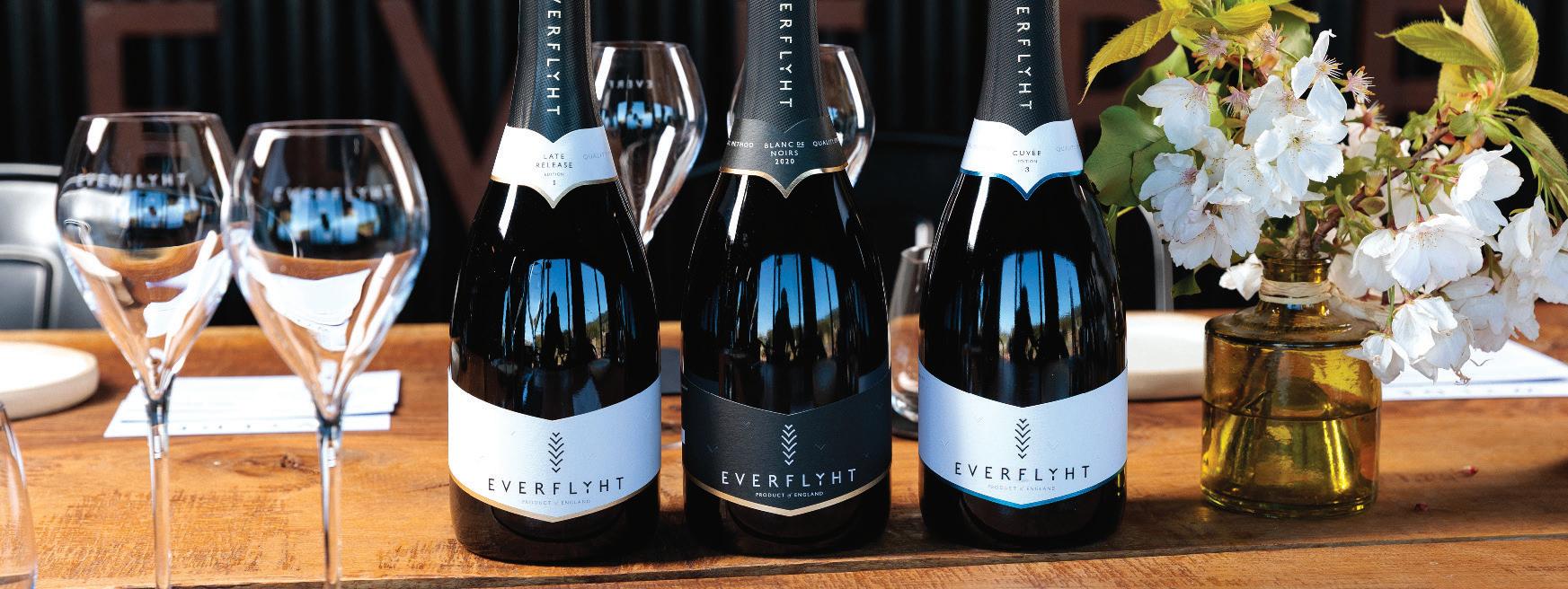
Ten years of building a wine business in Sussex Nigel Akehurst visited Everflyht Vineyard to learn more about their regenerative approach as they mark 10 years since planting.
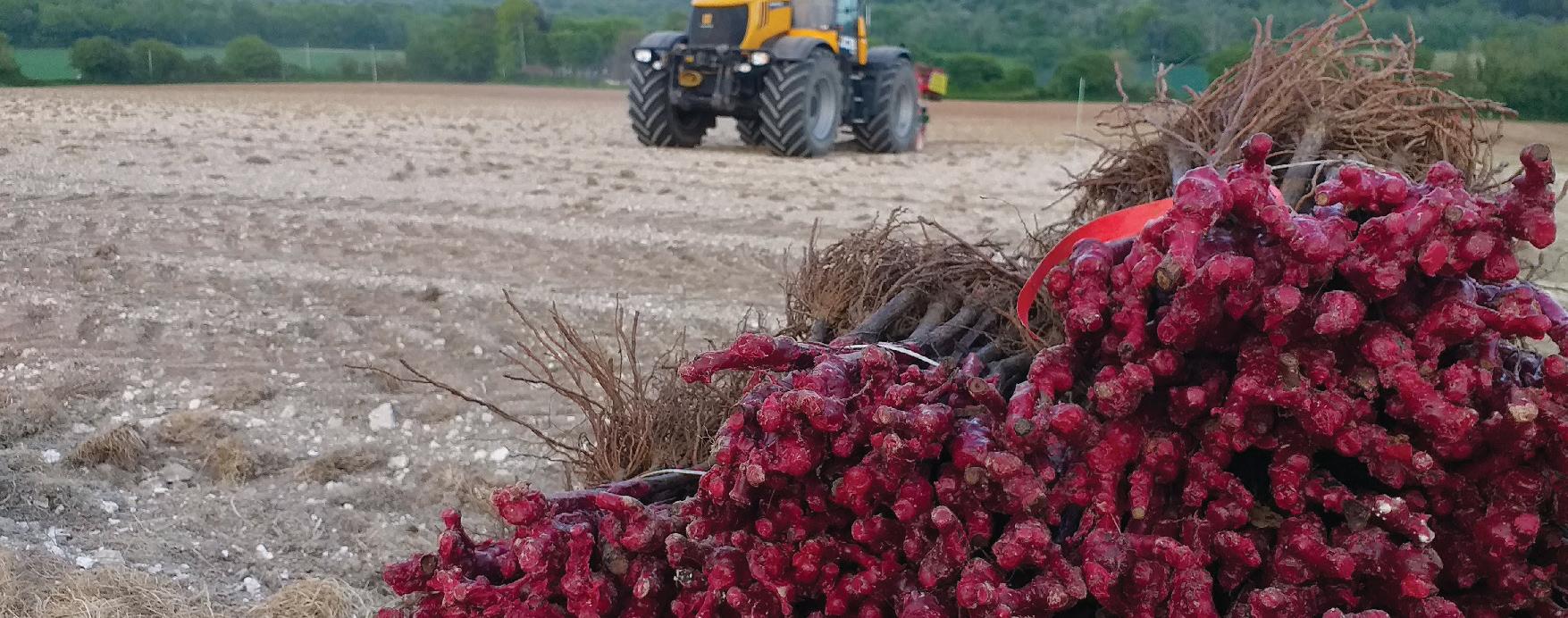
Vineyard planting: How to handle vines properly
How vines are handled in the days before and during planting has a direct impact on establishment, survival rates and early growth.
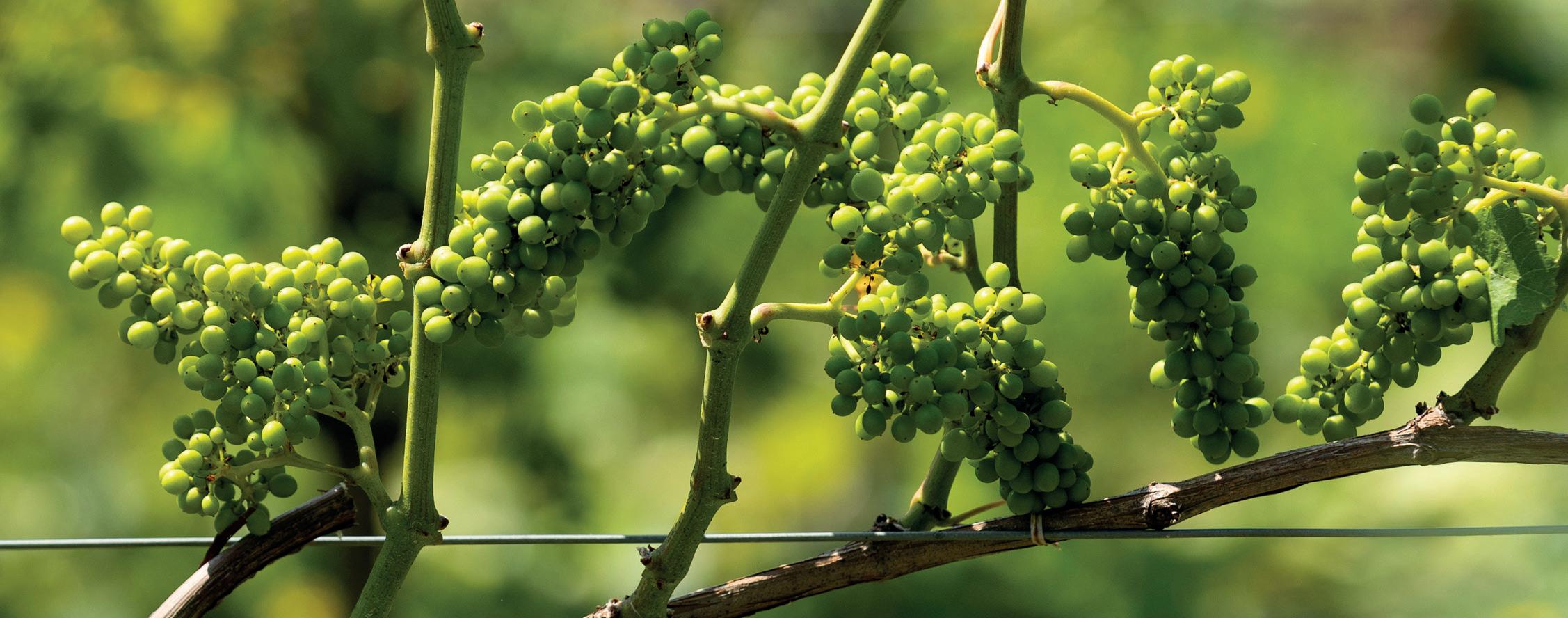
The basics of vine nutrition
Vines require sixteen essential nutrients to ensure their normal growth. Some are obtained by the leaves from the air or absorbed through the roots from water. The rest come from the soil.
Inside the factories
46
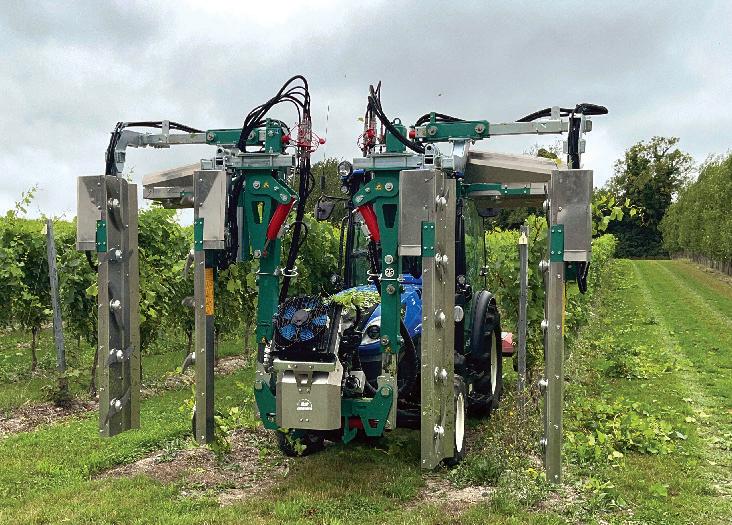
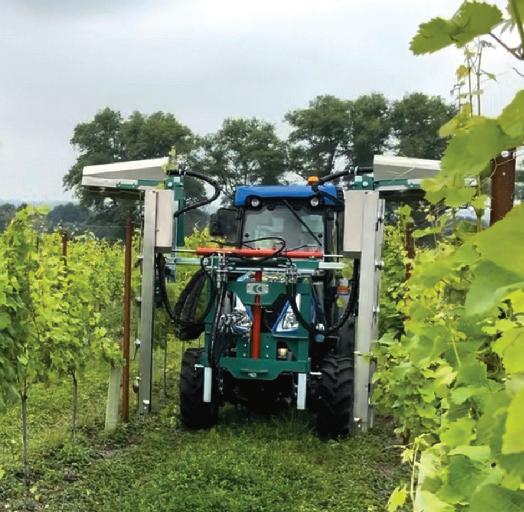
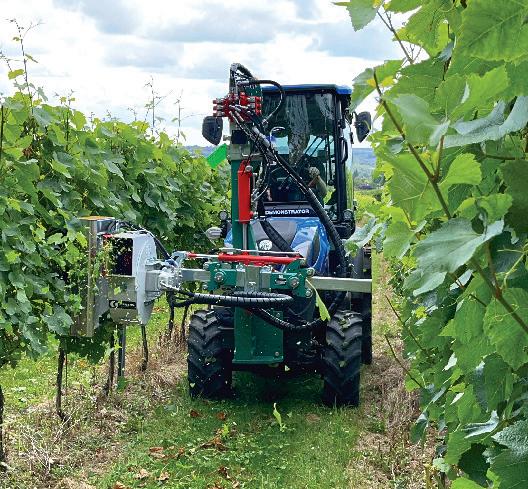
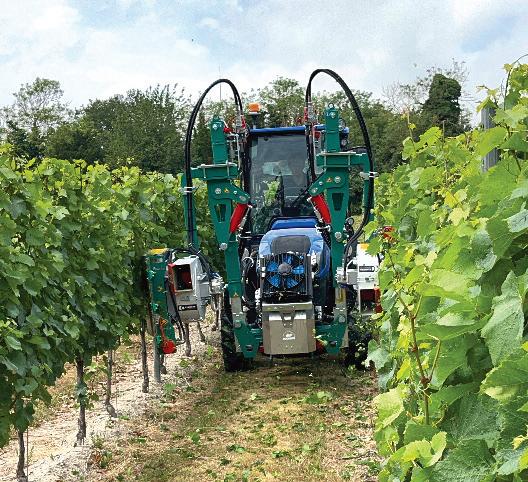
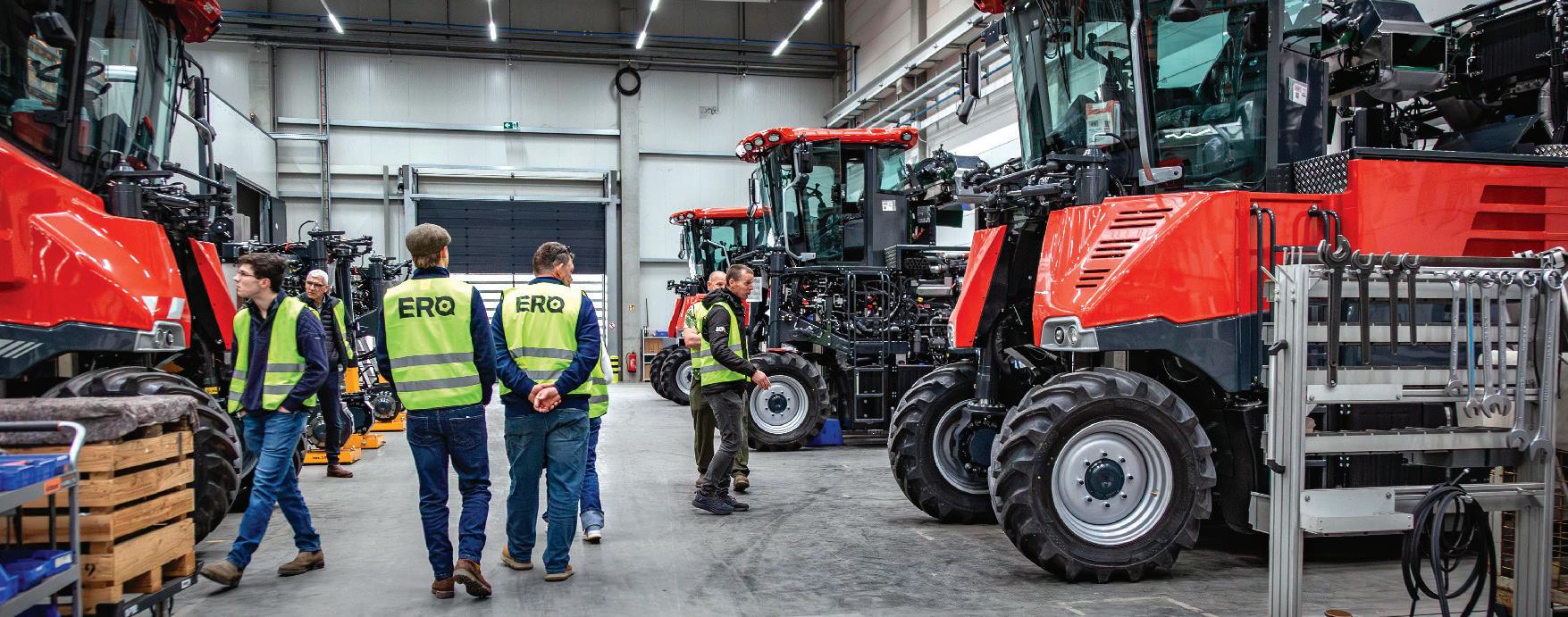
A group of British fruit and vine growers recently joined specialist machinery dealership, NP Seymour, on a three-day tour of Germany.


From the editor
“If it is not right do not do it, if it is not true do not say it.”
Marcus Aurelius (AD 121-180)
The news this month has been dominated by the rural plague of fly tipping. One news item that stood out was the appearance in a rural Yorkshire village of dozens of empty Sauvignon Blanc bottles. Rural communities suffer in many ways from the inconsiderate actions of others. Simply put – the countryside should always be treated with respect. I hasten to add that none of these bottles were from the excellent local vineyards. The recent launch of the Yorkshire Wine Trail (see page 16) has certainly put this flourishing wine region in focus.
The vineyards of the Surrey Hills (see page 14) and the Wessex wine region (see page 24) are also celebrated in this edition. It is great to see wine growers all over England and Wales working collectively to highlight the importance of vineyards to the regional community and therefore the wider English and Welsh wine industry –strong regional presence supports the wider English and Welsh Wine scene.
A visit to a vineyard this month highlighted that with teamwork there is so much that can be achieved. The hospitality at this vineyard was equal to any that could be offered the world over and it was wonderful to hear guest after guest speak highly of their wine experience. The dedicated team at this vineyard accredited this to the fact that they had worked together a long time and more importantly enjoyed working together. This English vineyard enriched the lives of visitors and staff alike giving an atmosphere of peace and contentment across the entire site.
I finish this month with the thought that vineyards across England and Wales have once more sprung into life and take this opportunity to wish all those working with vines a happy and productive start to the 2026 vintage.


A new chapter for Woodchurch Wine Estate
Four friends take the helm of award-winning Kent vineyard.
Woodchurch Wine Estate, the multi-award-winning producer of English sparkling and still wines, is proud to announce a change in ownership. Four friends – two husband-and-wife teams, Kelly and John Smith and Donna and Darren Worsley, have become the new guardians of the estate, bringing fresh energy and a shared passion for great wine.
Kent locals at heart, their professional backgrounds span cuttingedge technology, legal practice, automotive engineering, and food and product innovation. What began as a shared love of exploring Kent’s wine scene together quietly grew into something more – they were inspired to transition from enthusiasts to stewards, taking over the estate to write its next chapter.
“What started as four friends touring Kentish vineyards, glass in hand, became a calling to build something we could see, touch, and taste – rooted in the land and shaped by craft,” said Donna.
Founded in 2009, Woodchurch Wine Estate has grown from southfacing Kentish farmland into a premier wine destination. Its beautiful tasting room and exceptional wines have earned gold medals
from WineGB, Decanter, the International Wine Challenge, and the Independent English Wine Awards – a true reflection of the unique terroir of the Kentish landscape.
Rooted in community, driven by innovation
The new team is committed to honouring that legacy while introducing fresh offerings – from regular food designed to complement the wines and a new summer events calendar, to community and business partnerships that make English wine more accessible. The team also plans to expand the Wine Club and innovate with exciting new product additions.
“Family and friendship are our foundation. Our goal is to keep learning and innovating, ensuring Woodchurch remains a place where great wine and great memories are made,” added Kelly.
Woodchurch Wine Estate remains open to visitors. Keep your eyes peeled for exciting news – for upcoming events, wine club memberships, or to purchase award-winning wines, visit www.woodchurchwine.co.uk.
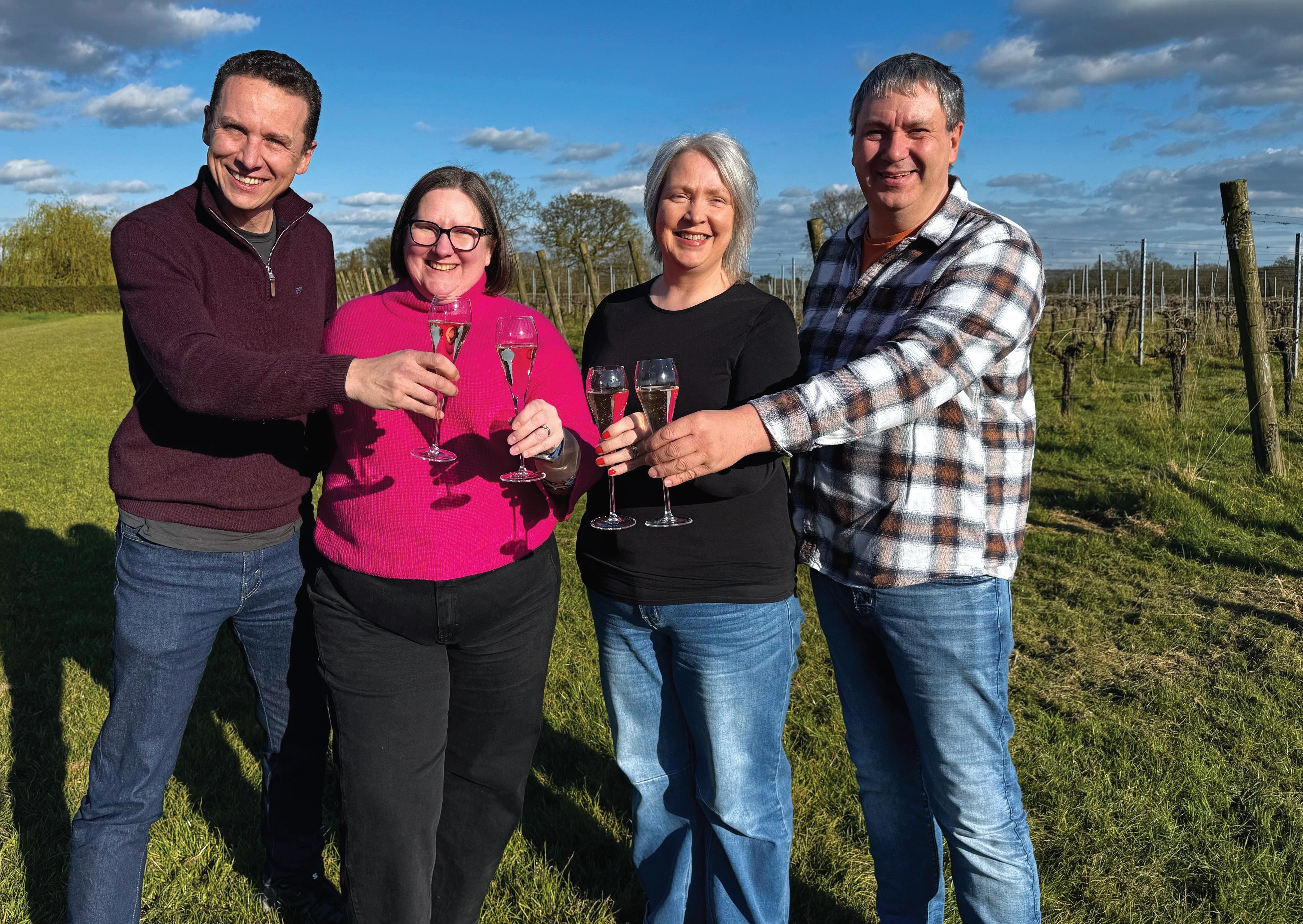
Left to right: John, Kelly, Donna and Darren
Pop-up garden the heart of the Silverhand Estate
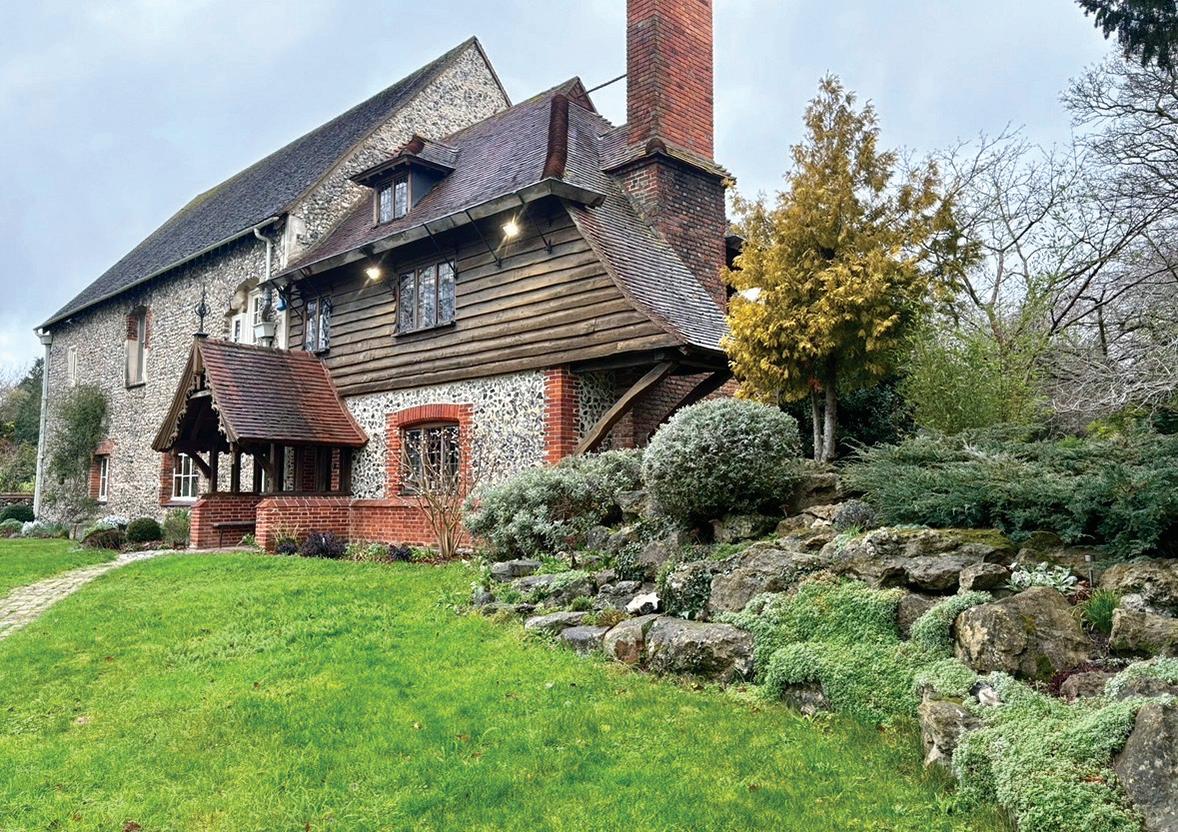
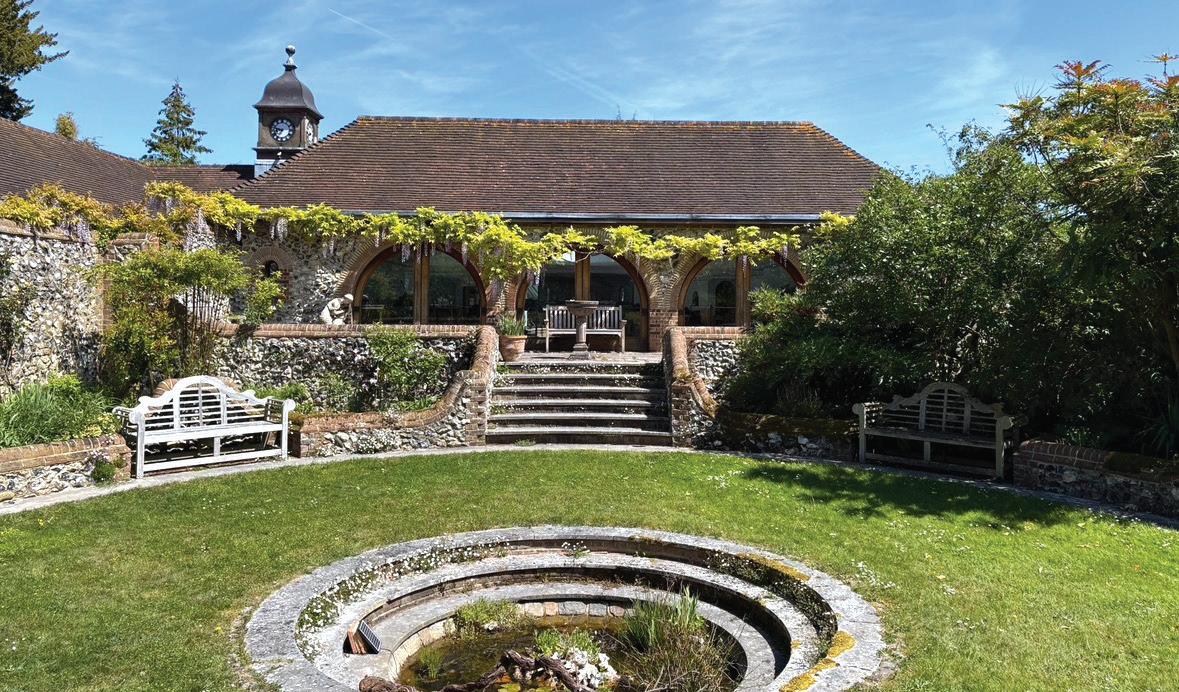
The three-hectare gardens of Luddesdown Court are opening for the National Garden Scheme on the 24-25 April as well as dates in July, offering a chance to visit the grounds of possibly the oldest continuously lived in house in the country. Grade I-listed Luddesdown Court, near Cobham, was held by William the Conqueror’s half-brother, Odo, until 1082. It is now situated at the centre of the Silverhand Estate, the largest single organic vineyard in the UK.
The grounds are currently being regenerated, a reimagining of a historic garden that is resilient and wildlife focused. There are formal and informal areas to explore, including an old orchard, wildflower meadows and cut flower garden. There is also a newly created walled kitchen garden, planted with an edible forest around it. There will be wine tasting in the garden, as well as a pop-up pub close by. Tea, coffee and cakes will also be available.
◆ Luddesdown Court Gardens, Luddesdown Road, Luddesdown, Gravesend, DA13 0XE

◆ Friday 24 April and Saturday 25 April: 10am–4pm
◆ Friday 24 and Saturday 25 July: 10am–4pm
◆ Refreshments: Tea, coffee and cake. Pop-up pub and wine tasting
◆ Admission: Adult – £6.00. Child – FREE. Dog friendly
For information about all the Kent open gardens in 2026 visit: www.ngs.org.uk/kent
Grow a corker.
We’ve a wide portfolio to help you manage key disease threats. And you’ve the support you need: our horticulture and viticulture team can provide expert advice, not just on products, but on effective IPM.
Provence in style, made in Kent
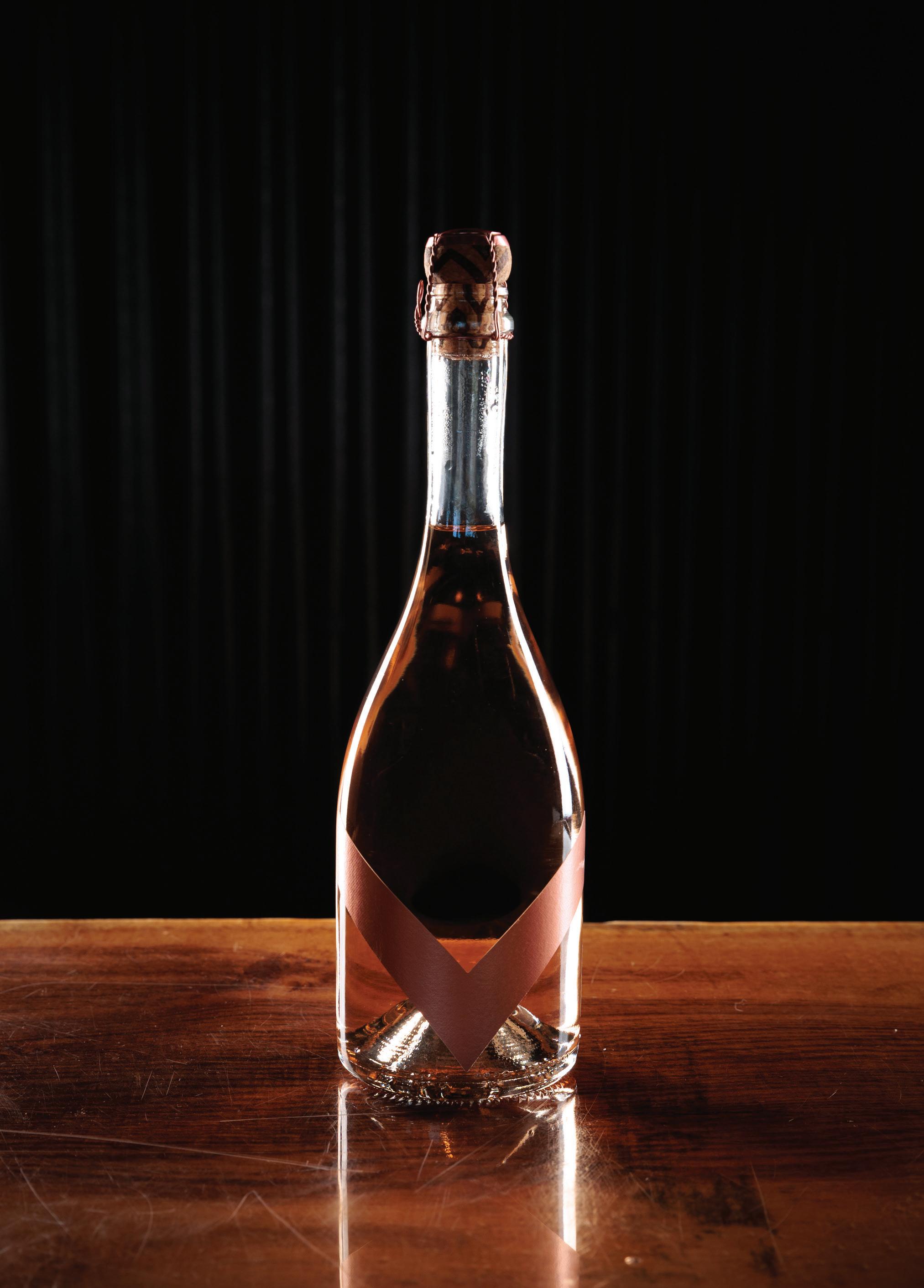
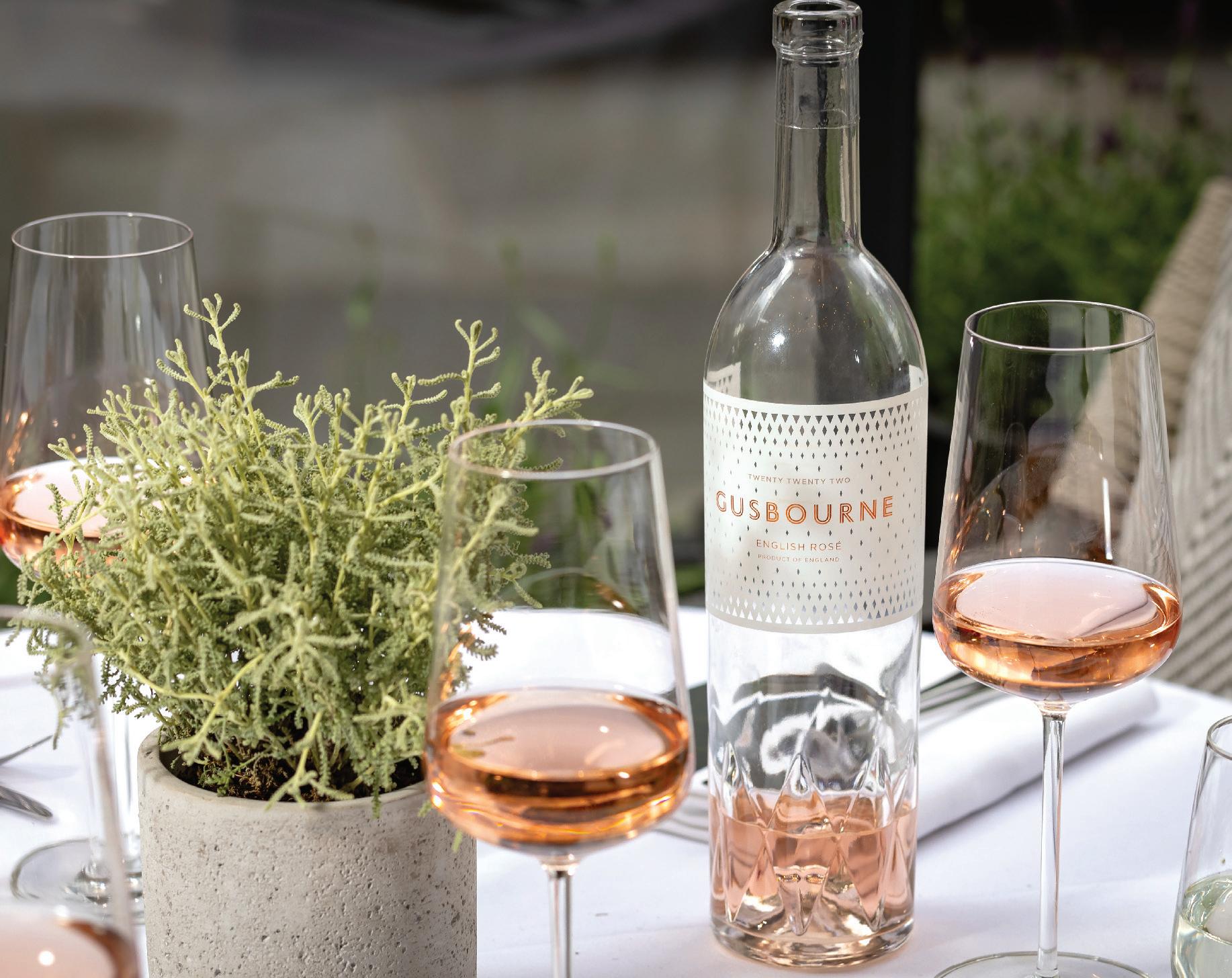
Gusbourne, one of England's most celebrated wine estates, has released its 2025 English Rosé – a wine that speaks eloquently of an extraordinary growing season and the singular character of its Kentish terroir.
Crafted from 100% Pinot Noir, handharvested from Gusbourne's Lower Mill Hill and Heartbreak vineyards on the ancient south-facing escarpment above Appledore, the 2025 vintage is defined by precision, vibrancy and an exceptional natural balance that is the hallmark of truly great English rosé.
Head Winemaker Mary Bridges said: “Rosé is often thought of as the simplest of wines – pale, refreshing and uncomplicated. But achieving this apparently straightforward style is one of the more delicate exercises in winemaking.
“Not all wines are built to age for decades, and nor should they be,” said Mary, who adds, “It’s perfectly all right to make wines that are just upfront and delicious. They bring a little bit of joy to the moment. Our
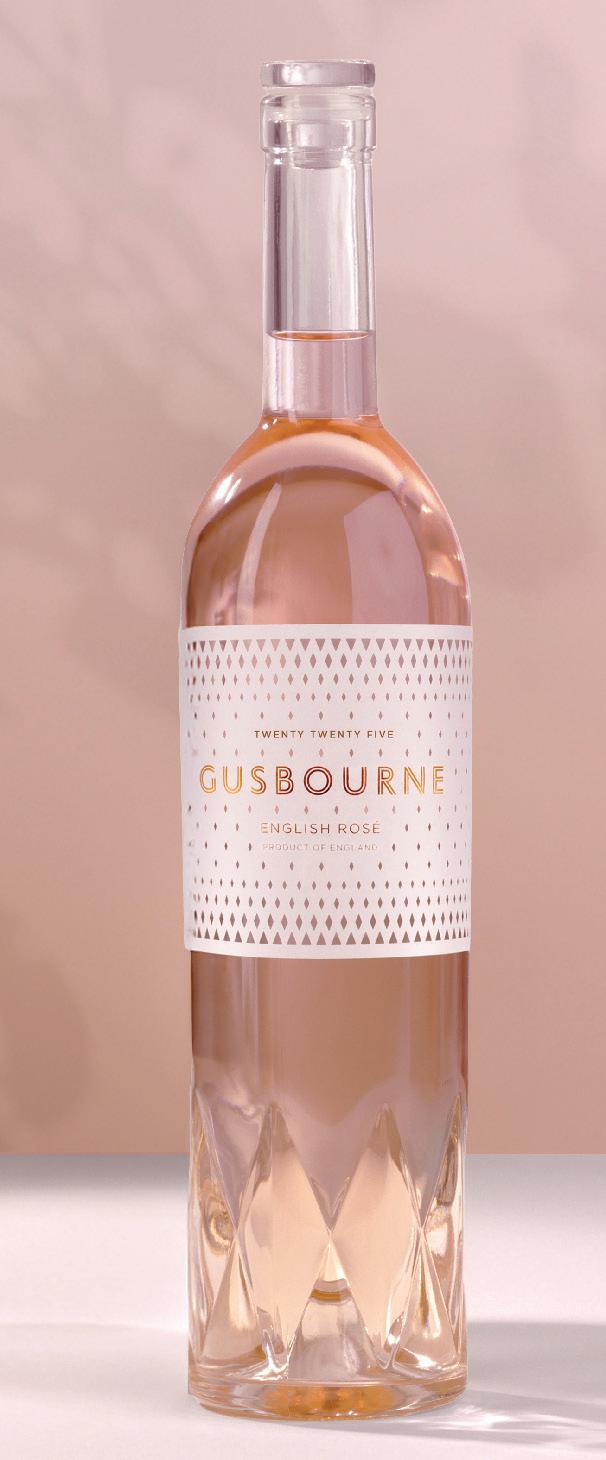
A remarkable vintage born from the earliest flowering in the Gusbourne Estate's history.
English Rosé is designed to do just that. It’s intended to capture the brightness of the vintage, ready to be opened just as we enjoy the first warm evenings of the year. It’s the kind of bottle that disappears almost as quickly as it is opened.”
A season to remember
The 2025 growing season was one of note from the very outset. Budburst on 4th April marked a promising start to the 2025 season. Flowering followed on 5 June – the earliest ever recorded on the estate – during a prolonged spell of warm, dry weather that encouraged vigorous vine growth and excellent canopy development. July remained hot and dry before welcome rain arrived in early August. Veraison was recorded on 5 August and, despite some disease pressure later in the month, careful vineyard work ensured the fruit remained clean and healthy. Harvest ran from
9 September to 1 October, with each parcel picked at its optimal moment, delivering fruit with excellent balance and strong phenolic ripeness.
Winemaking
The crop was harvested by hand. Parcels of Pinot Noir were destemmed, and the berries were gently pressed after a short maceration. Fermentation took place in stainless steel tanks at 16°C and the wine was bottled in February 2026.
Technical information
◆ 100% Pinot Noir
◆ 12.5% ABV
◆ Acidity 7.5g/L
◆ pH 3.22
The new English Rosé 2025 is available from Gusbourne, priced £29 per bottle (£25 for members).
• Free to look • Request a sample • Post your own wines for sale for £10 Have


Get involved to inspire future industry talent
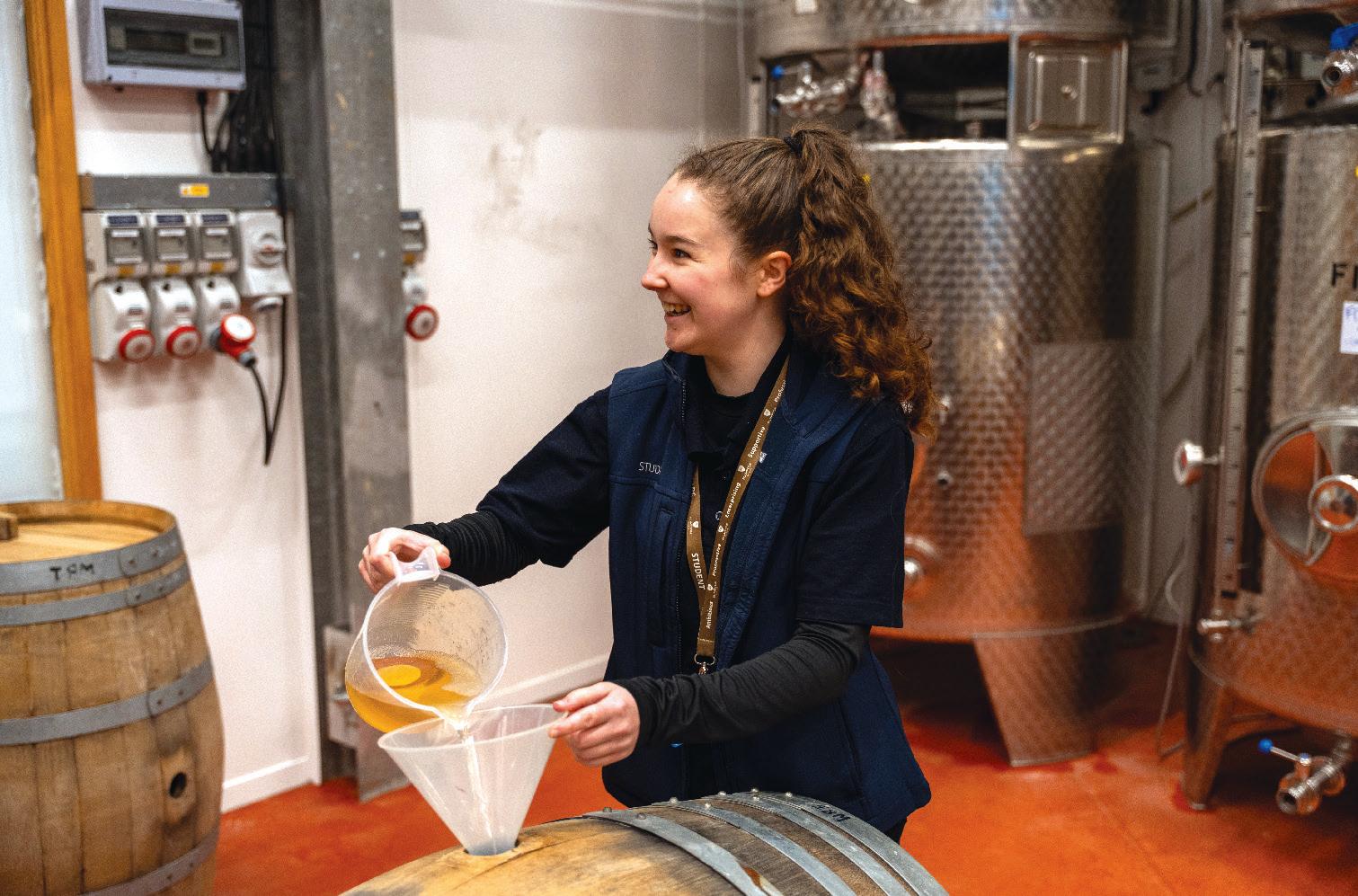
National Wine Careers Week runs from 9-16 May 2026. This nationwide awareness week is fast approaching, but there is still time to get involved and help raise awareness of the breadth, diversity and long-term potential of careers in the UK wine sector and inspire more people to explore a future in wine.
National Wine Careers Week (NWCW) aims to bring the world of wine careers into sharper focus – shining a light on the range of roles, the skills and the people behind them, and the pathways into them.
By showcasing training, development and progression opportunities, it reinforces wine as a sector that offers long-term, fulfilling careers. Crucially, it provides a coordinated platform to help reach a broader, more diverse talent pool – from college leavers to career changers – and helps connect businesses with the people they need for the future.
A growing sector needs growing talent
With the UK wine industry seeing continued expansion – with employment at around 3,300 full-time equivalent roles, and some 13,000 seasonal positions, and workforce growth (21%) forecast in the coming years* – attracting talent to strengthen and sustain the future across the industry is key. As a whole, the wider wine sector in the UK generates some
£8.9 billion in Gross Value Added to the UK economy and supports over 412,000 jobs**. Yet despite this scale and success, career opportunities remain largely underrecognised.
A collective effort
National Wine Careers Week is led by Plumpton College and founding partner Nyetimber. The campaign is also delighted to announce that NFU Mutual Ashford, Tenterden & Whitfield agency have joined the campaign as principal partner. NFU Mutual are active supporters of both vineyards as well as local businesses in their region. The initiative is also supported by WSET, WineGB and Drinks United alongside a growing network of businesses across the sector.

Proudly supported by:

Throughout the week, activity will take place both digitally through PR and social media and in person, designed to showcase different job roles, career pathways and training routes right across the sector.
In-person activity includes a discussion evening at WSET London school on Wednesday 6 May. Plumpton will also
be featuring the campaign at their open day on Saturday 9 May. It is anticipated that a number of vineyards will promote the campaign through their cellar doors, highlighting how to find out more to customers.
There is still time to take part
Whether through a single post, a conversation, or a more extended activity, every contribution will help amplify the message and extend the campaign’s reach. One of the most powerful ways to communicate careers in wine is through the people behind them. Sharing real career journeys – how individuals entered the industry, the skills they have developed and the roles they now hold – can demystify the sector and make it more accessible to those looking in from the outside. As everyone knows, there is no single route into wine, and no single “type” of career.
ASHFORD, TENTERDEN & WHITFIELD
That diversity is one of the sector’s greatest strengths – and one of its most compelling stories.
The campaign has produced a toolkit packed with information and support to encourage participation, and to provide more/ideas/inspiration to take part and help amplify the message.
Further information can be found at www.winecareersweek.co.uk or please contact Julia Trustram Eve on julia@trustrameve.com
SQUARE-INSTAGRAM @winecareersweek
FACEBOOK-SQUARE National Wine Careers Week
LINKEDIN @winecareersweek
* WSTA The UK Wine and Spirit Trade In Focus Report, published July 2025: Including WSTA Economics Analysis study of Wine & Spirit industry conducted by Cebr analysis of NIQ off-trade and CGA on-trade data | total wine & spirits | MAT 2022 data, HMRC Alcohol Bulletin, MESAS, HMRC Trade Info
** WineGB Annual Report published July 2025

Get involved!
Whether you are a vineyard owner, retailer, educator or supplier, you are uniquely placed to bring careers in wine to life –through your people, your platforms, and your audiences.
Getting involved doesn’t have to be time-consuming or complex – small actions can have a significant impact. Whatever you do counts!
Here are a few easy ways to take part:

◆ Put your people front and centre –showcase your team
Share a short post or video introducing members of your team: what they do, how they got there, and what they enjoy about working in wine
◆ Use your own channels
Add a mention of National Wine Careers Week to your website, newsletter or social media. A simple signpost can spark interest. Don’t forget to tag us!
◆ Promote face-to-face
Whether an informal chat at the cellar door or at events you might be hostinghighlight the campaign with a QR code, poster or conversation – you never know who might be interested to know more.
Ambassadors: your voice matters
We are always seeking more campaign ambassadors – individuals from across the UK, at all stages of their careers, who are willing to share their experiences and help amplify the message. Every role, every pathway, every story adds value – and helps someone else see a future in the industry.




Photo: Wolrider YURTSEVEN
A celebration of vineyards of the Surrey Hills
Introducing Surrey Hills Wine Week 2026.
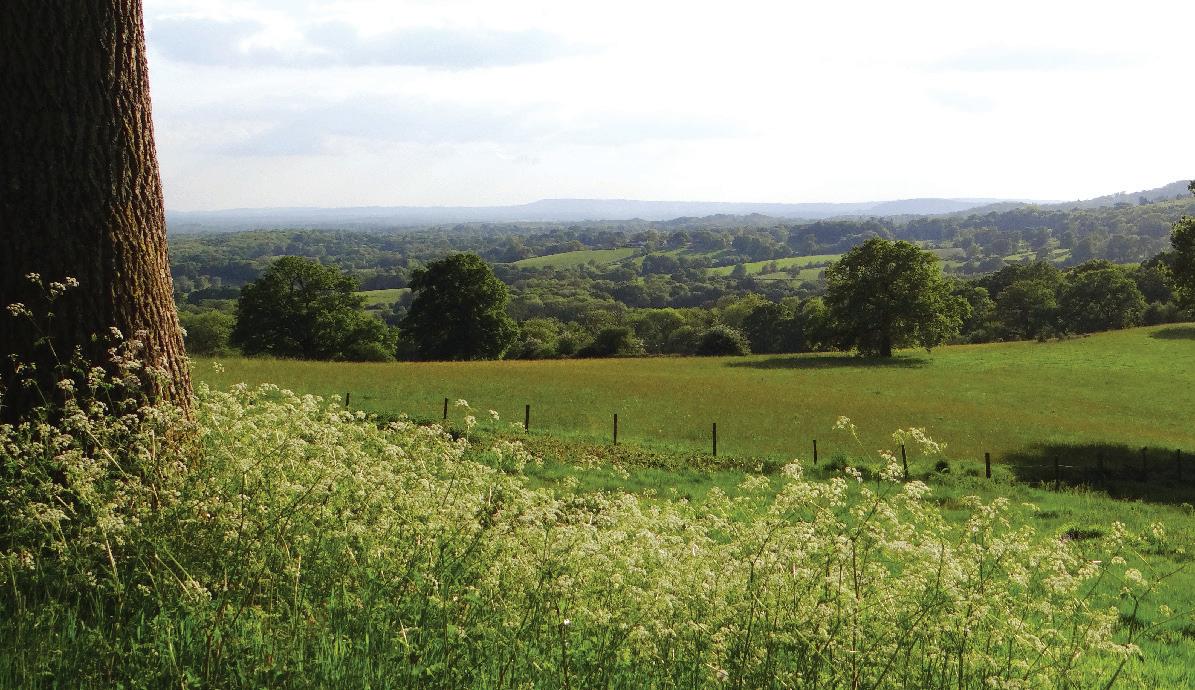
The Vineyards of the Surrey Hills are delighted to announce the launch of the very first Surrey Hills Wine Week, taking place from Saturday 30 May to Sunday 7 June 2026.
Celebrating the Vineyards of the Surrey Hills collective – comprising Albury Organic Vineyard, Chilworth Manor Vineyard, Denbies Wine Estate, Greyfriars Vineyard, High Clandon Estate Vineyard, Soloms Court Wine Estate and Tanhurst Estate Vineyard – Surrey Hills Wine Week will showcase the very best of English wine through a unique programme of events.
Throughout the week, visitors will have the opportunity to explore multiple vineyards across the North Downs, each offering its own distinctive experiences – from relaxed tastings and behind-thescenes tours to full-blown wine festivals. All set against the stunning backdrop of the Surrey Hills National Landscape.
“Surrey Hills Wine Week is a fantastic
opportunity to bring together our vineyards and celebrate the quality, diversity and accessibility of English wine,” said Vineyards of the Surrey Hills’ Lucy Letley, general manager at Albury Organic Vineyard.
“Whether you’re a seasoned wine enthusiast or simply looking for a memorable day out, this series of events invites visitors to discover the unique character of our vineyards and the landscape that shapes them.”
The launch of Surrey Hills Wine Week marks an exciting new chapter for the region’s wine tourism offering, building on the success of previous collaborative events and reinforcing the Surrey Hills’ position as a must-visit destination for wine lovers.
Visitors can expect not only exceptional wines – from elegant sparkling cuvées and crisp whites to fragrant rosés and fruity reds –but also breathtaking views, warm hospitality and a chance to experience one of England’s most picturesque and dynamic wine regions.

There are also plenty of extra-special reasons to celebrate: Tanhurst Estate Vineyard will be joining the festivities for the first time, Soloms Court Wine Estate will unveil its very first wine, and Denbies Wine Estate marks an impressive 40 years since planting its first vines.
With chalk soils mirroring those of the Champagne region and a growing international reputation for quality sparkling wines, Vineyards of the Surrey Hills offers a unique and accessible wine route just a short distance from London.
For full event listings and to plan your visit, please visit: www.surreyhillsvineyards.co.uk/surrey-hills-wine-week
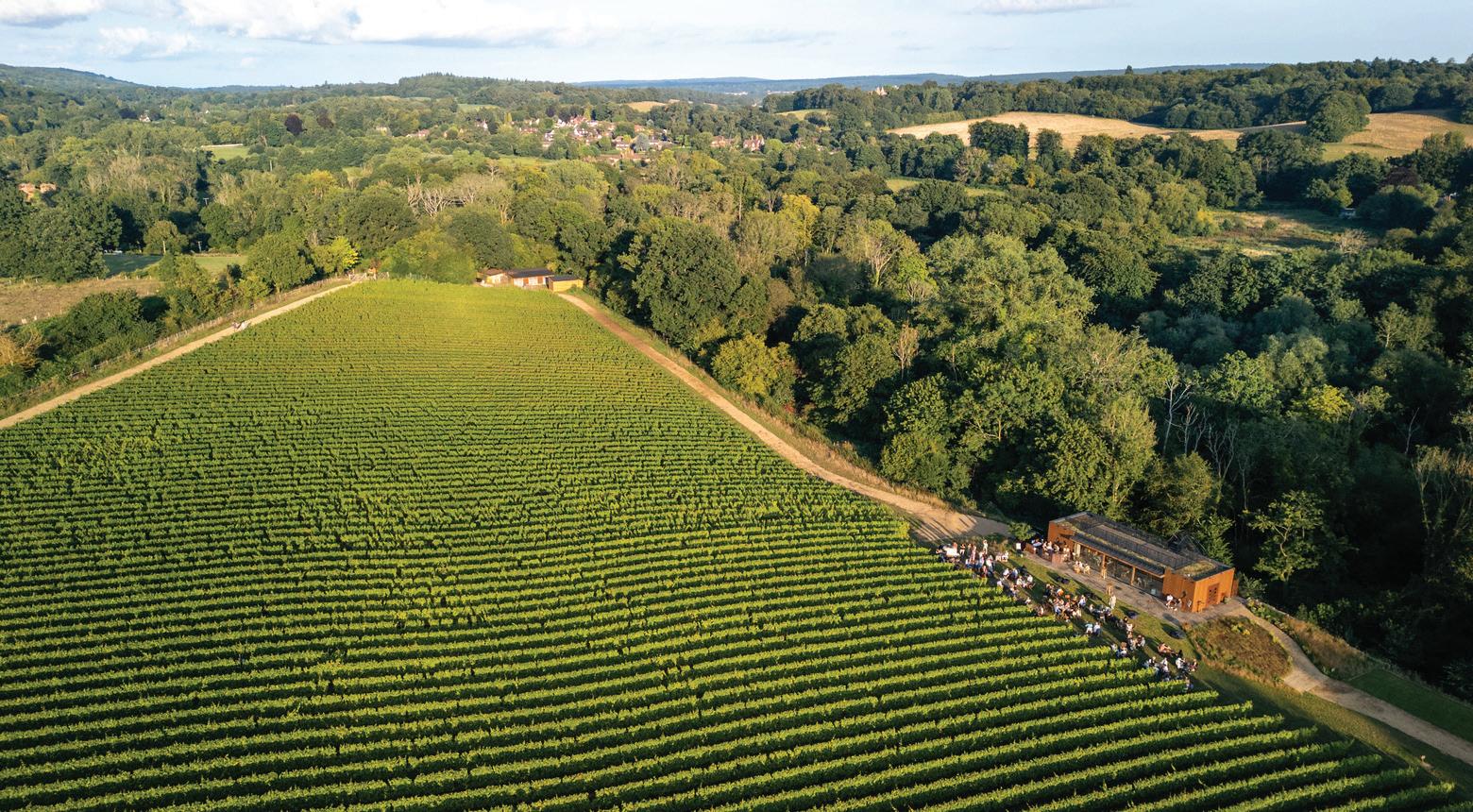
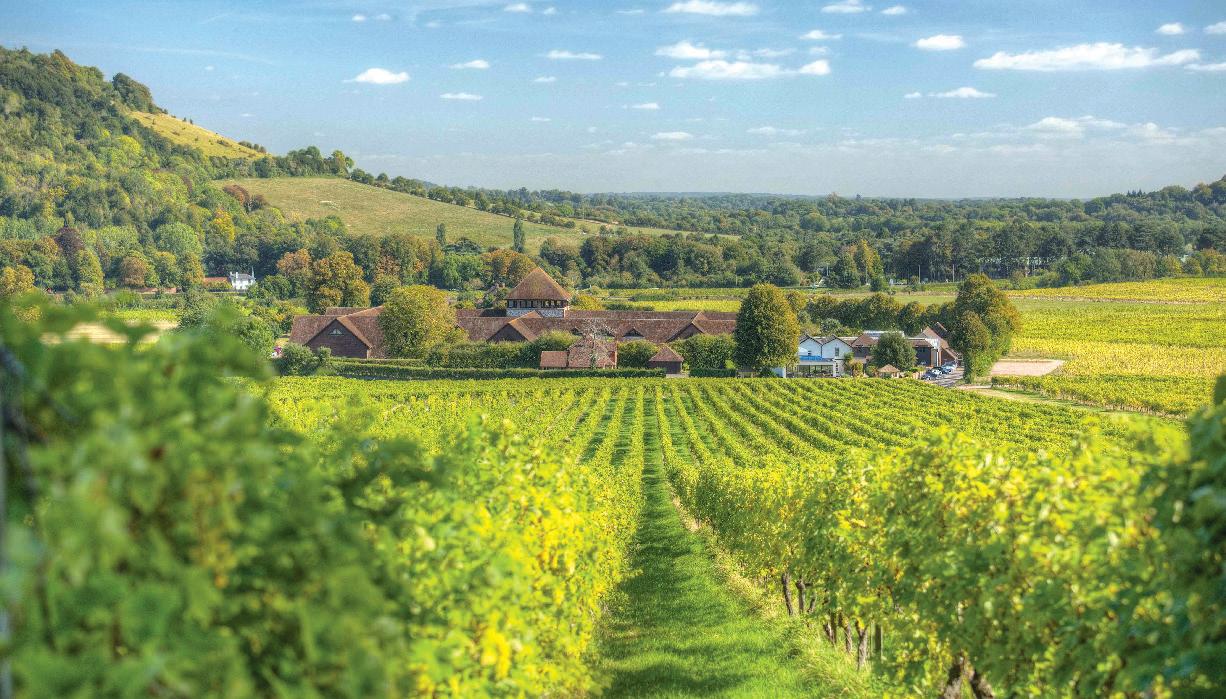
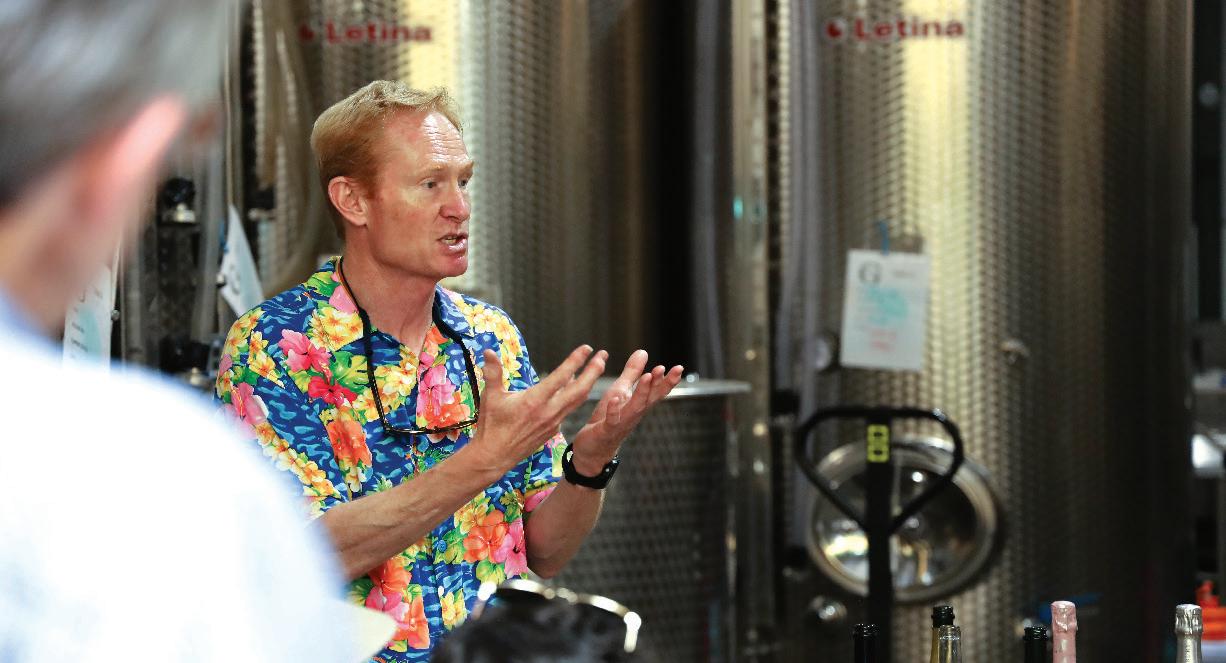
Chilworth Manor Vineyard Greyfriars Vineyard
Tanhurst Estate Vineyard Denbies Wine Estate
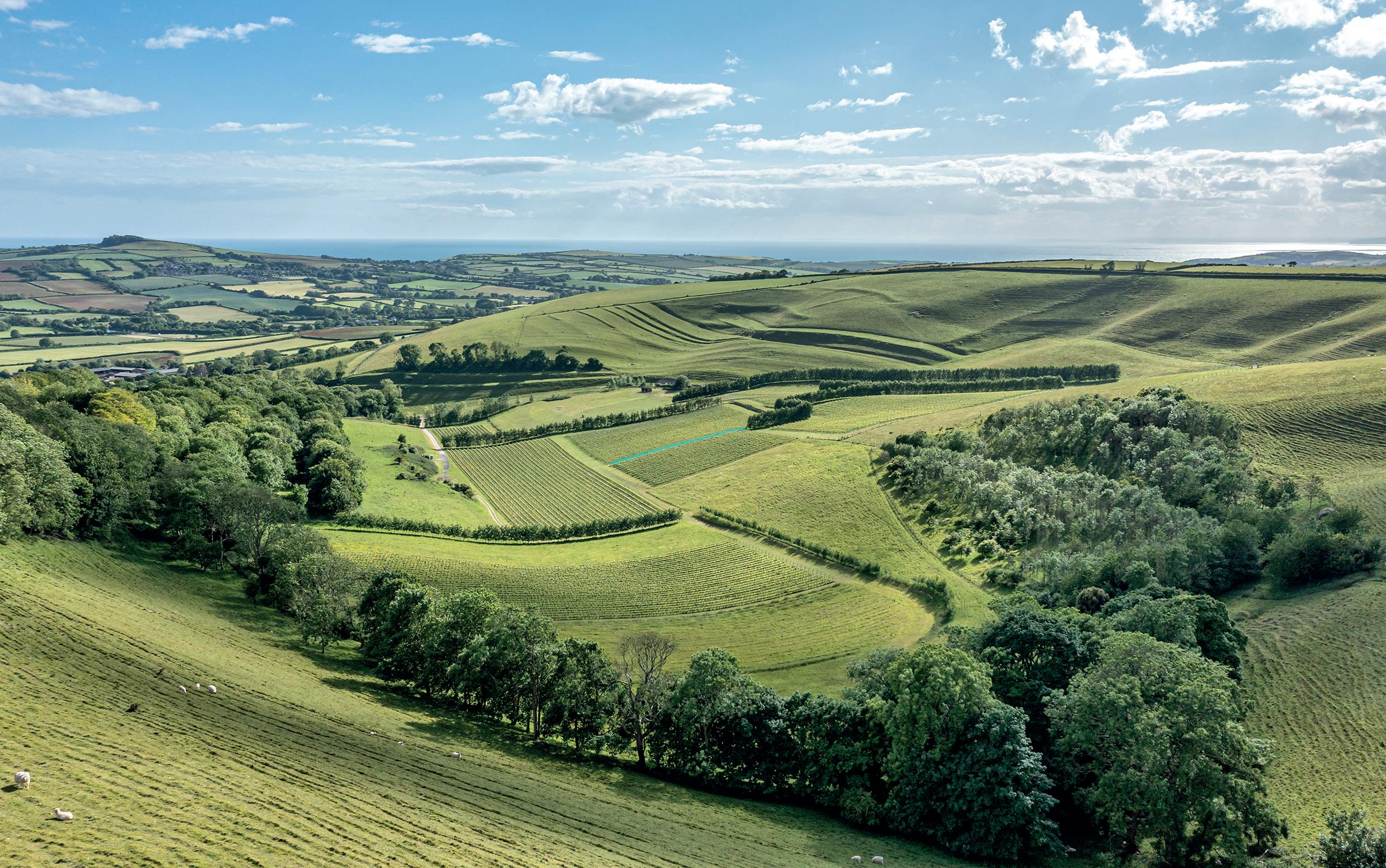
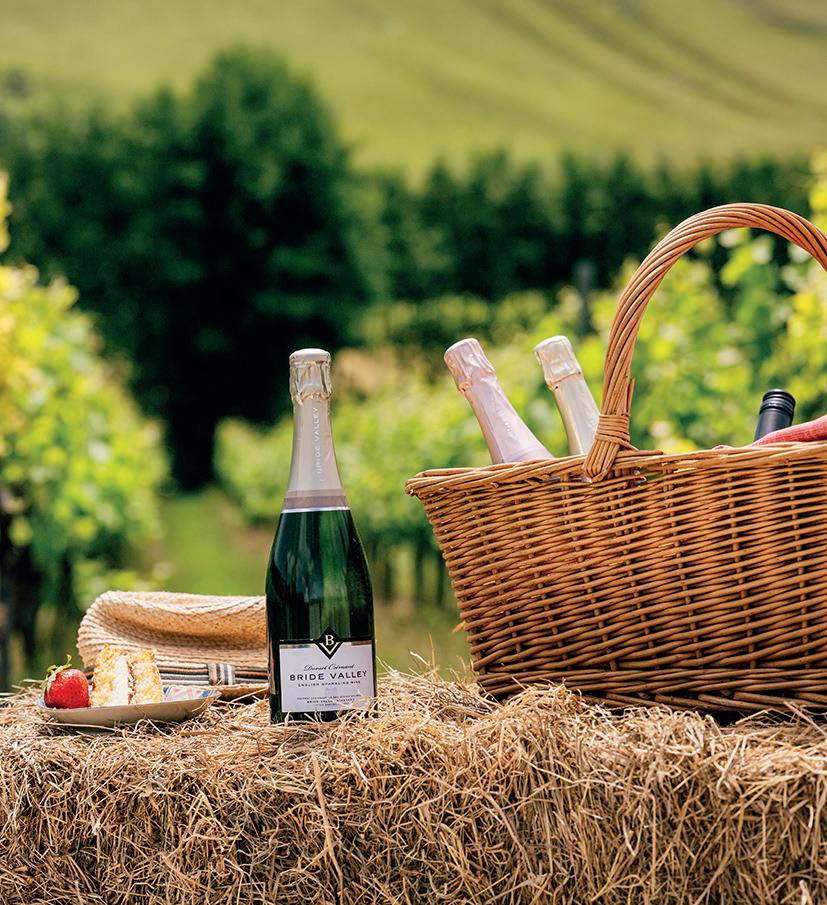
Bride Valley Vineyard
Dorset, DT2 9GE
Guide price £3,000,000
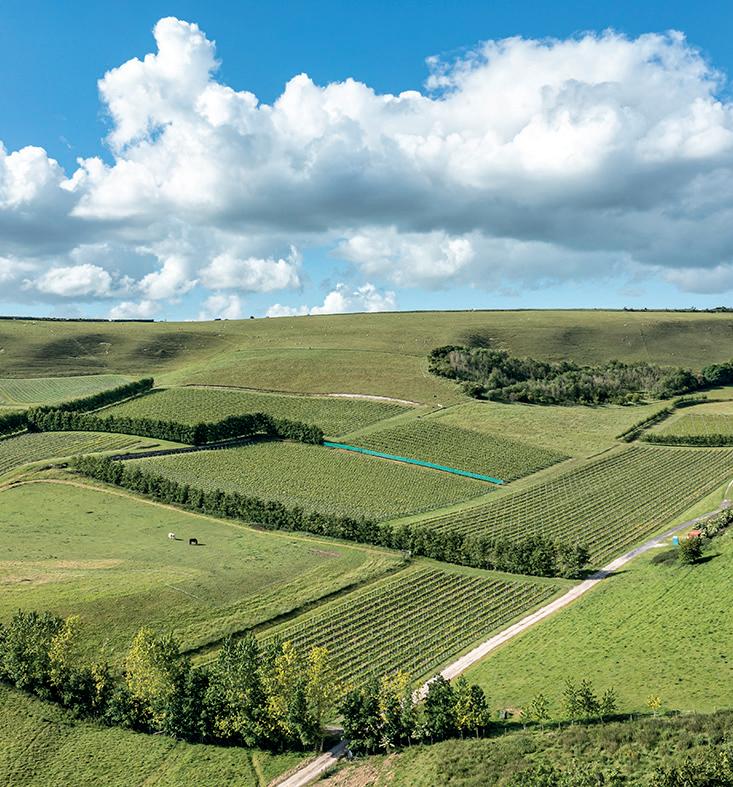
Award winning vineyard | Over 42,000 active vines | About 137 acres
Lot 1 - Vineyard, including farm buildings, “Cellar Door” tasting room, all equipment and staff. About 76.9 acres, of which 23.8 acres planted to vines.
Lot 2 – Grazing farmland, in all about 58.0 acres.
Lot 3 - A four bedroom village farmhouse with Agricultural Occupancy Condition, and about 1.8 acres.
As a whole or up to 3 Lots
Arrange a viewing
Mark McAndrew | +44 (0) 20 7591 2218
The wine trail showcasing ‘God’s own country’
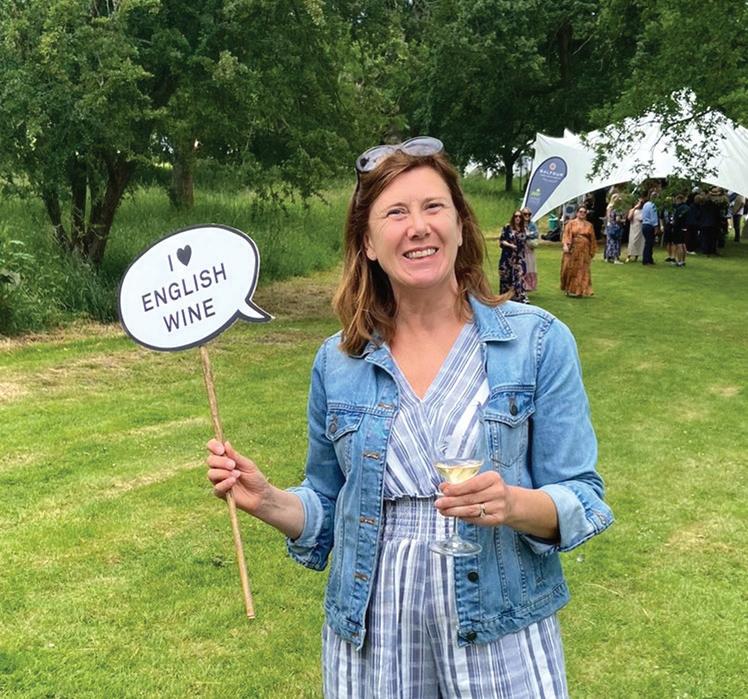
Lucy Thomas is an independent wine tourism enthusiast who has visited over 80 English and Welsh vineyards here she visits Yorkshire which is proudly claiming its place on England’s wine tourism map with the launch of a new trail encompassing ten of the region’s premier vineyards.
At the end of March, the stylish 22 Yards Wine Bar in York hosted a gathering of wine educators, sommeliers, media and tourism professionals to celebrate the trail and get a taste of what visitors can expect from Yorkshire’s extensive wine list. Commercial grape growing was reintroduced in Yorkshire by Leventhorpe in 1985. Whilst the region is still small compared to its southern counterparts, it now has 125 acres under vine with production sitting around 100,000 bottles. This is growing every year as existing vineyards expand and new ones are planted.
Underground influences
Beneath those sweeping moorlands, dales and pastures sit a range of soil types which are great for growing grapes. In the Wolds, they have the same underlying limestone and chalky soil types of southern England, and they boast the most northerly chalk hills in the UK which provides the ability to create fresh and minerally wines. The Vale of York has underlying sandstone and mudstones, covered by the gravels and tills formed by the last ice age, and is rich in clays and sand left by glacial lakes. The river Aire starts in the limestone region of Malham in the Yorkshire Dales, before flowing across the county through Leeds. The Holme Valley is in the foothills of the Pennines, an area dominated by millstone grit which is coarse sandstone.
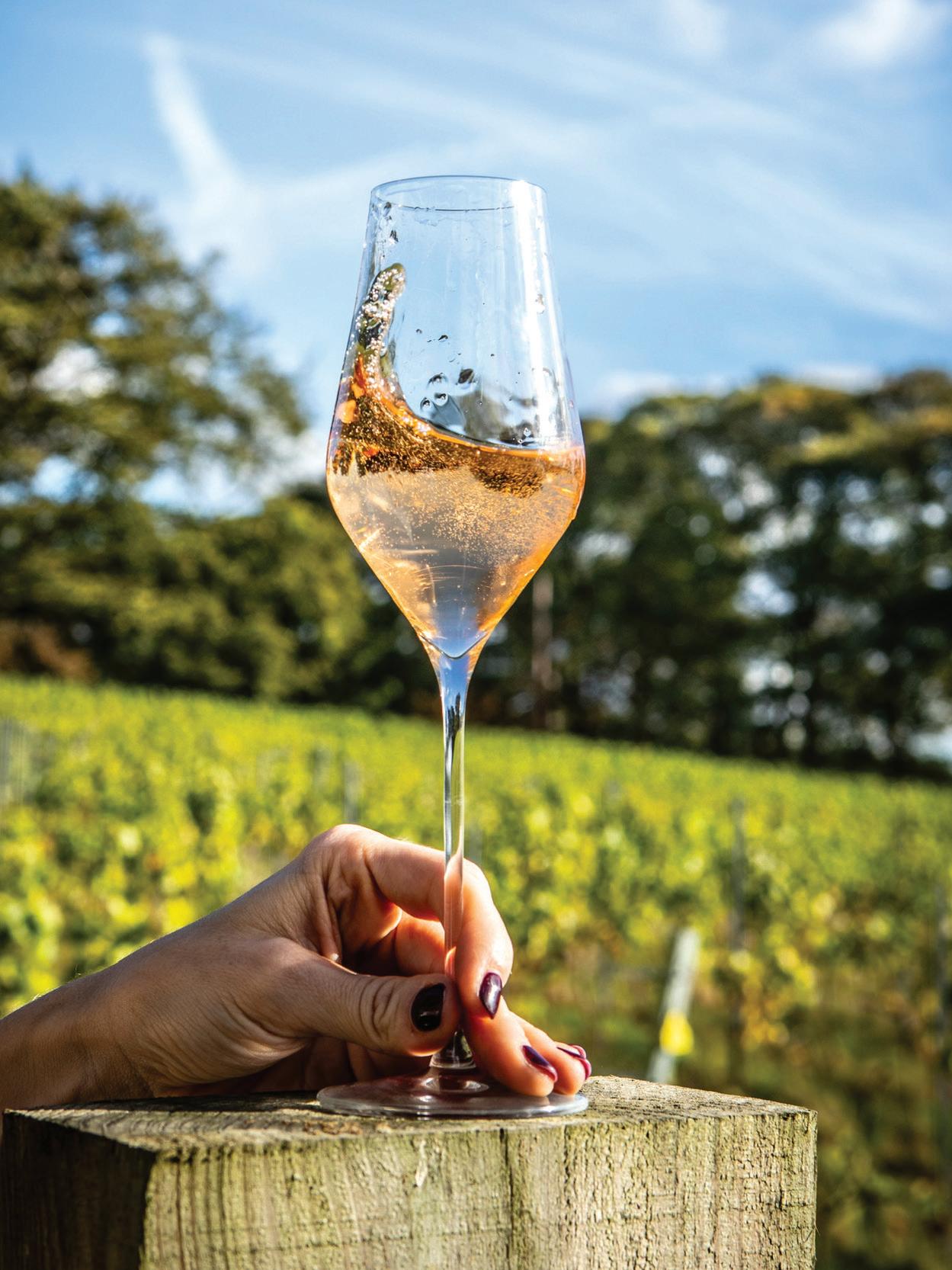

Grape varieties galore
Such diverse terroir lends itself to a wide range of grape varieties with many of the trail members planting more than ten varieties –there is one with over 20 varieties. This gives maximum flexibility for blends depending on the growing season. As you would expect from vineyards at 54⁰N with less hours of sunlight, risk of late frosts and misty Septembers, hybrids and piwis are popular choices. That said, Yorkshire growers are benefiting from sunnier and hotter weather. Growing degree days in York last season were 984 which is comparable to the Loire Valley.
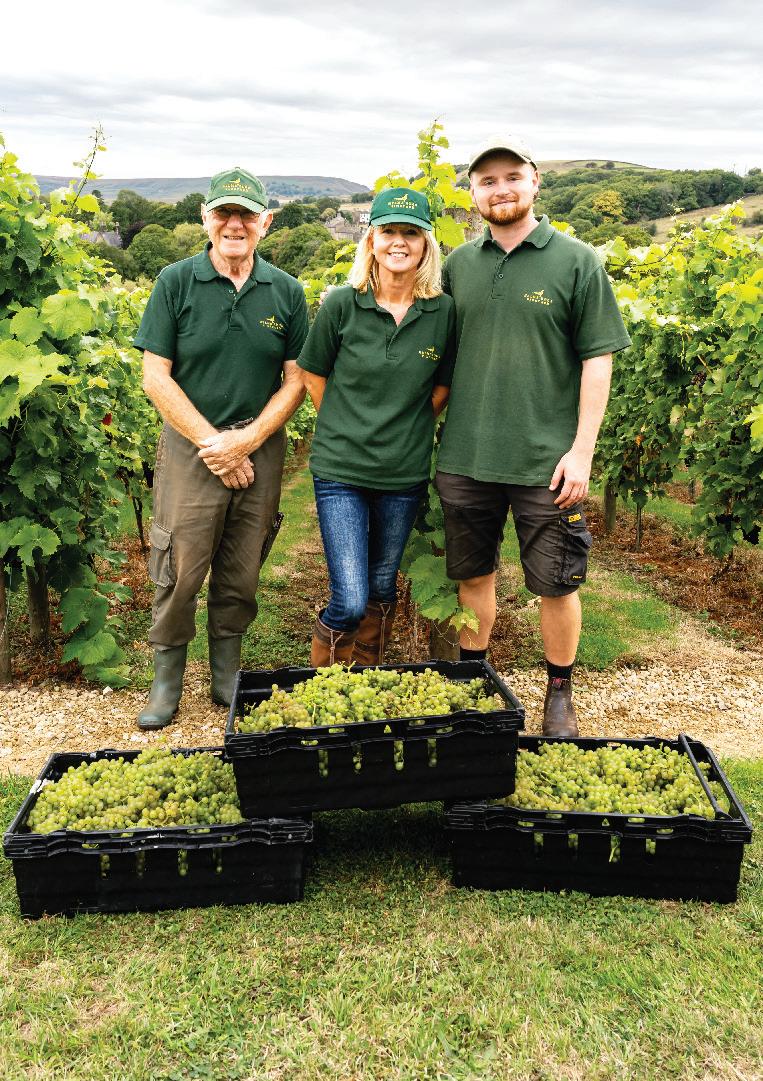
Knotfield
Helme Edge
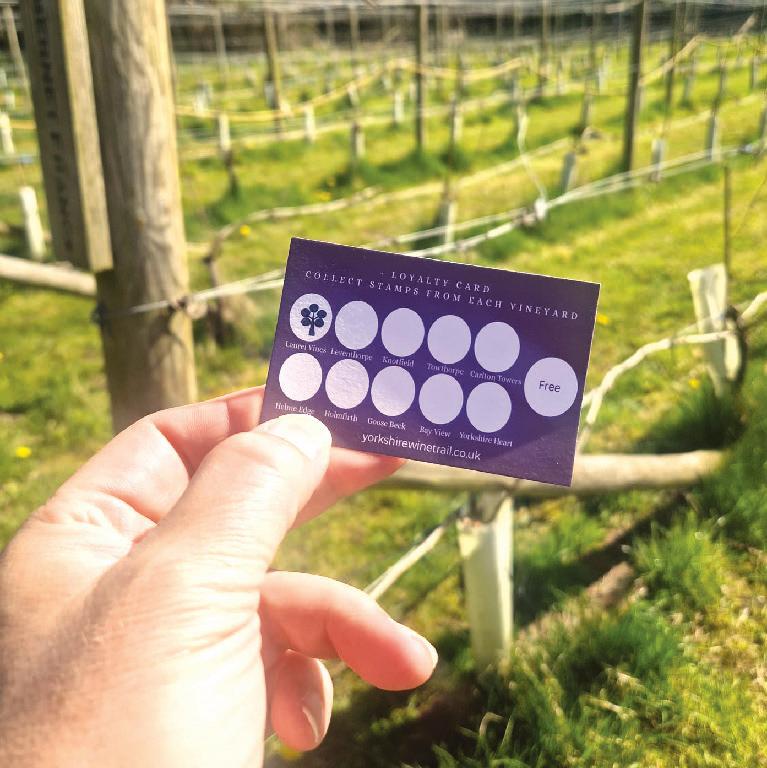
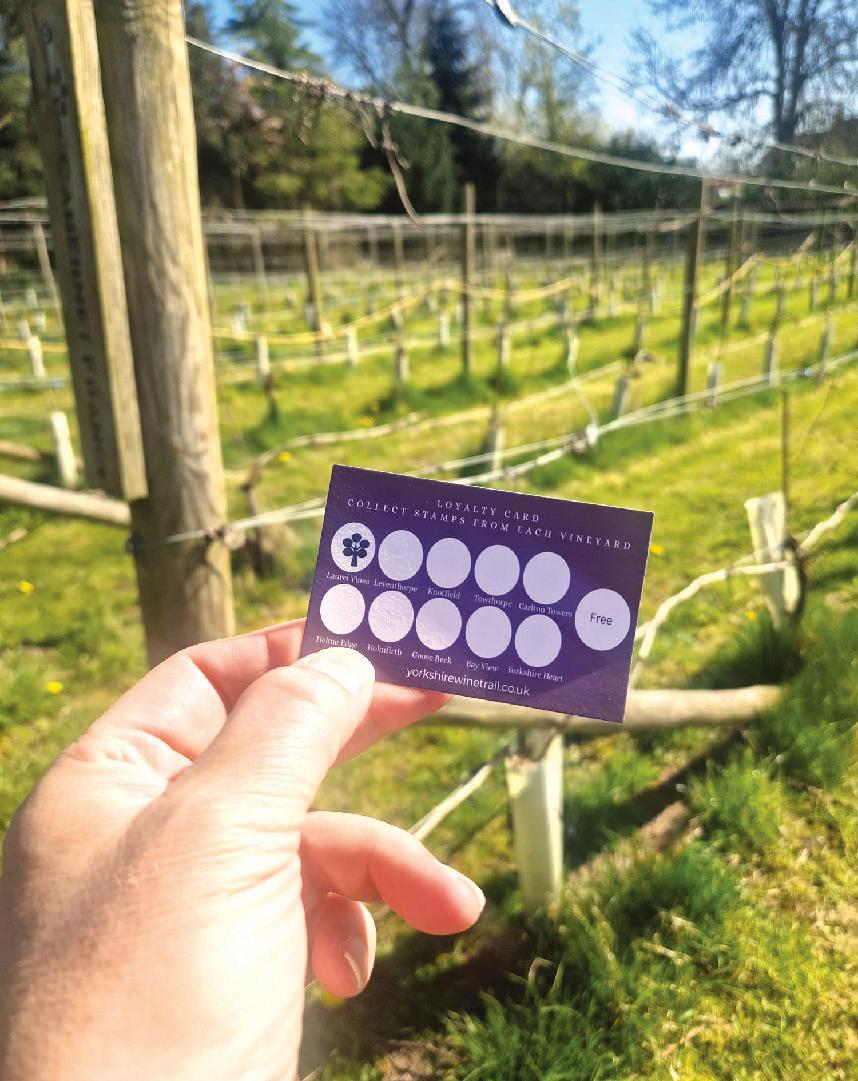
Loyalty card
The number one planting in Yorkshire is the resilient and versatile Solaris. This hybrid grape, which includes Riesling and Pinot Gris in its heritage, makes a wonderfully diverse range of wines from sparkling, still white, orange wine to dessert wine.
Pinot Noir and Seyval Blanc are second and third by volume, but you’ll also find Rondo, Divico, Dornfelder, Regent, Gamay, Cabernet Franc, Merlot, Cabernet Cortis, Phoenix, Ortega, Bacchus, Albarino and many more.
Harvests tend to be later ‘up north’ – some trail members have been known to hold off until the beginning of November depending upon what the weather throws at them.
Collectively driving tourism growth
The variety of tourism experiences across the region are as rich and diverse as anywhere in the country. Whilst some Yorkshire Wine Trail members are only just opening their doors to the public, others are long-established with onsite accommodation and eateries. Whether visitors are looking for breakfast, lunch, dinner or afternoon tea all are available options on the trail.
In common with the growing number of regional collaborations across the country, the Yorkshire Wine Trail aims to increase awareness and visitor numbers by making it easy to explore the area. A passport has been introduced to encourage people to discover multiple vineyards. Stamps are collected at each destination which leads to a reward once all ten have been visited.
These family-run businesses, some extending to three generations, all have a passion for hospitality and storytelling. Between them they have an enviable list of unique qualities and experiences.
Vineyards great and small
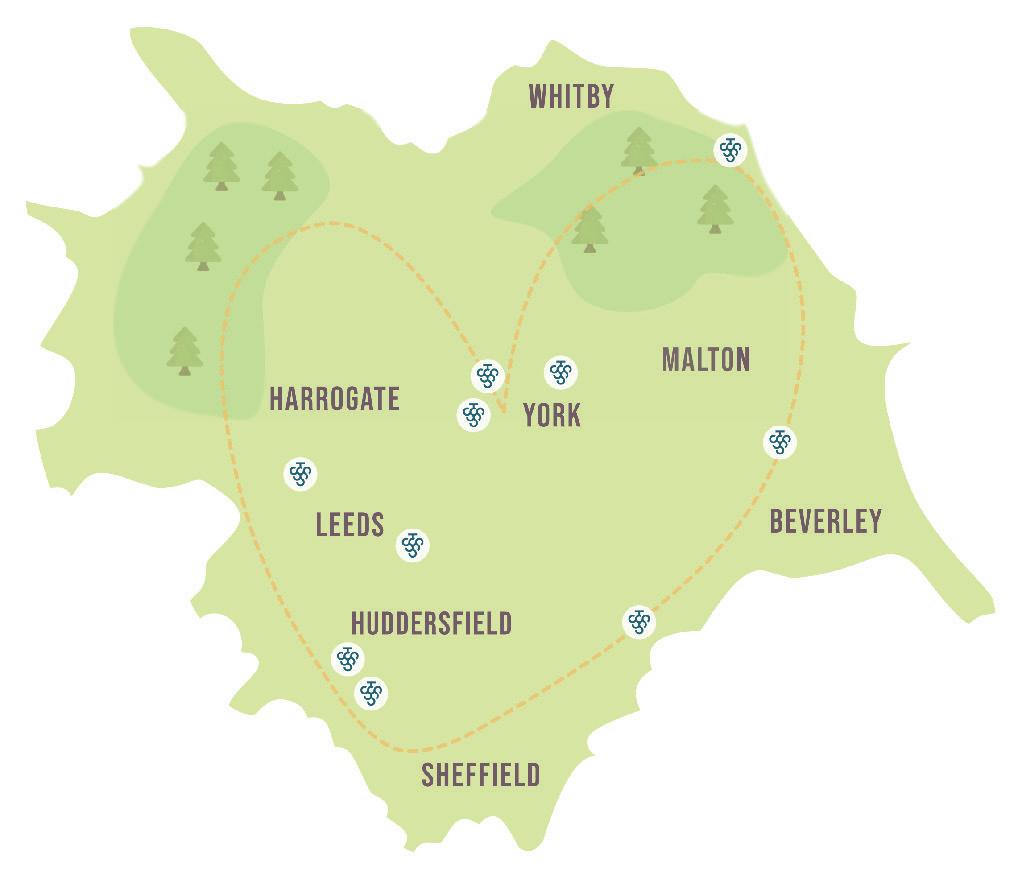
Bay Vineyard sits at the end of the coast-to-coast national trail and comes (as the name suggests) with a sea view. In contrast, Leventhorpe, on the outskirts of Leeds, is one of a handful of vineyards in the world to sit within a large City boundary. There’s country splendour in abundance at Carlton Towers, a stately home with a walled-garden vineyard. For animal lovers, Laurel Vines offers ‘Herd it on the grapevine’ – a collaboration with the neighbouring farm which combines a vineyard picnic with a highland cow safari.
Holmfirth has self-catering apartments and a restaurant making it an ideal choice for an extended stay in the region. There are
Lucy Thomas has visited 80 vineyards in England & Wales and shares her knowledge of wine tourism at www.bestbritishbubbly.com and on Instagram @bestbritishbubbly www.yorkshirewinetrail.co.uk
also boutique hidden gems open by appointment only including Towthorpe, Knotfield, Helme Edge and Goose Beck (which also offers holiday cottages).
The region is hosting its third Great Yorkshire Wine & Fizz Festival on 27 June as part of English Wine Week. The venue is Yorkshire Heart – a vineyard, winery and brewery that is no stranger to running successful events. From acoustic nights to the hugely popular Hearty Fest there is always something interesting going on. They have elevated their winter offering with a traditional Scandinavian Arctic Cabin for cosy wine tastings accompanied by nibbles cooked on the central BBQ.
Making its mark on Yorkshire’s tourist map
The vineyards have worked with regional tourism teams to ensure the trail becomes part of the wider fabric of must-see destinations across the area. Their website offers information on local attractions, restaurants, and accommodation that would appeal to vineyard visitors.
Whether anyone completes the trail passport to claim their reward remains to be seen, but what is certain is that a warm Yorkshire welcome awaits visitors who want to take a gander around this champion wine region.
Goose Beck
The shift away from the shelf
Andrea Ontiveros Flores, a sommelier and marketing & communications specialist from Alicante, Spain is rethinking how we discover wine.
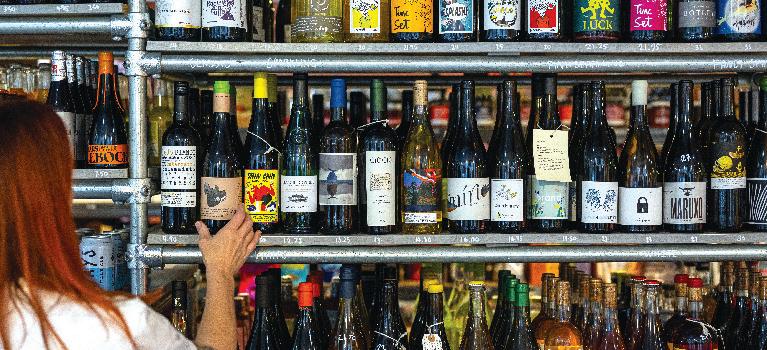
Back when I still lived with my parents, every special occasion that called for a good bottle of wine meant a trip to a large specialist retailer, rows and rows of stacked bottles, six or eight aisles deep, dominated by familiar names, all priced to feel like a sensible choice. The logic was simple: value came with volume. The more bottles you bought, the better the deal. There was no tasting, no conversation, no sense of discovery, just selection at scale. That was, for me and perhaps for many, the first real “experience” of buying wine.
Today the picture is quite different. The act of choosing a bottle is no longer defined by shelves, but by scenes, communities, conversations, and moments that feel personal, social, and culturally relevant. Wine’s new generation isn’t discovering it in retail aisles, but in spaces or experiences where connection matters just as much as what is in the glass.
For decades, wine discovery began in supermarkets and ended at the dinner table. Today, it starts in a pop-up, in a neighbourhood deli, in a group chat, or via an Instagram story. The old model, built on regional categorisation, price promotions, critics’ reviews, and dominated by large retail chains, is now adapting to a more personal approach. Wine discovery today is shaped by local shop owners, community-led spaces, and curated experiences that feel relevant to everyday life. The global decline in wine consumption, now at its lowest level in over 60 years, is more than a structural or
Tuck-Shop, Hackney Wick

generational shift; it is a transformation. The issue is not that people have stopped drinking wine, but that they have stopped engaging with it in traditional ways. Younger drinkers are not rejecting wine; they are rejecting the way it has long been sold and consumed.
From consumption to participation: the rise of hyper-personalised wine experiences
This cultural and behavioural shift is rooted in how wine consumption is understood today. Wine can no longer be positioned and sold simply as a static product or even just as a social connector for special occasions, but as a shared experience shaped by open, multi-directional conversations and consumer participation. The value is no longer just in what’s in the bottle, but what happens around it during the moment of discovery and purchase.
Today, a new wave of wine experiences is emerging across the UK and Europe, ranging from curated events to highly personalised tastings. Their aim is not only to attract new consumers and build connections, but also to foster genuine awareness of local production, provide context behind each label, and more importantly, create space to listen to what consumers are saying. These experience-led initiatives are successfully bringing together producers, distributors, and drinkers in a truly two-way conversation.
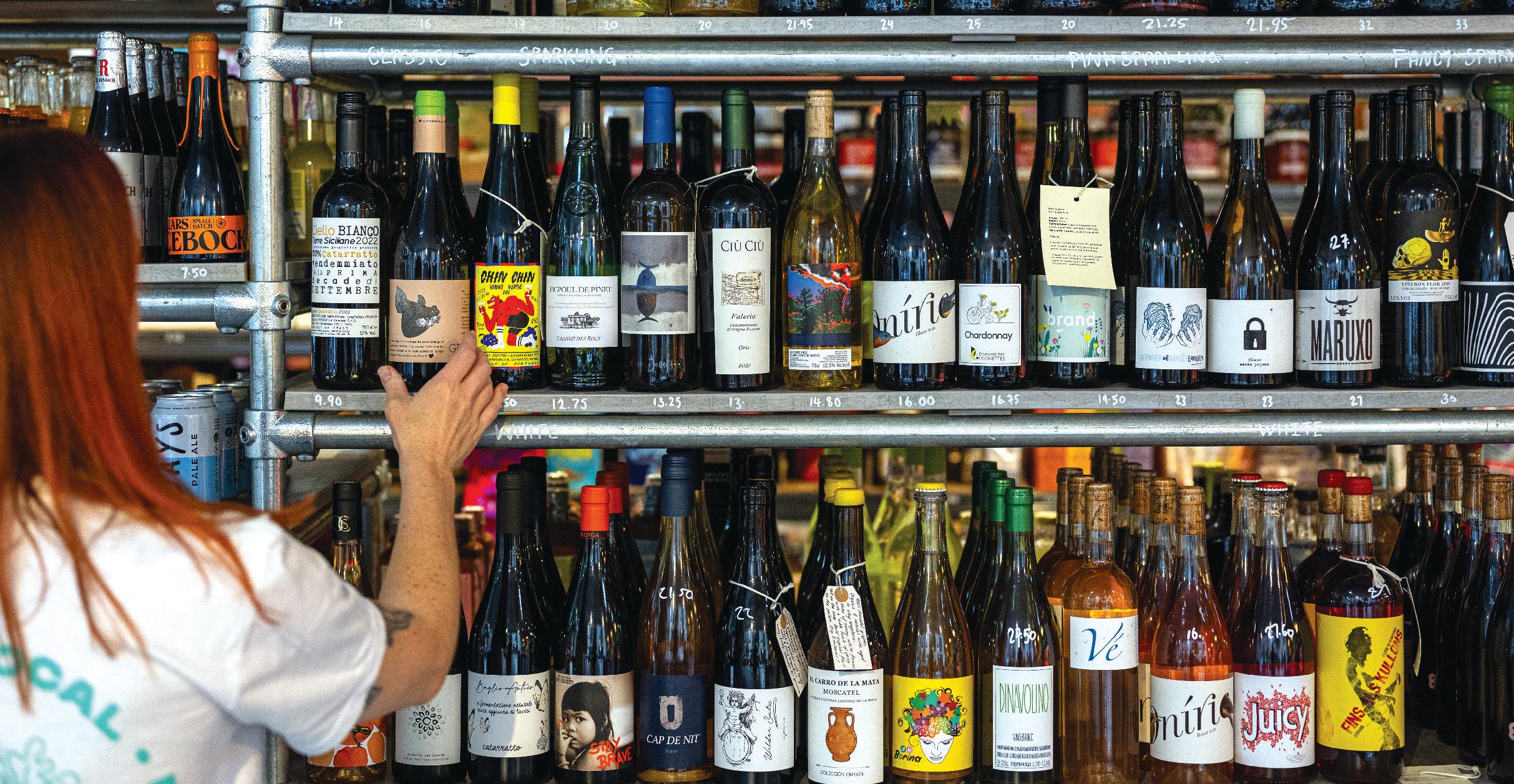

Local shops as cultural hubs
This model is becoming the heartbeat of many boroughs in London and other cities in the UK. Local neighbourhood shops, often independently owned, are no longer just retail spaces. They are spaces of curation and personality. Staff are seen as tastemakers, not just sellers, championing local makers, British farmers, and seasonal produce. What defines these spaces is a strong sense of community. Events around art, design, and of course, food and wine bring people together in-store, turning shops into cultural hubs and replacing the authority of critics with the intimacy of trust. Carefully selected and often in limited batches, their offerings lean towards “hidden gems”, premium, organic, non-alcoholic, and sustainable choices rather than mass-market brands. This creates a sense of filtered discovery, where consumers trust the place even more than the label itself.
As an East Londoner, one example I return to is Tuck Shop in Hackney Wick, where regular tastings and events create a genuine connection between producers and the local community. The owners’ passion for quality and local sourcing becomes a defining advantage, positioning them as both curators and trusted voices within the neighbourhood. For English wine producers, this shift is significant. Placement and positioning are no longer just about visibility, but about being part of a story that resonates within these communities.
Community tastings without rules
Here, there is only one rule that matters: tasting without rules. Across Europe, and particularly in communities such as Donostia–San Sebastián and other parts of the Iberian Peninsula, a longstanding model already reflects this approach. Gastronomic societies, or informal wine clubs, bring members together in shared spaces equipped with kitchens or communal tables, where they cook, eat, and drink in the company of friends and family, not limited to industry professionals. There is no hierarchy, and these gatherings are not sommelier-led. Instead, they are open spaces for debate, disagreement, and storytelling. In this setting, wine becomes democratic and conversational, less about “correct” tasting notes
and more about personal interpretation. The new wine drinkers do not want to be taught; they want to participate.
Food-led wine experiences
Another highly effective format is placing wine within a broader gastronomic narrative. This goes beyond the traditional restaurant setting, where wine is simply ordered alongside a meal. Instead, it centres on curated experiences such as chef residencies or pop-ups, where the food, or the chef, becomes the entry point rather than the winemaker. People come for the food but discover the wine almost incidentally. The key lies in thoughtful selection, with wines chosen to surprise, complement, and leave a lasting impression, building an emotional connection through the overall experience. Guests not only discover new wines but often develop a lasting affinity with specific producers or styles. The success of these experiences often depends on their limited and temporary nature, creating a sense of urgency and desirability. In this context, food becomes a Trojan horse for wine discovery, attracting a food-driven audience that is naturally more open to exploring new wine styles and preferences
Reinventing the vineyard experience
This is already gaining momentum across the UK and Europe, but its relevance today cannot be overstated. Vineyard visits are moving away from scripted tours and technical lectures towards more immersive and culturally driven experiences. Music, art, shared dinners, and even harvest participation are becoming central to how people engage with wineries. Chef residencies and collaborations with wellknown restaurants are also proving particularly effective in attracting new audiences through the gastronomic scene. Initiatives such as restaurant takeovers or seasonal residencies bring a different profile of visitor, often introducing wine in a more accessible and engaging way. A clear example is a Sticks’n’Sushi takeover at Balfour Winery in Kent, where a recognised restaurant brand brings a new audience into the vineyard setting. Vineyards are no longer just places of production; they are becoming destinations.
A WORLD VIEW
Digital and remote wine experience
One format that has become particularly relevant for this generation, accelerated by the pandemic, is the rise of online tastings. Wine clubs and live virtual sessions have created cross-border communities, removing geographical barriers and making wine more accessible. For consumers, this offers a unique opportunity to discover niche products and lesser-known producers. For wineries, it provides a cost-effective way to introduce new labels, small-batch releases, and experimental wines, while also gaining direct feedback from a broader audience. In many ways, it acts as real-time market insight, creating a more direct and personal conversation between producers, distributors, and consumers. Digital formats also remove much of the intimidation traditionally associated with wine, replacing it with curiosity and openness. The scope for creativity is wide, from monthly subscriptions and tiered tasting packs to different formats of live sessions. Ultimately, success lies in creating a sense of belonging to a community that is open to discussion, exploration, and learning.
Social media and the fall of
wine gatekeeping
This is perhaps the most transformative shift in how wine is communicated and shared, moving from a model dominated by critics and sommeliers to one shaped by creators, casual drinkers, and niche influencers. It has become one of the most effective ways to generate word-of-mouth, or rather screen-to-screen recommendations, connecting wines with entirely new audiences. At the core of this shift is authenticity. Imperfection is part of the
appeal, and wine is no longer reserved for experts. Anyone can explore, enjoy, and share their perspective, often with humour rather than technical precision, and with a willingness to challenge long-established rules around how wine should be consumed. Wine is no longer explained by a select few, it is shared by many.
Why this matters: from acquisition to loyalty
These experience-led trends are just a few among many that continue to grow in popularity and creativity. Some are even integrating technology to enhance engagement, such as the Tuscan estate Campo alla Sughera, which uses virtual reality to place guests in the middle of the harvest at any time of year. Volume-driven and price-led strategies remain essential for many wineries, but the opportunity lies not in replacing one model with another, but in combining both. A balanced approach, using a mix of marketing activations and consumer channels, is key to staying relevant in an evolving market.
Today’s audience is increasingly experience-driven and community-led, placing value on emotional connection. Experiences do not just sell bottles; they build belonging. They not only attract new consumers but also create long- term loyalty. For producers and distributors, this means rethinking one-way storytelling. It is about investing in spaces, communities, and people, not just channels. The future of wine will not be shaped by supermarkets alone, but by conversations, whether in shops, online, or within communities where wine becomes part of people’s lives, not just their purchases. Experiences are no longer marketing tools; they are the product.
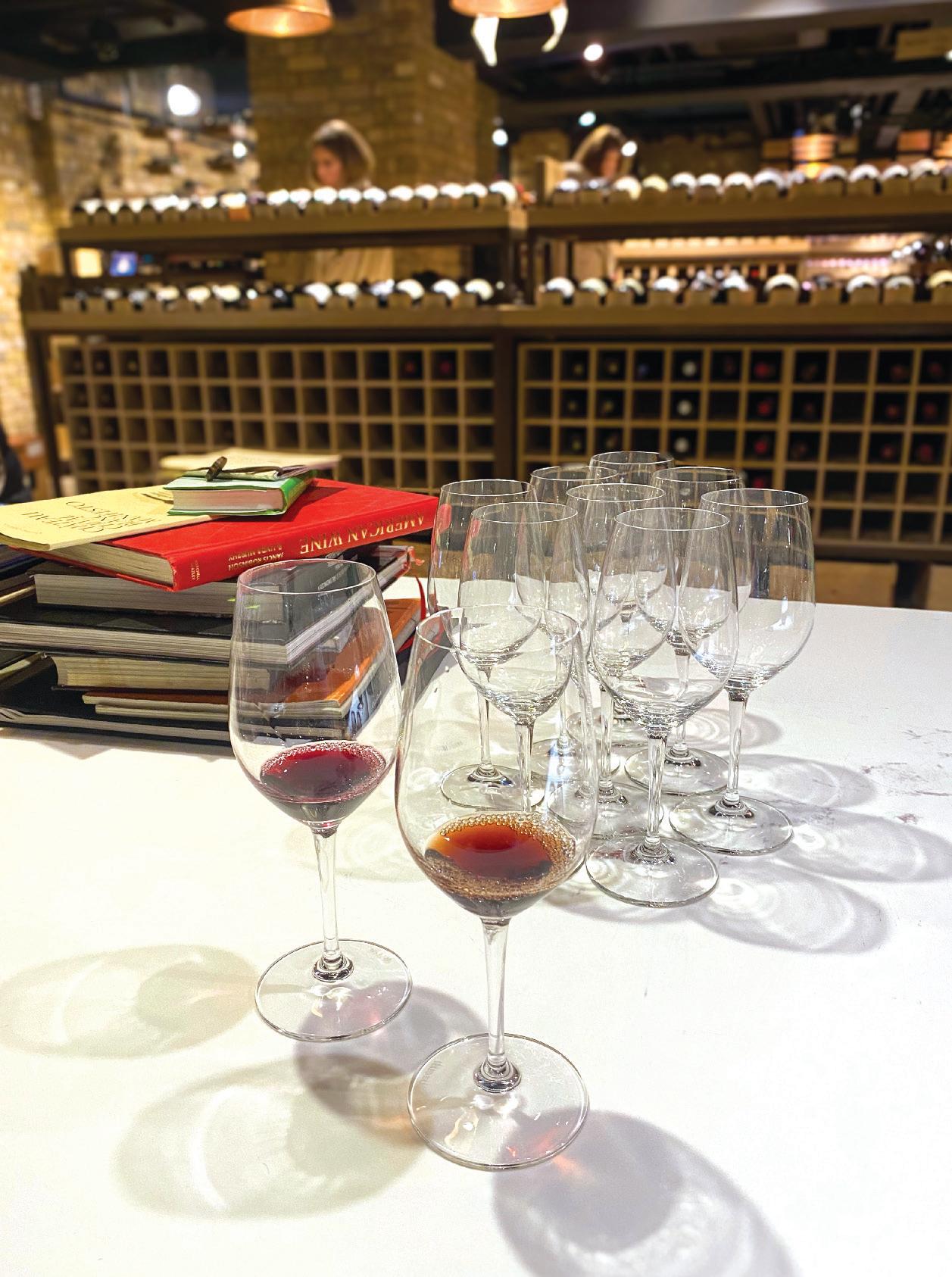

Community wine tasting
Shaping the next vintage
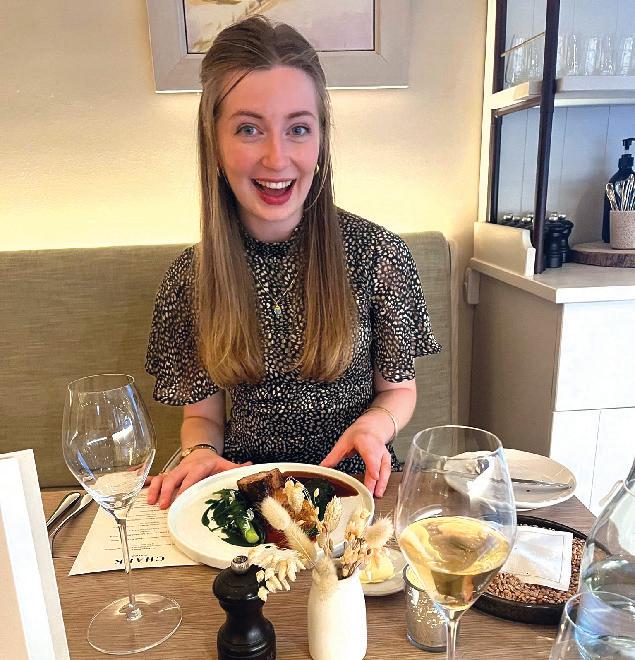
Meet international wine business degree student Jennifer Tame as she reaches her final year at Plumpton College.
How did your journey towards studying International Wine Business begin?
Working at a local micro brewery during my gap year opened my eyes to an undiscovered world of alcohol and food. I fell in love with trying new flavours and foods, reinforced by the experiences I had whilst travelling Europe. After attending an Open Day at Plumpton, I realised that this was the degree and career for me.
What drew you to studying international wine business and what are your aims and aspirations post graduation?
I’ve always had a ‘business brain’ and wanted to focus on this area. I knew that there would be elements of production within the business course, and the wonderful thing about a course at Plumpton is that I am able to gain experience in the vineyard or winery if desired.
Now you are in your final year, what have the highlights been of studying this course? Any stand out study trips, research projects etc?
Plenty! Last year’s Bordeaux trip was particularly fun. There is something really special about going to one of the most famous wine regions in the world amongst peers who are equally passionate and enthusiastic about wine as you are. Going with Plumpton opened doors that otherwise might have been closed and producers and professionals are always interested when you say that you are a wine student from England.
How do you think this degree and the teaching at Plumpton will equip you for a future in the global wine industry?
One of the key highlights on this degree programme are the networking opportunities. Having access to industry experts and events is a great way to learn and grow, alongside putting yourself forward for job opportunities. I have already undertaken two internship roles at UK wineries which otherwise would have been hard to come by. The wine industry is small, and Plumpton is unique in its offerings, so it is easier to stand out in graduate roles.
What are your future aims and aspirations in the wine industry?
I am looking to combine my on-trade experience with an off-trade role. I’d like to go into distribution or trade, either for a supplier or a producer. I’m also open to roles within the broader drinks industry – there are lots of exciting changes taking place and it would be great to look at consumer needs from a more holistic angle.
Can you give us an insight into your studies at Plumpton College?
One of the more unique elements of the course is that we study on site two full days a week rather than lectures being spread out across five days. This provides a great opportunity to work whilst gaining greater industry experience. The small class sizes allow everyone to share their thoughts on a topic at hand. And of course wine tasting is involved!
To find out more about degree pathways:
www.plumpton.ac.uk/university-courses Book onto the next Open Day and Annual Spring Fair on 9 May
What are the key opportunities or challenges facing your work or research for the future?
A big issue at the moment is the movement away from alcohol consumption, especially in younger generations. It also goes hand in hand with economic challenges being faced by most stakeholders – rising costs are affecting on-trade venues, producers and consumers. I’m welcoming the challenge though. One of my focus areas is on consumer behaviour and how to make wine more accessible which is a key topic during National Wine Careers Week that starts here at Plumpton on 9 May: www.winecareersweek.co.uk
What are your thoughts on the new Centenary Smart Vineyard project that recently launched at Plumpton?
It’s very exciting and reinforces the position of Plumpton College as both innovators and educators within the agricultural industry. Combining the agricultural world with the digital one is the future, and it’s great to see new ideas being brought to the UK wine industry.
As your degree journey is in its final stage, what advice would you give future students interested in studying wine?
Say yes to everything! Try all the wines (even if you’re not sure you like it), go on as many of the trips as you can, talk to everyone and work in as many different areas of the industry that you can get into. As a student you will never have as much free time or opportunity so make the most of it.
A celebration of English wine and heritage
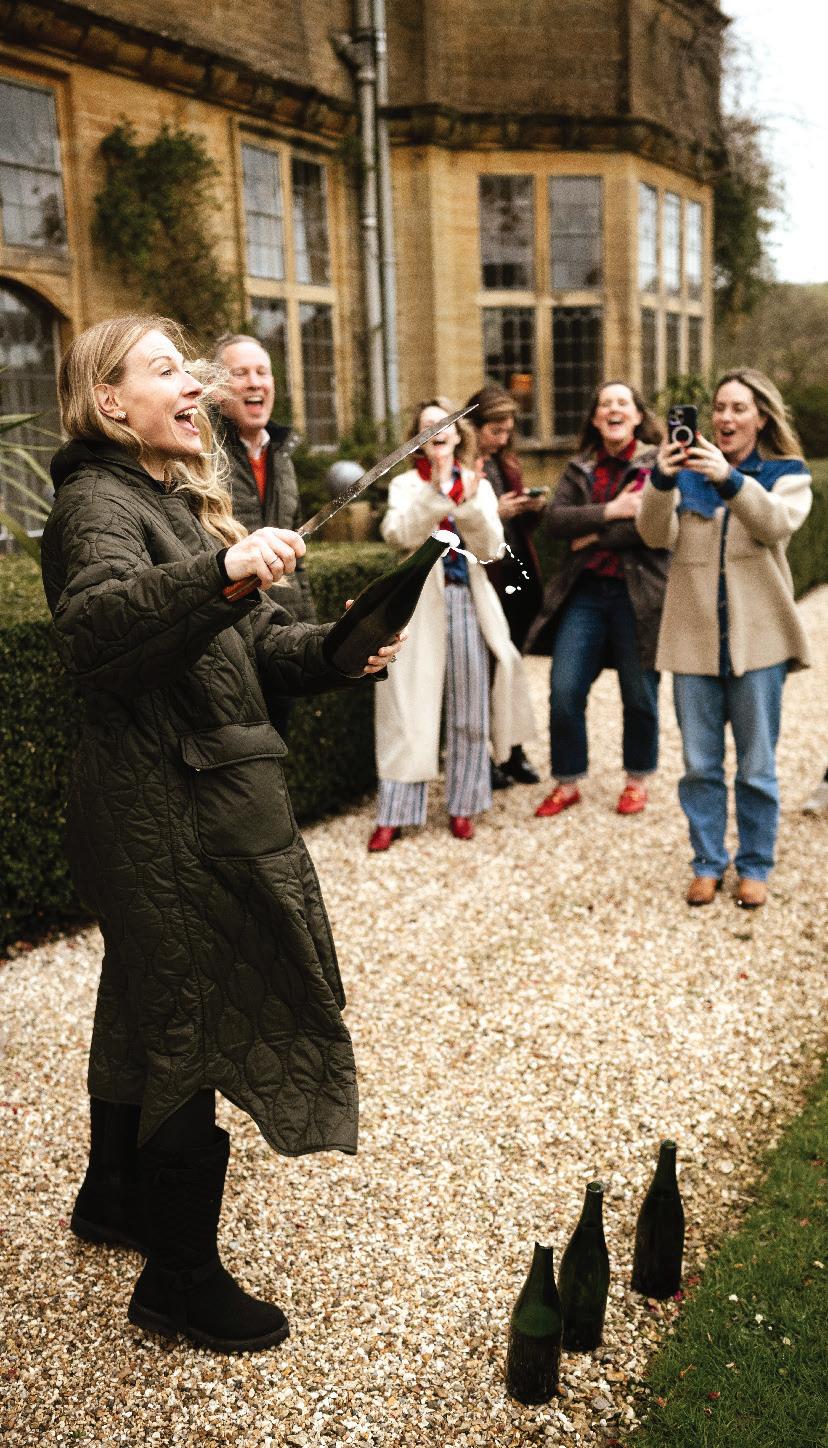
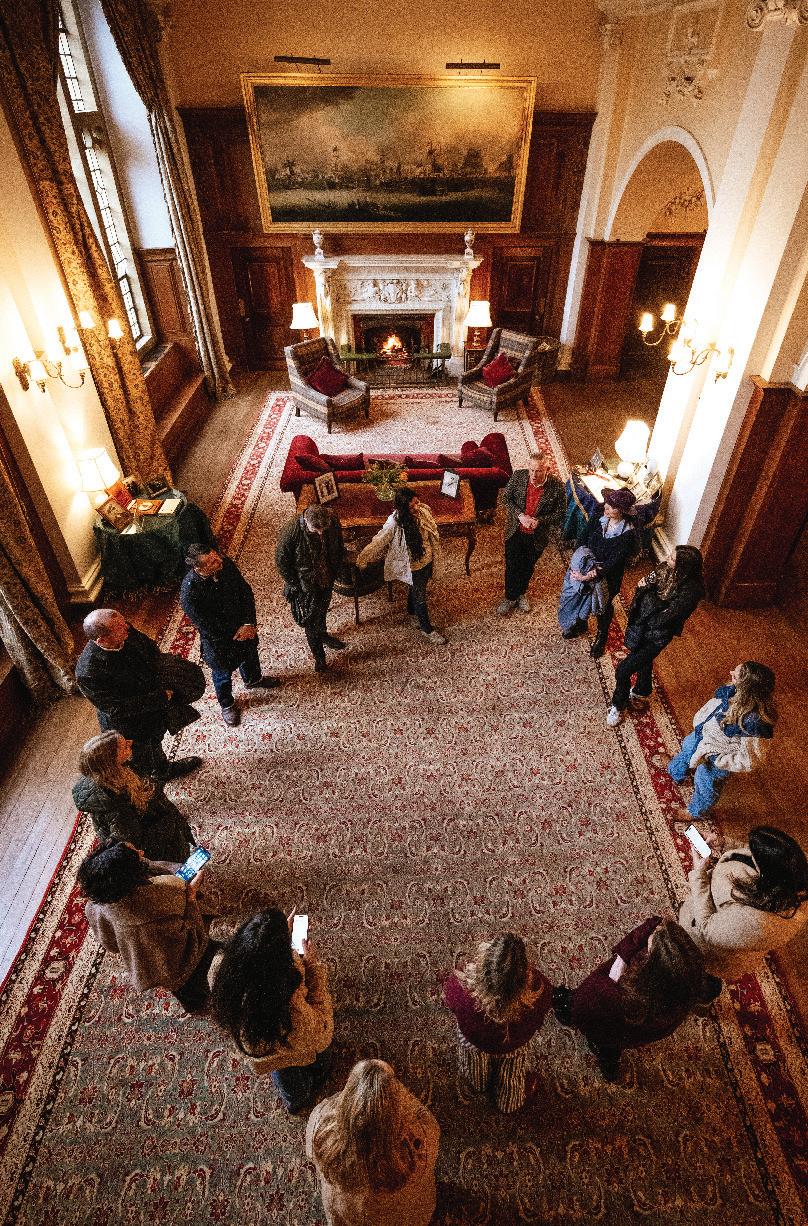
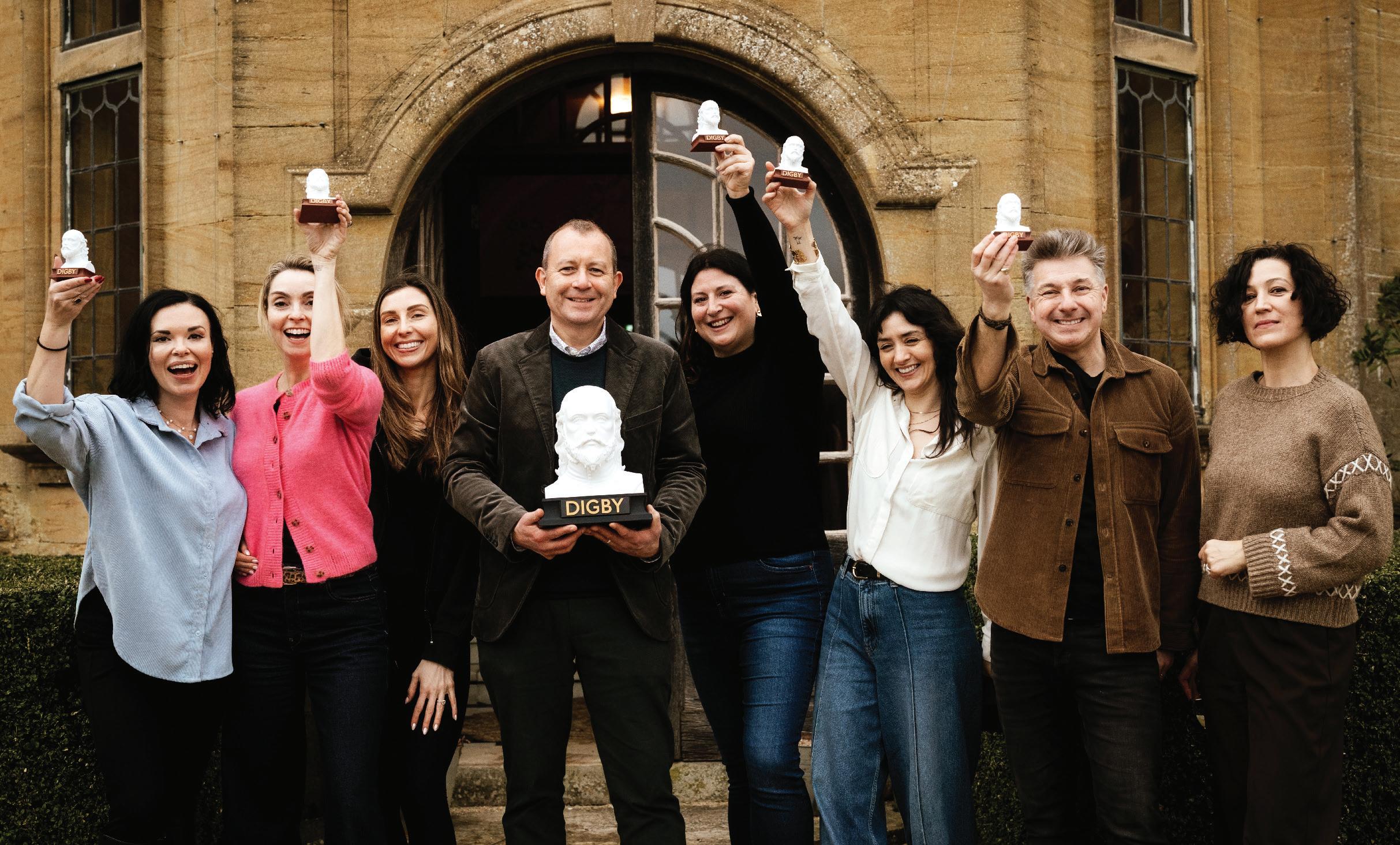
I was delighted to be invited to an immersive day hosted by Digby Fine English at Minterne House & Gardens in Dorset. The experience was designed to do more than showcase wine. It was an exploration of heritage, craft, and the story behind the brand itself.
Minterne House holds particular significance for Digby. It’s the ancestral home of Sir Kenelm Digby, the 17th-century polymath widely credited as the father of the modern wine bottle and the very inspiration behind the brand’s name. It was a deliberate connection between historical innovation and contemporary English winemaking. The day unfolded across several activities that combined teambuilding fun with education. A private blending workshop took place in the Old Kitchens, offering hands-on insight into the craft of creating balanced, complex sparkling wines. The Minterne Maze provided a playful counterpoint to the more serious winemaking focus. The evening culminated in black-tie dining in the Tapestry Room,
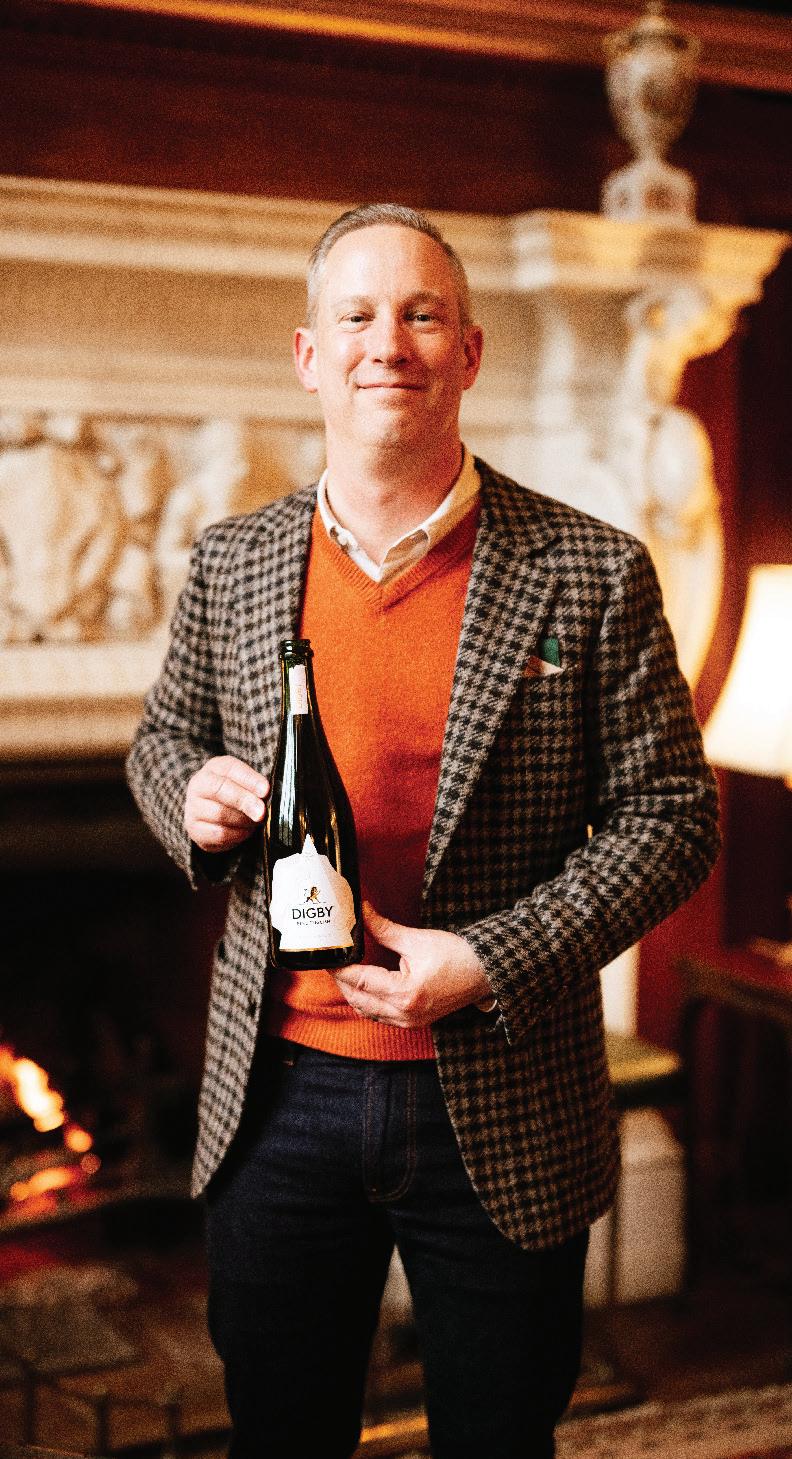
where Digby’s wines were paired with a menu reflecting the brand’s gastronomic ambitions.
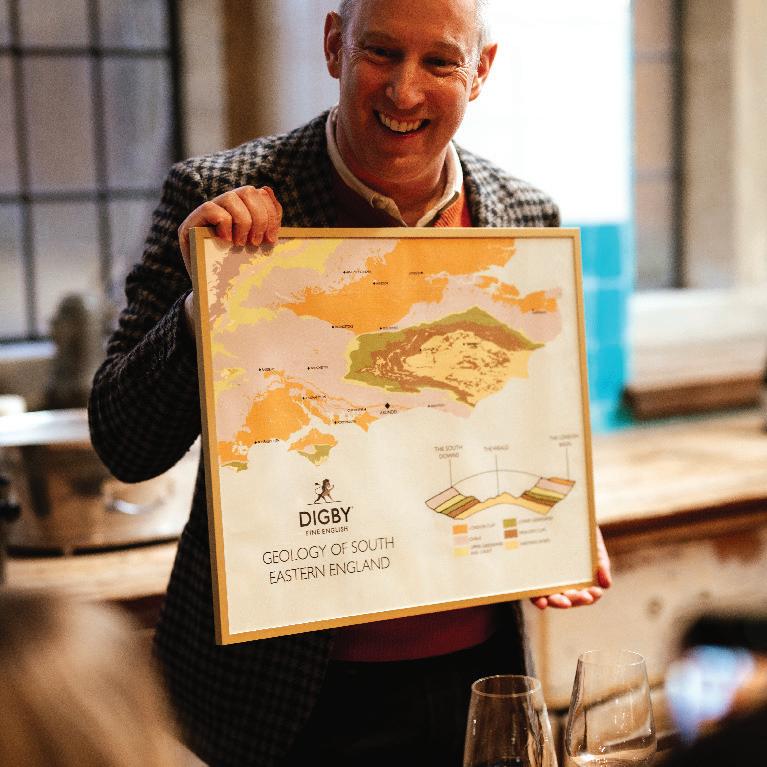
Digby Fine English operates as a terroirfocused blending house, sourcing fruit from outstanding vineyard sites across England rather than being bound by a single estate. This approach allows them to craft wines defined by precision, balance and character rather than geography alone. The classic traditional method varieties are used: Chardonnay, Pinot Noir and Pinot Meunier, blended across chalk, greensand and clay soils. Each soil type plays a distinct role. Greensand brings energy and vibrancy, clay adds depth and complexity, and chalk contributes minerality and elegance.
Central to Digby’s philosophy is patience. Wines are given extended lees ageing of five years or more, softening acidity and allowing for greater depth of flavour and longevity. They’re released when they’re ready, not according to a commercial schedule. This is winemaking with conviction, designed to demonstrate that

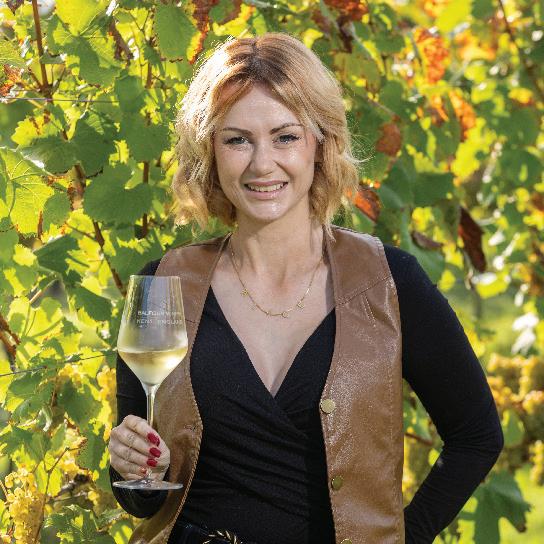
AEngland is not an emerging category but a serious global fine-wine region capable of producing exceptional sparkling wines with identity and ageing potential.
The brand new MV range showcased at Minterne exemplifies this approach. The MV Blanc de Blancs is 100% Chardonnay blended across four vintages: 2018, 2019, 2020 and 2021. Sourced predominantly from Kent with contributions from Hampshire and West Sussex, it’s a wine built for the table as much as celebration. The MV Rosé, a blend of Chardonnay, Pinot Noir and Pinot
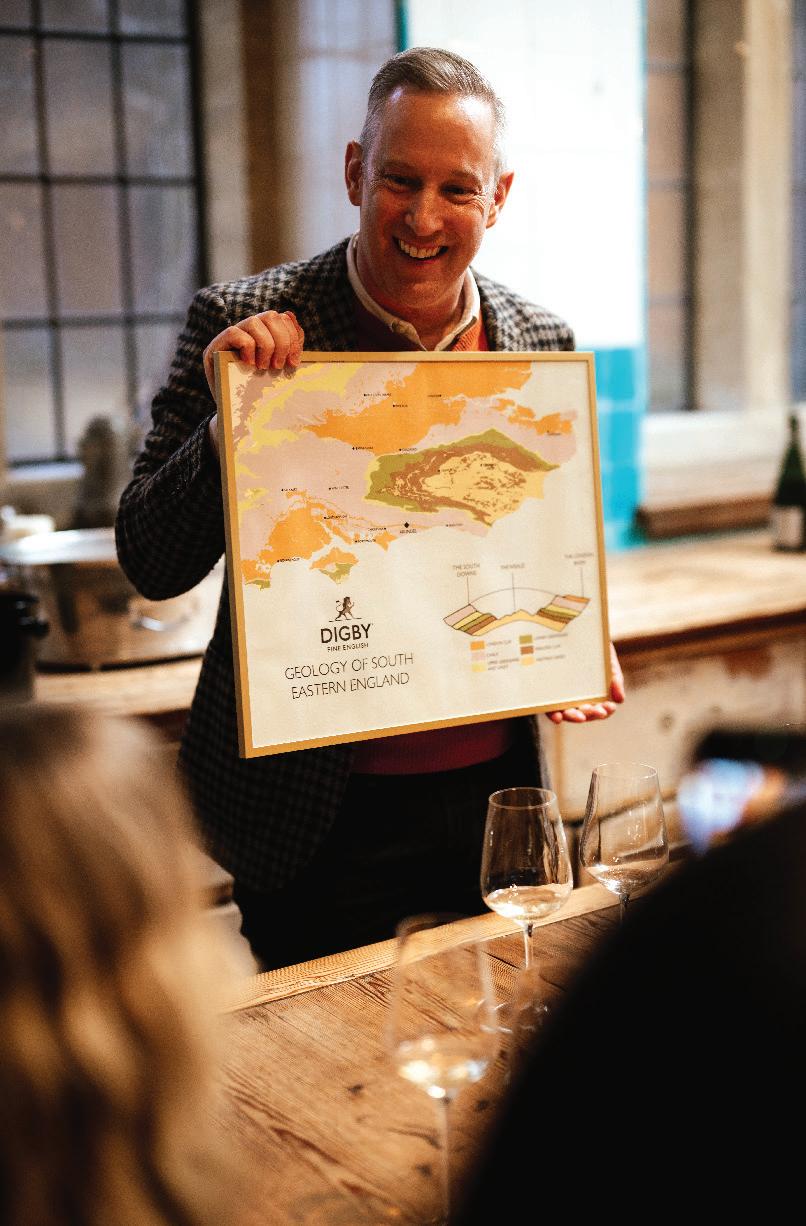

Meunier with still Pinot Noir, demonstrates similar gastronomic intent. The aim for these wines is to bring Digby into more high-end hospitality venues and restaurants, further pushing the brand into the wider consumer realm through gastronomy.
Digby’s recognition continues to build. British Airways serves their wines in Club World, making them the only producer with two wines on rotation. They’re poured at the historic Leander Club and within the House of Commons. These placements signal institutional confidence in English
sparkling wine as a luxury category, not just a novelty.
Founders Trevor Clough and Jason Humphries set out with a clear ambition: to demonstrate that England can produce sparkling wines equal to the finest in the world. Rather than replicating Champagne, Digby seeks to express England’s unique climate, character and potential. The result is a refined, gastronomic style that appeals to discerning consumers seeking provenance, craftsmanship and originality. Digby combines intellectual curiosity with
a confident, understated tone, celebrating English wine without pretension or apology. This event was a statement of intent from a brand that understands the importance of storytelling, heritage and placing English wine within a broader cultural context. Minterne House provided the perfect backdrop for that conversation, and the wines more than held their own.
Photos: Robin Goodlad
WineGB Wessex Base Wine Tasting 2025
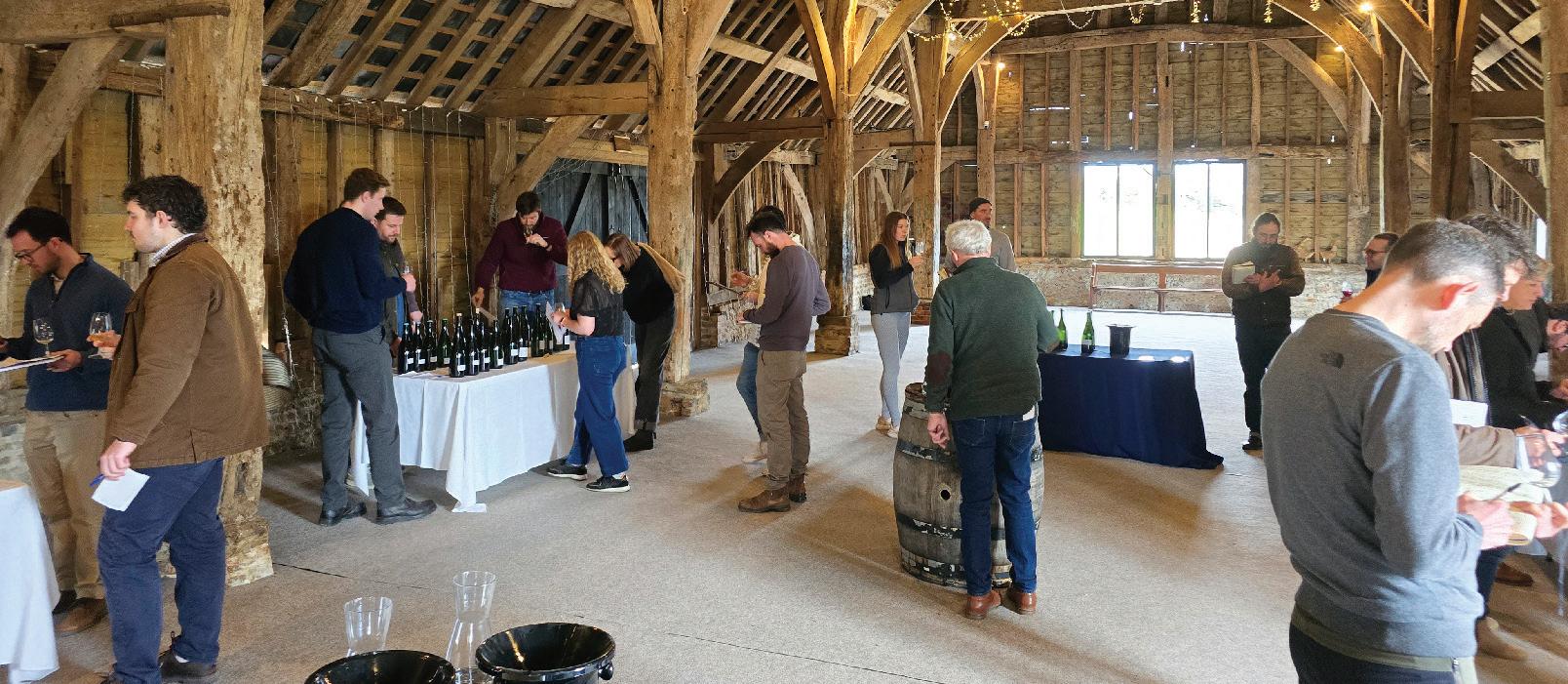
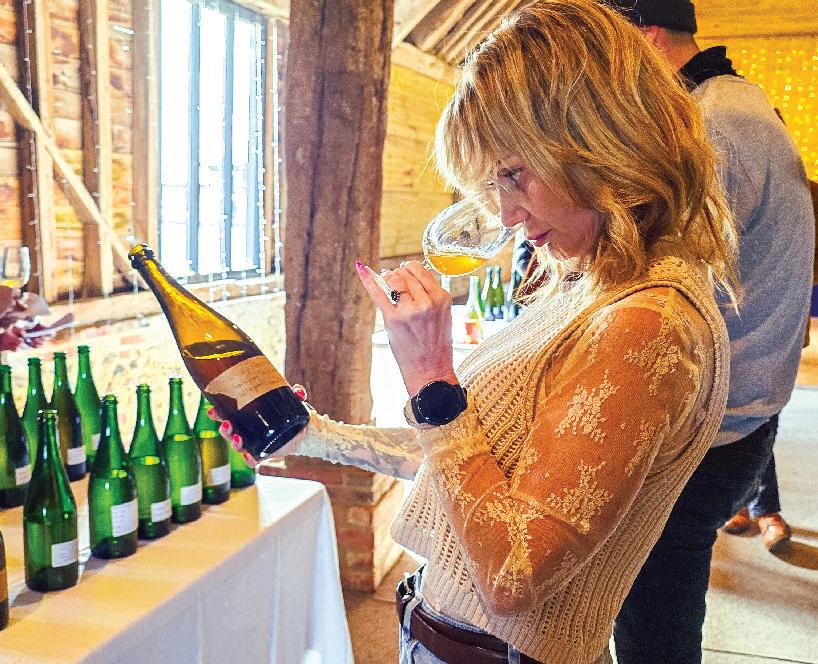
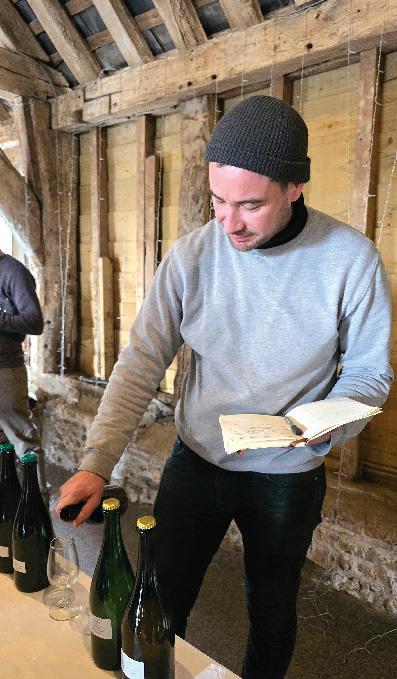
The second edition of the WineGB Wessex Base Wine Tasting took place at Pinglestone Farm in Alresford, Hampshire, home of Louis Pommery England, offering a rare opportunity to examine the building blocks of English sparkling wine before secondary fermentation begins. For those of us invited to attend, it was a chance to taste potential rather than polish.
WineGB Wessex represents a regional collective of over 70 artisan producers spanning Dorset, Hampshire, the Isle of Wight and Wiltshire. This corner of England carries a rich history of viticulture and some genuinely compelling geology. Large straits of chalk, stoney flint, clay caps and other diverse soils all come into conversation here. Tasting across these geological differences in one room is exactly the kind of exercise that starts to reveal what this region is truly capable of.
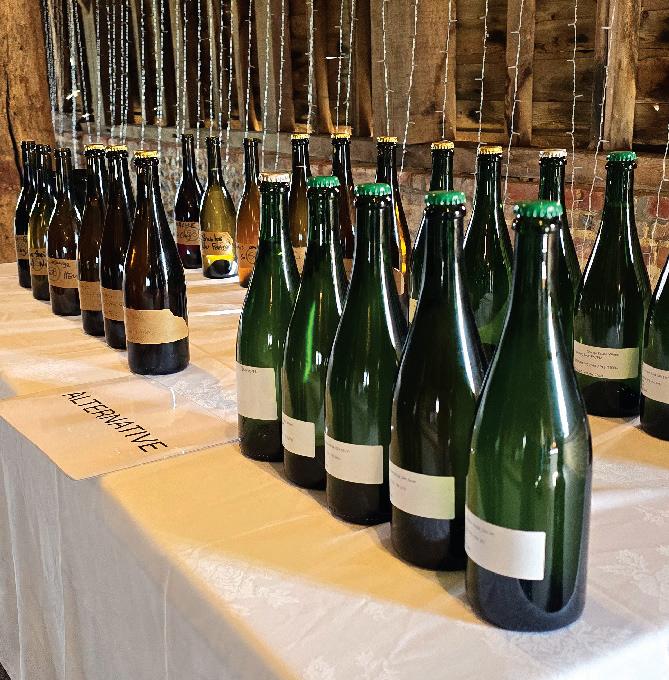
Will Perkins, head winemaker for Louis Pommery England, delivered an introduction that set the scene before we moved into the wines themselves. These were base wines in their rawest form: unfiltered, unfined, straight from tank or barrel before lees ageing, before oak ageing, before any of the finishing work that shapes a final style. High acidity, tight structure, rough edges. But that’s the point. You’re tasting potential.
The format allowed producers to showcase either single varietal expressions or final base wine blends from the remarkable 2025 growing season. This flexibility acknowledged the reality of production timelines while maintaining the educational intent of the tasting.
What makes this event valuable is the “Troubleshoot” table. This is where the real educational and exploratory aspect lies, and it has the potential to raise qualitative levels across the board. The organisers
have worked to create an environment where producers feel willing and vulnerable enough to share their trials and tribulations, celebrating experimentation and pushing boundaries to glean feedback and learn alongside one another.
Oak barrel fermentation, regional vintage comparison, grape variety selection across different soil types: these are the threads that, over time, build a thumbprint for a region. An open platform to ask the big winemaking questions and start piecing together the blueprint.
English wine is still defining itself, still working out what its regions mean and how terroir expresses itself across different geological pockets. Events like this, where producers come together to taste, question and troubleshoot, are how that understanding deepens. It’s not about marketing or finished product. It’s about the foundational work that will shape the quality and character of English wine for years to come.
The Wessex region deserves attention. The geology is there, the producers are committed, and the willingness to share knowledge openly suggests a maturity that will serve the collective well. Tasting these base wines offered genuine insight into where English sparkling wine is heading, one raw, unfinished sample at a time.
Alice Griffiths
Alice Griffiths is a wine communicator boosting the profile of English and Welsh Wine on social media. Alice has worked within the agriculture industry for the past 20 years, spending time as a lecturer and a smallholder before discovering her passion for viticulture, winemaking and wine tasting.
Get in touch to have your events featured: ✉ Posingwithalcohol@gmail.com
DESKTOP www.alicegriffithswine.com
INSTAGRAM Alice can be found on social media under @alicegriffithswine on Instagram.

ALL THINGS AGRONOMY
Unlocking vine potential: the importance of nutrition
As the new season approaches, vineyard nutrition becomes central to optimising vine performance. While winter pruning sets the physical foundation, it is nutrition that enables vines to release their potential.
In UK viticulture, particularly in areas with fertile soils and generous rainfall, the challenge of controlling excessive vegetative growth, or vigour, persists. Although canopy management techniques such as tucking, trimming and leaf removal are essential, the true basis of vigour control lies in understanding and managing vine nutrition. This is not simply a matter of applying fertiliser; it requires interpreting what a vine needs, monitoring nutrient levels, and responding with targeted actions.
Nutrition as a driver of vigour
Vine vigour reflects a balance between growth potential and limiting factors such as soil, climate, and management practices. Nitrogen is the most influential nutrient, driving canopy growth, but potassium, phosphorous, magnesium and calcium also play vital roles in fruit set, berry development, and overall vine health. Imbalances in any of these nutrients can lead to unpredictable vigour and impact both yield and fruit quality.
A recurring issue in UK vineyards is magnesium deficiency. Magnesium, being a highly mobile cation, binds weakly to sandy, chalk, or limestone soils, which have a low cation exchange capacity. Potassium competes for uptake, and winter rainfall can leach magnesium from the root zone. As a result, annual spring applications of magnesium sulphate are often necessary, providing an immediately available source that vines absorb within days to weeks of application. This intervention enables noticeable improvements in chlorophyll production and canopy efficiency within the same growing season.
Optimal timing for ground fertiliser application
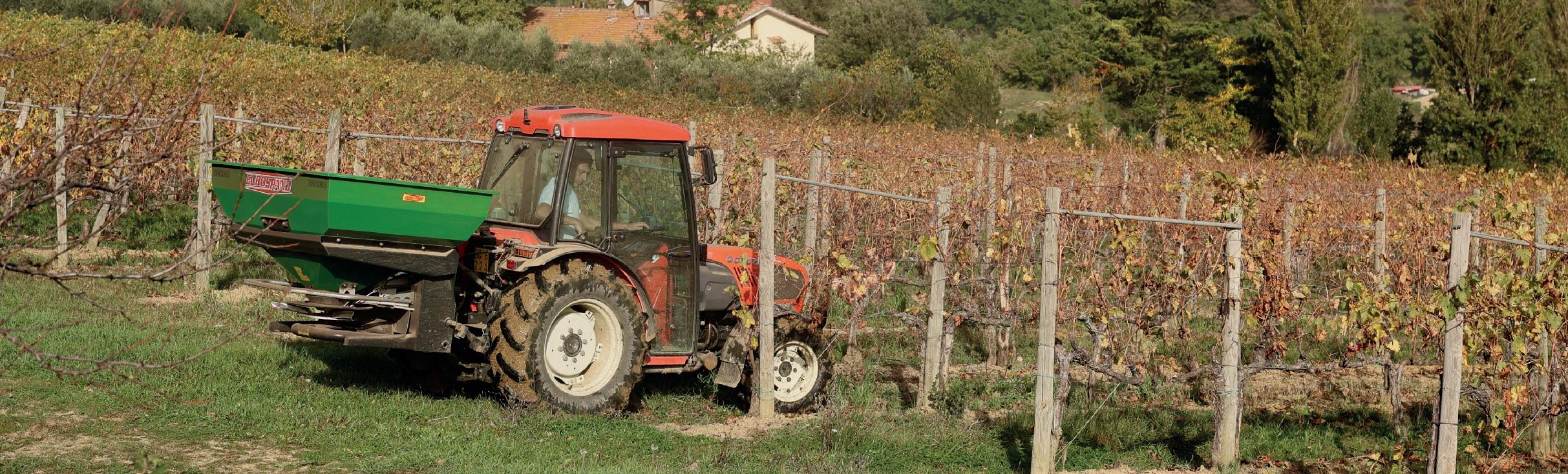
Ground fertilisers are typically applied in early spring, just before budburst. This timing ensures nutrients are present as vines transition from dormancy to active growth.
Applying nutrients in early spring supports root activity, fosters steady initial growth to prevent erratic shoots, and improves fruit set, as adequate potassium and calcium aid flowering and cluster development. Applying fertiliser too late can lead to excess vegetative growth at the expense of fruit balance, while too early an application
increases the risk of nutrient leaching, particularly in regions with high rainfall.
The value of petiole testing
Petiole testing is the most reliable method for assessing vine nutrient status. Conducted at flowering or veraison, it provides a snapshot of what nutrients the vine has absorbed, rather than what is simply present in the soil. This distinction is crucial for precise nutrition management. Petiole testing aids in reducing unnecessary fertiliser use, monitoring trends over time, and identifying deficiencies before visual symptoms appear, allowing for timely interventions.
Recognising early signs of deficiency
The vineyard itself often reveals early signs of nutrient imbalance. Subtle changes in leaf colour, shoot growth, or fruit set may signal deficiencies. Common early indicators include pale leaves (nitrogen), interveinal chlorosis (magnesium), marginal leaf scorching (potassium), brittle shoot tips (boron), and yellowing of young leaves (iron). Prompt action prevents a cascade of secondary issues that can compromise both yield and fruit quality.
A proactive approach to balanced growth
As growers prepare for the season, there is an opportunity to reset and refine nutritional management. Achieving balanced growth is about supplying enough nutrients for a healthy, productive canopy, without encouraging excessive vegetative growth that could hinder fruit development. Regular soil tests, petiole analysis, and attentive vineyard monitoring empower growers to make informed decisions supporting vine balance and fruit quality. Should you wish to discuss tailored nutritional plans, or require assistance with soil or petiole testing, please feel free to get in touch for guidance and support.
Photo: Dutch_Photos / Shutterstock.com
Megan Fitzpatrick
Pole Pole
Gradual evolution and refinement.
There were three expressions we were taught on a recent break with the kids in Zanzibar. The Swahili “Hakuna Matata” (yes, it’s not just a Disney ditty) is used with extraordinary regularity, and it means chill out. “Jambo” (or more accurately “Mambo” for locals) means hello, and most frustratingly “Pole Pole”, which means gently does it, take your time, or slowly slowly, is a quaint expression when you say it to a child, but incendiary when a barman casually delivers it when I have been waiting far too long for him to pour me a cold beer! However, Pole Pole, the principle of patience and gradual progress, is essential and often unrecognised in the wine world’s success. One of the most quietly influential people in the on-trade, both here and overseas, is Vincent Pastorello.
I first met Vincent when he was the wine director at the Dorchester, working closely
with Alain Ducasse. He also worked with Gordon Ramsay in Melbourne and London. Back in the day, he was one of the most talented sommeliers on Earth. Eight years ago, he became global wine manager at Dream International, overseeing restaurants such as Zuma, Roka, Amazonica and Coya, among others. He has also, more recently, collaborated with a couple of highfalutin’ winemakers, making a couple of wines, and the results are staggering.
His Vinya dell Col, a Xarel-lo which he makes alongside legendary Penedès Spanish winemaker Pepe Raventós, is nothing short of epic and has become more refined with each vintage, illustrating how patience allows a wine’s complexity to deepen.
A couple of years ago, he afforded me a sneak preview of the inaugural 2021, and last year, it was the majestic 2022. Last month, the newly released, and spectacularly beautiful 2023 was joined by a fascinating preview of the 2024, which is still in tank. This series of vintages shows how Pole Pole has allowed flavours and aromas to develop significant intricacy over time.

And we come to the point of this month’s article: Pole Pole. Or in Vincent’s own words, “nature leads the way”, “it takes years to learn to unlock delicacy and detail in one’s wines”. He is a wise chap, and his wines tell this tale perfectly, as his gradual augmentation of flavour and intricacy is unmissable.
Funnily enough, I tasted Domaine Evremond’s spectacular ‘Edition 2’, which in itself is a stunning, expansive and unmistakably grand wine. It is hard to believe, but it builds considerably on the first release, and I can’t explain why or how it has gathered so much finesse – I will ask next time I see Mr McGrath! I suspect Pole Pole is the reason. So, to celebrate this month’s curious theme, I have found three wines that have already appeared in my column over the last eight years, each one illustrating, through gradual evolution and refinement, how consciously or unconsciously employing the art of Pole Pole leads to noticeable improvement.
I wrote up the 2020 vintage of this wine back in September 2021, noting it ‘was the most extroverted in oak impact’, ‘made from a blend of 50% Pinot Noir, 20% Pinot Blanc, 20% Bacchus and 10% Pinot Gris’, and ‘some Bacchus is held back from the 2019 harvest and used here, bringing a more mellow tone’.
And we fast-forward a couple of vintages to find that 2024 is not only another example of Ben Witchell’s epic blending skills, but it surpasses the intricacy and class of the 2020 by a mile!
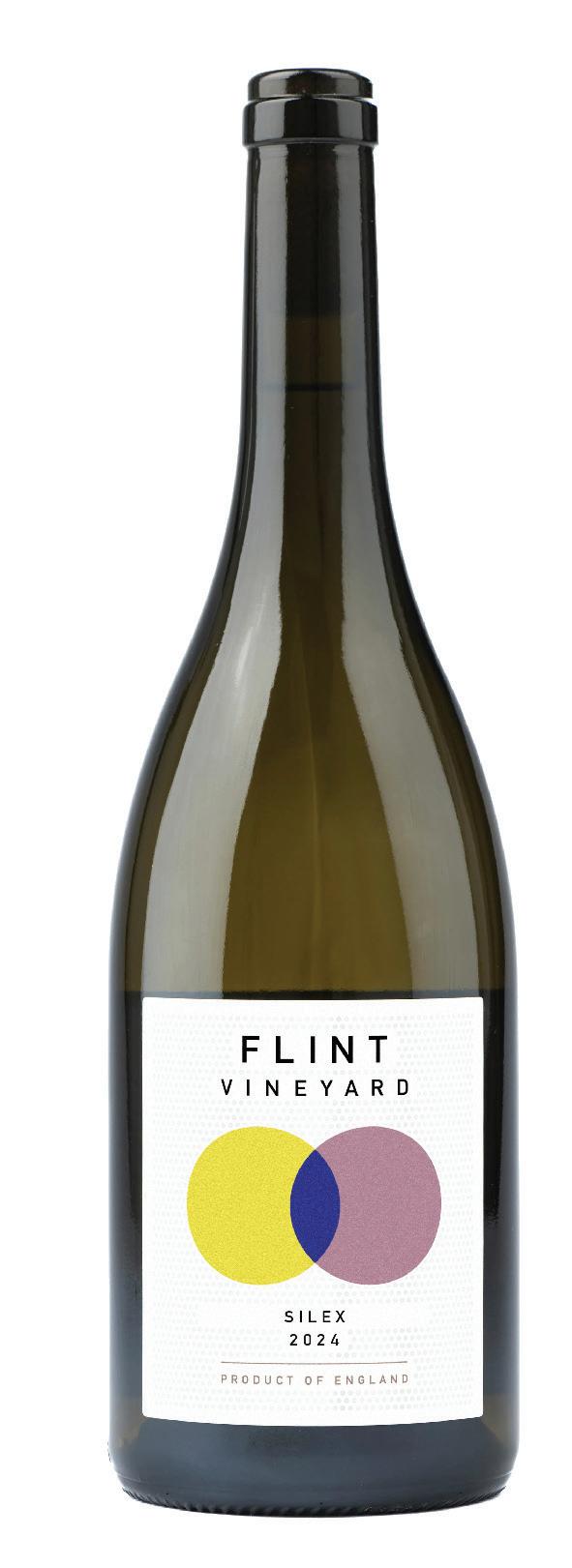
The gradual evolution of Silex has meant it reflects the ever-evolving vineyards that contribute to it, through the prism of its increasingly experienced makers. Silex is
today a 66% Chardonnay, 24% Pinot Blanc, 6% Pinot Noir and 4% Pinot Gris blend.
The Chardonnay portion comes from both Whitewolfe and Martin’s Lane vineyards, and the Pinots from Flint’s own parcels. The fermentations are carried out in neutral oak and concrete, and the ‘refreshing addition’, from the preceding vintage, is, this time, Chardonnay. The result is a leaner, more energetic wine with a super complex, super layered, clean, and spicy palate that manages to inject the briefest moments of exotic pith and skin without ever overstepping the mark!
It is mesmerising and a classic example of the evolution of a style that could never have been achieved in a rush!
Mason
Berry Bros. & Rudd
2020 Gusbourne, Brut Rosé
£55.00 reduced to £45.00 for members www.gusbourne.com

2022 Saffron Grange, Classic Cuvée Brut
£38.00 www.saffrongrange.com www.grapebritannia.co.uk www.elizabethrosewines.co.uk
This time, I wrote up the 2019 vintage of CCB on this page in January 2024. So, what has changed over the last couple of years?
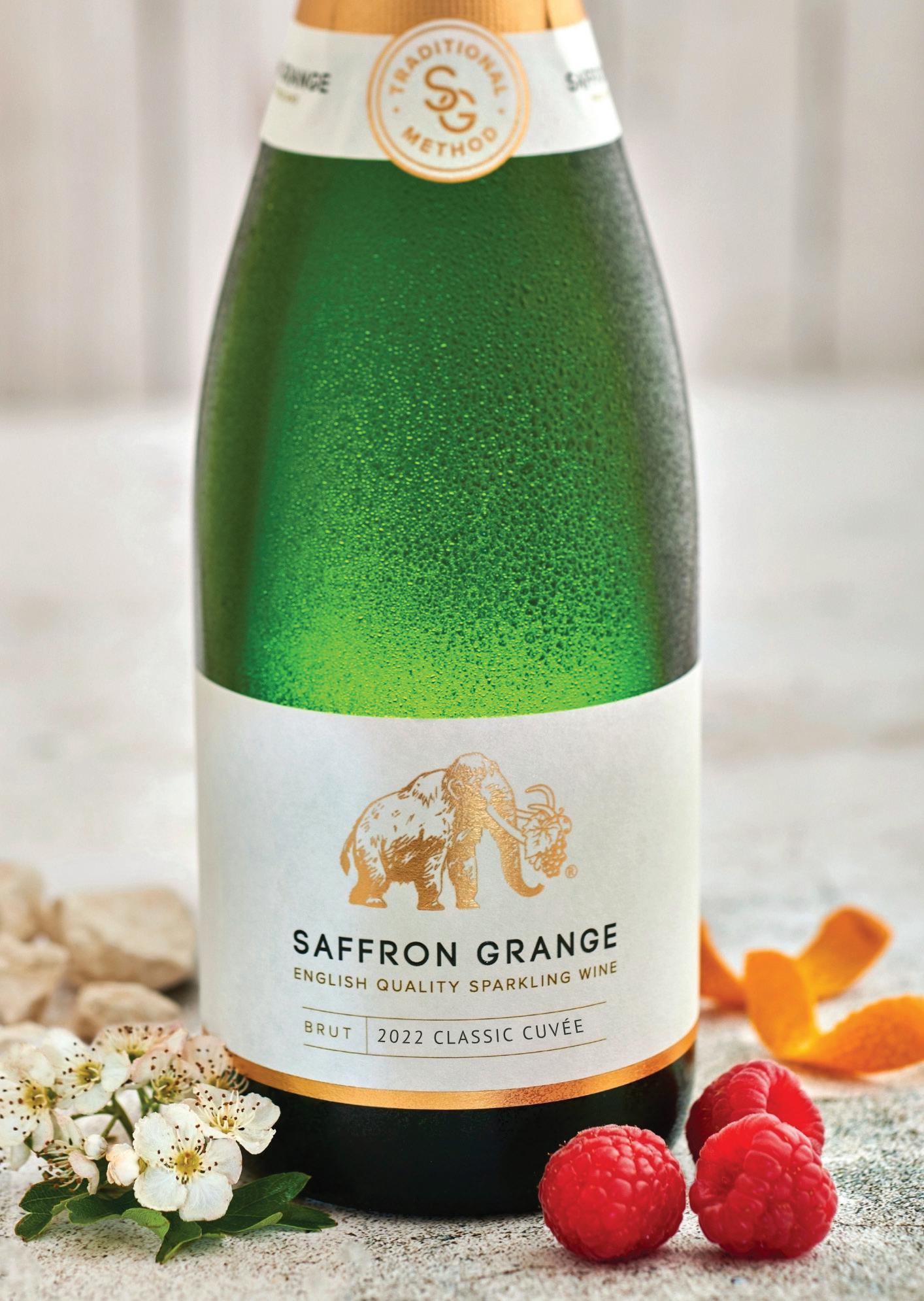
The blend remains the same: 50% Pinot Noir, 35% Chardonnay and 15% Pinot Meunier, in perfect harmony, and aged for 30 months on its lees. Nothing new there. Of course, the 2022 vintage was a ripe one, so the core fruit here is a little silkier and more buoyant, and to counterbalance this augmented exuberance, a full 2 g/L of residual sugar has been carved off the dosage. This is the magical ‘learning’ that has been confidently applied to this stupendous wine.
The woolly mammoth on the label perhaps needs some roller-skates, because the flavour glides across the palate with considerable grace, and the overall halo this wine brings is super-classy, mineral-tinged, with herb and lime hints, and it doesn’t flag or fade, maintaining gorgeous momentum throughout.
The 2019 vintage was drinking on release, open and enjoyable. This 2022 is dynamic, refreshing, and while it will develop over the coming five years, it will not broaden or lose focus, as it has done what all wines desire: it has become finer and more detailed, and this could not have been achieved overnight!
I have not written this wine up since its 2014 incarnation, which made the grade back in June 2018’s issue. Back then, this wine was a cunning blend of 53% Pinot Noir, 41% Chardonnay and 6% Pinot Meunier, topped with an eyedropper of red wine with a natural alcohol of 12.5%!
Today’s newly released TwentyTwenty turns this recipe on its head, favouring 59% Chardonnay, 29% Pinot Noir and 12% Pinot Meunier, sourced entirely from Gusbourne’s own south-facing vineyards on ancient escarpments in Appledore.
The 2014 was a bold wine, and I remember using the word ‘determined’ about its demeanour. This 2020 is more elegant, musical, pink-fruited, not red-fruited and extraordinarily appealing. There is no sense of tannin or suspension, just limpid pomegranate notes and seamless fruit, which is perhaps not surprising because 2020 was another wonderfully ripe vintage. And yet, the tension pounces on the finish, with a thrilling kiss of acidity which sends you immediately back for another sip. 56 months on its lees has brought with it calmness, erudition and a comprehensive sense of Pole Pole!
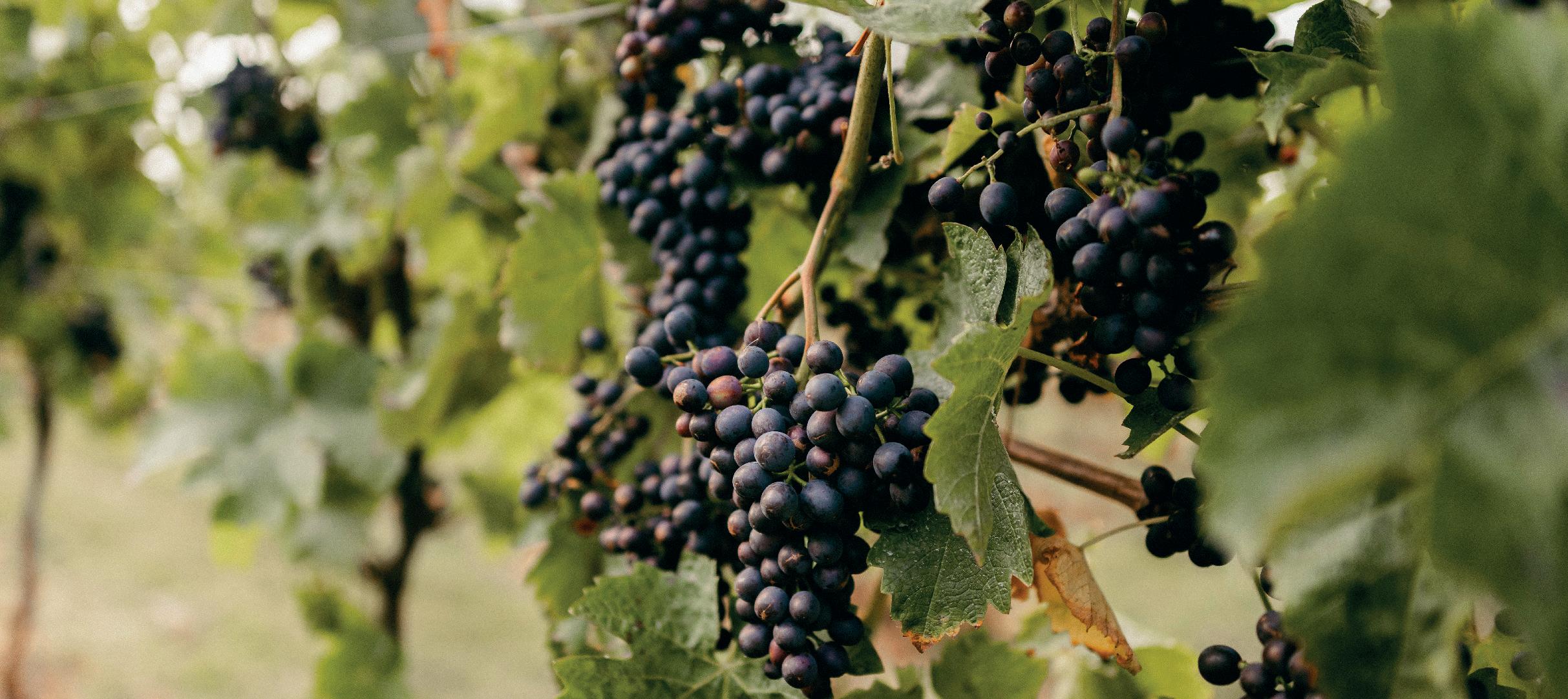
Ten years of building a wine business in Sussex

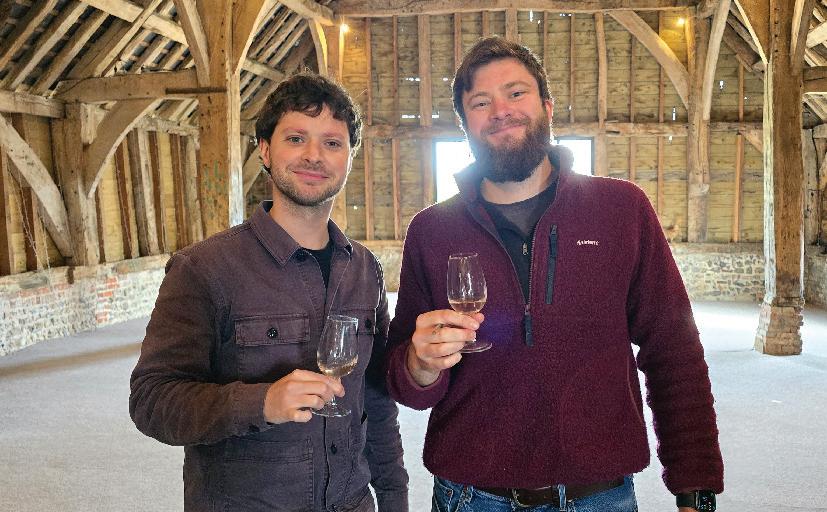
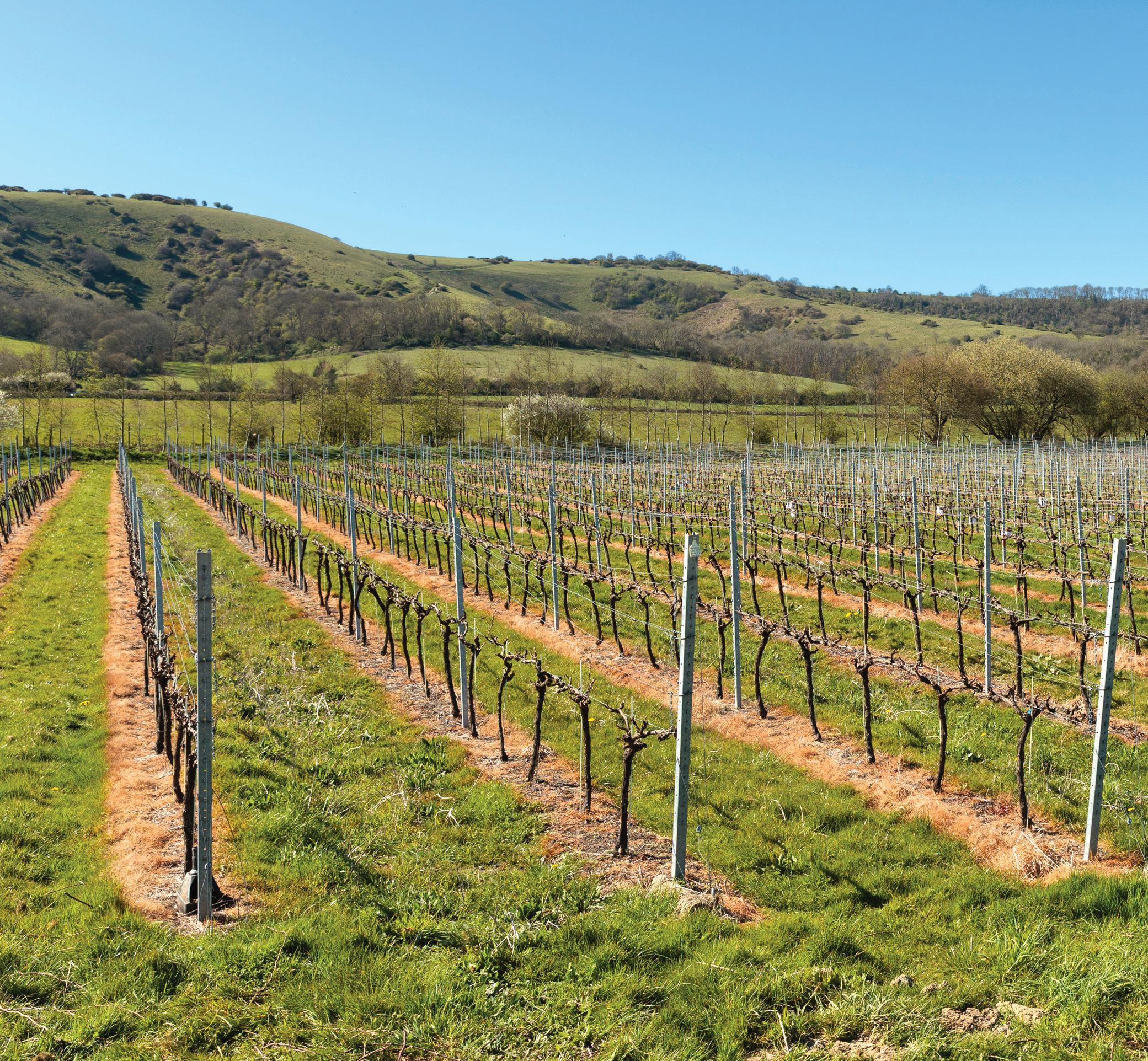
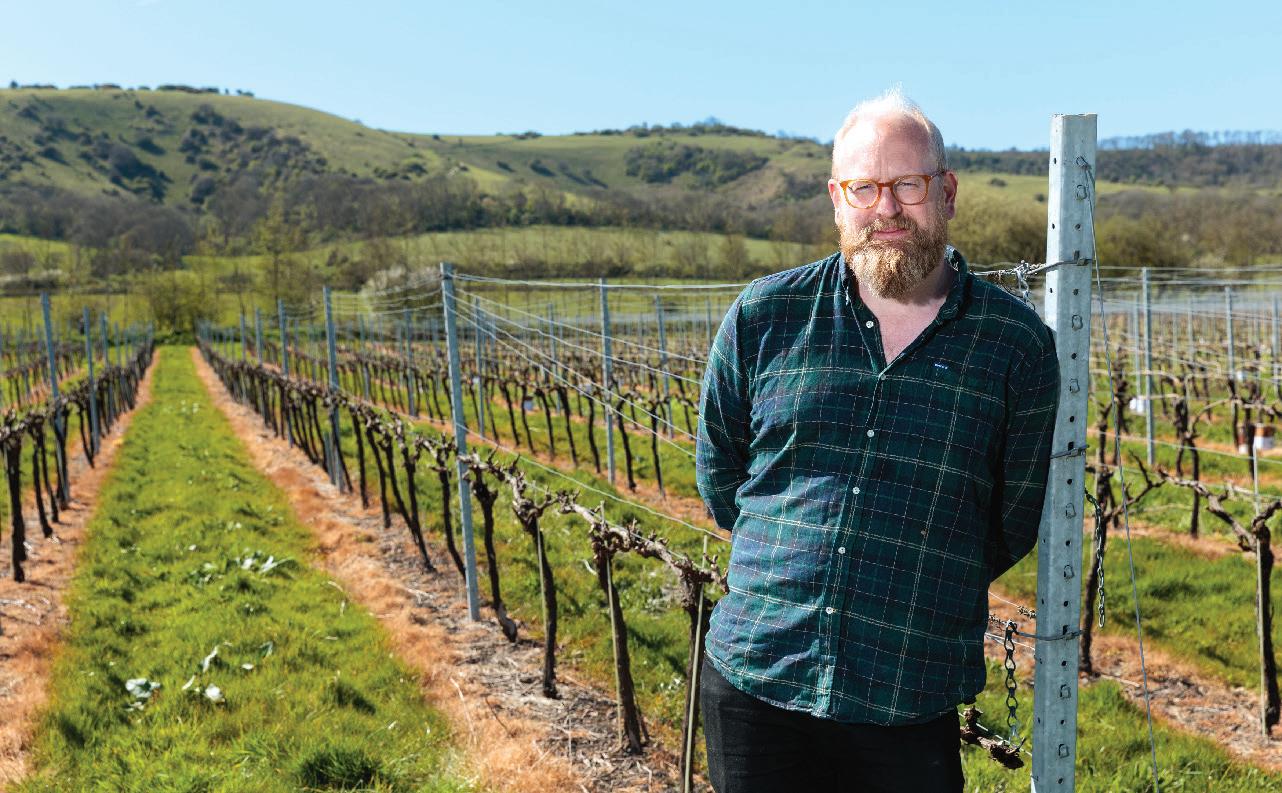
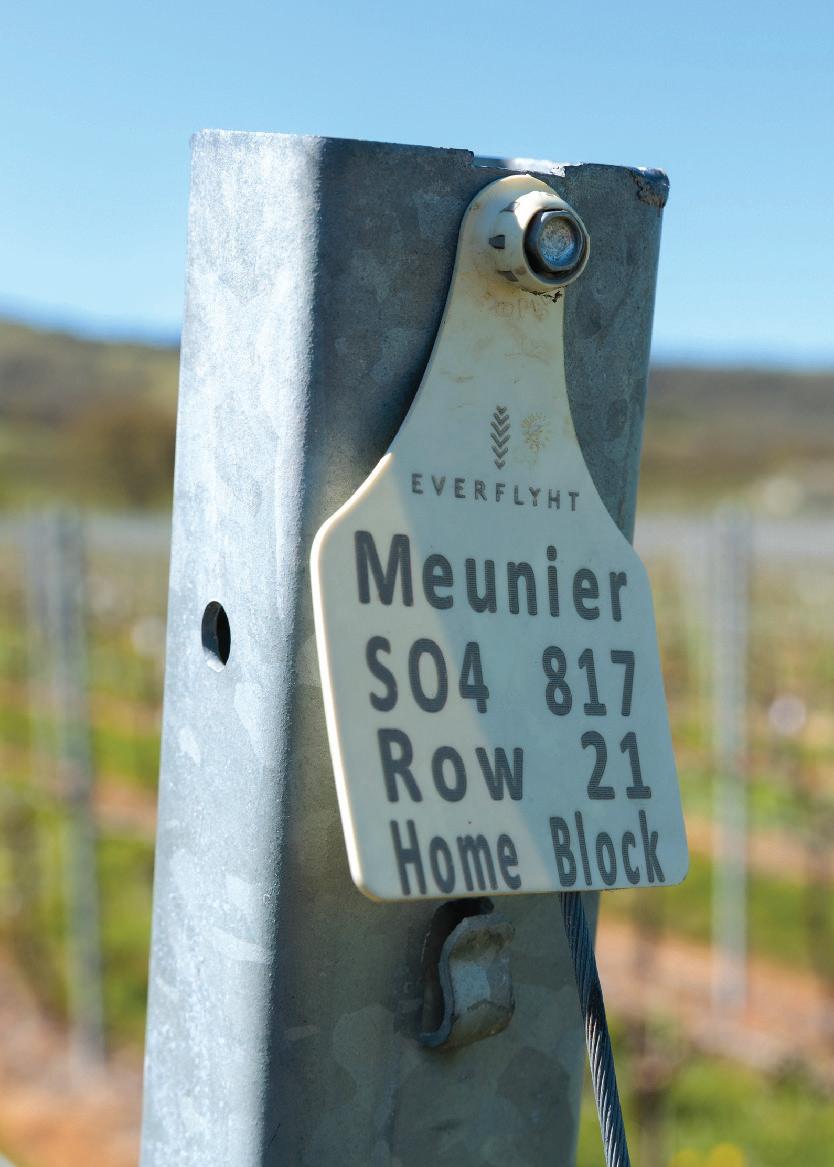
This month, Nigel Akehurst visited Everflyht Vineyard in Ditchling, East Sussex, to meet general manager and viticulturist Luke Spalding and owners Ben and Sam Ellis, and to learn more about their regenerative approach as they mark 10 years since planting with the launch of a new Charmat method sparkling wine.
Photos: © Martin Apps, Countrywide Photographic
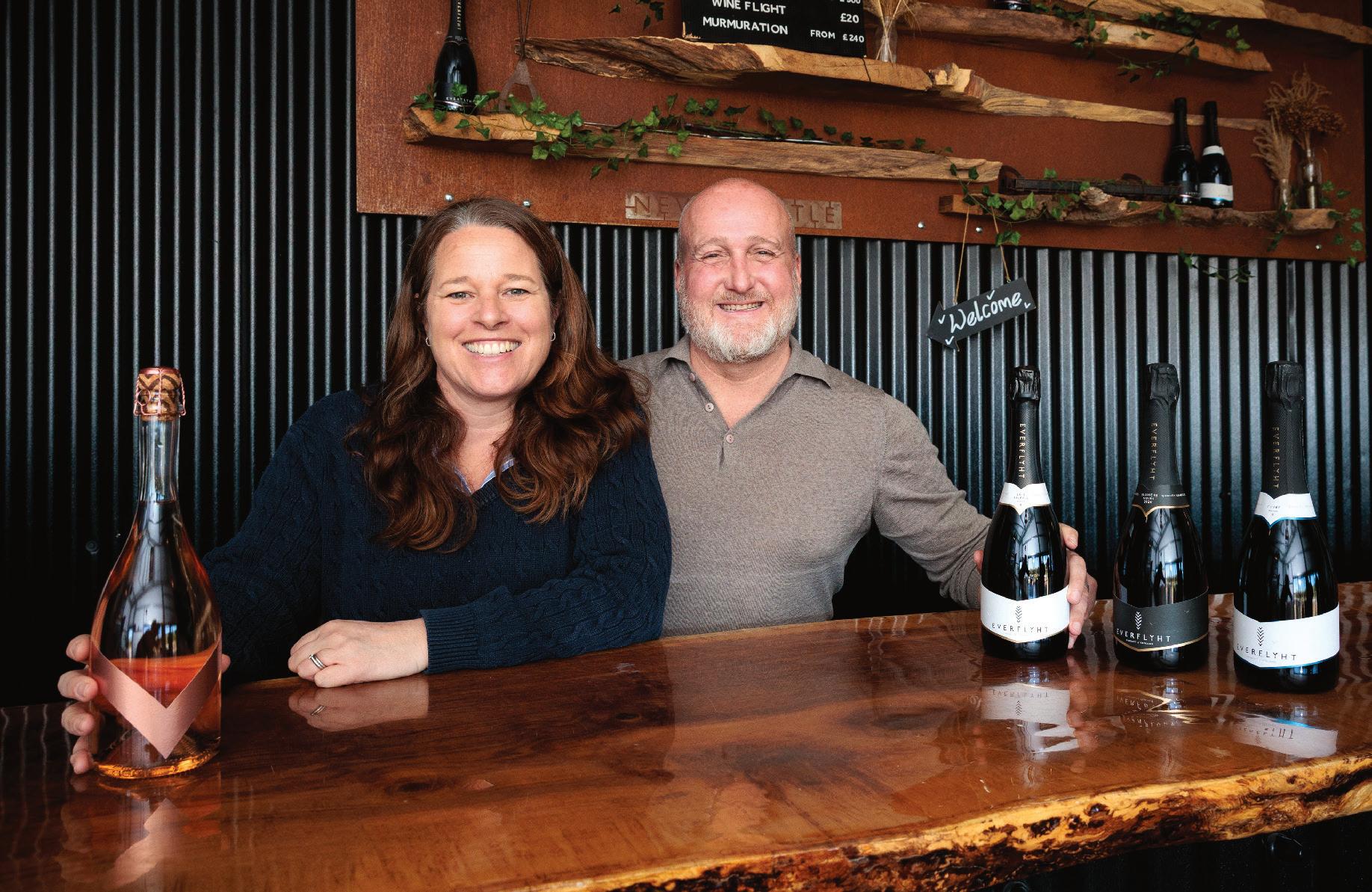
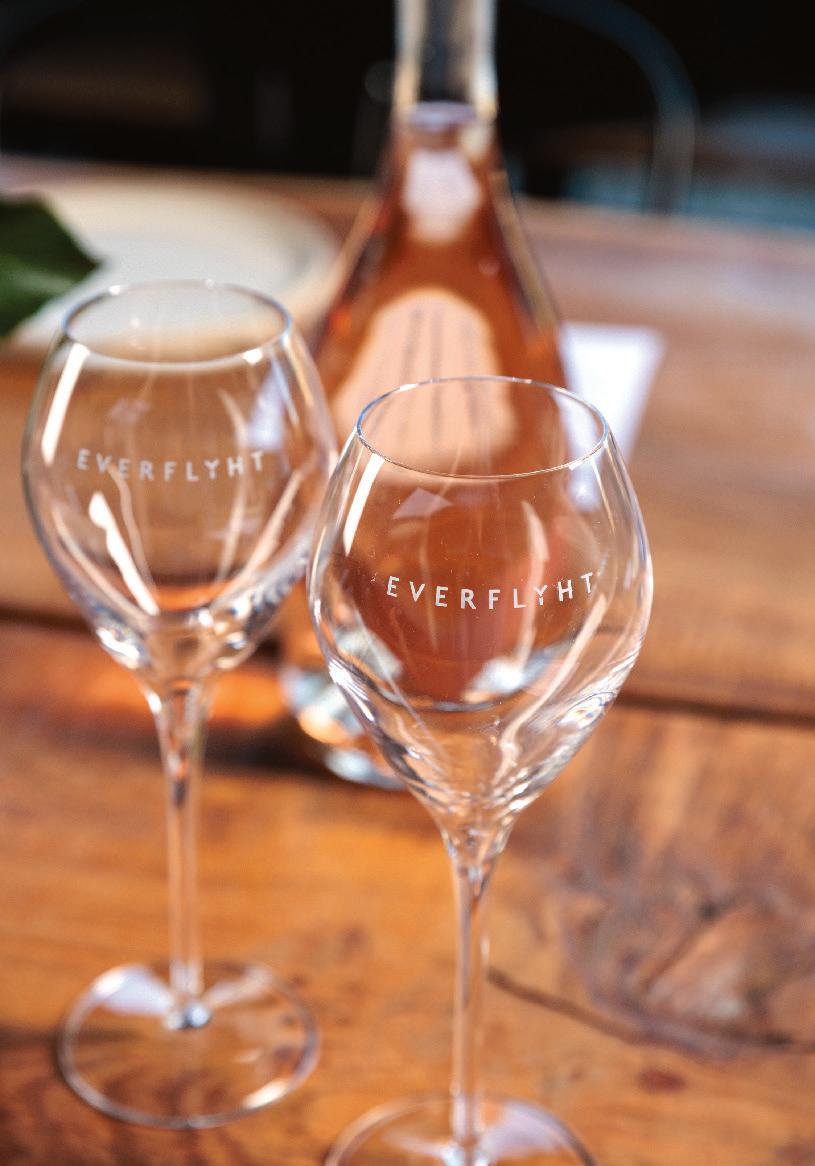
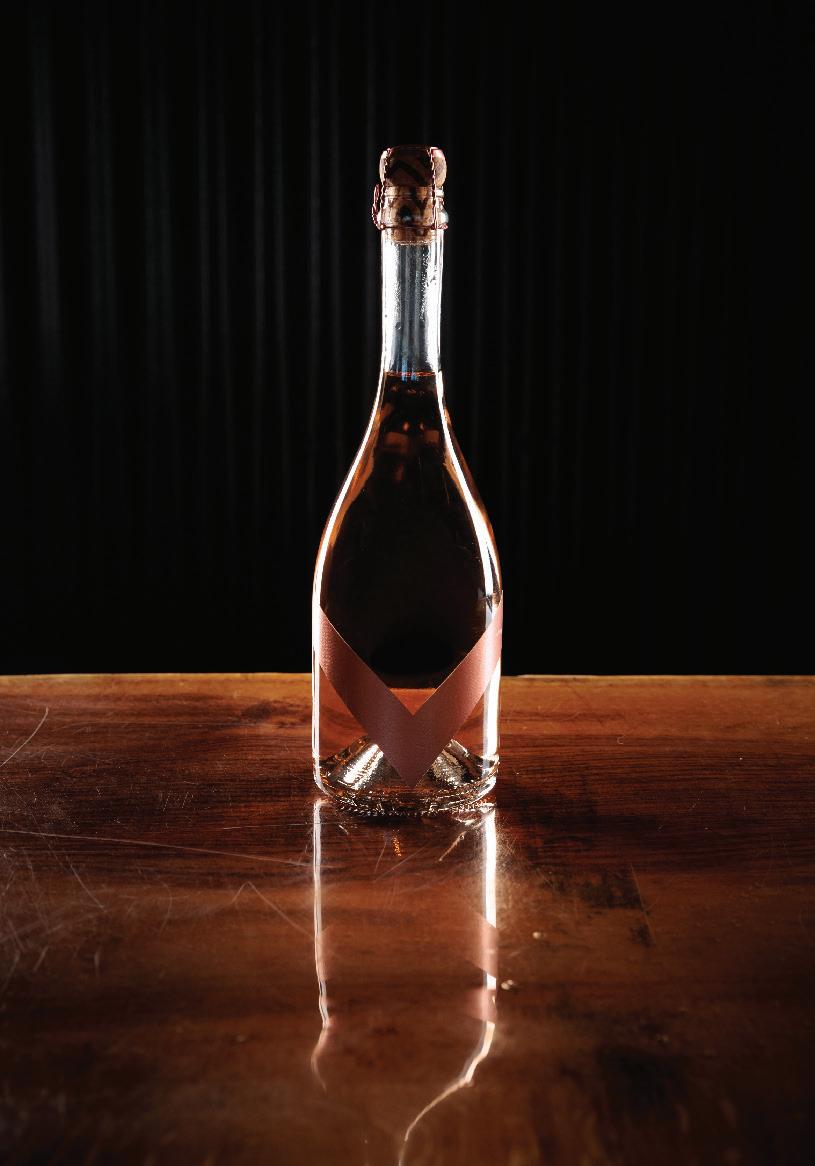
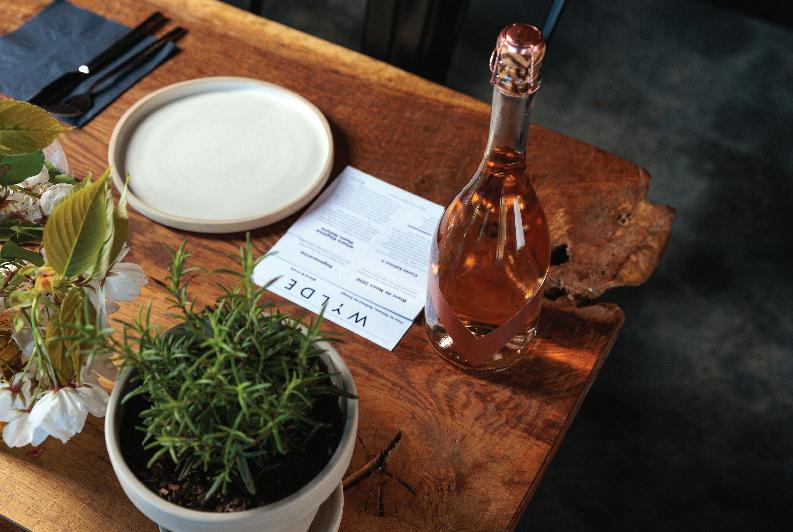
Ten years on from their initial planting, Everflyht is marking the milestone with the launch of a new Charmat-method sparkling wine, Wylde
A vineyard shaped by the land
There is a growing sense that how vineyards are managed is starting to matter as much as what they produce. At Everflyht in Sussex, that thinking runs through the whole site, from how water moves across the land to how soils are built and crops are grown.
Ten years on from their initial planting, Everflyht will be marking the milestone with the launch of a new Charmat-method sparkling wine, Wylde. It reflects a business still evolving, shaped by close observation, a willingness to adapt, and a long-term focus on looking after the ground it sits on. It is an approach that sits comfortably alongside their internal mantra, never settle.
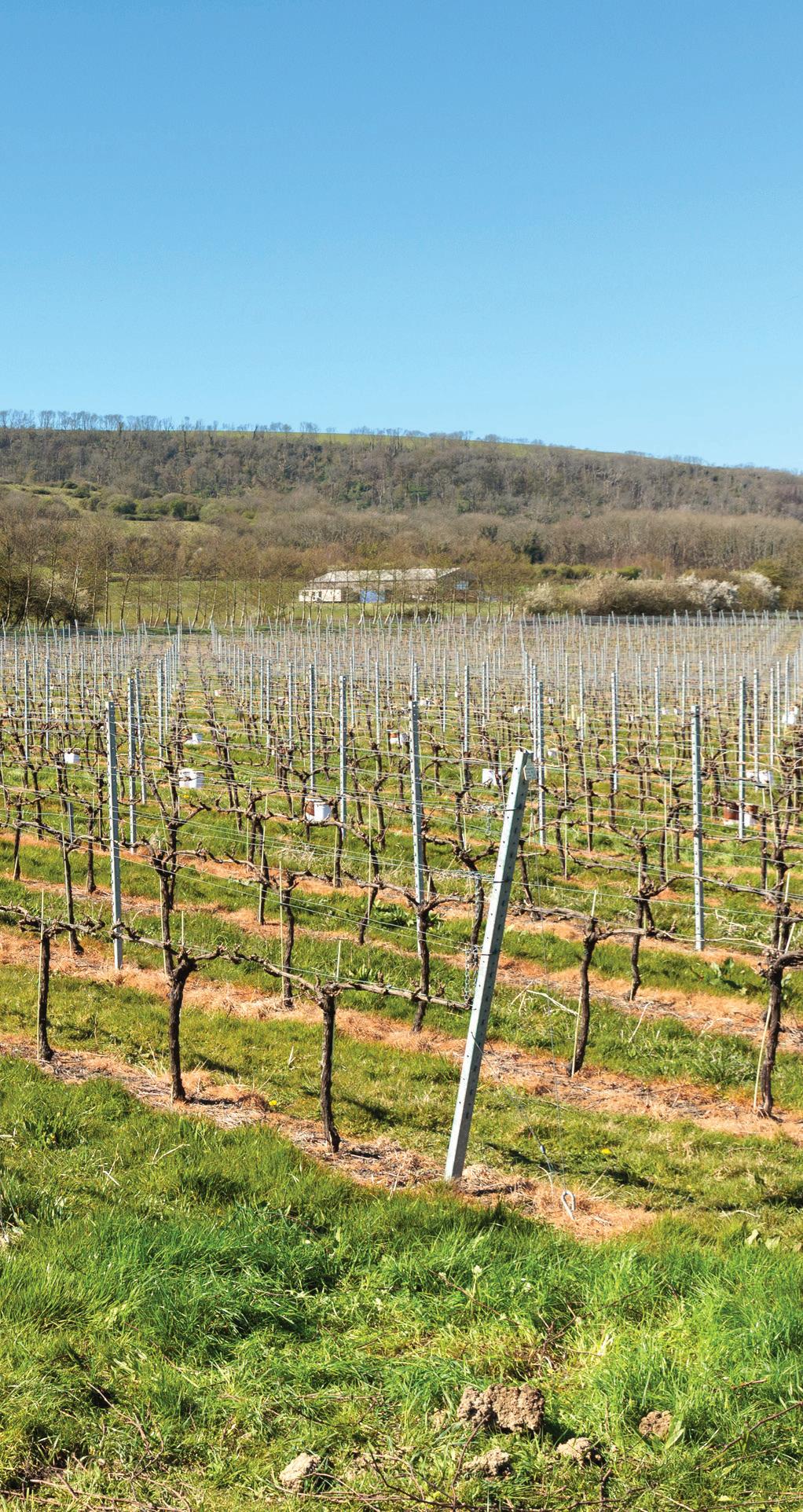
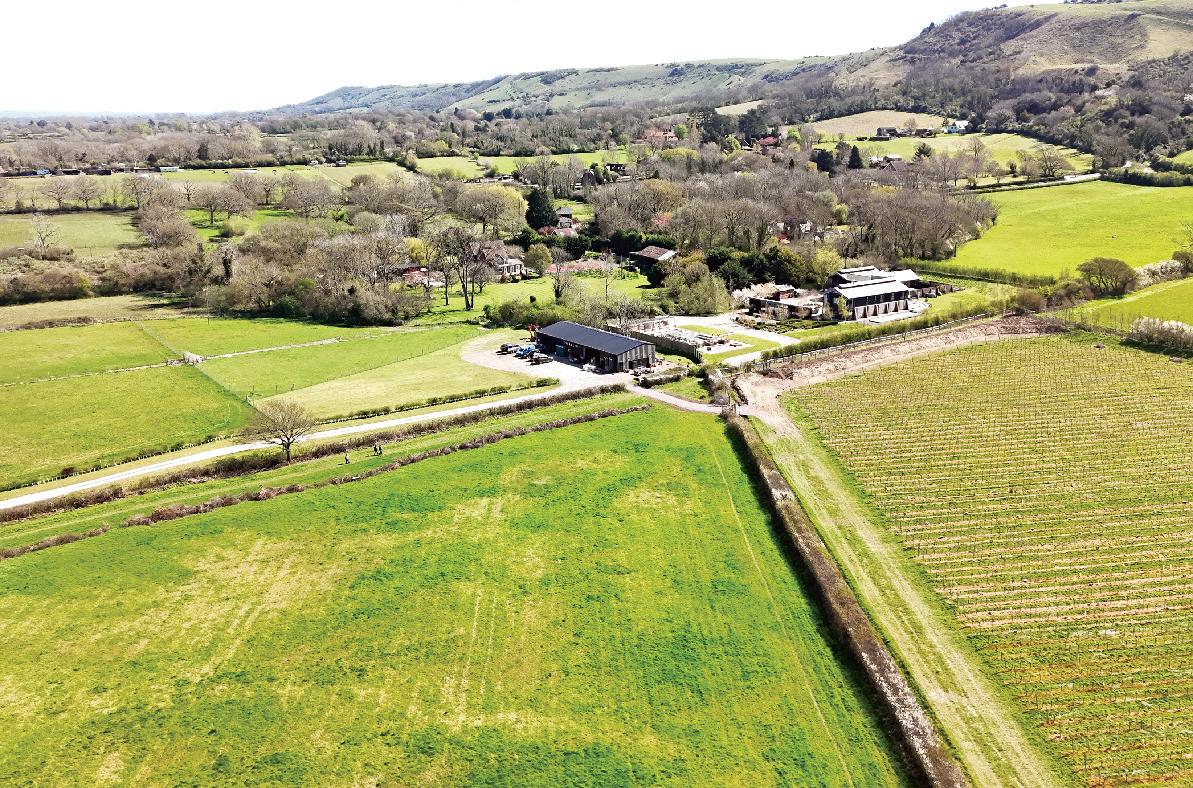
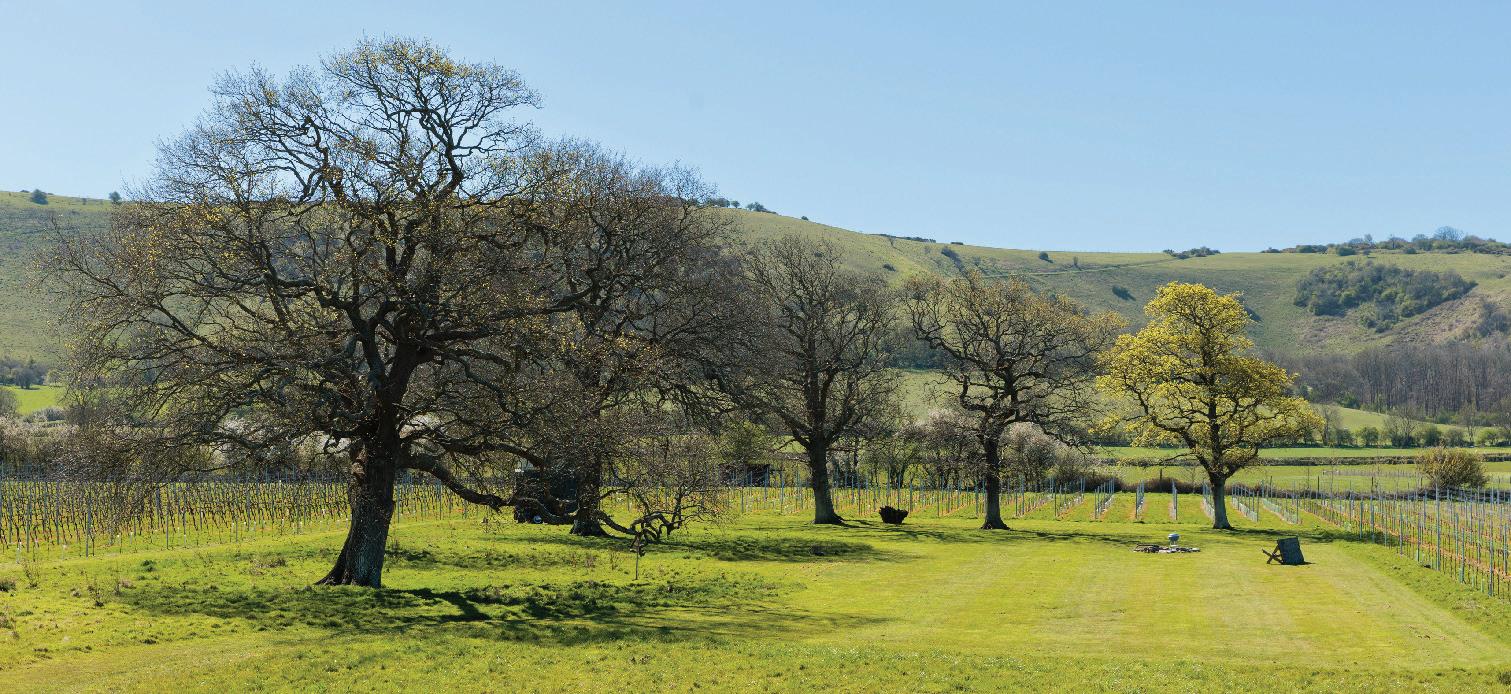
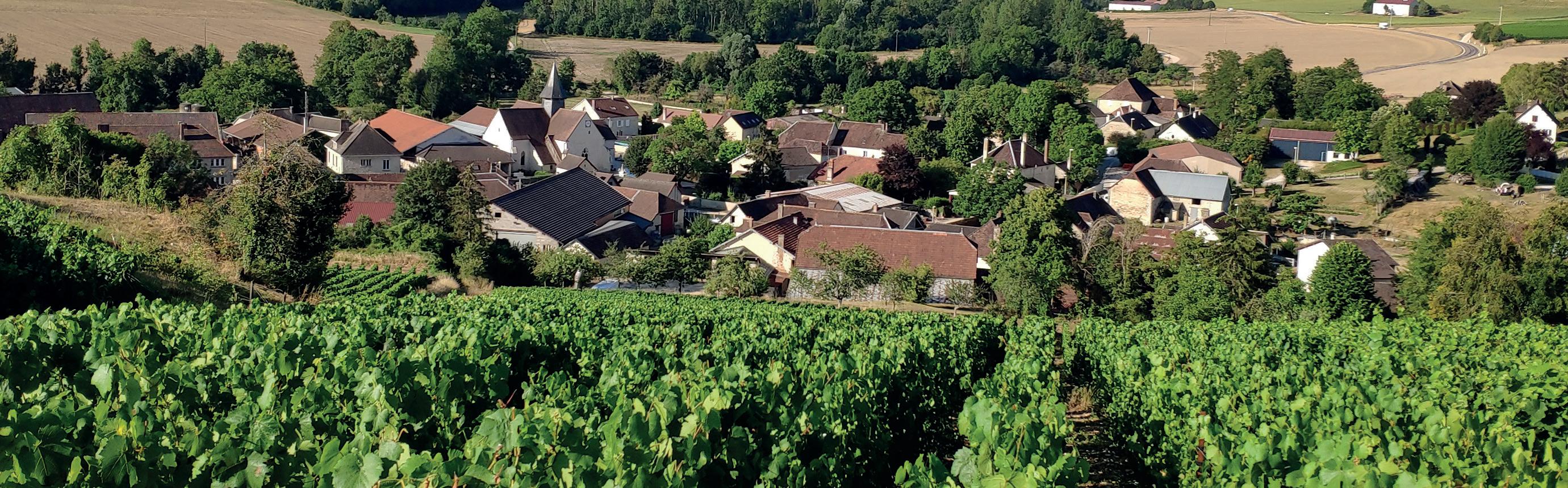
From the bottom of the site, the vineyard rises in a long sweep towards the South Downs. It is an impressive setting, but not an obvious one. Much of the vineyard lies on heavy clay. Water runs off the Downs, parts of the site can become waterlogged, and spring frost remains a constant threat in the lower-lying pockets of the site. On paper, it is not the sort of ground that should make life easy for vines. Yet a decade on, Everflyht has grown into a distinctive Sussex wine business, built as much on careful systems and long-term thinking as on the landscape itself.
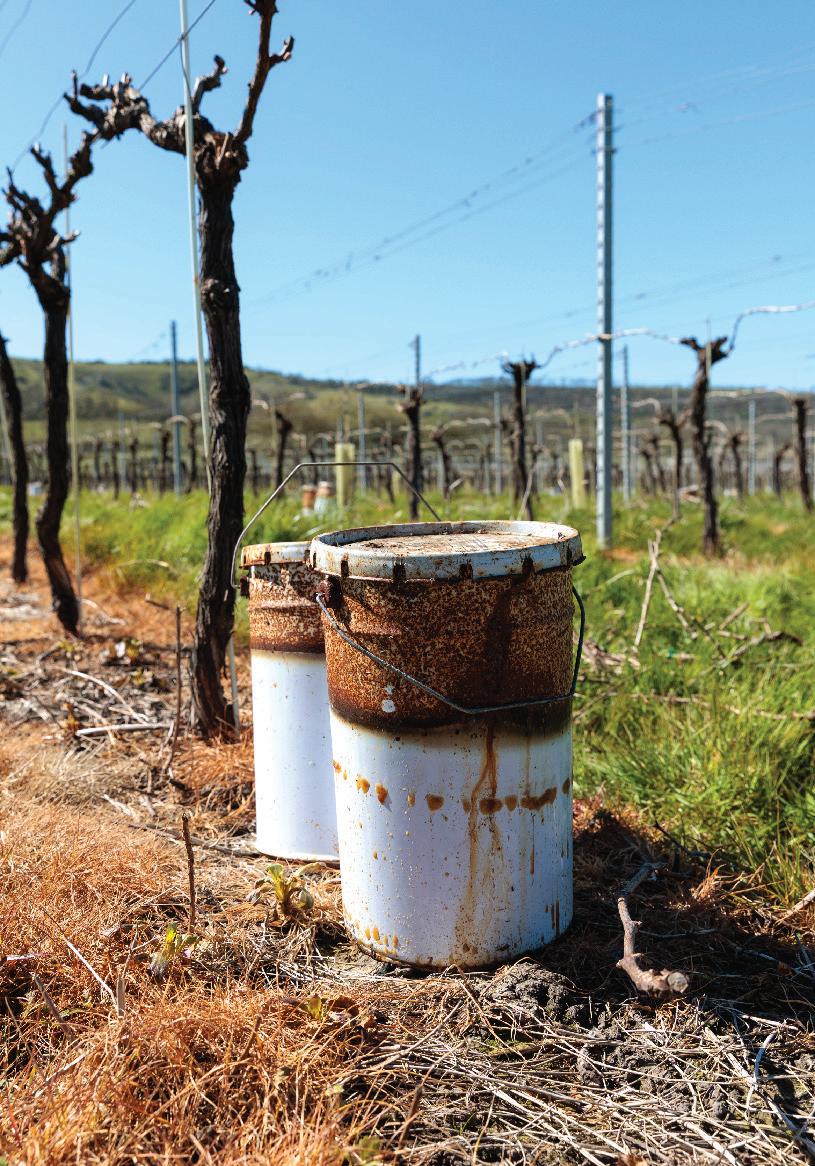
When I visited, the vines were just beginning to move after a long winter. There was still a sharpness in the air, but the season was starting to shift. Budburst was underway, and with it came the familiar risk of spring frost, the reason candles were already being deployed across the vineyard. Everything felt poised.
Building the vineyard
Luke Spalding, now General Manager at Everflyht and previously part of the team at Ridgeview, did not come into the industry through a traditional farming background. He worked first in magazine publishing, then moved into wine merchants, studied wine in London and eventually found his way into viticulture through working on the job with Matt Struggnell and completing his Masters at Plumpton. “I got the bug,” he said. “I started learning more and then just kept going.”
Luke began consulting here in 2018, after first meeting Ben and Sam Ellis in the local pub – the Bull in Ditchling, that sits half way between Ridgeview and Everflyht, before joining full time in 2019. By then the vineyard had already been planted, VineWorks having established and managed it through the early years, but the business was still finding its shape.
Sam and Ben Ellis
Everflyht at a glance
◆ Vineyard size: 6.8 hectares
◆ Varieties: Chardonnay, Pinot Noir, Pinot Meunier
◆ Biodiversity area: 3.5 hectares
◆ Viticulture: Regenerative approach focused on building soil organic matter and long-term resilience
◆ Team: One full-time member of staff (Luke Spalding) and four part-time staff
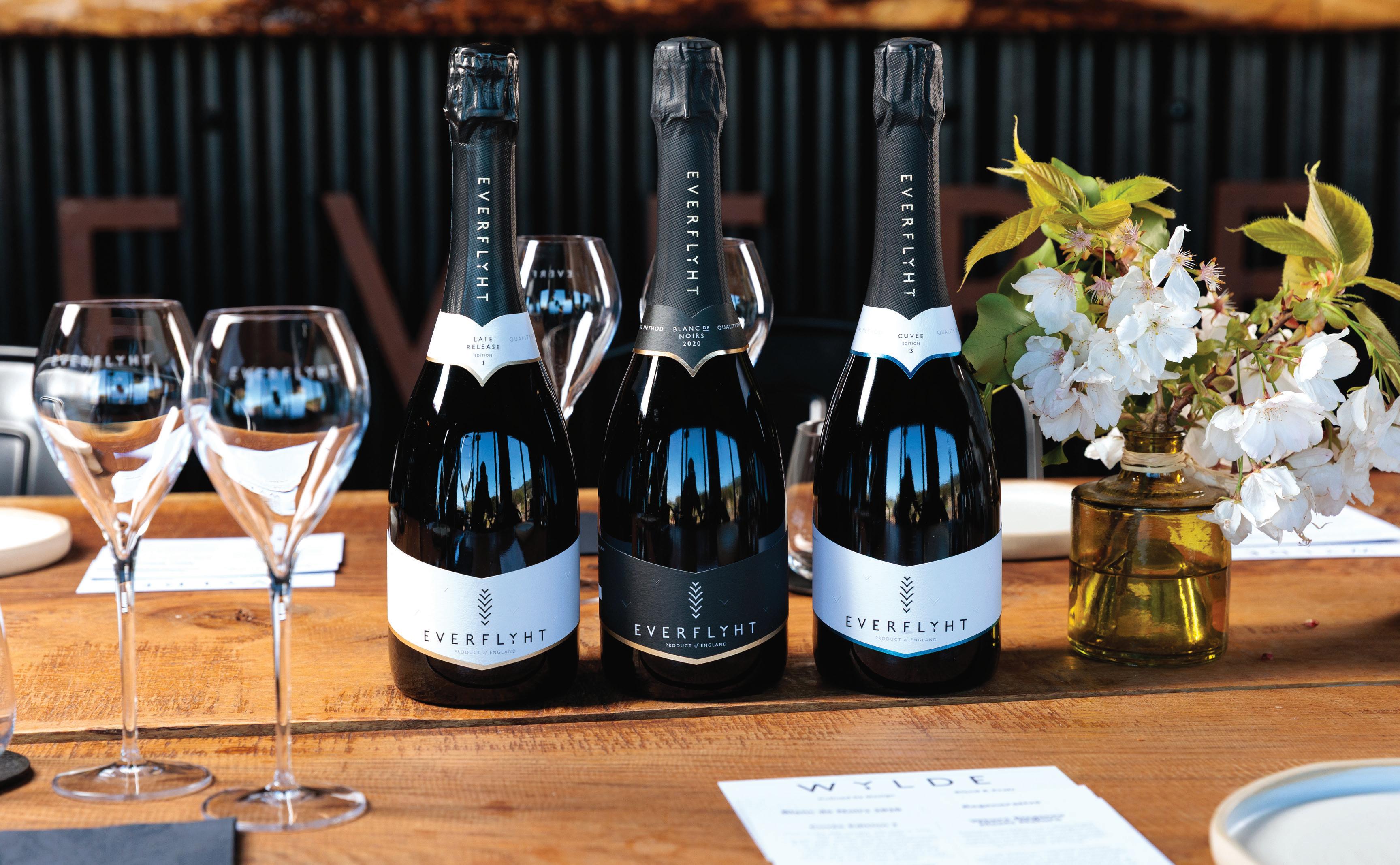
◆ Wines: Single-estate traditional method sparkling wines under the Everflyht brand
◆ New release: Wylde Charmat-method sparkling launched spring 2026
◆ Cellar door: Open every weekend from April to end of September
<< At first it was known as Chalk House vineyard. That name later changed in 2020, partly for practical reasons, but also because the business was becoming something more defined. Everflyht, with its stronger sense of place and identity, suited what they were trying to build.
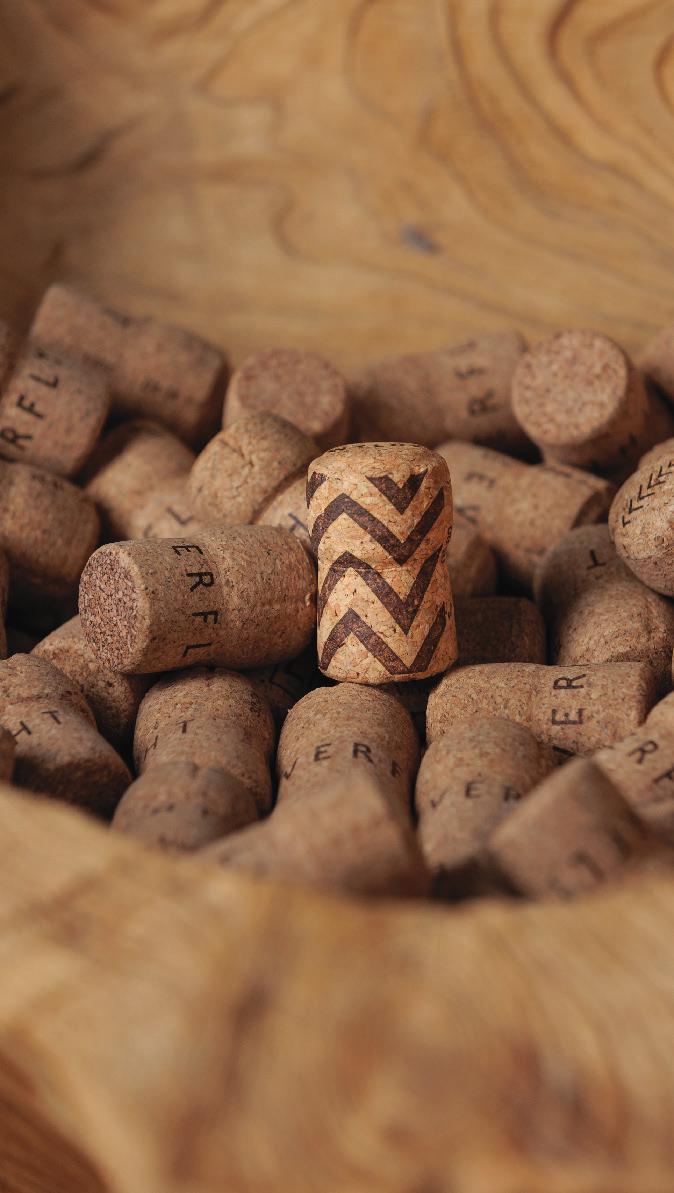
The name itself is drawn from the six Martlets of the Sussex crest, birds said to never land, symbolising knowledge, adventure and learning. ‘Ever in flight’, they reflect the approach here, a business shaped by constant adaptation, innovation and a determination, as they put it, to never settle.
Growing into a business
Even so, progress has been steady. Before the launch of Wylde, production was around 15,000 bottles a year. It is now closer to 25,000, with further growth expected as younger plantings come fully into production. If output reaches between 25,000 and 30,000 litres, the vineyard is expected to become operationally sustainable this year. The level of thought that has gone into how the site functions is striking.
John
The balancing act
That journey began with Ben and Sam Ellis, who come from a property development background and started thinking seriously about vines after a family trip abroad more than a decade ago. Ben continues to run the day-to-day property business, while Sam is more closely involved in the events and hospitality development. The venture has been privately funded from the outset, with no external debt, allowing a longer-term view as the vineyard has established.
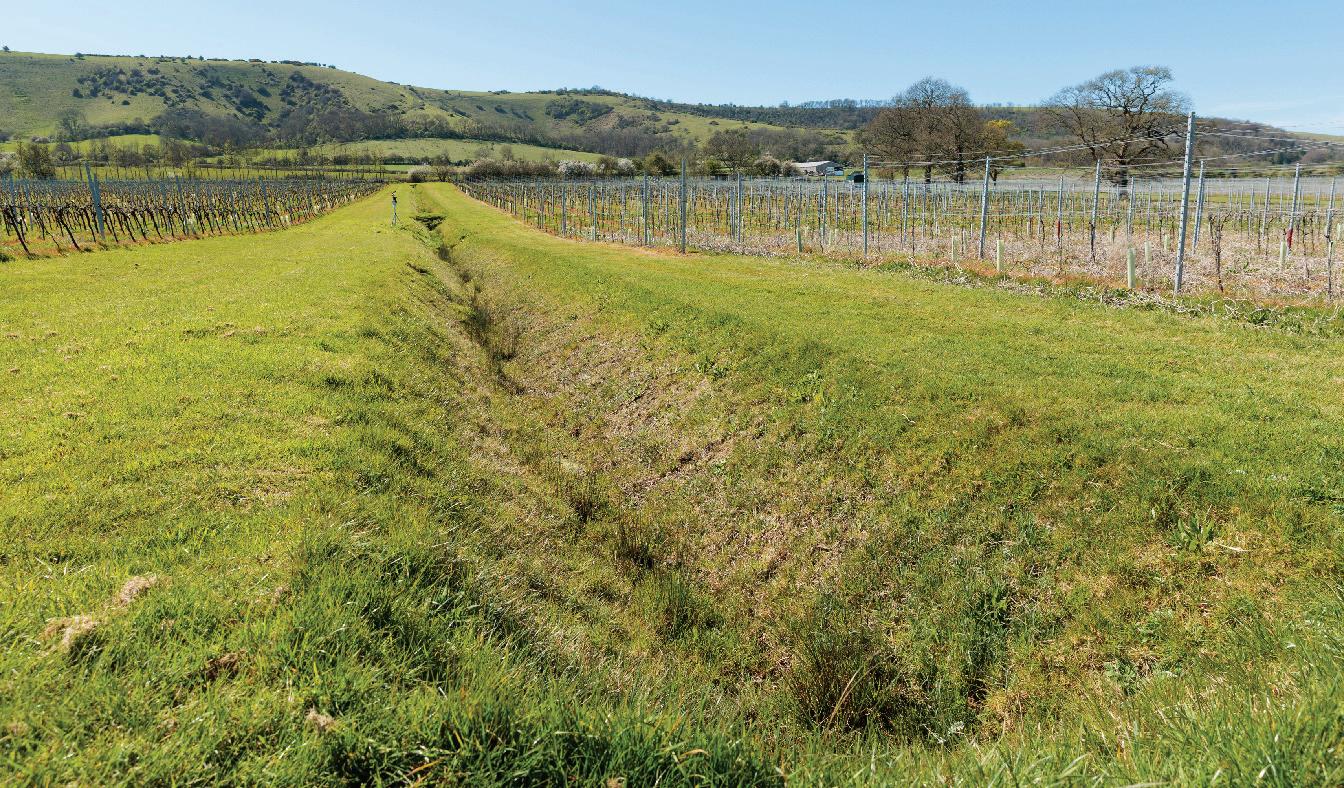
Water is one of the defining issues. The vineyard catches runoff from the Downs and, because of the clay, can quickly become waterlogged. Rather than fight that reality, the response has been to redesign around it. Ditches and field drains now run through the site, channeling water down towards the lowest point, where a pond has been dug.
“Three years after we put it in, we found an old map showing there had always been a pond there,” Luke said. “We’d basically recreated an old pond without knowing it.”
For independent advice on:
◆ Sales channels: Wine club (12%), online shop (9%), cellar door (target 20%), trade including Berkmann (~50%) 9% to exports. For independent advice on:
They bought the land, built the house and planted the vineyard in 2016. “It’s been a hard slog,” Luke said. “Covid-19, inflation, economic shocks, it hasn’t exactly been an easy ten years but we are still growing above 20% year on year.”
Buchan AGRONOMY LTD
Interpretation of soil and tissue
Formulation of
Interpretation of soil and tissue Formulation of nutrient programmes
Supply of tailor-made products General agronomic advice


That approach, working with the site rather than trying to force it, runs through much of the operation. For growers working on heavier soils, it offers a practical example of how drainage and water management can be designed into the system, rather than treated as a problem to be corrected later.
Around three hectares have been given



over to biodiversity, scrub, long grass, new tree planting, ponds and connected habitats.
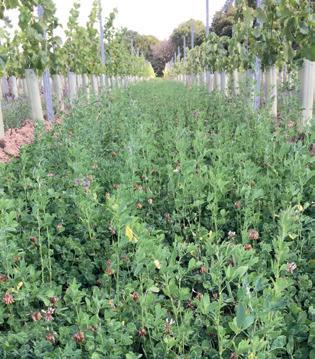
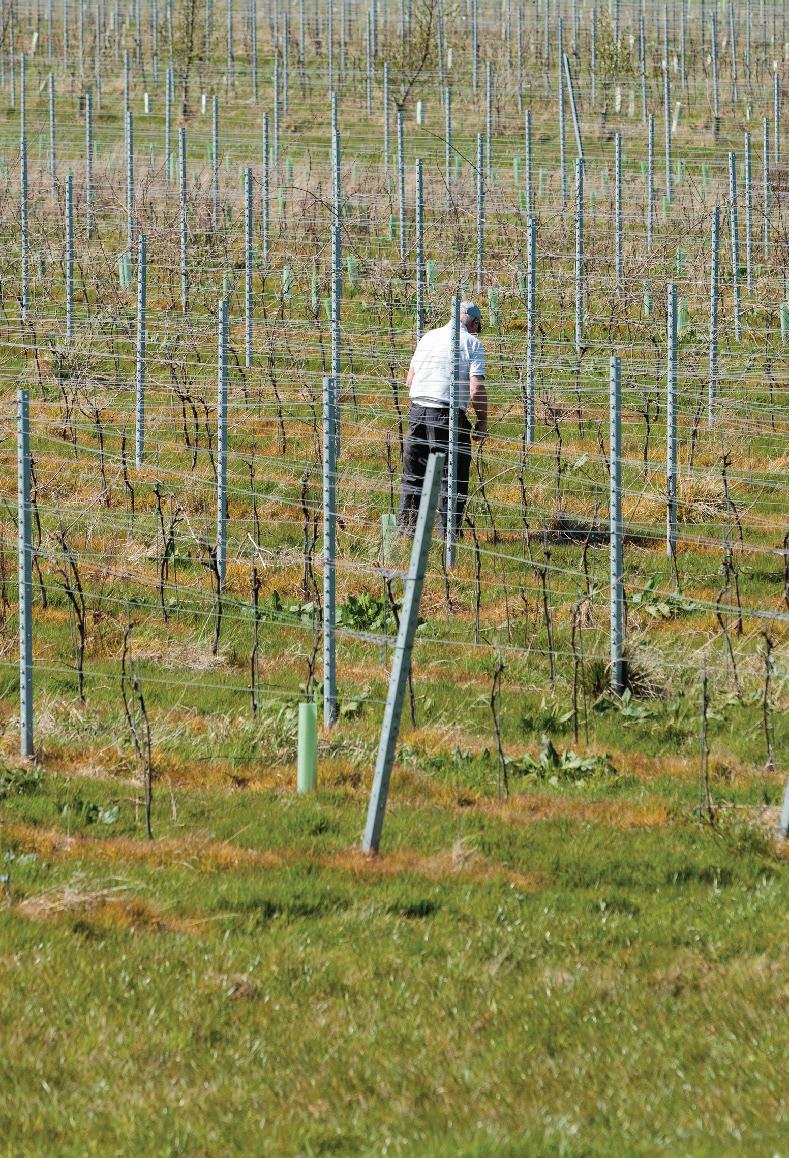
Cover crops run through every other row, with rows rotated over time to allow extended rest periods. “We’re trying to get the soil working properly,” he said. “That’s where everything starts.” The shift reflects a wider move within viticulture towards reducing reliance on synthetic inputs and building resilience through soil function, something that is becoming increasingly relevant as input costs and climate pressures rise.
Data, soil and decision making
Since 2019, insecticides have been removed. Fertiliser use has been reduced, with a greater emphasis on foliar feeds, biostimulants and soil-building inputs such as biochar, often combined with composts to increase biological activity and nutrient availability. The vineyard is monitored in close detail through soil, sap and crop analysis.
Luke has developed a detailed system for tracking performance, looking at pruning weights, crop loads, shoot fertility and likely wine destinations before harvest even starts. “It’s all vineyard-focused data,” he said. “But it absolutely shapes what happens later in the winery.”
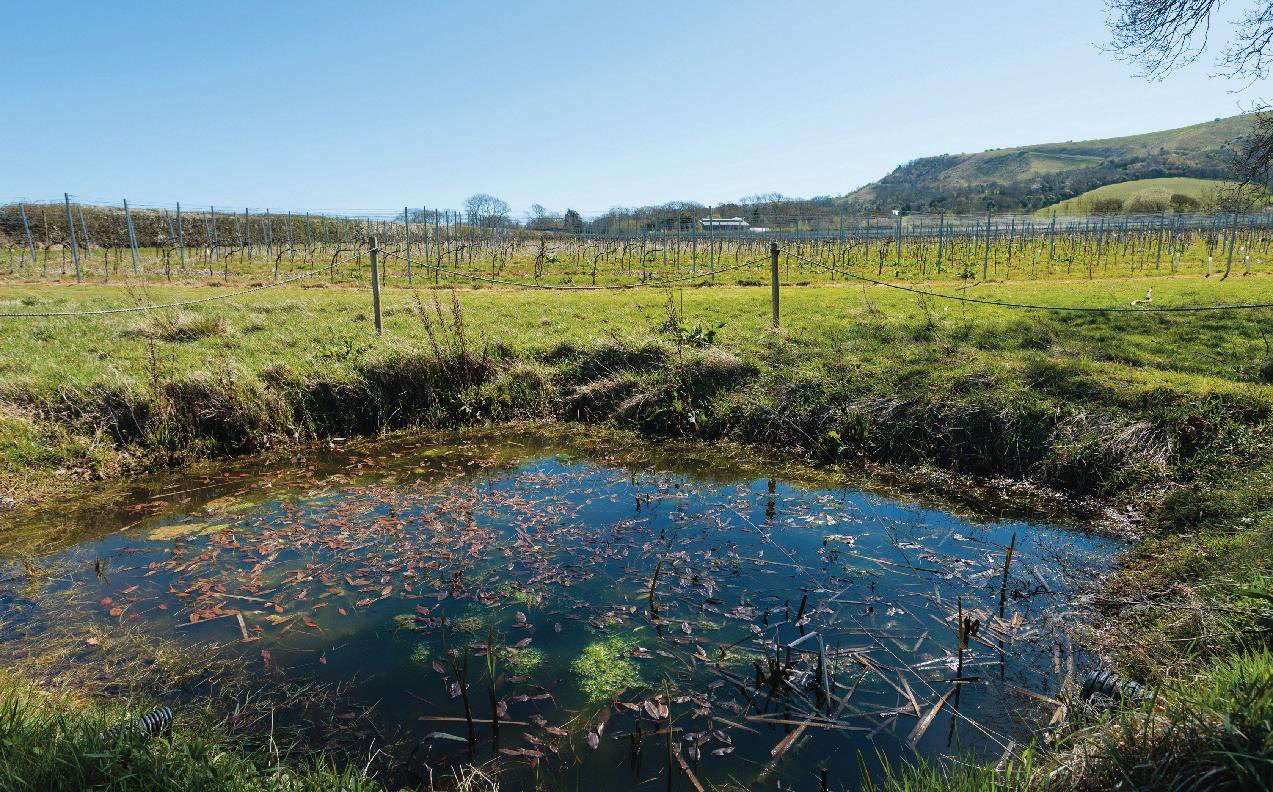
Around three hectares have been given over to biodiversity, scrub, long grass, new tree planting, ponds and connected habitats.
is a reminder that decisions made in the vineyard increasingly determine both yield and style, tightening the link between agronomy and the final product.
There is no winery on site. Fruit goes to Hambledon Vineyard in Hampshire, where Everflyht has been able to use its own tanks and barrels, giving more control over style than many contract-made wines. Clay vessels are also part of the set-up, adding another layer to the blends.
For all the technical detail, the approach

is not ideological. The vineyard borrows from regenerative thinking, but Luke is clear that it is not organic. There is, however, a clear direction of travel, with an ambition to move away from glyphosate and towards mechanical under-vine cultivation, although the cost of the machinery remains prohibitive for now.
“I’ve got issues with organics in this country,” he said. “There’s the dependency on copper, there’s the economic risk, and there’s the reality of yields.”

Luke Spalding
It
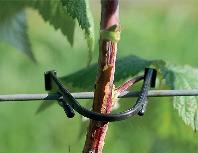
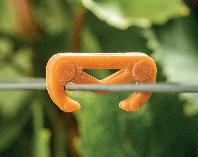
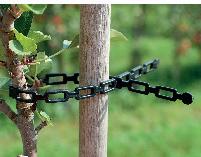
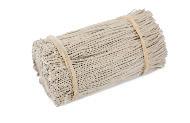
Amidograf Raspberry Clips Chain Tie Anchor Bands Twist Ties
A difficult year and a shift in direction
That matters in a system where margins for error can be tight. In 2024, the vineyard lost a significant proportion of its crop to downy mildew following heavy September rainfall, a moment that sharpened thinking. It has influenced the direction of travel. The focus is now clearly on sparkling wine, and on building a range that can work across different markets and price points.
Wylde, launched this spring as part of the Everflyht ten-year milestone, is central to that shift. Made using the Charmat method, where the secondary fermentation happens in tank rather than in bottle allows the wine to be brought to market quickly and at a more accessible price point, retailing at around £22-£25 per bottle.
For growers and producers, it highlights the role alternative
production methods can play in improving return on investment (ROI) and widening market access.
By contrast, Everflyht’s single-estate traditional method wines typically start from around £30, positioning them at the premium end of the English wine market.
Unlike the estate wines, it is not single vineyard, with some fruit sourced from a nearby site in Shoreham called Harmony, and built out with a proportion of Everflyht’s reserve wines to give the blend more depth and consistency.
“It’s about broadening the appeal,” Luke said. “People’s disposable incomes are tighter. Hospitality is tough. We want more people to try English wine.”
Sam Ellis sees it in similar terms. “You don’t want sparkling wine to
Photos: © Martin Apps, Countrywide Photographic

feel like it only belongs to special occasions,” she said. “It can just be something to enjoy.”
English wine still accounts for only around 2% of the domestic market, leaving significant room for growth.
Selling wine and building connections
At the premium end, the traditional-method wines remain central. Quality is protected carefully. Nothing is rushed to market simply to generate income. Early on, they chose not to release wine before it was ready, instead holding stock back and building reserves. “We’ve never wanted to release a wine we wouldn’t want to drink ourselves,” Sam said.
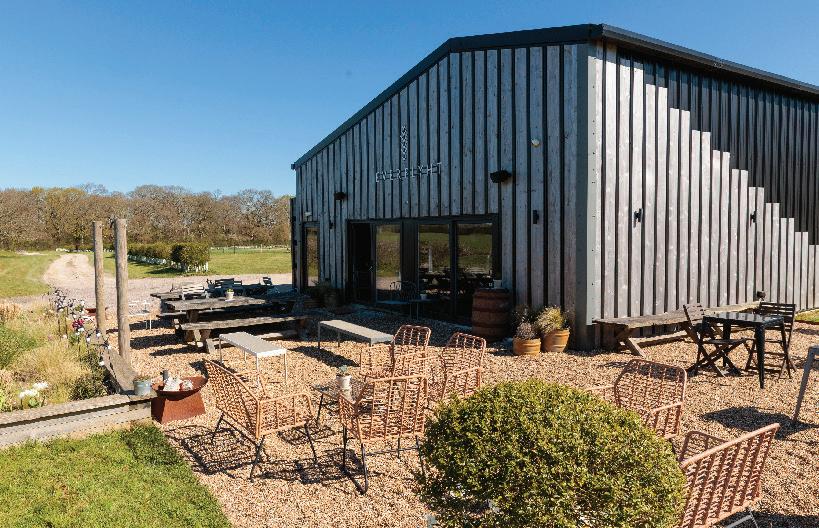
Hospitality is now an important part of the model. Tours and tastings are building steadily, the cellar door is open at weekends, and a wine club offers members a closer connection to the vineyard.
Direct sales are becoming increasingly important. The ambition is to reach around 20% of sales through the cellar door, where margins are stronger than through trade. Around 12% of sales are now made through the wine club, with a further 9% through the online shop. Alongside this, around 30% of sales currently go through Berkmann Wine Cellars. The remainder is sold through a mix of direct trade relationships and hospitality accounts, giving a balanced spread across channels.
“You can’t expect someone to pay that kind of money for a bottle without understanding the story behind it,” Sam said.
The Ellis family have three daughters, aged between 18 and 23. The eldest now runs the business’s social media, and all three have spent time helping out on the vineyard. Time spent working through Covid-19 may have put them off for now, but it is not something Ben and Sam have given up on.
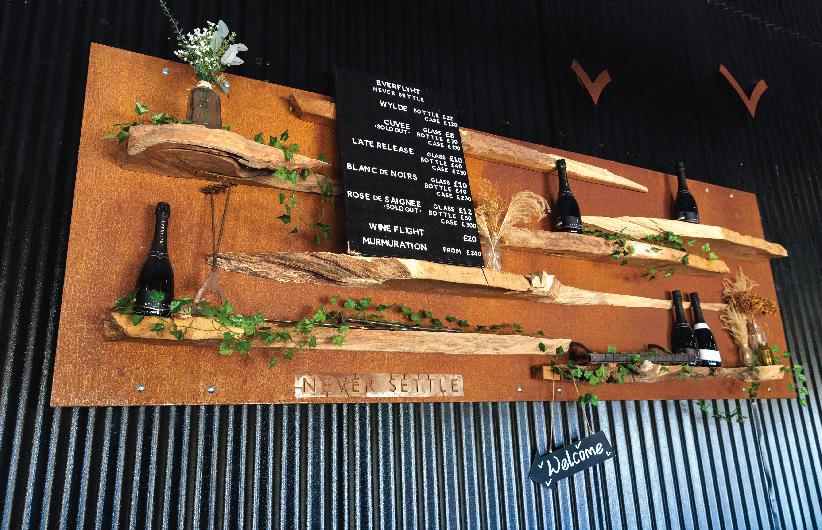
Hospitality is now an important part of the model. Tours and tastings are building steadily, the cellar door is open at weekends, and a wine club offers members a closer connection to the vineyard.
Risk, resilience and what comes next
Frost remains one of the biggest threats. On cold spring nights, candles are laid out across the vineyard and lit through the early hours.
“On a bad frost night, you can be close to £10,000,” Luke said. “But if you don’t do it, you can lose half the crop.” That happened in 2022, when a single frost event halved yields in one block. And yet there is still a sense of momentum.
The vines are maturing. The team is established. The hospitality side is gaining traction. The brand feels clearer in what it is trying to do. Walking back through the rows, that felt like the real story. Everflyht is not just a vineyard in a good location. It is a working attempt to build a wine business rooted in the realities of land, labour, weather and market, while still creating something people want to be part of.
Ten years in, it still feels like work in progress. For others establishing vineyards in similarly challenging conditions, that process, rather than any single solution, may be the most relevant takeaway. But perhaps that is the point.

PRODUCTS DESIGNED TO FIT YOUR NEEDS
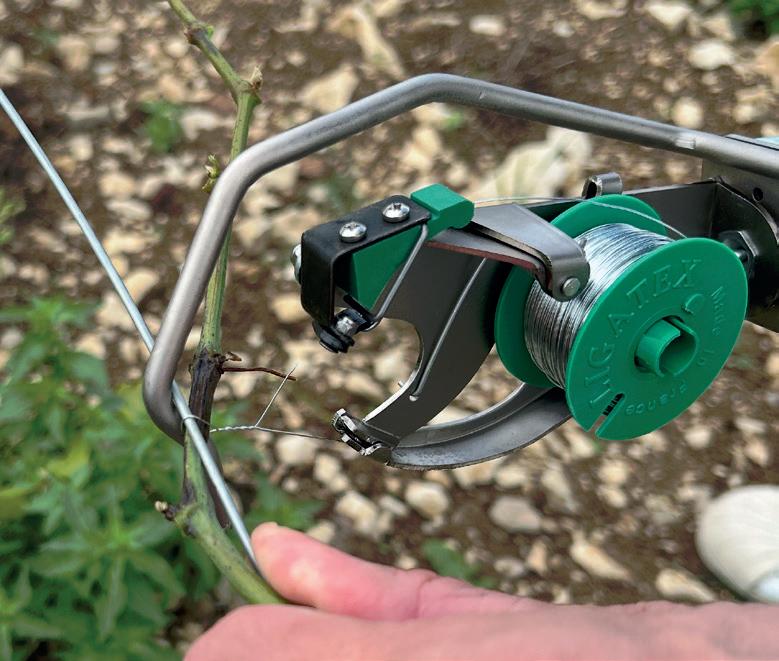
LIGATEX, THE MANUAL BINDER
• Usage in 3 seconds and 3 steps
• Suitable for right- and left-handed users and compatible with gloves
• Use exclusively with Ligatex spools (up to 1200 ties per spool with 0.4 mm wire)
• In-shop servicing available (package price)
THE 100% VEGETAL CLIPS










• Made from 100% wheat and corn starch
• 100% biodegradable in situ
• Help reduce environmental impact
• Food grade quality
• Free from heavy metals
• Several references available to best suit your crop
• Ergonomic clips that are easy to use







Tips to improve vineyard spray efficacy
DESKTOP www.hutchinsons.co.uk ✉ information@hlhltd.co.uk phone-alt 01945 461177
Achieving best results from vineyard sprays requires far more than just selecting the right product, explains Hutchinsons agronomist, Will Robinson.
Research by Syngenta for air-assisted sprayers in vines, top fruit and other horticultural crops, suggests correct application accounts for around half of overall efficacy, with product choice making up the remainder.
This is perhaps not surprising when we consider that a dose rate of, for example, 100 g per ha, equates to just 0.01 g of active ingredient per m2. Given the size of canopies in the middle of the season, a very small amount of active has to do a lot of work, so we need to give it the best chance of hitting its target and doing its job.
The same research highlights three main areas to focus on, namely ‘mechanical’ issues (typically 20% of lost efficacy), poor timing/ weather (20%), and other ‘fine tuning’ (10%).
Mechanical issues
This covers various aspects, from correct tank agitation and fan speed, to speed of travel, direction of airflow from the sprayer, and potential ‘spray shadows’.
Air-assisted sprayers typically blow air clockwise, and if not setup correctly, the lefthand side can potentially be sprayed higher than thought, with more spray than expected lower down on the right-hand side.
The simplest way to check airflow trajectory is with the ribbon test, where lengths of ribbon are attached to air outlets before running the fan at full speed.
Air-assisted sprayers typically produce a ‘V-shaped’ spray pattern to each side, which should touch, but not overlap on each pass. Sometimes, where rows are tight and canes stick out into the row, leaves can intercept more spray and create a ‘spray shadow’ on the canopy behind.
Water-sensitive paper attached at different heights in the canopy can be a good indicator
of spray coverage, as can adding a blue, foodgrade dye to the tank. This easily washes off and provides a very visual indication of spray shadows, misses, or overlaps.
Spray penetration can be a particular challenge in dense canopies, so good canopy management helps improve efficacy. Modern sprayers often allow operators to adjust fan speed according to canopy height and density, whereas for many older PTO-driven sprayers, the fan is either ‘on’ or ‘off’.
Timing and weather
Applying sprays at the correct timing and in optimum conditions is crucial; growth stage, temperature, humidity, rainfall, and wind speed, all need considering.
Windspeed is perhaps the most important factor, both for ensuring application effectiveness, and minimising any risks to the surrounding environment. Nozzle choice and other ‘fine tuning’ can help mitigate some risks though (see below).
Many products are less effective in colder conditions, while volatilisation and scorch are potential risks in warm/hot weather, especially when applied in a fine spray. Sulphur in particular can be quite a ‘hot’ product, with a risk of scorch if applied when conditions are too warm.
However, it should be noted that some products use an element of volatilisation to improve coverage, so always check label requirements carefully.
Herbicide applications
Avoid spraying if rain is forecast during or immediately after application, as it risks washing product off before it has a chance to work.
Fine tuning
The final 10% of efficacy depends on ‘fine tuning’ decisions around nozzle choice, droplet size, water volumes, formulation, etc, to ensure everything is right for the specific product(s) and situation.
In general, a coarse spray will help reduce drift, but coverage may not be as good as a fine spray with smaller droplets. Air inclusion nozzles help mitigate this, by mixing air with pressurised fluid and creating a larger, air-filled droplet that is less prone to drift, and bursts on impact to improve coverage.
Again, always check label requirements for individual products, as some may specify certain nozzles to be used, such as LERAP low-drift nozzles.
Finally, stay up to date with National Register of Sprayer Operators (NRoSO) best practice and calibrate your sprayer regularly, to ensure equipment is delivering what it should. As a minimum, calibration should be done at the start of each season, and whenever nozzles are changed.

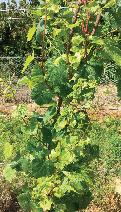
Read specific advice on herbicide applications in our January 2026 issue: www.vineyardmagazine.co.uk/agronomy/simple-steps-to-avoid-herbicide-issues/
Hyperlocal data in your vineyard
Following the success of the FROST Project, vinewatch is delighted to offer the latest hyperlocal monitoring system for vineyard management.
The system shows exactly what is going on in the vineyard at bud height, including leaf wetness, leaf temperature, soil moisture, soil temperature, soil NPK, GDD as well as temperature and humidity. The system collects data every 10 minutes and the grower has the opportunity to decide when the system will send alerts.
Ladybird environmental sensor
The Ladybird is a hyper local multi-sensor designed for vineyard monitoring.
With LoRaWAN connectivity providing up to 10km range, long battery life (up to five years), and a fully weatherproof rugged
design, the Ladybird 5 serves as the central hub for precision agriculture monitoring systems. All settings and data are managed via the Ladybird Dashboard, which provides data visualisation, export,alerts, automated reporting, forecast and prediction features.
Applications
◆ Precision agriculture and smart farming
◆ Crop growth monitoring with light spectrum analysis
◆ Soil health and nutrient monitoring
◆ Weather station integration (wind, rain)
◆ Water level monitoring for tanks, troughs, and run-off
◆ Irrigation automation and scheduling
◆ Frost and environmental alert systems
◆ Research and field trials
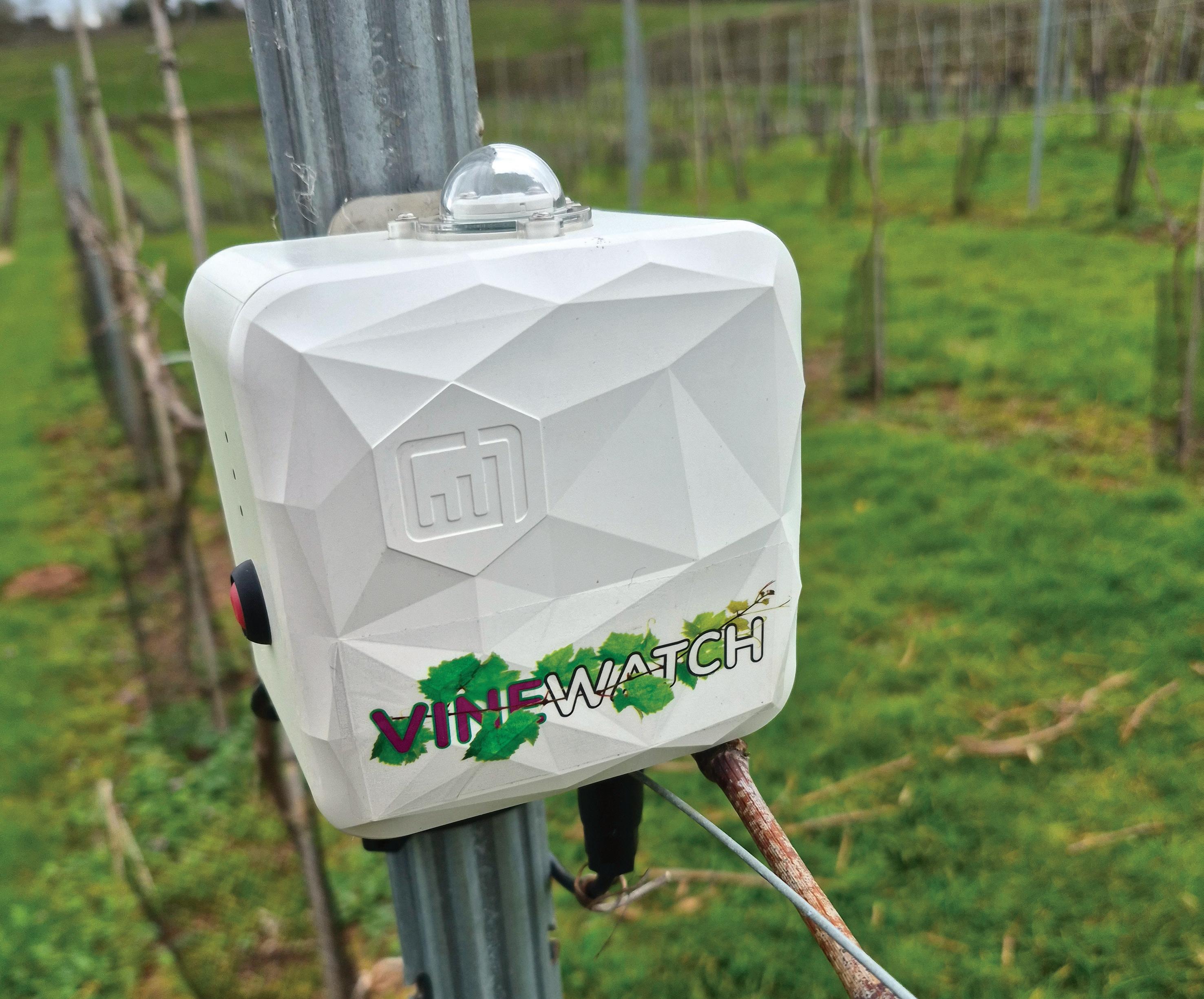
THE VINE POST
Vineyard planting: How to handle vines properly
Receiving your vines for planting is a milestone moment. After months of planning, the vineyard is finally becoming real. But this stage also carries risk. How vines are handled in the days before and during planting has a direct impact on establishment, survival rates and early growth.
Having established over 300 vineyards and planted over five million vines, VineWorks knows that good handling at this stage makes a lasting difference.
Here are some practical tips for getting your vines ready for planting.
Plan before the vines arrive
The work starts before delivery. You need a clear plan for storage, handling and planting so that vines move efficiently from lorry to ground with minimal stress.
Ideally, vines should go straight into a cold store set at around 4°C. This keeps them dormant and in good condition until planting. Even a short delay can affect viability, particularly in warm or dry conditions. Resist the temptation to open the packaging. Vines are packed to maintain humidity and protect them in transit. Opening bags too early can lead to drying out or premature activity, reducing planting success.
Keep handling to a minimum
There are various approaches to pre-planting treatments, from trimming roots to soaking or dipping. However, advice from many European nurseries is clear: keep intervention to a minimum. Every additional step increases the risk of introducing pathogens or damaging the plant.
In most cases, the best approach is to remove vines from cold storage and plant them as soon as possible. If there’s a delay, keep them shaded, cool and out of direct sunlight.
Timing matters
Vines should ideally be planted immediately after leaving cold storage, or within 24 hours. Beyond this, the risk of dehydration and reduced vigour increases.
This means your planting operation needs to be well organised. Ground preparation, marking out, labour and machinery should all be ready in advance.
Matching planting method to the site
The choice between machine and hand planting is usually dictated by scale, but handling considerations apply to both. Machine planting offers speed and consistency, with outputs of up to 15,000 vines per day. Vines are fed directly into the planter, reducing handling time.
Hand planting suits smaller or irregular sites but involves more handling, so care is needed to prevent roots drying out between bundles and planting positions.
Whichever method you choose, keep vines cool, covered and only bring out what you can plant within a short window.
Getting the planting right
Even with good vine handling, poor planting technique can limit success.
Roots should sit naturally, without bending or bunching. Good soil-to-root contact is essential, but avoid over-compaction.
Soil condition at planting is critical. Wet or poorly prepared ground can create smeared or polished trench walls, particularly on clay soils. These restrict root
penetration and can hold water.

Open trenches are another common issue, leaving roots exposed to air pockets and reducing establishment rates. Both problems are avoidable with the right conditions, but once planted, they are difficult to correct.
Don’t ignore the basics
It’s easy to focus on planting speed, especially on large sites, but consistency is just as important. Poorly planted vines will lag behind, creating variability across the vineyard. Simple checks during planting (i.e., depth, alignment and firmness) pay dividends later. A well-organised team and good supervision make a significant difference.
A short window, long-term impact
Planting is a short phase in the life of a vineyard, but it has a lasting effect. Decisions made over a few days will influence vine performance for decades.
Handled well, vines establish quickly and develop strong root systems. Handled poorly, they struggle from the outset, leading to higher replacement rates and uneven growth.
There’s no shortcut here. Careful storage, minimal handling, good timing and attention to detail remain the fundamentals.
Get those right, and you give your vineyard the best possible start – one vine at a time.
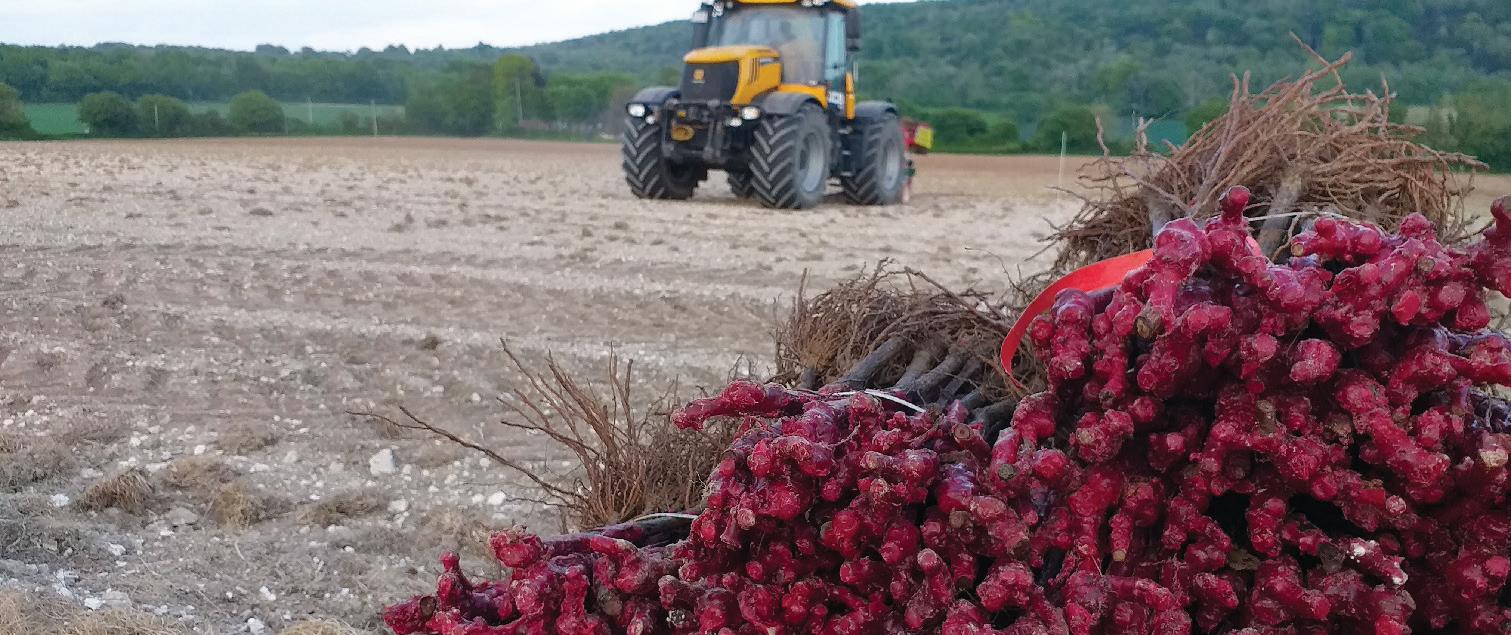
The basics of vine nutrition
Vines require sixteen essential nutrients to ensure their normal growth. Some are obtained by the leaves from the air or absorbed through the roots from water – like carbon, hydrogen and oxygen. The rest come, in the main, from the soil.
Nutrients are split into two groups – the macronutrients that the vines use in relatively large quantities, and the micronutrients, that are only needed in very small amounts, despite being just as vital for plant development.
Within the macronutrient category, grapevines need Nitrogen, Phosphorus, Potassium, Calcium, Magnesium and Sulfur for proper growth. When it comes to micronutrients, Iron, Manganese, Copper, Zinc, Boron, Molybdenum and Chlorine are necessary in small, but nonetheless critical, amounts.
Lacking in one or more of these elements can lead any vine to deficiency symptoms visible in the leaves or reduced growth and yield.
Nutrition for young vines
Laying a good foundation for the nutrition of immature vines begins before the plants even reach the soil. A new vineyard needs the soil to be analysed before planting to determine not just whether fertiliser needs to be added, but also to evaluate the structure and drainage of that soil to give the young plants the best possible start.
Thanks to their small root system and low levels of carbohydrate reserves, young vines are initially very slow growing. This cannot be rectified through the application of fertiliser – and indeed it can do more harm than good to apply nutrients to the grapevine in its first season. Generally speaking, given a well prepared soil with an appropriate pH level, the plants should do quite well left to their own devices for the first couple of years, nutritionally speaking.
Poor growth, in opposition to the usual slow growth, of younger vines is more likely to stem from issues with competition from weeds, lack of water, early overcropping or a lack of effective disease controls,

rather than lack of access to nutrients in most soils. It is only as they come into adolescence and maturity that the application of additional nutritional support may be of tangible benefit.
Nutrients for mature vines
Once vines mature, a more cohesive programme of fertilisation may begin, if required. This should be undertaken with an evidence based approach, using visual examination of the plants coupled with soil and plant tissue analysis to identify areas and types of nutritional deficiency.
A blanket approach to the addition of nutrients can do just as much harm as the absence of fertiliser – resulting in inadequate growth or excessive vigour, poor fruit set, interruptions in the efficiency of leaf photosynthesis and reduced fruit quality. Some nutrients, like boron, can cause significantly more harm than symptoms of its deficiency causes.
Nutrition requirements
Nutrients are taken up by vines in different quantities and proportions depending on their growth stage. This reflects the needs of the physiological processes that are taking place.
From budbreak until fruit set, there is the highest demand for phosphorus and nitrogen. This helps the canopy to be properly established, while setting a good foundation for the berries to develop.
As the grapes grow and ripen, there is an increased demand for potassium. Magnesium and calcium are also vital in this stage because of their contribution to the overall quality of the fruit.
After harvest, a balanced nutritional intake is required so that the plant can store sufficient carbohydrate in preparation for the next season of growth.
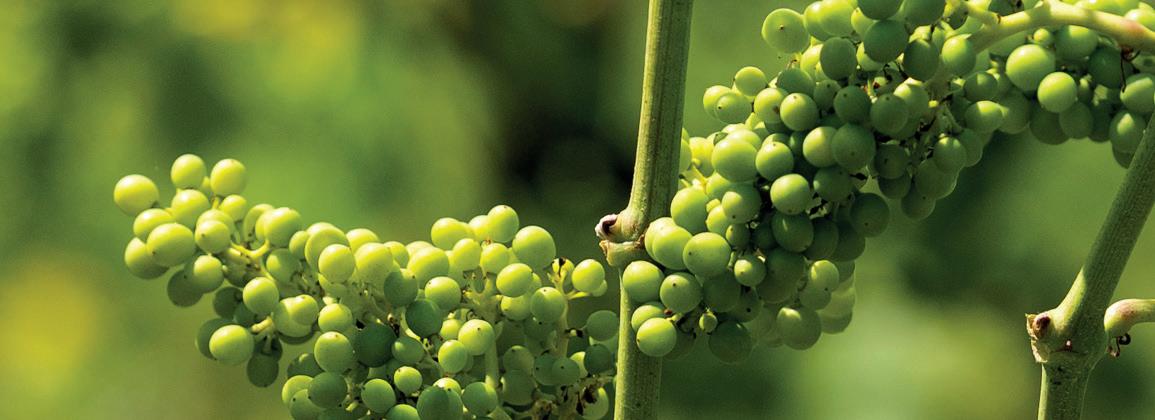

The limiting factor
Total levels of nutrients don’t matter as much as how much those nutrients are actually available to the vines for use. This availability is affected by a whole host of factors. They include the composition of the soil; its pH, levels of organic matter and texture, alongside the action of moisture, light, temperature and the activity of microbes in the plants’ environment.
By impacting the chemical form of the nutrients and how well they are able to move through the soil and be absorbed by the plants’ roots, all of these factors change levels of nutrition availability. Soil pH is perhaps the most critical in terms of how soluble and readily available nutrients are.
Too much acidity and some nutrients lose their value or even become toxic. Too much alkalinity and some nutrients become harder for the plant to access them. This is why soil sampling is so important when laying down a plan for nutrition in the coming growing season.
A plant cannot grow more than the level allowed by the growth factor that is present in its lowest amount. In other words, the chain is only as strong as its weakest link. Any restriction on a key requirement for growth – be that a certain nutrient, the correct temperature or access to water – will limit the amount of growth that is possible. This is the limiting factor. It must be identified in order to enhance plant growth.
A vine could be enjoying absolutely textbook conditions but simply lack access to enough, let’s say, Manganese. Since Manganese is used in photosynthesis, the vine’s growth will still be restricted until that singular deficiency is addressed, even though all of the other growth factors are perfect for the plant.
The limiting factor is another reason why carefully planned,
evidence-based nutritional strategies are important, rather than a blanket or even hands-off approach.
Soil sampling
In an established vineyard, soil analysis will provide reports about potential problems like salinity or acidity, as well as giving evidence that previously applied fertiliser has moved into the root zone as required, so that the plants are able to make use of it.
As stated above, establishing pH levels is probably the most important reason for undertaking soil tests, although they are useful for flagging any excessive concentrations of particular nutrients too. However, soil sampling has its limits. It is unlikely that representative samples across the depth of the vines’ roots can be accurately taken, and the chemical composition of soil may change dramatically over just a small area. It is important, therefore, to combine soil sampling with other methods of analysis when assessing the nutritional needs of the vineyard, to build up a more informed picture.
Visual inspection
Observing and interpreting the symptoms of nutrient deficiency in the leaves of vines can be confusing because much of the information available in the form of field guides doesn’t acknowledge the differences between cultivars or the age of the leaf itself.
That said, there are a number of general observations that can be made which would trigger further investigation in order to establish the underlying cause. For example, if vine leaves start to change colour outside of their normal autumnal process, this is a sign that there is a problem with nutrition.
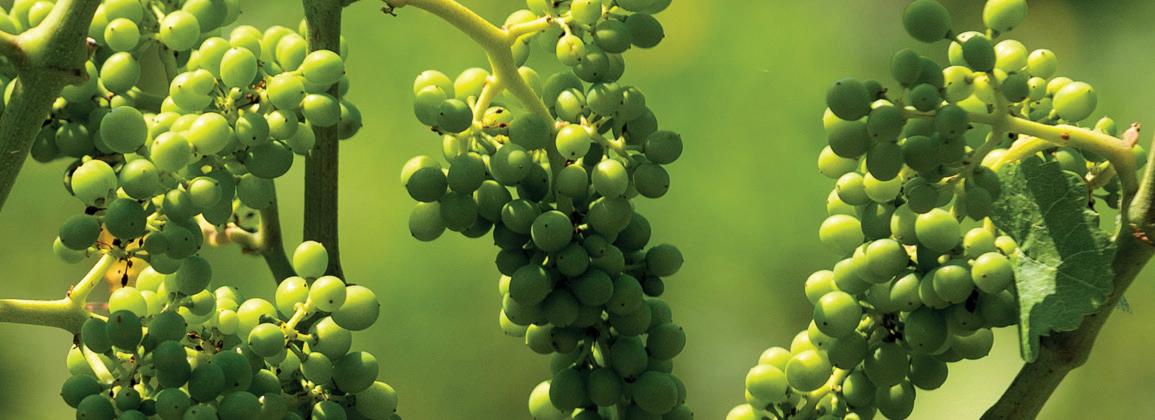
Photos: © Martin Apps, Countrywide Photographic
VINE NUTRITION
The shape and hue of the discolouration gives clues as to which particular nutrient is lacking. The location of the damage is also an indicating factor – potassium and nitrogen deficiencies, for example, may show first in the older, lower leaves, as they move easily around the vine and are therefore easily moved from older plant tissues to where the need is more desperate – like the growing shoots or ripening berries.
Conversely, iron does not move around the entirety of the vine so easily. When it is lacking, it is the younger, upper areas of the vine which will start to yellow first.
Plant tissue analysis
While taking visual clues from the vines themselves is a helpful diagnostic, the sad truth is that by the time deficiencies begin to show themselves, the damage to overall growth and yield may already be well underway.
Plant tissue analysis is the best way to establish the nutrient levels in the entire plant. This may be done as a trouble shooting measure, or to monitor levels before a problem arises, but either way it is an effective way of creating a crop of data that can be used long into the future as part of the ongoing monitoring of the health and success of the vineyard.
Experts suggest that early flowering is a key time for tissue testing, a practice that may be particularly beneficial for newly established vineyards with adolescent vines to ensure that they have the support they need as their root structure develops.
Testing may also be undertaken during veraison as a back up
measure, to ensure that the nutritional plans laid earlier in the year have been effective and to help fine tune plans for the application of nutrients for the best possible outcome during harvest.
The methodology adopted for plant tissue analysis is usually petiole analysis – sampling the stem that connects the leaf to the shoot. During flowering, the results are most likely to give a more accurate reflection of the plant’s nitrogen status, as well as being early enough to make adjustments to plans that will take effect during the same growing season.
Comparative SAP analysis
While petiole analysis looks at the nutrients that are stored in the leaf, SAP analysis measures the real time nutrient availability in the vascular tissue – the xylem and phloem. It is a relatively newer form of testing that is now available on the market.
SAP analysis compares the nutritional level in both old and new leaves on the same vine, giving a basis for comparison within the same plant. The testing offers information about the levels of available nutrients – not just the levels of nutrients which may be stored, but not actually be available to the plant immediately.
The results of this form of testing will help to find those hidden hungers within the plants, but also diagnose other problems, like an excess of nitrogen, for example. Perhaps a report shows higher levels of nitrogen in the younger leaf. The plant is meeting the higher demand in that new growth at the expense of the old – suggesting that there is a lack of nitrogen overall.

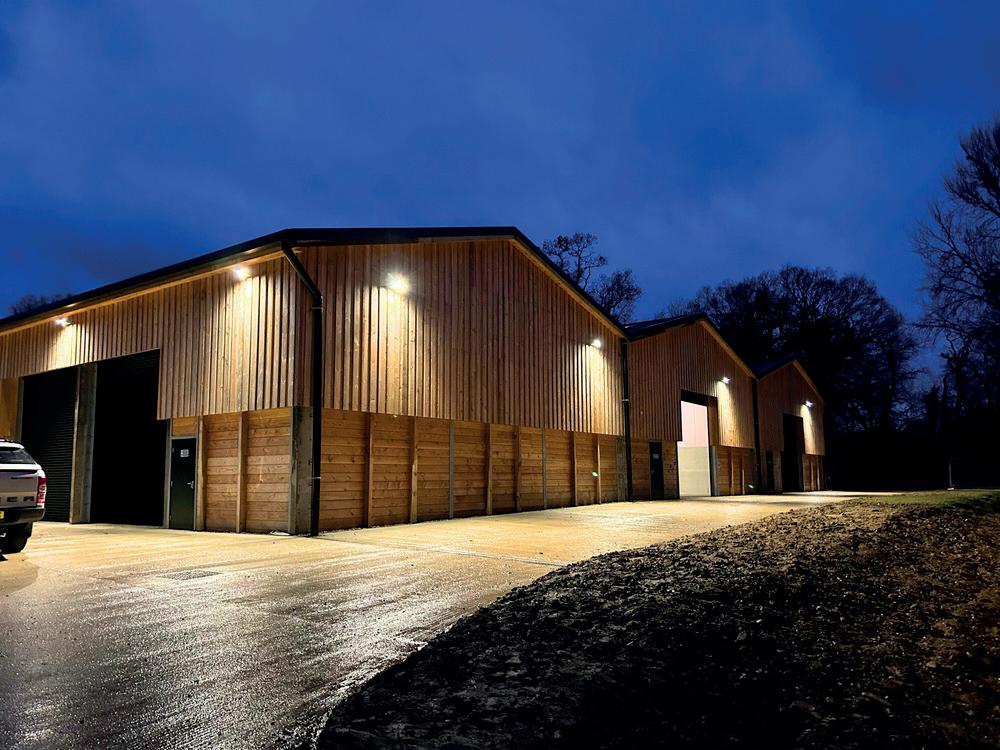
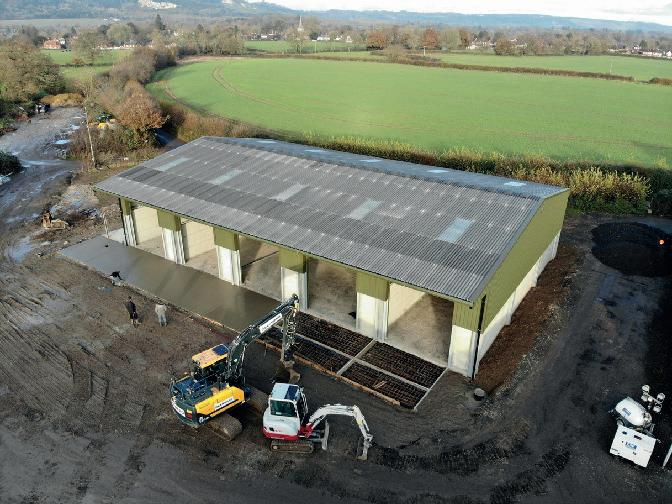

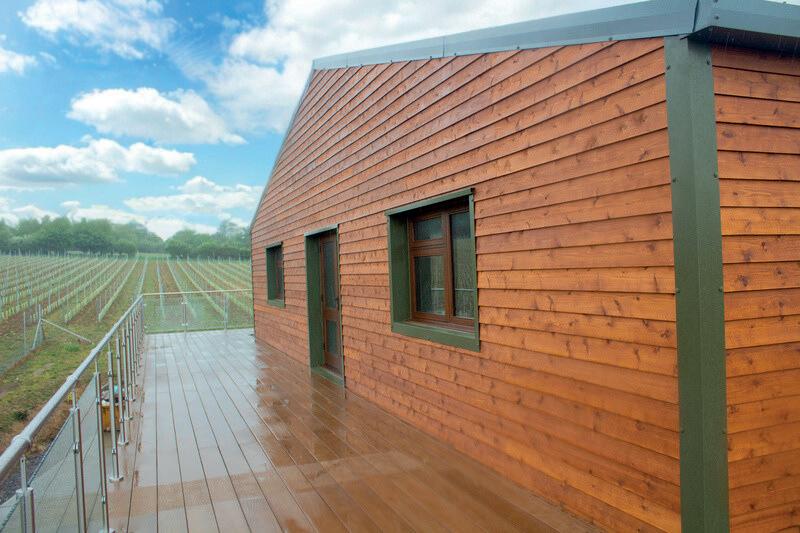




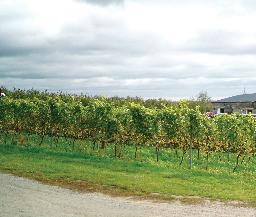
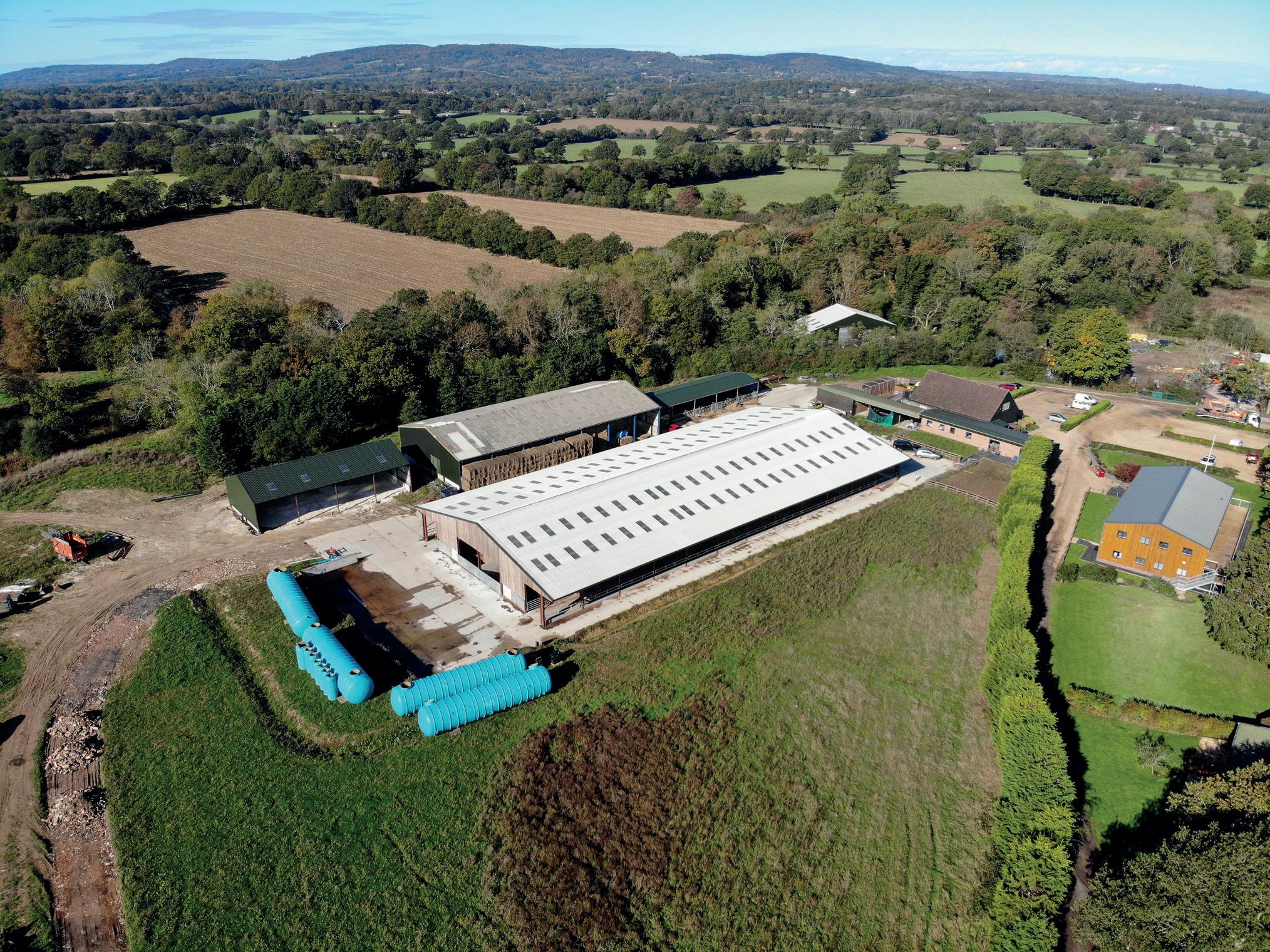
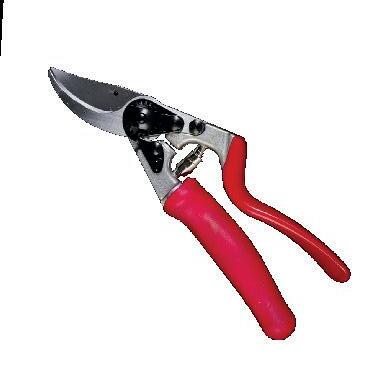
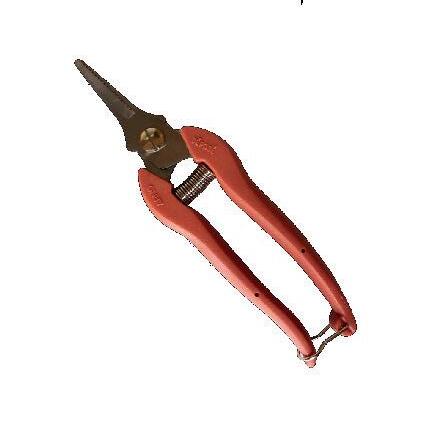

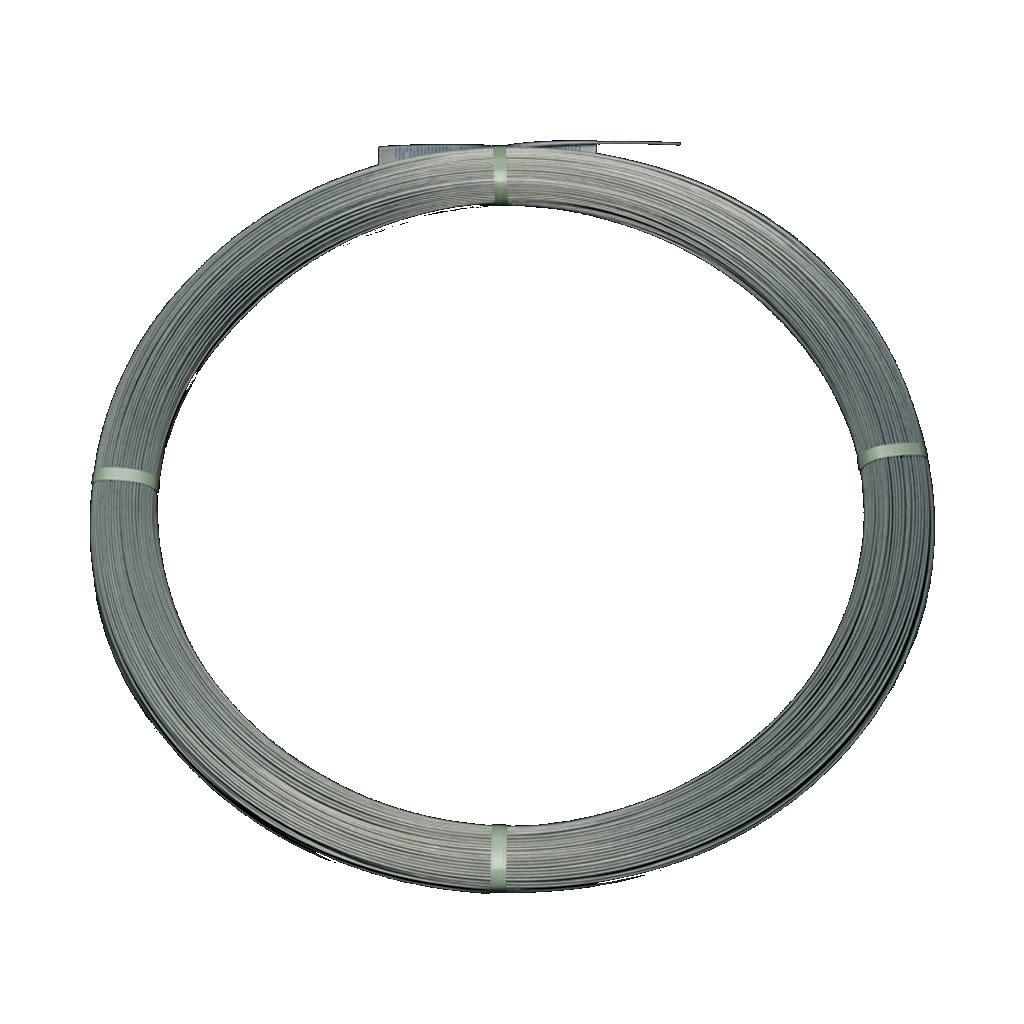

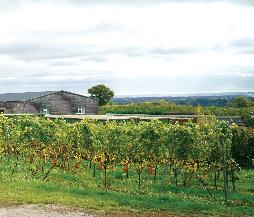
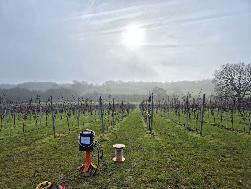






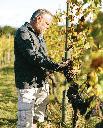
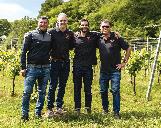

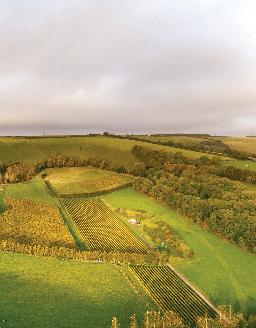

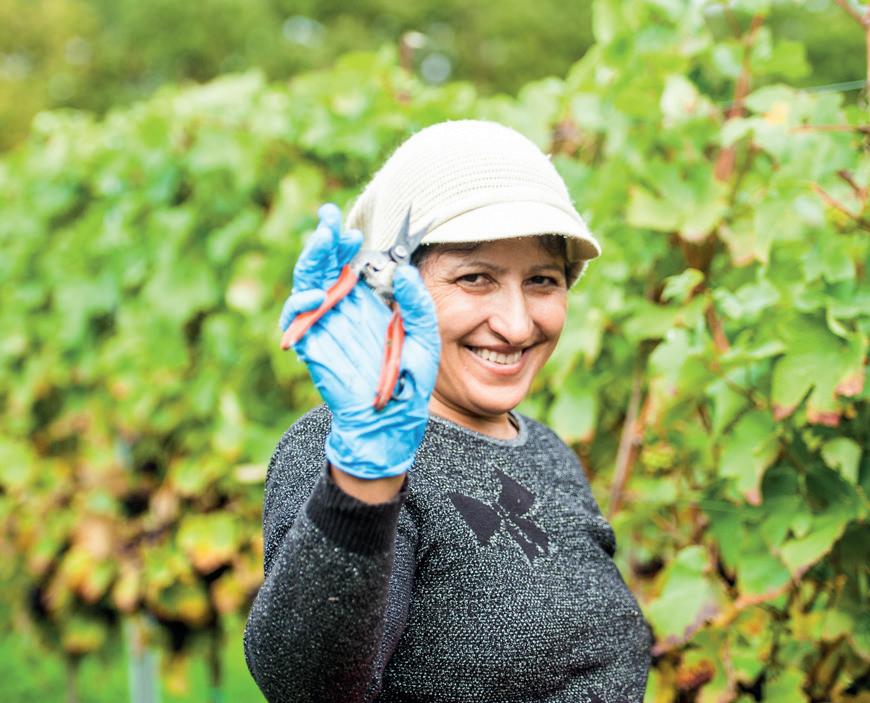
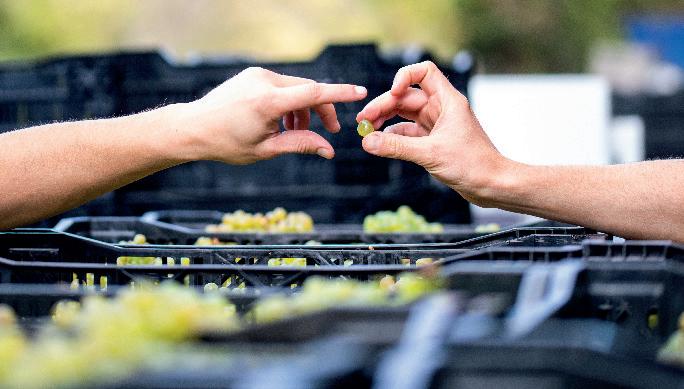
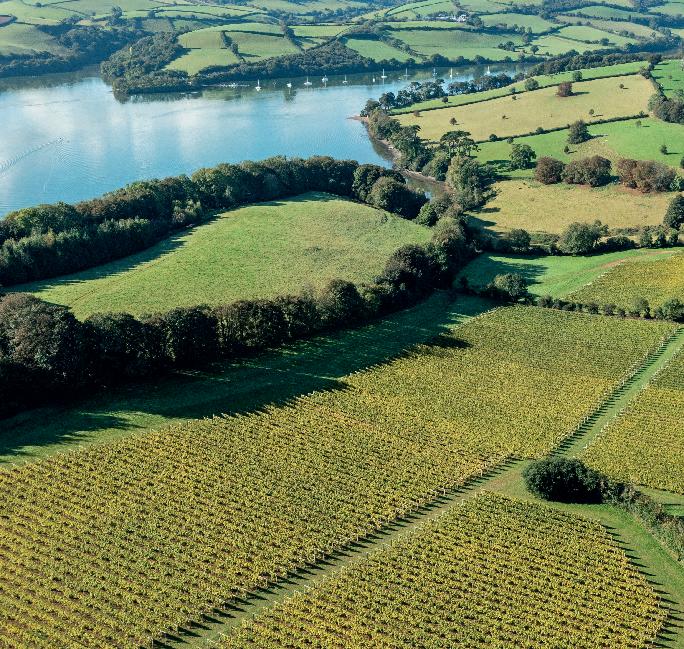
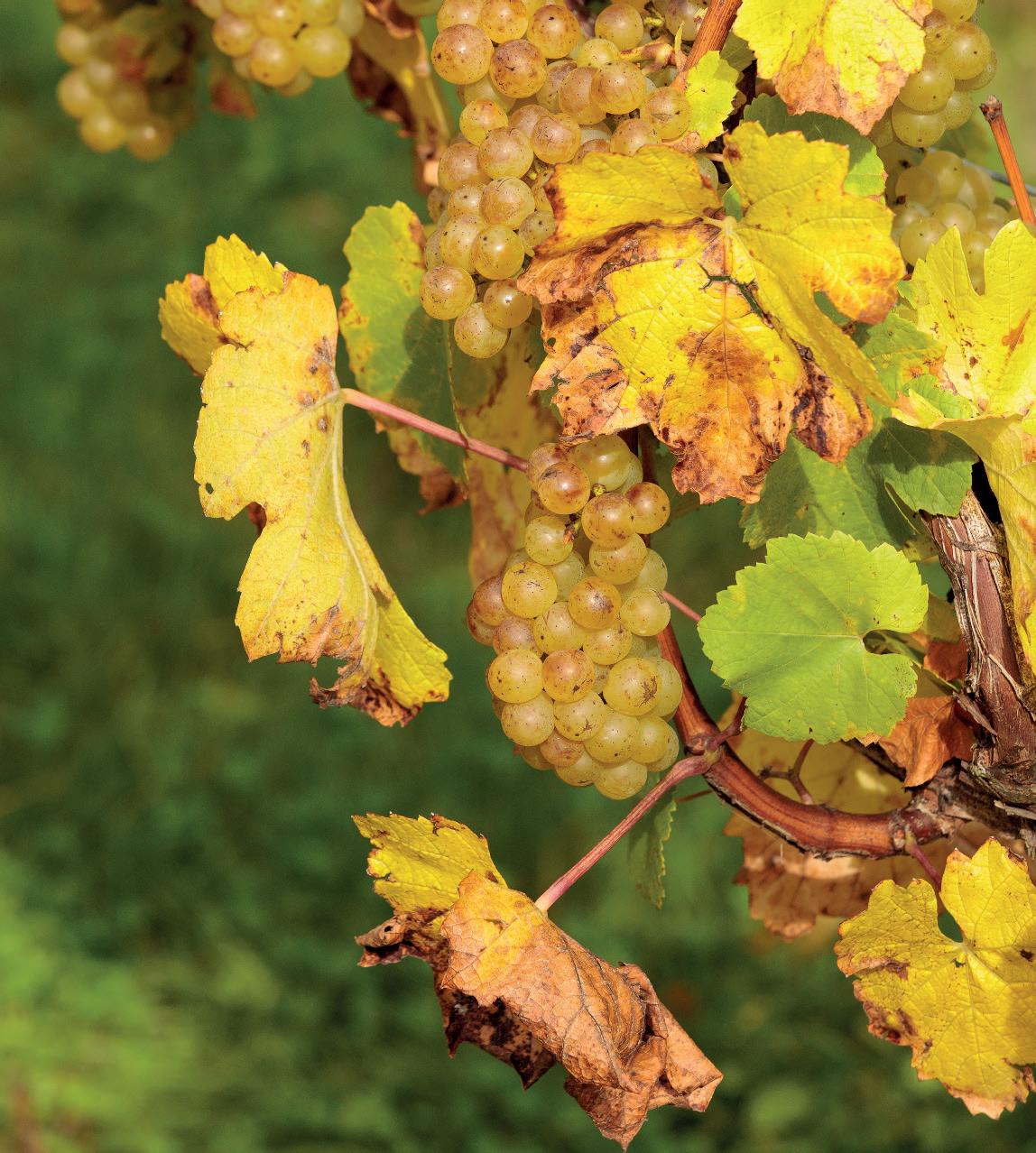
Vine health directory
For more advice and support with vine nutrition, the following companies offer comprehensive services for commercial vineyards:
◆ Agrii Gloucestershire www.agrii.co.uk
◆ Agronomic Services Ltd North Yorkshire www.agronomics.co.uk
◆ Hutchinsons UK-wide, based in Cambridgeshire www.hutchinsons.co.uk
◆ ICL Growing Solutions Suffolk www.icl-growingsolutions.com
◆ Vinecare UK East Sussex www.vinecareuk.com
◆ VineWorks East Sussex www.vine-works.com
The more samples that are taken over the season, the more that data can be plotted over a graph to monitor the way the vines are coping within their environment. While one comparative test a year is helpful, three or even five across the season will give a more complete picture.
Disease management
As well aiding in all the important physiological processes of growth through the year, good nutrient management allows vines to be better prepared to ward off disease. Access to calcium, potassium and silica, for example, can help vines to stand firm, to some extent, against powdery mildew because the plant uses the nutrients to strengthen itself.
Meanwhile, Boron deficiency is seen to be one of the most serious non-parasitic diseases in grapevines because it causes very few seeded berries to actually set – a condition known as millerandage, or hen and chicken. This can have a dramatic impact on yield.
Vine density and nutrition
The density of vine planting, expressed as the number of vines per hectare or acre, is just one in a myriad of factors that impact on the way a vine grows and the quality and size of its yield. Like all of these factors, planting density requires careful consideration to achieve the desired outcomes in style, quality and price in the finished wines.
The accepted wisdom suggests that having vines planted at high density will ultimately increase grape quality. Since the vines are in increased competition, their yield will be smaller. However, the lower amount of smaller grapes that are produced have a better skin to juice ratio will increase the quality of each individual grape.
The evidence to back this up has not really been scientifically proven, but is more anecdotal. Certainly, competition amongst plants does not necessarily drive roots down, as they will intermingle within a shared space.
Where soils are naturally fertile, excessive vine vigour can be
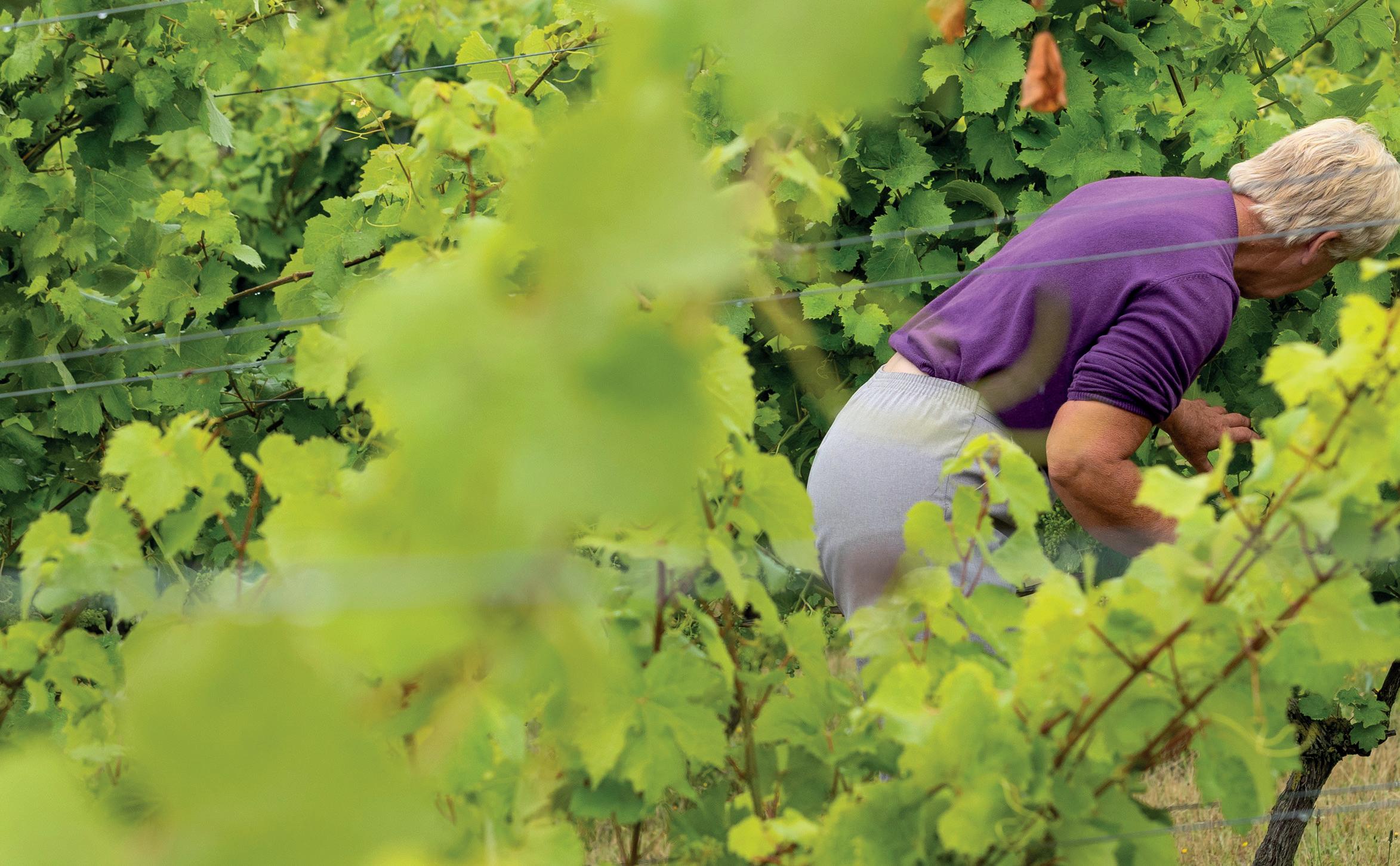
a problem - bringing excessive shading, reduced airflow and a breeding ground for disease. Here, some commentators suggest that a lower vine density can be beneficial. It allows the vines to grow larger and reduces excessive vigour as the vine has to work harder to support its increased size and cropping capacity.
On the other hand, some experts suggest that where a vineyard experiences too much leaf growth, a higher density planting is going to help curb that growth to some extent. It just goes to show that balance in all things is the ultimate requirement.
Fertiliser management
A fertiliser is any compound that contains one or more chemical elements that can be placed on or within the soil, or applied directly to the plant, to support its regular growth. Those chemical elements may be inorganic or organic, natural or synthetic.
Increasing concerns about costs, but also efficiency and environmental impact have led to increasing care in the application of fertilisers of all kinds. While broadcasting a fertiliser across the soil surface may be a fast, and therefore financially efficient, method of applying chemical elements across a wide area, its effectiveness may be limited by the type of soil.
Foliar application is therefore usually preferred to give a more targeted approach to applying micronutrients. Direct absorption of nutrients through the leaves can offer a more immediate way of correcting any nutritional deficits. These applications tend to be scheduled when the plants are in active growth and their nutritional demands are at the highest point within the annual cycle.
The efficiency of the uptake of foliar applications can be impacted by environmental conditions – if the leaf stomatas are closed, the efficiency of the nutrient absorption will be reduced. Having moderate temperatures, low wind conditions and high humidity levels at the time of spraying will all contribute to the effectiveness of the treatment.
Checking the vines at Shotley Vineyard

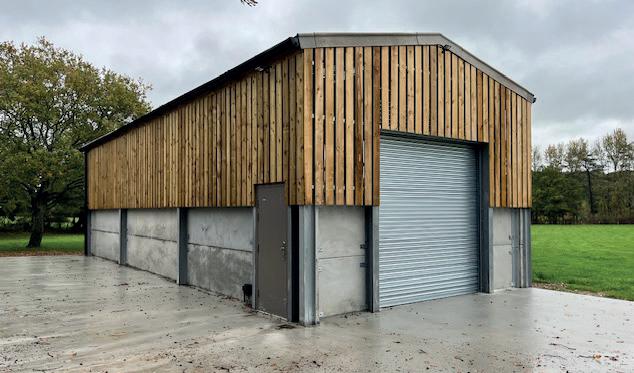
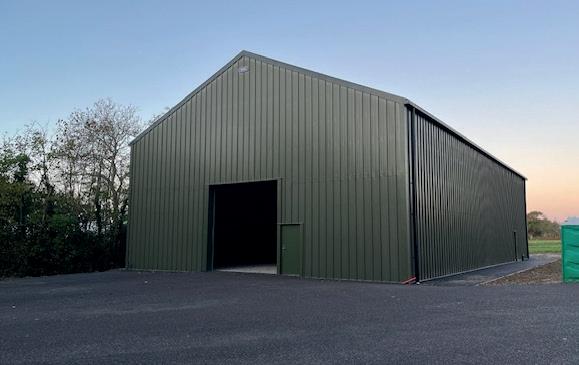

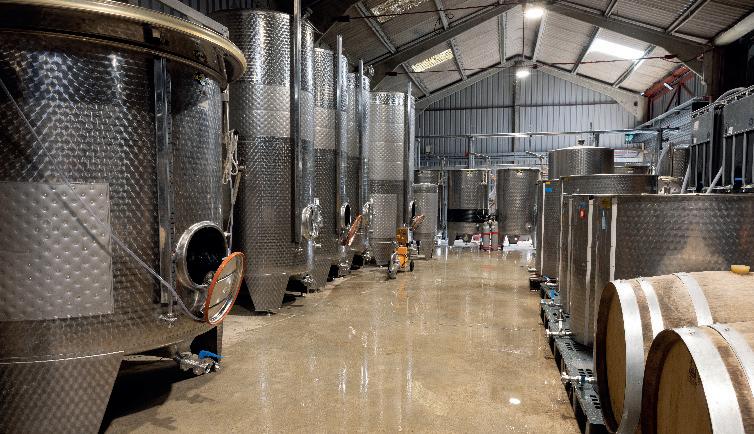

From grape to glass, and beyond: Celebrating the entire UK sector
Working in partnership with Vineyard magazine for a developing UK wine industry.
WineGB is the national association for the English and Welsh wine industry. WineGB represents, leads, and supports the sustainable growth of the Great British wine sector.
If you are interested in wine production in the UK, find out more about WineGB and join us. Visit
website www.winegb.co.uk
Exceptional year
WineGB celebrates the start of the growing season with its Harvest Report and Green Book for members.
As vineyards across the British Isles celebrate the start of the growing season, WineGB has published two of its annual essential key guides for its members: the 2025 Harvest Report and the new and revised 2026 Green Book
The 2025 UK Harvest Report, authored by Stephen Skelton MW uses data collected from the WineGB Harvest Yield Survey 2025 and other cited sources, with insights and analysis by WineGB. It highlights that 2025 was an exceptional year, and for all the right reasons. An early and dry spring brought the vines into leaf early and the really extraordinary hot weather in June and July, when the south of the country experienced four separate official ‘heatwaves’, set the scene for the earliest and ripest grape harvest ever seen in the British Isles.
UK production in 2025, recorded a +39% harvest increase compared to 2024 and this was due to favourable weather conditions and lack of significant disease. Most importantly, the UK wine production quality indicators from the 2025 report illustrate the ripeness and quality of the fruit being picked.
Growing Degree Days (GDD) in 2025 were 1,051 compared to the five year average of 1,008. Average potential alcohol levels achieved were also up from 9.47% (2024 and 10 year average) to 10.48%, and tartaric acid levels decreased from 10.47g/l (10 year average) to 10.22 g/l.
The WineGB Wine Technical Group has called this a mast year and we anticipate some exceptional wines. Several grape varieties performed particularly well; Bacchus produced 9.5 t/ha compared to
the five year average of 6.75 t/ha, Solaris was up from 4.20 t/ha (five year average) to 7.20 t/ha and Pinot Noir up from 5.79 t/ha (five year average) to 5.90 t/ha.
The 2026 edition of the WineGB annual Green Book contains extensive information about products that can be used in the UK on wine grapes and everything around spraying, legislation and guidelines for the safe and effective usage of plant protection products.
This essential guide is produced by WineGB’s Viticulture Working Group alongside essential advice from Horticultural Agronomist Will Robinson from Hutchinsons and Dr Joanna McTigue, Crop Protection Scientist at Horticulture Crop Protection UK Ltd.
Available exclusively to grower and producer members, the Harvest Report and Green Book are essential resources for anyone involved in UK viticulture and available via the WineGB Knowledge Hub.
Nicola Bates, CEO of WineGB commented: “We take great optimism from the scale of the harvest and most importantly the fantastic quality of fruit we are now producing. These results recognise the hard work and efforts of our growers, viticulturists and winemakers and they should feel incredibly proud of this set of results. We are showing real resilience as a sector with exciting times ahead.”
Alongside the WineGB member guides, the FSA published its 2025 UK wine production data, revealing an exceptional year for English and Welsh wine, with total production rising by 55% compared to 2024. Its figures show that 124,377 hectolitres of wine – equivalent to over 16.5 million bottles – were produced across the UK in 2025.
DATES FOR THE DIARY
6 May 2026
WineGB Awards final deadline
18-20 May 2026
London Wine Fair
29 May - 7 June 2026
Welsh Wine Week
20-28 June 2026
English Wine Week
16 July 2026
WineGB AGM, Conference and Awards Ceremony
7 September 2026
WineGB National Press & Trade Tasting
Commitment to sustainability
WineGB
accelerates sustainability drive with relaunch of national certification for UK wine.
WineGB has announced the relaunch of Sustainable Wines of Great Britain (SWGB), its national independently audited sustainability certification scheme, reinforcing the organisation’s commitment to embedding sustainability at the core of UK wine production. This expansion includes an entirely new module for people.
First introduced in 2019, the scheme now has 79 members and 41 WineGB certified producers, 43% of UK planted hectarage is certified by the scheme. The refreshed programme builds on this momentum with an expanded framework that reflects the evolving expectations of global sustainability standards.
The most significant development is the introduction of a dedicated people module, designed to recognise the central role of social sustainability in the long-term resilience of the UK wine sector. This new element places greater emphasis on workforce wellbeing, skills development, community engagement, and responsible employment practices, ensuring that sustainability is understood not only as an environmental responsibility but as a human one. It builds on the extensive work by WineGB as it has provided practical material that supports all accessible workplaces including the safeguarding toolkit, the people EDI hub and the member only hiring toolkit. This is vital work as we seek to recruit and retain more people into the sector.
“Sustainability is fundamental to the future of our industry,” WineGB CEO Nicola Bates, said. “The enhanced SWGB scheme underscores our ambition to demonstrate the responsible production inherent in the UK. Environmental care, social responsibility, and shared learning sit at the heart of UK wine production and this relaunch marks an important step in supporting producers to meet the challenges of a changing climate and changing consumer demand.”
Key features of the enhanced scheme include:
◆ A brand new, simpler, more intuitive hub for members.
◆ New people module, aligning the scheme with international ESG expectations and ensuring social sustainability is measured and recognised.
◆ A comprehensive certification framework covering vineyard and winery operations, with clear benchmarks for environmental stewardship.
◆ A strong focus on knowledge sharing, enabling producers to access research, case studies, and peer-to-peer learning to accelerate progress across the sector.
◆ A commitment to transparency, giving trade partners and consumers’ confidence in the integrity and rigour of the certification.
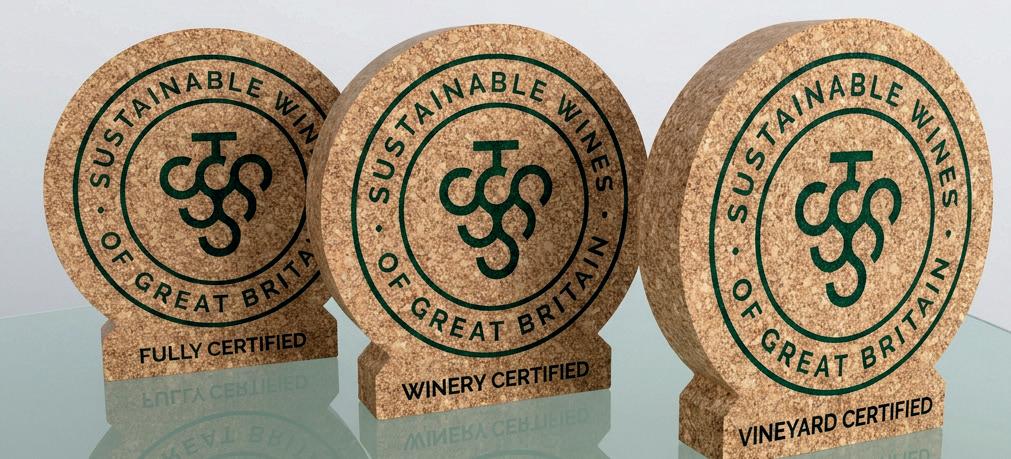
Inside the factories
A German machinery tour with UK growers.
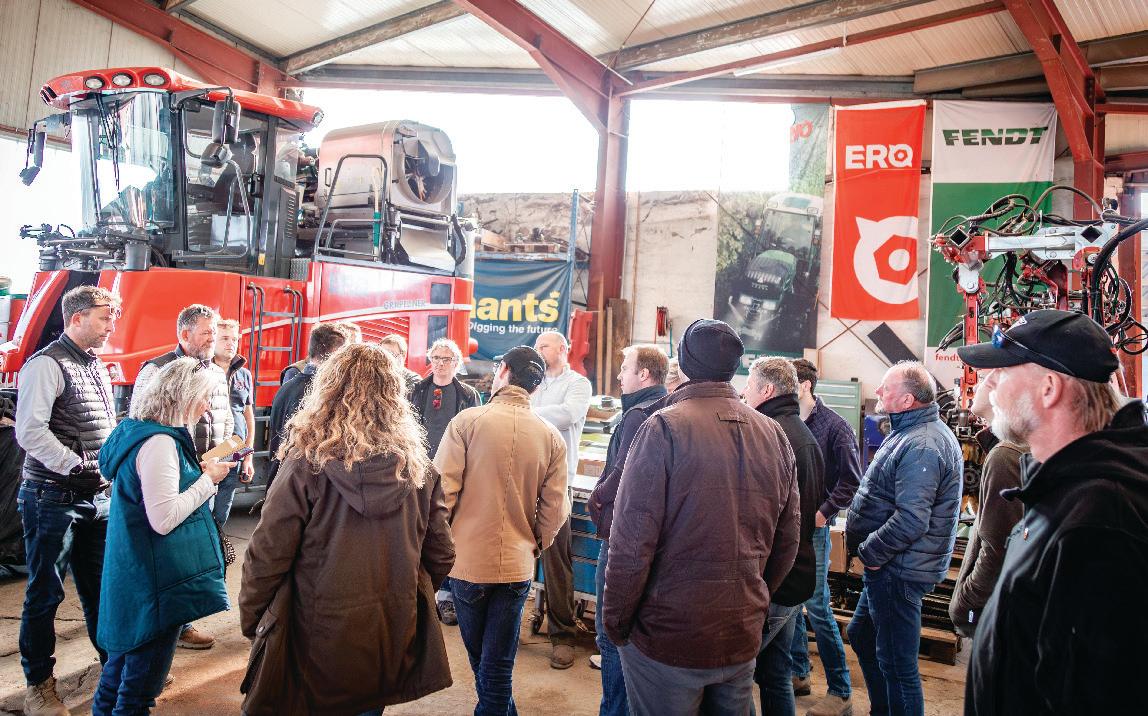

A group of British fruit and vine growers recently joined specialist machinery dealership, NP Seymour, on a three-day tour of Germany to get a closer look at how the Fendt tractors and viticultural machinery they use are manufactured.
With 20 people in total, including the NP Seymour team, the group brought together vineyard and orchard managers, consultants, and soft fruit growers from East Anglia, Kent, Surrey and Sussex.
“Trips like this are about more than just seeing machinery,” said Claire Seymour, Director at NP Seymour. “We were not only able to see behind the scenes in the factories, but also able to meet the people who design and build the equipment. It was a fantastic opportunity to give back to our clients and a great way to bring growers together, share ideas and build relationships across the British fruit industry.”
Day one – ERO Gmbh, Simmern
After landing in Frankfurt, the group travelled to ERO in Simmern, where the visit began with lunch and a presentation from Area Sales Manager Ralf Licht introducing the company, its history and product range.
The firm, founded in 1969 by Herbery Roth and Heinz Erbach, now employs over 240 people and produces machinery for the full growing season, including mechanical pruners, canopy equipment and grape harvesters.
Globally, ERO holds around 15% of the grape harvester market, rising to about 80% in Germany for both viticultural equipment and harvesters.
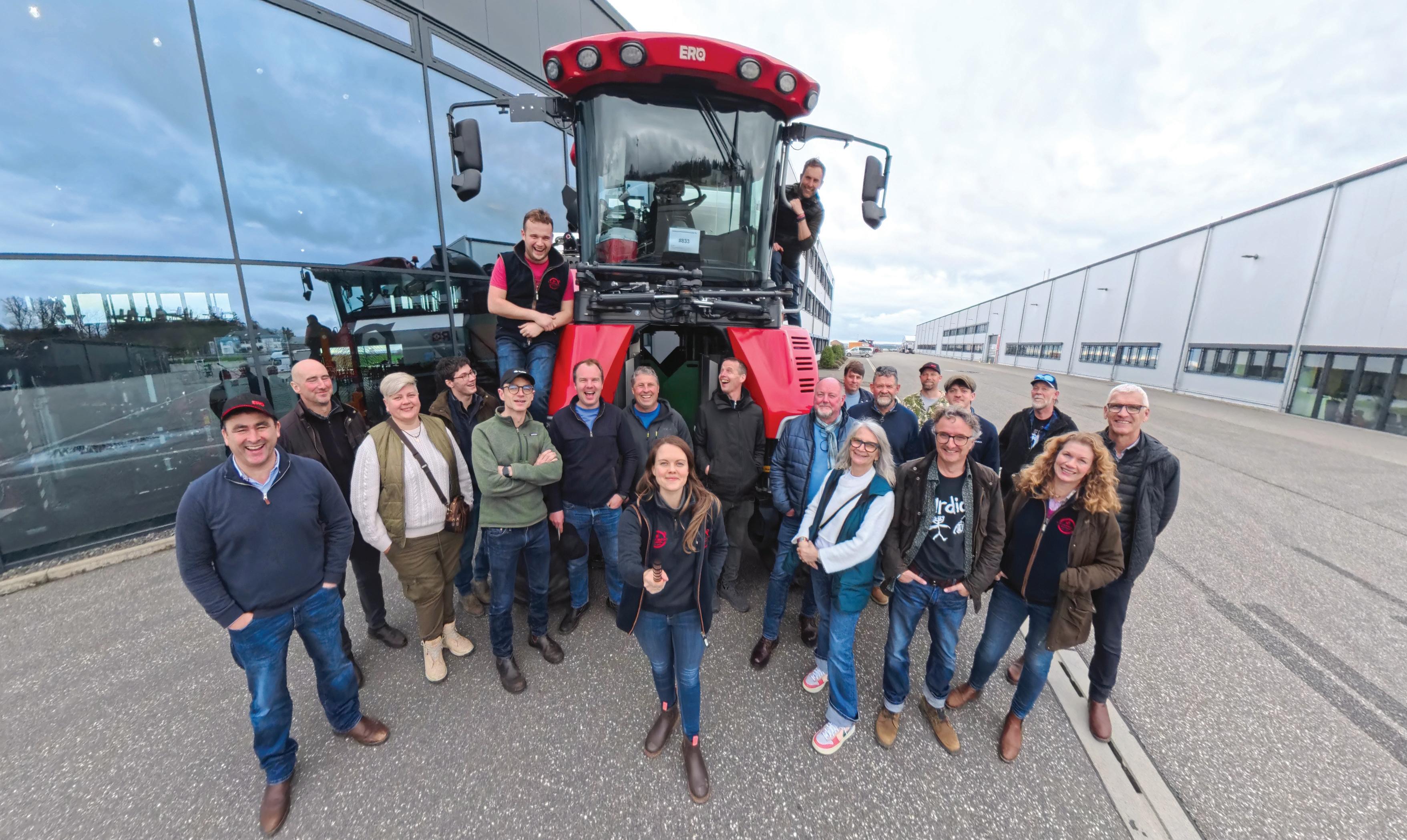
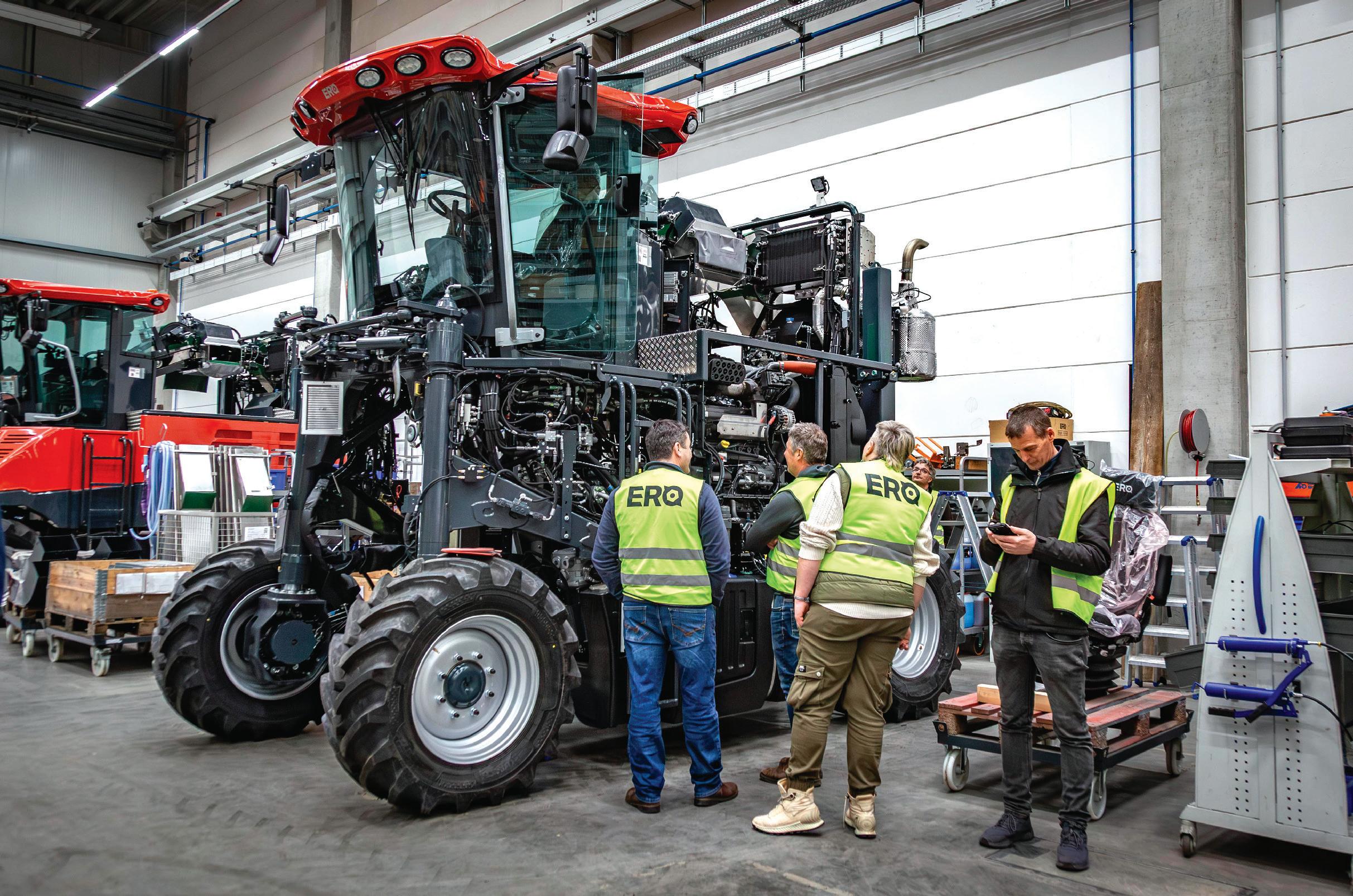
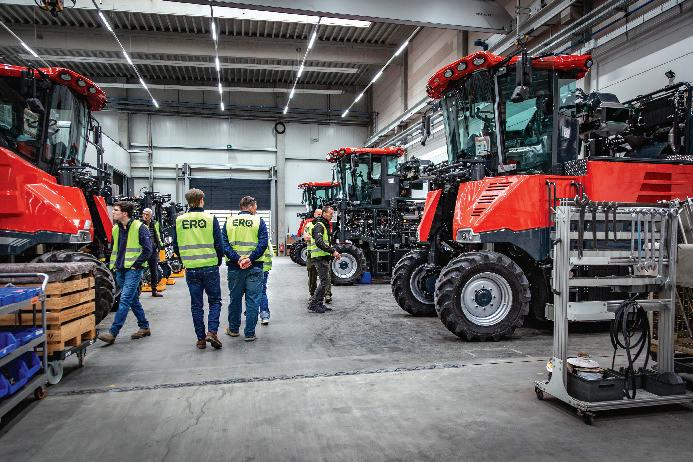
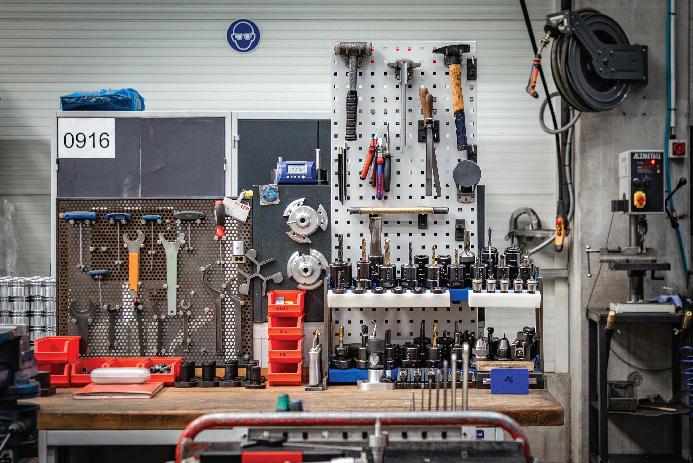
A full factory tour showed the scale straight away. The purpose built site, completed in 2018, includes 15,500 square metres of production space and 3,000 square metres of office and exhibition space.
Investment in robotics, moveable racking, and shot blasting and powder coating has improved working conditions and product quality, while expanded assembly and storage support global demand.
Alongside the investment in technology, there remains a strong focus on people, with a dedicated apprenticeship area covering training across ten trades.
Around 80% of parts are made in house, with ERO also developing its own software for its self-propelled grape harvesters.
Those on the trip were particularly interested to see the new Grapeliner 8000 series being assembled, featuring the new AGCO Power engine. These machines represent a significant investment, however seeing the level of engineering and attention to detail that goes into their production made it clear why this is the case.
After ERO, the group travelled on to a vineyard and winery where the owner was running Fendt and ERO equipment. The visit offered insight into German wine production, alongside open discussions about the differences between German and UK growing conditions and winemaking preferences. One of the key talking points was the difference in cost per bottle, driven by Germany’s higher yields and lower alcohol duty. A look around the machinery shed also led to conversations about Fendt specifications and what growers prioritise in their own operations.
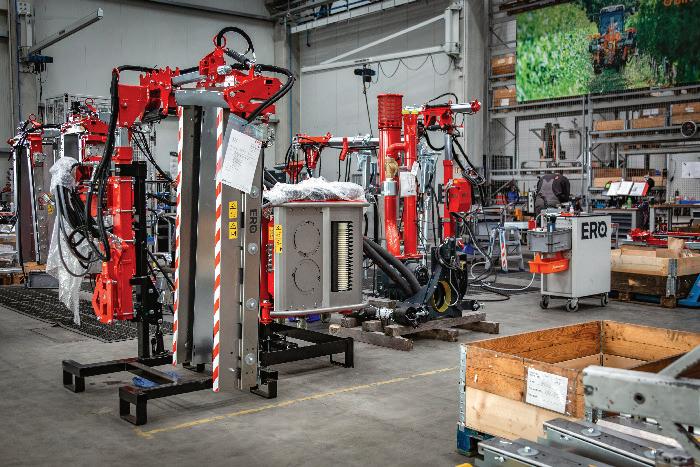
Day two – Braun Maschinenbau Gmbh, Landau in der Pfalz
From Simmern, the group travelled to Landau in der Pfalz to visit Braun Maschinenbau, where the group were greeted with traditional soft Brezels and local sparkling wine.
After a warm welcome from owner Stefan Braun, the visit began with a presentation where Tobias Spieß introduced the company and discussed new products.
Not yet introduced to the UK market, Braun has further improved its vine stem cleaner with the new Modul Clean head now featuring a small engine to increase revolution speed and robust strimmer cord in place of the black paddles to improve the removal of grass and weeds. In addition to this, there is also a new under vine mower head which fits onto the existing Braun modular frames and systems. Both new products led to a valuable discussion around weed management.
The Braun Rollhacke, first developed in 1991, has often been the tool of choice, with around 150,000 units produced and sold, thanks to its tool free adjustment, low maintenance requirements, and the ability to work both in and out of the soil, with flexible mounting options.
Yet, with concerns about soil erosion and sustainability, more growers are today looking towards methods that avoid disturbing the soil. Braun’s development of the Modul Clean and under vine mower provides a solution and underlines the clear link that exists between manufacturer and user.
MACHINERY & EQUIPMENT
Braun’s history and close relationship with growers came through clearly throughout the visit. Founded in 1958 by Stefan’s father, the company still reflects its roots, with some of the original machinery on display in an on site museum.
Braun has been producing under vine cultivation equipment since 1967, and while many of the tools have evolved, the core principles behind systems remain unchanged.
During the full factory tour, the level of detail and craftsmanship that goes into the equipment was to clear to see, giving growers a deeper appreciation of the work behind the machines.
Braun’s purpose built factory, completed in 2016 and covering 18,000 square metres, features well designed layouts, modern robotics and highly specialist equipment.
There was again a strong focus on maintaining control over the production process, with most parts manufactured on site. In many cases, components already have a customer assigned by the time they leave the welding stage, reflecting the level of demand and customisation.
Afterwards, additional visits, organised by Braun, to another

winery and a large vineyard contracting business using Fendt, ERO and Braun equipment helped bring everything into context. The contracting operation in particular stood out, with a fleet of seven Fendt tractors and 14 ERO Grapeliner harvesters.
Day three – Fendt Forum, Marktoberdorf
The final visit of the trip was to the Fendt Forum, home to Fendt’s main manufacturing facility in Germany, where over 100 tractors are produced each day.
While the Fendt Forum and Dieselross restaurant are both open to the public, factory tours are exclusively reserved for customers and sales partners only.
Fendt does not permit tour groups to take photographs or notes, but the scale and level of organisation left a memorable impression and it was a real highlight and a fitting way to end the trip.
By seeing both how machinery is made and the attention to detail that goes into every part of every product, the group returned with a better understanding of the equipment they rely on, and the thinking behind it.
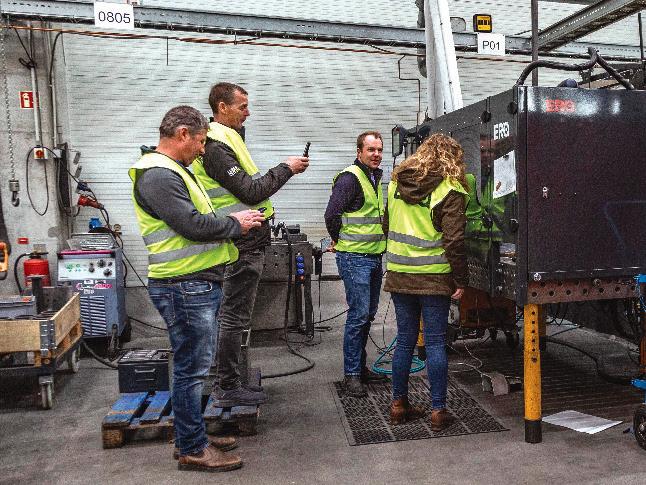
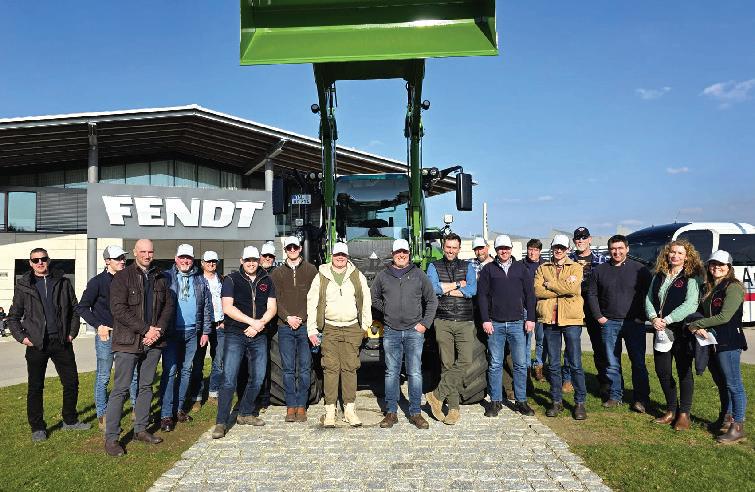
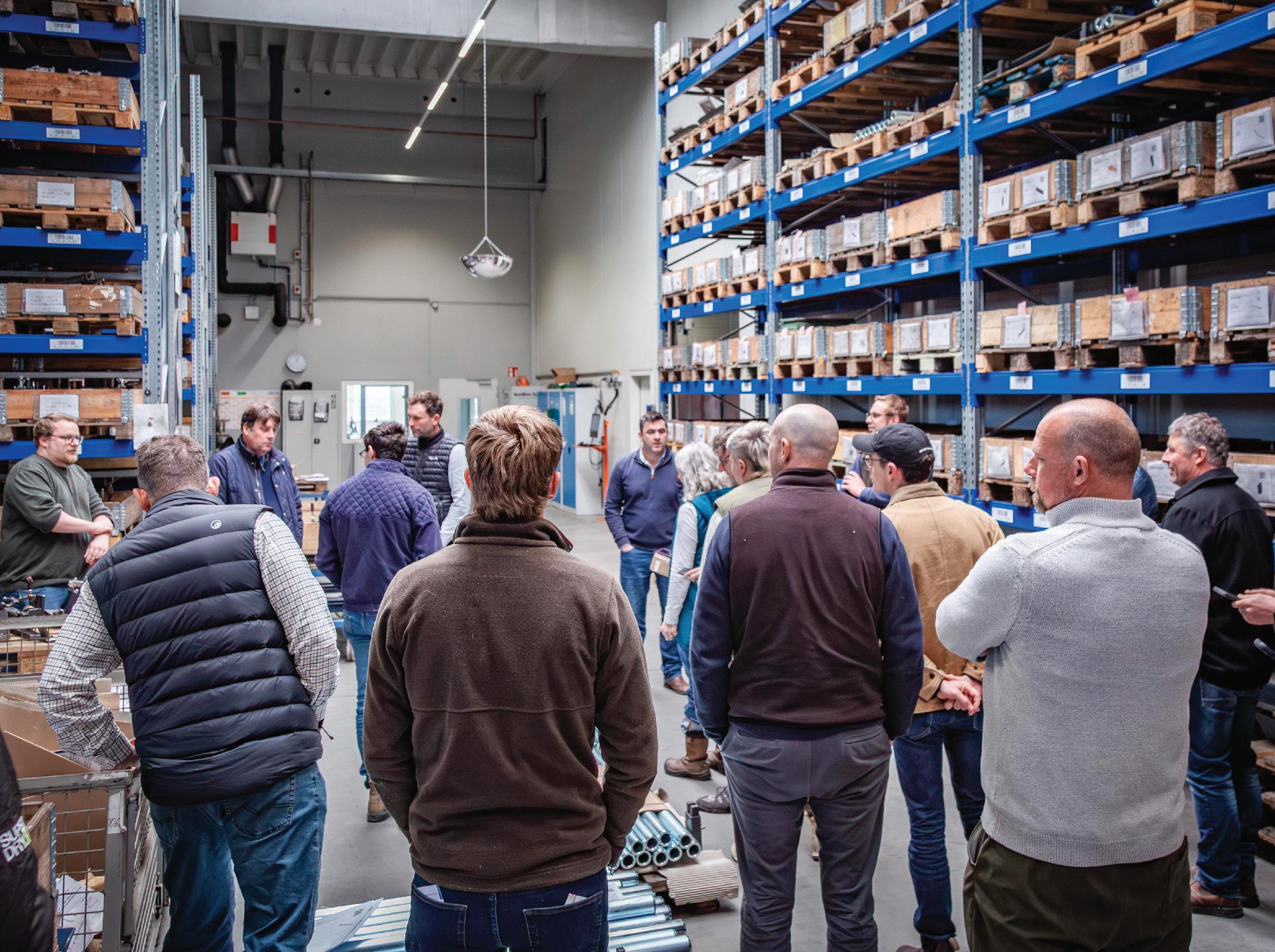
Environmental Monitoring & Forecasting for Growers
As
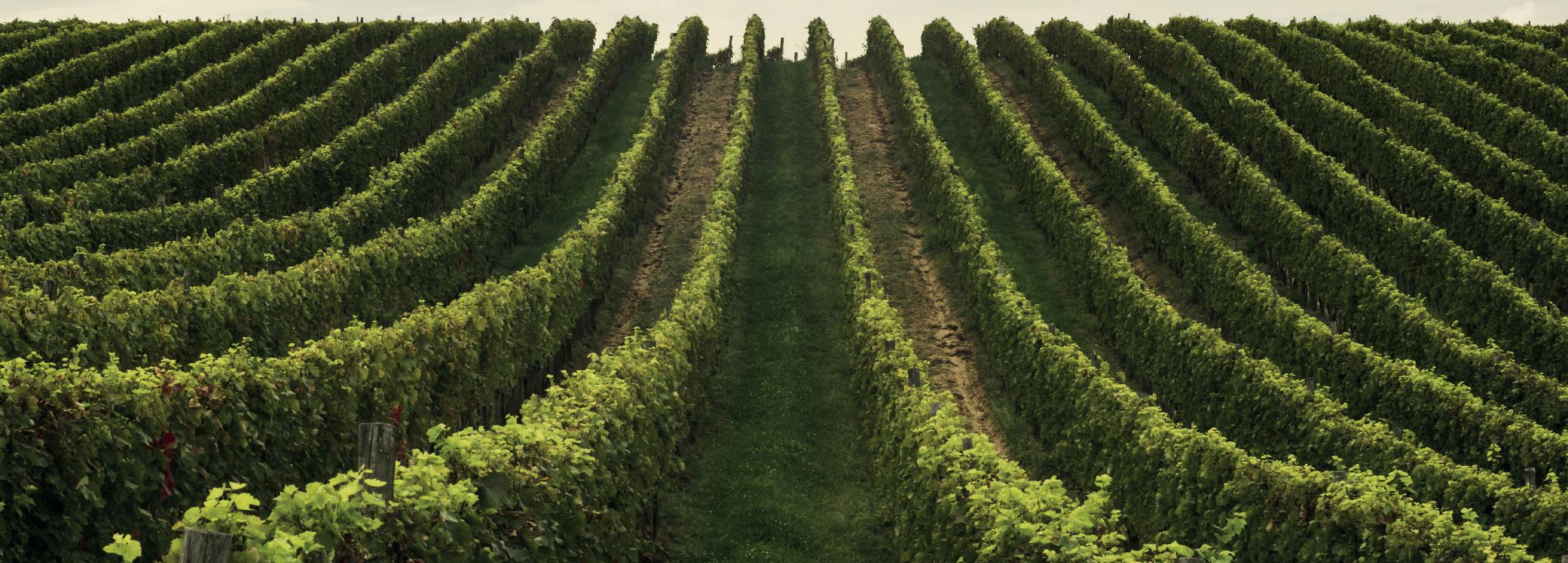
and
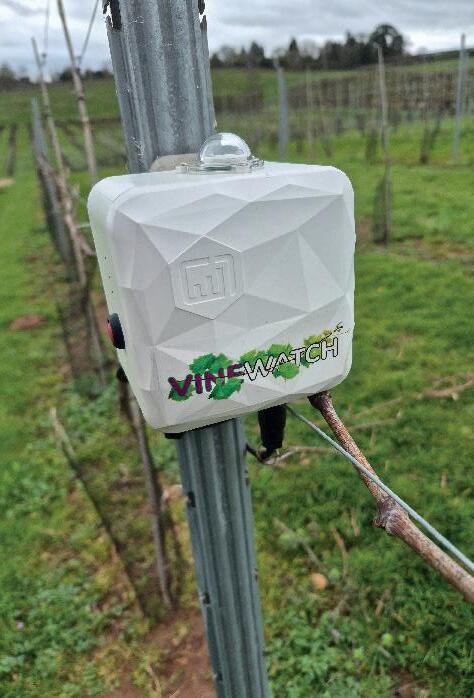

The Ladybird is the compact sensor capable of monitoring most environmental conditions in your vineyard. Delivering hyper local data to a comprehensive dashboard so you can see what's happening.
The system shows you exactly what is going on in your vineyard at bud height, including leaf wetness, leaf temperature, soil moisture, soil temperature, soil NPK, GDD as well as temperature and humidity. NOW AT AN AFFORDABLE PRICE OF £189.00

Specialist Fendt tractors and innovative machinery from leading manufacturers, backed by 50 years of expertise. Mowers, sprayers, weeders and canopy management equipment in stock.
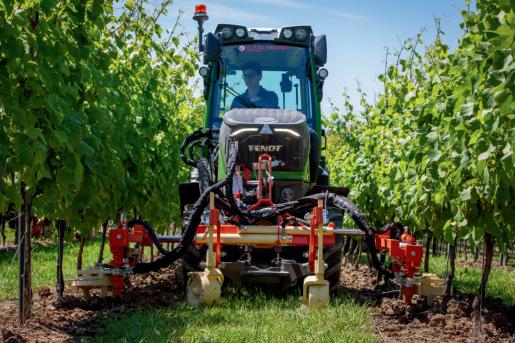
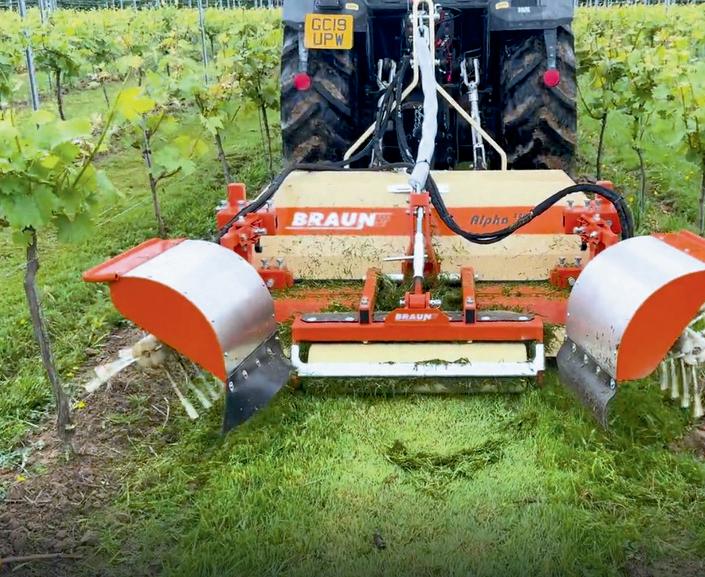
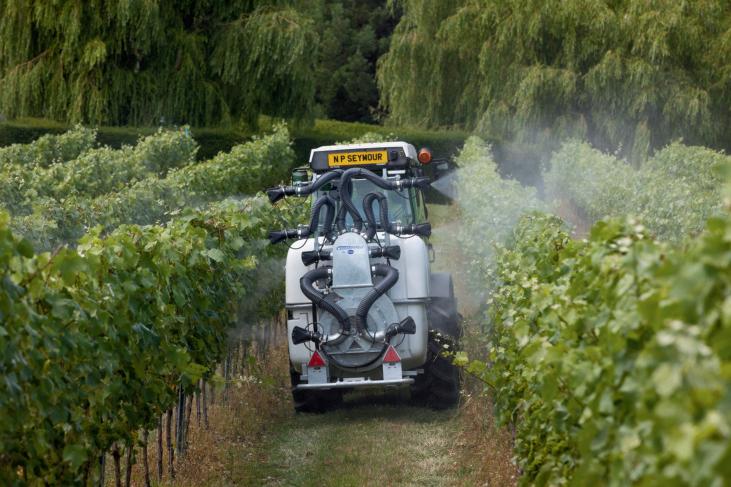
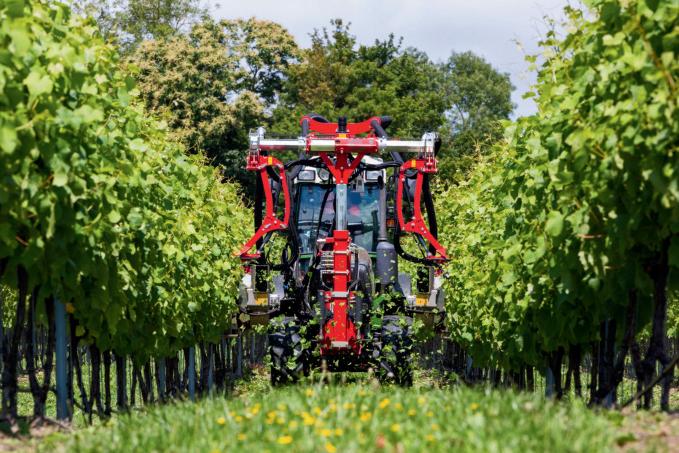




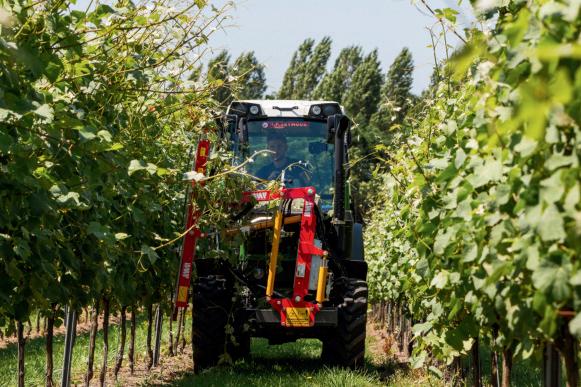
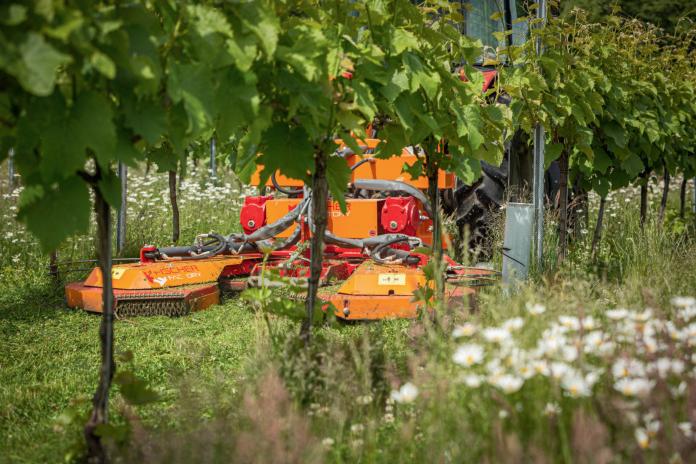








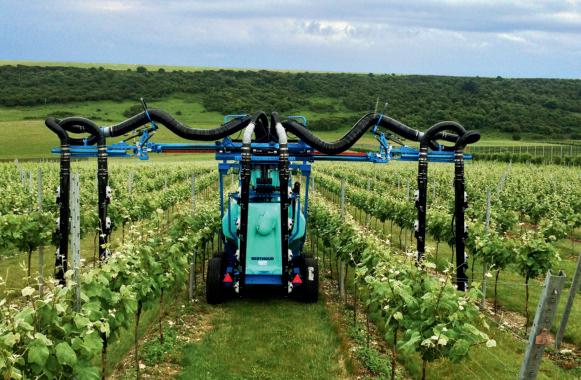






Making the most of organic inputs
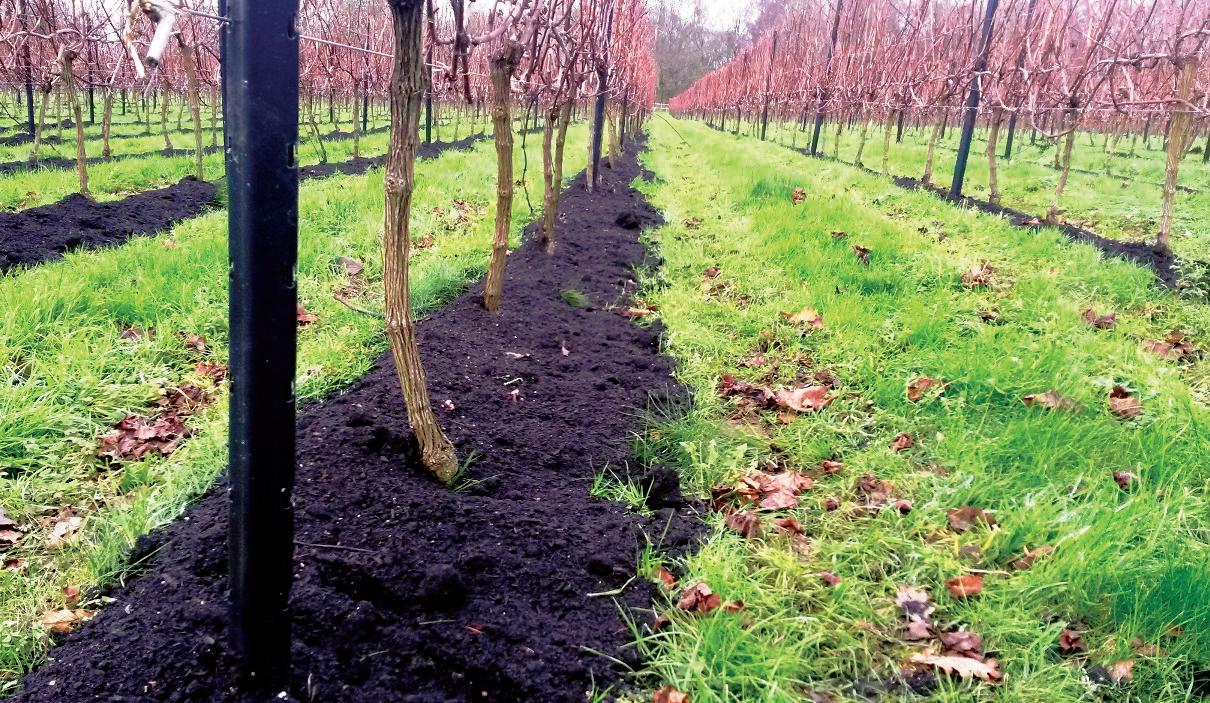
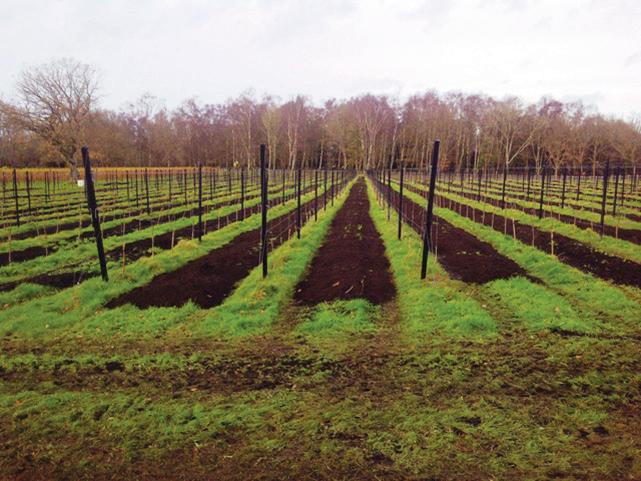
With fertiliser prices remaining high, many UK vineyards are taking a closer look at how nutrients are applied and where savings can be made. Organic materials such as compost and farmyard manure are increasingly being used to supplement or replace bagged fertiliser, particularly in lighter soils where maintaining structure and moisture can be a challenge.
To ensure an efficient application, it is important to be able to control both the conveyor speed and the opening of the rear door. Different materials, and even variations in moisture content within the same load, can significantly affect how compost or farmyard manure flows through the machine. Having the ability to adjust settings allows growers to match application rates to conditions, helping achieve a more even spread and avoid over-application or under-application.
Applying these materials accurately can be difficult in vineyards, where row spacings are tight and access is limited. The Rink muckspreader is

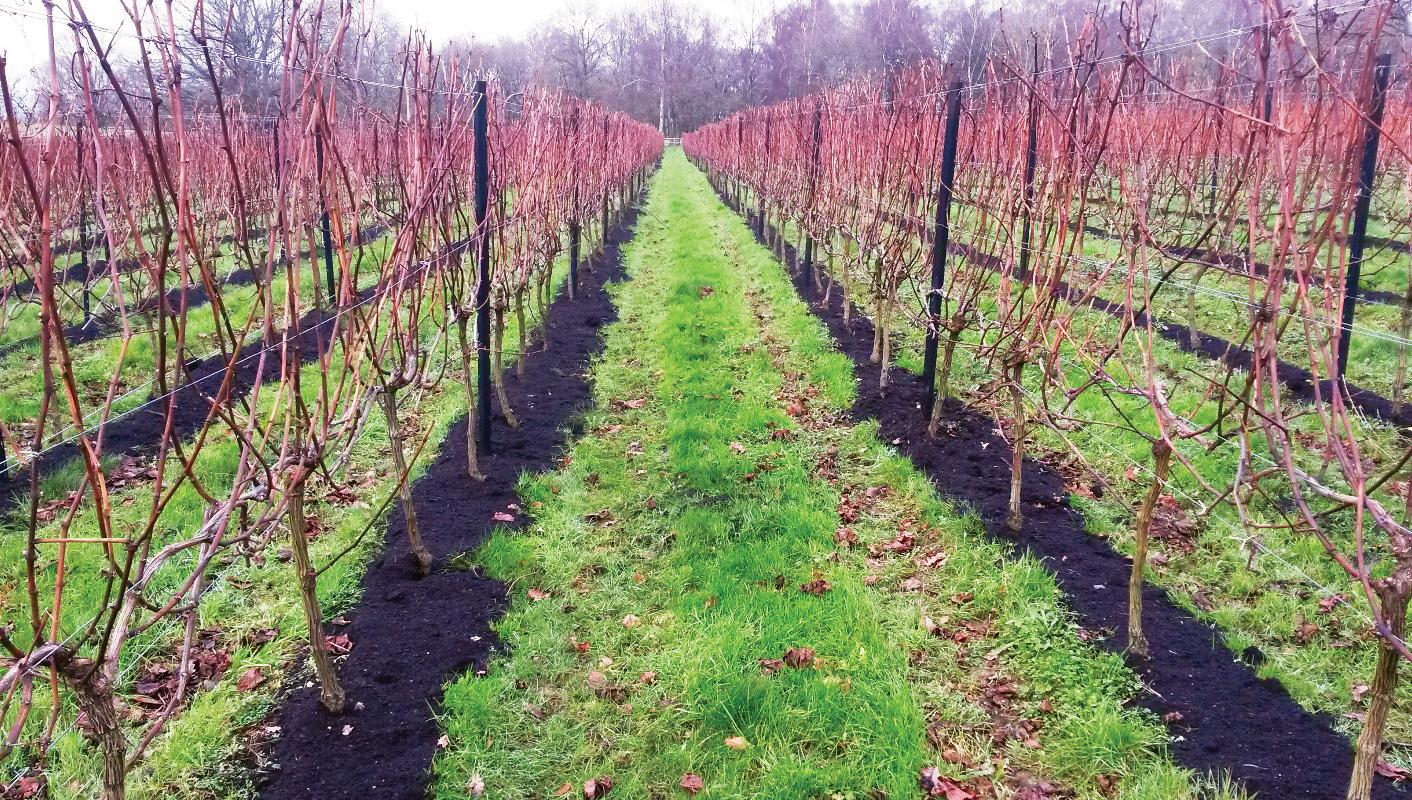
designed for this type of work, offering a great level of control making it easier to adapt to changing material and field conditions allowing growers to apply organic matter directly along the row in a controlled and consistent way.
Alongside the potential cost savings compared with traditional fertiliser use, applying organic materials can help build soil organic matter and improve soil carbon levels over time. In UK conditions, this can support better soil structure and water retention, while also encouraging stronger root development and overall vine health. By allowing growers to apply compost and manures efficiently across larger areas, machinery such as the Rink muckspreader offers a practical way to integrate organic inputs into vineyard nutrition programmes while reducing reliance on increasingly expensive fertiliser.
Vitifruit Equipment offers these machines for sale or hire. www.rink-spezial.com
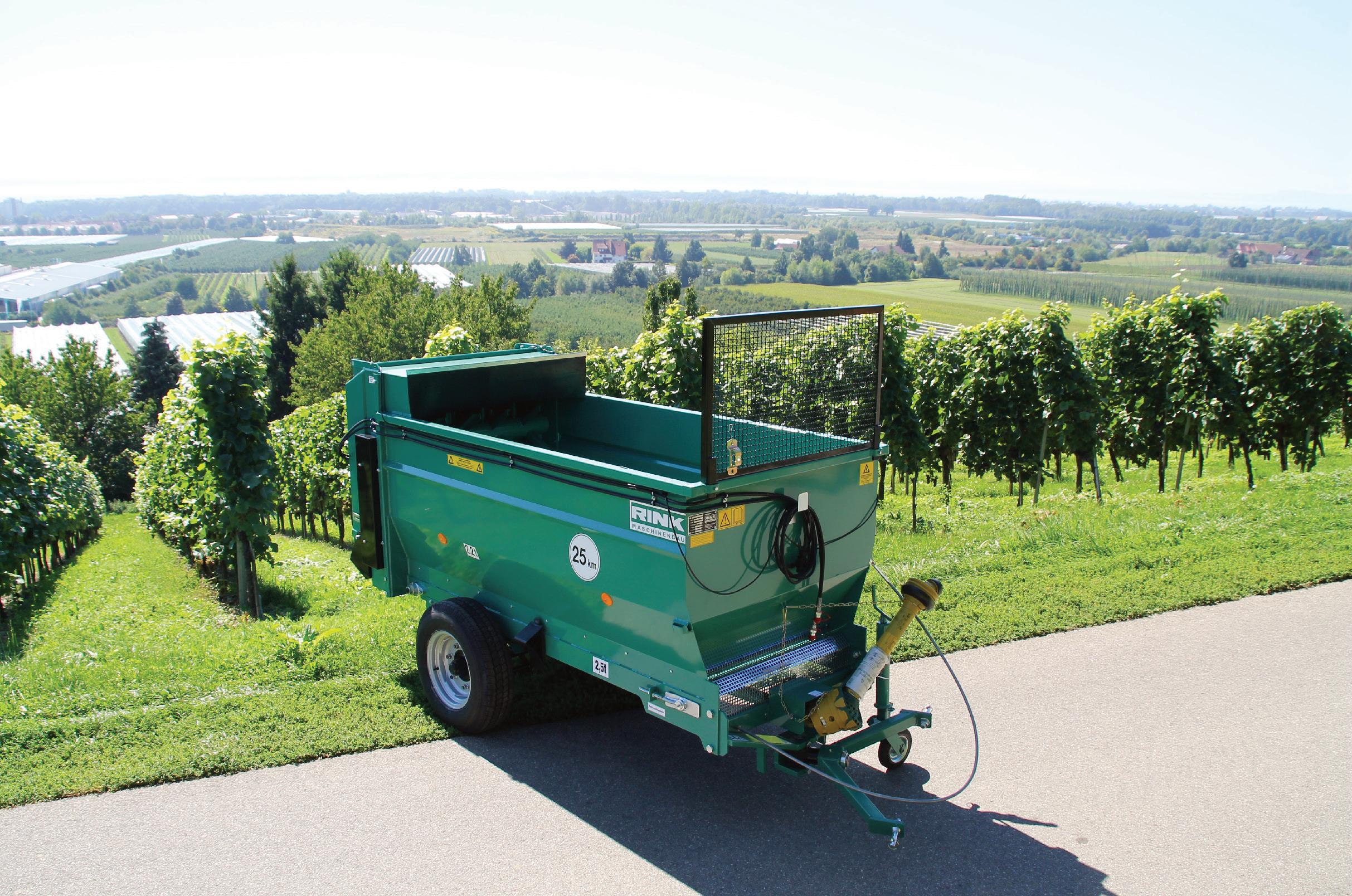
Under vine
In the rows
CLEMENS LEAF CANOPY MANAGEMENT