
Presenting the possibilities
INSIDE
Unpacking soil health
Ideal time to take advantage of government grant
The art of pruning






www.vineyardmagazine.co.uk
VINEYARD
Kelsey Media, The Granary, Downs Court Yalding Hill, Yalding, Maidstone, Kent, ME18 6AL 01959 541444
EDITORIAL
Editor: Rebecca Farmer vineyard.ed@kelsey.co.uk
Features: Malcolm Triggs
GRAPHIC DESIGN
Jo Legg Flair Creative Design jo.legg@flair-design.co.uk
ADVERTISING & MARKETING
Jamie McGrorty 01303 233883 jamie.mcgrorty@kelsey.co.uk
PHOTOGRAPHER
Martin Apps www.countrywidephotographic.co.uk
MANAGEMENT
]CHIEF EXECUTIVE OFFICER: Steve Kendall
DIVISIONAL MANAGING DIRECTOR: Fiona Mercer
PUBLISHER: Jamie McGrorty
RETAIL DIRECTOR: Steve Brown
SUBSCRIPTION MARKETING MANAGER: Claire Aspinall
PRINT PRODUCTION MANAGER: Kelly Orriss
DISTRIBUTION
Distribution in Great Britain: Seymour Distribution Limited 2 East Poultry Avenue, London EC1A 9PT Tel: 020 7429 4000 www.seymour.co.uk
Distribution in Northern Ireland and the Republic of Ireland: Newspread Tel: +353 23 886 3850
Kelsey Media 2026 © all rights reserved. Kelsey Media is a trading name of Kelsey Publishing Ltd. Reproduction in whole or in part is forbidden except with permission in writing from the publishers. Note to contributors: articles submitted for consideration by the editor must be the original work of the author and not previously published. Where photographs are included, which are not the property of the contributor, permission to reproduce them must have been obtained from the owner of the copyright. The editor cannot guarantee a personal response to all letters and emails received. The views expressed in the magazine are not necessarily those of the Editor or the Publisher. Kelsey Publishing Ltd accepts no liability for products and services offered by third parties.
Kelsey Media takes your personal data very seriously. For more information on our privacy policy, please visit https://www.kelsey.co.uk/privacy-policy/ If at any point you have any queries regarding Kelsey’s data policy you can email our Data Protection Officer at dpo@kelsey.co.uk
Chichester Vineyards to adopt Rother Triangle blueprint
Wondersphere appointed to lead Kent’s



18
26
36
Features
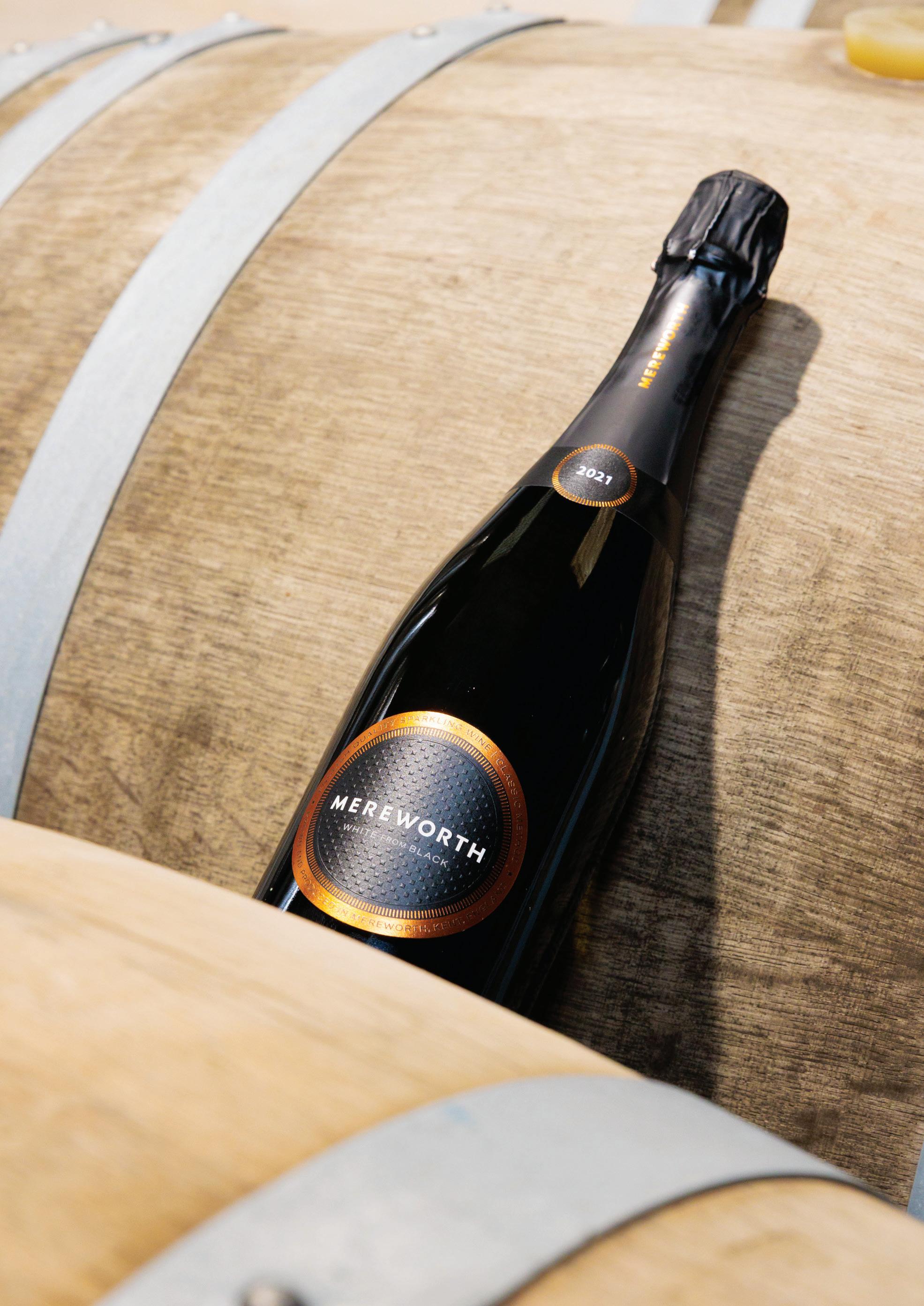
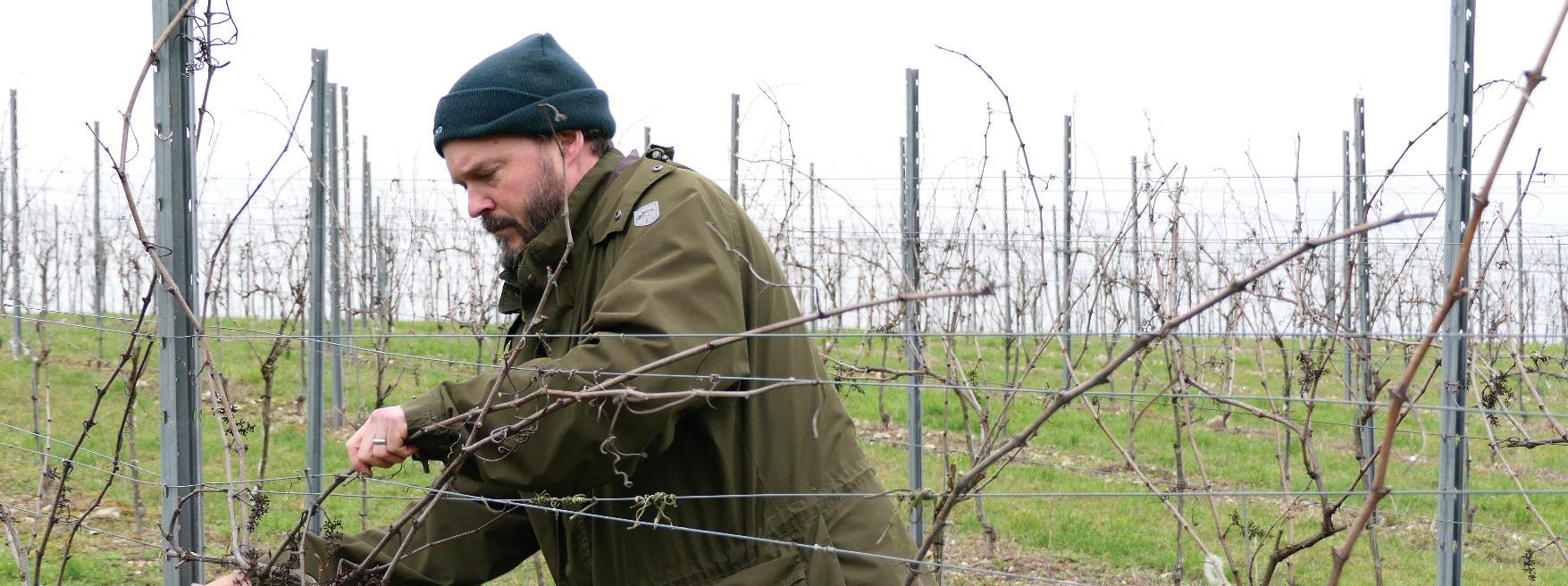
The art of pruning
The annual WineGB Pruning Competition is a great opportunity for viticulturists from the UK to get together to celebrate the art of pruning for the ‘Battle of the Secateurs’.
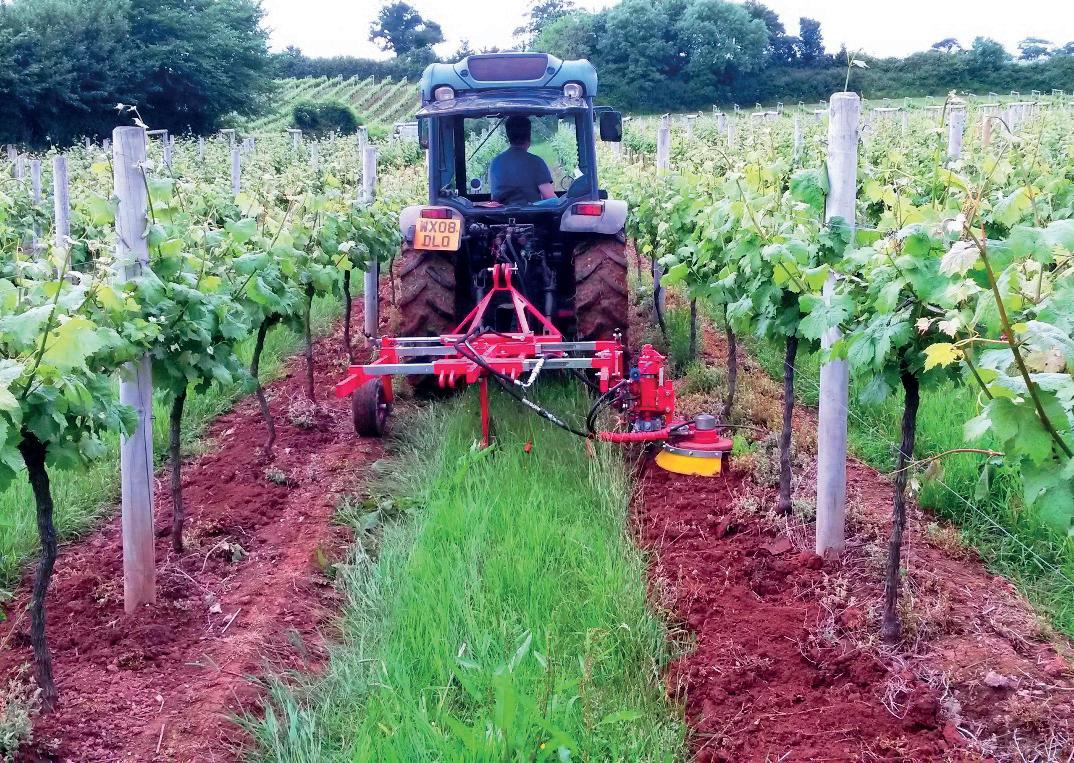
Presenting the possibilities
Mereworth Wines is situated on a busy section of road in Kent and allows it to present English wine to the tens of thousands of motorists and passengers that pass daily.
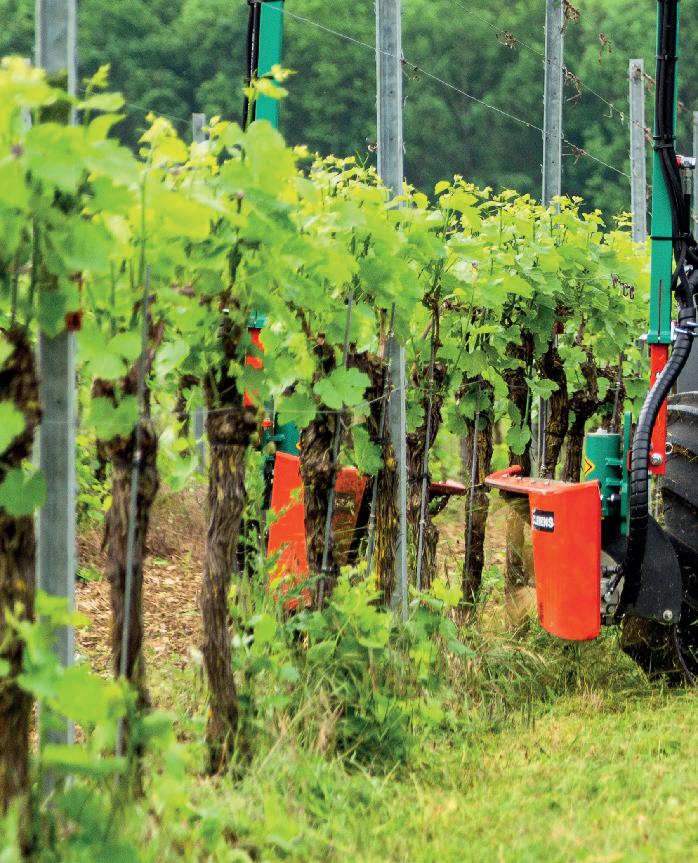
Ideal time to take advantage of government grant
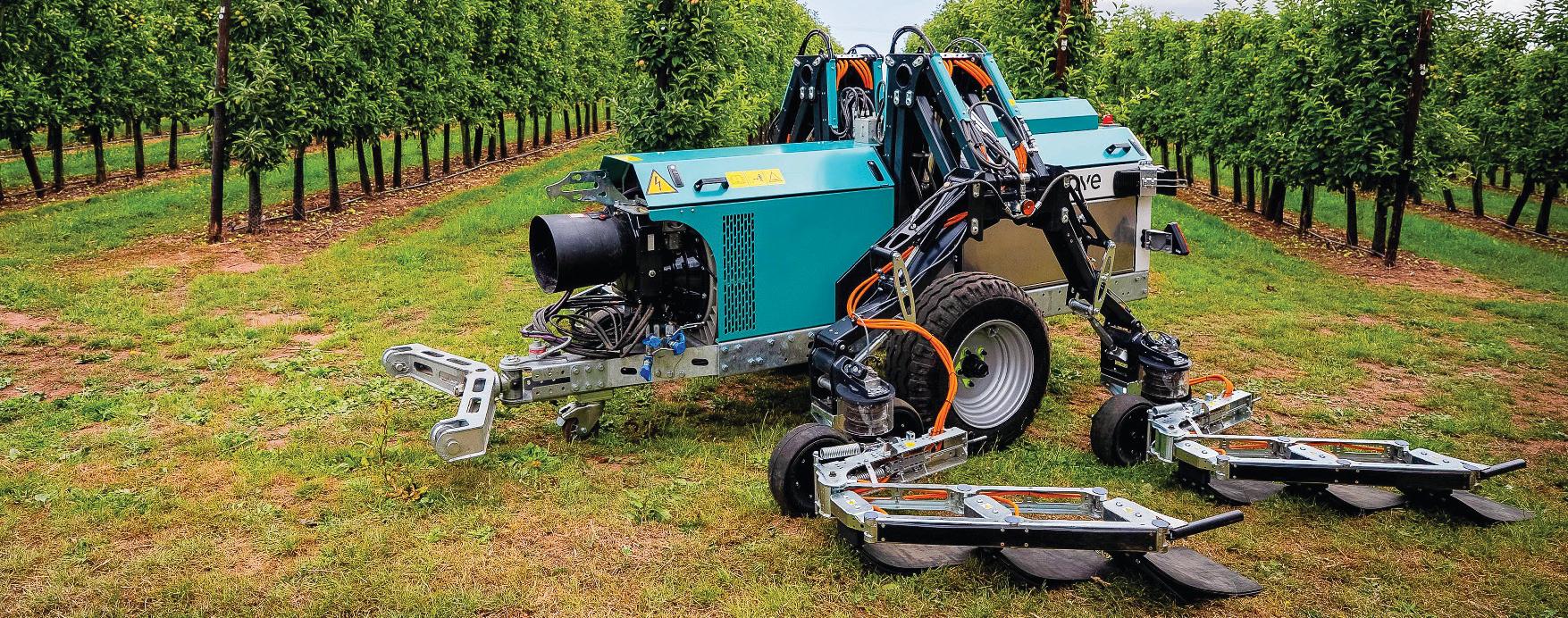
The Rootwave, available from Kirkland UK, is one of the pieces of equipment listed as eligible for a generous grant from the Farming Equipment Technology Fund.
44
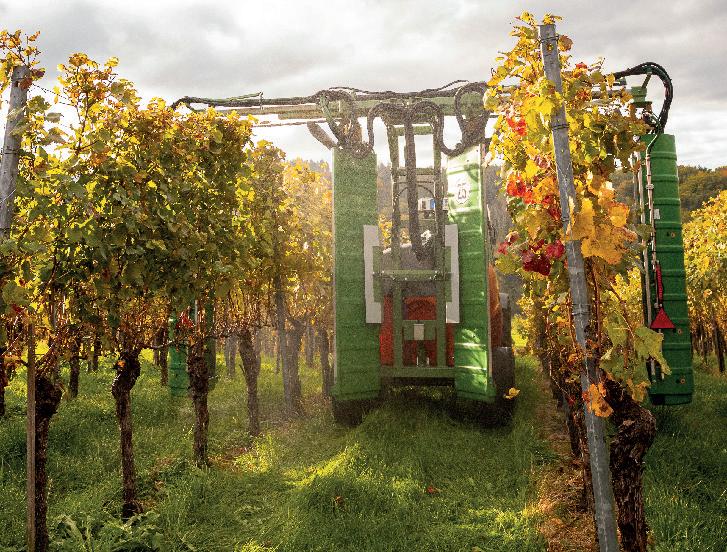
Unpacking soil health
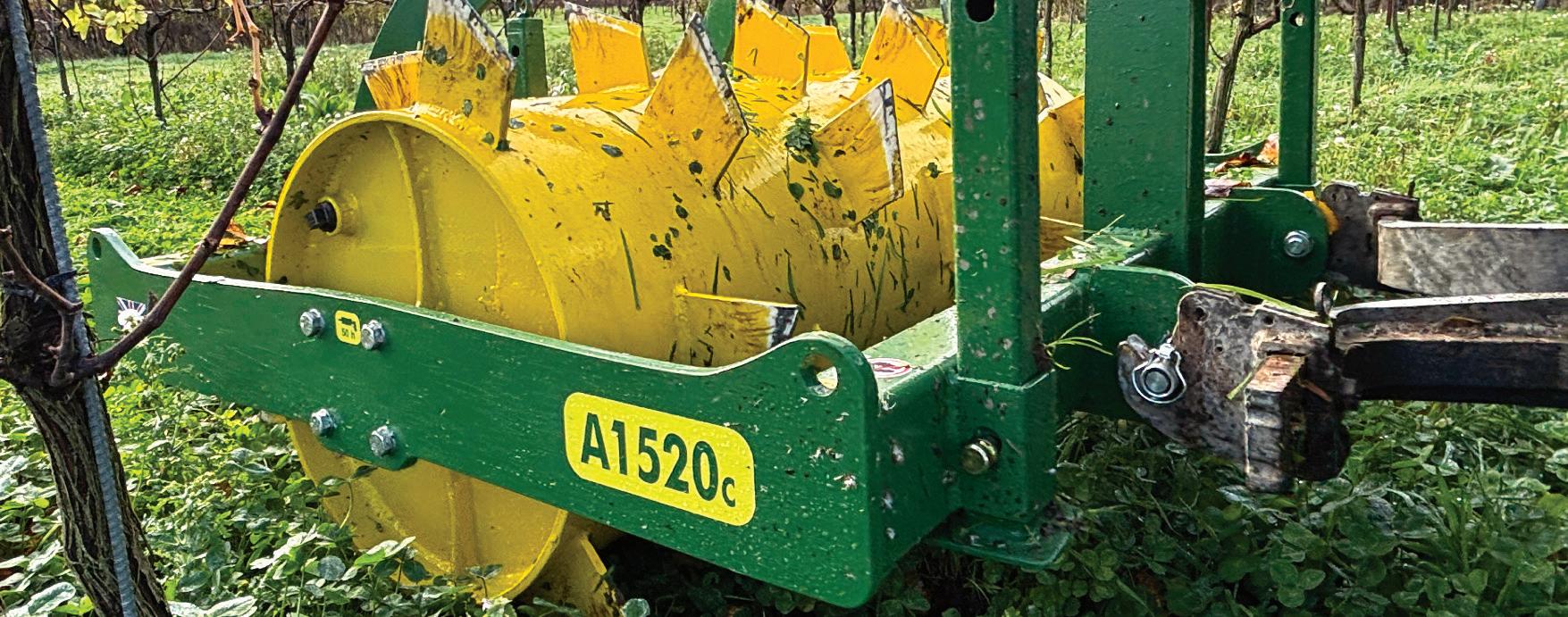
Vineyard magazine talked to Netty Palliser of Aerworx, experts in soil aeration, to get the inside view on the subject of compaction.



From the editor
“There is nothing wrong with anger as long as you use it constructively”
Wayne Dyer, American Psychologist
1940-2015
This month saw the triumph of a beautiful Clumber Spaniel at Crufts. The breed is not as well known as other gun dog breeds but it is said to originate in the UK possibly near Sherwood Forest. Anyone watching this victory unfold would have realised that the celebratory bubbles being presented were not in fact English.
Situations like this are not new and getting angry is a natural response but the quote at the top of the page reminded me how many English and Welsh producers are working to change this situation. There will always be more work to be done but this should not detract from the achievements that have been made. With English wines making their way into First Class on British Airways and the First Class Lounge at London Euston, progress is definitely being achieved – maybe not as quickly as we would like but to build a lasting brand takes time.
Many vineyards across England and Wales are working really hard to raise the profile of wines from these shores and it was encouraging to note that the winner of the Thames and Chiltern Wine Challenge will feature as wine of the Month at the renowned bistro pub and wine bar the Oarsmen in Marlow (See page 17). It is also worth a note that the Marlow Murder Club book Murder on the Marlow Belle by bestselling novelist Robert Thorogood makes a point of using Harrow and Hope as the celebratory bubbles of choice.
Visits this month (See pages 20 and 26) highlighted how just by placing a hospitality offering next to a busy intersection the public recognition of local products can increase exponentially. Vineyards are also offering guests their own versions of classic cocktails using spirit products that are produced utilising grape pressings from the winemaking process and then of course adding the bubbles to match. These profile-raising efforts are the foundation blocks of the enduring brand being constructed and with each block that is added collectively English and Welsh Wine branding gets stronger and the future looks brighter. In time these efforts will hopefully lead to public pressure forcing events to provide English and Welsh bubbles as the go to celebratory fizz. We can all raise a glass to that.



Plans to establish a formal wine tourism cluster in West Sussex progressed as Chichester MP Jess Fuller Brown met industry leaders at Ashling Park Estate to discuss adopting the successful Rother Wine Triangle blueprint.
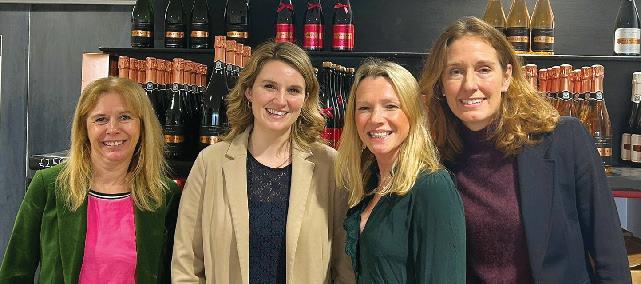
The meeting brought together Gail Gardner, Managing Director of Ashling Park; Marie Davis of Stopham Vineyard, who is leading the Chichester cluster initiative; and Danielle Dunfield, CEO of The Great Sussex Way.
Discussions focused on how the proven Rother Wine Triangle pilot project in East Sussex, including its established toolkit, mapped wine routes, coordinated marketing framework and physical signage system, could now be rolled out across a new Chichester cluster under the Sussex Winelands identity.
The Rother pilot has demonstrated how structured collaboration between neighbouring vineyards can significantly increase visitor dwell time, encourage overnight stays and boost cross-venue spending. Crucially, the project has developed a ready-to-use operational toolkit, enabling other sub-regions to adopt
Chichester Vineyards to adopt Rother Triangle blueprint
the model efficiently and cost-effectively without duplicating development work.
Chichester’s participating vineyards, including Ashling Park, Tinwood, Stopham, Roebuck and Digby , are geographically well positioned to form a compact, easily navigable wine route. The aim is to create a clearly defined, “do-able” trail allowing visitors to experience multiple vineyards within a single day while strengthening the region’s overall wine tourism offer.
Wine tourism accounts for approximately 25% of vineyard income nationwide, and 90% of producers expect to recruit within the next three years. Industry leaders believe a structured Chichester cluster will accelerate growth while reinforcing Sussex’s national
and international reputation.
Jess Fuller Brown MP said: “The success of the Rother Wine Triangle demonstrates what can be achieved when vineyards work together with a clear strategy. Chichester now has the opportunity to replicate that success using a ready-made toolkit and proven signage framework. I will continue championing our local wine sector to ensure it receives the visibility and support it deserves.
Ashling Park showcases the very best of what Sussex wine tourism has to offer: innovation, quality and a genuine visitor experience. It is businesses like this that are helping to put Chichester on the map as a must-visit destination. I am proud to support the growth of our local vineyards and the opportunities they create for jobs, tourism and the wider economy.”
The Chichester rollout is expected to begin with coordinated marketing and visitor orientation planning in 2026.
Wondersphere appointed to lead Kent’s first county-wide viticulture campaign
Kent County Council (KCC) has appointed specialist brand and communications consultancy, Wondersphere, to deliver a new county-wide strategic communications programme for Kent’s viticulture sector. The 12-month brief, awarded following a competitive tender, represents the first time the county’s vineyards will be supported through a single, joined-up communications framework.
Kent is currently the most planted wine-producing county in the UK, holding roughly double the vine hectarage of its closest regional competitors. As part of the South East block, which achieved the highest average yields in the UK in 2024, Kent’s scale is increasingly matched by critical acclaim, with the county’s producers consistently leading medal tables for English wine at major national and international competitions.
The new programme aims to convert this production volume and quality into sustained economic growth. By building clearer awareness of Kent’s diverse visitor offer, which spans large-scale commercial estates to small independent growers, the initiative seeks to drive increased footfall and support long-term sales across the region.
Francis Court, Founder of Wondersphere, said: "Kent has an established track record and a visitor offer that warrants a clearer, more cohesive public story. Our objective is to provide a confident voice for the region that respects the individuality of the growers while making it easier for a broader audience to discover the depth
of what is available here. It is about creating reasons for people to visit, and more importantly, to return."
David Wimble, Cabinet Member for Economic Development and Special Projects, added: "Kent’s vineyards are an essential component of our rural economy and tourism sector. We appointed Wondersphere based on their specialist sector knowledge and their ability to develop a practical communications approach that provides value to vineyards of all sizes and ambitions."
The 12-month programme will set a clear county-wide standard for how Kent wine is positioned, marketed and experienced, building shared narrative, messaging and campaign infrastructure that individual vineyards can use to drive awareness, visits and sales.



















Vintage cuvée celebrates a legend
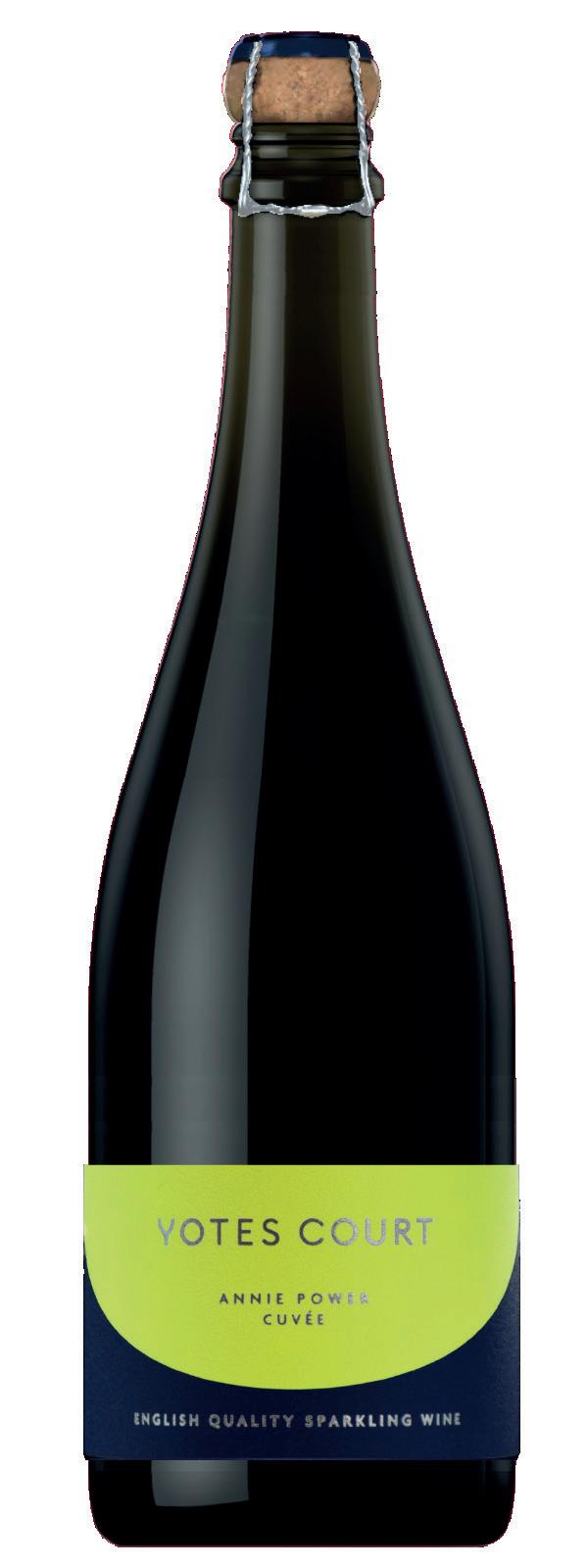
Vintage English sparkling wine, Annie Power Cuvée, launched to mark 10 years since champion racehorse made history at Cheltenham.

Artelium Wine Estate named among Britain’s most promising luxury brands
Artelium Wine Estate, the artisanal English winery located in the South Downs, has been named one of the prestigious Brands of Tomorrow 2026 by Walpole, the official sector body for the British luxury industry.
The accolade was announced at a ceremony held at The Ned, London, where twelve emerging brands from across the UK were selected for Walpole’s flagship incubator programme, delivered in association with Mishcon de Reya.
Now in its 19th year, Brands of Tomorrow is a highly regarded year-long mentoring programme designed to accelerate the growth of Britain’s most exciting luxury businesses. Participants receive strategic guidance from leading founders and executives across the luxury sector, supporting them to scale sustainably while
refining brand positioning and operational excellence.
Artelium was recognised for its distinctive approach to English winemaking, combining regenerative vineyard practices with extended ageing and meticulous craftsmanship to produce elegant sparkling and still wines. Founded by Julie Bretland and Mark Collins, the Sussex estate has built a reputation for precision, artistry and a deep sense of place, alongside its commitment to contemporary art and craft through exhibitions and cultural events hosted at the winery.
Julie Bretland, co-founder of Artelium Wine Estate, said: “We are incredibly honoured to be named a Walpole Brand of Tomorrow. From the outset, our ambition has been to create wines with integrity, balance and longevity, rooted in
A decade after one of the most memorable moments in Cheltenham Festival history, Annie Power’s incredible Champion Hurdle victory in 2016 is being celebrated in a unique way – with the launch of Annie Power Cuvée 21, a small-production English sparkling wine created by her owner, Susannah Ricci.
Crafted entirely from grapes grown at Sussannah Ricci’s Yotes Court Vineyard in Kent, Annie Power Cuvée 21 is a sparkling tribute to a mare whose brilliance, resilience, and charisma captured the imagination of racing fans worldwide. The wine – the first vintage cuvée from Yotes Court – reflects the qualities that made Annie Power a legend: precision, elegance, and an exhilarating finish.
This traditional method sparkling wine is a blend of Chardonnay and Pinot Noir with a small addition of Pinot Gris to add floral finesse. Matured on lees for three years to develop depth and complexity, it has fresh notes of yellow plum and candied apple, layered with a delicate autolytic expression of toasted breadcrumbs. The palate is full bodied, and vibrant with a fine mousse and a long apricot finish.

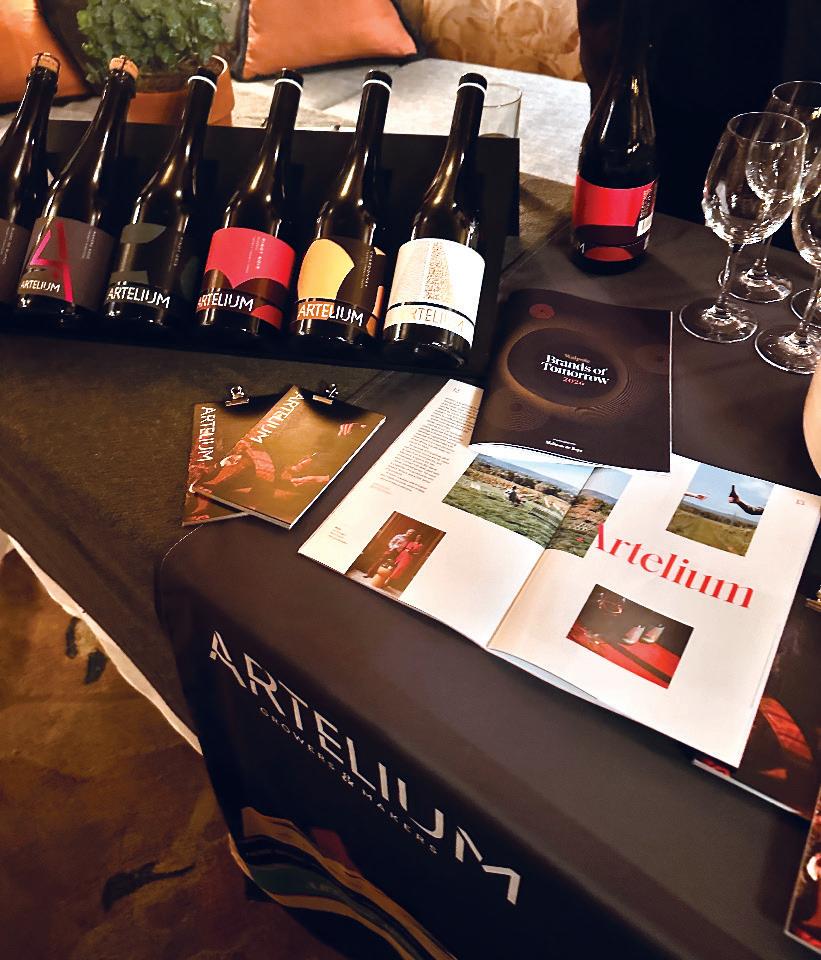
the landscape of the South Downs. To be recognised alongside such inspiring British luxury brands is a powerful endorsement of our vision not only for our wines, but for Artelium as a creative and cultural destination. We’re excited to learn from Walpole’s exceptional mentors as we continue to grow thoughtfully and share our wines more widely.”
9 - 15 MAY 2026
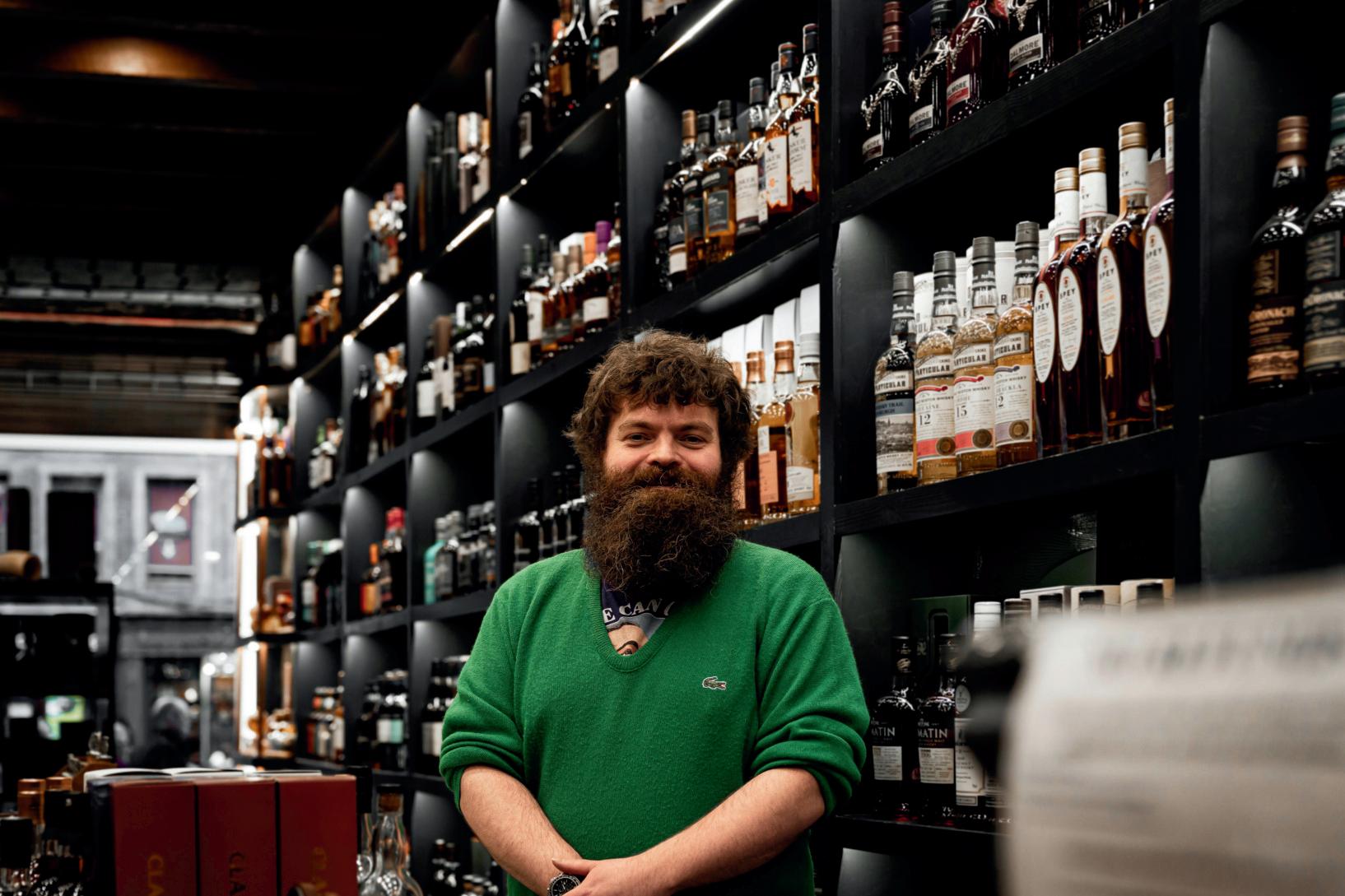
Now in its second year, National Wine Careers Week aims to showcase the broad spectrum of roles across the wine trade and production sectors and to collaborate with businesses across the wine sector to help amplify and highlight the diverse career paths available.
There are a number of opportunities to support this year’s bigger campaign, from regional events and webinars to sharing your career story or promoting the campaign online.

The branding power of foreign grapes
Andrea Ontiveros Flores, a sommelier and marketing & communications specialist from Alicante, Spain asks can Albariño redefine English wine? When Mediterranean grapes become a branding strategy.
It is not new to see expanding viticultural opportunities in England and Wales as climate change reshapes growing conditions, encouraging producers to trial non-traditional varieties including Iberian and other Mediterranean grapes, while diversifying beyond the classic sparkling trio (Pinot Noir, Chardonnay, and Pinot Meunier).
Although commercial-scale plantings of many Mediterranean varieties remain limited, their presence is steadily increasing. In this context, planting grapes such as Albariño in southern England is no longer merely a viticultural experiment. Rather, it represents a strategic move to travel beyond the “English sparkling only” narrative. For some producers, these varieties offer a branding shortcut and a positioning tool, allowing them to tap into existing consumer recognition and established stylistic associations while signalling confidence in England’s evolving wine identity.
Albariño already comes with strong built-in associations: coastal freshness, bright acidity, seafood pairings, and the sunny yet Atlantic character of north-west Spain. It is most closely linked to Rías Baixas in coastal Galicia, a region known for crisp, saline white wines. In the UK, Albariño’s popularity has been growing steadily – it was even mentioned by The Telegraph last year as the white grape to look out for in spring and summer, reflecting increasing consumer awareness.

For UK producers, planting Mediterranean varieties such as Albariño serves several purposes. It signals innovation and confidence, fits naturally with Britain’s seafood-focused cuisine, and appeals to consumers who already recognise and trust the name. Unlike lesser-known varieties, Albariño does not require much explanation, which reduces marketing barriers. This leads to a broader question: Are English and Welsh producers borrowing existing global brand equity? As climate shifts create new viticultural possibilities, are England and Wales leveraging these conditions to appropriate elements of Mediterranean identity to accelerate the evolution of its own wine brand?
Mediterranean moves north
In recent years, attention has expanded beyond the Galician grape Albariño. Tempranillo, for example, is now being trialled in Wessex, where experimental plantings are attracting increasing interest. As an early-ripening to mid-ripening variety that performs well on chalky, well-drained soils, Tempranillo is a logical candidate for parts of southern England, where chalk and limestone subsoils are common. As growing seasons become warmer and more reliable, some producers are beginning to explore Spanish red styles once considered unrealistic in the UK.
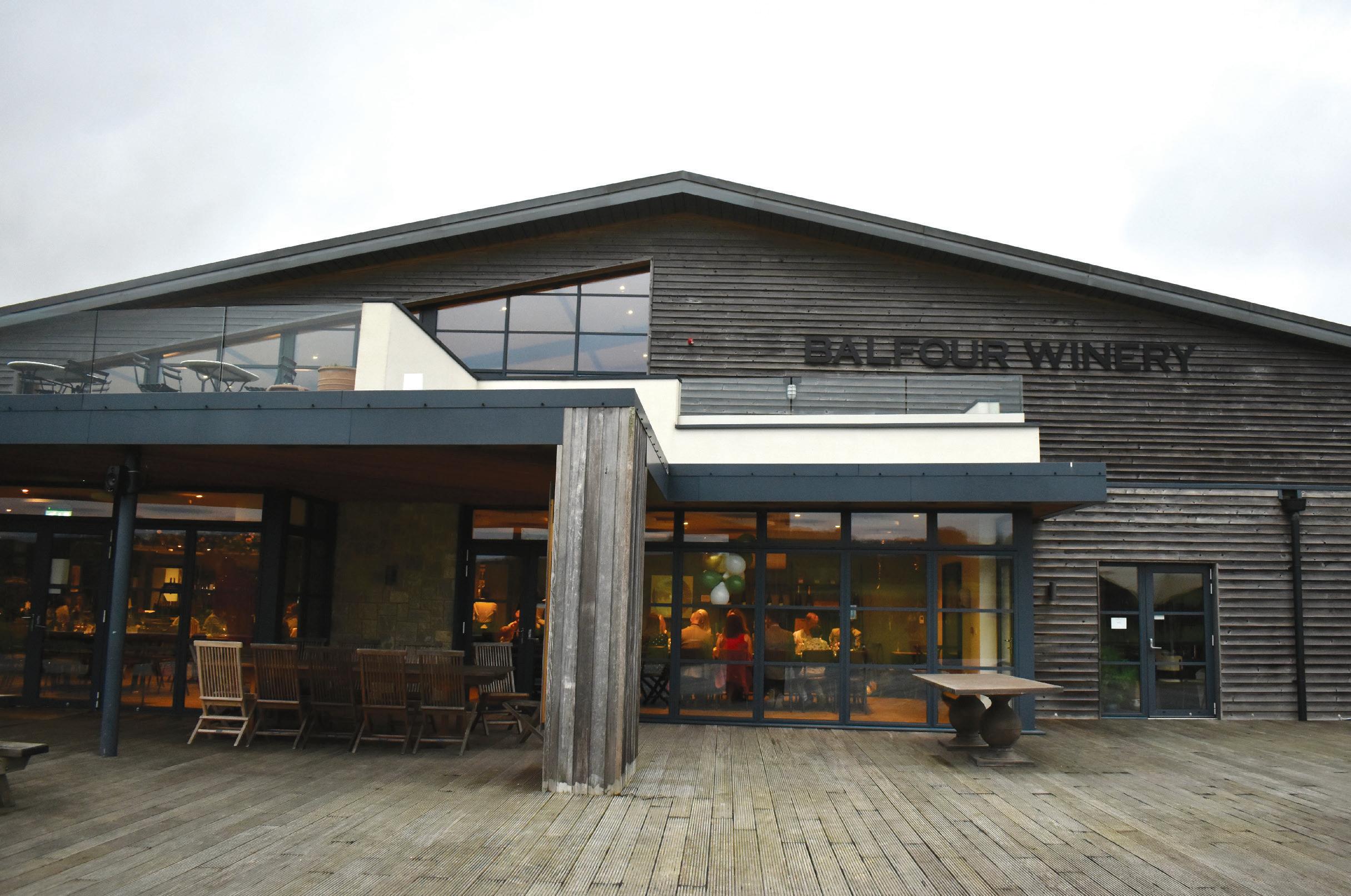
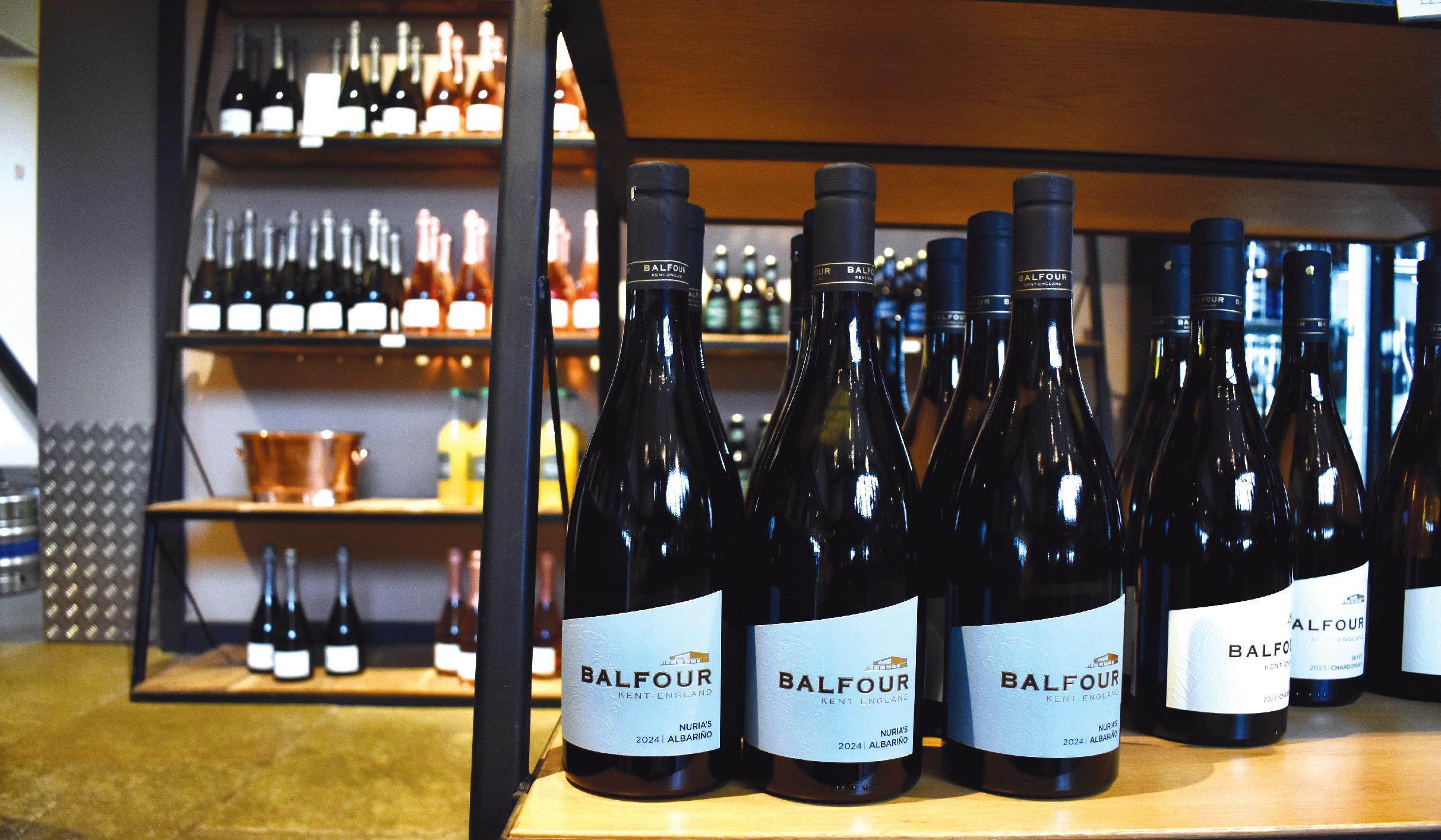
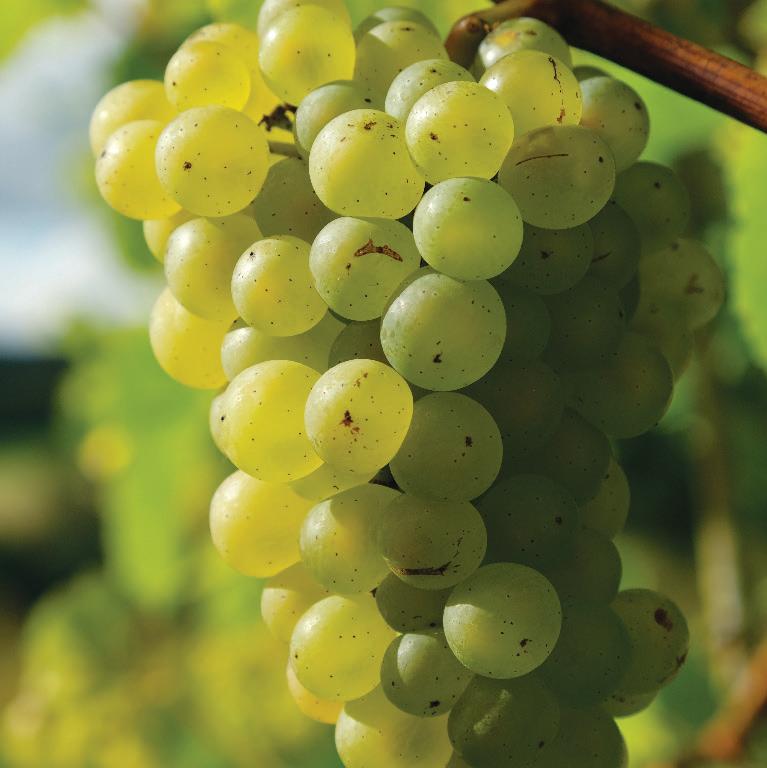
Another trial Mediterranean variety is Portugal’s Arinto. Valued for its ability to retain high acidity even in warm climates, Arinto appeals to English growers preparing for hotter summers while aiming to preserve freshness and balance, indicating genuine commercial curiosity. However, the most convincing candidate currently is Albariño. Its thick skins, naturally high acidity, and relatively good disease resistance make it well suited to England’s cooler, changeable conditions. It can ripen fully while maintaining freshness. Commercial plantings remain limited but are no longer purely experimental. In Kent, producers such as Balfour Winery and Four Daughters have worked with Albariño, while Ancre Hill Estates in Wales, a biodynamic estate, is also cultivating the variety. Although Albariño is still rare in England and Wales, these producers provide important proof of concept for its future potential.
Consumer psychology: recognition sells
From a behavioural economics standpoint, consumers are more likely to purchase a familiar grape in an unfamiliar region than an unfamiliar grape in an unfamiliar region. In that sense, English Albariño may have a commercial advantage over lesser-known varieties such as Ortega, Solaris, or Seyval Blanc, even when the quality is comparable.
The name “Albariño” reduces uncertainty and lowers the perceived risk of purchase, making a subtle play on cognitive bias. Research on competitive advantage in the wine sector highlights that wine is particularly suited to differentiation strategies because it relies heavily on intangible factors: regional identity, terroir, heritage, and consumer perceptions of quality. In this case, perceived quality may be positively influenced by Albariño’s strong association with Galicia and its established international reputation.
Brand building in wine is often strengthened by linking a product to a recognised country or region, a well-known grape variety, and a desirable lifestyle image. By using Albariño, English and Welsh producers can tap into these existing associations, enhancing brand appeal and consumer choice.
Business strategy and opportunity: beyond the sparkling trio
England’s brand has been largely built on traditional-method sparkling, competing indirectly with Champagne and other established sparkling regions. However, sparkling production requires extended ageing, ties up working capital for several years, involves relatively high production costs, and increases inventory risk.
Still wines made from Mediterranean varieties, by contrast, can reach the market more quickly. They improve cash-flow cycles, allow for broader price segmentation, and can be produced at lower cost.
In this context, Albariño has the potential to become, strategically, what Marlborough Sauvignon Blanc is to New Zealand: a clear and recognisable varietal identity for a national category.
The opportunity here is not simply climatic but competitive. It is about repositioning England as innovative rather than imitative and demonstrating adaptability in response to climate change. As parts of Essex and Kent begin to experience conditions increasingly comparable to those once found in Galicia, the shift is not just about warmer weather, it is about strategic repositioning within the global wine market, presenting Northern Europe as a viable new canvas for traditionally southern varieties.
Kent has the largest plantings of Albariño in England and Wales, and one of the producers focusing on the grape is Balfour Winery in Tonbridge. During my visit to its stunning vineyard, I was lucky to find Nuria, Balfour’s single-varietal Albariño, following the BalfourLynn estate’s tradition of naming wines after family members. Most of the first 2022 vintage was sold prior to its official release, showing strong early demand for English Albariño. The wine is available at the estate’s Cellar Door restaurant in Kent, through the winery’s wine club, and at Balfour at Bow, its London venue. At the time of release, Fergus Elias said they “knew they were on to something exciting,” describing it as just the beginning of Albariño’s future in the UK. Plantings are now increasing in response to this interest, reflecting confidence in the grape’s long-term potential. <<
A WORLD VIEW
Balfour’s Albariño is featured at the prestigious three-Michelinstarred Sketch in Mayfair. Listed by wine director Frédéric Brugués, this aromatic, cool-climate white wine is paired with the restaurant’s fresh, seasonal and creative menu. It replaces some traditional Spanish and Uruguayan options to showcase the potential of English Wine and to appeal to London’s globally curious wine drinkers.
In terms of style and notes, as Balfour Winery puts it, Albariño provides “a unique glimpse into the future of English wine.” The UK’s maritime climate – especially in southern regions such as Kent – shares similarities with Galicia, Albariño’s homeland, creating a natural bridge between the two. The idea of “English Albariño” brings together Britain’s strong seafood culture with the image of coastal vineyards, making the Mediterranean influence feel both aspirational and locally grounded. It can feel like Cornwall meeting Galicia, or Whitstable oysters without the airfare. That is a powerful repositioning: combining the familiarity and reputation of a wellknown Mediterranean grape with the innovation and distinctiveness of England’s evolving wine landscape.
In England, Albariño is usually made in a fresh, zesty style with citrus flavours, light stone-fruit notes, and little or no oak to keep it crisp. Because the UK has a cooler and shorter ripening season, the wines tend to have lower alcohol and brighter acidity, with less ripe fruit character than examples from Rías Baixas in Spain. In Rías Baixas, warmer and longer ripening conditions allow for rounder fruit, more texture, and often a stronger sense of salinity from the coastal vineyards. As a result, Spanish Albariño is commonly paired with oysters, seafood, and dishes like paella, while English Albariño works especially well with shellfish, light white fish, and fresh salads. Overall, UK versions are typically leaner and more acid-driven, while Spanish originals are fuller and slightly riper in style.
Export possibility
Albariño could offer clear strategic advantages in export markets such as the United States and Canada, where the grape name already has recognition. In these markets, English provenance
adds a sense of novelty, while the pricing can sit comfortably in the premium-but-accessible segment. However, there are potential risks in terms of consumer perception. If too many producers plant Albariño, does England risk losing its distinctiveness, or does it gain greater stylistic flexibility? The move could dilute a carefully built cool-climate identity, appear trend-driven, or create confusion in export messaging. Ultimately, the outcome depends on how producers position the wine abroad – through tasting profiles, production narratives, and a clear, consistent branding strategy.
Redefining English uniqueness
England and Wales do not carry centuries of red wine heritage like Bordeaux or Rioja, and that may be an advantage. In branding terms, England and Wales are still start-up nations in wine. Start-ups experiment, adapt, and iterate. Albariño fits that mindset. It is not only a response to changing growing conditions, but also a strategic move in a shifting trade landscape, where factors such as EU tariffs, export dynamics, and even sustainable considerations encourage diversification and flexibility.
That said, challenges remain. With only a handful of vintages produced so far, English Albariño has a limited track record. Consistency and stylistic clarity will take time to develop. Consumer recognition is another hurdle: while the grape name is familiar, the idea of “English Albariño” is new. Building trust and awareness will require careful positioning and compelling storytelling.
More importantly, there are strong reasons for optimism. Albariño represents not only a climate experiment, but a branding strategy in motion. It offers a rare combination of familiarity and novelty, allowing England to move beyond the sparkling-only narrative without abandoning its cool-climate identity. If handled thoughtfully, it could evolve into a defining still-wine category. The real question is not whether Albariño can grow in England, but whether England can make it distinctly its own with clear storytelling and positioning. In that sense, this is ultimately a test of strategic agility, where climate adaptation meets brand evolution.

ALL THINGS AGRONOMY
SFI 2026: What the latest update means for vineyards
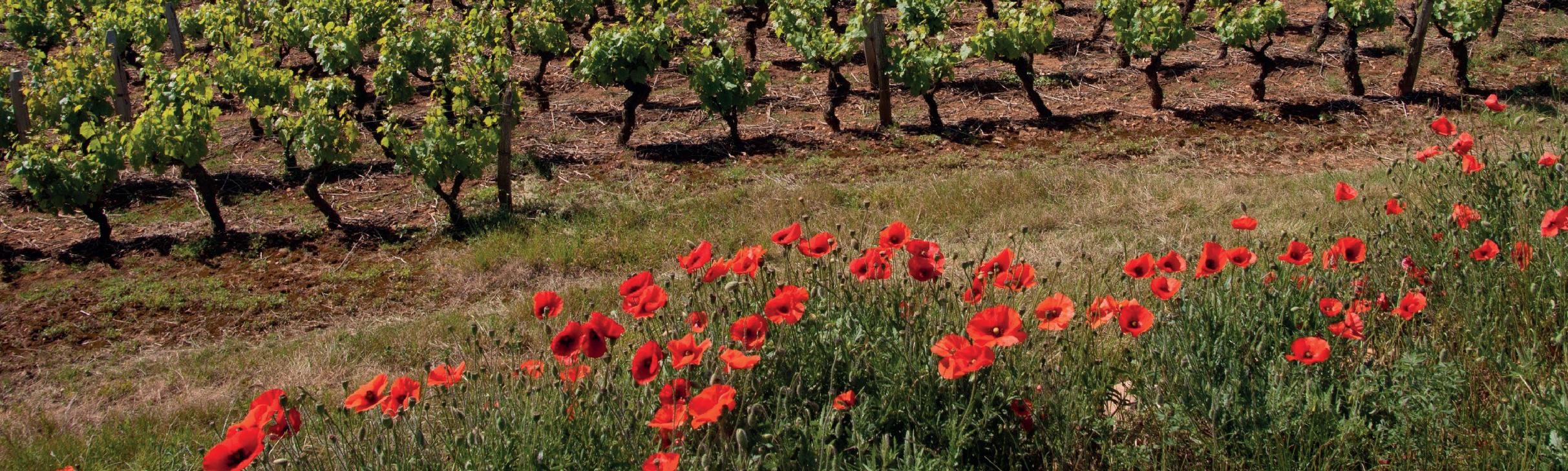
The latest update to the Sustainable Farming Incentive (SFI) scheme has prompted a mixture of reactions across the farming sector, from uncertainty to renewed opportunity. Although 31 actions have been removed from the scheme, the remaining options still provide a valuable opportunity for vineyards to integrate biodiversity and sustainable land management while accessing funding.
Understanding SFI 2026
To apply, businesses must own or manage at least three hectares of land in agricultural production. Applications are submitted through the Rural Payments Agency (RPA), with all land parcels required to be mapped and registered in the RPA system.
The 2026 application process will open in two stages:
◆ June 2026: Application window opens for holdings up to 50 hectares and those not currently in an Environmental Land Management agreement (such as Countryside Stewardship or an existing SFI agreement).
◆ September 2026: Application window opens for holdings over 50 hectares and existing agreement holders.
Importantly, the government has stated that the June window will remain open for around two months or until the allocated budget has been fully committed. This means growers should aim to have their applications prepared well in advance rather than waiting for the window to open. For vineyard businesses interested in the scheme, early planning will be key.
Opportunities for vineyards within SFI
Many of the biodiversity and habitat options within SFI fit naturally into vineyard landscapes. Vineyards often include margins, headlands and less productive areas that can be managed to support biodiversity while complementing vineyard operations.
Some of the options particularly suited to vineyards include:
◆ CHRW2 Managing hedgerows (£13 per 100m, one side)
Available for hedgerows over 20m long and less than 10m wide. The hedgerow may be newly planted or established and managed through incremental cutting.
◆ CAHL1 Pollen and nectar flower mix (£739/ha)
Established in blocks or strips, these mixes flower from late spring through summer, providing a rich food source for pollinators such as bees and hoverflies.
◆ CIPM2 Flower-rich grass margins, blocks or in-field strips (£798/ha)
A longer term habitat option combining grasses and wildflowers.
◆ CAHL3 Grassy field corners or blocks (£590/ha)
Ideal for awkward or unproductive areas. Allowing a tussocky grass sward to develop provides year-round habitat for insects, birds and small mammals while improving soil structure, reducing erosion and helping store carbon.
◆ WBD1 Managing ponds (£257 per pond, up to three ponds per hectare)
Ponds must be more than 25m2 and up to two hectares with a range of semi-aquatic vegetation around the pond edge and submerged or floating aquatic plants.
Soil management still matters
One notable change to SFI is the removal of the CSAM1 soil management plan. The government stated the action “does not deliver direct environmental benefits and therefore delivers poor value for money.”
At first glance this may appear a step backwards for soil health. However, it should not be dismissed by growers, particularly in vineyards where soil structure, biology and chemistry underpin long term productivity. The previous requirement to assess only phosphorus, potassium, magnesium and organic matter provided a limited snapshot of soil health. A meaningful soil analysis should go much further by monitoring both macro and micronutrients, soil biology and deeper soil structure.
For vineyards preparing for SFI in 2026, the message is clear: plan early, choose actions that complement your system and never overlook the foundation beneath your vines – the soil. If you need support, an adviser can help plan suitable options and prepare your application.
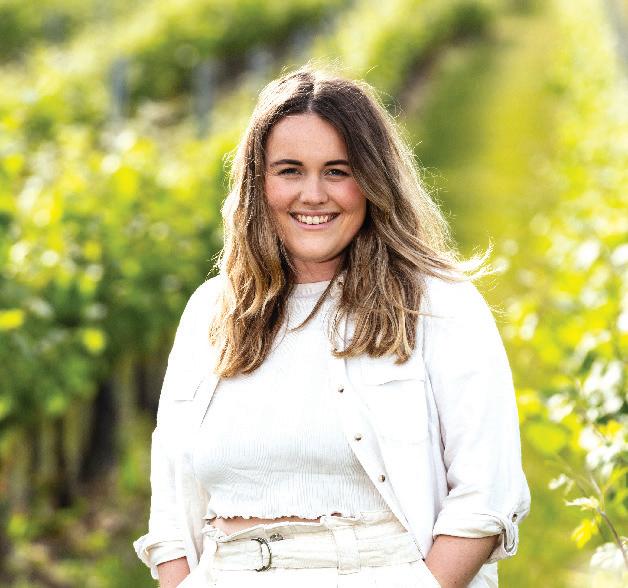
Megan Fitzpatrick
The Winemaker’s Pub
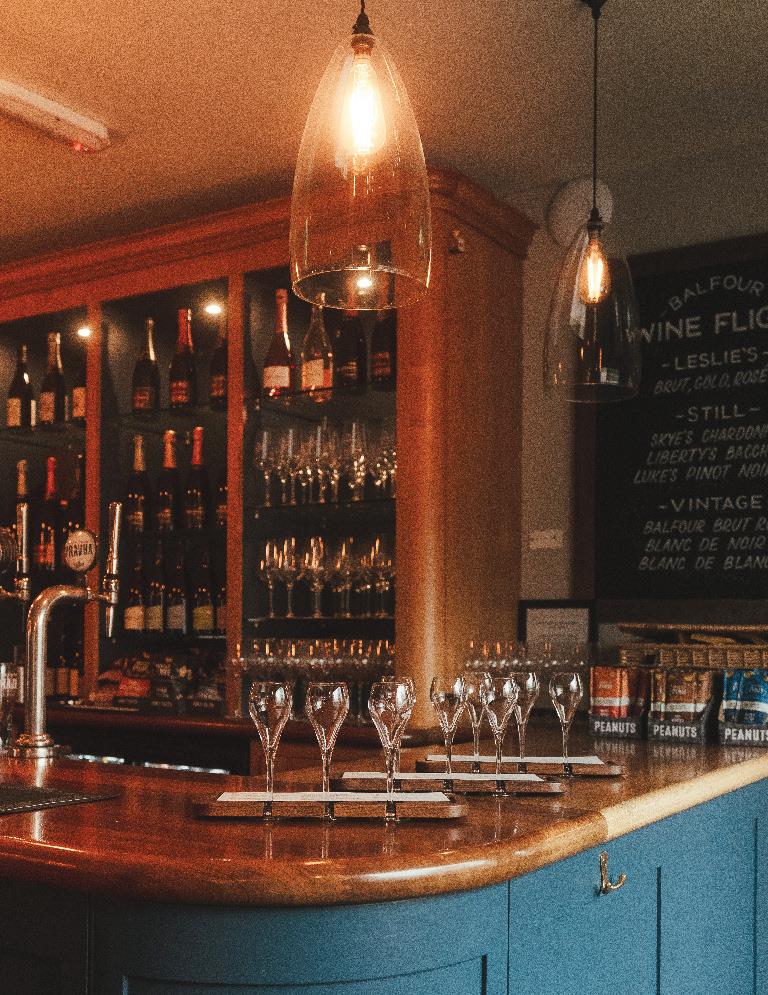
Balfour opens village pub in Goudhurst.
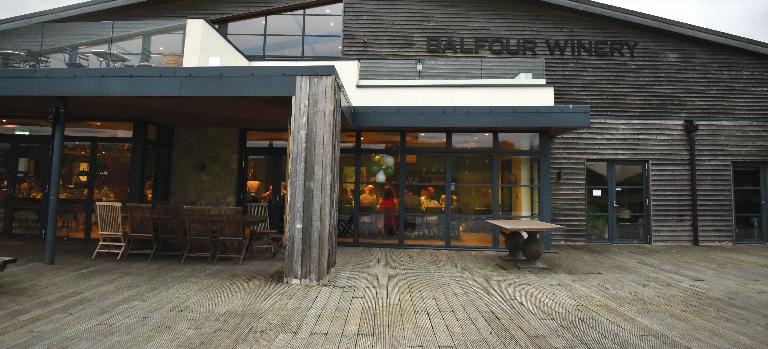
A fantastic evening attending the launch of The Winemaker’s Pub, as Balfour Winery opened the doors to its newest hospitality venture in the heart of Goudhurst. This village pub represents a significant step in connecting the vineyard with hospitality, rooted in British cooking and a strong sense of home, making English wine logistically accessible.
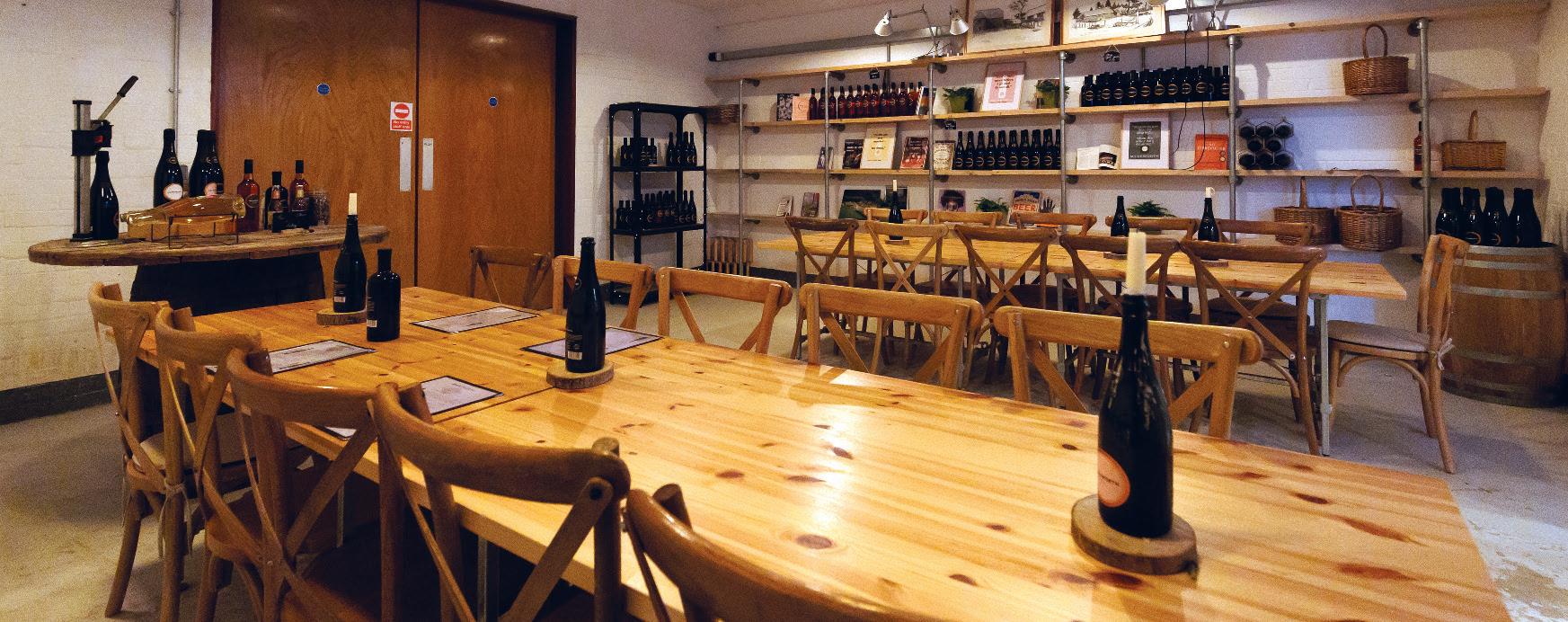
The Winemaker’s Pub completes Balfour’s trio of places to eat and drink across its Kent estate, alongside The Winemaker’s Kitchen restaurant and the more casual Cellar Door offering at the winery. Together, the three venues reflect different ways of experiencing Balfour wines, from destination dining to relaxed home comfort.
For Balfour, a pub is one of Britain’s great institutions and the most natural home for English wine. The space is designed as a place guests can return to again and again. It feels familiar, welcoming and generous, where excellent local food and English wines are enjoyed with ease rather than ceremony.
The kitchen serves British pub classics shaped by seasonality and local produce, with dishes that feel comforting, nostalgic and quietly elevated.
The drinks list is exclusively Balfour Wine. Guests can enjoy the full range of the estate’s English sparkling and still wines by the glass or bottle, including the iconic Balfour Brut Rosé and Nannette’s Rosé. The list also features bottles from the Winemakers’ Collection, an exploratory,
small-parcel range focused on craftsmanship and artistry. Produced in limited quantities, these wines are distinguished by labels created by local artists. Recent additions include Cuvée Owen Erland Elias and Chardonnay 76, featuring original artwork by Nannette Balfour-Lynn’s daughter.
Upstairs, four boutique bedrooms named after Balfour vineyards offer relaxed overnight stays with warm textures and upcycled wood from the vineyard. One suite includes a romantic free-standing in-room bath. Rooms start from £150 a night.
The opening marks a milestone in Balfour’s hospitality expansion. In 2025, Balfour welcomed a record 75,000 visitors to the winery, up from 40,000 the previous year. The Winemaker’s Pub represents the next step in wine tourism commitment.
A complimentary shuttle bus runs frequently between the winery, The Winemaker’s Pub and nearby Marden station. Direct trains from Marden to London Bridge take 46 minutes.
“English wine is inseparable from where it comes from,” said Fergus Elias, Winemaker. “This pub allows people to experience our wines in the most natural setting possible, surrounded by Kent countryside, good food and good company. It’s about flavour, place and shared moments.”
Leslie Balfour-Lynn added: “We’ve always welcomed guests to Balfour Winery as we would at home, with warmth and generosity. The Winemaker’s Pub is an extension of that home, and the bedrooms mean people can

www.balfourtastingroom.com
slow down, stay over and experience Kent, our wines and our hospitality at a more relaxed pace.”
The Winemaker’s Pub will host relaxed wine tastings and private events. With four boutique bedrooms and welcoming spaces, the pub is designed to feel right for a quiet drink at the bar or large celebrations.
This development reflects broader trends where English wine estates are expanding hospitality offerings to create year-round destinations. The Winemaker’s Pub represents bringing what Balfour does in the vineyard into an everyday setting, through shared expertise and enthusiasm for British produce.


Thames & Chiltern Wine Challenge returns in style
The much anticipated return of the Thames and Chiltern Vineyard Association Wine Challenge at The Oarsman in Marlow brought the region’s producers together after a three-year hiatus. The competition celebrated quality, diversity and the collaborative spirit that defines this growing English wine region.
The event comprised two days. A full day of blind judging took place on Monday 2 February, followed by an awards presentation and celebration lunch on Tuesday. In total, 44 wines were entered across six categories, with 21 medals awarded: three Gold, eight Silver, and ten Bronze.
The competition was judged by a distinguished panel of six industry professionals, led by Head Judge Jamie Smith (Sommelier, ecoSIP / The Online Wine Tasting Club). The panel included Emily Brighton MW (Head of Technical, North South Wines), Ali Cooper MW, Polly Gibson DipWSET (Wine with Polly), Nigel Sutcliffe (Founder, Truffle Hunting), and Sam Kemp (Head Winemaker, RAD Winery).
Wines were tasted blind and scored primarily on nose and palate, with bonus points available for label and branding after tastings were complete.
The judges were complimentary about the diversity of fruit, the breadth of winemaking approaches, and what many producers are already achieving. Greater structure and focus was noted within the sparkling categories, but the still wine categories also showed real promise.
Polly Gibson DipWSET commented: “It is a real pleasure to see the diversity that this region champions, with a signature style tangible in many of the vineyards. Beyond some stunning English sparkling, the still wine categories showed great promise and
progress. Even with challenging vintages, the region has produced some wines that would hold their own at national level.”
Emily Brighton MW noted: “Some wines really highlighted the quality potential of the region, particularly for sparkling whites, a couple of which were up there with the best I’ve tasted from England. There were also a few interesting, textural whites, making effective use of judicious skin contact and lees.”
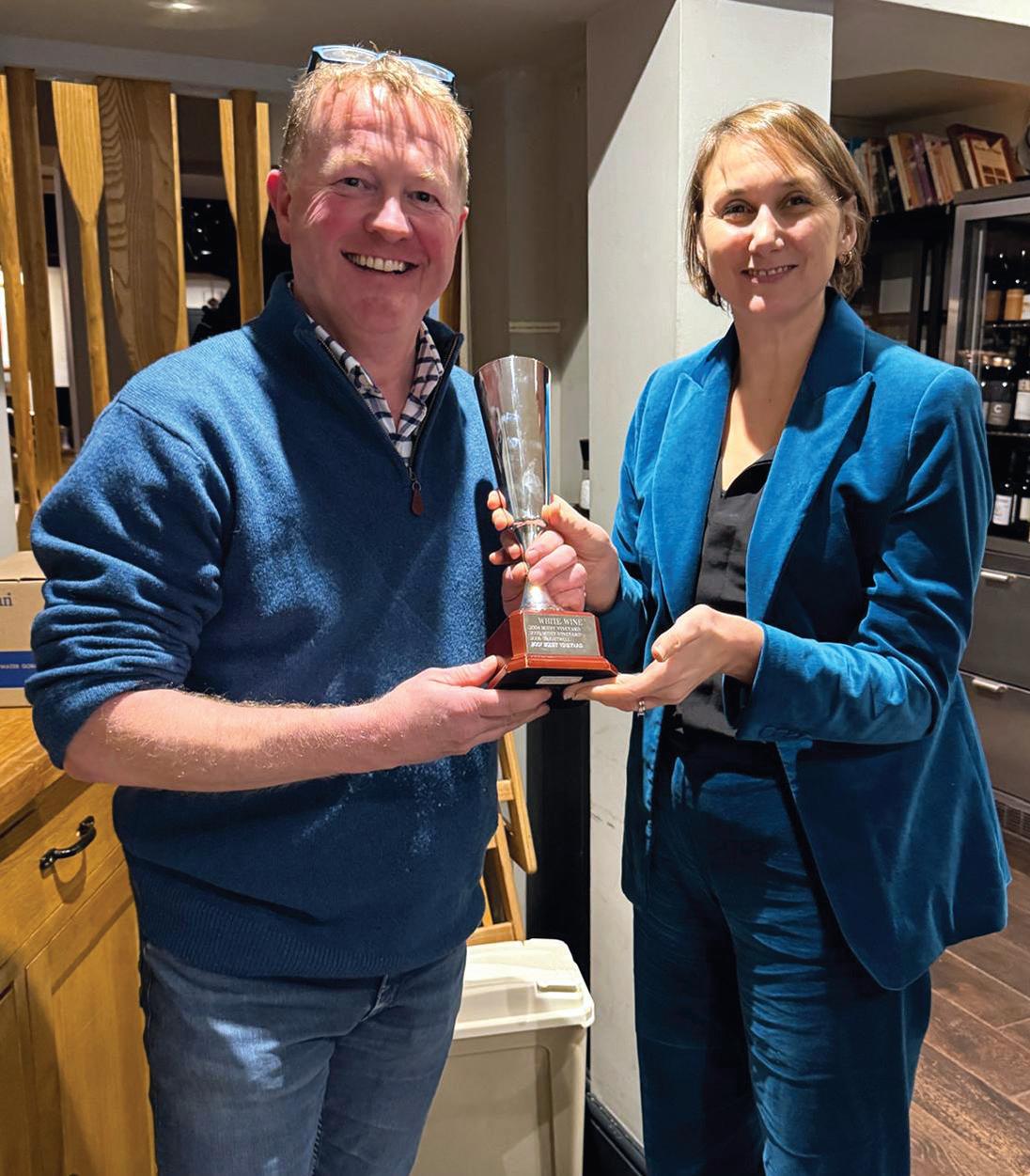
Trophies were presented by Nicola Bates, CEO of WineGB, alongside TCVA Chairman Ian Beecher-Jones. Harrow & Hope’s NV Brut Reserve No. 10 took both Best Overall and the Sparkling Wine Trophy. The Mac Mackinnon Trophy for Best Still White went to JoJo’s Vineyard Bacchus-Seyval Blanc 2022, while Brightwell Vineyards’ Pinot Noir 2021 claimed the Emmbrook Cup for Best Still Red.
Highlights included Gold medals awarded to Harrow & Hope Brut Reserve No. 10, JoJo’s Vineyard Premiere Cuvée, and Wyfold Vineyard Brut 2019, all in the Sparkling White category. Eight Silver medals recognized excellence across multiple categories, with Vyn Dene’s Bubbling Blanc Col Fondo demonstrating the region’s willingness to experiment with alternative styles.
The awards lunch brought together producers, committee members, judges and invited guests. The genuine community spirit and sense of encouragement after the three-year gap was palpable throughout the celebration.
Nicola Bates described it as “a brilliant awards” and encouraged the association to “drive on into the future.” The Oarsman in Marlow hosted both the judging and awards lunch with great generosity, including offering to feature the overall winning wine as their Wine of the Month.
With 44 entries and a strong panel of judges, the 2026 Wine Challenge has laid
Alice Griffiths
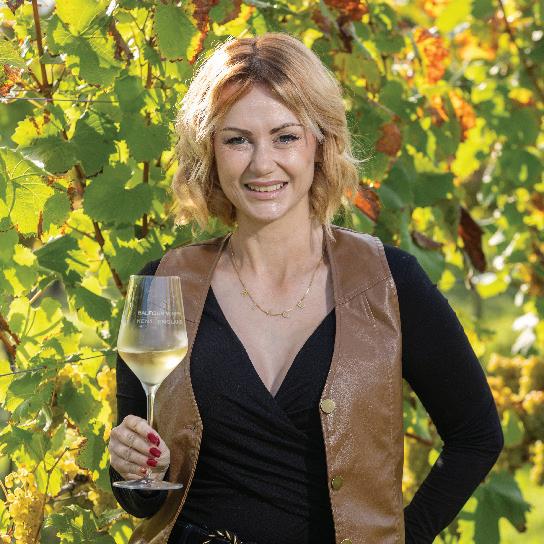
Alice Griffiths is a wine communicator boosting the profile of English and Welsh Wine on social media. Alice has worked within the agriculture industry for the past 20 years, spending time as a lecturer and a smallholder before discovering her passion for viticulture, winemaking and wine tasting.
Get in touch to have your events featured: ✉ Posingwithalcohol@gmail.com
DESKTOP www.alicegriffithswine.com
INSTAGRAM Alice can be found on social media under @alicegriffithswine on Instagram.
Thames and Chiltern Vineyard Association ✉ tcva@winegb.co.uk
solid foundation for the future. The hope is that it becomes an annual fixture, offering a moment each year to assess the region’s progress and celebrate what Thames & Chiltern producers are achieving. As Nigel Sutcliffe put it: “Can’t wait to do it again.”
The art of pruning
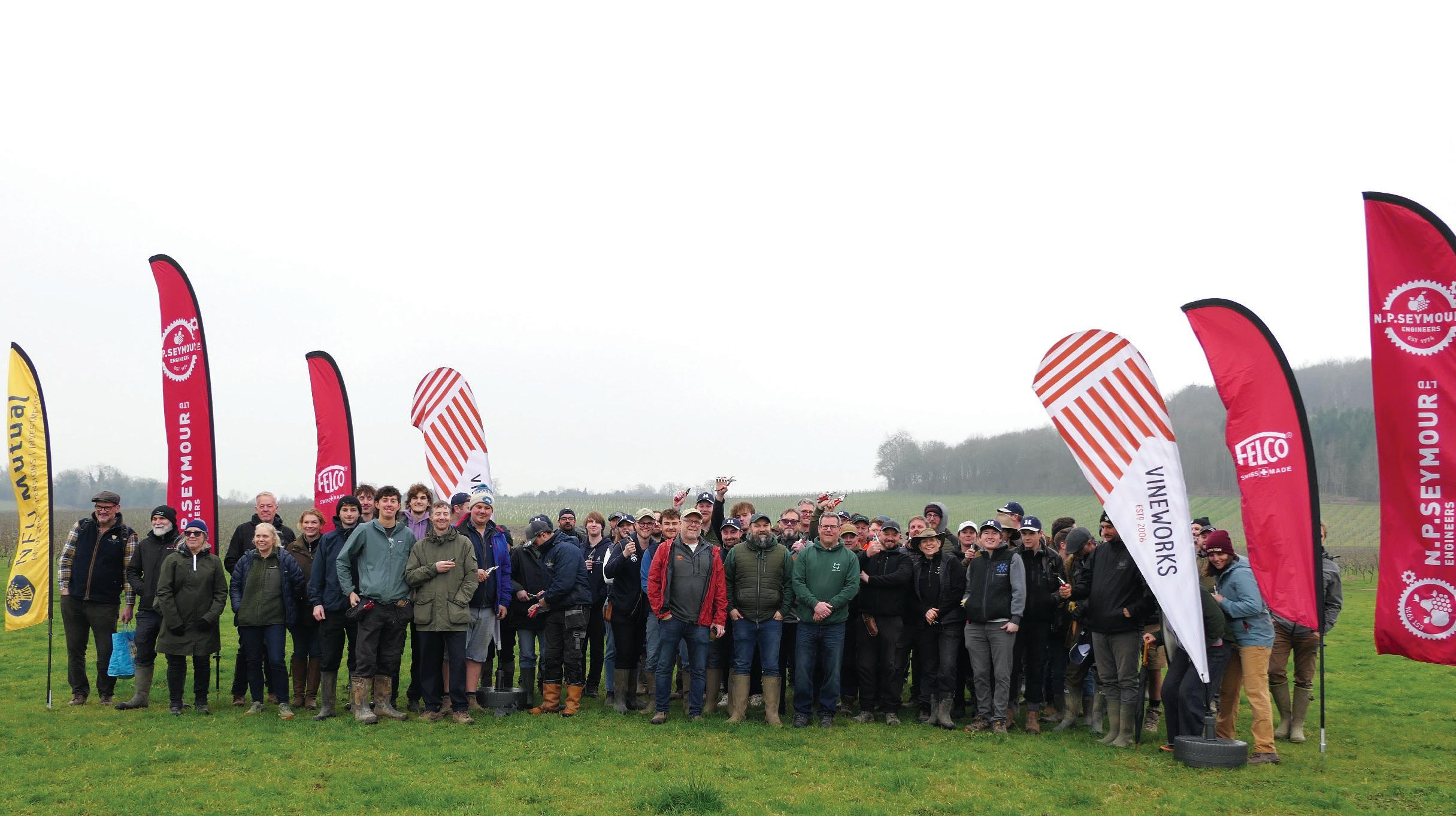
The annual WineGB Pruning Competition is a great opportunity for viticulturists from the UK to get together to celebrate the art of pruning. This year the competition was hosted at Denbies Vineyard for the first time. It was great to see so many vineyard professionals come together on 6 March 2026 for the ‘Battle of the Secateurs’.

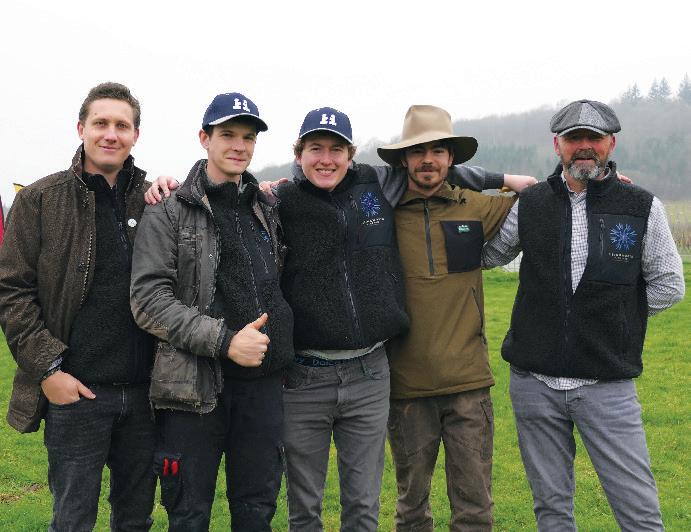
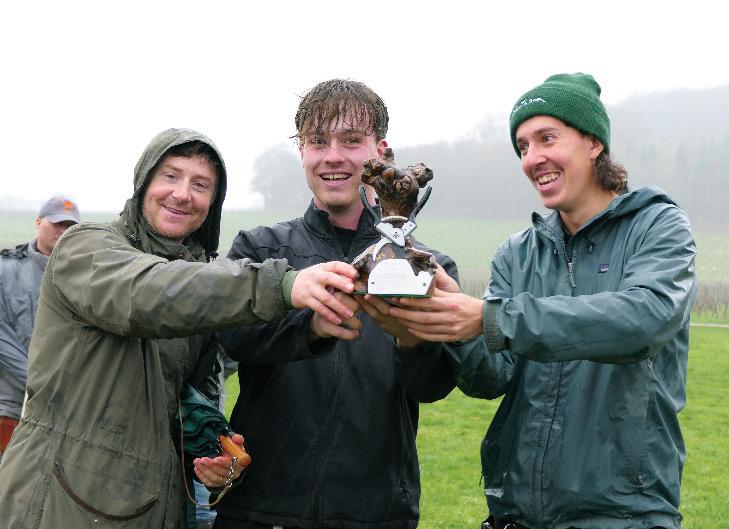
In weather which stayed mostly dry for the competition although not for the judging panel, competitors went head to head displaying their skills to the judges and the spectators.
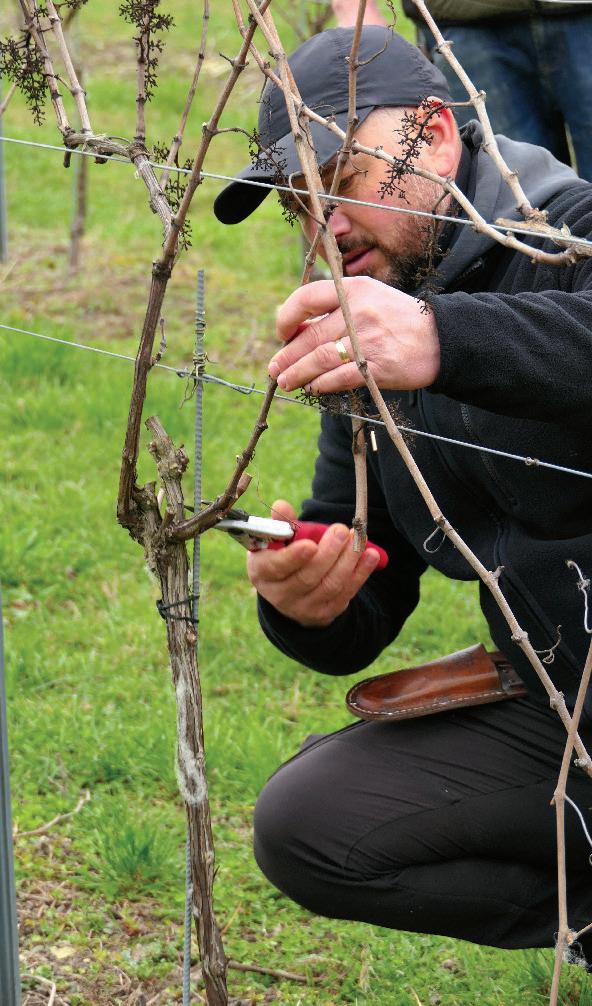
The team competition was hotly contested with many visitors watching on to provide moral support and friendly banter. The competitors were given clear instructions from Lead Judge Luke Wolfe. “We want a crown bud and 10-14 buds on single canes but nothing outside this range,” he said. “Old dieback must be cut back flush, there will be zero tolerance and competitors will be marked down if this is not done accurately,” he warned. Luke finished with a word of encouragement for all the competitors: “Do the best job you can.”
James Dodson of VineWorks, a co-founder of the event said: “This is a great opportunity to celebrate the hard work of all the viticulturists who get quality grapes to the winery door.”
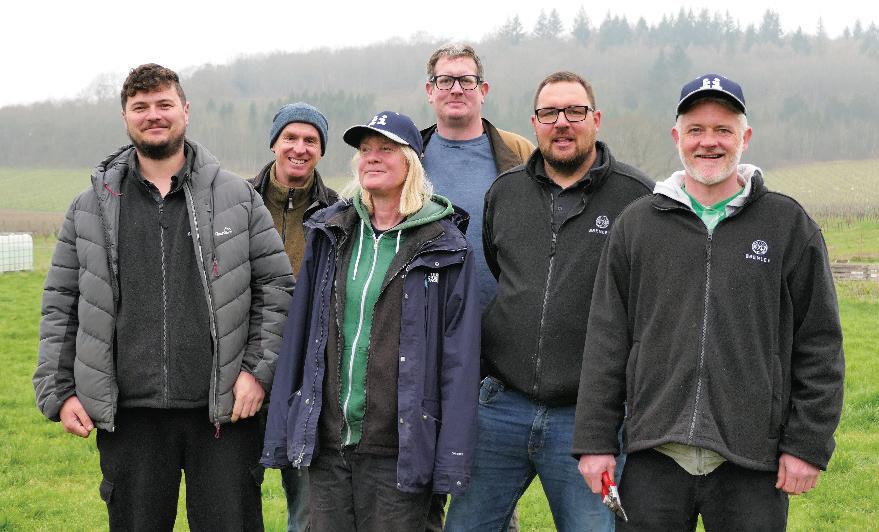
Taking third place in the team event Brenley A achieved 80/100 points. The team from VineWorks took second place improving on their third place in the 2025 competition, but the winners with 88/100

points were the Plumpton College team of Ben Joseph Bell, Charlie Wilcox and Chris Rudwick. As members of the Plumpton College Apprenticeship course the team had plenty of support on the day especially from Vineyard Manager and Lecturer David Blake who was on hand to see the worthy winners collect the trophy.
The excellent spirit in which the competition is conducted was illustrated by the friendly in-house rivalry, with some vineyards entering multiple teams with ‘bragging rights’ just as important as the trophy. Gusbourne Entered three teams and there were two teams from Brenley. The other entrants in the team competition were MDCV, Vinescapes, Albury, Davenport, Denbies, Plumpton, Vineworks and new entrants Abingworth Vineyard.
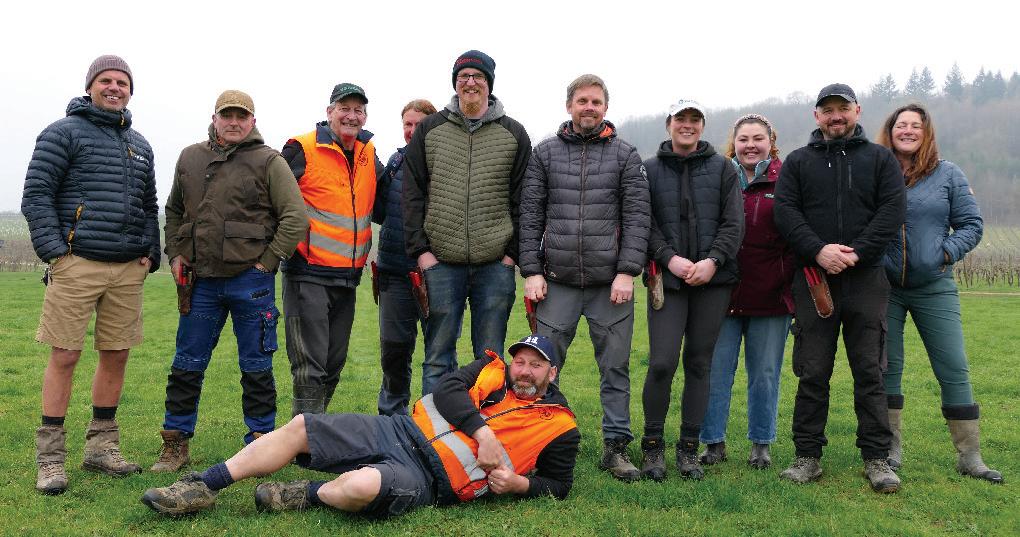
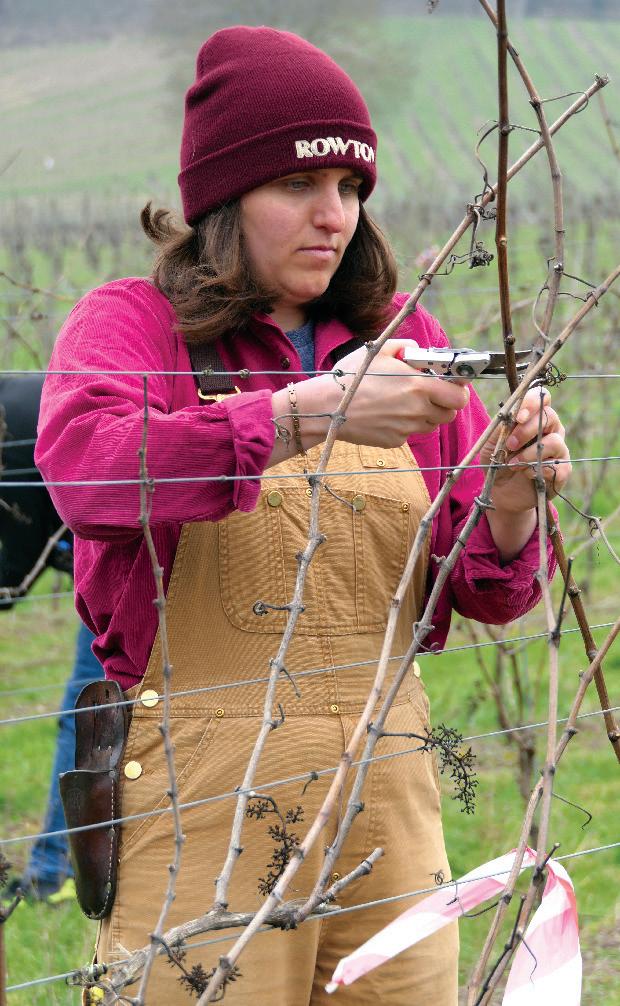
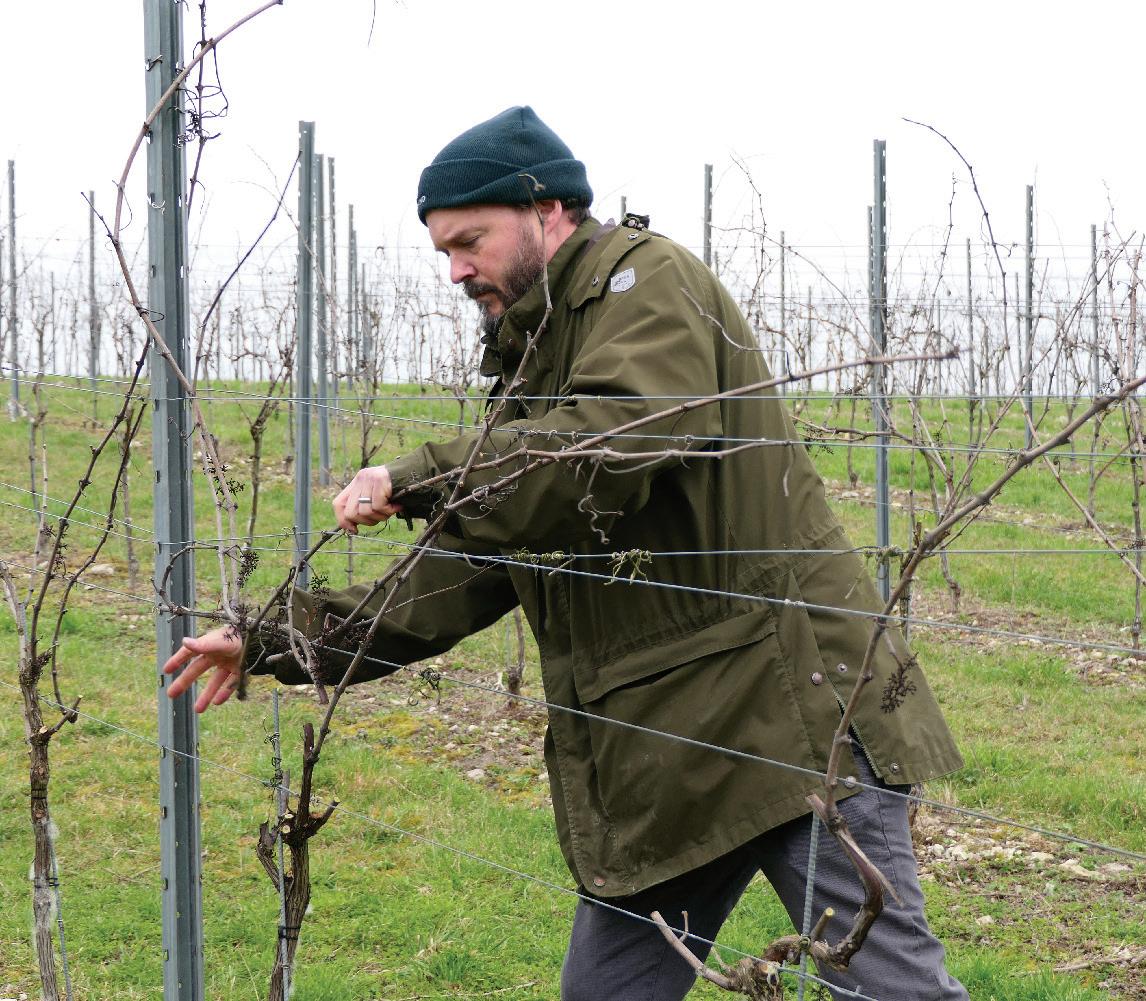
The competition is not limited to teams and a solo pruning event was also held. The entrants for the solo competition included Zoe Evans of Rowton Vineyard who entered the solo competition for the first time. Having travelled from Shropshire “I am representing the Midlands and North,” she said with a laugh. Zoe admitted that the weather at Rowton has been so poor they had not completed their pruning yet but that she had still been practising for the competition with the help of her sister Mel who “has been holding the stop watch.”
Plumpton College
Abingworth
Gusbourne
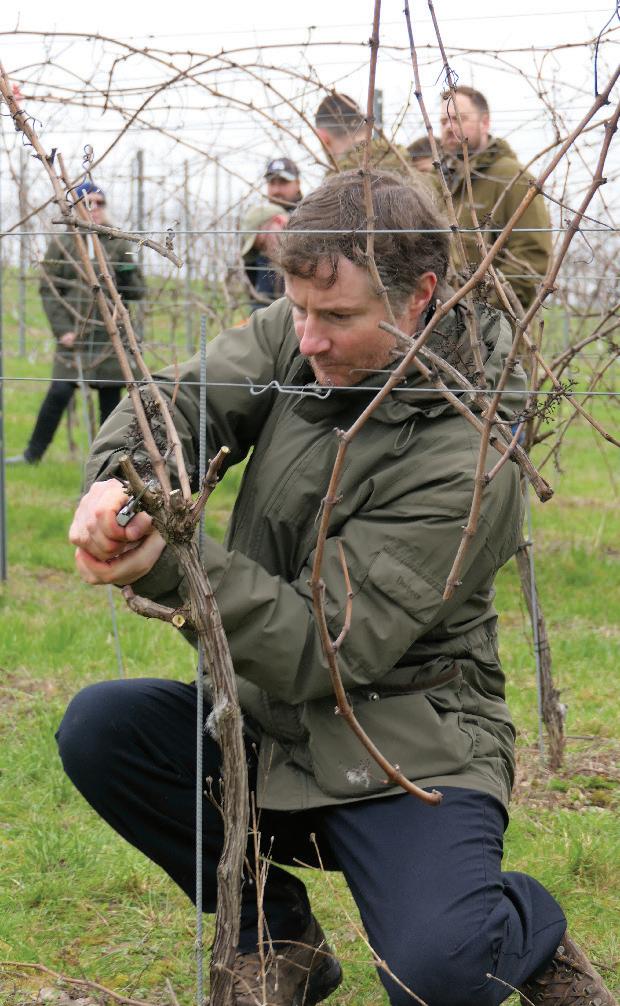
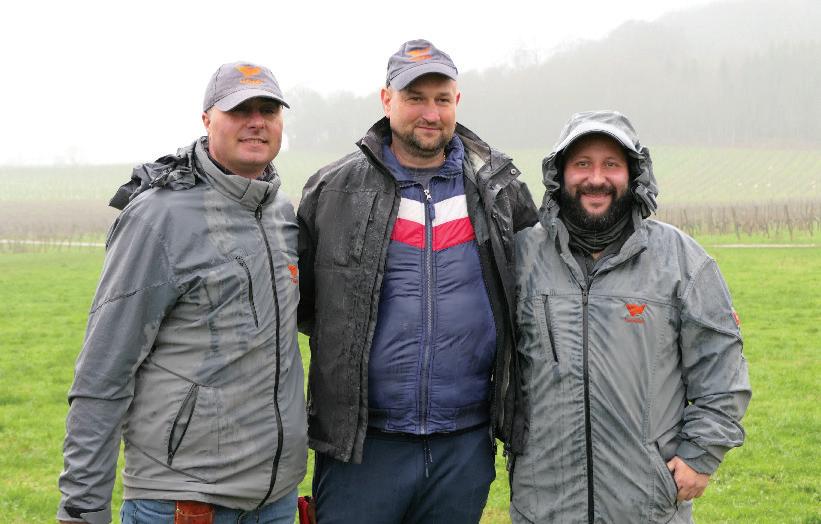
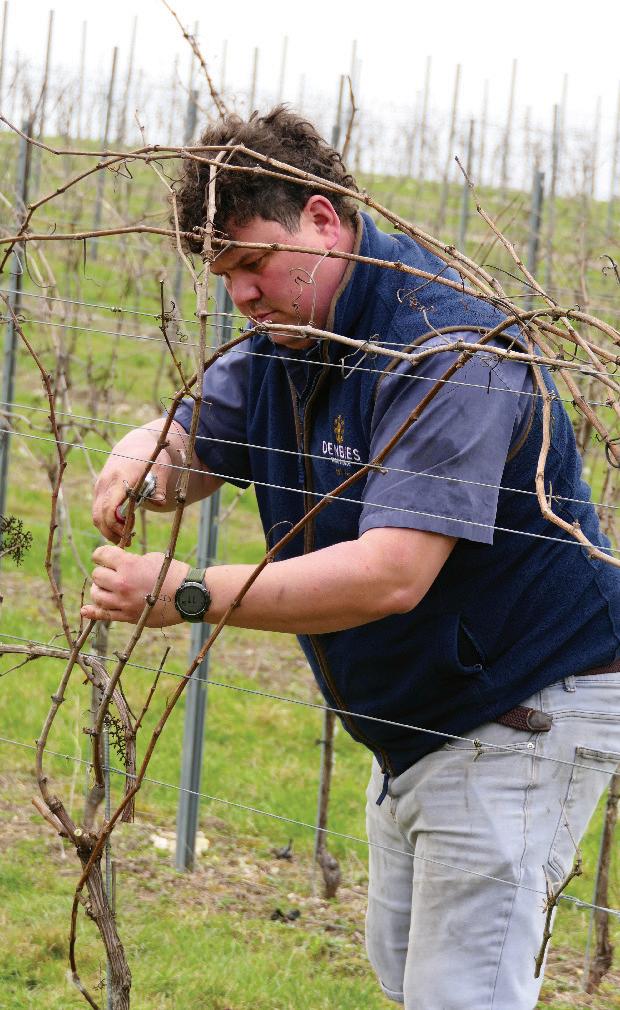
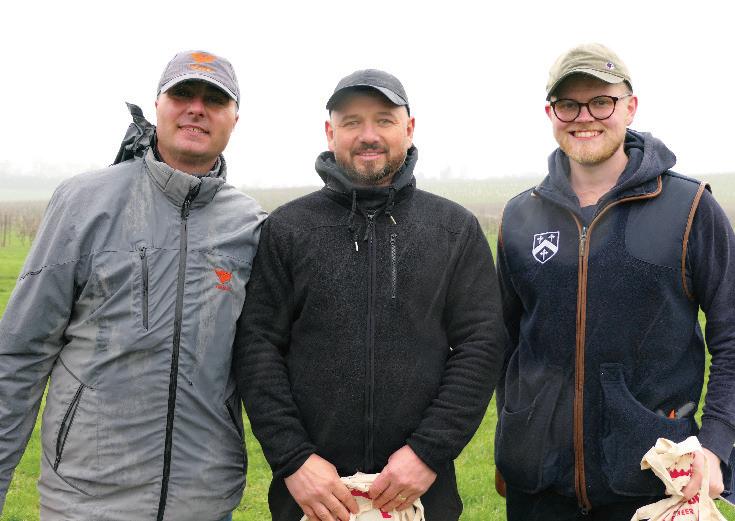
Dragus Nitu repeated his 2025 performance taking first place with 85/100 points, Ben Ralph came second with 84/100 and Daniel Bojun took third place with 82/100. The top three competitors being separated by only three points led to Like Wolfe declaring that the standard of the competition has increased.
It was mentioned by several in attendance that the competition was a great chance for those working in viticulture, which can be quite a solitary profession, to get together, celebrate, have fun and exchange ideas as the season begins.
The opportunity to celebrate vineyard skills was appreciated by everyone including the judges. Lead judge Luke Wolfe, assisted by Matt Strugnell, Ian Speirs, John Manicini, Jim Pritchard, Joel Jorgensen and Cameron Roucher worked tirelessly despite the torrential downpours that occurred just after pruning finished and the judging began.
Joel Jorgensen said: “The competition sets the bar and allows competitors and spectators to benchmark their own vineyard skills.”
William Robb, Denbies Assistant Vineyard Manager with responsibility for the block being pruned said he was delighted to see the vines being used for the competition.
“Pruning along with other vineyard skills are vital but they are hidden in individual vineyards across England and Wales so it is encouraging to see the level of skill displayed and being celebrated at this industry competition,” said Luke.
The day was fantastic for all those who took part and it was great to see so many spectators enjoying the atmosphere and celebrating the hard work that goes on in vineyards not just at pruning but throughout the year. The event is really important for the development of the industry and James Dodson said: “I would like to say a special thank you to all the sponsors.
Also thanks must go to Denbies who have allowed us to brutalise their vines,” he said raising a laugh among the gathered crowd.
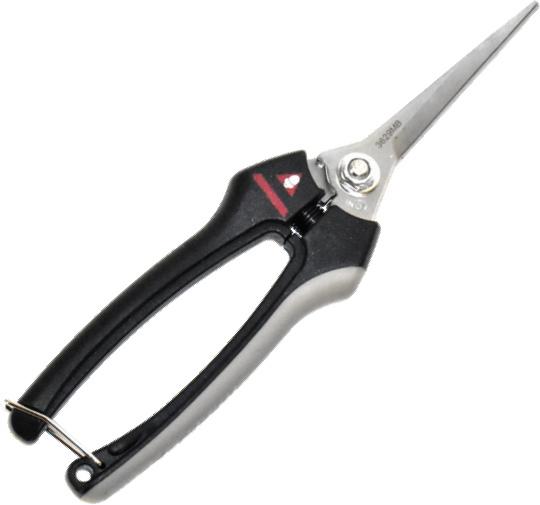
The winners were provided with some fantastic Felco prizes
donated by NP Seymour who were there on the day to support the event. “We are pleased to be a sponsor of this fantastic event that showcases the skill and dedication of viticulturists across England and Wales,” said Claire Seymour, Sales Director at NP Seymour. It is important that support for this event continues to grow just as the area under vine increases. It takes a huge amount of effort to organise the event and Luke Wolfe was quick to point out that “the amount of work that James Dodson puts in is underestimated.” Wine competitions are plentiful but it is very difficult to make good wine from bad grapes and the pruning competition is a chance to shine a spotlight on the highly skilled viticulturists quietly working in vineyards across England and Wales. It is essential that this event thrives and that sponsors continue their support, that spectator and competitor numbers continue to increase and that vineyards around England and Wales volunteer to host what is a celebration of those who work so hard to improve the quality of grapes produced year on year.
VineWorks Top three singles
Brenley



Complete wine experience
Denbies Wine Estate was host of the 2026 WineGB Pruning Competition.
Vineyard Magazine visited the Estate to experience how it is offering visitors a complete wine experience.
Denbies will celebrate their 40th anniversary in 2026 and there are a host of events planned to mark this special occasion.
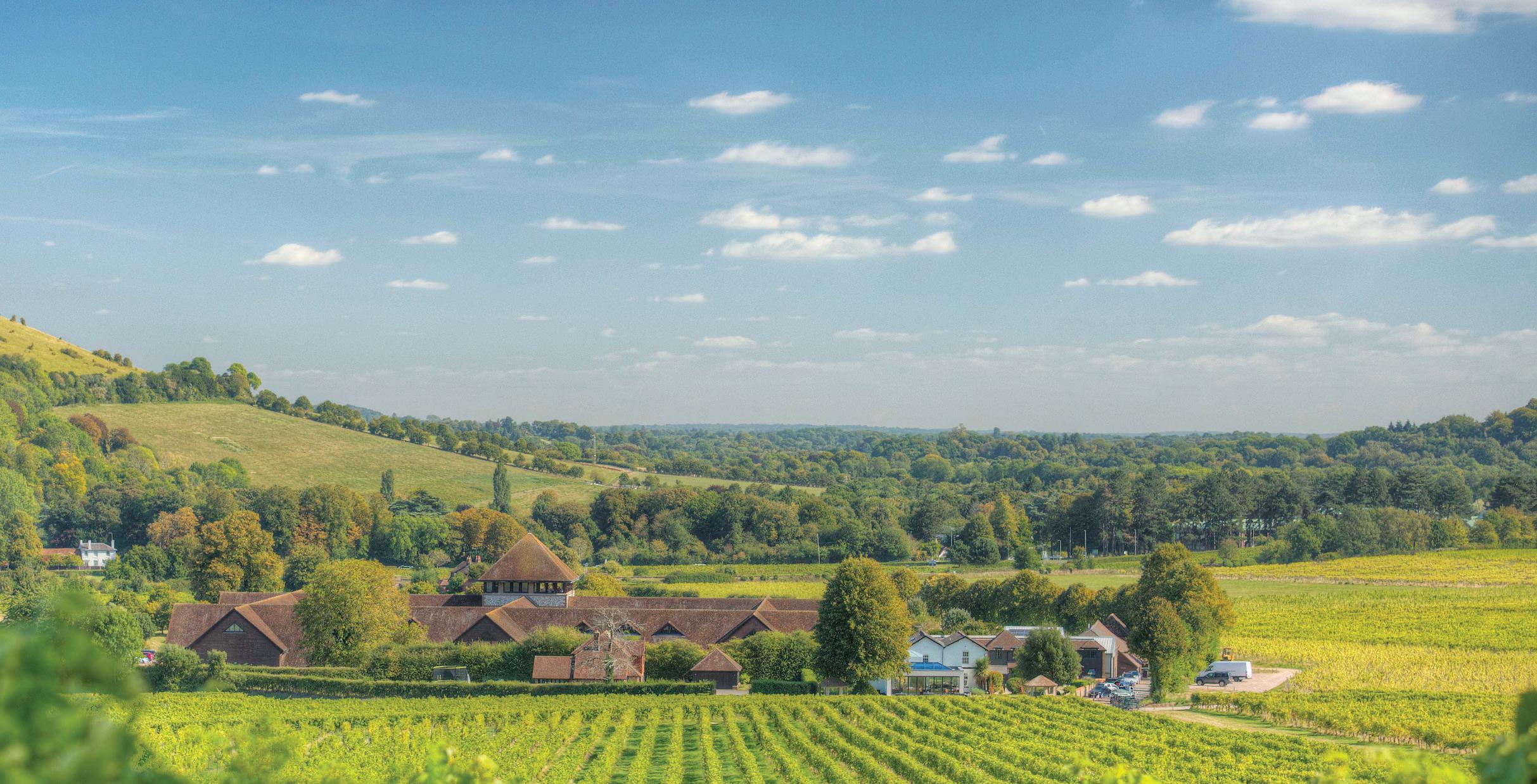
The vineyard is located near the three peaks of Surrey: Leith Hill (the highest peak in the South East of England), Holmbury Hill and Box Hill (which will be familiar to those fans of Jane Austen). With such scenery on the doorstep it is common to see walkers making use of the footpaths through this beautiful landscape and guests of the renovated 17 room vineyard hotel can walk any of these peaks from the door of the 16th Century Farmhouse without even having to think about using the car.
“Jonathan Tyers, Master of Ceremonies at Vauxhall Pleasure Gardens, was the first owner of the Estate. Vauxhall Pleasure Gardens was unique because it allowed for London society to mix in a way that was not usual for the time. Denbies have today maintained that welcoming philosophy,” said Harry Kelf, Marketing Manager at Denbies Wine Estate.
Whilst the hotel is based around a historic building on the estate the facilities for guests staying at the vineyard hotel are exceptionally well thought out with the modern and traditional combining to make a venue that feels at once both comfortable but elegant. From the electric car charging points to the rooms where guests wake up feeling they are actually in the vineyard, everything puts guests at their ease.
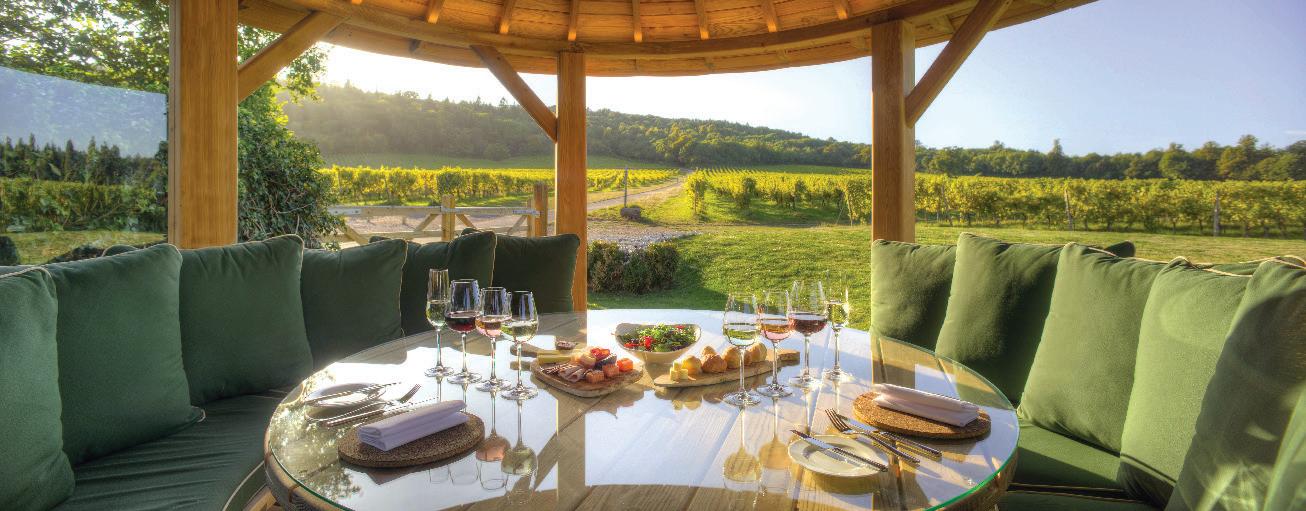
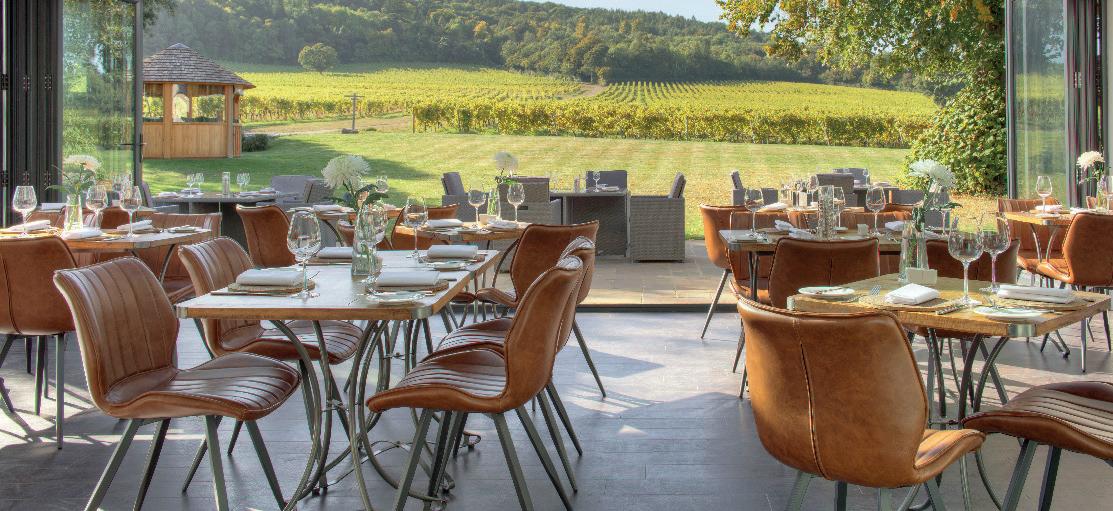
The restaurant has a fabulous space which invites the vineyard into the room. It is an invitation to enjoy long summer evenings with good food, great wine and a group of friends. “The restaurant caters for many different clients,” explained Ben Hams the Assistant Hotel Manager. This includes “Brunch with bubbles and the more traditional afternoon tea
alongside dinner, bed and breakfast for hotel guests.
Denbies produce an incredible range of award winning wine which means restaurant guests are spoilt for choice. With wines available by the glass each dinner guest is able to choose the wine that pairs exactly with their choices from the seasonal menu without compromise.
With a very quaffable demi sec for those who enjoy a slightly less acidic profile to the Blanc de Noirs Cubitt (named after the London architect who was also a previous owner of the estate) with its red fruit and brioche notes that practically jump out of the glass, diners will find something that really puts the sparkle into their experience.
For the main course there are plenty of still wines on the menu including the Denbies Redlands produced from a blend of Pinot Noir and Rondo. This gorgeous, versatile wine worked well as a pairing for both the seasoned steak dish but also the vegetarian option where the wine is used in the preparation of the jus.
In keeping with the inclusive ethos of this elegant but understated venue, Denbies offer guests the chance of an Orange Vermouth which is made utilising the pressings from Denbies orange wine. Possible cocktails include a Denbies Negroni or a Denbies Spritz which would be particularly tempting on any sunny afternoon and it is great to see English produced vermouth being paired with English produced sparkling wines to produce a classic cocktail with an English twist. Importantly there is also an estate produced grape juice which is a particularly nice addition to the offering as it includes both children and those unable to consume alcohol in the vineyard adventure. This ensures that everyone will have the very best experience at this stunning venue.
THE VINE POST
Inside the BASIS certificate Charles Ma
Why agronomy isn’t for the faint-hearted.
In 2025, Charles Martin, Senior Viticulturist at VineWorks, returned to study for the BASIS Certificate in Crop Protection, building the company’s in-house agronomy expertise.
Not setting foot in a classroom for 43 years and then deciding to tackle the BASIS Certificate might sound slightly unhinged. In my case, it felt like trying to drink from a fire hose of information while someone shouted Latin names at me.
The BASIS syllabus
To give you a flavour of what’s involved, the syllabus expects you to identify 141 weeds, from Annual Meadow Grass to Yorkshire Fog. Then come 158 pests, usually referred to by their Latin names. From Aphis pomi to Frankliniella occidentalis, you must know what they look like, the damage they cause and how to control them.
Next are 39 fungal and bacterial diseases, from Alternaria to the rather alarming Xylella fastidiosa. For each one, you must understand symptoms, how they spread and the appropriate control strategies.
All this knowledge must apply across 133 crops, including fruit, vegetables, nursery stock and greenhouse plants. Curiously, vines barely feature at all. For someone whose memory sometimes resembles a sieve, retaining these many facts was… character building. But here’s the twist: that was the easy part.
Integrated pest management
Biological control
Then we reach the part that is simultaneously mind-boggling, slightly horrifying and fascinating: biological control. Companies such as Biobest and Koppert produce organisms that control pests naturally. Watching their videos can be strangely addictive. Think of the famous chest-bursting scene from Alien, and you’re not far off the mark.
Take parasitic wasps. A female lays an egg inside a host insect. The larva hatches and feeds from the inside while the host carries on as normal until the moment the parasite bursts out, leaving behind an empty shell. It’s nature’s version of a horror film.
Then there are parasitic nematodes –microscopic organisms that invade insect pests in ways that make you instinctively clench your muscles in sympathy.
Crop protection and chemistry
After cultural and biological controls, you finally arrive at the last resort: chemistry. Before mentioning a pesticide in an exam, you must utter the phrase: “I would check the CRD website first.” That refers to the Health and Safety Executive’s pesticide database. If a product isn’t listed there, it cannot be used legally in the UK.
Just when you think your brain is full, you must memorise fungicides and their FRAC code groups to prevent resistance,
FRAC Classification
The next layer of study dives into Integrated Pest Management (IPM). If you’re a vineyard manager, many cultural controls are already second nature: clean starts, choosing the right propagation material and varieties, good drainage, balanced nutrition, weed management, hygiene and monitoring.
These ideas make perfect sense in a vineyard. But the BASIS syllabus applies them to everything, including crops grown under glass. If you’ve never spent time in commercial greenhouses, it becomes a slightly surreal exercise in horticultural imagination.
Nucleic Acids Metabolism

alongside insecticides and herbicides and their safe-use guidelines.
The BASIS exams
First, you must complete a written project (mine was on Drosophila suzukii). Next comes a multiple-choice paper, followed by a practical identification test of weeds, pests and diseases. Finally comes the dreaded viva panel: three senior agronomists probing every corner of your knowledge. To pass, you must achieve 85%. It’s daunting, exhausting and occasionally terrifying, but I was extraordinarily well supported throughout the process by the agronomists at GrowTrain and the camaraderie of my fellow students.
Why agronomy matters
Proper agronomy advice demands enormous breadth of knowledge about pests, diseases, legislation, chemistry, biology and environmental responsibility. It’s a complex field, which is why vineyard managers benefit from working with agronomists who understand the realities of UK viticulture. There are only a handful in the country, and one of them now happens to be at VineWorks.
of Fungicides
FRAC Classification of fungicides – nucleic acids metabolism


New glass sponsor
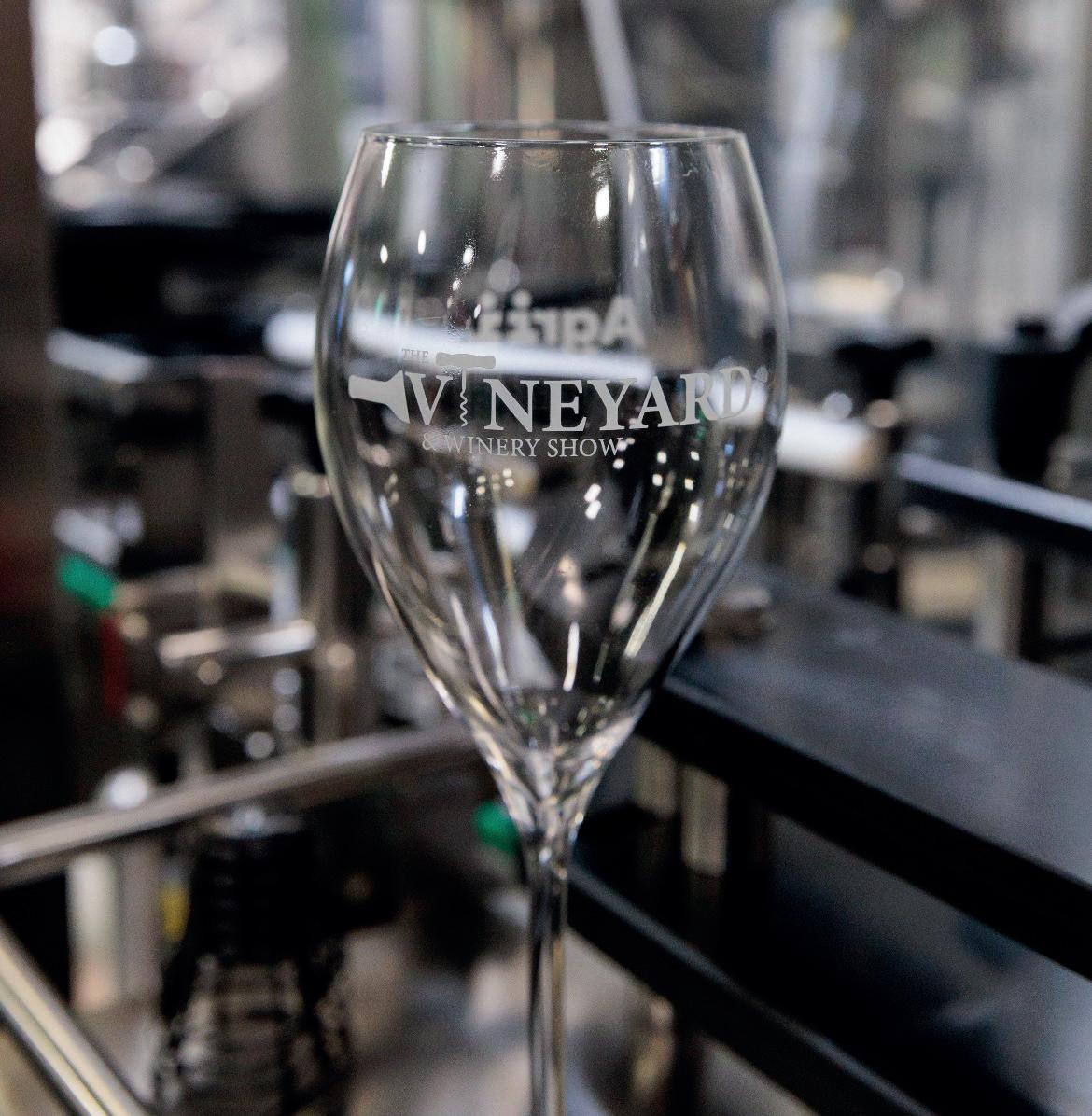
Vineyard Magazine, organisers of the Vineyard & Winery Show are pleased to announce a new glass sponsor for the Vineyard & Winery Show. Now in its sixth year, the show will once again be taking place at the Kent County Showground, Detling Kent.
Pattesons Glass, a worldwide glass supplier since 2007, has announced its increased presence at the Vineyard & Winery Show 2026 by becoming the official sponsor of the wine tasting glasses with a marketing package agreed for the next three years.
“As a leading UK supplier of glass wine bottles across the Bordeaux, Burgundy and Champagne styles, the event provides an important opportunity for us to strengthen our position within the wine sector and engage directly with wineries, vineyard owners and brand teams who are reviewing their packaging and planning for future growth,” commented Mr Sam Graves, Marketing Manager at Pattesons Glass. By sponsoring the tasting glasses, Pattesons Glass will be placed at the centre of the event experience. The tasting areas are a key focal point of the show, where visitors come together to sample wines, exchange ideas and evaluate products, making it a natural environment for brands such as Pattesons to be present.
Sam continued: “At Pattesons Glass, we are committed to
In association with
supporting the UK wine industry in a meaningful way. Becoming the official sponsor of the tasting glasses places our brand right at the heart of the show, exactly where we want to be and highlights our continued commitment to the wine industry.”
The Vineyard & Winery Show is aimed at supporting the continued growth of English and Welsh wines, offering a chance for growers, winemakers and buyers to come together at this showcase for great wine. Along with tasting some of the best wines, visitors from across England and Wales have the opportunity to meet top notch manufactures, equipment specialists and technical experts. The Vineyard and Winery show provides the perfect atmosphere to swap notes, check out the latest technology, innovations and equipment and catch up after a busy harvest.
Partnered by WineGB who host the popular seminars throughout the day, this year’s show will again feature WineGB’s Golden 50, where wines are shortlisted from English and Welsh wines that
Vitifruit Equipment Sales and Hire
have won gold medals or higher across a range of national and international competitions during the year. “Sommeliers, wine writers and the trade are all taking notice of which wines make it into the Golden 50,” commented Jamie McGrorty, publisher of Vineyard Magazine. “It is wonderful to see that the Golden 50 has created a national and international interest from buyers who can now sample the best of the best in one place,” continued Jamie.
Popular Vineyard columnist Matthew Jukes will once again have a wine hub dedicated to the wines that he has featured in the magazine. “We often hear that wines featured by Matthew in Vineyard Magazine and at the show sell out quickly, especially when only small quantities are available, so it is essential to recognise what good publicity can do,” said Jamie. Matthew will also be hosting his ever-popular masterclass at the show sharing his insight and knowledge with humour and panache.
Plans are in place for a third wine tasting area this year, enabling anyone who is interested in English and Welsh wines to sample the very best on offer. “With 2025 providing excellent growing conditions we are very excited about the wines that will be featured at this year’s show, creating an excellent showcase,” added Jamie.
The Vineyard & Winery Show are pleased to announce the continuing support of major sponsors – Vitifruit, Hutchinsons, NFU Mutual and Autajon Labels. The 2026 show also will see Itasca Wines become a major sponsor for the first time. “We are really pleased that Itasca Wines have become a major sponsor of The Vineyard & Winery Show,” said Jamie. “We have known Malcolm Walker and his team since they first announced plans for their vineyard and winery in Hampshire, back in 2019. Each year Itasca’s presence has got bigger, not just at our show but in the UK in general, with a second winery in Essex opened last year.” Sponsors play a vital role in supporting the show and Vineyard Magazine are delighted to have such strong support from across the industry. With an extra hall being created this year to fit in new exhibitors, visitors to the show can also look forward to seeing the latest machinery, learning about the latest developments in viticulture and meeting up with industry colleagues. “There were 2,400 visitors to the show in 2025, our highest number yet, with exhibitors commenting that they were busy all day and creating new contacts, which is really nice to hear,” concluded Jamie.
We are a specialized nursery producing high-quality grapevine for professional vineyards, focusing on healthy, certified material for optimal vineyard performance
We are a specialized nursery producing high-quality grapevine for professional vineyards, focusing on healthy, certified material for optimal vineyard performance
Quality - Innovation - Service
Quality - Innovation - Service
Visit us at Vineyard & Winery Show 2026, Booth M38, Maidstone, Exhibition Hall
Visit us at Vineyard & Winery Show 2026, Booth M38, Maidstone, Exhibition Hall
Our technical advisor permanently available to occompany you for your projects
Our technical advisor permanently available to occompany you for your projects
Premium physiological and sanitary quality
Premium physiological and sanitary quality of our grapewines
Our Pinot Noir with loose and aerated clusters
Our Pinot Noir with loose and aerated clusters
Our exclusives mycorhize origins
Our exclusives mycorhize origins
Contact
Contact us : Charles Collet Cell : +33(0)6 37 26 09 57 – Tel. : +33(0)3 84
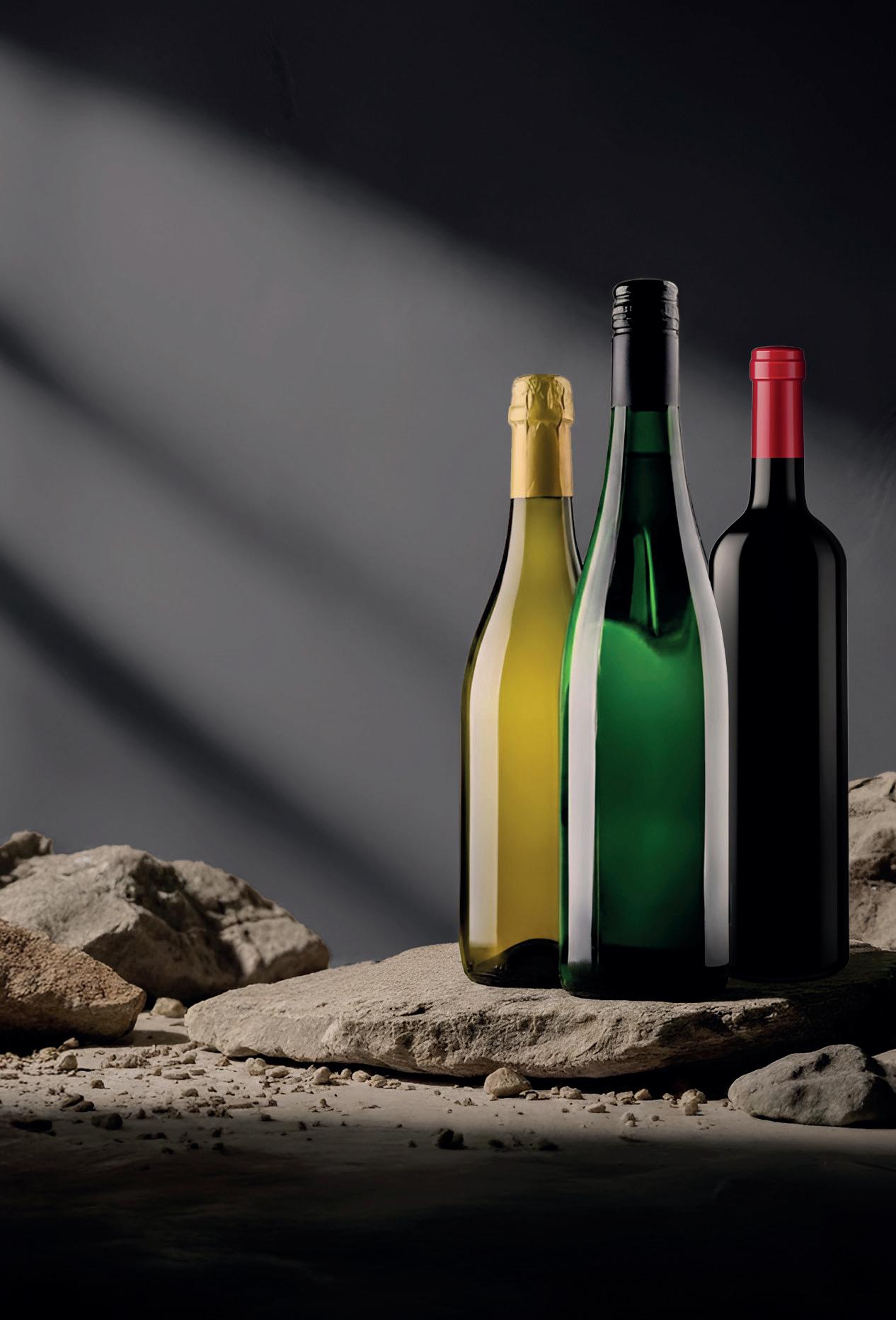


A collection of wines unlike any others in England.
It’s a small tasting, the annual Welsh Wine Showcase Event, but it is vitally important because it appears to me that this niche celebration shows in just perhaps 20 minutes of deliberations the absolute progress and evolution of Gwin Cymreig. And it is overwhelmingly positive, even if the natural voices, and there are a few, don’t appeal to my sensibilities.
This month, I have found three headliners and a further six wines from these
estates, which are all utterly sensational. It is telling, at least to me, that the three wineries that sat atop the pile this year come from an ‘old’ estate, a ‘middle-aged’ estate, and a relative ‘newcomer’.
While the protagonists perhaps do not fall into these ageist categories, it is true that White Castle was indeed founded in 2009, Velfrey in 2016 and The Dell in 2021. I think this is a significant fact that underscores the importance of experienced hands as

well as nascent, ambitious wine folk in the emerging category of Welsh wine heroes. And even more fascinating and noteworthy is that this month’s collection of wines is unlike any others in England, which gives them greater legitimacy and importance. There is an overwhelming reason to shop for delicious wines in Wales today, as they have never been better.

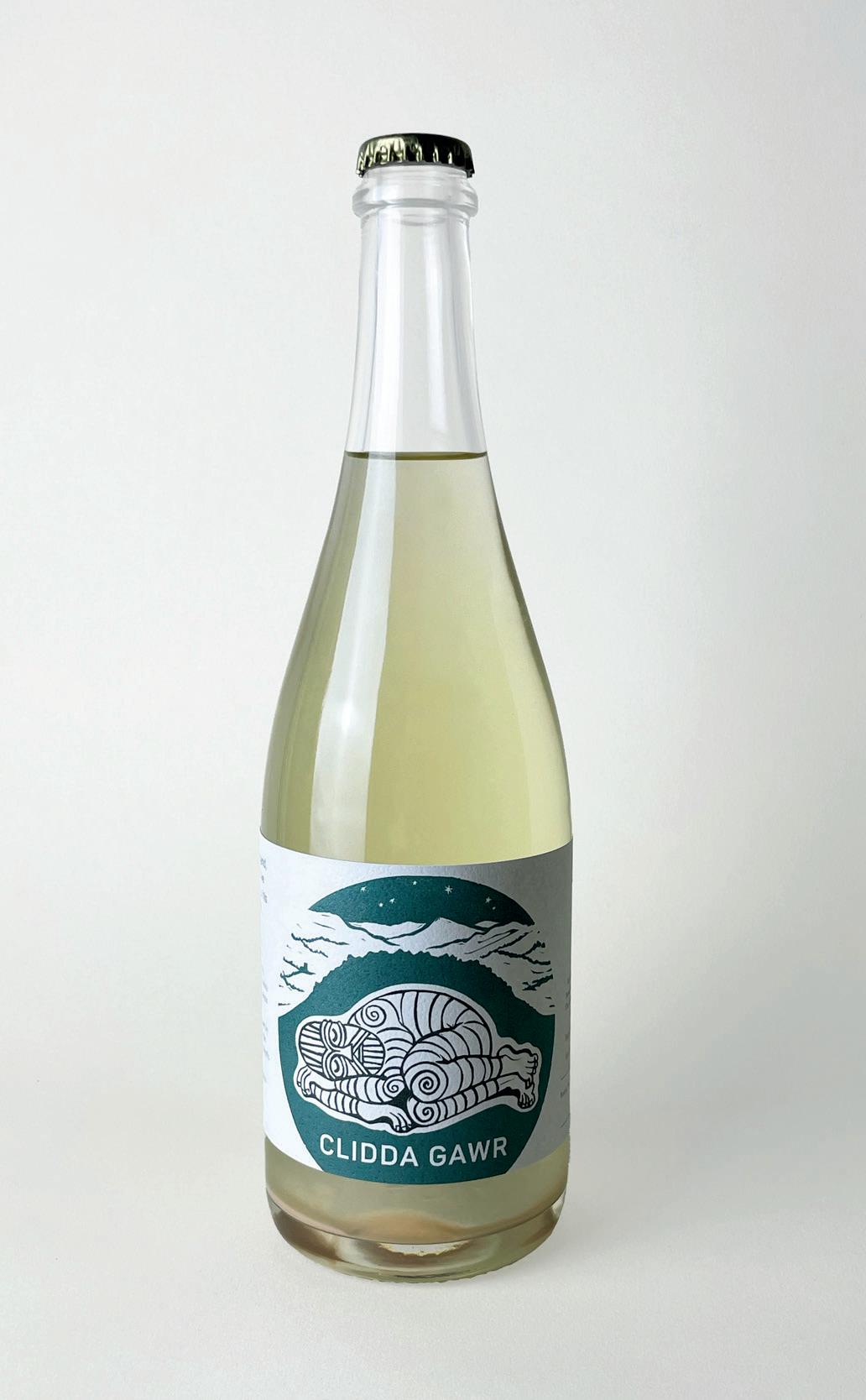
This Col Fondo, or sparkling wine with no disgorgement, beauty from The Dell is my favourite version of this tricky style of wine in the whole of the UK.
It is lightly cloudy but pristinely clean and untroubled by funk, which endears it to me greatly. The wines at The Dell are made with unmistakable subtlety and poise, and Clidda Gawr (named after a local giant but probably is more accurately personified by a local sprite!) is made from Phoenix, Reichensteiner and Schönburger.
There is next to no sugar here and masses of acidity, which keep the enchanting floral flavours on the straight and narrow. At the time of writing, there were 350 bottles remaining from the 425 made, so hurry along if you want to taste this magical potion!
In addition, 2025 Y Lleidr (£22) is a Pinot Noir, Seyval Blanc, Solaris rosé that parades shimmering pomegranate and raspberry tones, and sets the bar extremely high for all ’25 vintage rosés in the land.
2025 Yr Afanc (£20) is a wine I have followed for a few years, and it is always a joy. Made from Solaris, Phoenix, Reichensteiner and Schönburger, the 2025 is the finest to date, and for some reason, it always reminds me of a super-dry, kaleidoscopic Jurançon Sec, with its innate counterpoint between orchard fruit and dramatic tension. Finally, 2023 Pen Y Clawdd (£35) is a true sparkling rosé made from Pinot Noir and Seyval Blanc, and, once again, the brightness and elegance, embodied by all The Dell wines, are here in abundance!
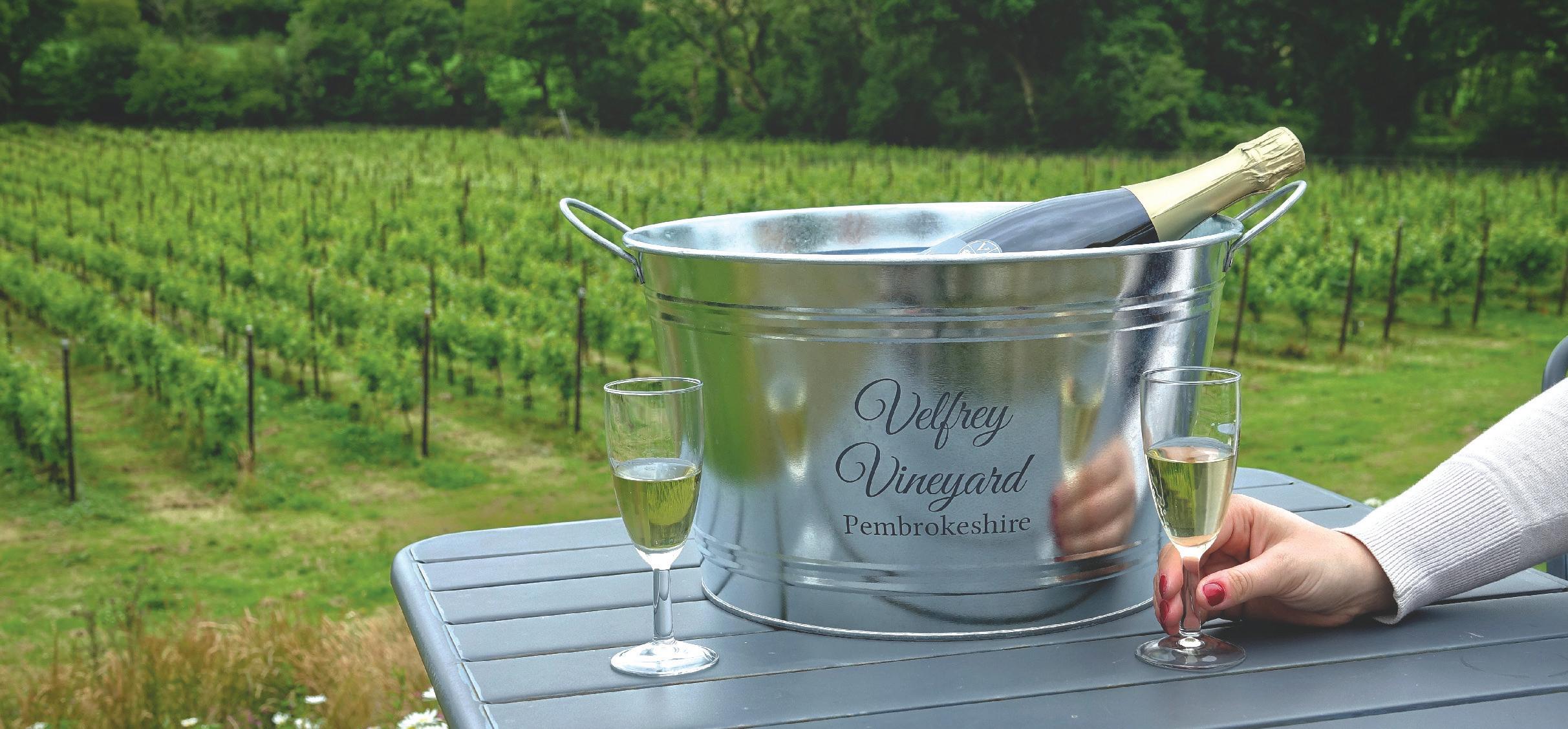
2023 Velfrey Vineyard, Rhosyn Sparkling Rosé, Pembrokeshire
£42.00
www.velfreyvineyard.com
www.finewinesdirectuk.com www.fourseasonsfarmshop.co.uk
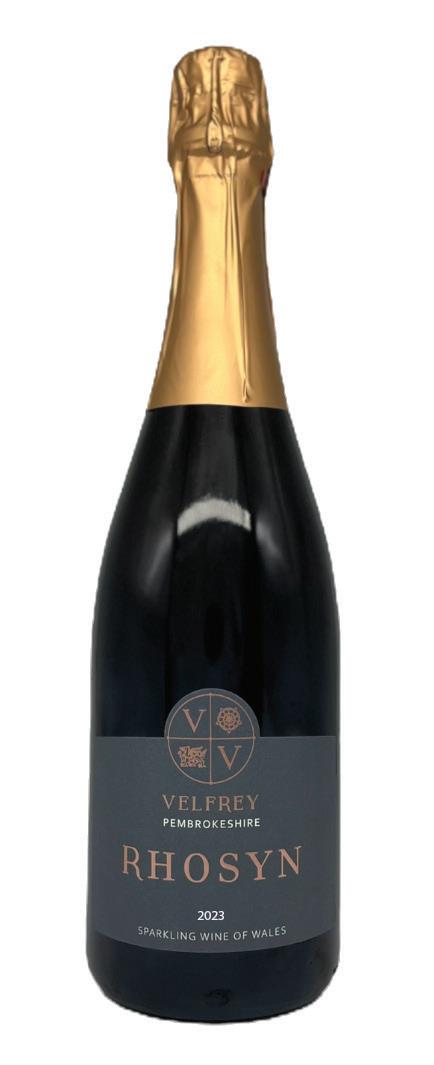
Andy and Fiona Mounsey have already hit the high notes with their stunning Rhosyn Rosé, when the 2021 vintage made it into my MoneyWeek column celebrating Welsh Wine Week last year.
This means that the 2021 was made from four-year-old vines, given the tech sheet for my featured 2023 states it is made from venerable six-year-olds! Wow, this is incredible, because the delicacy, balance and harmony shown by this 80% Seyval Blanc, 20% Pinot Noir blend is astonishing.
Once again, the production is tiny, with only 1,547 bottles made, but I urge you to track it down because it is the antithesis of the muscular, showy rosés that proliferate the market.
There is no sense of skinsiness here, just melodic silkiness, and the finish haunts the palate for minutes after each sip. Interestingly, I also like Velfrey’s NV Sparkling Brut (£36), which wanders along an applepie-like theme of fruit flavours, and is made from a similar recipe, albeit in white form. It is fascinating, then, how Rhosyn is a more slender and supple creature than the white!
One final note, and I say this far too often, so please forgive me for extended repetition, but great rosés must smell pink. Shut your eyes and breathe in. Rhosyn sports one of the most hypnotic and resonant cherry blossom perfumes of the year so far!
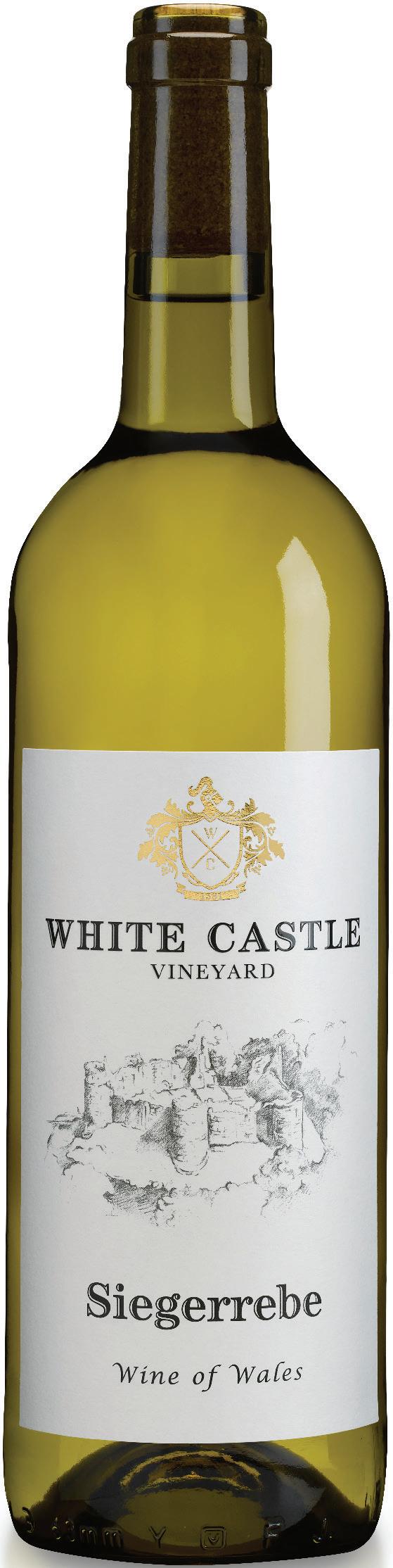
2025 White Castle Vineyard, Siegerrebe, Monmouthshire
£26.50
www.whitecastlevineyard.com
www.blasarfyd.com
www.finewinesdirectuk.com/cardiff-store/ www.grapebritannia.co.uk and coming soon to www.noblegrape.co.uk
www.dylanwad.co.uk
www.wallysdeli.co.uk
Robb and Nicola Merchant are inspirations to all who meet them. It was this couple who first got me hooked on still Welsh wines, and this superb Siegerrebe is their finest to date.
Texturally, it has taken on more creaminess and silkiness than in previous years, and the floral theme is captivating, with orchard tones, stone fruit hints, and oyster-shell freshness.
This wine is a perfect example of a style that has evolved from a decent effort in years past to a triumphant creation today!
In addition, 2025 Gwin Gwyn Phoenix (£26.35) is a leaner, brighter, and tangier white with a Sancerre-like silhouette and a gentler approach on the palate than any Savvie B! It is a consummate crowd-pleaser and, like the other wines in this month’s article, it has a flavour all its own.
White Castle has long made impactful red wines, and yet 2023 Pinot Noir Précoce (£37.11) raises the bar further than ever before. Spice and earth tones underpin a superbly suave chassis of ripe Pinot fruit, and where once the balance was close enough but not perfect, in 2023, this is a completely harmonious wine. Llongyfarchiadau!
Presenting the possibilities
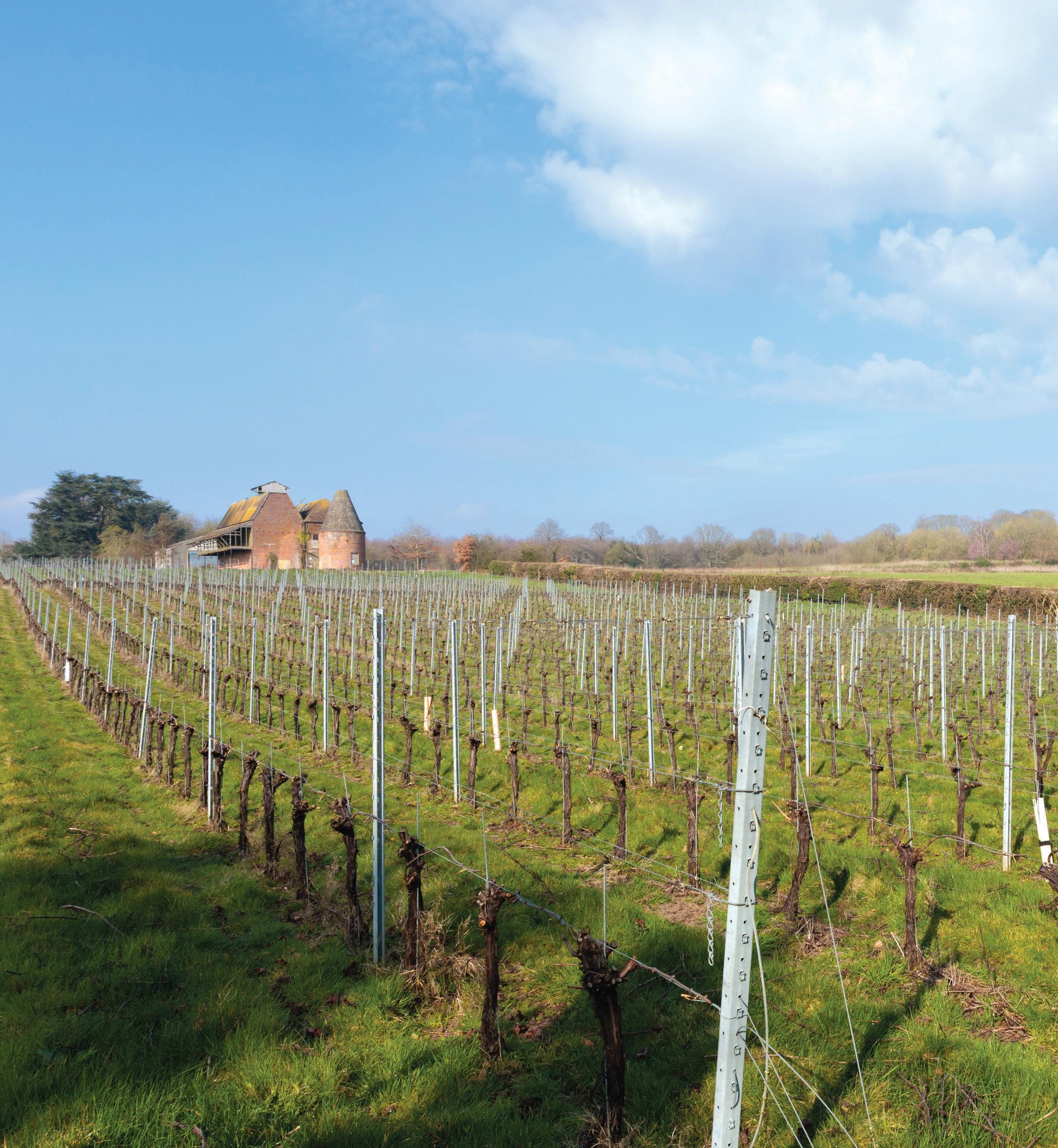
Mereworth Wines is situated on the A26 Tonbridge Road in Kent. The location on this busy section of road allows Mereworth to present English wine to the tens of thousands of motorists and passengers that pass daily.

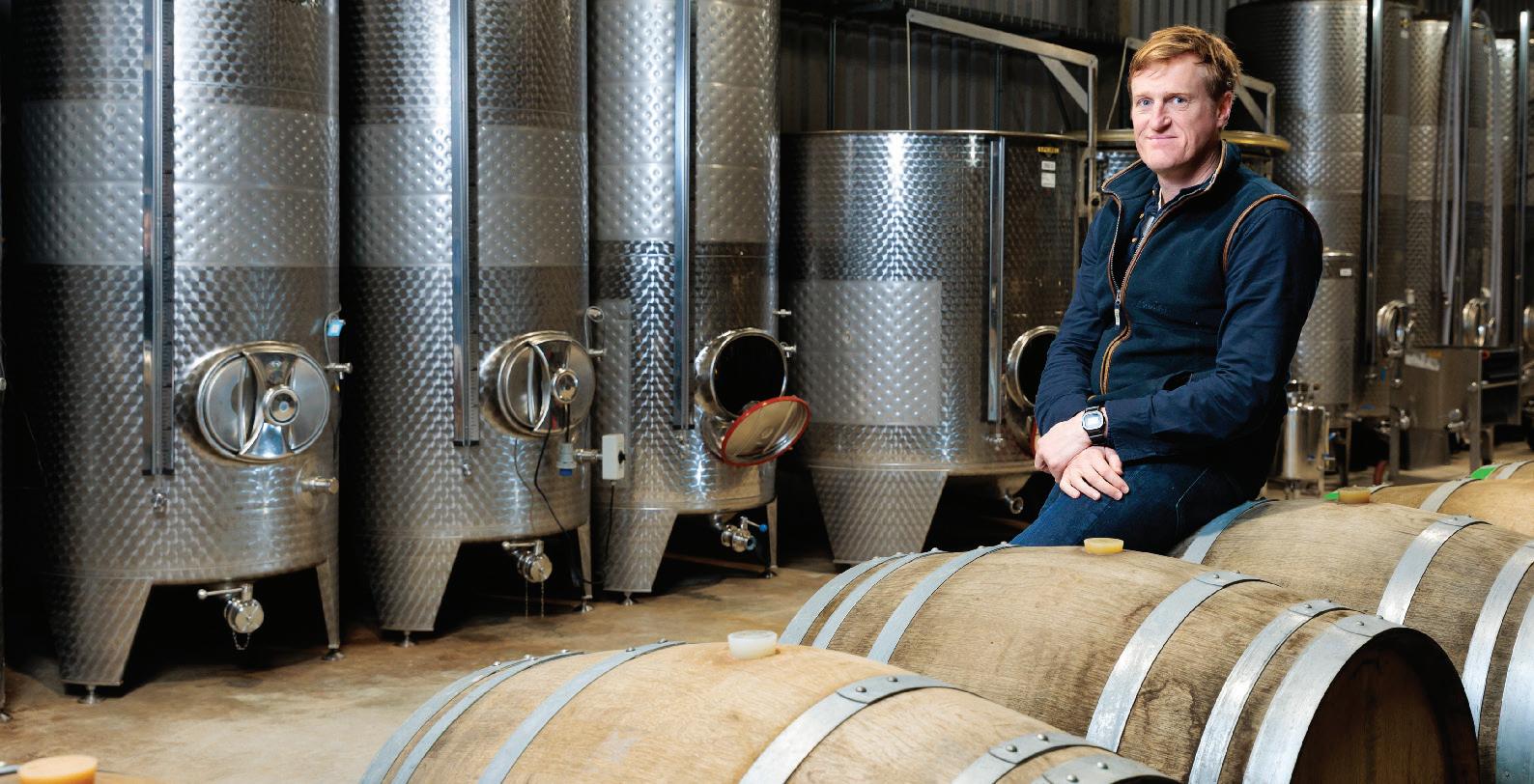
William Boscawen
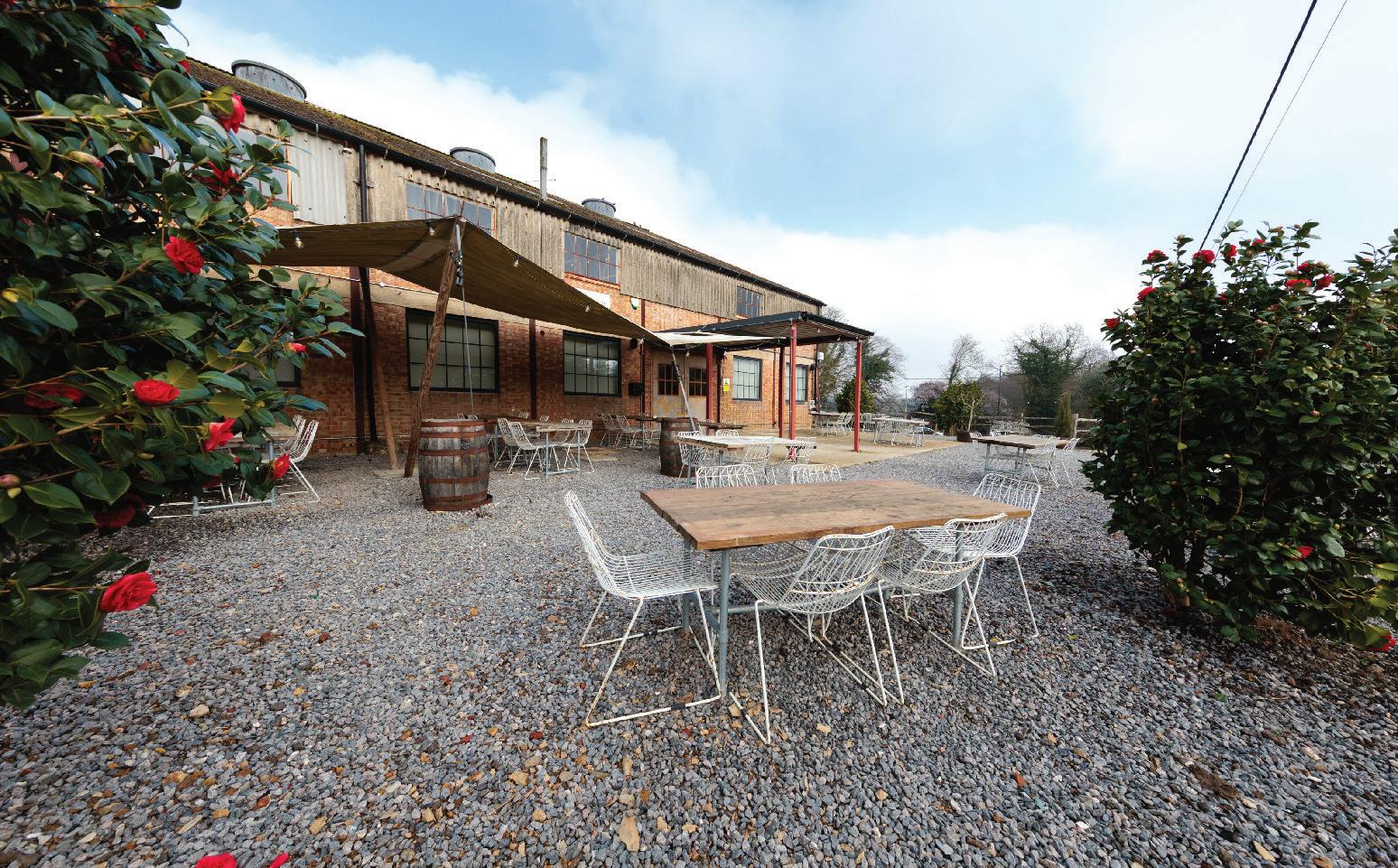
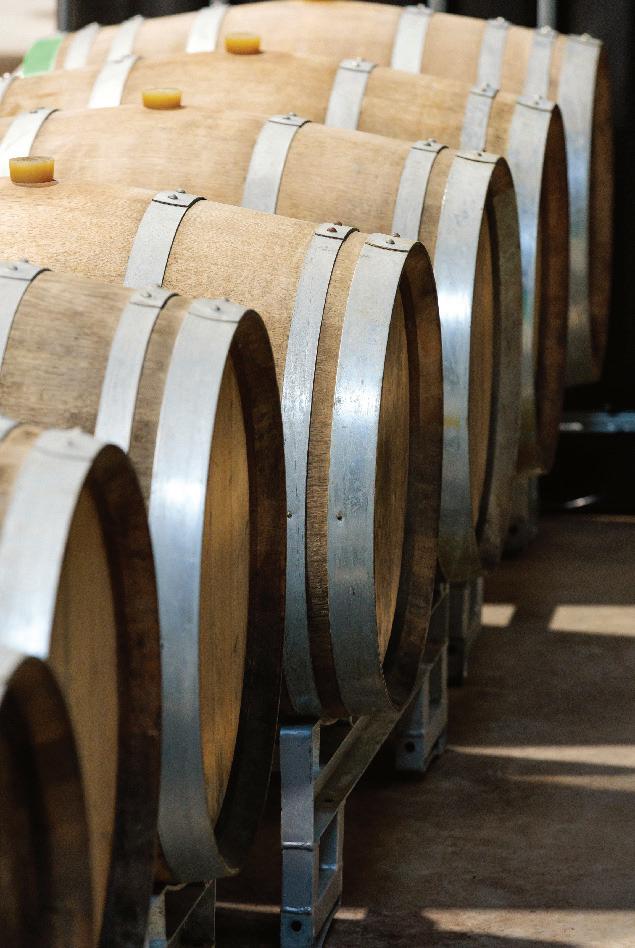
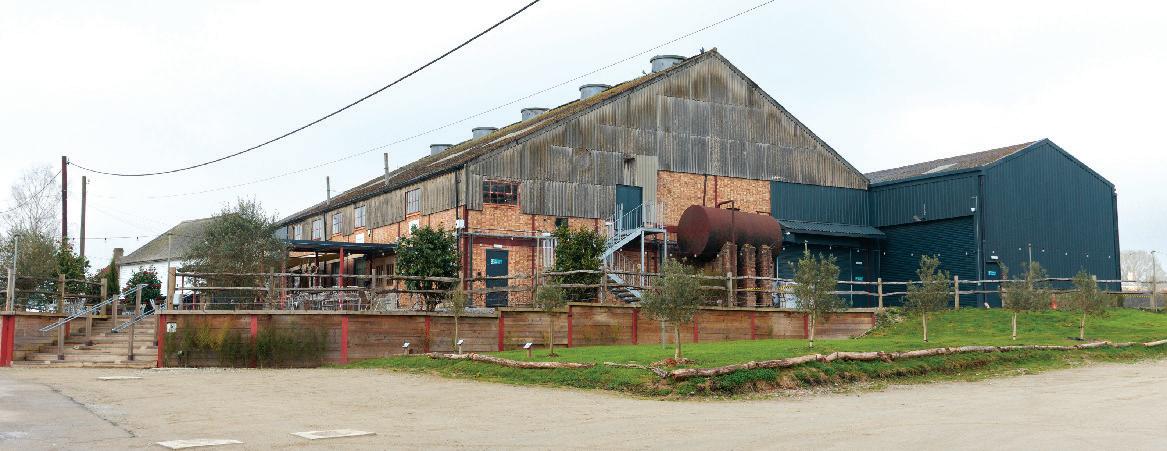
Mereworth has embraced Kent’s history and the former Brewers Oast has become the central part of the site, housing the extensive hospitality venue and now the new contract winery facilities presenting new opportunities for vine growers across the region
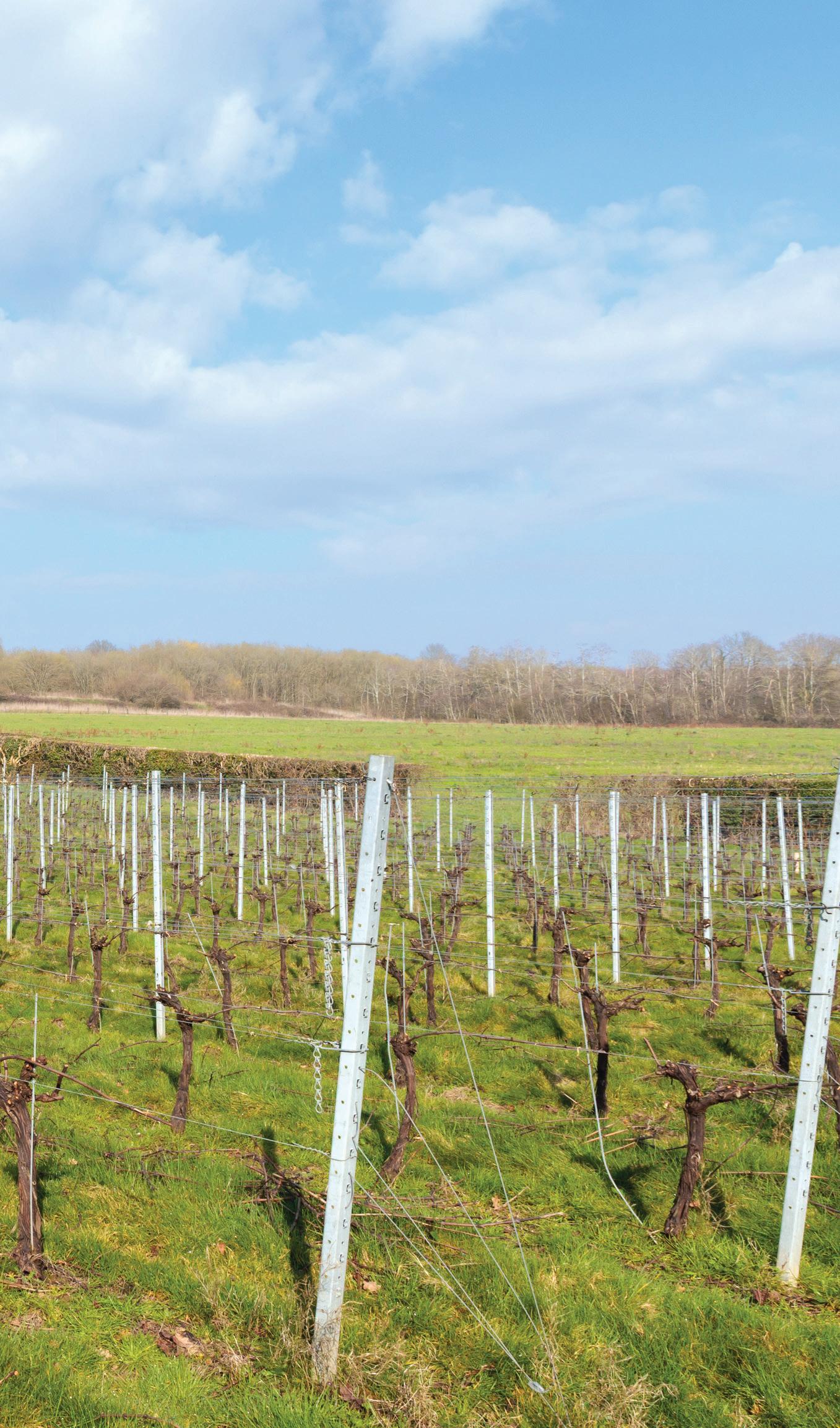
Visitors to Mereworth are greeted by the sight of magnificent Camellia trees. In early March these were already in bloom. These attractive shrubs serve more than just to provide beauty, they also allude to the fact that plant based businesses are part of the very fabric of the Boscawen family land. In Cornwall, the Camellia Sinensis plantation provides the foundation for the first ever English homegrown range of teas under the brand name Tregothnan. Inspired by his family history of agricultural stewardship, William Boscawen looked at the possibilities for the family land in Kent.
Farmed by the ancestors of William Boscawen for over 200 years, the rich soil of the Greensand Ridge in this part of Kent supports many agricultural enterprises. Alongside traditional arable land, there are also orchards and soft fruit plantings and historic woodlands – “Everything flowers early on this site,” explained William Boscawen who decided to plant vines on the estate at Mereworth in 2015.
Traditionally Kent has been associated with hop growing and this estate is no different. Mereworth have embraced this history and the former Brewers Oast has become the central part of the site, housing the winery and the hospitality venue.
Walking through the building which first opened in 2020, it is clear that Mereworth Wines are continuing to develop the business. Like the vines they grow and the wines they make, the business is maturing and growing – moving forward with plans to open a wedding venue incorporating parts of the old hop kilns into this wonderful event space. The venue is also utilising wood from the estate with Giant Redwoods that required felling being given a new lease of life as beautiful tables. The history of the Brewers Oast has also been sympathetically incorporated into the growing business, there are hop sacks and yield numbers scrawled on the walls along with black and white photographs from the world wars of land army girls and prisoners of war hop picking.
“Historically there is evidence that Buston Manor (which has a history dating back to Oliver Cromwell) had vines centuries ago,” said William. His knowledge and connection to this land is obvious from the very start “we are stewards of the land and we have a responsibility to continue building the estate around a working agricultural community for the coming centuries,” he said.
Photos: © Martin Apps, Countrywide Photographic
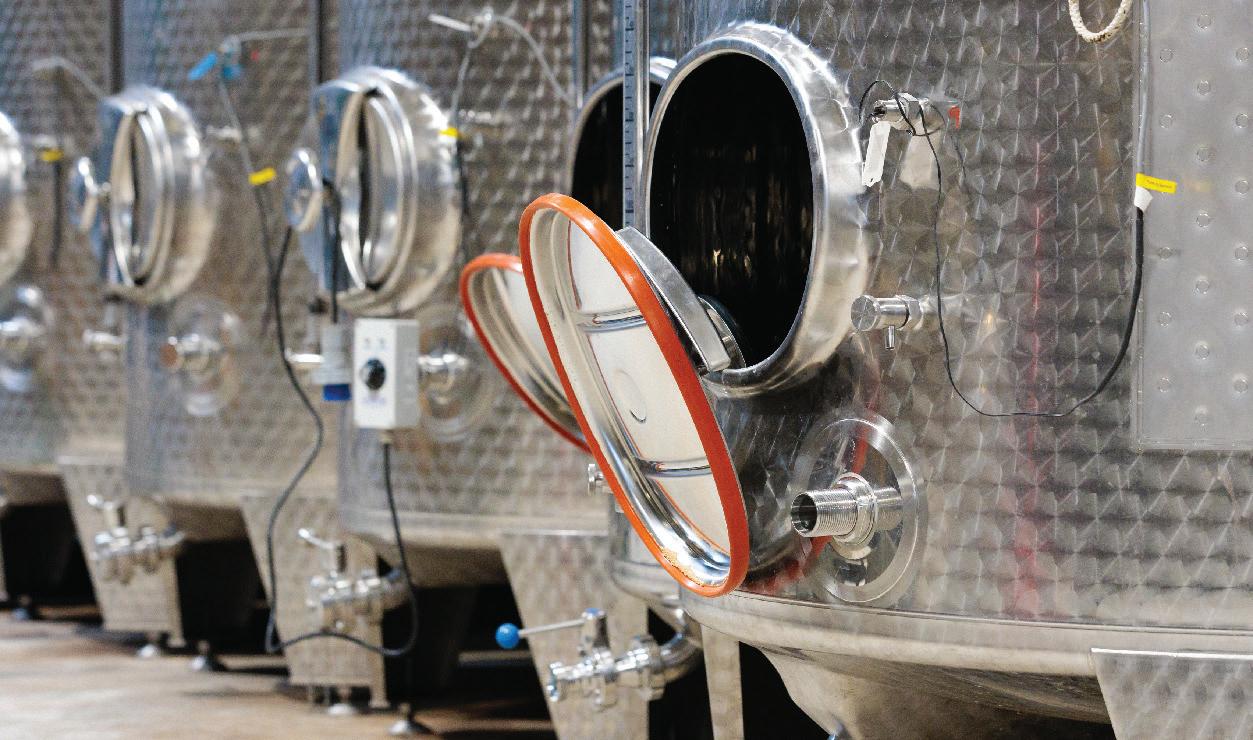
“Wine has a really special place in the agricultural sector because it allows an engagement with the consumer on a varietal level that is rarely found, it allows us to show in a wider context that there are really great things taken off the land here,” explained William.
There are 2.5 hectares of vines planted with Chardonnay vines covering almost 60% of the vineyard and Pinot Noir almost 40%, there is also a smaller amount of Pinot Meunier planted on the remainder of the site. The rootstocks are a mix of SO4 and 3309 and were originally planted on a single Guyot system but have been transitioned to the Double Pendelbogen system. “The SO4 rootstocks show a tendency of over vigour so we changed the system and the vines showed the best balance they have ever had during the 2025 season,” explained Vineyard Manager and Winemaker Scott Gebbie.
Scott explained that before arriving at Mereworth in 2018 he had spent time “vintage hopping” across both Northern and Southern hemisphere wine operations. Scott’s experience ranges from working with Domain Chandon as a harvest coordinator in the Napa Valley to vineyards of Oregon and Canada where he worked with varieties including Reisling and Chardonnay. “Through all those experiences my favourite time of year is the ripening of the Chardonnay, I just love to see the beautiful transformation,” he said. Scott was studying in Montpellier when he saw an advert for the vineyard at Mereworth and having completed research with the CIVC relating to vineyard planting structure and its effects on winemaking in Champagne, he brought his knowledge and skills to Kent. “The Chardonnay and Pinot Noir ripen early on the Greensand Ridge with ragstone and a sandy loam topsoil it really is a very good site and I feel lucky to be working with the vines here,” said Scott with a contented smile.
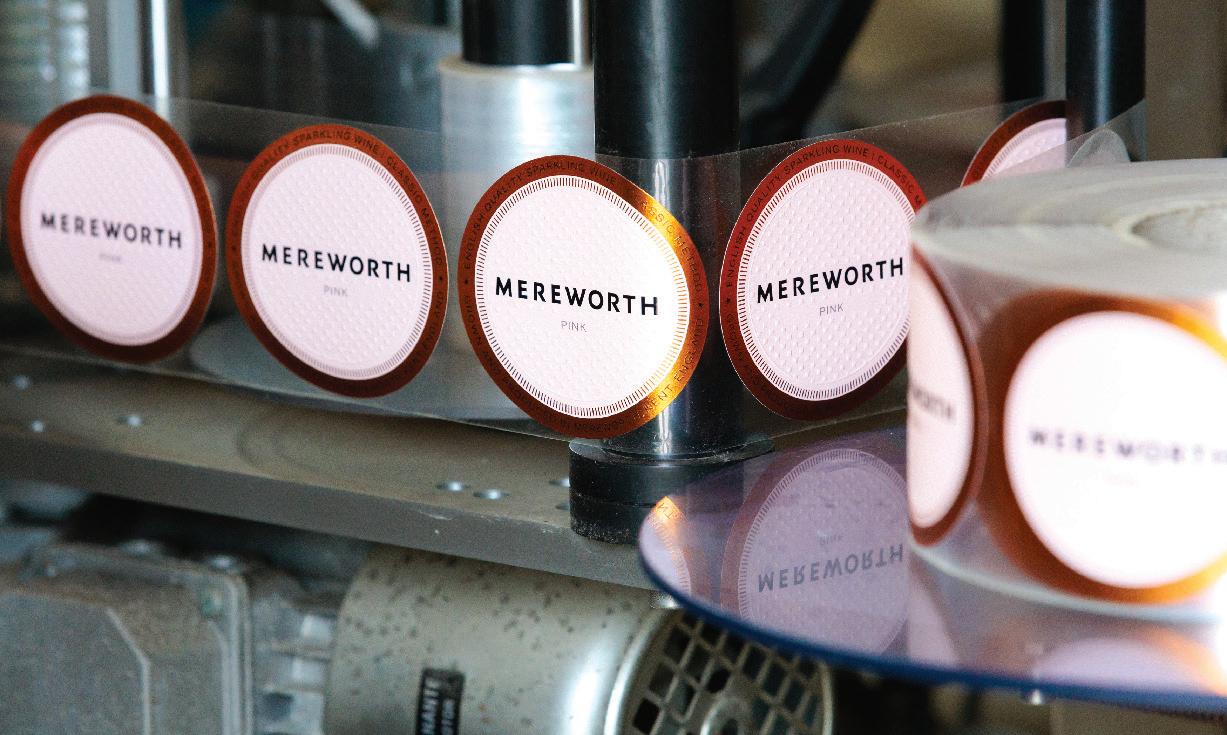
“We also cool ferment and age the wines for three years on lees to provide the optimum drinking experience.”
There are still difficulties to be overcome and the vineyard team net the Pinot Noir vines every year. This labour-intensive task is necessary to protect the red grapes from the Starlings that appear just as the grapes ripen each year. It is interesting to note that the red varieties are far more vulnerable to bird predation than white varieties on many sites not just at Mereworth. “I have seen an entire deer herd wandering through the vineyard but they don’t seem to have bothered the vines,” said William with a sigh of relief.
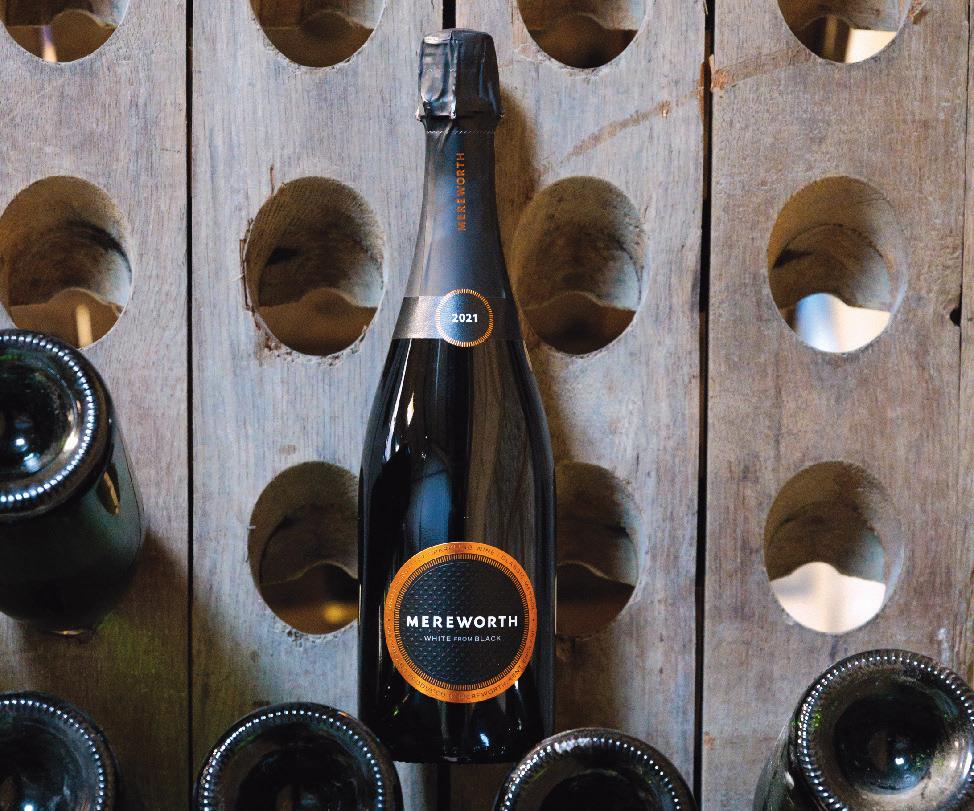
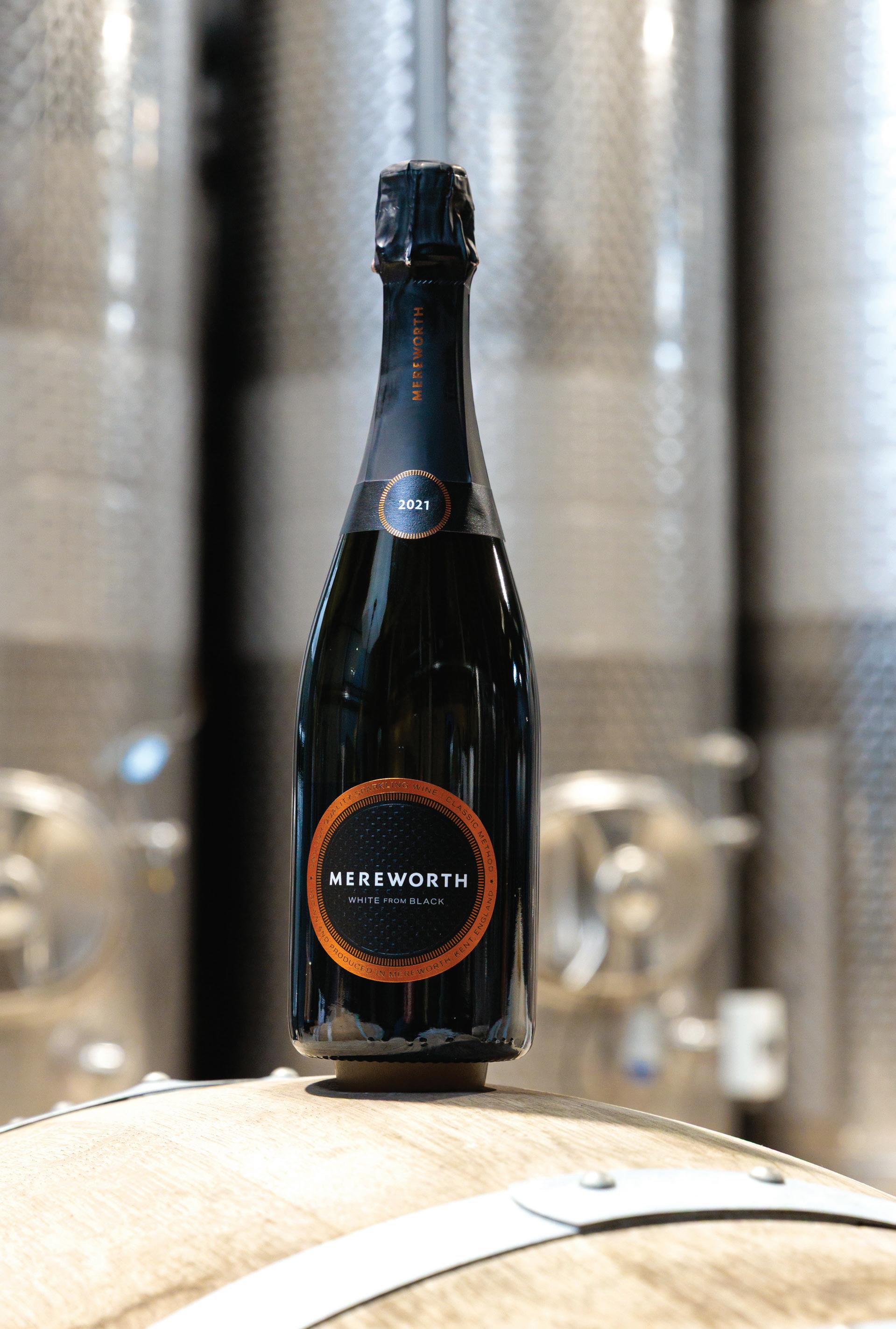
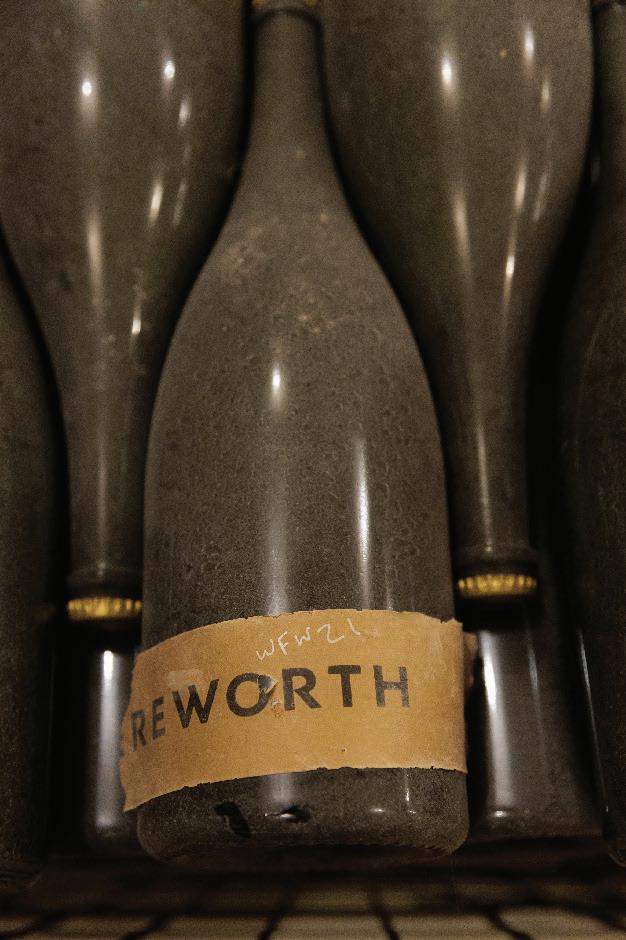
There are three sparkling wines that are produced by Scott at the on-site winery: White from Black, White from White and Pink. The wines are vintage driven but there is a small percentage of between 5%-10% reserve wines that are added to the blend. Malolactic conversion is also used as a blending tool “we are aiming for deep textured wines that will pair with food at our on-site café/bar, so we target lower acidity levels of around 7-8g/L,” explained Scott. “We also cool ferment and age the wines for three years on lees to provide the optimum drinking experience,” he added. The grapes are machine harvested and this means that Scott has a flexible harvest window allowing him to aim for a 10.5% abv in the base wine with a resulting 12% abv post-secondary fermentation.
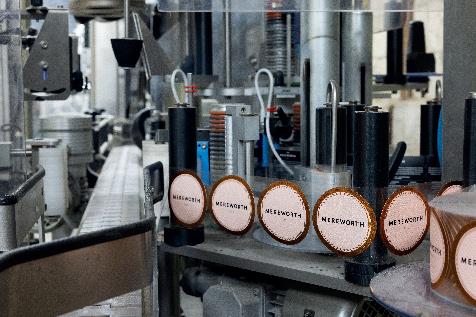
The wine labels have a classic, clean and timeless look which perfectly reflects the ethos of the business and the wines are also sold through the
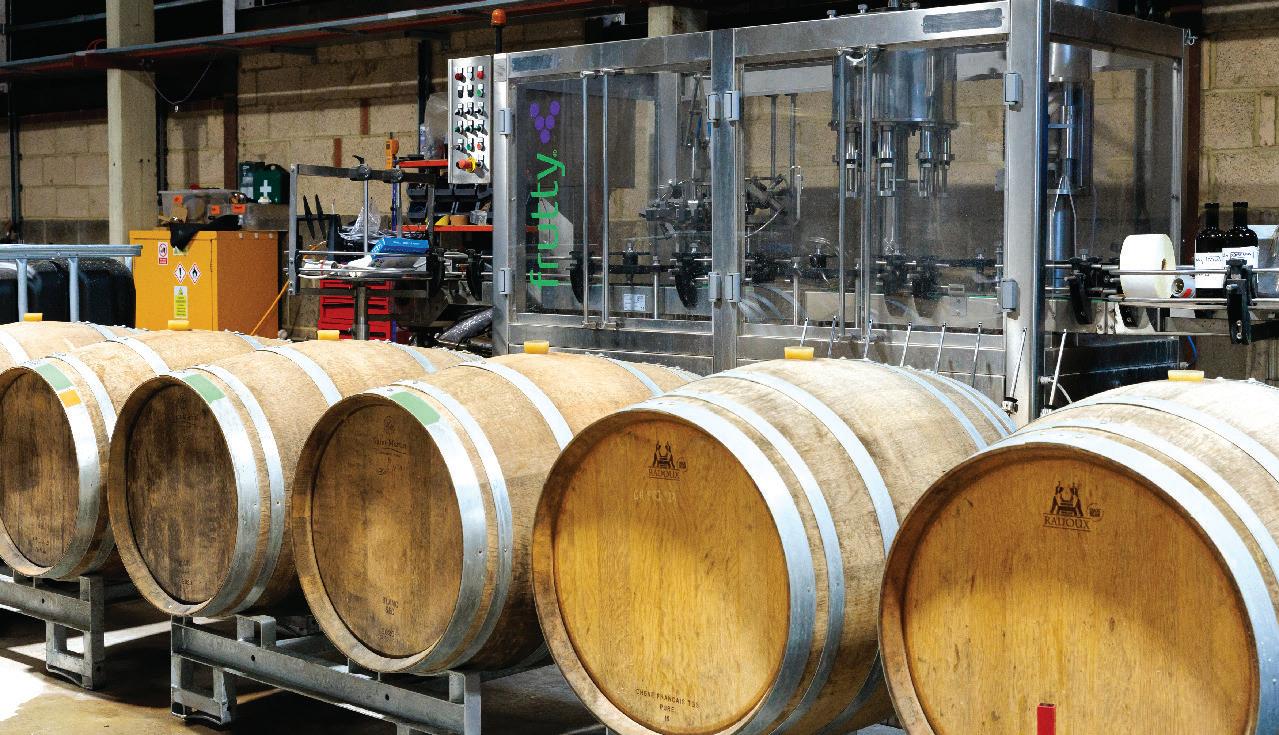
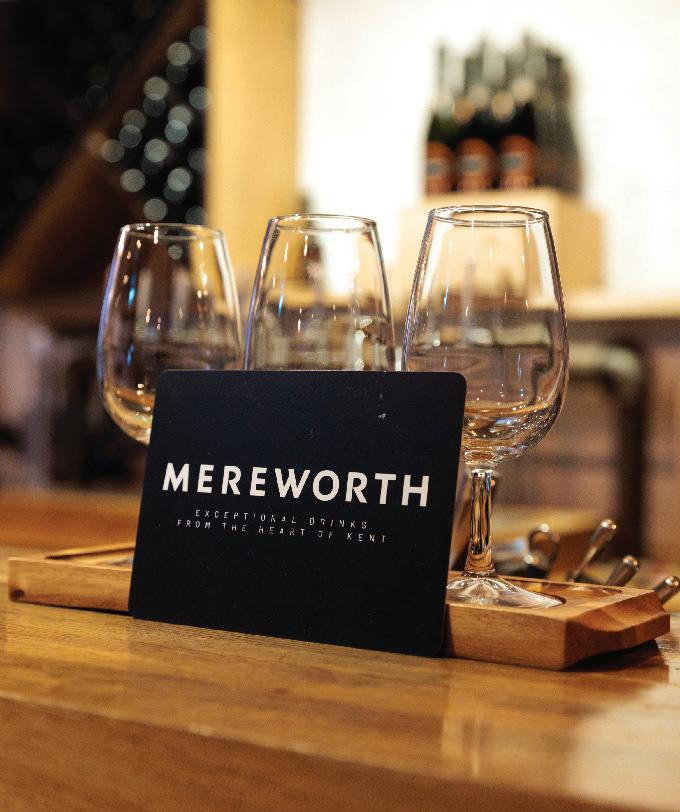
hospitality business which offers a variety of events including a Friday Evening Tour, Tasting and Pizza, Sparkling Afternoon Tea and Sunday Jazz alongside tastings and tours that guide visitors through the complete winemaking process from the moment the grapes arrive in the winery to the award winning wines they find in their glass. “It was during Covid that we realised how important a hospitality offering was for this area,” said Scott and with a loyal customer base the business is continuing to grow. “It was important that Mereworth provided a tourism experience that compliments wine production in the North Downs, showcasing the beauty of this spot and protecting its future,” added William.
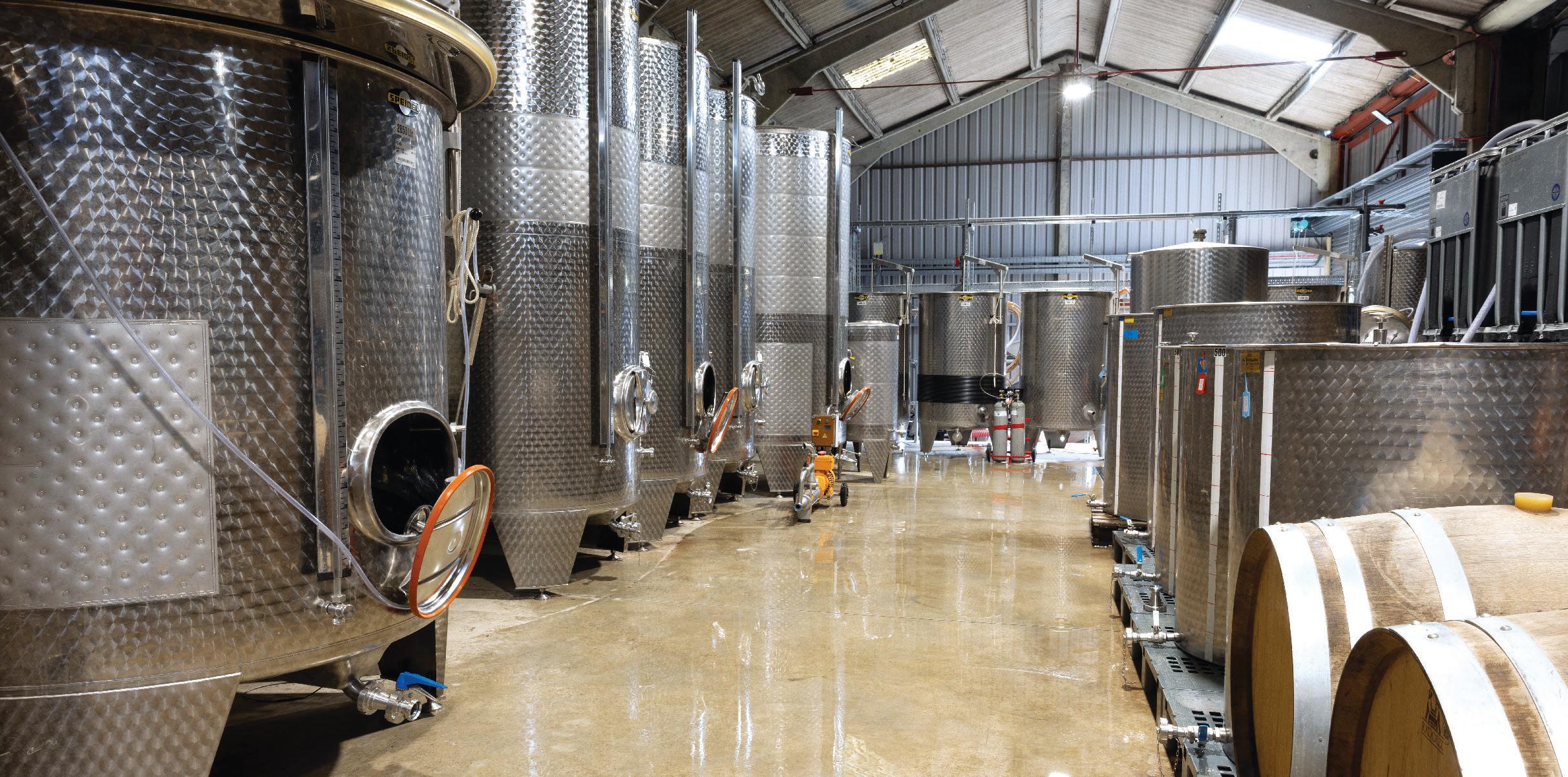
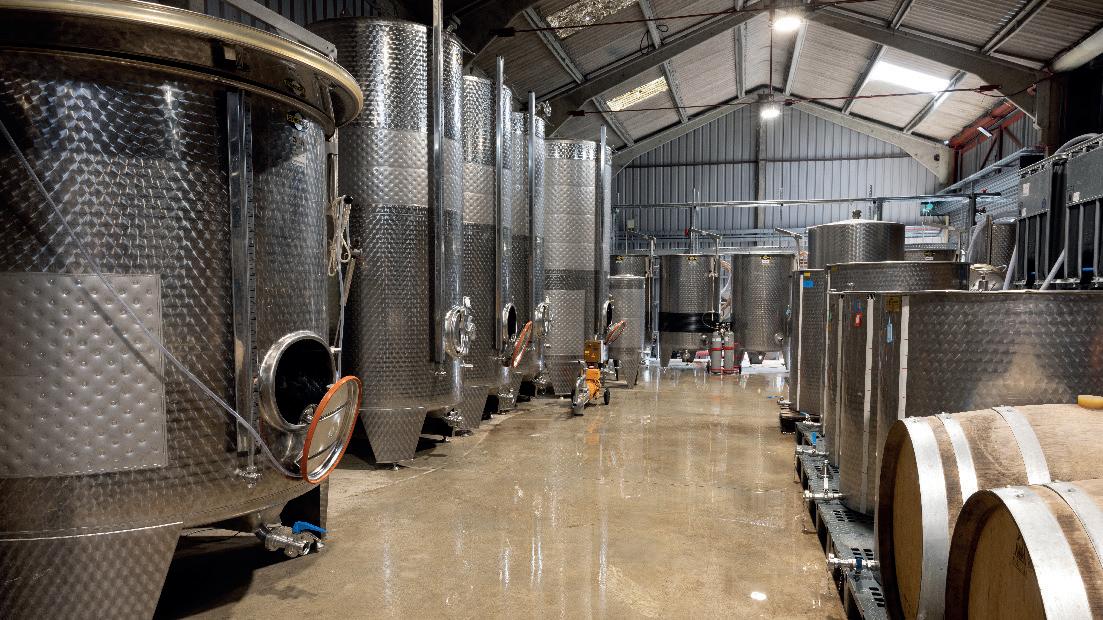
“Agriculture is about longevity,” William said with passion in his voice. For agricultural businesses to be able to achieve this longevity continued development is vital. As part of the organic growth of Mereworth Wines, after a two year preparation period the contract winery opened in time for the 2025 harvest. “One of the greatest improvements to the winery has been the flooring and the drainage,” said Scott which shows just how much thought has gone into this winery space. <<
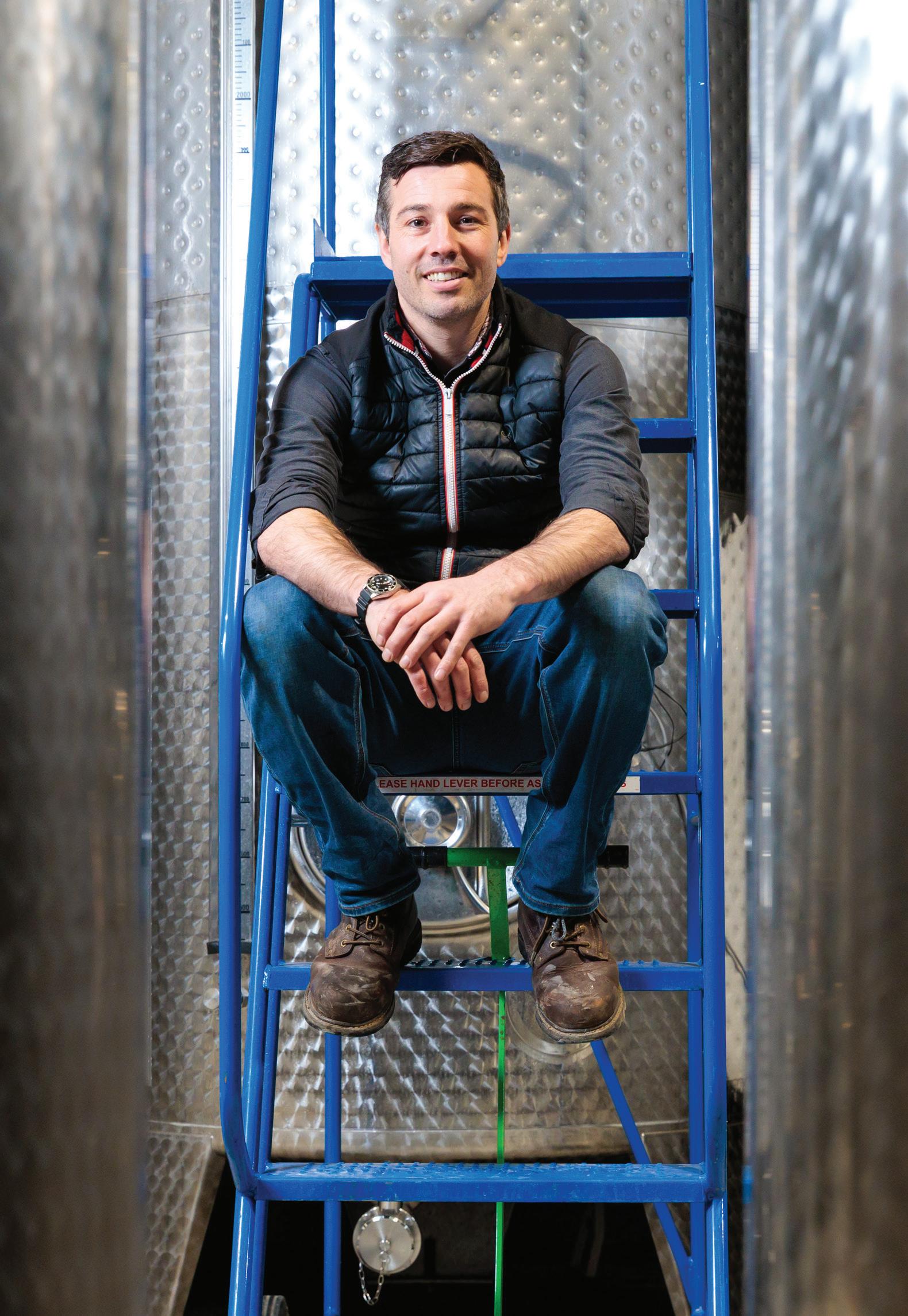
Scott Gebbie
CROWN CAPS
<< grow, make and sell the wine and it is important to me that we can encourage people to enter viticulture and help them enjoy the whole process,” he added with warmth in his voice.
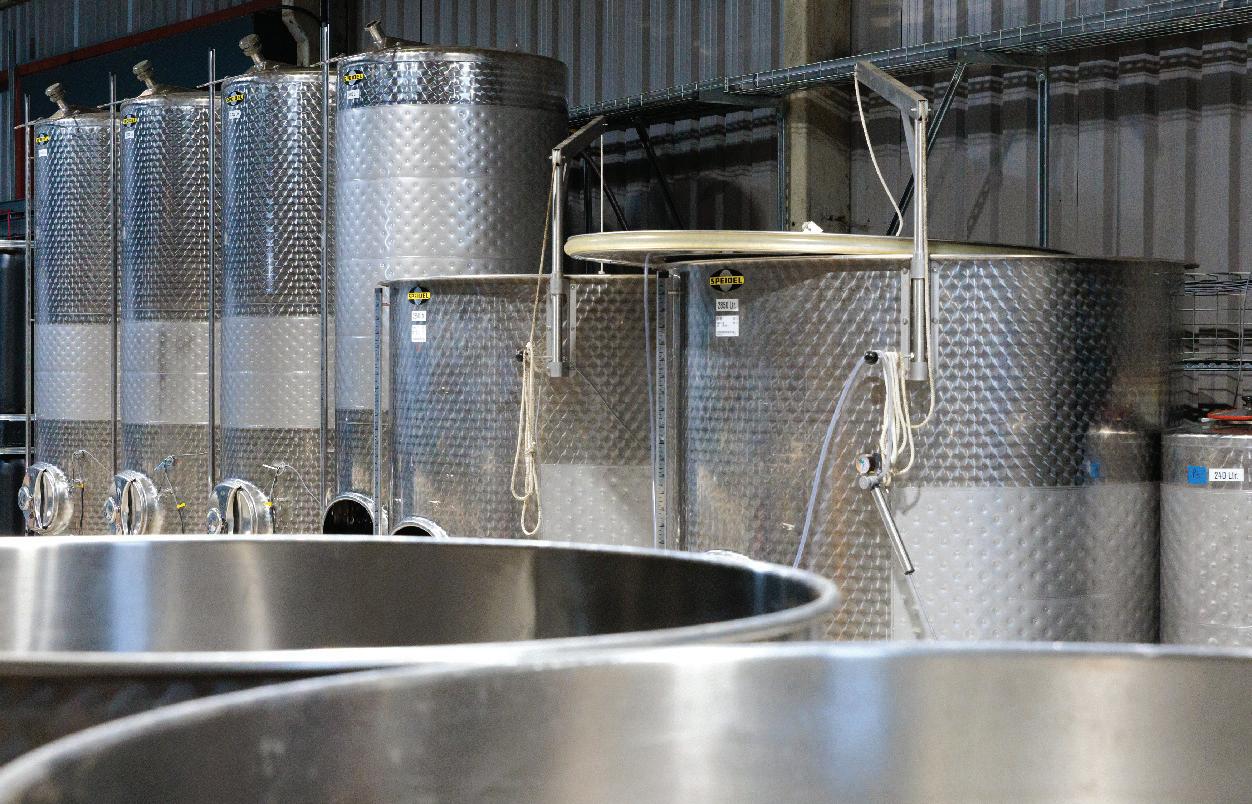
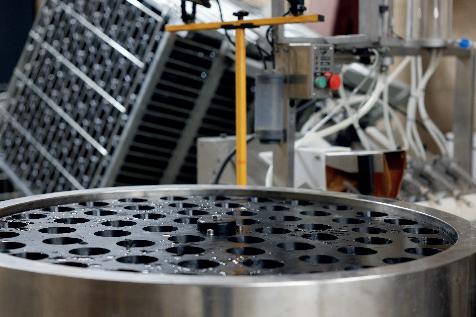
In the first year the winery has worked with varieties including Solaris, Madeline Angevine and Bacchus. Clients are being offered the opportunity to produce still and sparkling wines. The contract winery helps clients by providing services for Traditional Method sparkling wines throughout the entire process including riddling, disgorging and bottling. “We are also able to offer our contract winemaking services to clients with smaller parcels of grapes. The starting production charge is based on one tonne although it is possible for us to process volumes smaller than this but it takes the same amount of work and time to process one tonne or three quarters of a tonne so the basic charge remains the same,” explained Scott.
“We are small enough and private enough to offer our expertise to smaller businesses,” said William. “When we started we had
The winery has achieved Sustainable Wines Great Britain Gold standard and all the grapes that travel through the winery are treated with this ethos with water and energy conservation at the core of the process.
“I am excited to be working with others within the industry. One of the first things we do with new clients is start at the end asking them what they want to achieve in terms of wine style, brand and client appeal. Some clients we have worked with want to produce something entirely different and others want to produce something fruit driven and reflective of their own site, it is our job to present our clients with the options and then work with each client individually to ensure that we can help them achieve their goals,” Scott explained.
Scott helps contract winemaking clients with on-site visits designed to help them gain confidence in taking yield estimates and the process of taking samples for analysis helping clients to produce grapes that will make great wine well into the future. Within the winery there is a laboratory facility and Scott said: “Interpreting the numbers is a key part of decision making when combined with real life observations about a vineyard site, weather conditions and taste profiles of juices and wines.”
As a vineyard manager and a winemaker Scott believes that wine is made in the vineyard and good fruit makes the winemaking process a pleasure. Whilst clients are able to choose their level of engagement in the winemaking process, Scott recommends clients visit at least twice during fermentation and aging and again in the run up to bottling but because he clearly cares deeply about the wines entrusted to his care, he ensures that all clients are sent details of their wine at every
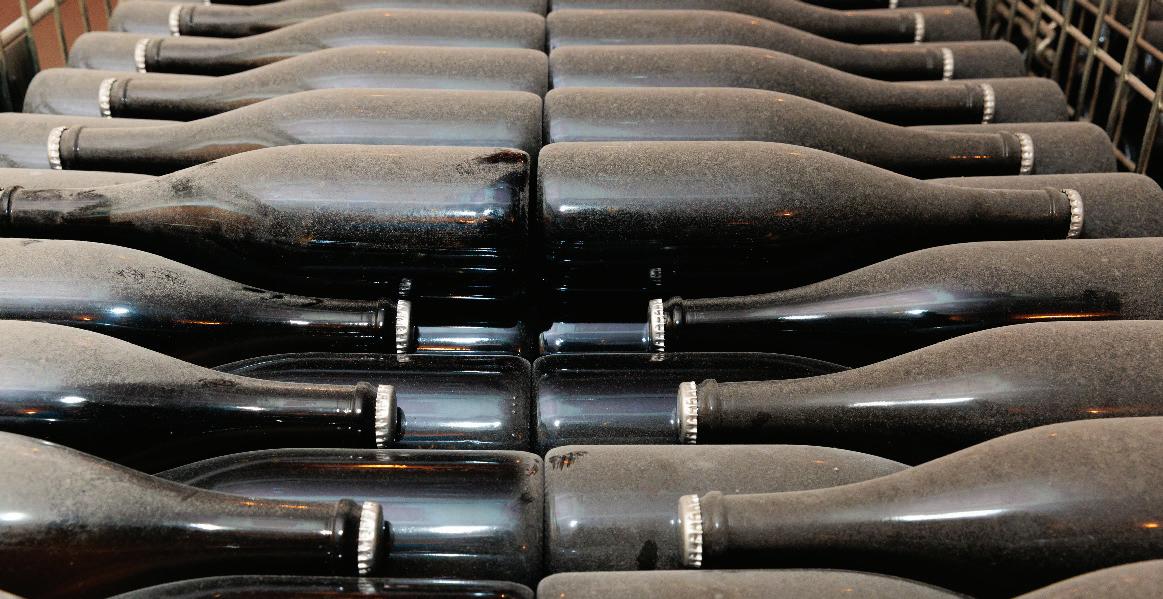
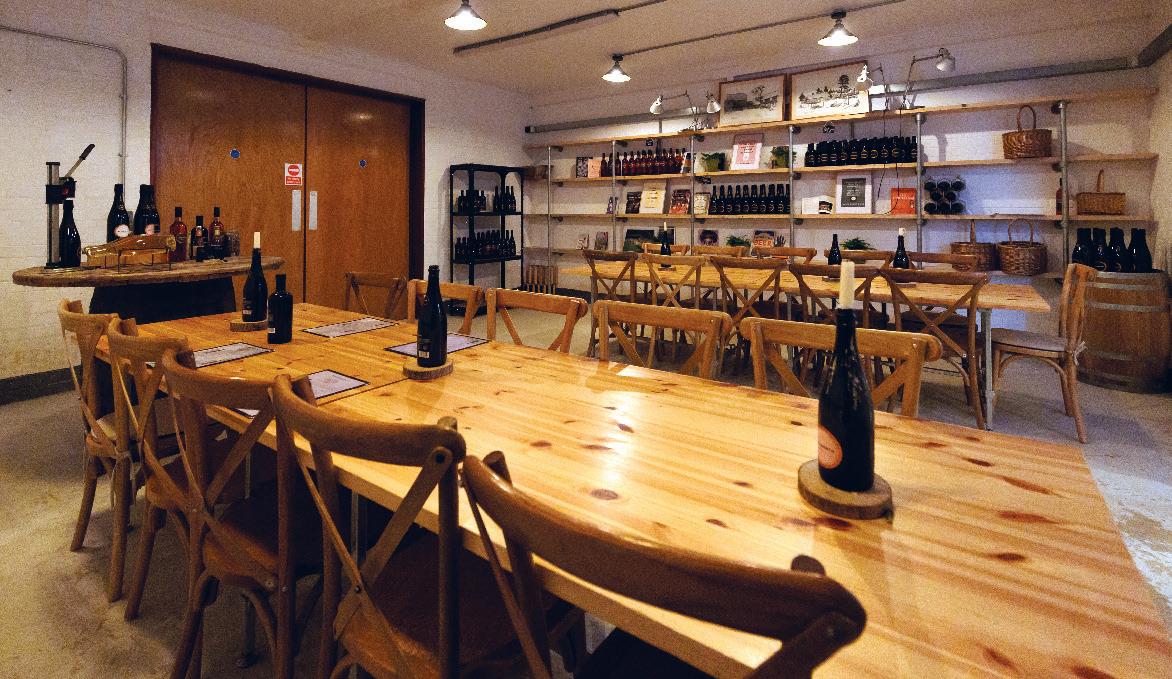
In the first year the winery has worked with varieties including Solaris, Madeline Angevine and Bacchus. Clients are being offered the opportunity to produce still and sparkling wines.
significant stage of the process. “I really enjoy taking people through the journey of their wine,” he said with emotion in his voice.
“We are more than a contract winemaker, with our hospitality venue we are offering clients a showcase for English wine, a place where English wine can be celebrated and enjoyed within a community,” explained Scott.
In line with other aspects of the business the winery has plans that will see the offer of storage facilities for clients and other local vineyards. “This is a vital service that many vineyards within the growing industry require,” concluded Scott.
It is part of the fabric at Mereworth that providing support for all aspects of the wine community and the wider agricultural sector is a responsibility. “The rising tide raises all boats,” was the sentiment from William Boscawen. With its prominent location raising the profile of English wine not just as a novelty but as the heart of a community and its ability to offer a wealth of winemaking to support others within the sector, the growing possibilities at Mereworth are really exciting.

Photos: © Martin Apps, Countrywide Photographic


































































Novel approaches to vineyard agronomy
DESKTOP www.hutchinsons.co.uk
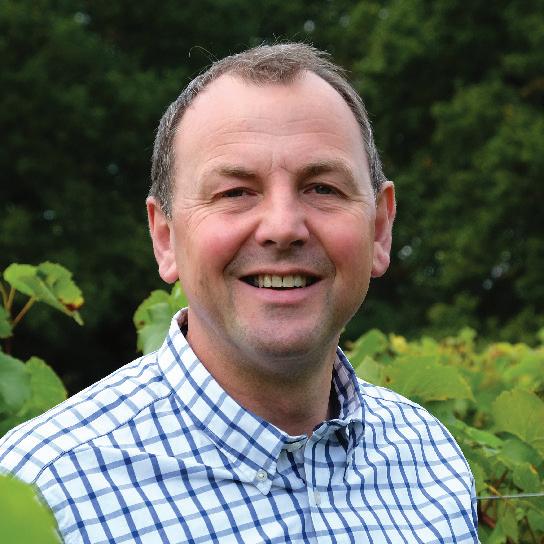
This year’s International Cool Climate Wine Symposium in New Zealand featured several innovative ideas that may well have relevance for UK vineyards. Hutchinsons agronomist Rob Saunders attended the event and shares his highlights.
Growing for the alcohol-free market
One particularly interesting discussion was around the growth of the alcohol-free wine sector, and the important role that vineyard agronomy can play within this. While great progress has been made in producing good quality alcohol-free beers in recent years, the wine sector has faced more of a challenge, not least because winemakers have to replace 11%-14% alcohol volume instead of 4%-5%, while meeting the quality characteristics consumers want.
It is often assumed that all of the work required to produce a low, or zero-alcohol wine occurs within the winery, but experts say that to do it well, the process should begin in the vineyard.
For a good quality, flavoursome, low/ no-alcohol wine, the aim is to achieve phenolic ripeness with the lowest sugar levels possible. This, experts say, can potentially be achieved with aggressive canopy trimming (the canopy drives sugar production), early bunch exposure to aid ripening, and targeted nutrition to achieve phenolic ripeness. The approach appears to be working for some in New Zealand, and with the low/ no-alcohol wine sector becoming increasingly important in the UK, albeit from a low base, it may be worth looking at in more detail here.
Fermentation in the vineyard
The concept of “terroir” has been taken a step further by some NZ growers, who are now producing wines where the entire primary fermentation is carried out among
the vines, rather than transporting grapes out to the winery, where the ‘winery’ yeasts will dominate the fermentation.
The theory is that fermentation will then be dominated by the natural yeasts present on the grapes from that site, making the finished product even more reflective of its place. Peak fermentation temperature is typically lower when vats are outside, and the two factors combined are said to help produce a smoother, softer, rounder flavour than indoor winery fermentation. Even to a not-verydiscerning palate, there was a difference in the taste and mouth feel of the finished wine.
Vineyard fermentation will not be for everyone, but as so much wine is sold on the back of its provenance, the concept is certainly very interesting and may be for some UK growers to explore.
Shaking out botrytis
Botrytis is an ever-present threat in many wine-growing regions, but growers in New Zealand are seeing some promising results from a new technique that vibrates the canopy post-flowering to shake off any loose flower caps and other debris that may become stuck to developing bunches and increase the risk of latent infection. This is also followed with a low dose of copper.
In the UK, vine canopies may not be large enough by this stage in the season for vibration techniques to be as effective, but some growers are already trying a similar approach by using an air-assisted sprayer to blow debris out of the canopy.
It is by no means the whole story for Botrytis control, but if it is proven to help reduce risk, then having a low-impact, non-chemical tool
in the armoury certainly appeals, to both organic and conventional growers alike.
And finally…
Researchers at Lincoln University near Christchurch have identified a community of microorganisms (fungi and bacteria) that, when living in the vascular system of the vine, appear to confer resistance to grapevine trunk disease (GTD).
They did this by analysing 70 woody trunk tissue samples from both diseased grapevines, and vines that had escaped GTD despite being surrounded by know infection. DNA analysis was then used to identify and compare the microorganisms present in diseased and ‘GTD escape’ samples.
The team is now investigating whether grapevines could somehow be inoculated with these beneficial microorganisms to provide a natural, sustainable option for GTD control/suppression. The work is all still at an early stage but is definitely something to watch for the future.
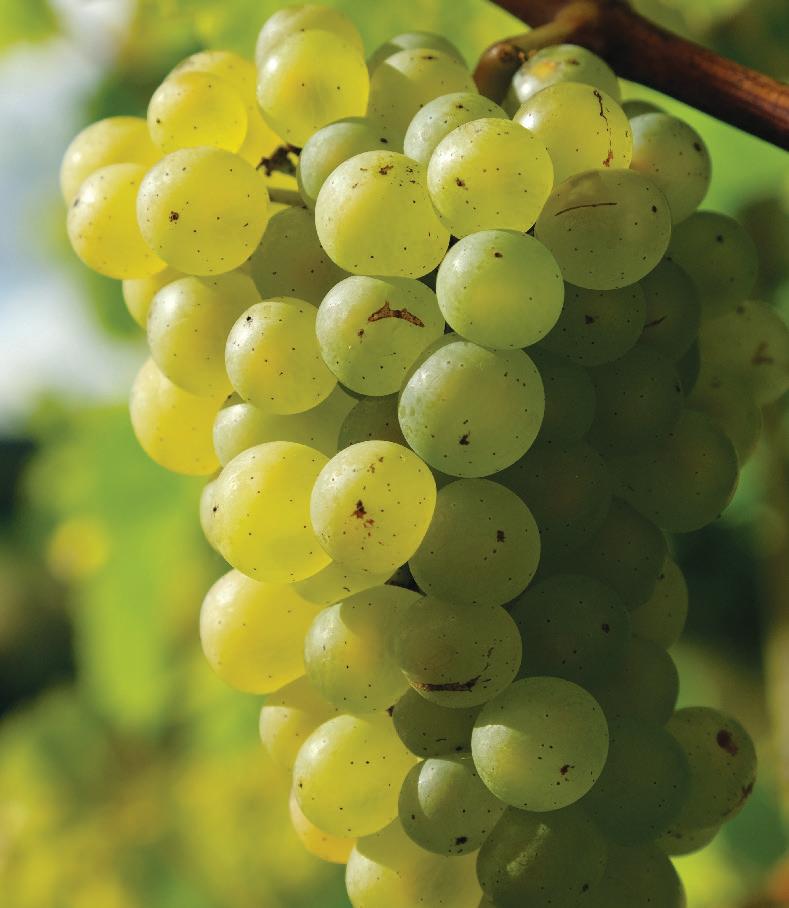
Working in partnership with Vineyard magazine for a developing UK wine industry.
WineGB is the national association for the English and Welsh wine industry. WineGB represents, leads, and supports the sustainable growth of the Great British wine sector.
A new dawn for the WineGB awards
The WineGB Awards are known as the leading awards for UK wines. In 2026 WineGB is expanding these to continue to spotlight UK wines and also to celebrate the wider sector, including the people who bring the wines to life for consumers.
Through the Storytelling Awards, WineGB has incorporated the free-to-enter Photography Competition into the main contest and introduced three new categories.
The Innovative Label Design category seeks to highlight the creativity that goes into stand-out labelling and how it aligns with the producer brand story and reinforces the message that this is a modern, innovative sector.
For the first time there will be a panel of external judges including photographers and designers, who will whittle the choice down to then share for the public’s vote. Judges will consider the following: Visual Impact & Shelf Presence, Brand Alignment & Storytelling, Clarity & Information, Creativity & Originality, Production Quality & Sustainability.
The Photography Competition will also, for the first time, have a formal judging panel, formed from WineGB team members, photography professionals and industry leaders. Finalists selected by this panel will also be taken to a public vote.
Celebrating the best of UK wine tourism, the Cellar Door categories will benchmark excellence in visitor experience at member vineyards and wineries, judged by a new panel of experts from the worlds of hospitality and tourism.
These awards are split into two categories Small Cellar Door (up to 9,999 visitors per year) and Large Cellar Door (10,000 or more visitors per year) and judges will be marking for excellence in Service, Venue, Experiential Promotion, Community Engagement, Accessibility & Sustainability.
This year’s awards, which are once again headline sponsored by Rankin Bros. & Sons, are open to WineGB producer and grower members and the deadline for submissions is 6 May 2026.
Wine medals and shortlists for the label and photography awards will be announced in June, with the awards ceremony taking place on 16 July. Gold medal award-winners are eligible for consideration for the Golden 50 Wine List, which is showcased at The Vineyard & Winery Show in November.
1 April 2026
6 May 2026
29 May - 7 June 2026
16 July 2026

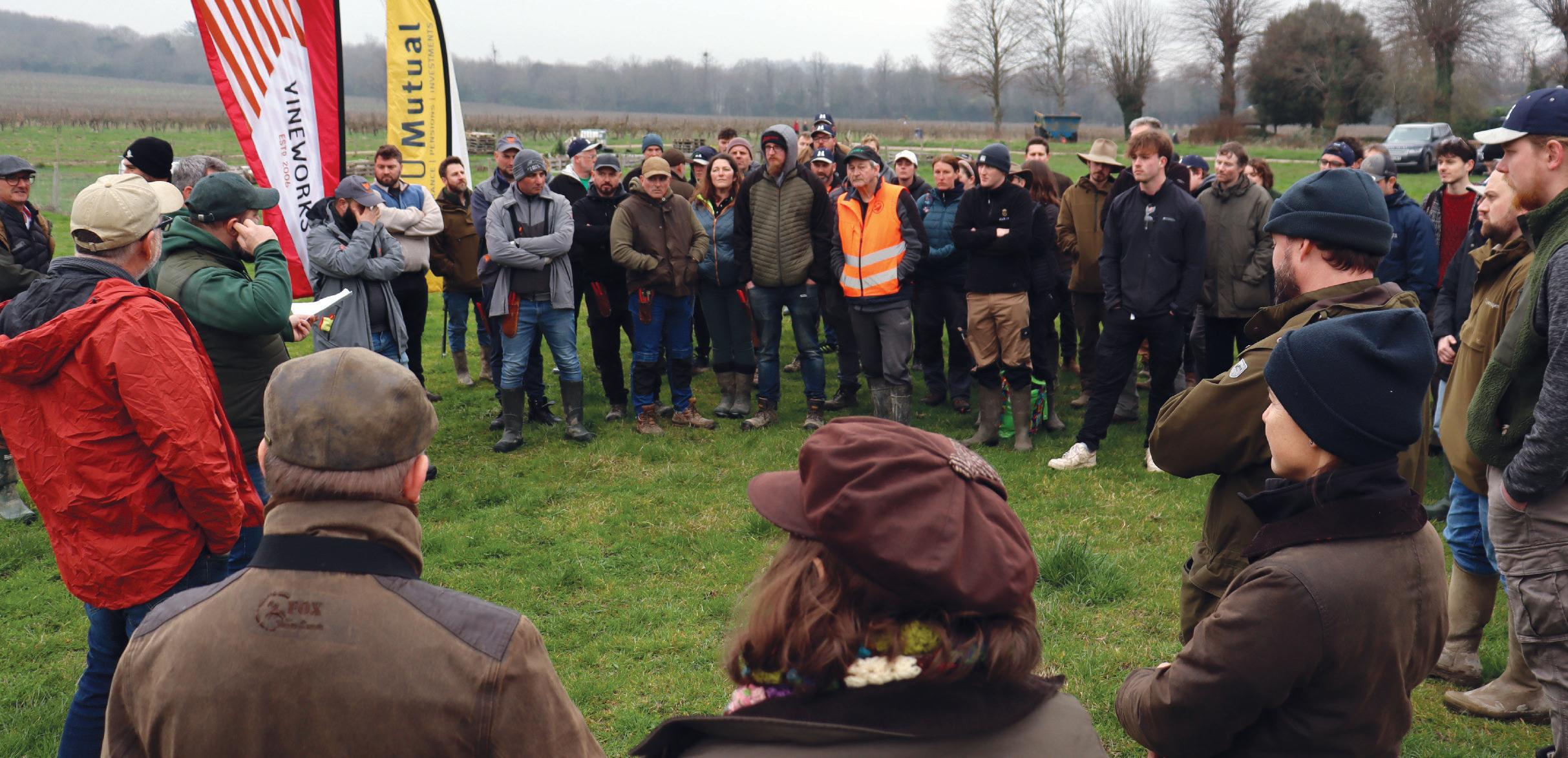

Battle of the secateurs
Despite the wind and rain, 90 people gathered at Denbies Wine Estate in Dorking on Friday 6 March to watch and participate in this year’s WineGB Pruning Competition.
A total of 13 teams and 10 individuals pruned 23 rows of vines and the judging panel, led by Luke Wolfe of Agro-Pro & Whitewolfe Estates, said the standard was very good and respected the principles of gentle pruning.
Winners for the team event:
◆ First with 88/100 points –Ben-Joseph Bell, Christopher Rudwick and Charlie Wilcox representing Plumpton College.
◆ Second with 85/100 points –Daniel Bojun, Daniel Cicu and Mitos Mademelis representing VineWorks.
◆ Third with 80/100 points –Ben Turner, Tyler Cassidy and Adam Ayleward representing Brenley Wine.
Winners for the individual event:
◆ First with 85/100 points –Dragos Nitu from Gusbourne
◆ Second with 84/100 points –Ben Ralph from Davenport Vineyards
◆ Third with 82 points –Daniel Bojun from VineWorks
Many thanks to the event sponsors for their kind support:
◆ Agrii
◆ Bekaert
◆ Gripple
◆ Hadley Group
◆ NFU
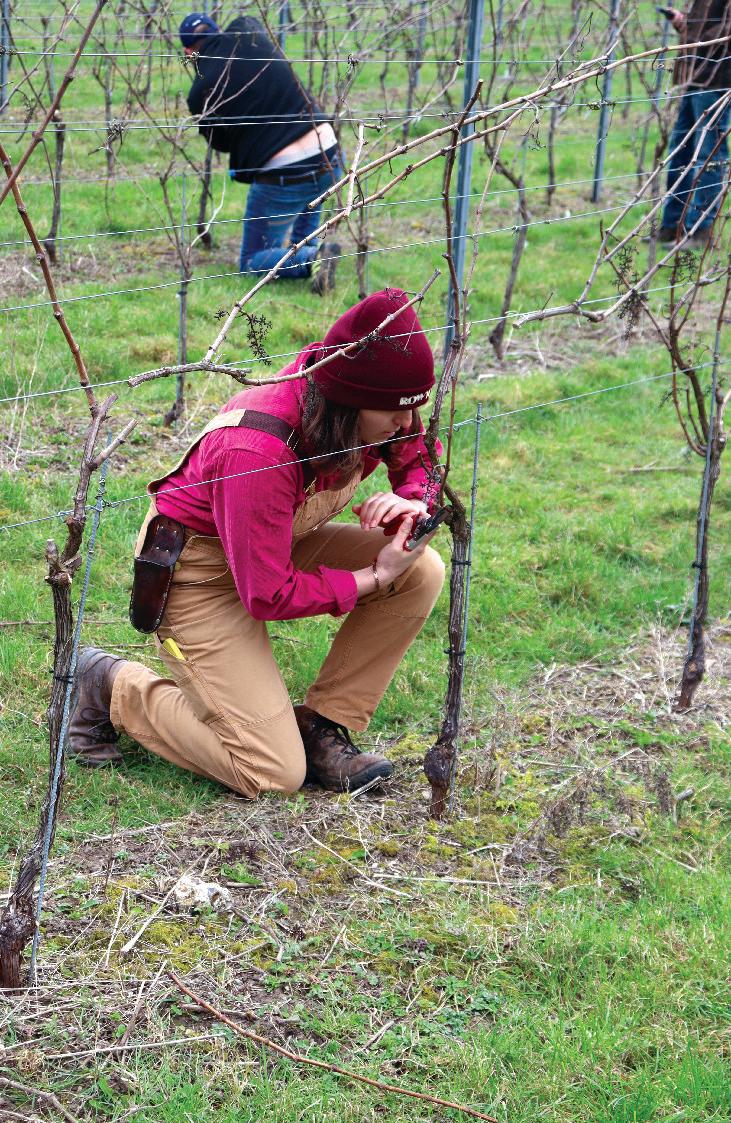
◆ NP Seymour (prizes sponsor)
◆ VineWorks
NP Seymour provided the prizes for all the winners and thanks must be given to Denbies Wine Estate for the use of the venue and James Dodson from VineWorks for organising.
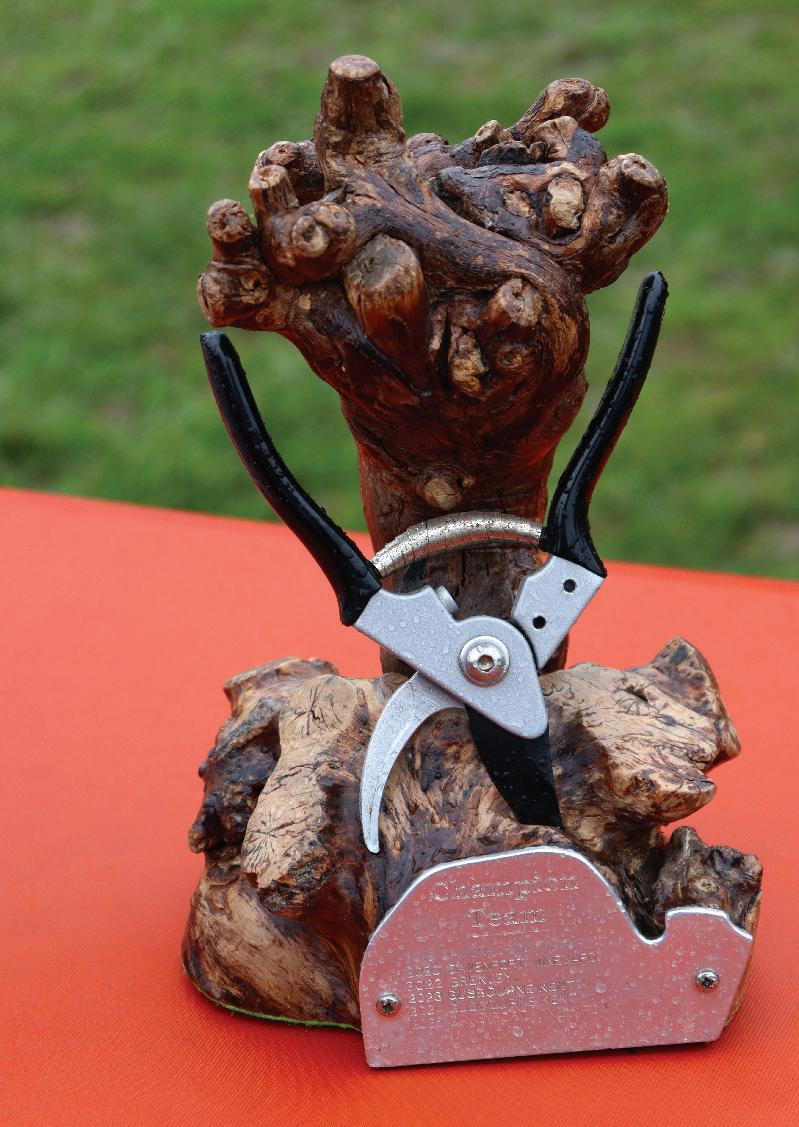
VI N E YAR D
Ideal time to take advantage of government grant
Even at full list price, the Rootwave F601 weed control system represents a sensible investment for fruit growers looking for an effective and environmentally responsible way of keeping vines free from unwanted plant life. Add in a government discount of £25,000 and the proposition becomes particularly attractive.
The Rootwave, available from Maidstone, Kent-based Kirkland UK, is one of the pieces of equipment listed as eligible for a generous grant from the Farming Equipment Technology Fund (FETF), making this an ideal time to take advantage of the £25,000 maximum grant on offer.
While the ‘expected average’ cost of the F601 reflects its high-tech, ultra-efficient approach to weed control at almost £90,000, the grants also apply to a lot of more affordable equipment, including Orizzonti’s tractor-mounted flail mulcher and front-mounted orchard pruner, both of which attract a 40% discount.
The Rootwave takes a whole new approach towards weed control, using high frequency electricity to generate heat that kills the weed, penetrating right down to the roots.
Avoiding chemicals makes the Rootwave a great choice environmentally, as well as saving money over time. It’s organic and
Rootwave training
soil friendly and offers complete flexibility.
“Supermarkets love it, it’s better for fauna such as earthworms and it doesn’t disturb the soil,” explained Kirkland UK director Scott Worsley. “It can be used in all weathers, which means the grower can treat the weeds when it suits his schedule, and it can be used near water and in sensitive areas as there’s no run-off.”
The higher frequency electricity makes the trailed F601 safe to operate, while sophisticated electronics continually adapt the power to the right level and distinguishes weeds from the vines. The arms move in and between the crop while continuously doing the job, while the machine is designed to cope with row widths of from two to six metres.
Kirkland’s highly skilled service team has had extensive training on the Rootwave to ensure comprehensive back up to growers who invest in this clean, safe and sustainable way to keep vineyards free from weeds.
Newly appointed service manager Nick Ralph heads up a dedicated team of engineers, including apprentice Freddie Scott, and is focused on ensuring that they have regular training on the wide range of machinery that Kirkland UK sells and maintains.
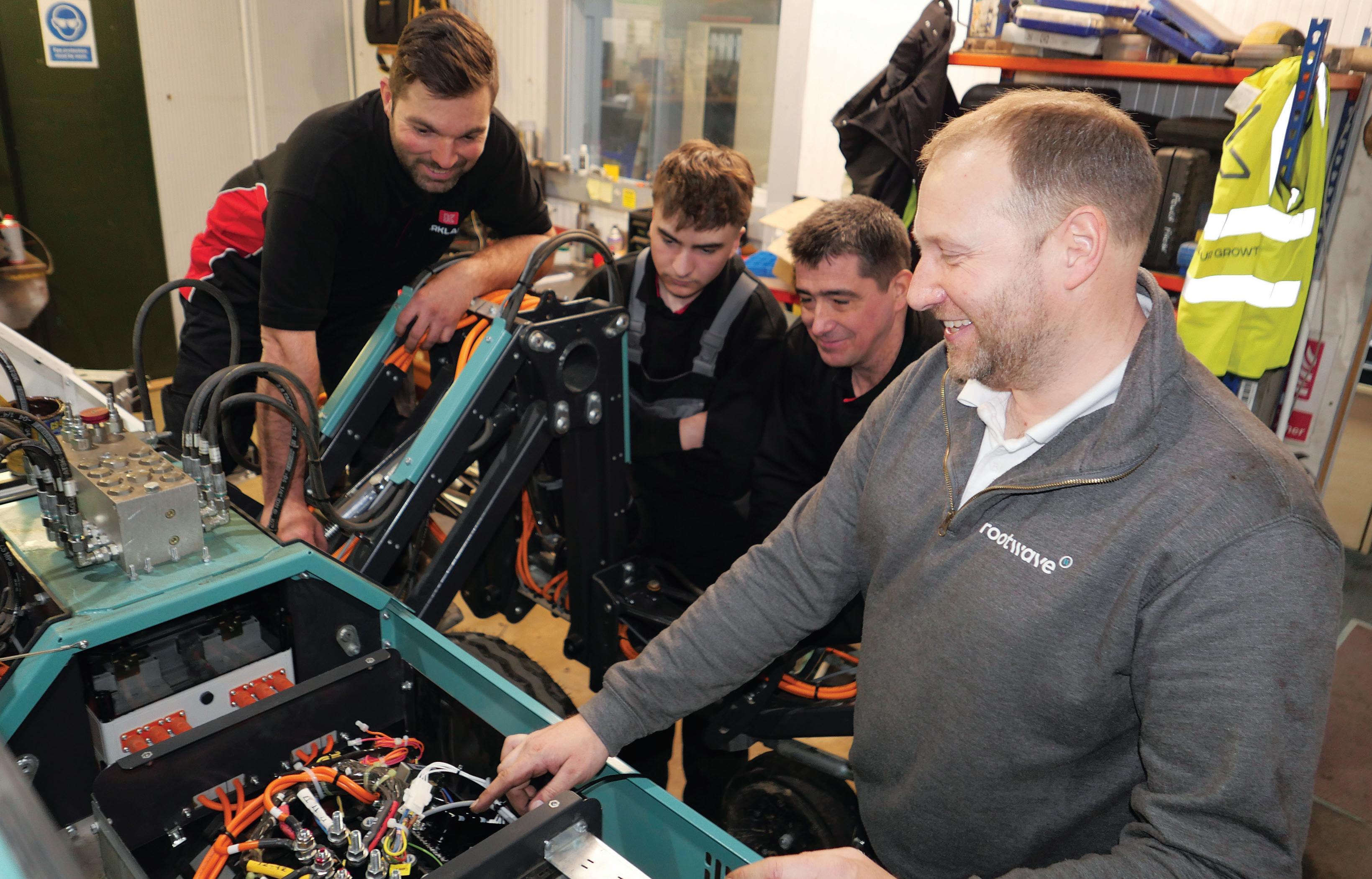
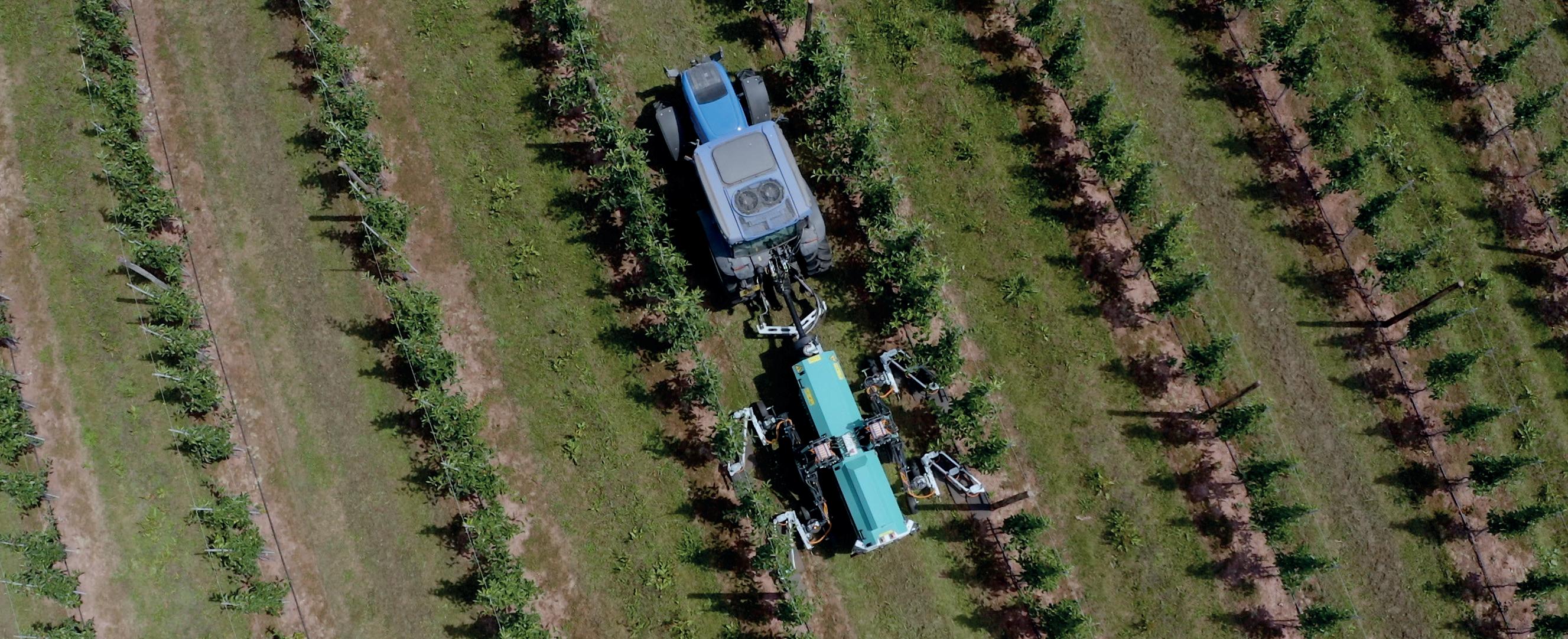
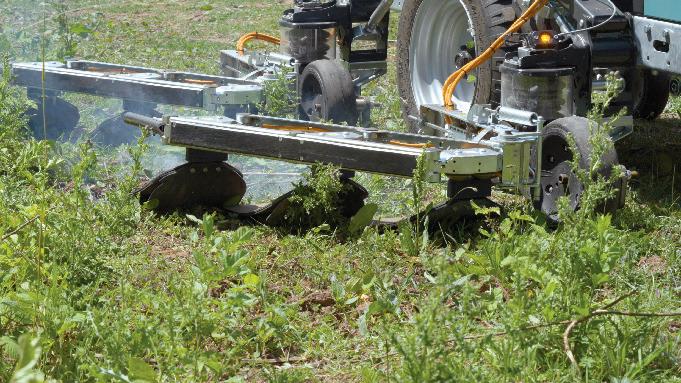
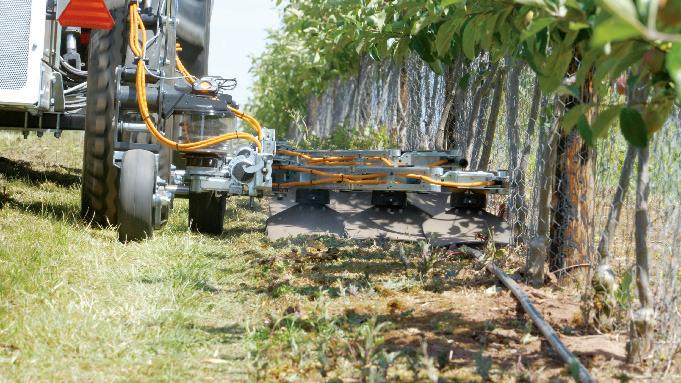
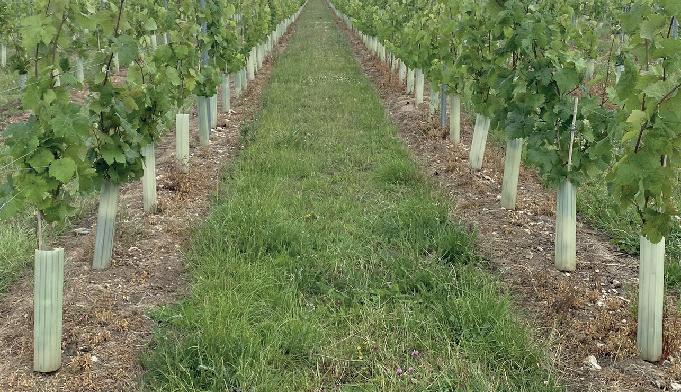

Ben Short, Parts Manager
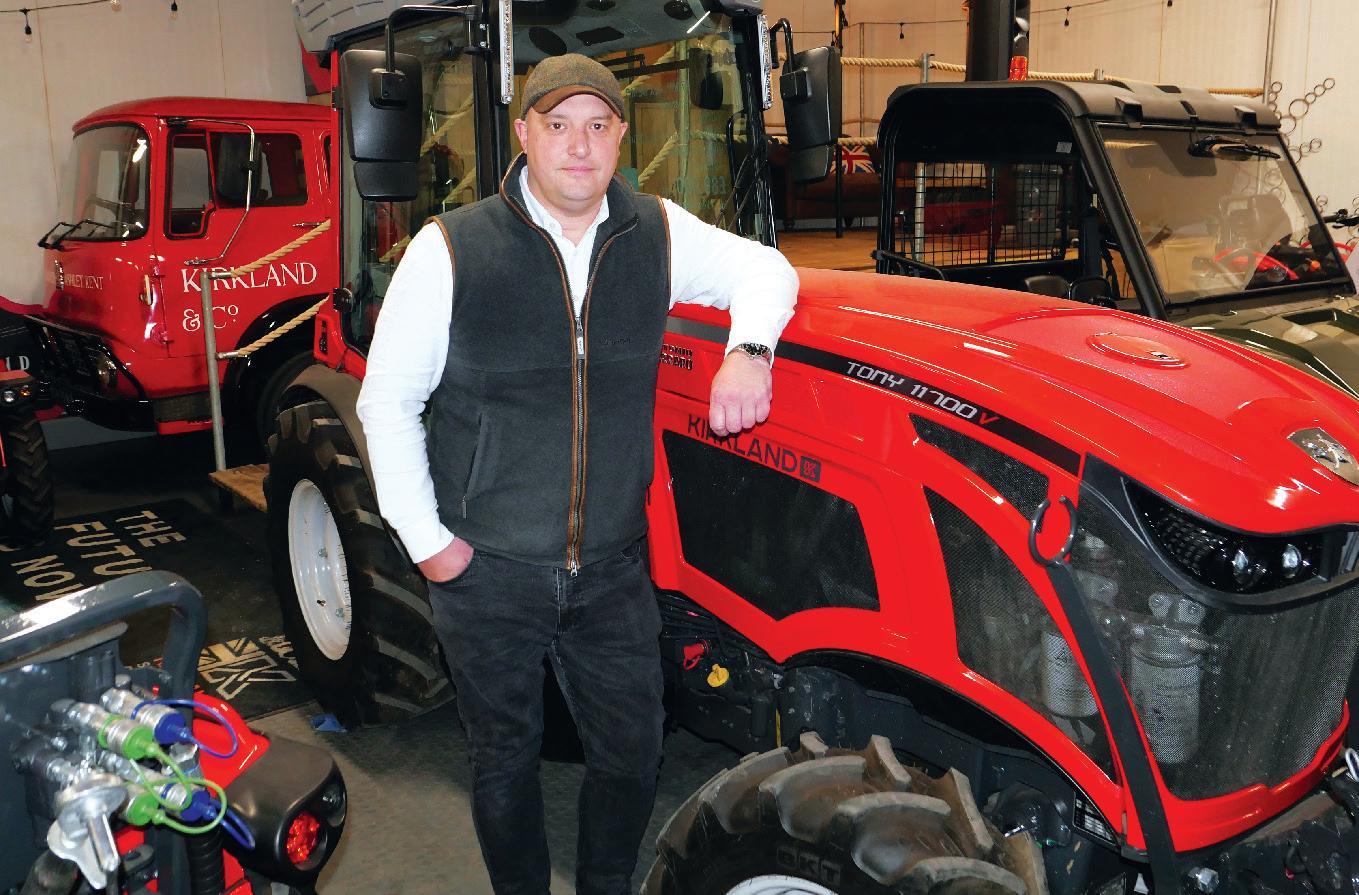
The depot at Sutton Valence, just outside Maidstone, has a dedicated and recently revamped trade counter alongside a wellstocked showroom and well-equipped service area. Parts manager Ben Short now keeps track of more than 4,000 parts and can guarantee next-day delivery on most of them, while even tractor parts that have to be sourced from Antonio Carraro in Italy generally only take a couple of days.
While the impressive Carraro range sadly doesn’t feature on the grant-supported FETF list, plenty of other useful vineyard equipment stocked by Kirkland UK does.
As well as the Rootwave and the impressive Orizzonti equipment, the list includes two models from the Burro range of fully autonomous robotic platforms, both aimed at doing the ‘donkey work’ (burro is Spanish for donkey) in vineyards, nurseries, greenhouses and the like.
A £12,000 grant is available towards both the Burro Verde, described as a “purpose-built solution for autonomous transport” and ideal for moving containers of fruit, and the Burro Grande, a heavier duty model which can tow 2.3 tonnes and has a payload of 450kg.
The Burro Grande is more than capable of towing a mower,
Scott Worsley, Managing Director
allowing for that particular task to be done autonomously, and the team at Kirkland UK is looking closely at other attachments that will allow the multi-purpose platform to carry out a wide range of other roles in the vineyard.
Built to be practical, durable and easy to use, both models have been attracting a lot of interest amongst Kirkland UK’s customers, “particularly those that are concerned about the cost of labour – and that’s all of them,” commented Scott.
Given its potential to save money in the long-term, the FETF grant of £12,000 towards either the Verde at £29,000 or even the larger Grande at £40,000 is likely to look tempting to vineyard managers, but they will need to move quickly. The grants became available on 17 March, with the window closing on 28 April.
The Burro Grande is more than capable of towing a mower, allowing for that particular task to be done autonomously
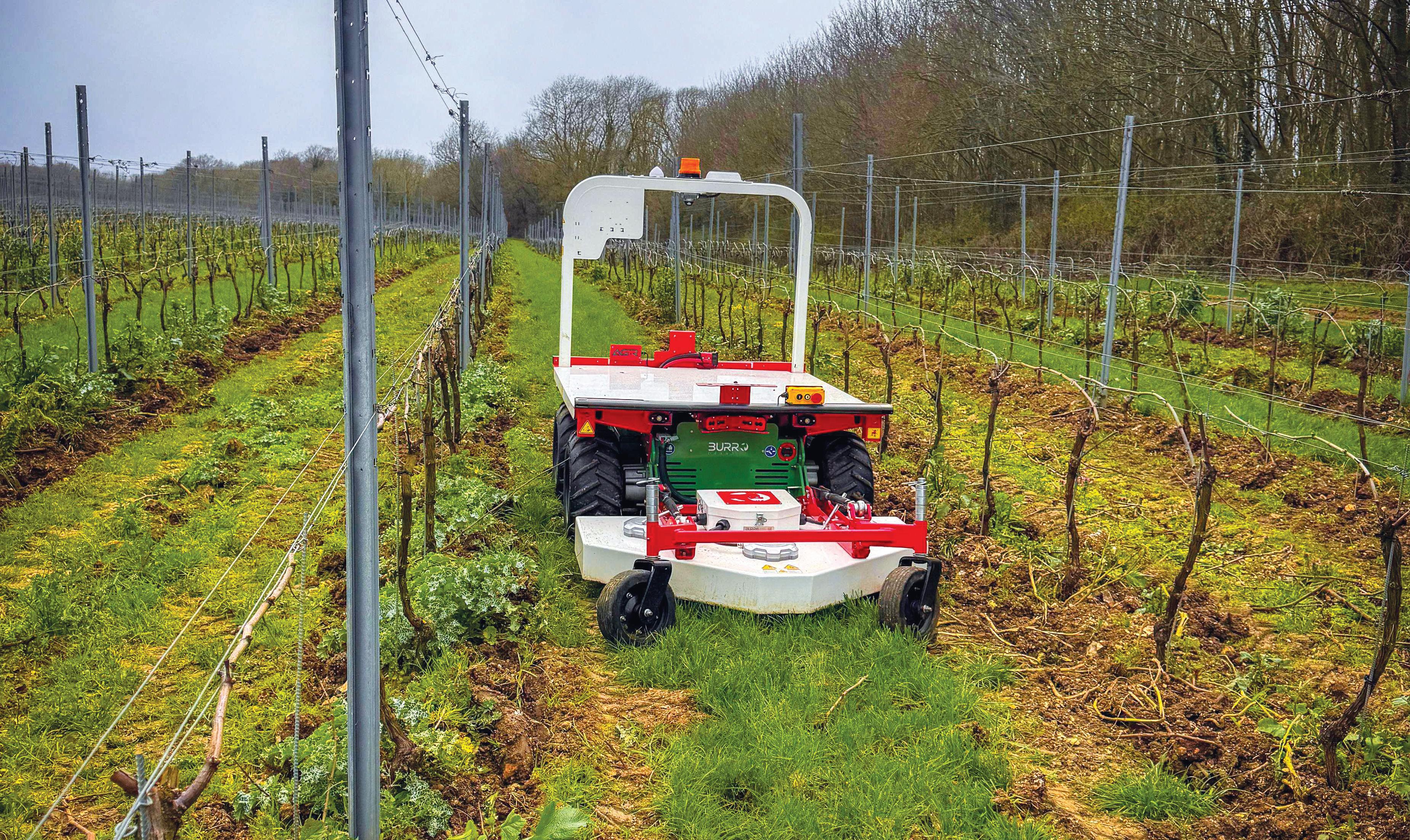

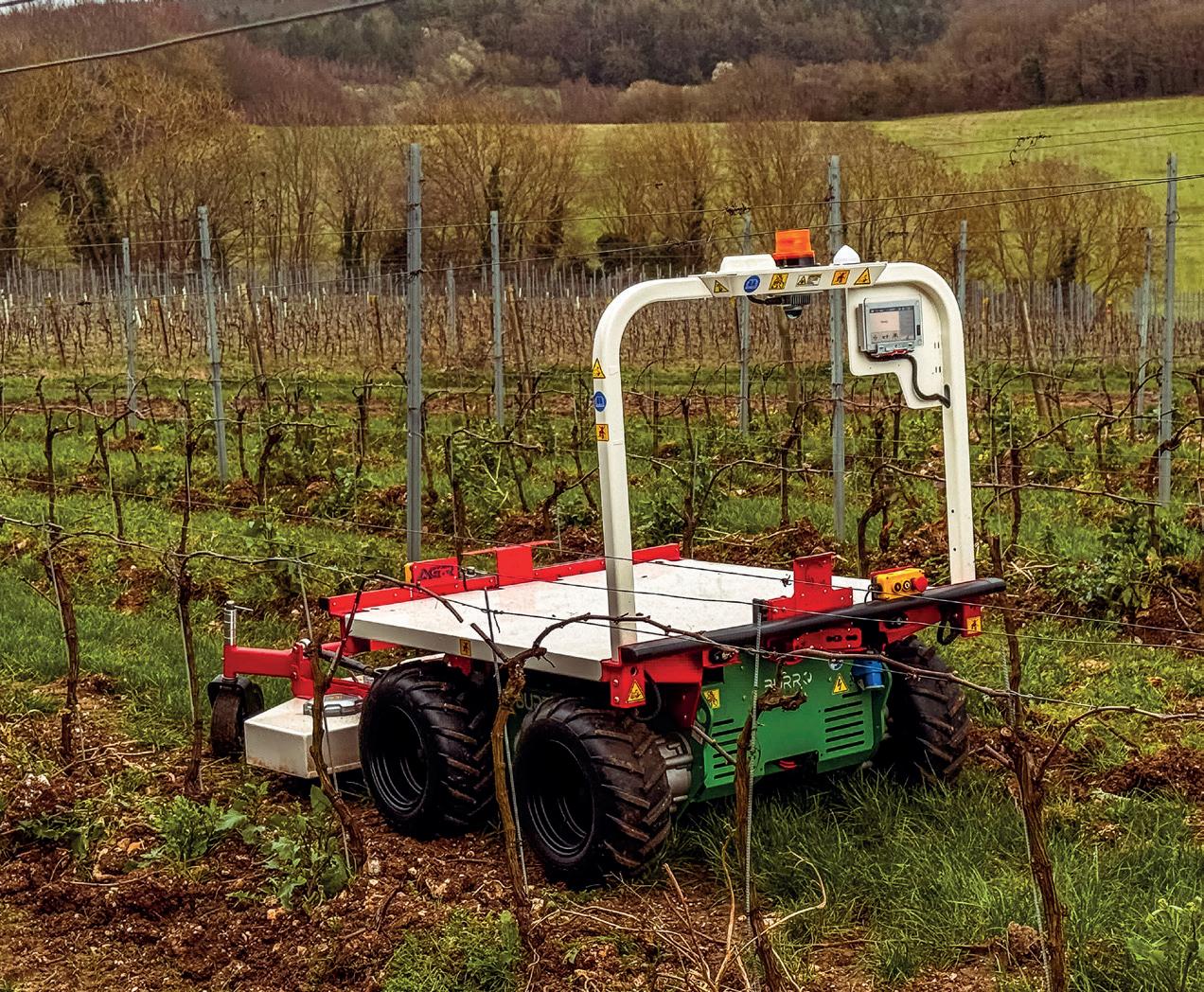
• Attach a mower or sprayer and watch BURRO do the work with ease.
£12,000
• Receive up to £12,000 government grant this year.


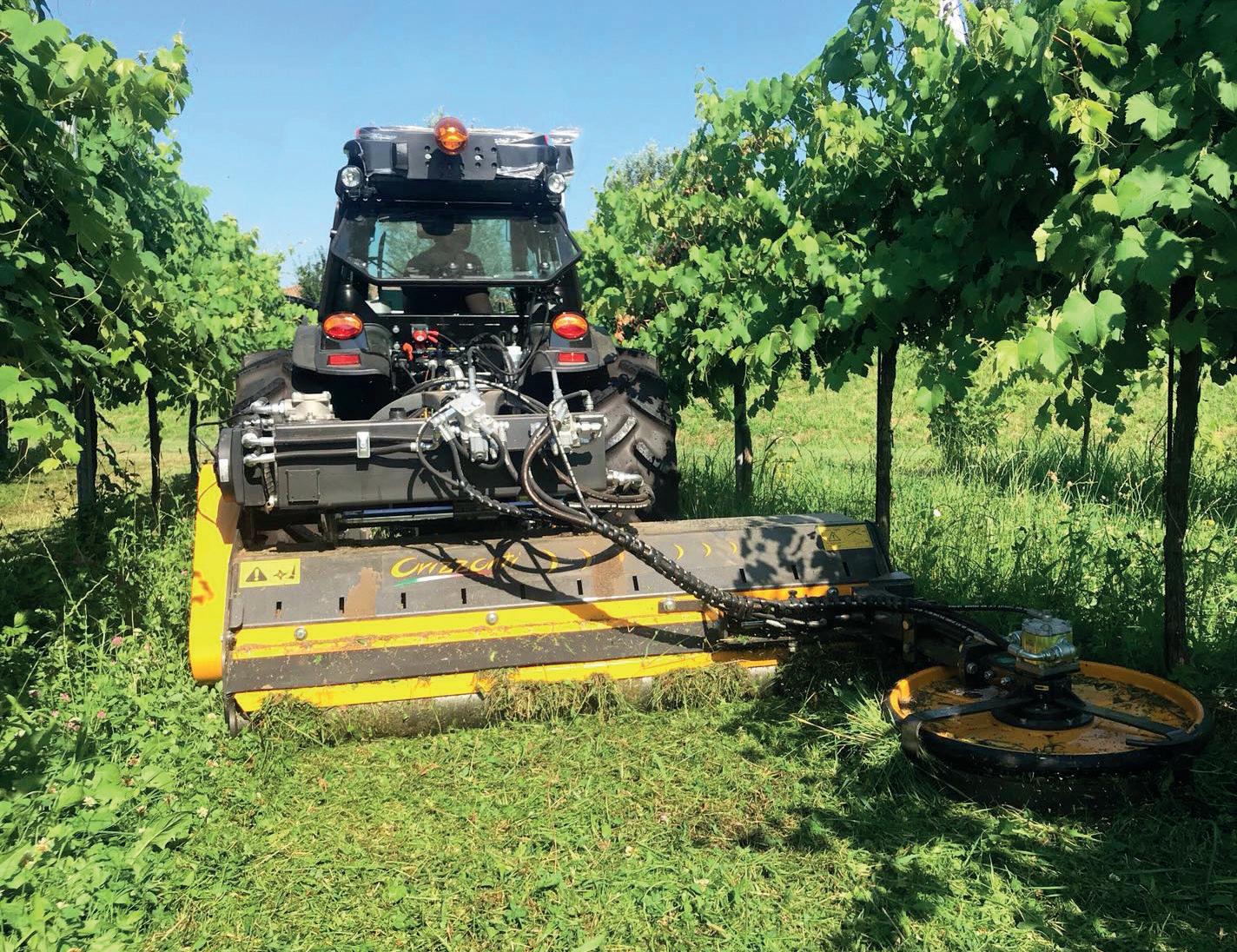
• Our tractor mounted Orizzonti Flail Mowers deliver exceptional durability & precision cutting performance.
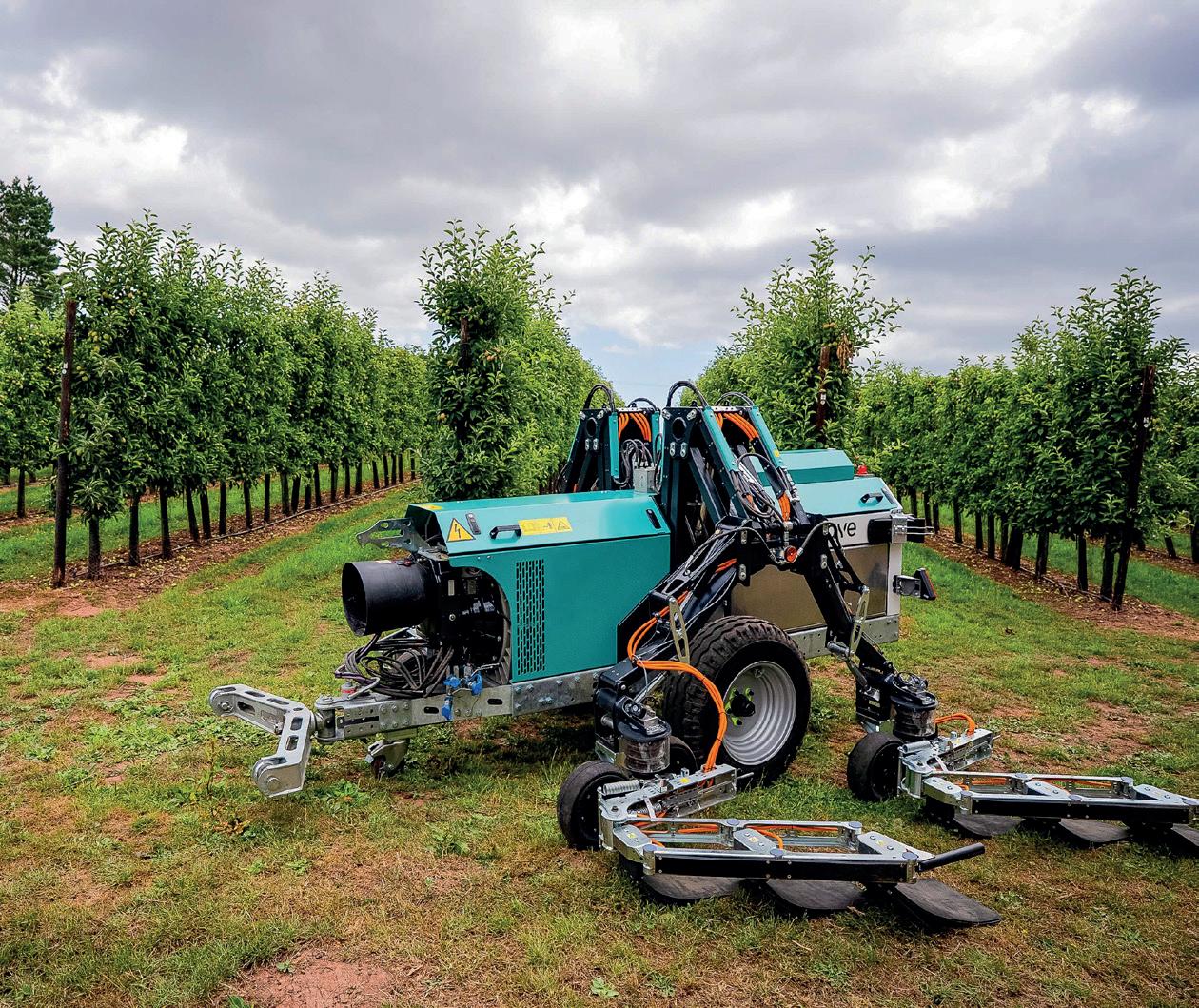
• RootWave uses high-frequency electricity to kill weeds from the root up.
£25,000 GOV GRANT
• Receive up to £25,000 government grant this year. Ref: FETF422


The application window opens for FETF 2026 on 17 March 2026 and will close at midday on 28 April 2026. 40% GOV GRANT

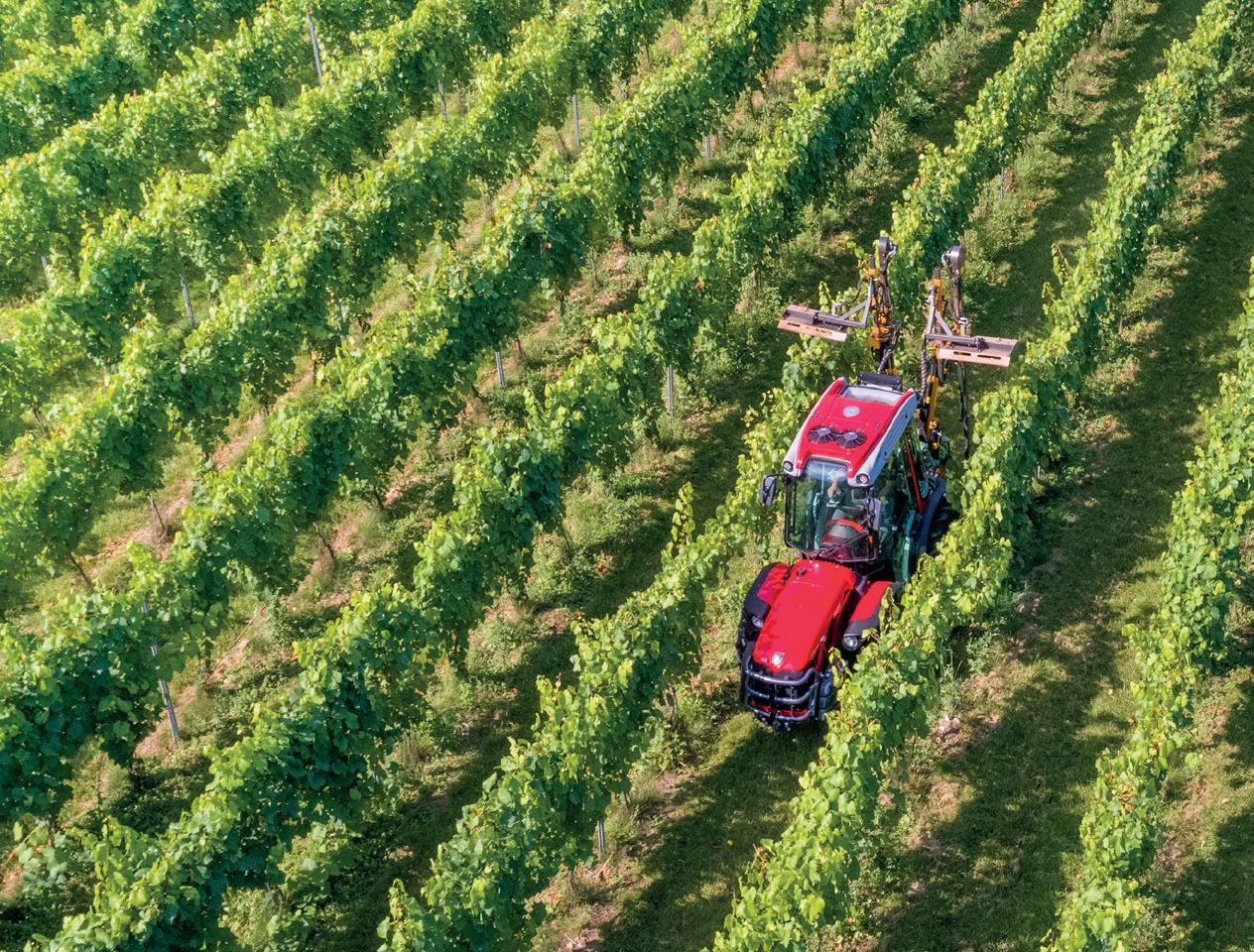
• Our Orizzonti vine & orchard trimmers/pruners provide precise, efficient canopy management, ensuring clean cuts & improved airflow.


VINEYARD & ORCHARD EQUIPMENT
The new power harrow

For sensitive processing of the inter-row cultivation with two oil-driven heads. The electro-hydraulic system ensures precise scanning for a clean result around the trunk.
LMG with (under) vine stem cleaner
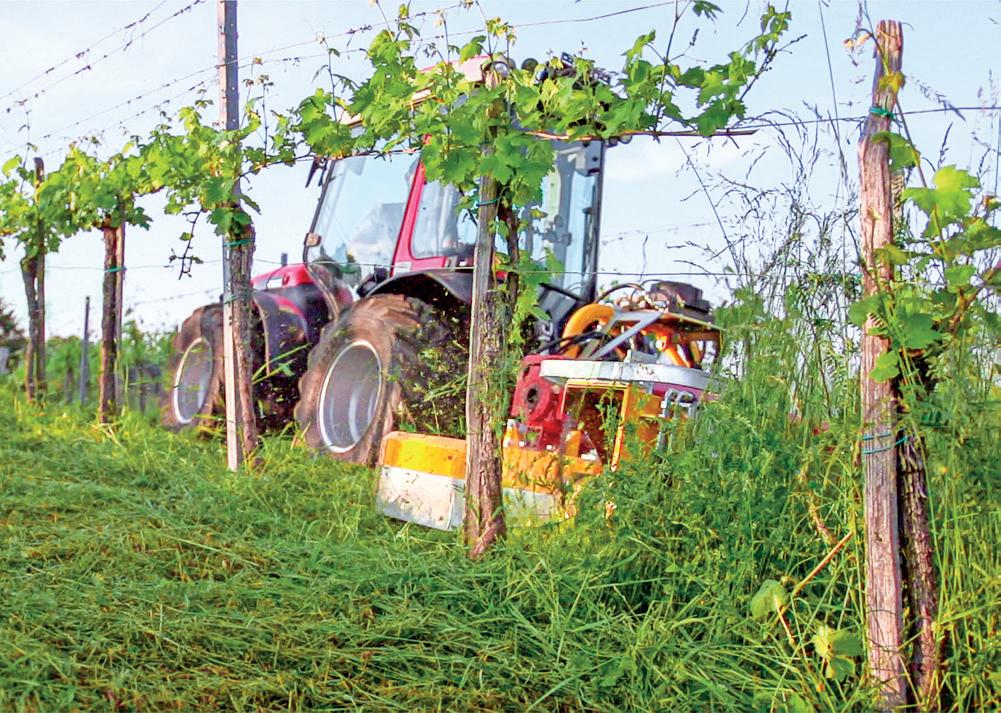
SMG rotary mower
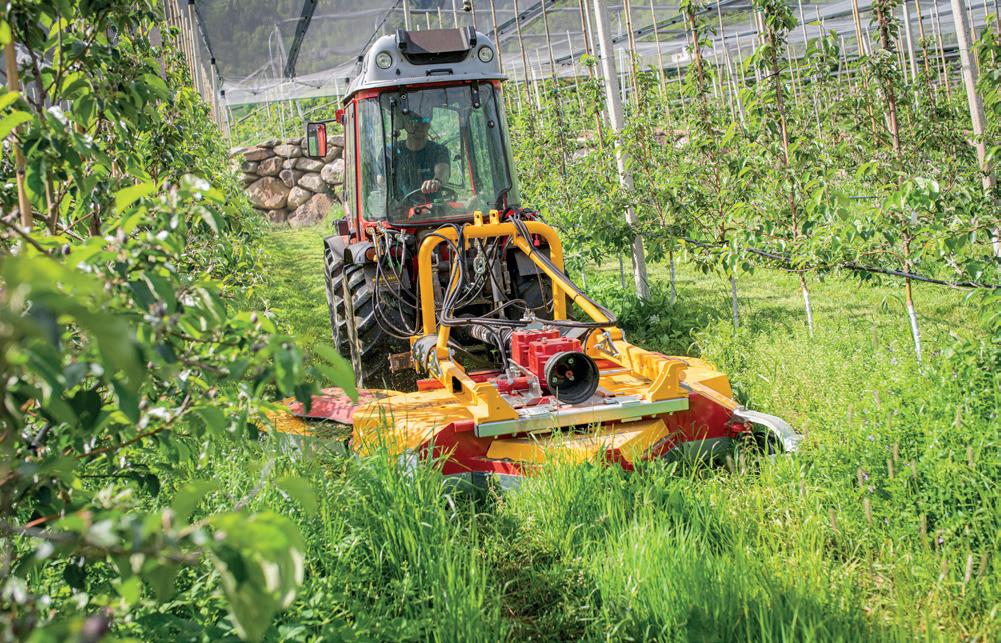

Dave Allen, Sales and Technical Support
“This is an unbeatable opportunity to take advantage of a generous government contribution towards an exciting new piece of kit that can really transform the business,” said Scott, who added that Kirkland UK is planning a Burro demonstration day in the spring.
“The FETF grants only apply to specific pieces of equipment that meet DEFRA’s requirements,” explained Scott. “They rate the Burros so highly that the Rural Payments Agency got in touch to make sure we would have them in stock. They score highly on the scheme –and with growers who have tried them.”
Kirkland UK stocks the full range of Antonio Carraro specialist vineyard tractors, from the pared down 26hp Tigre 3200 through to the impressive Tony 11700V, which delivers 112hp through a CVT (continuously variable transmission) gearbox but, at just 1070mm wide, can handle most vine row spacings.
Both the 11700V and the Tony 8700V, with 75.3hp under the bonnet, are in stock at Kirkland UK, with demonstrators available.
“Carraro takes pride in building specialist tractors ‘from the ground up’, rather than making cut down versions of existing tractors,” commented sales and technical support manager Dave Allen.
Also available and particularly useful in steep-sided vineyards and on

Mounted at the front of the mower, it not only gently removes all the shoots, but it also brushes the weeds under the mower blades.
High drive power combined with extreme blade overcut result in maximum cutting performance even under the most difficult conditions!
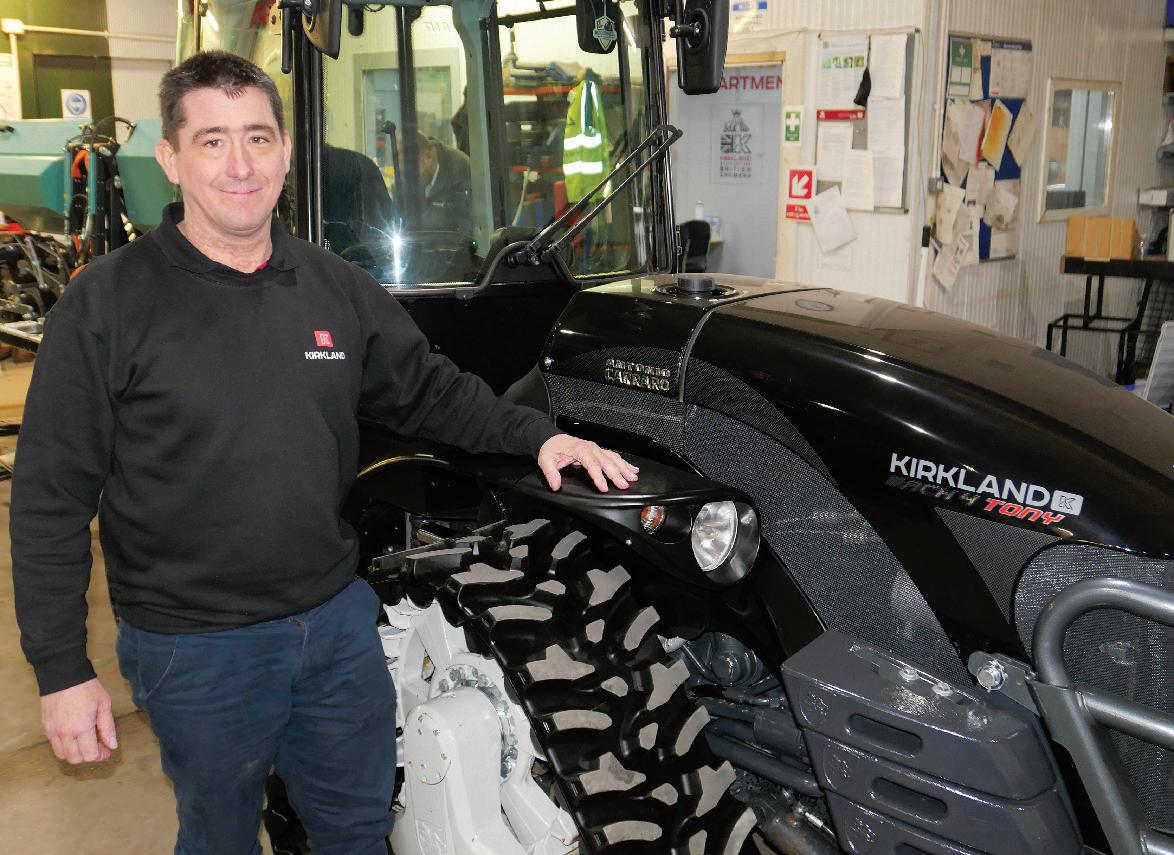
soft ground is the quadtrack, four-wheel drive Mach 4 Tony, completing an impressive lineup that has the ideal model for all growers.
Amongst an impressively broad range of equipment (displayed in an impressive, 128-page glossy brochure for growers who like to browse at home), Kirkland UK stocks the Agrimix RP2X-F fertiliser spreader, which is built specifically for narrow vineyard rows and supplied with a powder-coated compact profiled hopper.
The Agrimix’s stainless steel double conveyor allows a spreading width of up to nine metres. It can be removed to allow a full field spread of up to 16 metres, while double or single-sided spreading is also possible.
Also popular with Kirkland UK’s discerning nationwide customer base is Friuli’s range of cost-saving, environmentally friendly, two-row drift recovery sprayers, already supplied to the likes of Rathfinny, Chapel Down and Wild Shark. Available from stock, Scott said the sprayers could save up to half the cost of chemicals used in spraying.
Kirkland UK also supplies Ilmer machinery, widely respected for its precision engineering, durability and efficiency in vineyard operations, which makes it particularly well-suited to the demands of UK growers.
“This is an unbeatable opportunity to take advantage of a generous government contribution towards an exciting new piece of kit that can really transform the business.”
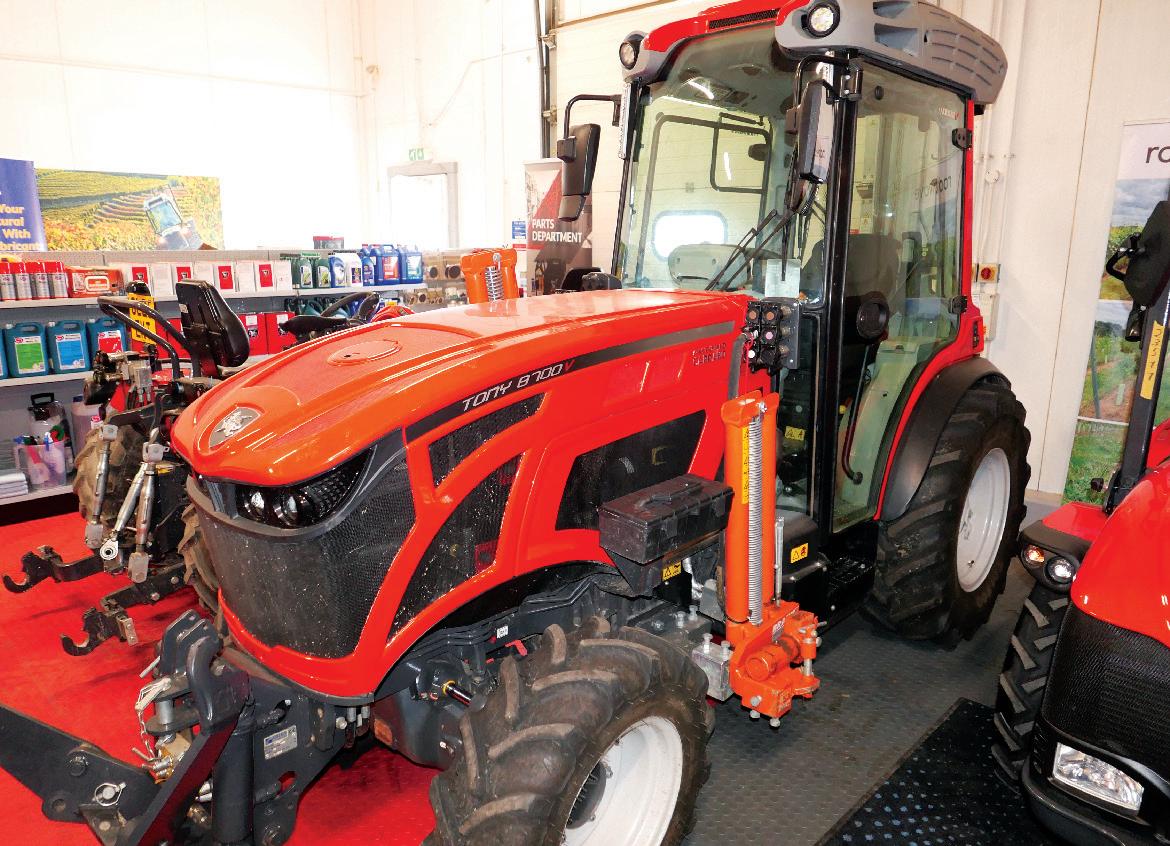
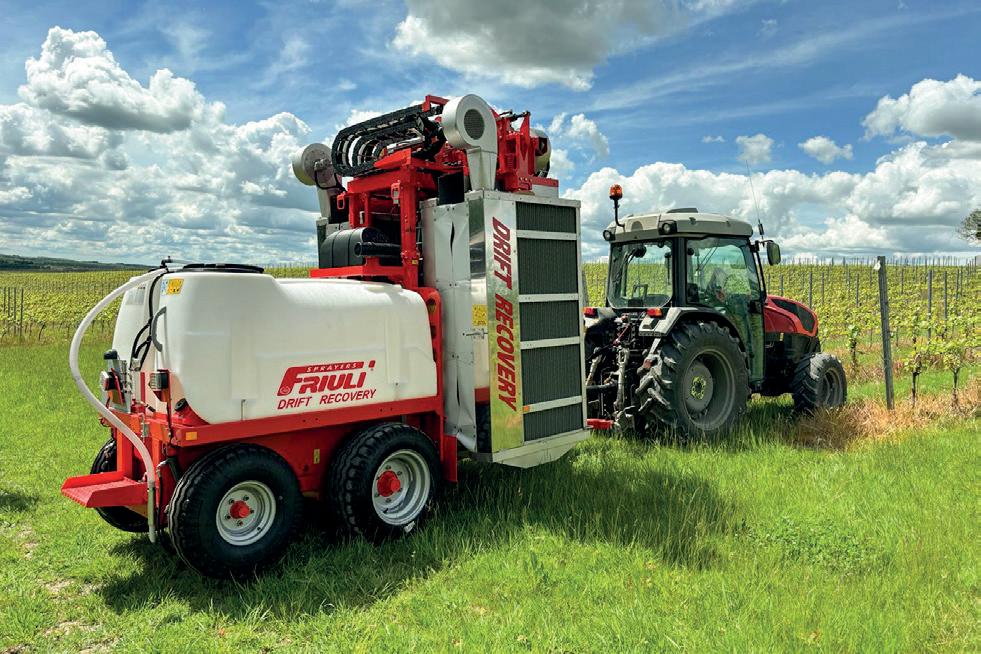
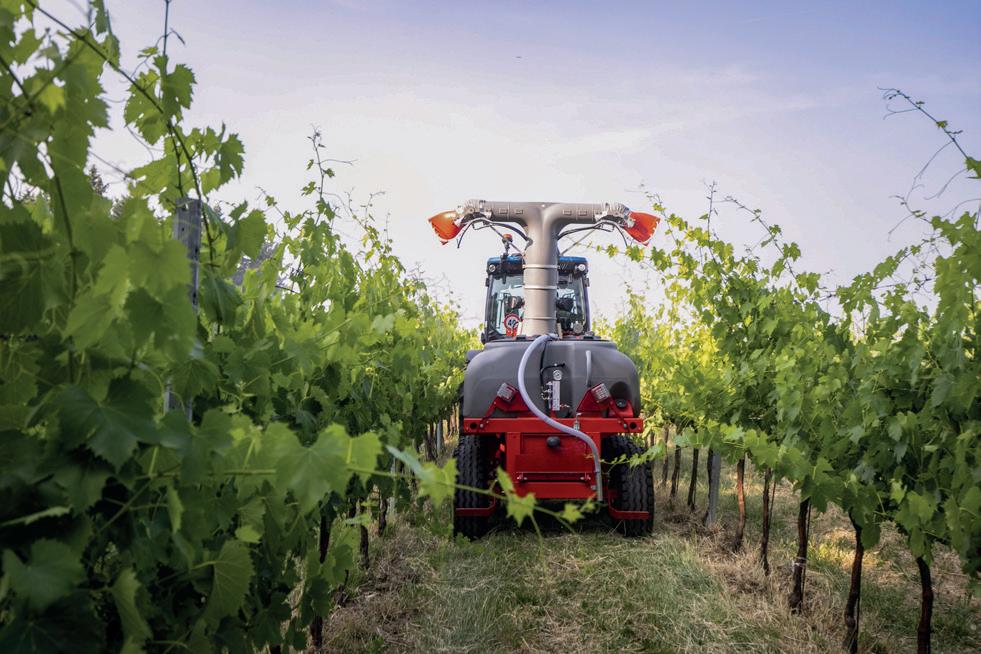




Nick Ralph, Service Manager
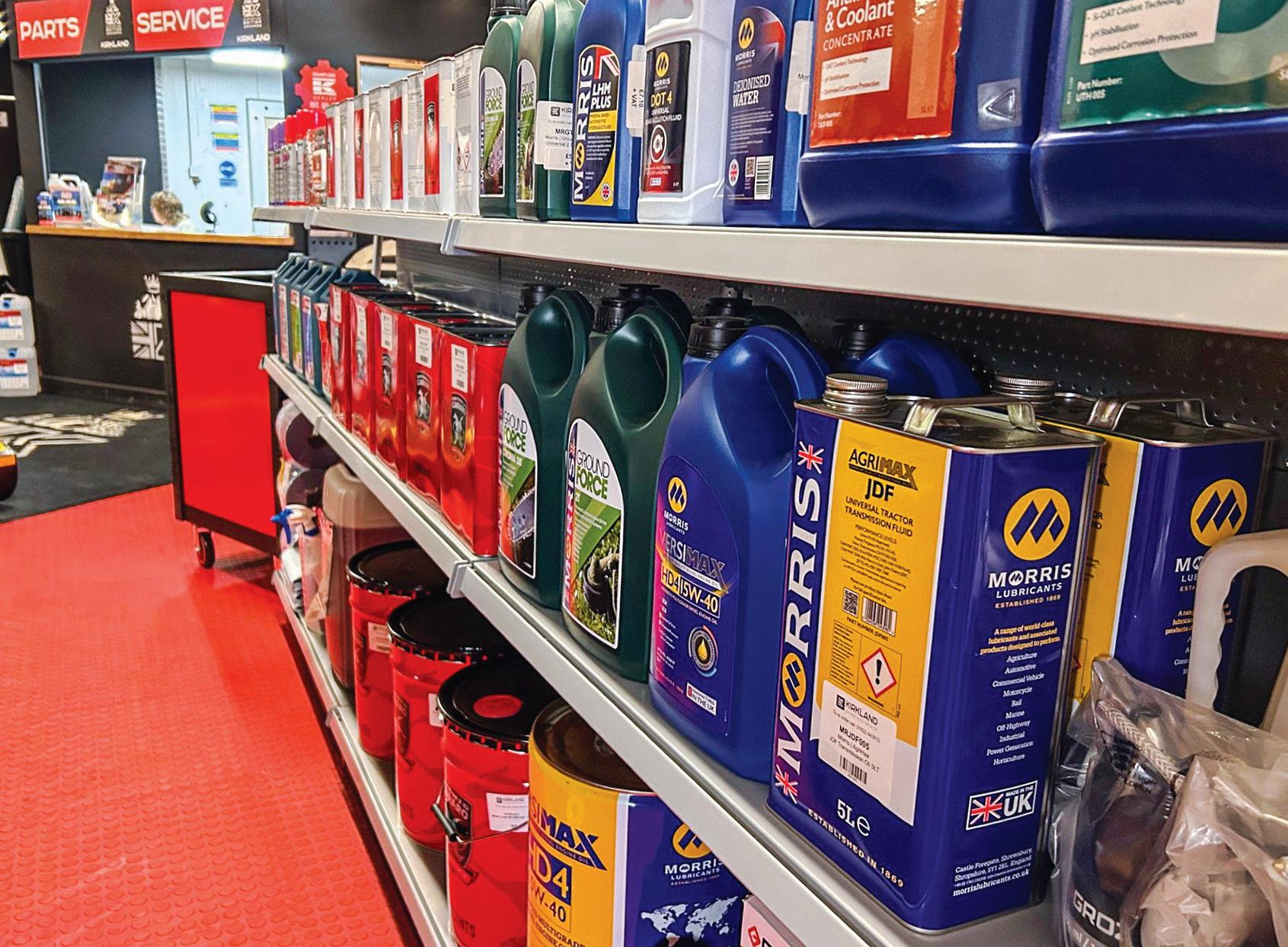
Air-Seal puncture repair kit available
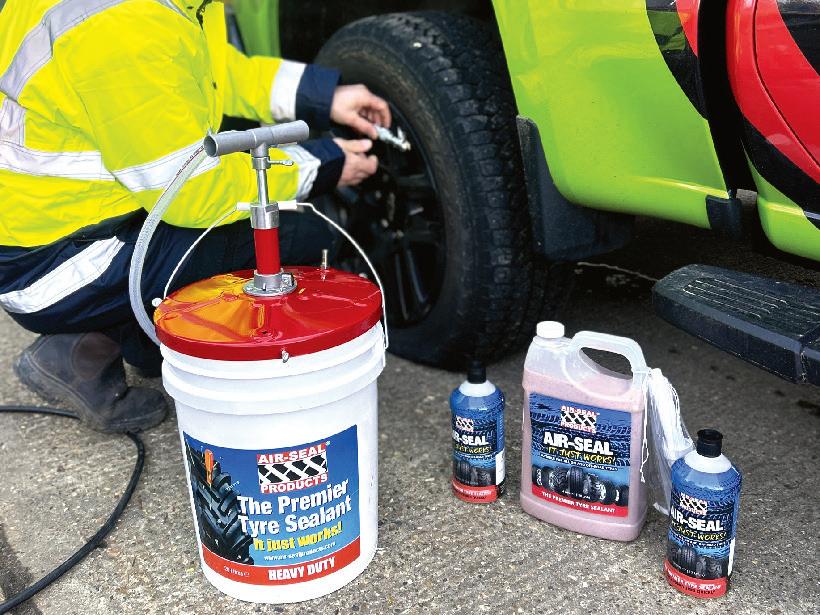
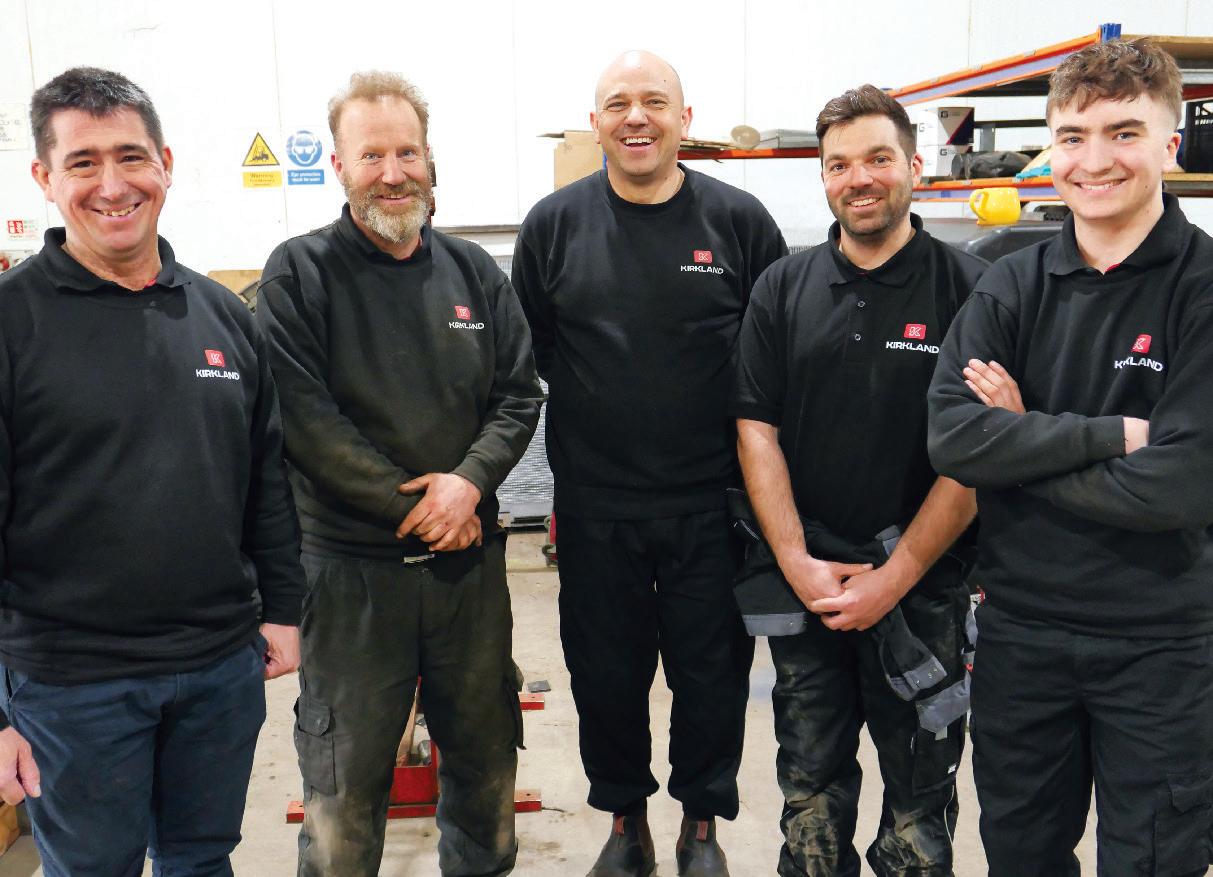

“With changing climate conditions and increasing focus on quality English wines, UK vineyards require reliable, specialist equipment that can handle delicate vine management while improving productivity,” said Scott. “We supply Ilmer machinery because it consistently delivers excellent performance, helping vineyards achieve higher yields and better grape quality with reduced labour input.”
Kirkland UK’s recently added trade counter at its base at Griffins Farm, Sutton Valence, is open to the public as well as to growers, with many people taking advantage of the company’s status as a registered number plate supplier.
Ben Short has been with the company for 12 years and has used his experience to set up a well-stocked parts department that can meet a wide range of day-to-day needs, from hydraulic hoses and fittings to paints and electrical components. The new trade counter has boosted turnover by around 15% in the past year.
As a Kramp UK stockist, Kirkland UK also offers quick and easy online ordering of more than 500,000 products, from wheels and
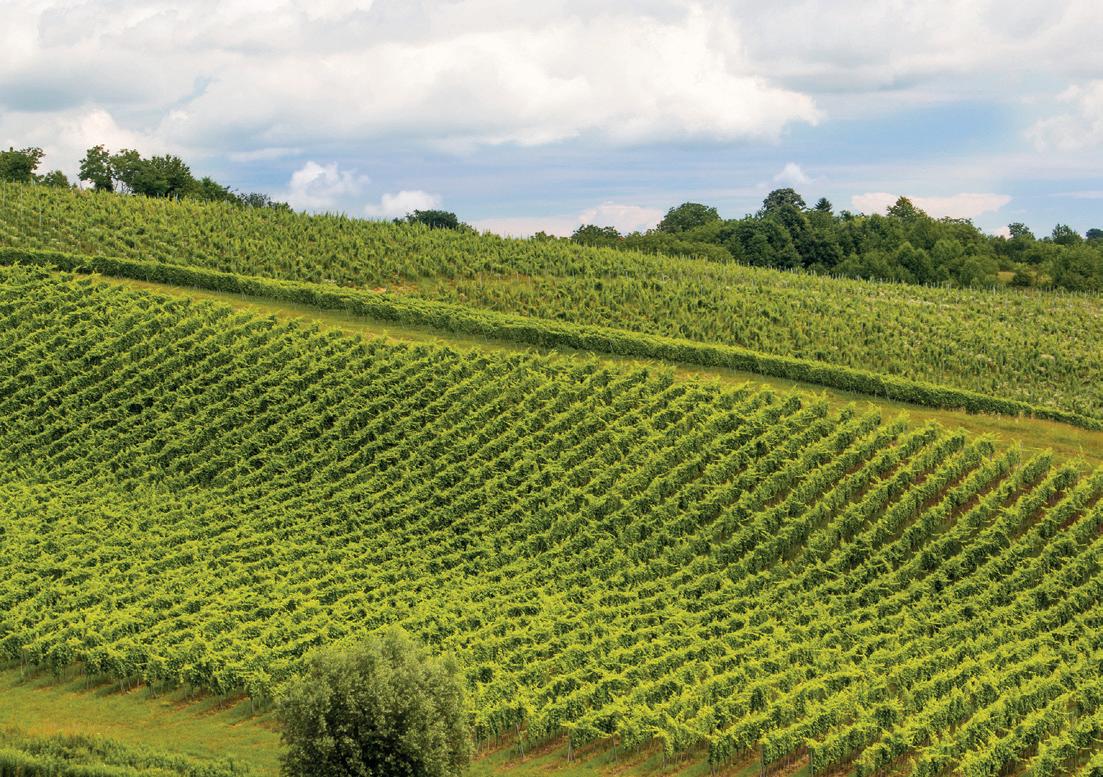


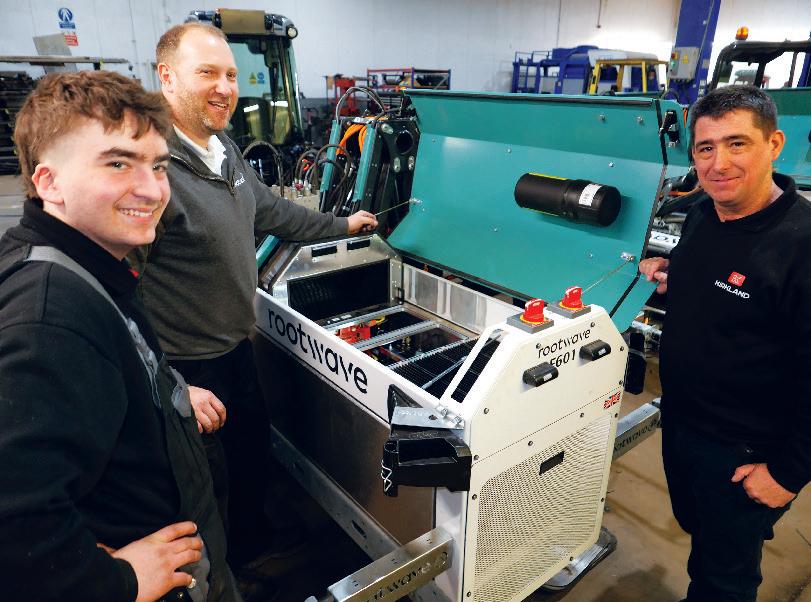
tyres to sprayer parts, gearbox and driveline components, PTO shafts and guards and more.
Kirkland UK is currently a Morris Lubricants supplier and has just taken on an area stockist for the company, reflecting its ongoing growth and its reputation with growers across the country.
Growers who book a sprayer in for its vital National Sprayer Testing Scheme service receive 10% discount on sprayer parts, alongside the knowledge that their equipment is operating safely, accurately and efficiently.
One exciting new product the team is keen to highlight is Air-seal, a high-performance puncture repair liquid that lives inside the tyre and instantly seals any hole that appears. It is suitable for agricultural, commercial, industrial and off-road vehicles and is claimed to reduce downtime, improve safety and extend tyre life.
Service manager Nick Ralph heads up a busy team of engineers and joined Kirkland UK after amassing 27 years of experience with other well-known dealerships.
“My aim is to help the team continue to provide the high level of service and customer focus that Kirkland UK is known for and to make sure we stay abreast of the skills needed to look after the newest vineyard machinery, such as the Rootwave,” he commented. Three of the team are heading to France shortly to undergo intensive training on the Gregoire grape harvesters that the dealership supplies and that are becoming increasingly popular with growers looking to reduce labour costs.
“We pride ourselves on our customer service, on going the extra mile and on maintaining a high level of technical knowledge.” Kirkland UK can also modify machinery to meet customer specifications.
The core team of engineers headed up by Nick is made up of Matt Kemsley, Clive Granby, Pete Ewing and apprentice Freddie Scott, who reflects Kirkland UK’s ambition to develop a new skills base to serve customers well into the future.
“It’s a great team doing a great job, and I am proud to be part of it,” Nick concluded.
Kirkland UK service team
Kirkland trade counter
Kirkland UK, Kent dealer for Corvus
at Kirkland UK
Rootwave training at Kirkland UK
SPECIALIST VINEYARD TRACTORS
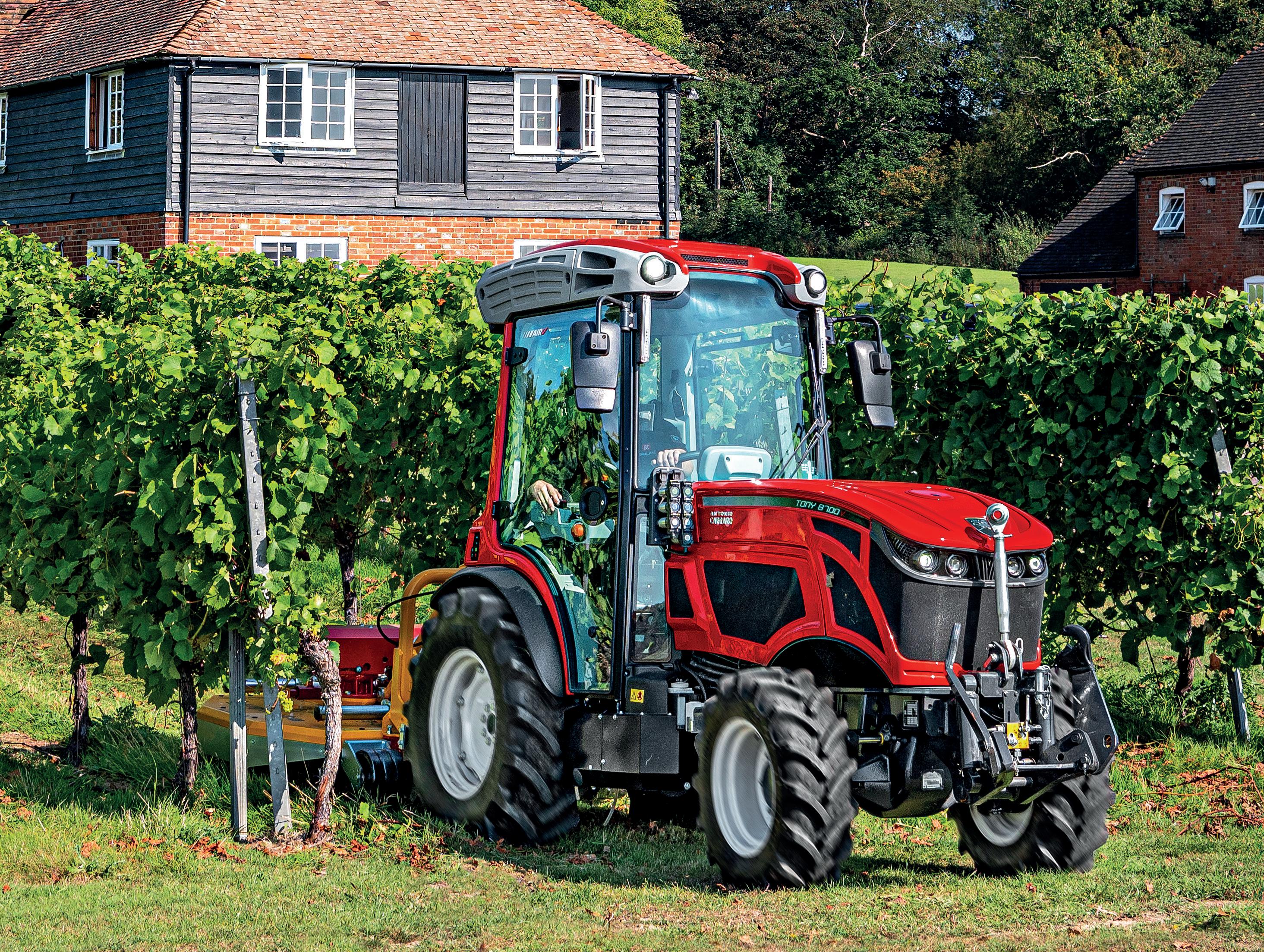
Antonio Carraro SpA produces compact, four-wheel drive tractors from 20 to 100 hp — purpose-built for vineyards and backed by over a century of Italian engineering and craftsmanship. In the UK, the range is imported and supported by Kirkland UK, with a wide selection of tractors in stock and ready for prompt delivery. The perfect tractor for vineyard specialists — built to perform, designed to impress.

STOCK MACHINES:

AC PANTHER 26hp Manual -New
҉ 26hp Mechanical Transmission
҉ Weight 950kg
҉ Capacity 850kg
҉ £8,500 +vat


AC TONY 8700 VEx Demo - 2 Available
҉ YOM 2025
҉ 490hrs
҉ 75hp
҉ Drove in the Tractor Trek YouTube Series
҉ £69,000 +vat extended 3 year warranty

AC MACH TONYEx Demo
҉ Engine - 75hp kubota
҉ Service Weight - 3300kg
҉ Min width - 1300 mm
҉ Joystick/ Reverse Drive
҉ 49hrs
҉ £108,000 +vat


Visit our website for our full stock list.

Unpacking soil health
All winemaking starts with soil, and a focus on soil health is vital for ensuring that the fundamental building blocks for successful, productive vines are in place. An important part of that is providing well aerated soils that give young vines the opportunity to develop strong roots in their early years, as well as impacting on water infiltration and nutrient uptake for more established vines.
Vineyard Magazine talked to Netty Palliser of Aerworx, experts in soil aeration, to get the inside view on the subject of compaction. Aerworx are a company with roots in the United States, but they have been selling aerators into Europe for almost twenty years. It has grown to such a point that now its Hampshire location has the capacity to fully manufacture machines for the UK market in-house, sourcing all components from Britain.
Why is compaction such a big issue for vineyards specifically?
Unlike other industries, vineyards cannot rotate use or rest the vines’ soil for several seasons and so there is a pressure to optimise soil health to keep it active, open and chemically balanced with the tactical use of management practices such as grazing; cover crop planting; mechanical interventions and the use of biostimulants such as composts and manures.
Despite industry wide discussions about how to reduce traffic wheelings in vineyard rows, the number of annual management
tasks naturally results in compacted soils in travelled ground. The soil particles become compressed, squeezing out air and water, as the large and small soil pore spaces collapse.
In turn, infiltration rates reduce depriving both cover crop and vine roots of water; the closed soil structure also deprives the soil biome of water and oxygen. The success of this soil food web that is needed to deliver plant-available nutrients to the roots and contribute to maintaining a functional soil structure, depends on a healthy soil environment to thrive.
Roots struggle to penetrate the compaction pan and become very drought sensitive; soil chemistry changes in response to anaerobic dry or waterlogged conditions.
We visually can see waterlogging; run off (including that of applicants such as biostimulants/ composts) be it within the vineyard or into local water courses (an increasing focus for national waterboards and river trusts); loss of topsoil and erosion despite the planting of cover crops; and poor vine performance with respect to quality, yield and disease resistance.
3 in 1 Aerworx seeder and harrow
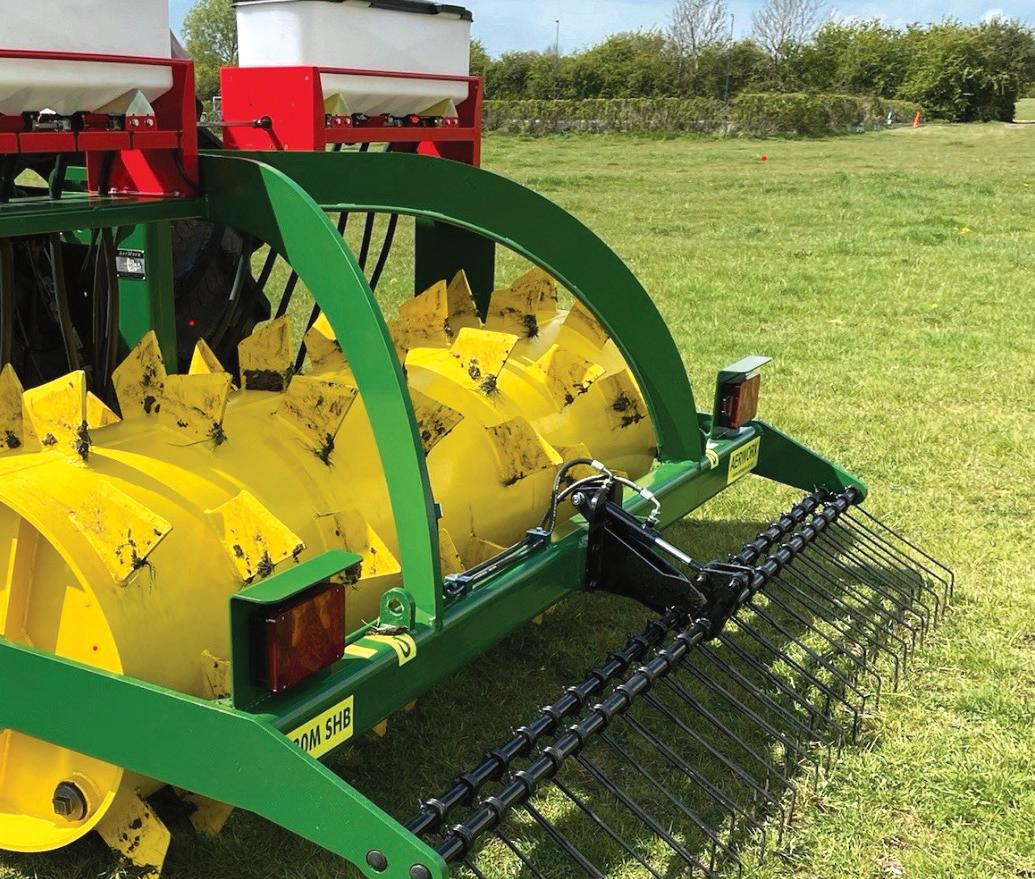

What are the benefits of aeration and how regularly should it be done?
By alleviating compaction, we aim to break down large blocky soil aggregates into a fine soil crumb opening up macro and micro pores able to capture and retain air and water. Ideally this is done:
◆ without exposing the soil surface (no-till) in order to prevent carbon/ evaporative losses;
◆ done with as minimal disturbance to the small amount of precious biology that may be present;
◆ without damaging vine roots;
◆ without causing more compaction;
◆ performed at pace to keep up with rapidly changing climate patterns.
Infiltration rates can take hours in very compacted soils, but a healthy soil ideally should be similar to that of an adjacent unmanaged hedgerow!
Some prefer to aerate as they work negating the effects of wheelings as you pull the aerator behind the vineyard tractor – spraying would be a good example.
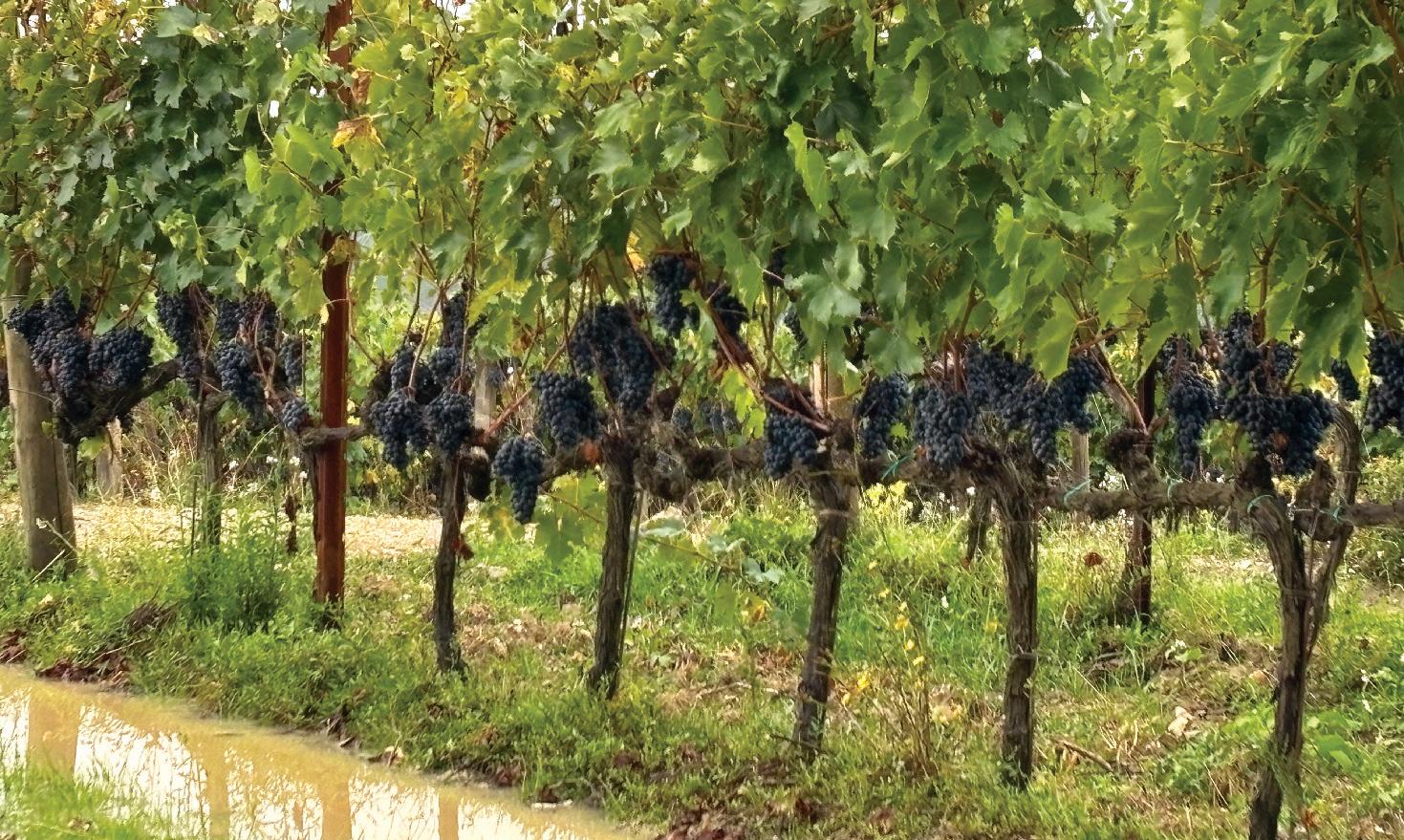
Waterlogging
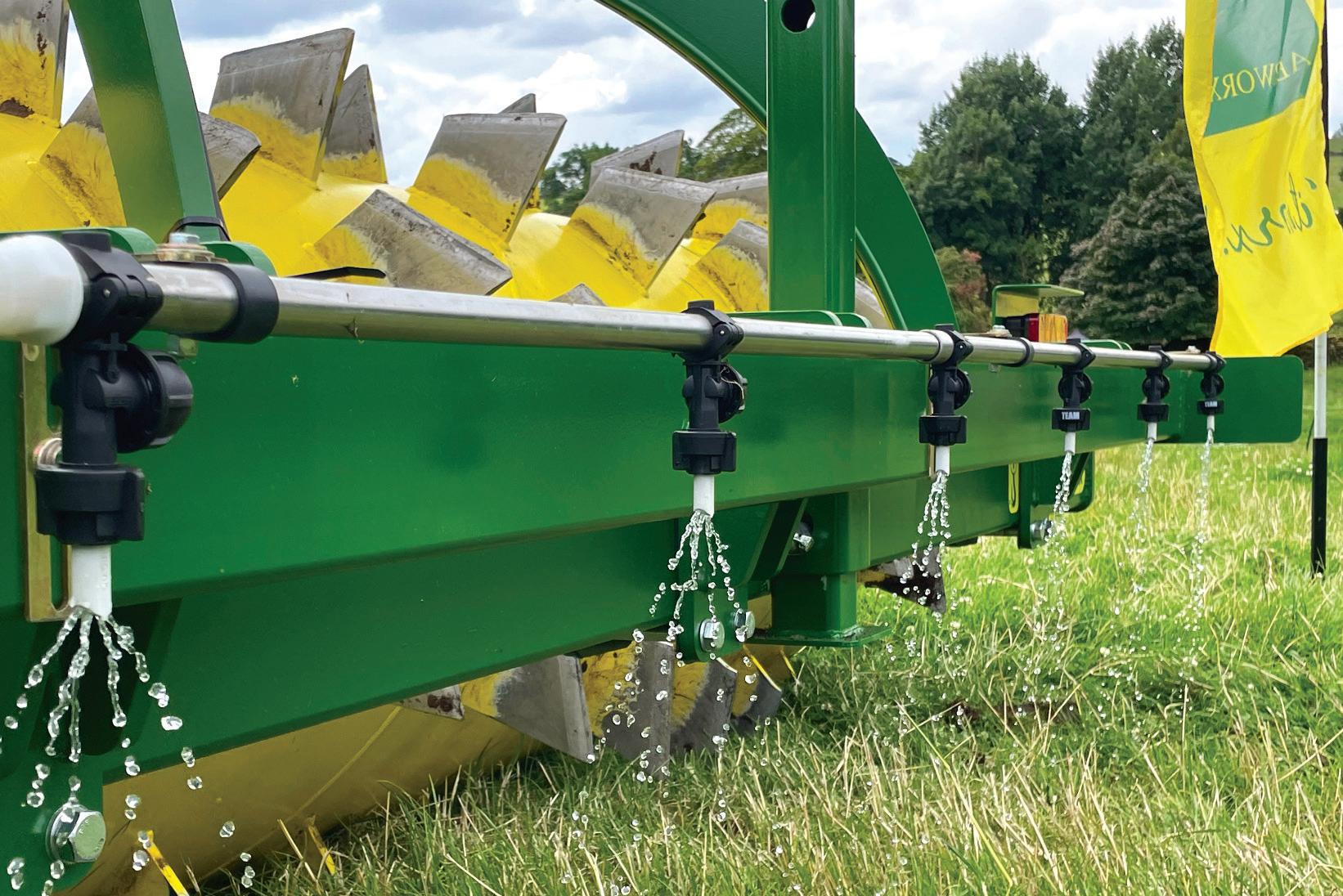
Aerworx plus spray bar
What are the longer long term benefits for soil health?
In the long term, alleviating compaction:
◆ will help to build in vineyard resilience to weather extremes so that the vine conditions are not swinging from deluge to drought. Healthy active soils mean healthy disease-resistant roots –meaning healthy vines and cover crops.
◆ will help to create an ecosystem that looks after itself with intervention only implemented to negate the impact of the “management musts”.
Is climate change having any impact on soil and the need for aeration?
With clear changes in our climate and the challenge that presents for our soil, we need to consider soil health and tactical, cost effective approaches more than ever.
The extreme weather conditions that the UK has experienced in recent years, has meant that soils swing from dry baked conditions to waterlogged . It is now not uncommon to observe a high volume of rainfall in short periods of time – the soils need to be ready to capture that… and fast. So by ensuring that the soil is a healthy sponge, the vineyard can capture and retain the rain in the wetter months, acting as a reserve for roots to tap into in drier months.
AerWorx
AerWorx achieves significant infiltration rate improvements in a single efficient pass – the start of the transition journey to soil healthsomething that is acknowledged to take deep tapping cover crop roots years to achieve.
The next phase, having provided an optimal environment for the soil biome, sees the return of biological activity. As well as providing plants/vines with available nutrients such as NPK at the root zone, the biology is integral to maintaining soil structure using organic matter, bacterial sticky glues and a naturally occurring network of fungal hyphae. Cover crops can establish, optimising their benefits, without having to struggle to penetrate the compaction pan, struggle for water (or survive in waterlogged ground) nor compete with compaction loving weeds. How frequently aeration is required will depend on the level of compaction and on-going management practices. AerWorx is usually performed once in the spring of the first year when the ground is dry (to optimise the shatter effect) and, if required, again at the end of the summer. Once compaction is alleviated, the aim is to hand the gauntlet to a healthy cover crop and optimally functioning soil biome so that a single annual mechanical intervention should be sufficient or when VESS scores and infiltration rate tests dictate the need.
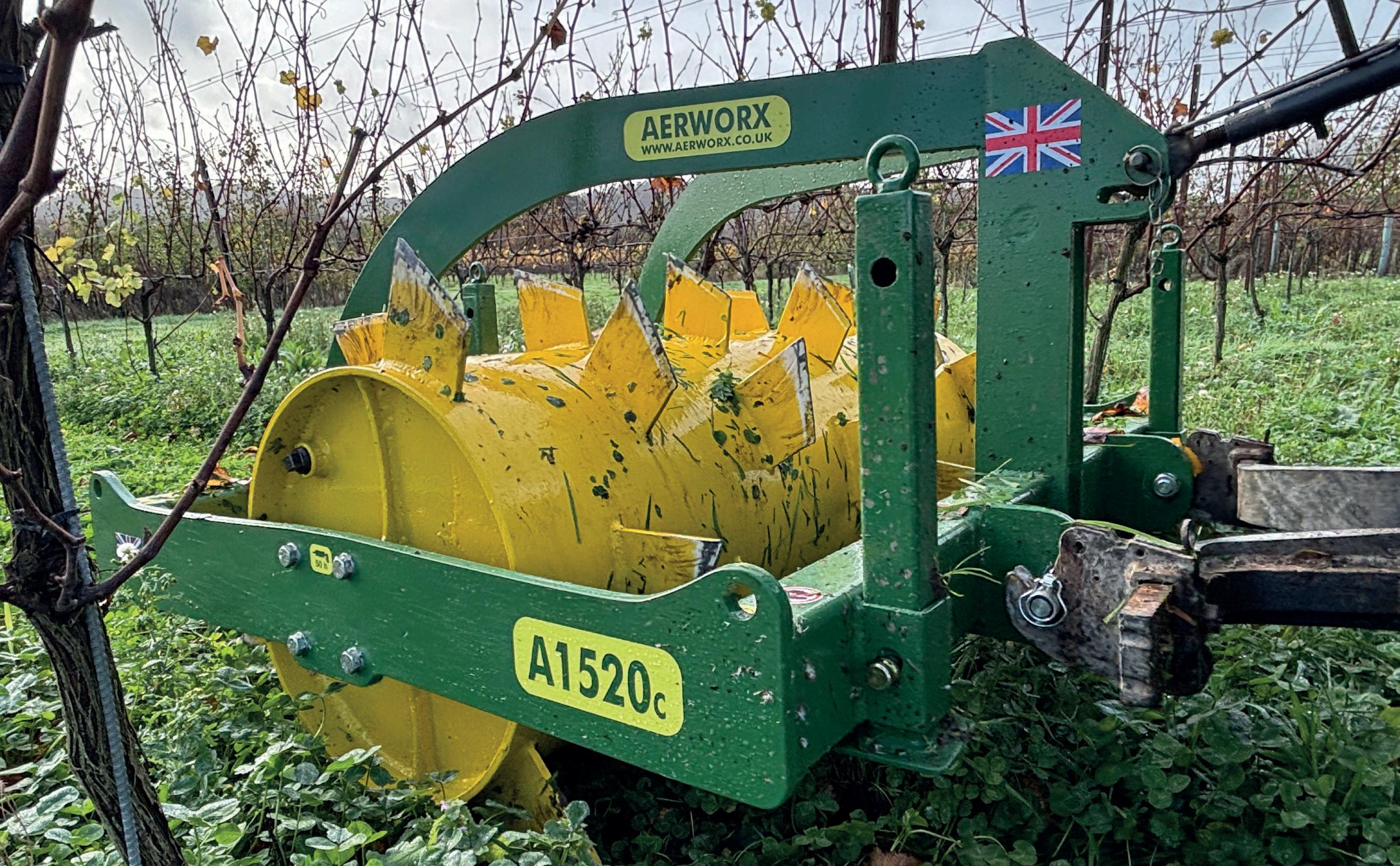
Funding available for improving soil health
A number of water boards have schemes that offer support and funding to help farmers and land managers to adopt practices that improve soil health and in consequence offer benefits to local water courses.
Here is a list of resources for some of the main water companies across England and Wales. This is not an exhaustive list, but hopefully it will encourage vineyard managers to explore the opportunities.
◆ There is also a good deal of useful information available on the Catchment Based Approach website. This is a knowledge hub “for all organisations and individuals interested in participating in collaborative and cross-sector management of the water environment.” The Agricultural Advice Hub offers advice, information and links to support for sustainable farming practices, including links to funding opportunities.
www.catchmentbasedapproach.org
◆ Affinity Water sponsors the regenerative farming event, Groundswell, which takes place near Hitchin, as well as funding cover and companion crops.
www.affinitywater.co.uk/sustainability
◆ Anglian Water offers a small range of grants throughout the year. It is worth making contact with the local Catchment Advisor for more information on what support might be available now to vineyards in the region.
www.anglianwater.co.uk/business/help-and-advice/ catchment-services/supporting-farmers
◆ Bournemouth Water runs a catchment-management scheme called Upstream Thinking, to apply natural solutions to reduce agricultural impact on biodiversity and water quality, while supporting farmers and the rural economy.
www.bournemouthwater.co.uk/environment/projects/ nature-based-solutions
◆ Bristol Water and Wessex Water are funding partners for the Bristol Avon Catchment Partnership Fund, along with the local councils operating in the area. It is continually open for applications, but private businesses applying to the main grants scheme will need to work in partnership with NGOs or the third sector to have their application accepted.
www.bristolavoncatchment.co.uk/catchment-partnership-fund
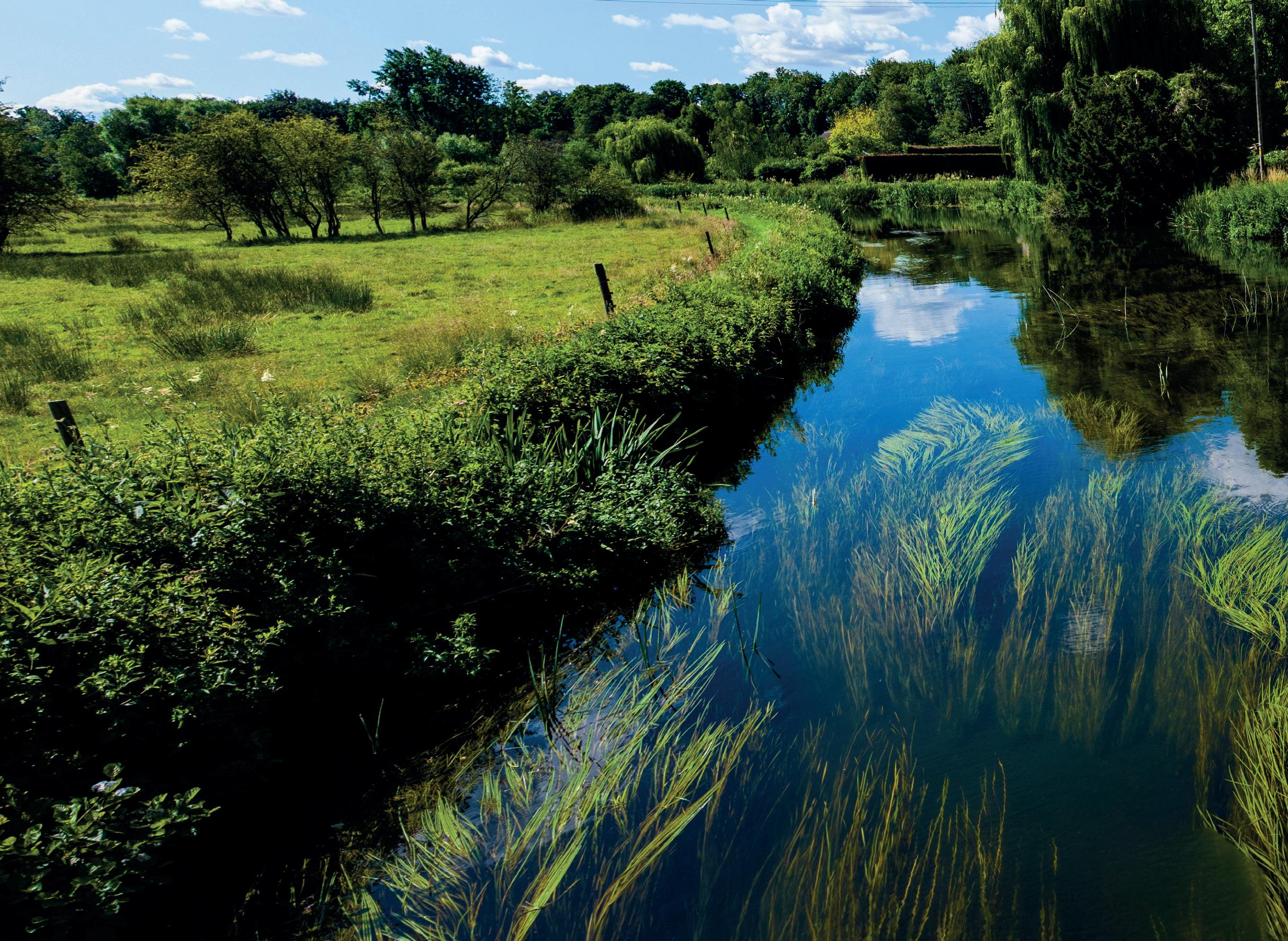
◆ Cambridge Water is in the process of administering the first round of funding in their SPRING 2 Environmental Protection Scheme. Keep an eye out for the possibility of a second round of funding opening for applications from farmers in the priority catchments in the next few months.
www.cambridge-water.co.uk/environment/catchmentmanagement/spring/
◆ Dŵr Cymru Welsh Water offers advice and information as part of its WaterSource approach. Find out more on their website. https://corporate.dwrcymru.com/en/community/ environment/our-projects/watersource
◆ Essex & Suffolk Water is part of the East Suffolk Catchment Partnership (along with Anglian Water) which has identified “opportunity areas” where improvement projects would have the most impact. Find out more on the Essex and Suffolk River Trust website. See also Northumbrian Water.
www.essexsuffolkriverstrust.org/east-suffolk-catchment-plan
◆ Hafren Dyfrdwy say they continue to build on work undertaken in 2015 to 2020 to investigate issues and manage water quality risks by engaging with local farmers and other stakeholders. www.hdcymru.co.uk/about-us/environment/ catchment-management/
◆ Northumbrian Water and Essex & Suffolk Water are a part of the Northumbrian Water Group which highlights grant funding opportunities in both areas on its website. They arrange in person meetings to learn more about the farm in question and the opportunities for improving water quality. They have grant funding pots available and can also signpost other funding which may be accessible.
www.nwg.co.uk/responsibility/environment/ catchment-land-use
◆ Portsmouth Water offers grants to help reduce nitrate leaching in their priority catchment areas as well as to enhance the habitat network around their sites.
www.cleanwaterpartnership.co.uk/risks-to-water-quality
◆ Severn Trent have been operating a catchment management programme called Farming for Water for the past decade. The first round of funding for their Severn Trent Environmental Protection Scheme, STEPS, programme closed at the end of January, but it is worth local businesses keeping an eye on the resources they are making available.
www.stwater.co.uk/about-us/environment/ working-with-farmers-and-land-managers/
◆ South East Water offers free advice and reporting services for land managers, along with workshops and events. There is also a capital grant scheme to help land managers tackle agricultural diffuse pollution. Visit their website to find out more or to register for a free visit.
www.southeastwater.co.uk/about/our-environment/ catchment-management
◆ South Staffs Water is in the process of administering the first round of funding in their SPRING 2 Environmental Protection Scheme. Keep an eye out for the possibility of a second round of funding opening for applications from farmers in the priority catchments in the next few months.
www.south-staffs-water.co.uk/environment/ catchment-management/spring
◆ South West Water runs a catchment-management scheme called Upstream Thinking, to apply natural solutions to reduce agricultural impact on biodiversity and water quality, while supporting farmers and the rural economy.
www.southwestwater.co.uk/environment/projects/ nature-based-solutions

◆ Southern Water offers a Farm Capital Grant Scheme to help pay for new equipment or farm improvements. For land in eligible areas, 50% of project costs, up to £15,000 is offered. There is also an offer of free advice including infrastructure checks and soil health assessments.
www.southernwater.co.uk/about-us/environmentalperformance/healthy-rivers-and-seas/catchment-first/
◆ SES Water can offer financial support for land managers in target areas to help protect water quality at source. They promote current initiatives through their Water Friendly Farming leaflet.
www.seswater.co.uk/your-environment/ catchment-management
◆ Thames Water offers a Catchment Fund and bespoke water quality improvement projects scheme. Application deadlines are at the end of November and May each year. Its funding is available to address different issues according to location. Please check for details of priority areas.
www.thameswater.co.uk/about-us/environment/ smarter-water-catchments
◆ United Utilities describe their approach to managing catchments in an holistic, integrated manner as Catchment Systems Thinking. Find out more about their plans on their website.
www.unitedutilities.com/corporate/responsibility/ stakeholders/catchment-systems-thinking/
◆ Wessex Water – see Bristol Water
◆ Yorkshire Water’s land strategy is entitled Beyond Nature in which their 22,000 hectares of farmland will be brought into tenancy to protect the Yorkshire landscape for future generations.The scheme currently has 37 farms across the region but they are also interested in hearing about potential opportunities for collaboration.
www.yorkshirewater.com/environment/beyond-nature/
Using cover crops to capture carbon
Regenerative practices like cover cropping have now become central to growing wine in a way that is climate smart and has the benefit of actively reducing the carbon footprint of the business concerned. Soils store carbon through organic matter, particularly when enriched by biomass from cover crops.
Eventually this active carbon turns into stable, organic carbon which not only improves the fertility of the soil and the moisture that it can retain, but also offsets
cover crops can also promote soil health and fertility, reduce erosion, improve water retention, increase biodiversity and help to manage pests and reduce the loss of nutrients from the soil through leaching.
Cover crops may include a range of different species. Grasses, legumes, cereals or herbs can all be used, and a mixture of species will give the best results and the highest range of benefits. However, even just planting one species of cover crop has been show to be preferable to a default
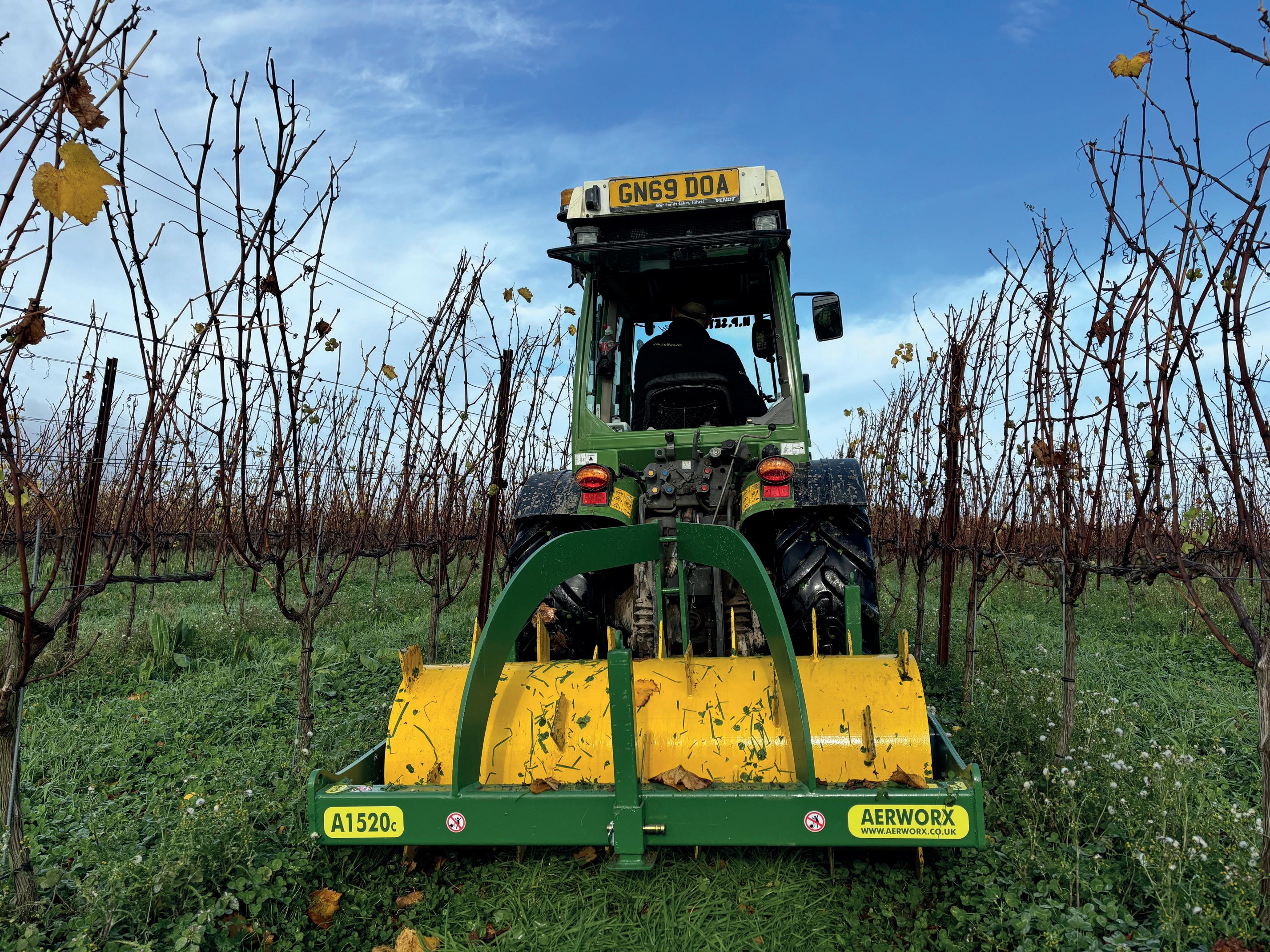
Did you know?
It takes 500 years to create one inch of top soil. This makes it a non-renewable resource – a natural material that cannot be replaced within a human lifetime once it is used up.
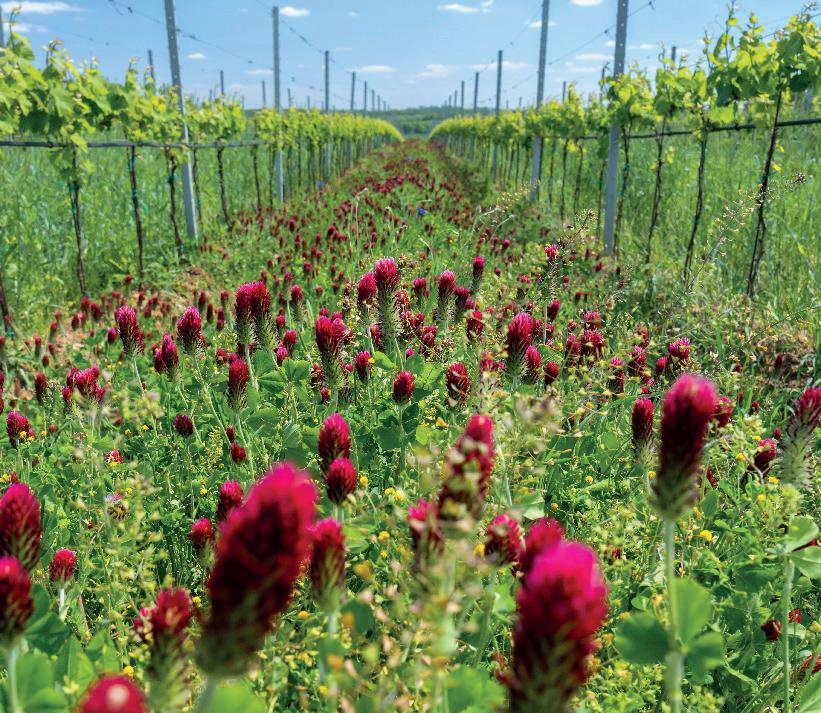
recommended when seeding new cover crops. Direct drilling is more likely to protect the soil’s structure in comparison to full-field cultivation.



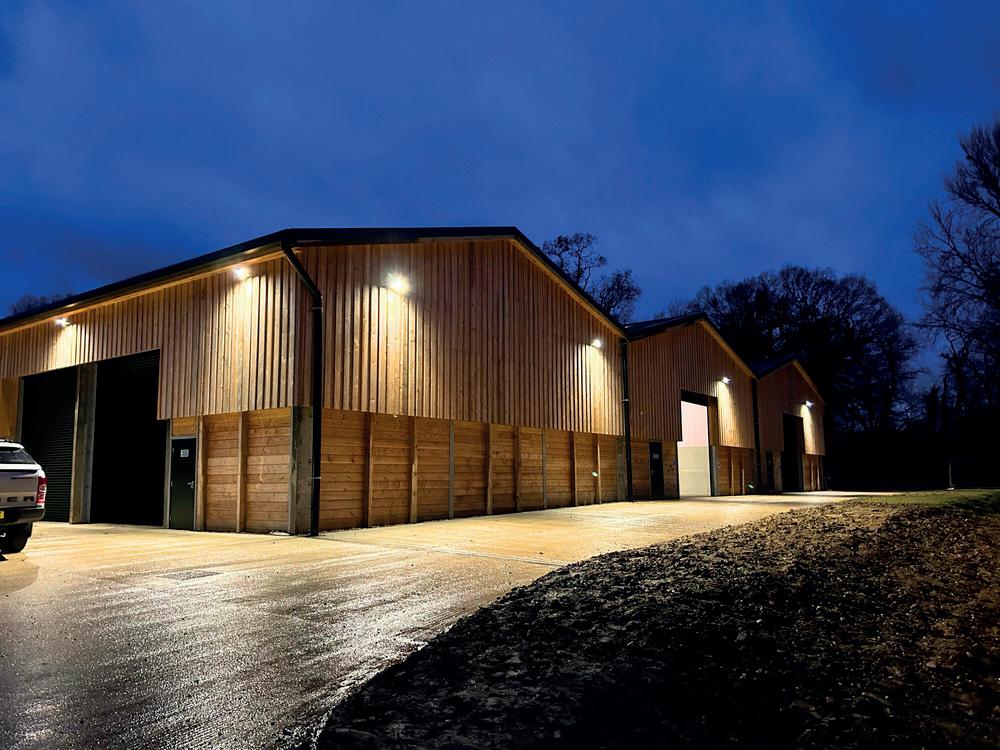
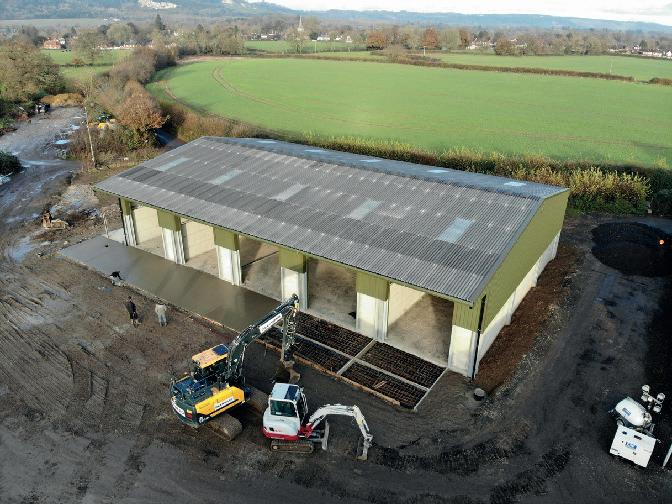

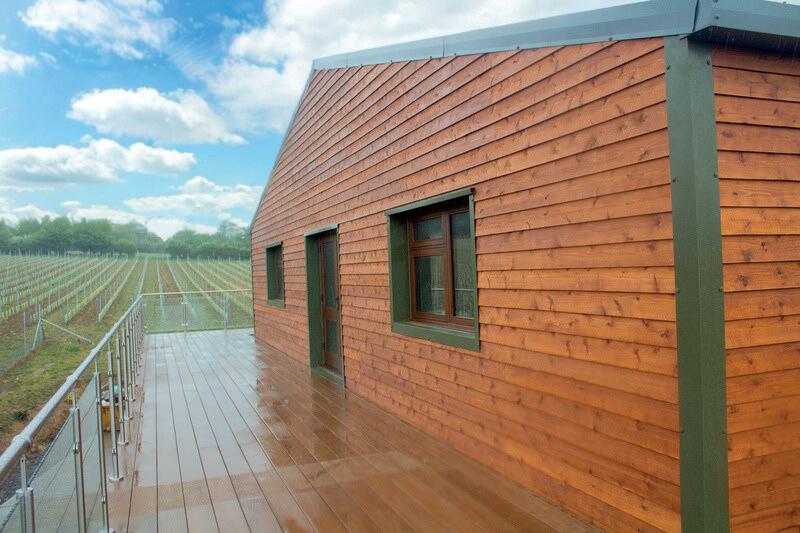
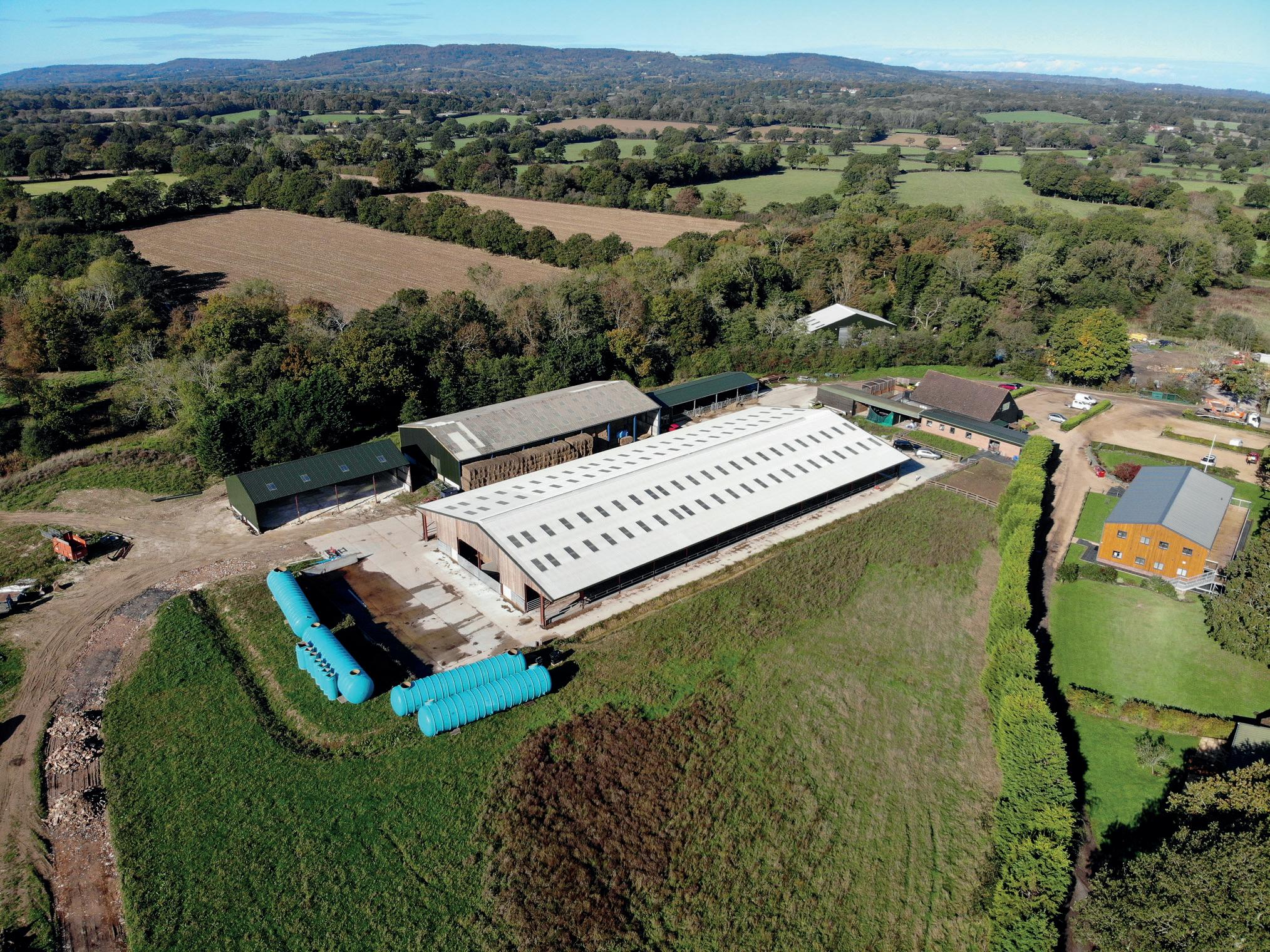
Drone-applied frost protection
CropAid’s development programme now extends beyond formulation alone. For the current UK season, CropAid has teamed up with Ian Beecher Jones, owner of JoJo’s Vineyard and chairman of the WineGB Technology Group.
Ian has been testing various technologies at his vineyard in the Chiltern Hills near Henleyon-Thames, which he planted with his wife Tess in 2019. “Managing frost is challenging for everyone,” said Ian. “I saw the CropAid AntiFrost product at an industry event in November and thought it was an interesting way of protecting vines from frost. However, applying the product with a conventional sprayer, starting in March in a wet year, was going to cause soil compaction issues which would have consequences to the vines. So, I thought, why not look at another method of application using drones?”
Ian continued: “With the change in regulations which allowed drones to apply non-MAPP regulated products from the air in 2024, it seemed a sensible approach. We’ll be working with Steve Frost from SAS Agri Drones who has extensive experience with drone application. There are six of us in the trial in the Thames and Chilterns region.
The main aim is to look at the benefits of the CropAid biostimulant on the vines for frost protection and then look at the opportunities for the rest of the season.”
Drone application offers several potential advantages:
◆ Ultra-rapid deployment ahead of overnight frost events
◆ Consistent canopy coverage, including difficult terrain and tight row spacing
◆ Reduced soil compaction compared with tractor sprayers
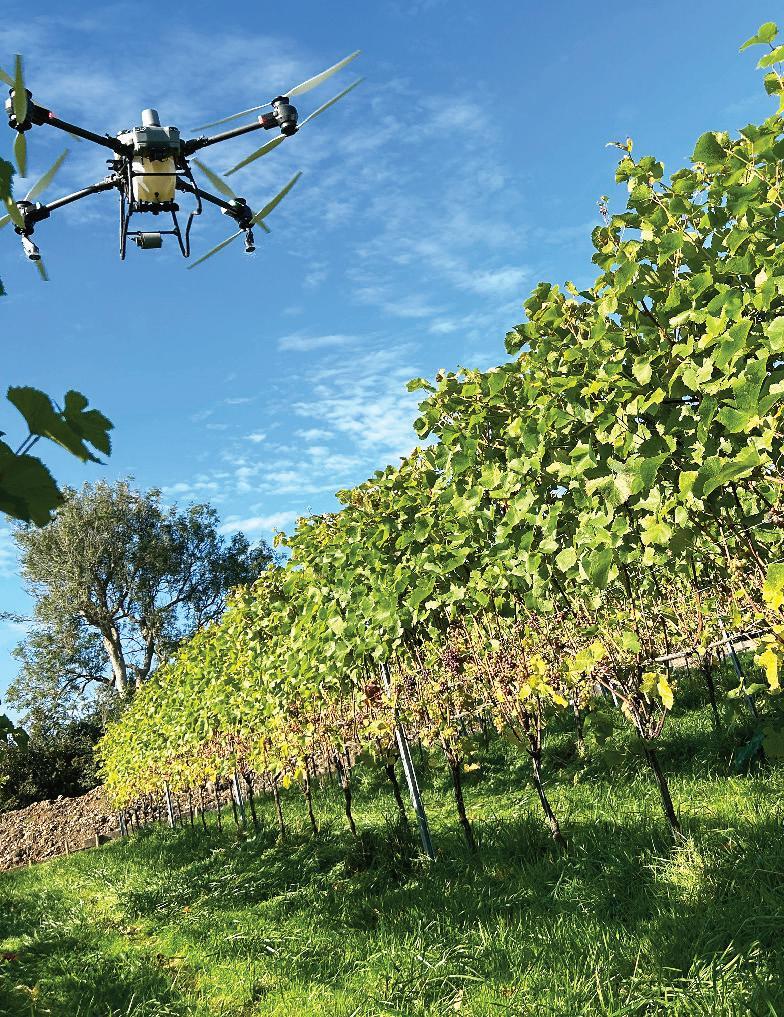
◆ Lower labour and fuel requirements
◆ Reduced operational carbon footprint. CropAid believes the partnership represents the next step in combining field-proven biostimulants and precision agriculture technologies into an integrated frost management system. Subject to UK trial results, the programme is expected to expand into other major wine-growing regions. Independent trial summaries, technical data sheets and distributor information are available at www.cropaid.com
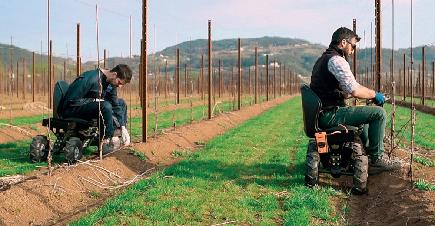





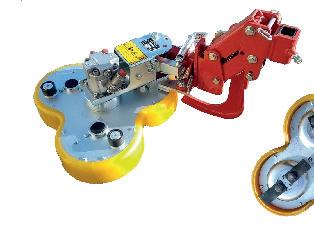

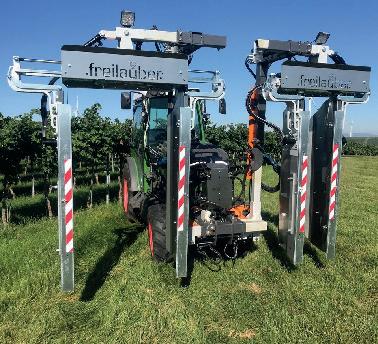
Mechanical leaf removal
As canopy growth increases through the season, leaf removal around the fruiting zone can play an important role in vineyard management. Opening the canopy improves airflow, allows sprays to reach the bunches more effectively and reduces humidity around the fruit – all key factors in managing disease pressure in UK vineyards. Exposing bunches to more sunlight can also help improve ripening, which can be particularly valuable in seasons where achieving full maturity is more challenging.
Mechanical leaf removal has become more common in UK vineyards as growers look for efficient ways to manage canopy growth across larger areas, helping reduce disease risk earlier in the season while also improving picking quality and efficiency when used ahead of harvest.
With two different methods generally used, Provitis offers two machines suited to different timings and vineyard conditions:
◆ Leaf Stripper LR 350
◆ Leaf Remover LB 260.
The Leaf Remover LB 260 uses controlled airflow to remove leaves and is often used at targeted points in the season, particularly when berries are peppercorn size or smaller. Two interchangeable nozzles allow the machine to be adjusted for different canopy densities and grape varieties. The airflow can also help remove petals post flowering which might otherwise become trapped between berries in developing bunches.
The Leaf Stripper LR 350 is the more widely used option in UK vineyards and offers a longer working window through the season. Known for its reliability and efficiency, it provides consistent mechanical defoliation and allows growers to quickly open up the fruiting zone as the canopy develops.
By allowing growers to remove leaves quickly and consistently across larger areas, mechanical systems are becoming an increasingly useful tool for managing canopy density while reducing reliance on manual labour.
VITIFRUIT EQUIPMENT


Both types are available to hire or buy from Vitifruit Equipment. www.provitis.eu
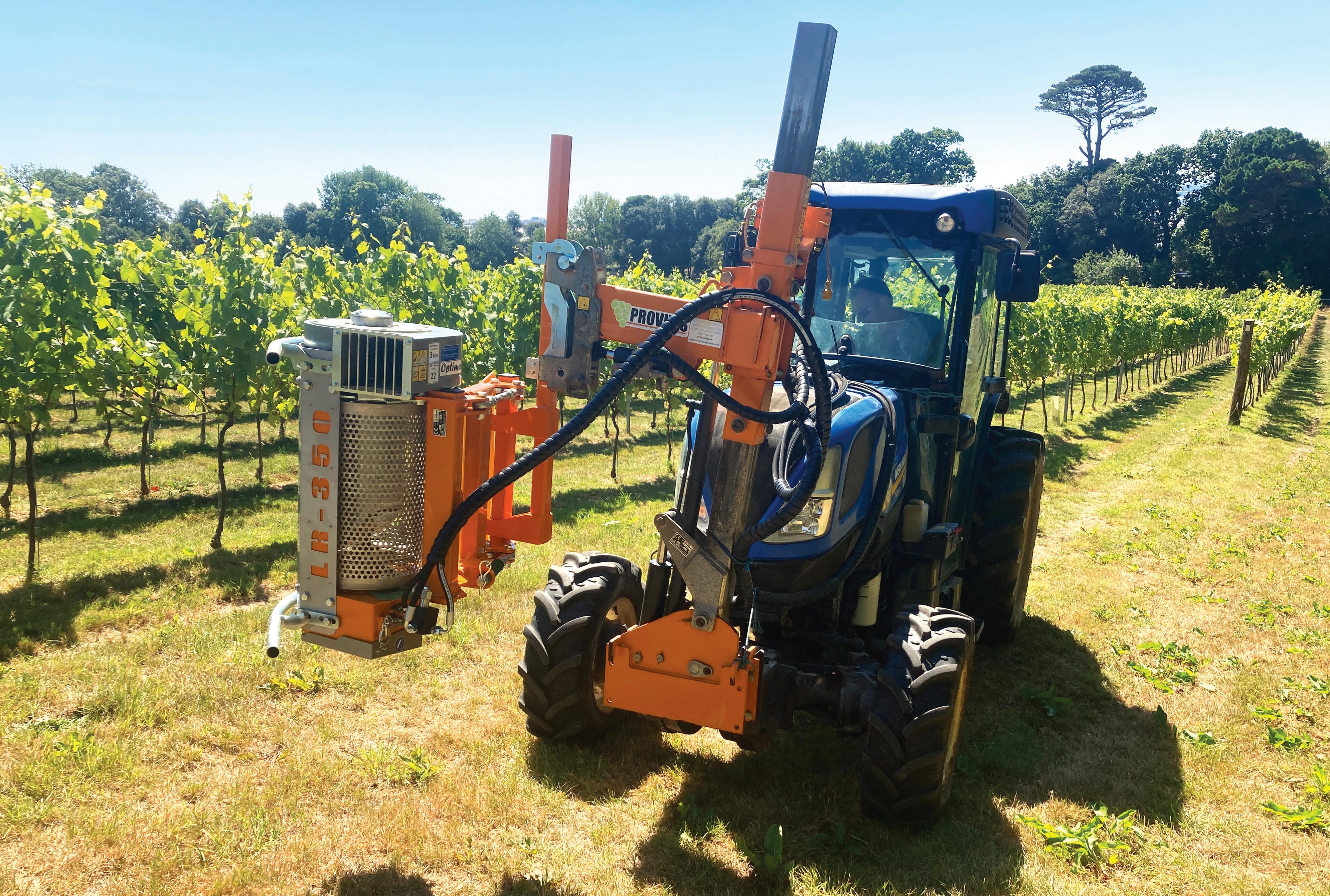
Leaf Remover LB 260
Leaf Stripper LR 350