


www.bas-uk.com
THE BRITISH ALPACA SOCIETY
www.bas-uk.com
THE BRITISH ALPACA SOCIETY
c/o Grassroots Systems Ltd,
PO Box 251, Exeter EX2 8WX.
Tel (within UK): 0845 3312468
Tel (Overseas): +44(0)1392 437788
Fax: +44(0)1392 437788
Email: info@bas-uk.com
BAS CHIEF EXECUTIVE
Dr Duncan Pullar
Tel: 07496 578781
Email: ceo@bas-uk.com
EDITORIAL
Editor: Liz Wright alpaca.ed@kelsey.co.uk
ADVERTISEMENT SALES
Wendy King Tel: 01959 543583
Email: Wendy.King@kelsey.co.uk
GRAPHIC DESIGN
Jo Legg 07306 482166 jo.legg@flair-design.co.uk
KELSEY MEDIA
The Granary, Downs Court Yalding Hill, Yalding, Maidstone, Kent, ME18 6AL 01959 541444
MANAGEMENT
Chief Executive Officer: Steve Kendall
Divisional Managing Director: Fiona Mercer
Retail Director: Steve Brown
Renewals and Projects Manager: Andy Cotton
Senior Subscription Marketing Manager: Claire Aspinall
Subscription Marketing Director: Kevin McCormick
Print Production Manager: Georgina Harris
Print Production Controller: Kelly Orriss
DISTRIBUTION
Distribution in Great Britain: Seymour Distribution Limited 2 East Poultry Avenue, London EC1A 9PT Tel: 020 7429 4000 www.seymour.co.uk
Distribution in Northern Ireland and the Republic of Ireland: Newspread Tel: +353 23 886 3850
Kelsey Media 2025 © all rights reserved. Kelsey Media is a trading name of Kelsey Publishing Ltd. Reproduction in whole or in part is forbidden except with permission in writing from the publishers. Note to contributors: articles submitted for consideration by the editor must be the original work of the author and not previously published. Where photographs are included, which are not the property of the contributor, permission to reproduce them must have been obtained from the owner of the copyright. The editor cannot guarantee a personal response to all letters and emails received. The views expressed in the magazine are not necessarily those of the Editor or the Publisher. Kelsey Publishing Ltd accepts no liability for products and services offered by third parties.
For more information of our privacy policy, please visit Kelsey Media takes your personal data very seriously. For more information of our privacy policy, please visit https://www.kelsey.co.uk/privacy-policy/ . If at any point you have any queries regarding Kelsey’s data policy you can email our Data Protection Officer at dpo@kelsey.co.uk.
6 BAS National Show 2026
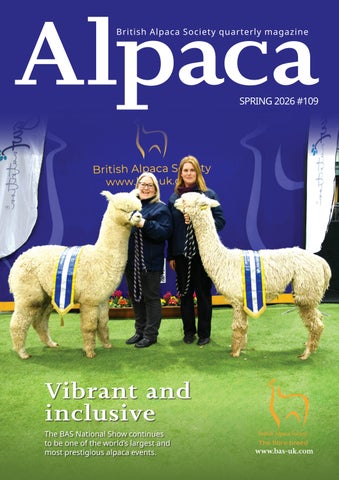
The show continues to be one of the world’s largest and most prestigious events. With over 500 alpacas gathered there was a vibrant and inclusive atmosphere across the weekend. 22 Show returning The alpaca show returns to the Dorset County Show. 24 Why your alpaca isn’t getting pregnant
And why guesswork is costing you more than you think.
Increasing plant diversity
Boosting yields and reducing reliance on fertiliser.
Handling made easier
Establishing a trust-based relationship between the animal and handler. 36 Alpacas to accommodation
Turning rural passion into homes and holidays.
Alpacas on the Mountain
An alpaca trekking and events business, located in the central Sperrin Mountains is home to a small herd of male alpacas.
Alpacas win at tourism awards
Approved for SEND
Anvil Alpacas of Durham have now been licensed for SEND provision –with the help of their alpacas 46 Find a group
There is a wealth of entertainment, education and experience across the UK alpaca groups, so don’t miss out.
Liz at Gorefield Alpacas
Spring has sprung and with it warmer weather and longer days. In this issue we celebrate a successful National Show with an overview including results. We hear from the judges and the winners tell us what it means to them to get the prestigious awards. We also welcome new judges to the list and find out more about what motivates them to go on this journey.
Keeping alpacas can take you to so many
places – quite literally for some people – and will be a lifetime of learning and meeting like minded people. We feature just some of these achievements in this issue and they are inspirational.
We welcome contributions. The next issue is our Summer issue and we’d like to look at what you do with your fibre so please get in touch. The deadline for this is 1 June. Autumn deadline is 1 September. Please remember the Yearbook too, deadline 1 December.
The “dust” is now settling on the 2026 National Show at the Stafford Showground. This celebration of alpacas culminated in a double win for Bozedown Alpacas who were awarded Supreme Champion in both Suri and Huacaya. There is more from the show later in the magazine. Thanks, and well done to all those who helped to make the show work.
Alpaca owners have had a pretty tough year with more than the usual number of problems to deal with. The weather always has a considerable influence. In the last 12 months we have had serious drought which reduced grass growth and consequently the amount of hay that was made. The scarcity of hay meant that prices went up and up. A wet winter did not help with pasture recovery so some re-seeding may well be needed. In previous magazines we have discussed pasture management, and it is certainly a good idea to be proactive and put some effort into getting the most from your grass paddocks.
Bluetongue continues to be an issue for alpaca owners with summer movement restrictions planned by Scottish and Welsh Governments. To date there have been no reports of alpacas with Bluetongue and the total number of reported cases in cattle and sheep in the UK was 327 (since July 2025). In England, there have been 305 cases of Bluetongue – including 294 cases of only BTV-3, four cases of only BTV-8 and seven cases with both BTV-3 and BTV-8. In Wales, there have been 22 cases of BTV-3. There have been no cases in Scotland. In Northern Ireland, there have been five confirmed cases of BTV-3. Continued vigilance is the order of the day with good biosecurity and vaccination helping limit the risk.
BAS was successful in demonstrating to DEFRA/APHA that the BAS microchips are a unique ID for alpacas, so alpacas that are part of BTV testing and vaccination work do not now need to have an APHA
tag inserted. Herds that vaccinate or test for BTV will need to have a County Parish Holding number (CPH number), but many already do and obtaining one is not difficult.
The BAS welfare team has had a remarkably busy time in the last few months with a high volume of re-homing requests. Many of the re-homing cases are for a small number of alpacas often elderly animals that have lost their herd mates. Occasionally whole herds need help. Recently we have had herds of 30 and 50 to support. This is no small task and the team led by Sue Loach has risen to the challenge.
BAS have been in discussion with the RSPCA to develop a partnership agreement which is designed to make working together more straightforward. The RSPCA recognise that BAS members have expertise that would help them when they are dealing with alpaca welfare cases. BAS try and support all alpacas owners through knowledge sharing and practical guidance but sometimes we find there are cases that need the “clout” of an intervention by the RSPCA and that has sometimes been hard to secure. With a partnership agreement in place, effective working by both organisations should be possible which will be better for alpacas that need help.
I hope you all have trouble free shearing, birthing and mating seasons with some helpful weather.

AL PA CA S
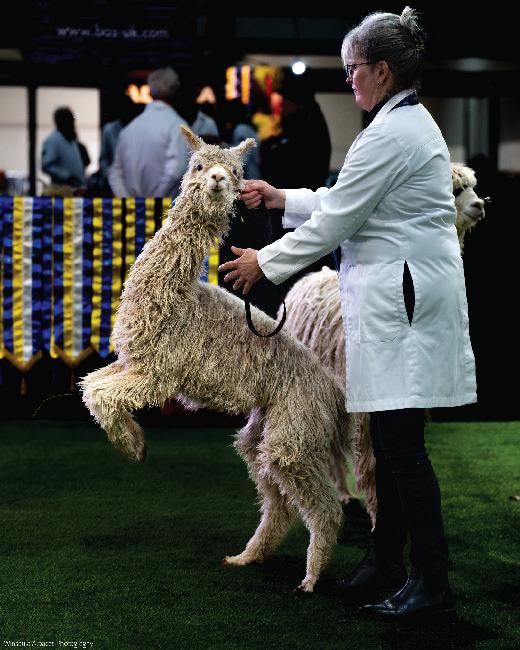
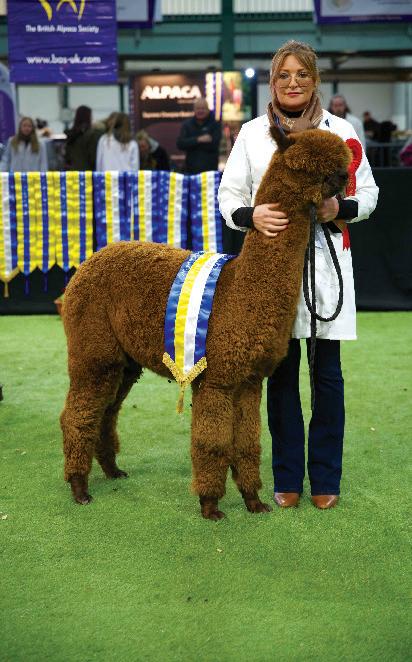
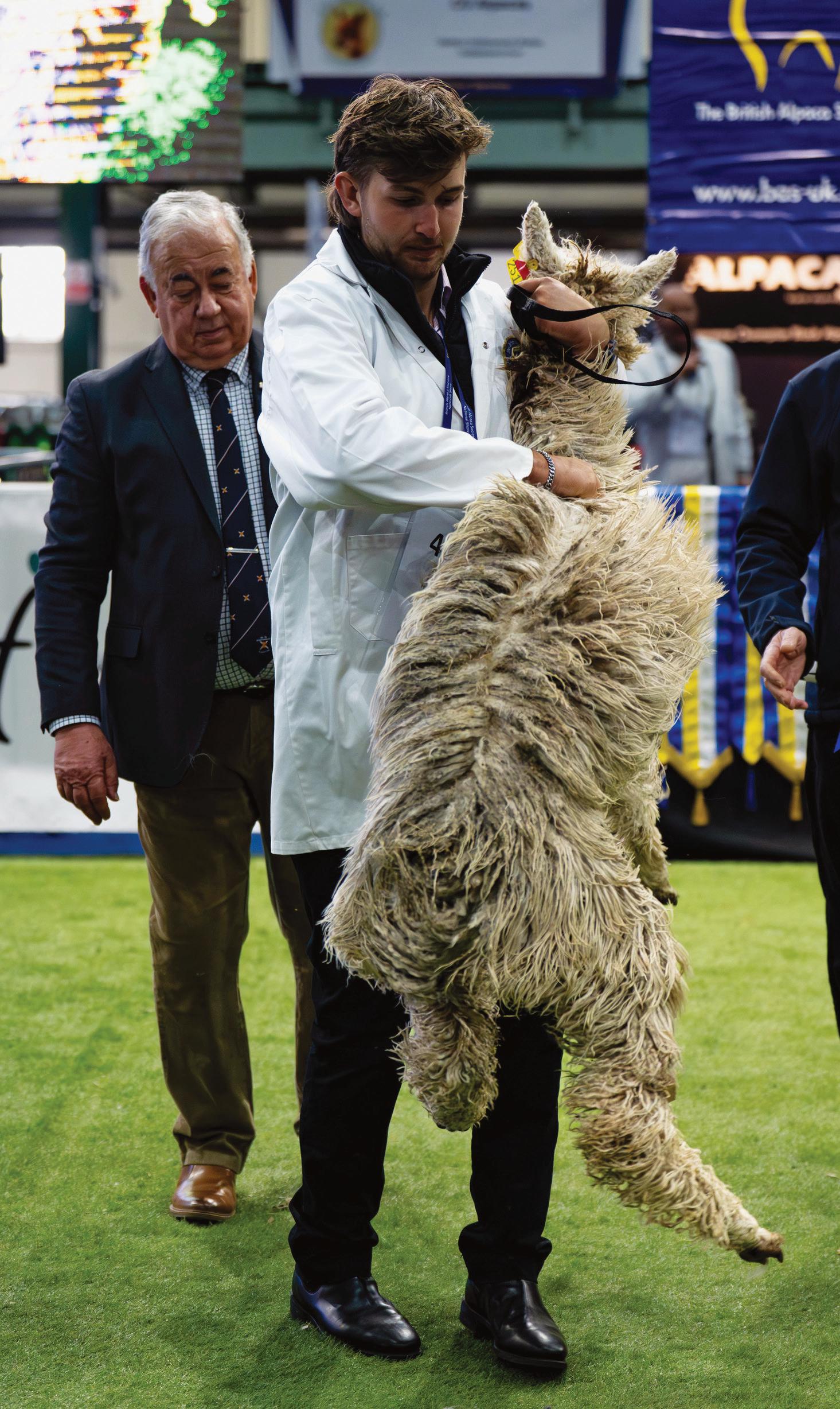
The BAS National Show continues to be one of the World’s largest and most prestigious events. With over 500 alpacas gathered in one hall there was a vibrant and inclusive atmosphere across the weekend with exhibitors from right across the country and viewers around the world.
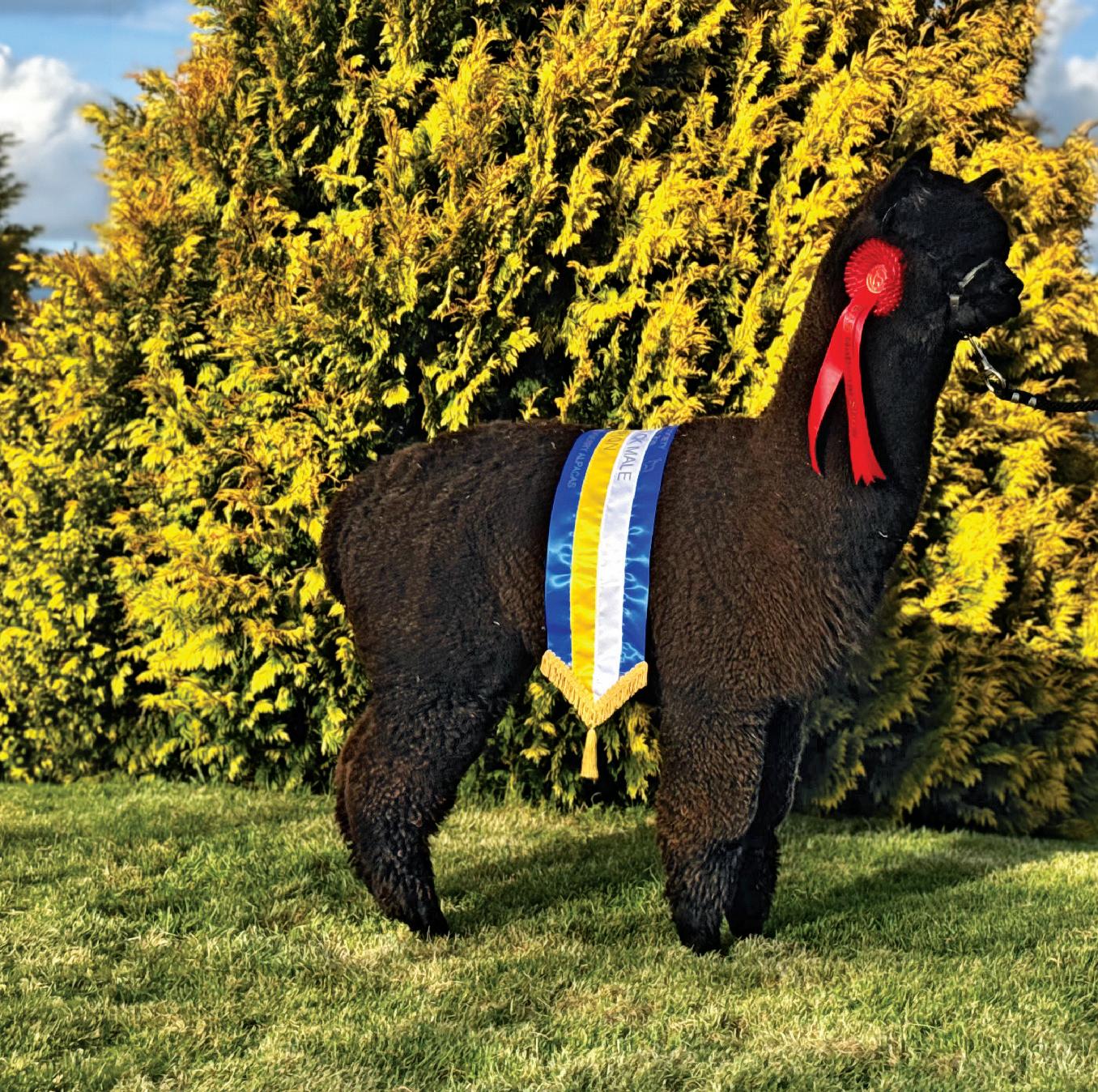
SUPREME HUACAYA CHAMPION:
SURI
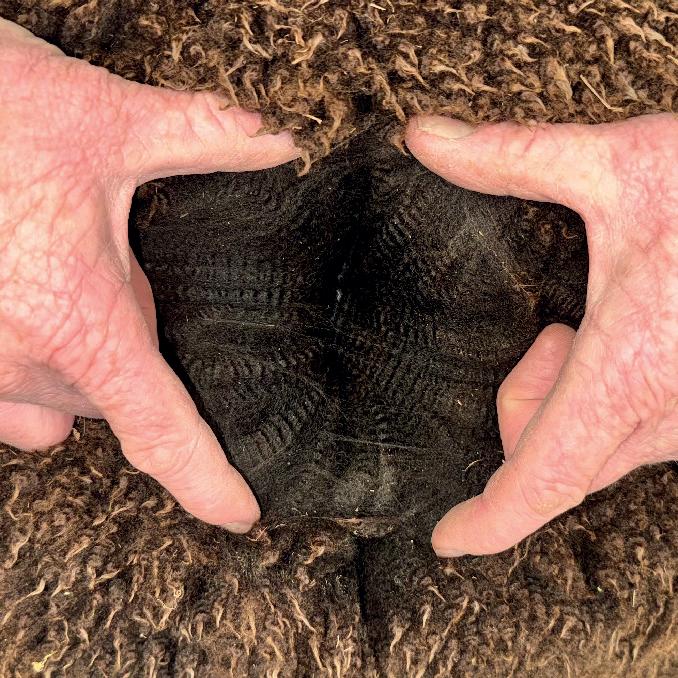
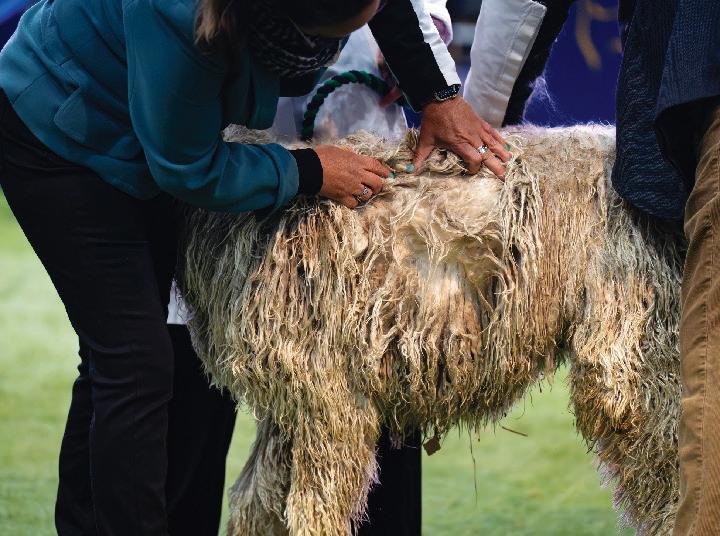
Running two rings simultaneously, our expert judges worked in pairs to evaluate all the individual alpacas and also the progeny groups who were representing the breeding characteristics of their sires or dams. The extensive audio visual set up included two enormous screens and cameramen capturing close up images of the alpacas as their fleeces were opened so that everyone in the crowd could get a ‘judge’s eye’ view!
It was great to have the different perspectives of our UK BAS judges, Roger Clarke and Nick Harrington-Smith, who brought their in depth knowledge of the UK ‘alpaca scene’ alongside Jude Anderson and Natasha Clark, both Australian senior judges. All four judges have considerable experience judging around the world and provided invaluable feedback to exhibitors.
As always, it was a pleasure to have a number of international breeders visiting the show. A big shout out to the contingents from Norway and Belgium and all our friends from Ireland, it was great to have you with us. And because we know that there are many others around the world who like to see the show but can’t always make the trip, we also broadcast the live action on YouTube and had hundreds tuning in across the whole weekend.
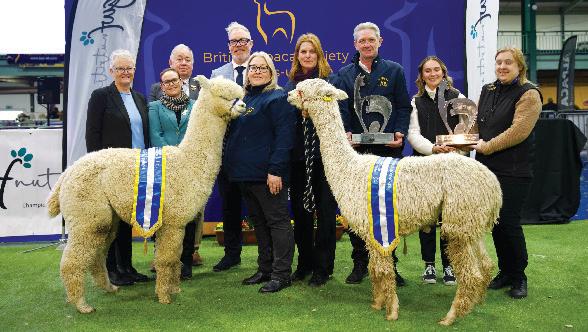
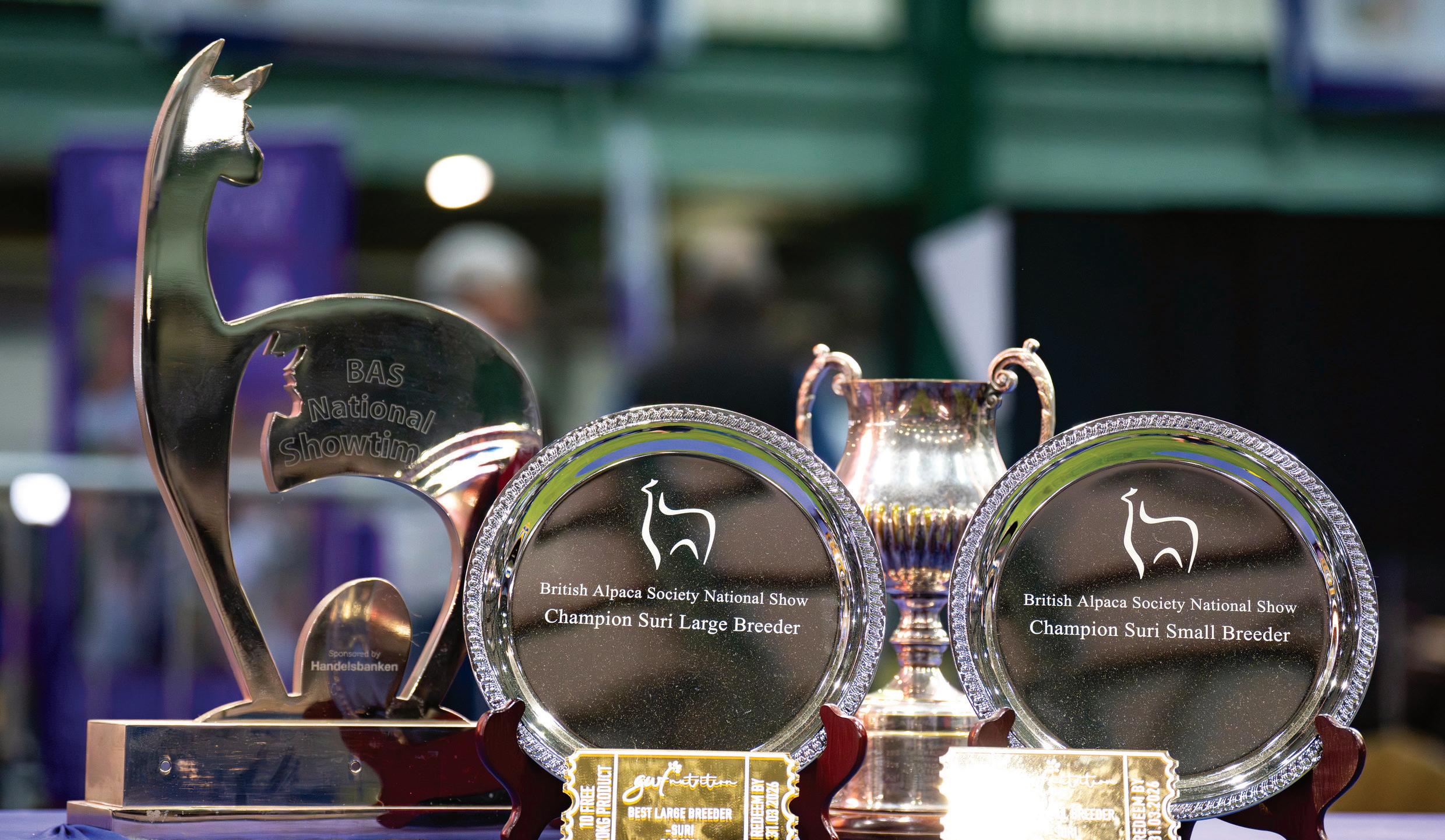
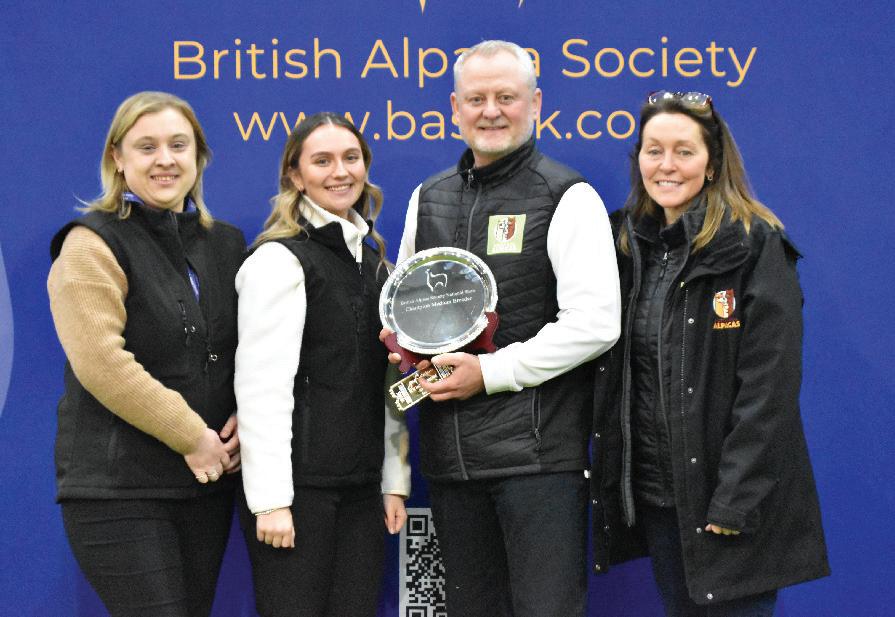
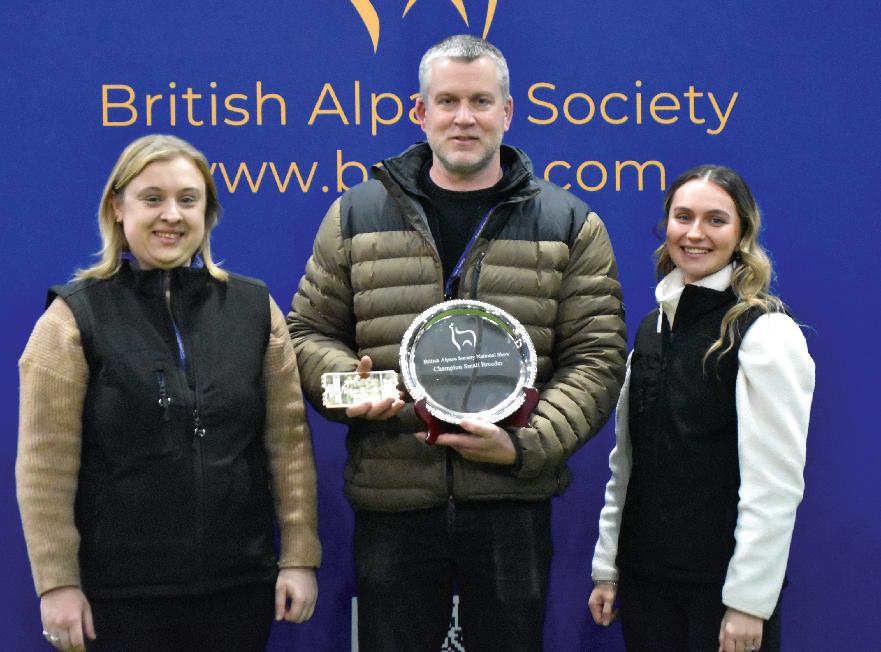
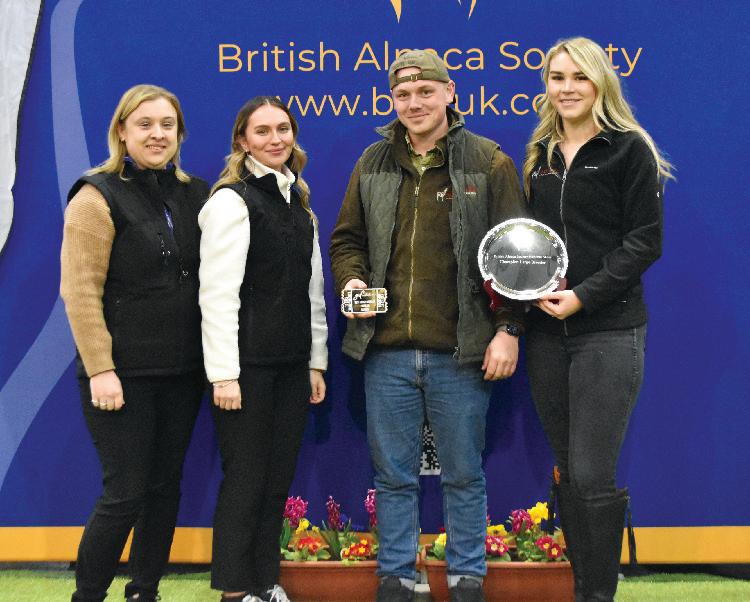
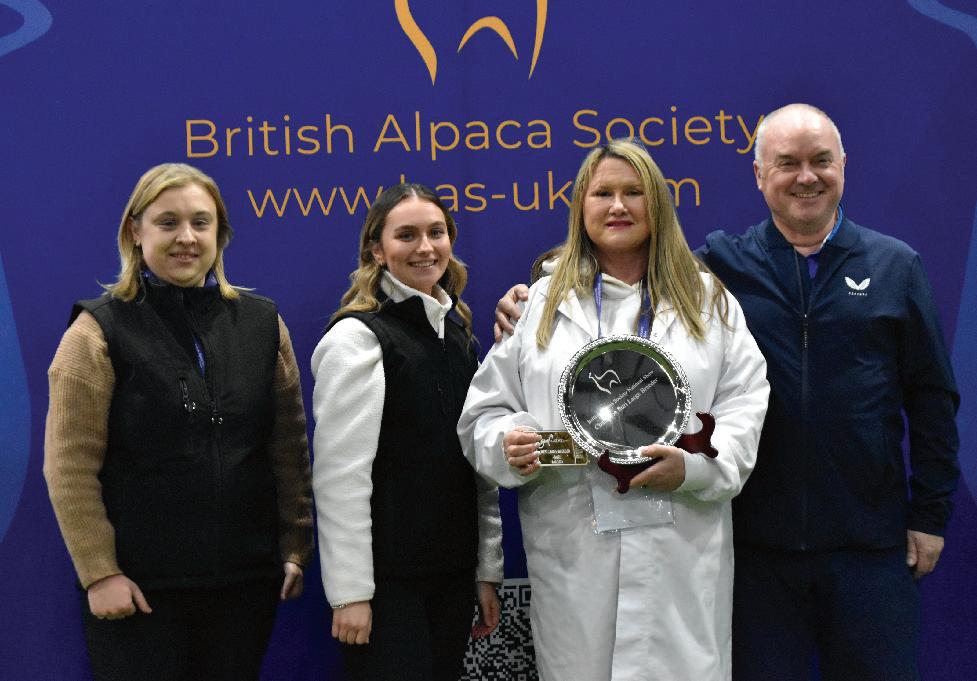
As we progressed through the show with rosettes and sashes being awarded to those placed in their classes and winning the coveted Champion and Reserve Champion awards, we were also totting up the total scores of exhibitors, culminating in the breeder awards on Sunday. This year, we split the competition into Huacaya and Suri with Best Small, Medium and Large Huacaya Breeder and Best Small and Large Suri Breeders (as there are fewer Suris). The competition was sponsored by GWF Nutrition. Congratulations to all the winners, who took home a generous prize from GWF in addition to a lovely plate trophy.
Finally, the much anticipated climax of the show comes with all the
Champion winning alpacas being paraded into the ring for the Supreme Champion selection.
The Suris were judged first and made a wonderful spectacle as they ‘swished’ elegantly around the ring representing all ages, some with one year and others with two years of long fleeces.
Then came the turn of the Huacaya in all their grandeur creating a wonderful challenge for the judges to agree upon the winner.
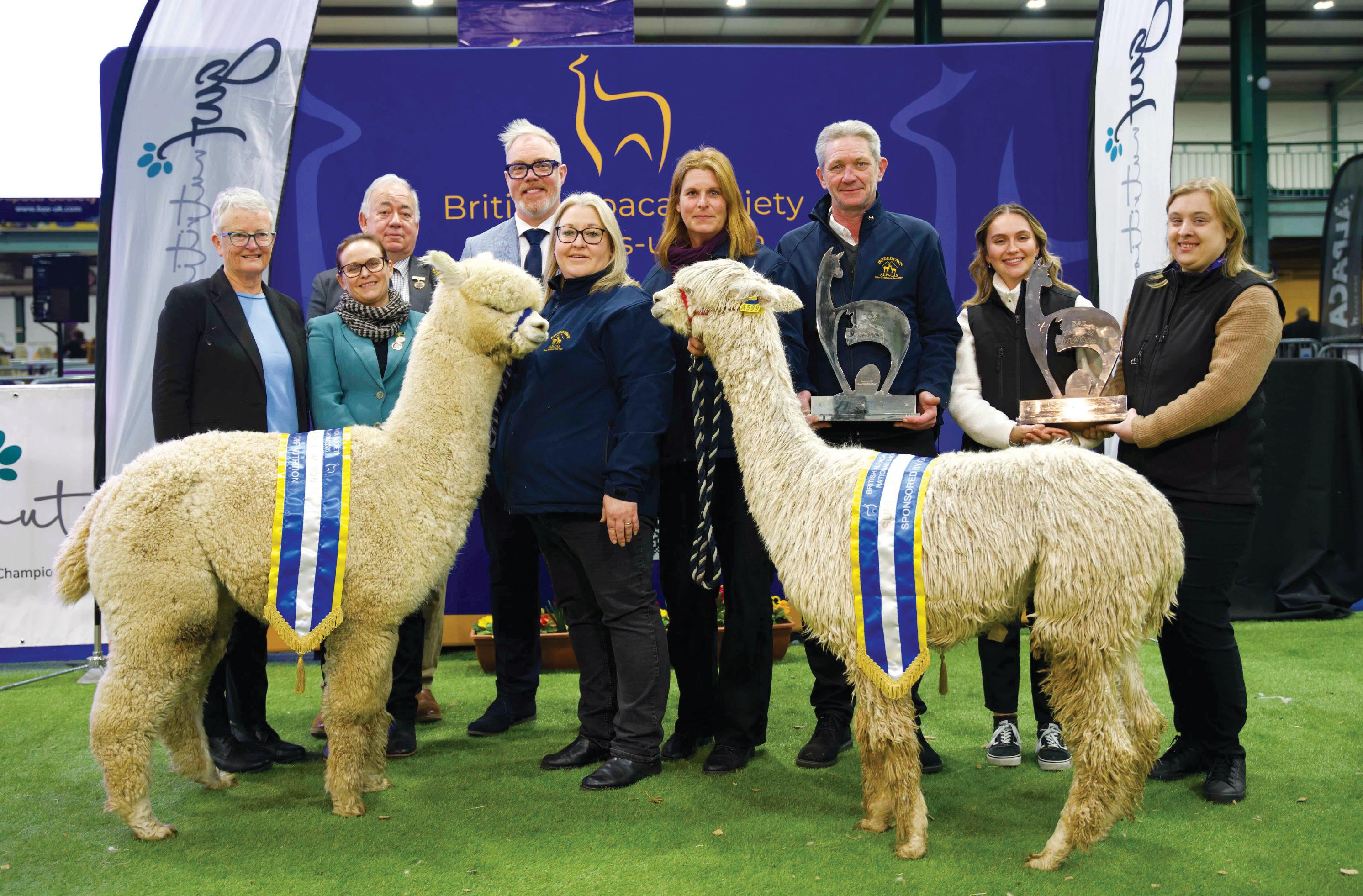
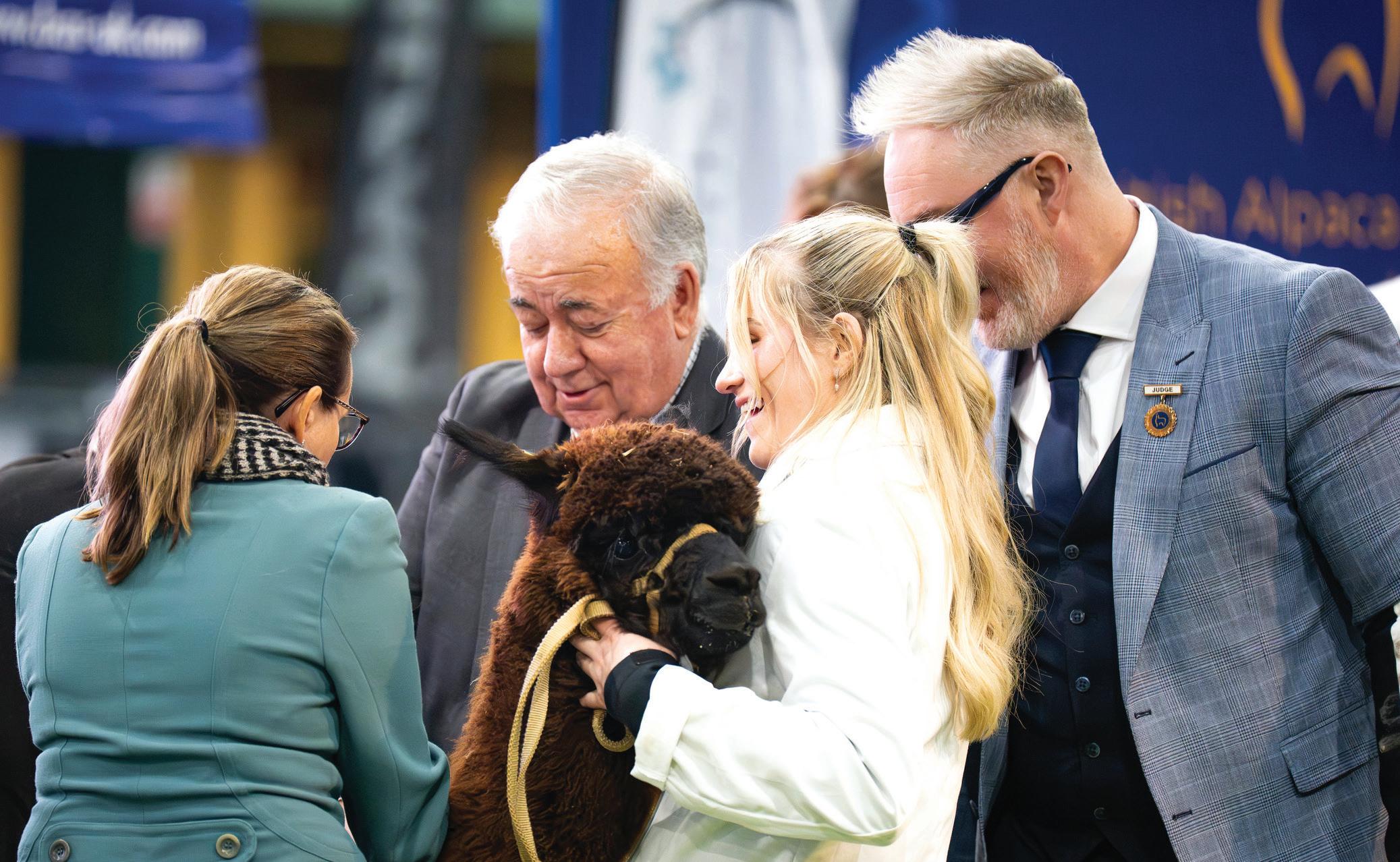
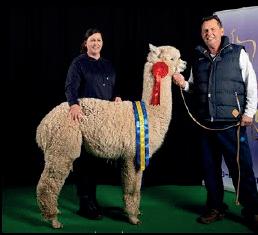
And this year, there was the ultimate triumph for Bozedown Alpacas, who were awarded Supreme for both Suri and Huacaya. An immense achievement which left Mary-Jo and her team very emotional and proud – congratulations to them!
Huge thanks to Mary-Jo Smith who was also the Chief Steward for the Halter Show and her great team of stewards helping inside and outside of the ring. Also to all the team who set up the venue and break it back down at the end – it’s a big task!
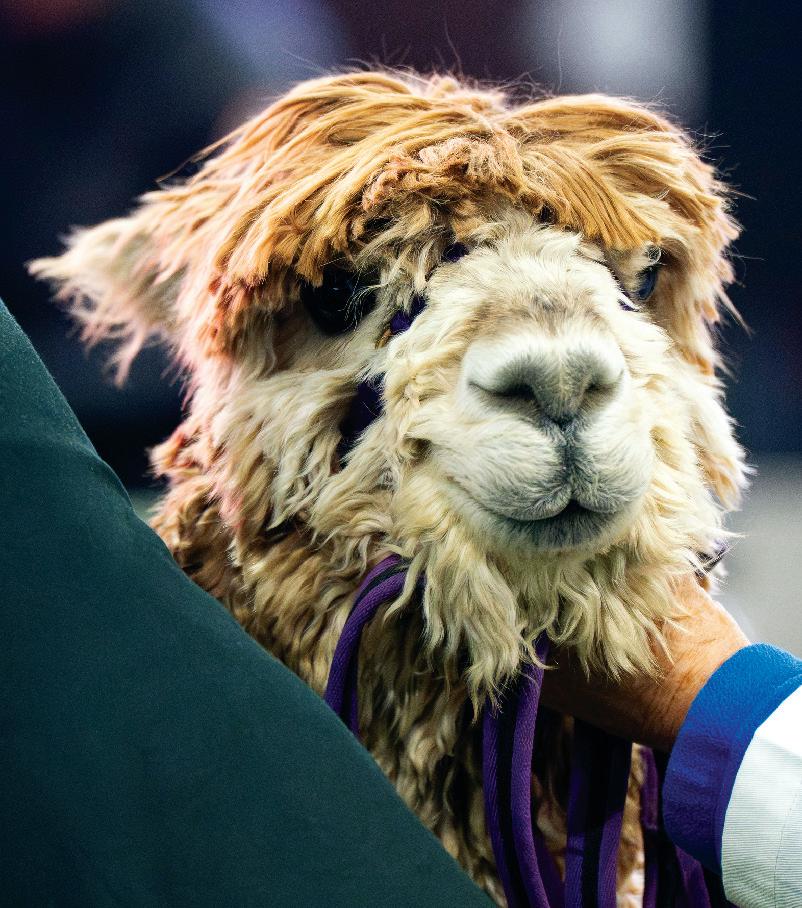
With 38 entries from regional champion winning fleeces, the quality was to be commended. The Supreme Champion Huacaya fleece, Amberly Driving Force, scored an outstanding 90.25 points with the Supreme Suri, Springfarm Eureka, not far behind with 89.00 points.
Thanks to all who entered and helped to create a really stunning display of fleeces at the National Show and of course to BAS Judge, Nick Harrington-Smith, Chief Steward, Julia Corrigan-Stuart, and all the stewards involved.
We’d love to create an even bigger display of stunning fleeces at next year’s National Show, so any fleece scoring over 80 points in a regional show will be invited to enter, alongside all the colour champions. So please keep all your fabulous scoring fleeces, ready to take centre stage at the 2027 show!
Continued on next page >>
This year even more entries were received to the Fibre Zone competition with 85 entries from 23 exhibitors.
The amazing versatility of alpaca fleece was shown across 23 different classes – from spun yarn through toys, gifts and jewellery and all the way to luxury garments.
This year’s Best in Show went to the highly creative ‘Poodle Army’ from Adel Elwis at Green End Alpacas. The Reserve was awarded to a beautiful hand knitted soft green cardigan from Trish Tatchell. Congratulations to both and all the winning entries.
On a lighter note, this year’s Exhibitor Challenge was won by Bob Crosbie of Bobcat Alpacas. In response to the challenge of creating ‘Bed and Breakfast for Birdies’, Bob’s feat of creative upcycling could not be rivalled! Now that we have all been inspired by the examples set by Bob and the other entries, we are going to repeat the same Exhibitor challenge next year – so you all have 12 months to figure out how to win!
Thanks to judge Caroline Oakes, Alison Wiseman and her team of wonderful helpers for putting on the competition.
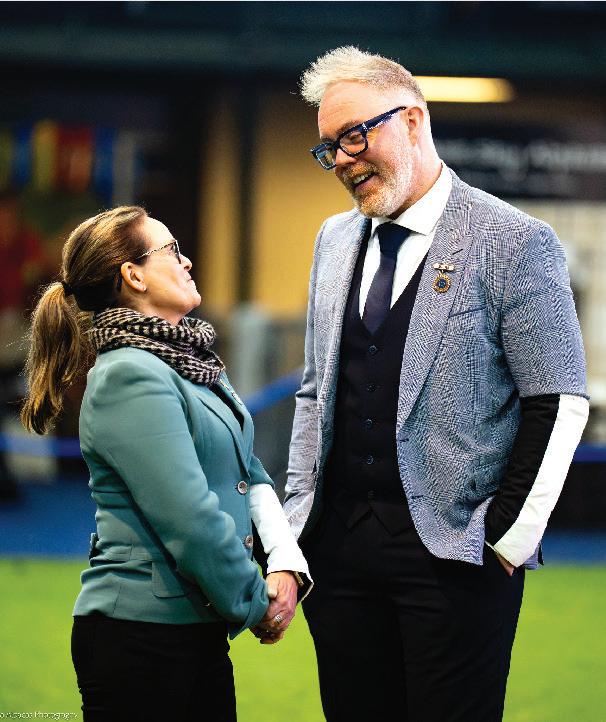
Alongside all the competitions, the National Show is always a great social occasion at which exhibitors and visitors can meet up, chat and have some great fun. The Scottish contingent are possibly the most professional in their preparations and exuberant in their post show hospitality but all reported a fun weekend.
On Friday night, Acton Hill Alpacas did the honours, sponsoring the Friday Night Supper which took place after the Champion of
Champions Fleece Show results were announced. Those who gathered around the sponsored bar tables after supper settled into a laughter filled evening serenaded by talented local breeder, Cat Howourth, who sang for us.
The Saturday show dinner was another huge success with more diners than ever and fabulous food. Thank you to everyone who persevered to get there at the start when we were challenged by an emergency road closure right outside the venue and some amount of bus confusion – everyone got there in the end and a good night was had by all. Grateful thanks go to Teri White, Cat Howourth and all the hospitality team for organising everything – a mega task!
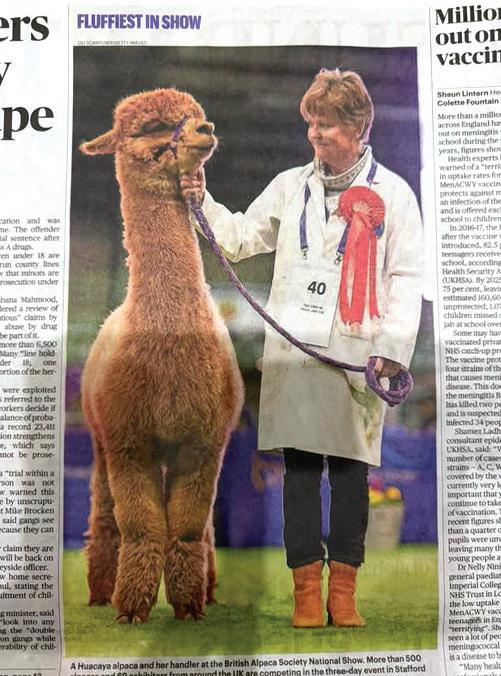
To conclude, 2026 was another fabulous National Show from which our industry will have achieved a lot of positive feedback. We had two press photographers with us at the event so it’s been wonderful to see a variety of newspaper articles featuring alpacas since the show – to date it has featured in The Sunday Times, The Mirror, People, The Guardian Online and overseas in The Atlantic, The Hindu – International and Gazet van Antwerpen. Mary-Jo achieved radio fame on Radio 5 Live and Radio Stoke, who also did an interview with Duncan during the show.
Thank you to absolutely everyone who contributed to its success by entering, sponsoring, visiting, helping and generally supporting. We certainly could not do it without you! We look forward to another super show in 2027 and welcome all ideas, feedback and support to make it the best yet!
Judges: Roger Clarke, Nick Harrington-Smith, Jude Anderson and Natasha Clark
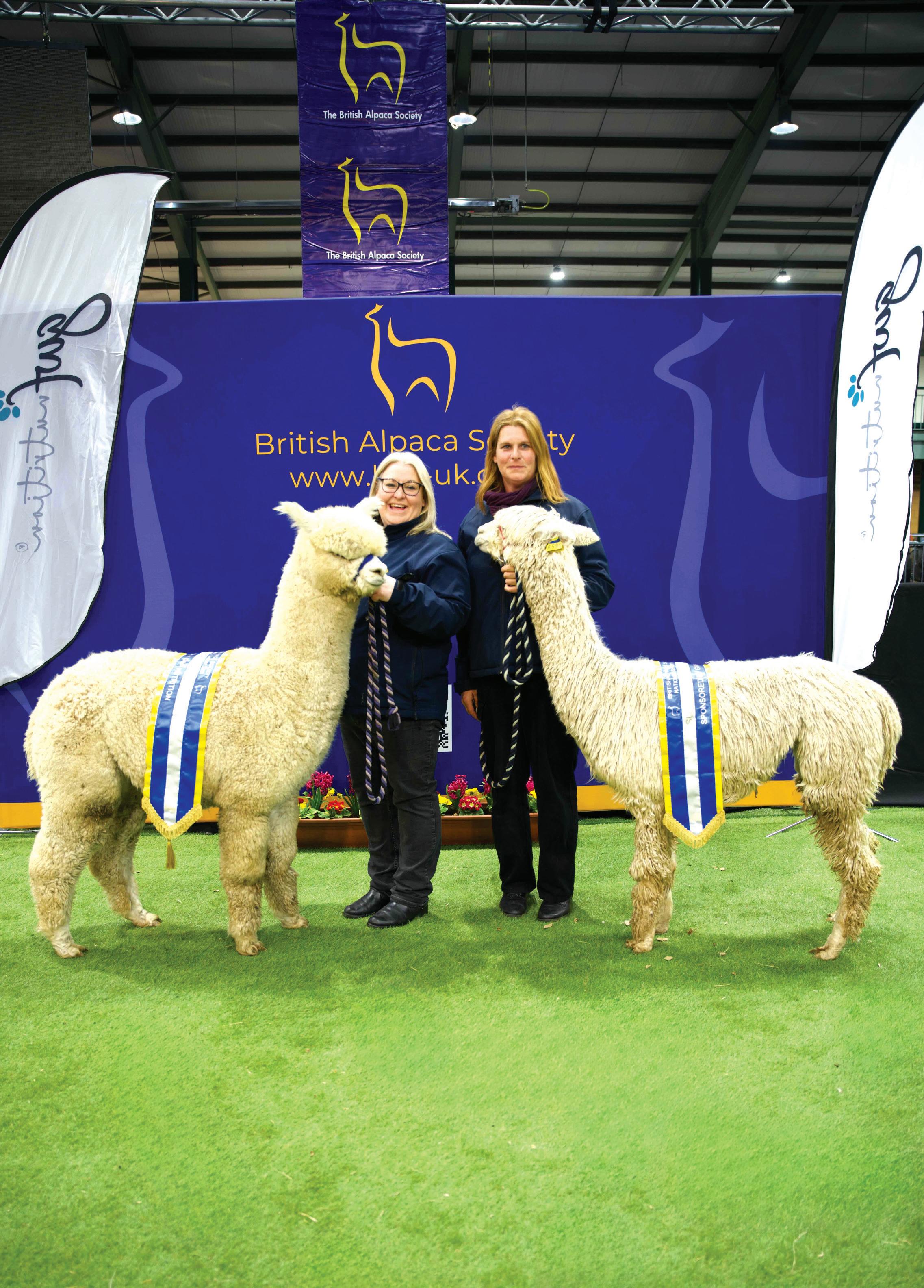
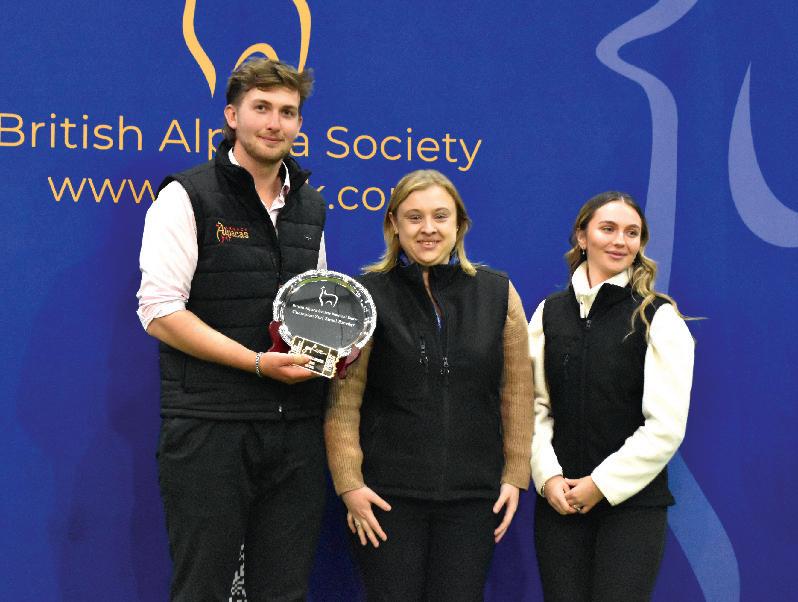
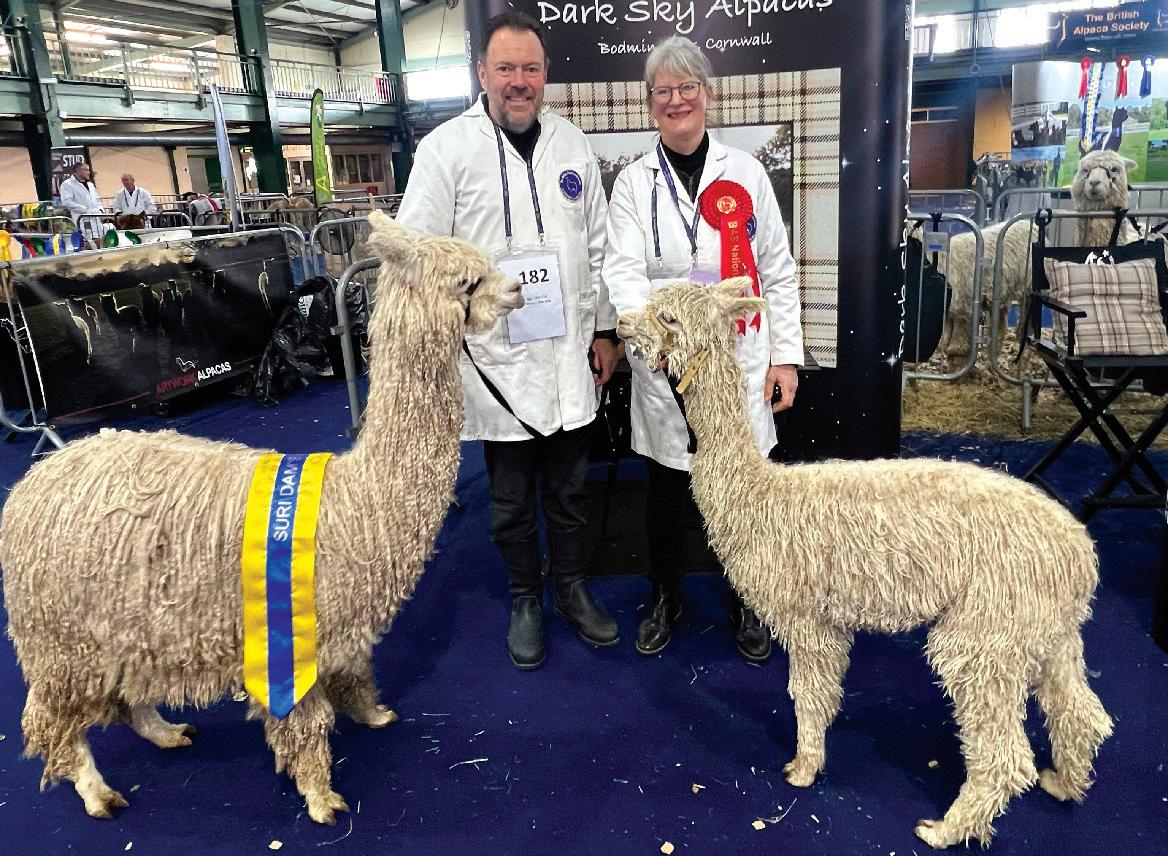
Wendy & Tom Scott from Dark Sky Alpacas winning Suri Dams Progeny with Dark Sky Kahlua’s boys
Huacaya Champion Fawn Male
Champion: Legacy Helter Skelter (BNBAS18814)
Owned by Legacy - Mrs Myerscough & Mr Henderson Reserve: Simjest Heard It Through the Grapevine (UKBAS48147)
Owned by Simjest - Dr Suzanne Smith
Huacaya Best Appaloosa
Best: Lane House Appaloosa Stars Align (BNBAS19520)
Owned by Lane House - Mrs D Lane & Miss J Lane
Huacaya Champion Roan Female
Champion: Leven Valley Nikita Glitz (UKBAS45006)
Owned by Capital - Kim & Stuart Murray Reserve: Barkston Cosmic Dancer (UKBAS46661)
Owned by Barkston - Mr & Mrs Tony & Nicola Scarborough
Suri Champion Roan Female
Champion: Snowshill Moon Dancer (UKBAS47828)
Owned by Snowshill - Mr Roger & Mrs Mary Mount
Huacaya Champion Grey Female Champion: Rivenherd Keira (UKBAS46311)
Owned by Rivenherd - Mr & Mrs Jackie & Joe Watson Reserve: Alpha Narva (UKBAS46373)
Owned by Alpha - Miss D F Davies
Suri Champion Grey Female
Champion: Wellow Jolene (UKBAS48425)
Owned by North West Suri -
Mrs Beverley Morgan, Mr & Mrs Neil & Michelle Payne Reserve: Winsaula Ruby Rose (UKBAS48350)
Owned by Winsaula - Mr & Mrs Mark & Paula Winsor
Suri Champion Black Female
Champion: Winsaula Vampire Kiss (UKBAS48349)
Owned by Winsaula - Mr & Mrs Mark & Paula Winsor Reserve: Grainmarket Michele (UKBAS47891)
Owned by Grainmarket - Miss Claire Turner
HUACAYA
Bozedown Finishing Touch
(BNBAS18663)
Sire: Bozedown Generation Now (UKBAS34340)
Owned by Bozedown Alpacas Ltd
Dam: Bozedown Just Dance (UKBAS30242)
Huacaya Champion White Male
Champion: Legacy Wild Card (BNBAS19909)
Owned by Legacy - Mrs Myerscough & Mr Henderson Reserve: Beck Brow Ready to Go (BNBAS18283)
Owned by BB - Mr George Morgan
Suri Champion White Male
Champion: Springfarm Eureka (BNBAS18790)
Owned by Springfarm - Mr & Mrs Vicki and Chris Agar Reserve: C-S Alpacas Boyzone (BNBAS19665)
Owned by C-S Alpacas - Mrs Julia & Mr Jack Corrigan-Stuart
Huacaya Champion Light Male
Champion: Bozedown Finishing Touch (BNBAS18663)
Owned by Bozedown - Bozedown Alpacas Ltd Reserve: Rivenherd Kevin (BNBAS18329)
Owned by Rivenherd - Mr & Mrs Jackie & Joe Watson
Suri Champion Light Male
Champion: C-S Alpacas Toto (BNBAS19666)
Owned by C-S Alpacas - Mrs Julia & Mr Jack Corrigan-Stuart Reserve: Bozedown Outer Limits (BNBAS17595)
Owned by Bozedown Alpacas Ltd
Suri Champion Fawn Male
Champion: Springfarm Prince Caspian (UKBAS44638)
Owned by Springfarm - Mr & Mrs Vicki and Chris Agar Reserve: C-S Alpacas KSI (BNBAS19669)
Owned by C-S Alpacas - Mrs Julia & Mr Jack Corrigan-Stuart
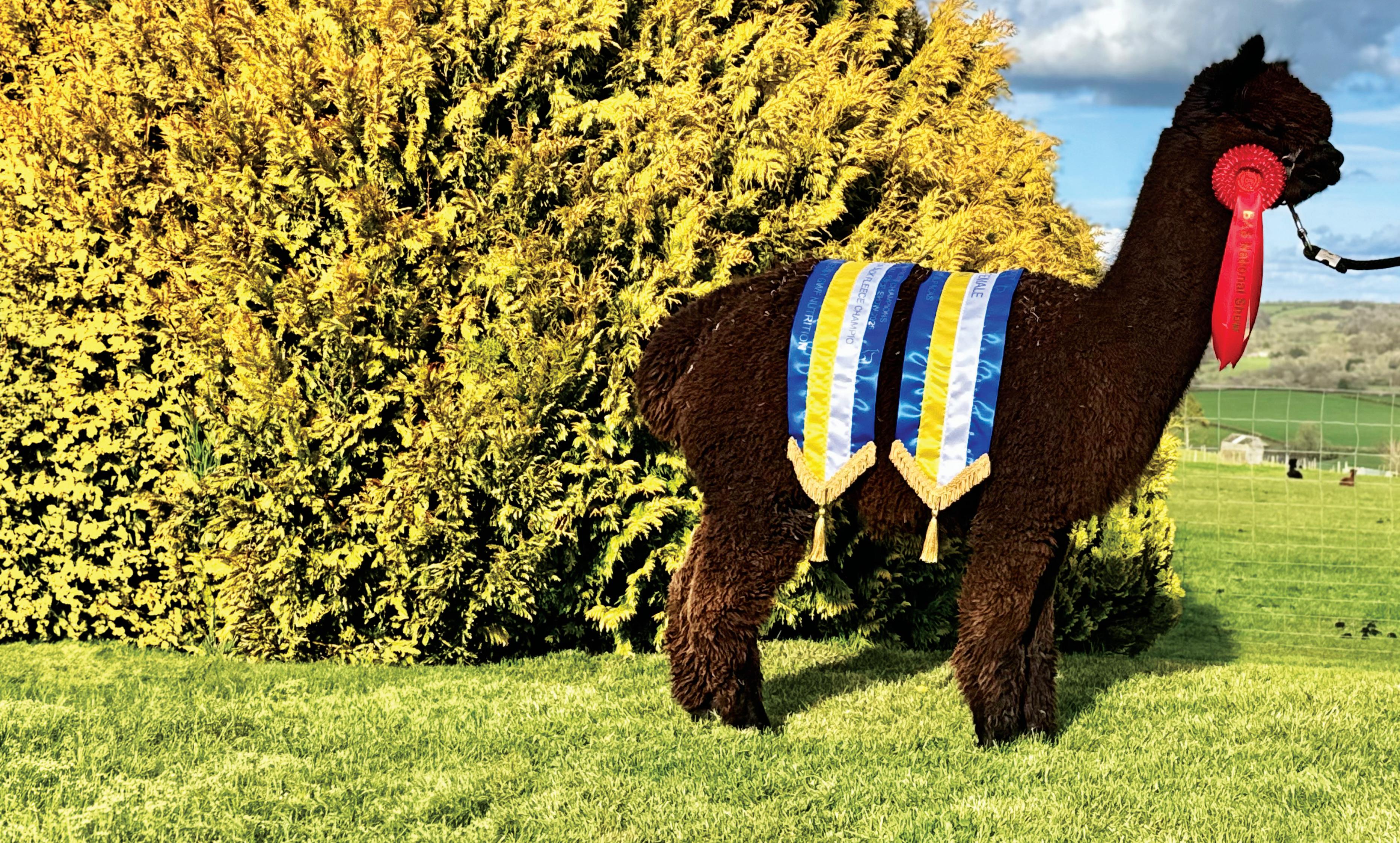
Huacaya Champion Brown Male
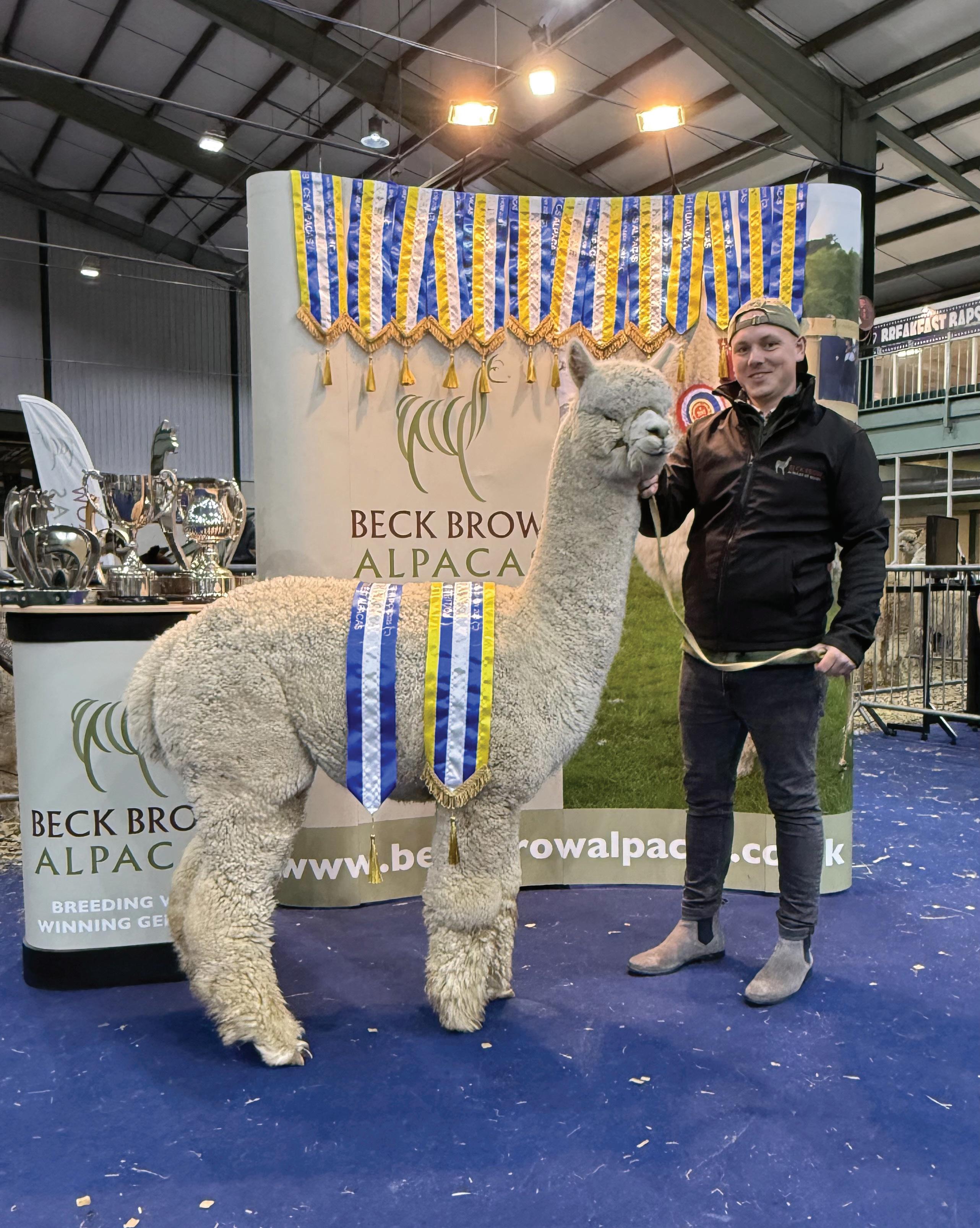
Champion: Beck Brow Sonny Boy (BNBAS18294)
Owned by BB - Mr George Morgan Reserve: Acton Hill Jail Time (BNBAS19284)
Owned by Acton Hill - Angela & Stuart Wilson
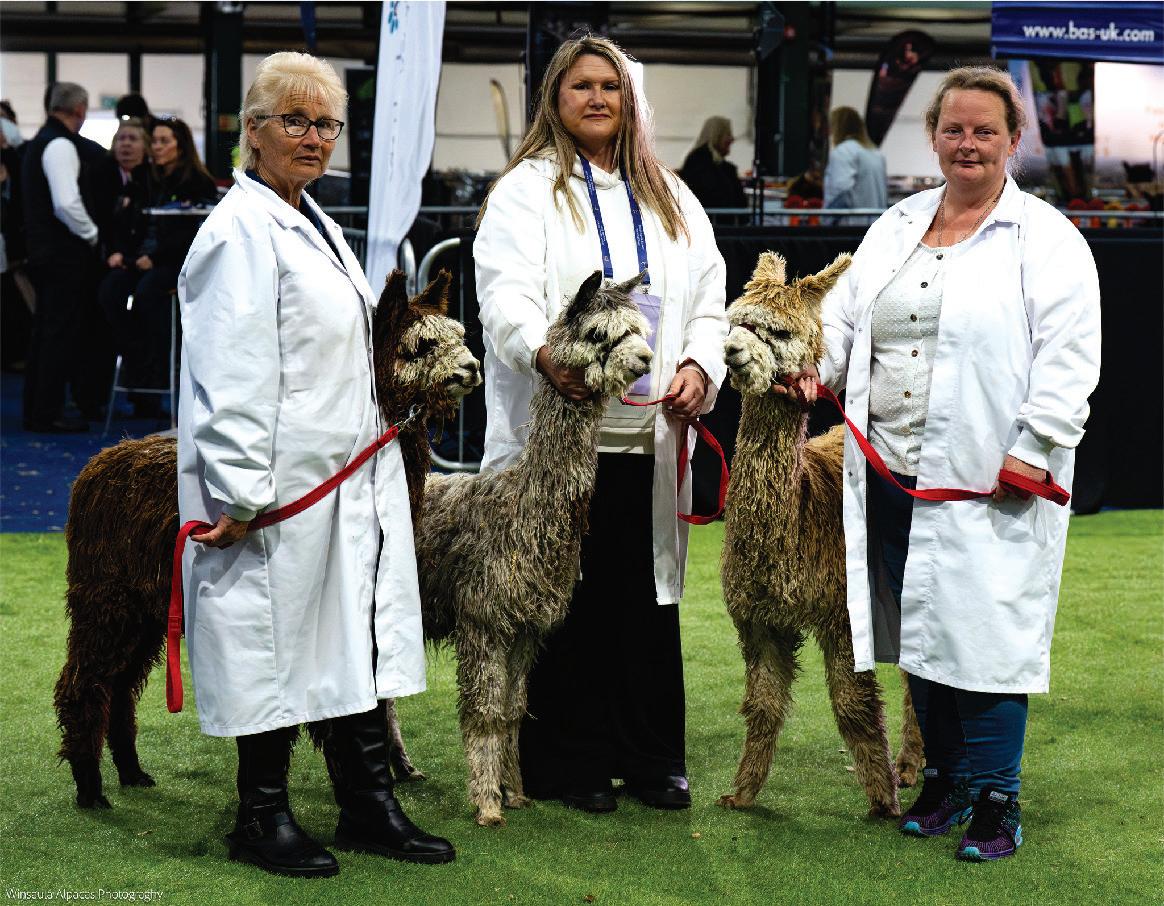
Winsaula Alpacas in the progeny class
SUPREME SURI CHAMPION: Bozedown Mystic Dream (UKBAS46769)
Sire: Pucara PureSuri Kahuna’s Alakai Of CSA (Imp) (UKBAS29524)
Owned by Bozedown Alpacas Ltd
Dam: Bozedown Express Yourself (UKBAS30248)
Suri Champion Brown Male
Champion: Winsaula Mardi-Gras (BNBAS19757)
Owned by Winsaula - Mr & Mrs Mark & Paula Winsor Reserve: Bozedown Full Throttle (BNBAS18664)
Owned by Bozedown Alpacas Ltd
Suri Champion Male Black Champion: Wellow Jumpin Jack Flash (BNBAS19800)
Owned by North West SuriMrs Beverley Morgan, Mr & Mrs Neil & Michelle Payne Reserve: Bozedown Dark Phoenix (BNBAS18662)
Owned by Bozedown Alpacas Ltd
Huacaya Champion Black Female
Champion: Inca Serenade (UKBAS45015)
Owned by Inca Alpaca Ltd Reserve: Inca Unity (UKBAS48527)
Owned by Inca Alpaca Ltd
Huacaya Champion Brown Female
Champion: Upsland Marie Antoinette (UKBAS46486)
Owned by Blackberry - Mr & Mrs H & C Brown Reserve: Artwork M.S. American Rhapsody (UKBAS48188)
Owned by Artwork - Mr K Freivokh & Miss E Windsor
Suri Champion Brown Female
Champion: Winsaula Illyana’s Cariad (UKBAS46083)
Owned by Winsaula - Mr & Mrs Mark & Paula Winsor Reserve: Aylswood Ta Dah (UKBAS47924)
Owned by Aylswood - Ailene Charlton
Huacaya Champion Fawn Female
Champion: Bozedown Autumn Moon (UKBAS48220)
Owned by Bozedown Alpacas Ltd
Reserve: Acton Hill Oh Carolina (UKBAS46589)
Owned by Acton Hill - Angela & Stuart Wilson
Suri Champion Fawn Female
Champion: Dark Sky Whispering Angel (UKBAS48125)
Owned by Dark Sky - Mr & Mrs Tom & Wendy Scott Reserve: Faraway Alma (UKBAS48039)
Owned by Faraway - Mrs Nikki Hayton
Huacaya Champion Light Female
Champion: Acton Hill Girl on Film (UKBAS47706)
Owned by Acton Hill - Angela & Stuart Wilson Reserve: Bozedown Cherished (UKBAS46749)
Owned by Bozedown Alpacas Ltd
Huacaya Champion Black Male
Champion: Inca Tivoli (BNBAS18705)
Owned by Inca Alpaca Ltd Reserve: Chinchero Diggery Delvet (BNBAS19780)
Owned by Chinchero - Mr & Mrs S & B Massenhove
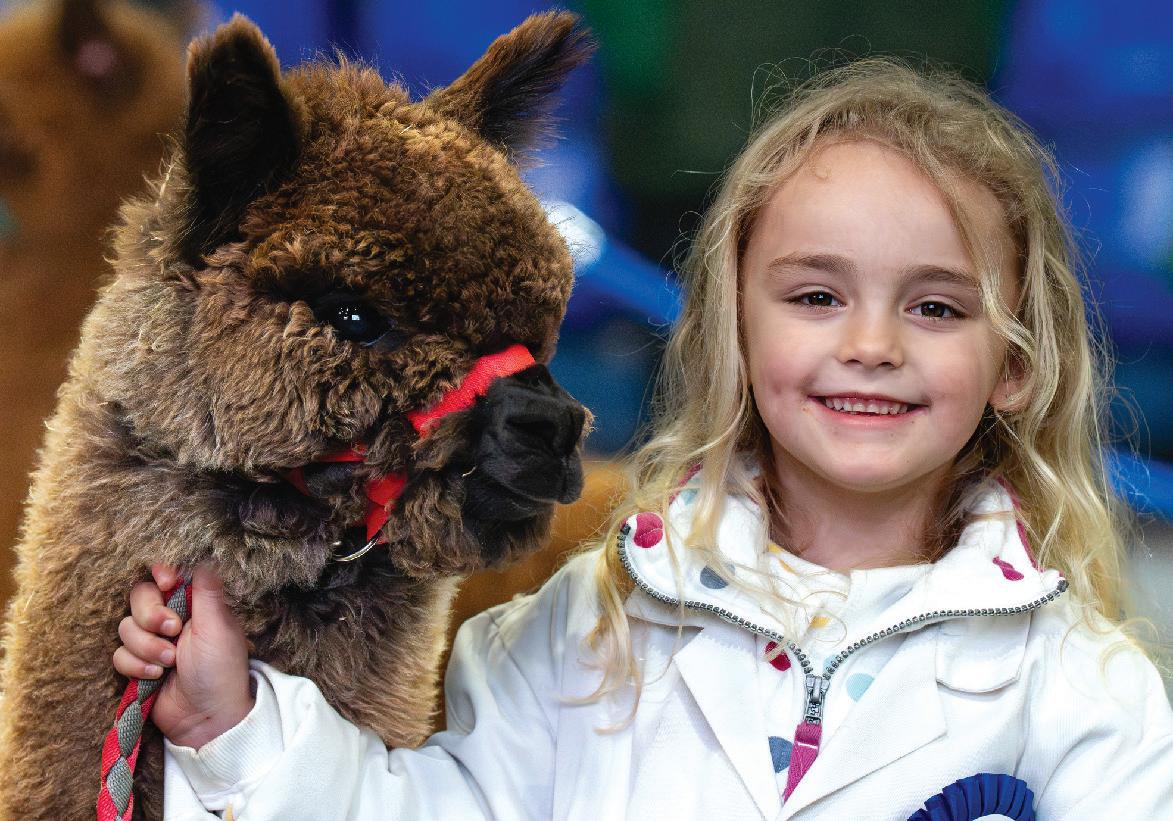
Halle Stranger, young handler
Huacaya Champion Grey Male
Champion: Rivenherd Larry (BNBAS19471)
Owned by Rivenherd - Mr & Mrs Jackie & Joe Watson Reserve: Velvet Hall Storm Chaser (BNBAS18476)
Owned by Velvet Hall - Mrs J MacDonald & Mr S Ramsay
Suri Champion Grey Male
Champion: Winsaula Mercurial Storm (BNBAS19759)
Owned by Winsaula - Mr & Mrs Mark & Paula Winsor Reserve: Winsaula Quicksilver (BNBAS19755)
Owned by Winsaula - Mr & Mrs Mark & Paula Winsor
Huacaya Champion Roan Male
Champion: Snowshill Nimbus (BNBAS19347)
Owned by Snowshill - Mr Roger & Mrs Mary Mount
Reserve: Snowshill Olorin (UKBAS48611)
Owned by Snowshill - Mr Roger & Mrs Mary Mount
Suri Champion Roan Male
Champion: Legacy Suri Karrera (BNBAS18811)
Owned by Legacy - Mrs Myerscough & Mr Henderson
Suri Champion Light Female
Champion: Bozedown Mystic Dream (UKBAS46769)
Owned by Bozedown Alpacas Ltd
Reserve: Hilly Ridge Never Say Never (UKBAS47871)
Owned by Hilly Ridge - Mrs J Bridge
Huacaya Champion White Female
Champion: Beck Brow Touch of Class (UKBAS46223)
Owned by BB - Mr George Morgan Reserve: Castlings Marquise Illiniza (UKBAS48068)
Owned by Castlings - Rebecca Block
Suri Champion White Female
Champion: Bozedown Flawless (UKBAS46754)
Owned by Bozedown Alpacas Ltd
Reserve: Bozedown Luminous Star (UKBAS48208)
Owned by Bozedown Alpacas Ltd
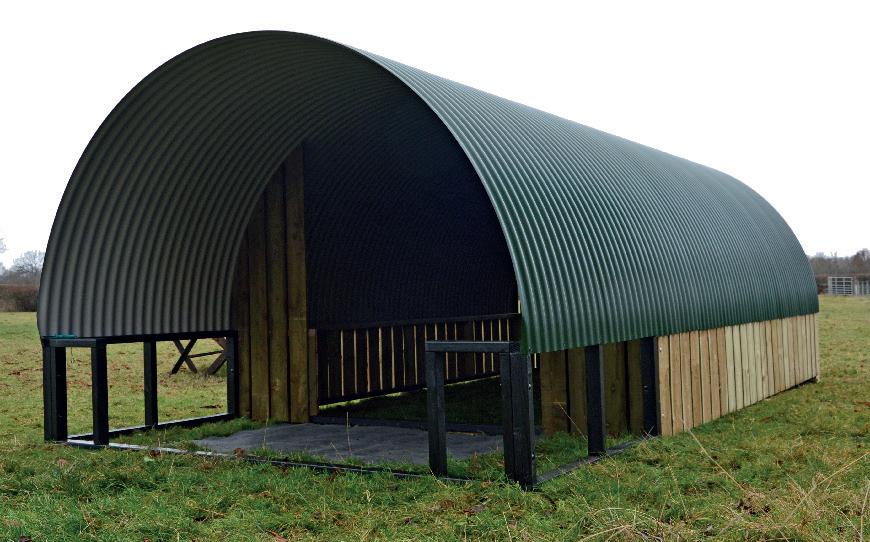
Weather:
Protecting against adverse weather
Ventilation:
Provide good air flow
Flies:
Shelter against summer heat and flies
Adaptability:
Water drinkers, troughs and deep bedding can all be added
Husbandry:
A great place to complete feet-trimming, vitamin drenches or as a quarantine area
Appearance:
Practical and attractive
Size:
Various options and sizes available. Please visit our website for more details.
Being an Alpaca breeder the welfare of our animals is paramount so the pods are designed and manufactured by ourselves taking this into account. We designed the Alpaca pods for our own herd and are now pleased to offer these for sale.
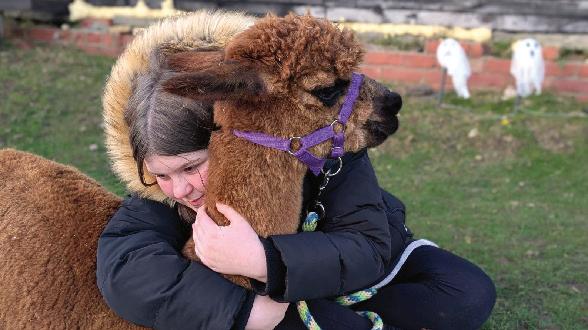
The young handler segment of the show returned bigger and better this year. Split into three age groups, a special award was presented to one young person from each group – there were no winners or losers, simply those who impressed the judge most in the ring. Participants demonstrated their handling skills through manoeuvring the alpacas through weave poles, releasing and
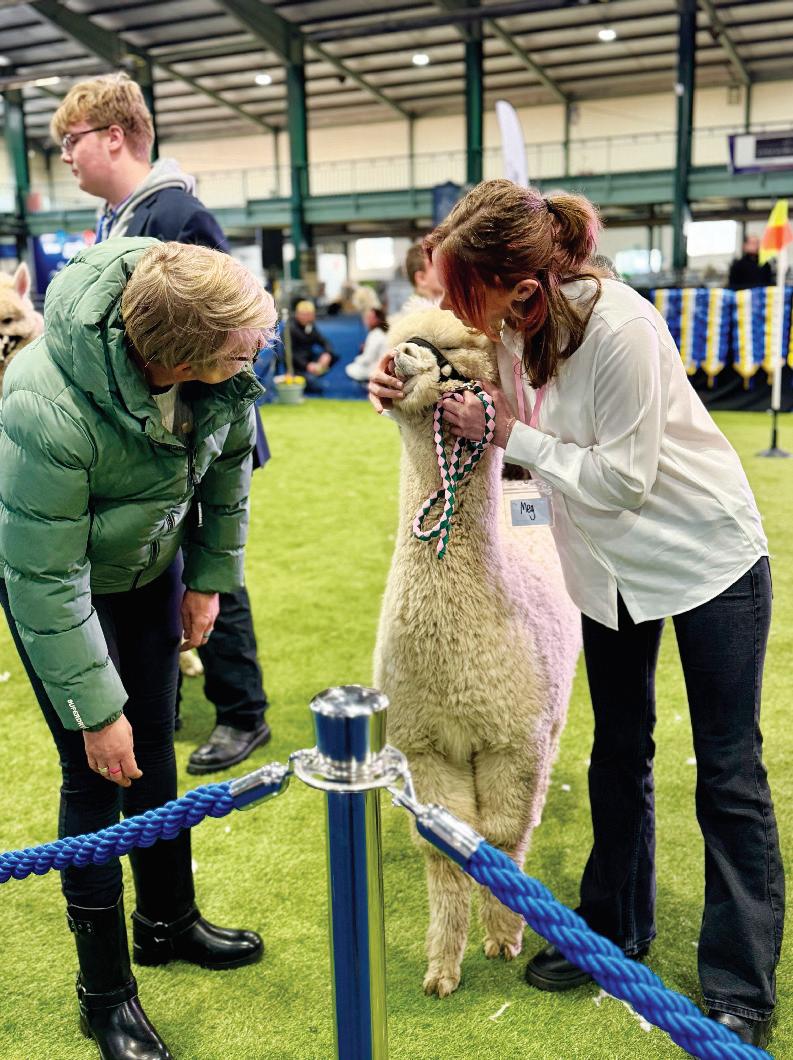
re-catching their alpaca in a pen, explaining one positive trait about their alpaca, and answering questions on alpaca health.
Newly qualified British Alpaca Society judges Caroline Barugh and Kim Murray oversaw this section, undoubtedly inspiring many of the young handlers.
In total, 16 fantastic young people took part, and we can’t wait to see this section continue to grow year on year.
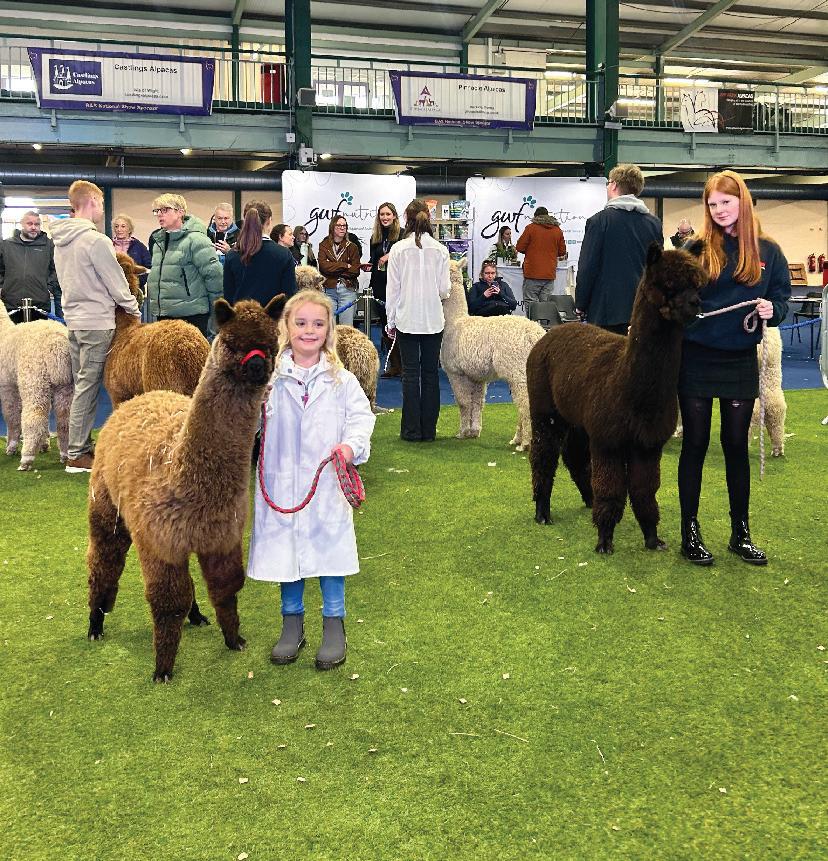
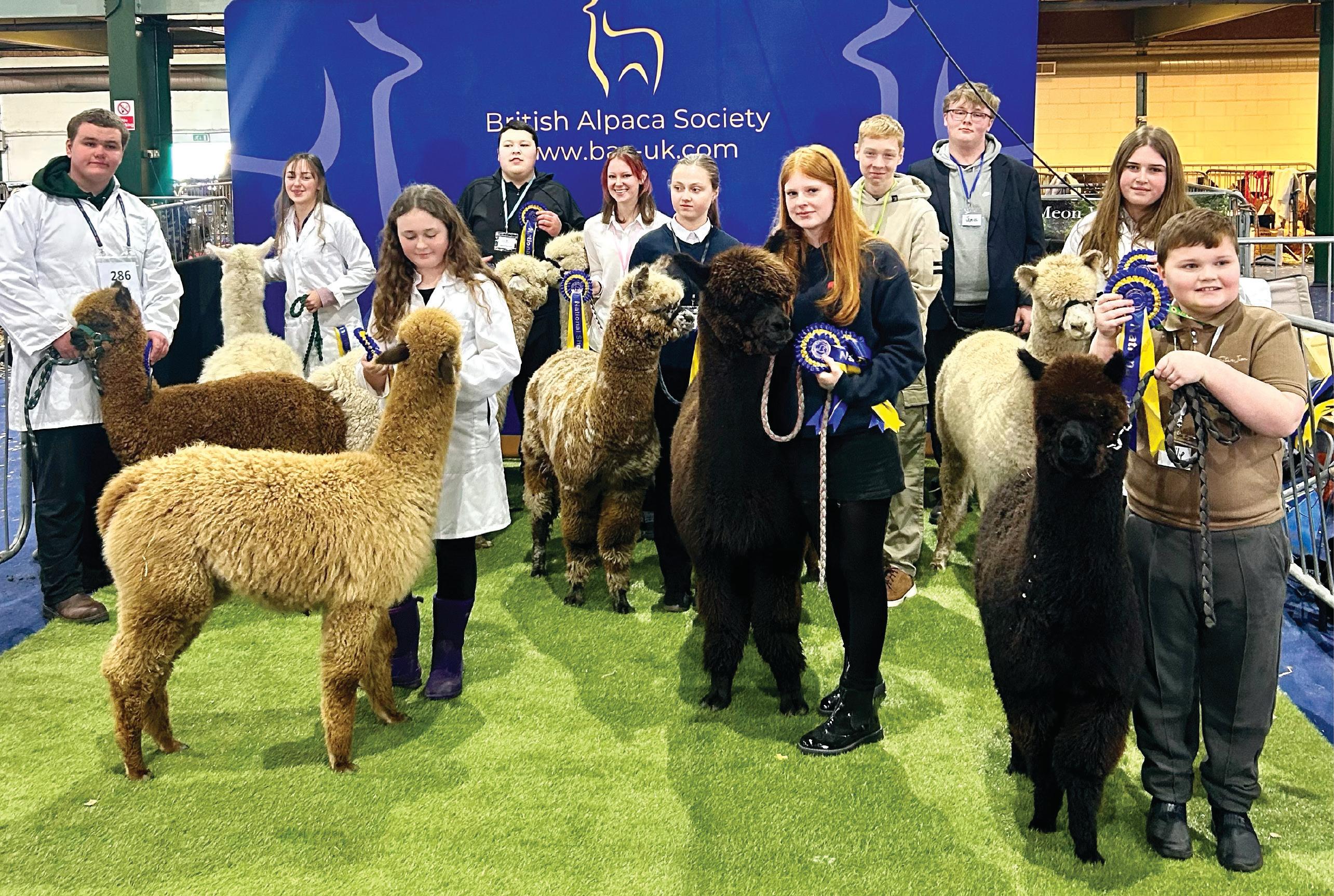
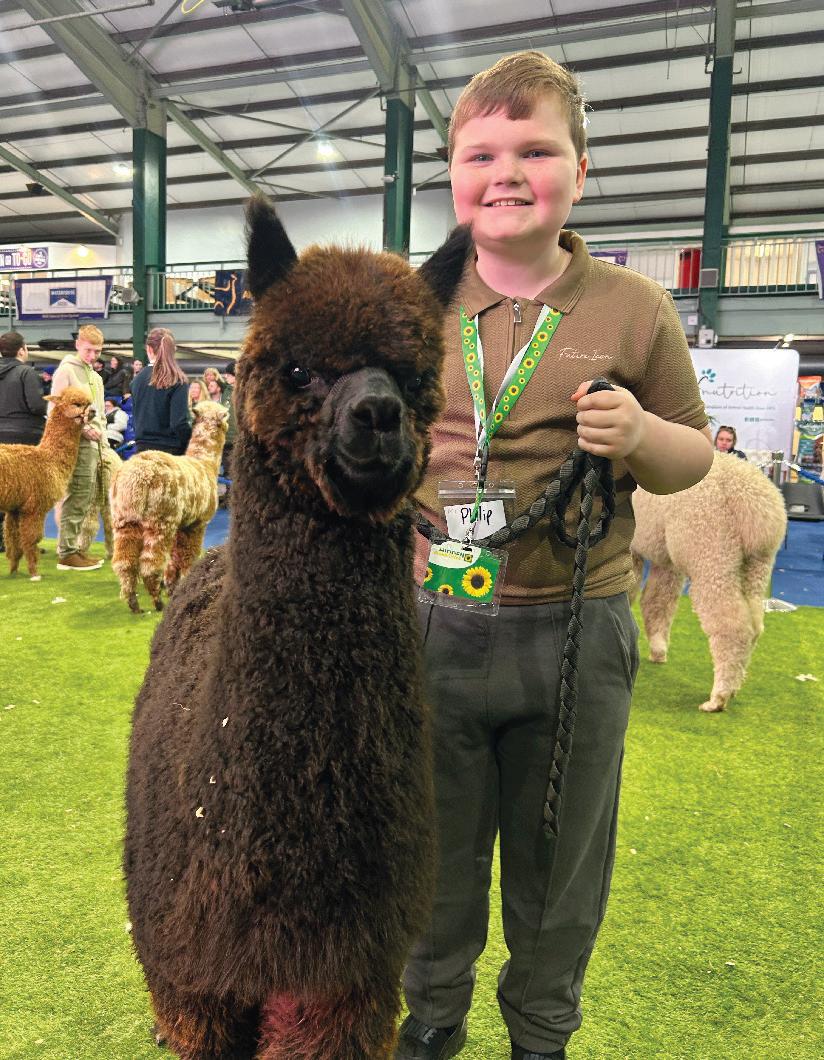
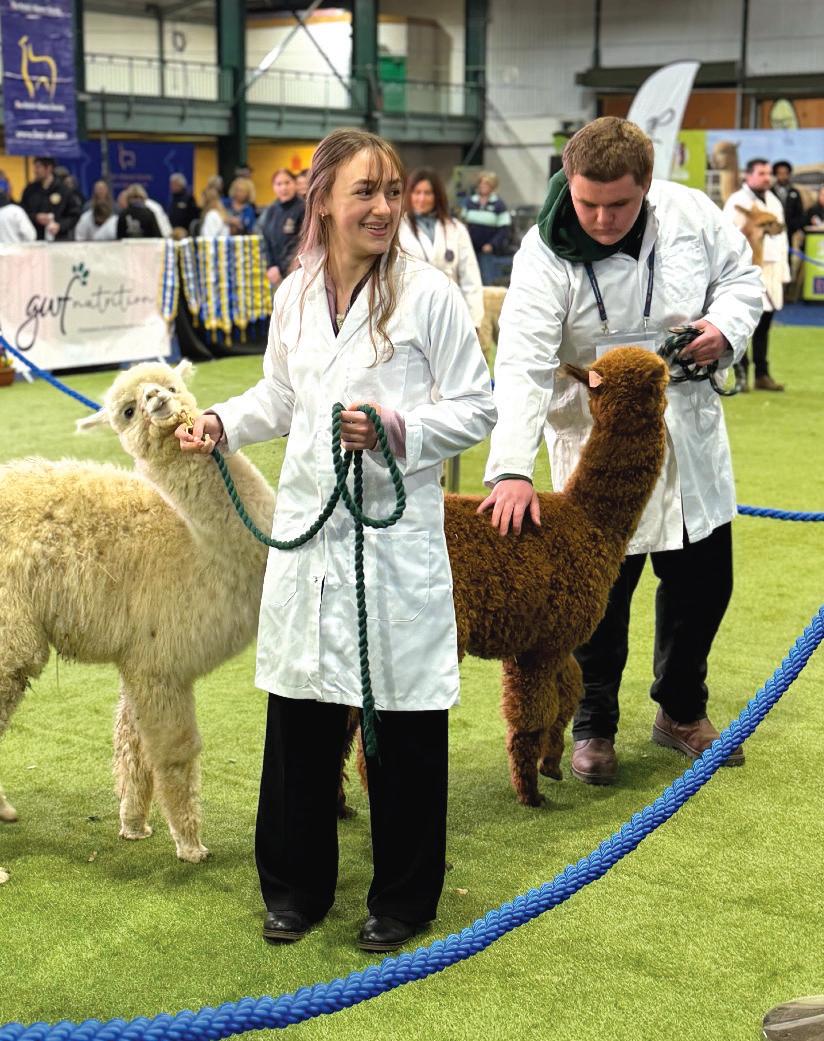

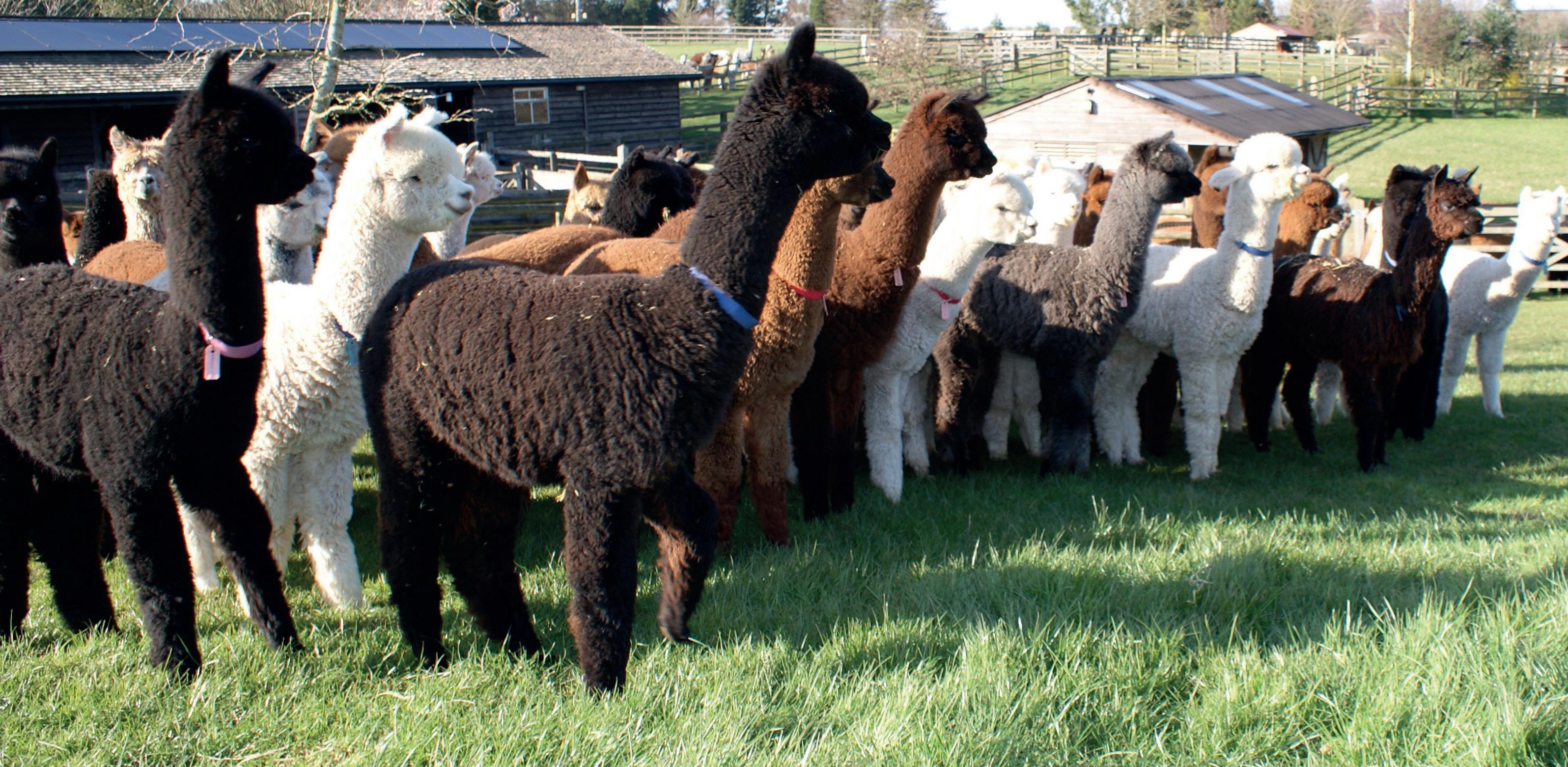
The Champion of Champions Fleece Show and the Fibre Zone Competition was incorporated into the World of Alpacas area. This was an opportunity to celebrate the incredible talents of some of the BAS members.
Ahuge thank you must go to the trade stands. Alongside the trade stands, the Staffordshire Knot Spinners spent the weekend inspiring alpaca owners with demonstrations and expert knowledge, showcasing the versatility and beauty of alpaca fibre. A particular highlight of which was bracelet making!
Feedback from both exhibitors and visitors has been very positive. Trade stand exhibitors felt they were given a great platform to connect with potential customers and industry peers, with their time and effort greatly appreciated.
Educational opportunities were an extra exciting addition this year; British Alpaca Society member and alpaca vet Charlie Lambert from The Vet Shed generously delivered an informative and engaging talk on alpaca birthing, which was extremely well received. Emma Taylor from East Anglia Mill gave a very informative skirting and sorting demonstration, which is perfectly timed ahead of shearing season. To top it off, Karen and
BEST IN SHOW
Poodle Army
Adel Elwis, Green End Alpacas
RESERVE BEST IN SHOW
Hand Knitted Soft Green Cardigan
Trish Tatchell
Exhibitors Challenge
1st Bob Crosbie, Bobcat Alpacas
2nd Alison Wiseman, Balnuith
3rd Ailene Charlton , Aylswood
A Hat in Any Design
1st Ailene Charlton , Aylswood
2nd Rebecca Block, Castings
3rd Alison Wiseman, Balnuith
Headband with a Pattern
1st Gemma May-Brown, Stoke Grange
2nd Nigel Retallack, Carpalla
3rd Ailene Charlton , Aylswood
An Item to Keep the Hands Warm
1st Adel Elwis, Green End
2nd Nigel Retallack, Carpalla
3rd Suzanne Smith, Simjest
Item to Warm the Feet
Luciano organised a talk on working with Peruvian artisans and even had a 1,000 year old woven fibre sample to show listeners.
Kate Brookes from Mullacoot Alpacas coordinated the alpaca agility and Camelidynamics taster sessions. These hands-on activities proved particularly popular, ranging from three-year-old Toby to college students completing work experience on alpaca farms and eager to learn more about the Camelidynamics approach. As Kate reflected, “the future looks bright.”
The Fibre Zone Competition was as competitive as ever. Entries ranged from creative bird feeders to beautifully crafted garments, each bringing smiles and admiration from visitors.
A huge thank you goes to Alison Wiseman, Ailene Charlton and Viv Darcy, who set up, managed and dismantled the Fibre Zone. The competition was expertly judged by Caroline Oakes from Clivewood Mill, whose passion for alpaca fibre shone through. Judging considered every aspect of the entries –from fibre softness to the standard in which the garment is finished.
1st Sarah Small, West Heath
2nd Ruth Alsop, Ozz
Scarf or Cowl under 30cm
1st Gemma May-Brown, Stoke Grange
2nd Rebecca Block, Castings
3rd Gemma May-Brown, Stoke Grange
Wrap over 30cm wide
1st Alison Wiseman, Balnuith
2nd Lou Verrill, Lime Tree
3rd Lou Verrill, Lime Tree
An Item of Jewellery
1st Suzanne Smith, Simjest
2nd Alison Wiseman, Balnuith
An Item as a Garment
1st Trish Tatchell
An Item as an Accessory
1st Alison Wiseman, Balnuith
A Toy
1st Hannah Shilleto, Ebor
2nd= Lynn McMahon, Liskey Borough
2nd= Angela Mitchell, Hannahston
Gift for a New Born
1st= Gemma May-Brown, Stoke Grange
1st= Sarah Small, West Heath
Gift for a New Home
1st Lou Verrill, Lime Tree
2nd Brenda Featherstone, Featherwood
3rd Hayley Steel, Bay Tree
Artwork
1st Alison Wiseman, Balnuith
Any Other Gift
1st= Adel Elwis, Green End
2nd Jane Hodgson, King Garth
3rd Ruth Alsop, Ozz
Machine Any Other Wearable Item
1st Emma Taylor, East Anglia
Machine Item for the Home
1st Emma Taylor, East Anglia
Junior Entry
1st Angela Mitchell, Hannahston
Huacaya Mill Spun
1st Bob Crosbie, Bobcat
2nd Nigel Retallack, Carpalla
3rd Bob Crosbie, Bobcat
Huacaya Hand Spun
1st Bridget Tibbs, Cotswold
2nd Bridget Tibbs, Cotswold
3rd Bridget Tibbs, Cotswold
Suri Mill Spun
1st Emma Taylor, East Anglia
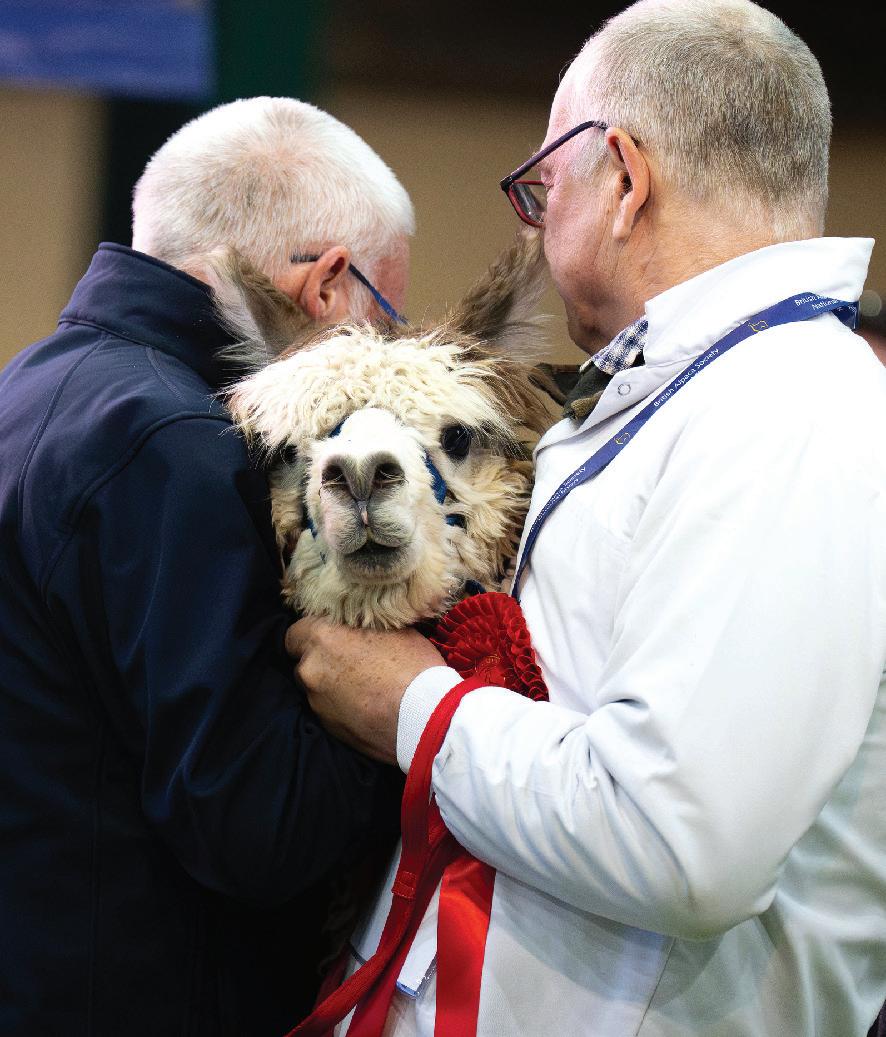
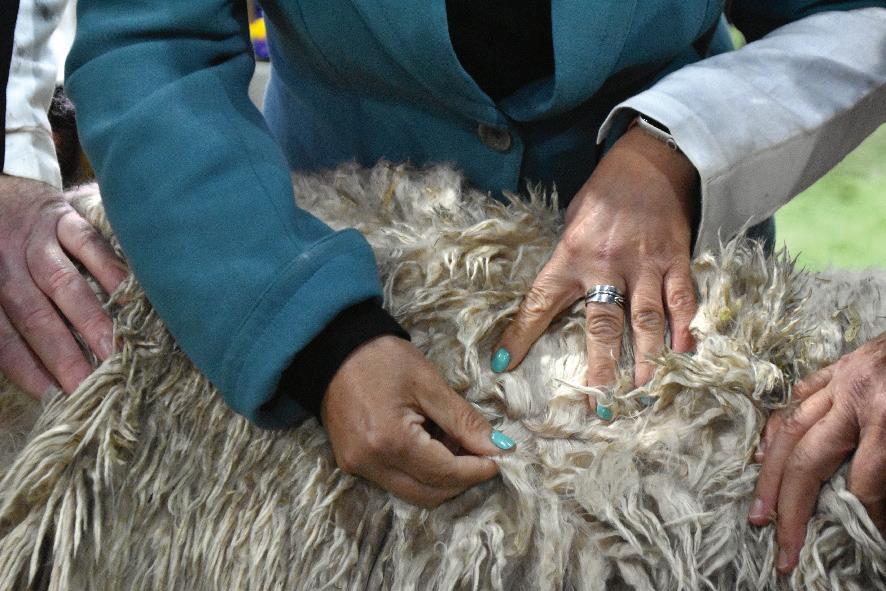
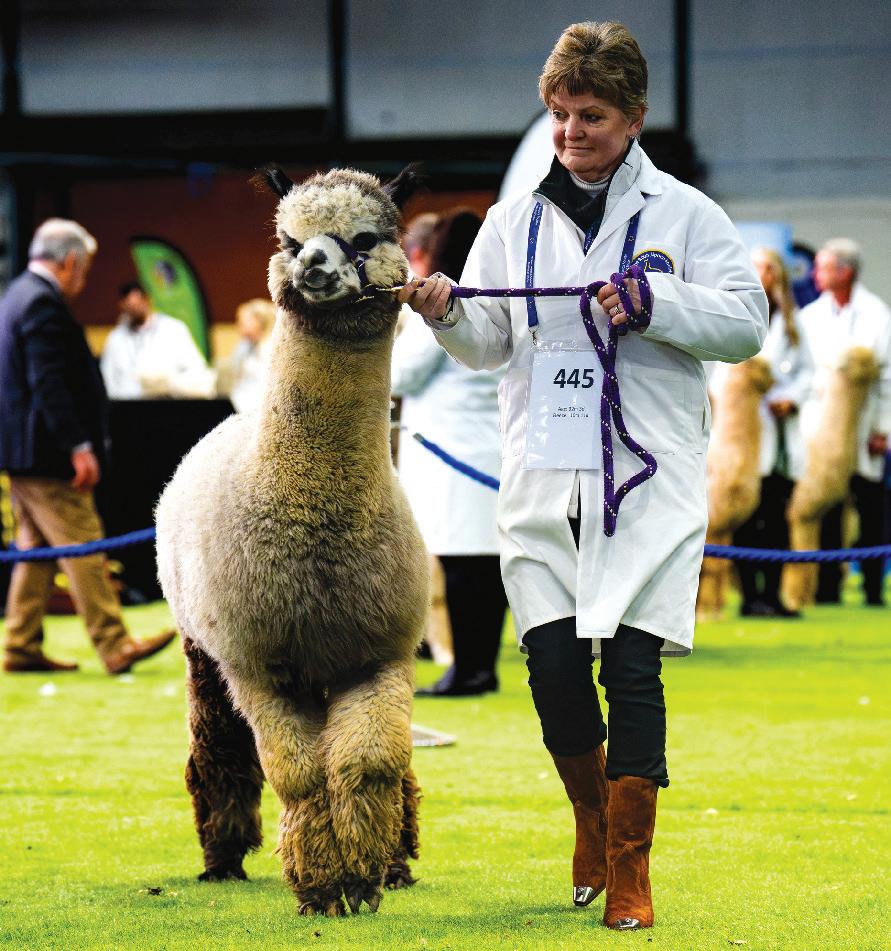
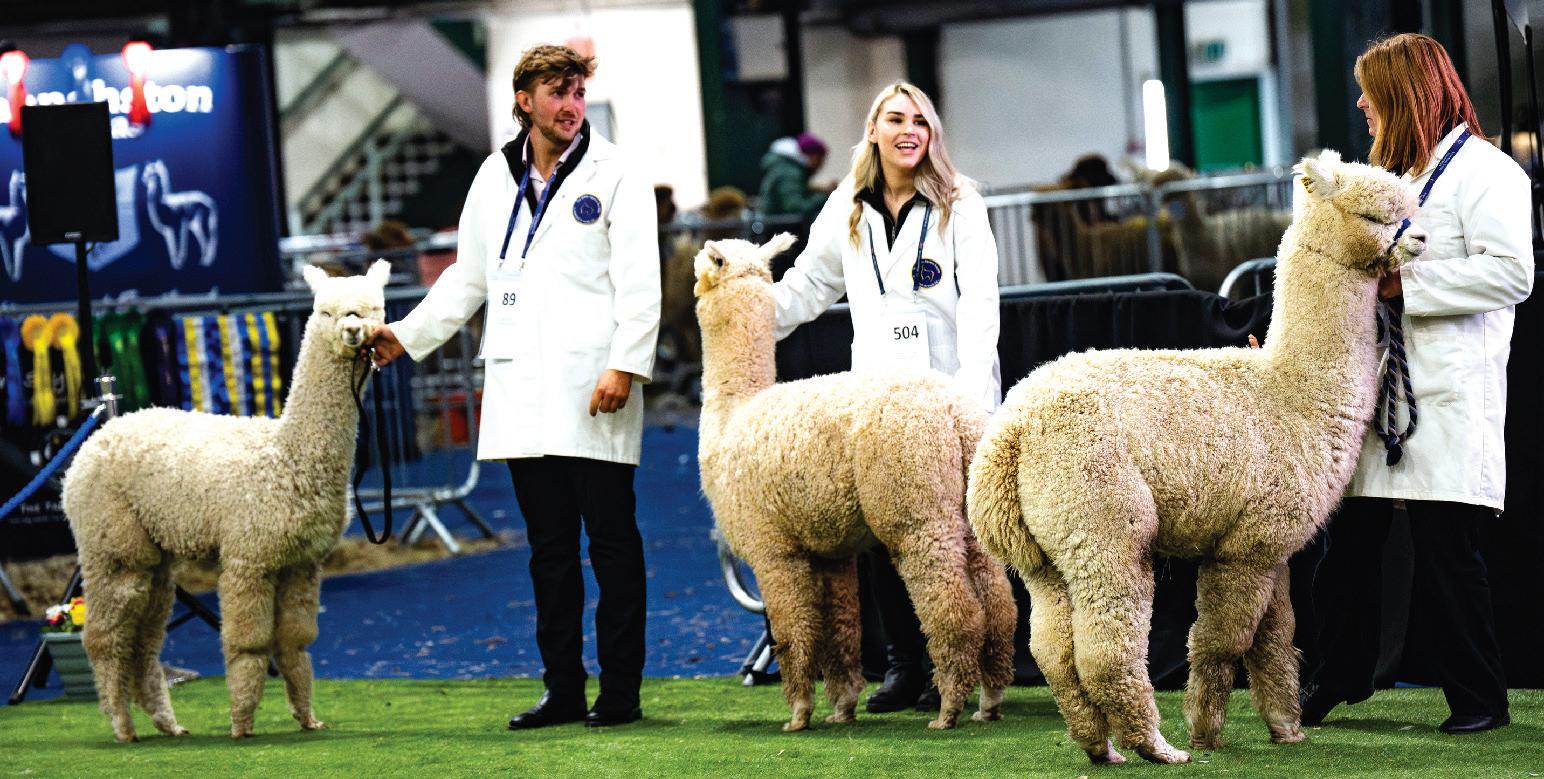
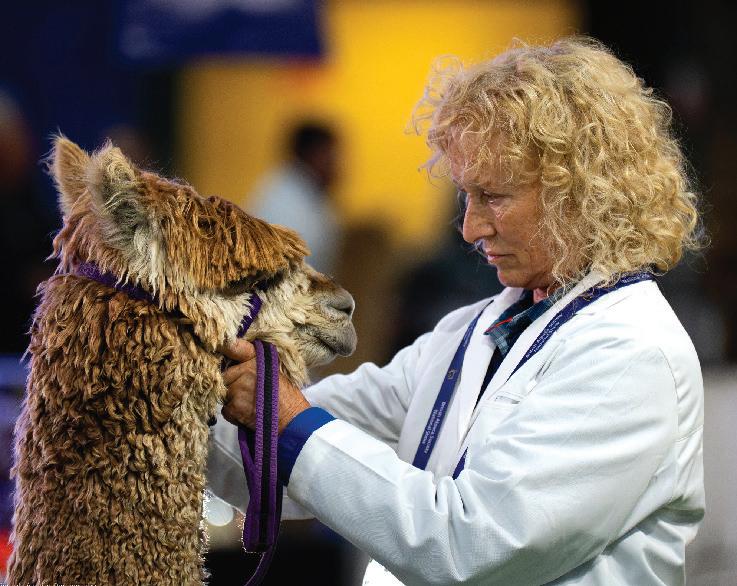
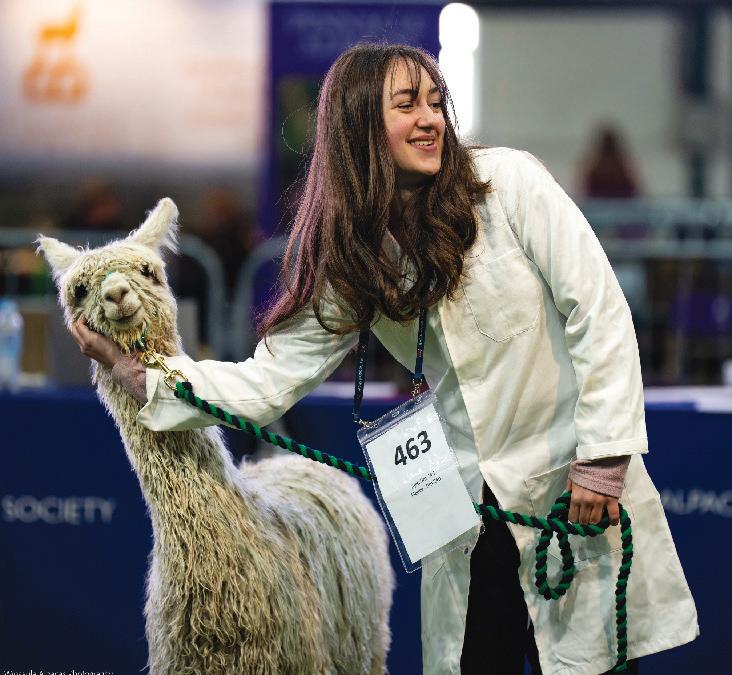
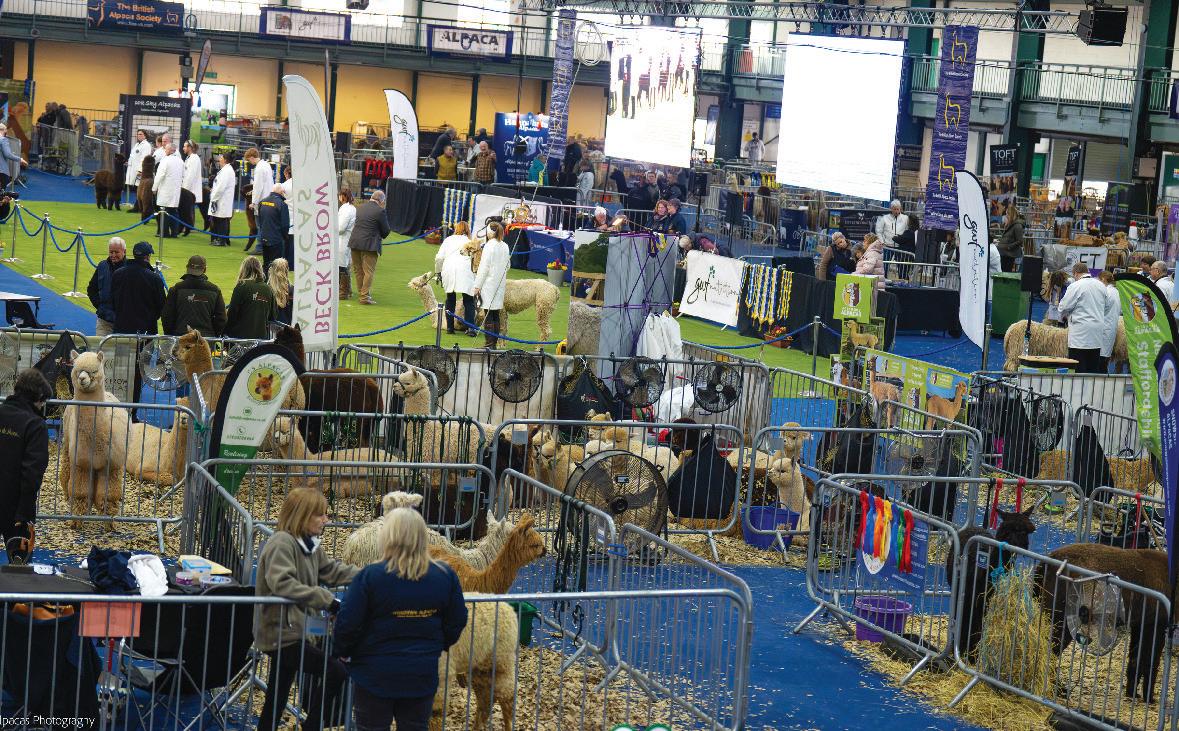
At the heart of the World of Alpacas, the British Alpaca Society stand took pride of place. BAS had a display of merchandise on offer and members were delighted to learn they could have items personalised with their herd name when they ordered via the online shop, a super opportunity for members to ask any questions of the society.
The aim is to broaden the appeal of the World of Alpacas every year, hopefully encouraging more people to see and enjoy the versatility of our lovely alpacas.
Huacaya Champion White Fleece
Champion: Amberly Driving Force
90.25pts (BNBAS18629)
Owned by Mr & Mrs
Roger & Elaine Clarke
Reserve: Limestone Bollinger
83.75pts (UKBAS47452)
Owned by Mr P Wills
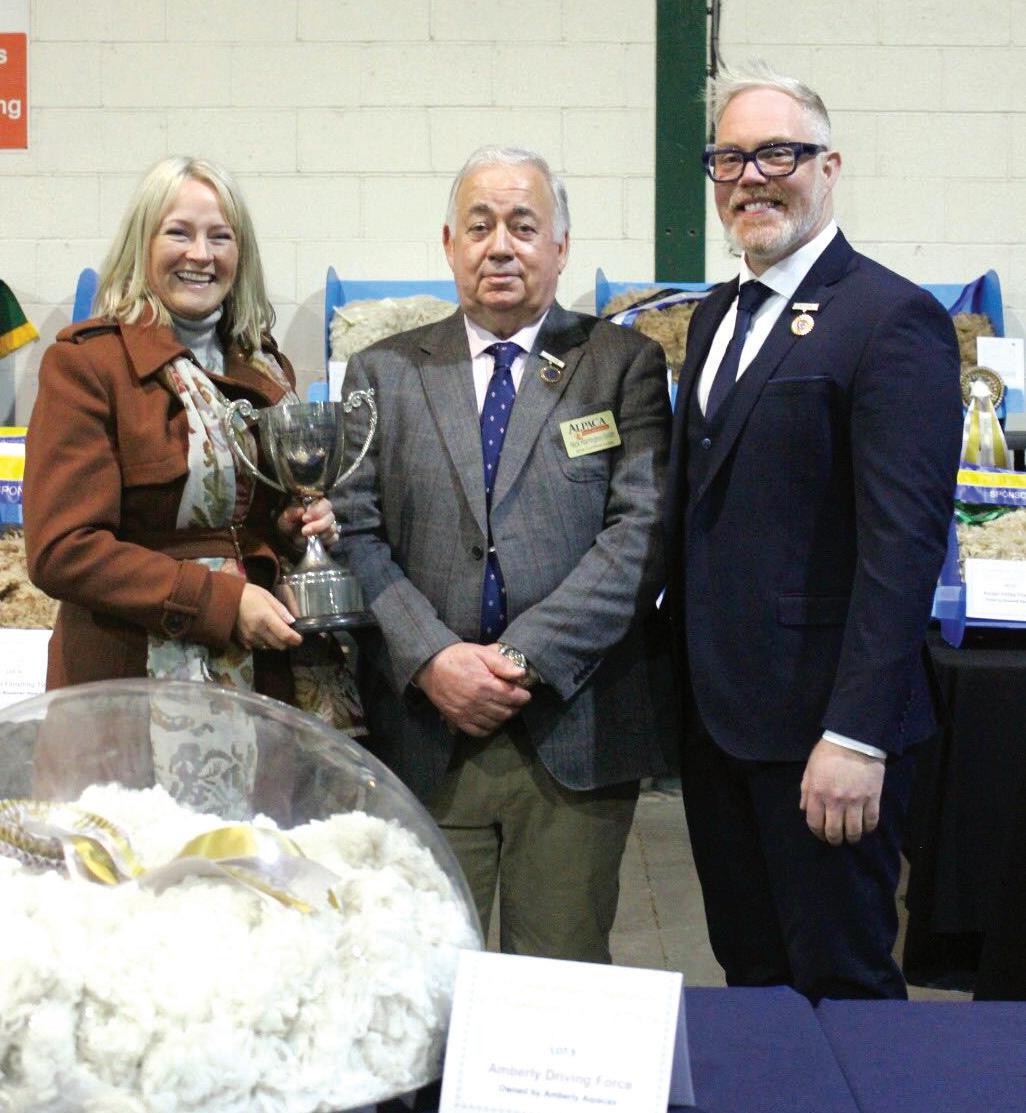
Elaine and Roger Clarke, winners of Champion of Champions Huacaya Fleece with Amberly Driving Force and judge, Nick Harrington-Smith
CHAMPION OF CHAMPION HUACAYA FLEECE
“We were honoured to be awarded Supreme Champion in the BAS National Champion of Champions Fleece Show with Amberly Driving Force. To be judged against such an exceptional line-up of fleeces, each already a champion in its own right, makes this recognition especially meaningful. The depth of quality on display was outstanding and we feel very grateful to be part of such a strong and dedicated industry,” said Roger and Elaine Clarke, Amberly & Ambermoon Alpacas.
Judge: Mr Nick Harrington-Smith
Huacaya Champion Light Fleece Champion: Bozedown Finishing Touch
81.50pts (BNBAS18663)
Owned by Bozedown Alpacas Ltd Reserve: Fangdale Arlo (BNBAS17445)
77.25pts Owned by Dr Nicky Mayes & Dr Deborah Sporton
Huacaya Champion Fawn Fleece Champion: Acton Hill Top of the Rock
86.25pts (UKBAS47794)
Owned by Angela & Stuart Wilson Reserve: Acton Hill Flash Forward
84.50pts (UKBAS45662)
Owned by Angela & Stuart Wilson
Huacaya Champion Brown Fleece Champion: Toft Anka (UKBAS47750)
77.75pts Owned by Rob & Shirley Bettinson Reserve: Limestone Bengal (UKBAS45645)
72.00pts Owned by Mr P Wills
Huacaya Champion Grey Fleece
Champion: Inca Grey Titan (BNBAS18388)
85.50pts Owned by Inca Alpaca Ltd Reserve: Snowshill Olorin (UKBAS48611)
75.50pts Owned by Mr Roger & Mrs Mary Mount
Huacaya Champion Black Fleece
Champion Inca Serenade (UKBAS45015)
82.00pts Owned by Inca Alpaca Ltd
Reserve: Snowshill Caviar (UKBAS33216)
71.25pts Owned by Mr Roger & Mrs Mary Mount
Suri Champion White Fleece
Champion: Springfarm Eureka (BNBAS18790)
89.00pts Owned by Mr & Mrs
Vicki and Chris Agar
Suri Champion Light Fleece
Champion: Dark Sky Zoolander (UKBAS44250)
79.00pts Owned by Mr & Mrs
Tom & Wendy Scott
Reserve: Amber Valley Cherub
73.25pts (UKBAS33741)
Owned by Mr Roger & Mrs Mary Mount
Suri - Champion Fawn Fleece
Champion: Springfarm Prince Caspian
70.50pts (UKBAS44638)
Owned by Mr & Mrs
Vicki and Chris Agar
Suri Champion Grey Fleece
Champion Snowshill Leonides (UKBAS47142)
74.00pts Owned by Mr Roger & Mrs Mary Mount
HUACAYA FLEECE: Amberly Driving Force (BNBAS18629)
Owned by Mr & Mrs Roger & Elaine Clarke
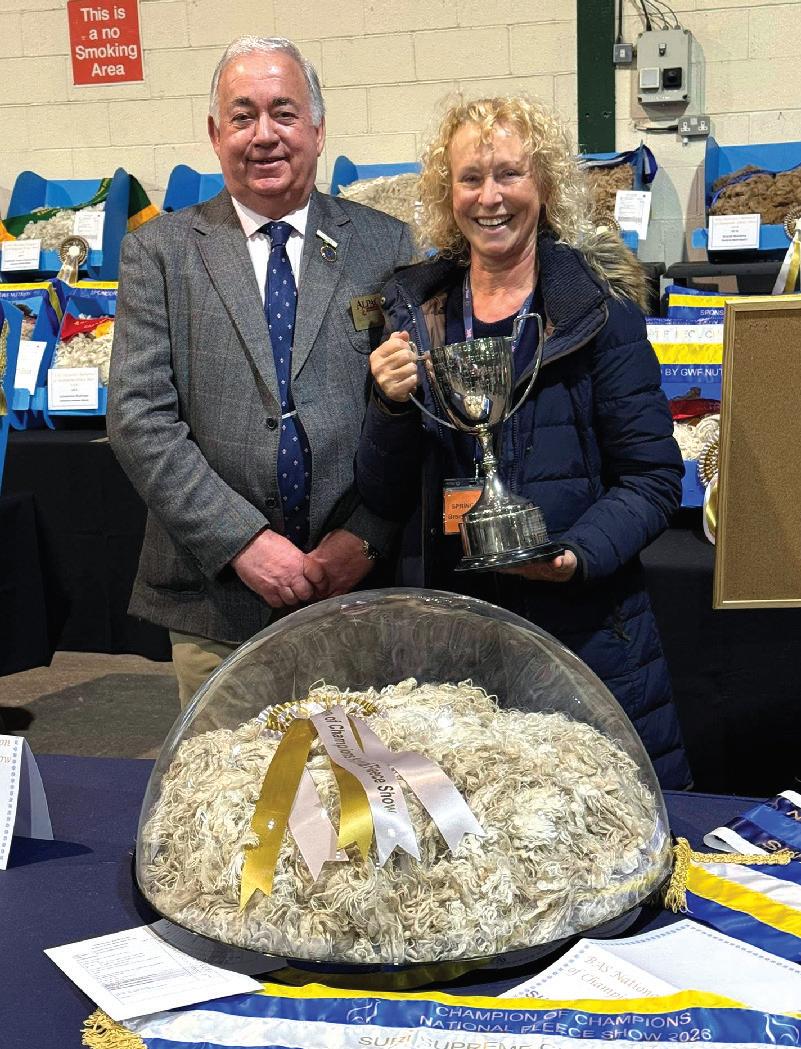
Vicki Agar, winner of Champion of Champions Suri
CHAMPION OF CHAMPION SURI FLEECE
“We are extremely proud of our white Suri Eureka (RICO to us) for winning Supreme Champion Fleece at the Champion of Champions 2026 BAS National Fleece Show. He has an impressive fleece as witnessed by his fleece score for his junior fleece of 89 of which 13/15 was for fleece weight. He also has a stylish phenotype, is well balanced with a great temperament and Jude Anderson described him as 'the full package' as she awarded the white Suri championship to him in the 2026 National Halter Show. We believe he will continue to impress as he matures,” said Vicki and Chris Agar, Springfarm Alpacas.
Springfarm Eureka (BNBAS18790)
Owned by Mr & Mrs Vicki and Chris Agar
We also have a selection of alternative studs available. Loftmans Farm, Maldon Road, STEEPLE, Essex. CM0 7RR 07375 664364 07852 262030 steve@chinchero.co.uk www.chincheroalpacas.co.uk
PARASITE CONTROL MANAGEMENT FOR ALL GRAZING ANIMALS SPECIALISING IN ALPACAS
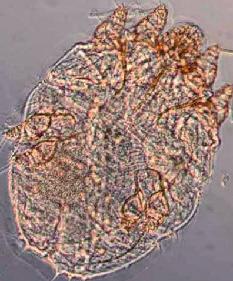
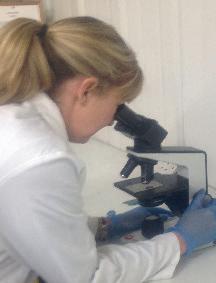
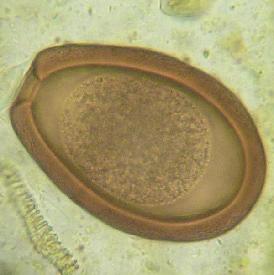
Clostridium • Rotavirus • Giardia • Cryptosporidium Ectoparasite & Fungal testing
✓ FREE Royal Mail Postal approved Testing Kits.
✓ Fast accurate results using species specific testing.
✓ Detailed analysis & reports providing a superior well-informed targeted approach to worming.
✓ FREE Help and advice on worming programmes.
✓ Discounts available. THE PARASITE PODCAST – with Sarah Dakin

Joy Whitehead, founder of Bozedown Alpacas, comments on how it feels to have a double win at BAS National Show.
Iam so thrilled with Bozedown Alpacas performance at our prestigious National Show. Carrying off both Supreme Champion Alpaca trophies for our Huacaya Bozedown Finishing Touch and our Suri Bozedown Mystic Dream is an amazing achievement! Mary-Jo has proved her ability in breeding outstanding alpacas on our farm over and over again and I credit this impressive result to her dedication. And of course a very big ‘thank you’ to CS Alpacas, owners of Pucara PureSuri Kahuna's Alakai of CSA, the Sire of our Supreme Champion Suri!
I understand that the top placings and Champion sashes were achieved by many herds all across the UK, indicating that the standard of alpacas across the board is very high, which is great for our industry as a whole. I am greatly heartened to see how far our industry has come since I started with just five alpacas back in 1989. The UK leads Europe in the quality of our alpacas.
The final day of the BAS Show this year coincided with my mother’s 100th birthday on 22 March. So the double Supreme Champion awards on that particular day will never be forgotten. But add to that the winning Sire’s Progeny with Bozedown Generation Now, who is also the sire or Supreme Champion Bozedown Finishing Touch: that had to be the icing on the cake. What a day!
To be so proud of Mary-Jo and all the Bozedown team, and so proud of my mother all on the same day is truly memorable!
“Congratulations to everyone at the BAS Nationals 2026 – it was an incredible showcase of quality, and great to see champions shared across so many breeders,” said Mary-Jo Smith, Bozedown Alpacas.
“Winning both Supreme Champion Huacaya and Suri is honestly surreal. It represents years of hard work, resilience, and a few very challenging seasons along the way.
“A huge thank you to auntie Joy for trusting me with her herd, and to Iain and Kirsten for their constant support. Coming through tough times and still having the drive to push forward is something I’m incredibly proud of: a real credit to the people around us and these amazing animals.
“I always hoped we’d be competitive again within three years, but never imagined a double Supreme at the Nationals.
“I actually missed the Suri Supreme, so when Liz Barlow told me “You got it!” it was a complete shock. Then to follow it up with the Huacaya Supreme after a nail-biting final – it was an emotional, unforgettable moment. Huge credit must go to Kirsten and Dan for presenting the animals so well.
“We’re already looking ahead: we can’t wait to see what the next generation will bring,” concluded Mary-Jo.
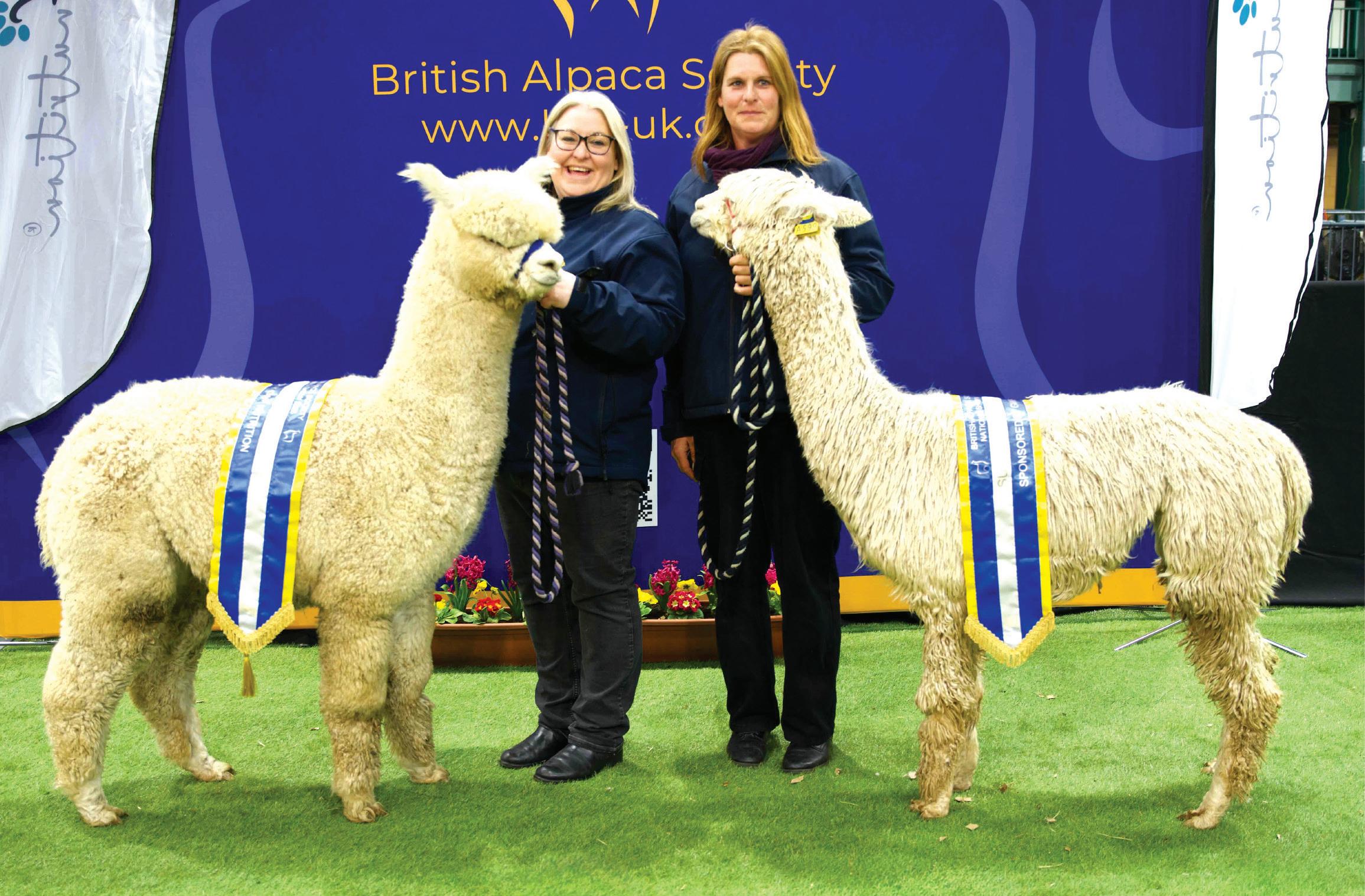
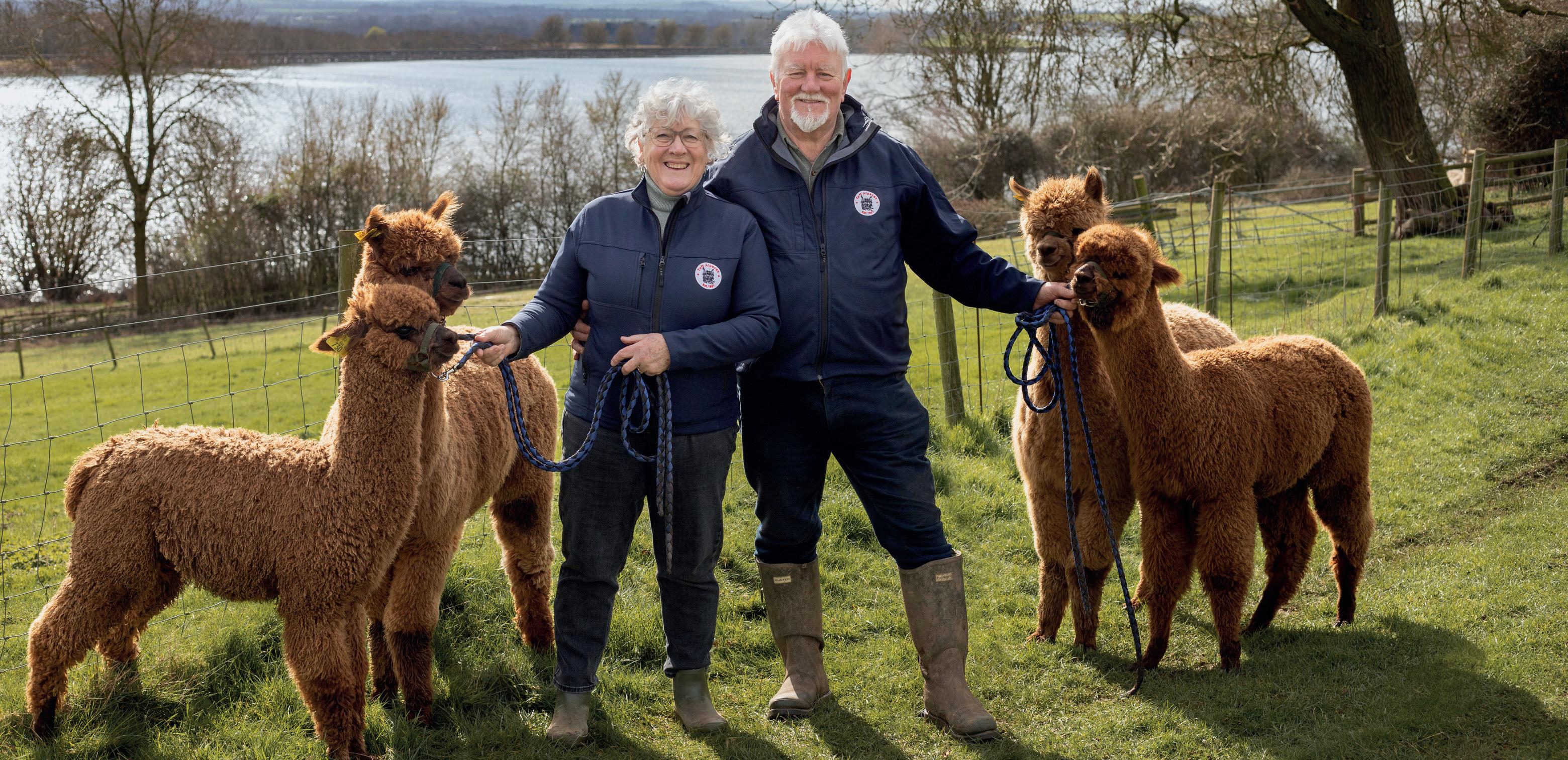
This year we welcome two new Judges to the list. Kim and Caroline received their judge badges and certificates at this year’s National Show, Stafford. They then went on to help run the Young Handler session as well show their own alpacas.
How did you first become involved with alpacas?
My background is in horses and was going to take that further until we started a family and bought three pet alpacas to keep the grass down, quickly followed by three pregnant females. I have always liked alpacas and find their differences to other animals in behaviour and body language really intriguing.
What inspired you to take the step into judging?
As a competitive equestrian all my life, I naturally went to National Show 2019 to see what competition looked like with alpacas. I found the framework similar to horse showing and less physically demanding. The unique way of judging where the positions are justified at the time of placing the alpacas is fascinating. It feels more collaborative where you are involving those watching as well as judging. I also really enjoy learning, love helping and am passionate about improving the alpaca industry here in the UK.
What do you most enjoy about being in the show ring?
I love the mental exercise of determining placings after considering each alpaca in the ring and weighting the different traits among them. It’s a challenge of course but it does involve one of my favourite things –looking at alpacas.
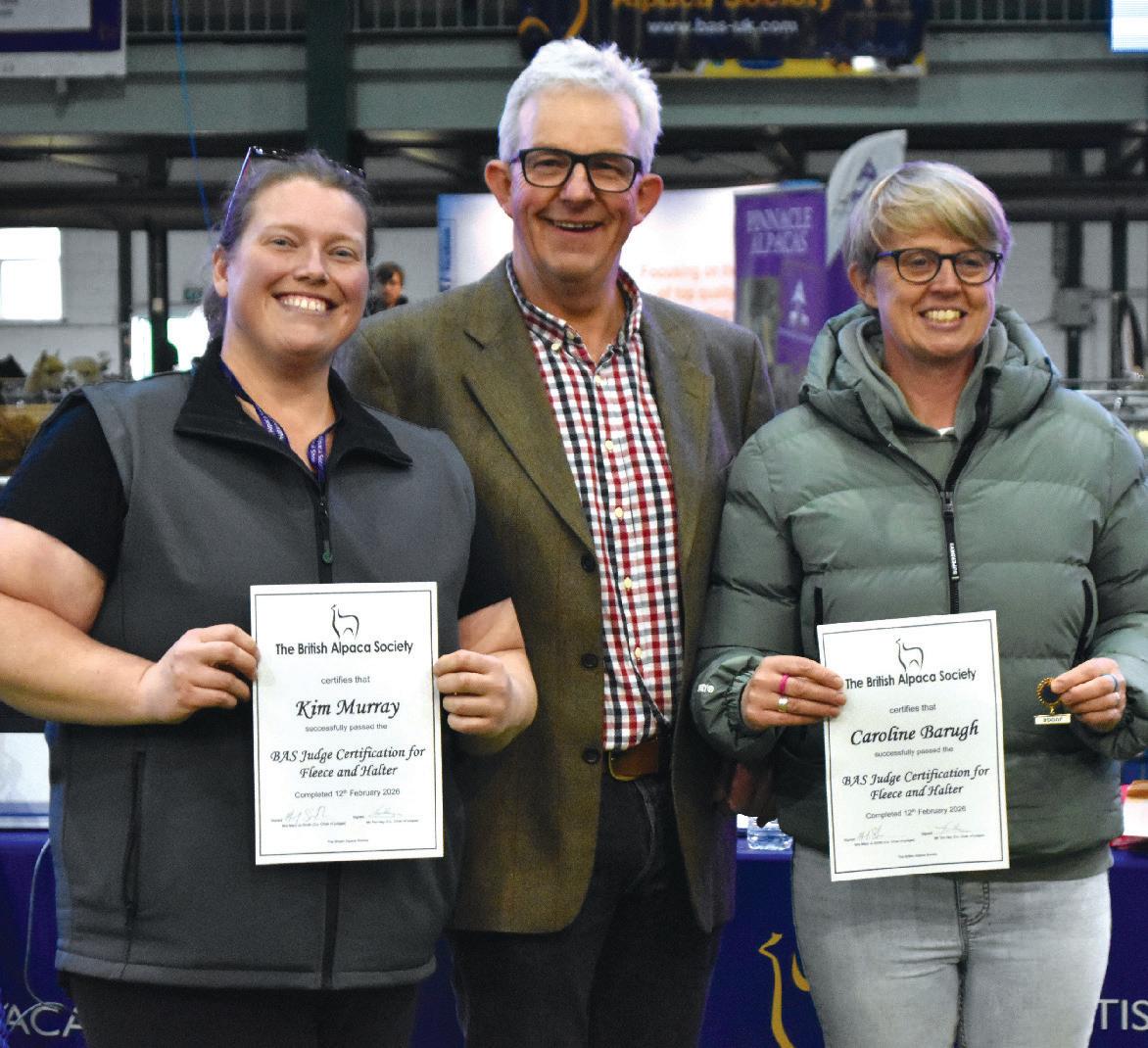
Presentation of the new judges at the National Show
What are you most looking forward to in your future judging career?
To continue to enjoy the process and continue to expand everyone’s knowledge. I have no set goals except to enjoy the journey. Judging is a joy to me, I feel like I am of service and I’m doing a job that will make a difference to the UK’s alpaca industry.
How did you first become involved with alpacas?
My alpaca journey started 13 years ago when I decided to add livestock to my seven acre organic farm, where we also run an organic veg box scheme in York of around 100 boxes a week. I wanted something different and low impact on the soil and alpacas became the number one choice. Following a visit to a local alpaca farm I was instantly hooked on them! I became quickly addicted to the road to excellence and producing high quality alpacas.
What inspired you to take the step into judging?
I have been brought up to work hard and try and reach for the top which led me towards the assessment courses and becoming a judge. I just wanted to learn more and more about the alpaca fleece and all the incredible traits that need balancing. I believe an alpaca fleece really can be a piece of art. It can be so rewarding in how it looks and feels. I visited so many farms in the UK to get hands on with as many alpacas as I could before taking part in my journey to being a judge.
What do you most enjoy about being in the show ring?
One aspect I truly have enjoyed in the show ring is connecting with the breeders. It takes so much dedication and hard work to even be present at a show for exhibitors and I really hope I can give feedback that will support the breeders in developing there own knowledge and help them understand the choices made in the ring. Of course it is also exciting seeing all the advanced fleeces coming through! Strides are being made each and every year!
What are you most looking forward to in your future judging career?
One aspect I truly have enjoyed in the show ring is connecting with the breeders. It takes so much dedication and hard work for the exhibitor to even be present at a show. I really hope I can give feedback that will support the breeders in developing there own knowledge and help them understand the choices made in the ring. Of course it is also exciting seeing all the advanced fleeces coming through! Strides are being made each and every year! The knowledge I have been developing through all the courses and experience has been applied to my own herd and really supported making breeding decisions when weighing traits and I am aiming high!
My passion to learn also inspires me research methods to try and assess density using testing methods. Through lots of research and trials I came up with the idea skin-Imprint which is patented. By printing the skin with putty you can see the skin surface and count the fibres using advanced techniques. This idea is now in production with my business partner Kim Murray, a fellow judge.
NICK HARRINGTON-SMITH
“It is always a great privilege being asked to judge the BAS National Show but never more so when judging Champion of Champions fleece show in the same year. The fleece show allowed me the opportunity to see those fleeces judged by many other judges, and only the very best of all those fleeces shown by breeders in 2025.
"Judging halter show with other international judges gave a rare opportunity for me as a BAS judge to work in tandem with international judge Natasha Clarke, and proved to be tremendous fun, hard work yes, but also proving how truly international alpaca judging has become and how well aligned we all are with a focus on commercial fibre traits. The coming together of all four judges for Supremes was the best of experiences and allowed us all to work together and see the best of both genders, but above all see the very best of the British alpaca breeding programs. The format of tandem judging was in my view highly successful and is to be commended, and offers great value to breeders, so long may this practise continue."
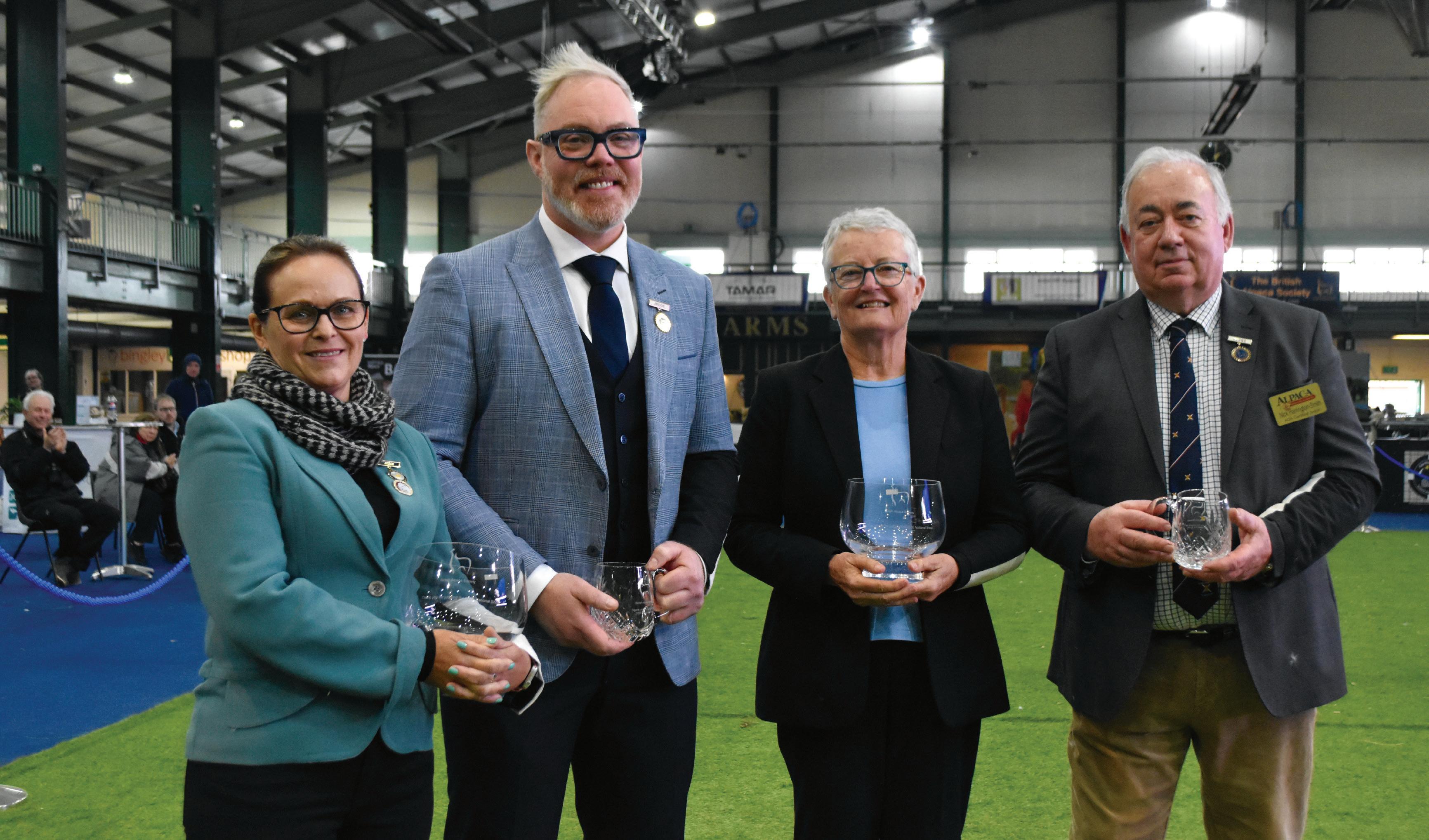
Judges Natasha Clark, Roger Clarke, Jude Anderson and Nick Harrington-Smith
ROGER CLARKE
“It was a true privilege to judge at the British Alpaca Society National Show. Not only was it a pleasure to work alongside such esteemed colleagues, but also an honour to appraise an exceptional standard of alpacas. The depth of quality on display was a real testament to the dedication of breeders and a showcase of the very best the UK industry has to offer."
NATASHA CLARK
“I had the honour of judging my third BAS National Show this March. It was an excellent event that was professionally run and well organised.
I was judging the female ring with Nick and we had a great time. I thoroughly enjoyed judging the exhibits paraded before us and comparing them to previous years, which showed just how far the UK alpaca industry has come. There were a lot of quality alpacas exhibited in our ring with some incredibly competitive classes. It was a pleasure to once again judge the UK Nationals and to be warmly welcomed back by all of the exhibitors and volunteers."
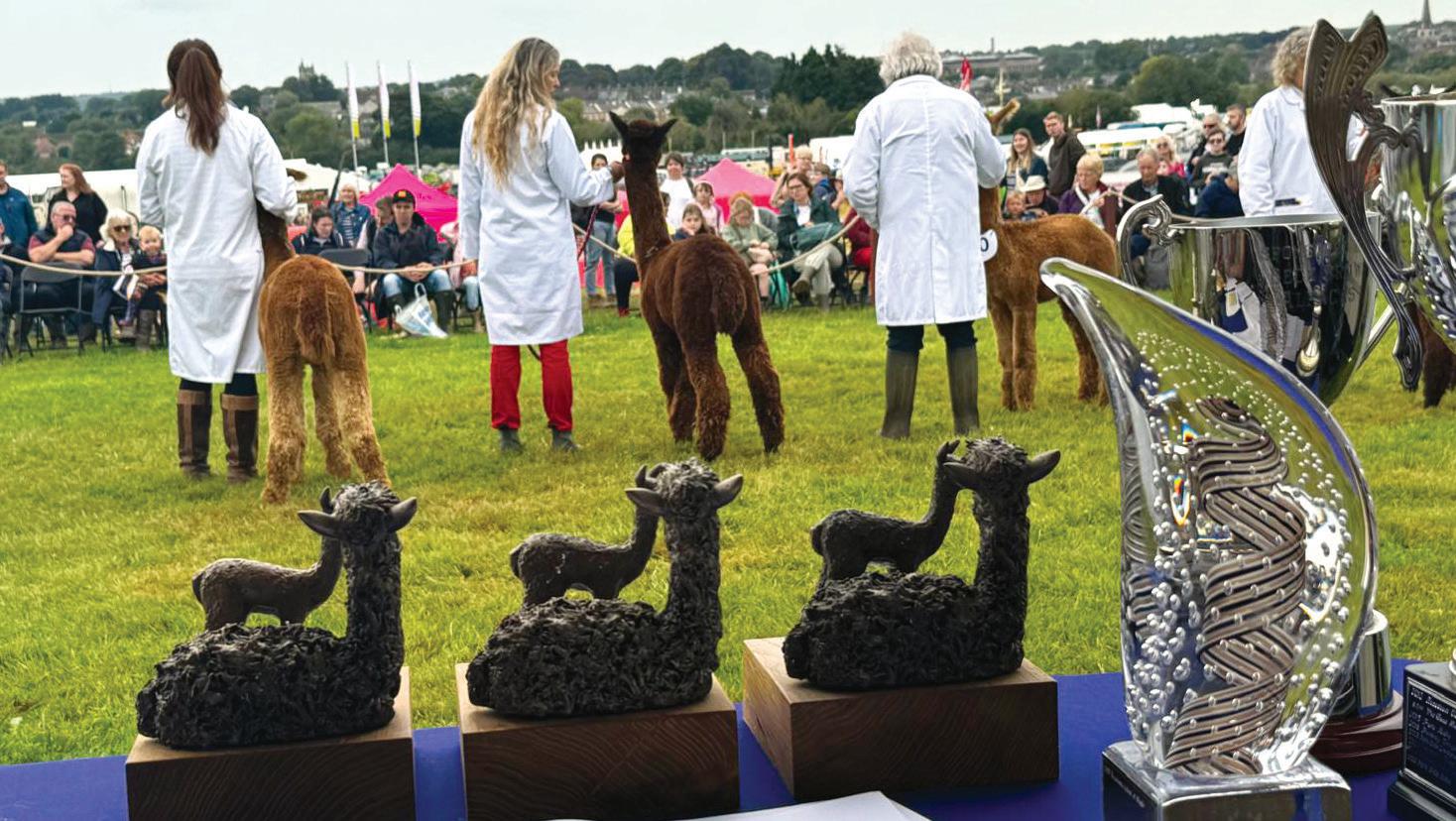
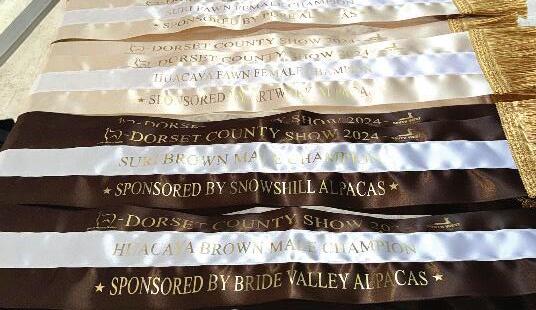
The South West Alpaca Group are pleased to announce that the Dorset County Alpaca Show will once again be returning to the Dorset County Show on the Saturday 5th and Sunday 6th September 2026 at the Dorchester Showground. This two-day show is packed with the best of British agriculture with the Alpacas returning to steal the limelight once again. The Dorset County Show has been running for over 180 years, and although the Dorset County Alpaca Show is enjoying only its third year as part of this much-loved event, it has already established itself as a favourite with both the public and alpaca breeders across the south and beyond.
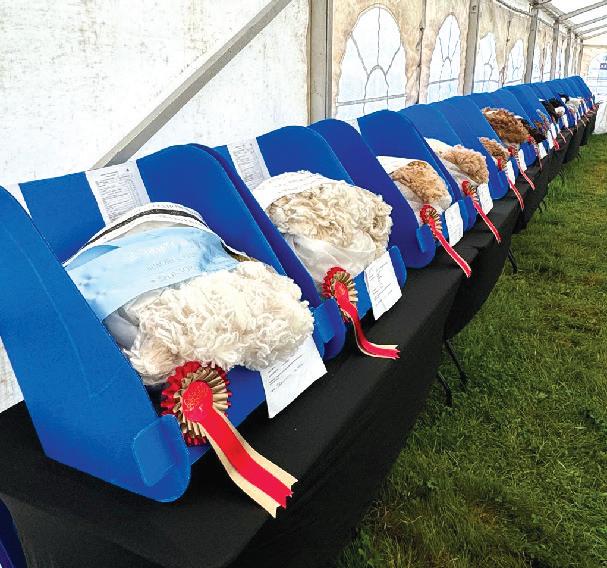
The Dorset County Alpaca Show has their own area at the heart of the show and features a Halter Show for both Suri and Huacaya, with a full range of colour classes including progeny, young handlers and Championships across the two days. Alongside the Halter classes there will be a Fleece Show judged live on the Saturday with public access to get a closer look at the fleeces on show and commentary on what the judge is looking for. We are delighted to have Mary-Jo Smith judging the Halter Show with Kim Murray as co-judge, and Nick Harrington-Smith judging the Fleece Show.
All BAS members are invited to exhibit at the show and the organising committee have taken great care to provide an excellent and pleasurable exhibitor experience.
• Block booking dates for Halter Class entries:
Open 1 July 2026, closes 13 July 2026
• Named entry submission dates:
Open 3 August 2026, closes 10 August 2026
• Fleece class entry:
Open 1 July 2026, closes 10 August 2026.
Exhibitors are invited to bring their fleeces to the Dorchester Showground on Friday 4 September from 12pm-6pm. If this is not possible then fleeces can be sent to Tim Hey at Inca Alpaca by 4 September 2026.
The committee are pleased to provide the following for exhibitors:
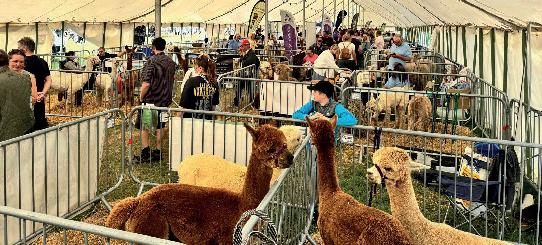
• Spacious marquee and pen areas following all bio-security protocol.
• Dedicated toilets for exhibitors.
• Exhibitor refreshment area with complimentary teas, coffees and treats – a great opportunity to socialise with fellow breeders.
• One way system within the marquee for public to view animals and chat with exhibitors.
• Fenced access to and from the ring for alpacas, to separate animals from dogs and the public.
As well as an opportunity for the public to wander through the pens of our dedicated marquee, and get up close and personal with the alpacas and chat to breeders about alpaca ownership, the show boasts ringside seating and live commentary from both the judges and our experienced commentator to capture the public’s interest, explain the intricacy of alpaca showing and promote alpaca ownership.
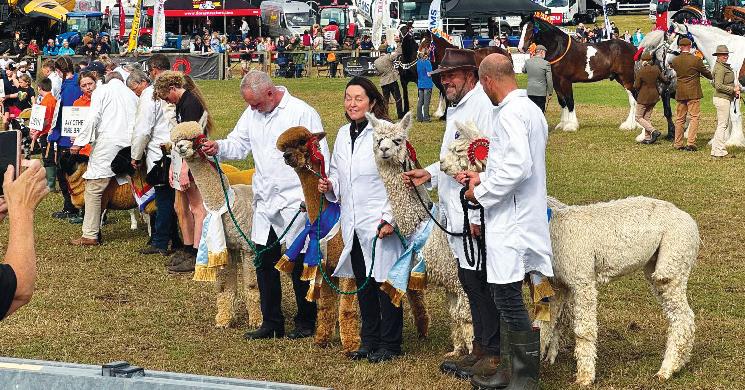
The Dorset County Alpaca Show provides a fantastic opportunity for breeders to come together and show their animals in front of our experienced judges but also to be part of a long-established agricultural show and showcase this wonderful industry to the public. The prize-winners have once again been invited to join the grand parade at 3.30pm on both the Saturday and Sunday with ‘Suri Alpaca’ and ‘Huacaya Alpaca’ signs leading the groups on display.
Exhibitors are invited to a social dinner on the Saturday night in Dorchester which provides a brilliant opportunity to catch up with new and old friends and talk all things alpaca.
Now is the perfect time to identity your fleeces prior to shearing and prepare them for submission for the show, so save the dates in your diary and we hope to see you there.
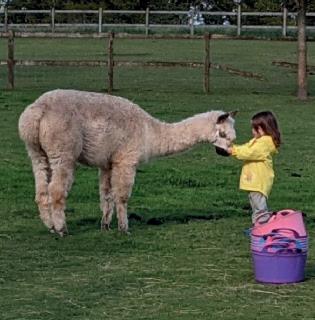
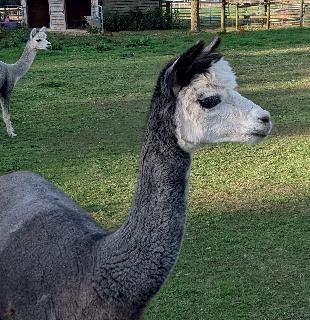
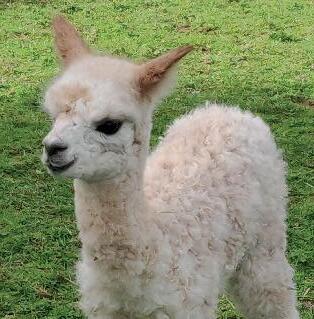
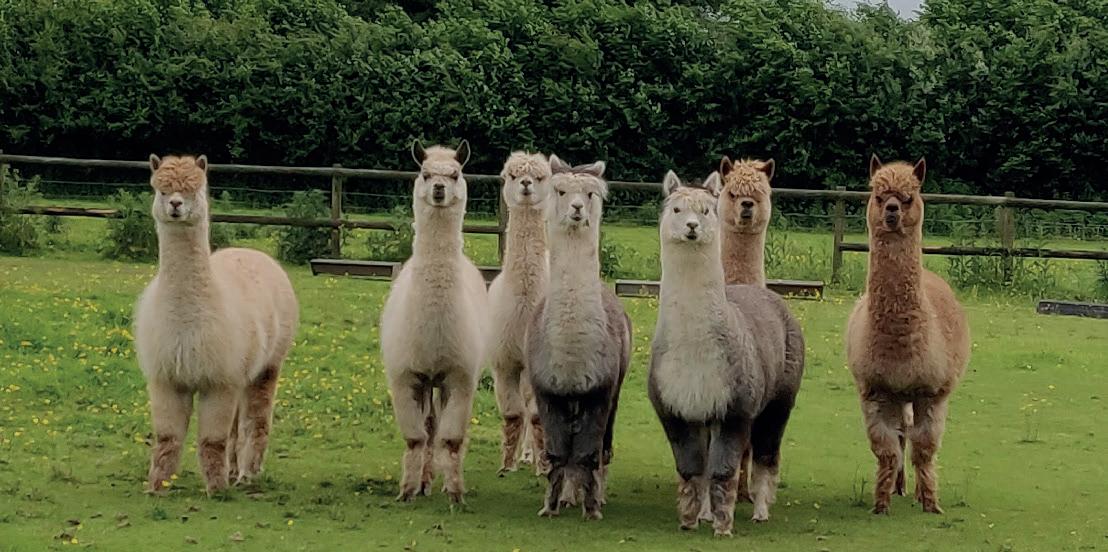
are based in North Somerset and have a small herd of friendly, hand fed alpacas. Due to retirement, we are downsizing and would love some of our animals to find new happy homes. Greys, browns and fawns available.
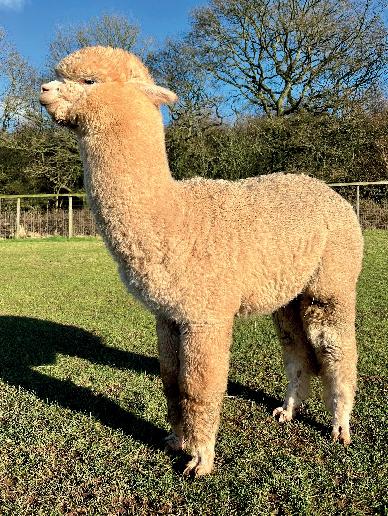
And why guesswork is costing you more than you think.
By
Claire E
Whitehead
BVM&S MS DACVIM FHEA
Reproductive efficiency is the engine that drives any successful alpaca breeding programme.
In an ideal world, a female alpaca produces a cria every year. With a gestation length of around 343 days, breeding back at approximately 2-3 weeks post-partum allows you to maintain a consistent yearly cycle. Slip outside that rhythm, and you quickly find yourself making difficult decisions about out-of-season breeding – or losing an entire year.
And that’s where the real problem begins. Because when a female doesn’t get pregnant, most owners don’t stop and ask why. They keep breeding. It’s incredibly common to see females repeatedly put to the male – sometimes across multiple seasons – with no success. On the surface, it feels logical: “She didn’t take: so let’s try again.”
But here’s the uncomfortable truth: if a female alpaca is not conceiving repeatedly, there is a reason. And every additional breeding without a diagnosis has potential drawbacks of wasting time, the risk of making the underlying problem worse, and it quietly erodes your herd’s productivity. Look at it this way…you wouldn’t keep pressing the same button on a broken machine and expect it to fix itself.
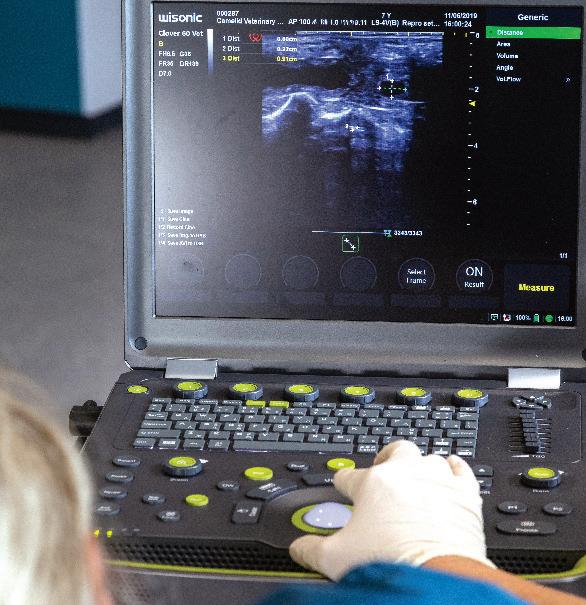
Many owners don’t realise that advice regarding alpaca reproduction is a specialist skill. Working up infertility cases requires a detailed understanding of camelid reproductive physiology, experience interpreting subtle ultrasound findings, access to appropriate equipment and confidence performing procedures safely in a species that is relatively small compared to those a large animal veterinarian may be more familiar with. Most general practice (GP) vets simply aren’t trained to this level in camelid reproduction, and neither would we expect them to be.
Let’s put it into human terms: would you go to your GP for a fertility work-up, or to a gynaecology specialist? It’s the same principle. GP vets are essential and highly skilled – but reproduction in camelids sits firmly in the realm of advanced, species-specific expertise.
Alpaca Vet).
There are many potential causes of infertility in female alpacas, and they are not always obvious. One of the most common issues I diagnose is endometritis – inflammation or infection of the uterus. If left untreated, this can progress to deeper damage and scarring, making future conception far more difficult, or even impossible. This infection might well start as a mild infection around the time of birthing, and it is only later that you start to see its effects.
However, another reason for endometritis is actually due to the nature of alpaca copulation. Since the male’s penis actually penetrates all the way through the cervix in order to deposit semen at the tip of the uterine horns, repeated matings can worsen inflammation in the uterus and cervix and also introduce bacteria into the uterus. This is why we don’t normally recommend presenting a female to a male more than once weekly.
In the “old days”, people would often present females to males multiple times over a few days believing that it would increase their chances of pregnancy. Unfortunately, this only increases the inflammation: if a male can’t get enough semen in place in one breeding, he’s not a good male. And if the female’s not quite ready with a good size dominant follicle at that time, it won’t make any difference to breed her again the next day – but the following week, the chances are that she has a better dominant follicle, capable of ovulation.
A typical breeding history for a female with endometritis is a female who sits for breeding and then ovulates (so she spits off at seven days), but then sits again at 14 days, and then repeats the same pattern on three occasions. These females should be presented for investigation. It is much easier and more efficient to deal with endometritis at an early stage than to wait until there are secondary changes in the endometrium.
>> Continued on next page
Other problems I commonly see include:
• retained corpus luteum
• uterine cysts
• congenital abnormalities
• cervical scarring
• ovarian disorders.
Some of these are straightforward to treat, while others are not. But all of them require accurate diagnosis first.
Now, one of the biggest pitfalls in alpaca breeding is relying on behaviour alone. A female that spits off a male from 14 days onwards is often assumed to be pregnant. But around 15% of non-receptive females are not actually pregnant. That means you could assume a female is in cria, wait months for a birth that never comes, and lose an entire breeding season (or more). Ultrasound confirmation of pregnancy is not optional, it is essential, especially for more valuable females where a missed season is a costly concern.
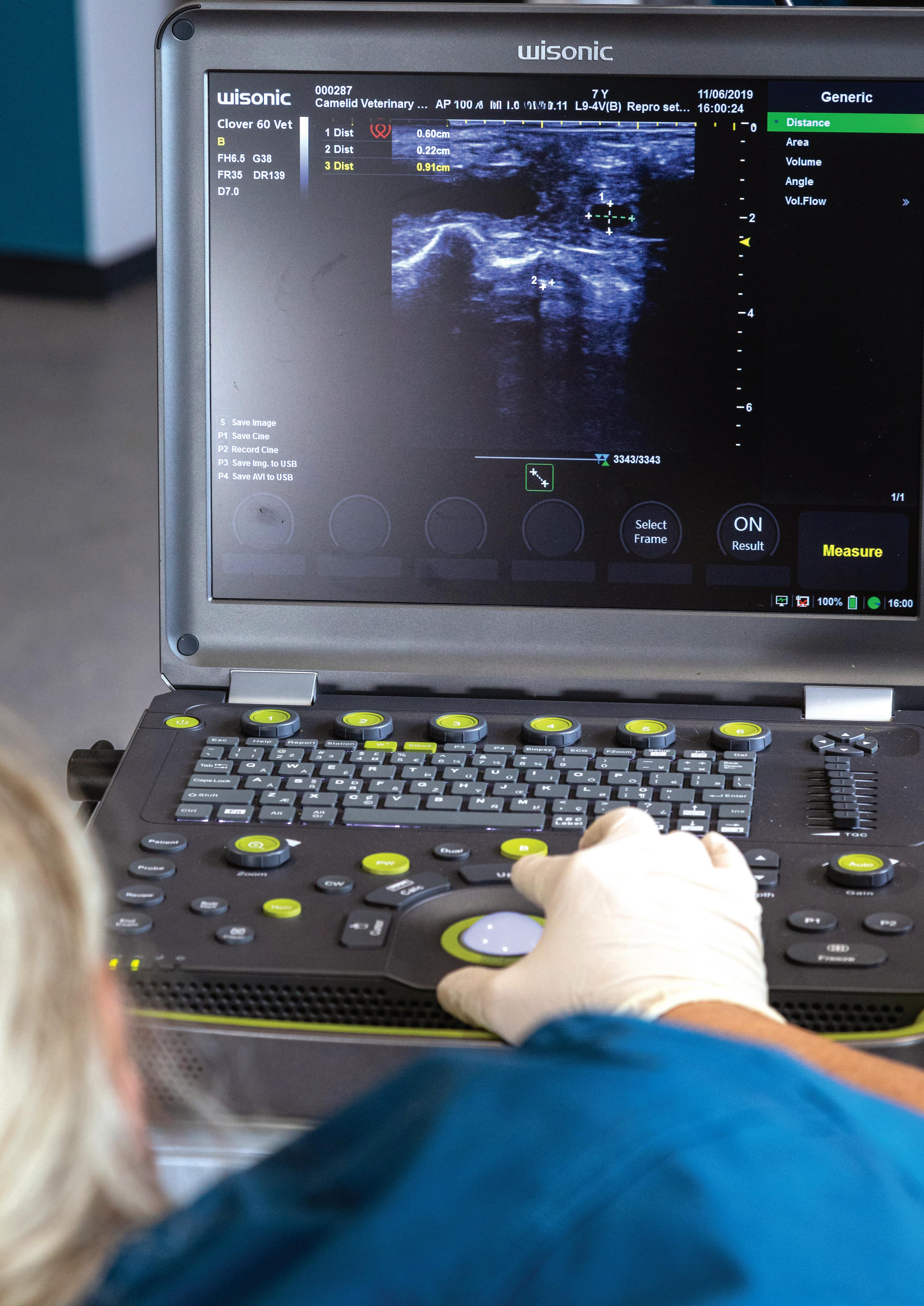
When it comes to ultrasound, not all ultrasound is equal. There is a significant difference between a quick pregnancy check and a full reproductive evaluation by someone trained to interpret subtle abnormalities.
A breeding soundness examination (BSE) can evaluate whether or not a female is mature enough and ready for breeding, that there are no concerns that need to be dealt with – and that she has all the necessary reproductive anatomy. An infertility examination is where we try to understand why a female is having difficulty conceiving. A true BSE is not a quick scan. It is a structured, thorough process that may include the following:
• full history and clinical assessment
• detailed ultrasound of ovaries and uterus
• vaginal examination
• uterine sampling or culture
• uterine flushing (diagnostic and sometimes therapeutic)
• additional tests where indicated.
This level of assessment allows us to identify the underlying cause, treat it appropriately, and put a targeted breeding plan in place. This is instead of guessing.
Let’s talk numbers – because this is where things become very real for those with more commercial interests in alpaca breeding. If you are not concerned about your costs, in either financial or time ways, then you can skip this section…
Take a good quality female alpaca worth, for the sake of argument, £5,000. You can do the maths with your own figures. Over her lifetime, she might produce around 10 crias. Even with conservative estimates, and assuming that half will be male and half female, that represents tens of thousands of pounds of potential value. Lose just one year of breeding, and you could easily lose a cria worth £2,000–£10,000, plus ongoing feeding and management costs, plus the time and effort invested, plus the value of the generations of alpacas that lost cria could have produced…
Now compare that to the cost of a specialist evaluation. Suddenly, the decision becomes much clearer. (A workup at my clinic costs £275 +VAT for the basic evaluation with any additional testing on top – but most infertility evaluations are under £500. An alpaca with endometritis could have the evaluation, collection of samples, lab cultures, a uterine flush and follow-up planning for around £430 +VAT with only the antibiotics on top that would be based on culture results.)
When a female isn’t getting pregnant, the question should not be “Should we try again?” Instead, it should be “What are we missing?” Because once you have a diagnosis, many problems can be resolved. This will result in improvement of breeding success rates and most importantly, stop you losing valuable time. Just as importantly, you gain clarity. If a female can’t conceive, it is best to know so that you can stop wasting time and effort and she can become a happy healthy pasture keeper – or an auntie to other crias!
For many reproductive cases, you do not need to wait for multiple veterinary visits before seeking specialist input. In fact, in most situations, owners can contact me directly to arrange a reproductive evaluation. This often saves considerable time and allows us to reach a diagnosis quickly.
If your own vet has already been involved in the case, then a formal referral is absolutely appropriate, and I am always happy to work
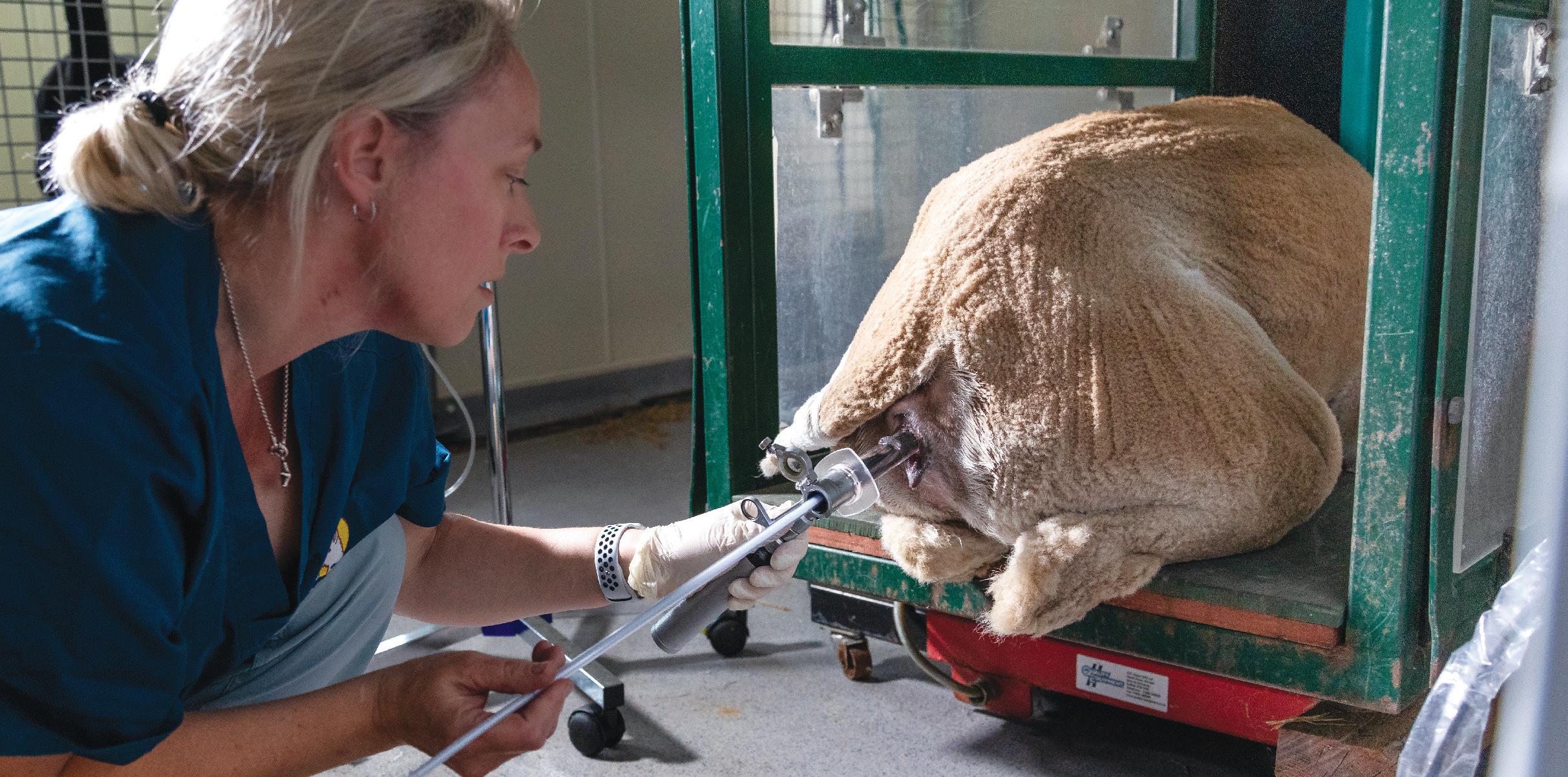
A seven year old female alpaca had failed to conceive for three years. She had been bred repeatedly, seen by multiple vets, and undergone various treatments – with no success. When she came to me, I diagnosed endometritis.
We collected samples for culture, performed a uterine flush, treated based on culture results, and implemented a controlled breeding protocol. She conceived on the very next breeding –and the following year, delivered a healthy female cria.
alongside them. In these situations, and in any case where follow-up treatment may be required, I will provide a full report back to your vet so that they remain informed and can support ongoing care if needed. This is particularly important where follow-up treatment is required on farm, medications (such as antibiotics) need to be prescribed locally or there are wider herd health considerations. This approach ensures that care remains both effective and professionally responsible, while still giving you access to specialist expertise when you need it.
The process is straightforward. The most important first step is understanding your female’s breeding history. This allows me to identify likely causes and plan the most appropriate evaluation.
Once you get in touch:
1. I will send you a short questionnaire to gather key details about the animal’s history
2. We review this information to determine the most appropriate approach
3. We arrange a mutually convenient time for the evaluation
Most assessments can be performed as an outpatient visit at my clinic and typically take 1–2 hours, depending on the level of investigation required.
The sooner we move from guesswork to diagnosis, the sooner we can identify the underlying problem, put a targeted treatment plan in place and get your breeding programme back on track.
Because when it comes to reproduction, time is not neutral. Every missed opportunity has a cost.
If you take one thing from this article, let it be this: Repeated breeding is not a strategy. Diagnosis is. The longer a problem goes unidentified, the more expensive it becomes – financially and biologically. If you have a female alpaca that isn’t getting pregnant, is repeatedly spitting off but not confirmed in cria, or has had inconsistent reproductive performance, then it’s time to stop guessing.
A specialist reproductive evaluation can:
• give you answers
• save you time
• and get your breeding programme back on track.
I offer dedicated breeding soundness evaluations for alpacas, with tailored treatment and breeding plans based on findings. To discuss a case or arrange an evaluation, speak to your vet about referral or contact me directly. Because when it comes to reproduction, you don’t need more attempts. You need the right answer.
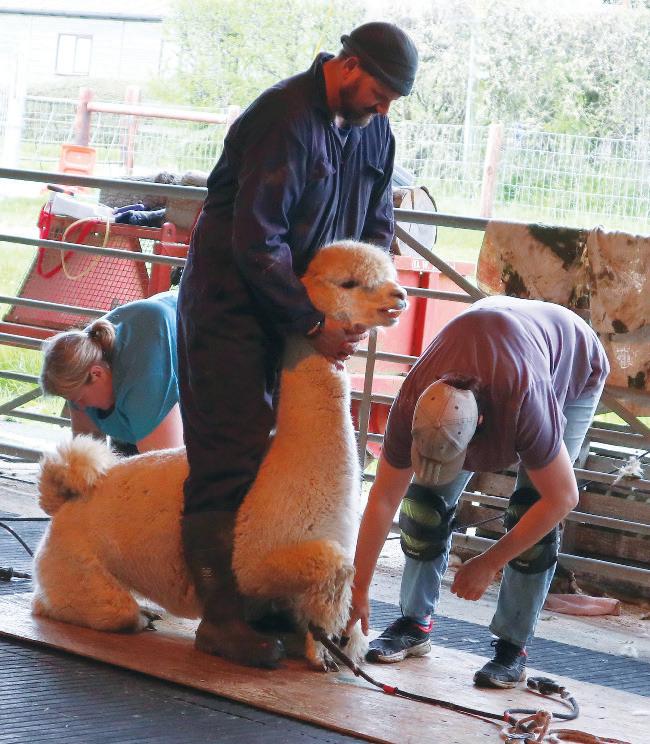
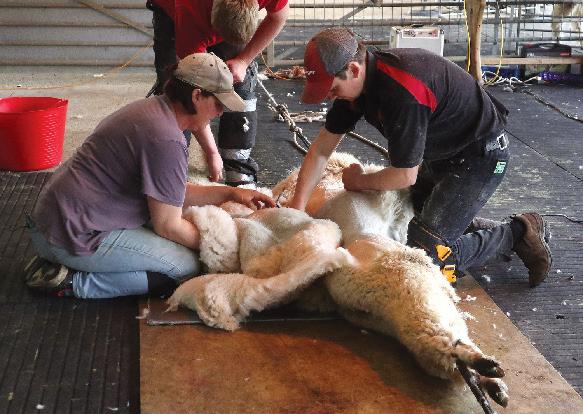
The alpaca to be sheared is led onto the shearing board, where loops on the ends of ropes are slipped over the feet and tightened on the lower legs. The ropes are attached to a quick release mechanism. The alpaca is then carefully lowered to the board, with its head and neck kept steady while the ropes are pulled tighter. This constrains the alpaca safely, so that it cannot move around and risk being cut by the sharp shearing blades.
Joy Whitehead looks at the shearing sequence at Bozedown Alpacas.
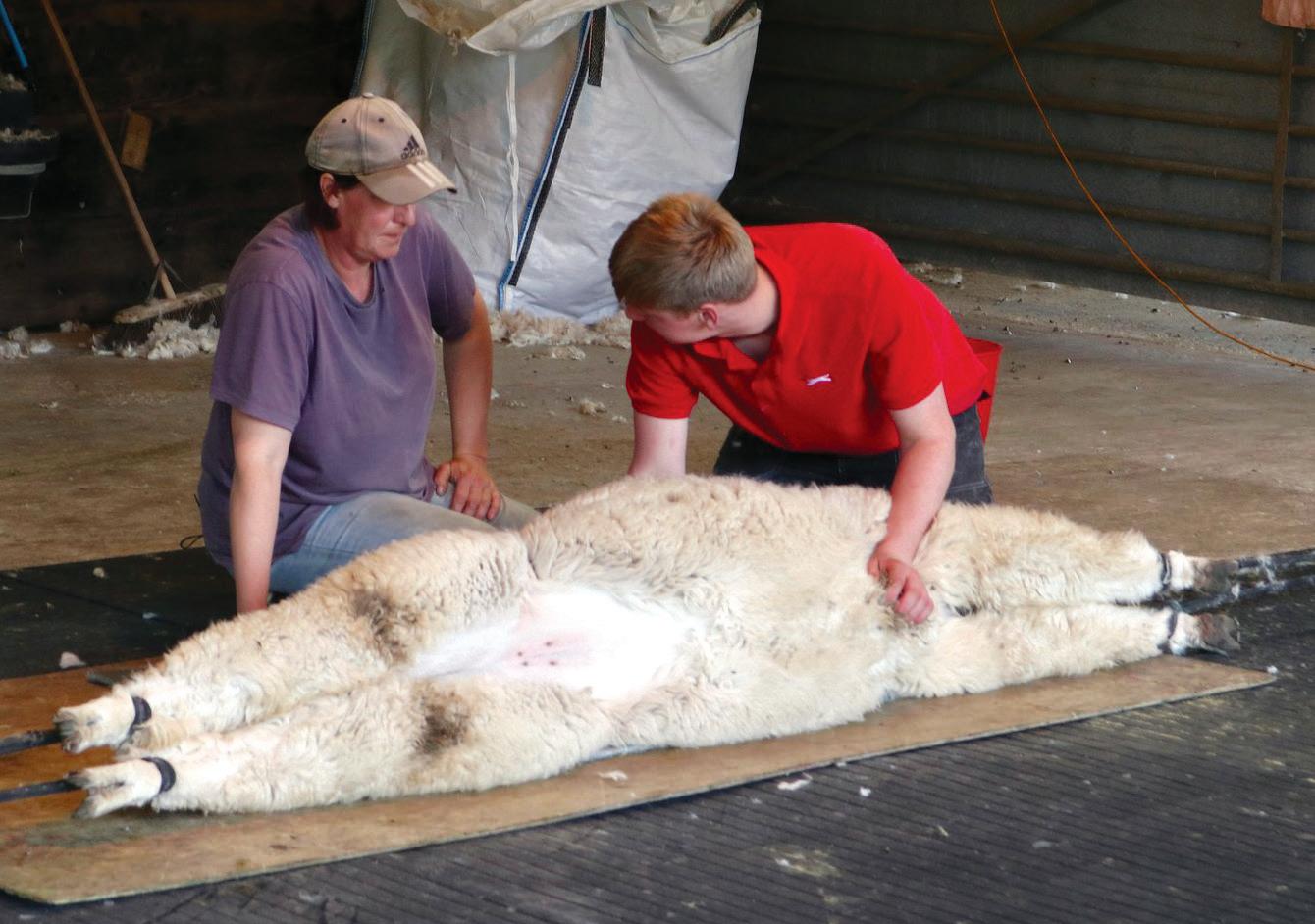
With the alpaca lying completely on its side it is ready for shearing. The alpaca has accepted its situation and is quite still and calm. At this point we take the opportunity to trim its toenails.
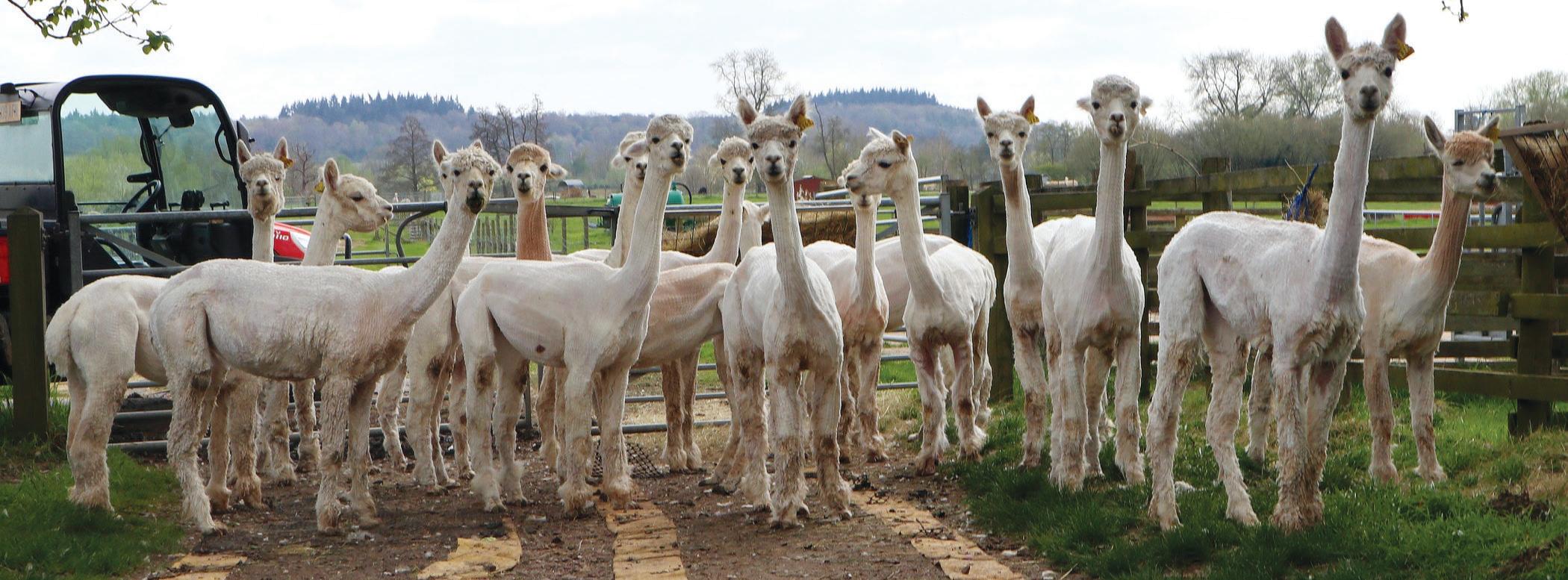
A group of sheared alpacas waiting to go back to their grazing paddock. They have plenty of hay available while they wait as they need the extra calories to keep them warm while their freshly sheared skin acclimatises over the first day after shearing.
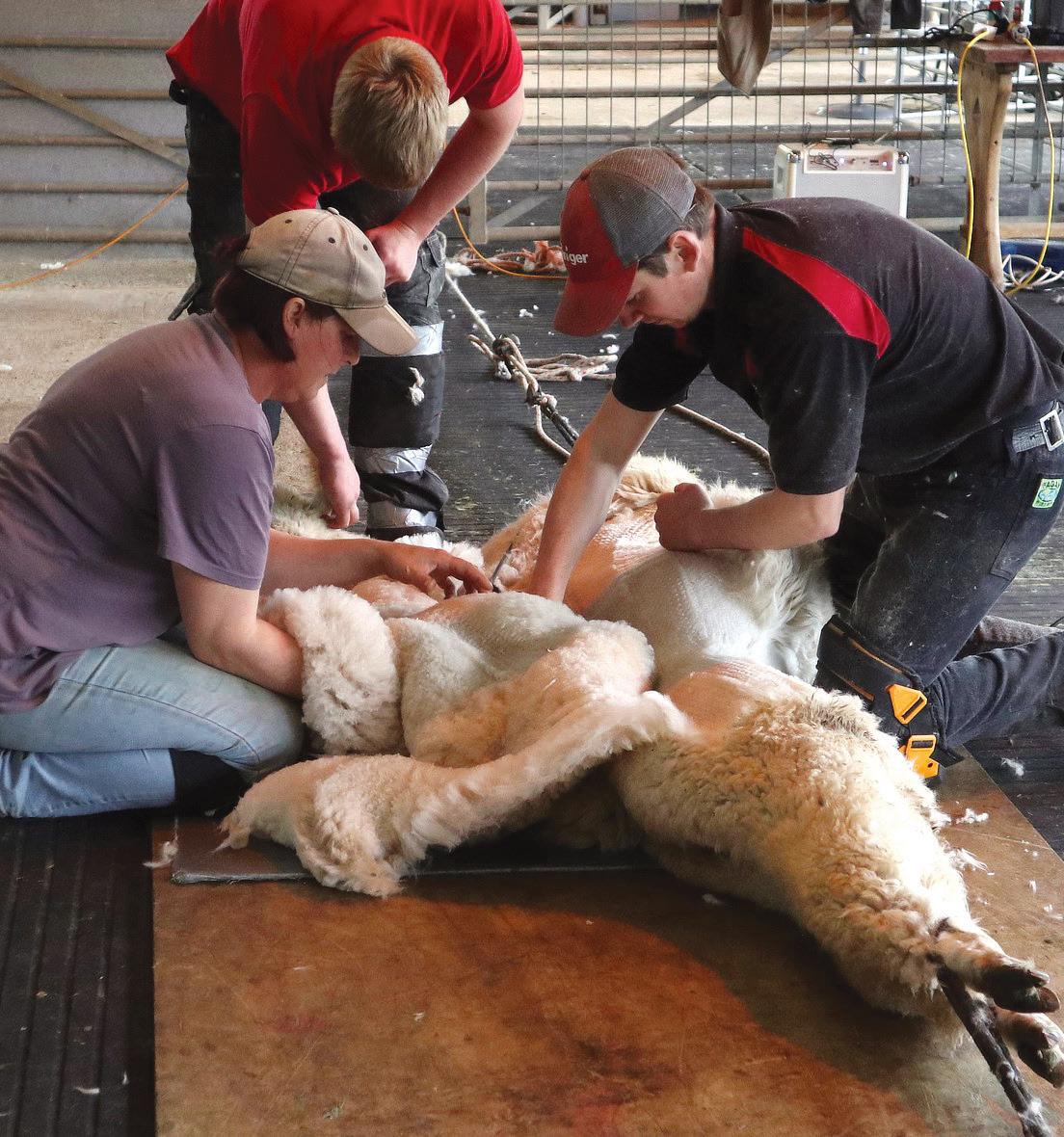
The total time on the board is about 5 minutes. The alpaca can be sheared quickly and efficiently and, most important of all, safely. The alpaca can easily be rolled over from side to side, with the head and neck always supported by a helper.
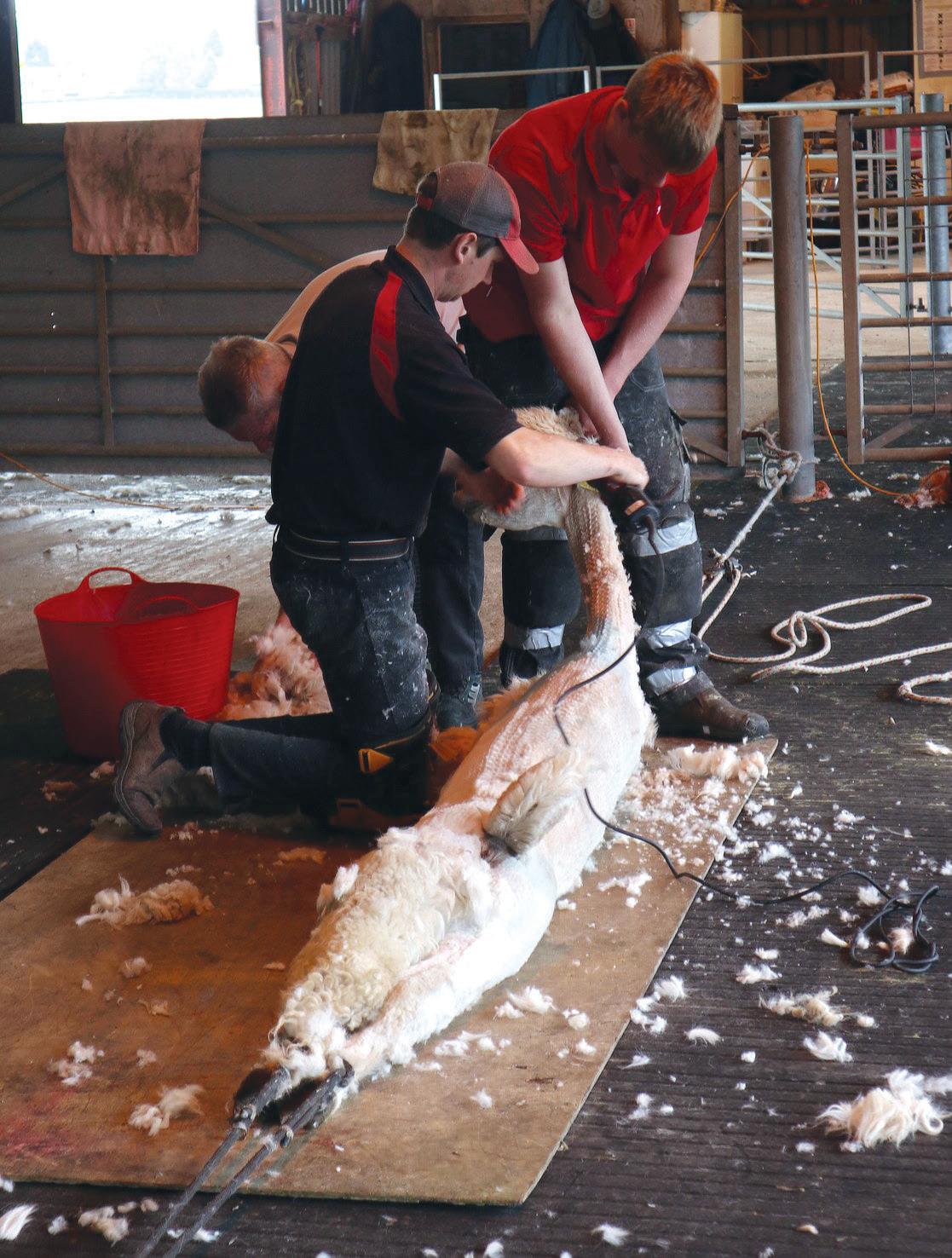

The last part of the alpaca to be sheared is the neck fibre, after which the ropes are released and the loops removed before the alpaca stands back up.

Spring has sprung and so have the health tasks to take us into summer. Dr Ami Sawran BVSc CertAVP (CP) PGCertVPS PhD FRCVS looks at the shearing MOT.
Spring has mostly (hopefully!) sprung, and with temperatures climbing, management naturally shifts toward preparing for shearing and parasite control. While the primary goal is heat management, this upcoming window represents a critical clinical opportunity. Alpacas are famously stoic and their dense fibre is a master of deception; shearing is often the only time we can truly see (and feel) what has been happening over the last twelve months.
It is common to see shearing day treated as a 'catch-all' for husbandry, but I would urge a more considered approach. Shearing is a significant stressor. Stacking it with multiple medical interventions can cloud the clinical picture and potentially lead to poor immune responses. Instead, use the access for a rigorous inspection:
• Toes and teeth: Check foot pads for health and trim nails level with
the foot. Dental work should be assessed on a case-by-case basis. Teeth do not need to look perfect to function, and the decision to alter them should balance the animal's ability to forage against its body condition. If a bite is 'off', it may indicate cheek teeth issues that require a more detailed veterinary oral exam. No dental remediation can be legally undertaken by shearers – but if you have concerns ahead of time, you can schedule a vet to attend alongside your shearing session so that work can be done alongside good, safe restraint.
• The big reveal: Shearing often uncovers hidden mite burdens or early flystrike. Mites in particular, are much easier to manage when fibre is short. If you identify concerns, targeted diagnostics should follow to determine the specific mite responsible before commencing treatment. Care should be taken not to apply topical treatments just before shearing, to protect shearers from the chemicals that may be harmful to them.
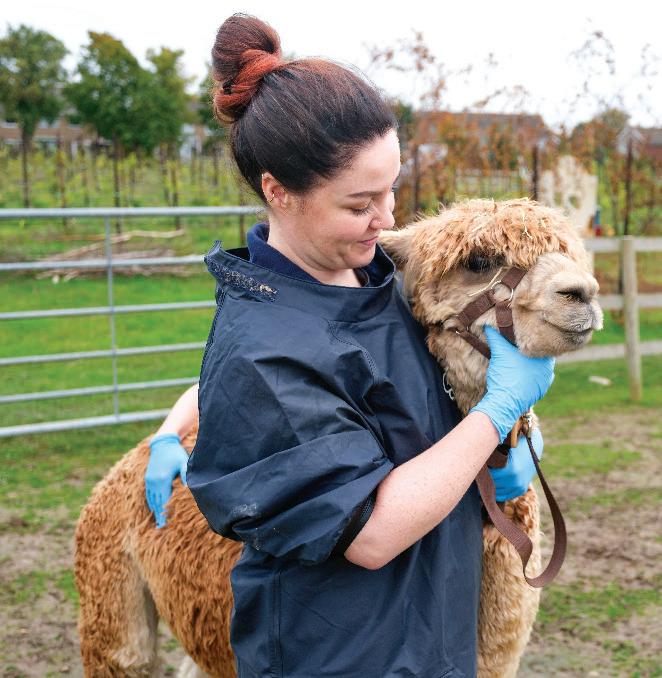
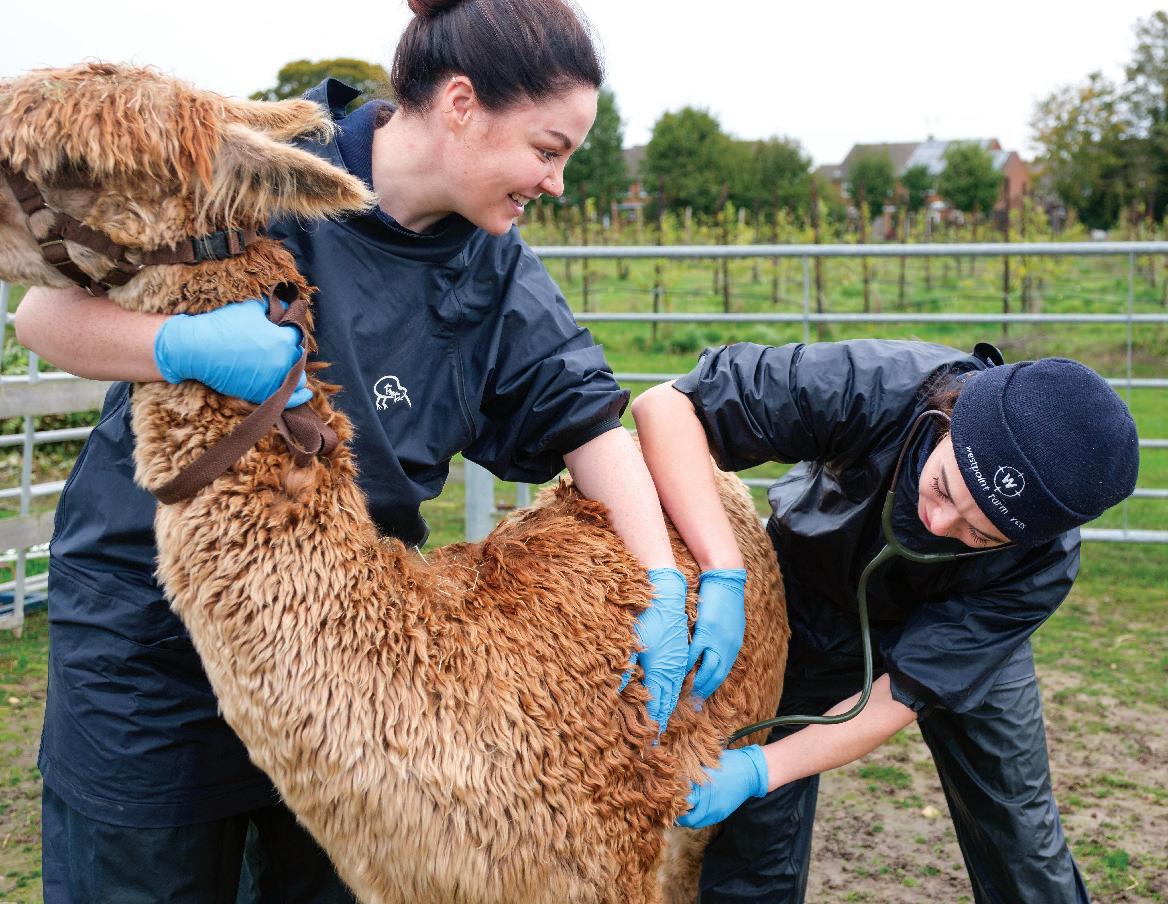
You cannot accurately judge an alpaca’s condition by eye. Scoring must be hands-on, assessing tissue coverage over the spine between the ribs and the pelvis. Whether using a 1-5 or 1-10 scale, the aim is to identify those drifting toward the ‘sharp’ (thin) or 'peachy' (obese) ends of the spectrum.
Once shorn, group animals by their BCS. This allows for tailored nutrition, ensuring those needing to gain weight aren't outcompeted by easier keepers, which is vital for maintaining reproductive health and fibre quality.
The UK’s prolonged warm and wet weather has effectively extended 'parasite season' year-round. We have a finite toolkit of anthelmintics, and no new classes are on the horizon; resistance is a constantly evolving threat that we must manage as a community.
Dosing 'just in case' at shearing is a sure-fire way to promote resistance. We must move toward a holistic risk profile for every holding. A faecal egg count (FEC) result that is 'just a number' is insufficient to determine a control plan. When submitting samples, the lab or vet requires the full context:
• Individual BCS
• Age
• Current stocking densities, and ages of cohort
• Complete parasite control history
• Specific stressors, such as weaning or recent illness
A low count in a fit adult might be ignored to maintain a 'refugia' of non-resistant worms, whereas that same number in a thin youngster is a call to action. This is why lab results require detailed interpretation.
If treatment is necessary, it must be targeted at the individual. FAMACHA scoring alongside BCS and FECs allows us to treat only those that truly need it, preserving the efficacy of our medications. Look also to environmental controls. This includes rigorous pasture hygiene: removing poo every 2-3 days, and considering adjuncts like parasitic wasps to reduce fly populations. Any animals showing ill-thrift, lethargy, or pallor require swift evaluation regardless of the time of year.
Complacency is our biggest risk. By treating shearing as a clinical MOT rather than a routine drenching day, we protect our medications and ensure the long-term welfare of the herd.
Are you looking for or in need of a little extra help with your animals and their routine husbandry tasks?
KW animal services offers that extra pair of hands. Jobs include: Shearing of alpacas | Vaccinations | Worming Halter training | Foot trimming | Microchipping I can also offer advice and help with a range of other issues such as matings, birthing, common husbandry problems and paddock management. Reasonable rates
Why not contact me to discuss your requirements Tel: 07748 613771 | Email: kwilde1@yahoo.com

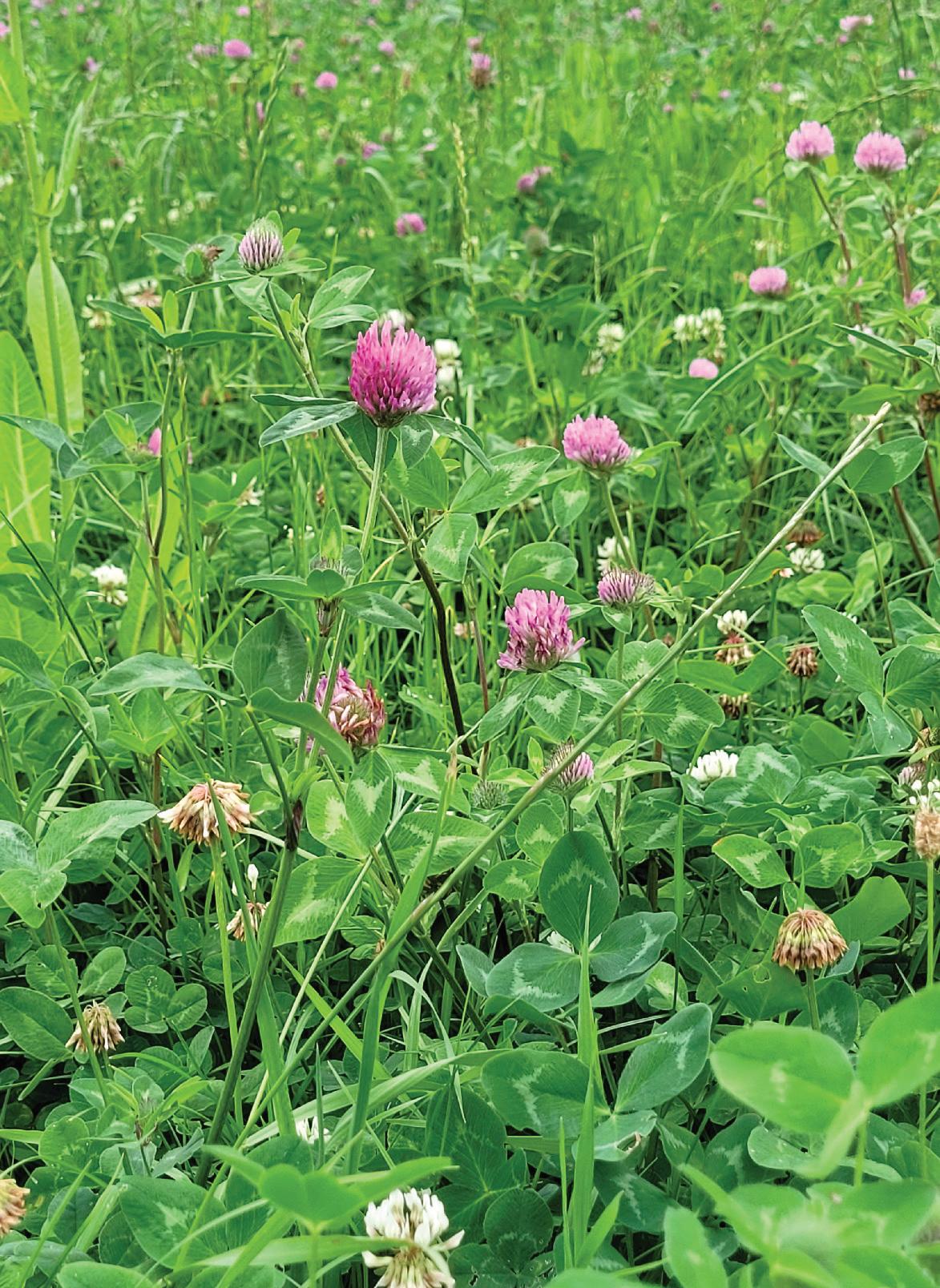
plant diversity in grasslands boosts yields, reducing reliance on fertiliser. Dr Duncan Pullar looks at recent research on sustainable grassland.
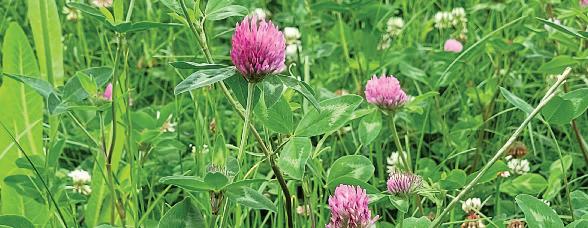
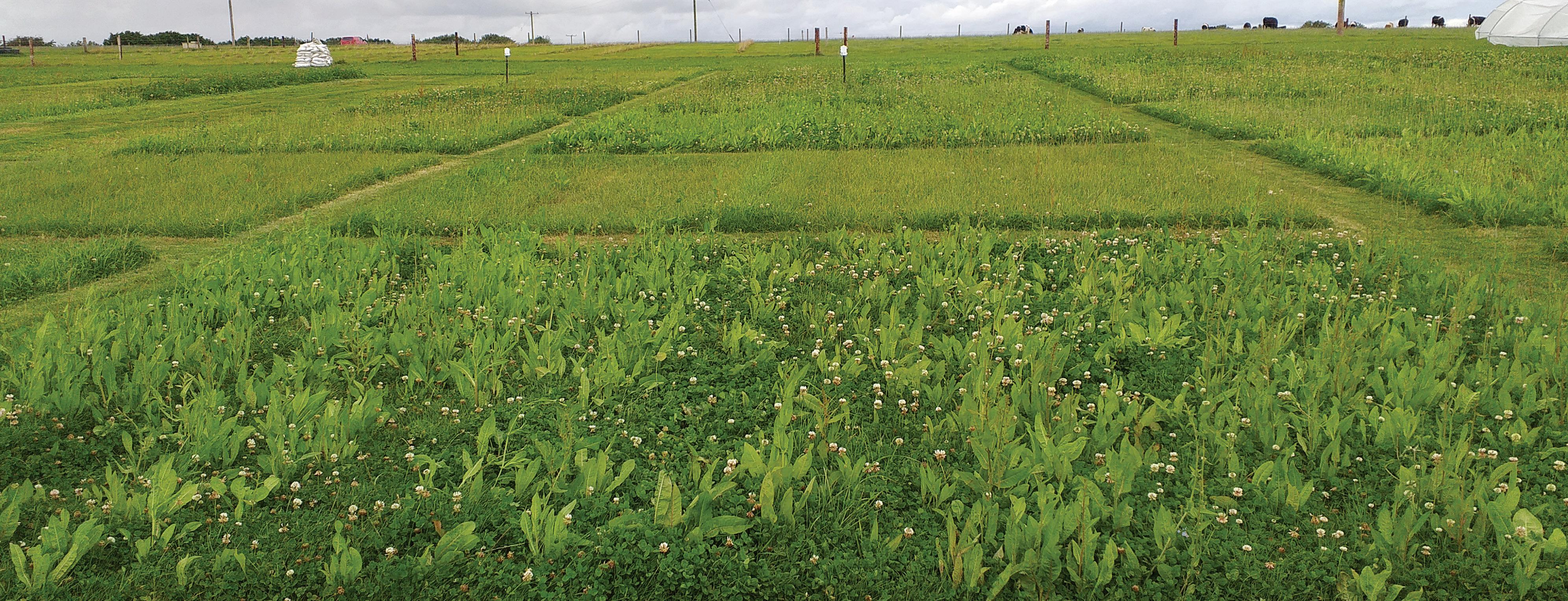
Some excellent research published in December 2025 has shown that higher plant diversity in agricultural grasslands increases yields with lower inputs of nitrogen fertiliser. This international study, led by Trinity College Dublin paints a promising picture for sustainable grassland productivity.
The research also shows that under warmer temperatures, the yield benefits of more diverse grasslands further increase. This highlights the climate adaptation potential of multispecies mixtures in an era where the global climate crisis is driving rising temperatures in many countries.
The research was published in the leading journal Science. The paper reports the findings of a common experiment conducted across 26 international sites that spanned a wide gradient of temperate climates and local conditions. The “LegacyNet” sites include some in Ireland, as well as others in Europe – from Denmark to Italy, and the Netherlands to the Czech Republic – and further afield, from China to the US, Canada, and New Zealand.
Sown productive grasslands typically comprise low species diversity. Two widely used grassland practices comprise:
• A single grass species (monoculture) managed with high inputs of synthetic nitrogen fertiliser – often used for producing hay and silage
• A two-species grass-legume combination.
In this study, the researchers considered whether adding more species (up to two grasses, two legumes, and two herbs) to these grasslands, and creating ‘multispecies mixtures,’ could maintain or improve yields
while reducing the reliance of nitrogen fertilisers that have negative environmental impacts.
The results showed that multispecies mixtures achieved high yields due to strong grass-legume and legume-herb synergistic interactions – the yield of the mixtures was much greater than the sum of the parts.
• Sowing two grasses, two legumes and two herbs each in approximately equal proportions can optimise yield and nitrogensaving benefits
• The six-species multispecies mixture produced on average 12.3 tonnes per hectare per growing season, representing an 11% increase in yield compared to the grass monoculture that had more than double the nitrogen fertiliser, and an 18% increase in yield compared to the two-species grass-legume combination.
This confirms that multispecies mixtures outperform two widely used conventional practices in agricultural grasslands.
Caroline Brophy, Professor in Statistics in Trinity College Dublin’s School of Computer Science and Statistics, senior author of the research said: “We urgently need to make agricultural grasslands more sustainable, but at the same time it is crucial that these systems maintain or improve agronomic performance and can adapt to changing climates. This is an internationally relevant issue as agricultural grasslands are globally distributed, economically important and threatened by the climate crisis.
“The big-picture message from this work is that transitioning to multispecies mixtures in agricultural grasslands can drive more environmentally sustainable forage production, improve yields, and enhance adaptation to a warming climate. That’s a win-win-win.”
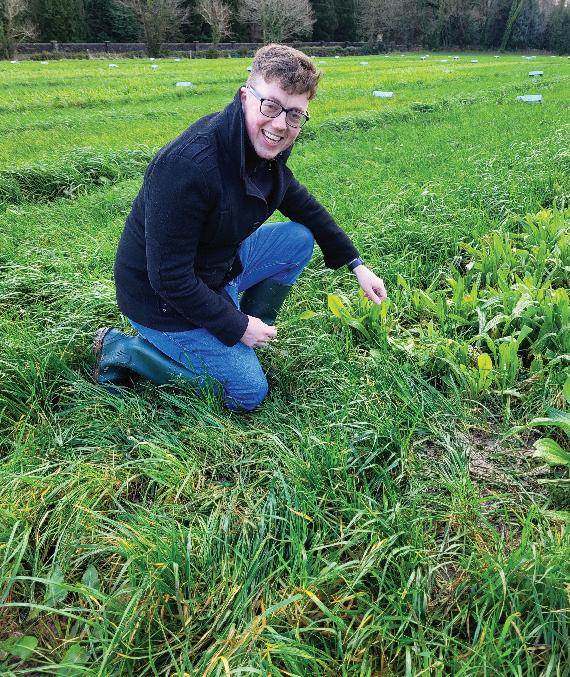
James O’Malley at the LegacyNet site at Teagasc Johnstown Castle, Co. Wexford, Ireland
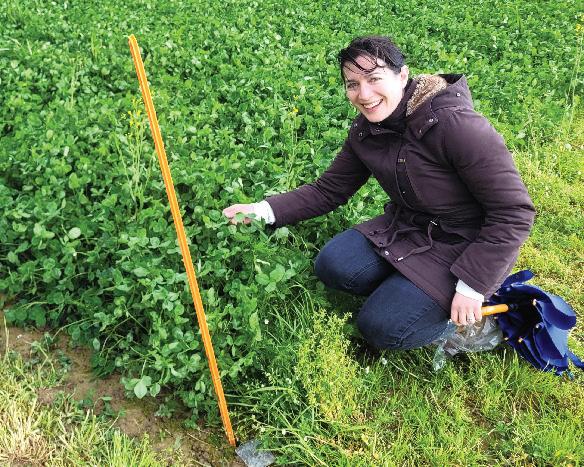
Professor Caroline Brophy at the site of a multispecies mixture experiment at Agroscope, Switzerland
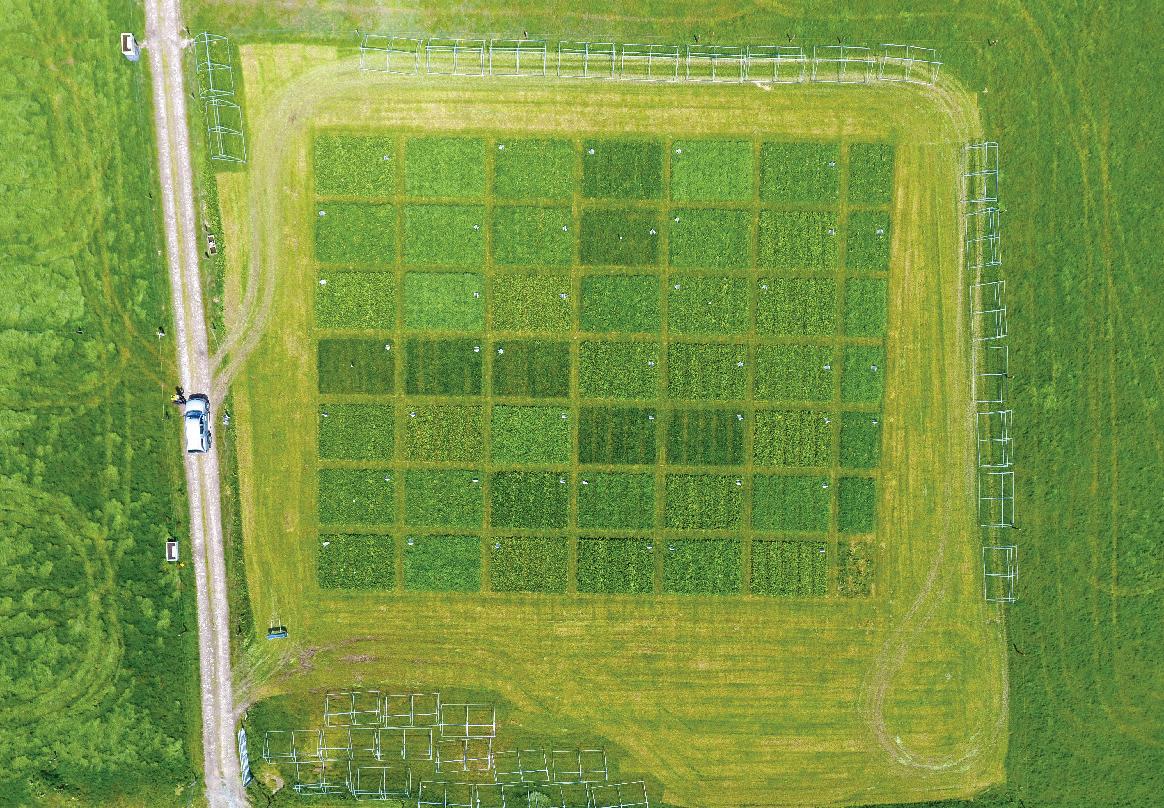
Aerial view of the plots from the first
James O’Malley, PhD Candidate in Trinity’s School of Computer Science and Statistics, is the first author of the research. He added: “A major strength of our study lies in the broad geographic and climatic spread of sites in our experimental design, which spanned 26 different locations across Europe, North America, China and New Zealand.”
“Having a common experiment at many sites enhances our statistical power and greatly improves the generality of our results. Statistical models applied to our multi-site data showed that sowing two grasses, two legumes and two herbs in equal proportions was a reliable strategy for delivering high yields across sites, and the yield benefits of multispecies mixtures compared to less diverse grasslands were even stronger under warmer climates.”
Dr John Finn, Senior Researcher at Teagasc, a leading co-author of the research, said: “Across a variety of sites and environmental conditions, our study shows conclusively that six-species multispecies mixtures are not only better yielding than grass monocultures with higher inputs of nitrogen fertiliser, but they also outyield combinations of perennial ryegrass and white clover.”
“This research provides farmers with the knowledge to better design grassland leys by sowing approximately equal proportions of grasses, legumes, and herbs. For longer term grasslands, it shows the high potential benefit of grassland management strategies to maintain those proportions over time. Ultimately, we show that multispecies mixtures deliver more yield from less nitrogen fertiliser.”
A major strength and novelty of the LegacyNet experiment is its scale – the same experiment was conducted at 26 different locations across Europe, North America, China, and New Zealand. It is highly unusual to have a common experiment coordinated across so many locations. The team tested the research questions across this wide gradient of climatic conditions, varying management practices, and local soil conditions. The ability to generalise the key results on account of this scale is part of why the research is published in the prestigious journal Science.
To get the most from your grass make sure you have species diversity combined with good grazing pressure management.
Multispecies mixtures outperform two commonly used agricultural practices
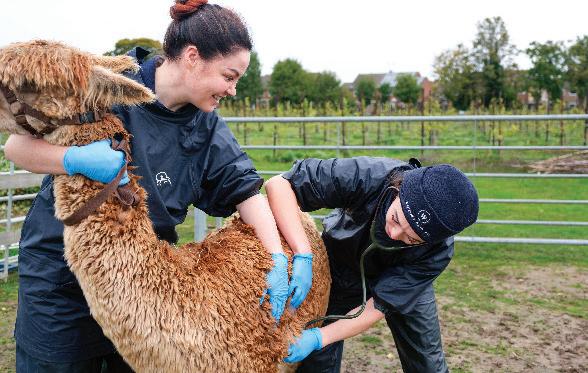
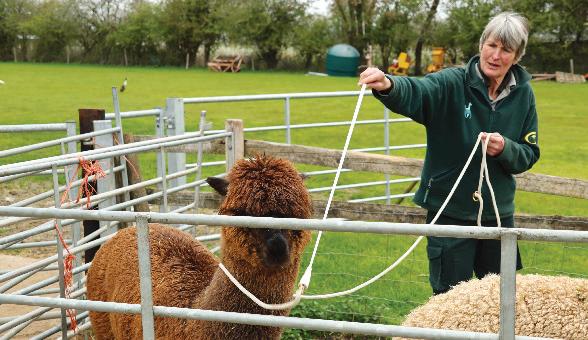
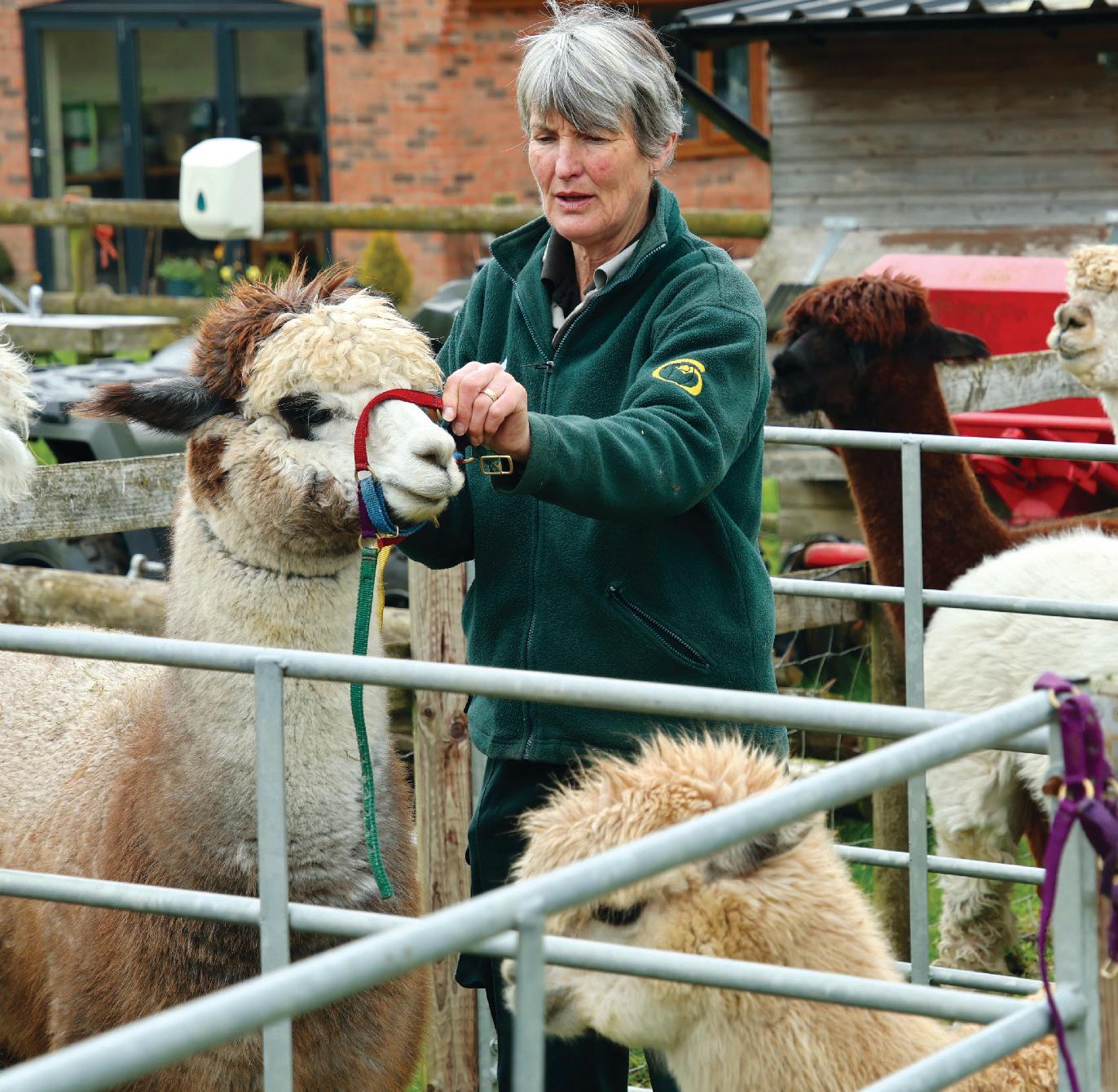
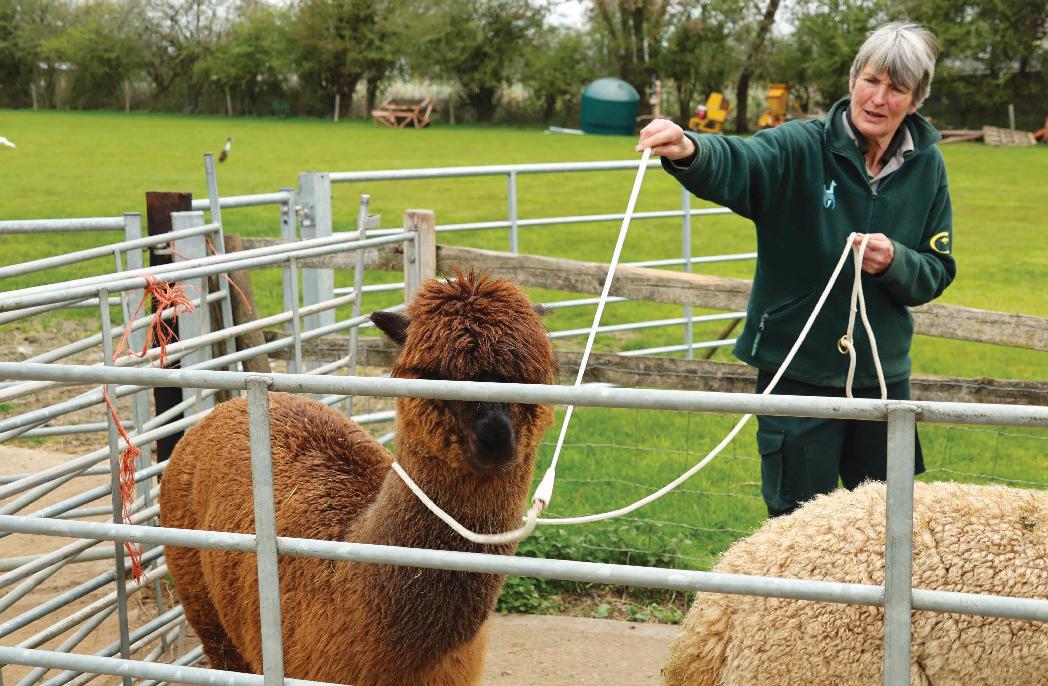
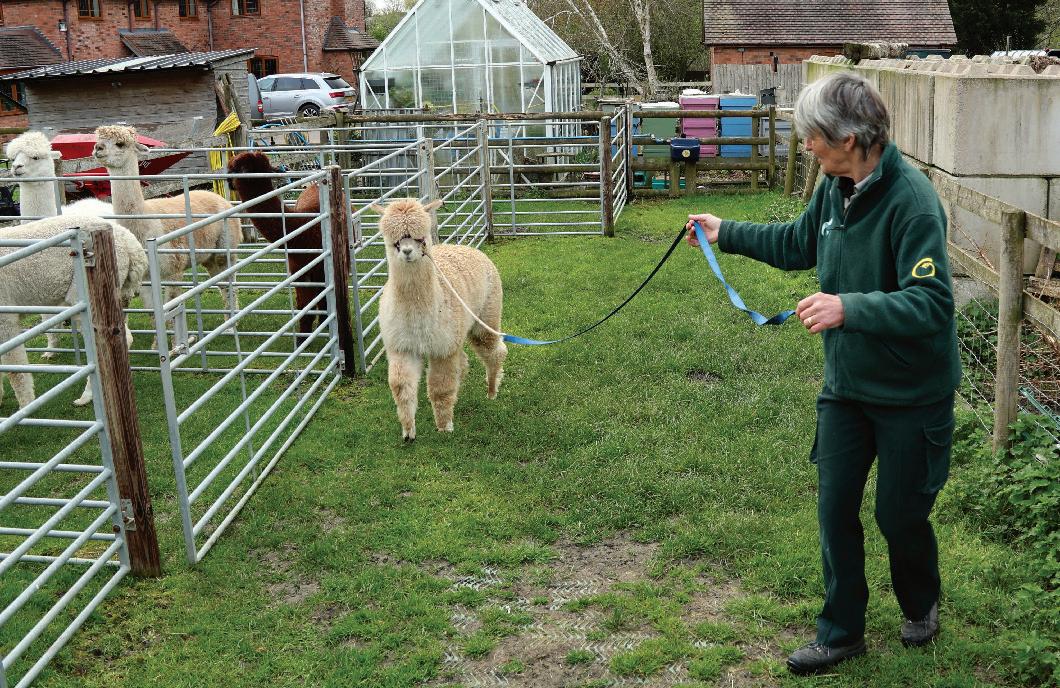
Handling alpacas (and their owners) involves challenges, especially during toenail trimming, injections, shearing, and haltering. Establishing a trust-based relationship between the animal and handler is crucial says Victoria Barrett of Simply Alpaca.
CAMELIDynamics provides methods to accomplish these tasks without force, focusing on cooperation. Often, we label animals as "aggressive," "stubborn," or "kicky." However, these labels stem from our perceptions and responses to their behaviours. To foster a more positive relationship, we must reflect on our role in shaping these characteristics. For instance, if we pull a reluctant animal and label it as stubborn, we create a cycle of resistance without considering underlying issues, like pain or discomfort.
CAMELIDynamics applies behaviour science, breaking down actions into Antecedent-Behaviour-Consequence (ABC). The antecedent includes factors like health, weather, and handler presence. Understanding what occurs before undesirable behaviour helps identify causes. For example, if an animal spits when fleece is picked, stopping that action can prevent the reaction.
So, how does this translate into daily handling? In a CAMELIDynamics handler course, we explore alpaca motivation and how to arrange their environment to encourage desired behaviours. By using body language and creating a safe space, we allow animals to feel comfortable enough to stop moving voluntarily. Ideally, we want them to stand still for procedures like toenail trimming and injections. When alpacas feel secure, trust can develop.
CAMELIDynamics also underpins courses on Working with Alpacas and Llamas in Animal Assisted Activity and Therapy. A strong relationship with animals is essential for demonstrating compassion and empathy, especially for health professionals. As a qualified counsellor, I recognize that mutual respect and care are foundational in therapeutic relationships.
These courses emphasise best practices for introducing animals into human environments, focusing on health and well-being.




We are a leading supplier and an approved repair centre.
With 50 years trading in the cleaning industry. With our strong ties and long term relationship with the leading manufacturers 01825 705777
Unit 4, 72 Bell Lane, Uckfield, East Sussex TN22 1QL enquiries@pressureclean.co.uk
Alpaca & Llama handler training with...
HANDLER COURSES:
23rd-24th May 2026
15th-16th August 2026
26th-27th September 2026
ANIMAL ASSISTED ACTIVITY COURSES
24th-26th April 2026
8th-10th June 2026
ANIMAL ASSISTED THERAPY COURSES
24th-27th April 2026
8th-11th June 2026

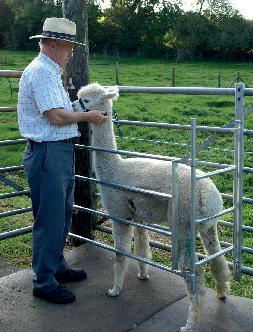
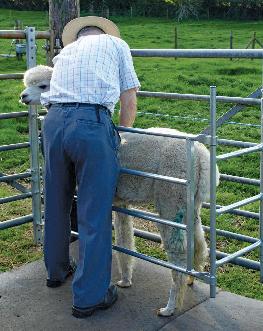
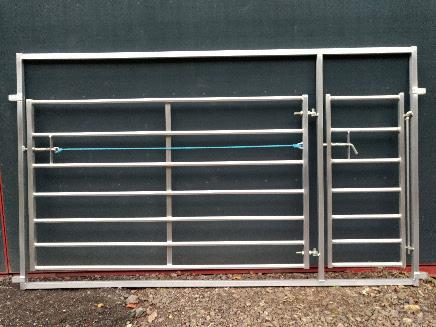
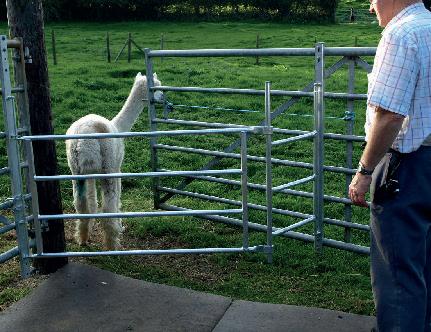
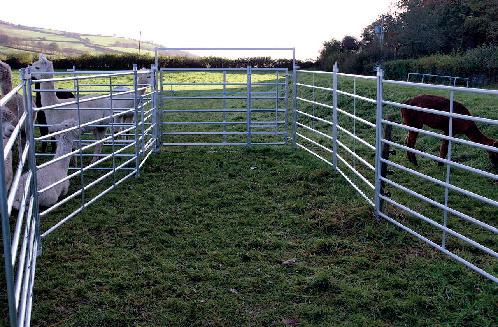
Basic Easy-Pen £330.48 + VAT Aluminium Hurdles 4ft, 6ft and 8ft wide From £52.00 +VAT each Alpaca Equipment:
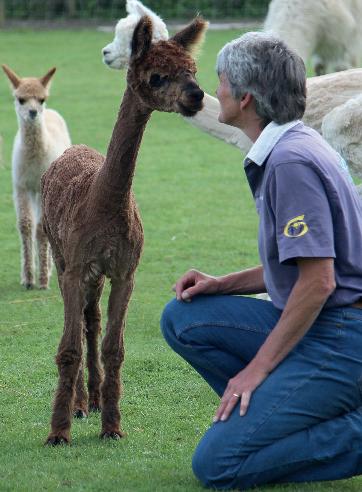
Is your relationship with your animals all you had hoped for?
How can Camelidynamics techniques help me on my alpaca journey?
Camelidynamics is an approach to and collection of methods that represent the most positive, least intrusive techniques for training and managing alpacas.
This two day handling course will change the relationship you have with your animals forever.
Understand why camelids behave the way they do and learn kind and efficient methods that are science-based, for safe handling and husbandry that’s fun. Tell your vet that we have courses for them too.
For those interested in finding out how this approach can inform and support your human/alpaca interactions in the therapeutic arena, we are now offering courses for owners and professionals. Working with Alpacas in Animal Assisted Activity or Therapy.
For more details and to book your places go to www.SimplyAlpaca.co.uk





Britain’s growing love affair with alpacas is reshaping rural enterprise, with more smallholders and breeders turning their land into diversified businesses that combine lifestyle, livestock and tourism.
With around 45,000 alpacas now in the UK, the sector is expanding beyond fleece and breeding into visitor experiences and overnight stays.
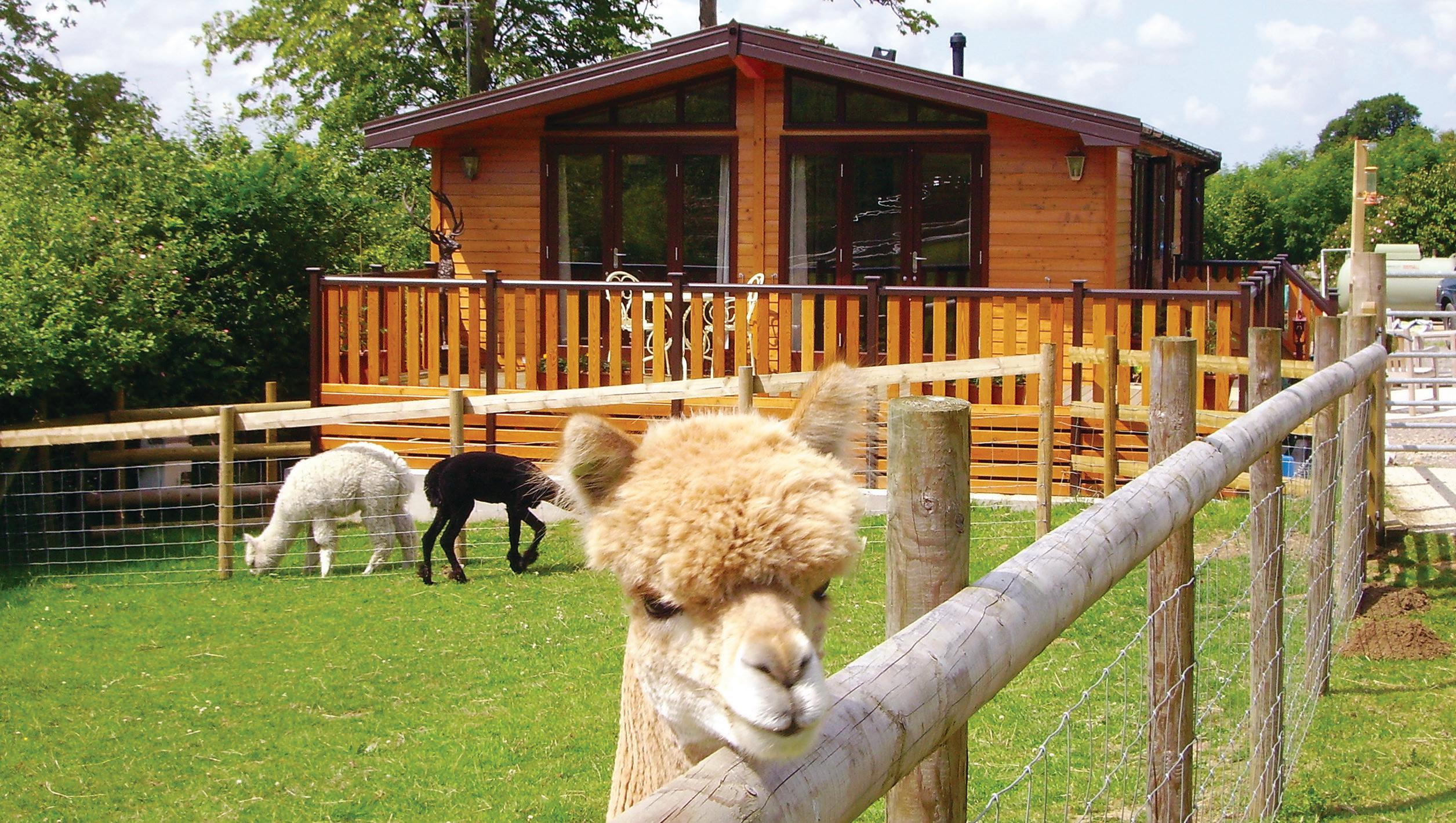
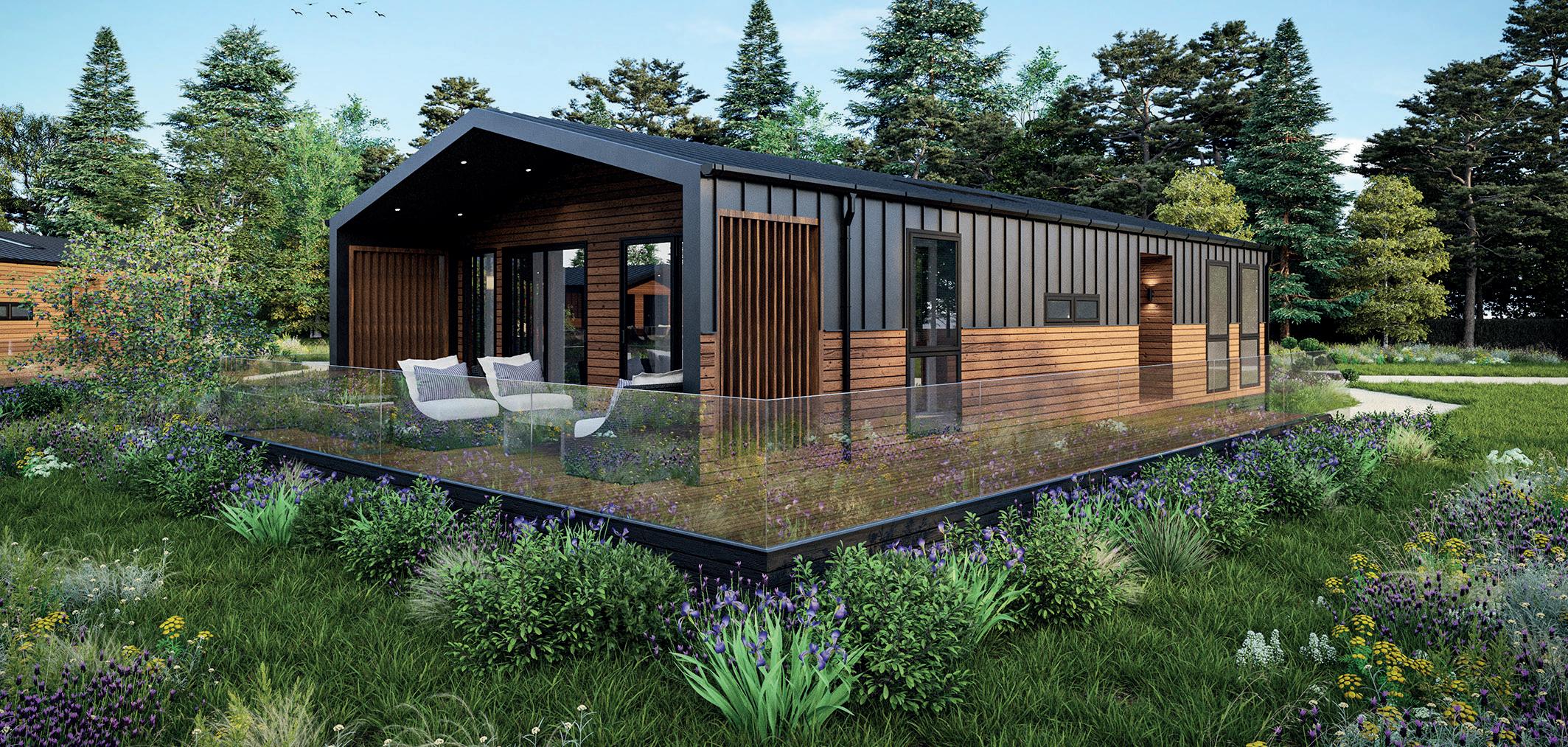
For many alpaca owners the next logical step is accommodation. Whether creating a home on-site to be close to their animals, or developing a holiday let offering, lodges are emerging as a practical and commercially viable route.
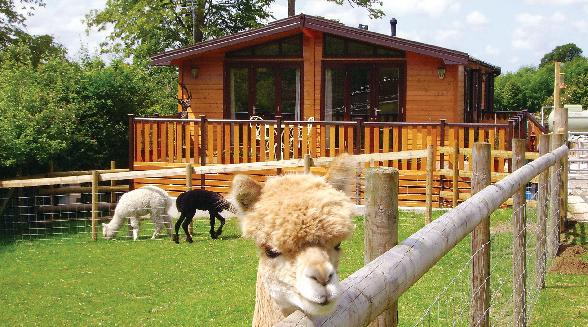
For alpaca farmer, Juliette Stevens, a Pinelog lodge has enhanced both the work and lifestyle that come with running a farm. Juliette, who owns Majestic Alpacas in Kirk Langley, Derbyshire, purchased a four-bedroom Pinelog lodge to live in on her farm. She has been so impressed that her neighbours have now purchased a lodge on her recommendation.
“The quality and design of the lodge have exceeded my expectations, offering both comfort and practicality for farm life. Not only does the lodge provide a wonderful warm and cosy living space, but it has also become a real talking point among visitors and fellow alpaca farmers,” she said.
Pinelog has specialised in designing and building flexible, high-quality accommodation that can perform year-round for more than 40 years.
Juliette is just one of a number of farmers and rural landowners from which Pinelog, a Derbyshire-based sustainable lodge manufacturer, is seeing increased demand. She added: “I am now thinking of buying a lodge for each of my sons. They’re less expensive and much nicer than my children trying to buy houses!”
As Juliette discovered, adding lodge accommodation to your land is more affordable than you might think.
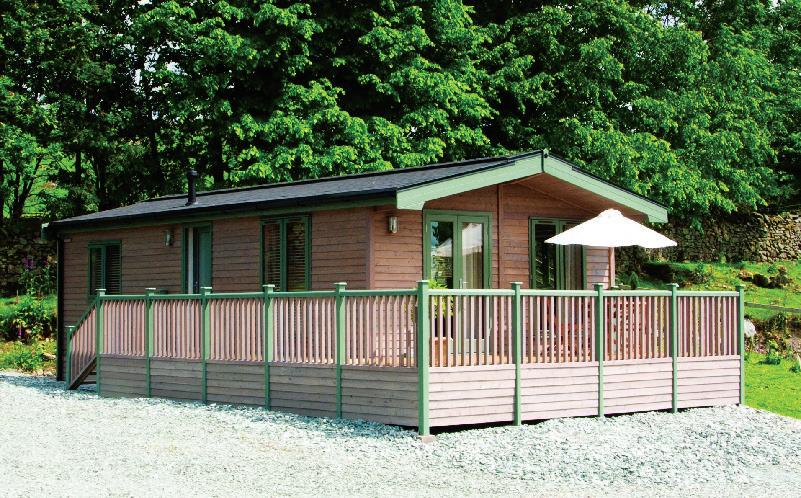
Pinelog offers both new and pre-owned lodges. New lodges provide
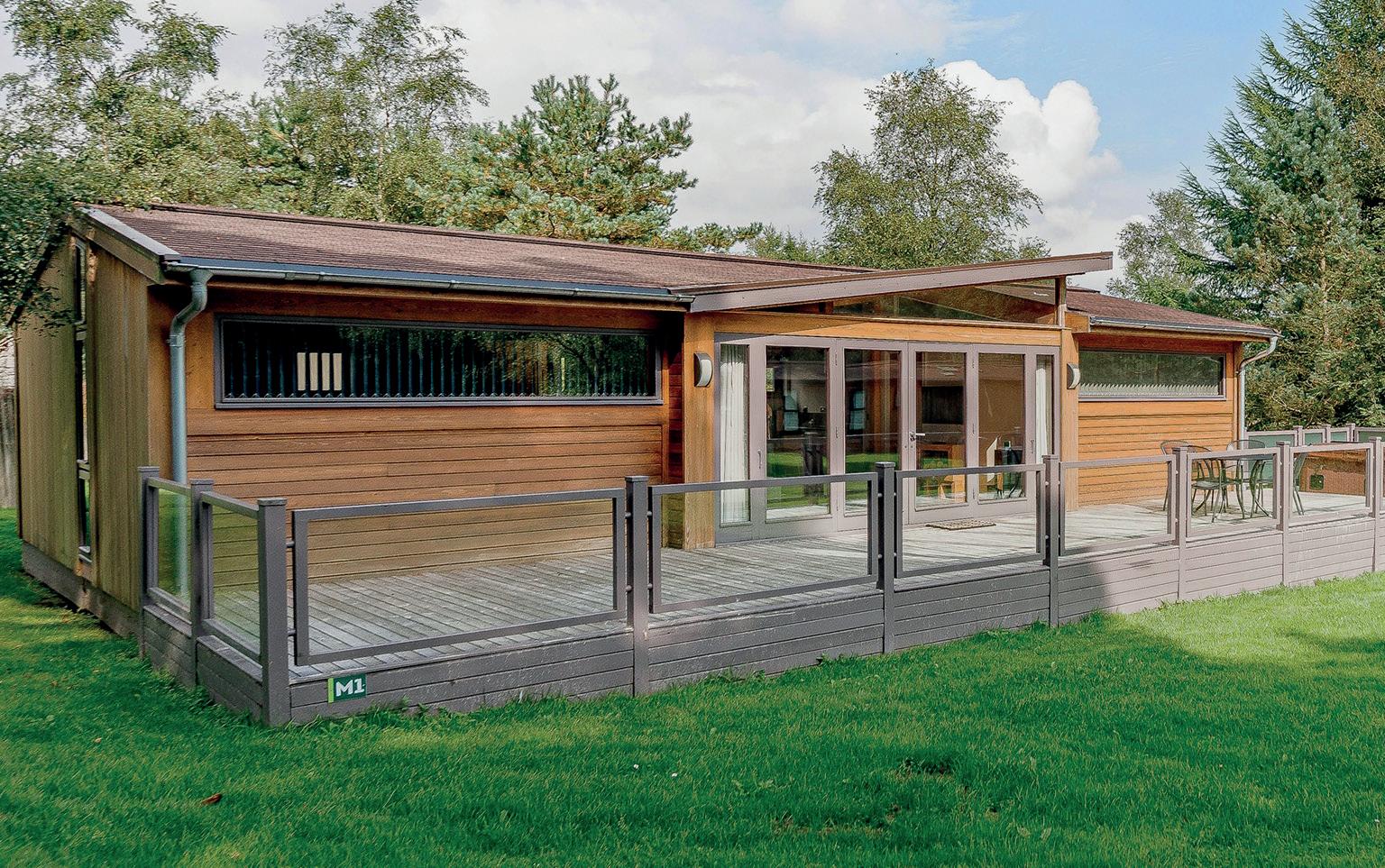
the opportunity to be fully bespoke to the specific requirements of the owner, while pre-owned lodges, which include one, two, three and four bedrooms, offer alpaca farm owners working with tighter budgets, a lower-cost entry point.
Previously sited on five-star holiday parks, where they have been well-maintained, pre-owned lodges also include all fixtures, electrical goods, furniture and soft furnishings. Once sited and connected to services, they are ready to go immediately, enabling owners to move quickly from concept to a new home or income generation from guests.
Built to the BS 3632 residential standard, Pinelog lodges are suitable for year-round use, providing comfort and durability across all seasons – an important consideration for those living and working on exposed sites.
Pinelog lodges are ideal for helping create distinctive, high-value visitor destinations. High Borrans Farm in the Lake District – a 1,000 acre working farm has diversified into a couples-only holiday park, with seven one-bedroom Pinelog lodges available for year-round hire.
Developed over 18 years by owners Cathy and Jonathan Hodgson, each lodge at High Borrans has been individually specified, with layouts, interiors and features adapted to suit both the landscape and guest expectations.
“I was able to work with the Pinelog team to make every lodge different,” said Cathy. “That bespoke approach is what guests respond to.”
Bespoke lodges can incorporate luxury features such as hot tubs, saunas, practical boot rooms and utility spaces for guests returning from outdoor activities such as alpaca trekking.
Layouts can also include dedicated workspace, enabling owners to run their business from home.
As more alpaca owners look to diversify, Pinelog lodges offer not just additional income, but a way to integrate home, business and landscape into a single, sustainable rural enterprise.
To find out how Pinelog could support your alpaca living: �� 01246 942842
www.pinelog.co.uk
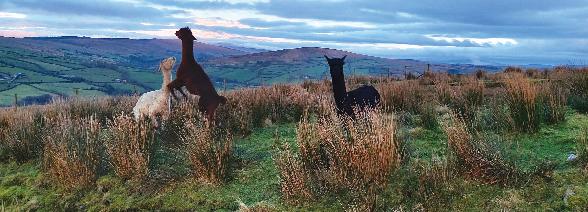
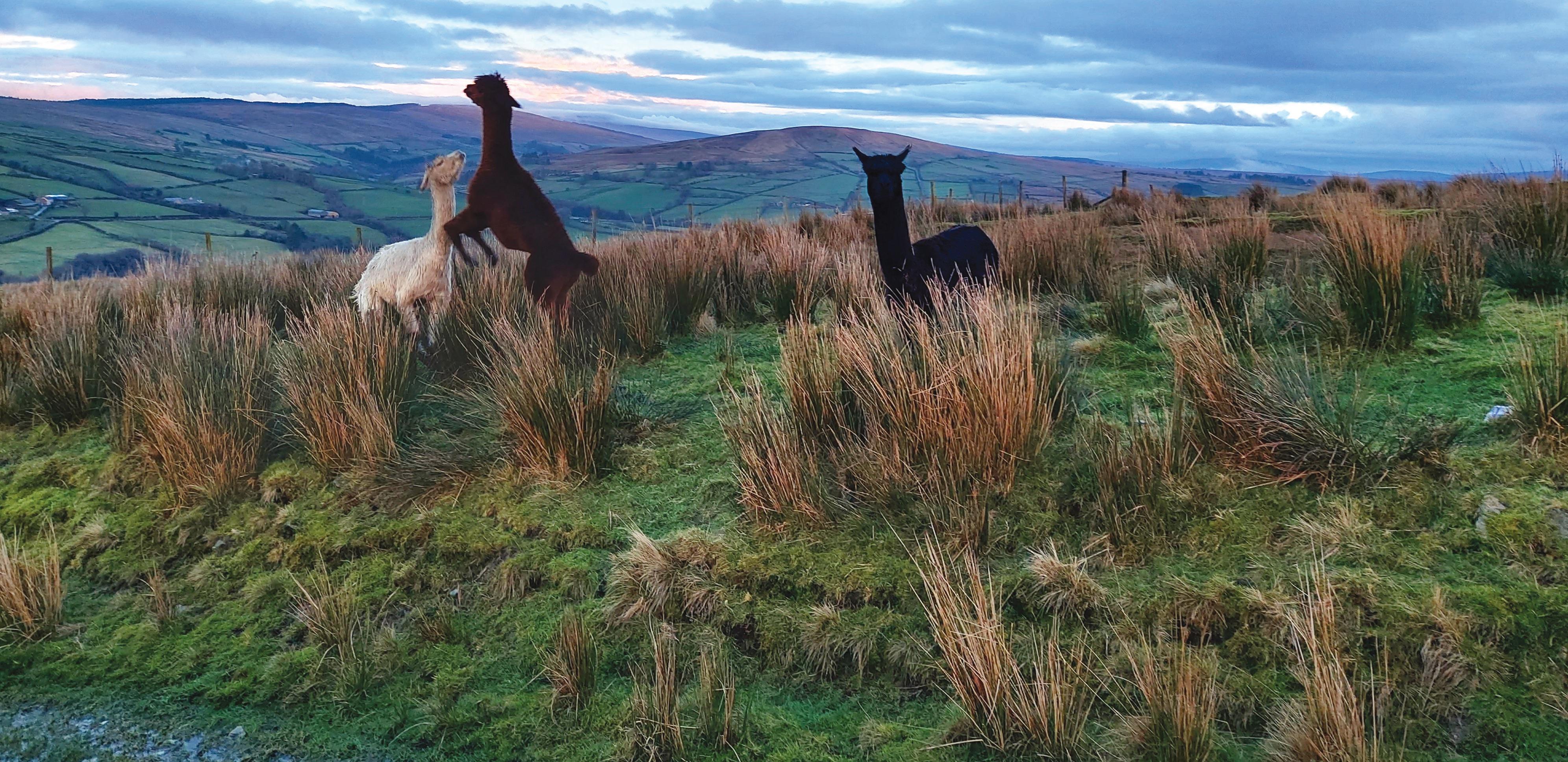
Sperrin Alpacas, a Northern Irish based alpaca trekking and events business, located in the central Sperrin Mountains is home to a small herd of male alpacas.
Owner Siobhán McCrory welcomes visitors to the fifth generation family farm to meet and trek with their alpacas, enjoying the stunning scenery in this Area of Oustanding Natural Beauty, which they feel very blessed to be surrounded by.
Alpaca spoke with owner Siobhán McCrory last year and the Yearbook 2025 featured an article about the alpaca forage walks that she was running throughout the spring and summer months. Her trekking and events are still thriving and she continues to think of new and innovative ways to take the business forward and keep it interesting.
Although this area is very beautiful, the mountainous steep terrain is not the easiest land to farm and keep alpacas on. The ground gets boggy and wet, which can be ideal conditions for fluke to thrive and the high terrain can be exposed to wind and rain and the steep conditions can be difficult when gathering alpacas but it keeps you fit for sure!
It is important that alpacas are rotated as much as possible onto drier ground, their feet are checked regularly and are dosed for fluke accordingly. Ample shelter is equally important through field shelters and natural breakers, trees, hedges and banks. In the darker winter months, it can feel like a difficult chore to climb the mountain and down the valley but that's the joy of farming and keeping alpacas.
Although there are challenges about keeping alpacas on a mountain farm there are also huge advantages. The alpacas are on their natural terrain, they are mountain animals, they like the vantage point of being high up, seeing around them (they are very curious and nosy). The rougher grasses and mosses also hugely benefit their gut and provide additional nutrients in their diet in addition to regular alpaca feed and grazing.
Siobhán McCrory said: “I think the most rewarding and beautiful aspect of keeping alpacas on mountain terrain is the freedom they have to roam, to run, and to explore. They love to jump and wrestle in the rushes, chase the moor hens that flap up from the long grass, stand off with the foxes in the glen and forage on the hawthorn trees. It provides them with so much stimulation and a sense of freedom.”
“But all animals have to do their part on the farm and in the alpacas’ case that is coming to meet our lovely visitors and allow them to trek alongside them. We only do a select amount of treks per week and that is really important to us to ensure the welfare of our herd, a nice balance between the wildness of the mountain and the social interaction with our guests, that balance is really important to keep everyone happy, we certainly feel very privileged to keep our gorgeous herd and enjoy their company and opportunities they have bought to us.”

We meet Lucy Stebbings of Stubbs Alpacas who won the ‘Tourism Experience of the Year Award’ This award was given for the Alpaca Meet, Greet and Walk Experience.
Lucy includes this as one of the proudest experiences of her life so far and describes what it means to her.
“What an incredibly uplifting, rewarding and validating moment. I know we don't need prizes and accolades to know we are doing a good job but boy does it feel absolutely incredible.”
Lucy started her business when she was still at university and taking an agricultural degree. She explained that her first ever alpaca cria was born during an important exam and she rushed back to the farm as soon as she saw the news. She credits her degree with giving her the skills to manage a variety of large animals and understand the principles of stock care. Of course she had to learn about specific alpaca management, but her degree helped her to know what questions to ask and what the basic requirements would be.
Her animals and business are on 26 acres. “It’s not nine to five”, she said. “You can’t clock off, you are always on duty! But I absolutely love this life, including the continuous hard work.”
It is seven days a week, every week with super unpredictable and long hours. She wears every hat from animal care to admin, to running every experience, endless paddock and shelter cleaning and now even running a glamping lodge as well.
She said: “Honestly, sometimes I ask, how do I do it? It isn’t a job, it’s my whole life and soul. I think that is what made the award so special.”
Lucy believes that the award is also for her ‘wonderful alpacas’ and said: “They are the reason we won this award of course. They are so friendly, calming, happy and relaxed that all visitors absolutely love being with them. I see it every day – these alpacas bring nothing but joy to all visitors big and small.”
Lucy feels very grateful that her family and husband were at the awards to support her but she also felt quite aware that she was (she believes) the only one-person business there.
“Hearing my name called was the most surreal moment and I had to go up on stage by myself.”
Lucy also has other animals for her business including goats, sheep and donkeys but she sees the alpacas as the stars of the show. There are 37 alpacas with the original ones coming from different breeders. Now 27 of them were home bred, which is one of the things she thinks has been particularly successful, because they can be handled in a secure and safe environment which gives them the confidence for the meet and greets.
Her animals choose if they want to be involved or not. If she feels one of them is not comfortable on that day, then she will find another more engaged alpaca to take part.
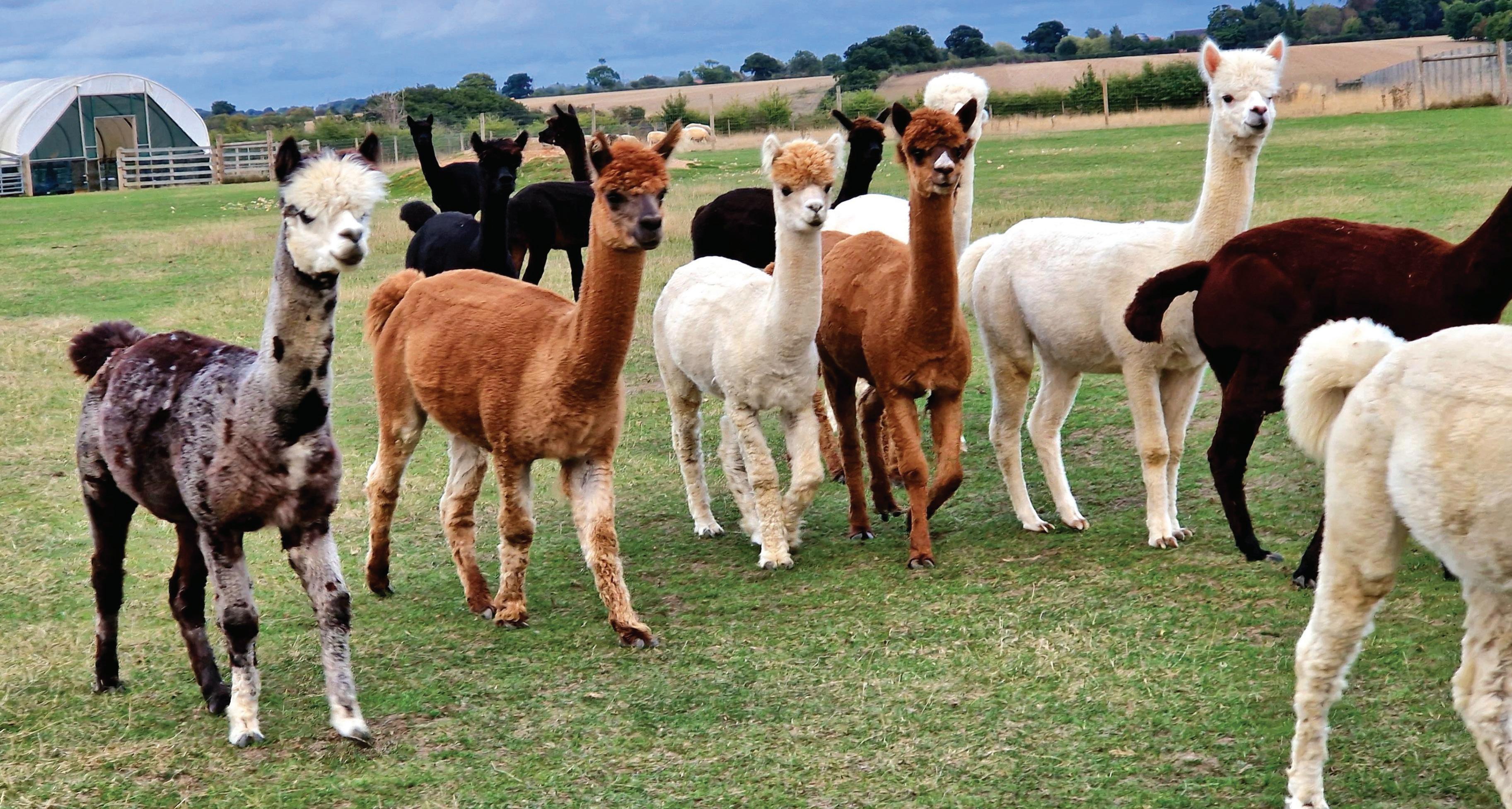
Lucy feels alpacas can get a reputation for being aloof and indifferent towards people, that they're merely lawn ornaments and they predominantly mind their own business. I appreciate there are vast individual differences across the many alpacas out there, but it has been perpetuated by social media with the more dramatic moments shared going viral rather than the endless joyful ones. No one takes the time to explain what happened prior to the record button being pressed.
My comment sections are often filled with people saying "cute until it spits on you". Many people get them or meet them thinking that being spat on is part of the deal, that it's inevitable. But really, like any animal, how they are raised and how they are socialised will hugely influence how the alpaca interacts with people. Mine don't spit at people. Most of mine are genuinely happy to be stroked, sat next to and interacted with. With people of all ages and confidence levels. I'm never crossing the line into BMS territory, but very happily interacting with my alpacas every single day.
I hear my visitors say they've been told by other people in the industry that alpacas can't be looked at in the eye, they can't be stroked and they'll spit if you try and it can be surprising and sad to hear as it doesn't accurately portray a truly wonderful calm animal. How can we possibly convince the public to keep supporting all the wonderful alpaca businesses out there, if some alpaca owners are telling the public to essentially worry about being in the presence of one? Finding or raising the right alpacas for the job is paramount.
Her animals are socialised right from the very beginning of their lives and respond with a lack of fear, confidence and curiosity. The alpacas can be easily touched and come up to greet by themselves.
Walking routes are very important in that they must be safe and rural without unexpected hazards so these are on the farm itself.
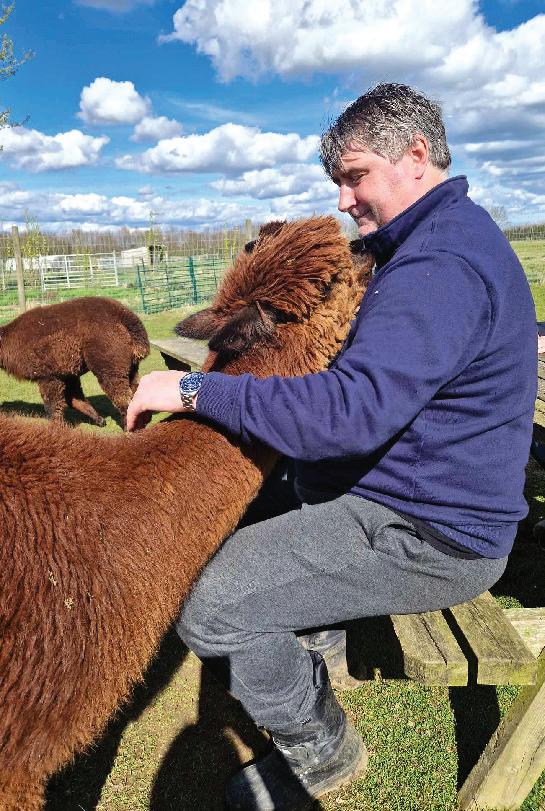
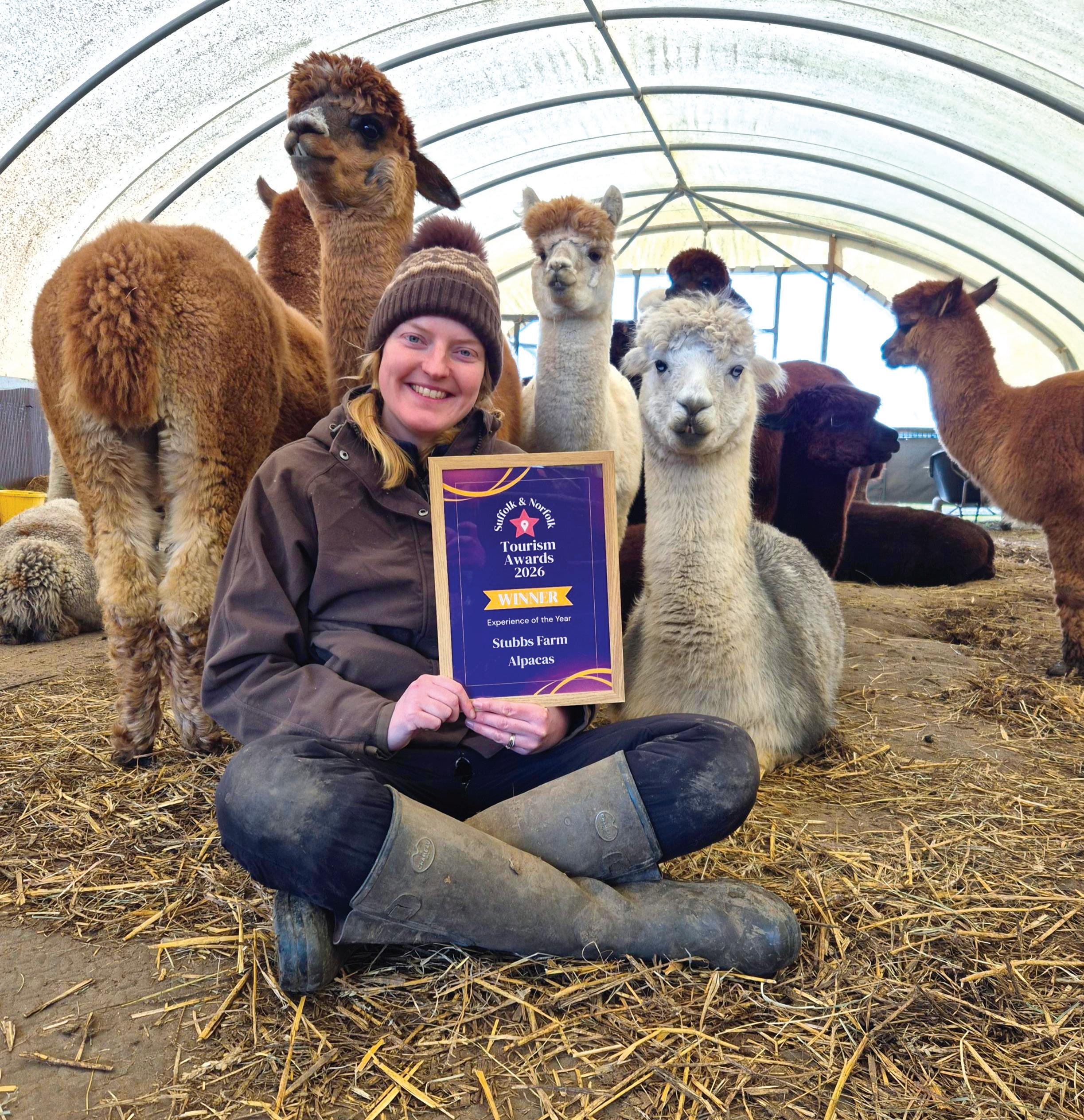
During lockdown, Lucy spent all her time with the animals and came to understand their different characters and personalities.
She realised they love a routine, knowing what is going to happen and when and in turn, she acknowledged their needs, they are all individuals. Some like to have their chin stroked, some like back massages and some just like to stand quietly and enjoy the view. The end result of observation and interaction with alpacas was that working with them became straightforward as they felt safe and confident. Finding answers that suited my enterprise and not other people's was important. No one size fits all so its crucial to discover what works for our own land/animals and set up.
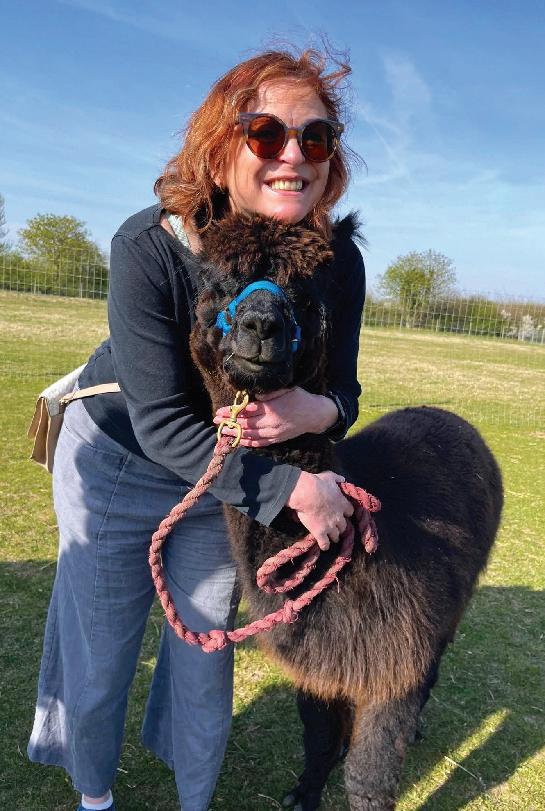
None of her animals move on and they will stay on the farm for life so breeding is planned accordingly.
“Having the same herd of alpacas over the years with the very occasional new one being bought in, has really helped as they all know the system very well, they can predict each moment and know when different steps occur in the experiences. They have a very well established herd dynamic and due to there being very, very little change with that over the years – it is totally peaceful and safe for them. Put simply, happy alpacas make for happy experiences and happy people so it's in everyone's best interest that I set them up for success (animals and people alike).”
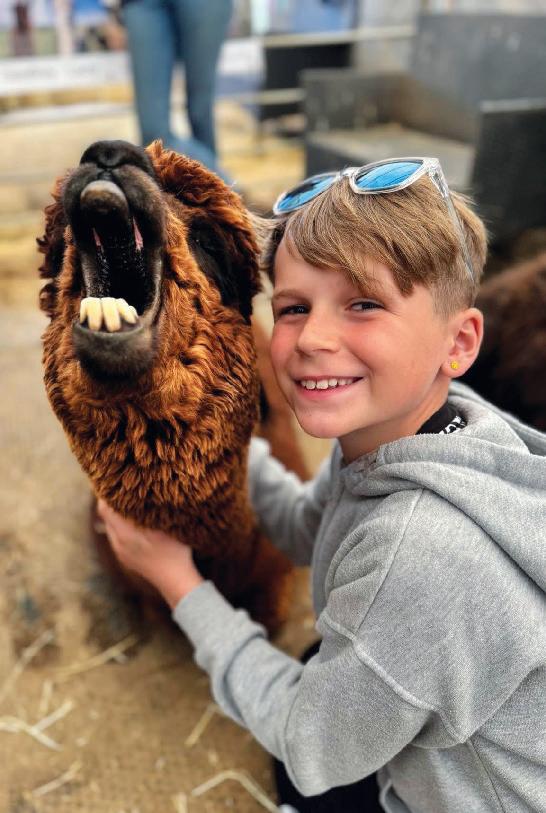
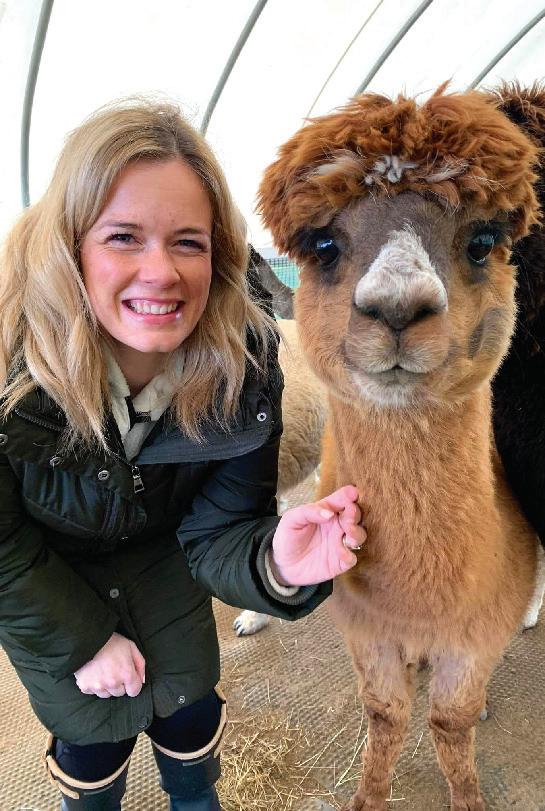
Michael Maddison Evans and Jane Evans run
Anvil Alpacas of Durham. They have now been licensed for SEND provision – with the help of their alpacas. Alpaca spoke with Michael Maddison Evans to find out more.
SEND stands for children with special educational needs and disabilities and has been much in the news this year. To offer SEND provision, a provider has to get a licence from the County Council. Michael Maddison Evans and Jane Evans have worked hard to make this happen and are very proud for it to be part of what their alpacas do.
Anvil Alpacas is a family-run stud with Jane and her son Michael as the managers. But Michael also works as a Ward Manager Nurse and Jane as a primary school teacher both of which are ideal roles to develop the direction of the farm. It also means a lot of hard work to manage the farm around such demanding jobs. They come from an equestrian background but as the competition horses were retired and after some years, died, the land was empty and something was needed to graze it.
They had seen some alpacas in the Lake District and after some research, they decided that an interest in alpacas would follow their passion for horses and fit in around their lives. The alpacas were bought as pets, but with thoughts of therapy as well they got off to a great start; buying the stock and getting help and advice from Barbara Hetherington at Beck Brow Alpacas. The first four alpacas were two year old boys and
were swiftly followed by some retired mums. They now have 15 alpacas in total with the last two coming from King Garth Alpacas.
Now came the serious research on therapy with alpacas which, given the pair’s careers, they had a head start in already. First, they got to know the alpacas, handled and led them and then shaped their plan. They began with a meet and greet plus a hand feed, (enjoyed by alpacas and participants), and then the Secret Alpaca Lodge was created. Why is it secret? Because it is behind a small door in a big barn that you could easily walk past. But if you open it, there will be homemade cakes, tea and soft drinks plus crafting or groups chatting. There may be a birthday party in full swing. As a result of this, they started to get calls asking if the alpacas would ever come to people and so they started going into care homes and therapy settings with the more recent alpacas, Sassy and Liv, who seemed to very much like going out and interacting with people. This caught the eye of the BBC which is where Alpaca magazine picked up the story.
With an eye to the future and possible retirement one day, Jane decided to develop the therapy side of the business. There was a lot of hard work to meet the polices, procedures and approvals for SEND, but
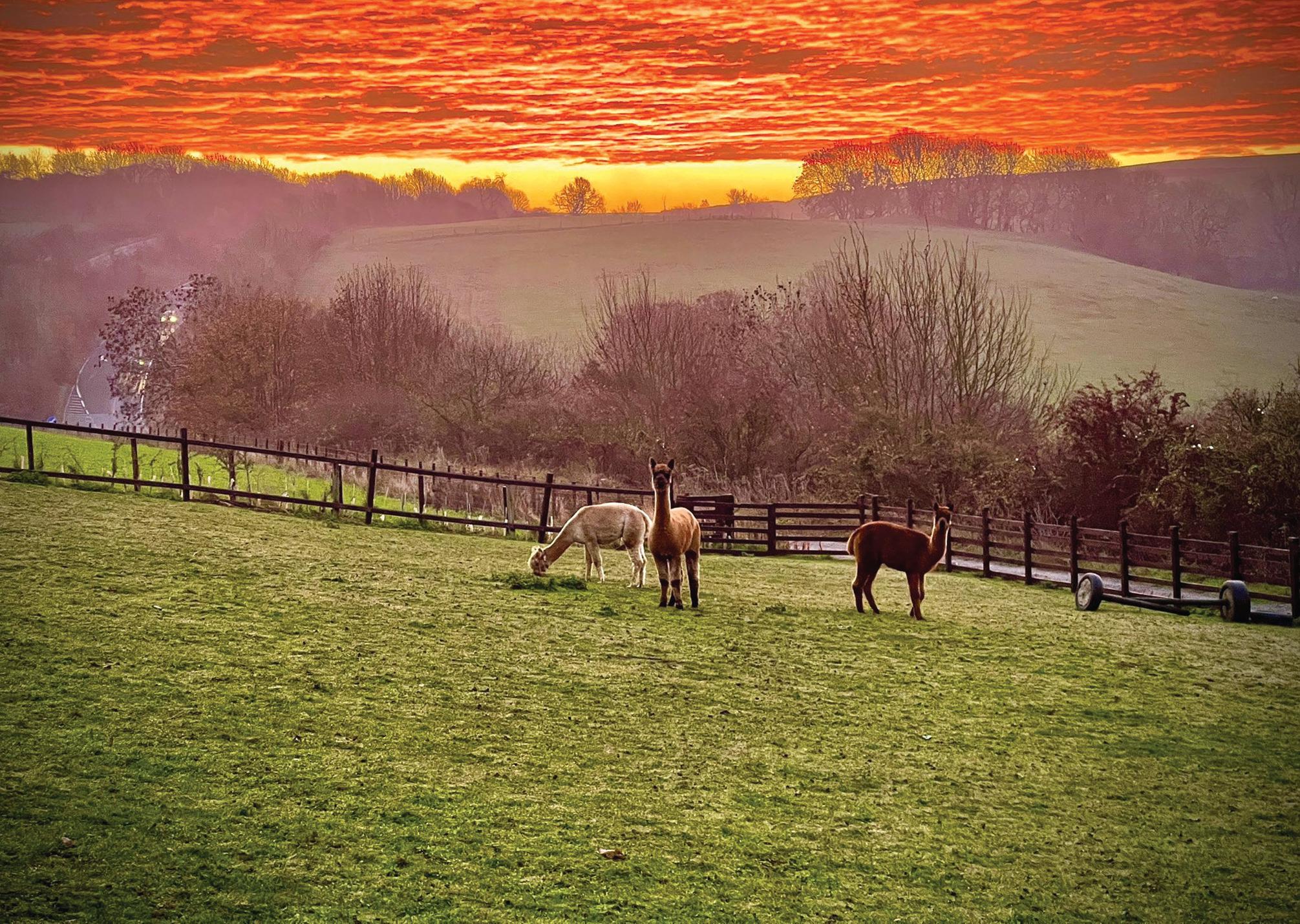
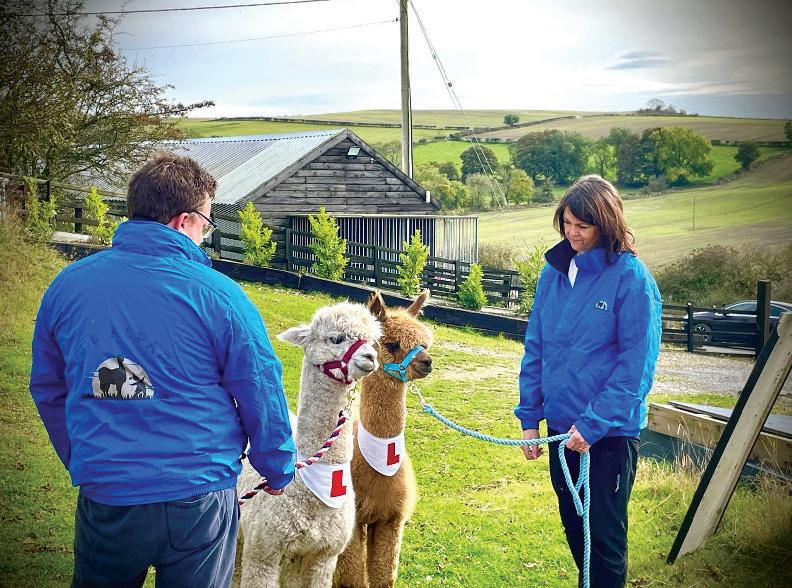
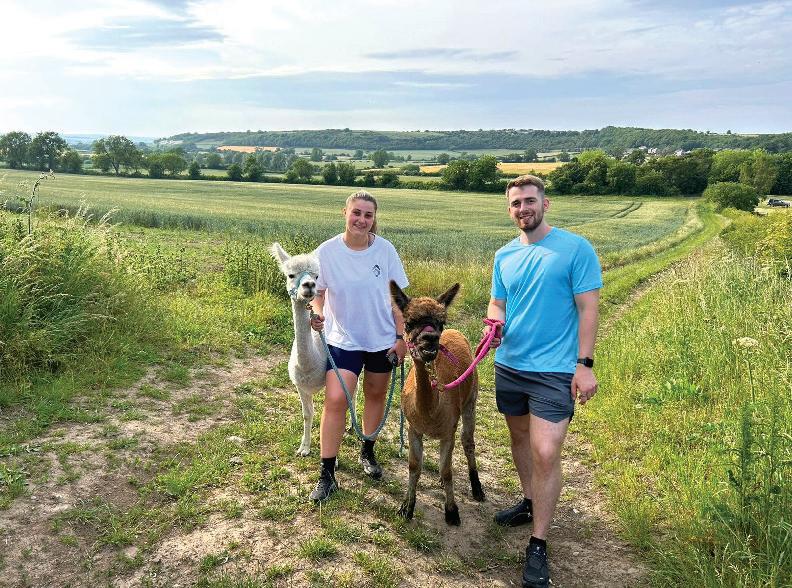
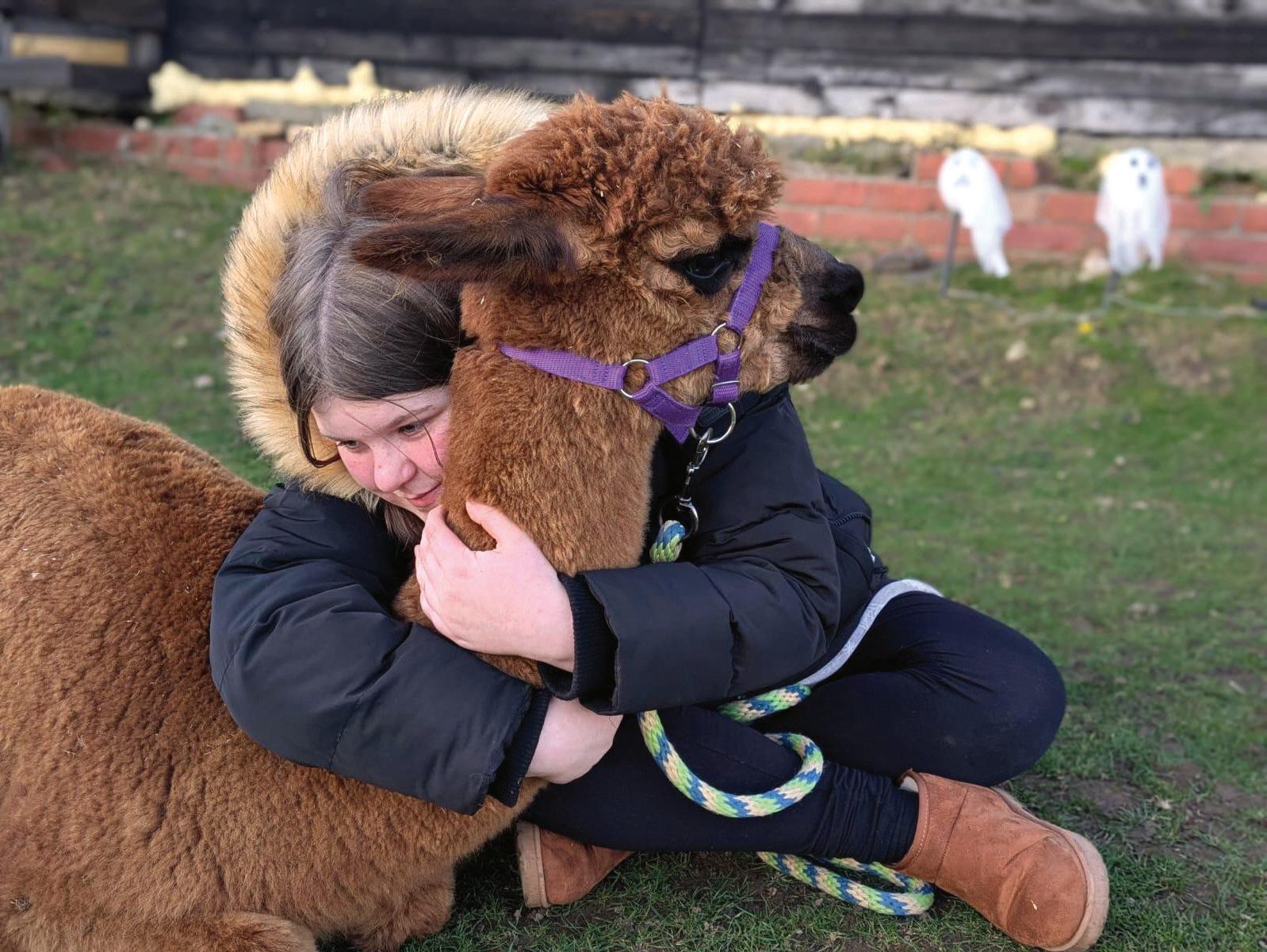
the Council came out and loved what they saw so they were approved for SEND provision and took the first referrals just before Christmas. The sessions are intended to encourage empathy and emotional awareness. They are for small groups and are about learning through hands-on interaction and guided discussion.
They have come a long way in a short time with a lot of hard work and also using what they already have in terms of skills. Fitting full time jobs around the alpaca activities has to be well planned, plus there is also the time consuming cake baking and alpaca shaped

How do you feel about was has been achieved?
“We are very proud of what we have achieved so far and it’s a bit scary (in a nice way) to think about how we take the business forward as there are so many opportunities. In the feed back forms we are thrilled with the comments that come in and the satisfaction felt!”
What do you feel was done well?
“We got the right animals and good advice at the beginning and combined the alpacas with our own skills including our horse keeping experience. I believe that our passion shows through and this is reflected in people commenting they feel at home and comfortable.”
And what of the future?
“To carry on what we do well. We have been asked to support a volunteering programmer for the Duke of Edinburgh Award and I’ve developed a 12 week programme covering everything from origin, care and fleece and we are starting this with our first DOE award volunteer in July. We may also think about more activities including fleece especially as we have both Suris and Huacaya alpacas.”
cookies that are part of the offer. The sessions are all kept small and personalised with no more than four children at any time. The feed back is that it calms the students and the touch and feel of the fleece is magical. It is a combination of nature and nuture.
One things for sure, there are going to be a lot of young people talking about alpacas as a result of the efforts by Michael Maddison Evans and Jane Evan and realising their value for the future – we know how versatile alpacas are and this helps to share their worth to a wider audience.
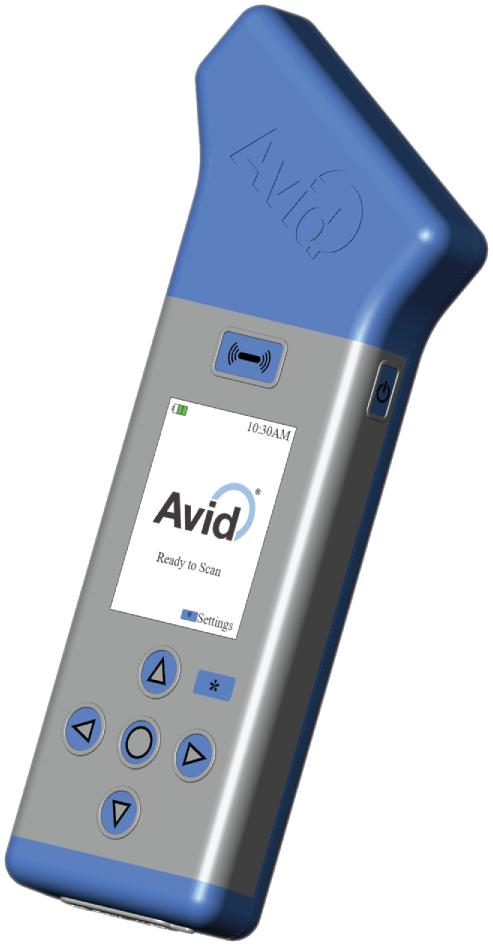

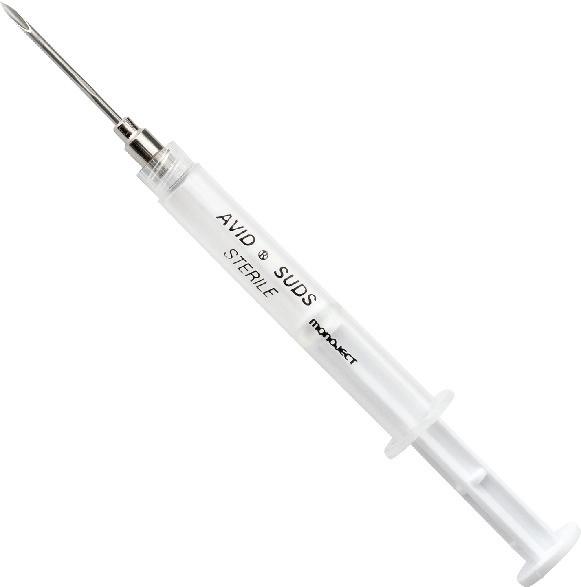
The Pennybridge Herd and Stud. One of the first alpaca farms set up in the South of England, still producing show quality fine fleeced breed animals from champion stock. Good quality starter herds, proven and potential stud males and fancy field grazers available.
‘Home of The Alpaca Experience’.
Situated in North Hampshire, close to the Surrey and Berkshire borders with good access to ports and airports, less than five minutes drive from both J5 and 6 of the M3.
TEL: 01256 764824 or 07801 132757
EMAIL: joy@pennybridgealpacas.co.uk
WEB: www.pennybridgealpacas.co.uk

Located on the Solway Firth, in Cumbria, King Garth Alpacas is a family-owned herd where we aim to breed beautiful, happy, healthy and friendly alpacas with top show winning genetics.
We have alpacas to suit everyone and all budgets; from pet boys to starter herds, elite females and stud males. We offer full support and advice before and after sales. Please feel welcome to get in touch and chat about your alpaca needs.
We also offer stud services, alpaca experiences, luxury alpaca products.
TEL: 07762 286050
WEB: www.kinggarthalpacas.co.uk
M.R.Harness was founded in 1995 after existing part time for a number of years. Mary herself is a qualified engineer and is well placed to assess materials and their useage. Company policy is to test as many of the webbing designs as possible before release, as each item is unique to the animal it is designed for. This has led M.R.Harness to become the supplier of choice for headcollars, leads, coats and harness for all the various smallholding animals, but specialising in alpacas and llamas, and working ponies.
All items are hand crafted ‘in house’, in England, so you can be assured of good workmanship and quality products that last.
So please come and try the ‘Choice of Champions’.
TEL: 01299 896827
EMAIL: mary@mrharness.co.uk
A list of BAS members who are breeders and advertising their alpacas for sale
Established in 2002 and situated on the North Cotswold hills close to the picturesque village of Snowshill, the current herd numbers over 300. We breed both Huacaya and Suri alpacas (approximately 75% are Huacaya). Although our breeding programme is biased towards the darker colours, we do also have superb quality whites and beige alpacas.
Full range of alpacas for sale, attractive pets to top show quality breeding girls and stud boys. Large choice of stunning stud males available to service your girls. Also offering natural alpaca fabrics made in the UK from the fleece of our own herd.
TEL: 01386 853841 or 07711 044106
EMAIL: snowshillalpacas@btinternet.com
WEB: www.snowshillalpacas.com
Celebrating 28 years of continuous selective breeding for colour, consistency, fineness and density. Champion Stud services available.
Re-organisation Sale in progress: Show stock, Breeding Stock, Studs, Walkers, Fibre, Guard and Therapy alpacas for sale in all colours at prices to suit all budgets.
Husbandry, Fibre, Processing and Management workshops available hosted by Rob & Shirley Bettinson – two former BAS judges with over 30 years’ experience in all aspects of alpaca breeding and showing.
We are dedicated to helping you realise your own alpaca aspiration.
SHIRLEY: 07970 626245 ROB: 07973 123008
EMAIL: shirley@toftalpacastud.com
WEB: www.toftalpacastud.com
Everything you need for your alpacas delivered to your door! We are a one-stop-shop for alpaca supplies, including headcollars and leads, vitamins and nutritional supplements, healthcare and welfare supplies, colostrum, coats for cria and adults and microchipping equipment.
We also have a good selection for your other animals, including dogs, chickens and horses, as well as a range of farmhouse items and gifts, including our famous home cheese-making kits.
We are alpaca owners ourselves and we are always happy to help with your questions and enquiries.
Order direct from our website or by phone. You can expect fast, friendly service and advice.
TEL: 01295 713188
EMAIL: homesteadfarms@btinternet.com
WEB: www.homesteadfarmsupplies.co.uk


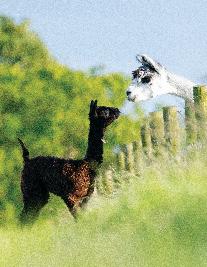

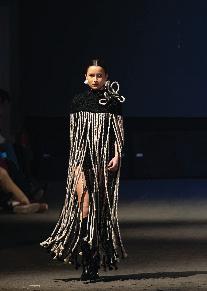
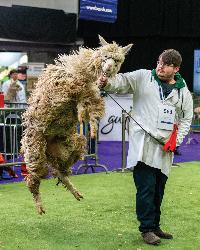
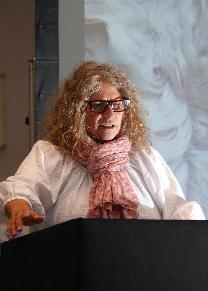
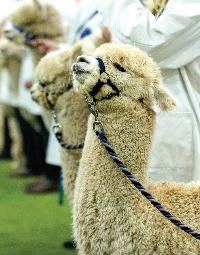
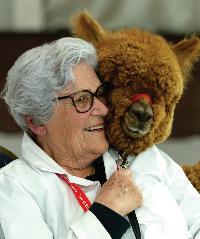
The family run JandJ Alpaca herd was established in 2005 with four breeding females, today we have over 90 beautiful animals. We are located in Lincolnshire on the Nottinghamshire, Lincolnshire, Leiceistershire border just off the A1.
With years of experience our aim is to help you choose the best alpacas to start you journey, whether it be breeding females, stud males or pet boys.
Stud services also available from top coloured genetics.
MARTIN OR CLARE: 01636 626990
EMAIL: sales@jandjalpacas.co.uk
WEB: www.visitalpacas.co.uk
Faerie-Tale Alpacas is a friendly family farm based in Kenilworth in Warwickshire. We focus on breeding sound, healthy, friendly, high quality alpacas with advanced fleeces and proven genetics. With over 10 years experience we offer a range of alpacas to suit every budget and specialise in new breeders.
We know all our alpacas and have most colours available. Discounts on multiple purchases and full support for new owners. Call to arrange a visit. We are located in central England, easily accessible by road and only 20 mins from Birmingham airport.
We offer: • Quality breeding stock • Starter herds • Stud services
• Hand knitted alpaca garments and accessories from our herd TEL: 07950 671672 FACEBOOK: Faerie Tale Alpacas
EMAIL: info@faerietalealpacas.co.uk
WEB: www.faerietalealpacas.co.uk
High specification organic chealated nutritional supplements suitable for all camelids.
• Premier Camelid Drench
• Premier Mineral Supplement
• Premier Mineral Bucket
• A, D3 & E Paste
TEL: 07866 607466
EMAIL: jganimalhealth@aol.com
WEB: www.jganimalhealth.co.uk
ALPACA FIBRE
COLLECTION 2026
We buy fibre shorn from all parts of the alpaca and collect from your door in most areas of the UK. We will purchase fibre from current/previous seasons if kept in good condition so don’t let it go to waste! Collection times/dates to suit your shearing schedule.
Part of the Standard Wool group.
TEL: Michael Cooke 07494 151166
EMAIL: michaelcooke@dbwools.co.uk
WEB: www.standardwool.co.uk

Simply state on your order form that you are a BAS Member and tell us your Herd Identifier Reference and we will apply then discount to your invoice.


Members meet on a regular basis to talk alpaca, organise events, seminars, workshops, and generally share their experience and knowledge on all things alpaca.
The groups are not exclusive (to BAS members or by Geography) and are open to all. Their aim is to allow new and existing members to come together, socialise with other breeders in their locale and learn more about alpacas. Should you be an owner, prospective owner, or just interested in these fascinating animals, your regional group will always make you welcome.
The groups also provide invaluable expertise by providing qualified judges, welfare advice, nutritionists and lecturers, with the emphasis always on self-help, accessibility and local initiative. Each group organises its own area slightly differently; some hold their meetings in the same place and some move venues. Meetings are organised around barbecues, suppers, coffee mornings and workshops; most groups ask for a small contribution to cover the costs of the event.
No group in your area? Form your own.
The BAS Regional Groups are designed to provide local activities for and contacts between members within a region.
Groups organise their own meetings for members and for disseminating information from the Society to members and passing feedback to the Society.
Groups are responsible for their own financial affairs and meetings of the group should be financially self-funding.
Alpaca shows within the Group’s area would be organised by the Regional Group with assistance from Grassroots Systems Ltd (if required) with regard to online entries and catalogues. Shows are expected to be self-financing.
Groups are encouraged to provide reports of their activities to the Editor of Alpaca magazine.
Notices regarding Group events can be





included in the BAS Newsletter sent by email to all members, posted in the Facebook BAS Chat Forum and posted on the appropriate page(s) of the BAS website – www.bas-uk.com. Details of events should be sent to ceo@bas-uk.com
To be recognised by the Society, the Group must have an appointed Secretary and Treasurer. It must have its own bank account for Group funds. When these items are in place, details should be submitted to the BAS Board which will consider the formal recognition of the Group.
Minutes of meetings must be produced to the BAS CEO and be made available if requested. It is suggested that those interested in establishing a new Regional Group hold a meeting of members within the area to gauge interest and to determine what type of activities local members would support.

A list of all Regional Group contacts is included on the BAS website and it is also sent to all new members who are encouraged to join the one nearest to them.
• Northern Ireland Alpaca Group
• North West Alpaca Group
• North Shires and North Wales Alpaca Group
• West Shires Alpaca Group
• South Wales Regional Alpaca Group
• Cornwall Camelid Association
• South West Group (SWAG)
• Heart of England Alpaca Group
• South East Alpaca Group
• Eastern Alpaca Group
• East Midlands Alpaca Group
• Yorkshire Alpaca Group
• North East and Borders Alpaca Group
• Scottish Group
• Suri Network UK Group
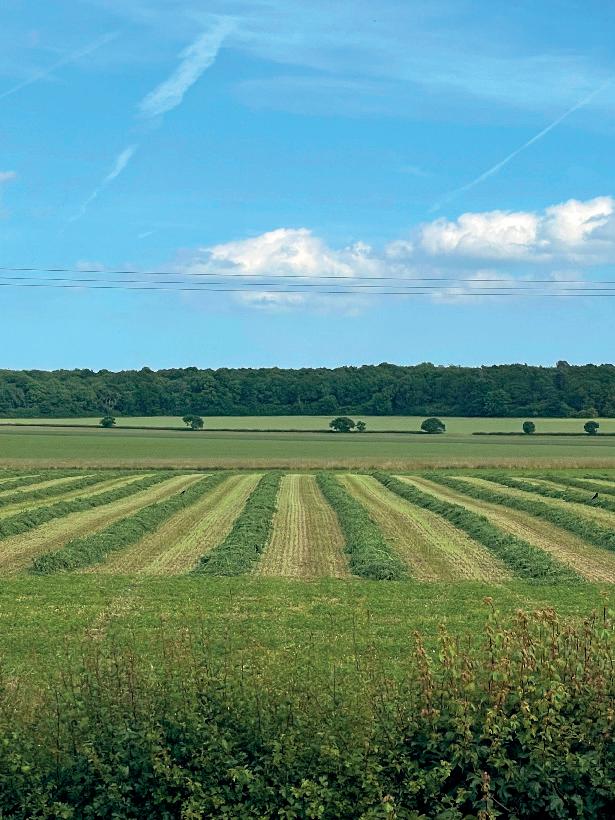





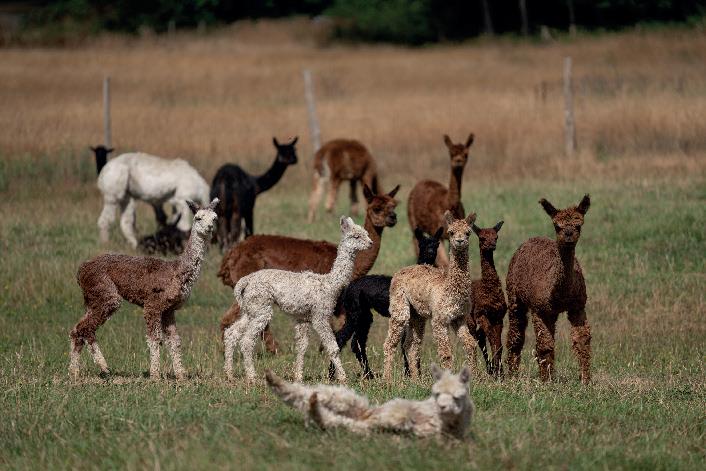


There is a wealth of entertainment, education and experience across the UK alpaca groups, so don’t miss out. Did you know that you can join a group outside your area and benefit from even more skills?
The Heart of England Alpaca Group exists to unite, support and educate alpaca owners. As one of the UK’s longest running regional groups, the group provides trusted advice, learning opportunities and a strong sense of community for members at every stage of their alpaca journey. Their extensive regional coverage brings together a diverse mix of individual owners and alpaca businesses with a wide range of experience.
HoEAG host two of the UK’s largest alpaca events, the Spring Alpaca Fiesta and the Autumn Fleece Show – these major calendar dates are the highlight of the year and bring together old friends and new faces. Alongside these, an annual craft competition, veterinary talks, fleece demonstrations, and farm visits add further value, and we continue to develop an engaging annual programme that reflects member interests.
HoEAG engage members, many of whom are BAS-registered, through an inclusive, varied programme that promotes education, welfare and connection. HoEAG provides a supportive community, major events, trusted advice, shared learning, and celebration of alpacas across central England.
To join contact: ✉ admin@heartofenglandalpacagroup.co.uk
SEAG aims are to support the group by being friendly, accessible and interactive with up-to-date topics and information. Everyone is welcome to ask questions, give their thoughts, ideas and involvement. The group covers the whole of the southern England with the exception of Devon and Cornwall and currently have 70 members.
The group has hosted, and will host, a varied repertoire of webinars and fibre events aimed at providing information, to add to an understanding of health, fibre, training and behaviour. Information about events is provided on our S.E.A.G website and the new WhatsApp group. The group is here to help and support each other for the benefit of our animals and the wider alpaca community in the region, to broaden knowledge and have some fun!
NIAG are a group of alpaca breeders and enthusiasts from across Northern Ireland and further afield. They are there to provide advice, training, shows and support on all things alpaca. Their focus is to provide knowledge and support for any interested parties in relation to alpacas to build capacity and skills. Membership is just under 40 with owners having alpacas for breeding, to flock guards, and simply for the pleasure of owning such enthralling animals; most of the members are also members of BAS. Their biggest ever alpaca show was held in 2025 in Northern Ireland, judged by Barbara Hetherington, which included a craft and photography competition alongside stalls for the public. Look out for this year’s show on 8 March 2026 at Ecclesville Centre, Fintona (judged by Molly Gardner).
To join NIAG email for an application form or visit the website: ✉ chair@alpacani.org
The aim of NSNWAG is to support alpaca owners through education, welfare, and shared community events, meeting the region’s need for stronger networking and accessible guidance. There are currently around 160 members, ranging from pet and hobby owners to small breeders and trekking businesses. Most members are BAS-registered, who joined for support, learning, welfare guidance, and a fun friendly alpaca chat.
The parasite, birthing workshops and processing mill trip days have been real highlights, and the next initiative is developing more hands-on training days for new owners, understanding fleece and judging. NSNWAG achieve their aims through regular events, shared learning and an extensive webinar lecture series. As well as this there is a great WhatsApp community, and meet-ups throughout the year.
To join visit the website: TV www.southeastalpacagroup.org.uk To join contact Shaun Lock:
The Yorkshire Alpaca Group supports alpaca owners, breeders, and enthusiasts across the UK’s largest region and further afield. With about 50 members – most being BAS members – the group offers information, welfare guidance, and support, along with organising events and social gatherings. The group hosts a free series of talks and workshops, available on Zoom and in person. There is a face-to-face AGM and social event on 21 February. In addition, an annual BAS-accredited Halter Show is scheduled for November 2026 in York.
Contact the group if you’re interested in joining a welcoming community and connecting with others passionate about alpaca: ✉ yorkshirealpacagroup@gmail.com TV www.yorkshirealpacagroup.co.uk
The North East & Borders Alpaca Group is a friendly and supportive regional network for alpaca owners and enthusiasts across the North East and Borders. With 29 members, the group offers opportunities to share knowledge, practical experience, and trusted advice on all aspects of alpaca care, breeding, and welfare.
Alongside educational activities, the group also organises social events, helping members build friendships as well as professional connections. This year, activities include a mill trip, giving members the chance to learn more about fibre processing. The group also has an active WhatsApp group, providing a space for ongoing discussion, advice, and support between meetings.
The aim of the North East & Borders Alpaca Group is to promote good practice, encourage learning, and strengthen the alpaca community throughout the region. Chairman: Iain Smith
EAG aims to promote best practices in alpaca care and breeding by providing educational events, offering networking opportunities, as well as halter and fleece competitions. The group deliver this through a range of events held throughout the year, helping owners of all experience levels, connect, learn, and grow together.
Joining the group means becoming part of a friendly, supportive community of alpaca owners who share their knowledge and expertise. EAG have an exciting year ahead, with future events including a Mill Tour, as well as a talk on fibre analysis and how this can be used to improve breeding decisions.
EAG are always delighted to welcome new members.
join visit the website:
The WSAG aims to promote and protect the interests of alpaca owners, breeders and alpaca products. Our members are mainly interested in the maintenance of healthy alpacas.
There are currently 61 members owning anywhere between zero and well over 300 alpacas. Amongst the membership are a BAS Judge, the current Chair of BAS, spinners and weavers, fibre processors, an accredited Camelid Dynamics practitioner as well as several very experienced breeders and alpaca show organisers. Most members are also members of BAS, only a handful are not. Members have easy access to other members with a wealth of experience and a number of courses are provided, as well as the popular social events, throughout the year. The most looked forward to events are, in truth, the annual Christmas dinner and annual summer BBQ. A FaceBook page is used along with emails and the website (currently being updated) to engage with members.
SWRAG provides a friendly, supportive network that promotes confidence, enjoyment and wellbeing for both alpacas and their owners. Members range from experienced breeders to brand new pet keepers, including those offering glamping, alpaca experiences, fibre production and showing. With many new owners in the region, supporting best practice and welfare is central, alongside educating prospective keepers. SWRAG has 232 members, including breeders, non-breeders, vets and alpaca enthusiasts. A range of member and vet-led events and webinars are hosted, supported by an active WhatsApp group and quarterly Zoom meet-ups. The website and members map keep everyone connected. SWRAG is a welcoming, knowledgeable and fun community for all alpaca lovers, made possible by our dedicated volunteer committee.
SAG aims to promote happy, healthy and high quality alpacas. Of the 78 members, (mainly, but not only BAS members) from Scotland and south of the border, there are a mixture of those who show, those who breed but do not show and pet owners. Communication with each other is via a monthly newsletter and WhatsApp groups to circulate information and find out what SAG members want. SAG organises three shows a year, two with NWAG; regular events at the Edinburgh Vet School (eg herd health, birthing and parasite identification, led by Sue Thomas); and online seminars. A particular highlight is the ‘SAG on Tour’ trip to visit and learn from other herds (most recently Amberly and West Wight, next stop Ambermoon). You should join them because they are friendly, fun and supportive and you will get access to some fantastic learning opportunities.
As a group SWAG aims to provide all manner of support to members from advice on care, both every day and emergency, to practical help and opportunities to learn through our articles, socials and various courses. The group are lucky to have two BAS Judge Trainers among the members as well as several BAS Affiliate Trainers geographically spread throughout our region. SWAG organise and run two shows a year, the Devon and Dorset County Shows, where the group provide events for members to enjoy themselves socially and, of course, are always looking for volunteers. SWAG are particularly excited to be working on a social media advice portal specifically for members which will, hopefully, be launched later this year as well as regular newsletters and a rejuvenated programme of events.
CCA provide a supportive and friendly community, focusing on education and learning about all aspects of alpaca ownership. There are 85 members from a wide age range, with herd sizes ranging from those preparing to welcome alpacas into their lives to herds of over 100 alpacas, including two specialist camelid vets. This creates a strong pool of skills, knowledge and shared experience, allowing members to learn from one another.
A regular programme of events is run each year, organised by an active committee, and are particularly proud of their in-person vet days led by camelid vets. The group’s current initiative is the development of an interactive map showing the location of members and what they offer, such as alpacas for sale, fleece knowledge and weaving skills.
Members are kept up to date through a newsletter, website and Facebook page. Most BAS-registered owners in Cornwall and Devon are also members of CCA, and we welcome all new members.
cornwallcamelidassociation@hotmail.com
www.cornwallcamelidassociation.co.uk
The East Midlands Alpaca Group is all about creating a stronger support network and connection between alpaca owners across the region. The group is moving towards a more communityfocused approach – helping people meet, share experiences, and feel supported, whether you’ve just started or have an established herd. While shows and training still have their place and the group will be sharing all the fantastic work BAS and neighbouring groups do, this year we are putting more emphasis on the basics of welfare, day-to-day questions, and working with local vets on
NWAG is a very active group, having in excess of 70 members. The group has been busy working with the Scottish Alpaca Group to promote and organise the Northern Show (held January 2026). Together with NEBAG and SAG were part of the team that held a fabulous fleece show hosted by Barnacre Alpacas earlier in the year. The future of the industry depends upon us developing these inter-group ties still further in order to try to promote the positives of alpaca ownership to a wider audience who may want more than pets. Engaging the wider public is vital, and NWAG will be combining an alpaca show in April 2026 with a craft show aimed at introducing the general public to alpacas and offering expert advice to those that may be interested in becoming owners. As a group, NWAG are determined to help drive the industry forward into a more diversified future. The NWAG committee are always keen to welcome new and enthusiastic members.
The group was originally formed with the core remit of promoting, preserving, and protecting the Suri within the UK and is open to everyone who owns, has an interest in or simply wants to know more about Suri.
A seminar was held on EBV’s which, as a direct result, members agreed to collaborative groups using their data between herds to expedite this across the Suri gene pool with an on-going commitment to improvement of the breed.
In addition, the group has negotiated the long-term supply of Suri fibre and are operating a co-operative fibre purchasing scheme offering uplifts in value to members. With some exciting things to start already, other educational seminars and days being planned on some thought provoking subjects, which will be shared with the BAS through the newsletters, magazine, and Facebook pages but are hoping that you might want to become involved and gain the benefits of membership by joining the group.
things like vaccination schemes. We’ll also be working with BAS and wholesalers on making the most of your fibre. It would be great to have some more people involved in the running of the group too. If you can spare an hour or two a month, let’s have a chat.
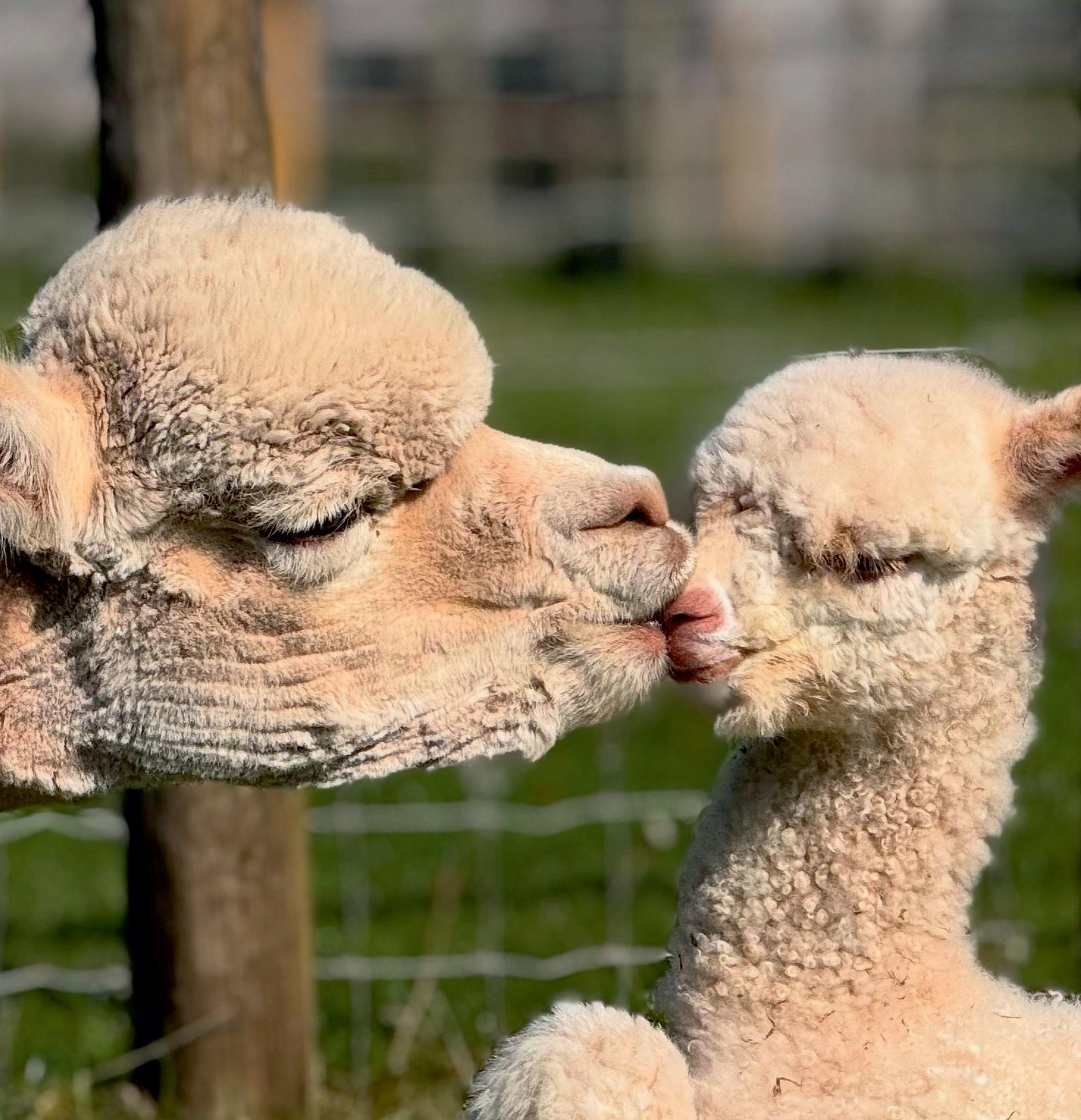

We are proud to offer:
Business plan for new breeding herds and full herd assessment and business review for established breeders.
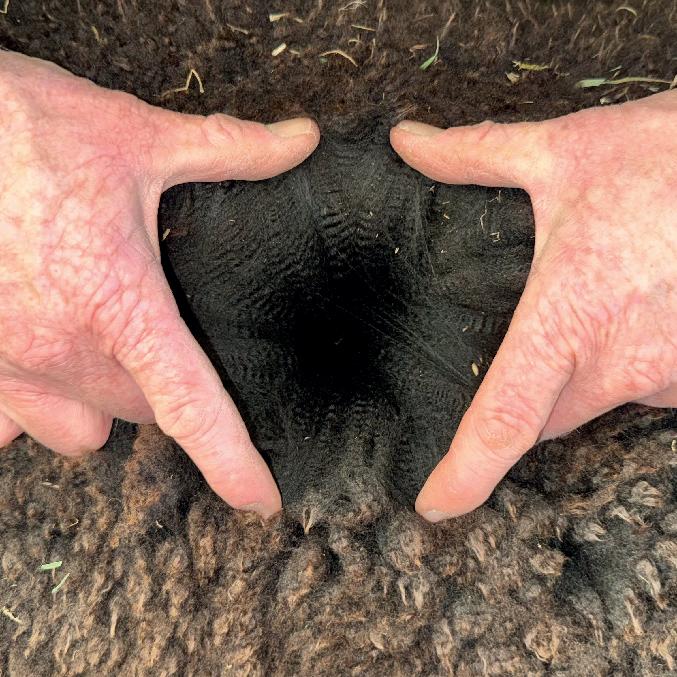
Elite pedigree breeding and pet stock for sale in the UK and for export to the EU, Middle East and India.
Help obtaining planning permission for a dwelling using alpaca breeding as justification – we did it and have helped others.