




Conquer your engineering and construction challenges with our design-build solutions
EXPLORE OUR SOLUTIONS


Conquer your engineering and construction challenges with our design-build solutions
EXPLORE OUR SOLUTIONS





Water utilities generate vast amounts of operational data daily, yet most organizations are not taking full advantage of these valuable information streams. Digital tools have the ability to strengthen your utility’s resilience and sustainability by reducing chemical usage, lowering energy consumption, maintaining water quality standards, and improving operational efficiency. Modernizing data management systems is the key first step to unlocking the value of your data. Carollo’s approach to digital water transformation provides a structured framework for utilities to leverage technology investments effectively, regardless of their current digital maturity.









At the cutting edge of water technology, Derek Belka is transforming wastewater treatment through data-driven innovation and applied research. As part of our Water Technology Team in Colorado, he’s tackling the toughest challenges with smart, sustainable solutions — shaping a cleaner, more efficient future for water management.



Derek Belka, PhD, PE Water and Wastewater

Treatment Technologist







Rocky Mountain Water Magazine Group
The following volunteers support RMSAWWA and RMWEA with content collection, management, editing, and reviewing the magazine.
BLAIR CORNING bcorning@englewoodco.gov
ANDREW DUGAN andrew.dugan@waterwrites.co
KARI LARESE klarese@hrwater.org
RMSAWWA Communications Committee
KARI LARESE, Chair klarese@hrwater.org
ASHLEY DENAULT, Vice Chair ashley.denault@denverwater.org
RMWEA Communications Committee
JORI NELSON, Chair jori.nelson@hdrinc.com
MARY SHAW, Marketing Lead mshaw544@gmail.com
Tel: 866-985-9780 Fax: 866-985-9799 info@kelman.ca www.kelman.ca
Managing Editor: Mathias Leiendecker
Marketing Manager: Chad Morrison
Design/Layout: Jackie Magat
Advertising Coordinator: Sabrina Simmonds

Today’s water challenges call for holistic thinking. We partner with utilities throughout the Rocky Mountain region to develop solutions that connect water resiliency and affordability. Let’s design a sustainable water future together.
hdrinc.com/one-water-solutions
FROM THE RMWEA PRESIDENT
Kristin Johansen, RMWEA President, Senior Project Manager, Stantec
This March/April edition of Rocky Mountain Water may find many of you reconciling snowpack numbers and inventorying the condition of assets as we start thinking about spring.
The water industry has a history of absorbing the shocks of changing populations and variable environmental conditions. We are keen observers of the fact that previously reliable data and statistics for snowpack depth and water levels in our reservoirs and weather patterns for freeze-thaw cycles oftentimes no longer mimic historical trends. New industries and contaminants emerge continually, thereby stressing our water supplies, treatment facilities, the environment, and the people behind the scenes, making sure water gets to and from where it needs to go reliably and safely.
The way I see it, it is our industry’s time to shine. Utilities, operators, engineers, and equipment manufacturers are tasked with adapting to unique challenges related to climate resiliency and sustainability. Finding innovative and creative solutions and leading our communities in resiliency and sustainability means relying on new data sets and technology, out-of-the-box thinking, and looking at solutions differently than we have in the past.
Sustainability means looking to nature for solutions to improve our adaptability and resiliency. It means considering circular water economics – how can we reuse water, nutrients, or methane for beneficial purposes? It means considering the environmental footprint of infrastructure and equipment – how long
will it last, can it be repurposed, and what will happen once it is beyond its useful life? How are different species impacted by our industry in ways such as water quality, light and noise pollution, and habitat reduction and are there ways to improve or offset these impacts? Are there new or different energy sources to tap into, such as geothermal energy, which has gained a lot of “steam” recently?
In January, RMWEA hosted our annual Winter Planning Meeting at the University of Colorado Boulder, where we circled together to brainstorm ways to address these current and future challenges of the water industry through the lens of workforce development. Who are the future problem solvers, and how do we retain and attract them to the water industry? We discussed mentorship and collaboration opportunities, meaningful impact and outreach through government affairs, and regional partnerships with a local focus. We heard from Dr. Richard D. Kuckenrither (University of Colorado Boulder, 1995-1996 WEF President, author of WEF textbook The Effective Water Professional: Leadership, Communication, Management, Finance and Governance), and we toured the City of Boulder Water Reclamation Facility and learned about innovative approaches to sustainability from the utility’s perspective.
In February, RMWEA’s Innovative Water Technology Committee hosted their much-anticipated annual Innovative Water


My challenge for you this spring is to come up with just one new idea about resiliency and sustainability.
Technology Seminar with a focus on the future of resource recovery, biogas, and biosolids management. RMWEA also hosted our annual Operator Fundamentals School at the Delta Hotel in Thornton, where we will also host our Intermediate/Advanced School in April. A big shoutout to all the operators who completed their required training units and tested for licenses!
Our Leadville Operator School in July is another upcoming operator training event, and be sure to check our RMWEA calendar on our website, rmwea.org, for upcoming dates of local Professional Water/Wastewater Operator (PWO) Seminars. I am also excited to join RMSAWWA at the New Mexico Water Seminar in April in Albuquerque.
My challenge for you this spring is to come up with just one new idea about resiliency and sustainability and share it with your RMWEA committee or WEF community, work organization, colleagues, local community, and/or family. Send me your idea at kristin.johansen@stantec.com, and you could be featured in my next article!
Lastly, keep an eye out for ongoing communication about RMWEA’s 90th Year Anniversary throughout the year! Our Communications Committee will be rolling out special commemorative articles, trivia, logo, and a membership event. Thank you to all our members – we are here because of you and look forward to celebrating this special year and clean water together!

Brett Pugh, RMSAWWA Chair, Project Manager, Burns & McDonnell
Welcome to the March-April 2026 issue of Rocky Mountain Water. As we explore this issue’s theme, “Climate Resiliency & Sustainability,” I am reminded of the legacy projects that first made life in our region possible.

During a family trip to the Grand Canyon this past Thanksgiving, we visited the Hoover Dam, a spectacular wonder of American civil engineering. I was inspired by the sheer audacity of the project. Think of the vision required to overcome the immense permitting, political, and technological hurdles of the early 1930s. Originally scoped for flood control and power generation, its impact today is even more profound, providing 32-million acre-feet of critical water storage for the West. An entire city was created just to house the construction workers! Approximately $93 million in contracts were awarded in 1931 for dam, powerhouse, intake towers, pressure pipes, materials, and freight –the equivalent of nearly $2 billion today.

I am humbled by the vision and execution of these projects. Those pioneers in our field had the ideas, motivation, and means to build systems that remain critical to this day. Our work as water professionals is more important than ever as we face new challenges in a changing climate. We are the stewards of our time, privileged to work on the infrastructure that will become a legacy for future generations.
It is inspiring to see projects at the scale of the Hoover Dam and the more recent Mike O’Callaghan-Pat Tillman Memorial Bridge that now crosses the canyon. Let that same spirit of ambition guide your work today.
I am pleased to announce that two new members are joining our board of trustees. Please welcome Chris Cerreta and Amadeo Trujillo.
Chris, with CDM Smith in Denver, has done great work as co-chair of the Membership Committee for the past two years, along with Rebecca Hutchinson. Amadeo, with Tierra West in Albuquerque, has served as chair of the New Mexico Water Committee and will provide valuable representation from the state. We look forward to the passion and insight they will bring to the Section.
I also want to extend a sincere thank you to Jon Chill and Ryan Decker for their dedicated service to the board.
During our winter planning session, the Board of Trustees worked with its consultant to develop a new three-year strategic plan. Guided by AWWA’s 2030 strategic plan, we aim to focus the Rocky Mountain Section’s energy on similar goals that benefit our membership. We look forward to sharing the new strategic plan with you in the coming months.
As a section, our growth and ability to support your career in the water industry depend on your feedback and engagement. This is a repeated call to get involved and to encourage your colleagues to do the same. We want your input and are a better organization for it.
Thank you for being a member.
As we remember the life of James B. Warner, we honor a person whose generosity, leadership and passion for the water industry shaped numerous lives. His legacy is one of servant leadership defined by his dedication to investing in people and inspiring the professional growth of future water leaders.
After graduating from the University of Colorado at Boulder, Jim enlisted in the United States Marine Corps. He served two years before being honorably discharged and then served an additional four years in the inactive reserves.
Jim began his professional career in the family business, Waterworks Sales Company. He eventually became President and later served as Chairman of the Board. Throughout his career, he made sure to dedicate time to numerous community and professional organizations. In addition to his involvement with RMSAWWA, Jim was an active member of International Rotary and the Denver Rotary Club, where he held numerous positions, including President, Director, and Secretary, and was instrumental in establishing the Denver Rotary Club Foundation.
Jim served in numerous roles with AWWA and RMSAWWA. This included Chair, International Director, Chair of the Manufacturers Advisory Committee, International Director At-Large and was recognized as an Honorary Member and Lifetime Member.
RMSAWWA surprised and honored Jim by establishing the James B. Warner Scholarship, awarded annually to help encourage students to pursue water-related education and support young professionals when seeking higher education in water-related fields. First awarded in 1991, the scholarship has encouraged 64 students
“Growing up in Gilpin and Cleark Creek Counties, I had a frontrow seat to how water – and its impairment – shapes lives, communities, and economic potential. That early exposure instilled a deep moral duty to improve water resources, which found real form, tools and direction during my MS and PhD at the Colorado School of Mines. The Warner Scholarship provided crucial encouragement, affirming that I was on the right path. Meeting Jimmy reinforced my belief that this profession is filled with genuinely good people doing sacred work to strengthen communities like the ones I grew up in.”
Nathan Hancock, Operating Partner, Flagship Pioneering 2008 James B. Warner Scholarship recipient

“I remember when I received the James B. Warner Scholarship several years ago; it was a tremendous confidence boost in my career and studies, and encouraged me to continue my research in densified activated sludge. I will continue to honor his work by mentoring the next generation of process engineers and pushing our facilities forward.”
Rudy Maltos, Water Process Engineer, Metro Water Recovery 2017 James B. Warner Scholarship recipient
to pursue careers in water. Jim’s legacy and desire to provide educational support will continue through these and future outstanding individuals.
“He has given so much to our association, and through the scholarship, his generosity will continue to make a lasting impact,” said Andrea Song, AWWA Vice President and Director, and City of Westminster Utilities Manager.
“Jim was a dedicated supporter of our mission and made meaningful contributions to both RMSAWWA and AWWA over many years. His generosity and commitment are reflected in the James B. Warner Scholarship, which serves as a lasting testament to his impact,” said Devon Buckels, Executive Director of RMSAWWA.
Kevin Bergschneider, Water Program Leader at HDR, was a close friend and colleague of Jim’s. “I first met Jimmy in 2006 when I assumed responsibility for managing the Warner Scholarship for RMSAWWA. Shortly thereafter, I invited him to join us at our annual conference to present the scholarships in person. It was a privilege to spend time with Jimmy, his wife Bev, and their daughters Ann and Susan. Over the years, Jimmy became not only a close colleague in the water community but also someone I profoundly admired. He was the kind of professional – and person – I always aspired to emulate.”
The Rocky Mountain Water family offers our heartfelt condolences to Jim’s wife Bev, his family, colleagues and friends. Read Jim’s obituary at www.horancares.com/obituaries/james-warner.

Following the family’s wishes, donations can be made to the non-endowed scholarship fund by scanning the QR code.


With roots dating back over a decade, the New Mexico Water Summit (formerly the New Mexico Water Workshop) serves as a cornerstone gathering for the state’s water and wastewater sectors. Held each spring, this event brings water professionals together to exchange knowledge, strengthen connections, and address the region’s unique water challenges. This year, we will be back at Hotel Albuquerque on April 8-9. Learn more and register today by scanning the QR code.








Nick Sporer, Manager of Emergency Management, Denver Water
It’s been only a year since the fires in Los Angeles, and what can only be described as a noticeable shift in conversations being had about emergency response and preparedness for the water utility. It’s an unfortunate reality that the Los Angeles fires are just the latest of events that our changing climate has aggravated. The simple fact is that we are faced with threats that we have previously planned for, but on a much larger scale and with new complexities. It is critical that we, as water providers, take the time to acknowledge our new environment and re-examine our threats and hazards, so that we can meet the needs of our customers and communities. Multiple teams at Denver Water have acknowledged that new steps must be taken to meet this new reality.
Fast-moving fires have made timely response important, but what is even more important are the steps being taken before those fires start. Denver Water has been discussing the criticality of our assets in our water system and relating it to that asset’s geographic and threat profile. We’ve begun looking into assets and exploring if their risk of being impacted by wildfire has shifted due to the changing climate and urban development. While we use an in-house team to help reach these decisions, we are also using resources and informational tools developed by those in academia and at State offices. To state plainly, we leave no information source out of our decisionmaking process.
Recently, our Watershed Planning team has led a series of wildfire risk assessments, particularly for critical facilities in the
wildfire interface. These assessments convened each facility’s operations team, Emergency Management, and local fire responders to conduct a site inspection and discuss the current state of how the facility responds to wildfire. These collaborative events produced reports that detailed improvements that can be made as we plan for wildfires, covering both procedures and actions to harden these facilities against wildfires. Some of these prescribed actions were complex (making changes to HVAC systems) while others were simple (improved vegetation management).
While not every asset is at risk, it’s important to know which may have experienced a change in its risk profile. Coordinate with your local fire responders and see if they’d be willing to walk your facility locations with you. They may be able to provide actionable items that are low in cost but high in impact.
Air resources can turn the tide during wildfires, and if you’ve ever seen one in action, you know what I’m talking about. One moment, you’re seeing a red fiery glow on trees and vegetation, and the next moment, a helicopter hovers, and that fiery glow is gone. Knowing how important these assets can be during response, Denver Water’s Emergency Management team has been working to establish Water-Dip Agreements with our fire response partners. These agreements allow responders to deploy air resources so that they can pull water from Denver Water reservoirs for either training or
real-world firefighting. Learning from high wind events, these agreements have been expanded to accommodate ground operations if/when air resources can’t fly. While we have never turned fire responders away from a water dip request, these agreements have removed a series of complications that may have slowed response. With these agreements in place, our partners simply call the Emergency Management team and let them know that assets are on the way. And once that fire is out, responders share how much water was pulled from the reservoir so that Denver Water can account for it.
We’ve seen incredible value from these agreements. Fires that may have quickly grown were able to be contained or put out due to the work of these air resources. Pilots have grown more comfortable flying to these locations and pulling from those reservoirs, meaning faster response. While not every utility has large reservoirs that can be used by air resources, it’s worth exploring what assets you do have and which would be helpful for responders. Establish how the responders should access the resource, what you’d need to sign off on usage, and if those responders can use it for training purposes. Getting in front of legal or logistical problems now will save seconds and minutes when they’re the most valuable.
Lessons learned from recent fires indicate that water utilities should have a clear understanding of where they’re going and where they’re needed on bad days. Should you be going to the Emergency Operations Center (EOC)? What about the Incident
Command Post (ICP)? Who from your teams should be at one or both of those locations?
Our Emergency Management team is engaging our partners to make these determinations in advance. We want to have, at least, a clear understanding of those early moments of major emergencies. We’re working with our local partners to establish how we’ll be notified of an emergency that would require Denver Water input, which staff are needed, and where they need to go. Establishing this information means that we can ensure our teams are trained and ready to help support these emergencies.
Denver Water’s geographical footprint spans across quite a few counties and fire protection districts. We’ve opted to begin the process of creating guides for our usage, which contain the information that we’ve discussed and established with our partners. These guides list things like important contact information, where a partner’s EOC
is located, which staff should report to an ICP if they’re requested, and any other relevant information we’ve decided in advance. These guides ensure that we are always able to respond appropriately, no matter who’s around on a bad day. Because, as we all know, emergencies don’t only take place Monday through Friday from 9 am to 5 pm.
Denver Water’s Emergency Management team considers the phrase “that would never happen” to be a bad one. Since 2020, we’ve experienced quite a few events that many would have said would never happen. We continue to evaluate how we’re conducting preparedness work, and if it will meet the moment that we are facing right now. We ask if how we’ve done things in the past will be enough or if the problem we’re looking to solve requires a different approach.
We’ve acknowledged that our reality is one of new complexities, brought on by a changing climate. With this acknowledgement, we are committed to ensuring that our water system is as ready as it can be for these bad days. And a prepared water system is one that our communities can feel confident in –when they walk to the tap and turn it on, clean water is going to flow.

Nick Sporer is the Manager of Emergency Management at Denver Water. He holds a Certified Emergency Manager credential from the International Association of Emergency Managers and a Certified Business Continuity Professional credential from Disaster Recovery International.





















































Josh Roach, Deputy Director of Operations and Maintenance, Englewood Utilities
Utility leaders carry critical responsibilities that support the health, growth, and well-being of their communities. Everyone in leadership knows the truth behind that responsibility: none of it is possible without the support of a high-performing team.
Yet high-performing teams don’t just magically happen. They are built through sound leadership that provides necessary resources, clear expectations, performance management, and a workplace culture that values collective success over individual acclaim.
Most leaders know this, and many would agree. So, the real question is: why are such high-performing teams so hard to build and even harder to sustain?
Because it’s hard work. That’s why.
Performance management is hard work because it requires consistency and the wherewithal to hold firm on expectations.
Culture building is equally difficult and is often disguised by surface-level efforts like potluck lunches and casual Fridays. It takes a certain type of strong leader to remain focused on workplace culture and prevent it from regressing, because culture isn’t a once-in-a-while celebration; it’s a daily and intentional engagement from your team.
How can we do this? There is no shortage of leadership books, podcasts, and consultants offering ideas and insights that provide far more in-depth approaches to building high-functioning teams than I ever could. So rather than repeat what they say, I’d like to focus on one aspect from my own experience, perhaps a little outside-the-box thinking, that may offer practical help.
There is a common narrative lately that one culprit behind workplace challenges is the so-called “participation trophy generation.”
The argument goes that rewarding everyone just for showing up fosters entitlement, erodes ambition, and normalizes mediocrity. I understand this concern. But it misses an important truth that much of life and team success, especially in utility work, is about showing up consistently and doing your best. That’s also known as “participating.” Success is rarely about striving to be the MVP; it’s about striving for the team’s success. Rather than dismiss participation praise outright, let’s reframe it as a leadership tool for building high-performing teams.
Here are seven takeaways for leaders who are serious about building durable, high-performing teams:
1. Workplace excellence rarely comes from moments of individual brilliance.
It comes from long-term consistency by a team of engaged participants. Teams win over time, not just in individual highlight reels.
2. Your culture is not suffering because you have too few “superstars.”
It suffers from chronic absenteeism, quiet quitting, candidates ghosting interviews, or staff lacking engagement, all symptoms of low participation.
3. MVP-obsessed cultures quietly turn toxic.
When people participate only when it benefits them personally and their standing in the pecking order, cultures turn for the worse. Cultures that last are low-ego, high-trust environments focused on steady, everyday progress from all.
4. In healthy workplaces, the team is the MVP.
Yes, there will always be high performers, and they deserve recognition and reward. But the best ones elevate those around them. Individual excellence that weakens the team isn’t excellence at all.
5. When participation exists only to serve individual goals, trouble is coming. Once personal and organizational goals diverge, things often become adversarial. When that happens, teams fall fast.
6. Reward high performers and leaders for building participation.
Recognize those who motivate collaboration and engagement. Individual rewards should reinforce team contribution, not undermine it.
7. No one is pretending everyone performs at the same level. Not everyone’s “trophy” needs to be the same size, just as not everyone’s salary is. Every team needs high performers, but that’s not all a team needs.
Defending the participation trophy isn’t about lowering standards. It’s about recognizing that high-performing teams achieve sustainable success because they show up consistently, responsibly, and together. They are made up of willing participants who faithfully execute their roles in support of something bigger than themselves, not lone geniuses chasing MVP status.
So, let’s appreciate the team members who show up, do their part, and keep the systems running. At least in my opinion, the participation trophy is worth keeping.

Josh Roach is the Deputy Director of Operations and Maintenance for Englewood Utilities, overseeing Plant Operations, Distribution and Collections, Environmental Compliance, and Electrical and Instrumentation. He can be contacted at jroach@englewoodco.gov.
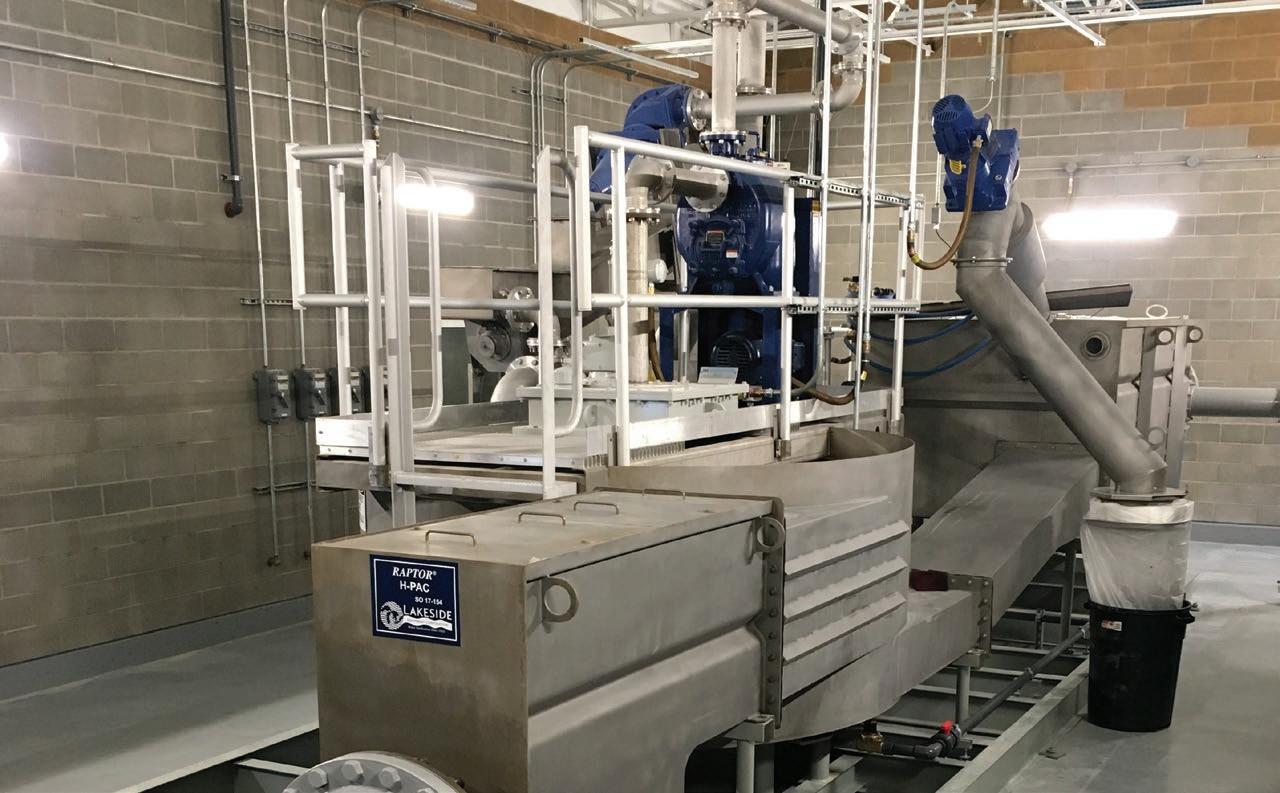
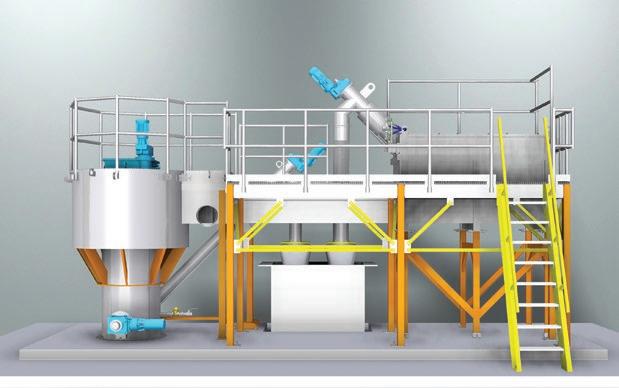
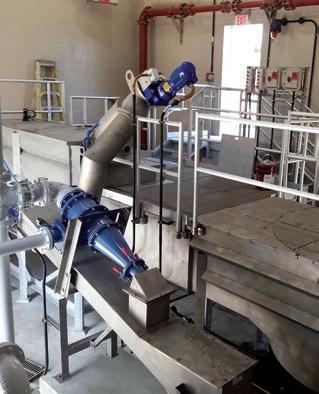
Our Headworks Packaged System – H-PAC® – combines our Raptor ® or Hydronic T Screening product line with our SpiraGrit® Vortex Grit Chamber in an elevated pre-engineered headworks system. Capable of handling flows as high as 12 mgd, the H-PAC can be installed above or below ground and its compact design uses less space and costs less than other packaged systems. For more than 90 years, Lakeside has provided solutions for treatment plant designers and engineers. Lakeside’s H-PAC offers the highest quality screens and grit removal systems, with the dependability and reliability expected of a trusted and proven leader in the industry. Contact us for a better solution!

Speak to one of our experts at 630.837.5640, email us at sales@lakeside-equipment.com or visit lakeside-equipment.com for more product information.

Every community relies on critical infrastructure to stay safe, healthy, and thriving. At Sulzer, we deliver innovative pumping, mixing, and treatment solutions that safeguard what matters most.
From stormwater management that prevents flooding, to wastewater treatment that ensures clean water, to pumping systems that keep essential services running, Sulzer products are at the heart of resilient communities. Whether it is hospitals, schools, or neighborhoods, our technology works behind the scenes to keep your water pumping.
Because when it comes to your community, reliability is not optional, it is essential. go.sulzer.com/one-reliable-solution-a-time







PAIGE McFARLAND,








JWater Efficiency Coordinator, Highlands Ranch Water


ust 12 miles south of Denver, east of the foothills, lies the largest master planned community in Colorado, Highlands Ranch. Development began in 1980, and Highlands Ranch soon became one of the fastest-growing communities in the country. For the past 45 years, Highlands Ranch Water has provided water and wastewater services to the now 105,000 residents of Highlands Ranch and Solstice. When it comes to water conservation, I am a department of one. Fortunately, I get to stand on the shoulders of many dedicated predecessors and colleagues. Everyone in our organization plays a role in conservation, whether they realize it or not. Slowly and surely, we’ve built a path to a resilient water supply for our customers through patience, teamwork, and tenacity.
OPERATIONS AND WATER
RESOURCES STRETCH SUPPLY
Water conservation and efficiency have always been a key focus of Highlands Ranch Water’s demand management plan, but you could say our first big moment translating those words into action was in 1994, when the first wells were equipped for aquifer storage and recovery. South metro water providers south of Denver, such as Highlands Ranch Water, have an additional challenge when it comes to achieving long-term resilient water supplies. That challenge, both a blessing and a curse, is nonrenewable groundwater. Four bedrock aquifers lie underneath the Denver metro area, the largest spanning from Greeley all the way to Colorado Springs. Most south metro providers are reliant on groundwater in some form. Some meet demand entirely with groundwater,

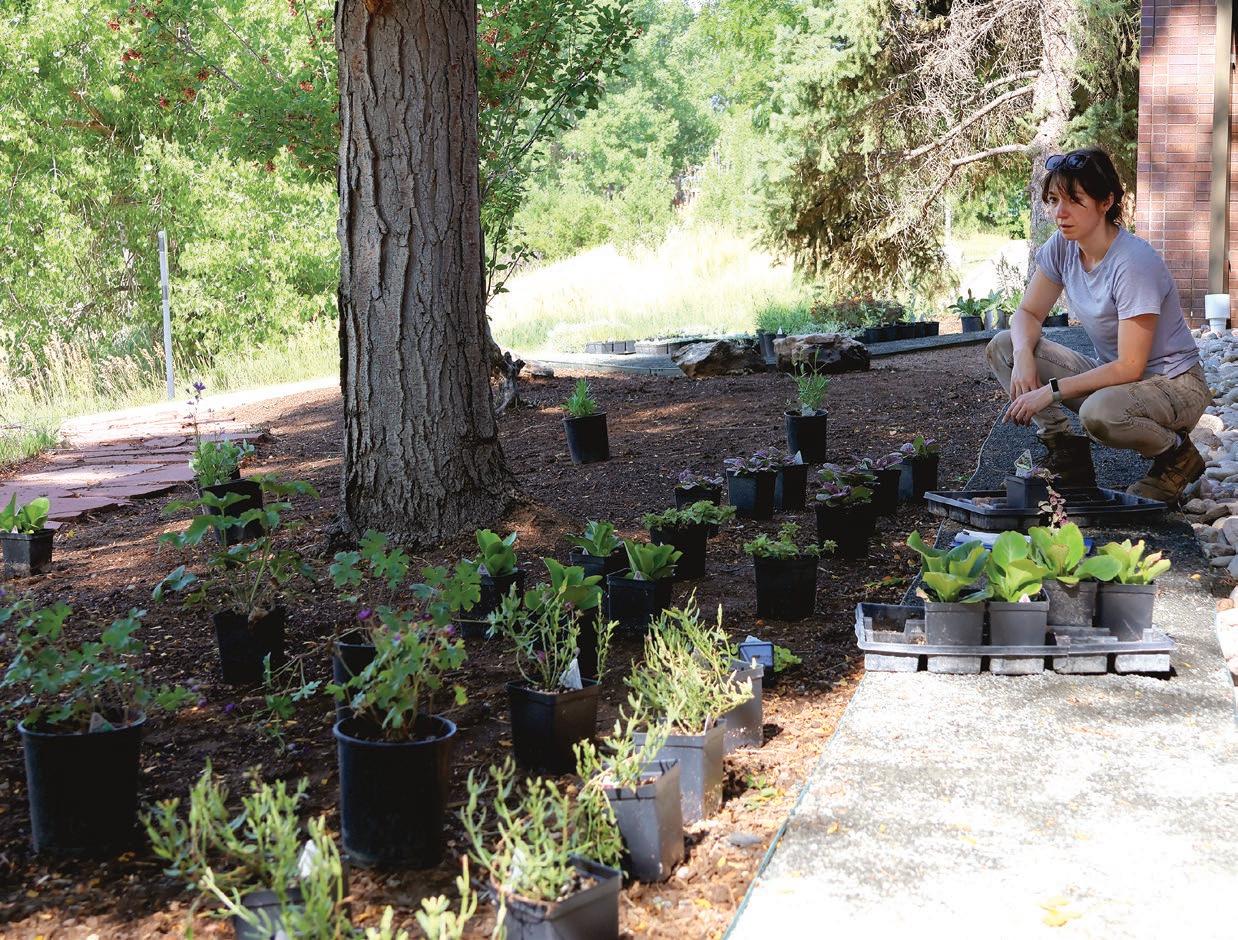
Water Efficiency Coordinator Paige McFarland is planting the district’s ColoradoScape garden.
and many, like Highlands Ranch Water, have a conjunctive use system, utilizing both surface water and groundwater. As aquifer levels continue to decline over time, the process of aquifer storage and recovery allows us to inject “excess” surface water back into the aquifers. While the process can be expensive, it ensures water isn’t lost down the river when reservoirs are full and avoids evaporative loss. Additionally, the injected water isn’t booked against existing groundwater rights, meaning that water can be “recovered” at any time.
Over the past 30 years, Highlands Ranch Water has met community demand with an average of 85% surface water and 15% groundwater. By 2030, we expect to meet demand entirely with renewable surface water during normal and wet years, thanks to capacity upgrades at our surface water treatment plant, with groundwater use
only during times of prolonged drought. What about dry years? Conservation programming will need to close that gap.
In 2002, Colorado endured one of the worst droughts in state history, leading Highlands Ranch Water to implement what I like to call the crown jewel of our water conservation program in 2003: a water budget-based billing system to encourage wise water use.
At the time, Highlands Ranch Water was the first water utility in the state to consider this type of rate structure, taking inspiration from utilities in Irvine, California. When I talk about conservation, this is usually the last thing customers want to hear about; it’s not cool and flashy like a pollinator-friendly front yard, realtime leak detection on your phone, or a greywater system, but the savings speak for themselves. Community demand dropped 20% after implementation, and even as the population continued to climb, water use remained on a downward trend, eventually plateauing in the 2010s.
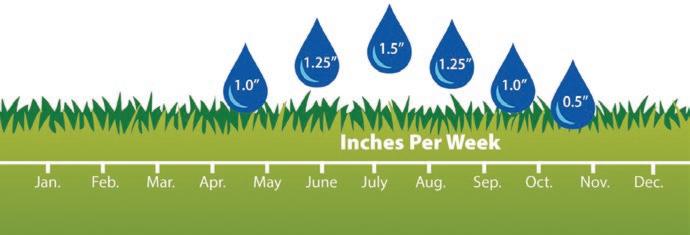
Through the water budget rate structure, each customer receives an irrigation budget from April to October, specifically calculated for their lot size. If they exceed their budget, there are three escalating surcharge tiers based on the amount of excess use. The budget system promotes efficiency while still being equitable for customers with differing property sizes. During this time, Highlands Ranch Water also created outdoor watering restrictions for the service area, prohibiting the wasteful use of water and limiting the
use of overhead irrigation during the day. A dedicated water conservation position was created in 2004 to enforce restrictions, set and track organizational goals, and educate customers about ways to conserve.
I came to Highlands Ranch Water in the fall of 2022. At the time, I knew very little about Highlands Ranch and, to my own surprise, very little about water. I had spent the previous 10 years working as a professional horticulturist, and beyond xeriscape principles, the big picture of water in the West was a mystery to me. I was looking for a new challenge, and the timing seemed to be right as demand for the replacement of high-water use turf grass with low-water landscapes started to pick up momentum in Colorado.
Highlands Ranch Water has offered a rebate for turf replacement projects since 2018, but participation was minimal until the summer of 2022. Perhaps it was the fact that the service area went into Stage 1 drought restrictions in July that garnered attention, but regardless, residential participation skyrocketed. With the Colorado Water Conservation Board offering up funding for turf replacement programs in 2023, Highland Ranch Water’s board of directors approved an increase to more than double the conservation incentives budget. Interest in the turf replacement program has remained high over the past few years, often exhausting funding by mid-summer, and currently, participants average a savings of 25,000 gallons annually. Beyond turf replacement, Highlands Ranch Water has
several rebate and incentive programs for residential and nonresidential customers to encourage conservation inside and outside.
At its core, my work in water conservation and efficiency is about customer service. Community is the lifeblood of conservation efforts at Highlands Ranch Water, so it should come as no surprise that the relationship between our communications and conservation departments is one of the most vital. What’s a great conservation program if no one knows about it? With the savings from water budget implementation, as well as passive savings due to federal and state-mandated appliance standards, having run their course, we’ve turned to our customers to help us continue to conserve. Since 2022, we’ve had close to 900 customers, residential and nonresidential, participate in our rebate programs. While it’s a vast increase compared to what we used to see, it doesn’t feel like much when you consider there are over 30,000 homes in Highlands Ranch. More than rebates, how do we change behavior? I think there’s something to be said for the small moments. No email, phone call, or unexpected visit goes unanswered, even unpleasant ones. We listen to our customers. Our goal is to make conservation easy, accessible and always on your mind.
This past year, we created new lowwater garden design templates, a plant database, and a list of local landscape companies for our customers utilizing the turf replacement program. Irrigated landscapes at our office building and well sites are slowly being converted to low-water demonstrations. Since 2023, we’ve partnered with a local taphouse to offer four conservation educational events during the irrigation season, and you’ll find us at all sorts of community events, job fairs, and the South Metro Water Supply Authority’s water festival – which we’ll be proudly hosting this June.
In a move that’s a bit controversial for an HOA community, we encourage residential
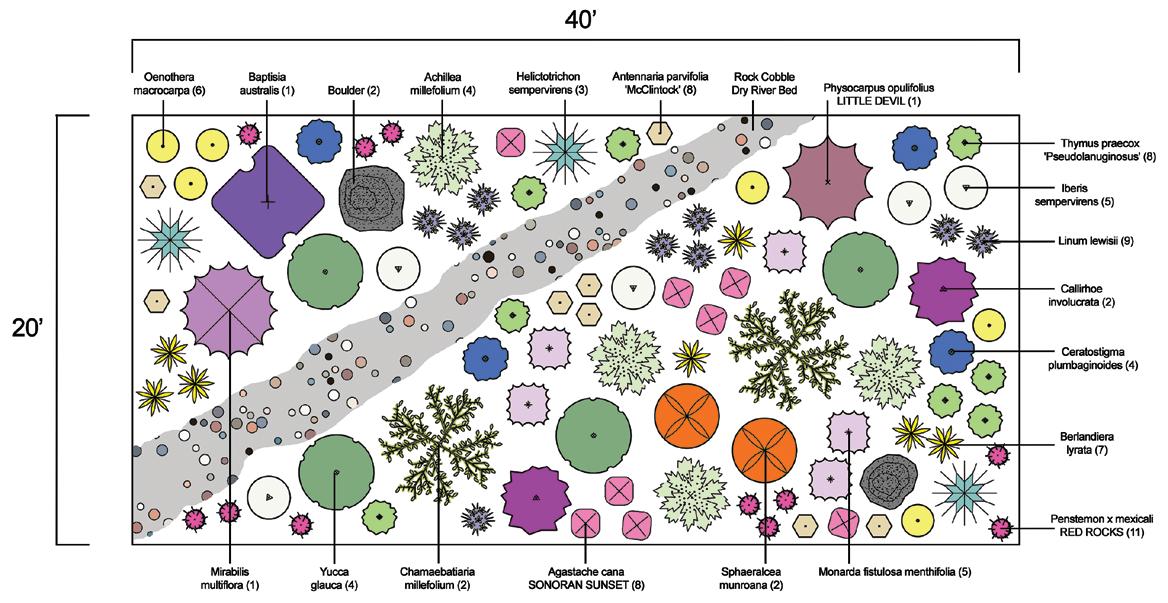
Garden templates provide a simple way for Highlands Ranch Water to help customers design and install a drought-friendly yard.
customers to participate in No Mow May. It’s incredible to see how much joy a simple yard sign can bring, and we hope this small step helps pollinators thrive after a long winter. This initiative wouldn’t be possible without our friends at the Highlands Ranch Community Association, who also relax aesthetic expectations for landscapes during periods of drought and promote our incentive programs.
Our sister government, the Highlands Ranch Metro District, began their Parkway Landscape Conversion Program in 2020, setting an example for our community and supporting our message as they annually convert acres of non-functional high-water use turf grass to low-water landscapes. We’ve got our work cut out for us, but in a community where the green lawn was once king, people are curious, and things are starting to change.
As I write this, Highlands Ranch is in severe drought. Snowpack for our supply basin is 60%. Record-breaking temperatures occurred this past December in the Denver metro area, and wildfire threats
are increasing in frequency and intensity throughout the state.
Colorado is no stranger to fluctuating weather. We don’t know what will happen in the years to come, but the evidence is strong that temperatures will continue to rise. Maybe it just means seasons will shift, or maybe it means we’ll have to do more with a lot less. People want to have it all, and that can make working in conservation hard. Sometimes I’ll inspect a freshly completed turf replacement project, with native plants and pollinator feeding flowers where an overwatered lawn once was, and be filled with so much joy, only to be reminded there are thousands more to go as I drive through the neighborhoods back to the office.
I’ve learned a big part of my job is to provide hope. To reassure people that installing high-efficiency irrigation nozzles and turning the water off when they brush their teeth will make a difference. On the days I feel overwhelmed, I think of the person who will continue this work when I’ve moved on. The conservation program at Highlands Ranch Water is more successful than it’s ever been, and I couldn’t have
achieved anything without those who came before me and those who support my mission each day.
Perhaps you’re a department of one like me, or one of many, or you fill the roles of several departments, and conservation is just another responsibility on a long list of things you don’t have enough time for. No matter how small, little things add up over time, and somewhere down the road, someone you never met will be grateful you did the best you could with the resources you had. Lean into your strengths and trust that the next person will complete the parts you couldn’t. Ultimately, we all have the same goal of providing clean, safe water sustainability, and there are many ways to get there. Pick your path and bring some friends.

Paige McFarland is the Water Efficiency Coordinator for Highlands Ranch Water. She is proud to serve both people and planet through her work, and can be reached at pmcfarland@hrwater.org.



In 2022, Colorado Springs Utilities began implementing programs designed to support water conservation savings through education. These collaborative programs focus on education around smart irrigation equipment and management to maximize water efficiency.
Behind these programs is the understanding that when irrigation technology is better understood by landscape professionals and the customers they serve, it increases their ability to use smart technology and their comfort level to adopt more efficient watering equipment and water-wise landscapes. Offering generous rebates is also a key component.
It’s a formula that’s working. The utility, which manages multiple water conservation programs targeting inefficient indoor and outdoor water use, earned the Irrigation Association’s Smart Water Application Technologies (SWAT) Outstanding Industry Partnership Award in October 2025. The award recognizes their program for the pairing of rebates and retrofits with targeted education to maximize savings from smart irrigation technology.
Importantly, the program has produced measurable results.
As an example, in 2024, irrigation- and landscape-retrofitted commercial properties in Colorado Springs gained more than 40 acre-feet of water savings, which is enough water to serve about 140 Colorado Springs families for a year. Working with the region’s landscape partners, the utility exceeded its water savings goal by a whopping 165%. They are currently analyzing the numbers for 2025 and expect similar results.
“We’ve implemented several rebate programs that, combined with education of various types, ensure commercial and residential customers have the best chance for water efficiency success,” says Julia Gallucci, water conservation supervisor for Colorado Springs Utilities. “Our customers understand the value of water, and many want landscapes that require less watering and maintenance.
They just need support to do it successfully. By providing the tools and education to help them be successful, we can encourage more customers to transition to water-wise landscapes that are right for our city’s climate and enhance our quality of life.”
Since 2001, Colorado Springs Utilities’ customers have decreased their per capita use by 44%. No small feat for a city that’s seen rapid growth in recent years and is currently the second-largest city in the state. Reducing water use as they grow has been driven by careful planning and is part of the efforts to minimize risks to their water resources.
Not located near a large water body, Colorado Springs relies on trans basin diversions to supply much of their water. Because those supplies can be reused, they account for up to 70% of the city’s total water use. Given the investment in infrastructure to transport water from so far away, and the risks those supplies face from persistent drought and other factors, water conservation is a key component of their long-term water plan.
The 2017 plan identifies 11,000 acre-feet of additional water savings to be achieved over a 50-year planning horizon. However, recent estimates point to a more conservative amount of 8,000-10,000 acre-feet. Gallucci says that about 2,400 acre-feet of those savings should be achieved by 2030, and irrigation efficiency is one way they’ll achieve them.
“Working very closely with our customers and with the landscape industry, we’ve identified the critical factors for best management of outdoor watering,” she says. “These include customer education, fixing leaks, addressing soil health and choosing water-wise plants adapted for our climate to ensure our urban landscapes are healthy and support our city’s economic vitality.”
Knowing this, they set about designing their award-winning programs.
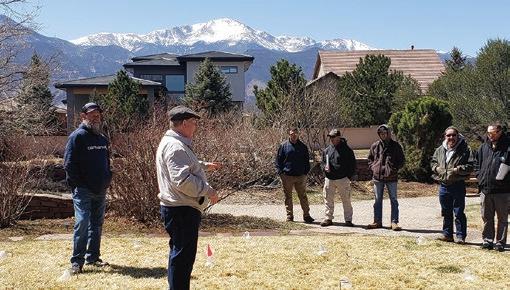

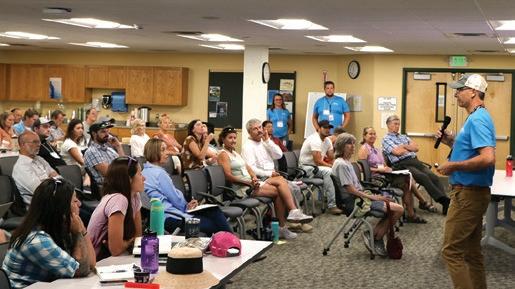

Colorado Springs Utilities’ successful program includes education workshops focused on irrigation efficiency and conversion to native grasses. Landscape professionals are trained through the Irrigation Association’s Certified Landscape Irrigation Auditor (CLIA) program, while enrolled utility customers learn how to properly install and manage smart controllers and high-efficiency nozzles. Photos courtesy of Colorado Springs Utilities
Put simply, the goal is to educate landscape contractors and customers about smart irrigation technology to encourage the use of more efficient irrigation and/or replacement of high-water-use turf with water-wise alternatives.
“Managing irrigation through technology and plant selection is a science that requires expertise and confidence,” says Gallucci. “Our program ensures that installations are performed by professionals trained in best practices, which in turn helps our customers achieve meaningful water savings.”
For commercial customers, the utility offers a $10,000 irrigation retrofit rebate. Participation requires the use of a landscape contractor trained through the Irrigation Association’s Certified Landscape Irrigation Auditor (CLIA) program to receive the retrofit, ensuring that retrofits are installed and supported by professionals with this level of expertise.
The program has the additional benefit of fostering strong partnerships between the water conservation staff and regional landscape companies.
Required program education for residential customers focuses on teaching them how to properly install and manage smart controllers and high-efficiency nozzles to optimize water use and system performance. After completing a brief
educational module and passing a quiz, they receive free smart controllers and/or high-efficiency nozzles through the program.
All training is offered through classes held at the utility’s Conservation & Environmental Center, which features a variety of garden landscapes carefully tended by staff and volunteers. The gardens are free for the community to wander for inspiration and information.
“We have irrigation specialists, horticulturists and landscape designers on staff who are great resources for our community,” notes Gallucci, adding that these professionals teach many of the classes.
Every drop saved through more efficient irrigation and water-wise landscaping is helping Colorado Springs stretch their existing water supplies and delaying the need to acquire costly new supplies. Their customers benefit from lower water bills and less time spent on yard maintenance while still enjoying beautiful outdoor landscapes.
Learn more about these programs by visiting the Colorado Springs Utilities website at csu.org.

Jennifer Jordan is a senior public affairs specialist for Colorado Springs Utilities, a four-service, not-for-profit utility service provider in Colorado Springs, CO. Ms. Jordan manages external communications for the utility’s water and wastewater services.




cdmsmith.com/NEXTisNOW

























Biochemical Oxygen Demand
Total Suspended Solids
Ammonia-Nitrogen
Nitrate and Nitrite Nitrogen
Kjeldahl-Nitrogen (TKN)
E-Coli, Total Coliform
Metals by ICP-MS and ICP-OES
SOC/VOC
Biosolids-503 Regs/Fecal Coliform
NPDES Requirements
DMRQA Study Participant

Organic Contaminants (SOC/VOC)
DBP (THM/HAA, TOC/ALK)
Inorganic Contaminants (Metals)
Nitrate and Nitrite Nitrogen
Copper and Lead
Total Coliform
Fluoride
Metals by ICP-MS and ICP-OES
Compliance Auto-Ship Bottle Program
VISITONEOFOURCONVENIENTLOCATIONS FOR MODERNDAYTECHNOLOGYAND OLD-FASHIONED SERVICE!
Commerce Cit y Laboratory 10411 Heinz Way Commerce City, CO 80640
Lakewood S ervice Cent er
610 Garrison St. Unit E Lakewood, CO 80215 303.659.2313 www.coloradolab.com info@coloradolab.com
Contact us



Sandra Sandman, Customer Relations Program Manager, Castle Rock Water
In Colorado, most water providers recognize that traditional, lawn-laden residential landscapes account for as much as 50% of household water consumption. As communities search for ways to reduce outdoor water use, nonfunctional turf has become a primary target.
In 2023, Castle Rock Water took a significant step by implementing an ordinance that limits turf in new residential construction. Known as the ColoradoScape Regulation (ORD 2022-025), the ordinance supports Castle Rock Water’s long-term goal of reducing residential water use to 100 gallons per capita per day –approximately a 12% reduction from the current average consumption.
Early results have been striking. By 2025, Castle Rock Water observed water-use reductions of up to 36% in homes built in 2023 and 2024, regardless of lot size. Prior to the ordinance, average monthly water consumption for a resident was 7,290 gallons; the new homes now use about 4,660 gallons. In addition to the regulation, the Town of Castle Rock required new builds to install 0.8-gallon per-flush toilets and plumbing code changes for the size of water pipes, which also contributed to this success.
Castle Rock’s ColoradoScape Regulation requires three key elements for new builds:
• No turf in front yards.
• A maximum of 500 square feet of non-high-water turf in backyards.
• A builder-provided landscape design. While builders are required to design the whole yard, they must, at a minimum, install the front yard. Builders who install landscaping throughout the entire yard
may qualify for a reduction in system development fees (though this incentive has not proven to impact water use and is currently under revision). Each approved design generates a customized water budget based on the landscape’s specific water needs. While homeowners may later modify their landscaping, their original water budget will not change to accommodate the installation of high-water plant material. Because residential customers make up 93% of Castle Rock Water’s customer base, the ColoradoScape Regulation applies only to new residential construction. Focusing on new builds allows the utility to enforce compliance directly with builders. In creating the regulation criteria, Castle Rock sought homebuilder input, calculated impacts for stormwater flow and water quality, and incorporated current state xeriscape legislation. For current residents who wish to make changes, Castle Rock Water offers free design reviews to ensure water-efficient outcomes.
“There were some growing pains,” says Rick Schultz, Water Efficiency Supervisor and a key contributor to the regulation’s development and implementation. The utility is continuing to educate developers, landscapers and homeowners about the purpose, intent and, ultimately, aesthetics expected from the program. Schultz has collaborated with designers and installers to develop standard landscape designs and elements, refining requirements along the way. Notable updates include increased plant density and a scalable calculation to limit excessive rock use – primarily for aesthetic reasons.
To complement these efforts, Castle Rock Water has many conservation programs in place. Commercial landscapers are required to be QWEL certified and attend courses on Town landscape regulations. The guiding landscape and irrigation criteria manual is updated annually to incorporate evolving best practices. Castle Rock Water has restricted the installation of Kentucky bluegrass in all new residential and nonresidential developments for many years. Existing homeowners can benefit from generous turf-removal rebates and water-efficiency education.
Castle Rock Water first introduced the term ColoradoScape in 2018 to promote the idea that water-efficient landscapes can also be vibrant and beautiful, showcasing native and regionally-adapted plants. While securing a sustainable water supply remains the primary goal, Castle Rock Water envisions a community defined by low-water landscapes that unmistakably reflect Colorado’s natural character.

Sandra Sandman has been the customer relations program manager at Castle Rock Water for more than 10 years and appreciates being a part of developing, implementing and educating the community on the progressive conservation and sustainability projects that are ensuring a strong future for Castle Rock.

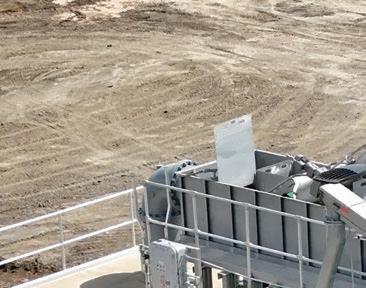
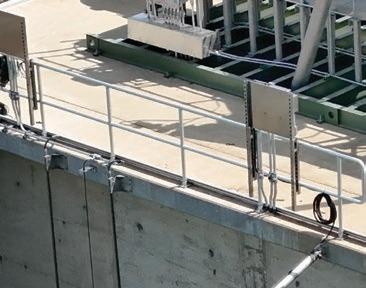




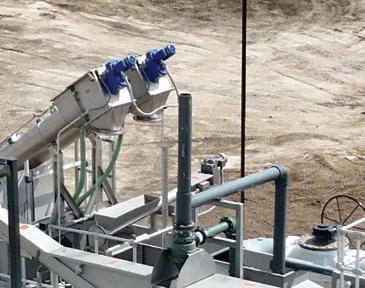

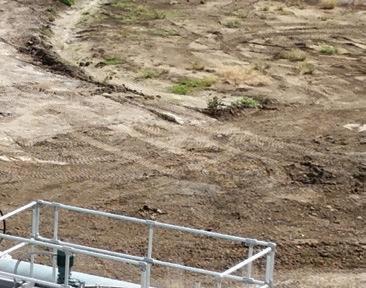
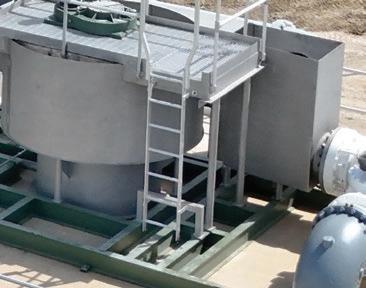


Pre-engineered for small and medium municipal WWTPs/WRRFs, the all-in-one PISTA®Works™ integrates screening, grit removal, and grit washing/dewatering onto a single skid. Pre-wired and tested, this stainless-steel unit arrives to the job site ready for plug and play. PISTA®Works™ delivers transformative benefits for designers, contractors, and end-users by simplifying design, streamlining installation, promoting operator safety and ease, and delivering high-performing technology designed for long-lasting success. REQUEST A BUDGET QUOTE TODAY!











Aimee Housh, Strategic Communications Project Manager, HDR and Meagan Harris, Senior Communications Coordinator, HDR
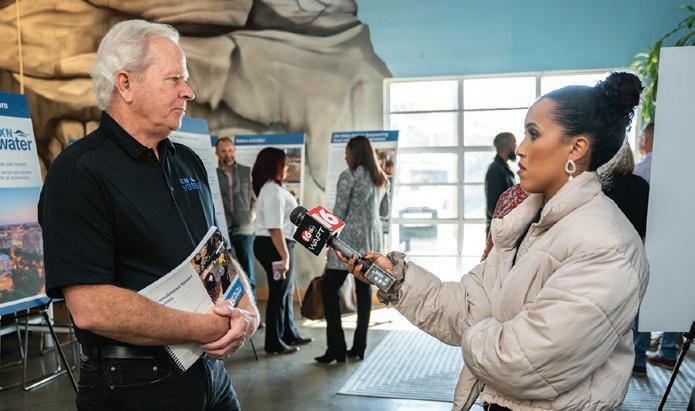
Most people only think of their water utilities when something goes wrong. But behind every drop are passionate professionals, complex systems and crucial decisions that keep communities healthy and resilient. In today’s fast-moving world of constant information and rapid change, quietly doing good work isn’t enough. To earn trust, secure funding and engage communities, utilities must become storytellers.
For decades, utilities operated in the background, with little need to explain their work. But today, silence can be risky. A common adage in the communications industry is, “If you don’t tell your story, someone else will,” and that has never been truer. Customers have both traditional platforms and social media vying for their attention, often times with incomplete or inaccurate information. Water utilities must tell their own stories, and not just when bad news comes around.
Communicating about rate increases, service disruptions or construction delays is a necessary part of being transparent and informative, but talking about these things alone can feel like you’re the friend who only calls when they need something. A lack of proactive communication can create a trust gap that’s hard to close. To shift this narrative, utilities must proactively communicate their value, humanize their work and build relationships before a crisis hits.
Effective storytelling begins with understanding what your audience values. Whether it’s reliability, public health,
affordability, environmental protection or economic development, the key is to connect your work to what matters most to the people you serve.
For instance, we are currently supporting a project that is experiencing a hurdle because the political leaders don’t fully understand the purpose and need of the project. Rather than relying on past messaging, we are reframing the project’s benefits to align with their priorities. We created tailored materials that speak directly to their agendas. All of the project’s benefits remain the same, but the framing may make all the difference when getting this project constructed.
This approach works for external audiences too. Farmers, environmental groups, business owners and residents all have different concerns. We use research, community analytics and local insights to craft messages that resonate with each group, but the messaging is always grounded in shared values.
A water agency has many stories to tell. They can range from informative to entertaining, but there are also stories that ask the audience to act. Behavior change is hard. Whether it’s conserving water, accepting a rate increase or supporting a new facility, facts alone don’t drive change. People need to connect with something.
That’s why we focus on telling stories that evoke emotions. We help utilities move beyond charts and statistics to share stories of the people behind the work who are passionate about serving their communities. Stories about operators, engineers and customer service reps can humanize the utility and build empathy among customers.
We also help utilities articulate the emotional value of water. It’s not just about cost or compliance. Water is what makes life possible. It’s the river that attracts tourists and sets a beautiful backdrop for
family gatherings, the tap that fills a baby’s bottle or a dam that protects homes from flooding. When we connect to those deeper meanings, we can build trust and inspire action.
At the heart of a strong communications strategy is a simple idea: people come first. That means creating messages and engagement opportunities that are easy to access, feel approachable and truly matter to the communities we serve.
To do that well, we start by getting to know our audience. Publicly available data like demographics, education levels, internet access and preferred communication platforms can help paint a clearer picture of who we’re talking to. Looking at past media coverage adds another layer, offering insight into public sentiment and highlighting perspectives that can help shape messaging. But data is just the beginning.
We believe in co-creating communication plans with the people they’re meant to reach. That means working with stakeholders, listening closely and learning from their lived experiences. In one project, we partnered with farmers to shape messaging around biosolids land application.
By listening first, we were able to build trust, create materials that resonated and avoid unnecessary conflict.
When we combine thoughtful data analysis with genuine community collaboration, we build strategies that not only inform but also connect.
Communication isn’t a one-time event. It’s a relationship. And like any relationship, it takes time, consistency and care.
We advise utilities to communicate early and often. Don’t wait until a project is underway or a crisis hits. Start building awareness and trust from the beginning. Research shows that multiple touchpoints are needed before people act. The more they hear from you, the more likely they are to support your work.
We’ve seen this in action as a utility prepared for a temporary water source reduction. Months in advance, they launched a communication campaign with tested messaging and shared it across stakeholders, newsletters, social media, and paid advertising. On the day restrictions began, there was a reduction in water use by 35% within 24 hours. Customers complied because they understood “the why.”
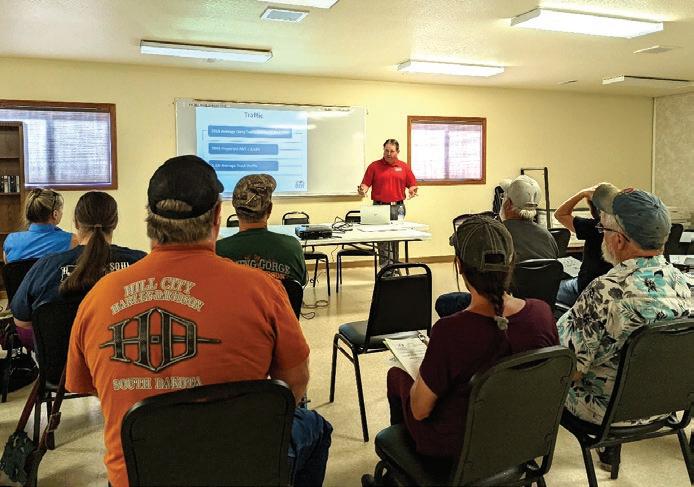
One of the most powerful tools a utility can have is an informed community. We’ve seen great success with water academies, whether facilitated in-person or virtual, that educate residents about how their utility works. These programs create champions who can correct misinformation and share the utility’s message in their own words.
We also recommend engaging young people through school programs, water festivals, and even coloring sheets. Kids bring their learning home, sparking conversations that build awareness across generations.
And when something goes wrong, transparency is essential. Being the first to share the news clearly, honestly and with empathy can strengthen trust, not weaken it.
There’s no one-size-fits-all approach, but here are some tools we’ve seen work well:
• Grassroots outreach, events and pop-ups: Connect with people in their own space.
• Social media and email campaigns: Cost-effective, measurable and adaptable.
• Virtual plant tours: Easy to produce and highly engaging.
• Community advisory committees: Build trust and gather feedback.
• Bill explainers: Help customers understand where their money goes.
• Pledge campaigns: Encourage behavior change and track participation.
• QR codes and custom links: Measure return on investment (ROI) from print materials.
And most importantly, stay flexible. Communication is not static – it’s responsive. We continually assess what’s working and adjust as needed.
Success doesn’t always mean applause. Sometimes, it means silence. No angry calls. No surprise headlines. Just a community that understands your work and trusts you to do it well.
In one project, we assisted a utility in navigating a major cost increase for a large


Aimee is a strategic communication project manager with 16 years of experience in public and stakeholder communications, engagement, and marketing. Tapping her unique, water-sector-specific knowledge in the planning and management of high-impact design and construction projects, along with three years serving as HDR’s flood risk communications initiative lead, Aimee advises on and leads stormwater, flood risk, and other watershed outreach.
infrastructure project. Thanks to proactive, strategic communication, the news coverage was neutral, and that was a win. When utilities embrace storytelling, they shift from being invisible to being trusted. People know what you do, they give you the benefit of the doubt and they become partners in your mission.
EMBRACE THE OPPORTUNITY
If you’re just beginning to invest in communications, here’s our advice:
• Don’t shy away from hard conversations.
• A little investment goes a long way.
• Your community is ready for more than you think.
• Talk like you’re explaining it to your neighbor, grandmother or child. Storytelling isn’t just a tool; it’s an important engagement strategy. It builds trust, creates understanding and inspires action.
So don’t wait for a crisis to communicate. Start now! Share the heart behind the hard work. Talk to your communities like neighbors. The result? A utility that’s not just seen but valued, not just functional but essential.

Meagan is a senior strategic communications coordinator on HDR’s Strategic Communications team – a full-service public relations firm and creative studio within HDR. With a background in branding and advertising, Meagan understands the art of executing campaigns with tailored messages that engage and motivate various target audiences. She has helped private and public clients employ data-driven strategies, carefully craft holistic messages, build effective external and internal communication programs, and launch new communication tools.








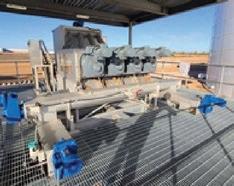
Intended for dewatering of industrial and municipal wastewater sludge.


Wide range of applications:
• Activated sludge
• Primary sludge
• Aerobically digested sludge
• Anaerobically digested sludge
• DAF sludge
• Biogas plant sludge
• Water treatment sludge
• Agriculture sludge









Highly
User-friendly operation
Very high solid capture rate
Efficient dewatering process
Low power consumption
Effectiveness









Richard Farthing-Nichol, Senior Policy Advisor, Canada Water Agency, and Will Sarni, Senior Policy Advisor, Canada Water Agency
Note: This is Part One of a two-part series. Part two was accidentally printed in the January issue first.
The wicked water challenges of our time cannot be solved unilaterally, no matter how big the government or multinational. The endless complexity of water – the hydrologic processes that move it and the myriad human activities that impact it – demand nuanced solutions that engage a broad range of actors. This reality has been apparent for some time, which has given rise to concepts like collective action. But as climate and water realities evolve, so does our understanding of the frameworks for partnerships needed to generate innovative solutions at speed and scale.
This article is the first in a two-part series that elaborates on an emerging concept in the water sector: catalytic communities. Lots of good work has gone into articulating and applying the ideas underpinning collective action , and we are not proposing catalytic communities in opposition to that work. On the contrary, catalytic communities build on lessons learned through decades of collaborative efforts and are complementary to broader collective action efforts.
Catalytic communities are distinct in their focus on driving innovative solutions to wicked water problems, with speed and at scale, by enabling and supporting commercial partnerships between innovators and corporations who rely on access to water for business continuity and growth. While it is an emerging concept, it is built on proven models from the water sector and beyond. The early applications of catalytic communities are promising, providing a promising model
for developing innovative solutions to our increasingly complex and urgent water challenges.
Let’s start with the obvious: collaboration on shared water challenges is not new. Over the past three decades in particular, the landscape has been dominated by Integrated Water Resources Management (IWRM) and, later, the concept of collective action that emerged from it.1
Collective action serves as a framework for facilitating cooperation and partnerships among the private sector, non-governmental organizations (NGOs), and other stakeholders. It is by design an umbrella term, and as a result, it defies easy definition. A recent attempt by leading organizations to narrow the definition in the context of water stewardship landed on:
“A coordinated set of engagements among interested parties playing complementary roles, which pools together knowledge, resources and/or expertise to jointly identify and implement solutions at various geographic scales, with the aim to address shared freshwater challenges.”2 This definition remains broad, but that is not to say that the concept lacks utility. Collective action has achieved real gains in service of its mission, including the creation of notable platforms such as the CEO Water Mandate and the Beverage Industry Environmental Roundtable (BIER).3 It has spurred a new understanding of what water stewardship should look like and refocused attention on developing new forms of collaboration that are needed to tackle wicked water problems. Yet collective action has long struggled with alignment and coordination challenges that prevent solutions from
being brought to scale. Too often, stakeholders revert to working independently or in narrow partnerships that fail to connect with the broader ecosystem. Funding is dispersed, and the most impactful innovations do not get the catalytic capital that they need to scale. Perhaps most importantly, the actors most capable of driving transformative innovation – entrepreneurs and tech companies – are not effectively mobilized.
Addressing wicked water problems with the urgency they demand requires a focus on innovation, speed, and scale that is often lacking in many collective action initiatives. This is where catalytic communities come in. The catalytic communities model aims to address several critical shortcomings and to provide a new pathway for achieving the vision put forward by collective action.
In doing so, catalytic communities focus on a defined piece of the collective action whole. It is simply not productive, nor possible, to prescribe solutions for collective action in its entirety. The concept is far too broad for that. Catalytic communities are laser-focused on one core pathway to water stewardship within the broader framework of collective action: accelerating technological innovation through commercial relationships.
Catalytic communities deliver twofold value to the practice of collective action. First, catalytic communities achieve results at scale and with speed, providing a robust tool that can be integrated into the broader collective action ecosystem. Second, the creation of catalytic communities provides valuable insights that can be generalized across collective action initiatives.
Definition
Catalytic communities function across different geographic scales, involve widely varying numbers of stakeholders, and address a diverse range of water challenges. These variables are the meat on the bone, and they are far from constant. But the bones are solid and consistent across all catalytic communities. At its core, a catalytic community is an ecosystem of collaborators that addresses wicked water problems by catalyzing innovative solutions through commercial partnerships, adaptive learning, and rapid scaling.
This definition can be further broken down into several defining features. Catalytic communities:
• Are premised on a commercial partnership between water users, water utilities, technology providers, the public sector and non-governmental organizations (NGOs).
• Have a bias for action that is the driving force of every aspect of the initiative. The partners care about developing and implementing solutions to real-world water problems above all else.
• Are built around a shared (aligned) purpose that is aligned with the mission of each partner. This purpose may be focused on a specific challenge (e.g. water reuse and recycling), geography (e.g. the health of a river basin), or a high-level goal (e.g. achieving the UN Sustainable Development Goals).
• Prioritize learning and adaptation as drivers for innovation. Catalytic communities are iterative by design, both in their approach to advancing innovative solutions and in the configuration of the community itself.
• Are focused on bringing innovation to scale as the ultimate goal. Catalytic communities are not satisfied with pilot or demonstration projects. Partners understand that moving the needle on wicked water challenges requires going mainstream.
• Move quickly in the identification, development, and scaling of new innovations. Catalytic communities move quickly, not recklessly, in recognition of the urgency of the wicked problems they aim to address.
• Aim to bring together uncommon collaborators. Sometimes, this simply means bringing corporates and entrepreneurs together, whereas other times it might mean convening a much broader coalition of private and public sector partners.
The innovator is the linchpin in a catalytic community. The innovator may be an established player that is scaling into new markets, or it might be an entrepreneur with an early-stage startup. In either case, they have a technology or an idea that can deliver results to address a pressing water challenge, and they have the speed
and agility to rapidly innovate and deliver. Typically, however, they lack the capital and supply chain access needed to scale.
Water users (predominantly the corporation) provide the ingredients for scaling. The catalytic community is built around the commercial relationships between the innovator and major water users. The major water users – corporates, utilities, agricultural operations, etc. – need innovative solutions to meet their water stewardship goals. Much like a business accelerator, some catalytic communities are, in fact, accelerators – catalytic communities provide the capital, market access, and support needed to scale innovative technologies.
Catalytic capital fuels the formation of a catalytic community. Catalytic capital unlocks innovation by introducing a higher degree of flexibility and risk tolerance than traditional capital with the goal of generating positive impact and enabling third party investment that would likely not be possible otherwise.4 Typically catalytic capital is supplied by major water users, but it may also come from forward thinking public sector agencies who are willing to leverage their scale to absorb more risk than market actors.
The community is the ecosystem of actors that is built around the commercial relationships at the core of a catalytic community. The community can comprise a range of stakeholders, including NGOs,



















Asset failures don’t announce when they’re on the way, but our data does.











Merrick’s asset management specialists use predictive analytics and intuitive tools to map conditions, assess risk, and plan thoughtfully. Because aging infrastructure doesn’t have to mean budget surprises.


www.merrick.com













corporates, philanthropic foundations, fund managers, public sector institutions, and academics. The community provides a diversity of perspectives that enable learning and adaptation, as well as ensuring the inclusion of a broad range of social and environmental values. In short, the community generates the well-rounded outcomes that are needed to address wicked problems. In addition, the community provides additional scale by including new investors, champions, policymakers, and others who can drive growth and adoption of new innovations.
Now that we understand catalytic communities, please reference the second article in this two-part series in Rocky Mountain Water’s January-February 2026 issue, in which we dive into models and future growth. Catalytic communities are flexible and have distinct shapes and features.
1 https://wwfint.awsassets.panda.org/downloads/unpacking-collective-action-in-waterstewardship_1.pdf (18)
2 https://wwfint.awsassets.panda.org/downloads/unpacking-collective-action-in-waterstewardship_1.pdf (19)
3 https://water-united.com/catalytic-communities-and-commercial-value-impact-at-speed/
4 https://esg.wharton.upenn.edu/wp-content/uploads/2023/09/Catalytic-Capital-inImpact-Investing-Forms-Features-and-Functions.pdf


Richard Farthing-Nichol has worked in the Canadian water sector for over a decade in public sector, academic, consulting, and non-profit roles. He is currently a senior policy advisor for the Canada Water Agency, a new standalone federal agency. All opinions are his own.
Will Sarni, practice lead for water, nature and agriculture at Earth Finance, Inc., and Richard Farthing-Nichol, senior policy advisor with the Canada Water Agency. All opinions expressed are the authors’ own.













































100%




COLLABORATIVE DELIVERY

















At Haskell, we believe in breaking barriers and creating opportunities. By supporting and empowering women in the water construction industry, we are fostering a more inclusive and dynamic environment where everyone can thrive. Together, we are building a world where clean water is accessible to every person, everywhere.





Scan to learn more about our commitment to you. We Create Things That Matter.



Darren Nowels, Senior Water Efficiency Planner, Northern Water
Colorado is home to hundreds of water utilities with different water sources and supply portfolios, often relying on water originating in completely different river basins. Many have a water shortage or drought action plan unique to their circumstances, which guides their response with triggers for watering restrictions, drought surcharges, and public outreach. When one community is forced to enact drought restrictions, their neighboring community may have a completely different water supply that is unaffected by drought or a response plan with different triggers, which can confuse residents.
Faced with this diversity of water portfolios and variable response plans amid seemingly overlapping service boundaries, how can water utilities collaborate with one another during drought to avoid confusion and ensure their customers understand the vital information particular to their situation? This is precisely the question that the Colorado Drought Coordination Group sets out to answer.
The group was originally formed in 2020 as the Metro Drought Coordination Group by staff from the City of Aurora and Denver Water in response to worsening water supply outlooks and an identified opportunity for utilities to get on the same page around drought response. This group initially brought together representatives from 30 water providers in the Denver Metro area to understand the different supply conditions across the region and explore ways members could collaborate on consistent messaging to their customers. Seeing overlap with a similar group, the two groups merged to form the Front Range Drought Coordination Group in 2021. By expanding the geographic focus, the group was able to invite additional
perspectives and voices from Fort Collins to Pueblo. True to its mission, a sub-group of members primarily in the northern Metro area created a joint press release in response to worsening drought conditions. This press release focused on key water efficiency actions customers could take regardless of their community’s drought response plan, such as watching for leaks and watering lawns no more than twice per week, only between the hours of 6:00 pm and 10:00 am.
By 2023, the group had grown its membership to include representatives from communities on the West Slope. Recognizing the expanded geography of members and the fact that Colorado’s water supply and thus the effects of drought are interconnected, the group was renamed to the Colorado Drought Coordination Group. This rebranding led to an increase in membership and helped facilitate a more comprehensive understanding of drought conditions and responses across the state.
Today, representatives from 40 water utilities across the state are active members of the Colorado Drought Coordination Group, sharing updates on their water supply conditions and responses. In addition to these updates, members are encouraged to bring challenges they’re encountering to the group, which may lead to creative solutions another utility has deployed for the same issue.
Beyond the supply updates and experience sharing, the Colorado Drought Coordination Group also offers a platform for education on effective drought response planning and practice both within Colorado and across the country. Each meeting brings in a speaker to shed light on different topics relevant to the group members. For example, members have shared their
approach to effective drought management planning from the perspective of both large and small communities, collaborative approaches to shared drought messaging, and a detailed analysis of the creation and implementation of drought surcharges. California’s Las Virgenes Municipal Water District generously shared a presentation on the implementation of flow restrictors for repeated drought restriction violators.
The Colorado Drought Coordination Group has also helped to achieve actionable items as well including the formation of the Drought Communications Work Group led by Katie Duke, the City of Golden’s Water Efficiency Coordinator. This work group collaborated to create a drought communications guide designed to create more consistency in communicating to customers around drought throughout Colorado.
Meetings of the Colorado Drought Coordination Group are held bi-monthly from February to October virtually on the fourth Wednesday of each month for 90 minutes. Any representative from water utilities, municipalities, counties, or any other public agency tasked with responding to drought in Colorado is encouraged to participate. If you are interested in joining the Colorado Drought Coordination Group, please contact Darren Nowels at dnowels@northernwater.org.

Darren Nowels is a Senior Water Efficiency Planner for Northern Water, working towards collaborative solutions for sustainable demand management of water supplies in Northern Colorado.
Trustee and Professional Water Operators Committee Co-Chair
HOW LONG HAVE YOU BEEN PART OF RMWEA?
Ten years.
WHAT ARE YOU MOST EXCITED TO ACCOMPLISH THIS YEAR?
I’m thrilled to launch the Hydro Heroes Program (special thanks to the Innovative Water Technologies Committee!). This initiative connects military service members transitioning to civilian life with rewarding careers in the water sector. This program aims not only to address workforce challenges but also to honor the skills and dedication of our veterans. I’m also eager to strengthen RMWEA’s collaboration with the WEF and the AWWA Veterans Initiatives Committee, ensuring our region actively contributes to national efforts. Additionally, I’m excited to continue elevating the visibility and impact of Professional Water Operators Seminars, creating opportunities for operators to share knowledge and help shape the future of our industry.
FAVORITE PART OF BEING IN THE WATER/WASTEWATER INDUSTRY:
I love being part of a field where engineering meets purpose. My favorite aspect is bridging the gap between operations and maintenance needs and the realities of regulatory pressures and aging infrastructure. It’s incredibly rewarding to develop solutions that not only solve today’s challenges but also sustain utilities
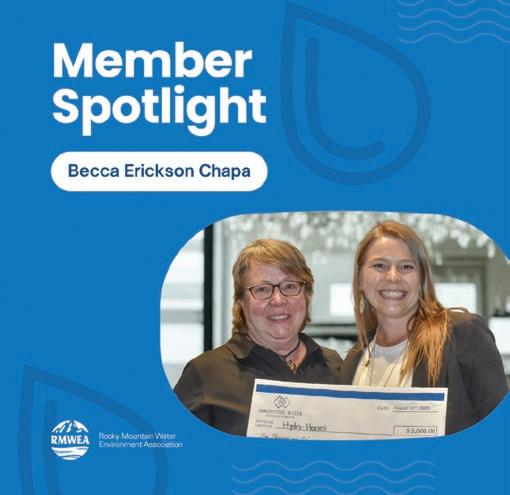
for generations to come. Understanding treatment processes, exploring innovative options, and supporting operators through practical, engineered solutions is what keeps me passionate about this work every day.
Eric Dole, P.E., PSAP, Water and Energy Practice Lead, Kimley-Horn and Connor Manley, P.E., XAK-PACK® Testing Lead, Kimley-Horn
When evaluating a pump in the field, have you ever been given the advice to “throttle the discharge valve on a pump to bring the operating point back in the ‘sweet spot’ so it stops vibrating or cavitating?” This advice is like a driver’s education instructor teaching your child to control the speed of their car
by riding the brake instead of gently pushing on the gas. Simply put, it’s an inefficient practice that causes excessive wear, consumes excessive electricity, and ultimately reduces the reliability of the pump system.
In reality, the pumping scenario above means the pump has too much head developed for the corresponding flow rate,
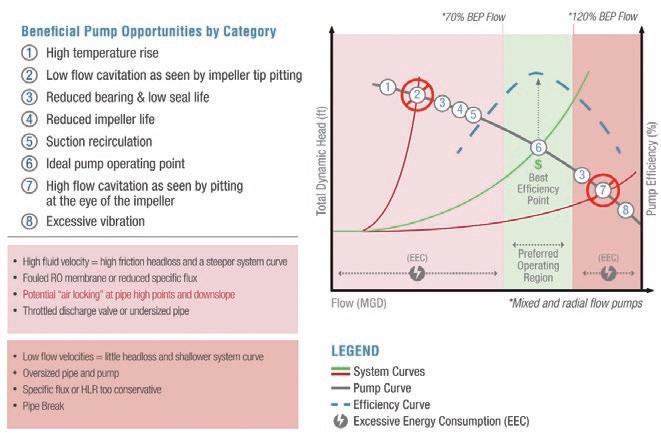
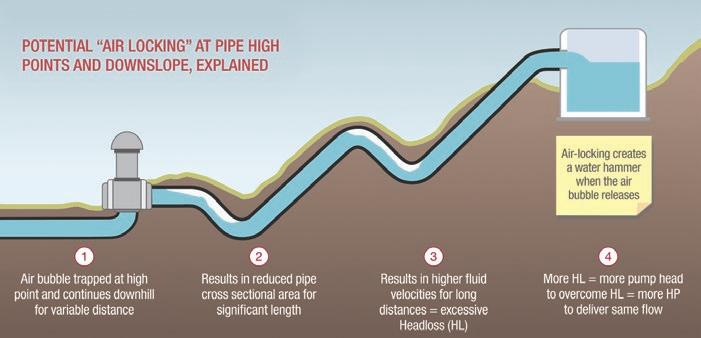
and the pump curve is intersecting the system curve to the right of the preferred operating region (POR). For mixed flow and radial flow pumps, the POR is often defined as the region of the pump curve between 70% and 120% of the best efficiency point (BEP) flow. Operating to the right of the POR, or the “sweet spot” of the pump in the example above, causes a myriad of issues detailed in Figure 1A for points 3, 7 and 8. Pumping systems lie at the heart of nearly every water and wastewater utility. Pumps consume a significant portion of the total energy used in water/wastewater infrastructure, from moving raw water from wells to treatment plants, to delivering finished water across distribution networks, to conveying wastewater through force mains. Inefficient pumping not only increases operations and maintenance (O&M) costs, but it also decreases reliability. As seen in Figure 2, most of a pump’s total ownership costs are attributed to O&M costs, and this is for an efficient pump As the wire-to-water efficiency of the pump decreases, the O&M portion of the pie chart vastly outweighs the initial and installation costs.
Hydraulic engineers are not pump designers. Rather, they are system curve designers and pump selectors. Yes, we design all the mechanical aspects of the pump with respect to piping configuration, valves and instrumentation; however, if we do not calculate an accurate system curve or system curve envelope based on the mechanical piping design, the proper pump will never be selected. This requires some homework.

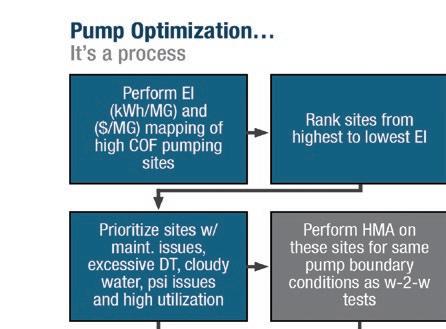
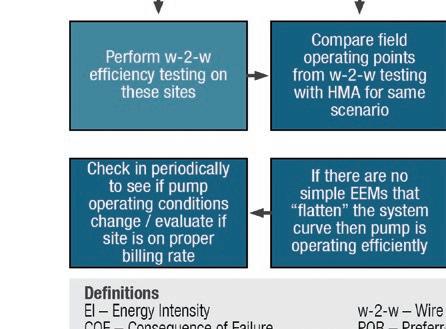
The workflow diagram in Figure 3 provides a high-level guide for the steps involved with proper pump design. After determining which pumps are likely the “bad actors,” as determined through energy intensity mapping (as described in Figure 4), the next step is to acquire all existing pipeline and pump station as-builts, GIS linework, hydraulic grade lines, pump curves, required pressures and flows and tank information. Once the existing information is gathered and confirmed to be accurate, the next step is building the system curve.
A pump cannot be selected without knowing the shape of the system curve. Bernoulli’s Equation is used to develop the system curve based on the previous inputs mentioned and whichever friction loss equation is selected, whether it’s HazenWilliams or Darcy-Weisbach. The friction loss equation and the velocity head establish the steepness or flatness of the system
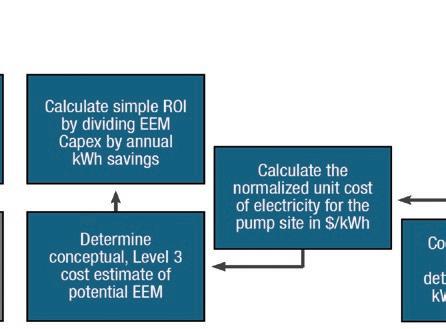
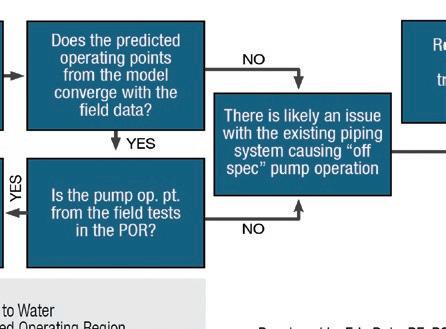

curve and are where engineers often miss the mark due to the intricacies of these equations and incorrect input variables, such as pipe roughness, diameter, length and minor losses. As described in Figure 1, lower fluid velocities result in flatter system curves, while high fluid velocities result in steeper system curves.
System curves can be developed with spreadsheets or hydraulic models, both of which can be equally effective at producing this critical step in pump design. However, it is these authors’ experience that hydraulic models are more efficient for Quality Assurance/Quality Control (QA/QC) and can be used to develop system curves for complex hydraulic networks like distribution systems, well pumps with dynamic drawdown, raw water transmission pumps, sewage lift station pumps, reverse osmosis feed pumps and others) in less time and more accurately than spreadsheets. Additionally, spreadsheets are limited to simple hydraulics, such as transmission lines and force mains, which are more difficult to QA/QC and are more prone to errors. Regardless of the tool used to develop the system curve, both suffer from the same Achilles’ Heel: garbage in, garbage out. If the engineer performing the hydraulic analysis uses the incorrect pipe length, diameter, roughness coefficient or elevation, if the pipe is air-locked or a valve is throttled/closed, or if the specific capacity of a well is incorrect, the model will not accurately predict the system curve.
In short: An inaccurate system curve will always result in the wrong pump selection. The workflow diagram in Figure 3 provides high-level guidance on the steps for proper pump design and optimization. For existing pumps, the process starts with deciding which pump stations to target first to avoid wasting money on testing efficient pump stations. Energy intensity mapping (kWh consumed /MG pumped) and benchmarking are the first steps. Care should be taken to:
1. Align the totalized flow polling with the same days the electric bill is assessed, as shifting this data can skew results.
2. Only compare similar types of pump stations to each other; compare group sewage lift stations, distribution pumps, raw water transfer pumps and process pumps separately.
Sites with the highest kWh/MG values are likely the “bad actors” in the system and can benefit from field wire-to-water testing, whether it’s with Kimley-Horn’s XAK-PACK® or other testing protocols.
As seen in Figure 4, wire-to-water efficiency is the ratio of useful pumping output power to the electrical energy input power supplied to the motor when both power values are converted to the same unit. For pumps operated with a variable frequency drive (VFD), the input power must be grabbed from the line side and not the load side, so the inefficiencies of the VFD at lower
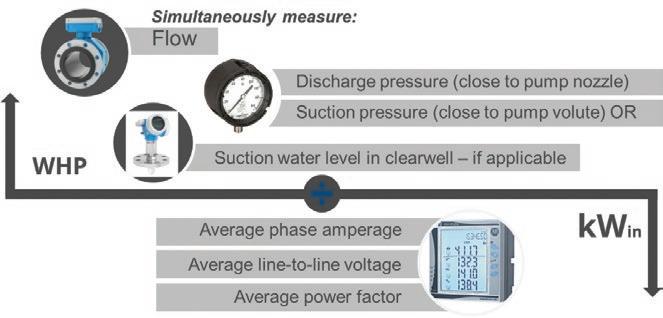
speeds can be captured in the wire-to-water calculation. In hydraulic terms, this ratio compares water horsepower (the energy imparted to the fluid by the pump, or flow times total head) to electrical horsepower (the actual kW drawn at the motor terminals) delivered via the electrical supply. This metric captures the real, overall efficiency of a system, including the pump, motor and drive (if applicable) only if all the parameters above are captured simultaneously with accurate instrumentation. It provides an excellent look into the electromechanical fitness of the pump. Properly executed wire-to-water efficiency testing can unmask underlying electro-mechanical, hydraulic or control problems that deteriorate system performance over time and cause excessive energy consumption. However, and more importantly, it can establish an accurate, field-verified system curve, pump curve, and wire-to-water efficiency curve to determine if: 1. The pumps are operating within the POR. 2. What the “actual” system curve envelope is, so a new pump can accurately be selected.
3. Potential “no-cost” to “low-cost” troubleshooting techniques that can help flatten the system curve so a lower horsepower pump can be used to provide the desired flow at lower head.
Kimley-Horn has completed more than 500 wire-to-water, pump performance and optimization testing projects over the past six years across the United States using our XAK-PACK® Pump Condition Assessment Tool. These projects have covered pumps ranging from 40 horsepower to 600 horsepower. In Colorado, we have performed XAK-PACK® tests for Denver International Airport Lift Station 2, Colorado Springs Utilities Chapel Hills Lift Station and four lift stations for Boxelder Sanitation District. System curve information collected from these projects was used to accurately select new pumps better suited for the application.
ARE THERE PERMANENT, REAL-TIME PUMP KPI DASHBOARDING TOOLS THAT CAN BE PERMANENTLY INSTALLED?
Yes, there are a few tools available on the market that can track a real-time operating point and energy intensity as a
permanent fixture in the pump system. For example, Specific Energy – ABB’s Pump Efficiency and Monitoring System (PEMS) – and XiO Pump Water Operations offer real-time, cloud-based, pump performance monitoring. These tools are effective at tracking performance and efficiency and are typically offered as a monthly subscription.
Kimley-Horn has advanced the XAK-PACK® tool to be embedded in permanent pump installations with the PUMP DOC tool. Our PUMP DOC tool not only monitors the operating point and wire-to-water efficiency in a realtime environment, it also uses machine learning to help triage the pump and troubleshoot what may be causing the system to operate poorly. As can be seen in Figure 5, the PUMP DOC tool eliminates multiple steps in the pump optimization process in a real-time environment.
Wire-to-water efficiency has moved from an academic concept to a frontline tool for utility engineers and system operators to track the electro-mechanical fitness of a pump. By embracing this holistic view of pump performance and how much electricity it uses to deliver water at the required head and flow, water and wastewater systems can transform invisible energy waste into visible opportunities for cost savings, operational improvement, and strategic planning.
Furthermore, properly executed wire-towater efficiency testing can be an essential tool in developing system curve envelopes for existing pump stations, so new, more efficient pumps can be selected. Coupling wire-to-water efficiency testing with hydraulic models can help reveal potential troubleshooting techniques that can help flatten the system curve, resulting
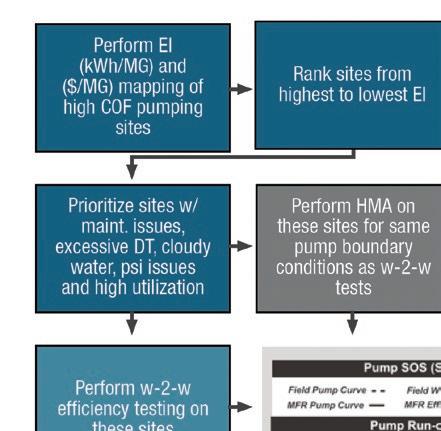
in less power per unit flow, or gallon per minute (gpm) delivered when paired with the right pump operating in the POR. As with everything in engineering and science, data integrity for input variables is key to avoiding garbage in, garbage out scenarios.

Eric Dole is a senior project manager at Kimley-Horn where he is the Water and Energy Practice Lead. During his 26-year career, he has bridged the water-energy nexus by specializing in delivering sustainable infrastructure solutions through optimized hydraulic systems and the unit processes they drive.


Connor Manley is a project manager at Kimley-Horn where he serves as one of the few firmwide Pump Testing Leads. He has more than six years of experience in water and wastewater infrastructure design, specializing in conveyance facilities, including pumping stations. He has experience testing customer distribution systems, treatment pumping systems, and groundwater systems.


Todd Hartman, Media Relations, Denver Water
The largest municipal water utility in the Rocky Mountains is increasingly focused on another major commodity: energy. How to save it, how to make it greener and how to produce its own renewable power.
While Denver Water’s mission is to deliver safe, clean drinking water to 1.5 million people, doing that requires a lot of energy to pump water, treat it, keep lights on and fuel a large fleet of vehicles and equipment.
Over the last decade, Denver Water has put a growing focus on reducing the
carbon emissions associated with all that energy, a major part of its broader push toward sustainability and resiliency.
Those carbon emissions drive climate change. A warming climate, in turn, threatens water supplies. So, Denver Water wants to do its part to reduce the fossil-fuel ingredients that are warming the atmosphere and jeopardizing snowfall and river flows.
Denver Water took its efforts to a new level in late 2024, when the utility’s fivemember Board of Water Commissioners set a goal committing the utility to net-zero
carbon emissions by 2030. The decision was ambitious and has the utility working more aggressively than ever to make its operations more energy efficient, electrify much of its vehicle fleet and increase its own production of renewable energy, largely through generating solar and hydropower at its far-flung facilities.
“Denver Water has a front row seat to the impacts of climate change and its effect on the reliability of our water supply,” said Dominique Gómez, who was the president of Denver Water’s board when it adopted
the net-zero goal. “We have long prioritized our environmental stewardship, and we now have an enormous opportunity to accelerate our work on reducing our climate impact, which will also build resilience in our system and reduce our operating costs.”
Denver Water continues to map out how to meet its 2030 net-zero goal and do so in a way that ensures ratepayer savings even as the utility invests in new energy approaches.
Much of its work has pulled in expertise across the organization, through collaboration with employees who understand the facilities they operate and where the best energy-saving and innovation opportunities might be found.
A key example of this approach came in 2023, when Denver Water set a goal to cut its energy use by 1 gigawatt-hour. That’s 1 million kilowatt-hours – a ton of electricity, or, in some cases, the equivalent amount of fuel, like gasoline – enough to power 750,000 homes for one hour, or roughly 100 homes for a year.
Employees scoured the organization for low-hanging fruit, the relatively easy fixes that could be made at little or no cost or would provide rapid payback by quickly cutting energy expenses.
And it unleashed its in-house expertise, including personnel specializing in electrical, HVAC, plumbing, information technology, vehicle fleet, dams, reservoirs and the network of pipes that moves water through the city.
Teams pinpointed energy savings that could be tallied by closing unused facilities that were still drawing power, replacing outdated boilers in the utility’s high-country facilities, updating old lighting, reducing the idling of fleet trucks (which wastes gas and diesel) and adding its first batch of electric vehicles – among other steps.
“This was an energy treasure hunt,” said Adam Hutchinson, an energy management specialist and part of Denver Water’s Sustainability Team. “We had focused on energy efficiency for many years, but with this project, we wanted to take another hard look across the organization for relatively quick and easy energy-saving opportunities.”
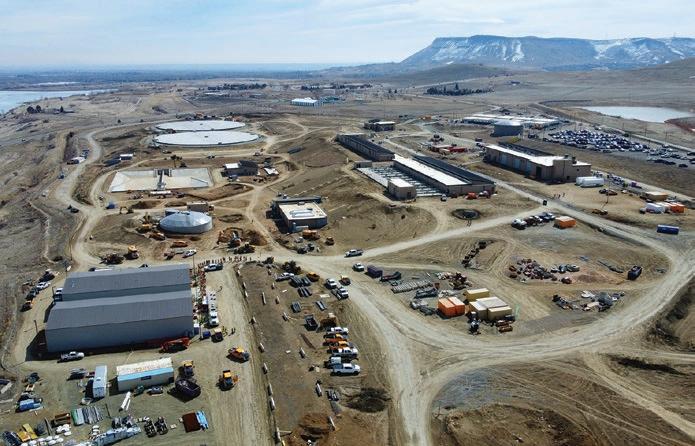
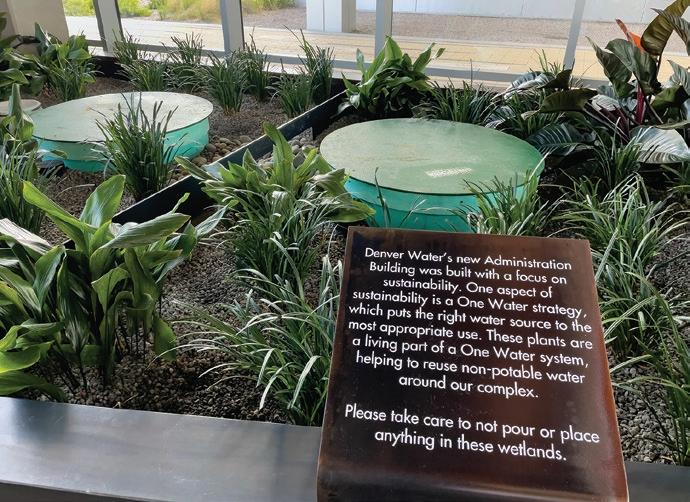
That project not only succeeded in meeting its goal, it also chipped away at a broader strategy: To drive down energy usage as much as possible, then get what power is still needed through renewable energy.
Already, the utility powers its main Administration Building with solar panels and is in the process of adding additional solar power at other facilities around the region. The Administration Building also cuts carbon emissions in other ways: it employs a system that
uses water, not natural gas-heated air, to heat and cool its environment, making it easier and cheaper to keep temperatures comfortable.
And for years, Denver Water has increasingly harnessed the power of water to generate power. Improvements at key dams and tunnels in the last several years have allowed the utility to use flowing water to generate enough hydroelectricity to juice 6,000 homes.
In 2024, Denver Water completed its Northwater Treatment Plant near Golden,
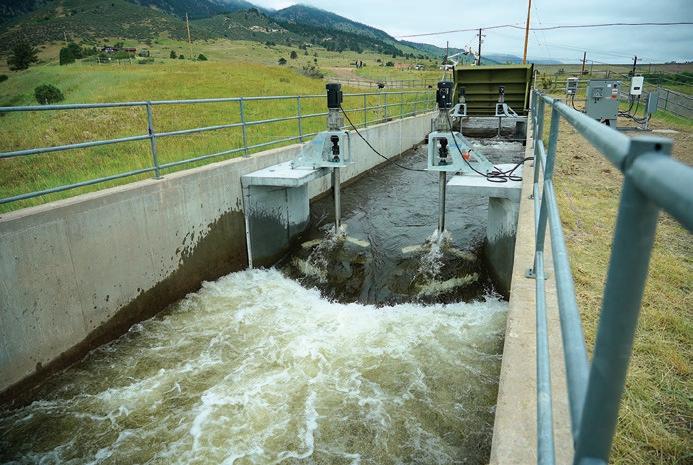
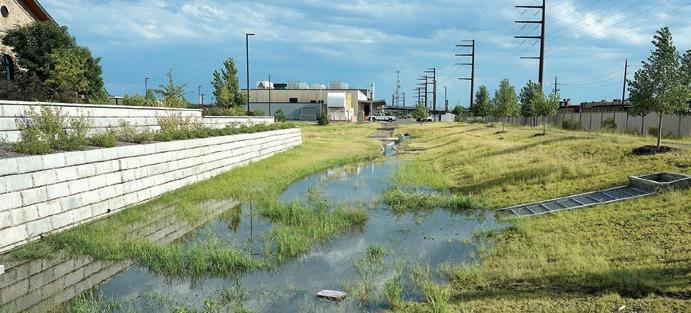



which, under most conditions, will generate sufficient renewable energy to power its own operations and provide excess electricity to the grid.
Perhaps the biggest challenge in reaching net-zero involves offsetting emissions from hundreds of vehicles and heavy equipment Denver Water relies on to keep its system, spread over some 4,000 square miles, up and running.
One way to do that is, where feasible, shifting to electric vehicles. Denver Water started that work in 2023 and its fleet of EVs has grown to 40, with 26 of those added in 2025. Utility field staff is readily adapting to the vehicles and are enthusiastic about incorporating them into their day-to-day work.
Denver Water’s approach has been gradual, to study cost-savings and add vehicles steadily to ensure the vehicles can perform in various environments, including in remote locations and rugged terrain, around facilities in the foothills and high country.
In late 2025, Denver Water became the first public organization in Colorado to own an electric Class 6 Freightliner truck, used for hauling equipment around the region. Class 6 is considered a “medium duty” truck, weighing between 19,501 and 26,000 pounds.



The water provider also added a Beam EV Arc – a portable electric vehicle charger that runs on solar power and can power up two vehicles simultaneously. And, it added a high-speed charger at its central location in Denver.







“There’s a lot of exciting stuff happening with the electrification of our fleet,” said Esteban Romero, who manages Denver Water’s fleet of 760 vehicles, heavy machinery and trailers. “We are focused on helping Denver Water cut carbon emissions as we build a more sustainable operation.”
Denver Water still has significant work to do to meet its 2030 goal and determine all the methods needed to get there. But its board sees the work as a critical part of Denver Water’s role as a key regional institution, serving as an example and as a leader to the broader community.
“As an anchor institution in Colorado, Denver Water can and should play a leadership role in reducing energy use that contributes to a warming climate,” said Alan Salazar, CEO of Denver Water. “It makes sense not only as we see a more erratic climate threaten a dependable water supply but as a signal to Coloradans that all of us must, to the extent we can, take steps to limit our carbon emissions.”

Todd Hartman assists with media relations at Denver Water, where he has worked since leading communications for the Colorado Department of Natural Resources and the Governor’s Energy Office. Hartman also spent 24 years in daily print journalism.
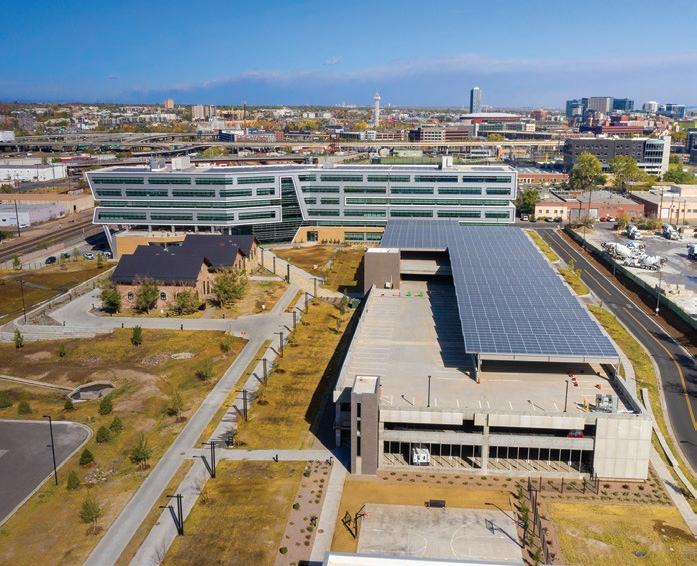

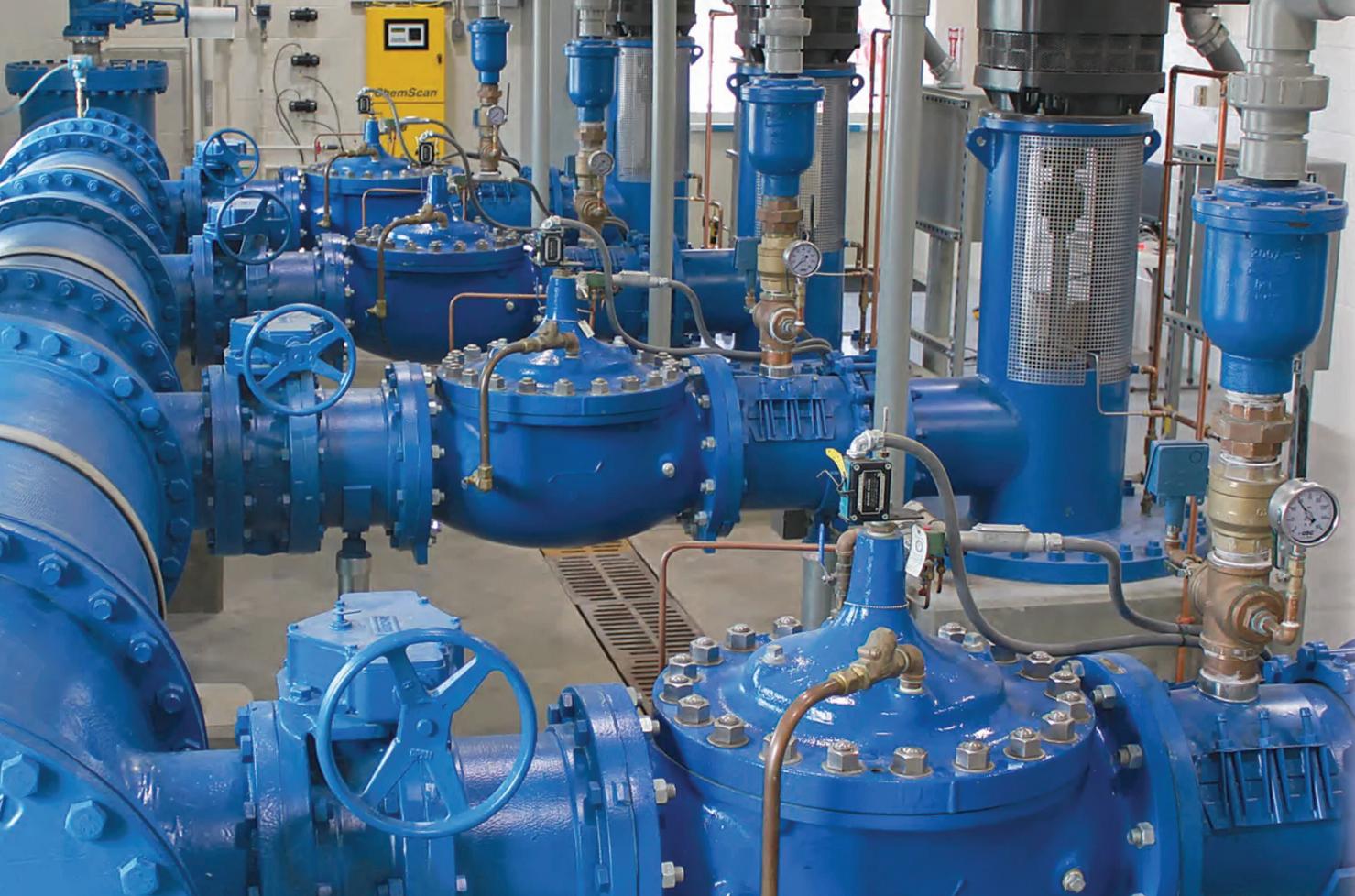

The Rocky Mountain Section of AWWA’s Conservation Committee is the perfect fit for those who are interested in learning more about water conservation, both broadly and in depth.
The Conservation Committee brings together more than 80 water conservation professionals from across Colorado, New Mexico and Wyoming who are actively exploring innovative strategies and partnerships to advance water conservation and efficiency throughout our region.
The group meets five to six times a year, virtually or in person, with a hybrid option available, with a break during the busy summer months. Each meeting features at least two guest speakers from a wide range of disciplines who present on timely and relevant topics such as water efficiency rebates and incentives, drought planning

and response strategies, and barriers to commercial, institutional and industrial conservation efforts – among many others. At the end of each year, the committee chairs survey members to identify topics of interest, ensuring meetings continue to provide meaningful professional development.
While our meetings are engaging and consistently well attended, many members find the committee’s email network to be one of its most valuable resources. We are a well-connected team that regularly shares advice on best practices, case studies and exciting new projects, and members are always willing to support one another.
2026 holds a year full of interesting meeting topics, ranging from AMI technologies to drought planning and response and addressing peak demand. Contact Hope Bartlett at hope.bartlett@longmontcolorado.gov to learn more or join!












































































































Rocky Mountain Water is made possible by the companies below who convey their important messages on our pages. We thank them for their support of RMSAWWA and RMWEA and its publication and encourage you to contact them when making your purchasing decisions. To make it easier to contact these companies, we have included the page number of their advertisement, their phone number, and, where applicable, their website.



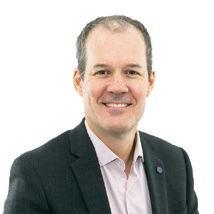






At our very core, AE2S is all about people. Beyond engineering, we are committed to empowering our clients, employee-owners, and all those around us to develop a vision for a better tomorrow.