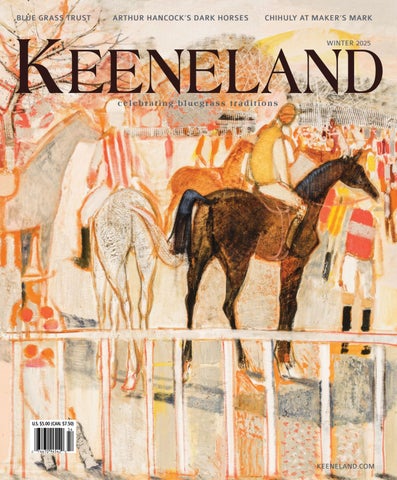
K EENELAND
celebrating bluegrass traditions
traditions
Here for you. Through
every stage of life and for all your health care needs.
From routine checkups and preventive screenings to the management of chronic conditions and specialized treatments, our team is here to meet all of your health care needs. You can feel confdent knowing we are here to care for you today, tomorrow and always.
Hello humankindess®






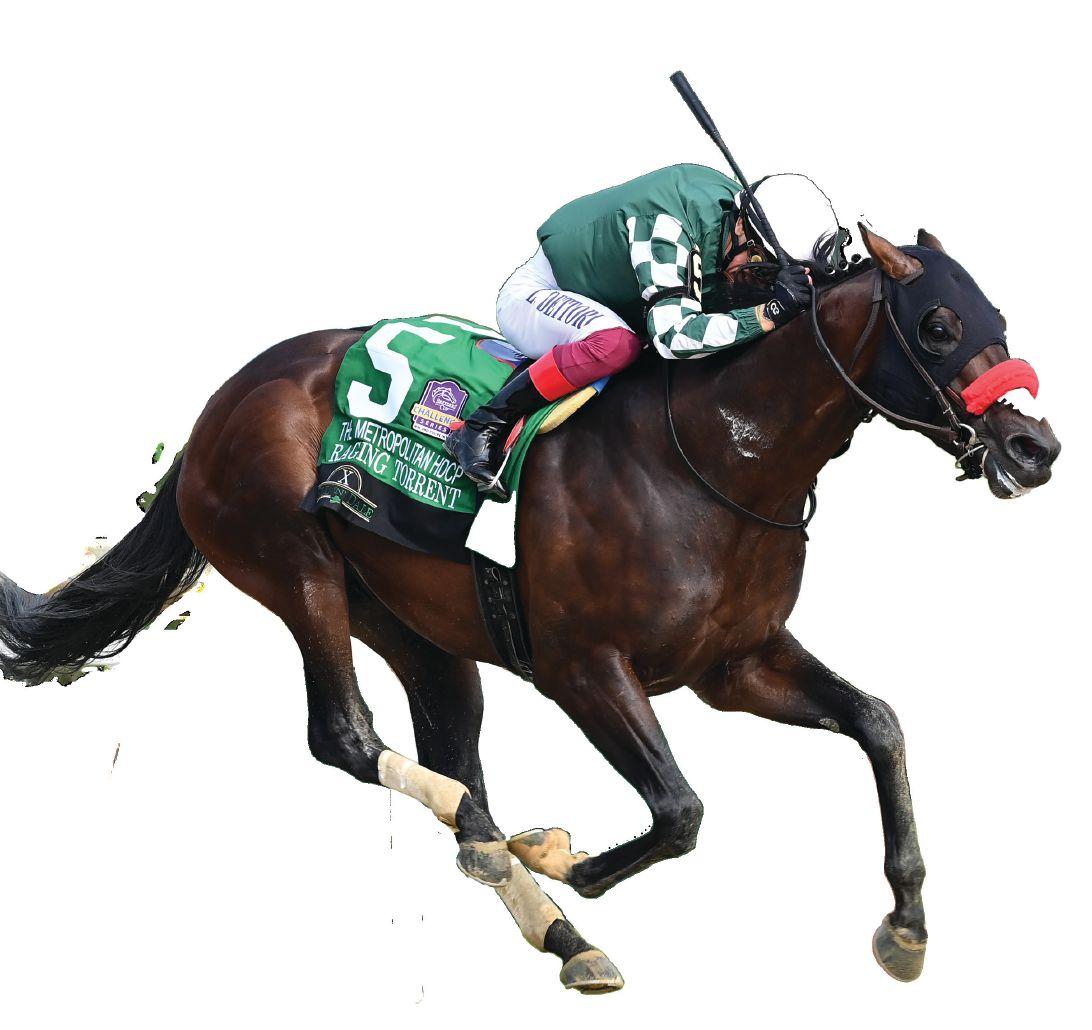
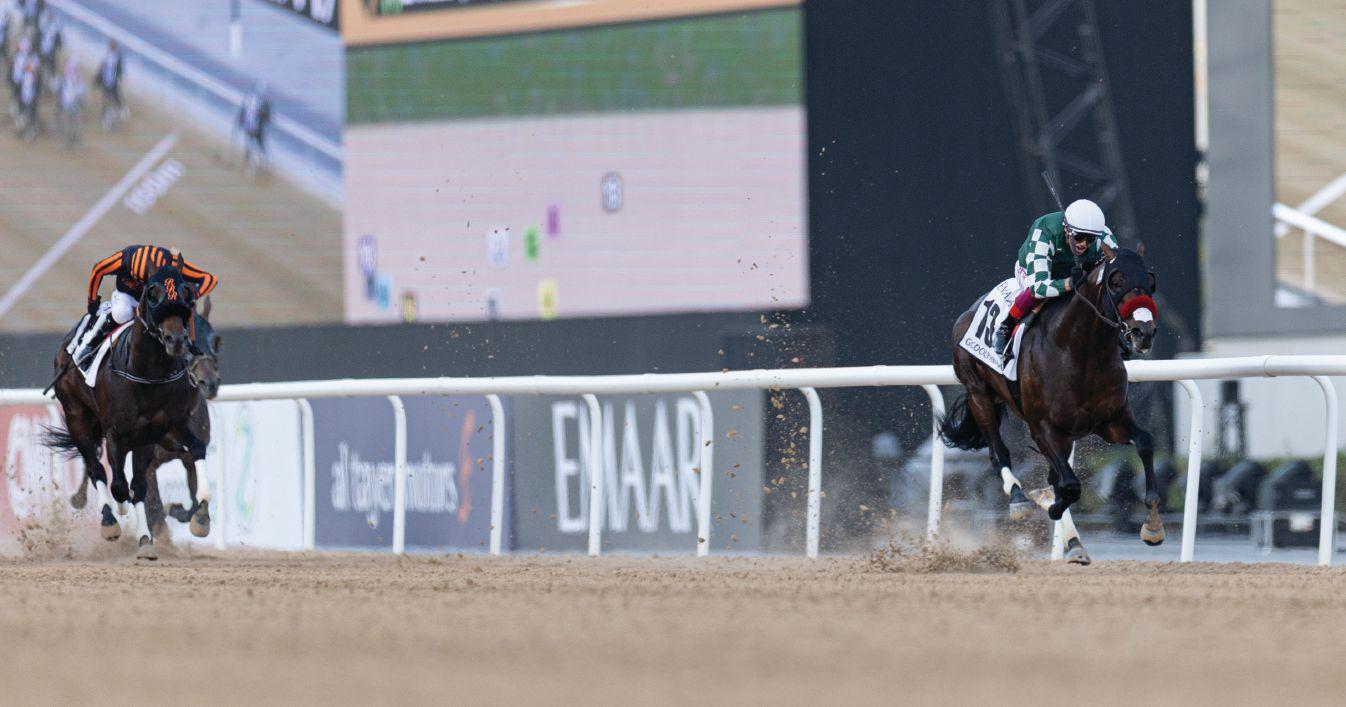
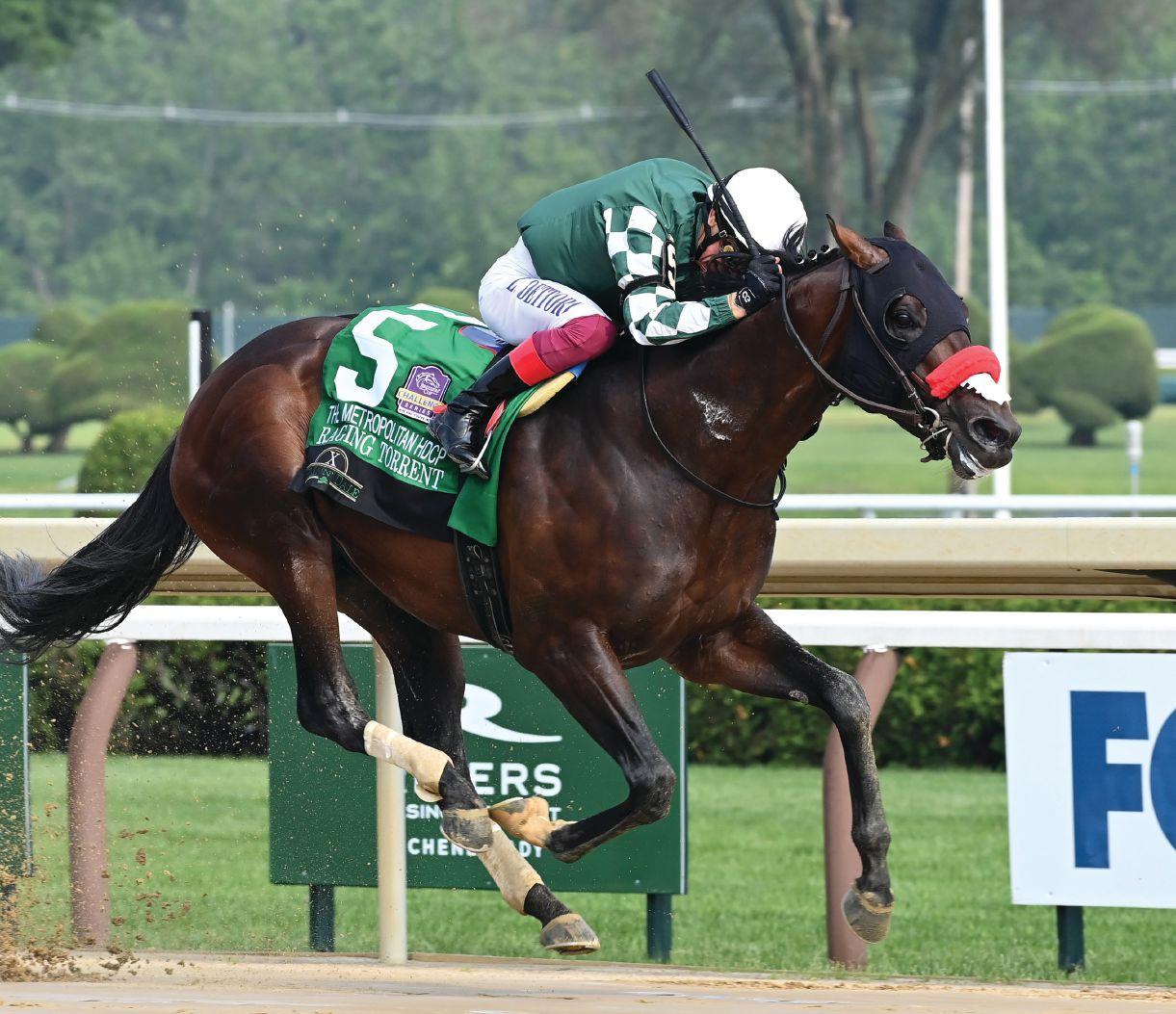
“HE’S GOTTA HIT”
“I didn’t have anything that could get close to him in the mornings. You could tell that he was in a different area code than anybody else as a 2YO and that’s what I love about him. I can’t see a miss here for this horse; he’s gotta hit.”
BOB BAFFERT
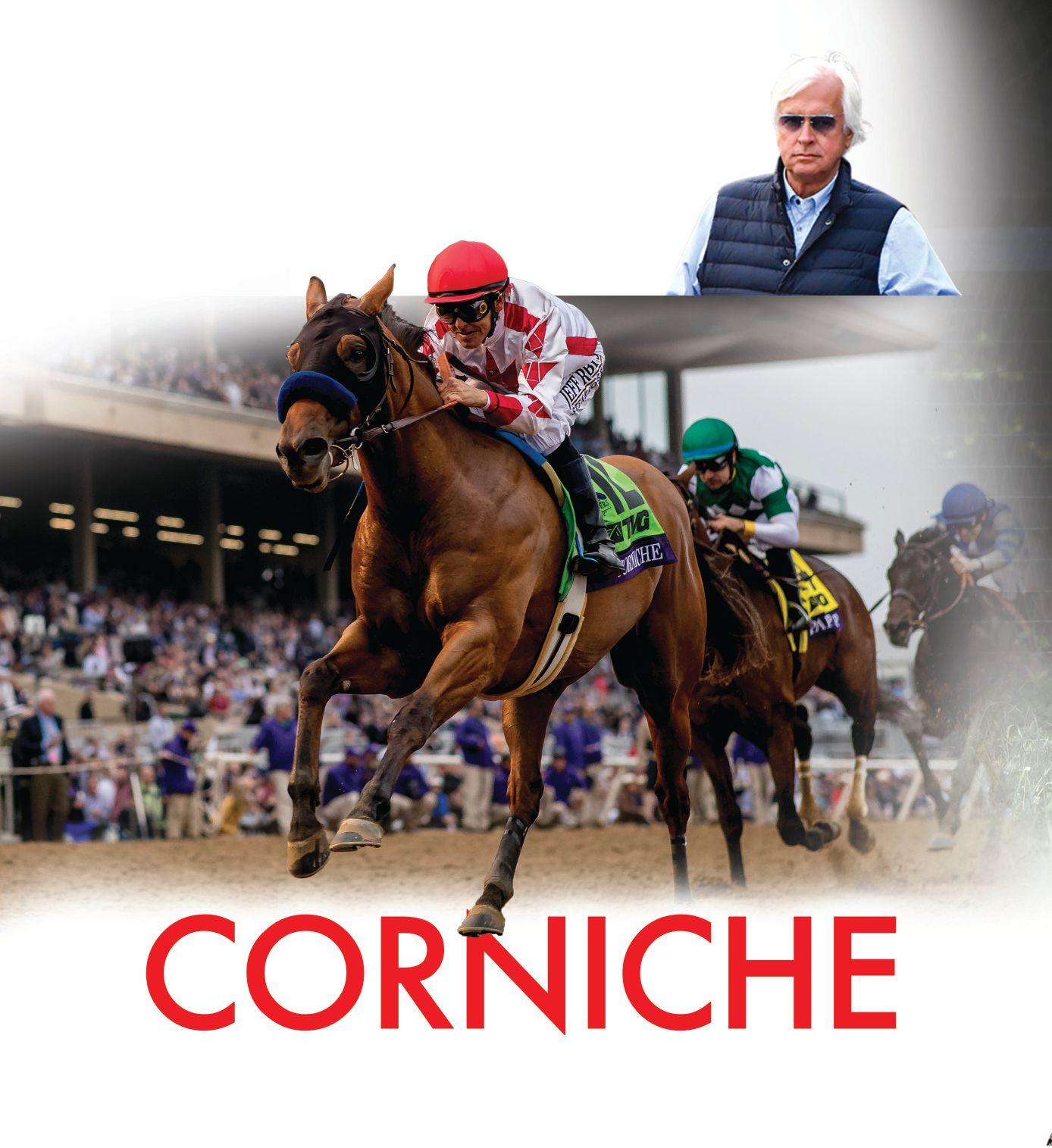
OBS April Sale topper at $1,500,000 Eclipse Award-winning undefeated Champion 2YO by QUALITY ROAD
"The Corniches in general are all very smooth movers just like him and many of them have that Quality Road look to their profiles…If Corniche can impart his own brilliance, along with his sire's, then the sky is the limit with them.”
MARETTE FARRELL, who purchased Corniche himself and his $725,000 colt at Keeneland September on behalf of Speedway Stable

"They
all move like cats, just like him.”
CARRIE BROGDEN of Machmer Hall who bred and sold three of his yearlings for a total of $1,275,000
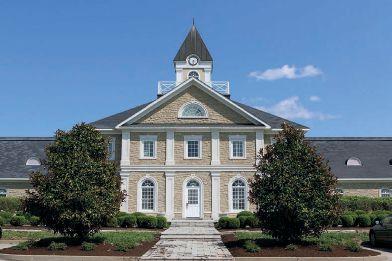
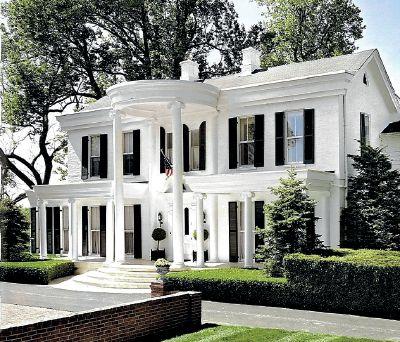
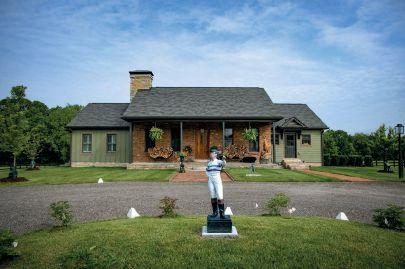
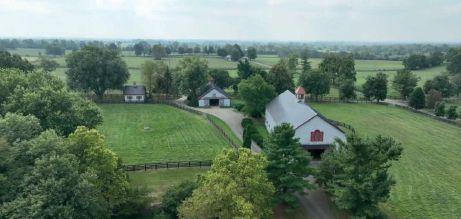
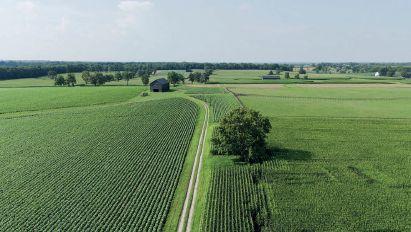
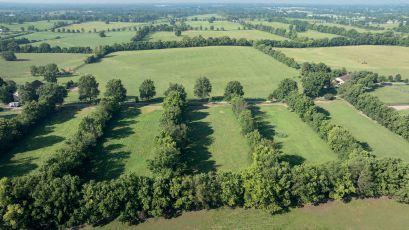
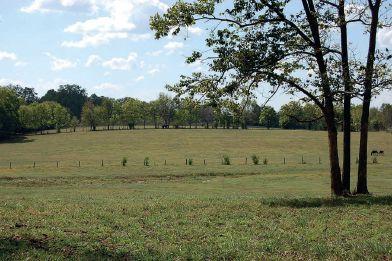
Exceptional Farms in The Bluegrass
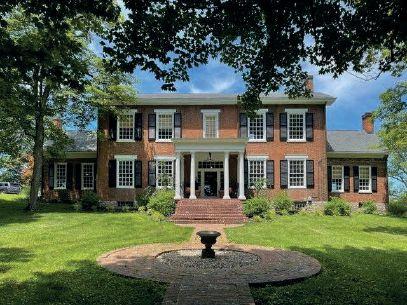
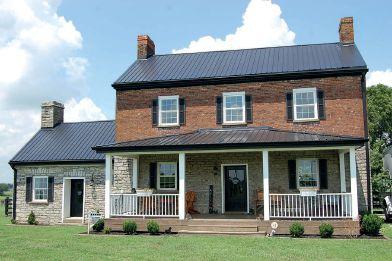
JUSTICE REAL ESTATE
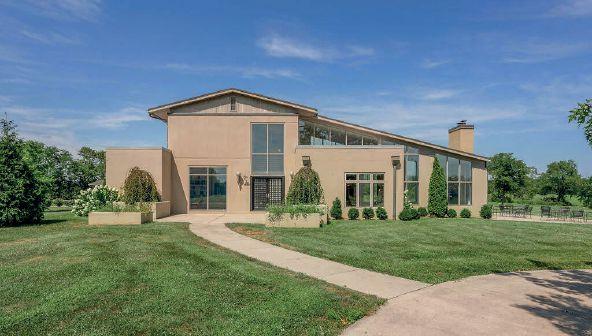





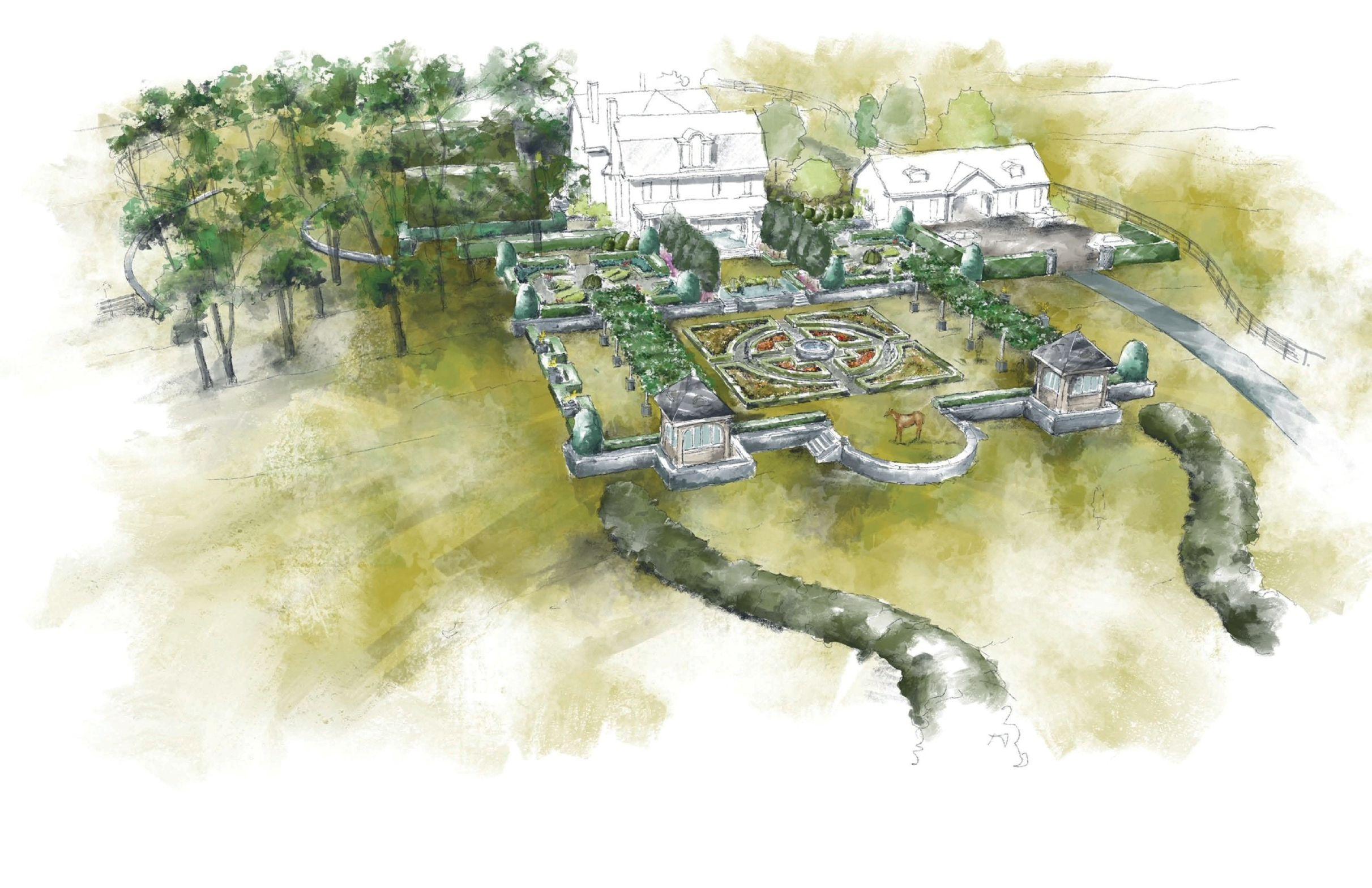




JOSEPH HILLENMEYER
GARDEN DESIGN

The most distinguished gardens are not born in bloom, but in stillness. While landscapes rest beneath frost, design holds its greatest power in the revelation of winter. It is within this clarity that form, proportion, and texture emerge, and the lines of legacy are drawn through plantings, stone, and structure. Each Joseph Hillenmeyer garden designed in this hidden season ensures spring is not a surprise, but a masterpiece unveiled.
The most are not born in bloom, but in stillness. While landscapes rest beneath frost, holds its greatest power the It that form, and texture emerge, and the lines of are drawn through stone, and structure. Each in this hidden season ensures is not a surprise, but a unveiled.

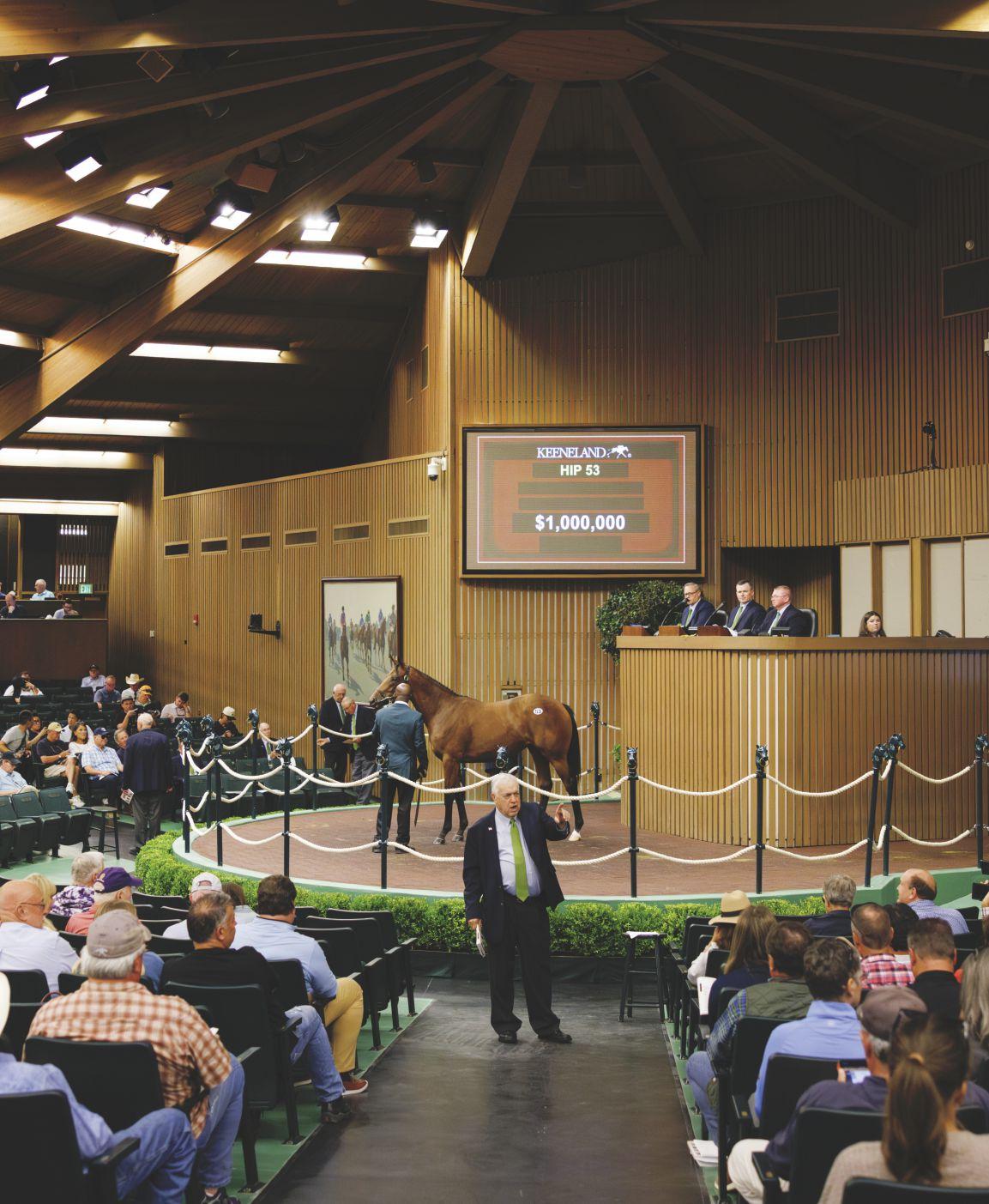
These moments...
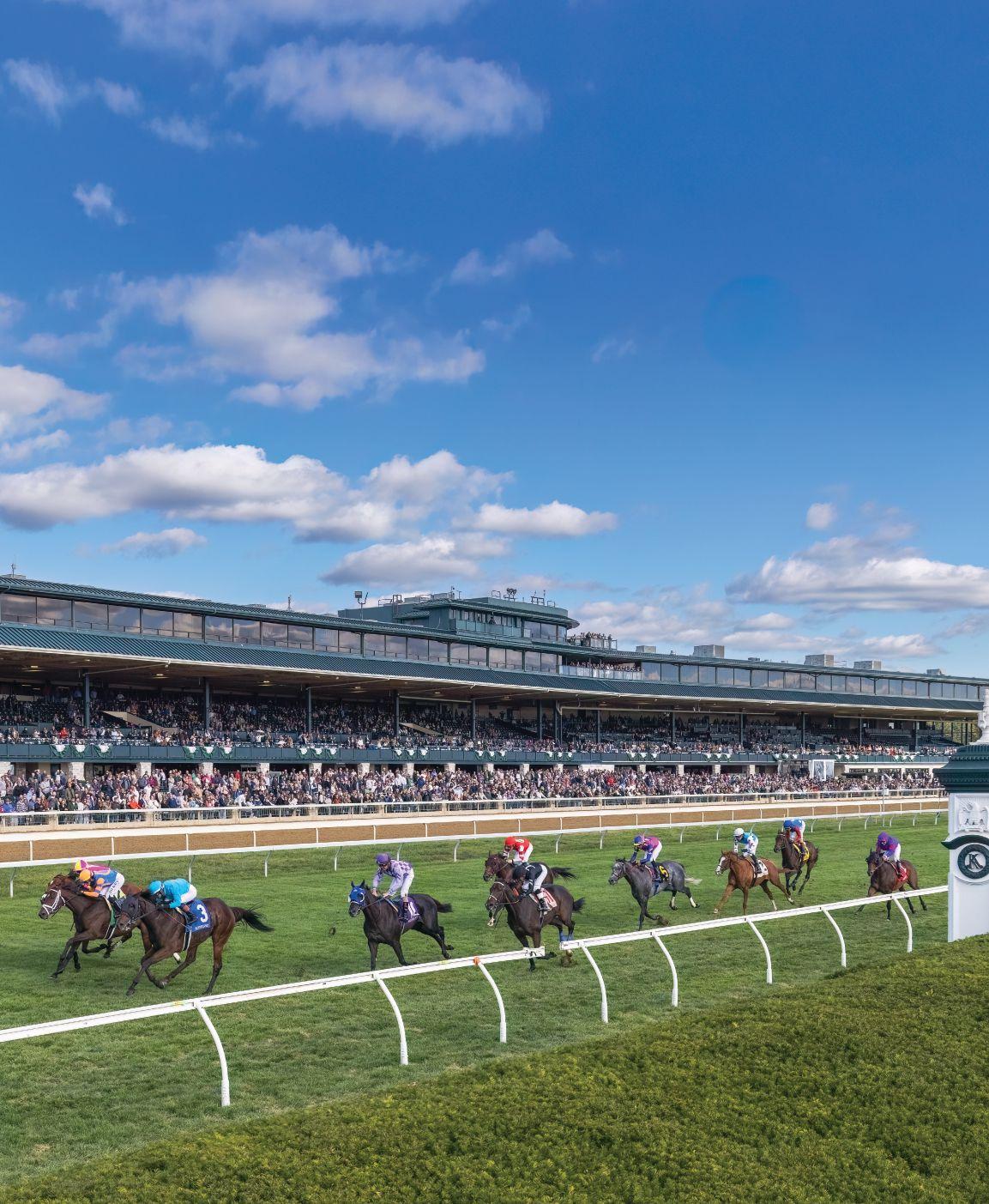


...are made possible by these moments.



46 TOTHEBRINK ANDBACK
by Lenny Shulman
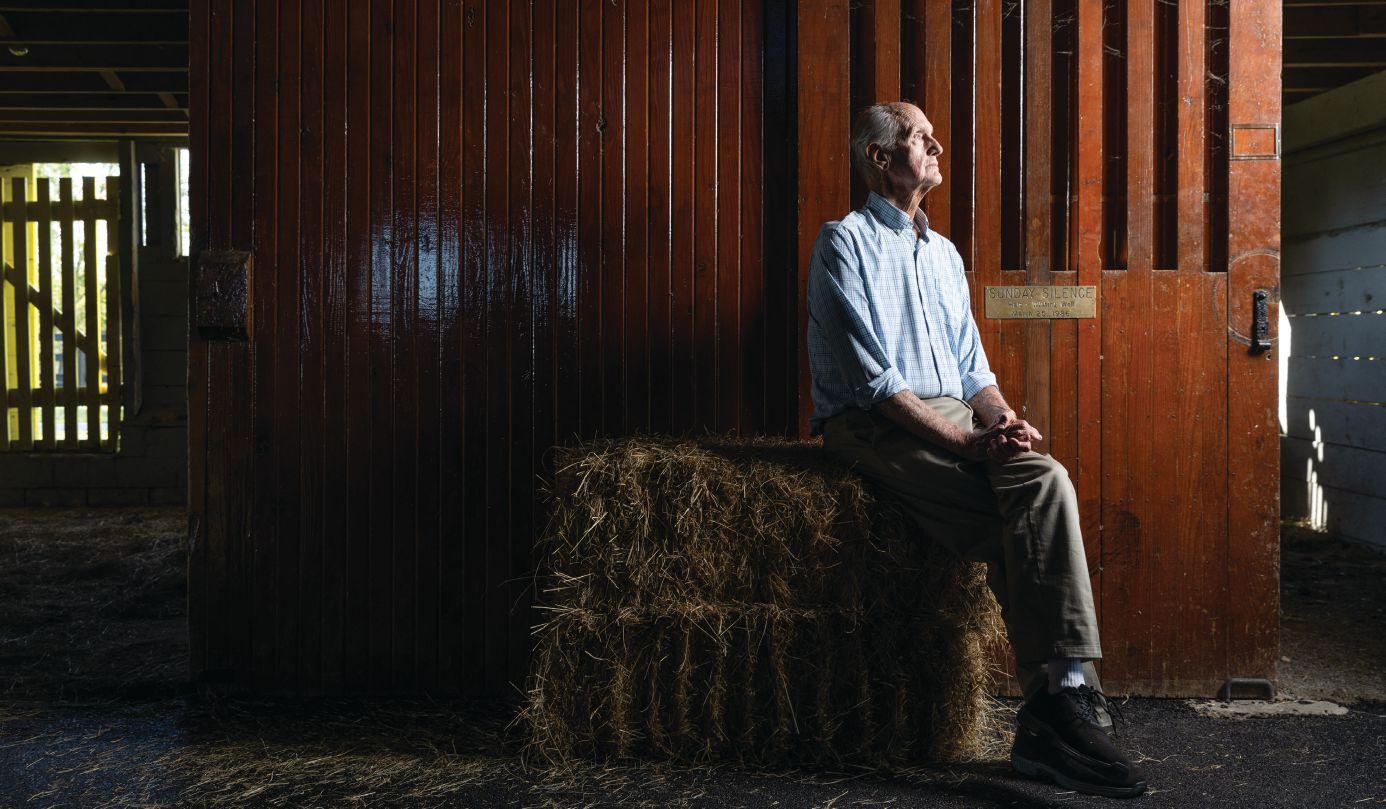
Stone Farm owner Arthur Hancock chronicles his turbulent, adventuresome early years and his road to redemption in the compelling memoir “Dark Horses.”

62 CREATIVE COLLABORATION
by Amy Gregory
Maker’s Mark and Chihuly’s long collaboration has led to a stunning exhibit of nine glass installations across the distillery’s grounds.
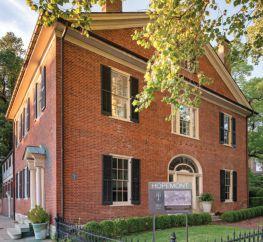
76 PRESERVATION WITHAPURPOSE
by William Bowden
The Blue GrassTrust for Historic Preservation celebrates 70 years of valuing history and culture.

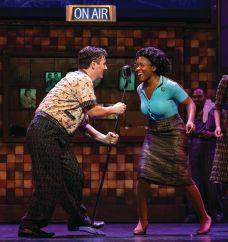
92 THAT’S ENTERTAINMENT!
by Rich Copley
The Lexington Opera House continues to draw fans with its Broadway Live performances, big-name singers and comics, and local productions.
106 ACUTABOVE
by Rob Bolson
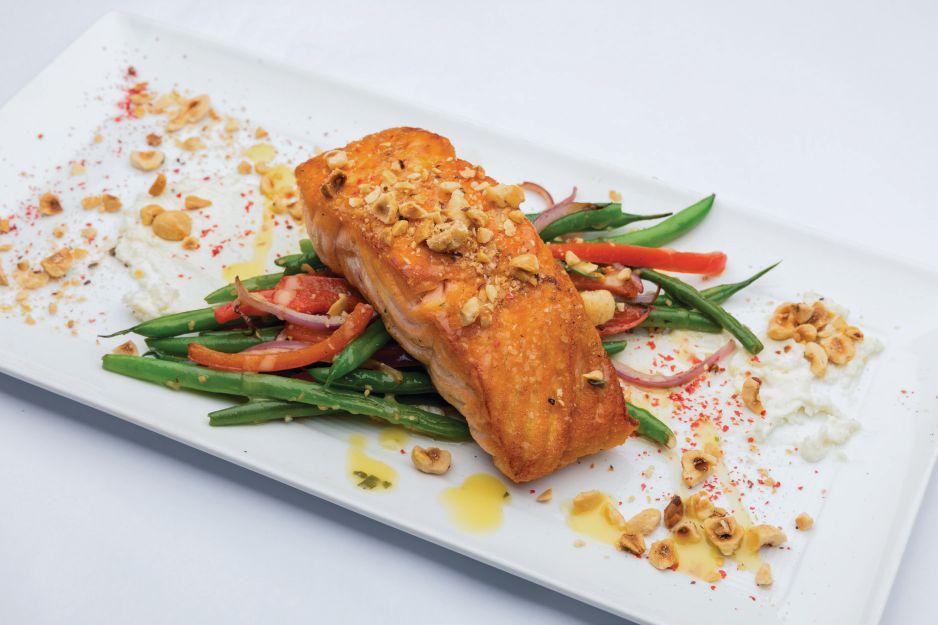
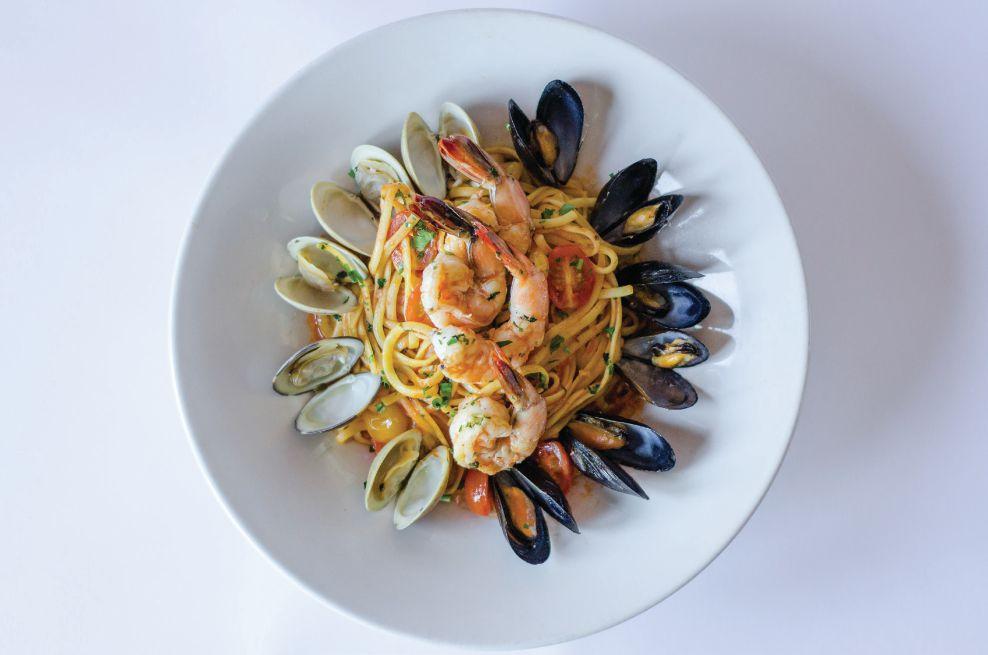
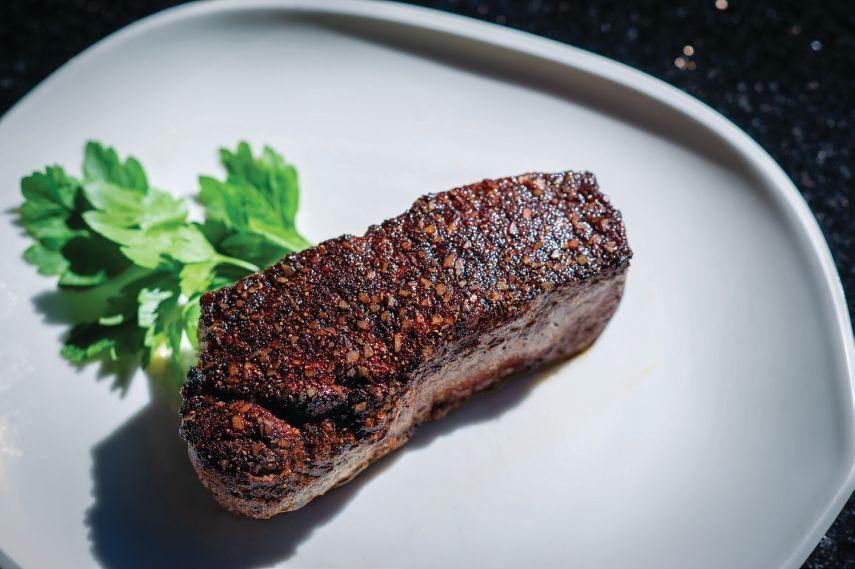
The Blue Heron stands out on busy Jefferson Street as a favorite for Lexington steak lovers.
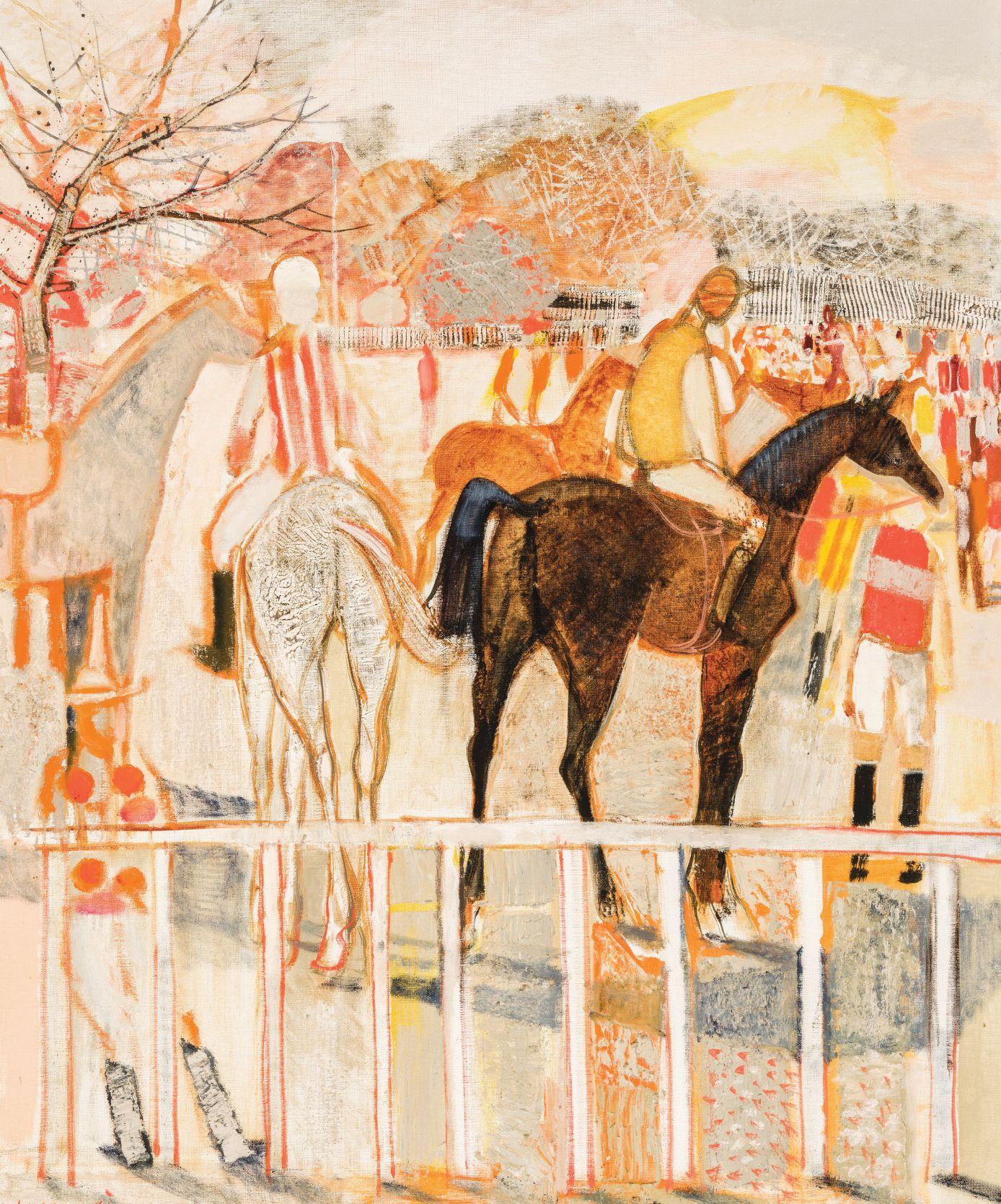
ON OUR COVER
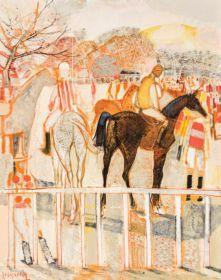
Avant La Course
Oil on canvas, 32” x 26” by Claude Grosperrin, French, 1936–1977
A painter and lithographer, Claude Grosperrin trained at the École Nationale Supérieure des Beaux-Arts, Paris, the École Nationale Supérieure d’Art Plastique, and the École Nationale des Arts Appliqués. Shortly after completing his studies, he exhibited his works in Paris at the Galerie A.Weil and the Galerie Espace. Later, he was exhibited widely in France and abroad, including atWildenstein, Charpentier, and Durand-Ruel.Various public galleries in France as well as galleries in Cologne, Los Angeles, and San Francisco contain his works. (Lot 180 in the 2025 Sporting Art Auction)



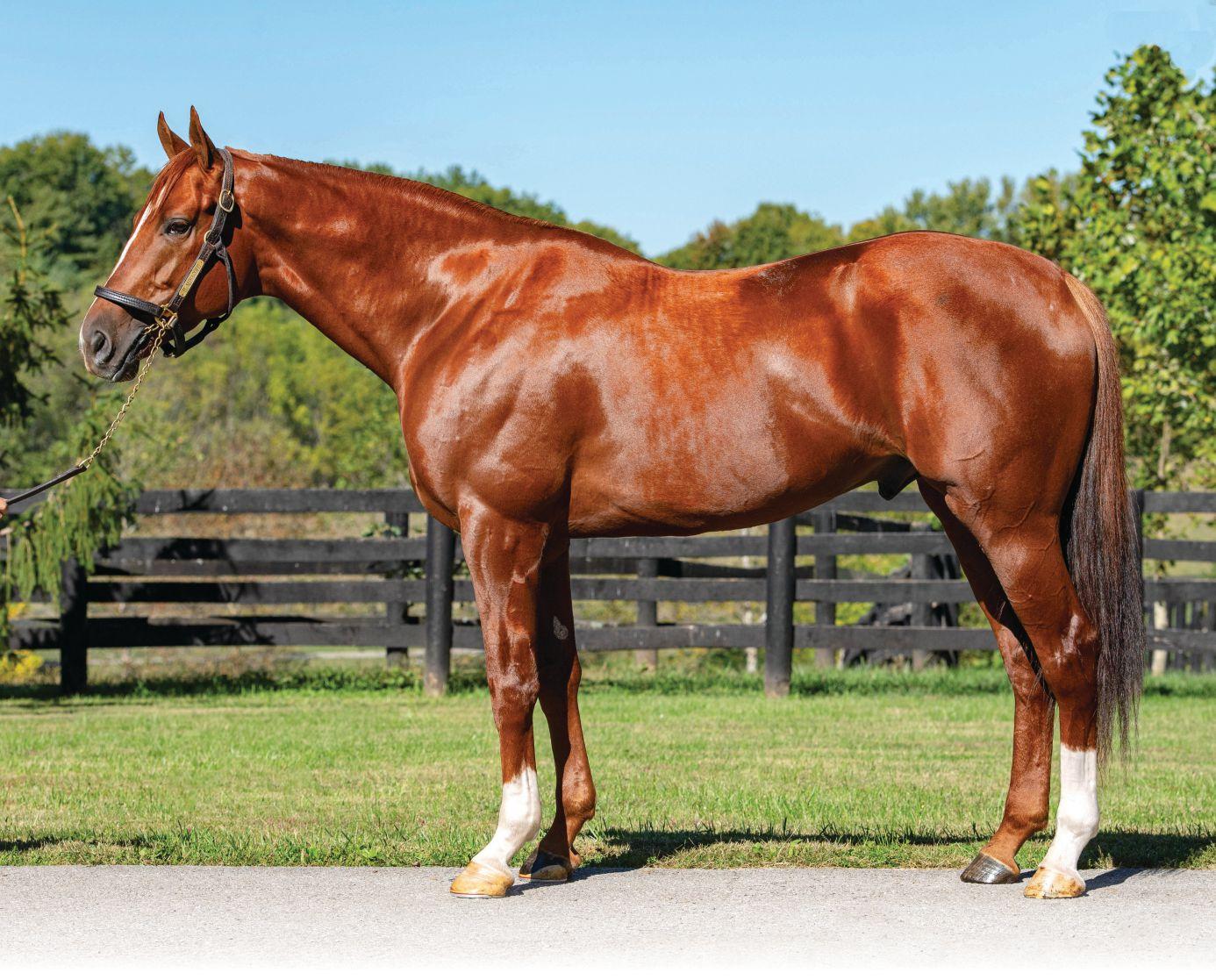


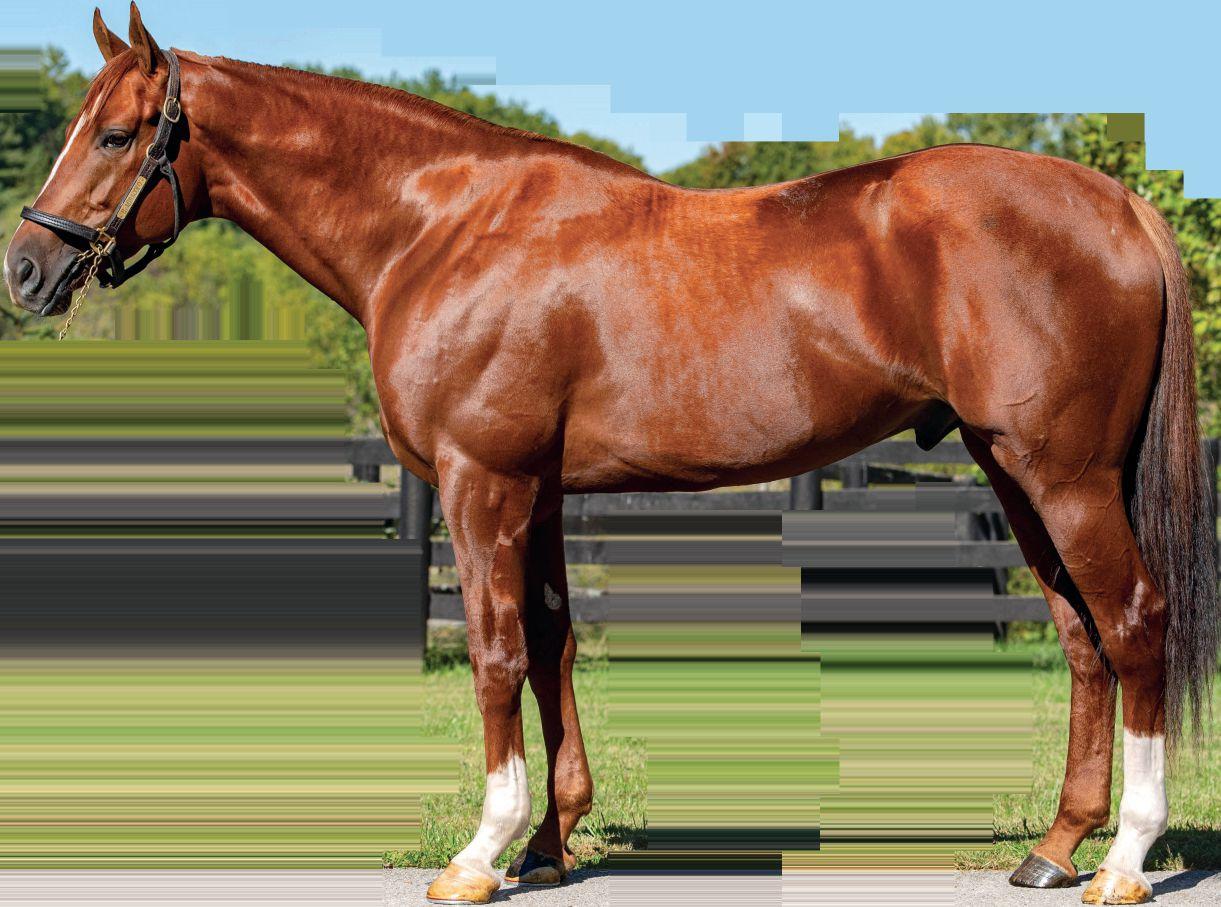

The McLean family has owned and operated their full service, 1,000 acre Crestwood Farm since established in 1970.


has bred and/or raised multiple Hall-of-Fame inductees, Champions and 310+ stakes horses.













GUN RUNNER – TAPIT’S WORLD, BY TAPIT
Angela Beck has taken Pomegranate, her popular table linens business, to the next level with a fagship store in Lexington. by Kevin Nance
120 MAKING ADIFFERENCE
UK’s Markey Cancer Center brings world-class cancer care to Kentuckians. by Robin Roenker
K
celebrating bluegrass traditions
The offcial magazine of Keeneland Association, Inc. published by Blood-Horse LLC 821 Corporate Dr., Lexington, KY 40503 (859) 278-2361/FAX (859) 276-4450 KeenelandMagazine.com BloodHorse.com
Editor: Jacqueline Duke
Artists: Catherine Nichols (Art Director), PhilipTruman
Copy Editor: Judy Marchman
Visuals Director: Anne M. Eberhardt
Creative Services: Jennifer Singleton (Director), Forrest Begley
Account Executive: Katherine White
Sales Support: Catherine Johnston
CORPORATE OPERATIONS
Circulation Accounting Manager: Lauren Glover
General Manager: Scott Carling
PUBLISHED BY Blood-Horse LLC
BOARD OF DIRECTORS
Everett Dobson, James L. Gagliano, Carl Hamilton, Ian D. Highet, Brant Laue, Dan Metzger, David O’Farrell
KEENELAND ASSOCIATION, INC. 4201Versailles Road P.O. Box 1690 Lexington, Kentucky, U.S.A. 40588-1690 Tel: (859) 254-3412 (800) 456-3412 Keeneland.com © 2025 Keeneland Association, Inc.
INC. U.S.A. 40588-1690 Tel: 254-3412 456-3412 © 2025 Keeneland Inc.



PRESIDENT’S MESSAGE
WINTER
2025
Memorable Season
The fall of 2025 was nothing short of extraordinary for the sport of Thoroughbred racing, with many goals attained and many more set here at Keeneland. The great Bear Bryant (who spent eight seasons at the University of Kentucky) reminded us to “Set a goal and don’t quit until you attain it. When you do attain it, set another goal, and don’t quit until you reach it. Never quit.”
Starting with our sales in September, there were moments we will never forget. The September yearling sale had more than half a billion (with a “b”!) dollars in bloodstock sell through our auction ring for the frst time in history. The prior year, we exceeded $420 million in gross sales for the frst time. In all honesty, these numbers surpassed even our expectations. And we don’t take them for granted.
Beyond the record-breaking numbers — and more importantly — the energy, optimism, and shared achievement with our breeders and buyers point to a bright future for racing. The world gathered at Keeneland during our two-week September sale, generating a sense of connection and momentum unlike anything our sport has seen in decades.
Our November breeding stock sale followed the race meet and furthered the momentum for our sport, with buyers from all over the world coming to Keeneland to purchase foundation mares, some of whom had just competed exceptionally at the Breeders’ Cup World Championships and some with progeny and family that had just competed exceptionally there.
Racing in October never disappoints, and we enjoyed 17 phenomenal days during which we saw frsthand the enthusiasm of our community and fans for this incredible sport. We were thrilled to showcase the frst phase of our
paddock renovations — still centered physically around the mighty sycamore tree — with much improved views of the horses being saddled and the stakes winners being celebrated. We awarded record purses in October and saw record handle and attendance as well. Our community came together to put on an amazing show with the highest quality of horse racing in the world.

All of these numbers and goals attained are rewards to our breeders, consignors, owners, trainers, and horsemen who work 365 days a year to raise, train, and race the strongest, soundest stars of Thoroughbred racing. And as a community, we came together to make history.
Many of the mares selling through our auction ring in November exhibit the full-circle connection of what Keeneland offers as the only sales company and racetrack in the world. For example, David Ingordo purchased Vahva as a yearling at our September sale. We watched his wife, Cherie DeVaux, train Vahva as she won and placed in 10 graded stakes races, including three races at Keeneland for owners including Belladonna Racing, Terry Finley’s West Point Thoroughbreds, and the Farish family. In early November we watched Vahva sell for $3.1 million as a racing or broodmare prospect in the sales pavilion. This is the stuff dreams are made of.
As we winter this year, we will heed the advice of Nelson Mandela: “Remember to celebrate milestones as you prepare for the road ahead.” We will celebrate the milestones and continue to set goals. The road ahead will not always be flled with record-breaking successes — this we know from history. But the community strengthened through our success and connection will be ready for whatever lies ahead. The story is yours and ours, and the story is only getting started.
Cheers to blue skies ahead KM
SHANNON ARVIN President and CEO
CONTRIBUTORS
ROB BOLSON
(A Cut Above) is a freelance writer residing in Lexington, who regularly writes about food and culture. He has spent the past three decades writing about people, places, and products. Follow him on Instagram at @robbiebolson.
WILLIAM BOWDEN
(PreservationWith a Purpose) most recently worked as publications editor atTransylvania University. He was formerly a writer and editor at the Somerset (Kentucky) Commonwealth Journal, the Lexington Herald Leader, and the NationalTour Association.
RICH COPLEY
(That’s Entertainment) spent 20 years as an arts and entertainment journalist for the Lexington Herald Leader. He is now a multimedia producer for the Presbyterian Church (U.S.A.) and a freelance writer and photographer based in Lexington.
AMY GREGORY
(Creative Collaboration) recently retired as the longtime director of communications at Keeneland. She began her career in racing as a feature writer forTheThoroughbred Record and has held media relations positions with Breeders’ Cup and Churchill Downs.
KEVIN NANCE
(Outlet for Her Artistic Energy) is a journalist, photographer, and poet in Lexington. His journalism has appeared in many newspapers and magazines, including the Washington Post, theWall Street Journal, USATODAY, the ChicagoTribune, and Poets &Writers magazine. He’s also the author of three poetry collections, most recently “Smoke,” out earlier this year from Accents Publishing.
AMY OWENS
(Keeneland News/ Connections) is Keeneland Communications Associate.
WINTER 2025
ROBIN ROENKER
(Life-Saving Legacy) is a Lexington-based freelance writer who reports on health care, higher education, travel, and all things uniquely Kentucky. In addition to Keeneland, her writing has appeared in AARP, Southern Living, USATODAY, Atlanta magazine, and more.
LENNY SHULMAN
(To the Brink and Back) is a senior correspondent for BloodHorse and the author of “Head to Head: Conversations with a Generation of Horse Racing Legends,” “Justify: 111 Days toTriple Crown Glory,” and “Ride of Their Lives:The Triumphs andTurmoil of Today’sTop Jockeys.”



















KEENELAND NEWS
FALL MEET SETS SEASON RECORD FOR ALL-SOURCES WAGERING, UNVEILS CONSTRUCTION ENHANCEMENTS
Keeneland’s 17-day fall meet from Oct. 3-25 posted a season-record $217 million in all-sources wagering, while Toroughbred racing’s top trainers, jockeys, and horses competed for the richest purses in track history: a total of $10.85 million for 22 stakes along with average daily purses of $1,341,107.
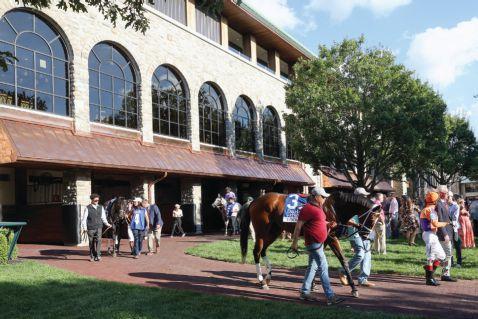
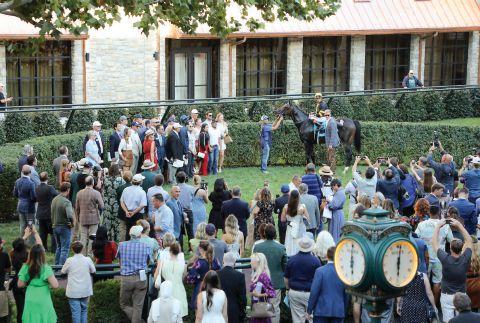
Also defning the season were the excitement and energy of patrons and horsemen who experienced newly completed construction enhancements — most notably the reimagined saddling paddock with centralized saddling stalls and a ceremonial stakes winner’s circle.
“From the beautiful weather to the enthusiasm of our fans and the outstanding racing, this season showcased everything that makes Keeneland so special,” Keeneland President and CEO Shannon Arvin said. “It was incredibly rewarding to see how our frst phase of construction enhancements brought fresh energy to the meet and made the experience even more memorable.”
Among the wagering marks:
• All-sources wagering (excluding whole-card simulcasting at Keeneland) totaled $217,266,759, surpassing the previous record of $210,165,945 set during the 2024 fall meet.
• Opening Fall Stars Weekend, Oct. 3-5, had $48.9 million wagered, just shy of the $49.9 million record handle during the 2022 Fall Stars Weekend. Opening Saturday’s 11race card, featuring fve graded stakes, drew $21,456,829 in wagering, slightly below the single-day record of $22,256,692 set during the 2024 fall meet.
• On-track wagering of $17,239,420 increased 3.87% from last year’s $16,597,162.
Construction enhancements unveiled during the season included:
• Centrally located saddling stalls and saddling paddock improvements. Saddling stalls are now located along the east side of the paddock, which gave fans improved visibility of the horses and their connections as they prepared for each race. Te new layout also increased safety.
• Jockey quarters and entry. A new jockey quarters located beneath the Paddock Building (which is to open to racing fans for the 2026 spring meet) has modernized locker rooms, a ftness area, steam and sauna amenities, and other race-day essentials.
• East Entrance/East Plaza. Located at the end of Keeneland Boulevard adjacent to the sales pavilion, the East Plaza is a new pedestrian space where guests gathered before race days.
Framed by Keeneland’s signature limestone and arches, the East Entrance ofered patrons a scenic and welcoming arrival experience.
• Stakes winner’s circle. Formerly known as the walking ring, this was where fans shared the thrill of victory alongside the winners of all stakes races. (Trophy presentations following graded stakes races formerly were conducted on the turf course.)
For the season, jockey Irad Ortiz Jr., trainer Brad Cox, and owner Spendthrif Farm topped their respective categories by victories.
Ortiz, who earned his second title as Keeneland’s leading rider, had 25 victories, boosted by three three-win days. He captured four stakes, including the $1.25 million Coolmore Turf Mile (G1) on Rhetorical.
Te race for leading trainer was determined on closing day when Cox took two races to post a total of 12 wins, edging Brendan Walsh and Steve Asmussen each with 11 victories and securing for Cox his eighth title as leading trainer.
In the race for Keeneland’s all-time winningest trainer — which was held by Rusty Arnold and Bill Mott prior to the start of the season — Arnold inched ahead to win two races to reach 309 victories. Mott had one victory during the meet to post his 308th Keeneland win.
Spendthrif Farm had six wins from eight starters to outpace owners. Its stakes victories were the Claiborne Breeders’ Futurity (G1) with Ted Nofey and the Darley Alcibiades (G1) with Tommy Jo. Spendthrif owned a seventh winner in partnership with Repole Stable.
Fans at the October race meet were the frst to experience the initial phase of Keeneland’s construction enhancements led by a reimagined saddling paddock with centralized saddling stalls and a ceremonial stakes winner’s circle.
PHOTOS BY Z
Fans and media gathered around the new stakes winner’s circle following Rhetorical’s win in the $1.25 million Coolmore Turf Mile.

SEPTEMBER SALE REACHES ALL-TIME HIGH
The 82nd Keeneland September yearling sale was the world’s most successful Thoroughbred auction ever held
During 12 sessions from Sept. 8-20, 3,078 horses sold for a total of $531.7 million to mark the frst time gross sales for the auction exceeded half a billion dollars. Among other highlights:
• A record 56 yearlings sold for $1 million or more, besting the previous high of 40 set in 2005.
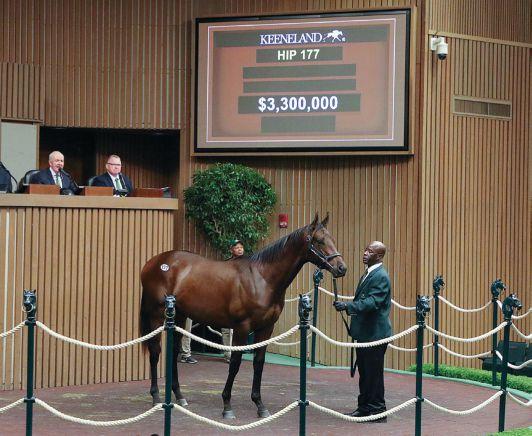
• Te sale-topper was a $3.3 million Gun Runner colt purchased by M.V. Magnier, Peter Brant’s White Birch Farm, and Ron Winchell’s Winchell Toroughbreds.
• During books 1 and 2, 12 yearlings by Gun Runner brought seven fgures or more, and his colts topped each of the four sessions to help him to an average of $932,917 for 36 horses.
• Buyers represented 33 countries with participation from as far away as Asia, the Middle East, and Europe to underscore the size and scope of Keeneland’s deep buying bench.
FAMILY AFFAIR
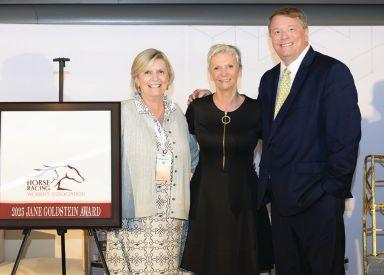
In recognition of her 45-year career in the Toroughbred industry, former Keeneland Director of Communications Amy Gregory received the Jane Goldstein Exemplary Leadership Award on Oct. 9 during the Horse Racing Women’s Association Conference in Lexington. Gregory, who was joined by sister Julie and brother Eric, wrote “Creative Collaboration” in this issue of Keeneland magazine.
• Te leading buyer was Mike Repole’s Repole Stable, which acquired 33 horses for $14,155,000.
• Te leading consignor — for the 26th year since 1988 — was Taylor Made Sales Agency, which sold 333 yearlings for a consignor record $68,515,000.
• Te leading sire was Not Tis Time, whose 55 yearlings sold for $38,580,000.
• Te leading frst-crop sire was Horse of the Year Flightline, whose 44 horses sold for a combined $30,550,000.
“What an incredible September sale,” Keeneland President and CEO Shannon Arvin said. “We defnitely had reasons to be optimistic going in, but the strength of the results day afer day exceeded even our highest expectations. From start to fnish, the energy on the grounds never waned. Buyers from around the world were here in force, the sales pavilion was vibrant, and the sense of community and excitement was palpable. You could feel that energy.
“It cannot be overstated that the success of this sale is a direct result of the loyalty of the breeders, sellers, consignors, and buyers who return to Keeneland year afer year and place their horses and their trust with us,” Arvin continued. “Our team works hard to honor that trust by striving for excellence in every detail: recruiting buyers from across the globe, providing unmatched hospitality, and ensuring the highest standards throughout the sale.
“It’s the coming together of these eforts — along with the commitment of our participants — that makes moments like this possible. We are so grateful to everyone who helped make this the highest-grossing Toroughbred sale in history.”
NEW DIRECTOR
Anne Archer Hinkle, owner and director of operations at her family’s Hinkle Farms near Paris, Kentucky, was named to Keeneland’s advisory board of directors in October. Hinkle Farms is a leading consignor to the Keeneland September yearling sale.

Amy Gregory (left), sister Julie Gregory Ray, and brother Eric Gregory
KEENELAND PHOTO
At $3.3 million, the most expensive September sale yearling was a colt by Gun Runner sold to M.V. Magnier, Peter Brant’s White Birch Farm, and Ron Winchell’s Winchell Thoroughbreds. He was consigned by John G. Sikura’s Hill ‘n’ Dale at Xalapa, agent.
Anne Archer Hinkle
the sire of 17 $1M+ YearlinGs in 2025

the onlY stallion to have ever topped the first four sessions of the Keeneland septeMber YearlinG sale, includinG the $3,300,000 sale topper the co-leadinG sire of Graded staKes WinninG 2Yos in 2025
the sire of 11 Grade 1 Winners and 15 Millionaires
CONNECTIONS
1 | GRIZZLY SIGHTING
Keeneland fans celebrated reigning Horse of the Year Thorpedo Anna during her appearance on closing day. The popular champion, who began her career with a victory at Keeneland, has been retired to Hill ‘n’ Dale at Xalapa in Paris, Kentucky.
2 | HELLO, FRIEND
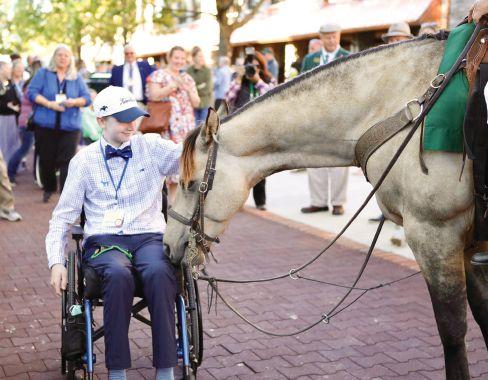
Maxson befriends outrider Dale Mallory’s pony Buck during the 18th Make-AWish Day.
3 | GO TEAM
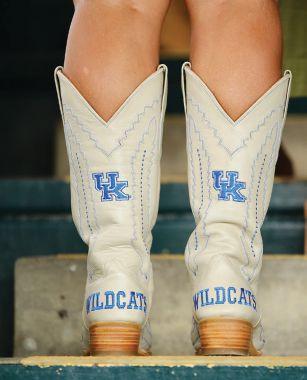
A Keeneland fan showed off her University of Kentucky spirit on Big Blue Day at the Races.
4 | KEENELAND CHOIR
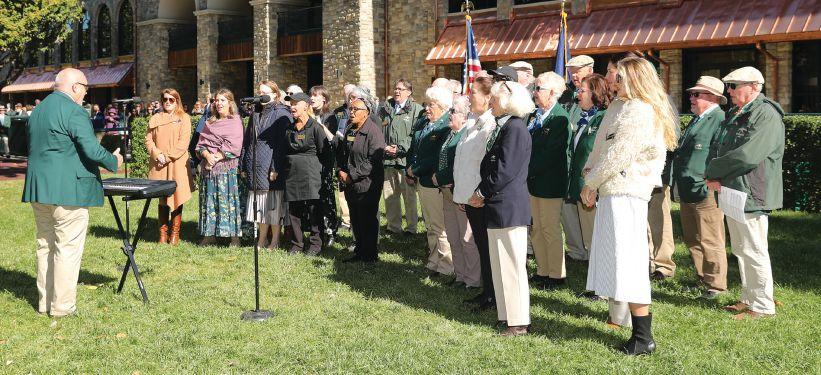
Keeneland employees sang “My Old Kentucky Home” and “The StarSpangled Banner” to start the Oct. 22 race day.




Book ahead on OpenTable or call 859-785-3905
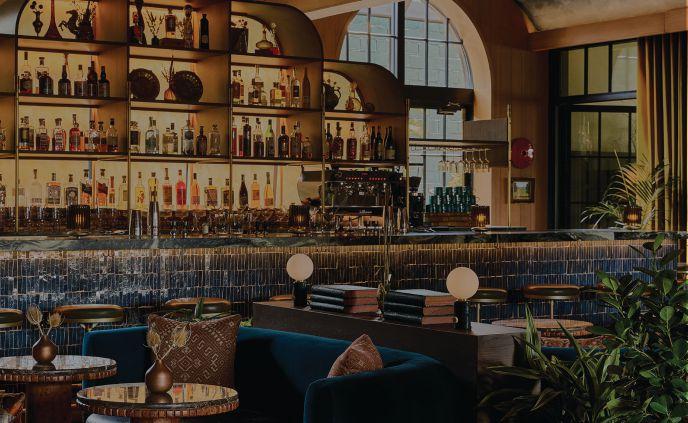
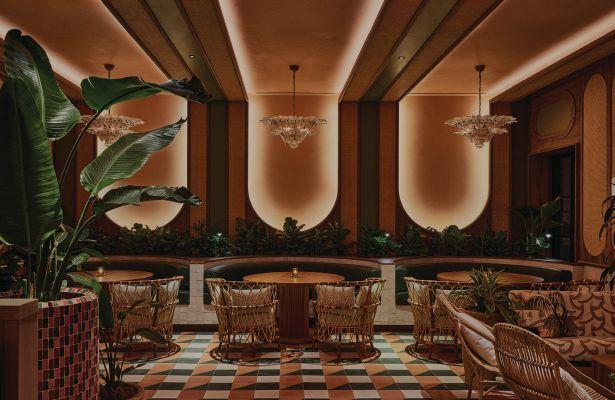
THINKING OF HAVING A PRIVATE EVENT?
We’ve got the perfect space for you.
Ceremonies, receptions, birthdays, corporate functions, working lunches, cocktail parties and more — we’ve got gorgeous venues, ready to meet your technology needs and top-notch catering. Call 859-785-3900 to learn more

7,500 sq. ft. AV capable, full bar, private dressing suite (customizable audio, lighting, projection), up to 300 guests seated, and up to 450 guests standing.
1,900 sq ft indoor, 900 sq ft outdoor, AV capable (audio, large screen display), up to 75 guests seated, and up to 100 guests standing.
SPOTLIGHT ON
ANGELA BECK
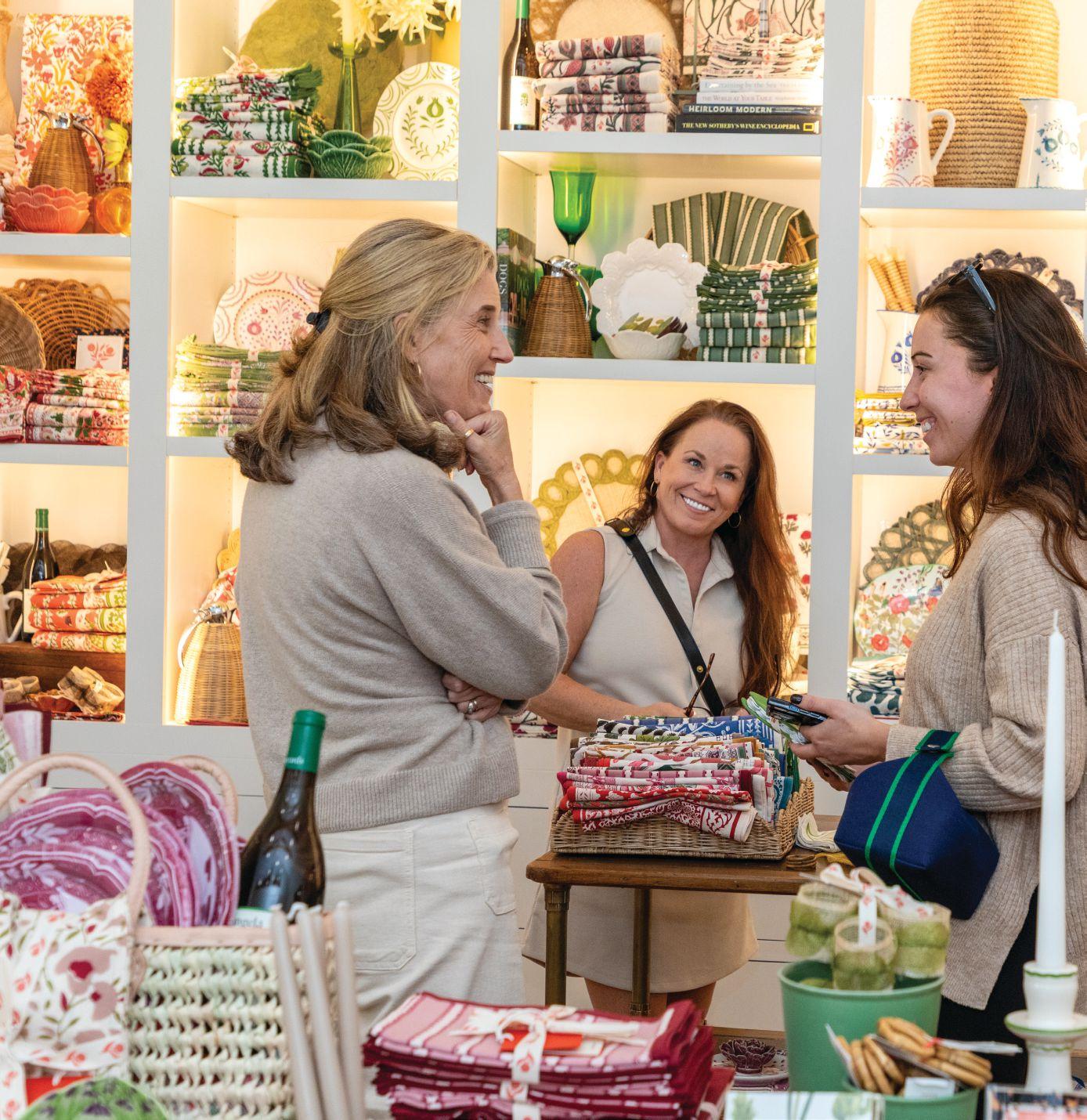

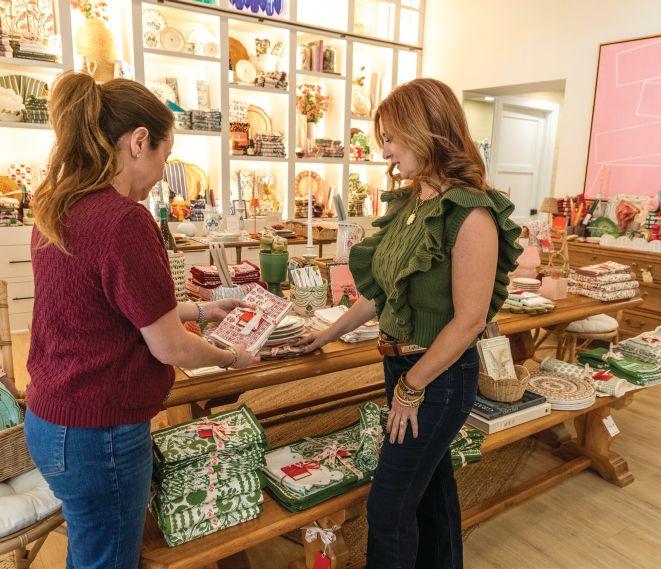
Angela Beck (left) welcomes customers to Pomegranate, her stunning table linens store in Lexington. customers to Pomegranate, her linens


Outlet for Her Artistic Energy
ANGELA BECK HAS TAKEN POMEGRANATE, HER POPULAR TABLE LINENS BUSINESS, TO THE NEXT LEVEL WITH A FLAGSHIP STORE ON MAIN STREET


By Kevin Nance / Photos by Kirk Schlea
WHEN YOU WALK into Pomegranate, the sparkling home decor store that recently completed its frst year in downtown Lexington, the frst thing you notice is a foor-to-ceiling shelf full of everything you might need to set a rich yet informal dining table.
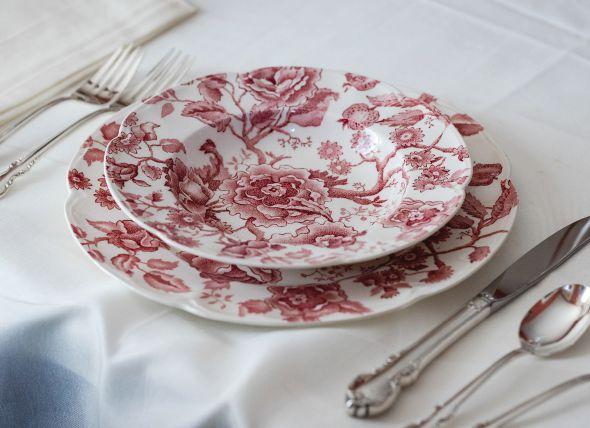
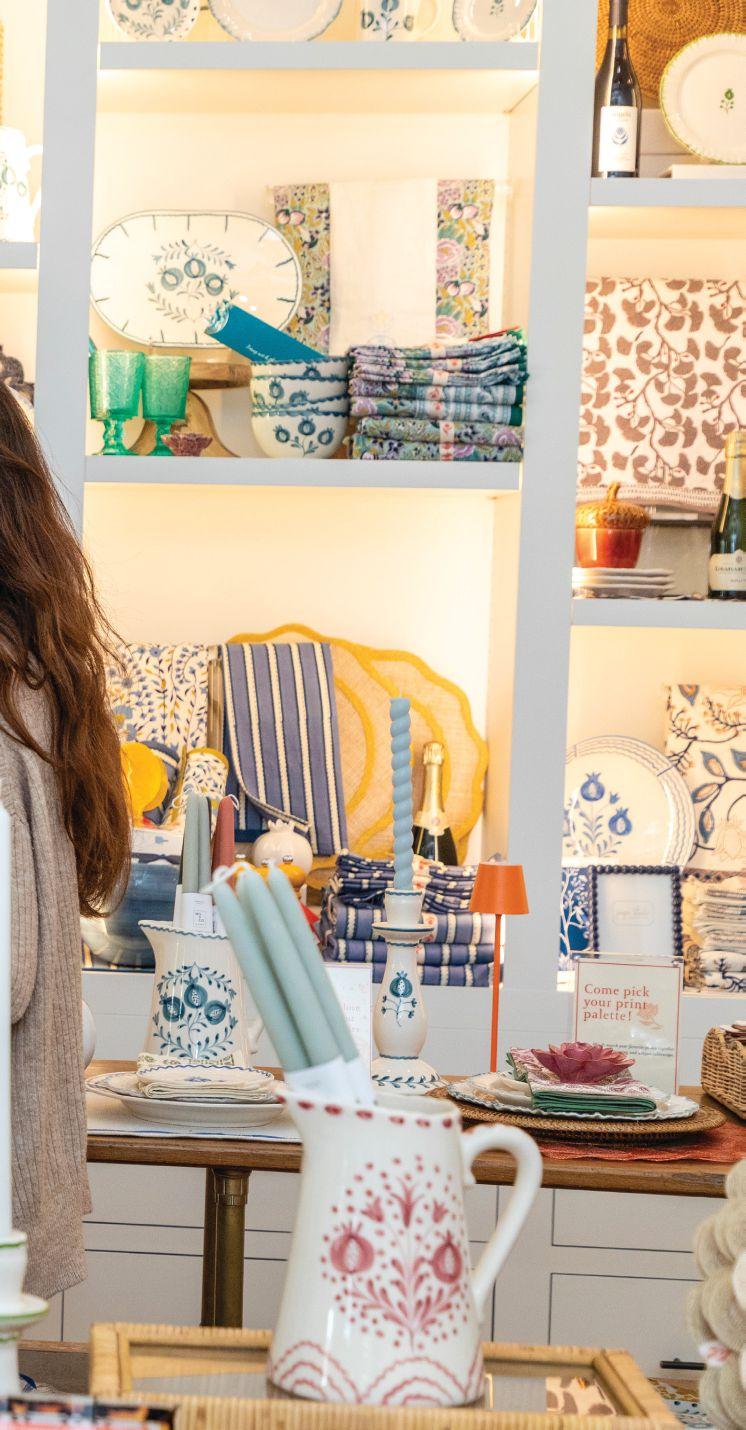
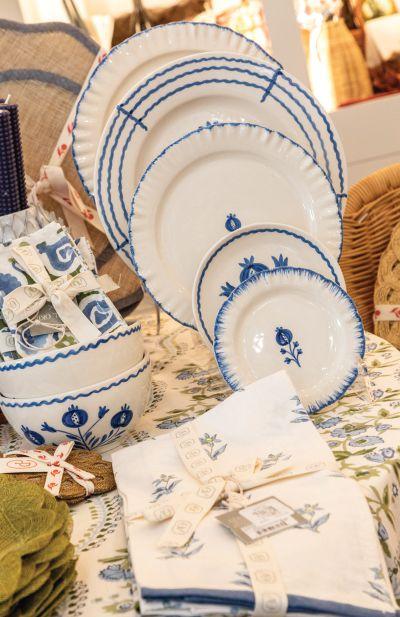
Tere’s an eye-ravishing array of vibrantly colored napkins, tablecloths, and place mats in 131 bespoke patterns and palettes, each block-printed by hand in India on heavy cotton fabric. Tere are ceramic plates and bowls hand-painted in Portugal, along with glassware, candles, wicker and rattan accessories, and more, all selected to create a homey, traditional aesthetic that’s at once comfortable and quietly sumptuous. Tis, you quickly realize, is not your average table linens shop.
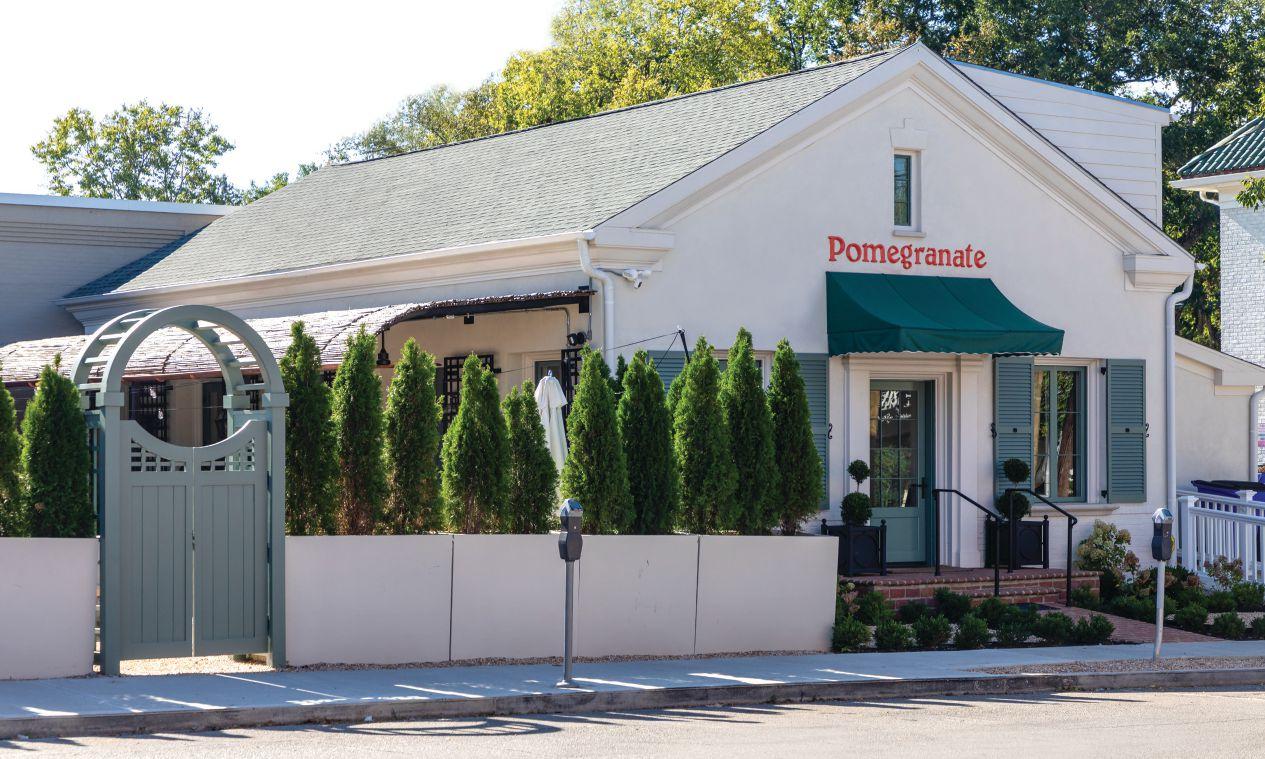
Pomegranate provides an oasis-like setting at the corner of East Main Street and Clay Avenue, especially with an added patio and a café.
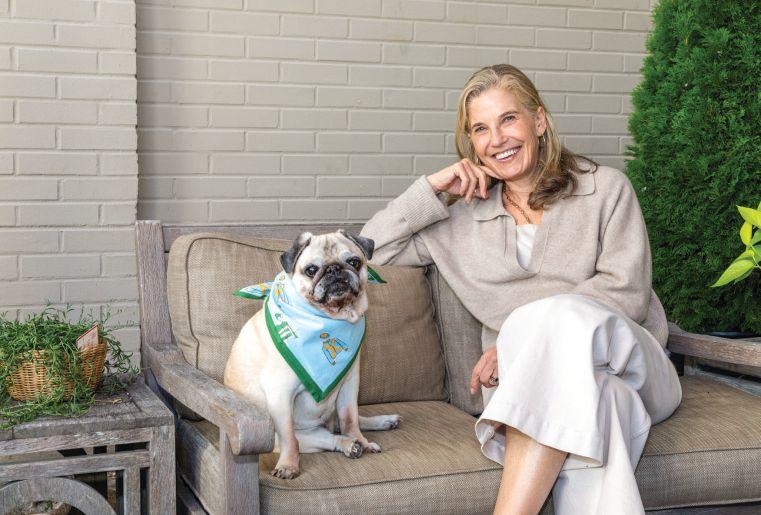
Te second thing you’re likely to notice is the shop’s owner and product designer, Angela Beck, who’s around more ofen than not — trailed by her pug, Penelope, who can ofen be found lounging in a wicker dog bed that’s also for sale. “Penelope endorses that product,” Beck said with a smile during a recent tour of the store on the site of a former toy store on the corner of East Main Street and Clay Avenue. Casually elegant like her designs, Beck — whose husband, Antony Beck, is the Britishborn chairman of Lexington’s storied Gainesway Farm and the operator of vineyards in Oregon and South Africa — is involved in neither the horse industry nor the wine business. Instead, she has poured her considerable creative energy and business acumen into Pomegranate. “Living on the farm, this is my in-town experience,” she said. “It’s my townhouse.”
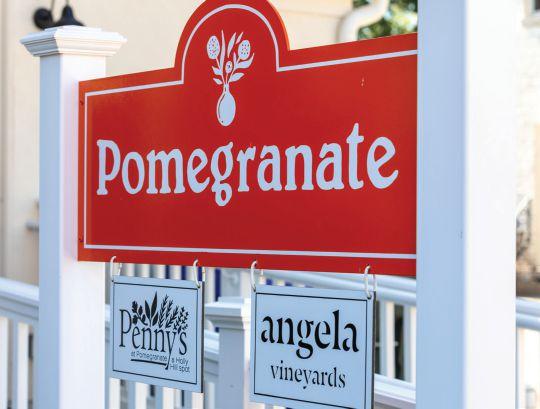
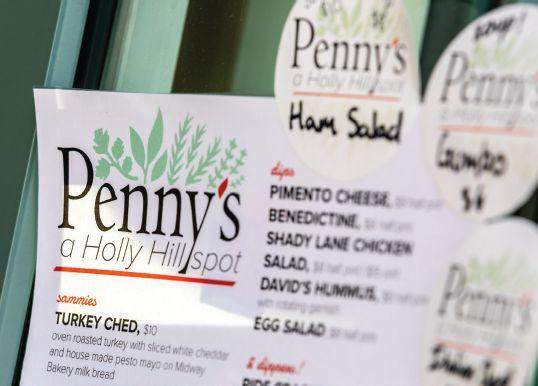
Well-known restaurateur Ouita Michel created Penny’s to provide Pomegranate shoppers with a place to enjoy refreshments just steps away from the shop.
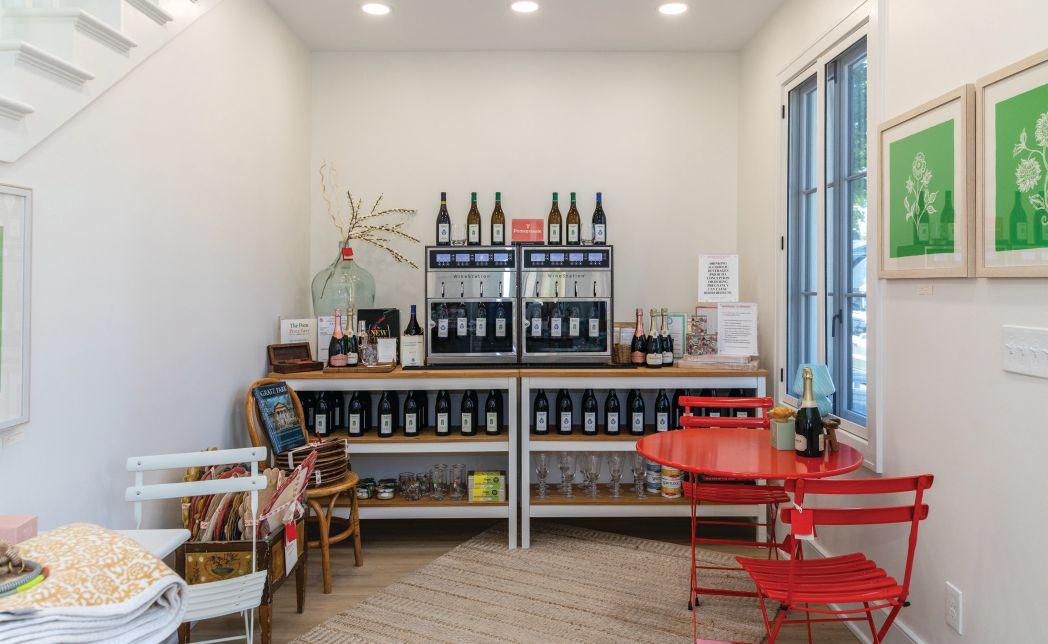
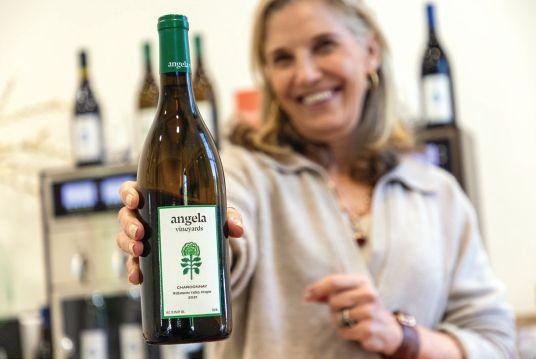
Te third thing you notice about Pomegranate is that it’s not just a store. It’s a gathering place, with a large, enclosed outdoor seating area where the toy store parking lot once was, and a popup café, Penny’s, operated by Angela Beck’s longtime friend, Central Kentucky chef and restaurateur Ouita Michel. (Instigated by Beck, Michel’s busy Windy Corner Market opened in 2010 on land owned by the Beck family near Gainesway.) Tese amenities — combined with a wine machine in the store that dispenses generous pours of pinot noir and chardonnay wines the Becks produce through their Angela Vineyards — have made Pomegranate a popular spot for luncheons, afernoon teas, baby showers, mahjong games, book club meetings, culinary workshops, charity events, and more. “Our whole premise is that setting the table is about gathering, and this is an extension of gathering,” Beck said. “Tere’s always somebody sitting out here getting their work done.”

Tyler Childers and the Food Stamps Red Rocks Amphitheater
Childers and the Food Stamps Red Rocks
SPOTLIGHT ON ANGELA BECK
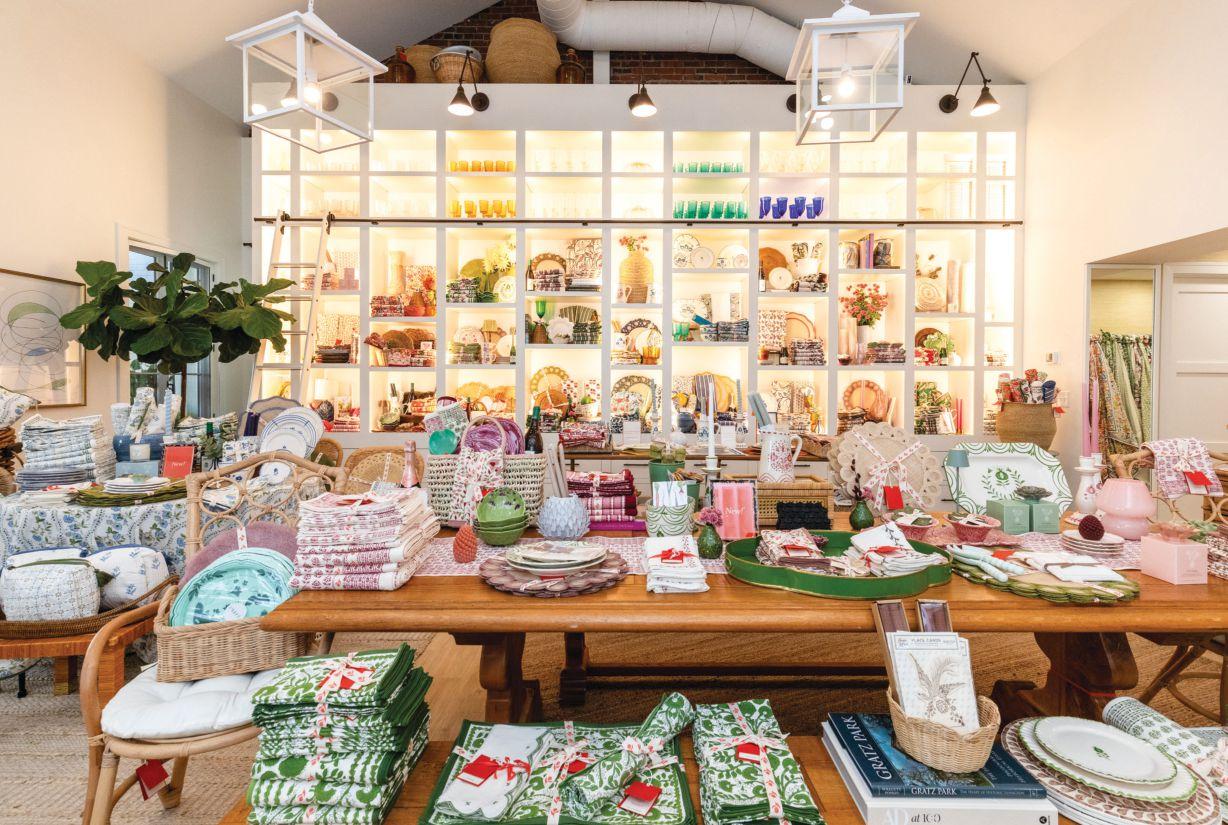
Pomegranate sells napkins, tablecloths, and place mats in 131 unique patterns and colors, each item block-printed by hand in India on heavy cotton fabric.
Michel says she’s delighted to be part of the Pomegranate experience. “Angela and I have wanted to collaborate again many times but it’s been hard because we’re both so busy,” she said. “She’s done so much to support us at Windy Corner, I wanted to express my gratitude. And the concept of the new store is so creative, it just drew me in.”
FINDING HER MEDIUM
Pomegranate the store is only a year old, but Pomegranate the table linens brand has been around for around 30 years. It began as a creative outlet for Beck, who has a degree in art history and fne arts from the University of Pennsylvania (her mother is the equine painter Rochelle Levy; her late father, Robert Levy,
owned Atlantic City Racecourse and bred and raced Toroughbreds) but found life as a painter and sculptor far too lonely. “I tried having an art studio when I was younger, and I remember sitting in the middle of the studio and thinking, Tere’s nobody around. I don’t like this. Te isolation was not good for me.” She gravitated instead toward product design, creating hair bands that she sold at Saks Fifh Avenue and Neiman Marcus. Later, in between raising fve children at Gainesway Farm, “I needed something that I could get my hands dirty with,” she recalled. “Designing textiles was a creative outlet that made sense and was a good use of my energy.”
Sketching in watercolors, acrylics, and most recently on an iPad, Beck has designed scores of original patterns for
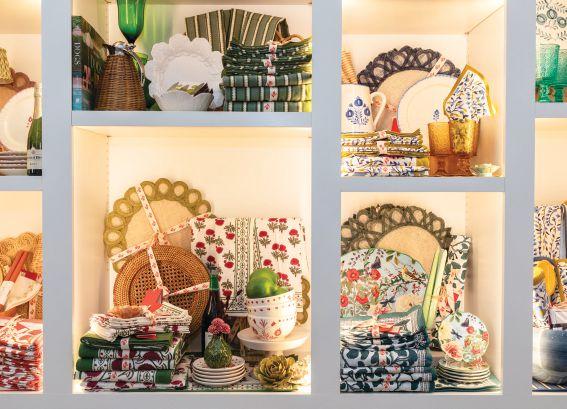

Pomegranate over the years, with eight to 10 new additions semiannually. Sometimes she creates her own versions of traditional Indian designs featuring forals, curling vines, and edible plants including, prominently, the store’s namesake fruit. Other designs draw inspiration from Provençal outdoor dining, from African and Caribbean batik, from Shaker and other American folk art tropes, and from cozy, nostalgic English cottagecore. A few refer to the history and culture of Toroughbred racing, with horses, jockey silks, and paddock scenes. (Pomegranate also ofers several products with holiday themes, including Christmas trees and ornaments.)
Te colors, produced with dyes applied to the fabrics with






Pomegranate’s patio invites customers such as Marianne Waldman (left) and her daughter, Andrea Waldman Eilers, to linger.
In addition to table linens, Pomegranate offers plates, glassware, and a variety of gifts.
SPOTLIGHT ON ANGELA BECK
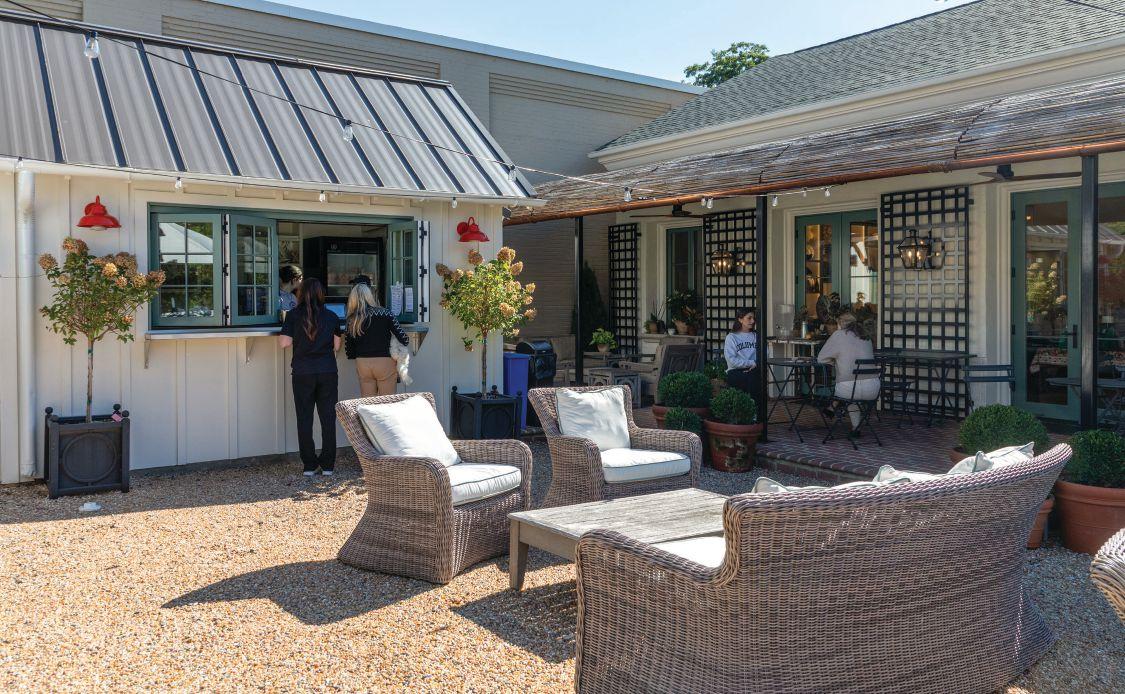
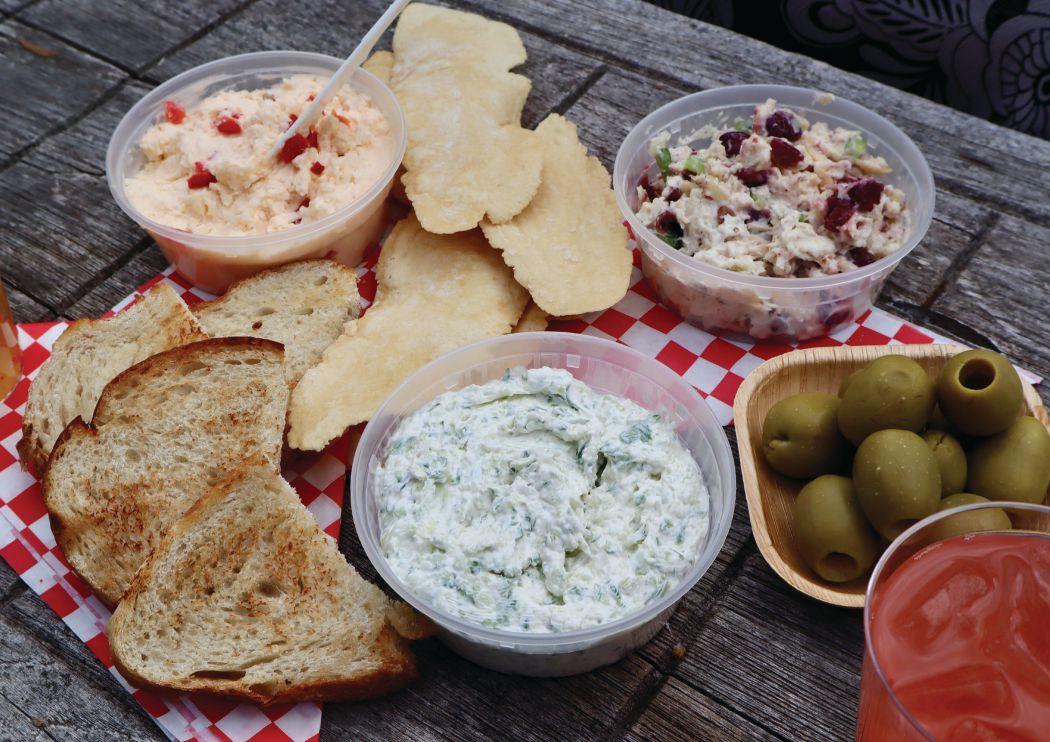
Penny’s is a popular lunch spot that serves sandwiches, salads, and other items familiar to customers of Ouita Michel’s other casual eateries.
woodblocks carved from Beck’s designs, have a mellow, vegetal quality, not to mention many charming irregularities that subtly distinguish the product from anything machine-made or mass-produced. “Tere have been episodes when I’ve tried screen printing, which is a lot easier, but the integrity of the product is not the same, so I can’t do that anymore,” she said. “I would rather do small batches with much more integrity, and you can feel it. It feels real.”
Michel agrees, adding that she hopes to commission a Pomegranate pattern specifcally for her acclaimed Holly Hill Inn in Midway. “I love the little imperfections, and the fact that they’re beautiful but slightly casual,” she said. “Tey’re not my mom’s linens: not damask, not heavy brocade. I think they express the ease of entertaining and a lot of conviviality. Tey’re about having fun with friends around the table.”
Most of the napkins cost $56 for a set of four, about $14 per napkin. Te tablecloths range from about $80 to $180. “Te
prices are reasonable for a handmade product,” Beck said. “We’re regarded as a good-value, high-quality product.”
You can rent Pomegranate products, including napkins, tablecloths, and other accessories, for parties. In the event of spilled wine or other mishaps, Beck said with a laugh, “We have a damage waiver.” You can also book an appointment with a “tablescaper,” who can consult on how to pair your own china with Pomegranate table linens. “It’s all about mixing and matching,
Evaluate in person so you can bid with greater confidence. Find a strong lineup of race-ready individuals available for hands-on inspection and immediate opportunity.
KEENELAND NOVEMBER
HORSES OF RACING AGE SALE
Wednesday, Nov, 12
View Catalog at keeneland.com/novemberhora
SPOTLIGHT ON ANGELA BECK
and my whole principle is that not everything needs to match,” she said. “For me, it’s not about setting the table. It’s about everyone who comes to the table. I’m not fussy. We show you all the things that can go together. If you like it, put it on your table.”
She notes that all the linens at Pomegranate are there for the touching, unmediated by plastic wrapping. “I’m a Montessori kid — hands-on, you know? I have to feel and touch things, which is how you learn in a Montessori school. So the store is the opportunity for people to come and feel and touch things. Tey don’t feel cheap, they feel good. Tey have personality, they have identity. Tey have a soul.”
RESHAPING HER BUSINESS
For decades, Pomegranate linens were almost exclusively sold wholesale, mostly to high-end retail and registry stores whose representatives encountered the product primarily at trade shows, mostly in Atlanta. Its website, pomegranateinc.com, was mainly a calling card. “We did sell there,” Beck said, “but very little, because I didn’t want to compete with my retail stores.”
Ten, in 2020, the COVID-19 pandemic hit and retail stores all over the world shut down, canceling most wholesale
A wine machine dispenses pinot noirs and chardonnays from the Becks’ Angela Vineyards and adds to Pomegranate’s cachet as being more than a store.
Beck displays one of her namesake wines.
orders. For Beck, the timing couldn’t have been worse. She had recently renovated a new showroom in Atlanta and had shipping container-loads of product on the way. “At that point, I had no other option but to reinvent the website.”
Hunkered down with her family on Harbour Island in the Bahamas, Beck rebuilt the Pomegranate website from scratch, retooling it for retail sales. Business on the site soon took of, forcing Beck to forge agreements with a series of ever-larger fulfllment centers to ship the product directly to consumers. Two years ago, she reentered the wholesale market, but by then, retail had become her major focus. And around that time, Beck began thinking of opening a brick-and-mortar store in Lexington.
“Tis retail store was an experiment at frst,” she said. “Opening up the shop seemed like a very natural transition: to have everything in one place, not in a showroom, but to show the world a true representation of everything that we create. We have local customers that love coming here, and we can bring our buyers here. It’s opened up a dialogue with our retail stores. How do you show products that we have? What sells? What isn’t selling? It’s a very good exercise for us, even when we’re developing new products. How would that look in our retail store? Does it suit the brand? Is it worth the efort? It’s almost like a test kitchen.”
Te transition from wholesale to retail also paid dividends in the form of new collaborations with designers such as India Hicks, a British author and home-entertaining infuencer who during the pandemic met the Beck family on Harbour Island, where she still lives. “It was a time when connection felt both fragile and precious, and Angela had this gif for turning it
where friends can meet for a bite of something tasty, catch up with a glass of wine, take home a treat for later! At the corner of Clay Ave & East Main St. Now offering catering options, designed for effortless entertaining
• Party Platters, to enjoy at your own place
• Party at Pom, a beautiful time curated with our friends at Pomegranate

Pomegranate
Pomegranate offers hand-painted ceramic dinnerware imported from Portugal. at
SPOTLIGHT ON ANGELA BECK
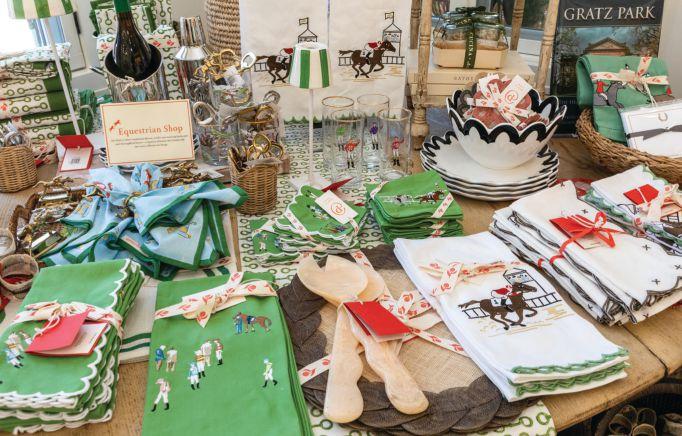
Not surprisingly, equine-themed table linens are well stocked and popular.
“
OUR WHOLE PREMISE IS THAT SETTING THE TABLE IS ABOUT GATHERING, AND THIS IS AN EXTENSION OF GATHERING.”
— ANGELA BECK, OF POMEGRANATE
into something grounding,” Hicks said via email. “I remember her dropping Easter gifs behind our gates when the strictest regulations were in place — a simple, kind, and touching gesture that said so much about who she is.”
Hicks ended up collaborating with Beck on a new line of linens that are now available on the Pomegranate website. “Angela’s work feels like an extension of her spirit — joyful, natural, and deeply human,” Hicks said. “Her hand-blockprinted linens have a warmth that can’t be manufactured. Tey carry the slight irregularities and beauty of something truly handmade. Her colours are sun-washed but vibrant, and her patterns feel alive but never loud.”
Best of all for Beck, she no longer considers the Pomegranate store on Main Street an experiment. “It’s a long-term thing,” she said. “Maybe I’ll have a few more.” KM
Beck’s pug, Penelope, is a brand ambassador for Pomegranate.
Pomegranate manager Christy Cleveland (right) assists customer December LeTexier.









































TO THE BRINK &BACK
Stone Farm owner ARTHUR HANCOCK chronicles his turbulent, adventuresome early years and his road to redemption in the compelling memoir “Dark Horses”
By Lenny Shulman / Photos by Pat McDonogh
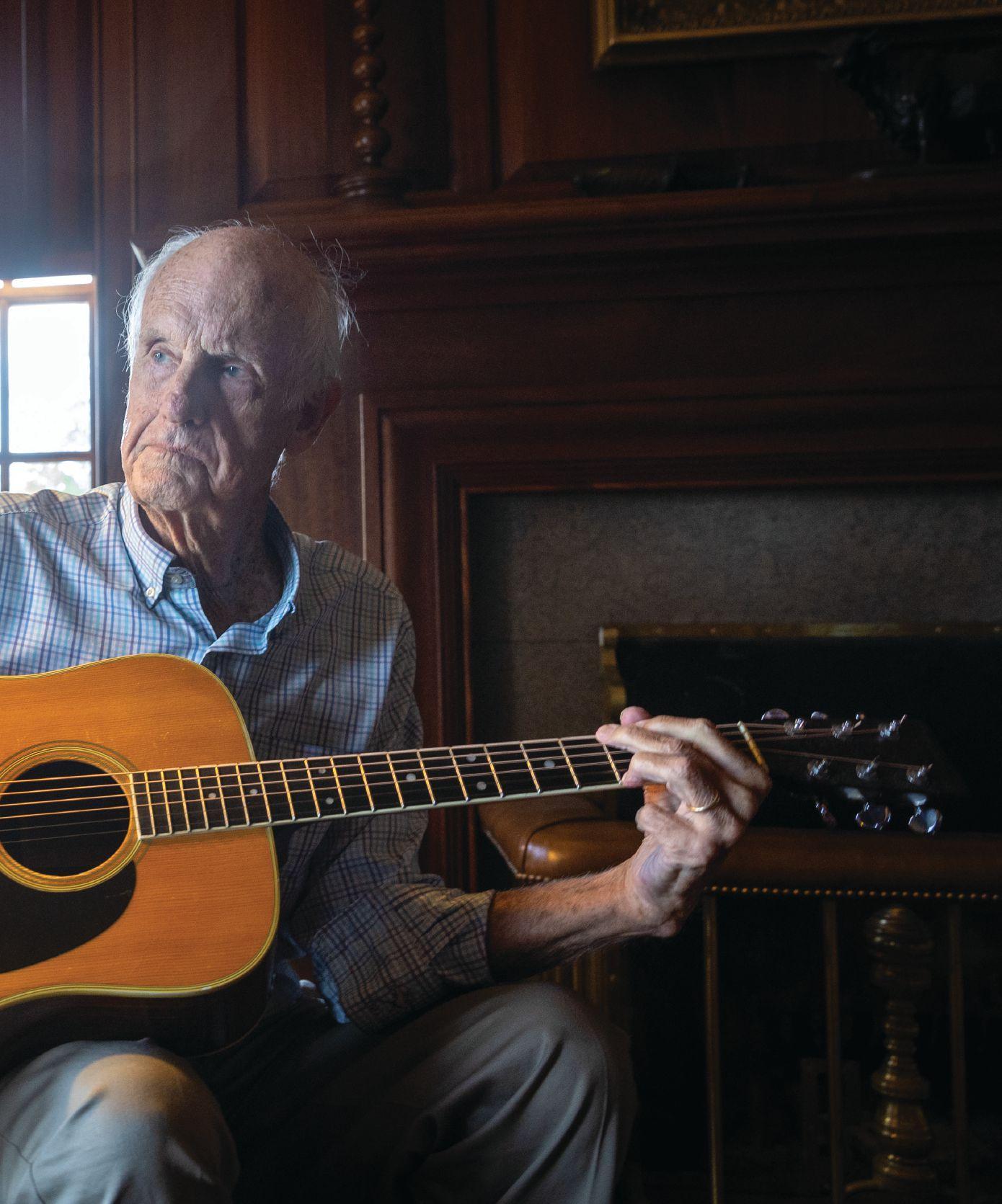
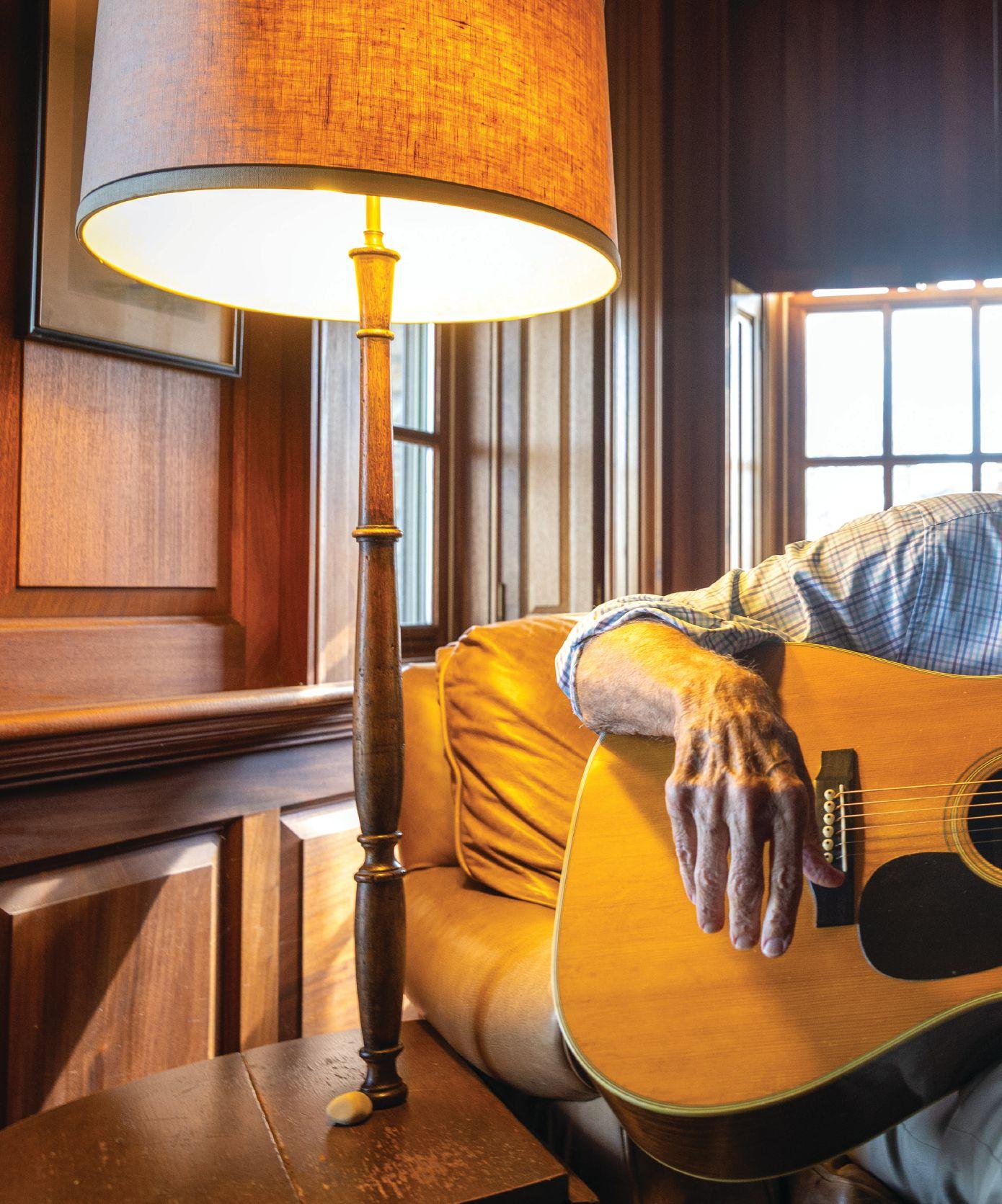
Arthur Hancock’s early love of music did not win him paternal approval, but his passion for singing and songwriting has endured.
YYEARS AGO, A YOUNG Arthur Hancock III was discussing the weather — as farmers will do — with an old-timer, decrying a drought. Said Hancock, “I don’t think it’s ever going to rain again.”
“Well,” said the old man, “it always has.”
Hancock recounted the story recently while Central Kentucky was mired in another drought. In his 82nd autumn, Hancock has accumulated a vast store of wisdom from a variety of sources. Tere is the pragmatic horsemanship passed on from three generations of familial experts. Te folksy homilies spawned from rural living and a belief in omens. And the smarts earned through a rollicking life flled with dramatic twists, destructive tendencies, virtuoso talent, instinctual skill, love both hard and sof, and an ear for music and humor.
to the longshot success enjoyed by the author and some of the least-fancied horses — notably Gato Del Sol and Sunday Silence — that have brought him to the peak of the Toroughbred world. But it is the book’s subtitle, “A Memoir of Redemption,” that best describes the trajectory of Hancock’s life.
“Dark Horses” gained added poignancy through its timing. Hancock brought it out late in 2024, not long before he was diagnosed with pancreatic cancer. As he battles through that, the book provides an element of immortality to Hancock’s story in the face of mortal challenges.
Most would consider Hancock to have been born on third base as the son of legendary horseman A.B. “Bull” Hancock Jr. and grandson of Arthur B. Hancock — the founder of Claiborne Farm more than 100 years ago. Tus, his success as a Toroughbred breeder and owner is, on the surface, less than shocking. Te improbable meanders of his journey, however, move his story closer to fction, flled with tragedy, strong family ties, drama, self-inficted wounds, loss of birthright, and comeback from the edge of fnancial ruin.
Hancock’s story, as told in the pages of “Dark Horses,” fts neatly between the nighttime television soap operas “Dallas” and “Yellowstone,” and it is Hollywood’s loss for not calling on him. “Dark Horses” has been named a fnalist for the prestigious Dr. Tony Ryan Book Award, which annually recognizes the fnest horse-related literature.
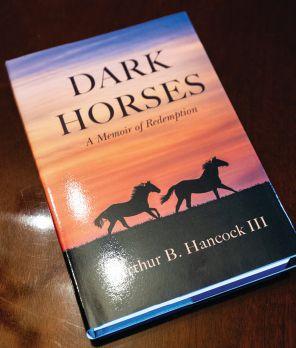
Anyone who has ever spoken with Hancock instantly realizes he is a world-class storyteller. Fortunately, he has recently utilized that skill to package his vast experiences into an unfinching, fascinating, and thoroughly enjoyable selfrefection called “Dark Horses.” Te book’s title refers
“I’d been thinking about writing a book for a long time, because people would urge me to,” Hancock said. “People know the saga of Sunday Silence and Easy Goer makes for a great story. So, I said I’d try it. What the hell. It took me almost fve years, and the process has been good for me. I’m really glad I did it. Tere were diferent versions passed along about how I lef Claiborne, and I wanted to set the facts straight and tell these stories.”
Paul Sullivan, Hancock’s close friend since elementary school, co-stars in numerous youthful escapades
“Dark Horses” has received critical acclaim.
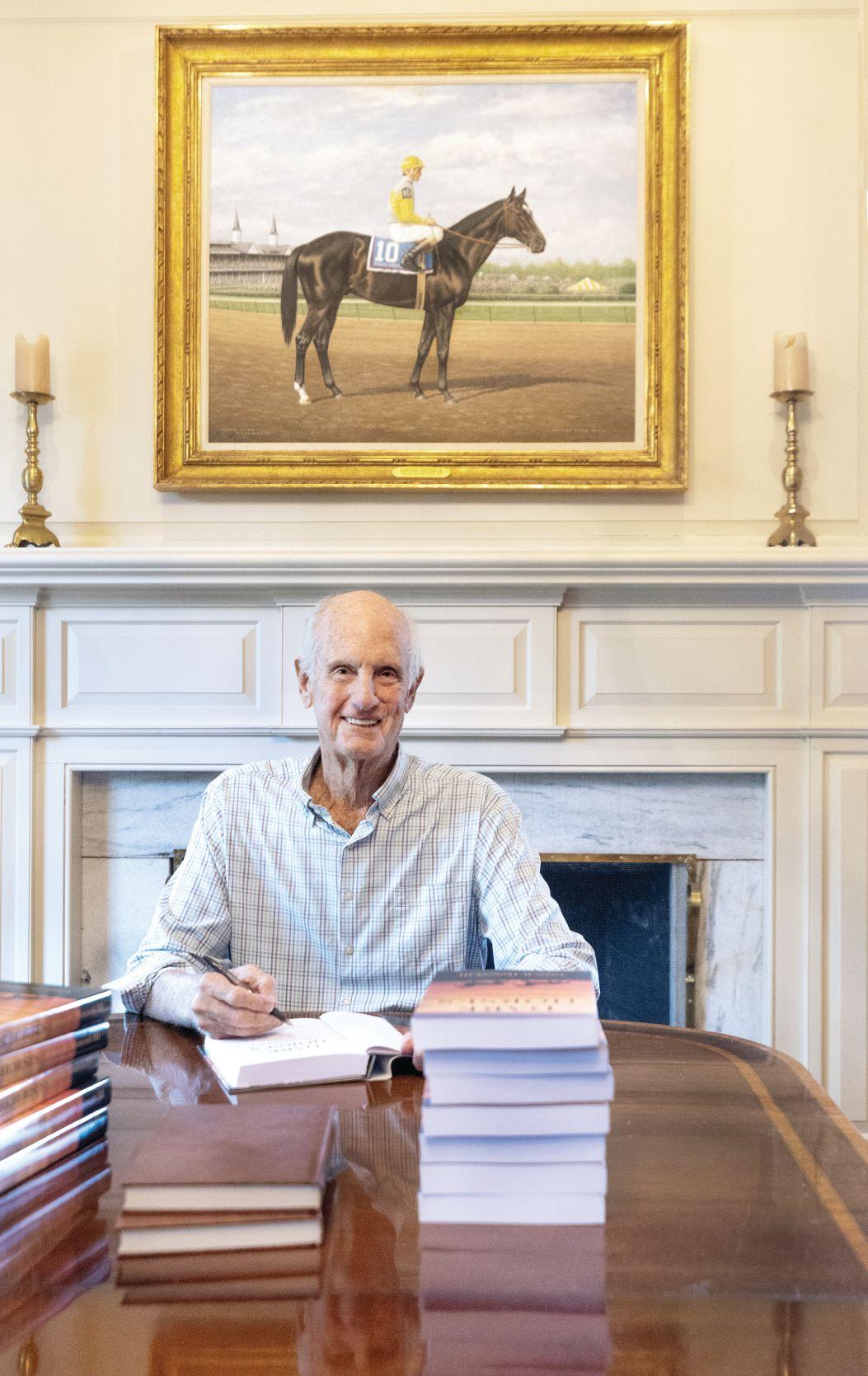
Hancock, signing copies of his memoir, acknowledges he wrote the book to set straight the facts of his life.
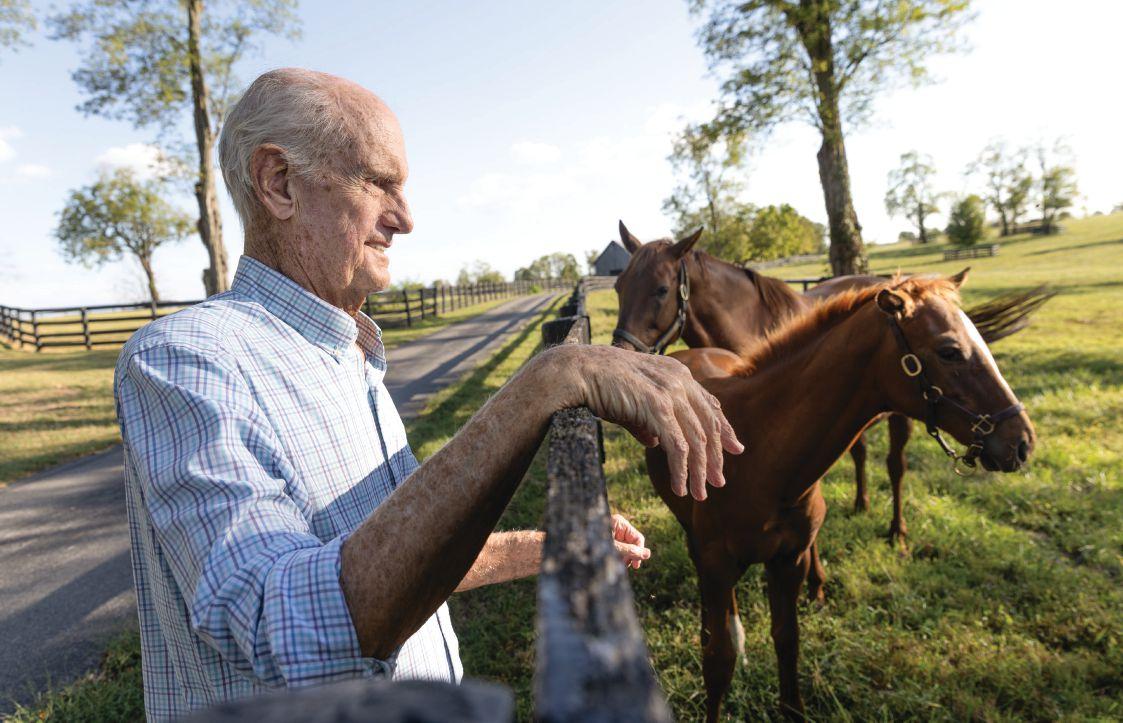
and other anecdotes that Hancock writes about in “Dark Horses.”
“My frst reaction to reading the book is that Arthur tells it exactly how it all occurred. He didn’t put any English on it,” Sullivan said. “And I’m proud of him for doing it, particularly with regards to alcoholism, which interferes with a lot of things in one’s life.”
It will not be ruining this tale to get to the ending frst. Arthur Hancock III, known as “Hawk” to his best friends, has made his Stone Farm near Paris, Kentucky, into a model operation boasting quality bloodstock for more than a half-century. Two Kentucky Derby owner trophies attest to that. He is also co-breeder of a third Derby victor. Te farm’s sales consignments at Keeneland’s September and November auctions aren’t the largest but sit at the head of the class for quality, a fact well-known to savvy shoppers. For example, She Feels Pretty, a graduate of Stone’s 2022 consignment to the Keeneland September yearling auction, is now a fve-time grade 1 winner who has earned better than $2.2 million.
Hancock and his wife, Staci, onto whom he places much of the credit for his thriving family (fve daughters, one son, and fve grandchildren) and personal turnaround, also led a long and arduous battle to get
drugs out of racehorses through their Water Hay Oats Alliance. It is a tribute to their hard work that the Toroughbred industry fnally caught up to their position. Teir eforts helped bring forth the legislation that established the Horseracing Integrity and Safety Authority, set up to regulate and oversee testing and safety initiatives.
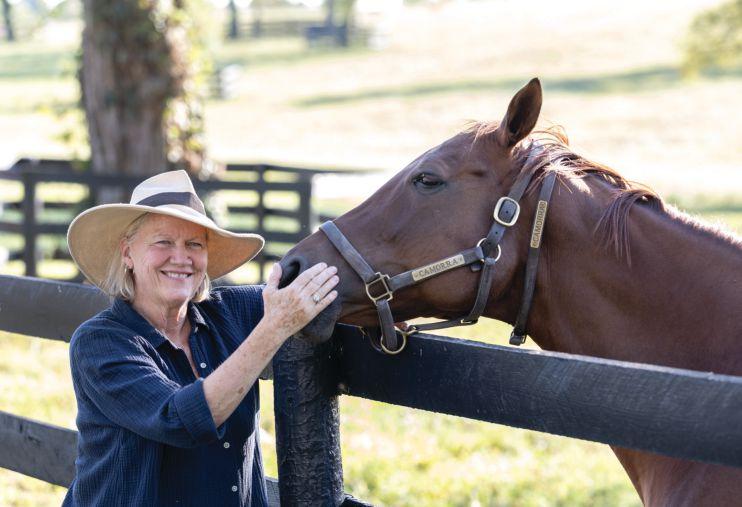

Staci Hancock is credited for her role in Stone Farm’s success and in her husband’s personal turnaround.
Stone Farm has seen a parade of outstanding horses, and its felds continue to nurture future stars.
For these and other accomplishments, Arthur Hancock III was inducted last summer into the National Museum of Racing and Hall of Fame in Saratoga Springs, New York, as a Pillar of the Turf. It is with a great sense of pride that he joined his father and grandfather in receiving that honor. Hancock admits that his younger years would have made him a longshot to further the family legacy in that manner.
BIRTHPLACE OF CHAMPIONS
Tere is no more famous name than Hancock in American Toroughbred breeding. Capt. Richard Johnson Hancock began the familybusinessaferservinginaVirginiamilitiaduringtheCivilWar. Wounded in three separate battles, including at Gettysburg, Hancock made it back to Charlottesville afer the war and married. He began breeding horses on land, named Ellerslie, that belonged to his wife’s family. Te captain’s fourth and youngest son, Arthur Boyd Hancock Sr.,managedtheVirginiaoperationandearnedareputationsuchthat he was tabbed to judge a horse show in Kentucky.
Tere, he met Nancy Clay, member of a prominent family that included the abolitionist Cassius Clay and the famous legislator Henry Clay. She, too, inherited a bounty of lush land. Te couple married and in 1915 dropped anchor on 1,300 acres in Bourbon County that they named Claiborne to honor her famous forebears.
TepastcenturyofAmericanToroughbredhistoryrunsthrough Arthur Boyd Hancock Sr. and Jr. Senior changed North American bloodstock when he began importing European blood to mix with domestic pedigrees, a practice virtually unheard of previously. He brought Sir Gallahad III from France to lead the North American
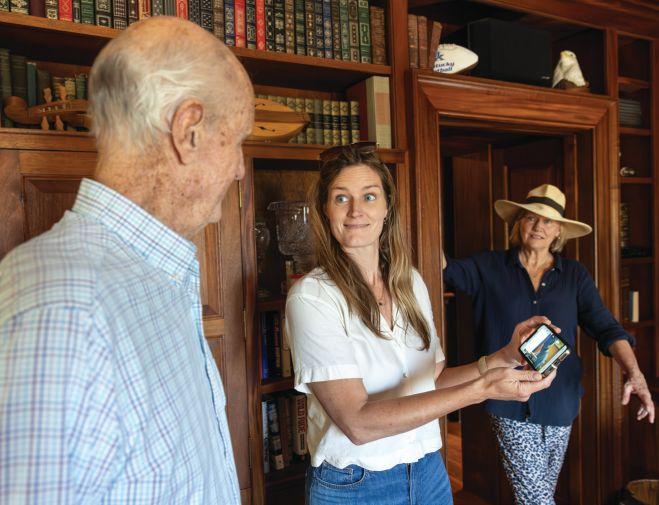

Hutchi, one of the Hancocks’ fve daughters, shares a video of her father playing guitar and singing.
BRINK & BACK
sire list four times. Sir Gallahad III sired 1930 Triple Crown winner Gallant Fox. Hancock’s tour de force was his purchase of Europeanborn Princequillo, who raced in the United States before going to stud at Ellerslie and then Claiborne. Princequillo brought forth a dynasty that includes descendants Secretariat, Seattle Slew, A.P. Indy, Mill Reef, Prince John, Fort Marcy, Sham, Cigar, Zenyatta, John Henry, and American Pharoah.
Bull Hancock built on his father’s foundation, increasing
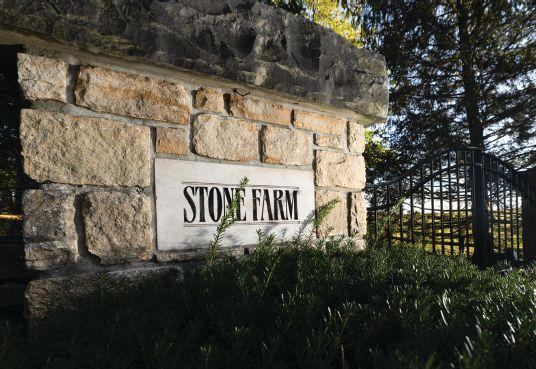
Claiborne’s footprint to 6,000 acres while bringing into the fold topshelf clients such as the Phipps family and William Woodward Sr. He, too, imported European stock to grace Claiborne’s stallion complex. Nasrullah became a fve-time leading sire, and his son Bold Ruler turned the trick eight times, while also gaining fame as the sire of Secretariat. Claiborne bred champions Nureyev, Ivanjica, Round Table, Moccasin, Nadir, Doubledogdare, and Bayou (the last four named also racing in Claiborne’s gold silks). Te farm was the birthplace of stars such as Kelso, Nashua, Cicada, Buckpasser, and Riva Ridge.
FROM INVISIBLE TO DERBY WINNER
Tis is the culture of excellence into which Arthur Hancock III was born. But the family legacy came with other trappings. Capt. Hancock treated his children with the military discipline he had demanded of his troops. Tat regimen of “restrained praise and strict discipline,” as described in “Dark Horses,” was passed down through the generations and landed squarely on Bull Hancock’s frst son. Teirs became a complicated relationship.
Arthur Hancock’s early love of music did not sit well with his father, who preferred his son devote himself solely to horsemanship. Bull Hancock saw anything less as rebellion, and so when Arthur dyed his hair black to imitate Elvis Presley and Ricky Nelson and began playing and singing on local radio stations, his father questioned his motives and manhood.
“Daddy believed you couldn’t serve two masters,” Hancock said. Fromanearlyage,hereceivedafrst-classeducationinhorsemanship from his father and grandfather. But he also displayed talent as a singer and songwriter, and pursued those passions as well, especially once he attended university at Vanderbilt in Nashville, Tennessee.
“Arthur is the most multitalented person I’ve ever met,” said his longtime friend John Adger. Adger is the bloodstock agent who helped establish Stonerside as a major success story for owners Robert and Janice McNair on land they purchased from Hancock. “He was a Southeast Conference champion swimmer at Vanderbilt,” Adger said of Hancock. “I believe he could have been an Olympic swimmer if he hadn’t been traipsing up and down Printers Alley honky-tonking.”
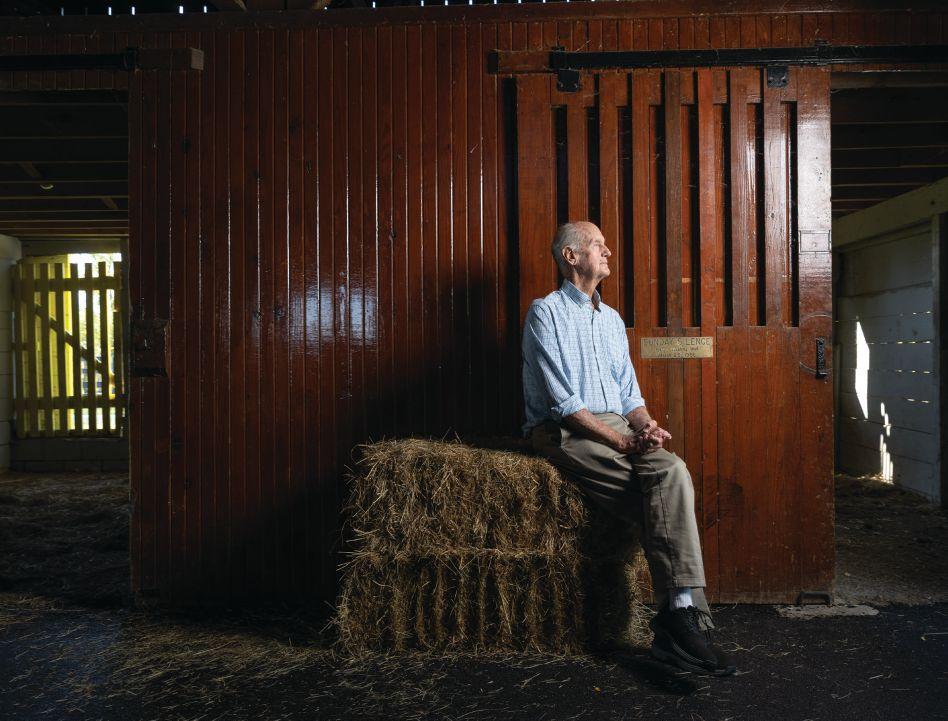
Hancock established Stone Farm on 100 acres he leased from his father and developed the property into a renowned operation. Below, Hancock sits outside the stall where Sunday Silence was born in 1986.
Into Mischief
Vekoma
Omaha
Yaupon
Forte
National
Dornoch
Jackie’s
Taiba
Maximus
Kingsbarns
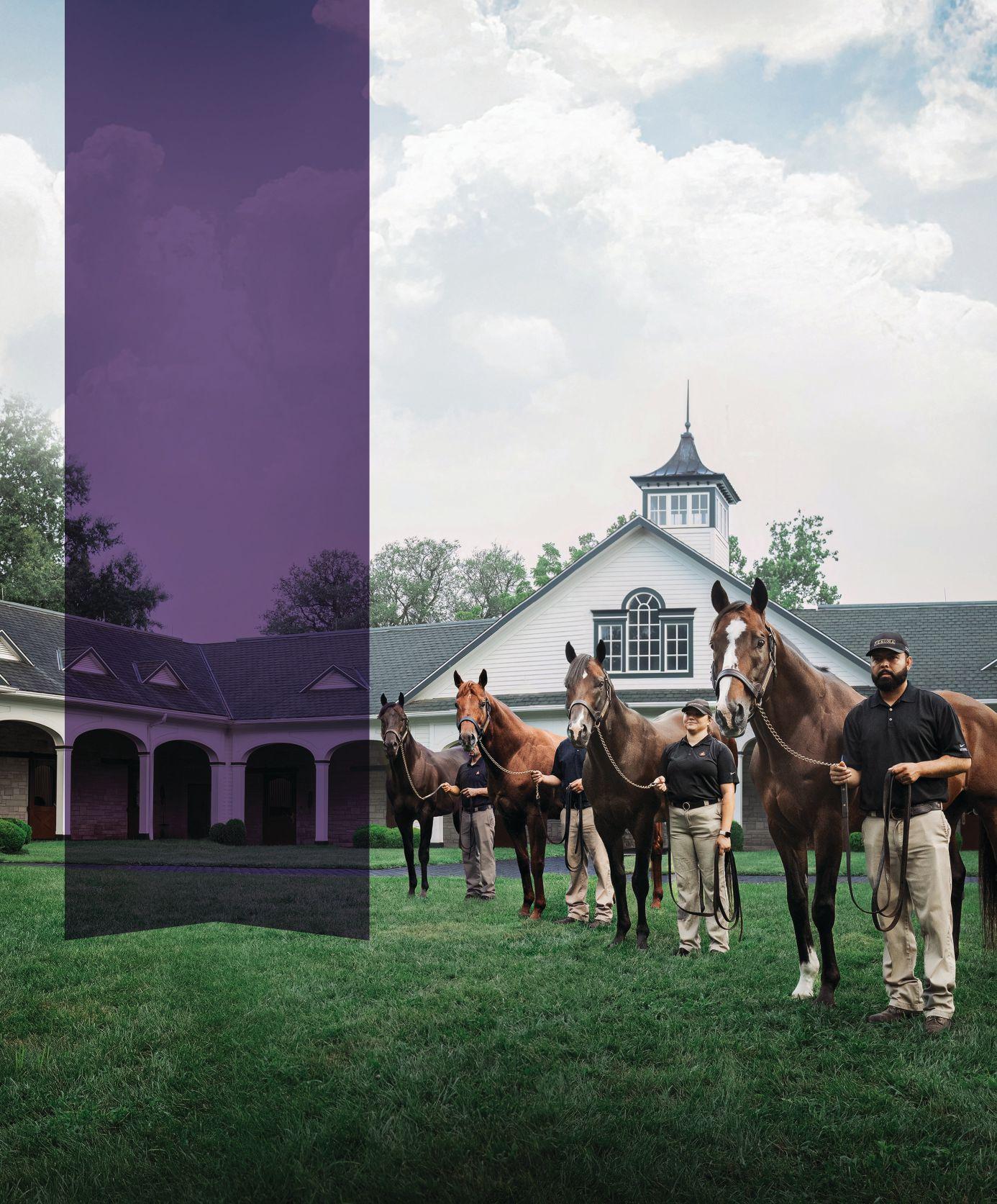
Mitole
Jimmy
Thousand
Vino
Zandon
Home to Leading Sires.
BRINK & BACK
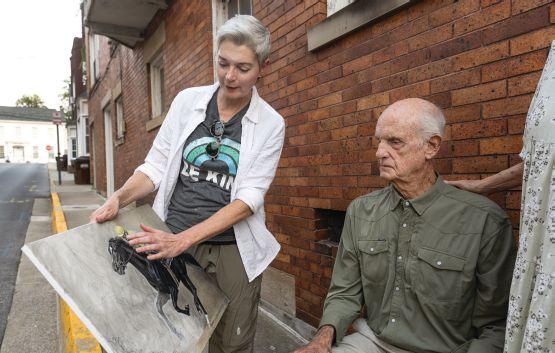
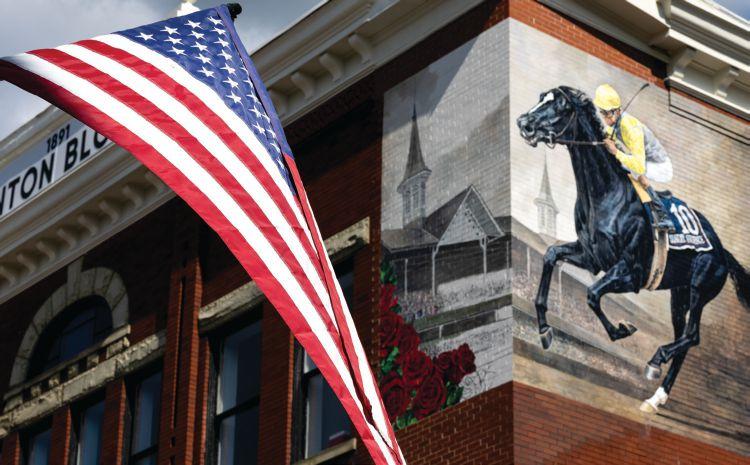
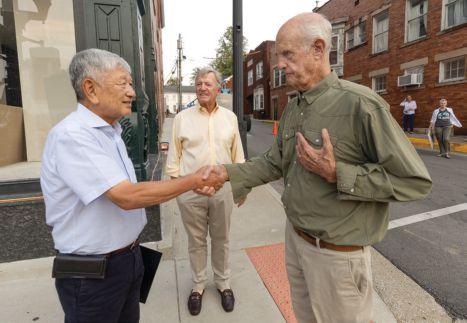
Right, a life-size mural of Sunday Silence graces the side of the Hotel Thoroughbred in downtown Paris. Below, artist Jaime Corum shows Hancock a mock-up of the mural. Center, Hancock greets Teruya Yoshida, whose family stood Sunday Silence in Japan. Bottom, Corum works to complete the mural.
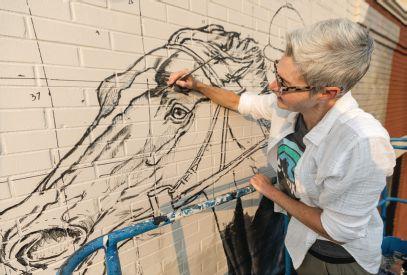
But those adventures were well spent, because Hancock also excelled as a songwriter and musician. In his 20s, he was writing and selling songs to the likes of Willie Nelson and Ray Price and hanging out with artists such as Waylon Jennings and Kris Kristoferson. He was enjoying the nightlife to its fullest. Afer his athletic exploits in college, he also held various positions at Claiborne while continuing to learn the family business.
Although he continually bumped heads with his stern father, Hancock worked hard to learn all facets of the horse industry while at Claiborne. He also spent a year as an assistant to trainer Eddie Neloy in New York, showing he possessed the discipline to hold down a fulltime job that started before dawn every day. As he approached 30, Hancock felt he had gained much more trust and respect from his father, and the two grew closer than ever before.
In the autumn of 1972, Bull Hancock was suddenly diagnosed with a terminal illness. In a stunning few moments that would change the course of lives and Toroughbred history, Bull Hancock asked his nurse to leave his hospital room while he talked to his family. He wanted to, according to Arthur Hancock, change his will concerning the line of succession at Claiborne.
“But Momma said, ‘Oh, Bull, let’s not do that now. Let’s wait till you’re bettah,’ ” Hancock said, mimicking his mother’s Tennessee dialect. “And I started to say something about Claiborne, but I wanted Daddy to get better as well, and I didn’t want to say, ‘We need to do this now,’ so I didn’t say anything. He was gone within a week.”
Bull Hancock’s will, drawn up when he had less faith in his oldest son, appointed three trustees to follow the advice of three experts in plotting Claiborne’s future. Arthur and his younger brother, Seth, initially divided up the duties of running the farm in the wake of their

BRINK & BACK
father’s death. But it wasn’t long before Arthur came to loggerheads with two of the experts — Ogden Phipps and William Haggin Perry — over a variety of issues. When he learned that the two men planned to anoint Seth as captain of the Claiborne ship, Arthur quit before they could fre him.
Instantly, he went from scion of the most powerful Toroughbred operation in America to a nonentity.
“SethandIhadbeenworkingtogetheraferDaddydied.Iremember us being out at the November sale at Keeneland selling seasons to Nijinsky and Sir Ivor and our other stallions and everybody was so nice to us, patting us on the back and saying, ‘You boys are gonna do fne, and we’re here to help you,’ ” Hancock said. “It was scary afer Daddy died, and that made me feel really good.
“Fast-forward two months to the January sale afer I had lef Claiborne and I was thinking I’d go out there and see all my friends. I barely got a ‘Hello, Arthur’ from anyone. People walked right past me. Tat was a shock. Benjamin Franklin wrote in ‘Poor Richard’s Almanac’: ‘Now that I have a sheep and a cow, everybody bids me Good Morrow.’ Well, I didn’t have a sheep or a cow, and everybody was like, ‘Tere goes that idiot.’ It was really something, and it made me depressed.”
came from dead last at odds of 21-1 to win the roses, making Arthur Hancock III the frst member of his family to win America’s most celebrated race.
“I had an out-of-body experience for the only time in my life,” Hancock said. “It was the damnedest thing, to be in the winner’s circle of the Kentucky Derby. Tat was Daddy’s life’s dream, and it didn’t happen for him. But I thanked him on the TV interview for showing me how to get there. Which he did, having taught me lots of things he learned from his father.
“
I’D BEEN THINKING ABOUT WRITING A BOOK FOR A LONG TIME, BECAUSE PEOPLE WOULD URGE ME TO…I’M REALLY GLAD I DID IT.”
—ARTHUR HANCOCK
Hancock established Stone Farm on 100 acres he had leased from his father. Although it is just six miles from Claiborne, it must have felt like 6,000 to him. Leaving Claiborne, Hancock lost the identity he’d possessed from birth. Shortly afer, Seth syndicated Secretariat and became the toast of Central Kentucky. Arthur doggedly pursued drinking to excess many nights, but days were given to trying to get back on his feet and prove the world wrong. Friends and clients like Aaron Jones, Bunker Hunt, and Warner Jones helped. Mares began arriving for Hancock to board and breed. Leone J. Peters, a New York real estate executive, sent Cabin, a horse bred by Bull Hancock, to Stone Farm to stand at stud, a frst for the farm.
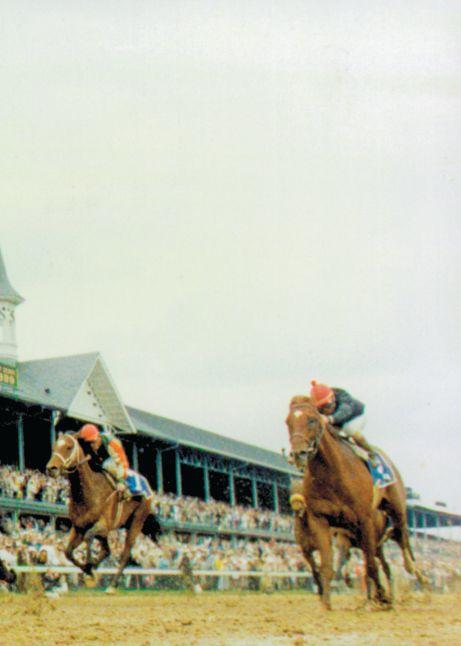
Hancock and Peters bought a $20,000 yearling flly at Keeneland. Tey eventually bred her to Cougar, a Chilean-bred standing at Stone. In doing so, Hancock followed the lessons of his father, who believed that outcrossing brought fresh blood and better results on the racetrack. Te resulting colt was too small to sell, so Hancock and Peters campaigned him, and he won the Del Mar Futurity at 2 and placed second in the Blue Grass Stakes at Keeneland at 3. Named afer a cat who lounged in the sun around the barn, Gato Del Sol ran in the 1982 Kentucky Derby.
Handled expertly by jockey Eddie Delahoussaye, Gato Del Sol
“I felt redeemed. I remember sitting in a restaurant in Lexington before Gato won, and some guy at the next table was talking about Claiborne and saying how well Seth was running it. And then he says, ‘Tat other brother is a lost ball in high weeds.’ I didn’t say anything, but I wanted to. Afer Gato, people began treating me diferently.”
But there was one thing winning the Derby couldn’t change. Hancock never could gain his father’s approval. “I was talking to Momma and said that I thought Daddy would be real proud of that victory,” he said. “She looked at me and said, ‘Arthah,he’dbemadthatyouwonitandhedidn’t.’”
Not all of Hancock’s ills were cured by Gato Del Sol. He continued drinking and documents in “Dark Horses” losing $375,000 in one night to Kentucky Gov. John Y. Brown while playing backgammon in a stupor. Tere were wrecked cars and nights spent in jail. Also, his ego led him to wanting to make Stone bigger than Claiborne, and he bought thousands of acres, hopelessly overextending himself fnancially.
THE COLT NOBODY WANTED
With Staci’s help, Arthur Hancock stopped drinking along about the time a sickly black foal was born on Stone Farm. Bred and owned by Hancock’s friend Tom Tatham, the colt fell ill and nearly died on his frst Tanksgiving. He garnered no interest at the Keeneland yearling sale, and Hancock bought him back for Tatham, who wouldn’t take him. Hancock was lef holding the bag for the colt nobody wanted. He failed to sell at an auction in California and, on the ride back to Kentucky,survivedhishorsevanoverturninginanaccidentthatkilled several other horses aboard. He wobbled, losing coordination once back at Stone. And then somehow recovered from that.
Tis unwanted but tough horse was named Sunday Silence. Owned by Hancock in partnership with trainer Charlie Whittingham (and a partner Whittingham brought in), the horse was an unexpected combination of miracle and luck for Hancock. When Whittingham called him early one morning from California to tell him “this black
ELEGANCE HISTORIC



















BRINK & BACK






sonofabitch you got out here can run a little bit,” Hancock didn’t even know which of the fve horses he had with Whittingham that the trainer was referring to.
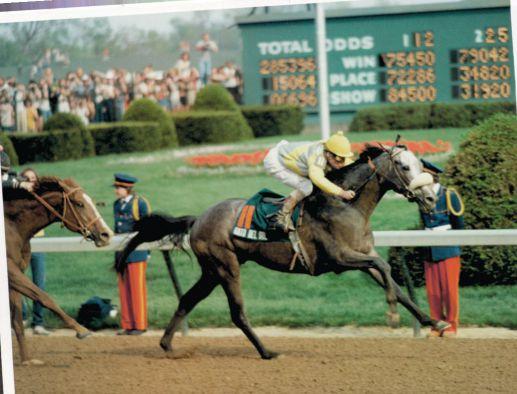
Sunday Silence could run a little bit. Early in his 3-year-old season, the son of Halo won the San Felipe Handicap and the Santa Anita Derby. He came into the 1989 Kentucky Derby with a chance to help Hancock avert bankruptcy. Tere was one other element to overcome, dripping in irony. To win the Derby, he would have to defeat Easy Goer, who was touted as the superior horse and the best one ever bred by Ogden Phipps. Te same Ogden Phipps who forced Arthur Hancock of Claiborne. Life doesn’t usually provide such perfect symmetry, but Hancock’s has.
Although Easy Goer went of as the favorite in both races, Sunday Silence defeated him in both the Kentucky Derby and Preakness Stakes. Back at his home base in New York, Easy Goer denied Sunday Silence the Triple Crown (and his owners a $5 million bonus) by beating him soundly in the Belmont Stakes. Te fourth and fnal showdown between the two would come in the $3 million Breeders’ Cup Classic that November.
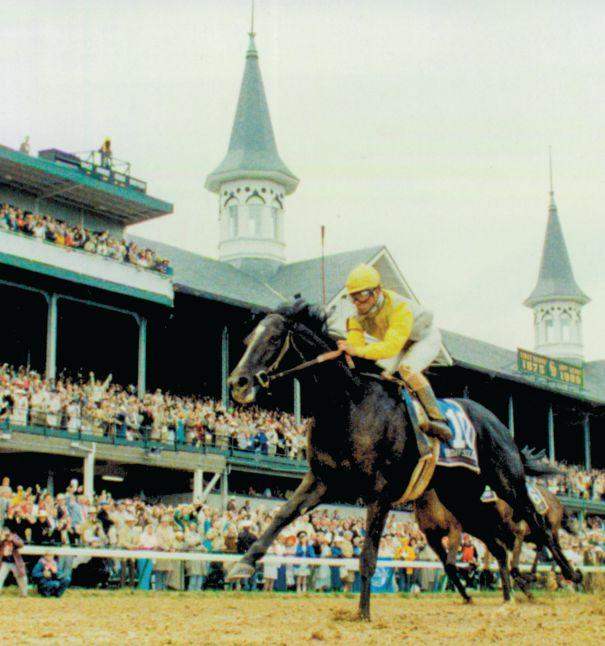
Easy Goer was again the heavy betting favorite, but it was Sunday Silence who grabbed the lead from Blushing John at the head of the stretch. Easy Goer was four lengths behind but was fnding his best stride and resolutely narrowing the gap between them coming to the fnish.
Tere is a remarkable photo in “Dark Horses,” snapped as the horses are coming down to the wire. His family and friends are in Hancock’s box, standing and cheering. Hancock is on his knees, his hands clasped in prayer and resting on the lower





railing, panic written across his face.

“I knew the gravity of that moment,” Hancock said. “Everything was contingent on the outcome of that race. Horse of the Year, 3-yearold champion, and the survival of me and my family. I was thinking, ‘God, please don’t let this big red son of a bitch catch us.’ He looked like he was going to. He was rolling.

“I always respected Mr. Phipps, but what had happened at Claiborne hurt. Tis was the ‘Showdown at the O.K. Corral.’ ” SundaySilenceprevailedbyaneck.Hewouldgoontobecomeone of the greatest sires in the annals of Toroughbred breeding, albeit in Japan, afer Hancock couldn’t interest enough American breeders to commit mares to him. Sunday Silence changed the narrative — and the perception — of Arthur Hancock III. He was now respected for his horsemanship in the manner of his ancestors. And if good fortune played a role, that is just fne by him.
“Afer Gato won, people came up to my friends and said, ‘How could that idiot be the frst Hancock to win the Kentucky Derby?’ But I always worked hard. Seven days a week,” Hancock said. “My father taught me that. He’d say, ‘Te harder I work, the luckier I get.’ I remember him grilling steaks in the yard and telling me, ‘Some of these sons of bitches are smarter than me, but I’ll outwork them.’ And he did.
“It’s like [trainer] John Nerud said: ‘You try to position yourself for luck to run over you.’ Sometimes it does, and sometimes it just hauls ass around you.”








THE NEXT GENERATION


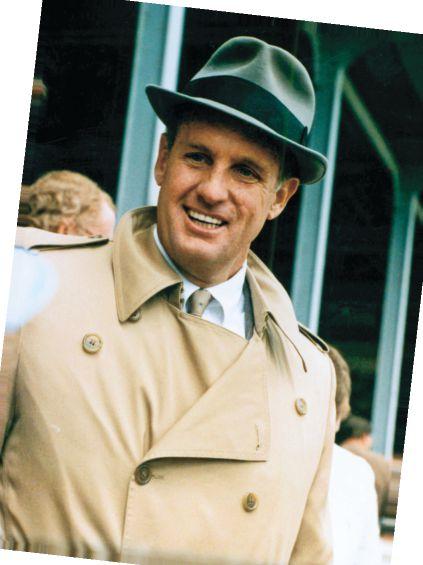
From far left, Arthur Hancock became the frst member of his family to win the Kentucky Derby, with Gato Del Sol, a colt he co-bred and owned with Leone J. Peters. Hancock and partners won the 1989 Derby with Sunday Silence, famous for his rivalry with the blue-blooded Easy Goer. Hancock was all smiles as he made his way to the Churchill Downs winner’s circle to greet Sunday Silence.
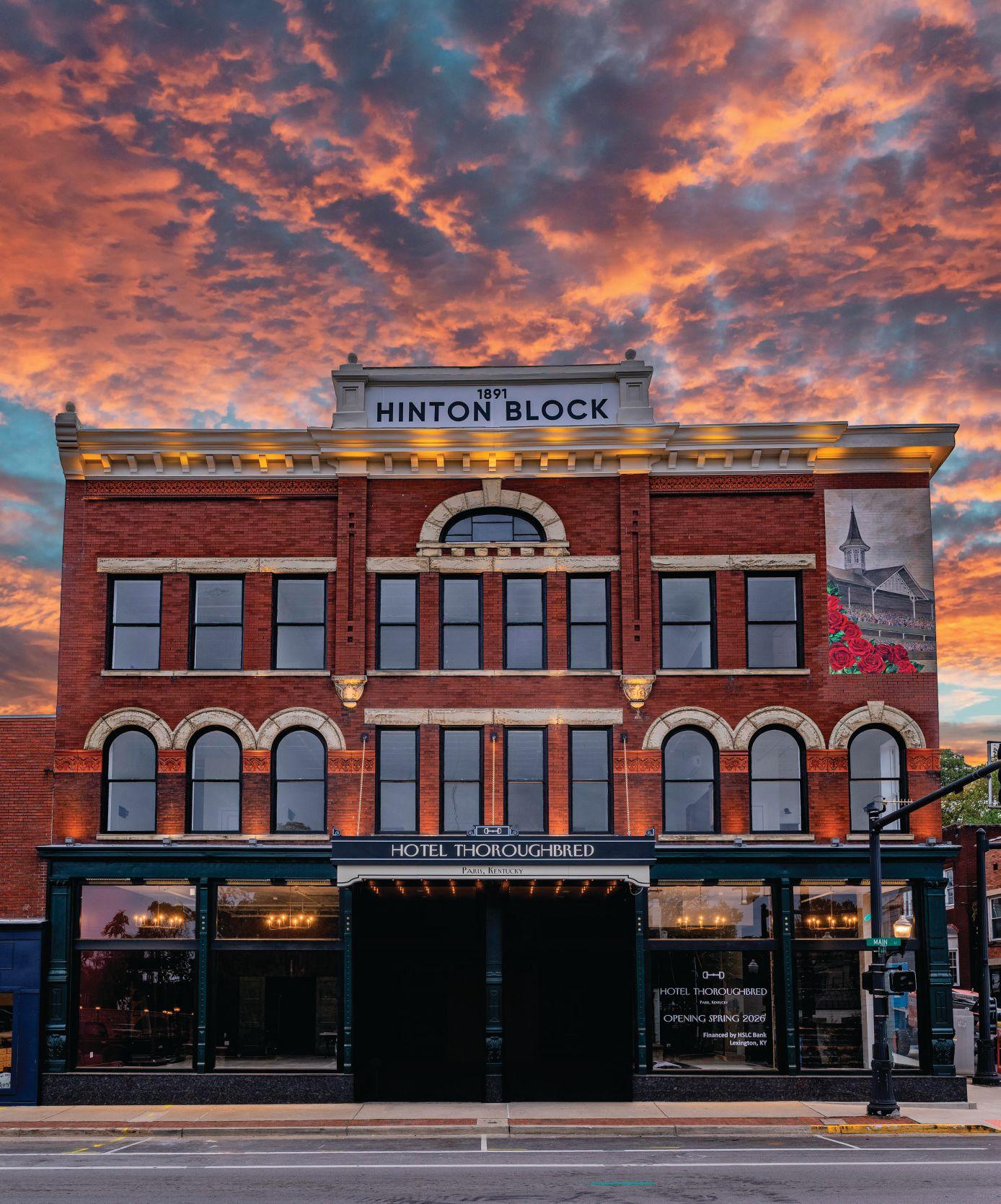
Te luck of having Sunday Silence ran straight over Hancock and his family. Tis October, a mural of the horse winning the Kentucky Derby, painted by Jaime Corum, was unveiled on the wall of the Hotel Toroughbred in downtown Paris. Sunday Silence joins Secretariat and Curlin in being thus honored. Te work memorializes Arthur’s branch of the Hancock family.
“A Memoir of Redemption.” It’s been 37 years since Arthur Hancock III took a drink, and that to him is the most important piece of his redemption. “I’ve done a lot of things successfully, but I couldn’t drink successfully,” he said. “Tat’s part of why I wrote the book. If me being honest about my drinking helps one person or saves one life — it was worth doing.”
Redemption also is his comeback from leaving Claiborne. Gato Del Sol and then Sunday Silence provided that. Fusaichi Pegasus, co-bred by Hancock, put the cherry on the sundae when he won the 2000 Kentucky Derby.
Daughter Lynn has stepped in to handle much of the day-to-day operations of Stone Farm. She’s had the best teacher that 160 years of family experience could develop. In a changing world, Staci and Arthur Hancock did not raise their children with the strict discipline endured by his generation. Arthur IV, their only son, has chosen to leave thestewardshipofStoneFarmtohissisterinfavorof…playingmusic.
“Te disciplinarian side of dad, while still there, was gentler,” said Arthur Hancock IV. “You had to be on time and get the job done. But
he is also a friend you can confde in. I live somewhat of a hybrid lifestyle: helping on the farm when I can but still pursuing my music. And my father has been my biggest supporter. We play music together, and he’s the reason I know how to do it.”
Added Lynn, “All six of us siblings are proud of this farm and how Dad went out on his own and started it and built it. We are mindful of keeping that going and hopefully keeping it successful. Sometimes, I have to put his accomplishments of to the side so as not to put too much pressure on myself. I don’t know if we will breed multiple Kentucky Derby winners going forward, but we’ll sure try.” KM
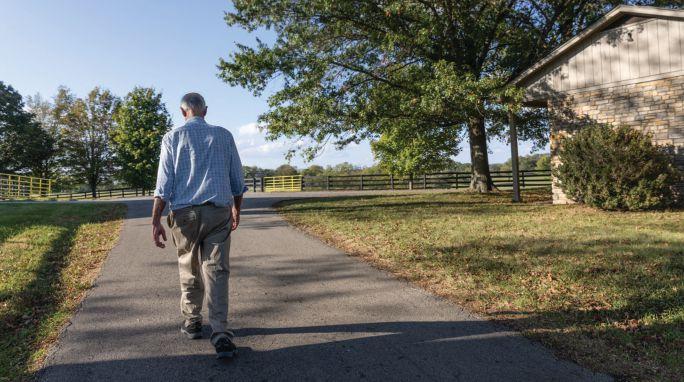
Hancock hopes his honest portrayal of his drinking problem might help others.
Gracious, white-glove service since 1984.
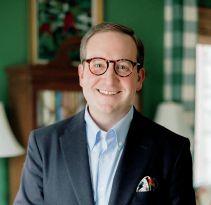
Zach Davis
President & Principal Broker
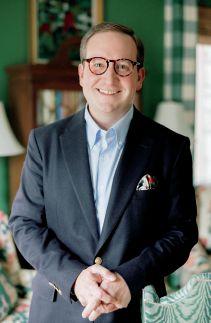
Leading the brokerage since 2011, Zach’s expertise includes horse farms, historic estates, crop & cattle land, as well as recreational properties. Zach also frequently works in concert with a client’s legal & financial teams, offering guidance for estates & trusts.
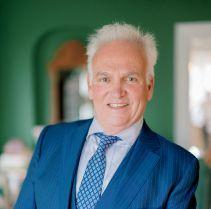
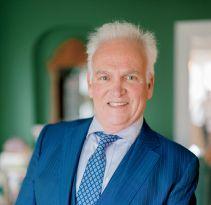
Greg Martelli Associate Broker
Greg’s passion for fine homes is unparalleled. He has assisted in the creation & restoration of hundreds of estates across the Bluegrass. With more than forty years’ real estate experience, his unique background provides a value-added experience for his clients.
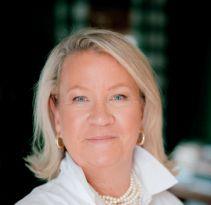
Betsy Lankford Associate
Betsy hails from Bourbon County where she meticulously restored a historic home on her family farm, Ansford, lending extensive expertise in historic preservation. Betsy rode and competed with Saddlebreds and today is an avid fox hunter.
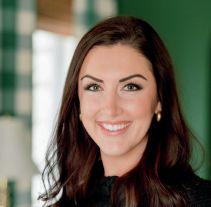
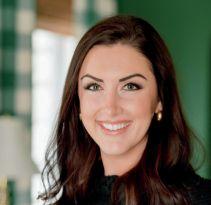
Catherine Combs Gibson
A proud Kentucky native, Catherine is Lexingtonian. Her seven years of public relations experience lend marketing expertise. A keen eye for design & gracious demeanor ensure a superb experience for her clientele.
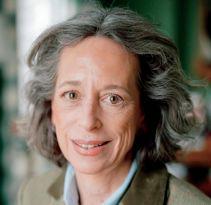
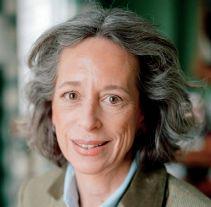
Hannah Davis
A native of Lexington, Hannah has lived across the globe from the Middle East to Germany. A lifelong equestrian, she has evented, ridden hunter jumpers, and now fox hunts. Hannah begins and ends her day lovingly caring for her own horses.
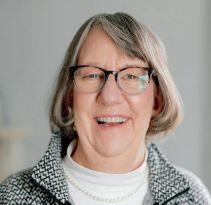
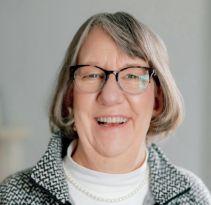
Lucy Hicks Worrell
Lucy is from Midway and has held her real estate license since 1979. Today, Lucy also operates Woodford Insurance, offering a wide variety of insurance services. Lucy’s Bluegrass heritage & specialized knowledge make her an extraordinary resource.

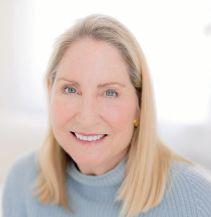
Robin Owens
A lifelong equestrian, Robin thrives in Central Kentucky’s equine community and takes great pleasure introducing newcomers. Her knowledge & connections aid her in finding the perfect home or farm in Lexington or nearby communities.
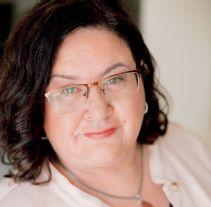
Tamara Bayer
In her second decade working in real estate, Tamara’s expertise includes residential (especially finding the right neighborhood to fit a client’s needs), homes on acreage, & more. Her easygoing personality, attention to detail, & technical savvy have resulted in many repeat clients.

















CREATIVE CREATIVE







COLLABOR


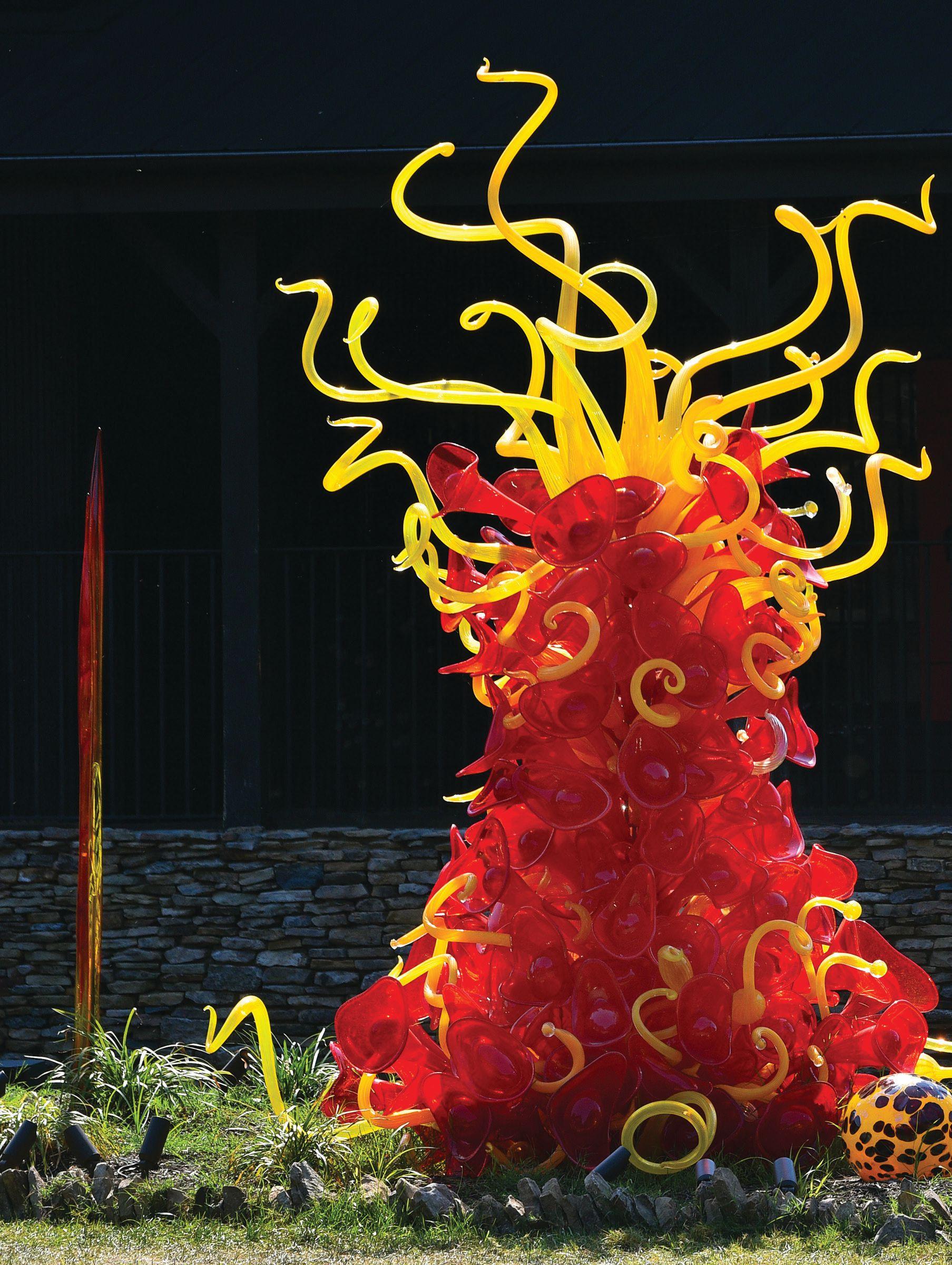
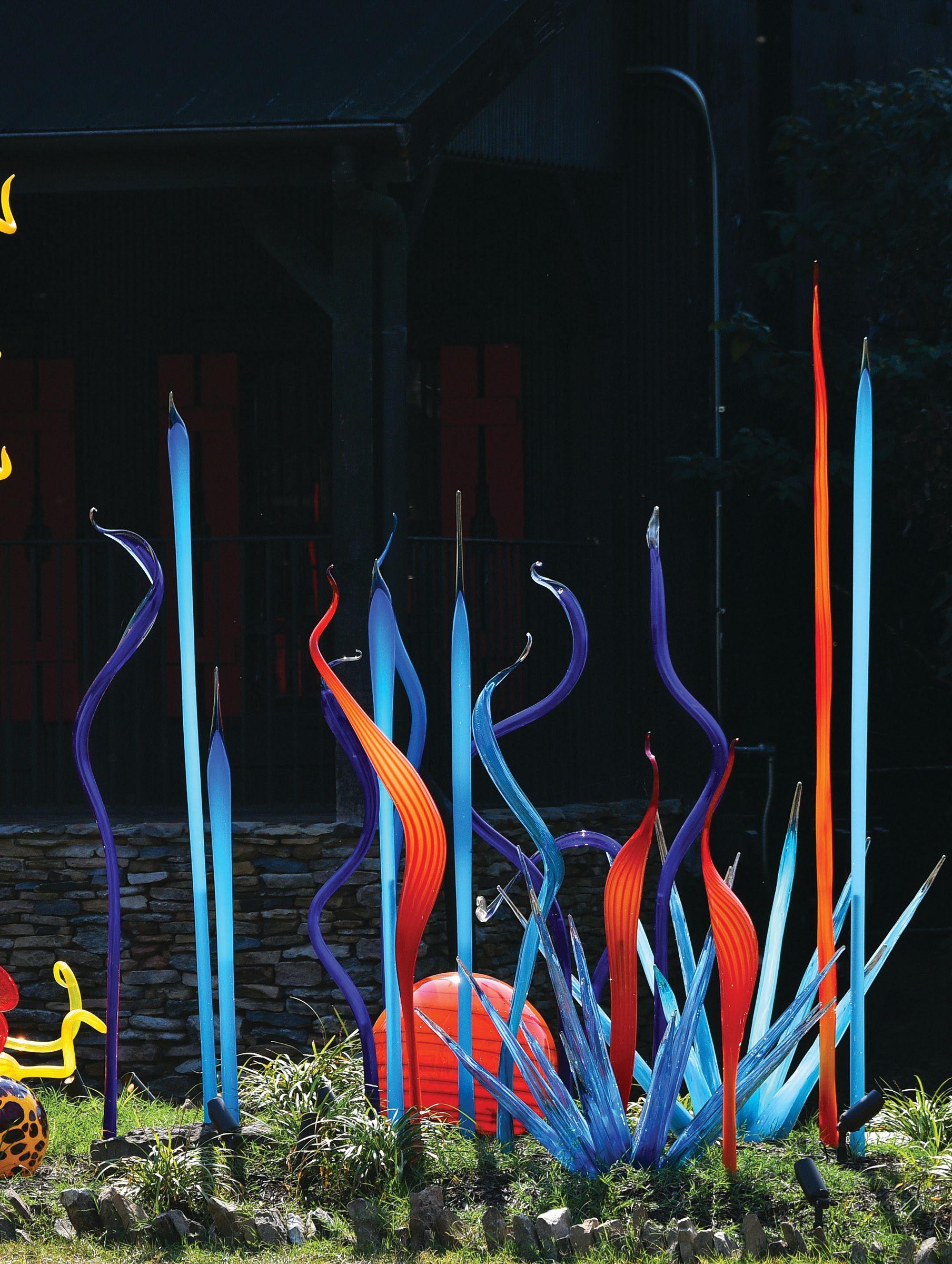
“Moonbow Fiori” by Dale Chihuly is among the new pieces that enhance the beauty of Maker’s Mark at Star Hill Farm.
MAKER’S MARK and CHIHULY’S long relationship has led to a stunning exhibit of nine glass installations across the distillery’s grounds
By Amy Gregory / Photos by Rick Samuels
ATION
RROB SAMUELS, MANAGING director of Maker’s Mark and an eighth-generation whiskey maker, likes to say his creative collaboration with acclaimed contemporary artist Dale Chihuly refects his bourbon brand’s “perfectly unreasonable spirit.”
Te sentiment succinctly distills (no pun intended) the essence of a unique partnership that began more than a decade ago and is celebrated this fall with “Chihuly x Maker’s Mark at Star Hill Farm,” a stunning public exhibition of nine glass installations showcased at the historic Maker’s Mark Distillery in Loretto, Kentucky.

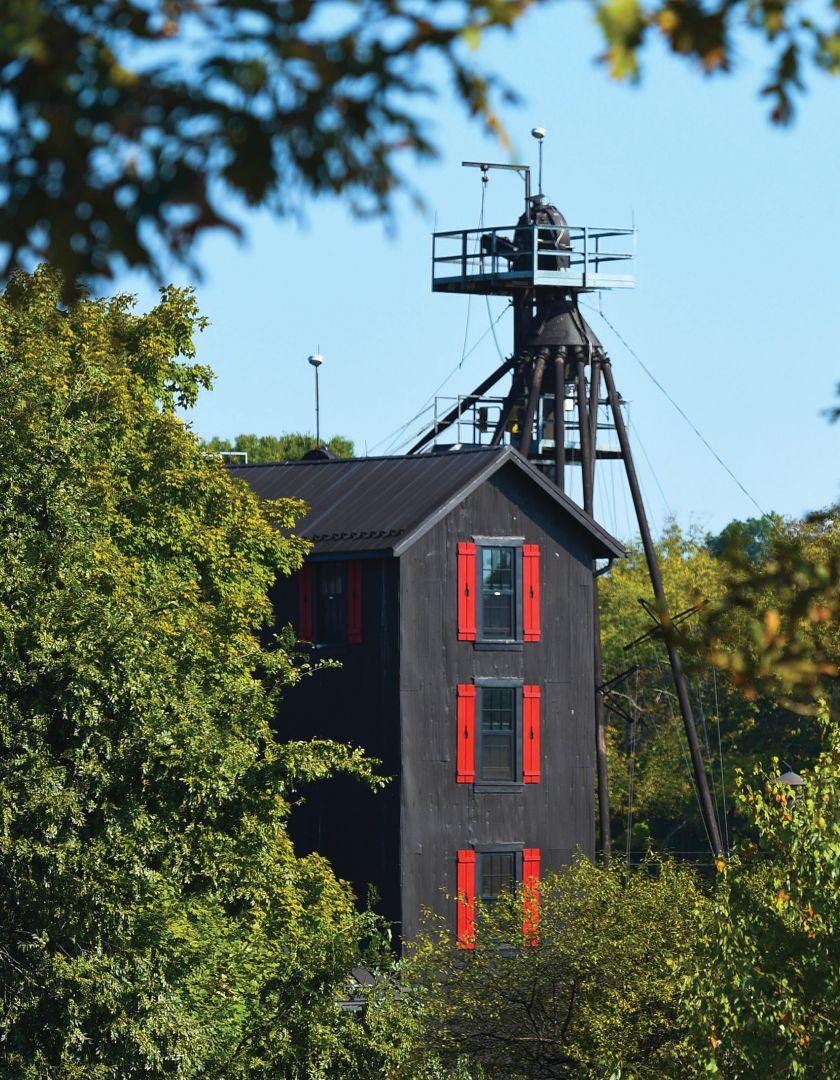
Te current Chihuly exhibit, which opened July 19 and runs through Dec. 7, features two permanent and seven new pieces sited both inside and outside the distillery facilities and grounds of Star Hill Farm, home to Maker’s Mark.
For Samuels and Chihuly, the unconventionality of their pairing is what initially appealed to these two global icons, who discovered between them a shared ethos of handcrafsmanship and tradition juxtaposed with innovation.
“Te Samuels family built Maker’s Mark with a focus on culture and community,
both of which are central to Dale Chihuly’s practice,” Britt Cornett, Chihuly Studio director of exhibitions, said. “Originally, we didn’t know what to expect from working with such a well-known brand. When you step onto Star Hill Farm’s campus, though, it becomes immediately apparent that you’re experiencing the home of world-class bourbon on the most intimate, personal scale. Tere’s a deep commitment to tradition and giving the visitor a meaningful experience, which is further enhanced by Rob’s interest in showing art throughout the campus.”
Samuels describes the Chihuly exhibit as a continuation of the “perfectly unreasonable” vision of his grandparents, Bill Samuels Sr. and his wife, Margie, who co-founded Maker’s Mark in the early 1950s. Tey eschewed convention by choosing to make their bourbon from sof red winter wheat rather than traditional rye, actually setting the old family recipe on fre to symbolize their commitment to reimagine what bourbon could be. In the early years, the couple also defed norms by waiting years for the bourbon to age to bottle their own rather
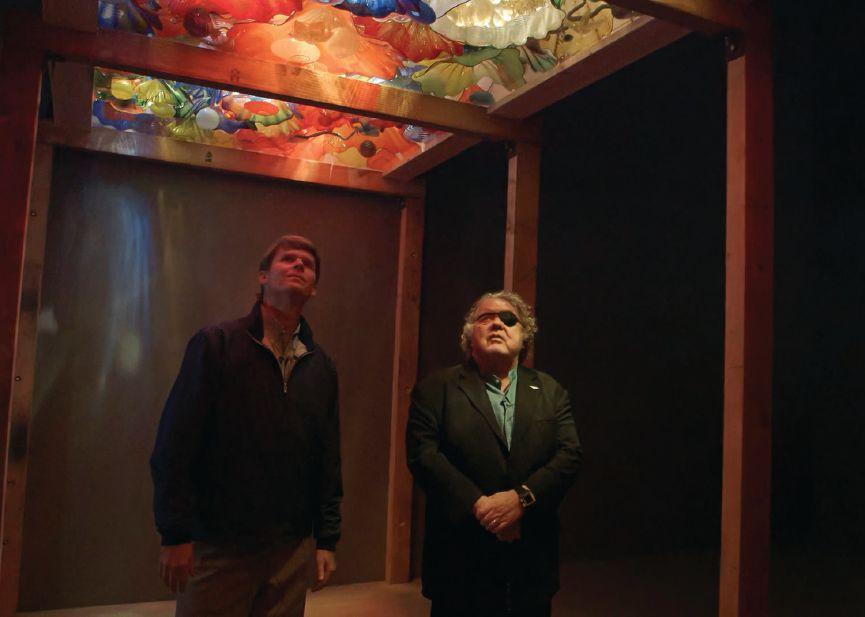
Far left, “Orange Hornet Chandelier” is another new piece created for the current exhibition; left, buildings on the campus display Maker’s Mark’s signature red; above left, Maker’s Mark’s Rob Samuels visits Dale Chihuly at the artist’s Seattle studio.
than sourcing from other producers.
“My grandfather was a crafsman, and his North Star really was a favor vision,” Samuels said. “He was interested in elevating bourbon to a more refned place.
HARMONY OF TRADITION AND INNOVATION
Samuels’ interest in Chihuly was frst piqued when he took his then-preschool-age daughter, Blair, to Nashville to see the artist’s exhibit at Cheekwood Estate & Gardens.
“Blair and I were both just in awe of the scale and the vibrancy, and showcasing the work in these unexpected natural environments,” Samuels recalled. “When we
“My grandmother wanted to honor my grandfather’s vision for a handmade bourbon, and she designed the brand and the distillery,” Samuels said of Margie, who is today widely credited with inventing bourbon tourism. “She had this vision of hospitality. She wanted it to be more personal. She believed there was no more endearing way to connect with a friend than to have them to your home, so she designed everything at the distillery with the aspect of hospitality.”
COURTESY OF CHIHULY STUDIO
COLLABORATION CREATIVE
came back to Kentucky, we would fip through one of the books we bought at the exhibit at bedtime. And I thought, ‘Why don’t I write a letter to Dale Chihuly just to see if he would be open to collaborating on an installation at Maker’s Mark?’ ”
A series of handwritten letters from Samuels to Chihuly and his team sparked a conversation about the story of Maker’s Mark.
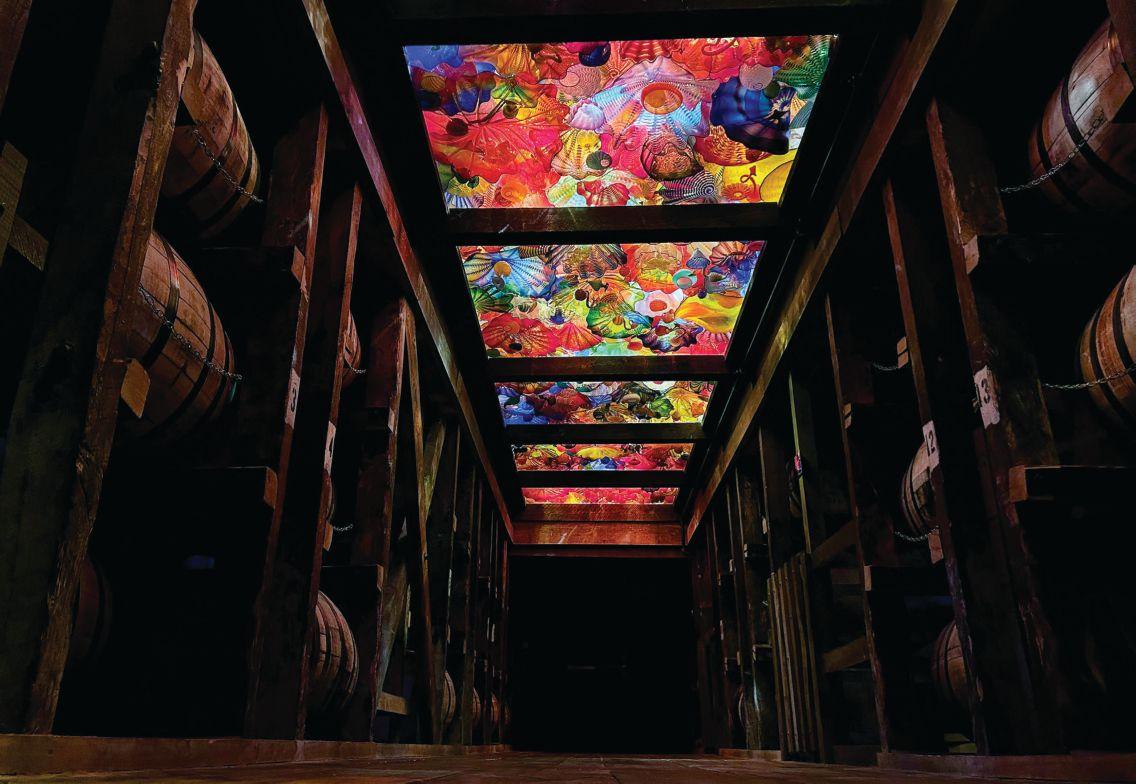
“I talked about our founder’s vision, the sense of community, and the design elements of the distillery,” said Samuels, who invited Chihuly to visit Maker’s Mark. “While Dale was on-site he was actually sketching out ideas. I brought him into that central hall [near the Tasting Room] and said, ‘What if you were to frame this entire ceiling, surrounded by the bourbon barrels and the aromas of the bourbon wafing in the space?’ He said, ‘Tat’s it, that’s the idea.’ ”
Chihuly and his Seattle-based teamspentthenext10monthstaking the concept to reality, creating “Te Spirit of the Maker,” a tribute to Maker’s Mark’s bourbon-making legacy that debuted in 2014 in honor of the distillery’s 60th anniversary.
Now a permanent installation at Maker’s Mark, “Spirit of the Maker” comprises 750 vibrant handblown glass shapes: Te red pieces are a nod to Maker’s Mark’s signature red wax, the blue ones pay homage to the water necessary to make the bourbon, and the amber and gold refect the sof red winter wheat and the bourbon. Four small angels celebrate the angel’s share (the portion of whiskey lost to evaporation while aging), while seashell-inspired shapes represent the shallow sea that once covered Kentucky and the limestone shelf that contributes to the bourbon’s unique taste.
“Te Spirit of the Maker’ is a perfect
example of tradition and innovation harmoniously sharing the same space, and in many ways, it has become a symbol of [Samuels and Chihuly’s] continuing creative partnership,” Cornett said.
Nowoneofthemostphotographedworks of art in Kentucky, “Spirit of the Maker” deepened the connection between Samuels and Chihuly and led to an exhibit at Maker’s Mark in 2017 that was well received by bourbon tourists and the public alike.
CELEBRATION OF CHIHULY ARTWORK IN AN ICONIC SETTING
Today, in addition to the two permanent Chihuly installations at Maker’s Mark — the aforementioned “Spirit of the Maker” and “Amber and New Oak Chandelier,” the latter of which adorns
the visitor center’s glass-ceiling entrance — the current exhibition showcases some of Chihuly’s most iconic work, ranging from delicate sculptures to monumental installations.
Self-guided walking tours are ofered during the day and on select evenings, enabling visitors to experience the artwork in diferent light and seasonal fall colors.
“Chihuly was drawn to glass, in part, because of the way it transmits light and color,” Cornett explained. “It reacts to changing light throughout the day and season unlike any other material.”
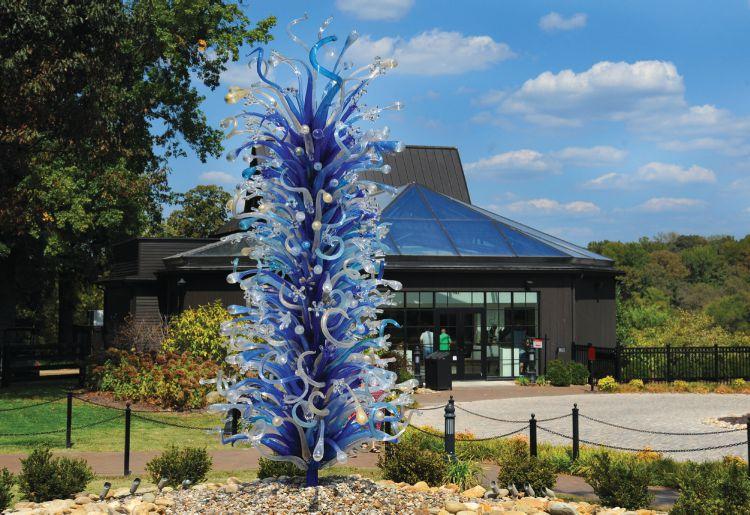
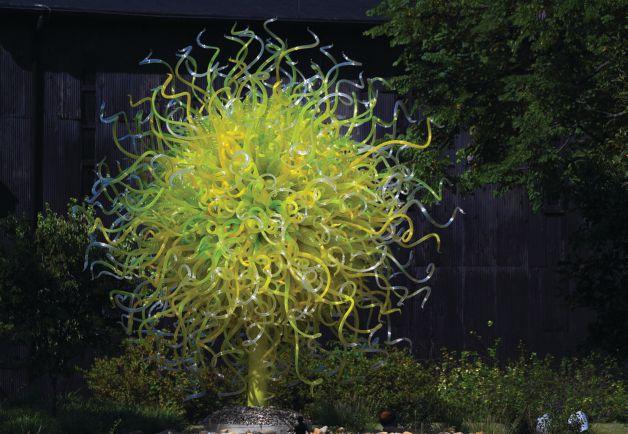
Several of the featured pieces speak to the agricultural ties to the bourbon-making process. Te 12-foot “Sapphire and Platinum Waterdrop Tower,” inspired by the natural watershed at Star Hill Farm, greets distillery guests on the walk to the visitor center.
“Red Reeds on Logs,” created specifcally for this exhibit, sets Maker’s Mark red glass reeds against American white oak logs, the same type of wood used to make the Maker’s Mark bourbon barrels. Te spectacular “Sol del Citrón” (2014) pays homage to the sun and its role in producing the grains used in bourbon distilling.
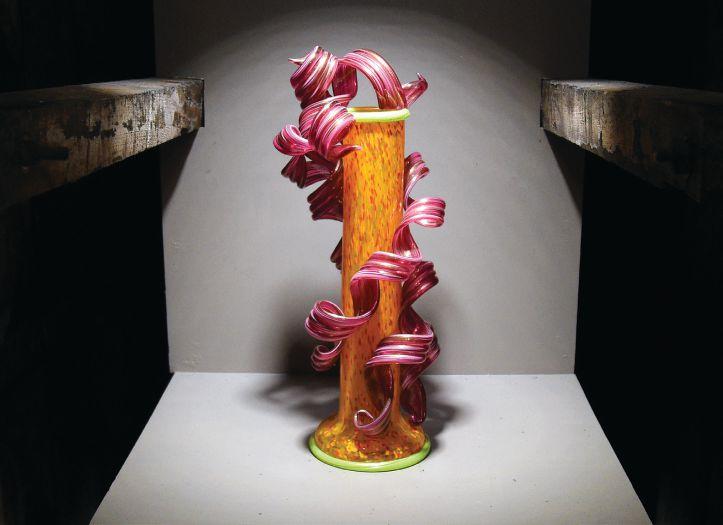
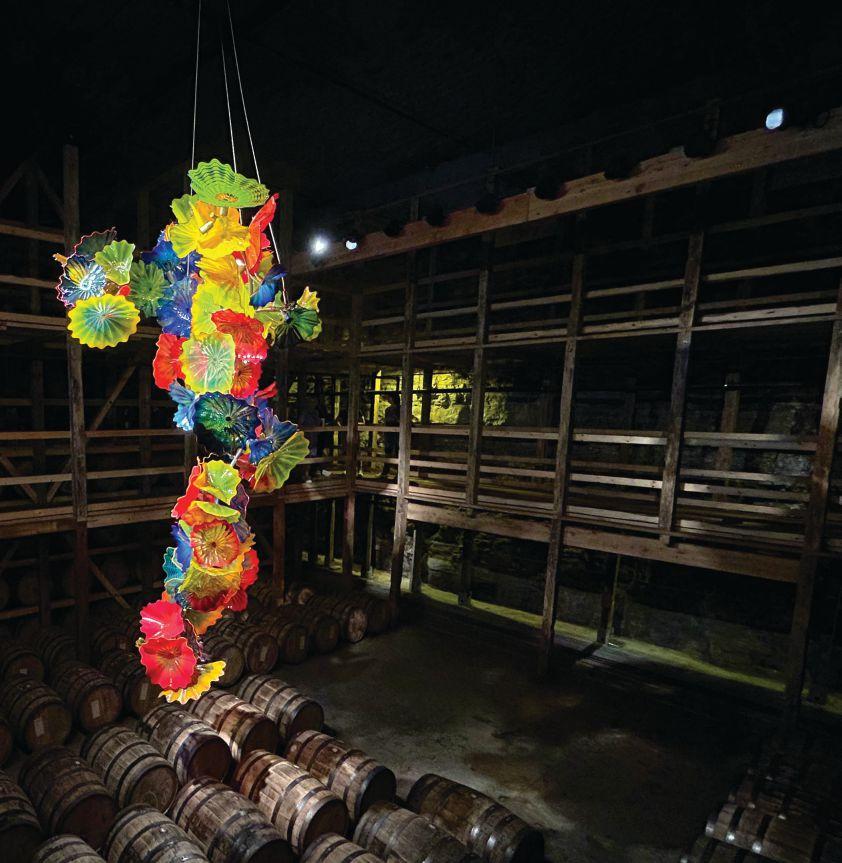
Chihuly situated works in favorite settings such as the Limestone Cellar, where the “End of the Day Persian Chandelier” hangs dramatically surrounded by barrels of private select bourbon. He also used new locations across Star Hill Farm, including Warehouse A, the oldest on the property, in which to showcase his “Venetians,” fve self-contained handblown vases tucked among the bourbon barrels there. It should come as no surprise that
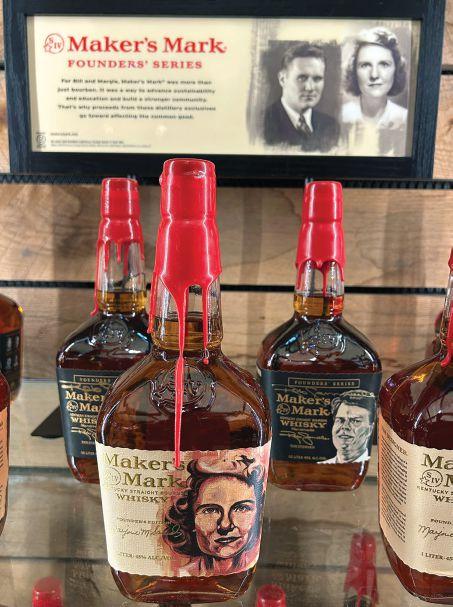
The Maker’s Mark Founders’ Series honors Bill Samuels Sr. and his wife, Margie, who started the distillery in the 1950s.




mounting the Chihuly exhibition at Star Hill Farm is a considerable operational undertaking. According to Trevor Bowles, Maker’s Mark’s VIP experience and trade engagement manager, the planning and execution is a year-long collaboration between the Maker’s Mark and Chihuly teams on everything from walkthroughs for potential sites to landscaping needs to participating in the actual installation of the artwork.
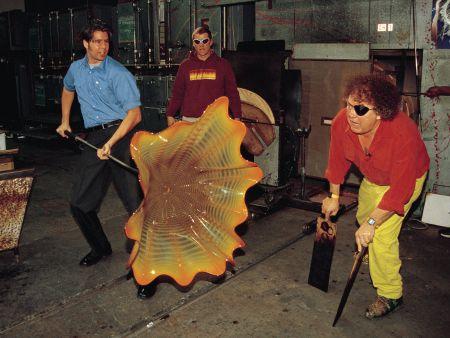
Bowles explained that artwork frst is created and completed in Chihuly’s massive Seattle studio “to see what it would look like in that space.” Ten the pieces are deconstructed and individual pieces boxed and shipped to Loretto on tractor trailers.
“Te installation here took just over a month in total,” Bowles said. “Te fact that the Maker’s Mark team helped install the pieces brings a whole diferent level of connectivity.”

BOURBON THAT BETTERS THE WORLD
Te Chihuly exhibition highlights a number of unique initiatives at Star Hill Farm that marry tradition and modernization to provide a welcoming and immersive experience for guests.
“For my grandfather, handmade meant more than hands on; it was full
sensory engagement,” Samuels said. “And the guiding light continues to be my grandmother’s vision for hospitality. We’ve spent the last few years thoughtfully taking guests into nature. Whiskey is agricultural, and we are deeply committed to Star Hill Farm becoming a showcase of the highest order of environmental stewardship and service to favor.”
Advancing its mission to cultivate “bourbon that betters the world,” Maker’s Mark has become the world’s frst distillery to achieve Regenifed Tier 3 Certifcation, using farming methods that rely on nature to help restore soil nutrients and biodiversity to unlock richer favors from its grain. Maker’s Mark also is the largest bourbon distillery in the world to reach B Corp Certifcation, a refection of its dedication to sustainable agriculture practices.
“Maker’s Mark is leading an efort to
After a visit to Maker’s Mark, Chihuly created “The Spirit of the Maker,” which debuted in 2014. Below, a detail shows some of the 750 handblown glass shapes that comprise the work.
OPEN YEAR- ROUND
Monday - Saturday | 9am - 5pm
COLLABORATION CREATIVE
mentor and partner and inspire and educate growers on this regenerative farming journey,” Samuels said. “We are donating proceeds from the sale of Star Hill Farm Whisky, which we launched early this summer, to propel regenerative farming practices all over the world. And by partnering with Understanding Ag [a regenerative agricultural consulting company] we are going to provide farmers with technical support and education.”
In addition to the Maker’s Mark Distillery, Star Hill Farm comprises an expansive agricultural operation, home to 40 head of Wagyu beef cattle, 400 sheep whose primary job is rotational grazing, and a diverse array of initiatives that provide locally sourced ingredients found in the seasonal cocktail and culinary programs ofered at the recently renovated Star Hill Provisions restaurant.
“Our goal with the cocktail program at Maker’s Mark is to create an authentic experience that showcases local ingredients while interlacing global favors and modern techniques,” said Leslie Krockenberger, Maker’s Mark’s head of cocktail innovation.
A standout on Star Hill Provisions’ current fall harvest menu, “Garden of Earthly Delights,” is the apple butter old-fashioned, featuring a creamy Maker’s Mark caskstrength bourbon, vanilla, oak, and spiced apple butter, which is made in small batches by hand on the farm during apple season.
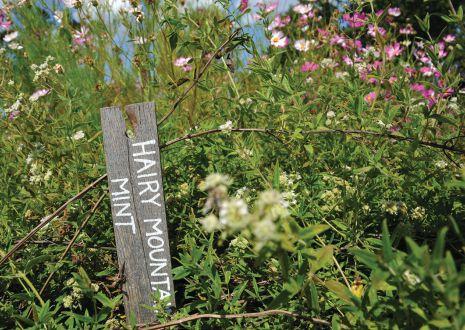
“I am very fortunate to have such a playground of ingredients available to me,” Krockenberger said. “Tings like honey from our apiary; sorghum we harvest every fall; mushrooms including shiitake, wine caps, and other more experimental varietals; apple cider vinegar aged in former Maker’s Mark 46 barrels; Wagyu, both marrow and fat; Alpine strawberries, chicory, horseradish, melons, and tomatoes; and herbs and fowers for garnishes. In the berry patch, we have thornless blackberries for our famous
Above, “Sapphire and Platinum Waterdrop Tower” stands near the visitor center; right, “Sol del Citrón” (2014) pays homage to the sun and its role in producing the grains used in bourbon distilling.
Chihuly (right) supervises the completion of glasswork in his Seattle studio.






COLLABORATION CREATIVE
blackberry jam cake old-fashioned along with seasonal forageable plants like hickory bark, black walnuts, redbuds, magnolias, and golden rod.
“No matter when you come to visit, we invite you to experience bourbon like never before,” she said, furthering Maker’s Mark’s commitment to quality and “the delightfully unexpected.”
Samuels agrees, hearkening back to
his grandparents’ “perfectly unreasonable spirit.”
“Our vision for Star Hill Farm and Maker’s Mark Distillery is to create the most endearing, culturally rich, and environmentally responsible homeplace of any brand in the world,” he said. “Tat’s at the heart of the [Chihuly] exhibition. It’s a proud moment. I hope Kentuckians and bourbon lovers enjoy it.” KM
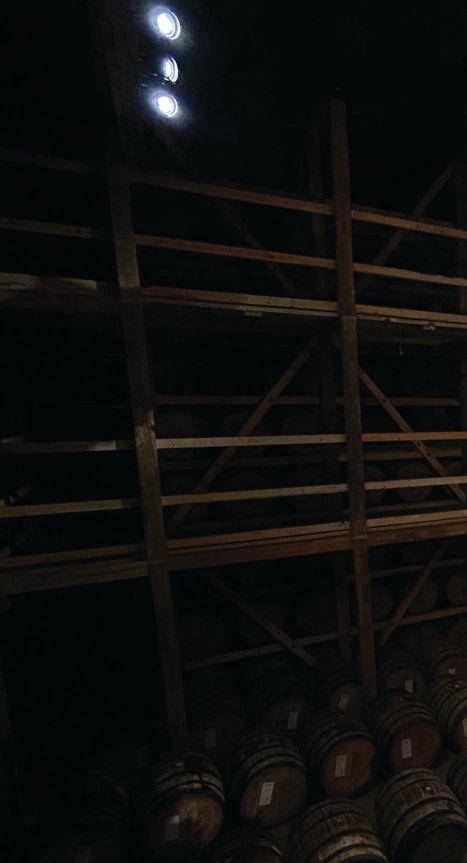
Left, “Marigold Venetian with Pink Clover Coils” adorns the frst foor of the barrel house.
Above, “End of the Day Persian Chandelier” is displayed in the Limestone Cellar.
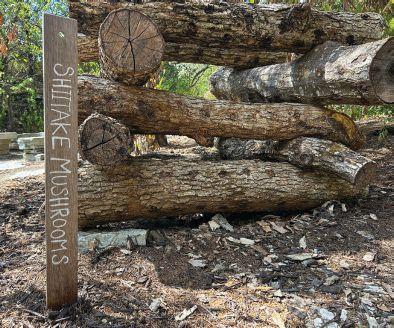
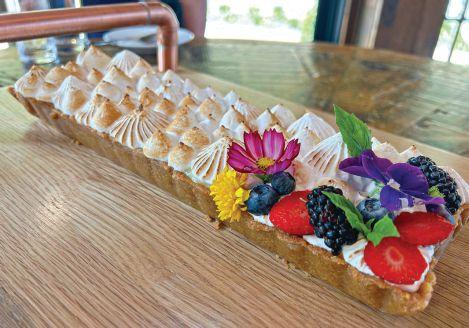
Left, the Maker’s Mark garden provides ingredients found in the seasonal cocktail and culinary programs; center, shiitake mushrooms are among several varieties grown at Maker’s Mark; right, a lemon meringue torte displays a garnish of Alpine strawberries, herbs, and fowers produced on the property.
ENDURING PARTNERSHIP
Chihuly also fgures prominently in Maker’s Mark’s rich history with Keeneland, which dates to 1958 when Keeneland, through its catererTurf Catering, purchased the frst six cases of Maker’s Mark.
“The co-founders of Maker’s Mark chose to reimagine what bourbon could be at a moment in time when it didn’t look like bourbon had a future,” Maker’s Mark Managing Director Rob Samuels said. “Thankfully, the visionary souls at Keeneland had a discerning palate and discovered Maker’s Mark. If not for the racing community of Central Kentucky, I don’t know that Maker’s Mark would have survived.”
Since 1997, Maker’s Mark and Keeneland have teamed on a popular commemorative bottle series, with proceeds from sales raising nearly $10 million to support the local community.The current series, “Greats of the Gate,” supports nonproft organizations in Kentucky’s horse industry and the arts and hospitality.
Maker’s Mark also is the longtime sponsor of the grade 1 Maker’s Mark Mile, for which Chihuly created the trophy in 2014.
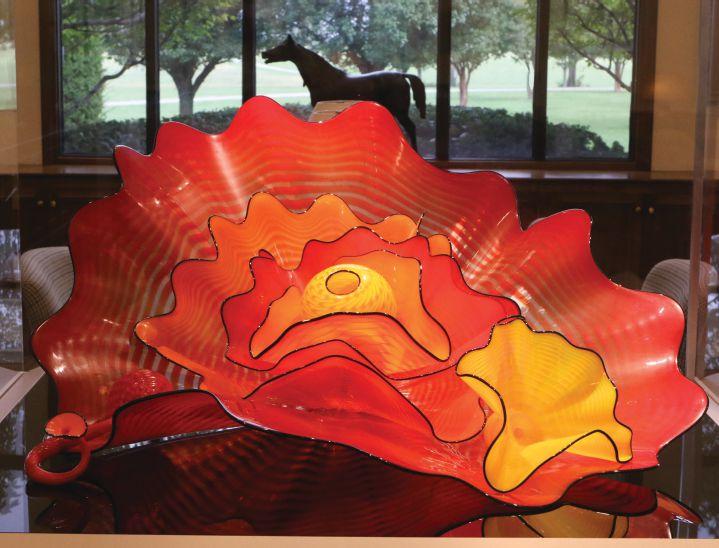
That same year, in celebration of this special relationship and Maker’s Mark’s 60th anniversary, Maker’s Mark gifted to Keeneland a commemorative Chihuly sculpture, “Hunting Coat Red Persian Set.”The piece is on permanent public display in Keeneland Library.
In 2014 Maker’s Mark gifted Keeneland the Chihuly sculpture “Hunting Coat Red Persian Set,” which is on permanent display in Keeneland Library.
We Get It Done!
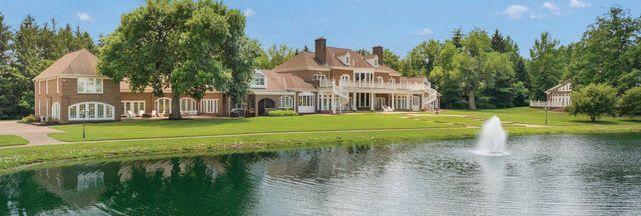
Black Diamond Farm 3591 Paris Pike
This 62± acre estate is certainly one-of-a-kind. With an 18 stall barn and ample pasture space this property is suitable for any equestrian enthusiast. The 17,000sqft main residence is brimming with elegance with stunning fnishes and details throughout every corner of the home. Featuring parquet wood foors, ornate wood paneled walls, intricate moulding and woodwork, vaulted ed ceilings, 2-story living spaces with overlooking balconies, foor to ceiling windows, an inviting kitchen with Thermador appliances, accompanying catering kitchen, Game Room, Sauna and Steam Room, Home Theater, Guest Quarters, and a frst foor primary suite that is a must-see! The 4 car garage features a 2-bedroom guest apartment upstairs with a full kitchen and full bath. The 13,000sqft pool house has a large entertaining space with a full kitchen and bar and an indoor frepit. Upstairs is a living area and guest quarters with bedroom and full bath. The pool features 2 hot tubs and a 10-ft deep end but is in need of repair.
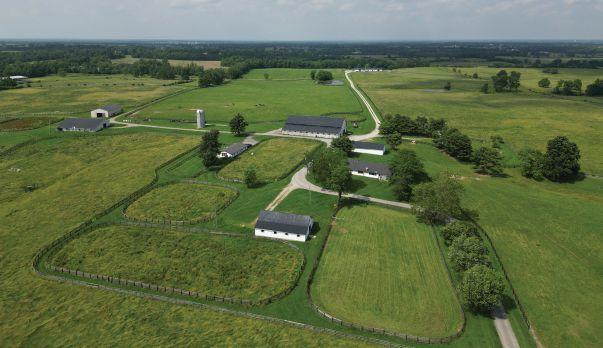
1542 Ferguson Road, Lexington KY
Locust Grove Farm, 193± acre horse farm property located less than 2 miles from Paris Pike and 1.2 miles from Greenwich Pike. Property amenities include 80 stalls over 5 barns with several tack rooms, 2 employee residences, 10 large felds and 7 paddocks with plank fencing and 4 ponds. Straddling the Fayette/Bourbon County line, this land sits on a higher elevation with wonderful scenic views of the surrounding bluegrass. The improvements on this property are in need of renovation and repair, however the infrastructure and land s many opportunities in this fantastic location – 20 minutes to the Kentucky Horse Park, 11 minutes to Paris, 16 minutes to I-64/75 and New Circle Road.

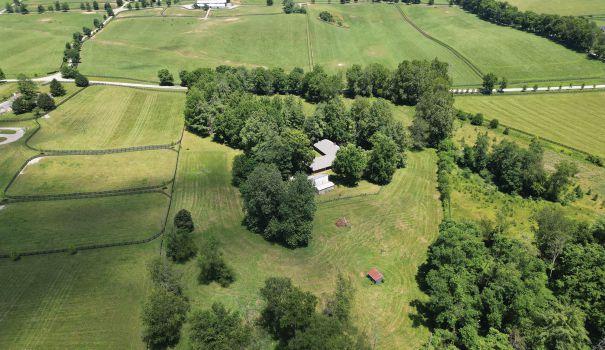
3003 Old Frankfort Pike, Versailles KY
Fantastic location for this 11.68 acre property on Old Frankfort Pike in Woodford County Kentucky! A treelined drive leads to the 5,100+/- sqft brick contemporary style residence with walkout basement. The home includes 4 bedrooms, 4 baths, large family r eplace and much more. Please note that the residence in is need of renovation in several areas. Other amenities include an oversized 2 car garage, a 14×32 metal storage building, some plank fencing and nice rolling topography. This is a unique opportunity to purchase a very sought after location near Wallace Station, Three Chimneys, Endeavor, and other noteworthy Woodford County landmarks.

NEW LISTING

Featured Listings
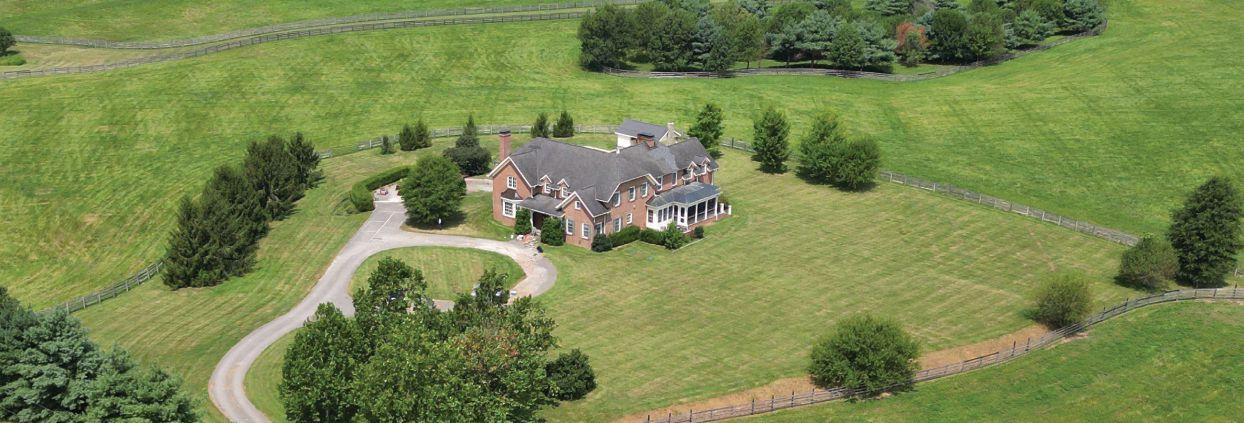
Royal Oak Farm, 613 Hutchison Road
Royal Oak farm is a well located 283 acre working Horse Farm between Lexington and Paris KY aris Pike. The current owners have crea operty on which to raise some of the best equine athletes in the world. Amenities include a lovely 2 story brick main residence and pool, built in 2005 with over 5,500 sqft of living space that includes 5 bedrooms, 4 full baths, large kitchen, expansive great/family room, formal living and dining rooms, lovely freplaces, all with 10ft ceilings and antique hardwood foors. Farm improvements include 70 stalls in 6 barns, over 20 paddocks and 8 large felds, a maintence and hay storge area, employee residence, employee barn apartment and much more.
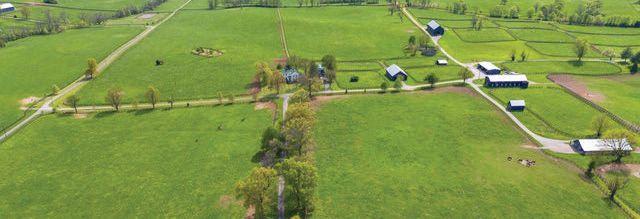
Cave Spring Farm, 3555 Keene Road
Stewarded by the same family for generations, there are no other farms of this size and potential on the market today. 744 acres well-located near newly developed neighborhoods and amenities, the Jessamine County farm has most recently been utilized for horses, cropland, & cattle. Residences include a charming historic home with an original stone portion dating from the 1790s. An employee home adds further accommodations. Several large felds and 18 paddocks are equipped with plank fencing and automatic waterers. Five converted tobacco barns contribute 61 stalls, while an equisizer, outdoor arena, and round pen add utility.
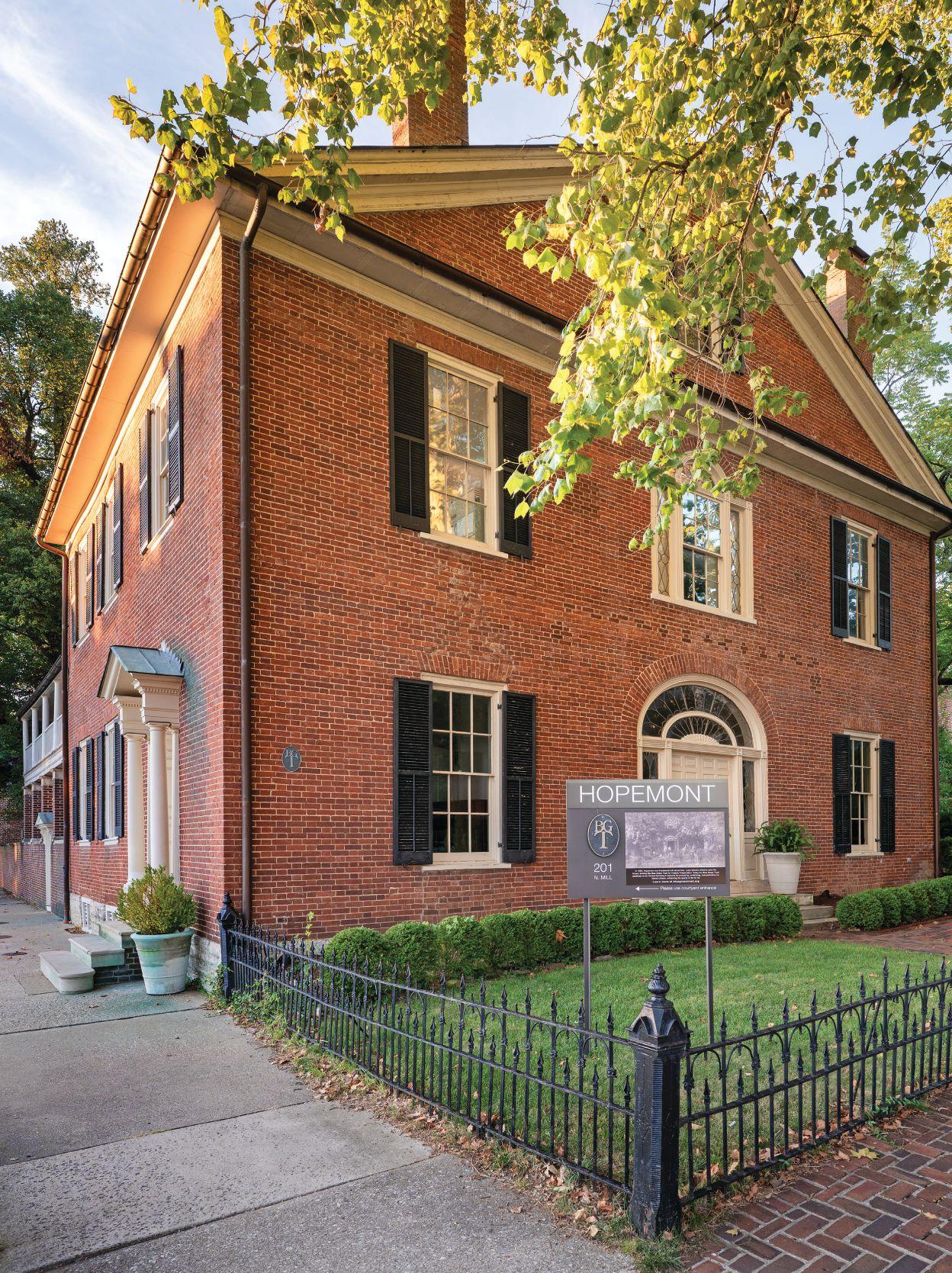
Hopemont, home of the
family, stands today as testament to the determination of Lexington’s early preservation supporters. Right, the
John Wesley Hunt
Blue Grass Trust plaque is highly coveted.

Preservation with a PURPOSE
THE BLUE GRASS TRUST FOR HISTORIC PRESERVATION celebrates 70 years of valuing history and culture
By William Bowden
Photos Rey Au
THE YEAR WAS 1955 and the wrecking ball was working its relentless way up North Mill Street in downtown Lexington headed toward Hopemont, an 1814 mansion that had been the home of the prominent John Wesley Hunt family. Just across Second Street from Hopemont, the 1798 Colonel Tomas Hart house had already been demolished.
A group of about 20 concerned citizens, who had formed the Foundation for the Preservation of Historic Lexington and Fayette County, persuaded the owner of Hopemont to sell them the imposing Federal-style residence so it could be saved. Tat group incorporated as the Blue Grass Trust for Historic Preservation, a nonproft organization that turned 70 this year while rejoicing in two birthday presents of lasting signifcance.
Photos by Joseph Rey Au
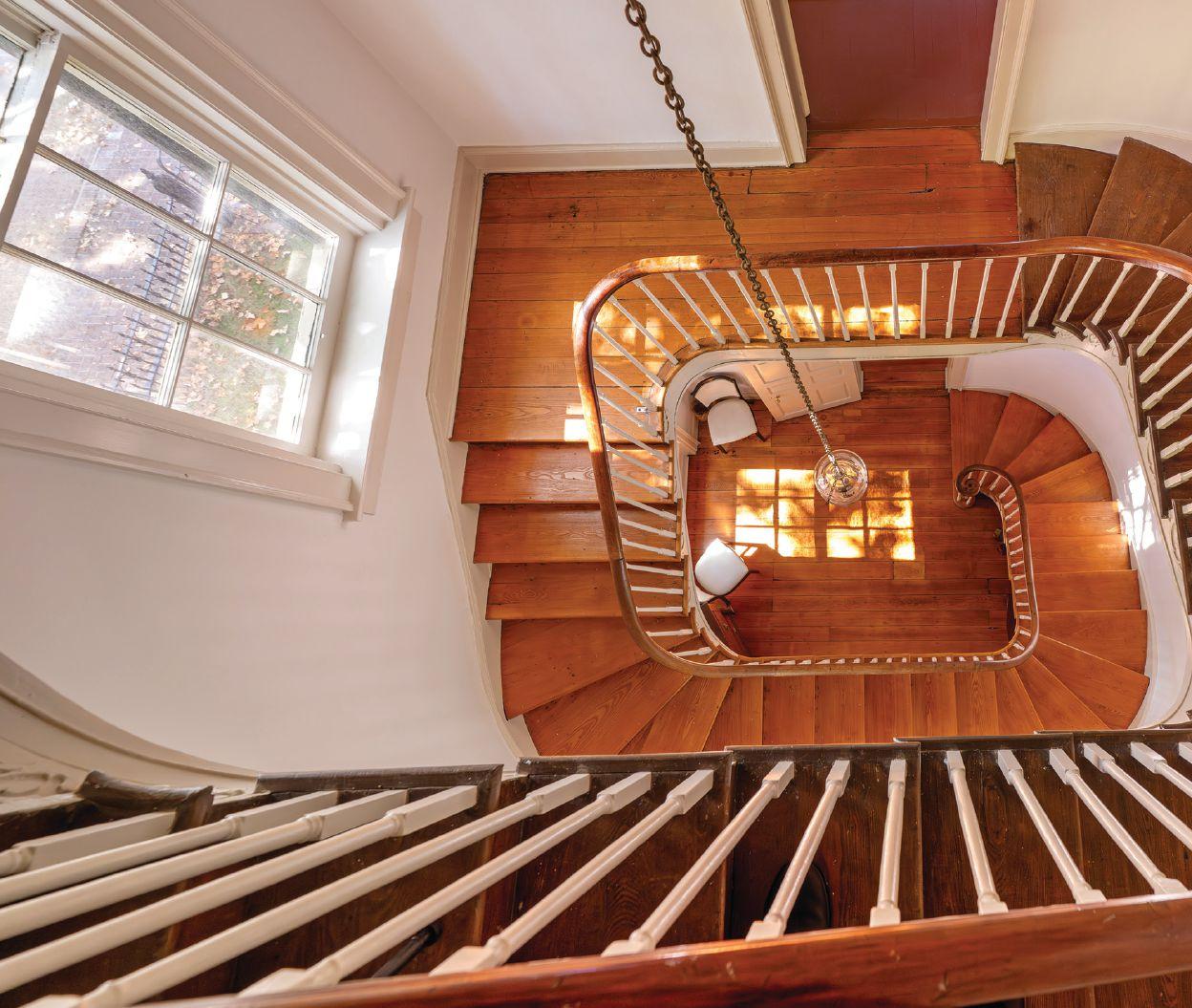
A public/private partnership was announced by the Blue Grass Trust in May that will make possible a phased $3.4 million rehabilitation of the 1811 Pope Villa. Tis Lexington residence was designed by renowned architect Benjamin Henry Latrobe and is one of the most notable Federal-era homes in the nation.
Tat was followed in August by news of a $600,000 grant from the Andrew W. Mellon Foundation, the largest operational grant in the history of the Blue Grass Trust. Te funds will be used to create a comprehensive Preservation Center (see sidebar) to be located in Hopemont, which has been restored to its 1814 appearance and houses the organization’s headquarters.
“Te Pope Villa initiative is the culmination of a nearly fourdecades-long process and is a dream come true for our organization,” said Jonathan Coleman, executive director of the Blue Grass
Trust. “And creation of the Preservation Center will allow the public to more easily access all of our programs in a centralized area.”
Tose two events made for an auspicious framework to the Blue Grass Trust’s year of looking back at its grassroots beginnings, noting its accomplishments over the past seven decades, and planning for an increasingly active future.
A GRASSROOTS GROUP
Te Blue Grass Trust defnes itself as a grassroots, membershipbased organization dedicated to protecting, revitalizing, and promoting historic buildings and places in Lexington and Central Kentucky. Its ethos is centered on a three-part value system: education, advocacy, and service.
“We are a resource for historic preservation in all its aspects,”
In addition to its grand exterior, Hopemont contains such architectural highlights as the cantilevered staircase that rises three stories.

Coleman said. “We realize that preservation can be seen as bureaucratic, expensive, or overwhelming. A lot of people don’t know where to start. We want people to know that we ofer friendly, informed expertise to help walk them through the process.”
Te Blue Grass Trust owns and provides stewardship for a select group of historic properties. Te organization focuses much of its energy on inspiring others to take up the preservation cause in a grassroots way.
Although the organization supports community eforts to save historic buildings from demolition through its advocacy eforts, that role has its limits. “We are not the arbiters for what buildings are worth being saved and we have no legal power in that regard,” Coleman said. “People in the community already know the places they value. We want to partner with them to preserve what matters to them.”
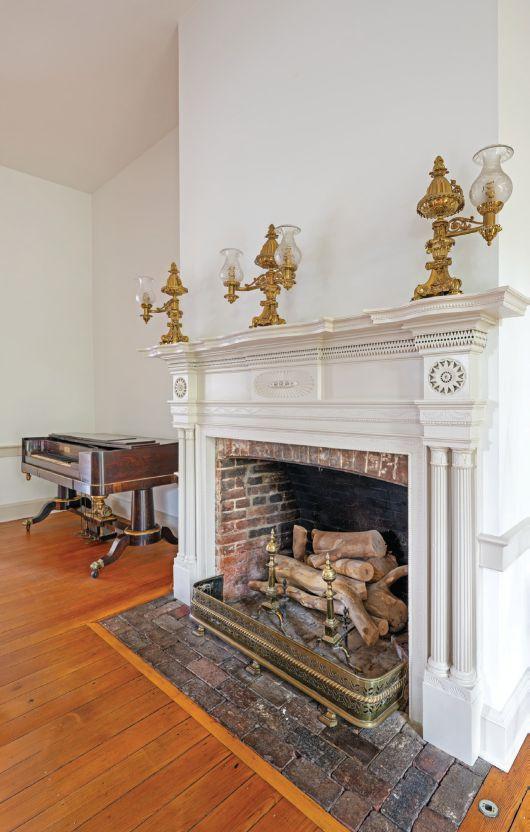
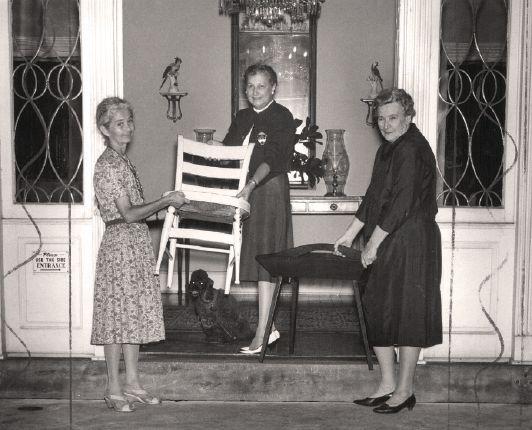
Intricate woodwork adorns a freplace on the frst foor.
Preservation proponents bring furniture into Hopemont in the late 1950s.
Preservation with a PURPOSE
As historic preservation manager, Zak Leonard takes a leading role in putting the ethos of the Blue Grass Trust into action. For example, he is responsible for the recently introduced feebased consulting services for property research and for assisting with applications for National Register of Historic Places designation and historic tax credits.
Leonard helps fulfll the organization’s educational goal by turning his property research into stories for social media and public lectures. Tis provides a platform for advocacy campaigns to help save historically signifcant buildings. Tat efort may involve Leonard reaching out to individual property owners. “Sometimes people buy property without knowing its historic value,” he said.
Leonard also creates content for the “Tour the Historic Bluegrass” website, a project of the Blue Grass Trust. “We just introduced a virtual tour titled ‘Log and Stone Buildings of Early Lexington,’ which are pre-1830,” he said. Tat tour ties in with the city’s celebration this year of the 250th anniversary of its founding in 1775.
Te deTours program, handled by Jackson Osborne, community outreach manager, features guided tours of historic places not normally open to the public. Ofered on the frst Wednesday of each month beginning at 6 p.m., the tours have included such sites as the 1859 Giltner-Holt House in Franklin County and the mid-century modern 1964 Hanover Towers in Lexington.
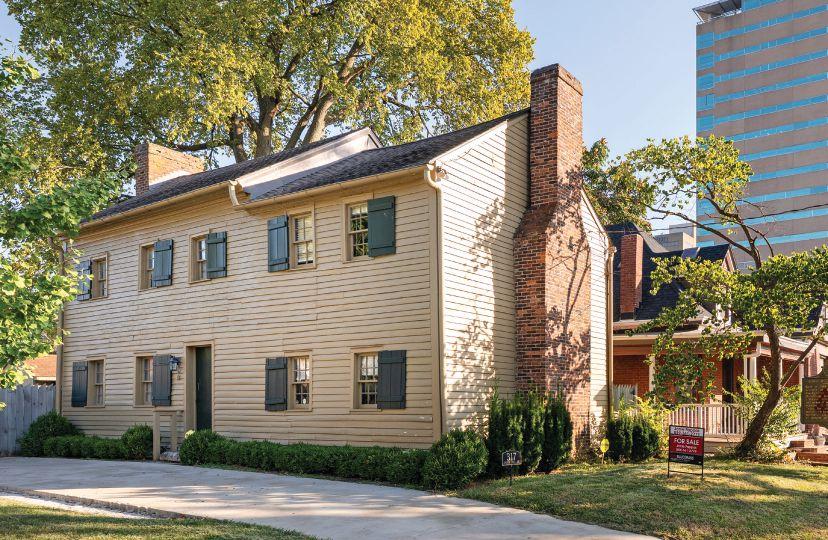
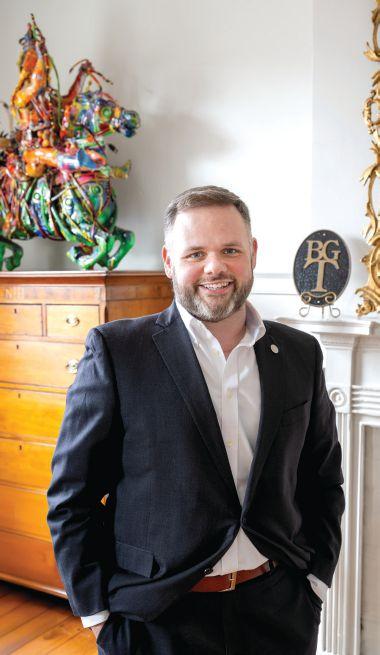
Leonard is responsible for the most visible sign of the Blue Grass Trust’s presence in the community, a program that authorizes owners to place a “BGT” plaque on the outside of buildings that are at least 50 years old and meet certain historic and architectural integrity guidelines.
Te plaques are recognition that owners have researched the history of their property and passed an application and review process. As such, they are an emblem of civic pride in Lexington history. However, the plaques are strictly symbolic and do not protect properties from demolition or restrict aspects of renovation. Te organization has awarded more than 800 plaques since the program’s inception in the 1970s.
The BGT, with the support of the late businessman and philanthropist Alex Campbell Jr., saved the 1784 Adam Rankin House from demolition in 1971 by having it moved from its High Street location to its present site at 317 South Mill St. Before that move, it was Lexington’s oldest house to still be on its original site.
Jonathan Coleman, executive director of the Blue Grass Trust, encourages citizens to partner with the organization to preserve what is important to them.
PLAQUES PIQUE INTEREST
Te plaque program was the hook that got Carol Martin involved in the Blue Grass Trust in a grassroots way through her interest in historic preservation. She and her husband, Rodney, purchased an 1816 house at 184 North Mill St. in 2014 and soon got busy restoring it. It was a big job that took two and a half years as the home was structurally unsound.
“I didn’t know anything about the Blue Grass Trust until we purchased that house and saw the BGT plaque on the outside,” said Martin, a retired federal prosecutor. “We started noticing the BGT plaques around town and wondered what that was.”
Teir interest piqued, she and Rodney became members of the Blue Grass Trust, where Carol got involved as a volunteer for the Antiques and Garden Show, a fundraising event later discontinued. She eventually became a member of the board of directors, where she now serves as vice president. She has seen the organization



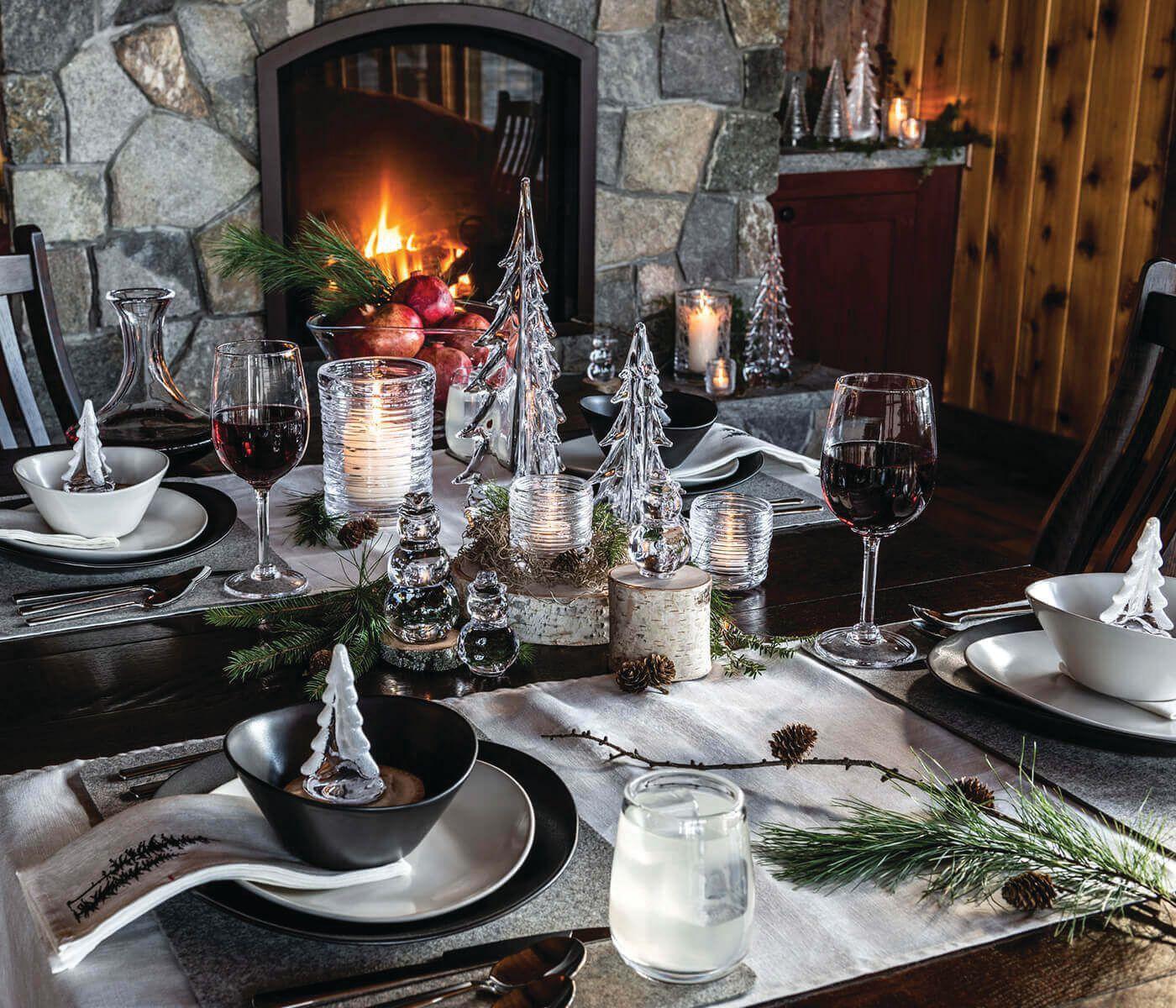

Preservation with
a
PURPOSE
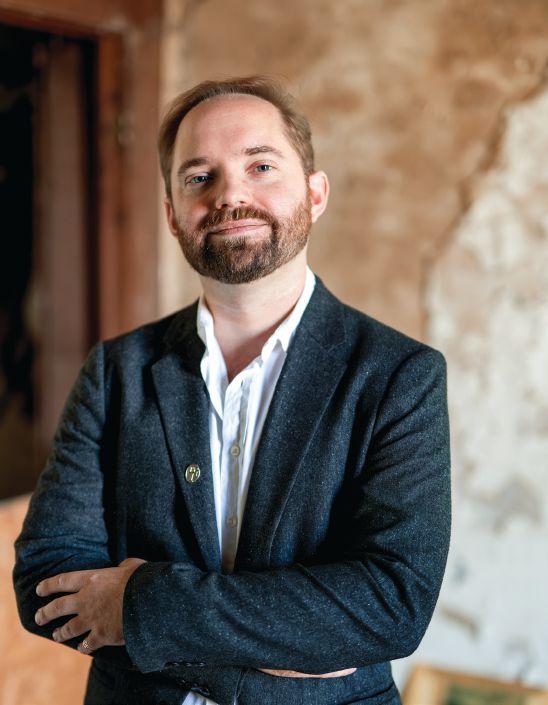
mature and become increasingly valuable to those interested in historic preservation.
“When Rodney and I started our restoration project, we fgured it out on our own,” Carol said. “We found people who work on historic buildings and explored historic tax credits. Now, the Blue Grass Trust ofers many resources and a directory of services to locate, for instance, a mason or someone who does plaster work.”
Te Martins moved on to another historic restoration project in 2021, an 1870 house on West Tird Street, where they now reside.
POPE VILLA
In terms of historic architecture, the restoration of Pope Villa rates as the Blue Grass Trust’s most signifcant project. Designed for U.S. Sen. John Pope and his wife, Eliza, it is one of only three
remaining homes in the nation designed by Benjamin Henry Latrobe, who is ranked among the nation’s frst professionally trained architects. He was a contributor to the design of the U.S. Capitol, especially its rotunda, which Latrobe mimicked in this home.
Pope Villa sits unobtrusively at 326 Grosvenor Ave. in a pleasant neighborhood near the University of Kentucky. Its modest setting belies its stature as an important landmark that is listed on the National Register of Historic Places. Te clean, classic lines of the residence were considered avant-garde in their day and have stood the test of time. Te home looks as quietly elegant today as when the Pope family moved in.
“We cannot overestimate the historical value and uniqueness of design of the Pope Villa,” Coleman said. “Te residence is so beyond its time and feels much more modern than something built in the early 19th century. It’s a perfect encapsulation of what the designer envisioned for the American home. Te fact that we have such a well-designed Latrobe building in Lexington is remarkable.”
Te Blue Grass Trust purchased the home in 1988 just afer a devastating fre the previous year lef the interior in ruins. Te fre had the saving grace of revealing that the original core structure was still intact even afer the building had been cut up into apartments in years past. Tat made restoration feasible and worthwhile.
Among the home’s architectural distinctions is a grand interior rotunda with an oculus on the second foor, which highlights apsidal (rounded) spaces originally designed for entertaining.
Te current rehabilitation will illustrate Coleman’s point that many historic buildings are not just artifacts of history but also serve a contemporary, useful purpose. Te project will result in a meticulously authentic restoration on the outside and adaptive reuse on the inside.
“Te vast majority of historic buildings are not sealed in amber as a museum but have other lives to live,” Coleman said. “Te interior of Pope Villa will be a mixed-use space. Te primary rooms will be open to the public while the secondary rooms will be leased for light use like law ofces.”
Te project is being handled in partnership with Mitchell Park Companies, a preservation-focused development frm in Washington, D.C. It will carry out the restoration under the guidance of the Blue Grass Trust. Upon completion, Mitchell Park will manage the property with an option to purchase.
Te frm continues to work on completing the fnancial
Zak Leonard, the Blue Grass Trust’s historic preservation manager, assists with applications for the National Register of Historic Places among other duties.









At Coles, a meal is never just a meal. It’s a celebration of living and dining well. Where the freshest local ingredients are plated with care and paired with an award-winning wine list, and the entire experience is steeped in the warmth and welcome of Southern hospitality.


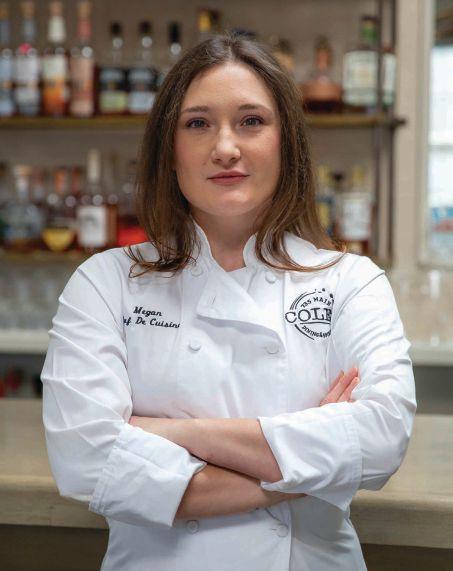























Preservation with
a
PURPOSE
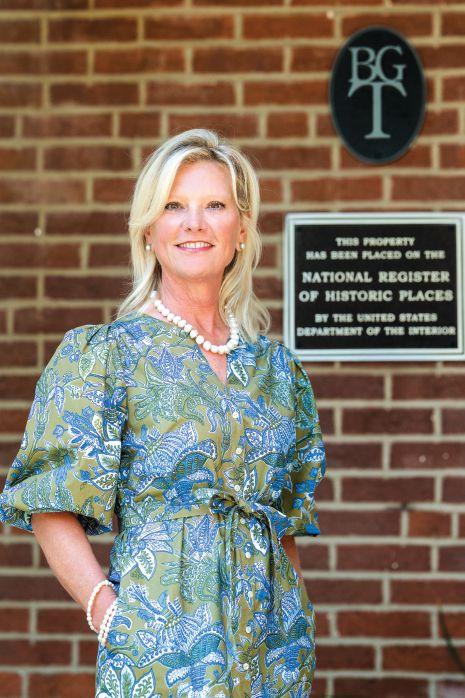
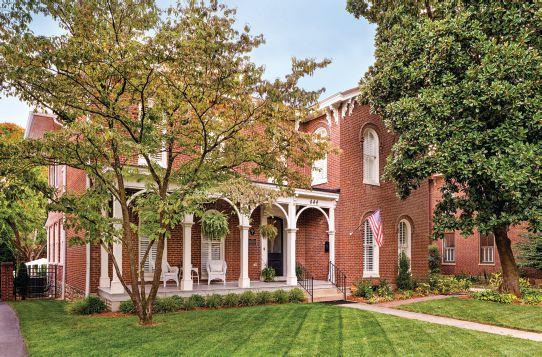
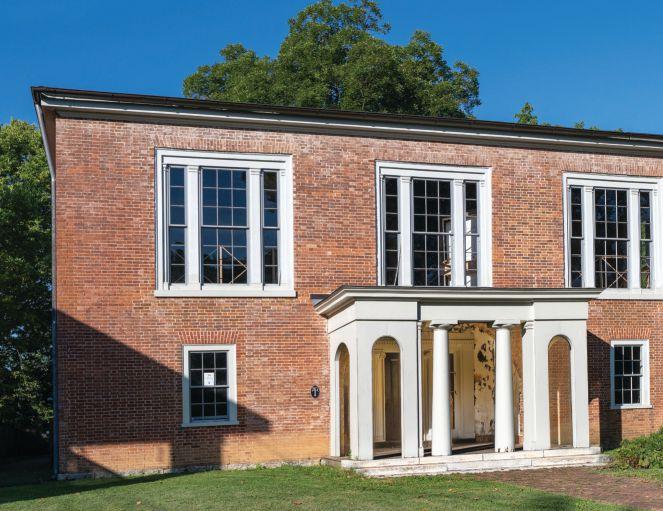
package. A major funding boost came from a $748,467 Save America’s Treasures grant. Te grant proposal originated in a Blue Grass Trust committee, which included current members of the newly formed Friends of Pope Villa, a separate organization. Historic tax credits will also be part of the package. Te project is slated for completion within three years.
THE PALMER PHARMACY
One of the more meaningful restoration projects orchestrated by the Blue Grass Trust involves the Palmer Pharmacy building at the corner of Chestnut and Fifh streets in east Lexington. It is a prime example of how historic preservation has widened its scope in recent years to include formerly overlooked aspects of Lexington’s past.
Te pharmacy was built in 1961 by Zirl A. Palmer, a prominent civic leader who became the frst African American in the nation to own a Rexall drugstore franchise. He envisioned his business as much more than just a pharmacy. Te original name was Palmer’s Pharmacy, Luncheonette, and Doctor’s Ofce.
Te combination of pharmacy services and soda fountain on the main foor, plus two physicians and a lawyer in suites on the second level, made the location a popular gathering place for the city’s thriving East End African American community. Te pharmacy is credited with having a major impact on the health and wellness of the area’s residents.
In recent years the building sat abandoned and at one point was slated for demolition. In 2018 the Blue Grass Trust formed the Palmer Pharmacy Consortium. With a generous lead gif from the Marksbury Family Foundation and other funding sources, the stage was set for United Way of the Bluegrass to take ownership in 2023.
Today, the building is a WayPoint Center named afer the Marksbury family. It brings coaching and counseling services to underserved, low-income neighbors on subjects such as budgeting that are designed to help them fnd a pathway to a thriving life.
Top, Carol Martin, vice president of the trust, became interested in the organization when she saw a BGT plaque on a property she and her husband purchased and renovated. Above, their current home is their second historic renovation project.
Pope Villa is the recipient of a phased $3.4 million rehabilitation. Designed by renowned architect Benjamin Henry Latrobe, Pope Villa is one of the most notable Federal-era homes in the nation.
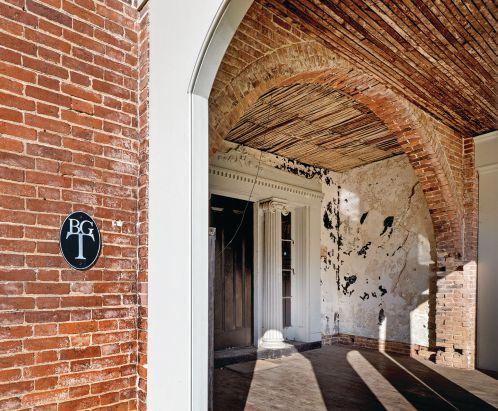
“We owe all of this to the Blue Grass Trust,” said Timothy Johnson, immediate past president and CEO of United Way of the Bluegrass, who was actively involved in the restoration project. “Te trust kept the idea of the Palmer Pharmacy alive in the community’s collective consciousness and was at the forefront of making sure the building remained relevant.”
Te restoration also kept alive the impressive legacy of Palmer himself, who became the frst African American member of the University of Kentucky’s board of trustees in 1972. He was also a member of the Greater Lexington Chamber of Commerce, the Fayette County Board of Health, and the Kentucky Commission on Human Rights.
Te Palmer Pharmacy project is a prime example of the Blue Grass Trust’s Solidarity Statement, which commits the organization “to tell the stories of our historic structures with a wider lens,” especially those related to the cultural legacy of the city’s Black community.
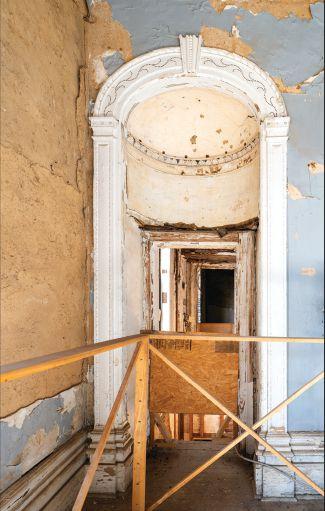
“ WE ARE A RESOURCE FOR PRESERVATION IN ALL OF ITS ASPECTS.”
— JONATHAN COLEMAN, EXECUTIVE DIRECTOR OFTHE BLUE GRASSTRUST
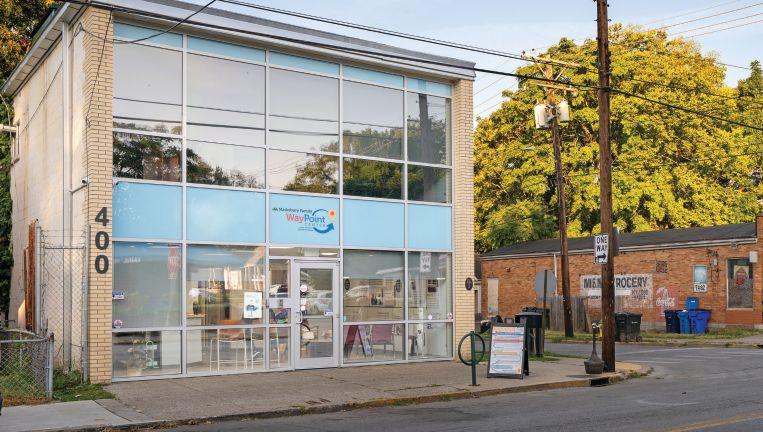
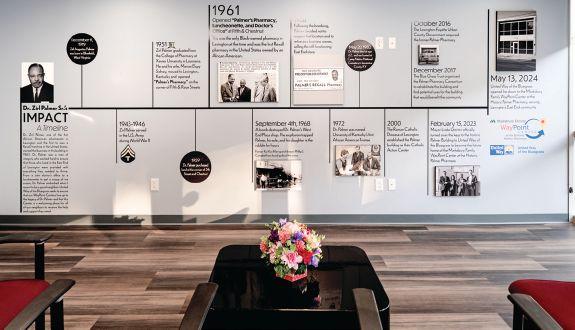
An illustrated timeline highlights the pharmacy’s signifcance over the decades.
Restoration of the Palmer Pharmacy revealed its importance to Lexington’s African American community.
The Blue Grass Trust purchased Pope Villa in 1988, a year after a fre left the interior in ruins. Its many architecturally signifcant features include an interior rotunda on the second foor.
Preservation with a PURPOSE
PRESERVING THE ESSENCE
As president of the Blue Grass Trust board of directors, Richard Schein provides an overall perspective on the organization’s role in preserving the essence of Lexington’s history and culture.
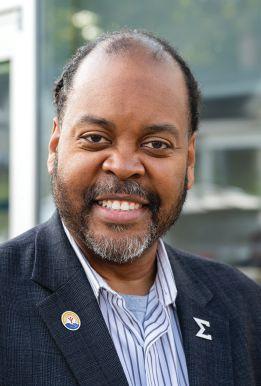
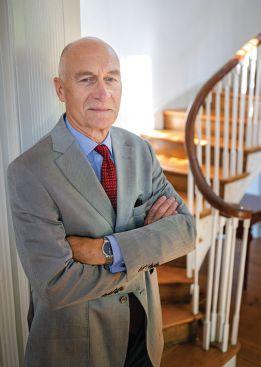
Richard
Schein is a professor of geography at the University of Kentucky who refers to himself as a human and historical geographer. He has taught historic preservation and also has an appointment in the College of Design at UK. He and his wife, Sue Roberts, live in an 1849 house in Midway.
“I write about cities a lot, how neighborhoods develop, what we build and tear down,” Schein said. “Preservation concepts in the United States have changed a lot in the past 30 to 40 years. Studying the success of the free Black population in Lexington in years past and the changing sociallandscapeitrepresentedis one of the reasons I got involved with the Blue Grass Trust.
“I am proud to be part of how the trust now involves the whole community. So many stories about our history and culture live in the architecture, in the built environment. Honoring these echoes of our past is a fundamental value of historic preservation.”
Coleman added this fnal thought: “We want to build a culture of historic appreciation in Lexington and Central Kentucky, to where preservation comes a little more naturally. Tis will let us appreciate our sense of place and the stories of where we come from. Tat does a lot for us in so many ways.” KM
›› For more information, visit bluegrasstrust.org.
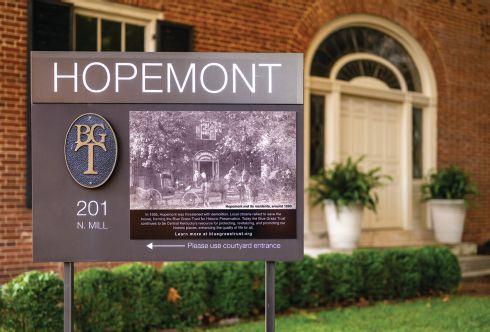
A new Preservation Center will be housed in Hopemont, headquarters for the Blue Grass Trust.
NEW PRESERVATION CENTER WILL STREAMLINE SERVICES
The Blue GrassTrust for Historic Preservation has long been a source of education, advocacy, and service for anyone interested in the cause of preservation in Lexington and Central Kentucky. Now, thanks to a $600,000 grant from the AndrewW. Mellon Foundation, the organization will be able to offer those core values in a more focused and convenient manner.
The creation of a new Preservation Center, to be housed in the Blue GrassTrust’s headquarters within historic Hopemont, will allow the organization to showcase all of its resources in one centralized area.The grant will also support two new staff positions to manage the center, which is expected to be fully operational by 2027.
The project will result in the main foor being open to the public on a regular basis. Features will include a directory of preservation specialists for restoration and rehabilitation work, access to consultants for property research and related tasks, and information about the Blue GrassTrust’s advocacy efforts.
Specifc spaces will be allocated for tutorials, classes, workshops, a preservation-focused library, and a help desk. Local history exhibits will educate visitors about the impact of preservation work the trust does.The new staff positions will include a manager and a coordinator of African American preservation.
“This will be a one-stop-shopping destination for everything we offer,” said Jonathan Coleman, executive director of the Blue GrassTrust. “We have always been here to provide resources, but now we will be able to do a much better job of that. People will become more aware that we are the ideal starting point for all matters related to preservation.”
The United Way’s Timothy Johnson was actively involved in the Palmer Pharmacy restoration.
Schein is president of the Blue Grass Trust’s board of directors.


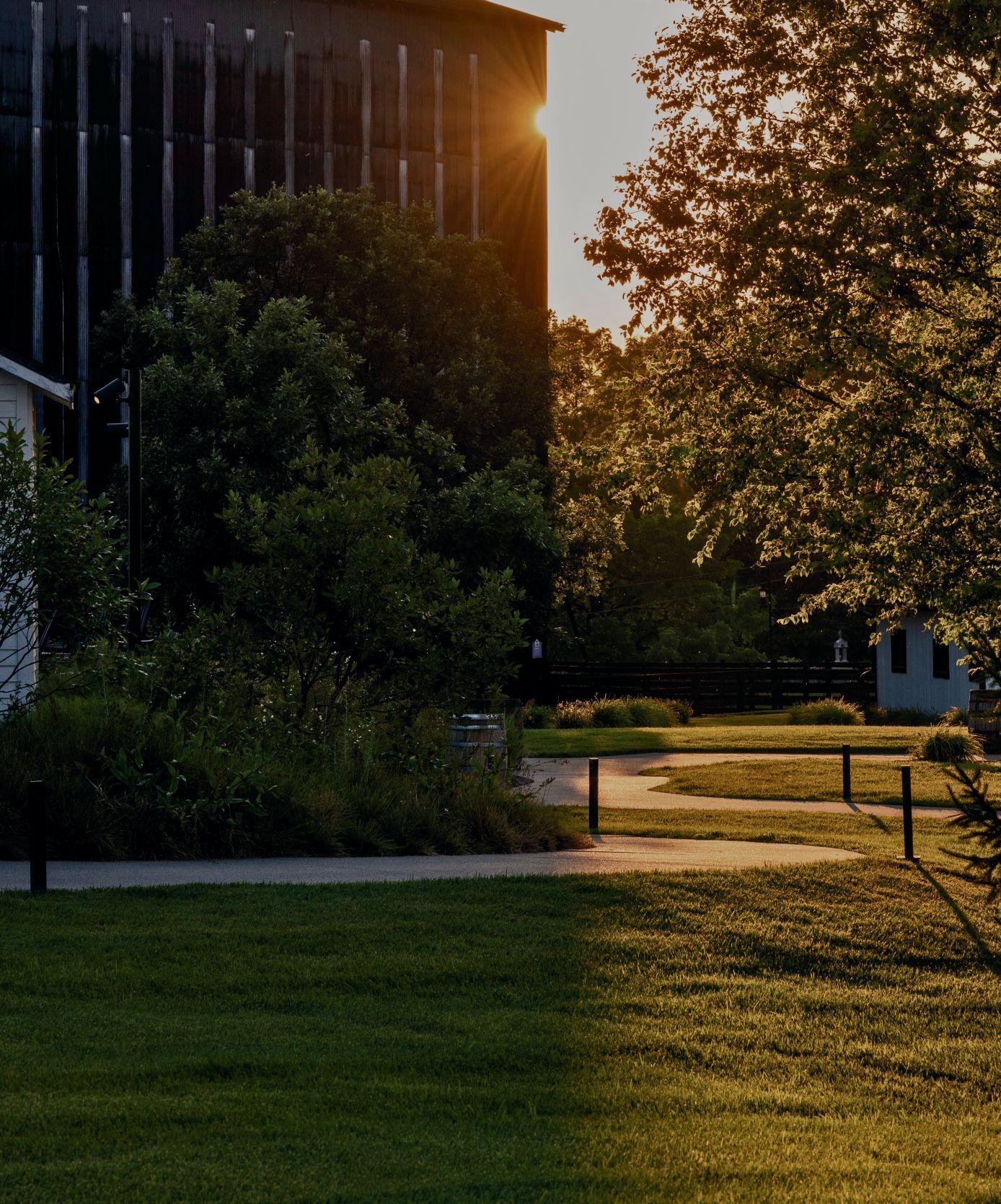


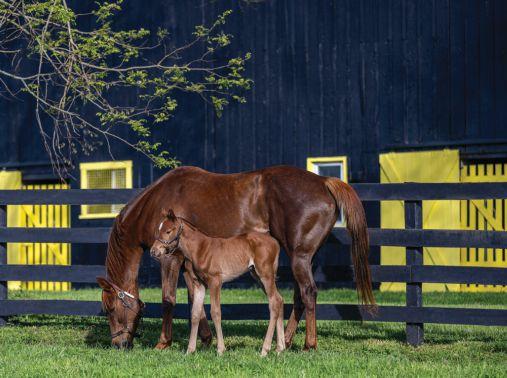



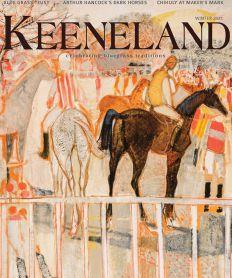













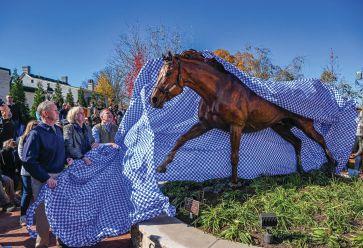
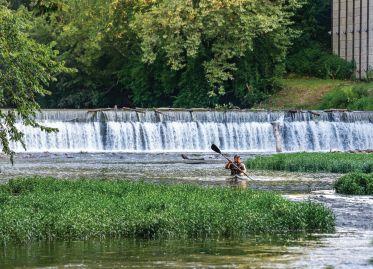
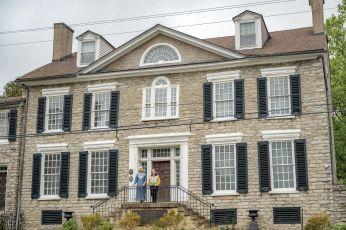
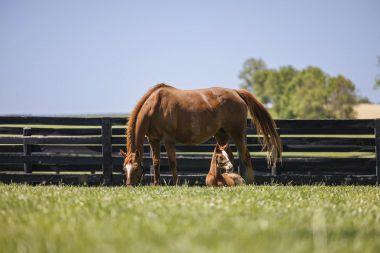

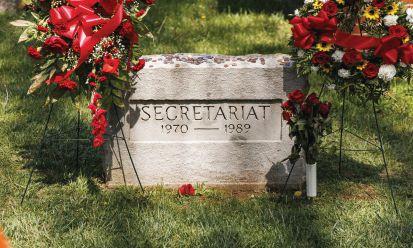
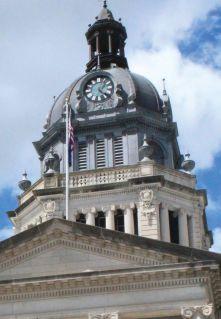

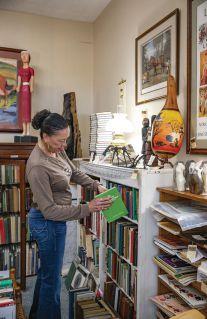
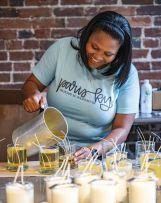
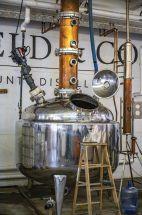



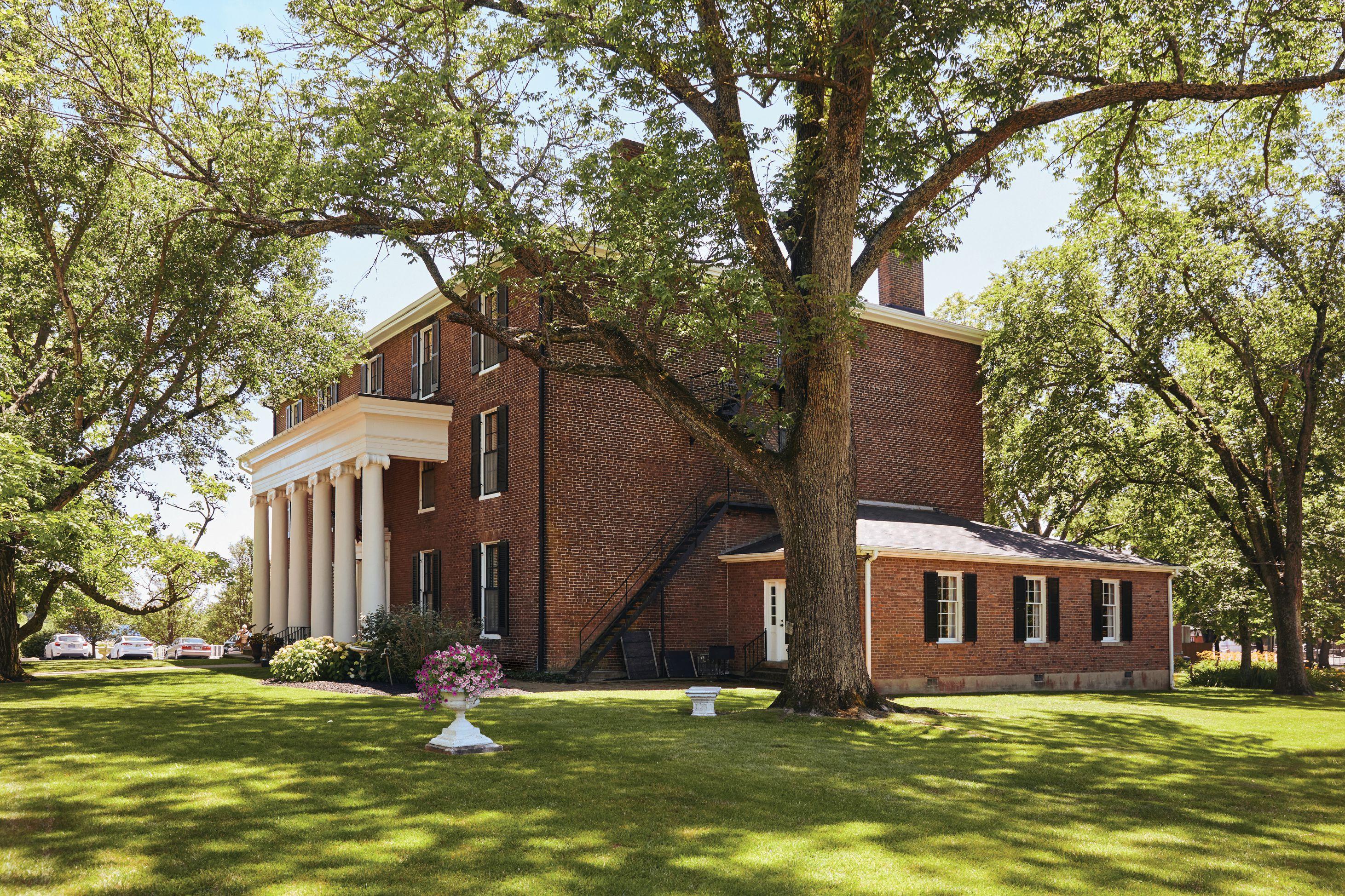
Step into a world where every bite tells a story.
The Kentucky Historic Dining Guide features locally-owned restaurants housed in buildings listed on the National Register of Historic Places.
Here, history isn’t just something you read about —it’s something you can taste.
Beaumont Inn | Harrodsburg, KY











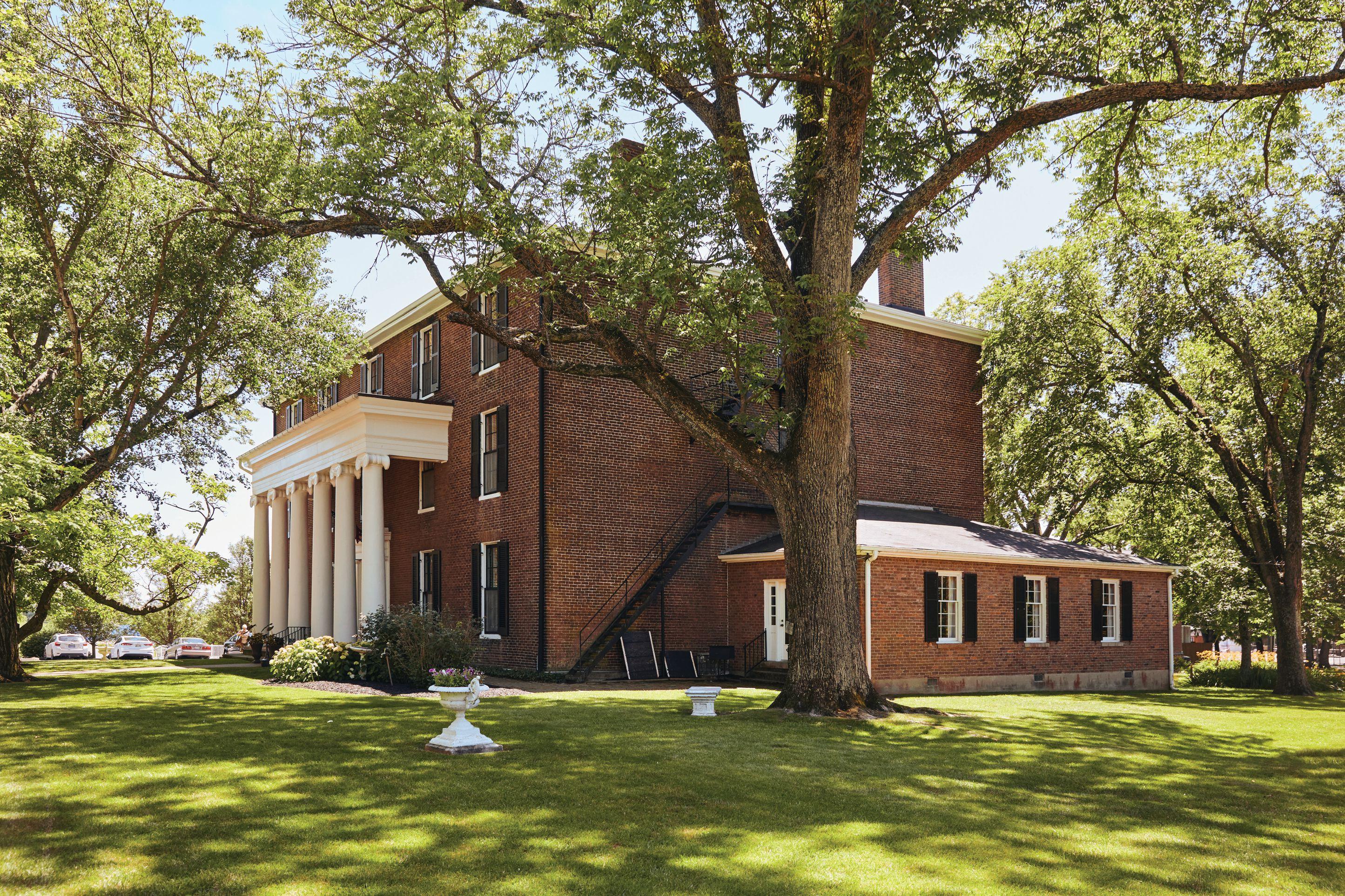
















THAT’S







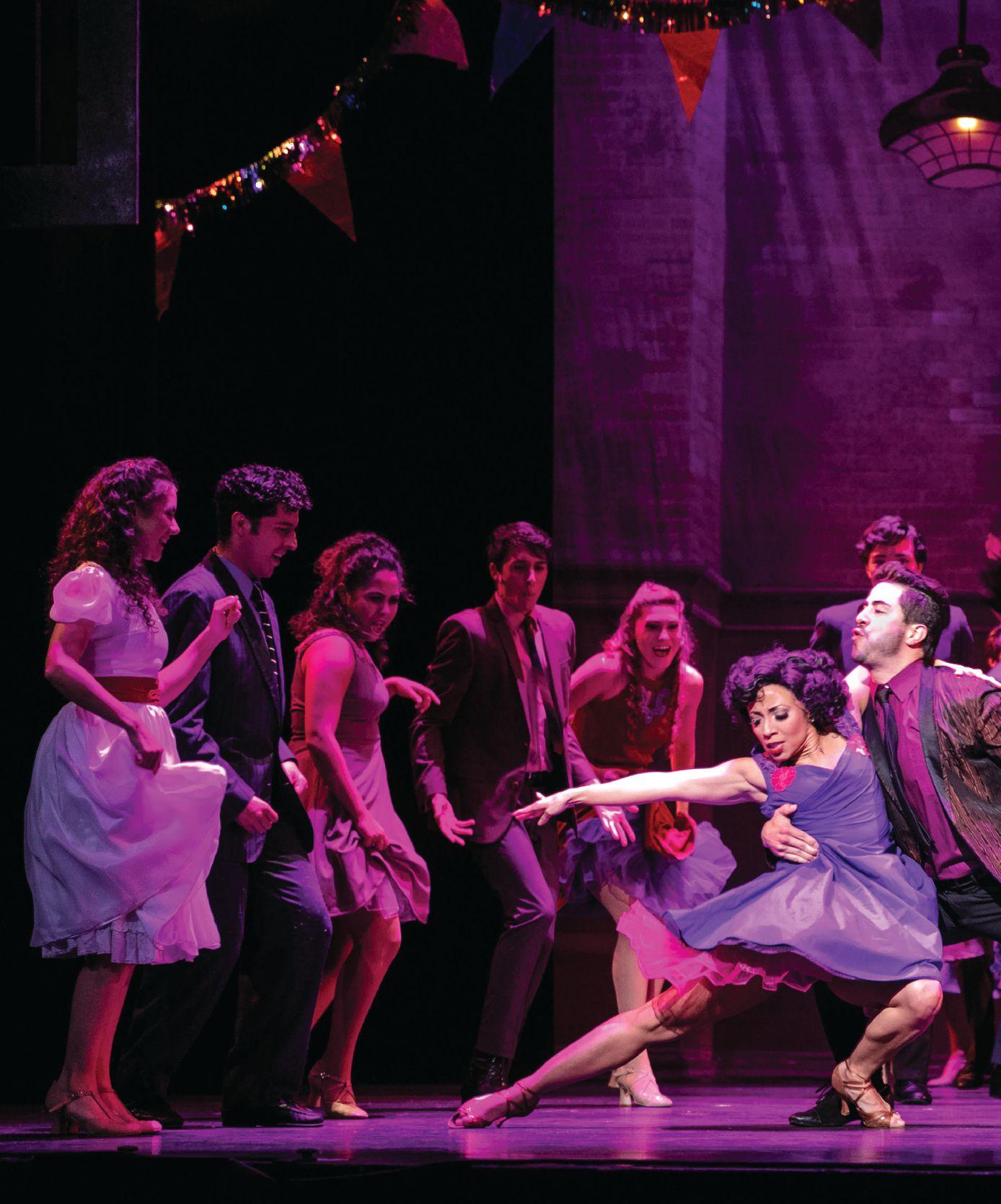
The Lexington Opera House is home to productions such as “West Side Story,” staged by the Lexington Theatre Company.











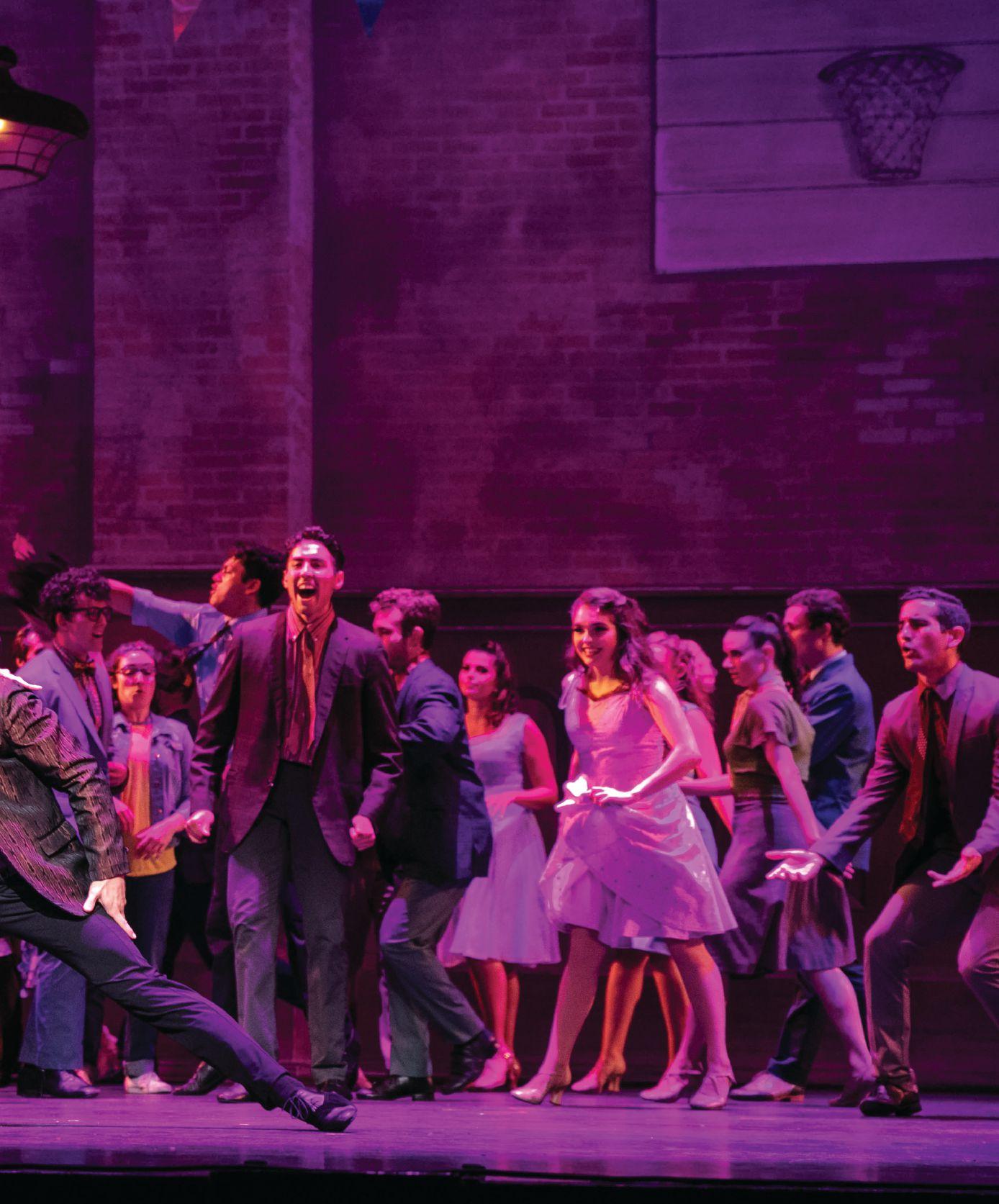



By Rich Copley






THE LEXINGTON OPERA HOUSE continues to draw fans with its Broadway Live performances, big-name singers and comics, and local productions
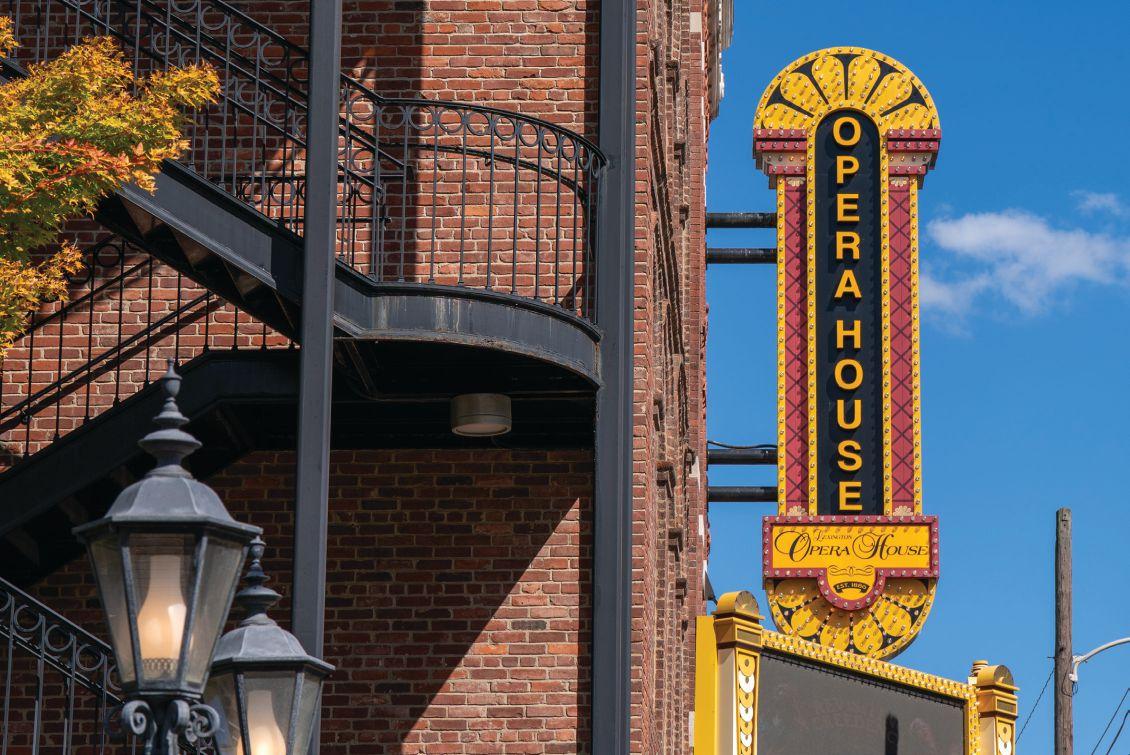


n an early fall Saturday night, a man carefully makes his way from the concession window to the ornate door of the Lexington Opera House, balancing a couple of beers in one hand and his phone with his ticket open in theother.
“Whatcha got?” Opera House Guest Services Manager Cheryl Wright asks, checking his ticket and pointing him to his seat. She quickly moves to the next patron, then the next. Every crowd is diferent, she says, but the aim is always the same: to make sure guests have the best night possible.
“I’d rather see a show here than anywhere else,” said retired teacher Karen Barjuca, one of the more than 300 volunteer ushers who take tickets, guide people to seats, and in other ways try to make sure patrons enjoy their night at the opera house.
She was already a fan as a season ticket holder to Broadway Live at the Lexington Opera House, before becoming part of the volunteer support crew that the opera house staf will tell you is essential to keeping the historic theater going in its third century.
Having withstood damaging windstorms and other setbacks, the Lexington Opera House has survived nearly 140 years.
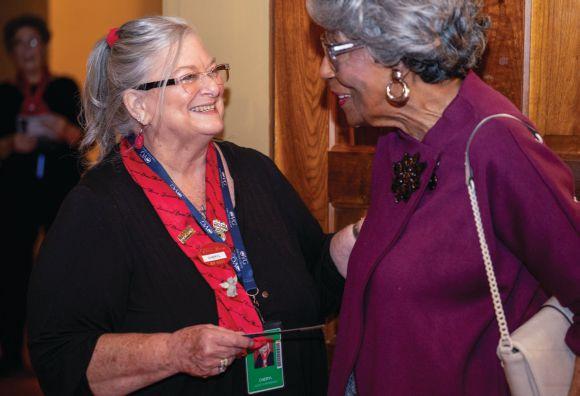
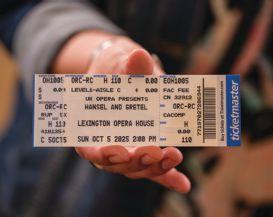
Above, Guest Services Manager Cheryl Wright welcomes a customer to a performance.
Left, UK Opera Theatre recently performed “Hansel and Gretel” at the opera house.
CHRISTINA






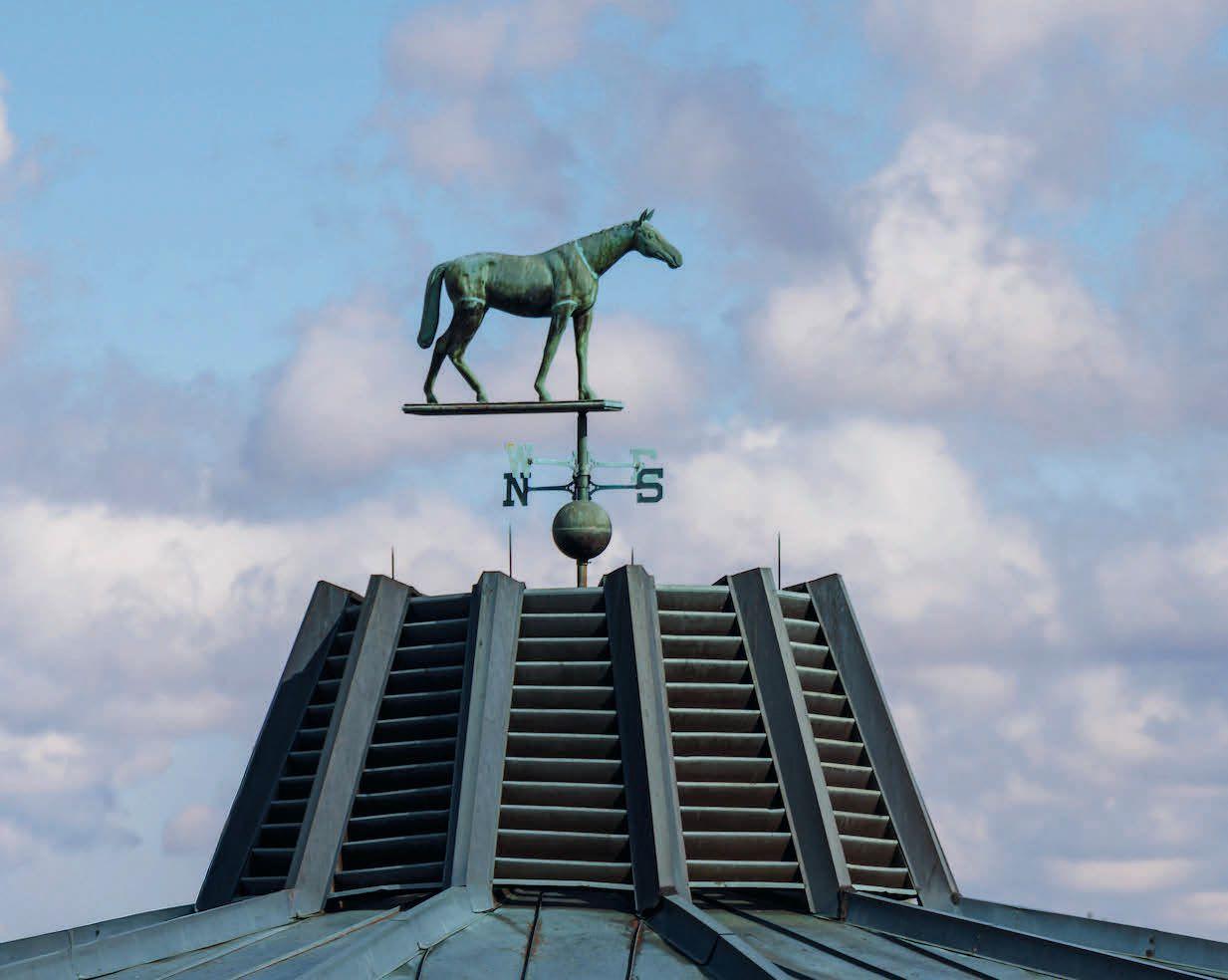







On this night, fans settle in for an evening of bluegrass music by the SteelDrivers and opener Sam Lewis, who plays alone with his acoustic guitar under the proscenium arch glimmering in blue light.
“Gem” is a word that keeps coming up from people who have myriad relationships with the Lexington Opera House.
“It’s a treasured gem of a space in our community and that’s celebrated and well managed, and we really appreciate all that they provide to our arts organizations to be able to present their craf, their works, to the public,” said Nathan Zamarron, vice president of LexArts, an umbrella group for Lexington’s arts organizations and artists.
“It feels like a gem, and we feel very, very fortunate, very lucky, to have that space to be able to welcome so many people on stage and into the audience to participate in this beautiful thing we call storytelling,” said Lyndy Franklin Smith, co-founder and artistic director of the Lexington Teatre Company.
LexingtonartsmavenKevinLaneDearinger, who is writing a book about the opera house, raised his appraisal, calling the venue “a perfect little jewel.”
As the opera house prepares to celebrate its 140th birthday, it is in a distinctly new season under the oversight of the Oak View Group, a Denver-based venue management company.
Oak View Group initially entered the Lexington market in early 2018 managing event programming for Rupp Arena, which like the opera house is part of the Central Bank Center. In October 2021, the group signed a fve-year agreement with the Lexington Center Corp. to manage bookings, marketing, sales, box ofce, fnances, and VIP experiences and opportuni-
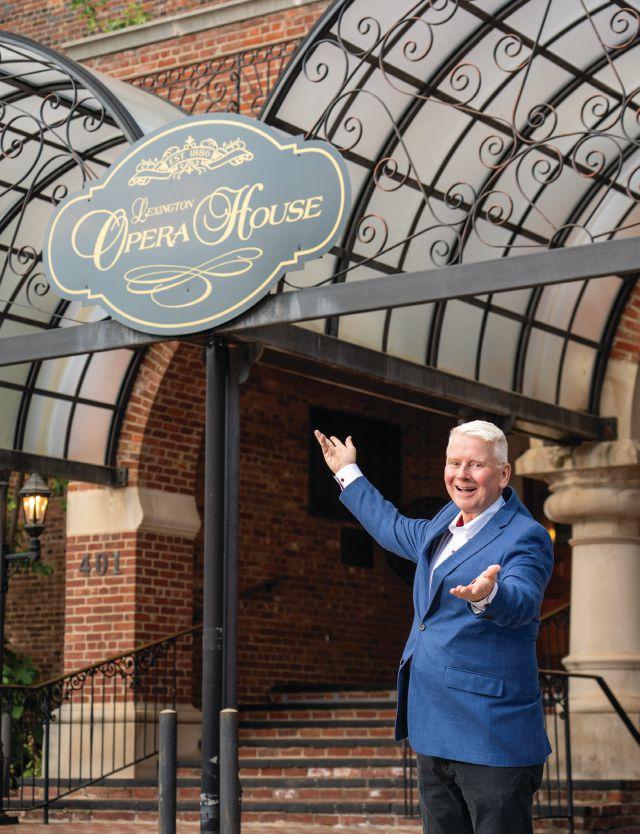
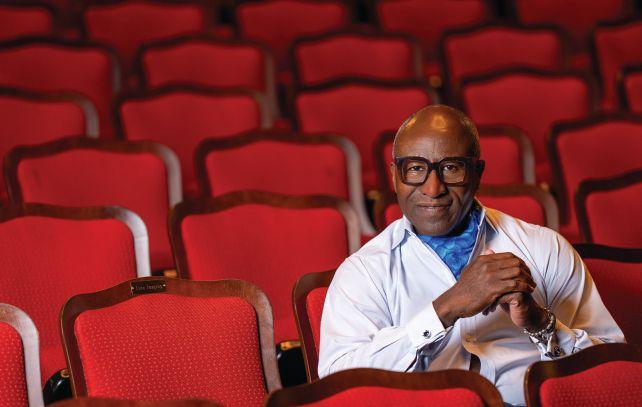
Above right, Kevin Lane Dearinger, who is writing a book about the opera house, calls it a “perfect little jewel.” Right, Edd MacKey, manager of national and local arts at the opera house, says the variety of offerings has been benefcial.

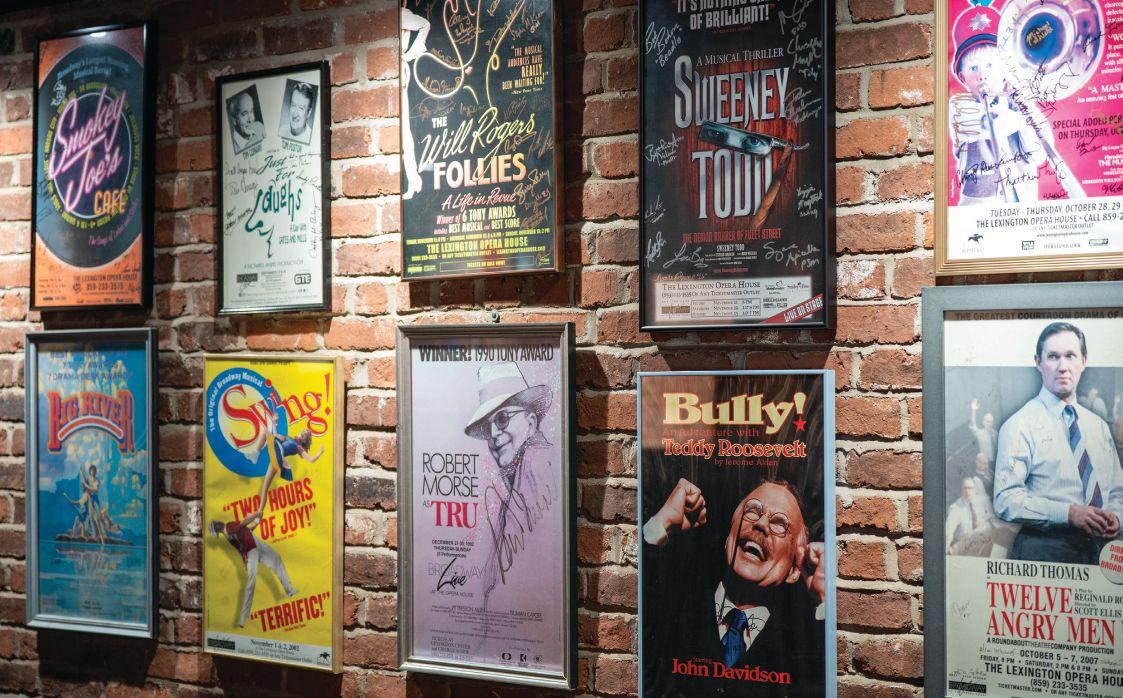
ties for the 900-seat opera house, 20,000seat Rupp Arena, and 200,000-square-foot Central Bank Center convention center.
By all accounts, the result has been a boon to the opera house with a surge in bookings of a variety of shows and a rising national profle for the theater.
“Tat’stheOakViewGroupanditsvision,” said Edd MacKey, manager of national and local arts at the opera house. “We have a booking team that’s just magical with their fngers on the pulse of what people want. Sometimes, you’ll see a comedy act come through here in Lexington, and it’s like, ‘Hmm, I’ve never heard of that group.’ And then once it’s announced, it’s a sellout.”
Take Leanne Morgan, who played a two-night stand at the opera house in November 2022 that was recorded for Netfix. Now, Morgan has multiple stand-up sets on
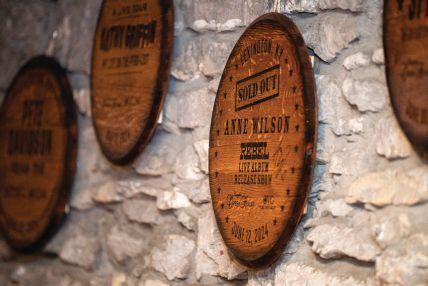
Netfix and a hit sitcom from “Big Bang Teory” creator Chuck Lorre.
“Te next time she came to Lexington, she was too big for the opera house,” MacKey said. “We had to put her in Rupp Arena.”
Allie Scarpa, booking manager for the opera house, said the intimacy and acoustics of the theater make it an ideal venue for comedy, and the opera house has hosted a broad array of comedians the last few years, including “Saturday Night Live” veterans
Top, framed show posters highlight productions and performances from the opera house’s reopening in 1976. Above right, the tops of bourbon barrels highlight performers (and their signatures) who have played the opera house recently.
CHRISTINA MEADOWS/MAHAN

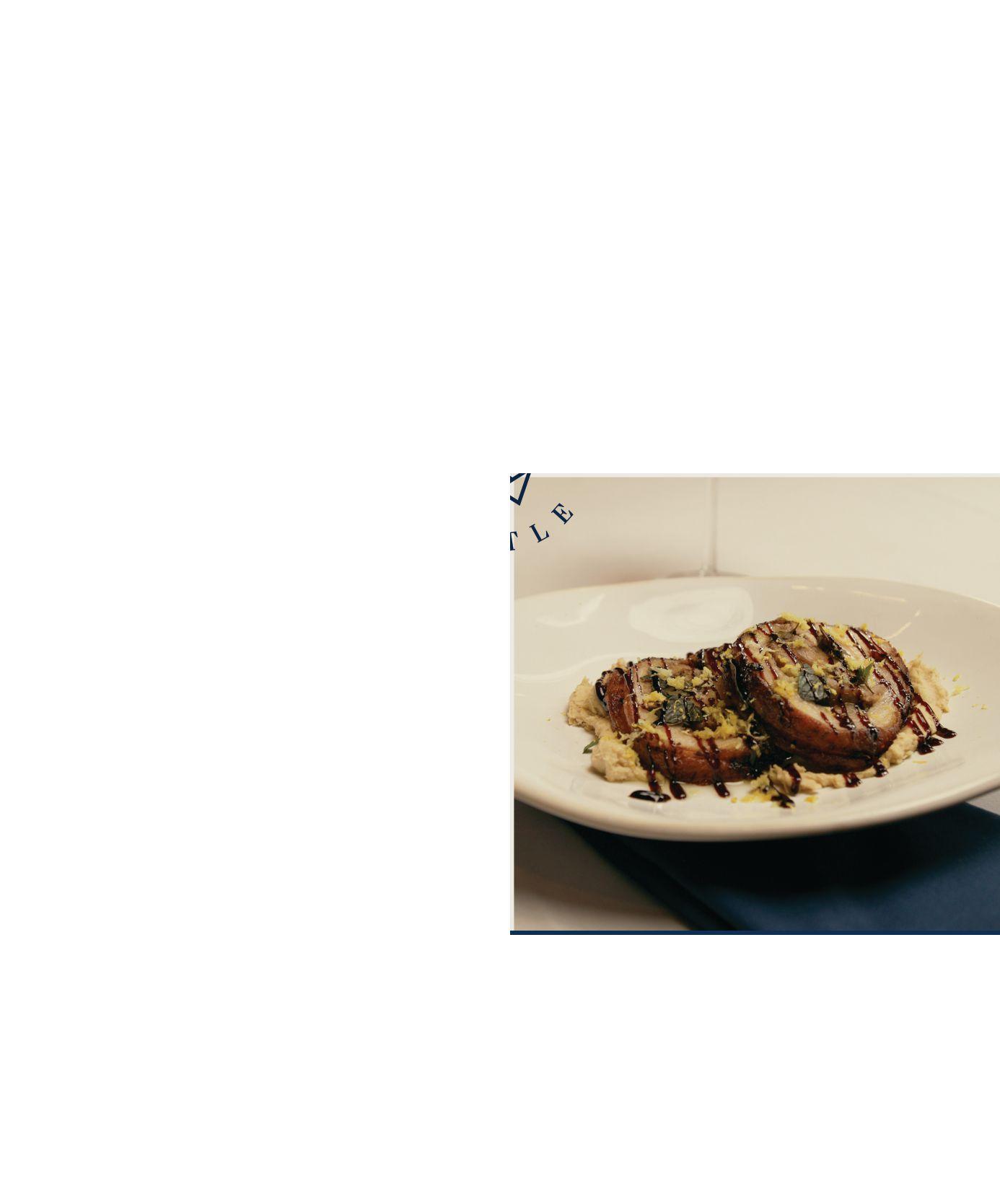

Pete Davidson and David Spade, podcast pioneer and screen star Marc Maron, and Fortune Feimster, one of several acts who had to add performances in Lexington due to popular demand. But comedy is hardly the only thing Scarpa is bringing to the historic stage.
“It is a room where anything could work,” Scarpa said. “You never know, because we haven’t really tried many things in the past. So, something fun that I get to do is kind of try new genres, see if we have a fan base here in Lexington that would support that.”
Some recent experiments include a night with stars of the 2004 classic “Napoleon Dynamite,” where the movie was shown and then the actors refected on the flm and took questions. Another event featured an interactive evening with meteorologist and storm chaser Reed Timmer.
“Country, comedy, some rock here and there, and then, of course, the tributes — those are always going to be key and the biggest genres that we have at the opera
house,” Scarpa said. “We’re really trying everything and to kind of bring in diferent interests of people, to try to get everybody involved in the opera house.”
Te expanded bookings have raised the profle of the opera house including national and global rankings of theaters by industry watchers such as Pollstar. MacKey
said the publication ranked the opera house 117th in gross box ofce receipts this season for theaters in the world.
But as the opera house expands its offerings of touring productions, it still prioritizes the fare that has been its core offerings since the venue reopened in 1976: the touring Broadway series Broadway Live and local arts groups. Even today, when planning a season, Scarpa and MacKey said the Broadway Live series is booked frst, because they have to coordinate with tour routes, then local arts groups such as the Lexington Ballet, Lexington Children’s Teatre, and University of Kentucky Opera Teatre are set, followed by touring fare.
For all its importance to the Lexington arts community and entertainment scene, the opera house has had several resurrections and near-death experiences through its nearly 140 years. Afer the opera house sufered catastrophic damage to its ceiling and roof in windstorms in 1968 and ’73, some thought the structure should be demolished. But some city leaders rallied to save and revive the theater. A major component of its rebirth was the Opera House Fund, created in 1974 to support its design, construction, and restoration, and it continues to support programming
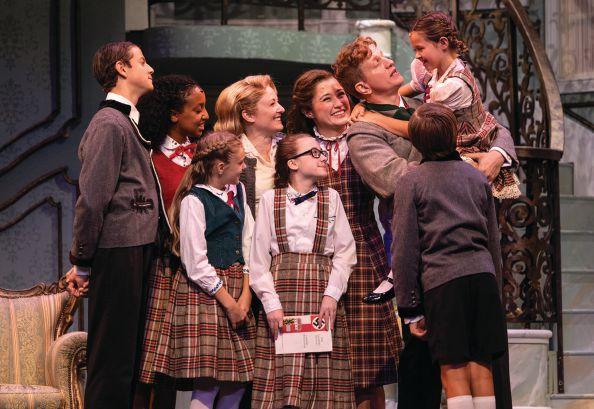
The Lexington Theatre Company produces Broadwaycaliber shows such as “The Sound of Music.”
Lyndy Franklin Smith, a Lexington native who performed at the opera house as a child and later in New York, returned home and founded the Lexington Theatre Company with her husband, Jeromy Smith.





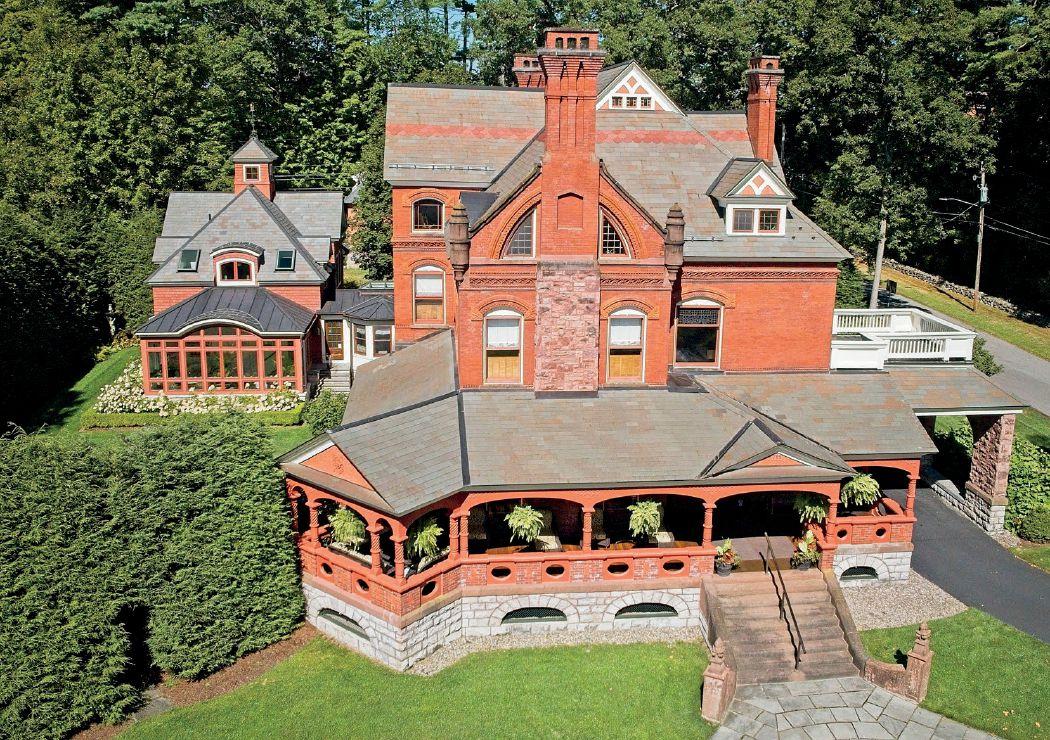












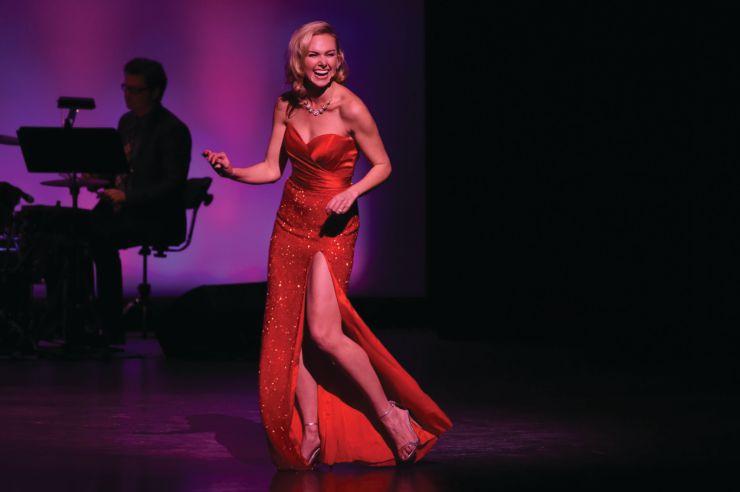
at the theater, including subsidizing performances by local arts groups.
“When the Opera House Fund stepped in to save this building from demolition, they had the foresight to see this venue not just as an auditorium or rental space, but as a stage for local performing arts,” MacKey said. “Without the Opera House Fund, honestly, the 13 local performing arts groups that use this space, on an average, none of them would be able to aford renting the space if it were not for the Opera House Fund. Many cities do not have that.”
Franklin Smith said, “It’s a testament to those community members who saw the jewel that that building was, is, and could
Lexington native
Laura Bell Bundy performed at the opera house as a child and has returned several times as
a professional.
be, and support its upkeep and all of us that get to use it.”
Te Lexington Teatre Company artistic director is an example of the artistic circle that has been created by allowing local arts groups to use the opera house. Some of Franklin Smith’s initial performances as a child were on the opera house stage, and she has since come back as a professional on tour and eventually co-created the Teatre Company, which presents four shows a year at the opera house. And she is far from alone in coming home to the opera house.
“Te opera house was the very frst theater I performed at,” said Lexington native and Tony Award-nominated actor Laura
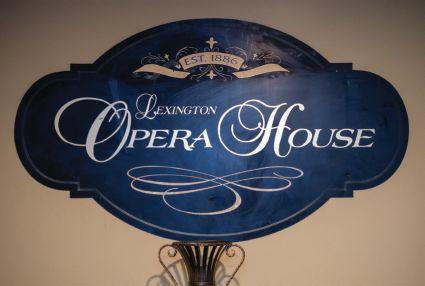
Bell Bundy. “I was 4, and I was a mouse in ‘Te Nutcracker.’
“All of my theatrical training prior to [moving to New York City] took place on that stage and in those hallways, dressing rooms, and staircases. I remember seeing the posters on the walls of celebrities coming through in their touring productions hoping that would be me one day.”
Since then, Bundy has been back to the opera house several times, most recently in May with “Mama, I’m a Big Girl Now,” a production she created with two of her costars in the original Broadway production of “Hairspray.”
“When I come back now, it’s a very surreal full circle experience … but it also feels like home because of how well I know the theater,” said Bundy, who opened “Romy & Michele: Te Musical,” at New York’s Stage 42 in October.
Experiences like Bundy’s and Franklin Smith’s are possible because the Opera House Fund makes presenting productions afordable for groups such as the Bluegrass Youth Ballet, Kentucky Ballet Teatre, and the School for Creative and Performing Arts at Bluegrass. SCAPA at Bluegrass has had numerous graduates return as professionals, including Colton Ryan, who has gone on to a stage and flm career in shows such as “Dear Evan Hansen” and “New York, New York.”
“ THERE’S NO OTHER PLACE WE COULD REALLY DO THIS WORK.”
—JEROMY SMITH, CO-FOUNDER AND PRODUCING DIRECTOR OFTHE LEXINGTONTHEATRE COMPANY

Te opera house inspired the creation of the Lexington Teatre Company, which brought Ryan back to Lexington to play Tony in its 2019 production of “West Side Story.”
“Tere’s no other place that we really could do this work,” said Jeromy Smith, co-founder and producing director of the Lexington Teatre Company and Franklin Smith’s husband. “In order for us to have created what we did, we needed the opera house. We needed the Opera House Fund.”
Te Lexington Teatre Company, which just celebrated its 10th anniversary, presents Broadway shows with professional direction and production and casts that combine established Broadway talent, Lexingtonarea pros and community actors, and student performers who aspire to stage careers. Since opening in 2015 with one production, the company now presents four shows a year at the opera house and has a growing educational program at its facility on Alexandria Drive.
“Te opera house was sitting dark in the summertime,” said Franklin Smith, whose Broadway credits include dance captain and swing performer in the 2006 revival of “A Chorus Line.” “Tere were a few little things going on, but for the most part the touring shows were coming in during the school-year months.”
Tough they had moved back to Lexington, the Smiths were being hired to direct at Music Teatre Wichita in Kansas in the summertime, which made them wonder if they could recreate the experience here for local theater artists and fans. Franklin Smith said the opera house reminds her of actual Broadway theaters, including the Gerald Schoenfeld Teatre where she was in “A Chorus Line,” than many of the theaters that host touring Broadway shows.
Te theater company and the surge in bookings by the Oak View Group have now made the opera house a year-round
facility. And the rise in touring shows has revived a tradition of presenting current stars on the opera house stage.
Dearinger, who performed at the opera house in touring productions that included “My Fair Lady” early in its reopening, recalls stars such as Ethel Barrymore, Vincent Price, and Julie Harris who played Lexington. Into early this century, the opera house had a tradition of photographing the stars who played in Broadway Live shows and one-person shows, and those portraits adorn numerous walls of the theater building.
Now, the wall of the basement-level pub features bourbon barrel tops with the names and signatures of recent marquee visitors such as Amy Grant, Kevin James, and Mac McAnally. Tat pub and an adjacent lounge adorned with dozens of posters from Broadway Live productions past are part of the efort to make every level of the opera house inviting for guests.
“Te minute the patron walks through
the door, we want them to just forget everything on the outside and realize tonight, for the next two and a half hours or so, they’re going to be in a special place,” MacKey said.
Dearinger said a collective belief in the opera house’s specialness is why the community has resolved to preserve, save, and even enhance the opera house, even as many other theaters in Lexington and across the country have closed. Tat included a multimillion-dollar renovation earlier this decade that made it more 21stcentury-patron friendly.
“It’s a matter of community pride and a group of local citizens saying, ‘We can’t lose this,’ ” Dearinger said. “We are proud that we are in Lexington, and we have this.”
Finishing his opening set for the SteelDrivers, Sam Lewis stokes that spirit, reminding the crowd, “You gotta keep coming back to these rooms. Tey’ll disappear if you don’t.” KM
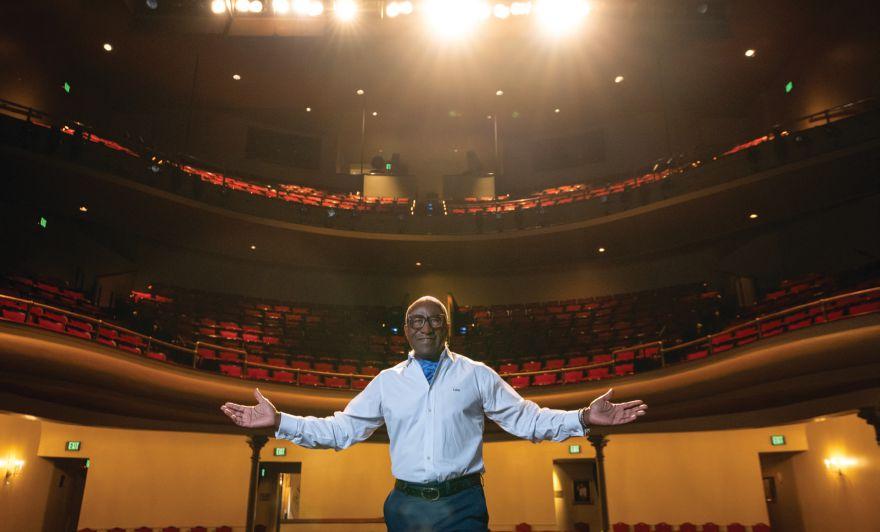
MacKey hopes patrons embrace the opera house’s special qualities when they enter its doors.
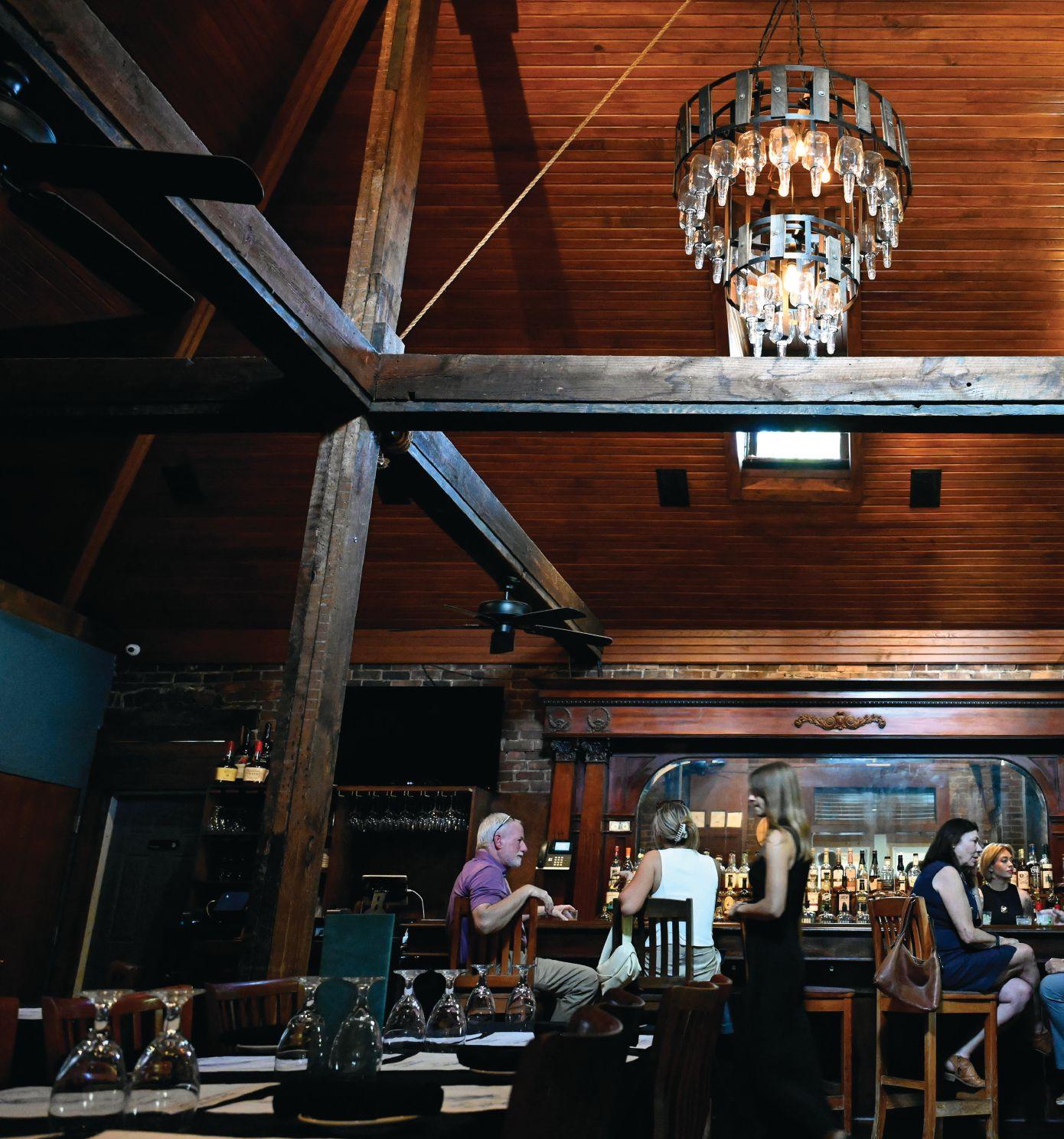
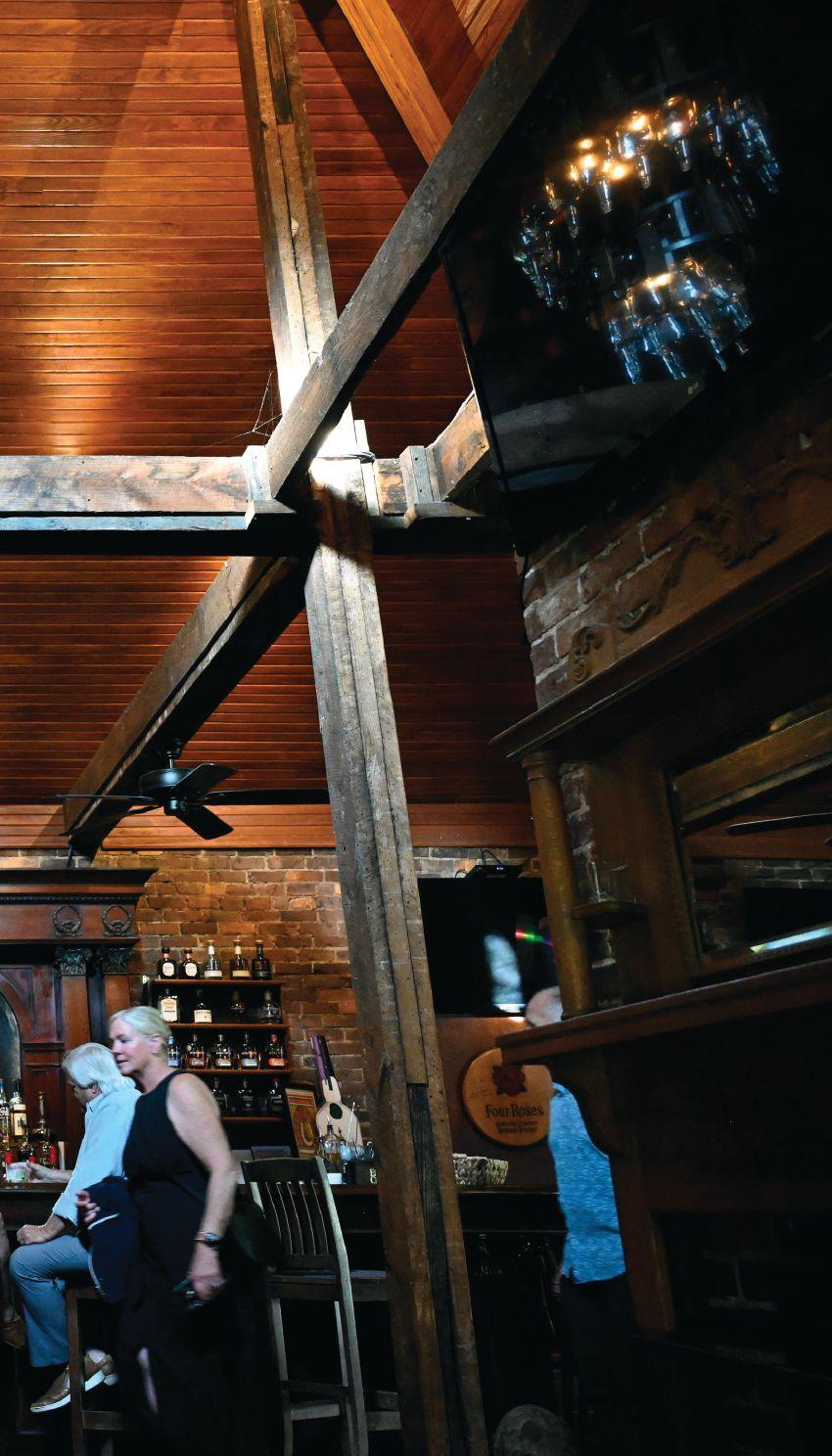
A CUT ABOVE
THE BLUE HERON stands out on busy Jefferson Street as a favorite for Lexington steak lovers
Patrons can enjoy a cocktail at the inviting bar before moving on to dinner.
By Rob Bolson
Photos Dan
Photos by Dan Dry
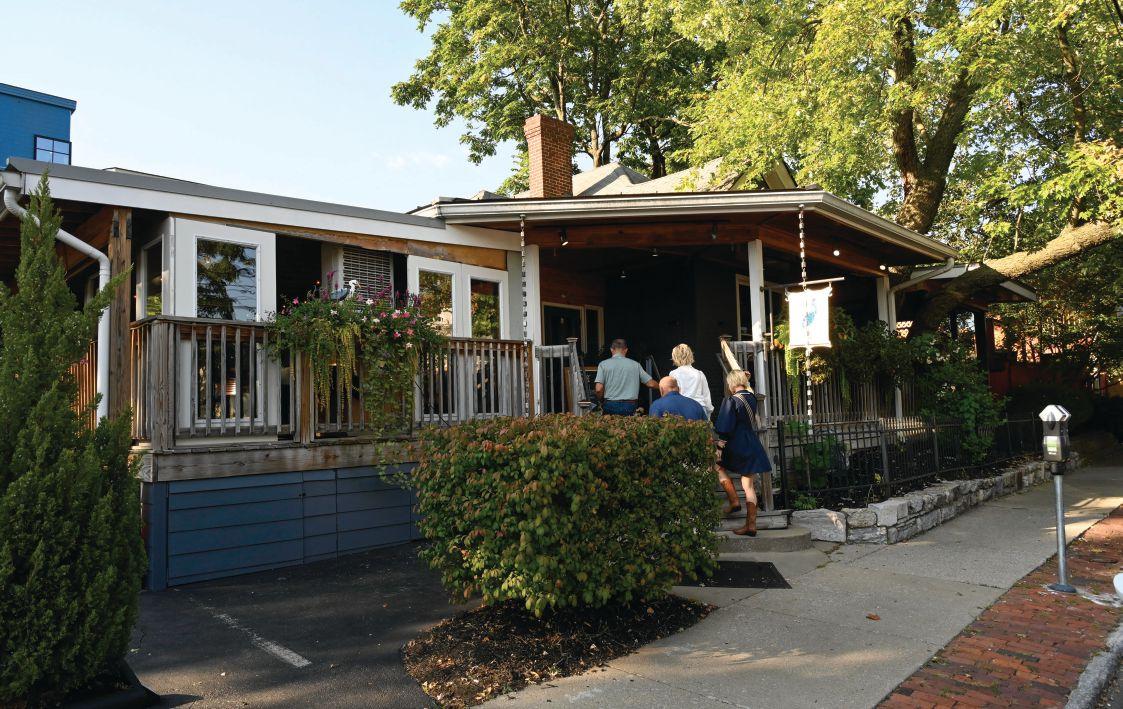
Ina city where several of the top steakhouses are named for actual people like Jef Ruby and Tony Ricci (Tony’s), another is instead named for a bird that has certain traits that align with the restaurant that bears its name — the stately great blue heron.
Te great blue heron symbolizes stability and inner strength. It also symbolizes transformation and renewal, attributes that characterize Lexington’s Te Blue Heron.
With its understated, sophisticated, yet comfortable vibe, Te Blue Heron has been a Lexington institution for a dozen years and enjoys a well-deserved reputation for being a true “hidden gem.” Diners can partake of choice steaks, fresh oysters and seafood, fried chicken, lamb dishes, and splendid cocktails.
Te Blue Heron was opened in 2013 on Jeferson Street in downtown Lexington by prominent restaurateur and Kentucky native Keith Clark, who lives in the same neighborhood. So it is indeed ftting that the highly regarded restaurant is nestled along the city’s historic Jeferson Street corridor, which
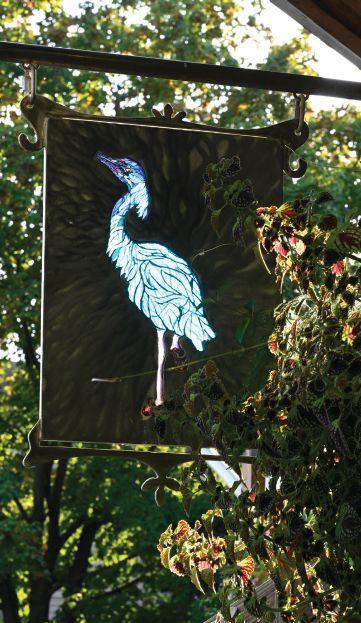
Formerly a residence built in 1930, The Blue Heron today provides a welcoming ambience, exemplary service, and a memorable dining experience.
Left, the restaurant’s namesake is featured in stained glass.
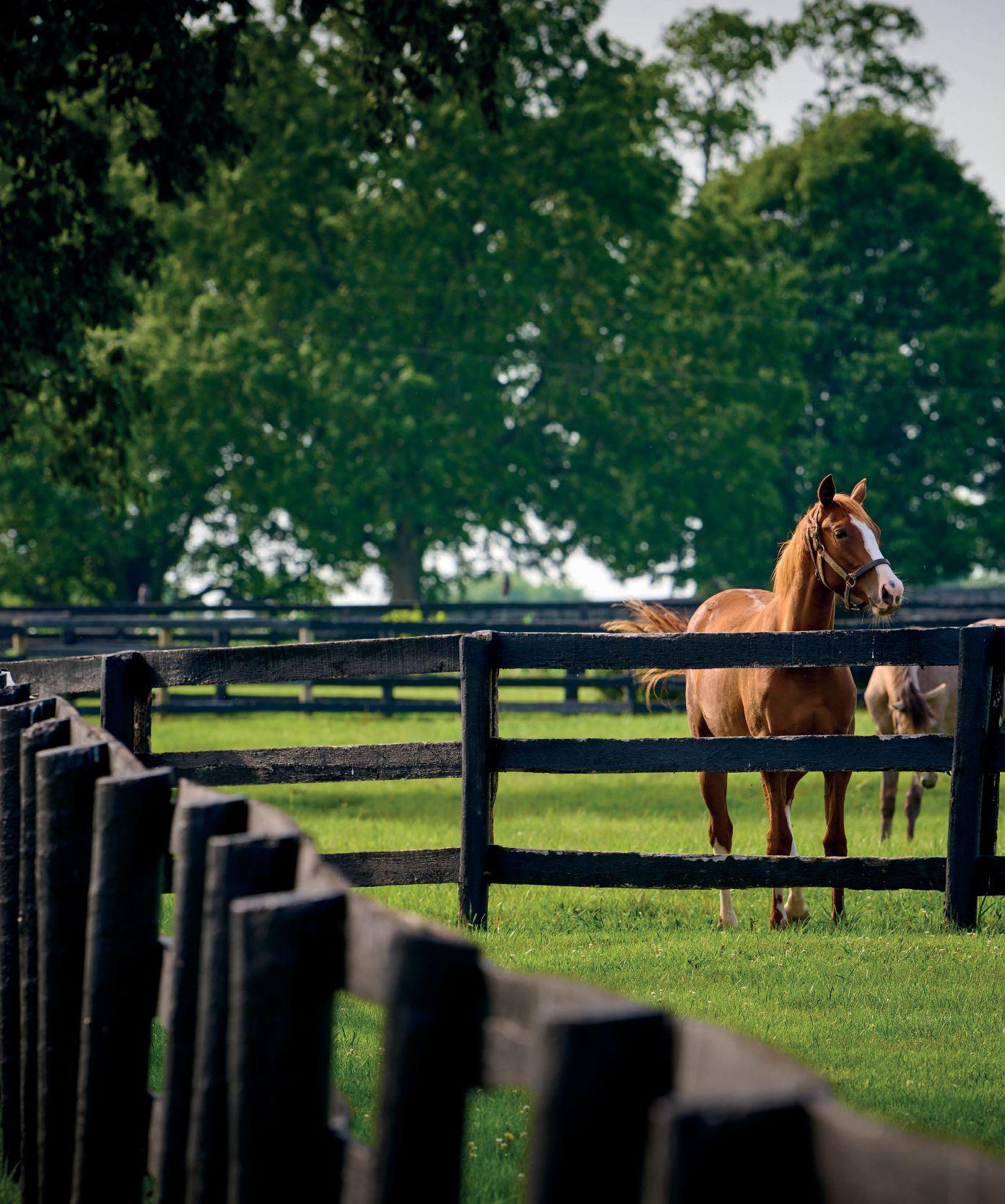

A CUT ABOVE
has experienced its own transformation and welcome renewal over the years and is now also home to other highly rated restaurants including Distilled on Jeferson, County Club, and Stella’s Kentucky Deli.
Born in Richmond, Kentucky, Clark, 74, lived in Radclif and later in Maryland for a time before eventually returning to the Bluegrass State. His background includes stints working as a bartender and dishwasher at Lexington’s Postlethwait’s Tavern on West Vine Street in the late 1970s and early ’80s. Tus, Clark was no stranger to the local bar and restaurant scene, when, in 1985, while working in the telecommunications industry, he was presented with the opportunity to purchase property in downtown Lexington on West Short Street at Cheapside. He seized the moment and, along with partner David Doucomes, proceeded to co-found and operate the legendary Cheapside Bar & Grill.
Cheapside featured the city’s frst restaurant with an outdoor patio and was Lexington’s version of “Cheers,” the popular TV series set in a bar of the same name, noted Clark. A mainstay downtown for more than three decades and popular with lawyers, fnanciers, and business and insurance types, Cheapside shuttered its doors in 2017. Clark reopened it briefy in 2018 as Te Ruddy Duck Grille.
He also owned and operated Lexington’s original Grey Goose restaurant, a fastcasual neighborhood pizza joint that opened in 2019, also on Jeferson Street. Months after opening the original, Clark opened a second Grey Goose in nearby Midway. Lexington’s Grey Goose would eventually become a casualty of the COVID-19 pandemic. Midway’s Grey Goose was sold to new owners
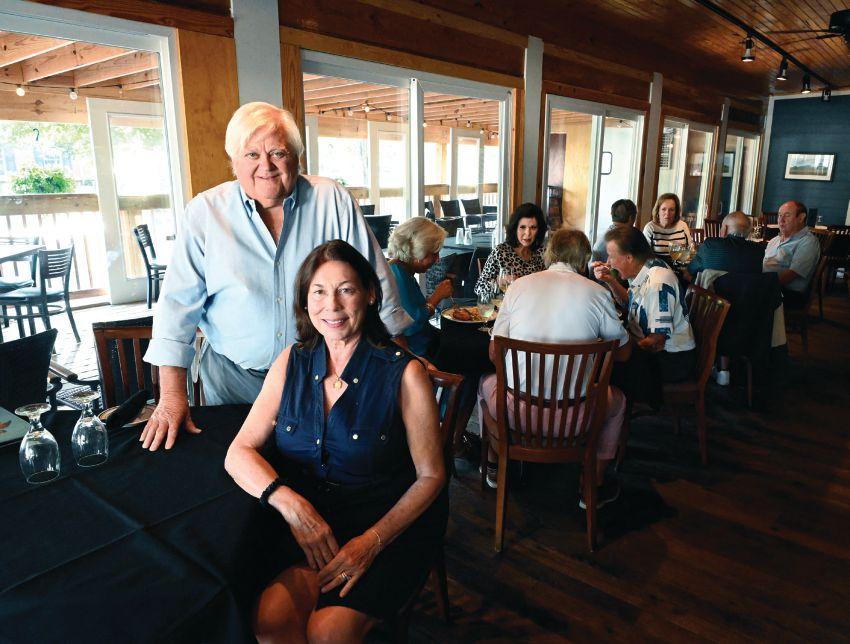
Clockwise from above, The Lexington Lilly and The Blue
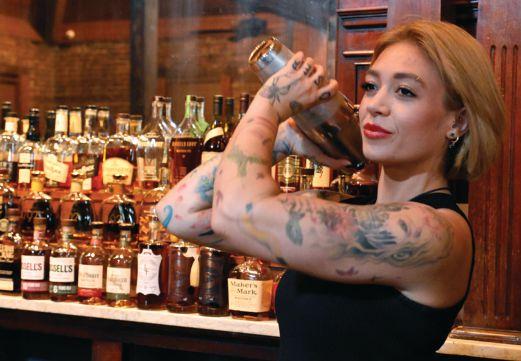
Owner Keith Clark has years of restaurant experience while his wife, Cheri Pulliam, brings her talent as a sommelier to the partnership.
Heron are signature cocktails expertly prepared by bartender Alicia Frazier.

A CUT ABOVE
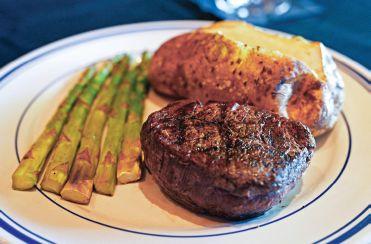
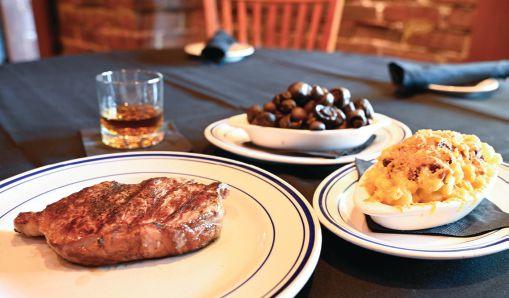
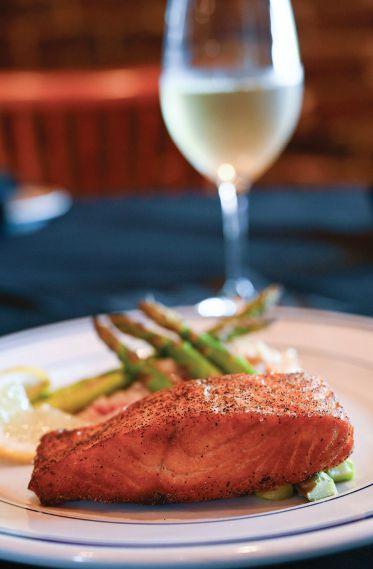
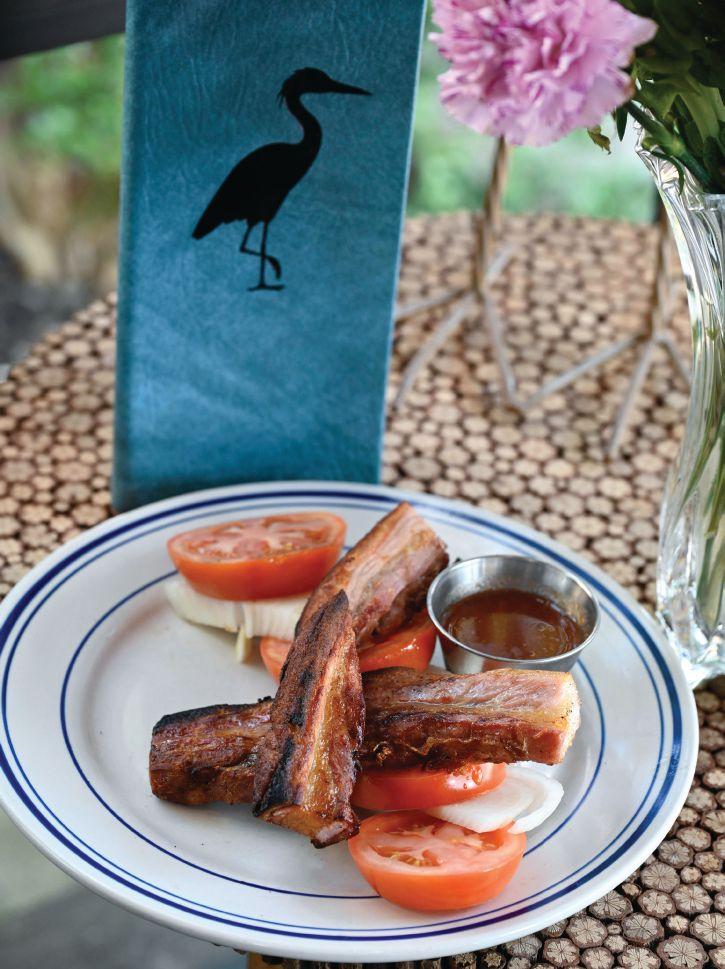
Clockwise from top left, popular dishes include flet of beef tenderloin, grilled thick-cut bacon, dark chocolate mousse with cocoa nibs, fried chicken, pan-seared salmon, and charbroiled New York strip.
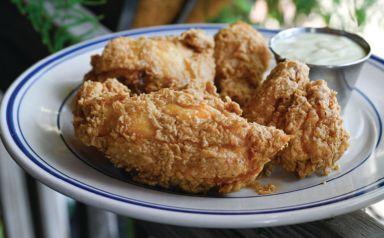
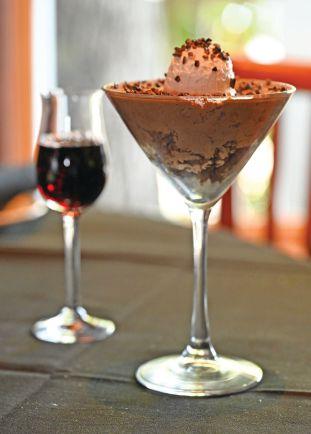

A CUT ABOVE
and renamed Te Goose and Gander.
Having no desire to name restaurants for himself, Clark instead opted to name Te Blue Heron and the Grey Goose for the “backyard birds” he would observe when he lived at the confuence of the Bush River and Chesapeake Bay, northeast of Baltimore.
He modeled Te Blue Heron afer upscale sit-down restaurants and well-known hotels such as Louisville’s Kunz’s Te Dutchman, Jack Fry’s, Lentini’s Little Italy, and Te Brown Hotel, where his father would take him during childhood to experience superb food and superior service.
Originally a privately owned oneand-a-half-story brick residence built in 1930, the renovated 2,000-plus-square-foot Blue Heron location ofers a memorable dining experience that includes an inviting at-home atmosphere, a well-stocked bar, cozy seating, a glassed-in patio, outdoor deck seating, and a charming double-sided freplace. In colder temperatures, tables near the roaring fre are highly coveted. Overall, the restaurant’s ambience is appealing and alluring.
Among the assorted regulars who dine at Te Blue Heron are national news and sports fgures, well-known entertainers who are performing at nearby Rupp Arena, and a who’s who of the horse industry. Tey might be enjoying one of the impeccably prepared steaks or perhaps the delectable and ofthe-menu fresh Maryland-style crabcakes
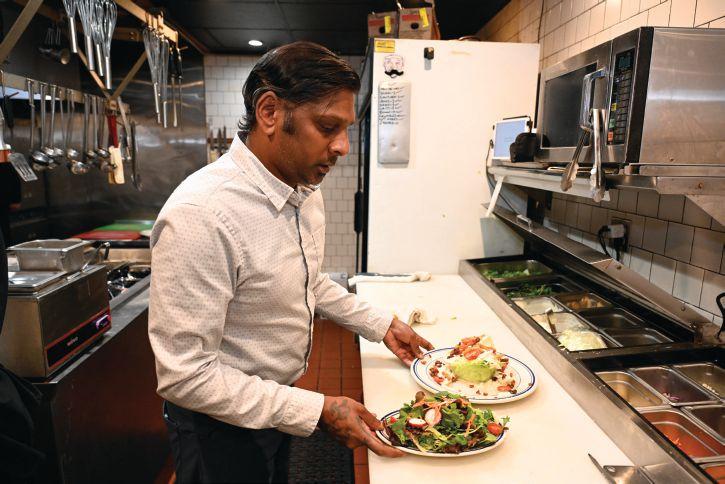
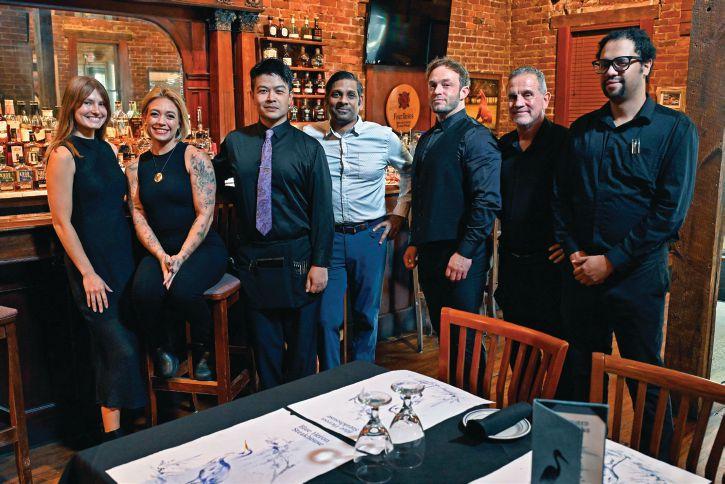
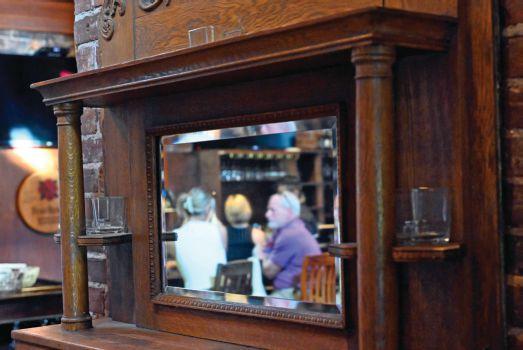
From top, general manager Dominick Starosky lends a hand in the kitchen on a busy evening. Starosky and the service staff get high marks for attentiveness. Beautiful woodwork and exposed brick lend a clubby feel to The Blue Heron.
Steak knives are never in short supply at The Blue Heron.


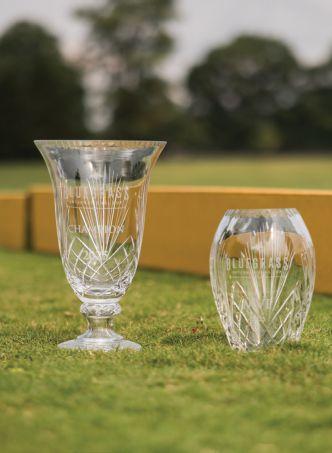



























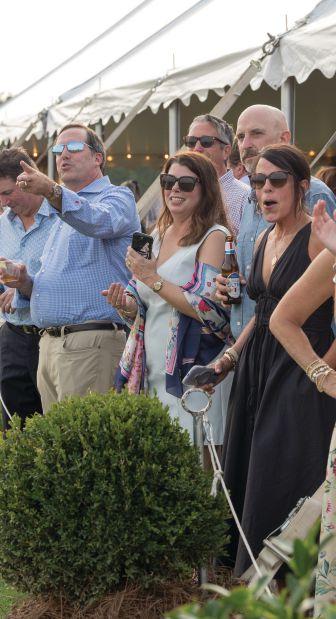






























A CUT ABOVE
— when available — served as an appetizer or entrée.
Clark points out that Lexington’s restaurant business is somewhat seasonal and dependent on Keeneland, year-round events at the Kentucky Horse Park, and University of Kentucky football and basketball games.
“Tose four entities drive this city and strongly impact the local restaurant economy,” he said.
With a staf numbering fewer than 20, Te Blue Heron consistently impresses by serving an array of some of the most exceptional steaks in the state. Hand-selected quality beef is supplied by Creekstone Farms, a Kansas meat house that produces premium beef and pork sought by consumers around the globe.
“We are a traditional neighborhood steakhouse,” Clark noted. “Our menu is not ‘chef inspired.’ It is narrow by design. Our customers tell us what they want.”
Full of bold favor and grilled to your specifcation, the perfectly seared steaks are the obvious draw. From the 8-ounce flet of beef tenderloin to the 14-ounce New York strip to the 18-ounce cowboy ribeye, the 40-ounce porterhouse steak for two, and the grilled Freedom Run Farms lamb porterhouses, the oferings are a carnivore’s delight.
Among other standout dishes, the grilled thick-cut bacon appetizer is a must-order. A tribute to the legendary Brooklyn steakhouse Peter Luger, whose version originated as a staf-only meal, Te Blue Heron’s mouth-watering bacon is so thick it can be eaten with a knife and fork and may be enough for a meal for some patrons.
While recognized for its melt-in-yourmouth steaks, Te Blue Heron is also
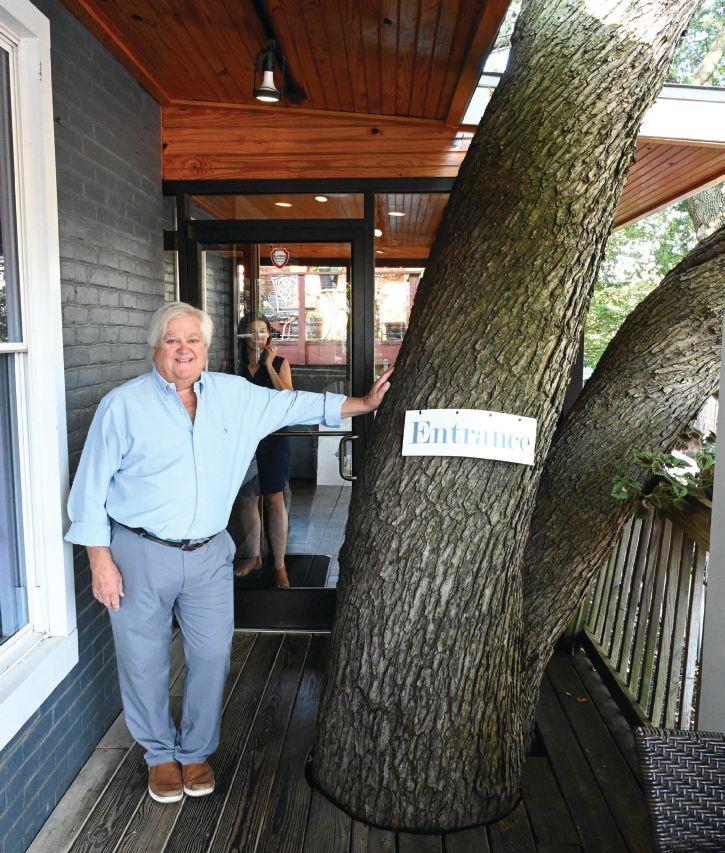
synonymous with impeccable service. Its ever-attentive, friendly, and professional wait staf ensure that your dining experience is truly memorable, helping to make the establishment a top choice for Lexington fne dining year-round. In fact, in September, Te Blue Heron was ranked in the top fve on OpenTable’s “Diners’ Choice: Best Service Restaurants in Lexington.”
“At the end of the day, we try really hard to make our customers the No. 1 thing,” Clark said. “Everybody here is pulling in the same direction.”
Clark’s wife, Cheri Pulliam, is the restaurant’s talented sommelier, and she has established a carefully curated wide array of fne wines. Te Blue Heron’s creative
cocktails have also evolved over the years. Clark noted, “Te Blue Heron cocktail [made with Maker’s 46 and a handmade apricot ginger syrup, served on the rocks] and Te Lexington Lilly [made with Ketel One peach vodka, Cointreau, fresh lemon juice and cranberry juice and topped with prosecco and served as a martini] are our most popular drinks. Our margarita put us on the map.”
Whether you are wearing a $2,000 suit or boots and a ballcap, Te Blue Heron is ideal for an intimate night out or a special occasion.
One particular customer likes Te Blue Heron so much that he rented the entire restaurant for a private birthday party for
Keith Clark credits The Blue Heron’s success with putting the customer frst. “Everybody here is pulling in the same direction.”
his wife and 60 guests. Te special event included an open menu and open bar. Te patron also provided the stellar musical entertainment for the evening, which was none other than Kentucky native and famed country music singer-songwriter Tyler Childers.
It was a moment Clark says he will never forget.
With Te Blue Heron’s top-shelf food and a waitstaf second to none in the city, Clark summed up his restaurant’s continued success in Lexington’s fercely competitive restaurant business: “Being small and having a close relationship with our guests make it all happen. I am not the focus. It is our employees. Tey make the food and the drinks. What we do and how we do it and who we are is guided by our customers. We are where we want to be in this market.” KM
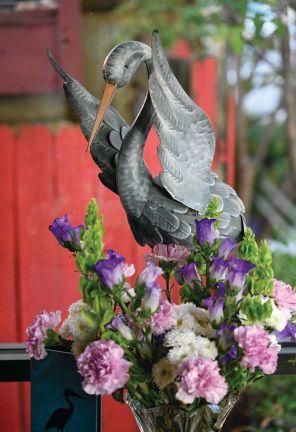
THE BLUE HERON STEAKHOUSE
185 Jefferson Street Lexington, KY 40508
Phone: (859) 254-2491
Online: blueheronsteakhouse.com
Hours of operation: Monday –Thursday: 5 p.m. – 10 p.m., Friday – Saturday: 5 p.m. – 11.p.m., Sunday: 5 p.m. – 9 p.m.
Reservations available and recommended on OpenTable.com.


MAKING A DIFFERENCE LifeSaving Legacy
UK’S MARKEY CANCER CENTER BRINGS WORLD-CLASS CANCER CARE TO KENTUCKIANS
By Robin Roenker
At Markey Cancer Center, research conducted by medical student Kyle Hedinger (shown here) and others aims to shed light on the reasons for Kentucky’s high incidence rates for certain cancers.
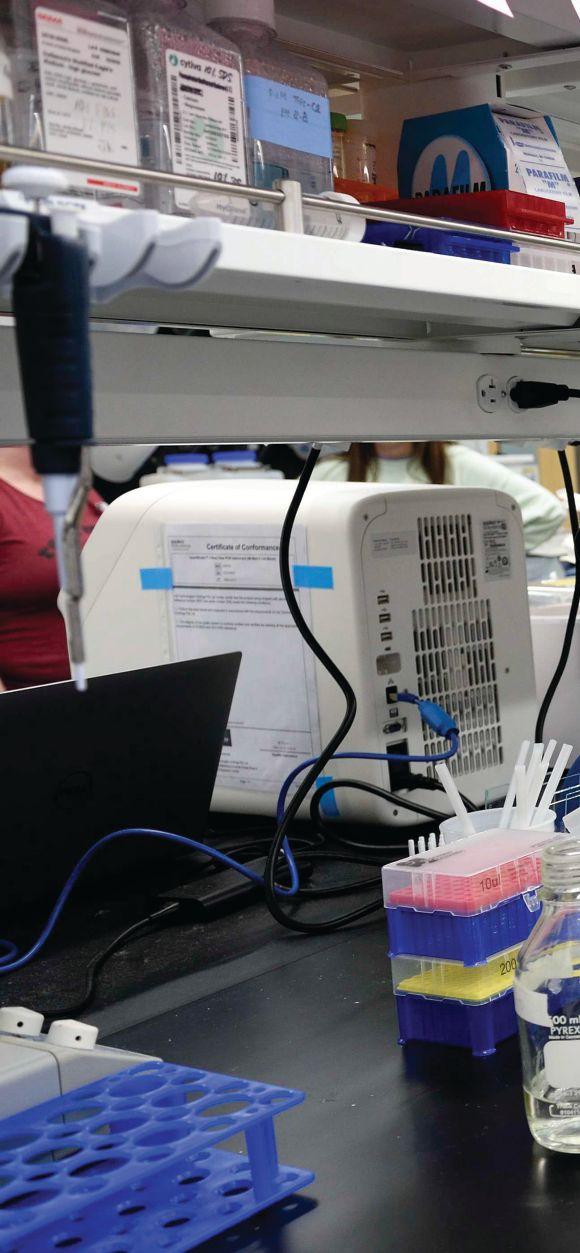
Photos by Bill Straus
MARKEY CANCER CENTER
Photos Straus
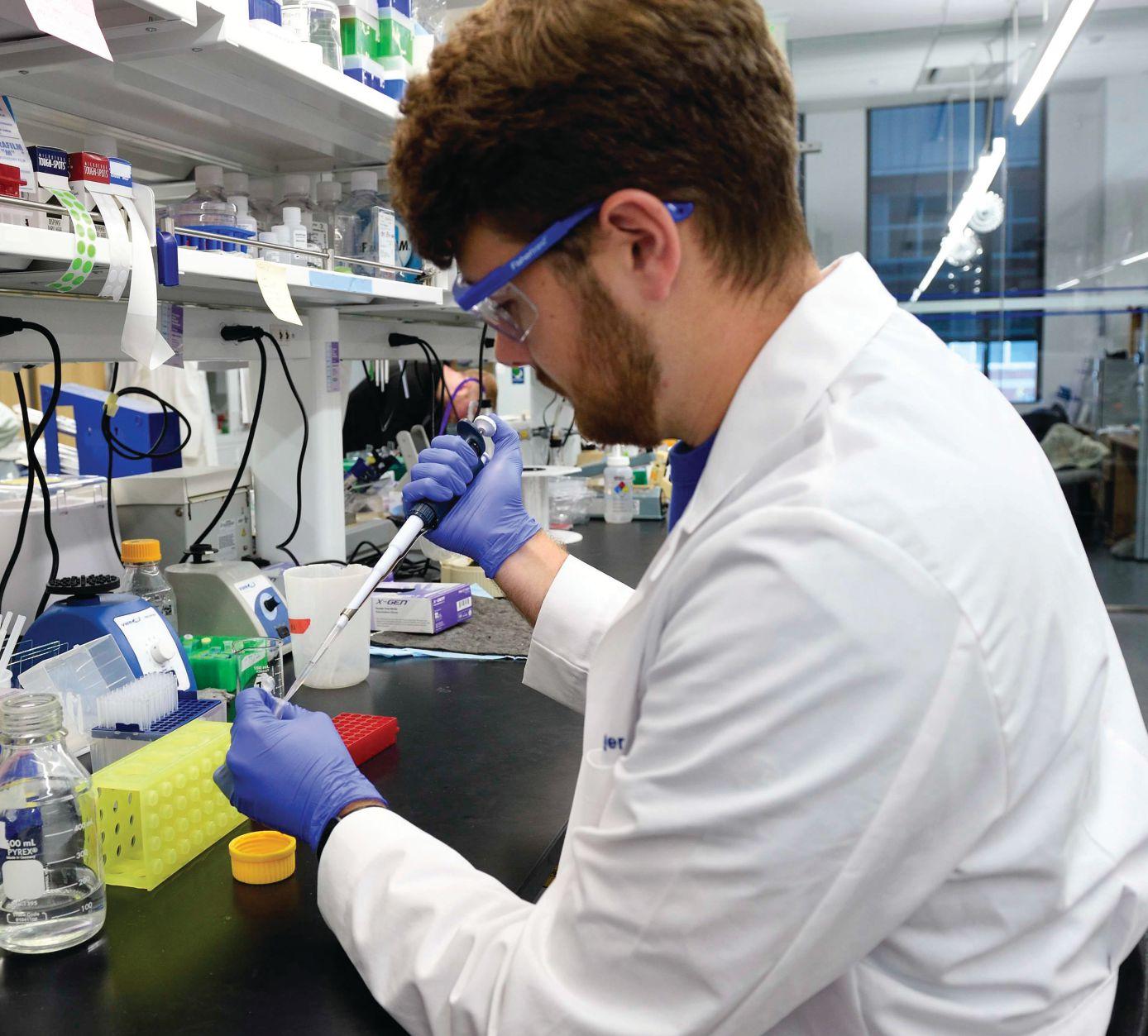
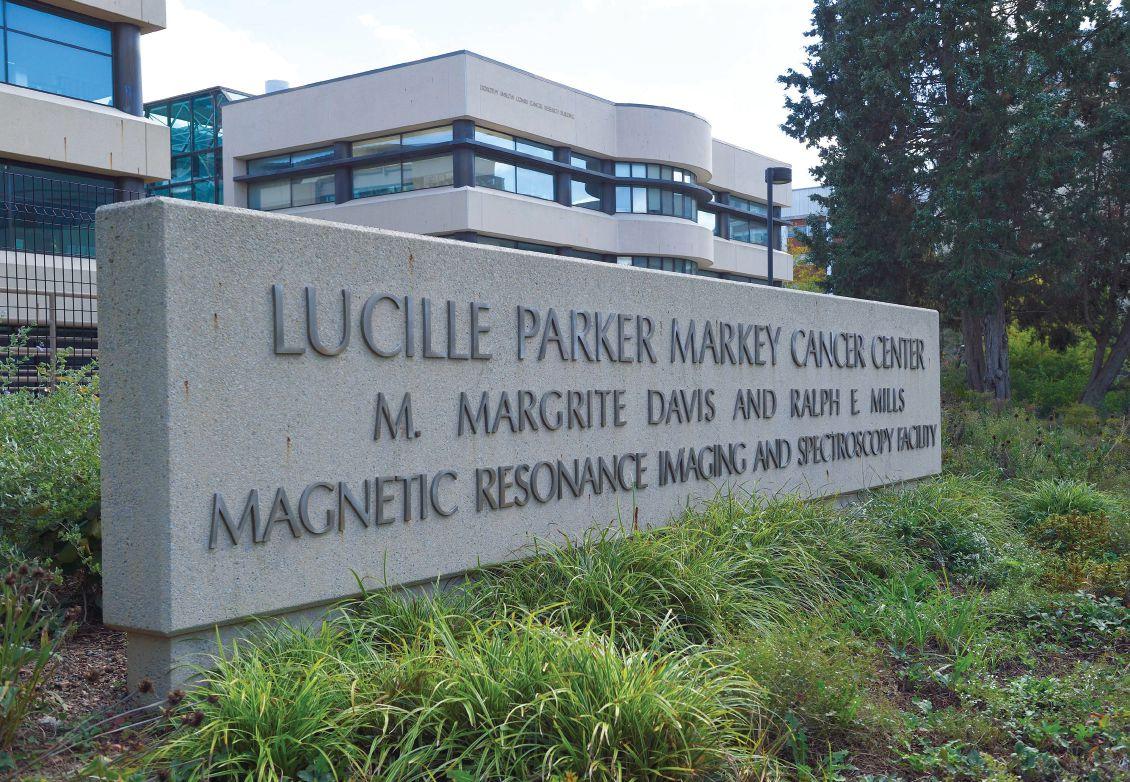
Lexingtonian Carole Haydon, 71, recently marked seven years since her diagnosis of uterine cancer, a condition she caught early and fought successfully thanks to her participation in the University of Kentucky Markey Cancer Center’s ovarian cancer screening program for women over 50.
Feeling healthy again, Haydon is back to enjoying golf and other hobbies, and she credits her recovery to support from her family, her faith, and the skilled care teams at Markey.
“I could not have gone anyplace else in the country and had a better care experience,” she said.
For Haydon and the thousands of other patients treated at Markey since its founding in 1983, the opportunity to receive such world-class cancer care from the convenience of home feels like a gif.
In fact, it was a gif — with equine industry ties — that established the foundation for UK’s now nationally regarded center. In the late 1970s, Lucille Parker Wright Markey, a philanthropist and longtime owner of Calumet Farm in Lexington, donated an initial $1 million to kick-start a funding campaign for the facility, the frst of many gifs she would make in support of the center that would later bear her name.
As Kentucky’s frst and only Comprehensive Cancer Center designated
Now housed in multiple UK campus buildings, the Markey Cancer Center will be united under one roof once the new $781 million UK Cancer and Advanced Ambulatory Building is completed.


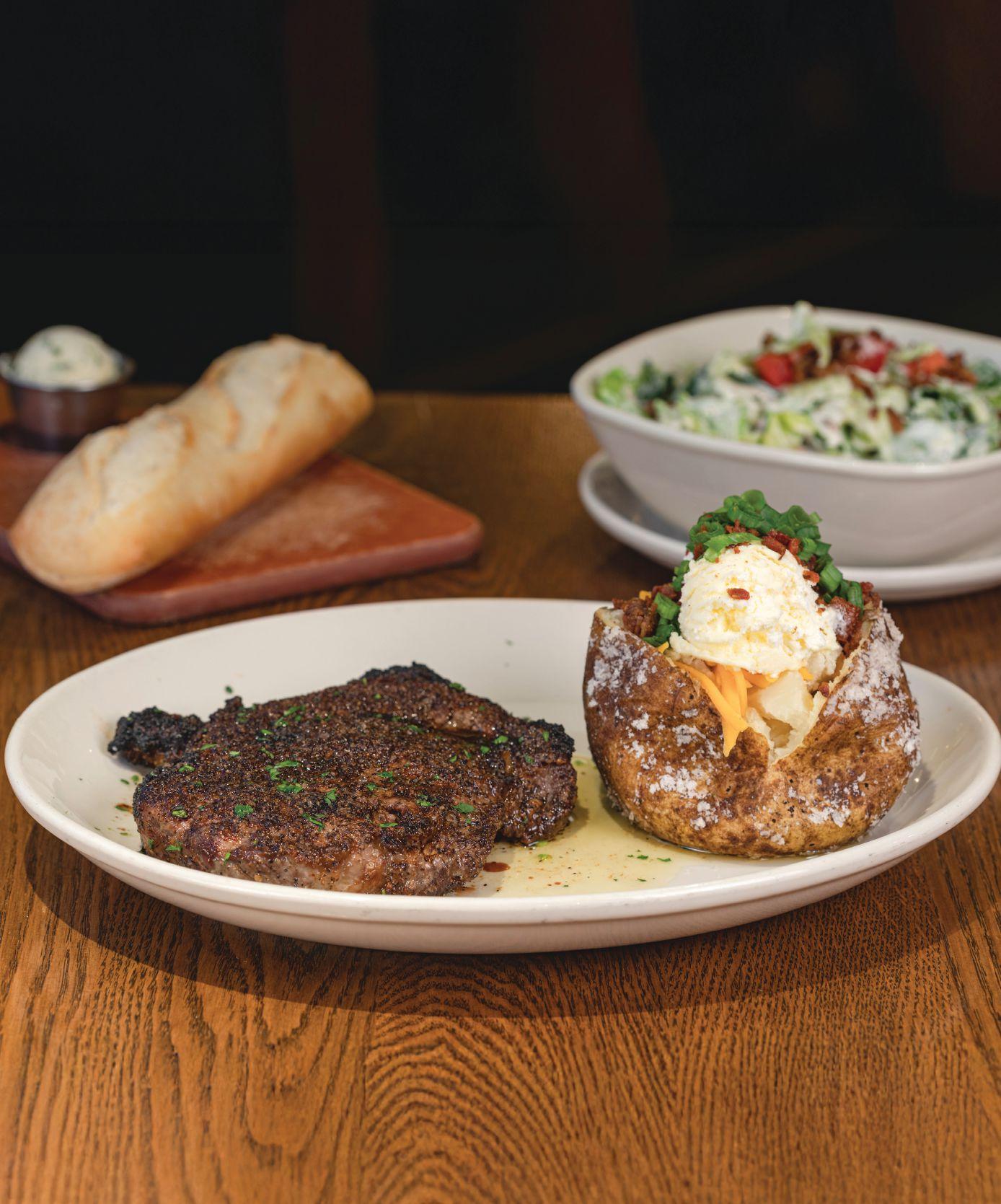
MAKING A DIFFERENCE
by the National Cancer Institute (NCI), the Markey Cancer Center has established itself as one of the country’s most respected facilities for cancer treatment, research, and prevention initiatives.
Markey’s work ensures that “no Kentuckian needs to leave the state for outstanding clinical care or access to cuttingedge clinical trials,” said Dr. Mark Evers, who has served as the center’s director since 2009.
A STATEWIDE NEED
Kentucky leads the nation in cancer incidence and mortality rates — a fact that’s especially evident in the state’s Appalachian counties, where cancer rates tend to be highest.
“Compared to the nation, Kentucky has extremely high incidence rates and mortality for lung cancer, colorectal cancer, melanoma, and leukemia, for example,” said Tianyan Gao, associate director of basic research at the Markey Cancer Center. “So, those are some of the areas we especially focus on [in our research].”
During the center’s 42-year existence, its care teams and researchers have made signifcant inroads in addressing Kentucky’s persistently high cancer rates through direct clinical care, largescale cancer screening and prevention campaigns, and groundbreaking basic research.
For example, Markey Cancer Center and its statewide partners in the Kentucky Cancer Consortium have led initiatives to make screenings for lung, colorectal, and other high-incidence cancers more accessible across Kentucky. As a result, Kentucky now has the second-highest rate of lung cancer screening in the U.S., and late-stage lung cancer diagnoses in the state have decreased by 10% in the past decade. Meanwhile, colorectal cancer screenings have doubled in Kentucky
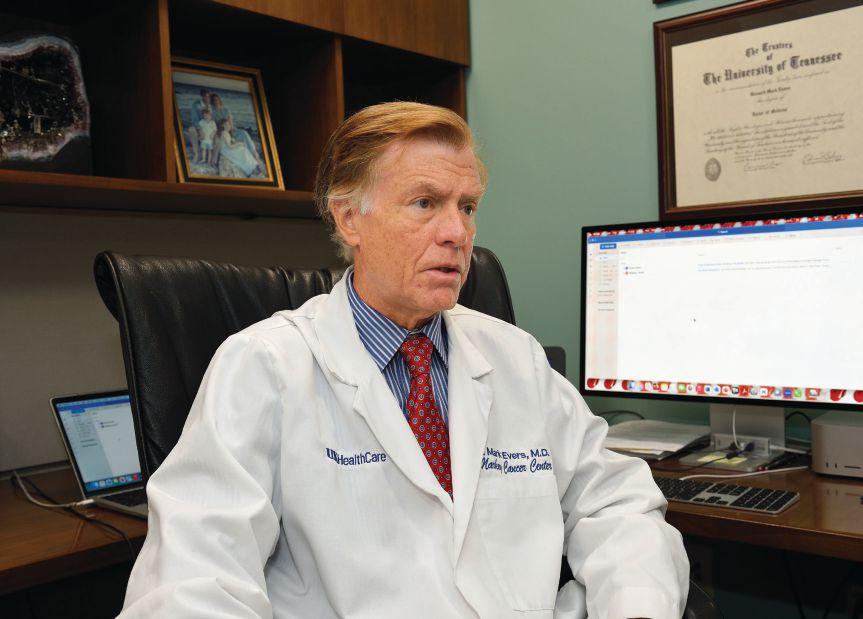
“
NO KENTUCKIAN NEEDS TO LEAVE THE STATE FOR OUTSTANDING CLINICAL CARE OR ACCESS TO CUTTING-EDGE CLINICAL TRIALS.”
—DR. MARK EVERS
since 2002, leading to a roughly 30% decrease in deaths across the state from that disease in the last 20 years.
“We’ve made some dramatic progress,” said Tomas Tucker, who recently retired as associate director for cancer prevention and control and senior director for cancer surveillance at Markey. “We are probably one of the very few, if not the
only, NCI-Designated Cancer Center in the country that’s had that kind of impact on their [statewide] population.”
Tucker was instrumental in helping launch the Kentucky Cancer Registry, a statewide platform to track Kentucky’s cancer incidence that has been housed at Markey since 1990. “We were the frst in the country to make our data available
MARKEY CANCER CENTER
Dr. Mark Evers serves as the director of the Markey Cancer Center, which helped develop a network of partnerships with hospitals across Kentucky.

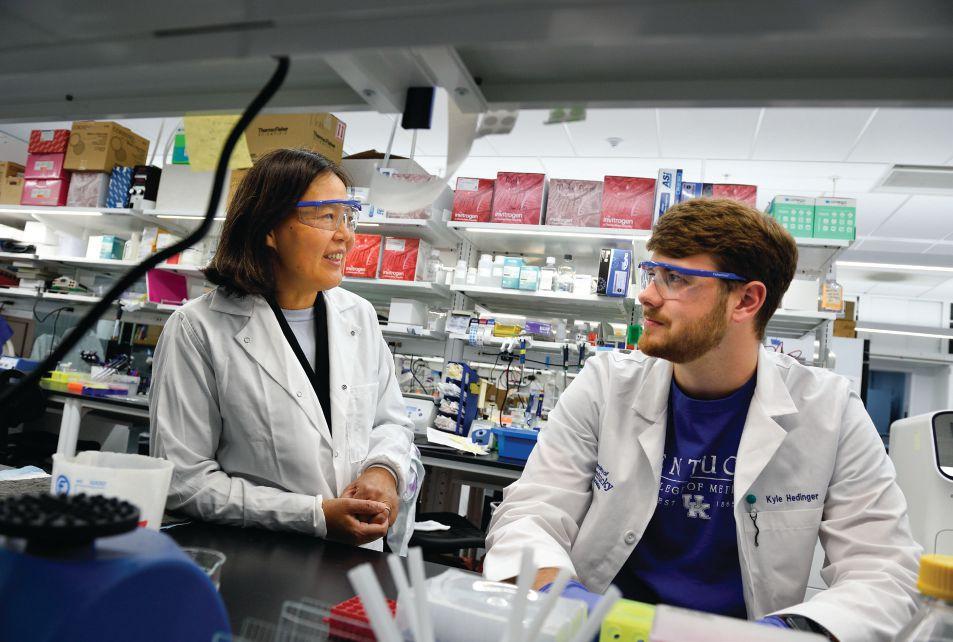
on the internet,” he said. Te database has since become one of the country’s leading cancer databases, providing researchers and public health advocates with a rich trove of data on the efectiveness of various cancer treatment and prevention programs over time.
To proactively address the ongoing, specifc needs of Kentuckians regarding cancer care and prevention, Markey stafers routinely conduct needs assessments across local communities, said Pamela Hull, Markey’s associate director of population science and community impact.
“We have so many needs in Kentucky related to cancer, but you can’t do everything all at once,” she said. “So, we like to get data from our community partners to help shape how we prioritize our time and resources.
“Tere’s still a lot of work to be done,”

Research conducted at the Markey Cancer Center aims to eradicate certain cancers, a goal some once thought was out of reach.
Hull added. “Right now, we’re really trying to prioritize getting people screened who are eligible for cancer screening.”
CUTTING-EDGE CARE
For patients navigating a cancer diagnosis, Markey has become a go-to source for trusted, accessible, state-of-the-art care. For
those who cannot make the trip to Lexington to visit Markey’s main facilities, the Markey Cancer Center Afliate Network (MCCAN) — a network of partnerships with hospitals across Kentucky — ensures that patients can receive Markey-supported care from the convenience of their local or regional hospital, no matter where they live in the state.
Tianyan Gao, associate director of basic research, confers with medical student Kyle Hedinger.
MAKING A DIFFERENCE
A LEGACY OF GIVING
Lucille ParkerWright Markey (1896 -1982) made a lasting mark on the equine industry — and on innovative, health-related research.
Born near Maysville, she inherited Calumet Farm following the death of her frst husband,WarrenWright Sr., in 1950. During her three decades of successful sole leadership, Calumet Farm won the Kentucky Derby four times, with Hill Gail (1952), Iron Liege (1957),TimTam (1958), and Forward Pass (1968).
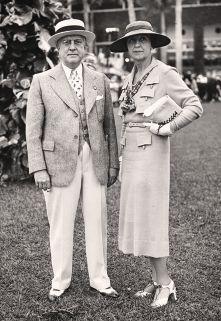
Lucille Parker Wright Markey with her frst husband, Warren Wright Sr.
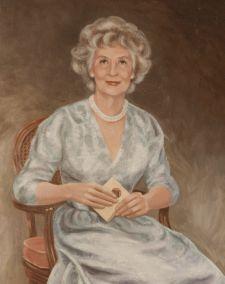
A portrait of Markey at the cancer center
In 1952, she married screenwriter Gene Markey, and the pair split their time between Lexington, Miami Beach, and Saratoga Springs. Lucille Markey continued to run Calumet until her death, at which time the farm was inherited byWright family heirs and later sold.
In addition to providing key funding to kick-start the establishment of UK’s Markey Cancer Center in the late 1970s, Markey also established a trust upon her death that distributed roughly $450 million to support basic biomedical research at university centers across the country.
A 1982 NewYorkTimes article announcing her death noted that fags at Belmont Park were being fown at half-staff in her honor. It also quoted Ogden Mills Phipps, then board chairman of the New York Racing Association, who shared thoughts on the loss of a true racing industry legend.
“Over the 50 years she was involved in racing, she was an inspiration to everybody associated with the game,” Phipps said. “She exemplifed the fnest ideals in racing.”
Trough MCCAN, “we’ve been able to put together what I consider to be sort of the national model for a network system,” Evers said. “Our 20 afliate hospital sites span the state — all the way from Hazard to Paducah — and help us to deliver care to a wider population.”
At Markey, patients have access to a level of cancer expertise that cancer centers without NCI designation would be hardpressed to match.
Over the past 10 years, more than 35,000 patients have accessed novel treatment protocols — ofen not available anywhere else in the state — through Markey’s cutting-edge clinical trial programs, for example. In the process, they’ve explored new treatment options to support their own recovery and helped Markey researchers study and fne-tune approaches for new, more efective cancer treatments of the future.
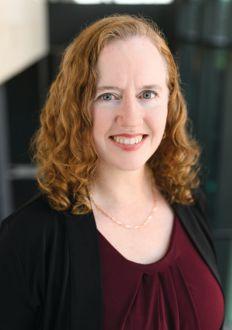
Pamela Hull is associate director of population science and community impact.
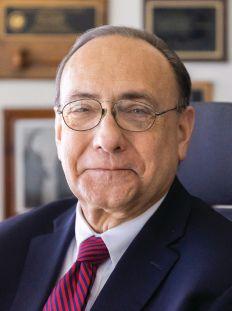
Thomas Tucker was instrumental in helping launch the Kentucky Cancer Registry.
Along the same lines, Markey’s Molecular Tumor Board, launched in 2017, has helped revolutionize cancer care for patients dealing with highly complex tumors. Te board brings together teams of specialists who develop a customized care plan to combat the precise genetic mutation of a patient’s specifc tumors.
“Since I began my career in 1999, the feld of precision medicine — which wasn’t even a thing back then — has evolved dramatically,” said Dr. Susanne Arnold, co-program leader of the translational oncology program and former associate director for clinical translation at Markey. “Today, we are able to ofer more efective therapies that are less toxic to patients because we’re able to target the specifc genes that are dysregulated in their cancer [rather than relying solely on broad-spectrum chemotherapies].”
MAKING A DIFFERENCE
MARKEY CANCER CENTER
Seeing this evolution in cancer treatment has been incredibly rewarding for Arnold and others who work either directly with patients or on behind-the-scenes research at Markey.
“We’re on the horizon of a future where we’ll hopefully be able to cure all people with cancer someday,” she said.
Eversagreed:“Ineverwouldhavedreamed that in my lifetime we’d be talking about actual cures for certain cancers. But that’s sort of where we are. We are nearing a stage of really making cancer [less deadly and] more of a chronic, manageable disease like diabetes.”
THE NEXT CHAPTER
Currently, the Markey Cancer Center operates out of a grouping of 1980s-era buildings on the UK campus. Tose buildings bear the history of the cancer center’s many accomplishments — from its founding and critical early years shepherded by Markey’s frst director, Dr. Gill Friedell, to the center’s initial NCI-Cancer Center Designation in 2013. Te cancer center’s patient demands have outgrown its current footprint, however.
“Over the past 10 years, our patient volume has more than doubled,” Evers said. “So, we’ve had to renovate spaces throughout the hospital in order to care for our patients. Currently, patients may come to the Markey Cancer Center and go to four to fve diferent buildings to get their appointment taken care of.”
By 2028, though, that will change. Te Markey Cancer Center is preparing to move to a new state-of-the-art, centralized home at the corner of Waller Avenue and South Limestone. UK hosted a groundbreaking for the new facility in April 2024.
Currently under construction, the $781 million UK Cancer and Advanced Ambulatory Building will combine all of Markey’s patient services within a 550,000-square-foot seven-story facility, Evers said.
Once complete, it will ofer a full range of
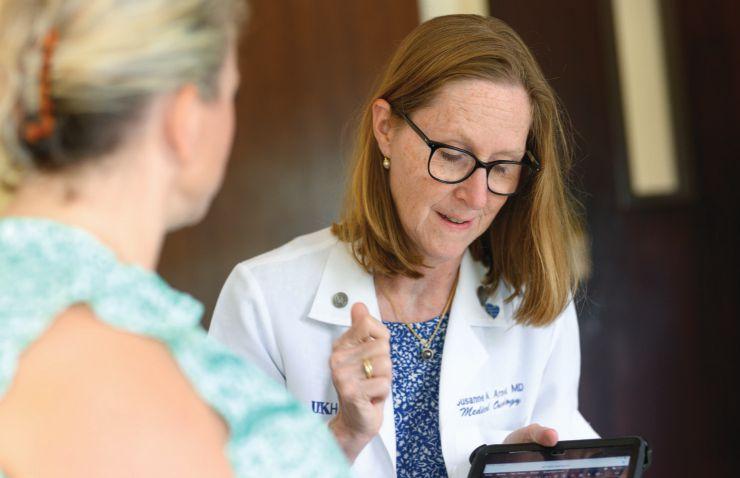
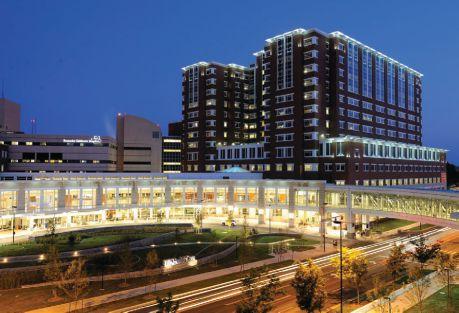
cancer care services, from imaging, labs, and pharmacy services to exam rooms and spaces for infusion therapy, radiation treatments, integrative health services, and palliative care. Te facility will also feature expanded space for Markey’s leading-edge clinical trials.
Funds from UK HealthCare and the Kentucky General Assembly will primarily cover building costs. Te Markey Cancer Foundation, the cancer center’s philanthropic arm, is partnering with the Lexington Cancer Foundation, Central Bank, and other area donors to raise $90 million to support expanded patient care services in the new facility. (Keeneland has supported the Markey
Dr. Susanne Arnold, co-program leader of the translational oncology program, meets with a patient.
The Markey Cancer Center has brought renown to UK’s hospital.
Cancer Center through previous sales of the Maker’s Mark commemorative bottles and the Keeneland Bluegrass International Cup.)
Evers said the new facility will equip Markey to better meet the growing patient demand: Te center expects to see its patient visits increase by 50% over the next 10 years. A pedestrian walkway will connect the facility to the nearby UK HealthCare Albert B. Chandler Hospital, further easing access for patients.
“Te new building will really transform cancer care in the state,” Evers said. “Patients will be able to walk in and have everything under one roof.” KM
SUPPORT MARKEY’S NEW FACILITY SERVICES WITH A NIGHT OF MUSIC
World-renowned tenor Andrea Bocelli will perform in concert on Saturday, Dec. 6, at 8 p.m. at Rupp Arena.
All proceeds fromVIP packages and ticket sales will beneft services at the new UK Cancer and Advanced Ambulatory Building, scheduled for completion in early 2028.
“We are thrilled to be the local presenting sponsor of this special event,” said Brenda Rice, founder and chairman of the Lexington Cancer Foundation, whose mission is to improve the lives of area cancer patients and their families.
“This celebration is a wonderful opportunity to bring

awareness to the new UK Cancer and Advanced Ambulatory Building, which will house the University of Kentucky Markey Cancer Center and bring a new era of advanced cancer research, treatment, and services for all Kentuckians,” Rice said.
For Lexington Cancer Foundation Premium Seating and VIPTicket Packages, go to lexingtoncancerfoundation.org or call (888) 388-2620.Tickets are available at ticketmaster.com, rupparena.com, or in person at the Central Bank Center Box Offce from 12-4 p.m. onWednesdays and Fridays.

Holiday Wishes & Blessings for a Prosperous 2026
to our Relics and Rarities
Thank you our Auction sponsors. Your contribution Your supports Festival of the Christmas a time for
Thank you to our Relics and Rarities Auction sponsors. Your contribution supports the upcoming Festival of Christmas bringing a magical time for the horsemen and their families.
Ashford Stud, Central Bank and Trust, Dean Dorton, Dixiana Farm, Equine Medical Associates, Godolphin, Inc., Green Lantern Farm, Hallway Feeds, Jackpot Farm, Heider Family Foundation, Juddmonte Farm, Lane’s End Farm, Middlebrook Farm, NiSource Charitable/ Columbia Gas of Kentucky, Shadwell Racing, Spendthrift Farms, Stonestreet Farms, WinStar Farm, and our Friends of the Charity Contributors
Ashford Central Bank and Trust, Dean Dixiana Medical Associates, Inc., Green Lantern Farm, Inc , Green Feeds, Farm, Heider Foundation, Juddmonte Farm, Lane’s End Farm, NiSource Charitable/ Middlebrook Columbia Gas of Shadwell Racing, Spendthrift Farms, Stonestreet WinStar our the Contributors
The GoodGiving Challenge is now:
DEC 2ND
Driving Local Impact
230 participating nonprofits