

To access the podcasts, you can go to Spotify, Buzzsprout or YouTube and search for Ke Alaka‘i.
NEWS CENTER: Box 1920 BYUH Laie, HI 96762
Editorial, photo submissions & distribution inquiry: kealakai@byuh.edu
To view additional articles, go to kealakai.byuh.edu
CONTACT:
Email: kealakai@byuh.edu
Phone: (808) 675-3694
Office: BYU–Hawaii
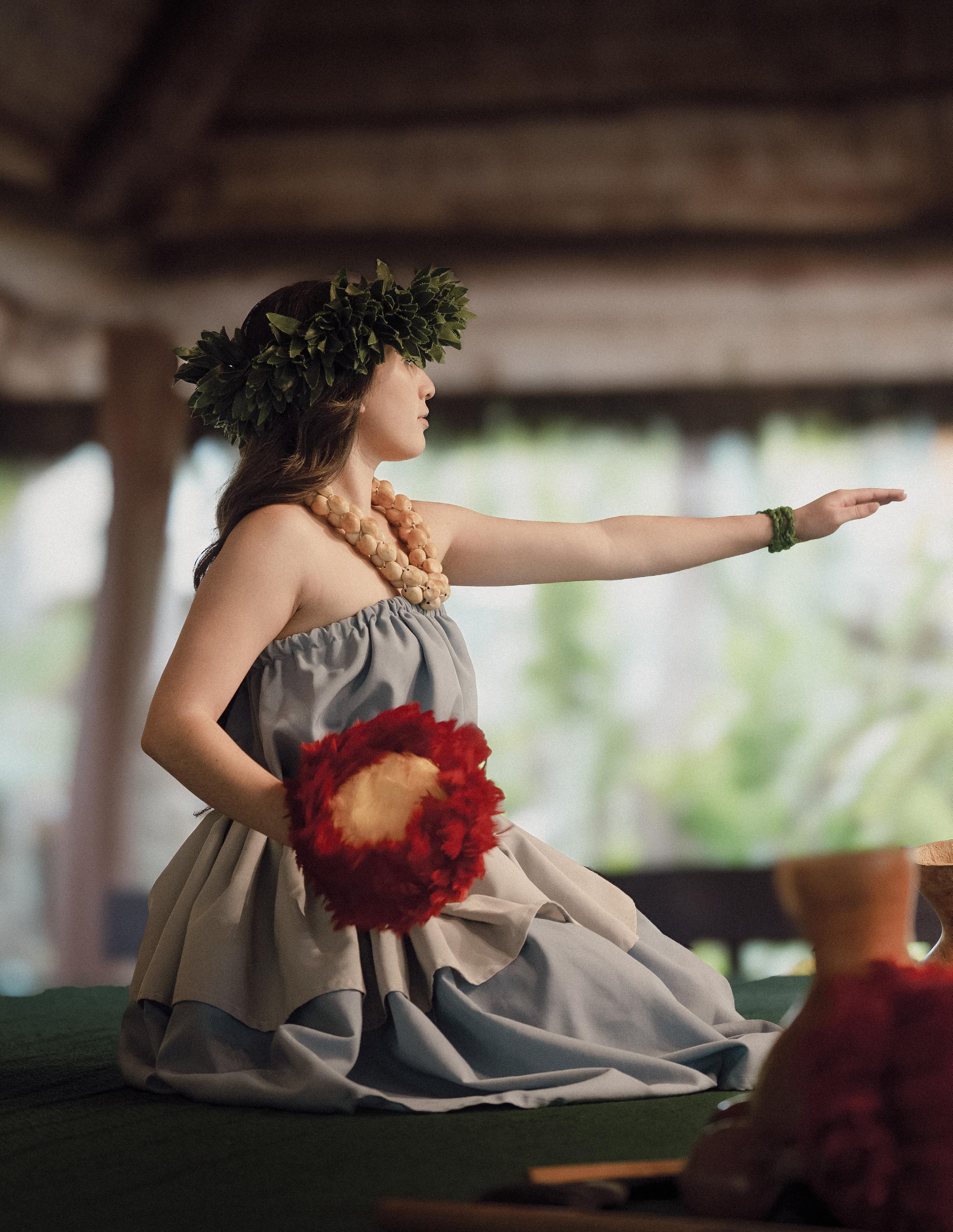
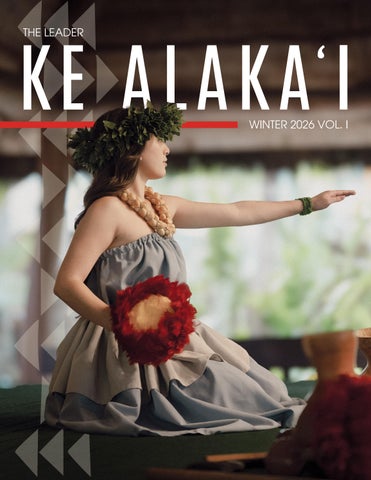
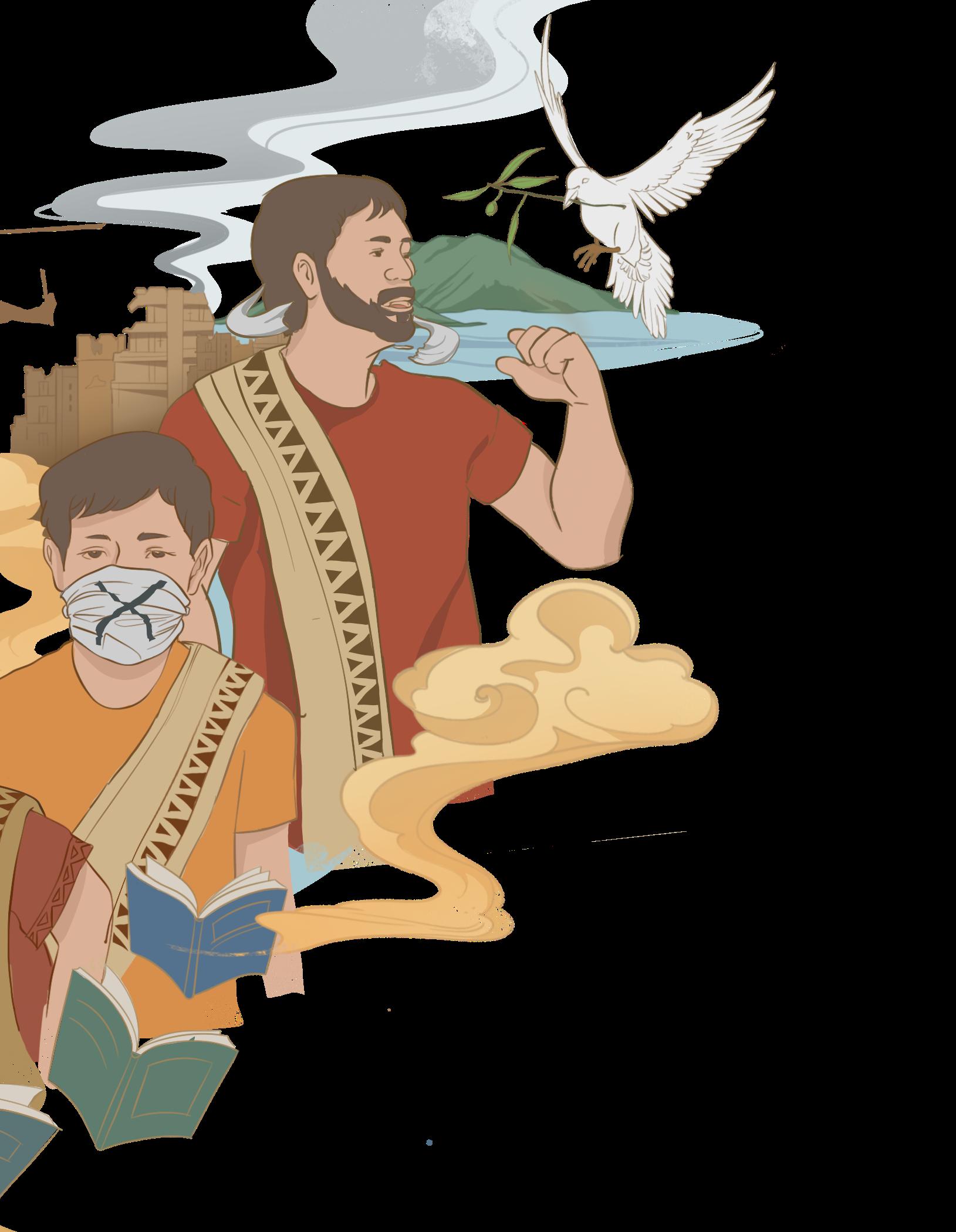
McKay Classroom 135 ON THE FRONT COVER: ABOUT
The Ke Alaka‘i began publishing the same year the University, then called Church College of Hawaii, opened. It has continued printing for more than 70 years. The name means “the leader” in Hawaiian. What began as a monthly newsletter, evolved into a weekly newspaper, then a weekly magazine and is now a magazine published 8 times a year with a website and a social media presence. Today, a staff of more than 20 students work to provide information for BYU–Hawaii’s campus ohana and Laie’s community.
© 2026 Ke Alaka‘i BYU–Hawaii All Rights Reserved
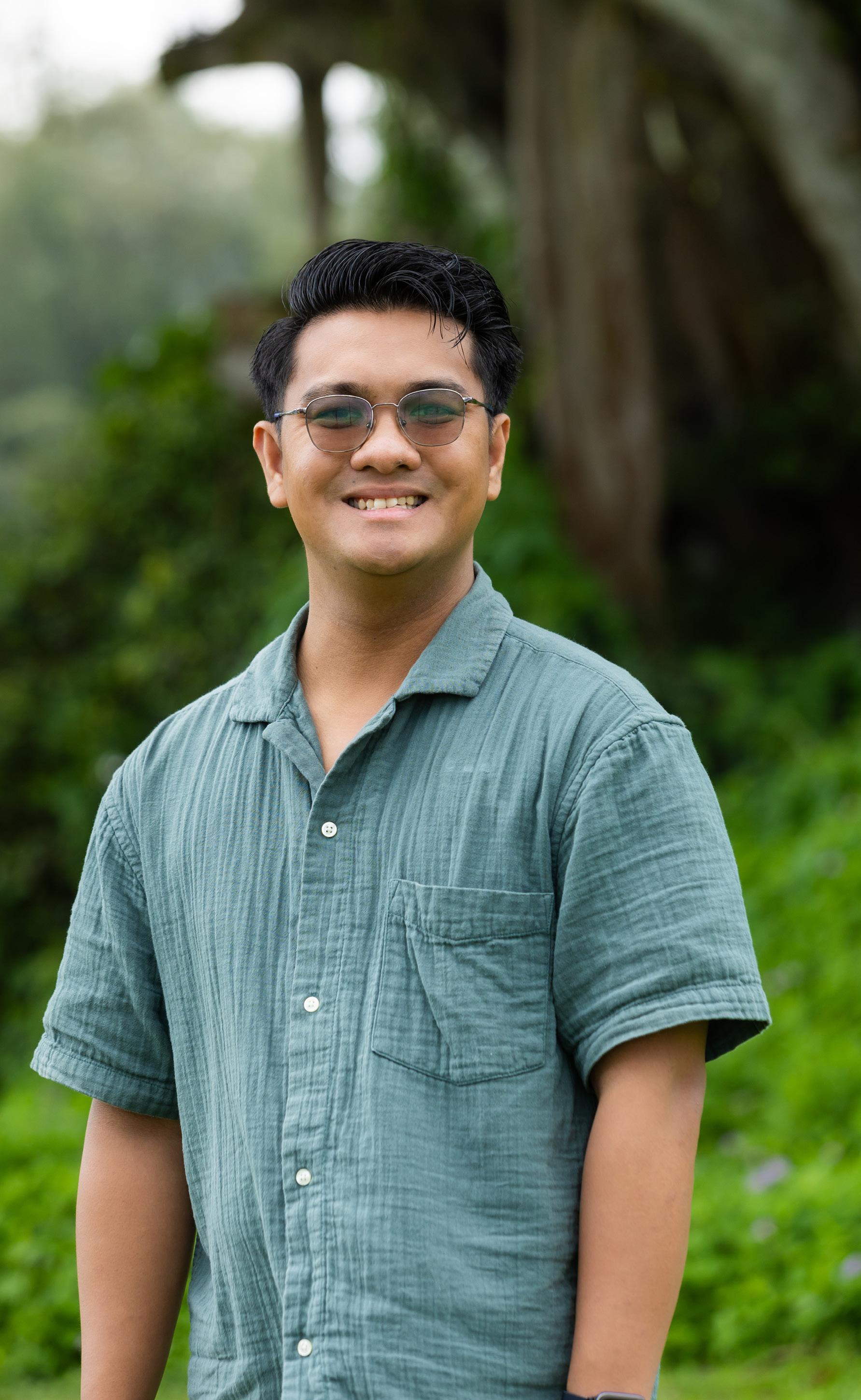

When I was a freshman, I remember President Isaiah Walker speaking about kuleana and why it is central to Hawaiian heritage. He explained that kuleana is not simply a duty imposed upon us, but a responsibility that grows out of connection. Because you belong, you care. And because you care, you act. As a freshman still navigating my purpose at BYU–Hawaii, those words stayed with me. I began to understand that this ʻāina had become my home—and that as a guest and a steward, I carry the kuleana to learn from it, care for it and engage with it in a way that is pono. I found myself asking: Because I am here, what is my responsibility?
This issue is a collective response to that question. It brings together stories from students who are living out kuleana through learning and action. In a university shaped by many cultures and histories, it is powerful to see students choose to approach Hawaiian culture with aloha—learning the language, caring for the ʻāina and kai, listening to the voices of ancestors through legends and proverbs and participating in practices such as voyaging, and cultural revitalization efforts. These stories remind us that learning, when done with humility, is an act of respect.
More importantly, this issue reflects a shared commitment to engage with Hawaiian culture not as spectators, but as members of a community striving to act with pono. The culture we encounter here is living and resilient, carried forward through memory, movement, language, and land. Our responsibility is not to claim it, but to honor it—in how we listen, how we learn, and how we live.
We invite you, as you read these pages, to reflect on your own kuleana. What does it mean to belong here? How will you show aloha to the people, the land, and the stories that sustain this place? May this issue inspire you to move forward with care, respect, and purpose and to leave this ʻāina better because you were here.
John Andrew Quizana Editor-in-Chief















BY JESSIKA SANTOSO
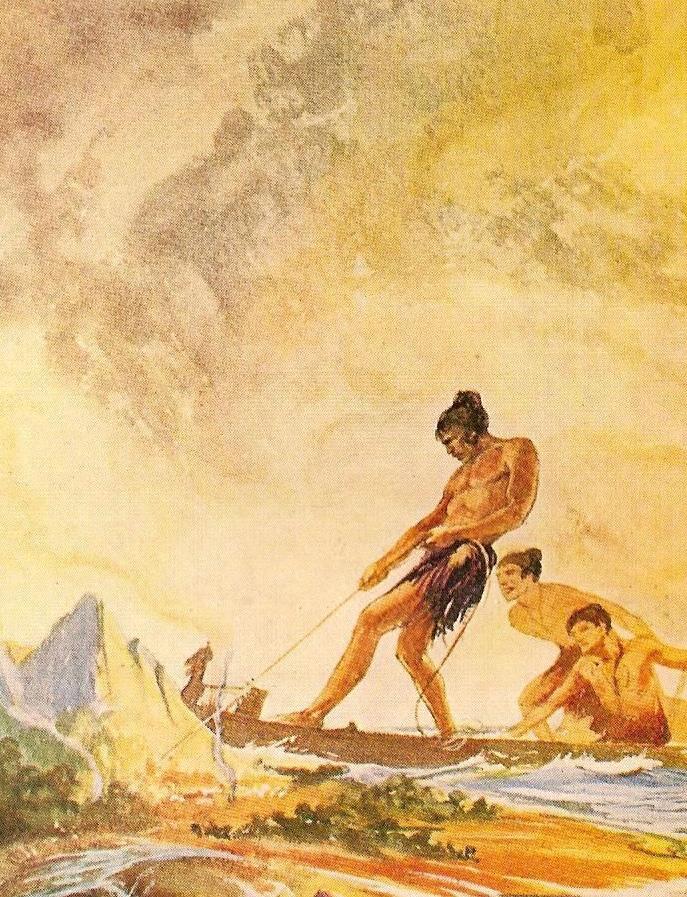
Hawaiian legends and stories persist through upheaval, carrying history and identity across generations
For generations, Hawaiians have passed down knowledge through oral traditions and storytelling, a practice rooted in the culture, said Kali Fermantez, an associate professor at the Jonathan Nāpela Center for Hawaiian & Pacific Studies in the Faculty of Culture, Language & Performing Arts. Known as mo ‘olelo, or “stories” in Hawaiian, they have not only carried origin stories but also “impart the sacred genealogical lineages that connect the Hawaiian people to the land, plants and elements,” master storyteller and community leader in the Waipi‘o Valley, Kumu Micah Kamohoalii said in Fodor’s Travel Guide 2022 article titled, “The Incredible Myths and Legends of Hawaii.”
“Our stories teach us the laws of the land and remind us how to behave as people,” Kumu Kamohoalii said. “Our stories are a road map. Stories tell us what is righteous, what is sacred.” Fermantez echoed that understanding, citing a saying by noted kupuna and BYU–Hawaii Hiki Mai chant composer Cy Bridges: “A genealogy of the land is a genealogy of the people.”
Kumu Kamohoalii explained moʻolelo refers to “the history of how we became,” a term he prefers over “myth,” which can imply fabrication. Community member Armando Kealohalani Sierra said legends have long been essential to Hawaiian cultural survival, from the creation story of Wākea (Sky Father) and Papahānaumoku (Earth Mother) to the stories of Hawaiian gods Kane, Kanaloa, Kū and Lono. These narratives, Sierra said, remind people of their origins, beliefs and responsibilities.
Sierra said Hawaiian legends are preserved through multiple mediums, including chants (oli), songs (mele), hula, petroglyphs (kiʻi pōhaku) and kupuna or honored elders. Petroglyphs, he explained, are ancient rock carvings found throughout the Hawaiian Islands that may have served as public records. “They commemorated events, births and other significant moments,” Sierra said, adding they functioned as early forms of communication and storytelling that helped preserve Hawaiian culture and traditions.
The legends of Hawaiian gods and belief in multiple deities and spirits continue to shape his family’s traditions through their belief in ʻaumakua, family or personal guardian spirits, Sierra said. “Most Hawaiians have the shark, turtle or owl as their ‘aumakua, but my family’s is the gecko,” he said. “That’s why my mother never let me harm one.”
Sierra said the legend of Mauna Kea also plays a central role in sustaining Hawaiian communal identity and cultural ethics, particularly in discussions about land use. Known as Mauna a Wākea, or the Mountain of the Sky Father, the summit is revered in Hawaiian tradition as the first-born child of Papahānaumoku and Wākea, he said. Regarded as the piko, or navel, of Hawaiʻi Island, Mauna Kea symbolizes both “beginning and ending” and is also associated with the snow goddess Poliʻahu, who is said to descend to the summit during the winter months, he continued, adding to its spiritual significance.
That cultural and spiritual significance, Sierra said, helps explain why proposals such as the Thirty Meter Telescope have generated opposition among many Native Hawaiians. Echoing the principle of mālama ʻāina, or caring for the land, Sierra acknowledged that while astronomy mattered to Hawaiian ancestors, “they used the stars for navigation and respected the cultural traditions of our people.”
For Fermantez, he uses the story of Hawaiian Māui, a demigod and trickster who snared the sun, as a metaphor for how educators engage students. “Māui is a trickster with magic,” he said.
“I identify with these legends, I apply them in my teaching, but also in my way of being.” – Kali Fermantez
MO‘O (GECKO)

“Sometimes modern ‘Māuis’—teachers—have to hook the next generation into learning.”
Fermantez likened Māui’s feats—such as pulling up islands or seeking the secret of fire—to the work of research and education. Pulling up islands, he said, mirrors the process of uncovering knowledge that has been forgotten or overlooked, while Maui’s search for fire represents inquiry and the pursuit of understanding. “That’s research,” he said, “describing it as the act of retrieving and sharing knowledge from the past for new generations.”
Fermantez, who is from Oʻahu’s North Shore, said he also identifies with Kamapuaʻa, the Hawaiian pig demigod closely associated with that region. He pointed to a story in which Kamapuaʻa, despite having his “back against the wall,” ultimately saved his people. That narrative, he said, guides his commitment to caring for his community. “I identify with these legends, I apply them [not only] in my teaching, but also in my way of being,” he said.
In Hawaiian culture, the word moʻolelo does not separate history from story—it holds both, Fermantez said. At the same time, Fermantez noted oral transmission always carries risk, creating a line between history and legend. He pointed to popular retellings such as “Chief of War”, an Apple TV+ Hawaiian historical drama series, as an example. “It’s based on history, but it’s not totally accurate,” he said. “There is storytelling involved.” Oral traditions, where stories
‘IWA
are passed from generation to generation, naturally shift over time shaped by memory, context and who is doing the telling, Sierra said. That risk was intensified by political and cultural suppression, Fermantez said, especially with the overthrow of the Hawaiian Kingdom in the late 1800s, when speaking the Hawaiian language and performing hula were made illegal, according to the article “The Incredible Myths and Legends of Hawaii.” Fermantez said the Hawaiian Renaissance of the 1970s marked a cultural return, reviving practices such as hula, traditional voyaging and storytelling.
Even so, Fermantez said many students may not fully understand the extent of colonization and assimilation, or the challenges of cultural recovery. “There’s always a risk in transmitting knowledge,” he said. “It connects to how stories move between older and younger generations, and there’s often a gap.”
“Sometimes kupuna won’t share things because they are sacred, guarded, or they don’t want to share. That’s their prerogative, so something can be lost too. Also, does the younger generation always want to hear what the older generation has to say? There’s always a risk of loss in transfer,” Fermantez said. Because of these gaps, he said learners carry a responsibility to approach Hawaiian legends carefully and critically by consulting multiple sources, considering sources, context, perspective and recognizing the authority of knowledgeable kupuna.•
BYUH students and educators shared how mālama’ āina is a privilege where identity and care for the land begins
BY FRANCE VALERIE LUCILLO
For many Hawaiians and students learning alongside them, mālama ʻāina—taking care of the land that feeds you—is understood not simply as an obligation, but as a responsibility and a privilege grounded in familial relationship. Rather than viewing land in terms of ownership or assets, the Hawaiian worldview recognizes the ʻāina as family, said Kīhei Nahale-a, education manager for BYU–Hawaii Kumuwaiwai Center for Sustainability Project.
Mālama as an emotional connection
Nahale-a said the Hawaiian worldview sees people are descendant of both land and sea, making them inseperable. “We are related to the things at the top of the mountain and the deepest parts of the ocean.” He shared in traditional land divisions system—ahupuaʻ a— land ran from the mountain into the ocean, explaining why malama ʻāina inherently includes caring for the kai (sea).
Rafael Adolpho, a senior from Hawaiʻi majoring in Hawaiian studies, said he considered the ʻāina to be members of his family. He explained they were not just objects to be used but something that must be cared for. “They don’t just help us survive—they help us grow and enjoy our lives,” he shared.
Addressing a common misunderstanding of the term “mālama”, Nahale-a said it is not only cutting grass or picking up rubbish, especially if one is being paid. “Mālama means you have an emotional investment. It’s not an obligation, but it’s done out of love,” he said.
Dallin Orr, a junior from the Philippines majoring in fine arts and a former student employee of the Kumuwaiwai Center for Sustainability Project, shared that the center’s project focuses on promoting food security and sustainability through traditional methods.
Nahale-a said they use the term hoaʻāina, which means a friend of the land. “You cut grass here because you care how the place feels. It’s like temple work—people don’t do it for money; they do it because they care and have a spiritual connection,” he explained. He added mālama is deeper than chores; it is about caring, even when it is hard.
Liahona Billones, a junior from the Philippines majoring in visual arts, said her first emotional connection with nature started during her mission through service, such as helping in rice fields, pulling weeds and getting her hands and feet dirty. Now serving as the center’s site leader, Billones said her perspective on caring for the land changed. “Before, I thought about land in a linear or corporate way—as an asset. But working in Kumuwaiwai helped me break that pattern and give back what we take,” she explained.
Adolpho said growing up in Hawai ʻ i, particularly in Moloka ʻi, made the land and the ocean central to his life. However, being at BYUH deepened that relationship. “Taking classes with Mālama Wa ʻa, a voyaging class in BYUH, going on the voyage itself, and learning about our responsibilities has strengthened my relationship with the ʻāina,” he shared.
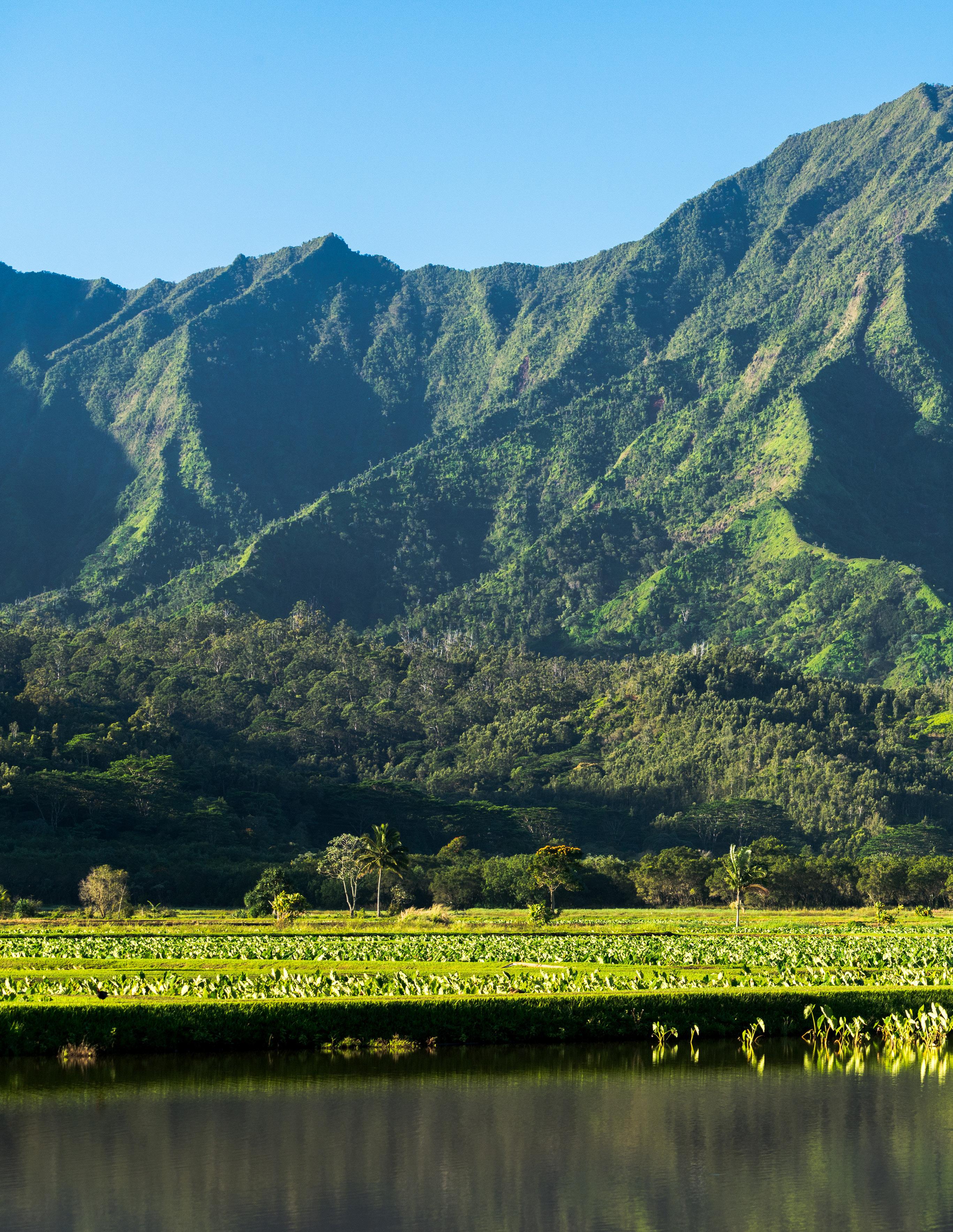
Knowing one’s center is central to Hawaiian responsibility, said Nahale-a. “We, Hawaiians, know our center—We know our mountains, our rains, our waters, our sunrise and our sunset,” Nahale-a said, emphasizing that identity comes from place—the land, ocean, weather and so much more.
That understanding shapes kuleana or responsibility, Nahale-a said. He cited a Hawaiian saying, “I Hawai‘i ka Hawai‘i i Hawai‘i,” which translates to “you cannot be a Hawaiian without Hawai‘i,” to emphasize that identity is inseparable from the land and ocean. “We are part of the land that we cannot control. Stewardship requires humility and responsibility.”
Nahale-a said a person cannot be Hawaiian without understanding mauka, meaning upland; and makai, meaning toward the ocean. He shared what happens to the land affects the ocean and vice versa. They are interdependent, so everyone has both a responsibility for the land and ocean, he said. “Stewardship to both helps people find their center because it requires intimate knowledge and relationships with places,” Nahale-a shared.
One misconception about Hawai‘i’s environment is a belief that everyone is entitled to access everything, Nahale-a said. He said some people do not know proper harvesting and fishing. “If you don’t know how to harvest, you shouldn’t. People overfish, harvest plants or food incorrectly, and it ruin spaces,” he said.
Nahale-a added one of Hawai‘i’s most productive food sources was once Waikīkī, which sustained communities for generations before becoming a tourist destination. “The fish was abundant there but not anymore. The fish you’re looking for now is the one wearing sunscreen that you try to get into your stores,” he shared. Nahale-a expressed these changes is a poor representation of Hawaiian values of mālama and aloha.
Adolpho said money is one of the challenges of young people face in caring for Hawai‘i’s natural resources. He said many residents struggle to make ends meet, which makes it hard for them to stay. “If you’re just trying to survive, it’s hard to focus on taking care of the land and ocean,” he said. He added fewer people are raised to care for the land, noting that farming—once considered honorable—is often overlooked as a career. “It’s a different worldview than what existed before, and it’s hard to return to a way of life we were never taught,” he expressed.
Sharing the same view, Billones said priorities of the younger generation have changed overtime. “There’s a knowledge gap here and even in my home country. Not many people want to be farmers anymore. Everyone wants to be a lawyer or doctor—which is good—but what happens to the farmer’s future if everyone goes corporate?” she said.
Kuleana and the Hawaiian worldview of ‘āina Kuleana is a Hawaiian word which means responsibility and privilege, said Adolpho. He continued everything that grows out of the land and of the sea is family to him. “You don’t turn your back on family. Your privilege is to take care of them, just as they took care of you,” he said.
Adolpho said in the Hawaiian worldview, the land and sea are regarded as older siblings and ancestors. He said one day he will leave this earth, but the earth will still be here. “If [my posterity] feel connected to the land and ocean, I hope they’ll also feel connected to me when I’m no longer here. It’s not just about my ancestors— it’s also for future generations,” he explained.
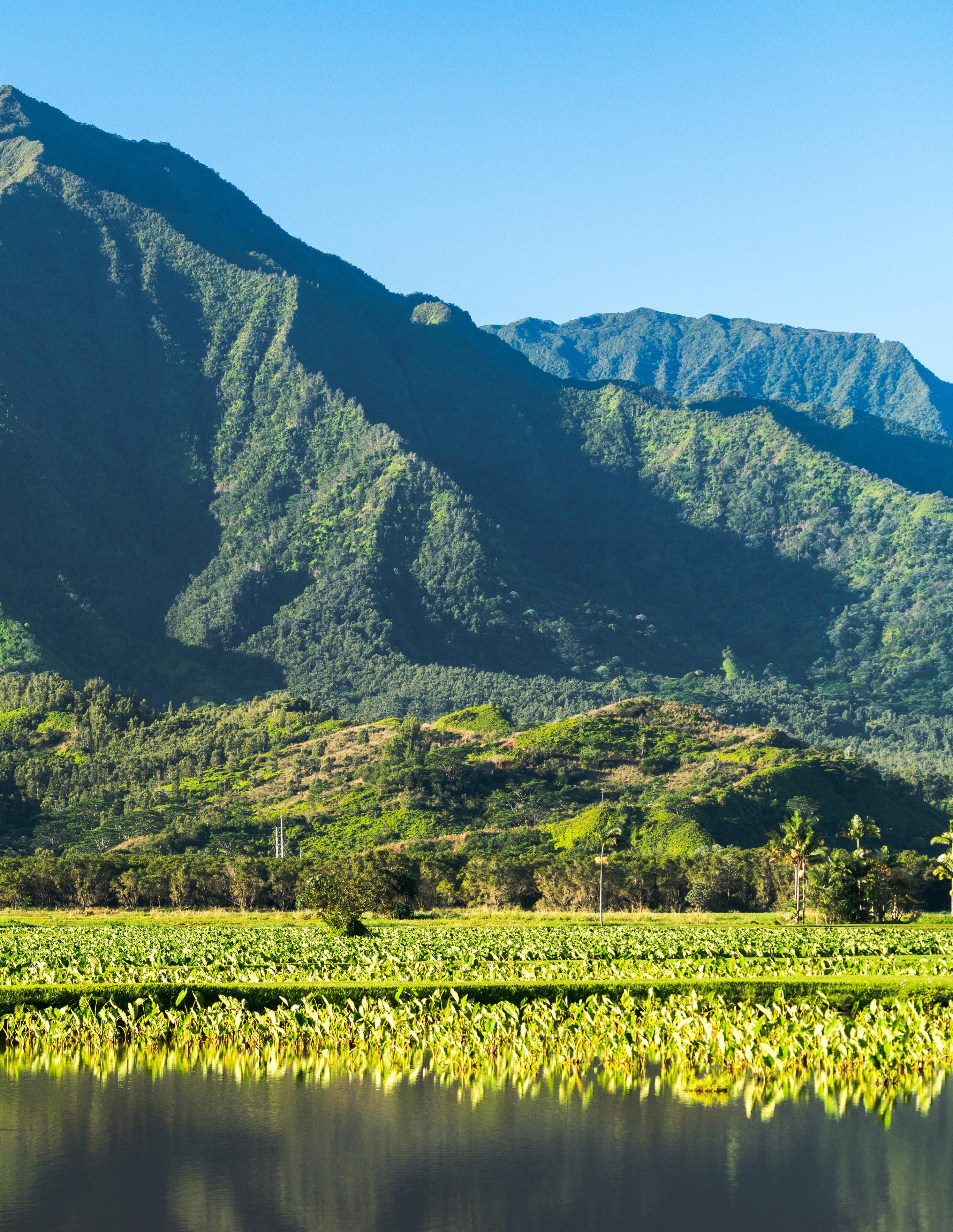
Taking care of ʻāina
Leadership and policy must change to truly teach mālama ʻāina, especially when resources are being depleted, Nahale-a said. “Leaders must have emotional and spiritual responsibility, not just power over land,” he shared. He added leaders must stop creating opportunities to exploit the land, emphasizing that mālama is all about spiritual, economic, social and psychological dimensions. “You can’t aloha ʻāina if you don’t mālama ʻāina,” he said.
Billones shared gardening is one practice she plans to carry when she returns to the Philippines. “It is a way to be self-reliant and sustainable. You take care of the land, and the land takes care of you,” she explained.
Billones shared even though she mostly does administrative work at the center, taking responsibility influences other aspects of her life, including how she eats and interacts with people. “I value people around me and don’t treat relationships as temporary. I value how I give through service, friendship or even just conversation,” Billones shared.
Nahale-a said Kumuwaiwai Center for Sustainability Project aims to create experiences that teach servant leadership. He said leadership is about helping people see potential. “Aloha ʻāina and mālama ʻāina are critical to discipleship and servant leadership and these values exist worldwide. Nahale-a continued the world today is too corporate and extractive, that is why it needs reciprocity and restoration because what we do on land affects the ocean. “We’re not perfect yet, but we’re trying. Good things don’t come fast,” he said.•
"Stewardship helps people find their center..."
Kīhei Nahale-a
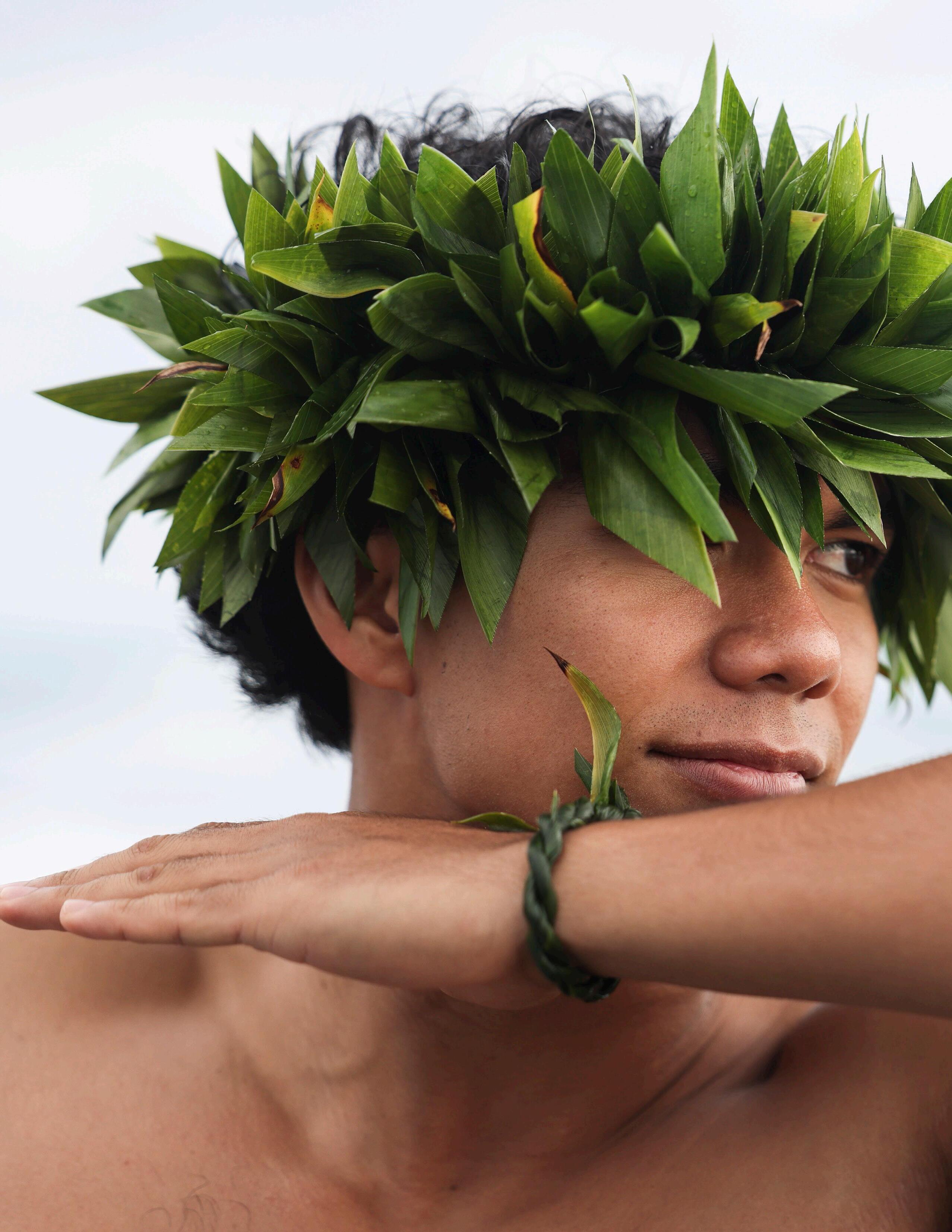
Learn and discover what hula is and what it can teach about resilience, authenticity and respect
CJ SHINIHAH NOTARTE-ORR
Hula is an art and a way of the Hawaiians to tell the stories of their past, said Melanie Kauvaka, one of the instructors for the Seasiders Sports and Activities 183 hula class and the career placement and planning advisor at Career Services. She said, “Hula is a sacred practice in our culture.” Furthermore, “Prior to the 1820s, there was no written language in Hawaii, so hula was one way for residents to pass knowledge from generation to generation,” says National Geographic.
Kauvaka said when leaders of Hawaii accepted the ways of Christianity in 1830, the people were banned from practicing hula. “Some of the missionaries viewed hula as immoral,” says an article from the Lyman Museum’s website. However, despite the ban, the Hawaiians continued to practice and teach hula in private, says the article.
According to Kelli Nakamura, an associate professor of history at Kapi’olani Community College, it was during the reign of King David Kalākaua when hula "made a brief resurgence.”
It was when the Hawaiian Renaissance began reviving traditions and culture of Hawaiians, said Kauvaka. “It was not led by a single person, but a collective of cultural practitioners, musicians, navigators and activists who worked to revive Hawaiian
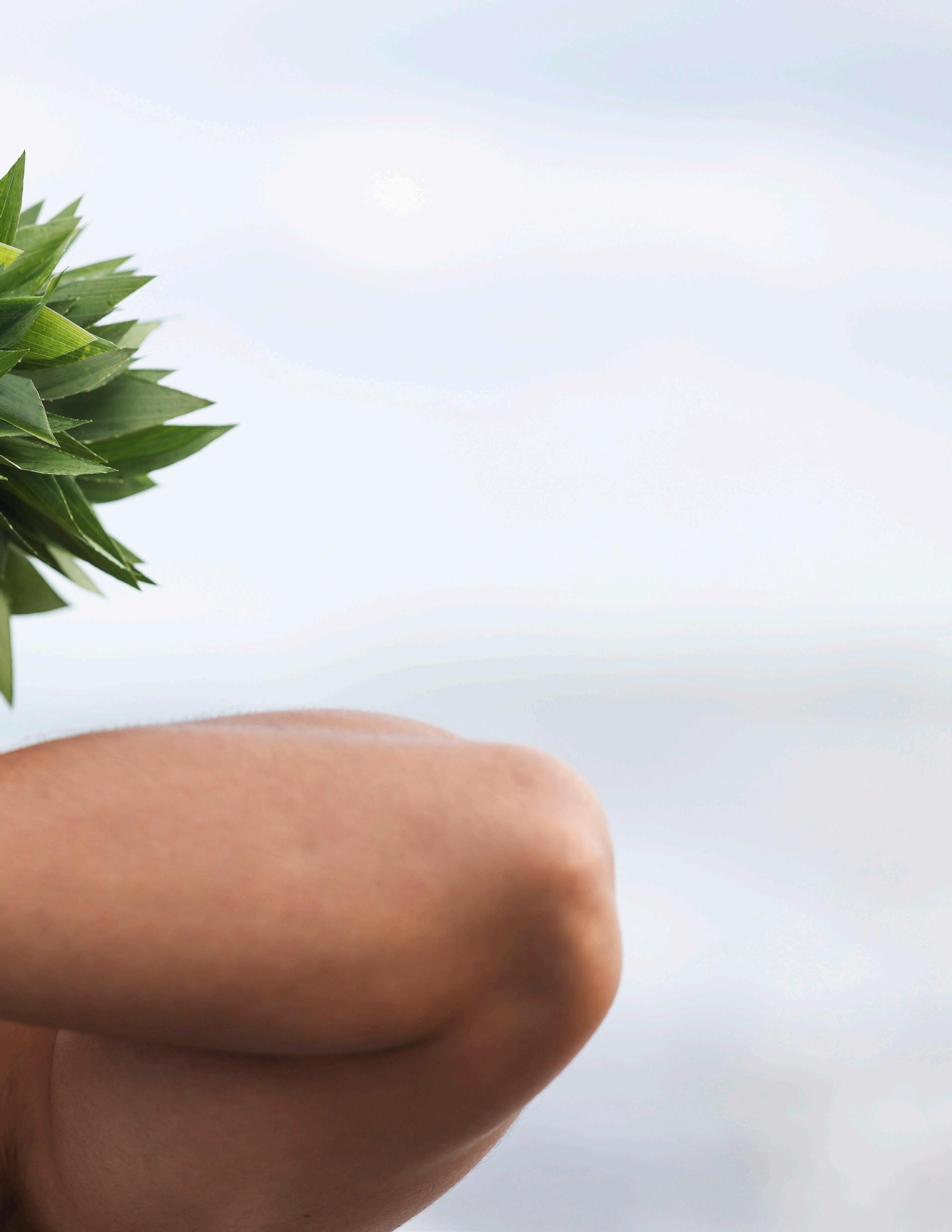
language, music, hula and identity,” she continued.
King Kalākaua hosted his coronation at the ‘Iolani Palace in 1883 where he featured hula, Nakamura writes. “Known as the Merrie Monarch for his patronage of traditional culture, King Kalākaua filled the two-week celebration with once-forbidden Hawaiian traditions—hula performances, music and a lūʻau,” says National Geographic.
After King Kalākaua passed away in 1891 and the Hawaiian Kingdom was overthrown in 1893, “hula did not have widespread support,” Nakamura writes. However, hula continued to be practiced despite the challenges Hawaiians faced, she continues. Hula was then “seen as a form of resistance against the cultural and political dominance of Western powers,” she writes.
Today, hula survives as an art and a cultural practice preserving its authentic traditional elements and “incorporating new instruments and themes, leading to the emergence of Hula ʻAuana,” Nakamura writes.
Types of hula
Kauvaka said there are two types of hulas: kahiko and ‘auana. “Hula kahiko is the ancient hula practiced before the Western contact and hula ‘auana is the modern hula,” she said. Kahiko is accompanied by chants and traditional instruments, while ‘auana is accompanied by ‘ukuleles and guitars, she explained.
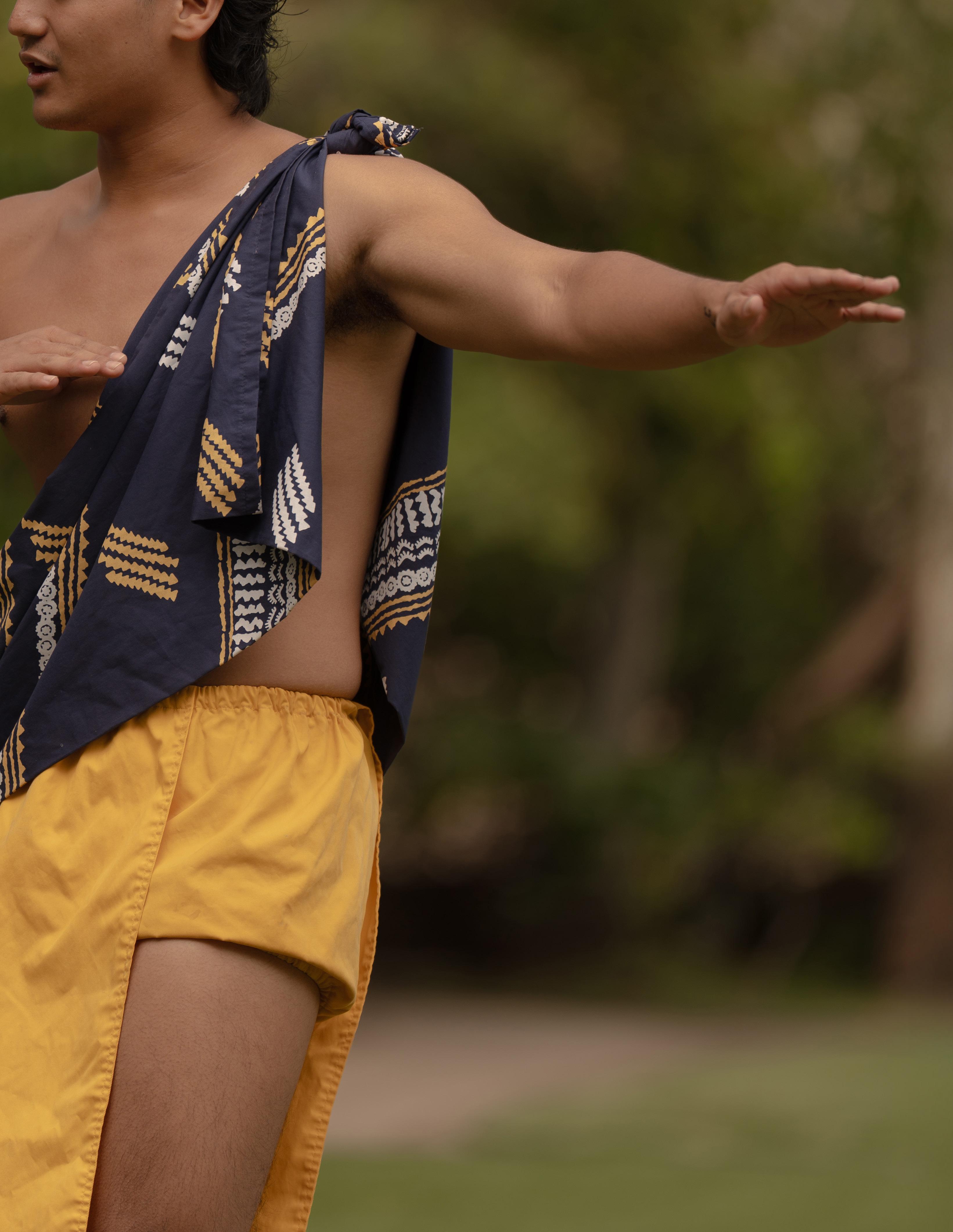
Kahiko is sacred where dancers wear a traditional attire to represent the ancient period, said McIntyre Horito, a senior from Utah and Hau‘ula majoring in Hawaiian studies and a student in one of the hālau in Oahu. “[For kahiko,] the clothing can be more revealing. ...With ‘auana, it’s more appropriate to dance in a button-up shirt, pants or shorts,” he continued.
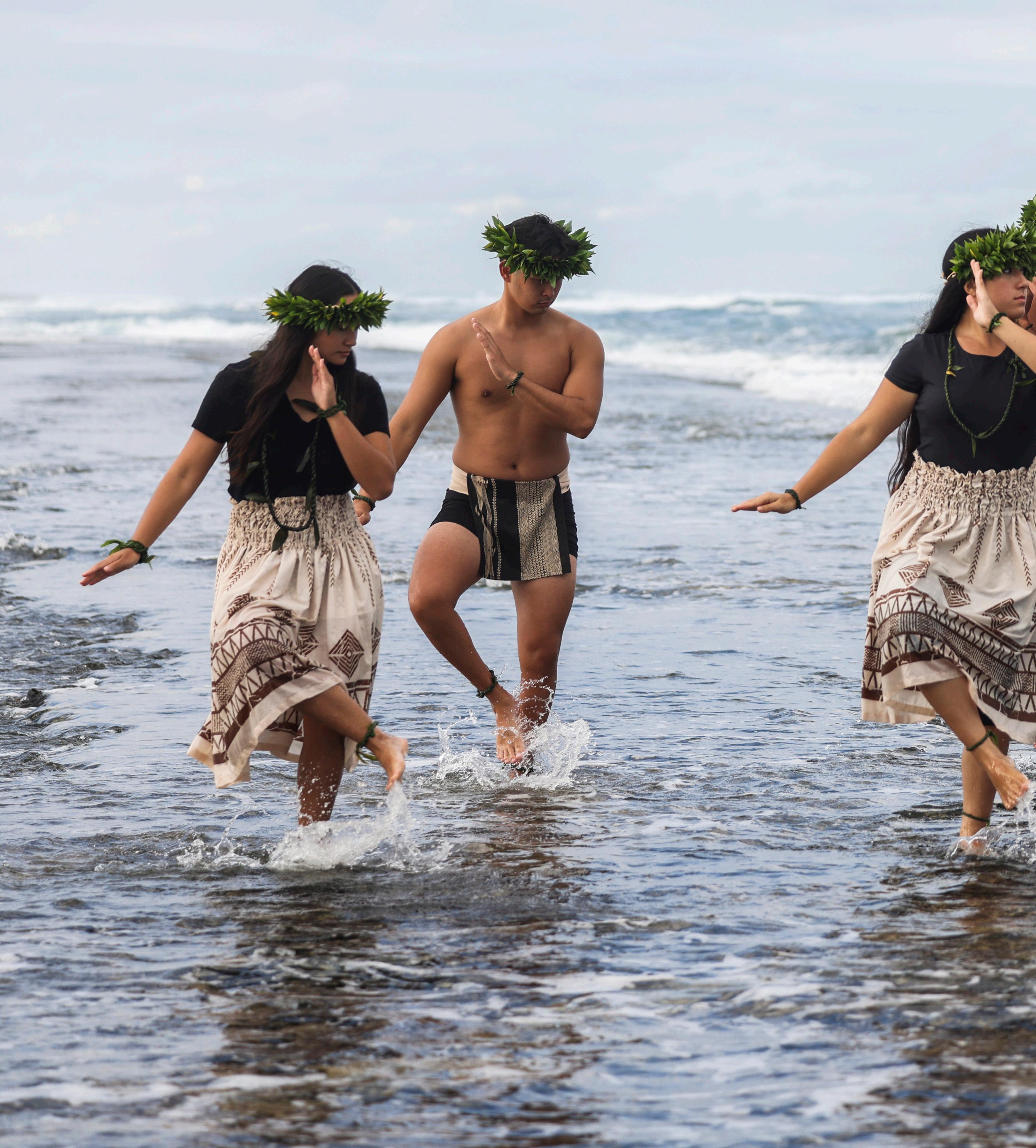
In Hollywood, hula dancers are portrayed wearing grass skirts and coconut bras, Kauvaka said. Horito also said the proper representation of hula is a challenge because it is at the center of tourism. “There are a lot of clichés and stereotypes,” he continued.
Horito said when he came to BYU–Hawaii, men in hula are not strongly represented. He said, “People are always surprised when I tell them I’m a hula dancer because it's not common for men.” He said people do not know that training for hula is physically demanding and hard. “There’s a whole other side of hula with men and that’s the side I want to be a part of and that's what a lot of people at school know me here for,” he added.
Kauvaka said, “I would suggest for anyone trying to learn hula to make sure they are learning hula from someone who has been trained by a Kumu
Hula. The way to know if you are learning from a credible hula dancer is to learn their hula genealogy, she said. “For me, my hula genealogy goes from my Kumu Hula [who] is my mom, and my mom was taught by Kumu John Lake. ... and it goes back all the way to Kumu Rose Joshua,” she explained.
There is a certification to become a Kumu Hula, said Kauvaka. One must go through training, she said. The training is called ‘uniki which is “the formal graduation or initiation ceremony in hula marking the transition of a student from training to a recognized independent hula practitioner or teacher,” she explained.
Kauvaka said, once certified to teach, the Kumu Hula will choose
a few dancers in her hālau (school for hula) who she or he mentors to take his or her place. She said students must master hula techniques, chants, protocols, spiritual responsibility, genealogy, Hawaiian language and culture before they are granted to perform in public.
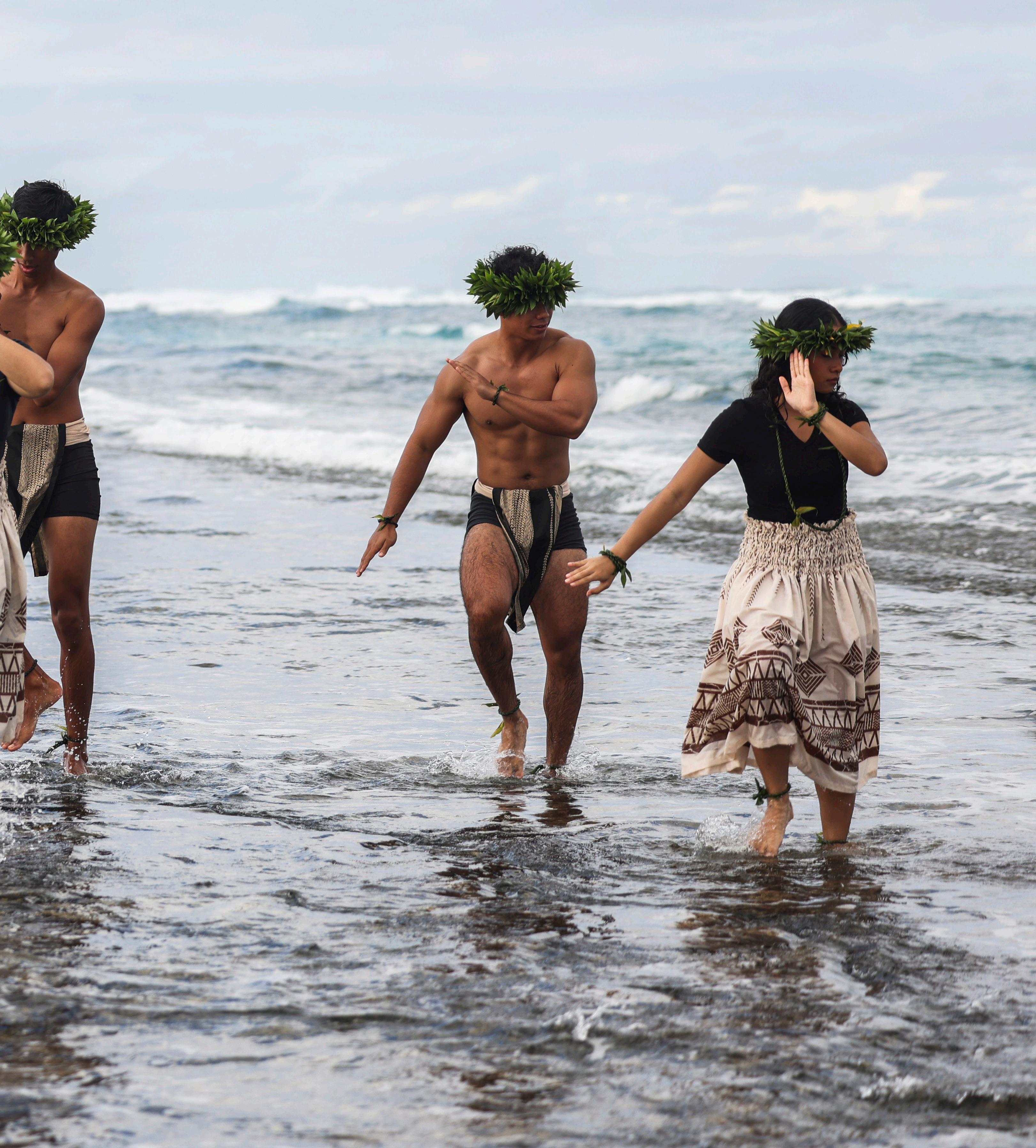
Kauvaka said as a student of a Kumu Hula, she is not allowed to teach the dances to anyone outside their hālau. “Unless I get permission from Kumu Claire Manutai if I could teach my students, most of the time, she'll either say ‘no,’ or she'll say ‘yes, but let me teach it.’ So, then I would bring her and she would teach,” she said.
Moreover, Kauvaka said she can do a performance taught by her Kumu Hula with proper credit. She said, “I would introduce myself, then my Kumu who choreographed this hula to give proper credit, then I would perform the dance.”
Horito said dancing hula makes him a better person. “It grounds me and my identity. It gives me pride and it makes me healthy as well,” he said. Anyone who is committed to joining is welcome, he added. “If you take it seriously, we’ll take you seriously,” he continued.
Kauvaka said when dancing hula one must embrace it. “Don't try to take what you've learned and then try to make profit out of it, because like I said, it's sacred,” she continued. She said if someone doesn’t know anything about hula, they should take a hula class to get properly taught and educated. “It is not really good to look on YouTube for a choreography,” she added.• Photos by BYUH university photographers. Page Design by Jay-R Gallano.
BY JOHN ANDREW QUIZANA
The revitalization of the Hawaiian language is widely regarded as one of the most successful Indigenous language recovery movements in the world, according to the University of Hawai‘i Foundation. Scholars and cultural practitioners emphasize that its success lies not merely in preserving words, but in restoring cultural systems disrupted by colonization. Linguistic scholar Emma Kauana Osorio, in “Struggle for Hawaiian Cultural Survival,” argues that the survival of ō lelo
Native Hawaiian identity, history and sovereignty.
That survival was once far from guaranteed, Osorio said. Following the overthrow of the Hawaiian Kingdom in 1893 and the imposition of English-only education policies in the early 20th century, the Hawaiian language experienced a rapid and devastating decline, she said. Hawaiian was formally banned as a medium of instruction in public schools, and children were often punished for speaking it, according to the University of language researchers. By the 1970s, fewer than 2,000 native speakers remained—most of them elders—leading linguists to classify the language as critically endangered, according to Mokuola Honua.
Linguist Larry Kimura, a leading figure in the Hawaiian Language Revitalization Movement, has argued that this decline was not accidental but systemic. Language loss functioned as a tool of
cultural erasure. When a language disappears, Kimura and other scholars note, it takes with it ancestral knowledge, oral history and cultural values embedded in grammar, metaphor and naming practices.
Indigenous studies scholars consistently frame language not merely as a communication tool, but as cultural infrastructure, Osorio said. According to Mokuola Honua, ʻōlelo Hawaiʻi structures Hawaiian relationships to land (ʻāina), genealogy (moʻokūʻauhau), and communal responsibility. The suppression of the language therefore

acknowledging debates within Native Hawaiian communities about authenticity and teaching methods. “The more high schools and elementary schools we can get Hawaiian classes into, the better.”
Spalding emphasized language is the most effective vessel for preserving culture. “When you have the language, you’re able to preserve the culture much better than just learning about it through English,” Spalding said. He pointed to the increasing presence of Hawaiian in public spaces—such as street names, place names and signage—as a powerful form of normalization.
“It’s super awesome to see the language in places you wouldn’t normally expect,” he said.
For Spalding, the future of ʻō lelo Hawai‘i is deeply personal. “I plan on raising my kids speaking Hawaiian Spalding said. “Learning my own native language and being able to connect my culture and traditions through language was something really special.”
Although his ancestry includes Hawaiian, Welsh, Irish, Scottish, German, Mexican, Native American and Chinese roots, Spalding said Hawaiian identity is the part he lives out most fully.
“Speaking Hawaiian has helped me feel more connected to my ancestors,” Spalding said. “It’s helped me understand the very roots of where our culture came from.”
From a student perspective, Spalding said one of the most effective strategies in revitalization today is expanding Hawaiian language education across schools.
“Any language learning is great,” Spalding said,
in addition to other languages,” he said. “Language has been the number one factor in helping me feel connected to my culture and allowing me to explore parts of my identity I didn’t even know could exist.”
To those who believe language loss is inevitable, Spalding offers a direct challenge. “As long as one person can speak a language, it’s not going to die,” he said. “It’s really up to you whether you want to make a difference.” He added that anyone living in Hawai‘i has a kuleana—a responsibility—to at least familiarize themselves with the islands’ customs, history and heritage. •

BY SAMANTHA FAITH SATORRE
n Hawaii, stories, traditions and genealogy were passed down through storytelling before they were preserved in writing, says Hawaii-based scholar Carolyn Kehaunani Cachola Abad. She writes in her dissertation that the richest ancestral legacy of the Native Hawaiian people is held together by their timehonored oral tradition, which consists of poetry, songs, chants and proverbs. Charles L. Briggs, a folklorist and linguistic anthropologist, puts emphasis on proverbs. He says proverbs, or ʻʻlelo noʻeau in Hawaii, “invite the elders of bygone days into the room”; they are memory devices that can survive colonization, cultural disruptions and time.
Scholars say proverbs are unique from ordinary speech. Liisa Granbom-Herranen, a folklorist who studies proverb traditions across cultures, notes that proverbs employ metaphors, imagery and symbolism to convey deeper meaning. She says they carry this certain “strangeness” that beckons people to pay attention. Let’s look at how the following Hawaiian proverbs do exactly that.

‘Elemakule kama ‘ole moe i ke ala.
An oldster who has never reared children sleeps by the roadside.
Hawaiians believe that when you care for and rear children, you will be cared for at an old age.

Stay among the clumps of grasses and do not elevate yourself.
This reflects the teachings of ancestors to practice humility: stay grounded, gentle and modest rather than draw attention to yourself.

He palupalu
nā
hewa li‘ili‘i i ka wā kolo, lolelua i ka wā kamali‘i, loli ‘ole i ka wā ‘o‘o, ‘oni pa‘a i ka wā ‘elemakule.
Small sins are weak in the creeping state, changeable in childhood, unchanging when an adult, and firmly fixed in age.
Bad habits are easiest to correct in the early stages. If ignored, they gradually solidify and become much more difficult to change later in life. This proverb teaches: “Do not allow sins to get beyond creeping.”
‘Ike aku, ‘ike mai, kōkua aku, kōkua mai; pēlā iho la ka nohona ‘ohana.
Recognize and be recognized, help and be helped; such is family life.

A healthy family depends on mutual acknowledgment and shared support. Families thrive through care and responsibility that go both ways.
E ho‘a‘o no i pau kuhihewa.
Try it to end the panic.
This saying teaches that much of our anxiety comes from antic ipation rather than action. Thus, one must confront a task directly to ease the worries. As an American saying puts it, “Just do it!”

Pupukahi i holomua. Unite to move forward.
Unity drives progress. Such as in canoes, where each paddler must move in sync together, coordination allows a group to move forward more quickly and effectively than acting alone.


E lauhoe mai na wa’a; i ke ka, i ka hoe; i ka hoe, i ke ka; pae aku i ka ‘aina.
Paddle together, bail, paddle; paddle, bail; paddle towards the land.
During interisland voyages, paddles and the bailer are just as important as the sail. Rough waters flood the canoe often, requiring crew members to constantly bail while others paddled together on command to reach land as quickly and safely as possible. This shows that when everybody acts in unison, tasks are completed more efficiently.
Kulia i ka nu‘u.
Strive for the summit.
Strive toward the highest standard. One must practice persistence and excellence in all their endeavors. This was the motto of Hawaii’s Queen Kapiʻolani who did so much for her people.
He puko‘a kani ‘aina.
A coral reef (hardens/strengthens/ sounds out) into land.
As Hawaiians navigated across the Pacific, they would take note of coralheads they passed by to teach the locations to their apprentices. These small coralheads are formations that would eventually grow into full islands. This is a reminder that success does not come immediately; it often begins modestly before gradually developing through patience and perseverance•

BY MYCO CHILLIAN MARCAIDA
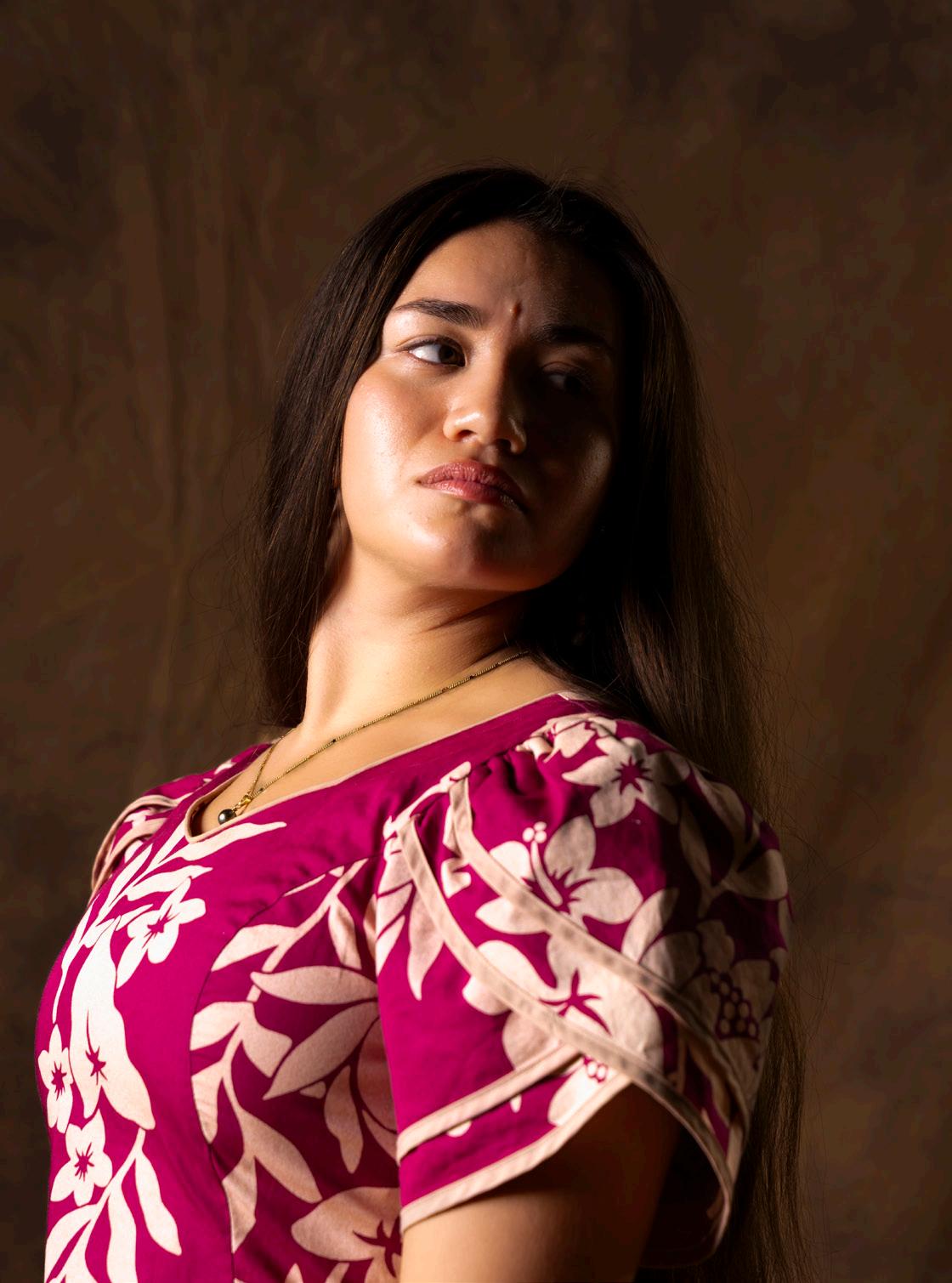
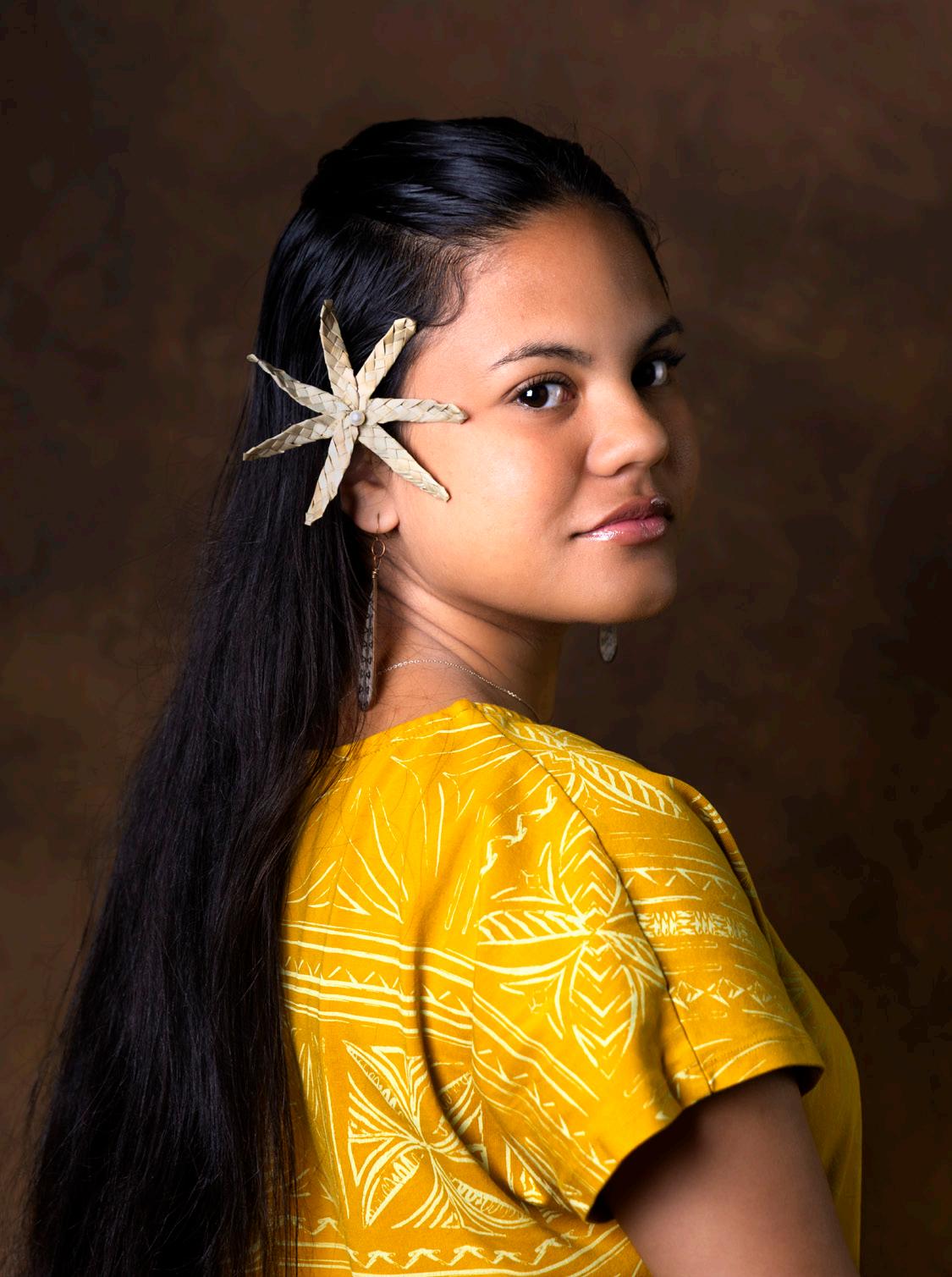
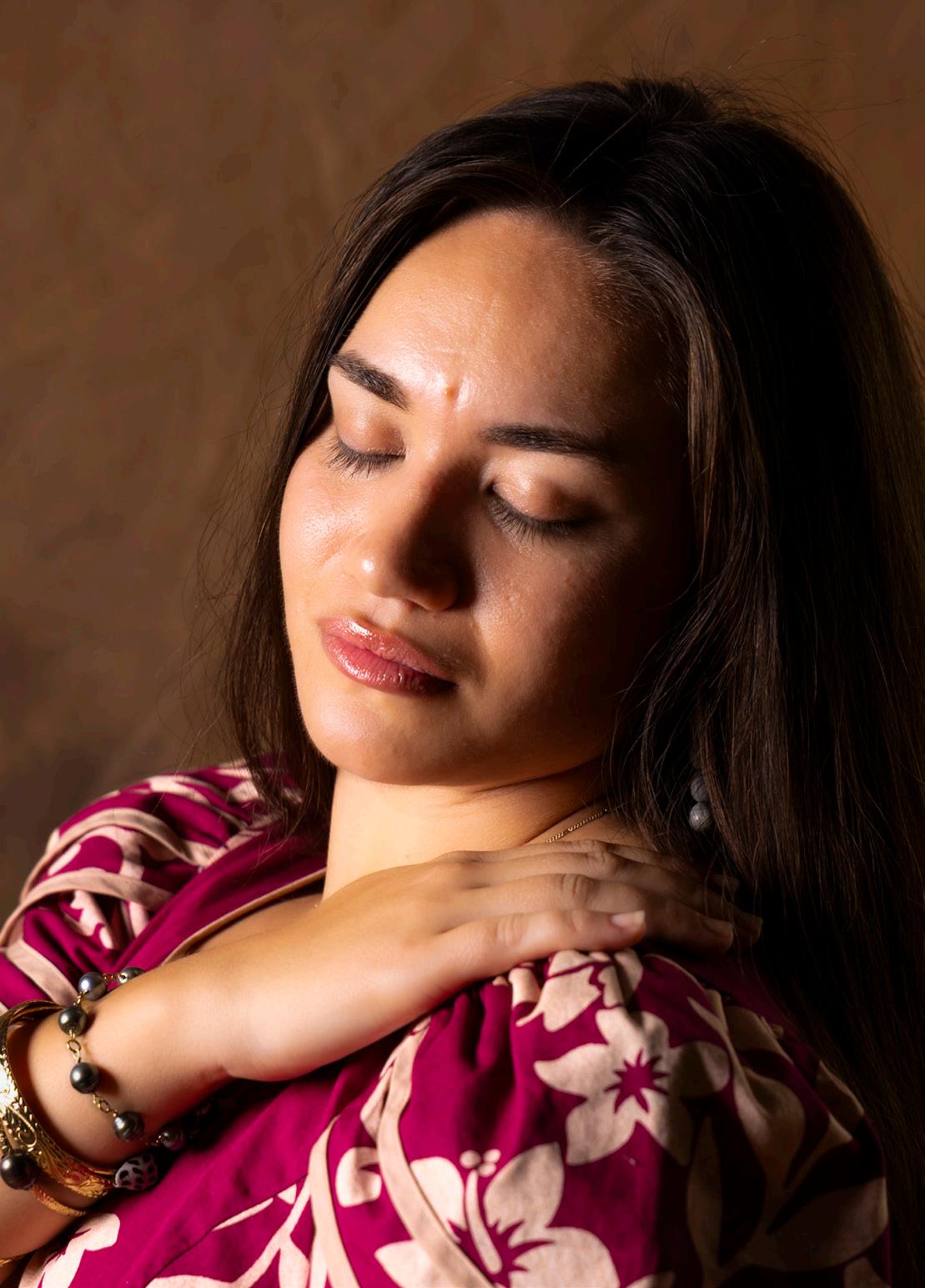
Hawaiian naming practices reflect a cultural system where language, genealogy and history are inseparable, says Hawaiian studies students. Inoa or (names) are intentionally given to honor ancestors, remember significant events and anchor individuals to place, reinforcing the belief that names carry both meaning and responsibility, the students explained.
According to the Papahanaumokuakea Marine National Monument website, Inoa convey several different meanings in Hawaiian culture. The site says names are given to remember historic events, geographical features, ancestors and mo’olelo or stories/histories.
“Since Hawaiian is a spoken language, genealogies were memorized at an early age and were passed down orally through generations,” the site explains.
For Alexis Keaaloha Kalani Kelly, a junior majoring Hawaiian studies from Haula, Hawaii said her name means “the love from heaven,” given to her by her parents with the counsel of some of elders in her family. “I was five years old when I started piecing what my name meant and had other people tell me about it as well. But, truly understanding the name when I grew a little older made me feel honored and blessed having a sweet name,” she shared.
Spending high school in California, Kelly shared how her name became shorter to cater to people who weren’t familiar with Hawaiian names. “I went by Kea and that itself had a different meaning which means, “pure” or “white” but my dad always reminded me that I have a big name to live up to and that sometimes one can see it as a burden or a blessing,” she added.
Agreeing with the latter, Kelly said names can sometimes be a burden or hope. “My dad reminded me to try my best to live up to the name given to me,” she explained. “It was difficult because I don’t think I’m that loving to people and it was hard for me to look at myself and say that I am not my name, that I must go by something else and I felt a little ashamed to go by my name,” she added.
Kelly said she used to dislike how her name translates in English. She said people would translate Kea literally. “People would translate it as “white”, and I did not like that. But it can also mean purity, but
some people would think of it as skin color and it bothered me,” she explained.
Eventually, Kelly realized living up to one’s name starts with desire and effort. “I learned that I do have love for people. My name’s a gift and living up to what my name means is who I want to become,” she explained.
Kelly said she honors the responsibility that comes from carrying a Hawaiian name. “With my family name, I represent my kupuna, my parents and especially with sacred places where my ancestors have been. It makes me want to honor those places too,” she explained.
The aloha in her name, Kelly said, inspires her faith but also carries the most weight. “I see the aloha as the pure love of Christ
and understanding that makes me want to try harder, love more and give more if I can,” she explained. “I think none of us have reached a level of the purest love like Christ yet, but I really want to get close to that,” she continued.
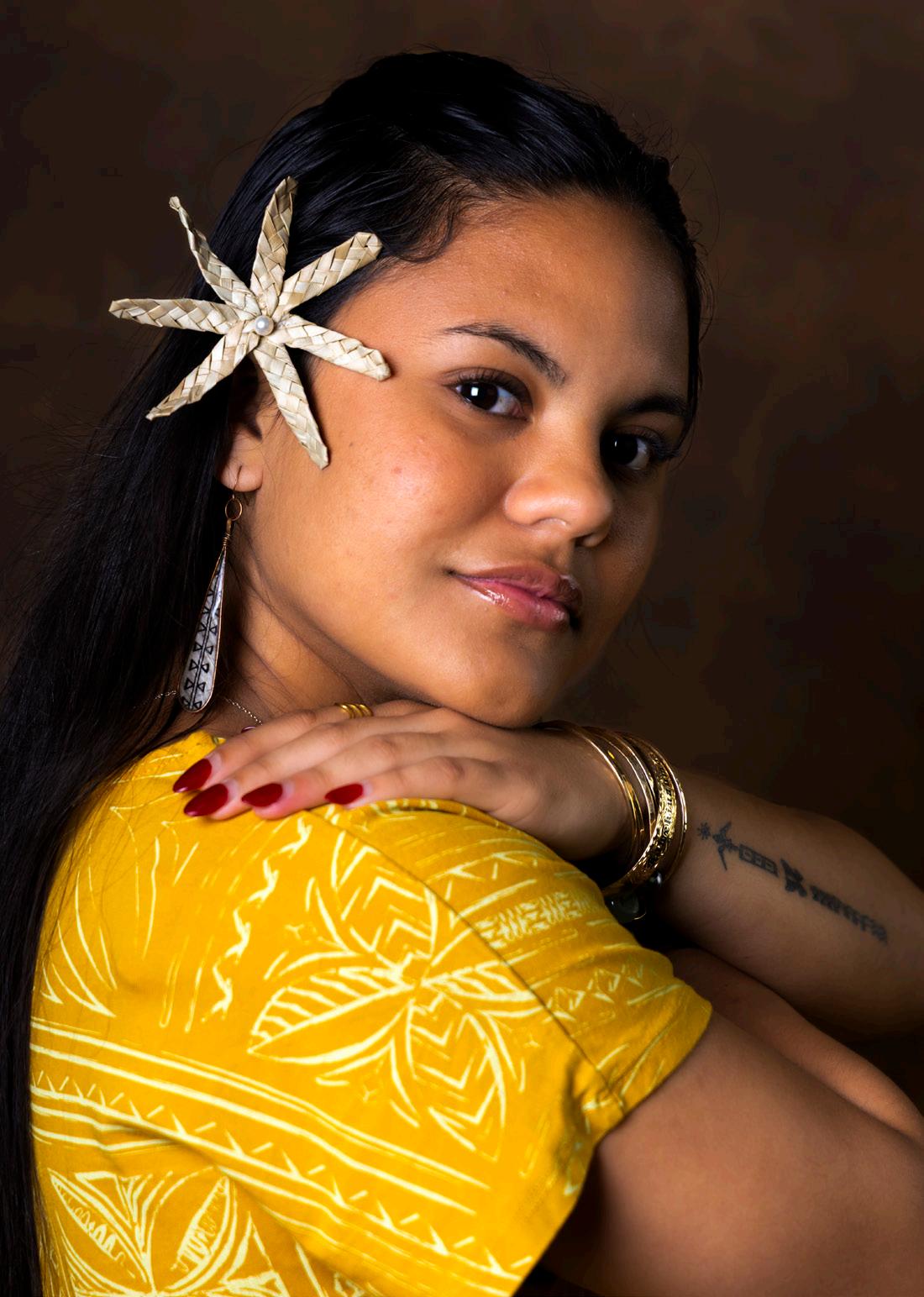
Words with Mana Kawēkiuaumoaika‘ohukaukuahiwi Ku‘uleialoha Alcomindras Palakiko who goes by Kiu, a freshman from Lahaina, Hawaii majoring in Hawaiian Studies said her whole first name was given by her mom. She said her name means, the tip of a mountain surrounded by the mountain-sitting mist. “Spending my younger years at Kamehameha High School back in Maui helped me learn and understand the depth of my name,” she said. “Having my mom explain it to me helped me appreciate it more because I always thought of my name as really long, but there’s beauty in [the] words that make up my name,” she explained.
Palakiko said understanding the Hawaiian language is essential to help one understand the Hawaiian names better. “In Hawaiian culture, words are everything,” she said. “There’s mana into these words so when you think of the make-up of these names and put them together, it’s really powerful,” she explained.
Palakiko said carrying a Hawaiian name creates a sense of responsibility that feels natural rather than imposed. “It puts me in a pposition
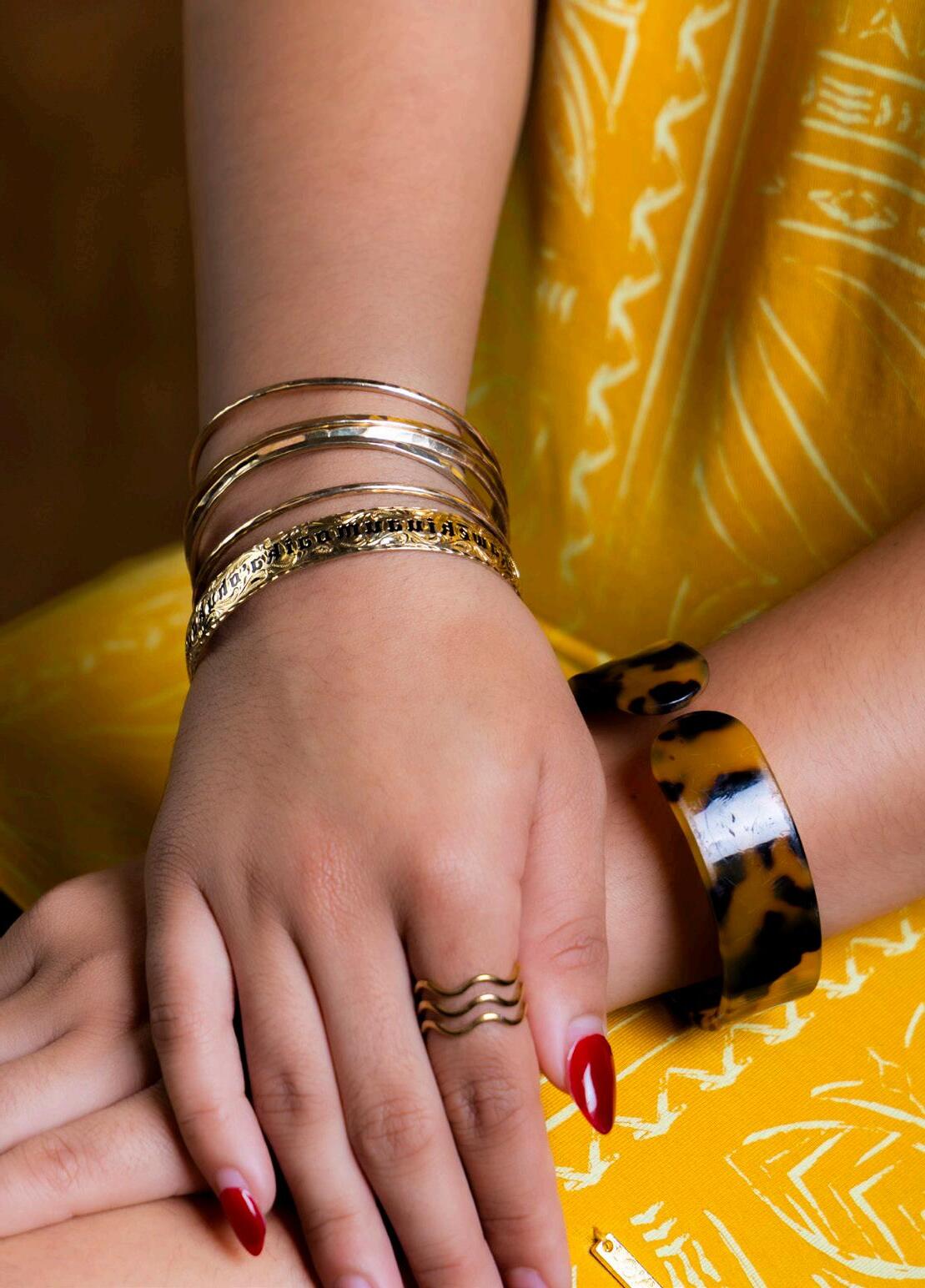
where I know that I must do things for my lahui, my community. It’s a privilege,” she explained.
Palakiko described a conversation with her mother helping her understand responsibility as something embedded in her upbringing. “My whole upbringing has been responsibility,” she said. “Because I’ve been raised in Hawaiian environments and Hawaiian values, this responsibility is normal. It is who I am.”
At one point in her life, Palakiko said shortening her name became a habit whenever she would introduced herself to people. “I’ve always been asked what my name meant since childhood so at times, I’d give them a shorter version of what it means like “‘oh it’s the tip of a mountain’” or saying, “‘it’s just my Hawaiian name,’” she added.
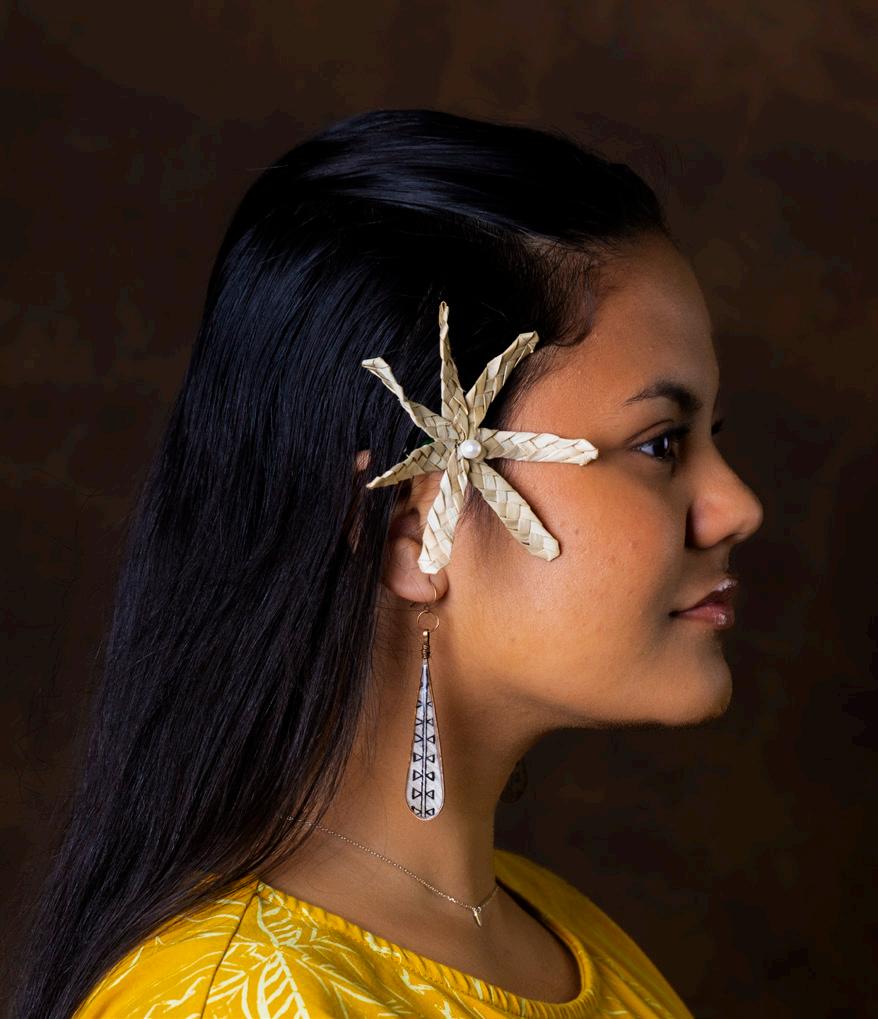
For her Palakiko, colonization’s impact on how some Hawaiians see their names is heartbreaking. “It’s sad because our names hold so much meaning. At times I feel like it isn’t treated as important as it used to be,” she added.
Hawaiian names are extremely powerful and intentional, said Palakiko. “These names are given, sometimes through signs or dreams. So, when you are given a Hawaiian name, the least you can do is live up to it and honor where it comes from and what you do for the Hawaiian community,” she added.
Names as cultural memory
Kaulumaika, a blog on Hawaiian Names and Naming, explains the modern Hawaiian naming system as it varies in depth and commitment.
Drawing from a book called Nānā I Ke Kumu, the site outlines the traditional naming practices, including inoa pō or, names received in dreams, inoa hō‘ailona or names revealed thorughrough signs, inoa ho‘omana‘o or, names of remembrance and inoa kupuna or, names of ancestors.
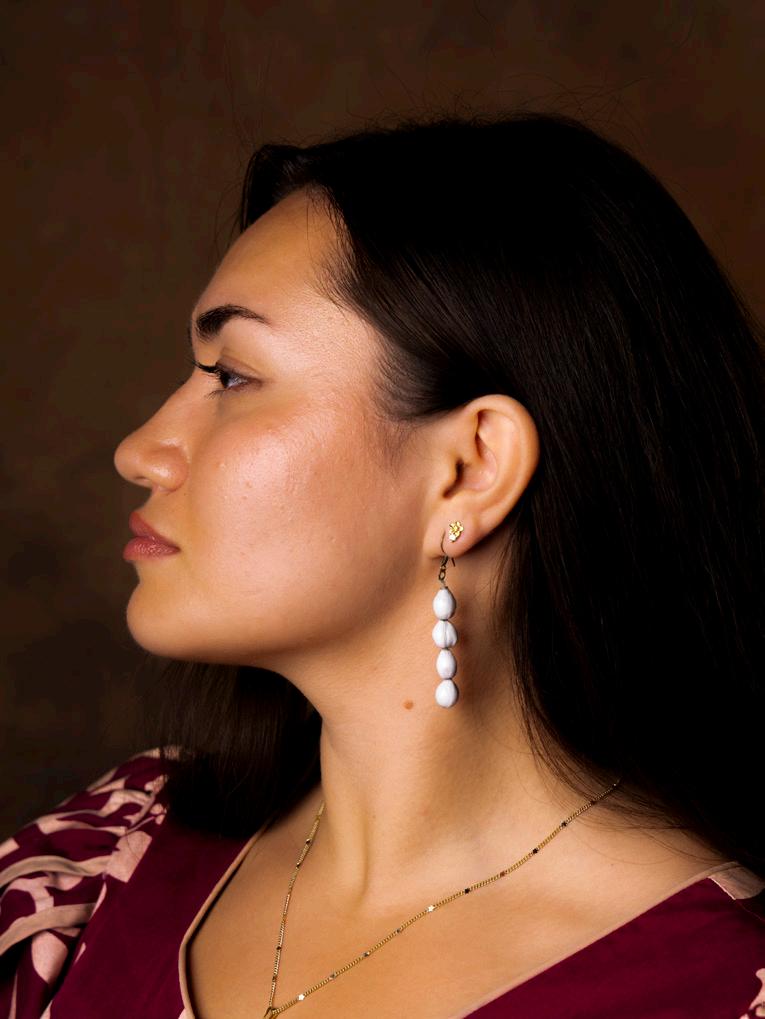
“There are those who give their children a Hawaiian name because they saw a movie or vacationed or lived here for a long time,” the site notes. “But anciently these were some ways they named their children,” the site says.
Kelly and Palakiko emphasized that Hawaiian names remain sacred. They are not simply just aesthetic or symbolic, but intentional gifts meant to be honored, they said.
Kelly said Hawaiian names aren’t just names that people give to themselves. “Names are sacred and have meanings so don’t be ashamed of it,” she said. “When I ask other people about theirs, they dismiss the idea of how special their name could be. We shouldn’t be ashamed or think less of it because everything has meaning.”
Palakiko echoed the sentiment emphasizing pride alongside responsibility. “At the end of the day, it can be challenging but I would never trade it for anything in the world. I’d be Hawaiian every single time,” she explained.•
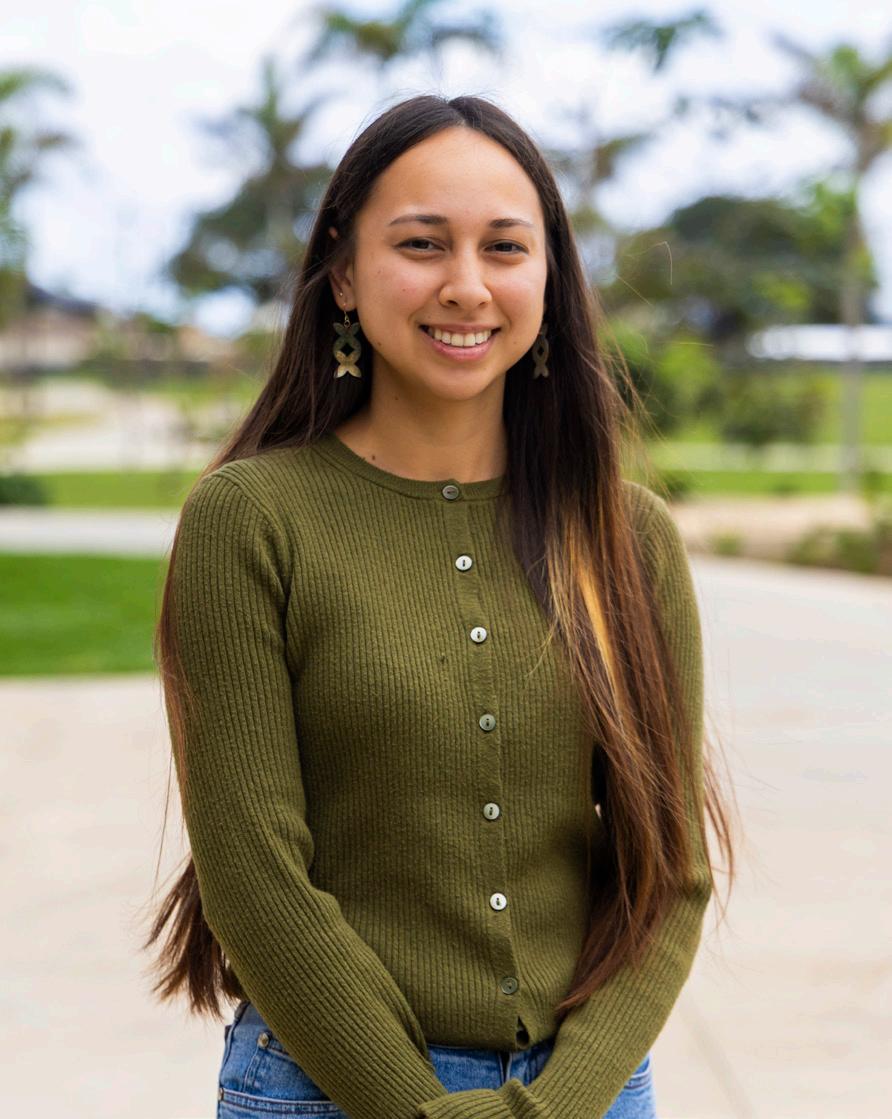
Responsibility in Hawaiʻi begins with understanding one’s place—both physically and relationally—through a Hawaiian concept known as kūlana nohona, said Sione Funaki, an adjunct faculty member with the Faculty of Culture, Language & Performing Arts and the Jonathan Nāpela Center for Hawaiian & Pacific Studies. The concept holds that identity, knowledge and experience are shaped by place and ancestry. “If you know who you are, then you know what you’re supposed to do relative to where you are,” he said.
This place-based sense of responsibility helps explain why Hawaiian values such as pono (righteousness), ʻohana (family) and mālama (to take care of) continue to guide behavior today, Funaki said. While often described as Hawaiian values, he said they
BY JESSIKA SANTOSO
Explore how pono, ‘ohana and malama guide moral, social and spiritual responsibilities today

are not unique to Hawaiʻi. “Every culture has similar values—balance, family, caretaking and responsibility,” he said. For those visiting or living in Hawaiʻi, he added, practicing these values begins not with learning terms but with acting with respect and care already present within their own cultures.
Funaki said pono is often translated as righteousness or goodness, “but in a Hawaiian worldview it emphasizes balance and harmony in how people live and relate to others.” Acting pono, he said, requires awareness of how one’s actions affect others, particularly within Native Hawaiian communities.
One way Funaki practices pono is through pule, or prayer. “Pule is not just asking for things,” he said. “It also means reflecting, meditating and having conversations with God, ancestors and yourself.” Through prayer, he said, he asks whether his decisions create balance, build harmony and strengthen relationships.
Iliana Rivers, a senior biology major from Waiʻanae, Oʻahu, said the phrase “live pono” means living well through moral standards, health and integrity. Pono, she said, works alongside ʻohana and mālama,

allowing people to stand for their beliefs while remaining respectful. “For example, you can stand for what you believe in while still being respectful in how you express it.”
Kaleʻa Nelson, a junior majoring in elementary education from Waiʻanae, Oʻahu, also described pono as living with integrity. “It’s doing the right thing even when nobody’s watching. You don’t allow anybody else to make you waver from that,” she said.
In an era of artificial intelligence, Nelson said acting pono in schoolwork means doing the work oneself and making ethical choices by avoiding plagiarism. That approach, she said, aligns with her faith and builds trust. “People will see you’re trustworthy and reliable if you’re pono.”
For Rivers, the concept of ʻohana is expressed through responsibility in how people treat cultural and personal differences. Growing up in Hawaiʻi and now living at BYU–Hawaii, she said being surrounded by people from diverse backgrounds made respect a daily practice rather than a conscious effort. ʻOhana, she explained, means accepting others without judgment and remaining open to learning from differences. “People may do things differently,” Rivers said, “but that allows me to learn more, to be curious, but still respectful.”
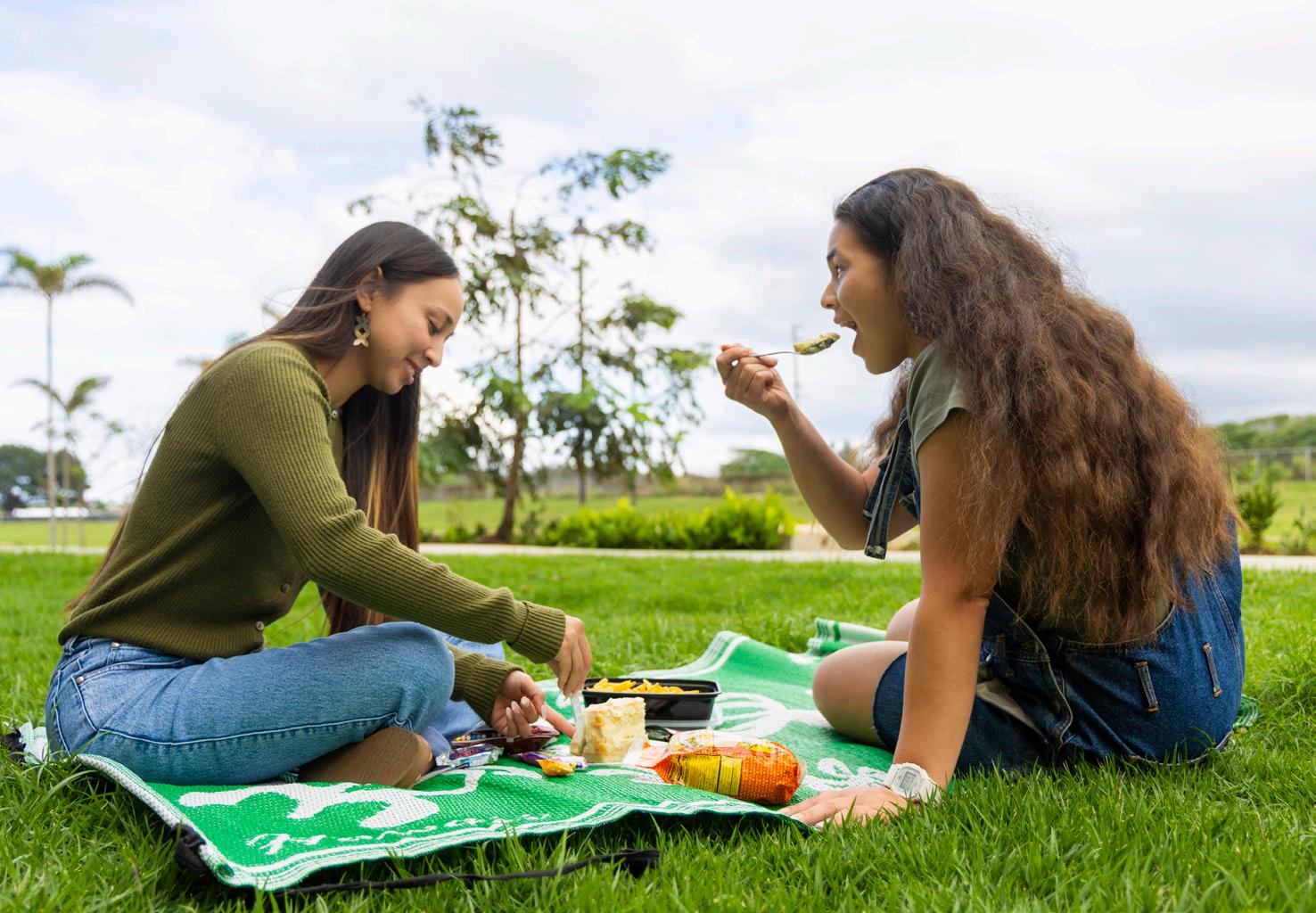
Nelson said ʻohana has shaped her life through a small but deeply bonded family. Growing up without a large extended family, she said closeness mattered more than size. “My family isn’t very big, but when we were together, I always felt like we were the strongest family,” she said. What sustains ʻohana, she said, is showing up—even during conflict or distance. After losing family members, she said caring for her remaining ʻohana felt more like a natural responsibility. “I have to mālama that ʻohana more because they’re really all that I have,” Nelson said.
That understanding of ʻohana, Nelson said, challenges ideas of complete independence–a concept that emerged lately in modern day. “We weren’t meant to do things alone,” she said, pointing to family, education and faith as examples of shared effort. ʻOhana offers support when people allow themselves to reach for it, she explained. “You can’t create life by yourself. You can’t create a huge corporation by yourself. It always takes hands. Yet, individualism is a good thing when you know when to use it.”
For Rivers, mālama reflects a reciprocal responsibility between people, land and resources. Ancient Hawaiians did not view
For visitors living in Hawai‘i, practicing these values begins not with learning terms but with acting with respect and care already present within their own cultures. Sione Funaki
Living Hawaiian values today requires integrity ... “These values aren’t just something I talk about; they’re habits I practice every day.”
land as an object to be owned, but as an entity akin to family, she said. “The land provides for the people, and the people give back to the land.” That ethic extended beyond land to the ocean and community life through systems such as the ahupuaʻ a, where resources were shared rather than accumulated, she said. Abundance, she continued, was measured by a willingness to give rather than consume.
That responsibility does not disappear when resources are limited, Rivers said. Practices such as hānai—accepting individuals into families regardless of blood ties—reflect mālama in action. When someone is struggling, she said, family members and the broader community step in to help.
Nelson described mālama as a responsibility for what is immediately in front of her. On campus, that can mean picking up trash rather than waiting for someone else to do it, conserving water or caring for shared spaces. “That’s just basic morals,” she said. Mālama toward people, she added, means showing up—mourning with others, listening and remaining present.
Both Nelson and Rivers said mālama also includes self-care. College culture often glorifies exhaustion, Nelson said, but neglecting personal well-being undermines the ability to care for others. “When you take time to mālama yourself,” she said, “you’re in a better place to mālama others.”
For Rivers, living Hawaiian values today requires integrity—doing what one commits to even when no one is watching. “These values aren’t just something I talk about; they’re habits I practice every day.” Nelson described that responsibility as requiring sacrifice. Living pono, she said, can mean giving up comfort, time or even relationships in order to act with integrity. Sacrifice also shapes how she approaches ʻohana and mālama, from financial support within her family to choosing how she spends her time and energy. “It’s very expensive to live in Hawaiʻi, but my family is sacrificing so I can have more of a future. On my end, I sacrifice my time to be here at school rather than … going out.” •
A closer look inside the
BY JULIA AUNAI
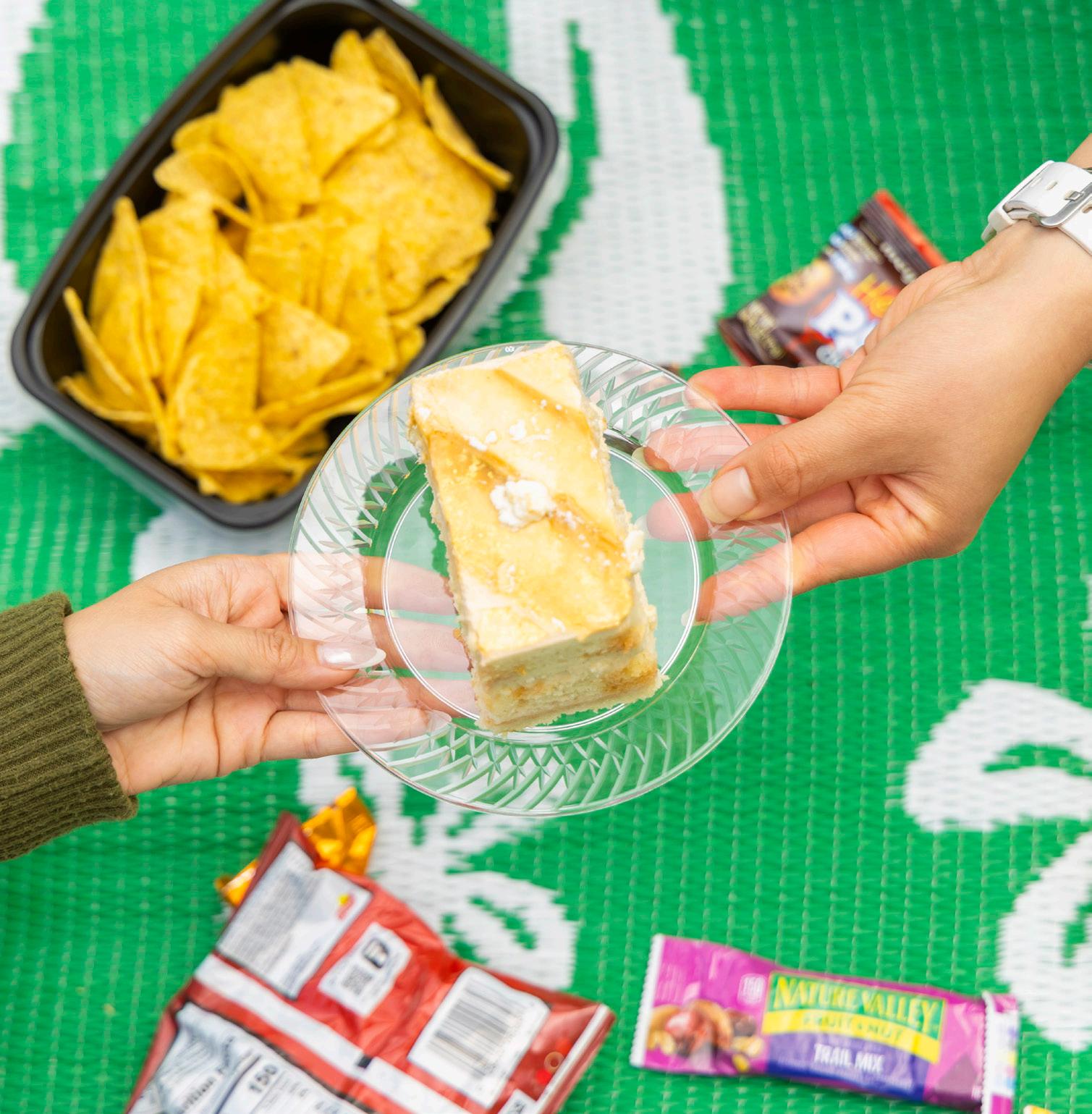
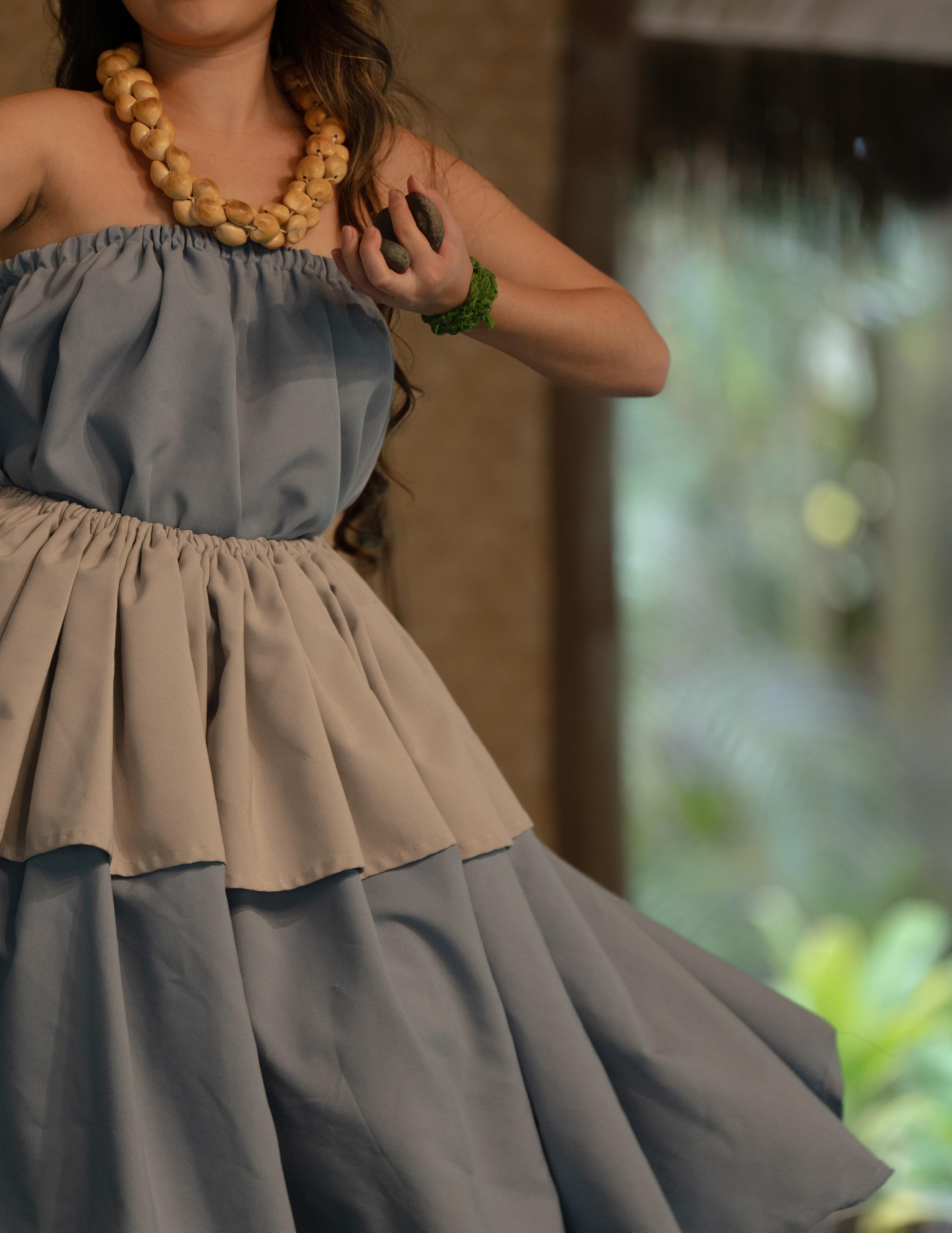
The Hawaiian Village at the Polynesian Cultural Center has existed since the opening of the center, serving as a space where visitors can experience Hawaiian culture directly. Guests learn about Hawaiian traditions through both observation and practice by participating in hula lessons, poi pounding, traditional games and cultural demonstrations. Beyond tourism, the village functions as a living space where Hawaiian culture is taught, practiced and experienced.
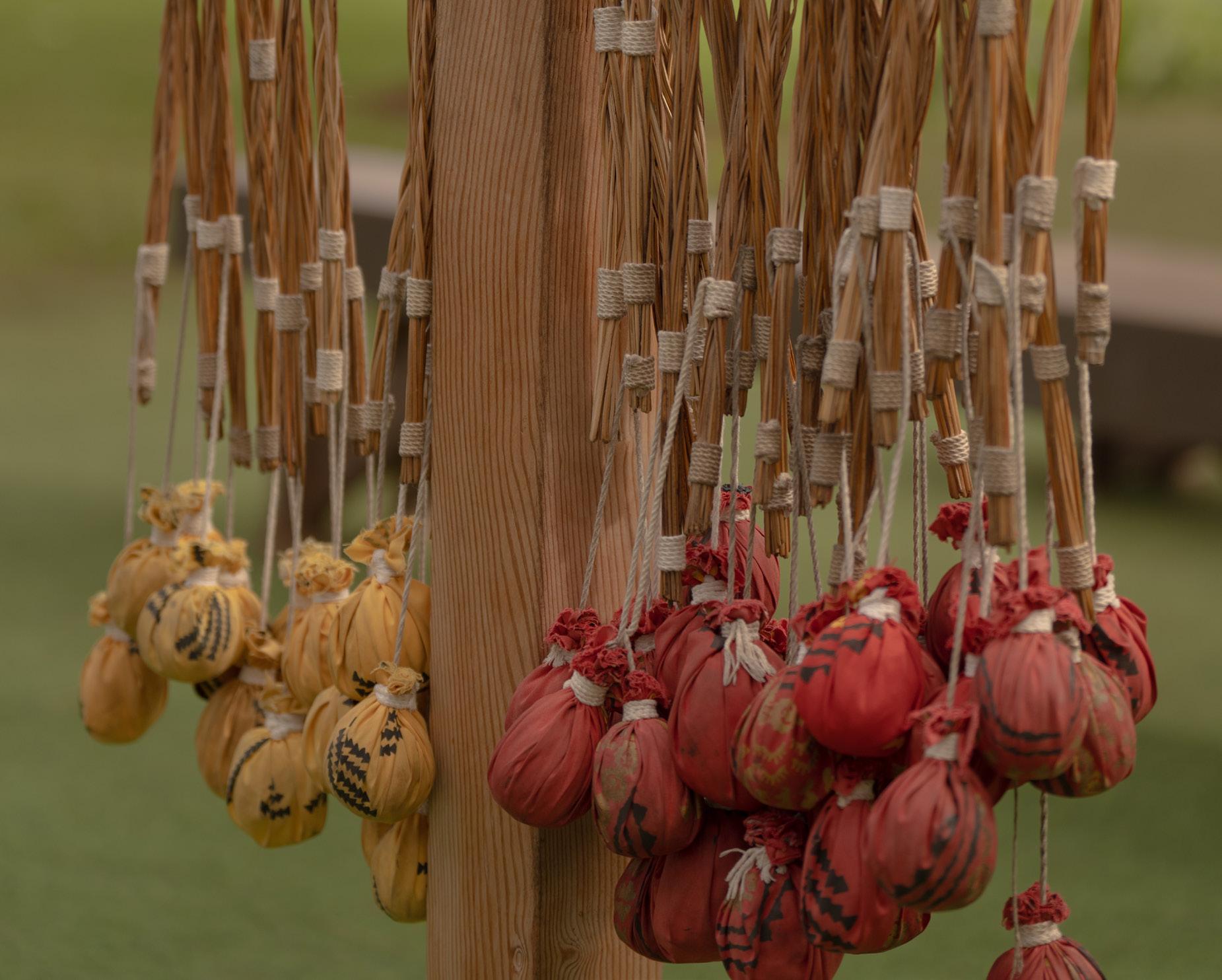
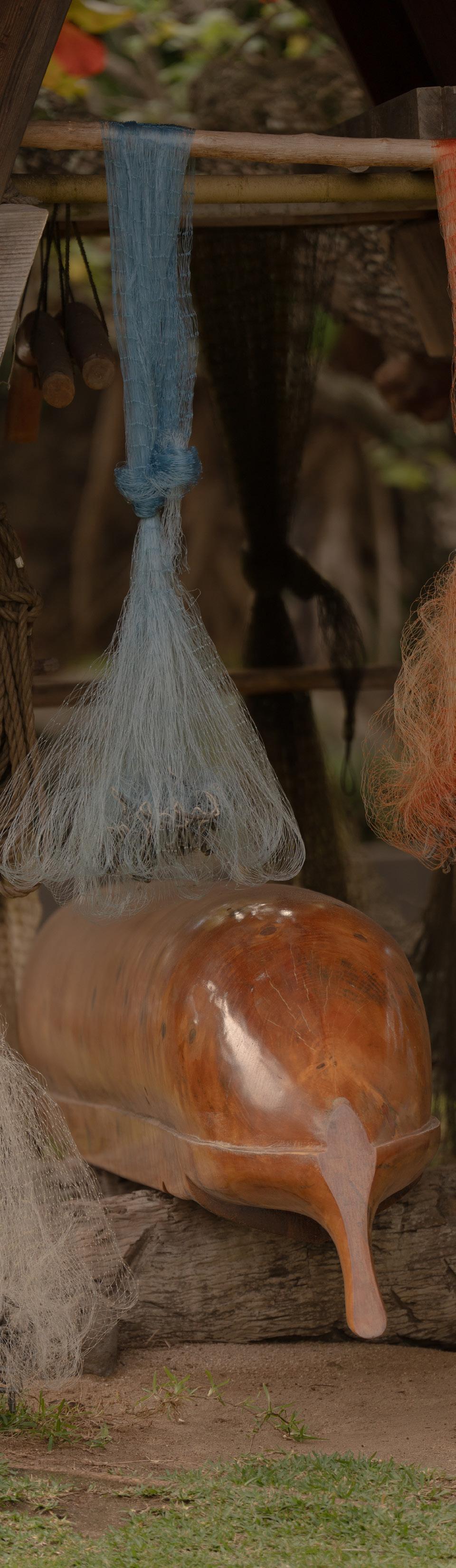
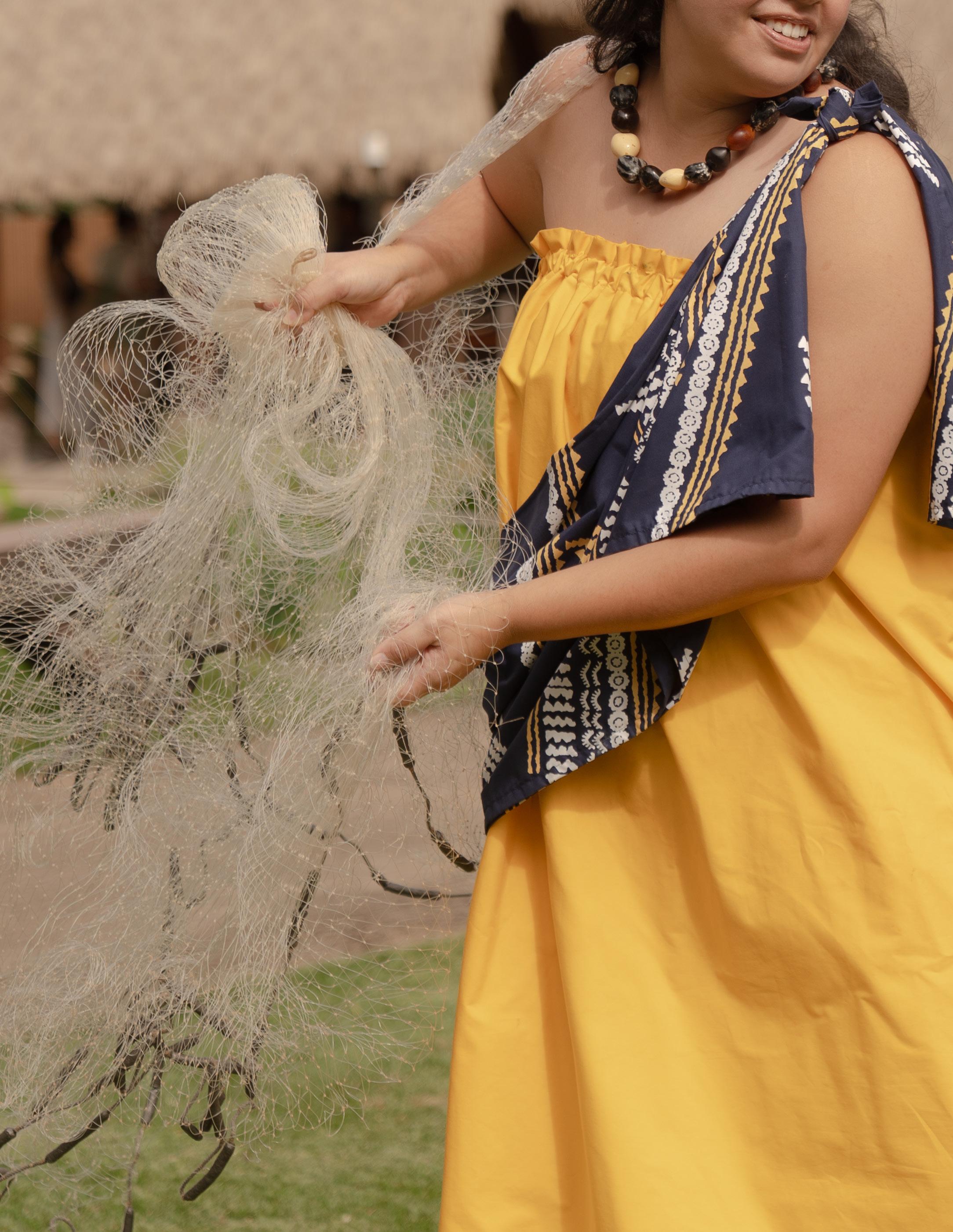
Keanupohina Poliahu Manoa, manager of the Hawaiian Village from L ā‘ie, said the village exists to show Hawaiian culture is not frozen in the past, but is actively lived today. Manoa said the village highlights aspects of Hawaiian traditions including poi pounding, hula, traditional games, temporary tattoos and net throwing. These activities, he added, serve as educational tools to teach Hawaiian culture to those unfamiliar with it.
Manoa said the practices presented in the Hawaiian Village remain authentic, passed down to employees the way they were taught. According to Manoa, the village stays rooted in tradition, while it also continues to evolve. For example, net throwing, Manoa said, was a new element added in 2017, which shows the Hawaiian Village is alive and fluid.
“Most people don’t realize that if you seek out aloha and share aloha with others, aloha will find you.”
Owali Moea‘i
Through his years working in the village as a student worker, community spot employee, full-time worker and now manager, Manoa remarked he frequently encounters misconceptions about Hawaiian culture from guests. One popular misconception about Hawaii, he said, is about hula. “I remember once, I was the person on the stage explaining that, ‘Oh yeah, the girls in the hips—that’s not actually us.’ That’s our cousin: Tahitians. And there was a family that stood up and walked out,” Manoa recalled. He added through simple corrections, he tries to teach guests that their expectations about Hawaii are not always factual.
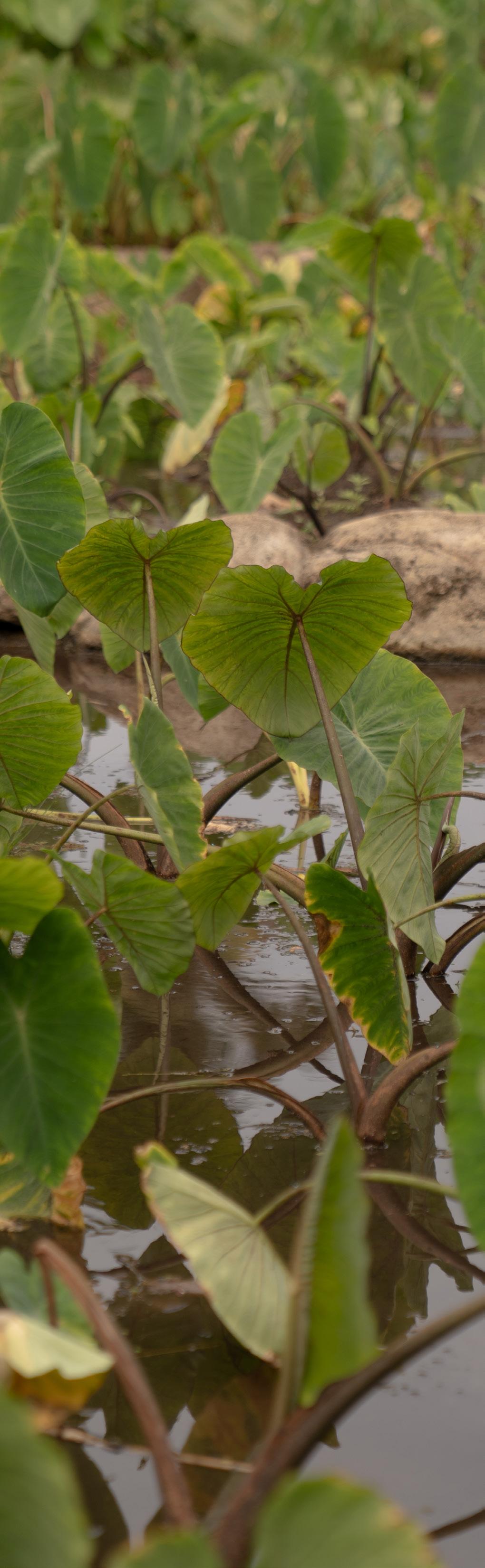
In addition to daily demonstrations for guests, Manoa said the village has expanded its focus on community outreach. “We put on what we’re calling L ā Mah iʻai day for farming, where we invited the community to participate. We had workshops on kalo (taro)—how we plant and grow it— and [the community] got to go in the mud and help plant,” Manoa said. He added although Iosepa is not directly under the village, community members are invited to workdays focused on maintaining the canoe and learning about voyaging.
Manoa said working in the village has given him more opportunities to stay connected to Hawaiian culture.“I’ve made poi way more at work than I have at home because at home we don’t always have the opportunity, but here we do,” he said.
Student workers in the village shared similar experiences. Owali Moea‘i, a junior in computer science from Hana, Maui, said his goal at work is to teach the true essence of Hawaiian culture to guests. Moea‘i said he started working in the village in 2022 before leaving for his mission in the Philippines. While he originally sought a job related to his major, he said his priorities shifted after his mission. Working in the village, he said, brings him happiness and fulfillment. “The learning environment, spiritual environment and the people I work with make my job enjoyable, and I look forward to going to work everyday,” he said.
Through working in the village, Moea‘i said he has felt more in touch with his Hawaiian culture. Although he grew up dancing hula, he said he previously lacked knowledge about the meanings behind certain Hawaiian practices and traditions. “A lot of the stories, the practices we do, the fruits we eat and the games we play—why we do what we do—those are all the things that I learned in the village,” he said. Moea‘i added he now feels confident and knowledgeable about his culture.
“Most people don’t realize that if you seek out aloha and share aloha with others, aloha will find you,” Moea‘i said.
Kilinahe Naluai, a sophomore in business management with a concentration in marketing from Kāne ʻohe, said aloha extends far beyond a greeting. “Aloha is any good feeling, any type of happiness, any type of hospitality or any type of inclusion,” she said. Practicing aloha with coworkers, she said, is just as important as sharing it with guests, because visitors can sense the atmosphere created by employees working with each other. “Even if they’re not sure that what they feel is aloha, if it is good and peaceful, then they did feel it,” she said.
Naluai said growing up, she attended Hawaiian immersion school and participated in hālau [specific academy for hula]. She said upon arriving at BYU–Hawaii, she was looking for a job where she could stay connected to her culture. Coming to a university in an isolated area made it more difficult to continue doing hālau, she said. She said working in the village and being able to perform in the shows lets her balance school while still dancing hula. “I love to dance in the shows. That’s my favorite part of it. I grew up doing dancing hula, and dancing in the show is really fun. It’s a great way to keep doing dancing,” she said.
Naluai said growing up in Hawai‘i made her surrounded by her culture, but working in the village reinforced and expanded that knowledge. The village functions not only as an educational space for guests, but for the student workers themselves, she said.•
BY CJ SHINIHAH NOTARTE-ORR
‘Ōlelo Hawai’i is the indigenous language of the island and one of the state’s two official languages alongside English. According to the National Park Services, “The language is a means to connect with ancestors, better comprehend stories and fully appreciate traditions.” Through learning and using the language, individuals can better understand the interconnection between people and nature, the agency states.
[Greetings]
Aloha - Hello
Aloha kāua - Hello to both of us (dual, inclusive)
Aloha kākou - Hello everyone
Aloha kakahiaka - Good morning
Aloha ‘auinalā - Good after noon
Aloha ahiahi - Good evening
Hūi - Hey (from a distance)
Pehea ‘oe ? - How are you?
Maika‘i nō - Very good
A hui hou - Until we meet again
Mālama pono - Take care
Mahalo - Thank you
Mahalo nui loa - Thank you very much
‘A‘ole pilikia - No problem
He mea iki - It is a small thing
Hau‘oli lā hānauhappy birthday

Kuleana – Responsibility
Nani – Beautiful
Mana‘o‘i‘o - Faith
Ikaika – Strong
Ha‘aha‘a - Humility
Ahonui – Patience
Kōkua - Help
Lōkahi - Unity
Ono – Delicious
Alaka`i – Lead
Kapu – Sacred, prohibit
Kupono – Honest, correct
Mauna – Mountain
‘Āina - Land, that which feeds
Pali – Cliff
Kai – Sea
Moana – Ocean
Makani – Wind
Manu – Bird
Pua – Flower
Lani – Sky, heaven
Wahine – Women
Kane – Men
Keiki – Child, children
Kupuna – Elders, grandparent, ancestor
Hoaloha – Friend

The Hawaiian language consists of five vowel sounds:
a (‘a’ as in ‘car’)
e (‘e’ as in ‘egg’)
i (‘i’ as in ‘eel’)
o (‘o’ as in ‘four’)
u (‘u’ as in ‘put’)
Vowels can be long or short. A long vowel is signified with a kahakō (macron) above it.
Example: e, (short vowel) nene: to stir, show animation, move, as a fledgling.
ē, (long vowel) nēnē: an endemic Hawaiian goose.
There are eight consonants in Hawaiian, pronounced similar to English- h, k, l, m, n, p, w (pronounced as a “w” or soft (“v”), and ‘okina (‘).
A glottal stop (a break between syllables) is signified with an ‘okina (‘) before a vowel. To practice pronouncing the ‘okina, say the word “uh-oh”. The ‘okina is different from an apostrophe. The ‘okina looks like a 6 and the apostrophe a 9.
Example: a‘a: a root.
‘a‘a: to brave, dare, challenge. ‘a‘ā: to burn, also a jagged form of lava.•
Sources: nps.org, wehewehe.org, kaimi.org
Illustration by Guen Ramirez-Platon. Page design by Jay-R Gallano.
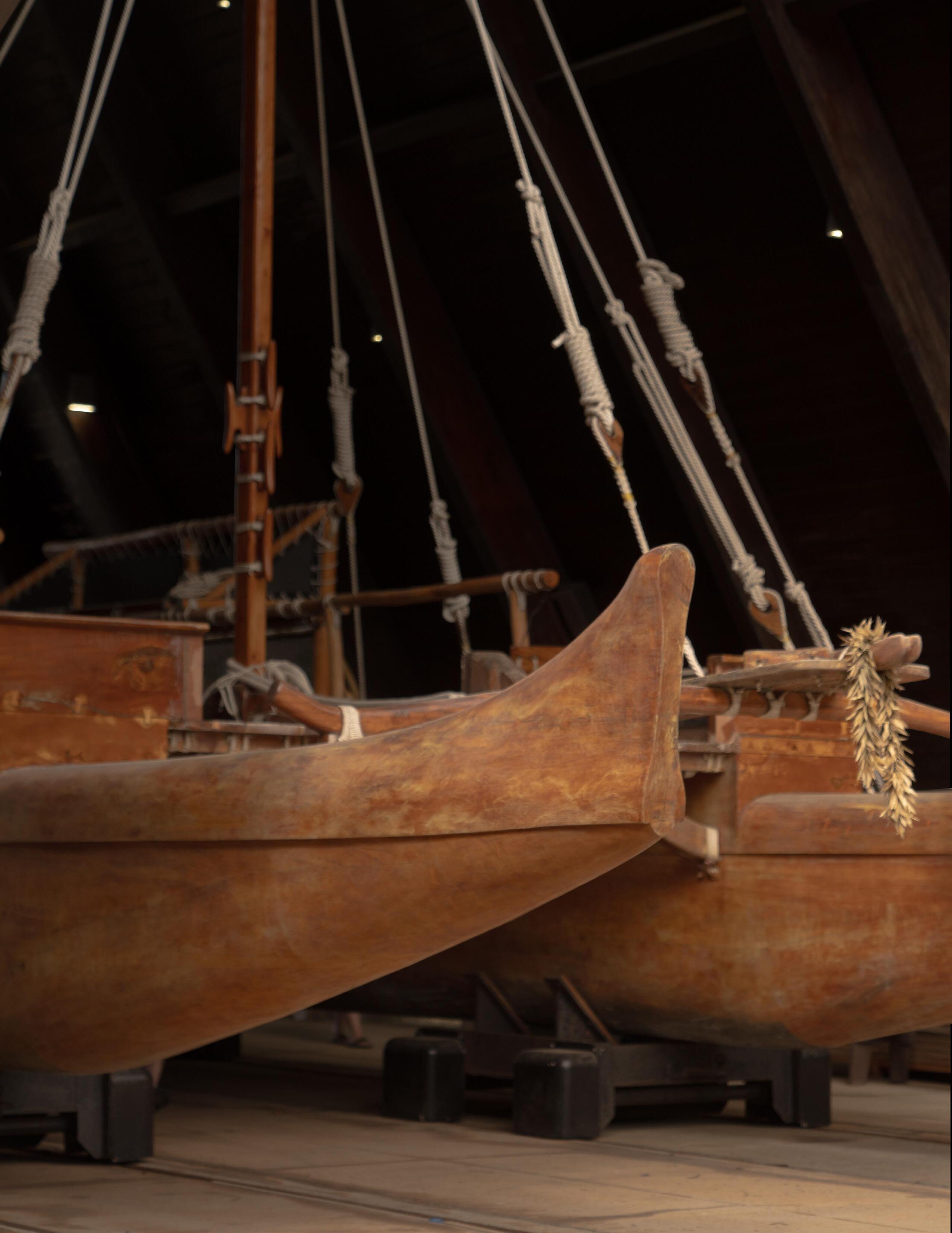
Canoes and the art of navigation are living testimonies of centuries of tradition and cultural identity, say members of voyaging community
BY SAMANTHA FAITH SATORRE
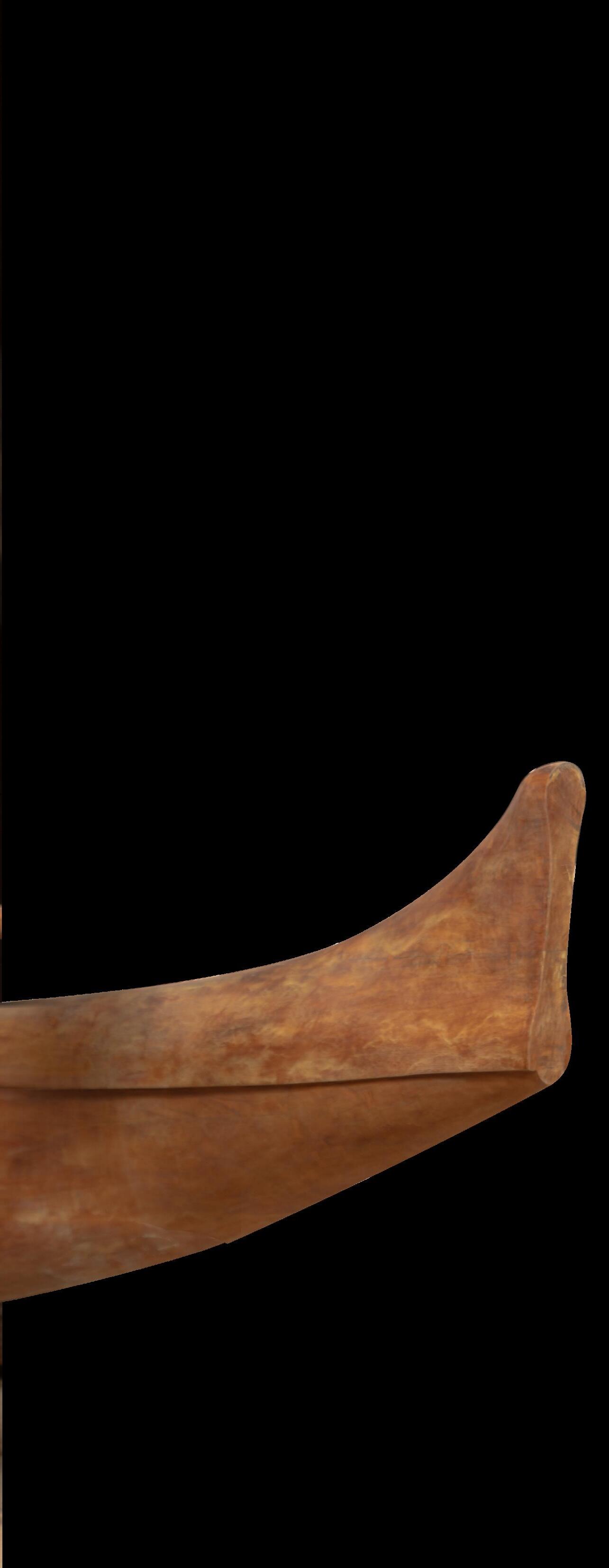
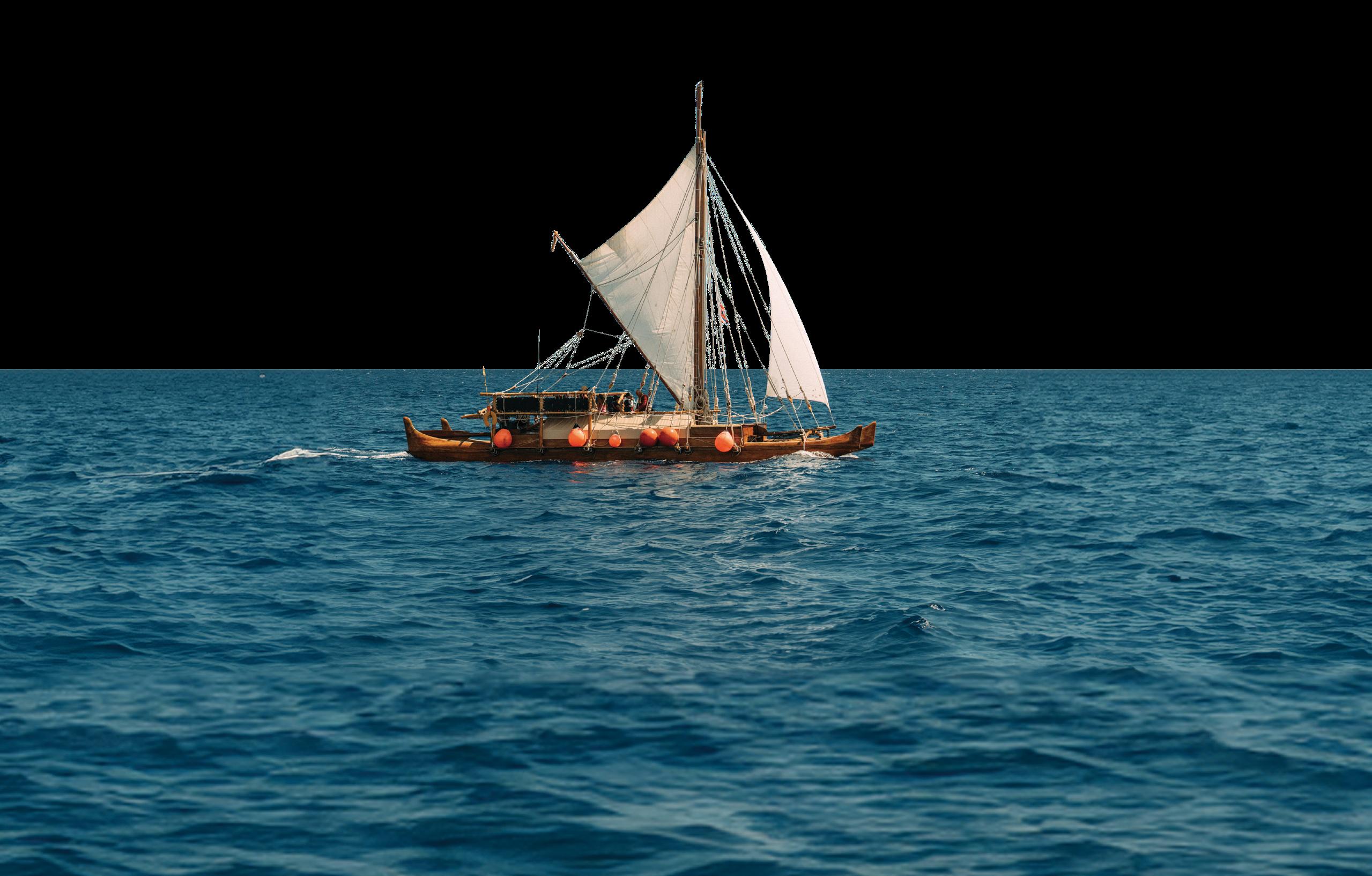
Understanding the history of Polynesian voyaging propels us thousands of years back in time, when the ocean functioned as a highway and wayfinders sailed back and forth their island homes, says the Polynesian Voyaging Society. “The canoe represents many things,” said Mark Ellis, director of voyaging experiences at the Polynesian Cultural Center (PCC). He said it’s more than just a vessel that gets people “from point A to point B”; it’s a “spaceship” of their ancestors that represents “the ingenuity and innovation they had at the time when canoes were first built.”
Ellis said canoes were initially coastal tools that helped people gather resources, but over generations they evolved into vessels capable of venturing farther and deeper into the sea. This evolution, according to Ellis, connected different islands across the great ocean and opened many doors to seafarers. “The canoe represents possibilities, and those possibilities are endless,” he emphasized.
Joseph Genz, a professor in the Department of Anthropology at the University of Hawaiʻi at Hilo, said in his article about voyaging in the Marshall Islands that this tradition of navigating the ocean speaks to how Polynesians and Oceanians survive and thrive through their deep connection with nature. Ellis said this bond is reflected in a traditional Hawaiian wisdom: “He waʻa, he moku; he moku, he waʻa—the canoe is an island, and the island is a canoe.”
This proverb, according to Ellis, captures the canoe as a metaphor for life. “When we live this saying, it means when we go out to sea on a deep-sea voyaging canoe, everything we need to survive is on that deck,” he said. Just as an island contains the resources necessary for people to live, so does a canoe; it carries food, water, shelter and the people needed to survive the journey at sea, Ellis explained.
Ellis said the vision of reviving the thousand-year-old tradition of wayfinding is engraved on every canoe that leaves the shore and braves legendary sea routes today— from Hokulea, the “mother of all canoes,” to Iosepa, BYU–Hawaii and PCC’s Hawaiian voyaging canoe.
As captain of Iosepa’s voyaging crew, Ellis said the number one value on deck is caring. “As master navigator Nainoa Thompson has said, care for each other, care for the canoe and care for the resources we have,” Ellis shared. This value, he continued, is something they bring back to the islands where survival and prosperity depend on community and stewardship.
Ellis said caring is especially critical on canoes like Iosepa, where crew members share a space of only 10 feet by 40 feet for weeks on end. This, he added, is one of the ways voyaging expands a person’s perspective and understanding of who they are. “These experiences teach me how far I can go and how much I can accomplish,” he shared. He said crew members learn to coexist harmoniously through mutual respect, shared responsibility and support.
These lessons are directly applicable on land, Ellis said, particularly in Hawaiian culture where caring for the land, waters and each other adheres to the traditional values of mālama ʻāina, to care for the land and aloha or compassion and love.
Ellis said his role as captain bestows on him the duty—or kuleana—to pass on what he has learned to future generations. For him, knowledge should not be withheld; it must be allowed to also take root in the lives of those who come after. “We don’t want to learn things and keep them to ourselves without allowing others the chance to learn and grow,” he said.
“It’s about both sharing knowledge and creating opportunities,” Ellis stressed. He said part of this responsibility includes making it possible for younger generations to step up and gain experiences. This effort, he said, is not limited to voyages—it also involves outreach programs that bring canoe training to schools and local communities.
Apart from Iosepa, Ellis also introduced a younger and smaller canoe, named Ka ‘Uhane Holokai, that fulfills the purpose of spreading the art of wayfinding to the next generations. Launched in 2023, the canoe was initially designed to introduce PCC’s guests to Polynesian navigation. “Over time, however, it became a training platform for Iosepa crew members,” he shared.
Ellis said Ka ‘Uhane Holokai offers a taste of seamanship to both aspiring crew and younger students. “It allows us to give experiences on the water on a smaller scale than Iosepa. The rigging is very similar, so crew members can practice pulling lines and learning skills,” he explained. He said this is a manifestation—one of many— of the dedication of today’s Hawaiians to preserving their heritage, which makes the culture so dynamic.
As part Native Hawaiian, Ellis said he grew up with the narrative that Native Hawaiians don’t have the propensity for doing certain things. He said it was a misconception that shaped his identity. Learning about great voyagers, navigators and explorers was what shifted this perspective, he shared. “I saw what modern Hawaiians are doing and realized I don’t have to be
shaped by other people’s views. I can be what I see, and more importantly, I can be what I do.” His relationship with voyaging, he said, paved for him routes towards greater things.
Ellis said this transformation is what he aspires to share not only in the Pacific but across the globe. Such life-changing experiences on the water, he said, is not restricted to certain ethnicities—the ocean is open and free. “The canoe allows people, not just Hawaiians, to see what they can accomplish and to understand their identity,
whether that’s as a child of God, a Native Hawaiian, Samoan, Tahitian, Filipino or anything else,” he said.
Feeling the wind, the swell and the rhythms of the sea is an experience that Ellis said shouldn’t be lost in videos and books. “Stepping on the vessel, feeling the heat of the sun and the cold of the rain are experiences that must live through people,” he shared. He said he hopes the art of navigation remains a significant part of Hawaiian culture and that it could be carried forward with intention and care for those who will come next to take the helm.•
“The canoe represents possibilities, and those possibilities are endless.”
Mark Ellis