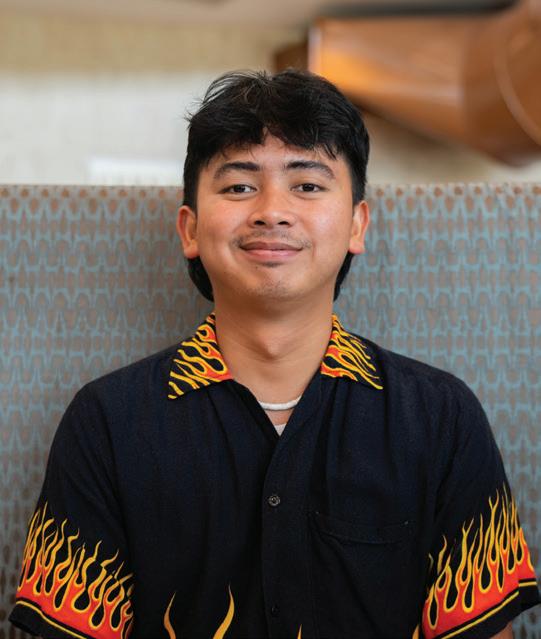
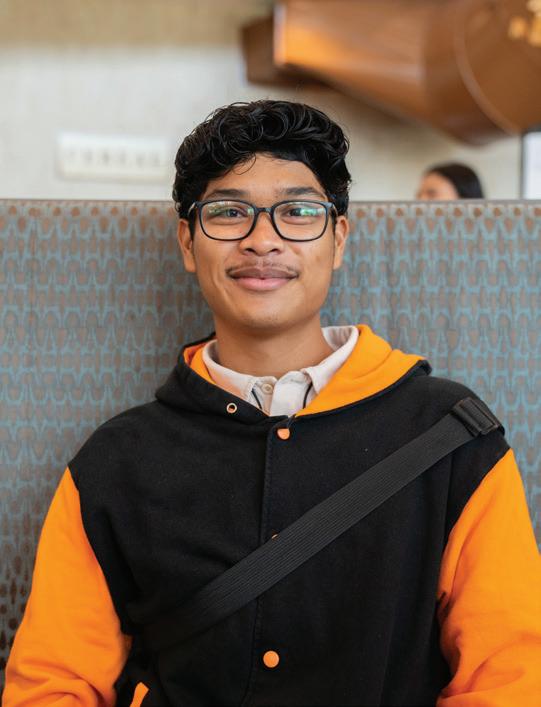
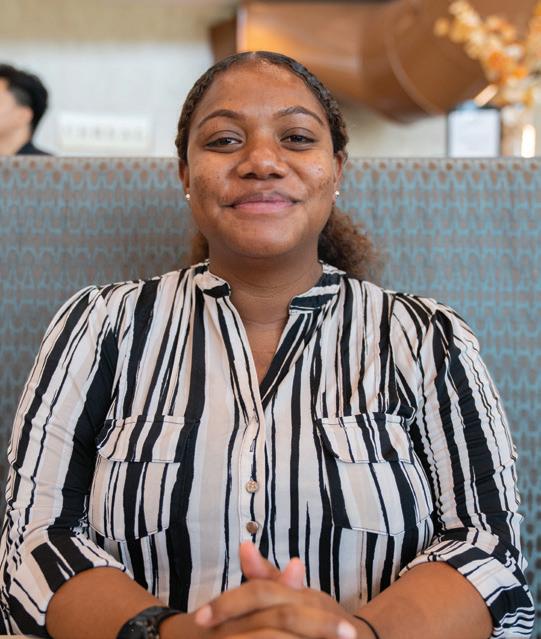
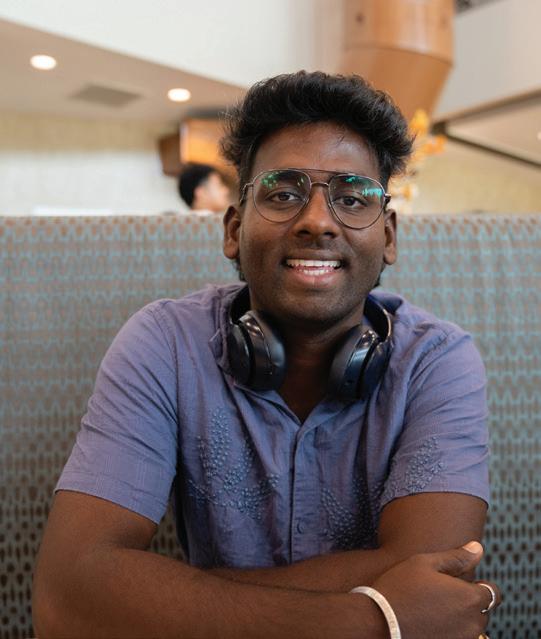
To access the podcasts, you can go to Spotify, Buzzsprout or YouTube and search for Ke Alaka‘i.
NEWS CENTER: Box 1920 BYUH Laie, HI 96762
Editorial, photo submissions & distribution inquiry: kealakai@byuh.edu
To view additional articles, go to kealakai.byuh.edu
CONTACT:
Email: kealakai@byuh.edu
Phone: (808) 675-3694
Office: BYU–Hawaii
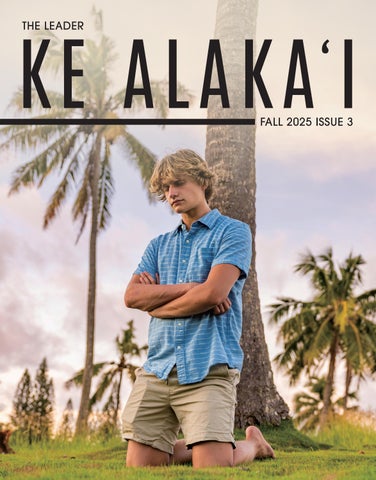
McKay Classroom 135 ON THE FRONT COVER: Photo taken by Hiroki Konno.
ABOUT
The Ke Alaka‘i began publishing the same year the University, then called Church College of Hawaii, opened. It has continued printing for more than 70 years. The name means “the leader” in Hawaiian. What began as a monthly newsletter, evolved into a weekly newspaper, then a weekly magazine and is now a magazine published 8 times a year with a website and a social media presence. Today, a staff of more than 20 students work to provide information for BYU–Hawaii’s campus ohana and Laie’s community.
It’s been almost another year. I invite you to take a second and look back at what this year has brought you.
Think about your wins–your high moments, your fun times with friends and family, your main character moment of just being proud of your accomplishments. Think about your core memories, the times you wished the day never ended.
Now, think about your losses.Your days when you gave it your all, and yet it wasn’t enough.Think about your tear-stained pillow that witnessed your silent breakdowns in the middle of the night.Think about the times you felt like it was impossible to move forward, and it seemed like the sun would never shine again.
And yet… here you are.
Through it all, I know God’s grace has been quietly working beside you. I know it because I’ve felt it in my own life. Sometimes it’s subtle, sometimes it’s hard to notice, but it’s always there.
Grace is a gift—the divine help and strength that comes from the atoning sacrifice of the Savior, Jesus Christ. It fills the space between our efforts and what we hope to become.
Recently, my husband’s mission president, Steve Colton, came to visit his former missionaries here at BYU–Hawaii. During their fireside, he shared the story of Jesus feeding the five thousand. We know this story well, but he focused on a simple truth: God magnifies
our efforts. He taught sometimes in life, all we can bring is a small fish and a crumb of bread—and that’s okay. Bring what you have, and let God handle the rest.
Now, as you look back again, consider this:Were there moments of quiet grace you may have missed?
With grace comes gratitude. Gratitude not only for the wins, but also for the moments that shaped you in ways you didn’t expect. During the pandemic, President Russell M. Nelson shared a message of hope titled “The Healing Power of Gratitude.” He said, “Counting our blessings is far better than recounting our problems. No matter our situation, showing gratitude for our privileges is a fast-acting and long-lasting spiritual prescription. Does gratitude spare us from sorrow, sadness, grief, and pain? No, but it does soothe our feelings. It provides us with a greater perspective on the very purpose and joy of life.”
Friends, may this year’s reflection remind you of God’s love for you. It is my testimony that He is mindful of us. He knows what you are going through. With His grace and having a grateful heart, no matter how tired we are, we’ll make it through.
Before you turn the page, I invite you to read this issue with intention. Liken these stories to your own life. Write down your thoughts and feelings, and see what unfolds.
See you around! Much love and aloha,
CJ Shinihah Notarte-Orr Managing Editor
T eam members
John Andrew Quizana Editor-inChief
Jessika Santoso Managing Editor
Marlee Palmer Young Yen Art Director
CJ Shinihah Notarte-Orr Managing Editor
Samantha Faith Satorre Copy Editor
Hiroki Konno Lead Photographer
Myco Chillian Marcaida Multimedia Journalist
France Valerie Lucillo Multimedia Journalist
Abigail Adams
Journalist
Cho Yong Fei Graphic Designer
Jay-R Gallano Graphic Designer
Naomi Saenz Photographer
Cyrelle Mae Briz Graphic Designer
Guen Ysanth Ramirez-Platon Illustrator
Haley Cowan Photographer
Chance Childers Graphic Designer
Caleb Galotera Photographer
Justin Venotti Videographer
John Rincon Watson Multimedia Journalist
Julia Aunai Multimedia Journalist
Ice Cesario Graphic Designer
From law to light
The journey of President Dallin H. Oaks
12
Living in thanks How having a glass half-full mentality helps
24
Heart filled with gratitude
Students reflect on blessings that changed perspectives
36
Solace in the Savior
Find light at the end of the tunnel through Jesus Christ
48
Counting grace & gratitude
See how many times the words grace and gratitude appear in the standard works
56
Thankful to serve
Students turn gratitude into acts of kindness and service
60
Grace and gratitude in the words of President Nelson
Examine President Nelson’s teachings about grace and gratitude
BY ABIGAIL ADAMS
“We need not be dismayed if our earnest efforts toward perfection now seem so arduous and endless. Perfection is pending. It can come in full only after the Resurrection and only through the Lord.”
“Perfection Pending,” Oct. 1995 General Conference
“The Lord does not require perfect faith for us to have access to His perfect power. But He does ask us to believe.”
“Christ is Risen; Faith in Him Will Move Mountains,” April 2021 General Conference
“You have not committed any sin so serious that you are beyond the reach of the Savior’s love and atoning grace … [Father and the Savior] want you to be happy.”
“The Love and Laws of God,” BYU Devotional Sept. 2019
“When the Savior atoned for all mankind, He opened a way that those who follow Him can have access to His healing, strengthening, and redeeming power.”
“The Power of Spiritual Momentum,” April 2022 General Conference
“How much better it would be if all could be more aware of God’s providence and love, and express that gratitude to Him … Our degree of gratitude is a measure of our love for [Heavenly Father].”
“Thanks Be to God,” April 2012 General Conference
“Over my nine and a half decades of life, I have concluded that counting our blessings is far better than recounting our problems … [Gratitude] provides us with a greater perspective on the very purpose and joy of life.”
“The Healing Power of Gratitude,” #GiveThanks Broadcast Nov. 2020
“The joy we feel has little to do with the circumstances of our lives and everything to do with the focus of our lives … Joy comes from and because of Him. He is the source of all joy.”
“Joy and Spiritual Survival,” Oct. 2016 General Conference
“Who are we? We are children of God. Our potential is unlimited. Our inheritance is sacred.”
“We are Children of God,” Oct. 1998 General Conference
“Each new morning is a gift from God. Even the air we breathe is a loving loan from him. He preserves us from day to day and supports us from one moment to another.”
“Joy Cometh in the Morning,” Oct. 1986 General Conference
Photos from Church Newsroom.
Page Design by Ice Cesario.
“No matter our situation, showing gratitude for our privileges is a fast-acting and long-lasting spiritual prescription.”
“The
Healing Power of Gratitude,” #GiveThanks Broadcast Nov. 2020
FROM LAW TO LIGHT
The journey of President Dallin H. Oaks
BY JOHN ANDREW QUIZANA
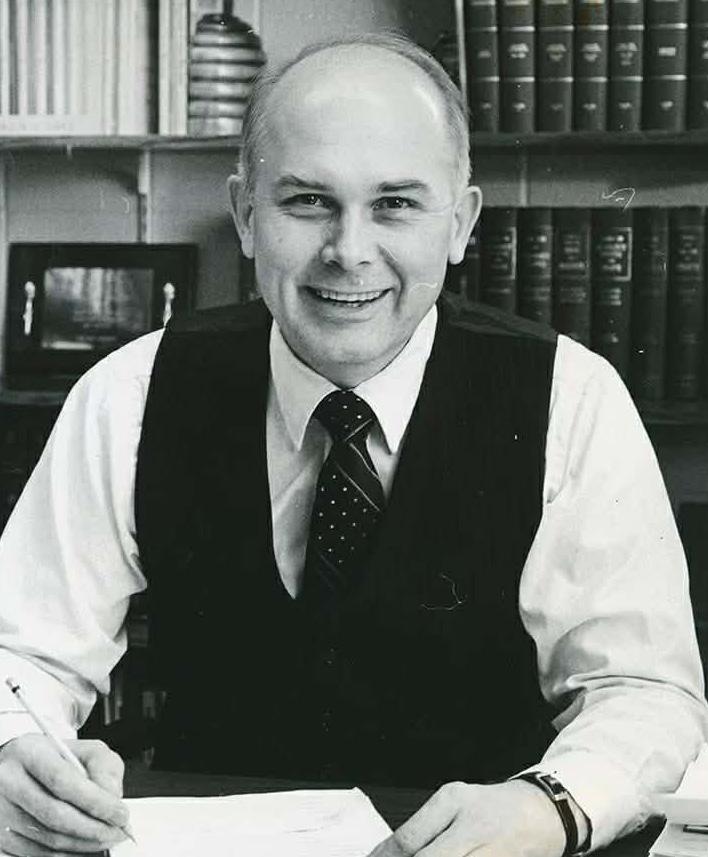
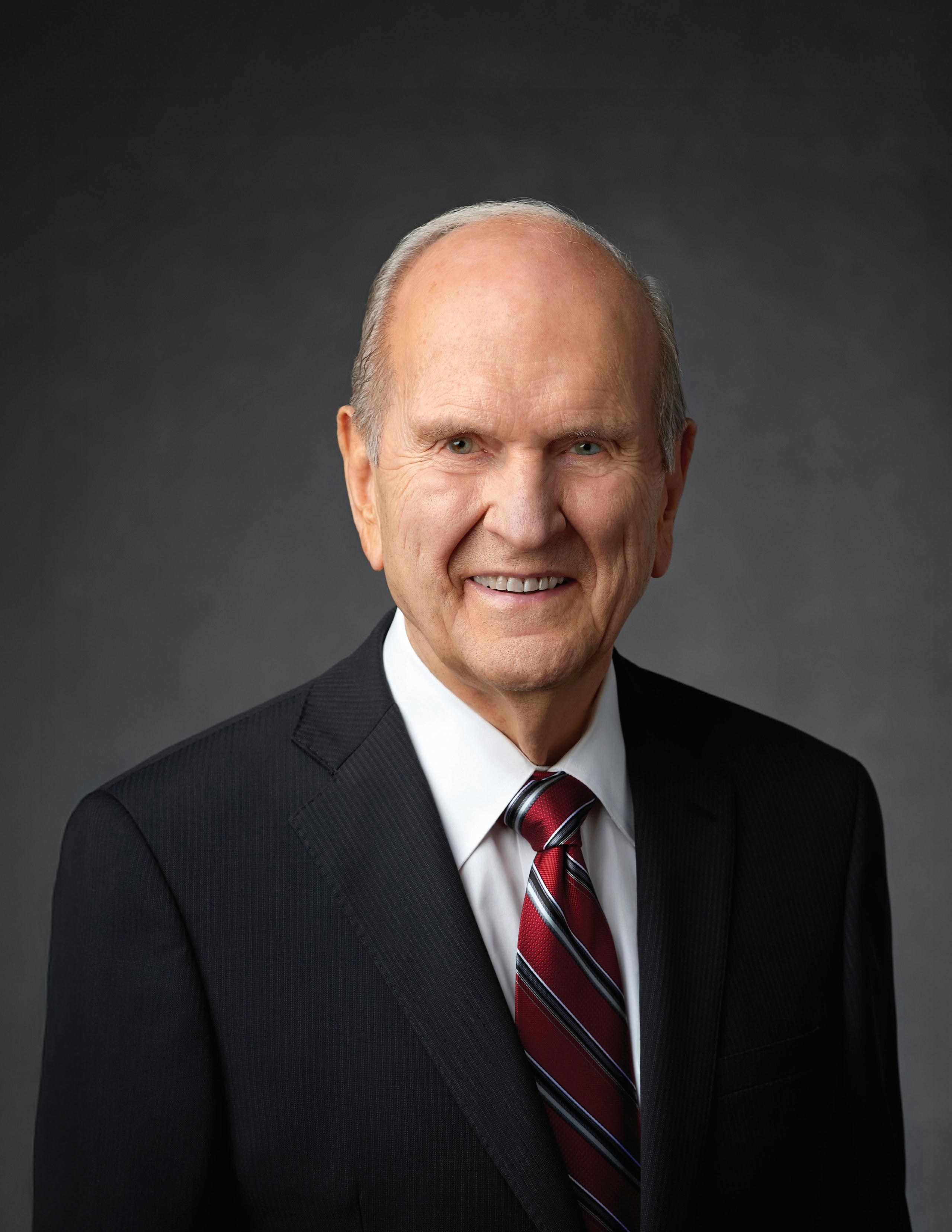
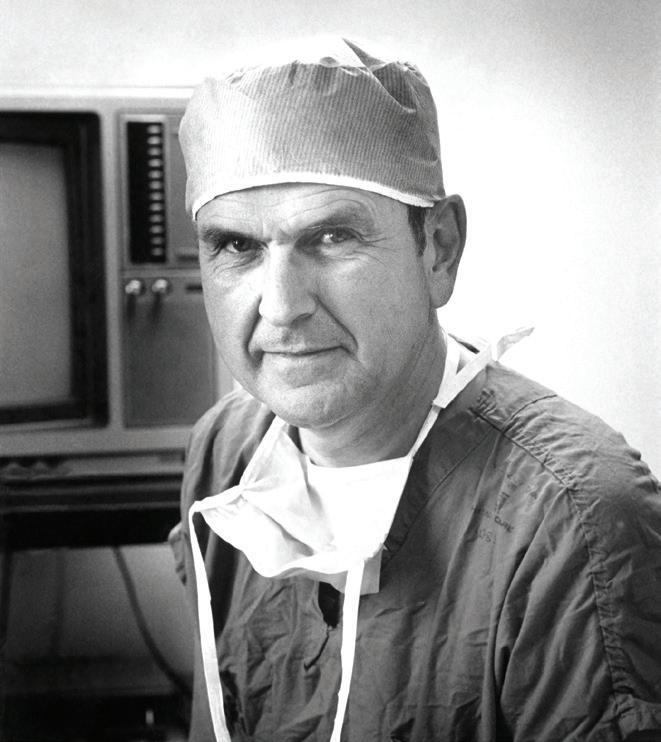
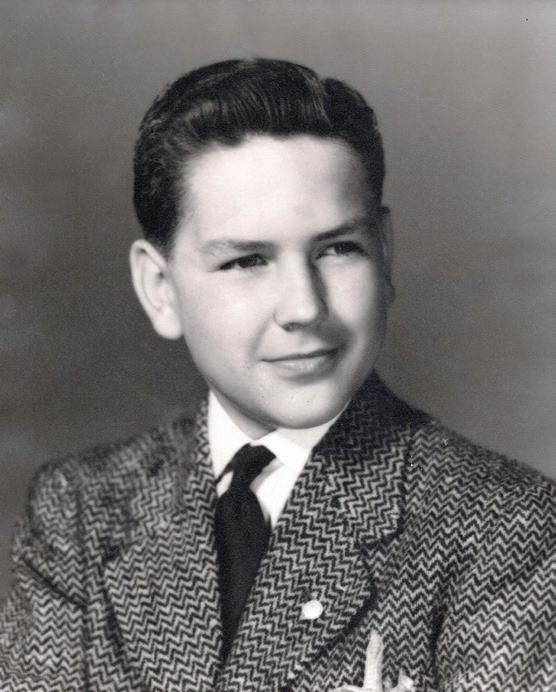
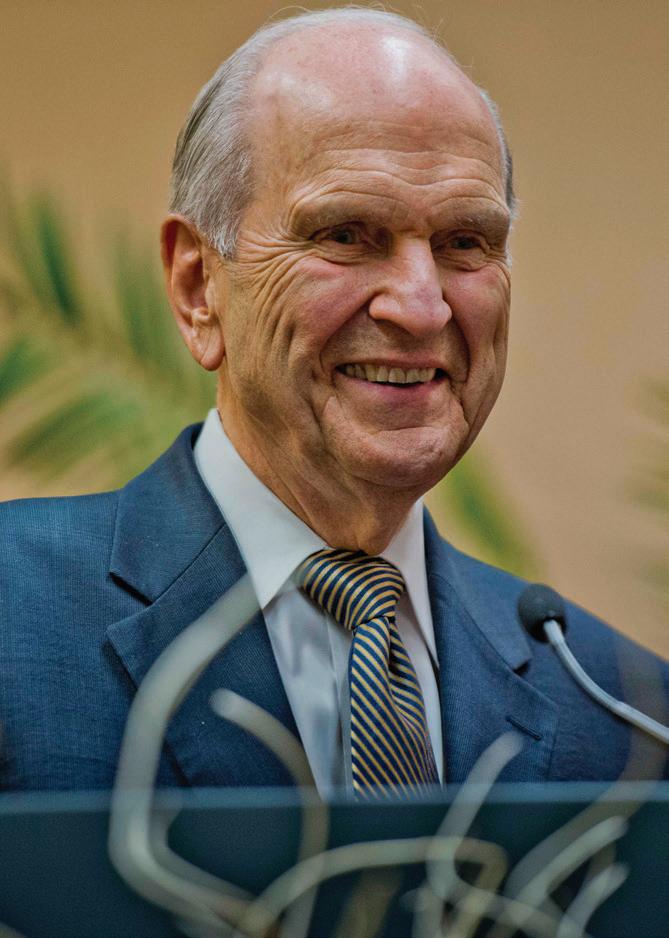
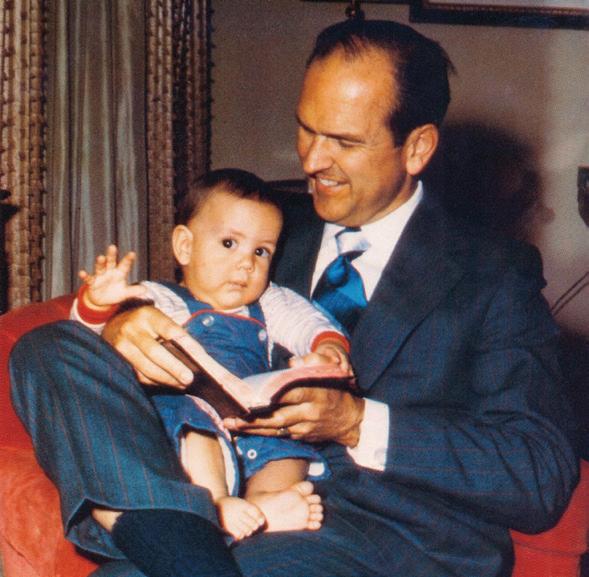
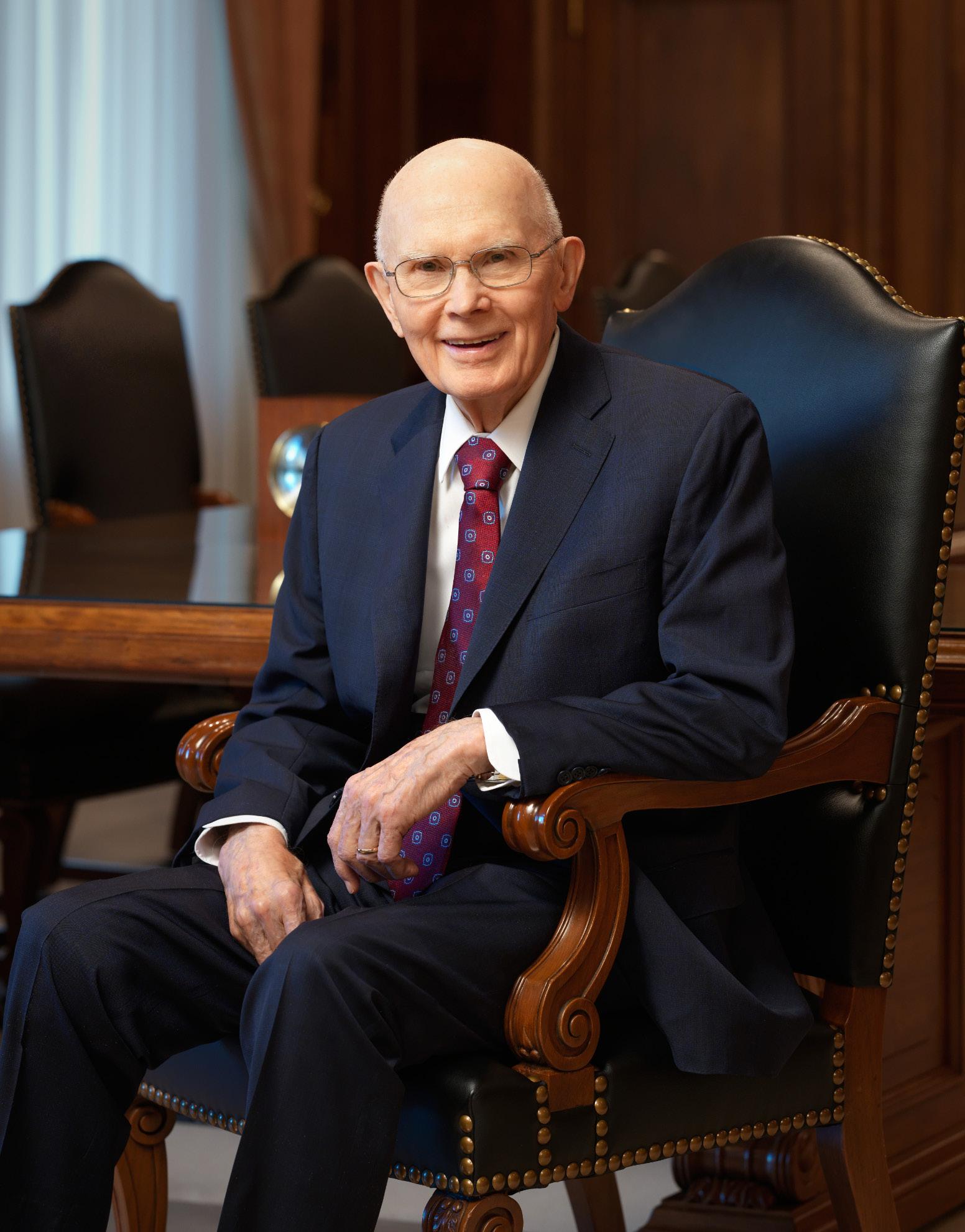
The call of President Dallin H. Oaks as the 18th President and Prophet of The Church of Jesus Christ of Latter-day Saints in October 2025 marked the culmination of a life defined by rigorous intellect, profound public service and unwavering faith, says the Church Newsroom. His journey, spanning law, academia and decades of apostolic service, offers a rich tapestry for any comprehensive look at modern religious leadership, the website says.
Official portrait of President Oaks provided by Church Newsroom.
EARLY LIFE, EDUCATION AND LEGAL CAREER
President Oaks has consistently balanced roles in law, education and religion.
1932: Born in Provo, Utah on August 12th. (His lineage connects him to Martin Harris, one of the Three Witnesses of the Book of Mormon.)
1954: Graduated from Brigham Young University (BYU).
1957: Graduated from the University of Chicago Law School.
1957–1958: Served as a law clerk for Chief Justice Earl Warren of the U.S. Supreme Court, a highly sought-after position for top law graduates.
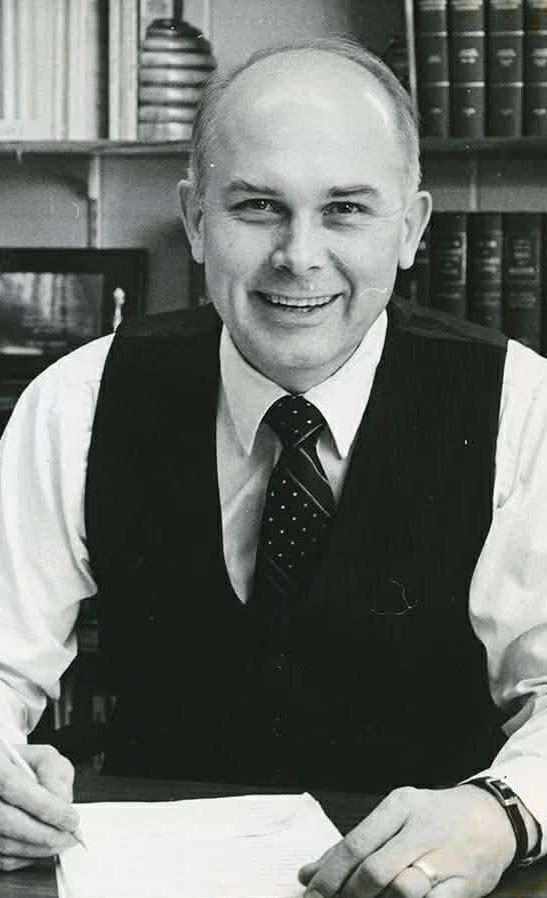
1971–1980: Served as the 8th President of BYU. During his tenure, he oversaw major institutional expansions, including the creation of the J. Reuben Clark Law School and the Graduate Business School.
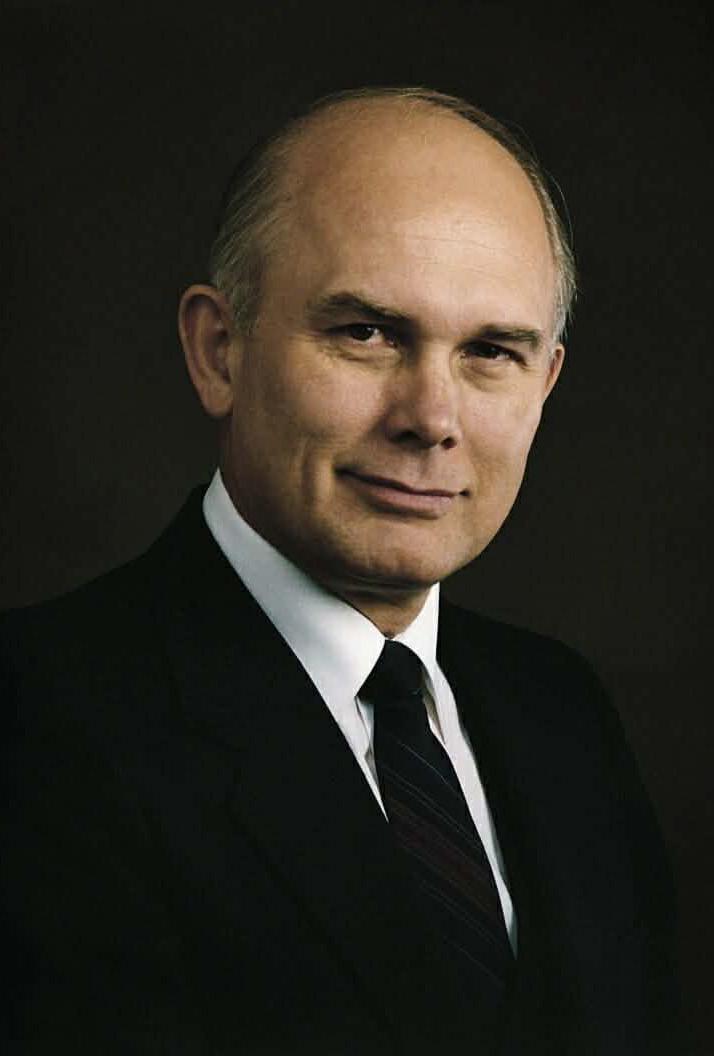
1980–1984: Served as a Justice of the Utah Supreme Court. This was the peak of his secular legal career before his call to fulltime Church service.
TRANSITION TO FULL-TIME CHURCH LEADERSHIP
His transition from the highest levels of the judiciary to full-time religious service marked a profound shift in his life’s focus.
April 7, 1984: Sustained as a member of the Quorum of the Twelve Apostles during General Conference at age 51. He resigned his Supreme Court position to accept this calling, setting aside professional ambitions for a divine one.
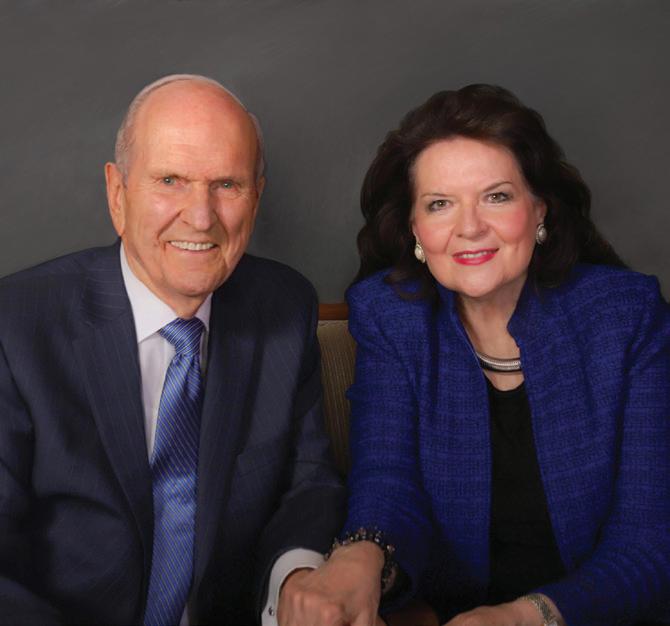
1998: His first wife, June Dixon Oaks, passed away. They had been married for 46 years and raised six children.
2000: Married Kristen M. McMain.
SERVICE IN THE FIRST PRESIDENCY OF THE CHURCH
Following decades as an Apostle, he moved into the Church’s highest administrative council.
January 2018: Set apart as First Counselor in the First Presidency under President Russell M. Nelson. He served in this capacity for nearly eight years.
October 14, 2025: Formally sustained and set apart as the 18th President and Prophet of The Church of Jesus Christ of Latter-day Saints at age 93. He immediately announced his new counselors, Henry B. Eyring (First Counselor) and D. Todd Christofferson (Second Counselor).
Our priorities are most visible in how we use our time. “
-PRESIDENT DALLIN H. OAKS
“Focus and Priorities” April 2001
President Oaks’ life demonstrates a commitment to high achievement and leadership, first in the secular world and then as a senior leader in the Church.
The transformative BYU Presidency (1971–1980)
Dallin H. Oaks served as the 8th President of Brigham Young University for nine years, a period of significant intellectual and physical development for the institution, according to Deseret News. “Drawing on his legal and academic background from the University of Chicago, President Oaks focused on elevating the university’s academic standing while preserving its spiritual mission,” the website emphasized. His tenure was marked by a commitment to balancing “spiritual and secular knowledge.”
Most notably, President Oaks was instrumental in establishing two flagship professional schools: the J. Reuben Clark Law School and the Graduate Business School (now the Marriott School of Business), according to the BYU website. According to the university’s website, these additions cemented BYU’s role in producing graduates prepared for high-level professional careers. “He also oversaw continued campus expansion and stressed the importance of intellectual rigor and spiritual commitment among the faculty and student body.”
Legal and Constitutional philosophy
According to an interview conducted by David F. Levi for Judicature, as a former law professor and Justice of the Utah Supreme Court (1980–1984), President Oaks possesses a deeply rooted legal philosophy centered on the Rule of Law and the vital importance of the U.S. Constitution. “He regards the Constitution as a divinely inspired document, outlining four key principles essential to liberty: Popular Sovereignty (power derived from the people), Separation of Powers, Federalism (division of authority between state and federal government), and the Bill of Rights.” Levi said. “He often warns that a commitment to these foundational elements is necessary to sustain free institutions”
Defense of religious liberty
A signature theme of President Oaks’s public life has been the staunch defense of religious liberty. He argues the free exercise of religion, guaranteed by the First Amendment, is the “basic civil liberty.” According to Oaks, this freedom is crucial because it allows not only for the private belief in God but also for the public and organizational practice of faith, which undergirds charitable work and moral discourse in a society. Oaks said he has consistently sought to unify people of all faiths in defending the necessary space for religious institutions to govern their internal affairs and contribute to the common good without undue government interference.•
“
The intensity of our desire to share the gospel is a great indicator of the extent of our personal conversation.
-PRESIDENT
DALLIN H. OAKS
“Sharing the Gospel” October 2001
Photos from Church News, LDS Daily, BYU Daily Universe. Page design by Marlee Palmer Young Yen.
Stories of forgiveness, patience and charity, showing how extending grace strengthens relationships
BY JESSIKA SANTOSO
From online hate comments to handwritten notes and long-delayed apologies, BYUH ohana shared how grace reshaped their hearts and relationships. Their stories show how grace—choosing kindness over pride, compassion over judgment or forgiveness over resentment—isn’t a single act, but a way of living.
Peace, not Pride
When online hate flooded her Instagram, Nathania Shakira, a freshman in human and health sciences from Indonesia, said she learned grace isn’t only about receiving forgiveness from God—it’s about letting that same love flow outward, even to those who misunderstand us.
While serving her mission in Solo, Indonesia, Shakira posted a video inviting others to meet with the missionaries—a simple message of faith that unexpectedly went viral. “The views are now 600k with 200 comments. The words were sharp and painful,” she recalled. “They mocked my faith and questioned my intentions.” She said her hands shook as she scrolled through the comments, tears falling as she prayed for peace.
At first, Shakira said, she wanted to fight back. “I wanted to type, ‘Stop saying hurtful words.’ But I knew anger wouldn’t bring peace.” Instead, she found comfort in Elder M. Russell Ballard’s talk “Engaging Without Being Defensive.” One line changed her: “We are not here to win arguments but to win hearts.” She said it taught her that Christlike communication is both courageous and calm.
Shakira said she turned her pain into prayer and asked Heavenly Father to help her see those commenters as His children too. Rereading the comments, she said she realized many didn’t truly understand what they were attacking. “It made me see them not as enemies but as people who need love and truth as much as I do.”
Forgiveness was gradual, Shakira said. “The situation didn’t change, but my heart did. Peace replaced the pain.” Now, before she responds online or in real life, she said she asks herself, “Will my words help others feel Christ’s love or just defend my ego?”
The hardest part of navigating online hate is staying kind without feeling like her silence means weakness, Shakira said.
“Sometimes silence feels scary because people might misunderstand,” she said. “But I’ve learned that silence guided by the Spirit isn’t weakness—it’s trust in God’s timing.”
Grace isn’t passive, Shakira said. “The Savior’s grace changes hearts, and the first heart it changes is always our own.”
everyday grace
For Kale Moss, a senior in English education from Oregon, grace doesn’t just appear in grand gestures—it grows in small, consistent acts of kindness. Whether it’s writing a note, saying someone’s name with joy or offering a high five, Moss believes these “little” moments can leave a lasting mark. “I would say kind words often. So on days I’m not around, they can remember I would say them,” he said.
Moss said his journey toward everyday grace began in high school. “In middle school, I used to glare at people who swore and called people stupid,” he said. But he said he realized responding that way didn’t make him feel happy. People do “stupid” things, but those actions shouldn’t define them, he shared. He said that shift helped him replace judgment with kindness and start seeing others as amazing.
Moss said he tries to be kind to others regardless of whether they are kind to him or not. He said he has always felt God’s kindness and love, so he “[wants] others to feel that too. They deserve to be loved.”
Moss shared one moment that stood out to him. He said he once prompted to give a note to a random girl sitting alone at the Hale Pavilion that read, “You’re amazing. You’re doing great. People love you.” Days later, Moss said he ran into that girl and she shared how she was struggling that day, and that his note had made her day. “We never spoke again, but we both felt joy,” he said.
cycle oF Forgiveness
When Elder Keith Wilson, a senior missionary in the Faculty of Religious Education, was a teenager growing up on a military base, he said he joined friends in what they thought was a harmless prank—egging a teacher’s car. His younger brother later went much further, planting a small explosive inside, nearly destroying the new car. Elder Wilson said he didn’t learn about his brother’s mischief until decades later.
That long-unrevealed incident came back one Sunday when his adult son called in tears, Elder Wilson said. His son, who lived in a rough area of town, said someone had smashed his car windows during the night for no reason. “He was near tears, asking, ‘Why would they do this?’” Elder Wilson said. “And then I realized I had once made someone else feel exactly that way.”
Overcome with guilt, Elder Wilson knelt in prayer. During the sacrament meeting later that day, he said, “The Spirit just washed over me. I knew I could give that burden away because the Savior had already carried it.”
Elder Wilson said he has come to believe forgiveness is something you do in advance. “You decide to accept the Savior’s forgiveness first.” Doing so prepares your heart for the future when you need to forgive others, he said.
Citing a parable in Matthew 18 about ten thousand talents and a hundred pence, Elder Wilson explained the Savior forgives us 10,000 talents—a debt equal to about a million dollars today—while we’re asked only to forgive a hundred pence, or about 25 cents, the small debts others owe us. Recognizing that truth made it impossible not to forgive the unknown vandal, he said. “Because I’d been forgiven, I wanted my son to feel that same burden lifted.”•
Nathania Shakira smiles for a self-potrait. Page design by Cho Yong Fei. Photos taken by Justin Venotti.
the savior’s grace changes hearts, and the First heart it changes is always our own.
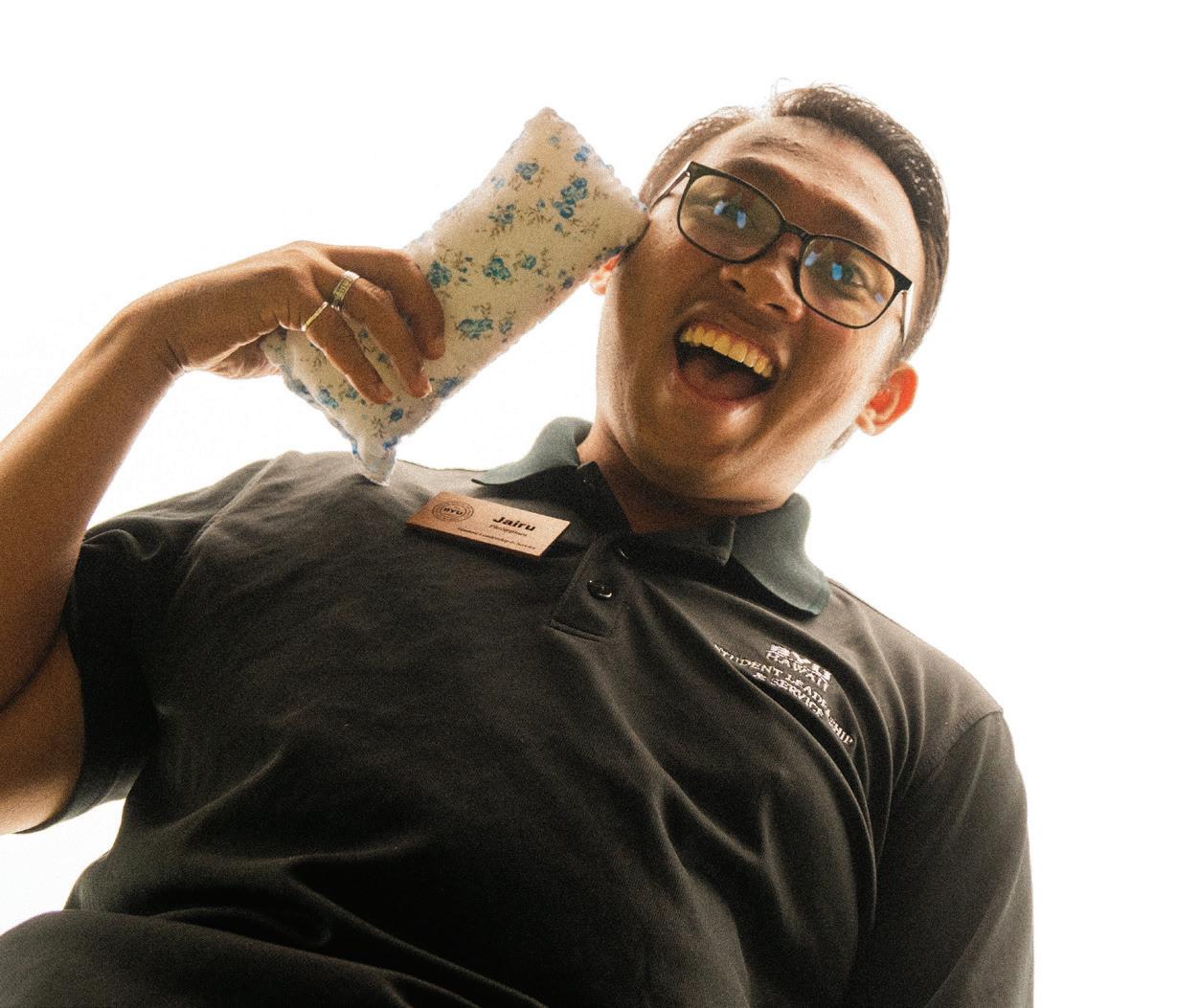
in BYU–Hawaii’s Service Center, no act of service is ever small when done with great love, staff members said. They expressed their deep passion for the service they do daily, saying it has not only uplifted others but has also enriched their own lives. “There’s a conference talk that says if you see someone sitting alone, go sit with them. That’s the essence of what we’re trying to do here, both in the office and outside of it,” shared Akesiu Ngalu, a senior in biology from Tonga and the center’s student manager.
Liahona Mabazza, a sophomore in social work from the Philippines, emphasized the profound impact of even the simplest gestures. As the facilitator of
A thousand little
Service Center staff express their passion for making an impact through serving with gratitude and love
BY SAMANTHA FAITH SATORRE
on-campus service events and the center’s “Daily Stop & Serve,” she said she has seen how pooling everyone’s efforts, no matter how small they may seem individually, creates strong waves that ripple across the campus and local community. “We arrange service opportunities for students like our ‘Daily Stop & Serve’ to show them everything they do here is meaningful,” Mabazza said.
lasting imPact
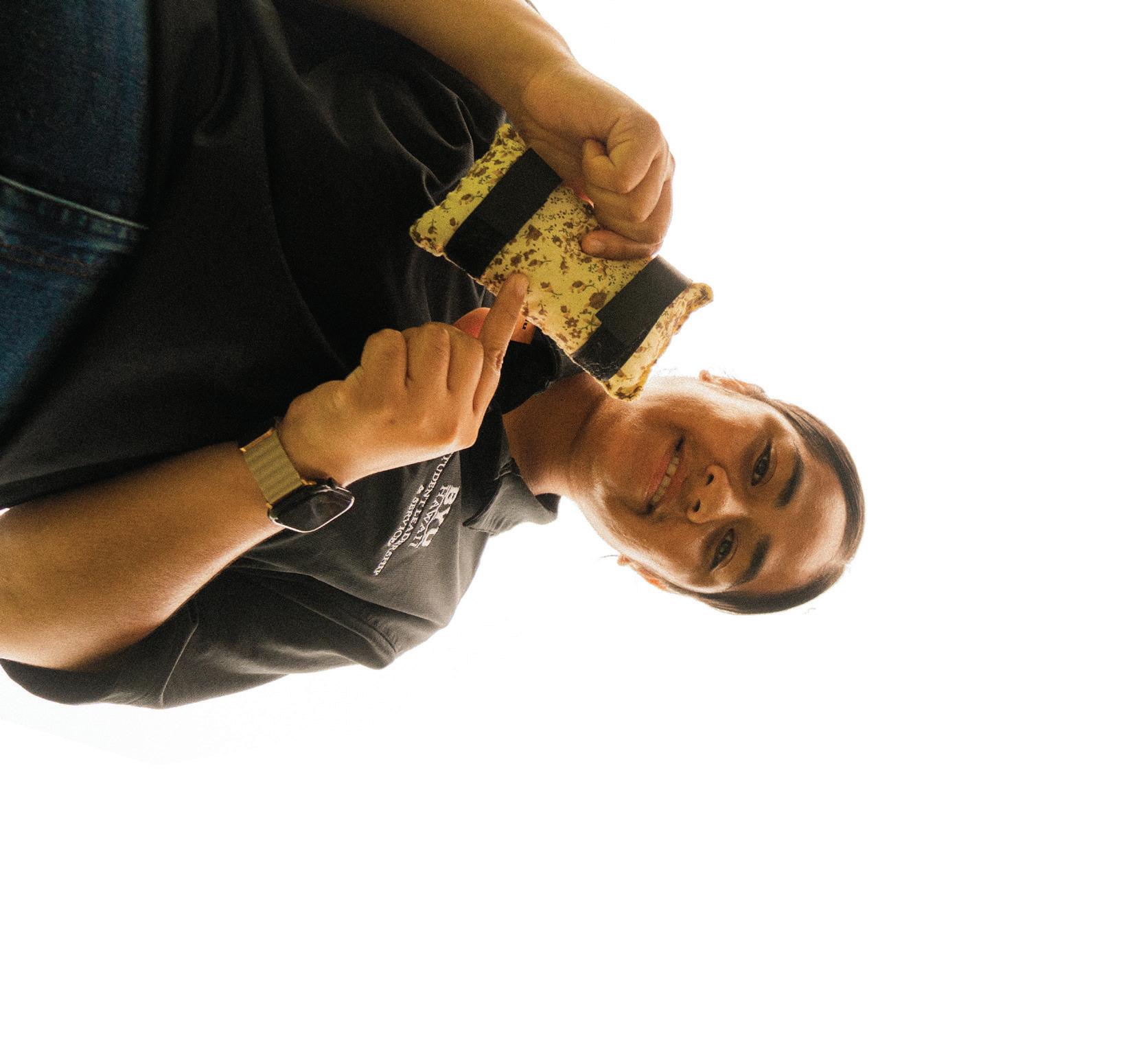
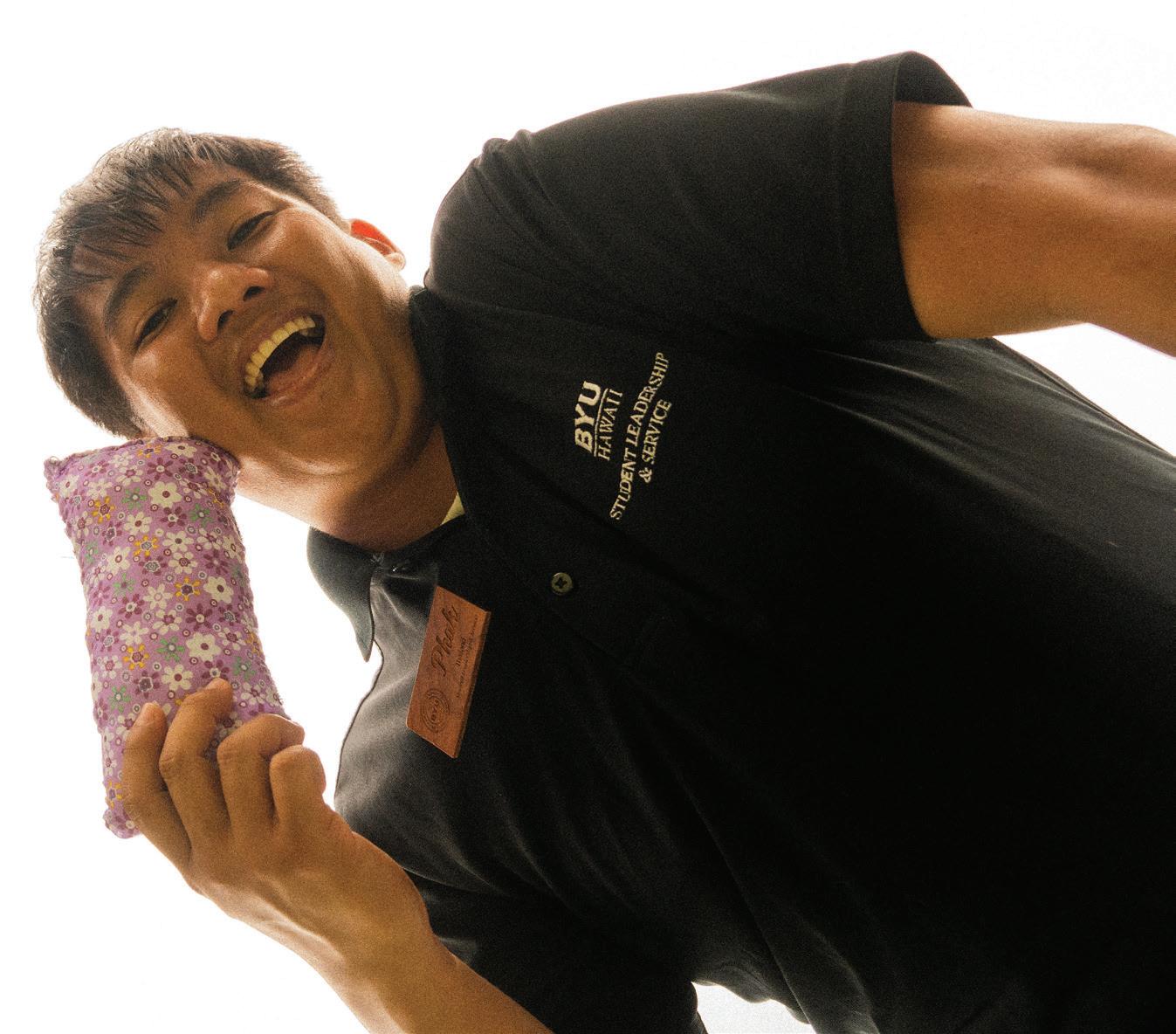
Jatuphon “Phak” Phakdeerat, a senior from Thailand majoring in business management with concentrations in marketing and supply chain, said the Service Center’s commitment to
cultivating a culture of Christlike love and gratitude runs deep. “Our office might just look like a simple booth at first, but there’s a deeper impact that isn’t always visible right away,” he stressed.
Phakdeerat shared three categories of service opportunities offered by the center: the “Daily Stop & Serve,” on-campus events like blood drives, and off-campus events like community cleanups and food distribution. “We always consider what kinds of service opportunities will benefit students and which organizations we should partner with or bring to campus,” he shared. The goal, he continued, is to help students “connect, serve and grow into lifelong disciples and leaders who serve others.”
Mabazza said the Service Center’s efforts issue an important reminder: “Even small things matter.” She said the “Daily Stop & Serve,” for example, simply invites students to engage in crafting activities with minimal time commitment, but each individual effort accumulates into a gift that brings light, love and hope to different communities. “Their little craft projects are gathered at the end of every semester and sent to vulnerable people—people with PTSD, veterans, struggling youth, survivors
of abuse and others. I want students to realize they’re doing something that means a lot to those individuals,” she said.
Ngalu reiterated Phakdeerat’s sentiment on the deeper impact of service: “The impact may not come immediately, but over time, we see the results of all these efforts.” She said their main focus is to build purposeful relationships with students and the broader community in Hawaii. “For me, our main goal isn’t about how many events we have or how many people show up—it’s
about how much impact the service has on people’s lives,” she expressed.
growing outreach
Ngalu, Phakdeerat and Mabazza said they see the impact of their work when students return to the center with hearts prepared to keep serving sincerely. “We’ve seen students come back to tell us how service has been therapeutic for them. The environment we create helps them relax and express themselves,” Ngalu shared.
ur oFFice might just look like a simPle booth at First, but there’s a deePer
that isn’t always visible right away.
This consistent student engagement, according to Phakdeerat, serves as the life force that keeps the Service Center going.
Phakdeerat shared the outstanding growth the center has experienced through the years: “When the Service Center started, my coordinator told me we used to have only two or three people stop by for ‘Daily Stop & Serve,’ and our social media engagement was low.” That’s no longer true today, he continued, as the Service Center has now grown into a big family of over 50 weekly attendance and around 10,000 social media engagements. “Seeing that O
Service Center staff holding out their “Daily Stop & Serve” projects.
Photos by Caleb Galotera. Page Design by Ice Cesario.
growth inspires me and my team because we dedicate time to planning these events,” he expressed.
They also said the center’s impact extends beyond the BYUH community. “Recently, we had a blood drive and an NMDP bone marrow event, and someone commented on our social media saying, ‘Because of BYU–Hawaii students, my son was able to survive.’ That moment reminded us why we do what we do,” Ngalu shared.
Phakdeerat also shared his recent heartwarming experience of serving at Pearl Haven, an organization that supports struggling youth and communities, where they dressed up for Halloween and gave out snacks. “On campus, I see students who are happy and ready for classes or work. But
there, I saw kids searching for the same hope and happiness. I’m glad we were able to bring them joy and love,” he shared. The Service Center is part of other people’s happiness, and he said that’s the best thing about it.
serving with gratitude
Ngalu said her commitment to her work is rooted in the desire to give back after receiving so much. Much like everyone else, she said, she also came from a place where she didn’t have a deeper understanding of service—she felt lost and found it difficult to find her place when she first arrived at BYU–Hawaii. “Then I helped plan Aloha ‘Āina, one of our biggest signature events. Afterward, the community partners reached out to express their
heartfelt gratitude. That changed everything for me,” she shared.
The experience, Ngalu explained, taught her how service can ground her spiritually and emotionally. “That’s when I decided to apply for a position in the Service Center. I wanted to help others—especially freshmen—find that same sense of belonging earlier than I did,” she expressed.
This sentiment resonates with Mabazza, who said her service experiences in her freshman year showed her the power of service to shape people. “I want students to feel what I felt before. Sometimes, students don’t know how to start having meaningful experiences here at BYU–Hawaii, and that’s why we are here. We can always help them with that,” she shared.•
Living in thanks
Having a glass-half-full mindset contributes to overcoming trials and finding joy, BYUH students say
BY ABIGAIL ADAMS
Shifting perspectives, strengthening faith and deepening connections, three BYU–Hawaii students said gratitude is more than saying “thank you.” Vaughn Platon, a junior majoring in psychology from the Philippines, explained, “Gratitude is a gift from God. It changes our attitude and behavior; it makes us feel joyful even in times of hardship and trial.”
Through gratitude, Chino Ikawa, a sophomore from Japan majoring in business management, said she has been able to see the tender mercies of the Lord and has developed an eternal perspective. “When I try to focus on blessings and gratitude, it helps me to feel happy and brings me joy because I recognize what I’m going through is not just by accident, it’s a form of love from God,” she said.
Looking through a new lens
Comparing gratitude to a glass of water, Ikawa said, depending on how people looks at it, they can say the glass is half-full or half-empty. “[The glass] has the same thing, but
[the intepretation could be] very different. When we focus on gratitude and what we already have, we find so much joy,” she explained.
Selah Shadra Dagdag, a sophomore from the Philippines majoring in social work, said focusing on the half-full glasses in her life led to a major transformation. “There’s a big difference [between] old Selah and today’s Selah.” She explained, “Before, I was just thinking, ‘I can do this alone. I don’t need help from anyone. [With] my own power, I can do this alone.’ So it was kind of heavy [and] very stressful—all the weight was on my shoulders.” However, when she altered her perspective, Dagdag said she was able to see all of the people around her who cared about her and wanted to help. “Now, everything is so light. It’s so easy to do all things. I feel I can do everything with the help of the Lord and the people around me,” she shared.
Recognizing the little things, Ikawa explained, has helped her shift her mindset during difficult times. During one
Selah Shadra Dagdag poses for the camera..
Chino Ikawa smiles for the camera..
“Even though sometimes life is really challenging and tough, [gratitude] helps you to move forward by trusting Heavenly Father that there will be better days ahead.”
Selah Shadra Dagdag
“As we look outward and look for those in need, … we feel a sense of fulfillment and happiness because that is where true joy lies.”
Vaughn Platon
particularly hard week, she said she received a prompting to write down the things she was grateful for. “I made a list, and I realized I took so many things for granted. For example, I live every day: I’m healthy, I can see, I can feel joy and love … I can eat, I can taste. [These things] are miracle, but I took them for granted and focused on negativity,” she shared. By listing down the things she was grateful for, Ikawa said she was able to change her focus from the things she didn’t have to all the things Heavenly Father had blessed her with.
During Platon’s time serving in the Australia Adelaide Mission, he said gratitude is what kept him going. “I was struggling with the feeling that my efforts were wasted because there were very few people who wanted to listen to us,” he said. “I felt hopeless, but there was a sudden thought and feeling of gratitude I had regarding the gospel.” The reason he knew about the gospel and decided to serve
a mission was because of the perseverance of the missionaries who taught his grandmother the gospel, he explained. Because of their influence, Platon said he and his family were able to experience joy and happiness. “I felt immense gratitude to those missionaries, and it motivated me to do my best to share the joy that I felt with others,” he shared.
Paying it forward
With so much to be grateful for, Dagdag and Platon said they show their thanks by paying it forward. Platon explained, “As we look outward and look for those who are in need, … we feel a sense of fulfillment and happiness because that is where true joy lies.” Additionally, Dagdag shared service is a way to show appreciation for the blessings Heavenly Father gives His children. When facing challenging times, she said Heavenly Father sent her angels. “I realized this is the way I could pay back Heavenly Father for all the things He gave me: serving His children.”
Practicing gratitude, Ikawa shared, is also a way to grow closer to the Savior. “Gratitude is the foundation of so many Christlike attributes, like humility, charity [and] patience,” she said. “By being grateful for everything, I felt I was becoming more like Christ, and that has strengthened my testimony as well.” One way Ikawa has strived to practice Christlike gratitude is by expressing it verbally, she said. Doing so while being a trainer in the Australia Brisbane Mission helped her not only to grow closer to her companions, but also to the Savior. “[It] helped me to feel so much love from my companions, and our relationship and companionship got stronger in love and in Christ,” she shared.
Showing appreciation and expressing gratitude can have life-changing impacts, Dagdag shared. “Gratitude has helped me to move forward in life with hope and unwavering optimism. Even though sometimes life is really challenging and tough, it helps you to move forward by trusting Heavenly Father that there will be better days ahead,” she said.•
“
Gratitude is the foundation of so many Christlike attributes, like humility, charity [and] patience.”
Chino
Ikawa
Photos by Haley Cowan. Page design by Cyrelle Briz.
discipleship Grace in every
Three women studying at BYUH reflect on their journey of finding Christ’s love and grace through simple, consistent acts of discipleship
BY FRANCE VALERIE LUCILLO
Grace shows in different ways, said three women studying at BYU–Hawaii. They said it can be through the depths of emotion one cannot seem to describe, ordinary yet consistent acts of obedience, and a deep sense of belongingness and support. For them, grace is more than just a feeling or a doctrine—it’s a daily experience of God’s divine love and guidance through the bittersweet journey of life.
Grace that rocks the cradle
Shalini Chand-Daikyu, a senior from Fiji majoring in business management with emphasis on human resources, said motherhood is full of emotions that are difficult to describe. “I just can’t describe it in one word, because I’m happy, but there will always be stressful times too,” Daikyu explained. She still has so much to learn, she continued, despite being a mother at 25.
“I still feel young but motherhood has really taught me how to deepen my testimony and faith in Jesus Christ,” she said.
Daikyu said motherhood taught her how to be patient and loving. “When kids are disciplined, they still come back to you for your love. That innocence teaches me to give love even to those who’ve wronged me in this life,” she shared. She said she has been practicing these
values through her relationship with her daughter. “My husband is very patient, but I’m not, and my eldest daughter tends to test me everyday. But when I practice patience and try to understand her, that’s how I develop Christlike attributes,” Daikyu shared.
Motherhood is challenging and sometimes makes Daikyu feel inadequate, but she said God’s grace strengthens her through her husband. She said his patience helped her get through her postpartum
depression. “I’d cry a lot, and my husband would be there beside me, comforting me,” she shared. Daikyu added she feels the same grace from her friends who would often help her clean the house and babysit. “Their kindness fills my cup and helps me find peace and grace to move forward.”
Daikyu also said her family’s consistent Church attendance every Sunday is an important act of discipleship, despite the struggles of getting everyone ready. “Even if we’ll be late, I realized the Lord still wants
us to be there. He wants us to go to Church as a family,” she said.
Daikyu said she also reads General Conference talks to continuously deepen her understanding of Christ’s love and grace. She said the messages give her peace—they helped her through graduation preparation, overwhelming assignments and house duties. She added she has been going to the temple every Thursday with her husband. “It has helped us a lot to put God first and feel at peace,” she expressed.
Grace that brings us home
Lilia Foma‘i-Tufuga, a senior in psychology from Alaska and a temple worker, said one thing she learned about consistent acts of obedience is that Jesus Christ’s grace is not all about forgiveness. “It is also empowering and helping us become something more, and that’s what keeps me going,” she said.
Coming back to the Church after being away for a while, Tufuga said she was scared of people’s judgments. “But when I came back, I felt so much love—especially from Jesus Christ and Heavenly Father. I felt Their
grace through being able to partake of the sacrament again and being honest with my bishop about my past,” she shared. The Lord has placed people in her path to lead her to the right direction, she continued. “It was my twin sister who ministered to me the whole time. Our family and I have been blessed because of it,” she shared.
Serving as a student temple worker, Tufuga said she is strengthened by the consistent presence of members who did not grow up in the Church, or who had fallen away and came back. “When I see them, I take extra good care of them
because they tend to not know where to go, what to wear or what to do. I help them, even down to tying their shoes. I feel connected to them and silently root for them on their journey,” she explained. Tufuga shared her introversion makes it difficult for her to reach out to people. “But when I serve others, I step out of my comfort zone,” she said. She said service has opened up many opportunities for her—she knows she is in the right direction in life. “It shows me the things I do matter, and that I have a purpose in this life,” she expressed.
“I felt Heavenly Father and Jesus Christ’s grace through being able to partake of the sacrament again and being honest with my bishop about my past.”
Lilia Foma‘i-Tufuga
Foma’i-Tufuga and her sister outside the Laie Hawaii Temple.
Grace that welcomes us in Ayana Seymour, a junior in psychology and Pacific studies from New Zealand, said belonging is about being comfortable to be her true self around others. “It’s also about being present and being there for them. I can feel their love because of that,” she shared.
Feeling a profound sense of belonging through other people, Seymour said those people’s simple gestures convey the Lord’s loving presence to her. “I remember one time when someone came into my path and encouraged me, telling me I got this and
that Heavenly Father was aware of me,” she shared. She said she feels His love when He sends people to remind her that someone— both the Lord and the people in her life— always has her back.
Wanting to make others feel the same sense of belonging, Seymour said she befriends others and lets them know she got their back. “It’s just what I experienced with my bishop when I was in my youth. I want people to know that if they ever need anything, I can pull through for them just as the Savior does, because that’s what my bishop did for me,” she shared.•
Ayana Seymour smiles at the camera. Photos taken by Haley Cowan. Page design by Ice Cesario.
Sweet tones of the heart
Based on an LDS hymn, BYUH ohana shares their thoughts on what kind words mean and why it matters to them
BY FRANCE VALERIE LUCILLO
In a world full of harshness and toxicity, it is easier to speak without thinking first, said Paitlee Dorious, a freshman majoring in math education from Utah. She said, oftentimes, people overlooked the impact of their words and the magnitude of it. As stated in LDS hymns #232, “Let us oft speak kind words to each other… [because] the kind words we give shall in memory live…”
Paitlee Dorious, United States
Dorious, a freshman majoring in math education, said speaking kindly is easier said than done. “I think it comes down to thinking before speaking, taking the split second to consider what is the purpose behind my words, if it’s kind or not,” she said. She said kind words matter because God wants us to love our neighbors. “[Doing so] shows how much we love God when we treat others with respect and kindness,” Dorious shared.
Eben-ezer Gonzales, Philippines
Gonzales, a senior majoring in graphic design, said speaking kind words invites people to be kinder, whether in what they say or even in what they think. “Kind words matter because you don’t really know what other people are going through— even to yourself, it helps. So try to be kind,” Gonzales said.
Jethro Raman, Fiji
Raman, a junior majoring in accounting, said it’s always better to think of each other as human beings with feelings because words linger in people’s minds . “We’re all children of God,” he said. Unkind words magnify other people’s insecurities. “That is how [words can] cause mental health issues,” Raman continued.
Mikah Cabanilla, Philippines
Cabanilla, a junior majoring in accounting, said being kind means understanding where people come from and showing kindness towards them even with just a simple compliment. “Whether it’s your friend or not, you shouldn’t be thinking about judging them,” she said. Kindness can be expressed in words and in deeds, she said. Even the tone of our voice is important to be aware of, she continued. “In a stressful environment, I always try to compose myself through my emotions because I don’t want to feel angry when my senses are not calmed,” Cabanilla shared.
Moehani Hamblin, Tahiti
Hamblin, a junior majoring in health and human science, said being kind to our own selves first is what choosing kindness means to her. “Self-love is very important because we tend to get harsh on ourselves,” she said. When we love ourselves, it is best to share it with others. “It impacts others as much as it impacts us,” Hamblin continued.
Lisa Yabakivou, Fiji
Yabakivou, a senior majoring in accounting, said whatever a person says to others, it cannot be taken back. “And people will remember it,” she said. Yabakivou said people should speak kindly one to another because you never know what people are going through. “Speaking kind words would uplift people especially with what they’re going through in life,” Yabakivou shared.
Photos taken by Caleb Galotera.
Vignesh Nagarajan, India
Nagarajan, a senior majoring in information technology, said if a person does not have any kind words to say, they should not say anything. Nagarajan said we are passing by people who are facing their own trial.
“So our kind words could make their day,” Nagarajan said. He said he knows this to be true, especially from stories he hears from his friends. For example, he said one of his friends received kind words from a stranger six years ago—a memory that friend still holds close to her heart today.
“She told me it really impacted her and she often remembers it when trials occur,” Nagarajan said.
Ethan Smith, United States
Smith, a sophomore majoring in biology, said life is about perspective.
“If we have a good attitude about life, we’d have more confidence in ourselves and have more hope for the future with positivity,” he said. Negative words break us apart and kind words build us up, he said.
“They make us who we are as it reflects values and encourages people to be better,” he continued.
Ayu Ningtyas Kartika Sari, Indonesia
Sari, a sophomore majoring in computer science, said speaking kind words is equal to loving yourself. She said, “When I’m being kind to myself, I’m kind to others too, which makes me happy.” She said her kindness stems from her belief that not knowing what would happen in the future is enough reason to be good to others today. “For example, I’ll never know when I can meet a person again, so I will always try to be good to them now and be the best version of myself,” Sari explained.
Wilford Wu, China
Wu, a senior majoring in accounting, said being kind to one another means having a sense of understanding to others and embracing differences. “We don’t assume that people come to us with a negative intention even if their words sound like it,” he said. Changing our assumptions into a good attitude toward others by being kind helps us to be a light to them. Wu said kind words will uplift and encourage people. “Kind words lead to positivity and arguing lead to miscommunication,” Wu continued.
Hymn
no. 232 Let Us Oft Speak Kind Words
Verse 1
Let us oft speak kind words to each other
At home or where’er we may be;
Like the warblings of birds on the heather,
The tones will be welcome and free.
They’ll gladden the heart that’s repining,
Give courage and hope from above,
And where the dark clouds hide the shining,
Let in the bright sunlight of love.
Chorus
Oh, the kind words we give shall in memory live
And sunshine forever impart.
Let us oft speak kind words to each other;
Kind words are sweet tones of the heart.
Verse 2
Like the sunbeams of morn on the mountains,
The soul they awake to good cheer;
Like the murmur of cool, pleasant fountains,
They fall in sweet cadences near.
Let’s oft, then, in kindly toned voices,
Our mutual friendship renew, Till heart meets with heart and rejoices
In friendship that ever is true.
Chorus
Oh, the kind words we give shall in memory live
And sunshine forever impart.
Let us oft speak kind words to each other;
Kind words are sweet tones of the heart.
Page design by Marlee Palmer Young Yen.
GRATITUDE Hearts FILLED WITH
Students reflect on the blessings that changed their perspectives and refined their lives
BY CJ SHINIHAH NOTARTE
In the October 2010 General Conference, former prophet and President of the Church of Jesus Christ of Latter-day Saints Thomas S. Monson said in his talk, “The Divine Gift of Gratitude,” “A grateful heart … comes through expressing gratitude to our Heavenly Father for His blessings and to those around us for all that they bring into our lives.” For five BYU–Hawaii students, they said family, friends and their faith in Christ are some of the things they are most grateful for.
JOEMIE MALACAMAN
Joemie Malacaman, a junior from the Philippines majoring in social work, said being blessed with a baby is what she is most grateful for. She said, “Ever since I was young, I’ve always wanted to have a baby and build a family.” However, when she got pregnant the first time, she and her husband lost their baby. When she got pregnant the second time, she recalled she and her husband struggled anxiously, thinking about whether their baby would make it.
“After giving birth and finally holding her in my arms, whenever I do, I always say, ‘she’s the greatest gift and blessing I have received.’” That feeling reflects on the literal meaning of their baby’s name, “Keona,” means God’s greatest gift in the Hawaiian language, Malacaman shared.
MAHONRI MALACAMAN
Mahonri Malacaman, a senior from the Philippines majoring in accounting, said he is most grateful for his wife and daughter. He said he felt happy when his wife came into his life because someone accepted him for who he is. “Whenever Joemie and I are together, even back when we were still dating, I always feel motivated to become the best version of myself,” he said.
When their daughter came, Mahonri Malacaman said his perspective and goals in life broadened. “I now have bigger dreams because my family is growing,” he said. Because of this, he decided to apply for a master’s degree, for which he was accepted into both universities he applied to. “Everything I do, I don’t do it for myself alone—but I do it for my family,” he said. Having his family, he said, motivates him to dream and chase success in life.
LOISI NALESONI
Loisi Nalesoni, a senior from Tonga majoring in biology, said she is grateful for his father. She said, “My father raised us because my mom passed away when I was very young.” She said the reason she is here at the university is because of his father’s support. She knows all the sacrifices his father made—standing as both the mother and father to them—are hard, but it’s something she is beyond grateful for, she continued.
“My father is now in his 60s. He’s a humble and hardworking man,” Nalesoni said. It is from his father that she learned how to be humble, no matter where she is in life. “Whether you’re right or wrong, you need to be humble … [and] God will bless you no matter what,” she said.
Nalesoni said she has not seen her father for eight years. “I went on a mission and got stuck for three years and seven months. Then I came [to BYUH] right after my mission,” she explained. For this Christmas, she said she will come home and surprise his father.
KIMO PETERSEN
Kimo Petersen, a junior from Alabama majoring in business finance, said he is grateful for those who reached out to him and helped him turn to Christ, which changed the direction of his life. “I was going down a different path, and looking back, it would have been a lot harder to come back had I continued making those choices,” he said. Now, being able to step away from that path and being able to follow the Lord, he said he feels happy and fulfilled.
Petersen said he is grateful for the gospel of Jesus Christ, for the love and support he has received. He said without these, he wouldn’t be at BYUH with good influences around him to keep him on the straight and narrow path. “It made all the difference in my life, and I am going to be eternally grateful for that,” he continued.
YESUN-ERDENE ODGEREL
Yesun-erdene Odgerel, a junior from Mongolia majoring in health and human science, said she is most grateful for the atoning sacrifice of Jesus Christ because it is infinite and it gives people hope. She said it also allows us to have the opportunity to experience change. For her, she said feeling the guilt and shame from making mistakes helps her recognize them, which motivates her willingness to repent.
Odgerel said there was a time when she was not eating well or sleeping right. But being reminded of the commandment to be healthy, she said she decided to make a change. “One time, I decided to run after work. I was so tired, but I had so much passion and courage.” Right after she started walking, she said, it started to rain. It felt like a test from God to see if she is committed to her efforts to be healthy, she said.
“I kept running even if it was raining. I was that passionate to run in the rain which I have never done before,” Odgerel said. She said she usually stops once in a while to walk and rest, but at that time she ran nonstop. “The rain cooled me down, … and it was actually a blessing,” she said. Instead of the rain being a hindrance, she felt impressed that it was God’s way of supporting her with her goal. “Whenever we have a righteous desire and goal, God is always there to support us,” she continued.•
“A grateful heart … comes through expressing gratitude to our Heavenly Father for His blessings and to those around us for all that they bring into our lives.”
Thomas S. Monson
Photos taken by Hiroki Konno. Page design by Chance Childers.
Breaking the internet with grace
In a digital age of viral hate and negativity, BYUH students say choosing love and kindness can heal online environments
BY SAMANTHA FAITH SATORRE
Alienated from reality and each other, people on the internet hide behind screens and tend to forget connections should be rooted in love and compassion, said three BYU–Hawaii students. “The world today is so focused on the self. We have these ‘dopamine machines’ in our hands; we scroll endlessly, chase false happiness and forget others. So I’d say we need to love each other more,” stressed Douglas Ferreira, a sophomore in biology from Brazil.
When navigating digital environments, the students said facing one another with kindness and love can defuse the hate that spreads so easily online. “Be kind. It can go a long way, and it’s a great reminder that we never know what others are going through,” urged Rachel Garside, a junior from Texas studying business management with concentrations in marketing and supply chain.
Breeding ground for hate and envy
People are always looking for ways to freely express themselves without fear of repercussions, said Ferreira. That, he continued, is what makes online anonymity a double-edged sword. “They think they’re untrackable. They feel powerful because nobody knows who they are,” he said. “Too much freedom without accountability makes it easier to spread hate.”
Garside echoed the thought: “People often forget that behind every post is a real person with real feelings, thoughts and experiences.” She said it’s helpful when the internet is used as an
outlet for emotions, but when it transforms into a place where negativity is intentionally perpetuated, everyone gets caught in a web of hate and hostility. “People become inconsiderate, focusing on themselves instead of how their words might hurt others.”
Sage Lesano, a sophomore in accounting and finance from the Philippines, said this emotional distance between people on the internet makes them brave in ways they would never be in person. “It’s to the point where they forget that not everyone viewing their post will agree with their standpoint,” he said.
Social comparison, Garside added, is one of the pills that poison individuals online. “People on social media constantly compare themselves and feel like they’re not good enough. They see others and think, ‘Why am I not like that? Why can’t I do that?’” she shared. This phenomenon makes her sad, she said, because she believes “social media should be about building connections instead of comparing ourselves.”
Response that nullifies hate
Negativity is inescapable in this life, Ferreira said, so the best way to combat it will always be responding with Christlike love. “It could be tempting to respond harshly, but we can disarm others by responding with love,” he emphasized.
Lesano said he often reminds himself that anger usually stems from pain, so he makes sure to respond to negativity with empathy and patience rather than matching it. “I imagine the person as someone I care about—a friend, a family member or someone who deserves understanding. I always give the benefit of the doubt,” he shared.
As a social media assistant for BYU–Hawaii’s online pages, Garside shared
she would frequently be faced with harsh comments about both the university and the Church. “If you had asked the past me, I probably would’ve wanted to fight back. But after serving a mission where I experienced a lot of negativity firsthand, now I just move past it,” she shared. There will be opposition in all things, she explained,
People often forget that behind every post is a real person with real feelings, thoughts and experiences.”
Rachel Garside
so she realized it’s better to focus on her duty: reflect the university’s standards in her work by practicing Christlike kindness and respect.
Similarly, Ferreira shared he runs pages with his wife about the gospel, daily life and well-being. In doing so, he said they always make sure to ask themselves, “Is this going to bring a good spirit or not?” He related this effort to his job as a university photographer: “Just like I help people open up during a photoshoot to capture their essence, I want to help people bring out good things online because that attracts positivity and good people.”
Ferreira said their social media pages focus on stories that inspire and move people emotionally. “Whenever negativity comes our way, it reminds us that we don’t want others to feel the same pain. We think about people’s feelings and situations, and we put time and effort into our content because we genuinely want to help people come closer to Christ,” he shared.
A space for love, gratitude and shared experiences
Ferreira expressed the immense love he holds for God and Jesus Christ—an emotion he said he actively fosters with his wife. “He’s done so much for us—on the cross, and even now in our lives as students. When we think about His blessings, we feel grateful, and that gratitude motivates us to share His love online,” he shared. He said if their experience brought joy in their lives, he believes it can bring happiness to others, too.
Similarly, Garside shared the power of gratitude to spread light. “When I focus on what I’m grateful for—my opportunities, friends and family—it affects my actions. When you have positive thoughts, you project positivity,” she explained. She said being vulnerable and grateful about one’s experiences can help others see the silver lining in their own struggles.
Lesano said he also believes gratitude softens everything—it makes him less reactive and more intentional, and helps him remain on the positive side of things. “Speak to others the way you hope someone would speak to you on your worst day. You will never know who will need that kindness,” he urged.
Ferreira also emphasized the power of shared experiences in creating uplifting online environments. “For example, our Instagram page @ctrlaltscripture focuses on scripture study tips as returned missionaries. Many people struggle to study scriptures after returning from their missions, so we share practical ways to keep that light alive,” he shared.•
Left: Rachel Garside. Top right: Douglas Ferreira. Bottom right: Sage Lesano. Photos taken by Hiroki Konno and Caleb Galotera. Page design by Jay-R Gallano.
How leaders embody Christlike qualities, guiding with humility, empathy and divine wisdom
BY JULIA AUNAI
Students and faculty at BYUH said true leadership is expressed through service, teamwork and example rather than titles or authority.
Adjunct professor and bishop Logan Gillette said compassion and love is central to how he leads. Student leader Vignesh Nagarajan said collaboration changed the way he thinks about leadership. Relief society president Julana Te’o said leading by example, even when she feels unprepared, helps her strengthen the women she serves.
Leading through service
Logan Gillette, a BYUH alumnus and an adjunct faculty from the Culture, Language & Performing Arts said leadership, to him, means leading with Christlike qualities and service. He said, “Charity is the biggest element I have been leaning on.” He strives to show compassion and love especially when guiding others through the repentance process, he continued.
Coming from the Pacific, one of the key focus areas of the university, helps Gillette relate to the students he teaches and guides. Also serving as the bishop of the Young Single Adult 7th Ward, Gillette said he can relate to the students’ academic, emotional and spiritual challenges because he had been in their position before. “I see myself in the students, the struggles and the challenges they go through. That relatability is a blessing that helps break down barriers,” he continued.
With nearly 20 years of higher education experience, Gillette said leadership has taught him he can do hard things. He said he has learned there are always areas for improvement. “I wouldn’t even say I am the best leader, but I would admit I look forward to having more opportunities to become a better leader,” he said.
Gillette said he looks forward to the service aspect of being a leader. He said, “A leader is not someone who dominates; a leader is somebody who serves.” He said his approach to leadership as a professor and bishop is rooted in discipleship and service. The best way to feel closer to the Savior is by serving, he continued.
Gillette said his desire to serve is rooted in his gratitude to his alma mater. He and his wife’s positive experience during their undergrad inspired them to come back, he added.
Teamwork over titles
Vignesh Nagarajan, a senior from India majoring in information technology, said developing Christlike traits such as love, kindness, patience, charity, humility and meekness are all essential to becoming a good leader. One Christlike attribute is not more important than the other, he said. “You have to develop each Christlike trait in order to keep things on track,” he continued.
Nagarajan said he was the India Club president during the 2024-2025 academic school year. He said he was inspired to be the club president because he wanted to share his culture with others.
Serving as a club president was different from what he expected. He said, “It turned out to be a team effort with everybody pitching in, rather than me telling people what to do.” He said he learned being a club president is a collaborative effort that required teamwork. He learned to see himself as a teammate, rather than a boss, he continued.
Nagarajan said he was humbled to serve as a volunteer, motivated to share his culture with others. “After serving as a club president, I wouldn’t call it leadership—I would call it a service,” he said.
Nagarajan said he learned how to emulate patience and kindness while being the club president. He said kindness goes a long way. “If you are understanding rather than showing them your anger, they are more willing to help you,” he said.
Nagarajan said his role model was his elementary school principal in India. He said his principal remained patient and kind despite enduring challenges. “I never saw him get mad at anyone,” Nagarajan said. Watching his principal lead with patience and compassion inspired Nagarajan to do the same.
Called to lead
Julana Te‘o, a senior from Utah majoring in social work, said she has learned the importance of leading by example. “I’m not the best teacher or the best public speaker, but if I can be a kind person and help my sisters feel Jesus Christ’s love, then I will feel like I’ve done my job.”
Te‘o said she serves as the relief society president in her ward. She said she views her calling as an opportunity for teamwork and collaboration. She said she enjoys extending callings to other sisters to help them feel more involved in the organization. “God doesn’t want us to do things alone anyway, so it’s important to share the responsibilities,” Te‘o continued.
Te‘o said she has been serving in her calling since April. She said she initially felt inadequate receiving her call since she was still learning from her previous calling as a relief society counselor. However, she was reminded of a General Conference talk about callings. She said it reminded her that God often calls the unlikely to be leaders because He knows our potential. “I felt so inadequate to do this, but I also knew God would work with me,” Te‘o said.•
Students suffering from grief share how they find the light at the end of the tunnel through Christ
BY RINCON WATSON
Jesus Praying in Gethsemane (Christ in Gethsemane).
Artwork by Harry Anderson, retrieved from The Church of Jesus Christ of Latter-day Saints Media Library.
Losing a loved one is an experience no one can prepare for, shared BYUH students, Nieva Zabala and Sophia Sagarese. “Having someone in your life one day and gone the next leaves you feeling more helpless and alone than you could ever imagine,” shared Sagarese, a senior in psychology from Hawaii.
When tragedy strikes
Zabala, a junior in hospitality and tourism management from the Philippines, shared she lost her father earlier this year. When she learned her dad was sick, she was stunned and confused, she said. “I was worried because I didn’t know what to do. I remember thinking in my head: Will I hear my dad’s voice again?” she expressed.
The passing of Zabala’s father left her with feelings of despair, pain, loneliness and confusion, she shared. “I never imagined this
would happen to me. I was hurt, confused and alone. I started doing things on my own just wondering why,” she said.
Similar to Zabala, Sagrarese said she recently lost a close friend and shared how she felt shocked and guilty immediately following his passing. “I lost a lot of sleep. I was definitely in shock. It’s interesting because I’d say I was in shock, but at the same time, I felt very, very guilty. And it was to the point where it was kind of taking up all aspects of my mind,” she noted.
The hardest part of having a friend pass is knowing you won’t see him in this life again, Sagrarese said. “It is really hard imagining I won’t have a future with him anymore. It’s hard to imagine he won’t be with us because we saw him every day all the time. It’s just hard to picture life without him at that point because he was like our brother,” she said.
Looking to the Lord
Returning to BYUH after Zabala’s father passed was not easy for her, but after watching the October 2025 General Conference, she felt inspired to make the return, she shared. “I wanted to go back to the Philippines. But when I listened to the messages, President Oaks mentioned his experience when his dad passed away when he was young. So he kind of reminded me of myself and my family. And then President Oaks said to value our education. So I think one of my questions was answered,” she said.
Zabala said prayer and regular temple worship has become an anchor in her life allowing her to overcome her trials. “I’ve been going to the temple to pray a lot because I feel like I need strength. I think of Jesus Christ’s atoning sacrifice because knowing the Savior already overcame this
feeling of grief, I know everything is going to be okay,” she shared.
Meanwhile, Sagrarese noted regularly talking about the gospel and her place in it helped soothe the pain she felt after her friend passed. “My grieving turned into hope by having everybody talk about our faith, and we do have an eternity and we’ll see our loved ones again. Gospel topics just became really common in all of our conversations,” she said.
Following the incident, the gospel turned into something more real, personal and important, said Sagrarese. “I began to feel more involved and motivated because of the gospel’s promises,” she said. “I couldn’t imagine having this experience without the gospel in my life.”
Sagrarese later commented even though her friend’s early departure left an unfillable hole in her heart, noticing small blessings
and miracles every day has reinforced her testimony in Christ and His love. “I think about how much I miss him a lot, and the pain never fully goes away, but I feel as though looking at all the ways the Lord has blessed me every day has made my testimony and conviction even stronger,” she affirmed.
Not forever
Zabala admitted the pain is still prevalent despite knowing she will see her father again. “Even now, it hurts so bad; I miss him very much every day. But I know one day I will see him again. Thanks to Jesus Christ, I know I will have the opportunity to hug him again,” she said.
Despite the sting, Sagrarese declared her faith that she will see her friend again in the next life. “Knowing that there’s a life after this one and that I’ll be able to see my
best friend and other loved ones again—that makes life a lot more worth living because they’re there on the other side and they have the truth,” she shared.
Both Zabala and Sagrarese emphasized how Christ’s Atonement promises a life after death for everyone. The Book of Mormon expands on the idea and promises that death has no power. Mormon 7:5 says, “He hath risen again, whereby He hath gained the victory over the grave; and also in Him is the sting of death swallowed up.”•
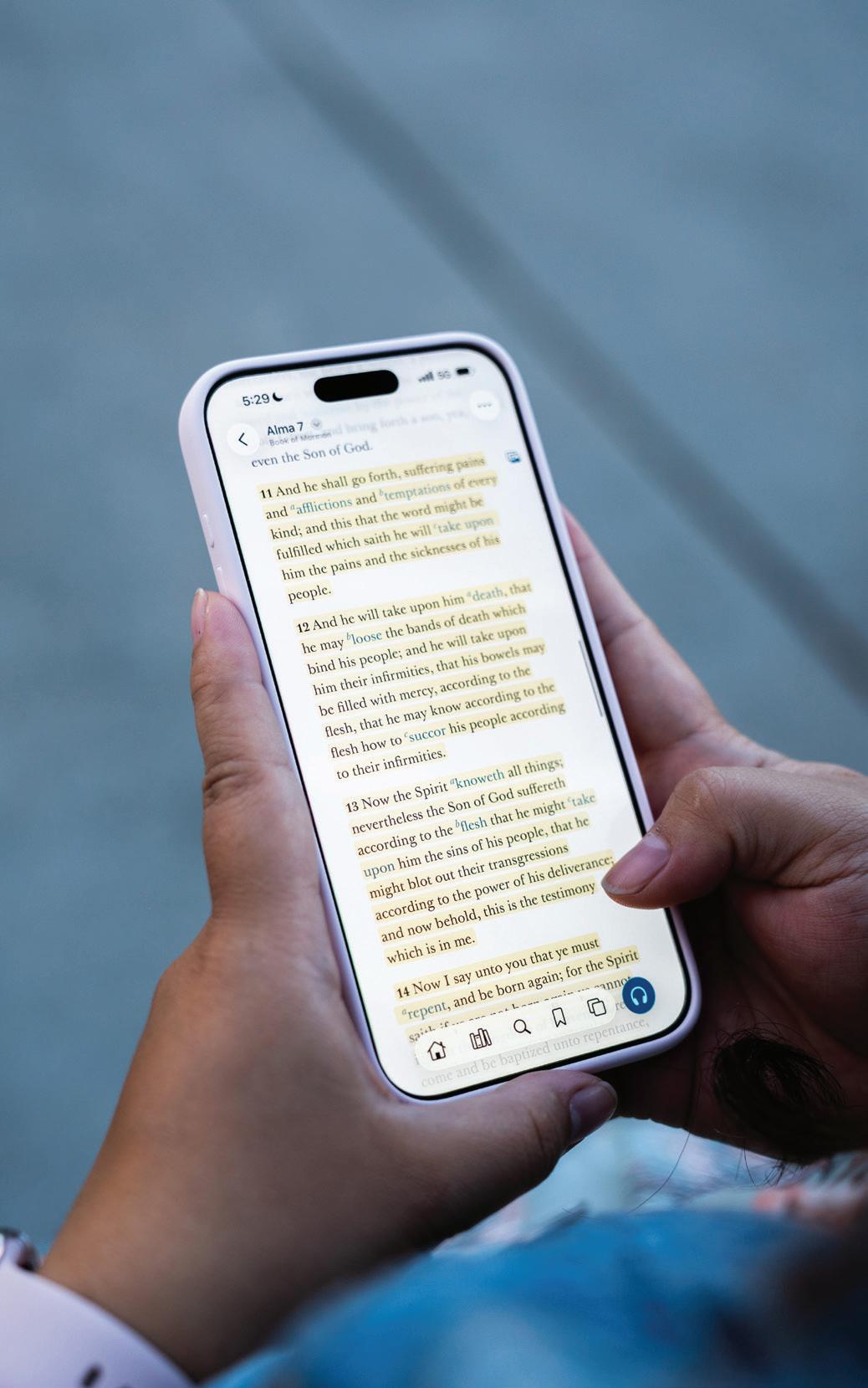
Photos of Zabala reading the scriptures and browsing the gospel library application. Photos taken by Caleb Galotera. Page design by Marlee Palmer Young Yen.
Two BYU–Hawaii students learned the Savior’s grace heals, empowers and is always within reach
BY JOHN ANDREW QUIZANA
In a general conference talk titled “The Laborers of the Vineyard”, Elder Jeffrey R. Holland said, “However late you think you are, however many chances you think you have missed, however many mistakes you feel you have made or talents you think you don’t have, or however far from home and family and God you feel you have traveled, I testify that you have not travelled beyond the reach of divine love.” This powerful reminder resonates profoundly with the experiences of two BYU–Hawaii students who shared their journeys toward understanding grace.
For Joseph Suyama and Khulan Becar, the path to grasping the Savior’s grace has been profoundly personal and transformative. From mission fields to navigating complex family struggles, both said they discovered the Atonement is not solely about forgiveness— it is also about healing, cultivating selfcompassion and embracing life even in its most challenging moments.
From mission fields to the pressures of home
Joseph Suyama, a freshman from Laie majoring in business management marketing, said his mission in Leeds, England exposed him to people enduring hardships beyond their control— circumstances like abuse, unemployment
or loss—taught him the power of grace as something deeper than mere forgiveness.
“Before my mission, I saw grace as something for repentance, for forgiveness,” Suyama recalled. “But on my mission, I learned how people drew power from grace. I realized grace could be empowering, not just pardoning.”
Returning home, however, was a new kind of challenge, Suyama said. Away from the structured environment of his mission, Suyama said he was faced with the pressures and distractions of the world—news, social media and everyday life. “Pretty much immediately after coming home, I felt spiritually attacked,” he said. “I had to turn to the Savior and make a conscious choice to seek His Atonement.”
Even the simplest habits of faith became difficult, Suyama highlighted. “One of the hardest things was not talking about Christ,” Suyama admitted. “I got caught up in classes and goals and realized I wasn’t talking about Him anymore. When I started doing that again, I felt happier—I started to feel the joy I had on my mission.”
Suyama shared his perspective on the Atonement shifted profoundly after a conversation with his mission president: “The only way to claim the Atonement in your life is drop by drop.” For Suyama, this means continually turning to Christ, every day, allowing grace to seep into every aspect of life.
“his Forgiveness brings the highest Peace i can Feel in this liFe.” Khulan Becar
Finding grace amid family turmoil
Khulan Becar, a freshman political science major from Utah, said she experienced grace in a very different context—through family struggles. With her parents going through a difficult divorce, she said she found herself torn between conflicting emotions.
“It was hard to watch both sides of the story—seeing what my dad did that hurt my mom, and yet watching my mom continue to forgive him every time,” Becar shared. “It struck me because my parents aren’t active in the Church, but my mom still showed that kind of forgiveness. It made me think: if she can forgive him, then I can too. And ultimately, if Heavenly Father and Jesus Christ would forgive him, then I should as well.”
Becar said she also faced spiritual distance during high school. After dating a non-member of the church and experiencing family upheaval, she said she became inactive for nearly two years. “I stopped going to church, to the temple, and even praying. I felt disconnected and unsure if I would ever come back,” she admitted.
Her reconnection came through a friend who invited her to the temple, Becar recalled. “That night, I prayed for the first time in years,” she shared. “I told Heavenly Father, ‘I’m sorry you haven’t heard from me in a while. I don’t even know if coming back is right for me.’ But I felt
never beyond his reach never beyond his reach never beyond his reach never
beyond his reach never beyond his reach never
beyond his reach never beyond his reach never
beyond his reach never beyond his reach never beyond his reach never beyond his reach never beyond his
Photos taken by John Andrew Quizana.
this overwhelming sense that He still loved me—that He was waiting for me to ask for forgiveness and come back.”
Even without a fully active family environment, Becar said she found support from grandparents, aunts and friends. “I was on my own in building my personal testimony, but I was never alone in attending church or participating. People constantly reached out—inviting me to dinner, to activities or simply checking in.”
The challenge of self-forgiveness
Both Suyama and Becar emphasized the hardest grace to accept is often inward—extending forgiveness and compassion to oneself.
Suyama recalled a moment of honest reflection: “I was upset with myself over some
“when you remove the barriers that stoP you From receiving god’s grace, that’s when true Power Flows into your liFe.”
Joseph Suyama
decisions I’d made and had a very honest prayer. I told Heavenly Father how I felt, and I felt the impression, ‘You’re forgiven— but you need to forgive yourself.’ That was powerful,” Suyama shared. He said he realized he needed to show love to himself, to apologize to himself just as he would to someone else.
Becar said she has found similar insight through daily practices of gratitude. Inspired by a friend who reframed conflict as lessons in patience, she said she writes down three things she’s grateful for each day. “Taking time to notice small blessings helps me see the bigger picture. Gratitude keeps me grounded in grace,” she said.
Seeing grace in everyday life
For both students, the Atonement is deeply personal and sufficient to meet each individual’s needs. Suyama explained, “Christ has descended below all things, so no matter how far we fall, His grace reaches further.” He said the Savior’s grace being
sufficient means that everyone—not just believers—has a way back to God. “That’s what keeps us from losing hope.”
Becar added, “You can never go too far from God’s love.” When she was inactive, Becar said she felt like she had gone too far—that she was not worthy anymore. “But Heavenly Father doesn’t hold grudges— we’re usually the ones holding them against ourselves. Any effort to return to Him makes you worthy again. You’ll never be beyond His grace,” she said.
Both students also emphasized intentional spiritual practices. Suyama said he maintains a prayer journal, writing down impressions after prayer to strengthen his connection with God. Becar’s gratitude practice helps her recognize blessings in the ordinary—reminders that the Savior’s love is present in every part of life, she said.•
Page design by Chance Childers.
C ounting grace and living gratitude
Explore how many times “grace” and “gratitude” are mentioned in the standard works, and what their patterns reveal about God’s messages to us
BY JESSIKA SANTOSO
Gratitude
Despite differing views among Christian denominations on how grace operates, a BYU and BYU–Hawaii professor in the Faculty of Religious Education said grace—any divine help from God—leads naturally to covenant-making, binding us to keep returning to Him. Jared Marcum, BYUH associate professor, said the Restoration teaches that grace stays active through the making and renewing of covenants. BYU assistant professor Joseph Spencer pointed to King Benjamin’s sermon as an example: the people experience God’s grace, cry for mercy and then respond by making covenants—a cycle of returning to grace through faith and repentance.
God is a liberal giver, Marcum said. “Any gift from God—agency, forgiveness, empowerment and empathy—is grace.” The greatest sign of His grace is the gift of His Son, bringing forgiveness and resurrection, he shared. Spencer shared grace, in daily life, looks like recognizing God’s work rather than our own. Gratitude is the natural and proper response to grace, he said.
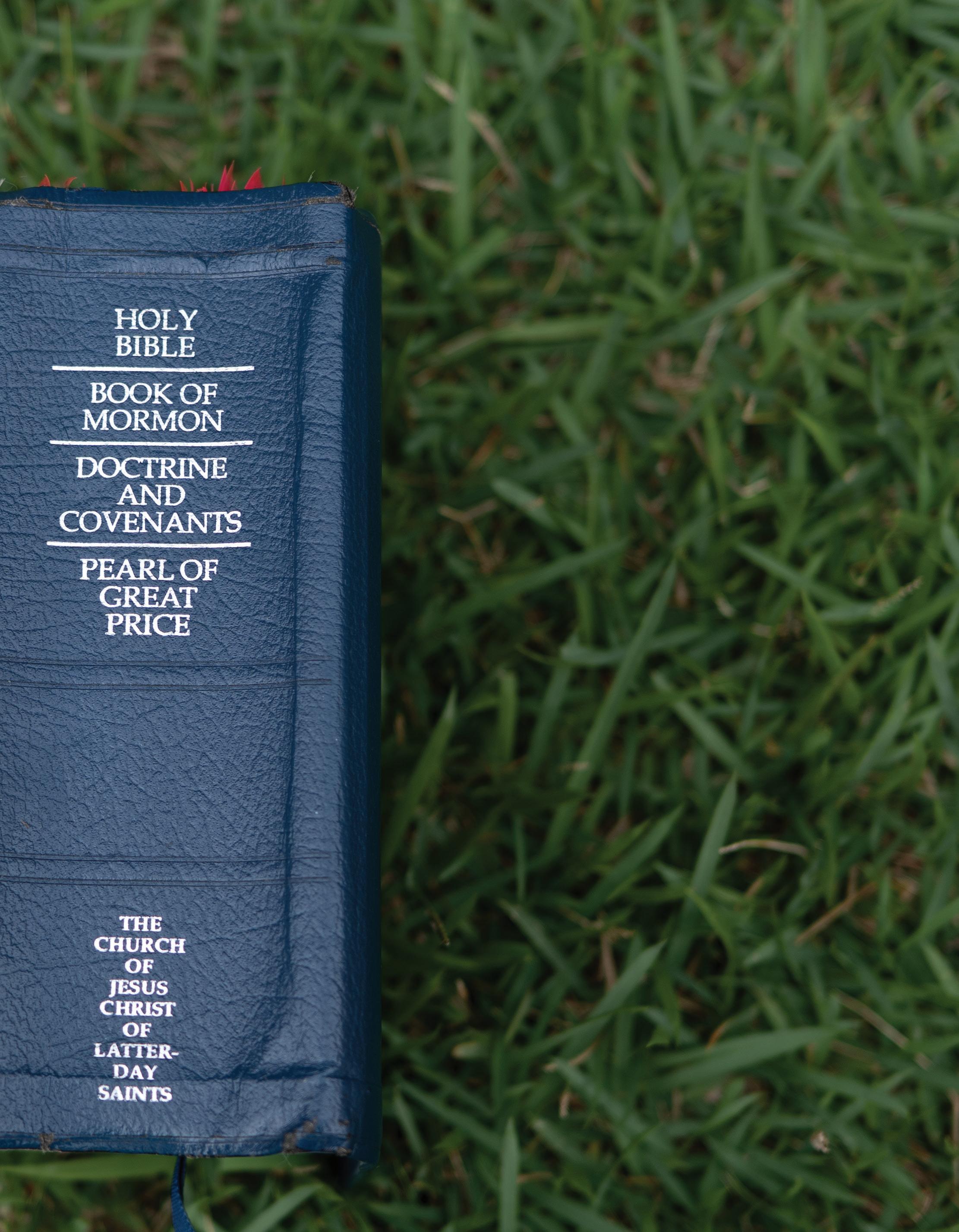
A shot of a standard works.
Photo taken by Caleb Galotera.
G race
The
idea of grace
Spencer said grace and mercy is intertwined; grace is the broader term and mercy is a form of grace. Grace can describe any divine help, he said; it can empower us even when life is going fine, known as the enabling power. “But when grace comes when we’ve sinned or are suffering, that’s mercy. So, mercy is grace in a specific context.”
Marcum noted differing views of grace among Christian denominations. The difference, he said, lies not in God’s willingness to give but in the conditions and scope of those who receive it. In one view, grace is God’s free gift. Another holds, as many Evangelical Christians believe, that grace is limited to believers. The third is rooted in ancient covenant traditions where grace restores humanity’s broken relationship with God.
Spencer described grace in the Book of Mormon as God’s willingness to reach out to us first. Referring to 2 Nephi 25:23, he explained, “‘We are saved by grace after all we can do’ means that after everything I could possibly do, I recognize grace made it possible in the first place.” Similarly, Stephen E. Robinson’s 2019 LDS Living article “How Latter-day Saints Often Misunderstand the Phrase ‘After All We Can Do’” clarifies that the word “after” means apart from, not temporal sequence. It now reads, “We are saved by grace [apart from] all we can do.”
Linguistic roots
The King James Bible Dictionary lists several contextual meanings of grace rooted in Hebrew and Greek. The Hebrew word “hen” or “chen” means favor or graciousness, often used for finding acceptance before God or a king. Marcum explained “hesed” means mercy or covenant love—“a compassion from a higher person who doesn’t need to show it, but does anyway.” He pointed to Boaz’s loyalty to Ruth as an example of “hesed,” compassion beyond obligation. Lastly, Marcum said the Greek word “charis”—divine influence upon the heart—shows grace as God’s condescension toward humanity, highlighting their unequal relationship.
The idea of gratitude in the standard works appears through words like thanks, thankful and thanksgiving, while the term gratitude itself later appears in the New American Standard Bible. Of the 104 mentions of gratitude in the Bible, 73 derive from thanks variations, most often (32 times) referring to gestures of worship such as lifted hands and praise. The Greek word for thanksgiving, eucharistia, is the root of the Christian Eucharist.
With this close link between gratitude and worship, Marcum said worship is the expression of gratitude. “Gratitude is more than thankfulness. Thankfulness is shown in words; gratitude is in action.” Ancient
G
worship embodied gratitude through ritual offerings—acts, not mere feelings, he said. For us members of the Church of Jesus Christ of Latter-day Saints, he said, renewing covenants through the sacrament is worship’s center: a grateful, active response to Christ’s grace. Yet, he cautioned, we must guard against “going through the motions” and remember the sacrament’s true purpose: to recall the Savior’s Atonement.
Restored truth and modern revelation
Of the 230 times grace appears in the standard works, all refer to God’s divine nature except two passages in the Doctrine and Covenants (D&C) that describe human capacity for grace. D&C 88:78 reads, “Teach ye diligently and my grace shall attend you,” while D&C 93:12 refers to the Savior and the Apostle John growing “from grace to grace.”
Marcum explained the New Testament “frames grace as God’s condescending gift to mortals and not human-to-human.” Yet, he added, grace appears in many forms— compassion, empathy, forgiveness and empowerment—all commanded among people. “This is ancient doctrine (horizontal grace) missing from the Bible but restored through revelation in the D&C,” Spencer said.
The words thanks or thankfulness appear about 20 times in the Book of Mormon, mostly in prayers or expressions of deliverance. D&C includes only five mentions, each linking gratitude with
obedience, prayer and sanctification. One passage, however, expands the idea: D&C 59 instructs the Saints to “thank the Lord thy God in all things.” Spencer noted this revelation came as the Saints arrived in Jackson County, Missouri or Zion, teaching them to live the Sabbath with gratitude for all they received. “That’s significant. It’s not just ‘be thankful’—it’s gratitude as a covenant principle tied to their promised inheritance and God’s continued favor.”
After all these things
With these patterns of grace and gratitude in scripture, Spencer invited readers to study the scriptures more deeply. “I’d challenge readers to study how grace and gratitude are actually used. We often think we already know these doctrines, but scripture can surprise us,” he said. God will teach us individually through them because as we dwell with the text, our understanding of grace and gratitude—and our relationship with God—deepens, he said.
Marcum said D&C 76, the revelation outlining the plan of salvation and degrees of glory, impresses him with God’s grace toward all His children. The plan of salvation, he explained, is inclusive: “God saves all the works of His hands, except the sons of perdition. The measure of glory differs, but all receive some grace.” Though God “cannot look on sin with the least degree of allowance,” Marcum shared, He extends infinite grace so we can overcome sin and become like Him—“full of grace.”•
ratitude
Left to right: Colby Garrison, Tanner Calton, Brenten Prestcott.
Photos by Hiroki Konno.
Students turn gratitude into acts of kindness and service
BY RINCON WATSON
Starting college can be a time to focus on classes, exploring the campus and navigating college life, said BYU–Hawaii freshmen Brenten Prestcott, Colby Garrison and Tanner Calton. However, they shared how their experiences at BYUH have led them to focus on looking for ways to serve through service projects, building relationships and acts of kindness.
They said first impressions are very important to new students; it is the cultural groundwork for the next four years. If the perception of a school is hard-working, laid-back or fun-loving students will follow suit, said Garrison, a freshman in business management with finance concentration from Colorado. He emphasized how service motivated him to reciprocate with kindness and service in his own life. “You can be a leader or serve others in so many different ways. And that culture is very prevalent here at BYUH. I’m so grateful for that because it is preparing me to be a better leader and to offer more service in the Lord’s kingdom,” he said.
“Because they care about me, I feel loved, accepted and cared about. And I want them to feel like they don’t need to be judged or alone.”
TANNER CALTON
Fish from across the pond
Calton, a freshman in communications, media and culture from Hawaii, was raised in Shanghai, China, where he lived for 13 years before returning to Hawaii to finish high school. He said living in China taught him to appreciate and respect other cultures. “From my 13 years in Shanghai, I learned about and gained respect for other people’s cultures. I feel very grateful because they did a lot for me— they gave me friends, an education and a home,” he said.
Now at BYUH, Calton said he finds opportunities to extend the same kindness he received. “BYUH gives me the opportunity to treat others the same way they treated me and to be everyone’s friend,” he said. Surrounded by friends from all over the world, he added, “Because they care about me, I feel loved, accepted and cared about. And I want them to feel like they don’t need to be judged or alone.”
“I try my best every single day to pay it forward.”
COLBY GARRISON
Calton continued because of the gratitude he felt to his friends and BYUH, he was motivated to create a service project dedicated to honoring President John S.K. Kauwe III. “I brought in thousands of paper fish. Then after stake conference, devotionals or institute, people would write on the fish what they’re doing to show the light of Christ, or how they’re becoming better fishers of men. Then we put them on a net and we left them on President Kauwe’s doorstep,” he explained.
After reflecting on his service project, Calton emphasized the overall idea stemmed from his gratitude towards President Kauwe. “Despite what he’s going through with his health now, which he shared in his social media post, he doesn’t want us focusing on that,” Calton shared. “It shows how President Kauwe really cares about the students at BYUH.”
Small and simple
Not all acts of kindness need to be jubilant displays of affection, says Garrison. “Most of the time, the things I’m grateful for are small and may seem insignificant; however, to me it means a lot,” he said.
One specific time Garrison said he felt grateful was when he first arrived in Hawaii and a new friend showed him around the island. He emphasized how alone he felt having just arrived in Hawaii, away from all friends and family. “I hadn’t known a single person coming here, but it really meant the world that she would take that little time out of her day to show me around and to be that person to help me fit into the culture here,” he said.
Because of the love Garrison felt in his first couple of days, he said he has dedicated himself to making sure others feel included and happy. “I try my best every single day to pay it forward,” he said. Despite having a busy schedule, he said no matter how immersed he gets in life, his main focus will be lending a helping hand where it is needed.
“I live the way I do and do the things I do because of the way I’ve been treated.”
BRENTEN PRESTCOTT
Garrison said because of his new-found focus on serving others, he lost much of his free-time to unpredictable and enjoyable ‘side-quests.’ “I was able to do some service for my friend who needed help cutting coconuts off of his tree. To me, that was the coolest thing ever,” he stated. During Garrison’s time serving others, he said he grew to better understand the beauty of the scripture Mosiah 2:17, saying “that ye may learn that when ye are in the service of your fellow beings ye are only in the service of your God.”
Happy to help
Giving back is the best way to be happy, claimed Brenten Prestcott a freshman in intercultural peacebuilding from Maryland. “I’ve realised that no matter how hard my life gets, how bad I do on a test or how alone I feel, finding ways to lend a hand or offer words of encouragement definitely makes me feel better,” he asserted.
Prestcott said paying attention to the needs of others changed the way he approaches everyday life. “I try not to just go to class to learn or just go to the dining hall to eat. I now go to class to see who I can help that may be struggling, and I go to the dining hall with the intention to sit next to someone sitting alone,” he said.
Kindness isn’t hard to show people and has the power to change lives, Prestcott said. “Offering a compliment, sitting beside someone new or expressing interest in someone else’s hobbies are easy ways to show that you care about them and can completely change the trajectory of someone’s life—I know because it has changed mine multiple times,” he shared.
Prestcott shared his focus on being kind and helping others was inspired by friends and family. “I live the way I do and do the things I do because of the way I’ve been treated— here at BYUH and in my home. It’s a form of gratitude and an opportunity to give back—to treat others how I want to be treated,” he said.•
the oF the H ealing Power Movies
How movies shape gratitude, growth and grace
BY MYCO MARCAIDA
movies do more than entertain—they shape how people think, feel and connect, said experts and BYU–Hawaii students.
Furthermore, they said films have the power to evoke emotional responses, offering audiences a space to reflect, learn and heal.
Ryan Niemic, a psychologist and author of “Character Strengths Cinematherapy: Using Movies to Inspire Change, Meaning and Cinematic Elevation,” said movies allow us to experience emotions in a way that encourages reflection and understanding. “They engage viewers and empower them and move them to reflect on goodness, gain self-awareness and develop deeper understanding of others,” he explained.
understanding catharsis in movies
According to Arcs Studio, catharsis is a Greek term coined by Aristotle which means to purify or cleanse and is a release of powerful or repressed emotions. “The term is used in drama to suggest the emotional closure of the end of the narrative,” the site explains.
Catharsis is about the emotional response the text creates for
the audience, says the site. “The audience’s emotional connection to the characters is at the heart of catharsis,” the site adds. In a paper written for Psychology Today entitled, “Do TV and Movies Impact Real World Behaviors?”, Tamim Mobayed explains determining the exact extent to which television and media content influence human behavior is challenging, but their pervasive presence across platforms makes it clear they do have measurable effects. “Exposure to specific content can shape both positive and negative behaviors, sometimes unintentionally and other times by design,” he adds.
Mobayed explains how storytelling and social learning theories can deliberately influence audiences’ attitudes and actions. “Their work shows media can serve as a powerful behavioral tool, capable of encouraging social progress or harm,” he explains.
movies as a guide to growth
In a MedBound Times article, Dr. Disha Merlyn Mathias says films blur the line between reality and fiction. “It doesn’t just stir our emotions, it inspires and influences us to act,” she explains.
According to Mathias, even small or mundane films can shape attitudes, beliefs and outlooks on life. “The movie ‘Life of Pi’ tells us the story of a young man surviving in the middle of nowhere. Such films can educate and transform how we think,” she adds.
Rachel Chab, a senior from Utah majoring in communication, media and culture, said she thinks of movies she watches during Christmas time as movies that make her feel more grateful and reflective. “Movies like ‘Christmas Carol’, ‘Little Women’, ‘It’s A Wonderful Life’ and the ‘Sound of Music’ are what comes to mind, and it’s because they have this real-life quality to them which I love,” she explained.
When films can introduce the complexity of human nature, it makes them more authentic, Chab said. “I see that in creating more complex characters. It helps the audience think deeper about the character’s actions,” she explained.
Most people go to movies without knowing what they are going to get from it, Chab shared. “I don’t feel that people go for emotional need, but when we watch, we reflect our own experiences and feelings onto the movie,” she said. “That is how we can put ourselves in that experience and learn from it, and well-written movies do a great job of sharing that.”
Chab said a movie that made her want to express gratitude for a person was based on a book called “Silence,” a Japanese story based
“When you come out of a movie, it’s like all your intentions and things you want to do from that moment on are realigned. You feel inspired to be a better person.”
Paige Westman
on true events about missionaries in the 17th century Japan where Christianity was outlawed. At the end of the movie, she said the protagonist, played by Andrew Garfield, was forced to renounce his faith by stepping on an image of Christ to save Japanese Christians. “He hears a voice in his head, ‘It was to be trampled on by men that I was born into this world. It was to share men’s pain that I carried my cross.’ And that scene made me think deeply about Christ’s character and what it means to be His follower,” she explained.
gratitude through storytelling
Chab said films often teach viewers about gratitude by highlighting moments of loss, second chances and consequences of choices. She said, “Past Lives,” for example, made her reflect on the life choices she could control over those she could not. “For me the film was less about longing for love and more about longing for the life left behind. It helped me appreciate my choices, my relationship and where I am now,” she explained.
Grace feels like presence and appreciation for where one is in life, Chab said. “Films help us recognize it when they make us think of things we never considered before. That awareness about life, beliefs or even politics helps us appreciate life more,” she explained.
In “Demon Slayer,” a Japanese animated series, the main character Tanjiro goes through loss but stays grateful, Chab said. “Gratitude
“Audiences may connect deeply with stories about second chances, forgiveness and gratitude because people want to be good.”
Rachel Chab
often needs pain or loss because sometimes, we realize what we’re grateful for only after losing it,” she said.
Chab said audiences may connect deeply with stories about second chances, forgiveness and gratitude because people want to be good. “We all hope for second chances and forgiveness, and that hope keeps us going,” she continued.
Paige Westman, a senior from New Jersey majoring in communication, media and culture, said some films resonate for their authenticity and portrayal of grace. “‘Me, Earl and the Dying Girl’ shows how small, thoughtful acts like making movies to cheer up a sick friend can have a profound emotional impact,” she explained.
Films can create what Westman described as a “baptism of film”: a sense of emotional renewal after watching. “When you come out of a movie, it’s like all your intentions and things you want to do from that moment on are realigned. You feel inspired to be a better person,” she explained.
movies as mirrors to humanity
The experience of watching films in theaters versus personal devices can also enhance the emotional impact, Westman said. “Going into a theater separates you from the world you’re usually in. The physical act of attending a screening reinforces the feeling of emotional transformation,” she explained.
Students might recognize a film for entertainment and a film for profit, Westman said. “Marvel movies or ‘Mission Impossible’ are fun and entertaining, but their goal is marketing,” she said. “Meanwhile, thought-provoking films often aim to teach and heal sometimes both filmmakers and the audience,” she continued.
Westman emphasized the importance of authenticity. “When filmmakers collaborate with the communities they are portraying, it adds truth to the story,” she explained.
Niemic said films embody a trifecta of meaning: they engage, empower and encourage viewers. “A positive psychology film portrays a character’s strengths, depicts their struggles, shows how they overcome challenges and resonates with the human condition,” he explained.
Films also evoke self-transcendent emotions and connect viewers to something larger than themselves, Niemic adds. “These experiences are especially common among individuals high in gratitude and spirituality,” he explained.•
Photos taken by Naomi Saenz. Illustrations from Adobe Stock. Page design by Cyrelle Briz.
Lessons in growth
College years mark a season of learning, transformation and change, say three BYUH students
BY MYCO MARCAIDA
Loss, parenthood and grace shaped three BYU–Hawaii students who said their challenges became blessings that made them grow. They said they survived even the most painful periods of their life through relationships rooted in Christlike love and support. “I hope people don’t think of their problems as added burdens to carry in their lives. I hope they remember that God is with them through everything,” said Charity Baptista-Gallano, a senior in hospitality and tourism management from the Philippines.
overcoming grieF
People deal with grief differently, said BaptistaGallano, describing 2023 as the toughest year of her life. “I lost my dad. He passed away in the middle of the Spring semester, I got married and had a baby a year later, away from and without any guidance from my parents which was hard,” she shared.
Baptista-Gallano said one of the last moments she had with her father before his passing was at the airport. “He always supported my choices. He rarely said he was proud of me out loud, but he showed it through his actions. The last hug we shared brought him to tears. That time, I realized how much our parents think and love us individually,” she explained.
Baptista-Gallano emphasized her relationship with God guided her through grief and uncertainty. She recalled the feeling of relief and amazement by the small and intimate support from her friends and family during her wedding the same year. “I see them as people who were sent by Heavenly Father to help us through everything before, during and after the wedding,” she added.
Baptista-Gallano said she was given advice to take a break from school but made the decision to continue. “I remembered IWORK asked me if
I wanted to defer and take a rest for spring and summer, but I decided to continue instead. I’m happy with my choice,” she expressed.
never alone
Baptista-Gallano recalled the changes she had seen in her life since becoming a parent. “Before, if I wanted to go out in the middle of the night or go out with friends, I could. But now, everything needs to be scheduled, and you have to think about your child first,” she shared.
Family portraits of Baptista -Gallano with her family. Photos taken by Naomi Saenz.
Baptista-Gallano shared juggling her time as a mom, a student and a part time employee, helped her grow as a person. “Back home, I would see my sisters having kids, but the difference is they had my mom’s support through it,” she shared. “I didn’t have that so becoming a full-time mom changed me so much, but it was all bearable because of my husband.”
Furthermore, she said being a full-time mom sinks in when she spends time alone with her baby. “Sometimes, it leaves me in awe that I have a child. When I stare at her while she’s playing or when she’s crying, I realize that she’s my greatest blessing,” she added.
Similarly, Nagai Sai “Kiran” Guballa, a senior from India majoring in information technology, credits much of his personal growth to his family and faith. He said living away from his family had been difficult but starting his own was rewarding. “We’ve seen responsibility from our parents, how they took care of us,” he explained. “Coming here and taking responsibility on my own, I’m learning a lot of patience and understanding.”
Guballa said fatherhood and marriage also reshaped his priorities. “Being married for a while now and having kids was a significant shift and it’s not easy being a father,” he explained. “My wife sacrifices the most. She always puts them first before herself and I help and support as well.”
Further, Guballa said distance doesn’t mean so much when there is love involved. “Even though I am far from my mom, I never forget to call her at least once a day to stay connected,” he added.
Guballa encourages other students to focus on family and small moments of joy amid challenges in life. “This helps you refocus and remind you of your purpose,” he added.
blessings in trials
Guballa said faith has been central to his journey. He recalled a time of uncertainty about his major and how prayer and guidance through visiting the temple helped him. “I was faced with questions, ‘Do I still continue with the major I started with or switch?’ I had my wife’s support, and she was with me as I was going to the temple
Guballa photos with his family. Photos provided by Guballa.
seeking help. The Holy Ghost helped me stick with the major I came here with,” he explained.
Talalelei “Tala” Vaoga, a junior from Samoa double majoring in communication, media and culture, and political science, said one of the most valuable lessons she learned came from a General Coreference talk. “The speaker said, ‘do not neglect people who are willing to support you,’ and I think that has been something that kept me going and made me reach out for help especially towards Heavenly Father,” she shared.
Looking back on her previous semesters, Vaoga said she is grateful for the obstacles she faced even during times of depression. “There was a semester where I felt very depressed to the point I would rather stay home and cry myself to sleep than be with my friends,” she shared. “But looking back, it helped me grow as a woman Heavenly Father wants me to be.”
Vaoga said her family’s sacrifices, particularly losing her mother at 12, have shaped her into the woman she is today, “All the challenges I faced in life helped me become a better and kinder person,” she said.
Voaga said she has seen herself grow daily as she goes through challenges and embrace opportunities. “Growth happens not only in your lowest moments but every day when you step out of your comfort zone,” she said. “It doesn’t happen only when you are at your lowest either; It happens all the time.”
She offered words of encouragement to students who might be struggling: “In your lowest, you are not alone. My favorite scripture is in Jeremiah 29:11 where it says God knows us and loves us.” She continued, “Don’t give up; be thankful for opportunities that come your way and try to give yourself grace more each day.”•
Photo taken by Naomi Saenz.
Page design by Cyrelle Briz.
“The joy we feel has little to do with the circumstances of our lives and everything to do with the focus of our lives … Joy comes from and because of Him. He is the source of all joy.”
Russell M. Nelson
17th President of The Church of Jesus Christ of Latter-Day Saints