KBIC NEWS
NAMEBINI GIIZIS - SUCKER FISH MOON
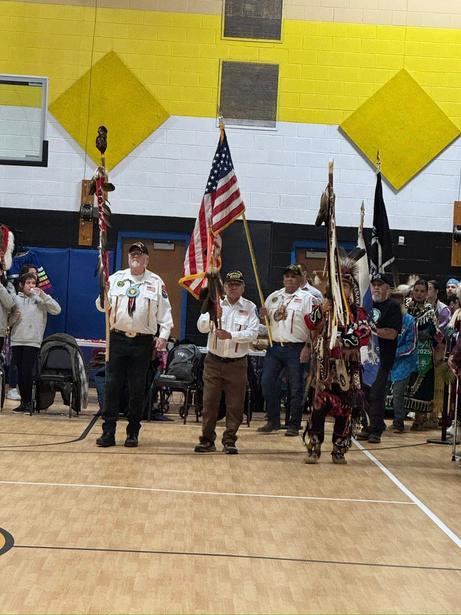
20th Annual Winter Traditional Pow Wow Celebrated at Niiwin Akeaa Center
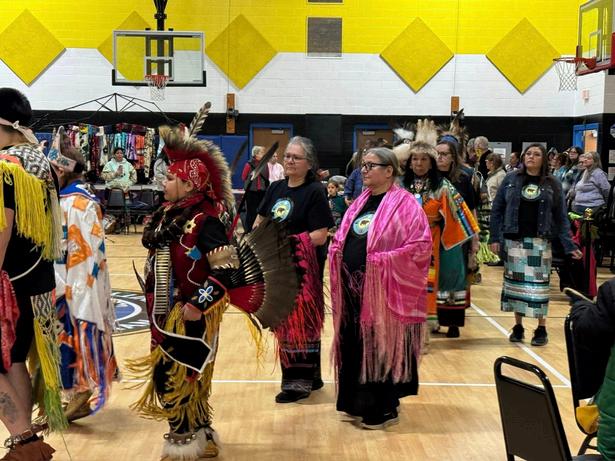
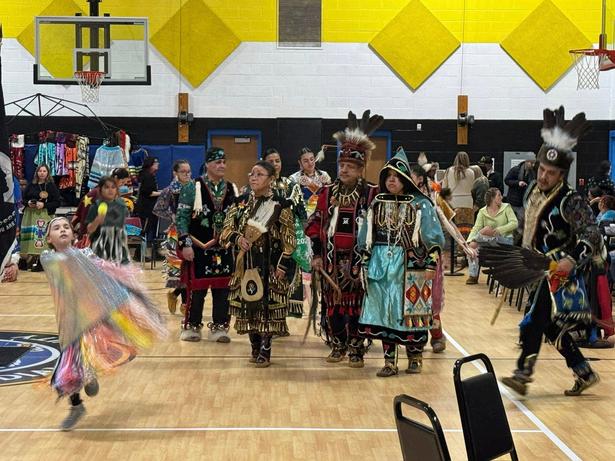
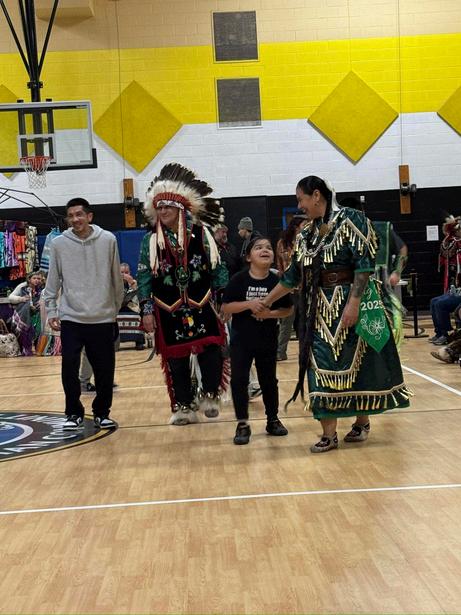
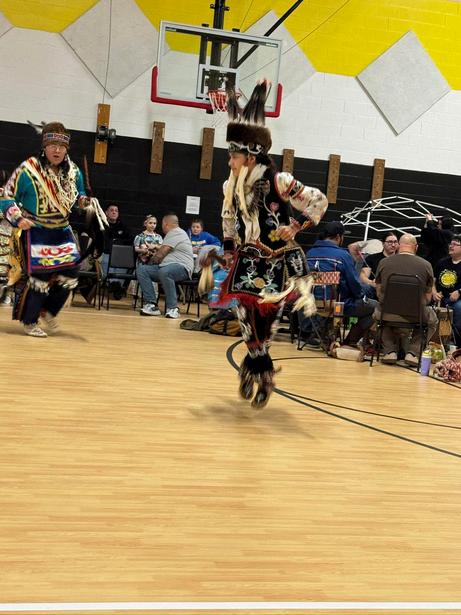
The morning began at a crisp -35 degrees, but the cold did not keep the community away as the 20th Annual Winter Traditional Pow Wow was held on Saturday, January 24, 2026, at the Niiwin Akeaa Center. The warmth of culture, tradition, and togetherness filled the arena throughout the day. Invited drums included Four Thunders, Loon Travelers, and Teal Lake Singers. Serving as Master of Ceremonies was George Strong, with Rodney Loonsfoot and Shiloh Lussier as Arena Directors. The KBIC Wiikwedong Ogichidaa
IN THIS ISSUE
PRESIDENT’S REPORT
TRIBAL POLICE
Society presented the Veteran Honor Guard, and Donald Chosa served as Traditional Advisor. Serving as Head Dancers for this year’s Pow Wow were Vincent Bender as Head Male, Becky Genschow as Head Female, and Donald Chosa as Head Veteran. Representing the youth were Devin Connor as Youth Head Man and Willow Rexford as Youth Head Lady, while the junior representatives included Lance Curtis Jr. as Junior Head Boy and Saylor VanAlstine as Junior Head Girl.
Representing KBIC royalty were Miss Keweenaw Bay Dalanna
2026 TRIBAL COUNCIL
Everett Ekdahl, Jr, President
Tony Loonsfoot, Vice President
Elizabeth “Liz” Julio, Secretary
Toni J. Minton, Assistant Secretary
Dale F. Goodreau, Treasurer
Theodore “Austin” Ayres
Doreen G Blaker
Robert R D Curtis, Jr
Sue Ellen “Suzie” Elmblad
Rodney Loonsfoot
Sam Loonsfoot
Mathew J. Shalifoe, Jr.

Connor, Miss Junior Keweenaw Bay Aubree Hartzog, KBIC Brave Yancey DeCota Jr., and Junior Brave Austin Shelifoe.
A special Pink Shawl Honor Dance was held in honor of Roseann Loonsfoot Petznik, recognizing her strength and resilience. A community feast followed at 5:00 p.m., bringing everyone together. The evening’s honored elders were Agatha Marcella Cardinal and Michael Cardinal, both lifelong contributors to the strength and vitality of the Keweenaw Bay Indian Community.
Boozhoo, Community Members,
Following our reorganization meeting on January 10th, we have officially returned to regular business.
Over the past month, I have been focused on learning the day to day operations of .
the President’s Office. Transitioning from the Police Department into this role has been a valuable and rewarding experience. I look forward to continuing to serve our community and giving regular updates as my term as President moves forward. Below is a summary of the motions approved during the Council meetings in January.
January 15, 2026
Approved the Medical PMHNP Services Agreement with Angela Moore for both inperson and telehealth services.
Approved to waive the first reading of Proposed Ordinance 2026-01 – Forfeitures, regarding the forfeiture and seizure of property associated with drug-related criminal activity (including vehicles, currency, and other related property).
Approved the bid in the amount of $150,000 for the purchase of an airboat utilizing LATF funding.
Approved the President’s pay rate at $50.00 per hour.
Approved the two-year appointments for the Baraga County Veteran Representative positions for Joe Eckerberg and Rodney Loonsfoot.
Approved the Appellate Justice Contract with Caroline Bishop LaPorte.
Approved the appointment of Isaac Ekdahl and Yvette Simmons to the Election Board.

Approved the Voluntary Insurance coverage through Colonial Life.
January 21, 2026
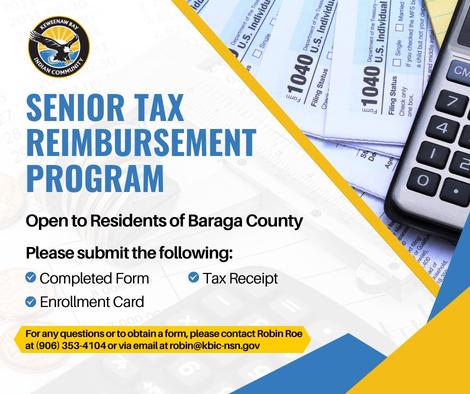
Approved the 2025 Senior Tax Preparation Reimbursement for Baraga County residents.
Approved the motion to table the hotel gift shop renovation project.
Approved a donation of $100.00 to Uniting Three Fires Against Violence for their annual donation.
Approved a donation of $500.00 to Native American Rights Fund (NARF) for their annual donation.
Approved Resolution KB001-2026 authorizing the President to sign amicus briefs following discussion with Council.
January 28, 2026
Approved Resolution KB-003-2026 regarding the Jacob M. Picard Residential Lease.
Approved the appointment of Sheila Royal and Becky Genschow to the Education Committee.
Approved the purchase of a 2007 Freightliner M2 106 Roll-Off Truck (semi) as a backup vehicle to prevent service disruptions from 906 Trucking, at a purchase price of $26,500.
Approved RD’s request to use the logo and to allow Sarah Garver to include the logo in crafts until a formal policy or form is created.
Approved the Nepotism Waiver 001-2026 for the Pressbox.

As we move through February, there’s a welcome shift in energy across our community. The days are growing a little longer, the sun a little brighter, and with it comes a renewed sense of momentum. This year, that feeling feels especially fitting
as we welcome the Year of the Horse, a symbol of strength, endurance, and forward movement. Across our programs and departments, meaningful progress continues, even in the heart of winter, reflecting the steady determination that carries our community forward. February also reminds us to find joy in the journey in supporting one another, uplifting our youth and elders, and moving ahead together with resilience, unity, and hope for the seasons to come.
The 20th Annual Mid-Winter Powwow, held in January, truly set the tone for our continued connection to community and culture. Even amidst the harsh winter weather, the Niiwin Akeaa Community Center was alive with energy, filled with the powerful sounds of the drums, the movement of the dancers, and the shared spirit that brings us together each year. It was a beautiful reminder that no matter the season, our traditions, pride, and sense of belonging continue to carry us forward.
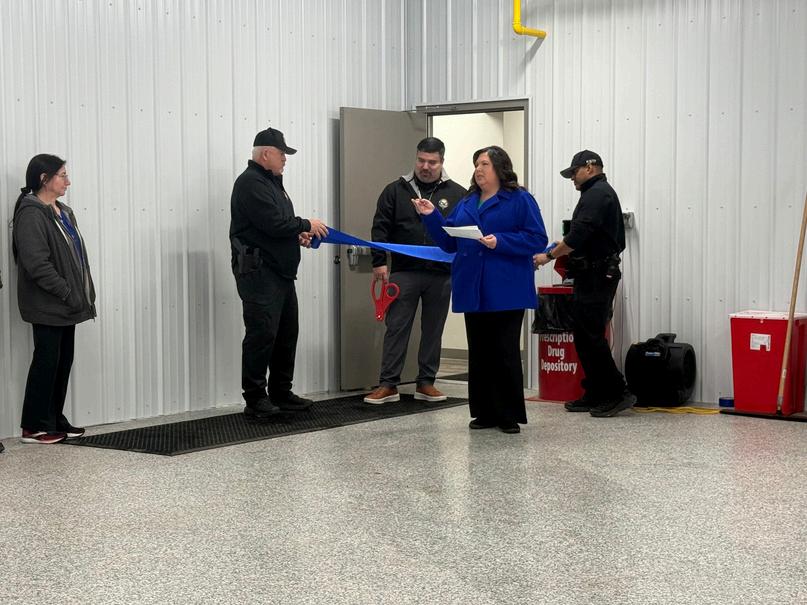
January also brought an exciting milestone as we welcomed community members to an Open House celebrating the grand opening of our newly renovated Tribal Police Station. This project was made possible through a $1.3 million grant award from the Coordinated Tribal Assistance Solicitation Program through the United States Department of Justice, which fully funded the facility
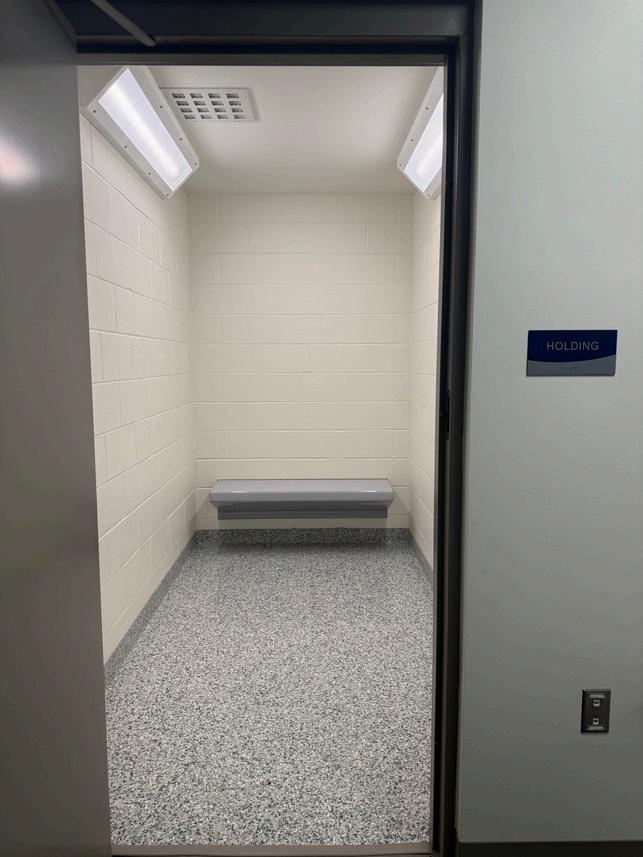
improvements. Upgrades include a secure, welcoming entry area, newly constructed holding cells that the department previously did not have, and an expanded garage space for vehicle cleaning and storage. The Keweenaw Bay Indian Community partnered with Gundlach Champion to bring the project to life, and we extend our gratitude to the many individuals and organizations who contributed to the completion of this important public safety investment. The renovation reflects our continued commitment to strengthening safety, services, and infrastructure for our community. You can find photos of the completed renovations on page Ashi-Niizh (12).
An exciting project currently underway within the KBIC Health System has reached an important milestone, with bids recently received for architectural design and build services related to a potential remodel and expansion. This initiative is focused on enhancing the overall patient care environment by creating additional patient room capacity, expanding the pharmacy footprint, and increasing access to health services for our community. As planning moves forward, this project represents a meaningful investment in the long-term health, wellness, and service delivery infrastructure for KBIC citizens.
We are also excited to share the addition of a new position within our Tribal Social Services Department, the Kinship and Licensing Outreach Worker. This role was created to strengthen our foster care and kinship support network by increasing outreach, education, and engagement opportunities across the community. Through coordinated events, informational sessions, and family-centered activities, this position will help connect with potential foster care homes on the reservation and provide guidance through the licensing process. The goal is to expand safe, supportive placement options for our children while continuing to keep them connected to family, culture, and community whenever possible.
Right now, this office is located in the Tribal Center. Please reach out to TSS for more information on upcoming events and/or licensing questions.
In closing, February can be when a lot of people get the winter blues – winter weather, darker/shorter days, and holiday bills sometimes feel like they may never end. Stay in tune with your feelings and look for healthy outlets to cope with these feelings. Tips for this include finding ways to exercise, eat healthy, increase your water intake, and find alternate sources of light or sunshine to meet your needs. The key is to recognize your symptoms and act before they get worse!
All the best,
Brigitte
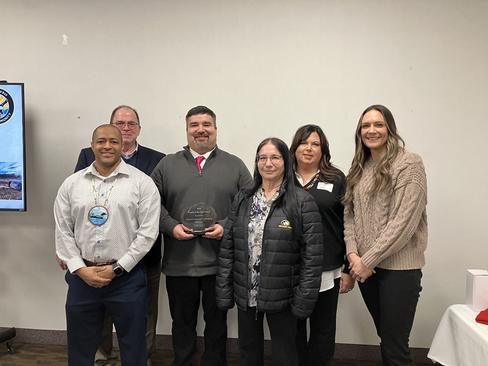
KBIC Leadership accepting the Project of the Year award on January 20th from the Baraga County Economic Development Corporation.
Agatha Marcella Cardinal
Agatha Marcella Cardinal (Loonsfoot) was born in Assinins to James Edward Loonsfoot and Marcella Shalifoe. She married Michael Cardinal on March 13, 1980. Together, they raised a large and loving family. Her children are Victoria, Connie, Debra, and Marijo. She is blessed with numerous grandchildren, greatgrandchildren, and great-greatgrandchildren who continue her legacy.
In her early years, Agatha worked in local factories while pursuing her education and raising five daughters. She earned an Associate’s Degree from Yakima Community College and later, while living in Wisconsin, attended Indianhead College in Ashland, earning a degree in Tourism and Hospitality. After returning home to the reservation, she served as the Home School Coordinator for Native students in Baraga for 15 years. Agatha remains active in her community through the Most Holy Name of Jesus Parish Council, Karate-Do (Sensi), and Silver Sneakers for Seniors in L’Anse, along with church courses that foster social gatherings and mental health support.
Her hobbies include teaching herself guitar and piano, hiking, cross-country skiing, sewing, crocheting, and playing card games. Agatha emphasizes the importance of maintaining health as we age and believes powwows are a meaningful way to stay active and connected. She reminds us that prioritizing health is essential for our Native community.
Michael Cardinal
Michael Cardinal was born in Hancock, Michigan, to James O. Cardinal and Frances Jondreau. He and Agatha married on March 13, 1980, and adopted five children. Both the Cardinal and Jondreau families are
longstanding members of KBIC, as are Agatha’s Loonsfoot and Shalifoe families.
Michael dedicated most of his career to serving Native communities nationwide as a Bureau of Indian Affairs Law Enforcement Officer. His work took him to Arizona, Wisconsin, Washington, Oregon, and Michigan, serving tribes including the Navajo, Hopi, Yakama, the Columbia River Inter-Tribal Fish Commission, and the Great Lakes Indian Fish and Wildlife Commission.
He has also served KBIC in various roles and on numerous committees, including the Constitution Committee, which he believes is vital to protecting tribal sovereignty and treaty rights, and the Gaming Commission, ensuring lawful operations that support the tribe.
A graduate of Northern Michigan University, the Indian Police Academy (Basic and Executive Management), and the Oregon State Law Enforcement Academy, Michael has long worked to promote Native heritage both nationally and within our community.
Nearly 49 years ago, during the United States Bicentennial celebration, Michael helped administer a Smithsonian-affiliated project that brought 40 tribal participants and 10 chaperones to Washington, D.C. The experience highlighted a concerning loss of cultural practice on the reservation, where powwows and ceremonies had nearly disappeared. Upon returning home, the group requested that the remaining project funds be used to revive cultural traditions. The Tribal Council approved the request, leading to the reintroduction of powwows to the reservation nearly five decades ago.
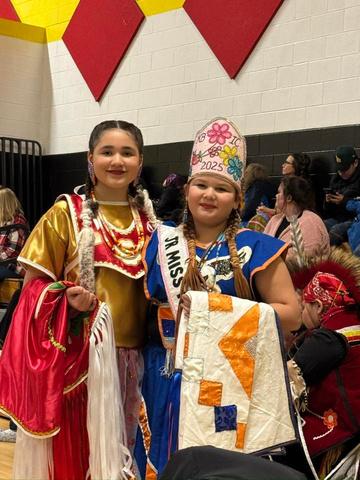
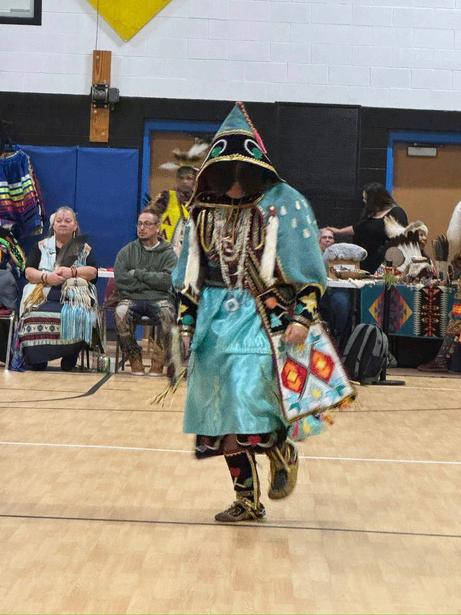
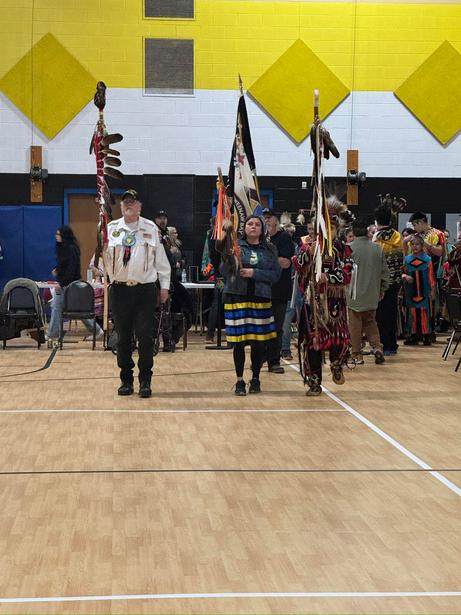
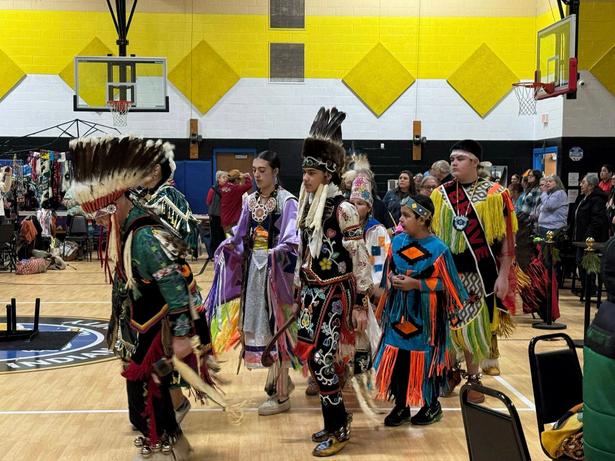
Photos Courtesy of Stanley Spruce
os



https://www.surveymonkey.com/r/FF8YZ33


The Addictive Nature of UltraProcessed Foods

The average American now gets more than half of their daily calories from ultra-processed foods!! The University of Michigan’s Institute for Healthcare Policy and Innovation explains what qualifies as ultra-processed and why these foods are so addictive.
Ultra-processed foods include chips, candy, ice cream, baked goods and soda. These are heavily marketed to the American consumer are designed to be artificially tastier. Ultra processed foods are industrially produced products made from highly processed ingredients that are very different from their raw components. They are unnaturally high in fat, sweeteners, and salt, and are made with low-quality, shelf-stable ingredients which have little nutritional value. Used copiously are chemical additives, artificial preservatives, stabilizers, flavors and dyes; these are not found in nature.

1. Research suggests the unique combination of ingredients in ultra-processed food stimulates the brain in ways that can lead to addictive-like eating. People often consume these products not just for sustenance, but also for comfort, stress relief, or emotional coping.
Addictive eating includes excessive intake, loss of control over intake, intense cravings, withdrawal, and continued consumption of food despite negative consequences. The physiological and psychological dependence is similar to alcohol, illicit drugs and nicotine addiction.
How does ultra-processed food stimulate the brain leading to addictive-like eating? By altering the brain circuitry! Increased is the release of neurochemical transmitters dopamine, GABA, and glutamate; this release triggers the mesolimbic reward centers of the brain, leading to food cravings and bingeeating.
2. Negative outcomes of ultra-processed foods include dental disease, obesity, diabetes, heart disease, cancer, mental health concerns such as anxiety and depression, and cognitive decline in older adults.
3. Ultra-processed foods are often more easily accessible and have longer shelf-life than real, whole, raw foods. Food deserts are geographic areas where residents have limited access to affordable and nutritious food. Stores in food deserts are packed with junk foods and soda drinks.
4. What are the implications for health policy? Suffering from the maladies caused by overconsumption of calorie-dense junk food has increased substantively in the past ten years and will continue to increase as children become addicted to junk food. Costs to treat these maladies are increasing daily.
AVOID THESE JUNK FOODS EAT REAL, WHOLE FOODS
yummy & cause harm!
Let’s control what we can to improve our health, let’s control what we eat and what we give to our children to eat.
https://ihpi.umich.edu/sites/default/files/2 025-12/0465 Policy-BriefGearhardt FINAL 11-21-2025.pdf
For more information, contact Eileen Kostanecki at the UM Institute for Healthcare Policy & Innovationàekostan@umich.edu or 202554-0578
Among the 2,500 artificial chemical additives used are: hydroxybenzaldehyde, hydroxybenzoic acid, and anisaldehyde cinnamaldehyde, diacetyl, Potassium phosphate, dipotassium phosphate, trisodium citrate, sodium lactate, and gellan gum And Titanium Dioxide, Fd&c’s Yellow #5, Yellow #6), Blue #1 (E133), Red #40, Ethyl decadienoate, Ethyl maltol, Ethyl propionate, Aliphatic acyclic 31, acyclic alcohols, aldehydes, ketones, carboxylic acids, esters, lactones, ketals, aromatic acetals, and organoleptics https://ihpi.umich.edu/newsevents/news/recognizing-and-addressingaddictive-nature-ultra-processed-foods https://ihpi.umich.edu/sites/default/files/2 025-12/0465 Policy-BriefGearhardt FINAL 11-21-2025.pdf https://nutritionsource.hsph.harvard.edu/f ood-additives/ https://www.sciencedirect.com/science/art icle/pii/S1043661826000125 https://www.aecf.org/blog/food-deserts-inamerica

Mnamaadizin. Our Mission is to improve oral health through benefit plans, advocacy, and community support. Stay Strong, Jessica A. Rickert, DDS, Anishinaabe Dental Outreach
231-313-8407, jarickert@charter.net
Around the Community




Around the Community
Around the Community


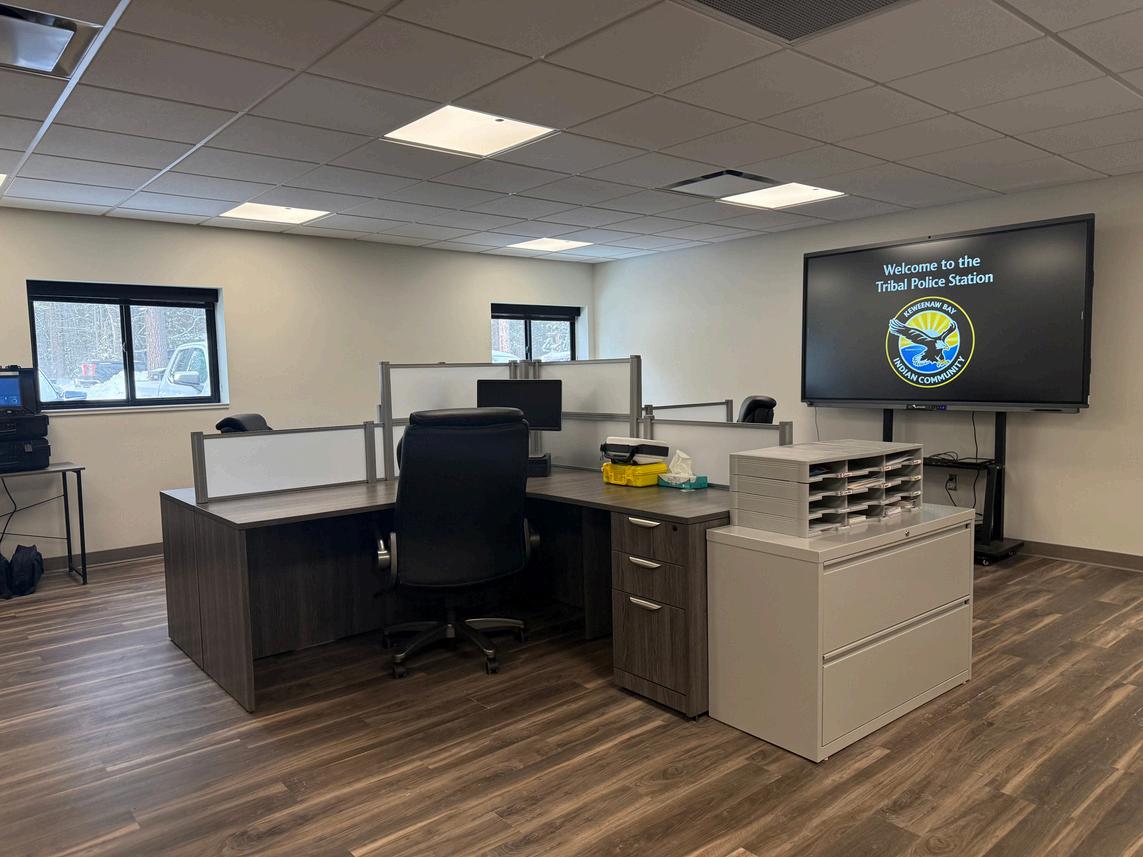
Officer’s Desk Station
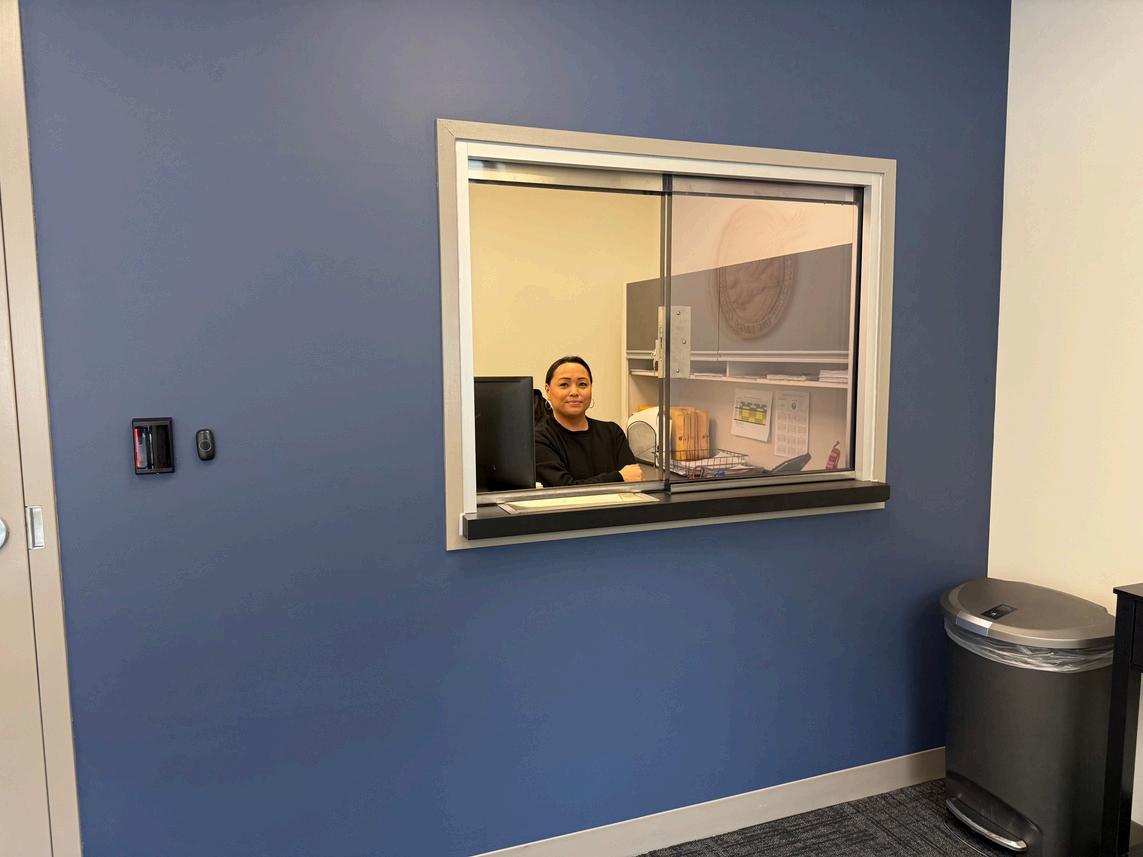
Added security for staff , Nancy Voakes, Dispatcher, will be able to buzz visitors in and out of the building
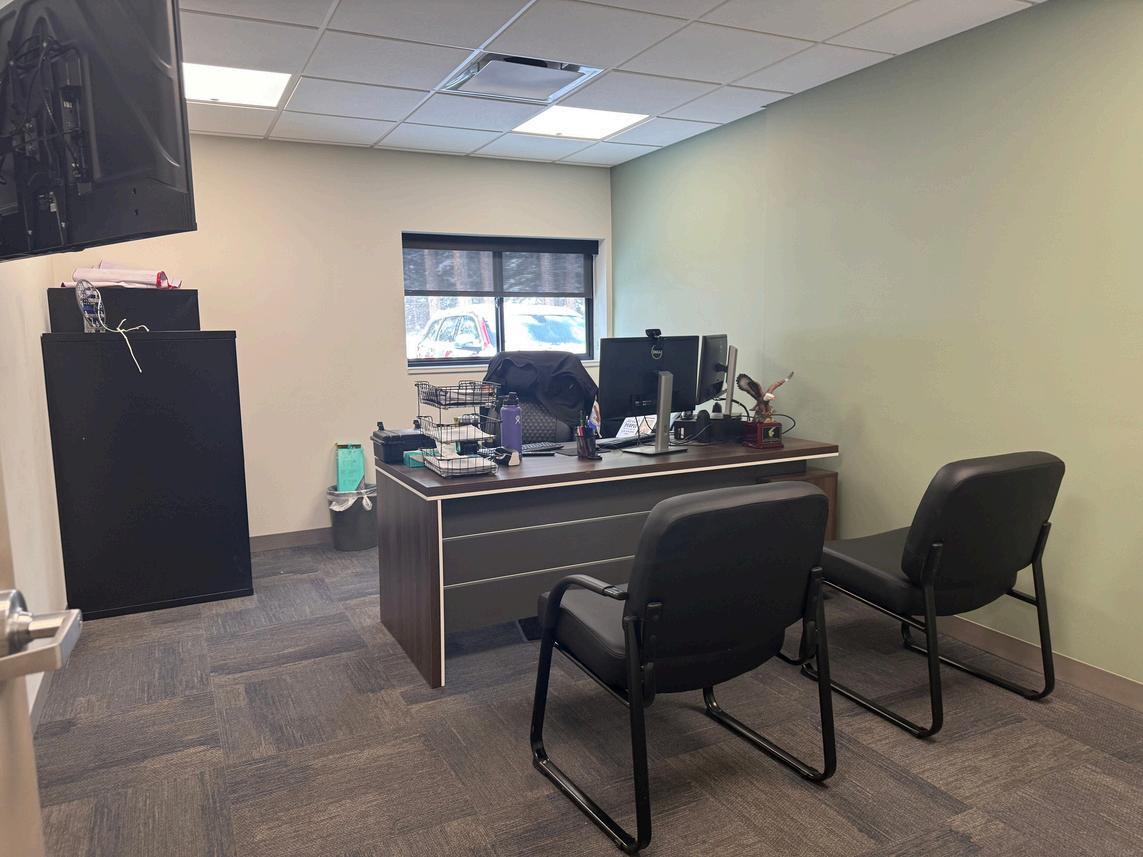
Tribal Police Chief’s office space
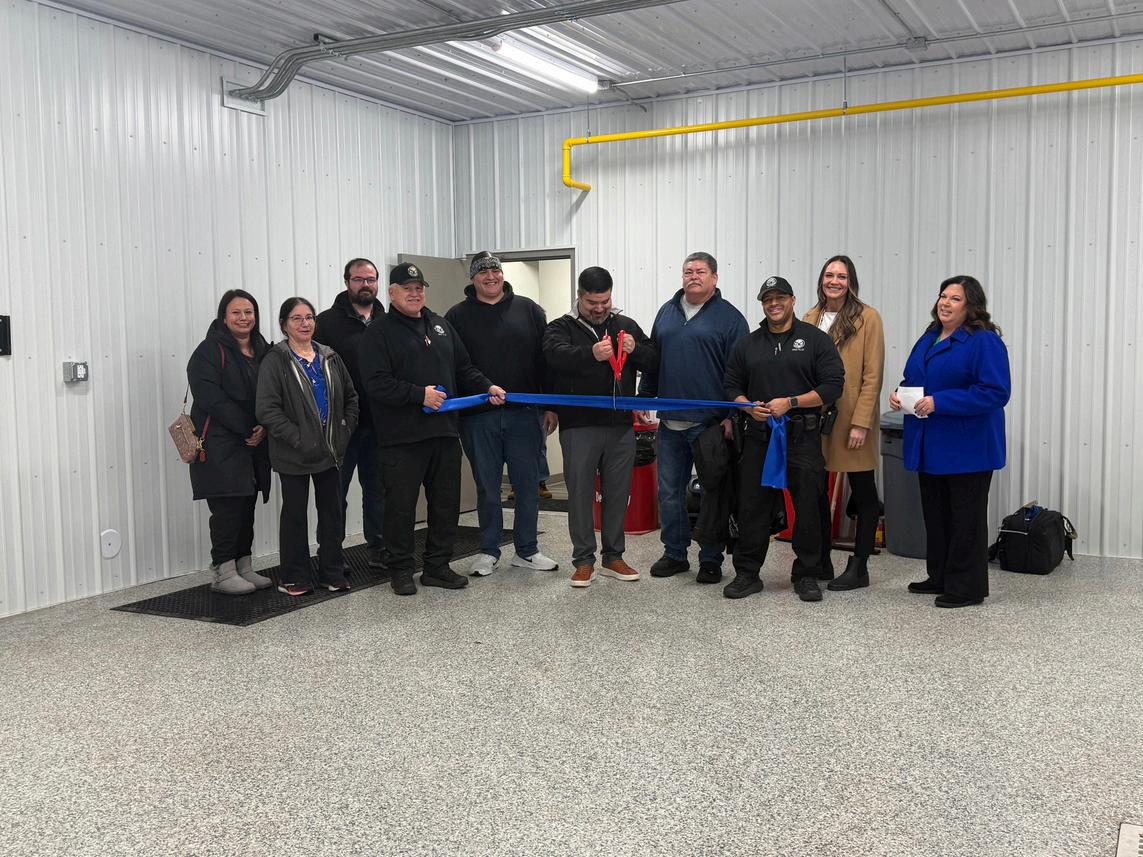
Tribal Council, Police Staff and the CEO’s office do the ribbon cutting
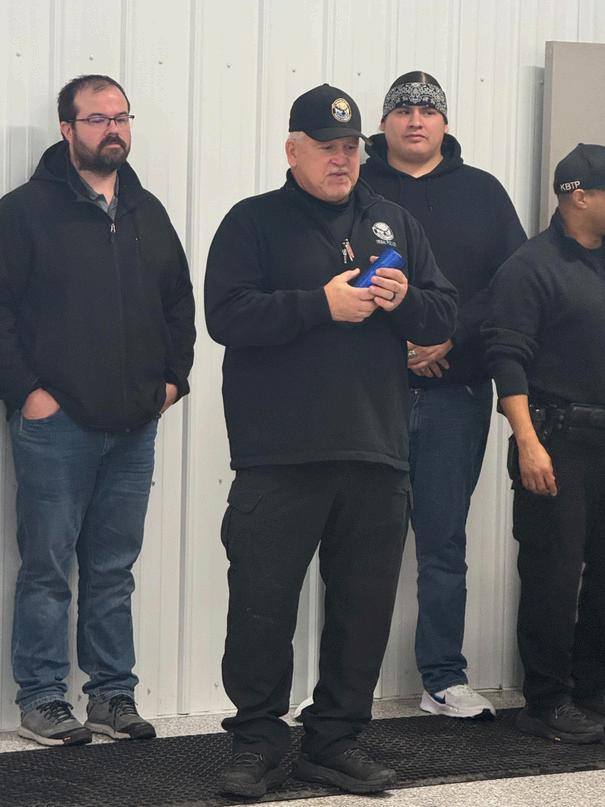
Jennifer Misegan addresses attendees at the open house and helped support Tribal Police in bringing the project to completion
Police Chief Dale Goodreau addresses attendees about the project and expresses appreciation to all who contributed.
Tribal Police
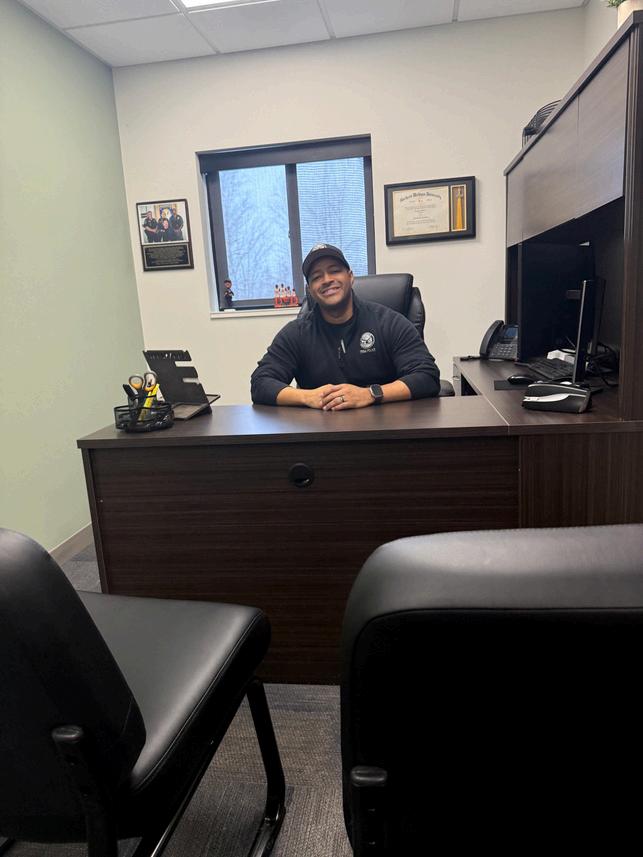
Tony Loonsfoot, Interim Captain, settles into his new office
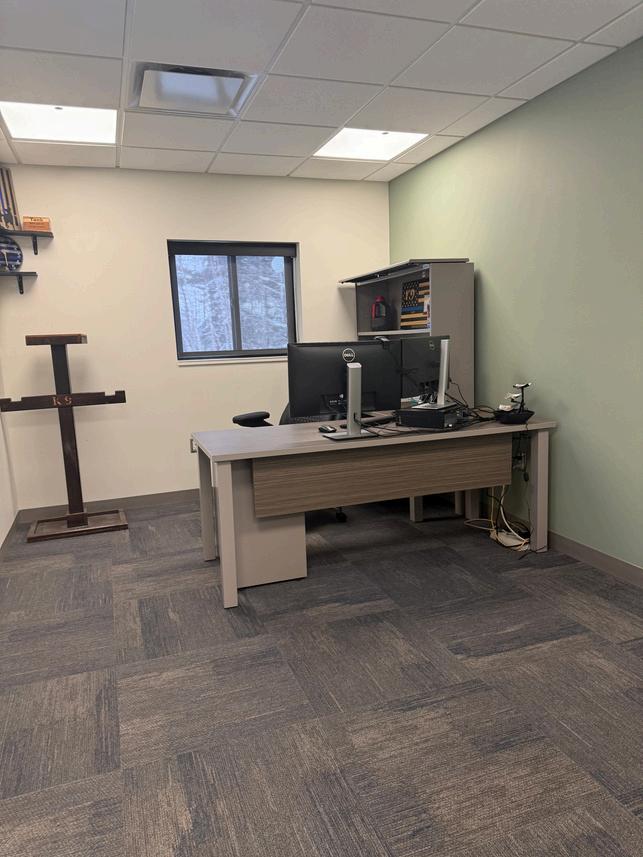
Another office included in the renovations.
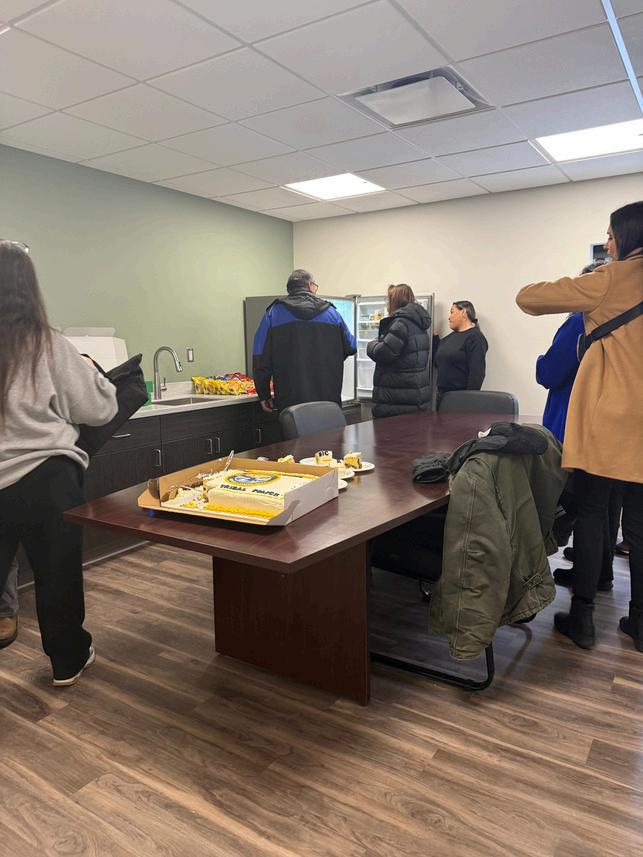
The meeting/break room served as a gathering space for guests to enjoy refreshments.
Renovations included the addition of two new holding cells.

Around the Community


Around the Community

Around the Community



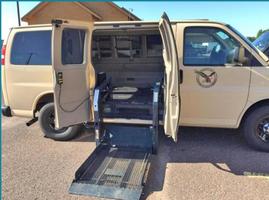
Handicapped Accessible Van Guidelines
Eligibility
Enrolled KBIC members and their non-KBIC family members who are not mobile enough to be transported without a wheelchair lift (Eligible User) are eligible to use the Handicap Accessible Van (HAV).
Overview
The driver of the HAV assumes the duty of obeying all motor vehicle laws, maintaining the vehicle properly at all times, and complying with the following guidelines.
Vehicle Purposes
The HAV shall be used for transportation to medical appointments or other purposes approved by the CEO or Tribal President.
Authorized Driver
Drivers must have a valid and unrestricted driver’s license and be able to drive a HAV. The HAV allows drivers to perform approved transportation activities safely, efficiently, and economically while promoting a positive image of the KBIC. Drivers are required to operate the HAV safely and responsibly.
The Tribal Center Receptionist shall instruct first-time HAV drivers on operating the wheelchair lift before their first trip.
Around the Community
The following rules apply to using the HAV: Only authorized individuals may drive. The vehicle must be picked up at the assigned location and returned to that location after use. It must also be locked, and the keys must always be secured. The driver must review the vehicle's use in the Driver Log, which is to be kept in the HAV at all times and returned for review at the end of use.
The driver and all passengers must wear available personal restraints, including seatbelts. Eligible users must be secured in the rear of the HAV utilizing the available locking straps. Report all accidents immediately to the appropriate police and the CEO's office (906)353-4104.
Maintenance
Drivers and eligible users must maintain the HAV at all times. The HAV must be returned in the same condition it was issued: clean and with a full fuel tank. The eligible user is to pay for the fuel cost.
The HAV should not be operated with any defect preventing safe operation during current and foreseeable weather and lighting conditions. Preventative maintenance, such as regular oil changes, tire pressure, and fluid checks, determines to a large extent whether eligible users will have a reliable and safe vehicle to drive. Please report any issues with the HAV you experience during your use of the CEO’s office.
The use of tobacco products by all occupants in the vehicle is prohibited and includes cigars, cigarettes, chewing tobacco, ecigarettes, and all other forms of tobacco.
Around the Community
Traffic Violations
Fines for parking, moving violations, etc. are the personal responsibility of the driver/eligible user.
Accidents Involving the HAV
In the event of an accident:
Do not admit negligence or liability. Do not attempt settlement, regardless of how minor.
If possible, get the name, address, and phone number of the injured person(s) and witness(s).
Exchange vehicle identification, insurance company name, and policy numbers with the other driver.
Take a photograph of the scene of the accident if possible. Call the police.
Complete the vehicle accident report in the HAV.
Turn all information over to the CEO’s office upon your return.
Thefts
In the event the HAV is stolen, notify local police immediately.
Failure to comply with these guidelines will result in denied future use and may result in additional costs to the eligible user.
The Driver/Eligible User is responsible for the actual possession, care and use of the HAV.
Members wishing to utilize the HAV can contact the Tribal Center Receptionist at (906)353-6623 or receptionist@kbic-nsn.gov to reserve it.


Government
FULL-TIME POSITIONS
Youth/Fitness Worker
Personnel Specialist
Cleaning Person
Home Care Aide
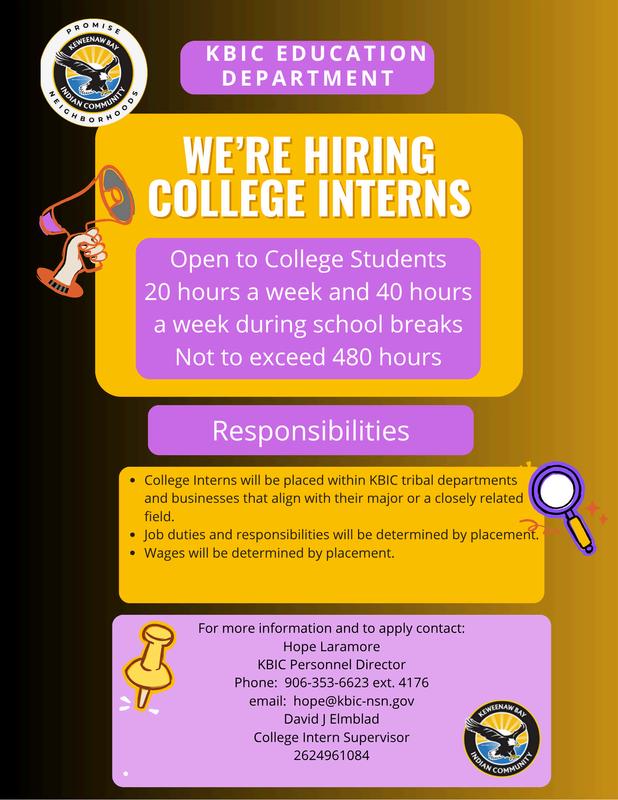
Plant Technician College Intern
Dentist
Seasonal Plant Technician
Seasonal Wetland Technician
Assistant Tribal Attorney/Prosecutor
RN or LPN
Tribal Attorney/Prosecutor
Social Services Specialist
HVAC Mechanic
Accounting Clerk
Youth Natural Resources Worker
Dental Hygienist (contracted)
Physician
Jail Diversion Case Manager
Grant Accountant
ONGOING RECRUITMENT
CLEANING PERSON
LABORER
PHARMACIST OR PHARMACY TECHINICIAN
RECEPTIONIST/CLERICAL WORKER
RN OR LPN
UNIT MANAGER (SUBSTANCE ABUSE PROGRAMS)
UNIT MANAGER (TRANSITIONAL HOME PROGRAMS & SERVICES)
VAN DRIVER OR PREP COOK
WILDLAND FIREFIGHTER
CLOSING DATE
March 10, 2026, at 4 pm
March 10, 2026, at 4 pm
March 3, 2026, at 4 pm
March 3, 2026, at 4 pm
February 25, 2026, at 4 pm
Open Until Filled
Open Until Filled
Open Until Filled
Open Until Filled
Open Until Filled
Open Until Filled
Open Until Filled
Open Until Filled

YOUTH/FITNESS WORKER
Open Until Filled
Open Until Filled
Open Until Filled
Open Until Filled
Open Until Filled
Open Until Filled
CLOSING DATE
Open Continuous
Open Continuous
Open Continuous
Open Continuous
Open Continuous
Open Continuous
Open Continuous
Open Continuous
Open Continuous
Open Continuous
Open Continuous
Current Job Postings


BARAGA - IMMEDIATE OPENINGS
Bartender
Housekeeper MARQUETTE - IMMEDIATE OPENINGS
Account Executive/Sales
Count Team Member
APPLY ONLINE: https://www.ojibwacasino.com/employment
Baraga HR Office: (906) 353-6333 x4188
Marquette HR Office: (906) 249-4200 x4705
*Tipped positions are guaranteed at least $15/hr in baraga and $16/hr in Marquette. Part-time = 37 hrs/week
Until Filled Continuous Continuous

Baraga HR Office at 906-353-6333 x4188 or Marquette HR Office at 906-249-4200 x4705
Around the Community



Youth Programs
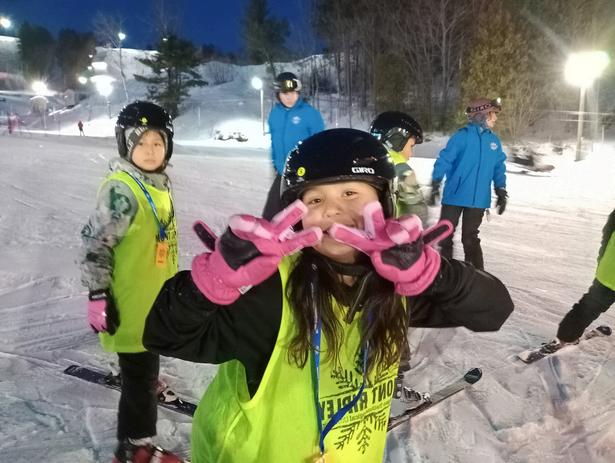
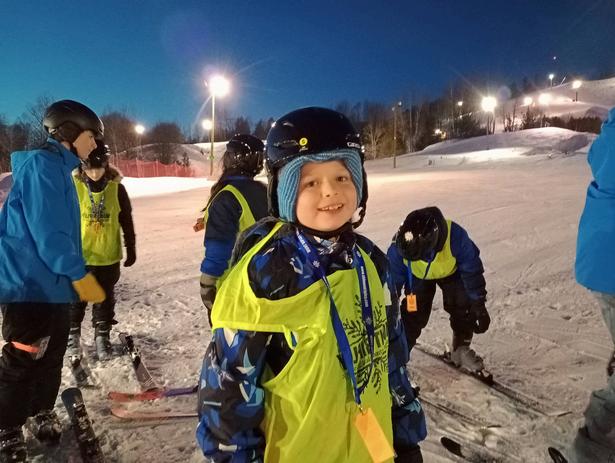
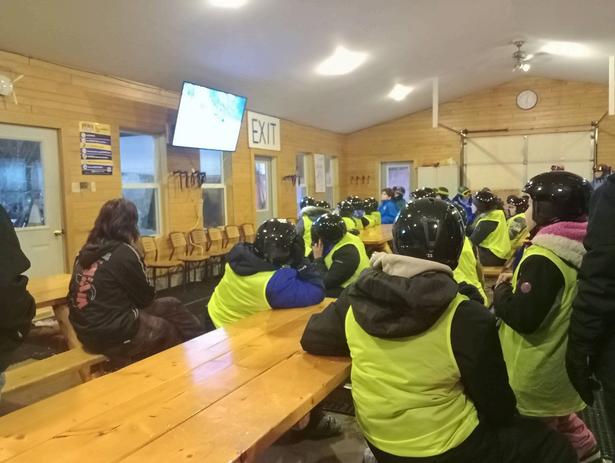
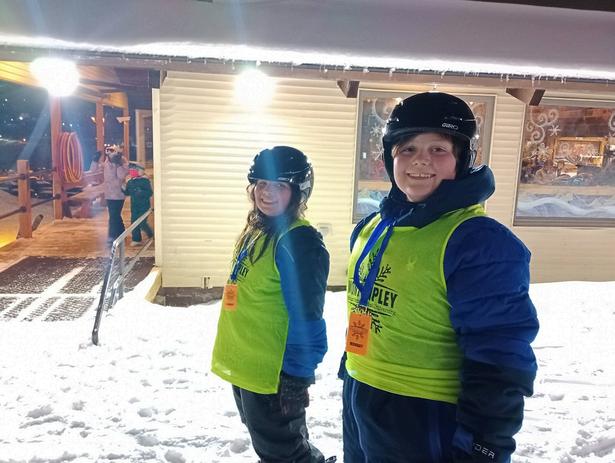
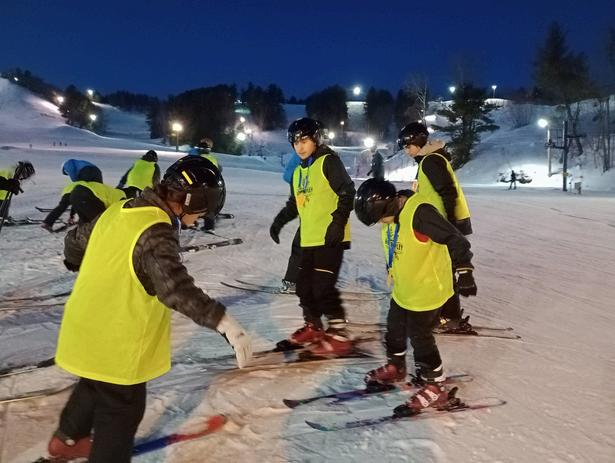
KBIC Youth Programs Hit the Slopes at Mont Ripley
This winter, the KBIC Youth Programs gave local youth an unforgettable opportunity to learn, grow, and thrive on the snowy slopes of Mont Ripley in Hancock. Over the course of six weeks of ski lessons, participants built skills, confidence, and lifelong memories while experiencing one of the Upper Peninsula’s favorite winter traditions.
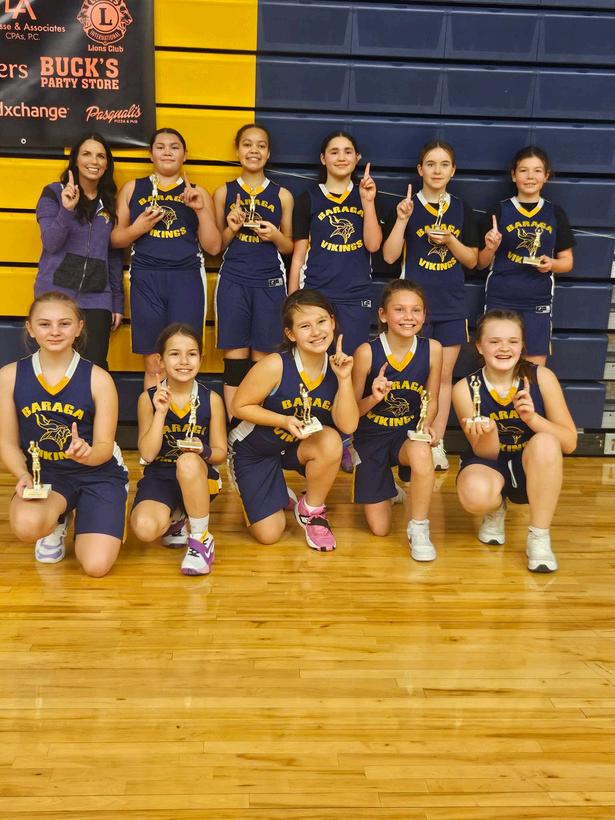
Baraga 5th grade girls - Negaunee Irontown Classic Tournament champs
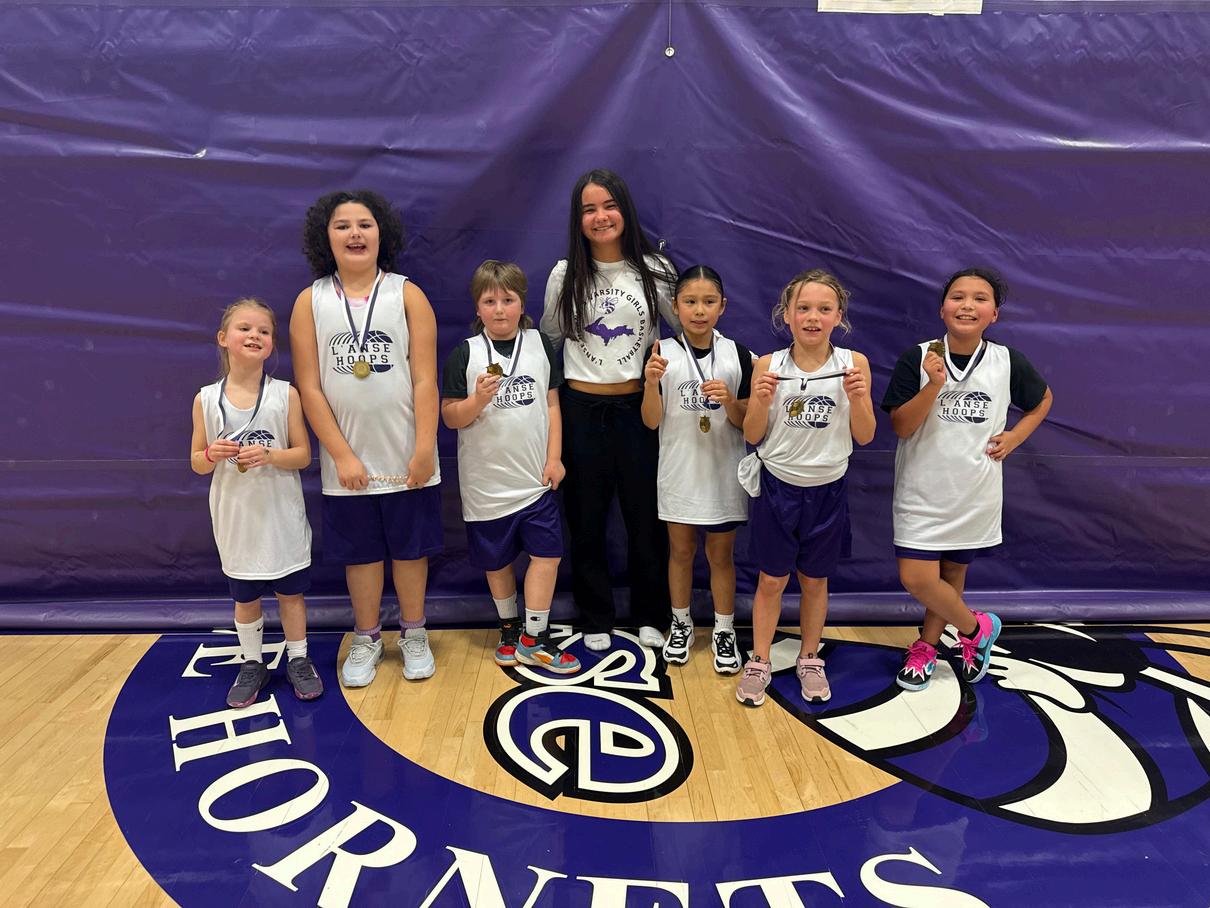
L’Anse 3 Grade Girls - 1 Place at the L’Anse Hoops Havoc rd st KBIC Youth Includes: Aurora Niemi, Desiree Jackson, Demery Connor, and Coach Breyelle Bowers.
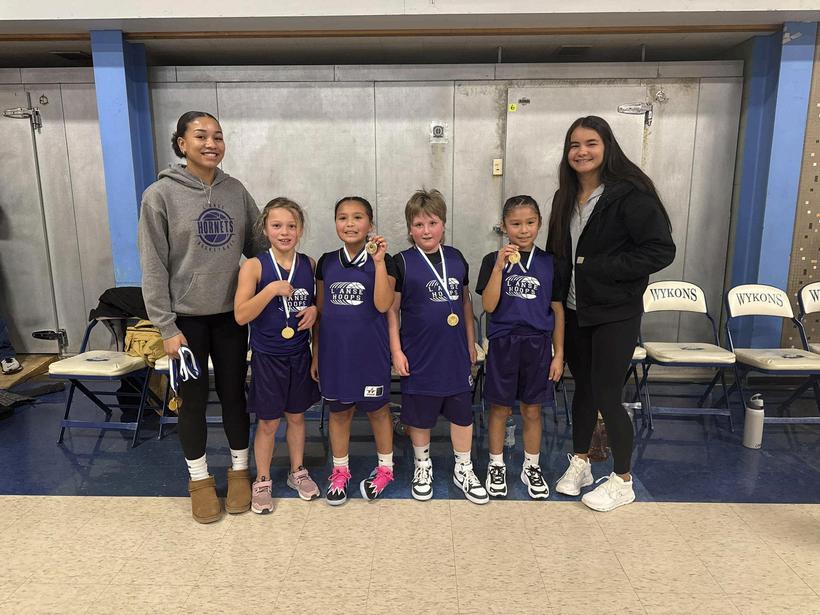
L’Anse 3 Grade Girls - 1 Place at the West Iron County Basketball Tournament with only 4 girls. KBIC Youth includes: Demery Connor, Desiree Jackson, coach Princess Pierre, and coach Breyelle Bowers.
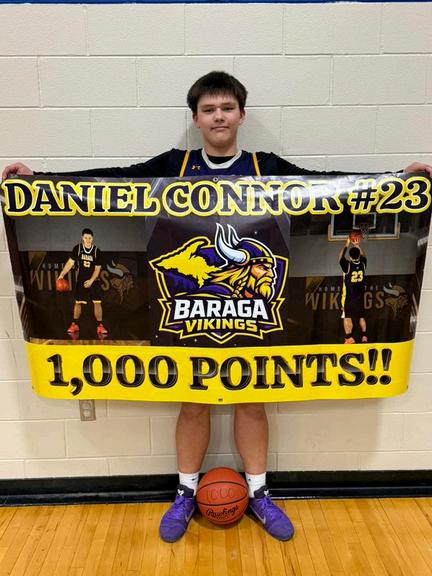

KBIC Youth Daniel Connor, Jr reached a major milestone, surpassing 1,000 career points with the Baraga High School boys’ basketball team.
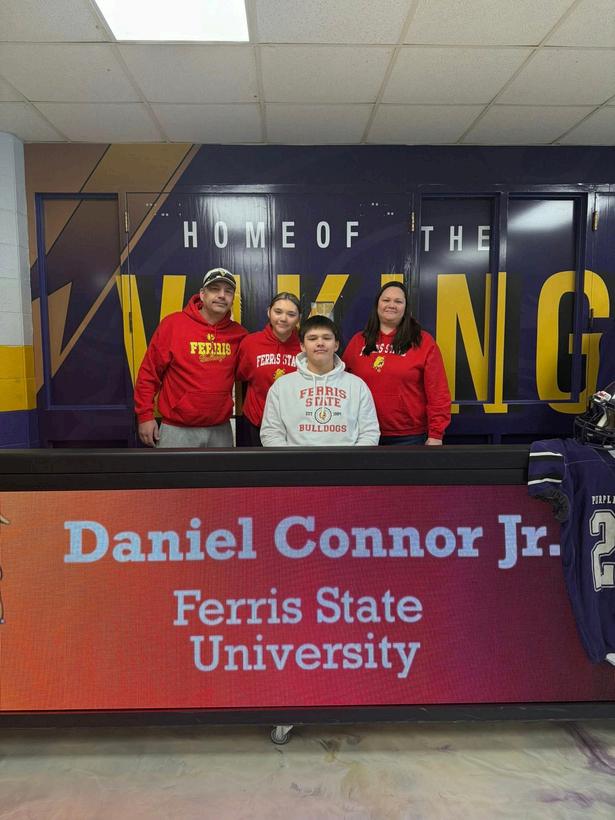
KBIC Youth Daniel Connor, Jr., joined by his family, officially signed his letter of intent to play football at Ferris State University.