WOLFF A&M
I am a second-year Master of Architecture student at Texas A&M University, graduating in May 2026, and currently seeking a full-time position. My approach to design is grounded in curiosity, collaboration, and care, shaped by both academic exploration and professional experience. I value teamwork and clear communication, and I take pride in being dependable, organized, and attentive to detail. Through my pursuit of a Certificate in Historic Preservation, I have developed a strong interest in adaptive reuse, educational environments, and community-focused design, particularly projects that engage existing contexts while responding to contemporary needs.
This portfolio brings together a selection of studio, academic, and personal projects from my undergraduate and graduate studies at the Texas A&M College of Architecture. Spanning six years, these projects reflect an evolving design perspective informed by technical growth, critical thinking, and hands-on experience. Each project represents a step forward in my development as a designer, and I am deeply grateful for the guidance of my professors and the collaboration of my peers who have supported and challenged me throughout this journey.
210.848.6711
Texas A&M University // College Station, TX
Master of Architecture
Historical Preservation Certificate August 2024 - May 2026
Texas A&M University // College Station, TX
Bachelor of Environmental Design
Architectural Studies
Magna Cum Laude Graduate August 2020 - May 2024
Barcelona Architecture Center // Barcelona, Spain
Study Abroad Program
January - April 2023
Samuel V. Champion High School // Boerne, TX
Cum Laude Graduate August 2016 - June 2020
INVOLVEMENT
AIAS
American Institute of Architecture Students
Member // 2020 - 2026
Officer for Membership Committee // 2023 - 2024
Family Leader & Mentor // 2023 - 2024
TEAM 12
Official Student Organization of Texas A&M Athletics
Member // 2021 - 2024
Texas A&M Office of the University Architect
Graduate Assistant // Student Worker
• Supported campus planning projects including wayfinding/signage, adaptive reuse of existing buildings, McAllen campus work, and participation in programming and infrastructure meetings.
College Station, TX // January 2025 - Present
Mustard Architects
Student Architectural Intern
• Assisted with residential and commercial projects through drawings, client meetings, and construction site visits.
Fredericksburg, TX // May 2024 - August 2024
MSA Architecture + Interiors
Student Architectural Intern
• Produced residential sales plans, updated DD drawings, and supported studio organization and workflow.
San Antonio, TX // May 2023 - August 2023
Texas A&M College of Architecture w/ Dr. Andrew Tripp
Student Reseach Assitant
• Designed rural teacher housing with Texas Target Communities; created drawings and models contributing to an OAKTrust publication. College Station, TX // August 2022 - December 2022
Bed Adam Architecture
Practicum Student Intern
• As a part of my high school Interior Design Practicum program; developed plans, elevations, and sections for residential and winery projects.
Boerne, TX // August 2019 - December 2019
OAKTrust Publication
Tripp, Andrew R.; Calvesbert, Tyrene; Westbrook, Brianna; Wolff, Kaymi (2024). Addressing Teacher Housing in Texas: An Architectural Research and Design Studio at Texas A&M University.
2024
AXIOM Publication
Texas A&M Student Publication
Projects from student workshop with Abigail Coover Hume of Overlay Office, Barcelona study abroad program, and my senior year Integrated Studio. 2020, 2023, 2024
OPENING DOORS A DELICATE POINT OF VIEW THE SEAM
01 02 03 04 07 08 09 06 05
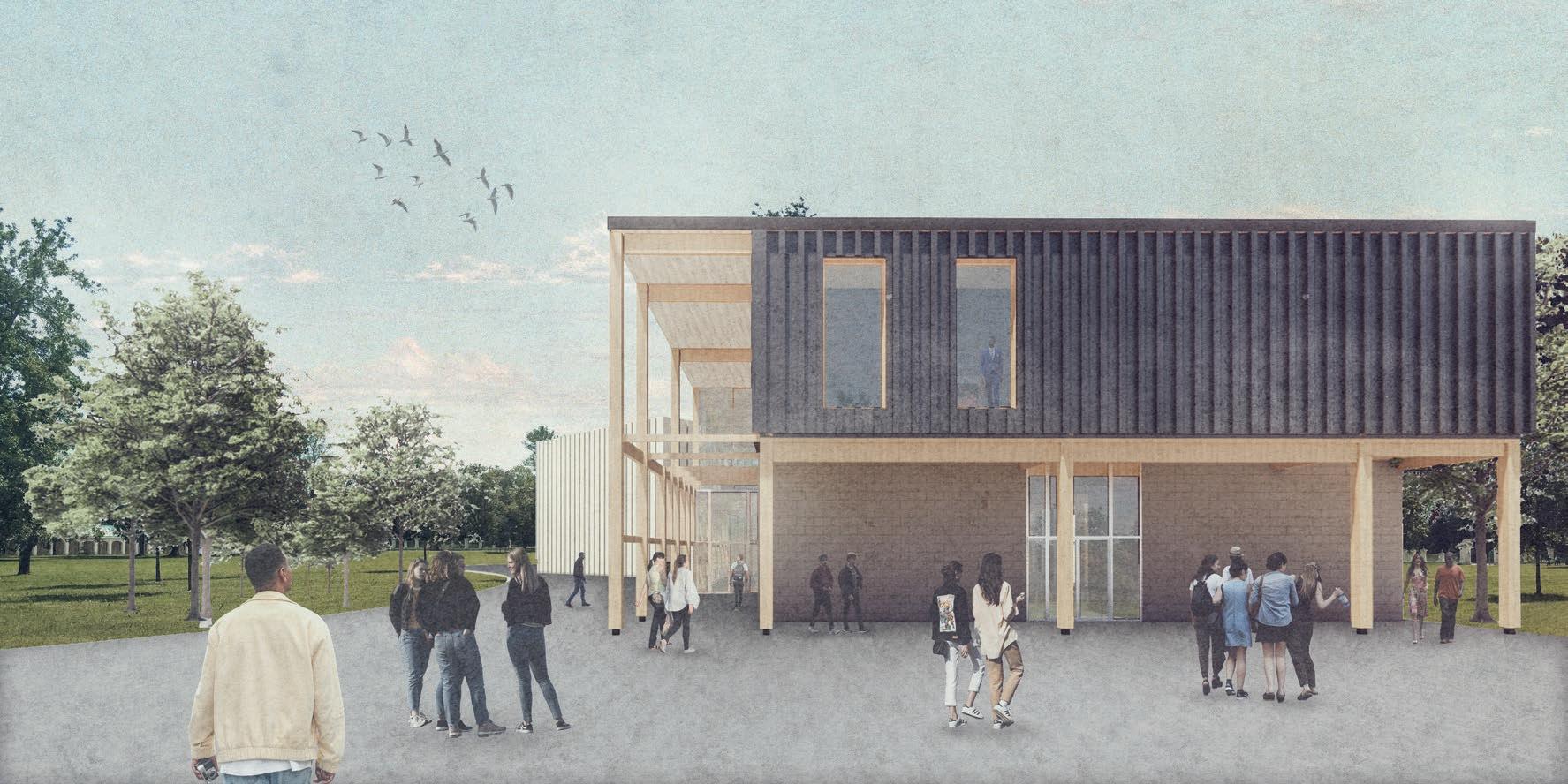
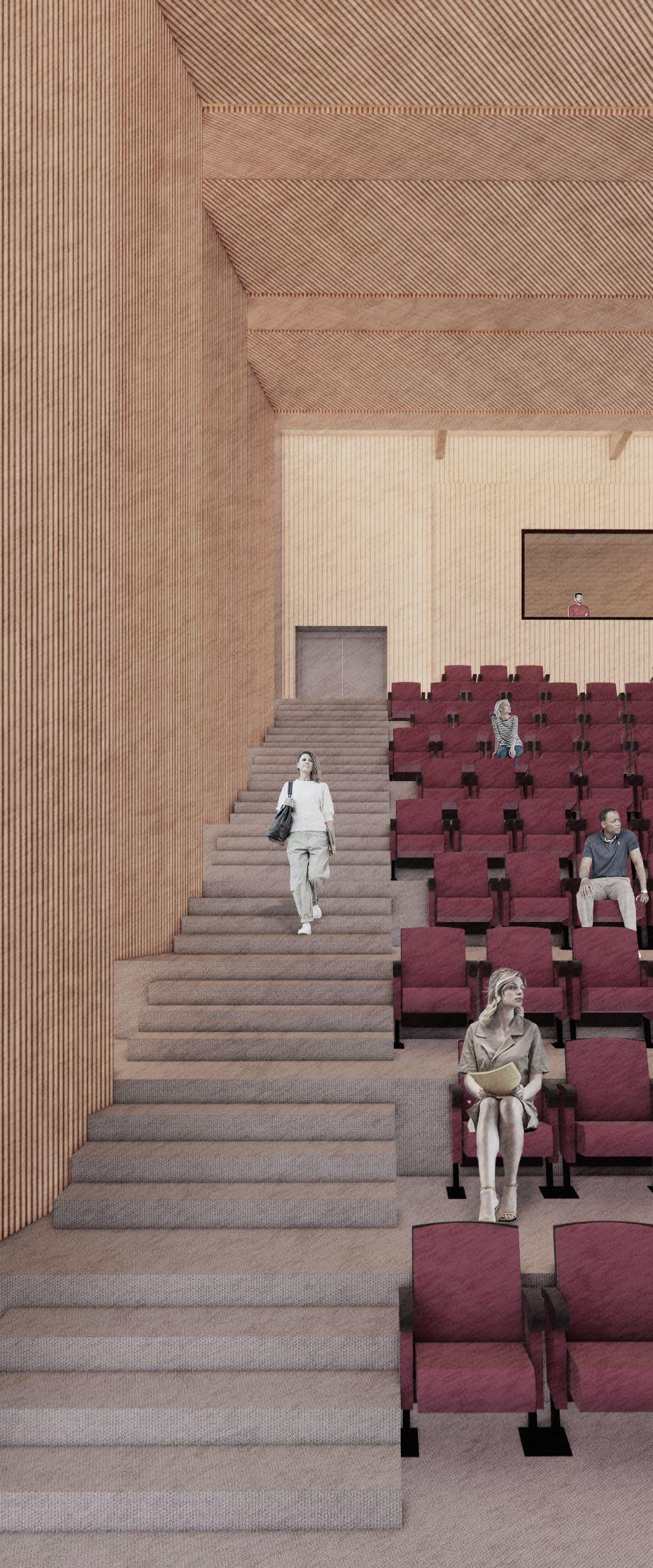
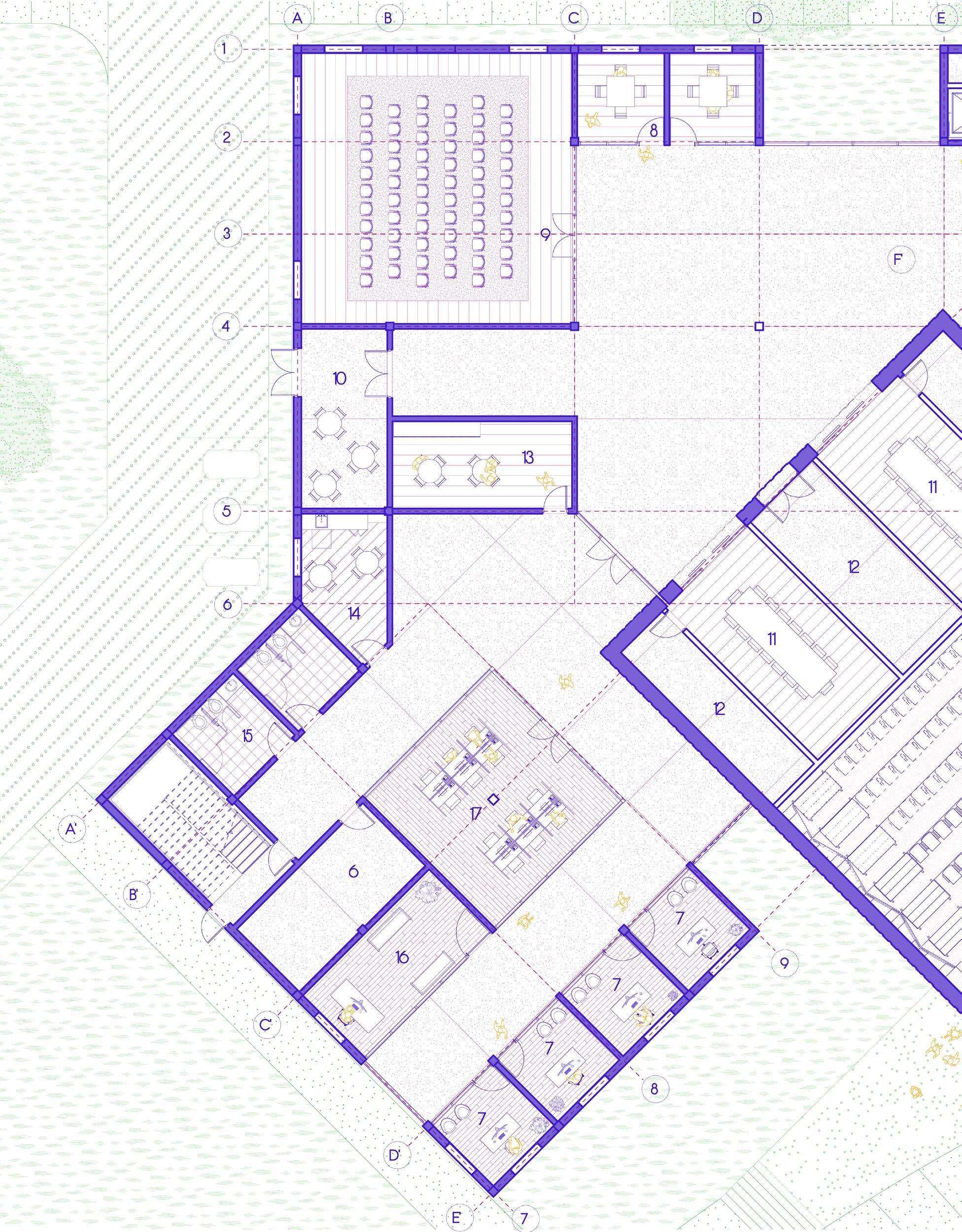
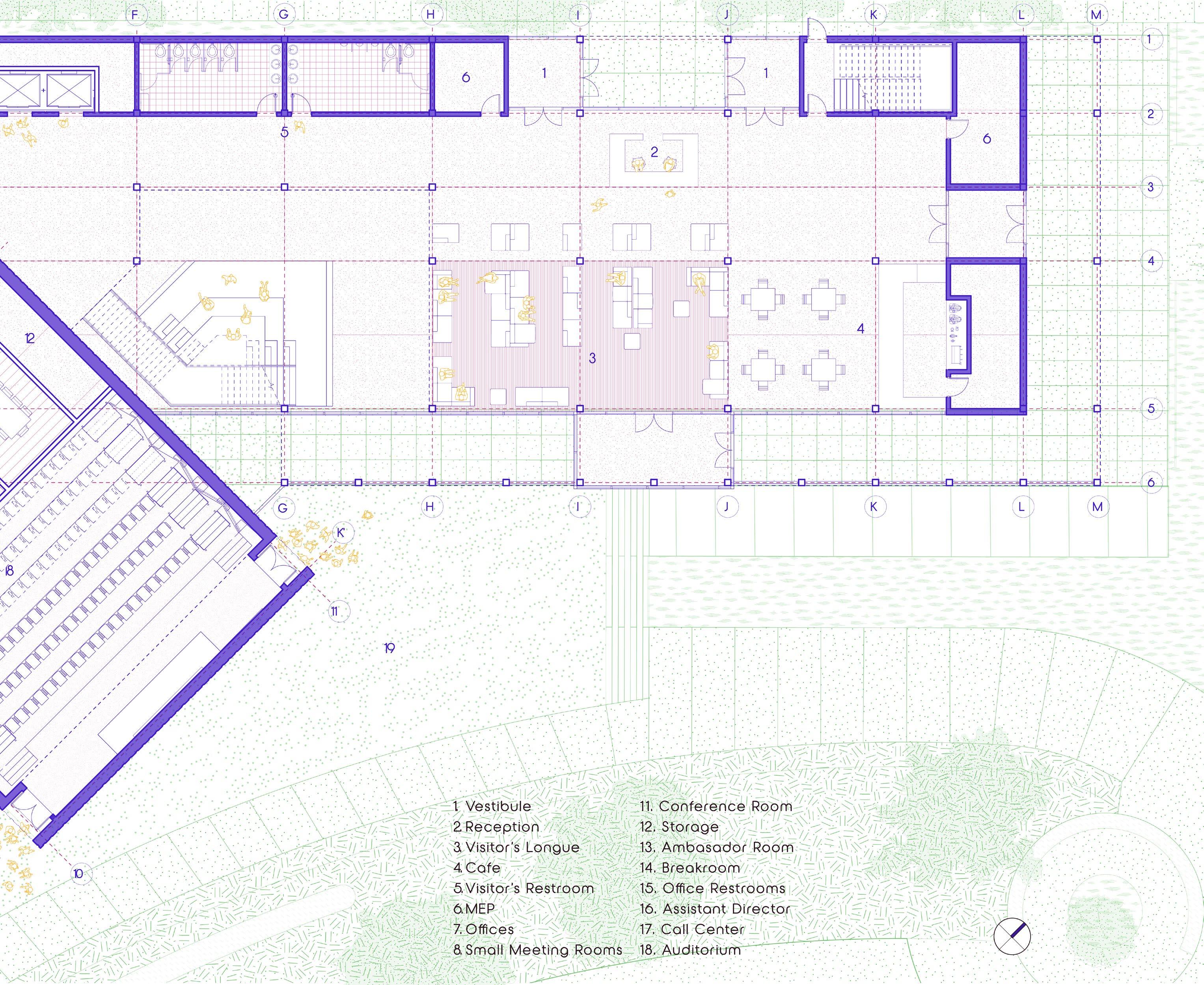
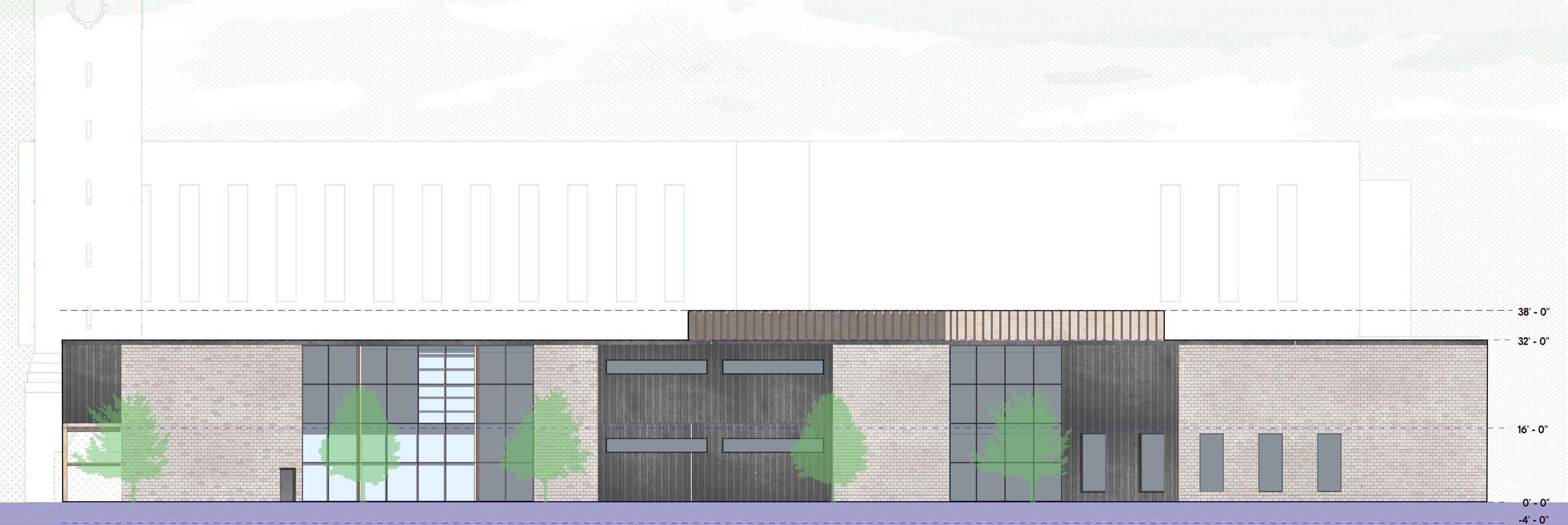
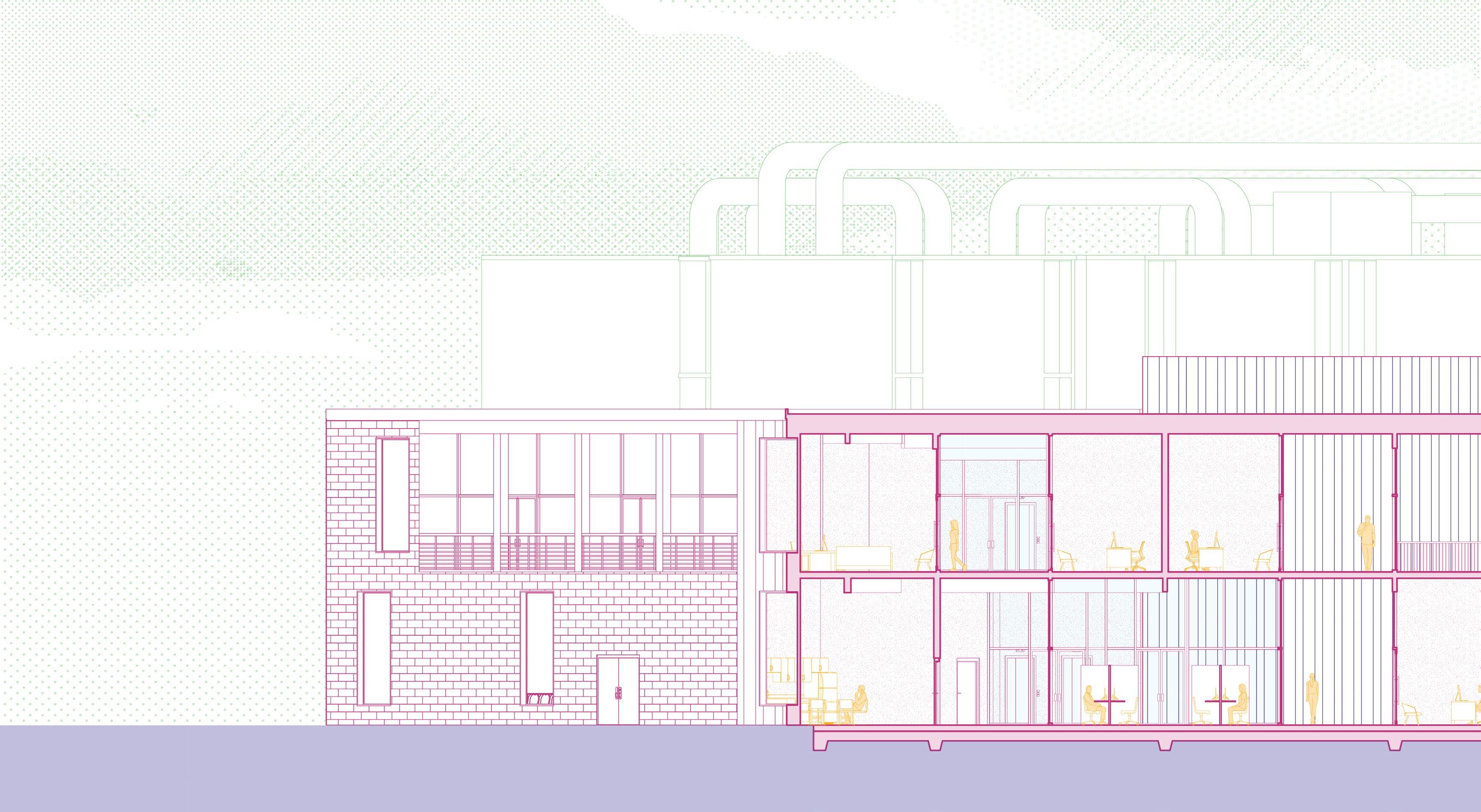
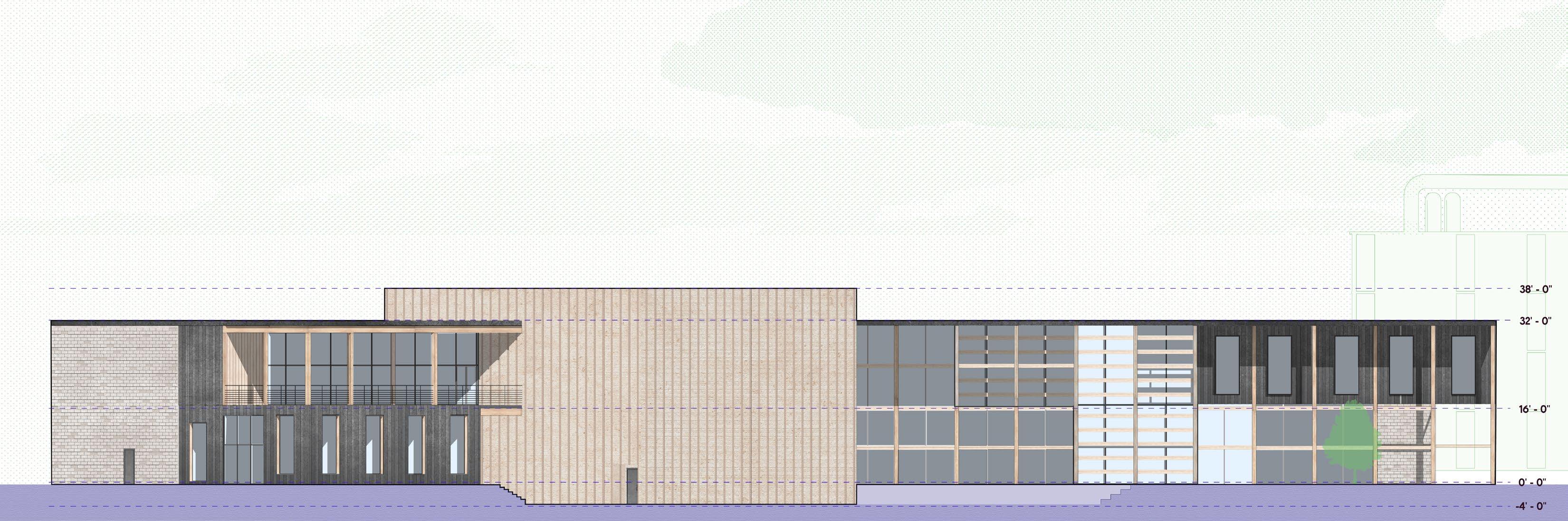
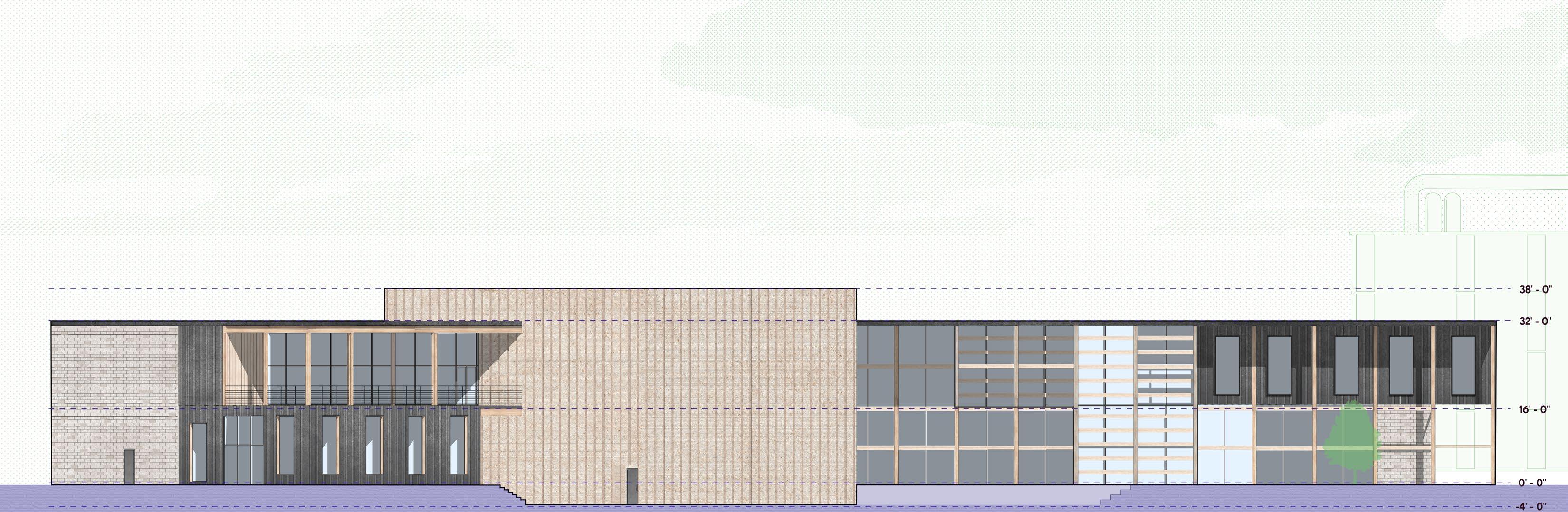
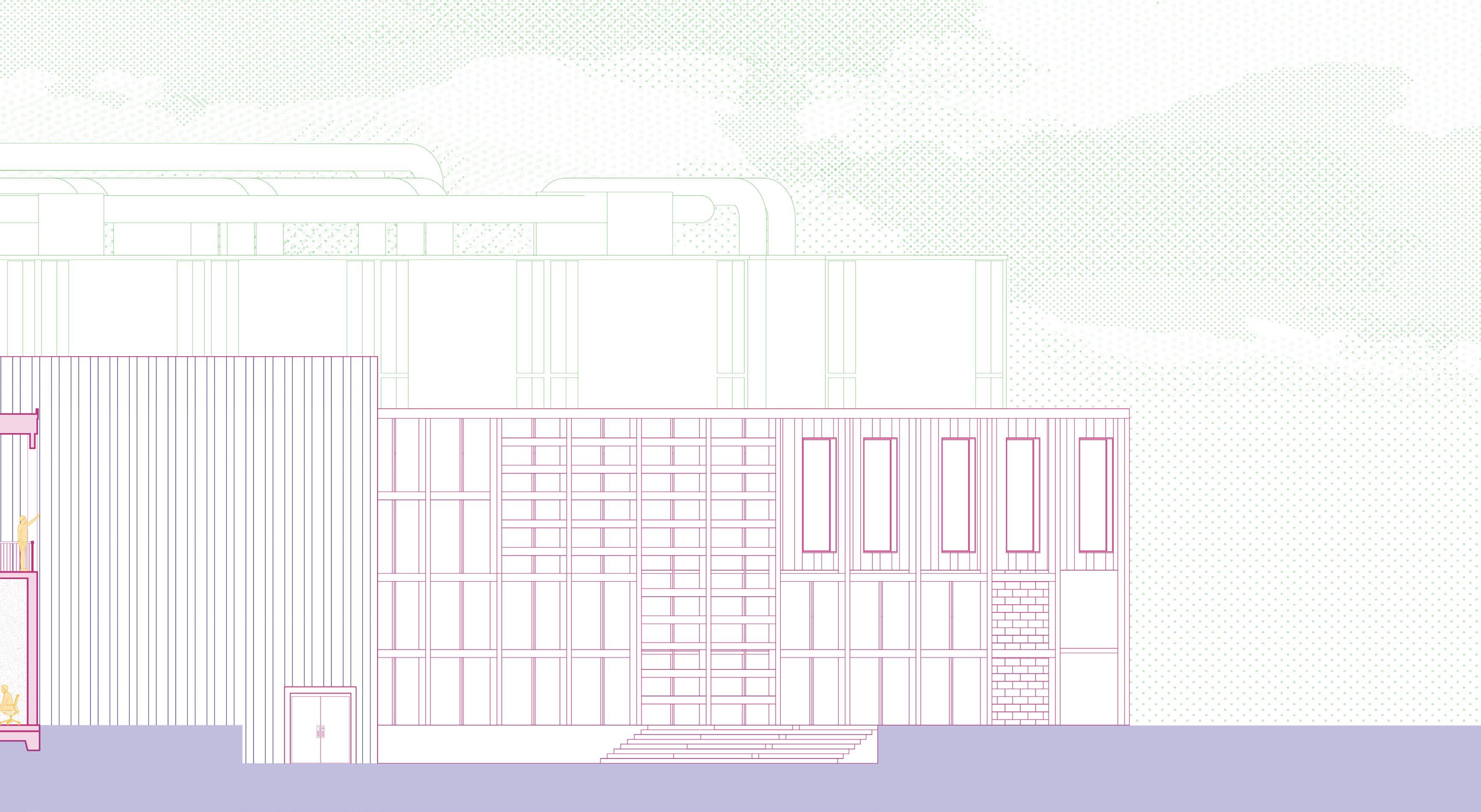
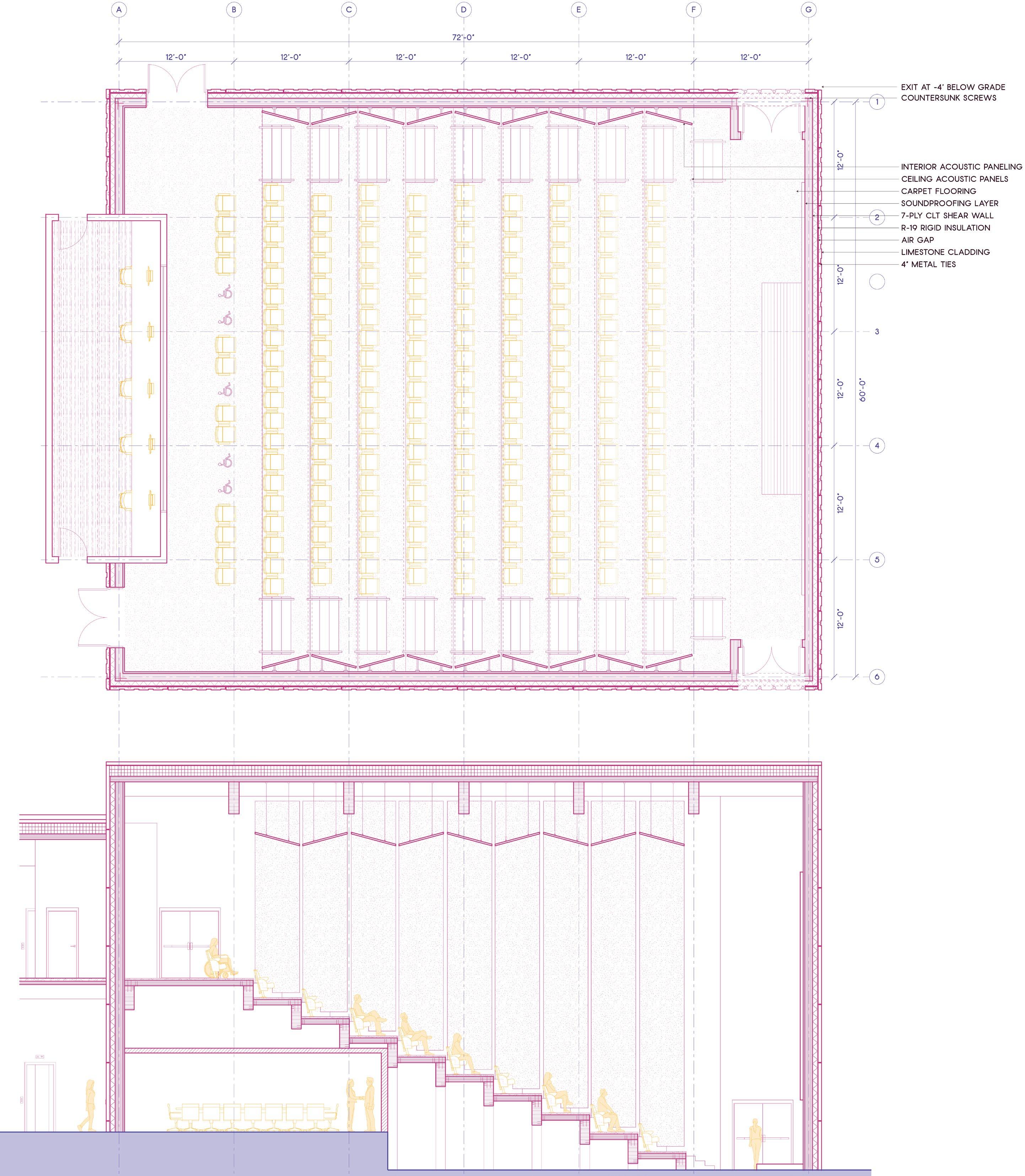
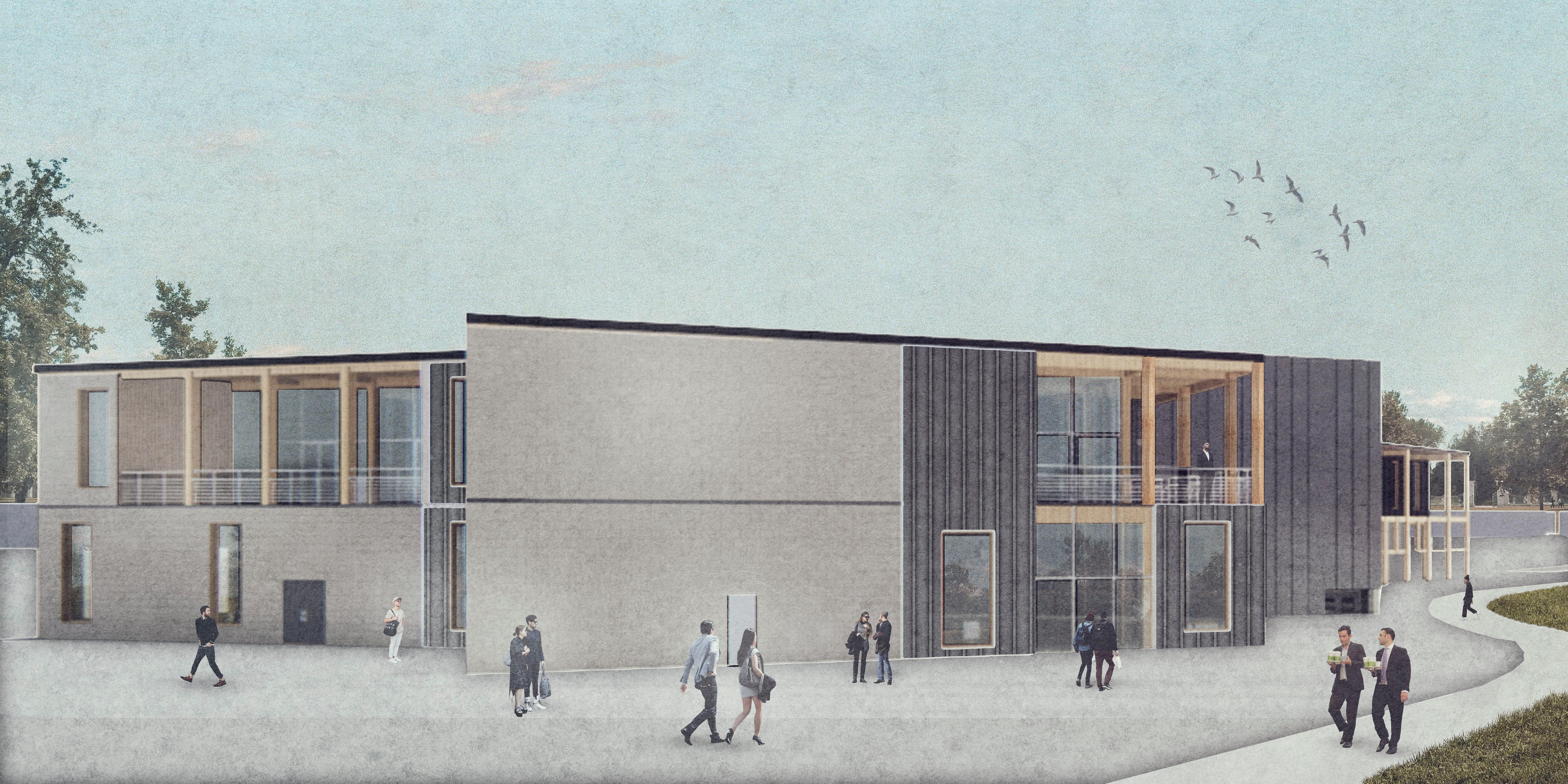
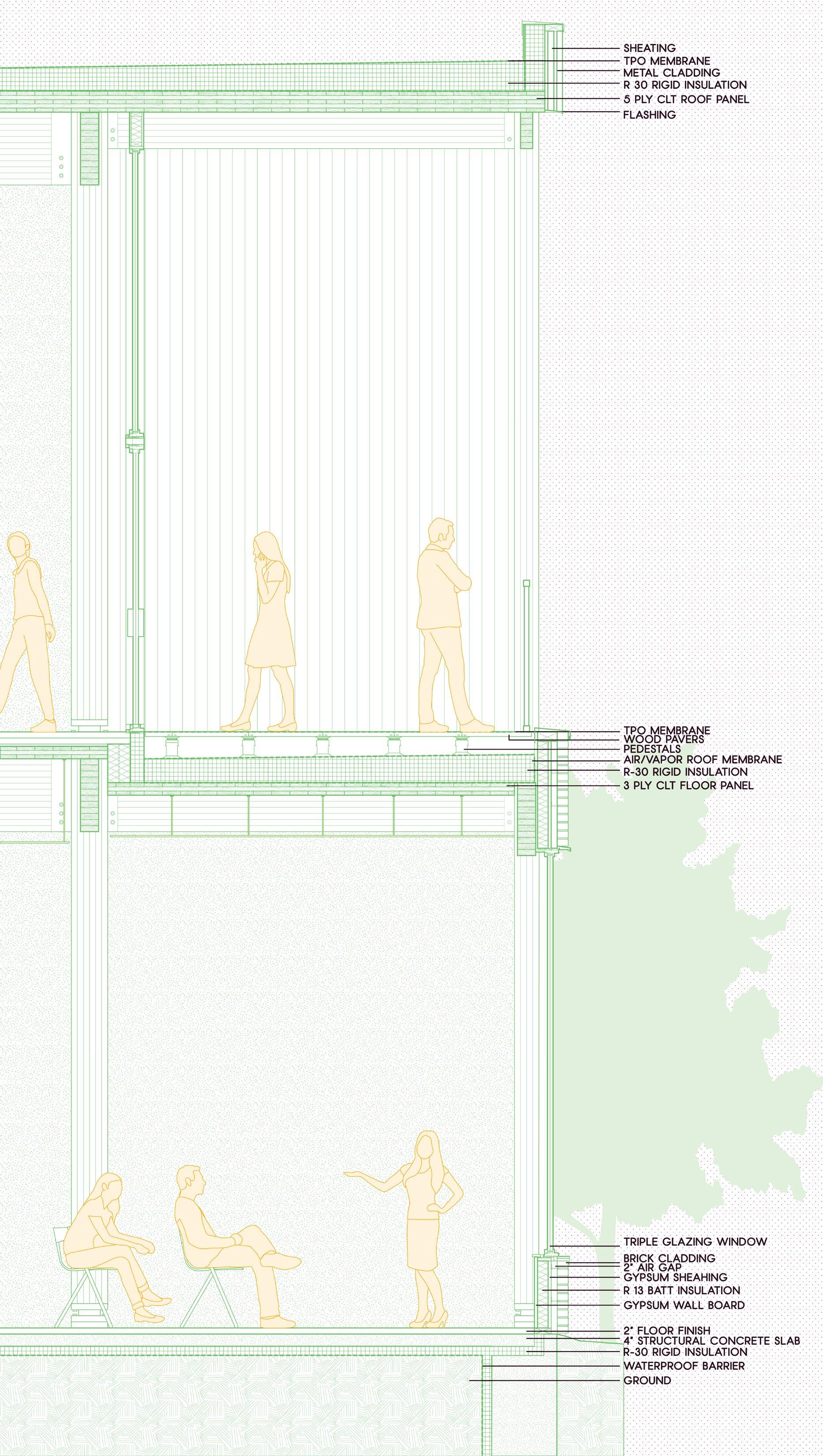
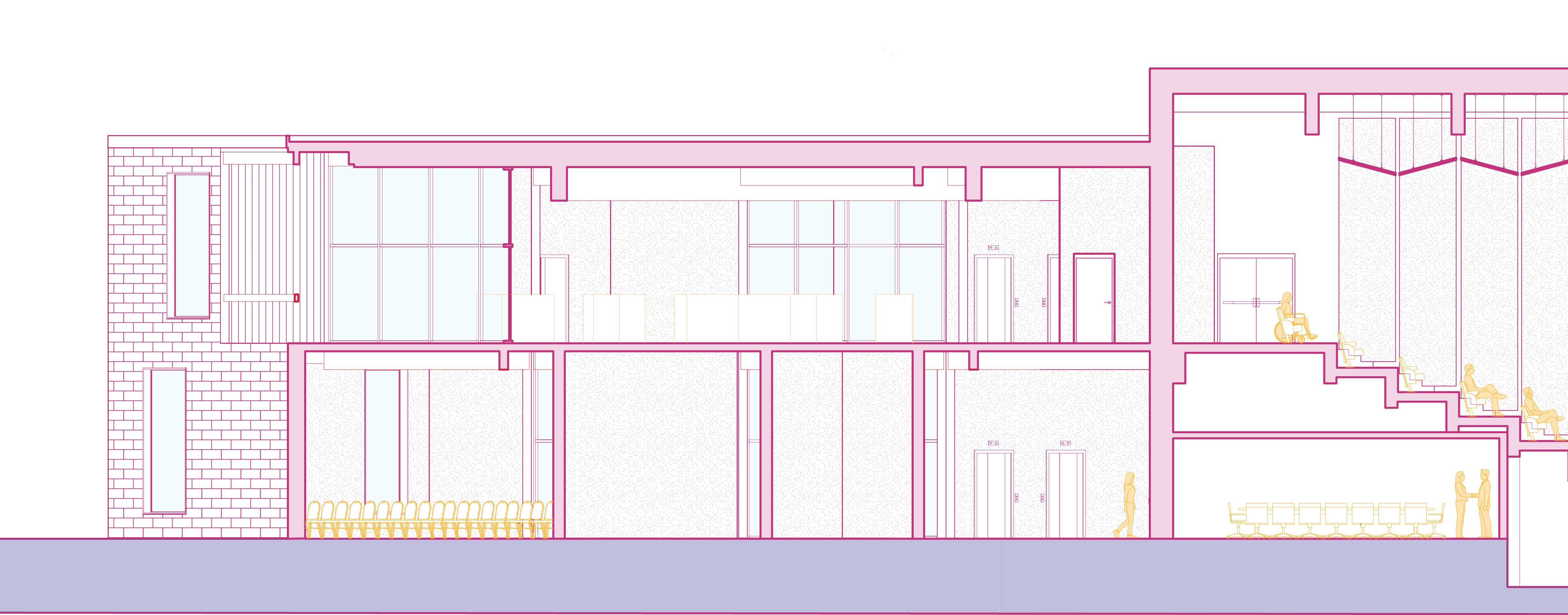
Traditions act as the grounding force that keeps a community rooted in its identity. At the same time, they serve as hinge points, allowing for the opening of new chapters, the adaptation to changing circumstances, and the incorporation of fresh ideas. The Aggieland Visitor Center is a building that follows a grid as grounding roots that give a glimpse into the resilience and dynamic nature of Texas A&M’s sense of identity. This project is a new visitor center with areas for staff and a visitor program including an auditorium and lobby area. The rectilinear massing originated from an analysis based on the site context and the efficiency so that this building would provide a smooth transition for visitors. An orthogonal form with modular casework characterized by a systematic, gridbased layout allows for efficient use of space, clarity in wayfinding, and support of a mass timber structure. Moreover, with the integration of the grid and use of modules for service areas that wrap around the building, it facilitates the integration of systems, in particular a Variable Air Volume system, ensuring that the designated spaces are well-organized, accessible, and stackable. The Aggie network is a community that connects you immediately. Our project approaches the visitor center as a glimpse into the sense of belonging through grounding oneself in tradition. The presence of traditions helps maintain a sense of continuity and provides a framework for evolution and innovation.
FALL 2023 // YEAR 4
ARCH 405 // INTEGRATED STUDIO
INSTRUCTOR // Marcel Erminy
TEAM // Miriam Gallegos-Chavez
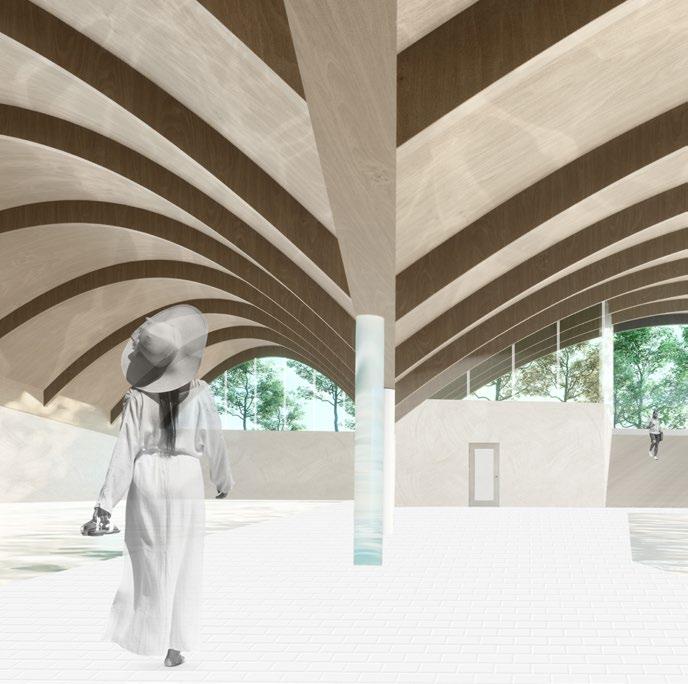
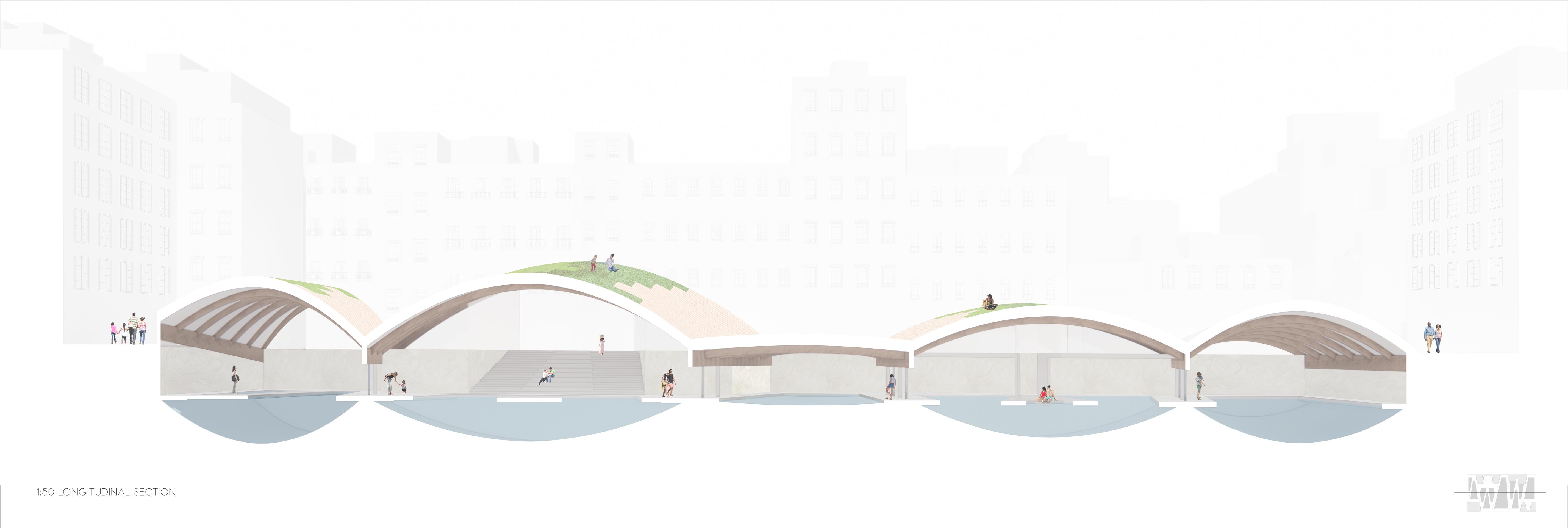
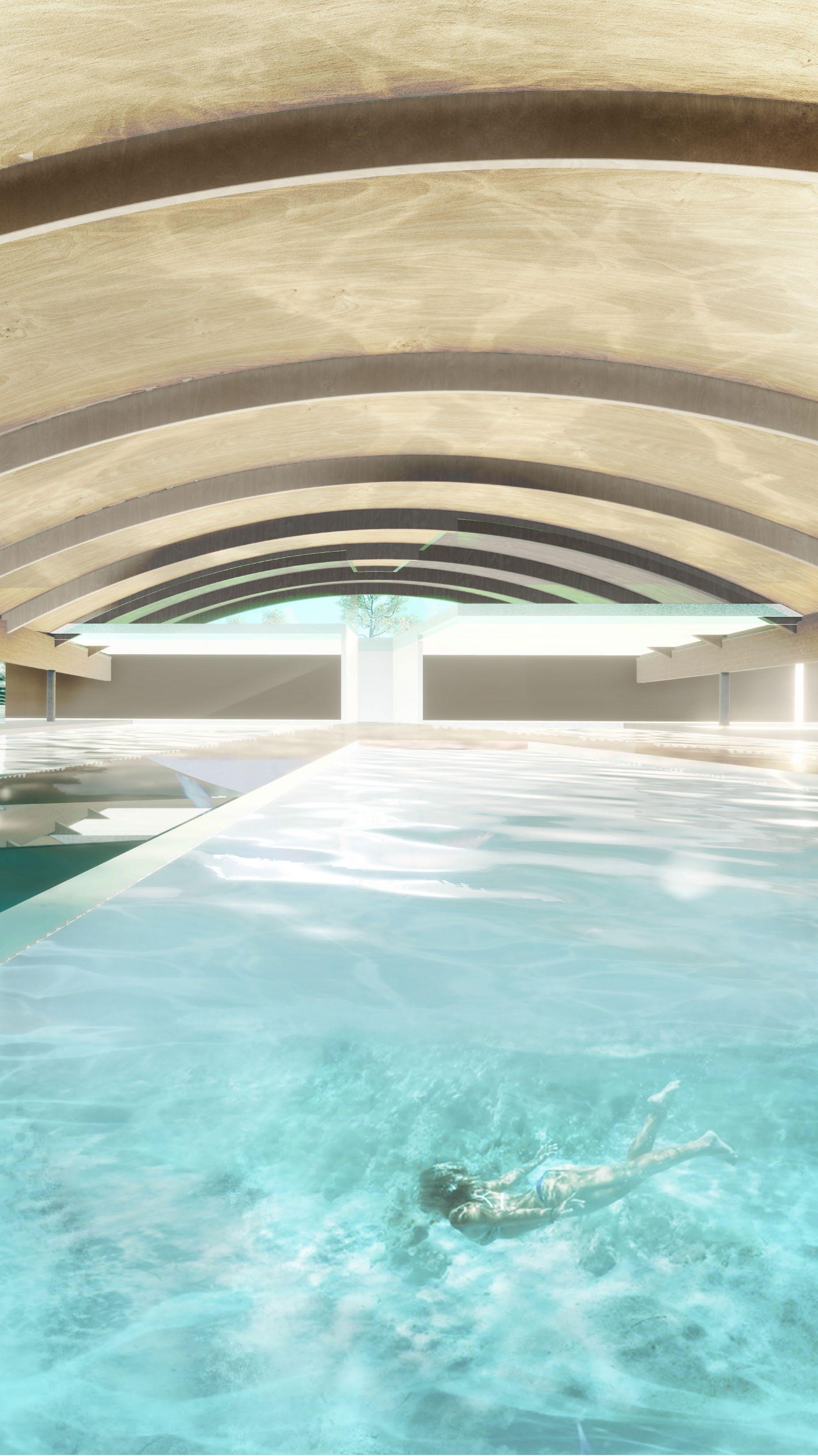
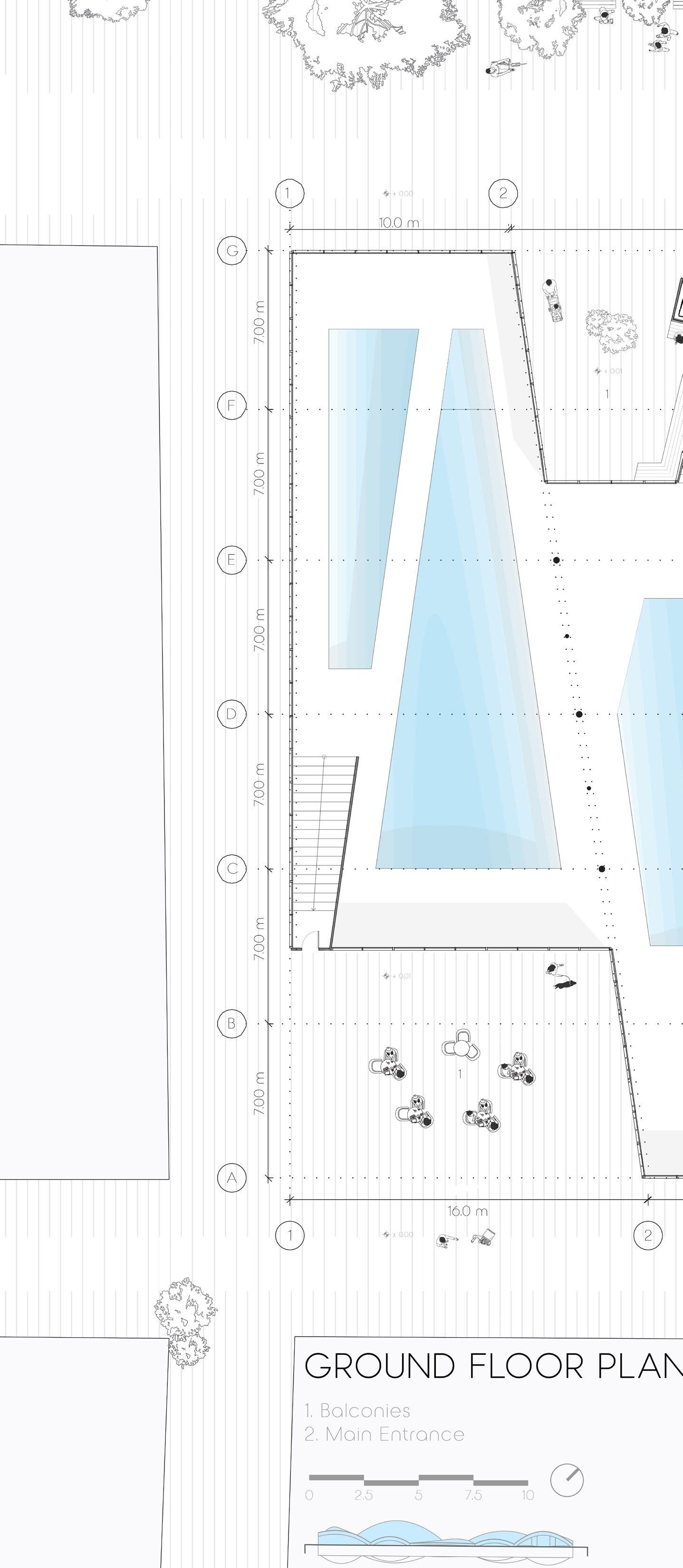
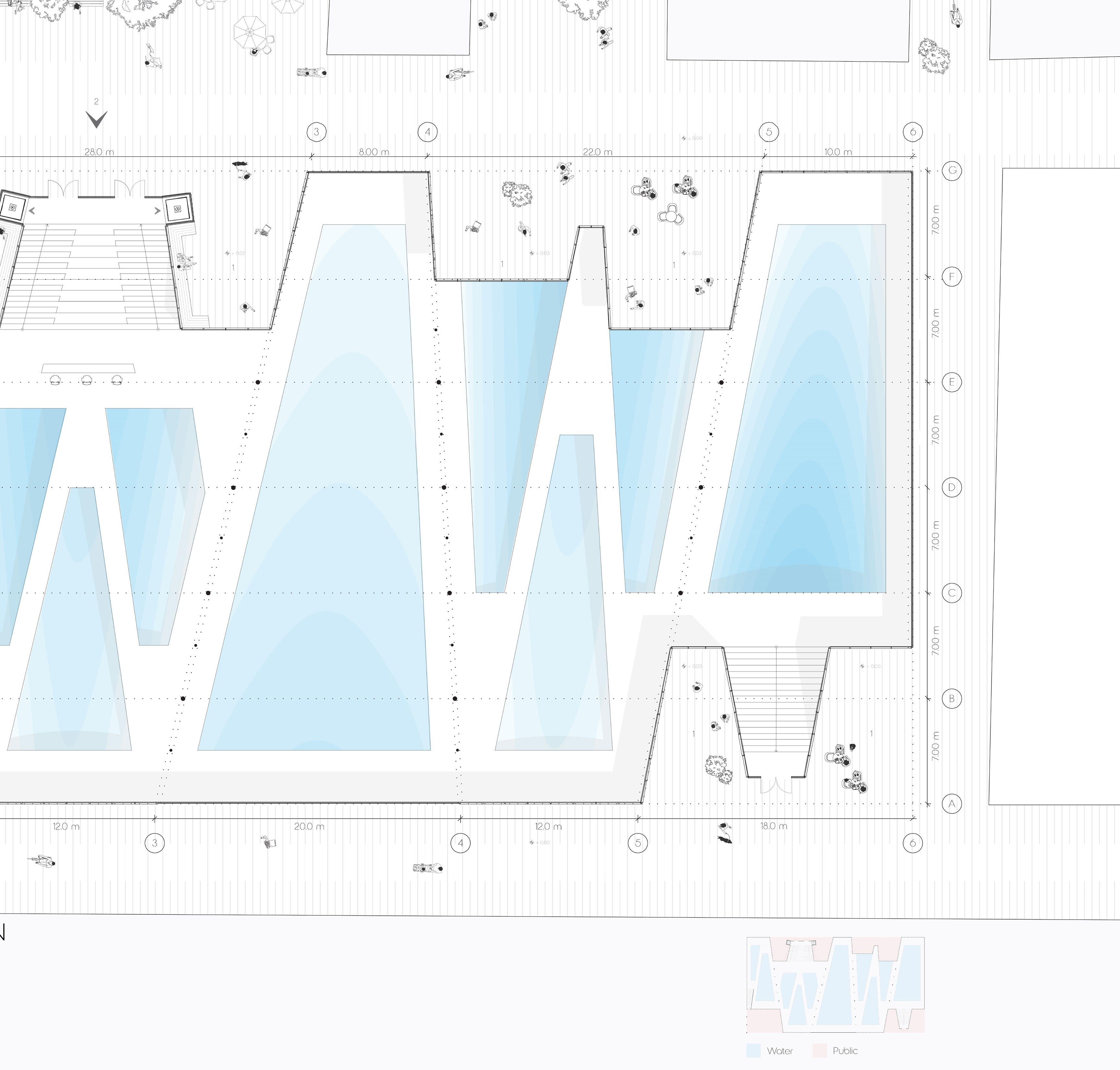
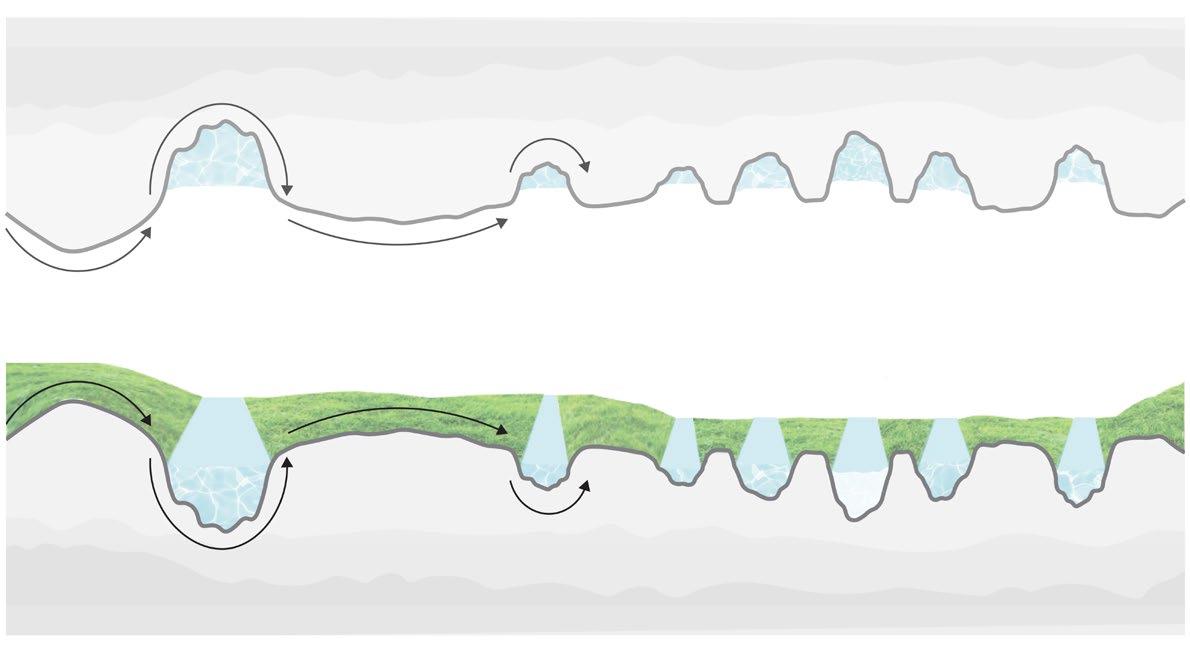
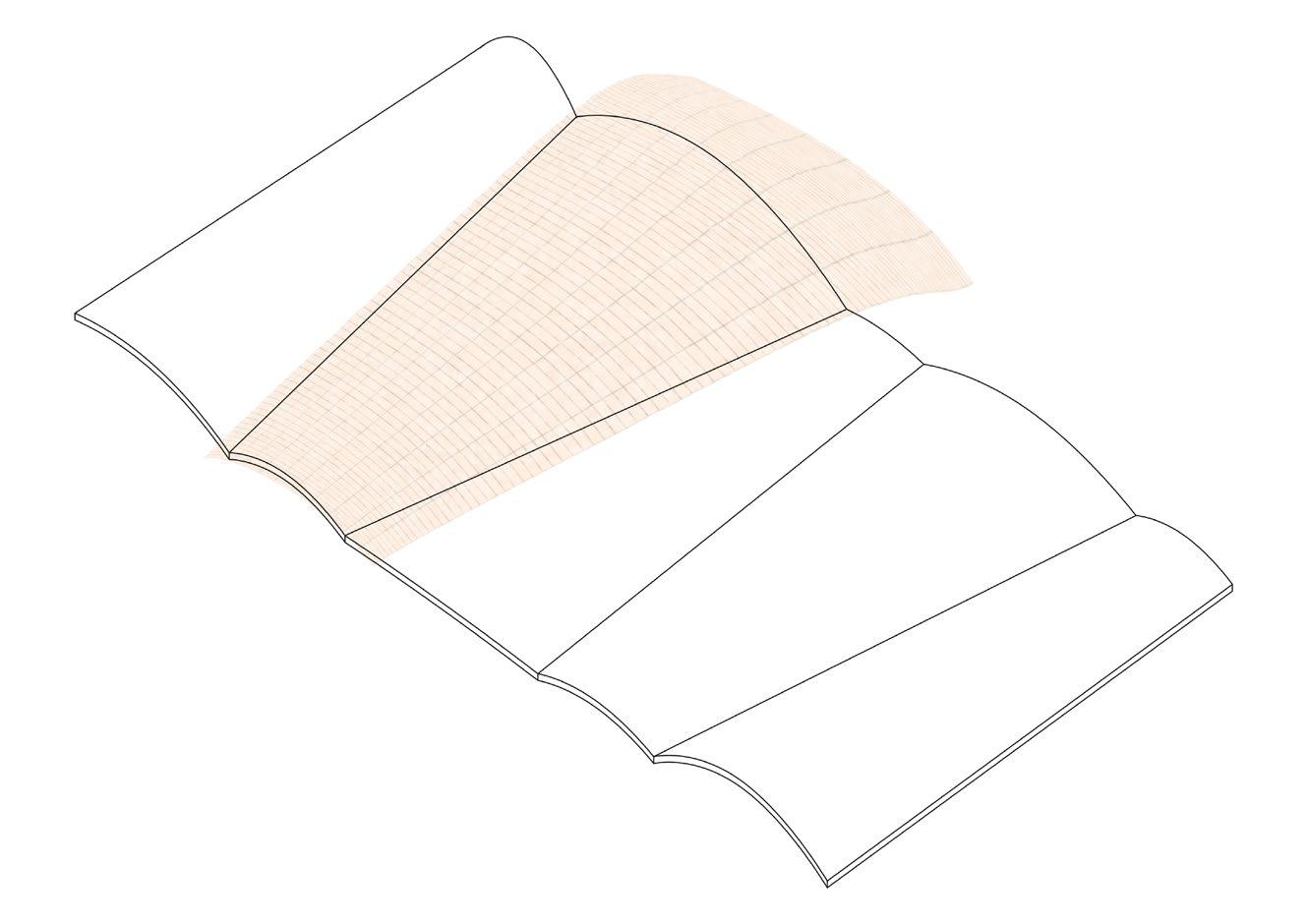
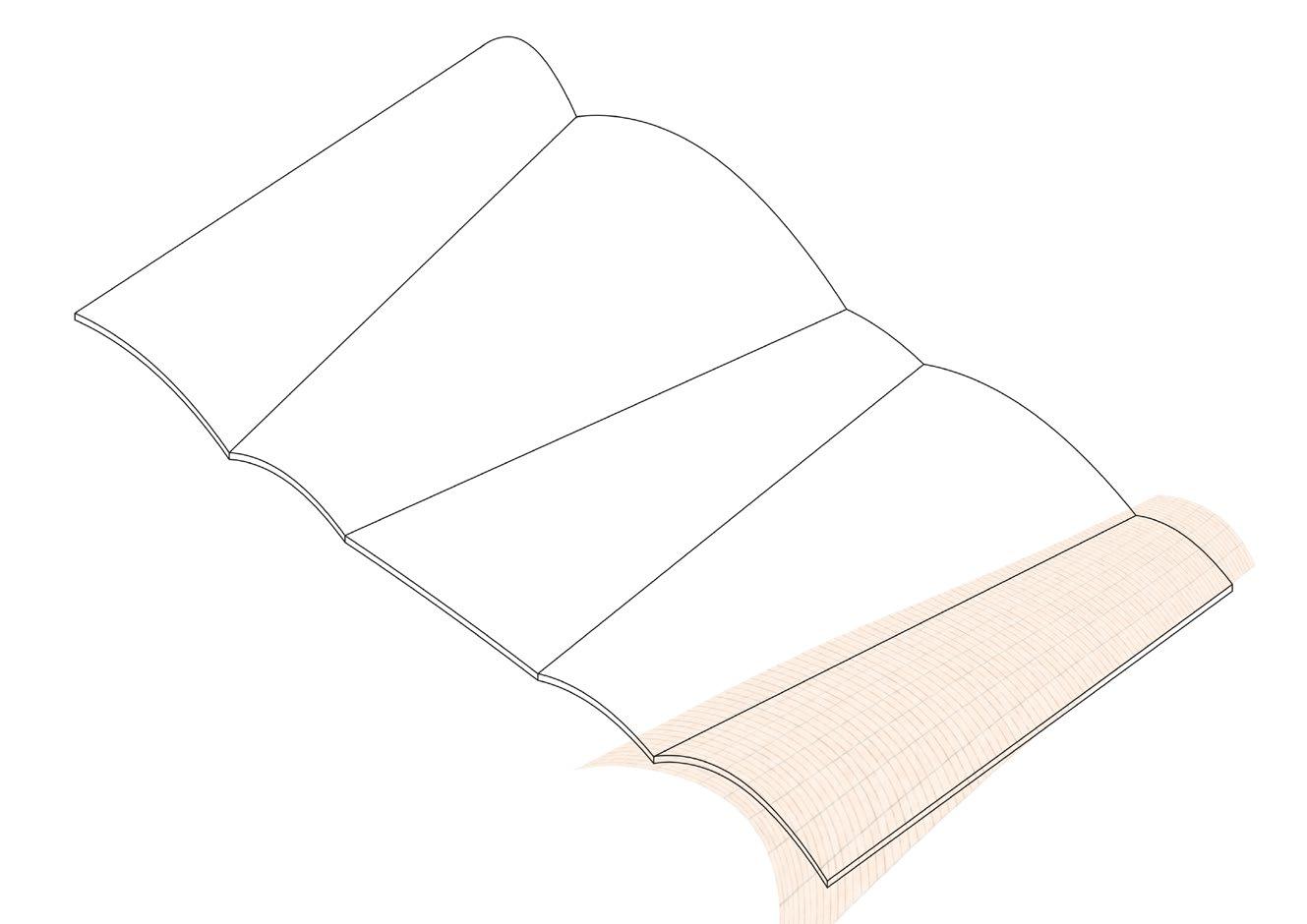
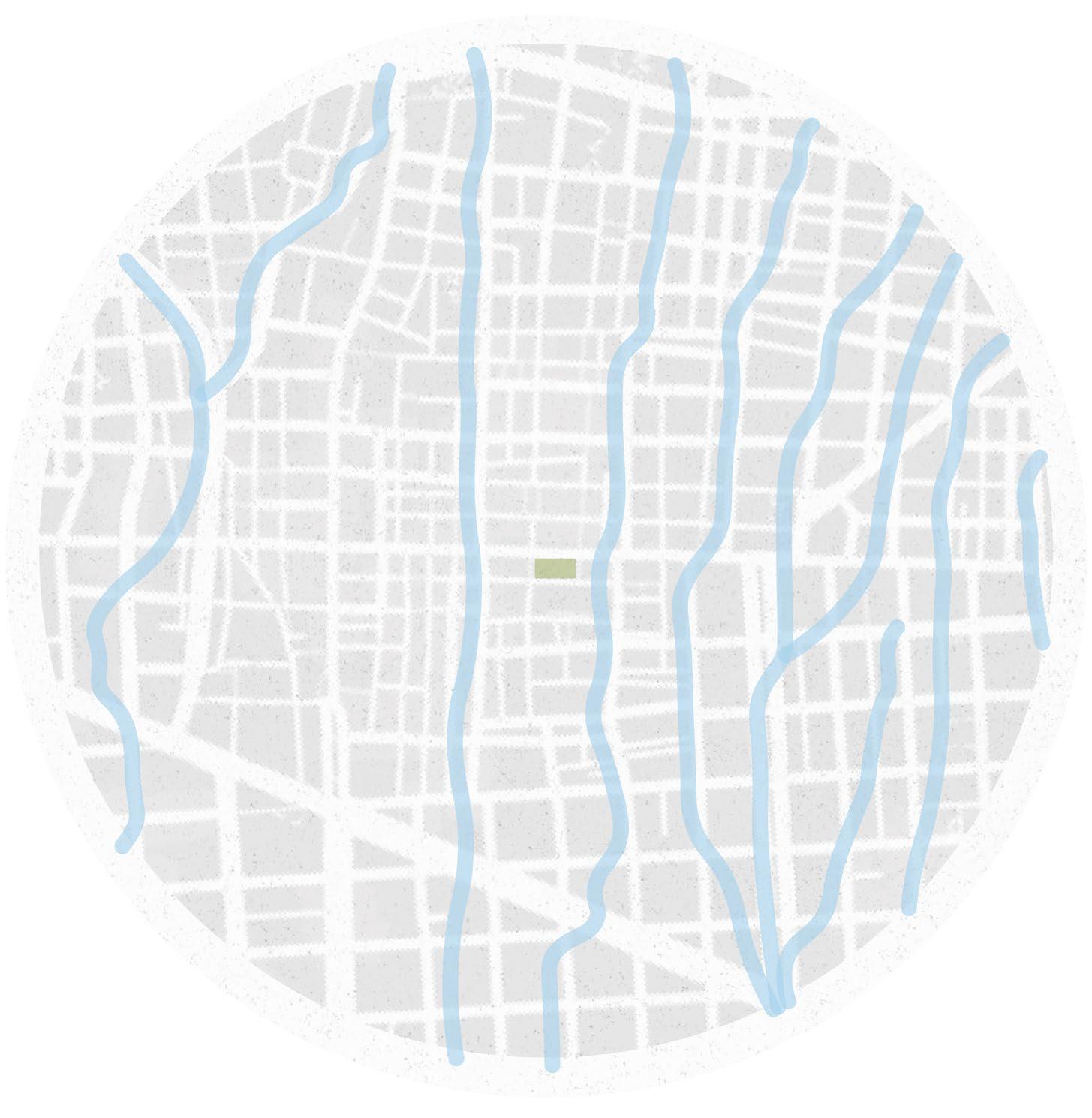
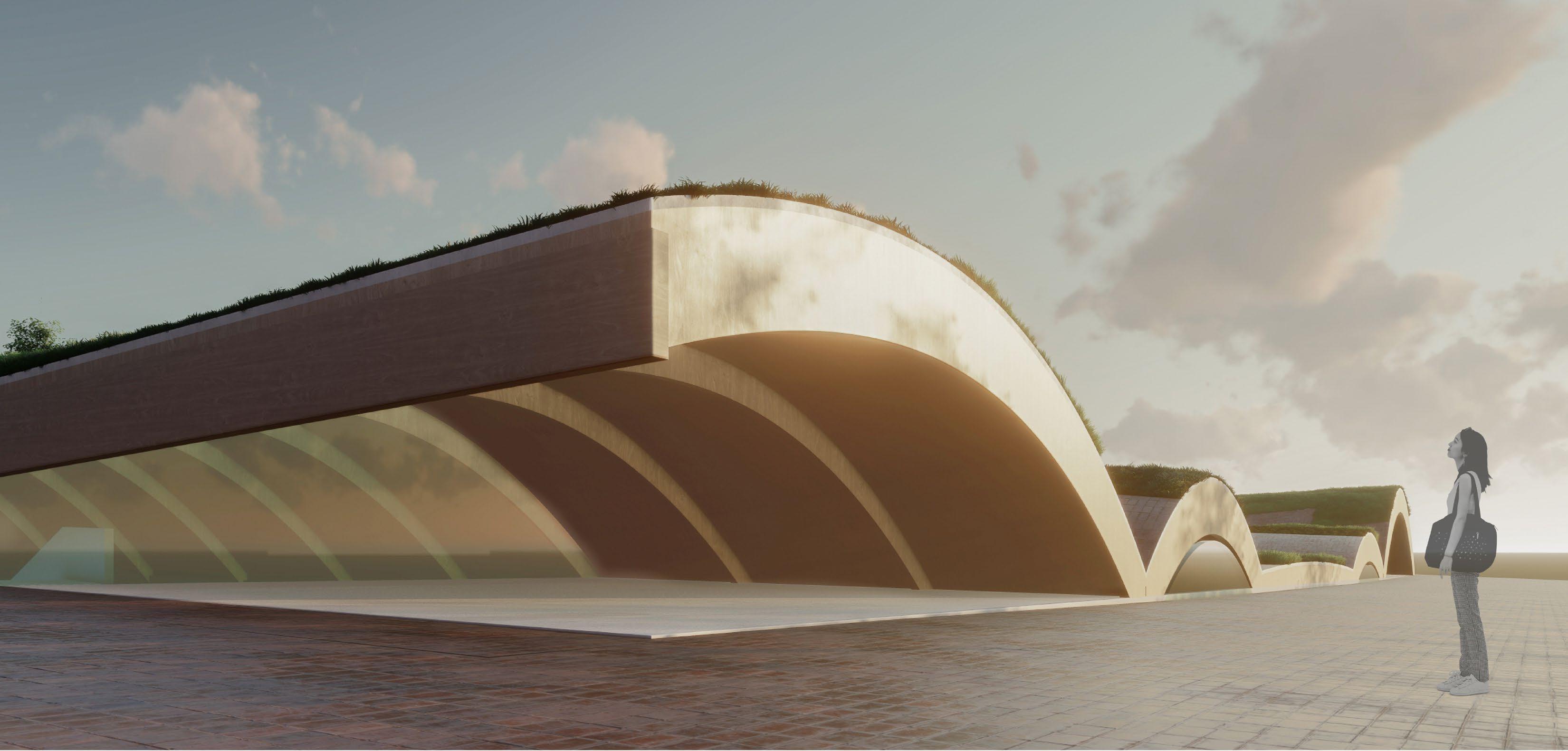
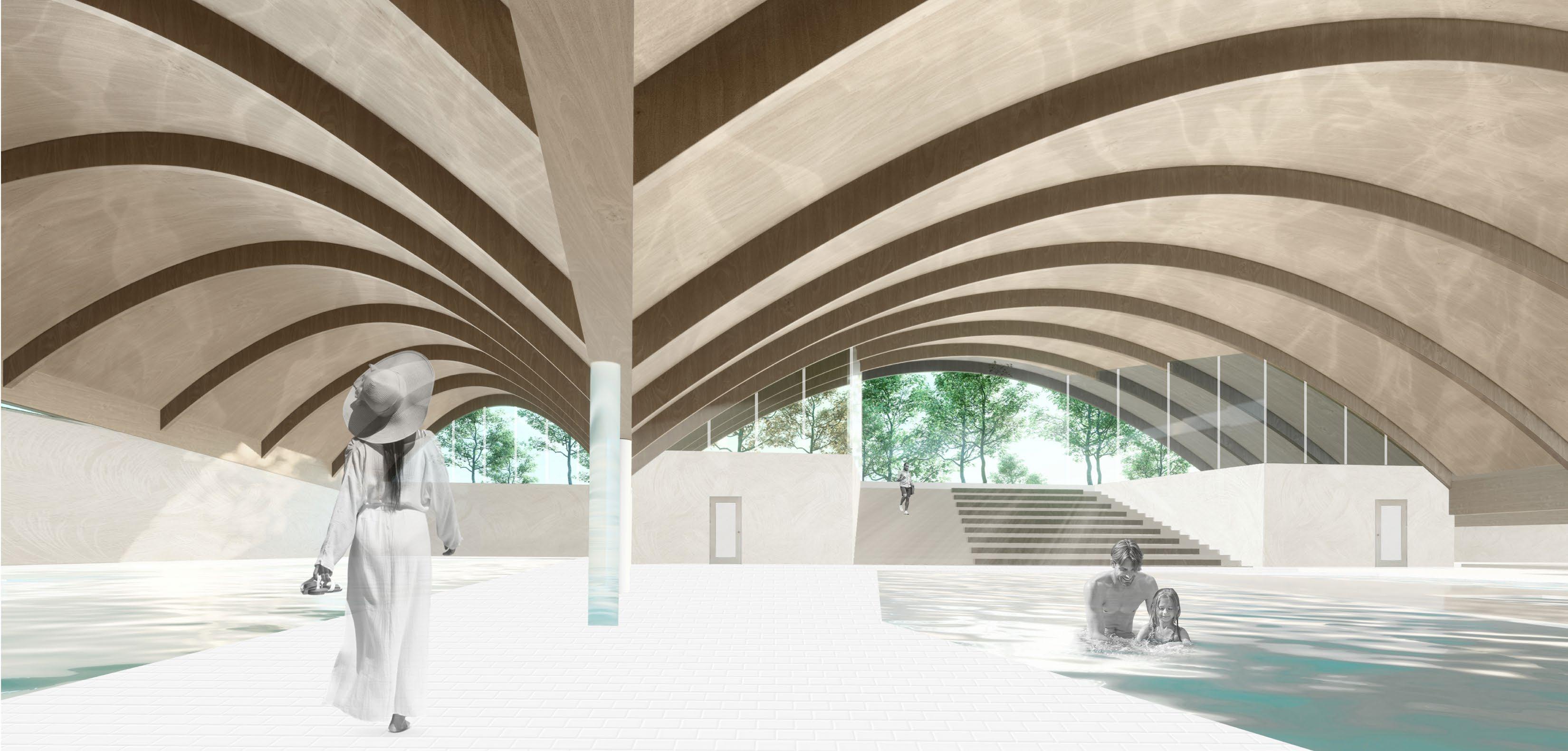
Located in the Gràcia neighborhood of Barcelona, the Abaceria Market is a community space that many have loved for decades. Over the years, it has lost its usable nature and requires an updated program and a new liveliness. Double Topography is an engaging and inviting space that will be built in place of the current steel structure on the site. The new program’s architectural design helps to extend into the community while providing a space that connects the city and nature. The project obtained its unique form from the streams that carved through Barcelona’s clay topography. Crafted by mass timber, ceramic tiles, and flexbrick, the structure uses locally sourced, traditional materials. The structural system uses traditional Catalan architectural elements such as wooden arches and beams, creating the five main axes that produce the specified spaces throughout the project. Glazing and water elements were also utilized to animate the structure, exposing the activities within and allowing people to engage at multiple levels on both the interior and exterior. The underground takes you through a promenade of water that varies in depth and usage. The groundlevel glass balconies are used to bring the neighborhood into the site. As for the above ground, there is an accessible green roof, allowing for more greenery to thrive in Gràcia. The neighborhood’s public space is reimagined with the roof and provides something meaningful and functional.
SPRING 2023 // YEAR 3
ARCH 306 // STUDY ABROAD STUDIO
INSTRUCTORS //
TEAM

Miguel Roldan, David Espuña, Jean Craiu
// Shelby Rajski
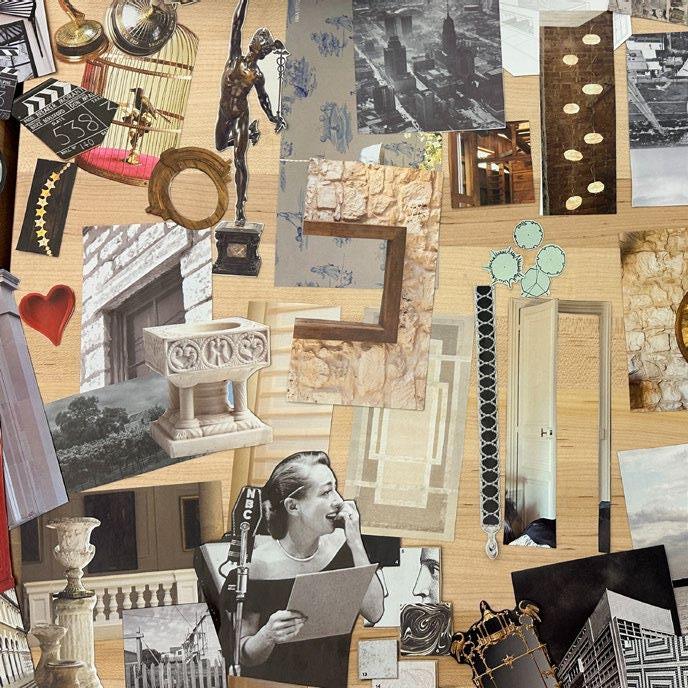
Photography and film possess the unique power to capture the beauty, history, and cultural significance of architectural heritage in ways that traditional documentation methods cannot. This research explores how these visual mediums can preserve collective memory, inspire public appreciation, and support long-term conservation efforts. This research explores how photography and film can serve as powerful tools for preserving architectural heritage and collective memory. Moving beyond traditional documentation methods, visual media offer immersive and interpretive ways of engaging with historic and post-industrial sites. Grounded in theories such as Ignasi de SolàMorales’ Terrain Vague, the project examines how images capture the presence of absence— moments of decay, transformation, and memory. Through a combination of literature review, cinematic and photographic case studies, and a personal collage series, the work reflects on how visual storytelling preserves not just buildings, but the cultural narratives they hold. Together, these elements form a layered investigation into the past, present, and future of architectural memory.
SPRING 2025 // M. ARCH
ARCH 644 // ART & ARCH HIST
INSTRUCTOR // Dr.
Gabriela Campagnol
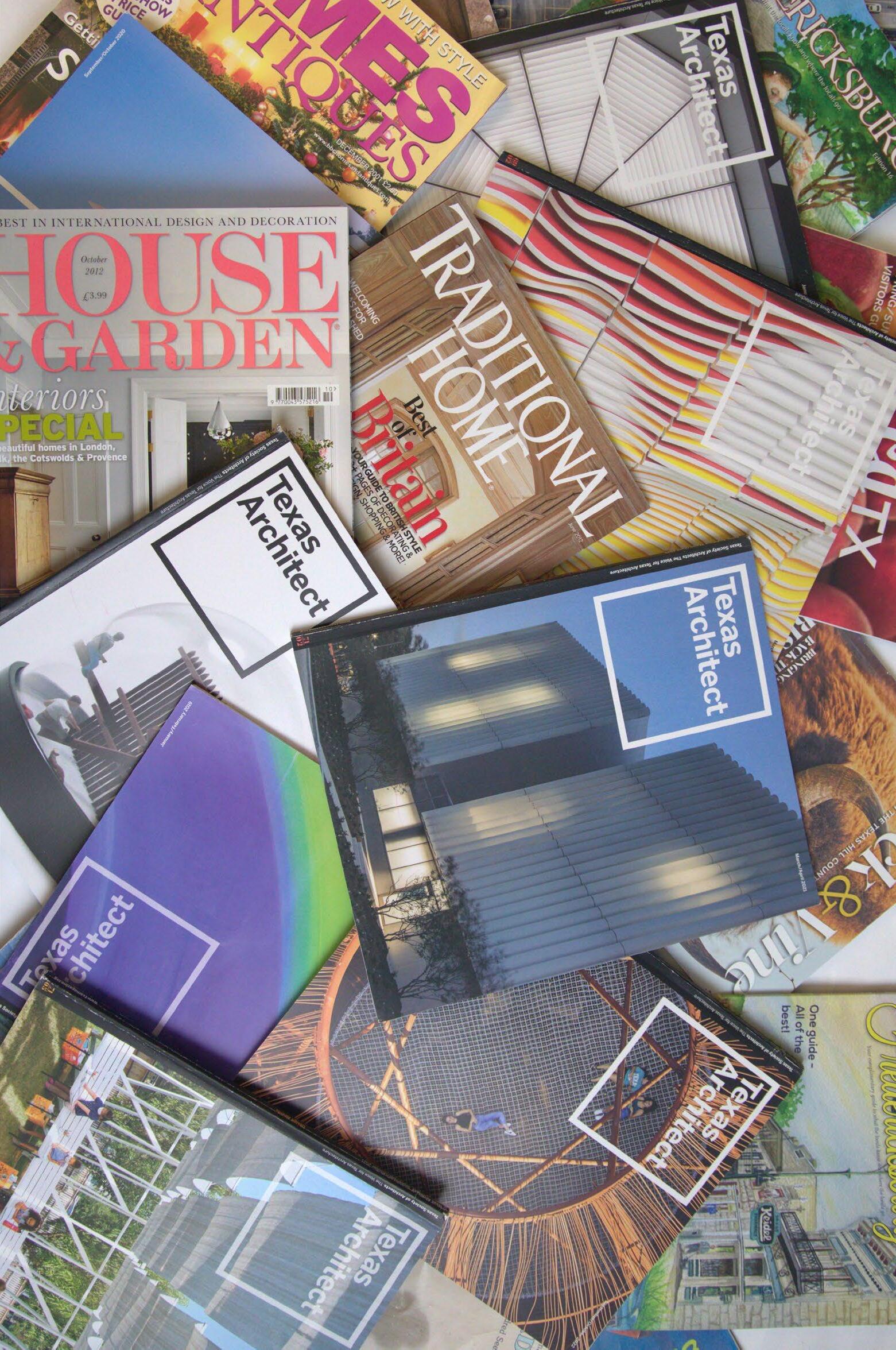
preserving the collective memory of architectural heritage through photography and film
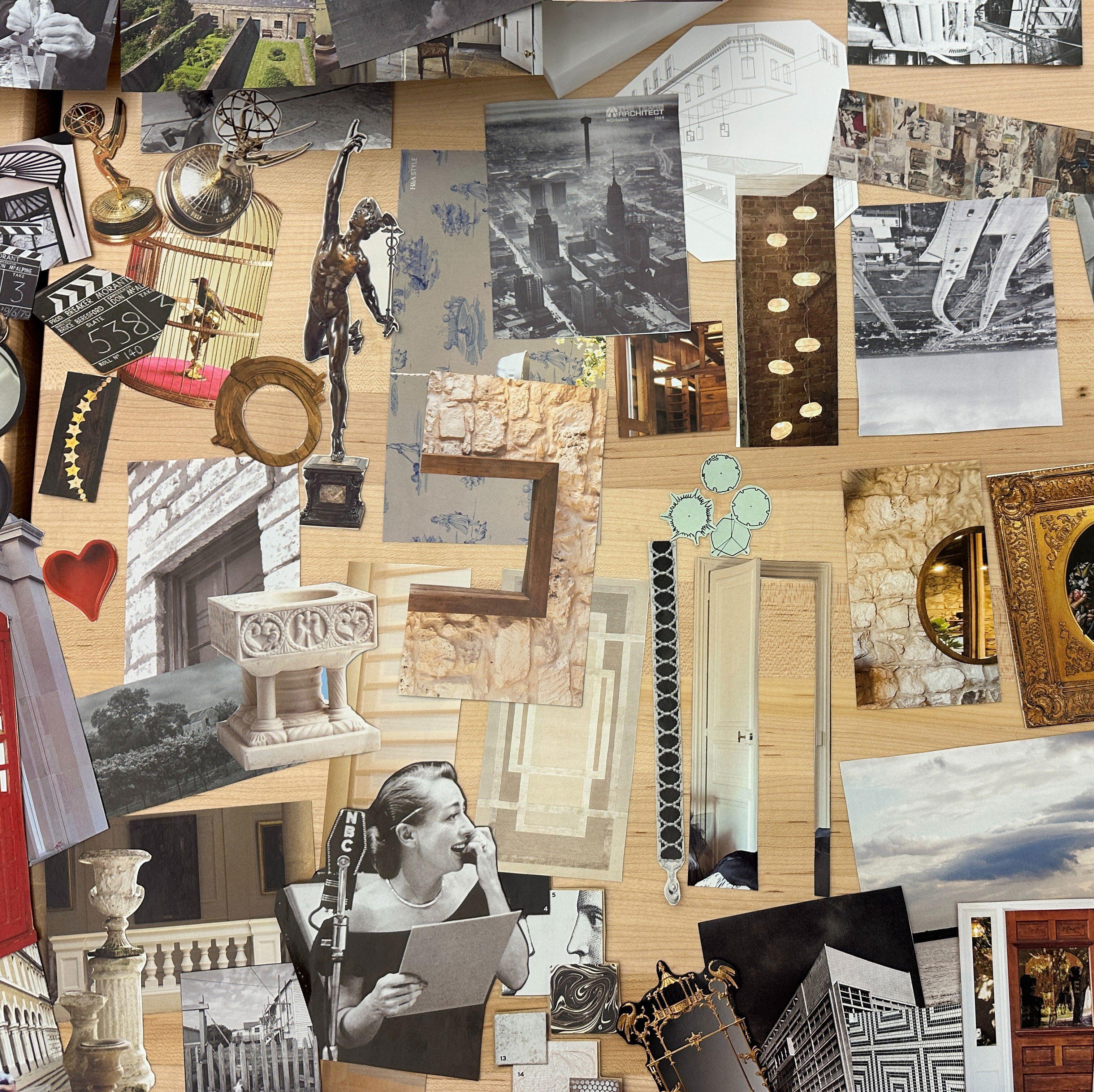
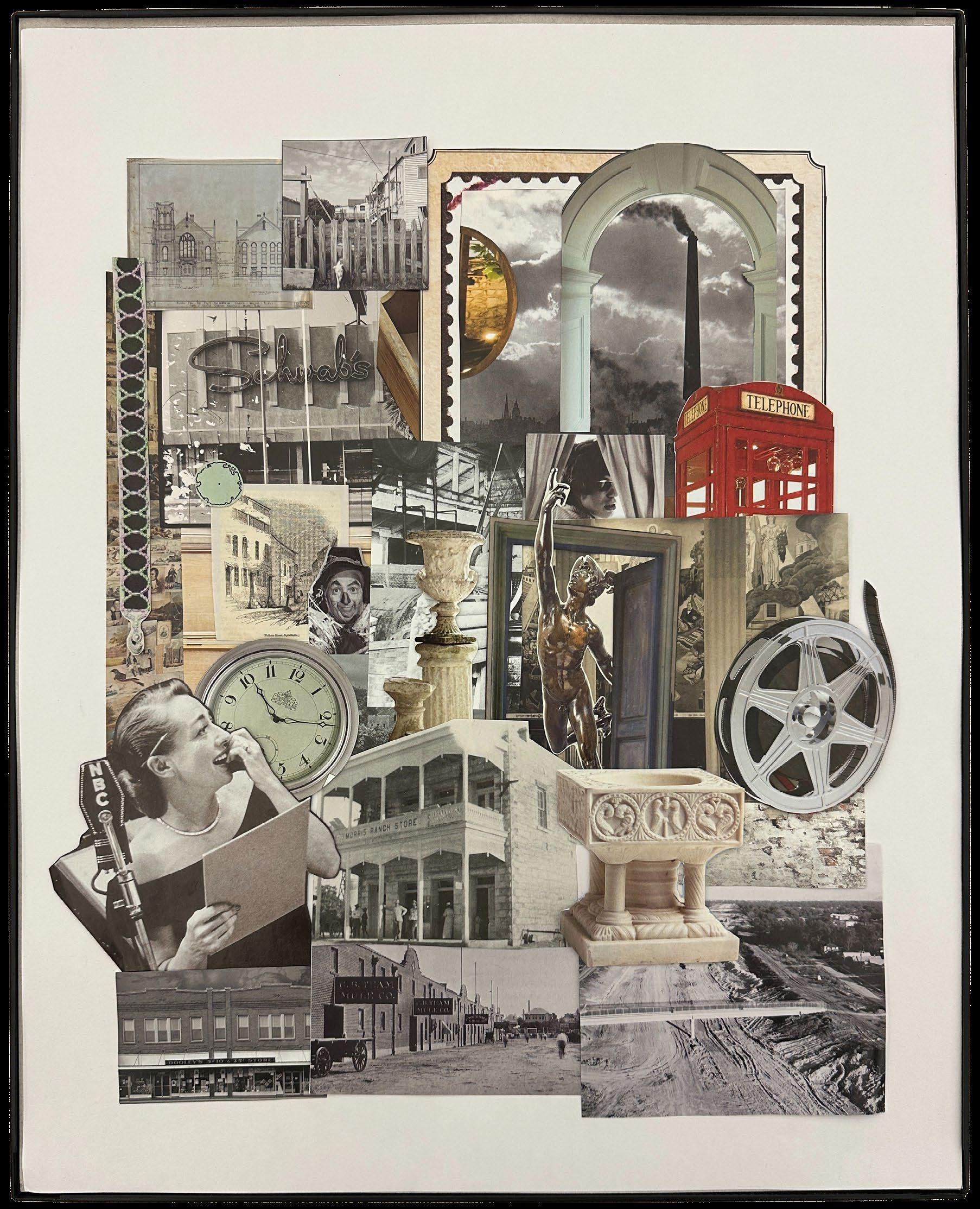
The first part of the composition is titled “What Was”. This collage represents the past of photography and film. Most of the pieces have a vintage feel and a historical touch in the architectural elements. There are photos of the actress Joan Crawford, Ray Bolger as the Scarecrow in The Wizard of Oz, and Mick Jagger. Some of the architectural photography features old Fredericksburg, Texas, streets and stores, old hand drawings, and other developments from many years ago.
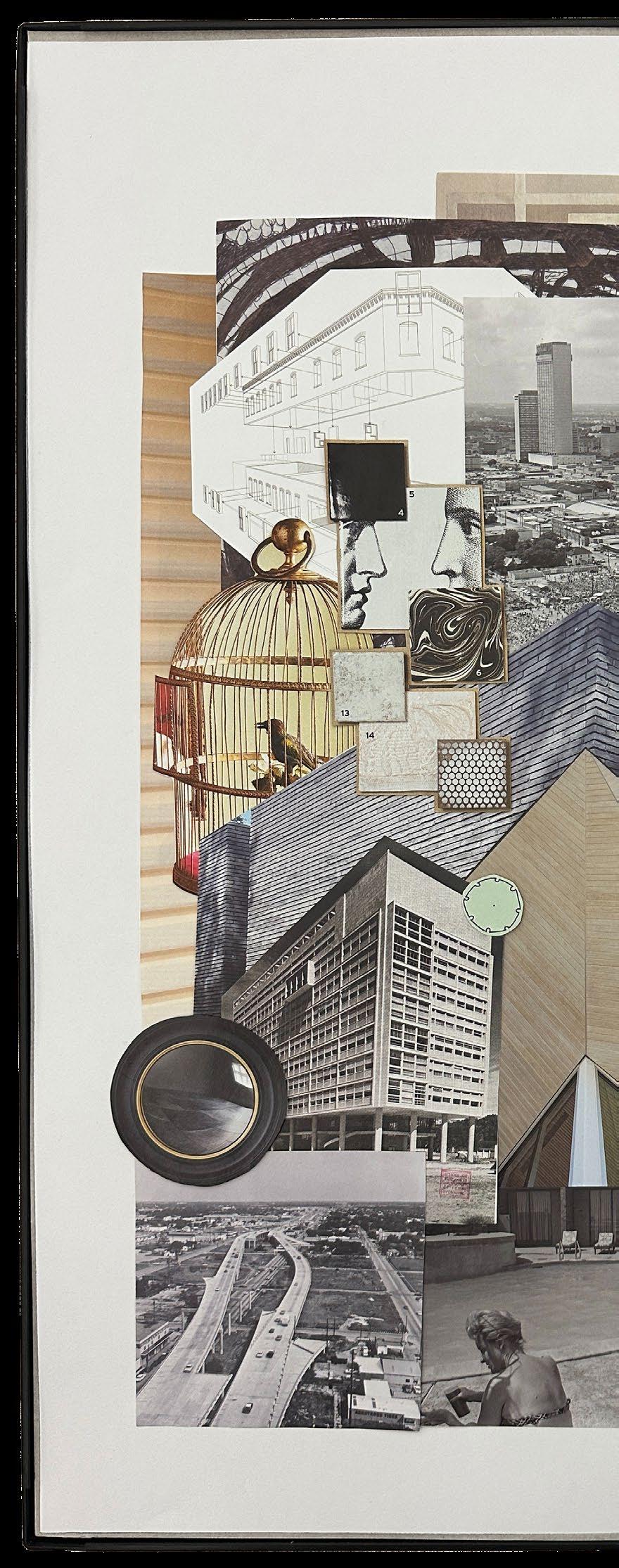
The second part of the composition is the present of photography and film. Most contemporary feel. There are photos of and drawings of future buildings. There photography, such as the corner shots and the black-and-white images of current time.
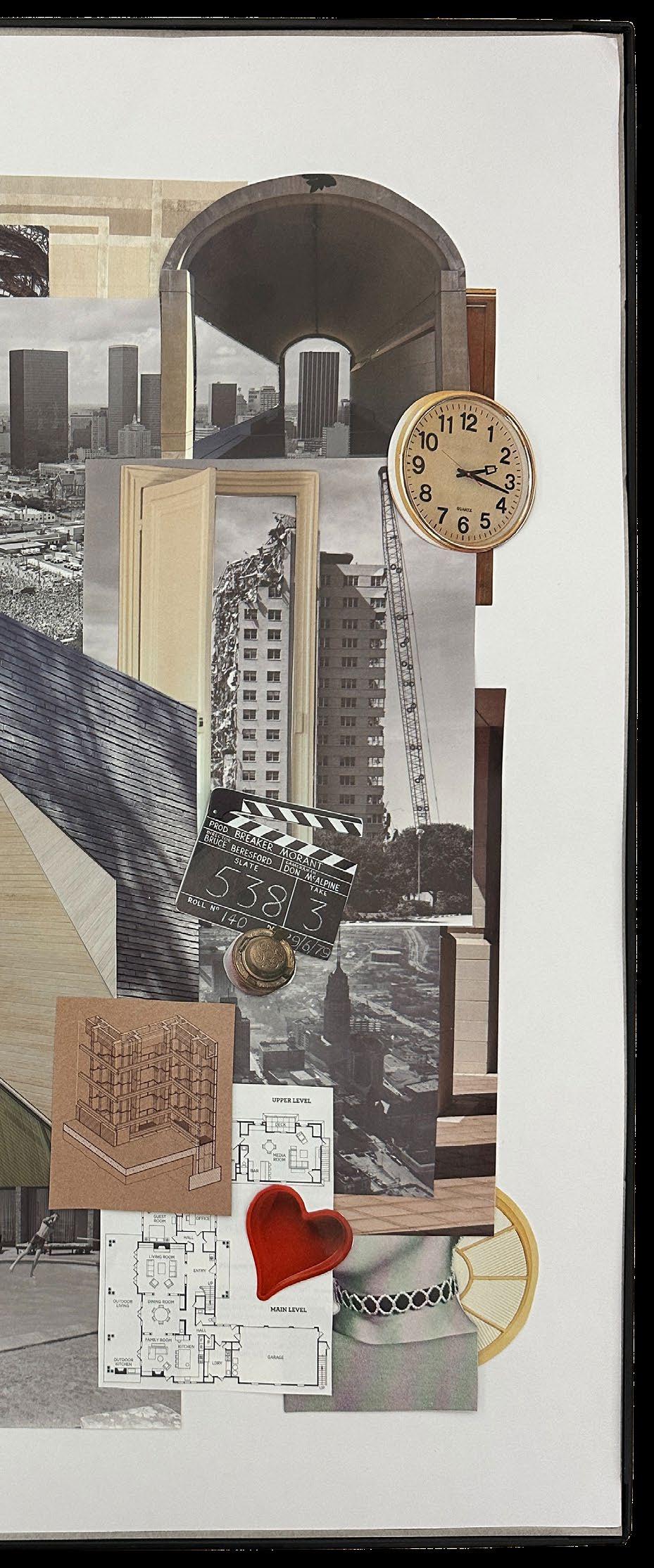
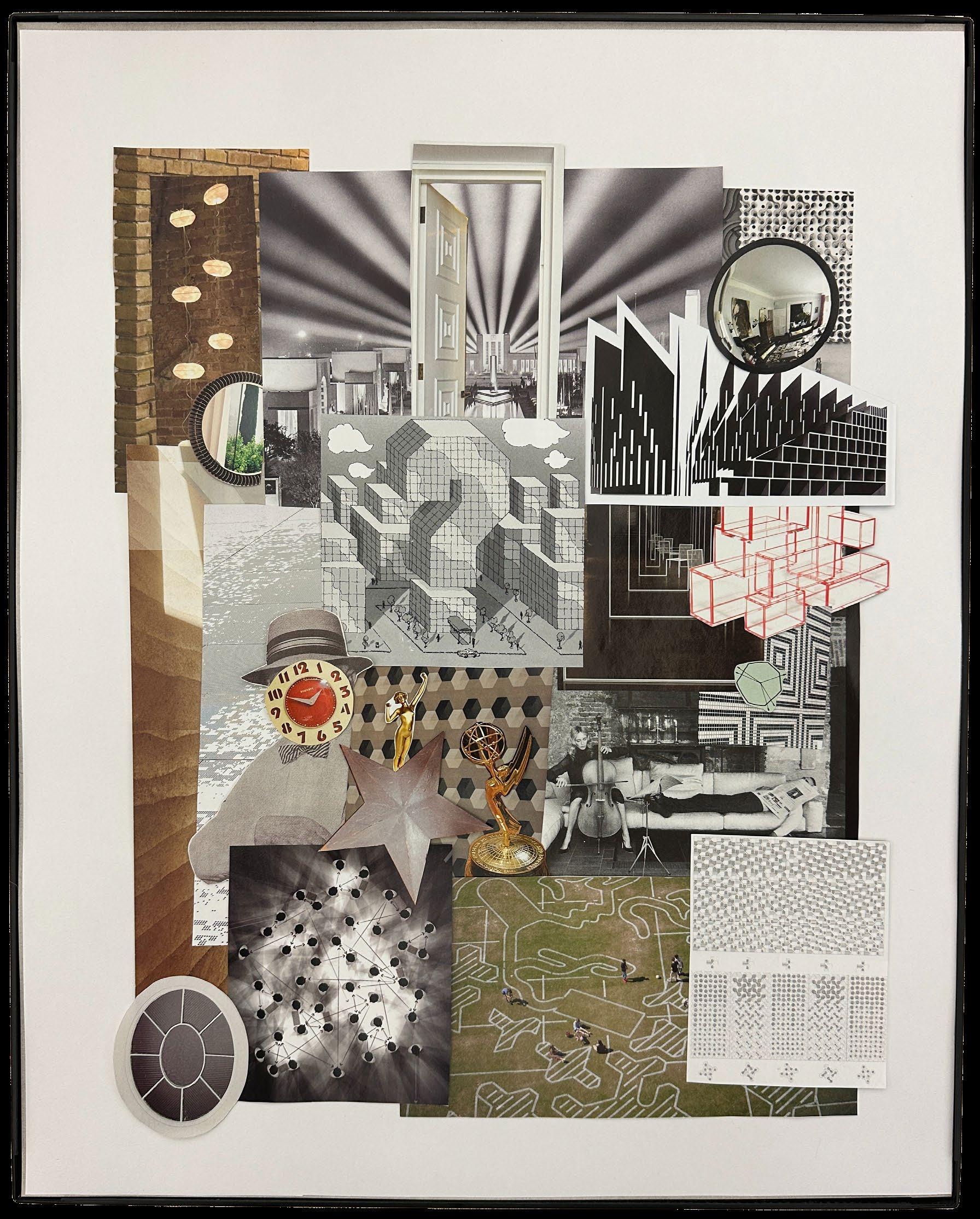
titled “What Is”. This collage represents Most of the pieces here have a modern and of today’s city skylines, modern materials, There are some similar typologies in the of buildings that create angular moments current places that create a contrast between
The final part of the composition is titled “What Might”. This collage represents the future of photography and film. Most of the pieces here have a more futuristic feel to them, with repetitive patterns and arranged elements. The clock in this collage is specifically placed over the person’s face to signify the shift towards modern software and technologies, highlighting how human impact could be lessening. The question mark in the middle indicates that the future of architecture is still unknown.
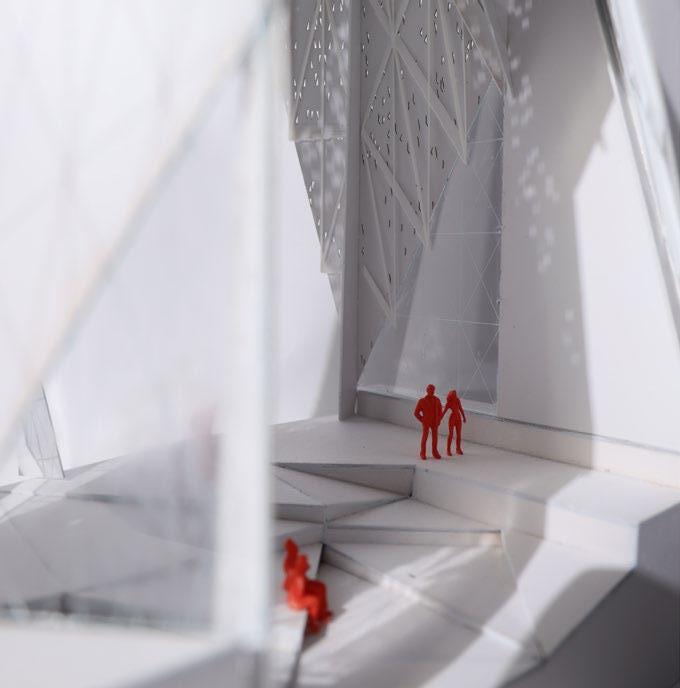
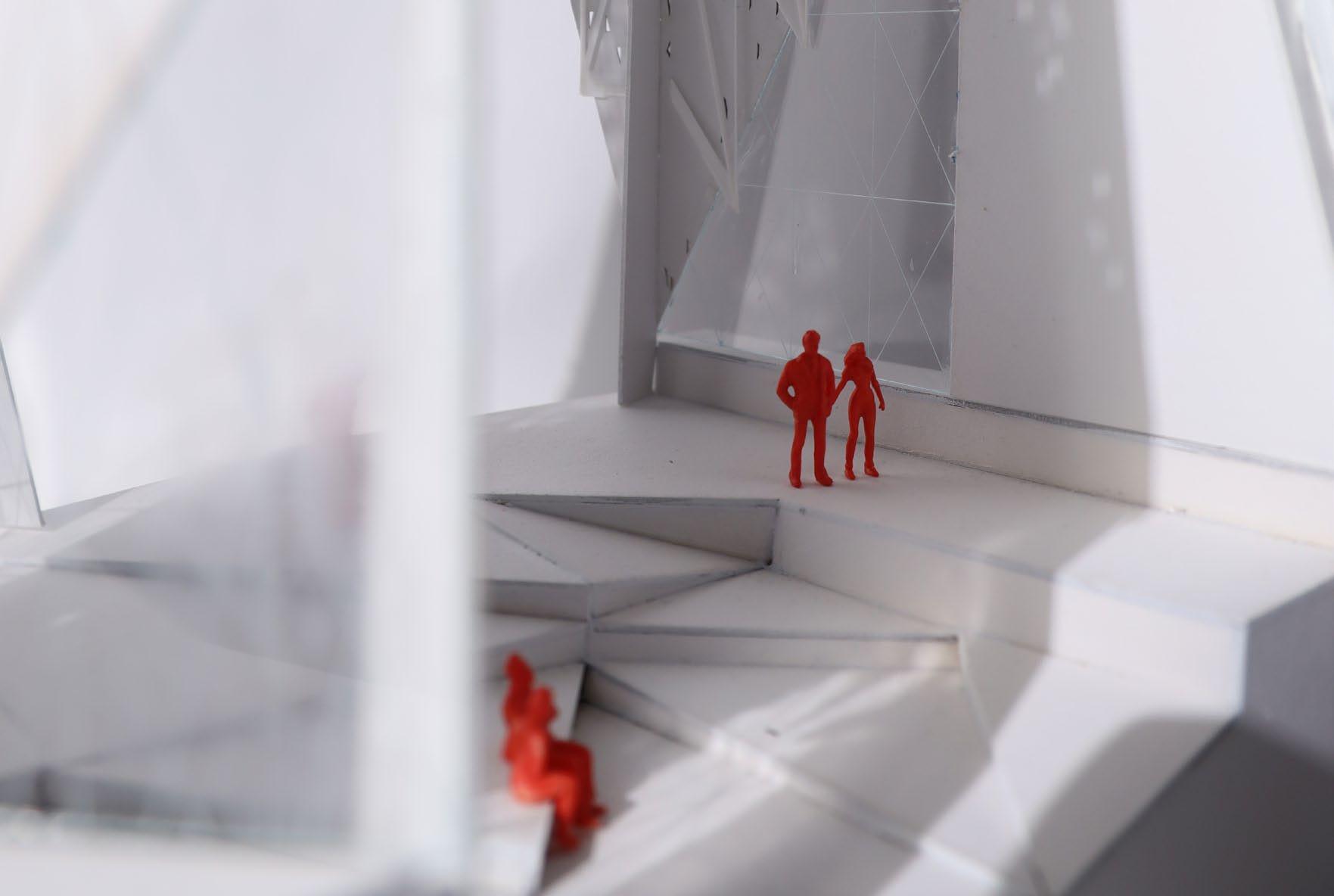
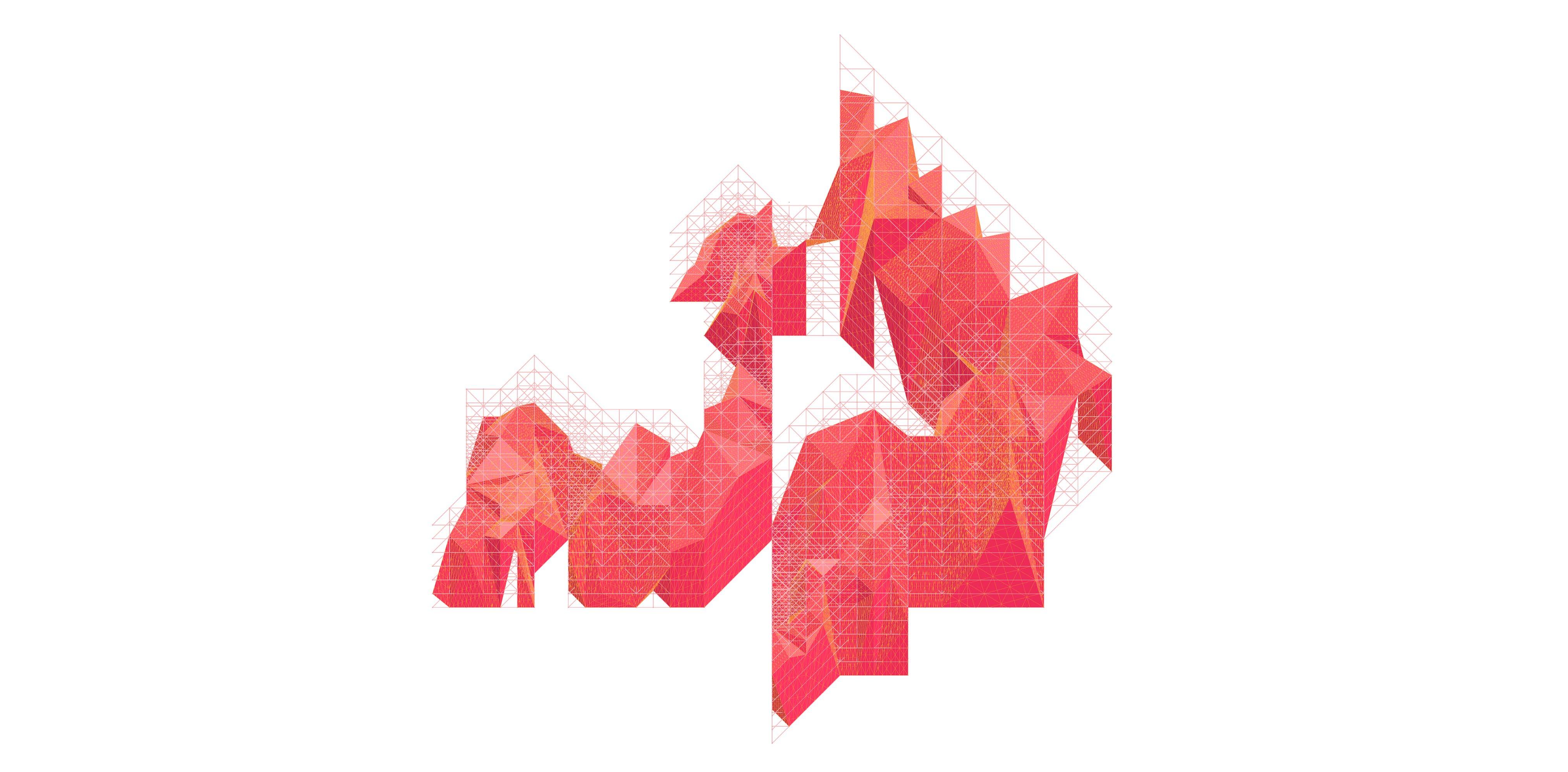
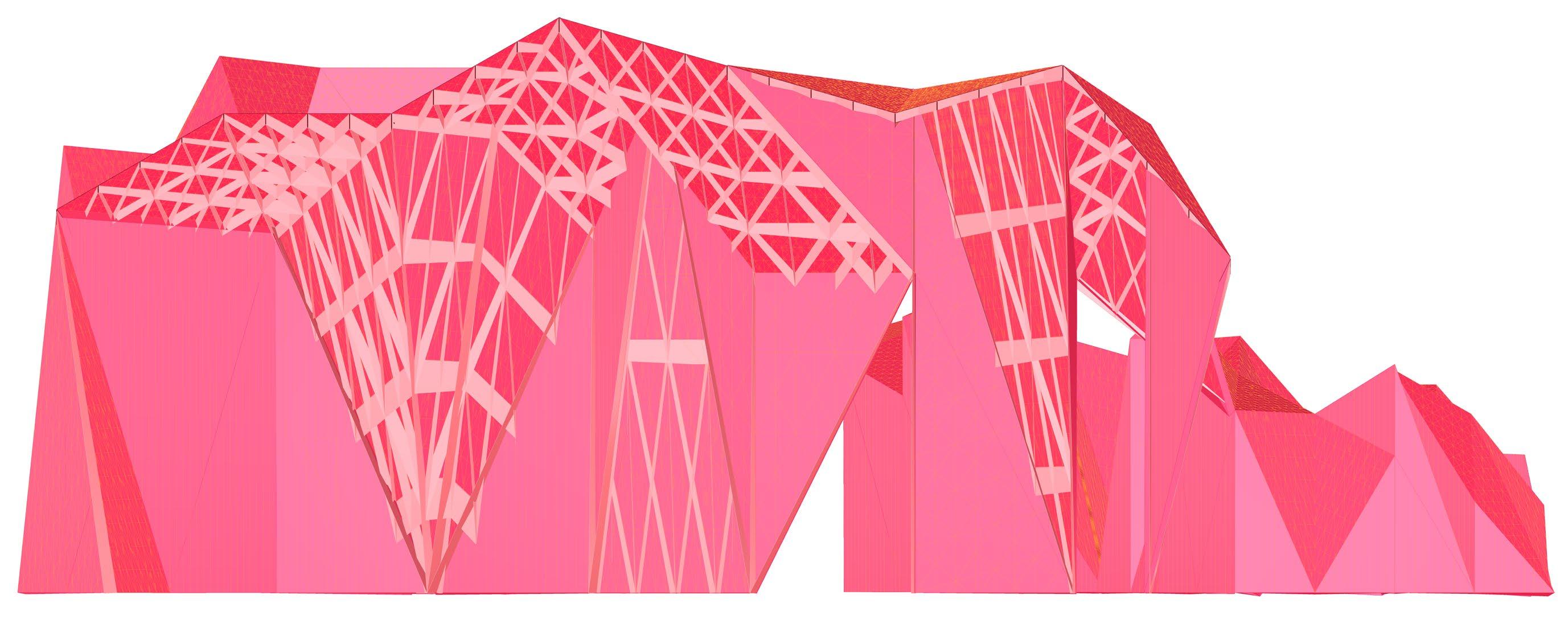
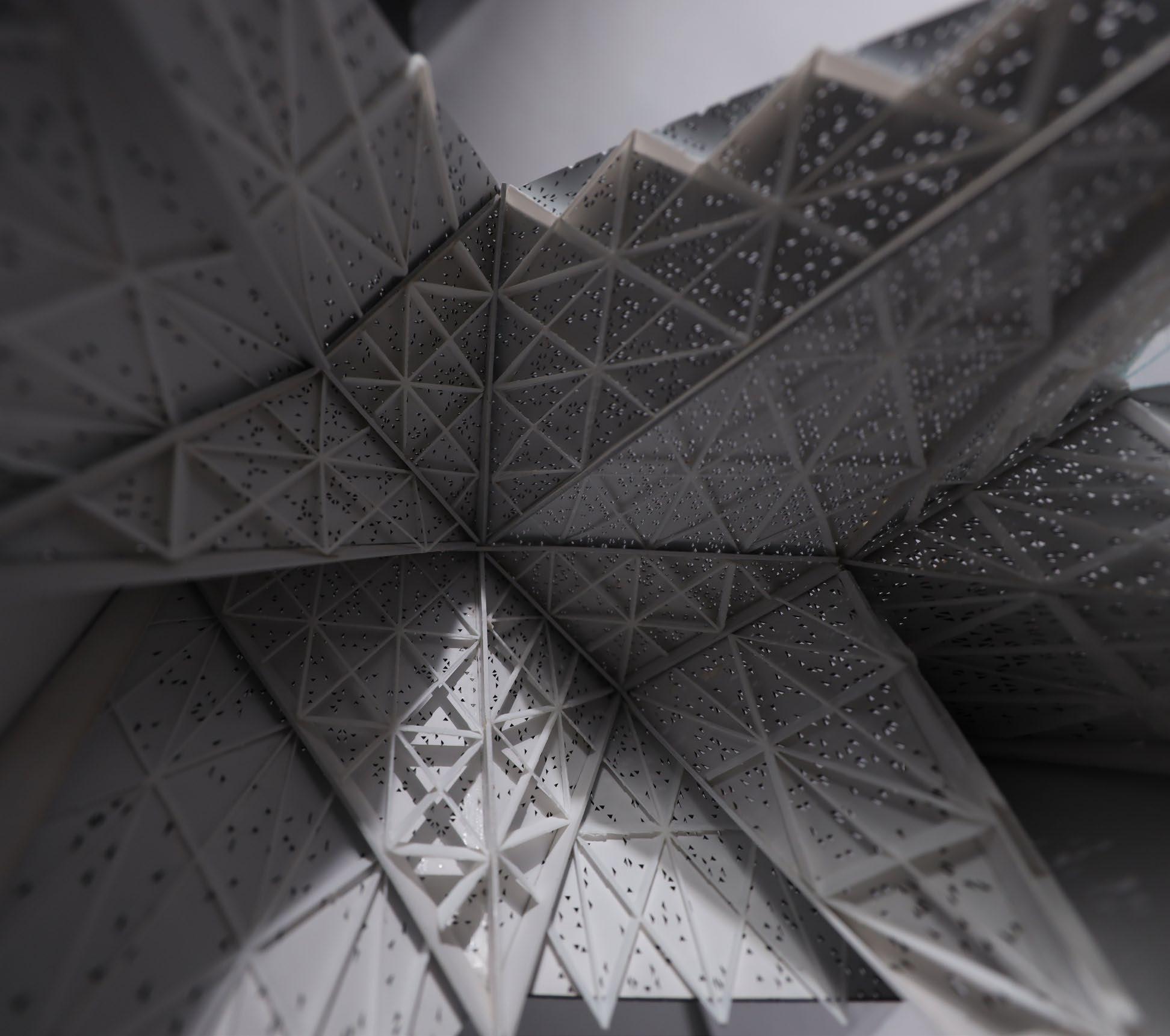
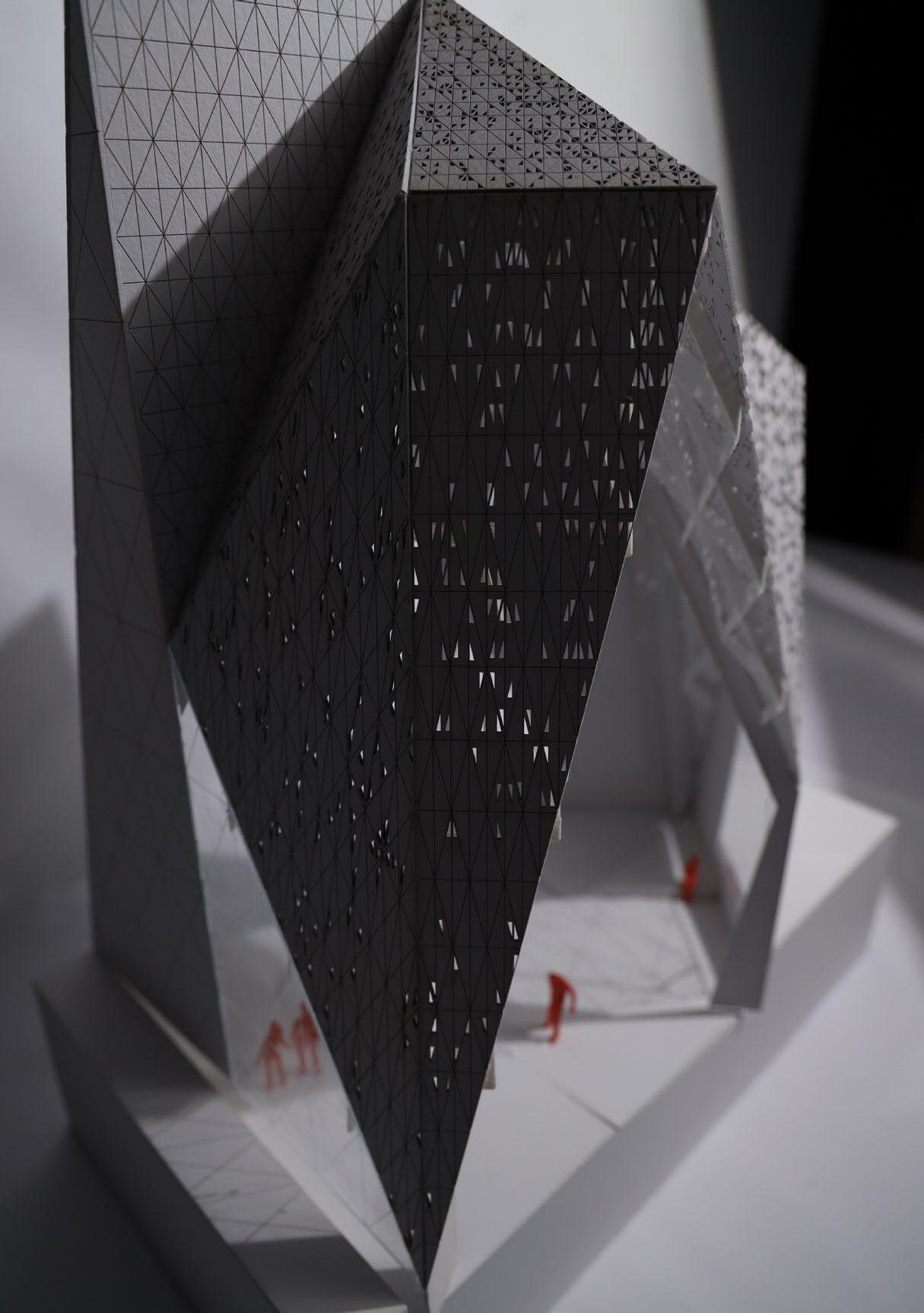
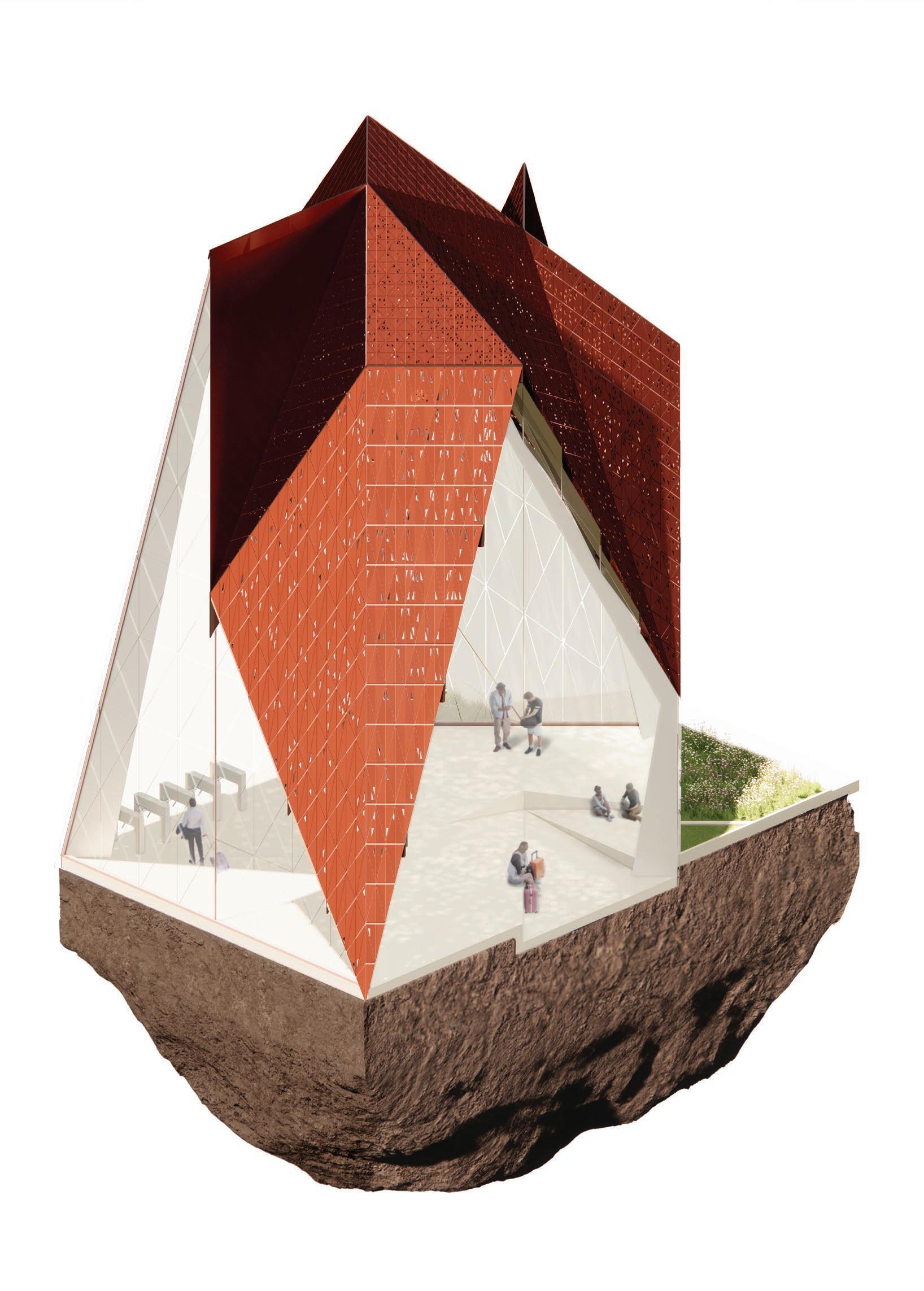
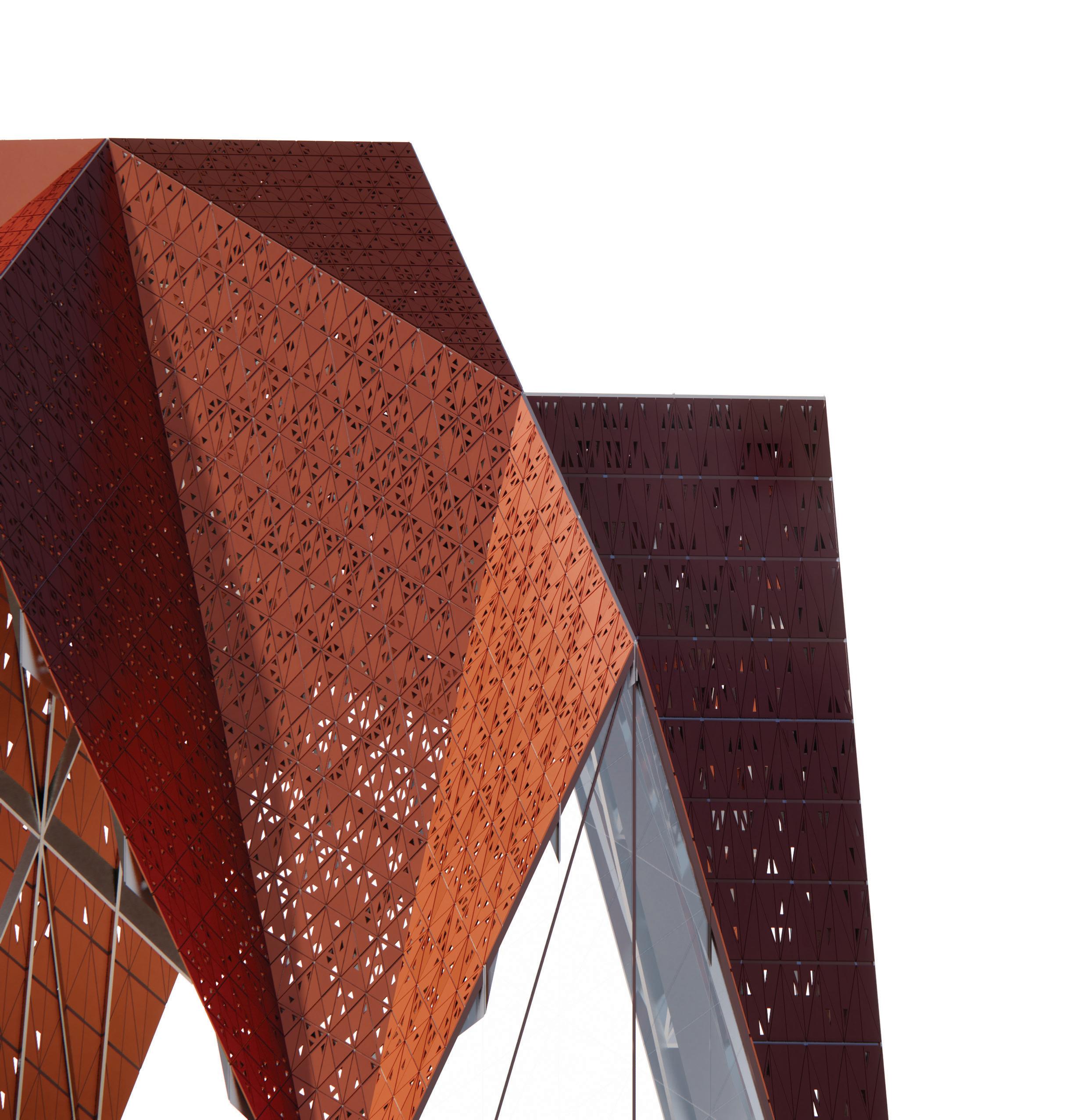
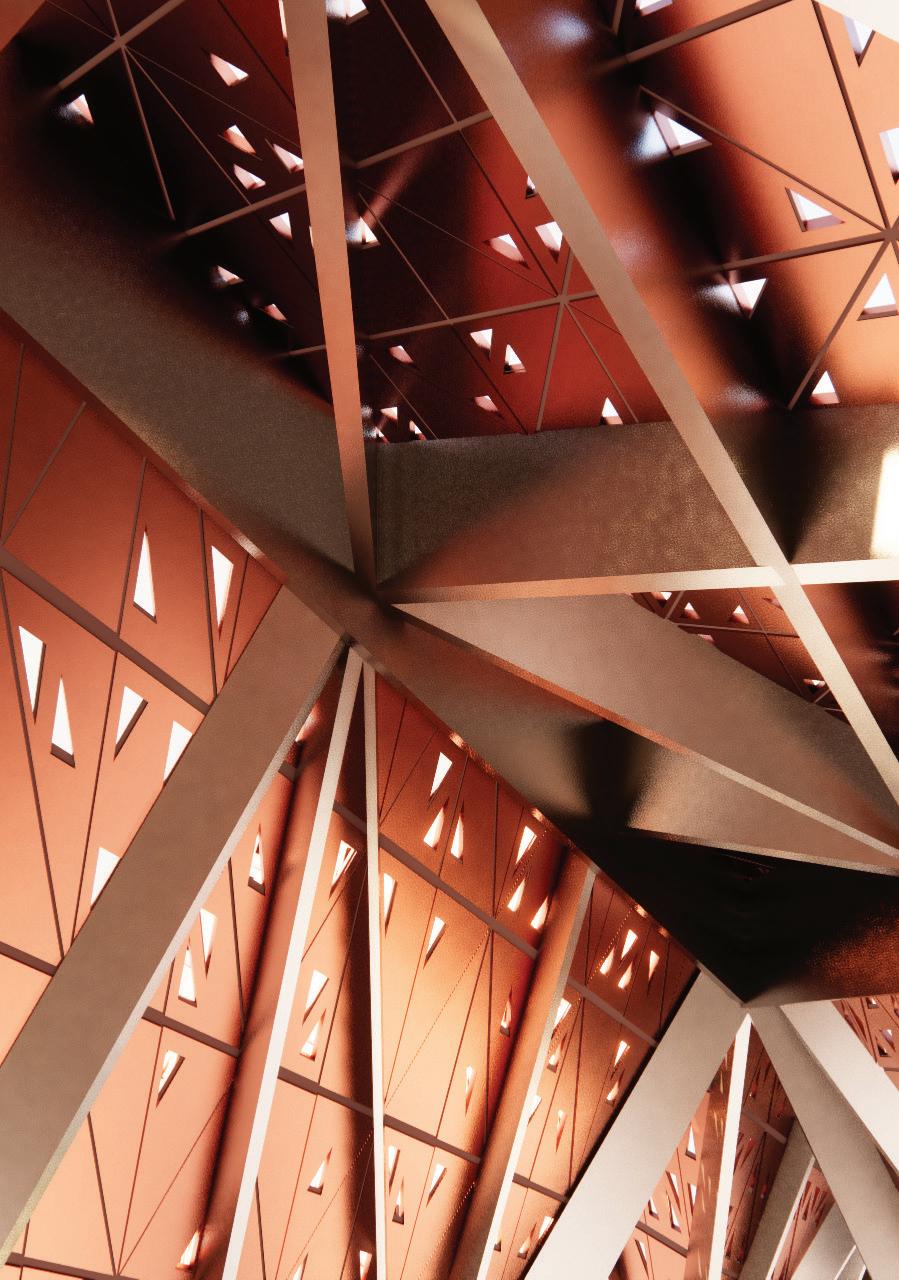
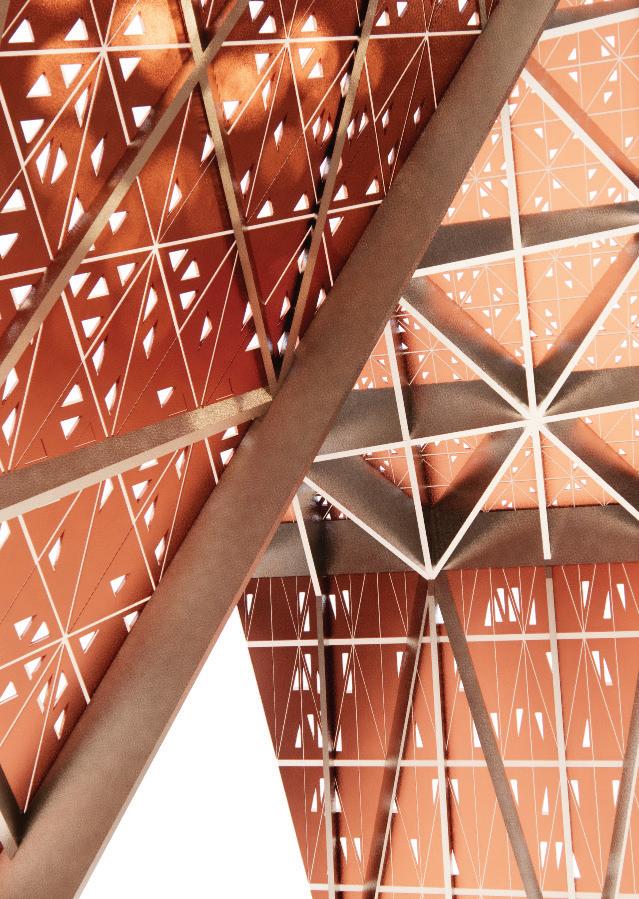
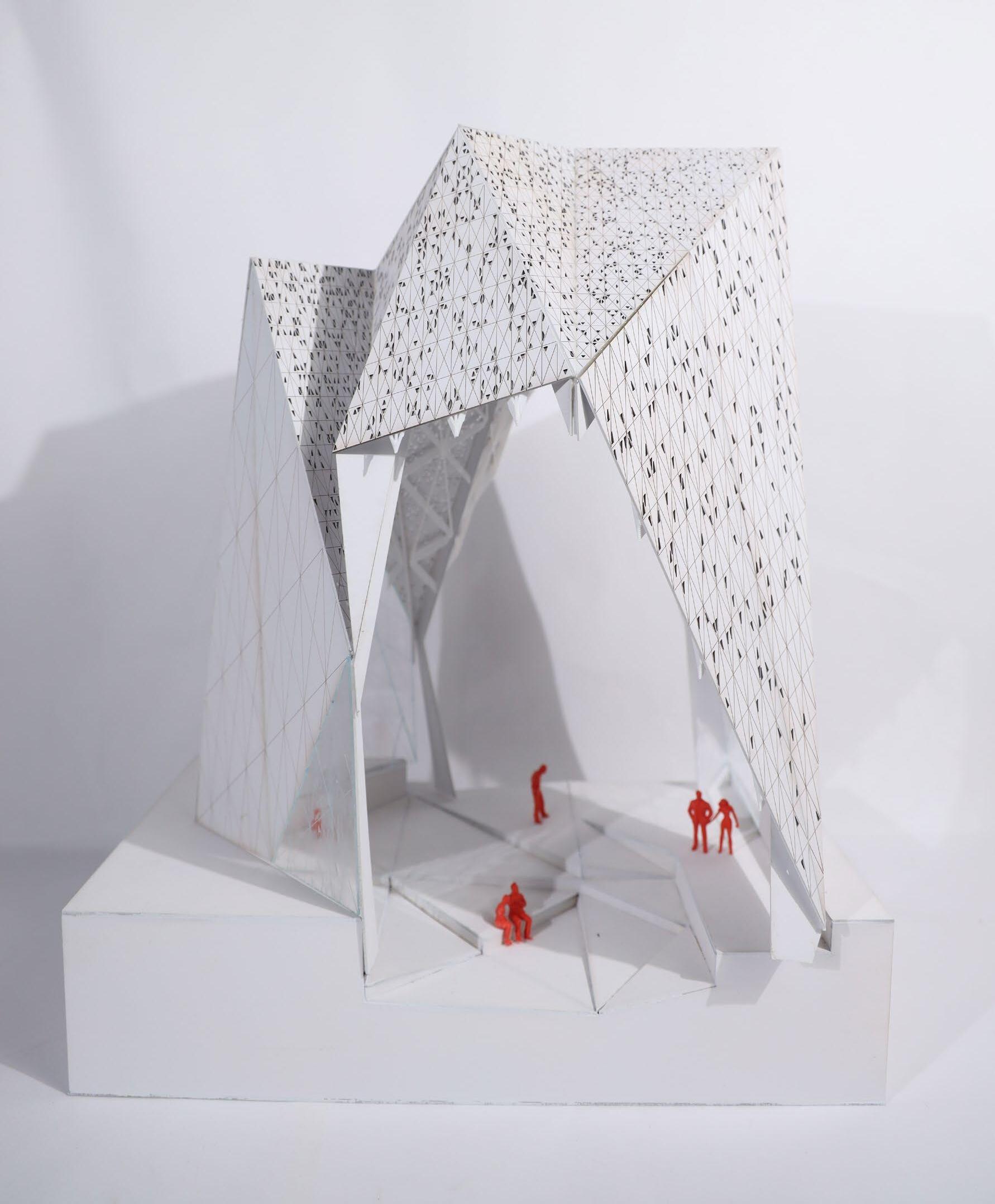
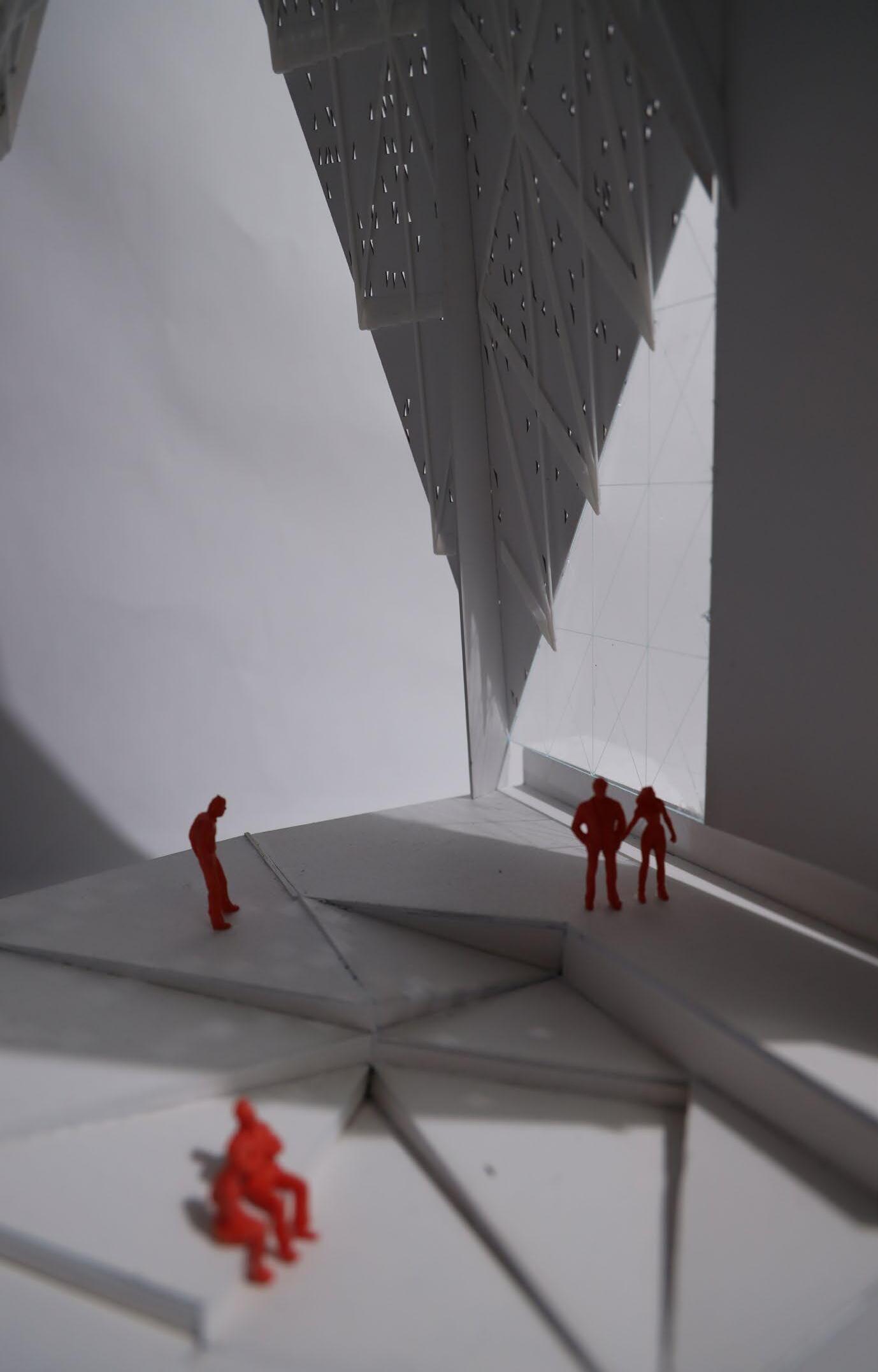
Beginning with the method of conceptualizing a design through study models, this project developed by folding materials and soldering wires to create a triangular form and structure. We were tasked with designing a train station for Texas A&M University to serve as a transportation hub for students, visitors, and travelers. The station explores dynamic movement through a unique grid-based form, circulation, and site design. The grid acts as the organizational foundation, with everything aligned to it. The grid was then multiplied in the z-axis by five and ten feet to regulate the triangular surfaces, which connect to intersecting points on the vertically duplicated grids.The 60’ tall building’s massing is supported by a tapering steel beam system that follows the edges of the triangles. The aluminum composite panel facade is perforated using a mathematical script to create a gradient, allowing natural light into the large space. In the lounge area, the ground plane also modulates through the grid, fostering a relaxed environment for travelers. Ultimately, our design for Texas A&M University’s train station integrates advanced techniques and user-centric principles, enriching the university community and beyond.
FALL 2024 // YEAR 4
ARCH 406 // ARCH DESIGN V INSTRUCTOR // Peter
Massin
TEAM // Meghan Palmer

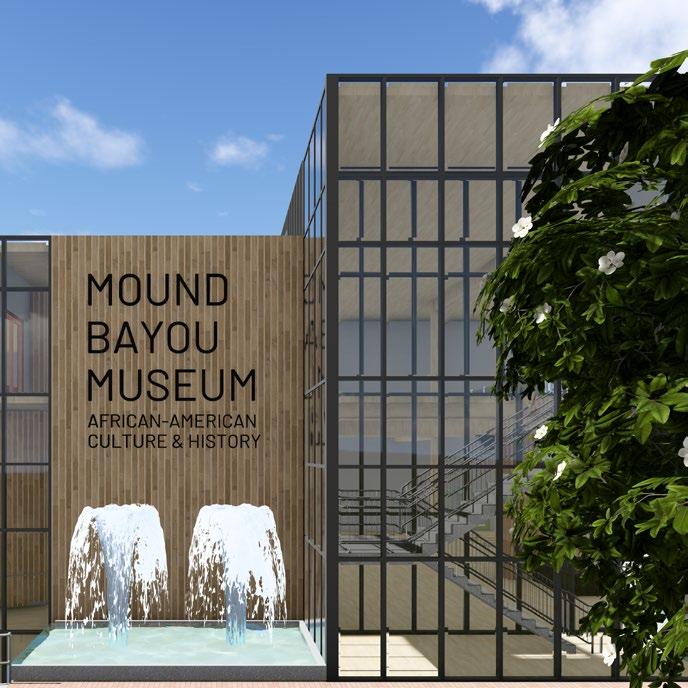
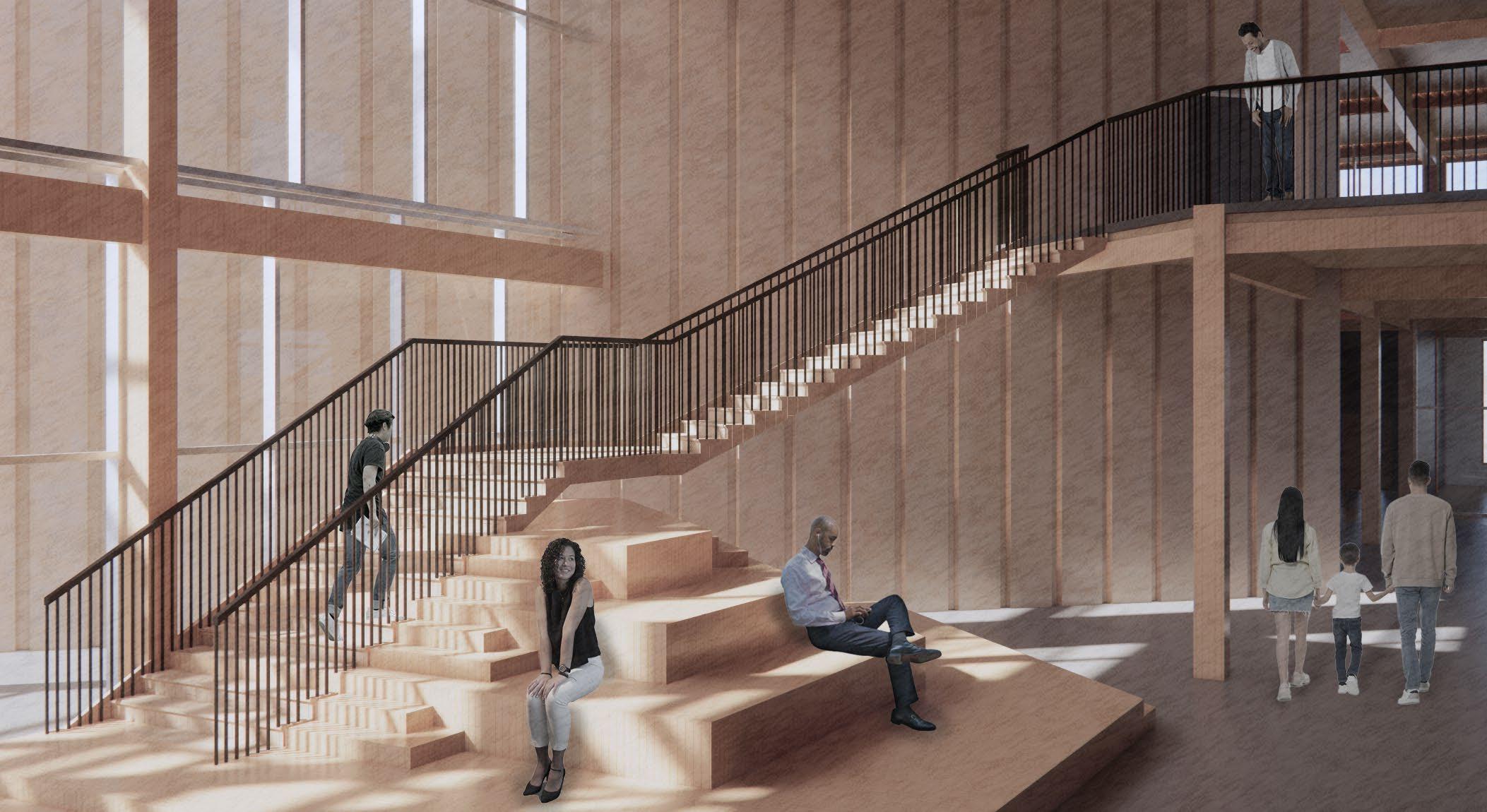
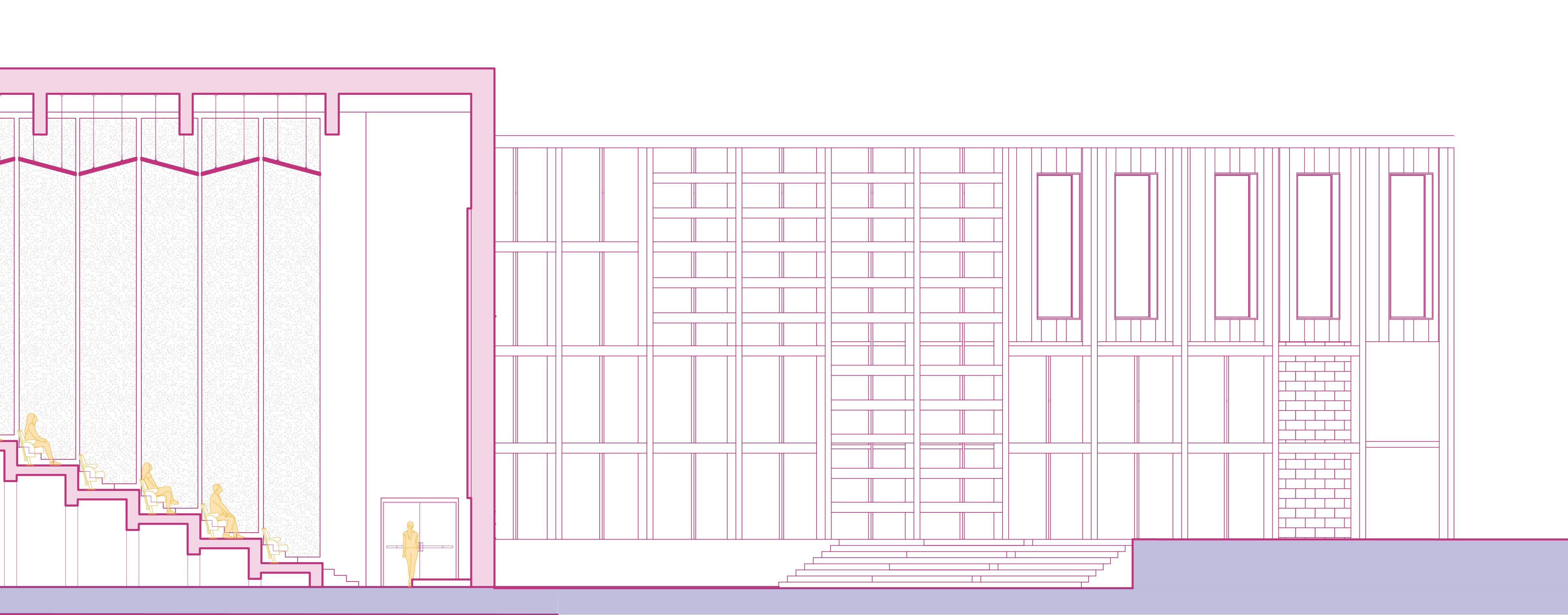
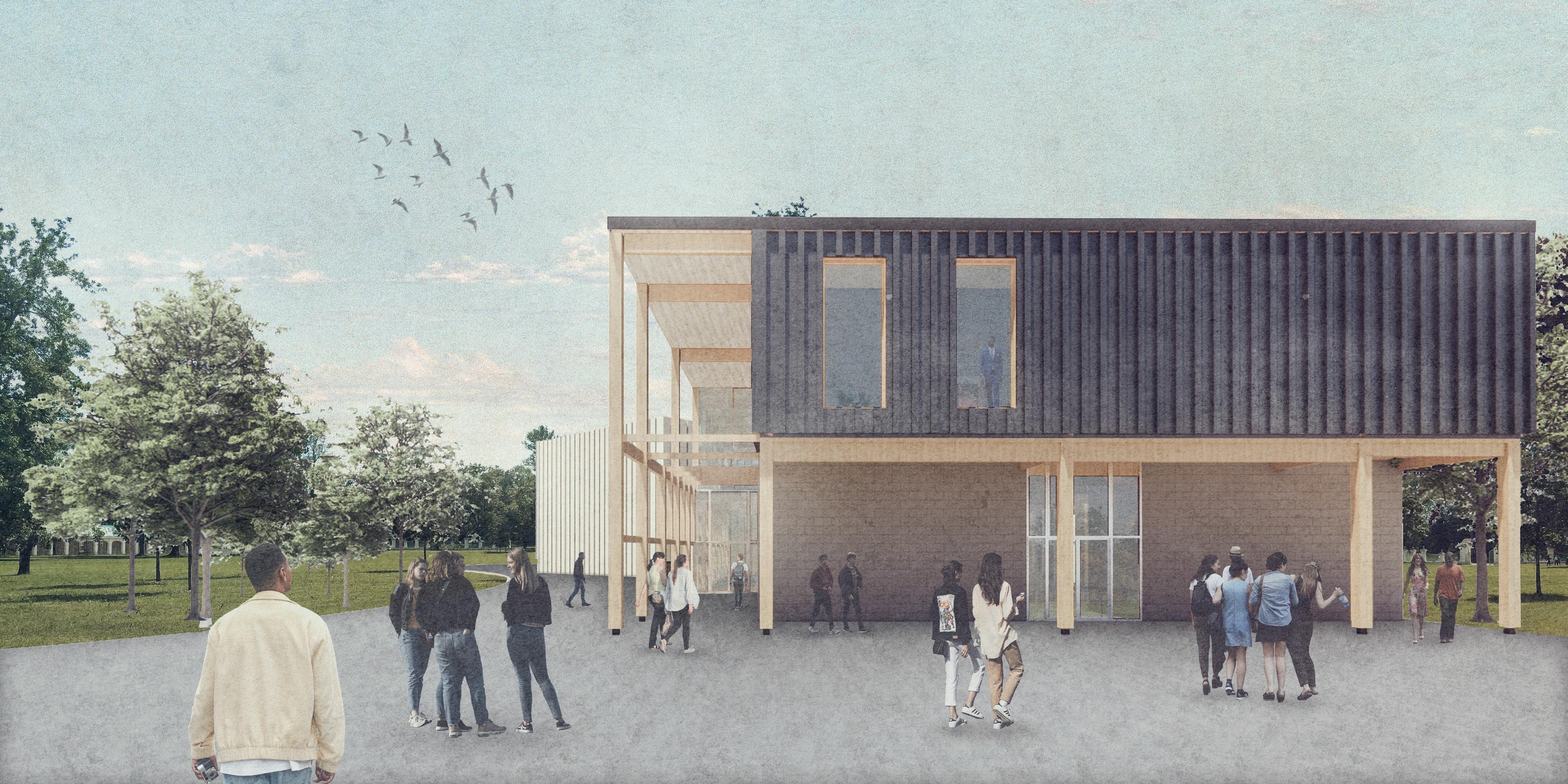
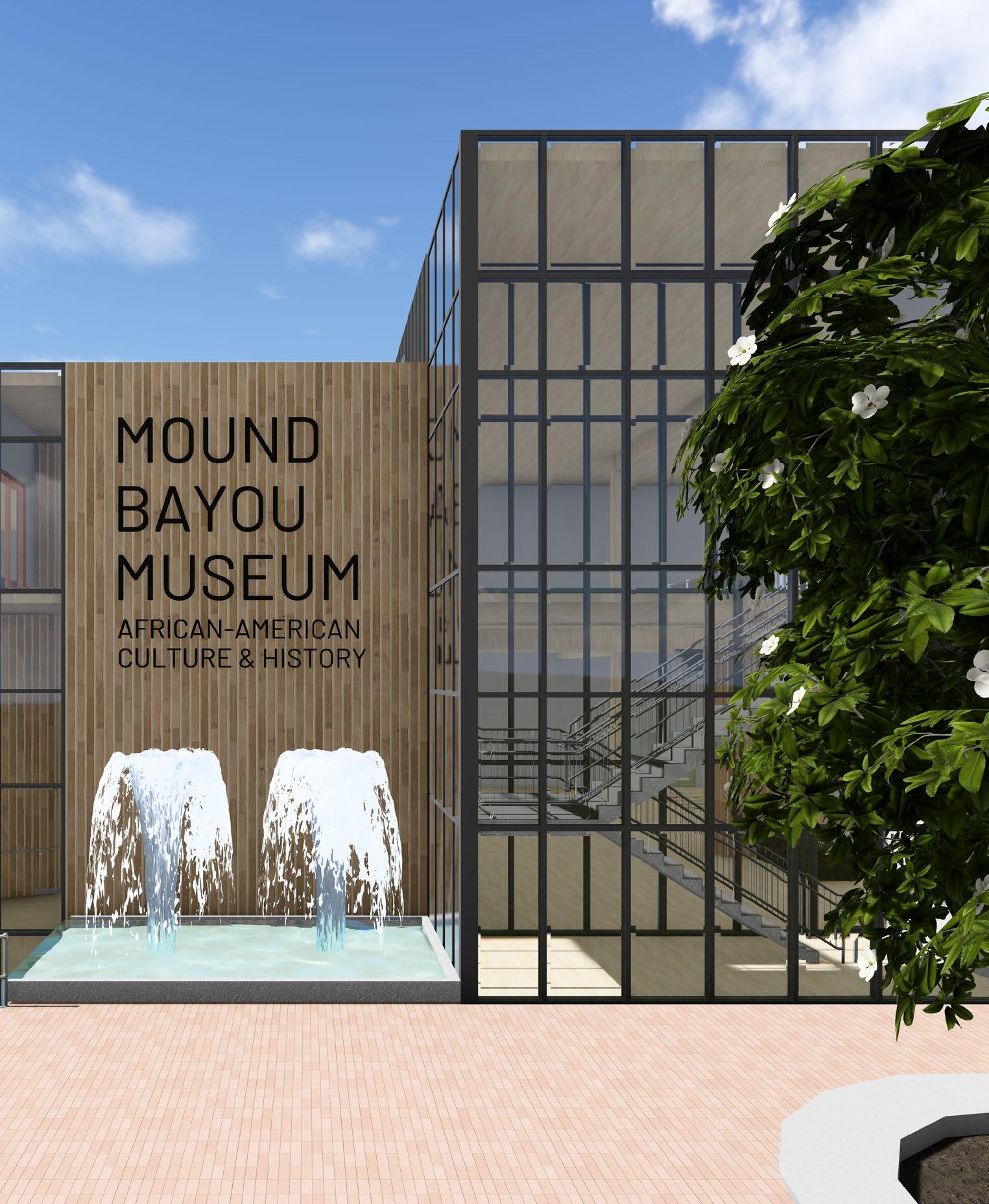
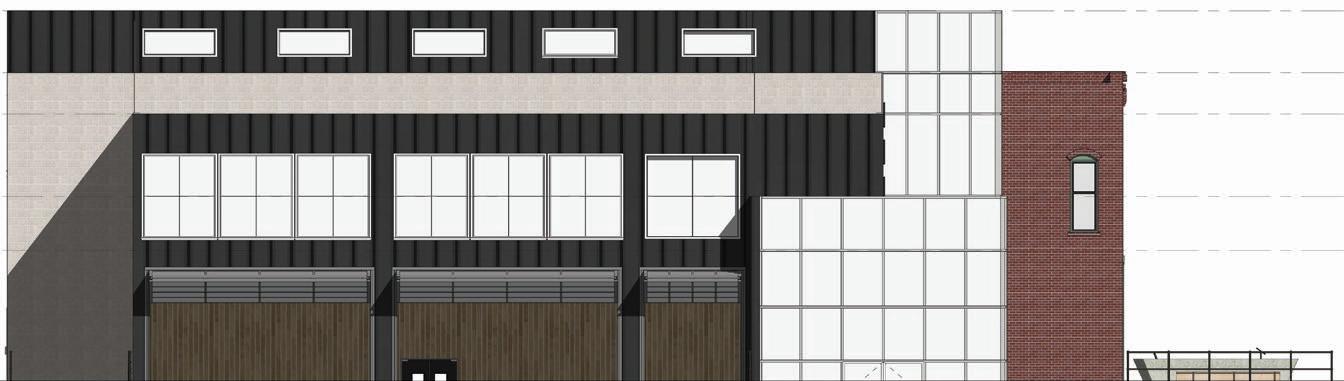
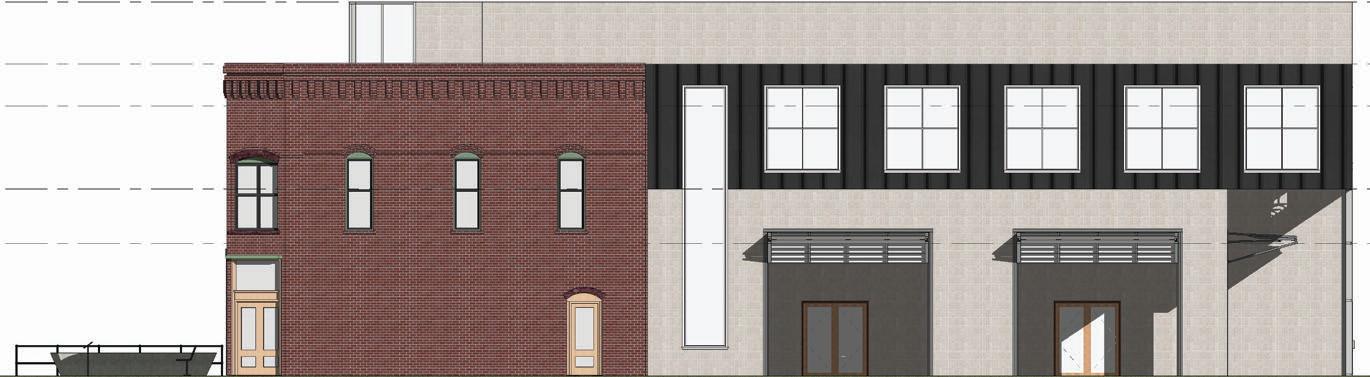
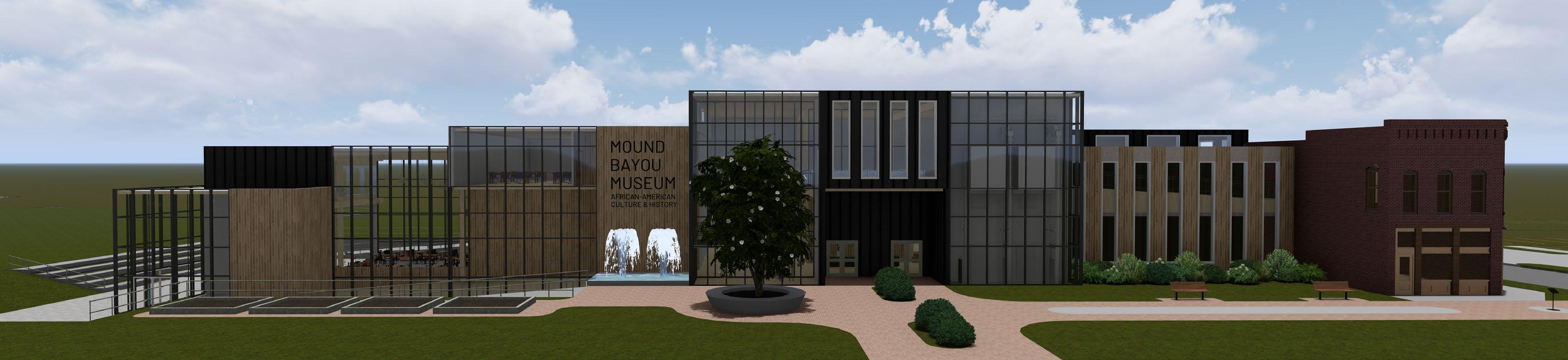
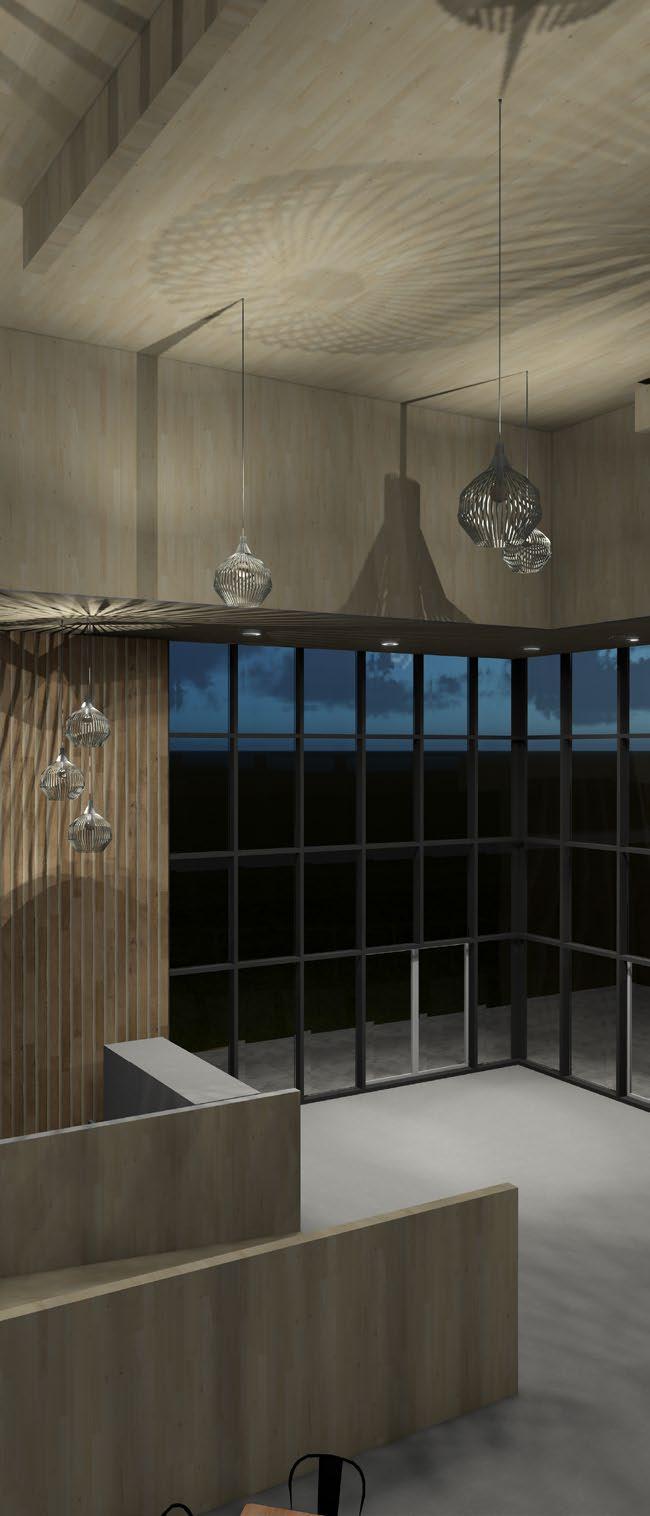
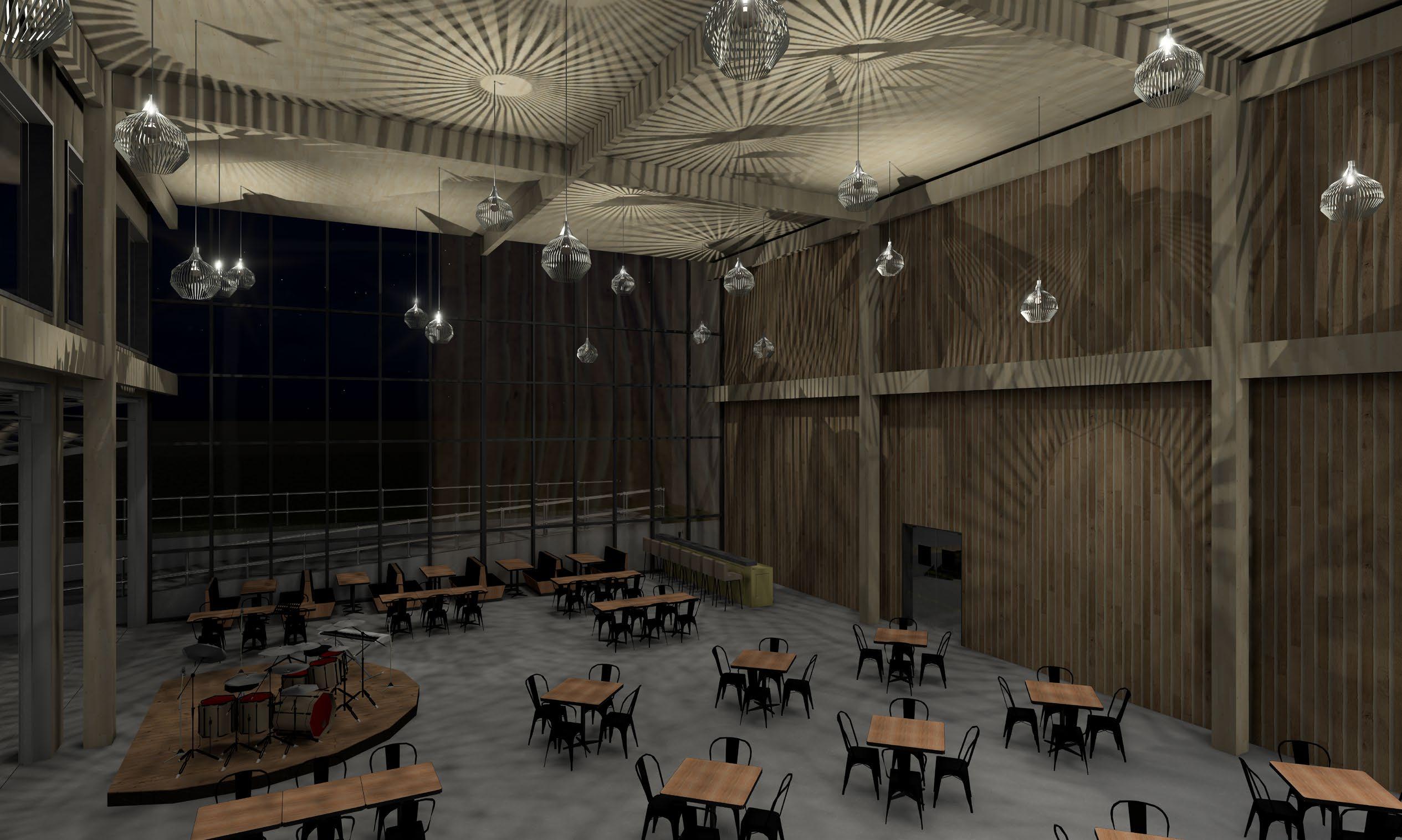
Mound Bayou, Mississippi is deeply rooted in cultural history and heritage while remaining committed to shaping a meaningful future. This project proposes the adaptive reuse and expansion of the historic 1904 bank building, transforming it into a cultural campus that celebrates and preserves the city’s rich African American legacy. History serves as the foundation of the design approach and informs both the conceptual framework and programmatic decisions from the outset. The restored bank is paired with a contemporary museum addition that houses a visitors’ center, exhibition galleries, administrative offices, and community-focused gathering spaces. Preservation is approached not only as an act of conservation but also as a catalyst for community revitalization, reinforcing local identity while supporting future growth. Material selections such as traditional brick, warm wood slats, and resilient standing seam zinc panels establish a dialogue between historical continuity and contemporary expression, while a mass timber structural system advances sustainable building practices and creates a natural and welcoming interior atmosphere. Through thoughtful engagement with historic preservation guidelines, the project honors Mound Bayou’s legacy while contributing to its continued cultural and civic vitality.
SPRING 2025 // M. ARCH
ARCH 606 // ARCH DESIGN II
INSTRUCTOR // Dr. Christopher Hunter
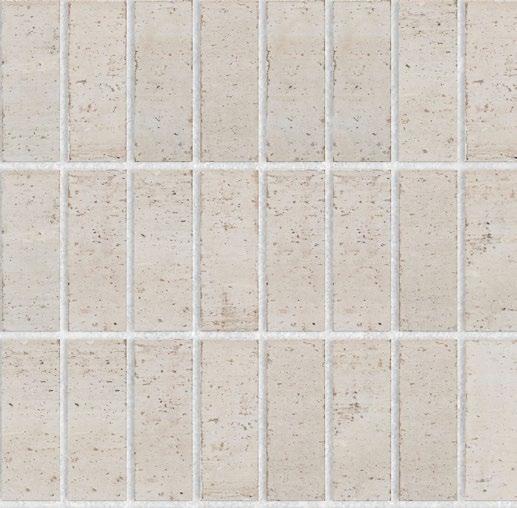
Brick grounds the building in tradition while introducing a lighter, contemporary take on Mound Bayou’s historic architecture.
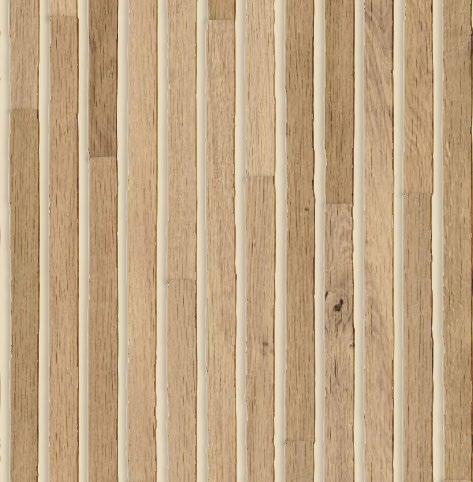
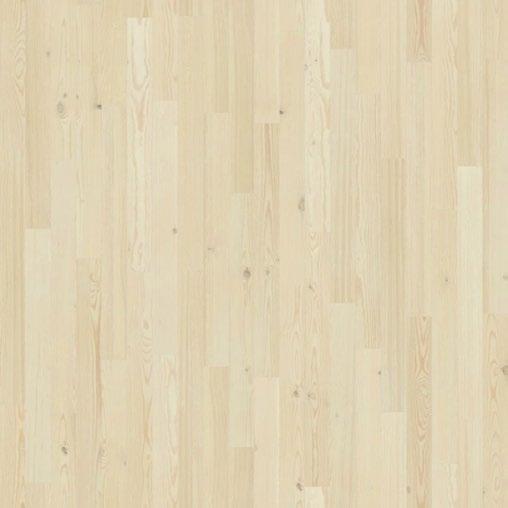
Wood slat panels introduce natural texture and craftsmanship, with sustainably sourced woods adding warmth and depth.

Standing seam zinc panels provide a durable, low-maintenance skin that patinas with time, reflecting resilience and transformation.
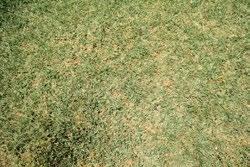
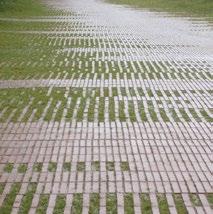
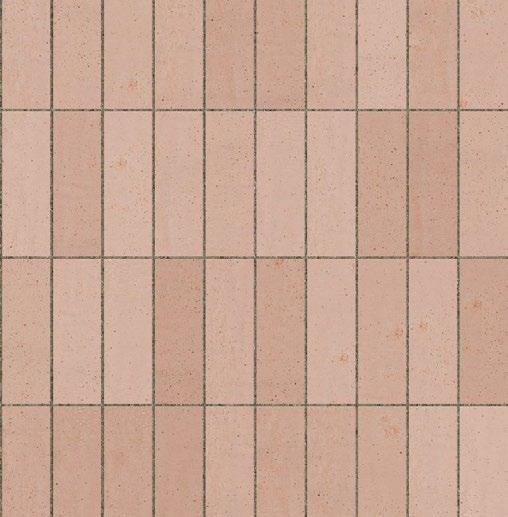
Terra cotta-colored pavers create a warm, inviting ground plane, guiding visitors to the museum with a sense of continuity and place.
CLT and mass timber provide a low-carbon structural system while giving the interiors a natural, welcoming presence.
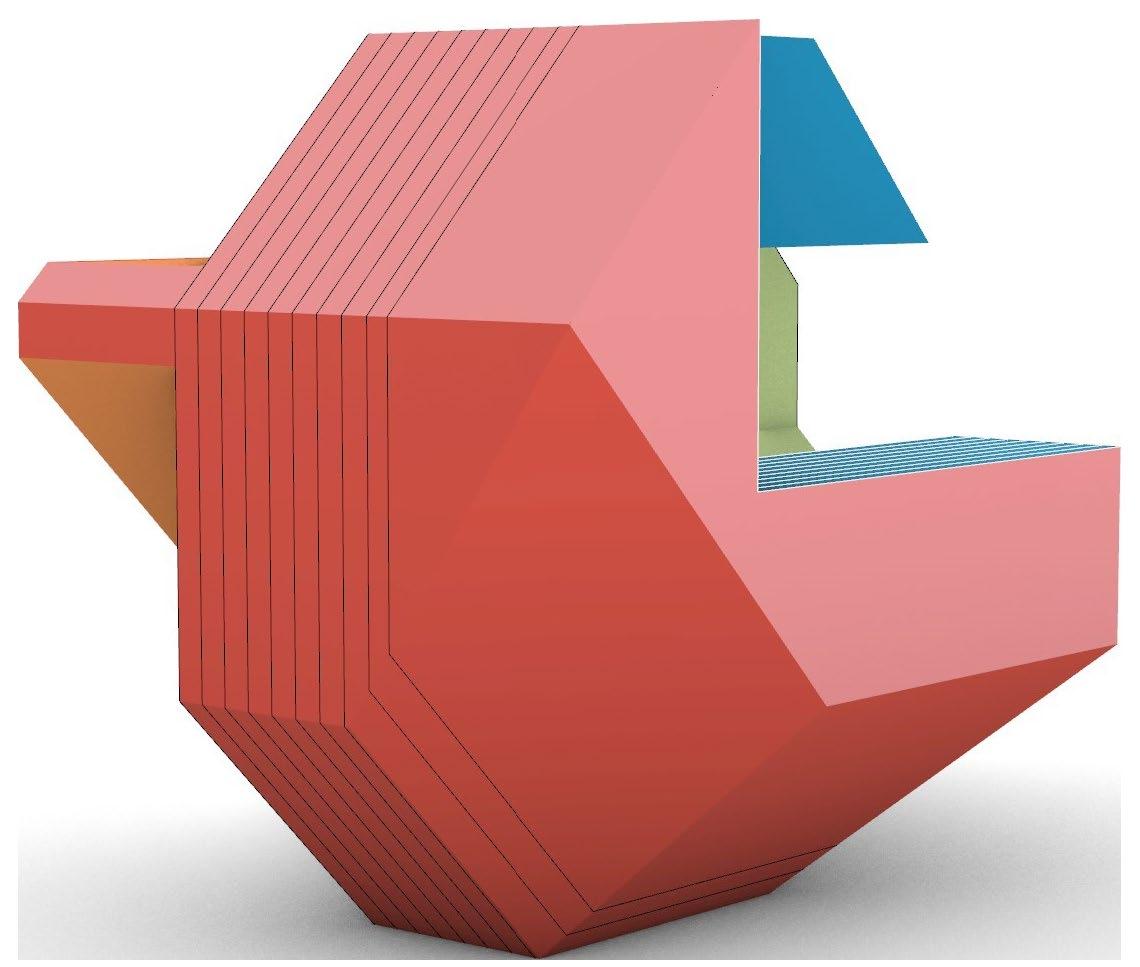
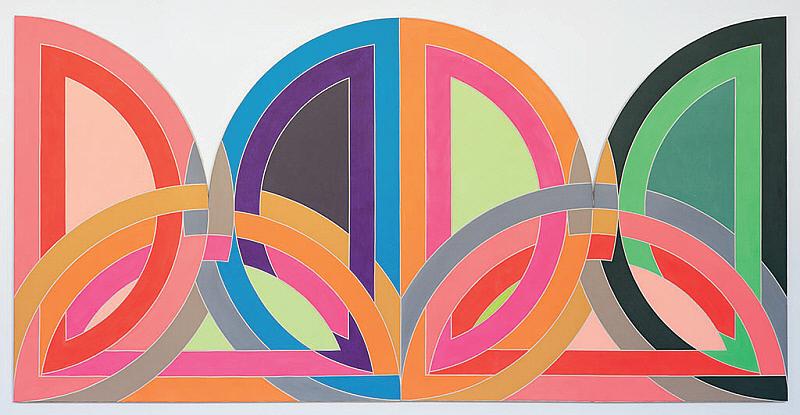
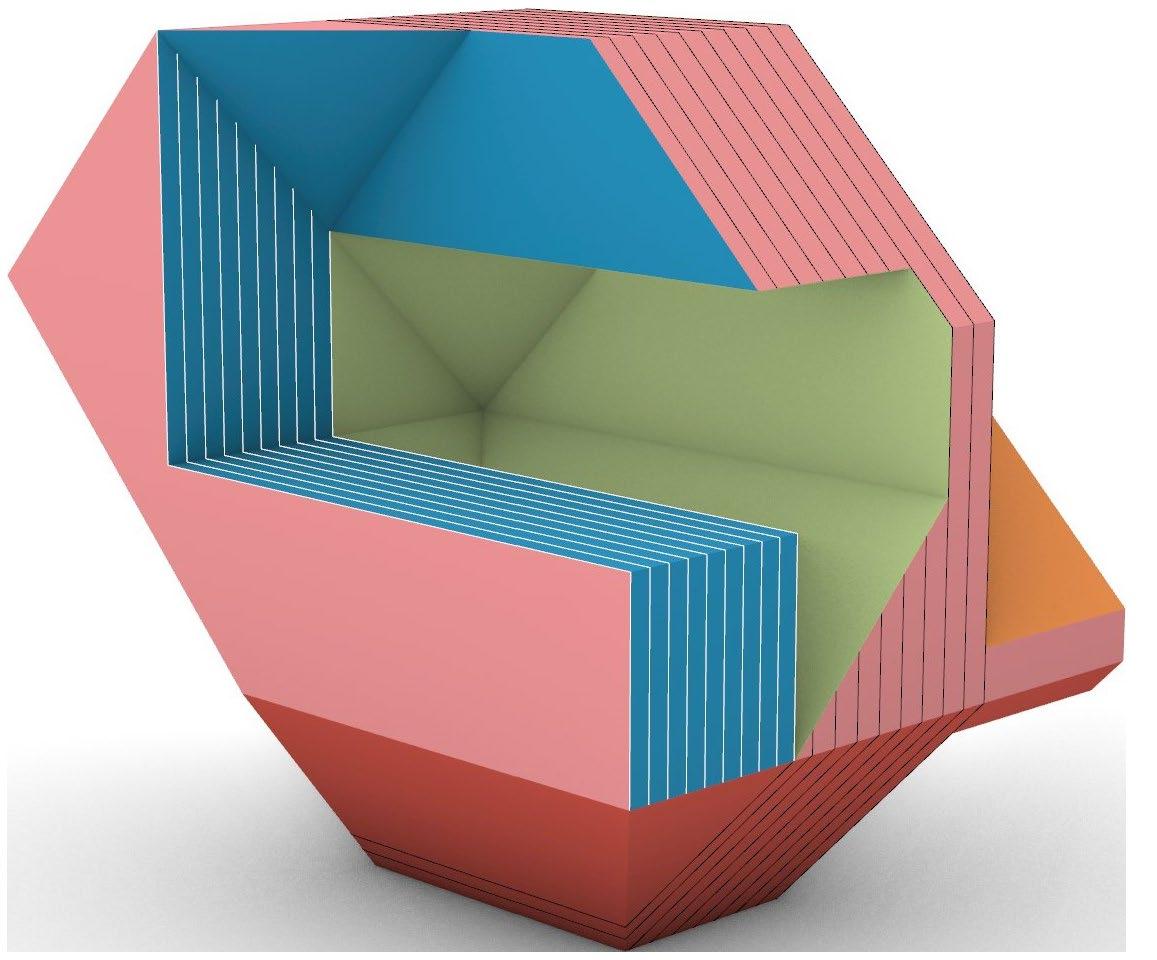
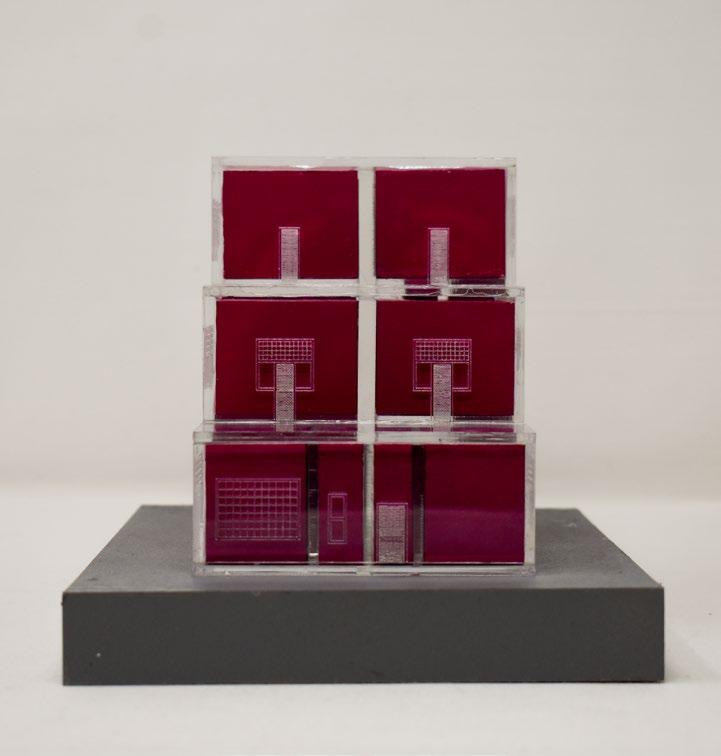
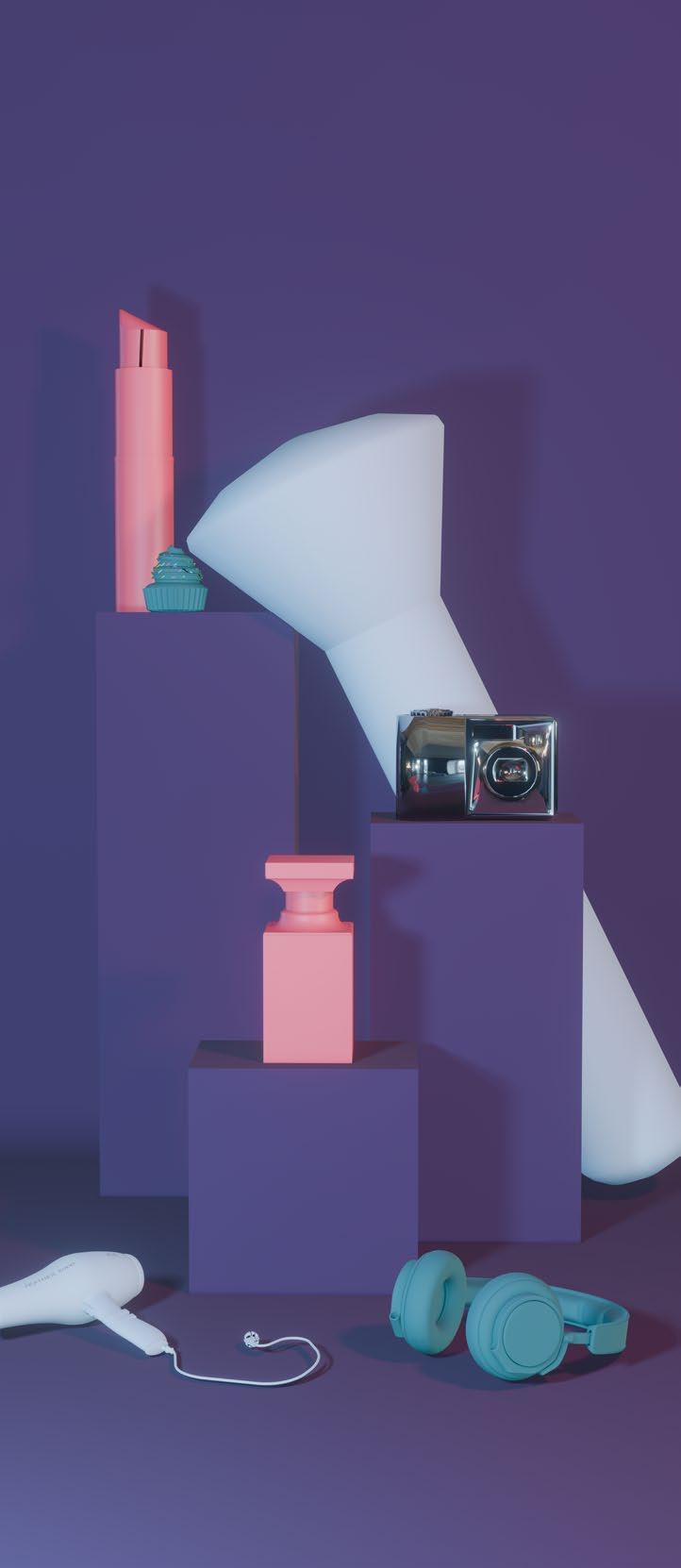
Exploring the manipulation of 3D forms using boolean operations and various other functions, we started with a cube and had to strategically remove parts of the form to make a new object. Color, positive and negative space, and materiality were studied throughout the process. The final model includes a caved-in space that feels secure yet still exposed due to the elements shadowing the interior. Frank Stella’s work served as inspiration for the color choices. The range of colors within the art was mindfully applied to the model. The warmer colors were focused on the exterior, and the interior houses the cooler colors in the palette.
FALL 2021 // YEAR 2
ARCH 205 // ARCH DESIGN I
INSTRUCTOR // Shawn Lutz
from artwork to form
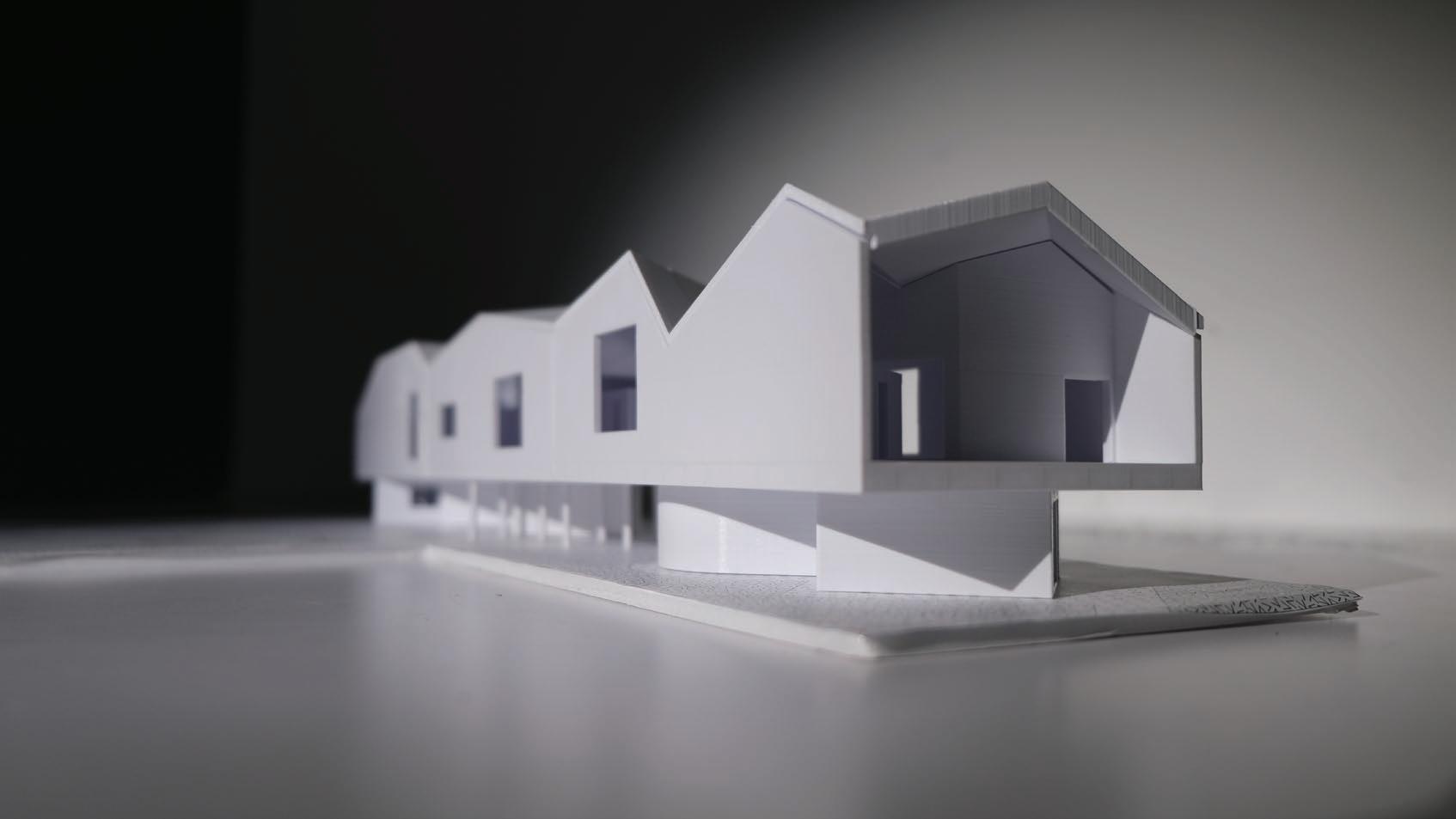
Cuero, Texas, is a small town based around a courthouse square. It is the county seat of DeWitt County and a Texas Target Community, areas that the Department of Architecture studies to create engagement and sustainable plans for. Our team was to select a site within the nine-square layout around the central courthouse to propose housing for student teachers. The challenge was to consider the many different types of tenure that each person or family could be under, so they would need to feel comfortable in a communal living situation with others that they may not be familiar with. We sought to create a space that allows each person to feel independent in their own units but also to have a variety of shared spaces to serve daily needs and social purposes. The site location allows residents to enjoy the benefits of the central part of town and be relatively close to the district schools for an easy commute. After researching the city and analyzing the surrounding buildings, we found what we consider the best location for our housing. A weather analysis assisted with the building orientation as well. This project aims to incentivize job opportunities and attempt to bring more student teachers to the rural, smaller school districts throughout Texas.
SPRING 2022 // YEAR 2
ARCH 206 // ARCH DESIGN II
INSTRUCTOR // Dr. Andrew Tripp
TEAM // Catherine Fuentes & Brody Miller
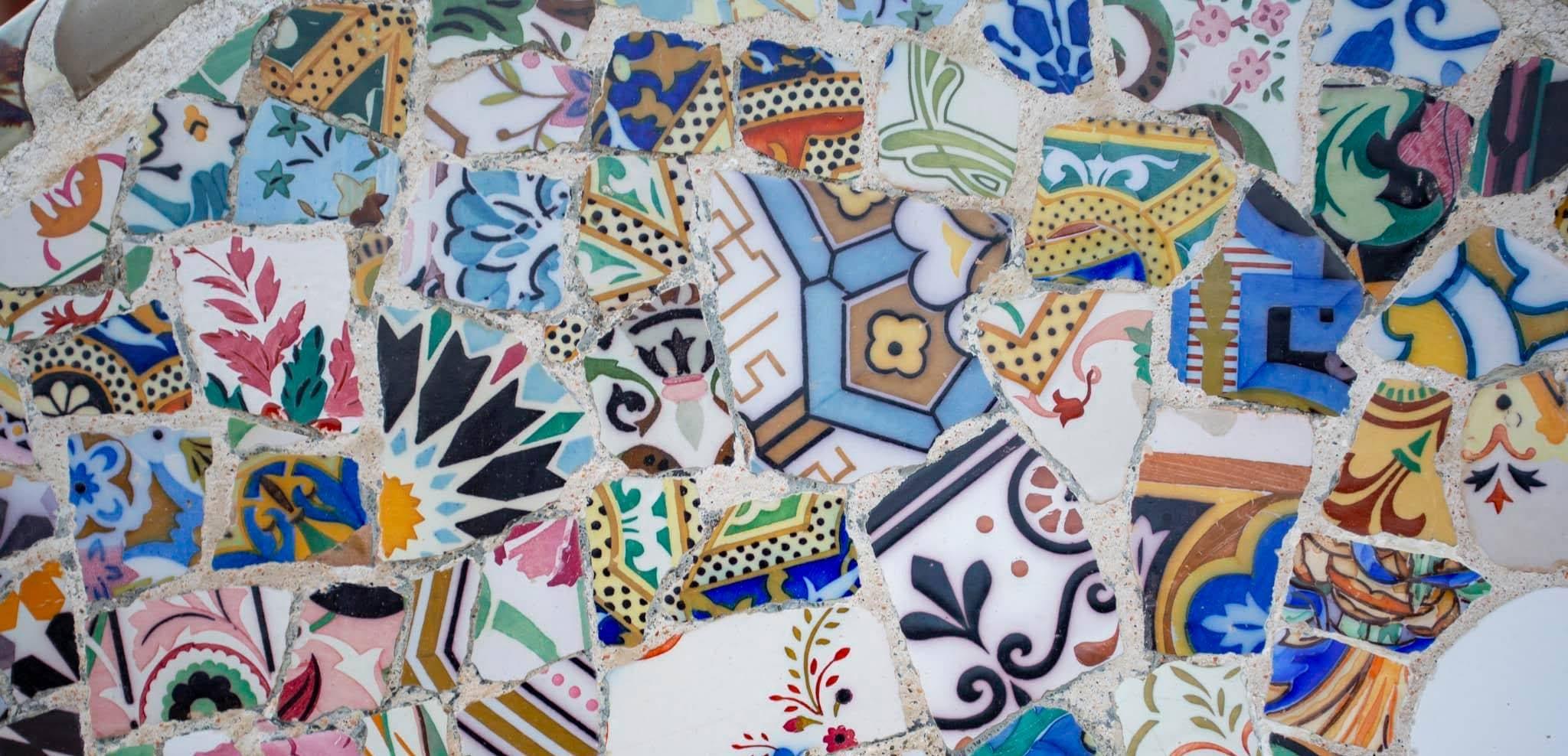
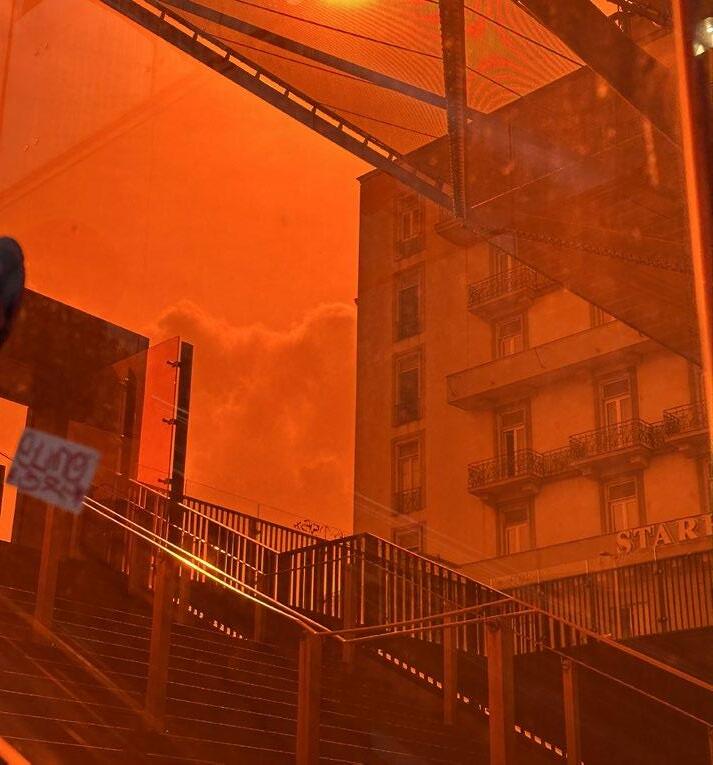
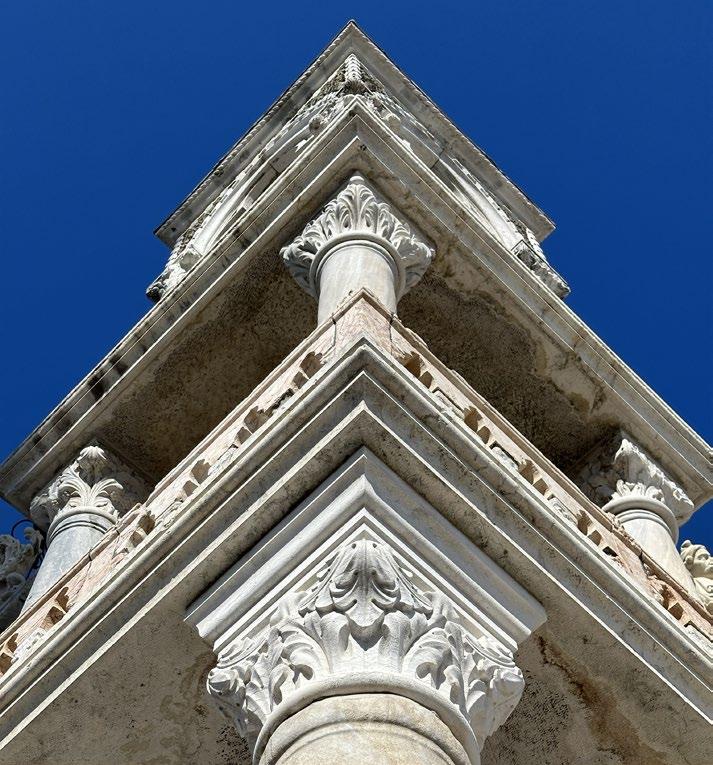
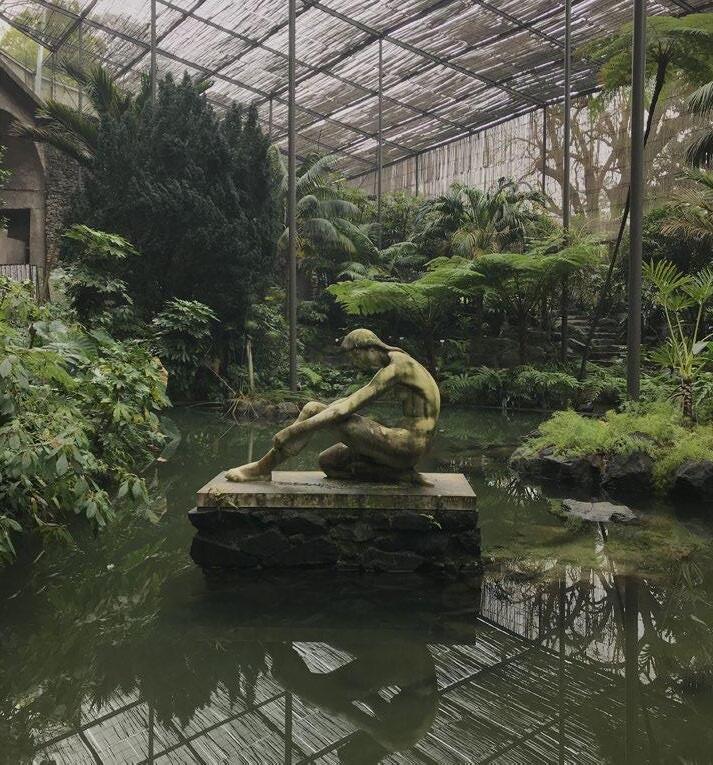
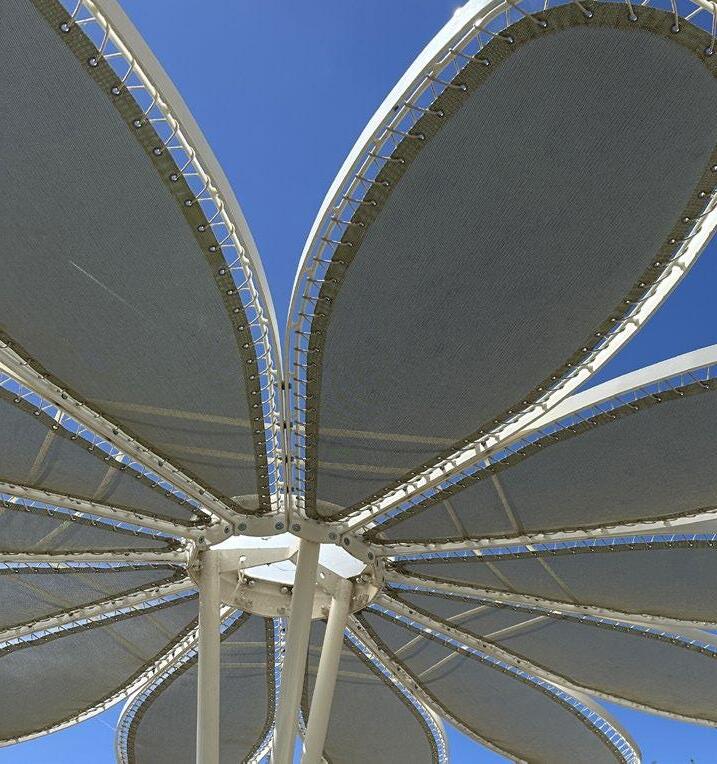
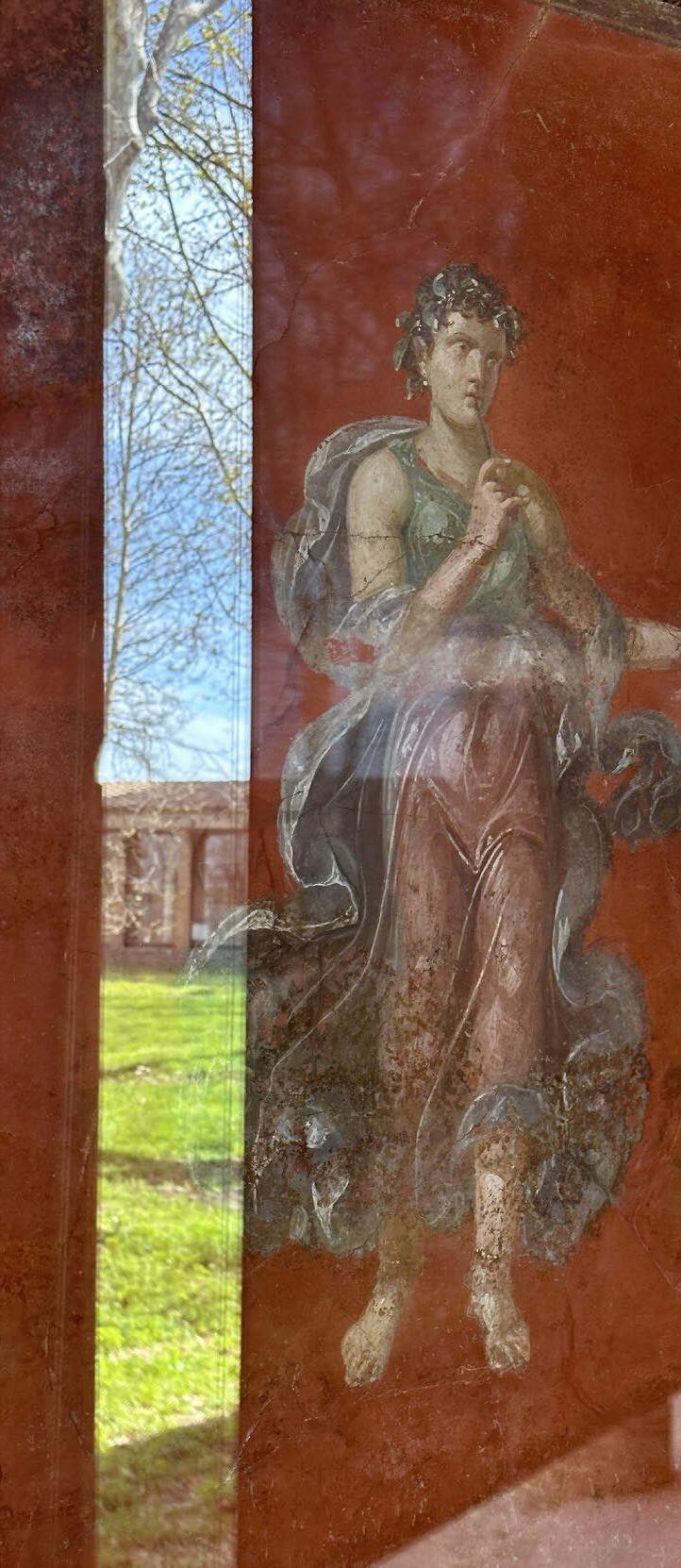
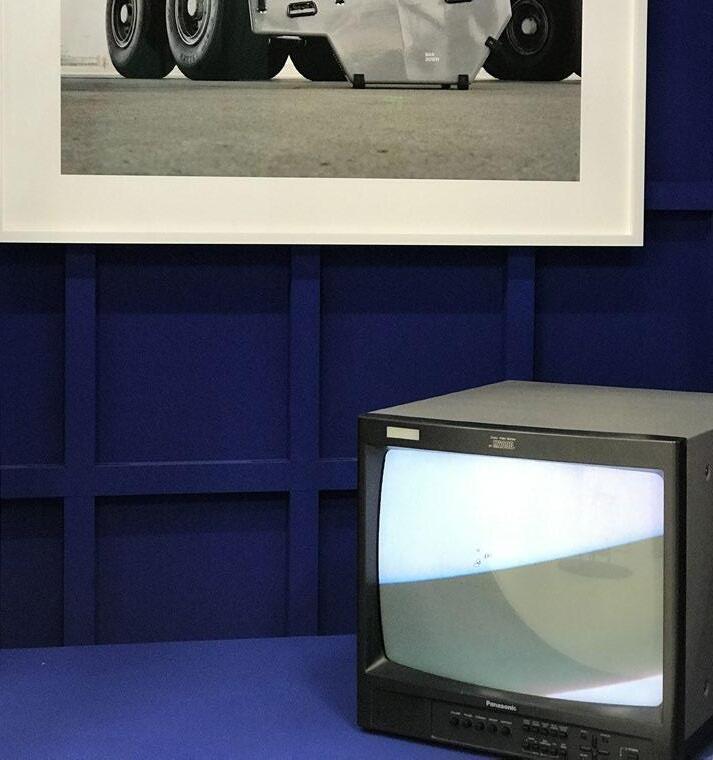
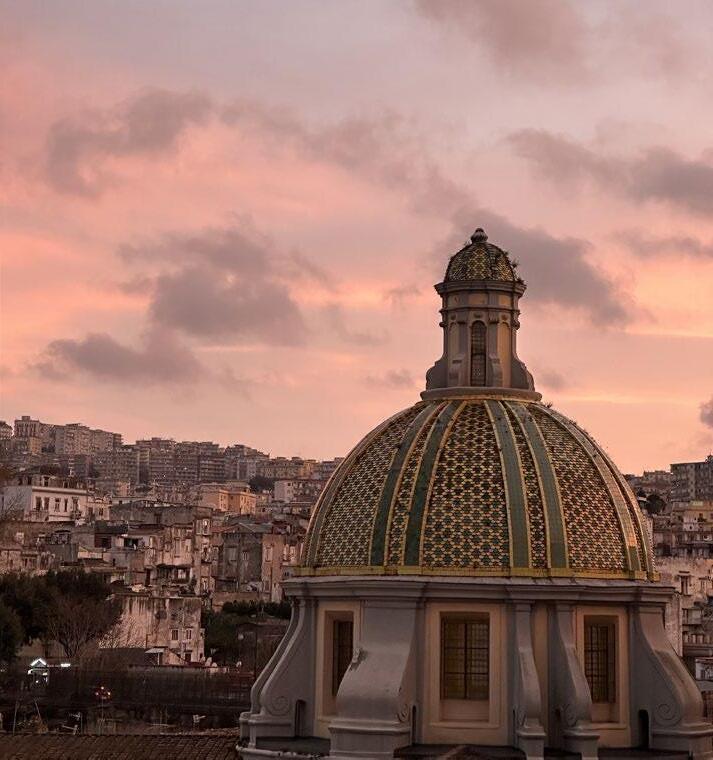
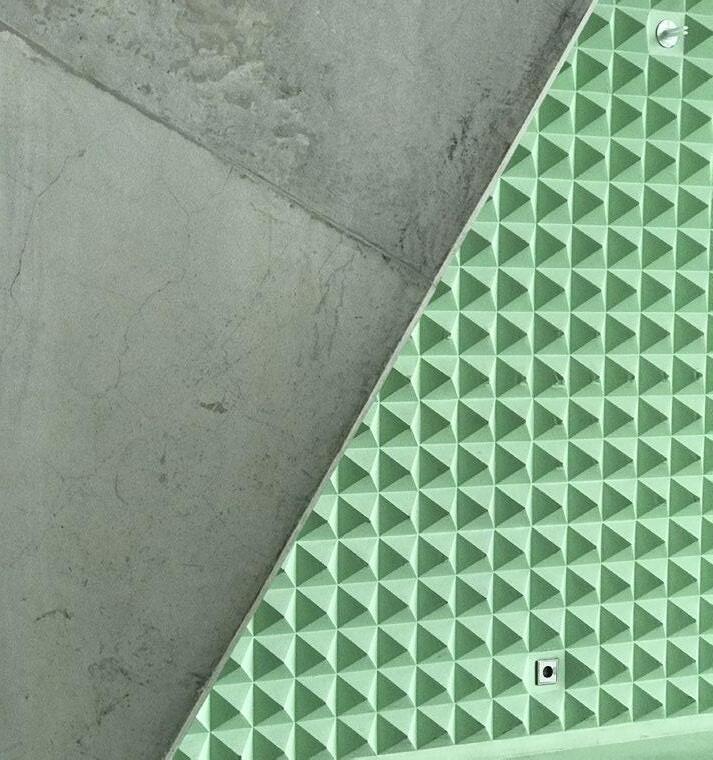
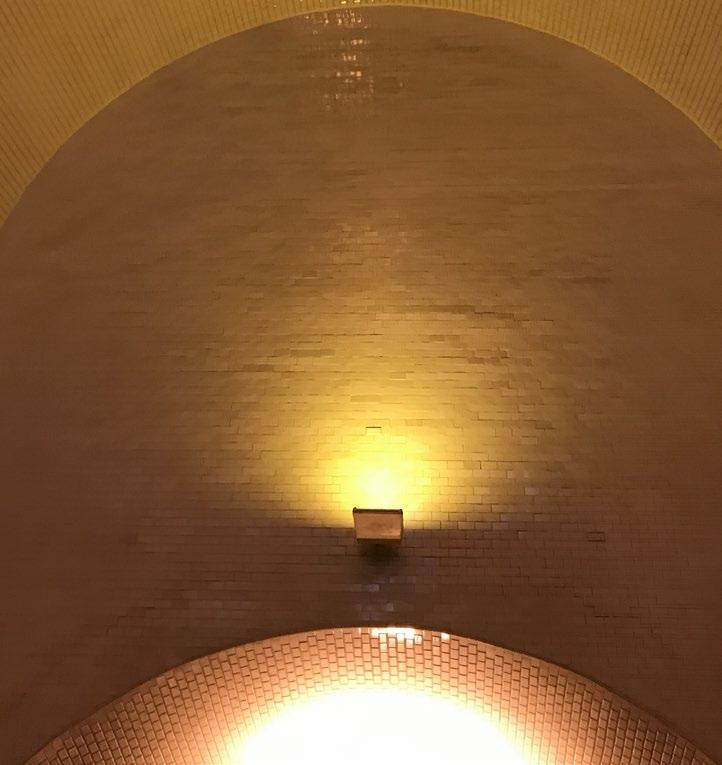
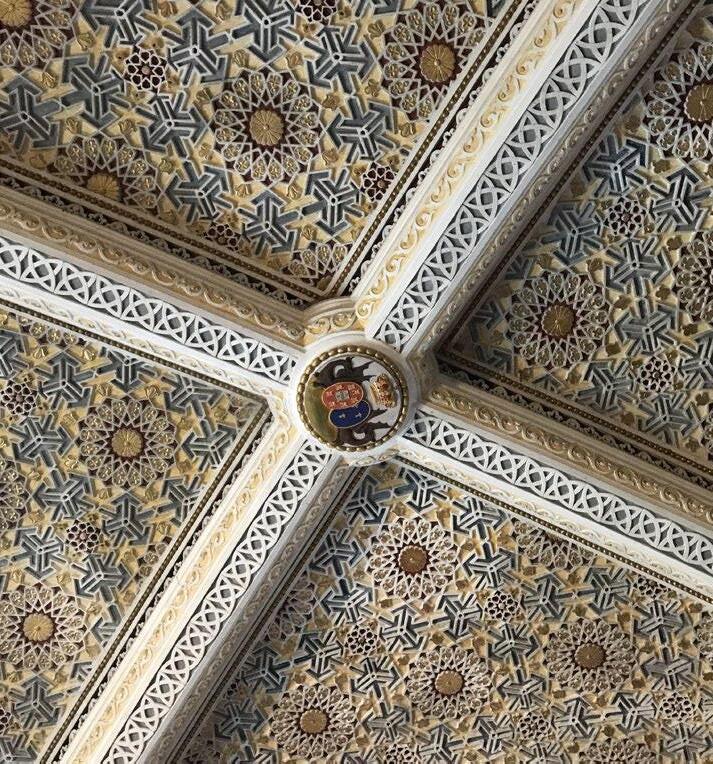
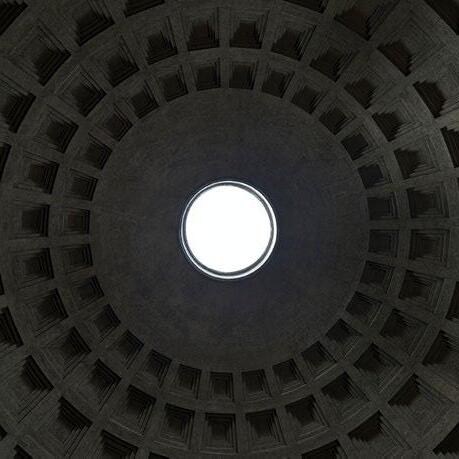
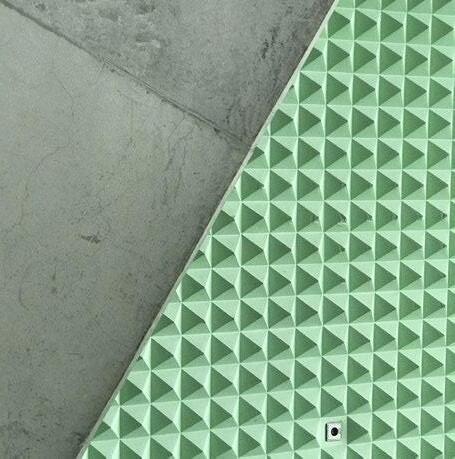
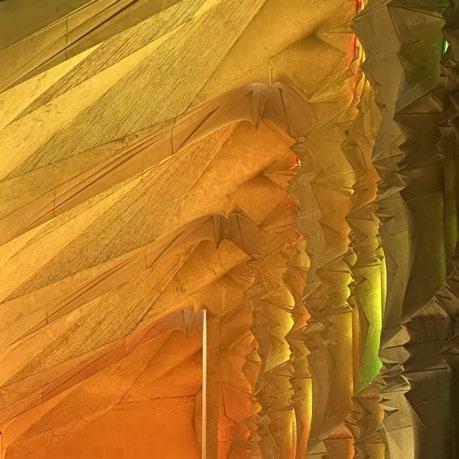
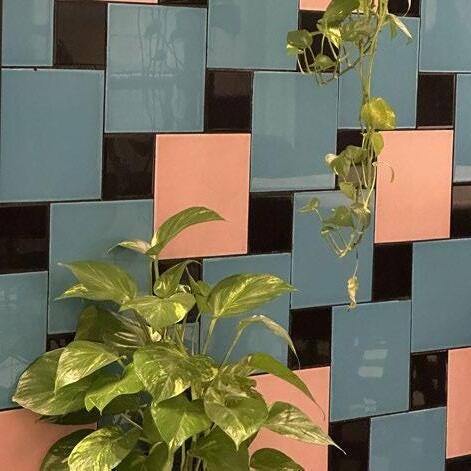
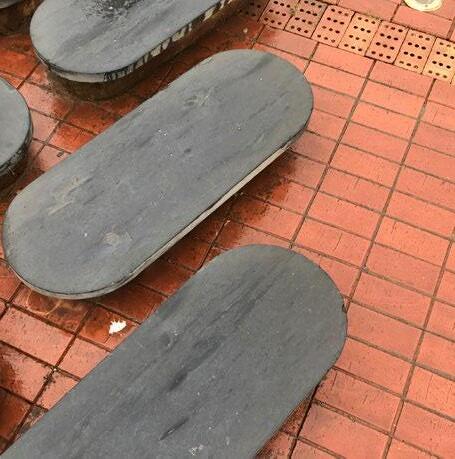
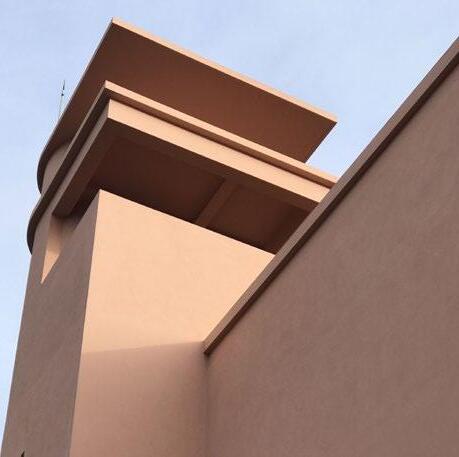
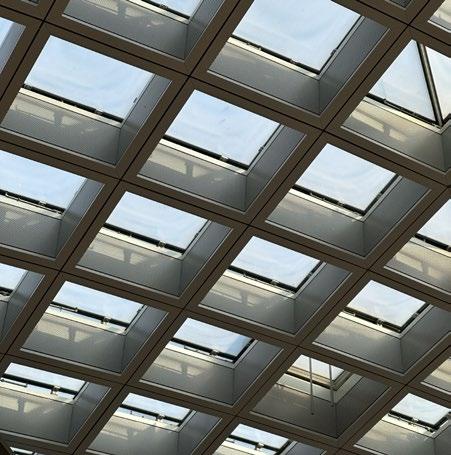
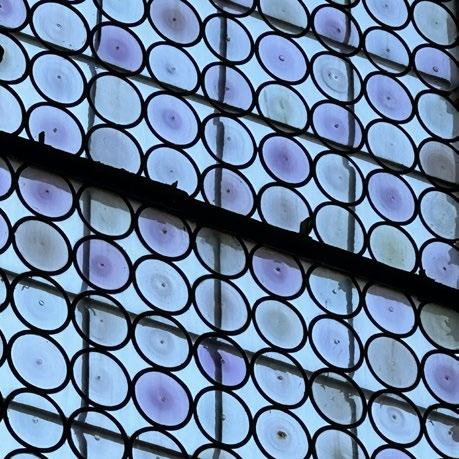
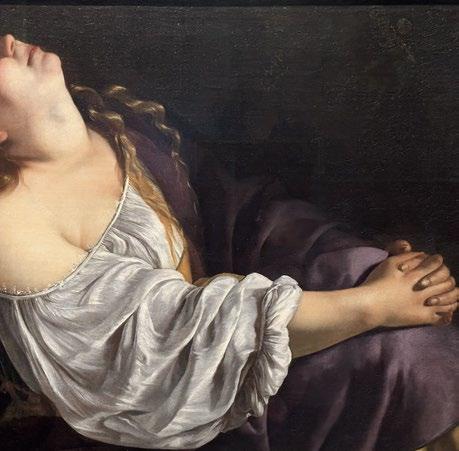
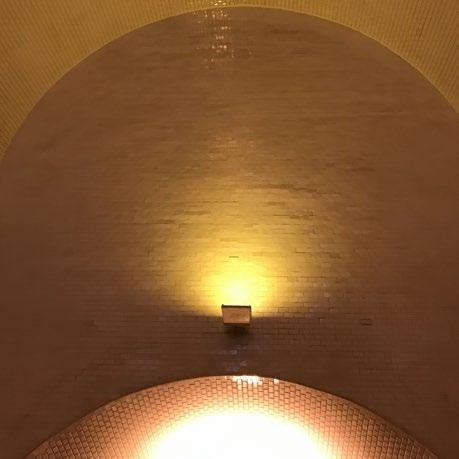
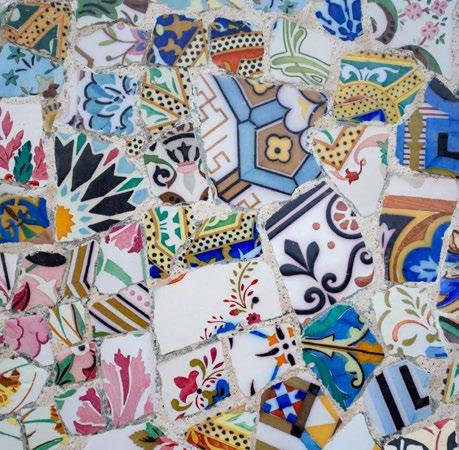
01. Park Güell
Barcelona, Spain
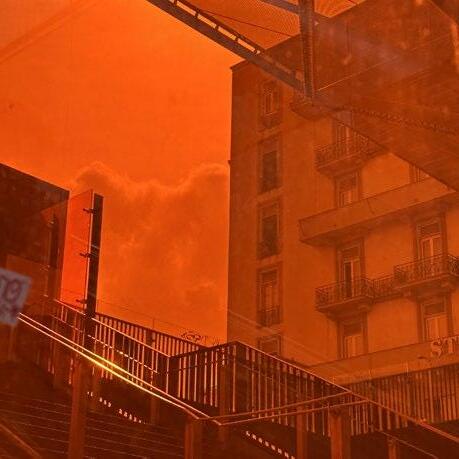
02. Metro Station
Naples, Italy
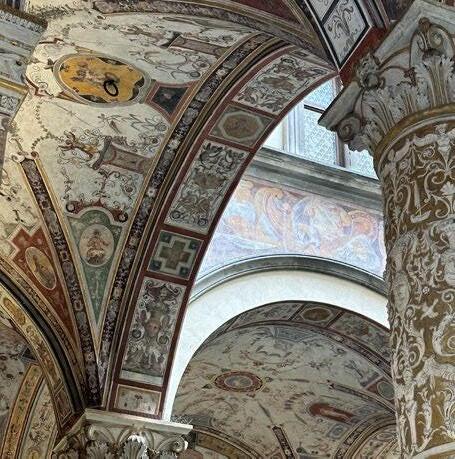
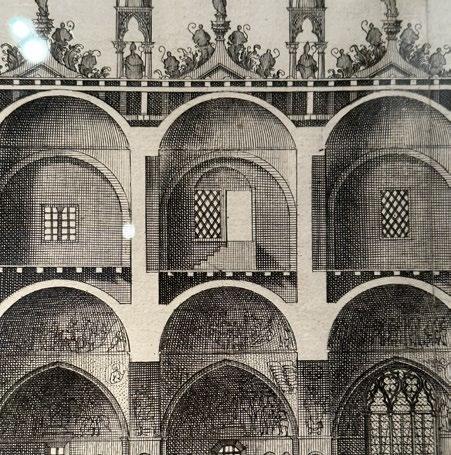
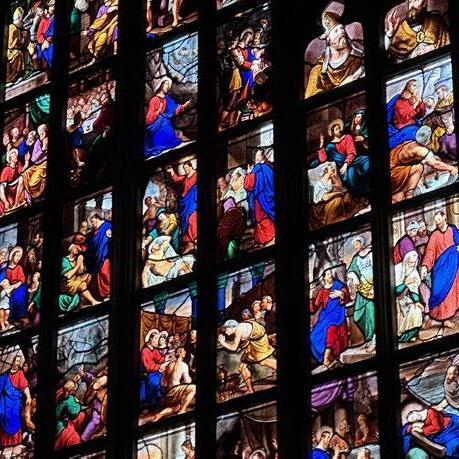
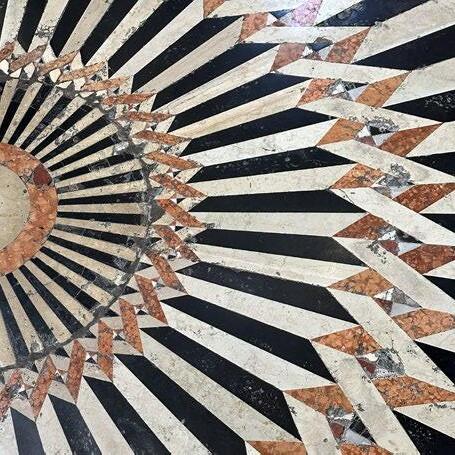
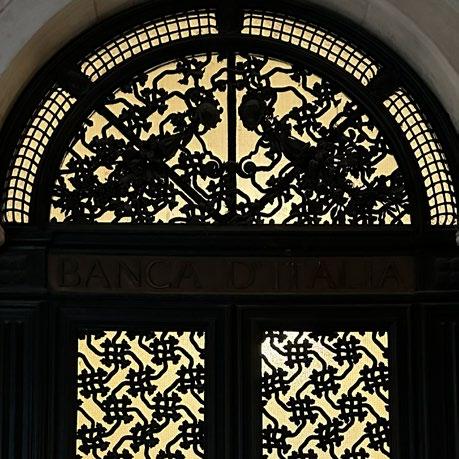
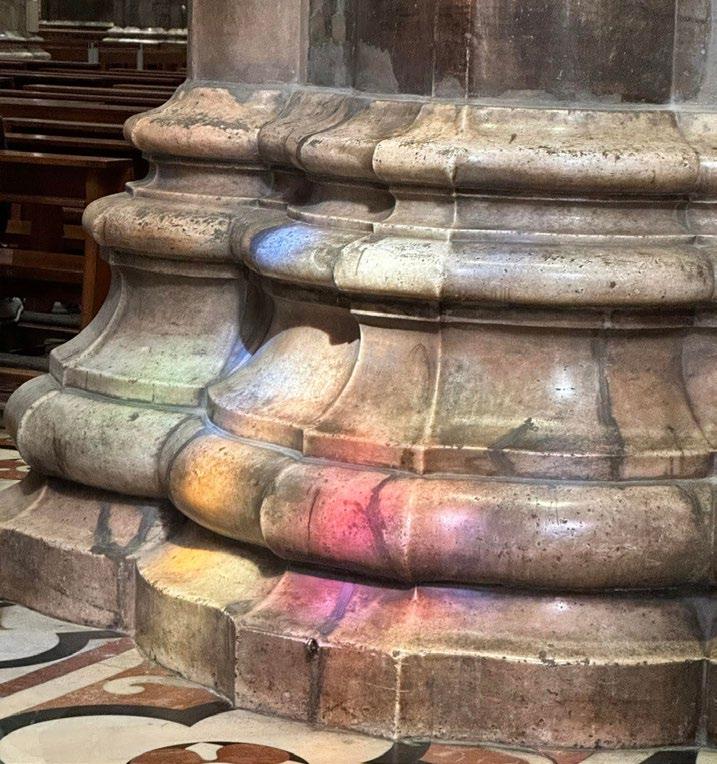
03. Duomo di Milano
Milan, Italy
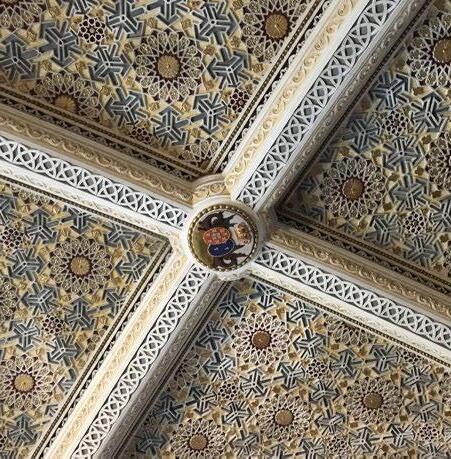
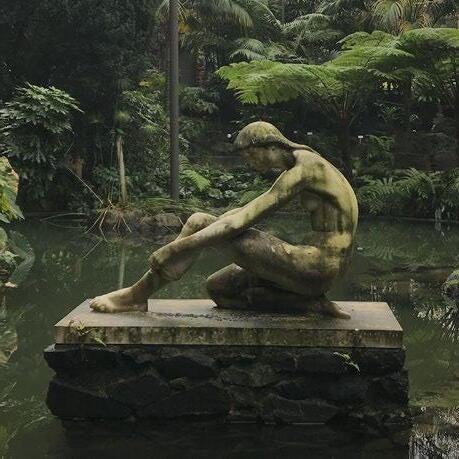
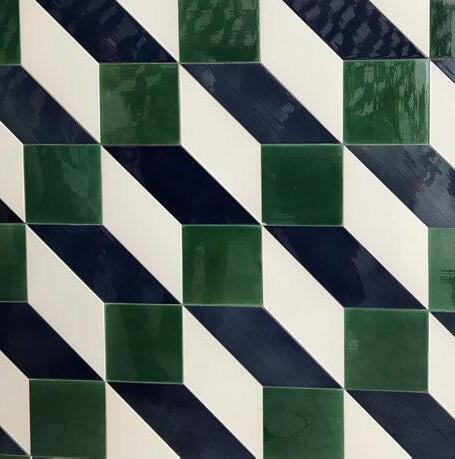
04. Estufa Fria
Lisbon, Portugal
05. Palestra Grande
Pompeii, Italy
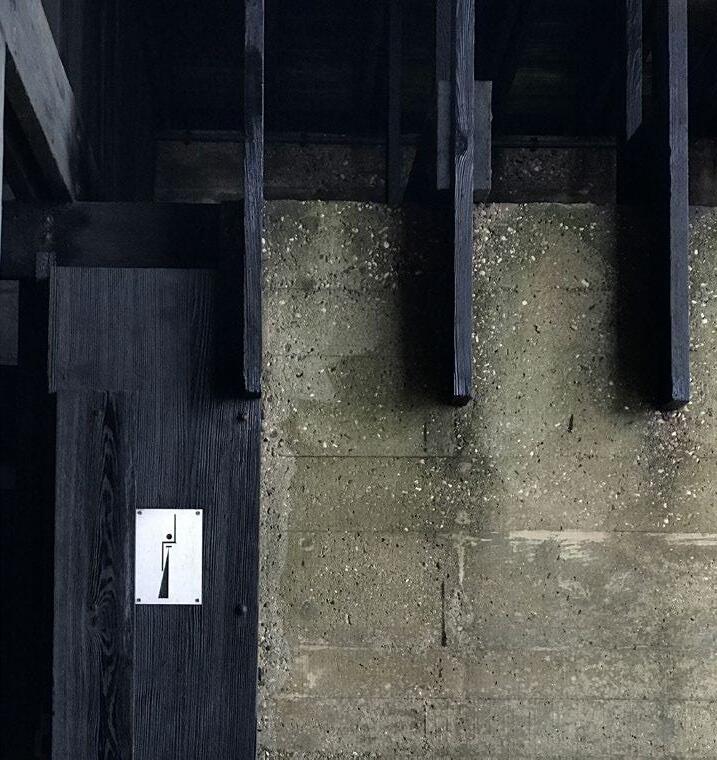
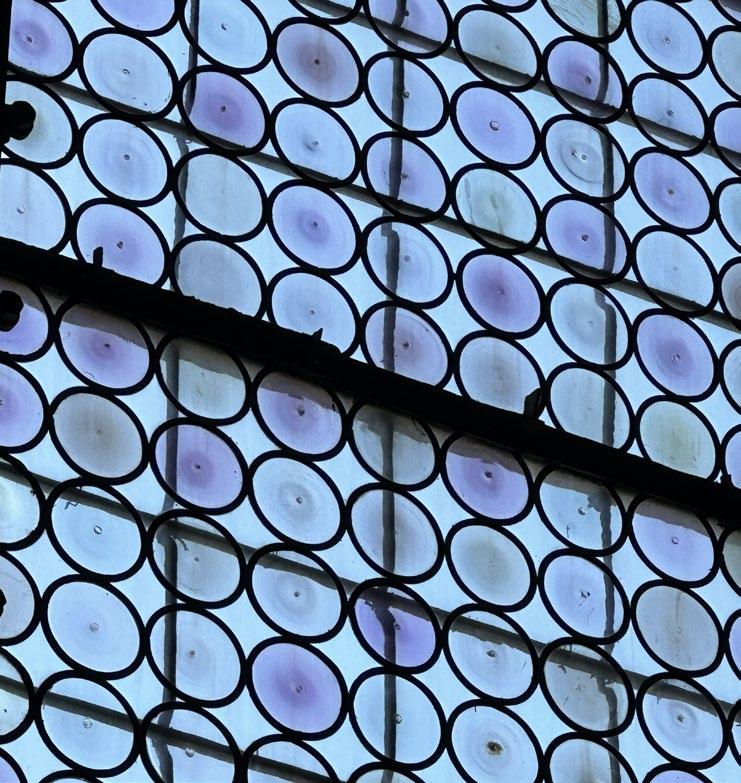
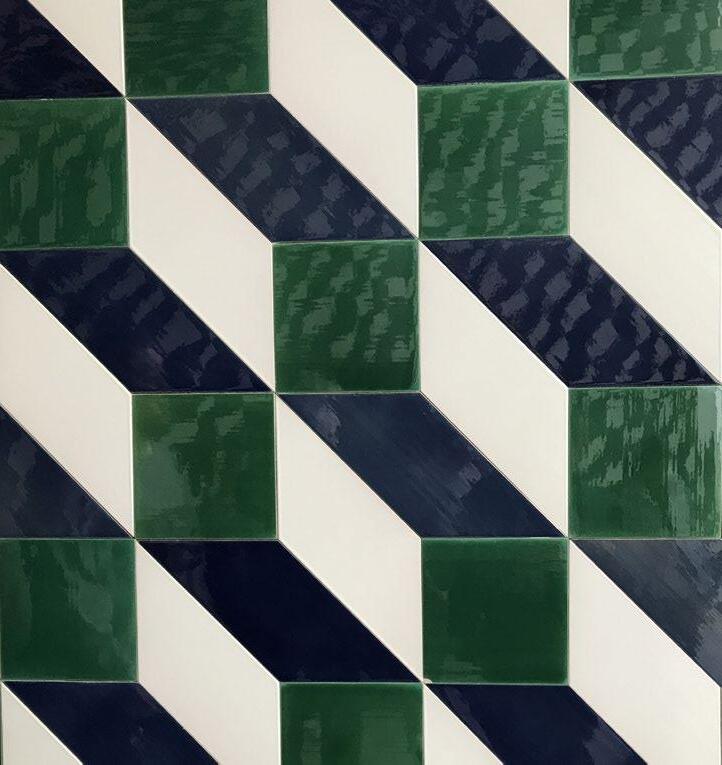
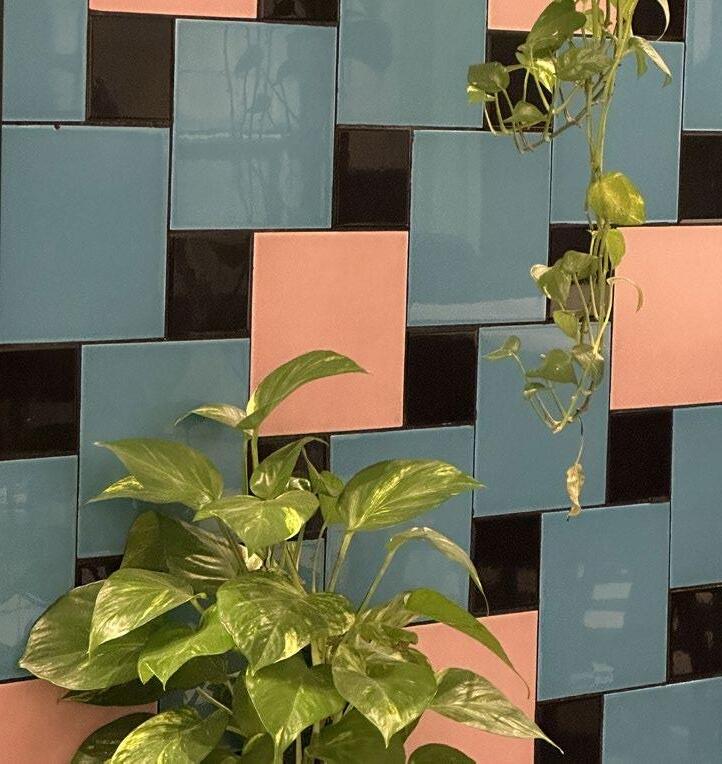
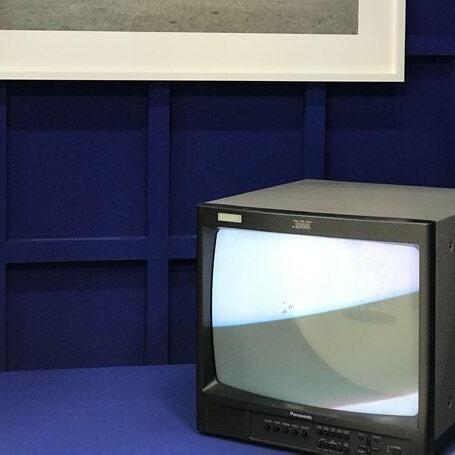
06. MAAT Exhibit Lisbon, Portugal
07. ARCH 206 Scheu House College Station, TX
08. Tibidabo Amusement Park Barcelona, Spain
09. Residence
Naples, Italy
10. Casa da Música Porto, Portugal
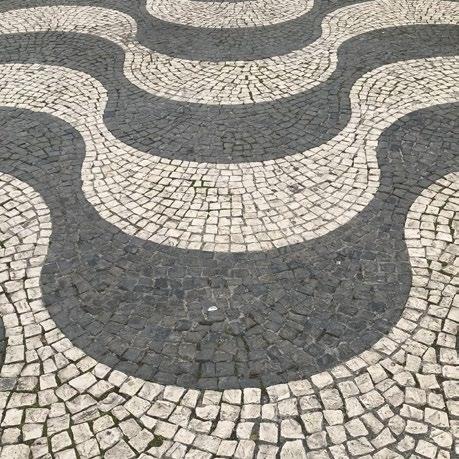
11. Metro Station Lisbon, Portugal
12. Pena Palace
Sintra, Portugal
PROFESSOR SHAWN LUTZ ARCH DESIGN I
13. ARCH 205 Model College Station, TX
14. AIAS Blender Workshop College Station, TX
15. Duomo di Milano
Milan, Italy
16. Piscina das Marés
Matosinhos, Portugal
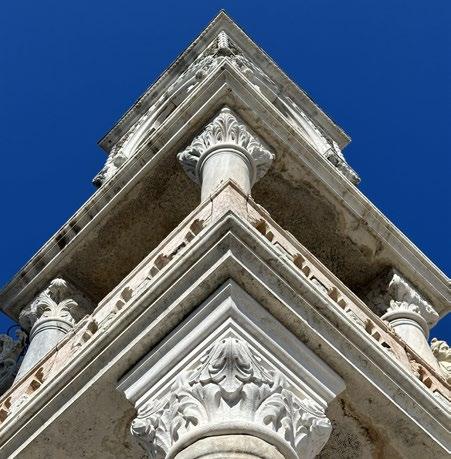
17. Basilica di San Marco
Venice, Italy
18. SAVTA
Barcelona, Spain
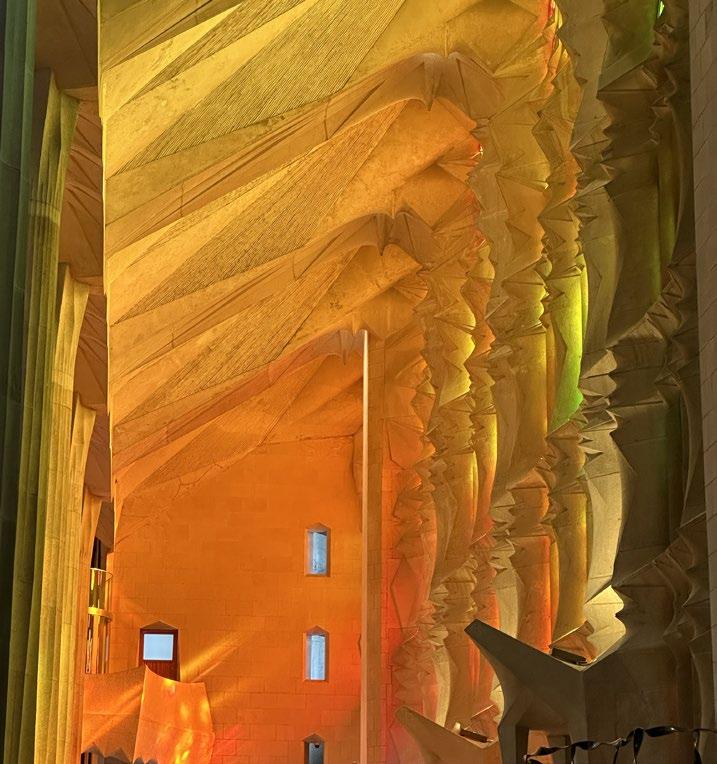
19. Sagrada Família
Barcelona, Spain
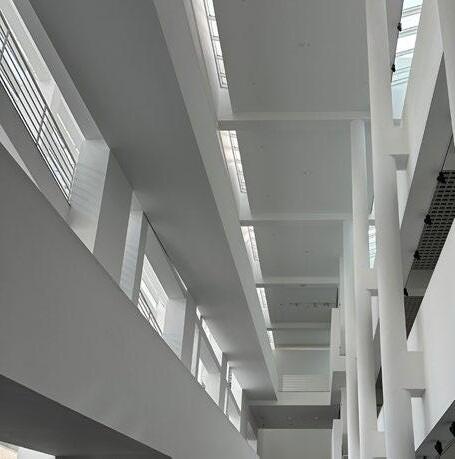
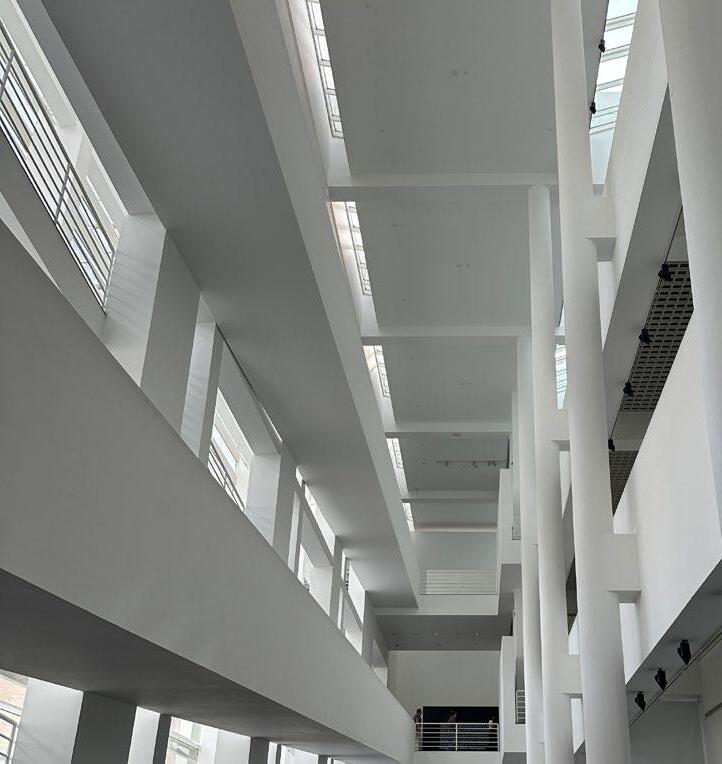
20. MACBA
Barcelona, Spain
[ in progress ]
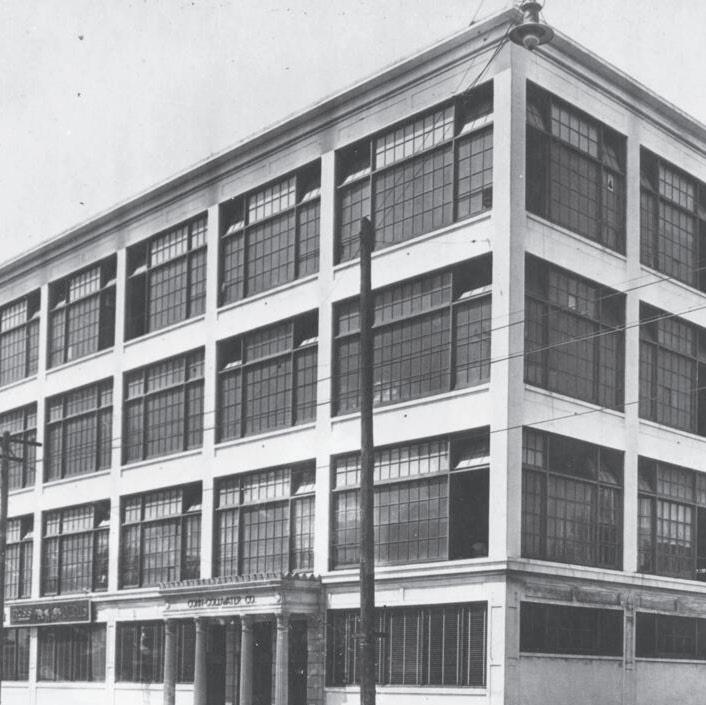
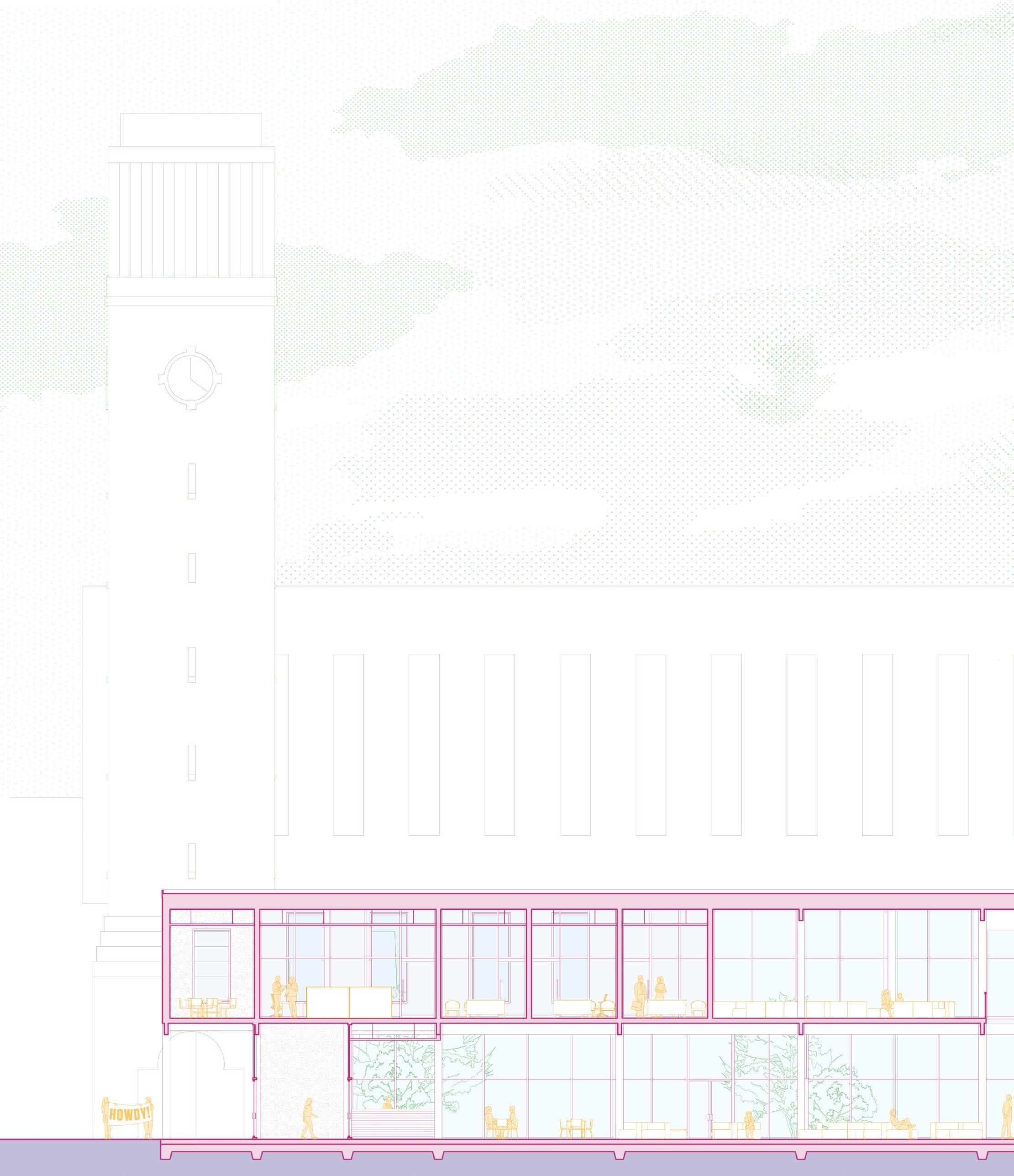
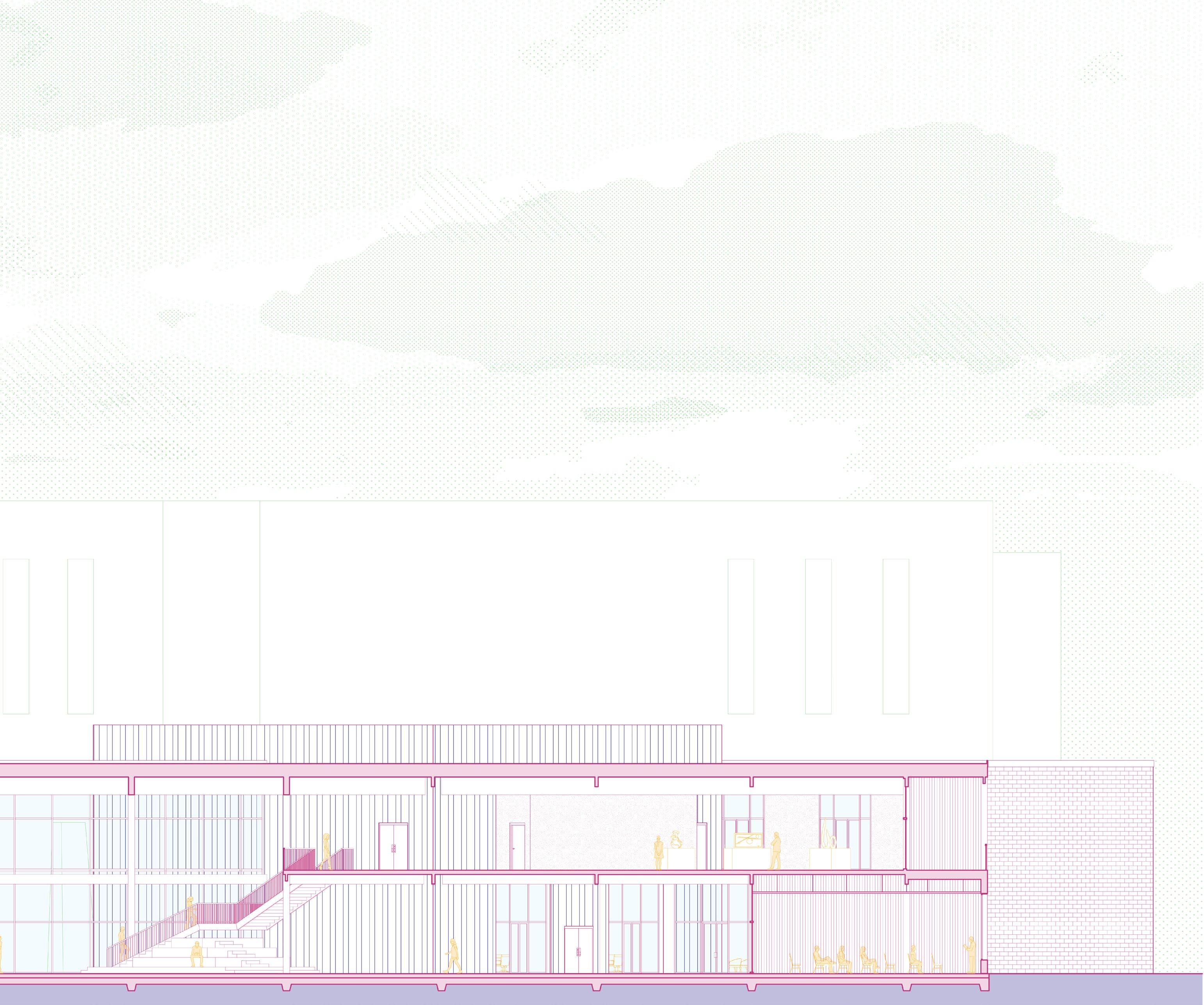
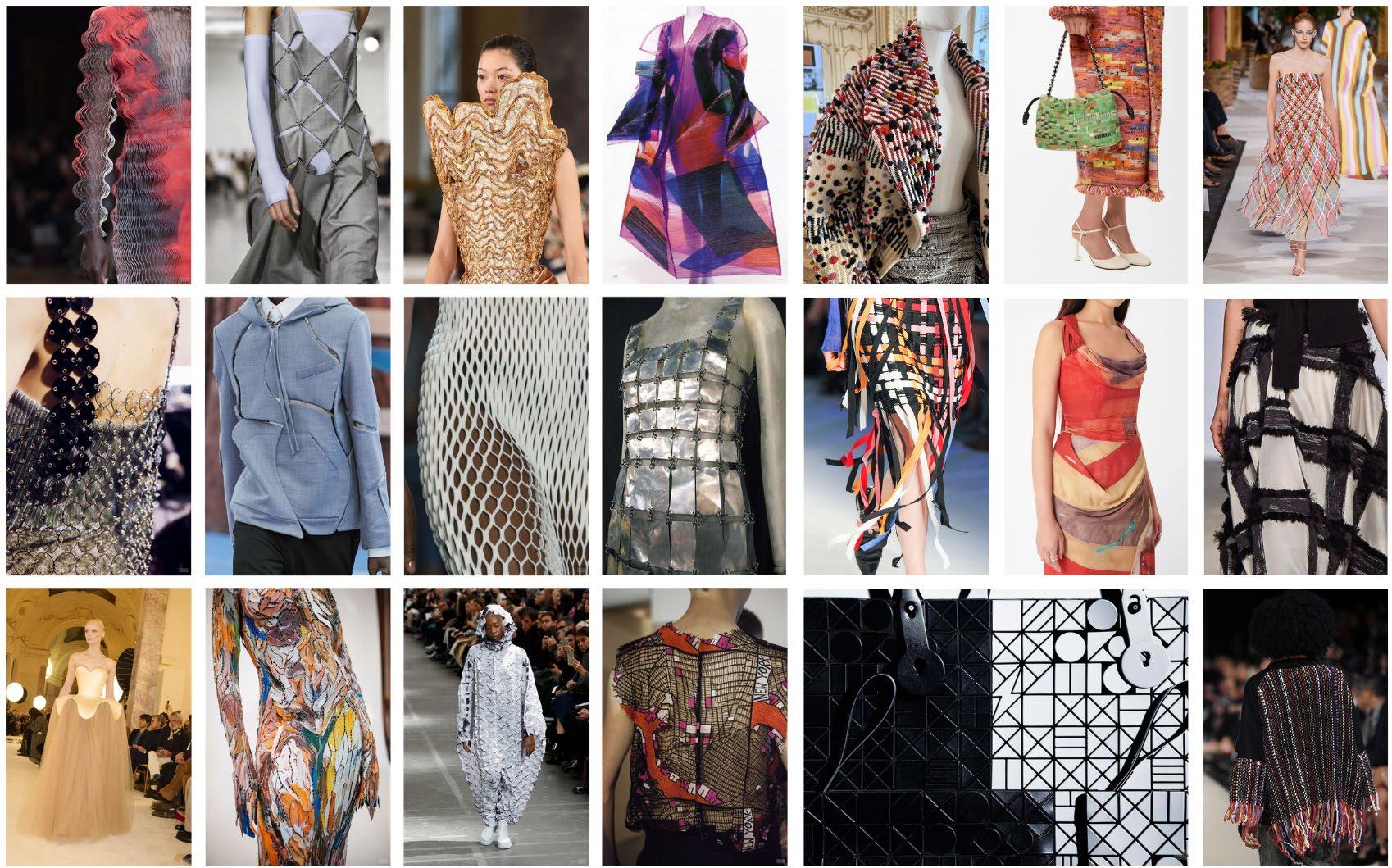
This project explores the adaptive reuse of the historic Cohn-Goldwater Building in Los Angeles’ Fashion District, transforming a post-industrial structure into a contemporary fashion exhibition and educational space. The design draws on fashion principles of layering, structure, and movement, using the existing building as a framework onto which new spatial elements are carefully integrated. Programmatic zones including galleries, runway space, workshops, archives, and classrooms, are organized to create a cohesive sequence that balances public engagement with behind-thescenes production. Material contrast, controlled transparency, and vertical circulation establish visual continuity and spatial rhythm throughout the building. Through this approach, the project repositions the Cohn-Goldwater Building as a cultural and educational anchor, celebrating both the heritage and evolving identity of the Fashion District.
FALL 25-SPRING 26 // M. ARCH
ARCH 607 & 608 // FINAL STUDY
COMMITTEE // Chair: Dr. Andrew Tripp, Members: Dr. Gabriela Campagnol & Rayna Dexter
INSTRUCTOR // Marcel Erminy
an adaptive reuse post-industrial museum for fashion exhibition & education
THANK YOU THANK YOU