All the lonely people
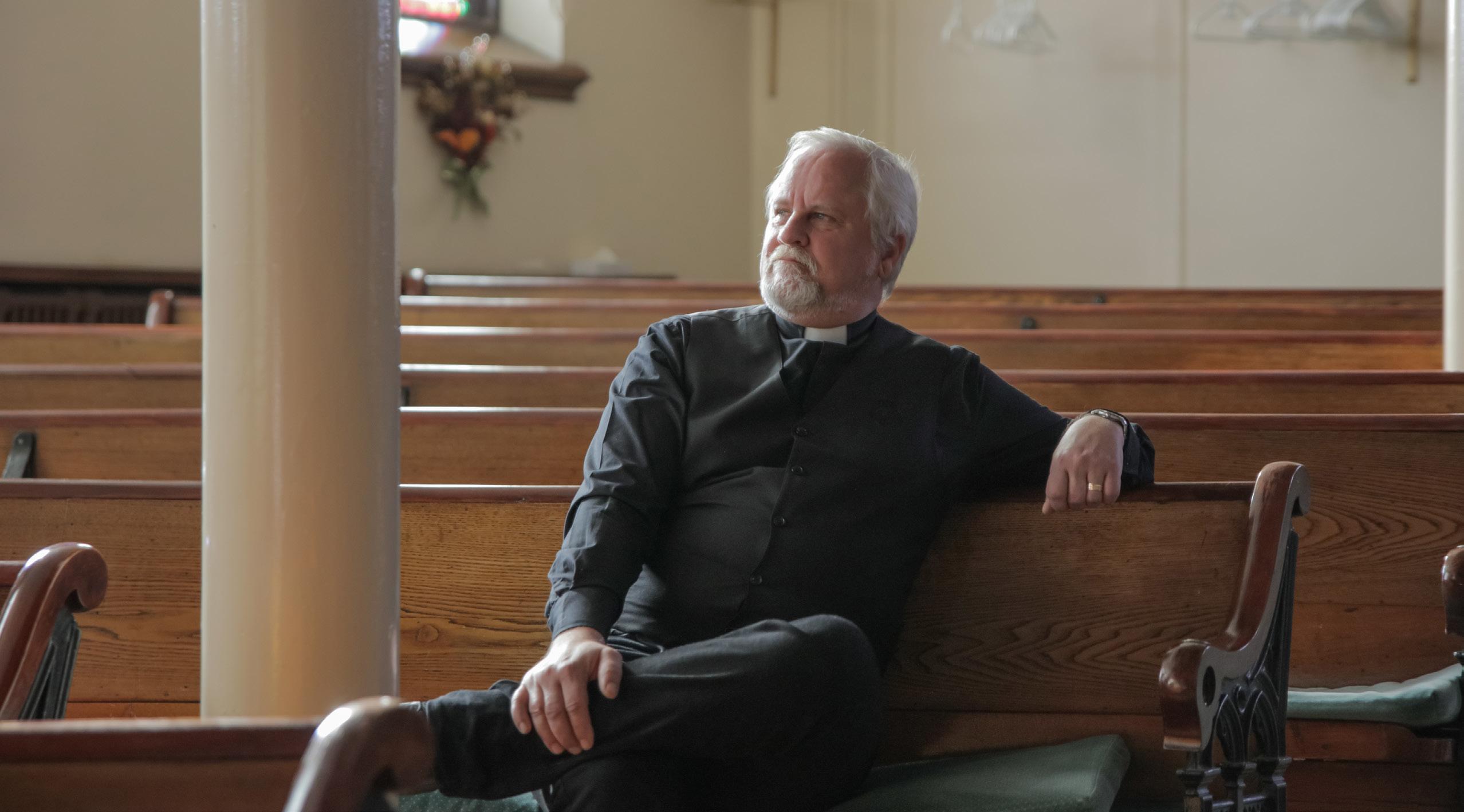
Lunch with Brian Walsh
Combatting loneliness takes a community
Hilton family history helped shape Laxton
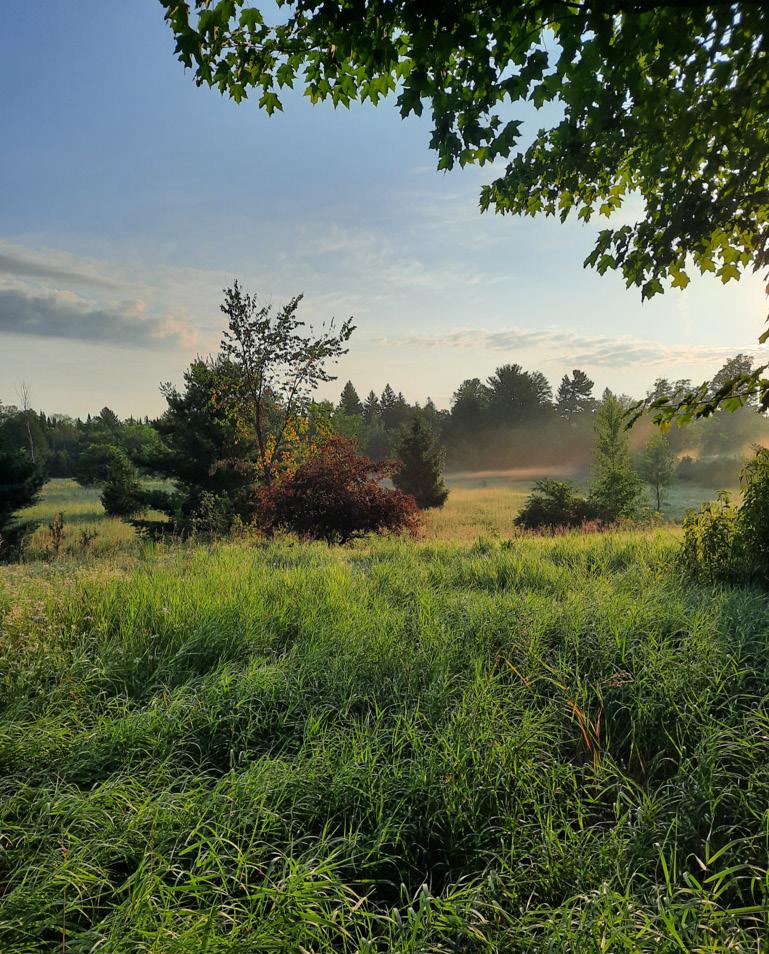
Photo: Veronica Price-Jones
At Lindsay Ear Clinic, our goal is to provide comprehensive audiological assessments. From the results of these assessments, we will educate, and inform our patients so they can make an informed decision about their hearing needs.
Your story is our priority, we’re here for you!


Choose from one of our three locations in Lindsay, Bobcaygeon or Bancroft
One of our Audiologists will run you through a series of tests and then discuss options to help you return to better
We’re confident we can find the perfect device to suit your needs. BETTER HEARING IN THREE EASY STEPS







Cara Baycroft ADVERTISING SALES
Art Direction + Design: Colour and Code
Sarah Fournier
Photographers: Sienna Frost
Web Developer: Kimberly Durrant
Printed By: Cofax Printing
Cover Art:
Rebekah McCracken EXECUTIVE EDITOR

Robyn Best REPORTER

Darren Hoiting ADVERTISING SALES

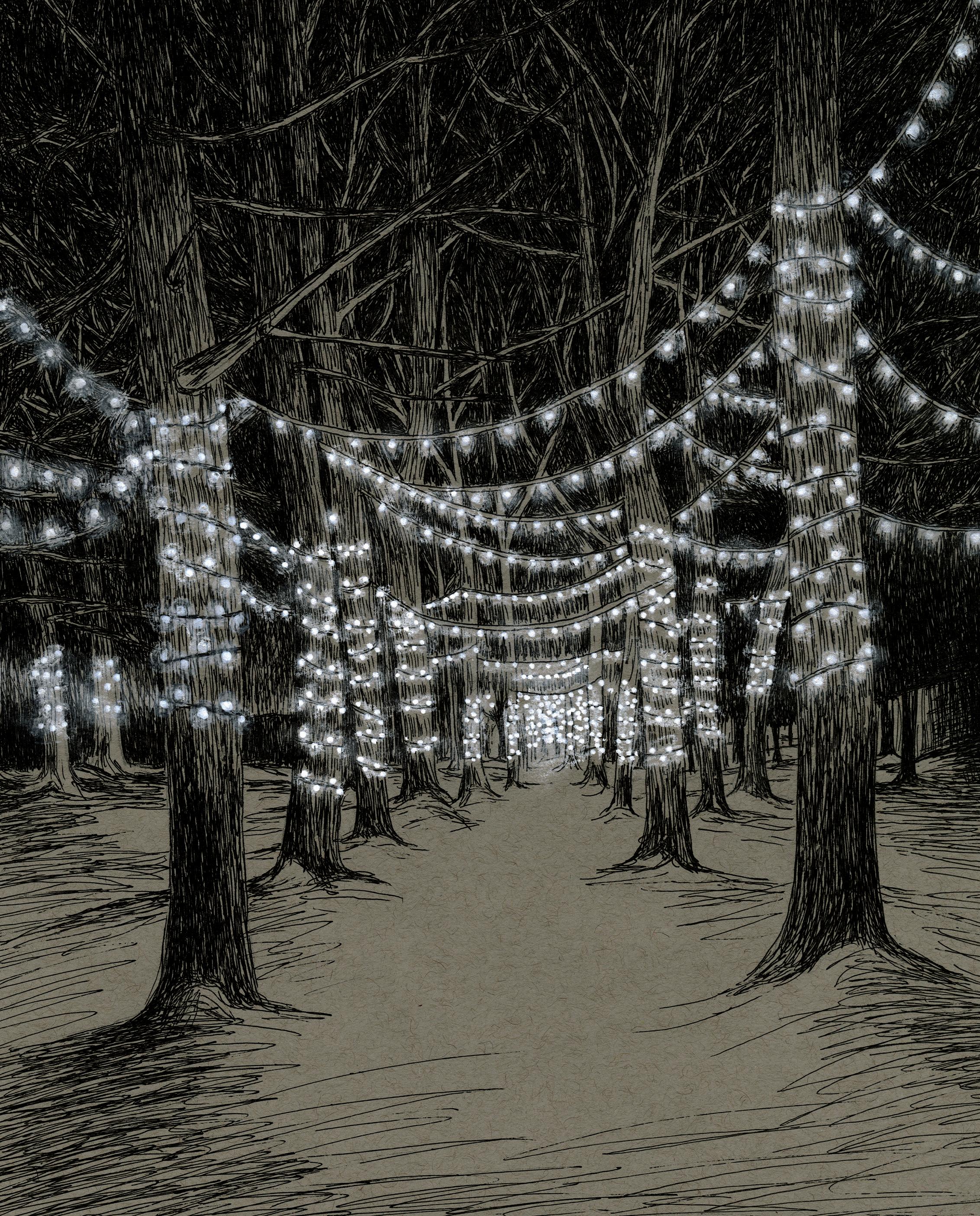
Julia Cossarin, who grew up in Lindsay, was inspired by the illuminated forest at Ken Reid Conservation. Cossarin used black ink, white marker, and white chalk pastel on toned grey paper to complete her work for the Advocate.
Please send editorial inquiries to Roderick Benns at roderick@lindsayadvocate.ca or 705-341-1496.
Please send ad inquiries to Darren Hoiting at 705-991-3188 or darrenhoiting@outlook.com, or to Cara Baycroft at 905-431-4638 or cara.baycroft@gmail.com lindsayadvocate.ca • @lindsay.advocate

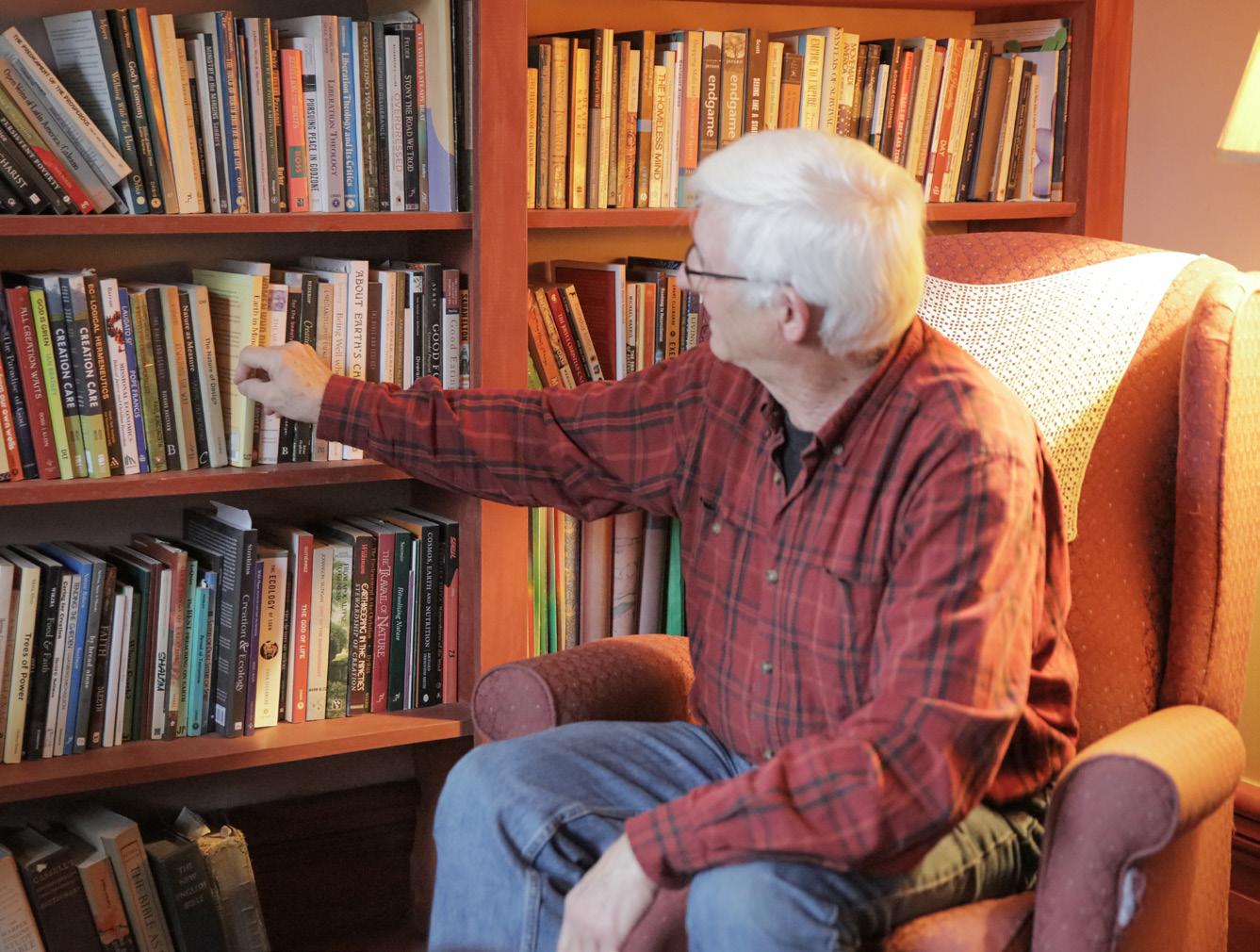
Brian Walsh selects a book at his off-grid farm in Cameron. In the latest Lunch with Roderick Benns feature, the pastor and farmer opens up about his teenage conversion to Christianity -- and where it has brought him today.
Brian Walsh on Christianity, music, and staying the course on love.
Any age can experience loneliness. letters to the editor 6 • benns’ belief 9 • business today 30 sarah’s say 34 • KL public library 44 • crosswords 46 • cool tips for a hot planet 49 • just in time 50 trevor’s take 52 • the marketplace 53 • newcomer 54
The Hilton family history is a rich Kawartha Lakes legacy. 35
every issue
our mission
Fireside Publishing House is the premier print media company in Kawartha Lakes through its family of magazines and all-local weekly newspaper. We believe that community-based media can bring people together and change lives for the better through the power of storytelling, reflecting local culture, and creating informed and engaged citizens. Our commitment is to deliver high-quality and relevant content that reflects the diverse voices and experiences of our communities. We believe in the transformative power of local media to inspire, educate, and empower.

At the annual Santa Claus Parade in Minden, our Member of Parliament, Jamie Schmale, appeared in a clown costume.
There’s absolutely nothing wrong with a bit of festive fun, but for some of us, the image raised questions about the distinction between being visible in the community and working in the interests of the community.
We frequently see our MP at parades, ribbon cuttings, and other ceremonial events. Public visibility is not in short supply. The concern is this: do these appearances translate into measurable progress on the core issues affecting Kawartha Lakes and Haliburton?
When Holsag announced it was leaving the region, our MP was quick to assign blame. When national court decisions make headlines, he comments. And although he congratulated the community for its work in response to the Minden ER closure, he did not join that fight or outline a clear role in protecting local healthcare access from a federal perspective.
Kawartha Lakes and Haliburton consistently face some of the lowest median incomes in Ontario, a significant older adult population that depends on strong local services, and ongoing indicators of declining community wellbeing. Addressing concerns of this scale often requires collaboration among all levels of government. What would it look like if that coordination were strong and consistently dedicated to making life better for residents? The possibilities for our community could be very different.
In a region carrying challenges of this scale, it is reasonable to expect leadership that is equally committed to achieving meaningful results as it is to making appearances at local events.
— Kimberly Perry, Norland
I appreciate the effort you take each year to honour our vets and the many areas in which they serve or have served in the pages of the Advocate. I would like to praise the staff at Ridgewood Public School who brought some of their senior students to attend the Remembrance Day ceremony at the Coboconk Legion. The chaplain in his speech reminded us that we were standing for only one hour while those who served were on duty in the most miserable conditions.
I remember standing and shivering at the local cenotaph on Remembrance Day ceremonies many years ago. I had no idea of what it was about; I couldn’t comprehend the numbers (of casualties) mentioned. Since my father had put on a suit and tie to attend, I knew it was important. Since that long ago day I have read many books and visited many battlefield sites and cemeteries in Europe and elsewhere. I hope the seed for understanding and appreciating the sacrifices of those who served will also be planted in the students who attended this year’s ceremony. Lest we forget.
—
Gerarda Schouten, Kawartha Lakes
As a long-time member of the services, namely the Oshawa Naval veterans, St. John’s Ambulance and a civilian teacher with the air cadets, I feel rather disappointed with the recent Lindsay Remembrance Day service.
First, the sound system could not be heard, especially in the street area. A man asked me if the two minutes of silence had been done because he could not hear. People talked throughout the silence and texted.
Secondly, the reading of the poem In Flanders Fields was read so fast and with no feeling.
Also, three police cars were at Victoria and Kent Streets but none at Cambridge Street to stop two cars from coming down the street as the parade was mustering up to go back to the legion. A man in the audience had to tell the cars to move but not the police.
We are losing our Second World War vets and our legions are dismal and closing. We need to do better.
— Heather Peter, Lindsay
The Advocate welcomes your letters. We do not publish anonymous letters unless it’s a matter of public importance and/or someone risks harm by writing us. We publish under strict guidelines & only if we can verify the person’s identity. Keep your letters to 200 words or less. Simply email roderick@lindsayadvocate.ca.
As someone who helps people through life's transition of moving, I’ve learned that letting go of “things” often opens the door to more peace and connection.
Every December, our homes seem to fill up faster than our calendars. New gifts come in, old items get pushed aside and next thing you know, every surface feels a little more crowded. Well-known as the most wonderful time of the year, yet sometimes it all just feels far too overwhelming.
This year, what if we gave ourselves permission to slow it down? Instead of picking up something (literally anything!) just to cross a name off the list, consider gifts that carry meaning rather than mass. Experiences, consumables, or simply time together are often the ones people truly remember.
A coffee date, a home-baked treat, or a hand-written note costs less but means significantly more. The magic isn’t in the price tag. It’s in the thought, the intention, and the calm that comes from giving from the heart instead of habit.
Mindful Takeaway:
When we give with purpose, we bring peace to ourselves and others.

Nicole Naylor REALTOR®
Realty Inc. Brokerage
Won’t you join our supporter’s list?
The Advocate and Kawartha Lakes Weekly are your 100% local print media choices based in Kawartha Lakes. Visit our website and choose Support Us, or contact 705-341-1496 or roderick@ lindsayadvocate.ca. We thank the following people for their support:
Al Kingdon, Anne Melanson, April Scott, Audrey Burrows, Barb Taylor, Bill & Heather Peter, Bob & Carol Barkwell, Bruce & Debbie Peck, Cam Finley, Carol Bryans, Carol & Brian Kelsey, Catherine Hennings, Chris Yourkin, Christine Wilson, Colleen Newson, Cordula Winkelaar, D Ann Ostafichuk, Dale Urekar, David & Margaret Robertson, David Holloway, David MacMillan, Deborah Smith, Doreen Amos, Don Sangster, Donna Gushue & Jim Buchanan, Drew Davison, Edith Wood, Edna Calhoun, Elaine Heyes, Elizabeth Anne Patterson, Elke Danziger, Ellen Roberts, Gail Motzok, Garth & Marian Mackay, George Meyer, Glenda Morris, Grace King, Hannah Marnoch, Heather Muir, Hilary Grice, Jack Kyle, Jamie Anderson, Jane Porter, Jane Walling, Janet Smith, Jean Wood, Jim Buchanan, Joan Shippel, Joanne Young, John & Elizabeth Gundy, John & Pauline Hunter, Joyce Dunning, Kevlyn Given, Laurie Jones, Lauren Drew, Lee Steeves, Leslie King, Linda Friend, Lorna Green, Lynda Palmer, Marci Stainton, Margaret Anthony, Maria Bennett, Marie Geelen, Marie-France Leclerc, Marnie Nelles, Maureen Kalmykow, Maurice & Marie Jackson, Mehran Qaaboos, Mike & Cathy Puffer, Nanci Byer, Neil Campbell, Nelson Gingrich, Nora Steffler, Norma Downes, Norman & Molly Feldman-Swan, Patricia Apac, Pamela Burtt, Paul Skipworth, Peter & Kathy Anderson, Peter & Sandra MacArthur, Ray & Lorna Smith, Richard Mason, Ron & Claudie Chartrand, Ross & Susan Beattie, Sandra Scott, Sharon Tracy, Shirley Harnden, Susan Ferguson, Susan Gleeson, Susan Stitt, Tegan Osmond, Vickie Schuett, Viona Smith, Wanda Percival, Wayne & Cathy Alldred, Wayne Alldred, William Steffler, Wayne & Wendy Brumwell, Zita Devan









It seems the right time of year for gratitude. And yet the geo-political reality of the times we’re living in calls out for acknowledgement as well.
I’m appreciative that I live in a Canada that is on the move. By necessity, really, because of the hostile actions of our so-called closest friend and neighbour. But I’ll take it. Fortune favours the bold and Prime Minister Mark Carney is seizing the day. The news cycle is a steady stream of new projects, new ideas and reaching out across the globe for new business opportunities for Canada. Every time the U.S. attacks us verbally, through economic means or otherwise, we should ink another deal that doesn’t involve them.
More Canadians are avoiding the U.S. when it comes to travel, which the nationalist in me appreciates. Canuck resident return trips from the states were down nearly 30 per cent yearover-year in August, according to Statistics Canada. Unless there is a family or close friend connection to consider, why would any Canadian visit a country that is antagonistic towards us? Go to Montreal or Charlottetown. See Calgary and the badlands. Or find out why Saskatoon is called the Paris of the Prairies. And if you’re the type of person who needs a winter weather break, go to the Caribbean and fly right over our so-called friend and wave. We have other options than them. We always have. I’m grateful we’re integrating more closely with Sweden, signing a strategic partnership on defence and talking about incorporating their concept of “total defence.”
In Sweden, the whole of society — government, local authorities, businesses, organizations, and individuals — work together to prepare for and respond to threats like war or major crises. Every-
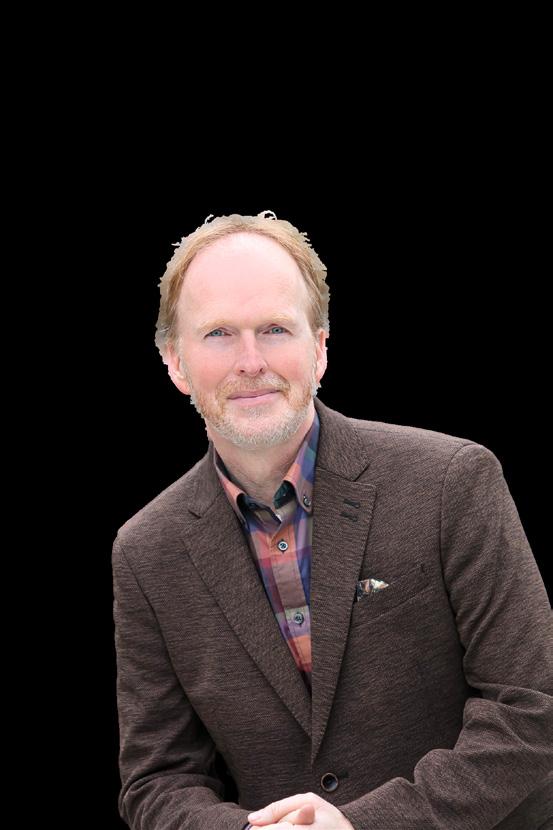
By Roderick Benns Publisher
one between 16 to 70, has some duty, which may just mean citizens being prepared to support themselves until official help arrives. The goal is to build resilience throughout society.
See Calgary and the badlands. Or find out why Saskatoon is called the Paris of the Prairies. And if you’re the type of person who needs a winter weather break, go to the Caribbean and fly right over our so-called friend and wave.
As for Pete Hoekstra, U.S. ambassador to Canada, what can I say about this obnoxious man, other than he mirrors his detestable leader? Hoekstra implies our NORAD agreement might not survive us picking Swedish Gripen jet fighters over American F-35s. The nationalist in me wants us to drop the purchase of 88 F-35s altogether. But I get it. The Americans are looking for us to have “interoperability” with them. So buy 44 of the American planes and 44 Swedish Gripens. Other countries do this. For example, in the UK, the typhoon handles air-defence and quick reaction alerts and their F-35 provides more stealth-and-strike needs. The squadrons are split by primary role. The bottom line? The U.S., again, will see that we have other options.
And in case our attitude toward the United States isn’t yet clear, let Sir Wilfrid Laurier make it clearer, as he did in 1911: “Remember that the blood which flows in our veins is just as good as your own, and that if you are a proud people, though we have not your numbers, we are just as proud as you are, and that, rather than part with our national existence, we would part with our lives.”
What we liked — and didn’t like — in 2025.
For the members of service clubs and other civic organizations that do so much good for our communities. Optimists, Lions, Kinsmen, Soroptimists, Rotary, 100 Women/100 Men/ 100 Kids Who Care and others — thank you!
For everyone involved in memorable year-long commemorations of the 200th anniversary of the founding of Downeyville and the arrival of the Peter Robinson settlers.
For the speed at which road resurfacing was completed on Kent Street West in Lindsay. Workers were at it day and night to minimize disruption to all of us.
For unique retailers from The Bobcaygeon British Shop to White’s of Lindsay where the owners remember customers and provide everyone with terrific, personalized service.
For Victoria Shepherd, who has really hit the ground running since she was hired as the general manager of the Academy Theatre earlier this year. Shepherd has been open and enthusiastic about broadening the theatre’s programming and reach within the community.
For the completion of longoverdue improvements made to McQuarrie Point, Rivera Park, and other green spaces in Lindsay.
For Mayor Doug Elmslie who is a paragon of patience and civility, reminding us of the way it used to be before politics became a bloodsport.
For the outpouring of heartfelt love and support for the Mackey family in the wake of Linden Mackey’s death.
For the ever-patient staff at the Lindsay landfill who deal courteously and respectfully with people, even when that goodwill is not returned to them by some members of the public.
For LaMantia’s Country Market in Lindsay for an attractive expansion to its unmatched fresh produce area and an impressive new collection of cheeses.
For Cambridge Street Baptist Church’s decision to invest in restoring its 81- year-old pipe organ, so that its music could be experienced by generations to come.
For the Truth and Reconciliation Community Bobcaygeon and the group working to bring about the Mishkodeh Centre for Indigenous Knowledge.
For neighbours who cared for one another during the great ice storm of late March, inviting them into their homes for tea and coffee (if they still had power), loaning generators, and otherwise checking in via text messages and other means.
For Kawartha Lakes Council members who made the effort to demystify and democratize the budget process.
For the work of Kawartha Land Trust to protect and preserve our area’s natural beauty and ecodiversity.
For Wards Lawyers for sponsoring the new local podcast In Good Company to highlight the terrific people and businesses of Kawartha Lakes.



For the never-ending construction at Highway 7 & 35, especially the ramps. No doubt there’s more to the project than ordinary people realize, but hey Ontario government, why on earth is it taking so long?
For online commenters who run down our communities, spout racism and dehumanize people with addictions.
For those aggressive drivers who pass on double lines, ignore urban speed limits, tailgate and generally make driving more stressful for everyone around them. Your impatience could cost lives. Please slow down.
For the increasingly dilapidated state of the former St. Andrew’s Church, South Eldon (just east of Lorneville). This once grand and now privately-owned property has suffered from broken glass, crumbling masonry, and an apparently cluttered interior increasingly exposed to the elements. If you own an historic building, please care for it.
For every parent who doesn’t have their teacher’s back when it comes to the deplorable behaviour of their children. Yes, more supports are needed in classrooms. No, that doesn’t give you the right to attack educators for doing their jobs.
For those relying only on online giants for shopping that could be done locally. Amazon, Wayfair, Temu and the rest will never sponsor our ball teams or provide prizes for our charity nights.
For the minority of ATV operators who don’t respect private property or the routes designated for their use.
For the fact that, 30 years after opening its first emergency shelter, A Place Called Home is needed more than ever.
For those who complain about government decisions at all levels and then offer no constructive solutions for those same problems.
For those who make wild and unfounded accusations about people in positions of leadership and when pressed for proof fall back on half-baked rumours and unfounded conspiracy theories.









MPP Laurie


You, and your family, are invited to our annual multi-denominational service, providing an opportunity for all to reflect, remember and support one another.
Reverend Ed Call, with music by Danny Bronson, will lead us in a journey of reflection, memory and meaning for those you come to honour.






Candlelight Memorial Service
ursday, December 11, 2025 7:00 P.M.
Lakeland Funeral & Cremation Centre 19 Moose Road, Lindsay, Ontario
Refreshments to follow


Return to Work 101
Ensuring that injured, ill and disabled workers are protected in the workplace is everyone’s responsibility. It requires education, awareness and commitment from workers, unions, employers and the community at large.
December 2, 2025 (Virtual)
Principles of Accommodation Law
December 3, 2025 (Virtual)
Level 1: Rights and Obligations
January 22 – February 5, 2026 (Virtual)
Level 2: Benefits and Services
February 12-26, 2026 (Virtual)
Levels 1 and 2: Workers’
Compensation Fundamentals

April 12-17, 2026 (In-person) Scan the QR code to register OR visit
Once you complete Level 2, you can take any upcoming advanced levels of our core curriculum. Topical courses are usually shorter and do not require any prerequisites.




By Robyn Best and Ian McKechnie
Lisa Hart had always lived at home with her parents, but in 2021 her dad died, and a year and a half later so did her mom. For the first time in her life, she was alone.
“All of a sudden, the girl who would have loved to have spent a whole day all to herself was all alone, and she had days and days and days to herself,” Hart says.
While she does have several friends and family members, they all have their own things going on. For Hart, there’s a feeling of guilt in what she sees as “bugging” her friends.
“You might be lonely in the evening, and you say, ‘Oh well, I’ll call a girlfriend,’” she said. “But then you start thinking that ‘she’s got to be getting so sick of hearing from me and my drama.’ And you end up not calling.”
Hart is not alone in her loneliness. Data collected by Statistics Canada in 2024 show that it’s not only older adults who
have experienced loneliness. Seventeen per cent of those aged 15-24 said they always or often feel lonely, compared to 14 per cent of those aged 25-54, 11 per cent of those aged 5564 and 10 per cent of those over 65. Moreover, research from Women’s College Hospital found that loneliness is linked to poor mental health, increased depression, memory loss, and higher rates of chronic diseases.
“Back in 2021 in the midst of the heart of (the) pandemic, the World Health Organization declared loneliness a global pandemic,” says Jack Veitch, manager of community engagement and education at the Canadian Mental Health Association Haliburton, Kawartha and Pine Ridge.
But what is at the root of loneliness, and what is being done to mitigate its effects in our community?
The Rev. Glenn Kukkola, who began his ministry at St. Andrew’s Presbyterian Church in Lindsay this past summer, describes loneliness as the byproduct of anything that negatively changes one’s connection to their community. This can range from divorce to unemployment, from loss of mobility to assorted health challenges. “People tend to withdraw from church and community when they experience loss,” Kukkola tells the Advocate. “It affects their self-esteem and self-worth.”
Loneliness can be especially palpable for caregivers as they navigate the realities of adjusting to life after experiencing loss – whether physically or cognitively. “My husband of 41 years died in 2023, and for the last five years of his life he was home-bound, and his mobility was very limited,” says Janet Currie, who lives in Lindsay. “I got out very little during this period and was experiencing cabin fever. As a caregiver, I felt isolated because I couldn’t leave my husband alone for very long.”
Personal heath challenges brought loneliness into sharp focus for Hart when she was diagnosed with uterine cancer and spent seven months off work. During that time, she had friends and family who would drive her to and from appointments but come nighttime she was left alone.
“There were days where I would give anything for somebody to say: ‘Hey, we had a roast last night; would you like me to drop some leftovers off?’” Hart recalls. In her experience, people hold fast to the idea that they always have to do big things when interacting with someone who is lonely. “You don’t have to entertain me. You don’t have to do anything special. Just having another person around for a few hours is such an amazing relief,” Hart says.
“As a caregiver, I felt isolated because I couldn’t leave my husband alone for very long.”
And ideally, having another person around shouldn’t require a smartphone or a computer. Despite the proliferation of communication tools such as Facebook Messenger and Zoom, loneliness can’t be alleviated merely by logging in. Indeed, Kukkola is especially concerned as a minister about the impact of social media and internet usage on people of all ages, and how these things may well be exacerbating the problem of loneliness.
During the COVID-19 pandemic, for example, many churches (including St. Andrew’s) began offering services online. While this was a useful and necessary tool during the stay-at-home directives of 2020-2022, Kukkola questions the wisdom of becoming overly dependent on technolo-
gy to foster and sustain community – especially among the lonely. “We should be taking community to them by taking communion to them,” he says, emphasizing the importance of celebrating the eucharist – the church’s holy meal – with people where they are, rather than doing so virtually through a computer screen.
Despite the proliferation of communication tools such as Facebook Messenger and Zoom, loneliness can’t be alleviated merely by logging in.
Kukkola’s observations are not only for those of the faith community. They are echoed by Ryan Alexander, CEO of Community Care City of Kawartha Lakes.
“Through programs like Friendly Visiting, Meals on Wheels, Diners Clubs, or transportation services, we’re helping people feel supported and connected,” Alexander says of his organization. “This could be a friendly conversation over a cup of tea, a warm meal delivered to a client’s door, or a ride that makes it possible to get out and participate in the community. It’s often so much more than just a conversation, a meal, or a ride. It’s about creating moments of connection.”
Creating those moments of connection can start with something as simple as checking in on the lonely. Though it is accepted that families will regularly check in on elderly parents and grandparents, Hart worries that there isn’t that same push to check in on everyone else – particularly those who aren’t considered seniors or who are otherwise part of a vulnerable sector.
“If I fell down the stairs into the basement on a Saturday night, I may be lying there until Monday morning because nobody would miss me,” she says. Having a day job, Hart knows that her boss would be concerned if she didn’t show up for work – but otherwise there aren’t a lot of people checking in on her.
Creating those moments of connection can start with something as simple as checking in on the lonely.
Vietch, of the Mental Health Association, wants to make it clear that checking in doesn’t just mean talking on the phone to someone for an hour. “Knock on the neighbour’s door to invite them out for a walk. The fact that somebody thought of you, that’s going to benefit their mental health and wellness – and it doesn’t mean we have to take on the responsibility of being the caretaker of the community,” he says.
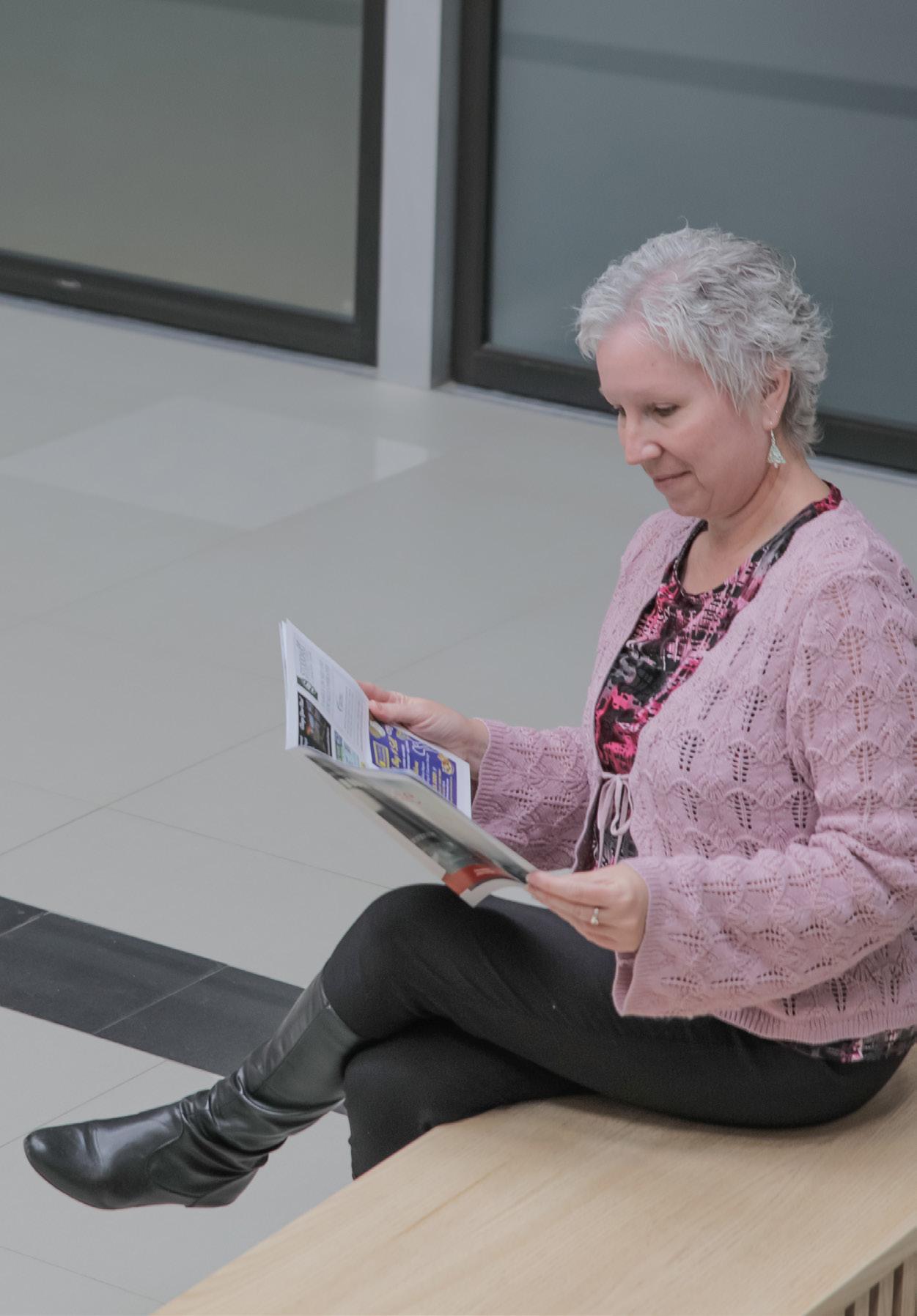
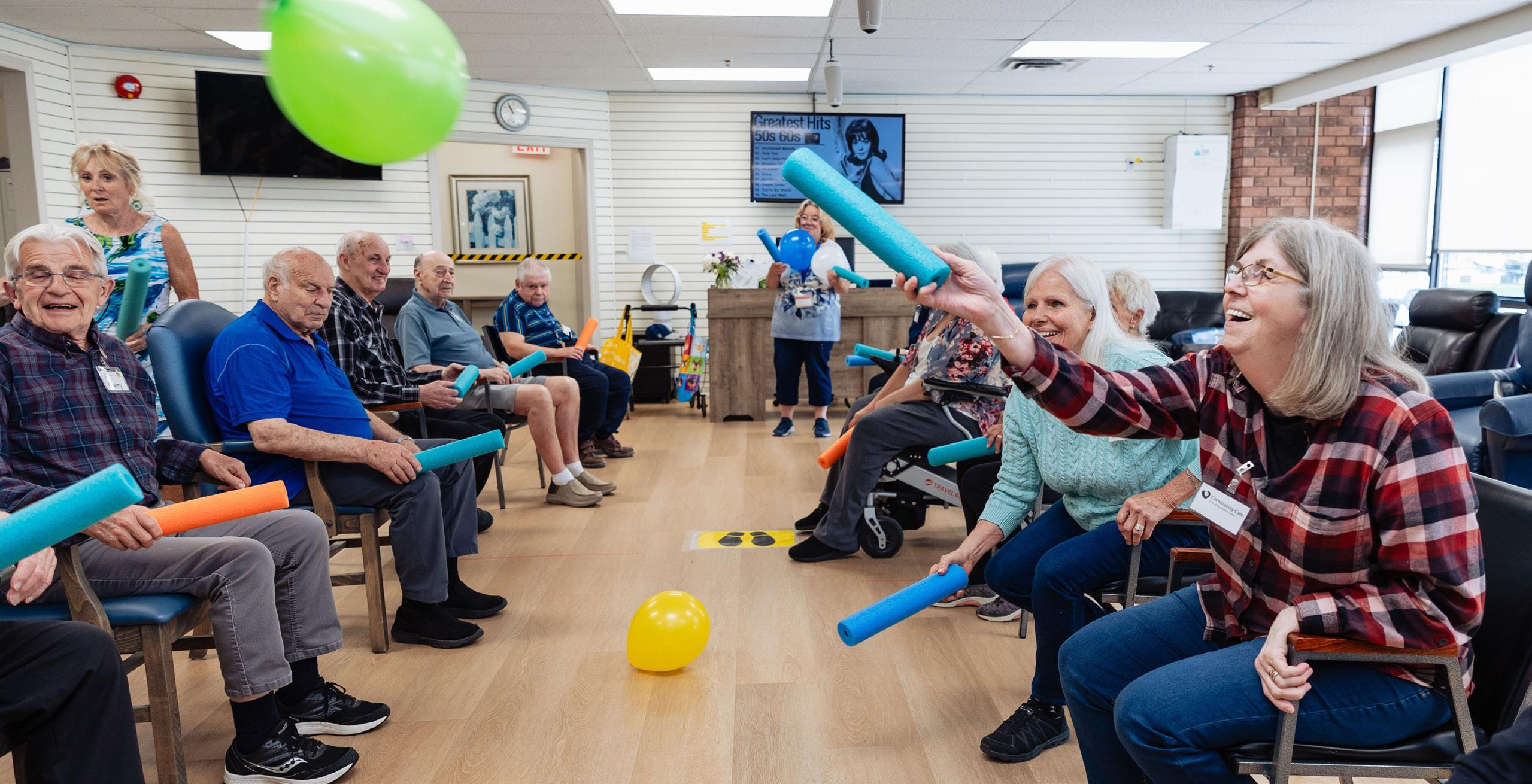
just a little company now and again is a big help. Photo: Sienna Frost.
This thinking has in recent years been embraced by the Canadian Union of Postal Workers. In 2023, the union endorsed a report issued by the National Institute on Ageing (NIA) titled Special Delivery: How Canadian Postal Workers Could Better Enable Ageing in the Right Place.
Pointing to similar programs in France, Japan, and on the island of Jersey, in the English Channel, the report noted that letter carriers are ideally suited to conduct regular wellness checks on those living alone. Though changes being implemented in Canada’s postal service may well see door-todoor mail delivery superseded by community mailboxes, the NIA report pointed out that those who have requested delivery accommodation services from Canada Post (including mail being delivered directly to the doors of those with mobility challenges) “also represent potentially ideal candidates for the sort of check-in services under consideration in this paper.”
One thing that Hart, 55, has noticed is there are not a lot of events happening in Kawartha Lakes for people her age. She’s found that events happening during the week tend to happen during the day and are targeted towards seniors, and events happening on weekends are geared more to children and families. Hart hopes that more events can be organized for people like her. She suggests something as simple as a social hour – and something convenient that makes it easy for people to go to. “I went for a fall walk with a girlfriend,” Hart tells the Advocate. “I drove for 45 minutes to go for a walk and drove 45 minutes home. It’s not convenient.”
For Currie, whose loneliness was exacerbated on account of being a caregiver and in the aftermath of her husband’s death, the programming offered by Community Care has meant the world to her. She got involved with their Cooking for One program and from there joined a craft club and later signed up for exercise classes. “We spend time together,” Currie says of this newfound community. “These programs helped me meet a whole lot of new people, and I now volunteer at Community Care.”
Asked what the church can do to mitigate the effects of loneliness both within and outside of its walls, Kukkola, the Presbyterian minister, is succinct in answering. Churches, he says, must “assume that everybody is experiencing some level of loneliness” – however invisible it might be. The role of the church, he adds, is to “create space to come
and find connection, to foster a message that upholds people’s worth, and to foster good habits of living.” The latter, Kukkola points out, includes finding practical and useful ways of engaging with people who might otherwise seek out community online rather than in person. The ecumenical soup kitchen hosted by St. Andrew’s is an example of how the church has sought to welcome vulnerable people as valued members of the community. “The church at its best is a place of belonging and comfort for the lonely,” Kukkola observes.
Public spaces have a key role to play in alleviating loneliness, says Veitch, of the CMHA.
“I look to our council to continue to promote those inclusive spaces, those libraries and community centres. I think the library is such an amazing resource we have in our community, where we have activities that are going on during the day, where there are groups that come together, where there is a chance to connect.”
In his reflection on the lost art of conversation earlier this year in the Advocate, Richard Gauder writes of the disappearance of the all-important “third place”—spots that aren’t home or work, “where people of diverse backgrounds and interests come together.”
“Think Cheers, the neighbourhood bar from TV. Community groups like Rotary, Kinsmen, and Lions clubs are seeing memberships dwindle. Church attendance is dropping too. So, where can we practice conversations beyond our immediate circles or tribes? The loss of these third places is becoming a real concern,” Gauder writes.

For Veitch, he says the most important thing is to find a sense of routine. It can be something as simple as “every morning this week, I’m going to go for a 10-minute walk before I start my day.”
And it is advice that Hart is taking to heart. “I have found that there is a reason solitary confinement is used as punishment – because it is punishing and emotionally draining,” she says, acknowledging that embracing simple routines and looking for connections are key to alleviating her own experiences with loneliness. “I keep looking and I keep working to find new opportunities to socialize; for me, it’s just about breaking old patterns.”
Community Care City of Kawartha Lakes offers a popular diner’s club program as a means of alleviating loneliness.
“You help me keep my promise to my Dad.”

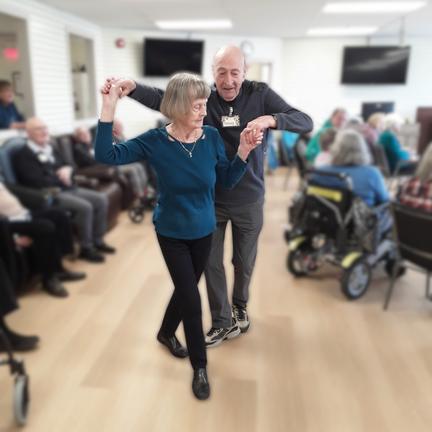

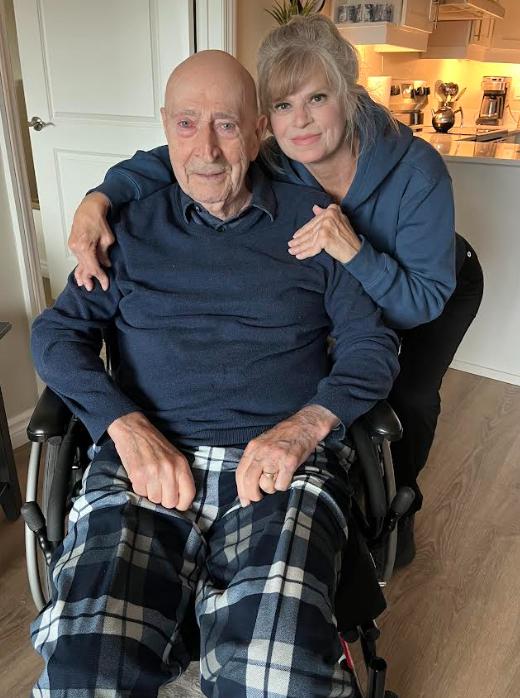

When Doug suffered a stroke, his independence and routines changed overnight. Doug’s daughter Karen made a promise to walk beside him on his journey and help him live the best life possible. She shares, “Community Care, you help me keep my promise to my Dad through your compassionate care and invaluable services.”
With support from Community Care, Doug attends the Adult Day Program, enjoys activities he loves, and stays connected to his community.

Your holiday gift supports subsidies, services, and caregiver respite for families like Doug’s, ensuring no neighbour faces aging, illness, or loss alone.
Give before Dec. 31 and your donation will be matched by Economy Wheels – Nissan.*

By Erica Ehm

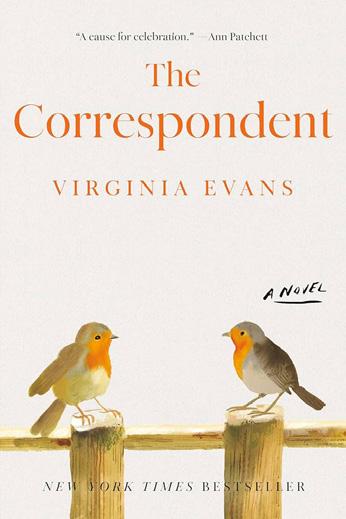
The Correspondent by Virginia Evans
This one hit me in the heart. Told through letters and emails, it’s the story of Sybil Van Antwerp, a retired lawyer navigating aging, estrangement, and the slow loss of her sight. It’s intimate, raw, and beautifully written. Listening to the audiobook feels like reading someone’s diary — except they’re letting you in on the secret. It’s a reminder that even when life gets quiet, there’s still so much to say.

There’s something magical about winter. The way the cold slows everything down, the way the snow hushes the world. It’s the perfect season to lean into stories to make you laugh, reflect, and feel a little less alone. I’ve spent a lot of time with books, both as a reader and a writer, and I can tell you: the right story at the right time can be life-changing. So here are five books — especially in audiobook form — that I think will be great company for you this holiday season. Think of them as your fireside friends.

Whitaker
This one’s a journey. Set in the Ozarks, it follows Patch, a boy who saves a girl from abduction and sets off a chain of events that spans decades. It’s about trauma, redemption, and the long road to healing. Whitaker’s storytelling is cinematic — think sweeping landscapes and emotional close-ups. The audiobook is haunting and powerful, perfect for those nights when you want to feel deeply.





Mark Critch is one of those people who can make you simultaneously laugh and think. His new book is a collection of essays about what makes Canada worth fighting for. It’s smart, funny, and full of heart. The audiobook, narrated by Critch himself, is like hanging out with your funniest friend who also happens to be a deeply patriotic history nerd. It’s a great listen if you want to feel proud, entertained, and even learn a bit about Canada’s history

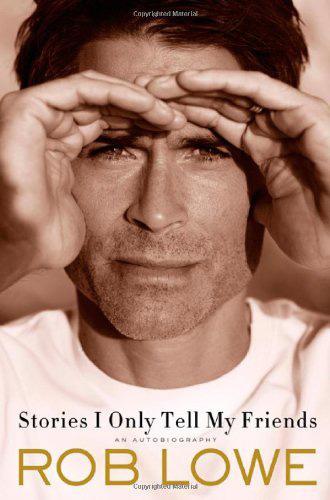
This memoir surprised me — in the best way. Heartthrob Rob Lowe takes us behind the curtain of Hollywood, but what makes this book special isn’t the celebrity gossip. It’s the vulnerability. Lowe writes with charm, honesty, and a self-awareness that’s rare in showbiz. The audiobook, narrated by Lowe himself, is like listening to a friend tell you the story of his life — complete with the awkward moments, the big breaks, and the lessons learned along the way. It’s funny, heartfelt, and unexpectedly profound.
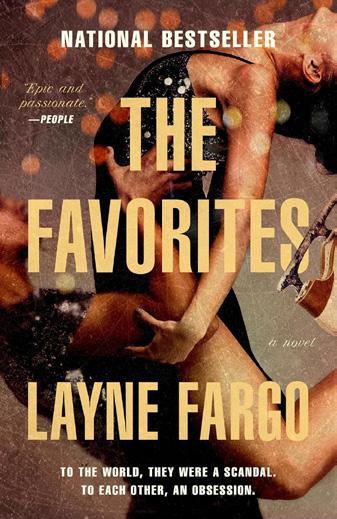
by Layne Fargo
Now this one’s got drama. Set in the high-stakes world of competitive figure skating, it’s a story that glides between obsession, ambition, and the kind of heartbreak that doesn’t melt away. You’ve got childhood sweethearts turned Olympic ice dancers, a scandal that shatters their partnership, and a documentary that threatens to expose everything. It’s intense, emotional, and cinematic in the best way. Listening to the audiobook feels like watching a gold-medal routine—every twist, every fall, every breathtaking moment. If you love stories about passion and reinvention, this one’s a triple axel.




Erica Ehm is a writer, entrpereneur, speaker, broadcaster, and former MuchMusic host. She lives in Toronto and Kawartha Lakes.







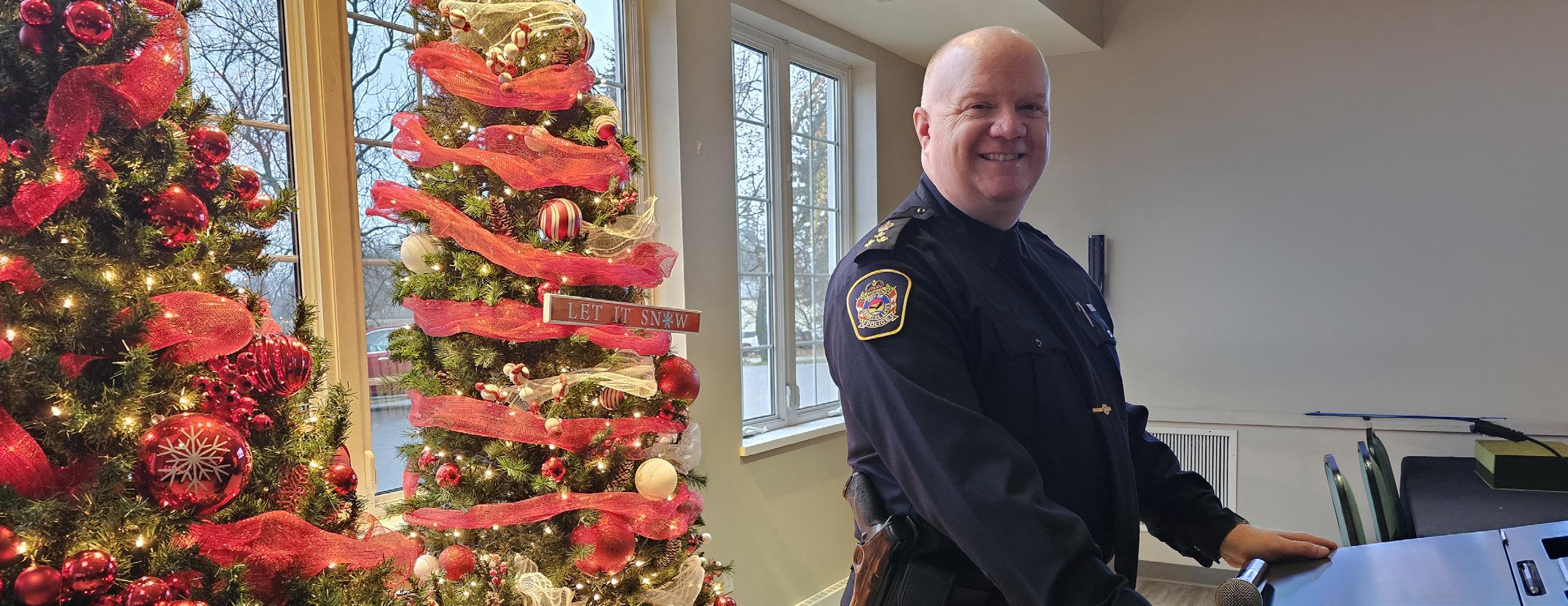
Kawartha Lakes Police Chief Kirk Robertson is proud of many things from his short time as chief, including their collaboration with other community groups to confront homelessness.
At a recent Lindsay + District Chamber of Commerce event, “Breakfast with the Chief,” Robertson said last year at this time there were 59 encampments in Lindsay. This year there’s one.
“There’s no secret that homelessness isn’t a policing issue. Quite often we are the go-to. People will call because they don’t know where else to call,” Robertson said. He credits this decrease of encampments to a group effort by KLPS, by-law, A Place Called Home and Ross Memorial Hospital.
In his update to the community at the breakfast, the chief noted he wanted to hire more staff, something that was accomplished this year. KLPS hired 13 new staff, including four new officers and four special constables who are set to start in February.
By Robyn Best
Robertson’s police career began 30 years ago and he reflects on the changes he has seen over that time period.
“Investigations that might have taken two or three hours when I first started, now with disclosure requirements and other administrative requirements, they take six (or) seven hours to complete. The special constables will be able to assist with that, which will then in turn allow our police officer to get back out in the streets, serving our community the way we…expect them to,” Robertson said.
These new hires are essential to a force that last year received more than 16,700 calls for service. This year they’re averaging 1,300 calls per month, and from those calls an average of 200 criminal charges are laid per month, making clear KLPS is busy.
In March alone they received 3,200 calls in the first five days of the ice storm, and 4,900 transmissions over the radio system.
Robertson also took time to acknowledge the community response teams, one that deals with mental health and another that responds to substance abuse. “(The teams) will not let up if they think there’s a hope that someone’s going to take them up on our offer (of help). They will continually engage them to help, because not everyone’s as receptive as we would hope they would be to get those services until they’re ready.”
Last year the mental health team had interactions with 870 people, both on a primary response and follow up basis, and the substance abuse team had 640 interactions. Together the teams put in 4,200 hours. The chief also announced that soon the substance abuse team will go from being out two days a week to three in the community.
As for what Robertson hopes comes next, he wants more staff. He’s found that having four new officers has already decreased the police burnout on his force. “The biggest thing for me is the mental health and well-being of my people.”
At the recent Breakfast with the Chief event, Joby Lake, owner of Lindsay-Peterborough Movers, voiced concern about trail safety.
Even as encampment numbers have lowered this year, Lake said many people he’s spoken to, including his wife, still felt uncomfortable walking them. “Encampments moved, but a lot of garbage was left behind. It wasn’t that she had a fear for her life, but when you walk down the trail (and see) socks, shoes or pants, it’s uncomfortable.”
He asked Chief Kirk Robertson if foot patrol would be expanded beyond downtown to trails such as the Rotary Trail in Lindsay along King Street.
Robertson said that the plan was to do just that this summer, but staffing issues prevented it from happening. “The plan is to make our presence known in more areas than just downtown. Hopefully
we’ll be able to get out next summer and do that a lot more.”
The chief also wanted to be clear that the majority of those living in encampments are not violent. “Aside from maybe some aggressive panhandling, people asking for money, we didn’t see violence from them towards members of the public, towards strangers, anything like that,” he said.
After hearing about plans for increased police presence, Lake says he does “feel a lot better” hearing that. “Additional officers (are) something that we’ve needed.”
Robertson said that hopefully the word can get out more that many of the encampments in the city are gone now. “Maybe people aren’t understanding, or that information hasn’t been passed on to them. Those areas are free of encampments.”



Help With Alcohol Addiction?
you, or a family member are troubled by drinking, help is just a phone call away!

pov you just took your first sip of the season


Christmas from our McFamily to yours


A strong sense of community matters to Jeff Todd and his family. It’s why they support the Ross.
Whether you’ve lived here all your life, or are new to Kawartha Lakes, we all count on Ross Memorial Hospital.
Please join Jeff and his family and make a gift that may be what matters most to someone this holiday.
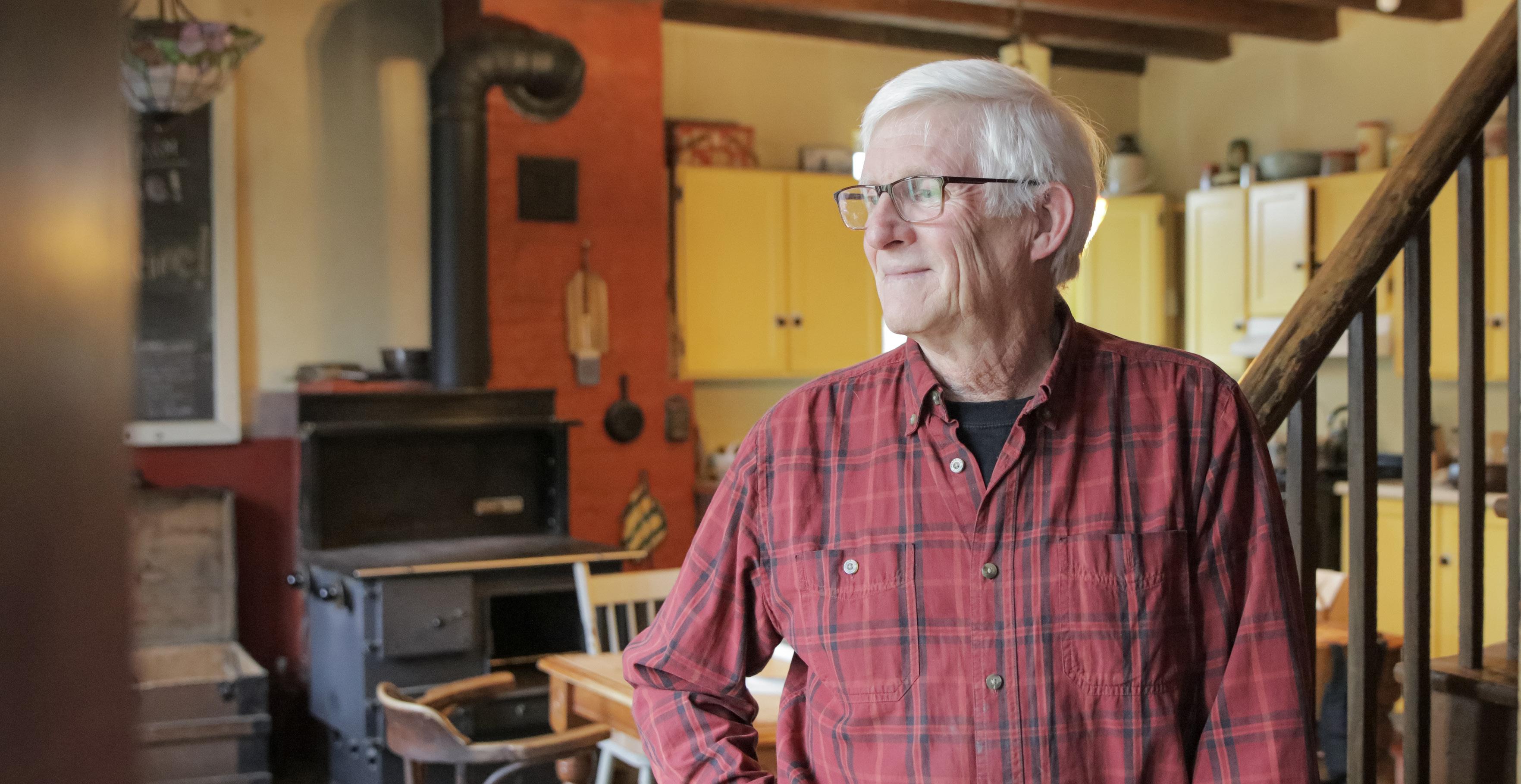
Some people find God in Sunday school. And most can trace their faith to family influence in some way.
Brian Walsh found God on Yonge Street when he was 16. Raised by a single mother, he had certainly not come from a religious family. In the late 1960s Walsh was on Yonge Street, not looking for drugs, sex and rock and roll, “just sex and rock and roll.”
“I wasn’t interested in the drugs,” the pastor emphasizes over pints and turkey croissants at Bistro 93 in downtown Lindsay.
Hmm. The pastor and the pints. I start writing possible headlines.
“What I was really looking for was a cultural vitality that somehow I thought might be connected to Yonge Street and Yorkville, and which I didn’t find living in North York.”
Walsh wasn’t an overly troubled teen. His aspiration at that point in life was to become a salesman for a multinational corporation and have a sports car.
But Jesus saved him from any future Ferrari as he came to embrace a Toronto inner-city mission to the poorest of the poor. Yet he didn’t start burning his rock and roll albums. In fact, “I started listening more to rock and roll and grew my hair long and started writing poetry. I became countercultural through my conversion.”
The pastor wants to acknowledge it’s not as if he did a comparative religion course as a young man, trying to figure out where to find the answers he sought. Instead, he “met a certain community and that community embodied a vision and a sense of home that was incredibly appealing to me.”
It wasn’t until months later he felt he had to level with them.
“I told them, look, I’m not a Christian.” They weren’t worried by his confession. They simply befriended Walsh until one night somebody gave him a little booklet called The Good News According to John. (Written in plain language, it was simply the Gospel of John.)
“I picked up some Chinese food on the way home that night and sat and read it. It was the longest piece of literature I had read in my life, up until that point.”
Once he began going to church though, Walsh couldn’t see what the connection was between the Jesus he met amongst the poorest of the poor on Yonge Street and the Jesus embodied in church life.
It wasn’t until many years later that he realized his search for everything to make sense was really about a search for home.
Once he began going to church though, Walsh couldn’t see what the connection was between the Jesus he met amongst the poorest of the poor on Yonge Street and the Jesus embodied in church life.
“This is the theme that runs throughout my life and throughout my writings,” says Walsh, who is a prolific author with 15 books under his belt. “The heart of the thing is home. I came from a broken one. I did not have a profound experience of home.”
So when he met a community of Christians in the midst of an inner-city mission, this became his story and shaped his identity.
His mother didn’t really get it. While his grandma was more Christian, his mom was “a little worried I was going overboard with the whole thing.”
“And yet she recognized that all of a sudden I had a real purpose in my life. It wasn’t a purpose she could understand. I don’t think she ever did understand it,” right up until the day she died, Walsh said.
While he thinks back to that Gospel of John booklet, he admits the figure of Jesus was “incredibly appealing and attractive to me.”
I point out that, had Walsh been born in northern India, he may have been
compelled by the story of Krishna and not Christ. That perhaps he would have found the Hindu divinity of Brahma, Vishnu, and Shiva compelling. I also push him on whether devotees of other religions can expect to find salvation if they haven’t discovered Christ, yet live their lives with similar moral principles.
But Walsh has a more liberal – and perhaps realistic – view of such things. He says he does believe much depends on the type of life someone leads. And more to the point, “I just don’t know.”
In our back and forth I note that the earth’s oldest recorded story is The Epic of Gilgamesh, from ancient Mesopotamia. The flood myth in this story closely parallels the biblical story of Noah, featuring a divine warning, a massive boat, and the preservation of life.
In the Gilgamesh story, the god Ea warns Utnapishtim of the coming flood and instructs him to build a boat to save lives. The boat is described as having equal dimensions in length and width, and Utnapishtim fills it with animals, craftsmen, and his family – and this story predates Genesis by centuries.
I ask Walsh how he reconciles these facts when he settles on Christianity.
“That there would be certain kinds of echoes shouldn’t be surprising,” he says. Indigenous stories often have a flood narrative as well, which also predate Christianity, he points out.
“Humans have to make some sense out of their world and how their world got screwed up, so certain parallels wouldn’t be surprising.”
But Walsh maintains the biblical story of creation is fundamentally unique, because it’s a “good creation.” He points out that in most mythologies and religions, the beginning of the world is always a war between the gods and is inevitably about conflict.
When it comes to parsing Christianity, though, nothing is more important to Walsh than what he believes is covered profoundly in the Book of James, in The New Testament.
“Humans have to make some sense out of their world and how their world got screwed up, so certain parallels wouldn’t be surprising.”
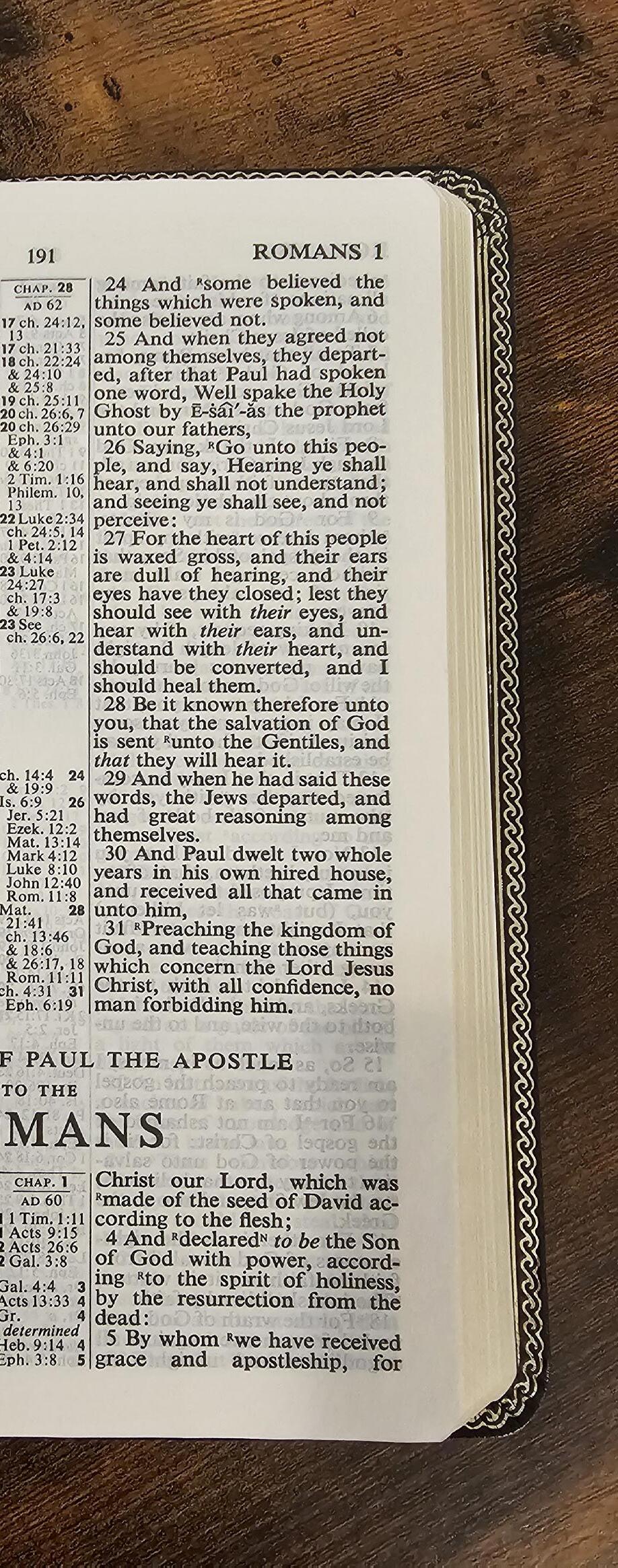
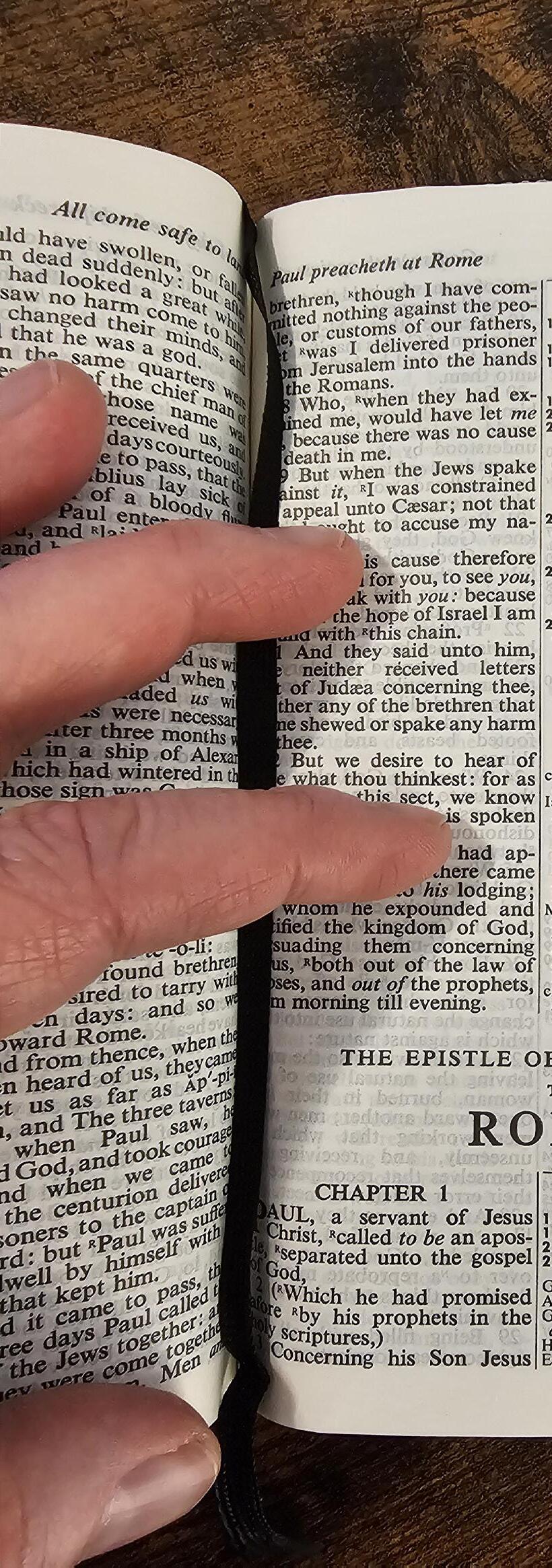
He calls this a “very radical book,” and notes this verse: “Pure and undefiled religion is this – to care for the orphan and widow in their distress and to keep oneself unspoiled from the world.”
This action-oriented definition of religion, with an emphasis on social responsibility and visible ethical behaviour as the mark of true faith, is what Walsh sees as “pure religion.”
“To care for the orphan and widow in distress…which basically means all the most vulnerable, who do not have social support…if you’re not caring for them what you believe is quite secondary.”
This perhaps explains why Walsh would eventually become not only a theologian and author, but also an activist and farmer. He served for almost 25 years as a Christian Reformed campus minister to the University of Toronto. Locally, he is in his fifth year on the board of A Place Called Home, the area’s local homeless shelter.
Now retired from the church, Walsh lives at Russet House Farm with his wife, Sylvia Keesmaat, on an off-grid permaculture farm in the Cameron area. His PhD is in Theology and Culture from McGill. Keesmaat’s PhD is in New Testament studies from Oxford. (And if you ever visit their farm, with its near-kilometre-long driveway, you might assume they have at least a Masters in Snowplowing.)
He describes their work at the interface “of what I would call biblical theology and cultural reality.”
And the reality today, as he watches Donald Trump cloak himself in aspects of Christianity while enriching his friends and destabilizing the world order, is the wedding of Christian faith to the idea of empire.
“What we’re seeing in the church, especially in the right wing, white Christian nationalist church today is not new, I’m sad to say. We’ve seen this… since Constantine. The radical character and aspects of Jesus manage to get domesticated and tamed once the church is in bed with empire.”
He and Keesmaat, he says, read the New Testament as a “counter-imperial” body of literature.
Walsh says it’s always important to look at the motivation and drive when it comes to widespread movements.
And the reality today, as he watches Donald Trump cloak himself in aspects of Christianity while enriching his friends and destabilizing the world order, is the wedding of Christian faith to the idea of empire.
“The question isn’t just what are the socio-economic or political structures? It’s what’s the spirit that drives them?”
He uses an example he knows is close to my heart.
“So the spirit that drives something like basic income…it’s an idea rooted in good analysis. We all know the research and if we were only going by the research, we would have such a program.”
But since we don’t, he says, we know it is not a spirit of equity driving society but rather the greed of capitalism.
Walsh says his board work for A Place Called Home gives him ample opportunity to reflect on social issues, including homelessness. He remembers when the new building was constructed as a purpose-built facility. In other words, the idea of homelessness has now become entrenched in society – much like the proliferation of food banks – instead of the high hopes that animated its reluctant opening back in 1995.
“I remember saying to board colleagues, wouldn’t it be great when this structure will no longer be needed for a homeless shelter, but it’d be a
great hospice. It brings tears to my eyes just thinking of such a thing because no, we will never see that.”
I ask him if this is pessimistic on his part, but he says it’s “a discernment to the spirits of the time.”
“There’s a constancy which we could define as empire, which we can define as self interest, which we can define as sin. Homelessness should be a profound affront to our deepest understanding of what is right and good,” and yet we allow it, he says.
Our server checks in for coffee and tea suggestions; Walsh orders an espresso, and I choose green tea.
If the search for home was a defining part of Walsh’s search for identity, I want to know more about the home he and Keesmaat keep today.
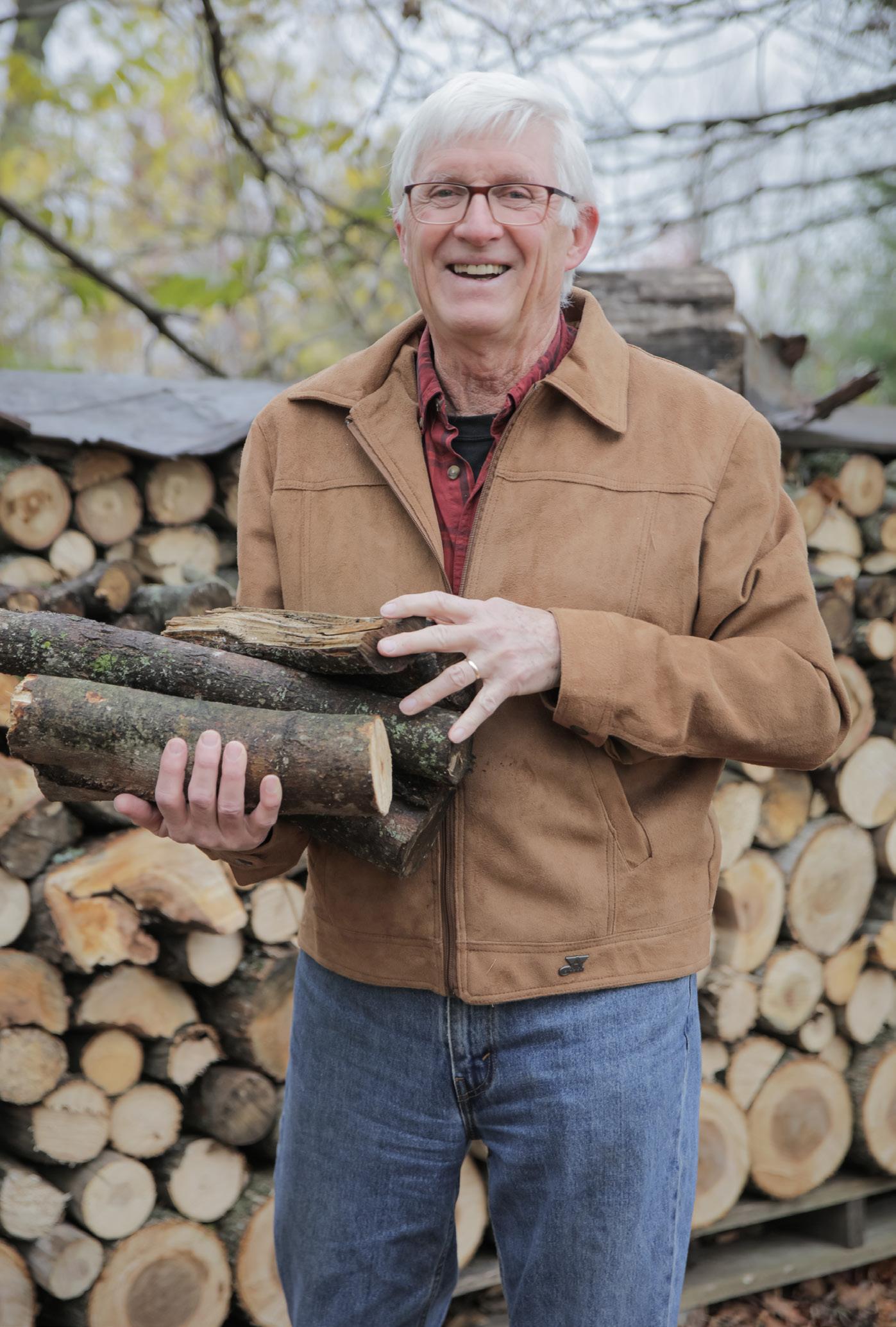
Anything called an off-grid farm is a curiosity for this scribe, who admittedly enjoys the basic creature comforts of modern life.
Walsh admits it’s something that “takes up a lot of time” in the two decades they’ve lived there.
So what does off-grid mean in this case?
First, there is no electricity coming into the property off the grid at all (and there never was to this farmhouse, even before their time living there.) When the ice storm happened this spring, none of it affected Walsh and Keesmaat, who have never received a hydro bill at the farm.
They are totally dependent upon solar with a backup generator. But the solar energy system is working so well at this point that for the last three years “I turn the generator on, just to make sure it still works.”
They replaced their closed cell solar batteries three years ago, as this is especially helpful over the long, grey Ontario winters. These battery types don’t need any manual calibration so are generally preferred.
Although they have a commercial farming license, the kind of farming they mostly do is subsistence.
“We’re farming mostly for our own household and for hospitality – and hospitality is pretty central to what we do,” Walsh says, noting they regularly have student groups, families and folks who just need some time out of the city visiting their farm.
Some local people may remember their heirloom tomato seedling business they ran at the farm for several years, but they eventually sold it. Walsh brings in beef cattle in the spring and he’ll pasture cows for other farmers sometimes, while also doing rotational grazing – meaning the cows move every day.
They eventually have the meat slaughtered and they sell it in quarters and keep what they need for themselves. While the farm is 50 acres, about 35 is just bush, leaving the rest for agricultural needs.
He admits that life on the farm “is pretty intense.”
“It takes up a lot of our time. Winter really is a survival time,” as he references his insanely long driveway again. The lane is cleared by Walsh driving a 1959 Massey Ferguson with a snowblower attached, in reverse.
It’s at this point when I ask the obvious. Why choose to live this way?
Walsh says it’s a “matter of taking seriously our faith and our belief in creation and our responsibility to care for creation.”
They are totally dependent upon solar with a backup generator. But the solar energy system is working so well at this point that for the last three years “I turn the generator on, just to make sure it still works.”
They want to leave a minimal footprint but also practice permaculture, which is a holistic design philosophy that is basically nature mimicry. It’s a way of living and growing food that works with nature instead of against it. For instance, instead of using chemicals, permaculture focuses on more sustainable choices, like planting different crops together so they help each other grow and collecting rainwater and compost.
“We don’t want to live on this land in a way that depletes it. We want to regenerate it,” says Walsh.
From their farm, Walsh and Keesmaat continue to work in various ways. They have an online teaching site called Bible Remixed, where they teach four or five courses a year. People from across Canada, the United States, Mexico, England, South Korea and other places are enrolled. They give lectures and travel. (Keesmaat is a scholar, a writer and a well sought after speaker.) And Walsh shows no signs of slowing down on book writing, either.
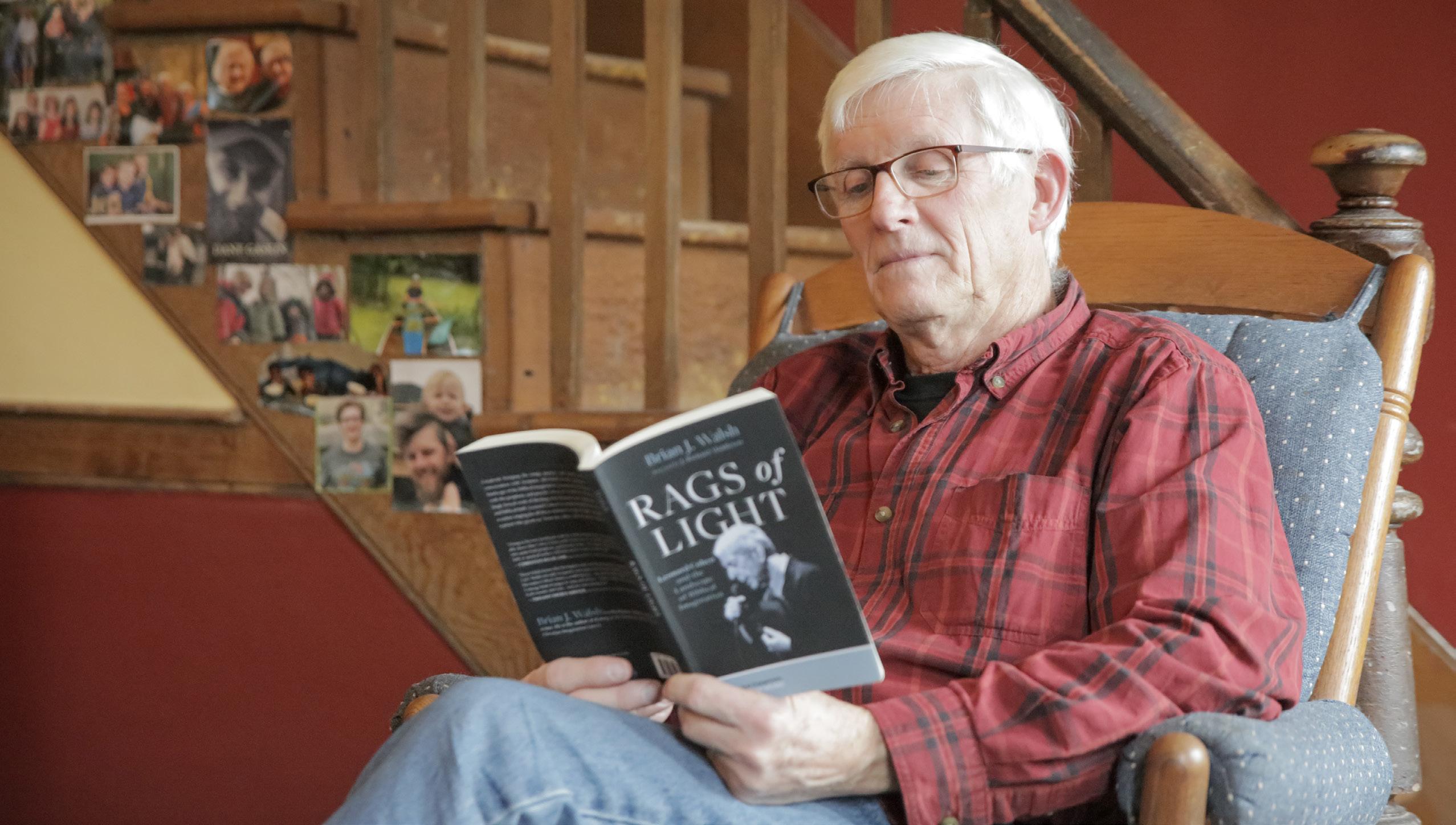
One of Walsh’s most recent books was Rags of Light: Leonard Cohen and the Landscape of Biblical Imagination. As a huge Cohen fan, I was happy to read it and was impressed with his in-depth analysis of the Montreal icon’s lyrics.
Touching on this leads me to my desert island query, knowing Walsh is a big music fan.
What three songs would definitely make your list if you had to be marooned with a limited amount of music? This question likely needs a second pint, but we somehow make do with tea and coffee.
I help him out by going first: Pacing the Cage by Bruce Cockburn, One by U2, and The Future by Leonard Cohen.
He agrees with me on the Cockburn song. Then he adds My City of Ruins, by Bruce Springsteen and If It Be Your Will, by Leonard Cohen.
It occurs to me we’ve both chosen music that mostly dances around the possibility of loss, rebuilding, and inequality, among other themes.
I ask him what we’re supposed to be doing to fix all the inequities of the world, fully expecting a social policy answer.
But Walsh turns to where we began.
“Jesus said ‘the poor will always be with you.’ We will always have structures of society that will create poverty.”
That’s a frustrating thought to me. Then what are any of us doing? Why bother? Why fight the fight?
“Because it’s the right thing to do,” Walsh said. “Because love demands it of us.”

We have all heard the adage “Breakfast is the most important meal of the day.” For workers providing direct support to those experiencing homelessness we know that means more than just nutrition. It is a chance for us to create a connection, to know if that vulnerable community member made it through another night of living rough, to tell them that we are glad that they did.
At the John Howard Society of the Kawarthas’ Community Integrated Care Hub (CICH), we are preparing to launch a new Breakfast Program that will fill a critical gap in our community. Currently, the Hub has funding to provide one meal per person per day, despite the growing number of individuals relying on our services. As we work toward expanding into a full 24/7 program and prepare to take occupancy of our newly renovated location at 22 Peel Street, it has become clear that offering a consistent morning meal is essential to supporting the health, stability, and dignity of the people we serve.
This fundraising campaign will directly support the creation and launch of this much-needed program.
Across our region, the need is undeniable. Individuals experiencing homelessness, food insecurity, poverty, or unstable housing often begin their day with nothing to eat. Many struggle with chronic health conditions, mental health challenges, and the daily impact of survival-based living. Without access to a simple nutritious breakfast, it becomes even more difficult to attend appointments, manage medications, access services, seek housing, or engage in wellness planning.
Launching a Breakfast Program at the Hub will ensure that community members have a safe, reliable place to start their day with nourishment, connection, and support. It will also help us meet the needs of an increasing number of people
who arrive early in the morning seeking warmth, safety, and assistance, needs that will only continue to grow as we move toward operating 24 hours a day, seven days a week. Your support will help us build this program from the ground up. Monetary donations will allow us to purchase fresh food and the ingredients needed to provide a healthy breakfast every morning. Because the Hub currently does not have designated funding for a second daily meal, community support is essential to making this program possible. Donations can be made through our CanadaHelps page by scanning the QR code included with this request. Or, just visit canadahelps.org and type in John Howard Society of Kawartha Lakes in the search bar to give today. Every contribution directly supports the launch and sustainability of the Breakfast Program.
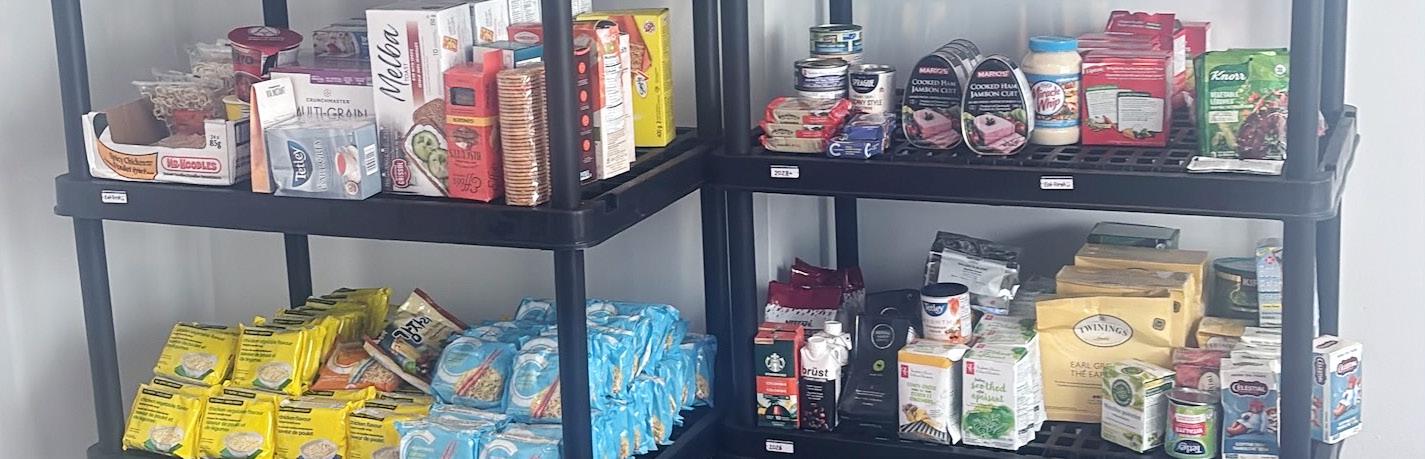
We are also seeking donations of non-perishable food items to help stock the kitchen as we prepare to begin breakfast service. Items such as oatmeal, cereal, peanut butter, jam, granola bars, shelf-stable milk, canned fruit, and other nutritious staples will help us stretch our resources and begin serving meals as soon as possible. These donations can be dropped off at United Way, 50 Mary Street, Monday to Friday from 8:30 a.m. to 4:30 p.m., until Dec. 23.
As we work toward becoming a 24/7 program, expanding meal services is a foundational step. With your help, we can ensure that no one starts their day hungry and that those facing the greatest hardships have a welcoming space to begin their morning with care.
Thank you for supporting the launch of the CICH Breakfast Program and for helping build a stronger, healthier, more compassionate community for all.
— Kristal Jones-Craighead is the Community Integrated Hub Director, John Howard Society of the Kawarthas.




By Robyn Best
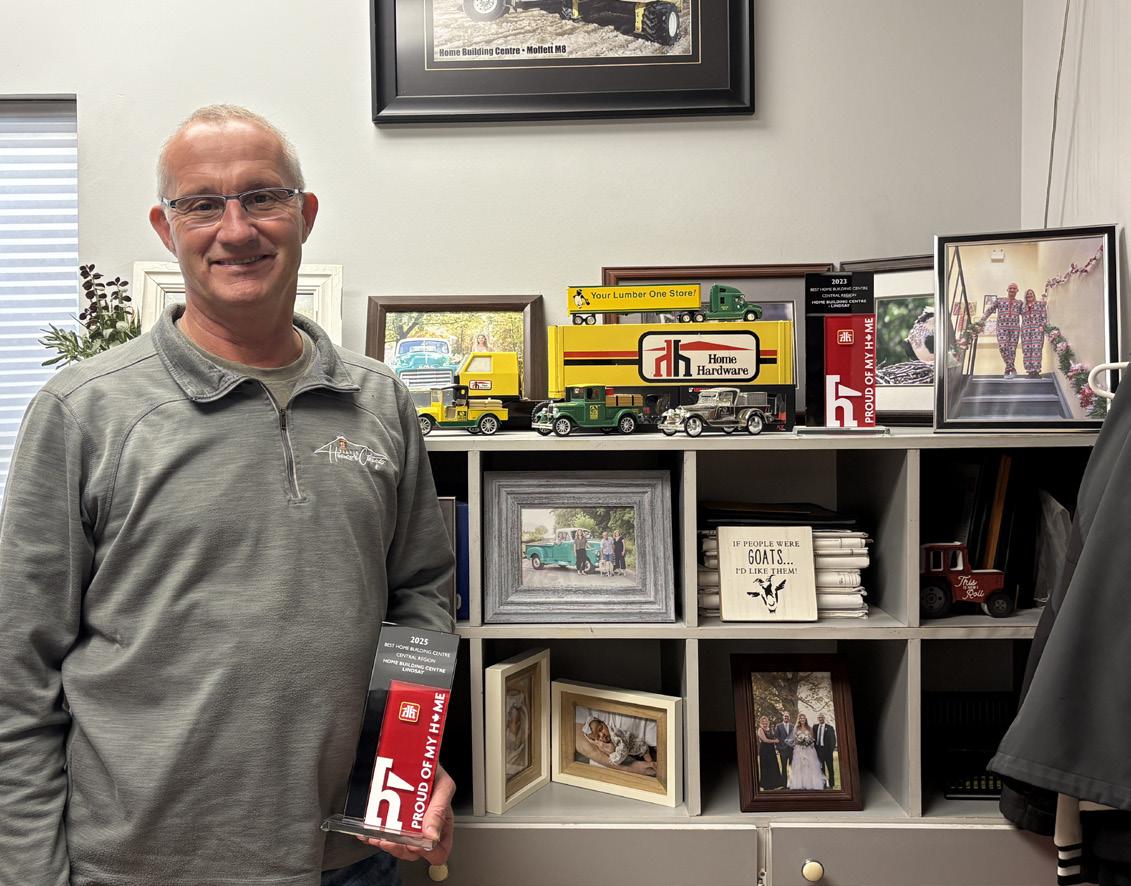
Lindsay’s Home Building Centre and Design Centre have recently been named the best in the central region.
To receive an award the store must demonstrate excellence in customer service, staff performance, store presentation and be active within their communities.
Frank Geerlinks, Kawartha Home Hardware Group owner, said it comes down to his staff. “It’s actually a recognition of two things. We have really good people and it’s a recognition of our customer base, too.”
He said stores are really in the business of problem-solving. “People come to us, and they’ve got a problem,” he said.
Not every customer coming into the store is an experienced contractor and knows exactly what they’re looking for. Geerlinks finds the employees in his store “make (customers) feel listened to or cared about.”
He thinks about the paint section of the building centre. “We’ve got some really good paint people that get excited,” something he said affects the customer directly. “When (employees) get excited about picking a colour, that transfers to the customer experience situation.”
“I think all those things have led to us getting recognized as the store that we are for the central region,” Geerlinks said. It also helps to have a loyal customer base. “We know most of our customers by name, and I think that’s the big difference between what the experience is here and what you would get in a big box retailer,” he said.
As for what’s next, Geerlinks said things will continue to run as they always have. “It really is affirmation that that we’re on the right track.” LA

By Robyn Best
Holiday Passports are back in Kawartha Lakes this year. Both Lindsay and Fenelon Falls have had their own version of the shopping loyalty program for the past eight years.
“This program has grown into one of the most highly anticipated and most participated-in event by the local community. It’s a fun and rewarding way to explore downtown shops, restaurants, and services while earning chances to win great prizes, all while supporting local businesses,” said Mary Hackett, marketing coordinator of the Downtown Lindsay BIA.
To participate, all you need to do is make a purchase at any participating businesses to earn a stamp. Once customers earn stamps from eight different businesses, they fill out their contact information and drop the passport into one of the ballot boxes located throughout downtown.
“Every completed passport gives you a chance to win downtown gift certificates, which can be redeemed at over 100 local businesses. One lucky winner will be drawn each week leading up to Christmas, and if you don’t win right away, your passport stays in the draw for future weeks, so the more passports you complete, the more chances you have to win,” said Hackett.
The Holiday Passport isn’t just a fun community contest, it’s also a great way to support downtown businesses, she notes.
In Fenelon Falls, they have the Passport to Christmas program, which runs from Nov. 14 to Dec. 14.
Similar to Lindsay, when customers make purchases at participating businesses they get a stamp. Once they get five they get to drop their passport off in an entry box. Eligible entries will be in a draw to win a grand prize basket.
“This will be the eighth year for the promotion, and it has become an annual tradition where people choose to support our business community during the holiday season,” said Marylee Boston, executive director of the Fenelon Falls and District Chamber of Commerce.
“The promotion encourages people to check out new businesses and connect with business owners who offer a personal touch.”

By Robyn Best
Community Futures Development Corporations (CFDC) is celebrating 40 years of business. The organization plays a key role in business development in rural and remote communities, including Kawartha Lakes.
“Over our 40-year history, the KLCFDC has supported hundreds of businesses, entrepreneurs and community organizations across the region,” said Corey Norman, KLCFDC executive director. “Many people come to us with ideas to start or grow their businesses here. They are creating jobs, enabling livelihoods, and building our collective future. It is what makes this milestone incredibly special, and why our staff and board are so pleased to celebrate it.”
Businesses across the city have benefited from having KLCFDC at their disposal.
“It’s safe to say that Old Dog Brewing Co. in Bobcaygeon would likely not exist today without the amazing help from the KLCFDC. They bridged a gap for us during construction and worked with us through COVID to keep us on track to open,” said Scott Nichol, owner of Old Dog Brewing Company.
Offering funding, business advisory services and incubation support to entrepreneurs, KLCFD’s objective is to create an ecosystem for growth and success.
“To put it simply, my businesses wouldn’t have progressed nearly as quickly without the support of the KLCFDC. They look beyond the numbers, they dream big with you when you need it most,” said Dan Kitchen, owner of Make Stuff Move and Invent Art in Woodville.
Carlo and Angel Allegri, owners of Gordon Yacht Harbour in Bobcaygeon, are grateful for the line of credit they were able to get through KLCFDC which has allowed them to navigate seasonal fluctuations and invest in local improvements.
“It has given us the ability to plan ahead, hire locally and sustain momentum even when the broader market remains unpredictable,” they said.
“(KLCFDC) was so easy to work with and provided (us) with a perfect option to help keep operations at our establishment running smoothly. It is so nice to have such a community-minded option right in our own backyard. Our small, fifth generation business will be eternally grateful,” said the Austin family of J Austin and Sons located in Kinmount.
Norman is grateful to see the impact KLCFDC has had on the community and looks forward to seeing that impact continue for years to come.
“We have many exciting plans” for the future, he says.


By Robyn Best
Kawartha Lakes Small Business Centre and Launch Kawartha are co-hosting a Pitch and Connect event.
The event will take place on Dec. 9 from Noon-1 p.m. at Launch Kawartha, at 165 Kent Street West, suite 302.
“We’ve heard it loud and clear from our 2025 programming feedback — local business owners want to share what they offer at our events,” said Christine McLean, economic development officer of the Entrepreneurship Development Services.
“Our Small Business Centre is teaming up with Launch Kawartha to make space for those voices to be heard. Bring your best business pitch and a clear voice to get your name out there and make new connections.”




New and existing small businesses owner in Kawartha Lakes are encouraged to attend the event where they will have the chance to share a two-minute elevator pitch, meet other local entrepreneurs, and be connected with mentors and supporters.
Ten participants will be randomly selected to share their two-minute pitch, which will allow them to showcase their business and how it can help potential customers.
The event is free to attend and those interested in going can reserve a spot at Launch Kawartha’s Eventbrite page.




By Sarah Fournier Contributor
Every December, we’re encouraged to shop local, to buy gifts from downtown businesses, visit holiday craft shows, and support the makers and storefronts that keep our communities vibrant. It’s an important message, and one I wholeheartedly believe in. But this year, I’ve been thinking about something beyond the usual holiday shopping conversation: supporting the local service providers who quietly support our small businesses behind the scenes.
Because if there’s one thing I’ve noticed this past year, it’s the incredible and inspiring work that is coming out of Kawartha Lakes across many industries, but more specifically in my own industry of design and marketing. In my humble opinion, the talent that exists in our area rivals anything you’d find in larger cities – and often beats it.
Through Colour + Code’s work with local businesses, organizations, and non-profits, I’ve had a front-row seat to the calibre of work being produced here. The level of thought, quality, and care is equal to anything you’d get in Toronto, without the big-city price tag or the disconnect from the local economy. And honestly, the creativity might be the most impressive part, because small businesses rarely have big-city budgets, yet the work still delivers. And Colour + Code is not alone. Launchworthy (formerly Barton Creative Co.), PB+J, and Sunday Roast are consistently producing top-tier work right here in our region.
When organizations choose to hire locally, it sets off a chain reaction. A project awarded to a Kawartha Lakes designer, videographer, or consultant doesn’t just result in a great end prod-
uct. It circulates money back into the community. That income gets spent at our restaurants, our retail stores, our hockey arenas, our theatres. It’s donated to local charities. It shows up in volunteer hours, pro-bono work, sponsorships, and the thousands of tiny acts that make a community feel like a community.
When organizations choose to hire locally, it sets off a chain reaction.
And the opposite is also true. When businesses look elsewhere, the impact is felt. The sudden closure of Holsag in Lindsay was a sobering reminder of how fragile our local economy can be. When we overlook what’s right here, when we assume “big city equals better,” we weaken the very ecosystem we rely on.
This year, more than any other, I’ve been reminded how deeply local service providers care about the businesses they support. Most of us are small business owners ourselves. When we build a brand, shoot a video, develop a website, or craft a marketing campaign, we’re not just fulfilling a contract. We’re rooting for another family-run business to grow, to hire, to stay open another year. We’re investing in neighbours, not clients.
My wish for 2026 is that we broaden what “shop local” means. Support the storefronts, absolutely. But also the creatives, professionals, and tradespeople working just beyond the spotlight.
Because the truth is simple: Our community grows stronger every time we choose the people who call it home.

By Laura Love
Like many communities, Kawartha Lakes features roads and streets named after significant landmarks, influential individuals, and pioneering families who helped shape the region. These names offer a window into the past, providing glimpses of the people and places that once defined the area and invite us to reflect on their historical significance.
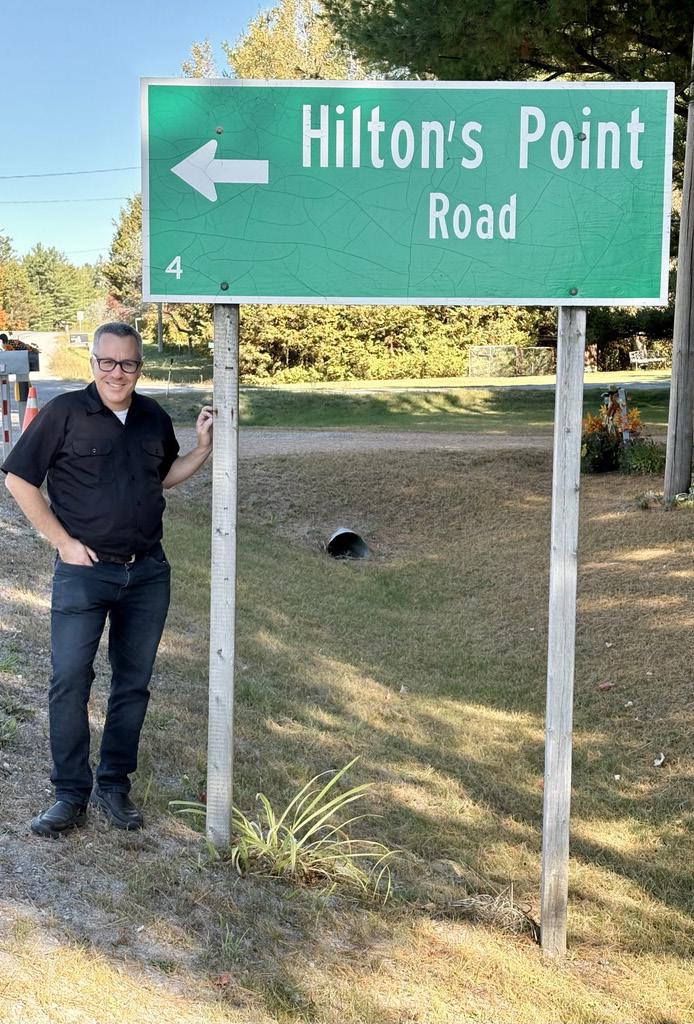
Situated on the east side of Head Lake, Hilton’s Point Road takes its name from the Hilton family, among the region’s earliest pioneers whose presence marked the beginning of local settlement.
John and Elizabeth (née Greenwood) Hilton came from families who worked in the dangerous and unhealthy cotton mills near Manchester, England. Seeking a better life for themselves and their six-year-old son, David, the couple emigrated to Canada in 1857. John was 28 at the time, and Elizabeth was 32. Travelling through New York, the Hilton family crossed Lake Ontario and landed in Port Hope before spending a year or two in Cavan Township.
By 1861, the family of three had settled in a one-room log house on the east side of Head Lake, in Laxton Township, on the edge of the Canadian Shield. There, John cleared trees, removed rocks, and began farming the rugged land. After meeting the government’s settlement requirements, clearing part of the property and paying $135, the 148-acre Hilton family farm on Concession 7, Laxton Township, was officially registered in David Hilton’s name on March 20, 1874.
The Crown grant was sealed by ‘Queen Victoria, by the Grace of God, of the United Kingdom of Great Britain and Ireland, Queen, Defender of the Faith.’ Intriguingly, a later deed dated April 23, 1881, saw David transfer the property to his father, John, in exchange for $500. The exact reason why the original grant was made to the son and the lands were later transferred to the father remains a mystery.
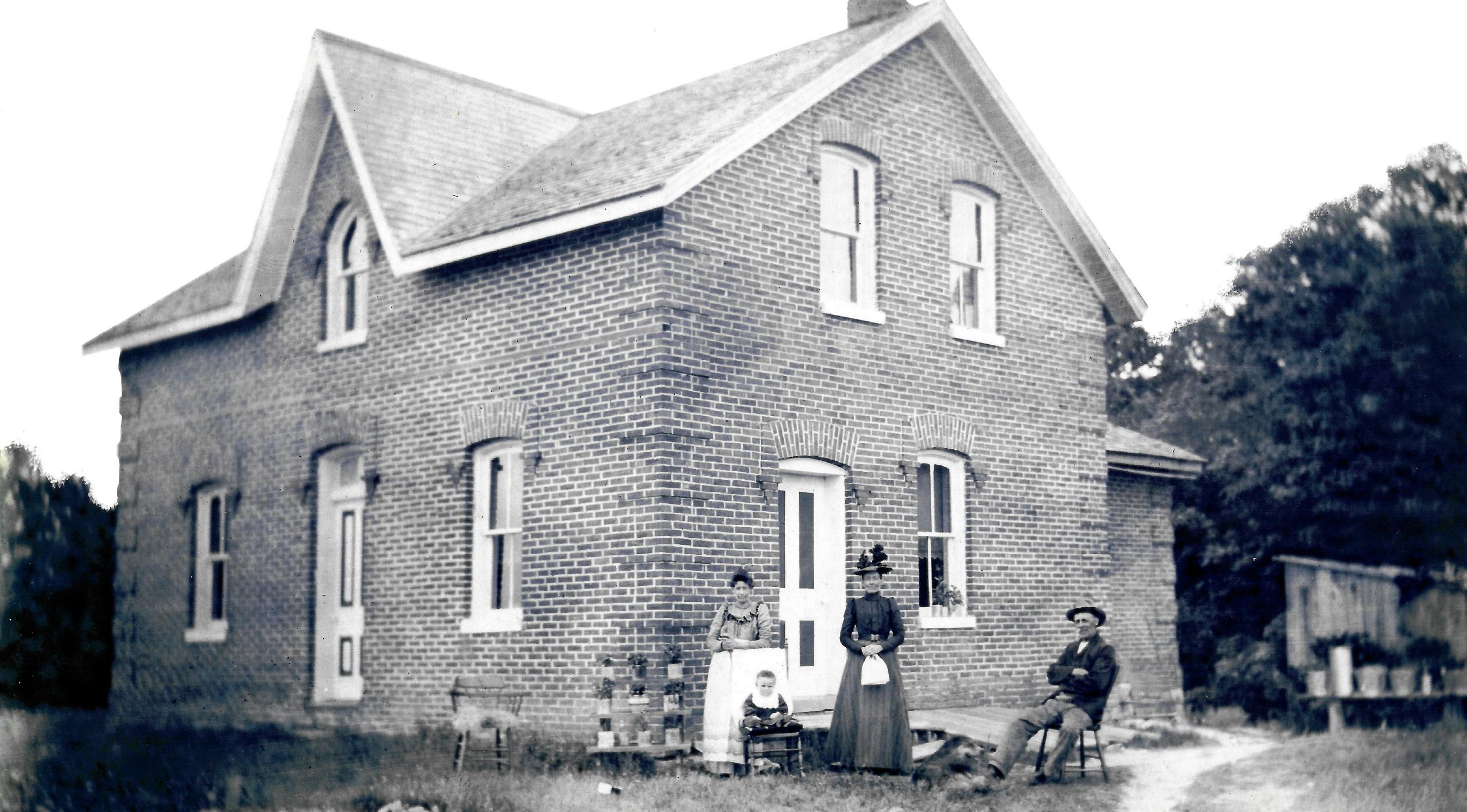
The Hilton family lived in their original log house for 21 years, until 1882, when a brick home was built on the property.
John Hilton passed away in 1892 at the age of 63. Shortly after his death, Sir Sam Hughes wrote in the Victoria Warder newspaper that John Hilton had been a well-respected farmer whose final act before passing was to travel into town by horse and buggy to cast his vote for Sir John A. Macdonald in the 1891 general election.
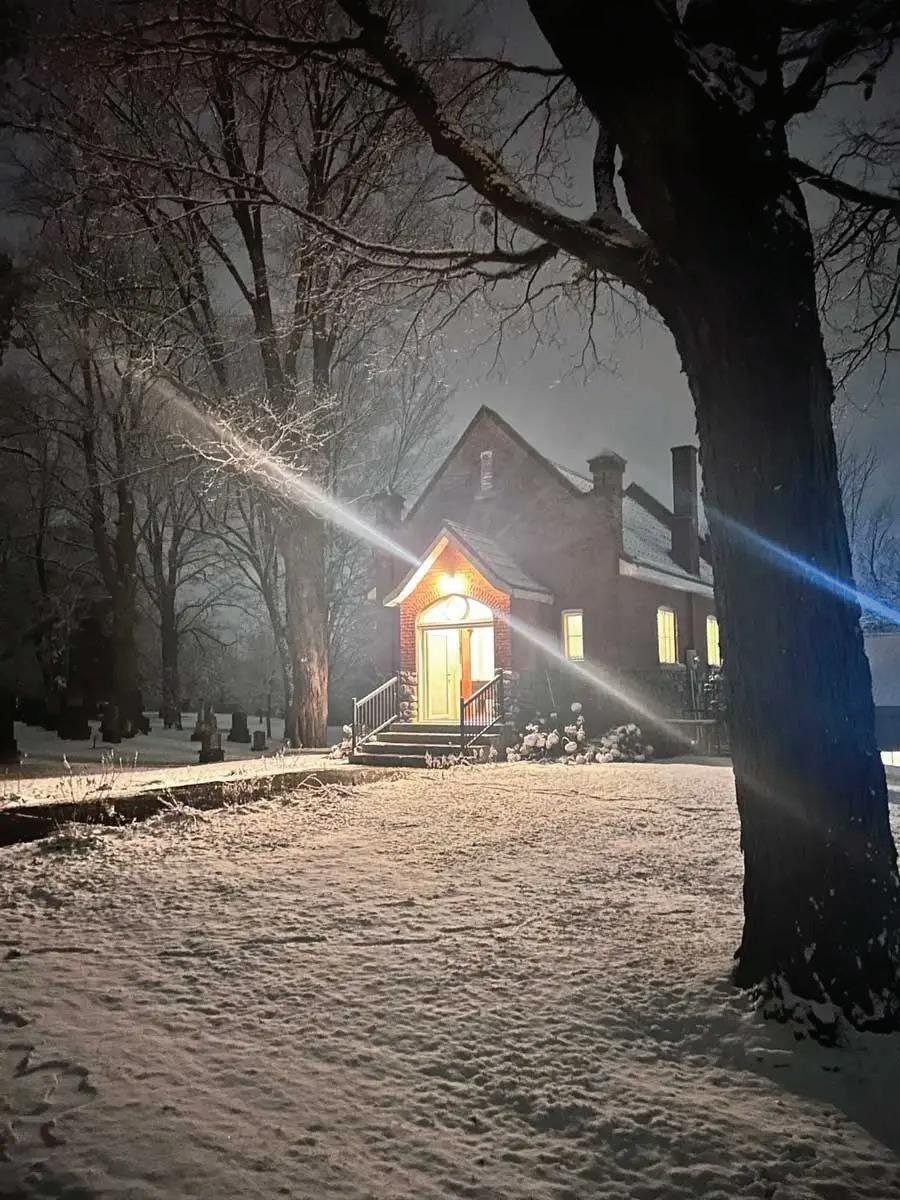
John Hilton’s Last Will and Testament, dated Oct. 10, 1891, reveals the close bond between the small family. In it, John bequeathed his entire estate to his son, David, on the condition that David provide his mother, Elizabeth, with a comfortable home for the rest of her life. Sadly, Elizabeth passed away the following year, in 1892, at the age of 67. Both John and Elizabeth Hilton were laid to rest together in the Pine Grove Cemetery at the corner of Hilton’s Point Road and Highway 35, just north of Norland.
John Hilton had been a wellrespected farmer whose final act before passing was to travel into town by horse and buggy to cast his vote for Sir John A. Macdonald in the 1891 general election.
Meanwhile, David Hilton’s personal life took a joyful turn in 1889 when he married Margaret Jane Bailey, daughter of James Bailey and Margaret Jamieson. Sadly, their happiness was short-lived-Margaret passed away in 1898 from dropsy – another term for edema, meaning the swelling caused by fluid buildup in the body’s tissues. Despite this loss, on Nov. 21, 1900, at the age of 48, David married Jane “Jennie” Prudence Montgomery, the youngest daughter of John Montgomery and Catherine Fee of Janetville. Together, David and Jane built a warm and thriving home on Head Lake. In 1902 and 1903, they welcomed their first two children, John (“Jack”) and Archie. It was also around this time that Jane’s older sister, Mary Ann Montgomery, joined the household after the passing of their parents. She became an integral and cherished part of the Hilton family, where she lived for 34 years until her death in 1937. In 1907, David Hilton sold the Head Lake farm to neighbouring farmer Alfred Newton Winterburn for $2,700. The Winterburn family took over the property, carrying on its farming legacy until 1940. In 1908, the Hilton family moved to 43 Water Street in Coboconk, settling in a house along the Gull River. During their five years in Coboconk, David worked at the local sawmill, engaging in physically demanding labour to support his family.
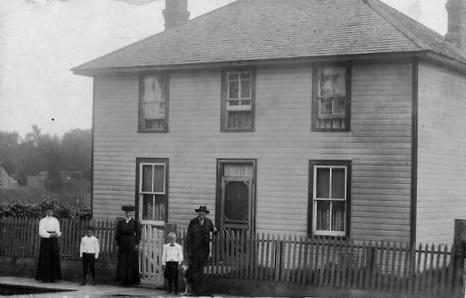
Another moment of joy arrived on July 1, 1910, when David and Jane Hilton welcomed twin boys, Wesley (“Wes”) and Alwilda Theodore (“Ted”), further expanding their growing family.
When the twins turned three, David was diagnosed with a heart condition that prevented him from continuing the physically demanding work at the sawmill. As a result, the Hiltons moved to 56 Angeline Street South in Lindsay, directly across from the present-day Leslie Frost School. The deed recorded the purchase of their new home, along with a fouracre lot, at a price of $1,500. With his health limiting strenuous labour, David transitioned into a less demanding role as a groundskeeper at a local golf course.
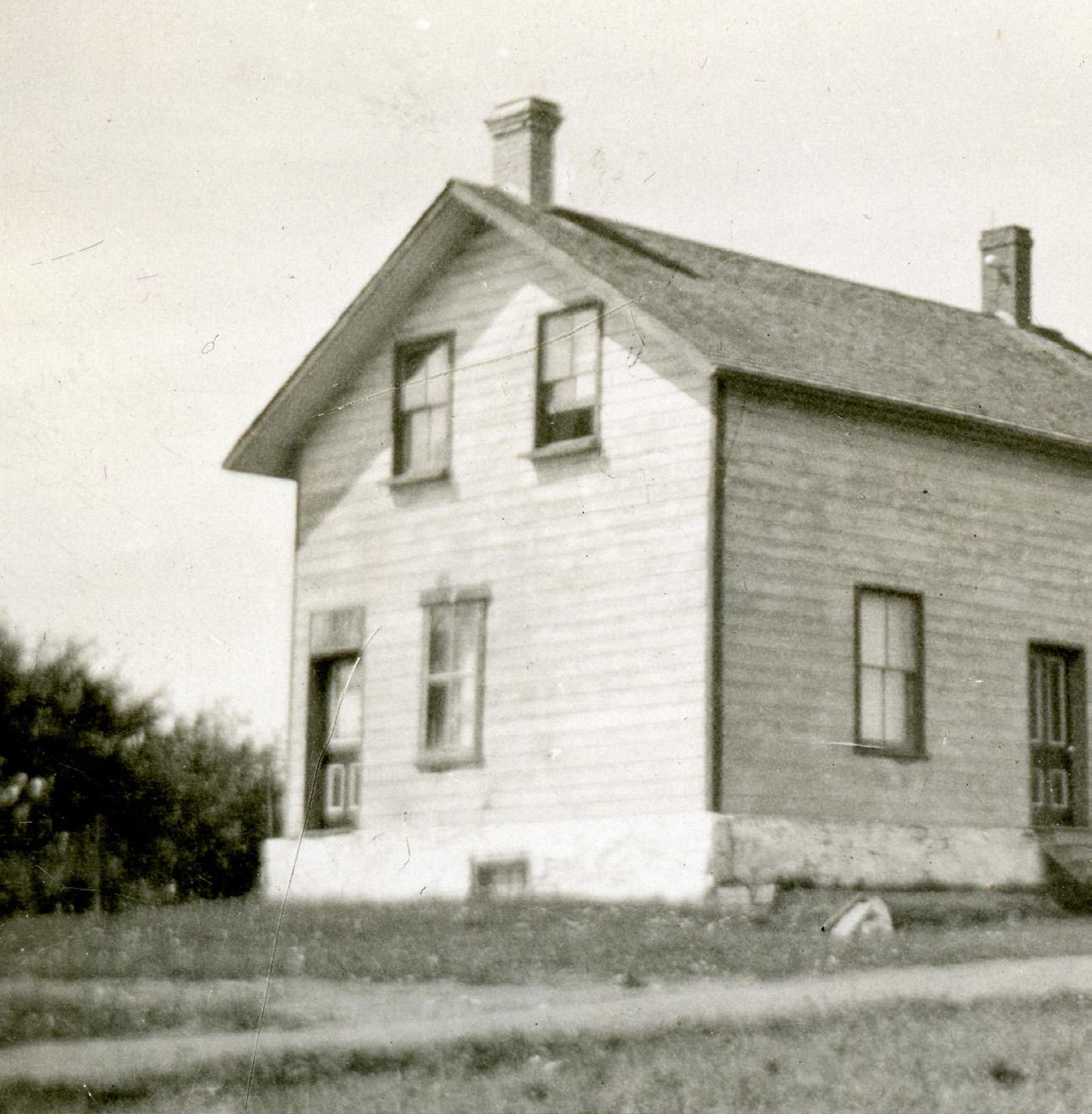
In March of 1922, with Jack nearing 20 and Archie soon to celebrate his 19th birthday, David felt the boys were ready to take on the physically demanding work of farming, a job his heart condition no longer allowed him to do. The Hilton family, then consisting of David, his wife, his sister-in-law, and their four sons, moved once again, this time to a farm east of Lindsay, located on Downeyville Road, Lot 21, Concession 10, Ops Township. For the next 10 years, David and his family devoted themselves to working the land, until his passing on July 16, 1932, at the age of 80. He was laid to rest in Lindsay Riverside Cemetery.
The deed recorded the purchase of their new home, along with a four-acre lot, at a price of $1,500.
Life on the farm during the Great Depression of the 1930s was challenging for the Hilton family. Jack and Wes found some work connected to the construction of Highway 35. By 1935, both Ted and Jack had married and
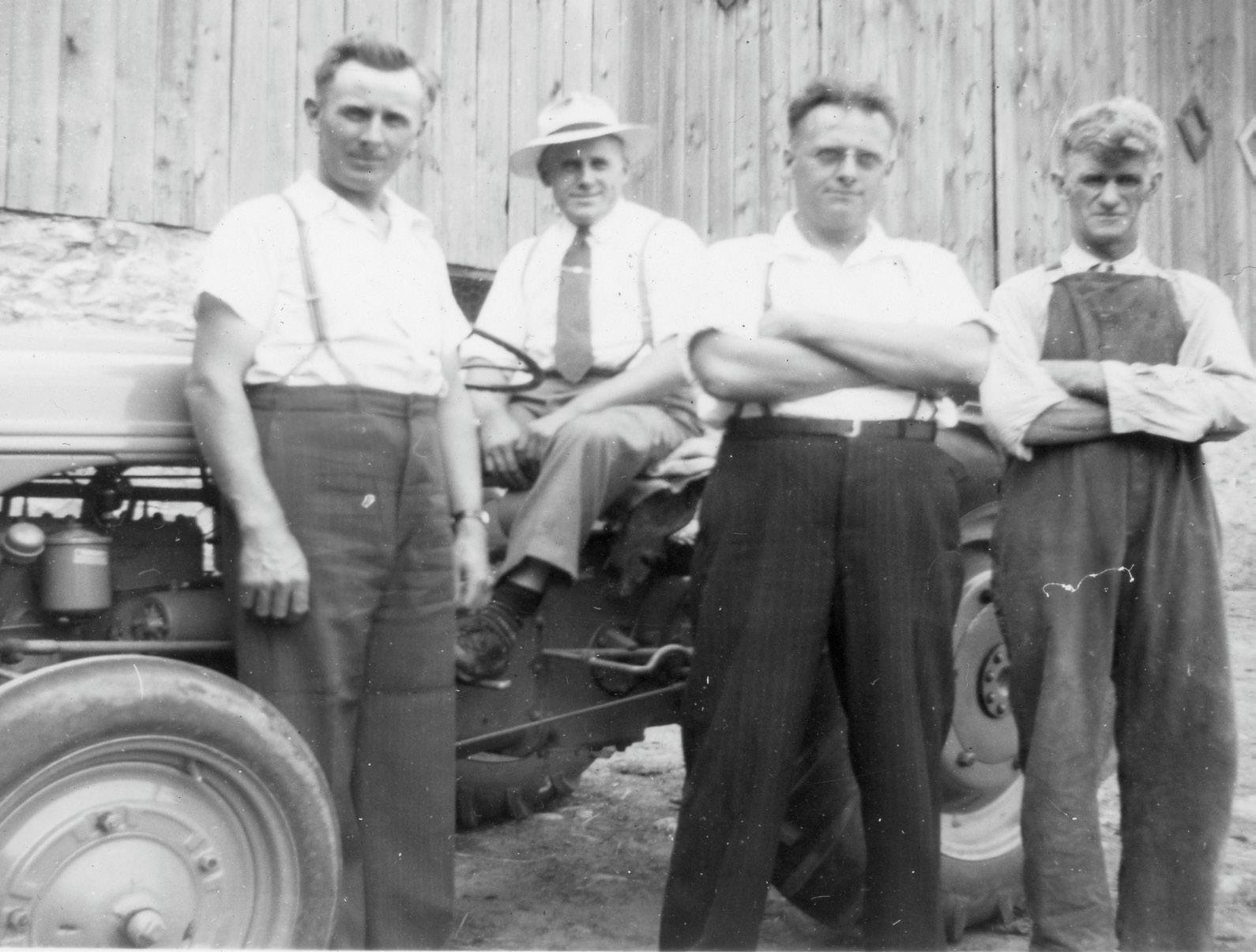
left the farm. Jack devoted himself to his career with the Canadian Pacific Railway (CPR), while Ted moved to Toronto and Oshawa, first working as a milkman and later as a service station operator.
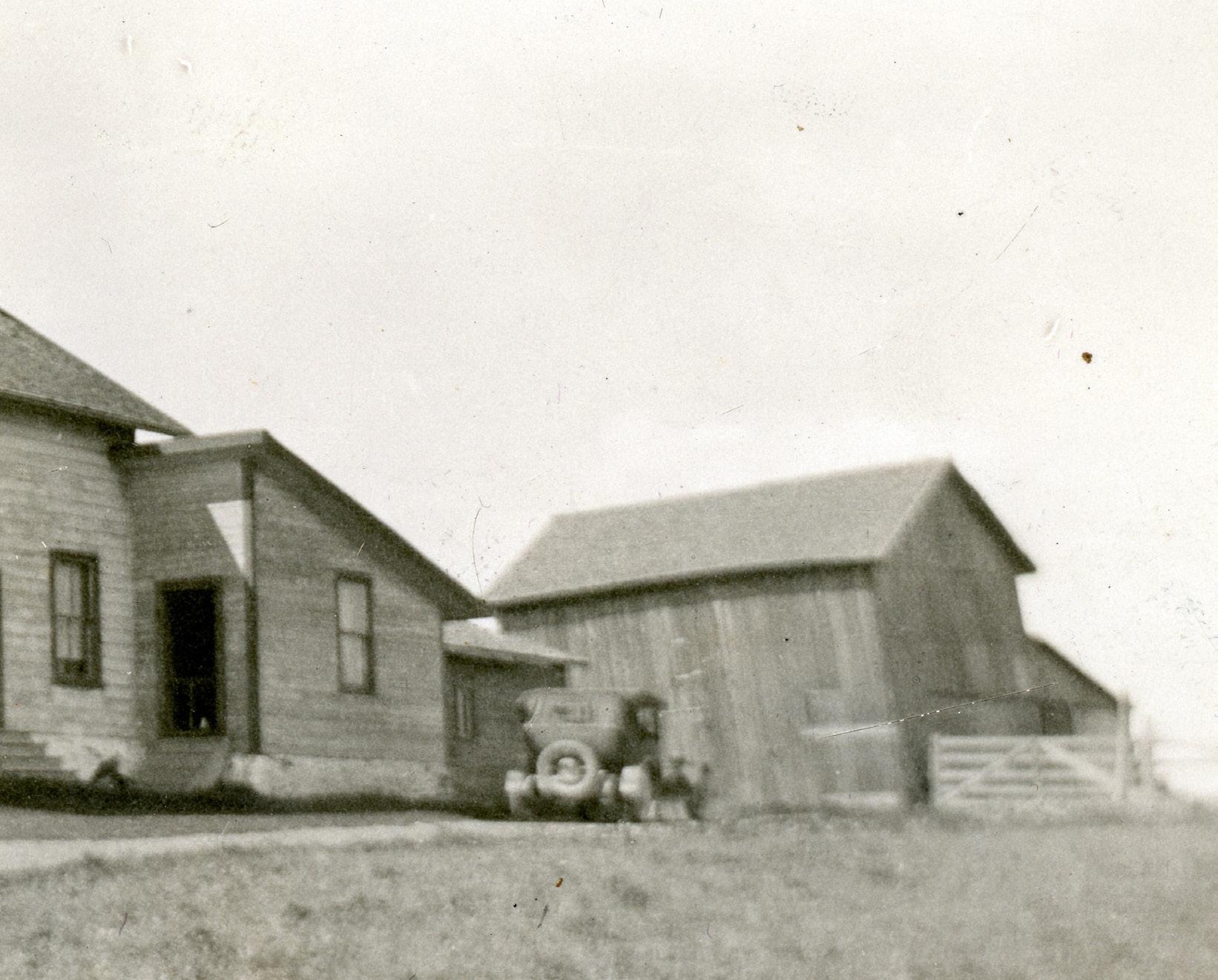
In 1936, Wes was living in Lindsay, employed by Purity Bakery and later Trent Valley Bakery, delivering bread throughout Haliburton County to camps and resorts. By 1937, Archie Hilton – the last of the Hilton brothers remaining on the family farm in Ops Township – left for Toronto in search of work, finding employment first at the Don Valley Brickyard and later with the CPR as a freight car checker. Wes stayed in Lindsay to care for his mother, Jane.
Life on the farm during the Great Depression of the 1930s was challenging for the Hilton family.
The Hilton family farm in Ops Township was leased to a tenant for several years and ultimately sold in 1939. In 1940, Wes married Brenda Hutchinson. In addition to managing his bread delivery route, Wes also assisted with the Hutchinson family farm on Post Road, east of Lindsay. That same year, Jane Hilton moved to Toronto to live with her son Archie.
After Archie’s marriage in 1942, she resided with him and his wife, Agnes. Sadly, just as the Second World War was ending and only a few months before Archie’s first child was born, Jane passed away at the age of 76. She was laid to rest in Lindsay’s Riverside Cemetery alongside her husband, David, and near her sister, Mary Ann. Riverside Cemetery also became the final resting place of David and Jane’s sons, Jack and Wes Hilton.
After approximately 164 years of settling in this area, the Hilton family remains a proud part of the community. Over the generations, family members have left for school and work but have always chosen to return to raise their families.
John David Hilton, a great-grandson of John and Elizabeth Hilton of Hilton’s Point Road and a grandson of David and Jane Hilton, now lives just a few blocks from the Lindsay Fairgrounds. His son, Edward, also calls Lindsay home.
Riverside Cemetery also became the final resting place of David and Jane’s sons, Jack and Wes Hilton.
Today, the Hiltons continue to embody the same spirit of resilience, dedication, and community that brought their ancestors to this region so many years ago. Their story is not just one of family roots, but of enduring connection – to the land, to their neighbours, and to the generations who have helped shape this area into the place they still proudly call home.

Love serves as the economic development officer overseeing Curatorial Services for Kawartha Lakes. She is dedicated to uncovering and celebrating the stories that too often go unrecorded.
This article would not have been made possible if it were not for the invaluable files, research, and photographs from the personal collections of the Hilton Family. Kawartha Lakes’ Moments and Memories project records, shares and celebrates the intangible stories of our communities. For more information about this story, any other story, or to share your own, contact Laura Love at llove@kawarthalakes.ca or visit www.kawarthalakes.ca/yourstories.


By Sarah Jane Barredo
Canada has always carried a certain promise in the hearts of many immigrants, a land of opportunity, fair chances, free healthcare, and quality education for children.
Growing up, I never imagined I would one day set foot in this country I had only read about in books and news articles. Yet life has a way of opening doors when the time is right. My husband’s mother had long been living in Canada, and she became the bridge for us to come here. For my husband, the possibility of finally being reunited with his mother after so many years held deep meaning. He always believed he could give back to her better if he was by her side.
Life in the Philippines was beautiful in many ways, especially in our home province of Palawan, but the realities were difficult. Finding a job often depended on who you knew, salaries hardly kept up with the rising cost of living, and seeking government assistance felt like being scrutinized rather than supported. These challenges, among many others, pushed us to consider a new start in Canada.
Before coming, we carefully researched study programs and communities. My husband found a drilling and blasting course that sparked his interest at Fleming College in Lindsay.
We realized we’d have to leave our kids with my mom as we thought it would be too hard for us if we didn’t have a house to live in, and work to do, as soon as we arrived. So we made this hard decision to leave them for now.
We arrived on June 12, 2024, in Montreal. It was very cold to us, even though it was almost summer. But I think even though it was cold for me, it’s bearable and still better than the heat of the sun from the Philippines. The time we arrived was just right for us to be able to regulate our body and adjust to the changing weather.
Soon after, we discovered Lindsay. Coming from a small island city, we appreciated Lindsay’s calm environment, far from the loud, crowded, and traffic-heavy cities. It felt familiar and comforting. However, we quickly faced the realities many newcom ers encounter. One of the biggest hurdles was the cost of ed ucation. International student tuition is significantly higher, often several times more than what Canadian students pay. This meant that a large portion of our savings disappeared almost instantly, placing enormous pressure on us financially right from the start.

On top of that, we struggled to find affordable housing, and most rentals in Lindsay were already high-priced. With limited public transportation, we relied heavily on walking and e-scooters to get around, which wasn’t always easy, especially during unpredictable weather.
As school started, our carefully saved funds began to shrink. I continued remote work as a recruiter for a U.S. company, though I was still being paid at the Filipino rate. My husband took a job at a steakhouse, where he learned kitchen skills, but the workload eventually affected his health. We prayed for new opportunities, and soon he found a better part-time job at a Chinese restaurant with a very kind and understanding owner, an answered prayer during an overwhelming season.
As school started, our carefully saved funds began to shrink. I continued remote work as a recruiter for a U.S. company, though I was still being paid at the Filipino rate.
The emotional struggles were just as heavy as the financial ones. I missed our children deeply, and many nights were spent in tears as I battled frustration over not having Ca nadian work experience yet. Thankfully, our housemates, also international students, guided us through many of the challenges they had once faced themselves. They intro duced us to VCCS, which helped us navigate the job mar ket. After months of applications, I finally secured a hybrid job aligned with my background. It was a turning point for us.


Community support became a lifeline. Fairview Baptist Church welcomed us warmly, offering winter clothes, boots, and encouragement. We also discovered the small Filipino community in Lindsay, and seeing familiar faces brought com fort on difficult days.
Winter this past year was our first time experiencing it, and we saw our first northern lights last year. We also experienced freezing rain, which was a whole new ex perience for us as we are used to typhoons when it comes to ex treme weather.
Now, a year later, our children have finally joined us. We still struggle financially, especially balancing tu ition and living costs, but we manage through faith, hard work, and the help of kind people around us. Canada isn’t perfect, and starting over is never easy, but to us, it sym bolizes hope. A place to rebuild dreams, escape hardship, and begin again.
Here in Lindsay, our new chapter has truly begun.


By Victoria Smith and Calvin Chan

It’s a unique kind of loneliness.
Like someone pushed you onto a roller coaster, with little time to strap in, then launched you onto a life-altering “ride” of unpredictable shakes, bumps and dives – alone.
For the person who’s been told “your services are no longer required,” the immediate shock can be overwhelming. In the moment, seated across from your now-former employer delivering the news, that sudden sense of loneliness – (especially if your job is how you defined yourself) - could compel you to make choices you don’t have to – and maybe shouldn’t.
It might be tempting to immediately sign whatever letter you’re handed, especially if your judgment is clouded by a seemingly large dollar amount it’s attached to. Hey, that big of hunk of cash will help you weather the upcoming storm, right?
But that offer may not be fair – or even legal.
First, the law states that an employer has an obligation to provide enough notice of the termination. And while the notion of “two weeks’ notice” is
widely-accepted as the standard –(perpetuated by TV) – the Employment Standards Act (ESA) sets out a sliding scale of what the employee is entitled to. It could be as much as eight weeks notice and, therefore, eight weeks termination notice pay.
If the employer has a payroll of at least $2.5 million, and you’ve been with them for at least five years, you may be entitled to a severance, over and above the termination notice pay.
But the loneliness of being laid-off –(and here, too, there are laws regarding legal layoffs) – won’t compare to the crushing and immediate isolation that comes with being fired.
Especially if you’re questioning the reasons behind it – and whether those reasons are lawful. While the “three-official-warnings-beforeyou-can-fire” is also a popular belief, there’s no law that imposes that – unless you’re in a unionized environment, where collective bargaining would outline enforceable rules. But there are legal protocols, as defined by the ESA, which employers must abide by if they want to fire
you with cause, and how that determines your compensation.
It might also be difficult to appreciate when you’re in the throes of abrupt unemployment – and that loneliness – that your former employer also has rights surrounding your dismissal. If, for example, you’re seeking a big(ger) pay out from said employer, it could be contingent on you diligently seeking out comparable employment. It’s called “mitigation of damages.” And if the court deems that you haven’t legitimately pursued a replacement job, especially if the former employer provided you with potential leads, you could end up with a lesser (or no) compensation package.
For the newly jobless, the wise move is no sudden move.
Take that letter home and review it closely, and preferably not alone. And consulting an employment lawyer about that next move might not get you off that roller coaster, but it’ll definitely make the ride smoother.
Victoria Smith is a litigation lawyer with Wards Lawyers. Calvin Chan is a lawyer specializing in employment law and Wards’ litigation team leader. Reach them via wardlegal.ca

From County to City, we are all Kawartha Lakes.
As we wrap up 2025 and gear up for 2026, we’re coming up to an important milestone: Kawartha Lakes is celebrating its 25th anniversary as a single-tier municipality
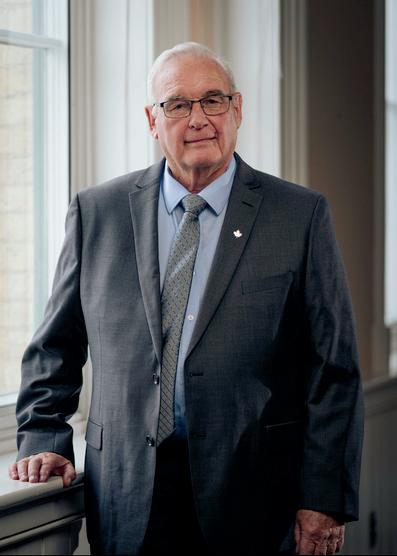
Celebrating the 25-year anniversary of Kawartha Lakes is a meaningful opportunity to reflect on how far our municipality has come since our transformation from Victoria County. Over the past quarter century, residents, businesses, and community partners have grown together, shaping a municipality built on collaboration, pride, and shared identity.
As part of the 2026 celebrations, history and photo displays at City Hall will showcase the people, milestones, and stories that helped define this journey These displays offer residents, both new and long-standing, a chance to reconnect with the moments that brought us together
This anniversary is also a time to reaffirm our commitment to community spirit and progress. By honouring our shared history while looking forward to our future, we celebrate not only what has been achieved, but also the vibrant, united path ahead Together, we continue to build a stronger, more connected Kawartha Lakes













Your library is full of surprises, and this month is the perfect time to explore something new.
Remember the thrill of browsing Blockbuster for your next movie night? Relive the nostalgia with our collection of DVDs! From classic films to binge-worthy TV series, your library has something for everyone.
Did you know your library card also gives you access to our Library of Things? Borrow unique items like snowshoes, pickleball sets and other sports equipment, STEAM and sensory kits, backyard birding kits, hiking poles, and even radon detectors and other electronics. Whether you want to try a new hobby, explore science, or enjoy outdoor activities, there’s something for everyone to discover.
Planning a day out? Borrow a community pass and enjoy Ontario Parks or local attractions for free.
Access thousands of eBooks, audiobooks, magazines, and movies anytime, anywhere with CloudLibrary, Hoopla, and other digital tools. Whether you are relaxing at home or enjoying a winter evening, your library has the digital tools to keep you entertained.
There is always more to discover at your library. Visit kawarthalakeslibrary.ca to see everything your library card can do for free. You might be surprised at just how much is waiting for you this winter!



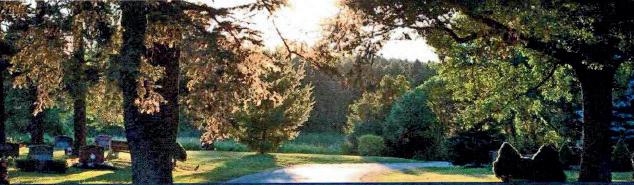










by Joan Corrigan
1. Small chair for milking cows
6. ___, Crackle and Pop
10. Mom's partner
13. Kathmandu country
14. Oak tree nut
15. Angst-ridden rock music genre
16. Correct too far to the right, after stumbling left
18. ___ Costello, Bud Abbott's partner
19. Military conflicts
20. Comedy great Lucille
21. Hit painfully, one's toe
22. ** First woman to fly solo across the Atlantic
26. Film a scene again
28. Away from the wind, to sailors
29. Make amends
30. Person who was famous once but not now: 2 wds.
35. City of WWII Nazi war crime trials, for short
36. Newborns
37. Pie ___ mode: 2 wds.
38. Revoked a lawyer's license to practice law
41. Rainy month
43. Muslim priest
44. Container for coffee or wine
45. ** Manfred, World War I aviator nicknamed The Red Baron
50. Frosted a cake
51. Pomegranate seed
52. Train/bus depots: Abbr.
55. Use needle and thread
56. Token payments
59. British thank-yous
60. Not deserved, as criticism
61. Stays still with the engine running
62. Some
63. Good, better, ___
64. Cowboy meal
1. Winter weather
2. Outdoorsy sandal brand
3. Equipment users, machinists
4. Member of a rowing crew
5. Undergraduate law degree: Abbr.
6. La ___, Milan opera house
7. Free of toxic heavy metal, as housepaint
8. Circle portion
9. Toronto's annual summer fair The CNE; Vancouver's annual summer fair, The ___
10. Alfa, Bravo, Charlie follower
11. 'My Cherie ___' (Stevie Wonder song)
12. A feeling of uncertainty
14. Jai ___ (court sport)
17. Ready, willing and ___
21. "___ a Lady" (Tom Jones hit)
23. ___ out a living (barely get by)
24. Brewer's products
25. Fire-engine colour
26. Currency of South Africa; or, the author of Atlas Shrugged
27. Small sewing kit
30. Field workers
31. President Lincoln, informally
32. Big hairy spider
33. First letter of Arabic alphabet
34. Raspy breathing sound
36. Bric-a-___ (worthless trinkets)
39. The early one gets the worm
40. Friend, in Paris
41. Allied Air Forces: Init.
42. Oversee a meeting
44. Pepsi
45. Panorama
46. Octopus's home
47. Full of current events items
48. Lake fish
49. Employ
53. Prayer ending
54. Sizzling bacon sound
56. Central part of a wheel
57. Number between zero and ten
58. Chest bone
Joan Corrigan
By Joan Corrigan, Fun & Done Crosswords
ACROSS
1. Stares rudely
6. Blue Jays wear them
10. Wine or whiskey barrel
14. "Yours ___" (letter sign-off)
15. "He's a ___ nowhere man . . ." (Beatles lyric)
16. Fencing sword
17. Traditional dresses of India
18. Coat-of-arms border
19. Fender damage
20. *Christmas Past; Christmas Present; Christmas ___: 3 wds.
22. "Put a tiger in your tank" company
23. Scream upon seeing a mouse in the kitchen
24. December 24 and December 31 for example
26. Classic movie actress Gardner
29. Grew up
32. Acetylsalicylic acid, for short
35. Home improvement chain store
37. Where to fry eggs
38. Peruvians before Spanish conquest
40. *Dickens' character who says, "God bless us, every one"
44. Stage setting
45. Young boy
46. Gambling city in Nevada
47. Positive reply
48. Neighbour of Turkey
52. Train stop: Abbr.
53. Away from the wind, to seafarers
54. Notable period of history
56. Performed in a choir
59. *Scrooge's expression of contempt for Christmas: 2 wds.
64. Above
65. S-shaped curve
66. Fails to win
68. Amount of medicine to take
69. Out loud
70. Big occasion
71. Poker stake
72. Part of a school year
73. Short-tempered
1. "Fourth periods" in hockey, for short
2. Elephant colour
3. Entice into a trap
4. Upper class
5. Method; process
6. Alligator's cousin
7. Nestle chocolate bar
8. 1960s golf champion Arnold
9. Arm of a shirt
10. Gives up possession of, as land
11. Gorillas
12. Ottawa hockey players
13. Low-carb, high-fat diet
21. Giraffe's shorter cousin
25. Correct and revise text
26. ___-craftsy (pretentious)
27. Soprano or alto
28. Queen ___ lace (roadside 'wild carrot' plant)
30. Scottish beret
31. ___ Sam, USA's nickname
32. Dull pains
33. Opposite of sinner
34. James Bond's car, ___ Martin
36. Ms. Rand, author of Atlas
Shrugged
39. Cash register manufacturer
41. Greenish blue
42. Jogged
43. So long, farewell
49. Start (a computer) once more
50. Deficient in amount or quality
51. Bracelet worn above the elbow
53. Concur
55. Over top of
56. Fizzy soft drink
57. Doorbell-ringing makeup company
58. Bird's home
60. Listen to
61. Place for a ship's captain
62. Utilizes
63. Well-mannered man
67. Pigpen
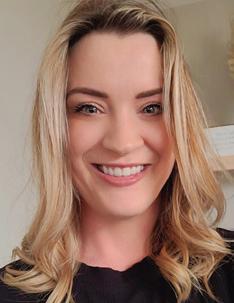


























A former journalism colleague of mine went on to sit as a Liberal in Alberta’s legislative assembly. His son, as a lark, had ChatGPT produce a biography of his dad. It was interesting, to put it mildly. My friend has never lived anywhere but Alberta, but the AI-generated bio billed him as a born-and-raised Quebecer, a separatist and a provincial politician from that province.
That might be a cautionary tale about using ChatGPT, which studies show can get stuff wrong almost 15-20 per cent of the time. But there are other cautions about AI to consider.
Beyond the fake videos of Prime Minister Mark Carney hawking a get-rich-quick scheme, or President Donald Trump flying a jet, concerns abound about the staggering amounts of land, water and electricity consumed by massive data centres needed to run artificial intelligence. The Canadian government’s website defines AI as “a computer system that can complete complex tasks on its own.” Like creating a fake video, or powering a self-driving car.
There are wonderful applications of AI. Some doctors use it to detect and help zap cancer cells, for instance. And it can help farmers more precisely manage, monitor and harvest crops. The question is, do we need to use it frivolously? A study from 2023 showed that a dozen ChatGPT prompts, or questions, use the equivalent of a coffee cup worth of water. On a larger scale, Microsoft is working on six data centres near Toronto and Montreal. Planning documents for one of the Toronto area centres show it could consume 39 litres of drinking water per second. The company has said they would only use that amount for a few days a year, on extremely hot days (above 29C), to cool the servers. But no one really knows.
In the Netherlands, a Microsoft data centre was found to swallow more than four times its originally estimated consumption. That was in 2021, during a heat wave when locals were asked to cut their water usage.
This is happening while AI is attracting a lot of buzz. Late last year the federal government launched a strategy that could invest up to $700 million in new or expanded data centres to “grow Canadian AI champions by leveraging investments”. And celebrity investor Kevin O’Leary announced his intention to build the world’s largest data centre in northern Alberta. A data centre there would likely be powered by fracked gas.
This year, the International Energy Agency projected that globally, the electricity needs of AI data centres will at least double within five years. That would mean drawing more power than all of Japan.
Companies are starting to see push-back on some of this development. In Rocky View County, Alberta, council voted against a data centre. In Indianapolis, Indiana, public reaction led to Google withdrawing its data centre proposal. There were similar reactions in Wisconsin, Virginia and other areas. Right now, Canada has no rules to limit water consumption by data centres, though a committee is broadly looking at how to put guardrails on AI.
We all need water in our homes, and on our farms. But, as one concerned citizen in Nanaimo B.C. said, “Life on this planet is sustained by water. It’s not sustained by data.”
(TIP: To bypass the AI summary in Google, try tacking “&udm=14” onto your Google search)
LA
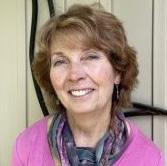
Ginny Colling was passionate about the environment before retiring from teaching college communications students. After retiring she trained with Al Gore’s Climate Reality Project. She has presented to numerous groups about the climate crisis.


‘Twas the week before Christmas, 1930, when a Model ‘A’ sedan pulls up before the J. Sutcliffe & Sons department store in downtown Lindsay. Up in the front seat is a father and his seven-year-old son, who is bundled in a heavy blanket (manufactured a few blocks away at the Horn Bros. Woollen Mill). In the back, the man’s wife and their eightyear-old daughter have kicked off their shoes, taking advantage of the heat from engine exhaust rising through the car’s wooden floorboards.
A light snow is falling as the Model ‘A’ comes to a rest in the angled parking spot in front of the impressive building, opened only a week previous. The father sets the car’s handbrake, turns off the roaring engine, and helps his passengers out into the slush that has accumulated by the curbside. They have driven into town from somewhere out in the country, eager to see how J. Sutcliffe & Sons has transformed itself into a thoroughly modern department store – Lindsay’s answer, perhaps, to the glorious temple of retail operated by the T. Eaton & Co. in Toronto.
This isn’t the family’s first shopping excursion to Mr. Sutcliffe’s store. Indeed, a holiday outing to Sutcliffe’s has been a tradition going back decades. The man behind the wheel of the Model ‘A’ was about his son’s age when he paid a visit to the first incarnation of J. Sutcliffe & Sons, in 1897. It was a much smaller store back then. J.B. Warner had died and his business was acquired by the Sutcliffe family, late of Toronto. Starting with a modest premises on the north
side of Kent Street, Sutcliffe’s eventually expanded out to William Street via the acquisition of the Pym House Hotel in 1916. Everyone knew that it was Mr. Sutcliffe’s goal to become “Lindsay largest store” –and he set about to prove the point via a series of verbose advertising campaigns over the years. “Little Money Makes a Great Christmas if you patronize THE SUTCLIFFE STORE,” decreed a front-page ad in 1904. More promotional gimmicks followed, the most elaborate of which might have been an 18-hole miniature golf course occupying the entire second floor of the Kent and William Street property.
Now, in 1930, Sutcliffe’s had seemingly reached its zenith by building a brand-new store on the south side of Lindsay’s bustling main street.
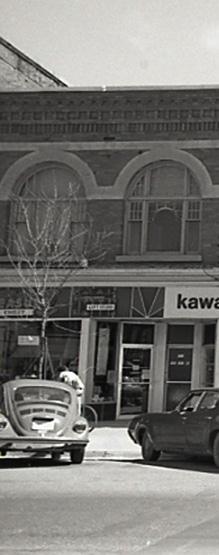
This family of four keeps together as they pass through the front entrance of the white-brick facade, stopping to admire a pair of enormous windows that have been described as “the most modern construction, banded by copper with the display space unhampered and having the back of the window done in cathedral glass for better lighting.” That lighting was designed to turn on and off automatically at designated times, casting its warm glow onto the assortment of wares tastefully arranged in the windows to the delight of young and old alike.
Everyone knew that it was Mr. Sutcliffe’s goal to become “Lindsay largest store” –and he set about to prove the point via a series of verbose advertising campaigns over the years.
The main floor is home to a spacious men’s wear department, a women’s dress goods department, a roomy home furnishings department, and a linens and dry goods department overseen by the aptly-named Mr. Woolley. The space is decorated in what the papers have called a “quiet and restrained beauty, with the general scheme being buff and ivory with the fixtures in walnut.” Upstairs, the millinery and children’s wear departments are located adjacent to the large washroom facilities, while a modern heating system has been lauded as being the best in Lindsay.
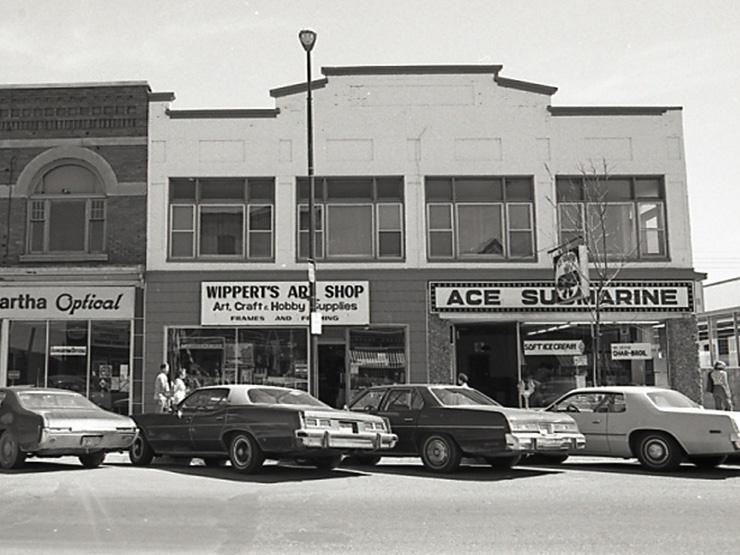
Built as a department store in 1930 for J. Sutcliffe & Sons, this building was by 1977 home to an art supply shop and a sandwich deli. Kawartha Lakes Public Library collection.
Though their mother and father might relish these creature comforts while inspecting the assortment of embroidered linen handkerchiefs, men’s silk scarves, and fur coats, the kids scarcely notice. They are too busy admiring the smartly-dressed dolls and pressed steel dump trucks, fire trucks, and automotive garages on display in Sutcliffe’s somewhat scanty toy department. A couple of years previous, in 1928, Santa Claus arrived in Lindsay by way of the Canadian National Railway and made his way straight to Sutcliffe & Sons. This year, he will be holding court at the competing Canadian Department Stores “Toyland,” a block and a half away. C.D.S., these siblings agree, also has the superior selection of toys –from construction sets to toy pianos and wind-up trains. But of course they know enough to be grateful for whatever they unwrap on Christmas morning, whether the jolly old elf procured it from Sutcliffe & Sons or some other retailer. They are, after all, heading into the second holiday season since worldwide economic depression settled across the nation.
This family will make only one more annual holiday visit to J. Sutcliffe & Sons after this year. Times were hard, and in January 1932 the department store declared bankruptcy on account of “existing conditions.” Four years later, the business had apparently reorganized and emerged as “Sutcliffe and Sons Ladies’ Wear.” It too would be gone by the end of the decade, and in 1945 the grand building became home to Lindsay Cleaners. By the mid-1970s, it was occupied by Wippert’s Art Shop and Ace Submarine. It has since vanished from the streetscape entirely. Today, it is hard to imagine that Lindsay was once home to large department stores such as that built by J. Sutcliffe & Sons. Ninety-five years ago, though, they captured imaginations during the festive season.

Sutcliffe & Sons Ltd. advertising, December 19, 1928. Two years later, the business would relocate to a thoroughly modern, purpose-built retail store.

Ian McKechnie is a graduate of LCVI, Trent University, and the Ontario Museum Association’s Certificate in Museum Studies program. A freelance writer, local historian, and researcher by trade, Ian has compiled and edited three books.
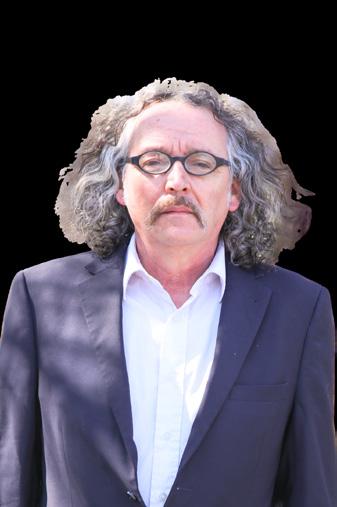
By Trevor Hutchinson Contributing Editor
I’ve written in this space of my general disdain for the season and the holiday itself. My kids call me the Grinch. But I’m trying. I bought outdoor Christmas lights this year despite the intense existential pain that caused.
But even I, disparager of all things Xmas, have a soft spot for some of the classic holiday movies. The Grinch Who Stole Christmas is probably my favourite, although the first half is the most enjoyable. Rudolph is perhaps the lamest cartoon of all time (sorry, not sorry) but I find A Christmas Story pretty funny. And I love the many different versions of Charles Dicken’s A Christmas Carol.
I’ll reluctantly admit to getting a lump in my throat when we find out in the story Tiny Tim is going to get medical help. It’s amazing emotional manipulation from a master wordsmith that uses premonitions of death, themes of vulnerability, innocence, change and redemption. And the last line of the piece, Tiny Tim’s ‘God bless us, every one’ sure pulls at the heartstrings.
But recent world events have made me remember that Dicken’s intent in writing the piece was not Christmas sentimentality. As Victoria Addis comments in ‘The Radical Politics of A Christmas Carol’ Dickens was trying to “to communicate a radical political message, and to do so in a form that would help to effect real change.”
It was a parliamentary report in 1843 on child labour that got Dickens thinking. The descriptions of the appalling conditions of child labour at the time motivated him to write something
that would “strike the heaviest blow in [his] power.” Dickens is quoted as saying he wanted his story to come down “with a sledgehammer force” to make the fortunate think of the less fortunate.
This isn’t some nice, warm and fuzzy Christmas tale. This is a writer going after the rich, and the quiet bystanders who allowed systems of injustice to exist. His attack against the idea that the poor were “‘idle’ was an attack against the status quo of the time.
But recent world events have made me remember that Dicken’s intent in writing the piece was not Christmas sentimentality.
I know, we are not in Victorian England. But since 2021, 30 U.S. states have weakened child labour laws. And anyone who thinks we are immune to the fascist insanity south of our border might also think that their Christmas presents were made by elves.
And we are about to have the world’s first trillionaire; an idea so grotesque that it defies description. So we may not live in Victorian conditions, we are heading more in that direction than the opposite. Dicken’s pleas are sadly more relevant today than when I first heard the story.
I think it’s time to put ‘the Dickens’ back in Christmas. I think it’s time to fight the good fight, just as he did all of those years ago.
Merry Christmas and/or happy holidays from my family to yours.





SERVICES
Collector Car & Truck Appraisals
MTO Appraisals & Vehicle, VIN/Ownership Corrections.
Call Ron @ 705-878-2372
Collector Car & Truck Appraisals
Please visit
RJVintageGarage com
Available - Lindsay & Area
Furniture, signs, jewellery, watches, coins, china, military items, paintings, records, books, old metal toys, wood decoys, snow shoes, paddles & more Wanted Antiques
MTO Appraisals & Vehicle, VIN/Ownership Corrections.
Bob Carruth 705-887-1672
Call Ron @ 705-878-2372
Please visit RJVintageGarage.com Available - Lindsay & Area.
Better Bins
Reliable Moving Solutions to take the Stress out of Packing
Plastic Moving Bins We Deliver 705-879-2569
betterbinrentals @outlook com
Fences, Gates, Railings & Verandas
LUXURY TRAVEL WITH ROBERT ALTMAN
New wooden fence installation Wooden fence repairs & staining
Perfect post holes
Classic & Vintage Cars & Trucks Call Mark 613-360-2699
Private Travel Planner in Kawartha Lakes
Great quality, pricing & reliability
Stephen 647-927-1580
We Buy Vintage Vinyl Records, Comics, Jewellery, Glass, China, Pottery, Toys, Sports & Collectibles We Make House Calls Cash Paid Robert & Penny 705-324-2699 howlingdog rocks WANTED FOR R
Leave winter in your wake –
Plan your escape now
Tailored journeys by land and sea. Private, Group, or Corporate Retreat.
robert.altman@ traveledge.com 647-966-8985
Silversea • Explora • Viking • Silversea * Quark Four Seasons • Accor • Marriott • Hilton * IHG
For Rent - 1 and from $1,800 & hydro & water Adult building Call 705-32
We Buy Vintage... Vinyl Records, Comics, Jewellery, Glass, China, Pottery, Toys, Sports & Collectibles. We Make House Calls. Cash Paid. Robert & Penny. 705-324-2699 howlingdog.rocks
Burns’ Snow R Lawn Care L cutting, fertilizin organic topsoil up Snow c available Com Residential Fu Call David 705-324
Sunday, December 7th Advent 2 10am Holy Eucharist
Saturday, December 13th
Breakfast with Santa 9am-11:30am
$15 for adults; $10 for Kids Tickets available mid-November Come join jolly old St. Nicholas as he takes a break from his workshop to have breakfast with families in Lindsay.
Sunday, December 14th
Classic & Vintage Cars & Trucks Call Mark 613-360-2699
McKenzie’s aspects of mainten interlock lift and re le fencing gutter clean lawncare snow remov 705-934Free estim
For Rent - 1 and 2 bed units from $1,800 & up. Heat, hydro & water is included. Adult building in Lindsay. Call 705-324-9381


Advent 3 10am Holy Eucharist
Sunday, December 21st
Advent 4 10am Lessons & Carols
Wednesday, December 24
Christmas Eve 7pm Holy Eucharist
Thursday, December 25
Christmas Day 3pm Holy Eucharist 4:30pm Christmas Dinner Followed by Doors open at 4:15pm Book by Dec. 22 (dine in only)
Phone (705)324-4666 to prebook your dinner reservation. Press #6 to reserve dinner seat(s) by Dec. 22nd Press #7 to sign up as a volunteer by Dec. 15th
Sunday, December 28
Christmas 1 10 am Holy Eucharist
45 Russell Street W. Lindsay, Ontario (705) 324-4666
st-pauls-lindsay.ca

RIZZAN DELOS SANTOS moved to Woodville from Georgina in July 2025.
Lindsay Advocate: Why did you choose to move here?
RIZZAN DELOS SANTOS: Bigger land and a more supportive community. My family and I want to do regenerative farming where nothing goes to waste. Also as a M.O.M. (Mindset Organizational Mom) Coach, I also plan to create retreats for moms and youth — a safe space to reconnect with nature, community, and themselves.
Lindsay Advocate: What is your favourite thing about Kawartha Lakes so far?
RIZZAN DELOS SANTOS: The PEOPLE and LEADERS in our community. They are welcoming, responsive, and genuinely supportive- something that’s getting rarer these days.
Lindsay Advocate: What are your favourite local restaurants or shops?
RIZZAN DELOS SANTOS: We don’t really eat out. But I’m excited to explore local spots as we settle in more.
Lindsay Advocate: What do you think is missing from Kawartha Lakes?
RIZZAN DELOS SANTOS: I’m not sure yet, still brand new and many more to explore.
Lindsay Advocate: How were you involved in your previous community and how might you like to get involved in Kawartha Lakes?
RIZZAN DELOS SANTOS: I was an active member of the Georgina Chamber of Commerce and supported many local small business owners with their websites, social media, and digital strategy.
Here in Kawartha Lakes, as a Rotary Member and LD Chamber member, my goal is to help as many small business owners as possible adapt to the AI Automation and Digital Era, using ethical marketing, not hype. I’d love to contribute to building a stronger, future-ready local business community.
Are you new in town? If you moved to Kawartha Lakes within the past two years and want to be featured here, email us at info@lindsayadvocate.ca.