DALLAS BAR ASSOCIATION


Celebrating 150 years of service to the Dallas legal community.



ASSOCIATION
2101 Ross Avenue
Dallas, Texas 75201
Phone: (214) 220-7400
Fax: (214) 220-7465
Website: www.dallasbar.org
Established 1873
The DBA’s purpose is to serve and support the legal profession in Dallas and to promote good relations among lawyers, the judiciary, and the community.

DBA 2023 OFFICERS
President: Cheryl Camin Murray
President-Elect: Bill Mateja
First Vice President: Vicki D. Blanton

Second Vice President: Jonathan Childers
Secretary-Treasurer: Kandace Walter
Immediate Past President: Krisi Kastl
MAGAZINE STAFF
Executive Director: Alicia Hernandez
Editor in Chief: Jessica D. Smith
Executive Assistant: Elizabeth Hayden
Advertising: Annette Planey, Jessica Smith
Design: Page One Enterprises of Texas
Copyright Dallas Bar Association 2023. All rights reserved. No reproduction of any portion of this publication is allowed without written permission from publisher.
katten.com Katten Muchin Rosenman LLP 2121 North Pearl Street | Suite 1100 | Dallas, Texas 75201-2591 Century City | Charlotte | ChiCago | Dallas | los angeles | new york | orange County | shanghai | washington, DC | lonDon: katten MuChin rosenMan uk llP | attorney aDvertising Katten is proud to celebrate the Dallas Bar Association’s 150th anniversary and congratulates them on 150 years of serving the Dallas legal profession! • Corporate and Transactional • Tax • Insolvency and Restructuring Our Dallas office showcases a diverse team of attorneys who represent clients across a broad range of industries in the following areas: • Health Care • Real Estate • Litigation Cheryl Camin Murray Partner Health Care Dallas Office +1.214.765.3626 cheryl.murray@katten.com Mark S. Solomon Managing Partner, Dallas Corporate Dallas Office +1.214.765.3605 mark.solomon@katten.com For more information, contact: CONTENTS Past Presidents Reminisce 8 Timeline: A History of the Dallas Bar Association 32 Changing the Face of the Dallas Legal Community: the Sarah T. Hughes Diversity Scholarship 38 The Dallas Bar and the Allied Bars: A Collaborative Model 42 2020 and 2021: The DBA Meets the Pandemic 49 The Story of Passman & Jones and the Zapruder Film 54 The DBA’s Diversity Efforts & Accomplishments Over 150 Years 51
BAR
DALLAS
24 46 58
Let’s Celebrate 150 Years of the Dallas Bar Association!
Dear Readers,
Welcome to the very special, limited-edition magazine commemorating the 150th Anniversary of the Dallas Bar Association (DBA). The DBA is over 11,500 members strong and has some of the best programs, events, activities, and benefits in the country.
In 1873, the DBA was founded by approximately 40 lawyers, who held regular meetings in the Oriental Hotel. At this time, the population of Dallas was between 4,000 and 7,000 people, which is less than the total number of attorney members of the DBA today. The Dallas Bar has a rich history, which you will learn more about in this commemorative publication. We have come a long way.
Throughout our nation’s history, many of our greatest leaders have been lawyers.
We, as attorneys, are fortunate to have a precious legal education that teaches us a unique way to think and analyze matters, as well as to advocate and speak up for others. One of the main rewards of a legal career is the ability to have a dramatic impact for the benefit of our clients, as well as citizens in our community. The Dallas Bar Association has so much to offer to its members, including exceptional opportunities to sharpen legal skills and make a difference.
Currently, the DBA proudly hosts virtual, hybrid, and in-person educational and hot topic programs that are geared toward not only attorneys, but also members of the public. In addition, we provide leadership academies, wellness programs, mental health resources, pro bono opportunities (through the Dallas Volunteer Attorney Program), diversity initiatives, professional development programs, practice-specific CLEs, networking happy hours, mock trial competitions, golf tournaments, holiday parties, discounted access to sports and art events, award ceremonies, musical performances, and international trips. This is all due to the diligent work of our DBA lawyer leaders, vendor partners, and the incredible professionals who work for the Dallas Bar Association under the guidance of their outstanding leader, DBA Executive Director Alicia Hernandez.
Let us not forget our wonderful home, the
Arts District Mansion, and our catering partner, Culinaire International, led by its talented General Manager, Kevin Brant, and his outstanding team.
As you may have heard, we are hosting an epic 150th anniversary celebration on the evening of September 9, 2023, at the Arts District Mansion. We have changed the date. We were so excited about this party that we had to move it up a month— please mark your calendar!
We have an amazing 150th Anniversary Committee Co-Chaired by Stephanie Gause Culpepper , Senior Managing Counsel at Lument, and Sarah Rogers , Partner at Thompson Coe, who are organizing special activities, as well as this monumental birthday party. I appreciate their leadership as well as the extremely hard work of Jessica Smith , DBA Communications and Media Director, for helping to promote the 150th anniversary, as well as develop this special edition magazine.
The Dallas Bar Association is fortunate to have an extremely strong Board comprised of talented lawyers. This is due in large part to our remarkable kinship with our Allied Bars: the Dallas Asian American Bar Association, Dallas Association of Young Lawyers, Dallas Hispanic Bar Association, Dallas LGBT Bar Association, Dallas Women Lawyers Association, and J.L. Turner Legal Association—whose Presidents and Presidents-elects all serve on our DBA Board of Directors. Thanks to them, our Board is stronger and able to make fiduciary decisions through an incredible array of perspectives, and we are very appreciative of them.
If you are not active in the Dallas Bar, I encourage you to get involved. The opportunities are endless. The DBA provides many ways for you to make a beneficial mark for the common good, and I promise that you will be rewarded with friendships and memories that will last a lifetime. The Dallas Bar has impacted so many lives throughout the years. We look forward to making a positive difference for the next 150 years, and with your ideas, involvement, and support the sky is the limit.
With much appreciation,
Cheryl Camin Murray, 2023 DBA President

2 Dallas Bar Association | 150th Anniversary


State and Federal Criminal Defense and White Collar Barry Sorrels bjs@sorrelsola.com Stephanie Luce Ola steph@sorrelsola.com 214-774-2424 sorrelsola.com
The Ties That Bind Us
by Alicia Hernandez
In 2020, when life as we knew it stopped and we collectively hit the reset button, I wondered what the Dallas Bar Association (DBA) did a century ago when we experienced two world wars with a global pandemic sandwiched in between. This led me to our historical records and a review of SMU Professor Emeritus Darwin Payne’s outstanding book As Old As Dallas Itself, A History of Lawyers of Dallas, the Dallas Bar Associations, and the City They Helped Build. What I learned is that we share many of the same expectations of the legal profession and justice system as our predecessors of the last 150 years, and they laid the stepping stones that guided us to where we are today.
As we ventured into the Dallas Bar Association’s 150th anniversary, I revisited the material from a different perspective. Now, I was wondering how our future lawyers of the year 2173—150 years from now—would view us. Would those future lawyers be proud, embarrassed, wonder “what were they thinking?” Or, would they, like me, be mindful of the mistakes, appreciative of the attempts to improve, and amazed that we share many of the same principles despite the changing times.
The ties that bind us to our predecessors are a commitment to justice, education, the rule of law, community, and working towards a better bar. We didn’t always get it right the first time (and sometimes the second), but the hard work of our members and their strong commitment to our ideals led our Association forward to where we are today.
Access to Justice
The Dallas Bar Association started its first legal
clinic on July 1, 1924. DBA President W. R. Harris appointed a three-person committee to study the clinic. Once approved, the Bar raised money to support the clinic, and appointed one of the DBA’s few women members, Hattie Henenberg, as its attorney. In 1956, DBA President Dwight L. Simmons appointed a committee to further improve legal aid, and the Dallas Legal Aid Society became a reality in 1957. Fast forward to the 1980s when Legal Aid created a pro bono program that was the predecessor of the Dallas Volunteer Attorney Program, the joint pro bono program of the DBA and Legal Aid of NorthWest Texas. The DBA and Legal Aid also developed a partnership that has raised nearly $18 million to support legal aid to the poor in Dallas since 1998.
Scores of Dallas attorneys have volunteered through DVAP, carrying and passing the baton forward, in our efforts to provide legal aid to the less fortunate in our community. There are too many to mention here, but a few shining stars come to mind, including Lois Bacon, one of the first female attorneys in the Dallas City Attorney’s office, who volunteered full time at DVAP for decades during her
retirement. And, Ken Fuller, who not only helped many, many clients, but also provided unmatched mentorship and support to DVAP and the attorneys of Legal Aid of NorthWest Texas. Both are gone now, but they ran the distance and passed the baton. The work continues.
What started as an idea in 1924 blossomed into a movement, with many lawyers and bar leaders getting behind access to justice. But, maybe no one has said it as well as Past President Ike Vanden Eykel when he repeated many, many times “it is the best thing we do.”
Education
It is no surprise to say that the DBA is committed to educating lawyers with its 400-plus CLE programs per year. But, did you know that the DBA was instrumental in launching SMU Law School? In 1925, Joseph E. Cockrell, a past DBA President and trustee of Southern Methodist University, encouraged then SMU President C.C. Seligman to start a law school. Seligman asked the Trustees to authorize a law school, and they agreed as long as funding was secured outside SMU. Within days, DBA President Charles D. Turner appointed a committee to assist with establishing the school and raising the money to pay for it. DBA members stepped up to cover the salaries of two full-time faculty members for the first two years. In what might be the fastest creation of a law school ever, classes started a few months later in the Fall of 1925.
Since 1981, Dallas Bar members have supported legal education, as well as access to that education through the Dallas Bar Foundation’s Sarah T. Hughes Diversity Scholarship, now
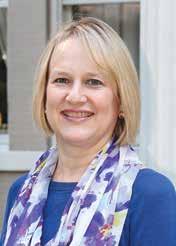
available at all three Dallas area law schools. While we, as an organization, did not have such a critical role in the formation of UNT Dallas College of Law or Texas A&M Law School, the DBA and its members are steadfast supporters. And don’t forget all the DBA’s great programs in elementary, middle, and high schools, including lawyers in the classroom, Mock Trial, and the Summer Law Intern Program—all programs the DBA has been committed to for decades and that are still going strong. All are a demonstration of our love and respect for the law and our understanding of its importance to our society.
The Rule of Law and Right to Counsel
On March 6, 1931, the DBA Executive Committee called a special meeting to discuss the kidnapping of DBA member George Clifton Edwards. The day before, Mr. Edwards and two clients were abducted, tied up, and taken to a remote area of Dallas. While Edwards was released with a verbal “warning” not to “defend these clients,” the clients were taken to a more remote part of Dallas where they were whipped and abandoned. The DBA Executive Committee issued the following resolution:
“It is not only Mr. Edwards’ right to defend an individual charged with the violation of the criminal law, but it is duty to do so… this Committee views with alarm and condemns without reservation the conduct upon the part of those individuals responsible for the abduction…and it severely condemns the breakdown in respect of the law evidenced by the abduction and calls upon all good citizens and all
continued on page 64
4 Dallas Bar Association | 150th Anniversary
Progress is Not the Final Destination
by Kim Askew and Al Ellis
“When I become an old lawyer and can no longer stand before the Bar, I will tell all who will listen not to forget the lessons of history.” –Judge Louis Arthur Bedford, Jr.
The Dallas Bar Association (DBA) proudly celebrates its 150th Anniversary. It is well established as one of the leading bar associations in the United States, having made unparalleled contributions to the legal profession and our community. The DBA leads, innovates, supports, and lifts its lawyers and the public. From its education and public service programming to the administration of justice to tackling issues of diversity, equity, and inclusion (DEI), the DBA has set the pace for achievement at all levels.
On this anniversary, we pause to reflect on some of our progress and achievements as a Bar on issues of diversity, equity, and inclusion. One who taught many of us about the DBA and law practice in Dallas was Judge Louis Arthur (L.A.) Bedford, Jr., a legal legend in our community. We have worked on DEI in the DBA for years and Judge Bedford often guided our work. He inspired us. He encouraged the DBA to examine its membership, leadership, and programs because he had experienced the DBA at its worst—when it lacked diversity, inclusion, and equity. Judge Bedford had been denied admission to the DBA based solely on his race. After years of denial, he was admitted to the DBA in 1964, and served the Bar for decades, including on the DBA and Dallas Bar Foundation Boards.
After the DBA opened its doors, Judge Bedford fully embraced the DBA and worked to ensure all
lawyers, especially lawyers of color, understood the history of the Bar and the histories and experiences of lawyers who fought to open the DBA doors and legal practice in Dallas— whether in courthouses, corporations, or law firms. Judge Bedford taught us that the DBA could not be the “home” of the Bar if all lawyers were not welcome in the Bar.
In describing his work and many achievements, Judge Bedford emphasized “progress is not the destination.” For Judge Bedford, our work in law was a journey. Our collective journeys lead to progress, which frequently takes us to new destinations. Judge Bedford opened doors, took down barriers, and made many contributions, but he made sure we understood these were steps along the way to the destination of equality and justice.
In Fall 2022, for the first time, Dallas ISD students walked through the doors of the Judge Louis A. Bedford, Jr. Law Academy, a moment that honored an iconic lawyer and judge who had contributed much to our Bar and community. The DBA was proud on that day and affirmed its journey to the final destination—-making our Bar a truly inclusive one.
As we move to the future, we offer some reflections from DBA members who continue to work on DEI in the Bar.
Kevin B. Wiggins Partner, White & Wiggins, LLP

L. A. Bedford was impressive and wise and wanted to be sure lawyers like me, and others who joined major firms at the time, understood and had an appreciation for the history of African

American attorneys in Dallas who had helped to create the opportunities we were being afforded. Judge Bedford spoke of indignities and insults he had endured from both the bench and bar, but he always moved forward with brilliance, dignity, and grace; characteristics largely honed in the fires of the Jim Crow South. Judge Bedford generously shared his time and recounted his life stories which gave us a sense of the challenges before us. Our task as African American lawyers was to take up the mantel his generation had left us and to teach those who will come after us to engage the courts, our lawmakers, and the country to make progress on the foundational principles his generation and those who came before him had laid. That we must march on ’til victory is won. We continue that journey today.
CeCe Cox
Chief Executive Officer, My Resource Center

Commitment to inclusion, diversity, equity, and access (IDEA) is a journey of learning, listening, re-learning, and action. In 2021, the DBA officially recognized the Dallas LGBT Bar Association with a Board seat. As a member of that organization, I was proud of my colleagues who had persevered. I also was chagrined it had taken 23+ years for the DBA to grant that recognition. Many lessons were learned along the way, as they have been with the inclusion of other bar associations over the years, and my wish is we all continue to open our minds and hearts in a commitment to IDEA so all members of our noble profession can work and serve others without discrimination and bias.
Wei Wei
Jeang Member, Grable Martin
The Dallas Asian American Bar Association (DAABA) was established with about 15 lawyers in 1985. Although it is hard to imagine now, when DBA President Hon. Robert Jordan, and DAABA President Suzy Fulton, sought to secure a seat on the DBA Board for DAABA in 1999, it faced opposition from some in DBA leadership. Today, DAABA boasts over 350 dues-paying members who are active participants of the local legal community, including judges and attorneys who practice law in-house, in law firms, and in the public/government sector.
Rob
Crain Partner, Crain Brogdon LLP
In 2017 the DBA partnered with local pastor Richie Butler and Project Unity to create Together We Dine, a program that connects people with trained facilitators to discuss race and other differences over a meal. DBA lawyers served as the original facilitators, and many continue to do so today. Six years later, thousands of people have participated in these virtual and in-person events. It has been humbling to watch DBA lawyers bring positivity to discussions about which so many are fearful. This is the DBA at its best—working to better our community one conversation at a time.
Regina Montoya CEO and Chair, Regina T. Montoya, PLLC
The DBA has been built by trailblazers like Judge Sarah T. Hughes, Adelfa Callejo, Harriet Miers,

6 Dallas Bar Association | 150th Anniversary
Rhonda Hunter, and Laura Benitez Geisler. They were among “firsts” who helped pave the way for countless women attorneys to navigate the legal field. I witnessed Judge Hughes, for whom the Dallas Bar Foundation’s Diversity Scholarship is named, encourage women to be active in the DBA and to lead the charge for equity and inclusion. She recognized that one must be a force to eliminate systemic barriers to the success of women and lawyers of color. Her advice was always to sit at the table where the decisions are made. The DBA has benefited and grown from listening and acting upon the advice of such diverse voices.
Meyling Ly-Ortiz
Managing Counsel, Toyota

While I have yet to see a Dallas Bar President who looks like me, I am hopeful.
I am hopeful because in recent years, I have seen the intentional inclusion of women, of those who are LGBTQ+, and others from historically marginalized communities in leadership and not just on committees. I am hopeful because of how recent presidents, like Rob Crain, have made it their personal mission to be inclusive and welcoming—not just in the Bar, but in the community. At the same time, let me be clear that hope is not enough. It is continued intentional actions, like the ones above, that will continue to carry the Bar forward, together.
Dena DeNooyer Stroh General Counsel, North Texas Tollway Authority
The Dallas Women Lawyers Association’s (DWLA) path to leadership in the DBA demonstrates how the DBA has grappled with change



though ultimately making decisions that advance the Bar and profession. For years, DWLA had no representation on the DBA Board though it sought to be in governance. Indeed, at times, DWLA’s own leadership had been divided on the issue. I was DWLA President in 2017 when the DBA unanimously approved a voting seat for DWLA. That step helped to ensure the voices of women lawyers would be represented in the governance of the Bar. I am proud the DBA took this step, and it reaffirmed my genuine appreciation for lawyers and their work. The DBA must continue to be nimble in addressing future issues that open the Bar to all.
Stronger Together
The reflections of these Bar leaders demonstrate just how the DBA continues to address tough legal and societal issues as it works to build
a stronger and more inclusive Bar. The Bar has relied on the strength of its diverse members and their collective journeys to make sound and often innovative decisions that guide and set the standards for our profession and community.
Moments on the journey have been fraught with difficulties, but our collective journeys are instructive and healing. Judge Bedford was aware of just how hard the journey to full equality and justice would be, but his example will continue to guide us—progress is important, but we must keep moving to the final destination.
Kim J. Askew is a Partner at DLA Piper LLP and a long-time supporter of the DBA. The DBA has an award named in her honor: the Kim Askew Distinguished Service Award. Al Ellis is Of Counsel at Sommerman, McCaffity, Quesada & Geisler, L.L.P. He was DBA President in 1990, and has a DBA award named in his honor: the Al Ellis Community Involvement Award. They can be reached at kim.askew@ dlapiper.com and al@textrial.com, respectively.

to the Dallas Bar Association for 150 Years of championing the legal profession and our community.
Hon. Elizabeth Lang-Miers
Dallas Bar Association President, 1998
Proud to lead the DBA during the celebration of its 125th year.
7 Dallas Bar Association | 150th Anniversary
DBA Past Presidents Reminisce
The Dallas Bar Association’s Past Presidents have always been—and still are—a very supportive group. The DBA would not be the same without their hard work, encouragement, and wisdom. Here are a few highlights of their years as DBA President.
Louis Weber, Jr., 1974
My year as President was the happiest year of my career surrounded by professionals like JoAnna Moreland, Betty Bond, Cathy Maher, and a dedicated Board of true community servants. At that time, the practice of law was still based on a lawyer’s word and a handshake. I absolutely loved being President and wish everyone could have the experience.
Jerry Lastelick, 1983
In 1983, we had the memorable experience of the changes in the Dallas County Law Library. Common belief was that the Library was operated by the County, but in fact a District Judge was in charge, hiring personnel, taking trips to Library conventions with library personnel without authorization from anyone, and exercising sole control over the $600,000 Library account. After public hearings, this situation was rectified. Also, I started the dues checkoff for contributions to the Dallas Bar Foundation.
Harriet Miers, 1985
One of the most memorable experiences about my year 1985, was the privilege of working with the lawyers of Dallas and alongside then District Attorney Henry Wade to convince the County Commissioners Court to support building a Criminal Courts Building that would be properly sized for growth. The proposal in the originally contemplated Bond Package provided for a building that
was estimated to be fully utilized at its opening with no size to accommodate future growth. The battle was public and heated until a compromise was reached to allow the public to vote on both the original plan and an additional second plan that would provide an increase in the size of the Courthouse to allow for growth. Contrary to the warnings of naysayers, the voters overwhelmingly supported the increased amount of spending for a larger court building to accommodate growth.
Al Ellis, 1990 1990 began with an appearance by Elvis at my Inaugural and ended with a unanimous Board and Member vote to make the Presidents of the Minority Bars voting members of the DBA Board.
Peter Vogel, 1994
In 1993 I attended the Minority Participation Subcommittee chaired by Frank Stevenson and after the meeting I invited Frank to serve as the 1994 Chair of a new committee to get law firms to recruit high school students. Frank asked me why I wanted him to serve as the 1994 Chair, and I told him that he had auditioned for me in 1993 at the Subcommittee meeting, and my job as President in 1994 was to find future Bar leaders. Frank went on to become President of the Dallas Bar, State Bar of Texas, Chair of the Dallas Bar Foundation, and other great leadership positions!
Jim Burnham, 1996
When I was DBA President, the Dixie Chicks (now known as The Chicks) performed at my Inaugural. They were just starting to become famous. They were really sweet and kept calling me “Mr. Burnham,” as if I was someone special.
Molly Steele, 1997
Both my children are naturalized American citizens. As a consequence, I particularly cherished the times I got to welcome new citizens to our country at naturalization ceremonies held throughout my year as president. I was deeply honored to recognize the hard work and dedication of these immigrants with a dream of living in freedom. And to see our federal judges, whom I admired, welcome them with such sincerity and excitement made me know how fortunate I was to take part in these life-changing events.
Mark Shank, 2001
My most vivid memory is all the work we did on Mansion Expansion, particularly with regard to fundraising. I also recall that the 9/11 tragedy happened that year and was proud of how our Bar responded. Many will also remember that I also had a motto: “maximize cocktail opportunities.”
Nancy A. Thomas, 2002
During my year as DBA President, I was in charge of the construction of the Pavilion at the Mansion. It was a whirlwind of architects, engineers, contractors, and designers, many of whom we fired. Mark Shank and other leaders raised the money, and Cathy Maher and I very happily spent every penny. Rob Roby oversaw the entire project and did his best to keep us out of trouble. My favorite moment was when my dog drove my BMW Z3 convertible into the Big Hole.
Brian D. Melton, 2003
In 2003, all the great work of so many people culminated in the Grand Opening of The Pavilion. It truly was an opening of new doors for all of Dallas. We also honored the great Morris Harrell with the creation of the Morris Harrell Professionalism Committee
and an annual award in his honor. The first annual Education Symposium was also a highlight. The DBA was, and continues to be, the leading professional services organization in Dallas. Congrats on 150!
Rhonda Hunter, 2004
DBA celebrated 50 Years of Brown v. Board with a community Bell-Ringing ceremony, Reenactment of the oral argument, a curriculum which was taught to over 200,000 children, and a committee of young and seasoned leaders who thought of and implemented all of that and more. Of course, the inauguration was epic.
Mark K. Sales, 2006
Fun highlights were the DBA Board Retreat to Memphis, which included visits to the National Civil Rights Museum, Memphis Rock ‘N’ Soul Museum, Sun Records (birthplace of Rock ‘N’ Roll) and Graceland, as well as the first DBA Law Jam at the Granada Theatre with Dallas lawyer bands playing music to raise awareness and money for the DBA Equal Access to Justice programs.
Beverly Bell Godbey, 2007
Did you know that in 2007, for the very first time, every bar leader from the President of the American Bar Association, the President of the State Bar of Texas, the President of the Dallas Bar Association, and the President of each sister bar was a woman? Thanks so much to all of the DBA members and staff who made 2007 such a memorable year and who gave me the opportunity to serve the BEST BAR ASSOCIATION EVER.
Frank Stevenson, 2008
By 2008 I had been involved in DBA leadership
continued on page 63
8 Dallas Bar Association | 150th Anniversary
When you have strong leaders, you have a strong community. The living DBA Past Presidents are proud to support the Dallas Bar Association and its 150th anniversary.



 Louis Weber Jr. 1974
Jerry Lastelick 1983
Harriet Miers 1985
Vincent Perini 1986
George Chapman 1987
Al Ellis 1990
Douglas Lang 1991
Kenneth Mighell 1993
Peter Vogel 1994
Ralph “Red Dog” Jones 1995
Jim Burnham 1996
Molly Steele 1997
Elizabeth Lang-Miers 1998
Robert Jordan 1999
W. Mike Baggett 2000 Mark Shank 2001
Nancy Thomas 2002 Brian Melton 2003
Rhonda Hunter 2004
Timothy Mountz 2005
Mark Sales 2006
Beverly Godbey 2007
Frank Stevenson II 2008
Christina Melton Crain 2009
Ike Vanden Eykel 2010
Barry Sorrels 2011
Paul Stafford 2012
Sally Crawford 2013
Scott McElhaney 2014
Brad Weber 2015 Jerry Alexander 2016
Rob Crain 2017
Michael K. Hurst 2018
Laura Benitez Geisler 2019
Robert Tobey 2020
Aaron Tobin 2021
Louis Weber Jr. 1974
Jerry Lastelick 1983
Harriet Miers 1985
Vincent Perini 1986
George Chapman 1987
Al Ellis 1990
Douglas Lang 1991
Kenneth Mighell 1993
Peter Vogel 1994
Ralph “Red Dog” Jones 1995
Jim Burnham 1996
Molly Steele 1997
Elizabeth Lang-Miers 1998
Robert Jordan 1999
W. Mike Baggett 2000 Mark Shank 2001
Nancy Thomas 2002 Brian Melton 2003
Rhonda Hunter 2004
Timothy Mountz 2005
Mark Sales 2006
Beverly Godbey 2007
Frank Stevenson II 2008
Christina Melton Crain 2009
Ike Vanden Eykel 2010
Barry Sorrels 2011
Paul Stafford 2012
Sally Crawford 2013
Scott McElhaney 2014
Brad Weber 2015 Jerry Alexander 2016
Rob Crain 2017
Michael K. Hurst 2018
Laura Benitez Geisler 2019
Robert Tobey 2020
Aaron Tobin 2021
CELEBRATING
Krisi Kastl 2022
How “If” Changes to “When”
by Frank E. Stevenson II
A Dallas Bar Association program for at-risk students allowed me to mentor a young man beginning his freshman year at a Dallas ISD high school. I reflexively spoke to my mentee as I did my own son. “When you go to college, you’ll need this,” and “When you go to college, you’ll do that.” But during one of my “when-you-go-tocollege” conversations he placed his hand on my arm to stop me and after a few moments quietly said, “You need to understand something. You are the first person who ever acted like I was supposed to succeed.”
Without a single family member having ever finished high school and with his older brother in jail, my mentee had never heard “When you go to college.” He had barely heard “If you go to college.”
I had witlessly thought that the DBA program was intended for me and the other mentors to give those students study tips or writing advice or time-management skills or the like. But it actually wanted us to give those students something far more precious—namely, our confidence. And three and a half
years later, I watched that young man graduate in the top 10 percent of his class. “If” changed to “when” and the four scholarships he earned carried him to college that fall.
Sometimes all a person needs to succeed is for enough people to believe in him. And it is remarkable how often those people are placed and equipped to instill that confidence by the Dallas Bar Association.
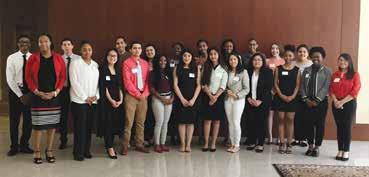

Over its 150-year history, the Dallas Bar has offered its members unmatched opportunities for professional growth. But a far more estimable metric is how our Association has fitted its members to serve their community—especially those
who, if the topic of success is raised, at most hear “if” and never “when.”
Initially advanced by 1979 DBA President Jerry Buchmeyer, this year marks the 44th consecutive year the DBA has run its statewide High School Mock Trial program. Reaching over 300 Texas schools annually, more than 175,000 students have participated in this program since its inception. And, yes, the participants are taught procedure, rules of evidence, and all the rest. But what the program really teaches these young women and men is that they can be lawyers or anything else they want to be. Stated differently, it strives to change “if” to “when.”
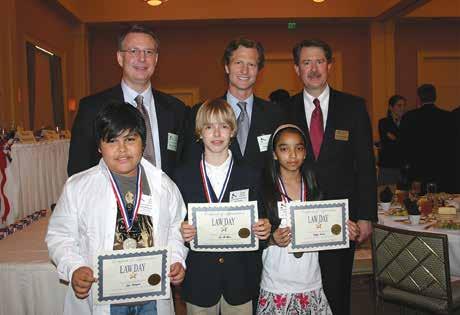
The same is true for the DBA’s Law Related Education programs. Through separate grade-specific contests ranging from K to 12, over 100,000 Dallas ISD students have been asked to depict or explain the Rule of

Law via the graphic arts, photography, or written essay by the DBA’s Law Day Program. But only the most credulous could believe that is what this program is actually about. Attend the awards luncheon and watch the teachers applaud, the parents beam, the winners smile. You are watching “if” inch towards “when.”
And the DBA’s Law in the Schools and Community/Career Days Program— another Law Related Education initiative—places DBA lawyers in DISD schools. They teach those students the legal issues associated with WikiLeaks or anti-cyber bullying or their First Amendment rights—except, of course, they don’t. What they actually teach is that there are opportunities available to these young people they otherwise might never imagine—in essence, “if” can
continued on page 14
12 Dallas Bar Association | 150th Anniversary
become “when.”
In 1993, DBA President-Elect Peter Vogel asked a guy he didn’t know from a pile of lumber to start a program during Peter’s year leading our Association. It was the Summer Law Intern Program, and I was that pile of lumber.
Since that time, the members of the Dallas Bar have given over 650 DISD students summer jobs in your law firms, agencies, and corporate offices. And the Summer Law Intern Program—or SLIP—won awards from the State Bar of Texas and the DISD, and was implemented by other bar associations following our example.
But the success of a program like SLIP is not measured by awards. Is it changing lives? Is it nudging “if” to “when”?
After the program was in place a few years, we asked one of its alumni to address precisely that question at our orientation event for the incoming interns. Her response supplied a clearer answer than we ever imagined. She asked if the event could be
live. Fortunately, because of the DBA Home Project, the longest-running, whole-house sponsor for Dallas Area Habitat for Humanity, 36 families will sleep tonight in homes we provided them.
For others, an unresolved and seemingly unresolvable legal need can be an impene-
Geisler’s legal incubator, Entrepreneurs in Community Lawyering, that equips lawyers to better address the everyday legal needs of everyday Americans.
And it is also hard to change “if” to “when” if we lack the ability to talk and relate to people different from
now than three decades ago. America is chin-deep in the gummy bilge of hopelessness. Fully 85 percent of us believe our country is headed in the wrong direction, according to an Associated Press/University of Chicago poll last summer. This places distinct imperatives on us as lawyers.
moved up a day so it would not conflict with her departure for Europe on her Marshall Scholarship.
Other outward-facing DBA programs may not seem overtly aimed at changing “if” to “when,” but in fact remove the barriers to that transformation becoming a reality. It is hard to believe in “when” if you lack a decent place to
trable barrier to “when.” The Dallas Bar responds with its Equal Access to Justice Campaign that has raised more than $18 million for legal-aid efforts to serve 70,000 families through the Dallas Vol-
ourselves. 2017 DBA President Rob Crain’s Together We Dine plays antidote to that by bringing together people of diverse backgrounds in a structured and positive setting to talk about things that matter. And there is also the manifest good accomplished by other outward-facing DBA programs—such as the Toy Collection Drive and Santa Brings a Suit.
We cannot be content to measure ourselves or this Association by only the contributions we make to our profession. We also must weigh the contributions made by our profession to our community at large— focusing not solely on the client who brings us his lavish retainer, but also on the evicted tenant, the at-risk student, and the underhoused family who bring us only their crushing need. Fortunately, when we give help, we invariably receive help. And more. When I consider the activities that made me most proud to be a lawyer, virtually all of them were “if”to-“when” opportunities supplied by the Bar.
unteer Attorney Program (DVAP); 1993 DBA President Ken Mighell’s LegalLine that has counseled and comforted thousands of our city’s least fortunate; 1948 DBA President Robert L. Dillard, Jr.’s Lawyer Referral Service that has helped over half a million people find the attorneys they badly needed; and 2019 DBA President Laura Benitez
Setting up SLIP exactly 30 years ago, I imagined I was in the business of providing summer employment or professional development instruction or the like. I wasn’t. Nor were any of the other DBA volunteers working on that or any of the other programs I have named. We all instead were in the Believing-In-People Business. We were placing our confidence in people famished for it. We were telling them “when” instead of “if”—maybe even for the first time. That is needed more desperately
By building houses, hiring interns, mentoring students, bringing clothing, teaching in schools, and supporting DVAP, we declare that none of this city’s homeless or hopeless, out-of-work, overlooked, or oppressed have to stay that way—“if” can become “when.” It is the DBA’s 150-year-old contribution to the Believing-In-People Business. I used to wonder if the Believing-In-People Business could even help change the entire world. Now I wonder if the world changes any other way.
14 Dallas Bar Association | 150th Anniversary
Frank E. Stevenson practices at Locke Lord LLP, served as 2008 DBA President, and is a Past President of the State Bar of Texas and the Western States Bar Conference. He can be reached at fstevenson@ lockelord.com.
When I consider the activities that made me most proud to be a lawyer, virtually all of them were “if”-to-“when” opportunities supplied by the Bar.
Gone are the Days…Yet
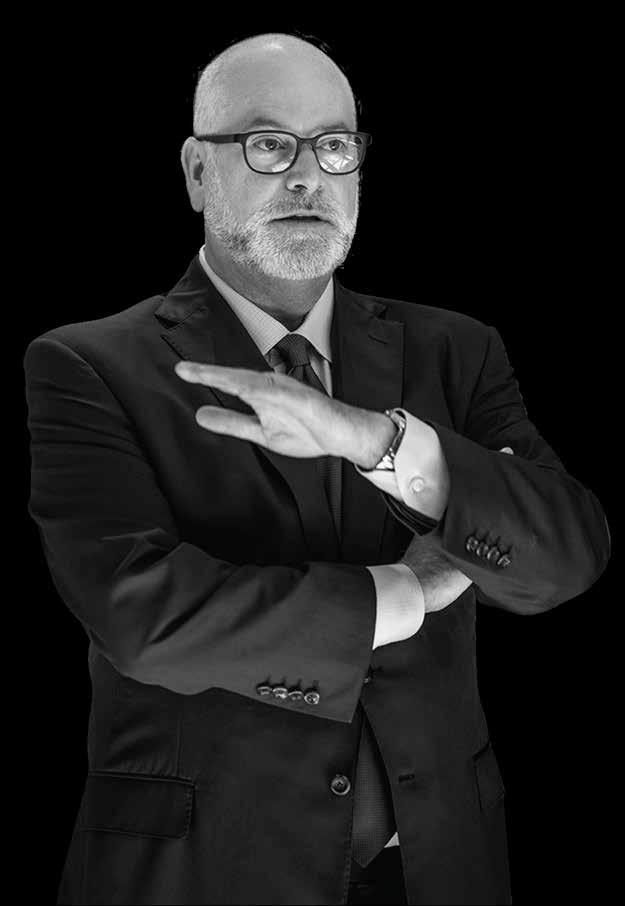
by Harriet Miers
Between 1970 when I became a lawyer, and 1985 when I served as President of the Dallas Bar Association, I had already seen many changes occur for women practicing law in Dallas and around the State. By that time, Dallas had many more women lawyers successfully engaged in differing aspects of the profession. During that same period, I had been encouraged by male colleagues, such as former Dallas Bar President John Estes, to join and stay involved in the activities of the Dallas Bar. Some of my early volunteer efforts with the Bar involved working with representatives of the education system in Texas to include law-focused learning in the baseline curriculum of public schools. As an example, that experience allowed me to work with dedicated, selfless lawyers—and it showed me how Bar work could be challenging, enriching, thoroughly enjoyable, as well as impactful for the profession and public.
Other women lawyers also were seeing the value of Bar work, and they were becoming more and more active in professional activities beyond just the practice of law. In those times, the additional responsibilities for many women lawyers included being the primary caregiver for children and often aging parents. Personal family care, in addition to developing a practice or otherwise working full time, was challenging even without engaging in other activities such as Bar work. As time passed, though, as should have been expected, women lawyers increasingly did seek to include Bar work and community service in their professional lives.
A Bar project, such as advancing law-focused education for young students in public schools, is just one example
of the broad range of Bar efforts that can be attractive to lawyers. The vast majority of lawyers seek to see how their law degree can have the most meaningful impact, in addition to using their license to earn a living. Being involved in the substantive law areas of bar associations, such as litigation or antitrust-focused sections, provided an opportunity for women lawyers, as well as their male counterparts, to learn and also have greater exposure to outstanding lawyers in many fields. Over time, more and more women lawyers sought the benefits of such activities and leadership roles in Committees and Sections. They recognized that being involved in these activities helped keep a lawyer on the horizons of the law, and enabled the development of highly important relationships in both personal and professional lives. Nonetheless, while extremely valuable, being involved in such activities created additional commitments and strain on already busy schedules—especially for women lawyers.
Time has passed now, and the profession has become much more diverse. The opportunities for women have greatly increased, including for those who represent the greater diversity that now exists in the makeup of the legal community. Women lawyers are represented in the halls of various legal and other educational institutions, law firms of all sizes, corporations, governmental offices across the spectrum from city to national, public interest organizations, community organizations, and advocacy
organizations of every description. Importantly, women are now also prominent in the Texas judiciary. As from the beginning, solo practice also remains an available choice. Additionally, women with law degrees can choose to enter any role in business, education, or community service using a law license as simply foundational, rather than as a requirement.
In those earlier days, unfortunately, women taking time off or working part time was sometimes interpreted as evidence of a lack of seriousness in a legal career. Attitudes in many quarters have evolved over time, and both men and women have sought ways to emphasize family responsibilities to a greater extent. This shift has been important in the recognition that accommodating family needs, values, and responsibilities helps create a better work environment and team approach, as well as helps lead to well-rounded lives for lawyers wherever they may be practicing.
While opportunities now abound for women lawyers, challenges remain for many who strive to effectively manage their practice or work in the legal arena and still carry their unique family responsibilities. While the ideal may be for family responsibilities to lie equally with both parents, practicality generally shows disproportionate responsibilities for women. Certainly, at this time, men do undertake more tasks related to child rearing, education, doctor visits, and involvement in their children’s participation in sports and other extracurricular activities. Employers and professional organizations offering opportunities to work part time or remotely are also instrumental in encouraging a robust professional life for those with family responsibilities.
As the professions have become more accommodating for women to have their professional lives and spend time in family endeavors, greater supportive facilities have developed. Day care facilities and options to allow for child care are more numerous. Even more are needed, though, particularly affordable ones. The greater awareness of the need to find workable schedules, structures, and accommodations for women with children, or helping with an aging family member, has led to more openness and understanding of the need to offer viable alternatives.
While gone are the days when women lawyers faced unacceptable hardships to seek a level playing field with equal opportunities to excel in the legal profession, challenges in the profession for women remain somewhat unique. The great development has been in increased efforts to recognize challenges many women lawyers face and the need to effectively address them. The legal profession is at its best when it allows for meaningful contribution by all those with an interest in being an excellent lawyer, without foreclosing on meeting family responsibilities. The focus on the needs of the legal profession to accommodate those who serve as primary caregivers should continue for the healthy growth of the legal profession and its ability to best serve the Nation and its people, communities, and businesses.
Harriet Miers , 1985 DBA President, is a Partner at Locke Lord. She was the first woman DBA President, the first woman hired at the Dallas Firm of Locke Purnell Boren Laney & Neely, and the first woman elected to Firm President. In addition to her many “firsts,” she also served in the administration of President George W. Bush from 2001-2007. She can be reached at hmiers@lockelord.com.

18 Dallas Bar Association | 150th Anniversary
Dallas’ African-American Lawyers: A Rich and Vibrant History
 by Rhonda Hunter
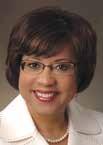
You could hear a pin drop. The huge ballroom was filled to the brim with those who had come to witness the inauguration of the first African American President in the 131-year history of the Dallas Bar Association. “We are the lawyers. We are the arbiters of justice. We are the ones people come to first.” The year was 2004. The speaker and newly elected President was me, Rhonda Hunter.
On this occasion especially, lawyers that shaped Dallas and created the path that led to my ascension to the presidency were top of mind. A daunting past and awesome reminder of how legacies are built through generations of perseverance and diligent work.
J.L. Turner is recognized as the first African American lawyer to remain in practice in Dallas due to his legacy of longevity from 1898 to 1951. Turner practiced for a time with Joseph E. Wylie, who had started a practice in Dallas in 1885. It would be early in the 21st century before scholars Darwin Payne, John Browning, and Hon. Carolyn Wright Sanders would recover evidence that more lawyers of African American descent had a presence in Dallas before the turn of the century.
In 1882, J. H. Williams petitioned to become a lawyer after “reading the law” and working under the tutelage of a Dallas lawyer. He was denied a license to practice in December 1882. Later in the 21st century, Williams would be posthumously admitted to the Texas Bar after a review of the evidence regarding his application by
modern lawyers.
Earlier in 1882, Samuel Scott, a licensed attorney, came to Dallas to practice, but left within six months after what the Dallas Herald described as a “slight prejudice against him on account of his race.” He would later become one of Arkansas’ first Blackelected state legislators.
The inability to gain traction in the legal profession in Dallas would transcend centuries as over 100 years later, young lawyers would leave Dallas after being unable to find law firm employment. Several would become successful leaders in other states, including Aaron Ford, who now serves as the Attorney General for the State of Nevada, and Berna Rhodes Ford, now Legal Counsel for Nevada State College. Recognizing leaders before they traversed and succeeded elsewhere would become a recurring issue for Dallas lawyers.
W. J. Durham, who studied the law and passed the bar in 1926, had faced the burning of his law office in Sherman in 1930. Durham moved his law office to Dallas in 1944 and partnered with young C. B. Bunkley, who earned his University of Michigan law degree in 1944. By the 1950s, housing was at a premium and African Americans buying properties in previously all-white Dallas neighborhoods faced a rash of bombings intended to discourage expansion of middleclass Blacks into these areas. Durham was
instrumental in representing the community in efforts to stop the bombings.
Both Durham and Bunkley gained recognition and respect as lawyers who, in addition to their daily practice of civil, criminal, and probate cases, worked on Dallas housing, education, and civil liberties cases with the future Supreme Court Justice, Thurgood Marshall. They served as lawyers on landmark cases such as Sweatt v. Painter (1950), and Borders v. Rippy (1955), the first Dallas school desegregation case.
L. A. Bedford left Dallas as a young man and traveled to bustling New York City to attend Brooklyn Law School before returning to Dallas in 1951 to be mentored by Durham and Bunkley. About this time, L. Clifford Davis returned to Fort Worth after matriculating at Howard University Law School. Davis would travel from Fort Worth to Dallas for meetings and comradery with his legal contemporaries, as there were no other Black lawyers in Fort Worth in the early 1950s.
Twelve Dallas lawyers formalized these gatherings of Black attorneys in 1952, by forming the Barristers Club. Four years later, the club’s name was changed to the J.L. Turner Legal Society in honor of the elder statesman and mentor attorney, J. L. Turner, Sr. Turner practiced for five decades, making him the longest-practicing Black attorney in Dallas by the time of his death in 1951. His son, attorney J.L. Turner, Jr., served as President of the group in its first years of operation, and the Association has produced presidents who have become Dallas’ leaders over the
course of the 70 years since its formation.
W. J. Durham and C. B. Bunkley applied for membership in the Dallas Bar Association in the early 1960s. The applications of Durham and Bunkley were not acted on at that time. While they were never officially turned down for membership, they were not accepted either. Durham was asked to reapply in 1968. He refused, as did Bunkley. In 2006, the Dallas Bar admitted Durham and Bunkley posthumously, as DBA members.
By 1963, Fred Finch, a Harvard-educated Dallas attorney with roots in East Texas, became the first African American member of the Dallas Bar. Late in his career and decades after opening his office on Oakland Avenue, Mr. Finch—a probate and civil rights attorney who also published a local newspaper—hired a young law student to clerk in his practice. That law student would later become the first African American President of the Dallas Bar Association.
The first person of color to join the Dallas Bar Board of Directors in 1984 was Louis A. (L.A.) Bedford. Bedford had become the first African American judge in Dallas County in 1966. Bedford would mentor every African American attorney to grace the doors of his office on Forest Avenue, including Joan Tarpley, who was the first African American female to open a practice in Dallas County in 1968 and the first African American female judge in Dallas County in 1975; and Joseph E. Lockridge, who in 1966, became Dallas’ first Black state representative since reconstruction.
continued on page 64
20 Dallas Bar Association | 150th Anniversary
Insurance against insurers.
IS YOUR COMPANY PROTECTED AGAINST INSURERS?
Clients trust us to help them navigate insurance policies, communicate with insurers, negotiate claims, and litigate disputes. Whether you have a simple question or a serious dispute, you can count on our team for straight talk, smart solutions, and tenacious advocacy.
Former DBA President Beverly B. Godbey and the rest of the Amy Stewart Law team congratulate and thank the DBA for 150 years of excellence.
NEGOTIATION | LITIGATION | CONSULTATION | 214 233 7076 | amystewartlaw.com | Dallas, TX
Becoming Part of the DBA Community
by Laura Benitez Geisler
I recall feeling like an outsider the first time I walked into the DBA as a first-year law student. Surrounded by members of a profession I longed to join; I didn’t see any that looked like me. It is not surprising since at that time, there were only 202 Hispanic lawyers in all of Dallas County and only 707 female Hispanic lawyers in the entire State of Texas, according to the State Bar of Texas Department of Research and Analysis. I was still struggling to see myself as a lawyer, but the sense of community I felt that day inside the DBA community made me want to go back, because for the first time I could begin to see myself as a lawyer.
By the time I graduated from SMU in 1997, women and minorities were visible role models in our local bar associations. That year, the Dallas Association of Young Lawyers (DAYL) was led by its first Hispanic President, Joyce Marie-Garay, and Molly Steele was President of the Dallas Bar Association (the second woman to hold that position following Harriet Miers in 1985), with Liz Lang-Miers as President-Elect. Seeing women in these leadership positions was inspiring and their journeys undoubtedly helped pave the way for mine. But the person who most directly helped pave the way for me in bar leadership was Ralph C. “Red Dog” Jones. As a mentor and role model, Red Dog could not have been any more different than I was, but his influence on my professional career was profound.
A Past-President of the DAYL and the DBA, Red Dog hired me out of law school and encouraged me to apply for the inaugural DAYL Leadership Class. Given that I was awaiting my bar results
when I submitted my application, I have no doubt Red Dog pulled some strings to get me into the class. Through that experience I was led to explore various opportunities not only with DAYL, but also the Mexican American Bar Association (now known as the Dallas Hispanic Bar Association/DHBA) and the Dallas Women Lawyers Association (DWLA).
I first served on the DAYL Board of Directors in 2002 as the appointed liaison for the Mexican American Bar Association. Recognizing the opportunity to increase Hispanic representation on the DAYL Board, I decided to run for an elected position the following year so that the appointed position could go to another Hispanic lawyer. In 2003, while serving on the DAYL Board of Directors, I was elected to serve as President of the DWLA. My experiences and interactions during those formative years helped prepare me to serve as DAYL President in 2007 and eventually as DBA President in 2019.
Following my term as DAYL President, I successfully ran for a seat on the DBA Board of Directors in 2008. During my time on the DBA Board, I became increasingly sensitive to the fact that the DBA, founded in 1873 with a membership base of over 10,000 lawyers, had never elected a Hispanic to serve as President. It is not an easy path to the DBA Presidency. The leadership track is long and requires significant commitment. The first step involves getting elected to the DBA Board of
Directors (something that had not always been easy for minority lawyers). After serving on the Board, the next step typically involves running for Vice Chair of the Board of Directors, followed by a run for Chair of the Board (positions elected by Board members). Thereafter, the line of succession is voted on by the general membership and traditionally involves a term as Second Vice-President, First Vice-President, and President-Elect before assuming the role as DBA President.
My decision to pursue the DBA Presidency was not an easy one. At this point in my career I had already spent a significant amount of time in bar leadership, and while I enjoyed the work, I was start-
inspiration I needed to continue my path to the DBA Presidency. It was a humbling moment, accompanied by the recognition that it was not about me, but about setting an example for others to follow. Up until that point, I did not view myself as a role model or appreciate how my leadership roles could influence the way others viewed their own potential. It reminded me that whatever successes I had achieved came on the backs of those who proceeded me and reminded me that I had an obligation to do my part to make the path easier for others.
To have played a small role in DBA’s history is an honor. My year as DBA President was one of the most professionally rewarding expe-
ing to burn out and was not sure if I wanted to take on such the commitment—until a chance encounter with a young Hispanic law student. The student approached me following a Bar function and although we had never met, she wanted me to know that she viewed me as a role model. She described watching me from afar at several different events and explained that she had been looking for an opportunity to meet me. She described how seeing someone who looked like her gave her a sense of belonging and made her feel less like an outsider. I was immediately taken back to my first time at a Bar function, feeling like an outsider, surrounded by members of a profession I longed to join, but with none who looked like me.
The law student who saw herself in me became the
riences of my career, made possible by a community of Dallas lawyers from all walks of life who believed in and supported me—and for that I am forever grateful.
It was there that I found the role models and community that helped me grow personally and professionally, and supported me as I became the 110th President of the Dallas Bar Association—the “first” Hispanic in the history of the organization ever elected to serve in the role.
Laura Benitez Geisler , 2019 DBA President, is an attorney at Sommerman, McCaffity, Quesada & Geisler, L.L.P. In addition to her legal and community work, she served as Co-Chair for the 2014-2015 Equal Access to Justice Campaign benefitting DVAP, which raised over $1.1 million to provide pro bono legal services to low-income Dallas County residents.

22 Dallas Bar Association | 150th Anniversary
To have played a small role in DBA’s history is an honor.

The History of the Arts District Mansion: Home of the Dallas Bar Association
by Rob Crain
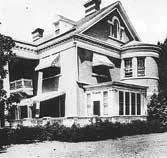
Later this year, the Dallas Bar Association (DBA) will celebrate its 150th anniversary at the Arts District Mansion located at the intersection of Ross Avenue and Pearl Street. Though the DBA’s acquisition of the Mansion would not occur until 1977, the Association and its future home were birthed within a few years of one another.
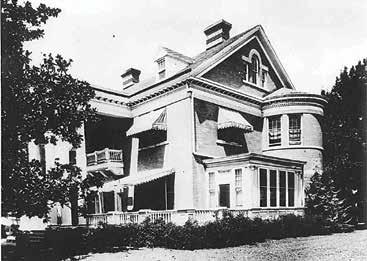
In 1888, Nettie Ennis Belo, wife of Alfred Horatio (A.H.) Belo, a civil war veteran and publisher of the Dallas Morning News , bought a brown frame house at the corner of Ross and Pearl for $27,500 from Mrs. Belo’s “separate property and estate.” The site was part of a 10-acre tract which Captain W.H. Gaston, a pioneer Dallas banker, had bought several years earlier for $100 an acre. Ross Avenue became the first elegant address in Dallas and its first paved street between what is now Ervay Street and North Central Expressway.
Architect Herbert Miller Greene was commissioned by Nettie Belo to design a stately mansion at
Ross and Pearl patterned after the Belo family home in Salem, North Carolina. The contractor for the neo-classical revival home was Daniel Morgan, who, in 1893, completed the Dallas County Courthouse now known as “Old Red.”
Construction of the home was believed to have been completed about 1900. A.H. Belo died in 1901, having inhabited the home for less than a year. His son, Alfred Horatio Belo, Jr., succeeded his father as President of the Dallas Morning News until he died in 1906 at the age of 33 from meningitis. Nettie Ennis Belo lived in the home until her death in 1913 at the age of 67. Her daughter-in-law,
Helen Ponder Belo, eventually moved the remaining family members back to North Carolina in 1922.
In 1926, a 50-year lease was negotiated between Helen Belo Morrison (Nettie and A.H. Belo’s granddaughter), and the Loudermilk-Sparkman Funeral Home. The funeral home changed names over the years and hosted the funeral services of Dallas dignitaries and other wellknown persons, including the funeral of Clyde Barrow of “Bonnie and Clyde.”
On September 15, 1977, the Dallas Bar Association closed on the purchase of the Belo Mansion. A few days later the DBA closed on adjacent parcels of land; these parcels acted as a parking lot for many years and are now the sites of the Pavilion and underground parking garage.
In advance of my year as DBA President in 2017, I had the privilege of interviewing Jerry Jordan, Harriet Miers (1985 DBA President), Nick LaBranche (Building Engineer), Bob (1978 DBA President) and Gail Thomas, and several others to learn the history of the mansion
purchase. Cathy Maher, former Executive Director of the DBA, also collected history on the Belo Family and DBA headquarters which is included here.
The DBA was founded in 1873. The de facto headquarters of the Association rotated to the law office of the Association President for that year. In 1937, the Association secured a 15-foot cubicle under the stairs of the Old Red Courthouse. In 1955, Henry Strasburger was President of the DBA. He believed lawyers should have a regular meeting place. According to Bob Thomas, Henry felt so strongly about securing a location for lawyers to meet and socialize, he silenced any concerns about costs by personally advancing the first year’s rent for space in the Adolphus Hotel. He was right. Lawyers flocked to the new gathering place. Membership flourished, and by the 1970s the Association outgrew their space.
At the time, the Belo family home sat vacant. The Loudermilk-Sparkman Funeral Home had moved out of the mansion due to expansion of Pearl Street, but remained obligated under the lease agreement with Helen Belo Morrison. Mr. Sparkman hired the firm of Turner, Rodgers, Winn, Scurlock & Terry to help them find relief from the lease. Jerry Jordan was an attorney with the firm and also served at that time as Vice President of the DBA.
Jerry believed the home could be an option for the new headquarters. In 1976, at the Inauguration of incoming DBA President Waller Collie, Jr., Jerry was seated next to Gail Thomas, wife of
24 Dallas Bar Association | 150th Anniversary
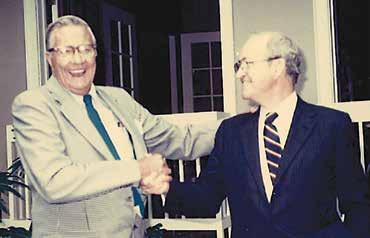
Waller Collier and Bob Thomas
Bob Thomas. Gail is a person who gets things done. Jerry knew that if he could sell Gail on the idea of the Belo home as the Bar’s headquarters, “the battle was more than half won.” When hearing the suggestion, Gail recalls, “sparks went off, and it just felt like dynamite.”
That year’s Board of Directors’ retreat was at Tanglewood Lodge on Lake Texoma. The idea of the Belo family home as a headquarters was discussed. A group including Jerry, Bob, Gail, and Waller visited the mansion shortly thereafter. Jerry unlocked the door with Waller following him inside. All remember Waller taking his first steps inside the home and saying words to the effect of, “This is what a bar headquarters should look like!” Behind Waller and Bob’s leadership, momentum quickly
trip to North Carolina to meet with Ms. Morrison. The night before the trip, Bob and Gail dropped off their kids with Bob’s parents. When conversation turned to the reason for the
Morrison felt passionately about her childhood home. She wanted the home to go to caring people who would maintain its integrity for years to come.
When the DBA contingency met Ms. Morrison in her North Carolina home, initially things did not go well. The atmosphere was frosty until Bob remembered to tell Ms. Morrison “Hello” from his mother. Bob retold his mother’s account of the beautiful blue dress. Whatever chill was in the air quickly disappeared. Turns out, the dress was Ms. Morrison’s “favorite dress of all time.” Her parents had bought it for her in Paris. She also remembered Bob’s mother. In an instant, the DBA was family.
Estes, Jerry, Bob, and many others. Many of the rooms at the Mansion are named after firms who dug deep for the cause.
On the third Thursday in September 1977, the DBA exercised their option and closed on the purchase of the new headquarters. Hard work followed. Members worked weekends scraping layers of paint off the walls until the original colors were discovered. Detail was taken to return the home to its original condition. What is now Arts District Hall was a chapel erected by the funeral home for services. The DBA built an atrium to connect the home and chapel.
On August 1, 1979, opening ceremonies were held at the new DBA headquarters, and Helen Belo Morrison was present. She proclaimed the home was just as she remembered. She was proud. She donated portraits of her grandfather and father which hung for many years above the settees near the front door— benches where as young women, she and her sister would wait on their dates.
DBA membership expanded rapidly, as did functions at the Association’s headquarters. Jerry Jordan’s daughter, Jill, was the first to be married at the Mansion. After years of growth, the DBA set upon expanding the facilities, adding the Pavilion in 2003.
built behind the idea, but several hurdles remained. First, they had to convince Helen Belo Morrison to sell them the house in which she was born. Then they had to raise money to buy and refurbish the old home.
Overcoming the first challenge was aided by good luck. Bob and Gail, along with Waller and Elaine Collie, organized a
trip, Bob’s mother said to tell Ms. Morrison “Hello” for her. Bob stopped and asked, “You know Helen Belo [Morrison]?” She answered, “Yes, of course I do, I went to her 12th birthday party at the Belo Mansion…she wore a blue velvet dress with a white rose point lace collar, prettiest dress I ever saw.” This came in handy as Ms.
Shortly thereafter, the DBA secured an option to buy the property, but financing remained a significant obstacle. Some money had been raised for the proposed move to the First National Bank Building, but much more was needed to purchase and remodel the Mansion. Jerry and Bob made connections with Republic Bank, who provided financing. DBA members got to work raising funds, including Jerry Buchmeyer, Harriet Miers, John
From its opening in 1979 until recently, the headquarters was named the “Belo Mansion.” Though A.H. Belo died in 1901, and his family subsequently sold their interest in the Dallas Morning News in 1926 to A.H.’s trusted employee, George Bannerman Dealey, Mr. Dealey chose to honor his mentor by retaining the Belo name on the publishing company. Throughout the 20th century, the Belo name was associated with high
continued on page 62
25 Dallas Bar Association | 150th Anniversary
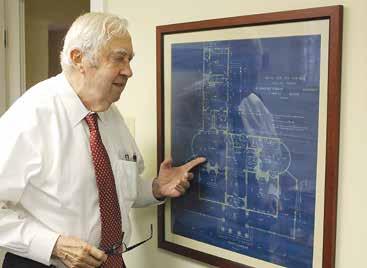
Nick LaBranche, Building Engineer, explains the building blueprints.
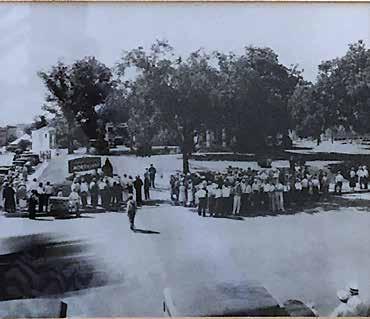
Members of the public line up to view the body of Clyde Barrow.
Memories
by Cathy Maher
In 1978, I was one of only four staff members at the DBA’s headquarters in the Adolphus Tower, located on the corner of Main and Akard in the heart of Downtown Dallas. By then, our Bar had grown to 3,400 members.
Thereafter, I served in a number of positions, including as DBA Executive Director from 1994 to 2016. Too many positive changes occurred in the DBA over the next 35-plus years to recount them all. The following are just a few notable achievements.
At the Adolphus office in 1978, operations were simple—no computers. Invitations for our only social event—the Inaugural—were tediously hand-addressed by staff. Dues statements were also prepared by hand. The inefficiency of hand-addressing mailers changed when the Bar purchased an Addressograph, a printing machine used to efficiently produce ink impression mailing labels for the Weekly Newsletter and Headnotes, which was used until the processes were outsourced later.
Until the 1990s, lawyers wishing to join the DBA were required to obtain signatures from two current members vouching for them. Dues were hand-posted by staff on 4x6 cards until IBM computers were finally purchased.
There were few CLE meetings at the Adolphus, but Clinics with lunch service were a long-established tradition and held in cramped space on the first and third Friday of the month. New members were introduced there monthly. The meetings were popular and well-attended.
While at the Adolphus, food service for Clinics was prepared in a private club and wheeled on service carts through downtown to the Adolphus. Members were
required to register for Clinics if they wanted to eat. Today, members enjoy a delicious buffet prepared in a commercial kitchen. No reservations needed.
The Bar always dreamt of owning its own headquarters, and in 1977 it raised over $1 million to purchase and renovate the Belo Mansion. Some wondered what our leaders were thinking, buying a former funeral home on the other side of downtown. After extensive renovation, the staff, along with a branch of the Dallas County Law Library, moved into the Mansion in 1979.
Some members resigned their memberships because they believed the building was inconvenient and a wasteful expense, but with the foresight of leaders, including Waller Collie, Jr., Bob Thomas, and the Hon. Jerry Buchmeyer, the city would grow north with development around our headquarters, beginning with the Dallas Museum of Art (1984), the Trammell Crow Tower (1985), the Chase Tower (1987), and the Meyerson (1989). The Mansion was now right in the middle of the newly created Arts District, and firms began to move to nearby buildings. The decision to purchase the new headquarters proved to be one of the greatest accomplishments in the history of our Bar.
The DBA hosted the American Bar Association Annual Meeting the summer of our move to the Mansion and could now show off its own headquarters to suitably impressed national bar leaders. That year, the Magna Carta also came to Dallas and the DBA was honored to
display it to the public at its new headquarters.
Without our headquarters in downtown Dallas, the Bar could never have accommodated its growing membership. With the facilities the Mansion provided, members could now easily meet to exchange ideas and create new programs and projects. It was only natural that CLE programs grew from roughly 35 per year at the Adolphus to over 400 per year today. New Sections and Committees were created as well, now that there was space for their meetings.
In the 1980s, the DBA became a national leader among bar associations with the creation of the Minority Participation Committee. This was the catalyst for the creation of joint programs with Allied Bars, minority clerkship luncheons, and the establishment of the Sarah T. Hughes Diversity Scholarship Program to provide scholarships to minority students at area law schools. Bar None was created in 1986 and today has raised in excess of $2 million for the Hughes Scholarships.
Diversity throughout the membership and within its leadership has grown greatly over the years. The DBA has seen its first woman President, Harriet E. Miers, and thereafter, the first African American President, Rhonda Hunter, and the first Hispanic President, Laura Benitez Geisler. Today, the Bar has a very diverse board, including a judicial seat and all Allied Bar Presidents serving as voting members.
Bar leaders have always encouraged pro bono involvement. The Dallas Volunteer Attorney Program (DVAP) was created in 1997 to coordinate and provide more services in the community. Annual fundraising for the program has grown enormously from several thousand dollars to over $1.5 million today, and its services have multiplied.
The Texas High School
Mock Trial Competition and the Law in the Schools & Community programs are well-established programs created in the late 1970s. They have grown since then and are important programs for students in our schools. Later, more activities related to students were created, including the Bar’s Summer Law Intern Program, Mentoring Program, and Law Day Contests. Our Bar became a role model for other bar associations’ education-related programs.
By 2000, membership reached 7,500. Meeting space was at a premium, and parking was still limited to only 60 outdoor spaces (with two spaces never used because hundreds of grackles roosted in trees above them) behind the Mansion. Parking was gridlocked most days.
In 2001-2002 through efforts of DBA leaders, including Nancy A. Thomas as Construction Chair and Mark A. Shank as Fundraising Chair, we raised $14 million to add the Pavilion to the Mansion, which now includes additional meeting space, as well as 250-plus parking spaces in a covered garage.
I have always been proud of the DBA, its members, and its programs. Members have not only given generously of their time to the Bar, but have also served in many other leadership capacities in our community, including on the Dallas City Council, Commissioners Court, and as Mayor, including the City of Dallas’ current Mayor Eric Johnson.
The DBA has consistently been recognized by the State Bar of Texas and the American Bar Association for its comprehensive and innovative programming and, with the engaged can-do membership of 11,800+ today, it is certain that positive growth will continue for many years to come.
26 Dallas Bar Association | 150th Anniversary
Cathy Maher retired as the Executive Director of the DBA in 2016. She lives in Dallas and can be reached at catharinemaher@gmail.com.
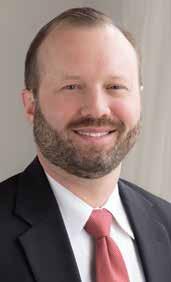
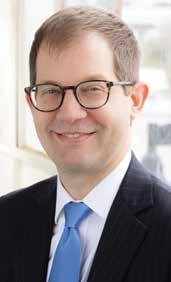
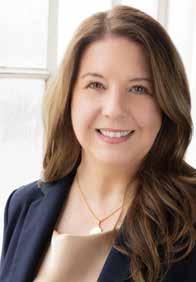
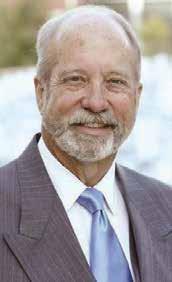
Goranson Bain Ausley is pleased to welcome five highly-accomplished Texas family law attorneys to our firm. Their presence expands our footprint within the state while also increasing the depth and breadth of our expertise. Cindy, Chris, Gary, Clayton, and Cassidy bring with them distinctive skills and a proven record of success in helping to resolve today’s most challenging family law issues. With their addition, along with two new offices in West Texas, we can now serve even more people in more places with greater resources to protect families and secure futures.

DALLAS 214.449.1748
PLANO 972.445.9062
AUSTIN 512.687.8949
FORT WORTH 817.518.4622
GRANBURY 817.518.4894
GBAFAMILYLAW .COM
Growing in strengths. Not just numbers.
Recognized leaders in family law join our team in Fort Worth, Granbury, and Midland.
Cindy Tisdale Chris Nickelson Gary Nickelson
Clayton Bryant Cassidy Pearson
A Brief History of Mock Trial in Texas
by Stephen W. Gwinn
Law-focused education programs began to appear across the fruited plain in the 1970s. In Texas, the program was known as Law in a Changing Society and was directed at classroom students in Texas at all levels. One of the activities included in that program was Mock Trial which was conducted in Dallas ISD classrooms. In 1979, a citywide competition was sponsored by the Dallas Bar Association’s (DBA) Law in a Changing Society Committee and DISD. Classroom Mock Trial received such a positive response that in June of 1980, the DBA organized a “statewide” competition that included four teams. The winner of that competition was Woodrow Wilson High School, and former DBA President Al Ellis was the coach of that team. This was the first such competition in the nation.
In 1982, the DBA opened an office for a statewide program at the DBA headquarters and installed former classroom teacher Judy Yarbro as the coordinator of the program. Texas was on the forefront of mock trial and the competition grew from four teams in 1980 to 17 teams in 1981, and the program received the State Bar of Texas Award of Merit. In 1982, regional competitions were organized throughout
the state through the Texas Education Agency’s Regional Service Centers and the competition had grown to over 150 schools by 1983.
In 1985, Texas and Oklahoma, along with six other states, created the All-States Competition (which is now called the National High School Mock Trial Competition). Corpus Christi Richard King High School won that National Competition. Dallas hosted the National Championship in 1988 with 24 teams. The Dallas County Commissioners’ Court adopted a resolution declaring May 2, 1988 as National Mock Trial Day in Dallas. Westlake High School finished second at that competition, losing only to South Carolina’s Socastee High School in the final.
In the late 1980s and early 1990s, the competition continued to grow and improve. The decision was made to mirror the National Competition and enlarge the team size from six students to 10, with three lawyers and three witnesses on each side. Success followed the Texas team, as teams from Texas placed second in 1991 and 1992 (Richard King High School) and third in 1999 (Kerville Tivy High School). In 1997, Lake Highlands High School completed an undefeated record at Nationals and also finished third. The coach of that team was Steve Russell, who would become a Vice-Chair of
the DBA’s Texas High School Mock Trial Committee and serve in that role for more than 20 years.
In 2007, Texas once again hosted the National Championships in Dallas. Forty teams from as far away as South Korea participated. The competition earned the DBA additional State Bar accolades and the Texas team from Richardson High School finished eighth. In 2008, Texas added a Professionalism Award which would be named after the state’s first ever State Competition Coordinator, Judy Yarbro. This award is the only award at the State Competition where the teams themselves decide the winner. In 2016, the National Competition added a Courtroom Artist category to the competition, and Texas would follow suit in 2017. Texas Artists consistently place in the top three every year and the Texas Courtroom Artist Competition routinely draws more competitors than the National Competition, despite being half the size.
DBA members generously donate their time every year to judge three locally held competitions, giving hundreds of hours to students in the area and for the State Championships. The committee works 11 or 12
months every year, as the end of one Mock Trial season means the start of another.
Case materials for the competition are created by the committee every year, starting with a blank slate and an idea. For a case to be viable for Mock Trial purposes, it must be able to support three witnesses on each side. Committee members spend dozens of hours crafting and refining these case problems. Additionally, committee members also travel to other areas of Texas to help run their regional competitions.
Texas teams and students have had tremendous success in recent years. Every team Texas has sent to the National Competition has won three of four trials since 2017, and finished outside the top 10 only twice in that time. Individual students routinely rack up awards at the National Competition as attorneys, witnesses, and artists.
To become involved, or for more information on the Texas High School Mock Trial Program, log on to texashigh schoolmocktrial.com.
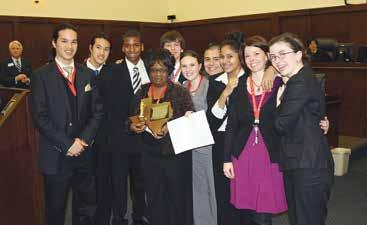
Stephen W. Gwinn is a Trial Attorney at Suzanne I. Calvert & Associates and has been involved in the Texas High School Mock Trial Program for 30 years. He can be reached at steve. gwinn.gajq@statefarm.com.
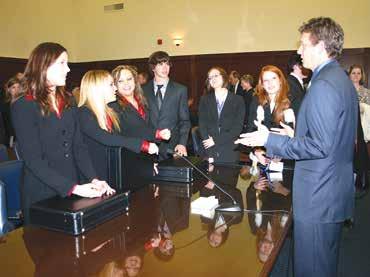
28 Dallas Bar Association | 150th Anniversary




CELEBRATING 25 Years EST. 1998 CARSTENS, ALLEN & GOURLEY, LLP Intellectual Property Attorneys Dedicated To Protecting Ideas.®
Legal Legacies
by Bill Holston
I was licensed as a lawyer 41 years ago this year. A lot has changed in 41 years. When I was a young lawyer, we were still using carbon paper. I remember the introduction of fax machines, personal computers, and cell phones. All of these have dramatically impacted the practice of law. Most for the better, but others in challenging ways. In the early days of my practice as a sole practitioner I was using the county law library or the law library of my law school, SMU. Now anyone with a laptop can access an immense legal library. On the other hand, it has created much higher expectations around the immediacy of communication.
One of the most significant improvements in the practice is emphasis on pro bono legal services. In 2022, the Dallas Volunteer Attorney Program (DVAP) helped 4,862 people, with 662 new lawyers recruited, and 892 cases referred to volunteers. Human Rights Initiative had 4,589 donated pro bono hours. There are also multiple other legal aid groups assisting veterans, tenants, immigrants, and domestic violence survivors.
Another great improvement in the Bar is regarding Diversity, Equity, and Inclusion. For many years the DBA was racially segregated, and did nothing to recognize its racial, ethnic, gender, and sexual diversity. Now our Bar Association is a leader in becoming a more just and equitable community.
Looking back over my career, I believe my greatest professional achievements were the pro bono cases I had the privilege to do.
Here is just one example: My client from Ethiopia
was a school teacher. He had been active in pro-democracy activities from the time of Hallie Sallasie. He was imprisoned by the Marxists for over 5 years, his only charge being a counter revolutionary.
Eventually he was released, but did not stop his activism. He was imprisoned several more times. He was beaten and tortured. I saw the scars on his body from the beatings. He lost his job. He was jailed, and interrogated several times, with increasing severity. Finally, he was forced to leave his wife and children behind to seek refuge in the United States. I represented him in Immigration Court.
At the trial I asked him: “Sir, you had been repeatedly warned not to participate, and to stop your political activities, why despite those warnings did you continue?” With tears in his eyes he said, “For my children. There is a cost for democracy and that is why I kept doing that.” Winning his asylum case was one of the high points of my career. Knowing him was a privilege.
Legal Legacies
As I reflect on legal legacies, I think about three lawyers I knew personally. How they practiced law can inspire all of us as we reflect on this heritage.
Parker Wilson
Parker Wilson, who died in 2005 at the age of 83, was very involved in all sorts of justice work his entire adult life. He was a volunteer with the Southern Christian Leadership Conference, the NAACP, the East Dallas Community Center, the South Dallas Information Center, the Greater Dallas Housing Opportunities Center, and the Committee in Solidarity with the People of
El Salvador. He practiced law at Sears for 30 years, and in 1982 co-founded Proyecto Adelante, which represents El Salvadoran refugees in danger of being deported. He represented immigrants escaping war and torture around the world until Proyecto shut down in 2000. That is where I met him, working as a full-time volunteer lawyer for Proyecto. He was the first lawyer I knew to represent asylum seekers, and he inspired many of us to do the work.
L. A. Bedford
Because Texas law schools were all segregated, he went to New York, where he earned his law degree from Brooklyn Law School in 1950. Upon graduation, he returned to Dallas. In 1954, he worked beside Attorney Thurgood Marshall, the top NAACP staff attorney during the first desegregation case to take place in Dallas. He, along with attorneys W. J. Durham and C. B. Bunkley, defended Wiley and Bishop College students arrested while participating in sit-ins. He also served as legal counsel on a case to declare “separate but equal” unconstitutional in Dallas public schools. Mr. Bedford became the first Black judge to serve in Dallas County, serving from 1966 to 1980.
Peter Johnson, who was with the Southern Christian Leadership Conferences during the 1960s and 1970s, reminds us that Mr. Bedford:
“..picketed the H.L. Green Department Store’s segregated lunch counters in downtown Dallas in 1960, shaped Johnson’s campaign against discrimination at Safeway grocery stores, and assisted in lawsuits around the state. He was all over the state of Texas with
other lawyers, fighting for legal and civil rights,” said Johnson. “He did this when it was very dangerous and being a lawyer didn’t protect you from the KKK and other white racists in this state.” His grandson Louis now fights for voting rights!

Merrill Hartman
And then there is Judge Merrill Hartman. In the 1980s Judge Hartman began a law clinic along with his friend Will Pryor at Lake Highlands United Methodist Church. That effort was the foundation of the Dallas Volunteer Attorney Program. After he became a judge he started taking the court to the Legal Clinics in order to increase access to justice. Judge Craig Smith said that Judge Hartman was the “father of pro bono here in Dallas.” He inspired many lawyers towards pro bono work.
Onward
But it is not just lawyers from the past that inspire me. I marvel at the new generation of lawyers. Many insist on pro bono opportunities from firms. I saw them at DFW Airport during the roll out of the Muslim ban.
Whan L.A. Bedford was a bit younger than I am he wrote an article for Headnotes, which states:
“When I am an old lawyer and can no longer stand before the Bar, I will tell all who would listen of those Comets intense and brilliant who illuminated the legal sky for all seeking justice and equality…”
Parker, L.A., and Merrill did that for me. I hope in my small way I can do that for others.
30 Dallas Bar Association | 150th Anniversary
Bill Holston is the Executive Director of Human Rights Initiative of North Texas and can be reached at bholston@ hrionline.org.

Real Estate | Corporate | Intellectual Property | Commercial Litigation | Probate / Will Disputes / Guardianships 14241 Dallas Parkway Suite 800 | Dallas, TX 75254 | TEL. 469.916.7700 | FAX. 469.916.7705 | www.theholmesfirm.com We support the
holmes Firm pc
Dallas Bar association
Seated: Kevin Moran, Donna Yarborough, Jennifer Stoddard, and Austin Gilleland
Standing: Brian Fisher, Vishal Patel, Lynnsee Starr, Ron Holmes, Scott Meyer, Taylor Bell, Sean Scribner and JD Reed Not Shown: Jonathan Hernon
A History of the Dallas Bar Association

1873
DBA founded by 40 lawyers; regular meetings were held in the Oriental Hotel. John Good was the DBA’s first President.

1875
The tradition of the DBA Memorial Resolutions began.
1916
DBA signed its first Charter - by 100 members “for support of a literary undertaking and maintenance of a library.”
1918-1919
DBA activity ceases as the Spanish Flu hits Dallas. Wendel Spence was President during this time.


1919 Meetings alternated between the 14th and 44th District Court rooms.
1920
Helen Marion Viglini is the first woman to appear in the official minutes as a member of the DBA.
1923 Meetings returned to the Oriental Hotel, and the practice of luncheon meetings began.
1939
DBA has 1,000 members.
1947
The DBA was incorporated. It was the state’s first bar association to incorporate.
1948
DBA establishes the Lawyer Referral Service.
1955

Louise Raggio becomes the first female prosecutor in the Dallas District Attorney’s office.

1957
DBA establishes the Dallas Legal Aid Society.
1960-65
Membership jumped to nearly 1,500 lawyers; DBA offices moved to rented space in the Adolphus Hotel, and then to the Adolphus Tower on the corner of Main and Akard.
1961
DBA Board of Directors agrees unanimously to cooperate with the Dallas Citizens Council to promote the peaceful integration of schools.
1977
The DBA purchases the Belo Mansion. DBA members, foundations, and public-spirited citizens contribute more than $1 million for its purchase and restoration, as well as surrounding tracts of land.
2010
DBA hits 10,000 members.
1978
The Texas High School Mock Trial program, the first in the country, is created, and Dallas schools participate.
1979
The Belo Mansion restoration is complete and it is now the new headquarters of the DBA, DBF, and Dallas County Law Library.
1985
Harriett E. Miers becomes the first female President of the DBA.

1985
J.L.Turner Legal Association and the Mexican American Bar Association (now Dallas Hispanic Bar Association) receive seats on the DBA Board.
1986
The DBA starts Bar None, a variety show featuring lawyers and judges, to raise money for the Dallas Bar Foundation’s Sarah T. Hughes Diversity Scholarships.

1991
The DBA starts building one home per year for Habitat for Humanity - via the DBA Home Project Committee. DBA is the longest running whole-house sponsor for Dallas Area Habitat for Humanity. 32 years and 33 homes.

2012
Paul Stafford is elected first African American male President of the DBA.

2015
The Equal Access to Justice Campaign hits $1 million for first time.
2017 Dallas Women Lawyers Association receives seat on the DBA Board of Directors.
2017
DBA begins offering an Online CLE Catalog with CLE video content.
2019
Laura Benitez Geisler becomes the first Hispanic President of the DBA.
2020
The Mansion is closed for 15 months due to the COVID-19 pandemic. DBA creates the Allied Dallas Bars Equality Committee. DBA begins offering live-streamed virtual CLEs.
32 Dallas Bar Association | 150th Anniversary
1924
DBA started and supported a legal clinic for the City of Dallas.
1925
DBA President Joseph E. Cockrell urges SMU to start a law school, and the DBA underwrote salaries for two full time faculty members for two years.
1926
Meetings moved to the Adolphus Hotel. DBA membership grows to 428, up from 127 in 1920.
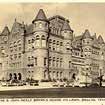
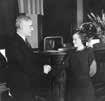
1930s
Period of growth for DBA: Saturday morning legal clinics on legal topics for lawyers, radio broadcasts on WRR on legal topics for the general public, and financial relief to lawyers in need.
1963
DBA President H. Louis Nichols visits the city hall jail cell of accused assassin of President Kennedy, Lee Harvey Oswald, to determine if Oswald had legal representation.
1963
The DBA admitted its first African American member(s) - Fred Finch, Jr. (12/11/1963). L.A. Bedford, Jr. (1964).

1965
DBA membership is 1,428. Cost of daily buffet increases to $2.34.
1935
Sarah T. Hughes becomes the state’s first female district judge.
1936
DBA creates Dallas Bar Speaks, a bound compilation of some of the speeches made at regular meetings. The book is published unitl 1956.

1937
DBA headquarters established it first office, a 15-foot cubicle under the stairs of the Old Red Courthouse.
1992
The first DBA Bench Bar Conference is held.
1994
The DBA creates the Summer Law Intern Program for local high school students.

1997
DBA and Legal Aid of NorthWest Texas combine their pro bono programs to create the Dallas Volunteer Attorney Program and begin raising funds together to support the program.
1971
DBA creates the Dallas Bar Foundation as its charitable arm. The Foundation’s first project was to purchase and restore the historic Belo Mansion as the headquarters for the DBA and the Foundation.
1998
DBA celebrates its 125th anniversary.
1971
DBA President Tim Kelley issues statement regarding Tasby v. Estes, the Dallas desegregation case, that the judge in the case could not and would not be influenced by public pressure and the law would prevail.
1999
Dallas Asian American Bar Association receives a seat on the DBA Board.
1973
DBA celebrates its 100th anniversary.
1977
The DBA’s monthly publication, Headnotes, is created.
2001-2003
To meet the increasing demands of its growing membership of over 7,000, the DBA raises $14 million, builds, and opens the Pavilion.
2004 Rhonda Hunter becomes the first African American President of the DBA.


2021
The Mansion reopens. The Dallas LGBT Bar Association receives a seat on the DBA Board of Directors.
DBA renames home to Arts District Mansion. DBA begins offering hybrid format CLE programming.
2022
DBA launches its mobile App.

2023
DBA Celebrates its 150th Anniversary. DBA membership hits 11,900.

33 Dallas Bar Association | 150th Anniversary
The Tuesday Night Irregulars
by Florentino Ramirez
No discussion of the history of the Dallas Bar Association could be complete without remembering the “Tuesday Night Irregulars,” a loosely unorganized group that, despite its moniker, congregated religiously every Tuesday night during the ‘80s and ‘90s at the Arts District Mansion bar area to imbibe of the spirits (both liquid and spiritual), share stories that would probably best qualify as yarns, attempt to engage in intellectual and literary pursuits, and most importantly to share in its great camaraderie. No invitation was ever needed to join in the merriment, but the “Irregulars” were a select group at the Dallas Bar Association. Lawyers, non-lawyers, and even out-of-town and foreign lawyers who had heard of the group, were always in attendance.
No one story prevails as to the group’s beginning, but some of the vested and original Irregulars were Phil Wilson, Bob Martin, Waller Collie, and other eminent lawyers from the largest and
his regular chair with his name engraved. Other distinguished leaders of the Bar that regularly attended were DBA Past Presidents John Estes, Vincent Perini, Darrell Jordan, and Robert (Bob) Thomas. The Hon. Doug Lang, Louis Weber, and Harriet Miers, to name a few, made more than a few memorable appearances on Tuesday nights.
The unwritten rule was that one could discuss anything but the business of law. And though the majority of the group were distinguished Bar leaders, rarely did the direction of the DBA surface as a topic of discussion. Pending legal matters were also never raised. However, as distinguished lawyers would often do, “The Law” was frequently a topic of discourse through the friendly bantering of Oxfordlike debates.
Irregulars. Waller Collie would read “Casey at The Bat,” with Phil Wilson entertaining with the recitation of his favorite limericks in true iambic pentameter. Among the regular/irregular entertainment was past DBA President Bob Thomas telling his wonderful story about
guarded behind the bar by our esteemed Juan Zermeno, who cut his teeth as a young bartender to this quirky group. A perfect pour was not far behind as each strayed into their respective regular chairs, leaving their offices and benches far behind.
most stoic law firms in Dallas, to the smallest firms and solo lawyers. The legendary Hon. Jerry Buchmeyer, whose wit characterized the general levity of the group’s informal nature, was a fixture at the table. Original Irregular Waller Collie’s reputation as a founder and devoted attendee was so much so that a brass plaque was affixed to the back of
Volunteers would read poems from books kept on hand at the bar in its own specialty library of books on poetry, limericks, anecdotes, and the like, all donated by the Irregulars. One would regularly hear Judge Buchmeyer recite “The Shooting of Dan Magrew,” or tell the story of the “The Meanest Lawyer,” who also was a faithful member of the
“Thurval,” the dog chasing the big train, recited and animated complete with a Swedish accent, and Gordon Carpenter telling his seagull joke complete with the flapping of his arms as wings!
Birthdays, anniversaries, and holidays were frequent causes for celebration. Even Cupid made an appearance at the Irregulars, twice actually. Romance budded there for Frank Elliott (former dean of both Texas Tech and Texas Wesleyan Schools of Law) and Kay Elliot, and for Bob and Kay Martin, with their nuptials soon blossoming, presided over by Judge Buchmeyer.
The Tuesday Night Irregulars were usually flanked at nearby tables by DBA staff, such as former Executive Director Cathy Maher, and her devoted staff. The Irregulars each had their personal choice of spirits, which were safely
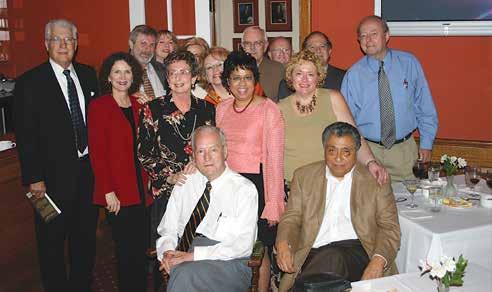
As the years passed, the Irregulars began to dwindle in numbers and, without noticing, Tuesday nights at the Mansion became silent. But if you listen closely, the tales, poems, thunderous banter, and most importantly, the laughter, still echo throughout the Mansion. The Tuesday Night Irregulars will forever be a part of the fabric of the Dallas Bar Association.
And for any of you wanting to start your own Irregular tradition, let me join you, and the first round will be on me, in exchange for a war story or two, and toast to the original Tuesday Night Irregulars, here and gone.
Florentino Ramirez , a Tuesday Night Irregular, is Of Counsel at Ramirez & Associates, P.C., and was considered by Judge Buchmeyer as the Meanest Lawyer he ever knew, in his book et cetera. He can be reached at framirez@ ramirezassociates.com.
34 Dallas Bar Association | 150th Anniversary
The unwritten rule was that one could discuss anything but the business of law.
McCullough Mediation applauds the Dallas Bar Association and its 150 years of professional excellence, education, service and leadership.

SECURE AND PROFESSIONAL
McCullough Mediation assures a complete atmosphere of neutrality. You can trust our mediators to serve with balance and respect.

FOCUSED ON RESOLUTION
McCullough Mediation works to resolve your case in a fair and efficient manner. Call to inquire about our schedule.

DBF’s 52 Years of Creating Cycles of Success in Our Legal Community
by Tricia DeLeon
A wise mentor can impact our future in ways that even our parents, coaches, and closest friends cannot. The most influential mentor of my legal career was Justice James A. Baker, a former Texas Supreme Court justice and the 2008 Chair of the Fellows of the Dallas Bar Foundation (DBF). He was a student of the law and he modeled a tireless work ethic and valued excellent, thorough, and understandable writing. Equally important to him though, was how well his team developed as professionals in our community.
Texas lost one of its most respected legal leaders when Justice Baker passed away on June 22, 2008. To honor Justice Baker’s remarkable, 50-year legal career, the DBF established an internship with the Chief Justice at the Supreme Court of Texas. The DBF awarded the first Justice James A. Baker Clerkship in 2009. I know Justice Baker would smile knowing that the DBF is valuing the same things he loved—mentoring young lawyers, sharpening legal skills, championing professionalism, and being fully-engaged in community service.
Justice Baker would also smile to see how the DBF’s impact has continued to grow since its inception in 1971. Indeed, the Foundation’s identity over the last 52 years has evolved from its initial focus of purchasing the formerly-named Belo Mansion to serve as the Dallas Legal Education Center, to being a change agent for law students and grant recipients. The DBF was originally established
in 1971 for educational and charitable purposes to: (1) sponsor and encourage research, publications, institutes, and forums for the furtherance of justice under the law; (2) establish scholarships and otherwise promote the study of law and research and the continuing education of lawyers; (3) institute and maintain legal aid facilities for the indigent; and, (4) accept aid, donations and grants from government and private sources. In 1977, the DBF included another charitable purpose: to preserve historical structures, display historical memorabilia, and conduct historical observances. The DBF thereafter accepted donations for the 1977 purchase of the DBA headquarters (now known as the Arts District Mansion) and for the Mansion Expansion initiative that followed in 2000.
So, how does the DBF put its mission into practice today? The DBF’s Executive Director, Elizabeth Philipp, said: “The Dallas Bar Foundation, through its scholarships, clerkships and grant programs, helps create cycles of success in our community from which we all benefit.”
The Sarah T. Hughes Diversity Scholarships is a primary example of a DBF program creating cycles of success. The DBF has awarded $2.78 million to Hughes Scholars since 1982. Many of the Hughes Scholars are first generation college graduates who are now leaders in our community providing their families and their communities opportunities not afforded to them. These Scholars thankfully continue to serve our community.
In 1989, the DBF initiated the William E. Collins Clerkships, which provides high-achieving, minority law students a summer clerkship. The DBF has awarded $667,000 in Collins Clerkships. Collins Clerkship alums include: Laura Benitez Geisler, partner at Sommerman, McCaffity, Quesada & Geisler, LLP and the
undergraduate at Princeton.
The DBF’s Collins Clerkships and grant-giving has come full circle for Ms. Geisler.
first Hispanic Dallas Bar President; Nicole Muñoz Huschka, an attorney at Figari+ Davenport, LLP and current President of the Dallas Association of Young Lawyers; and, Hope Shimabuku, the Director of the Texas Regional U.S. Patent and Trademark Office and a mentor of a Hughes Scholar at the USPTO. The Hughes Scholars and Collins Clerks were leaders in law school and continue to be change agents.
The DBF, as a charitable, fundraising arm of the DBA, also awards grants to support educational programs like the High School Mock Trial program, which the DBF awarded $477,668 in the last 30 years. Two current Hughes Scholars participated on their high school mock trial teams and one won the state championship. One Hughes Scholar said competing in the High School Mock Trial competition at the DBA for three years inspired him to start a second foreign language debate team when he was an
“My involvement with the DBF began as a law student when I was selected for the Collins Clerkship which provided me the opportunity to intern at the Texas Supreme Court,” said Ms. Geisler, a current DBF Trustee and chair of the grants committee. “As Dallas Bar President, the DBF was instrumental in helping me launch a legal incubator program for lawyers seeking to serve a modest-means clientele, and in the four years since the program’s inception, program participants have provided more than 6,000 hours of pro bono service. Now as a DBF Trustee leading our grants committee, I have the privilege of helping select scholarship and grant recipients, personally knowing the positive impact it will have on the beneficiaries.”
Kathleen LaValle , President and CEO of Dallas CASA, can also attest to the impact of the DBF. Ms. LaValle said: “For more than 30 years, the Dallas Bar Foundation has supported Dallas CASA and the work of our professionally supervised, court-appointed volunteer advocates who can be a lifeline for children in foster care. The Foundation has recognized Dallas CASA’s critical role in protecting children and restoring childhood. As a careerlong member of the DBA and a Dallas CASA board member since 2002, I take pride in the Foundation investing in our mission and supporting the growth
continued on page 62
36 Dallas Bar Association | 150th Anniversary
W e h a n d l e t h e c o m p l e x c a s e s t h a t o t h e r s c a n ' t
Slack Davis Sanger specializes in navigating and winning the challenging personal injury cases that few firms have the in-house resources or niche expertise to take on.
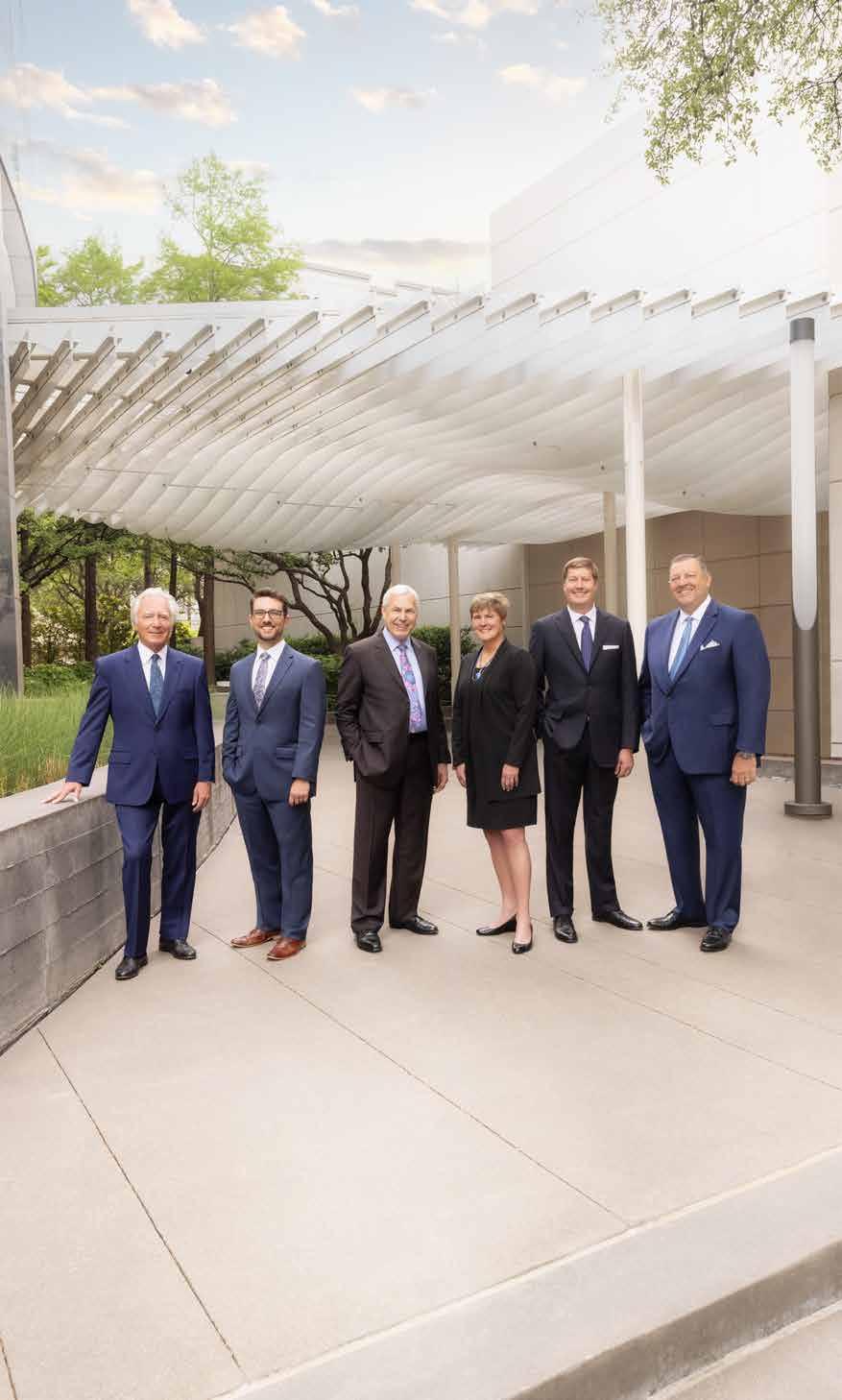
One of the legal field’s most trusted PI firms for over three decades, we ’ re repeatedly called by other firms to take on their toughest challenges. We offer highly respected leaders in aviation and medical malpractice…in whistleblower and product liability…in class action, vehicle accidents and workplace injury.
Austin Dallas Fort Worth www.slackdavis.com
P E R S O N A L I N J U R Y L A W
Changing the Face of the Dallas Legal Community
by Mary Murphy
When Judge Sarah T. Hughes left the Dallas Bar Foundation (DBF) Board meeting in February 1982, she likely thought the meeting was over. What happened next helped to change history and the face of the Dallas legal community.
The Board minutes reflect “enthusiastic approval and common consent” to naming the recently created Diversity Law Scholarship at SMU after Judge Hughes. It was the right time, the right place, and the right initiative to honor the generous trailblazer—just three months later, Judge Hughes suffered a stroke that ended her participation in public life.
The diminutive (five feet tall) Hughes had been no stranger to changing the course of history. She graduated from George Washington University Law School in 1922 while working as a police officer during the day. She led her graduating class in recognition and activities. By 1931, she became one of three women serving in the Texas Legislature and, just four years later, Hughes was appointed to the 14th District Court in Dallas—a time when women were not allowed to serve as jurors in her court. The attorney (and former DBA leader) campaigning against the Hughes appointment insisted women should be home washing dishes. That argument failed.
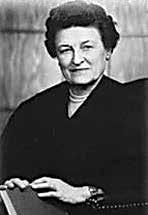
Almost 50 years and many feats later, Judge Hughes remained a catalyst for change. This time she joined the weight of other DBA
leaders to create a life-changing scholarship.
The idea originated with Larry Newman. With the help of DBA President-Elect Darrell Jordan, Tim Gonzalez and Foster Reese presented the proposal to the
Proceeds from “Bar None” have served as the main funding source, and the annual program “An Evening With…”, added by the Foundation in 2011, has provided an additional resource.
The Collins Clerkships were added in 1989 to provide jobs for minority law school students. Grants to date are close to $700,000 and have provided summer work with courts and government offices. These placements primarily attract Hughes Scholars. Both the history and funding for the Hughes scholarship are groundbreaking. But, to quote Elizabeth Philipp, the Foundation’s Executive Director, “the most important part of the story is about the students and the cycles of success the scholarship has created in our community.”
Guzman related her goal of inspiring them to pursue their highest aspirations.
The word “access” is key to understanding the purpose and impact of the Hughes scholarship. The exceptional individuals receiving the grants most often come from backgrounds that require unique courage and endurance. Many have worked to care for their families and have delayed educational decisions as a result. Some have suffered unspeakable tragedies. All have grit and have demonstrated the ability to exceed their aspirations with access to the financial and mentoring means available through the scholarship.
Foundation in May of 1981— the goal was to create “a scholarship and clerkship program to attract minority lawyers to the community.” Reese emphasized the small ratio of minority lawyers compared to the city’s diverse population. Judge Hughes moved to accept the recommendation, which carried unanimously. The Foundation would serve as the repository for funds.
Foundation funds for the Hughes scholarship— which covers three years of law school tuition—have now exceeded $2.7 million. The scholarship was expanded in 2015 to include not only SMU, but also UNT Dallas College of Law, and Texas A&M University School of Law.
The experiences shared by the students include introductions and access that inform the workings of our justice system and the impact lawyers can have in the community. Former Supreme Court of Texas Justice Eva Guzman has generously contributed to these insights.
Justice Guzman served as a mentor to the Collins Clerks each year she was asked to participate, continuing the long tradition of the Supreme Court of Texas accepting a Collins Clerk. She used that opportunity to expose the students to the inner workings of the Court and to introduce them to her service with the Access to Justice Commission. Describing some of the greatest moments in her 22 years in the judiciary as mentoring young lawyers, Justice
Gabe Vazquez describes the Hughes scholarship as changing the course of his life. Having received the award over 20 years ago, Vazquez now serves as Secretary-Treasurer for the Foundation. He also served as Grants Committee Chair. A first generation American, Vazquez’s immigrant parents sacrificed to sustain him and his three siblings and make sure they had the best education possible. Vazquez excelled and was admitted to Harvard and Stanford for college. He went to SMU because of scholarship funds. Then, inspired to stay in Dallas, Vazquez applied for the Hughes Scholarship.
The scholarship gave Vazquez the financial and mentoring means to attend and succeed in SMU law school. He credits this access as inspiration for giving back. That course has him fully engaged as a community leader and volunteer and, importantly, a tireless mentor for aspiring lawyers. He describes the process
continued on page 61
38 Dallas Bar Association | 150th Anniversary
Hon. Sarah T. Hughes
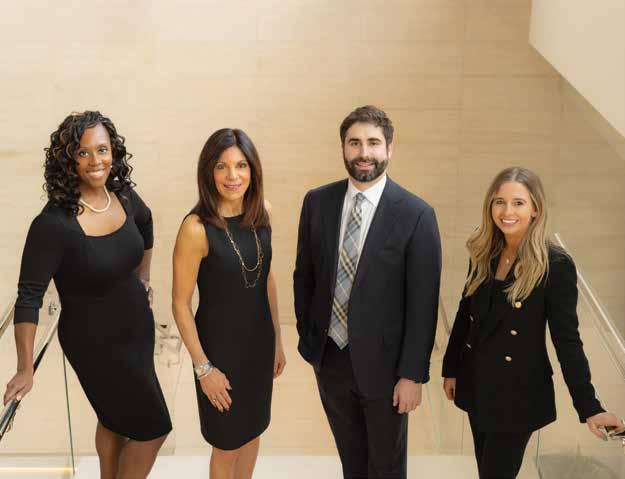


The DBA Home Project: Dallas Habitat’s Longest-Running Full House Sponsor
 by David Fisk
“Would you like to help people in Dallas with no decent place to live? Would you like to contribute money? Would you rather provide pro bono assistance? How about picking up a hammer or paint brush some Saturday and joining a Dallas Bar work crew? If you answer yes to any of these questions, read on. Opportunity knocks.”
That is how Marti Klein opened her article on the cover page of the July 1, 1991 edition of the DBA Headnotes newsletter. She was introducing the DBA membership to the DBA Home Project, which the DBA Community Involvement Committee developed from a concern about the lack of affordable housing in the Dallas area. The Community Involvement Committee determined that a partnership with Dallas Area Habitat for Humanity would help address this concern and further the DBA’s mission to promote good relations among lawyers, the judiciary, and the community.
Supporting the Dream of Homeownership in Our Community
Most people know Habitat for Humanity as a nonprofit organization that builds homes for families that might not otherwise be able to afford homeownership. While home construction is at the core of Habitat’s mission—it does much more than just build homes. In addition to providing affordable homeownership opportunities, Dallas Habitat provides financial education, advocacy efforts, and neighborhood empowerment programs to help transform families, revitalize neighborhoods, and build a
better Dallas.
The Habitat for Humanity is not a give-away program. Dallas Habitat provides qualified families a tangible asset at an affordable cost, guaranteeing mortgage payments will be no more than 30 percent of a family’s monthly
staffs, court reporters, and others in the legal community.
Early Years of the Home Project
In 1991, Rex Spivey and Dolly Kyle served as Co-Chairs for the inaugural Home Project. DBA members
Since then, the Home Project has continued to make a difference by building at least one Habitat home every year, earning the DBA the distinct honor of being Dallas Area Habitat for Humanity’s longest-running Full House Sponsor.
Longest-Running Full House Sponsor
income at the time of closing. Families contribute “sweat equity” by building on their home and the homes of their neighbors and participate in Dallas Habitat’s Homebuyer Education classes, which equip families with a stronger understanding of budgeting, home maintenance, and the various skills needed to empower them with stability and success.
According to Habitat for Humanity research, homeownership can be a catalyst to create lasting wealth for low-income households. Dallas Habitat helps homeowners build equity by keeping the cost of homeownership affordable, allowing homeowners to accrue equity immediately. Through its partnership with Dallas Habitat, the DBA Home Project, now in its fourth decade, has helped Dallas families achieve their goal of homeownership through substantial time and financial contributions from DBA members, including lawyers and judges, their legal
participated in two Dallas Habitat build days, raising the walls and roof, and performing interior construction on a home located in the Garret Park East neighborhood of East Dallas. More than 150 lawyers volunteered time and contributed over $14,000 to the project. After completion of construction, DBA members attended the Home Dedication Ceremony for the Del Campo family, and DBA President Doug Lang presented a loaf of bread baked by Ms. Kyle to the new homeowners as a symbol of prosperity. Mr. Del Campo responded with thanks to all the donors and volunteers who helped “make my family’s dream of a home a reality.”
Marti Klein ended her 1991 Headnotes article by stating: “However many dollars and volunteers join in, whether the Bar builds multiple homes or fixes up one home in need, we will make a difference.” The following year, the Home Project raised over $45,000 and the DBA became what is known today as a Full House Sponsor.
As a Full House Sponsor, the DBA has the responsibility to raise funds to pay for the materials and non-volunteer labor costs associated with building a Habitat home. The DBA Home Project Committee coordinates sponsors and volunteers to participate in 10 build days each spring. DBA volunteers often get to work alongside soon-to-be homeowners. As of 2022, the Home Project has raised over $2 million and DBA members have contributed thousands of hours to build homes in neighborhoods throughout Dallas.
Under the leadership of the DBA, 36 Habitat homes have been built since 1991, and the 37th is being built this spring. The 36 completed homes include the annual Home Project builds from 1991 through 2022, including the Rex J. Spivey Memorial Build in 2020 to celebrate the 30th anniversary of the Home Project, and three memorial homes built to honor John Howie (in 2004), Fred Baron (in 2009), and Judge Merrill Hartman (in 2011). These DBA members were avid supporters of the DBA Home Project, and the Home Project Committee established the Judge Merrill Hartman Support Award in 2001 to recognize supporters who continue Judge Hartman’s passion for the DBA Home Project.
In addition to the memorial homes, the DBA partnered with the Dallas Asian
40 Dallas Bar Association | 150th Anniversary
American Bar Association, the Dallas Association of Young Lawyers, the Dallas Hispanic Bar Association, the Dallas Women Lawyers Association, and J.L. Turner Legal Association in 2014 to provide volunteers and raise $100,000 in support of the Jimmy & Rosalynn Carter Work Project in East Oak Cliff. Finally, the DBA partnered with AT&T and its legal department in 2016 to build a second Habitat home next door to the 25th Habitat home built by the DBA Home Project.
“Homeownership had been something I always knew I wanted as a parent and young adult. As I started getting to my goal financially and mentally, the market prices seemed way too high for my budget, even with the discipline I had picked up the years leading up to that. Then I started to do more research and utilize the resources I found along the way. I discovered Habitat one day watching the news and decided to go that route. I can definitely attest to saying that it was one of the best life decisions I’ve ever made in my life.”
Similar sentiments have been shared by other DBA Home Project beneficiaries and can be heard at Dallas Habitat home dedication ceremonies.
Building Homes, Communities, and Hope
The true impact of the DBA Home Project is best understood by hearing from new homeowners. In a letter written to the DBA, Dorris Carroll (1996 DBA Home Project beneficiary) wrote:
“It is hard to believe that it has been a year since my house was dedicated to me. I can truly say ‘my house’ now because, as you would say, all the i’s have been dotted and the t’s have been crossed; papers have been signed. Thanks to the Dallas Bar Association, my family and I will have another happy Christmas and many, many more to come. I truly hope you can make another family as happy as we are.”
Christina Ruiz (2020 DBA Home Project beneficiary) recently told Al Ellis, 1990 DBA President who established the Community Involvement Committee and has since become a Dallas Habitat Core Volunteer:
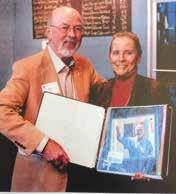
If you have never participated in a DBA build day, please reach out to a Home Project Committee member and volunteer. No construction experience is required, and there are always tasks for volunteers to do within their comfort level. Building a home alongside your colleagues, peers, and Dallas Habitat’s partner families is a great way to be part of something bigger than ourselves.
If you have participated in a build day, but have never attended a home dedication ceremony, you are missing out. There is nothing quite like witnessing the joy and appreciation of families when they receive the Habitat homeowner gifts and the keys to their new home. Home dedication ceremonies are truly remarkable events that draw in communities to celebrate and support their new neighbors. They are the culmination of every DBA Home Project and should not be missed.
David Fisk is a Partner at Grotefeld Hoffmann and has served as Co-Chair of the DBA Home Project Committee for many years. He can be reached at dfisk@ghlaw-llp.com.
At Lynn Pinker Hurst & Schwegmann, we are celebrating our 30th year.
We had a vision to build a litigation rm made up of real trial lawyers with a relentless will to win. Here we are 30 successful years later, with that same vision and excitement to serve our clients. And it’s the things that got us here that will continue our tradition of excellence long into the future –
Innovation, Experience, Drive, and Passion.
The Dallas Bar and the Allied Bars: A Collaborative Model
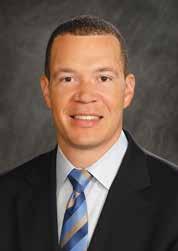 by Paul K. Stafford
The J.L. Turner Legal Association (JLTLA) was founded to promote networking and professional development among attorneys in Dallas—the same ideals promoted by the Dallas Bar Association upon its founding in 1873. The difference was that the JLTLA was founded 80 years later (in 1952), due in large measure to the segregated legal profession and society of its times—and was therefore focused on Black attorneys. Some members tried to integrate—like JLTLA founders C.B. Bunkley, Jr . and W.J. Durham , who applied for DBA membership in 1963, but their applications were never acted upon. In time (1963), Fred Finch became the first Black member of the Dallas Bar Association, with L.A. Bedford (1964) and others admitted thereafter, and with Bunkley and Durham admitted posthumously in January 2006.
In 1968—as this country was experiencing turbulent times, civil unrest, and transformative change— Al Ellis , of the U.S. Army Airborne/Infantry, was serving his country in a foreign land. Tet happened
in January, a President declined to run for a second term in March, and a King was assassinated on a Memphis balcony in April. Following the assassination, Senator Robert Kennedy echoed the call from Abraham Lincoln’s Second Inaugural Address to “bind up the wounds among us.” Two months after uttering Lincoln’s refrain, that same Kennedy was assassinated in a Los Angeles hotel kitchen. Senator Kennedy’s last words were purportedly “Everything’s going to be ok.” The nation was changing, but its violence and tragedy reminded us of promises unfulfilled, and the work left undone—particularly regarding social justice and equality for all.
Within that context, lawyers continued to lead and advocate.
The Dallas Mexican-American Bar Association was founded in 1969, with the venerable Adelfa Callejo , William Callejo , and Florentino Ramirez being among its founders. It became the Dallas Hispanic Bar Association in 2003, and has been advocating for Hispanic issues within the profession and social justice within the community for decades.
Also in 1969, a group of women attorneys began meeting regularly to prepare programs and activities for the American Bar Association Convention in Dallas. Based upon the success of their efforts, these women attorneys began meeting informally for mutual support. This group—whose founding members included Louise Raggio , Judge Sarah T. Hughes , and Joann Peters —eventually became the Dallas Women Lawyers Association, committed to elevating the standing of women in the profession.
In the late 1960s, and throughout the 1970s, the Dallas Bar Association was a largely homogenous bar association that had not admitted women until a few decades prior, and had only recently begun admitting ethnic minorities as members. The Allied Bar Associations, each in their own way, brought their unique perspectives to the dialogue and efforts to promote a more diverse legal profession—which also meant a less homogenous Bar. Times were changing, and coincidentally, names were changing too, with
the Dallas Junior Bar Association (founded around 1920) becoming the Dallas Association of Young Lawyers in 1977. Its President in 1978 was Army veteran, now attorney, Al Ellis.
Some viewed the changing world differently, particularly in 1990. That is the year when Mr. Ellis became President of the Dallas Bar Association, and the year that DBA members received a dues schedule listing dues options for members of minority bar associations. Some members expressed outrage in response—asserting that the minority bar associations were racist organizations, and the DBA should not be collaborating with such racists. Some also asserted that American society was post-racial— and that by having other bar associations (besides a largely homogenous bar association), society was re-segregating. Others also believed that, by attempting to collaborate with the DBA, minority bar associations were seeking favorable treatment from the DBA—apparently purposefully oblivious to the notion that perhaps the DBA had lost its inclination to remain largely homogenous, and was affirmatively seeking collaboration with other bar associations.
Who knows whatever happened to these detractors. We do know that they neither learned the lessons of Lincoln’s times, nor did they understand the evolutionary nature of their own times. Throughout the Dallas Bar’s 150 years, there have undoubtedly been other detractors. Yet, the Dallas Bar
42 Dallas Bar Association | 150th Anniversary
Throughout the Dallas Bar’s 150 years, there have undoubtedly been other detractors. Yet, the Dallas Bar Association evolved and became increasingly aware of its limitations and the limitless potential of inclusion.
Association evolved and became increasingly aware of its limitations and the limitless potential of inclusion.
We also know that the bar associations changed— for the better in the 1980s and 1990s, in conjunction with its self-examination and subsequent ‘Task Force on Opportunities for Minorities in the Profession—Long Range Plan for Inclusion’ (which included Ellis, Callejo, and Bedford).
In 1985, the DBA determined that the Presidents and the Presidents-Elect of the J.L. Turner Legal Association and the Mexican-American Bar Association (now the Dallas Hispanic Bar Association) should have seats on the DBA Board of Directors— first as Advisory Directors (for Presidents-elect), and then as Voting Directors (for Presidents). In 1999, the Dallas Asian American

Bar Association received seats on the DBA’s Board of Directors.
According to Ellis: “It was the right thing to do, and it was overdue.” This collaborative concept has remained an integral part of the structure and composition of the DBA Board, and remains unique among bar associations.
In 2017, the Dallas

Women Lawyers Association was granted seats for its President and President-Elect on the DBA Board, and most recently (in 2022), the Dallas LGBT Bar Association (founded in 1992 as the Stonewall Legal Society) was granted seats for its President and President-Elect, as well. The continued success of the DBA and the Allied
Bars (formerly referred to as Sister Bars) is testament to the vision of the DBA Board of Directors, led by 1990 DBA President Al Ellis, and the leaders of the respective Allied Bars, and is a collaborative model for other bar associations nationally.
There will always be detractors and obstructionists inside and outside of our ranks, but the collaborative milestones of our Allied Bars and the Dallas Bar Association represent a continuing effort to “bind up the wounds among us.” With that effort, and within that spirit, “Everything’s going to be ok”—for us and for future members alike.
Paul K. Stafford , 2012 DBA President, was the first African American male to serve as a DBA President. He is a Partner at Stafford Moore, PLLC and can be reached at paul@stafford moore.law.
The Allied Bar Associations, each in their own way, brought their unique perspectives to the dialogue and efforts to promote a more diverse legal profession—which also meant a less homogenous bar.
35 Years, Bar None
by Martha Hardwick Hofmeister and
Tom Mighell
In 1981, at the urging of Larry Newman , who chaired the newly created Minority Participation Committee, the Dallas Bar Foundation (DBF) established a diversity law scholarship, later named after DBF trustee and federal judge Sarah T. Hughes . In 1985, when Harriet Miers served as President of the Dallas Bar Association (DBA), she noted that the DBF needed a program or event to help fund it. Harriet and DBA Entertainment Committee Chair Tom Timmons had the germ of an idea: what if Dallas lawyers put on a show that was a fundraiser?
The Entertainment Committee, at that point largely responsible for organizing the DBA presidential inaugural, held a meeting at which this idea was discussed. New lawyer Martha Hardwick Hofmeister was a member of the Committee, but she missed the meeting. In her absence, someone noted that she had directed the 1984 production of Assault & Flattery at the University of Texas School of Law and suggested that she direct the as-yet-unnamed production. Martha got a letter in the mail shortly thereafter, naming her director and appointing others, including Barbara Clay, Scott Dyche, and Rhonda Hunter, to put together a show that would help fund the Scholarship.
This core group, along with several others, determined that the show would need to be funny and satirical, not stuffy and reverential, and that all who auditioned would be cast, so as to increase the size of
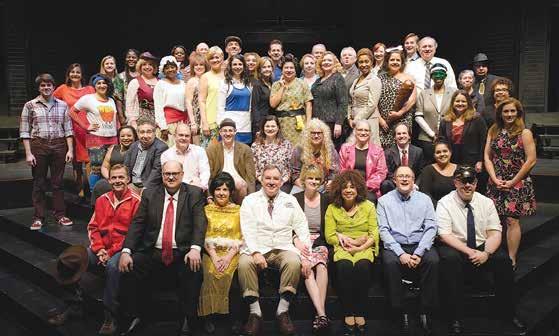
anticipated audiences. These important decisions continue to guide the casting and direction of the production to this day.
The venue selected for the 1985 inaugural show was also booked to two other performing groups, forc-
ultimately to the Greer Garson Theatre); the reception was too much work and too expensive, so it was jettisoned; law clerk outings were a big deal in the ‘80s, so the show was moved from spring to summer; and the director could not both prac-
None runs four nights, and generally has an audience of 250 per night.
Many who are still active with the show have been involved with Bar None for literally decades. Martha (director) and Rhonda (choreographer) have served in
ing the lawyers to stand down until March of 1986. The name “Bar None” was a fortuitous last-minute concoction, and the first show was staged at Union Station downtown, with one night of rehearsal in the space (during dress rehearsal, crew members were literally sawing and hammering the sets together). Two nights of performances, with food and drink provided as part of the ticket price, combined to raise just north of $7,000. Would Bar None continue after its debut?
Yes; money had been raised and fun had by cast and audience alike. Decisions were made. The show initially benefited the law school at SMU, so the production was moved on campus (first to the Bob Hope Theatre, then to the HughesTrigg Student Center, and
tice law and direct Bar None alone, so assistant directors were recruited.
Bar None is not a talent show, nor is it a classic musical, one which tells one story from start to finish. Rather, the show is a compilation of skits and songs which poke fun at current events and the practice of law. The songs are re-writes which riff on their inspirations; for example, “Master of the House” becomes “Founder of the Firm.” Bar None is written and performed by lawyers and other legal professionals; the cast numbers between 40 and 60 each year. The producer, director, and choreographer, and their respective teams of assistants, are volunteers and lawyers; volunteer lawyers also comprise the vast majority of the show’s backstage and crew workers. Bar
their roles since 1986; John Horany (assistant director) and Kent Hofmeister (assistant director) joined in 1987 and 1988, respectively. Mike Koenecke has been a writer and performer since 1986. Tom Mighell joined the show in 1991 and began producing it in 1995. Mary Elizabeth Anderson also joined Bar None in 1991 and started assistant directing in 1996. Lucy Meyers-Lambert (assistant producer) started with Bar None in 1996; she began assisting the producer in 2009. Ken Lambert, Allen Lineberry, Nelson Weil, Bryan Dunklin, Michelle Alden, Marc Taubenfeld, Michele Wong Krause, David Weatherbie, Judge Rocky Jones, Glenda Copeland, Eric Levy, Al Ellis, Tena Callahan, Steve Gwinn, Frances Fazio Winikates,
44 Dallas Bar Association | 150th Anniversary
Tony Magee, and Karen Askew are among those who began their contributions on and/or off stage at least 20 years ago.

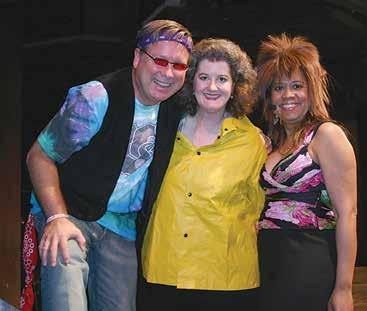
Bar None is a family. Cast and crew become close friends. The show is also where several cast members met their spouses. The Lamberts, Andersons, and Hofmeisters all share the experience of performing together and partially credit long hours of rehearsals (and cast parties) with their home life partners.
Since its inception, Bar None has raised in excess of $2.2 million for the Sarah T. Hughes Diversity Scholarship, now active at all three area law schools. The funds are raised through a combination of sponsorships and ticket sales. Bar None’s sponsors are typically law firms, DBA sections, or legal service vendors. Many individuals support the Scholarship by becoming Friends
of Bar None or Best Friends Forever of Bar None. All sponsors are featured in the show’s program, which is itself a comic work of art, replete with sponsors’ advertisements based on the show title. Early on, the production staff determined that a program which


provides song lyrics would be appreciated. The show’s title has never had anything to do with the show itself: the title merely provides a theme for sponsor ads in the program, and informs tee shirt and poster art. Bar None’s memorable titles include Motion



Impossible; Beauty and The Briefs; 101 Damn Motions; Bar Wars; Suing Miss Daisy; Mrs. Reasonable Doubtfire; Shred; and Lawquaman.

Until COVID-19 shut Bar None down in 2020, it had been performed every year since 1986. Two years later, the theater spaces on the SMU campus were being renovated, and an affordable, appropriate replacement space could not be located. While Bar None was dark in 2020, 2021, and 2022 it will return in June 2023 with Bar None XXXV, Where the Law Dads Sing!
For more information about Bar None, visit www.bar noneshow.com.
Martha Hardwick Hofmeister is a Founding Partner and business litigator at Shackelford, Bowen, McKinley & Norton in Dallas; she has directed Bar None since its inception in 1986. Tom Mighell is Chief Operating Officer at Contoural, Inc., and has served as Bar None’s producer for 28 years.






325 N St Paul Street, Suite 4450 Dallas, TX 75201 Phone: (214) 871-2730 | Fax: (214) 871-9339 firm@webbfamilylaw com @WebbFamilyLaw webbfamilylaw com R E P U T A T I O N. H O N E S T Y. R E S U L T S.
Lon M Loveless Kelvin Malone Natalie L Webb Brant
M Webb Gregory S Beane Jim Loveless
AREAS OF PRACTICE INCLUDE: *the
attorneys depicted above are board certified in family law by the texas board of legal specialization
History of the Arts District Pavilion
by Mark Shank and Nancy Thomas
In 1977, when visionary leaders of the Dallas Bar Association (DBA) seized a once-in-a-lifetime opportunity to purchase and restore a rundown mansion, most recently used as a funeral home, and restore it into its headquarters, the DBA had 3,000 members. By the year 2000, the DBA had around 7,500 members and projected 11,000 members by 2010. After 20+ years, the tripling of its membership caused the DBA to face a bit of a family crisis. Its home was too small; too small to house the many CLEs, section meetings, committee meetings, and other activities.
Beginning around 1999, DBA leadership, in consultation with former DBA presidents and other leaders, began to study the issue and concluded that if DBA members could not easily meet at its headquarters, they would go elsewhere. The concern was that what was then called the Belo Mansion would slowly cease to be the meeting place for its members, and the DBA’s relevance would slowly fade.
For these reasons, the DBA leadership decided in
2001 to build a new facility immediately behind the historic Mansion, incorporating elements of the Mansion and blending them tastefully into the surrounding Dallas Arts District.
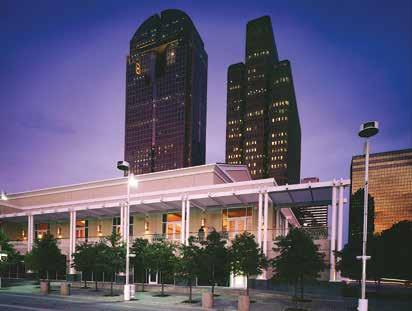
This was a complicated project. The DBA had to build a highly functional addition with adequate parking, meeting space, catering and kitchen capability, office space, and ballroom space to serve the needs of its members, as well as allow the Mansion and Pavilion to host weddings and events. Each aspect required many hours of volunteer time and the assistance of professionals. The initial steps included design of the Pavilion and a parking garage on a limited footprint, and fundraising.
Fundraising began in 2001. Through efforts of many, over a period of two years, the DBA was able to raise over $14 million dollars, the majority of which was pledged following 9/11. Law firms and members made up by far most of the contributions, although both of the largest gifts in size came from the Dallas Bar Foundation (DBF) and the Belo Foundation. Culinaire International, which did, and still does, manage the catering for the facility, also made a substantial gift. You can view all of the donors in the atrium at the Arts District Mansion.
The volunteers serving on the Construction Committee spent many hours overseeing the details associated with design and construction. The Committee met regularly with architects, construction managers, contractors, and consultants to review plans and specifications and contracts. The result was the most ambitious project the DBA (and perhaps any metropolitan bar association) has ever undertaken: 20,000 square feet of building space, 7,000 square feet of meeting space, and four levels of underground parking suitable for 250+ cars.
Once the plans were in place, it was time for construction to begin. Groundbreaking occurred on May 17, 2002. The project took about one year to complete.


The DBA needed a construction loan to fund the project while pledges were coming in; members again stepped up to make certain the DBA’s interests were protected in connection with the loan. Appointments, such as furniture, carpeting, tile, and paintings were selected. The grand opening of the Pavilion (entitled “Open House and Ribbon Cutting”) occurred on August 28, 2003 where all involved gathered to celebrate the event. Immediately thereafter, much-needed renovations began on the original Mansion.
The grand vision of the DBA leaders who first began
to plan the Pavilion finally became a reality. The result was an expansion of the DBA home in response to the family crisis. Immediately recognized as one of the most remarkable venues in Dallas, the Pavilion received first place in the Associated Builders and Contractors 2003 Excellence in Construction Competition. Since its opening, the Pavilion has served its intended purpose as a gathering place for its members. The DBA continues to remain strong as one of the best bar associations in the United States, supported by the singularly remarkable building it calls home.
Mark Shank , 2001 DBA President, is Senior Counsel at Diamond McCarthy, LLP. Nancy Thomas , Attorney at Law, served as 2002 DBA President. They can be reached at mark.shank@diamondmccarthy. com and natlaw@nathomas. com, respectively. Both were very instrumental in securing funds and establishing the Pavilion.
46 Dallas Bar Association | 150th Anniversary
TEXAS A&M UNIVERSITY SCHOOL OF LAW TEXAS A&M UNIVERSITY SCHOOL OF LAW

Joins in celebrating 150 years of the Dallas Bar Association’s service to the North Texas legal community and beyond, as Texas A&M Law celebrates its 10th year as part of the Dallas/Fort Worth legal landscape.
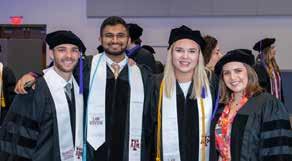


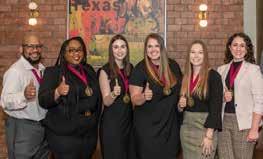
#10 National Post-Graduate Employment #2 Texas Law School (#46 Nationally) Bar Passage Rate In Texas #2
The DBA’s Oldest Tradition
by John Alan Goren
The oldest tradition of the Dallas Bar Association (DBA) began in its infancy. In his history of the Dallas legal profession, As Old as Dallas Itself, Darwin Payne wrote:
“On February 3, 1875, the Dallas Bar Association met during a court recess to pass a resolution of condolence for the death of H.H. Sneed, a fellow Bar member, beginning a tradition of memorials that continues to the present day. The lawyers resolved that each member of the Bar would wear ‘the usual badge of memory’ (presumably a black armband) for 30 days.”
According to Payne, the practice of appointing prominent bar members—often including a judge—to a special committee to write a memorial resolution began the following year.
In the first two decades of the 20th century, the Dallas Morning News reported on the honors that members of the Bar accorded their deceased brethren. On the morning of April 20, 1903, in the 44th District Court courtroom, a meeting of the DBA was called to order by Judge John L. Henry, who said in part:
“I am here to make to you the painful announcement that our brother—all that is mortal of him—James M. Hurt is no more.… A warm heart has ceased forever to beat. Humanity mourns an unfaltering friend.… A brother we elevated to the highest positions of judicial positions and who wore the ermine of his office and left it off with it as white as the snow peaks of the highest mountains.… Full of years, full of honors, he is gone.… He stands today, himself to be judged by the Great Judge of the Universe, and the plea he makes is: ‘The mercy I have shown others show to me.’ And I have reason to expect a favorable verdict.”
Following the “affecting tribute,” a motion carried to appoint a special committee of five to draft suitable resolutions and report back the following Saturday afternoon. Later in the meeting, the Association received the resolutions drawn up by a special committee of three regarding the April 7 death of LeRoy M. Calloway (age 36). The following day the newspaper published the full committee report and resolution containing a biography and tribute similar to what is written today:
“Resolved, by the Dallas Bar Association, that the above and foregoing report be adopted as the expression of our sincere sentiments concerning our deceased brother, and that said report, together with these resolutions, be spread at large upon the minutes of the association and the various courts of record sitting at Dallas, and that a copy thereof be transmitted to the family of our dear brother.”
After a short address supplementing the resolution, the resolution was adopted unanimously, and six individuals were appointed to present a copy of the resolutions with report to the local courts and the Court of Civil Appeals.
On March 13, 1904, the Dallas Morning News reported that on the previous afternoon the Bar Association met in the courtroom of the 14th District Court where the “report of the memorial committee on the recent death of Frank Reeves was read.… After telling the details of the death of Mr. Reeves and reciting some of the facts about his life,” the report of the Memorial Committee and resolutions were unanimously adopted:
“Resolved, that in the death of Frank Reeves, the bar of Dallas has lost one of its best and most ablest members, and the city of Dallas one of its best and most
respected citizens.
The next paragraph resolved an expression of sincere condolences to the family with instructions that a copy of the resolutions along with the report be sent to the family by the secretary of the meeting, that copies be delivered to the several courts of record in Dallas with the request to record them in the minutes, and that the daily newspapers be requested to publish them.” And the Dallas Morning News continued to report the Bar memorial resolutions until two months before the 1929 October Stock Market Crash.
In addition to expressing the members’ condolences and honoring the departed
word processing that produces resolutions on beautiful parchment-like paper with Old English fonts in red ink. Today’s resolutions look almost like medieval manuscripts. The families really appreciate them and often communicate how much they mean to them. To fulfill the task of public broadcast, the resolutions are posted on the Bar Association website for everyone to read. Recently the Memorial Committee has prepared as many as 50 resolutions in one year, and currently averages about 40 per year.
Gone are the days when the Bar Association can hold its meetings in a single courtroom. So are the days when
members with written memorial resolutions delivered to the bereaved families, it is clear the DBA early on made efforts to publicize the resolutions to the general public. As the Bar Association grew and became more organized, special committees gave way to the creation of the Memorial & History Committee as a permanent entity to draft the memorials. Today’s resolutions recite the facts of the lawyers’ lives and careers, but go further to convey the avocations, indeed the personalities of the deceased that made them endearing.
Times and technology have changed. In 2005, the process was revolutionized by going digital. Modern
the membership was homogeneous or when all the lawyers knew one another personally. Nor is it fashionable to use flowery language and extravagant praise. Nevertheless, through the efforts of a small group of dedicated lawyers serving on the Memorial & History Committee, the DBA continues to faithfully make sure that our colleagues in the law who have departed this world receive a fitting and beautiful tribute.
John Alan Goren is a solo practitioner and has served as the Chair of the Memorial & History Committee for many years. In 2022 he received the DBA’s Kim Askew Distinguished Service Award. He can be reached at appealnow@aol.com.
48 Dallas Bar Association | 150th Anniversary
Today’s resolutions recite the facts of the lawyers’ lives and careers, but go further to convey the avocations, indeed the personalities of the deceased that made them endearing.
2020 and 2021: The DBA Meets the Pandemic
by Robert Tobey and Aaron Tobin
The COVID-19 pandemic changed not only how the world worked, but also how we interacted with each other. Some of those changes moved us forward, some held us back, and others changed our lives in ways we could never have imagined. The DBA leaders at this time had a big job in front of them— how to continue serving our
legal community and our local Dallas community, and keep members engaged, informed, and safe. We have come a long way since March 2020 when the Arts District Mansion was closed for 15 months, to today, where the DBA hosts virtual, hybrid, and in-person events. Here are the perspectives from the two DBA Presidents who served our organization during the tumultuous years of 2020 and 2021.
Robert Tobey: Former DBA Presidents always advise the incoming President: “There is the year you plan for, and then the year you get—expect the unexpected!”


The 2020 Bar year began as planned with a wonderful

inaugural gala at the Westin Galleria followed by our Martin Luther King, Jr. Justice Award celebration and board retreat in Austin at the end of January. At the time, COVID19 was covered in the back pages of the newspaper as some virus causing problems in China. Little did we know that just weeks later, everything would change—and that COVID-19 would dominate our lives and practices for the next two years.
At the beginning of March, things were progressing as planned when storm clouds suddenly began to gather. Executive Director Alicia Hernandez and I watched the news reports closely and decided to close our
headquarters on March 12. We scheduled this first closure to end on March 31—and honestly believed that date was realistic. Thank goodness neither of us went to Las Vegas with that prediction!
After only a few days, we recognized that events were trending in the wrong direction. Our 2020 DBA Board Chair, Bill Mateja, came up with the idea of a COVID-19 Task Force to get resources, news of closings, courthouse developments, mental health resources, and CLE presentations focused on COVID to the membership. Thanks to the amazing work of the DBA staff, we converted the DBA—which for years had been anchored
Robert Tobey
by our amazing headquarters building—to a virtual Bar Association.
We discovered Zoom and those first CLE presentations in March had hundreds of views. Our presentation on pandemic procedures in the civil courts attracted 570 viewers. Through 2020, we provided our members with more than 200 virtual CLE presentations, including the Bench Bar Conference and the inaugural Criminal Law Bench Bar Conference. As an unexpected benefit, the DBA attracted many new members statewide who learned about the great DBA CLE programs offered at a very low price. Now, the weekly calendar shows virtual, in-person, and hybrid events to meet the needs of all our members.
The DBA responded to the crisis in the community with a program sponsored by the Probate Section to prepare wills and other estate-planning documents for first responders. Our members undertook numerous drives to benefit North Texas Food Bank and other local charities. And, in response to law students and young lawyers losing their job offers and clerkship opportunities, the DBA and Dallas Association of Young Lawyers formed the STEER Program to help those in need.
What I noticed about the pandemic is that every time it appeared we had a handle on things, some unforeseen development—from legal challenges to “shelterin-place” orders to disputes about whether lawyers and other workers were “essential”—would arise. Every day brought a new adventure.
Another momentous societal event occurred in late May with the killing of George Floyd and the social unrest that followed. Diversity, equity, inclusion, and belonging (DEIB) issues quickly became our primary focus and remained so for the rest of 2020. Initially, the DBA and Allied Bars formed the
Allied Dallas Bars Equality Task Force. The DBA Board approved the Taskforce’s “Call to Action,” and beginning on January 1, 2021, the Taskforce became the Allied Bars Equality Committee—it has done amazing things over the past two years.
In July, the Dallas LGBT Bar Association applied for and obtained an advisory seat on the Board. As of January 1, 2023, that Association’s President is a voting member.
A number of people have commented to me in 2020 and since: “What a year to be President of the DBA” or “Don’t you feel cheated?” But in an odd way, 2020—even with its many challenges— was everything I wanted and more. We worked with a blank slate in responding to the pandemic, and there was a great appetite to try new things and absolutely no fear of failure!
In many ways, I thought 2021 was the tougher year. Aaron will discuss the challenges he faced that year.
Aaron Tobin: To be sure, 2021 presented a myriad of challenges. But with these challenges came opportunities. Just six days into the new year, our nation was stunned by an act of insurrection unlike anything we had seen in our lifetimes. The nation’s capitol was besieged by the lawless. In an act that signified the resolve and unity that our profession displayed throughout the pandemic, the DBA—in a matter of days—organized and led a statewide virtual program enabling Texas lawyers to join together and renew our oaths and commitments to the Rule of Law and the Constitution.
This early event was a microcosm of a year that
would be filled with reminders of our membership’s determination to remain engaged in bettering the profession throughout the pandemic. During our first, and hopefully only, virtual inaugural, we announced that the DBA had come together in our most challenging time and raised a record $1.3 million dollars for equal access to justice.
Building on the momentum started under President Tobey in 2020, the Allied Bars Equality Committee formed and in its inaugural year started several key initiatives for diversity, equity, inclusion, and belonging—including the Privilege Walk, a Faith in Conversation series, and education initiatives in our schools. The well-attended Privilege Walk occurred late in the year and was one of our first in-person events as we started to emerge from the pandemic.
Our 2021 Martin Luther King, Jr. Justice award winner, the Honorable Tonya Parker, remained a leader on the DEIB front by not only leading the January virtual program to renew our oath, but also by leading a committee that organized a threepart virtual series on implicit bias during voir dire. The series featured some of our Bar’s best trial lawyers and had over 1,000 attendees.
Maybe the most important DEIB step the DBA took in 2021 was to rename our home, the Arts District Mansion. A committee led by Kim Askew and current DBA President Cheryl Camin Murray—and comprised of past DBA presidents, general members, and members of our Allied Bar organizations—spent months developing a name that signifies the community we are a part of and where we will build our future.
In 2021, the DBA conducted an initiative to honor women in our profession. All seven major DBA awards were given to women,
highlighted by the Honorable Barbara M.G. Lynn receiving the inaugural Jurist of the Year Award (which now bears her name).
Thanks to the commitment of the DBA We Lead program, the DBA started a monthly Living Legends Series in 2021 highlighting the accomplishments of 12 of our bar’s most accomplished lawyers and judges, who all just so happen to be women. Like many of our virtual series, past episodes of Living Legends remain available through the DBA’s YouTube page.
Toward the end of the year, the DBA implemented technology that we still utilize today for hybrid programming. Certain programs—like the Public Forum Committee’s series on the 20th Anniversary of 9/11, our awards ceremony, and the Annual Meeting—were in-person events with social distancing, and were also streamed in real time for our membership to attend remotely.
The legal profession was by no means immune from the many challenges that the global pandemic presented. But in true DBA fashion, our members rose to the challenge, remained engaged, and came out the other side of the pandemic an even better organization than before. The DBA rebranded, sustained programming, and started and honed virtual programming, providing flexibility that actually increased membership during the pandemic.
Robert and I are thankful to the DBA Board, Alicia, and the DBA staff, our strong Sections and Committees, and to all of membership for making the “pandemic years” a success for the DBA.
Robert Tobey, of Johnston Tobey Baruch, P.C., was DBA President in 2020, and can be reached at robert@jtlaw.com. Aaron Tobin, of Condon Tobin Sladek Thornton Nerenberg, was DBA President in 2021, and can be reached at atobin@condontobin.com.

50 Dallas Bar Association | 150th Anniversary
Aaron Tobin
Diversity Efforts & Accomplishments Over the DBA’s Century and a Half
by Josiah M. Daniel, III
The Sesquicentennial of the Dallas Bar Association (the DBA) is a perfect time for members to reflect on our history since the founding in 1873. The DBA was the state’s first Bar to incorporate, and one of the earliest organized Bars anywhere in the U.S.
From the beginning, the DBA has served the legal profession in Dallas, promoted good relations among lawyers, judges, and the community, and advanced the interests of lawyers. As told by Darwin Payne in his 1999 history, As Old as Dallas Itself: A History of the Lawyers of Dallas, the Dallas Bar Association, and the City They
Helped Build , the story is of a “sometimes bumpy but always forward-looking journey” toward professional goals that, in the fullness of time, have enlarged and summoned Dallas lawyers to action and change.
During the first five decades after its creation, the activities of the DBA were primarily social and practice-related, such as advocating more courts for the city. Even so, from the beginning, certain actions of the Association can be seen as modelling public spiritedness. An 1873 resolution, for instance, requested the district court to adjourn for several weeks to help the city avoid a yellow-fever epidemic.
During that first
half-century, the demographics of the lawyers of the city were, simply put, white and male. Diversity in terms of gender awaited the advent of women as lawyers. Hortense Sparks Ward of Houston was the first woman licensed to practice in Texas in 1910, and Lilian D. Aveilhe became the first woman attorney Dallas in 1914, followed by Hattie Leah Henenberg in 1916, and Frances Hexamer in 1918. Then, after almost 50 years without women, but relatively soon after the first licensing of women lawyers, the DBA in 1920 acquired its first female member, Helen Marion Viglini , followed by the remarkable Sarah T. Hughes four
years later.
After World War I, the DBA began to distinguish itself more and more with public-service activities. Free legal assistance to those who could not afford a lawyer began in 1924 as a clinic with Henenberg its staff attorney. By 1940 she was serving as the first woman on the Association’s Board. In the thirties, the DBA received national recognition for Saturday morning clinics, radio programs on legal topics, and campaigns against loan sharking.
But the DBA remained all white, and its acceptance of African American lawyers as members
continued on page 57
51 Dallas Bar Association | 150th Anniversary 817.733.6333 Congratulations totheDallasBarAssociationontheir150years ofservicetotheDallaslegalcommunity. 1873–2023 DALLAS•HOUSTON•ATLANTA WWW.THOMASRONEYLLC.COM
DBA

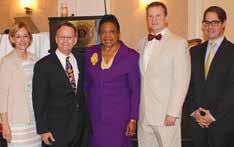


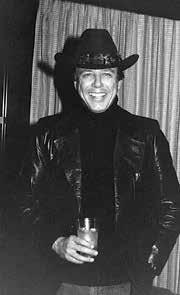

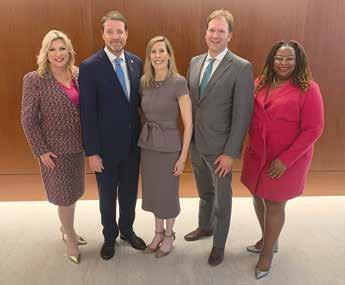
Through the Years
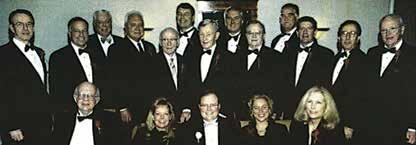
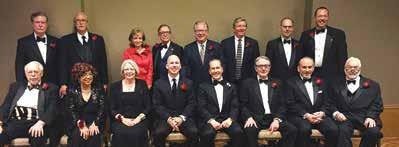


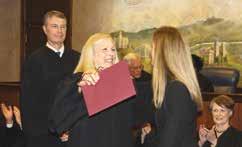
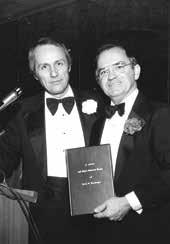
52 Dallas Bar Association | 150th Anniversary
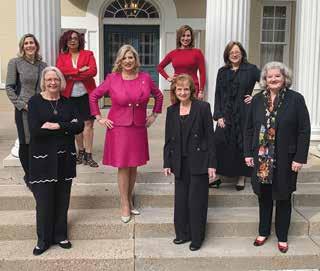
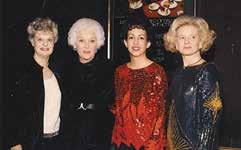
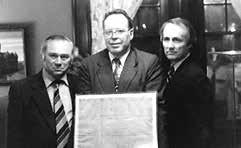



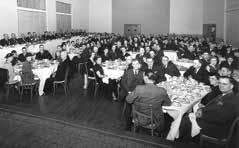




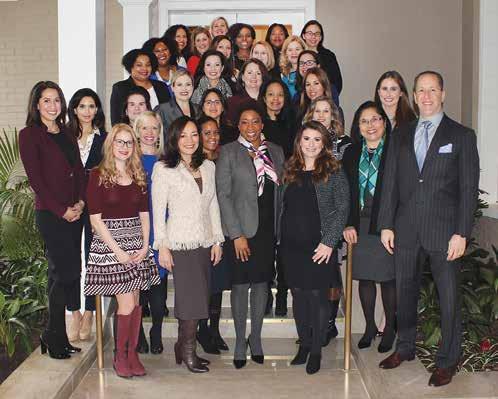
53 Dallas Bar Association | 150th Anniversary
The Story of Passman & Jones and the Zapruder Film of JFK
 by Jerry Alexander
What I am about to tell you is a story. Certainly not as historically accurate and astute as any of those written by real historians about those terrible days, but a good story, nonetheless. The story is about some lawyers who rendered extraordinarily good legal services under very trying circumstances. If it varies in some detail from some other account of these incidents, I apologize, but I must tell and remain true to this story because it is now a firm legend. It is the story of the two founders of my firm, Sam Passman and Shannon Jones, Jr., and their work from November 22 through November 25, 1963—four short days—in representing Abraham Zapruder, who took the Zapruder home movie of the assassination of President John F. Kennedy.
could remember events 40 years after they occurred. It was never told at the time because good lawyers in that day did not want publicity, especially when their client did not want it. It was a different time…
Let me set the scene for you. In 1963:
1. I was 17 years old and in high school.
4. Dallas had two newspapers, the Dallas Morning News, and the afternoon paper, the Dallas Times Herald.
5. There were 1,568 members of the Dallas Bar Association.
6. There were no law firms in Dallas that were not 100 percent based in Dallas. There were no “national
largest of these, Thompson & Knight, had 40 attorneys.
8. There were no personal computers or word processors—on the earth.
9. There were not even any Xerox machines or fax machines.
10. There were no cell phones.
11. The firm of Passman & Jones was 11 years old.
12. Sam Passman was 51 years old.
13. Shannon Jones was 37 years old.
14. Barefoot Sanders was the United States Attorney for the Northern District of Texas and was 38 years old.
15. Nationally and internationally, it was a little over one year after the Cuban Missile Crisis.
Abraham Zapruder and the Garment District
Abraham Zapruder was a client of Sam Passman’s and of the firm of Passman & Jones. He was involved in the fashion business in Dallas, which at the time was thriving. The offices of Passman & Jones also happened to be located in the Adolphus Tower at the time.
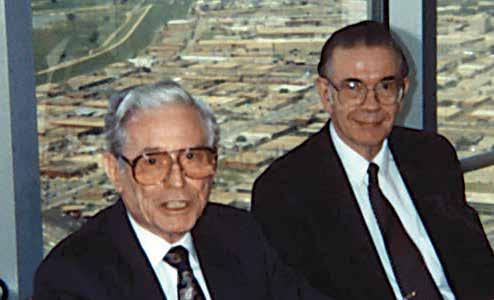
This is their story as recounted by them to me, starting 10 years after the events and revealed in snippets over lunch or cocktails, and then toward the end of Sam’s life—as best as he
2. The population of Dallas was 679,684 (1960).
3. Gasoline was 25 cents per gallon. A new Cadillac cost $5,026. A mansion (on Beverly Drive) in Highland Park cost $150,000.
law firms” anywhere in the United States.
7. The largest law firms in town were Strasburger Price, Thompson & Knight, and the Locke firm or Locke Purnell. The
Mr. Zapruder’s office was in a building on a corner that was close to this garment district, or part of it, at the corner of Elm Street and Houston Street. He rented the fifth and sixth floors of the Dal-Tex Building, which was directly across the street from the Texas School Book Depository, now the Sixth Floor Museum.
A President Doesn’t Come to Town Every Day
All Mr. Zapruder had to do to take his movie was to
54 Dallas Bar Association | 150th Anniversary
Sam Passman and Shannon Jones Jr.
walk across the street from his office, but he had forgotten the new movie camera that he had just received as a gift. The movie camera, at the time, was the top of the line and a very high-tech instrument: a home movie camera that would take movies in color with a very high degree of resolution, even though it was 8 mm. His secretary chided him that he needed to go home and get his camera and come back, since, “A President doesn’t come to town every day.” He did so, came back to the parade route, walked across the street from his office and positioned himself on a concrete pedestal with the Grassy Knoll to his back, the School Book Depository to his left and above him. He chose this position so he could take pictures of the Presidential motorcade as it made the hairpin turn off Houston Street and onto Elm Street to go under the underpass and out Stemmons Freeway to the luncheon that had been scheduled for the President at the Dallas Trade Mart. The President’s limousine would come directly at him, no more than 25 yards away.
Camera Rolling
Mr. Zapruder took his film of the assassination tragedy and somehow had the presence of mind to keep his camera rolling as the events unfolded before him. He was greatly shaken by what he had seen through the viewer of his movie camera—and was for the rest of his life. Mr. Zapruder was a very kind man, a family man, and was very disturbed by what he had seen. He realized its importance, as did others who immediately started trying to “help him” get the film developed.
There was a reporter from Channel 8 News, the Dallas Morning News affiliate; there was a Secret Service agent, and there was a Dallas police officer all
involved in chauffeuring Mr. Zapruder around to try to help get the film developed.
The Channel 8 reporter tried to get the film developed at Channel 8, but did not have the proper equipment. They finally figured out that they would have to go to the Eastman Kodak film lab near Love Field. At some point in time, either before Mr. Zapruder reached the film lab, or while he was at the film lab, he called his lawyer, Sam Passman, and brought him up to date on what had happened and what was going on. He told Mr. Passman the Secret Service wanted two prints of his film to use to help investigate what had happened, and that he had already readily agreed to that. Mr. Passman said that was, of course, the right thing to do.
Mr. Passman advised Mr. Zapruder to start keeping track of everyone who touched or handled the film. Shannon Jones, Jr., who knew about copyright law and protecting music, books, films—artistic intellectual property from his own artistic pursuits—was also involved. He reinforced the importance of “chain of custody” type documentation for both evidentiary purposes for any investigation and for copyright purposes.
In connection with the development of the Zapruder film, the first of several documents was
created the afternoon of the assassination.
Even though Eastman Kodak could develop the film, no one at the lab could make a print, but the technicians who developed the film had seen the film in a viewer. It was very high quality and sharply focused. What it showed was troubling and shocking. Mr. Zapruder was not allowed in the dark room, so he did not see the film through the viewer, but the technicians confirmed he had captured on film what he saw through the camera’s sight as he was filming—the assassination of President John F. Kennedy.
Since the Kodak labs could not make a print from the negative, the group went to Jamieson Labs in downtown Dallas in order to have prints made. Mr. Passman saw to it that Jamison Labs signed the same type of agreement as had the Kodak labs.
Three prints were made: two for the Secret Service (one of which was for the FBI)—as promised—a negative (which was really a “positive”), and a print for Mr.
Mr. Passman was concerned because there were rumors that martial law might be declared in Dallas. Mr. Passman wanted to be sure that martial law would not be declared and the Constitution would not be suspended so that individuals’ property rights, such as Mr. Zapruder’s rights in this film, would still be recognized, especially since Mr. Zapruder had given prints to the Secret Service and FBI. Barefoot Sanders assured Sam no such thing would occur, “not on his watch.”
The next day, Saturday morning, November 23, 1963, the first screening of the film occurred. It occurred in Passman & Jones’ office on the conference room wall in the Adolphus Tower. Both Sam Passman and Shannon Jones attended that screening, the Secret Service was represented, as was the FBI and, of course, Mr. Zapruder was there also.
By Saturday noon, many different people had been contacting Mr. Zapruder about purchasing the film, or suing him to get the film, or
Zapruder. Firm legend has it that Mr. Zapruder gave the print and the negative to the Passman & Jones law firm for safe keeping in its safety deposit box for Friday night.
Late that Friday evening, Sam Passman called his friend, Barefoot Sanders, who was the U.S. Attorney for the Northern District of Texas at the time, and they discussed the events of the day. Mr. Passman told U.S. Attorney Sanders what Mr. Zapruder had, and that
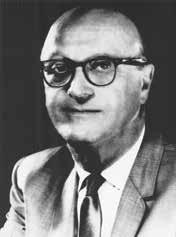
just taking the film from him, etc. Literally hounding him. It was a frenzy. A second showing of the film was arranged. Included among them were Richard Stolley for Time Life Inc. and Dan Rather for CBS. Most of these other media representatives were from the East Coast in the media center around New York City. Mr. Zapruder did not like any of these people, referring to them as “pushy.”
A man named Richard Stolley from Time Life was
55 Dallas Bar Association | 150th Anniversary
Abraham Zapruder
He realized its importance, as did others who immediately started trying to “help him” get the film developed.
based in Los Angeles, and had called Mr. Zapruder that Friday night and Mr. Zapruder liked him. He was not “pushy” and listened to Mr. Zapruder’s concerns about the film and its publication. Mr. Stolley flew to Dallas and arrived on Saturday afternoon in time to see the film.
After the film was shown, Dan Rather recently said that he told “Mr. Zapruder’s lawyer” that he had an ethical duty to go report what he just saw in the film, but wanted an assurance that nothing would be done with regard to selling the film until he got back.
Lawyer, Counselor, and Friend
Sam Passman was also listening to Mr. Zapruder’s concerns. Mr. Zapruder was torn—he did not want to profit from the tragedy, and felt horrible about what had happened. He was upset by the film and looked at it as a burden. He was afraid that if he sold the film to a publisher, it would be exploited in poor taste, and give him and his family a bad name.
Sam Passman advised Mr. Zapruder that he had done a great public service by giving two prints of his film to the Secret Service and by cooperating at every level of law enforcement. Mr. Passman advised that what Mr. Zapruder needed to do was sell what was now the most valuable home movie that has ever been made for his family’s future financial security. The value of the film was at its height at this moment in time.
Mr. Passman said there are contract terms he could write to control the film’s use and that Mr. Passman and Mr. Zapruder could come up with some way to put a substantial portion of the money paid for the film toward good works.
Mr. Zapruder asked if he received any money, could he give some to Jackie Kennedy and her children. Sam said they would be well provided for and then asked Mr.
Zapruder what he thought about giving money to Officer Tippet’s family. Officer Tippet had been killed the day before also by Oswald. Mr. Zapruder was very concerned about their well-being.
Sam Passman said he would call his friend Felix McKnight, the editor of the Dallas Times Herald, and ask him if a fund was going to be established for Officer Tippet’s family, and if so, how Mr. McKnight thought Mr. Zapruder, after he gave a contribution to the fund, would be perceived. Mr. McKnight said he would start a fund and advertise it in his paper and tell everyone of Mr. Zapruder’s generosity. Mr. McKnight said he thought that was a very generous thing to do and it would be well received by the community.
Agreement Reached
At a meeting on Monday, November 25, 1963, which occurred in the Passman & Jones offices in the Adolphus Tower, an agreement was reached and another document was actually prepared and signed that day. Mr. Stolley typed the agreement, since it was confidential and he was concerned that if a secretary typed it, she would be hounded by the media to find out what it said.
The Agreement:
• Sold the movie and all still photograph rights to Time Life Inc. for a substantial sum of money— $150,000—which is reported to have a value of over $1 million today.
• The first $25,000 payment went to the Tippet family trust—a sum equivalent to around $200,000 today.
• Mr. Passman and Mr. Jones had talked about how to retain an interest in the film for Mr. Zapruder. Sam suggested retaining the copyright, but Shannon’s experience in the music business had taught him many
valuable lessons. Shannon explained that whoever had the copyright would have to defend and enforce it.
• So, a 50 percent royalty interest was retained in the film for Mr. Zapruder. Time Life was conveyed the copyright with the duty to defend and enforce it. Now, Time Life had the obligation under the contract and copyright to protect the film and the copyright and to give 50 percent of any money it ever made off the film to Mr. Zapruder. In other words, Time Life Magazine could publish stills from the film this first time royalty free, but Mr. Zapruder still owned a 50 percent profit interest in the form of a royalty with Time Life owning the other 50 percent of any showing of the movie itself or subsequent “stills” made therefrom.
• The contract also contained a clause that began: “Time Life, Inc. further agrees that it will present said film to the public in a manner consonant with good taste and dignity.”
Sam Passman had successfully addressed Mr. Zapruder’s concern about how the film would be shown in the future. Under that kind of time pressure, under those tumultuous circumstances, with a client being offered that kind of money, Mr. Passman and Mr. Jones both took time to slow down and take the long view and protect the future. They wrote what turned out to be a perfect agreement for the firm’s client, which protected his interests and accomplished his civic goals.
Fast forward to 1998, 23 years later; literally by Act of Congress, all original evidence from the Warren Commission and the government files and all such items in private hands became the property of the National Archives
and Records Administration. The Zapruder film was, in effect, taken by eminent domain. The statute provided that an arbitration panel of five attorneys from the Justice Department would decide the compensation. They awarded $16 million to the family.
This occurred because two lawyers in Dallas had the knowledge, skill, and fortitude to protect a client’s property in very extreme circumstances. It also occurred because Sam Passman acted as friend and counselor to Mr. Zapruder in convincing him to sell the film at the peak of its value and showing him how to do so to accomplish Mr. Zapruder’s personal goal of assuring that a large portion of the money went to ease the pain for some immediate victims of the tragedy.
All after protecting it from confiscation in the first place. These were real lawyers who knew the law, could negotiate, close, and dictate documents without drafts that were practically perfect.
Great lawyering under tremendous pressure in a compressed time frame, all accomplished with typewriters, carbon paper, and landline telephones. Plus, basically doing the right thing all the way around, including not seeking publicity for their good work. This story was nowhere in the media at the time. How many of us could do that today? Most firms would have taken longer than four days to run their conflicts check.
What Sam and Shannon did was zealously look after the interests of their client in the face of tremendous pressure, but also did so in a highly intelligent and very astute manner.
They make me proud to be called a lawyer.
Jerry Alexander is an Attorney at Passman & Jones, P.C. He served as 2016 DBA President. He can be reached at alexanderj @passmanjones.com.
56 Dallas Bar Association | 150th Anniversary
Diversity Efforts & Accomplishments
continued from page 51
unfortunately proceeded quite slowly.
The first Black lawyer in Dallas, Samuel H. Scott , arrived from Memphis in 1881, but soon moved. The next year J.H. Williams came from Mineola to seek admission to the Bar. Clearly qualified, he was denied passage because of race and was lost to history. But in 2020, thanks to research by Hon. Carolyn Wright and John Browning , the DBA recognized the injustice and took prompt action to procure Williams’s posthumous admission by the Texas Supreme Court.
The second Black attorney in the city was Joseph E. Wiley , arriving in 1885 from Chicago. Other African American lawyers followed after receiving legal education necessarily in other states, but their numbers grew slowly. In 1930, the entire state had only 20 lawyers of color. Significant figures in Dallas were J.L. Turner, Sr ., and Ammon Scott Wells , who distinguished themselves in the early 20th century.
After World War II, Black lawyers of Dallas joined in the legal phase of the civil rights movement. In Dallas in 1952, on the eve of Brown v. Board of Education , only 12 Dallas attorneys were African American, but they included formidable practitioners such as William J. Durham , C.B. Bunkley, Jr ., Fred Finch, Jr., J.L. Turner, Jr. , D.B. Mason , and L.A. Bedford, Jr. , all of whom participated in the movement.
That year they highlighted the issue by establishing their own bar group, naming it after J.L. Turner, Sr.; and Durham
and Bunkley applied to the DBA, but no action was taken. Finally in 1963 and 1964 the DBA admitted Finch as its first African American member, and Bedford as its second.
Hispanic lawyers encountered discrimination also in the pre- Brown era, but they managed to gain acceptance in the DBA more easily and earlier. The first Hispanic member of the DBA was Felix H. Garcia , admitted in 1931.
In the past half century, the DBA has moved purposely to become a more diverse organization. Women have repeatedly risen to the highest leadership role with Harriet Miers the first female president in 1985; Rhonda Hunter the Association’s first African American woman as president in 2004; and Laura Benitez Geisler its first Hispanic president in 2019. Ten of the last 25 presidents have been women.
As a more diverse group, the DBA in the 1970s through 1990s continued “to expand and broaden its reach in a multitude of activities,” as Payne put it in his history. By the turn of the 21 st century, the DBA had received repeated recognitions for its leadership role among Texas’s local bars.
Payne’s book remains a trusted account of our Association’s history up to the end of the 1990s, but one thing he perhaps overstated is that, at the brink of the new century, “[n]either race nor gender appeared to be the significant issue it once had been.” Rather, as the events most all of us have lived through, around the nation and here in Texas, in the past two decades and to the present time, have taught
Bibliography and Suggested Readings:
• Darwin Payne, As Old as Dallas Itself: A History of the Lawyers of Dallas, the Dallas Bar Association, and the City They Helped Build (1999)
• Darwin Payne, Quest for Justice: Louis A. Bedford Jr and the Struggle for Equal Rights in Texas (2009)
• Darwin Payne, Indomitable Sarah: The Life of Judge Sarah T. Hughes (2002)
• Betty Trapp Chapman, Rough Road to Justice: The Journey of Women Lawyers in Texas (2008)
• John G. Browning & Chief Justice Carolyn Wright, We Stood on Their Shoulders: The First African American Lawyers in Texas, 59 Howard L.J. 74 (2015)
• In re Application for Posthumous Bar Admission of J.H. Williams, Misc. Dkt. No. 20-9121, Tex. Sup. Ct., Oct. 19, 2020
us, more is required.
As early as 1994, the DBA fostered a statement of goals for increasing minority hiring, retention, and promotion that large firms of the city endorsed, and the DBA’s 1998 Statement of Long-Range Planning Goals endorsed inclusiveness. In 2008, the “A Bar for All” Committee issued a strong report with analysis, goals, and recommended steps, and two years later the Vision 2020 Commission expanded those recommendations.
The presidency of Paul Stafford , who in 2012 became the first African American male to so serve, accelerated the work of the Association in the 21st century to encourage and achieve the full participation in Bar activities of all individuals engaged in the practice of law, as well as to foster the entry into our profession of men and women from underrepresented groups. That year the Dallas Diversity Task Force issued its Diversity Report measuring the success of the law
firms’ diversity efforts, and a Diversity Summit recommended best practices.
After a fresh diversity survey report in 2020, and in the wake of the George Floyd tragedy, the DBA and its Allied Bar Associations created the Dallas Bars’ Allied Equality Task Force, which calls upon Dallas lawyers to embrace diversity, to recognize all identities, and to challenge and overcome biases. The Task Force issued a resolution reaffirming commitment to social racial justice, which through its call to action, strategic objectives, collaborative efforts, and suggested programming, will ensure progressive action and accountability.
As of 2021, the Task Force is now the Allied Bars Equality Committee, whose mission is to assist in facilitating that powerful intersection of deeds and words—for the betterment of our Bar, our community, and our nation.
Josiah M. Daniel , III, is a Retired Partner, Vinson & Elkins. He can be reached at josiahmdaniel3@ gmail.com.
57 Dallas Bar Association | 150th Anniversary
A Visit to Lee Harvey Oswald
by Jessica D. Smith
When we reflect on the 1960s, we often think of the words volatility, radical, freelove, and civil rights. Notable events during that time included everything from the Equal Pay Act to the Civil Rights Act to the Voting Rights Act, as well as a heightened focus on the war in Vietnam and the hippies of Woodstock. But unfortunately, one event in 1963 would change the course of our city, our country, and the world—the assassination of President John F. Kennedy in Dallas on November 22, 1963.
The Dallas Bar Association (DBA) was involved in many aspects of events that unfolded in this era. H. Louis Nichols was President of the DBA in 1963. As we have often heard DBA presidents say, “there is the year that you plan, and the year that you get.” I doubt 1963 was the year Mr. Nichols envisioned. While he was instrumental in convincing the Board to admit its first African American members, and move the DBA forward in many ways, it was also, unfortunately, during his DBA presidency that President Kennedy was assassinated in Dallas.
On that fateful day, members of the Bar were meeting at the Adolphus for their regular luncheon and legal clinic; crowded around the windows waiting for the motorcade to pass by, they were out of hearing range when the rifle shots echoed in Dealey Plaza.
Mr. Nichols soon became more involved than he probably ever imagined. Shortly after Lee Harvey Oswald’s arrest, Nichols began receiving numerous calls from lawyers who were concerned about media reports that Oswald could not get legal representation. Mr. Nichols
spoke with both District Attorney Henry Wade and Police Captain Glen King— no one could provide him with a definitive answer. So, on Saturday evening, DBA President Nichols visited Oswald’s City Hall jail cell to inquire if the accused assassin wanted his, or the DBA’s, assistance in acquiring an attorney. Oswald declined local legal services, saying that he had already made his legal request known to police officials. Nichols then left the jail cell, feeling that he had done his duty as President of the Dallas Bar Association. Upon leaving the building, he found himself immediately surrounded by journalists and television cameramen. Nichols reported to them what had transpired in his brief meeting with Oswald. You can watch the interview at youtube.com/ watch?v=KDViJgIEurI.
While the world looked on with shock and grief as President Kennedy was pronounced deceased, the remainder of the presidential party headed to the safety of Air Force One. Vice President Lyndon B. Johnson immediately got on the phone and declared “Get Sarah Hughes,” referring to Judge Sarah T. Hughes, who became the state’s first female District Judge in 1935. Judge Hughes was not in her office at the time, as she had been on her way to view the motorcade; so LBJ called several Dallas lawyers he knew, and Judge Hughes was soon located. She reported to Air Force One as fast as possible, and shortly after 2:30 p.m. issued the Oath of Office to President Lyndon B. Johnson. The plane immediately departed to Washington, D.C.
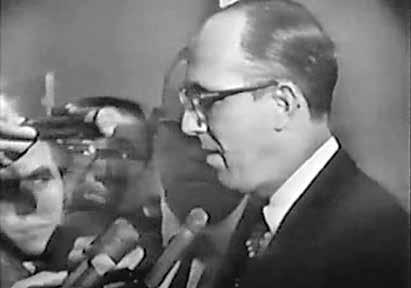
As the nation mourned, more chaos ensued that weekend, as the city reacted to local nightclub owner
Jack Ruby shooting Oswald while in the custody of Dallas Police. The wrath of the nation turned from the alleged assassin to the Dallas Police Department and the
verdict.
More stories could be told about the DBA, its members, and local attorneys during this time, including that of Paul Carrington,
City of Dallas. The arrest and trial of Jack Ruby quickly garnered a lot of attention. With enormous pressure for information about the trial, the possibility arose that it could be televised—which had never before been done.
Those events led the world, and the DBA Board of Directors, to discuss the potential impact on the legal profession should the trial be televised. The DBA Board of Directors unanimously believed that it should not be televised and forwarded its resolution to Judge Joe Brown, who would be presiding over the trial. The Board resolved that broadcasting or televising any proceedings would be “detrimental to the due and orderly administration of justice and the maintenance of the dignity and decorum of such proceedings.” Judge Brown agreed and announced that there would be no televising the trial itself; only the announcement of the jury’s
Past President of the DBA and member of the ABA House of Delegates, who urged the State Bar of Texas to explore the possibilities for avoiding future excesses of publicity on the part of attorneys, officers, courts, on news media and those connected with them, whenever the publicity relates to a crime of the alleged criminal.
DBA members are intertwined in history—not only that of the Dallas Bar Association, but of our city, state, country, and more. Our members strive to promote justice in all forms. We will continue to move forward and pursue good works.
Please note that several parts of this article are referenced in Darwin Payne’s book As Old As Dallas Itself, which can be found at your local library.
58 Dallas Bar Association | 150th Anniversary
Jessica D. Smith is Communications/Media Director at the Dallas Bar Association. She can be reached at jsmith@dallasbar.org.
DBA President H. Louis Nichols speaks to the media.
DVAP Celebrates 40 Years of Pro Bono
by Michelle Alden
The idea behind the Dallas Volunteer Attorney Program (DVAP) started with Judge Merrill Hartman in 1982. Judge Hartman came up with the idea of showing up to the Bethlehem Center, a low-income daycare center in South Dallas, on Tuesday evenings to visit with anyone who needed legal advice. In November 1982, Judge Hartman, Will Pryor, Brenda Garrett, and Chris ReedBrown began planning the logistics of the South Dallas Legal Clinic. The first clinic was held at the Bethlehem Center in early 1983, with three lawyers in attendance. After a few months, on Law Day in May 1983, the clinic was relocated to the MLK Center due to the growing number of applicants. That summer, the first pro bono training program was held at the Dallas Bar Association to recruit more lawyers to assist at the clinic.
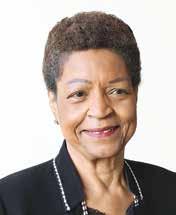
Bar Association and Legal Aid of NorthWest Texas, when the two entities merged their previously separate pro bono programs. By the year 2000, the exponential growth of DVAP allowed the program to add more components, including the Mediation Panel, Conflict of Interest Panel, monthly Prove-Up Clinics, a Pro Se Assisted Divorce Program, the Children’s Justice Project, and more continuing legal education seminars and
many of whom traveled substantial distances to apply for legal assistance. In 2019, VA Deputy Chief Counsel Jeffrey Reeder presented a Certificate of Appreciation to DVAP, celebrating the 10th anniversary of the Veterans Clinic.
collaborated to produce an online application portal. On the day of the clinic, volunteer attorneys call applicants to interview them about their legal issues. Several volunteer attorneys prefer the flexibility of the Virtual Clinic, and some firms have even recruited out-of-state attorneys to pitch in with the interviews. The Virtual Clinics have remained larger than most In-Person Clinics. In addition to the Virtual Clinics, DVAP switched to webinars for CLE programs, which has led to increased attendance. As a result of the popularity of these programs, DVAP continues to hold monthly CLE webinars and weekly virtual clinics every Thursday.
By October 1983, new legal clinics were started in East Dallas and West Dallas. That December, the first Pro Bono Awards program was held and was very well-attended. The State Bar of Texas filmed and produced a video in 1985 about the Dallas legal clinics and pro bono program, which was used for recruiting lawyers and judges. In 1992, the Dallas Bar Association officially established its pro bono program under the name Pro Bono Projects, Inc.
In 1997, DVAP in its current form was created as a joint program of the Dallas
training opportunities for volunteer attorneys. DVAP grew to hold 11 legal clinics each month and place more than 1,000 cases with volunteer attorneys for full representation annually.
In December 2009, DVAP launched a Veterans Clinic at the VA Hospital in South Dallas. Volunteer attorneys were instrumental in marshaling volunteers to assist in the early days of the clinic. Not only was the Veterans Clinic an extremely popular volunteer opportunity, but it grew to become the largest DVAP clinic, often with 60-70 veteran applicants each month,
From time to time, funding for legal services invariably faces cuts, whether on a federal level, state level, or both. As a response to this reality, 2018 DBA President Michael Hurst and DVAP established the Justice Forever Fund, an endowment to support DVAP, in 2017. The endowment strives to create and maintain long-term funding to secure legal aid to low-income people in Dallas should traditional funding methods shrink or cease to exist. The endowment has grown to over $1.8 million so far to safeguard the future of DVAP.

Along with the rest of the world, DVAP experienced significant upheaval in 2020 with the arrival of the COVID-19 pandemic. In March, the DVAP staff switched to remote work, and all DVAP clinics were canceled. The DVAP team got to work on figuring out how to continue to provide pro bono legal services in a virtual world. With the able assistance of Fawaz Bham and his team at Hunton Andrews Kurth, the DVAP Virtual Clinics were born. DVAP and Hunton
Following the pandemic, DVAP has continued to grow and evolve, and this year celebrates 40 years of pro bono to assist the low-income residents of Dallas County. DVAP currently holds a mix of weekly Virtual Clinics, along with several In-Person Clinics in South Dallas, West Dallas, and at the VA Hospital. DVAP’s specialized programming has expanded to include Small Business Clinics, Driver’s License Restoration Clinics, and Wills Clinics. In addition, DVAP provides monthly webinar training and in-person CLE training at law firms. DVAP prides itself on offering a wide variety of volunteer opportunities and training to include something for everyone—billable hours for your soul for all. Many thanks to all the volunteer attorneys, judges, paralegals, court clerks, mediators, court reporters, law students, and interns who contribute to DVAP’s continued success!
59 Dallas Bar Association | 150th Anniversary
Michelle Alden is the Director of the Dallas Volunteer Attorney Program. She can be reached at aldenm@lanwt.org.
Will Pryor
Chris Reed-Brown
By the year 2000, the exponential growth of DVAP allowed the program to add more components.
A Haunted Mansion?
by Andrew M. Jones
Quite possibly more than anyone else, living or dead, Juan Zermeno knows very well the iconic Dallas Mansion on Ross Avenue that the DBA calls home. The Arts District Mansion’s care has been Juan’s life’s work for 40+ years.
Juan has seen a lot in those years. The strange and unexplained are among them, with the ghost of A.H. Belo featuring prominently. Juan had heard rumors of ghosts in the Mansion shortly after starting his new job. He remembers vividly his own first strange occurrence on December 16, 1982. That night, he was working alone very late hanging Christmas lights. Suddenly, he heard the dishwasher running, so he ran to the kitchen to see what was going on. No one was in the kitchen! “It made the hair on my neck stand up, and I ran outside.” After a brief period out in the cold, he summoned the courage to return to complete his task, but only after turning up his radio as loud as it would go.
In 1984, Juan was vacuuming the floors, alone in the building. While vacuuming in the elevator, someone or something pushed the elevator button, causing the elevator to suddenly drop. The vacuum cord quickly rose between Juan’s legs, creating a potentially very dangerous situation. The cord then snapped, and the elevator immediately returned to its former position. At times strange things still occur, including lights turning on, doors opening, chandeliers moving, and, perhaps strangest of all, ceiling lightbulbs loosening—all without known cause.
Not all encounters with the ghosts can be described as harmless. At a social

event one late evening in 2014, two security guards saw a young woman, apart from the crowd, walking in a long white dress near the Mansion’s front door and windows. When the guards went to approach the woman, Juan recounts, one of them reported being confronted and poked in the eyes. Juan saw that the guard’s eyes were swollen and red. Efforts to locate the woman were unsuccessful. Juan himself has also seen a woman in a white dress—a woman with “platinum blonde hair”— walking by the Culinaire office. Other DBA staff members also report seeing a woman in a white dress in the upper floor windows of the Mansion while driving by on Ross Avenue at night.
Numerous additional DBA staff members report their own incidents and encounters over the years. Perhaps most hair-raising is an incident that occurred in the basement room in the southern-most corner of the Mansion. Formerly known as the embalming room, this windowless room was used by the Loudermilk-Sparkman Funeral Home for 50 years for its funeral preparation work. The room, lined with red brick walls, is now mostly packed with dusty cardboard boxes.
Cherie Harris, Executive Director of the Dallas Association of Young Lawyers, recalled an “office cleanup day” years ago that brought her and several other staff members to the room. During the cleanup activities there, former staff member Teddi Rivas suddenly
exclaimed to another staff member, Judy Yarbro, that “a black shadow just walked right through you!” Harris recalled that Yarbro was “freaked out” for the rest of that day.
The Mansion was leased to the Loudermilk-Sparkman Funeral Home from 1926 to 1976. John Blankenship, 81, funeral director and mortician, worked at the Mansion location for almost a decade beginning in 1964.
to occupy the same spaces that caskets had once occupied decades earlier. Among those placed in repose at the Mansion was the notorious Clyde Barrow, of Bonnie and Clyde fame, whose casket attracted thousands of visitors in 1934.
“I worked every third night in that mortuary,” he said. About 700 embalmings were handled in the Mansion each year, according to Blankenship, or some 35,000 over the entire 50-year period. “Some nights, we would have four or five cases,” he noted.
Blankenship, who retired from his long career several months ago, did not report seeing any ghosts during his time working at the Mansion. However, he did observe that, in later years, when the Mansion began hosting events in the space that had served as the mortuary chapel, tables came
Events Director Rhonda Thornton has worked for the DBA since 2001, from an office in the basement. A year or two into her employment, she was working at her desk late one evening. Out of the corner of her eye, she saw a dark figure she believes was a man, standing in the hallway near her desk, waving his arm up and down. The figure quickly disappeared. Thornton was unharmed, but she was frightened and immediately left for home. Thornton said she does not really believe in ghosts. “But I entertain ideas,” she admitted, “and I’ve come around a little.”
On another occasion, Thornton was in a room on the second floor typing. She was wearing a dress and a very cold draft of air passed
60 Dallas Bar Association | 150th Anniversary
by her legs from side to side. “It was extremely cold air,” she noted. She was alone in the office, and again, she immediately left.
Harris reported a strange incident that occurred one afternoon in 2002 while she worked from her basement office desk. “Cherie!,” a low voice whispered to her. It was not a normal voice. She looked up, and around, and she saw nothing. “Someone said my name,” she said, with firm conviction. “No question.” The whisper terrified her. She got up and left. On another occasion, Harris was working in her office well past midnight when she heard noisy jostling at the printer in her office. She suspected she was being told to go home, and she promptly complied.
Harris believes that the incidents in the basement seem to have subsided once construction of the Pavilion was completed about 2005. This view is shared by DBA Controller Sherri Evans, who said she believes that the ghosts are happier now that things are quieter at the Mansion.
Evans believes that the base of the stairway leading to the upstairs rooms is the most haunted spot of the Mansion. Near the base of the stairway, she explained, is a fireplace that had been covered by a wall. The fireplace was discovered only when the DBA acquired the Mansion in 1977 and commenced renovations.
Evans and retired former DBA Executive Director Cathy Maher described the revelations of a woman who visited the Mansion years ago as part of an event. The woman claimed to be able to see the dead. Touring the Mansion with a group of people, she reported seeing a woman playing bridge in an upstairs room that opens to a balcony situated over the Mansion’s front door. When the balcony doors were opened, the
woman’s cards were blown about by the wind, upsetting her. The guests promptly shut the windows to the balcony and went back downstairs. There, at the sitting area near the fireplace, the visiting woman “saw ‘him’,” Evans said, “and ‘he’ was not happy.” Evans believes that the man was A.H. Belo, and he was upset that the guests had disrupted his wife Nettie’s card playing.
Evans reported hearing loud music while working alone at the Mansion one Sunday afternoon. She went to the kitchen where the noise was, but no one was there. Try as she might, she could not turn off the music. The radio would not turn off. She reported the situation to the kitchen chef the next day, asking him why he had not turned off his radio and the kitchen lights. The logs later confirmed that no one else had been in the building that day.
Maher reported a frightful instance in which one day, without apparent reason, one of her legs began to bleed from a cut on her shin while she was working near the Gardere room. At the time, Maher was wearing hose, and despite the bleeding, the hose was not torn or damaged in any way. The cut was about a half an inch long. On another occasion, Maher reported that a colleague knocked on her door. Maher never locked her door, which required the use of a deadbolt lock. But somehow, the door had become locked, and she had to undo the lock in order to admit her colleague.
Belo. A woman in a white dress. 35,000 embalmed souls. The Mansion has an interesting haunted history. Do you believe in ghosts?
Andrew M. Jones is Senior Director, Legal Counsel for Epsilon Data Management, LLC (Publicis Groupe) and a past Co-Chair of the DBA Publications Committee. He can be reached at andrew. jones@lionresources.com.
Sarah T. Hughes Scholarship
continued from page 38
as a talent pipeline with the expectation that you not forget to turn back around and help the next one in line.
Vazquez targets hubris as the enemy and defines the diversity scholarship as a chance to show up, use the grit that has gotten you this far, and take advantage of the opportunity and support to be one’s best. His main message to new Hughes scholars is “we believe in you.”
Recent UNT Dallas College of Law graduate and new lawyer Semaj Garrett echoes the messaging Vazquez shares. Garrett is a mother of three who describes her Hughes scholarship as life-defining. Prior to receiving the scholarship in her first year of law school, Garrett was working full time, attending night school, and caring for her family. The funds freed up her mental capacity to focus on academics. But, as she explains, “it was not just a scholarship.”
Being a Hughes Scholar came with a message to Garrett that she matters, is accepted, and has a place in our legal community. She emphasizes that not everyone feels that. While determination kept her on a courageous journey, the sheer impact of the opportunities opened to her as a lawyer have propelled Garrett into roles where she can begin giving back.
Rey Rodriguez was one of the early Hughes Scholars over 30 years ago and he too surmises he probably would not be a lawyer or in Dallas but for the scholarship. Rodriguez grew up in El Paso with self-made parents who endured multiple challenges to become teachers. He had no choice but to be a good student, which paid off with high scores and scholarship opportunities.
Rodriguez led his SMU law school class as the Valedictorian and scored the
highest on the Texas Bar exam. Despite these talents, Rodriguez insists he likely would have stayed and taught in El Paso if not for the scholarship. He echoes the sentiments of Vazquez and Garrett—the immense access and encouragement he received put him on the path to give back—and he has done so financially, as a mentor, and as a leader in every capacity with the Foundation.
These experiences and stories illustrate the significance of the Hughes scholarship as a gamechanger. As described by Victoria Nguyen, a 2019 SMU law graduate, the recipients of the scholarship “don’t just lack financial resources.” Nguyen emphasizes that, like her, the students frequently lack access to intergenerational social capital. She has made it her mission, based on her experience and in gratitude to the Foundation, to perpetuate cycles of success by continuing to be a resource and mentor for future Scholars.
When Larry Newman proposed a diversity scholarship in 1981, he never imagined the impact. Hughes Scholars have become leaders in all aspects of the Dallas community and have made our Bar more representative. They serve in all parts of the legal profession, including the judiciary. Federal Magistrate Judge Irma Ramirez, an early Hughes Scholar, is one of those leaders the Foundation credits.
These heroes, and more who are too many to recount here, have helped change the course of history and the face of the Dallas legal community. No clearer example exists that we all stand on the shoulders of those who came before, including Judge Sarah T. Hughes.
Hon. Mary Murphy , Senior Justice, 5th District Court of Appeals (Retired), is a past Chair of the Dallas Bar Foundation. She can be reached at marymurphy_2001@yahoo.com.
61 Dallas Bar Association | 150th Anniversary
History of the Arts District Mansion
continued from page 25
standards in publishing and important civic endeavors in the rapidly growing City of Dallas. This, combined with the structure already known by the community as the home of the Belo family, made the name “Belo Mansion” a logical choice for DBA leaders at the time.
In the 21st century, greater sensitivities and awareness developed surrounding the naming of structures such as the DBA headquarters. Prior to that time, it was little known that A.H. Belo’s entry into publishing was funded, in part, with money from his father who utilized the labor of enslaved persons in agricultural and commercial enterprises. A.H. Belo also chose to honor his confederate military service throughout his adult life by retaining his title of Colonel.
In 2017, art and artifacts related to A.H. Belo and his confederate service were removed from the home. A review of the building’s name began under the leadership of 2020 DBA President Robert Tobey. Around this same time, under the leadership of then CEO Robert Decherd, A.H. Belo Corporation shareholders voted to change the publishing company’s name to the DallasNews Corporation to embrace “the social justice movement underway in America.”
On April 15, 2021, under the leadership of DBA President Aaron Tobin, the DBA Board of Directors unanimously voted to change the name of the Association’s headquarters, later named the “Arts District Mansion.” At the time, President Tobin said, “The DBA enjoys a well-deserved reputation as one
of the strongest local bar associations in the country. Our ability to hold events in a venue that is welcoming to every member of our diverse Association is vital to that strength. The present review was necessary to ensure that the name of our
credited for the Association’s vibrant membership and robust legal education, free to members. The Mansion remains an historical anchor in the Dallas Arts District and is one of few Dallas landmarks listed on the National Register of Historic Places.
headquarters remains welcoming to all our members, properly reflects who we are as an Association and who we wish to be, and is consistent with our commitment to diversity and inclusion.”
The Arts District Mansion is regarded as one of the nation’s premier bar headquarters and widely
More importantly, as Gail Thomas reflected, “…people come here, they feel at home here. There’s a base here, it’s solid. It has integrity. It has honor. It has dignity.”
Rob Crain , of Crain Brogdon LLP, was 2017 DBA President. He can be reached at rcrain@crain brogdon.com.
Dallas Bar Foundation’s Cycles of Success
continued from page 36
of our program capacity to serve all children in need.”
Former DBF Chair, Kim Askew of DLA Piper LLP, said: “Serving as Chair of
poor and historic preservation through the Arts District Mansion, the DBF significantly impacts the profession and community—its reach is deep. I am especially proud of the DBF’s sup-
with the judges of the Northern District of Texas has truly enhanced their careers and personal development. Plus, Bob would be pleased that the DBF continues to promote the legal excellence and professionalism that he modeled throughout his life and practice.”
the DBF Fellows, law firms and companies sponsoring our special events. The DBF is proud to have 1,200 DBF Fellows whose dues help the Foundation’s ability to fund scholarships and award community grants.
the DBF has been a highlight of my service to the Bar and community. From scholarships and internships to legal aid for the
port of the Bob Mow Judicial Internship, which honors my former mentor and law partner. Students enjoy the internship, and working
Each year since 1995, the DBF has selected an attorney to receive the prestigious DBF Fellows Award (now DBF Fellows Justinian Award). These lawyers have distinguished themselves as having made an extraordinary contribution through their professional achievements in an area of the law and in their service to the legal profession.
The DBF’s efforts are only possible because of generous individual donors,
The DBF exemplifies everything my mentor, Justice Baker, would champion. We are lawyers who are passionate about investing in our future leaders, are committed to service and to supporting programs dedicated to furthering justice under the law.
62 Dallas Bar Association | 150th Anniversary
Tricia DeLeon is a Partner at Holland & Knight and Chair of the Dallas Bar Foundation Board of Directors and has served on the Justice Baker Clerkship Committee for many years. She can be reached at tricia. deleon@hklaw.com.
The Arts District Mansion is regarded as one of the nation’s premier bar headquarters.
The DBF is proud to have 1,200 DBF Fellows whose dues help the Foundation’s ability to fund scholarships and award community grants.
DBA Past Presidents Reminisce
continued from page 8
for 15 years. I’d helped start two new programs, led several existing ones, and was familiar with and awed by all the DBA did. I vividly recall feeling I had been entrusted with something precious. I would walk by the portraits of the past presidents at the Mansion—many of the greatest lawyers and leaders of our community—and feel they were watching me. In some sense, I suppose they were.
Christina Melton Crain, 2009
What an amazing honor and privilege it was to serve as the 100th President of the Dallas Bar Association. Throughout the year we remembered, honored, and gave thanks for those who helped establish and mold the Dallas Bar into the great association it has become. How fortunate we are to have such a rich legacy. It was a year that I will forever cherish!
Ike Vanden Eykel, 2010
My year as president was the culmination of my service to the Bar and it was great. My lasting memory is having my Inauguration at the Belo Mansion, which was transformed into a magic place for that evening. I never regretted my year as President and enjoyed everything I encountered.
Barry Sorrels, 2011
The year I served as President of the Dallas Bar Association was chocked full of positive experiences I could otherwise never have had. The most rewarding memories are of the people and lawyers I would never have met had I not been President. The new friends I met, and the time spent with my old friends in 2011 is something I wouldn’t trade. With the help of other Dallas Bar leaders, members, and staff we accomplished
most of our goals of serving our legal community and, we contributed to our city in many different gratifying ways. It was a great privilege to serve and a wonderful year for me.
Sally Crawford, 2013
It was an honor and a privilege to serve as the 104th president of the Dallas Bar Association. The most rewarding thing about being president was the opportunity to work with so many outstanding lawyers. As president I also got to learn about other Bar Associations across the country. I can say without reservation that the Dallas Bar, through its benefits, programs, and committees, does more for its members and the community than any other Bar Association in the country. On this 150th anniversary of the DBA, I want to say thank you for allowing me to serve this amazing organization.
Scott McElhaney, 2014
I still treasure working with Cathy, Alicia, and the rest of the talented staff, as well as the energetic and committed Board and Committee and Section leaders. I am particularly proud of the series of events we held commemorating the 50th anniversary of the Civil Rights Act of 1964 and of the achievements of the Equal Access to Justice Campaign.
Jerry Alexander, 2016
What I remember most about my bar year is my Inauguration pre-party and my inaugural party. Seeing all the Past Presidents and feeling their encouragement was a wonderful experience. Then the Inaugural Dinner and party itself were some of the best moments of my life. I do not remember much about my speech other than I do remember the last line, which was “I love the Dallas Bar Association and every-
one else who loves it, and believe that is everyone in this room.” Still do.
Rob Crain, 2017
The Summer before my year as President in 2017, five Dallas police officers lost their lives in downtown Dallas while protecting protesters of racial and social injustice. Dallas lawyers stepped up, creating Together We Dine, a program that is now global in reach, helping communities around the world have positive conversations about differences, race or otherwise. My fondest memories of that year are of lawyers facilitating these remarkable discussions and seeing the emotional response from people who were previously reluctant to talk about such topics.
Michael K. Hurst, 2018
I will always remember my presidency as being both highly emotional and the most rewarding of my career, starting with my Inaugural and the surprise video message from my son, to my tearful farewell at the last DBA Board meeting. I remember the warmth and empowerment of having this boundless platform and team to address, and hopefully improve, opportunities for women lawyers, attorney mental illness, civility, and jury trials, in addition to injustices in our community. This opportunity to serve has been amongst the greatest experiences of my life.
Laura Benitez Geisler, 2019
My year as DBA President left me with a lifetime of happy memories, but what I am most proud of was launching Entrepreneurs in Community Lawyering, a legal incubator program for lawyers seeking to launch a solo practice serving a modest means clientele.
Having graduated three classes of lawyers, participants have collectively provided over 6,000 hours of pro bono service in connection with the program, helping to increase access to justice for low-income families in our community.
Robert Tobey, 2020
2020 was a very challenging year for the DBA, but with an amazing staff, an energized Board, and a fearless attitude, we met the COVID-19 pandemic head on. We also promoted diversity, equity, inclusion, and belonging by forming a new Equality Committee with our Allied Bars and granted the Dallas LGBT Bar Association an advisory seat on the DBA Board. It was truly a year none of us will forget!
Aaron Tobin, 2021
Due to the ongoing pandemic, 2021 was mostly virtual to include what will hopefully be the one and only virtual Inaugural. But what I remember most is our membership’s determination to come out of the pandemic a better bar association than when we entered. From the advent of virtual and hybrid programming to sustaining initiatives such as the Living Legend series and the Equality Committee, 2021 was a rewarding year thanks to the efforts of our board and our membership. We truly do have the best bar association in the country.
Krisi Kastl, 2022
It was the honor of my life to be President of the DBA and get us “back in the groove in 2022,” after the pandemic, by interviewing Cynt Marshall, witnessing LGBTQ bars strides, and collaborating with our outstanding attorneys, judiciary and community.
63 Dallas Bar Association | 150th Anniversary
The Ties That Bind Us
continued from page 4
law enforcement agencies to condemn severely such action and to aid in the discovery and punishment of such criminals.”
We remember the capital riot of January 6, 2022. It struck particularly close to home for lawyers who are trained to respect the rule of law and are educated on its importance to our democracy. DBA President Aaron Tobin and DBA member Terah Moxley decided to host a “Renew Your Oath” program, which was an opportunity for DBA members to restate the attorney oath as a reminder of what lawyers stand for and what we safeguard for ourselves, our clients, and our country.
It is Saturday, November 23 1963, less than 36 hours after the assassination of United States President John F. Kennedy. DBA President H. Louis Nichols visits Lee Harvey Oswald in jail. He went to speak with Oswald to learn if he needed an attorney, was having any trouble getting an attorney, and offering to ensure his right to a lawyer was protected. Mr. Nichols, in his role as DBA President, demonstrated to the world what the DBA stood for—even if you are the alleged assassin of the leader of the free world, you have the right to an attorney and this right must be protected.
Building a Better Bar
After years of discrimination and the denied memberships of African American lawyers, Fred Finch and L.A. Bedford became the first and second African American members of the Dallas Bar Association in 1963 and 1964. DBA President H. Louis Nichols and attorney John Louis Shook were instrumental in making change and declaring that
“no bylaw or rule of the Bar Association prohibited membership on grounds of race, color or creed.”
Thus began the Dallas Bar Association’s inclusion, stretching to all people. In the 1980s, the DBA through its Dallas Bar Foundation, created the Sarah T. Hughes Diversity Scholarships to increase the diversity of the Dallas legal community, and the DBA Minority Participation Committee—both of which are still at work today. In the 1990s, the DBA Task Force on Opportunities for Minorities in the Profession developed its LongRange Plan for Inclusion, and the DBA issued its Statement of Goals of Dallas Law Firms and Corporate Legal Departments. In 1991, the DBA began recognizing Martin Luther King, Jr. Day with a small candle lighting ceremony. Since then, the DBA has hosted 31 inspirational, celebratory, and well-attended MLK luncheons honoring those lawyers that exemplify the ideals of Martin Luther King, Jr.
Bar members have organized and supported multiple diversity efforts, including the Diversity Summits of 2008 and 2012, Study of Racial & Ethnic Bias in the Courts in 2008, the Together We Dine series, and, most recently, the Allied Dallas Bars’ Equality Committee. The DBA, the legal profession, and our society still have a long road ahead of us on the issue of diversity, equity, and inclusion, but awareness has increased and actions have accelerated. Our work continues as we build a better bar.
Looking Forward
I have often wondered in recent months whether our founders thought about where the Association would be when they created the
DBA on October 7, 1873? Did they know they were setting the foundation for an organization that is larger than any of us individually? Did they predict its evolution or foresee its impact on the North Texas community? Could they ever imagine the world we know today? It is hard to say. But we know they laid the building blocks of a community of learning and support, which continue today.
And, to the lawyers of 2173, I hope you look back on us and smile when you see our old-fashioned clothes and hairstyles. I hope you chuckle at our antiquated technology and wonder “how did they ever practice law back then.” I hope you have come further in the DBA’s second 150 years than we came in the first. I hope you look at the Past Presidents wall and marvel over the scarcity of women and people of color and wonder “how could that be?” I hope you have legal aid for all—not in theory, but in reality. I hope DEI initiatives no longer exist—not because people do not want them, but because we as a profession and as a society no longer need them. I hope our laws and judicial system are better than ever before—fairer and more just. I hope upholding the rule of law is still a priority. I hope you are still a community of professionals and friends, supporting one another and honoring our traditions, while constantly seeking to be better and do better. Dear future lawyer of 2173, you are not alive yet, but I am thinking of you and wishing you the best from the year 2023. Be gentle with us and make us proud.
Alicia Hernandez is an attorney and has been the DBA Executive Director since 2017, and a member of the DBA Professional Staff for 22 years. She can be reached at ahernandez@dallasbar.org.
Dallas’ African American Lawyers: A Rich and Vibrant History
continued from page 20
Many parallels exist between the accomplishments of lawyers today with those who came before.
I was the first attorney of color and the first family lawyer elected as an officer and member of the Board of Directors of the Dallas Bar after winning a contested race for Secretary-Treasurer in 1992. I was mentored by Fred Finch and L.A. Bedford before becoming DBA President in 2004, the DBA’s 131st year in existence.
In 2012, Paul Stafford, a business attorney, also mentored by L.A. Bedford, became the first African American male to serve as DBA President. Stafford continues to serve to advance diversity in the Association, the legal profession, and the greater Dallas community a decade after his presidency.
Vicki Blanton, a corporate lawyer for AT&T, serves, in 2023, as DBA First Vice President. Blanton is on track to become the third African American president of the Dallas Bar Association in 2025. This milestone occurs as over 11,000 lawyer members comprise an organization celebrating 150 years of existence.
I have experienced great success as a lawyer on the local, state, and national level, and by having served as a district court judge; but, the legacy of succeeding the legal pioneers that came before me has made becoming the first African American Dallas Bar President the highlight of my career.
Rhonda Hunter , 2004 DBA President, is a former district judge, mediator and trial and jury consultant in Dallas. She can be reached at rfhunter@hotmail.com.
64 Dallas Bar Association | 150th Anniversary
Dallas Roots. Global Reach.
Locke Lord is committed to our clients and the communities we serve by providing full-service legal advice to Dallas and beyond for over 130 years.




Our attorneys have proudly served the Dallas Bar Association throughout its history, and we congratulate the DBA on its 150-year anniversary.
 Brad Weber 2015
Frank Stevenson 2008
Liz Lang-Miers 1998
Harriet Miers 1985
Brad Weber 2015
Frank Stevenson 2008
Liz Lang-Miers 1998
Harriet Miers 1985
www.lockelord.com Attorney Advertising © 2023 Locke Lord LLP
Locke Lord Past DBA Presidents



The Dallas Bar Association’s purpose is to serve and support the legal profession in Dallas and to promote good relations among lawyers, the judiciary, and the community. 2101 Ross Avenue | Dallas,TX | 75201 | (214) 220-7400 | www.DallasBar.org Dallas Bar Association
