Driving Dollars
Groendyke Ranch’s investment in Hereford bulls pays.
by Katie Maupin Miller
When the gavel falls at a bull sale, the winning bidder shouldn’t waver when holding up the buyer’s number. Paul Koffskey, manager of Groendyke Ranch, Enid, Okla., doesn’t. He consistently sources top quality, genomic-tested, multi-trait-selected, curve-bending sires from progressive Hereford breeders to cover more than 70% of the operation’s 1,500 Angus and Red Angus cows.
The Groendyke family’s $7,000-10,000 investment in each top-tier Hereford sire not only pencils— it pays.
“The heterosis and hybrid vigor … is a genetic explosion, whether it’s a steer or heifer, whether they’re going to the feedlot or they’re going to be retained in the herd or sold as a bred heifer,” Koffskey says.
He can easily track the additive effect of bald-faced hybrid vigor with the operation’s extensive record-keeping system powered by GEM herd management software. With eight years of data collected across the cow herd, ranging from weaning weight to calving intervals, Koffskey chisels away at the Groendyke commercial cow herd’s inputs while optimizing outputs.
“I’ve seen the difference in other breeds that we have tried to use, whether it’s a terminal cross or not. And by and far, the Hereford breed is, hands down, way above it,” he says. “Whether you put a Hereford bull on the black cows, red cows, Charolais cows, or whatever, I don’t think you get that sort of hybrid vigor explosion with any other genetic cross.”
Using genomic-tested sires allows him to confidently make mating decisions that continue moving the needle in the chosen direction. By recording individual weaning weights across the scale, Groendyke Ranch can better evaluate its bull battery’s performance.
“From the first year that we started doing this until year three, we moved the needle 62 pounds on weaning weight,” Koffskey says. “People might not think that is a lot, but when you do it on 1,500 calves, then you do the math. You’d have to sharpen your pencil because it is a lot.”
The added accuracy of buying Hereford herd sires with genomic-enhanced expected progeny differences (GE-EPDs) helped the ranch make more rapid genetic progress. “Genomic-enhanced EPDs are an advantageous tool,” he says. “I’m a firm believer that if you’re not using that to your advantage, you’re leaving money on the table.”
Evaluating the cow herd
Groendyke Ranch applies the same scrutiny and high standard to its cow herd. The 1,500 predominantly Angus-based mother cows graze on native grasses in North Central Oklahoma, and they’re expected to wean calves half their body weight by 205 days actual age and breed back with no added inputs, outside of harsh winter weather. The operation’s record-keeping system separates the low-performers and females that fall outside of their calving window; these cows are culled on their first strike with no questions asked.
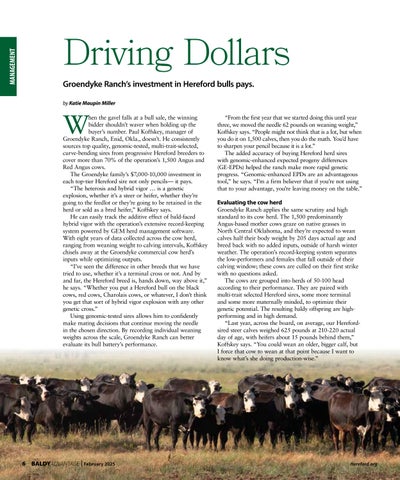
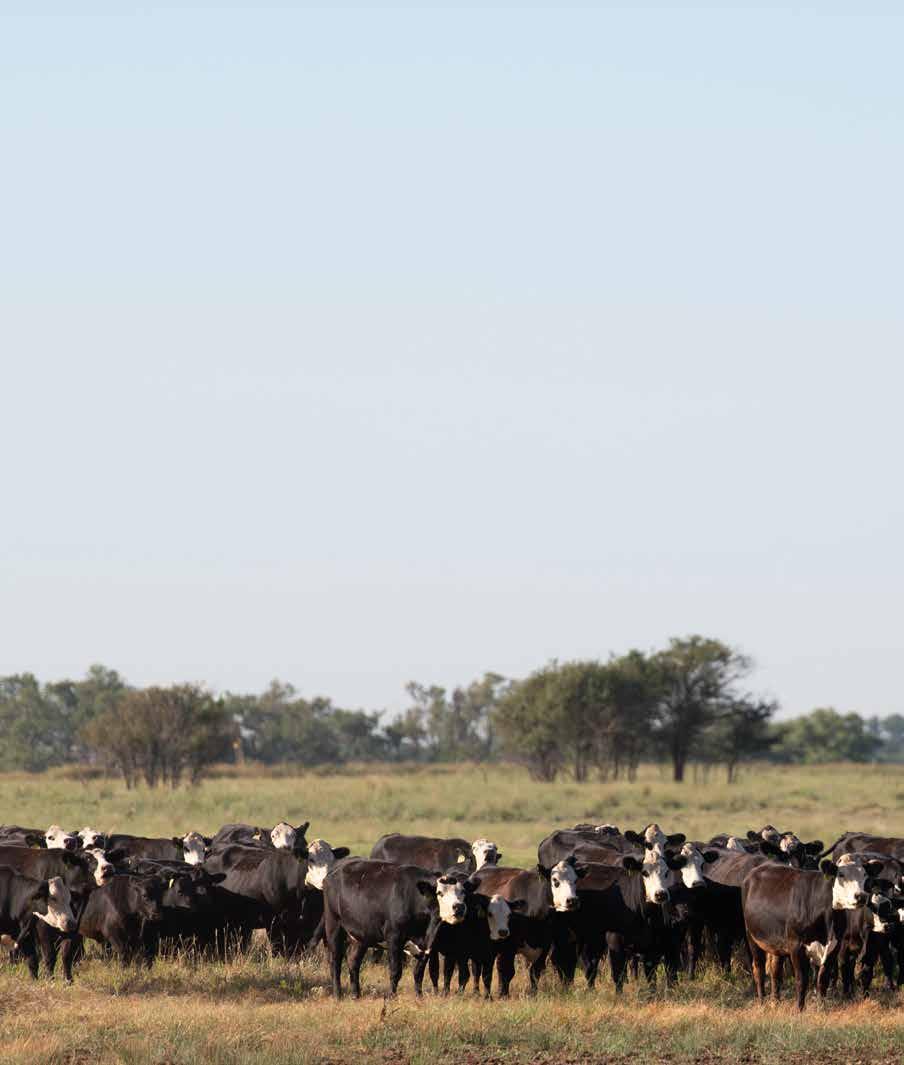
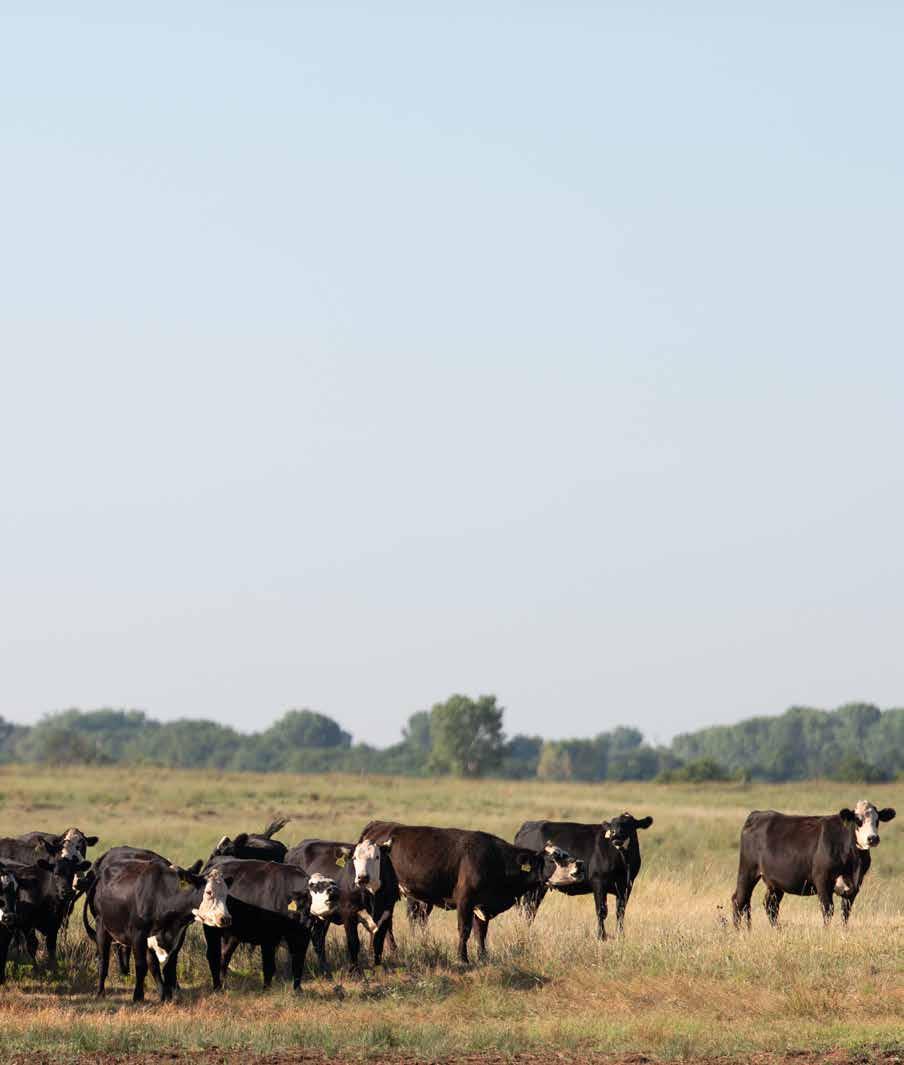
The cows are grouped into herds of 50-100 head according to their performance. They are paired with multi-trait selected Hereford sires, some more terminal and some more maternally minded, to optimize their genetic potential. The resulting baldy offspring are highperforming and in high demand.
“Last year, across the board, on average, our Herefordsired steer calves weighed 625 pounds at 210-220 actual day of age, with heifers about 15 pounds behind them,” Koffskey says. “You could wean an older, bigger calf, but I force that cow to wean at that point because I want to know what’s she doing production-wise.”
Fueling feeder sales
Groendyke Ranch’s steer calves are enrolled in the Hereford Advantage program provided by the American Hereford Association (AHA) and IMI Global. Age- and source-verfied calves must adhere to specified vaccination protocols and be sired by Hereford bull batteries ranking in the top half of the breed for AHA’s Certified Hereford Beef® Index. Plus, producers enrolling calves in the program must be certified for the national Beef Quality Assurance program. For the past three years, Groendyke calves enrolled in the program brought top dollar in the Cherokee Sales Co. Hereford-influenced Special in Cherokee, Okla. Their most recent consignment of 400 Hereford-sired calves brought $11-$13 per hundredweight more than any other lot at the sale.
“We have had an advantage three years in a row, and that is some very serious dollars,” Koffskey says.
He recalls five years ago when he offered a similar set of baldy calves, with all the bells and whistles, to a local cattle buyer. The buyer told Koffskey none of his clients would be willing to pay a large premium for those extras, but last year, it was the same buyer with the sale-topping bid on the Groendyke’s lots.
“He flat out told me that first year, ‘My buyers aren’t going to pay that. They’re not willing to pay that premium.’ And he bought those top-end calves last year in the Hereford-influence sale from us,” Koffskey says. “So, like the old saying goes, ‘Rome wasn’t built in a day.’ If you’re going to make a decision and a plan like we have, you have to stick with it and give it a little bit of time. And for us, it’s paid off, whether it be the feeder calf sales or commercial female sales. It’s really starting to pay in spades. And Hereford has been a huge, huge part of that because of that very reason.”
By the way, those sale-topping calves went on to grade 100% Choice and higher.
“They’re willing to pay more for those genetics because they know that at the end in the feedlot, with a combination of the Hereford sires on the black cows, they’re going to grade Choice or Choice-plus almost all the way across, like we’ve seen already,” Koffskey says.
Crafting commercial cows
Four years ago, Groendyke Ranch established a bred commercial female sale to further capitalize on the genetic selection and evaluation behind their operation. The commercial heifer sale started as a way to diversify the operation’s income beyond the feeder calf market. Koffskey saw there was a need for quality replacements, and each year, their commercial female sale grows alongside the demand for the Hereford-sired replacements they offer.
“You have heterosis right there. You are sitting in the driver seat with the Hereford cross female,” he says. “With the rising costs of all of our inputs, whether it be feed, fertilizer, drugs, labor, fuel, whatever, a cow has to be as efficient as she possibly can.”
Koffskey’s ideal replacement heifer is a moderateframed, easy-keeping female that is bred to be efficient.
“We produce, to the best of our ability, a cow that when she goes into production will produce the best calf she can — which will wean at half or more of her body weight — breed back the same time to calve every year and be as efficient as possible, maintaining a 6 or better body condition score with little or no inputs other than the winter time,” he says.
Last year, Groendyke Ranch calved out the operation’s first set of baldy females after retaining some of the heifers they had raised. As first-calf heifers, the group weaned calves weighing 575 pounds across the board at 205 days of age with a 92% breed-back in a 60-day breeding season. Koffskey is excited about the future of this set of F1 females, and many of the operation’s commercial heifer buyers feel the same way. Groendyke Ranch already has repeat buyers. Koffskey notes that the bald face is driving sale prices more than the hide color, and the demand for red baldies is steadily increasing.
Whether he is marketing feeder calves, replacement females or calving out Hereford-sired heifers, Koffskey’s data clearly shows the bald-faced advantage of Hereford influence.
“I can talk about it, but I can back it up because I’ve got the data. The difference is black and white, and it’s because of the Hereford advantage. There’s no question about that at all,” he says.