Edward Gu
University of California, Berkeley B.A. Selected Works 2020-2023
University of California, Berkeley B.A. Selected Works 2020-2023
2019 - 2023
University of California, Berkeley - Berkeley, CA
Bachelor of Arts in Archiecture
Minor in Sustainable Design, History and Theory of Landscape Architecture and Environmental Planning
June 2022 - Aug 2022
Fong and Chan Architects - San Francisco, CA
Intern Architectural Designer
• Reviewed changes made by consultant engineers and modified drawing indexes accordingly.
• Visited project sites, met construction managers, and surveyed construction developments.
• Produced interior and exterior renders for projects and reviewed with supervisors.
• Participated in presentations for finish materials, discussed reasons and gave opinions.
Jan 2022 - Mar 2022
Student Co-investgator
• Partnered with an outside consultant, Student Participate Leadership Council and Summer Search Board members to identify key organizational stakeholder groups and new values.
• Collected data and responses from survey results and interviews, performed detailed analysis, synthesized findings and complied a report for internal review.
• Performed detailed analysis of survey results and interviews, synthesized findings, and prepared a report for internal use.
Spring 2023
Mix-usewd Compound Design | Arch 100D
Instructor: Raveevarn Choksomwbatchai
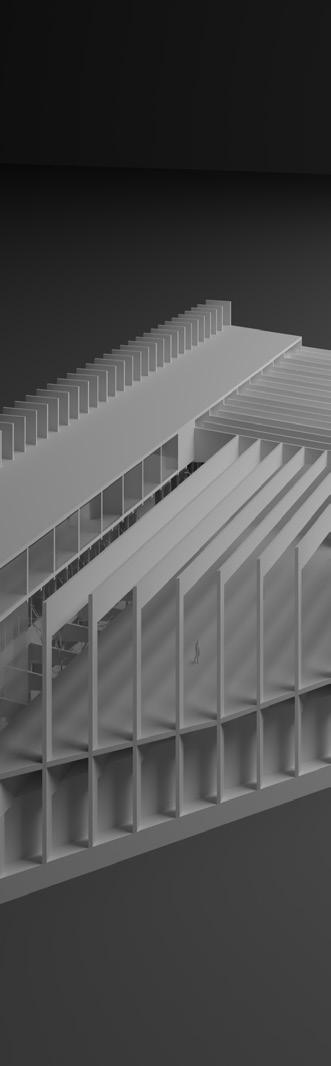
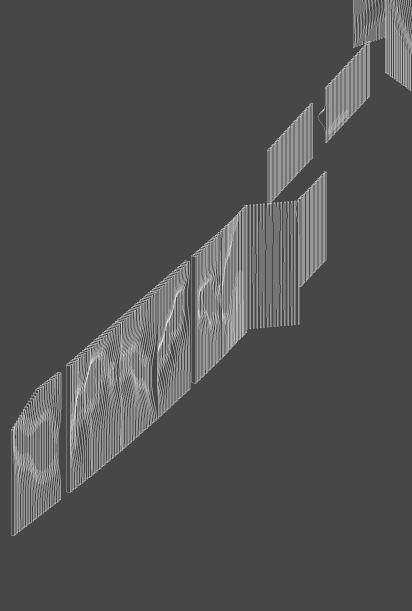
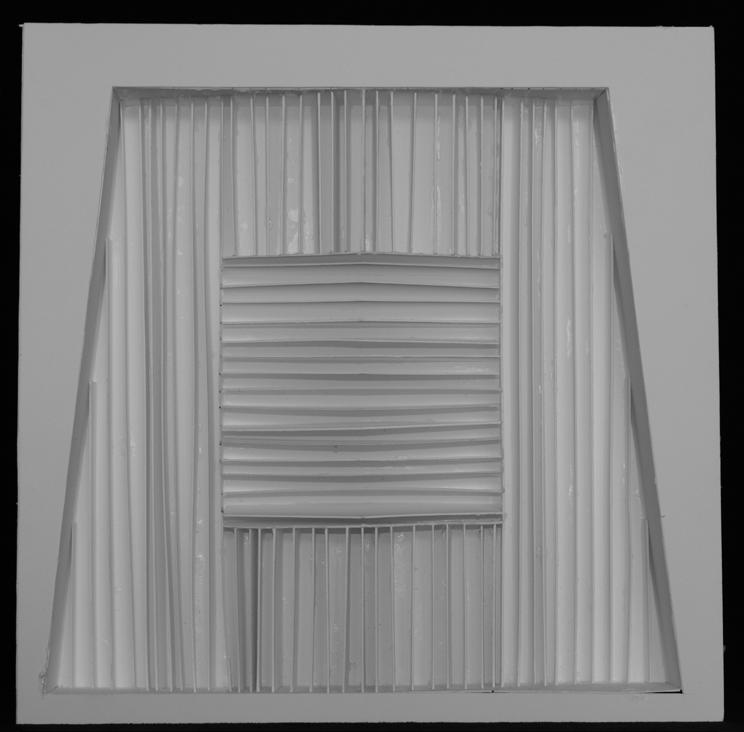
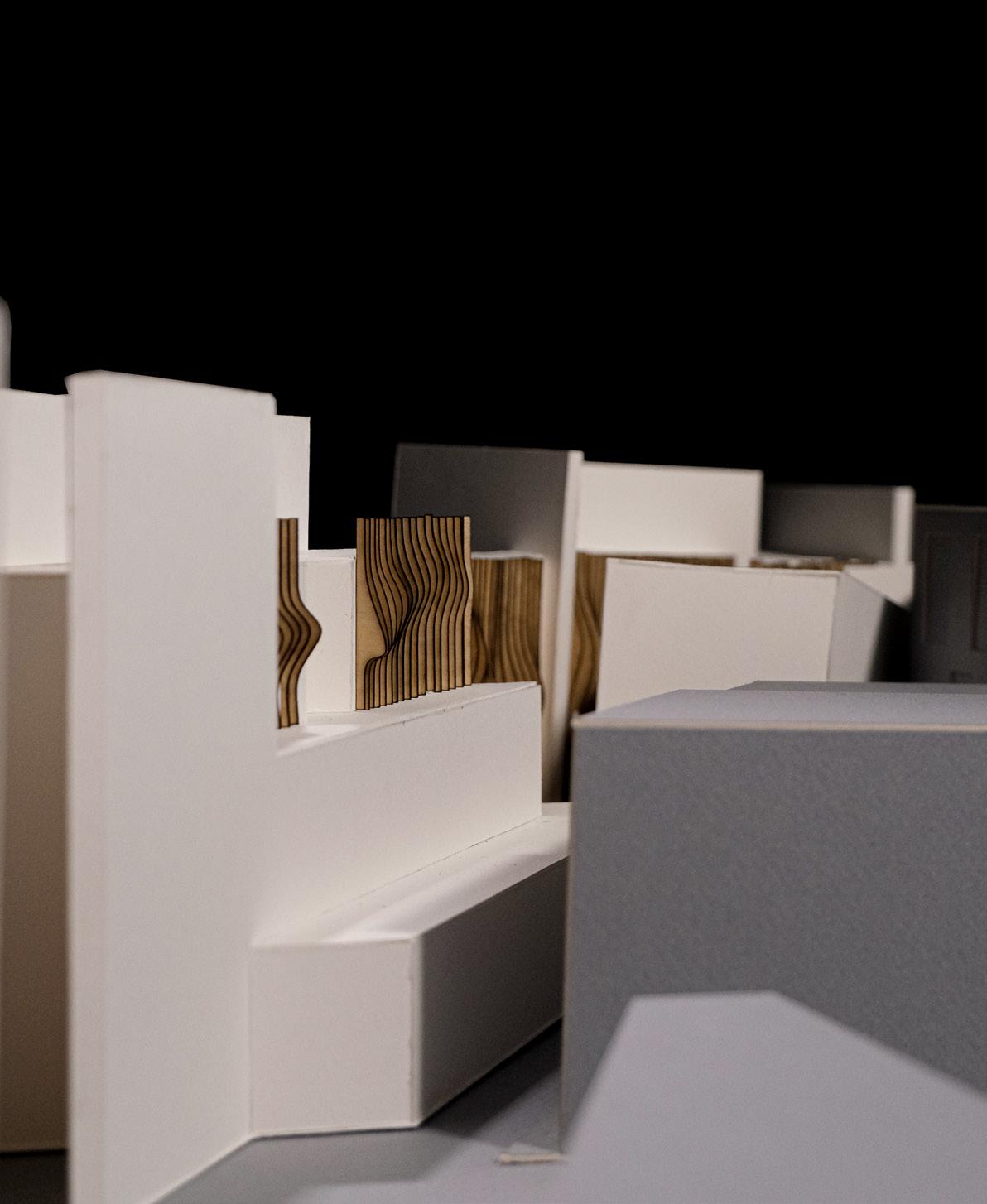
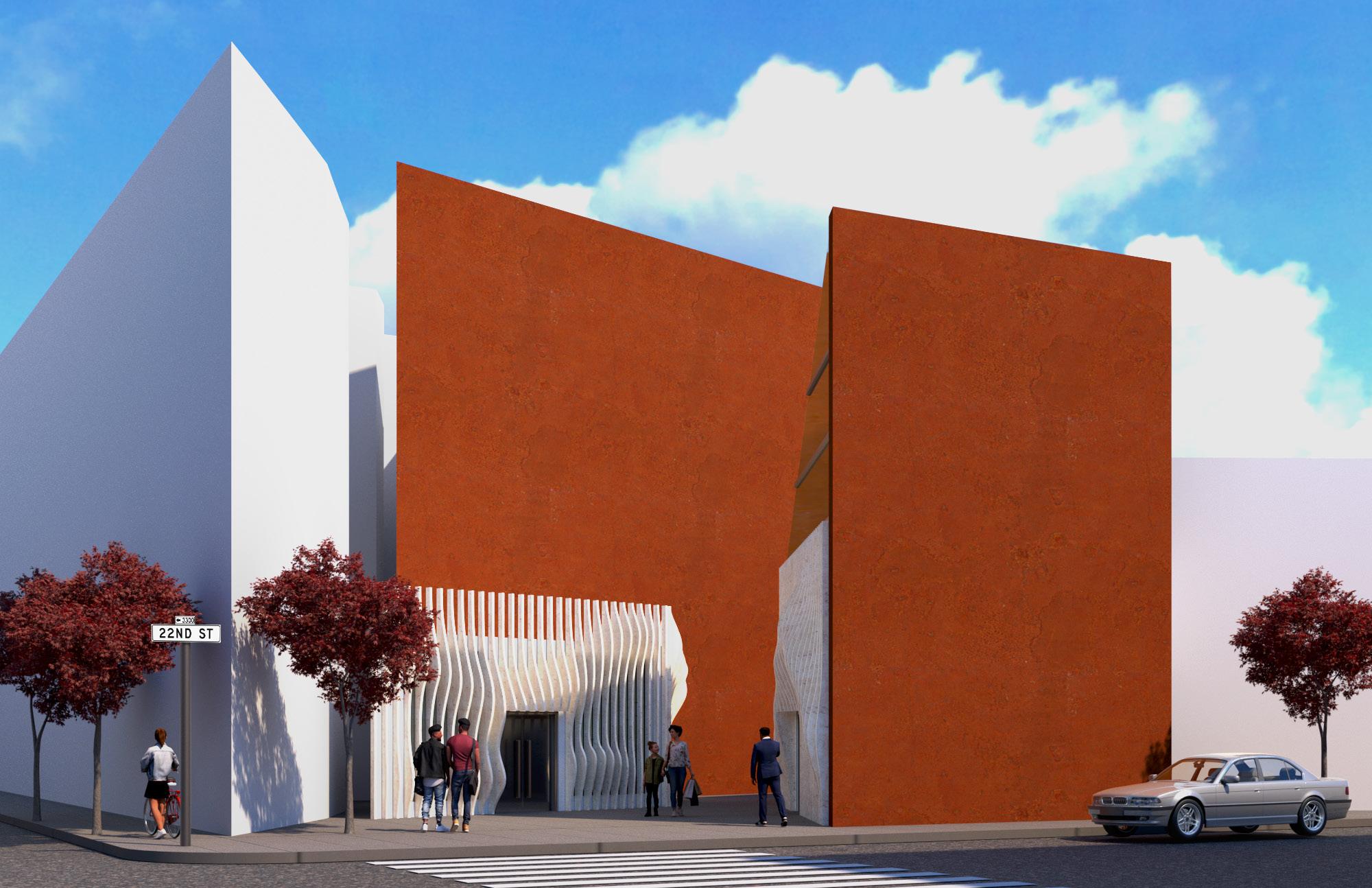
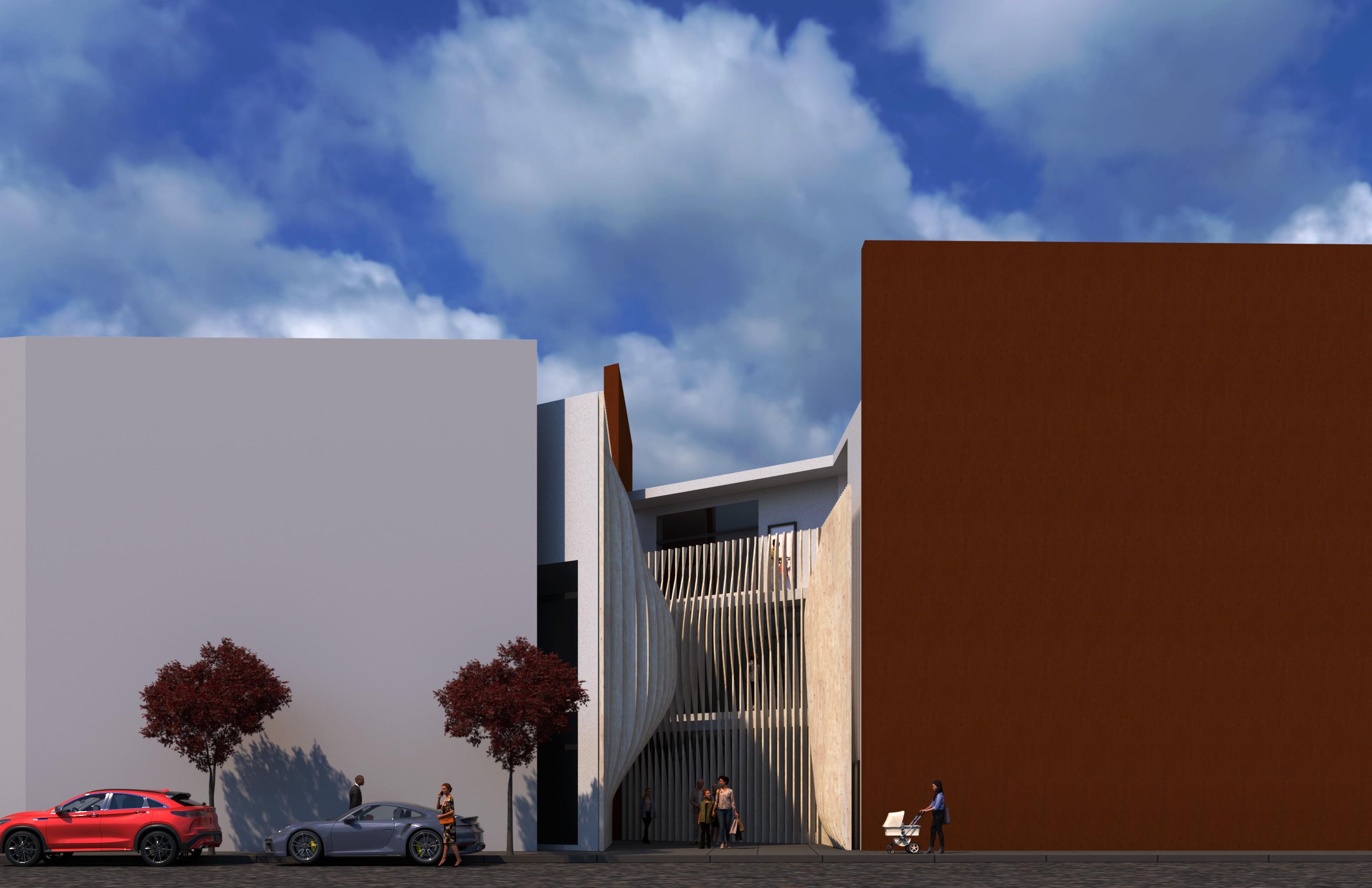
Bare Bones, born from one of Sol Lewitt’s drawings, uniting a museum, retail spaces, and housing units in a cohesive compound. The project explores the fine boundary between a building’s outward appearance and its concealed structural framework, drawing parallels to the complexities of human anatomy. Like the human body, the depth and expression of the building’s skin are intrinsically linked to functionality, while its structural bones remain discreet, expertly harmonizing aesthetics and engineering.
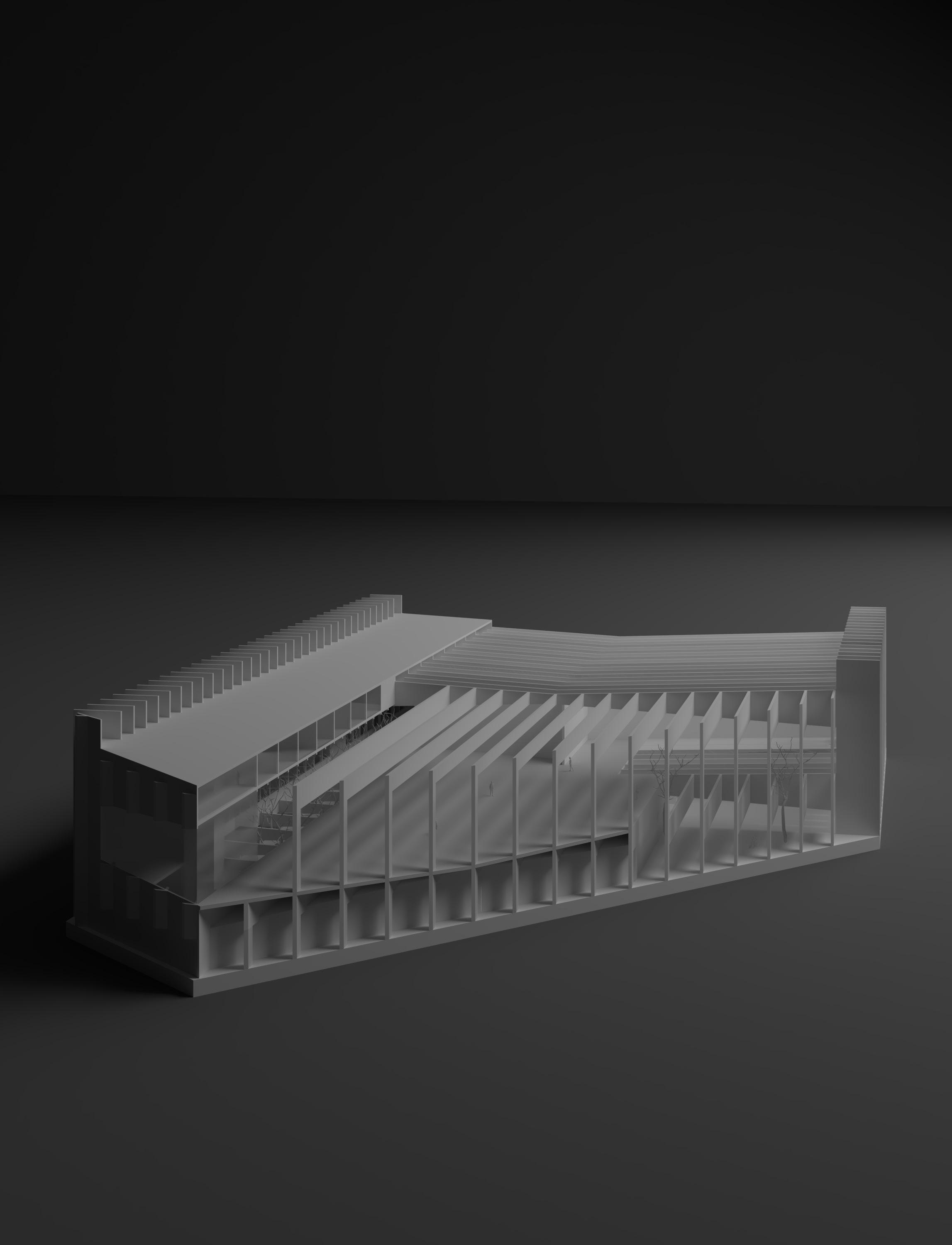



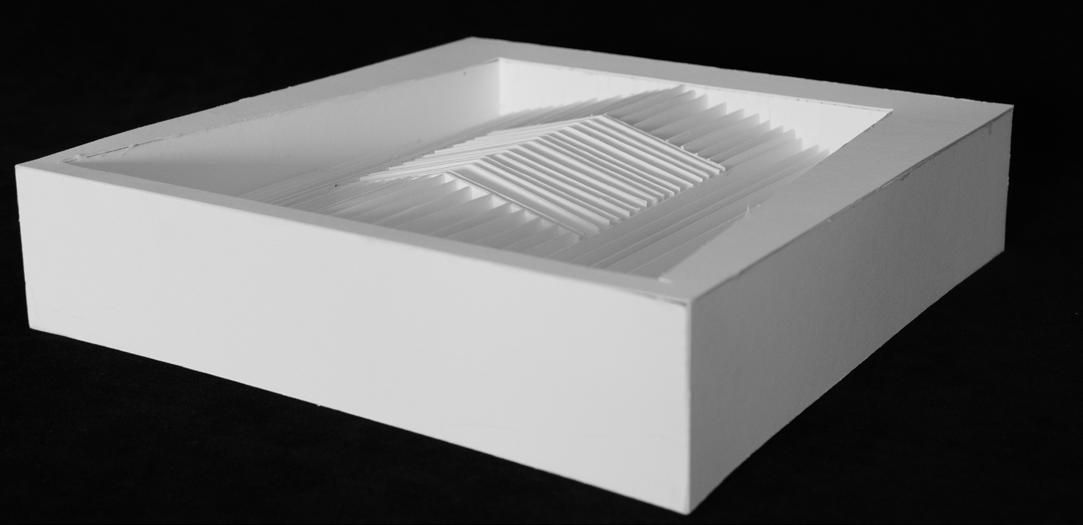
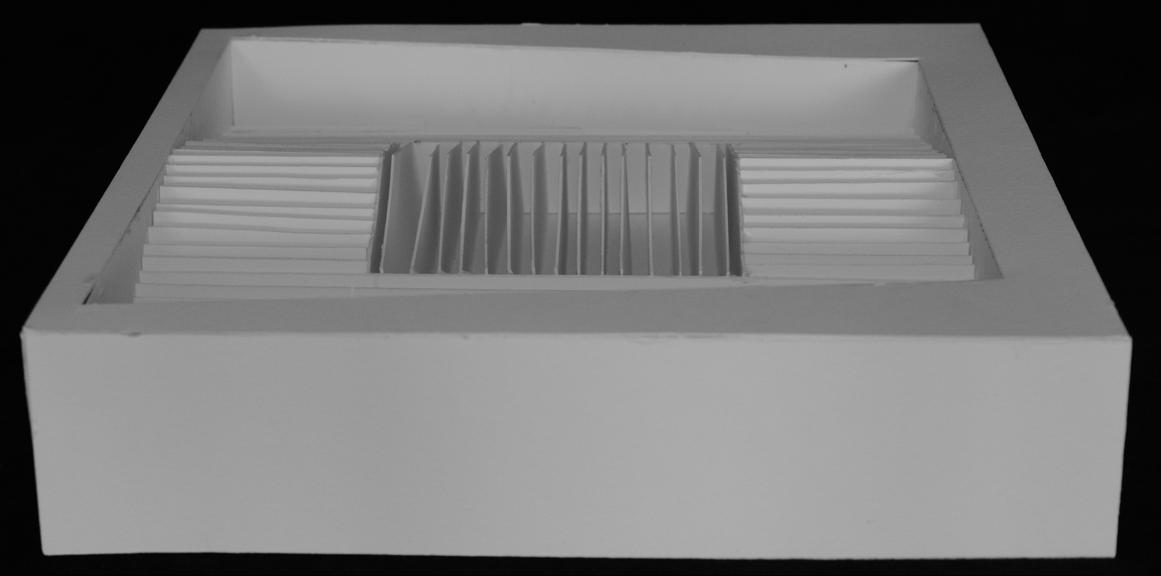
The bas-relief model, is an interpretation of Sol Lewitt’s drawing #327. It captures the transitional state between twodimensional and three-dimensional representation. The process of deriving the project’s structural system involved dissecting the study model through cross-sections and plans. These dissected elements served as a basis for exploring the drawing’s lines as potential structural systems, enabling the exploration of spatial relationships and design.
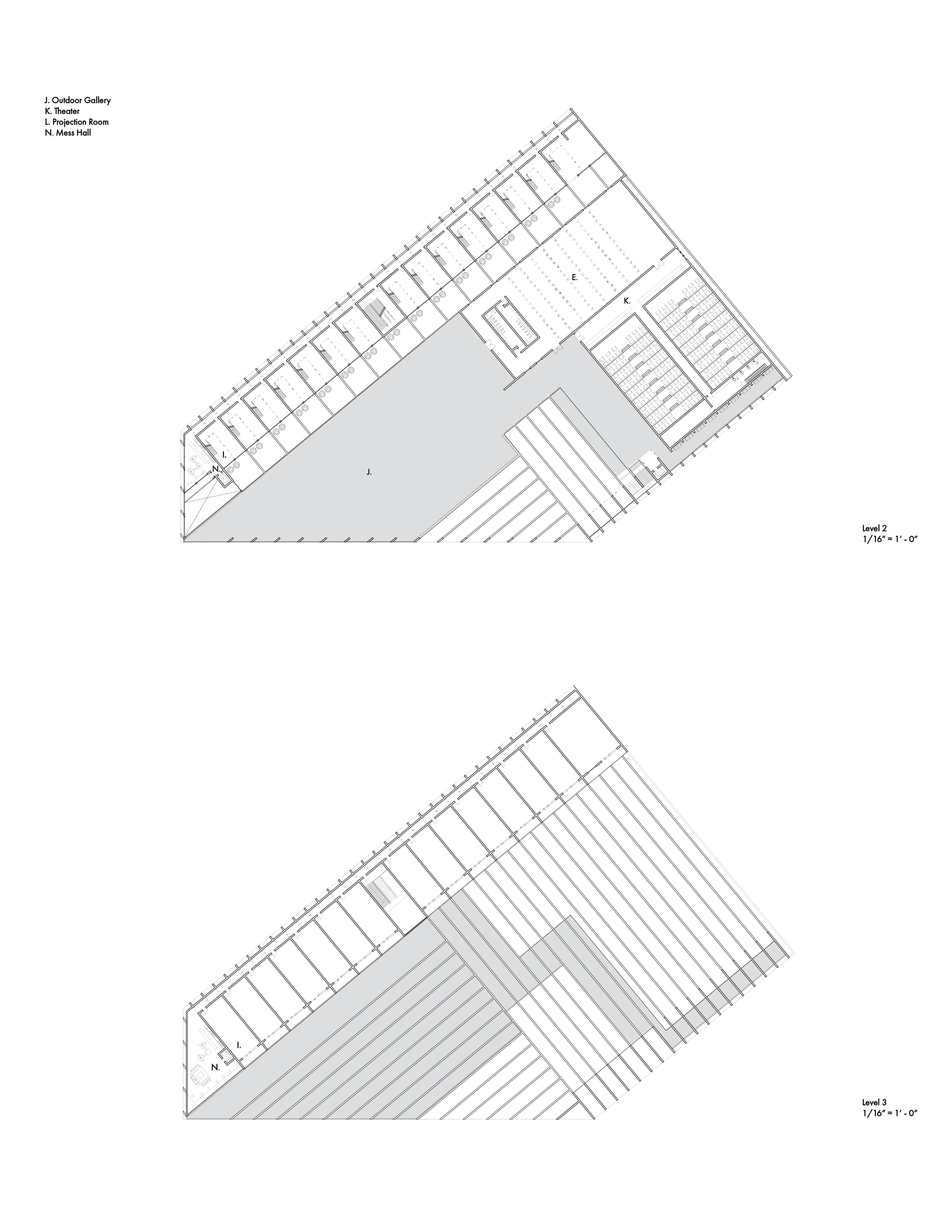
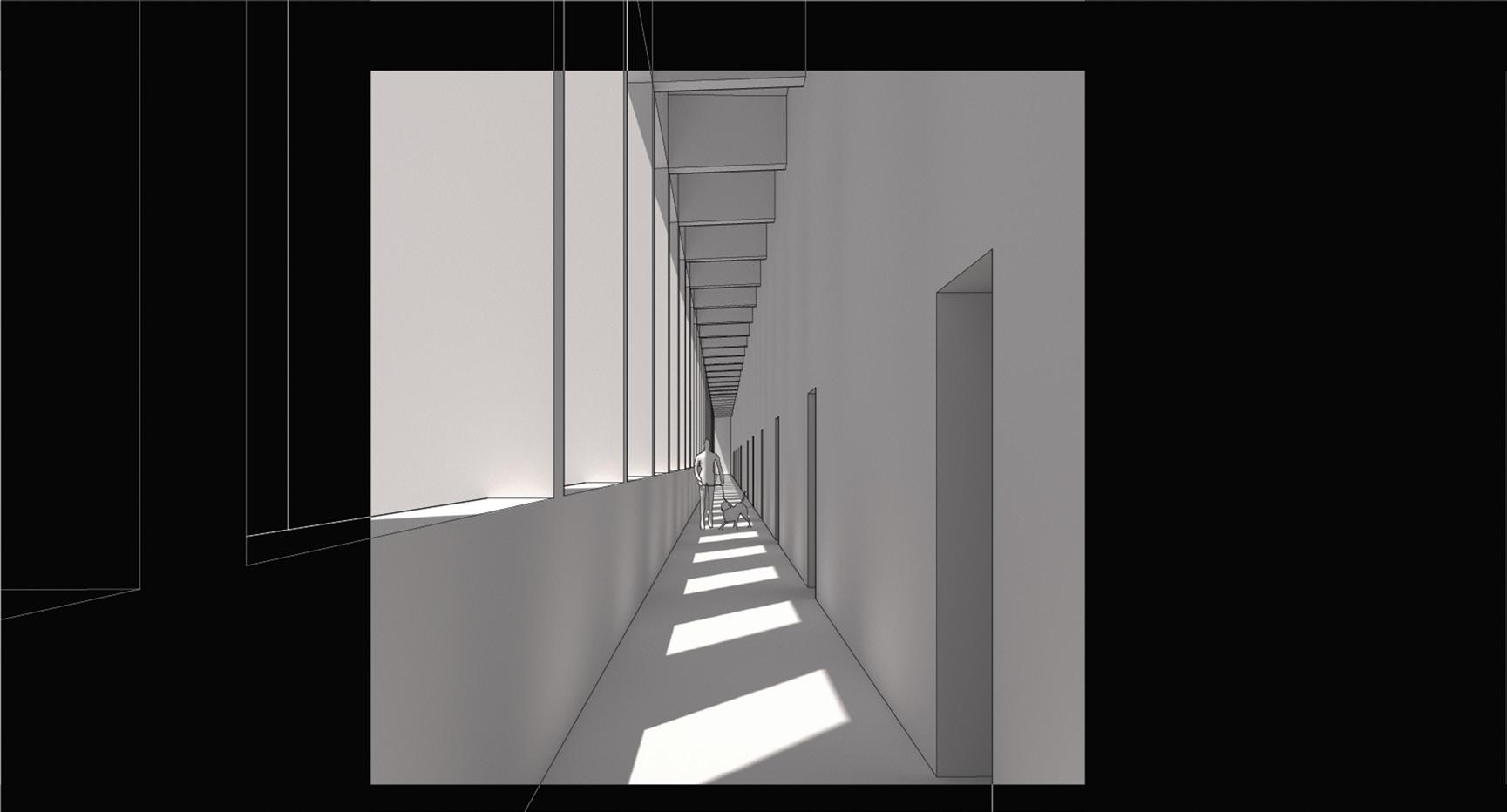
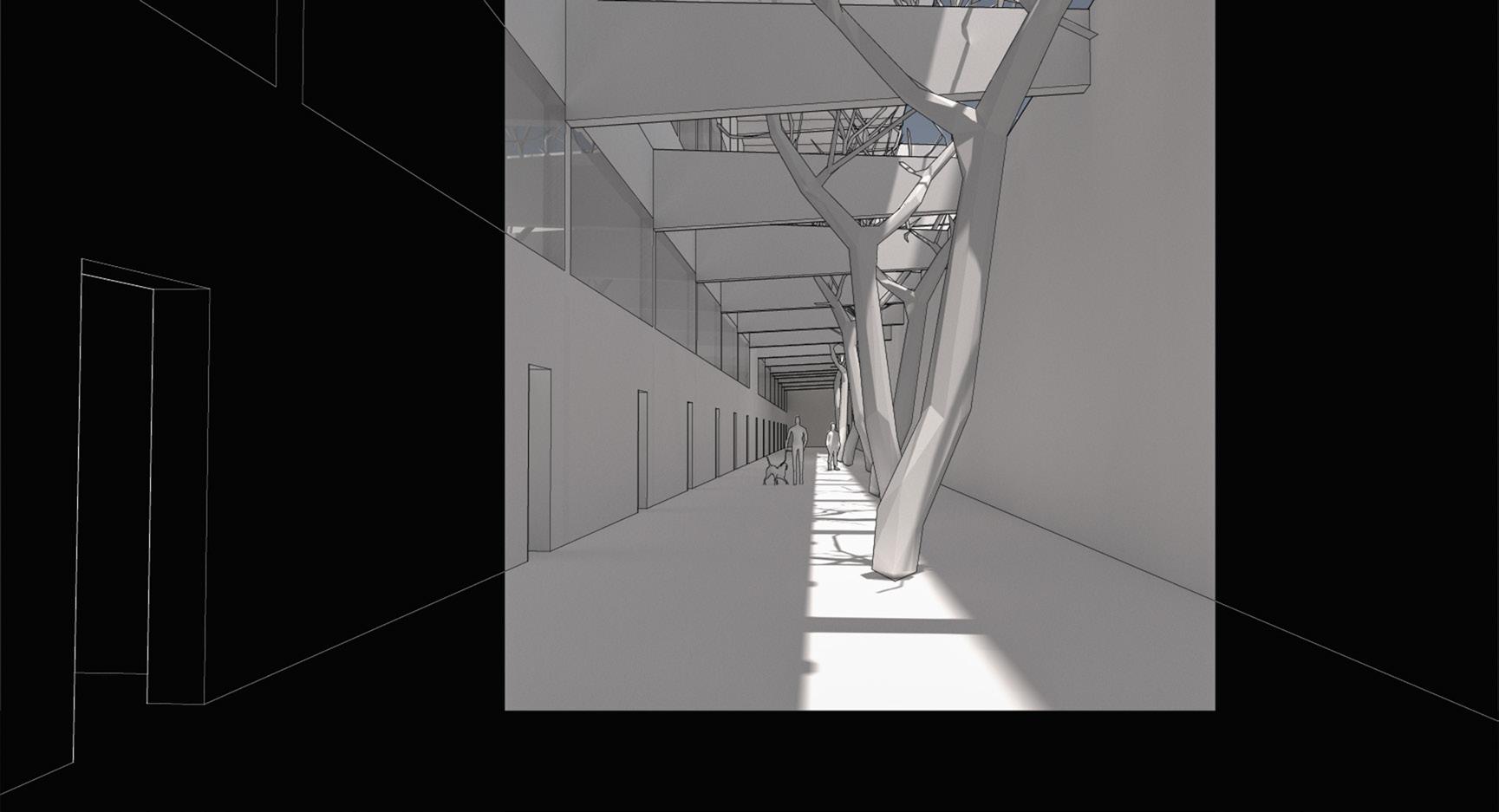
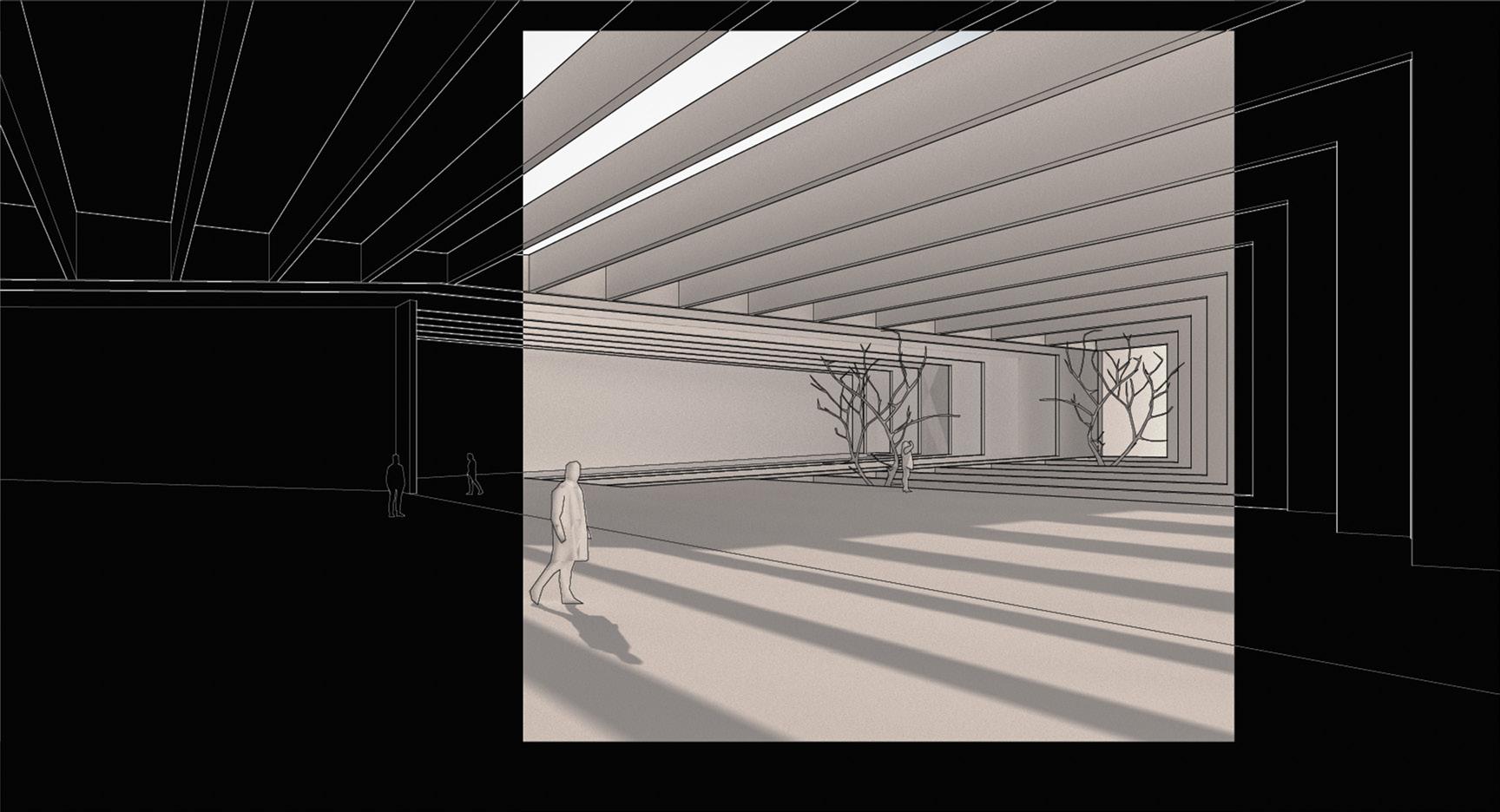
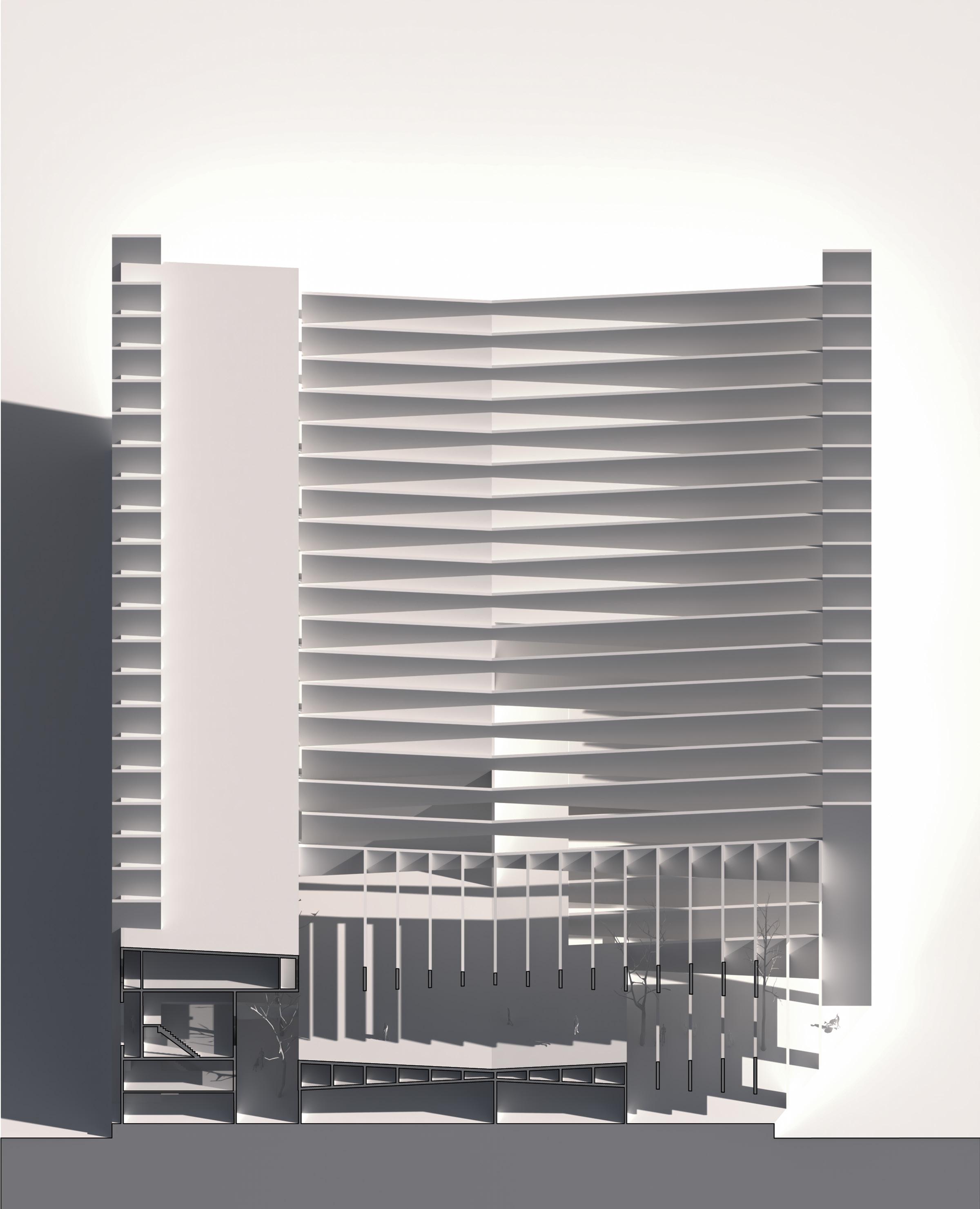
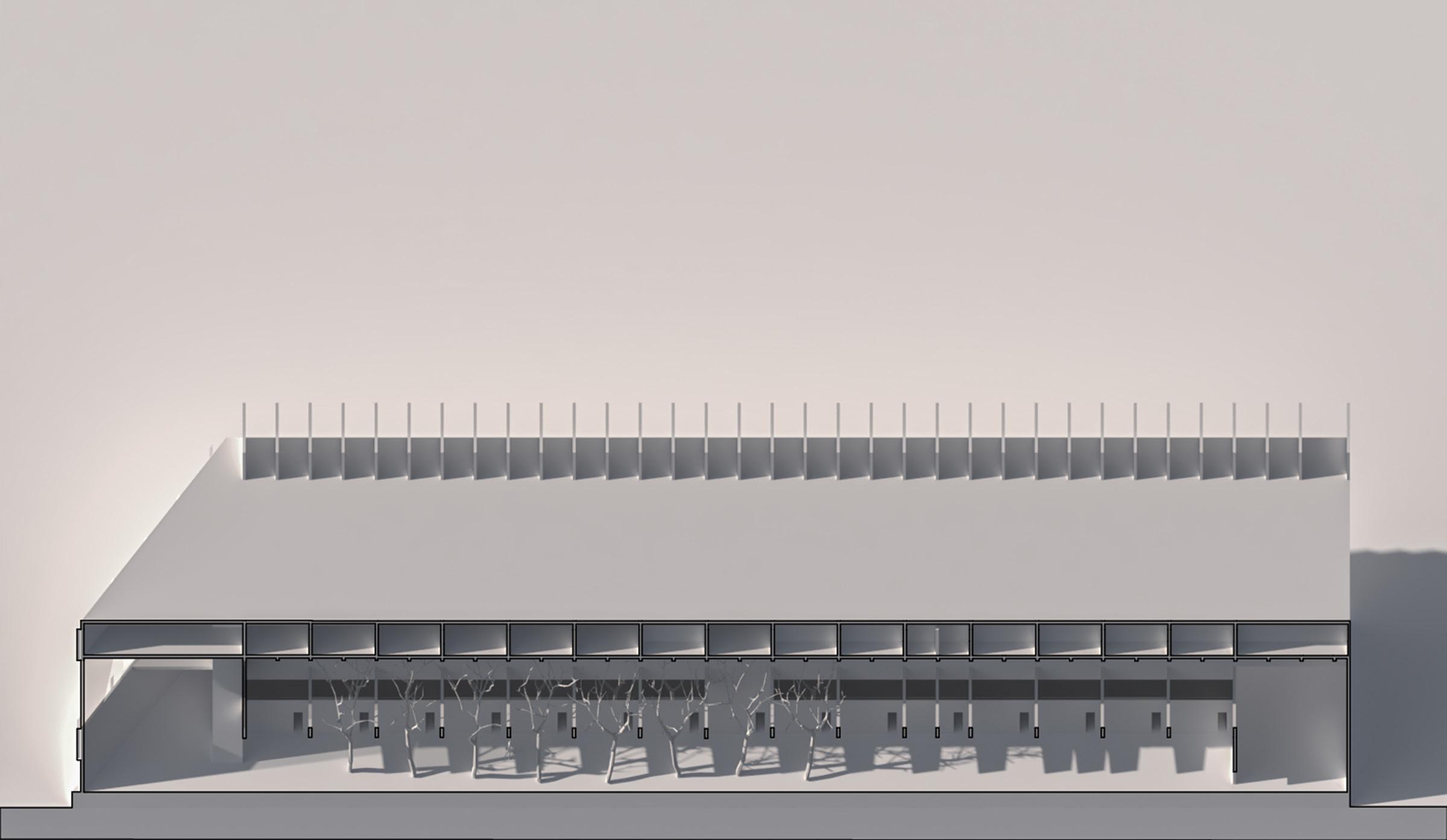
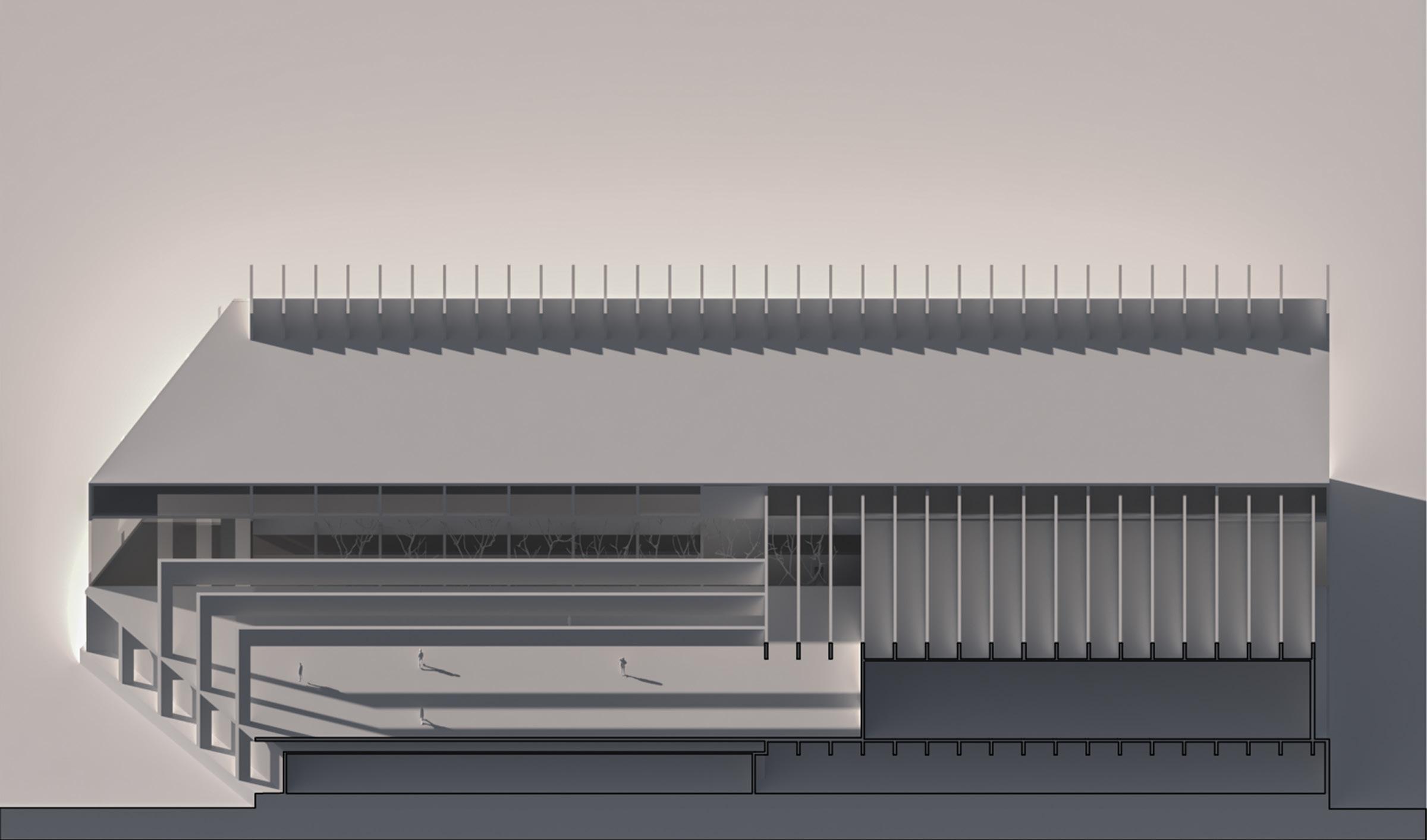
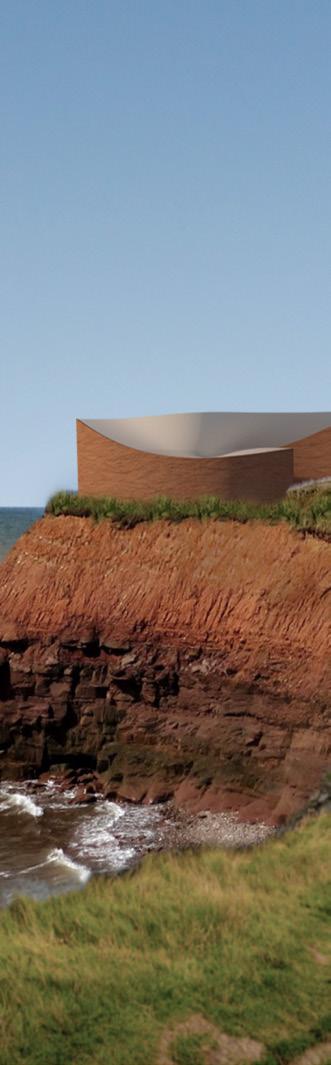
The term “nomad” typically denotes individuals without a permanent residence who travel freely. Many artists draw inspiration from a nomadic lifestyle, immersing themselves in diverse cultures. This project aims to establish a welcoming and cozy space centered around the concept of “flow.” It will provide nomadic artists with a serene sanctuary to pause, contemplate their experiences, and engage in creative pursuits.
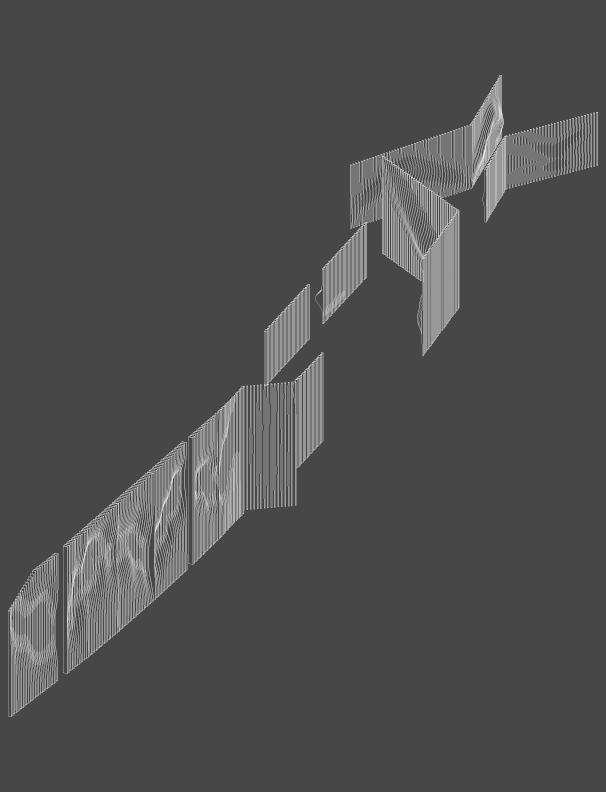
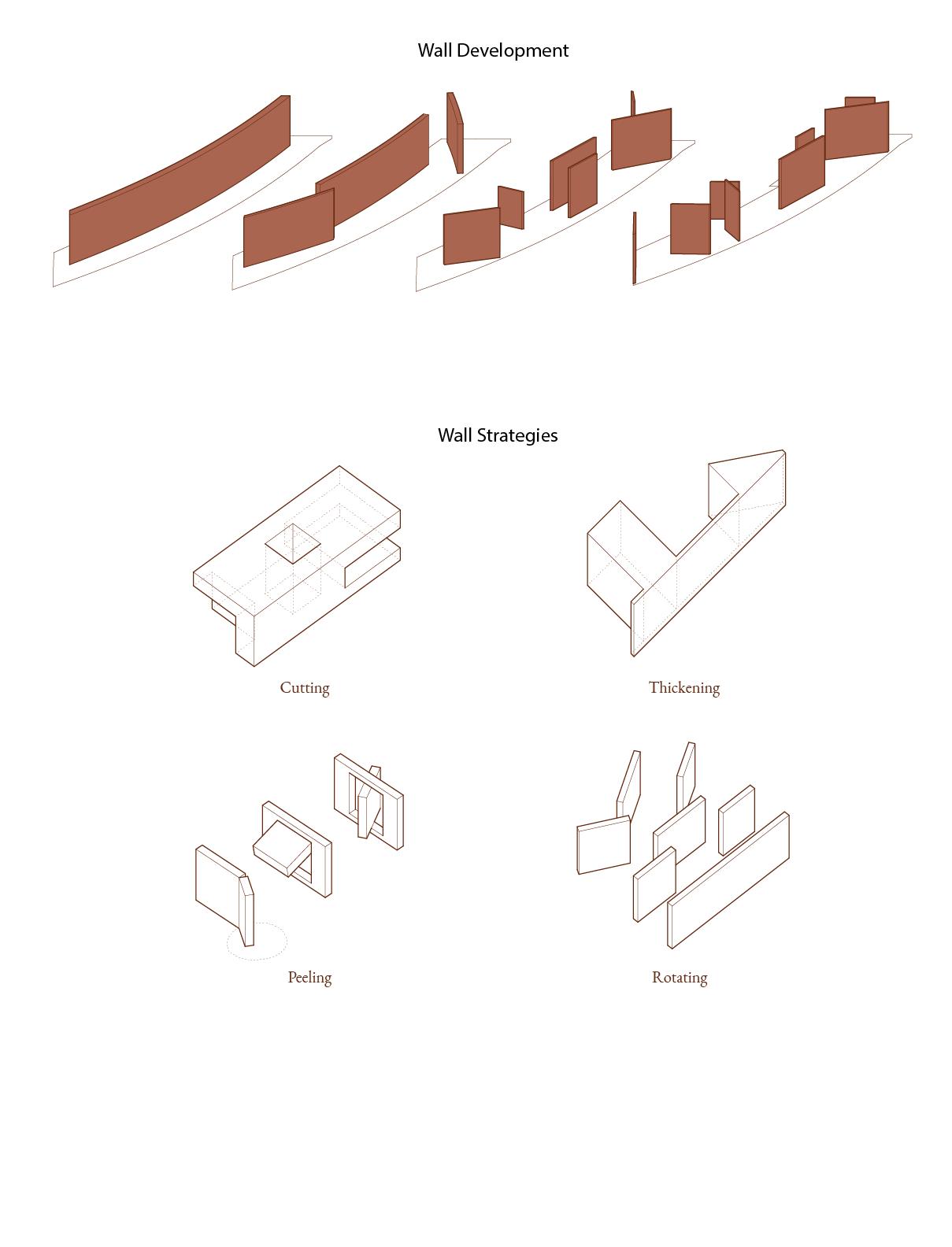
The building’s form emulates the fluid motion of nomadic artists, achieved through a sequence of walls and distinct wall-based strategies that induce a seamless flow and an inherent perception of motion and temporality. These strategies, categorized as peeling, rotating, cutting, and thickening, establish a definitive architectural language for the composition.
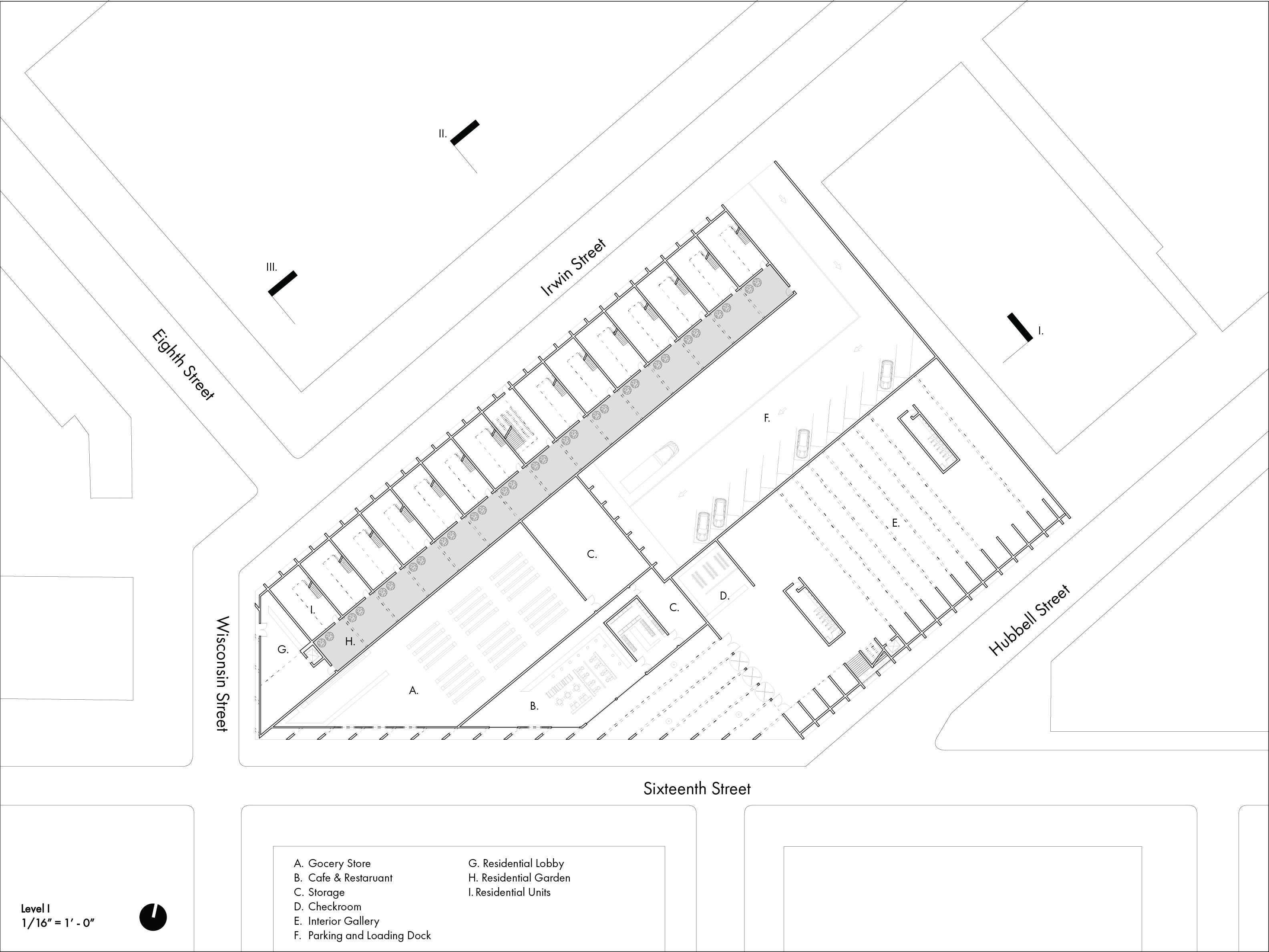
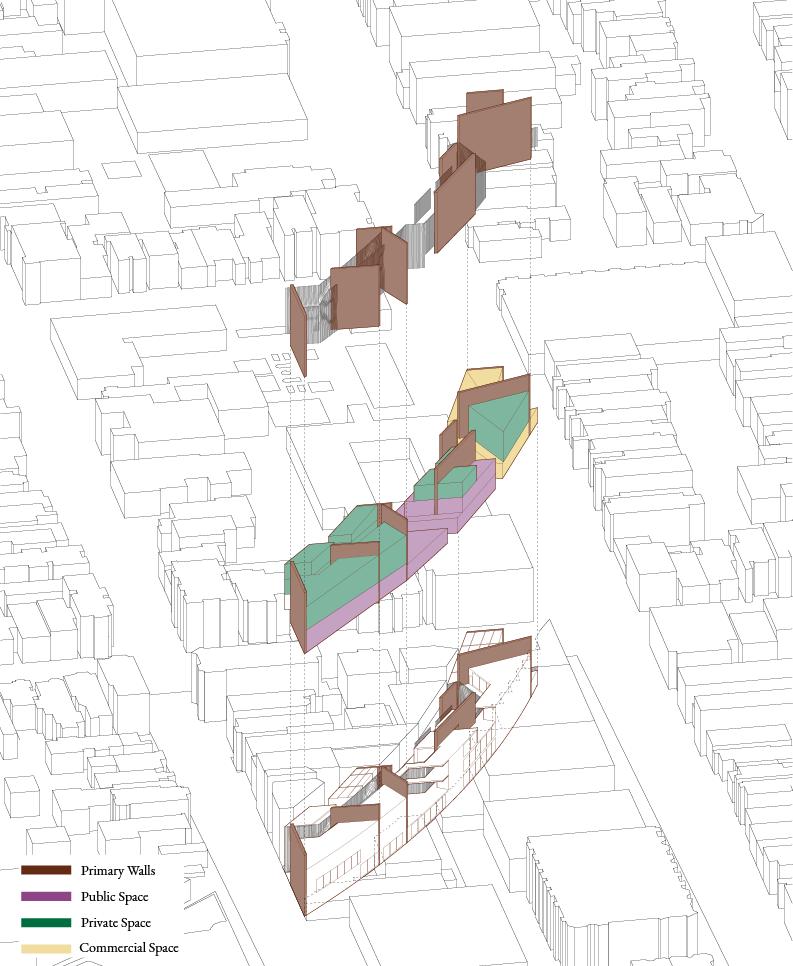
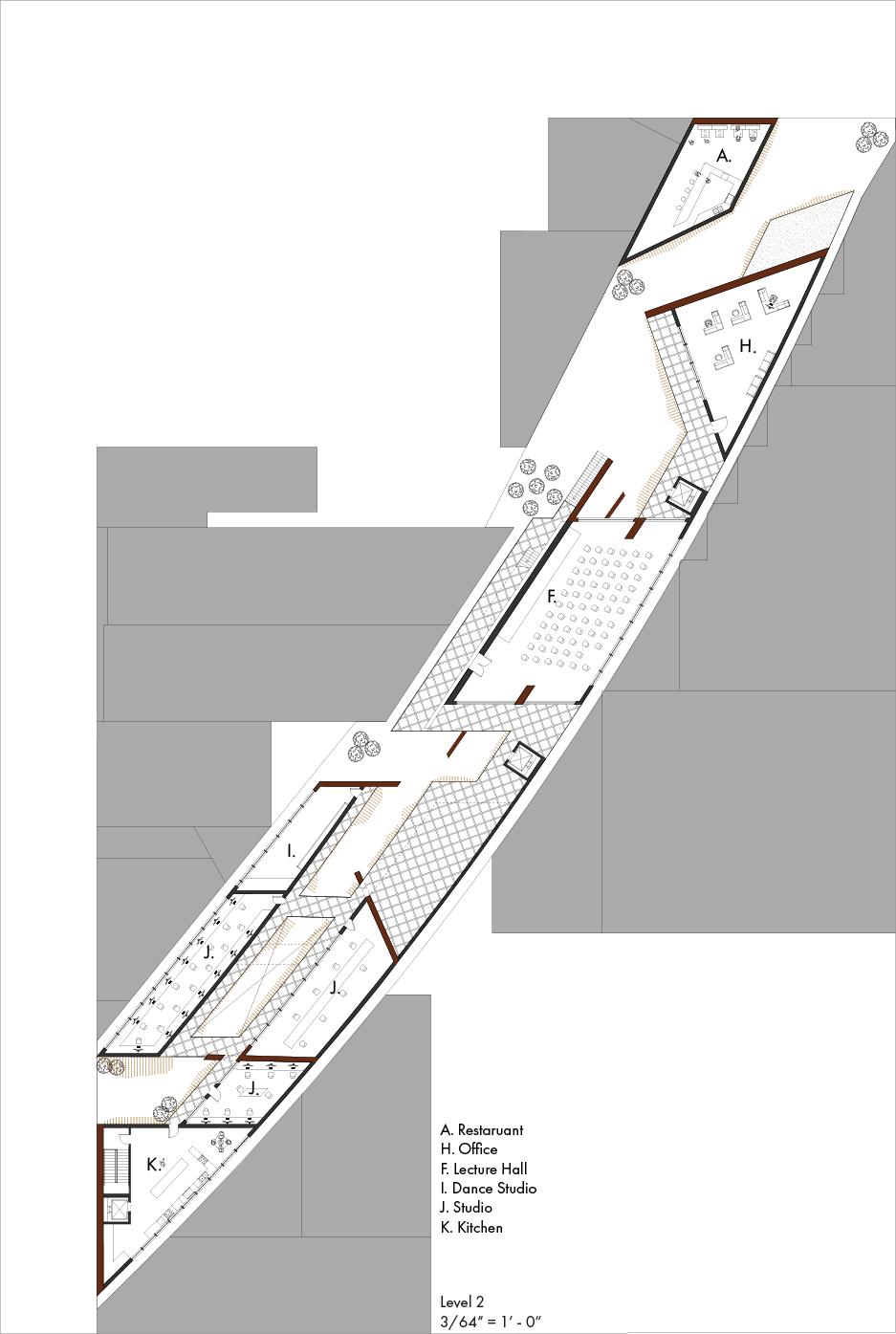
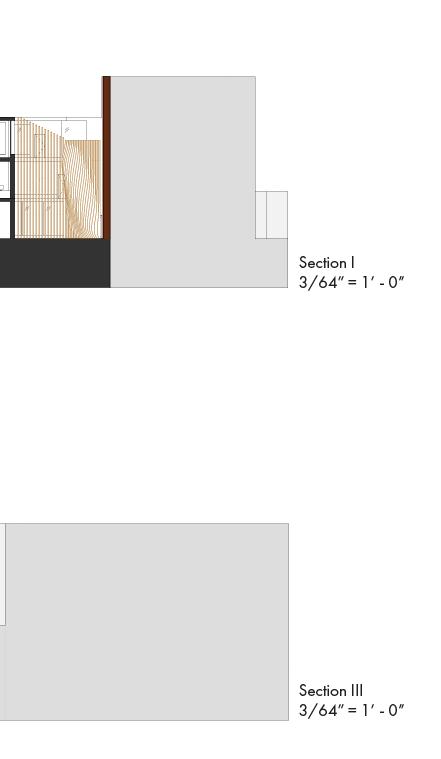
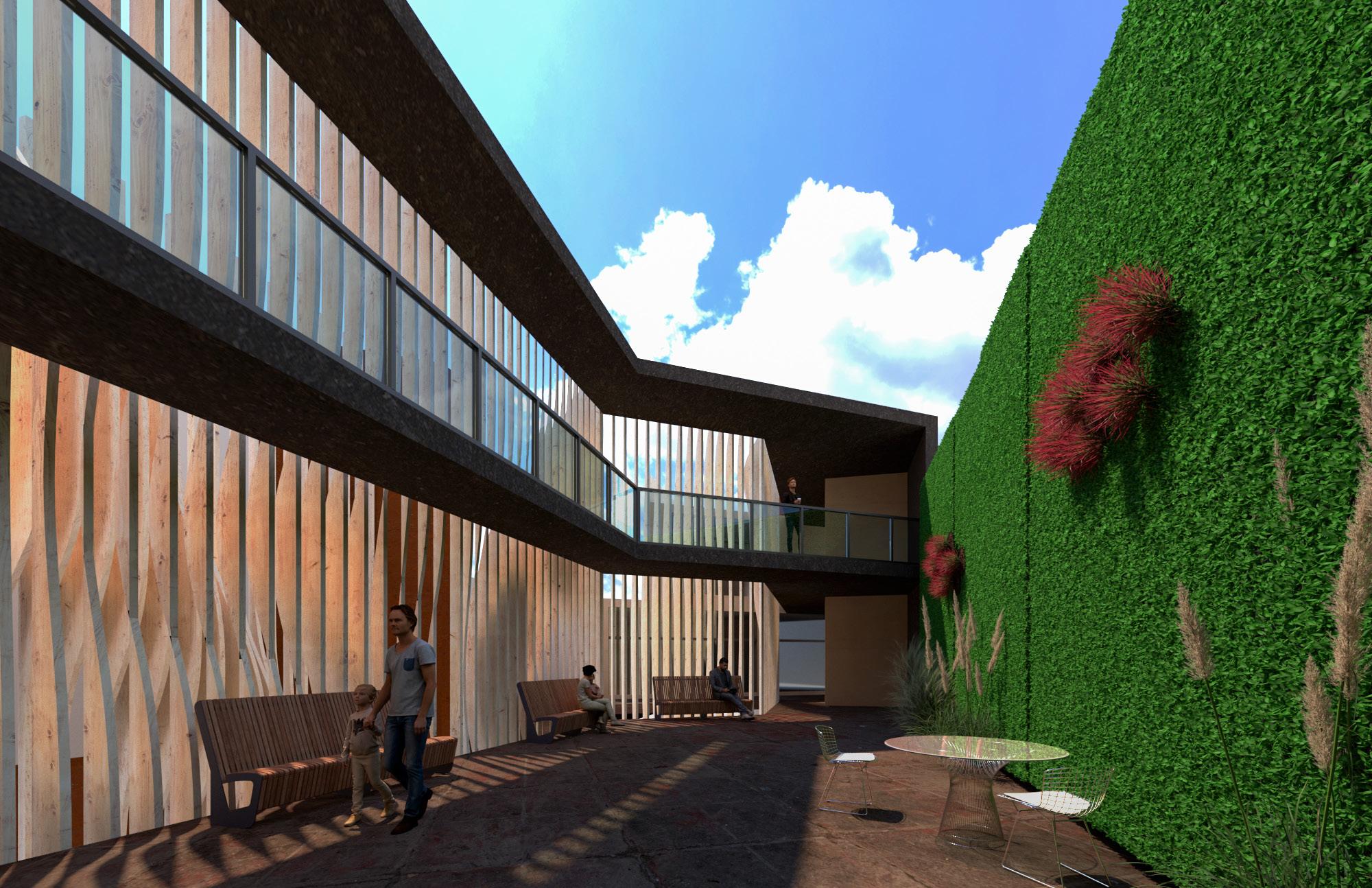
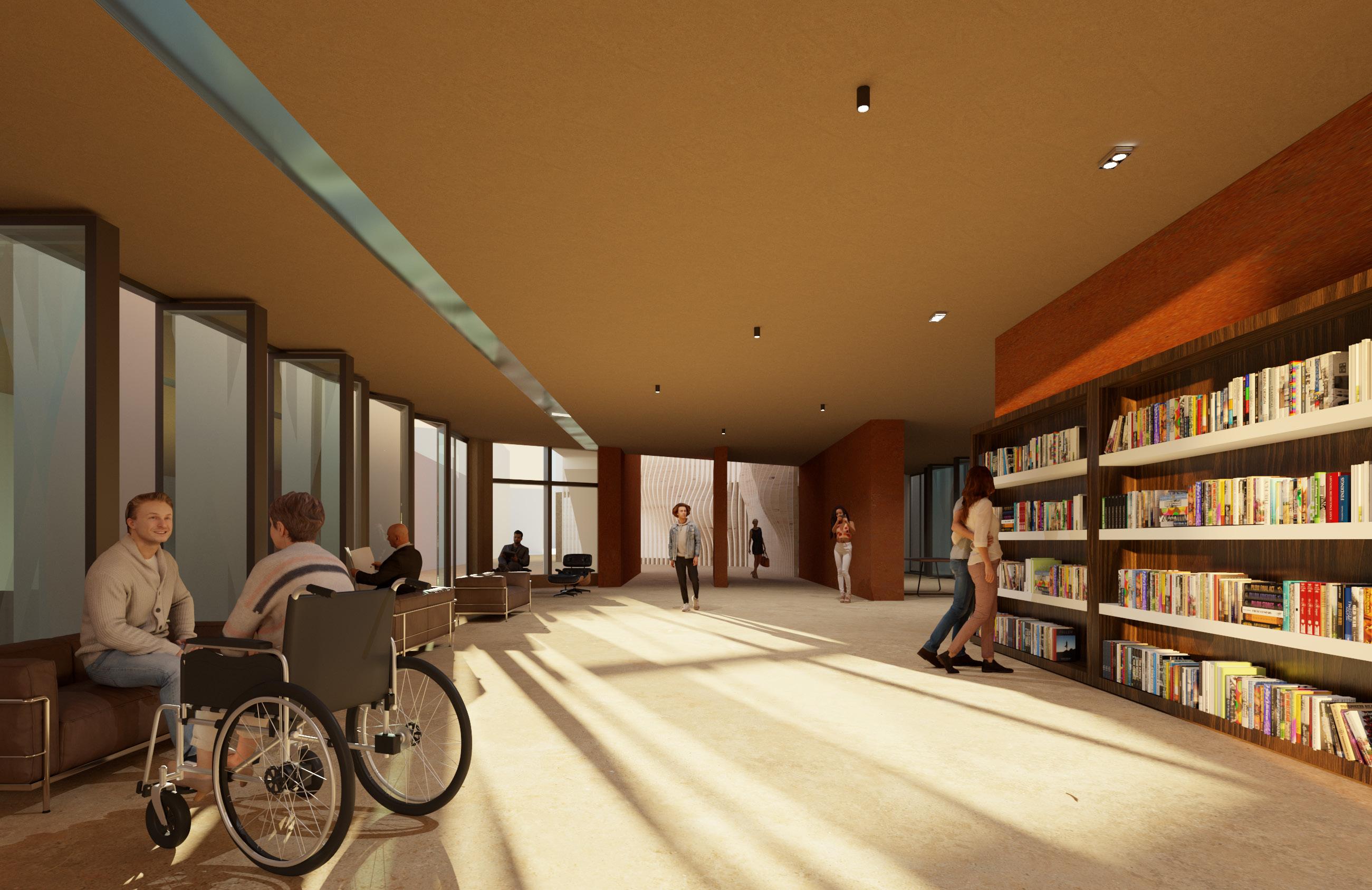
The core of spatial organization for the project involves providing privacy for residences while retaining the original use of the space as a walkway through housing blocks. With this intention, all exhibition and commercial programs, such as the library, exhibition space, and workshops, are located on the first level, while habitation programs like studios and housing units occupy the second and third levels.
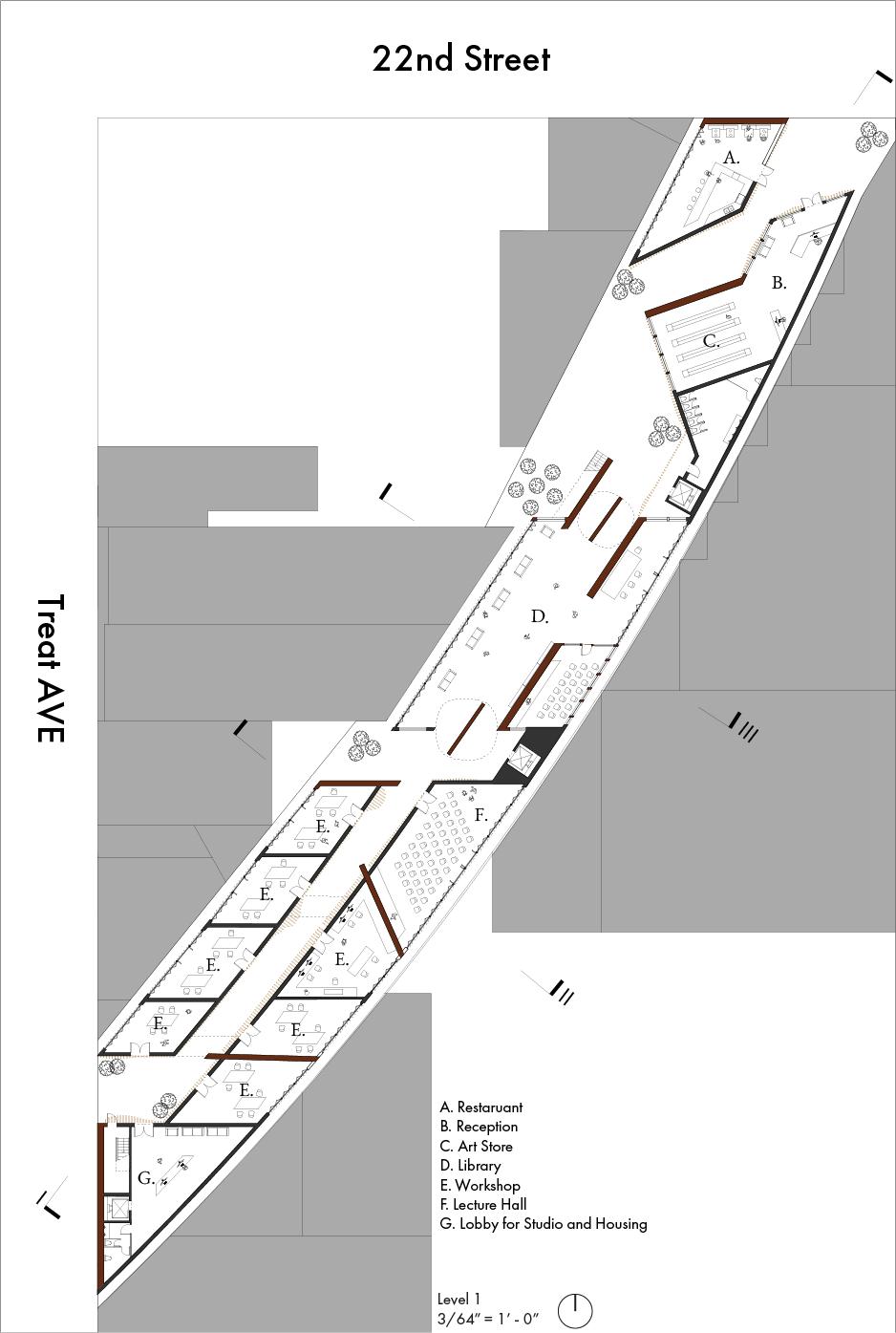
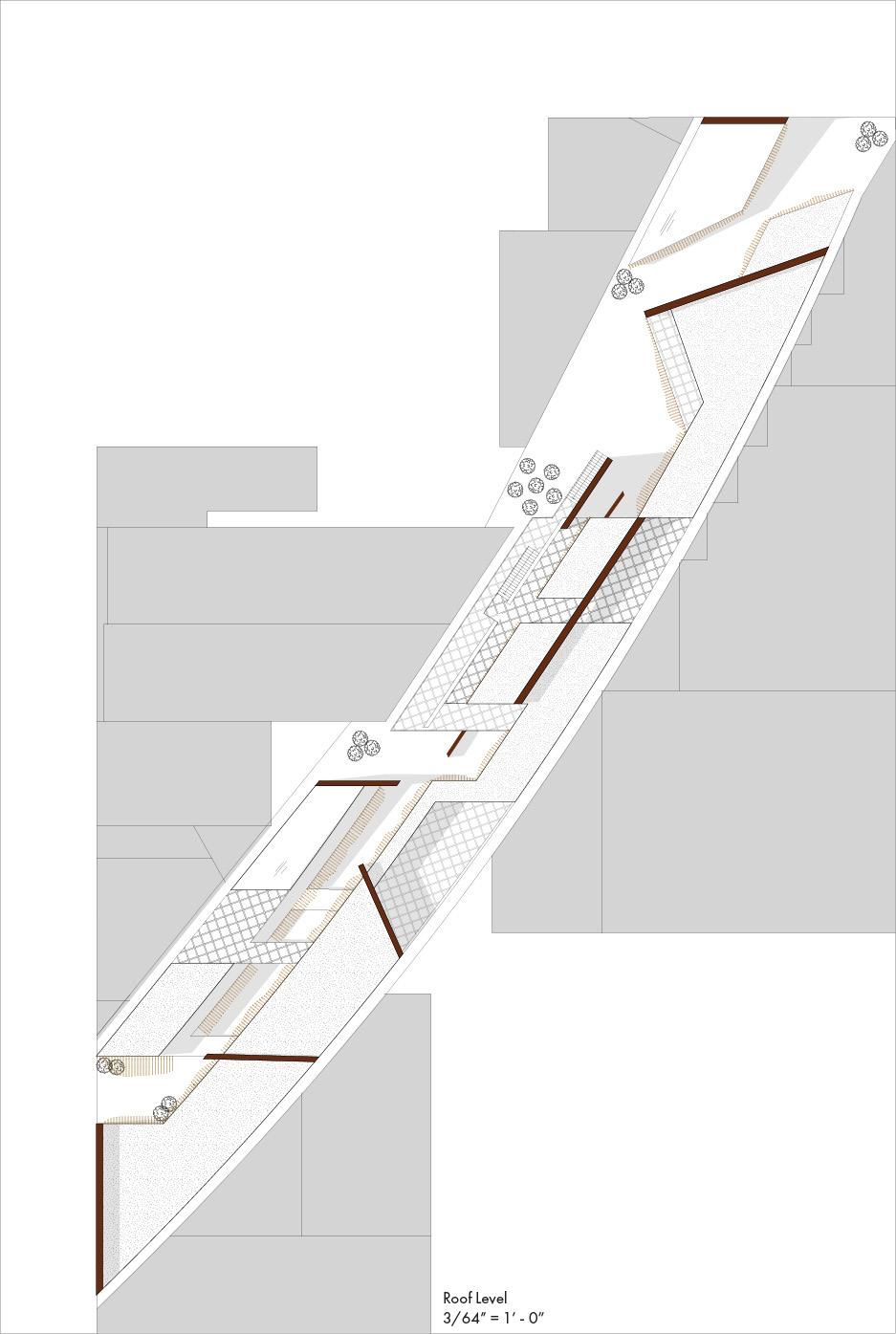
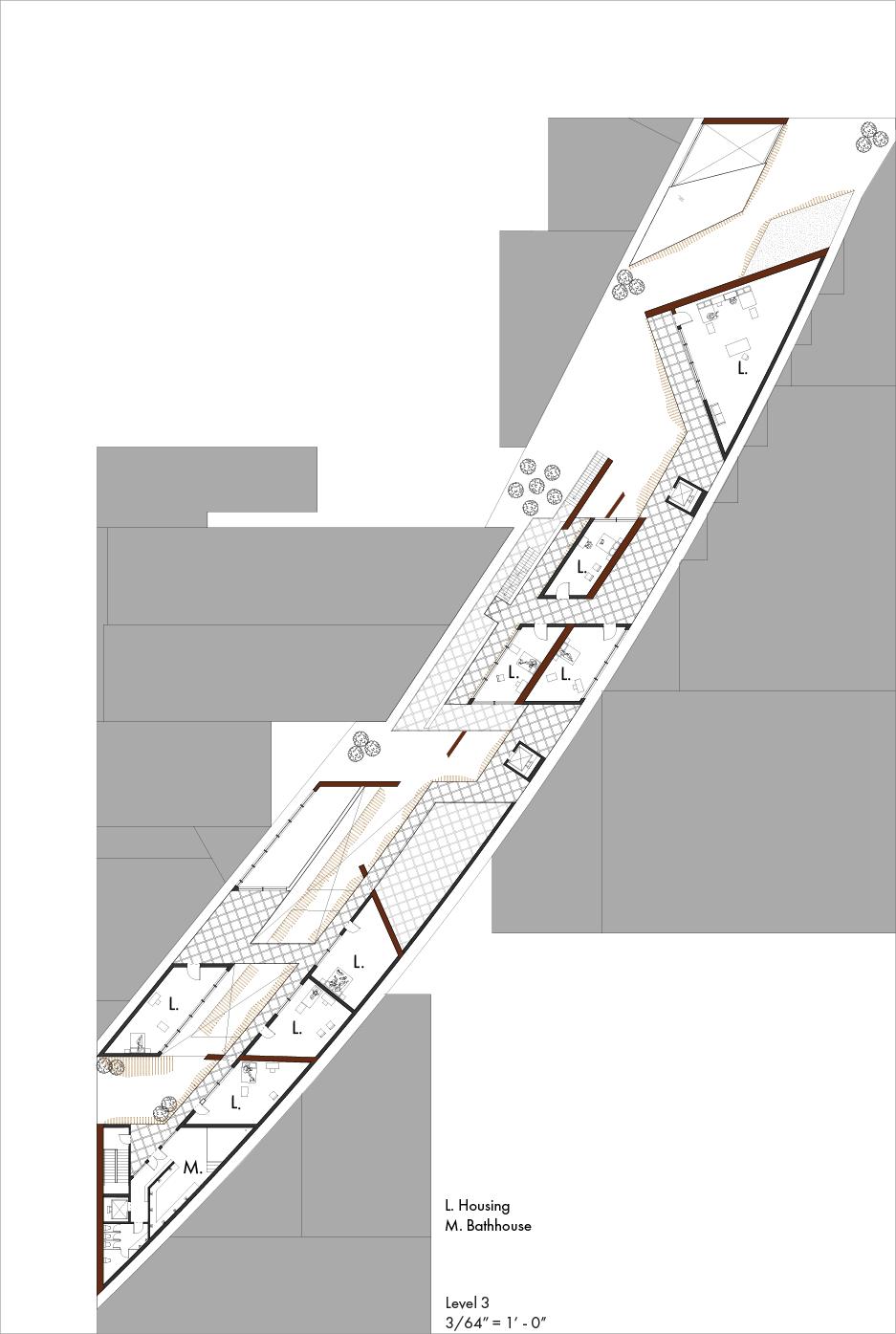
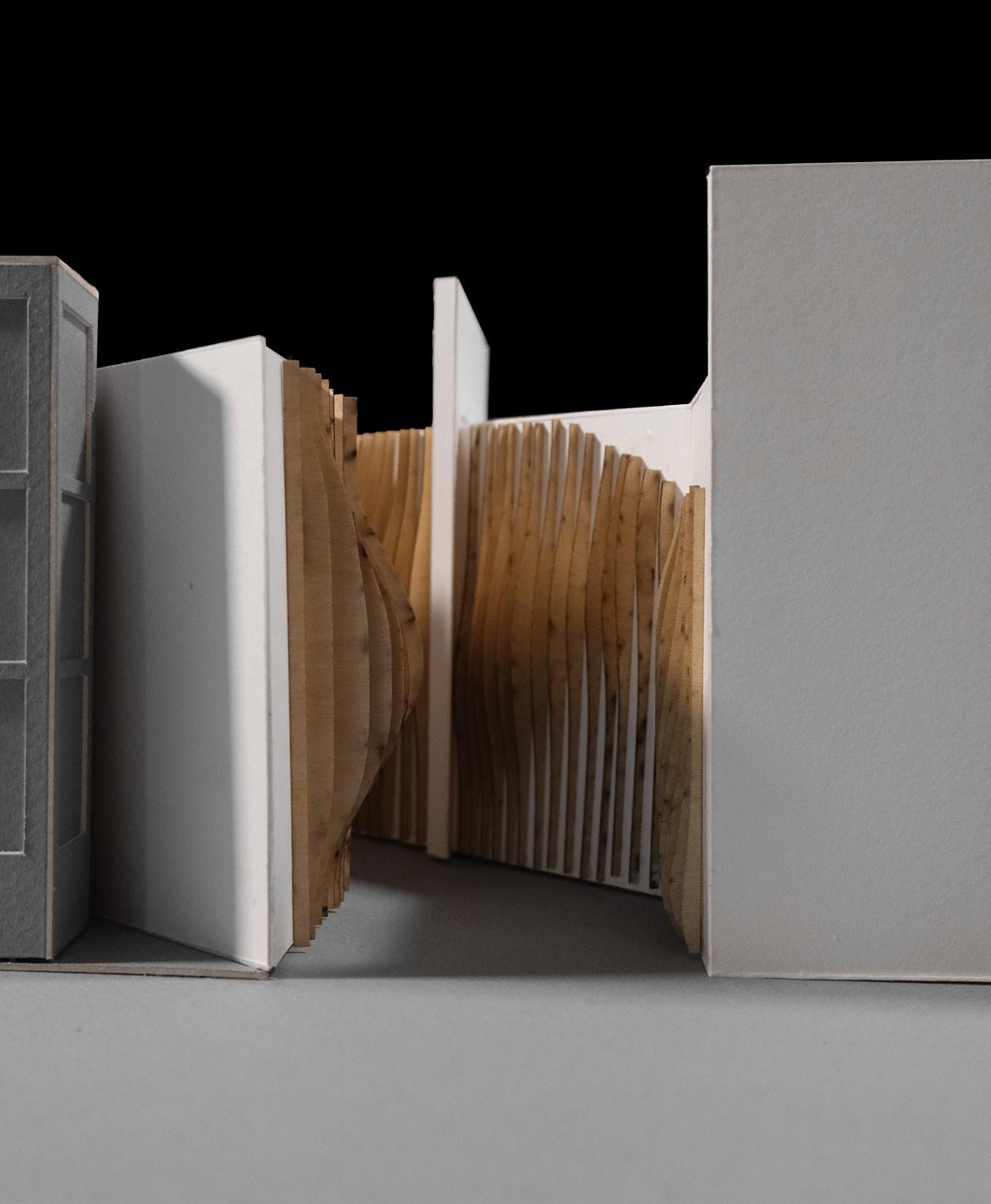
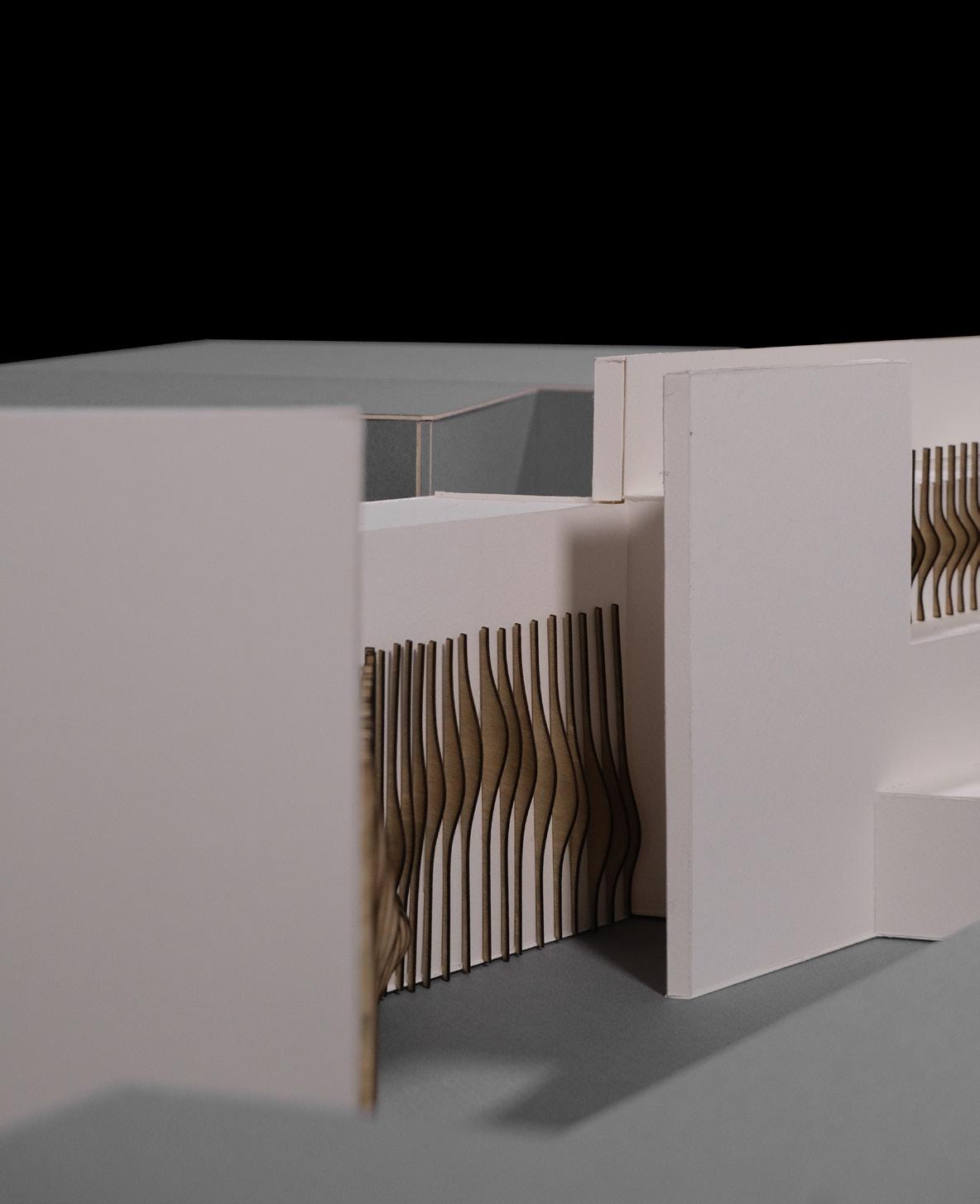
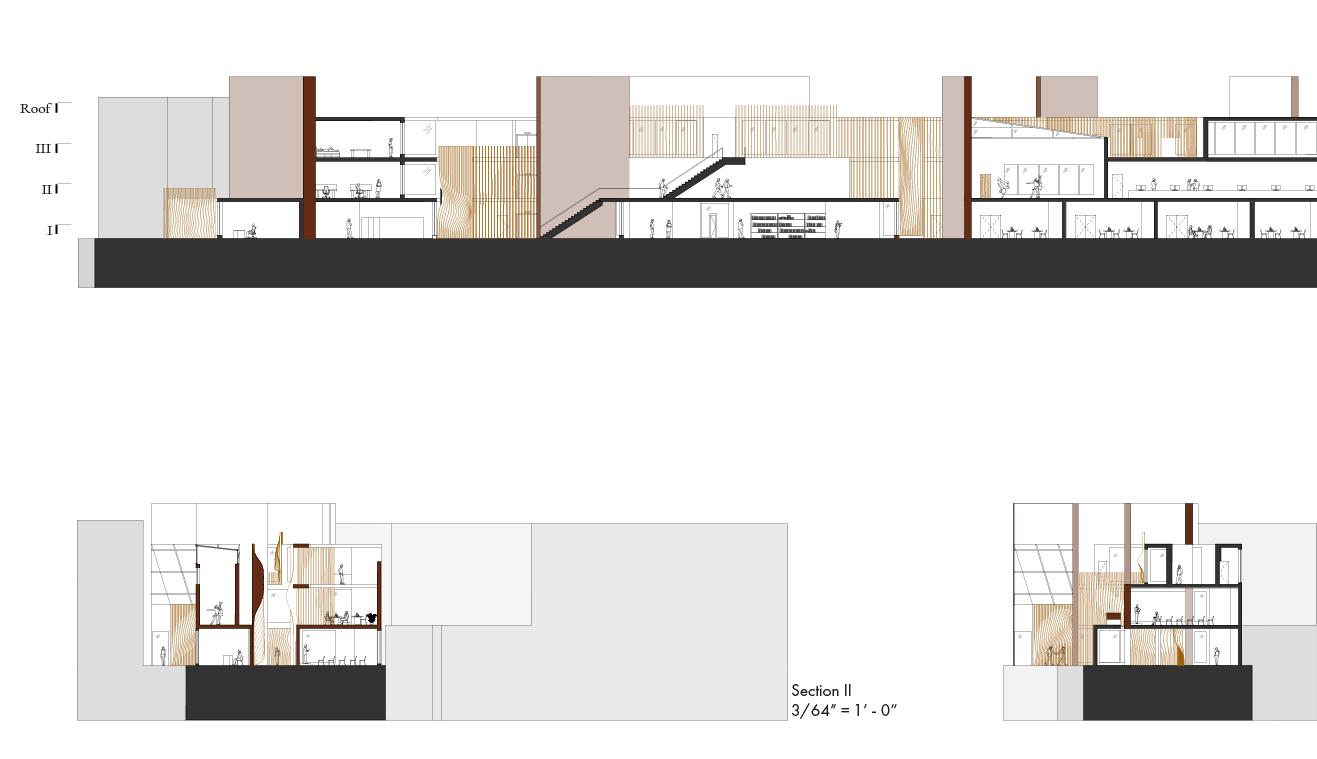
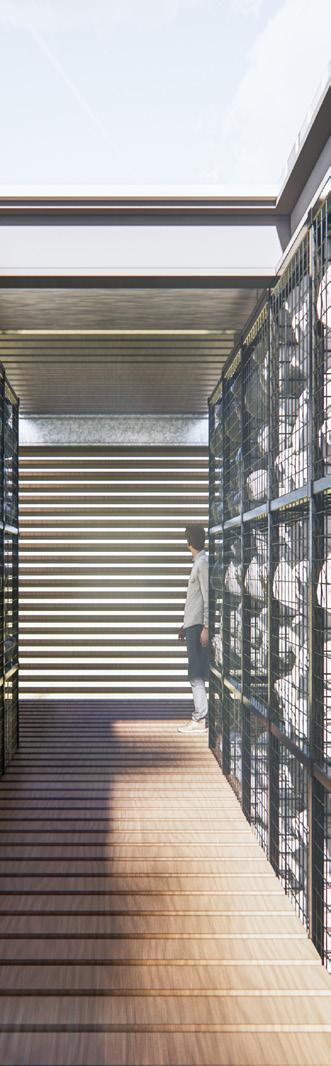
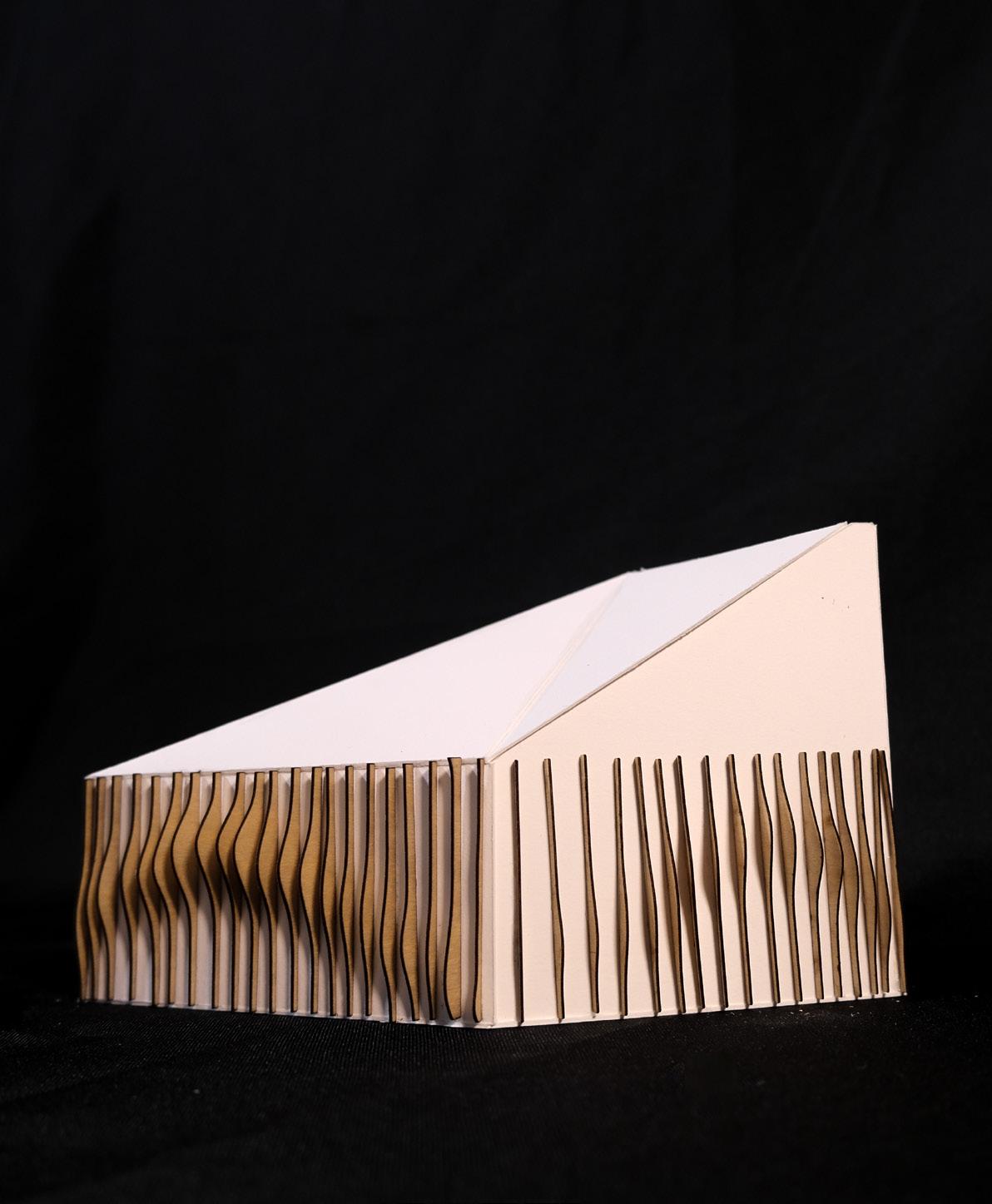
To accentuate the notion of flow, an undulating wood slat envelope was introduced to the non-primary walls. This envelope symbolizes the nomadic artists’ fluid movement, akin to their travels between cities. By mirroring the dynamics of water, this wooden skin infuses vitality into the static architecture, creating a more dynamic and lively spatial experience.
Spring 2022
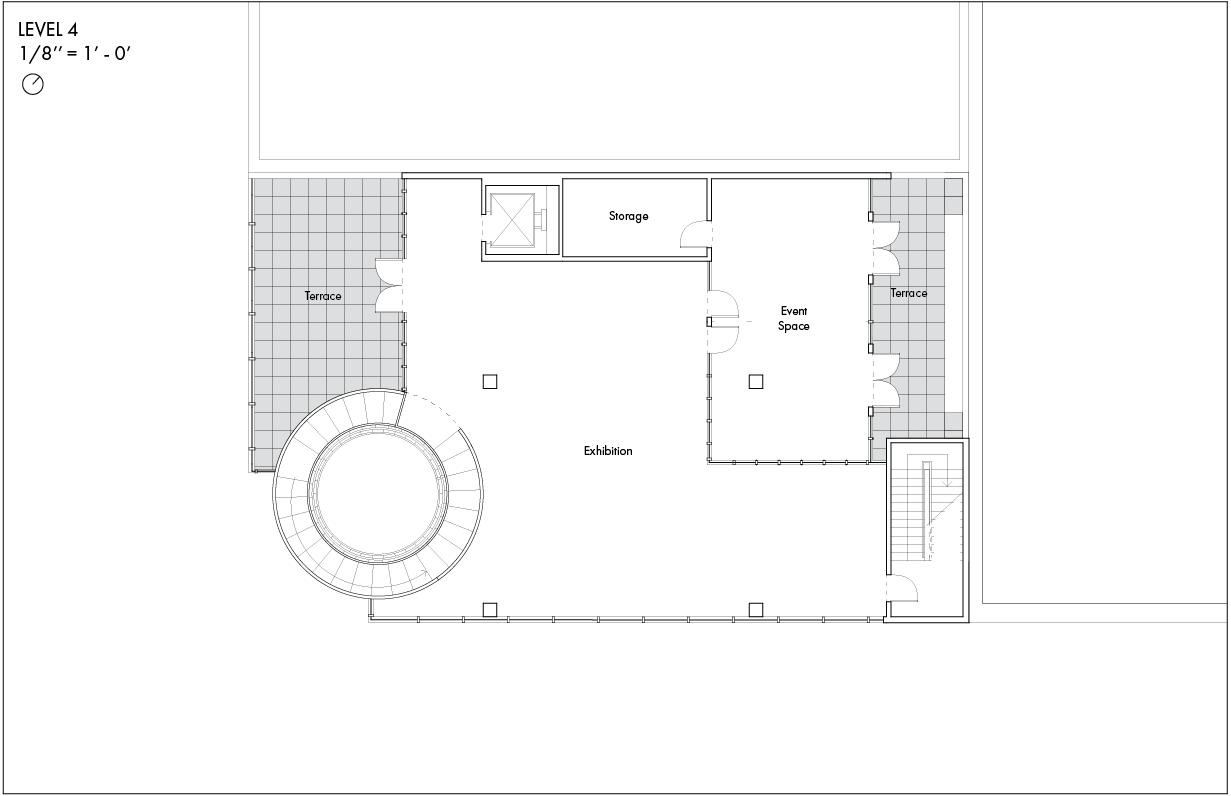
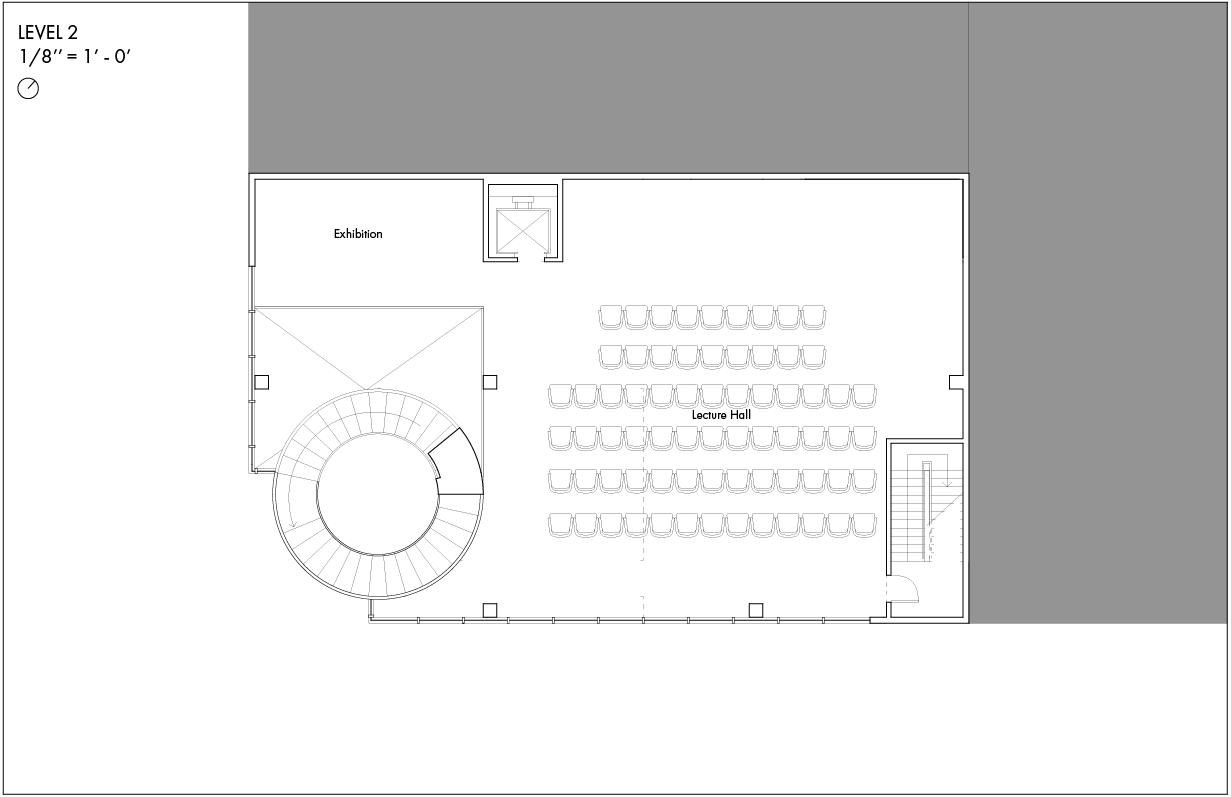
Community Center Design|Arch 100B
Instructor: William Di Napoli
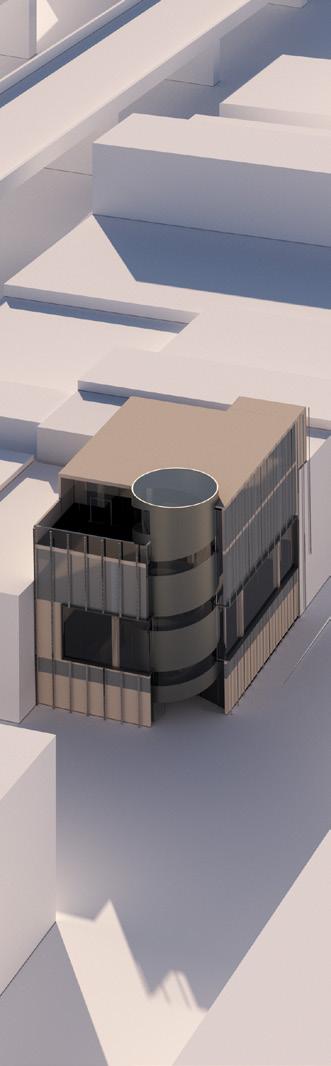
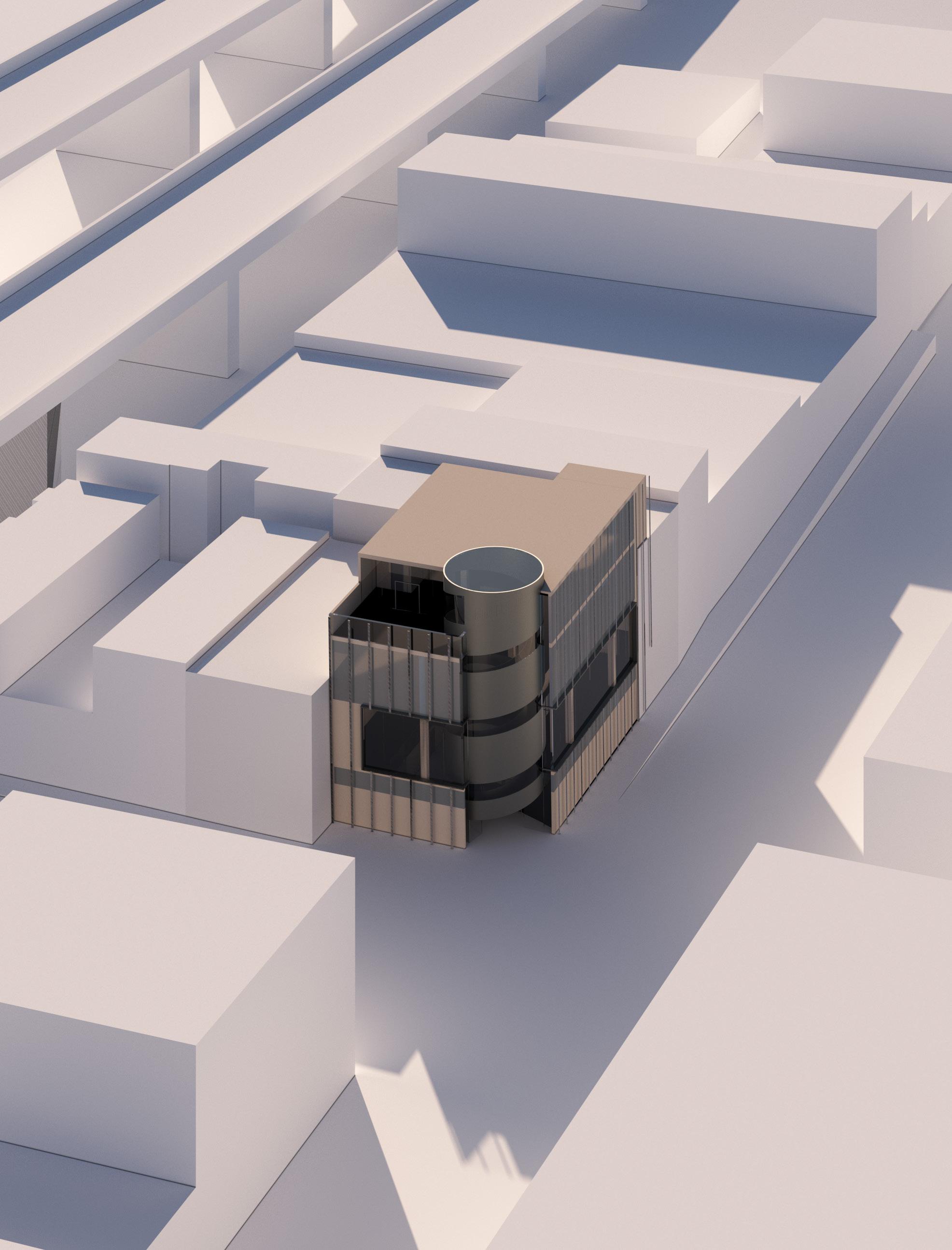
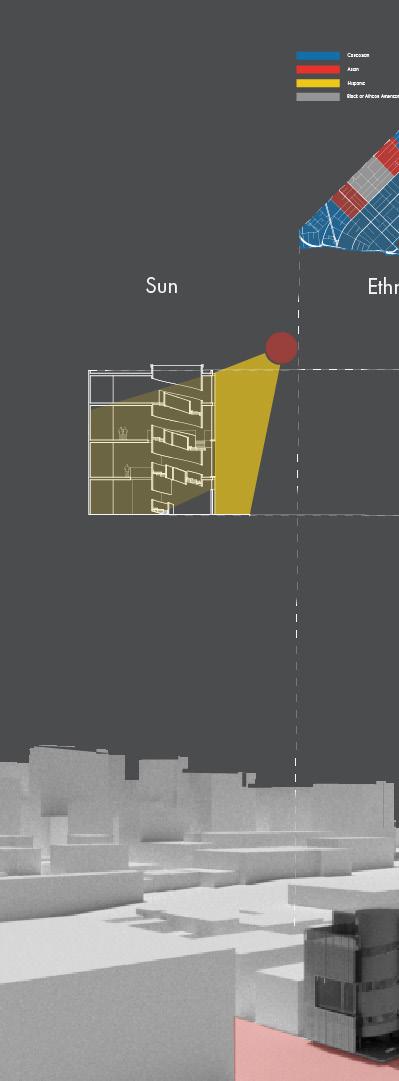
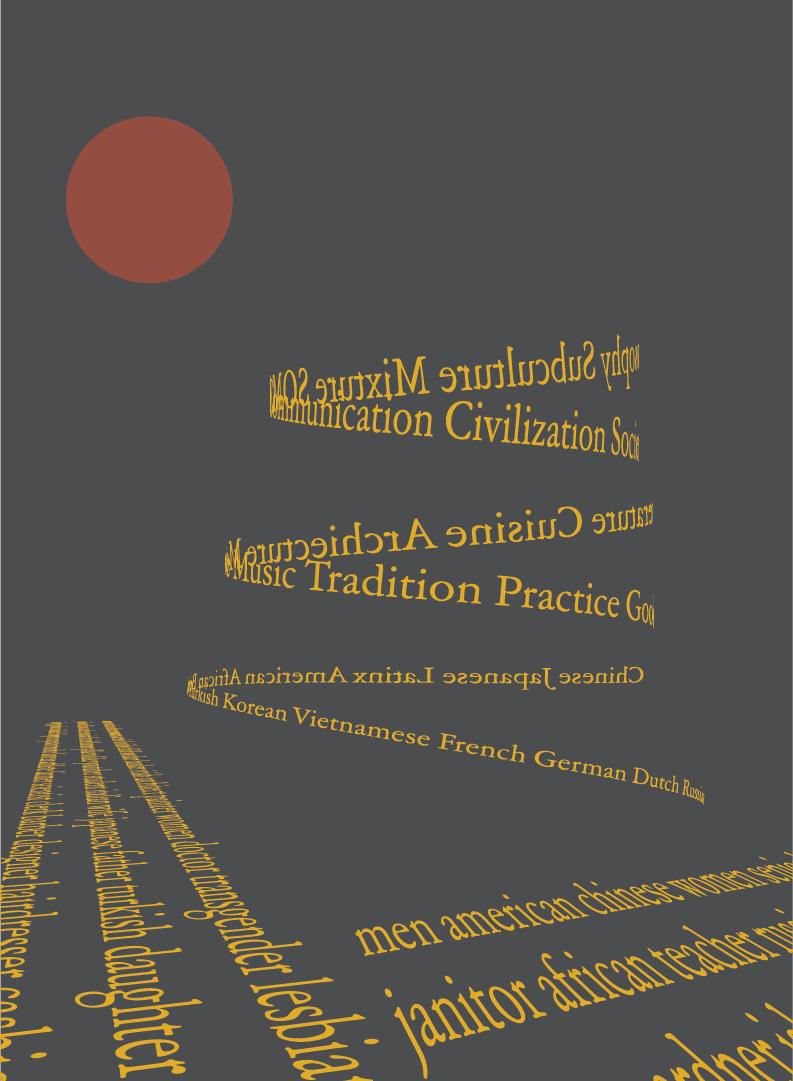
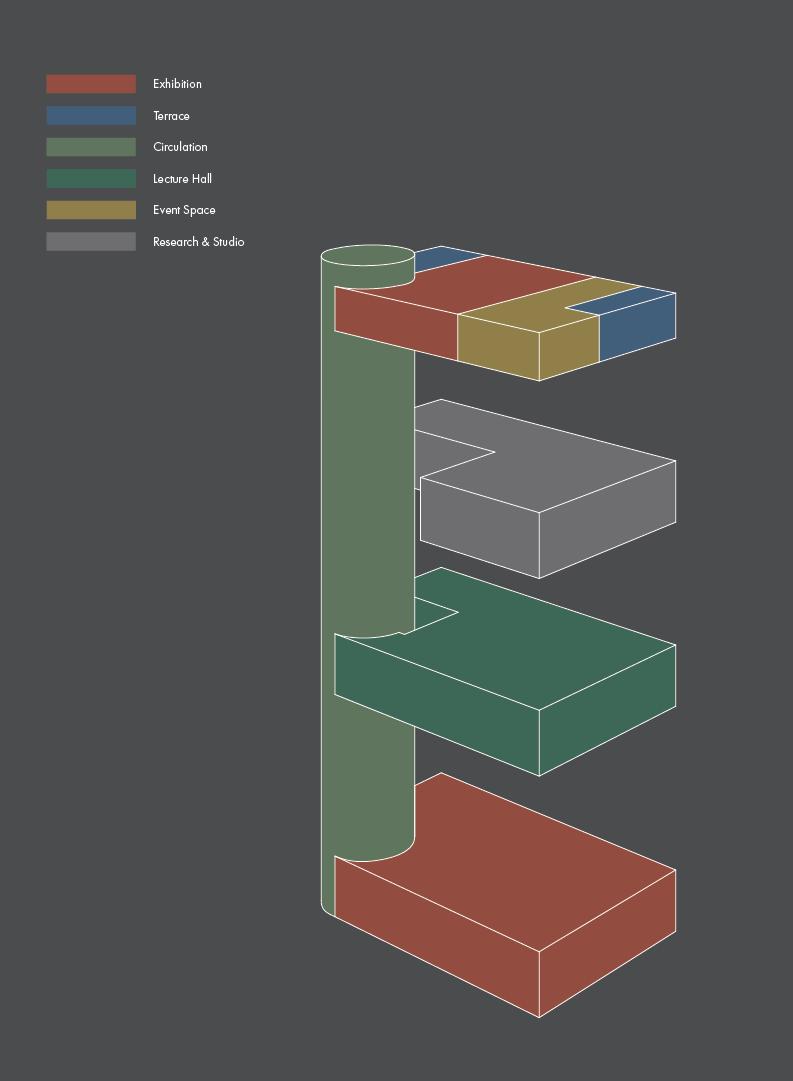
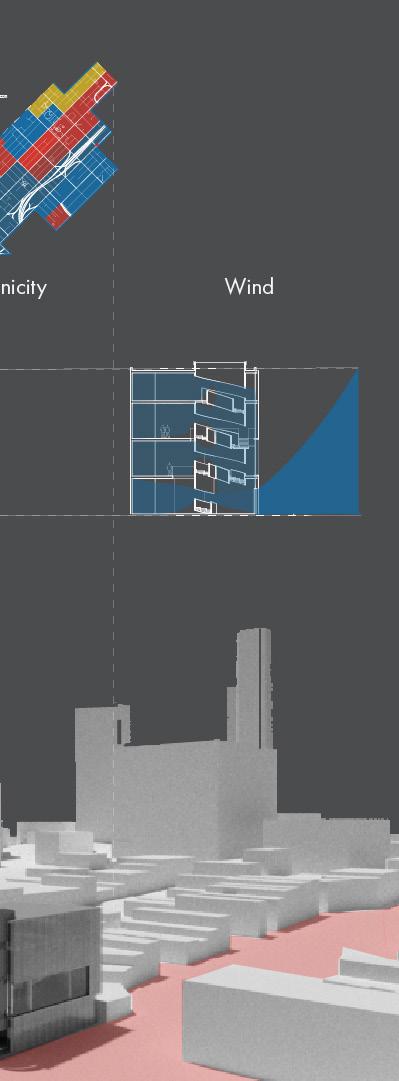
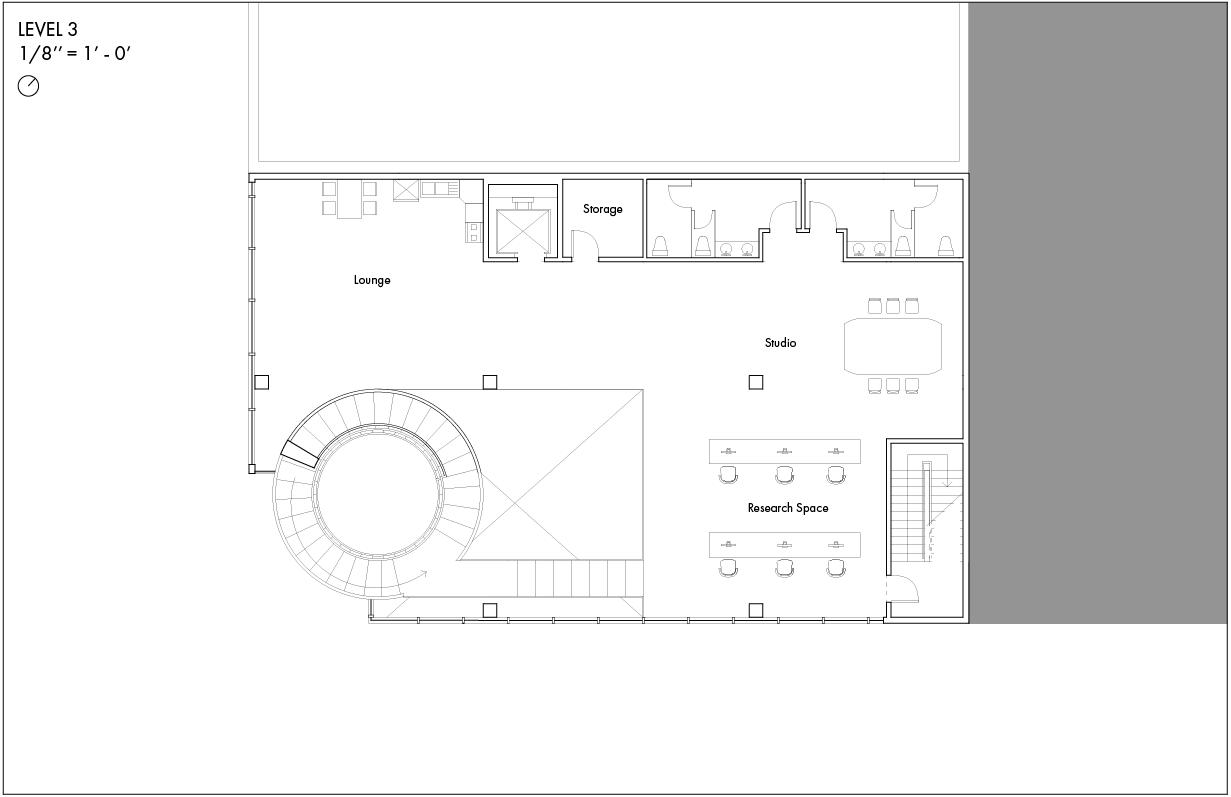
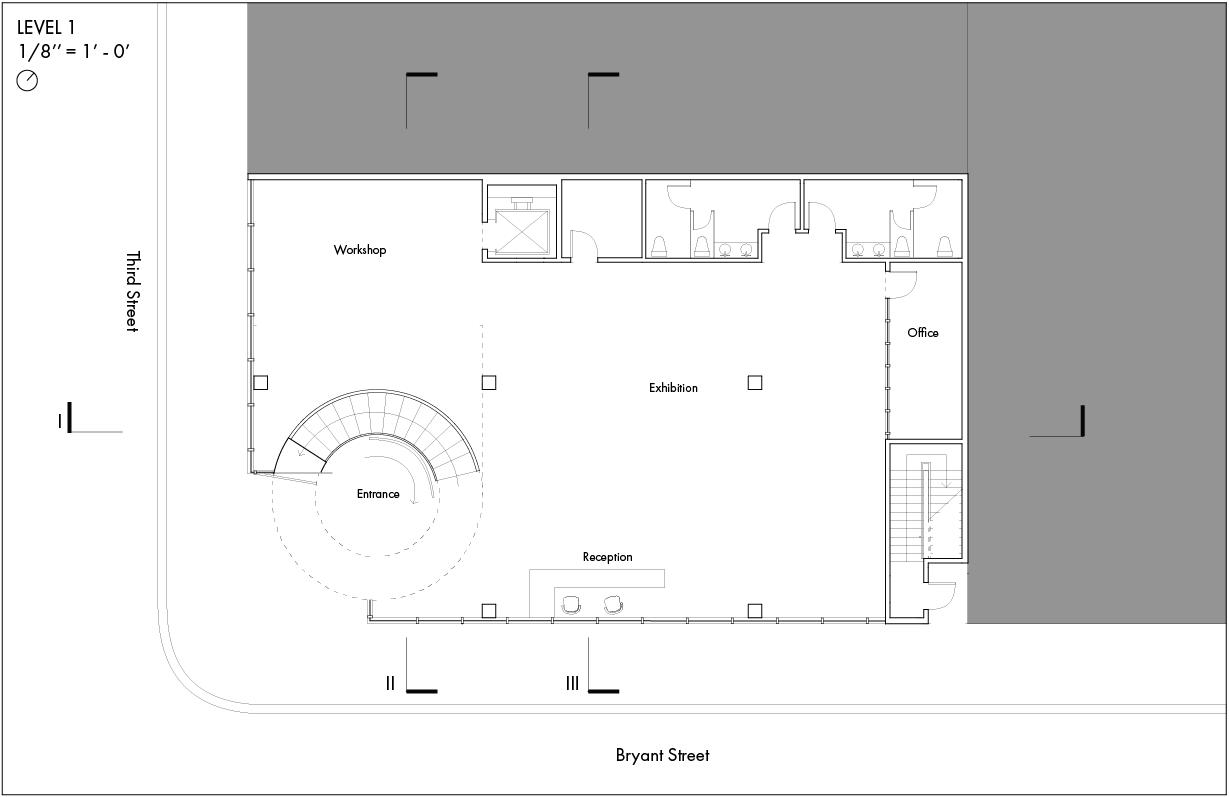
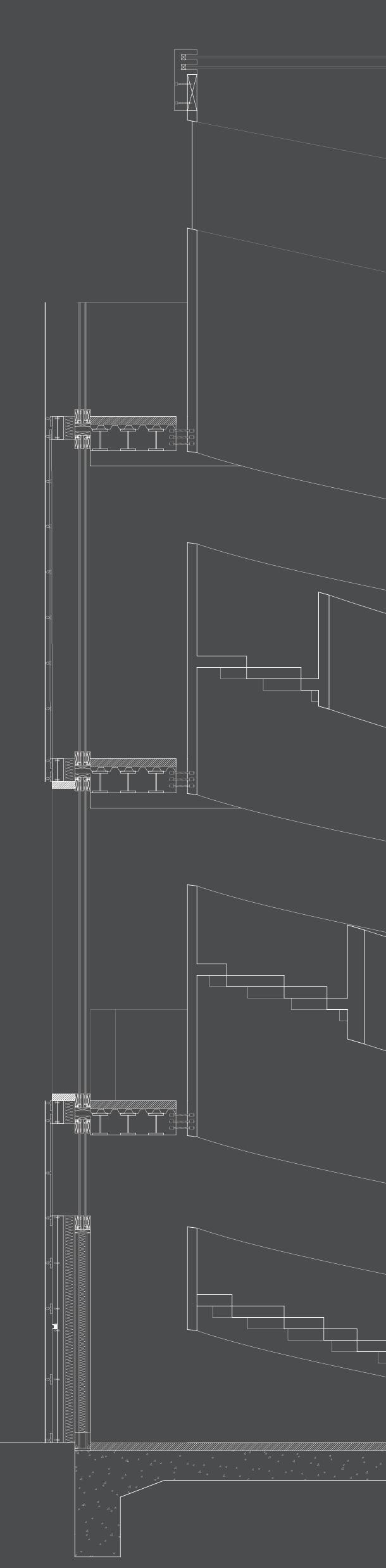
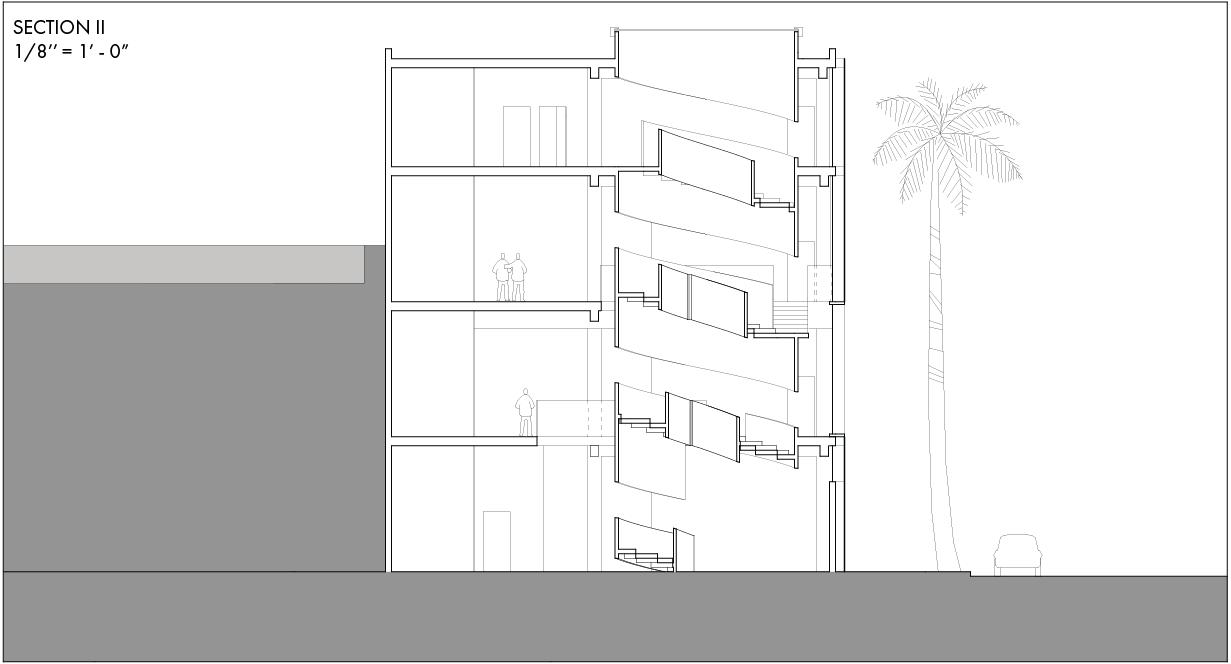
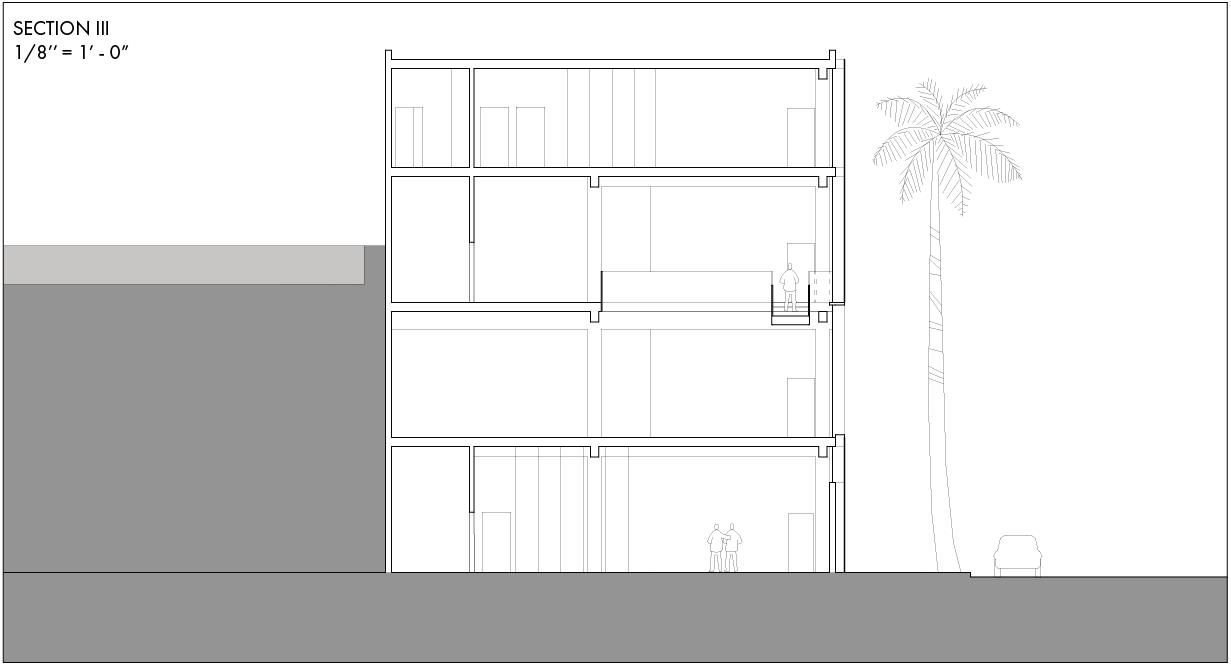
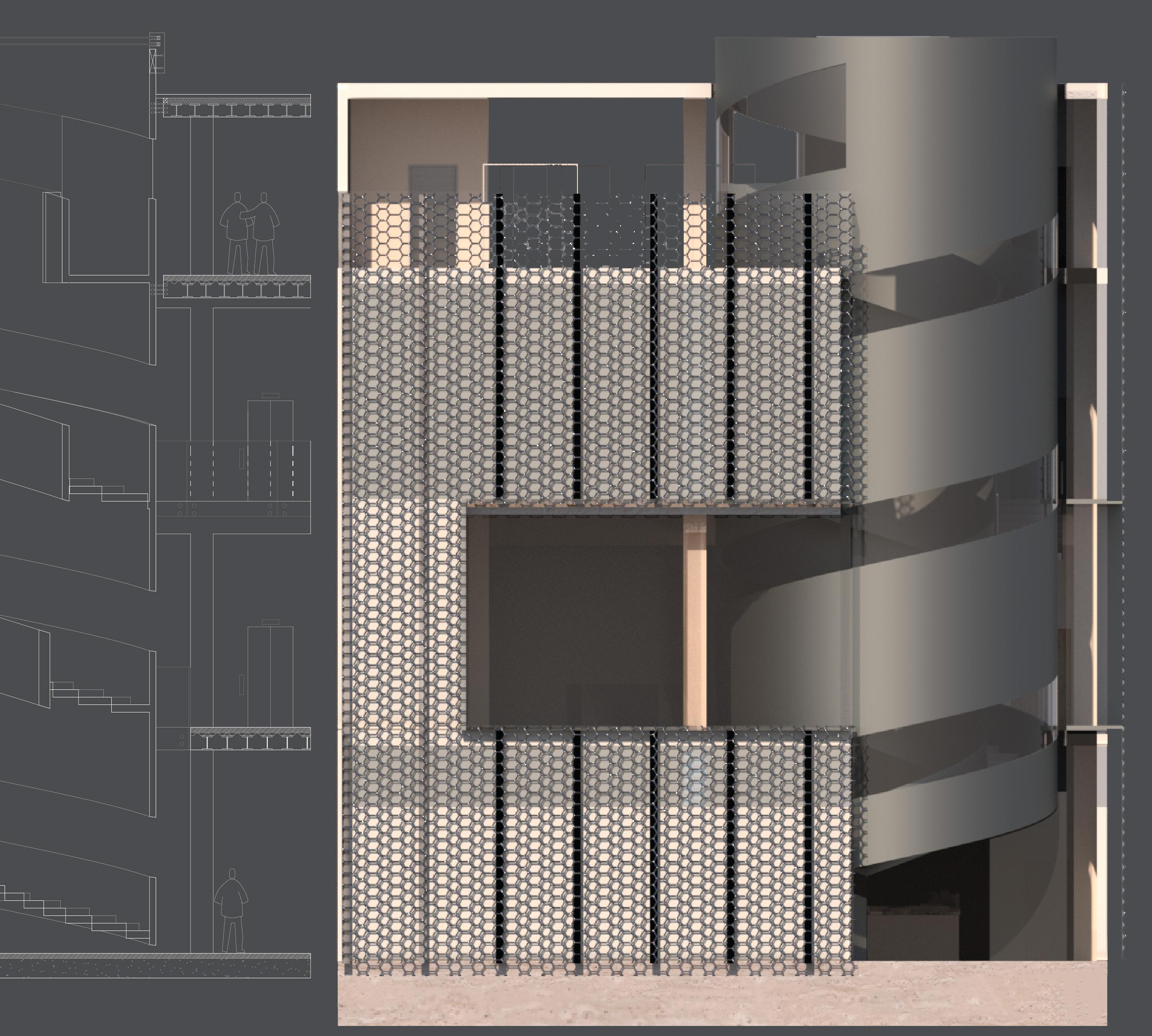
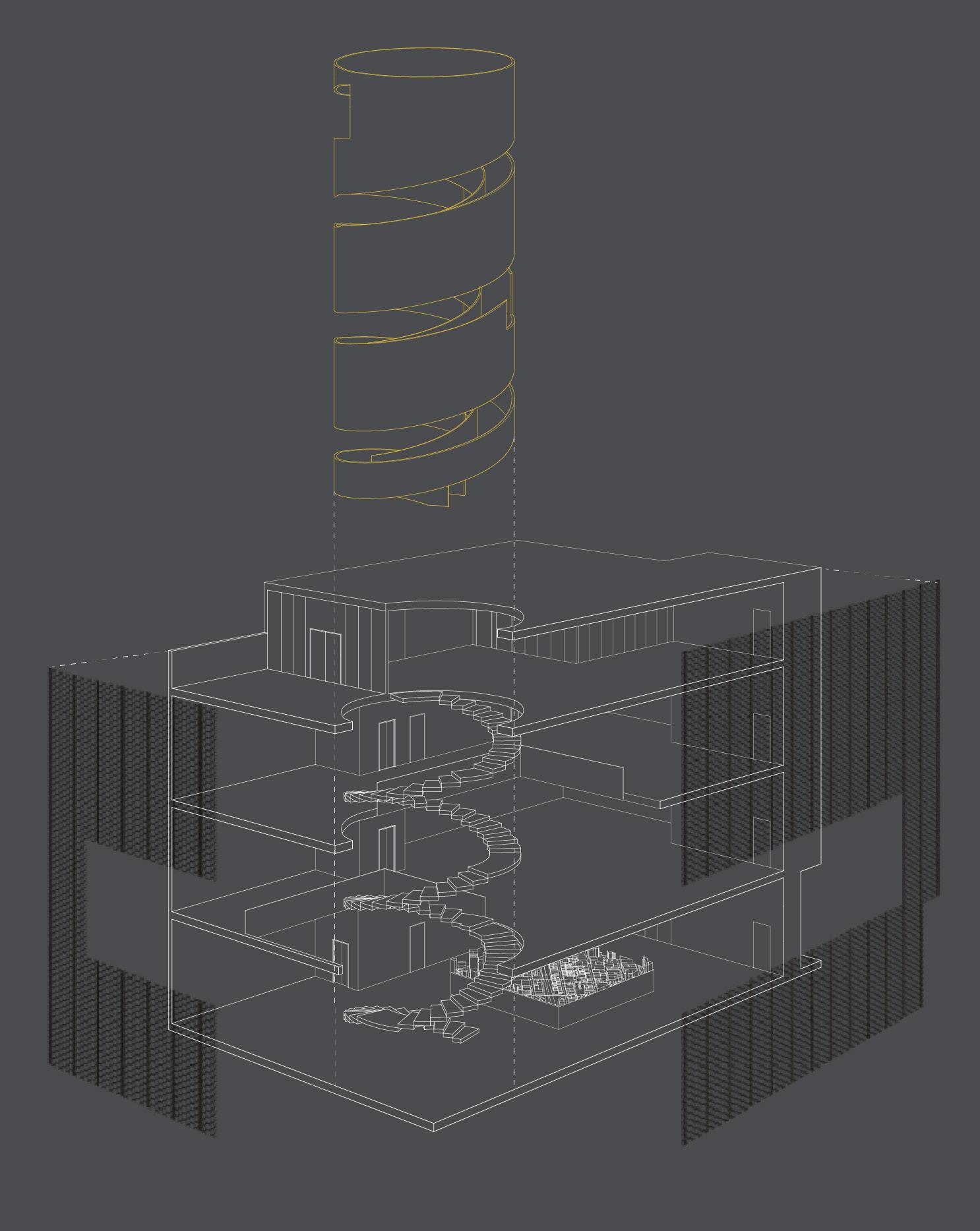
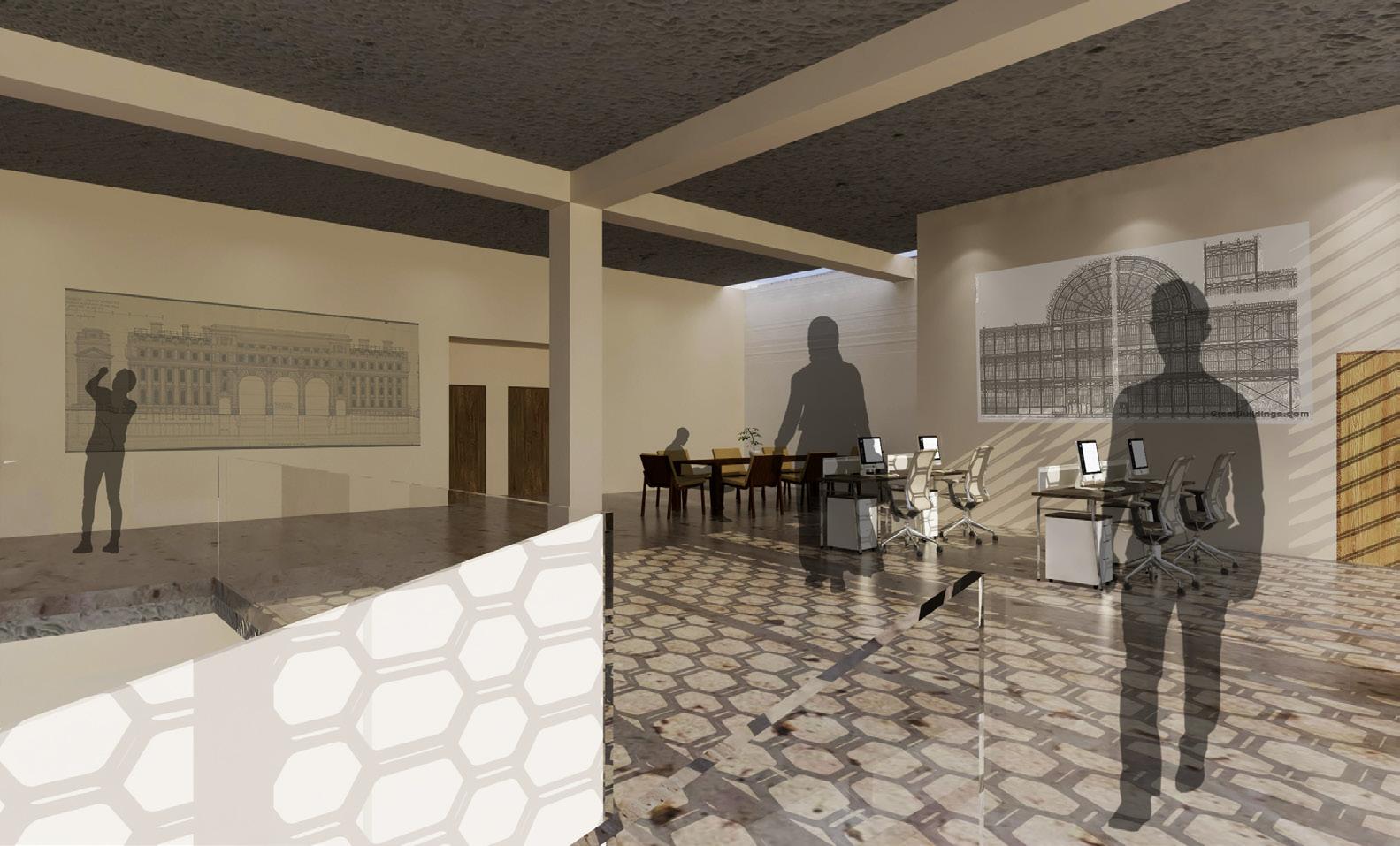
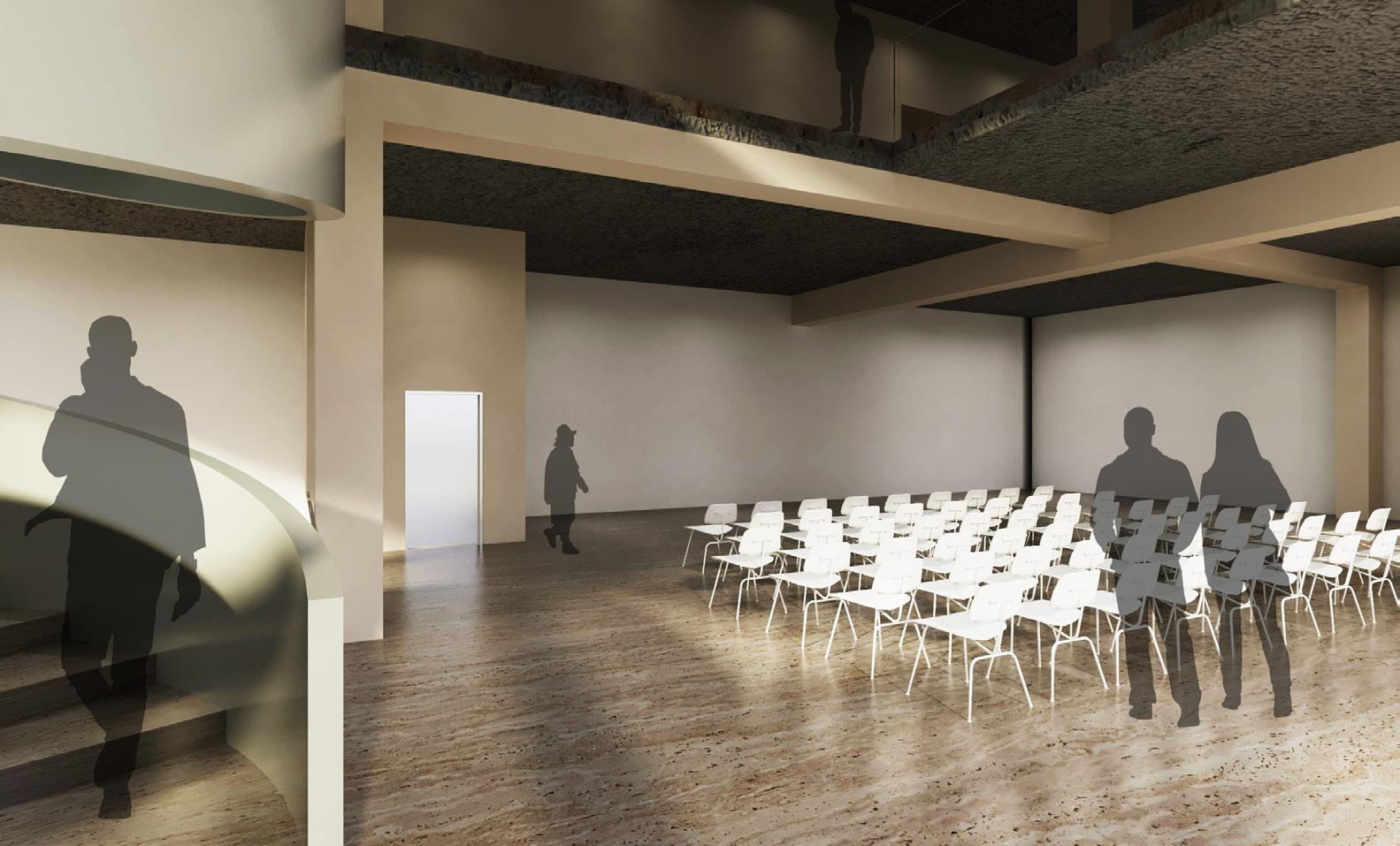
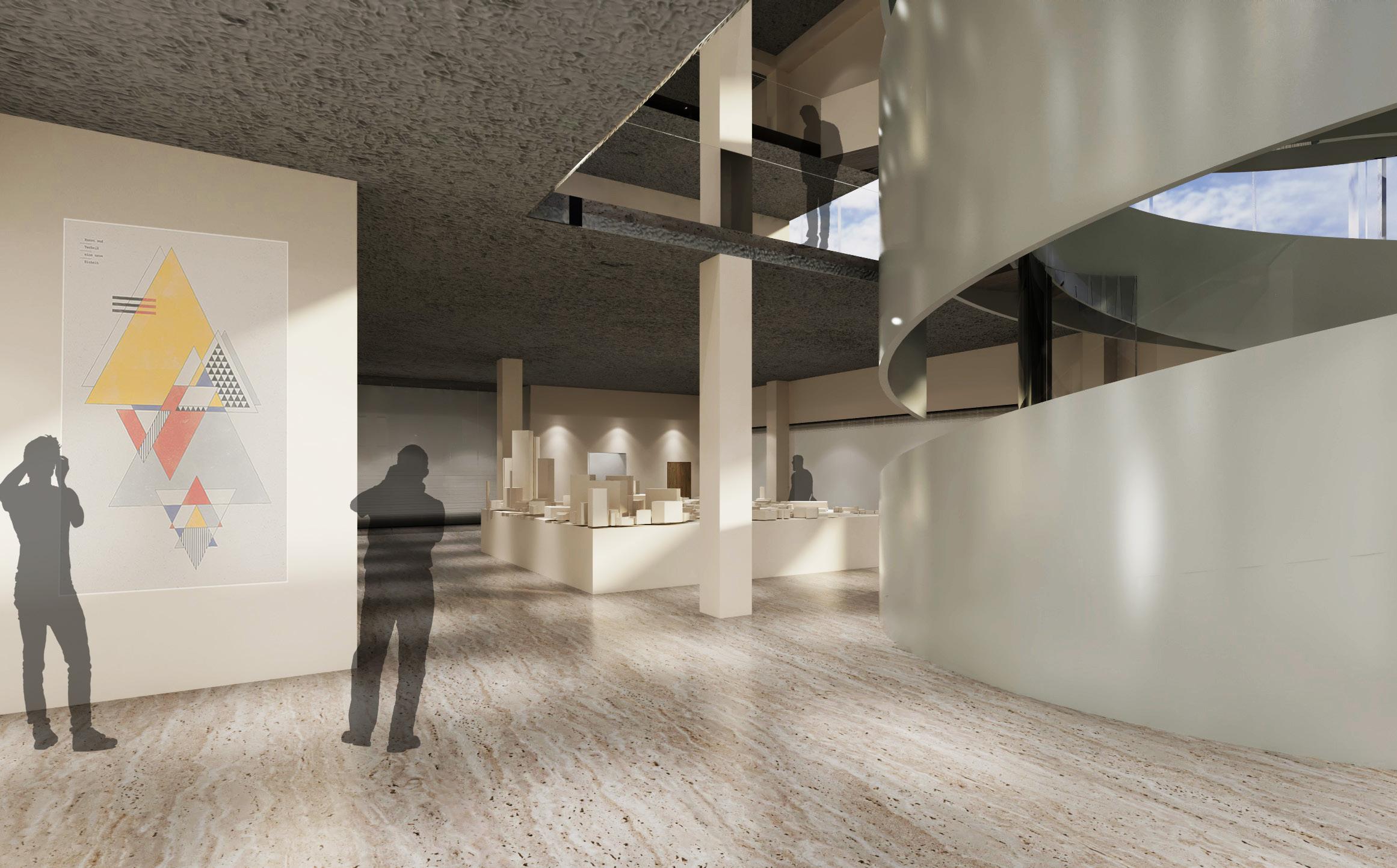
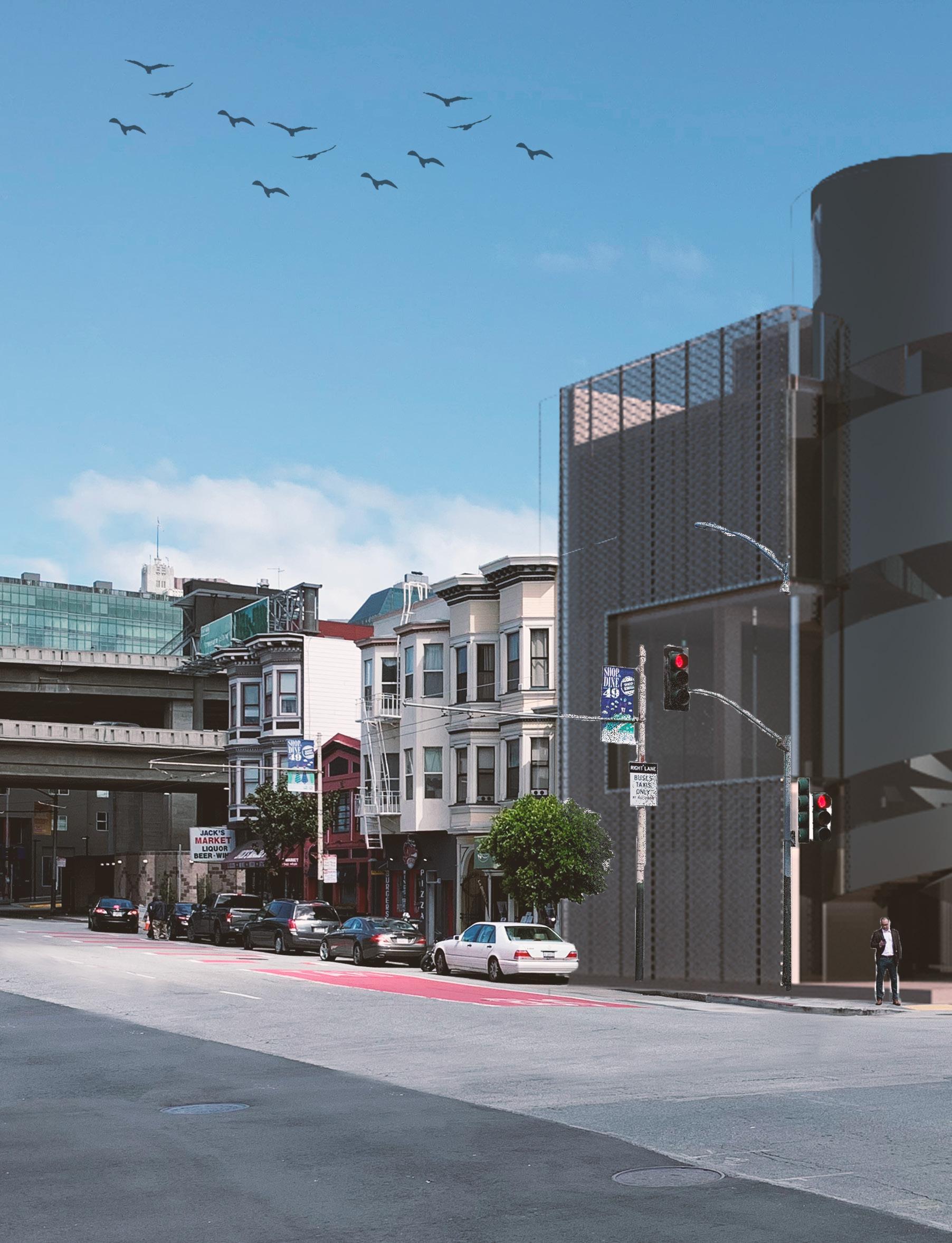
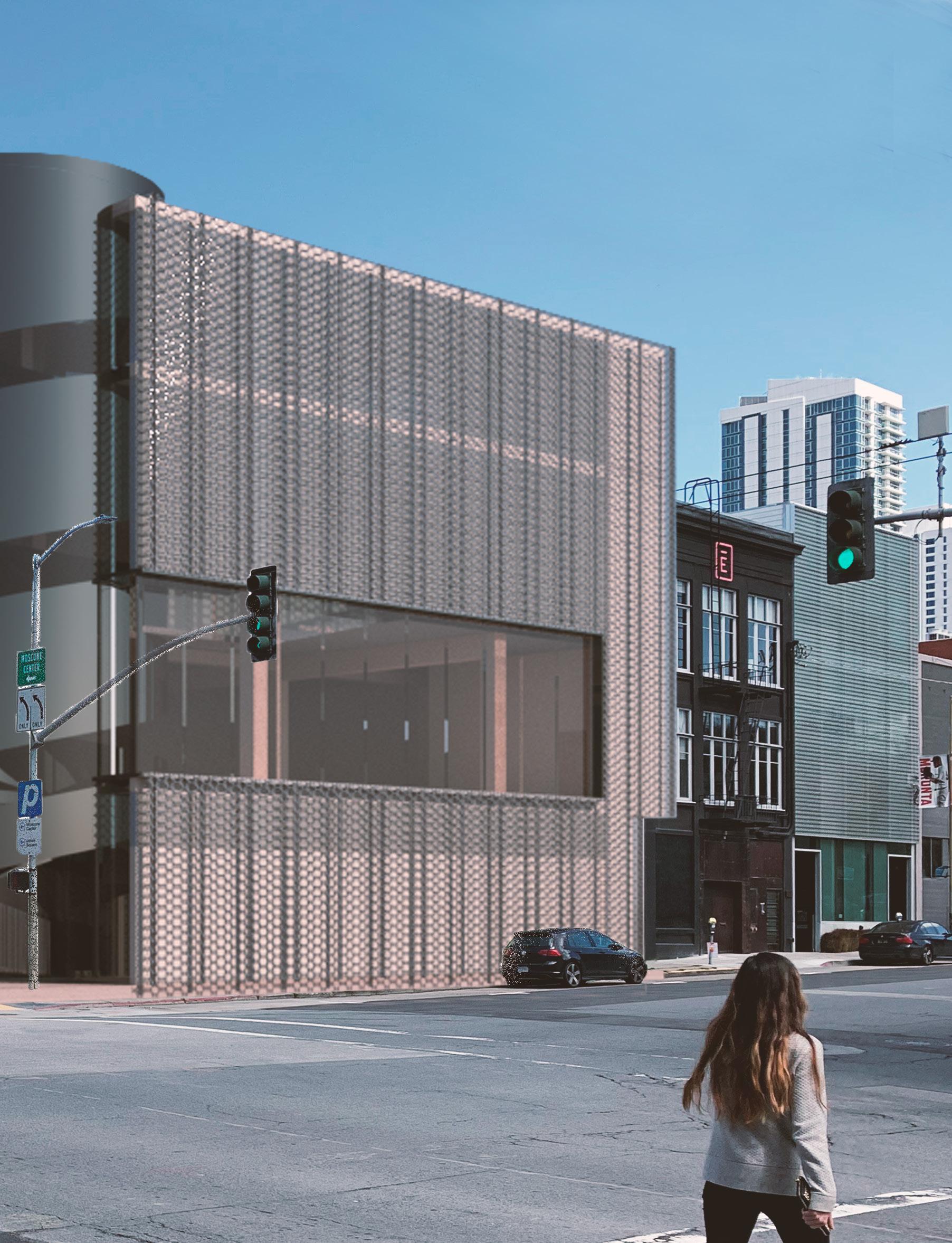
The South of Market neighborhood in San Francisco derives its rich meanings from the diverse resident backgrounds, intertwining a complex narrative within its architectural tapestry. At its core, a prominent cylinder shape functions as a pivotal hub for spatial circulation, driving dynamic interactions. Diverse societal roles converge from nearby streets, engaging in a harmonious exchange within the swirl-like circulation. This orchestrated interaction achieves a vibrant fusion of cultures on varying scales, fostering a multi-dimensional cultural fabric. The neighborhood’s architectural design unites with human dynamics, exemplifying a synergy that weaves individual narratives into a collective urban story.
This portfolio section features works from previous courses, collaborative projects from participated competitions, and photography.
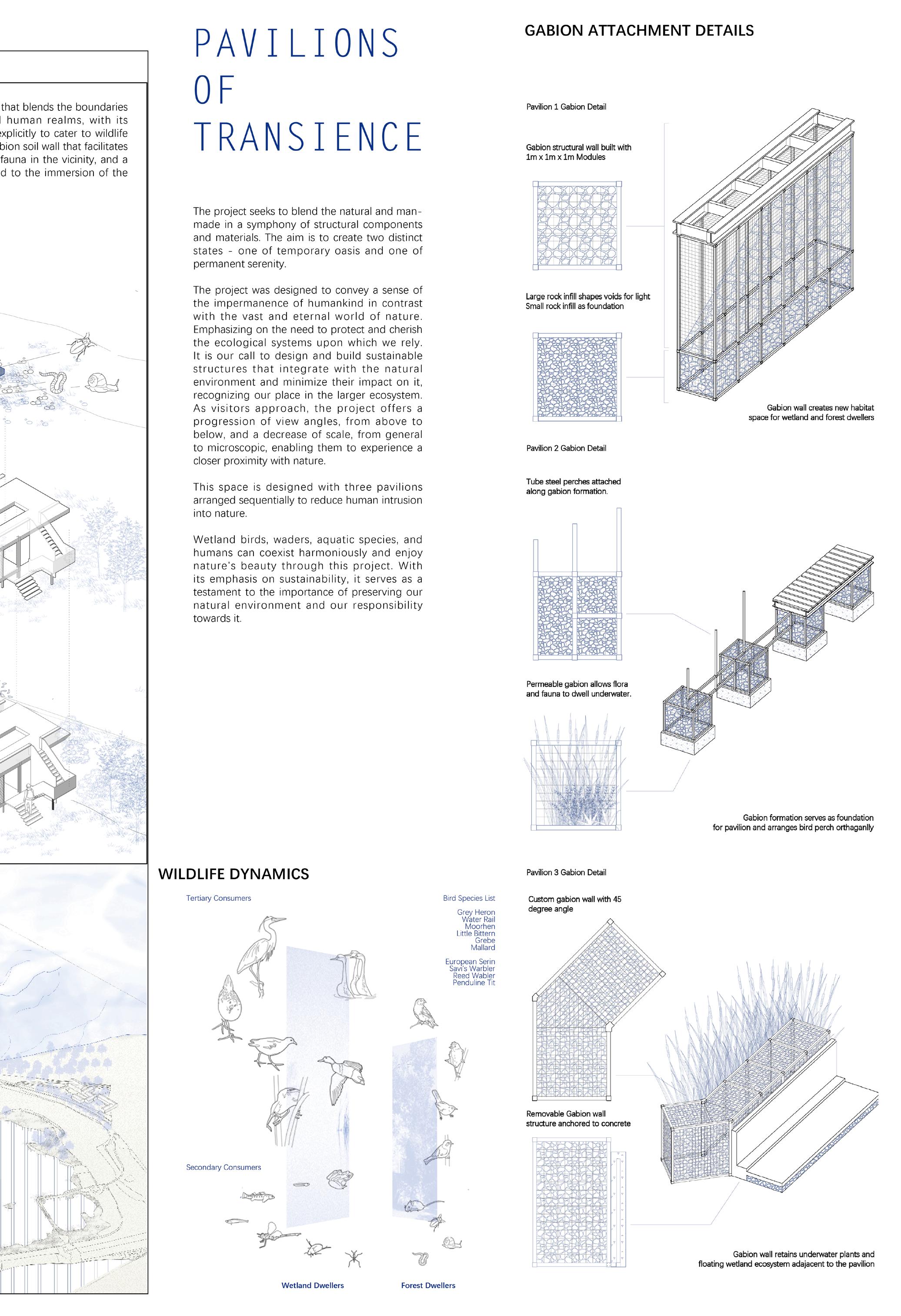
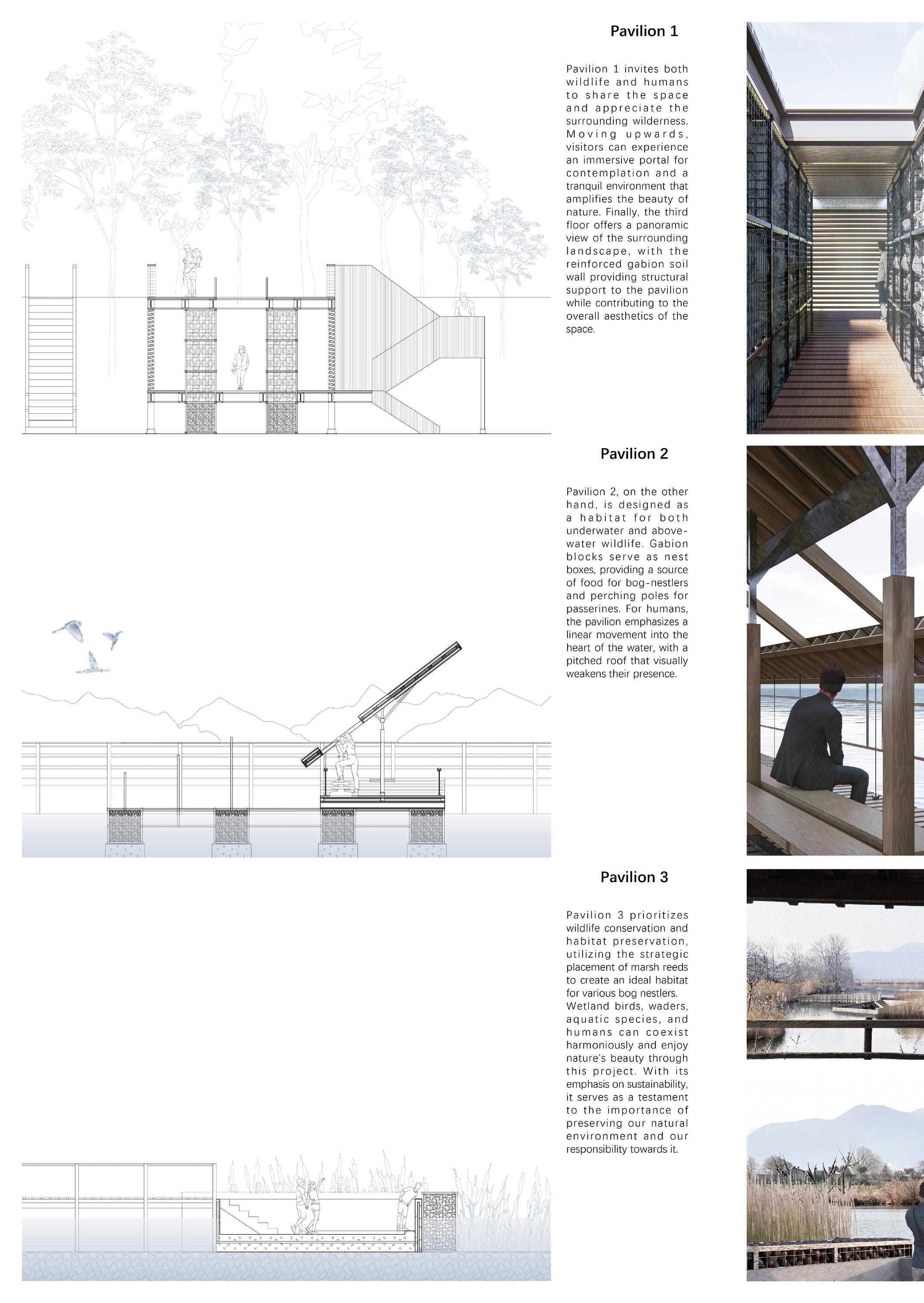
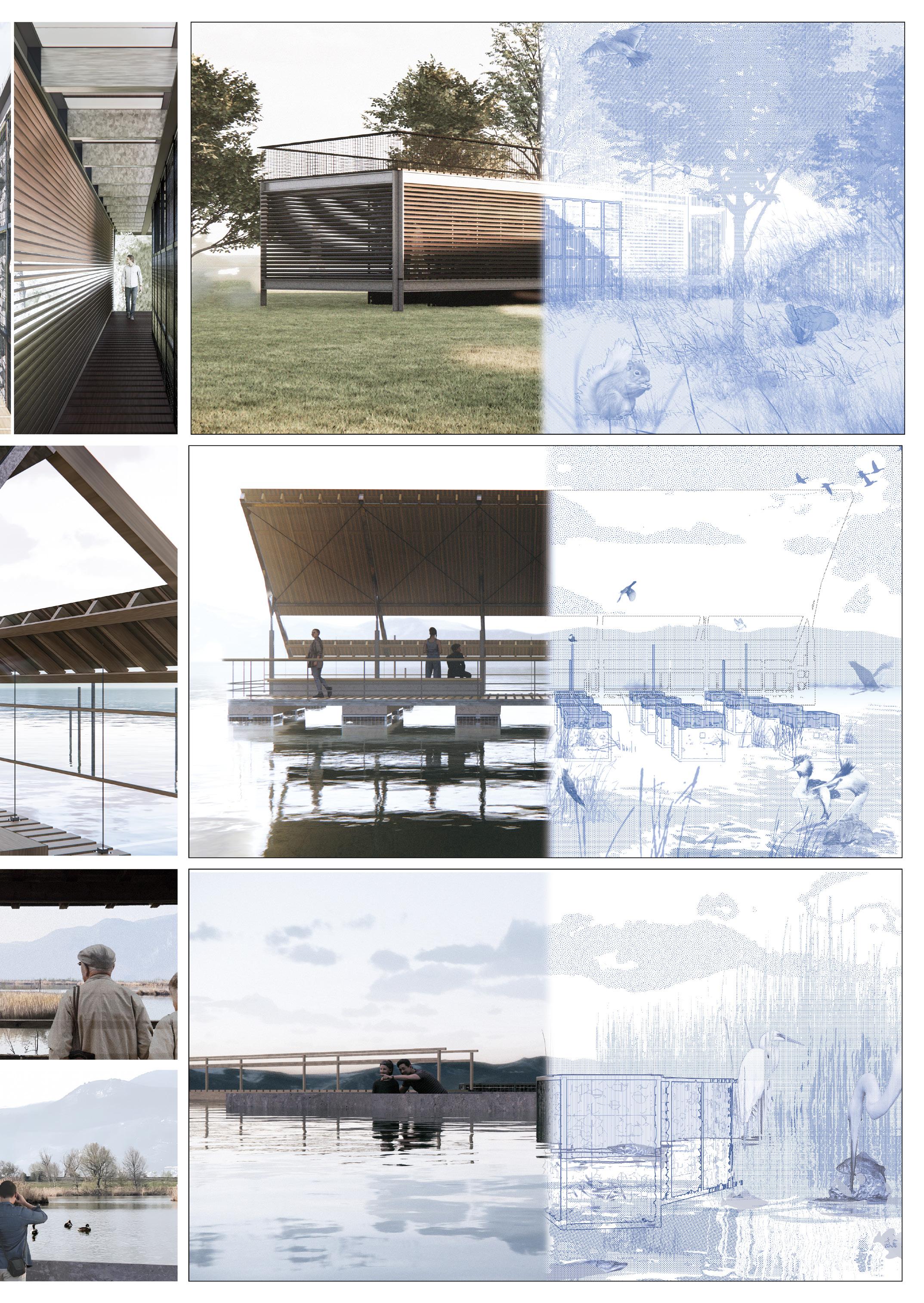
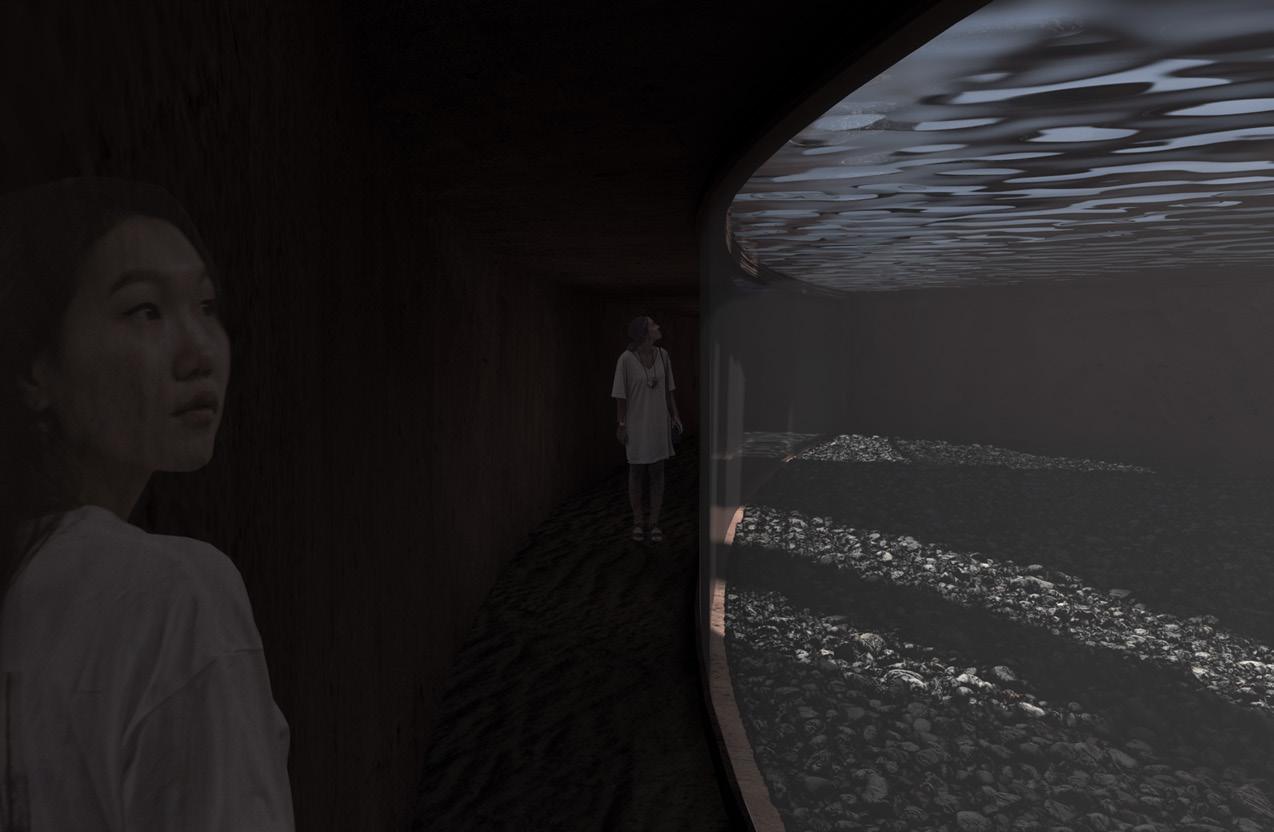
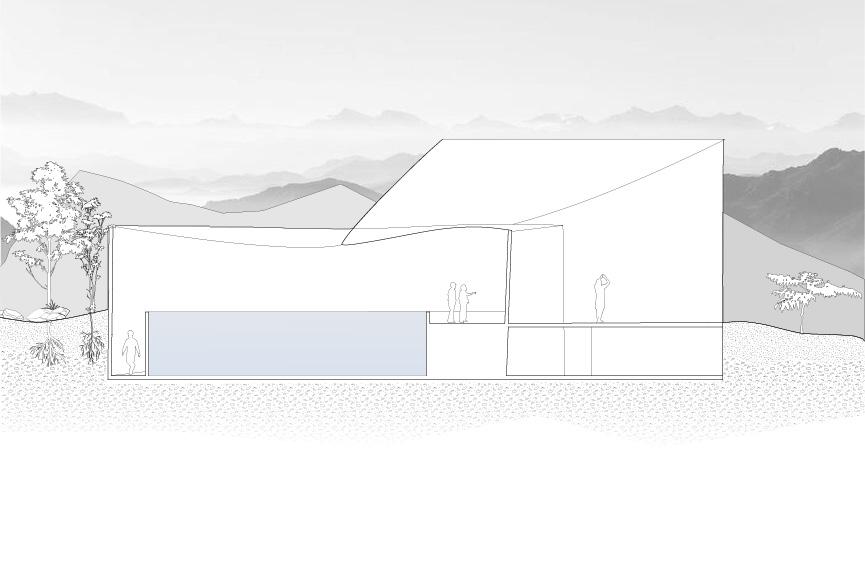
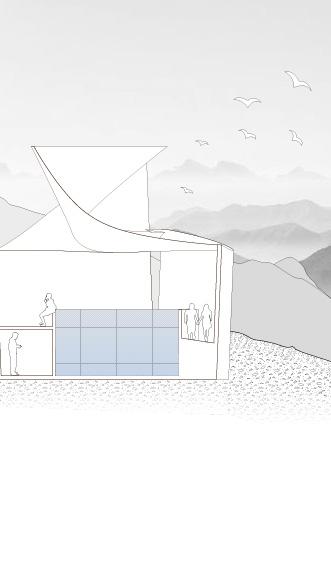
Collaborative Work: Darren Sun, Project submitted for Wildlife Pavilions

Sun, Edward Gu, and Riley Jiang
Pavilions hosted by Terraviva Competitions.

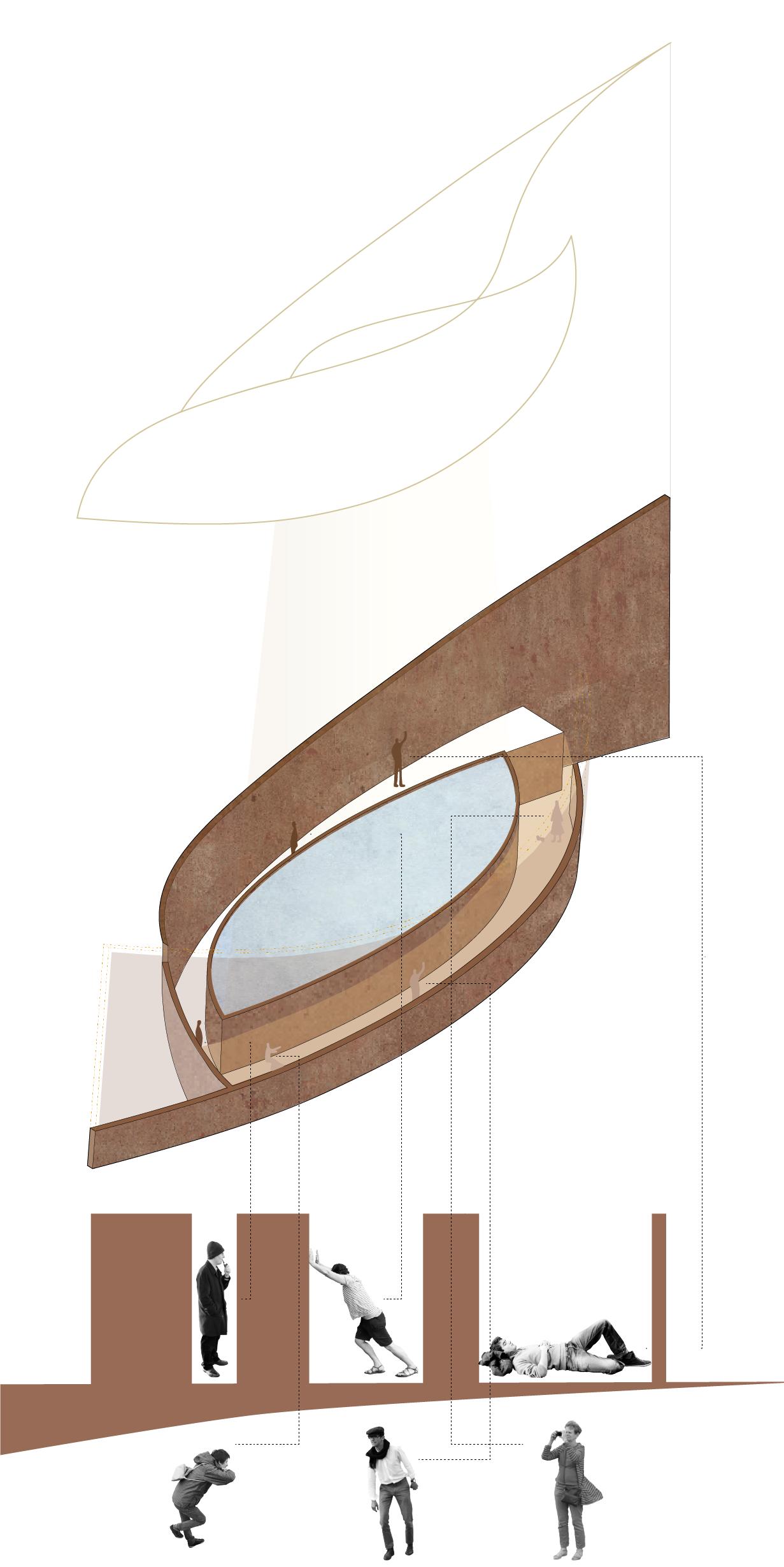
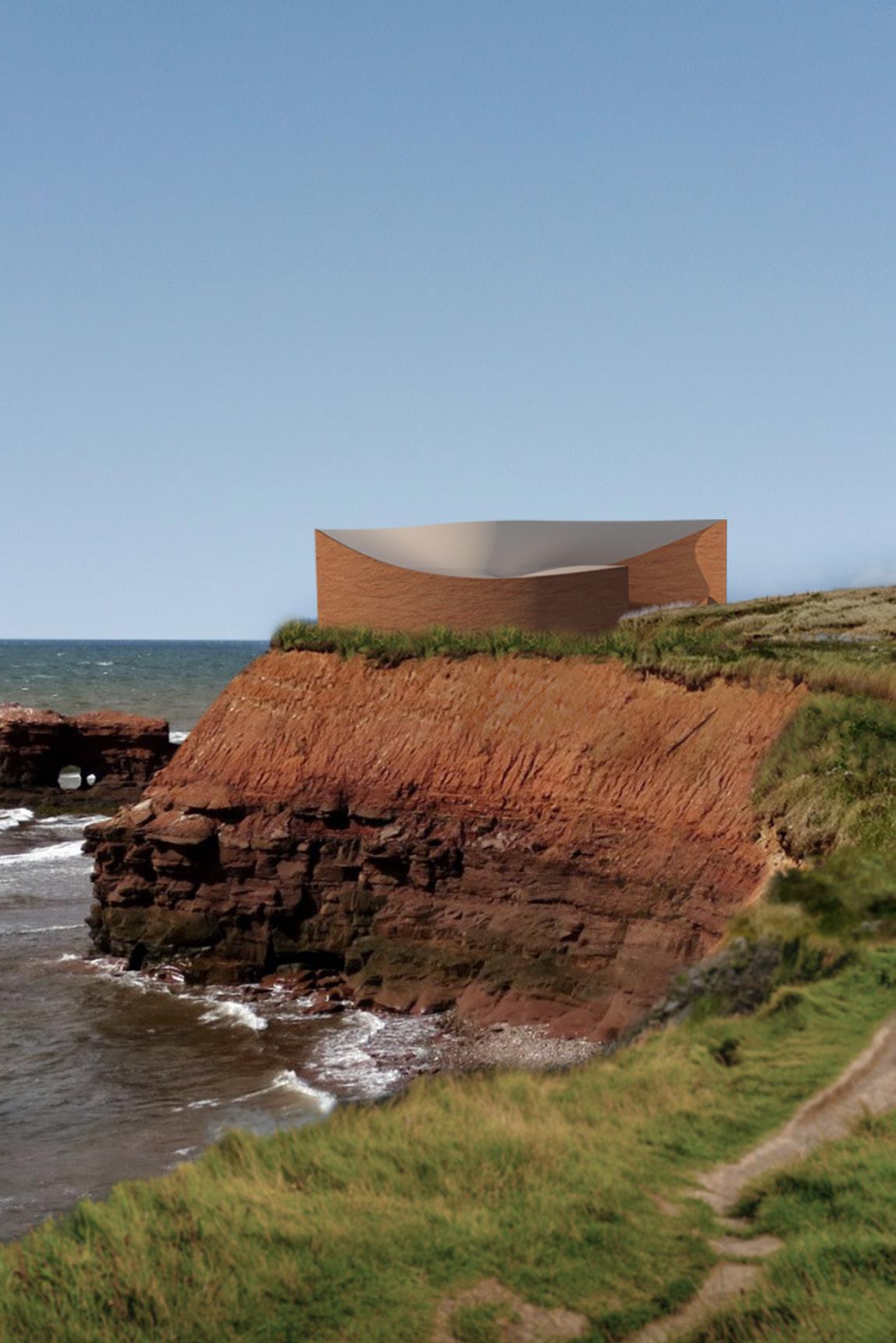
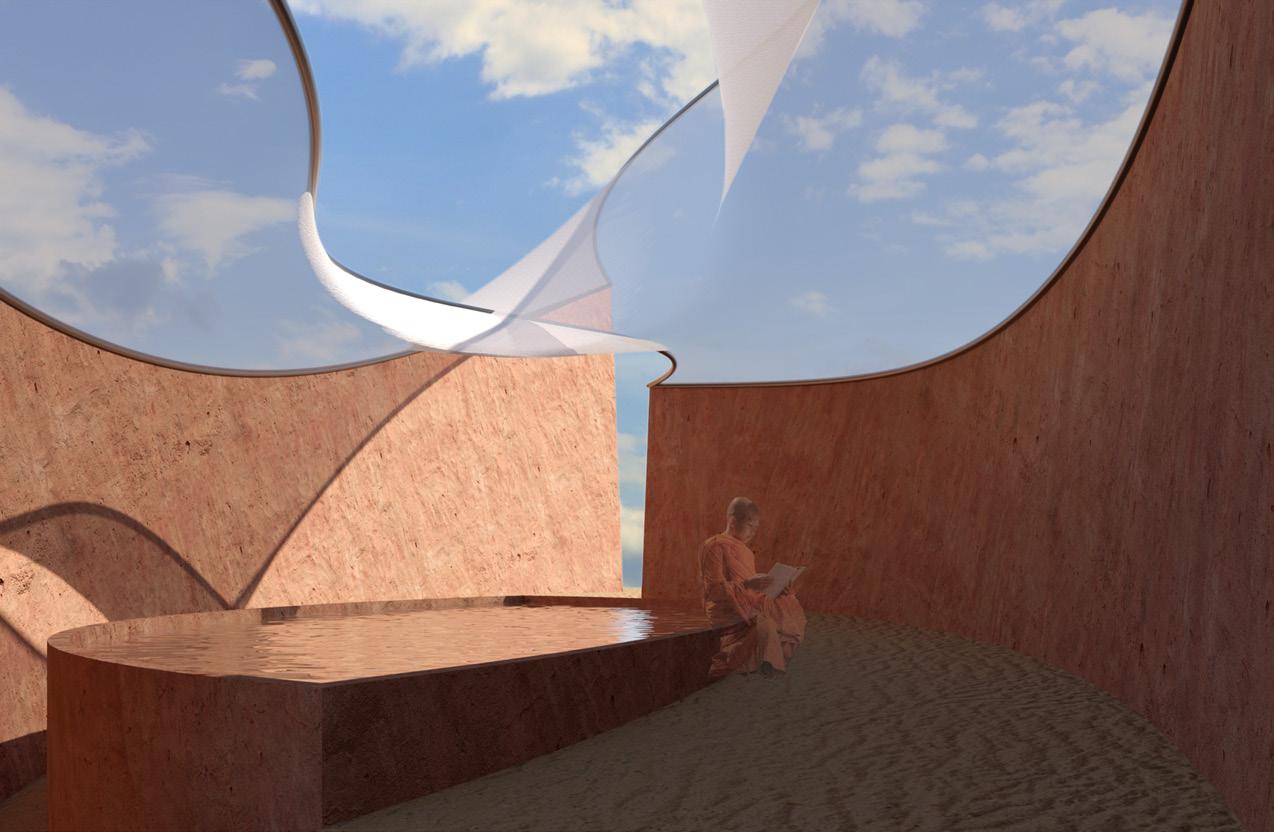
Collaborative Work: Edward Project submitted for Museum of Emotions hosted
Edward
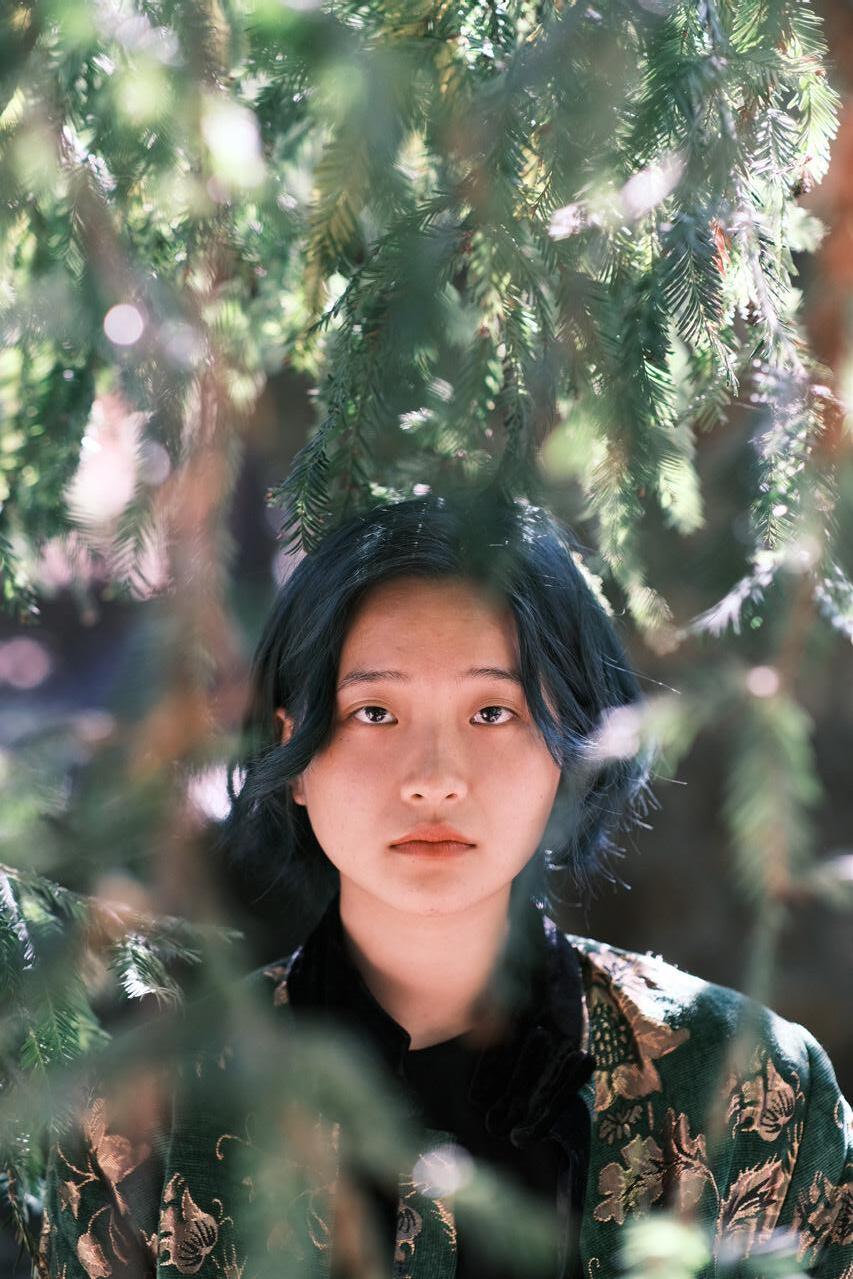
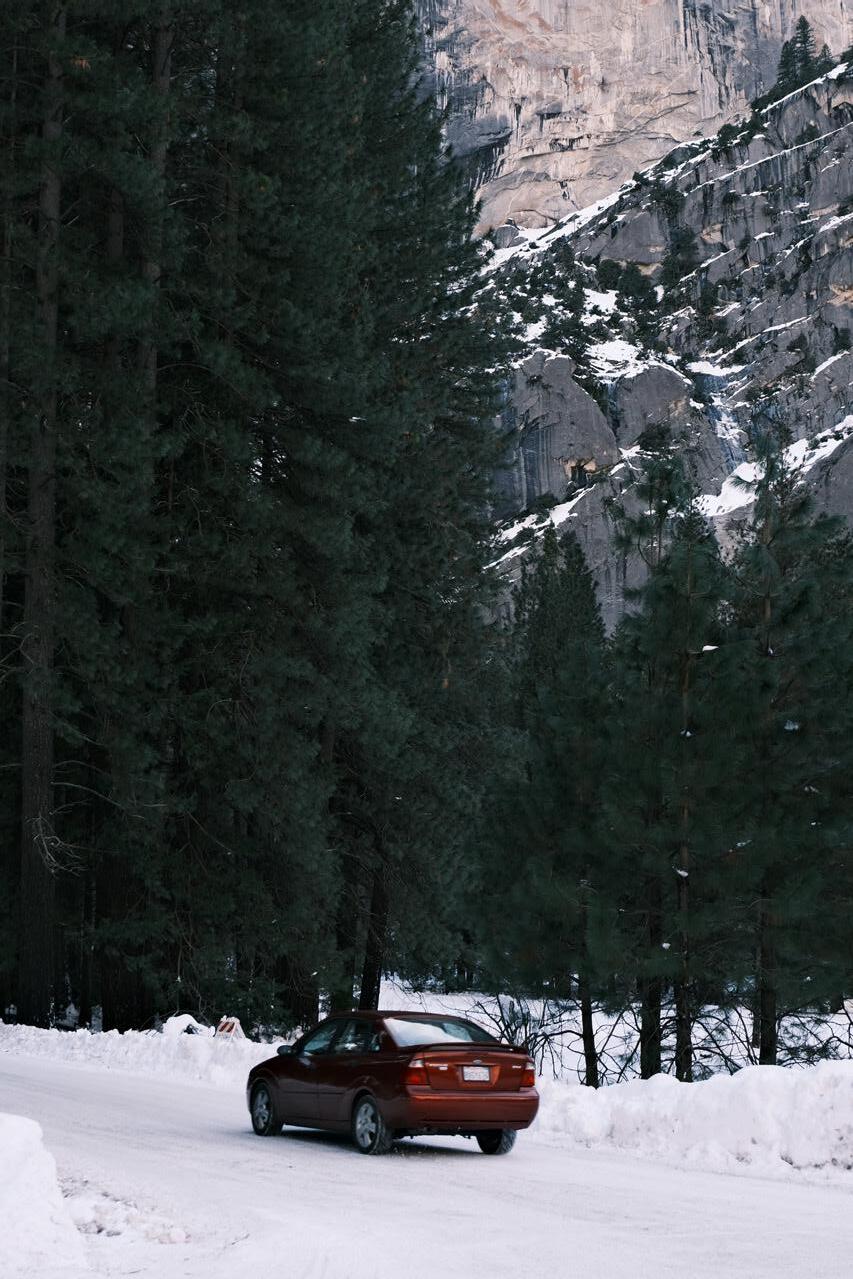
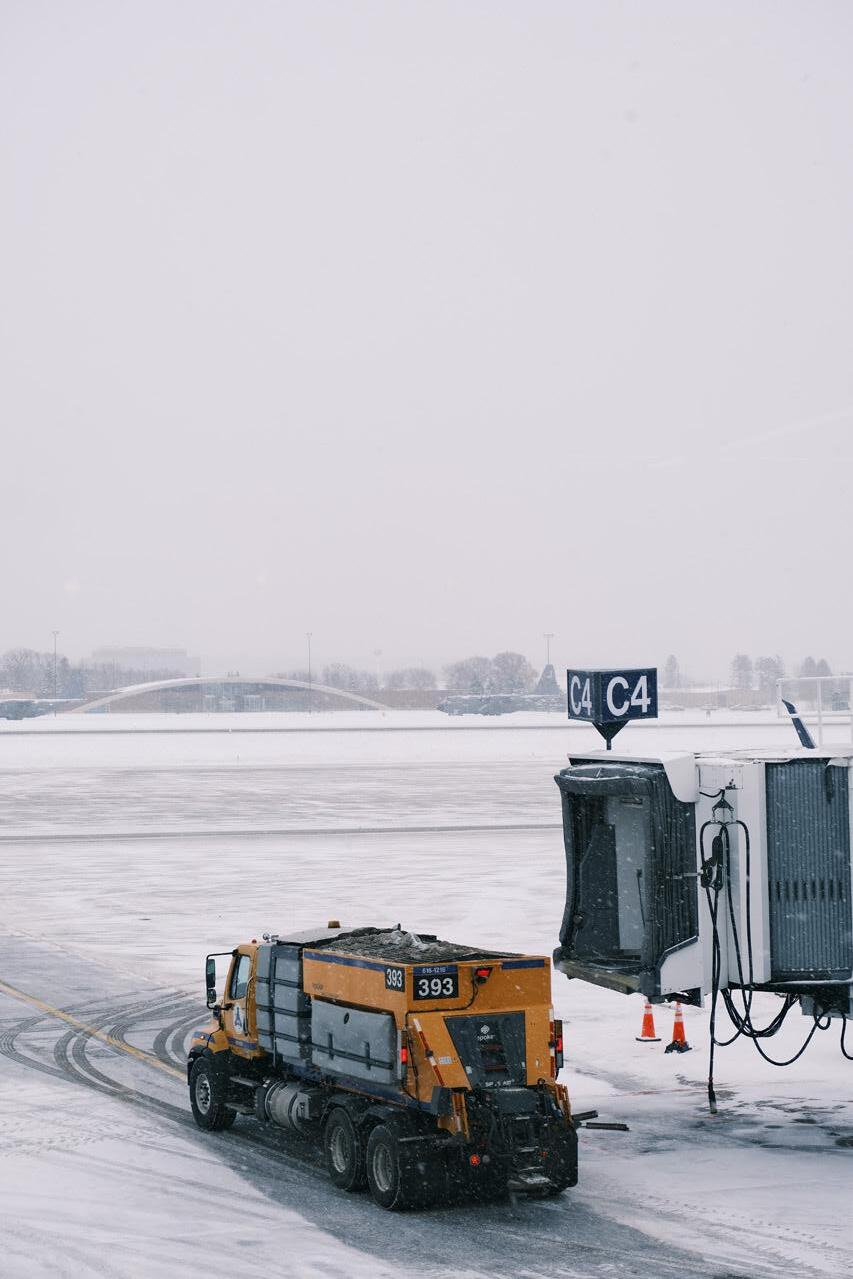
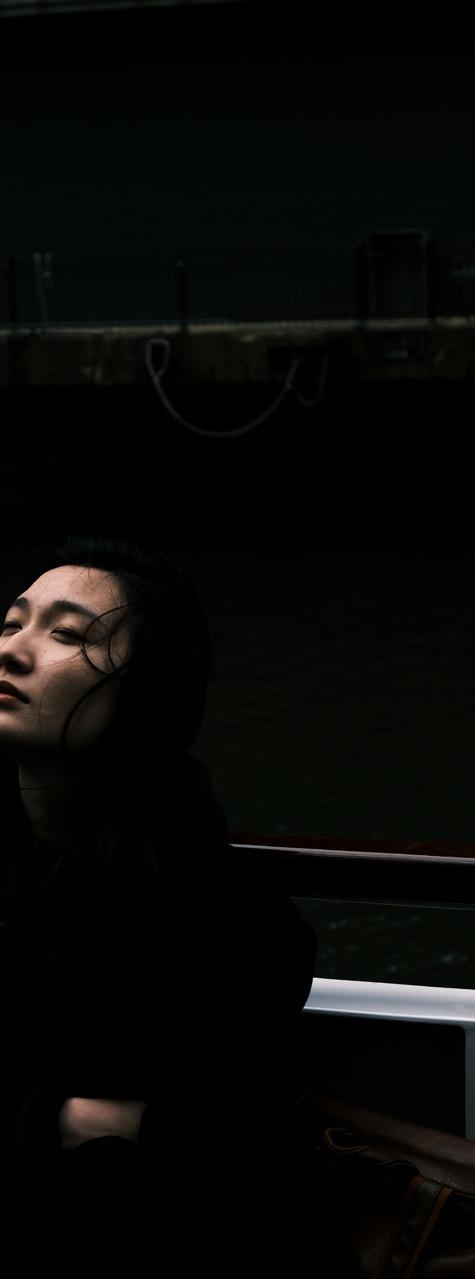
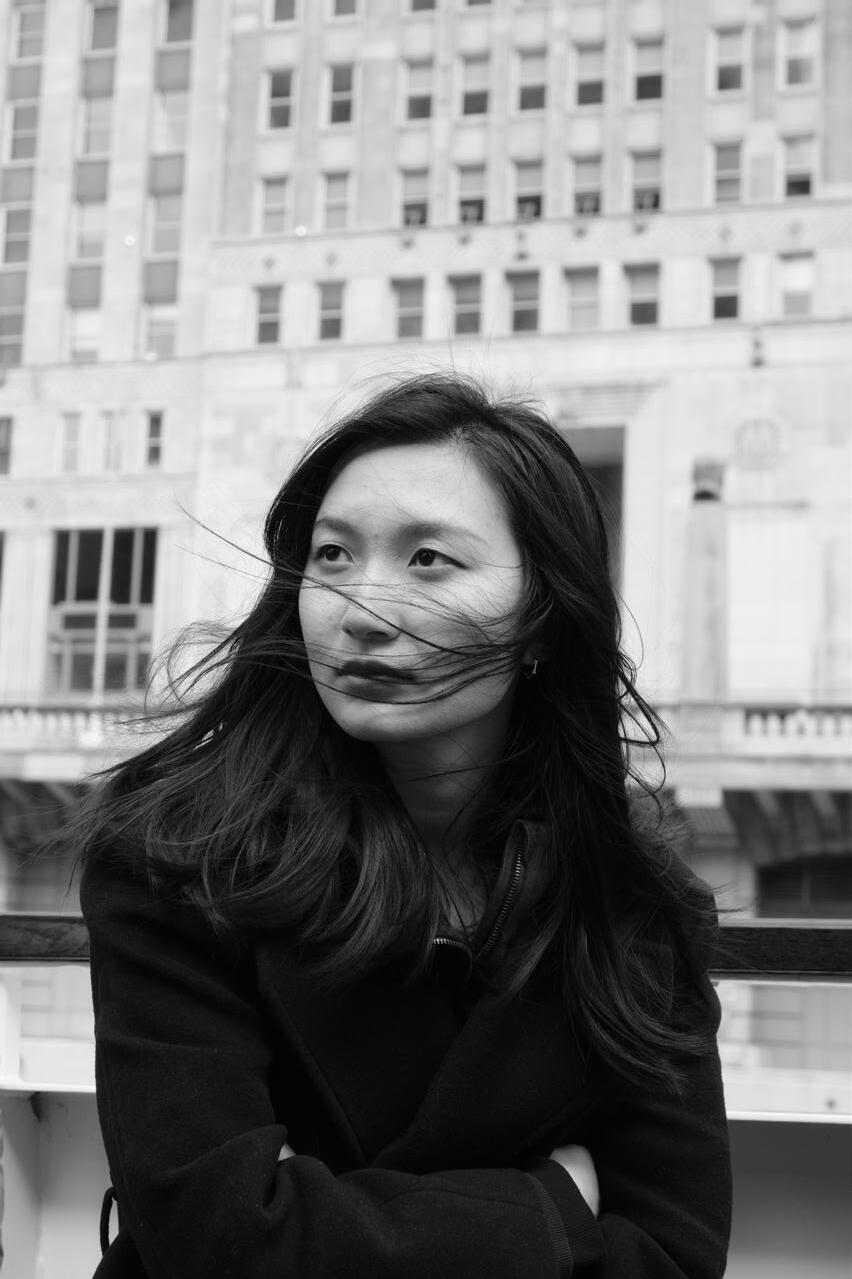
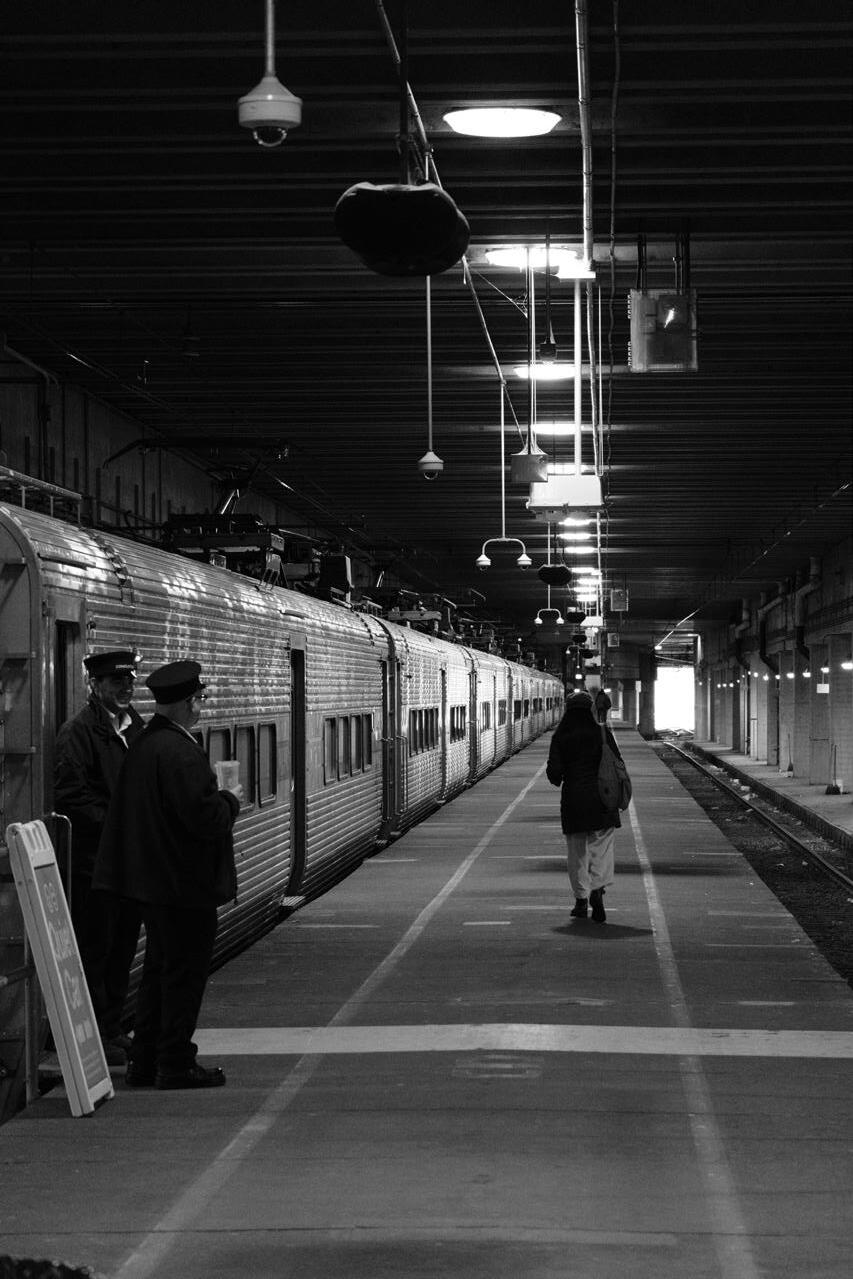
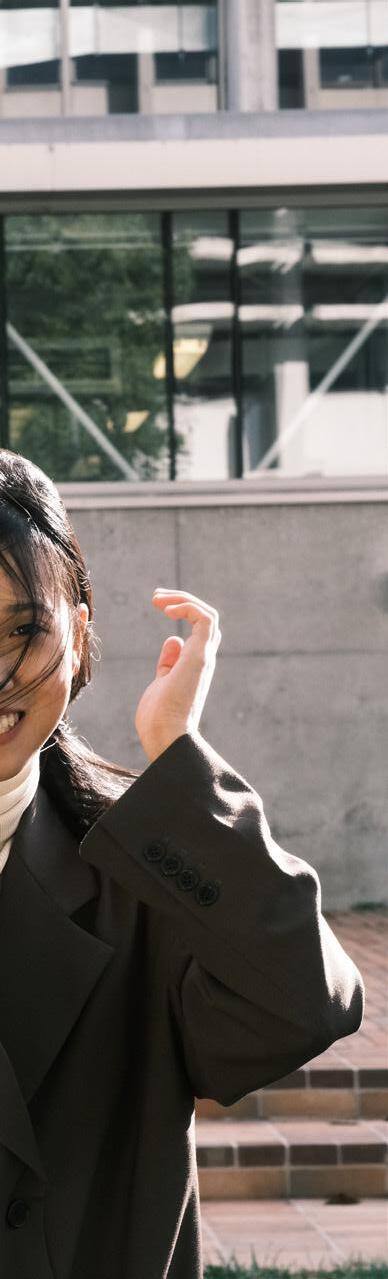
Photography has always been a passion of mine. In my view, architecture custodian of time’s fleeting embrace. My camera evolves into an instrument power to shape environments and experiences. Architecture and photography
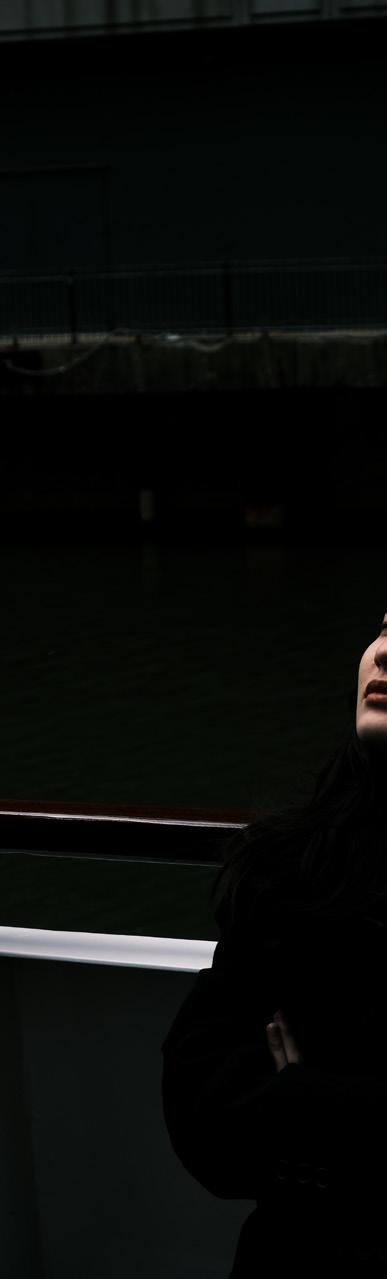
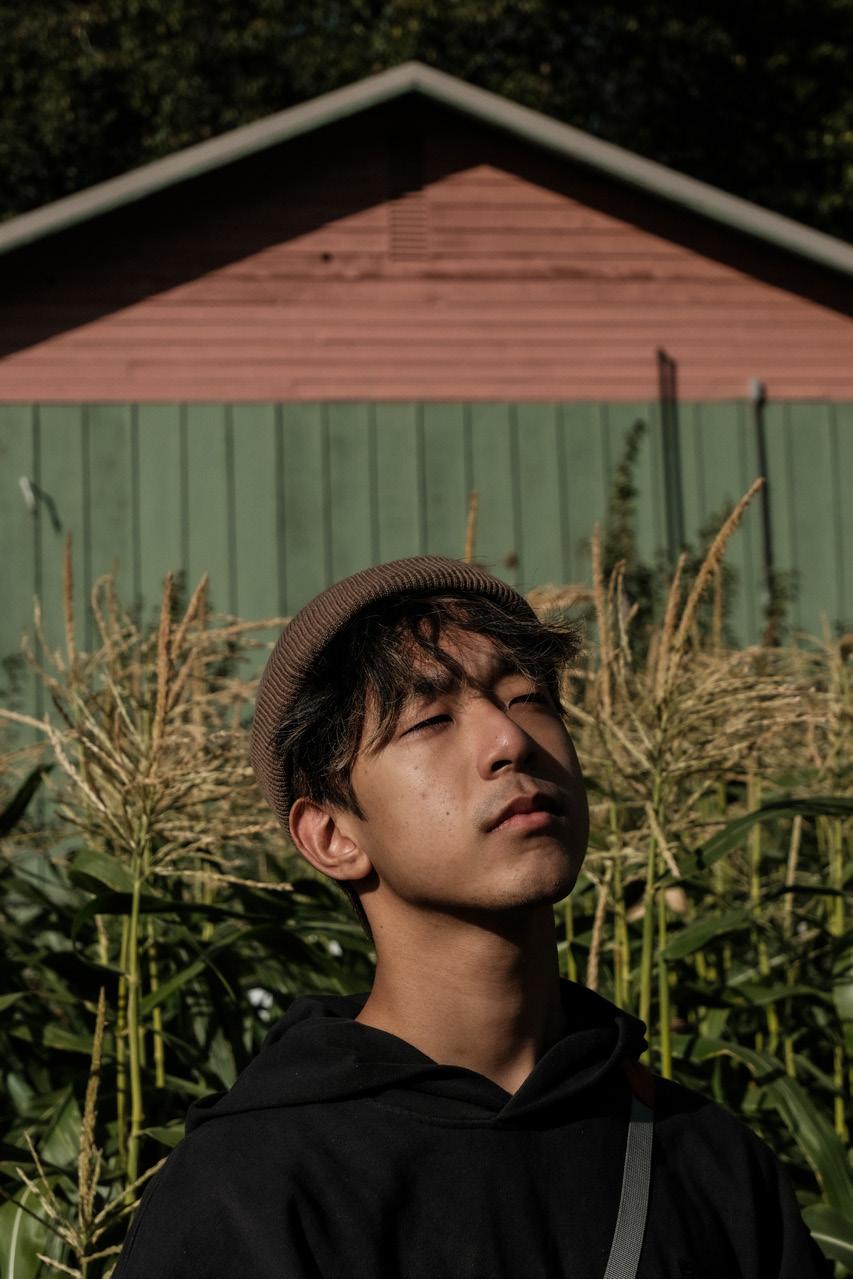
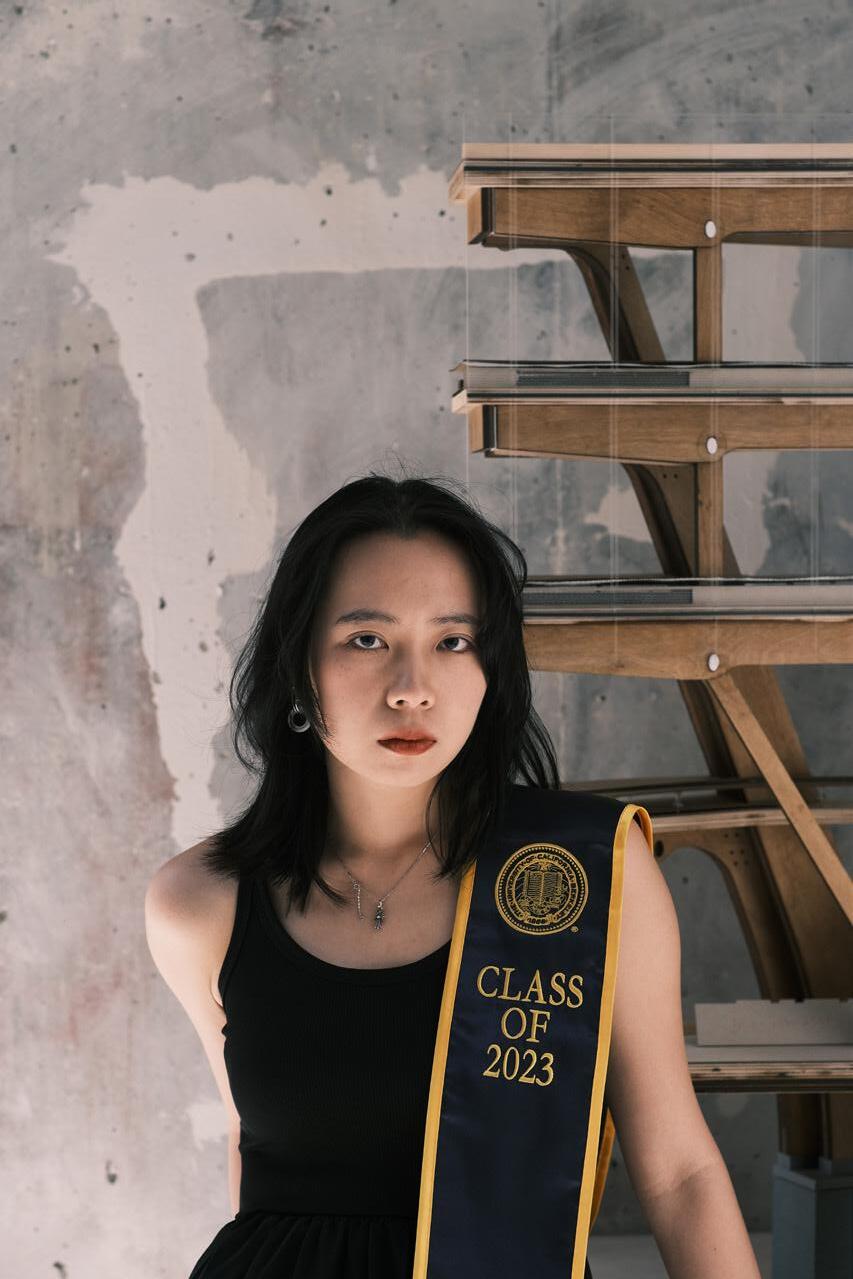
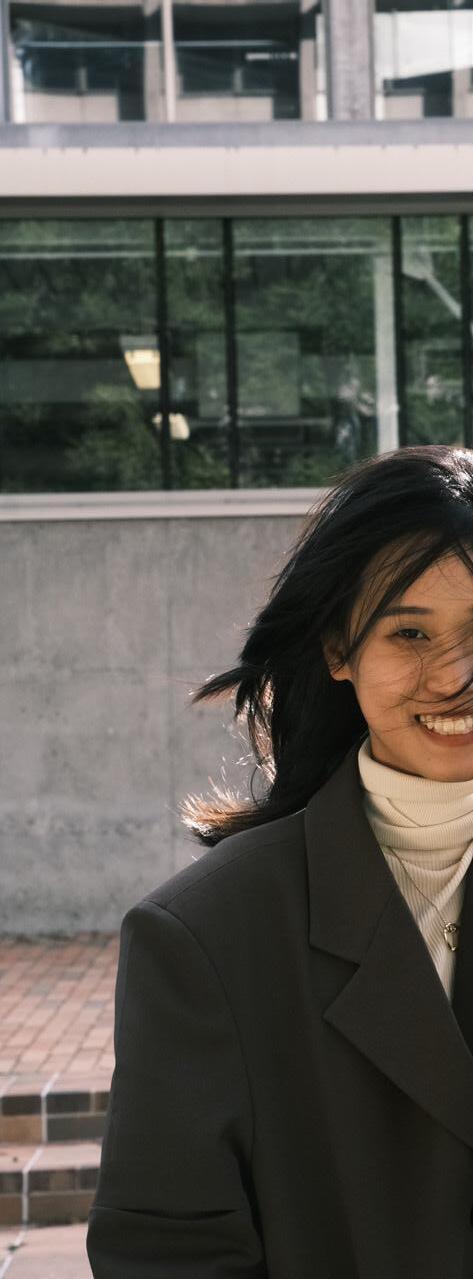
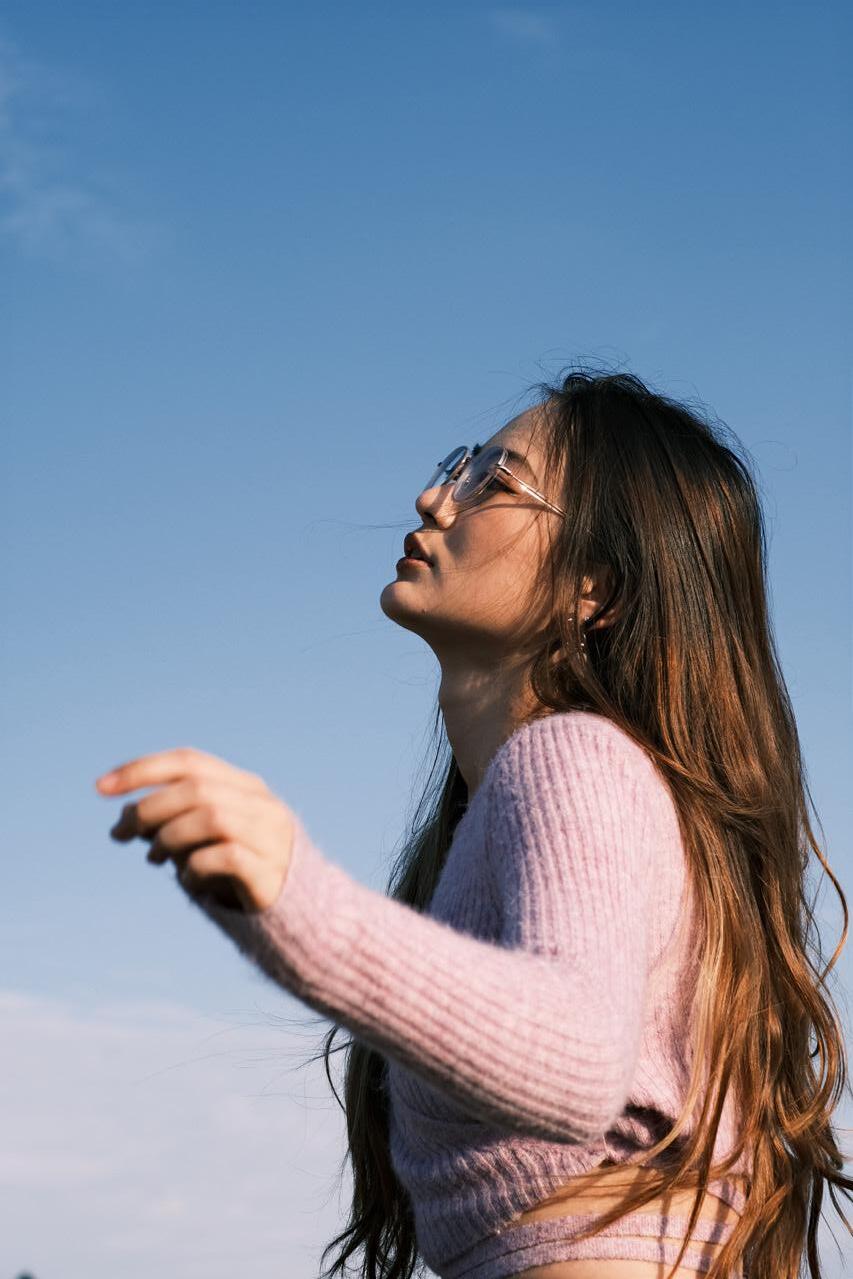
architecture constructs the very essence of space, while photography becomes the instrument enabling me to capture life’s vivid instants—a parallel to architecture’s photography are complementary and interwoven enchantments to my life.