Portfolio
Selected works from 2021-2024
M.ARCH / MLA / B.ENDS
University of British Columbia
june.e.geyer@gmail.com +1 604 655 6333
Portfolio
Selected works from 2021-2024
M.ARCH / MLA / B.ENDS
University of British Columbia
june.e.geyer@gmail.com +1 604 655 6333
Masters Thesis
September 2023 - April 2024
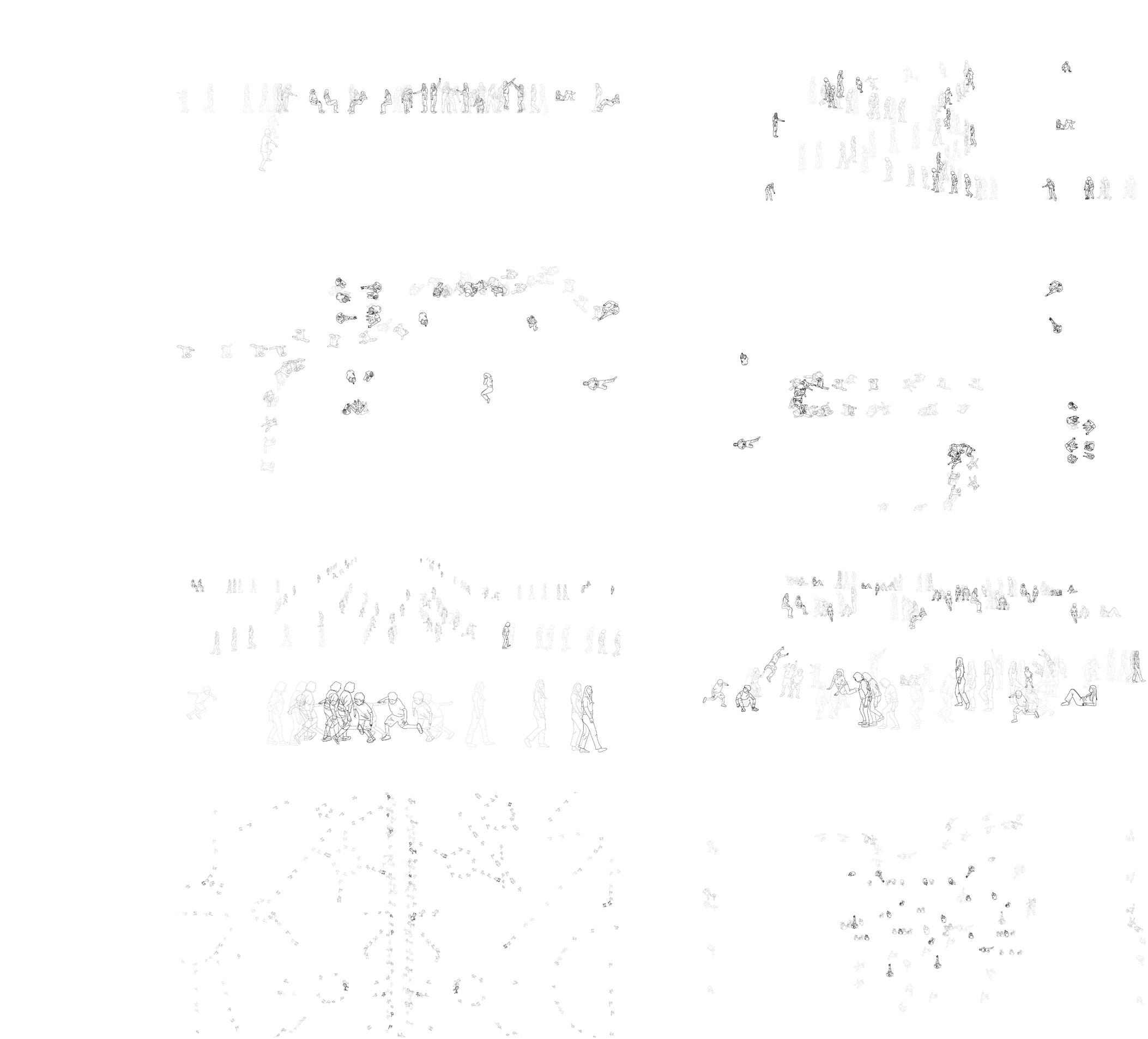
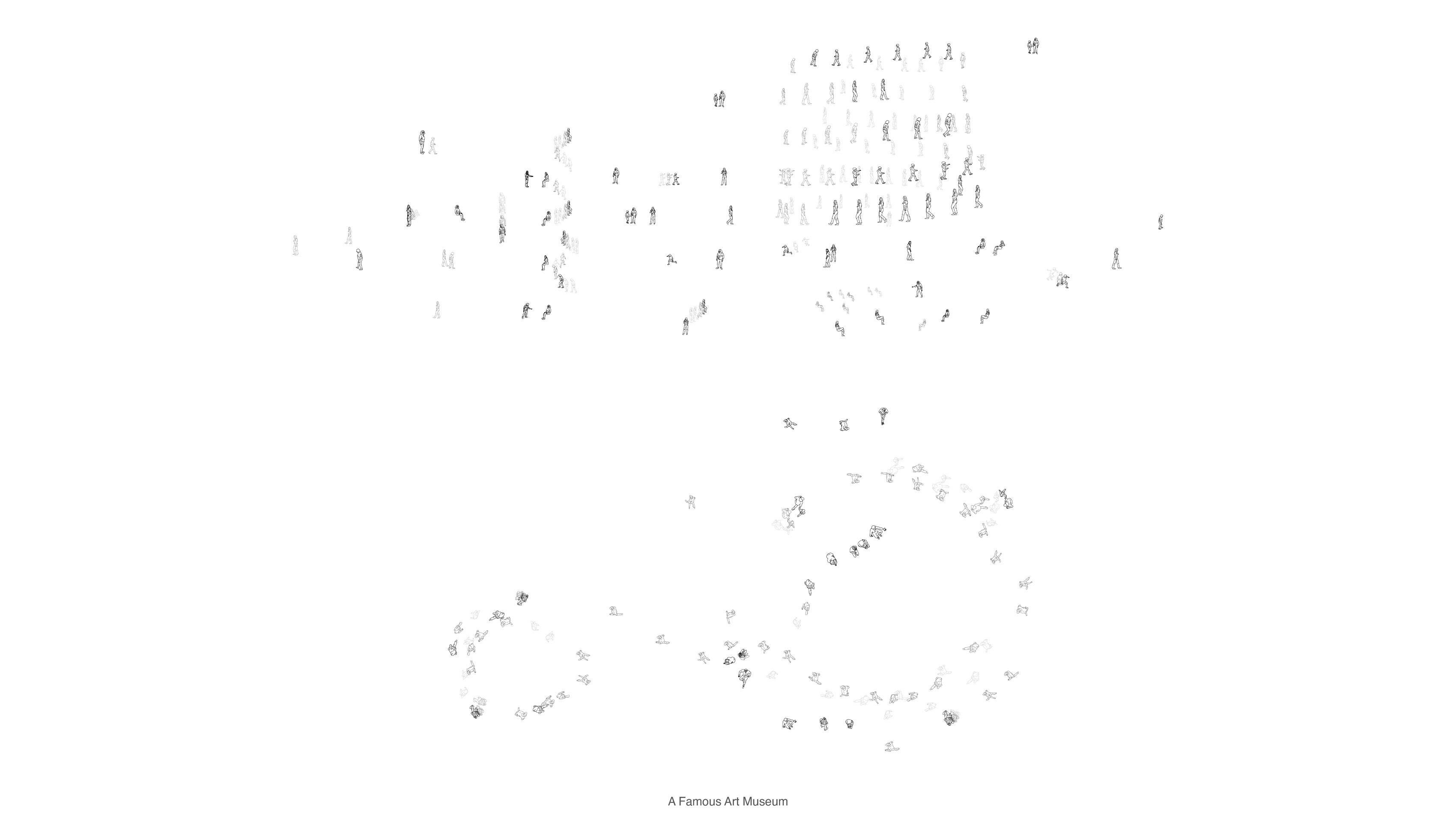
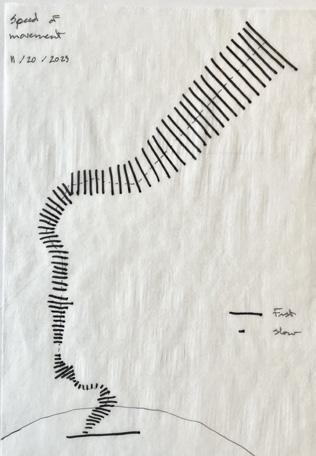
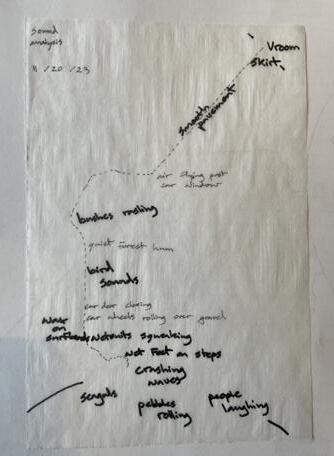
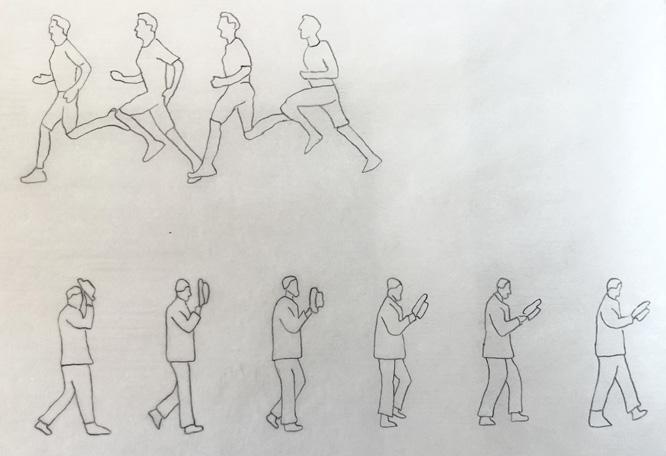
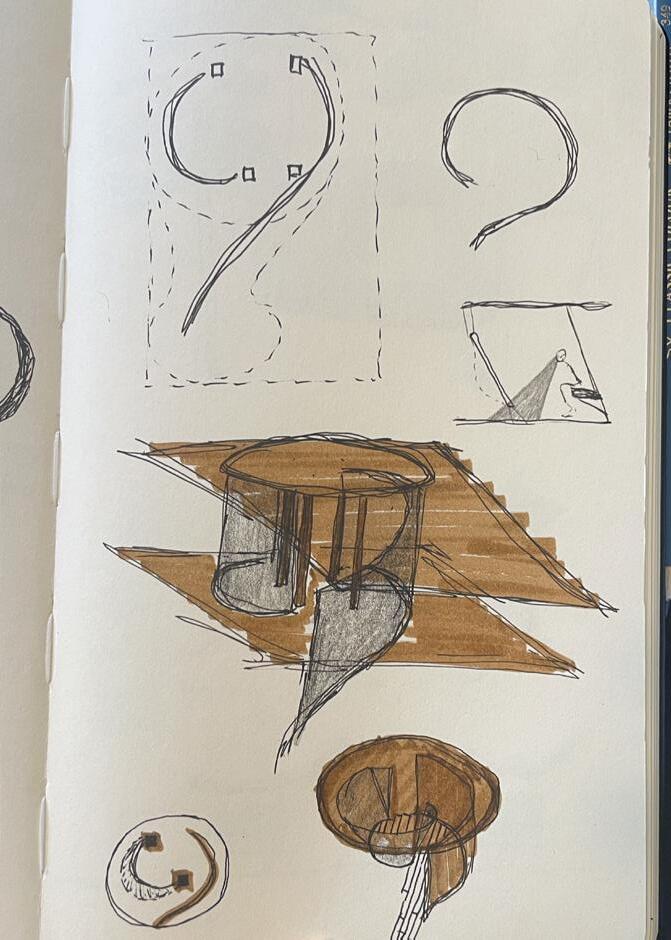
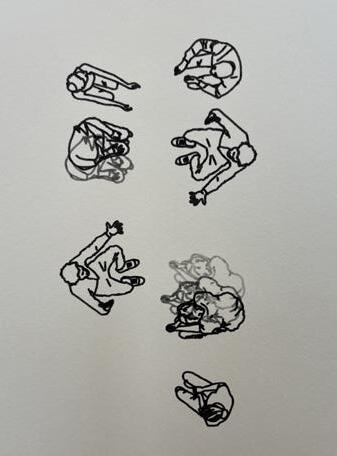
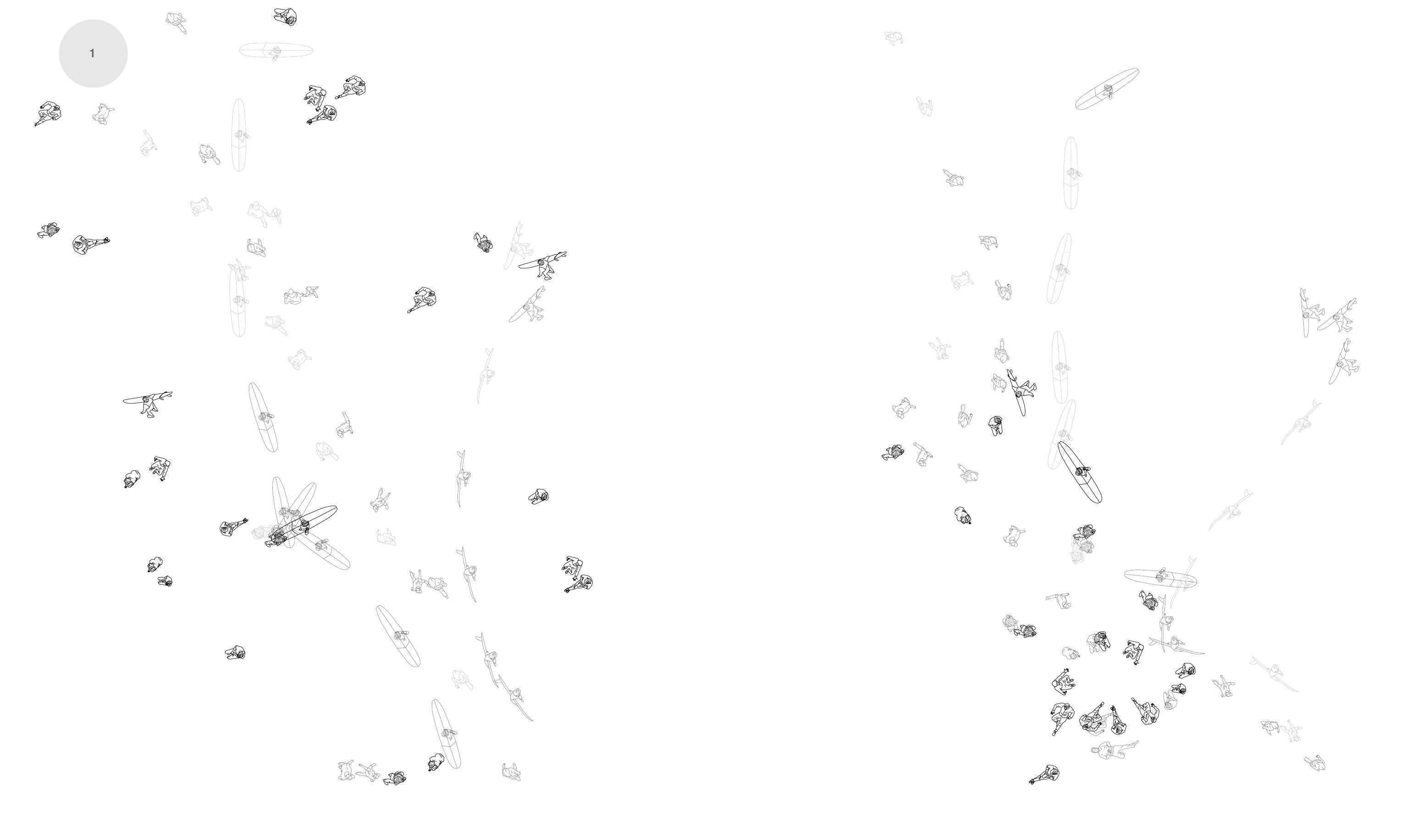
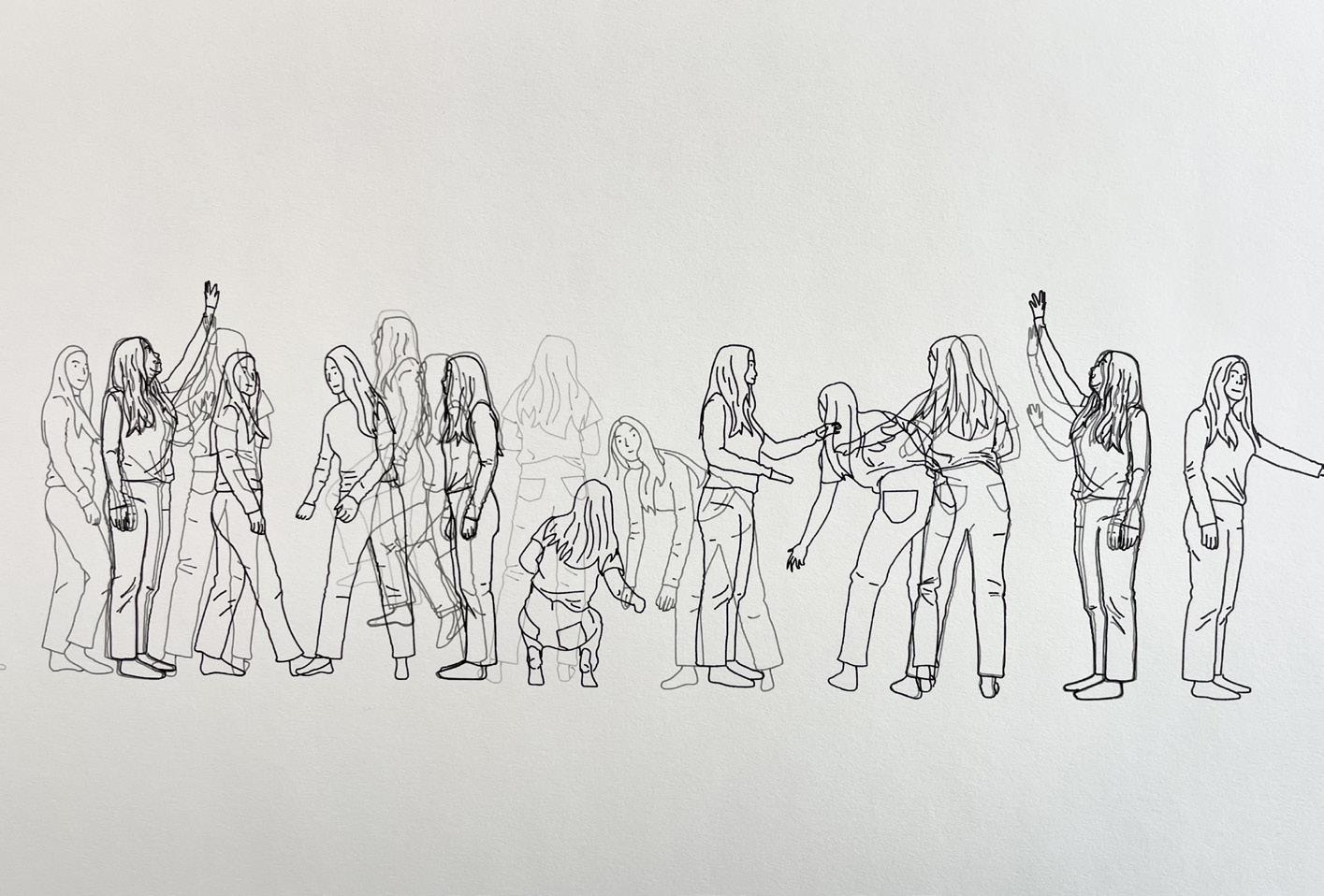
Inspired by my experience as a dancer I have bridged the disciplines of architecture and dance to focus on the users of the spaces we are designing. I have developed a new architecture/ landscape architecture notation tool and design process inspired by dance notation, called Motion Notation. The goal of this notation is to re-centre human movement and experience at the forefront of the design process. This notation represents architecture and landscapes using only drawings of the body to define space. With context removed, bold black lines represent more static or slow movement whereas lighter lines that are more spread apart represent a faster motion.
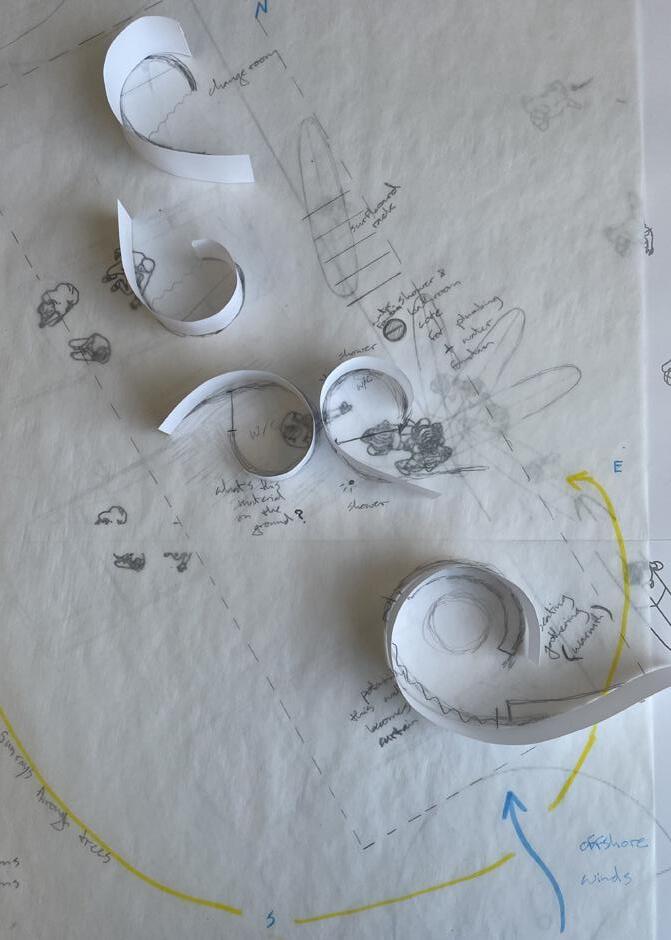
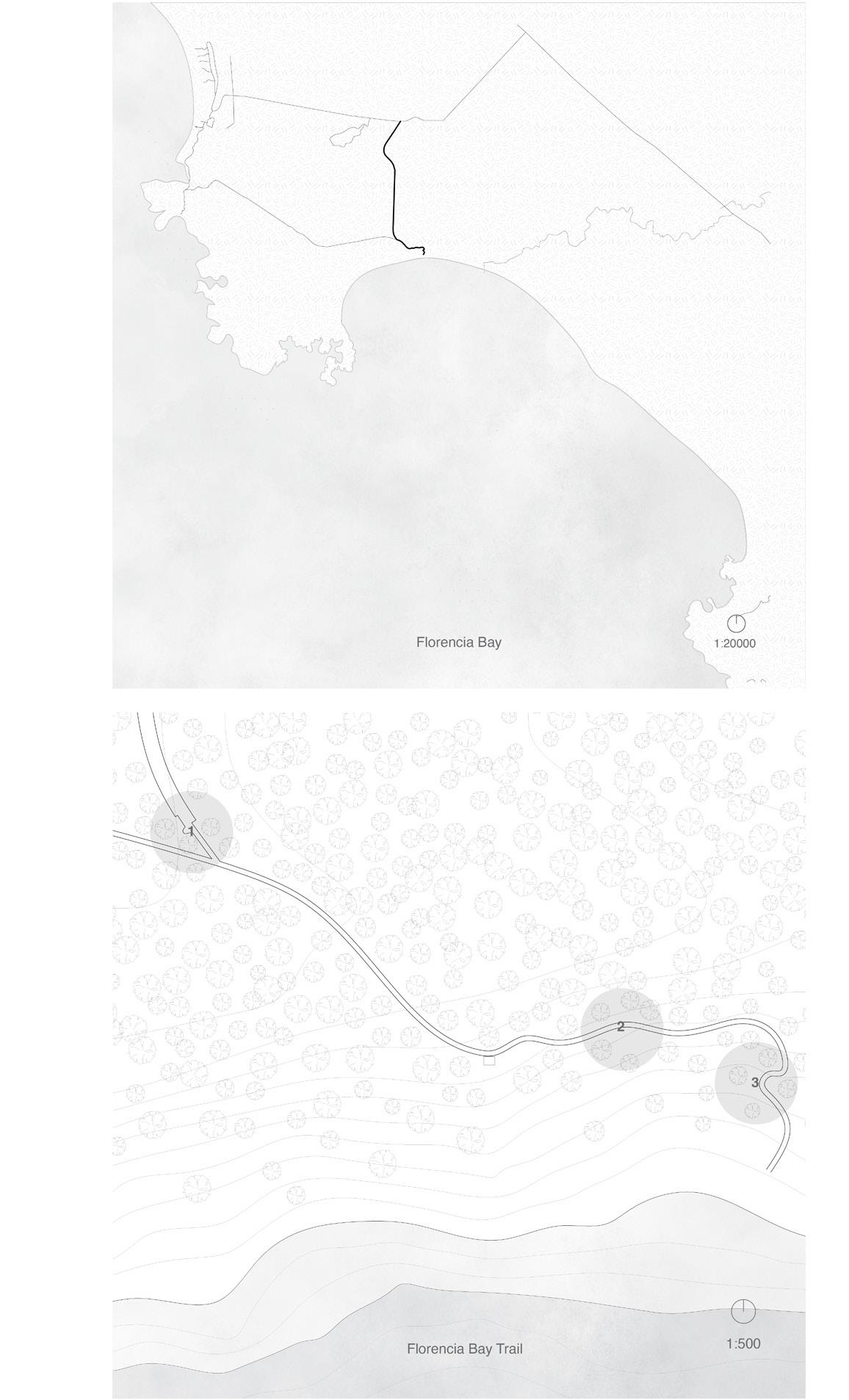
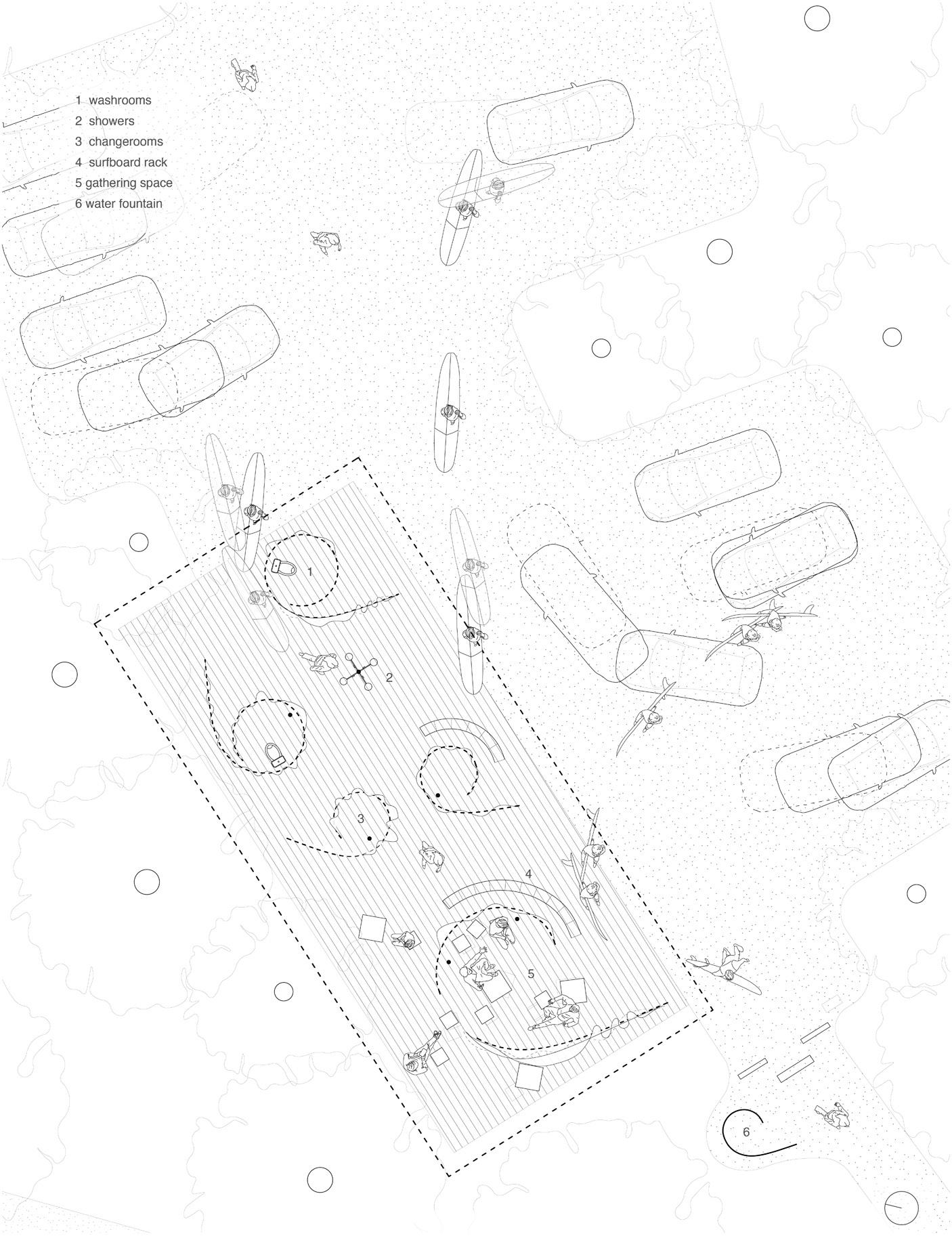
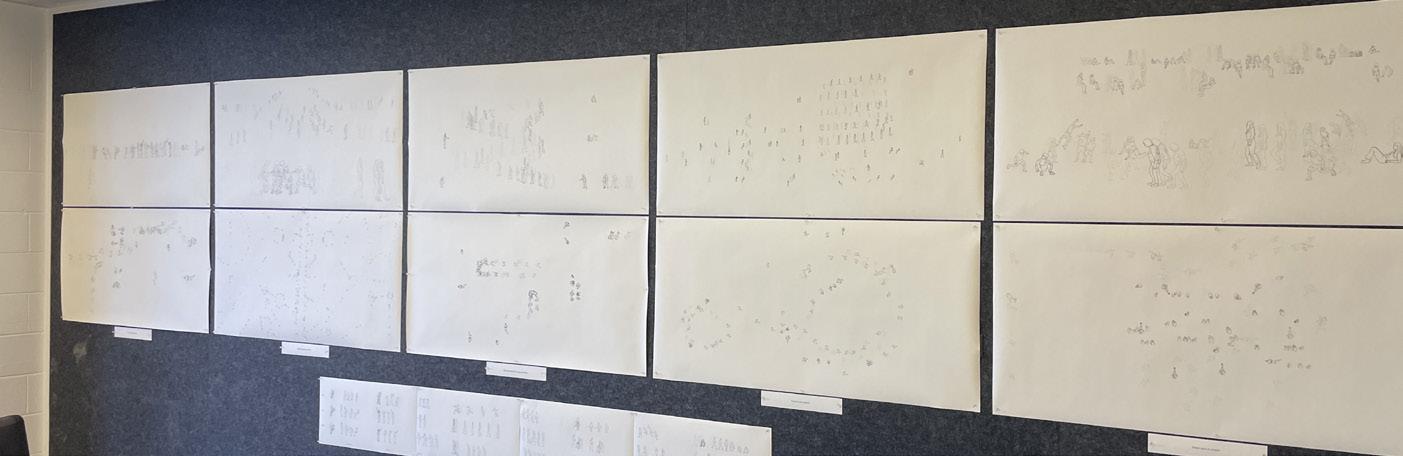
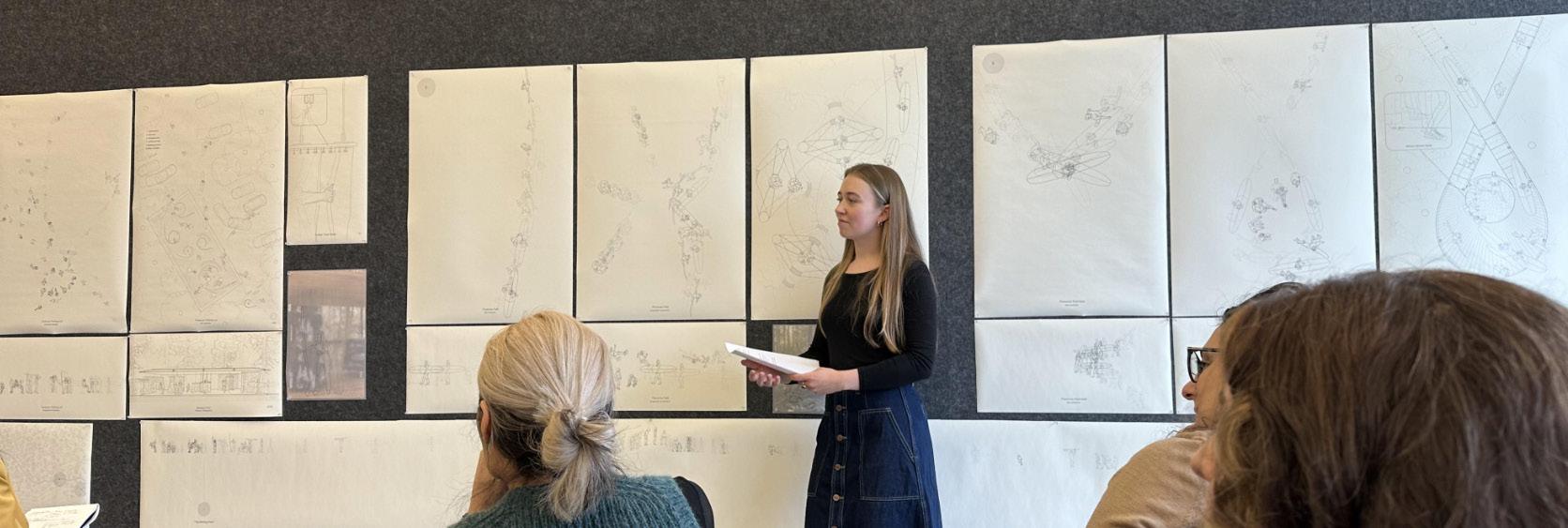
The notation system can be both analytical and generative. I tested out how the movement notation could be generative at Florencia Bay, BC, a site I am highly familiar with in Pacific Rim National Park. The movement notation allowed me to visually represent and analyze how people are using the site and then re-choreograph the relationship between the the built environment and the users of the site for more human centric designs. To draw the specific motions of the body in space at a large scale requires the designer to consider the human experience first in design.
Supervised by Leslie Van Duzer
lvanduzer@sala.ubc.ca
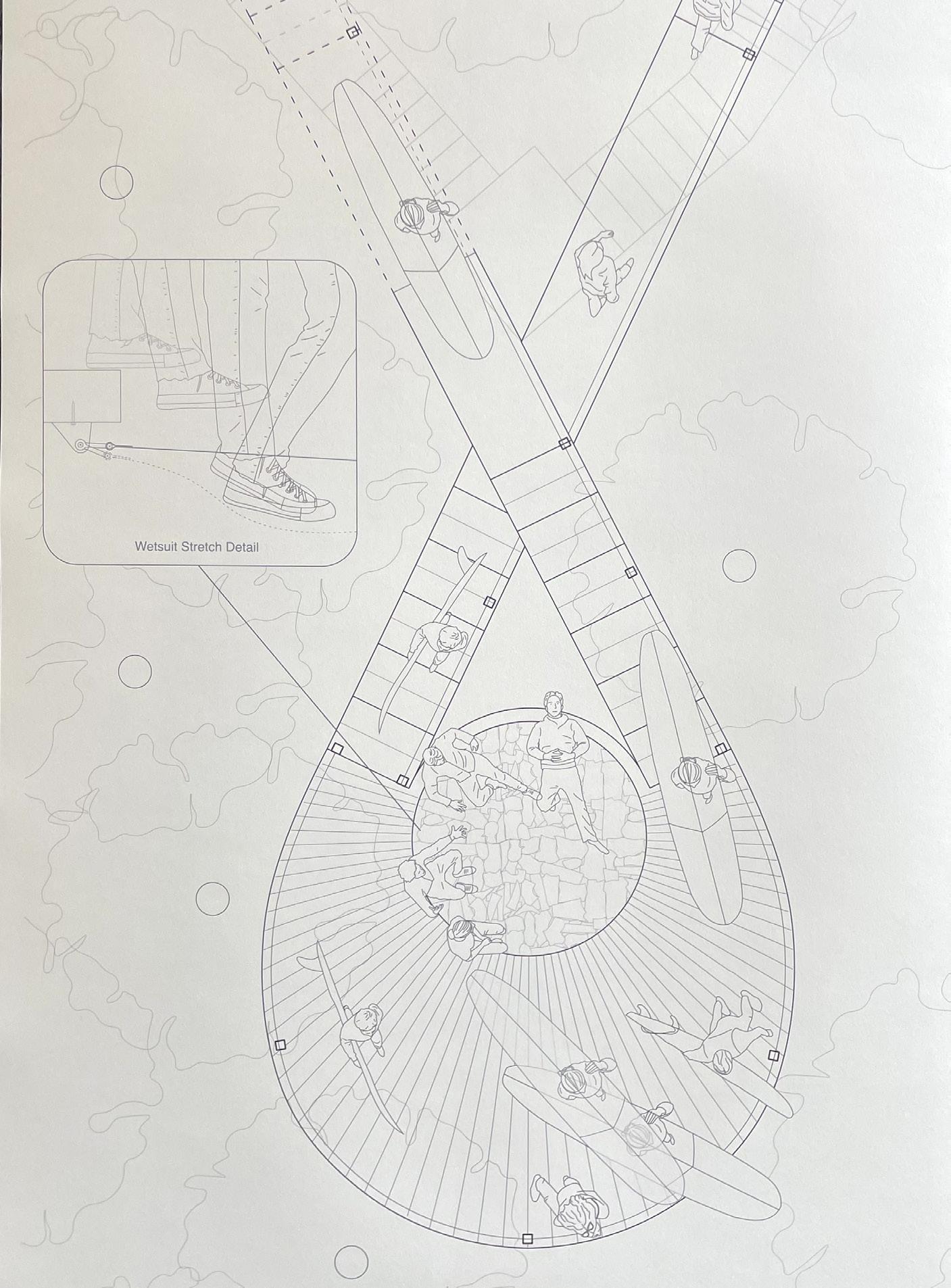
The Trail A Series of Interventions
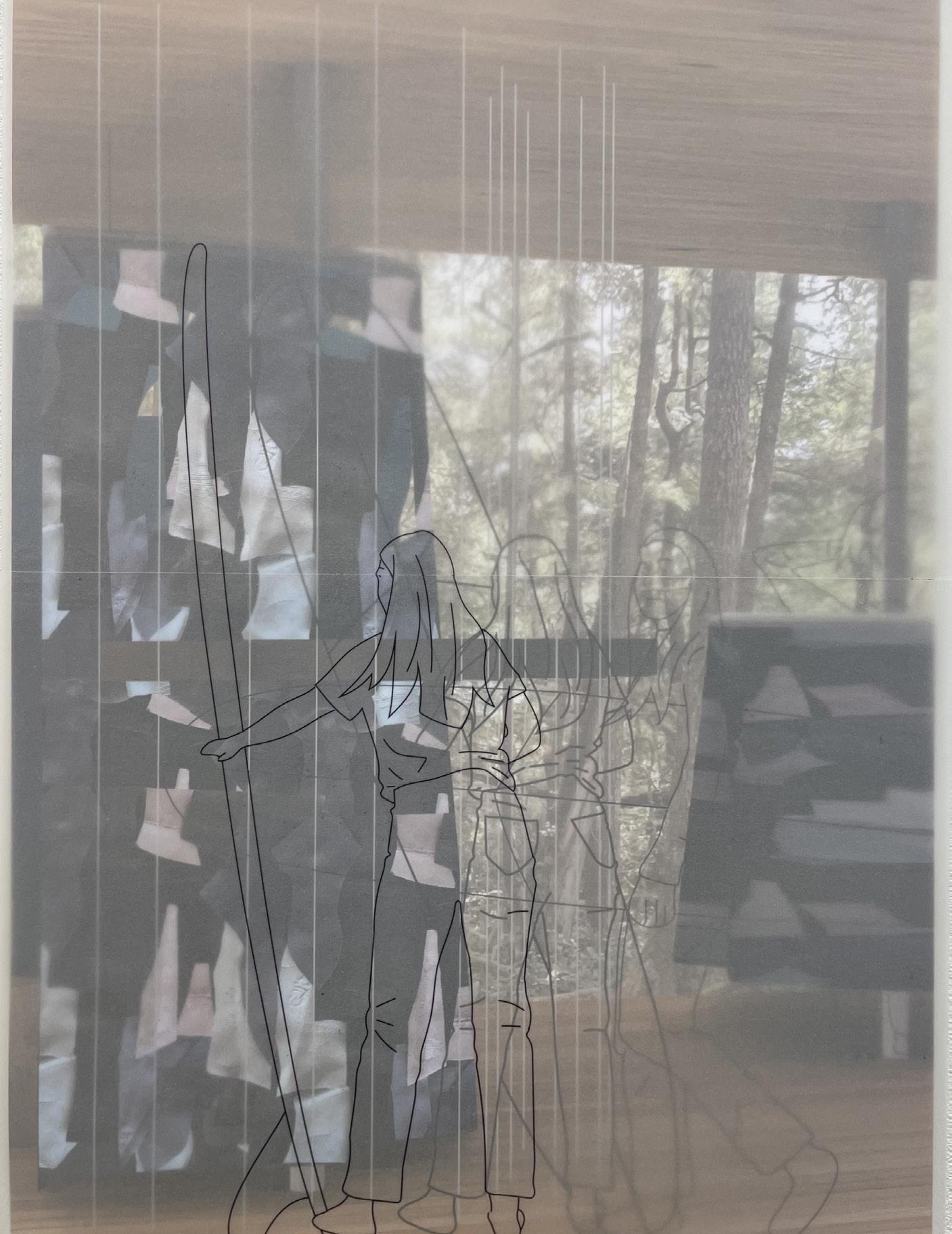
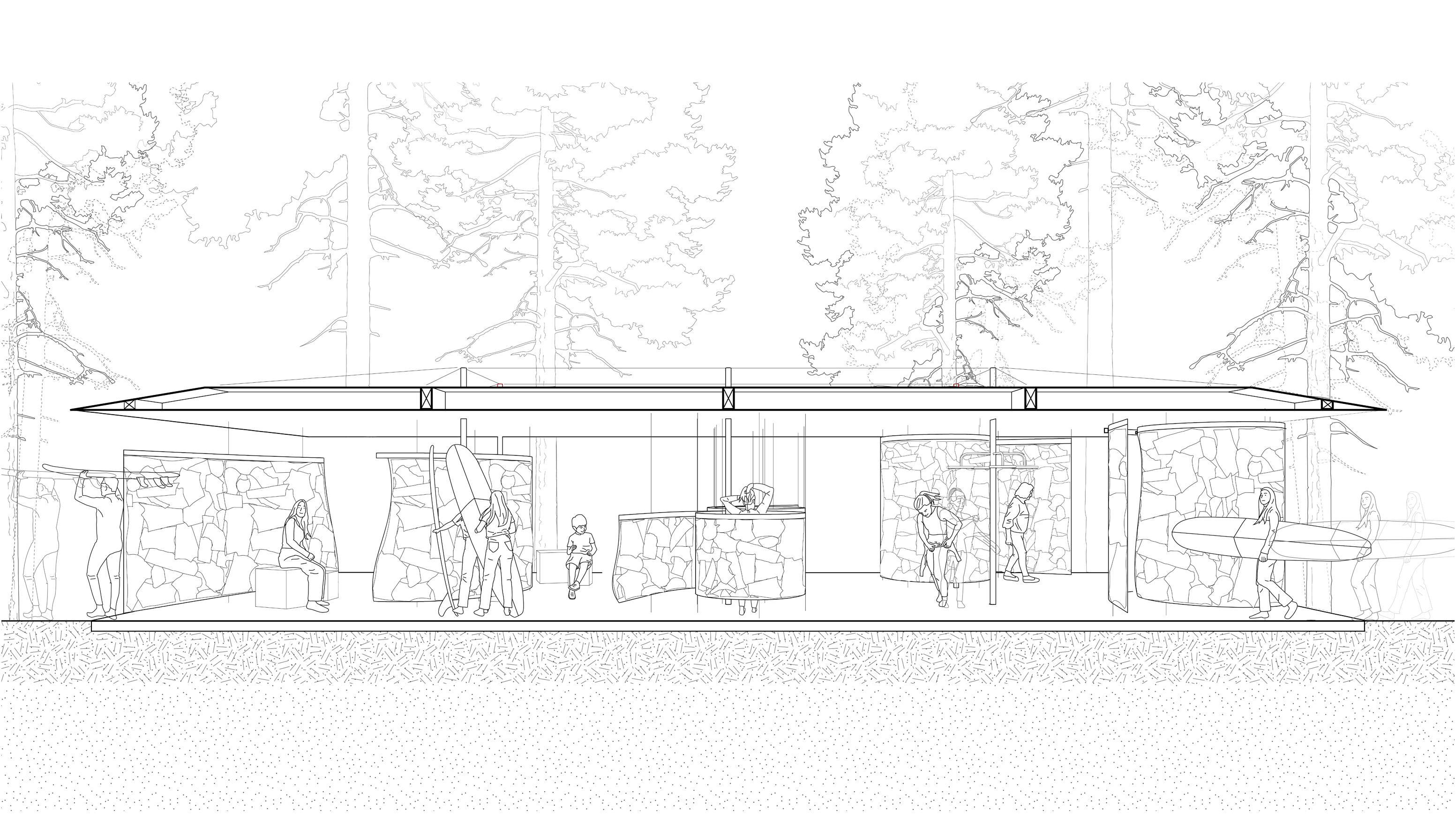
Three sites were chosen along the Florencia bay, 1, the parking lot, 2, the trail, 3, the staircase. At each site I developed a movement inspired intervention that inproved the experience on site.
The careful observation of movement on site challenges conventional occupations of national parks and re-images more activities that could take place in wild spaces.
Architecture Comprehensive Studio, Winter 2023
In collaboration with Isabelle Lussier
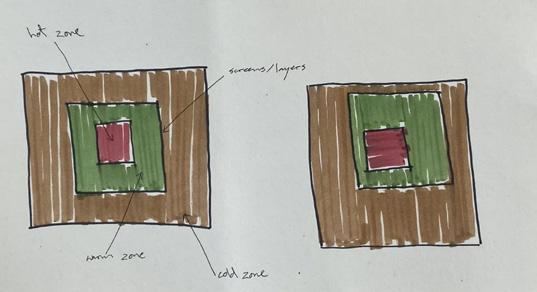
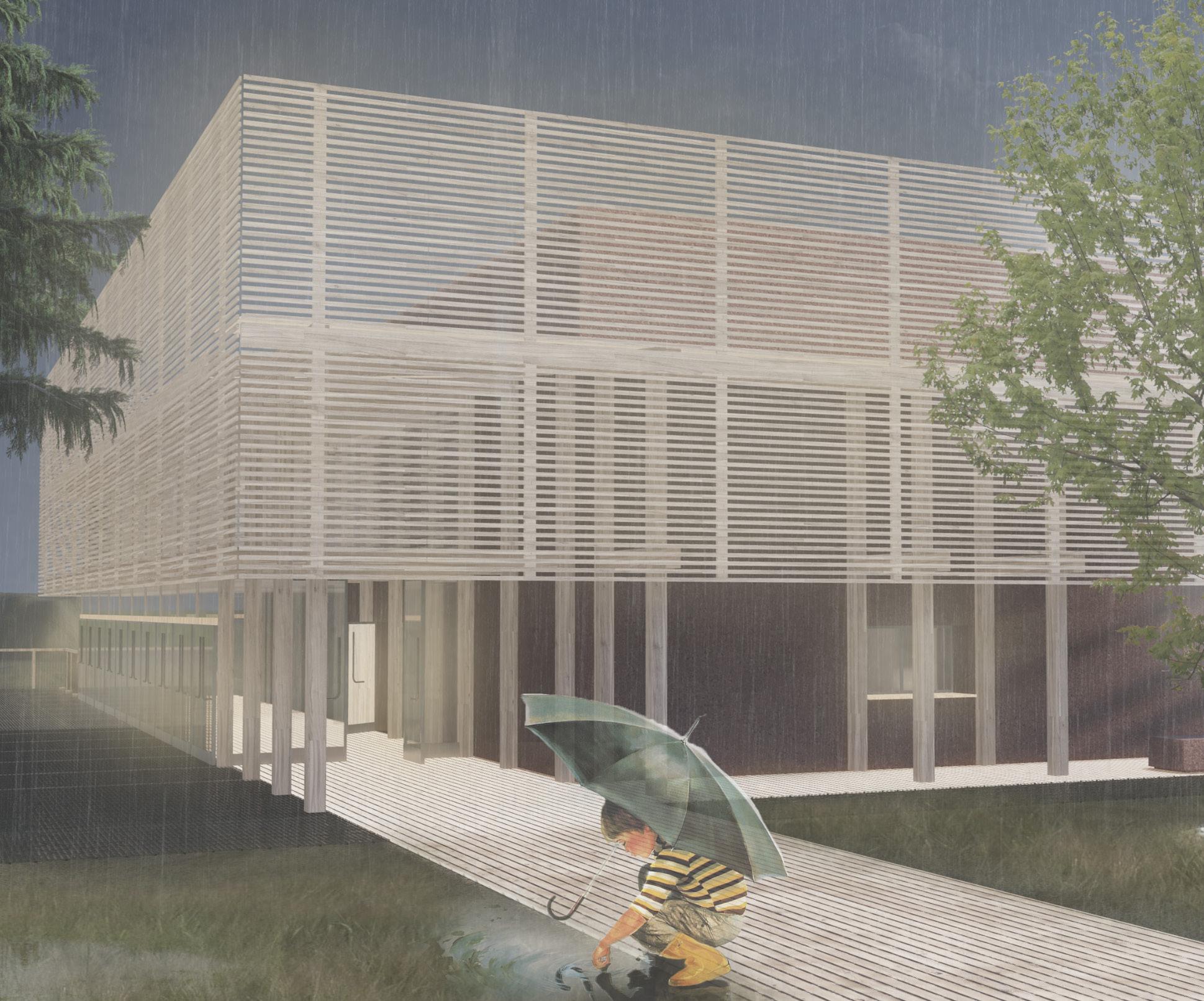
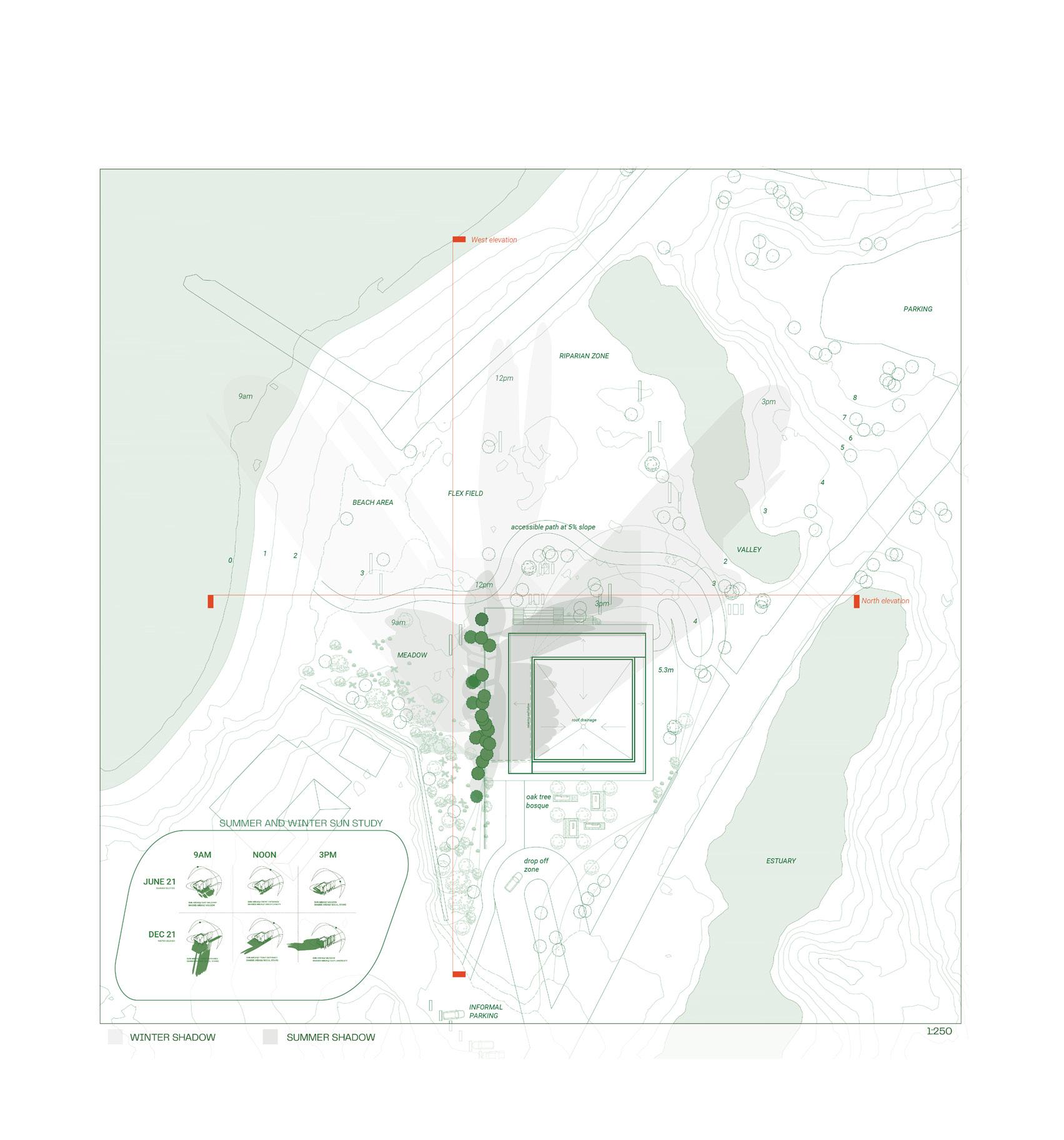
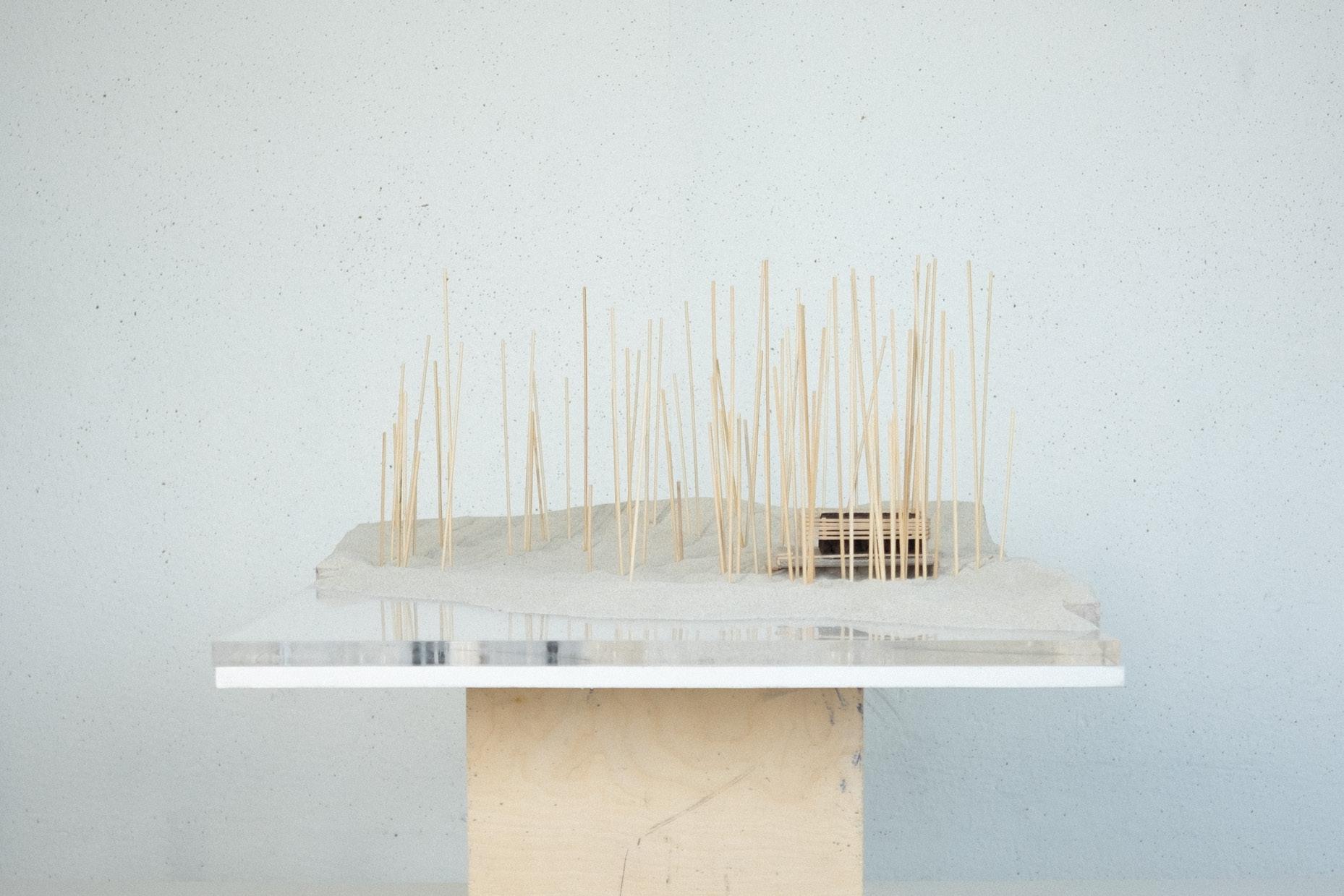
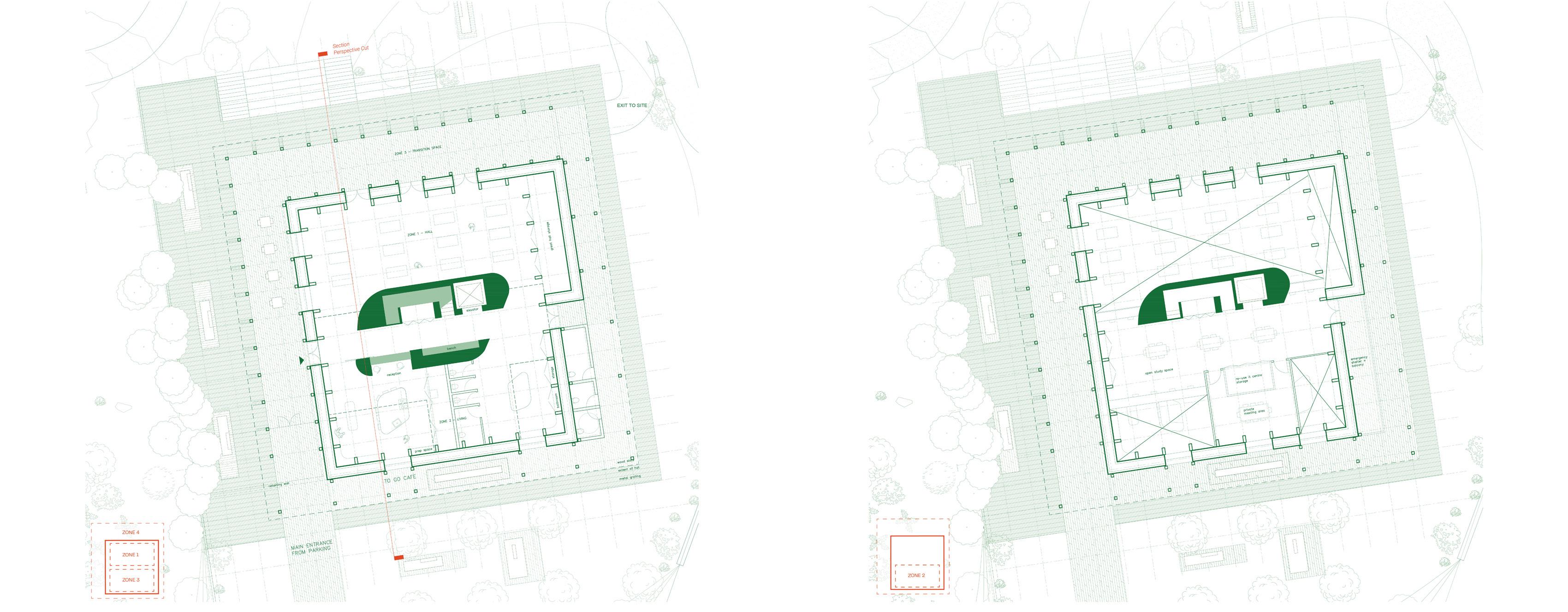
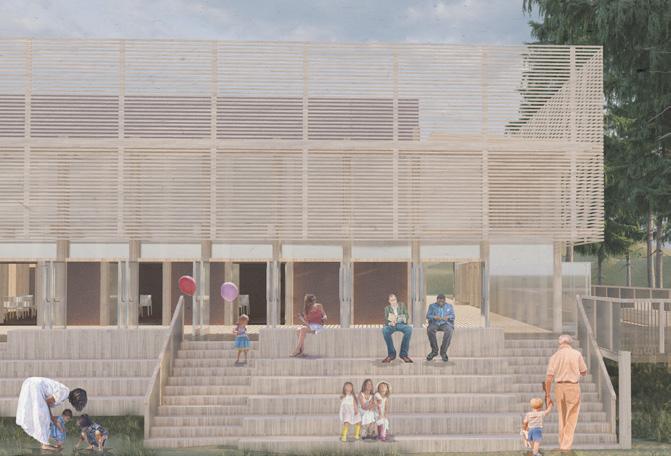
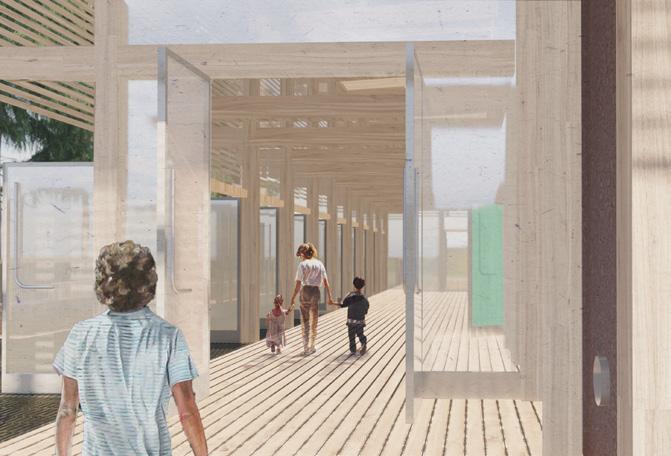
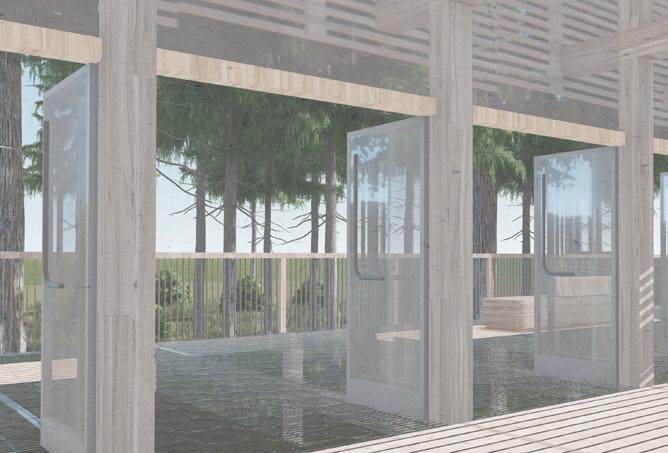
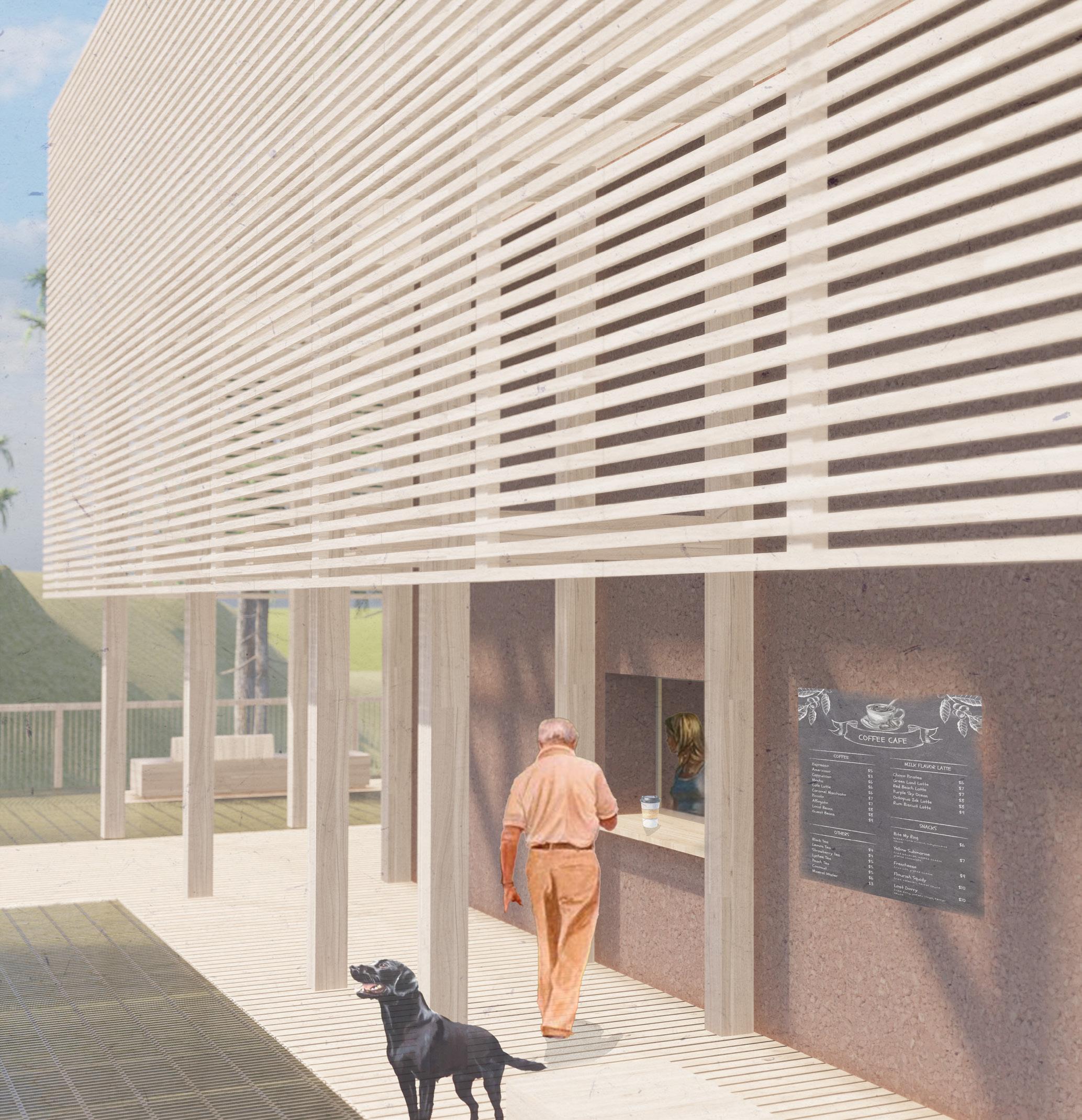
In this studio we were challenged to create a systemless and low embodied carbon community centre on the Sunshine Coast of BC. Using sustainable materials this building is only heated by the inhabitants. Our concept used the idea of layering to create varying climatic zones within the building. As you progress inwards the building temperature becomes more and more controlled.
In order to preserve heat in our building we decided on a nested square effect. The outside perimeter of our building is comprised of a grated metal walkway. The middle square is an outside/indoor space that can open up during the summer months and stay closed during the winter months. The final, innermost square, is the most insulated and where most of our program happens. To preserve heat in our building, our main circulation core is embedded in rammed earth. This rammed earth not only serves as thermal mass, but also as structure.
The building is comprised of different heat zones, each zone stays at comfortable temperatures depending on the seasons. The zones are designed around program organization and activities that take place in each zone.
Supervised by Inge Roecker iroecker@sala.ubc.ca
Vancouver, BC
Skylight Detail
Vancouver, BC
Exterior Wall + Window Detail
thermal break + sealant tape fastener
condensation gutter
condensation gutter
Vancouver, BC
thermal break + sealant tape fastener
insect screen
insect screen
electrical box for operable window
electrical box for operable window
wood blocking
aluminum frame waffle grid below
aluminum frame waffle grid below
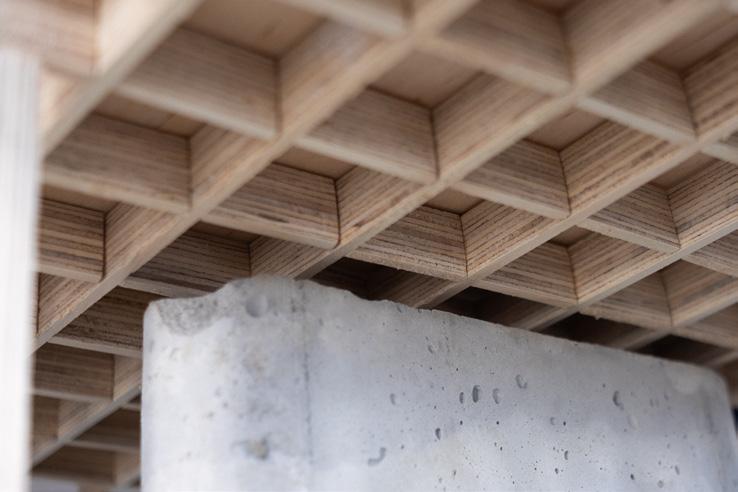
The main materials we used in our project were cork for insulation and exterior cladding, rammed earth for flooring, structure and thermal mass and wood, used for glulam beams.
wood blocking
Bathroom Sink Detail
sink trap
steel grate to keep out debris
water wheel Water draining down from the sink powers the the movement of air through the earth tube earth tube
sink trap water wheel Water draining down from the sink powers the the movement of air through the earth tube
steel grate to keep out debris freshwater in Filtered water is brought down to
Architecture Vertical Studio, Fall 2021
Duration: 1 month
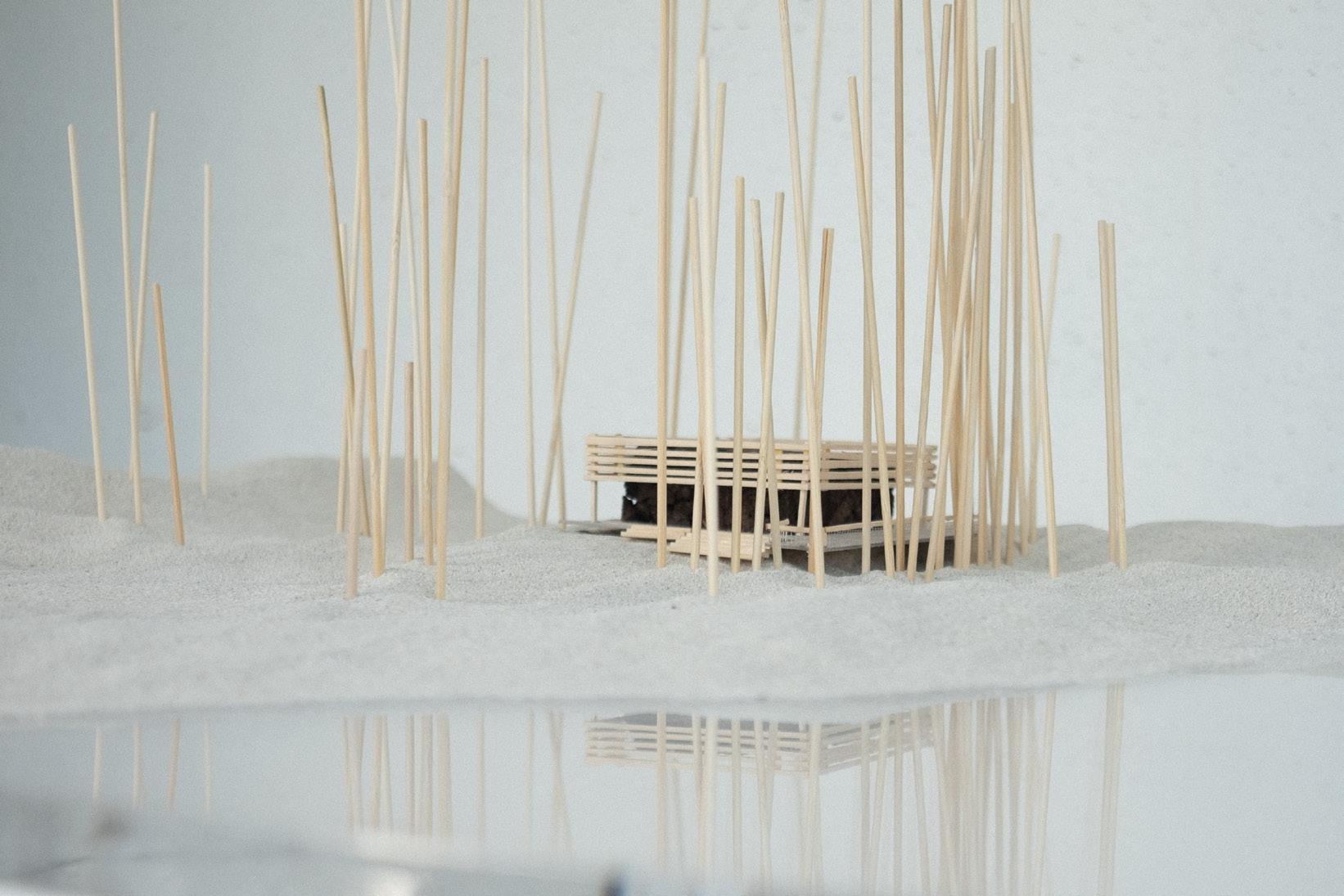
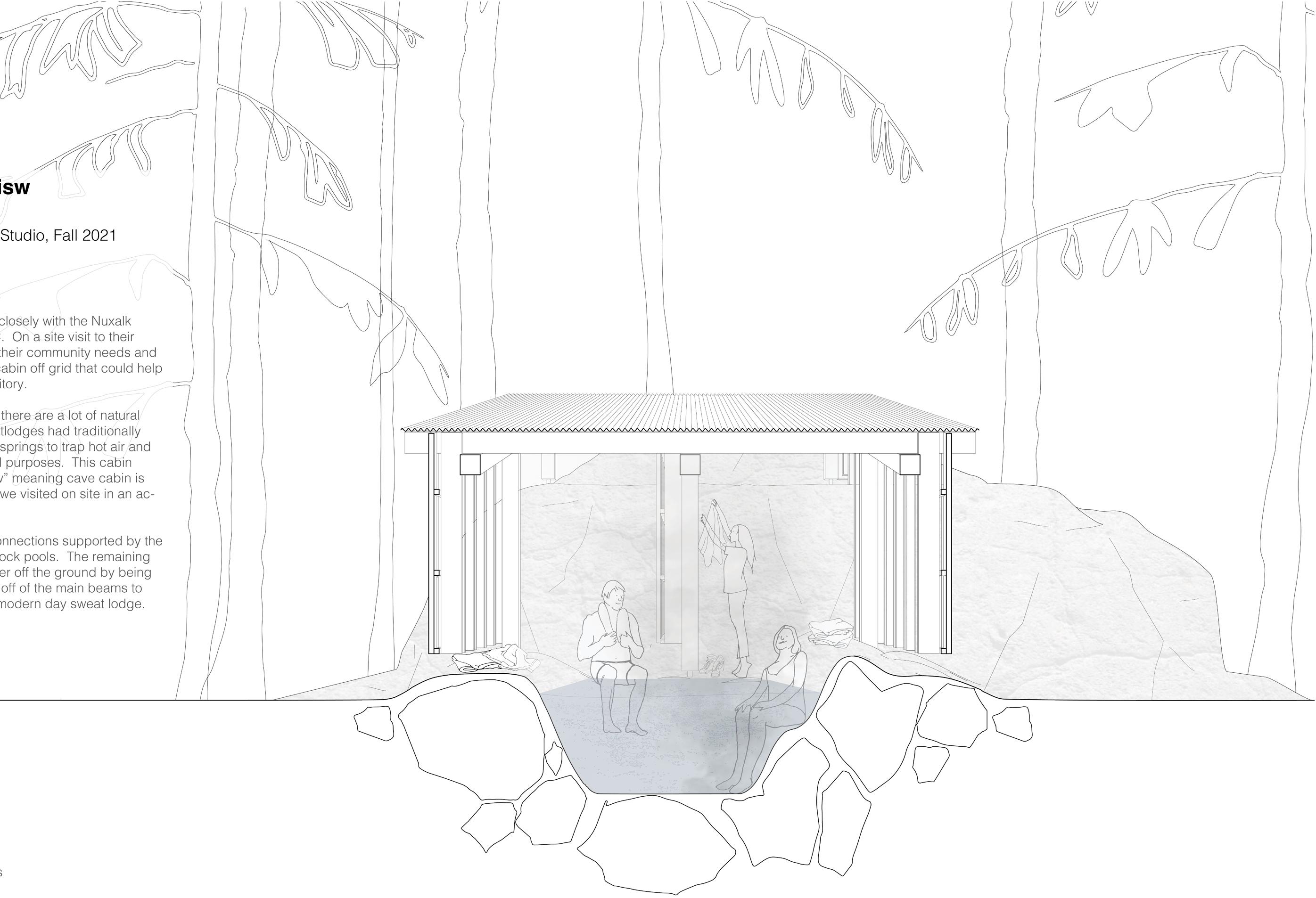
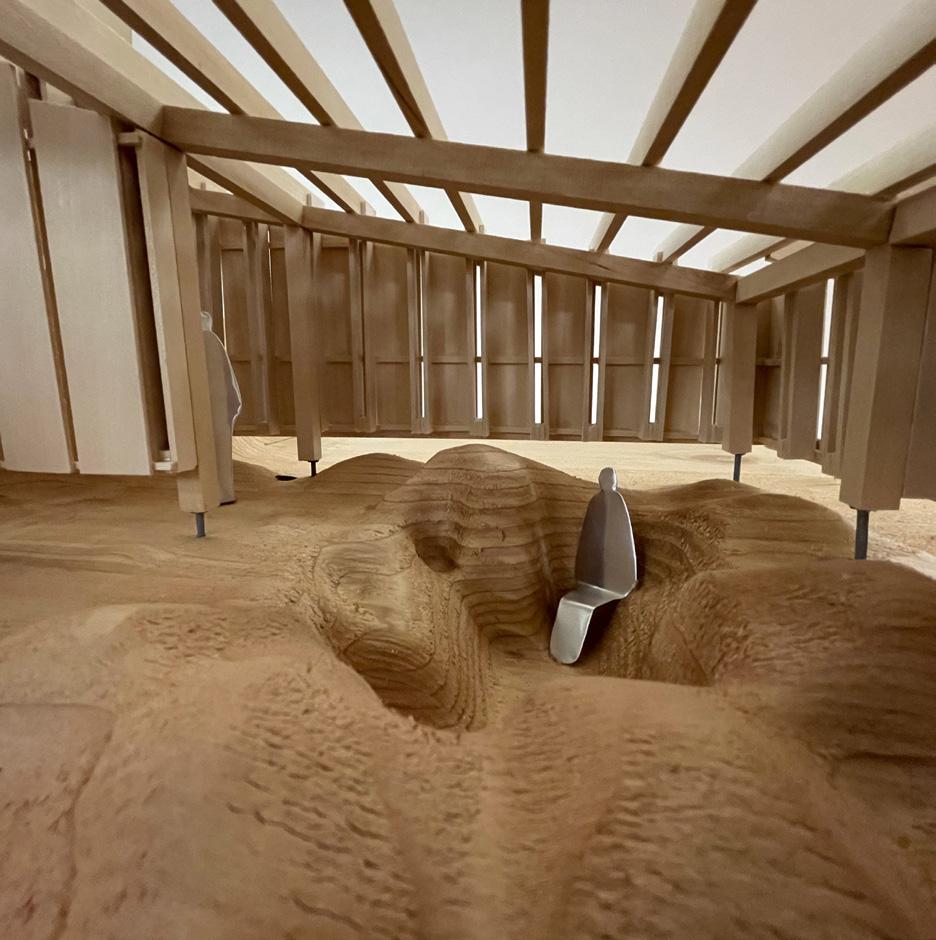
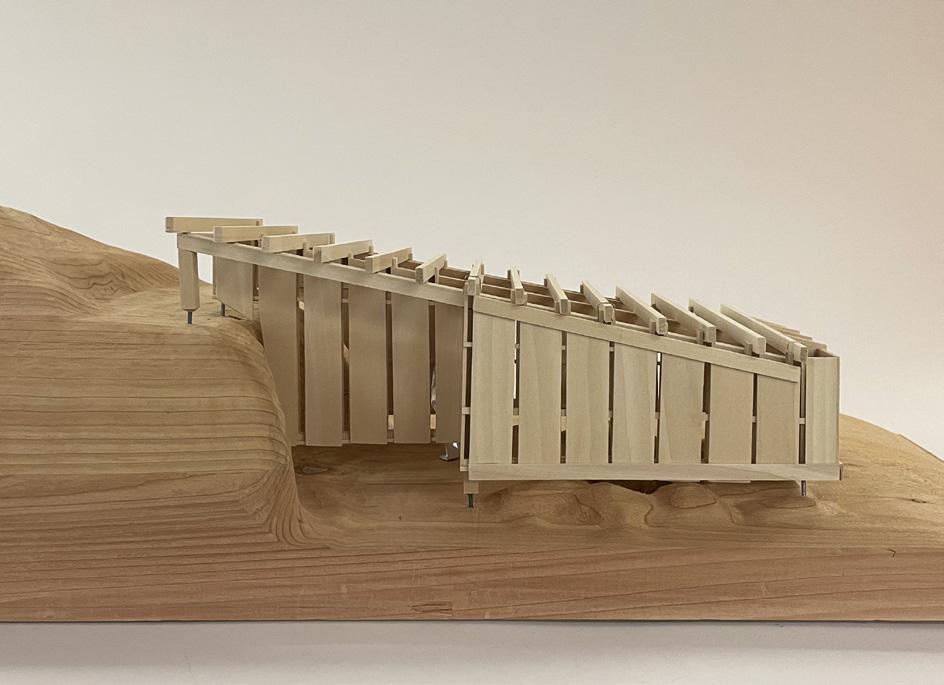
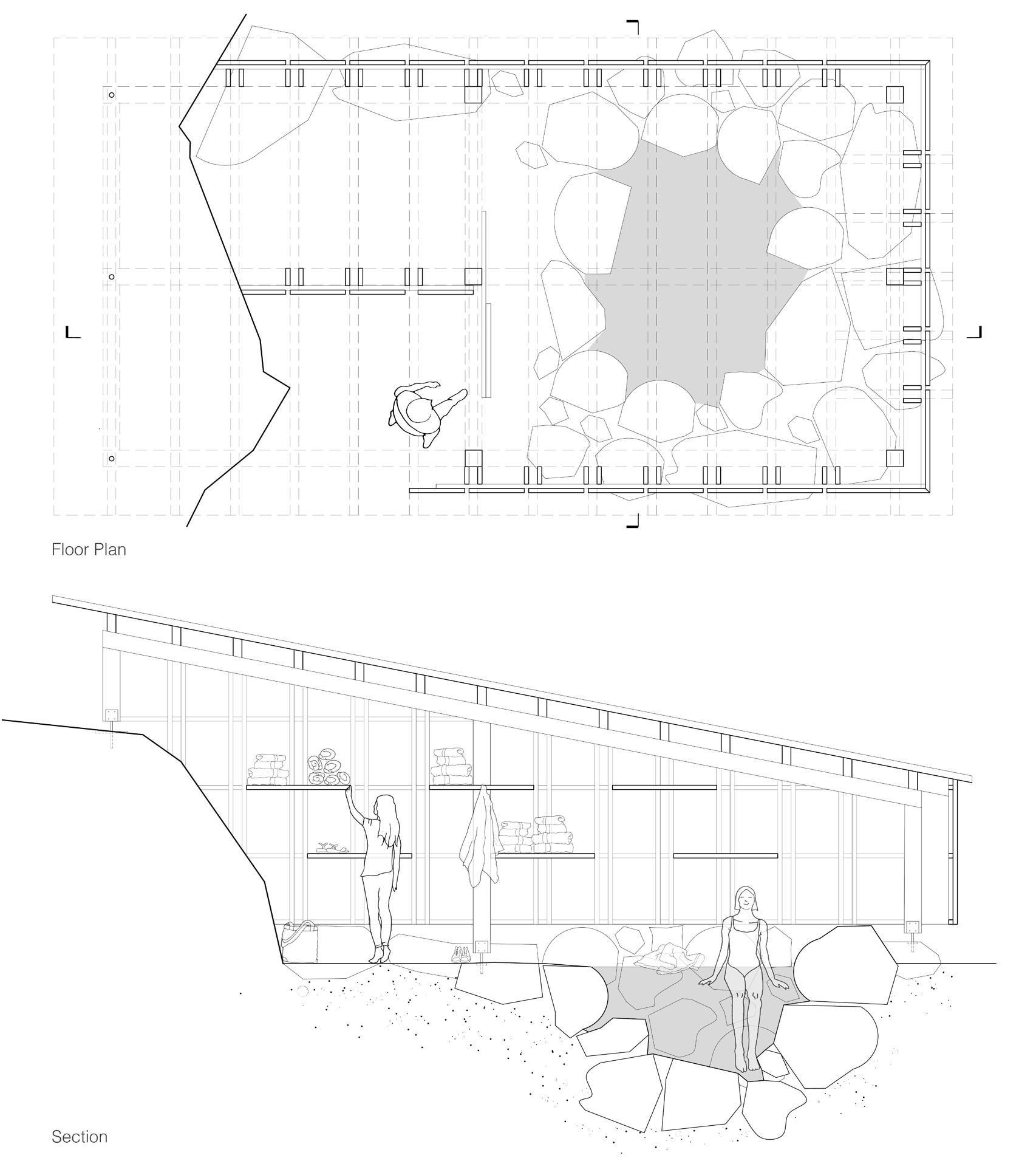
In this studio we worked closely with the Nuxalk Nation in Bella Coola, BC. On a site visit to their reserve we talked about their community needs and were asked to design a cabin off grid that could help reclaim some of their territory.
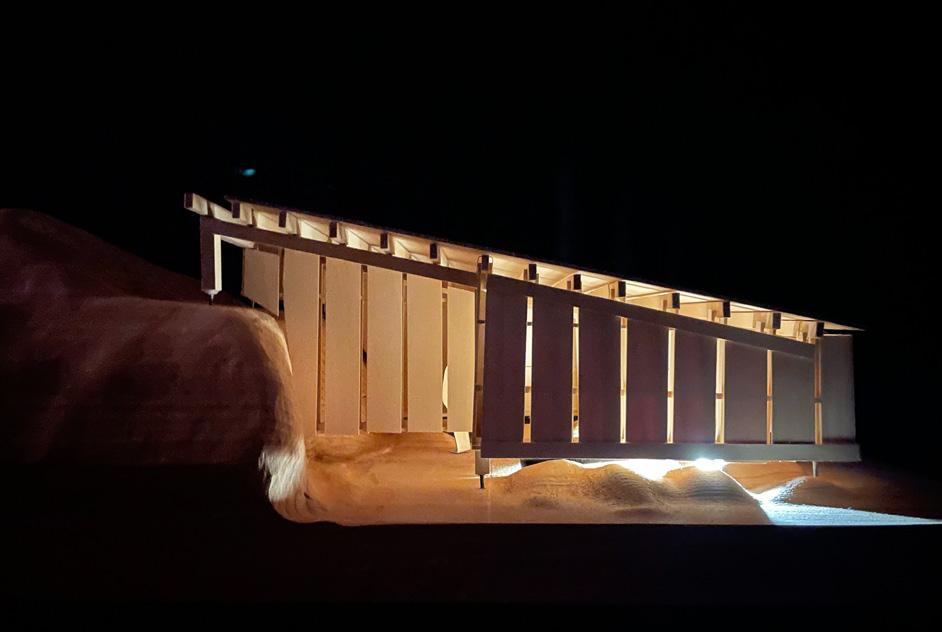
In the Bella Coola region there are a lot of natural active hot springs. Sweatlodges had traditionally been built overtop of hot springs to trap hot air and were used for ceremonial purposes. This cabin coined “T’apalst Nustl’isw” meaning cave cabin is built off of a giant bolder we visited on site in an active hot spring zone.
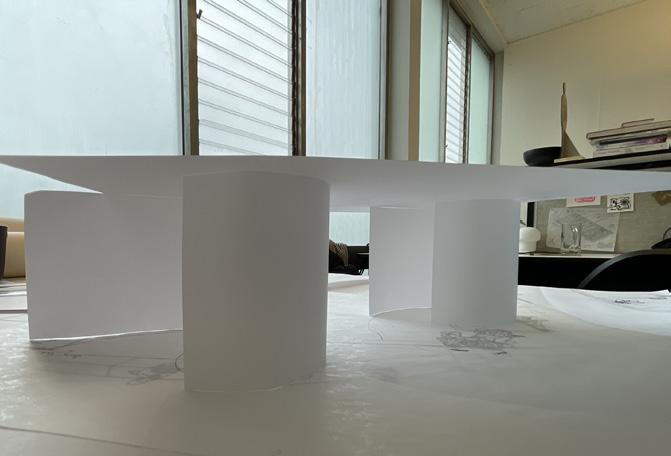
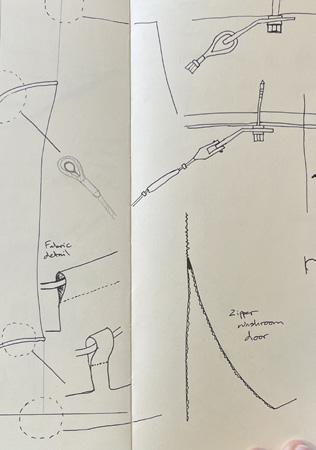
The structure uses pin connections supported by the boulder and man made rock pools. The remaining structure of the walls hover off the ground by being pinched and suspended off of the main beams to trap steam and act as a modern day sweat lodge.
Supervised by John Bass jbass@sala.ubc.ca
Landscape Vertical Studio, Fall 2023
Duration: 1.5 month
In collaboration with Bronte Mutukistna
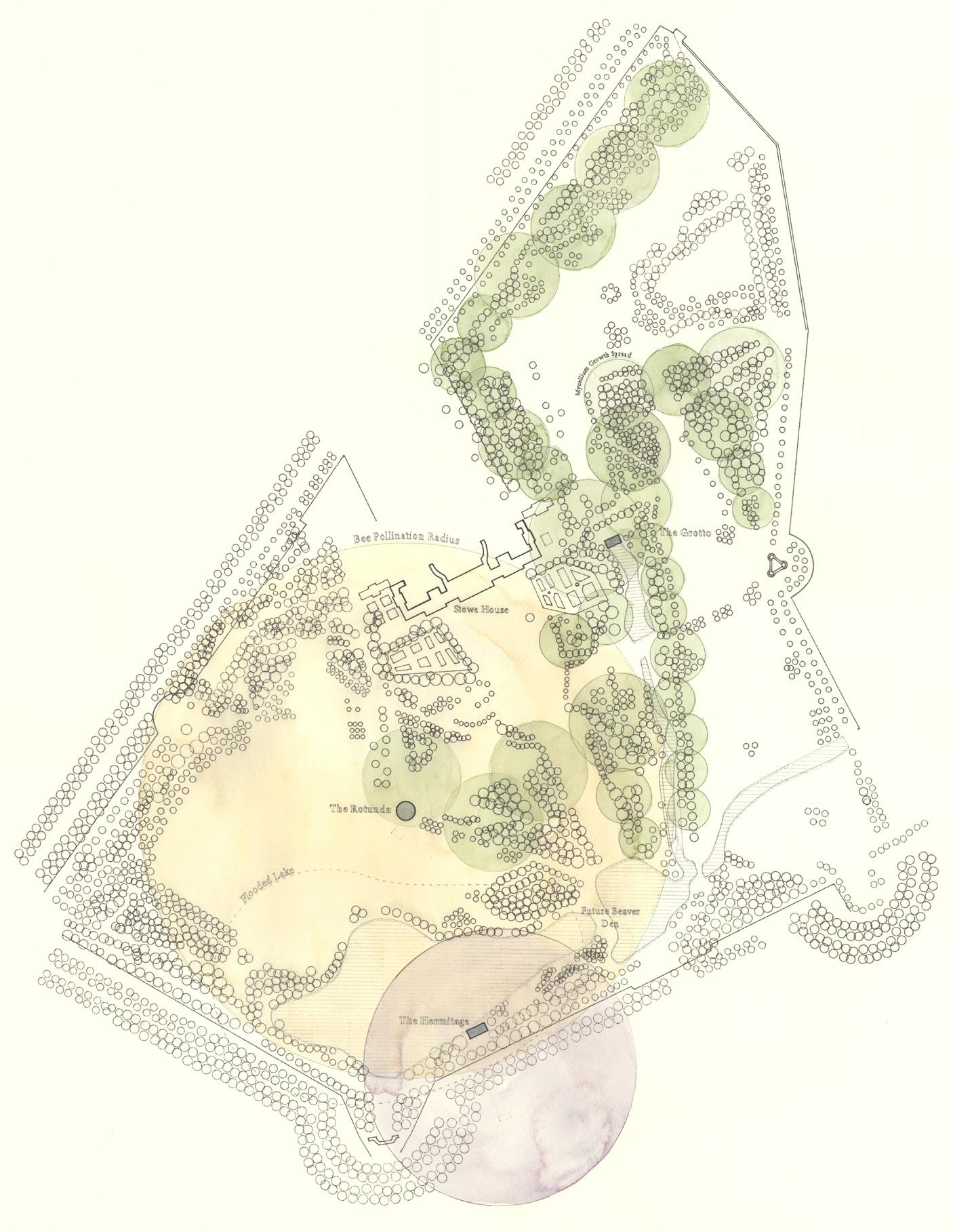
In this studio we were asked to re-imagine 17th century Stowe Gardens, in England, with today’s moral standards. Landscapes act as a powerful tool that hold meaning and convey our attitude towards nature and society.
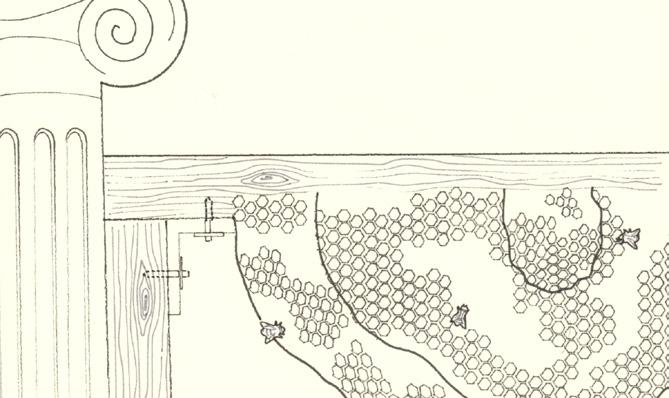
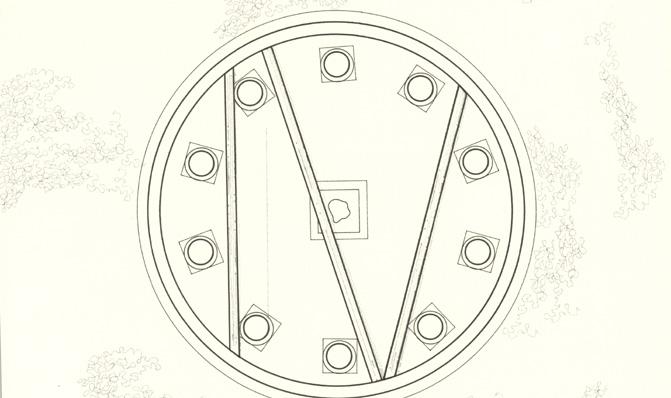
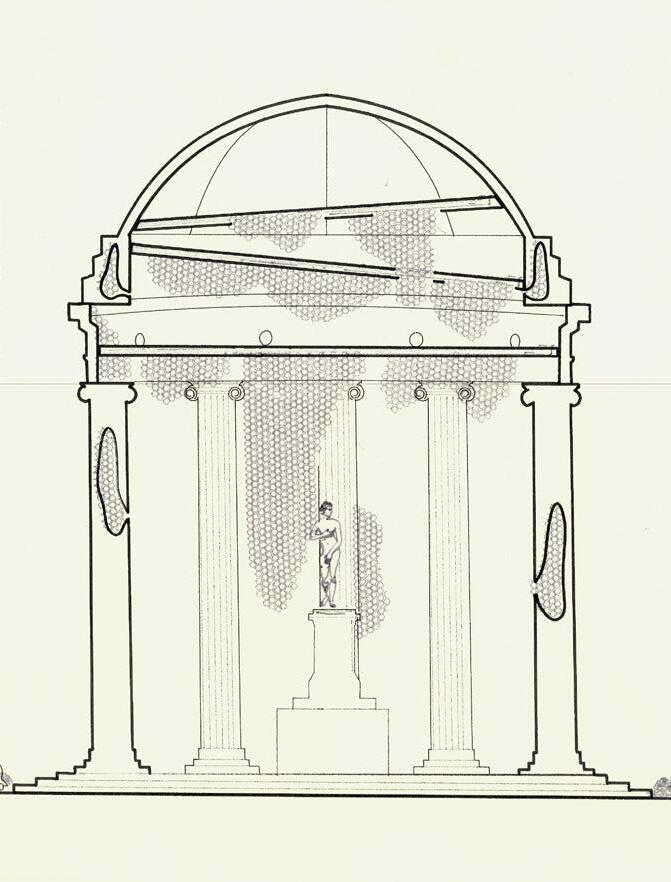
For an Ecofeminist Stowe challenges the patriarchal hierarchy embedded in Stowe Landscape by inverting the existing social and ecological order. Recognizing the intrinsic and overlooked role of insects, the European honey bee (apis mellifera), the Staghorn beetle (lucanus cervus), and the anecic earthworm (Lumbricus terrestris) are placed at the forefront of landscape design. The designs initially create ideal conditions for species and subsequently release agency to each insect, letting the bee, beetle, and worm organically shape the landscape. The landscape at Stowe is then a collaboration between human and non-human actors.
This design acts as a catalyst for ongoing change, creating a dynamic, interconnected ecosystem at Stowe. For an Ecofeminsit Stowe foresees a cycle of reciprocal benefits, envisioning the continuous evolution of Stowe as it embraces a more inclusive and sustainable future in the landscape.
Supervised by Fionn Byrne
fionn.byrne@ubc.ca
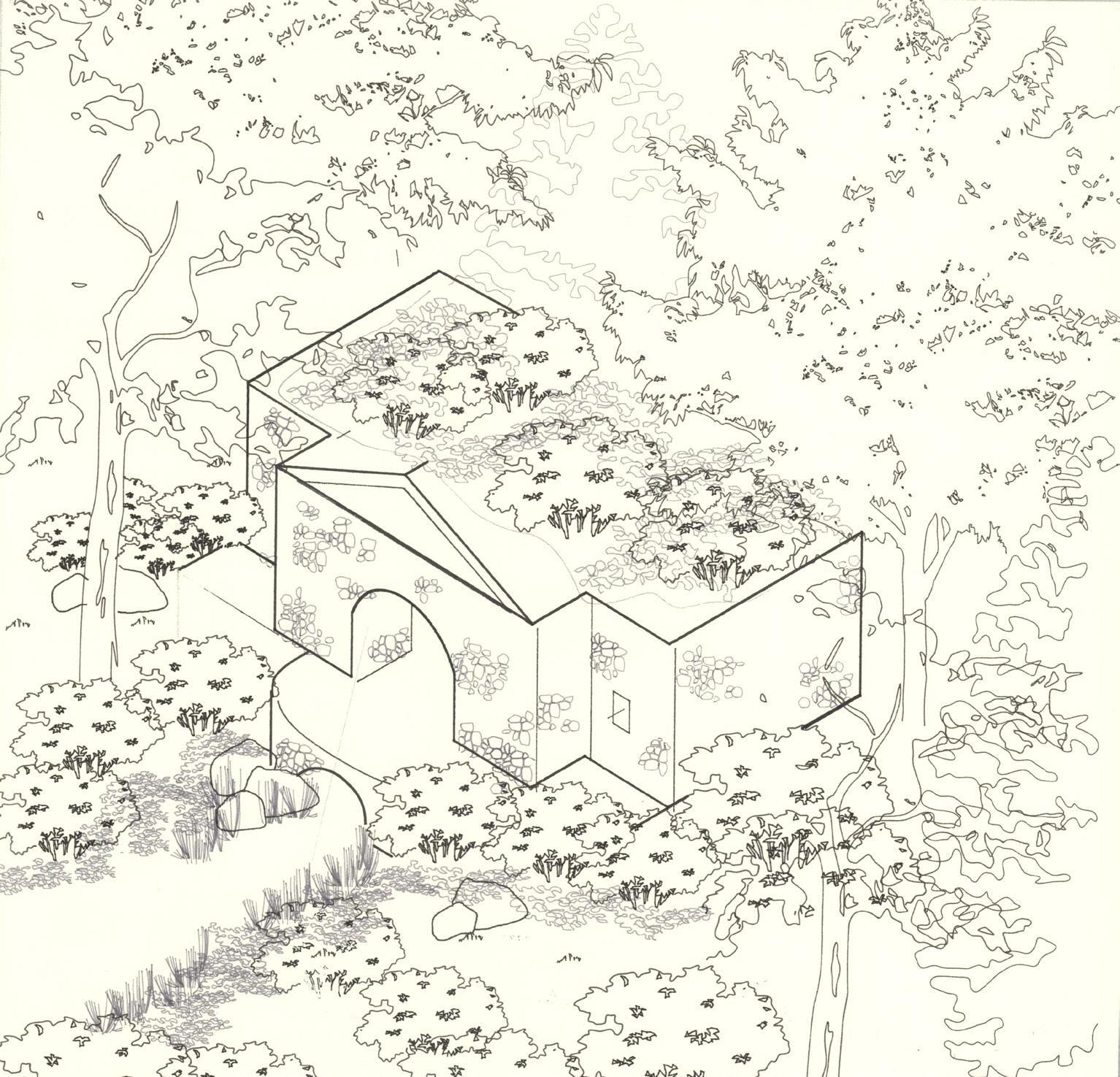
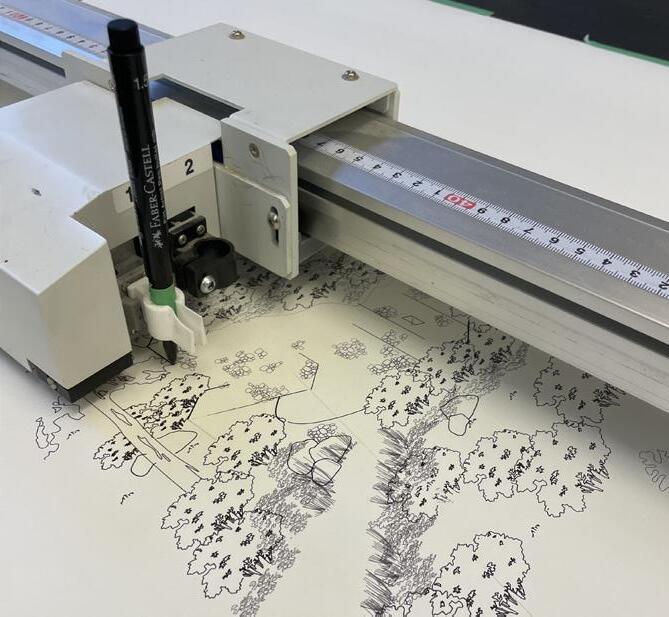
Using pen plotter on watercolour paper to create drawings.
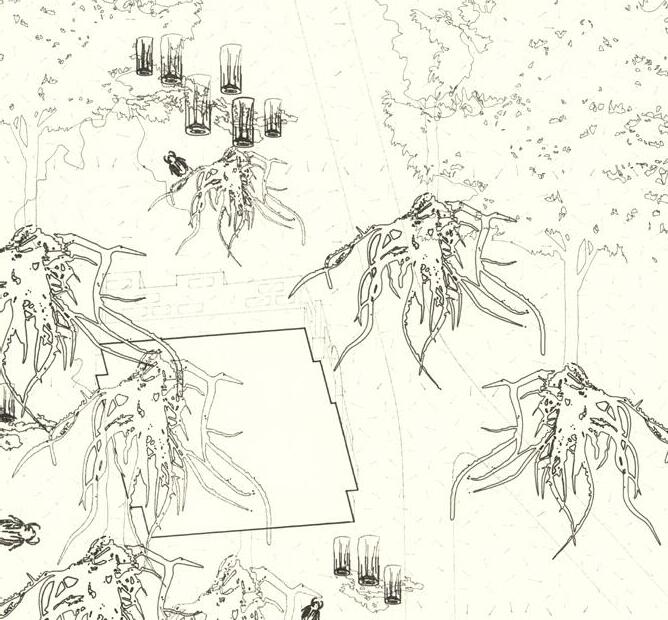
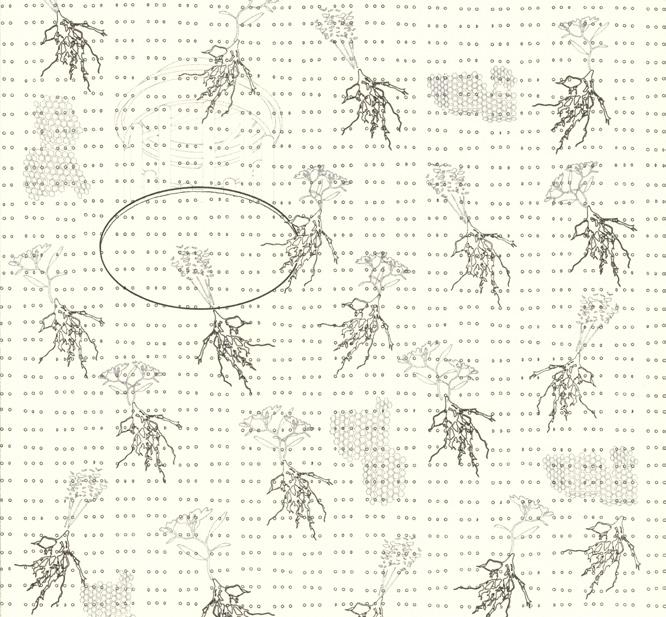
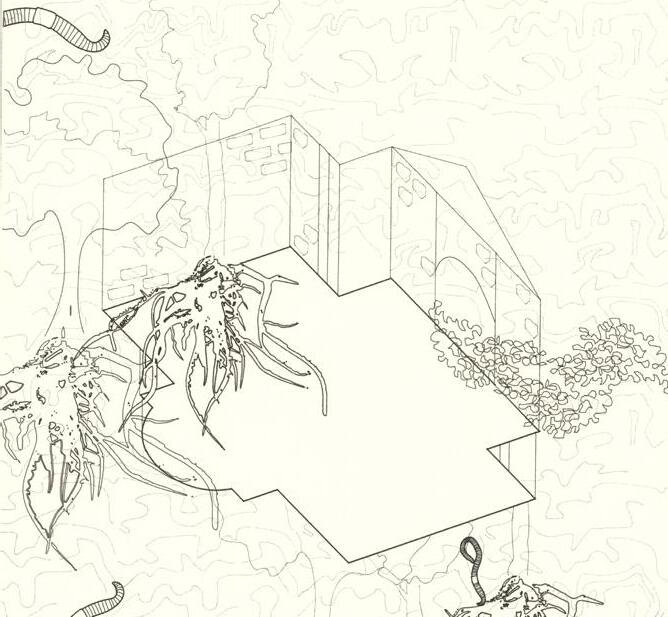
“Worms Eye” View
The images depict Folly’s at Stowe from the perspective of insects. These perspectives aims to change the narrative of how we view landscapes from a top down to a bottom up approach.
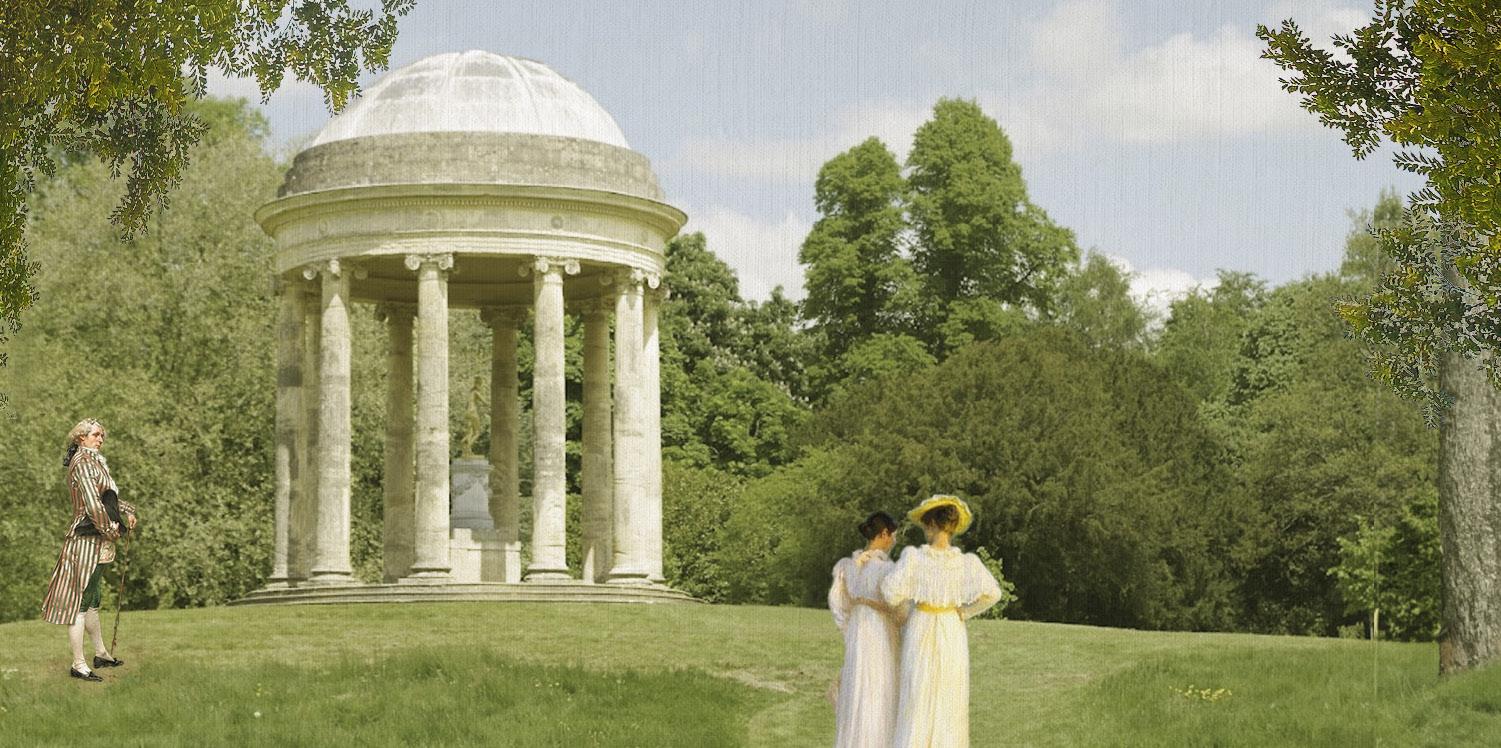
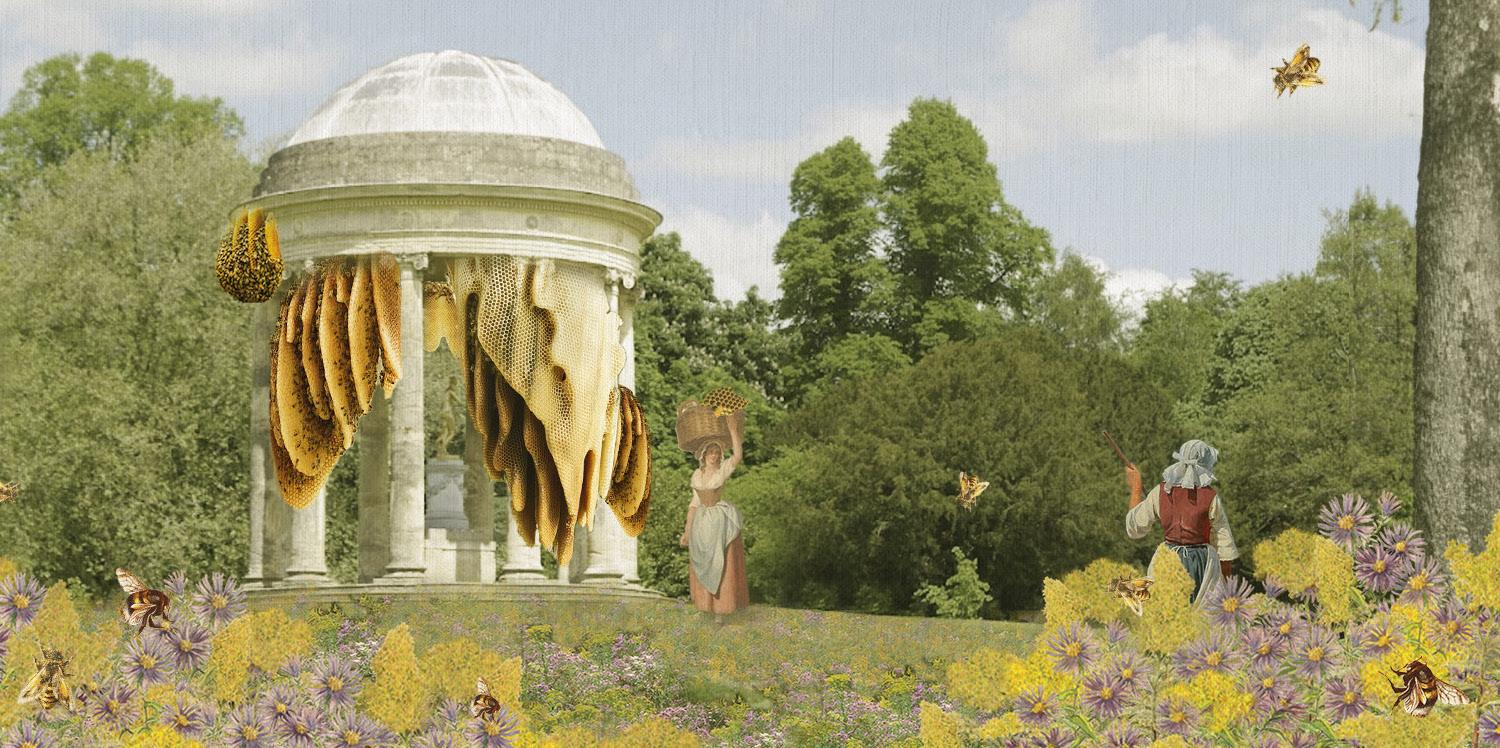
The Rotunda
These images show the before and after evolution of the Rotunda Folly at Stowe before and after human aided introduction of honeybees alter the landscape.
Project Designer
August 2020 - August 2021
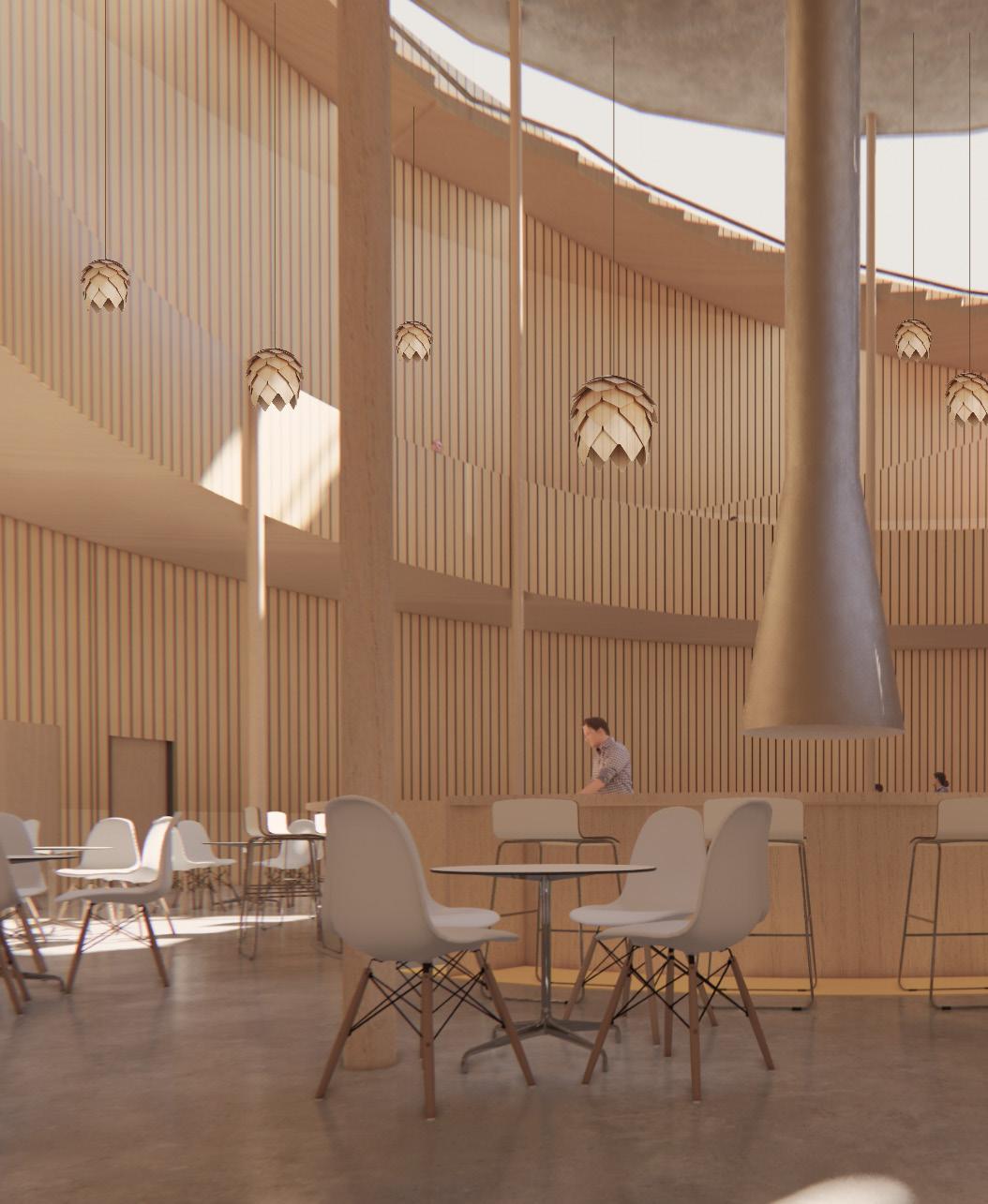
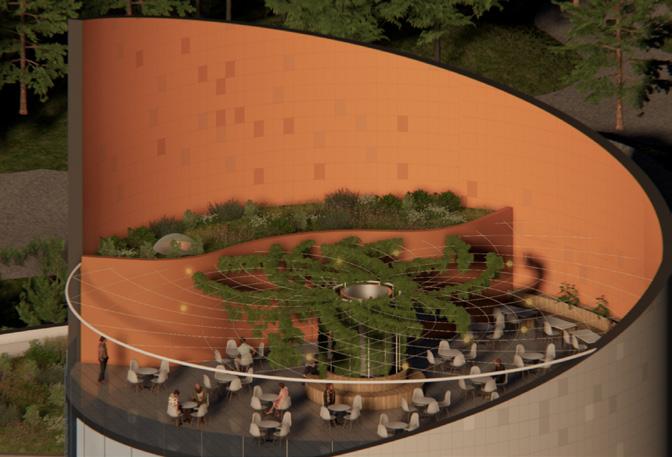
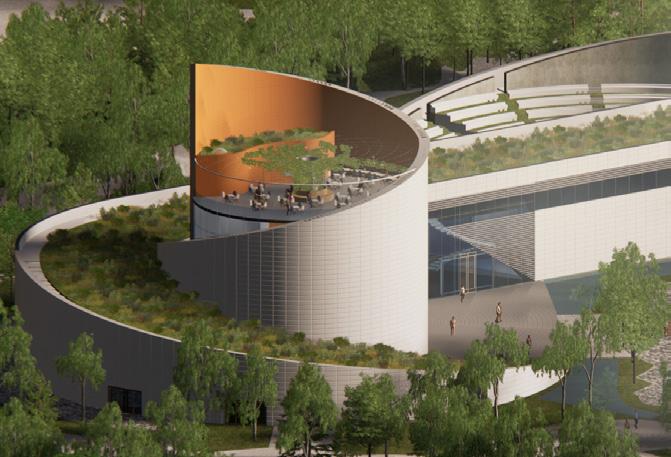
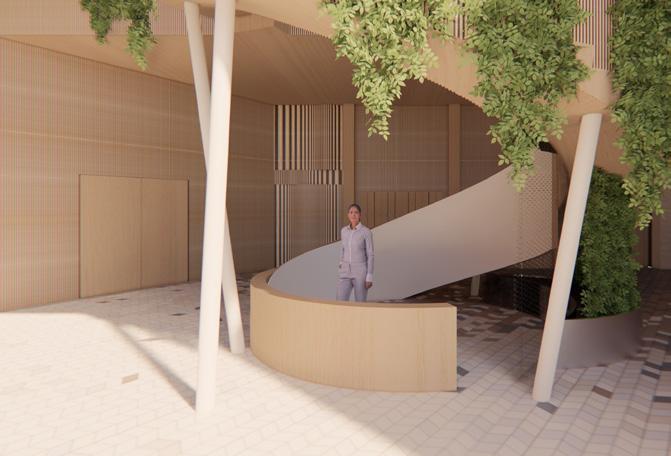
The Fort McMurray Metis Cultural Centre located in Fort McMurray, Alberta provides a new community space on an old baseball field. It is comprised of 3 main wings including multi-use space, a public wing with a museum and an interpretive centre including offices for affiliated groups.
My role in this project began in design development and carried on into construction documentation. In the early stages of this project I worked on iterations of massing for the structure and produced exterior and interior renders to be used for client presentations along the way. I later helped with construction documentations packages, while building up the Revit model and creating renders using Enscape.
thank you!