JTB Architects design spaces where we can live, work, innovate, age and learn.
Our future homes, neighbourhoods, and community spaces require a thoughtful approach to how they are designed and built. We create architecture that reflects our aspirations for a better designed and more sustainable built environment.
We have built a reputation for designing thoughtful, sustainable, and well-built spaces. Our work is characterised by strong, beautiful forms, that use materials with integrity.
We have a deep understanding across architecture, urban design, master planning and sustainability. This is complemented by specialised capabilities in interior design, building information management (BIM), and architectural visualisation.
We are focused on being mindful about how the buildings we create impact our environment and the world around us.
We are delivering some of the country’s most significant timber buildings, innovating solutions for an changing population, designing vibrant and attractive neighbourhoods for diverse communities, and creating spaces that will endure for generations to come.
We work across Aotearoa New Zealand with studios in Auckland, Wellington, Nelson, Christchurch and Wānaka.
Together let’s create architecture.
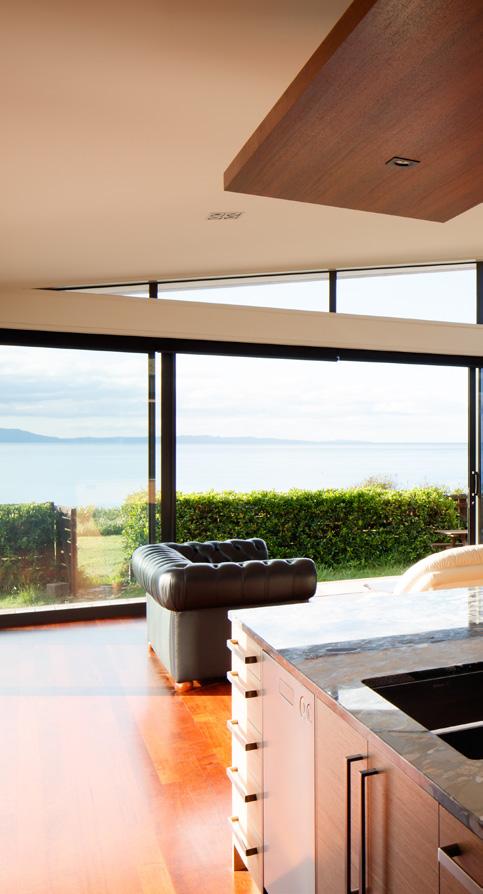
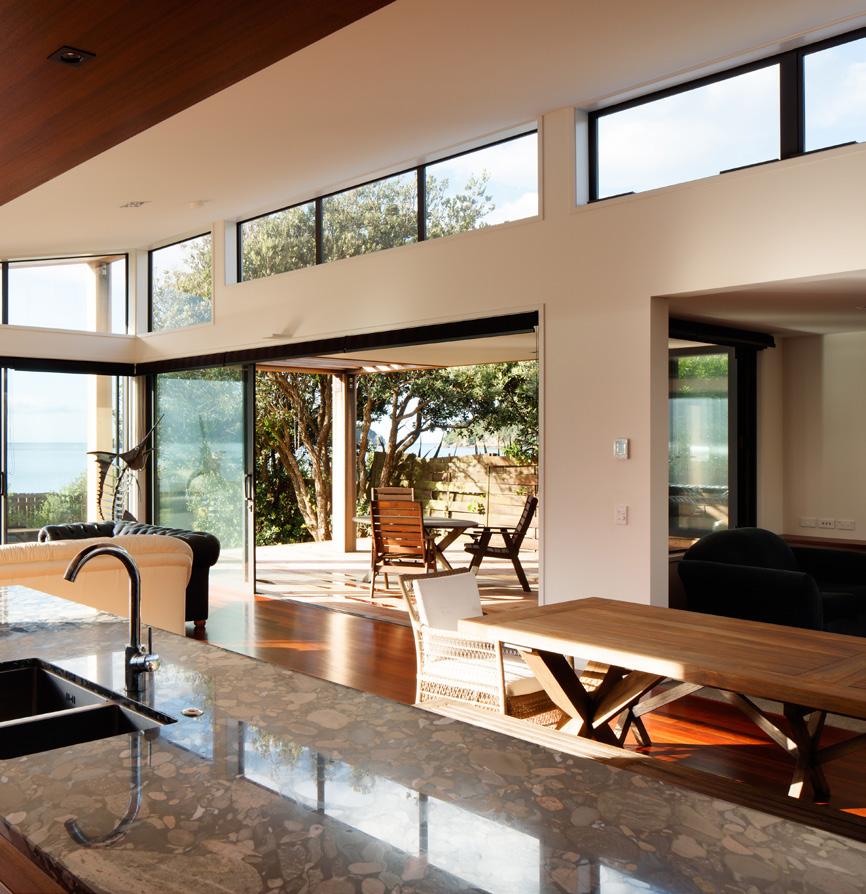
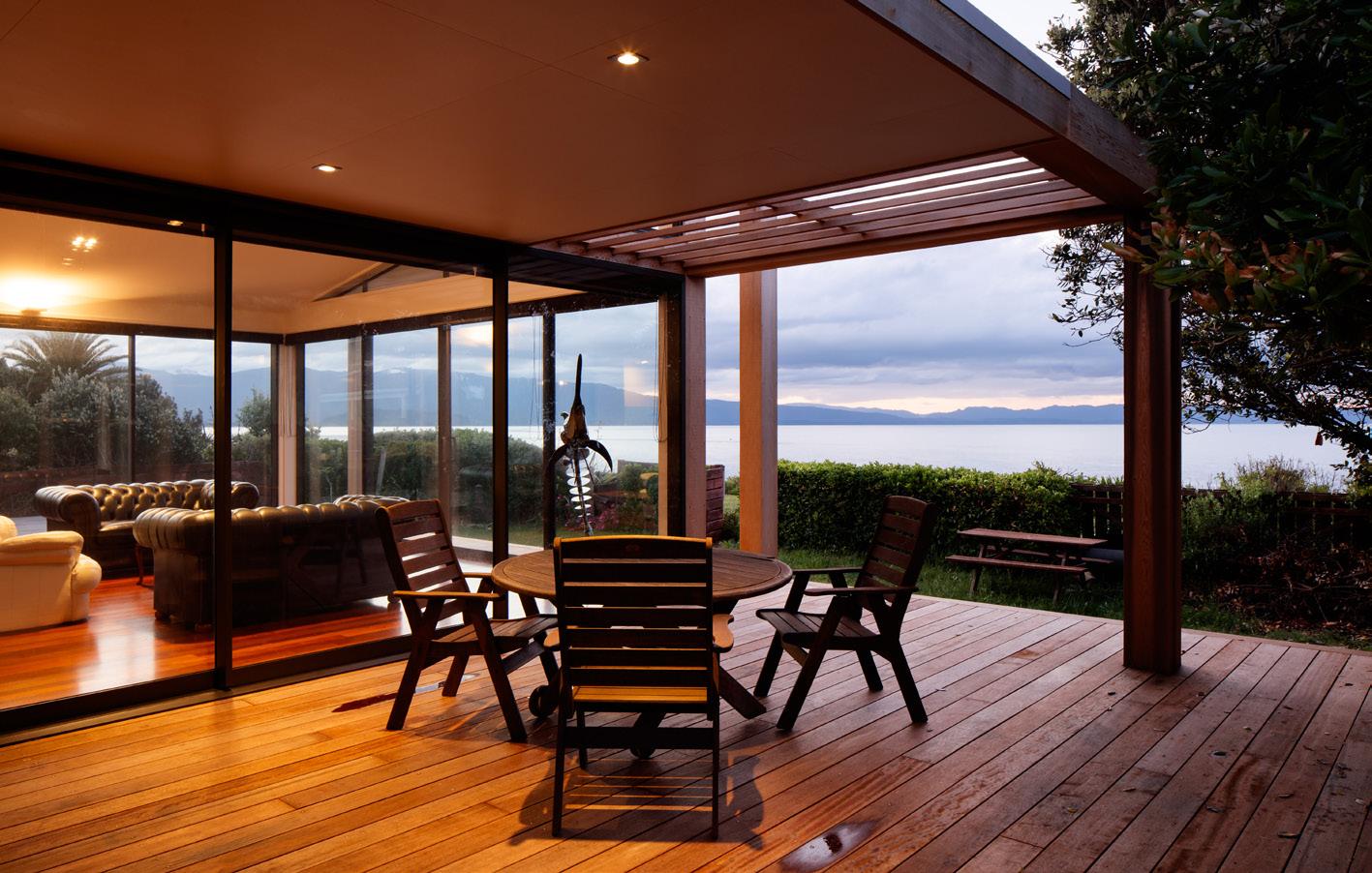
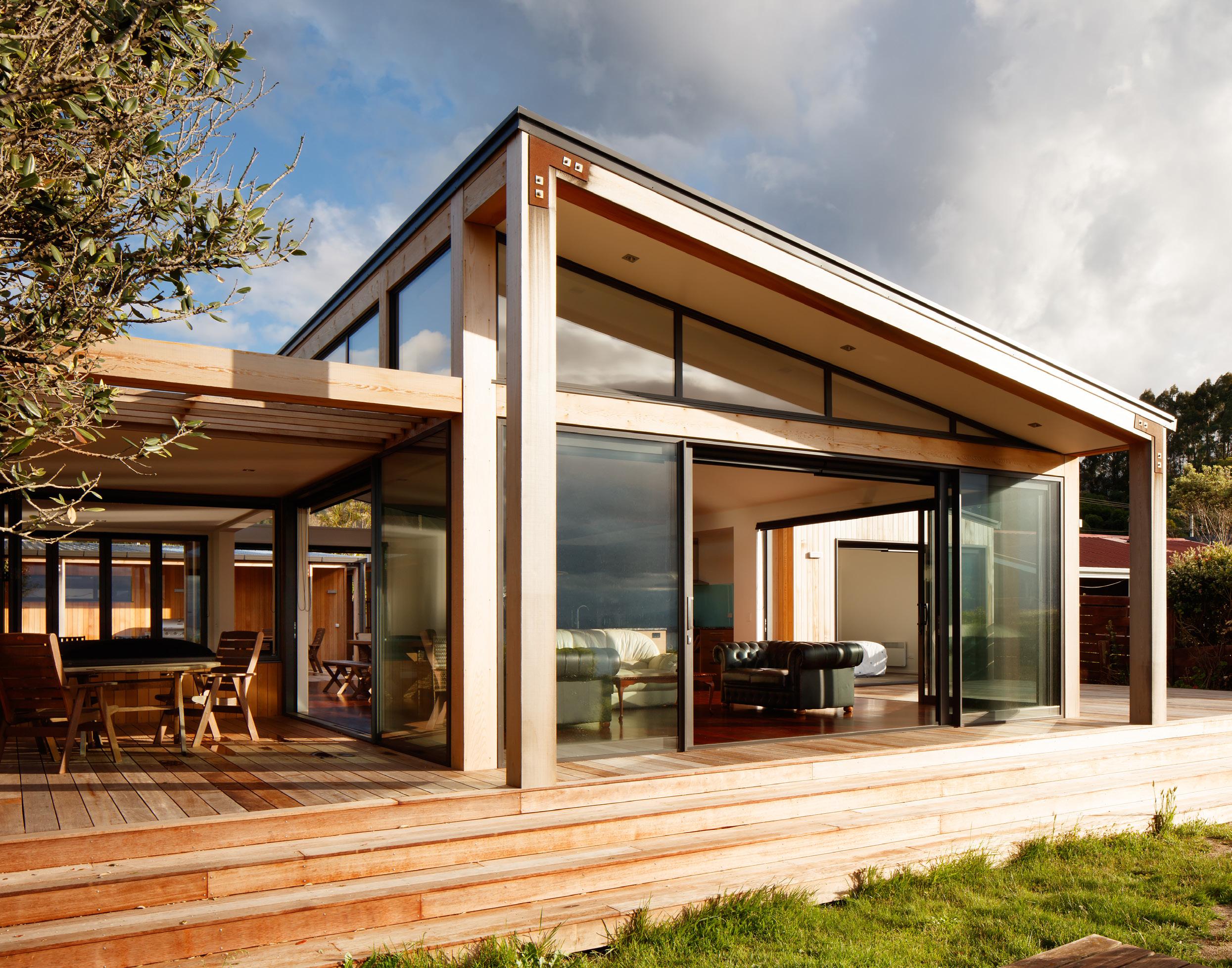
The clients’ brief was for a relaxed, family home that celebrates the beach lifestyle, with minimal division between inside and out; large enough to accommodate extended family, but easy for a couple to manage and maintain. The building sits low enough to limit the onshore wind, but high enough to capture the views.
KĀPITI COAST HOUSE
Replacing an old family bach previously on the site, the design retains ground floor living areas for seamless flow to the outdoors.
A separate main suite and study are positioned on the first floor, with two guest bedrooms and bathroom in the south-eastern wing of the main home. A smaller overflow sleepout and garage is connected by decking and covered walkways.
With a prevailing onshore wind, this is a harsh, salt-laden environment which informed design and materials. High performance metal cladding is used externally, along with an intelligent air barrier, superinsulated roof, walls and floors
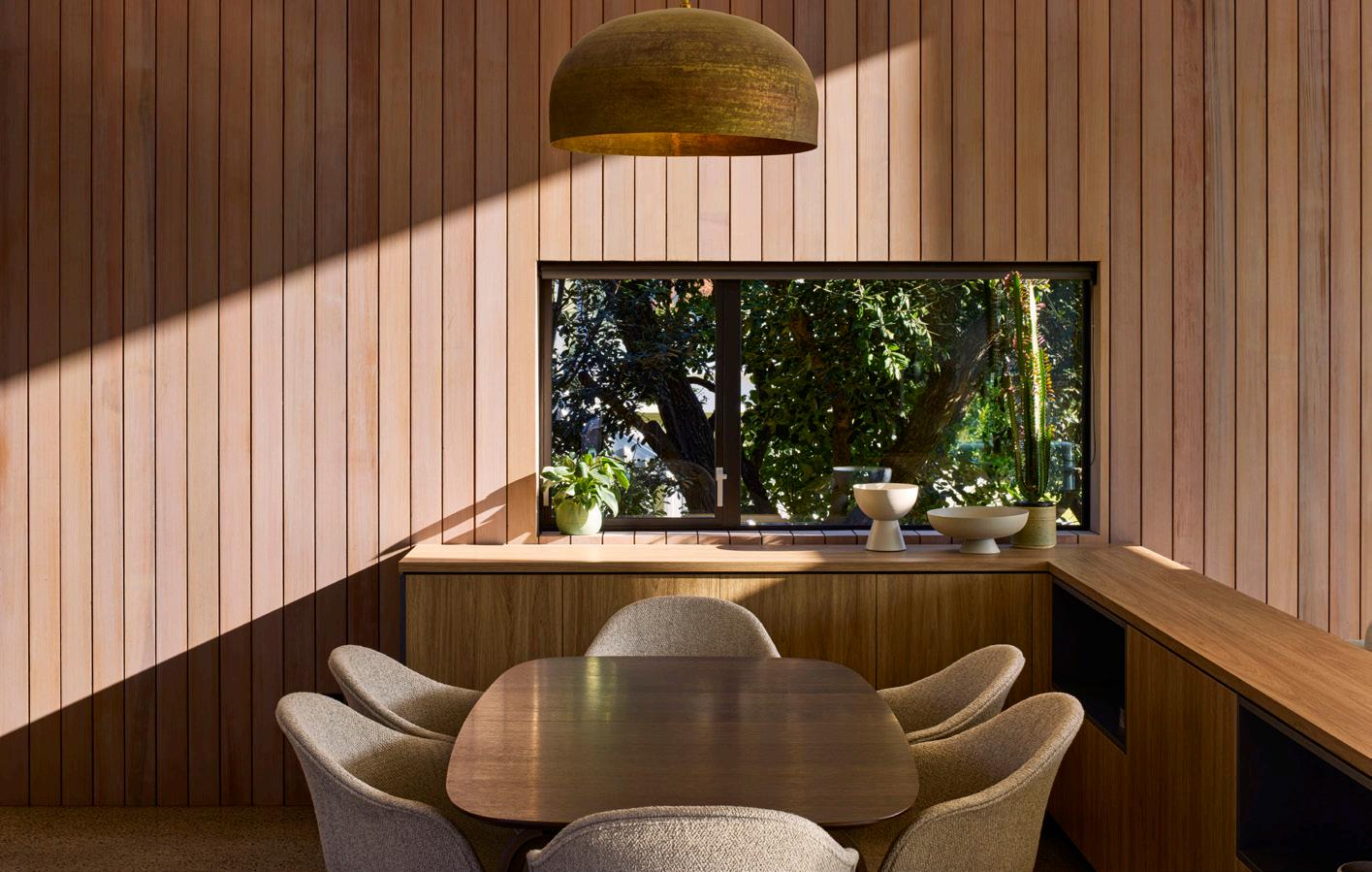
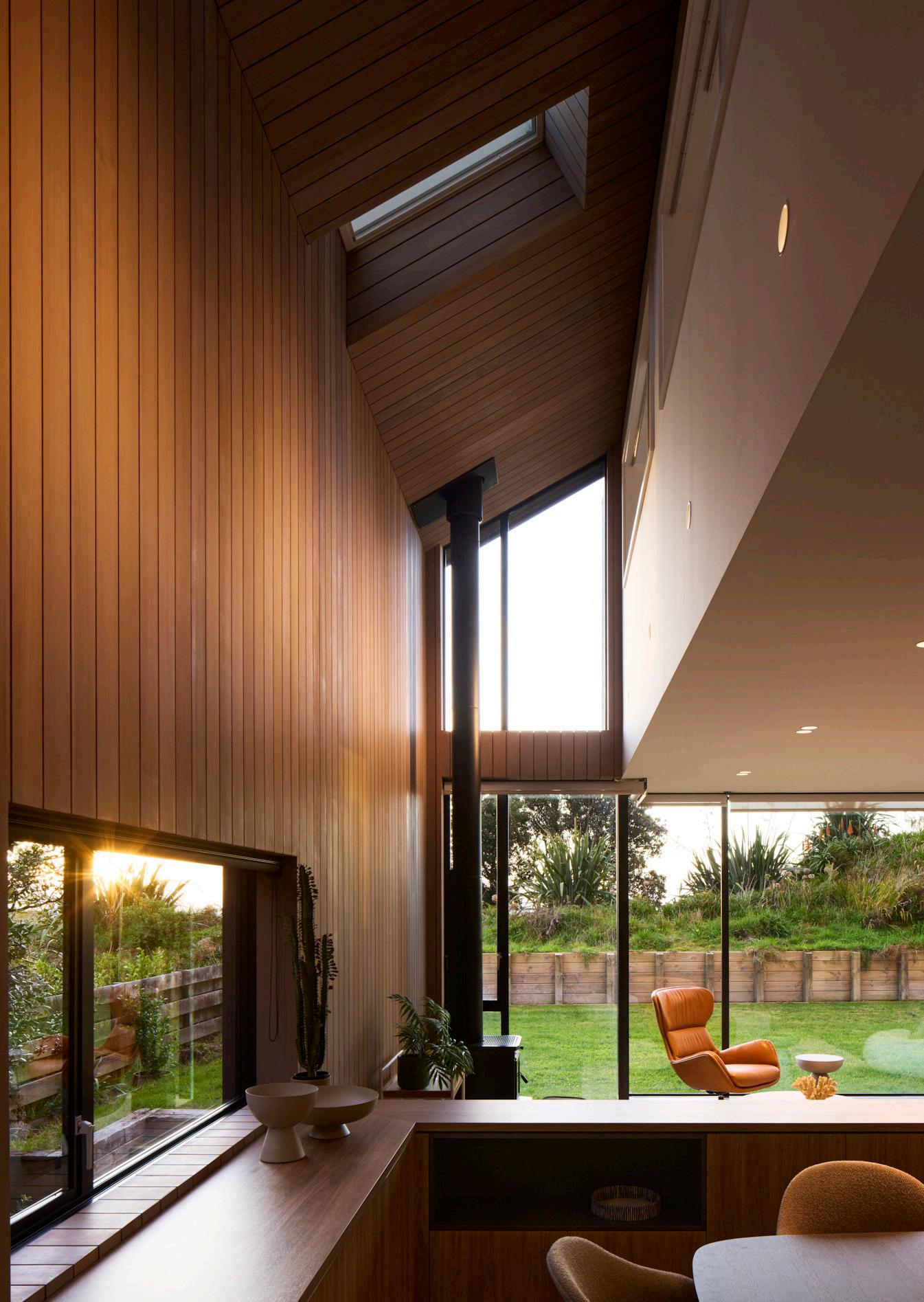
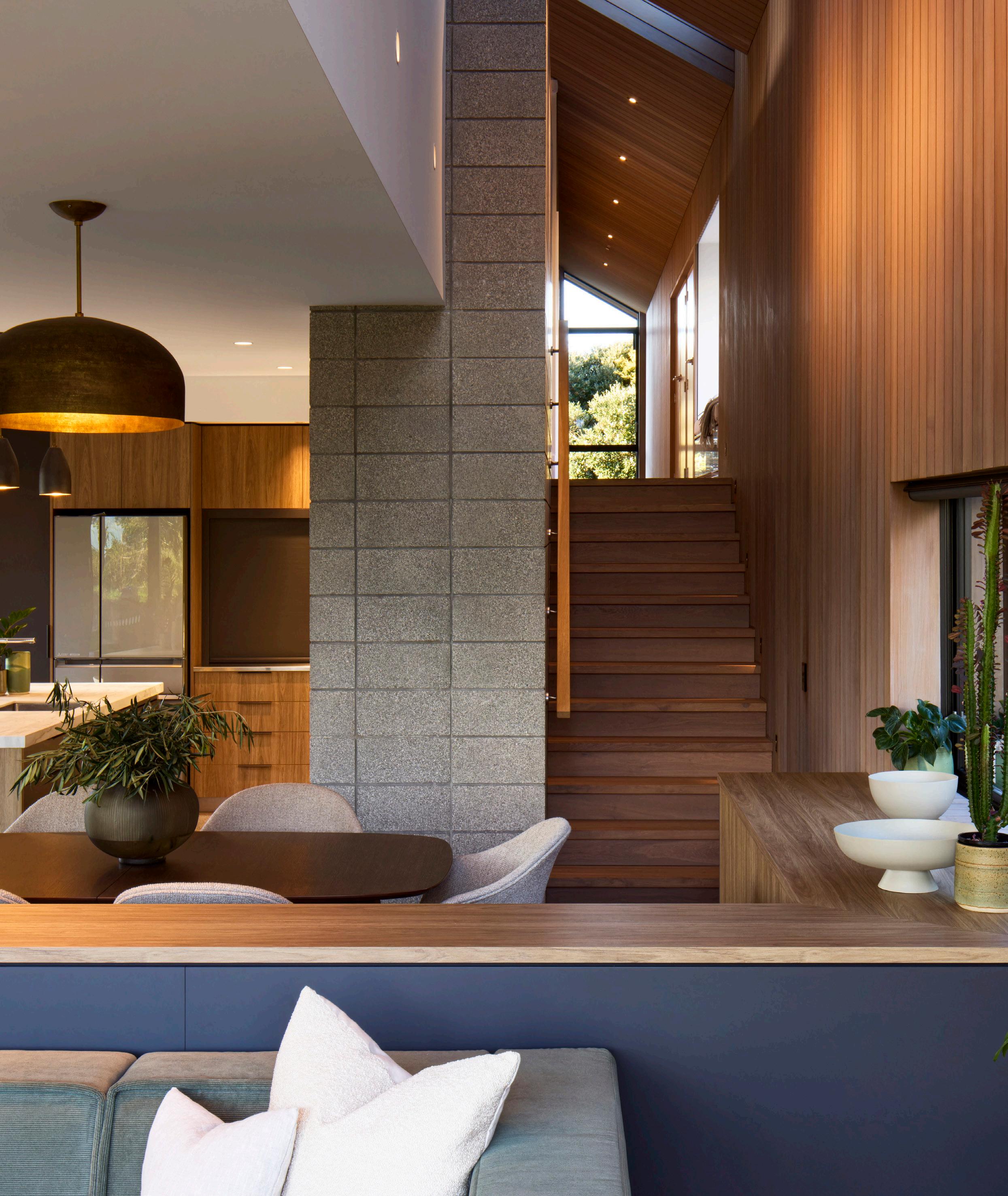
Inside, the house has a warm mix of materials. Stained cedar sarking flows from the walls of the living area up to the skylights, which break through the ceiling above.
Perched on top of a ridge above the Waimea Inlet, this residence enjoys all day sun and panoramic views.
HODDY ROAD HOUSE
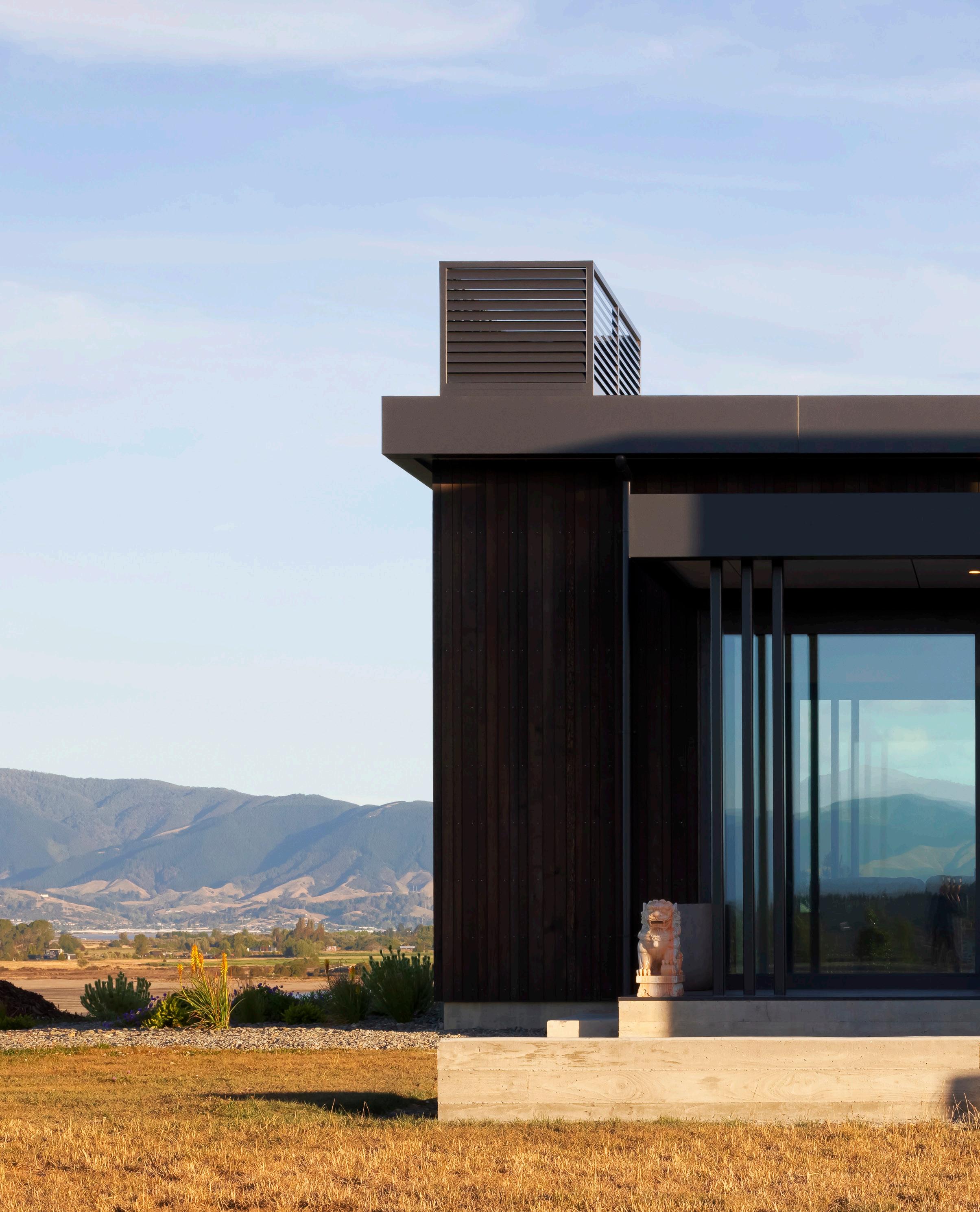
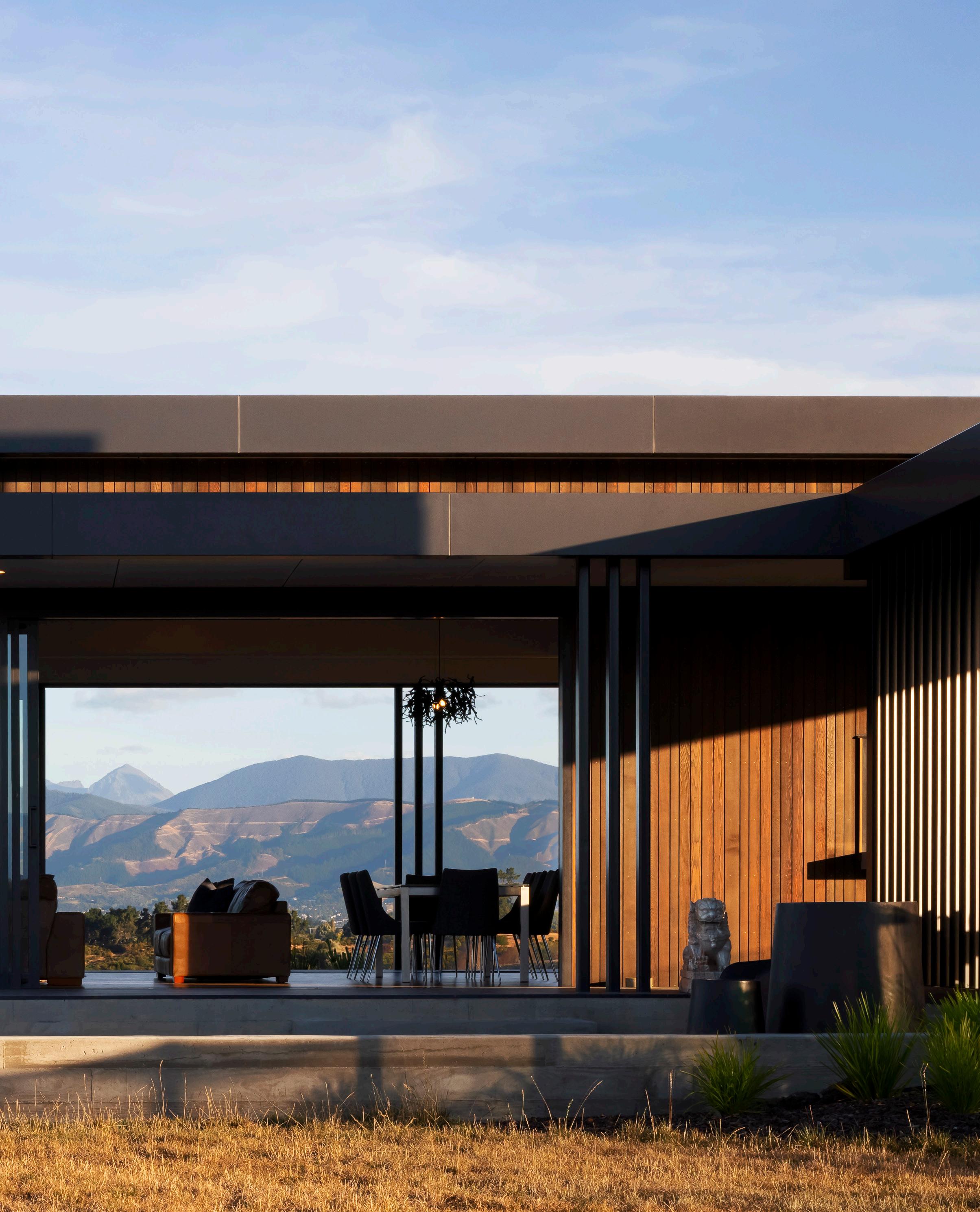
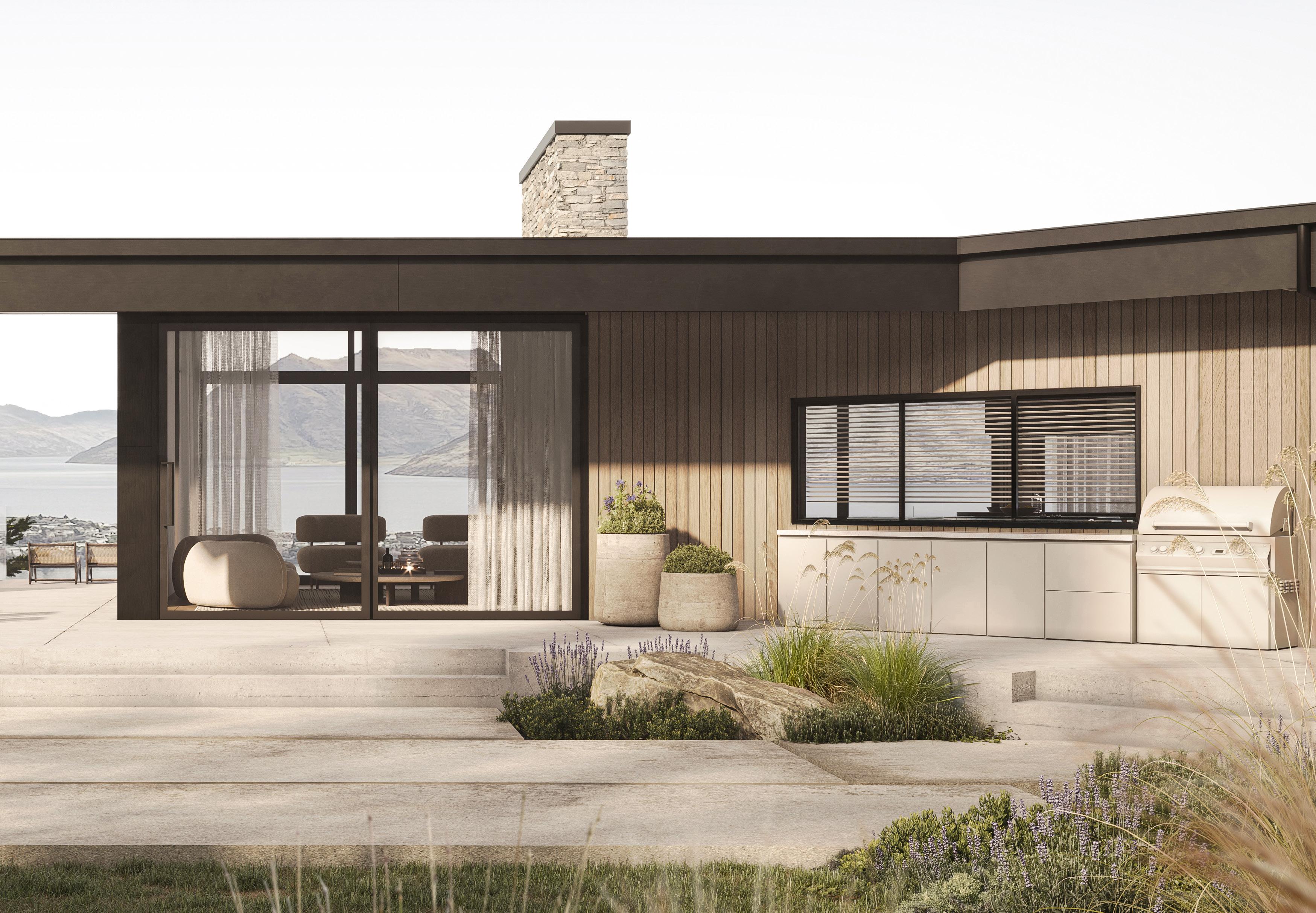
Interior and exterior spaces, including verandas, outdoor rooms and the pool courtyard, frame views in every direction and create a seamless interaction between the built environment and the natural landscape.
The exterior palette includes shuttered precast concrete that visually anchors the building to the site, and darkly stained cedar cladding, chosen for its recessive tone and natural feel.
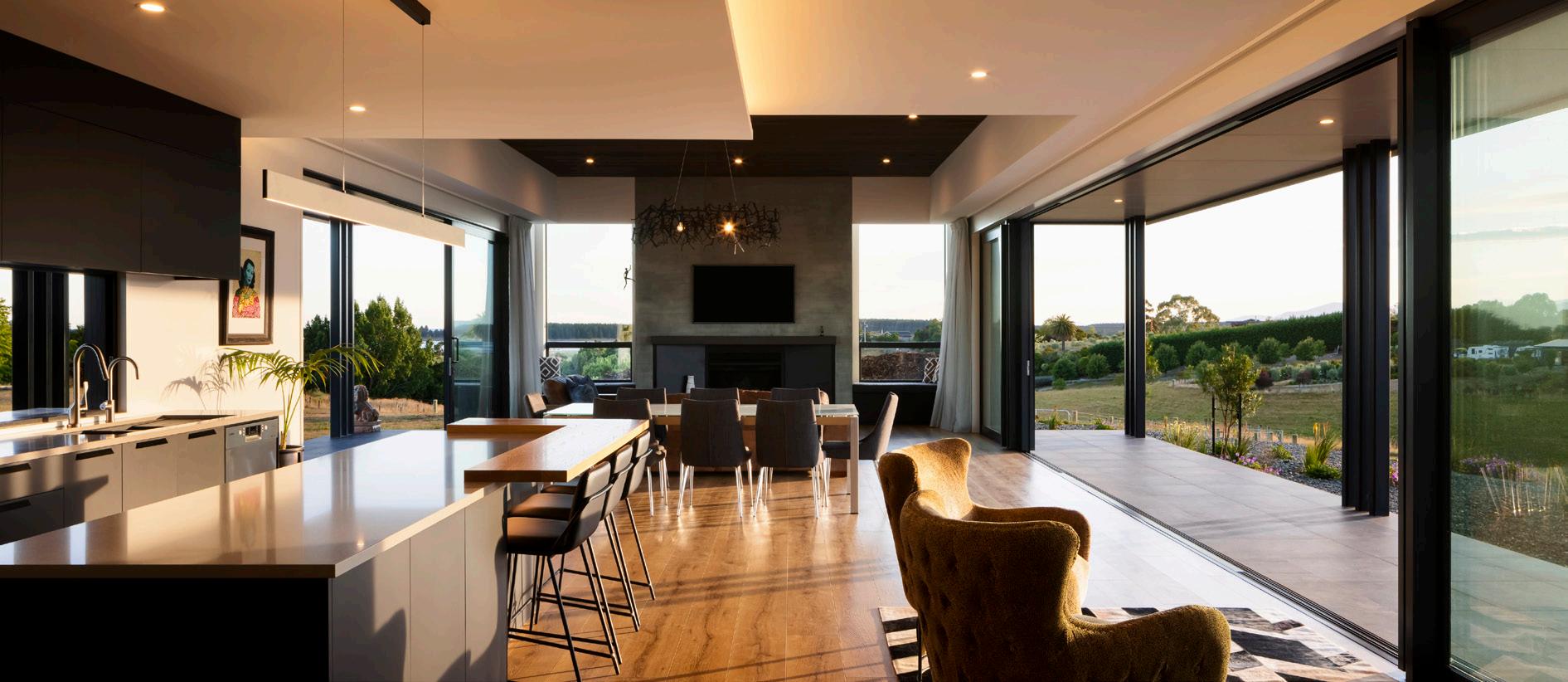
Expansive double-glazed joinery allows movement and light to flow through the home, creating an open ambiance. High ceilings in the living area enhance the sense of spaciousness. The design maximises
passive ventilation and minimises solar gain through generous eaves that help regulate temperature throughout the year. A hydronic heat pump system provides additional underfloor heating.
A generously proportioned covered outdoor space, complete with an outdoor fire and adjustable horizontal and vertical louvres, offers a year-round area that connects directly to the kitchen.
Working within local coastal environment regulations, the building’s form remains recessive in colour and low-slung to avoid dominating the skyline when viewed from the coast.
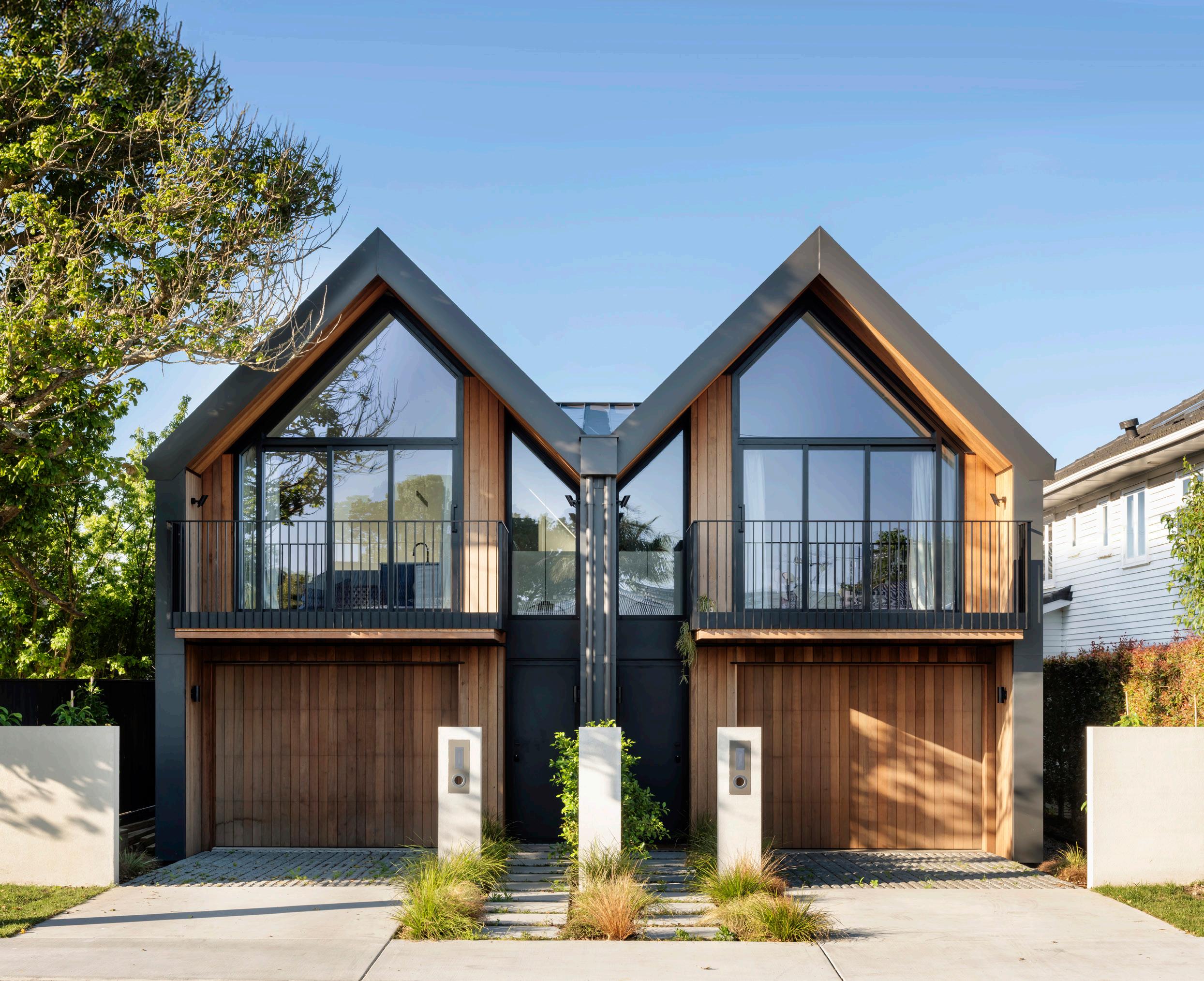
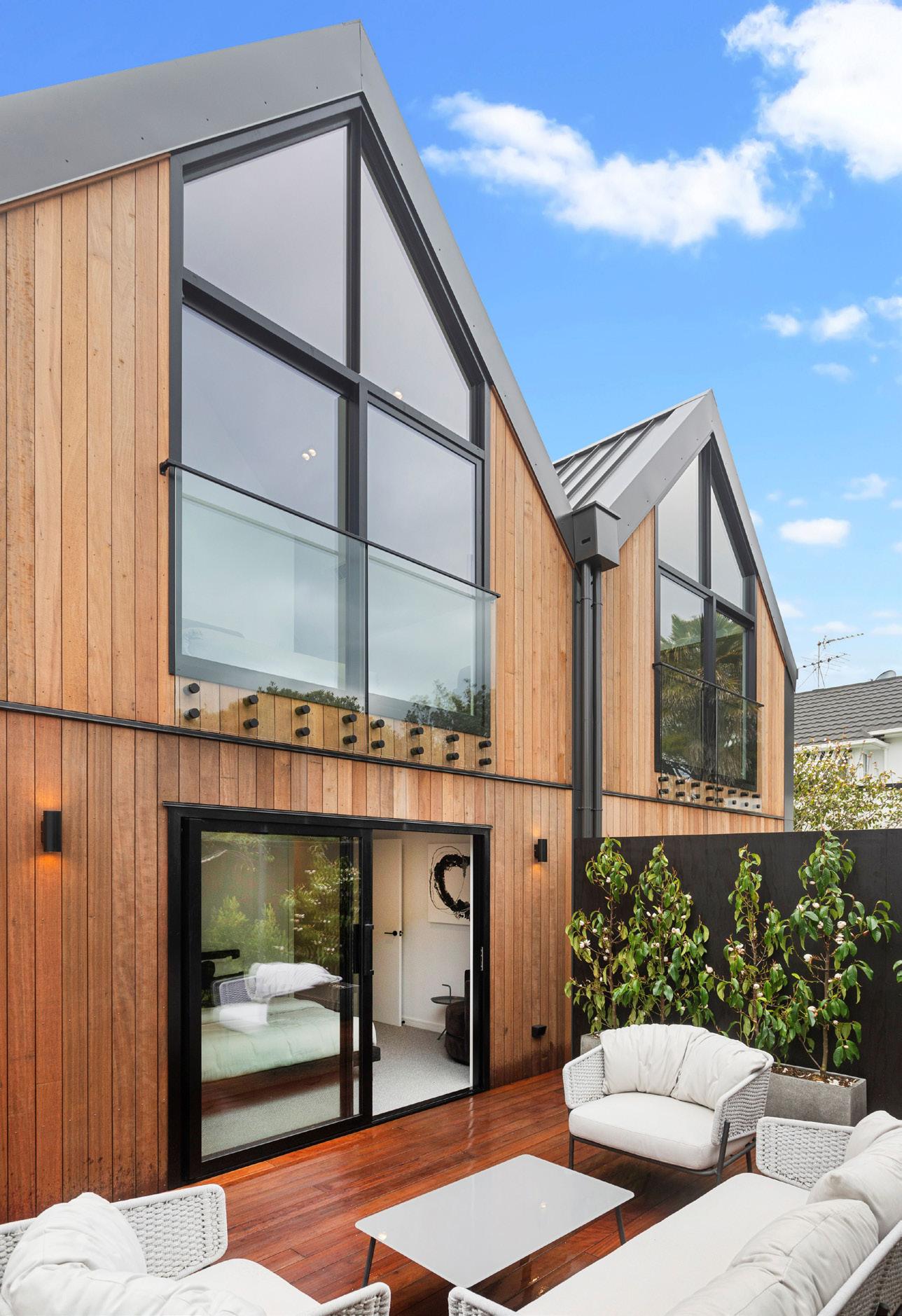
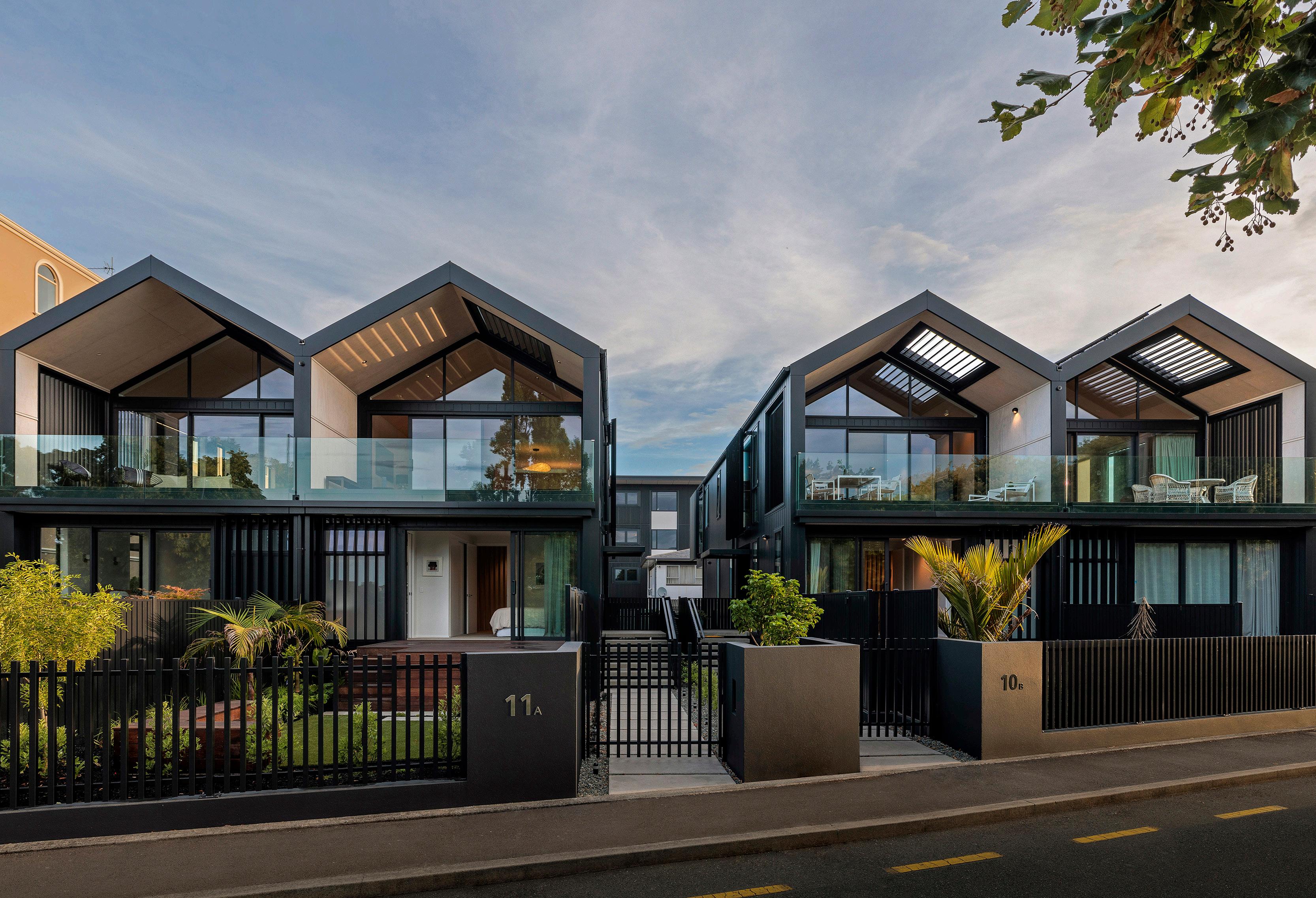
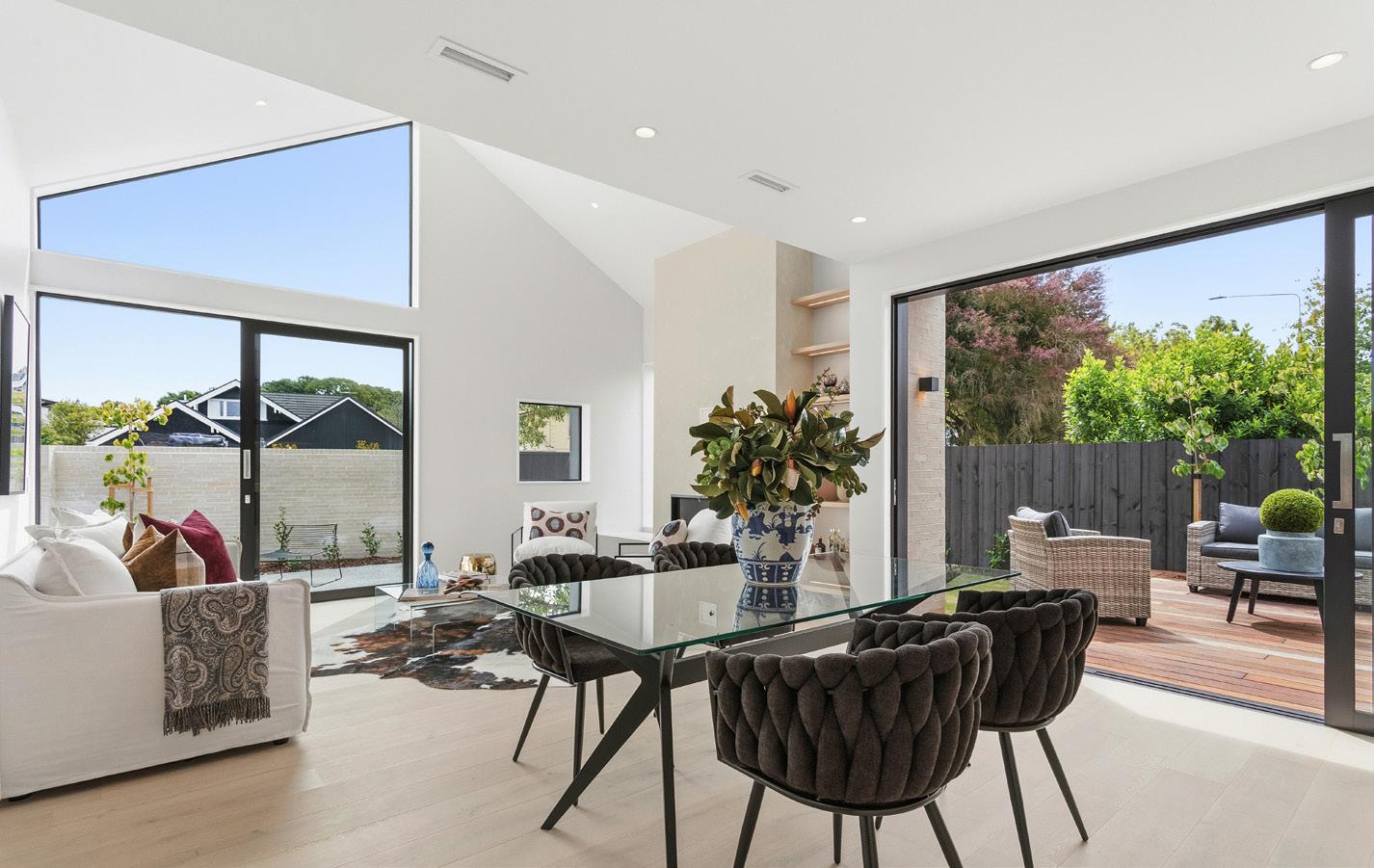
Slotting into a compact 305m2 site within an established residential area, Blackbird Townhouses have been designed in close collaboration with the developer to maximise the potential of the site.
BLACKBIRD TOWNHOUSES
Context, privacy and daylight are carefully balanced within the design to provide a model for high-quality townhouse development.
Floor plans, which are mirrored across the two units, are carefully composed to maximise useable area and draw in light.
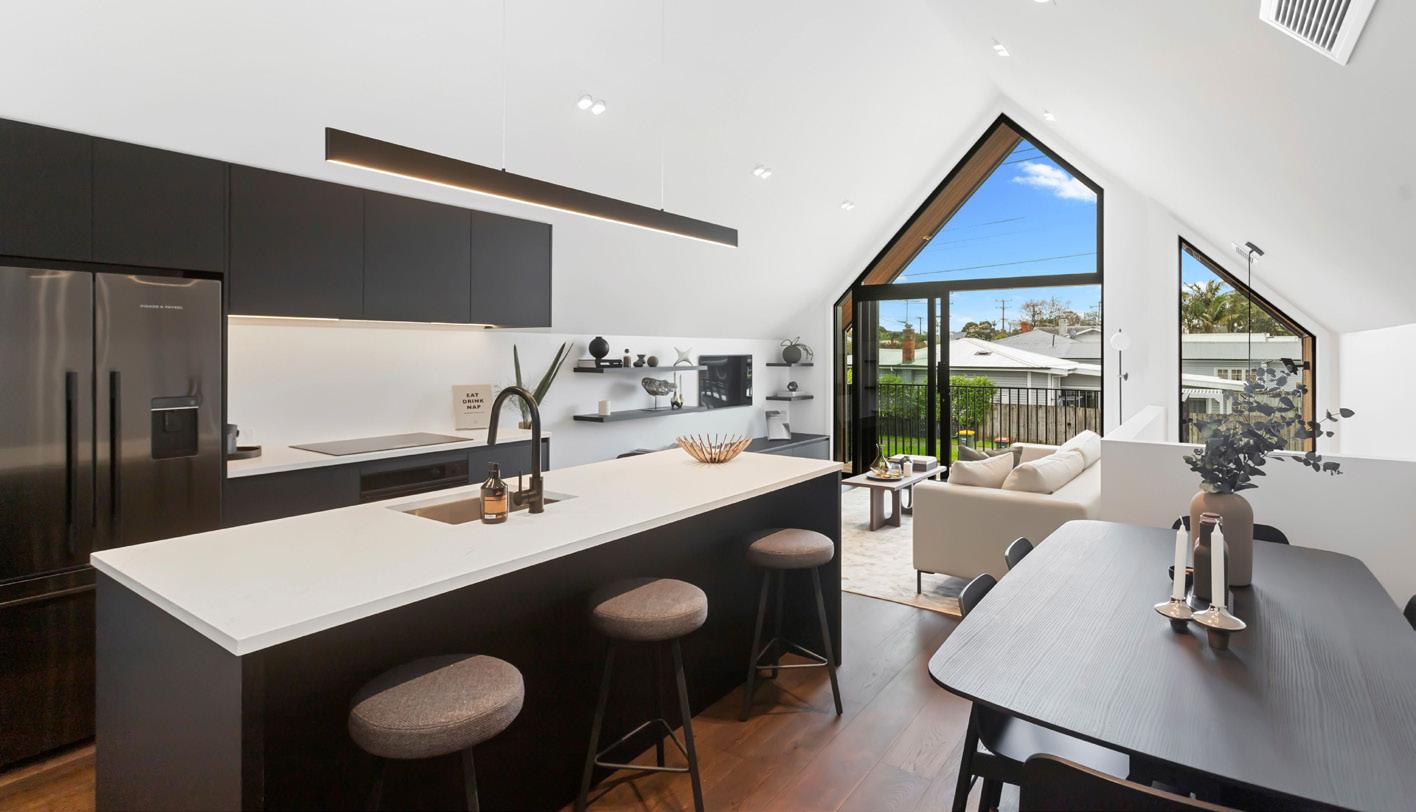
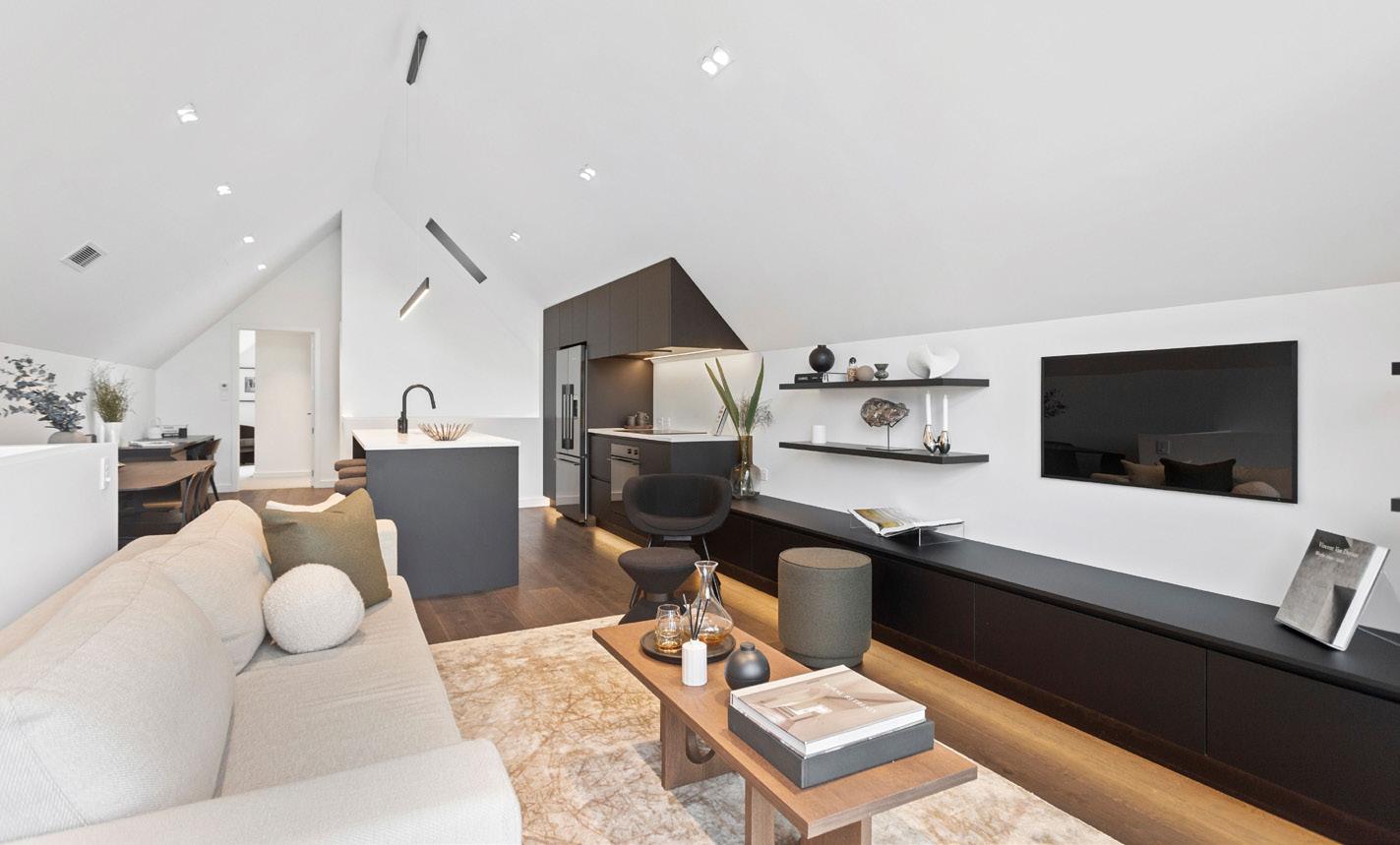
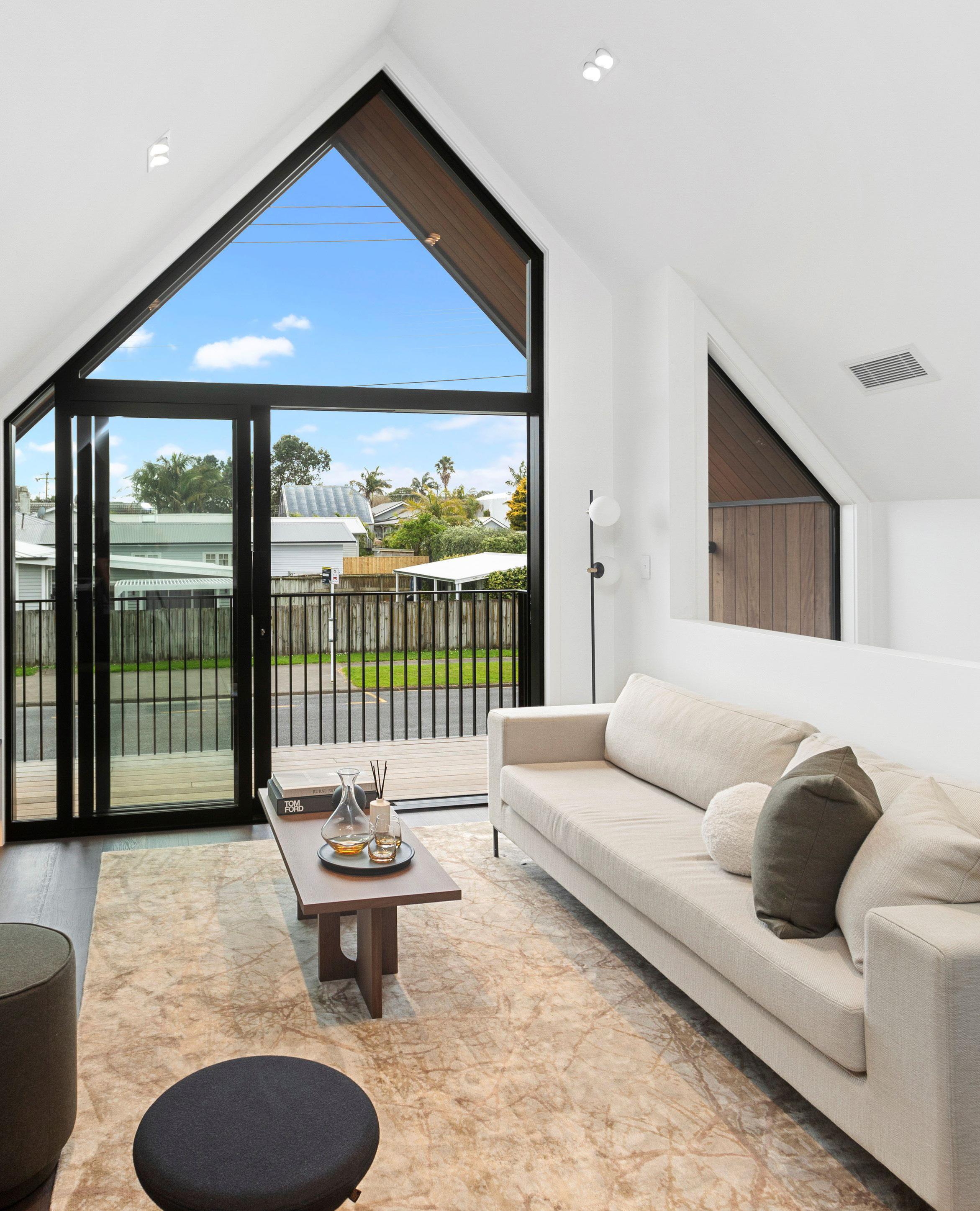
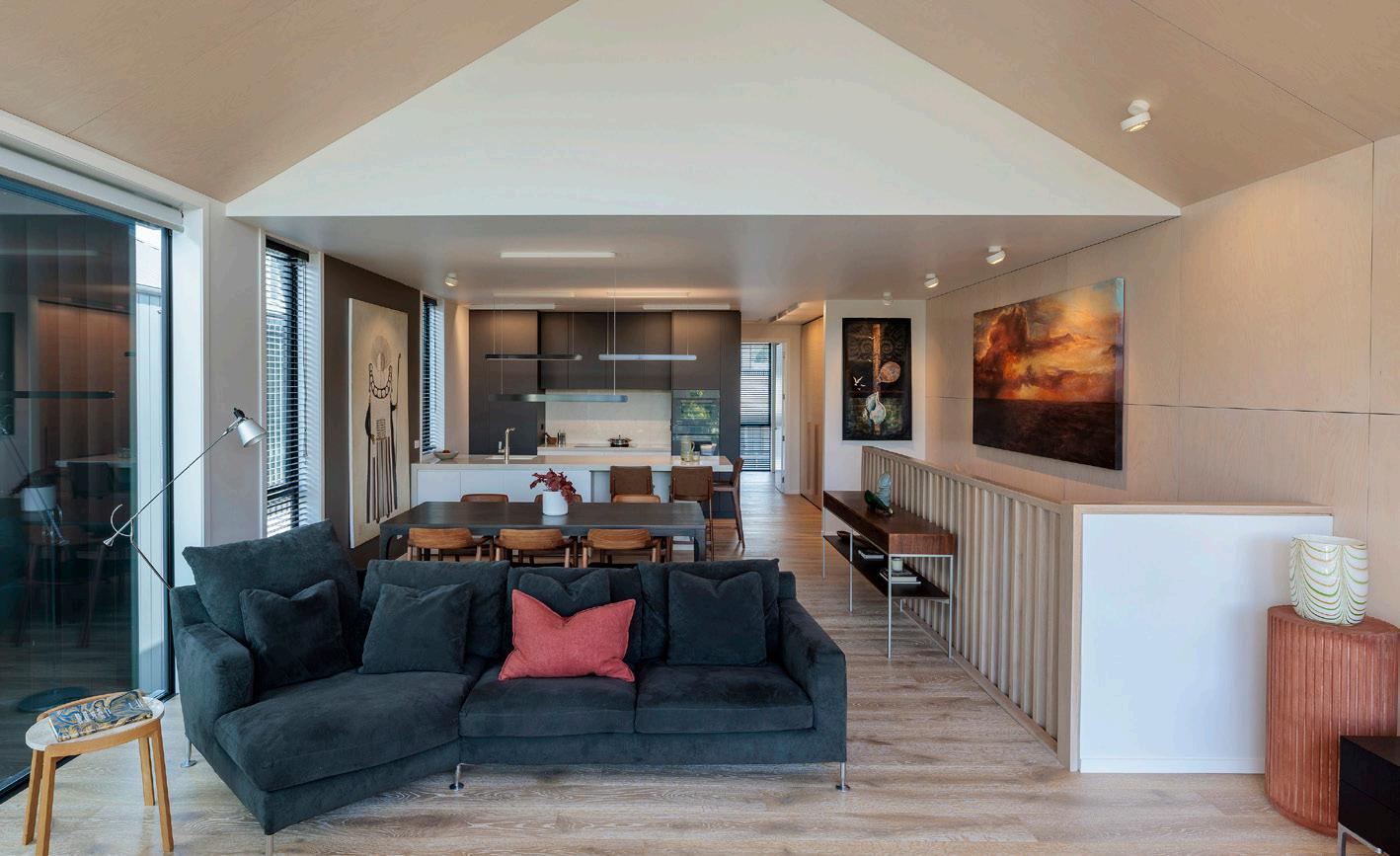
In the upper floor living area, built-in fittings tuck under the lowest points of the loft ceiling to achieve separate kitchen, living and dining areas as well as a dedicated workspace.
In the centre of each unit, a double height void with skylights above links the two levels, and brings light into the centre of the plan.
Positioned
high above Tasman Bay,
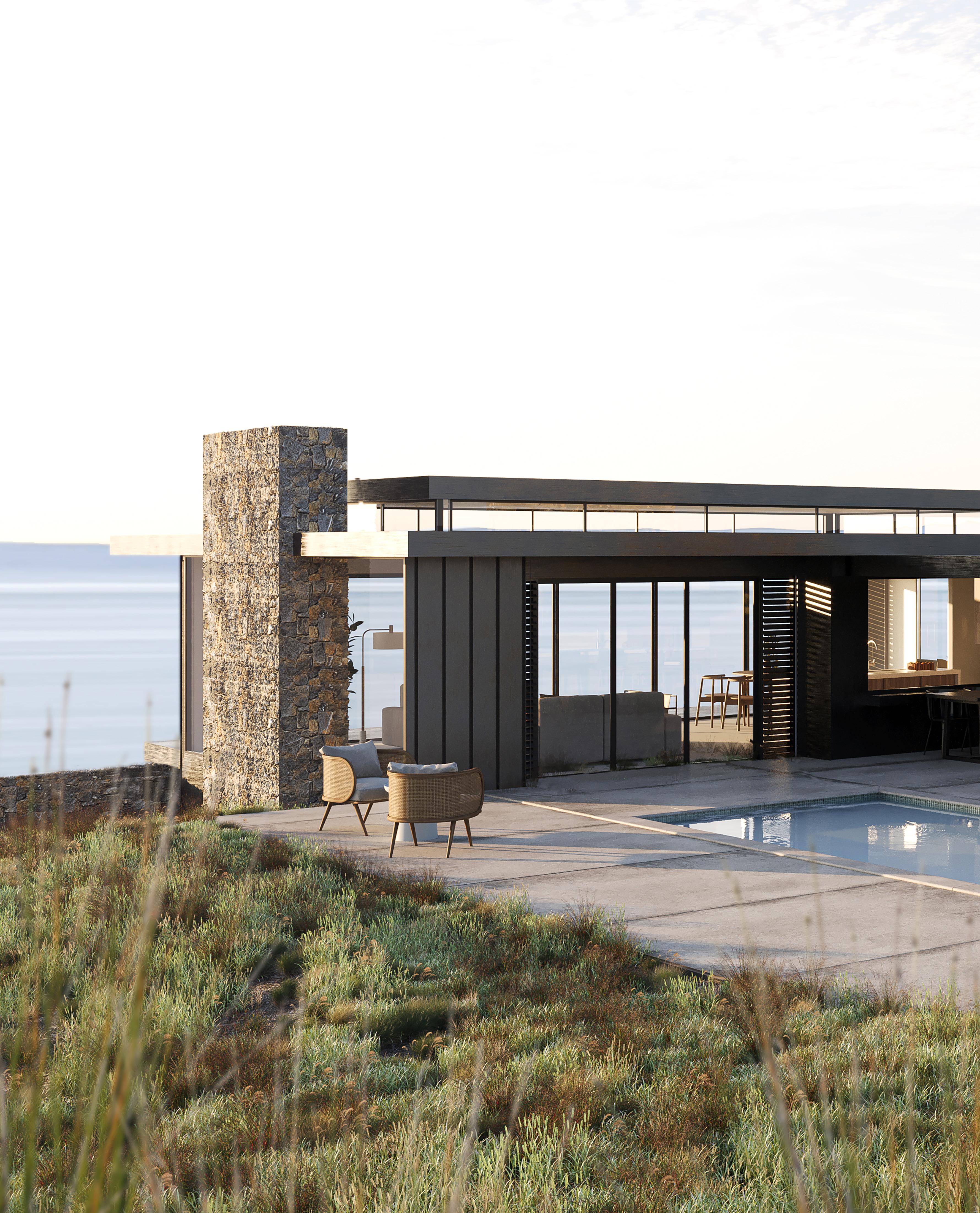
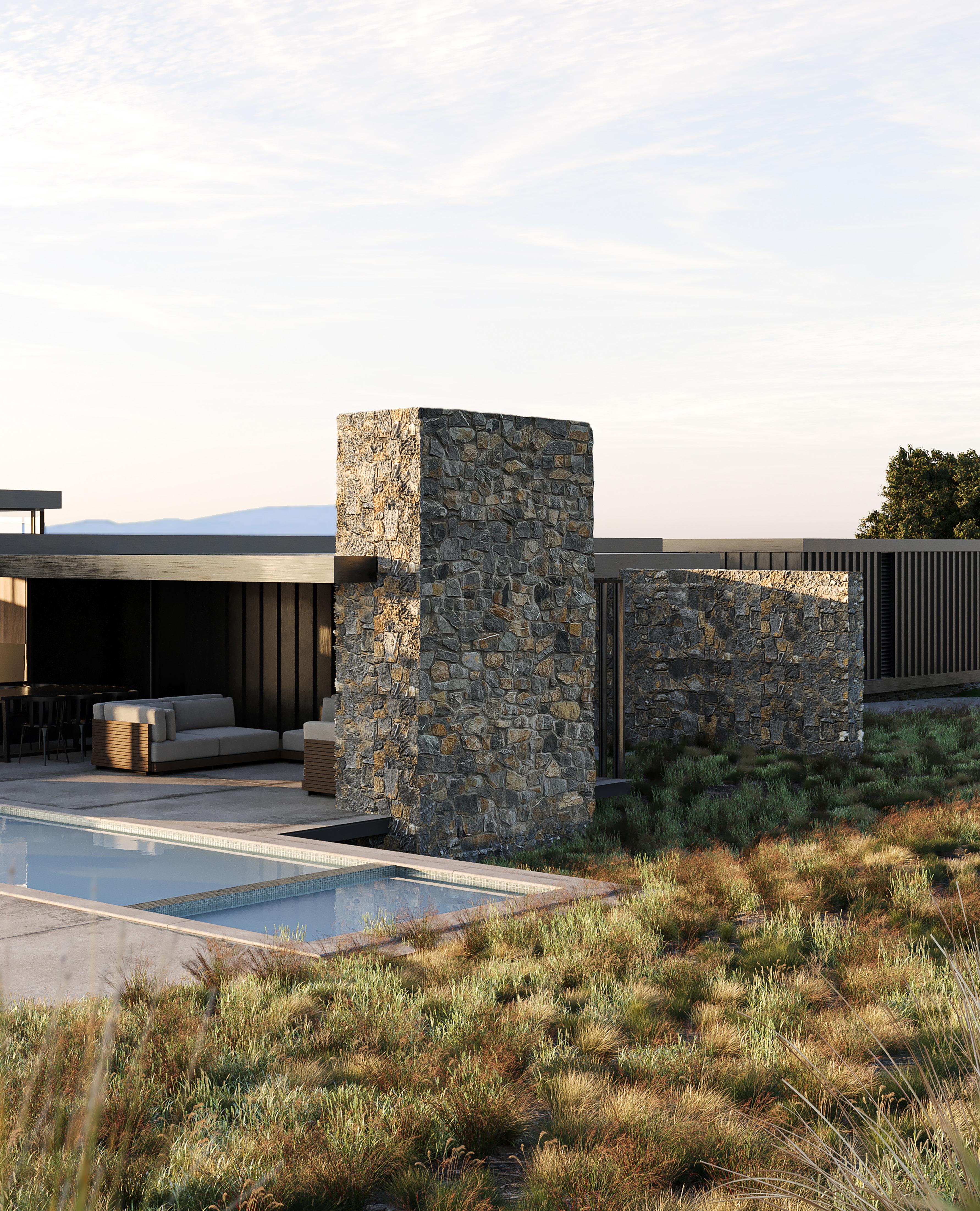
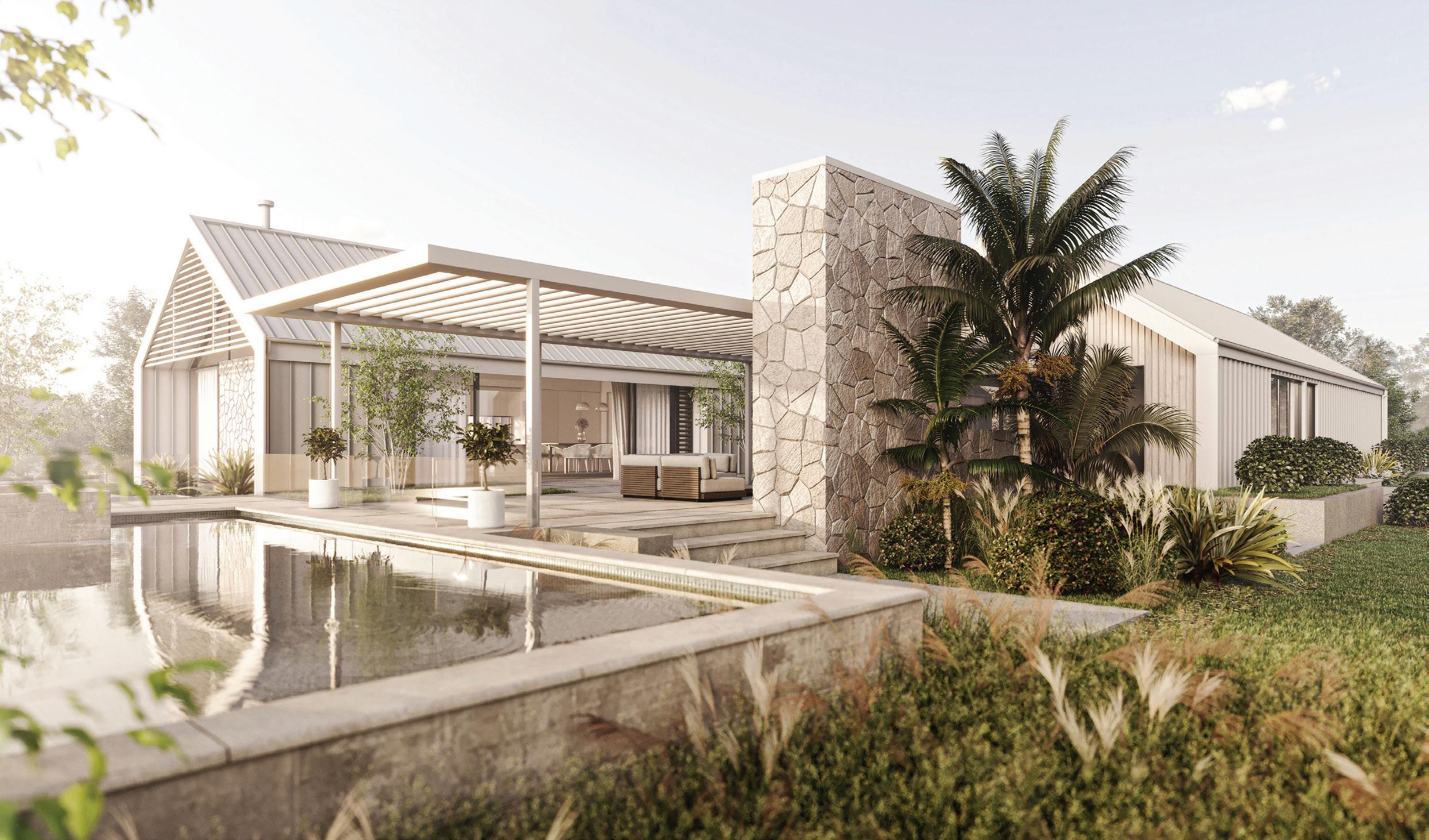
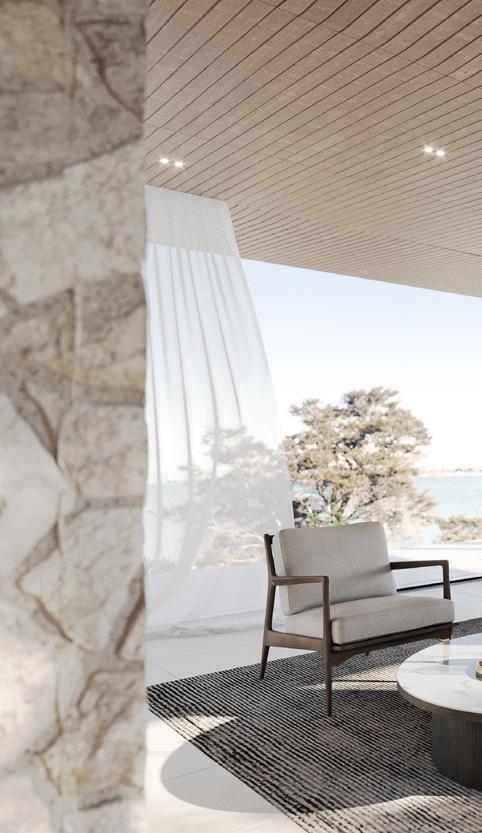
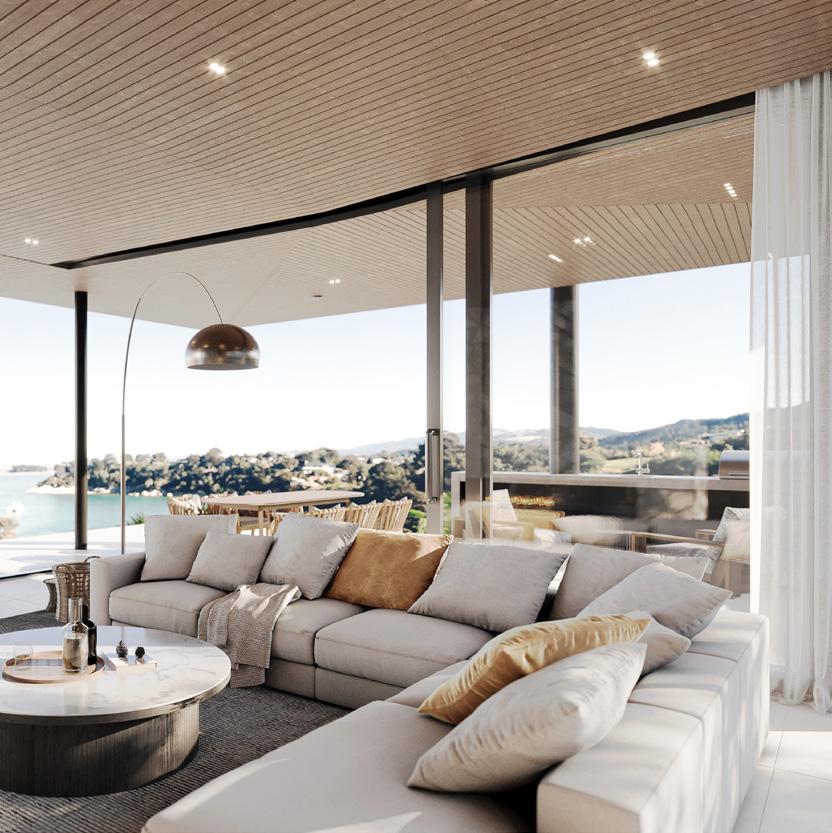
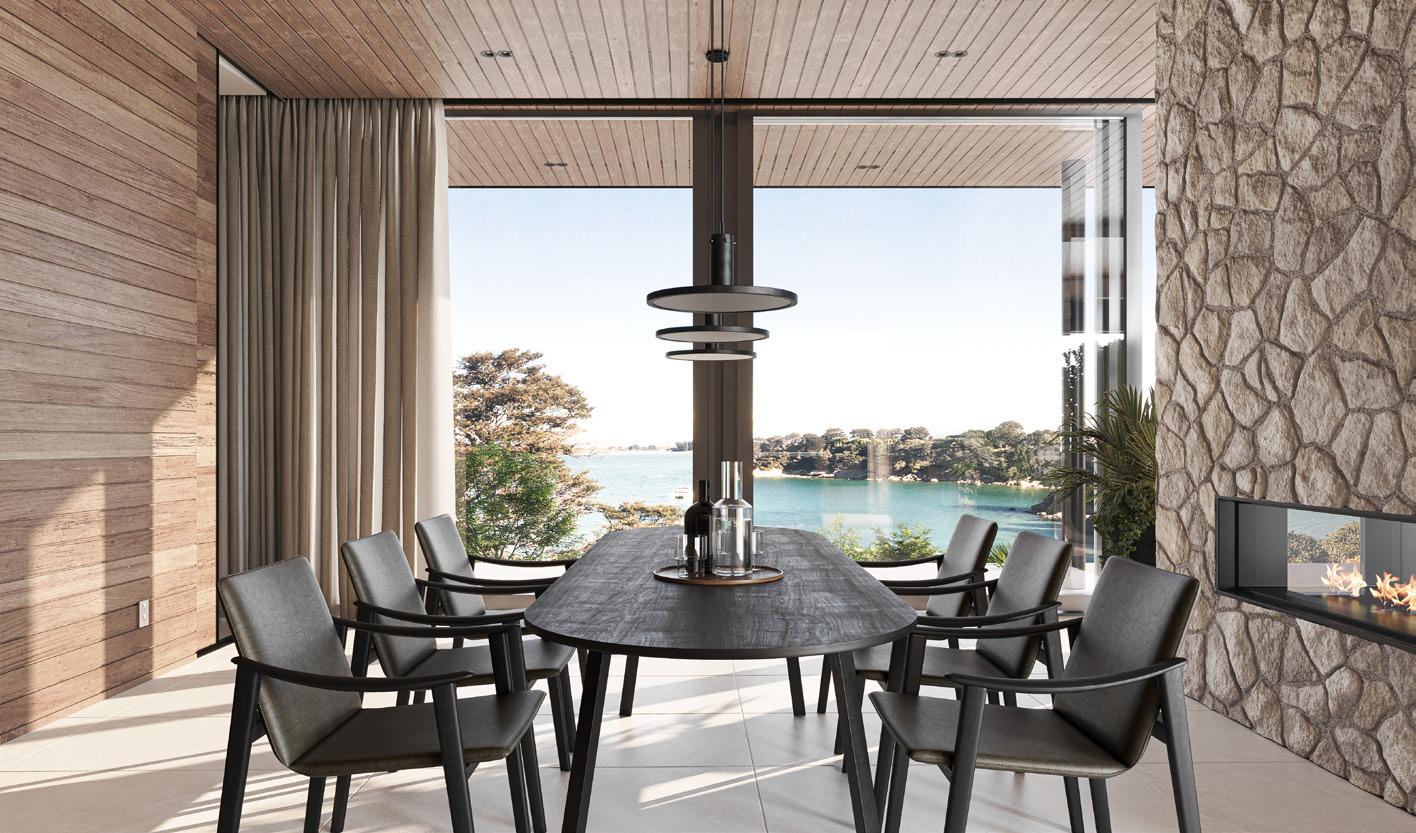
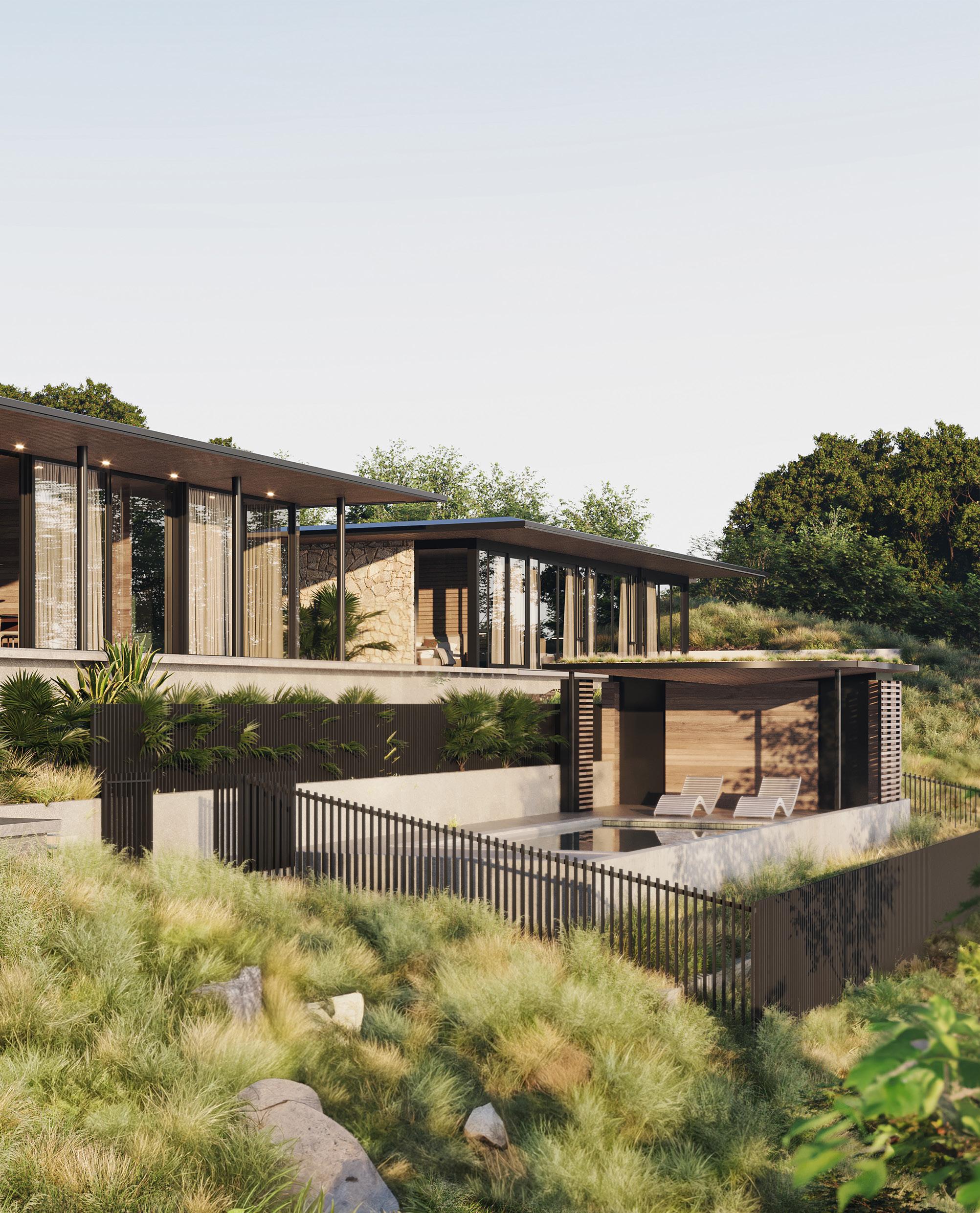
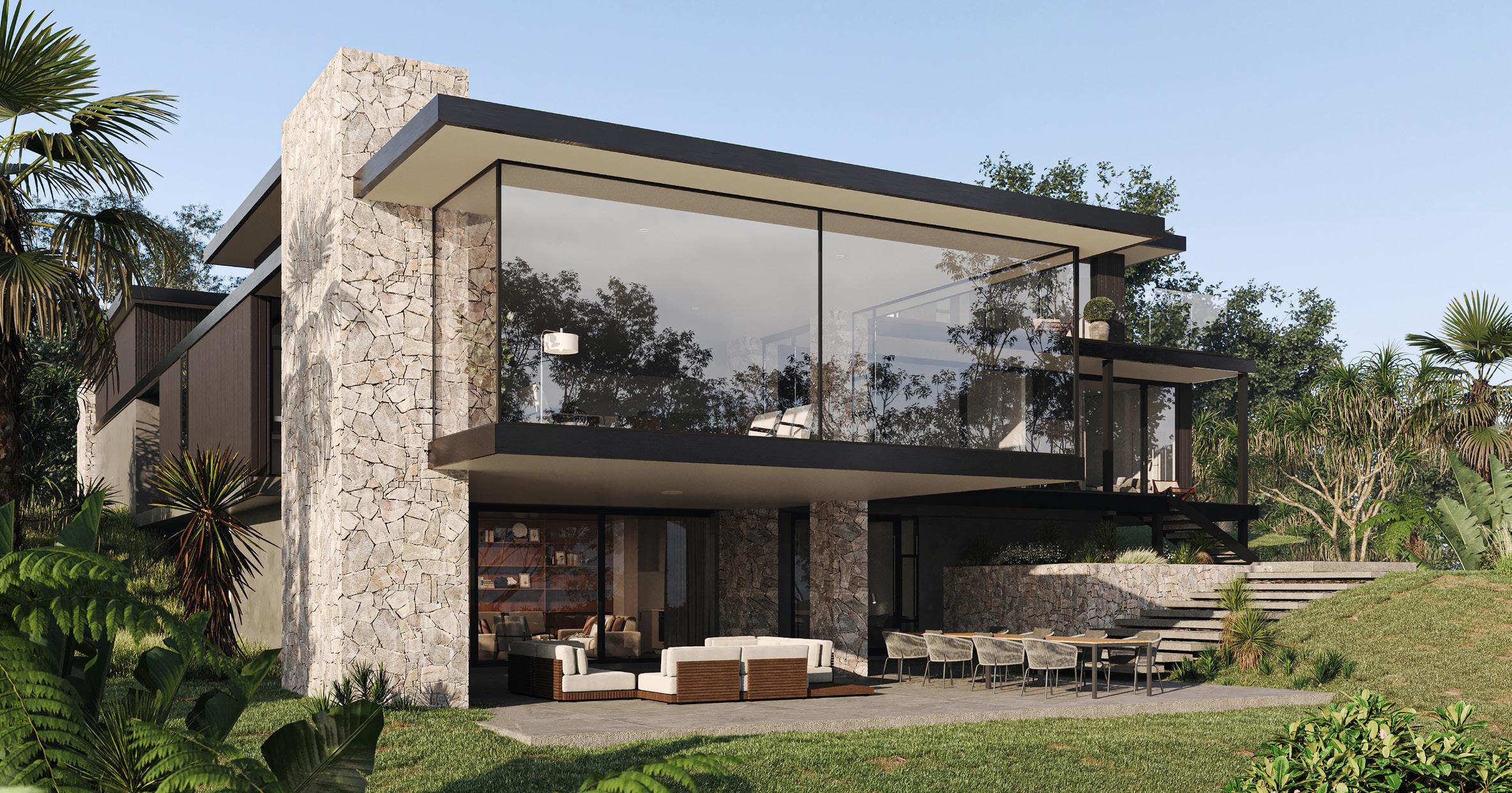
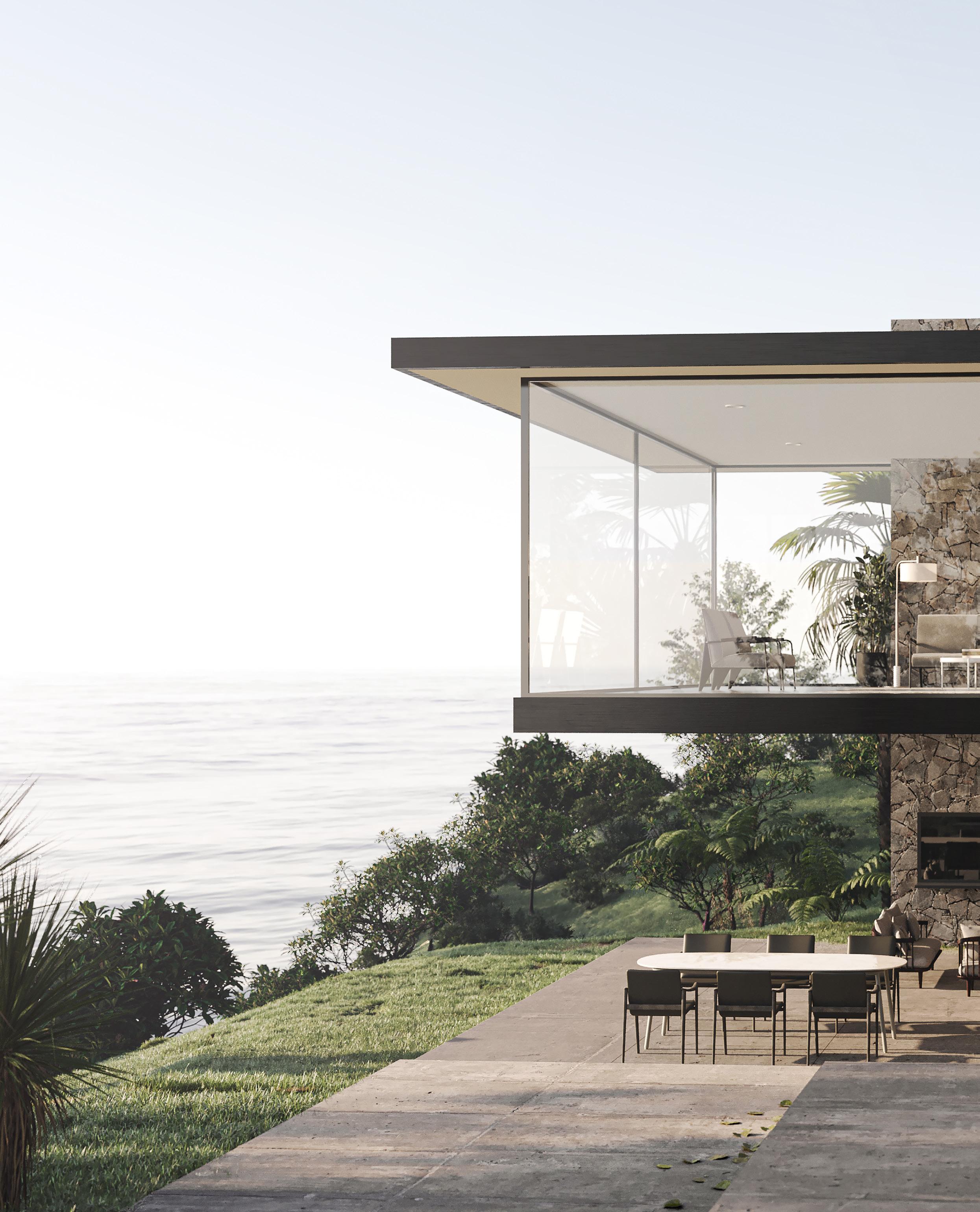
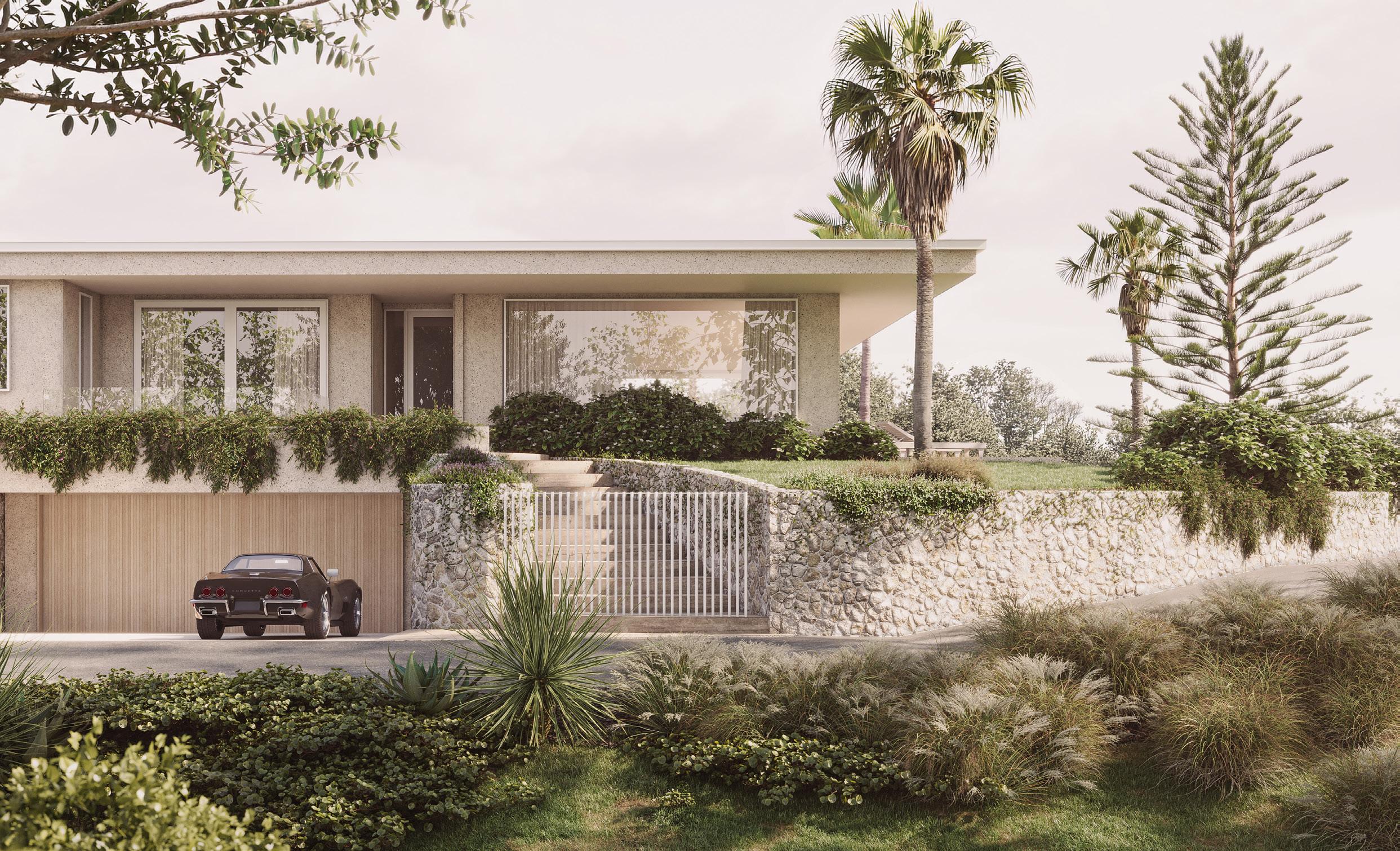
Cliff House is conceived as a long, low glazed pavilion that follows the natural line of the site and opens fully to the expansive sea view beyond.
CLIFF HOUSE
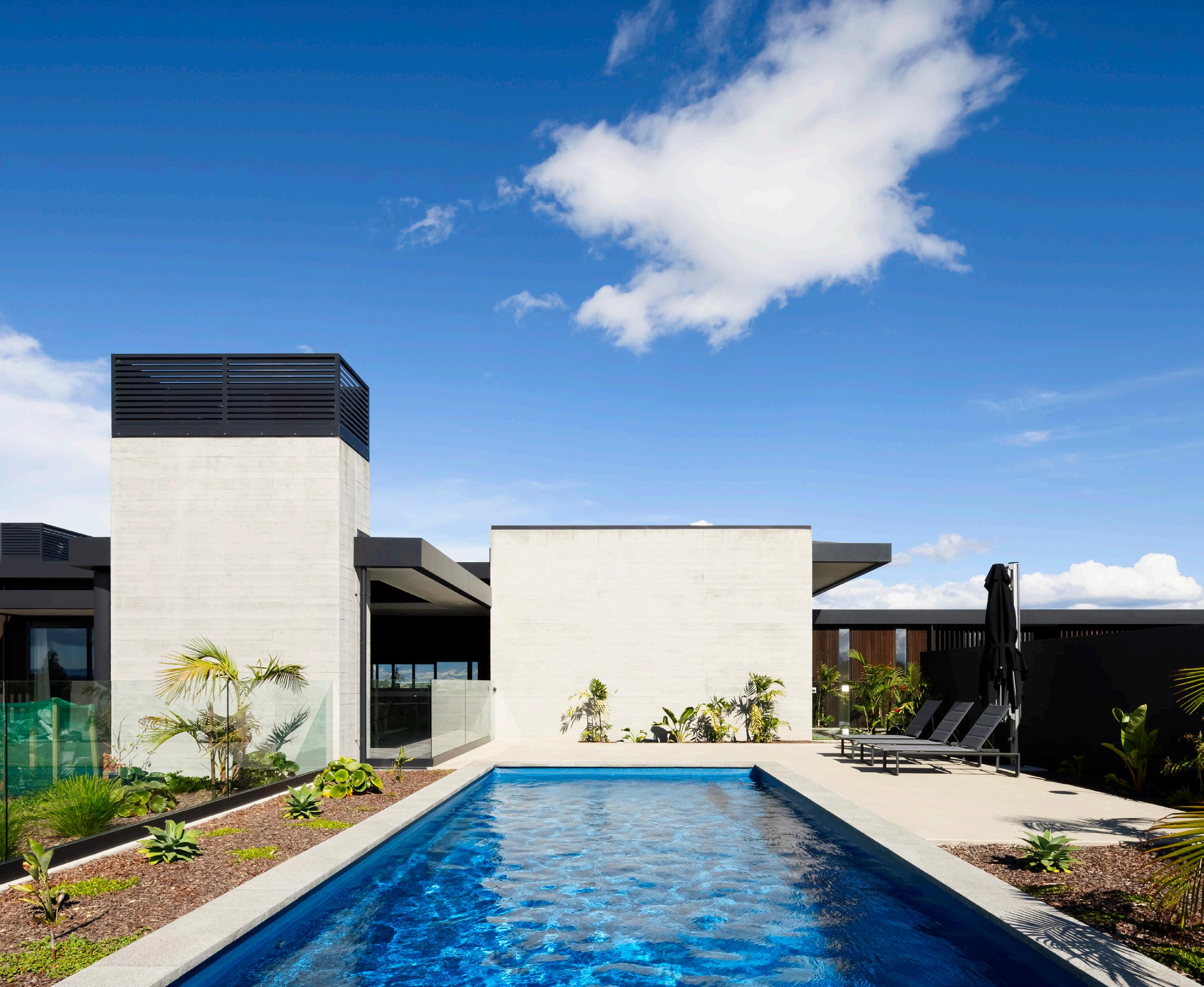
The building is anchored with walls of locally sourced stone that provide a sense of solidity and permanence while balancing the lightness of the surrounding glass.
Generous floor to ceiling glazing frames uninterrupted vistas across the bay and brings the changing colours of the water and sky into the heart of the home. The transparency of the pavilion allows the interior spaces to feel closely connected to the
coastal landscape, creating a calm and immersive living environment.
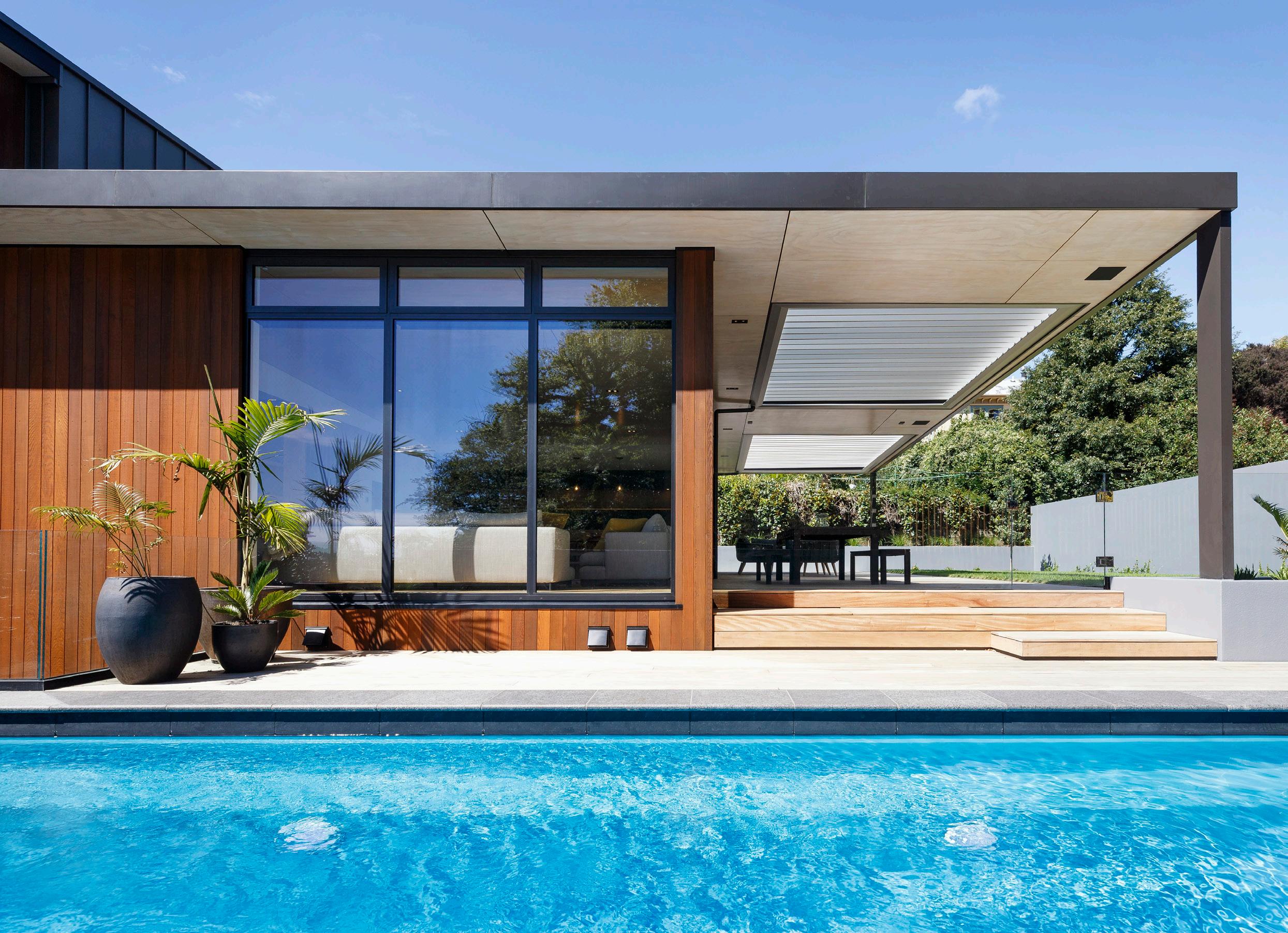
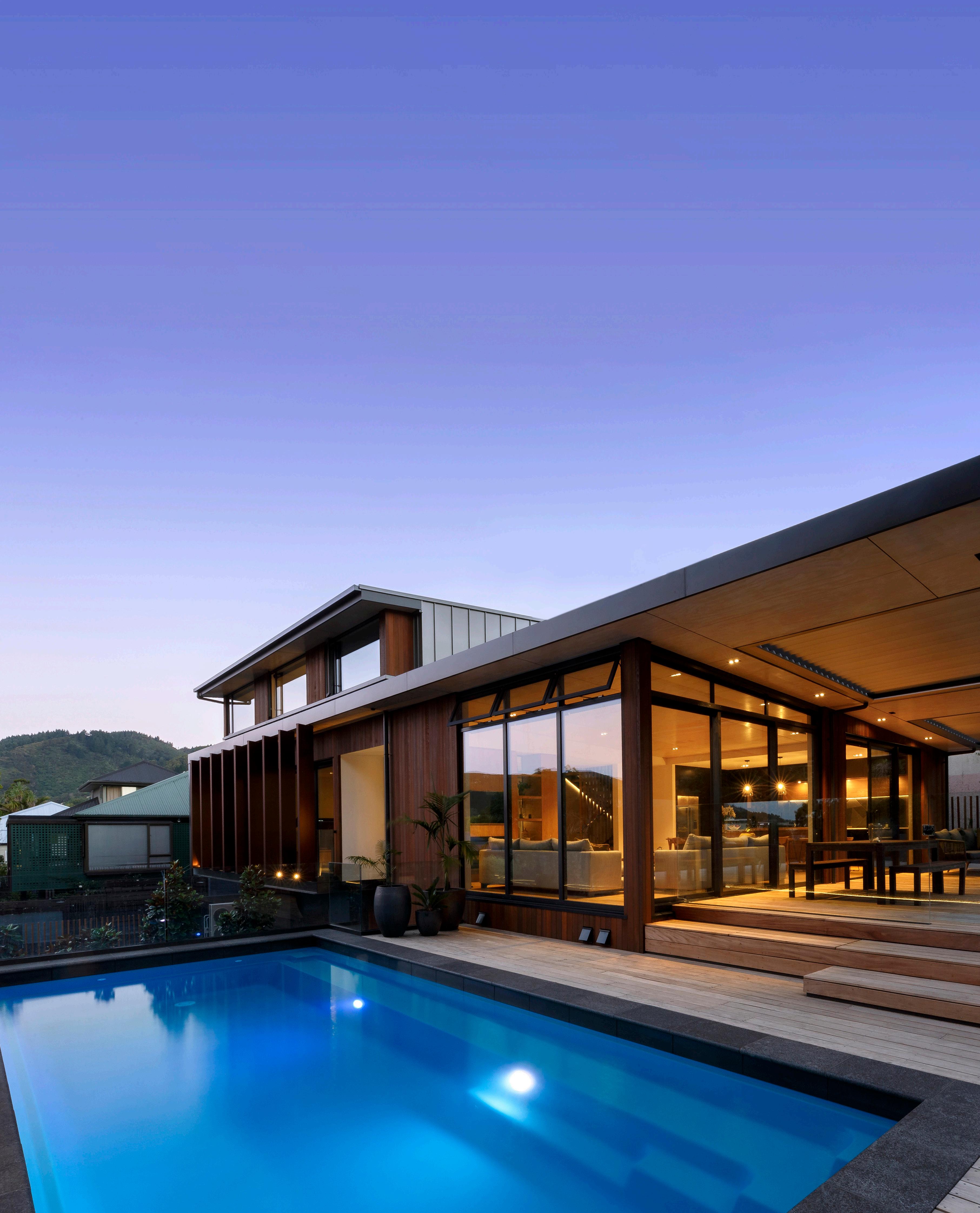
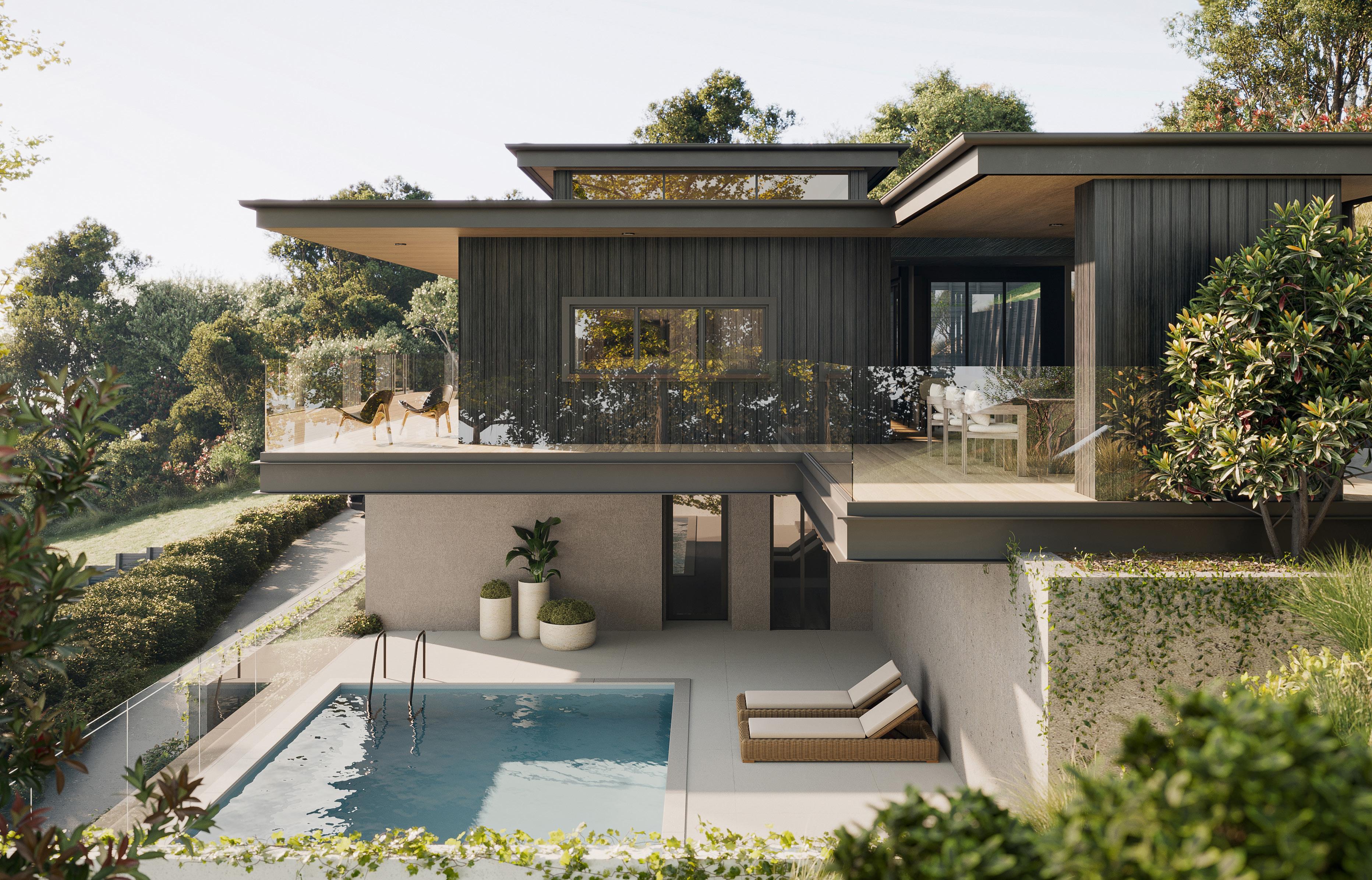
On the sheltered side of the site, a sun filled outdoor terrace and pool form a private retreat that is protected from the sea breeze by the main pavilion. This warm and inviting space offers an ideal setting for swimming, entertaining, or relaxing while remaining visually linked to the wider coastal outlook.
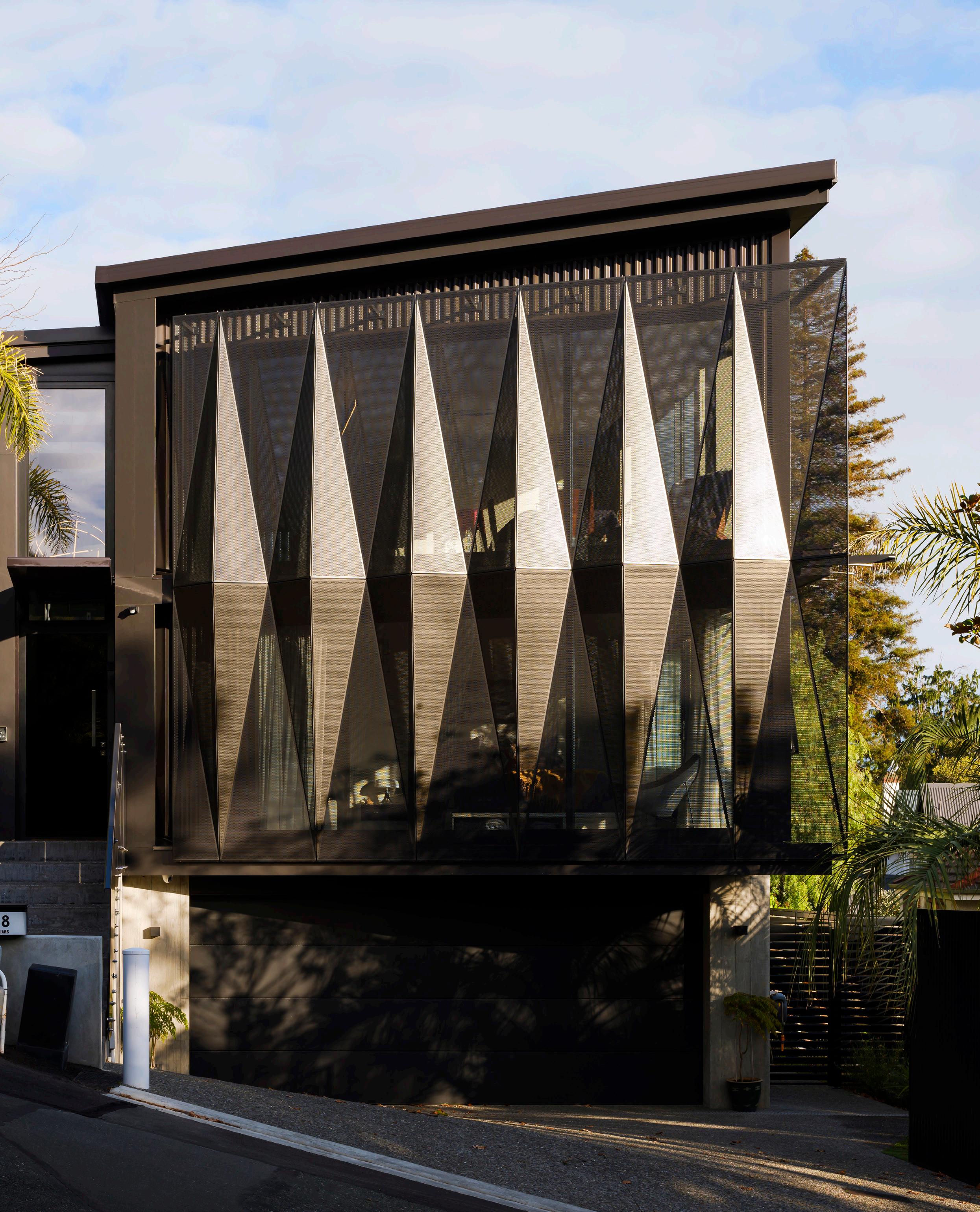
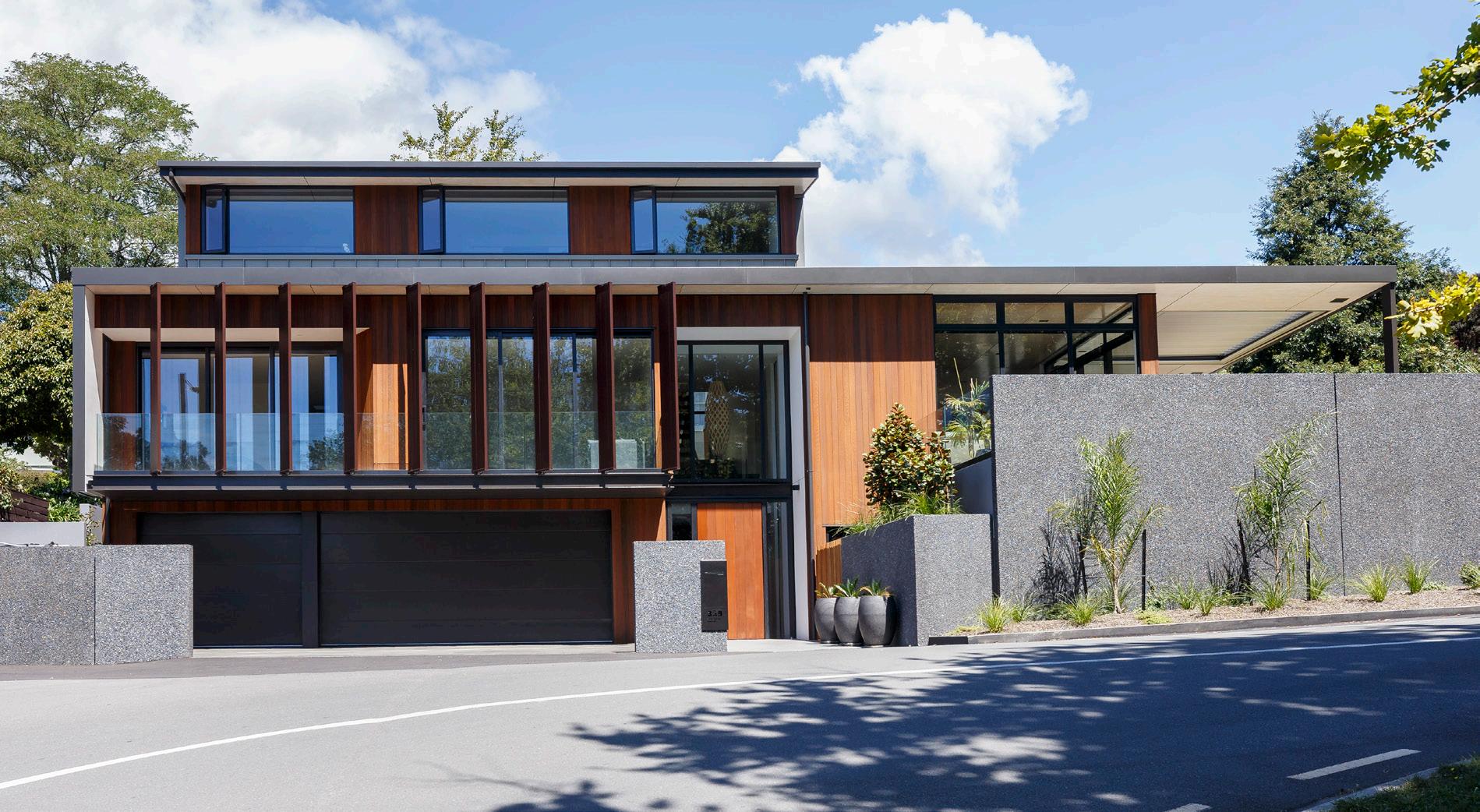
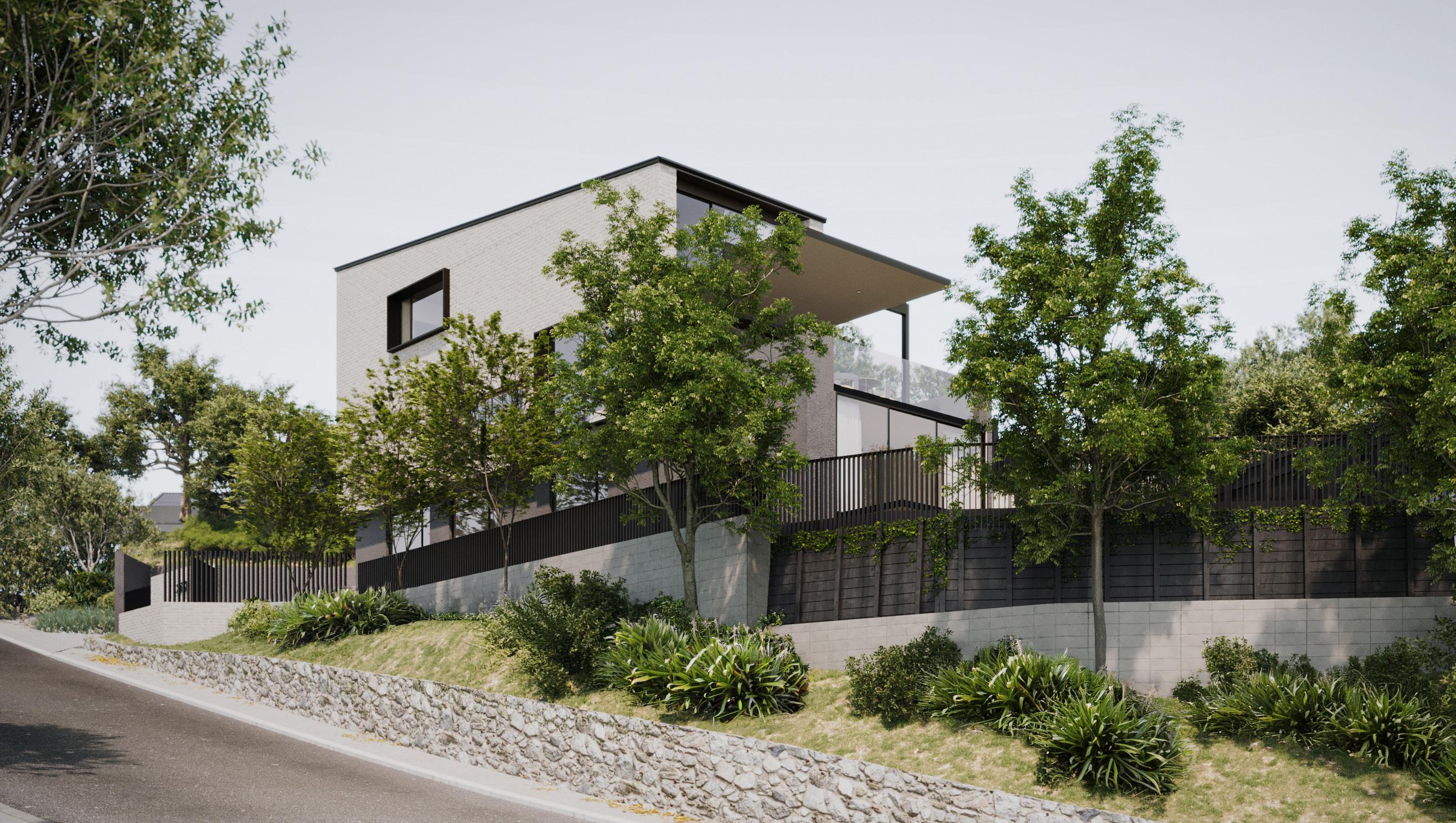
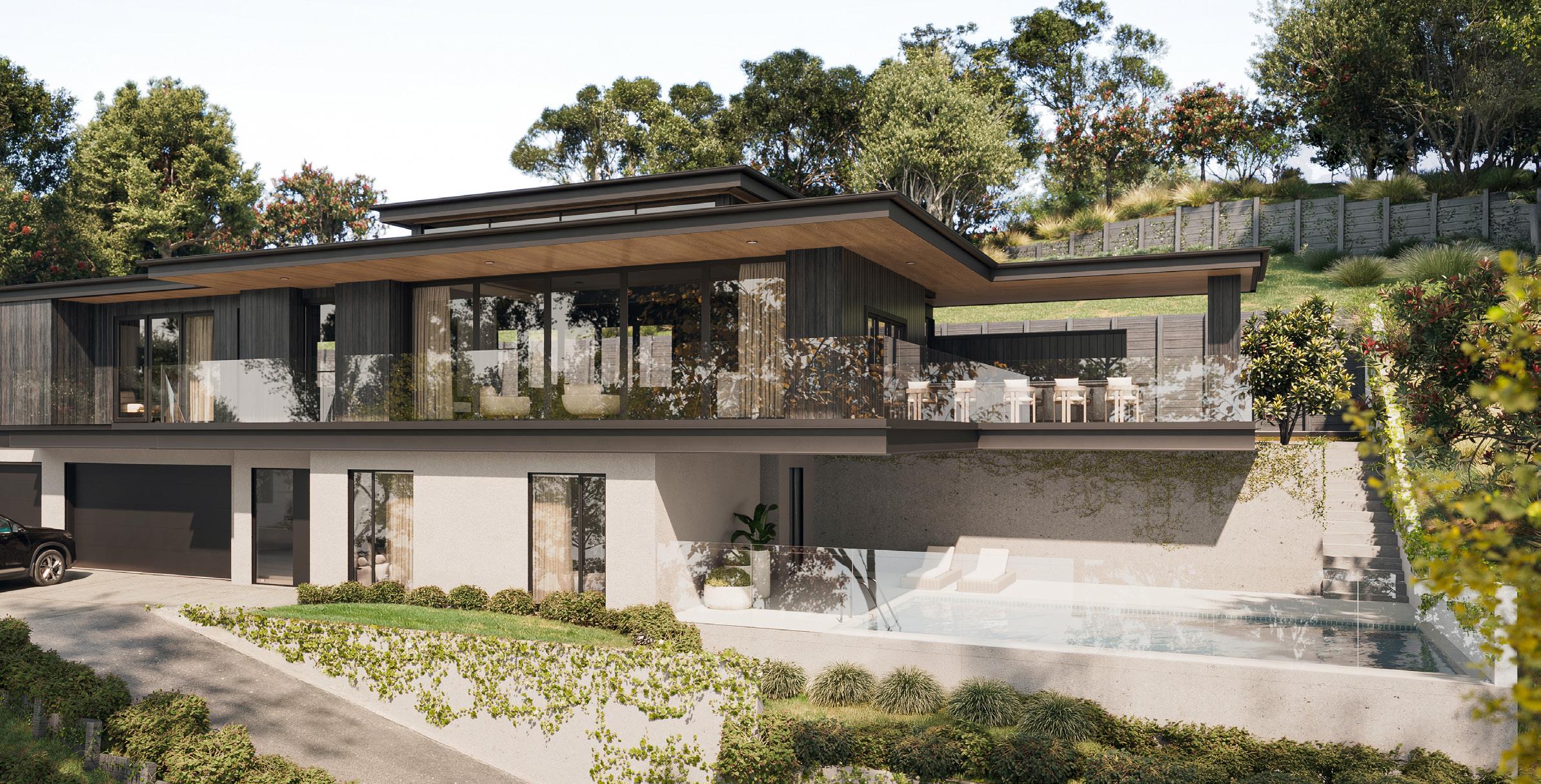
Responding to the brief to maximise usable space on the 330m² site, Collingwood Street House rises above the constraints imposed by its steep and challenging site.
COLLINGWOOD STREET HOUSE
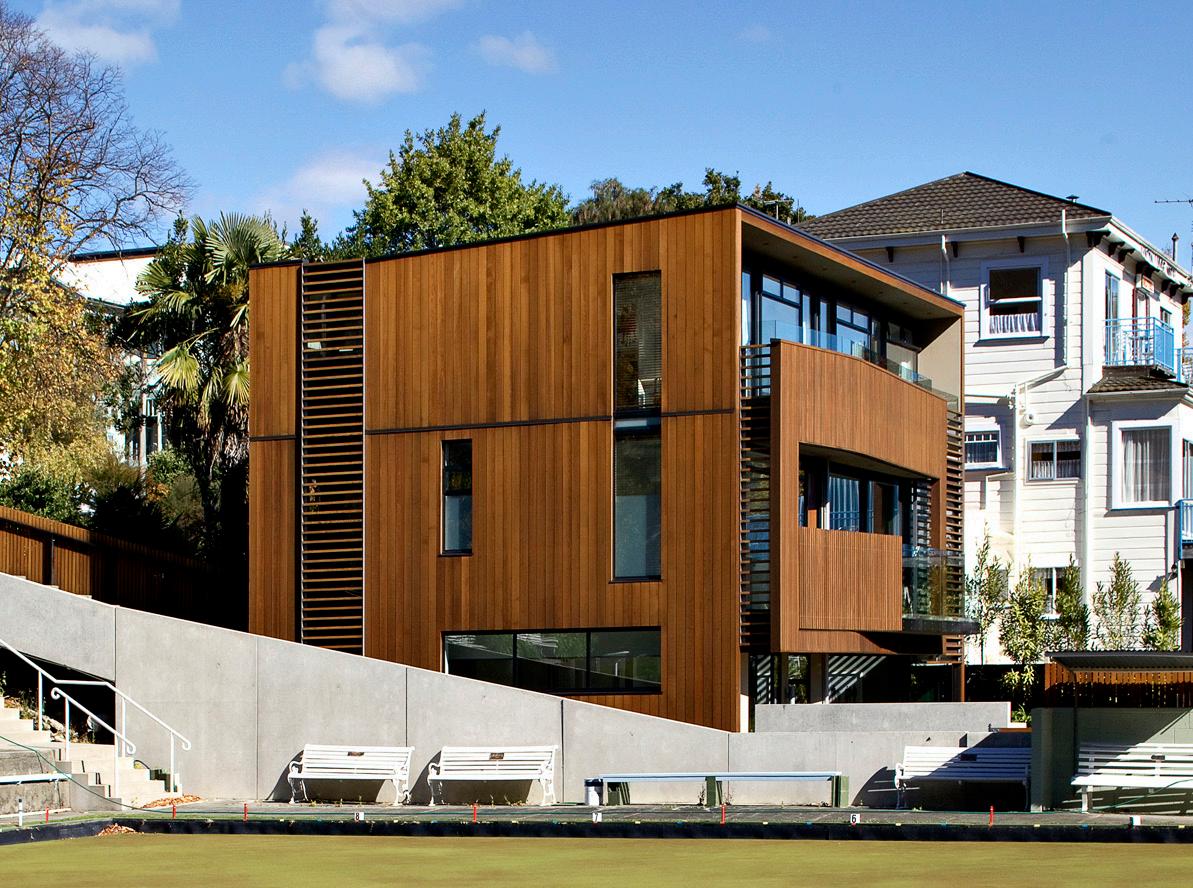
The resulting building is an elegant, clean three storey house under the Grampians, with grandstand views of Nelson city towards the port.
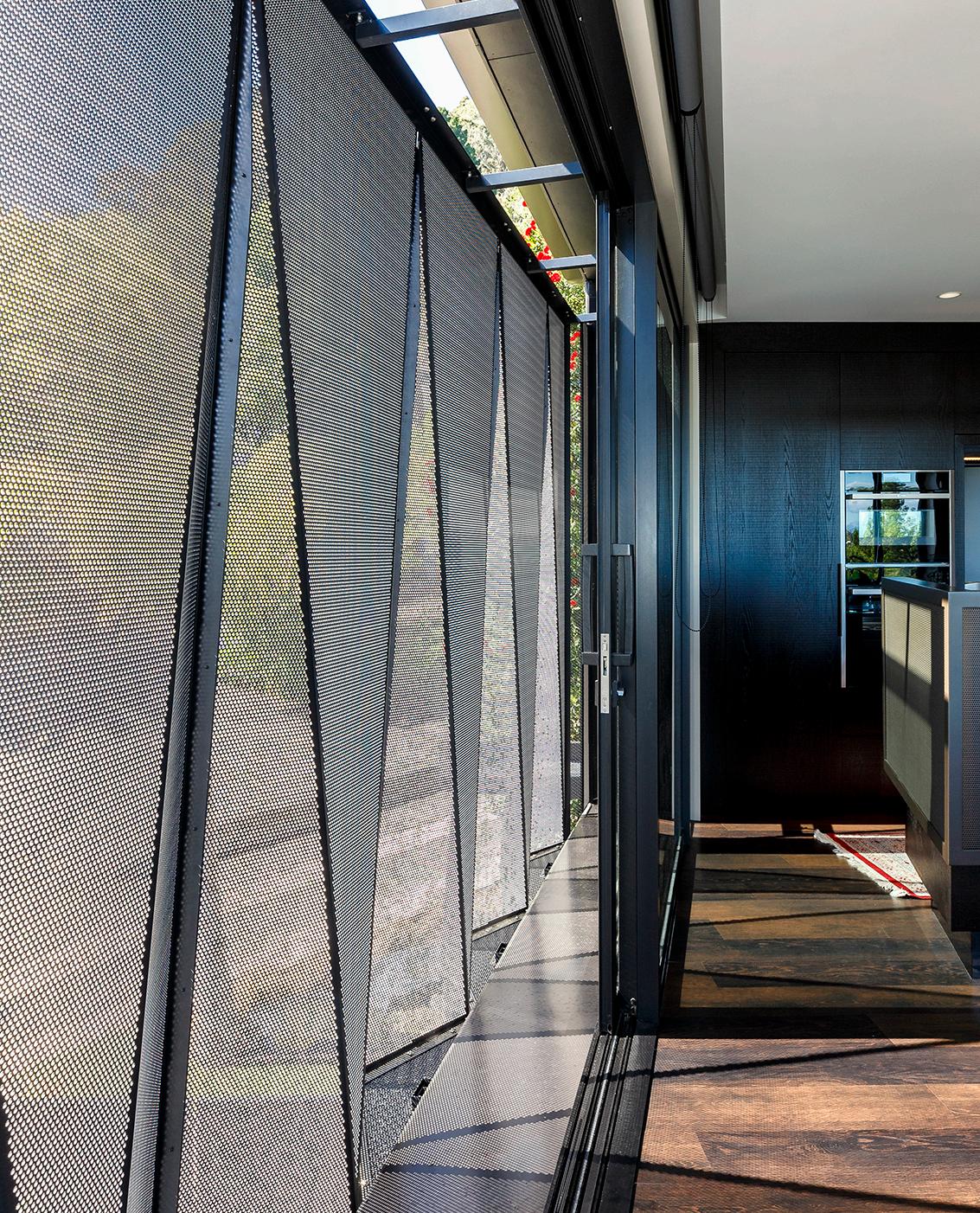
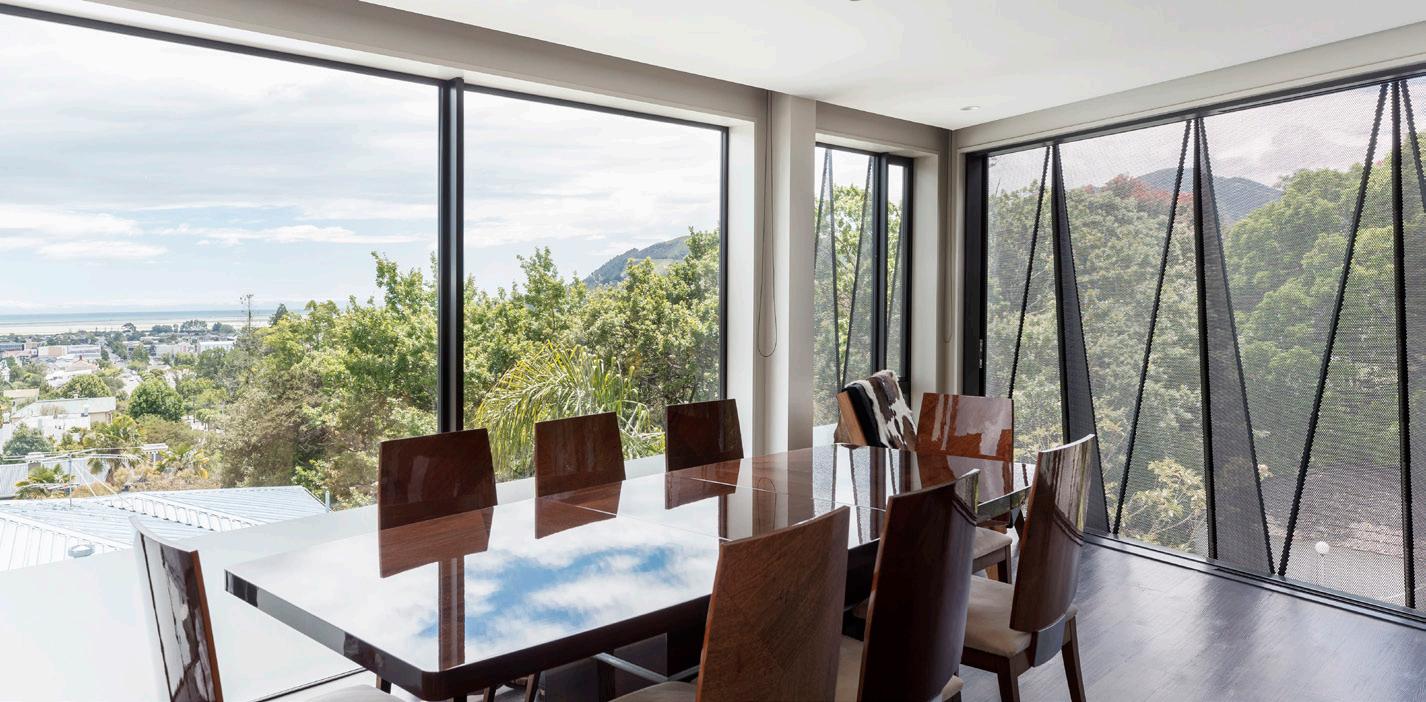
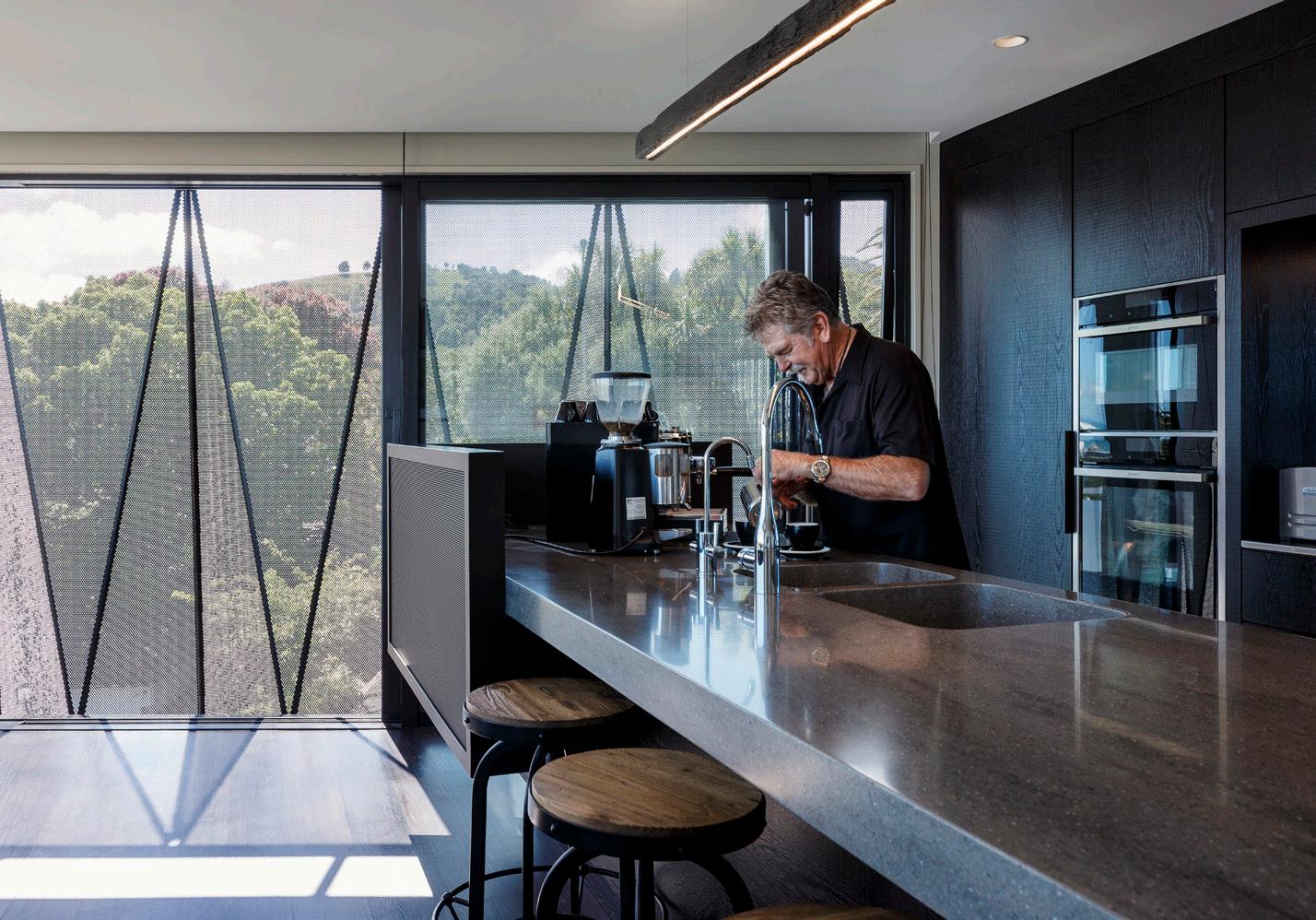
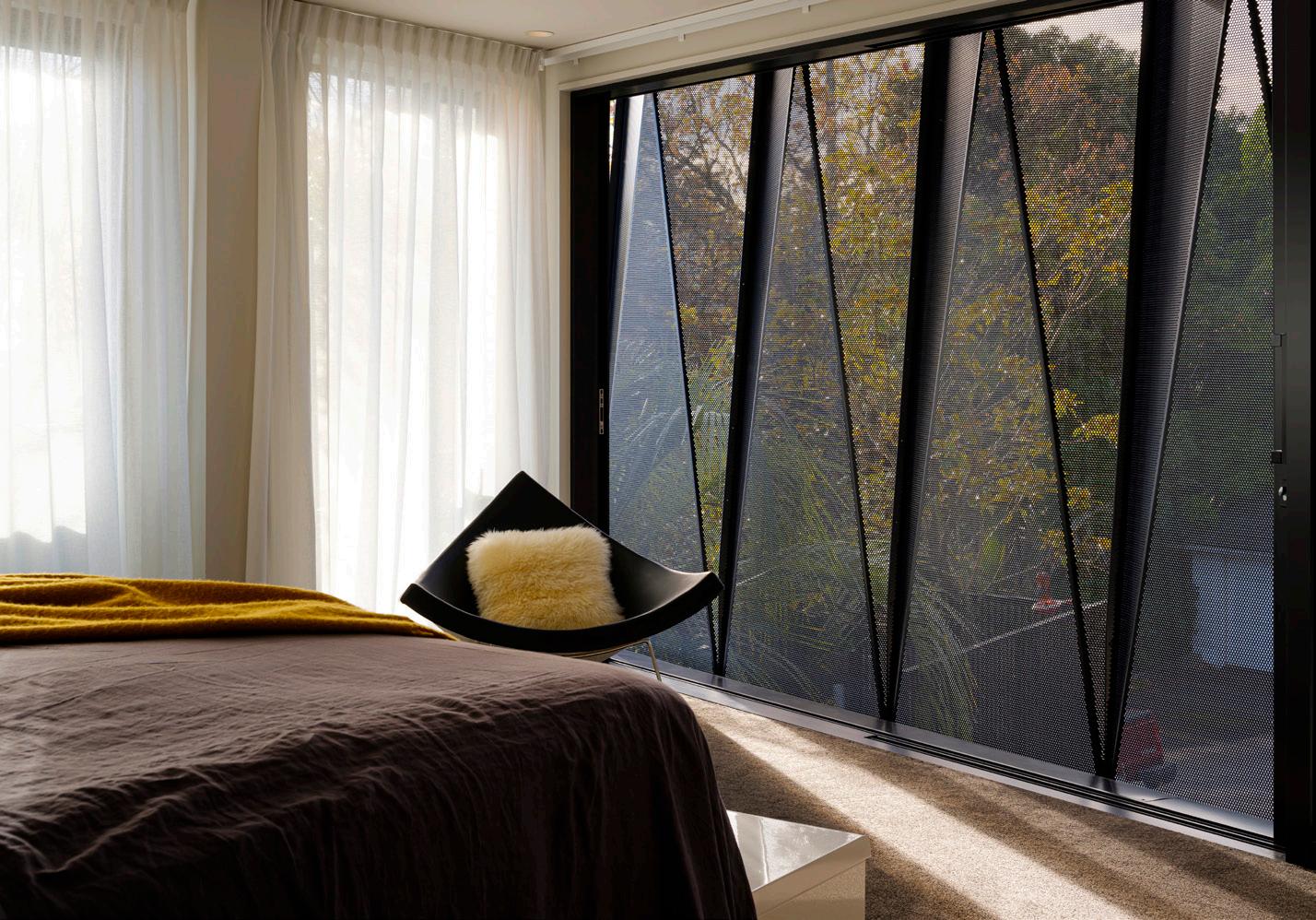
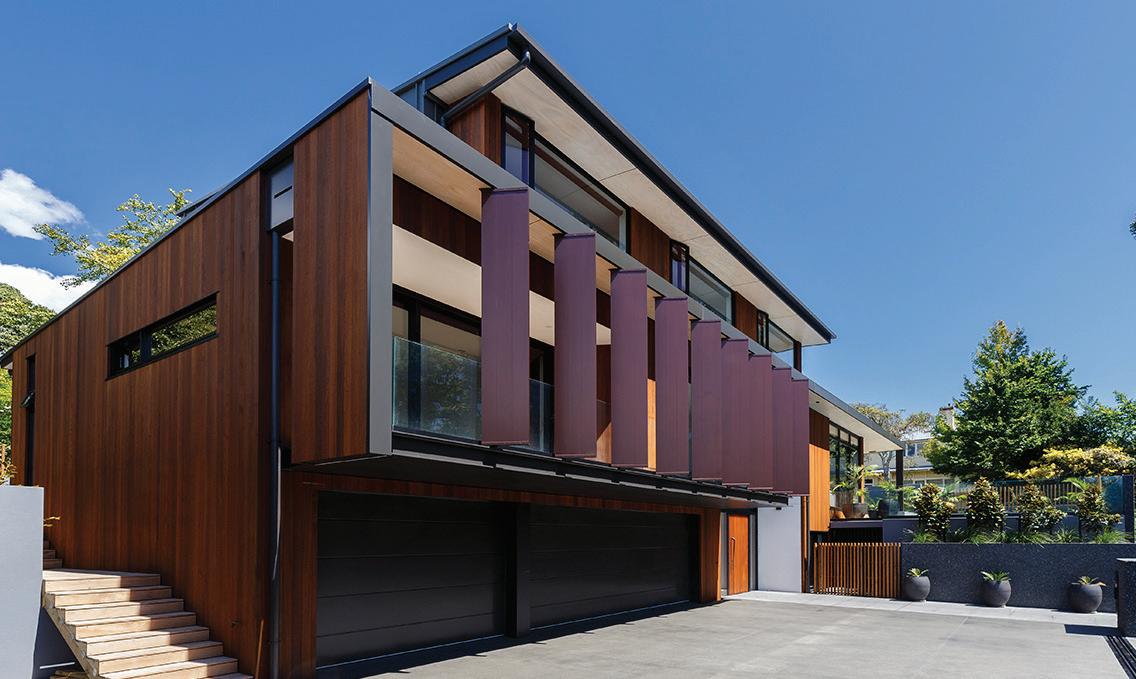
Arranged over three levels, the home’s clear zones take advantage of a northern aspect and views over the city. On the northern façade a folded, perforated screen provides shading and privacy, and doubles as a fall-protection barrier.
The basement level opens to a pre-cast concrete swimming pool, with a covered porch on the northwest corner providing the ultimate summer relaxation space.
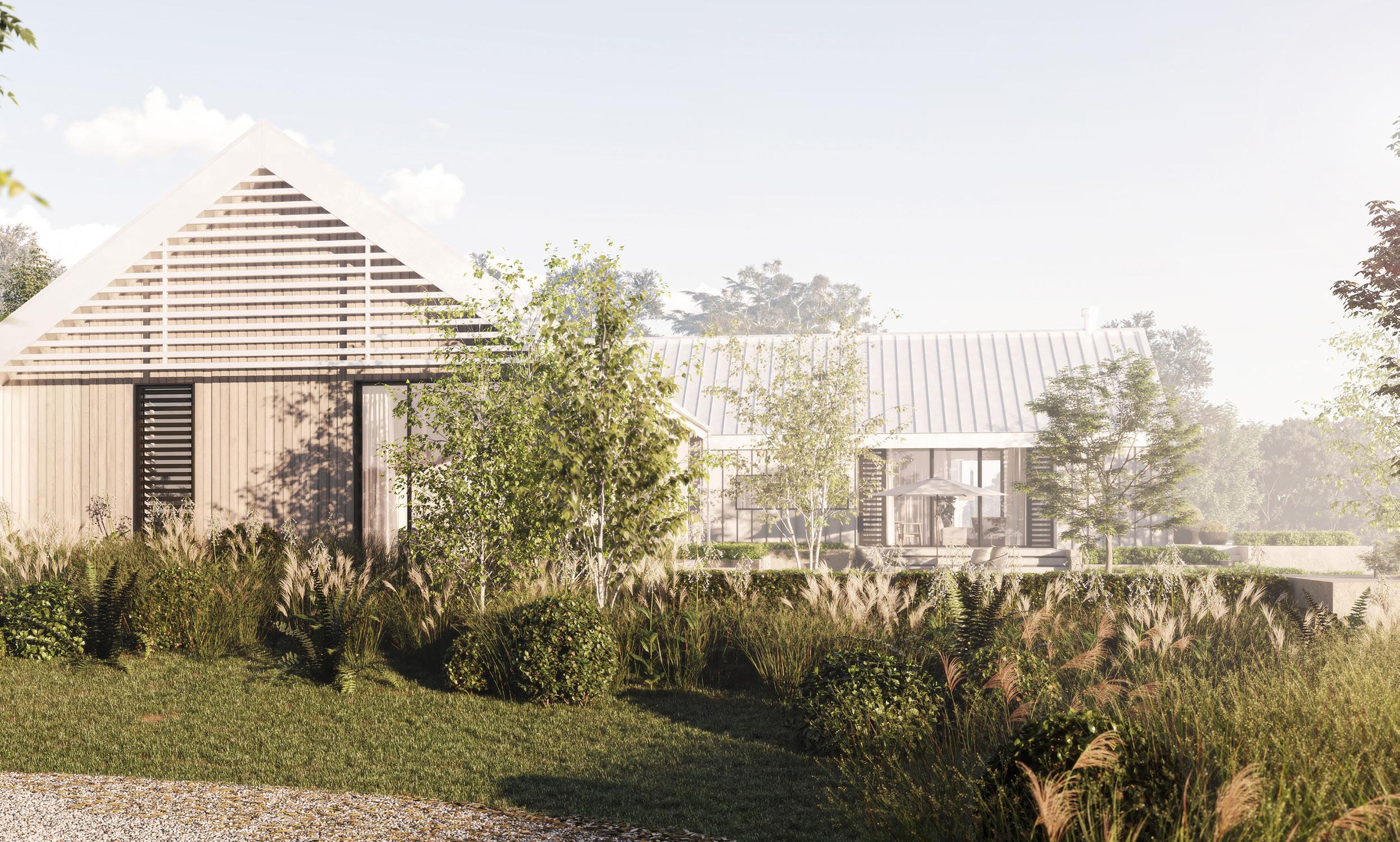
Nestled in a park-like setting on the Tasman Bay Coast, this expansive family home is inspired by the peaked forms of the boat sheds along this coast.
TASMAN BAY HOUSE
Living, bedroom, and garage pavilions are organised around central terraces to connect seamlessly to the outside spaces.
Designed to be resilient in the coastal environment, the layout makes use of an elevated building platform with a series of stepped outdoor garden and living terraces.
Terraces are paved and include a sheltered outdoor living space with a generous roofed louvre system. The design features local stone walls, with matt Coloursteel in Stone Snow, and whitewashed accoya timber exterior gables and interior ceiling.
This house is a redesign of a beloved family home that was damaged during the Canterbury earthquakes of 2010 and 2011. The clients wanted to build a new home to meet their changing needs, both now and in the years to come.
MOORE SHARP HOUSE
The resulting design maximises the orientation of the home for sun, provides shelter from the prevailing wind, and allows scope to downsize and further develop the site in future.
The plan provides a large double height family room, including the kitchen, dining and living.
A library/reading room can be accessed from the same space, as can two separate small home offices. The layout includes a
gallery space that links the main living and work areas to the bedroom wing, affording long views through the house to the street and gardens beyond.
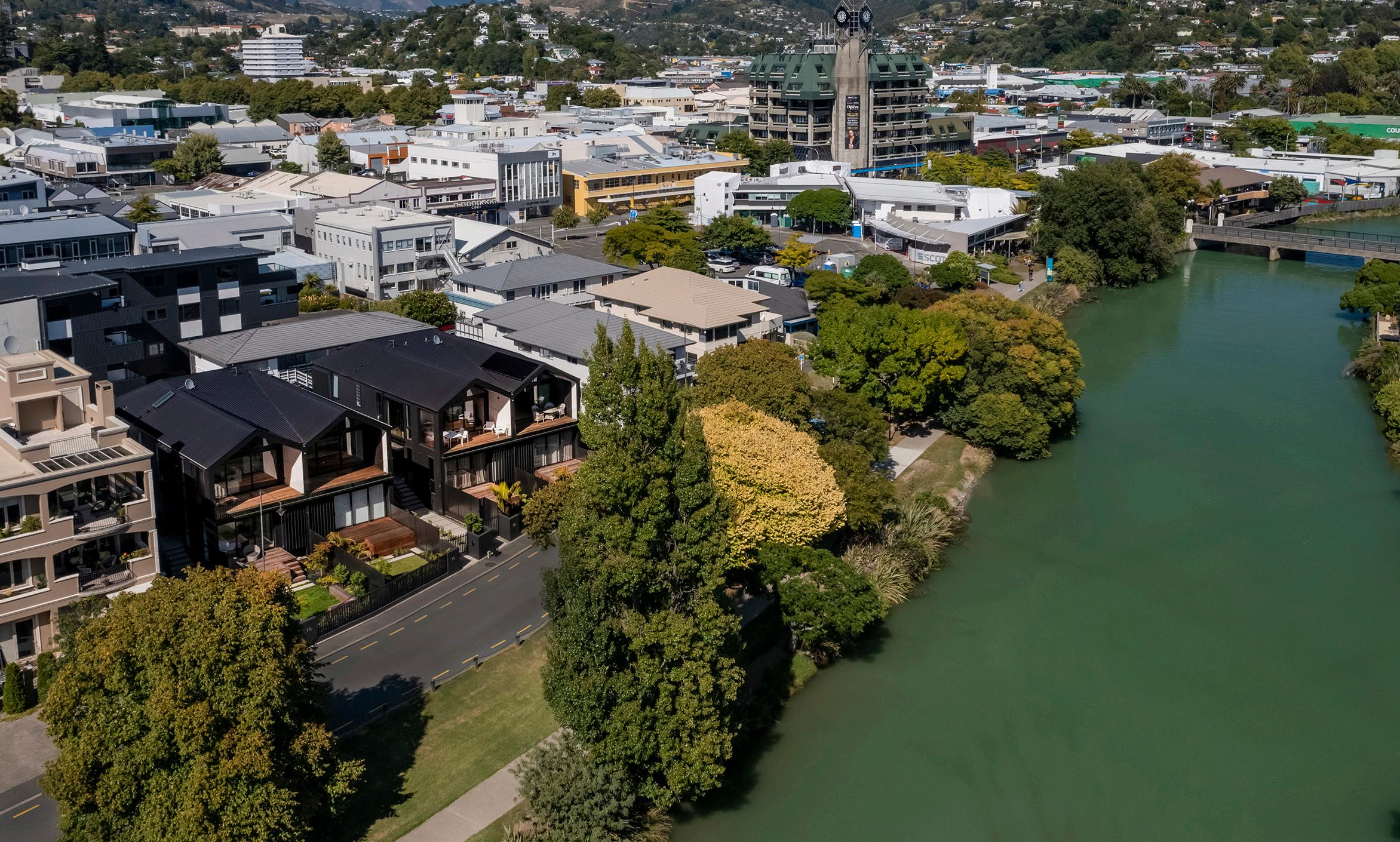
This four unit townhouse block comprises four 148m2 houses with a garden courtyard and first floor riverfront terrace overlooking Nelson’s Maitai River.
MAITAHI QUARTER
Taking note of the Maitai River connection to the marina, the architectural silhouette references a classic boatshed design, with a recessive external palette to fit within its urban context. The townhouses face north for sun and use natural light to penetrate the open layouts within.
The first floor riverfront terraces create an overhang that provides privacy to both the first floor lounge space and ground floor bedroom, utilising the shadow
created by the depth of the façade. Each interior provided options of two or three bedrooms with two bathrooms and a lift.
The townhouses are split into two by two unit blocks with a unified design approach to the create four architecturally continuous yet unique homes at the heart of Nelson city.
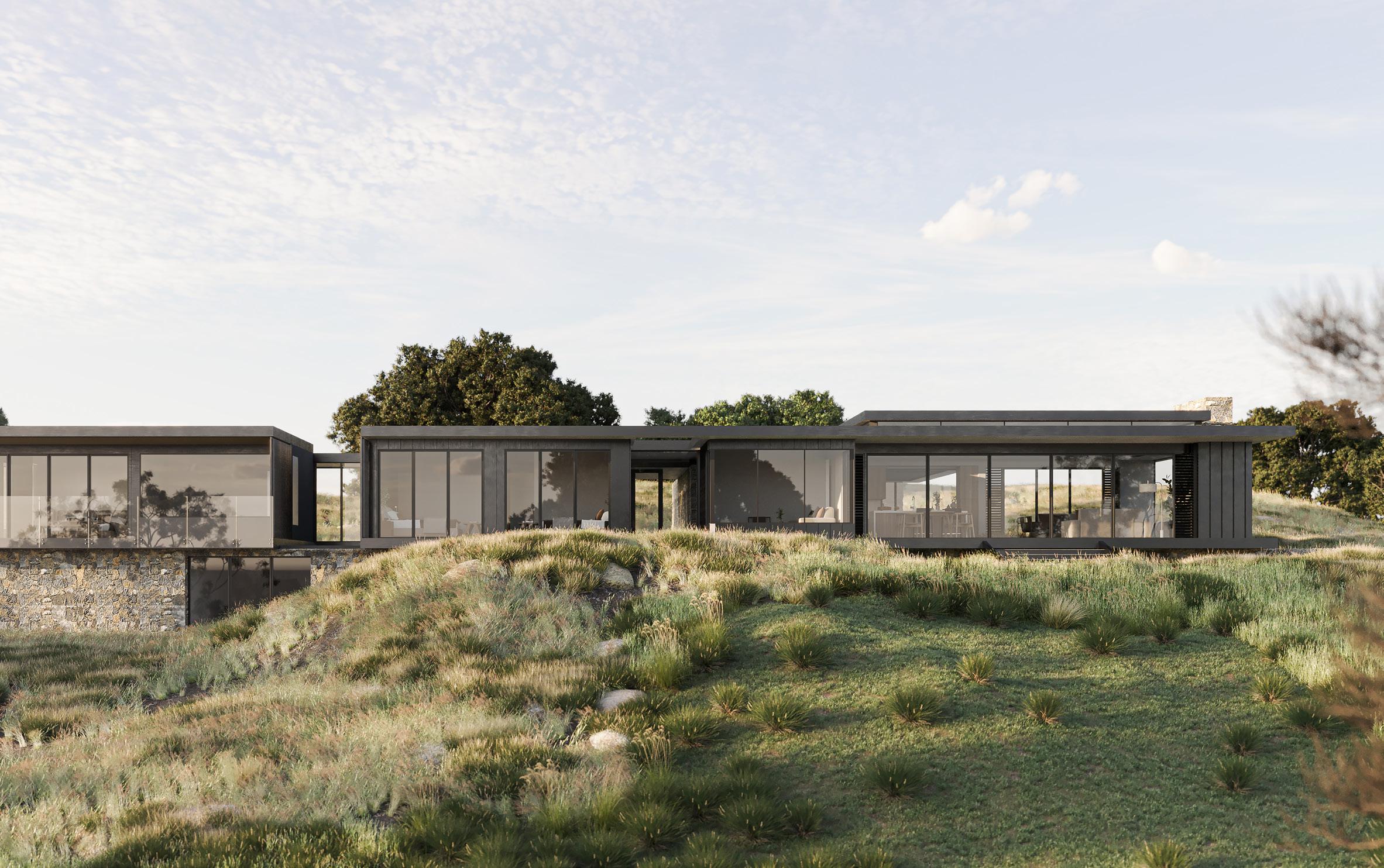
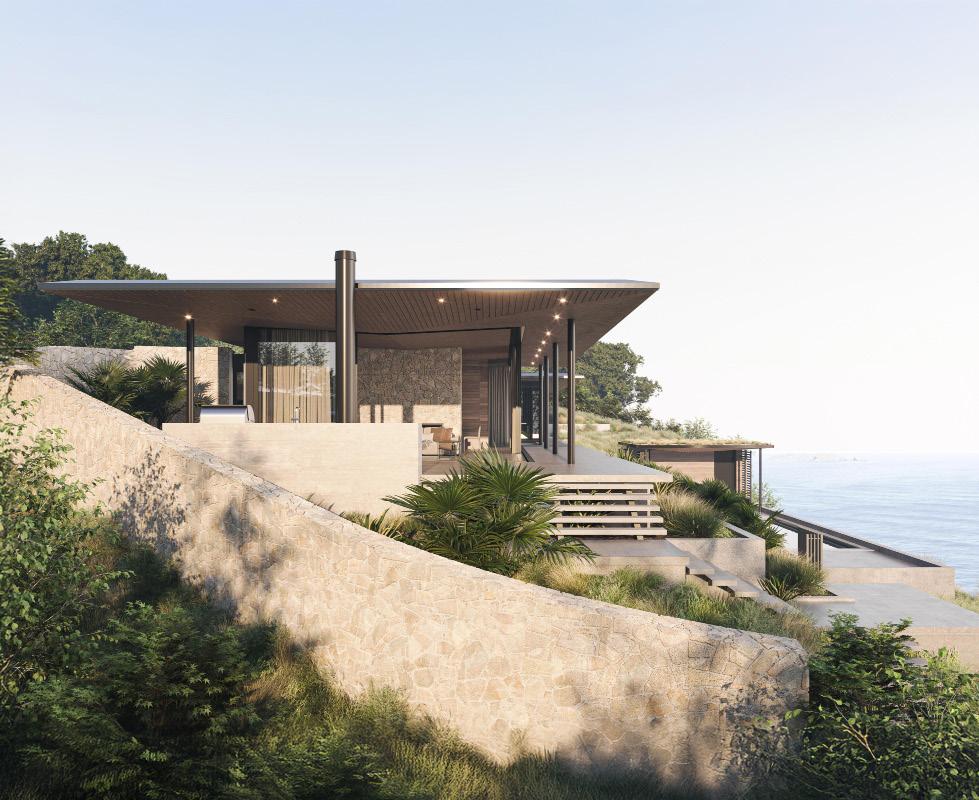
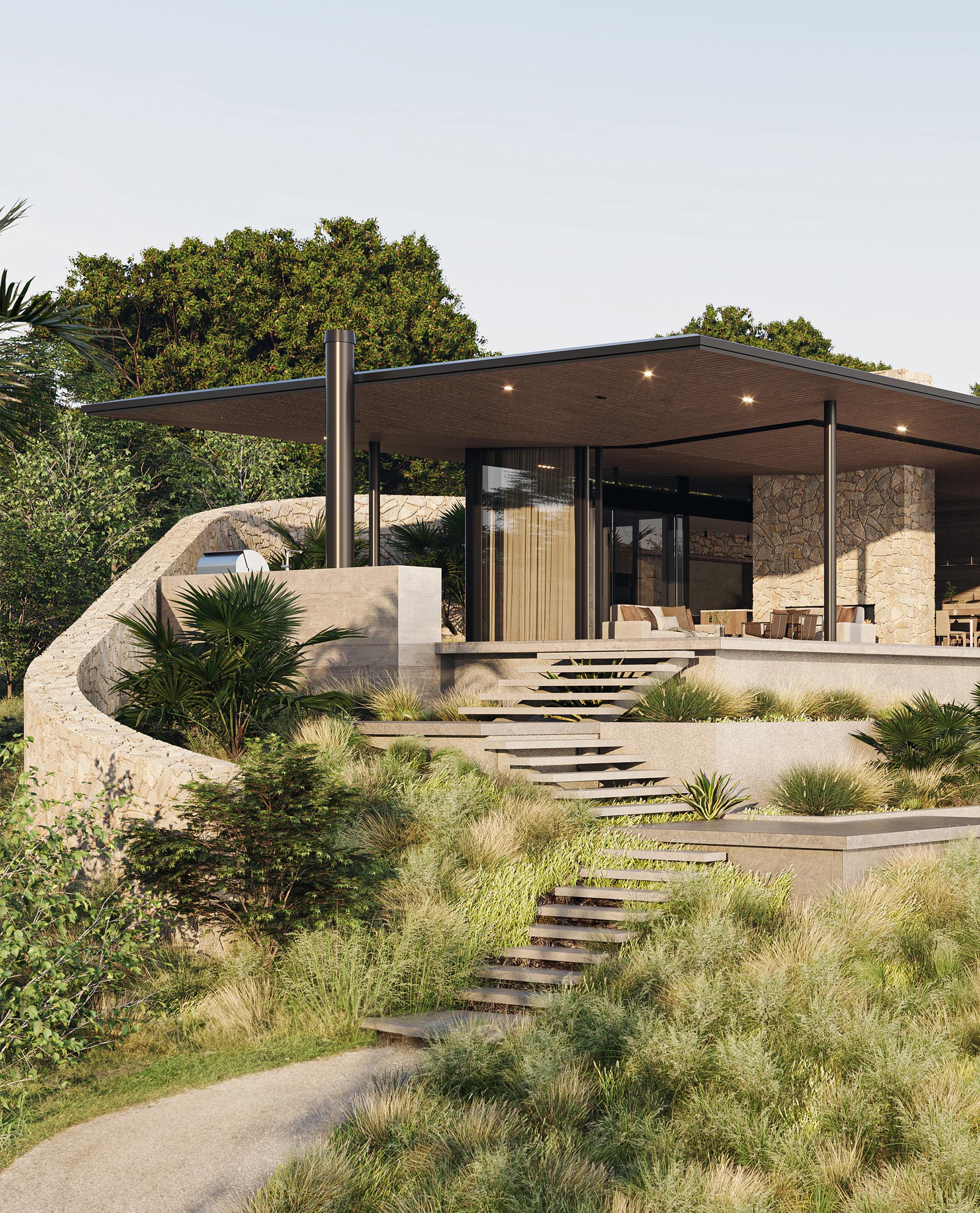
Located on a hillside site with spectacular views over Dummy Bay near Kaiteriteri, this elongated, single storey house captures the view from every room.
KAITERITERI BEACH HOUSE
The house is divided into two pavilions containing the living and sleeping quarters, which are linked with a glazed entrance hall and sheltered courtyard.
The house is characterised with a stone wall at the arrival court, which organically curves away from the building, providing a sheltered north facing outdoor living area with kitchen, dining areas and landscaped access to the swimming pool.
Local Marahau granite is used, reflecting the warm tones of the surrounding landscape, and complemented by timber ceilings that run throughout.
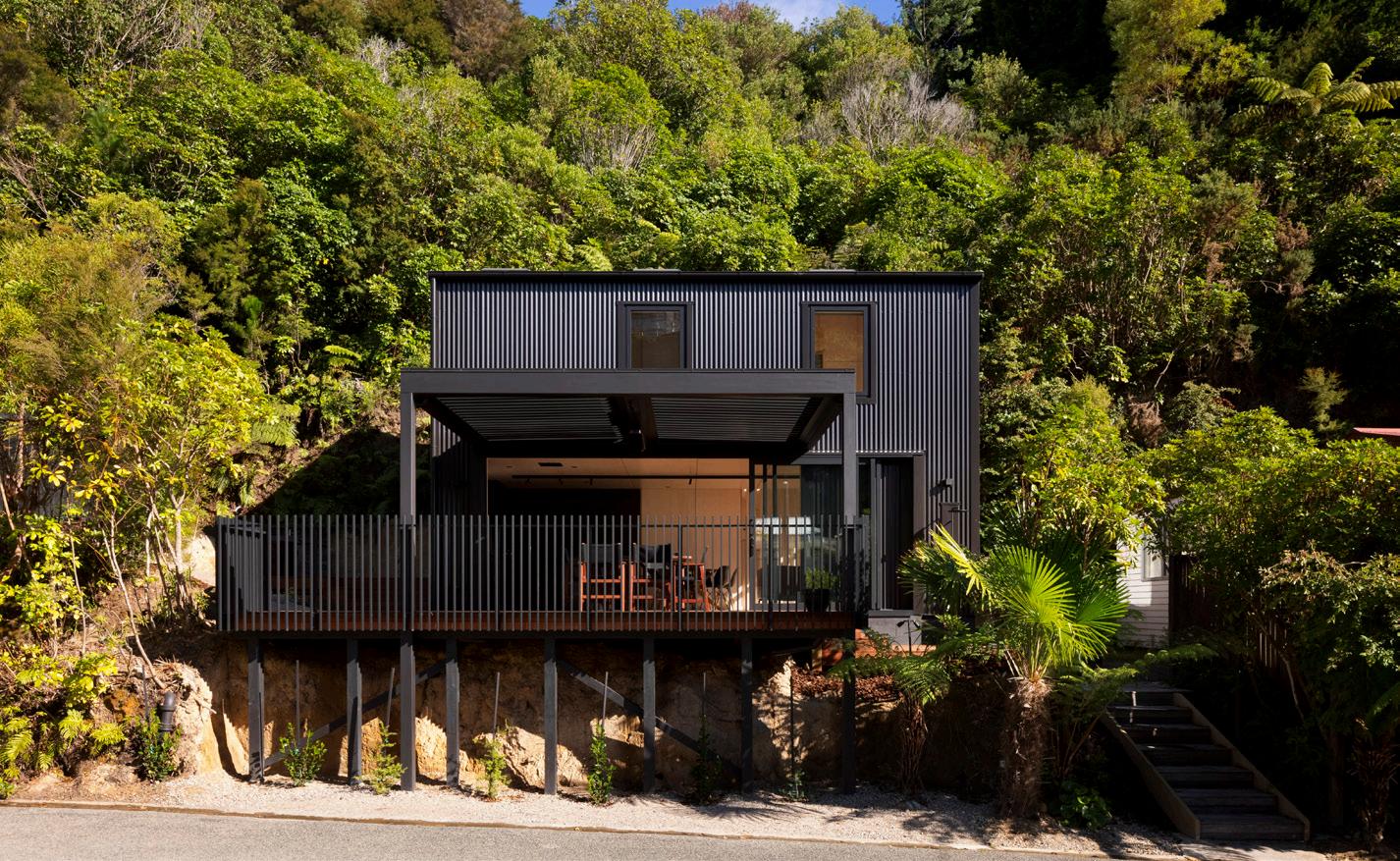
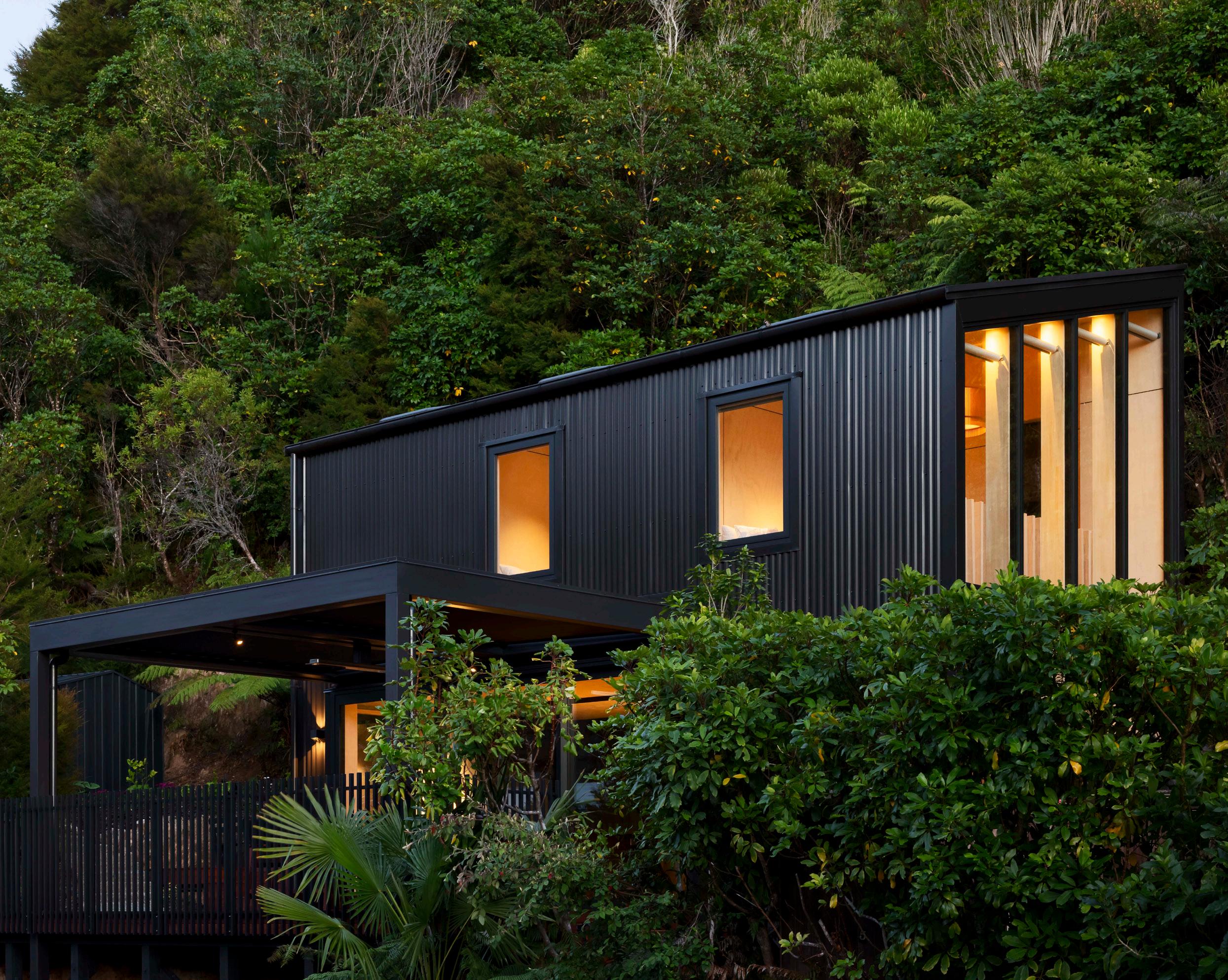
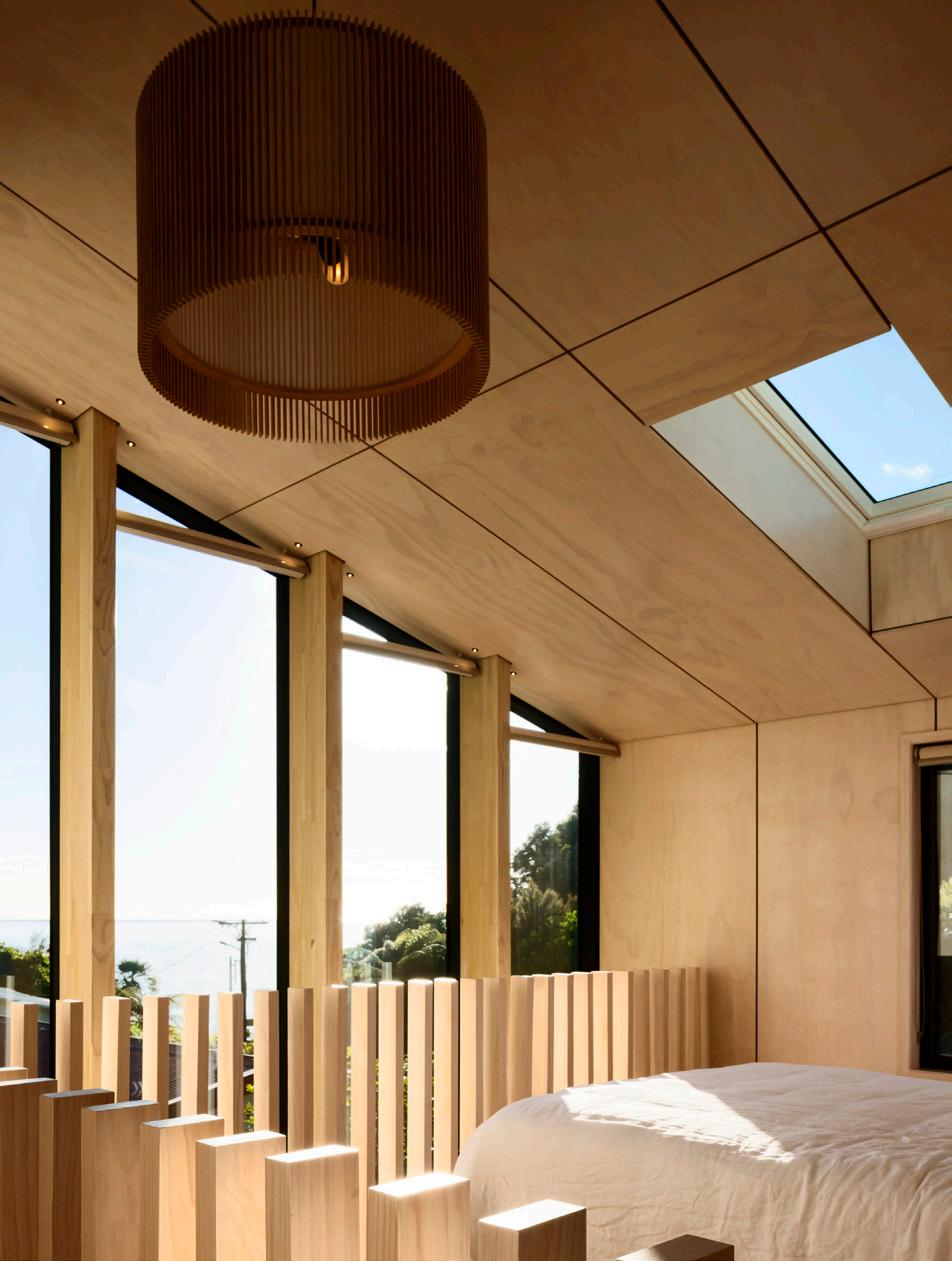
Set within a steep-sided, bush-clad gully that runs down to the beach, Honeymoon Bay Bach sits on the site of a previous family bach within Abel Tasman National Park.
HONEYMOON BAY BACH
Location Abel Tasman
Status
Completed
Awards
NZIA Nelson/ Marlborough Architecture
Awards, Winner
– Small Project Architecture, 2022
The brief called for a home with open plan living, access to sun and views, and durable, low maintenance materials.
The resulting plan consists of an open plan living, dining and kitchen space on the ground floor, plus two bedrooms and a bathroom on the first floor. Decking opens out to the south east from the ground floor living space.
Sustainable principles have been considered throughout the design and finishes, resulting in a highly sustainable and environmentallyfriendly build.
Positioned on a prominent corner overlooking Nelson’s Cathedral Hill, this carefully composed house elegantly contributes to the historic context of its mature city-fringe site.
TRAFALGAR SQUARE HOUSE
Working collaboratively with the owner-builder, this beautiful and sophisticated home is both immaculately built and carefully organised to meet evolving family needs. The house is raised and set back from the street, with living and outdoor spaces borrowing shelter and outlook from the nearby cathedral-like arbour.
Privacy has been achieved through the careful assignment of levels, disposition of landscape walls and the rhythmic vertical fins that regulate views from within.
The design for this house addresses the need for shelter from the prevailing sea breeze while retaining privacy and being able to enjoy the site’s stunning beachfront views.
TATA BEACH HOUSE
The building form creates a decked courtyard in the centre of the site, with the garage protecting views from the street.
The bedroom wing is to the south, and the living area between it and the beach.
Verandahs are used to provide an accessway to the house and shaded outdoor spaces. The
living area, consisting of sitting, dining and kitchen spaces is a light, spacious room. The roof lifts to the east, allowing morning sun to penetrate year round over the top of the adjacent properties.
The house can be opened to the outside through many alternative doors depending of the exact wind direction.
Torbay House is a luxurious multigenerational coastal home positioned dramatically atop a 22-metre cliff in Torbay, Auckland.
TORBAY HOUSE
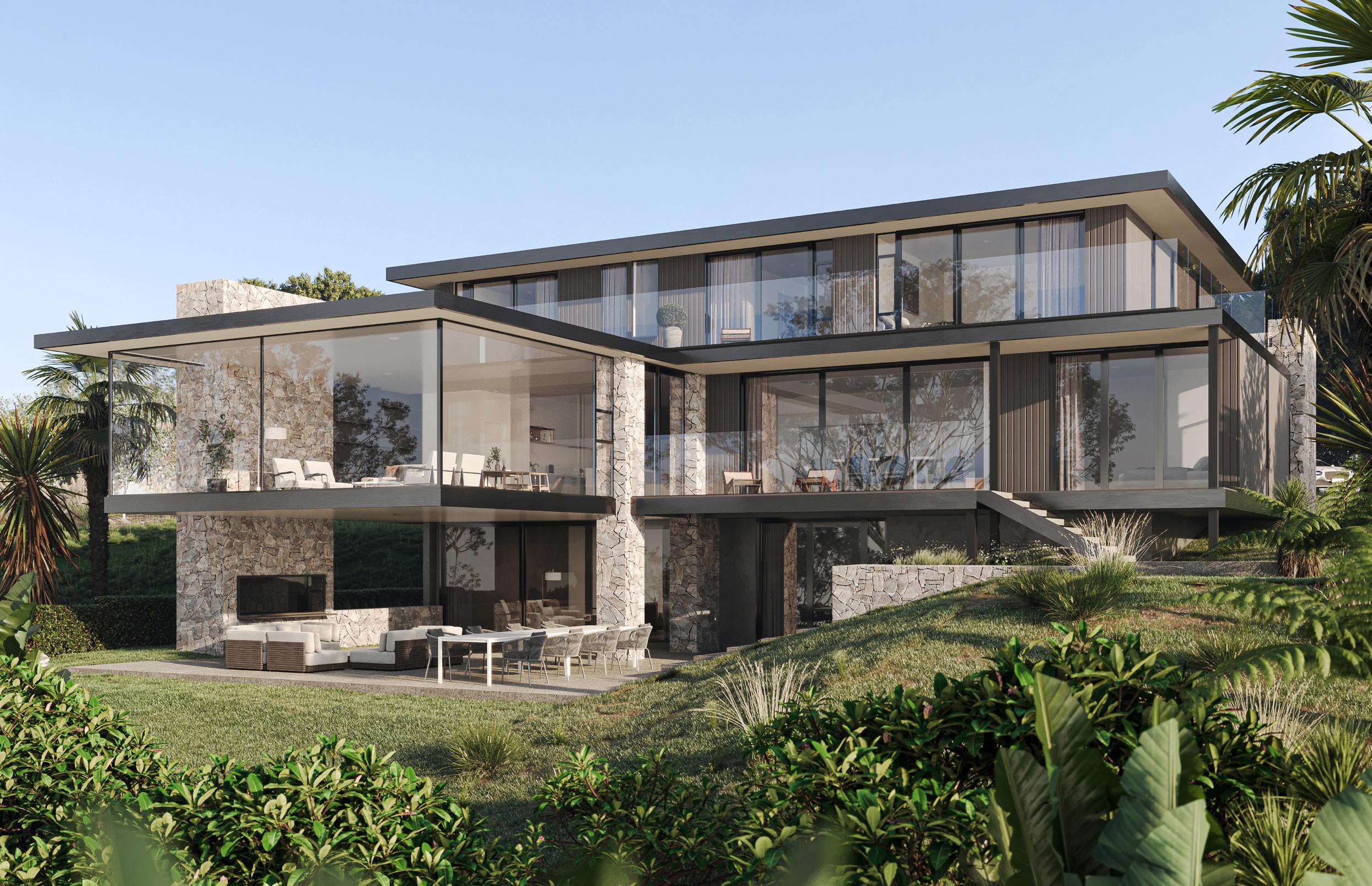
The design embraces its setting through expansive glazing, warm natural materials, and a form that reaches confidently toward the ocean. The architectural approach maximises views while preserving strong privacy from the roadside, creating a home that feels both grounded and open.
The main residence spans three levels and includes five bedrooms, generous open-plan living spaces, a media room, bar, gym, cellar, and substantial garaging. A fully self-contained one-bedroom suite for grandparents connects to the primary dwelling, providing independence while maintaining proximity to family and offering a thoughtful response to
multigenerational living. Material selections reflect the coastal environment and the desire for refined, enduring finishes. Natural sandstone cladding brings warmth and durability, complemented by vertical timber weatherboards for softness and texture. Aluminium elements ensure resilience in a marine climate while maintaining a clean, contemporary aesthetic.
The complexities of the clifftop setting required a highly considered structural and consenting strategy. Cantilevered living spaces and the three-level massing demanded robust engineering and careful geotechnical coordination.
Located on a gently sloping section within central Nelson, this large family home is organised over three stories, with entry from the street at the middle level and the lower level living space opening out to the garden.
EXAMINER STREET HOUSE
The position of the home close to the road continues the urban form of the street, providing a foil to the large neighbouring motel and maximising the usable garden area at the northern end of the site.
Orientated to capture sun and views, living spaces and bedrooms face north, with secondary and circulation spaces located on the south side of the house. Bedrooms and living spaces open out to balconies and terraces that extend the living space and shelter the glazing from excessive solar gain the summer months.
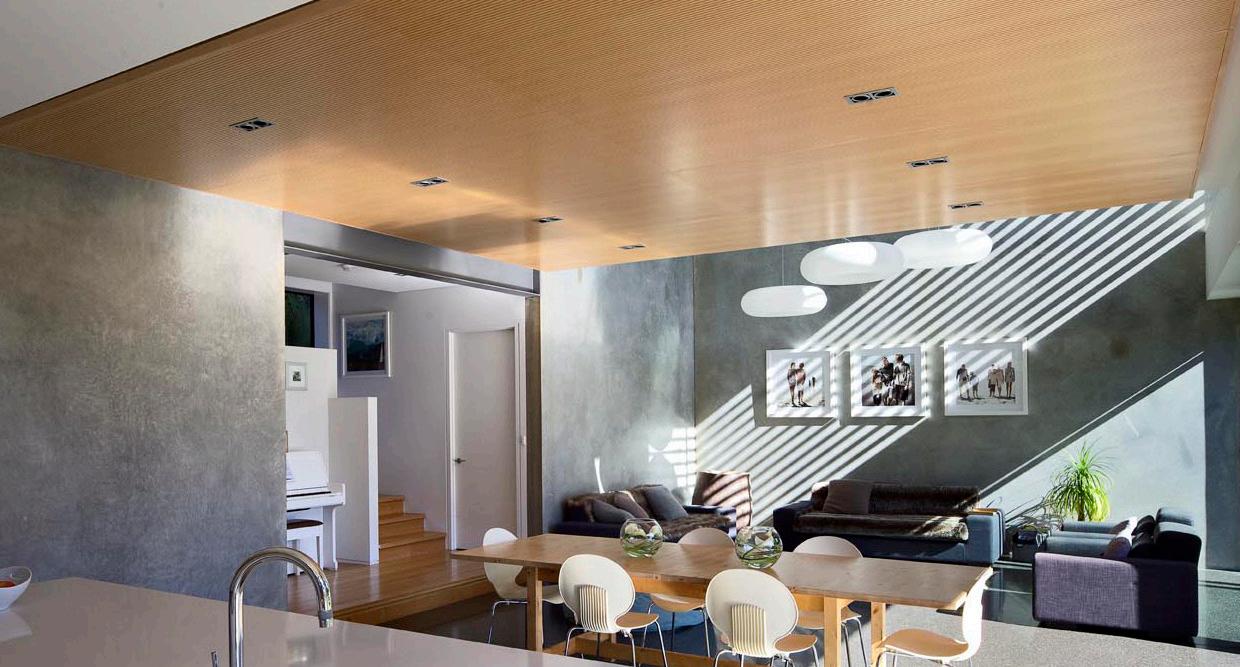
Designed around passive solar heating principles, the house is constructed from concrete tilt panels, which are exposed internally to provide thermal mass to capture solar energy from the large north facing windows.
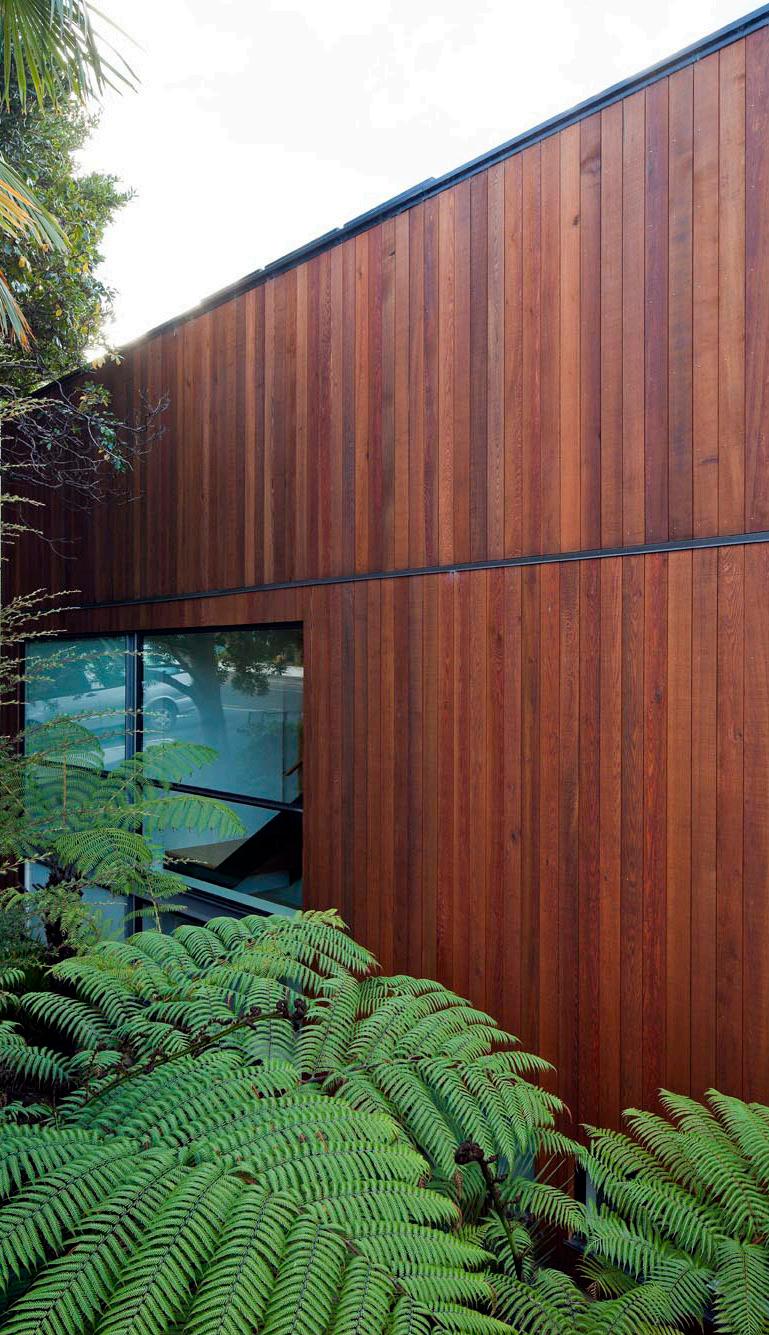
The concrete is insulated on the outside face and clad with vertical cedar shiplap weather boarding to provide an attractive visual rainshield cladding.
Windows punctuating the southern façade are grouped to provide views of native plantings that shield the house from the road.
Located just a short stroll from Christchurch Boys High, Riccarton House and Pūtaringamotu Bush, this site presented a unique opportunity to redevelop a generous, inner suburban property.
STRAVEN ROAD TOWNHOUSES
The project involved replacing a large, dilapidated two-storey house with two high-end, fourbedroom townhouses.
In collaboration with our developer clients, we created a versatile layout to cater to a diverse range of buyers, from families with children attending nearby schools to retirees looking to enjoy a suburban lifestyle, as well as those with reduced mobility supported
by the inclusion of a provisional lift. The shared accessway is located along the southern boundary, allowing each unit to enjoy private northern and western outdoor living areas. While the floor plans for both units are identical, their positions offer distinguishing features. The rear unit boasts a more private garden, whereas the front unit features a more public interface and a larger west-facing outdoor area.
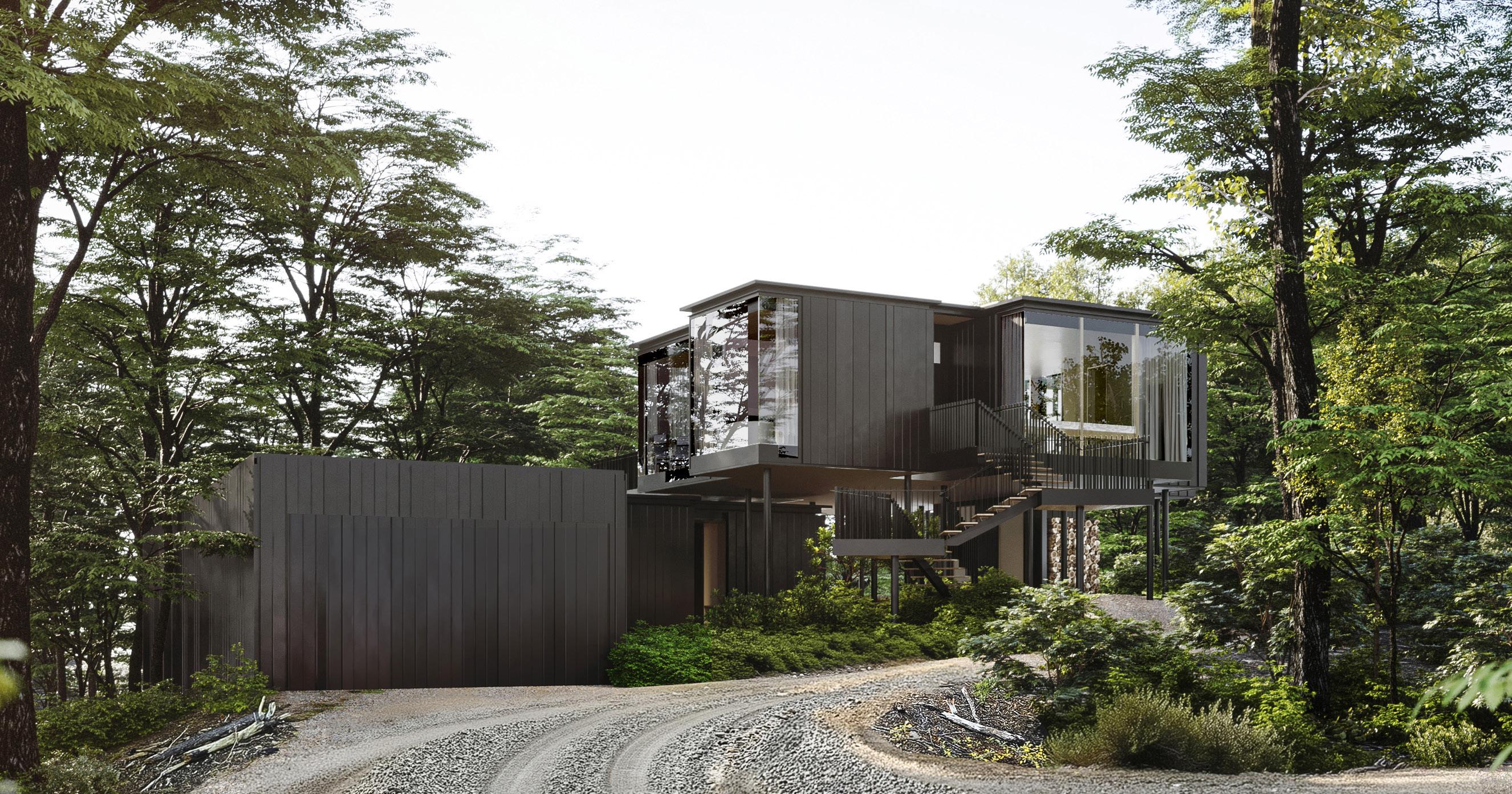
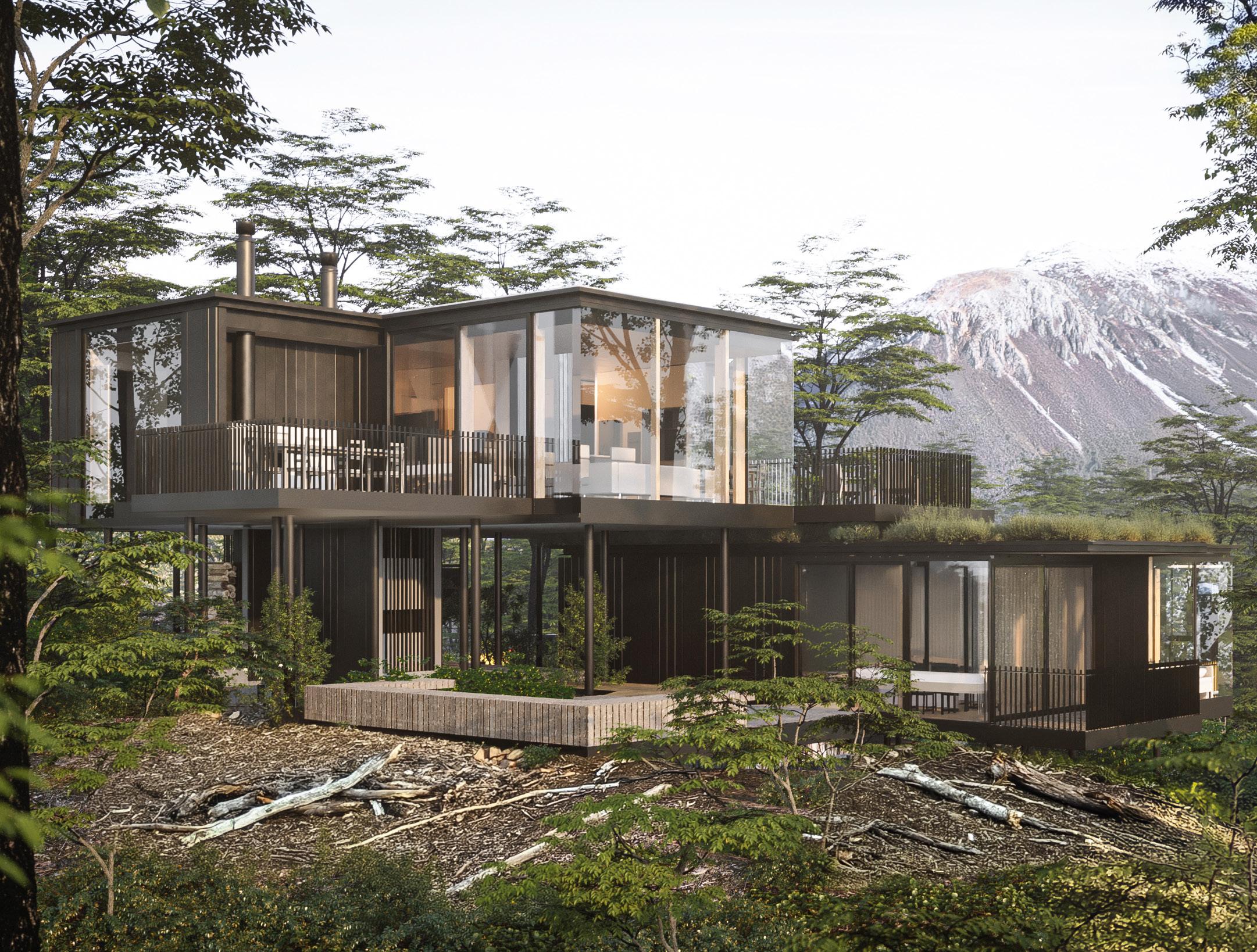
Located within a native beech forest on the edge of Nelson Lakes National Park and near Lake Rotoiti, Te Whare Rākau is conceived as a series of pods layered through the landscape to minimise ecological impact while offering varied spatial experiences of the forest.
LAKE ROTOITI HOUSE
Each pod serves a distinct function and is sited to engage with a different stratum of the forest. At the forest floor sits the boatshed; nestled among the trunks is the guest accommodation; and elevated within the canopy are the main living areas and primary bedrooms
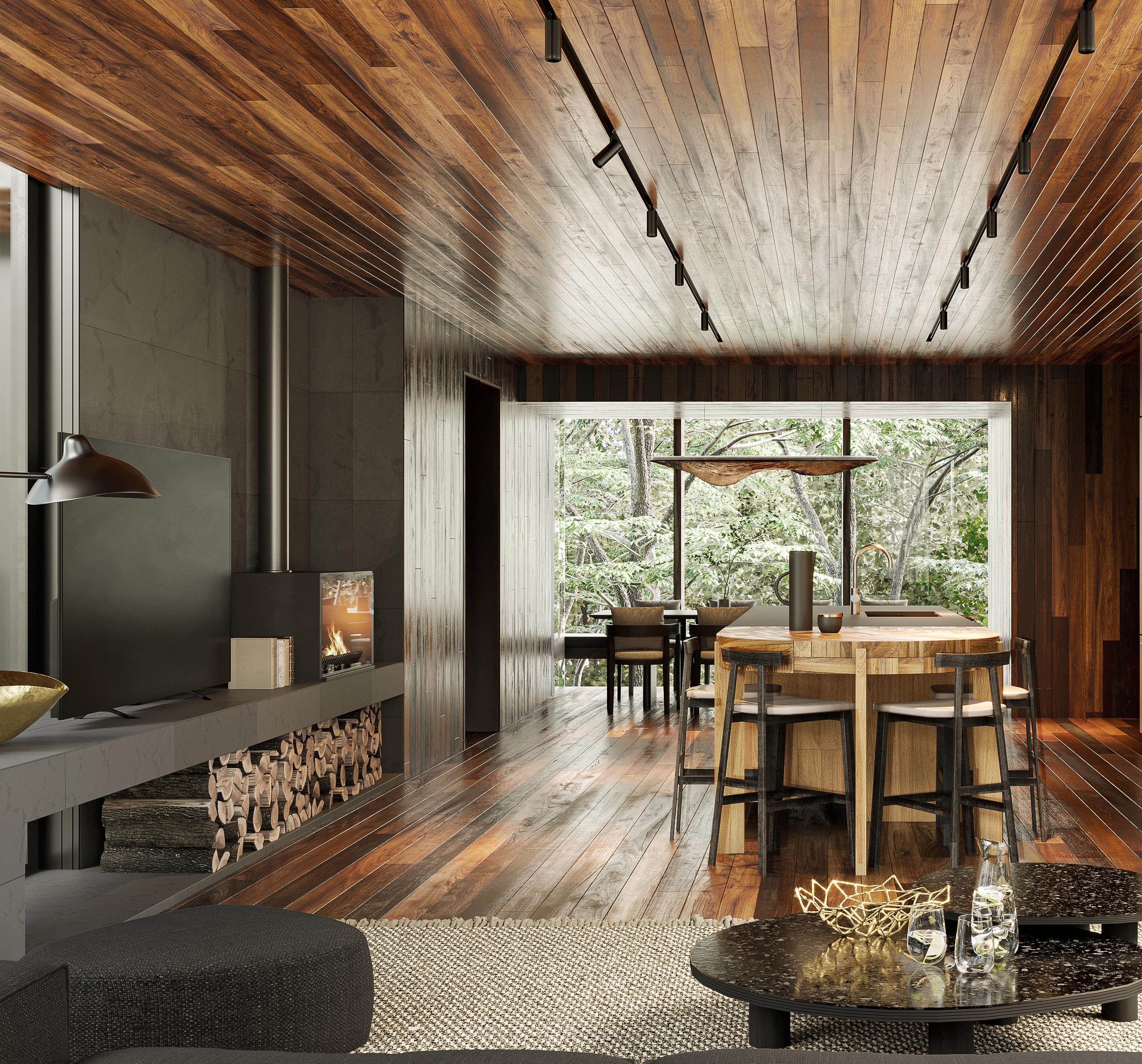
The pods are elevated above ground on dark, trunk-like columns and clad in dark seam-folded aluminium, allowing them to visually recede into the blackened verticality of the beech forest. Internally, they are lined with native
beech timber, reinforcing a sense of material continuity with the surrounding landscape.
Structure is provided by prefabricated panels of locally sourced Nelson Pine LVL, assembled off-site using Potius construction methodology to reduce on-site disruption.
Corner glazing wraps each pod, visually dissolving the interior boundaries and immersing occupants in the surrounding forest.
The Panorama Road development involved close collaboration with our client throughout design and construction to deliver two beautifully crafted homes on the former site of a single family dwelling.
PANORAMA ROAD
The 645m² site slopes down from the Panorama Road entrance to connect with The Zig Zag Track, leading to Sumner town and the beach below. It offers expansive views into Sumner and towards Tuawera (Cave Rock), Te Karoro Karoro (Brighton Spit), Pegasus Bay, and the Kaikōura Ranges beyond. Both homes were carefully designed to capture sunlight, provide privacy and shelter, and frame the magnificent outlook. Each sits on its own separate title, working with the existing steep topography and basalt retaining walls to maximise development potential.
External claddings were selected for durability and to define the different building volumes and external spaces: warm, natural timber cladding in combination with elegant standing seam steel elsewhere. Location
Cross laminated timber was incorporated to accelerate construction and improve safety for workers operating at heights. It also provides a strong, resilient, lowcarbon and lightweight alternative to traditional construction materials and methods.
Named for the New Zealand falcons that swoop and glide through the skies above, Falcon Brae sits high in the hills of Motueka Valley overlooking Kahurangi National Park.
FALCON BRAE
Location
Motueka Valley
Status
Completed 2019
Awards
NZIA Nelson/ Marlborough Architecture
Awards, Winner –Hospitality, 2021
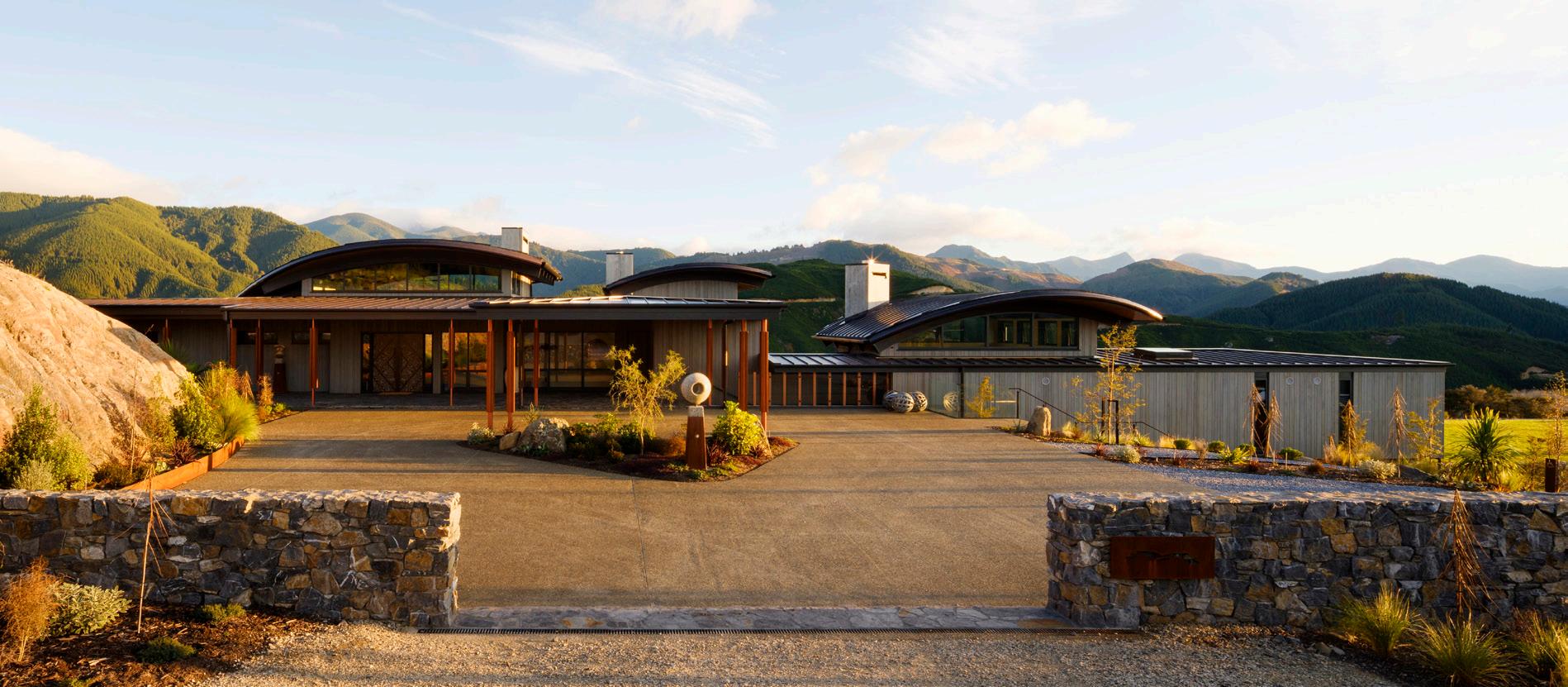
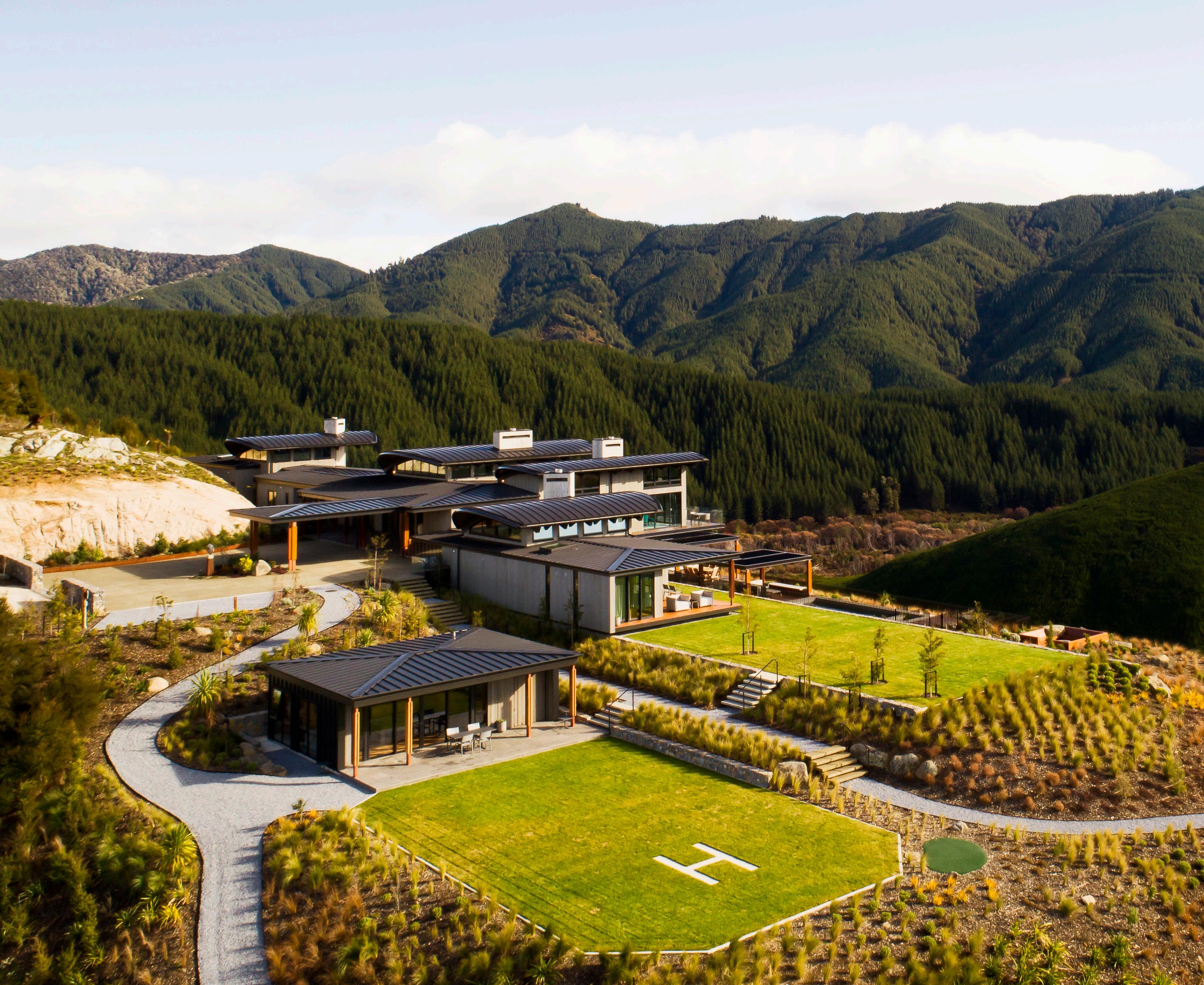
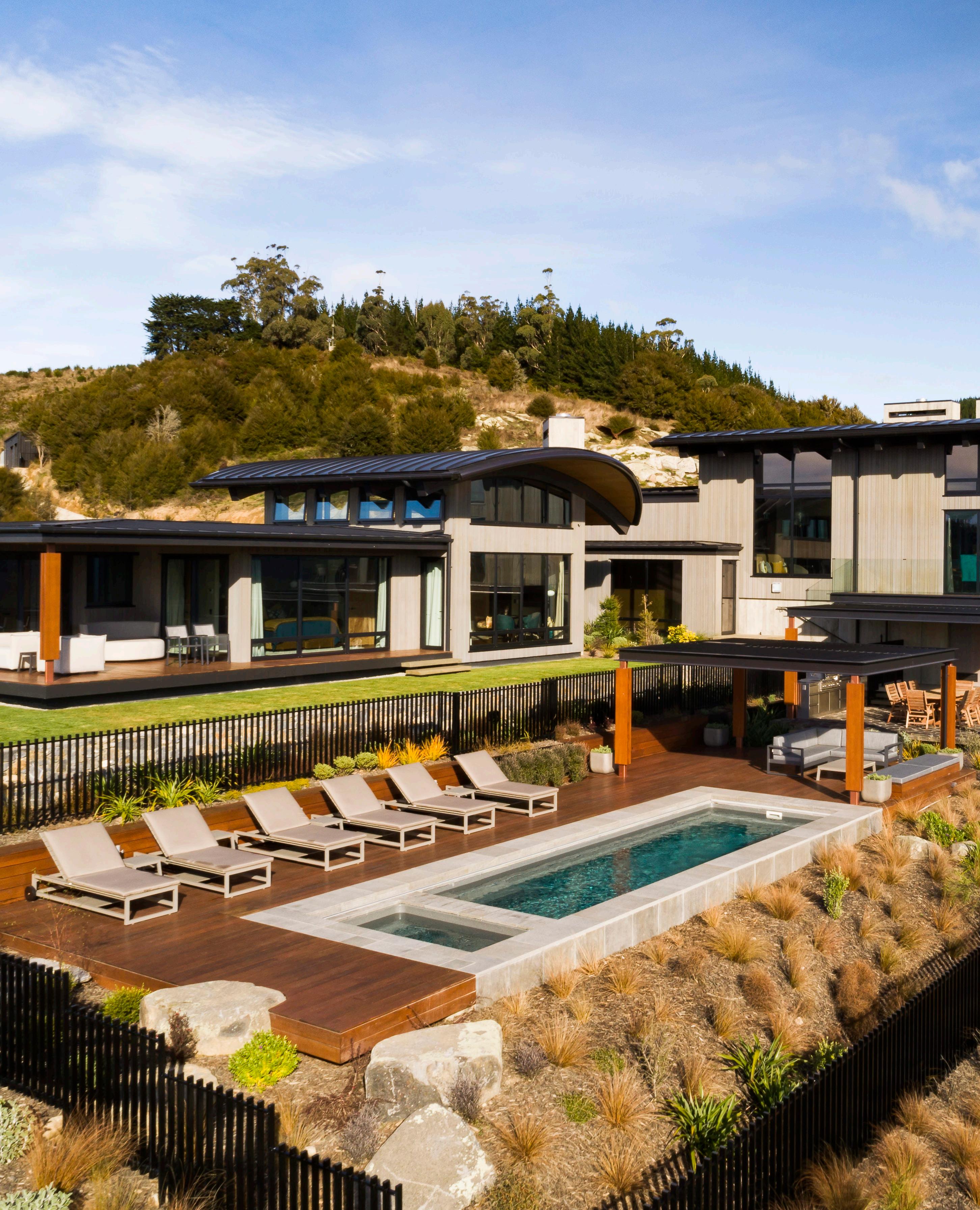
Designed to achieve the warmth of traditional, European-inspired lodges in a contemporary Pacificrim context, the 620m² off-grid villa steps down over the contours of the granite hillside.
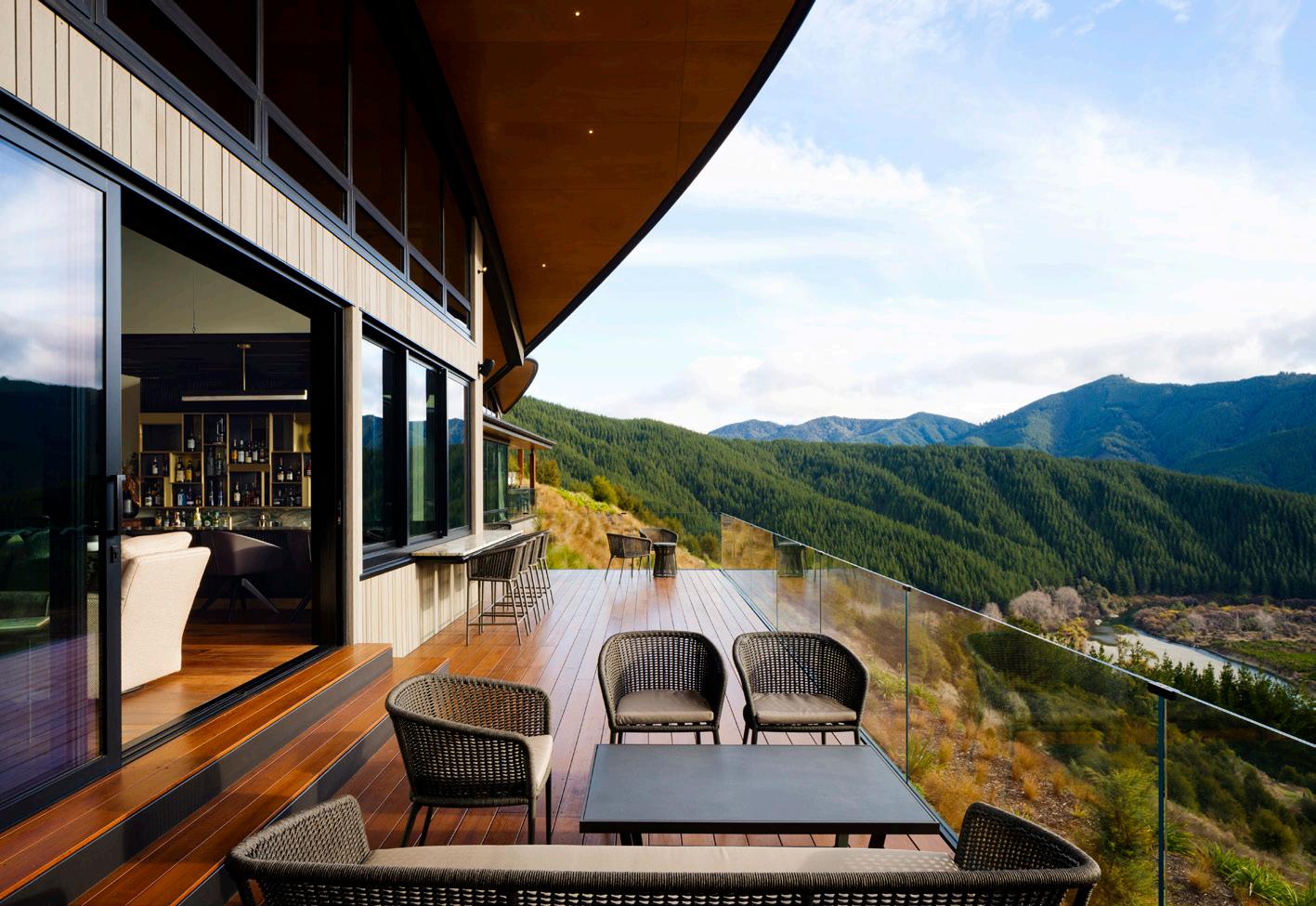
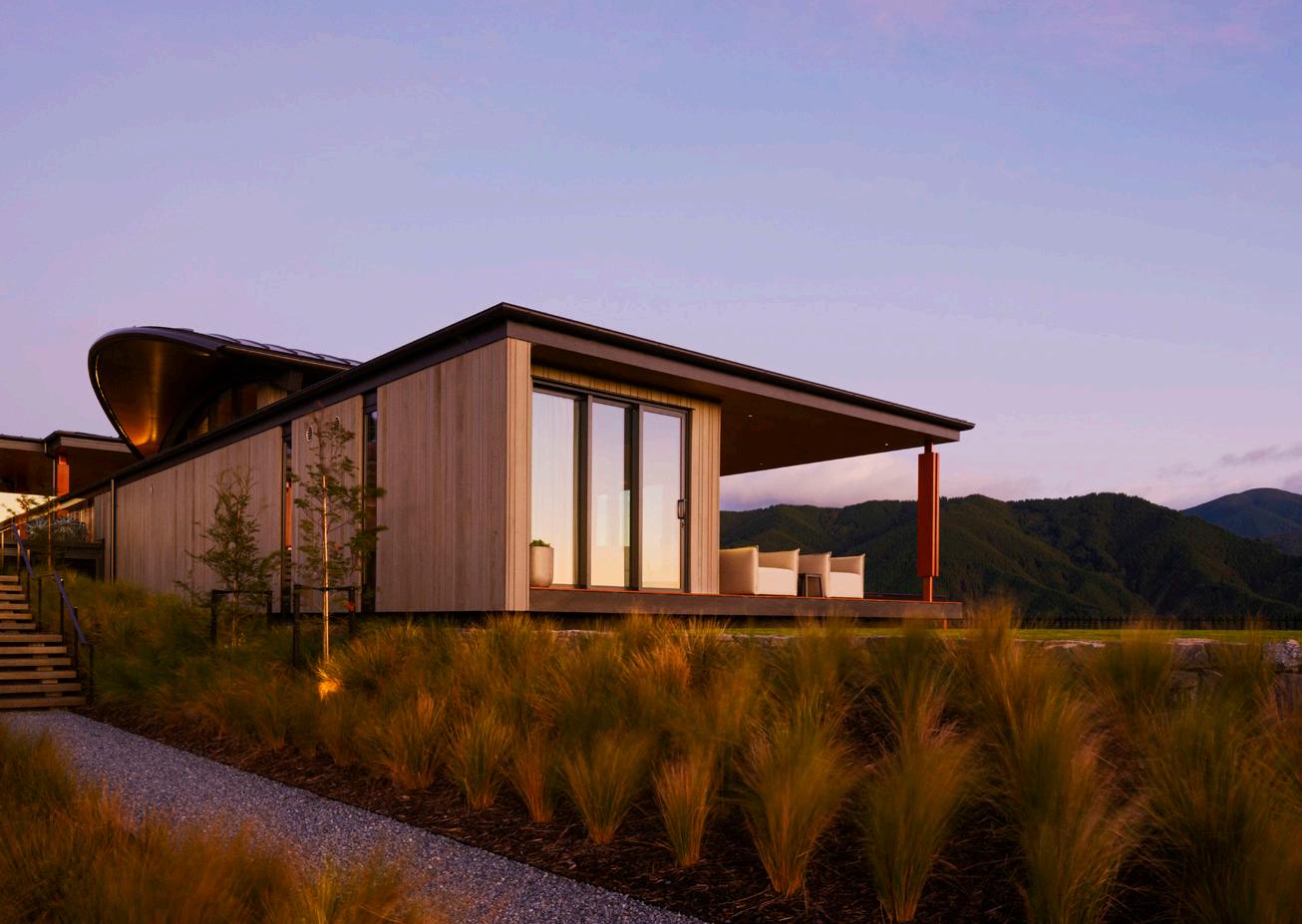
Above ground, timber is the key structural element, with glulam mass timber beams formed from locally grown radiata pine, creating the sweeping, elliptical curves of the 1000m² roof. Referencing the wings of falcons, the dynamic forms of the roof create volume in the key living spaces; allow for clerestories to introduce daylight, ventilation, and views back to the hillside above; and create large projected brows which provide shading to the expansive glazing below.
Oiled cedar cladding in its greyed form reflects the soft grey bark of the re-vegetated Manuka which surrounds the property, and extensive kwila decking wraps around the villa, connecting private and shared spaces.
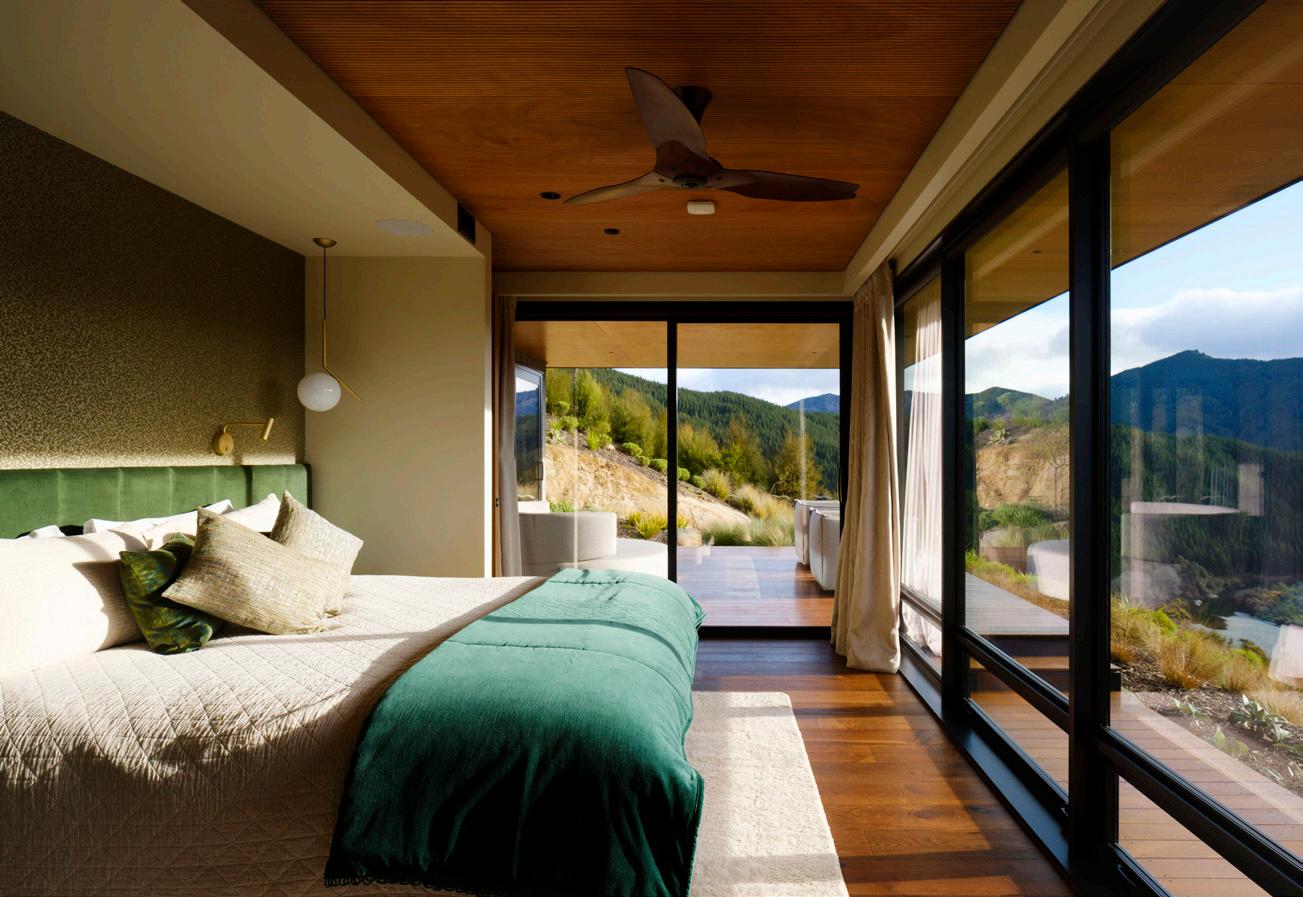
Three generous suites each include private lounge areas, and expansive glazing to frame views of the spectacular surrounding landscape.
Shared facilities include the central lounge area, multiple dining spaces, bar area, media room, cabana, games den, gym, spa and pool, fire pit and commercial kitchen.
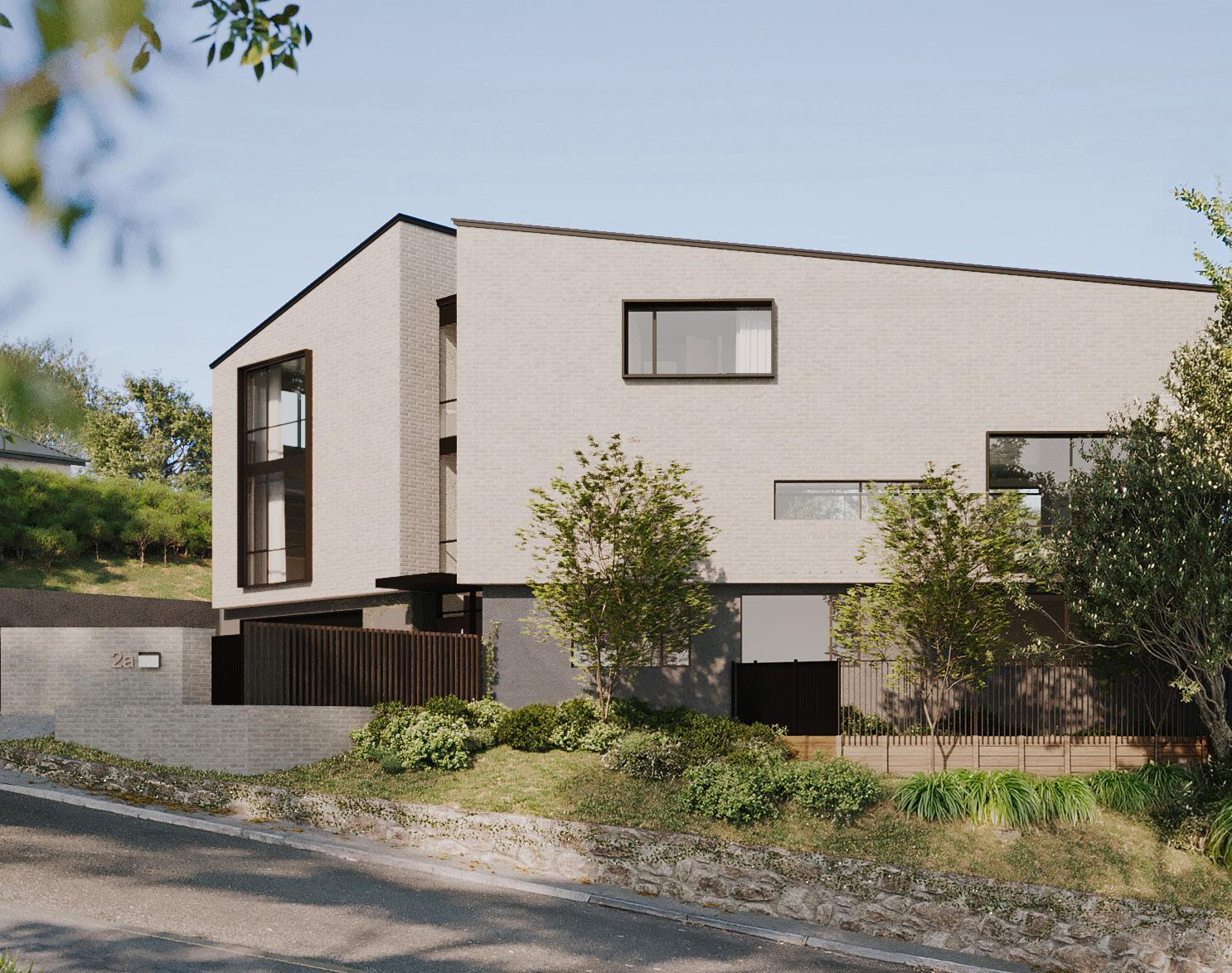
Scherff Road House is a three level multigenerational family home shaped by a strong contemporary architectural language.
REMUERA HOUSE
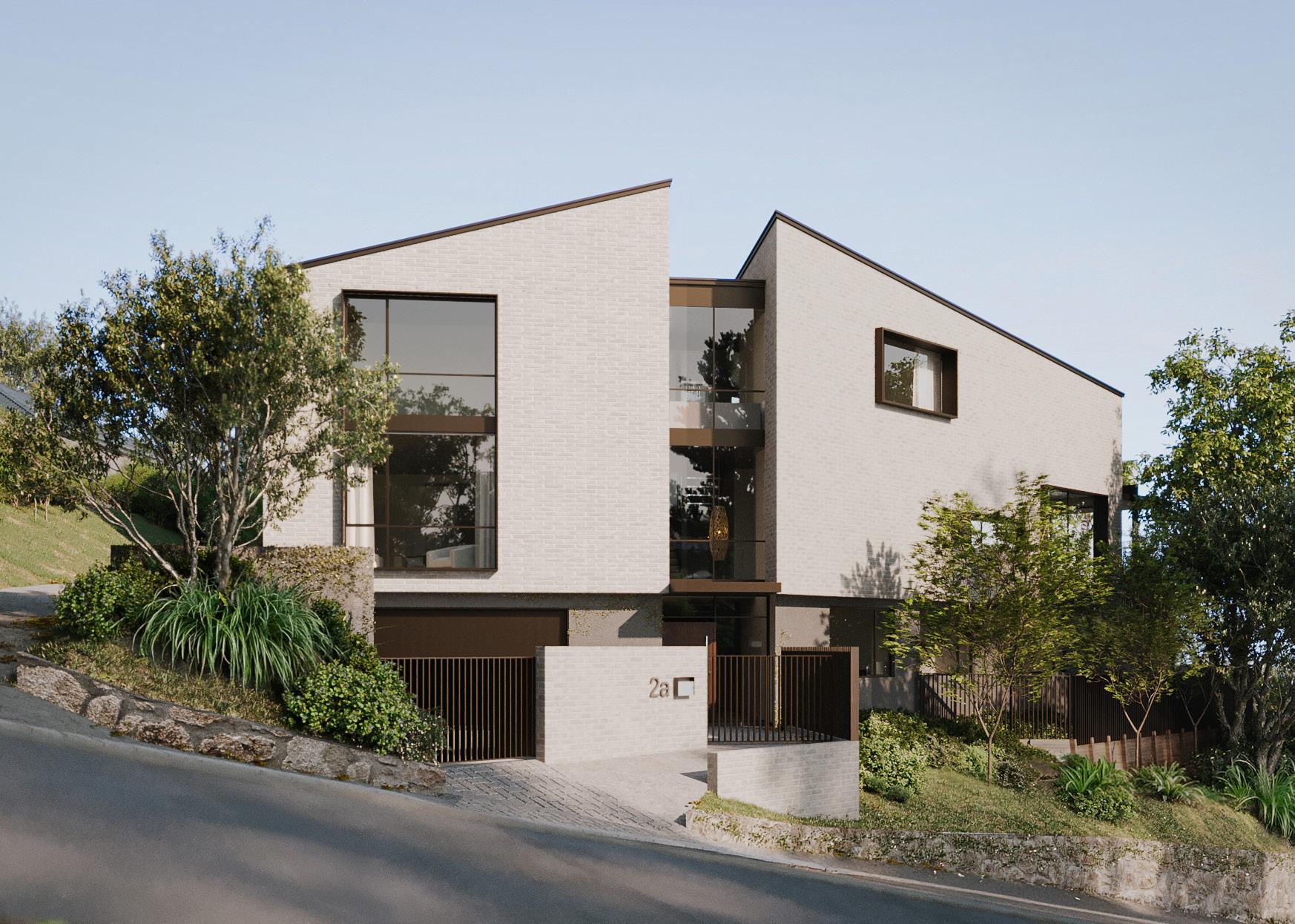
The design is defined by two solid brick masses linked by a recessed glazed spine, creating a clear contrast between weight and lightness. An asymmetrical roofline and geometric forms give the home a sculptural modern presence within its Remuera neighbourhood.
Across three levels, the layout includes six bedrooms, generous living areas, and recreational zones such as a gym, theatre, rumpus level, and pool. Outdoor entertaining spaces open from the main living areas, supporting large family gatherings while preserving privacy for individual household members. A lift improves accessibility and
supports long-term living. Material choices focus on durability and low maintenance. Cream brick and aluminium form a clean, robust exterior, while a curved staircase finished with veneered oak and rounded balustrades introduces warmth and craftsmanship to the interior.
A hybrid structure of concrete, steel, and timber supports the home’s dramatic geometry and multilevel arrangement. Careful coordination of structure, form, and materials creates a confident and expressive residence suited to an extended family while maintaining a strong architectural identity.
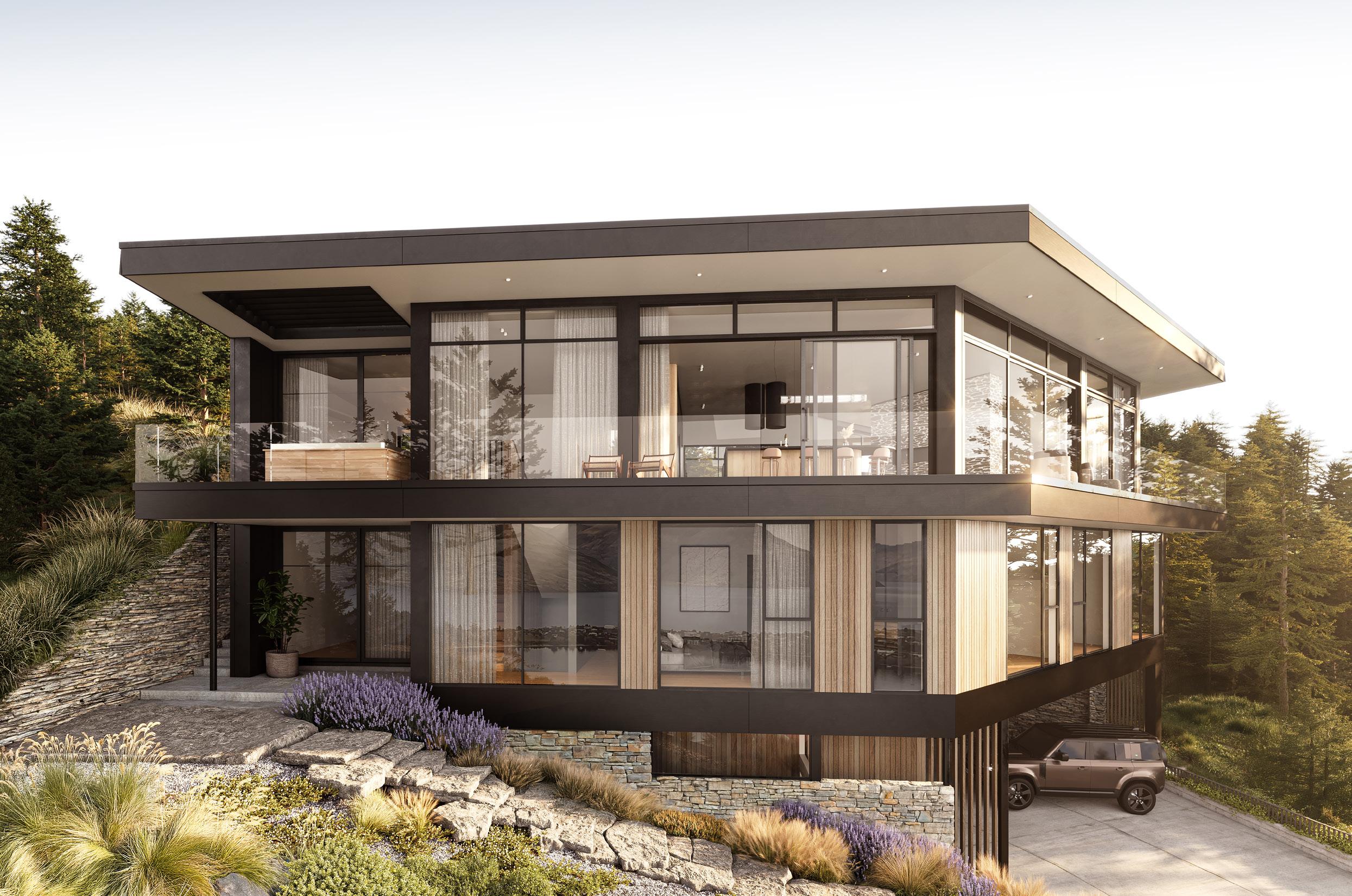
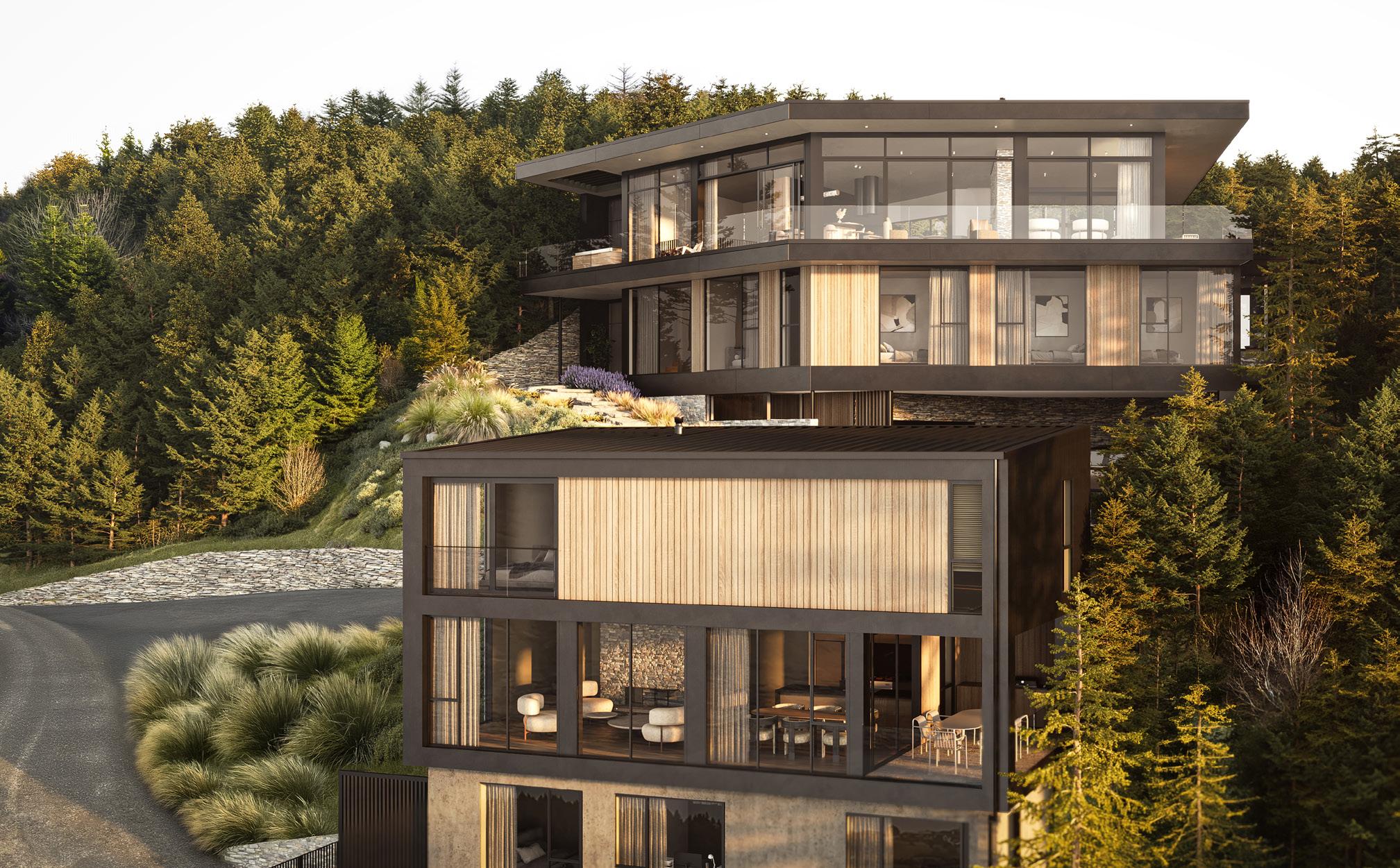
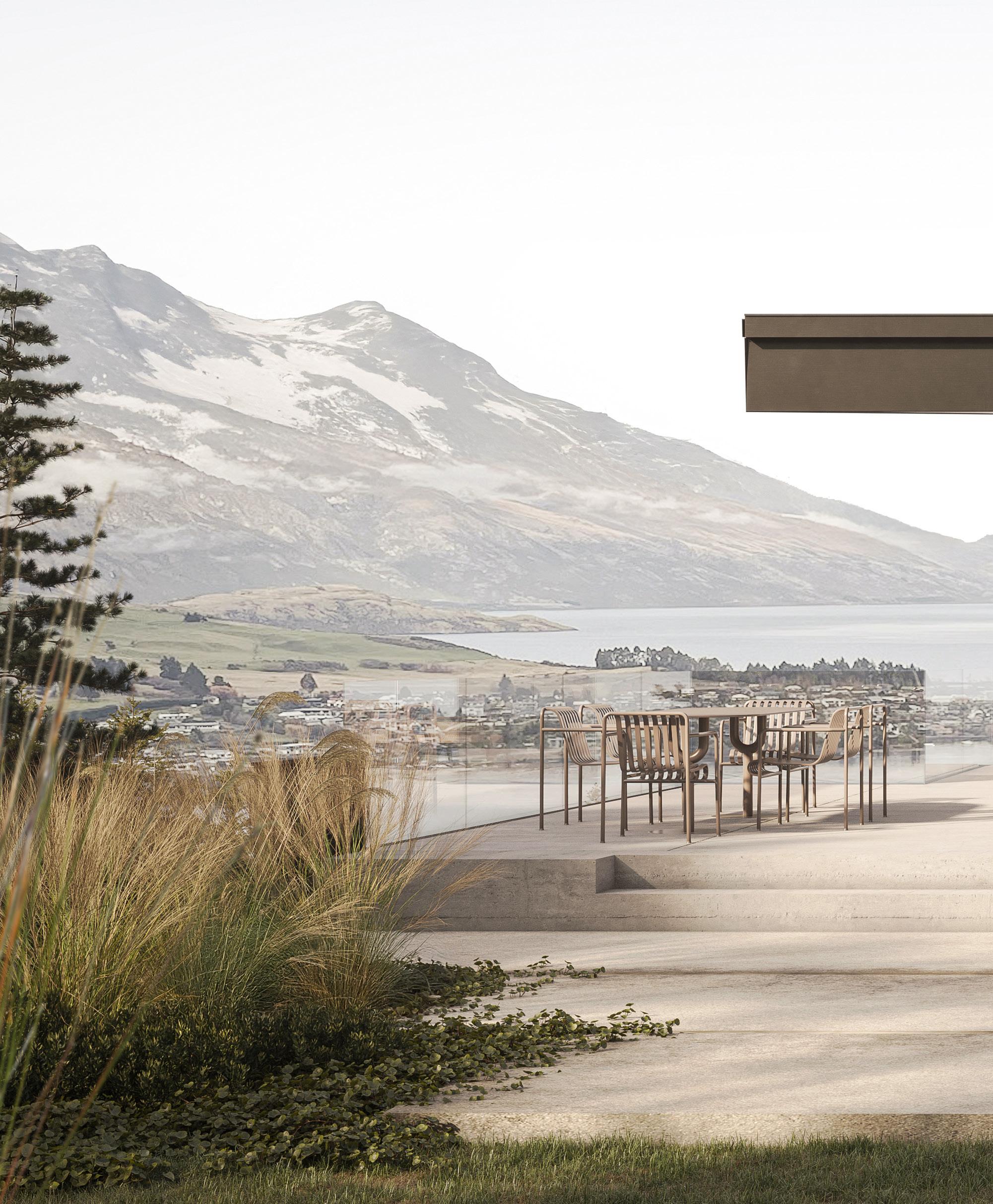
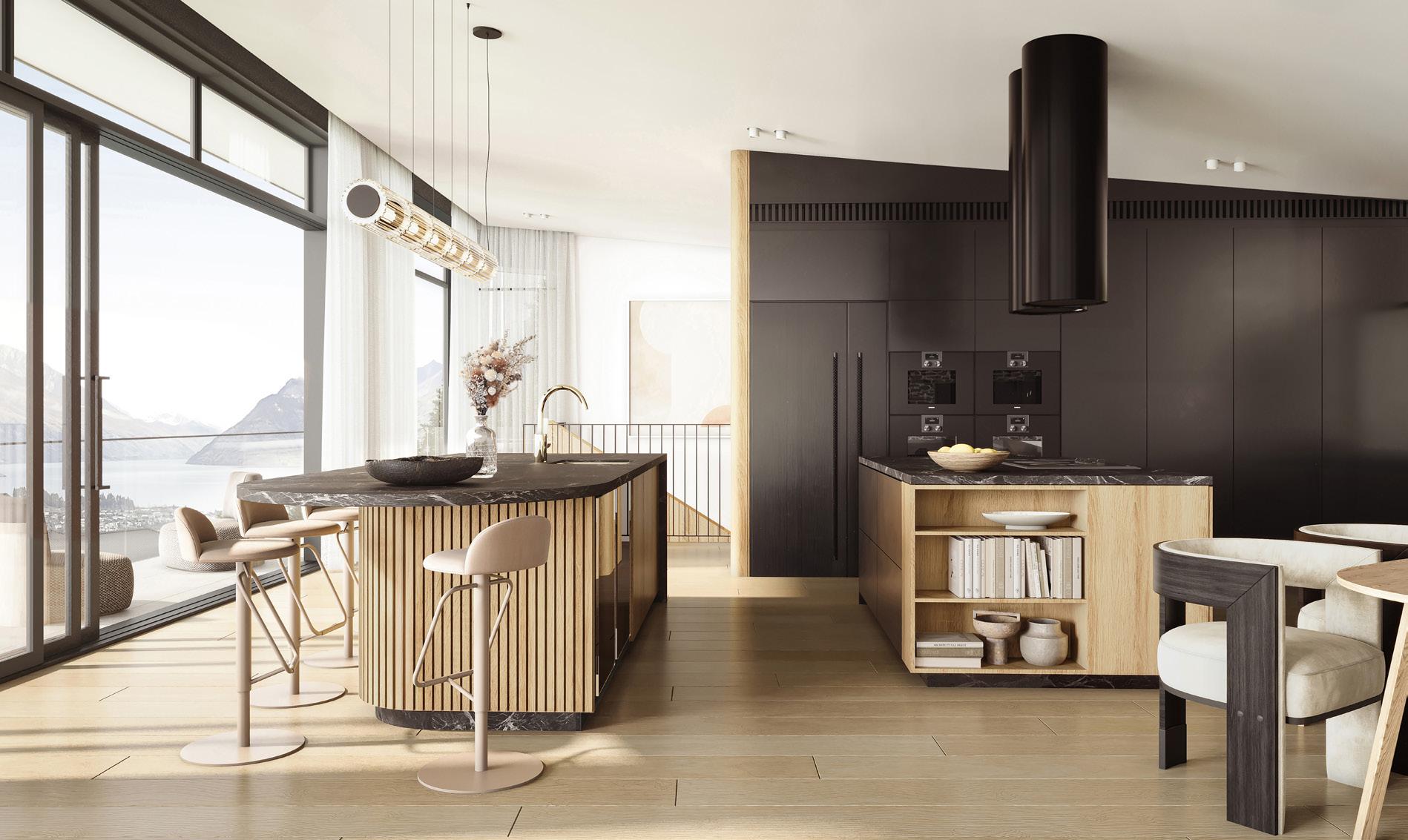
Hillside House is a multi level alpine retreat perched dramatically on a hillside overlooking the iconic Queenstown landscape.
QUEENSTOWN HOUSE
Designed to immerse its occupants in the surrounding mountains and lake vistas, the home is conceived as a series of stacked, sculptural forms that step down the steep terrain across five levels, each carefully oriented to maximise natural light and uninterrupted panoramas.
The architectural language combines vertical timber cladding, extensive floor to ceiling glazing, and a refined, earthy palette, creating a residence that feels both grounded in its environment and strikingly contemporary.
Stoke House sits on a unique hillside site at the end of Stoke in Nelson, combining direct access to the town centre with privacy, elevation, and long views across the surrounding landscape.
STOKE HOUSE
The clients wanted a contemporary family home that responded to this setting, grounded confidently into the slope while remaining open, light, and closely connected to outdoor spaces and nearby amenities.
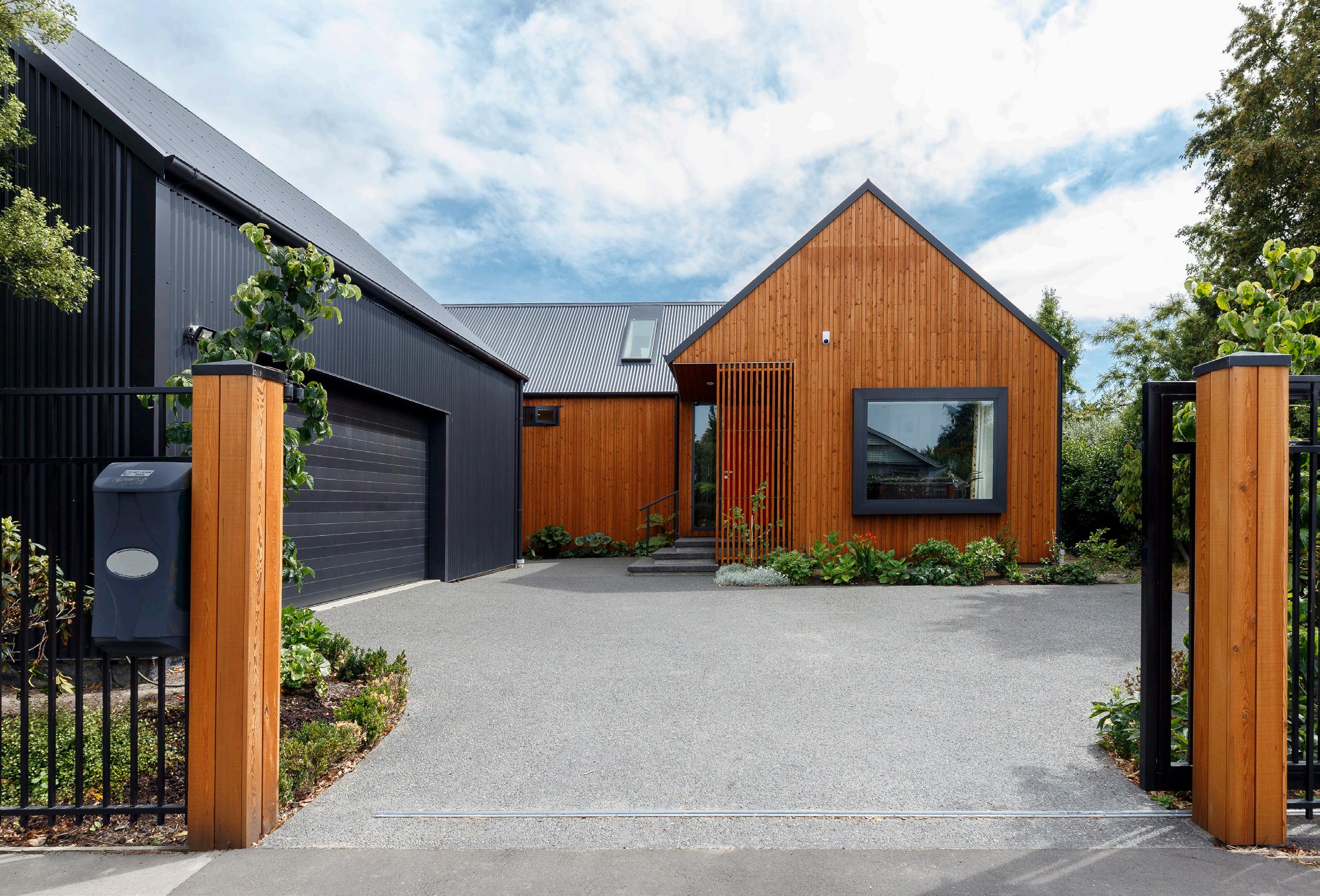
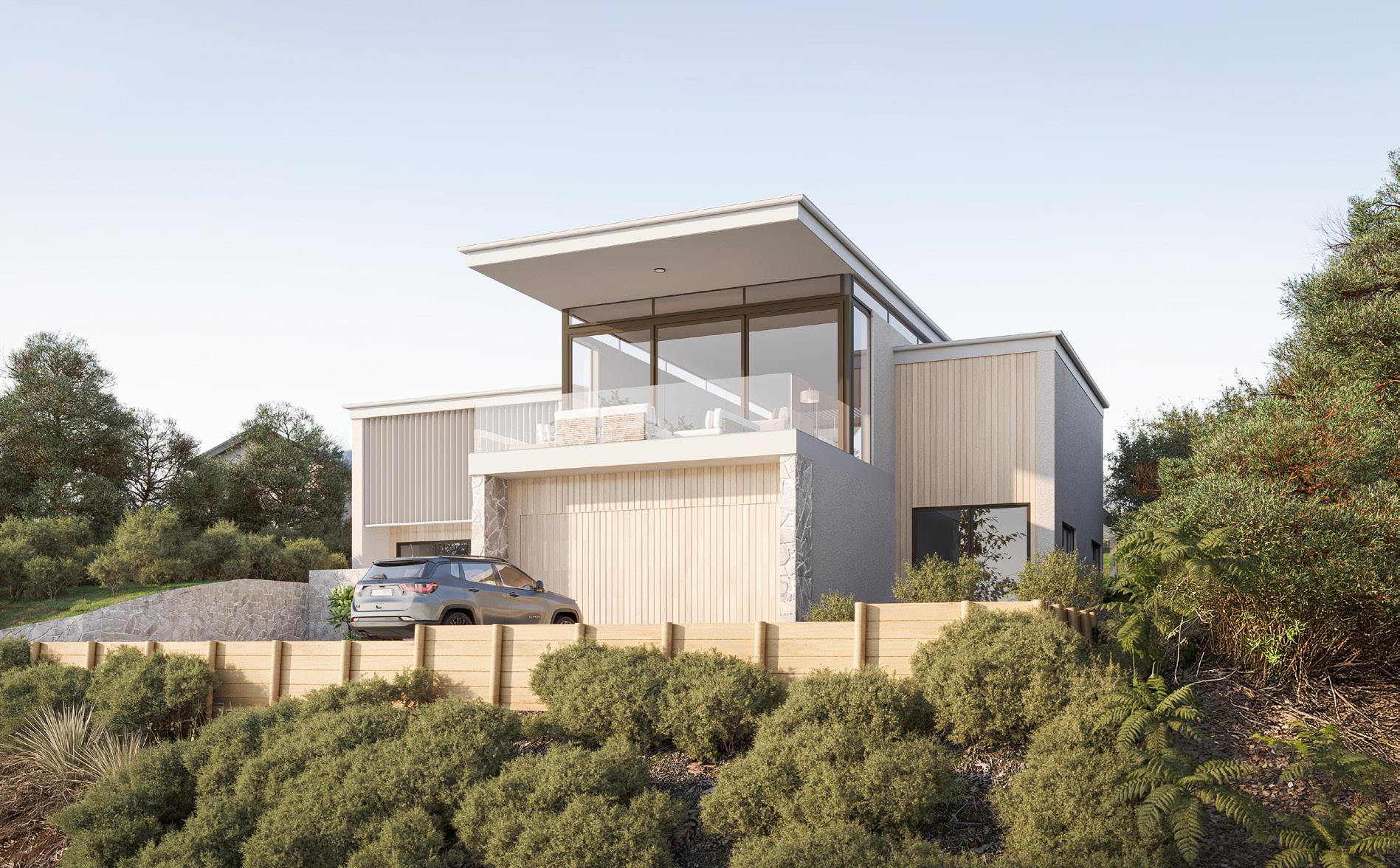
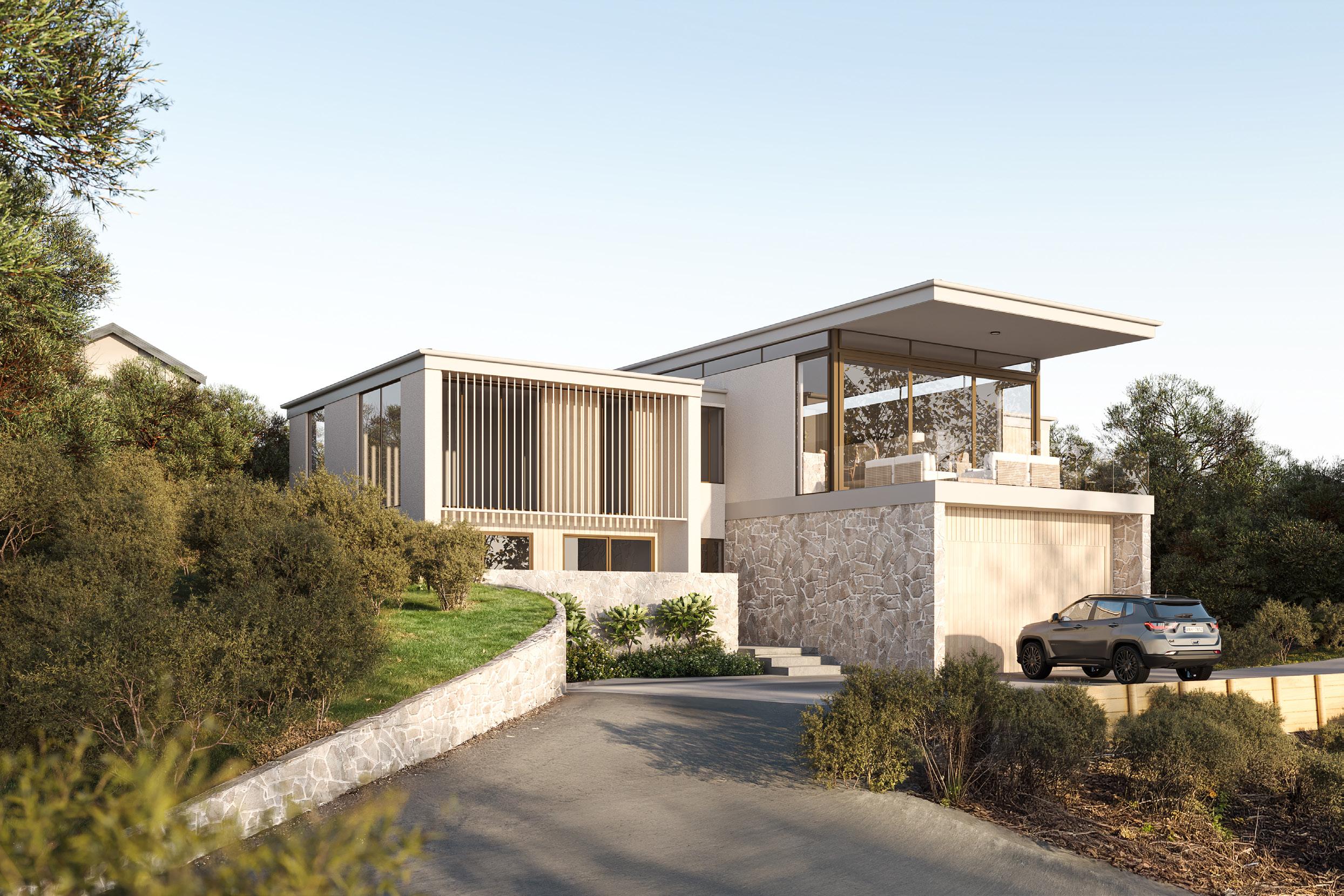
The design reflects this vision through a strong contrast between its two levels. The ground floor forms a solid, industrial influenced base that anchors the home into the hillside, using rendered panel cladding with a refined concretelike appearance. Above it, a lighter cedar-clad volume defines the main living areas and master suite. A window feature rises above the open-plan living space, inviting
natural light deep into the interior and enhancing the sense of height and openness throughout.
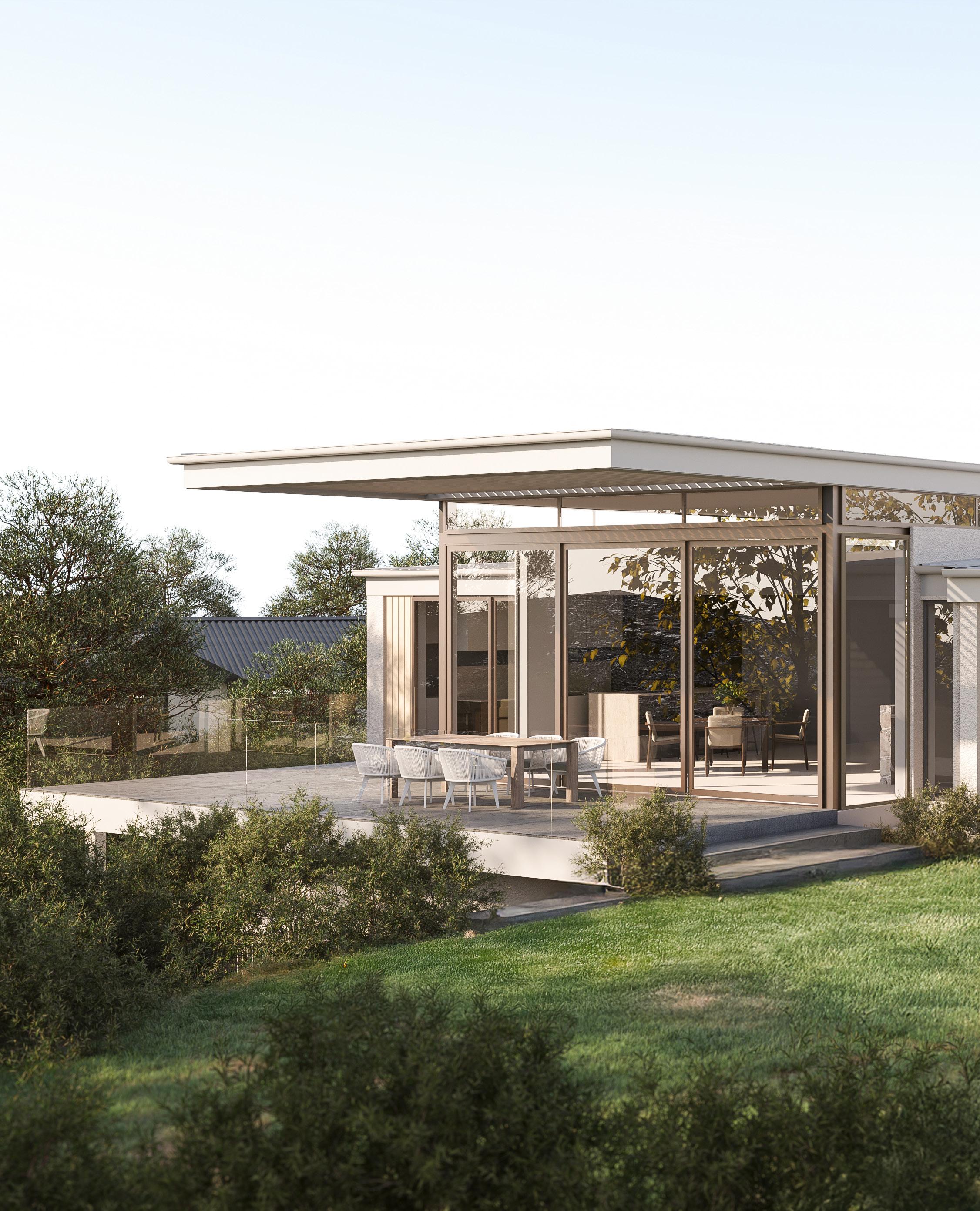
Generous outdoor living areas, including balconies, canopies, and a large pool terrace, support family life and create an effortless connection between inside and out. The upper level’s open-plan living, kitchen, and dining space functions as the social centre of the home, while the children’s bedrooms on the lower level open directly onto outdoor play spaces. Together, the materials, form, and spatial flow create a warm and modern family home that balances strength with comfort and suits the rhythms of everyday living.
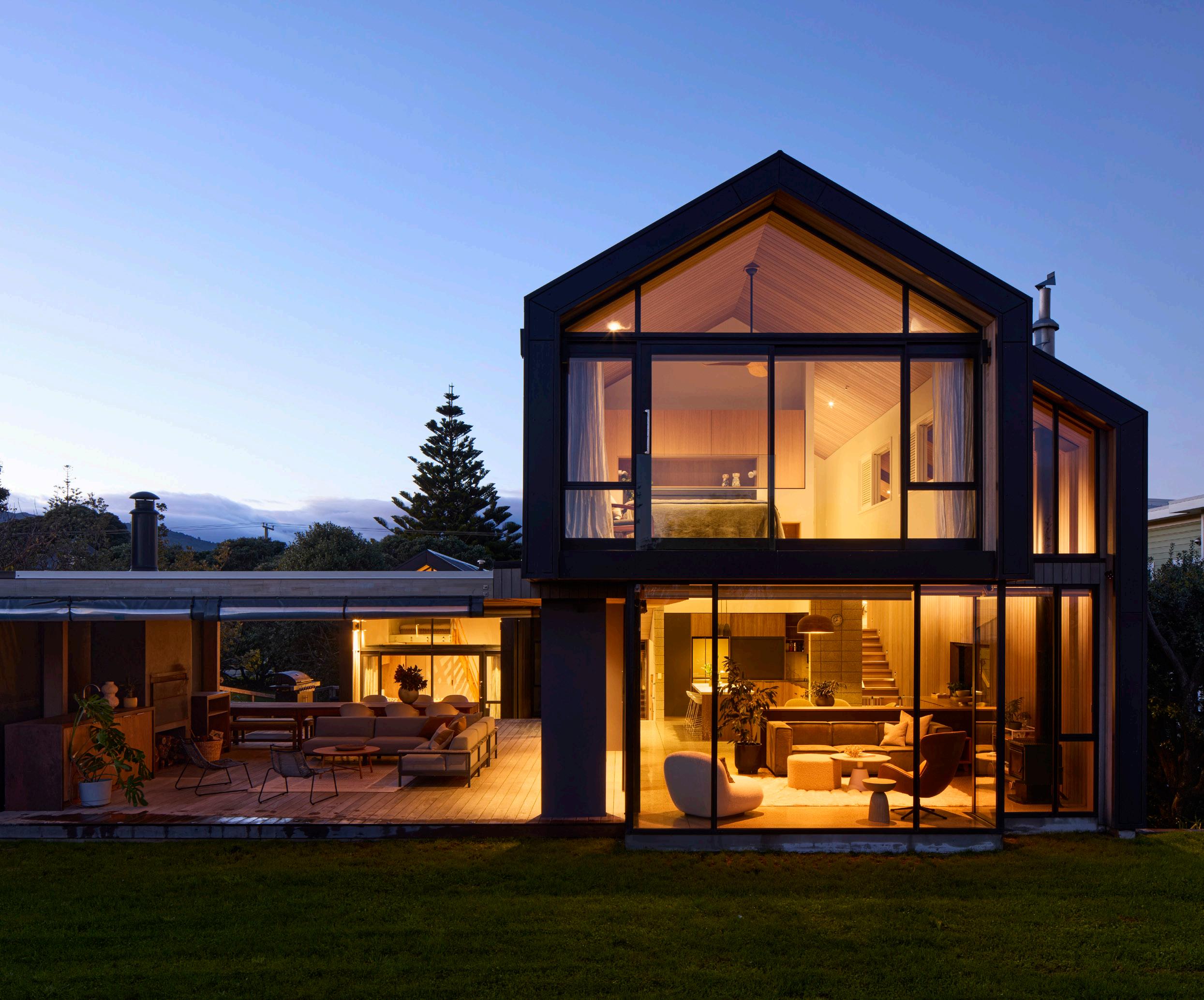
Sandy Bay House expresses a bold coastal character through its distinctive form and refined material palette.
SANDY BAY HOUSE
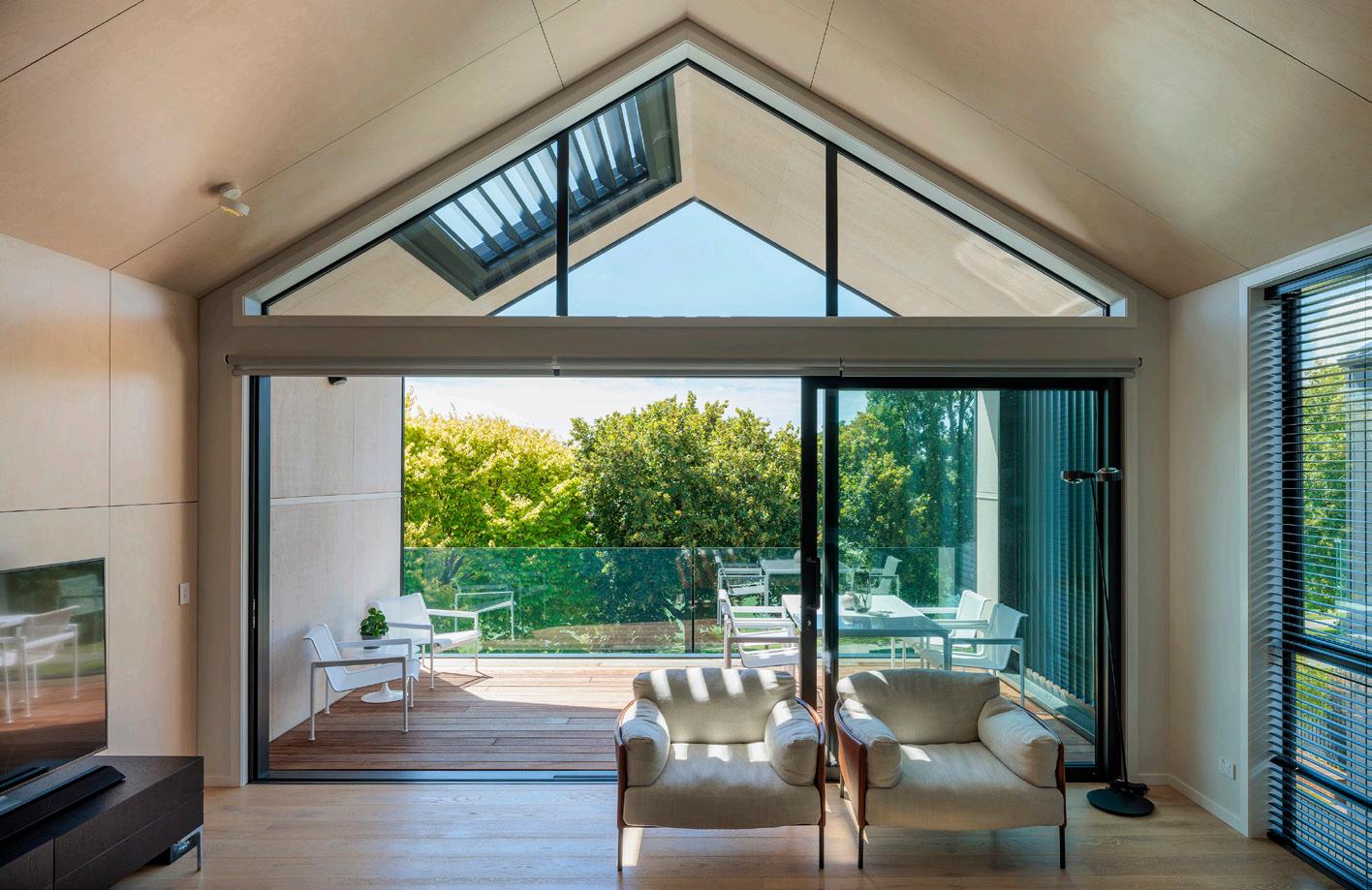
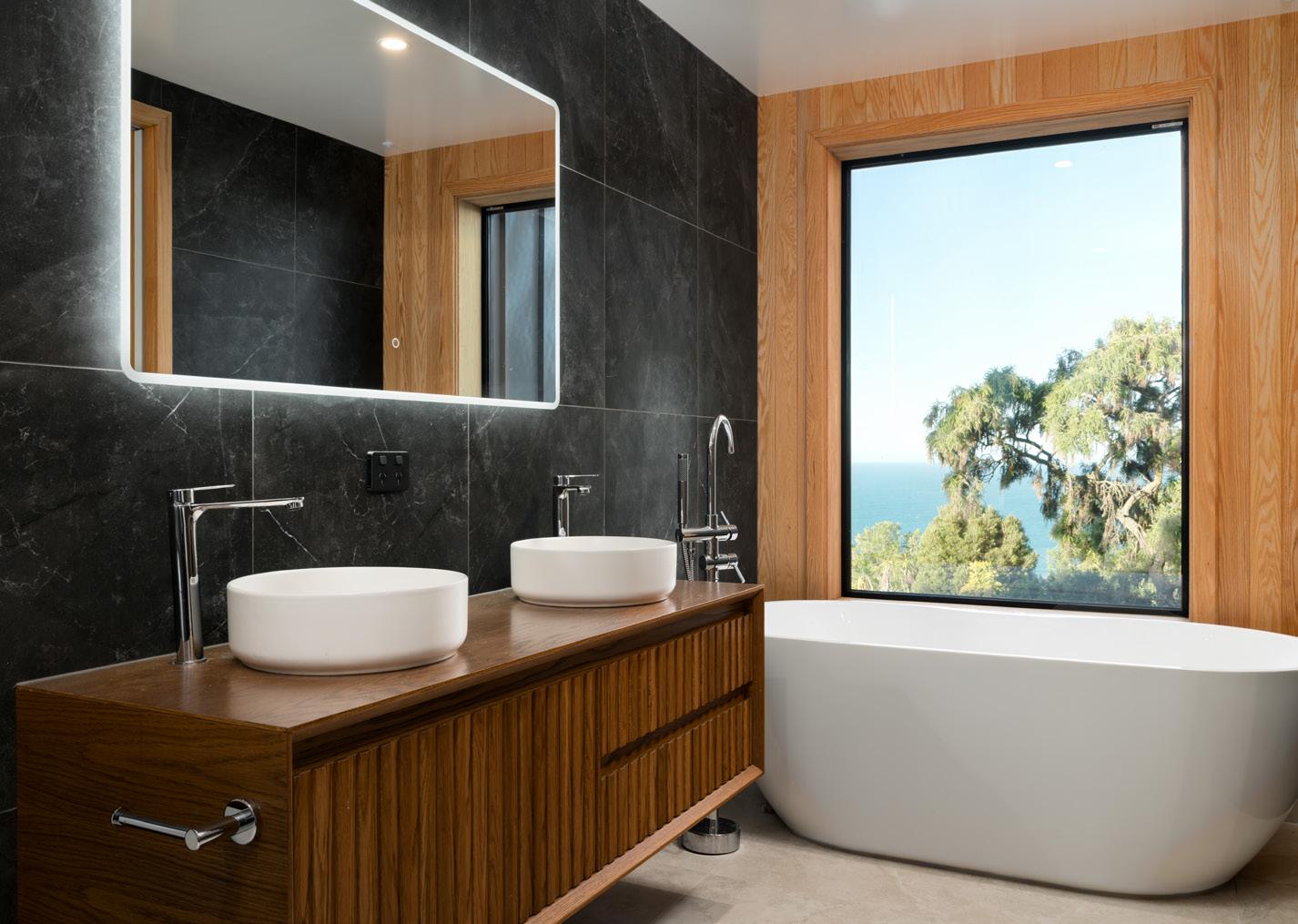
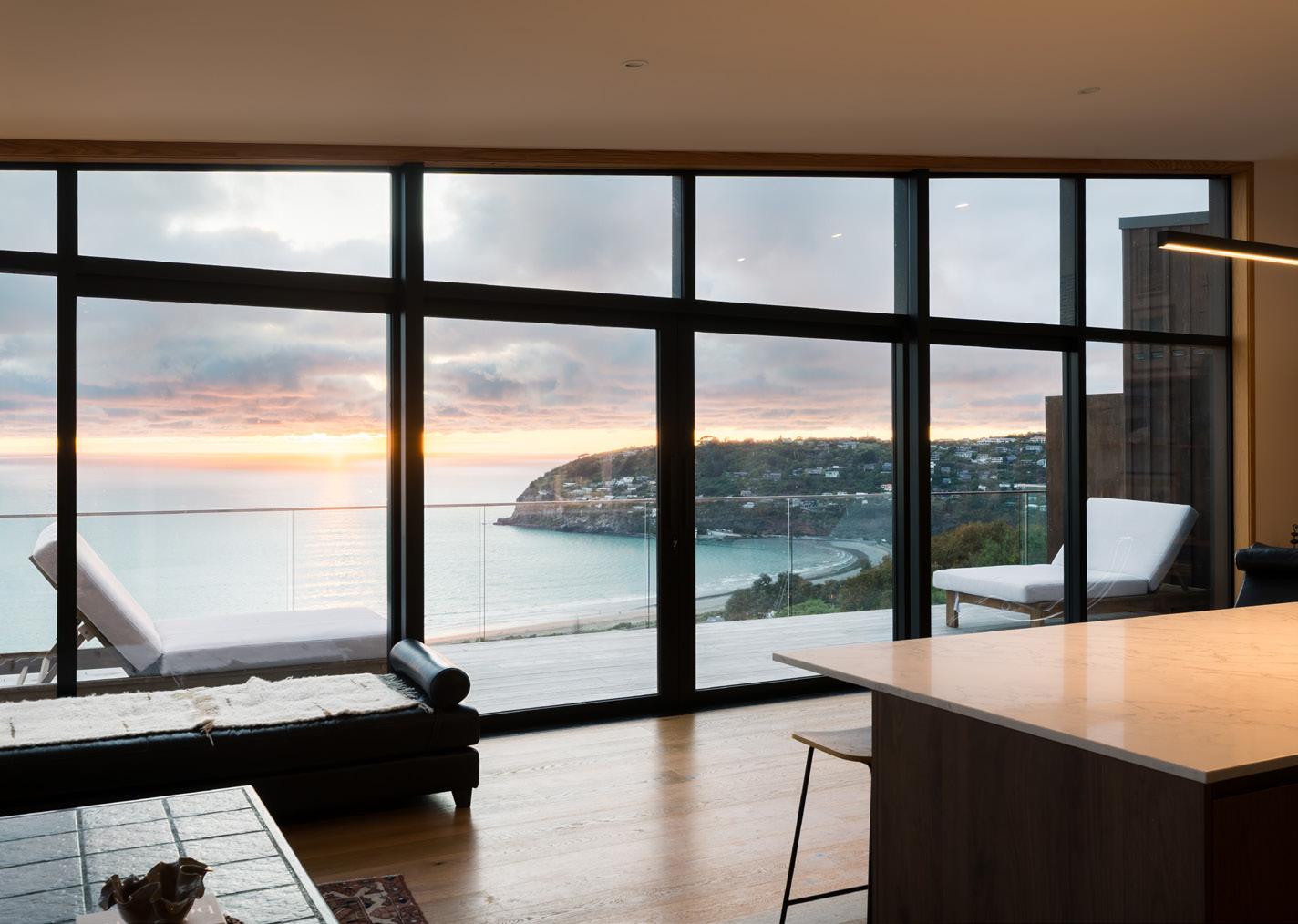
The two level home is shaped to maximise its beachfront outlook, with floor to ceiling glazing creating an immersive experience as glass planes rise to meet the gable roof in a striking geometric moment.
The exterior is defined by durable coastal materials and fine vertical detailing that visually lift the building and anchor it to its exposed shoreline setting. Five bedrooms are arranged to provide flexibility for family and guests,
while the architectural massing maintains a lightness that reflects its surroundings.
Living spaces are located upstairs to fully capture sunlight and sweeping views, extending seamlessly onto outdoor decking where the interior living appears to stretch outward into the landscape. The expansive ceiling volume and generous glazing create a bright, open atmosphere with a true beach house feel.
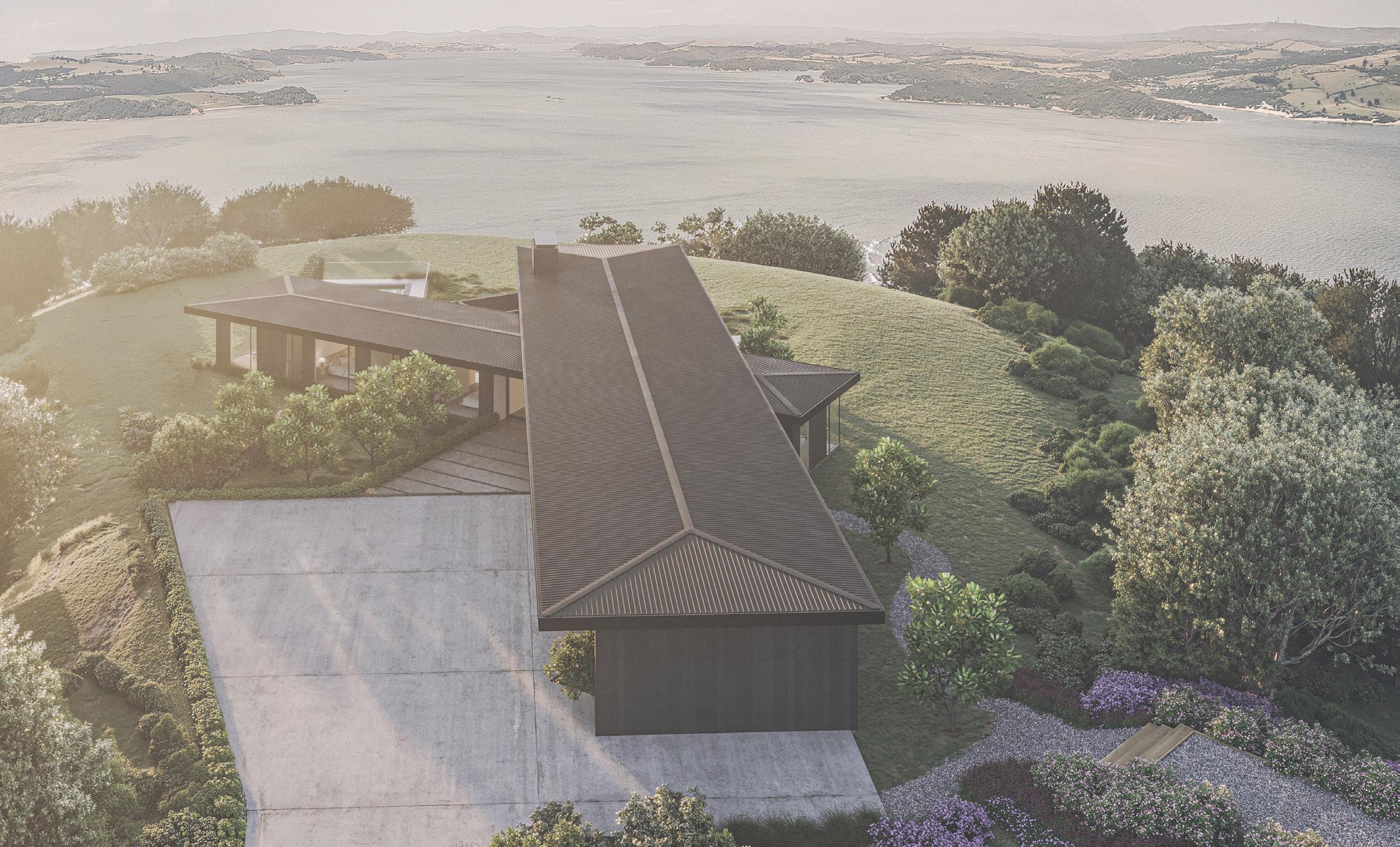
The Kerikeri House will be positioned along a ridgeline to capture expansive views that reach from rolling Northland farmland to the distant coastline. The design brings together two long rectangular forms set at a gentle angle, allowing the building to follow the hilltop contours and create a natural sequence of exterior and interior spaces.
BAY OF ISLANDS HOUSE
Extensive glazing will wrap the home, drawing the surrounding landscape into the everyday experience and ensuring that light and views remain constant features throughout. Large sliding openings are planned to connect the living areas with a series of outdoor spaces, allowing the house to open up fully during warmer months and supporting an easy indoor outdoor flow. Dark timber cladding will settle the home into the landscape and provide a warm, natural exterior
that will continue to evolve as it weathers. Inside, the palette will remain restrained, with timber elements, soft neutral colours and simple detailing that keeps attention on the environment and supports a calm atmosphere. The angled relationship between the two building forms will create a sheltered courtyard that will act as a social hub, while the overall orientation and layout will allow for passive thermal performance through natural light, solar gain and cross ventilation.
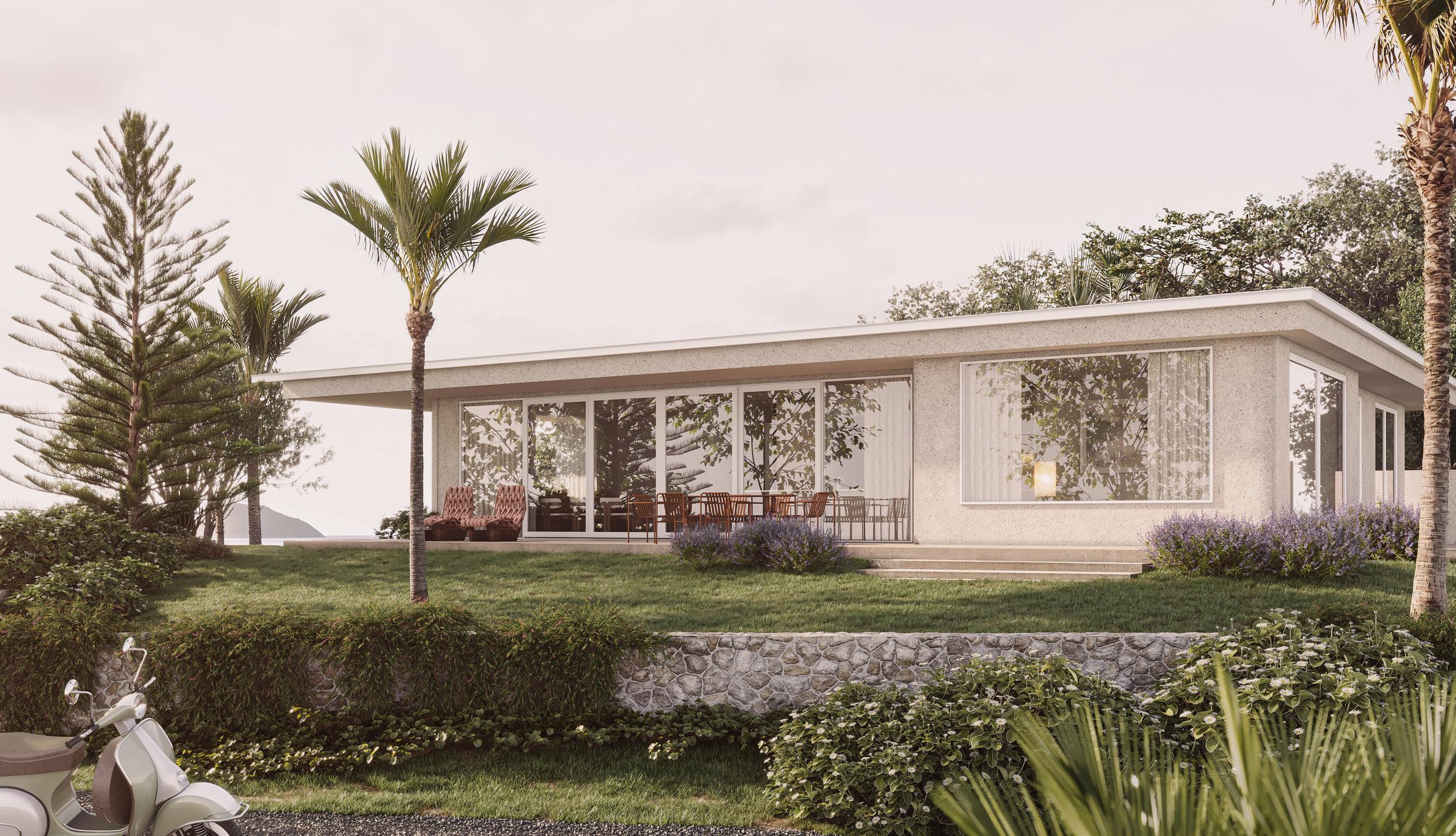
This contemporary residence is designed to embrace its surroundings with a light, refined material palette and a form that aligns with the spectacular views over Kaiteriteri Lagoon.
LAGOON HOUSE
This contemporary residence is designed to embrace its surroundings with a light, refined material palette and a form that aligns with the spectacular views over Kaiteriteri Lagoon. The architectural vision focuses on creating a seamless relationship between indoor living and the natural environment, celebrating both coastal tranquillity and modern design clarity.
The exterior features a blend of soft colour and material palette, chosen to reflect the lighter tones of the coastal setting while providing warmth, texture, and
timeless durability. Generous floor-to-ceiling windows line the home’s length, capturing views and bathing the interior in natural light throughout the day. These expansive glazed openings also anchor the home visually within its landscape, creating a sense of openness and coastal calm.
A long, sheltered patio extends the full length of the building, offering multiple outdoor living moments, from morning sun to evening gatherings, while providing a natural extension of the interior living spaces.
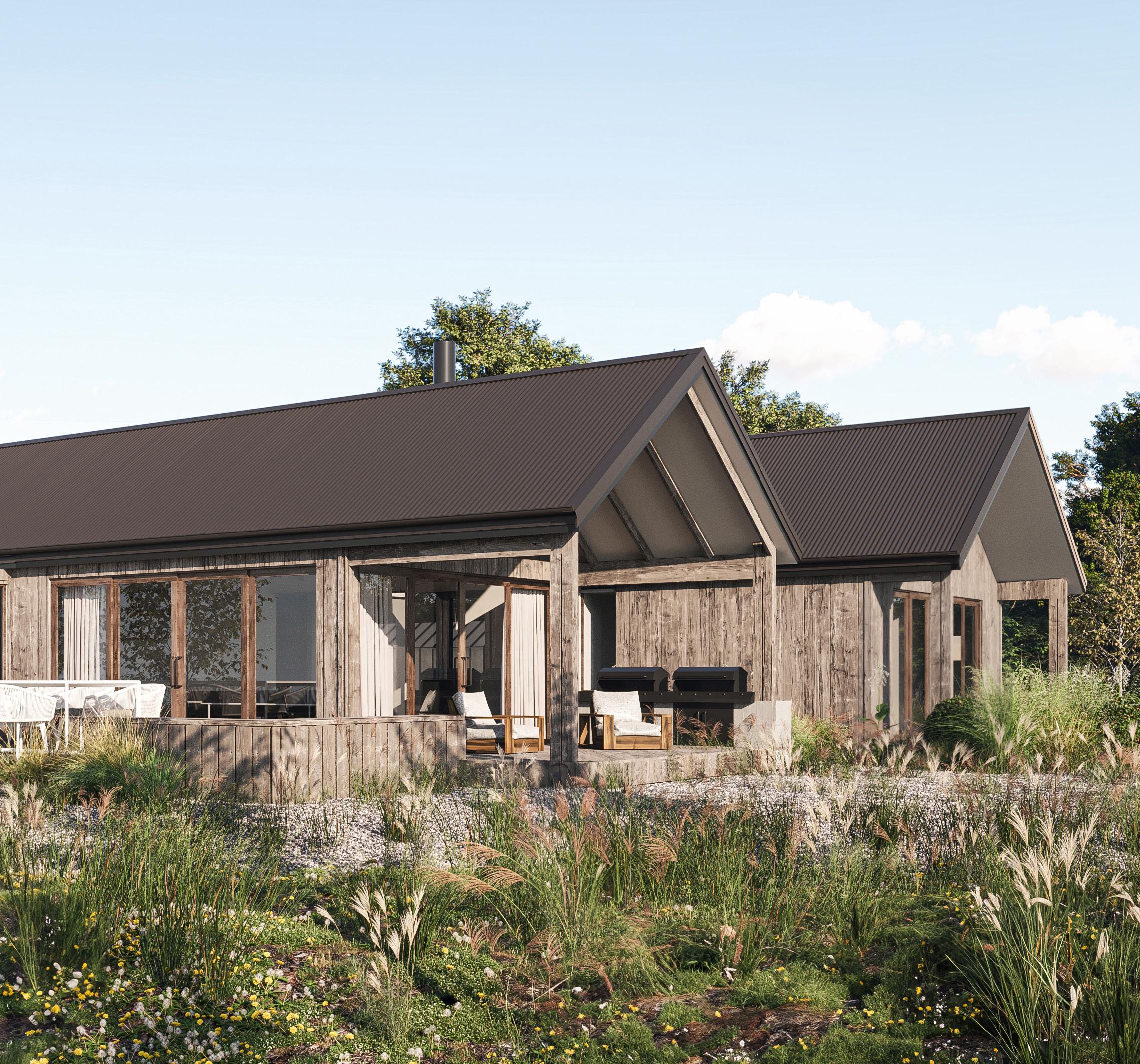
Tākaka House is defined by its distinctive gable forms, which give the building character and anchor it confidently within the Golden Bay landscape.
TĀKAKA HOUSE
These gabled profiles are a key feature of the design, shaping the interior volumes, directing light into the living spaces, and establishing a simple, recognisable architectural language.
A natural timber palette reinforces this clarity. Vertical timber cladding,
extensive timber joinery, and large cedar sliding doors create a strong connection to the outdoors, with a warm and tactile material expression throughout. Left in a natural finish, the timber is intended to weather gracefully, allowing the house to settle naturally into its surroundings over time.
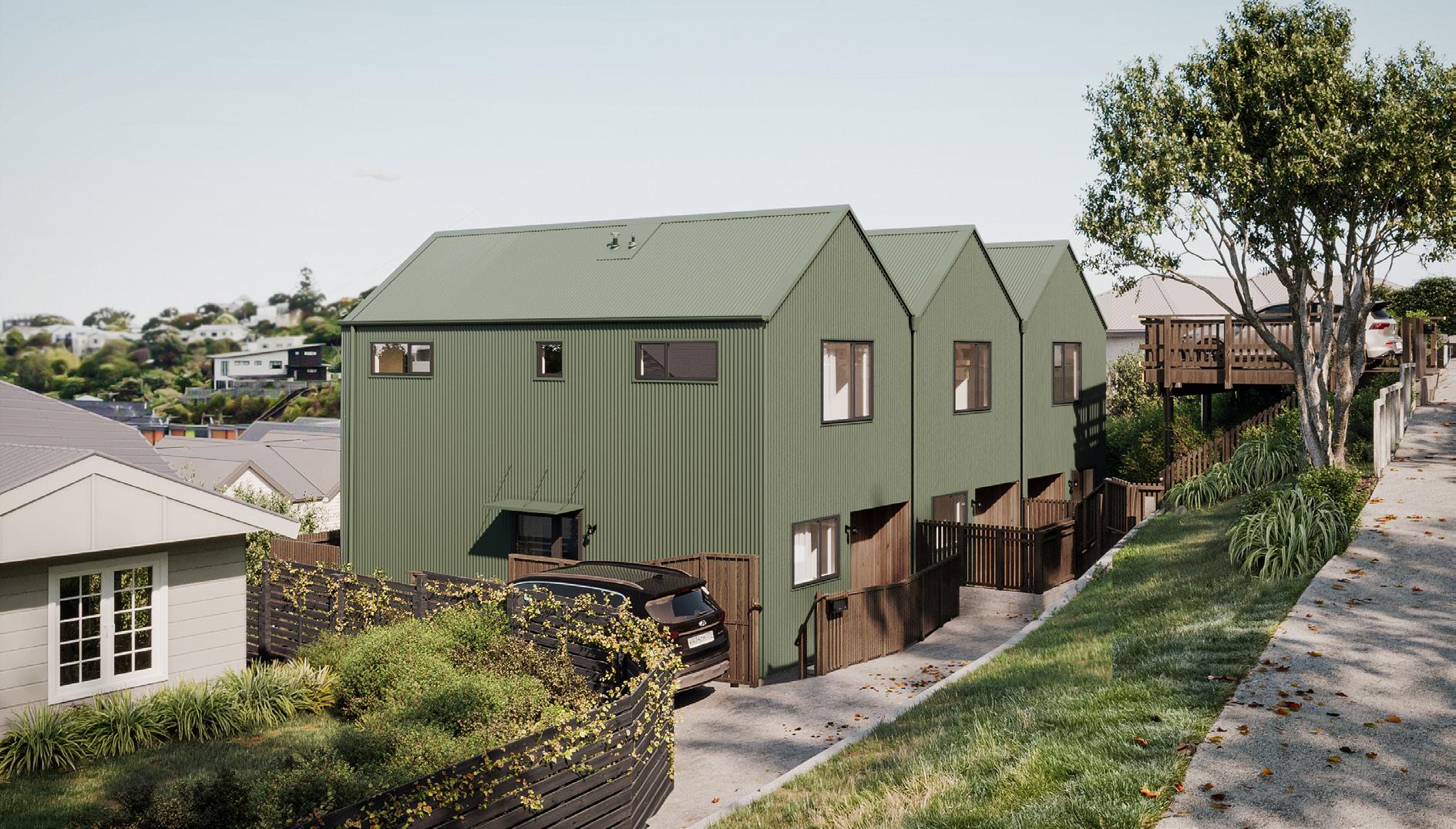
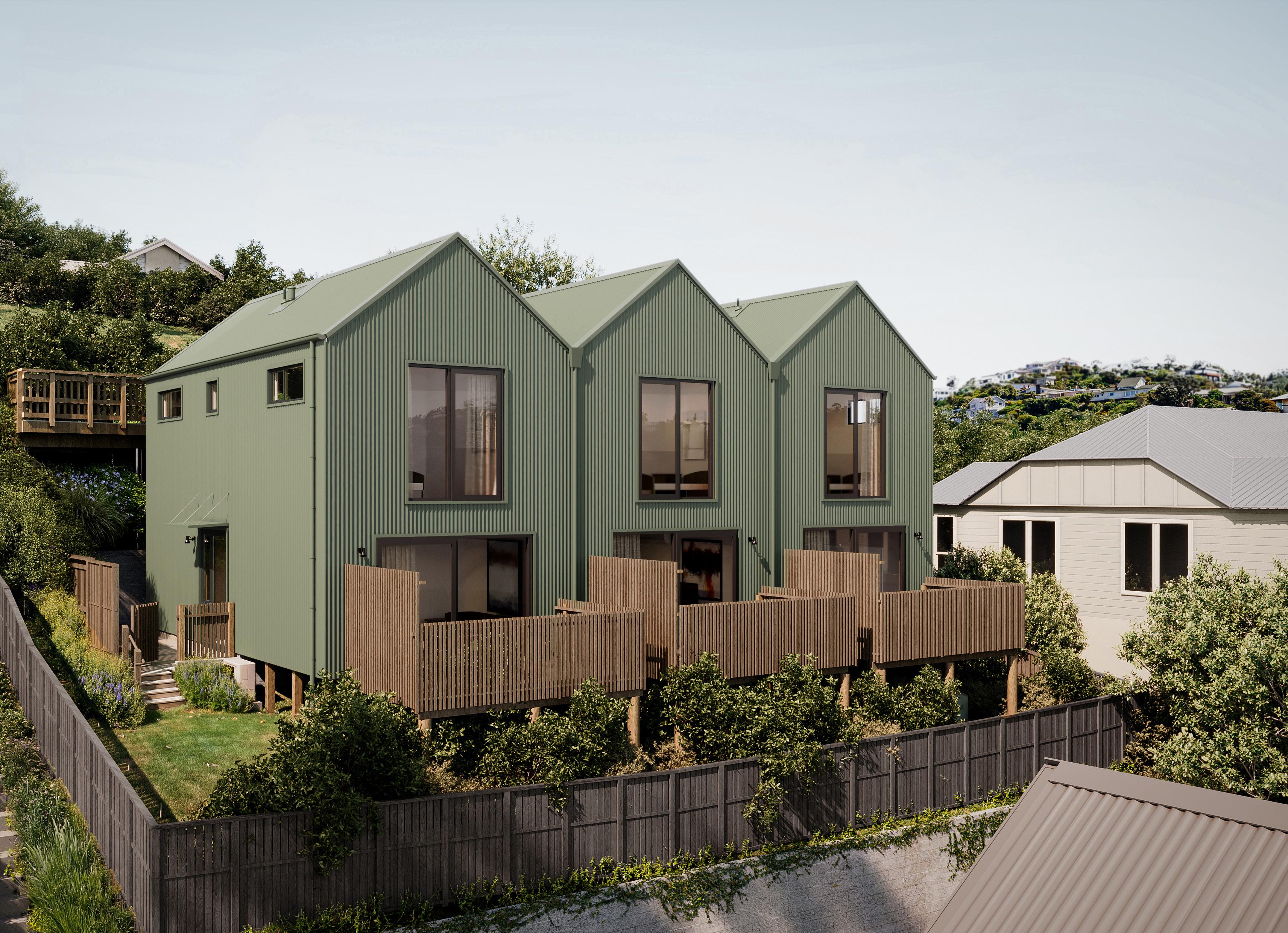
This project involves the removal of an existing single dwelling on a Miramar slope and the development of three contemporary, two-bedroom townhouses.
MIRAMAR TOWNHOUSES
Location
Wellington
Status
In progress
The design brief emphasised sunlight access, views, privacy, efficient circulation, outdoor living, and a material palette that would blend sensitively with the natural environment.
The topography provides enough elevation to give the townhouses a pleasant sense of openness, with filtered views over the surrounding landscape. The slight slope helps shape the layout,
creating naturally defined spaces without relying on heavy structural intervention. This gentle rise ensures that each dwelling can enjoy morning and afternoon sun whilst respecting neighbour’s privacy.