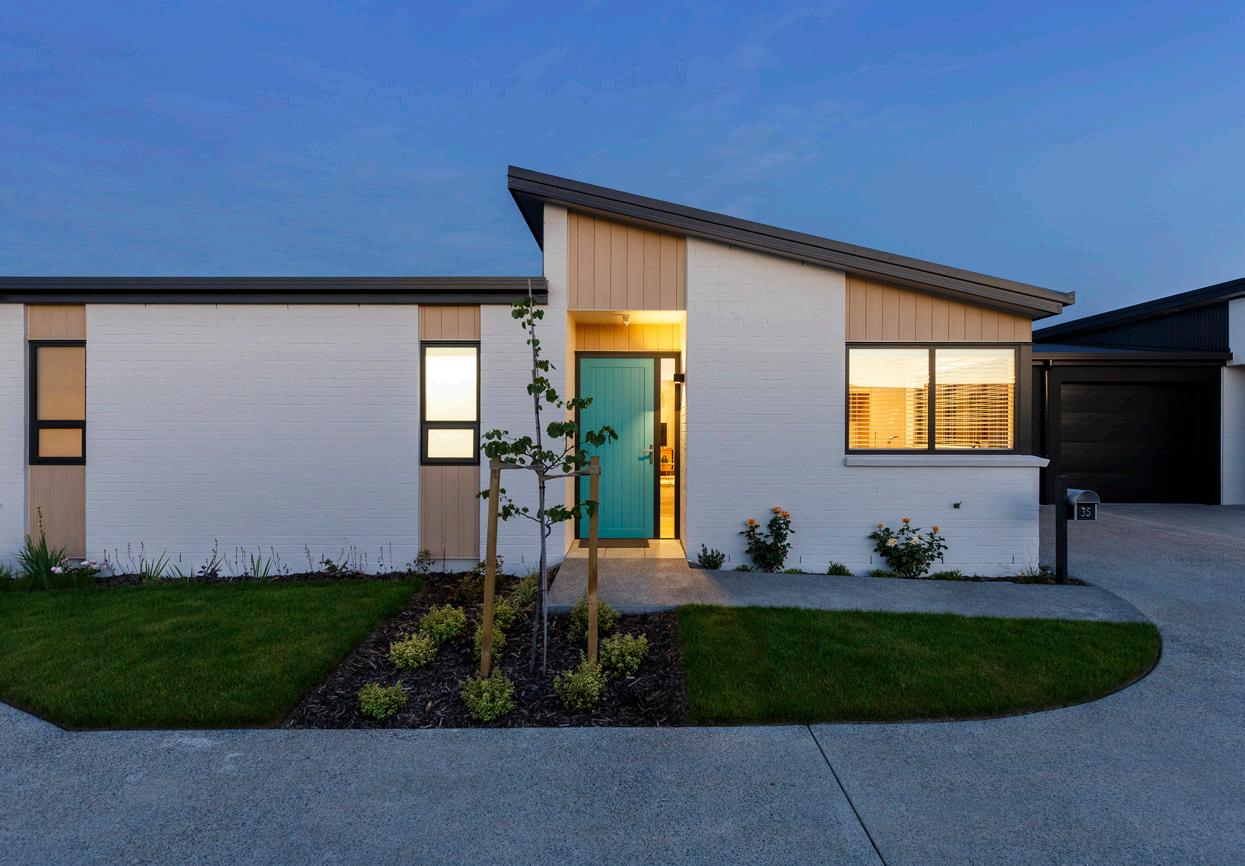
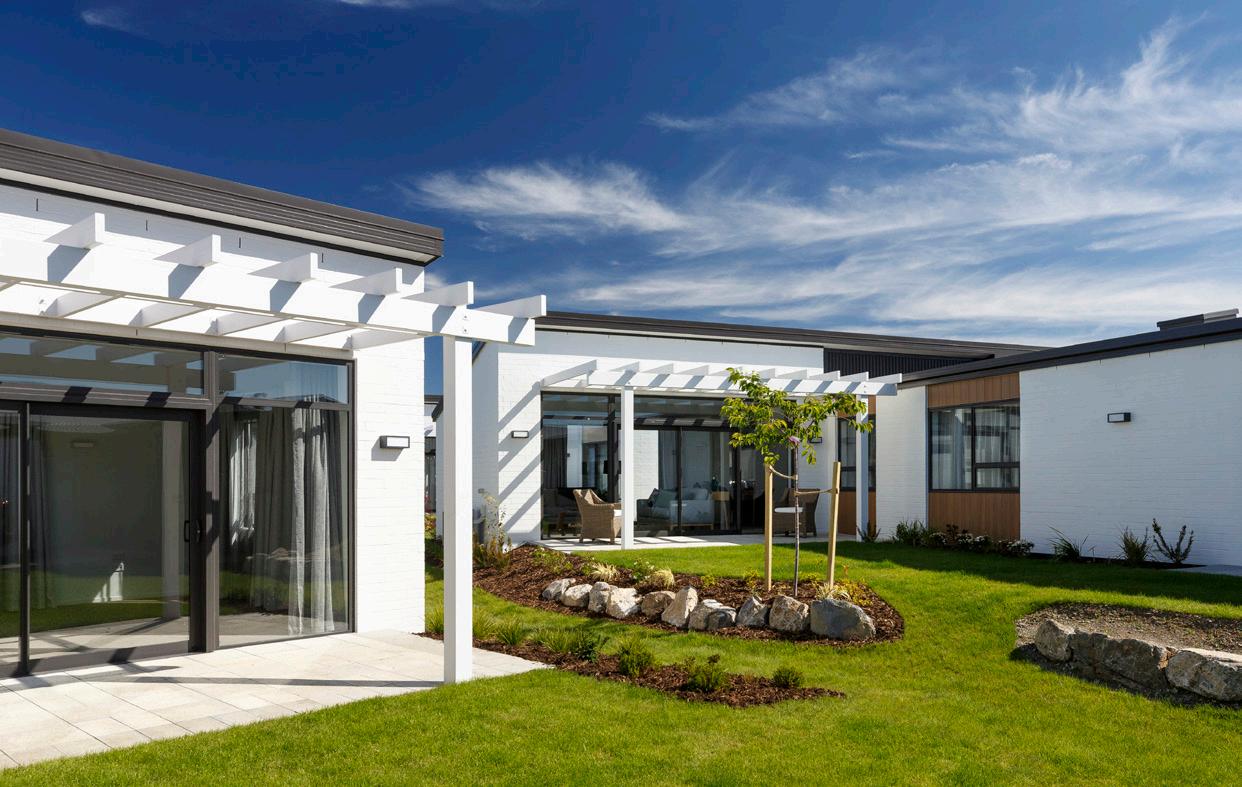
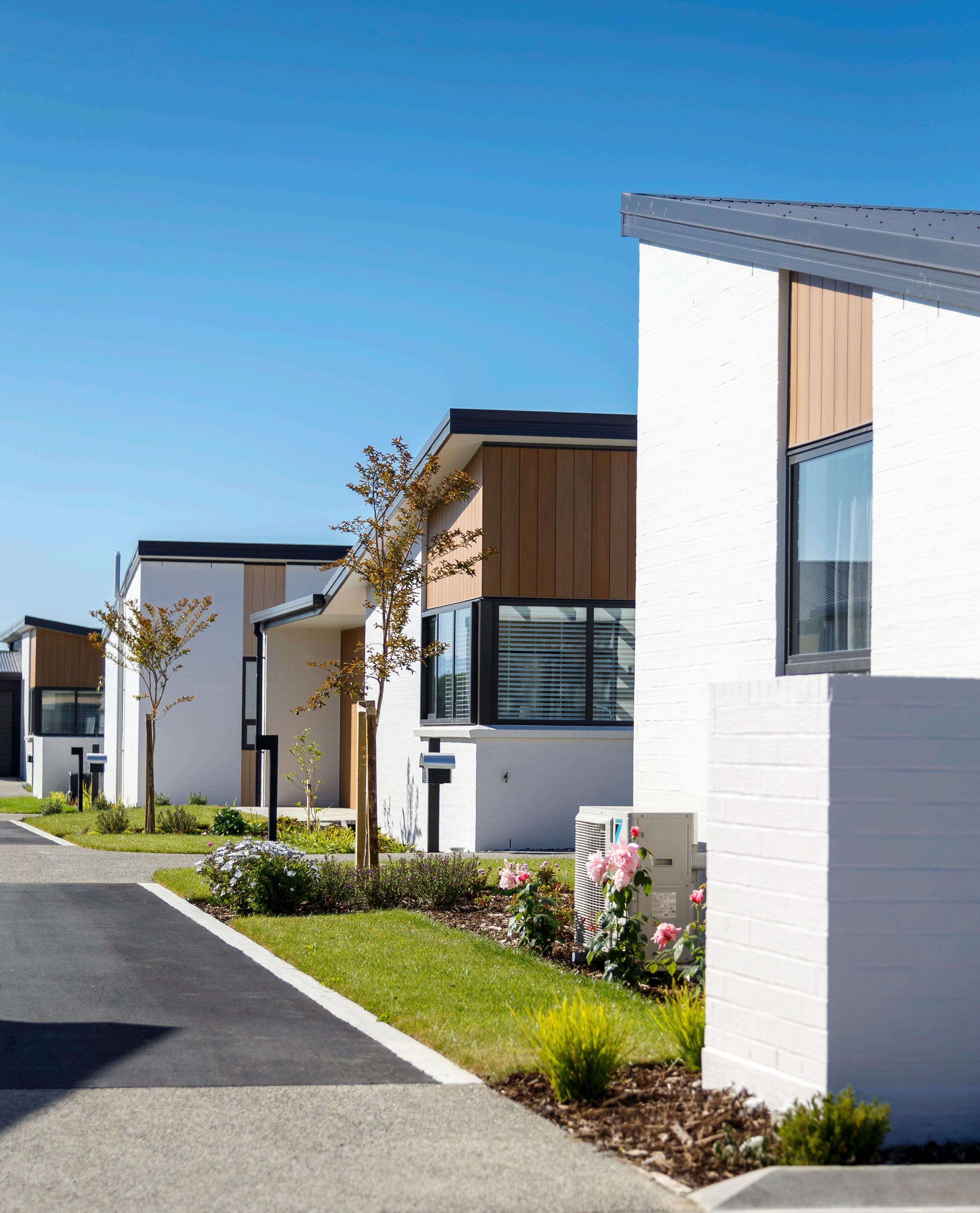
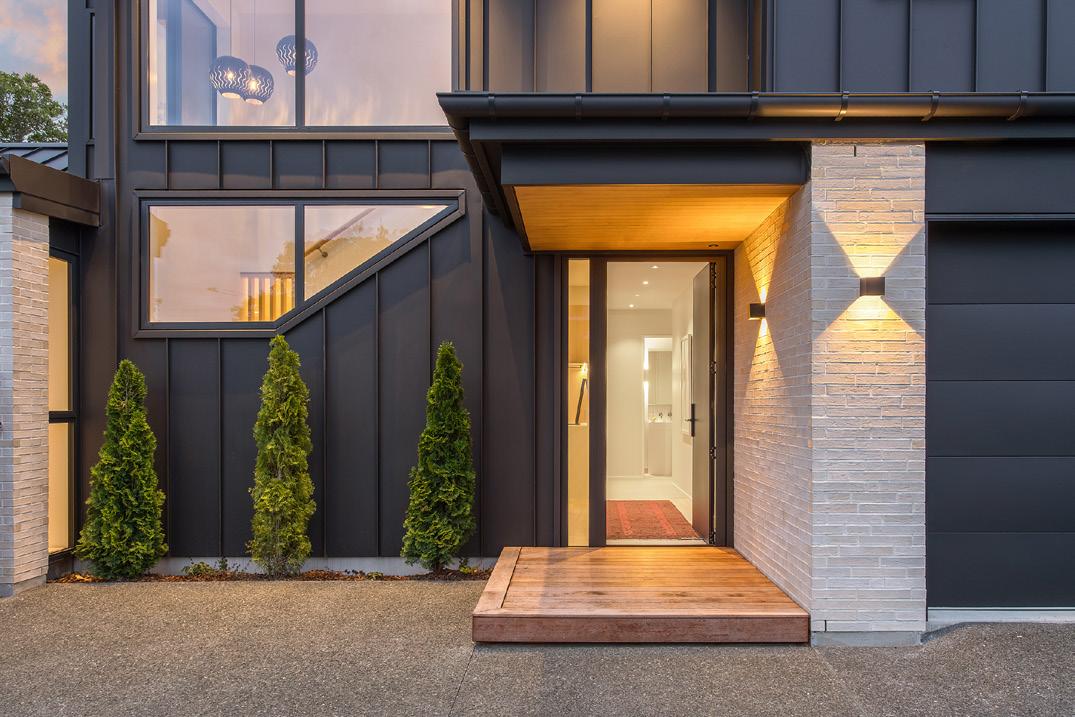
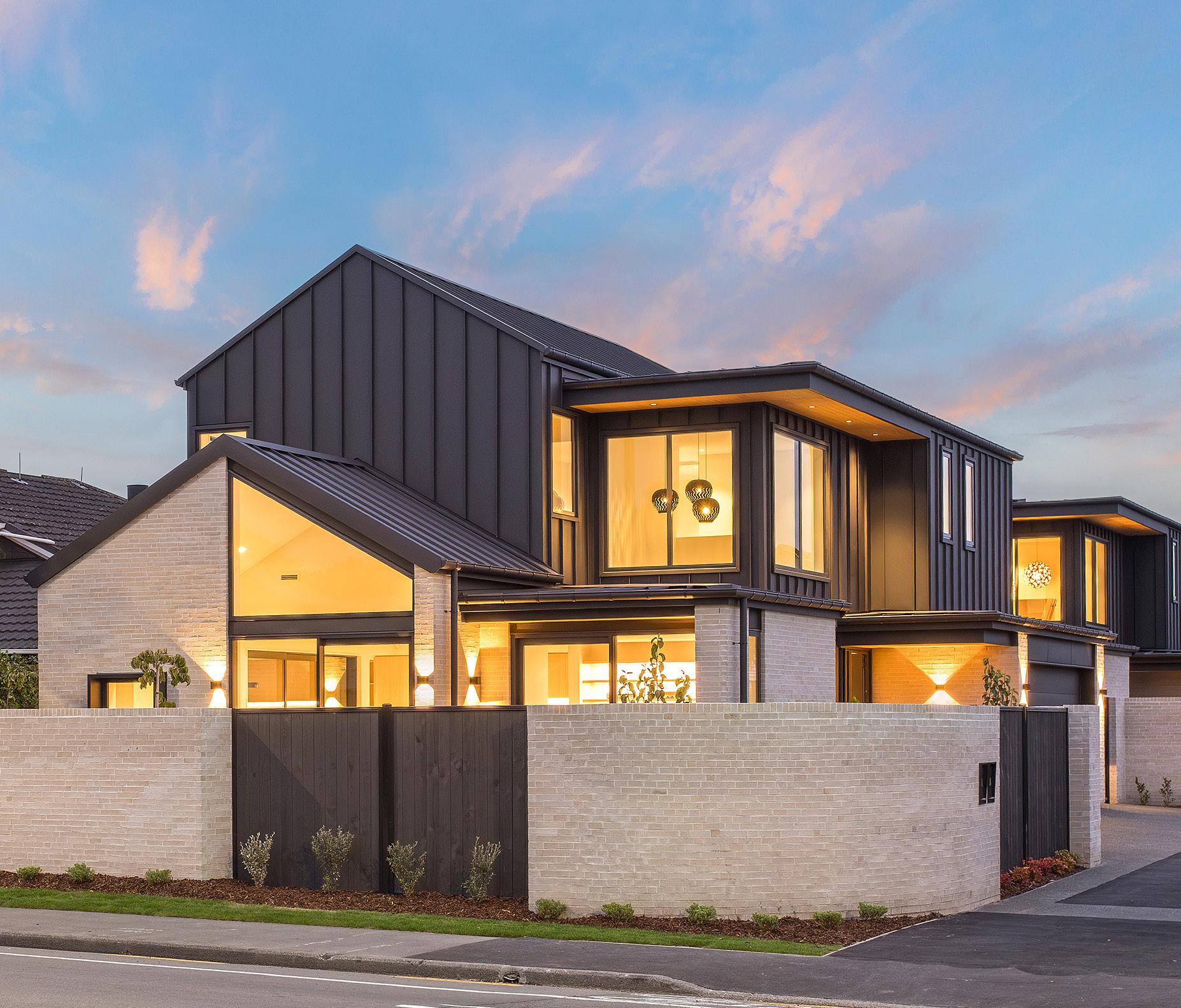
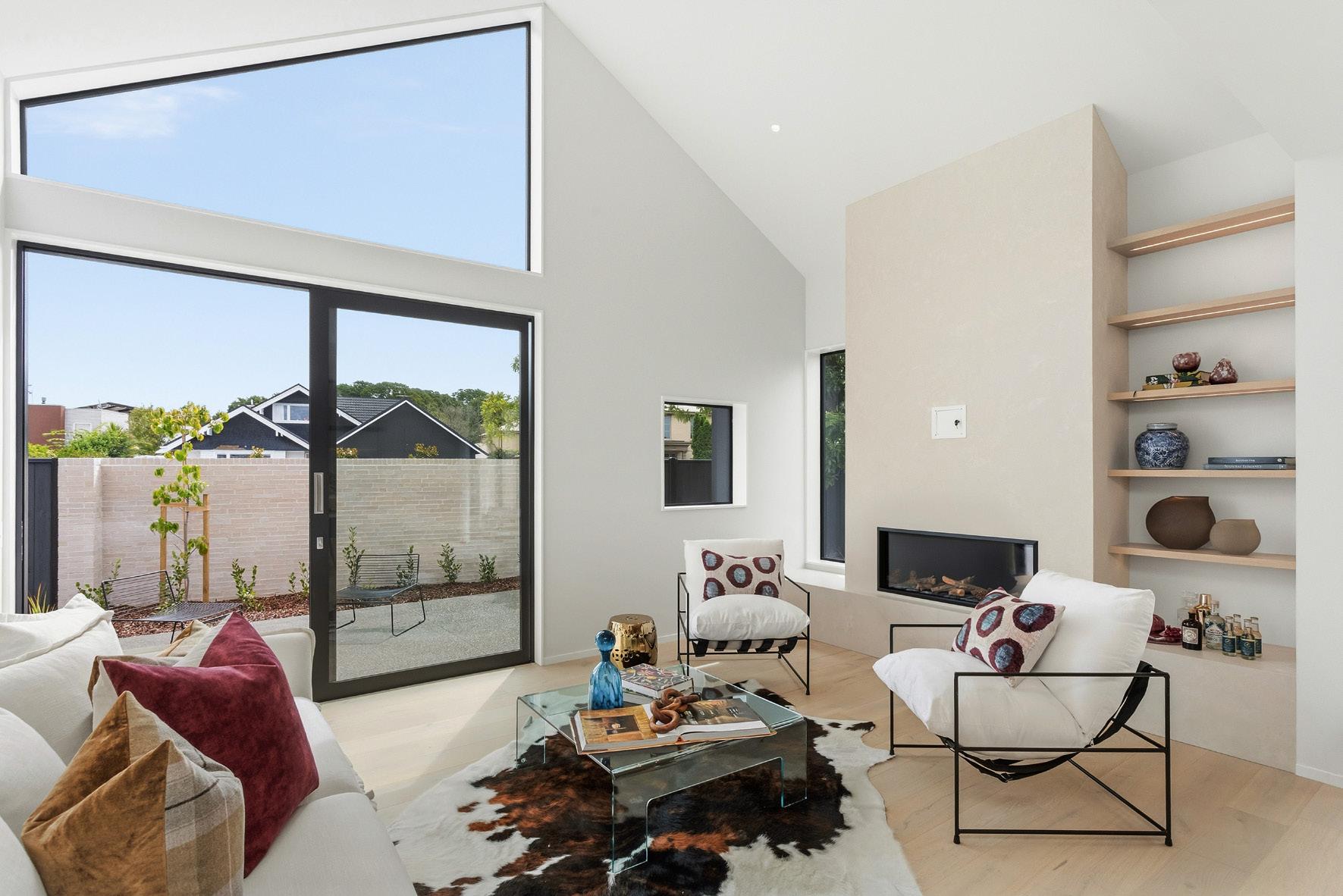
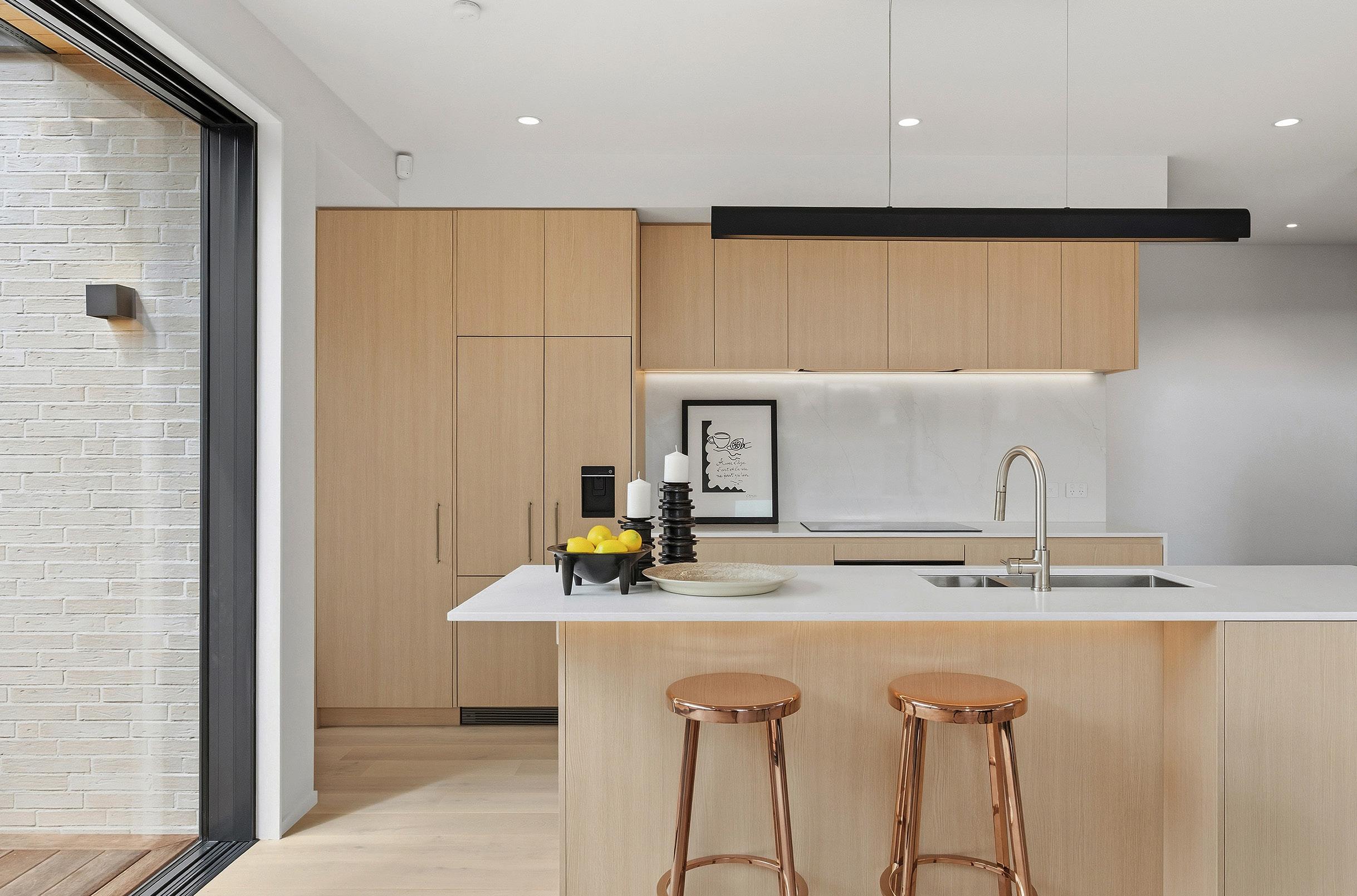
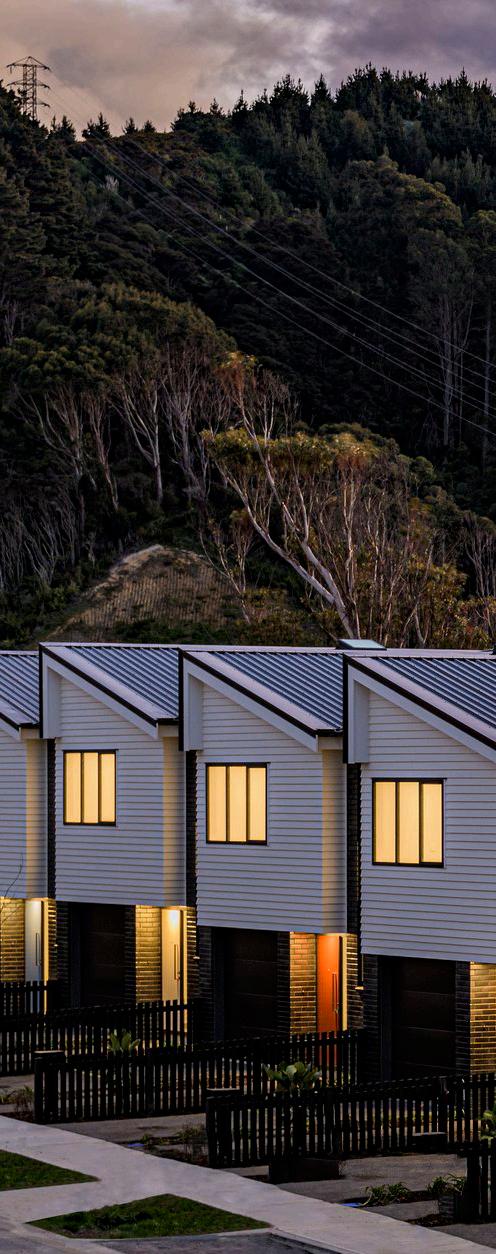
JTB Architects is an awardwinning, New Zealand owned architectural practice, founded in Nelson in 1986.
Our team works from studios in Auckland, Wellington, Nelson, Christchurch and Wānaka. We draw together wide-ranging local and international experience, and bring understanding of local conditions to each project.
We provide specialist expertise in Architecture, Urban Design, Masterplanning, Environmentally Sustainable Design, Interior Design, Visualisation, and Building Information Management (BIM). Our aim is to respond to each project with creativity, energy and honesty, to create robust buildings while maintaining a clear focus on aesthetic quality.
Our expertise in multi-unit residential housing ranges from small to large scale. We are experienced in a broad range of projects from multiunit design to full subdivision projects spanning both the public and private sectors. This booklet compiles a range of projects across our multi-unit residential housing portfolio. We welcome the opportunity to discuss new projects.
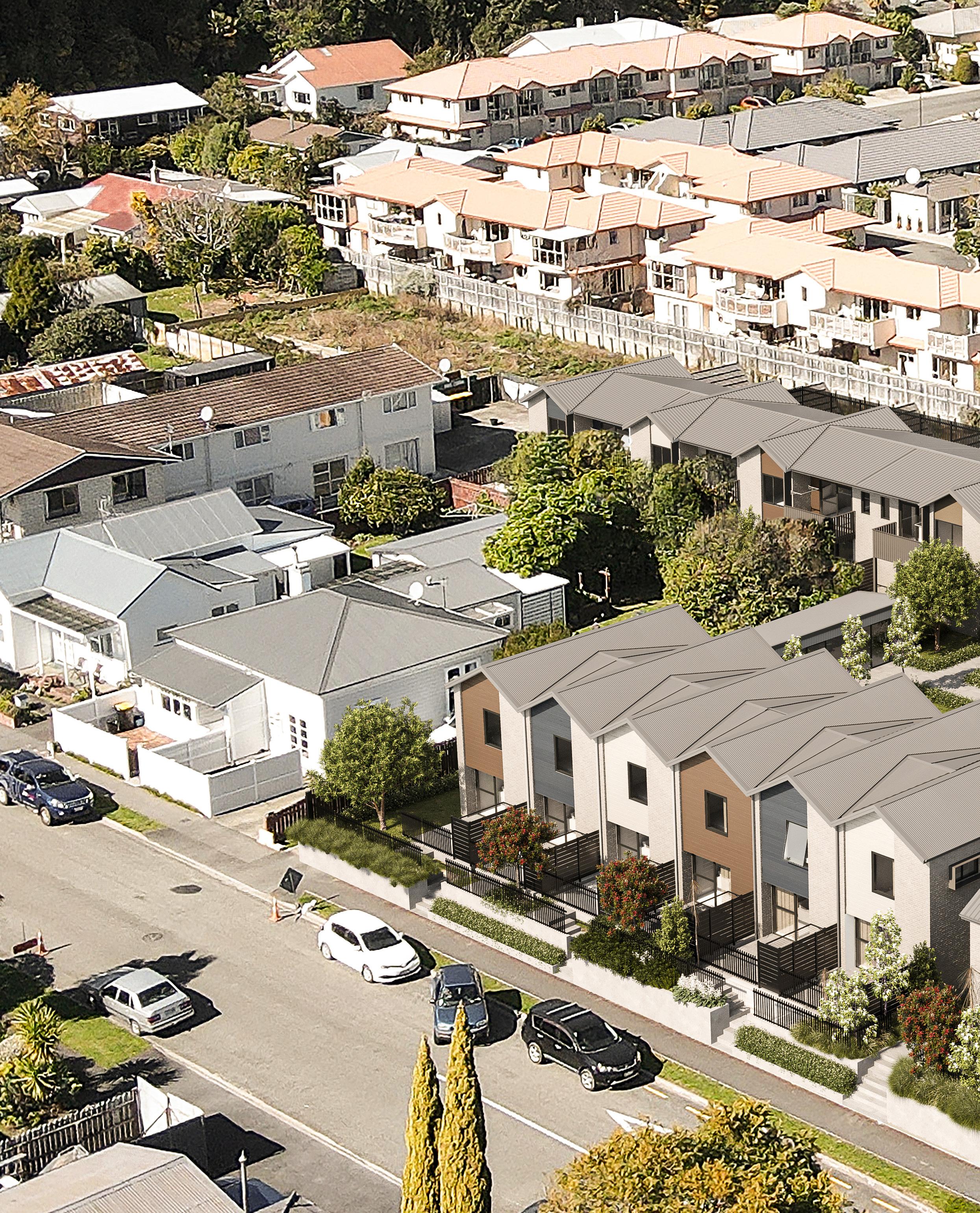
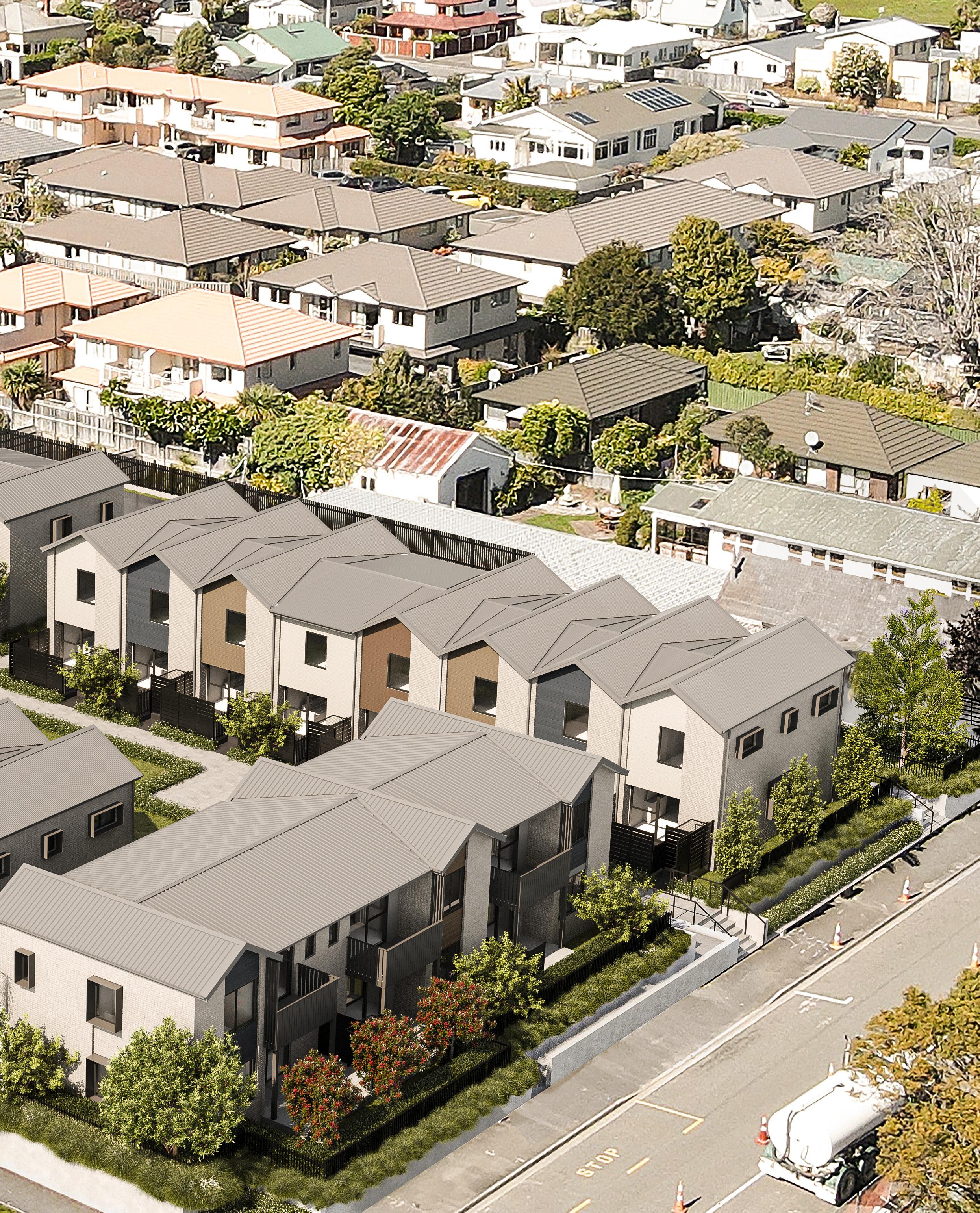
This two-story community housing development located at 119-121 Milton Street in central Nelson, provides a total of 27 townhouses with a mix of typologies.
MILTON STREET
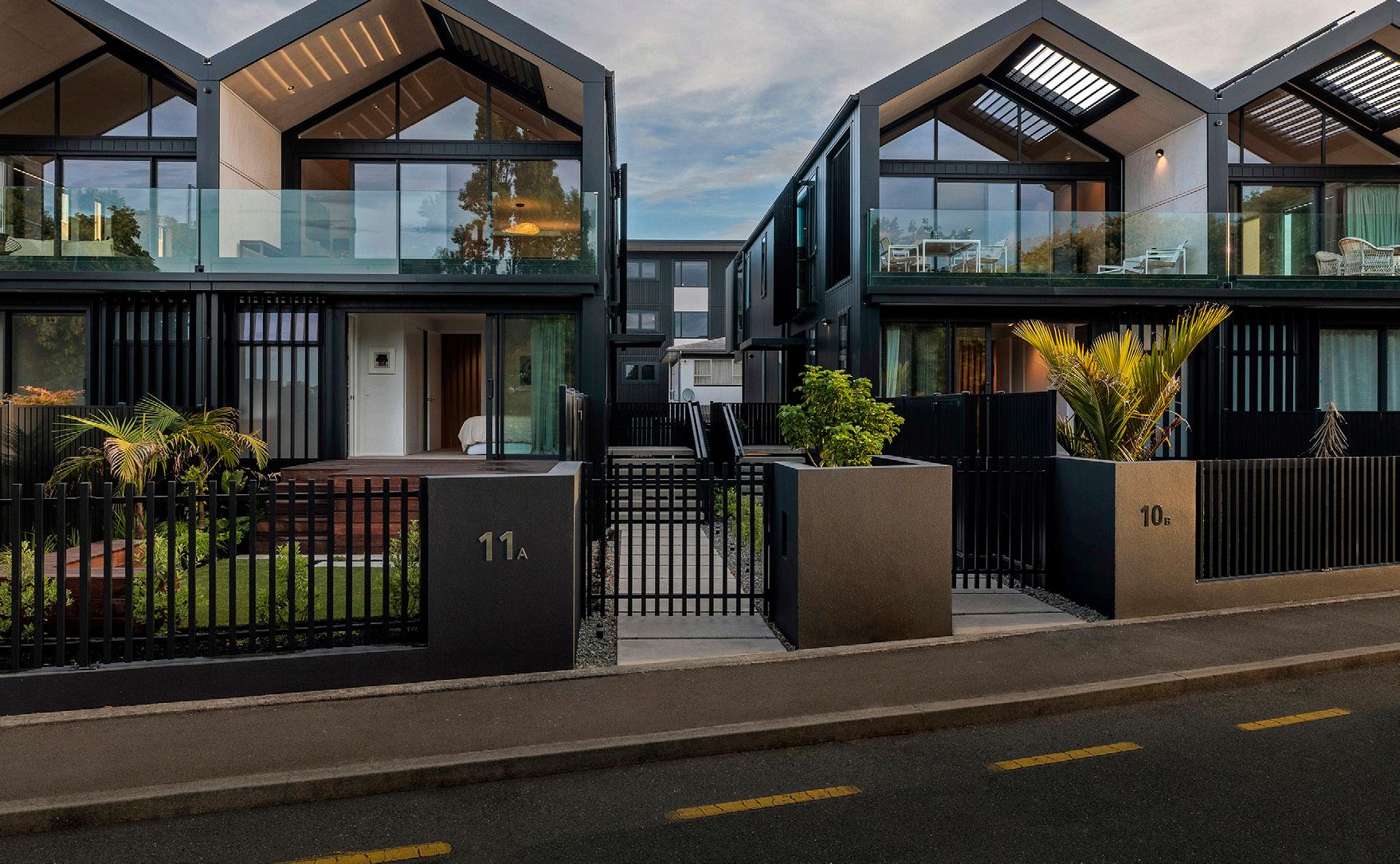
The building form, derived from traditional gabled houses along the street, provides the main characteristic of the design.
The homes are designed to achieve Homestar 6, providing warmer, drier and more energy efficient homes for residents.
Community spaces are designed with users in mind and include a community room, shared outdoor areas, a play space and a bike shelter. Access to the properties is provided via off the street and
though the two formed site entries. Street access is provided with steps to the raised floor level, which provides privacy and passive street surveillance whist achieving the requisite clearances for flood protection
Plastered concrete retaining walls are stepped and kept deliberately low, along with stepped down garages, this allows for a softer street transition from the 1.3m high floor levels above street level.
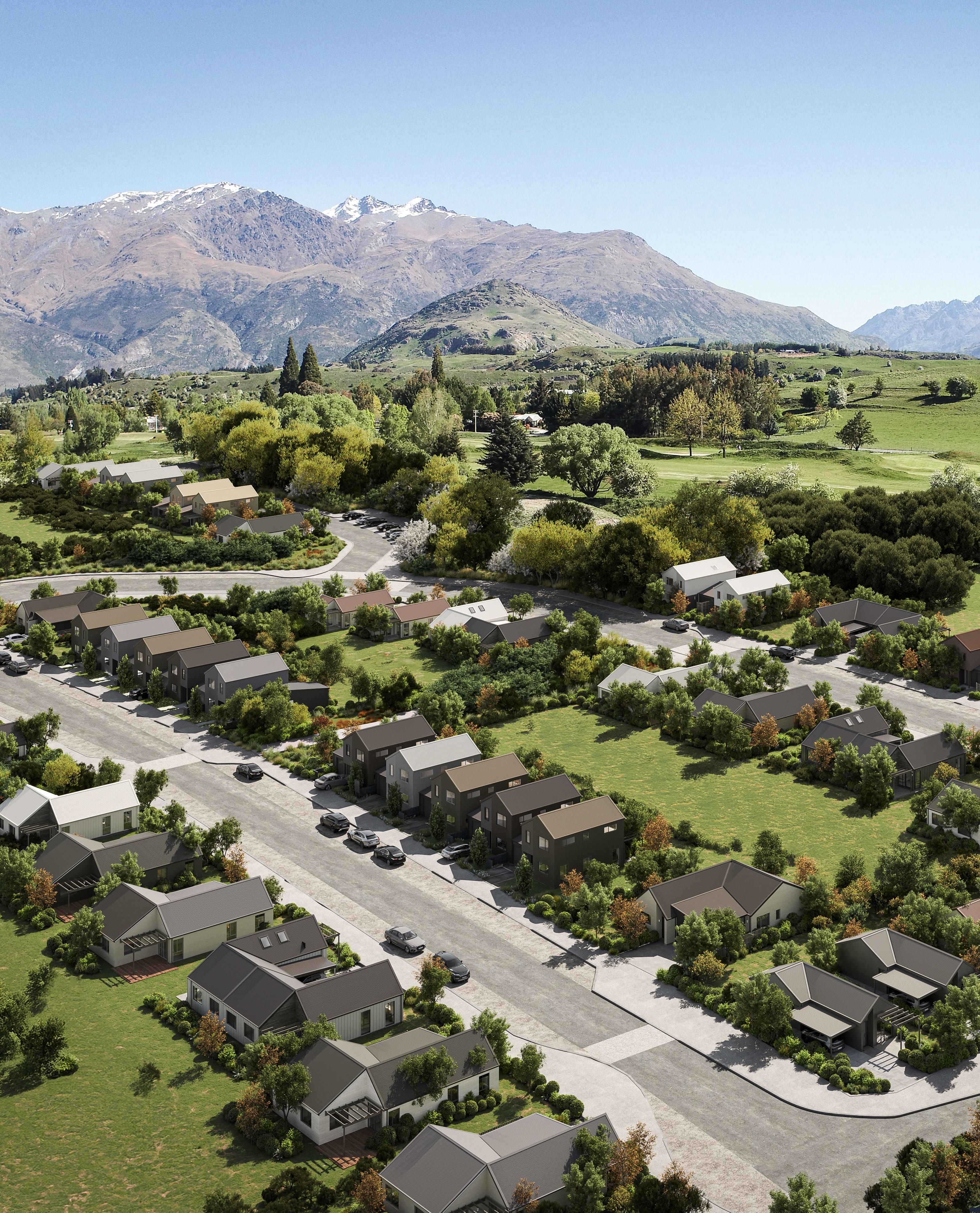
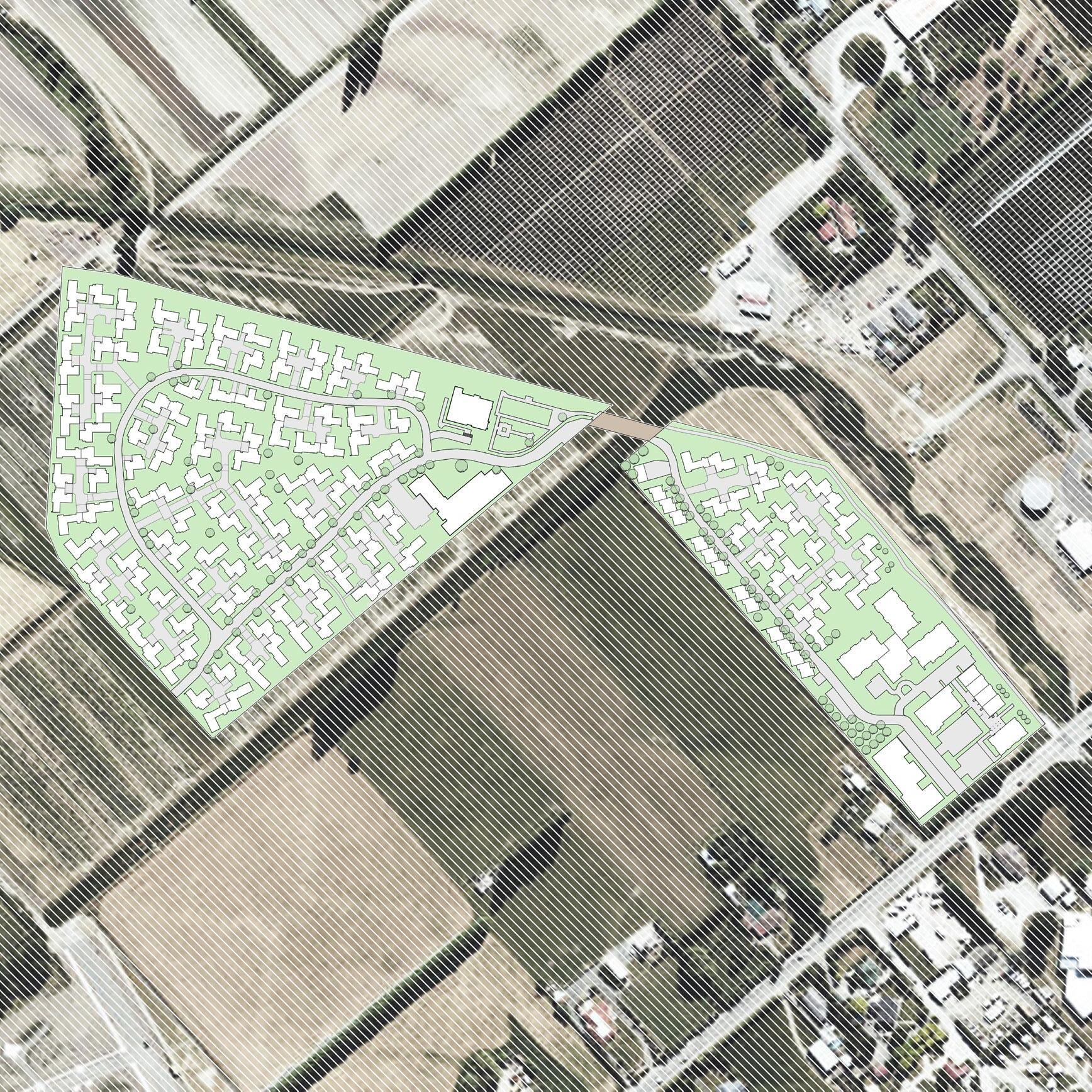
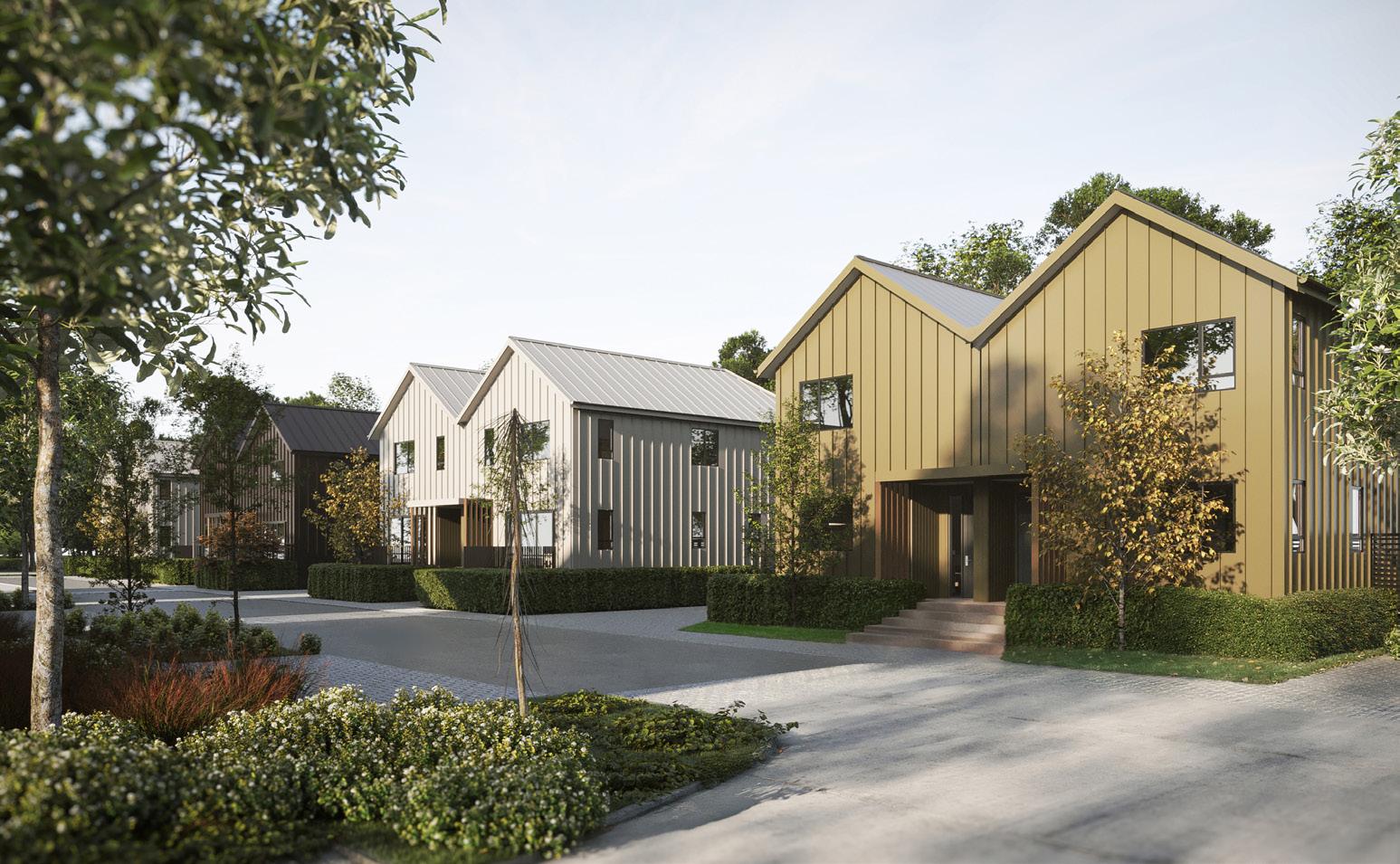
Tewa Banks is a thoughtfully designed 70-home mixed tenure neighbourhood, developed for the Queenstown Lakes Community Housing Trust. Nestled beside the Arrow River and neighbouring the Arrowtown Golf Club, the 3.6 hectare site carries a deep sense of place and history.
TEWA BANKS
The masterplan for Tewa Banks brings together standalone, duplex, and terraced homes to create a cohesive, people-focused neighbourhood. Homes are arranged around shared green spaces and pedestrian-friendly streets that encourage interaction and a slower pace of movement. Each dwelling is designed for optimal solar orientation, natural ventilation, and efficient footprints, achieving Homestar 6 certification and connecting to New Zealand’s first large-scale shared ground-source heating system.
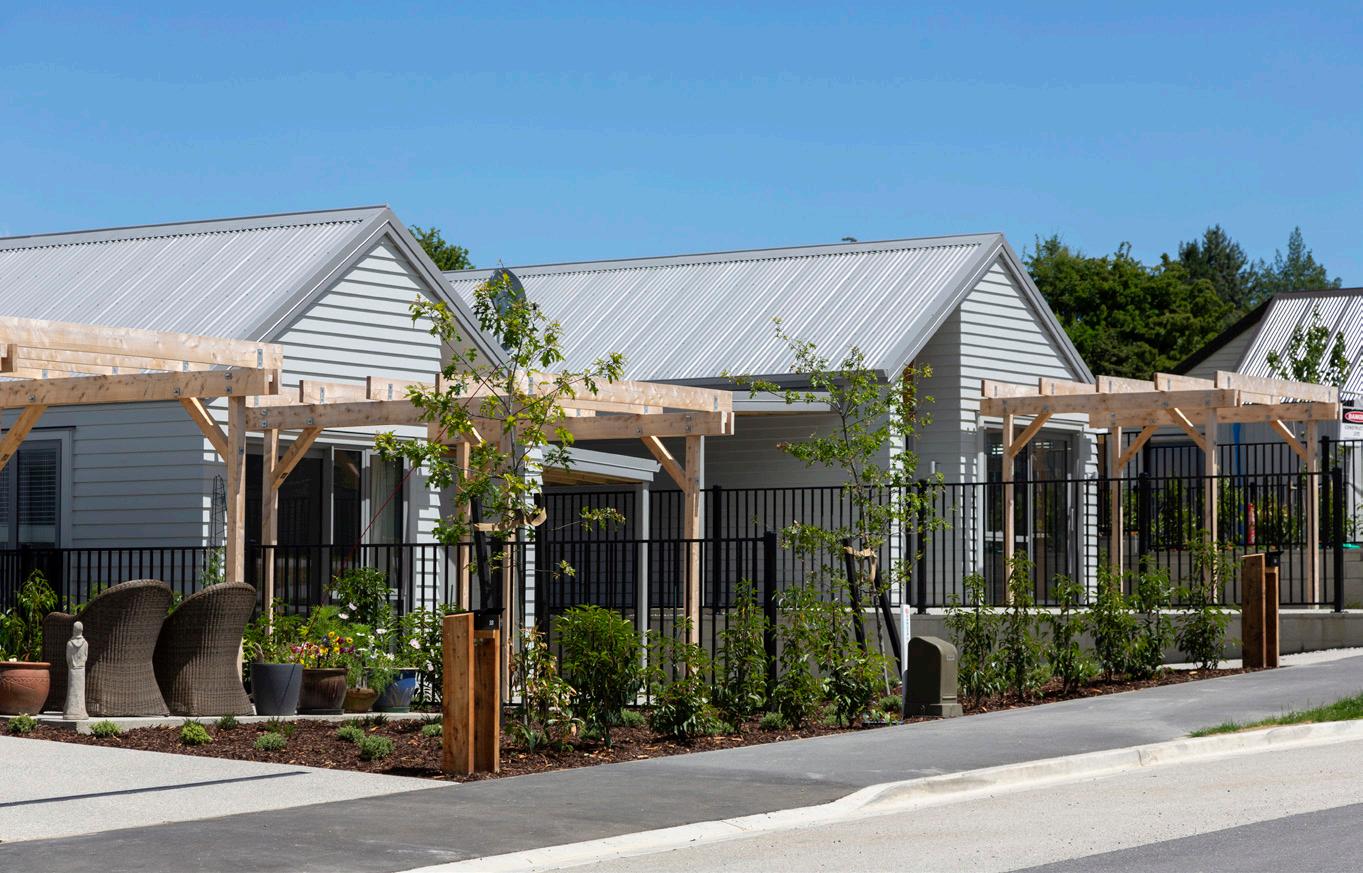
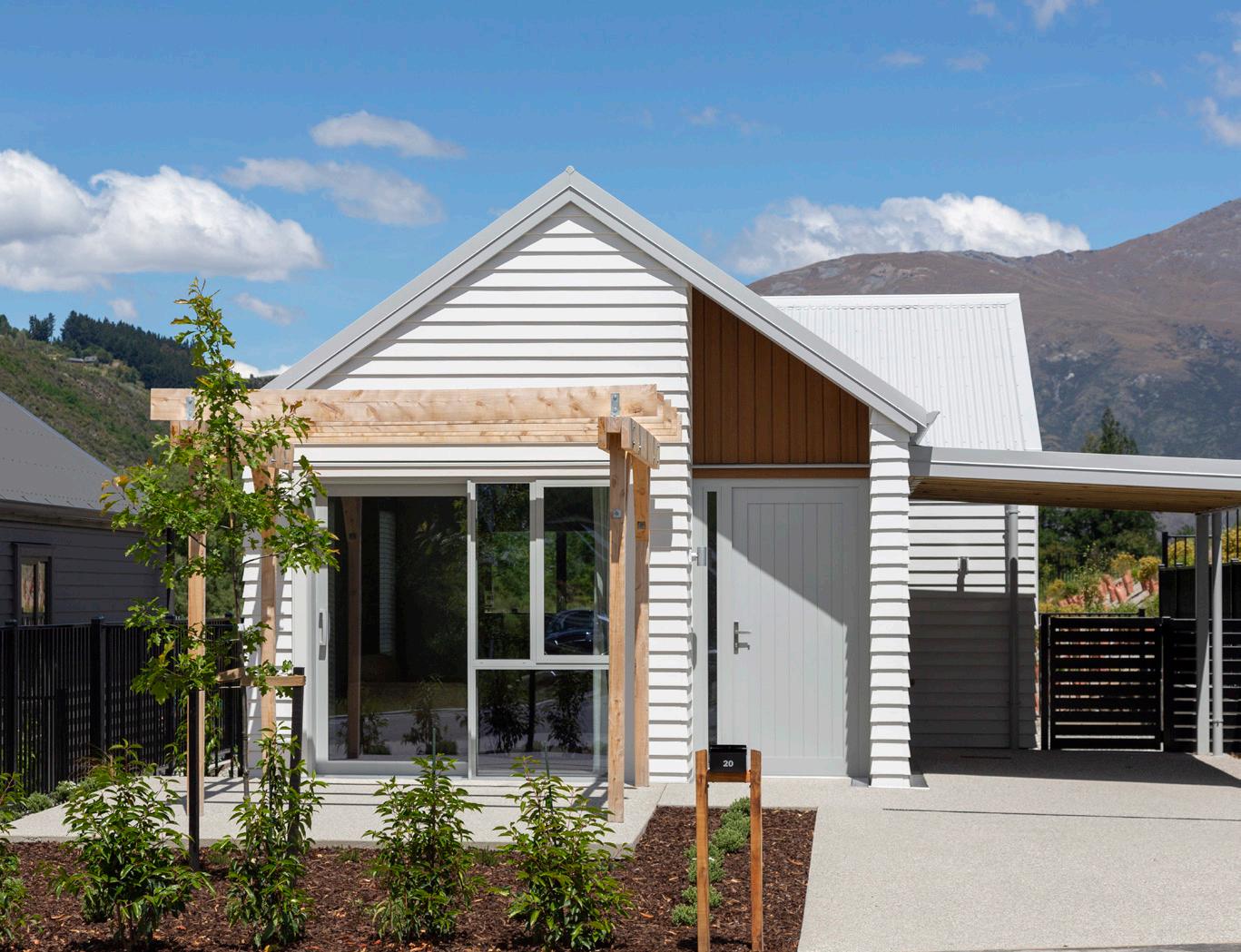
Architecture draws from the textures and rhythms of the alpine setting, using simple gable forms,
muted materials, and planting that softens edges and integrates the neighbourhood into the landscape. Tewa Banks reflects JTB’s strength in delivering sustainable, inclusive design within commercial and environmental constraints; a project defined by balance, belonging, and buildability. The development offers affordable rental and rent-to-own opportunities for families and individuals of all ages. Housing types range from single-storey one-bedroom accessible units to four-bedroom two-storey family homes, with a mix of standalone, semi-detached, and terraced dwellings.
Each dwelling is designed for optimal solar orientation, natural ventilation, and efficient footprints, achieving Homestar 6 certification
The design concept of Waimea Plains village offers a different approach to retirement living, focusing on place making, social interaction, solar access and natural landscape environment, and providing an outward looking, inclusive and permeable layout to create connections and integrate into the wider community.
WAIMEA PLAINS VILLAGE
The development comprises 160 villa and townhouse units, 26 Apartments, over 45 care rooms, and shared communal facilities arranged across 6 precincts which vary in use, materiality and scale.
The largest site area of the Retirement Village is devoted to individual single-storey residential villas in a mix of three bed, two bed and 1.5 bed units. Conceptually, these villas are organised in a series of ‘clusters’ - numbering from four to eight villas, grouped around
a courtyard with vehicle access, fanning a series of cul-de-sac neighbourhoods. Spaces between ‘clusters’ are communal ‘green’ space, onto which each villa can open out or overlook, used for amenity, circulation, recreational and social activities.
The overlapping groupings of the ‘courtyard neighbourhood’ and the ‘green neighbourhood’ is expected to create a strong social network around the site which will be a positive feature of the Village.
Villas open onto communal green space, which residents can use for recreation and social activities.
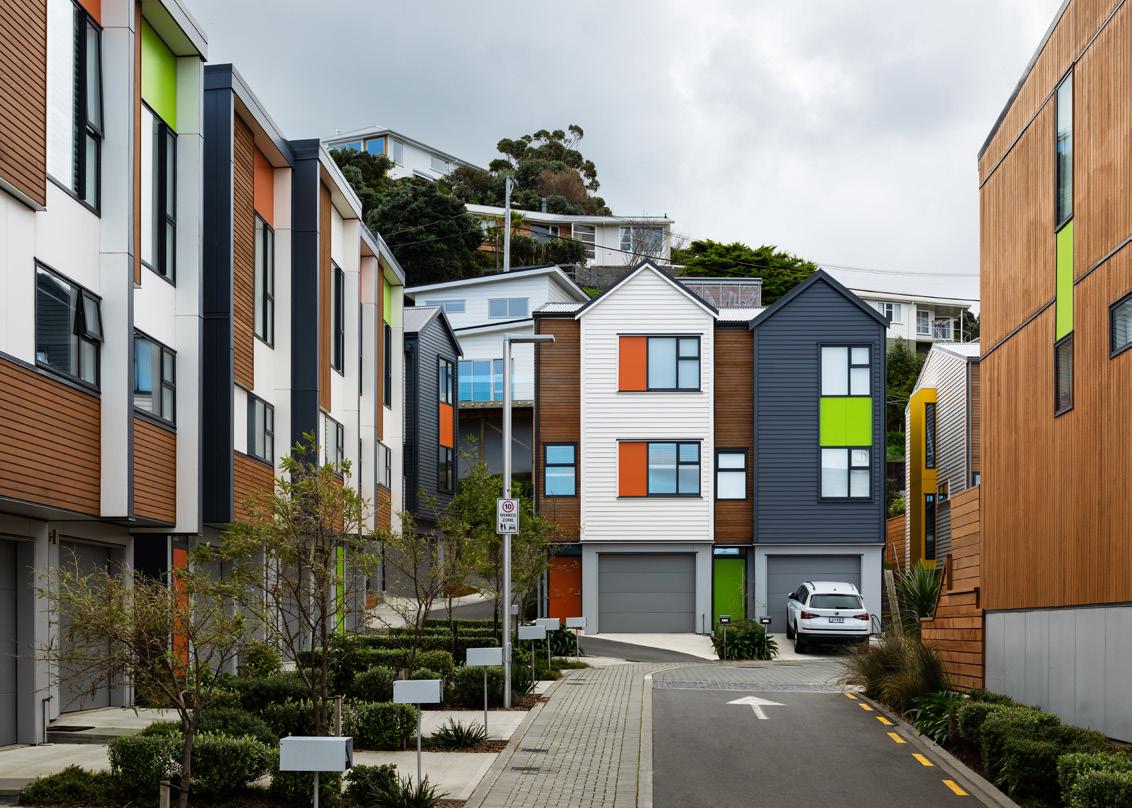
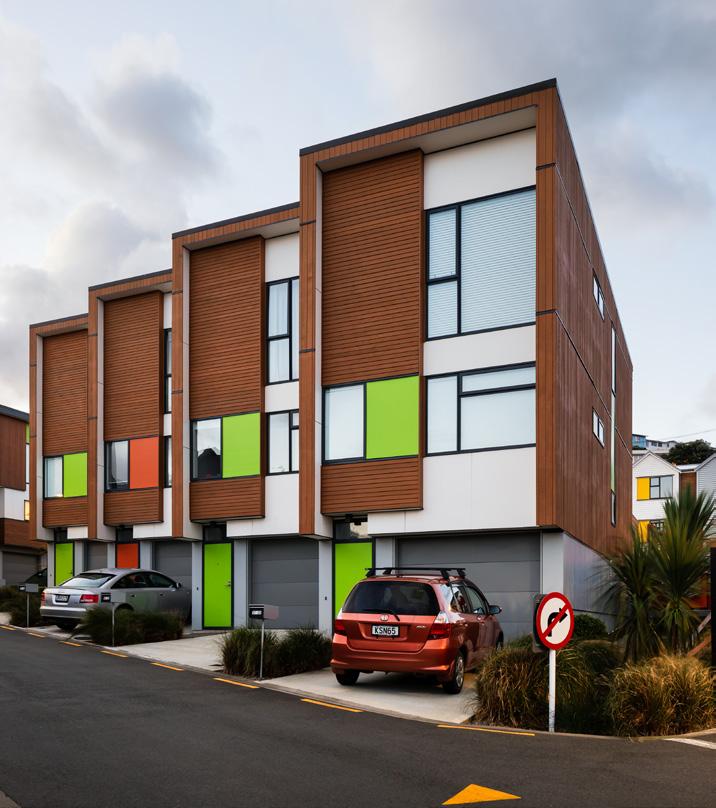
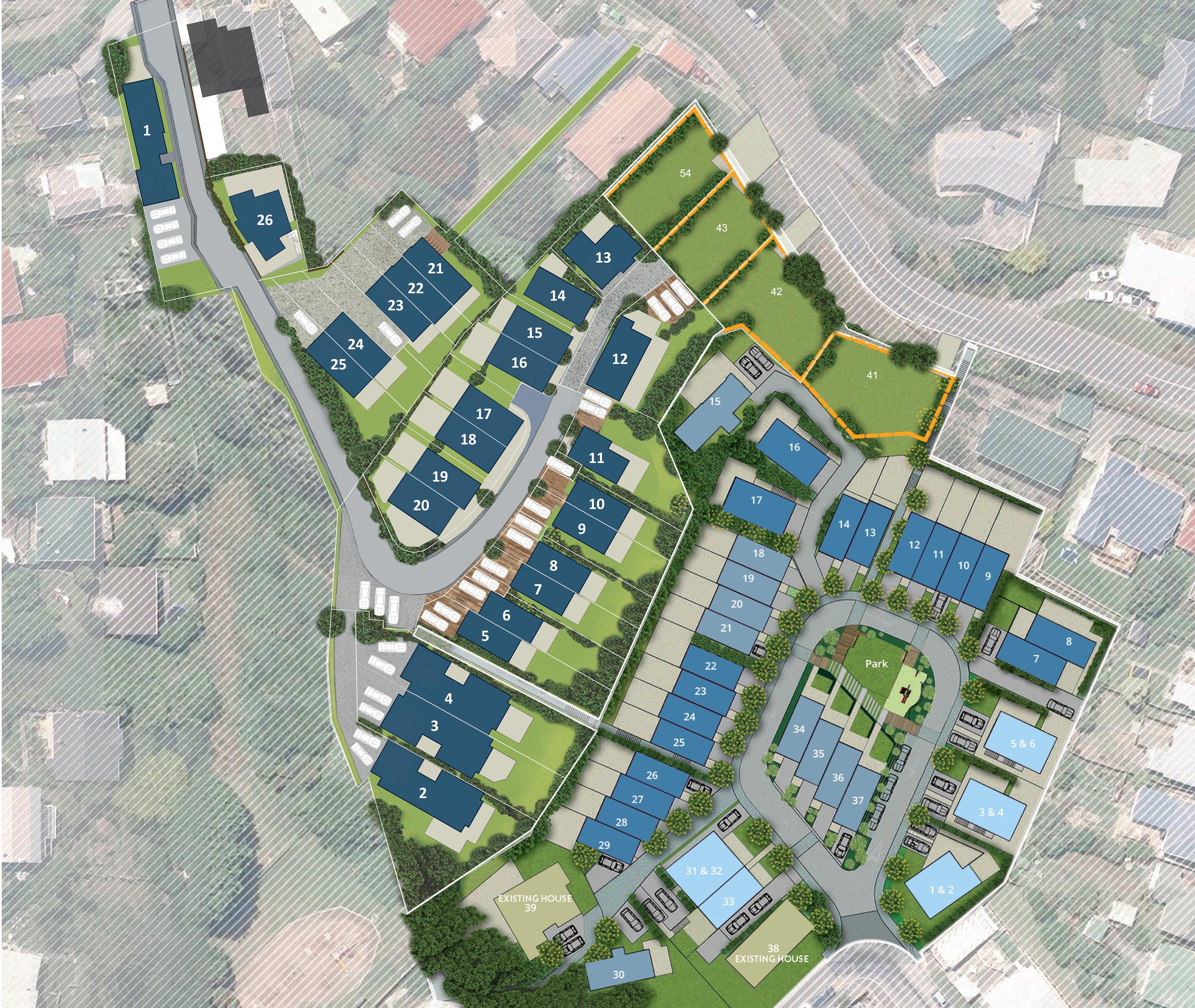
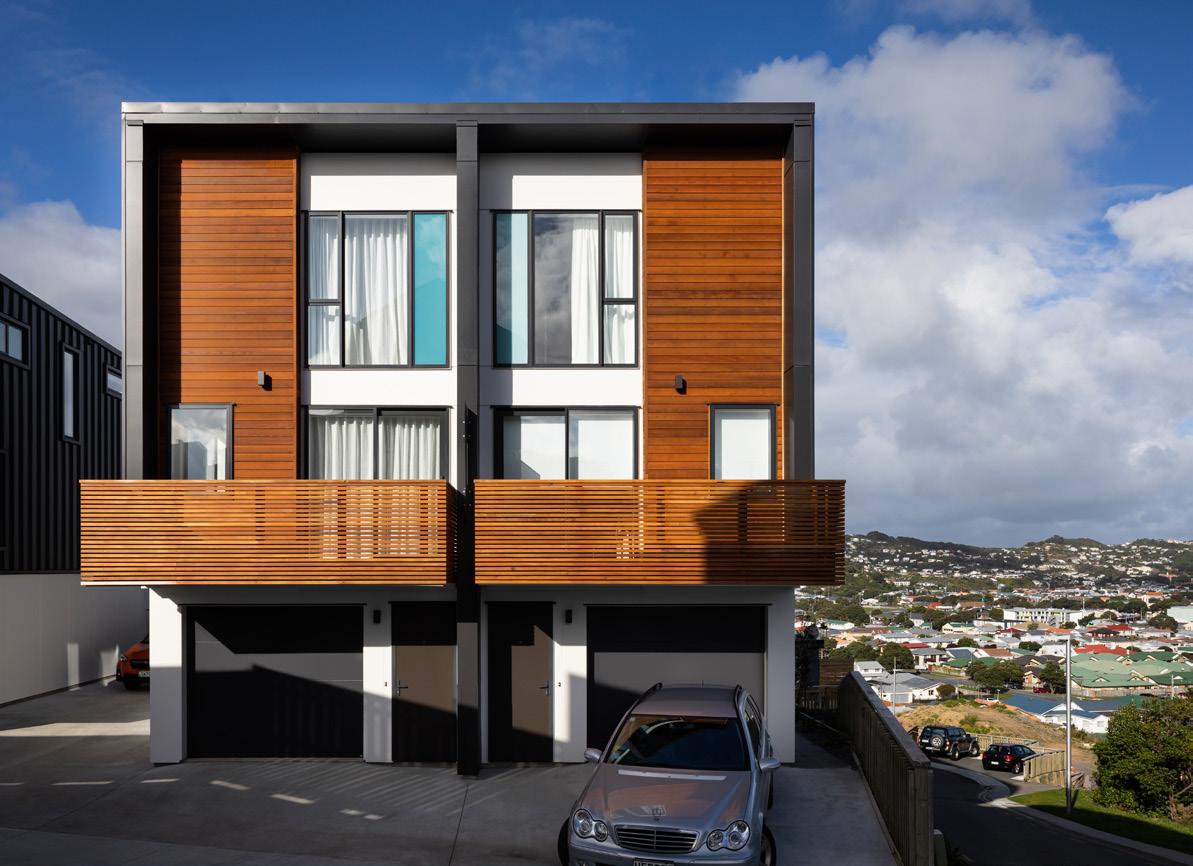
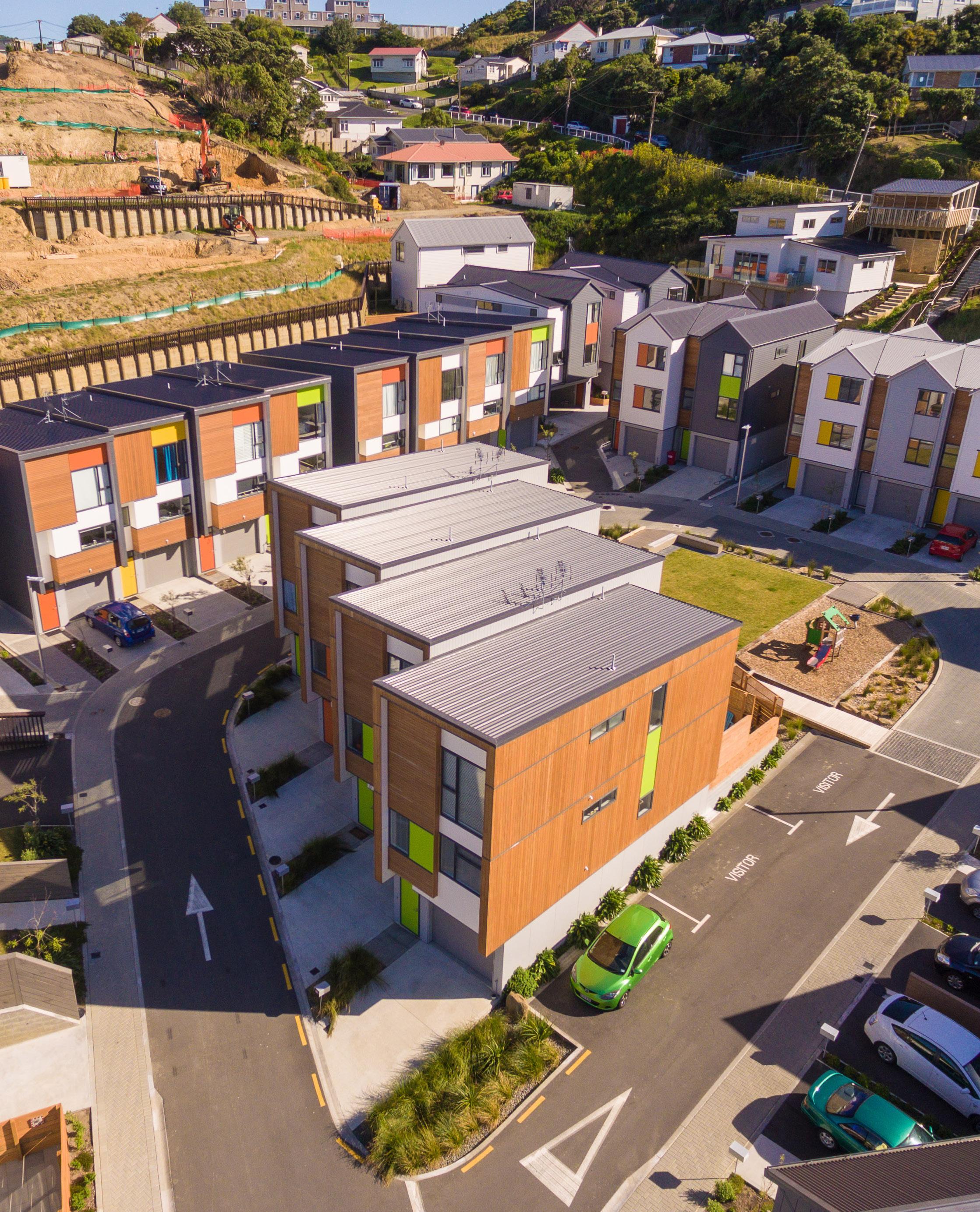
This medium density housing development comprises 66 units, completed in stages, on a steep sloping site in Mirimar, Wellington.
KAIRANGI COMMUNITY DEVELOPMENT
The housing is planned around a central pocket park and features a mixture of affordable and accessible units for the private and public market. The design provides connectivity to the neighbourhood, by way of pedestrian pathway, lowering the traffic volumes within the site with a shared low-speed carriageway for pedestrians and vehicles.
Dwellings are set out to maximise sun, views and private open spaces within
a medium density pattern, allowing 2, 3 and 4 bedroom properties so that a range of household sizes and types can be accommodated. Each home features a garage, a second car-park, and private outdoor space to augment the single level double aspect living areas, with upstairs bedroom and bathrooms.
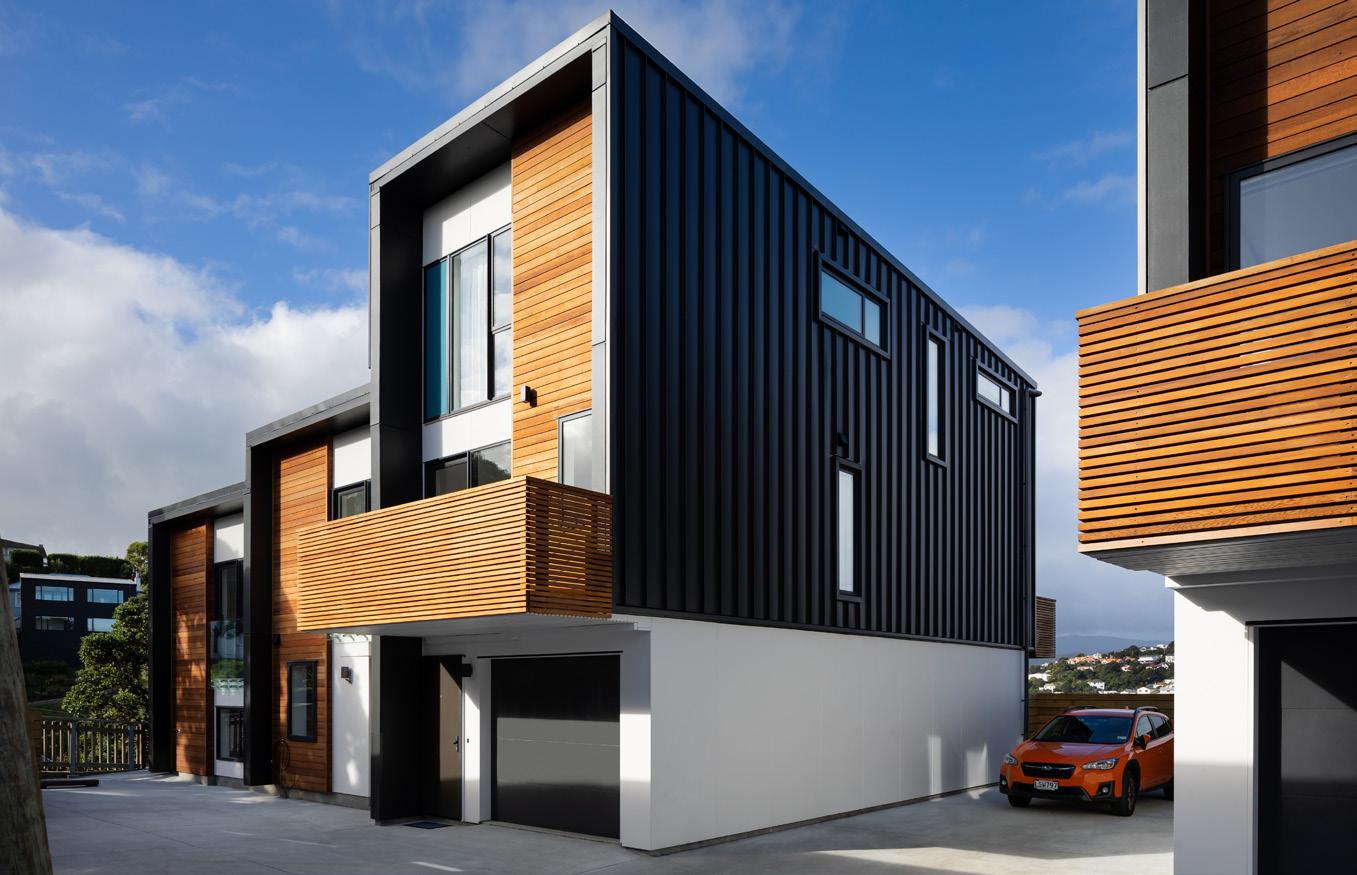
The houses have distinct variations to cladding materials, colours and roof form to provide separate identity.
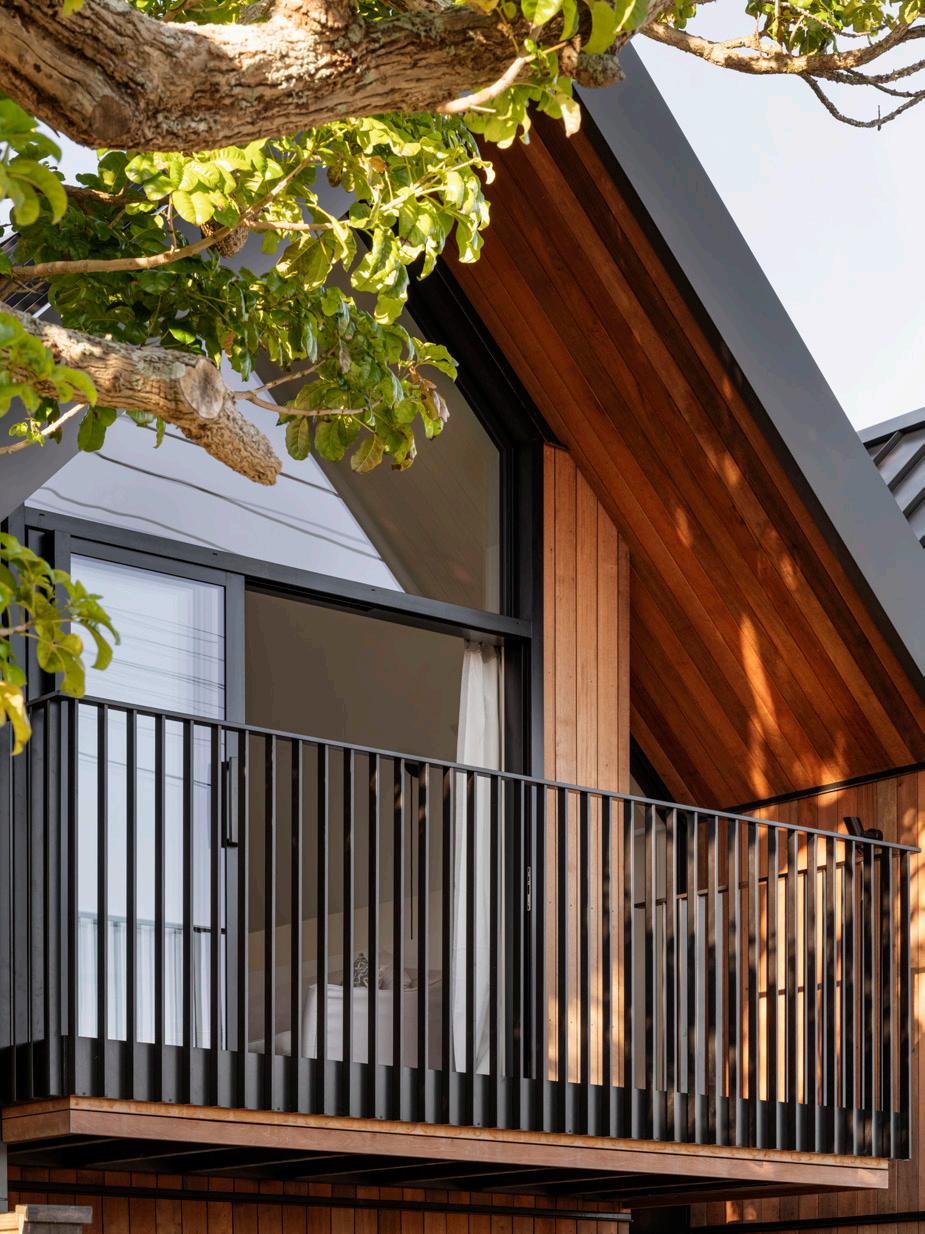
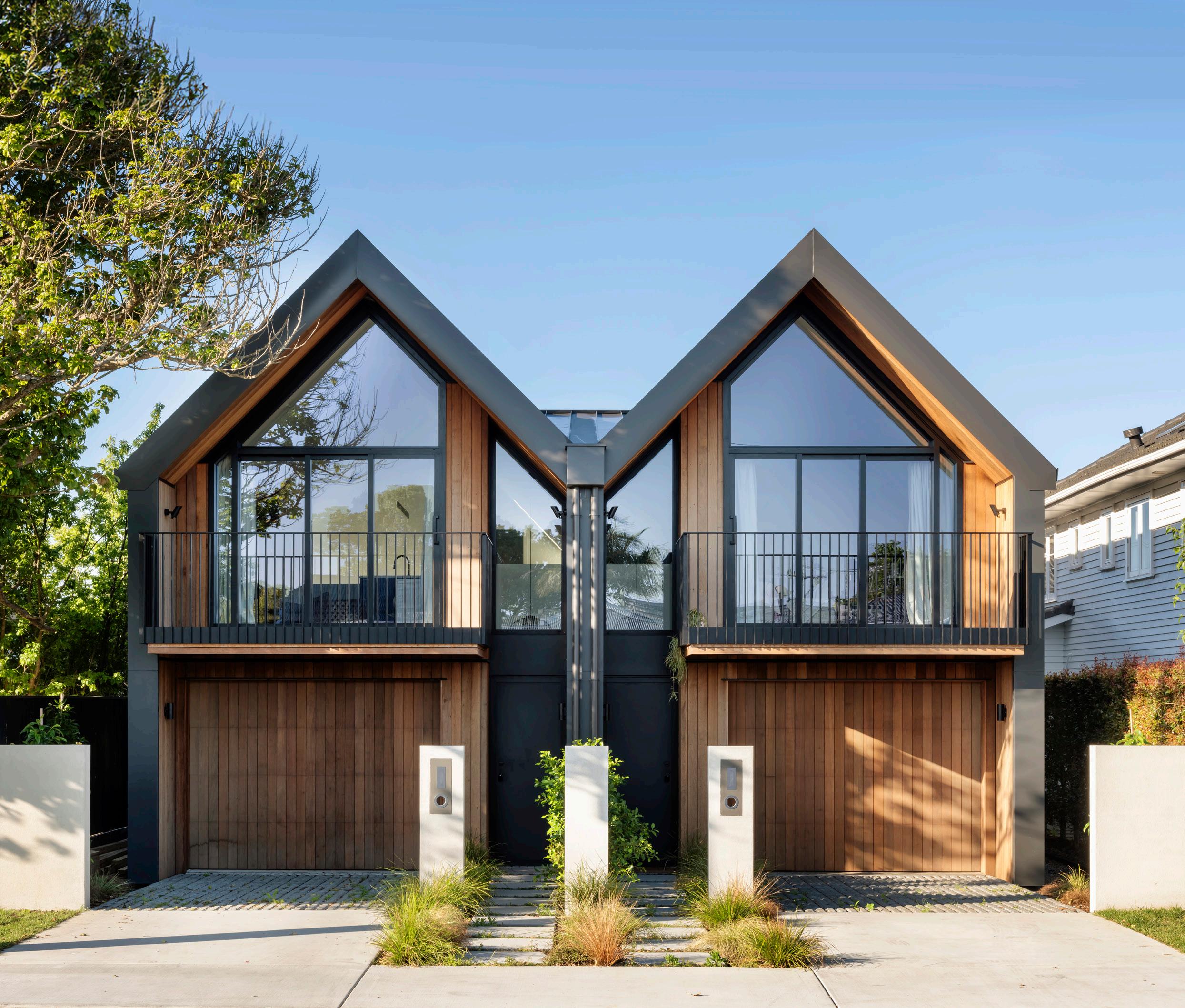
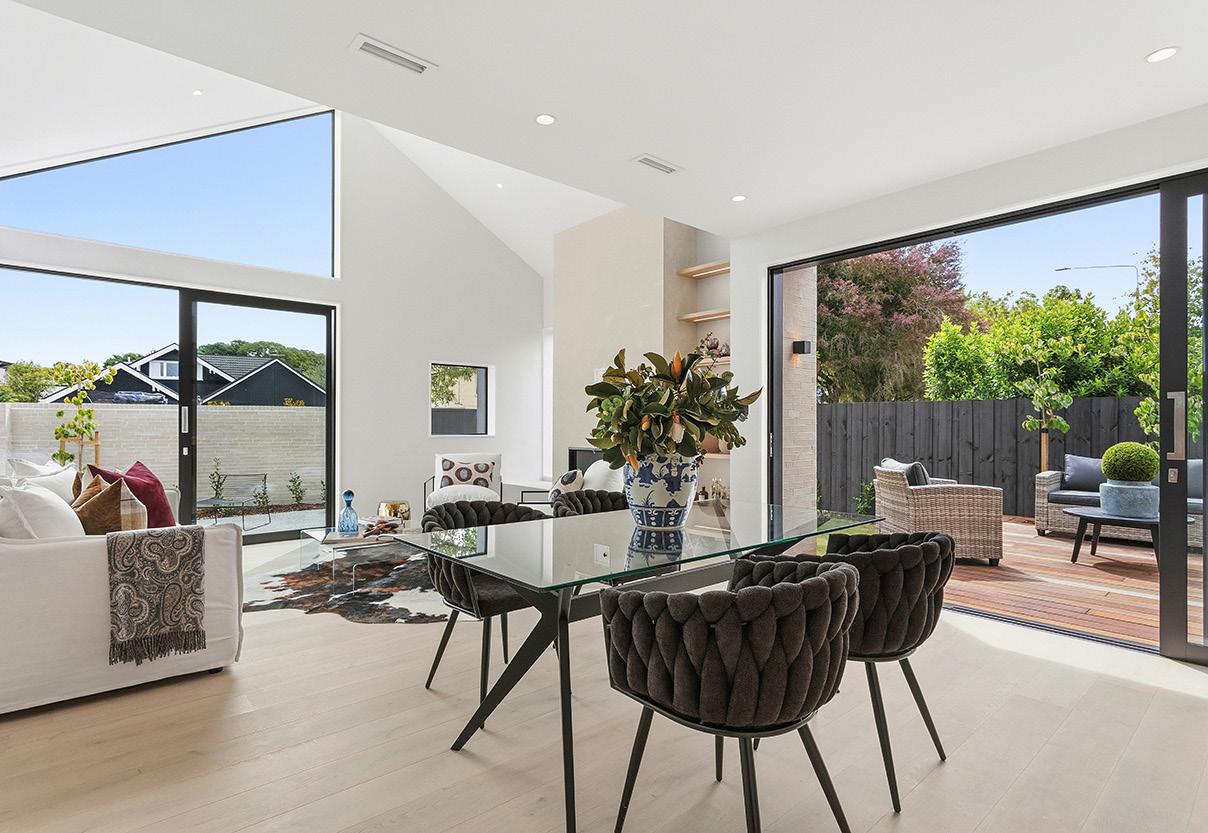
Slotting into a compact 305m2 site within an established residential area, Blackbird Townhouses have been designed in close collaboration with the developer to maximise the potential of the site.
BLACK BIRD TOWNHOUSES
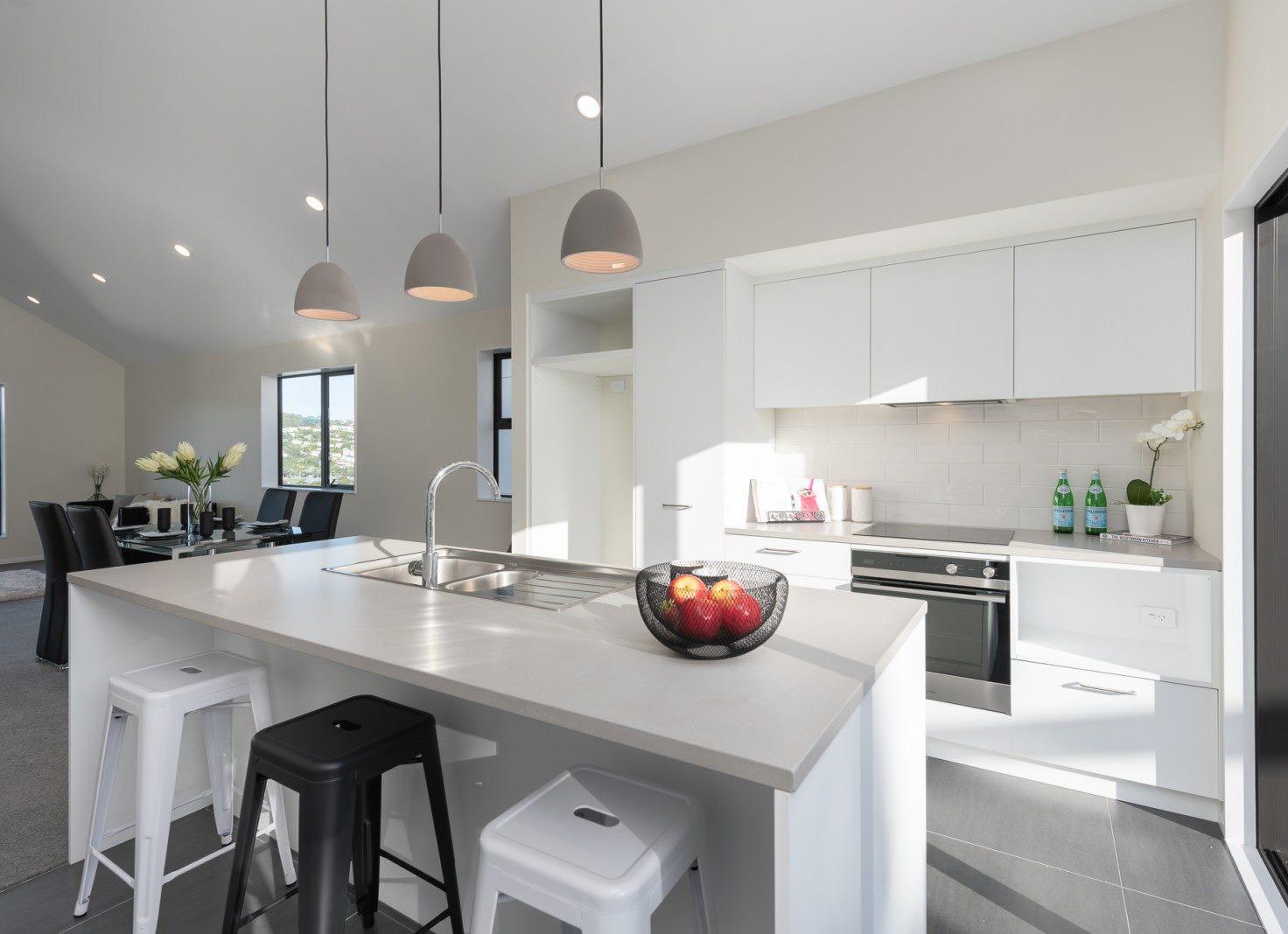
Context, privacy and daylight are carefully balanced within the design to provide a model for high-quality townhouse development. Floor plans, which are mirrored across the two units, are carefully composed to maximise useable area and draw in light.
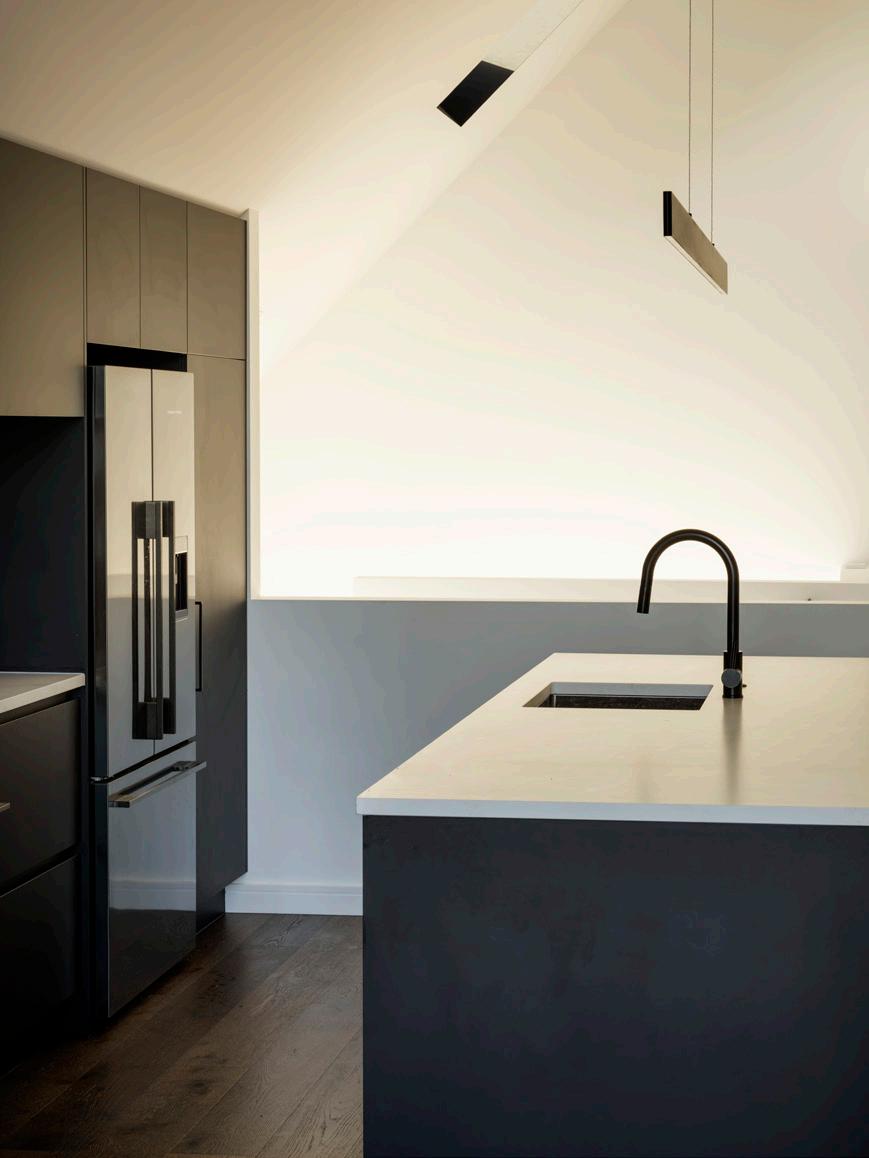
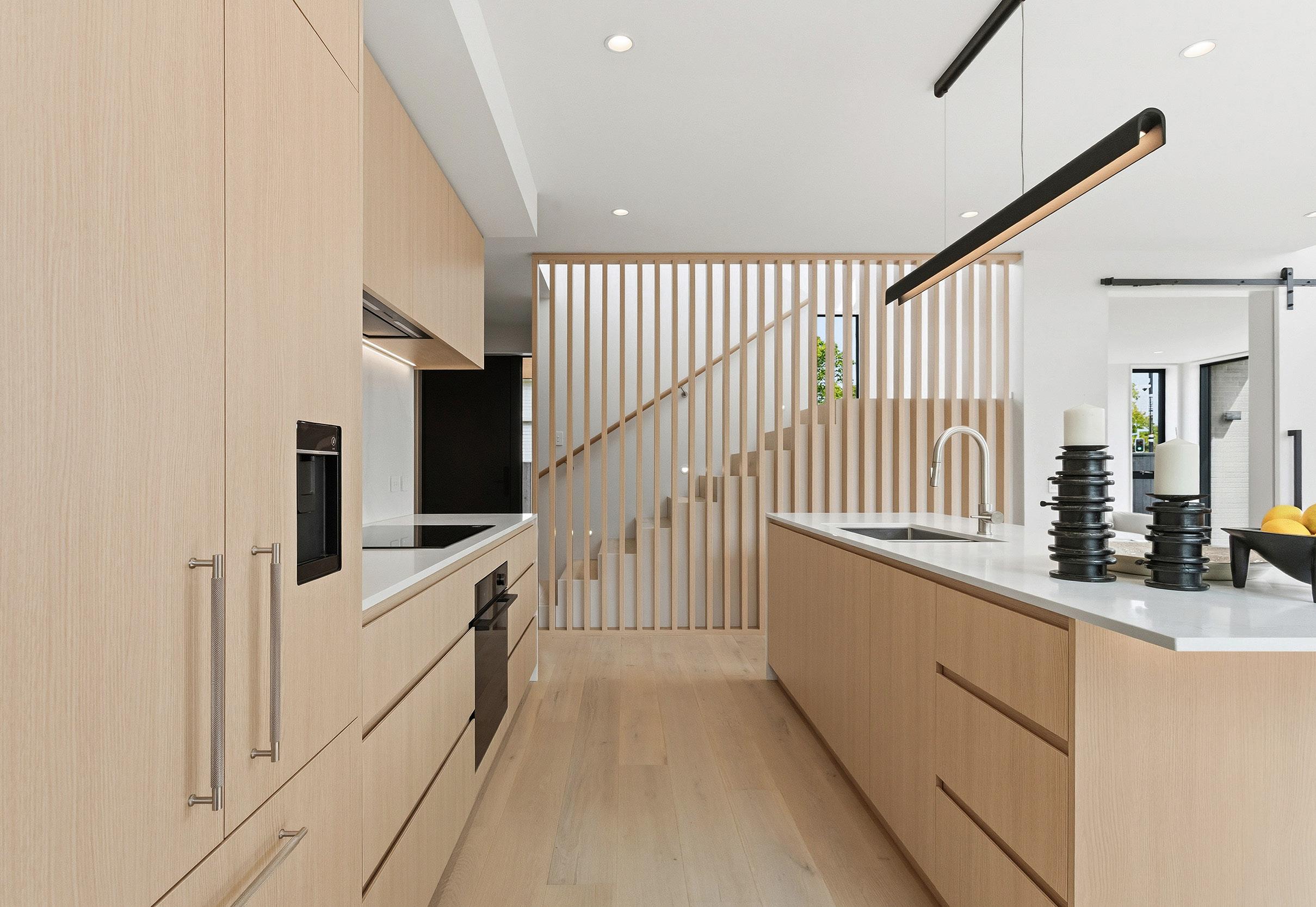
In the upper floor living area, builtin fittings tuck under the lowest
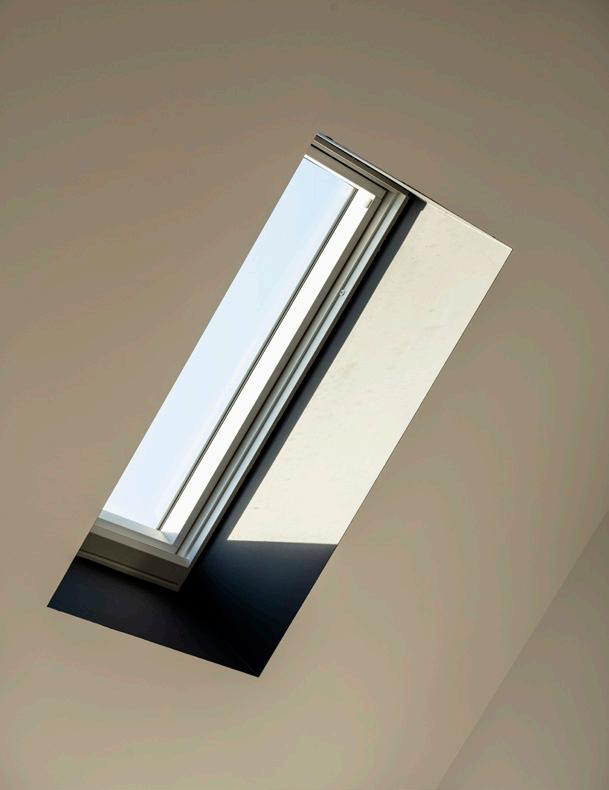
points of the loft ceiling to achieve separate kitchen, living and dining areas as well as a dedicated workspace. In the centre of each unit, a double height void with skylights above links the two levels, and brings light into the centre of the plan.
Floor plans, which are mirrored across the two units, are carefully composed to maximise useable area and draw in light.
Designed in close collaboration with a developer client, the project delivers well-considered, high-quality housing for families, professionals, and residents seeking adaptable and accessible living.
STRAVEN ROAD
Location
Christchurch Status
In progress
Located near Christchurch Boys’ High School, Riccarton House, and the edge of Pūtaringamotu Bush, the townhouses replace an existing single home with two contemporary four-bedroom dwellings.
The site layout is designed to maximise sunlight and privacy, with the shared driveway positioned to the south and outdoor living areas oriented to the north and west.
Each home follows the same floor plan with subtle differences that respond to garden, street, and outlook. Inside, generous open-plan living spaces are complemented
by smaller, more enclosed lounges, offering flexibility and comfort.
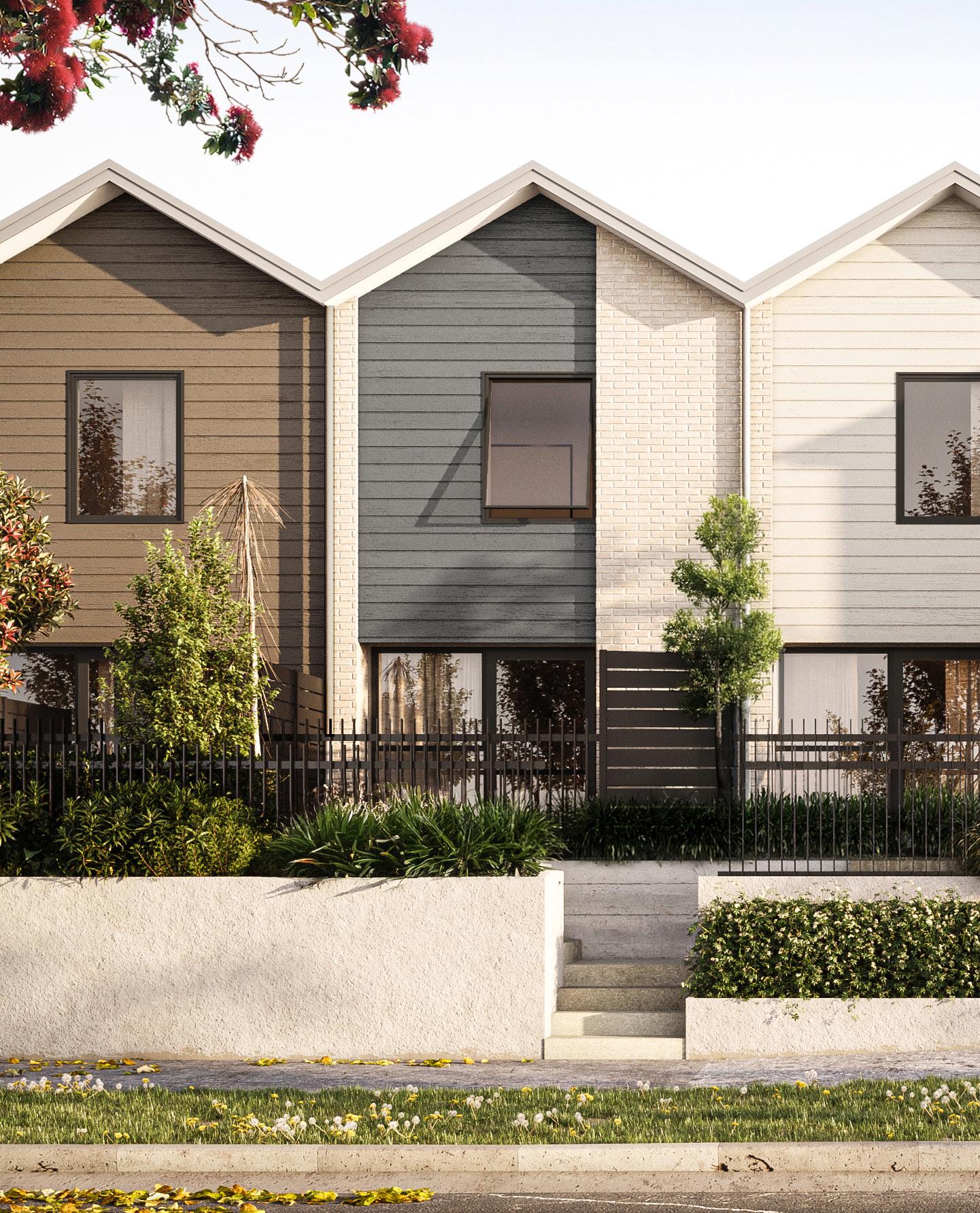
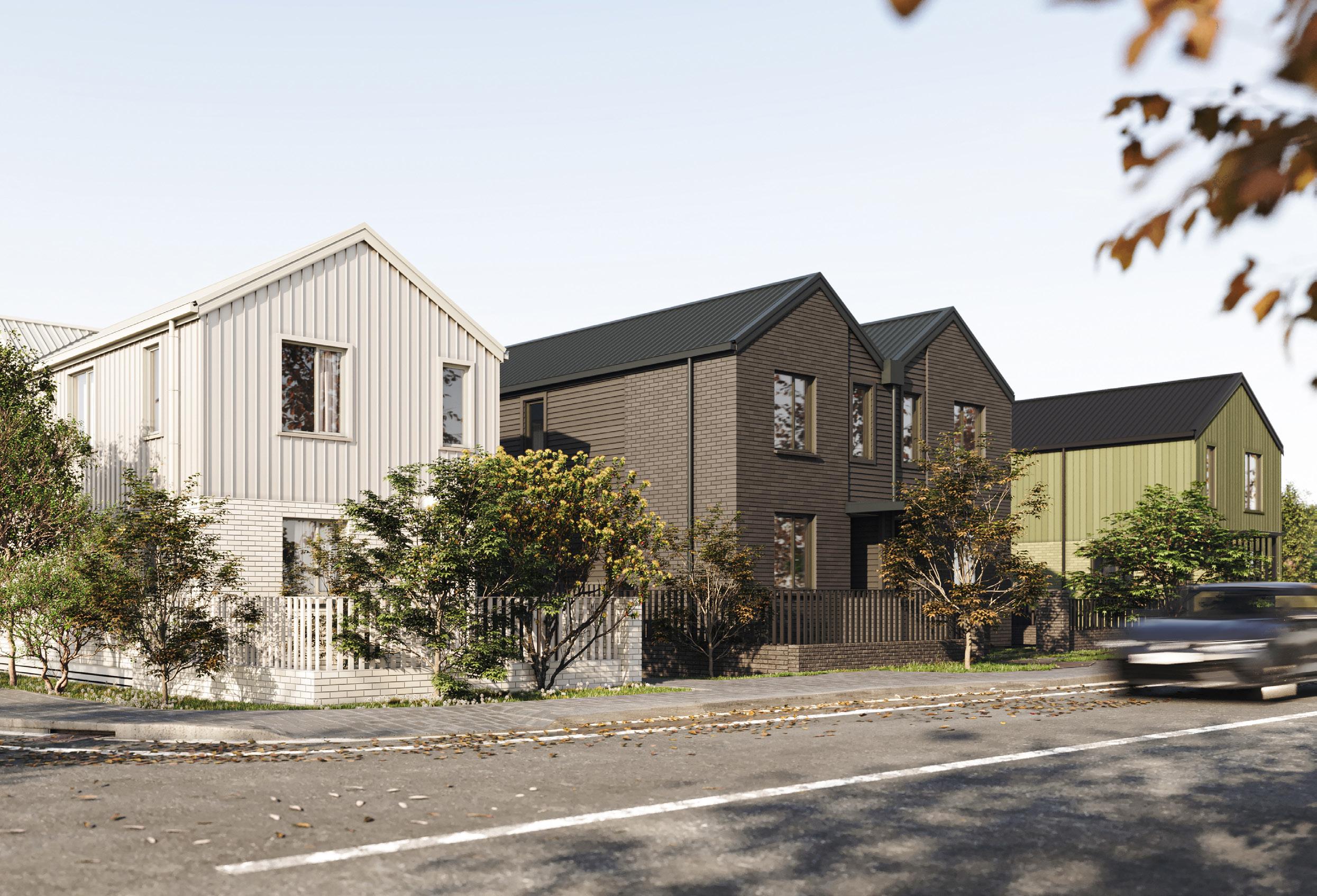
The exterior draws from the surrounding residential character, using simple gable forms and a refined palette of brick and profiled metal cladding. Battened screens and carefully placed openings connect interior circulation to the outdoors, improving natural light, ventilation, and passive surveillance. The result is a pair of homes that balance architectural quality with build efficiency and long-term durability.
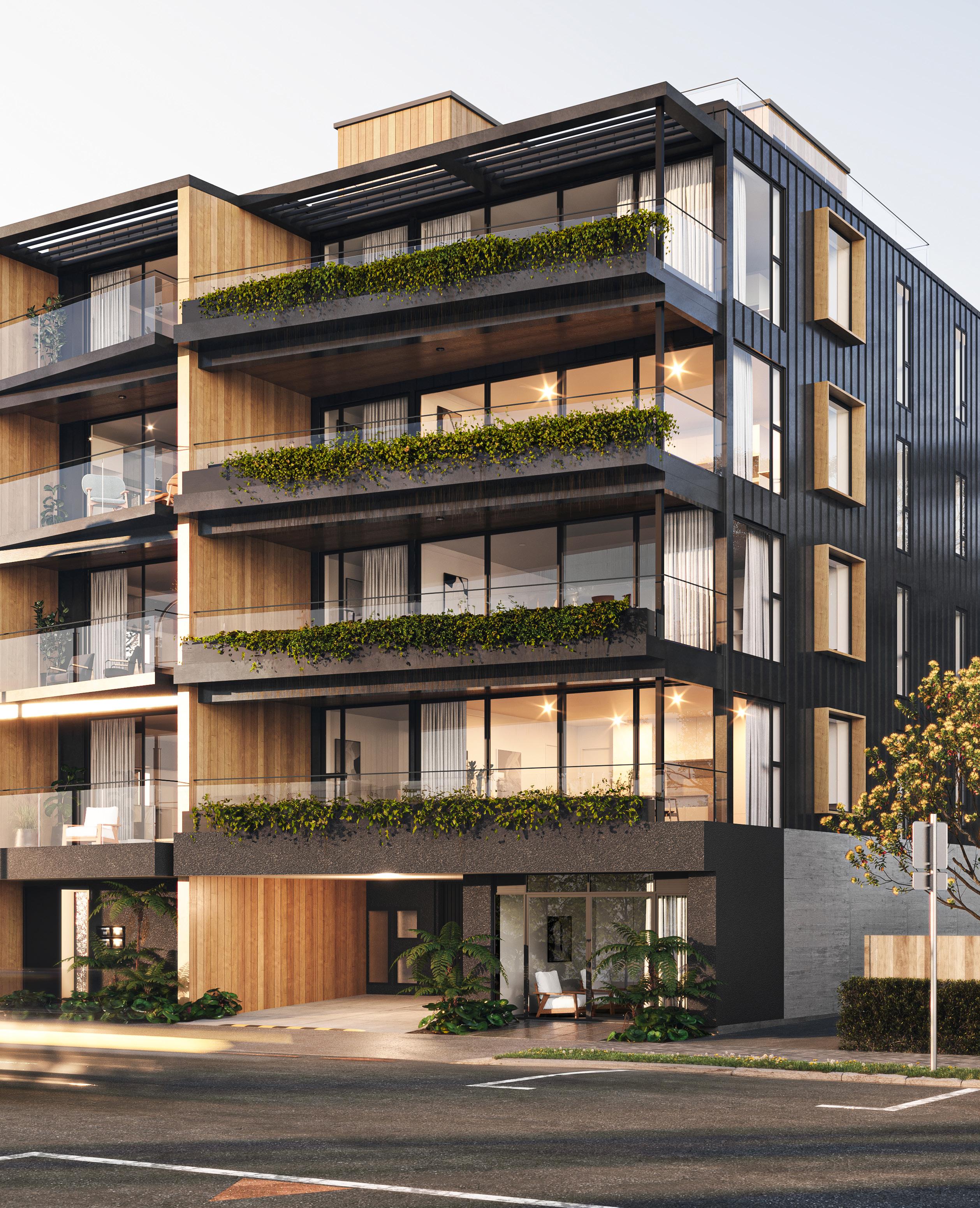
Dreamspace combines advanced timber technology with responsive urban design to create a development that is adaptable and environmentally mindful.
DREAMSPACE APARTMENTS
The building uses cross-laminated timber (CLT) for floors, walls, and roofs, significantly reducing both construction time and embodied carbon compared to conventional steel or concrete systems. Its form and massing respond directly to Auckland’s Unitary Plan, resulting in a composition that feels contemporary yet contextual.
Generous planting around outdoor spaces enhances biodiversity and resident privacy. Sustainability is embedded throughout, from
rainwater harvesting and solar generation to energy-efficient heating and appliances. A flexible ground-floor podium supports a commercial tenancy to activate the street edge, while repeatable upper levels adapt to various urban sites and orientations.
The result is a future-focused residential model that balances construction efficiency, environmental performance, and enduring design quality.
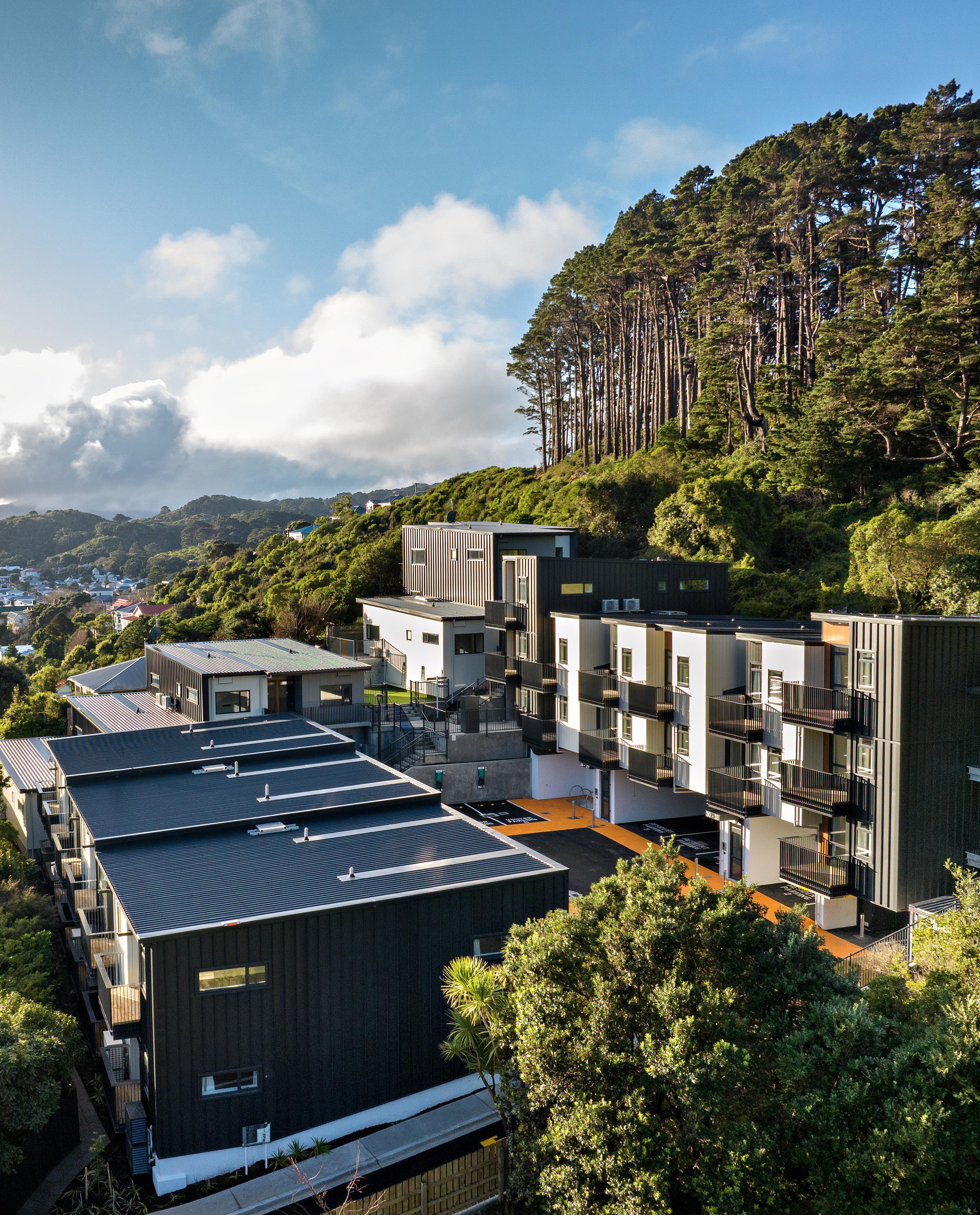
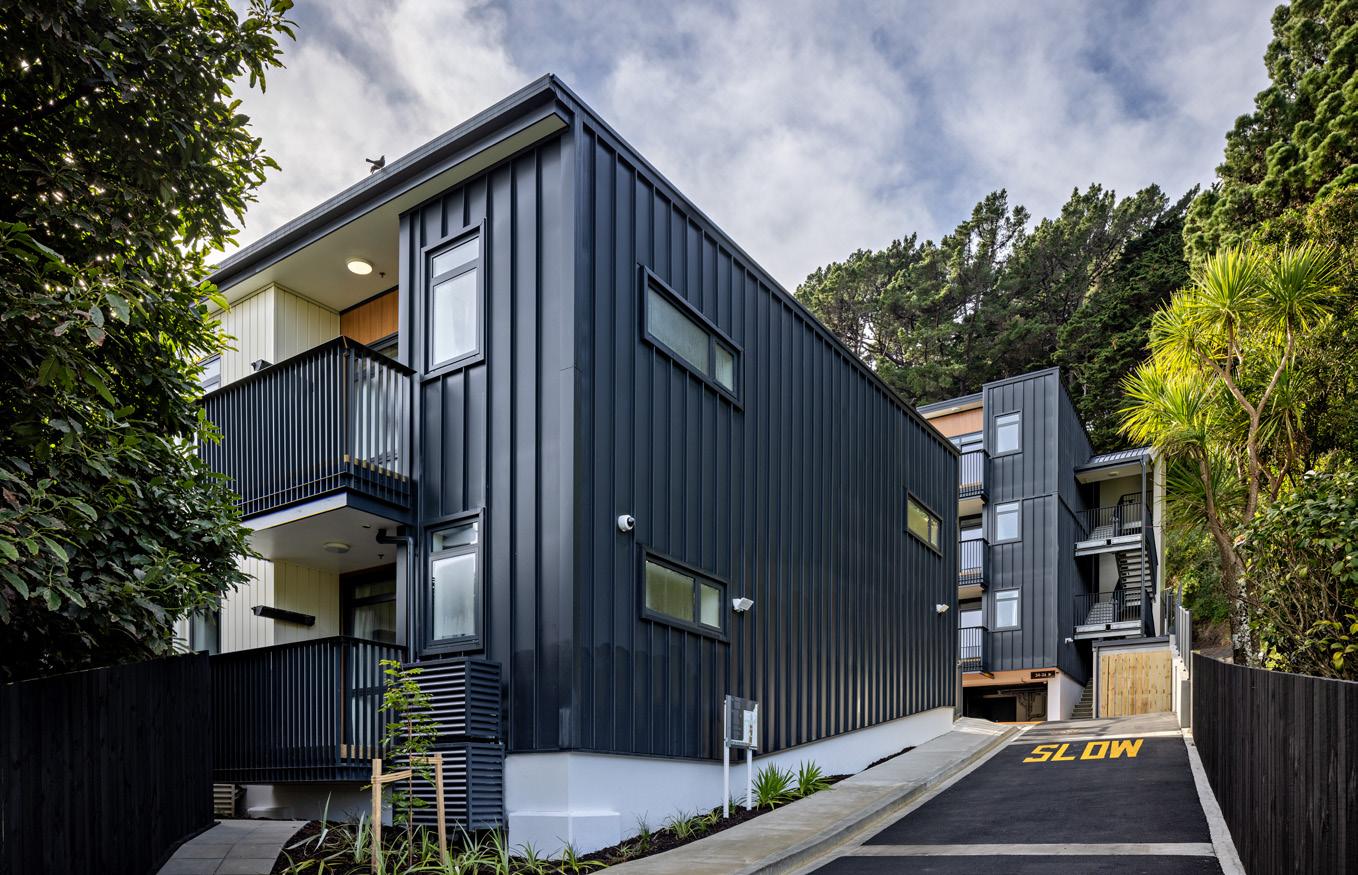
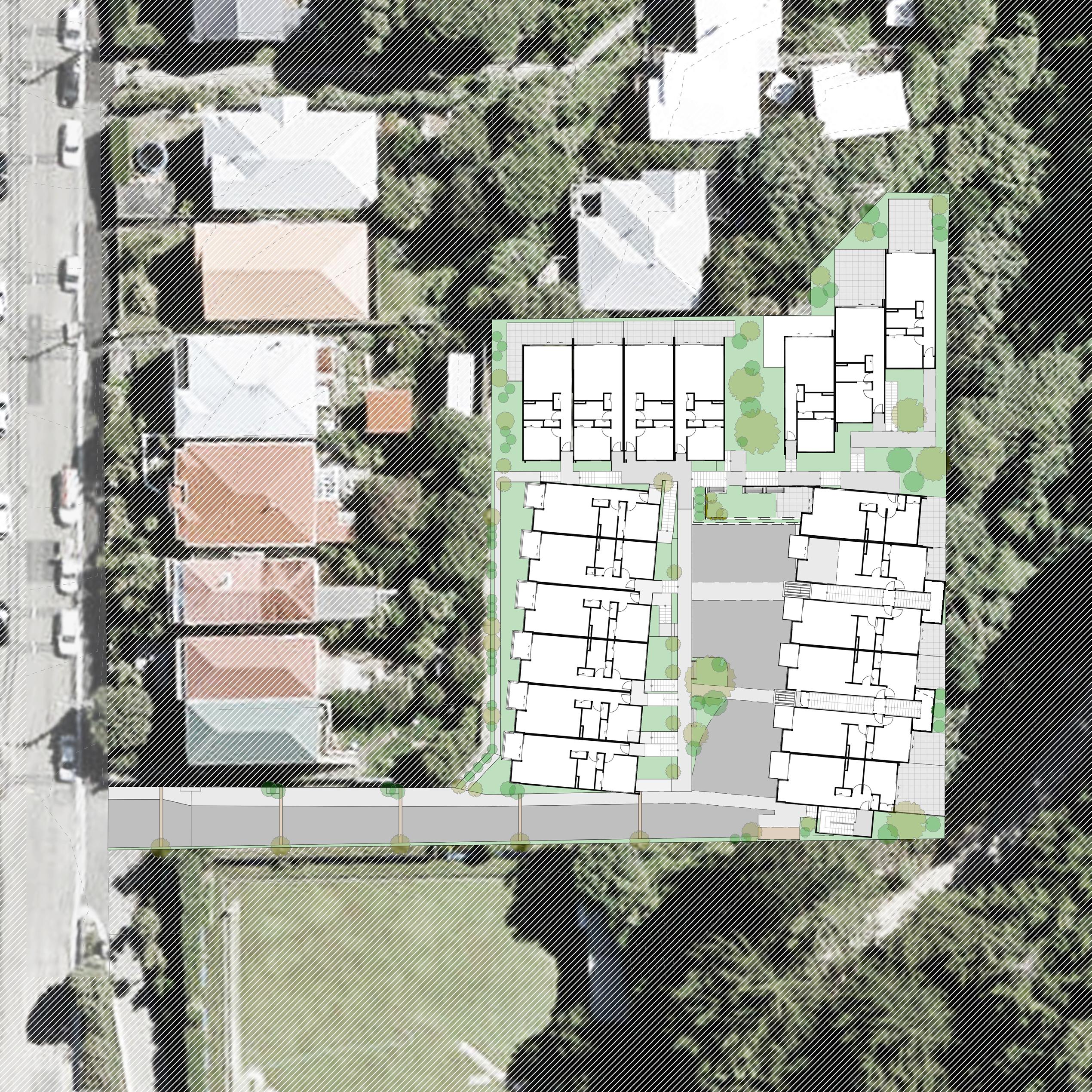
On a steep site in a densely populated Wellington suburb, this housing development makes smart use of topography to deliver wellplanned, light-filled homes. Designed to step with the terrain, the layout maximises sunlight, privacy, and access to shared community spaces.
OWEN STREET
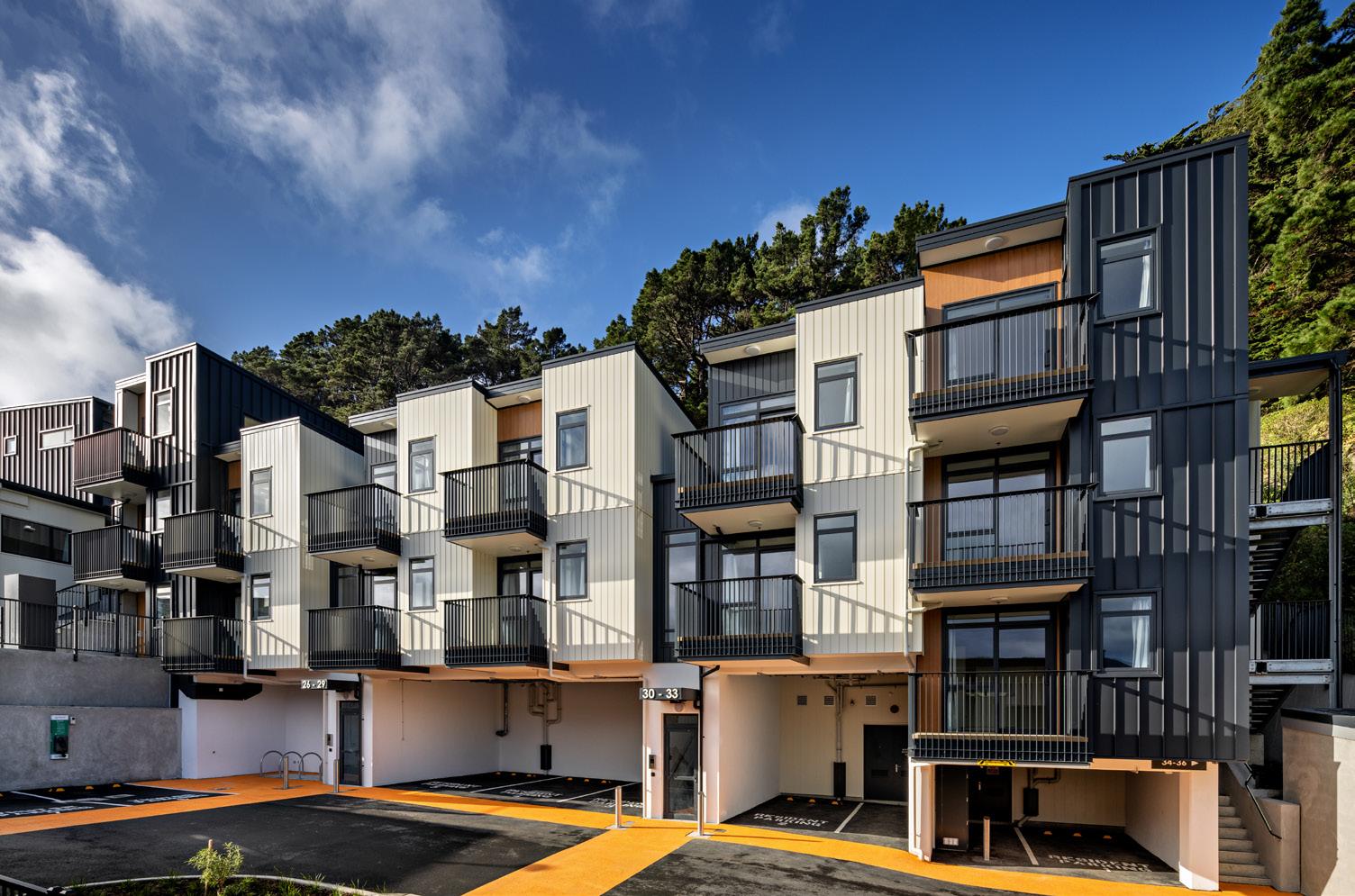
This multi-unit development comprises 36 homes staggered vertically along a hillside site in Newtown, Wellington. The homes are arranged around a central access point, with public open spaces and a community room supporting connection and wellbeing. Each dwelling is oriented to capture views and daylight, meeting a high standard of solar access with over four hours of direct sunlight in Winter. The stepped layout responds to the
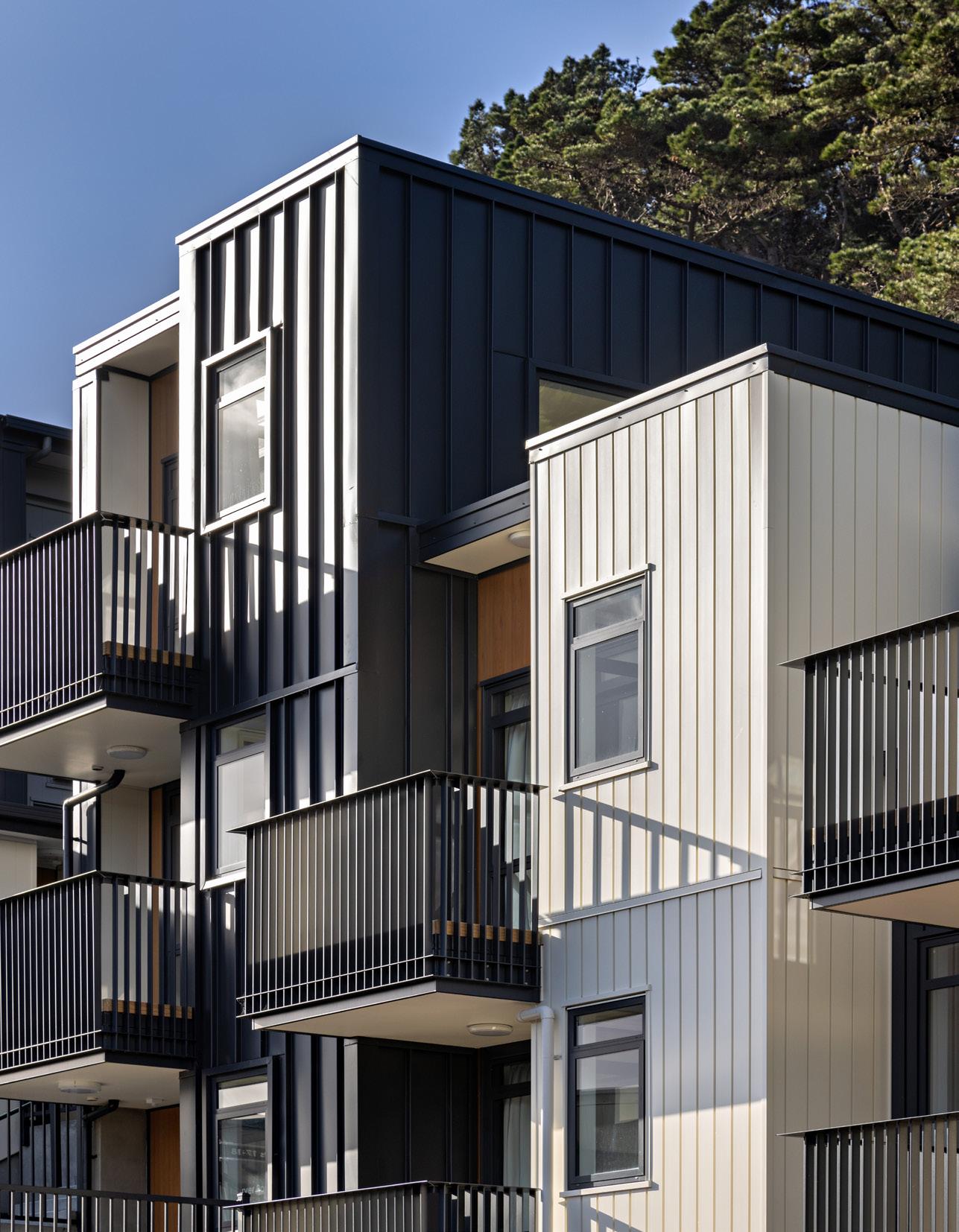
steep terrain while minimising cut and fill, helping to reduce bulk and integrate the project into its dense suburban context. Darker cladding elements unify the overall form and allow the buildings to recede visually, while lighter materials and textures add warmth and individuality to each home.
Owen Street reflects JTB’s ability to combine technical understanding with architectural quality.
Darker cladding unifies the overall form.
The homes are arranged around a central access point.
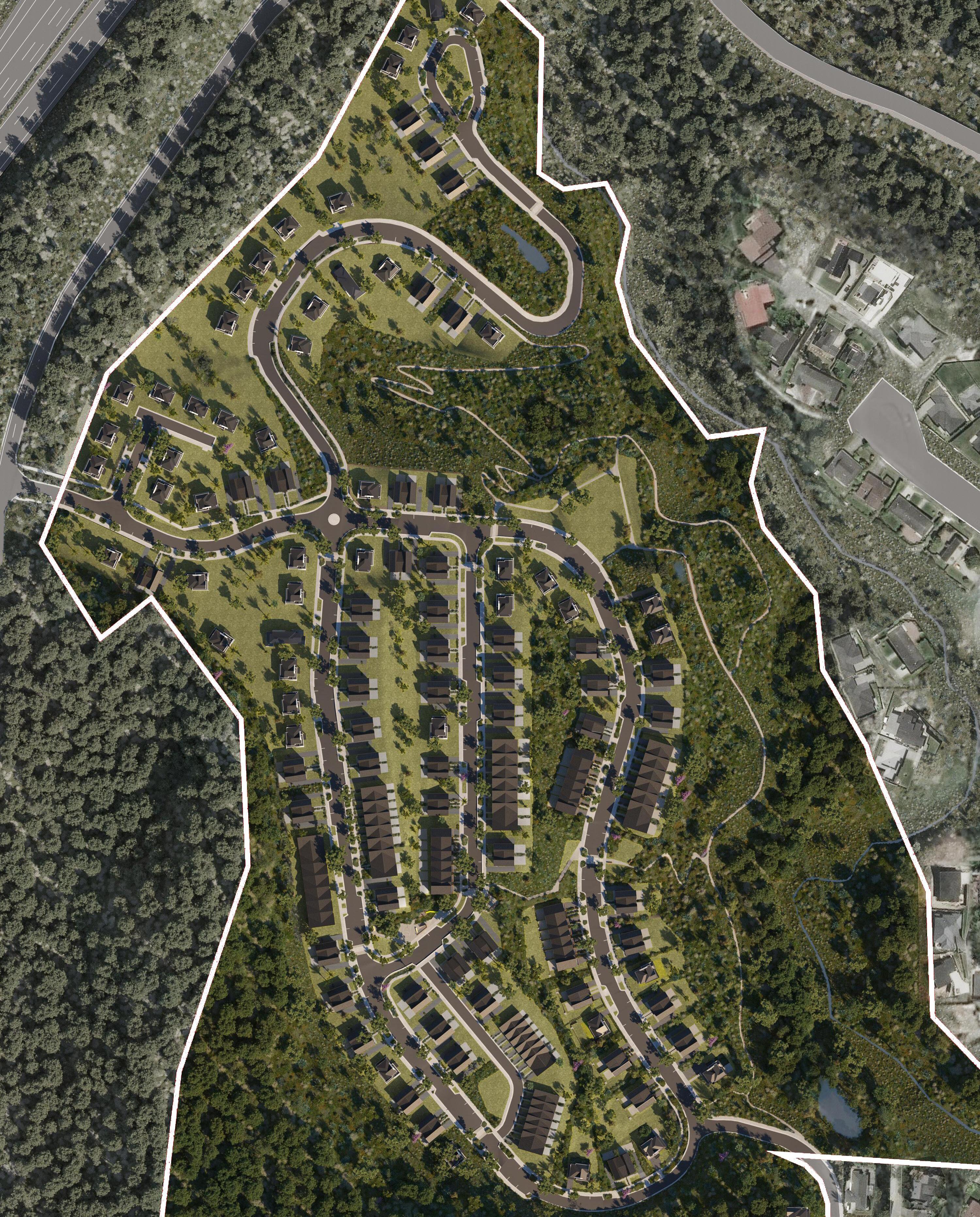
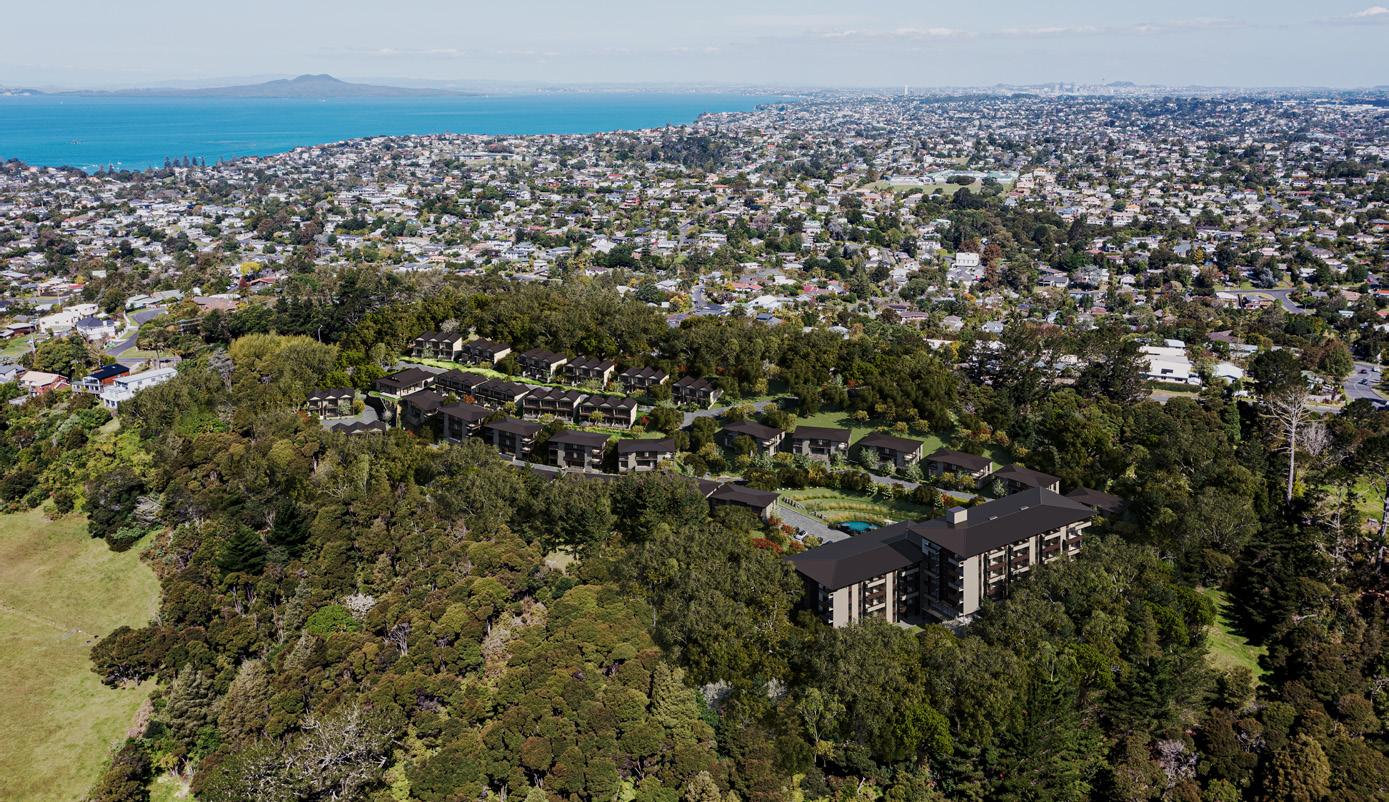
Silverbrooke transforms 162 hectares of ex-forestry land into a mediumdensity housing community, nestled on a sheltered west-facing slope in Whitby, Porirua.
SILVERBROOKE
Location Whitby, Porirua
Status
Completed
Silverbrooke comprises 160 homes across a mix of typologies, terraced townhouses, semidetached dwellings, and standalone houses, carefully arranged to respond to the site’s natural contours and orientation. The masterplan balances mediumdensity living with generous green infrastructure, integrating a network of public parks, reserves, and retained woodland, all connected by walkways and cycleways to support active, healthy lifestyles.
Each housing cluster is positioned in relation to slope, sun, and proximity to open space, with typologies tailored to suit a range
of household sizes, life stages, and price points, encouraging a socially diverse and inclusive community. Higher-density forms, such as terraced homes, are strategically located adjacent to green open spaces to soften their visual impact and enhance amenity.
Designs prioritise compact, efficient floorplans with strong indoor-outdoor connections, natural light, and framed views.
Privacy and passive surveillance are carefully balanced and externally, homes are articulated through varied rooflines, plan forms, and architectural elements such as porches, balconies, and sunshades.
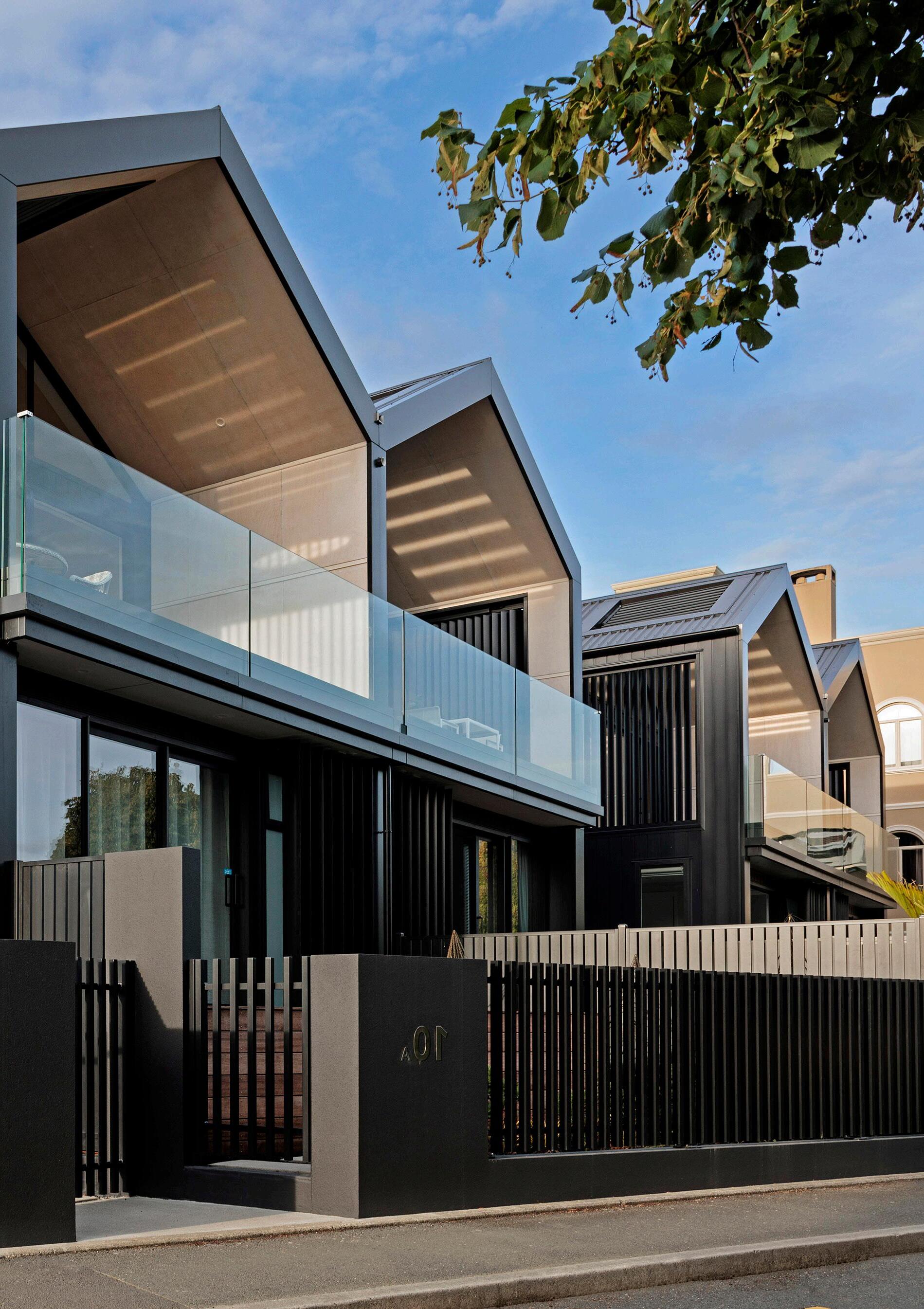
Positioned along Nelson’s Maitai River, Maitahi Quarter comprises four townhouse residences shaped by the light, rhythm and materiality of their setting.
MAITAHI QUARTER
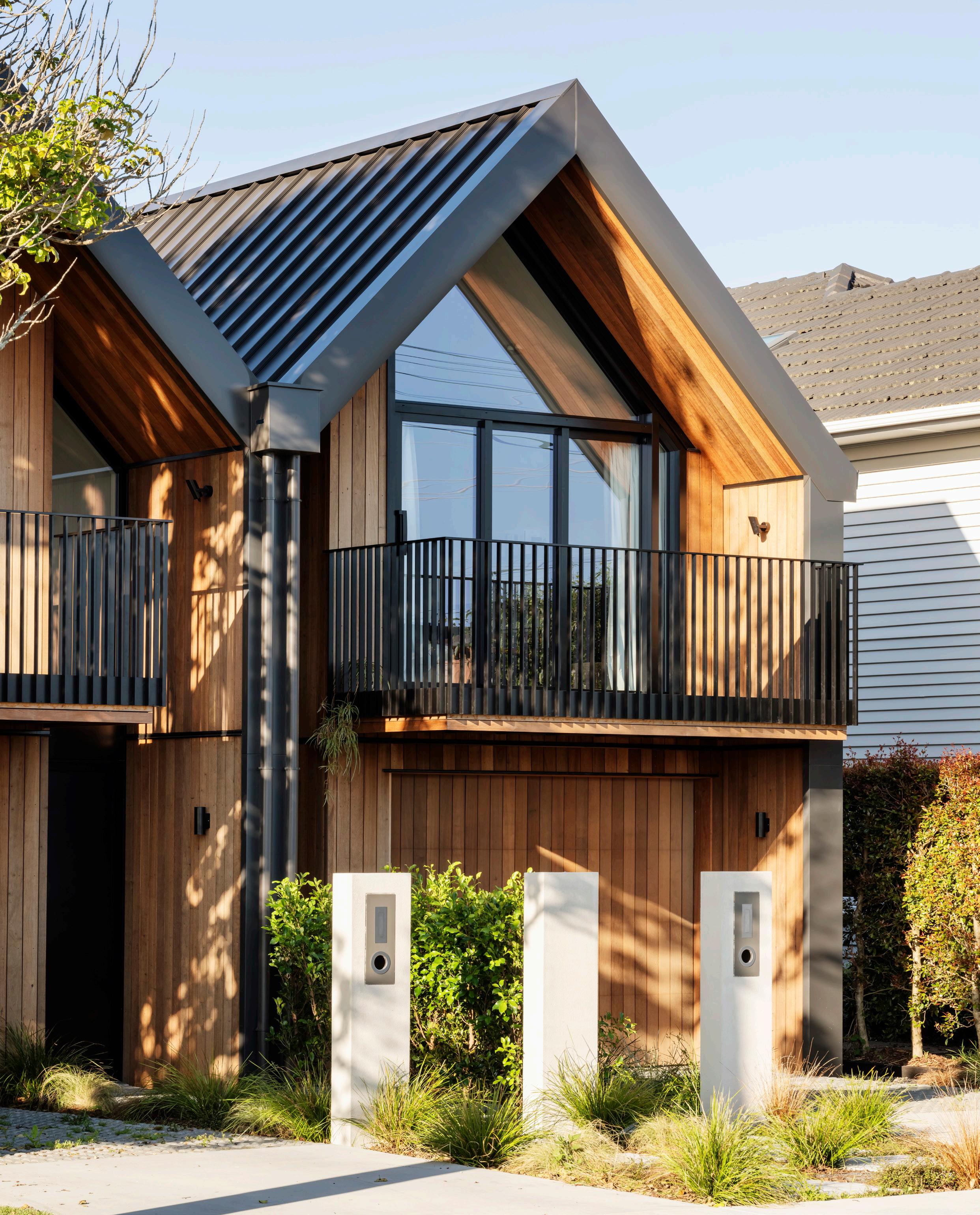
This four-unit townhouse development draws on the city’s riverside character with a boat-shed-inspired silhouette and a restrained palette of natural materials. Designed to sit comfortably within its urban setting, the architecture balances simplicity with thoughtful detailing.
Each 148m² home opens to the north, capturing sun and river views while maintaining privacy through deep façades
and recessed terraces. A garden courtyard at ground level and a first-floor terrace overlooking the Maitai River offer private outdoor spaces with a strong connection to place.
The first-floor terraces extend beyond the façade, creating a sheltered overhang that enhances privacy for both the lounge above and the bedroom below.
Maitahi Quarter shows how thoughtful architecture can elevate small-scale development into enduring, place-responsive living.
Interiors offer flexible layouts with options for two or three bedrooms, two bathrooms, and provision for a lift.
Split into two pairs, the townhouses share a unified design language while responding individually to their site, resulting in four architecturally cohesive yet distinct homes.
This 4,020m2 facility provides 22 assisted care apartments at ground floor with 47 care units at first floor.
SOMME STREET
Each floor provides communal dining and lounge facilities, with a commercial kitchen and laundry at the ground floor. Each apartment opens out onto a private outdoor area. The central courtyard provides a large outdoor sheltered amenity. Additional facilities for the tenants include reading lounge, cafe, laundry, hair salon & bar.
The project is in a residential area, requiring resource consent and consideration of surrounding dwellings. The form and scale of the design is carefully considered to break up the building and present a
high-quality feel to suit the vernacular of the surrounds, whilst maximising allowable site coverage. The success of this approach meant that the design, which was subject to limited notification, did not receive any objection.
This project required an early start on site, achieved with a separate earthworks and sub-structure Building Consent package which progressed in advance of the superstructure works. In addition, the design utilises prefabricated bathrooms to achieve time and quality benefits.
Following successful completion of the 790 Beach Road Apartments, we have completed two further stages of site development at Aria Bay.
ARIA BAY 792 BEACH ROAD
The first of these is located at 792 Beach Road and comprises two independent living apartment buildings, linked at basement level with shared carparking.
Apartment Building A contains 11 apartments over 3 living levels, Apartment Building B contains 14 apartments over 4 living levels. The proposed development includes a ground level village community centre within Apartment Building B, opening onto a communal courtyard space.
These two buildings, together with the adjacent independent apartment buildings, will develop as a strong community. To facilitate this, a community centre has been located alongside the shared courtyard. This is a multi-purpose space, with catering facilities, which can be used for a variety of events.
This is the latest stage of the Aria Bay Retirement Village, which provides a main entrance and focal point to the Village, with community café, dining, and entertainment facilities located around three north-facing courtyards.
ARIA BAY APARTMENTS AND CARE
Accommodation includes a care home with 60 units, including a specialist dementia care unit and secure courtyard in a four-storey block to the west of the site. To the east, in two linked five storey blocks with views overlooking the coast, are 52 serviced and independent living apartments. Apartments are designed to suit a variety of residents, and range in size from 1-bedroom units of 55m2 to 3-bedroom units of 115m2.
The project contained complex Resource Consent issues, we were significantly involved in successfully negotiating the design through a Public Hearing process. Stage 1 of the project, teh care home, was completed in 2021; followed directly with construction of the apartments.
This
Kāinga
Ora housing development
delivers 16 new homes across a uniquely positioned site with dual street frontages in a central Christchurch suburb.
KĀINGA ORA GREERS ROAD/ TRUMAN ROAD
The layout maximises the site’s dual frontages, responding to the distinct character of Greers Road and Truman Road while strengthening links to nearby public spaces. For privacy and security, the two areas are separated with no vehicle access between them.
On Greers Road, two offset twostorey apartment blocks avoid visual repetition and feature secure, clearly defined entrances beneath private balconies. Each block includes one accessible 1-bedroom and two accessible 2-bedroom units at ground level,
with three 2-bedroom units above. Facing Truman Road, four 4-bedroom duplexes reflect the quieter residential character through tailored materials, fencing, planting, and setbacks.
The overall layout ensures sunlight, privacy, and outlook for all homes. Communal spaces are welcoming and encourage informal social interaction, while private outdoor areas connect directly to living spaces and are screened from public view. Generous planting throughout softens the built form and enhances neighbourhood character
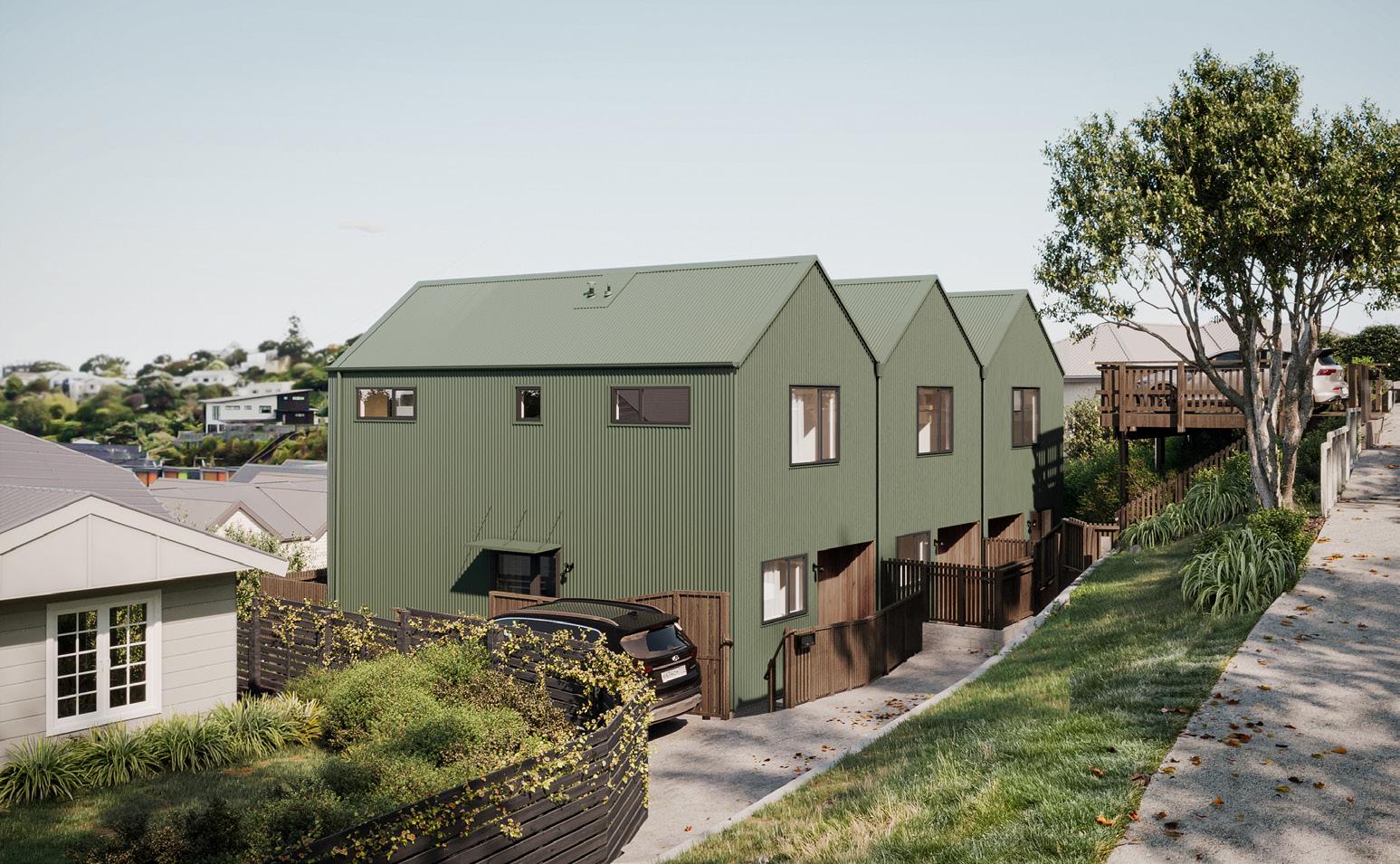
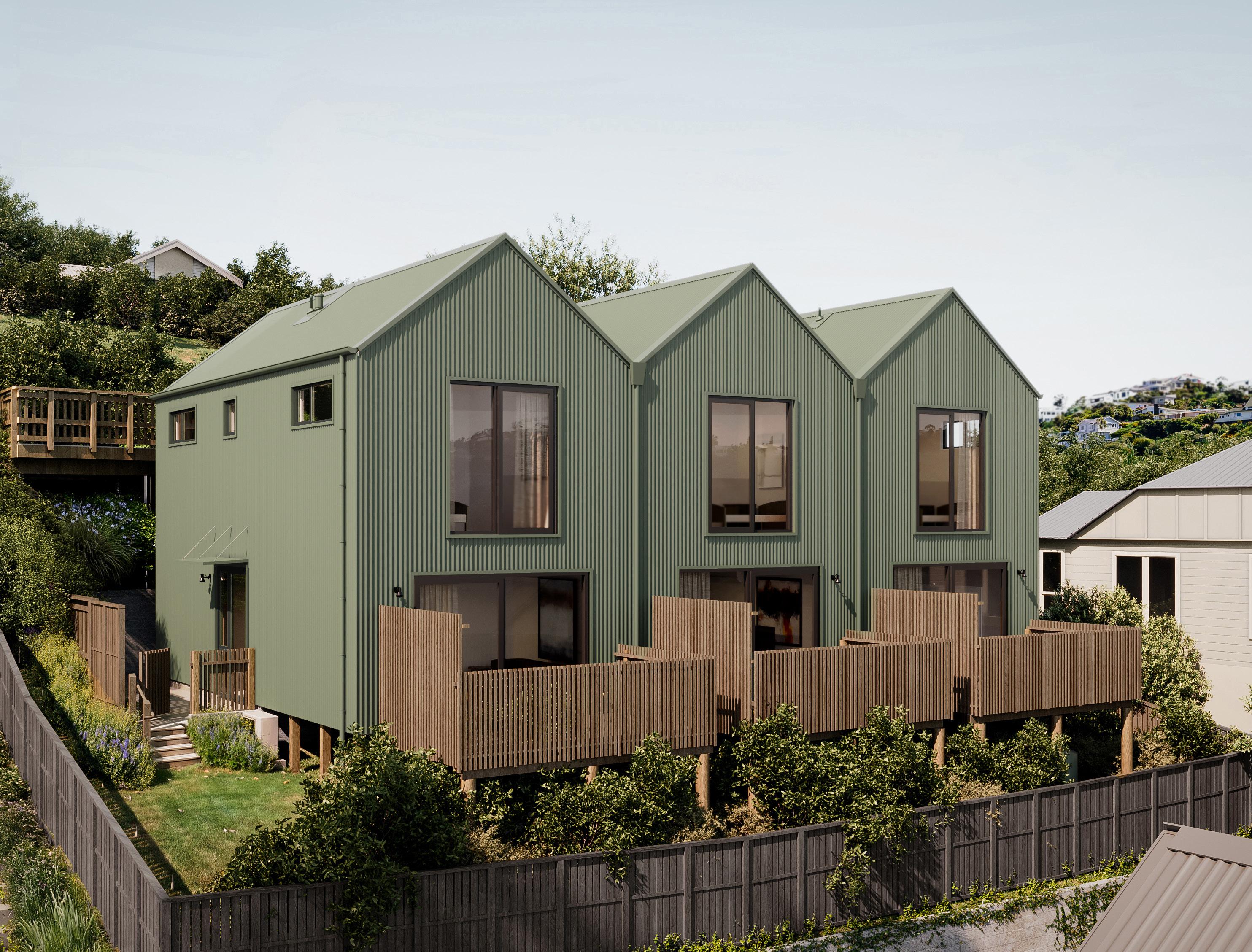
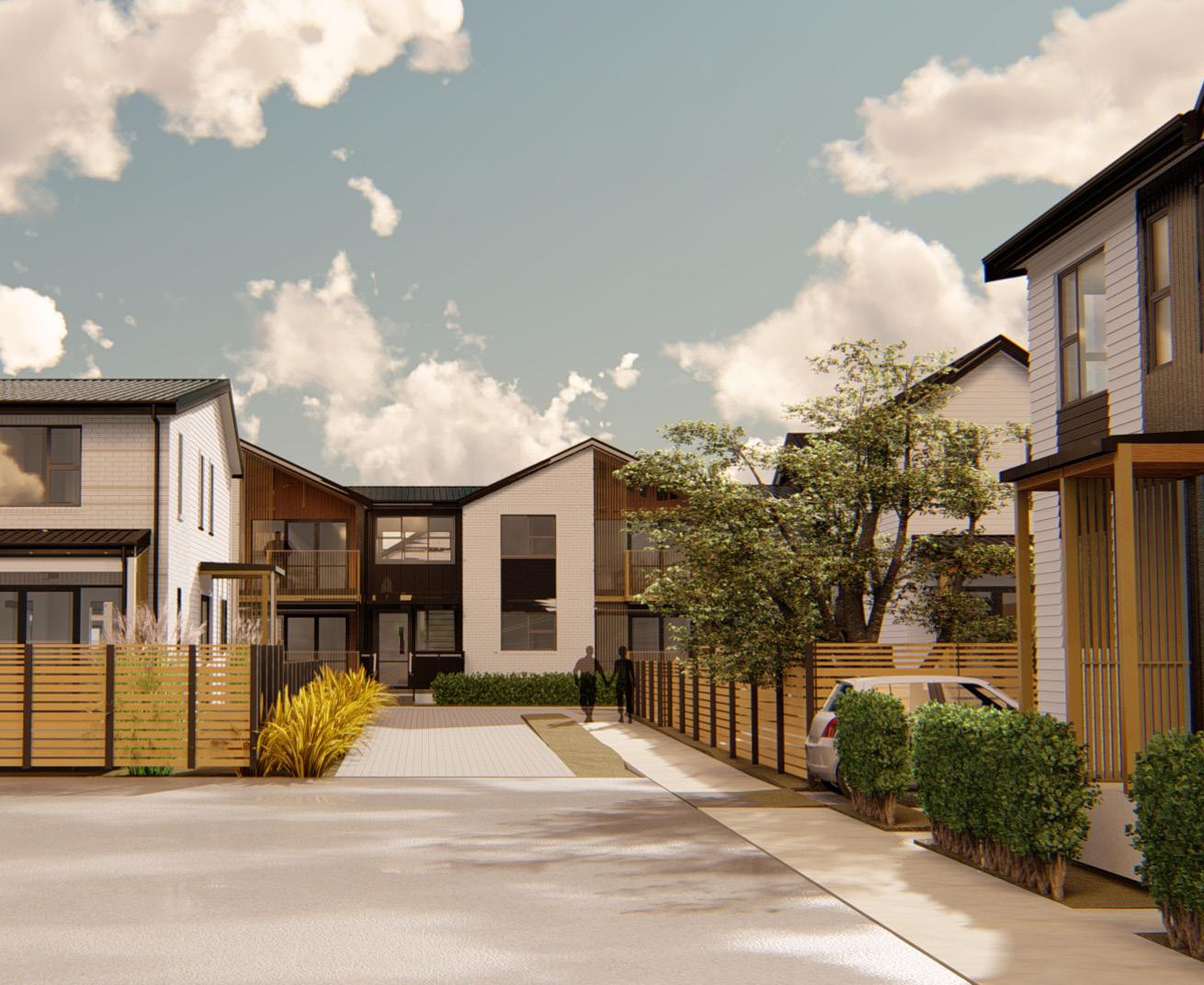
This project involves the removal of an existing single dwelling on a Miramar slope and the development of three contemporary, two-bedroom townhouses.
MIRAMAR TOWNHOUSES
The design brief emphasised sunlight access, views, privacy, efficient circulation, outdoor living, and a material palette that would blend sensitively with the natural environment.
The topography provides enough elevation to give the townhouses a pleasant sense of openness, with filtered views over the sur-
rounding landscape. The slight slope helps shape the layout, creating naturally defined spaces without relying on heavy structural intervention. This gentle rise ensures that each dwelling can enjoy morning and afternoon sun whilst respecting neighbour’s privacy.
Located on a generous 7,500m² site alongside Riccarton Road, this residential development delivers 27 homes in a carefully considered mix of two-storey standalone, duplex and triplex units, anchored by a larger-scale apartment building.
KĀINGA ORA 281 RICCARTON ROAD
The design responds to both the scale of the site and the needs of its future residents, creating a cohesive neighbourhood that balances privacy, community, and livability.
At the heart of the development is a landscaped courtyard, complemented by a shared community room and outdoor play area. These central amenities foster a sense of belonging and encourage informal social interaction, while private outdoor spaces are positioned around the site’s perimeter to ensure privacy and personal retreat.
The apartment building contains 13 two-bedroom units, efficiently planned around a centralised
entry, stair and lift core to meet Universal Design standards. Its entry aligns with the courtyard and play area, reinforcing the connection between shared and private spaces. Across the site, the layout supports both community engagement and individual comfort. Variation in building form, cladding and colour adds visual interest and rhythm, while careful modulation of massing and landscape planting helps the development sit comfortably within its suburban context.
This project reflects JTB’s commitment to creating well-scaled housing that supports functional and enduring design.
In response to Kāinga Ora’s analysis of the Seaview Road site, we proposed a range of property types including 2 and 3-bedroom standalone homes and semi-detached (duplex) homes, providing a total of 21 new dwellings.
KĀINGA ORA SEAVIEW ROAD
The masterplan ensures an even distribution of density options that actively engage with the neighbouring streets and adjacent Birchwood School field, while providing for positive private outdoor living spaces and communal open spaces. The pedestrian and vehicle network provides a streetbased subdivision pattern with a good degree of permeability.
The proposed development is in Stoke, Nelson. The houses in the area are typically single storey in height, located on mid-size sections with many have been a part of the Housing New Zealand
building stock. The proposed development recognises and contributes to the character of the area by using building forms and cladding materials that tie in with neighbouring properties and by arranging each unit so that the landscaping can respond to the street in a similar manner.
All proposed units are positioned on the site to allow for passive surveillance of the streets and communal outdoor areas within the development. Street fronts are designed to reflect and enhance the character and form of neighbouring streets.
All buildings are a maximum of two storeys, and all houses have living spaces on the ground floor and primarily bedrooms on the upper floor. This is intended to ensure that the living spaces have good connections to the outdoor spaces.
A combination of light weight construction (painted weatherboard and pre-finished profiled metal of different colour combinations) and brick cladding is proposed across the whole development. Variation in colour, tone, placement, and orientation of the cladding materials
breaks up the elevations to provide human scale and visual interest.
This proposal provides the necessary variation in housing typologies, with density and distribution, to meet the demands of Kāinga Ora’s yield requirements while ensuring good urban design outcomes. Through the arrangement and design of the buildings within the development, visual bulk is minimised through strategic cladding design and planting layouts.
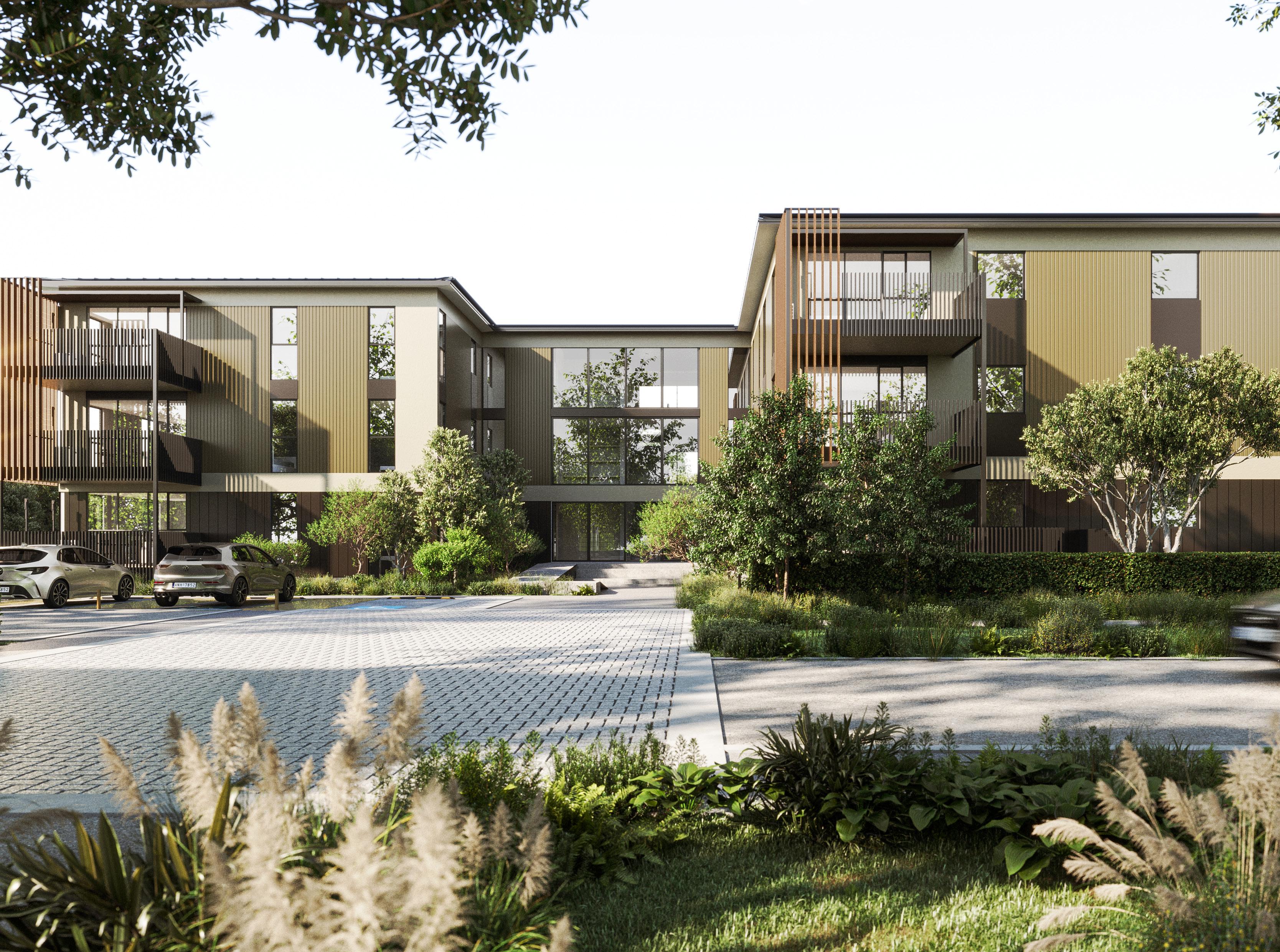
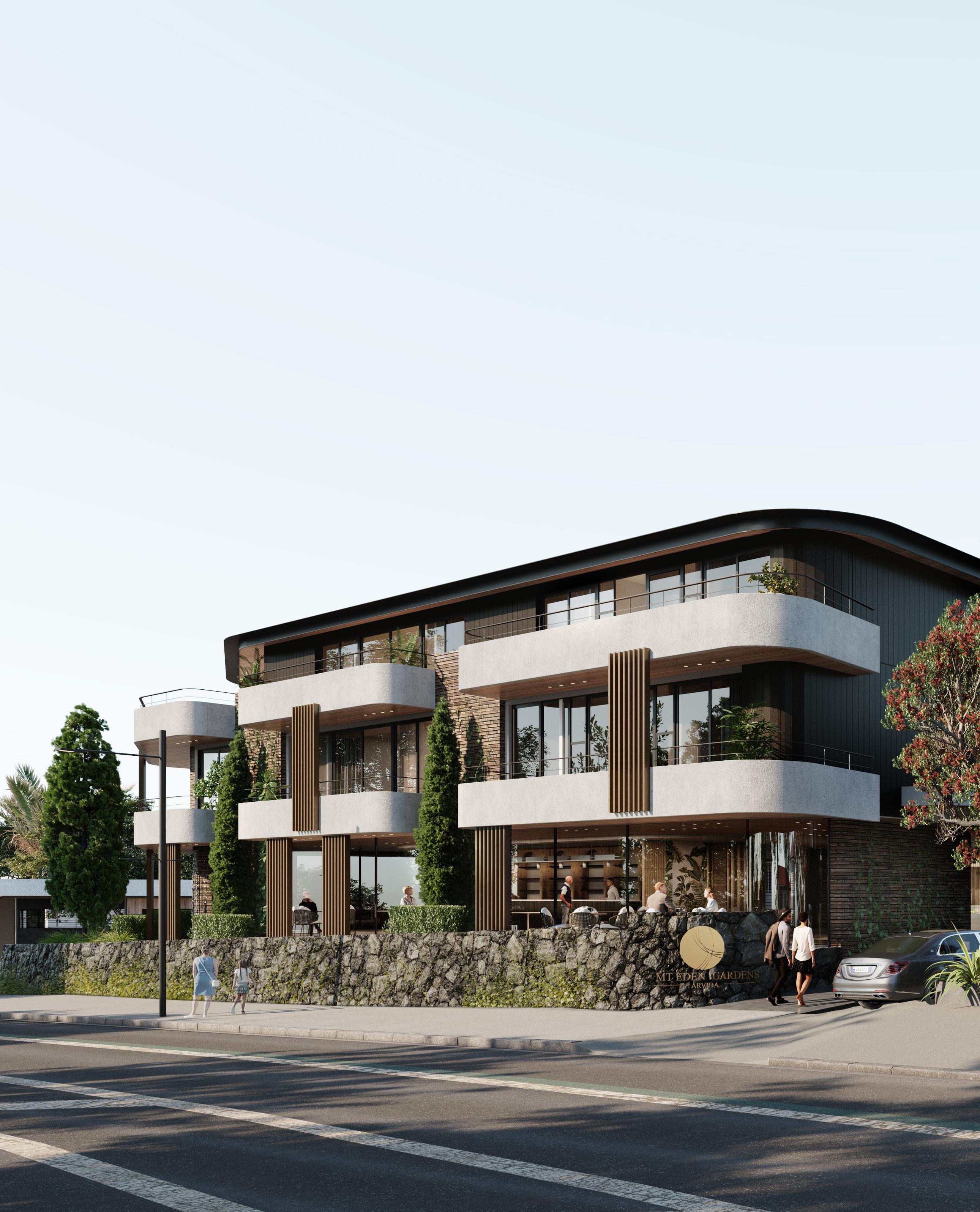
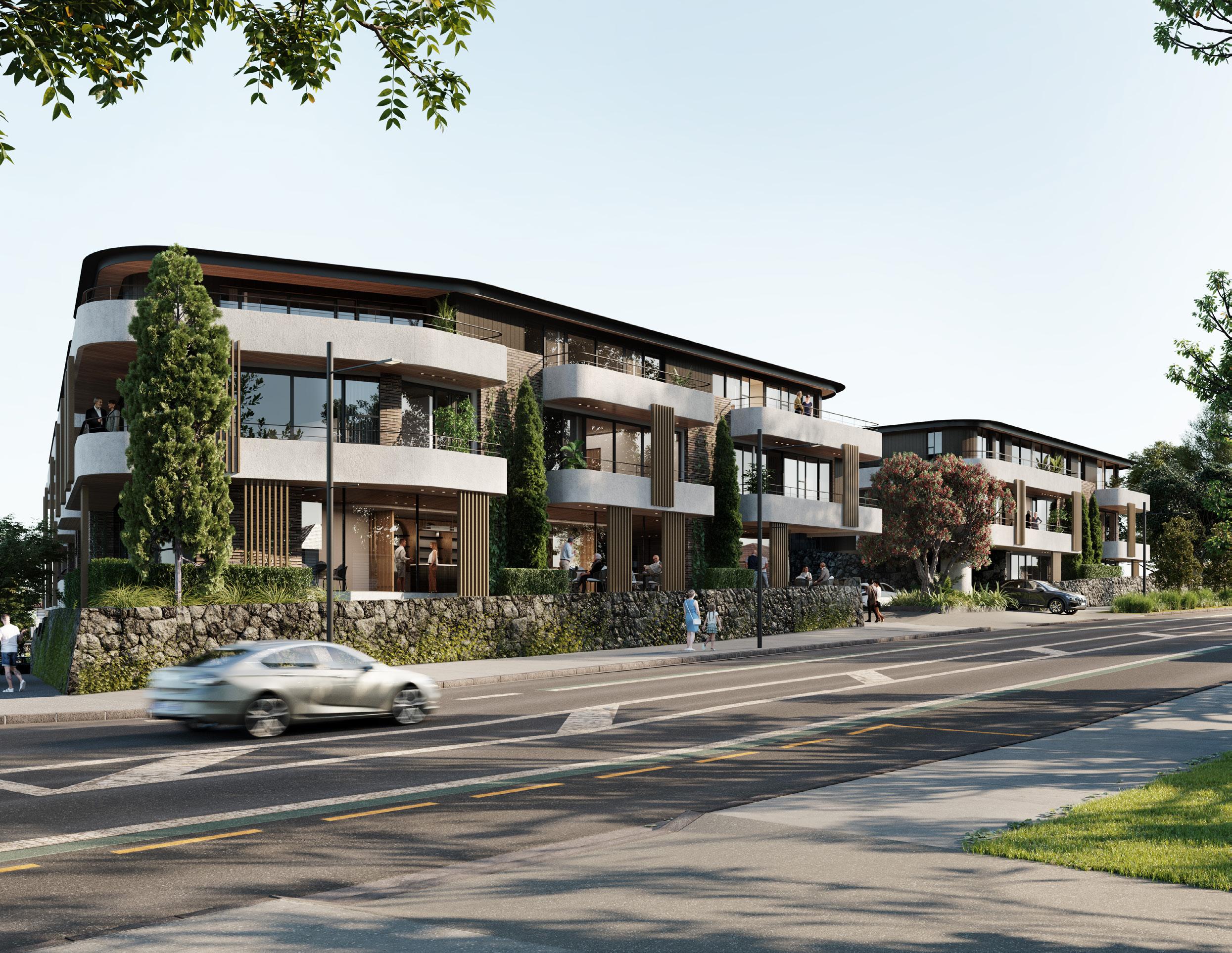
Mt Eden Gardens is a premium apartment development in Auckland’s central suburbs, featuring a contemporary architectural form with subtle Art Deco influences drawn from the area’s Special Character Overlay.
MT EDEN GARDENS
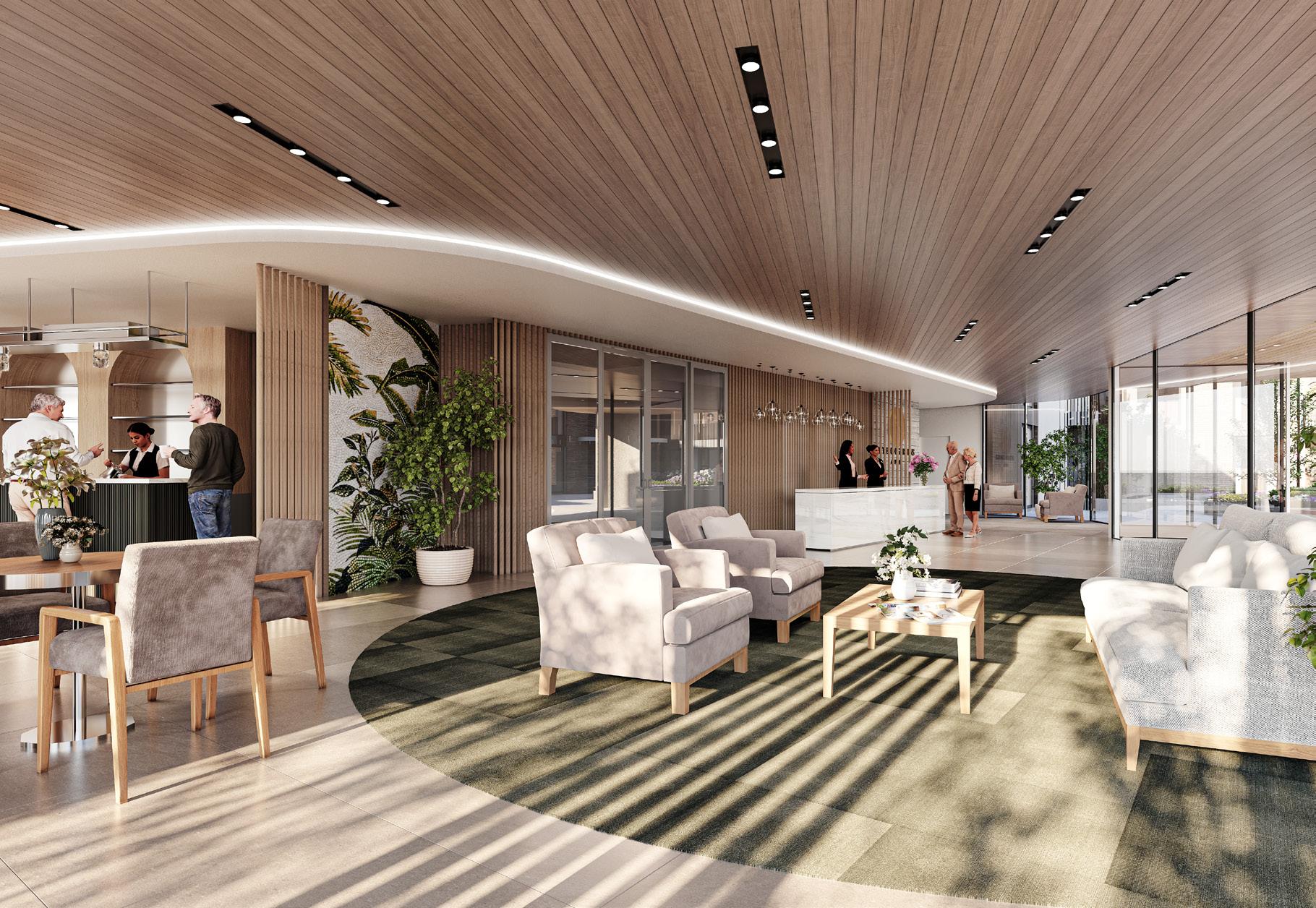
The project provides 62 one-, twoand three-bedroom apartments across three levels above a basement, supported by shared amenities including a lounge, café, swimming pool and gym.
The design achieves a balance between density and generosity, with strong façade articulation and generous separations that allow for light, privacy and outlook. Dual street frontages are carefully composed to create rhythm and variation, while floor-to-ceiling glazing and deep balconies optimise sunlight and views.
Influenced by the area’s Special Character Overlay, the architecture incorporates subtle Art Deco references within a contemporary form. Materials and detailing respond to the Mt Eden context, resulting in a building that feels established and connected to its surroundings.
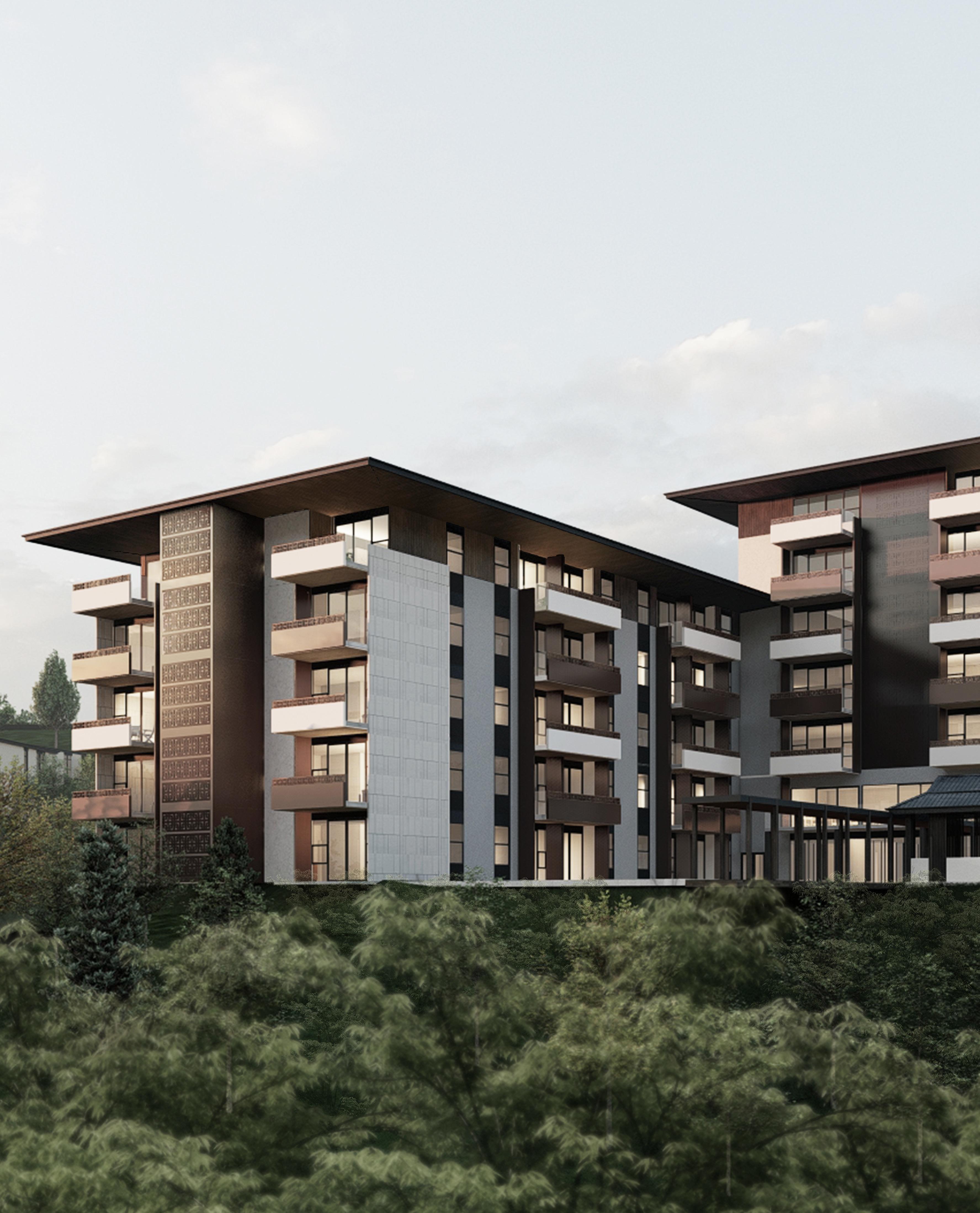
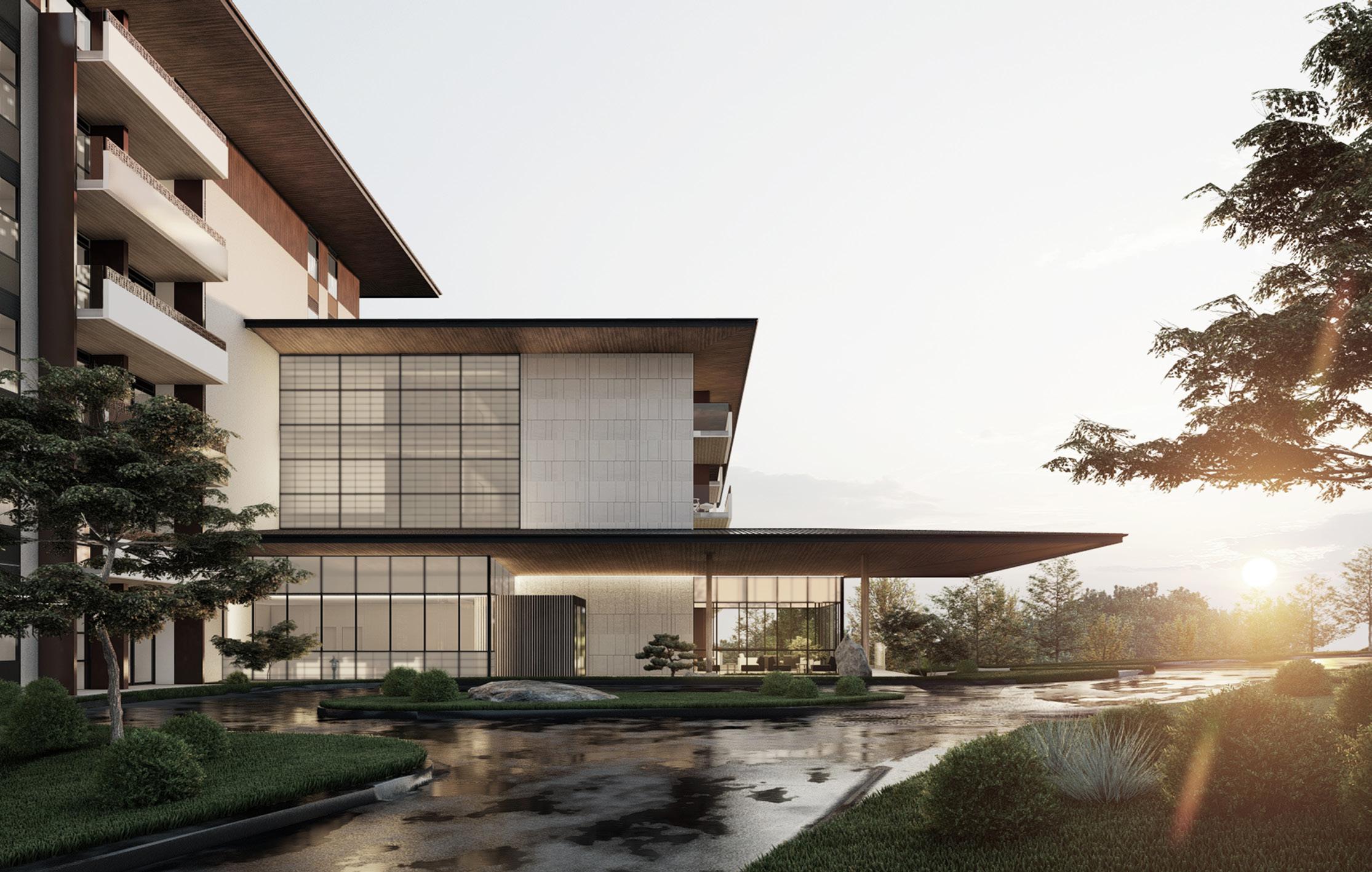
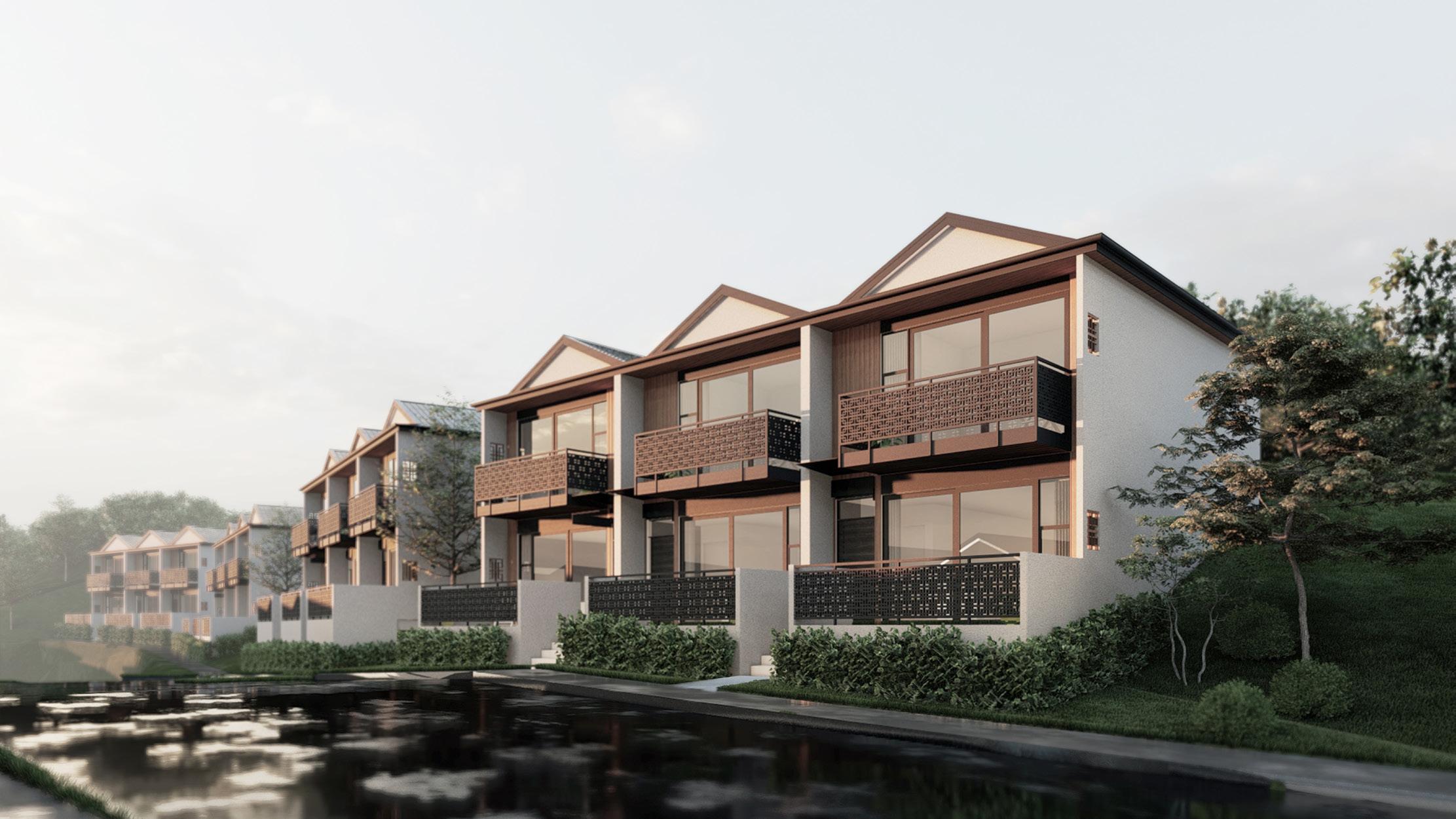
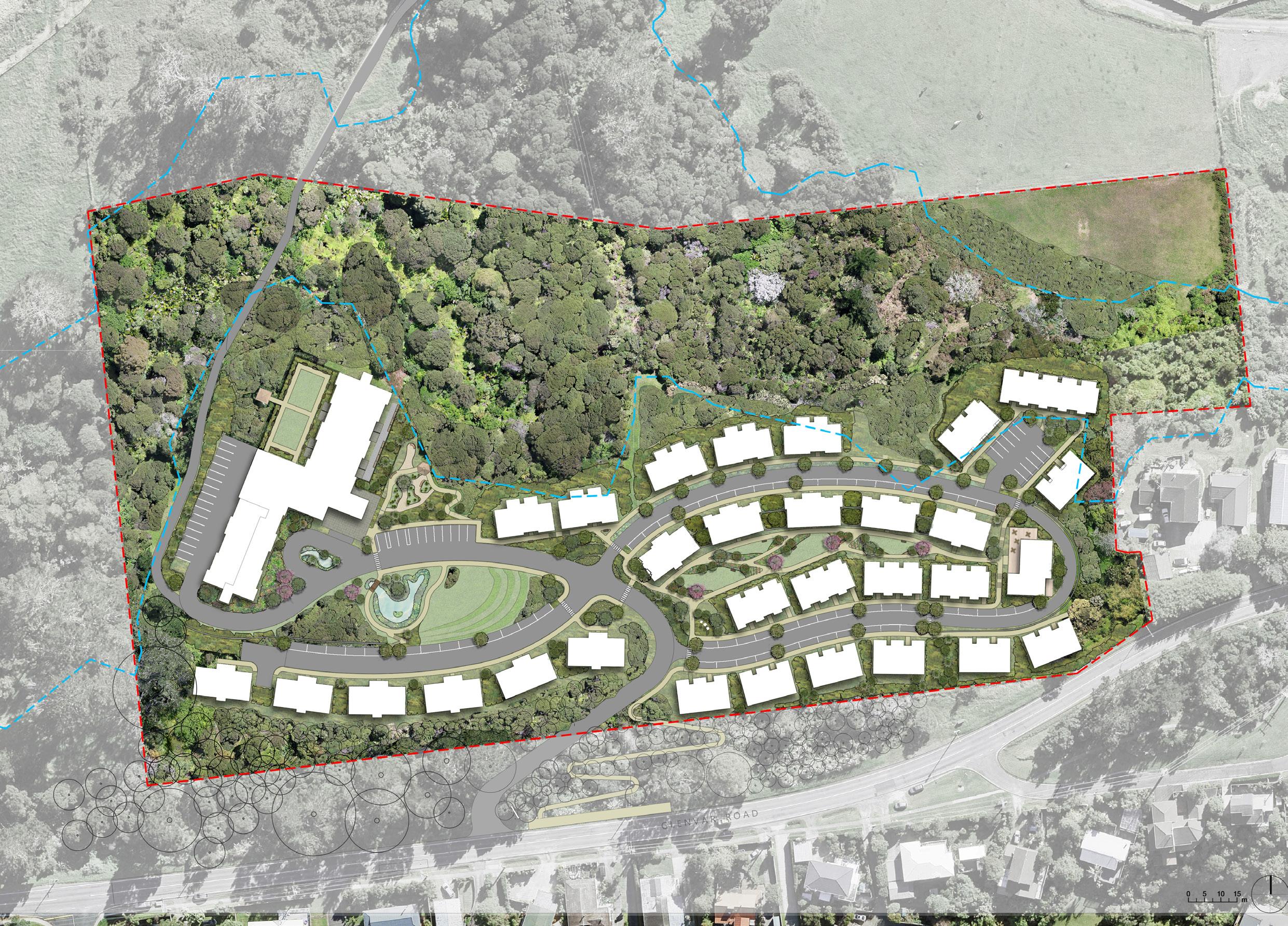
Located on Auckland’s North Shore, the Pinnacle Long Bay development has been planned to provide aged care options for Auckland’s Asian community.
PINNACLE LONG BAY
The architectural and landscape design draws inspiration from Asian traditions, creating spaces that feel familiar and respectful of cultural values. Both private and shared areas have been thoughtfully planned to support daily life and community connections for residents.
The development includes 30 care units, 87 one- and twobedroom apartments, 17 two- and three-storey villas, and 41 two-
storey townhouses. Residents have access to a wide range of communal amenities, including lounges, dining areas, medical rooms, and recreational spaces such as a cinema, gym, spa, and pool. These facilities are carefully positioned throughout the site to ensure convenience, encourage interaction, and provide visual harmony across the community.
Located in Highbury, Palmerston North, this Kāinga Ora development delivers 76 new homes across a fragmented 11,600m² site, unifying a diverse mix of standalone houses, duplexes and walk-up apartments into a cohesive neighbourhood.
KĀINGA ORA HIGHBURY CLUSTER
The Highbury Cluster introduces a diverse mix of housing typologies from standalone homes and duplexes to walk-up apartments, carefully distributed across a the expansive site. The masterplan responds to the complexity of the land parcels by weaving together a connected neighbourhood that actively engages with surrounding streets, an adjacent public park, and neighbouring Kāinga Ora land divested to Te Tihi.
Density and typology are balanced to support both variety and integration, with dwellings positioned to maximise private outdoor living and contribute to a
network of communal green spaces. A permeable layout of pedestrian and vehicle routes ensures connectivity while maintaining privacy and amenity.
Two distinct communal spaces anchor the development. In Area A, a cloister garden offers a quiet, resident-only retreat. In Area B, a publicly accessible community hub (comprising a park and shared room) is located at the southern edge adjacent to Croydon Avenue. Its placement signals openness to the wider neighbourhood and establishes a strong spatial relationship with the existing park across the road.
Homes are arranged to enhance visibility across streets and shared spaces, supporting a sense of safety and connection. Street frontages respond to the character of neighbouring streets, helping the development integrate into its context.
Located in Awapuni, Palmerston North, this Kāinga Ora development provides 57 dwellings, with a varied mix of underlying typologies.
KĀINGA ORA RALEIGH AND RUGBY STREET
The Raleigh and Rugby Street development offers a wide range of dwelling types, from 1- and 2-bedroom walk-up apartments to 2-, 3-, 4-, and 5-bedroom standalone and duplex homes. All buildings are two storeys or less, with living spaces typically located on the ground floor to ensure strong connections to outdoor areas, and bedrooms above for privacy.
and enhancing street presence. Each home is carefully oriented to optimise solar gain, with living areas opening to private, covered decks and low-maintenance landscaped gardens. These outdoor spaces are designed in line with PNCC District Plan and Kāinga Ora Landscape Design Guide principles, ensuring high levels of residential amenity, daylight, privacy and outlook. Location Awapuni, Palmerston North
Variations in roof form and cladding composition provide visual diversity across the site, avoiding repetition