2024-2025 BENEFITS GUIDE
June 1, 2024-May 31, 2025




TABLE OF CONTENTS A Smarter Way to Better Health Page 3 Eligibility & Enrollment Page 4 Medical Summaries Page 5 Telemedicine Service RECURO Health Page 6 Member Advocacy & Support Crumdale Partners Page 7 Dental & Vision Summaries Page 8 Life & Disability Summaries Page 9 Flexible Spending Accounts Healthcare, Limited Purpose, Dependent Care Page 10 Heath Savings Account Page 11 Identity Theft Protection Page 12 Key Contacts Page 13 Important Notices Pages 14-20
A SMARTER WAY TO BETTER HEALTH

It’s Your Health. Get Involved
Your health is a work in progress that needs your consistent attention and support Each choice you make for yourself, and your family is part of an ever-changing picture. Taking steps to improve your health such as going for annual physicals and living a healthy lifestyle can make a positive impact on your well-being
It’s up to you to take responsibility and get involved, and we are pleased to offer programs that will support your efforts and help you reach goals
Preventative Health Care Services
Immunizations
Preventive care includes services like checkups, screenings and immunizations that can help you stay healthy and may help you avoid or delay health problems Many serious conditions such as heart disease, cancer, and diabetes are preventable and treatable if caught early. It’s important for everyone to get the preventive care they need. Some examples of preventive care services are:
o Blood pressure, diabetes, and cholesterol tests
o Certain cancer screenings, such as mammograms, colonoscopies
o Counseling, screenings and vaccines to help ensure healthy pregnancies
o Regular well-baby and well-child visits
Some immunizations and vaccinations are also considered preventive care services. Standard immunizations recommended by the Centers for Disease Control (CDC) Include: hepatitis A and B, diphtheria, polio, pneumonia, measles, mumps, rubella, tetanus and influenza although these may be subject to age and/or frequency restrictions.
Generally speaking, if a service is considered preventive care, it will be covered at 100%. If it’s not, it may still be covered subject to a copay, deductible or coinsurance The Affordable Care Act (ACA) requires that services considered preventive care be covered by your health plan at 100% in-network, without a copay, deductible or coinsurance. To get specifics about your plan’s preventive care coverage, call the customer service number on your member ID card. You may want to ask your doctor if the services you’re receiving at a preventive care visit (such as an annual checkup) are all considered standard preventive care
If any service performed at an annual checkup is as a result of a prior diagnosed condition, the office visit may not be processed as preventive, and you may be responsible for a copay, coinsurance or deductible. To learn more about the ACA or preventive care and coverage, visit www.healthcare.gov. Understanding What’s Covered
American Omni Trading Company Benefit Guide | 3
ELIGIBILITY & ENROLLMENT
Who is Eligible to Join the Benefit Plan?
You and your dependents are eligible to join the health and welfare benefit plans if you are a fulltime employee regularly scheduled to work 36 hours per week You must be enrolled in the plan to add dependent coverage.
Who is an Eligible
Dependent?
• Your spouse to whom you are legally married
• Your domestic partner with whom you have shared a residence and financial obligations for 6 months or more
• Your dependent child under the maximum age specified in the Carriers’ plan documents including:
• Natural child
• Adopted child
• Stepchild
• Child for whom you have been appointed as the legal guardian
*Your child’s spouse and a child for whom you are not the legal guardian are not eligible.
The Dependent Maximum Age Limit is up to age 26 The dependent does not need to be a full-time student; does not need to be an eligible dependent on parent’s tax return; is not required to live with you; and may be unmarried or married
Once the dependent reaches age 26, coverage will terminate on the last day of the birth month
A totally disabled child who is physically or mentally disabled prior to age 26 may remain on the if the child is primarily dependent on the enrolled member for support and maintenance
When Do Benefits Become Effective?
Your benefits become effective on the first day of the month following your 1st day as a full-time employee with American Omni Trading Company.
Annual Open Enrollment?
Each year during the annual Open Enrollment Period, you are given the opportunity to make changes to your current benefit elections. To find out when the annual Open Enrollment Period occurs, contact Human Resources
Qualifying Event Changes
You are allowed to make changes to your current benefit elections during the plan year if you experience an IRS-approved qualifying change in life status The change to your benefit elections must be consistent with and on account of the change in life status.
IRS-approved qualifying life status changes include:
• Marriage, divorce or legal separation
• Birth or adoption of a child or placement of a child for adoption
• Death of a dependent
• Change in employment status, including loss or gain of employment, for your spouse or a dependent
• Change in work schedule, including switching between full-time and part-time status, by you, your spouse or a dependent
• Change in residence or work site for you, your spouse, or a dependent that results in a change of eligibility
• If you or your dependents lose eligibility for Medicaid or the Children’s Health Insurance Program (CHIP) coverage
• If you or your dependents become eligible for a state’s premium assistance subsidy under Medicaid or CHIP
If you have a life status change, you must notify American Omni Trading Company within 60 days for changes in life status due to a Medicare or CHIP event and within 31 days of the other events
If you do not notify American Omni Trading Company during that time, you and/or your dependents must wait until the next annual open enrollment period to make a change in your benefit elections.
Please note, loss of coverage due to non-payment or voluntary termination of other coverage outside a spouse’s or parent’s open enrollment is not an IRS-approved qualifying life event and you do not qualify for a special enrollment period
! American Omni Trading Company Benefit Guide | 4

FRANKLIN
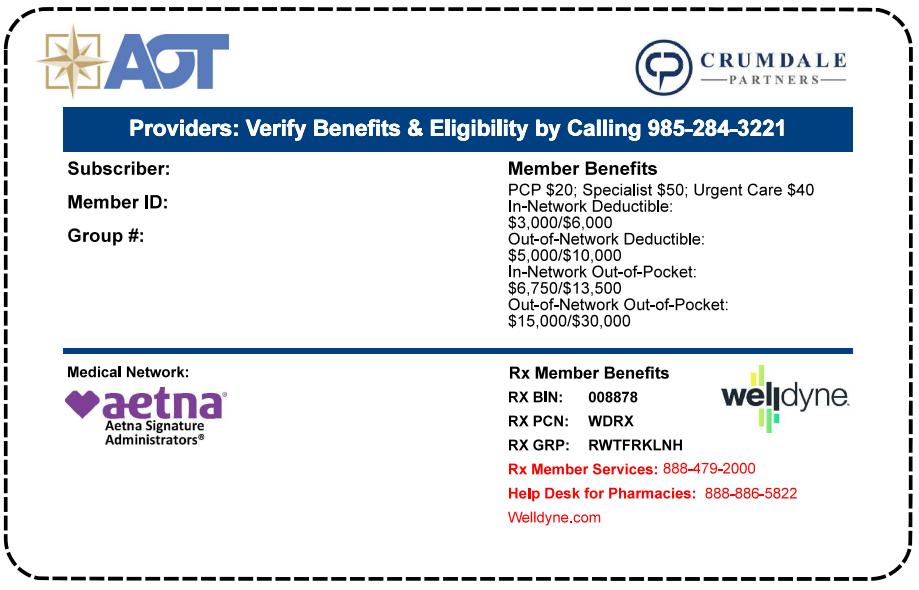
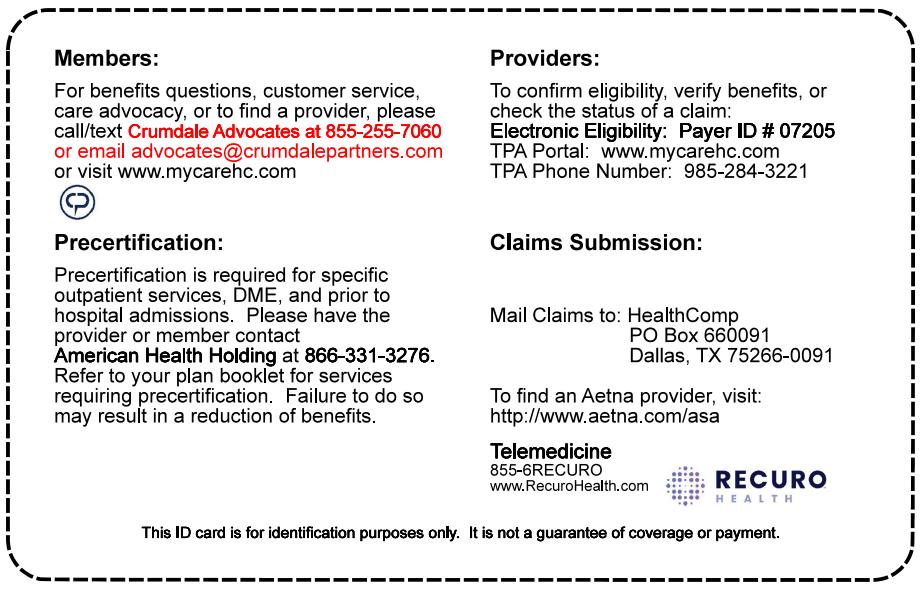
Nation PPO Network In Network BUY-UP CORE HSA Coinsurance 80% 80% 80% Deductible Employee | Family $250 | $500 $1,500 | $3,000 $4,000 | $8,000 Out of Pocket Maximum Employee | Family $4,000 | $8,000 $5,000 | $10,000 $7,000 | $14,000 Preventative Covered in Full Covered in Full Covered in Full Office Visit Telemed PCP (Primary Care Provider) Specialist $25 copay $25 copay $75 copay $25 copay $25 copay $75 copay Deductible + $25 Deductible + $25 Deductible + $75 Emergency Treatment ER (waived if admitted) Urgent Care $300 copay + Ded +20% $50 copay $300 copay + Ded +20% $50 copay $300 copay + Ded +20% Ded + $50 copay Inpatient Services Ded then 20% Ded then 20% Ded then 20% Outpatient Services Ambulatory Hospital Setting Ded then 20% Ded then 20% Ded then 20% Prescription Copays: Retail | Specialty Tier 1 Tier 2 Tier 3 Tier 4 $10 copay | $10 copay $35 copay | $150 copay $75 copay | $350 $250 copay | $500 $10 copay | $10 copay $35 copay | $150 copay $75 copay | $350 $250 copay | $500 *Ded applies first $10 copay | $10 copay* $35 copay | $150 copay* $75 copay | $350* $250 copay | $500* Employee Premium per Bi-Weekly Pay Period (26) Employee Only $53.27 $0.00 $0.00 Employee + Spouse $397.30 $313.21 $117.63 Employee + Child(ren) $327.67 $258.53 $82.62 Family $707.42 $599.08 $338.33 American Omni Trading Company Benefit Guide | 5
2024 EMPLOYEE BENEFITS AT A GLANCE MEDICAL INSURANCE |
HEALTH | Aetna
American Omni Trading Company Benefit Guide | 6
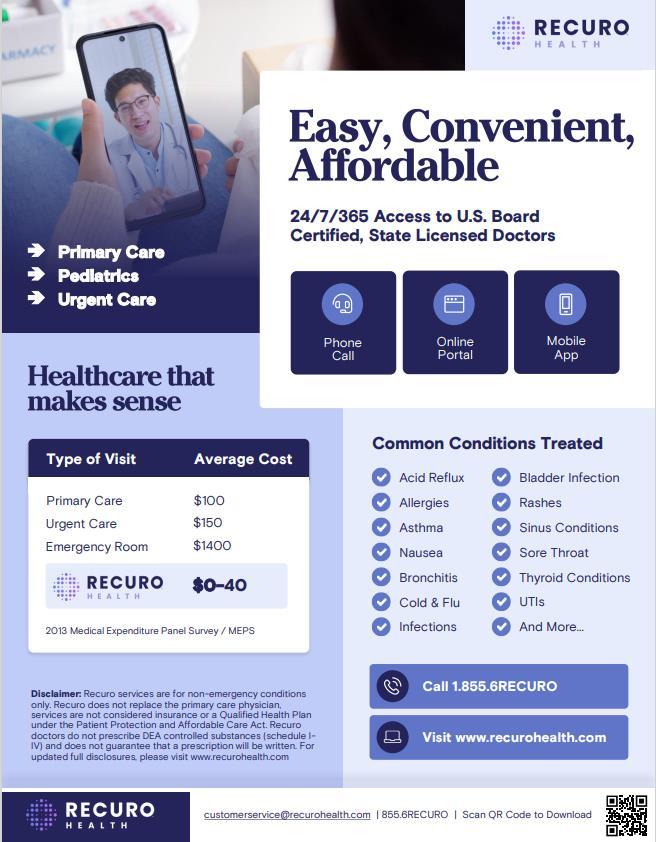
TELEHEALTH – RECURO Health
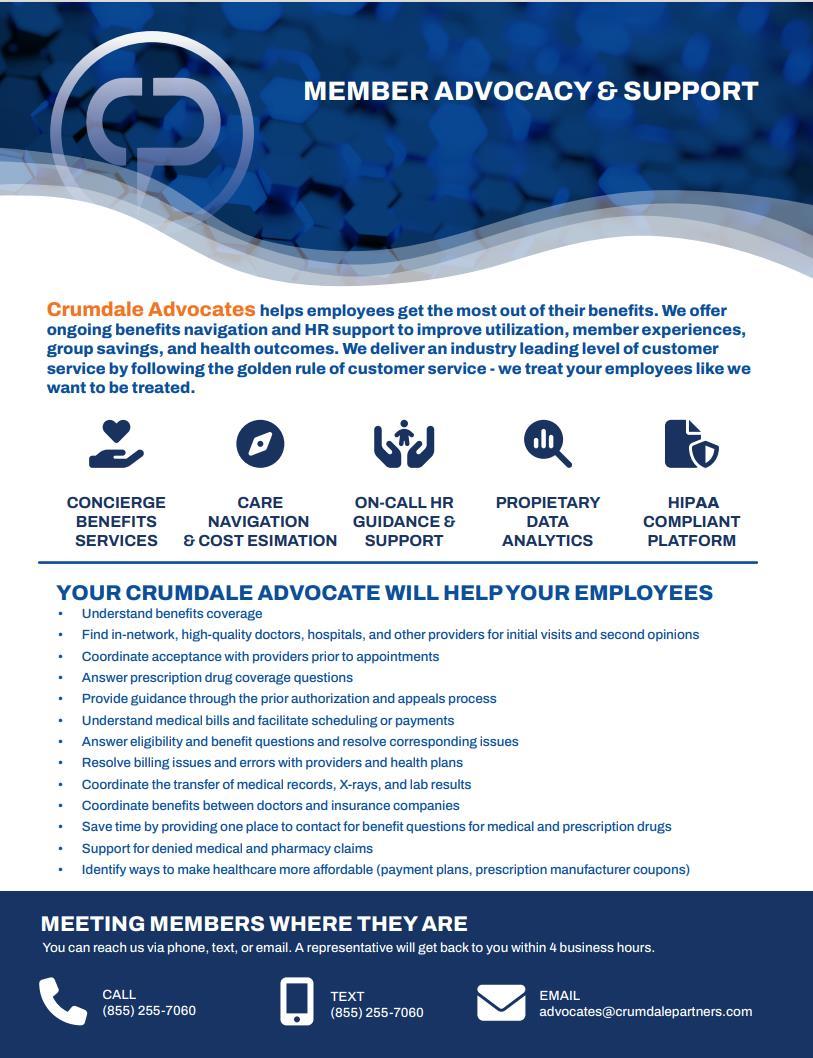
MEMBER ADVOCACY
American Omni Trading Company Benefit Guide | 7

In-Network Coverage Annual Deductible: Employee | Family $50 | $150 Annual Maximum per Person $1,500 Preventive Services 100% (Ded Waived) Basic Services 80% Major Services 50% Ortho up to age 19 $1,250 Employee Cost per Bi-Weekly Pay Period (26) Employee Only $0.00 Employee + Spouse $31.81 Employee + Child(ren) $37.20 Family $56.94 DENTAL
American Omni Trading Company Benefit Guide | 8 In-Network Coverage Eye Exam (1x per 12 mos) $10 Copay Lenses (1x per 12 mos) $10 Copay Frames Allowance (1x per 12 mos) $200 allowance Contact Lenses (in lieu of frames) $200 allowance Contact Lenses Fitting $40 Employee Premium per Bi-Weekly Pay Period (26) Employee $0.00 Employee + Sprouse $7.80 Employee + Child(ren) $9.16 Family $12.89
INSURANCE
UNITED
2024 EMPLOYEE BENEFITS AT A GLANCE
INSURANCE | METLIFE
VISION
|
HEALTHCARE

Company Paid Basic Life
AD&D Benefit Amount 2 TIMES SALARY MANAGEMENT I 1 TIMES THE SALARY ALL OTHER FULLTIME EE’S AD&D Coverage Included Benefit Reductions 35% @ age 65 | 60% age 70 Cost 100% Employer Paid Voluntary Term Life | AD&D Employee Benefit Amount $10,000 Increments up to $100,000 Guaranteed Issue Spouse Benefit Amount $5,000 increments up to $25,000 Guaranteed Issue Child Benefit Amount Up to $10,000 Cost See Paylocity for Cost EOI Required? Yes, if previously waived/increasing coverage after initial enrollment/over guaranteed issue Company Paid Short Term Disability Benefit Amount 15th Day (Injury or Sickness) Benefit Duration 11 weeks Benefit Amount 60% to $1,000 per week Pre-Ex 3 | 12 Cost 100% Employer Paid EOI Required? Yes, if previously waived. Company Paid Long Term Disability Benefits Begin 91st Day (Injury or Sickness) Benefits Duration Social Security Normal Retirement Age Benefit Amount 60% to $6,000 per month Pre-Ex 3 | 12 EOI Required? 100% Employer Paid
METLIFE
A GLANCE American Omni Trading Company Benefit Guide | 9
|
LIFE & DISABILITY |
2024 EMPLOYEE BENEFITS AT
FLEXIBLE SPENDING ACCOUNT (FSA)
Provided by PAYLOCITY
American Omni Trading Company offers employees the opportunity to participate in the Healthcare Flexible Spending Account (FSA) and Dependent Care FSA. These programs may provide you with significant tax advantages as they allow you to pay for eligible out-of-pocket expenses with pre-tax dollars through payroll deductions.
Healthcare Flexible Spending Account (FSA)
You may not enroll in the Healthcare FSA if you are contributing to an HSA.
You may defer up to $3,200 to your Healthcare FSA to fund eligible out-of-pocket healthcare expenses. The following list provides examples of expenses eligible for reimbursement under the IRS guidelines:
• Non-covered medical expenses that quality under Section 217 of the IRS code
• Deductibles
• Office visit copays
• Prescription medication
• Over-the-counter medications (require physician prescription)
• Hearing and dental expenses not covered by insurance
• The IRS 2024 rollover max is $640
Limited Purpose Flexible Spending Account (LPFSA)
You may enroll in the LPFSA if you are contributing to an HSA.
A limited purpose flexible spending account (LPFSA) is a special type of flexible spending account that WILL pair with a Health Savings Account (HSA).
Typically, if you have an HSA, you're not eligible to open a regular FSA. However, an LPFSA lets you use pretax dollars to pay for qualified dental and vision expenses while enrolled in a qualified HSA.
• Dental deductibles, coinsurance, and procedure amounts exceeding the annual limit
• Braces/Invisalign
• Vision exams/copays

• Contact lenses
• Lens solution/cleaner
• Prescription glasses
• Reading glasses
• LASIK surgery
You may defer up to $3,200 to your LPFSA to fund eligible out-of-pocket dental and vision expenses. The LPFSA also includes the IRS 2024 rollover max of $640
Examples of non-eligible expenses include cosmetic surgery, electrolysis, toiletries, vitamins, health club dues.
Dependent Care FSA
You may defer up to $5,000 to your Dependent Care FSA to fund eligible out-of-pocket expenses for childcare and eldercare. To be eligible for reimbursement, expenses must meet the following criteria established by the IRS:
▪ The person cared for must be under age 13, or if older, physically or mentally incapable of self-care.
▪ Day care must be necessary in order for you and your spouse to work.
▪ The person cared for must be claimed as a dependent on your federal tax return and must reside in your home at least eight hours per day
▪ Payment for care cannot be made to anyone you claim as a dependent on your income tax return, to your spouse or to a child under age19
▪ If care is provided by a center that cares for more than six individuals, it must be licensed.
For a complete list of eligible medical and dependent care expenses, you may access publications #502 (healthcare) and #503 (dependent care) on the web at www.irs.gov.
American Omni Trading Company Benefit Guide | 10
HEALTH SAVINGS ACCOUNT (HSA)
What is a Health Savings Account?
An HSA is an interest-bearing savings account funded with pre-tax dollars and used to pay for eligible health care expenses not covered by the insurance plan. You decide how much to contribute, the amount you want to spend on qualified medical expenses, as well as which expenses you will pay out of the account
How Does an HSA Work?
1. You must have coverage under an HSA qualified HDHP - there can be no secondary medical coverage in place
2. Once covered by a qualified HDHP, you may open an HSA and contribute up to the 2024 regulatory limits of:
• $4,150 for an individual or $8,300 for a family (‘Catch-up’ provision allows age 55 and over additional $1,000 per year)
3. Pre-tax contributions to your HSA can continue until age 65 and you’re enrolled in Medicare Part A. If you are currently enrolled in Medicare, are currently being claimed as a dependent on another person’s tax return, or have coverage through Tricare or the Veteran’s Administration, you are not eligible to open an HSA
4. Once your HSA is established and you have a qualified expense you may:
• make a tax-free withdrawal from your account to cover the costs, or
• pay out of your pocket and save your HSA for future qualified expenses
5. HSA money rolls over indefinitely so you may allow the money to accumulate for use in retirement!
Only IRS qualified healthcare expenses are eligible for reimbursement from an HSA. Any funds used for nonqualified expenses are taxable as income and subject to a 20% tax penalty
High Deductible Health Plans (HDHP)

Our High Deductible Health Plan is a “qualified High Deductible Health Plan (HDHP),” which meets certain criteria outlined by the IRS. There are several items you need to be aware of prior to enrolling in an HDHP:
• The plan requires you to meet your annual deductible before your HDHP pays benefits. Every dollar you spend for covered services goes toward meeting your annual deductible Expenses can be paid for by your Health Savings Account (HSA)
• Preventive care is always covered at 100% when received from an in-network provider
• Covered services accumulate to a combined family deductible (for you, your spouse and your dependents), with an embedded individual deductible for covered members
• High Deductible Health Plans are Health Savings Account (HSA) eligible.
American Omni Trading Company Benefit Guide | 11
IDENTITY THEFT PROTECTION
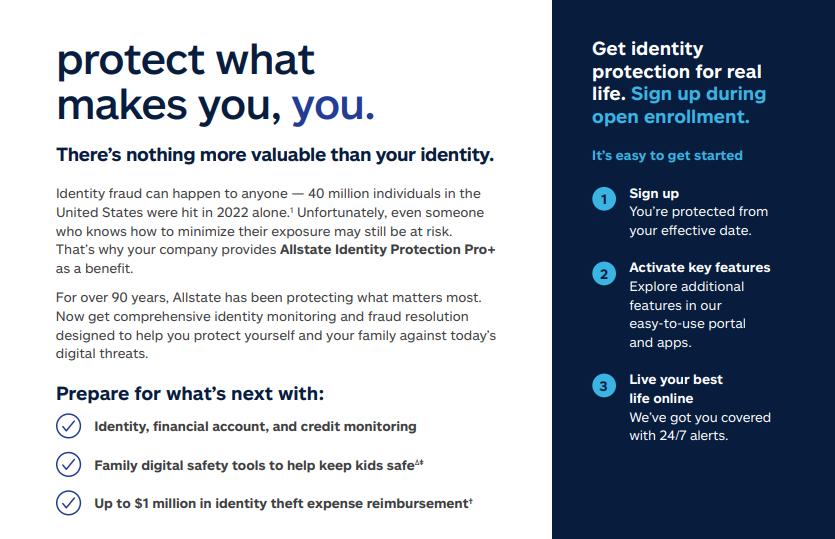
American Omni Trading Co. offers all full-time employees the opportunity to enroll in Allstate’s Identity Protection Pro+. With Allstate Identity Protection Pro+, get advanced features designed to help you defend yourself from today’s risks:
• Allstate Digital Footprint®, our proprietary privacy tool, shows where your data lives online and how it might be exposed
• Allstate Security Pro® delivers updates and education on scams relevant to you
• Identity Health Status gives you at-a-glance insight into your risk
• Comprehensive identity and financial monitoring
• Dark web monitoring
• Robocall blocker
• Ad blocker
• Social media account takeover monitoring
• Tri-bureau credit monitoring with annual reporting and credit score
• Lock your TransUnion credit report in a click and get credit freeze assistance
• Protect yourself and your family (everyone that’s “under your roof and wallet”)
• Get senior family coverage for parents, in-laws, and grandparents age 65+, plus access our Elder Fraud Center with specialized scam support
• Family digital safety tools that include web filtering, screen time management, and location tracking to help keep kids safe
• Full-service remediation and resolution support available 24/7
• Up to $1 million in expense reimbursement for stolen funds and out-of-pocket costs due identity theft
American Omni Trading Company Benefit Guide | 12
Employee Only Employe + Spouse Employee + Chid(ren) Employee + Family $3.46 $6.69 $6.69 $6.69
Employee Premium per Bi-Weekly Pay Period (26)

Benefit Company Phone Website Medical Coverage Franklin Health | Crumdale Advocates 855-255-7060 www.mycare.com Pharmacy Coverage WellDyne 888-479-2000 www.welldyne.com Dental MetLife 877-638-2862 www.metlife.com Vision United Healthcare 800-638-3120 www.myuhcvision.com Life/AD&D MetLife 877-638-2862 www.metlie.com Long-Term Disability MetLife 877-638-2862 www.metlife.com Short-Term Disability MetLife 877-638-2862 www.metlife.com NEED HELP WITH A CLAIM BE SURE TO HAVE THE FOLLOWING INFORMATION WHEN CALLING:
Subscriber ID #
Date of Service
Doctor, Facility
Hospital
Benefits (EOB) YourEmployeeSupportContact KEY CONTACTS & RESOURCES Questions on your benefits or need assistance with Claims, contact Sterling Seacrest Pritchard: American Omni Trading Company Benefit Guide | 13 JEN RAKESTRAW CLIENT EXECTIVE
TREVOR HOLDER PARTNER 678-742-3827 tholder@sspins.com DARLENE MOORMAN CLAIMS SPECIALIST 770-635-0439 dmoorman@sspins.com CRUMDALE ADVOCATES Call or Text: 855-255-7060 Email: advocates@crumdalepartners.com
Name of Patient Name of
or
Copy of Bill or Explanation of
678-553-8293 jrakestraw@sspins.com
IMPORTANT NOTICES
COBRA Continuation of Coverage
The right to COBRA continuation coverage was created by a federal law, the Consolidated Omnibus Budget Reconciliation Act of 1985 (COBRA) COBRA continuation coverage can become available to you and other members of your family when group health coverage would otherwise end For more information about your rights and obligations under the Plan and under federal law, you should review the Plan’s Summary Plan Description or contact the Plan Administrator For additional information regarding COBRA qualifying events, how coverage is provided and actions required to participate in COBRA coverage, please see your Human Resources department.
Newborns’ and Mothers’ Health Protection Act
The group health coverage provided complies with the Newborns’ and Mothers’ Health Protection Act of 1996 Under this law group health plans and health insurance issuers generally may not, under federal law, restrict benefits for any hospital length of stay in connection with childbirth for the mother or newborn to less than 48 hours following a vaginal delivery, or less than 96 hours following a cesarean section. However, Federal law generally does not prohibit the mother’s or newborn’s attending provider, after consulting with the mother, from discharging the mother or her newborn earlier than 48 hours (or 96 hours as applicable ) In any case, plans and issuers may not, under federal law, require that a provider obtain authorization from the plan or the insurance issuer for prescribing a length of stay not in excess of 48 hours (or 96 hours)
Premium Assistance under Medical and CHIP
If you or your children are eligible for Medicaid or CHIP (Children’s Health Insurance Program) and you are eligible for health coverage from your employer, your State may have a premium assistance program that can help you pay for coverage. These States use funds from their Medicaid or CHIP programs to help people who are eligible for employersponsored health coverage but need assistance in paying their health premiums. If you or your dependents are already enrolled in Medicaid or CHIP you can contact your State Medicaid or CHIP office to find out if premium assistance is available If you or your dependents are NOT currently enrolled in Medicaid or CHIP, and you think you or any of your dependents might be eligible for either of these programs, you can contact your State Medicaid or CHIP office or dial 1877-KIDS NOW or www.insurekidsnow.gov to find out how to apply If you qualify, you can ask the State if it has a program that might help you pay the premiums for an employer-sponsored plan Please see Human Resources for a list of state Medicaid or CHIP offices to find out more about premium assistance.
Special Enrollment Events
An Eligible Person and/or Dependent may also be able to enroll during a special enrollment period A special enrollment period is not available to an Eligible Person and his or her dependents if coverage under the prior plan was terminated for cause, or because premiums were not paid on a timely basis
An Eligible Person and/or Dependent does not need to elect COBRA continuation coverage to preserve special enrollment rights. Special enrollment is available to an Eligible Person and/or Dependent even if COBRA is elected. Please be aware that most special enrollment events require action within 30 days of the event Please see Human Resources for a list of special enrollment opportunities and procedures
Women’s Health and Cancer Rights Act
If you have had or are going to have a mastectomy , you may be entitled to certain benefits under the Women’s Health and Cancer Rights Act of 1998 (WHCRA). For individuals receiving mastectomy-related benefits, coverage will be provided in a manner determined in consultation with the attending physician and the patient, for: All stages of reconstruction of the breast on which the mastectomy has been performed; Surgery and reconstruction of the other breast to produce a symmetrical appearance; and Prostheses and treatment of physical complications of the mastectomy, including lymphedemas These benefits will be provided subject to deductibles and coinsurance applicable to other medical and surgical benefits provided under this plan If you would like more information on WHCRA benefits, call your plan administrator
American Omni Trading Company Benefit Guide | 14
IMPORTANT NOTICES
The Genetic Information Nondiscrimination Act (GINA) prohibits health benefit plans from discriminating on the basis of genetic information in regard to eligibility, premium and contributions This generally also means that private employers with more than 15 employees, its health plan or “business Employee” of the employer, cannot collect or use genetic information, (including family medical history information). The once exception would be that a minimum amount of genetic testing results make be used to make a determination regarding a claim.
You should know that GINA is treated as protected health information (PHI) under HIPAA The plan must provide that an employer cannot request or require that you reveal whether or not you have had genetic testing; nor can your employer require that you participate in a genetic test An employer cannot use any genetic information to set contribution rates or premiums.
PPACA Compliant Plan Notice
Since key parts of the health care law took effect in 2014, there is a new way to buy health insurance: the Health Insurance Marketplace. To assist you as you evaluate options for you and your family, this notice provides some basic information about the new Marketplace and employment-based health coverage offered by your employer
If your employer offers health coverage that meets the “minimum value” plan standard, you will not be eligible for a tax credit through the Marketplace and may wish to enroll in your employer’s health plan The “minimum value” plan standard is set by the Affordable Care Act. Your health plans offered by [Company] are ACA compliant plans (surpassing the “minimum value” standard), thus you would not be eligible for the tax credit offered to those who do not have access to such a plan
NOTE: If you purchase a health plan through the marketplace instead of accepting health coverage offered by your employer, then you will lose the employer contribution to the employer offered coverage Also, this employer contribution, as well as your employee contribution to employer offered coverage, is excluded from income for Federal and State income tax purposes.
USERRA Notice
The Uniformed Services Employment and Reemployment Rights Act of 1994 (USERRA) established requirements that employers must meet for certain employees who are involved in the uniformed services. In addition to the rights that you have under COBRA, you (the employee) are entitled under USERRA lo continue the coverage that you (and your covered dependents, if any) had under the [Company] plan
You Have Rights Under Both COBRA and USERRA Your rights under COBRA and USERRA are similar but not identical. Any election that you make pursuant to COBRA will also be an election under USERRA, and COBRA and USERRA will both apply with respect to the continuation coverage elected. If COBRA and USERRA give you different rights or protections, the law that provides the greater benefit will apply The administrative policies and procedures described in the attached COBRA Election Notice also apply to USERRA coverage, unless compliance with the procedures is precluded by military necessity or is otherwise impossible or unreasonable under the circumstances
Definitions
"Uniformed services" means the Armed Forces, the Army National Guard, and the Air National Guard when an individual is engaged in active duty for training, inactive duty training, or full-time National Guard duty (i e , pursuant to orders issued under federal law), the commissioned corps of the Public Health Service, and any other category of persons designated by the President in time of war or national emergency.
"Service in the uniformed services" or "service" means the performance of duty on a voluntary or involuntary basis in the uniformed services under competent authority, including active duty, active and inactive duty for training, National Guard duty under federal statute, a period for which a person is absent from employment for an examination to determine his or her fitness to perform any of these duties, and a period for which a person is absent from employment to perform certain funeral honors duty. It also includes certain service by intermittent disaster response appointees of the National Disaster Medical System.
GINA
American Omni Trading Company Benefit Guide | 15
IMPORTANT NOTICES
Duration of USERRA Coverage
General Rule: 24-Month Maximum. When a covered employee takes a leave for service in the uniformed services, USERRA coverage for the employee (and covered dependents for whom coverage is elected) can continue until up to 24 months from the date on which the employee's leave for uniformed service began However, USERRA coverage will end earlier if one of the following events takes place:
A premium payment is not made within the required time; You fail to return to work or to apply for reemployment within the time required under USERRA (see below) following the completion of your service in the uniformed services; You lose your rights under USERRA as a result of a dishonorable discharge or other conduct specified in USERRA.
Notice of Privacy Provision
This Notice of Privacy Practices (the "Notice") describes the legal obligations of [Company] (the "Plan") and your legal rights regarding your protected health information held by the Plan under the Health Insurance Portability and Accountability Act of 1996 (HIPAA) and the Health Information Technology for Economic and Clinical Health Act (HITECH Act). Among other things, this Notice describes how your protected health information may be used or disclosed to carry out treatment, payment, or health care operations, or for any other purposes that are permitted or required by law We are required to provide this Notice of Privacy Practices to you pursuant to HIPAA
The HIPAA Privacy Rule protects only certain medical information known as "protected health information " Generally, protected health information is health information, including demographic information, collected from you or created or received by a health care provider, a health care clearinghouse, a health plan, or your employer on behalf of a group health plan, from which it is possible to individually identify you and that relates to:
• Your past, present, or future physical or mental health or condition;
• The provision of health care to you; or
• The past, present, or future payment for the provision of health care to you
If you have any questions about this Notice or about our privacy practices, please contact your Human Resources department The full privacy notice is available with your Human Resources Department
American Omni Trading Company Benefit Guide | 16
IMPORTANT NOTICES
This guide provides a summary of you employee benefits rights and regulations as determined by Federal and State Laws. Information included in this guide includes the following:
Special Open Enrollment Rights
Children’s Health Insurance Program (CHIP) Premium Assistance
General Notice of the Cobra Continuations Rights
Affordable Care Act (ACA) – Insurance Mandate
Health Insurance Marketplace Coverage Options and Your Group Health Coverage
Affordable Care Act (ACA) – Preventive Services for Non-grandfathered Plans Newborns’ and Mothers’ Health Protection Act of 1996
Break Time for Nursing Mothers Under the Fair Labor Standards Acts (FLSA) Women’s Health & Cancer Rights Act
The Generic Information Nondiscrimination Act of 2008 (GINA)
HIPAA Privacy Rules
SPECIAL OPEN ENROLLMENT RIGHTS
This notice is being provided to ensure that you understand your right to apply for group health insurance coverage. A special enrollment period is a time outside of the annual open enrollment period during which you and your family have a right to sign up for health coverage. In the Marketplace, you qualify for a special enrollment period 60 days following certain life events that involve a change in family status (for example, marriage or birth of a child) or loss of other health coverage Job-based plans must provide a special enrollment period of 30 days Some events will require additional documentation to be submitted with the application at the time of enrollment You should read this notice even if you plan to waive coverage at this time
If you have a new dependent as a result of a marriage, birth, adoption, or placement for adoption, you may be able to enroll yourself and your dependents. However, you must request enrollment within 30 days after the marriage, birth, or placement for adoption.
If you are declining coverage for yourself or your dependents (including your spouse) because of other health insurance or group health plan coverage, you may be able to enroll yourself and your dependents in this plan if you or your dependents lose eligibility for that other coverage (or if the employer stops contributing toward your or your dependents’ other coverage) However, you must request enrollment within 30 days after your or your dependents’ other coverage ends (or after the employer stops contributing toward the othercoverage)
If you or your dependents lose eligibility for coverage under Medicaid or the Children’s Health Insurance Program (CHIP) or become eligible for a premium assistance subsidy under Medicaid or CHIP, you may be able to enroll yourself and your dependents You must request enrollment within 60 days of the loss of Medicaid or CHIP coverage or the determination of eligibility for a premium assistance subsidy
To request special enrollment or obtain more information, please contact HR.
Marriage,
Loss of Other Coverage Medicaid or CHIP American Omni Trading Company Benefit Guide | 17
Birth, or Adoption
HEALTH INSURANCE MARKETPLACE
PART A: GENERAL INFORMATION
To assist you as you evaluate options for you and your family, this notice provides some basic information about the Marketplace and employment-based health coverage offered by your employer.
What is the Health Insurance Marketplace?
The Marketplace is designed to help you find health insurance that meets your needs and fits your budget. The Marketplace offers “one-stop shopping” to find and compare private health insurance options You may also be eligible for a new kind of tax credit that lowers your monthly premium right away Open enrollment for health insurance coverage through the Marketplace runs from November 1, 2024, through December 15, 2024, for coverage starting as early as January 1, 2025.
Can I Save Money on my Health Insurance Premiums in the Marketplace?
You may quality to save money and lower your monthly premium, but only if our employer does not offer coverage, or offers coverage that doesn’t meet certain standards The savings on your premium that you’re eligible for depends on your household income

Does Employer Health Coverage Affect Eligibility for Premium Savings Through the Marketplace?
Yes If you have an offer of health coverage from your employer that meets certain standards, you will not be eligible for a tax credit through the Marketplace and may wish to enroll in your employer’s health plan However, you may be eligible for a tax credit that lowers your monthly premium, or a reduction in certain cost-sharing if your employer does not offer coverage to you at all or does not offer coverage that meets certain standards If the cost of a plan from your employer that would cover you (and not any other members of your family) is more than 9.5% of your household income for the year, or if the coverage your employer provides does not meet the “minimum value” standard set by the Affordable Care Act, you may be eligible for a tax credit
If you purchase a health plan through the Marketplace instead of accepting health coverage by your employer, then you may lose the employer contribution (if any) to the employer-offered coverage Also, this employer contribution – as well as your employee contribution to employer-offered coverage – is often excluded from income for Federal and State income tax purposes. Your payments for coverage through the Marketplace are made on an alter-tax basis.
How
Can I Get More Information?
For more information about your coverage offered by your employer, please check your summary plan description or contact Human Resources.
The Marketplace can help you evaluate your coverage options, including your eligibility for coverage through the Marketplace and its cost. Please visit www.healthcare.gov for more information, including an online application for health insurance coverage and contact information for a Health Insurance Marketplace in your area
!
American Omni Trading Company Benefit Guide | 18
HEALTH INSURANCE MARKETPLACE
PART B: INFORMATION ABOUT HEALTH COVERAGE OFFERED BY YOUR EMPLOYER
This section contains information about any health coverage offered by your employer. If you decide to complete an application for coverage in the Marketplace, you will be asked to provide this information This information is numbered to correspond to the Marketplace application
3. Employer Name American Omni Trading Company
5. Employer Address 1221 Park West Green Drive
7. City Katy
4. Employer Identification Number (EIN) 58-1887081
6. Employer Phone Number (281) 600-8473
8. State Texas
10. Who can we contact about health coverage at this job? Tracy Frazier, head of HR – or - Ariana Hennings, HR Generalist
11. Phone Number (if different from above)
Here is some basic information about health coverage offered by this employer:
As your employer, we offer a health plan to:
All employees. Eligible employees are:
Active full-time employees working 30 or more hours a week.
Some employees. Eligible employees are:
With respect to dependents:
We do offer coverage. Eligible dependents are:
9. Zip Code 77493
12. Email Address tfrazier@american-omni.com | ahennings@american-omni.com X X
Spouses and children up to age 26
We do not offer coverage.
If checked, this coverage meets the minimum value standard and the cost of this coverage to you is intended to be affordable, based on employee wages
** Even if your employer intends your coverage to be affordable, you may still be eligible for a premium discount through Marketplace The Marketplace will use your household income, along with other factors, to determine whether you may be eligible for a premium discount If for example, your wages vary from week to week (perhaps you are an hourly employee or you work on a commission basis), if you are newly employed mid-year, or if you have other income losses, you may still qualify for a premium discount
If you decide to shop for coverage in the Marketplace, Healthcare.gov will guide you through the process Here’s the employer information you’ll enter when you visit to find out if you can get a tax credit to lower your monthly premiums.
American Omni Trading Company Benefit Guide | 19
IMPORTANT NOTICE ABOUT PRESCRIPTION
DRUG COVERAGE & MEDICARE
CREDITABLE
Please read this notice carefully and keep it where you can find it This notice has information about your current prescription drug coverage with American Omni Trading Company and about your options under Medicare’s prescription drug coverage This information can help you decide whether or not you want to join a Medicare drug plan. If you are considering joining, you should compare your current coverage, including which drugs are covered at what cost, with the coverage and costs of the plans offering Medicare prescription drug coverage in your area Information about where you can get help to make decisions about your prescription drug coverage is at the end of this notice
There are two important things you need to know about your current coverage and Medicare’s prescription drug coverage:
• Medicare prescription drug coverage became available in 2006 to everyone with Medicare You can get this coverage if you join a Medicare Prescription Drug Plan or join a Medicare Advantage Plan (like an HMO or PPO) that offers prescription drug coverage All Medicare drug plans provide at least a standard level of coverage set by Medicare. Some plans may also offer more coverage for a higher monthly premium
• American Omni Trading Co. has determined that all of the prescription drug coverage offered by the Franklin Health plans in this Benefit Guide are, on average for all plan participants, expected to pay out as much as standard Medicare prescription drug coverage pays and is therefore considered Creditable Coverage. Because your existing coverage is Creditable Coverage, you can keep this coverage and not pay a higher premium (a penalty) if you later decide to join a Medicare drug plan.
When Can You Join a Medicare Drug Plan?
You can join a Medicare drug plan when you first become eligible for Medicare and each year from October 15th to December 7th. However, if you lose your current creditable prescription drug coverage, through no fault of your own, you will also be eligible for a two (2) month Special Enrollment Period (SEP) to join a Medicare drug plan
What Happens To Your Current Coverage If You Decide to Join A Medicare Drug Plan?
If you decide to join a Medicare drug plan, your current American Omni Trading Co coverage will not be affected
Please review prescription drug coverage plan provisions/options under the certificate booklet provided by Anthem. See pages 7- 9 of the CMS Disclosure of Creditable Coverage To Medicare Part D Eligible Individuals Guidance which outlines the prescription drug plan provisions/ options that Medicare eligible individuals may have available to them when they become eligible for Medicare Part D If you do decide to join a Medicare drug plan and drop your current American Omni Trading Co. coverage, be aware that you and your dependents may not be able to get this coverage back
When Will You Pay A Higher Premium (Penalty) To Join A Medicare Drug Plan?
You should also know that if you drop or lose your current coverage with American Omni Trading Co and don’t join a Medicare drug plan within 63 continuous days after your current coverage ends, you may pay a higher premium (a penalty) to join a Medicare drug plan later If you go 63 continuous days or longer without creditable prescription drug coverage, your monthly premium may go up by at least 1% of the Medicare base beneficiary premium per month for every month that you did not have that coverage For example, if you go nineteen months without creditable coverage, your premium may consistently be at least 19% higher than the Medicare base beneficiary premium You may have to pay this higher premium (a penalty) as long as you have Medicare prescription drug coverage. In addition, you may have to wait until the following October to join
For more information about this notice or your current prescription drug coverage, contact your carrier.
NOTE: You’ll get this notice each year You will also get it before the next period you can join a Medicare drug plan, and if this coverage through American Omni Trading Co. changes. You also may request a copy of this notice at any time
More detailed information about Medicare plans that offer prescription drug coverage is in the “Medicare & You” handbook. You’ll get a copy of the handbook in the mail every year from Medicare You may also be contacted directly by Medicare drug plans For more information about Medicare prescription drug coverage Visit www.medicare.gov. Call your State Health Insurance Assistance Program (see the inside back cover of your copy of the “Medicare & You” handbook for their telephone number) for personalized help Call 1-800-MEDICARE (1-800-633-4227) TTY users should call 1-877-486- 2048 If you have limited income and resources, extra help paying for Medicare prescription drug coverage is available For information about this extra help, visit Social Security on the web at www.socialsecurity.gov, or call them at 1-800-7721213 (TTY 1-800-325-0778)
Remember: Keep this Creditable Coverage notice If you decide to join one of the Medicare drug plans, you may be required to provide a copy of this notice when you join to show whether or not you have maintained creditable coverage and, therefore, whether or not you are required to pay a higher premium (a penalty)
American Omni Trading Company Benefit Guide | 20