


• Time is a scarce commodity.
• You may lack the knowledge and skills required to be proficient.
• The pressure to prioritize client or stakeholder satisfaction can lead to micromanagement and a lack of trust.


• Tight deadlines and the demand for high quality work can create immense pressure.
• You may be stuck in the “old ways” of managing others.
• You will be able to work with people whom you can rely on.
• You will have time to focus on your highest and best skills.
• Your teams will consistently deliver exceptional results that make clients and stakeholders happy.


• Work stress will feel more manageable.
• Team members will love to work for you.

• Become familiar with Joychiever’s Hierarchy of Engagement and its importance
• Understand the interplay between well-being, burnout and engagement
• Identify 12 management techniques that exacerbate burnout


• Learn the corresponding science-backed best practices that increase engagement
• Ascertain over 80 tips to create conditions for team members to perform at their best
• Make decisions about how to handle real-life scenarios of team members










• Is a senior associate who is clearly aiming for partnership

• Has steadily increased and broadened skills and responsibilities over time

• Works closely with you and one other partner in the practice group
• Has been with the firm for 7 years, and is married with 3 kids
• Is a high-performing senior associate

• Is excellent at day-to-day management, and clients love her
• Regularly volunteers for committees and firm roles
• Has been with the firm for 7 years, and is a single mom with 2 kids
• Is a quick learner and a solid team member
• Has had a few bumps in the road as she has developed
• Is keen to grow and be a competent team member
• Has been with the firm for 3 years, is single and has no kids

• Challenges and updates
• Is anyone on a path for burnout?
• What is each person’s level of engagement?









32%
73%
Source: Gallup



52%




Associates and staff are choosing themselves over subpar work environments



Empathy from a leader is mandatory

The pandemic has forever changed how we work







WELL-BEING
The experience of health, happiness and prosperity. Programs can include physical, psychological, emotional, stress and economic support.

• 88% in mental health
• 87% in telemedicine


• 81% in stress management and resilience

• 69% in mindfulness and meditation
Source: Wellable
Well-being resources
are best suited for:
✓ Shorter term issues and needs, i.e., stress management, temporary financial support, family care

✓ Overall physical health, i.e., exercise, diet, smoking cessation
✓ Emotional and psychological needs that require professional support

WELL-BEING
The experience of health, happiness and prosperity. Programs can include physical, psychological, emotional, stress and economic support.
BURNOUT
The cumulative result of unresolved, chronic stress in the workplace.

CHARACTERISTICS


Profound physical, cognitive and emotional fatigue
EXHAUSTION
CONTRIBUTING FACTORS
Workload, work pace, always-on culture, lack of control of work

CHARACTERISTICS

Increased mental or emotional detachment from the job, often including feelings of negativity or distrust
CYNICISM
CONTRIBUTING FACTORS
High conflict, unfairness and/or a lack of participation in decision making, a mismatch of values
CHARACTERISTICS

A feeling of incompetence or lack of achievement/productivity
INEFFICACY
CONTRIBUTING FACTORS
Skills slip or become irrelevant; lack of support, resources or information to do the job well


The Engaged profile person is productively and successfully working.
The Ineffective profile person is struggling to feel competent and achieve goals.
There is a loss of confidence in one's capabilities—perhaps from work that feels tedious or an environment that offers little recognition for a job well done.
The Overextended profile person is working long hours with little to no recovery, and the pace is work is often extreme or frantic. The person is fulfilled and involved, but very tired.
The Disengaged profile person is losing trust in the team, manager and/or firm. There are signs of negativity and criticality in interactions with others and a loss of dedication to the work.
The Burnout profile person may still be performing at a high level but is perpetually exhausted and increasingly negative or cynical.
• Unable to complete tasks on time

• Losing track of tasks and time
• Moodiness or irritability
• Fatigue not solved by extra rest
• Lack of satisfaction in activities or previously enjoyed tasks
• Minor unexplained physical ailments
• Use of busyness as an excuse
• Withdrawal or lack of participation in meetings

• Problems with sleep
• Chronic work during personal hours
WELL-BEING
The experience of health, happiness and prosperity. Programs can include physical, psychological, emotional, stress and economic support.
BURNOUT
The cumulative result of unresolved, chronic stress in the workplace.

ENGAGEMENT
The emotional commitment an attorney or staff member has for the firm and its goals. A demonstration they truly care about their work and the firm, often measured by “discretionary effort.”
Organizations with engaged employees outperform competitors by

Engaged business units have higher profitability
Engaged employees are
more productive than a merely satisfied worker










• Value results and contribution








• Keep workload and deadlines reasonable
• Minimize always-on pressure
• Help to manage stress
• Encourage rest and play to stay charged

• Assign work that leans into strengths

• Provide opportunities for growth
• Prevent boredom
• Curate appropriate challenge



• Allow for input or influence


• Enable decision making at all levels

• Provide flexibility
• Foster trust
• Appreciate the work and the person
• Enable full selves to shine
• Include all perspectives and opinions






• Recognize the small things regularly

• Connect as humans



• Intentionally build relationships
• Engage in weekly check-ins

• Encourage friendships to develop

• Show how they are making a difference
• Reinforce why the work matters

• Explore personal values
• Connect individual meaning to the business purpose


WELL-BEING
The experience of health, happiness and prosperity. Programs can include physical, psychological, emotional, stress and economic support.
BURNOUT
The cumulative result of unresolved, chronic stress in the workplace.
ENGAGEMENT
The emotional commitment an attorney or staff member has for the firm and its goals. A demonstration they truly care about their work and the firm, often measured by “discretionary effort.”




• Have the most direct influence on team members given day-to-day interactions
• Carry the responsibility for aligning the performance of team members with overarching client and firm objectives








• Play a vital role in shaping organizational culture



1. Emphasize time over value
2. Allow workload and deadlines to lead to exhaustion

3. Enable always-on pressure




4. Capitulate to the strain of stress
5. Downplay the criticality of rest & play
6. Depreciate the importance of “most joyous” strengths
7. Allow routine to lead to boreout

8. Focus on flexibility rather than autonomy

9. Overlook the advantages of authenticity

10. Fail to appreciate and recognize often enough
11. Neglect to cultivate connection

12. Undervalue the power of purpose





1. Emphasize time over value
• Is often first to “arrive” and last to “leave”
• Typically exceeds billable hour requirement by 20%

• Does what it takes to get things done
• Replies to messages within minutes, day or night
• Delivers high quality work


• Is often first to “arrive” and last to “leave”
• Typically exceeds billable hour requirement by 20%






• Does what it takes to get things done
• Replies to messages within minutes, day or night

• Delivers high quality work



• Consistently meets annual billable hour requirement
• Finishes her days around 5:30 to fulfill family requirements
• Always meets her deadlines

• Replies to messages within an appropriate timeframe
• Delivers high quality work
• Consistently meets annual billable hour requirement



• Finishes her days around 5:30 to fulfill family requirements
• Always meets her deadlines

• Replies to messages within an appropriate timeframe
• Delivers high quality work





• Deliverables produced
• Quality
• Deadlines met
• Efficiency
• Collaborative teaming
• Effective communication
• Happy and repeat clients
• Meeting or exceeding financial targets

• Work ethic
• Going above and beyond
• Responsiveness





• Is often first to “arrive” and last to “leave”
• Typically exceeds billable hour requirement by 20%
• Does what it takes to get things done
• Replies to messages within minutes, day or night
• Delivers high quality work
• Consistently meets annual billable requirement



• Finishes her days around 5:30 to fulfill family requirements
• Always meets her deadlines
• Replies to messages within an appropriate timeframe
• Delivers high quality work




• Recognize and reward contribution or output more than hours

• Ensure that each associate has the necessary resources to perform at a high level

• Monitor hours so it doesn’t lead to burnout
• Provide feedback on and appreciate the generated value







1. Emphasize time over value
2. Allow workload and deadlines to lead to exhaustion






• Overwork is defined as
55 hours or more each week over 55 hours
• Working compared to working 35-40 hours a week
• Between 2000-2016, the number of deaths from heart disease due to working long hours increased 42% and from
per week has a 35% higher risk of a stroke and 17% higher risk of dying from heart disease, stroke by 19%

 - John Pencavel, Stanford
• “Get on top of things”
• Assume the heavy workload is temporary
• Underestimate time
• Can’t say no

• Believe only they can do it best
• Avoid asking for a deadline extension

John says “Yes” to all assignments—the more novel and complex, the better. He is a oneman band who can seem to do it all and often sacrifices his personal time to “get the job done.” You have offered to assign additional associates to some of his projects, but he repeatedly declines, declaring he’s “got it.”
You regularly encourage him to work more reasonable hours during calmer periods and to delegate more to junior associates so he can spend time with his family. He regularly brushes you off, saying that his wife understands and supports his commitment.

• “Get on top of things”
• Assumes the heavy workload is temporary
• Underestimates time
• Can’t say no



• Believes only he can do it best
• Avoids asking for a deadline extension
A fellow team member recently left the firm, and Dominique jumped at the chance to pick up additional responsibilities while the team figures out the best course of action.

You have been having regular check-in meetings to help guide her through some new tasks and ensure that she doesn’t get overwhelmed. However, she’s been struggling to get through her daily To-Do list, despite putting in an extra 5-10 hours a week lately. Meetings, unexpected requests and interruptions seem to “get in the way.”
• “Get on top of things”
• Assumes the heavy workload is temporary
• Underestimates time
• Can’t say no

• Believes only she can do it best
• Avoids asking for a deadline extension












• Treat many, if not most, requests as urgent
• Specific expectations are not clearly articulated every time a request is made, or an assignment is given
• Associates strive to deliver quickly to appear responsive and committed

• Productivity declines
• Stress increases
“Everything is an emergency!”
• Quality decreases
• Relationships suffer
Don’t have the time to connect beyond the task at hand

May not give adequate time due to deadline pressure

Urgent tasks override other important work
“There isn’t enough time!”
• Be more consistent in establishing priorities in workload
• In communication, be clear about deadlines
• Discuss with your associates what projects, people, types of tasks, clients, etc. need an ASAP approach (and what doesn’t)

• Discuss availability before giving assignments
• Provide parameters for how long it should take, especially when a task is new
• Give clear deadlines with every request

• Collaboratively set milestones and deadlines with associates
• Advocate scheduling blocks of uninterrupted time to be productive
• Push back on unreasonable deadlines



• Watch out for Overwork Traps
• Encourage R&R during slower periods







1. Emphasize time over value
2. Allow workload and deadlines to lead to exhaustion
3. Enable always-on pressure
• Off-hours availability



 - William Becker, Virginia Tech
• Off-hours availability
• Responsiveness timeframes


• Establish general and specific ground rules for responsiveness
• Identify and discuss the situations that may necessitate off-hours communications
• Leverage subject line protocol

• Send your messages with Delay Delivery
• Encourage uninterrupted appointments with self
• Set the example and follow the guidelines yourself
You recently gave Sarah a key role on a high-visibility, mission-critical matter with client Jacobson Industries. You believe it will enable her to lean into her strengths and help her shine.
The pace of the matter is fast and demanding, day and night. Sarah is dealing with being copied on a large number of emails and colleagues needing quick turnaround times to their messages. In passing, she has mentioned that it has been tough to keep up with 24/7 nature of this matter.







1. Emphasize time over value
2. Allow workload and deadlines to lead to exhaustion
3. Enable always-on pressure
4. Capitulate to the strain of stress

• Acne
• Headache
• Muscle tension
• Fatigue
• Insomnia
• Upset stomach, diarrhea, or constipation
• Pain
• Hair loss
• Change in sex drive
• Rapid heartbeat
• Chest pain
• Decreased energy
• Anxiety
• Feeling overwhelmed
• Irritability
• Constant worry
• Sadness
• Anger
• Depression
• Emotional outbursts
• Overeating
• Undereating
• Bad decisions
• Drug or alcohol misuse









































• Smoking
• Social withdrawal
• Work performance issues
• Thoughts of dangerous behavior to yourself or others

Try to “power through,” thinking the effects are temporary
Ignore the signs as “one-off” or inconsequential Acknowledge the signs but don’t change your behavior Allow the symptoms to build up to the state of burnout or illness



• Seek the truth
• Accept the situation
• Accept the person
• Change your expectations
• Look for the positive
• Express gratitude
• Talk it out
• Reflect in quiet
• Stop dwelling on past issues
-

• Reduce your ToDo list
• Get organized
• Set achievable goals
• Say “No” more often
• Start tasks you’re avoiding


• Avoid stressful people
• Avoid stressful situations
• Accept stressors out of your control
-

• Remove productivity obstacles
• Clarify priorities
• Remove low-impact tasks

• Provide an outlet for emotions
• Suggest stress management techniques

• Ensure strengths are being utilized as often as possible
• Give regular feedback
• Set a good example

John is still working a lot of hours and is delivering exceptional work. He really seems to be on top of his game. He has seemed more tired as of late and snapped at another associate during a meeting last week. He claims it’s because his kids aren’t sleeping much, so therefore, neither is he.
He’s just a little on edge. You overheard one of his team members in the cafeteria lamenting to a friend how John “raked him over the coals” yesterday for an innocent mistake.

Recently, Dominique asked if the firm is going to replace the associate who left. She is enjoying new challenges but can struggle with what she doesn’t know as well as how she should be prioritizing her assignments. Plus, she’s continuing to put in a lot of hours.


Unfortunately, her performance is starting to suffer. She is no longer her bubbly self, complains of insomnia, and has been skipping her lunch hour yoga sessions.






1. Emphasize time over value
2. Allow workload and deadlines to lead to exhaustion
3. Enable always-on pressure
4. Capitulate to the strain of stress
5. Downplay the criticality of rest & play
• Heals the body
• Reduces stress


• Boosts creativity
• Improves productivity

• Enhances decision making










 - Gartner
Cognitive Rest


The resting brain consumes 20% of the body’s energy. A working brain requires just 5% more energy.


• Your brain rids itself of toxins
Cognitive Rest
• Long-term memories are formed
• Creative ideas are sparked





Talking with your colleague about a work item.
Moving from a document to email.




Shifting to administrative tasks.
Making a phone call.
NOT a BREAK!
• Meditate
• Stretch
• Close your eyes
• Breathe

• Go outside
• Be social
• Listen to music
• Read an engaging book
• Unclutter the desk
• Laugh




•

More than half of workers don’t use vacation because of guilt, fear of being perceived as uncommitted, or the hassle factor of catching up afterwards
• Two thirds of workers work when they are on vacation

 - Mark Rosekind
John only takes half of his allotted PTO per year, and when he is on vacation, he often works in the mornings and always responds to messages quickly. For the team, it’s as if he never left.

 - Tracy Brower
Top 100

62%


81% • Others

People at the BEST companies are having the MOST fun.

• Increases productivity
• Fosters innovation
• Unites team members
• Enables team members to build bonds


• Releases stress







• Ask your team
• Daily pep talk
• End of phase recovery
• Start meetings with fun

• Volunteer
• Team Member Appreciation Day
• Book club
• Meet at a different venue
• Take a breath and remember to lighten up

• Lead by example
• Encourage breaks away from the desk and electronics
• Take advantage of brief waiting times to take a mental break
• Ask associates about their vacation plans


• Discuss projects, deliverables, timelines and back-up plans for associates while they are on vacation

• Encourage the use of an “out of office” message, if possible, to direct folks where to go in the associate’s absence
• Incorporate fun at least weekly






6. Depreciate the importance of “most joyous” strengths
Dominique is clearly growing and has tremendous potential. Yet, she still feels like she’s doing two jobs and neither of them well. She regularly worries about being competent in her role and struggles with getting it all done.


You really want to keep her and worry that she will eventually get frustrated and leave.

Dominique is clearly growing and has tremendous potential. Yet, she still feels like she’s doing two jobs and neither of them well. She regularly worries about being competent in her role and struggles with getting it all done.






You really want to keep her and worry that she will eventually get frustrated and leave.
Offer training to supplement her new responsibilities.
Encourage her to do a time study to get a handle on unplanned activities and why she can’t seem to finish her daily ToDo list.
Look at crafting her job towards her best strengths.
- Shaun Achor
- Markus Buckingham





1
MOTIVATION
An elevated sense of vitality and motivation
2 GOALS
An increased probability of achieving goals
3
DIRECTION
A stronger sense of life direction
4

PRODUCTIVITY
Higher selfconfidence, engagement and productivity







Proactively discuss strengths with your associates
Direct assignments towards an associate’s joyous strengths




Provide training to develop strengths
Allow associates to select or trade assignments
Engage in mentoring or enable shadowing



TASK
Changing the type, scope, sequence and number of tasks. You can also change the time and effort spent on certain tasks, depending on interests and skills.
PURPOSE
Adding more or tying more closely to meaning.
RELATIONSHIP
Changing with whom the role regularly interacts— colleagues, clients, community or anyone with whom the role interacts.

WELL-BEING
Making the job healthier from a physical and mental perspective.
Dominique is clearly growing and has tremendous potential. Yet, she still feels like she’s doing two jobs and neither of them well. She egularly worries about being competent in her role and struggles with getting it all done.
You really want to keep her and worry that she will eventually get frustrated and leave.
Offer training to supplement her new responsibilities.
Encourage her to do a time study to get a handle on unplanned activities and why she can’t seem to finish her daily ToDo list.
Look at crafting her job towards her best strengths.
• Look for moments when associates find joy and ease in succeeding at assignments

• Find opportunities where associates can lean into their strengths

• Pay attention to contexts in which an associate performs well

• Remove tasks that are an ill fit
• Explore aspects of job crafting as a growth and retention tool




6. Depreciate the importance of “most joyous” strengths
7. Allow routine to lead to boreout









• Are repetitive
• Are predictable
• Lack interest in the details
• Are too easy
• Lack meaning


• Provide little sense of accomplishment
• Provide the bigger picture
• Discuss what motivates the associate so you can tie the work to their sense of purpose
• Increase autonomy
• Give a stretch or challenging assignment
• Recraft the job

• Enable passion projects, e.g. pro bono








8. Focus on flexibility rather than autonomy

Given the high stakes of the Jacobsen Industries matter, you’ve asked Sarah to copy you an all of the communication. Sarah writes the weekly status report, and last week she forgot to copy you.
A day later, the client called you very upset about something in the report. You didn’t know what he was talking about so you muddled your way through and told him you would look into it.


You were upset and sent a terse message to Sarah telling her to send you the status email. Within seconds of reading it, you realized Sarah made a big mistake.

Given the high stakes of the Jacobsen Industries matter, you’ve asked Sarah to copy you an all of the communication. Sarah writes the weekly status report, and last week she forgot to copy you. A day later, the client called you very upset about something in the report. You didn’t know what he was talking about so you muddled your way through and told him you would look into it. You were upset and sent a terse message to Sarah telling her to send you the status email. Within seconds of reading it, you realized Sarah made a big mistake.
Call the client immediately to rectify the situation and wonder if Sarah is a good fit for this matter. You call her afterwards to tell her what has happened.

Get Sarah on the phone and point out the mistake. You then ask her to walk you through her decision-making process. Once you’ve sorted through the fix, you both decide it’s best for her to fix this with the client.

Get Sarah on the phone and point out the mistake, telling her that she should have involved you in making this decision. Once you’ve sorted through the fix, you tell Sarah that you’ll fix it with the client.

1970’s





During the Whitehall Studies in the 70’s, men in the lowest grade of civil service in the U.K.—with the least amount of control of their work—had a mortality rate 3 times higher than men in the highest grade—with more control.

A study in the northeastern US across 72 diverse organizations found that the more job control people had, the lower their levels of anxiety and depression.



A study from Indiana University found that individuals in high control jobs had a 34% lower risk of death than workers in low control jobs.




2018


A 2018 Gallup study found that employees are 43% less likely to experience high levels of burnout when they have a choice in deciding what tasks to do, when to do them and how much time to spend on each.

2019



A study in Australia found that low job control is associated with a 39% increase in the risk of “allcause mortality” (all forms of death). Additionally, as job control increased, the risk of death fell.

• When to work
• Which assignments to accept
• How many assignments to take on at once
• Setting deadlines


• Making decisions
• Where to work


• 74% less stress
• 76% more engagement
• 50% higher productivity
• 40% less burnout -
• When to work
• Which assignments to accept
• How many assignments to take on at once
• Setting deadlines
• Making decisions
• Where to work
• Accept that they may have to decline assignments
• Recognize the “No” as a good thing
• Be transparent and upfront early in the working relationship
• Discuss the best ways to say “No”
• When it happens, manage your response well
• Ensure the associate that “No” isn’t a career killer
“I’m not entirely sure what I can decide.”



“I don’t want to get in trouble by making the wrong decision.”

“I don’t see anyone else making decisions autonomously.”


• Identify where and when they make decisions on their own
• Seek guidance or input, but approval isn’t needed
• Easy to reverse, low correction cost, limited impact

• Areas where decisions aren’t as cut and dry so seek consultation
• Green decisions but you want to be copied or informed
• Identify where and when they definitively need approval
• Hard to reverse, high correction cost, large or broad impact
Given the high stakes of the Jacobsen Industries matter, you’ve asked Sarah to copy you an all of the communication. Sarah writes the weekly status report, and last week she forgot to copy you. A day later, the client called you very upset about something in the report. You didn’t know what he was talking about so you muddled your way through and told him you would look into it. You were upset and sent a terse message to Sarah telling her to send you the status email. Within seconds of reading it, you realized Sarah made a big mistake.
Call the client immediately to rectify the situation and wonder if Sarah is a good fit for this matter. You call her afterwards to tell her what has happened.
Get Sarah on the phone and point out the mistake. You then ask her to walk you through her decision-making process. Once you’ve sorted through the fix, you both decide it’s best for her to discuss this with the client.
Get Sarah on the phone and point out the mistake, telling her that she should have involved you in making this decision. Once you’ve sorted through the fix, you tell Sarah that you’ll discuss it with the client.
• Intentionally build relationships
• Delegate often and with clarity
• Share the “big picture”
• Enable decision making
• Provide support and advice when needed

• Accept the “No”
• Allow for mistakes

• Let associates set their own schedules

• Enable input on deadlines






9. Overlook the advantages of authenticity
The primary client at Jacobsen Industries, Bob, can be a difficult character, especially when mistakes are made. He blew up a bit when you and Sarah called him to rectify that last mistake.


Next week, you are taking Bob and his team out for a dinner. You are looking forward to some social time with Bob to make sure all is good with the relationship. You are taking him to his favorite steak house and expect to spare no expense.
The primary client at Jacobsen Industries, Bob, can be a difficult character, especially when mistakes are made. He blew up a bit when you and Sarah called him to rectify that last mistake.
Next week, you are taking Bob and his team out for a dinner. You are looking forward to some social time with Bob to make sure all is good with the relationship. You are taking him to his favorite steak house and expect to spare no expense.
You know it can be tough for Sarah to arrange childcare, and she is still stinging from that last conversation with Bob. So, you decide not to invite Sarah. Plus, this gives Bob an opportunity to express any unhappiness he may have.
You invite Sarah but let her know you’ll understand if she doesn’t want to come. She has commented in the past how tough it can be to find childcare.


You invite Sarah, saying that it will be a good opportunity to get to know Bob and the team better. You also encourage her to share any concerns she may have about the dinner so you two can work through them together.












 - Gartner
• Nationality
• Cultural background


• Personality styles
• Physical appearance
• Mannerisms
• Personal opinions
• Introversion/ extroversion
• Talk less, listen more
• Seek to understand
• Nip negativity in the bud
• Embrace healthy conflict




• Include others in decision making • Don’t rush to fix things


• Why did he get a raise and I didn’t? We do the same work and extend the same effort.
• Why did my partner recognize her project and not mine?





• Why does she get to work from home and I don’t?
• It takes me awhile to formulate and express my thoughts in meetings, but it seems that my partner favors speaking up more, even if poor ideas.
• Will my colleagues who go into the office be recognized more?

• How do they expect me to match my colleague’s productivity in the office when others have a quieter, more productive space at home?
• Why do my male colleagues get invited to entertain clients but I don’t?
• My team members don’t have to balance childcare with work.



• It’s okay for my colleagues to leave at 5 pm for family responsibilities but I’m expected to stay late because I don’t have kids.
The primary client at Jacobsen Industries, Bob, can be a difficult character, especially when mistakes are made. He blew up a bit when you and Sarah called him to rectify that last mistake.
Next week, you are taking Bob and his team out for a dinner. You are looking forward to some social time with Bob to make sure all is good with the relationship. You are taking him to his favorite steak house and expect to spare no expense.
You know it can be tough for Sarah to arrange childcare, and she is still stinging from that last conversation with Bob. So, you decide not to invite Sarah. Plus, this gives Bob an opportunity to express any unhappiness he may have.
You invite Sarah but let her know you’ll understand if she doesn’t want to come. She has commented in the past how tough it can be to find childcare.
You invite Sarah, saying that it will be a good opportunity to get to know Bob and the team better. You also encourage her to share any concerns she may have about the dinner so you two can work through them together.
• Consider all perspectives when making decisions and communicating
• Invite all associates to speak in meetings
• Engage in brainstorming, rather than dictate decisions
• Recognize associates who think outside the box

• Ask associates for their feedback
• Make it okay to take risks and/or create mistakes
• Embrace differences of perspectives
• Show your true self
• Celebrate contributions from everyone

• Allow for more decision making at lower levels






9. Overlook the advantages of authenticity
10. Fail to appreciate and recognize often enough
Since the strengths intervention, Dominique has improved. Her redesigned role seems to be a much better fit. She’s not quite up to 100% and can still be prone to some silly mistakes.



Since the strengths intervention, Dominique has improved. Her redesigned role seems to be a much better fit. She’s not quite up to 100% and can still be prone to some silly mistakes.
Meet with her twice a week to work through or even avoid mistakes.

Provide regular acknowledgement when she does something right, even if it’s small.

Give her space and time to continue to develop her skills and proficiency.



• Understood
• Acknowledged
• Validated
• Supported
• Respected
• Praise
• Award or gift
• Bonus
• Promotion


People who were thanked in the last month are:
More than 2x as likely to be highly engaged vs. 48% 21%
More than 2x as likely to feel respected at work vs. 82% 34%

Half as likely to be looking for a new job vs. 24% 48%
More than 3x as likely to see a path to grow in the organization vs. 59% 19%











Since the strengths intervention, Dominique has improved. Her redesigned role seems to be a much better fit. She’s not quite up to 100% and can still be prone to some silly mistakes.
Meet with her twice a week to work through or even avoid mistakes.
Provide regular acknowledgement when she does something right, even if it’s small.
Give her space and time to continue to develop her skills and proficiency.
• Begin with a simple “thank you”
• Look for the small things to appreciate
• Make appreciation individualized to the person
• Understand their preferred methods for receiving recognition


• Be timely with appreciation and recognition

• Be creative with expressions
• Incorporate gratitude into team meetings
Sarah has really stepped up on the Jacobsen Industries matter. You’ve been tied up with another client, pretty exclusively, so she has been running point on the day-to-day needs.

Unfortunately, you’ve had to cancel many of your one-on-one meetings over the last month, though you still read the status reports. You haven’t heard anything from Bob so you assume all is going well.






11. Neglect to cultivate connection
Sarah participates in team events but is often the first to leave. The door to her office has been closed a lot lately.
You’ve heard from others that she has been less engaging than usual with the Jacobson Industries team, which recently reorganized due to a central team member leaving the firm.


Sarah participates in team events but is often the first to leave. The door to her office has been closed a lot lately.
You’ve heard from others that she has been less engaging than usual with the Jacobsen Industries team, which recently reorganized due to a central team member leaving the firm.

Figure it’s temporary and give her space to get over whatever is bothering her and collaborate with the new team.
Confront her about why she has been disengaged lately and tell her that her team needs her.
Wonder if the team member departure has had a bigger impact than you expected and talk with her during your next check-in.
























 - Paul van de Lange, Professor of Social Psychology

 -
WorkHuman
-
WorkHuman
-
WorkHuman
-
WorkHuman
• Quality and efficiency improves
• Trust and psychological safety is built
• Connection, motivation and engagement increase

• What was the best/toughest part of this week?
• Who did you appreciate this week?
• Did/do you feel like you had/have enough time to complete what was/is on your desk?
• Are you blocked on anything this week?
• What is your #1 priority this week?
• Do you have all of the information you need to do what you need to do this week?

• How can I support you this week?


• How can the team support you this week?

o Who inspired you to have the career you have today?
o What is your favorite music genre?
o Do you have a pet? What is he/she/it like?
o What is a book that you recently read and liked?

o What’s your secret talent that we don’t get to see at work?
o What are you watching on Netflix/AppleTV/Hulu/Etc?
o What’s the best meal you’ve ever had?

o Do you have any traditions in your family?
o What are your pet peeves?
o What was the first thing you bought with your own money?
o What is your favorite video/board game and why?
o What a favorite recipe?
o Pineapple pizza. Yay or nay?
o What’s the strangest food item you have ever eaten?
o What was your favorite band 10 years ago?
o Which fictional family would you want to be a part of?
o How would you spend a million dollars in 24 hours?
o What was your first job?
o If you could learn a new skill in 10 minutes, what would it be?
o What skill do you think everyone should learn?
o What technology innovation do you think will dramatically impact our industry in the next 5 years?


















Some aspects to look for where people may connect can include:


• Values
• Goals
• Hobbies
• Life stage
• Interests
• Give time and space to mourn
• Ask how you can support them through the transition
• Offer an assignment that leans into their strengths and is immersive
• Foster opportunities for new connections to grow


Sarah participates in team events but is often the first to leave. The door to her office has been closed a lot lately.
You’ve heard from others that she has been less engaging than usual with the Jacobsen Industries team, which recently reorganized due to a central team member leaving the firm.
Figure it’s temporary and give her space to get over whatever is bothering her and collaborate with the new team.
Confront her about why she has been disengaged lately and tell her that her team needs her.
Wonder if the team member departure has had a bigger impact than you expected and talk with her during your next check-in.
• Proactively connect associates in micro and macro ways


• Intentionally create connections when remote

• Have regular check-ins
• Avoid transactional check-ins
• Support WBF relationships





12. Undervalue the power of purpose

6.5 times more likely to report higher resilience

4 times more likely to report improved mental and physical health
6 times more likely to want to stay with their employer
1.5 times more likely to want to go above and beyond to make their employer successful

1. Are you proud of where you work?

2. Do you find meaning in your work?
3. Do you have fun doing that work?






Examples:


• Provide the big picture when delegating
• Explain how their role fits with others on the team
• Share feedback from clients and stakeholders
• Discuss how work supports the firm objectives
• Share how work contributes to the social good



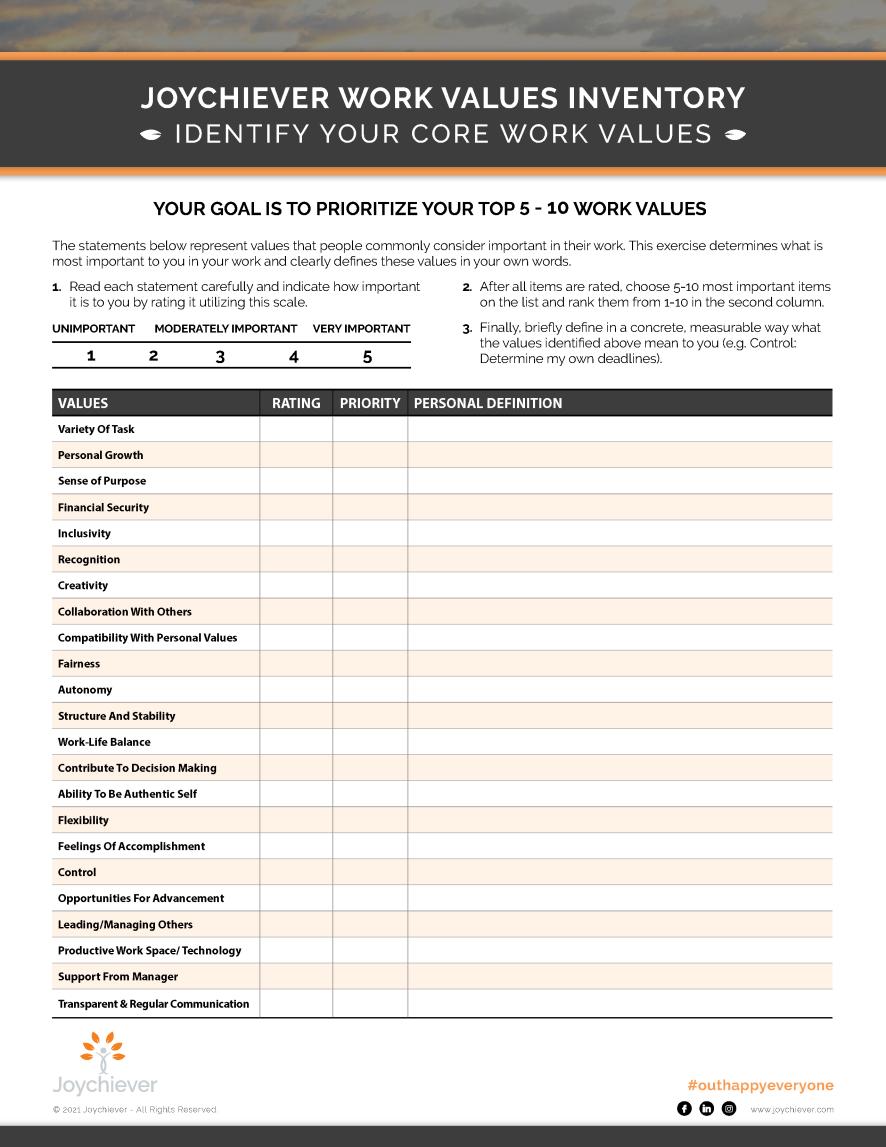
Identify 5-10 highest priority work values



• Don’t trivialize purpose as “touchy-feely”

• Seek understanding of your team members’ work values
• Find assignments that support the associate’s WHY
• Regularly acknowledge how the associate’s work is important and contributes to the matter, clients and firm

• Share stories that demonstrate the firm’s WHY

The pace of the Jacobsen Industries matter is crippling, and there isn’t an end in sight. The client team is incredibly demanding, changes course almost daily and scrutinizes every entry on the bills.

Sarah is starting to wonder what it’s all worth. She was very motivated at the start of the matter, but now, she just feels worn out and forlorn.





12. Proactively highlight and connect purpose






11. Foster connection to bolster belonging
10. Appreciate and recognize diligently
9. Enable true selves to shine
8. Build trust, enable autonomy & allow flexibility
7. Overcome boredom with novelty and meaning
6. Lean into “most joyous” strengths
5. Leverage rest & play for better results
4. Keep stress in check
3. Alleviate always-on pressure
2. Reasonably manage workload and deadlines
1. Prioritize contribution over input


12. Proactively highlight and connect purpose






11. Foster connection to bolster belonging
10. Appreciate and recognize diligently
9. Enable true selves to shine
8. Build trust, enable autonomy & allow flexibility
7. Overcome boredom with novelty and meaning
6. Lean into “most joyous” strengths
5. Leverage rest & play for better results
4. Keep stress in check
3. Alleviate always-on pressure
2. Reasonably manage workload and deadlines


1. Prioritize contribution over input

12. Proactively highlight and connect purpose


11. Foster connection to bolster belonging
10. Appreciate and recognize diligently
9. Enable true selves to shine
8. Build trust, enable autonomy & allow flexibility
7. Overcome boredom with novelty and meaning
6. Lean into “most joyous” strengths
5. Leverage rest & play for better results
4. Keep stress in check
3. Alleviate always-on pressure
2. Reasonably manage workload and deadlines
1. Prioritize contribution over input
12. Proactively highlight and connect purpose


11. Foster connection to bolster belonging
10. Appreciate and recognize diligently
9. Enable true selves to shine
8. Build trust, enable autonomy & allow flexibility
7. Overcome boredom with novelty and meaning
6. Lean into “most joyous” strengths
5. Leverage rest & play for better results
4. Keep stress in check
3. Alleviate always-on pressure
2. Reasonably manage workload and deadlines
1. Prioritize contribution over input