Asa kid, my mother would allow me to hit all the buttons in our Georgia voting booths during elections. I walked out of every voting precinct with my peach “I am a Georgia voter” sticker with pride and my head held high. I grew up looking forward to the election season because I knew the power that my fingertips held with every vote we cast. This simple act set the foundation for my understanding of politics and why exercising my right to vote is important.
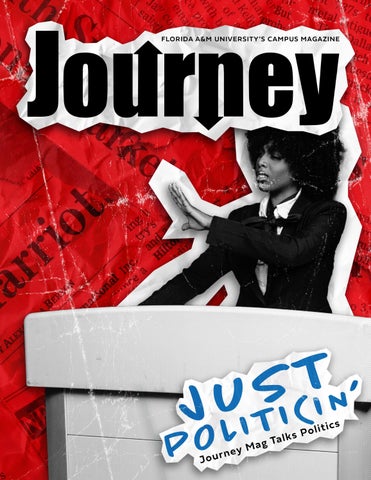
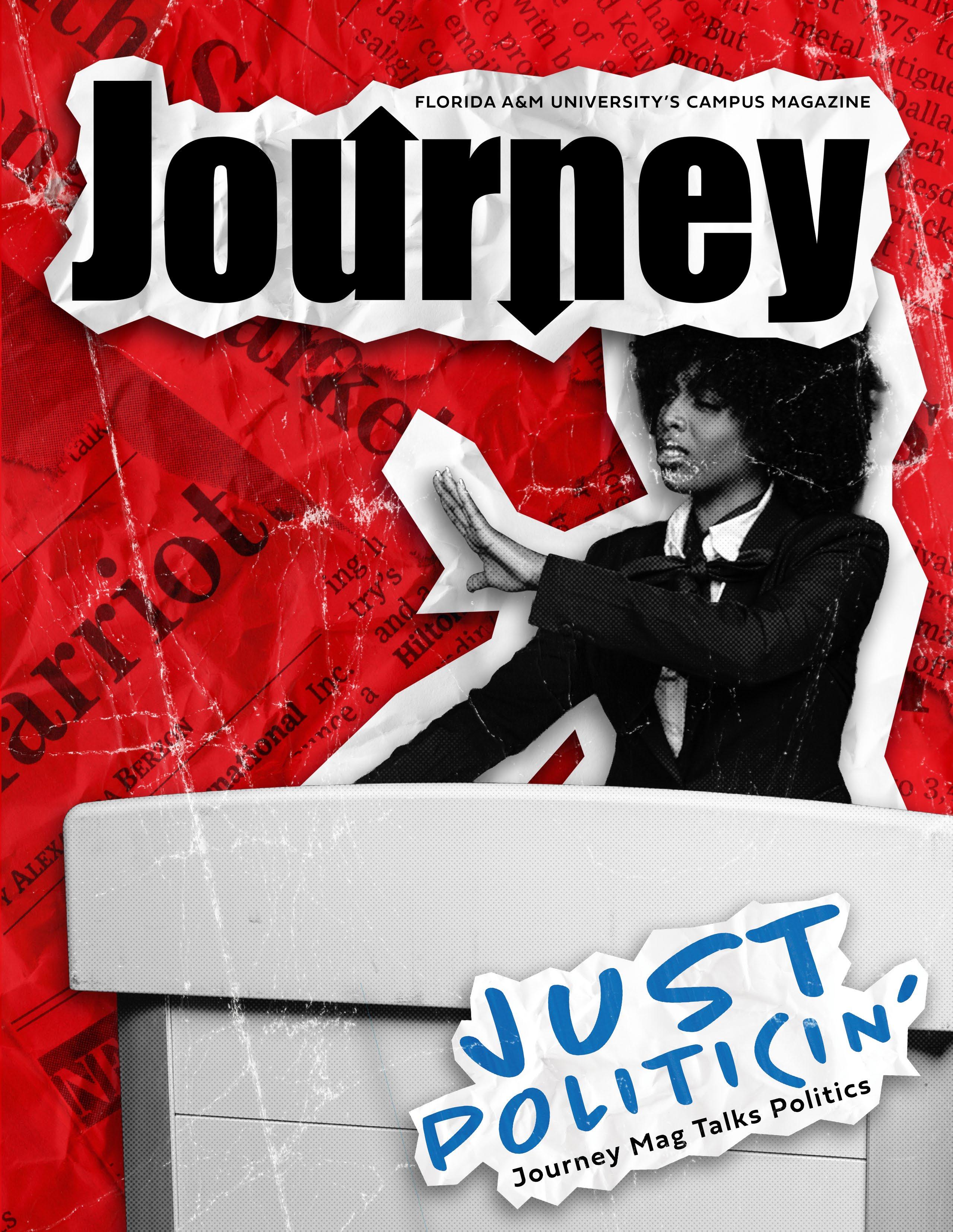
Just Politicin’ comes from my desire to educate my peers on how politics shape our everyday lives. With our democracy being challenged daily, there is no better time to make this issue. As Editor-In-Chief of Journey, I am incredibly proud of everyone who contributed to this issue. Through every late night, long meetings and problems waiting to be solved, we stood united in one mission: bringing Journey Magazine back to the students.
This issue marks a new era within the organization, with hopes of building a publication that uplifts the student body and the culture of our historic university. From “Survey Says,” to “HBCUs and Political Powerhouses,” Just Politicin’ explores how politics move beyond the ballot into classrooms, communities and conversation. FAMU students are redefining what it means to be politically engaged, and Journey is here to help them along the way. Together we initiate change, inspire and inform. Together we J Mag.
Editor-in-Chief -Ashton
Johnson
The first election that truly stuck with me was the 2008 election, when former President Barack Obama made history as the first Black man to rise to the Oval Office. As a kid, seeing another person of color in the highest position of power made me feel like anything was possible and that I could be anything I wanted to be. Though politics is not my favorite subject, it will always be prevalent in my life, whether I want it to be or not. Knowing this, I will continue to fight for a safe space for artists, creatives, and journalists.
The creation of this issue means so much to me. To see something blossom from a simple idea and grow through every meeting and photoshoot until it reaches completion is truly amazing. I am extremely thankful to my team for their unwavering trust in me and their dedication to bringing my first issue as managing editor to life. I have found forever friends within Journey Magazine. I didn’t think I had the skill set or the ability to help lead a team of highly intelligent journalists, creatives and PR specialists. In today’s climate, I realize the importance of taking on leadership and standing for what I believe is right.
Managing Editor
-Mya Acuff
In the Heart of the Hood
BY JORDE JONES
SEPARATED by railroad tracks, no spear could strike these snakes in the grass
This institution, similar to prison yards, is placed in the heart of the hood
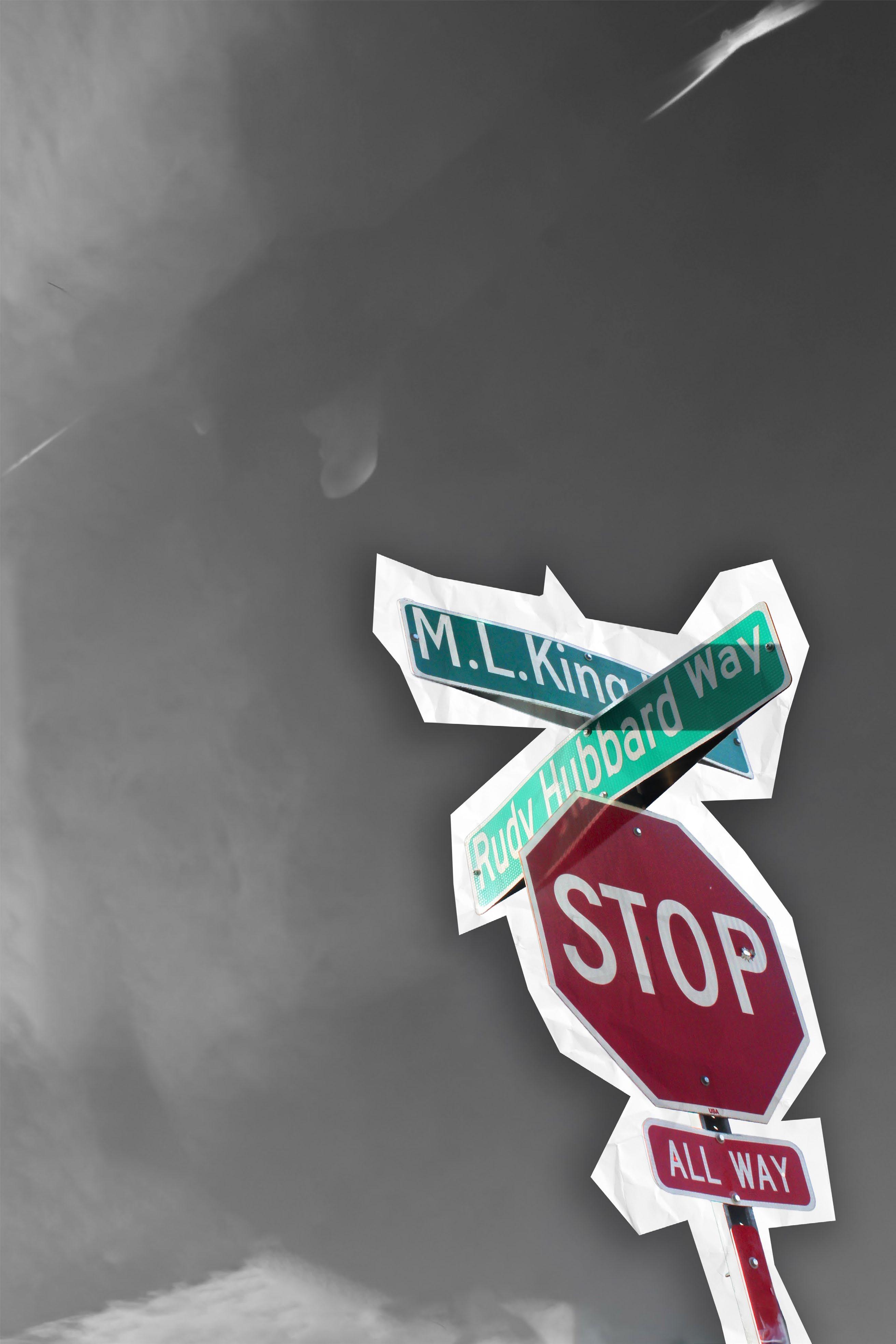
FOR as long as I could remember, every street named after Dr. King has felt daunting
Shoes hung on the wire, there’s a reason the air here feels so haunting
These cemeteries that prematurely carry our names are placed in the heart of the hood
FUNNY, even on campus, I’ve been reminded that I too could become another number
Every face I come across has a story to fulfill
But these rattlers are resistant to a system that wants us to kneel
Because in the heart of the hood, the lines between love and hate are erased And are replaced by fists in the sky and
Only in the Heart of the Hood.
By Karrington Henderson
In the age of TikTok trends and viral tweets, activism often begins not on the streets but on our screens. A single powerful hashtag, such as #BlackLivesMatter, #MeToo or #EndSARS, can spark global conversations within seconds. With this shift, one question remains: does posting and sharing online equate to meaningful activism, or is it merely digital performance?
The core of the critique is that this low-effort participation is a substitute for the challenging, long-term work required to change laws and systems.
A 2020 Pew Research Center survey found that 67% of adults in the U.S. said social media helped give a voice to underrepresented groups. At the same time, 64% said it distracted people from more meaningful activism. This tension captures the heart of the debate: social media makes movements visible, but visibility alone is not victory.
The summer of 2020 made this tension visible to the world. On June 2, millions of Instagram users uploaded solid black squares for “Blackout Tuesday” to show solidarity with the Black Lives Matter movement. At first, the gesture appeared powerful, as timelines filled with unified black screens. Within hours, activists pointed out that the flood of black images buried important protest information under the hashtag #BlackLivesMatter. Silence drowned out critical details about safety, donations and protest locations. “Blackout Tuesday” demonstrated both the promise and the peril of digital activism: It mobilized mass participation, yet it also risked reducing a movement into a one-day trend.
History shows that hashtags can fuel real-world change when paired with
organizing. The Black Lives Matter movement began as a Facebook post in 2013 after the acquittal of George Zimmerman in the killing of Trayvon Martin. Within a few years, it became a global rallying cry. After George Floyd’s murder in 2020, the hashtag #BlackLivesMatter was used 47 million times in just two weeks, helping mobilize demonstrations in every U.S. state and more than 60 countries, according to the Pew Research Center (2020). What started on screens moved into the streets, pressuring elected officials and police departments to confront systemic racism.
The #MeToo movement offers another example. Activist Tarana Burke first coined the phrase in 2006, but social media gave it global reach in 2017 when millions of women and men shared the hashtag. Within a year, more than 19 million tweets carried the #MeToo hashtag, sparking widespread conversations about harassment and accountability, according to the Pew Research Center (2018). The digital chorus drove companies to dismiss influential figures, pushed workplaces to revise their policies, and empowered survivors to share their stories. Not every viral campaign delivers the same results.
The #Kony2012 video garnered more than 100 million views in six days, yet it quickly fizzled without a meaningful impact in Uganda. Without sustained organizing, fundraising and political pressure, online momentum collapsed. Hashtag activism alone cannot replace sustained on-the-ground work.
These examples demonstrate that online activism is most effective when it serves as a bridge between individuals and organizations.
Social media can amplify voices, connect communities across borders and spread information rapidly; however, people must pair it with marches, lobbying, donations, mutual aid and voter engagement to make it truly transformative.
Activist Brittany Packnett Cunningham explained it best when she said, “The revolution will be tweeted, but it still has to be fought in real life.”
Hashtags are not activism, but they are undeniably part of it. They are the microphone, not the movement. Social media can amplify visibility, urgency and energy to causes that might otherwise be ignored. What happens after the post determines whether a hashtag remains a fleeting trend or becomes the spark for lasting change.
WHY VOTING MATTERS
Florida’s History Shows the Stakes for Black Communities and Students
BY TONI WOODS
Florida has long contested voting rights, especially for Black communities. As the 2026 gubernatorial election nears, young voters see participation as a privilege and a responsibility built on the struggles of generations before them.
“Since the Reconstruction era, powerful white southerners have used voter suppression to suppress Black people’s political power,” said Jennifer Glueck, a member of Tallahassee Students for a Democratic Society. “While there were many steps forward, thanks to the Civil Rights era, recent Supreme Court decisions and state policies have made voting more difficult for Black people in particular.”
Florida’s history reflects the tension between suppression and resistance. In the 1930s and 1940s, Harry T. Moore and Harriette Moore spearheaded a massive voter registration drive, challenging white-only primaries while working through the NAACP and Progressive Voters League to expand Black political participation. Their organizing was met with resistance and, ultimately, tragedy when the couple was killed in a 1951 bombing.
“The Moores fought to empower Black Floridians, even when violence tried to silence them,” Jennifer noted. “Their legacy shows that voting rights were never handed out freely — they were won.”
Today, the barriers may look different, but they remain steep. According to Jennifer, Florida’s felony disenfranchisement laws, which tie voting rights for former felons to the payment of fines and fees, disproportionately impact young Black voters. Additionally, polling
place access and long wait times often discourage participation.
“Studies have confirmed that Black
“Young people play a vital role in this moment, and that means not only voting for candidates who represent their interests but also organizing in their communities beyond election season to defend their rights and push for change,”
voters typically have to travel and wait longer to vote than their white counterparts,” she said. “Making the voting process more difficult in terms of time and place, while also requiring excessive documentation, limits civic participation. It is deeply unfair and wrong.”
For students, these structural hurdles exacerbate an already complex relationship with politics. At Florida A&M University, political science student Yerimiah Evans added that while young voters are passionate, they sometimes feel undervalued in the political process.
“Some candidates see us as just votes to collect, but with a little image change that the youth are currently undertaking, we will be seen as the educated, active and mobile part of the electorate we really are,” Evans explained.
Florida’s painful history still influences how students perceive their vote today. “Being in the South, we never had a good history with voting,” he explained. “In the past and sadly even now, we’ve seen scare tactics try to deter potential voters. Still, the potential of the Black voters in Florida is truly limitless, as Florida voted and helped elect President Barack Obama in 2008 and 2012.”
Even with historical setbacks, Evans believes voting remains a fundamental tool of civic power.
“To me, voting is one of the most fundamental tools of civic participation, and not just a right, but a duty,” he said. “Whatever matters to you — social justice, paying tuition, or financial aid — that should influence your vote.”
Both Jennifer and Evans emphasized that while voting is crucial, it is only one step in building stronger, more resilient communities.
“Young people play a vital role in this moment, and that means not only voting for candidates who represent their interests but also organizing in their communities beyond election season to defend their rights and push for change,” Jennifer noted.
“A vote is hope for change,” he added. “The single action that can carry the world's weight for millions of people, yourself included.”
The fight for voting rights in Florida is not just part of history but also a present and future concern.
MAY 2024
PRESIDENTIAL tIMELINE
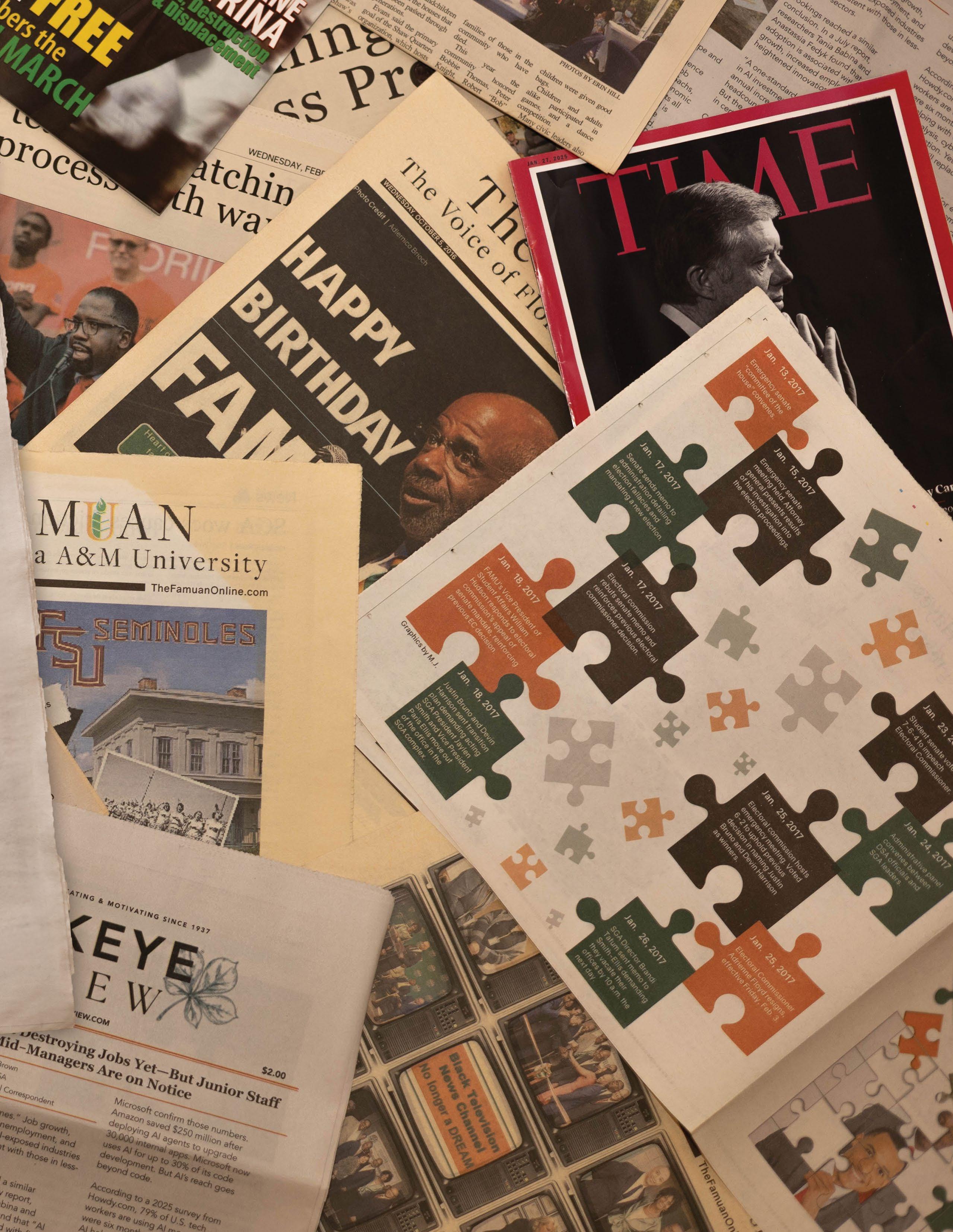
The journey to select Florida A&M University’s 13th president was one filled with suspense, debate and historic implications for the university’s future. Following the resignation of President Larry Robinson, the Board of Trustees formed a presidential search committee, tasked with the selection of the university’s next president. The process led by committee chair Deveron Gibbons sparked conversations among students, alumni and the community about the direction and legacy of the university. Newly selected Marva Johnson J.D. now leads the university and is working to build trust amongst the Rattler community.
May 4
A $237 million donation from Gregory Gerami was publicly announced during FAMU’s commencement, with President Larry Robinson posing with a ceremonial check.
May 9
FAMU announced it would pause the donation amid scrutiny and questions about its legitimacy.
JUNE 2024
May 14 Gerami’s contract was terminated, and FAMU’s supposed stock transfer was invalidated.
June 14 University emphasized the pledged donation was “in limbo” and highlighted problems with vetting.
MAY 2025
May 7
FAMU Professor and Leon County Commissioner Bill Proctor calls for the presidential search to be suspended and hosts a community town hall to discuss the search process.
May 16
Despite community and student backlash, FAMU’s Board of Trustees voted 8–4 to hire Marva Johnson as the next president.
May 15
Raphael Vazquez is added to the Board of Trustees before a crucial vote.
JUNE 2025
June 1
Marva Johnson negotiates her salary, receiving a 5-year contract of $650K per year approved by trustees.
June 16
On behalf of FAMU alumni, lawyer Mutaqee Akbar and Ennis Jacobs filed a Petition for Temporary Mandatory Injunctive Relief against eight members of the school’s Board of Trustees who voted in favor of Marva Johnson.
May 5
Earnie Ellison is forced to resign from the Board of Trustees.
May 12-14
Four finalists visit FAMU and get interviewed by the Board of Trustees.
June 18
The Florida Board of Governors approved Marva Johnson’s appointment as president.
July 12
Larry Robinson officially resigned as FAMU president amid the scandal.
July 23
Larry Robinson’s resignation is accepted and the Board of Trustees picks new Interim President Timothy Beard.
August 4
Larry Robinson ends his term as the 12th President of Florida A&M.
August 5
An independent report declared the $237 million gift fraudulent and criticized leadership’s lack of due diligence.
August 6
Interim President Timothy Beard begins his term.
DEC
April 24
The Board of Trustees Zoom meeting—discussing the leak and had an 8-5 vote to continue the search. Trustees have opposing views on the continuation of the presidential search.
April 21
The FAMU search committee names the four finalists a day before the university makes the official announcement. The finalists are Rondall Allen, Gerald Hector, CPA, Marva Johnson, J.D., and Donald
February 17
Listening sessions are held for the community to give feedback about the presidential search.
August 1
Interim President Timothy Beard officially ends his presidency. Marva Johnson assumes the presidency of FAMU. AUG 2025
December 4
The FAMU Presidential search committee is formed with 15 members.
January 14
FAMU announces presidential search with the help of Myers McRae, an executive search firm.
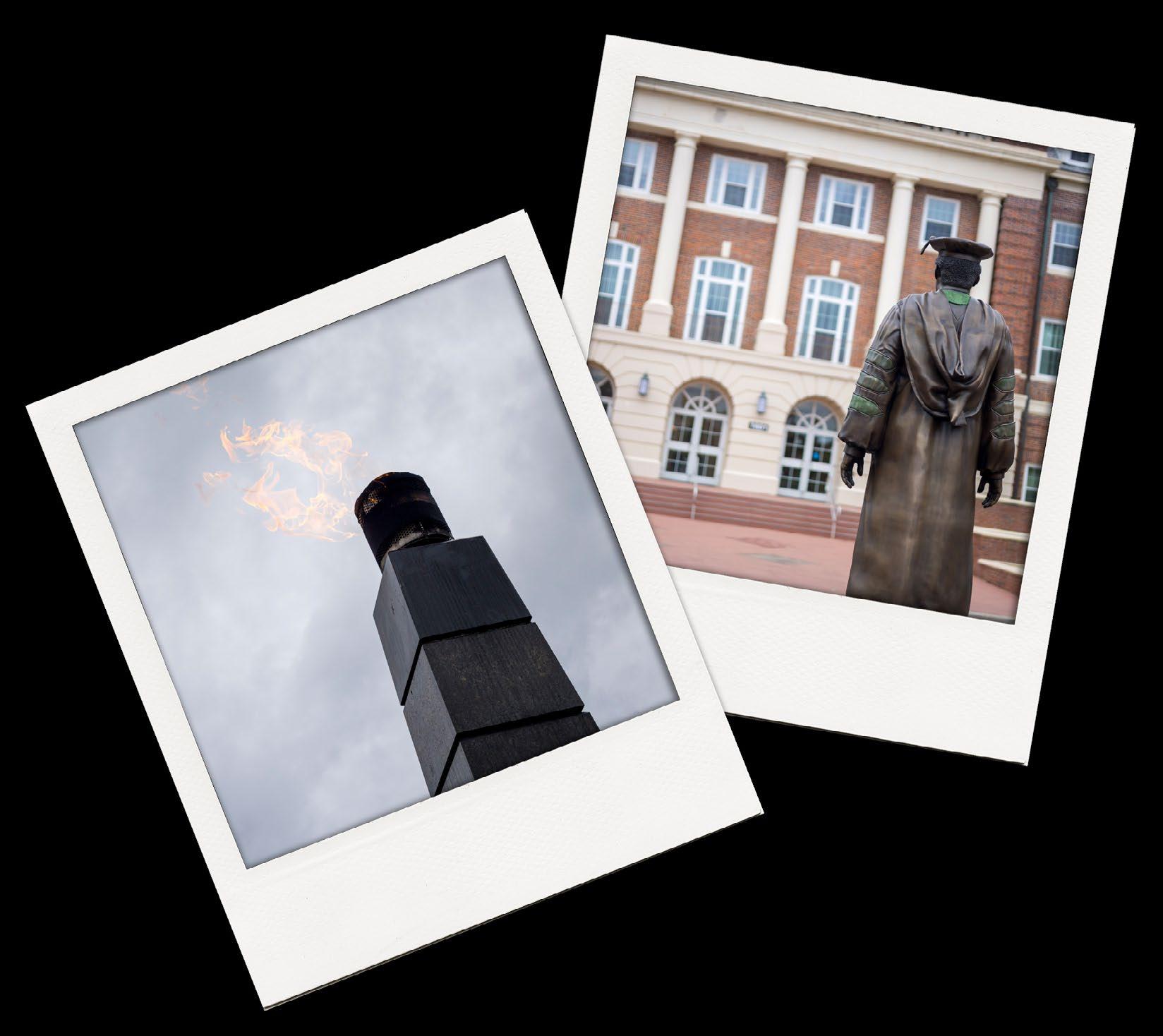
From left: Florida A&M’s Eternal Flame and the statue of President Frederick Humphries.
BY JORDE JONES
BY JARRETT JOHNSON
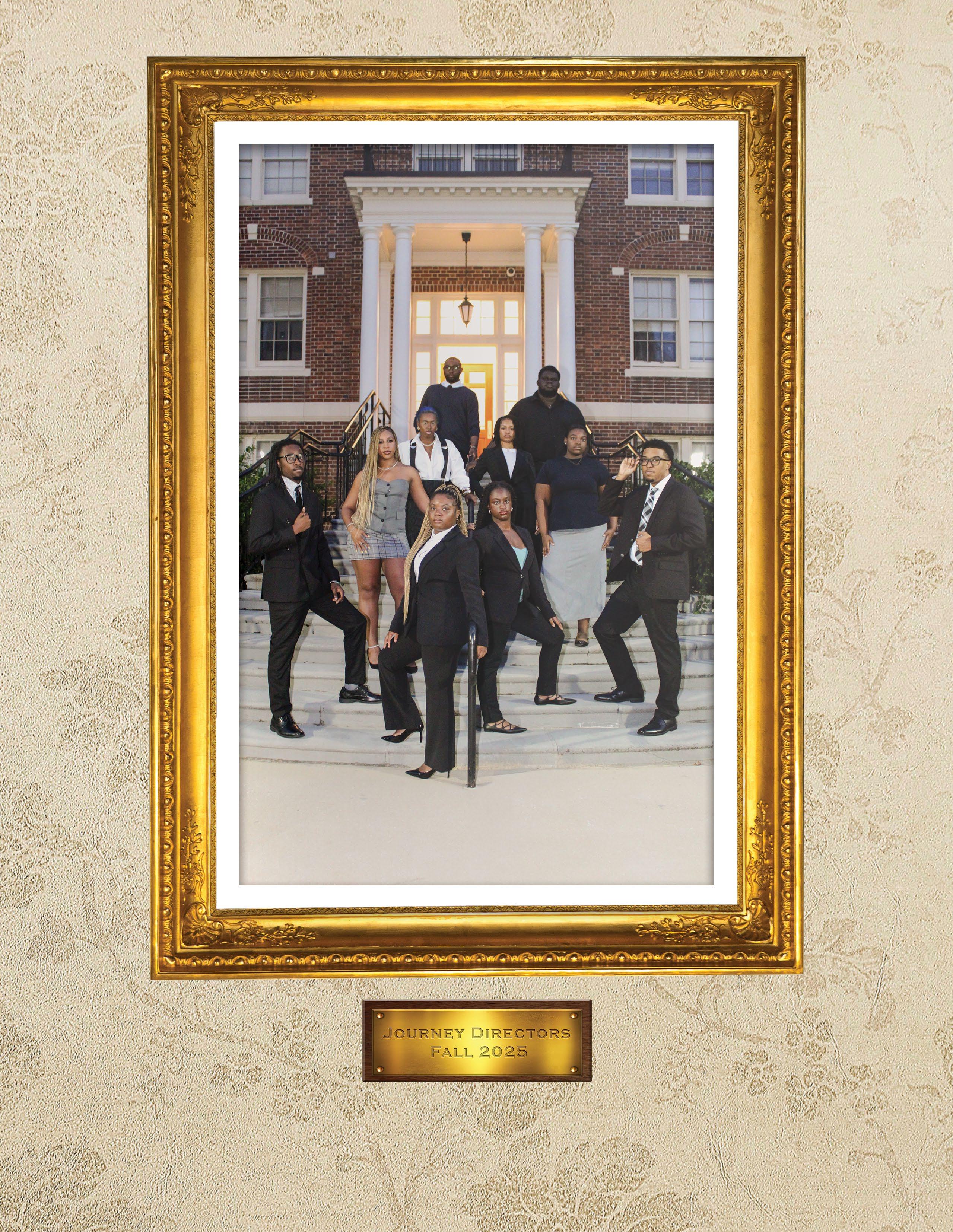
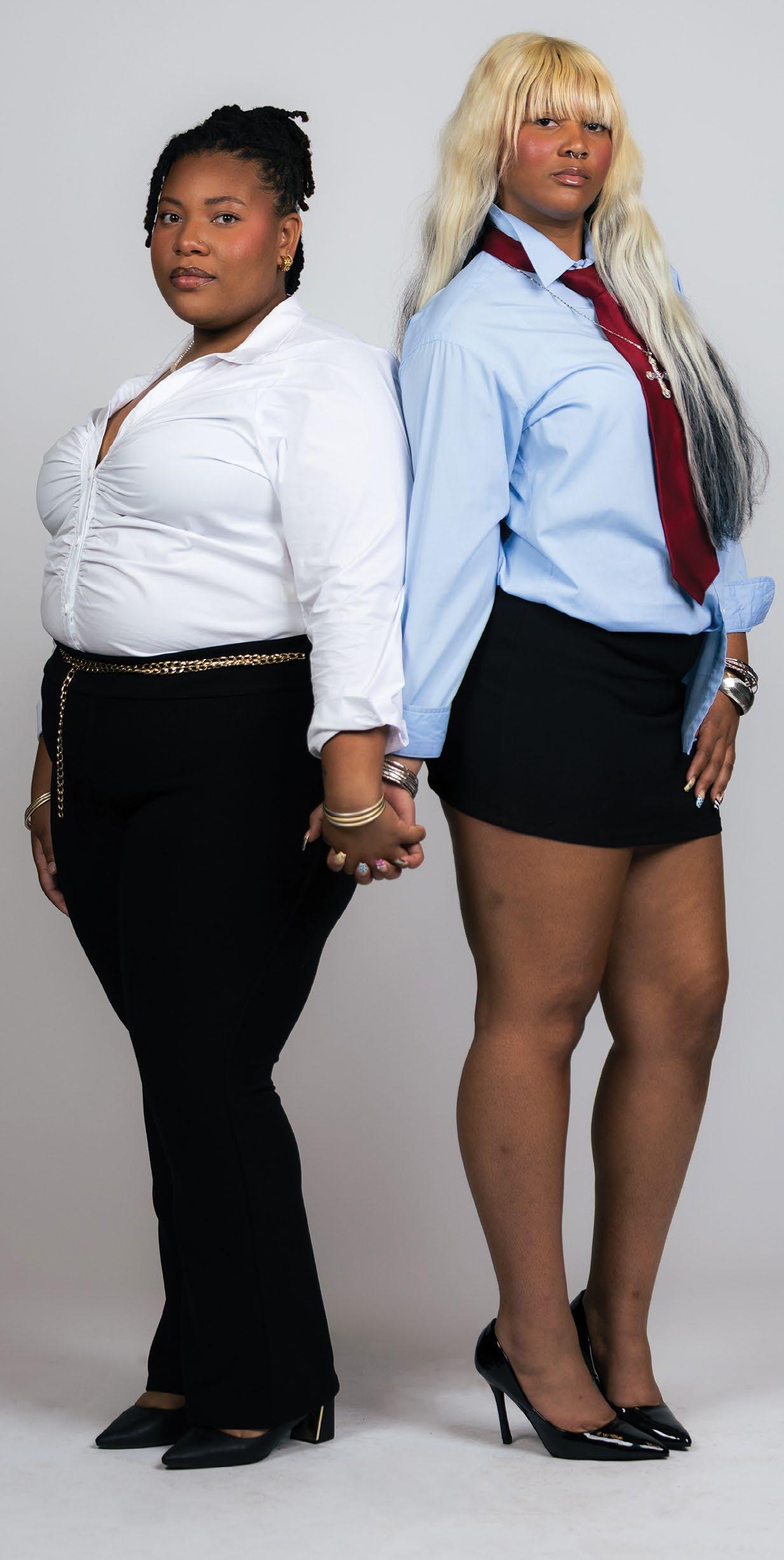
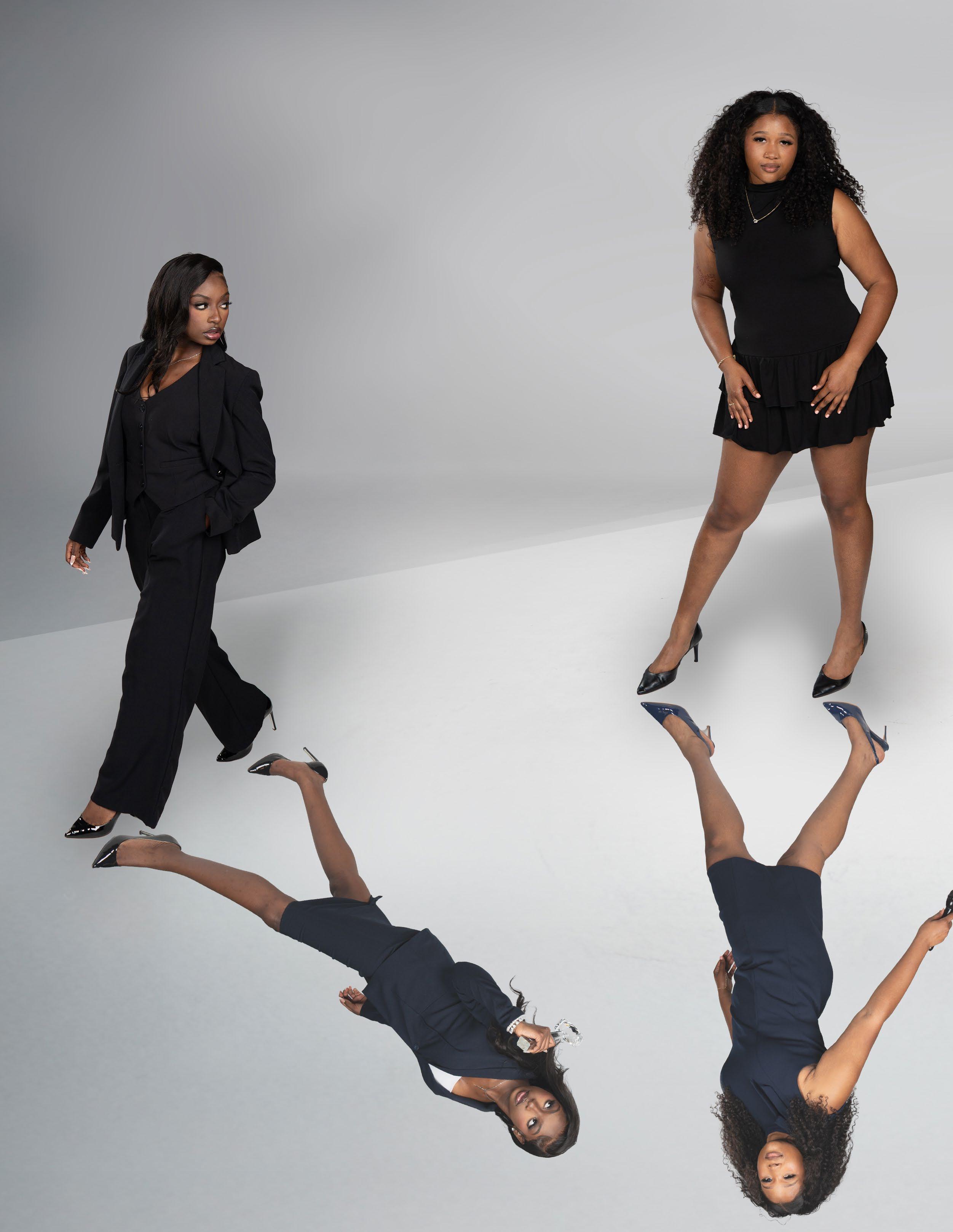
ZAYLA BRYANT is a fourth-year business administration scholar hailing from Atlanta, Ga., and KENNEDY WILLIAMS is a thirdyear history and pre-law scholar from West Palm Beach, Florida. The pair serves as FAMU’s Student Government Association president and vice president. Their roles are monumental as the first all-female ticket to be elected in FAMU’s history.
I think it’s important for Black women specifically to come to the forefront because it has been shown time and time again that we are always the last to be seen, heard, or considered. I really want to invite femininity into the rooms that I walk into because we’re always told that as a girl, we have to be dominant. We have to exude this male presence. But I don’t have to be a man to be powerful. I can be a woman and still do the same.
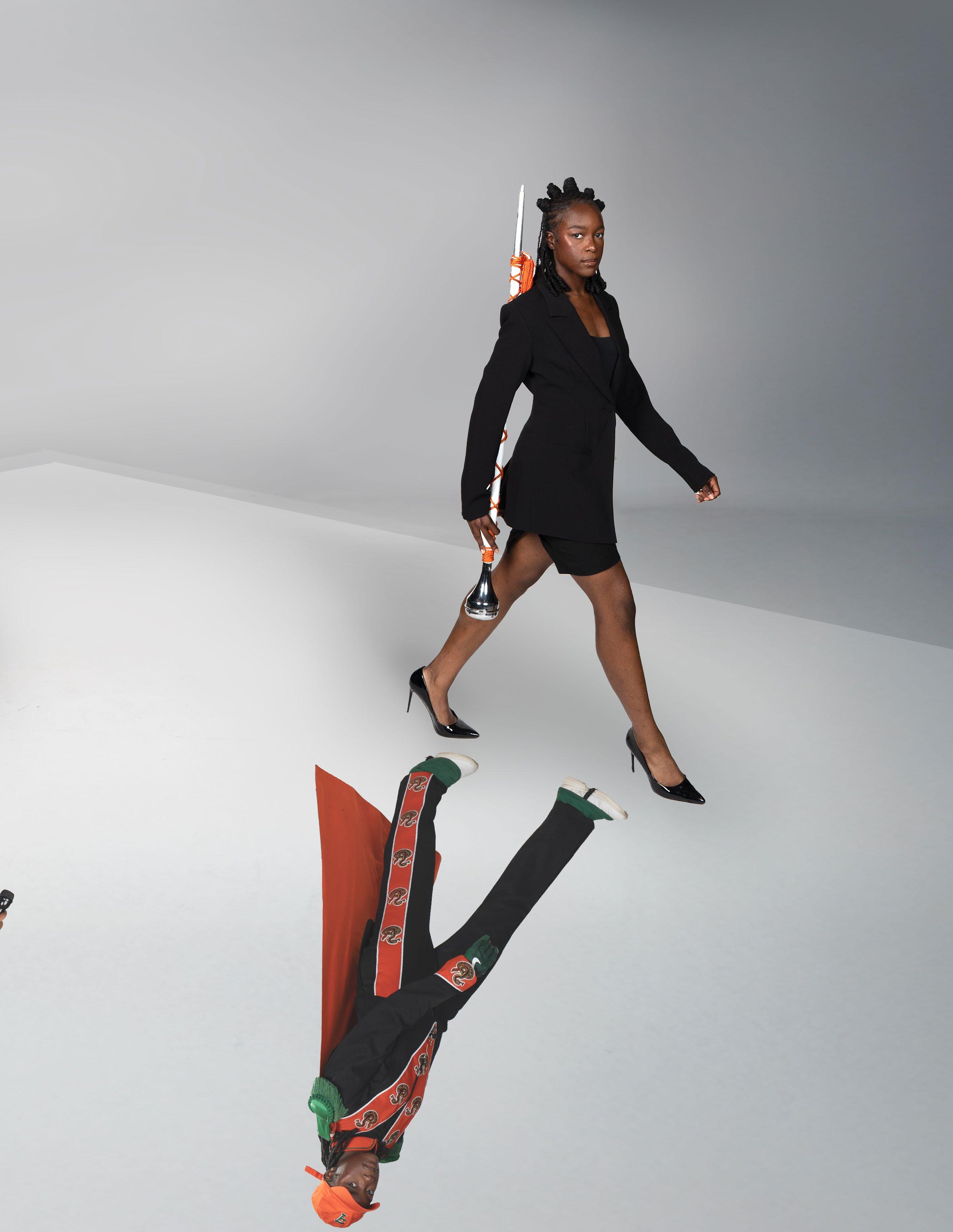
OLUWAMODUPE “DUPE” OLOYEDE:, a fourth-year theater performance scholar from Atlanta, Ga., currently serves as the head drum major and head of show planning for FAMU’s Marching ‘100’ Band. Oloyede is the first female to ever hold this prestigious position in the world-renowned band.
I think being a voice for our generation is very important because a lot of times older adults, people who are maybe two, three decades older than you don’t understand the reality that you live in today, when so much is changing and so much is different. A lot of the decisions that these older people make, they don’t know how much they affect us.
I don’t come from a place or from a culture where women are modest and subservient. Being Nigerian, specifically, we’re dominant in all the ways that society tries to tell us we shouldn’t be. And as a very smart woman also said, ‘Well behaved women seldom make history.’ You have to cause some disturbance. Like John Lewis said, ‘Get into some good trouble.
Survey says
Where does FAMU stand?
We asked, you answered.
Journey Magazine polled 106 FAMU students to gauge their stance on a range of different questions concerning the current political landscape. This infographic demonstrates the responses recorded.
Roe V. Wade should never have been overturned. The
The United States of America has made a good effort to stop the war in Palestine. Tax
Do you agree with recreational marijuana?
News outlets have been censored for the past 9 months.
Strongly Agree - 35.6%
Agree - 33.7%
Neutral - 27.9%
Disagree - 1.9%
Strongly Disagree
The United States does a good job in the way it approaches immigration.
Strongly Agree - 1%
Agree - 2.9%
- 9.5%
The practice of religion belongs in schools.
The two-party system is working for America. Women deserve to make choices about their own bodies.
81.9%
The role of HBCU education in politics HBCUS AND POLITICAL POWERHOUSES
The role of HBCU education in politics by Janelle I. Sears
BY JANELLE I. SEARS
AtWinston-Salem State University in North Carolina, the motto is “Enter to learn, depart to serve.” These words are a testament to the history of Black colleges and universities educating students who have become leaders and advocates in the Black community and worldwide.
Assistant history professor at Florida A&M University, Dr. Kimberly Brown Pellum, cited the power of education at FAMU and HBCUs.
“Our strength has always been the ability to cultivate visionaries by preparing them for elite advanced programs,” said Pellum. “Our graduates have led projects at the National Park Service, the Smithsonian, they serve as deans and presidents at other universities, and influence policy on local, state and national levels.”
In a 2018 Philadelphia Tribune article centering the emergence of HBCU graduates in vital political positions, FAMU alum and former mayor of Tallahassee, Andrew Gillum, is regarded as one of the standout gubernatorial candidates alongside Stacey Abrams,
a Spelman graduate, who both ran powerhouse campaigns for governor of Florida and Georgia, respectively.
“Having people in politics who reflect yourself is very important. I feel as if it’s almost a duty to my community to advocate for us and encourage political change,” said senior political science major Gabrielle Fleury.
Historically Black colleges and universities have played a pivotal role in developing leaders who have paved the way not just for politicians but for American democracy, from FAMU’s Wilhemina Jakes and Carrie Patterson,
out and “
They have a responsibility not just to study democracy, not just to study citizenship, but to go out and
DEMAND IT, ACT ON IT.” to go
whose arrests led to the Tallahassee bus boycott, to John Lewis, a Fisk University graduate, whose dedication to the civil rights movement led to monumental legislation like the Civil Rights Act of 1964 and the Voting Rights Act of 1965.
What is it about these spaces that created dynamic leaders?
In a panel organized by Harvard Divinity School to discuss the importance of HBCUs in American democracy, historian and professor at Emory University, Dr. Crystal R Sanders, points to former Bennett College president, Willa Player, to acknowledge the role of faculty and staff who play a part in the success of the students turned activists, advocates and political pistols.
“So, at one point in 1963, 75% of Bennett’s student body was in jail...And Dr. Player essentially says they have implemented what they have learned in the classroom,” said Sanders. “They have a responsibility not just to study democracy, not just to study citizenship, but to go out and demand it, to go out and act on it.”
Dr. Pellum discusses this idea among her motivations to teach the next generation.
“As a professor, I see myself as someone who can funnel knowledge to the real quarterbacks, the youth, who can do something with the ball and make them better equipped to engineer better communities, and ultimately, a better world,” said Dr. Pellum.
In the modern era, HBCUs are still producing political leaders and revolutionaries at a rapid rate. From the well-known Kamala Harris, a Howard University graduate, who worked her way from the Alameda County District Attorney’s Office as a deputy district attorney, and eventually vice president of the U.S. and a presidential candidate, to FAMU graduates Phillip Agnew and Ciara Taylor, who played a key role as co-founders of the Dream Defenders, a political and community force group.
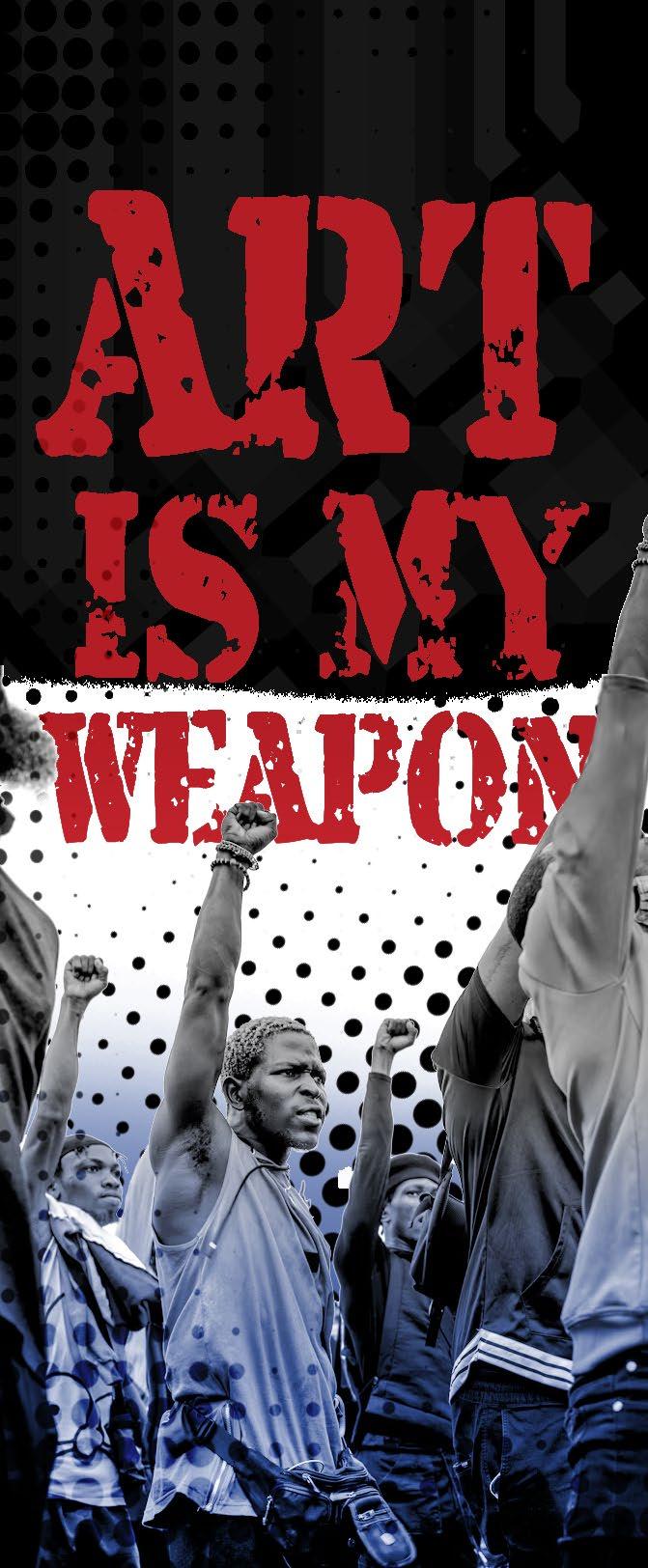
Art has always had a way of breaking rules. From ancient cave paintings to graffiti-splashed city walls, artists have used their work to disrupt convention and push against what society deems acceptable. When institutions demand conformity, art offers resistance. In today’s political climate, when Black voices and DEI initiatives are under attack, artistic expression is essential in creating awareness towards injustices.
Throughout history, artists have stood at the forefront of upheaval, often serving as the visual and cultural voice of resistance. In the 1980s, Jean-Michel Basquiat transformed the walls of New York into urgent declarations about race, inequality and power. His painting “Defacement” (The Death of Michael Stewart) remains an indictment of police brutality, and a reminder of how art refuses to let society look away.
Today, the street artist Banksy carries that torch with politically charged murals that target war, capitalism and government corruption. Protest art has evolved across generations, but its spirit remains the same: to confront, question and provoke change. Films like “The Color Purple,”
“Sinners,” “They Cloned Tyrone,” “Black Panther” and “Hidden Figures” are art pieces that highlight the perseverance that Black people have shown in the face of adversity
A CATALYST FOR CHANGE THROUGH AN INTERSECTION OF ART AND REBELLION.
BY SEANNA MILLER
always emphasized, not pursuing passions and hobbies,” said Abigail Eno, a fourth-year environmental engineering scholar. “Crocheting and painting allow me to express myself. It goes against how I was raised and resists the ideals that were pushed on me.”
from centuries ago to the present day. These films have the powerful capability to captivate emotions, simultaneously becoming a catalyst for change through an intersection of art and rebellion.
“Art is a form of resistance for me because, coming from an immigrant family, success in academics was
Rebellion in art is not confined to political protest. It also lives in the act of choosing creation over conformity. Within a culture that glorifies hustle and productivity, simply pausing to paint, sing, write or dance is a radical choice.
Black artists within entertainment and media today, like Kendrick Lamar, Little Simz, Anderson .Paak and SAULT curate songs portraying the current political state of the United States. Their art centers stories on what it is like being Black in this country, where injustices continue to persist. Black people do not just endure; they transform their pain into purpose and their resistance into renaissance.
“Art means everything to me… It’s how I express myself,” said AmberRae Smith, a third-year architecture major and painter. “It’s more than just putting pretty colors on a canvas.
When I flip through a sketchbook, it’s like watching my life’s journey. It’s my meditation. I’m my art, and my art is me.”
The authenticity of art is what makes it endure. Unlike rehearsed performances in daily life, art does not ask for permission or approval. It speaks from the depths of the soul: unfiltered and unapologetically different. Whether through the brushstroke of a painting or the rhythm of a poem, art captures truth in ways words alone often cannot.
“The most authentic form of art comes from a place of vulnerability,” said Laila Nieves, a fourth-year psychology student, as well as a nail technician and stylist. My favorite forms of expression are poetry, fashion and music. Writing organizes our thoughts and reading others’ work lets us experience their thought processes.”
A single image, melody or performance can spark outrage, emotions strong enough to inspire action. For centuries, artists have proven that creativity is not just selfexpression, but also a social force, one that governments, institutions, and movements alike cannot afford to ignore.
The artwork used in this design is for creative purposes only and does not reflect the views or positions of the organization or the school.
What’s Your Campus Style?
BY MERRITT SLAUGHTER
1. START HERE: The Political Statement Bag
GO! You’re about to pull an all-night study session at Coleman. You need a bag that fits your snacks, textbooks, and maybe even a pillow. Do you choose: An oversized tote bag or backpack?
If Backpack, proceed to Question 2. (Your style priority is Utility.)
If Tote bag, proceed to Question 3. (Your style priority is Influence.)
3. The Presentation (From Q1: NO - Influence)
You’re presenting in class today, and the dress code is business casual. Do you choose:
1. Fully suited up (because what is business casual, anyway?)
2. The classic: nice top + jeans
If 1, proceed to Question 6. (Your influence is focused on Tradition and Authority.)
If 2, proceed to Question 7. (Your influence is focused on Relatability and Expression.)
2. The Footwear (From Q1: YES - Utility)
You have an interview for an upcoming internship. What kind of shoes are you wearing?
Something comfortable and cute, or are you going all out?
If comfortable and cute, proceed to Question 4. (Your utility is focused on Personal Preparedness.)
If going all out, proceed to Question 5. (Your utility is focused on Data and Structure.)
7. The Durable Attire (From Q3: NO - Relatability and Comfort
It’s starting to get cold, but only in the mornings. Do you go home and change for your later classes, or simply bring a jacket?
Change during gap in classes, you are the Authentic Cultural Critic!
If you bring a jacket, proceed to Question 9. (Your expression is focused on Communicating the Message.)
6. The Time Keeper (From Q3: YES - Tradition and Authority)
You have lots of things to do today. How are you staying organized?
1. Set multiple alarms.
2. Have a detailed calendar you constantly check.
If 1, you are the Legislative Power Broker! If 2, you are the Pragmatic Policy Fixer!
5. The Policy-Statement Pen
(From Q2: NO - Data and Structure)
Your professor asks you to take notes during the lecture. What do you use to take notes? A mechanical pencil or a pen
If mechanical Pencil, you are the Pragmatic Policy Fixer!
If Pen, you are the Legislative Power Broker!
4. The Crisis Fit (From Q2: YES - Personal Preparedness)
You walk into class and realize you have a test you didn’t study for. What’s your next move? Put one AirPod in (iykyk) or simply walk out and schedule an appointment at Patients First.
If you put an Air Pod in, you are the Essential Community Builder!
If NO, proceed to Question 8. (Your preparedness is focused on Foundational Reliability.)
8. The Class Canceler (From Q4: NO - Foundational Reliability)
Convocation is today. What’s the move? Repping my organization, or staying in bed
If staying in bed, you are the Foundational Resource Advocate! If repping your organization, you are the Essential Community Builder!
9. The Photojournalist’s Glasses
(From Q7: NO - Communicating the Message)
It’s Set Friday, and you just ran into a someone wearing meta glasses, asking if they can ask you a few questions. Do you show off your fit and answer their questions, or ignore them and quickly walk the other way.
If you show off your fit, you are the Authentic Cultural Critic!
If you quickly walk away, you are the Foundational Resource Advocate!
ver the last decade, the internet has become interwoven in daily creating communities based on common interests and backgrounds. This has resulted in innumerable specialty spaces online, as well as communities that impede overall comprehension. Some internet users believe we are letting algorithms feed our beliefs, making people more closed to new viewpoints, and keeping them in a state of constant conflict across the niche bubbles they occupy on the internet.
Most people are familiar with the term “algorithm.” it refers to the content social media platforms tailor to specific users, keeping them close to things they already like, along with related new information.
Andrew Opel, a professor in the School of Communications at Florida State University, discusses the integration of the internet into our daily lives, and how
“I think people are definitely using it as a tool. And, I think that they don’t always see the limitations of the tool,” he said. “We don’t know how people are being either fed particular types of information or denied other forms of information in order to prop up and maintain certain
BY MORGAN WATKINS
The fast-paced shock culture on the internet bombards viewers, numbing them to discomfort.
“I think we are reaching a level where the saturation of these events becomes overwhelming our nervous systems and our ability to respond just kind of shut down,” Opel said.
The rise of violent content and discourse on the internet makes it difficult to have nuanced conversations, as it prevents some individuals who post such content from engaging in discussions about politics and social issues.
Jasmine Marshall, a third-year business administration student at Florida A&M University, has experienced finding community in the digital age. She said she began interacting with the internet at an early age and describes her journey as being deeply rooted in internet communities and culture, having to and how she maneuver through it.
“As I got older and got into different communities like stan culture, [I realized] I can’t take everything at face value because a lot of people lie,” she said. “There’s always going to be somebody really corrupt.”
While the internet links us to groups and ideas, it also isolates us, resulting in echo chambers that split rather than unify. Recognizing these dangers and understanding how platforms benefit from fueling division is the first step toward closing the gap. What seems to be a philosophical argument often devolves into another cycle of interaction aimed at keeping users browsing.
Opel says the cycle people are put in is being made by companies that own social media platforms. However, he remains cautiously hopeful about the future. “There is going to be a correction,” Opel said. “It’s just a question of whether we can do it peacefully, smoothly and equitably?”
The problem, therefore, is whether society can use digital technologies to foster true understanding rather than divide. If awareness rises and platforms are held responsible, the internet may transform from a source of isolation to one of meaningful connection.
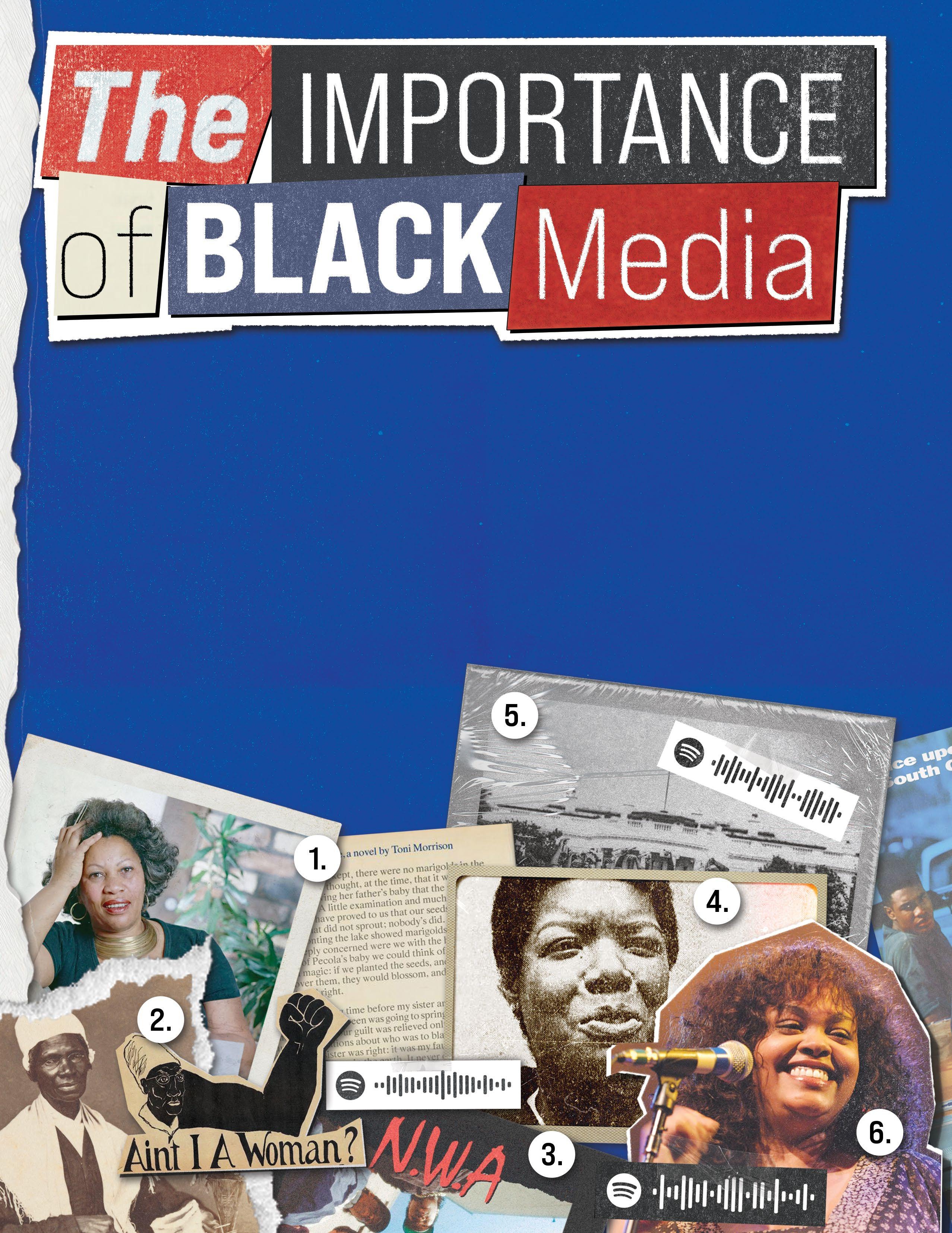
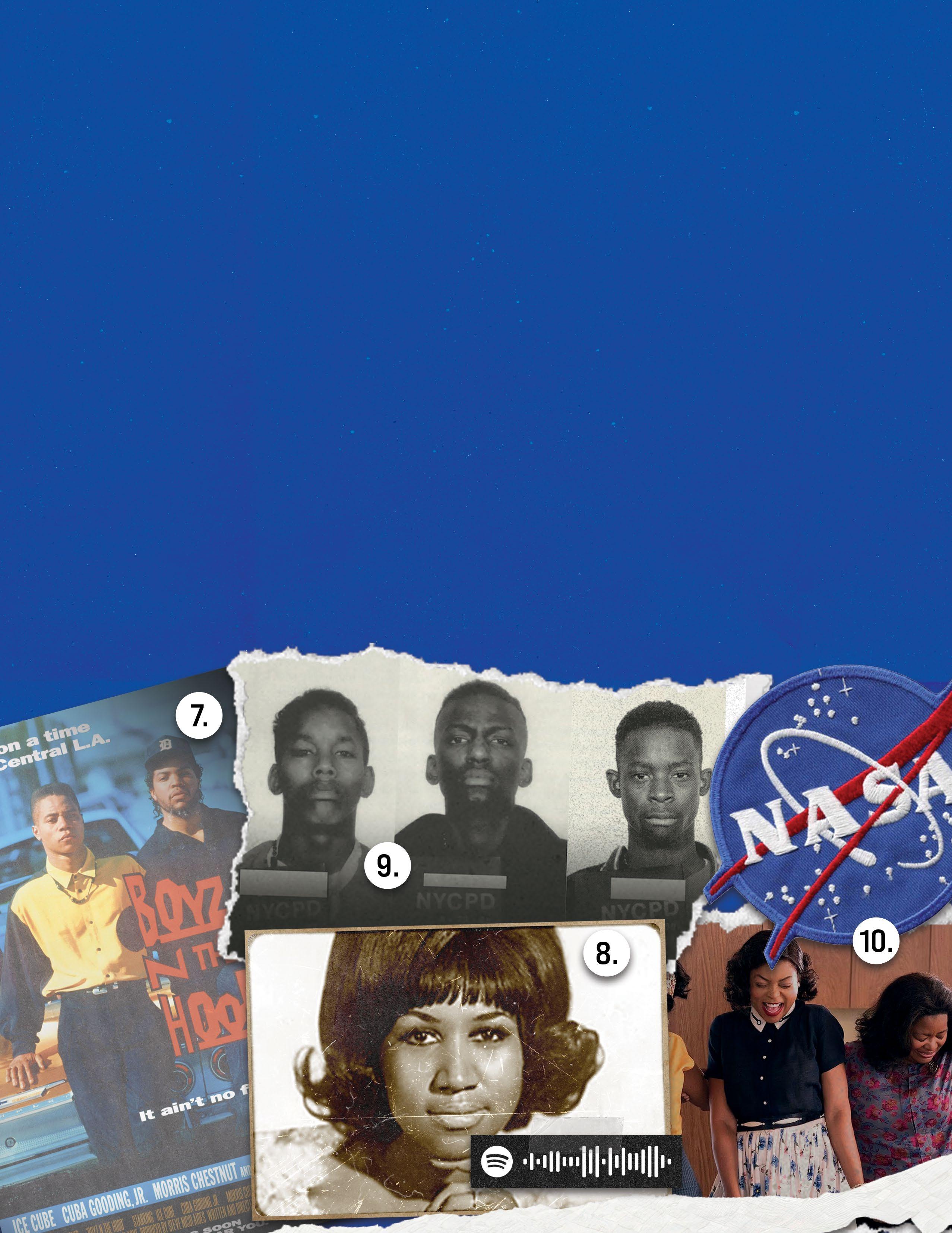
BLACK MEDIA & ENTERTAINMENT plays a vital role in CULTURE and preserving history through books, movies and music. These mediums provide a platform to share authentic stories, challenge stereotypes and celebrate the richness of Black identity. They voice experiences often overlooked in mainstream narratives while inspiring pride, unity and change. Through creative expression, Black media continues to educate, empower and influence global conversations about race, equality and representation.
BOOKS & POEMS
1. “THE BLUEST EYE”
BY TONI MORRISON
Morrison’s first novel, “The Bluest Eye,” explores beauty, identity and race in 1940s America. The story follows Pecola Breedlove, a young Black girl who prays for blue eyes. Pecola believed having blue eyes would make her beautiful and loved. Morrison exposes the internalized racism and society’s obsession with white beauty standards, an idea still relevant today. Morrison forces readers to confront the harmful rhetoric that teaches young Black children to dislike themselves.
2. “AIN’T I A WOMAN?”
BY SOJOURNER TRUTH
First delivered in 1851 as an empowerment speech during the women’s rights movement in Akron, Ohio, “Ain’t I A Woman?” by Sojourner Truth touches on topics like racism and sexism, amplifying the voices of Black women who were often excluded from both feminist
and abolitionist movements. Its message of strength, equality and resilience continues to inspire journalists, artists, and storytellers who use media to confront injustice and uplift the intersectional struggles of Black womanhood today.
4. “I KNOW WHY THE CAGED BIRD SINGS”
BY MAYA ANGELOU
“I Know Why the Caged Bird Sings” is Maya Angelou’s memoir about her childhood and adolescence. It explores her struggles with identity, racism and sexual assault, highlighting resilience as its central theme. Growing up as a young Black girl in the Jim Crow South, grounded in church life and silence, Angelou finds strength through adversity, like the caged bird yearning for freedom in Paul Laurence Dunbar’s poem “Sympathy.”
MOVIES
7. “BOYZ N THE HOOD“(1991) “Boyz N The Hood,” directed by John Singleton, takes place in South Central Los Angeles and explores themes such as gentrification, violence in disenfranchised neighborhoods and the broken family—all of which have historically placed, and continue to place, Black Americans at a disadvantage in the United States.
9. “WHEN THEY SEE US” (2019) This four-part docuseries follows Antron McCray, Kevin Richardson, Korey Wise, Yusef Salaam and Raymond Santana—known as the Central Park Five—as it examines the 1989 Central Park jogger case and highlights the consequences they faced after being wrongly charged with the rape and assault of a white woman.
10. “HIDDEN FIGURES” (2016) “ Hidden Figures,” the 2016 historical film starring Taraji P. Henson, Octavia Spencer
and Janelle Monáe, follows the brilliant African American women mathematicians at NASA who played a crucial role in helping the U.S. win the space race during the early 1960s.
BY BRIANA JONES-GILL
November 6 arrived quick
The air around it swollen with thunder that never broke
Some felt it in their bones
The way a horizon tightens before lightning flashes its truth across the sky
Living rooms glowed blue with screens
Faces lit as if by candlelight at a vigil
Anchors stitched sentences with numbers but behind every digit was a heartbeat quickening
A hand tightening around a phone
A prayer muttered between commercials
In one neighborhood, joy spilled into the streets
Car horns blaring, flags unfurled
A chorus of footsteps dancing asphalt into memory
On the other side of town, silence draped itself heavy as velvet
Families speaking only in glances
Dreams folding into dust like photographs left in rain
It was a day of parallel worlds
Confetti falling in one Curtains drawn in another
Some saw a doorway cracked open
Light spilling into a room long darkened
Others saw a wall rise higher
Its bricks stamped with names they once thought would belong to tomorrow
And yet the earth spun on Indifferent as a clocktower’s chime
Carrying us all elated, defeated, uncertain
Into the same black sky where November’s moon hung impartial