

ANTHOLOGY

ANTHOLOGY VOLUME 1
Managing Editor: Joshua Murray
Editor: George H. Fleischner
All articles written by Joshua Murray except the Foreword and the Eulogy for Kathleen "Kitty"
Kelly-Curtin, written by George H. Fleischner
Front & Back Paintings: George H. Fleischner
Front Cover Painting: Name: Symphony Road
4’x3’ Acrylic on Masonite
Back Cover Painting: Name: Stockbridge Bowl
4’x3’ Acrylic on Masonite
President and CEO
George H. Fleischner
It is with great pleasure and a deep sense of community that I introduce Volume 1 of our anthology- a collection drawn from our monthly newsletter spanning September 6, 2021, to December 12, 2023. Several months ago it occurred to me that we needed to put the stories found in our enewsletter together in an anthology. Why? Because in these pages, you will find more than stories; you will discover pictures of lives, each piece a story of the vibrant history of Nonotuck.
This volume is a celebration of connection, resilience, and love. Examples of how a shared sense of belonging can transform lives. We begin with the narrative of the unique community that thrives around Brooklyn St. in North Adams—a purposeful commitment to people where everyday interactions fill the souls of daily life. Alongside this, you will read about a dedicated Nonotuck caregiver whose quick action and compassion saved a life, reminding us that heroism often blossoms at a moment’s notice.
The anthology also pays tribute to legacy and family, exemplified in the remarkable story of the Johnson family from Franklin County. Three generations united in the spirit of caregiving, their story is a testament to the enduring bonds that tie us. Through the biographies of Nichole Bourke, Jannelle Robinson, Rhonda Jones, Gretchen Parker, Tammy Laurent and Samantha Chhrech we meet Nonotuck sta - whose lives reflect the many facets of care and commitment that enrich our community.
Perhaps one of the most enchanting tales in this collection is the account of Iris and Lavender—a meeting that defies ordinary expectations and grows into an unforgettable connection. And finally, we honor the memory of Kitty Kelly-Curtin with a moving eulogy, ensuring that her spirit continues to inspire and guide us.
Each story in this anthology is a tribute to Nonotuck—a place where every corner holds a story of hope, love, and the relentless human spirit. As you turn these pages, I’m hopeful you’ll feel the warmth and strength of a community that cares deeply for one another. Welcome to our/your journey through these remarkable narratives. I hope these stories remind us all that in every shared moment, there is the power to give and accept love and to transform others and ourselves.
Brooklyn Street Combines Cooperation, Community
Take a walk through the Brooklyn Street neighborhood in North Adams, MA, and you’ll see a cooperative community at work. A neighbor might be using the street’s shared mower to trim a lawn. You might hear a band comprised of a resident and a neighborhood shared living provider playing music together. A local grocery store worker might be walking to start her shift. A Williams College Professor who lives in the neighborhood might be cleaning up a local stream with students from the nearby Mass College of Liberal Arts.
Mary Lou Accetta might be reading books from the community lending library to a 4-year-old on a porch. Her son Melvin might be collecting neighbors’ trash and bringing it to a landfill.
Brooklyn Street is an “intentional community:” a neighborhood designed for cooperation and cohesion, where people of all abilities can form lifelong bonds through shared spaces, tasks, and meals. Described as “an ideal balance of privacy and community,” Brooklyn Street strives to be safe, sustainable, and rewarding for residents.
Neighbors know each other well, and can choose to socialize over home-cooked meals, or shared activities in a common house. Residents, their family and friends are life-long members of the community, where neighbors live sustainably after renovating or building wisely.
Brooklyn Street started as a small group of parents seeking new ways to support their adult children with disabilities. Some of them were living at home, while some were languishing in group homes. “An institution by any other name is still an institution,” Accetta says. “We wanted our guys to be part of the larger community.”
Although many of the residents of Brooklyn street today have disabilities, the community strives for inclusivity for all, regardless of disability. “Brooklyn Street is not about people with disabilities—it’s multi-generational,” Accetta says. “It’s about realizing that everyone has something to bring to the table. What really makes Brooklyn Street special is every individual who’s on it.”
That said, the neighborhood welcomes and supports people with special needs; several of its residents are served by Nonotuck. Nonotuck CEO/President George H. Fleischner serves on Brooklyn Street’s advisory committee and has supported the initiative almost from its inception. “Nonotuck and George supported us every step of the way. He helped us to clarify what we want. We have a wonderful balance of autonomy and accountability,” Accetta says. “Everything we do is true to Nonotuck values.”
As Accetta puts it, every parent of a child with disabilities is always thinking about the future: how to ensure their child is cared for in a sustainable manner after they’re gone. That mindfulness extends to Brooklyn Street’s
long-term operational philosophy. “One of our goals at Brooklyn Street is longevity, sustainability,” she says. “With Nonotuck’s help, we hope to make that happen. There are people on this street with special challenges who want to make this their lifelong home.”
“We see this as something that will continue beyond us,” she says.
Doris Oyakapeli: Shared Living Caregiver, Life-Saver
When Doris Oyakapeli showed up for her job as a direct care support last month, she had no idea that she was going to save a life. Doris, who is also a Nonotuck shared living provider in Hadley, arrived at work at a community residence and began her night as she usually does: by checking on the three women who receive services at the facility.
The first two women were fine, but Doris was greeted by a ghastly sound when she checked on the third woman: she was choking. The woman, named Alison, was prone to seizures, and had seized and subsequently vomited and choked.
Doris called 911 immediately, and rushed back to Alison’s side. Remembering her training (CPR can’t be e ectively rendered on a soft surface like a mattress), Doris pulled her gently to the floor, clearing her airway and beginning chest compressions. “ At that moment, I did what I had to do. My instinct just kicked in; it was just so overwhelming,” Doris says.
When first responders arrived shortly after, Alison didn’t have a pulse, and Doris feared the worst. “After they took her out, I didn’t know if she was going to make it: she looked horrible,” she says. “The following day I had to call out. Even when I was doing CPR, she was quiet. After two days, they said she was doing okay, and I felt better.”
Doris insists her act of heroism was all in a days’ work. “For me, I always feel like it’s very important, we keep checking on the individuals that we take care of,” she says.”Most of the people we serve have a tendency of choking. When they’re eating, it’s very important for sta to sit around and watch them. Go around and check: make sure everyone is okay.”
“I just did what anyone else would’ve done,” she says.
Doris has been a Nonotuck shared living caregiver for five years.
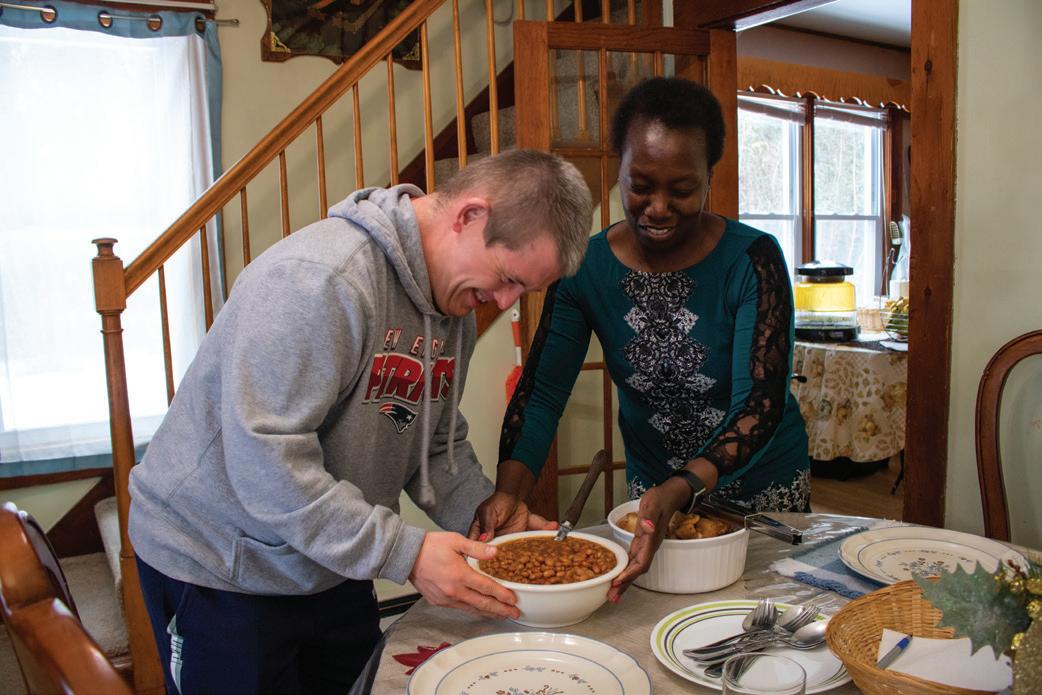
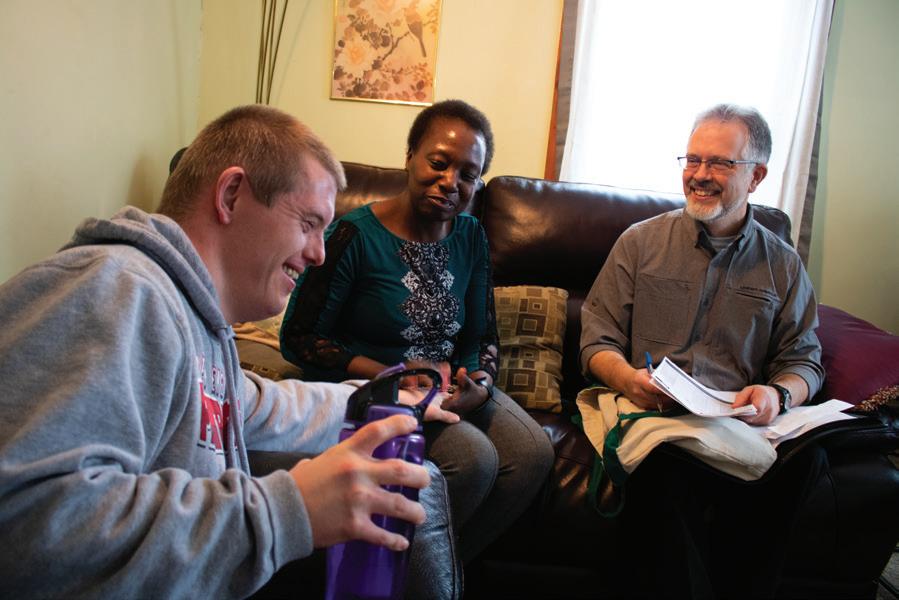
Ray Johnson on Shared Living: “A Family A air” (Part 1 & 2)
To Ray Johnson, shared living is a family a air. Three generations of his family—himself, his mother, sister, and nephew—have shared their homes with people with disabilities over the past 30 years. While there’s some debate between Ray and his mother (Ruth Johnson, who worked for Nonotuck for several years in the 1980s and 90s) as to the exact length of Ray’s tenure as a shared living provider, it’s agreed that it exceeds (or is about to be) 30 years.
His story began with Frankie Plou e, with whom he connected in the early 90’s, almost immediately becoming, as Ray puts it, “best friends.” Shortly before they met, Ray was living in Florida, taking a break from the human services field. When he heard about the model of shared living that Nonotuck was pioneering at the time, he knew it was time to come home.
There was tremendous uncertainty at the time; Frank was considered “high-need,” and the pair (with Nonotuck’s help) were breaking new ground in choosing to share a home together. In spite of the challenges, (and with Nonotuck’s support), the two immediately thrived. The pair undertook activities as big as traveling all over North America for dog shows (Ray shows whippet and greyhound dogs professionally), and as small as eating at Frank’s favorite local restaurants. “We were inseparable—we went everywhere together,” Ray says. “We went to Canada, almost every state in the United States: we did it all.”
Living with Frankie taught Ray to be adaptable in his views. “He taught me things. He threw wrenches, as I used to call it. {I learned not to} assume.” Frankie in turn flourished in their time together. “Frankie always looked down, he never looked up. He didn’t have confidence,” Ray says. “Within a few years, he had his head up high. From him walking stooped over, to walking with his head up and a smile on his face, he went from a grumpy old man to a sweetheart.”
Frankie unfortunately passed away five years ago, but his presence still looms large in Ray and his family’s life. “I still to this day talk about Frankie,” Ray says, “ {He’s still} just a really big influence on my life. I’ve been in human services as long as I have because of Frankie.”
Frankie is also still a topic of conversation for Robert O’Donnell, who began sharing a home with Ray and Frank about three years into their relationship. Read Robert and Ray’s story in part 2.
Part 2
Three years after starting his life with Frank, Ray added Robert O’Donnell to the mix. Their story began when a neighbor who Ray did respite work for (and who lived with Robert) moved to Germany. In what was supposed to be a temporary situation, Robert moved in with Ray, joining him and Frank. More than twenty years later, they continue to live together; as Ray puts it, “He came for relief and never left.”
Robert’s mother, Sarah, served as Chairwoman of the Board during the critical years when Nonotuck was closing group homes and moving fully to shared living. Robert’s sister has served on the board as well. While Frankie had no involvement with his family, Robert’s family called every night. “{Initially}, this was a place to stay, and when he visited his family, he was home,” Ray says. “We’re closer now that he’s older.” Robert still maintains close bonds with his family, regularly visiting his childhood home for weekends and holidays.
Robert is, as Ray puts it, a “collector.” “If he was living on his own, he would be a hoarder,” he jokes. Rotary phones, hubcaps, toy horses, and art books are among his passions. An artist himself, Robert was known to visit numerous art museums with his mother, who taught art in Northampton public schools for many years.
When Ray began shared living, he had an additional consideration to ponder. An openly gay man, Ray feared Frankie and Robert wouldn’t understand his lifestyle. This fear was quickly put to rest, with both Robert and Frankie being understanding and supportive. When Ray broke up with his partner of twenty five years, it was Frankie who comforted him. “I remember crying and Frankie coming to me and saying ‘Everything is going to be alright. You lost Dean, but who’s going to be your partner now? You’ll be happy again,’” Ray recalls.
“I was overwhelmed that he learned to understand, he didn’t judge, or anything like that. Same thing with Robert,” Ray says.
Both Robert and Frankie shared a home with Ray, his partner, and the pair’s adopted son for many years. Today, he lives with a new partner, Robert. After thirty years, Ray encourages shared living providers to go into shared living “wholeheartedly,” adding: “You have to evolve and grow with them. You can’t just come in and do what you want. You have to do a little changing, they have to do a little changing. When you share your lives together it’s a give and take.”
Ultimately, he says: “You won’t believe how rewarding it is.”
Get to Know: Placement Specialist Nichole Bourke
Nichole Bourke has worked as a Placement Specialist for Nonotuck Resource Associates since 2015, and served as the co-chair of Nonotuck’s Diversity, Equity, and Inclusion {DEI} committee since its inception in 2020. She lives in Springfield with her two daughters and husband.
Nichole and committee co-chair Jannelle Robinson were recently honored for their work leading the committee by the Association of Developmental Disability Providers (ADDP).
What did you do before coming to Nonotuck?
I was a teacher, I used to teach in the Springfield public school; I taught English as a second language, and worked with kids who had disabilities as well.
What attracted you to Nonotuck?
One thing I liked about Nonotuck was its shared living model. I thought it was unique, and very important. It gives people a chance to live a “normal life,” giving them independence.Also Nonotuck’s values: mutuality of respect, authenticity, vulnerability, values that help shape and mold people.
What does a placement specialist do?
So my job as a Placement Specialist is to recruit and screen applicants who want to become Share Living Providers. I also work closely with the Program Director and Clinicians to help facilitate the matching process for people who have been referred to our agency.
What is a day in the life of a placement specialist like?
A day in the life of a Placement Specialist would be qualifying applicants, conducting interviews and home studies, reference checks, sometimes home inspections and maintaining an ongoing list of qualified applicants.
What’s the best part of your job?
The best part of my job is connecting and forming meaningful relationships with people, Share Living Providers and the people we serve.
You were recently honored for your work on Nonotuck’s DEI Committee. What do you think is unique about Nonotuck’s approach to DEI?
I think Nonotuck’s approach to DEI is unique because we take time out to put emphasis on experiences from di erent cultures and backgrounds to the agency, which in return gives people a chance to gain di erent perspectives they may not have had prior to knowing someone. We also take time out to have discussions that further foster understanding. In doing so, it creates a positive and inclusive work environment.
Why do you think the work of the committee is important?
This work is important because people need to feel understood and people need understanding. To me, that is the only way change will occur.
Why is working on the DEI committee rewarding to you?
This is rewarding because I am able to witness results from a conversation. It feels good to be able to be a voice for people who are not vocal or afraid to share how they feel about being di erent and wanting to be accepted.
What is it about you that makes you a good co-chair for the committee?
I think I make a good co-chair for the committee because I am innovative. I am also receptive to people’s perspectives and am very understanding.
What have you learned {from co-chairing the committee}?
Don’t be afraid to voice your opinion or perspective about anything. When you don’t do that, you can be left with animosity, and things like that. You never know what a person’s perspective is, {the committee allows us to}clear up perspectives. And it’s an opportunity to teach people; educating people is the most important part of it all.
What was your reaction to earning the ADDP award?
My reaction to winning the reward at first was extremely excited and equally humble.
What are your hobbies outside of work?
My hobbies outside of work would include podcasting with friends on hip hop culture. We review albums and discuss nostalgic songs. We also speak about current pop culture.
What’s your secret talent?
My secret talent is interior decorating. My friends and family call me all the time for designs for their homes. I love to watch HGTV!
What’s one piece of media (book, movie, song, album, whatever) that you would recommend to someone and why?
I would recommend Kendrick Lamar’s album “goodkid m.A.A.d. City” because the album is his documentary of self-journey as a teenaged black kid growing up in Compton. I would recommend this album because it’s the perfect balance of storytelling, lyricism, and production. Beware before listening though because it does have explicit lyrics.
If you are interested in joining the committee, please email committee co-chairs Jannelle Robinson (robinson@nonotuck.com) and Nichole Bourke (bourke@nonotuck.com).
Wellness Coordinator Jannelle Robinson Get to Know:
Jannelle Robinson has been a “wearer of many hats” since beginning work at Nonotuck as a Care Manager in 2012. After leaving the organization in 2015 to work as RISE Coordinator and complete her Yoga Teacher Training at Kripalu Center for Yoga & Health in the Berkshires, she returned in 2019, first as the Marketing and Wellness Coordinator, now as simply the Wellness Coordinator.
Jannelle has also served as the co-chair of Nonotuck’s Diversity, Equity, and Inclusion committee, work that recently earned her recognition from the Association for Developmental Disability Providers.
You’re Nonotuck’s Wellness Coordinator- what does that role mean to you?
I first started practicing yoga and becoming interested in wellness after graduating college and looking for more balance in my own life. This interest grew as I worked as a Care Manager for Nonotuck from 2012-2015 in what was then the South Hadley and Greenfield o ces, and is now the Conz St. program.
During this time, through my own personal experience and what I saw around me, I became more and more interested in how people can cultivate wellness and peace and balance in their lives, while also showing up to serve their communities, in the way that {everyone here at Nonotuck does}.
In 2015 I left Nonotuck to search for answers to this question at the Kripalu Center for Yoga and Health. There, I received my Yoga Teacher certification and I worked as the coordinator for the RISE program, which is an evidence-based mindfulness program designed to teach stress resilience tools to frontline professionals such as doctors, nurses, teachers, law enforcement, and folks in Human Services {like at Nonotuck}.
RISE was just getting o the ground and I immediately saw that this could be an amazing opportunity for Nonotuck employees. Kripalu and Nonotuck leadership both saw that this could be a really great partnership and we were able to bring the first of what would be many groups of Nonotuck employees for a 5 day retreat at Kripalu to learn tools that they could bring back.
In 2019, after the birth of my daughter I was looking for an organization that really values families and the role of the caregiver and found my way back to Nonotuck.
I am thrilled to be in a position now, supporting the well-being of this community while you all carry out the important work that Nonotuck is doing.
What is your definition of “wellness?”
It’s really changed over time. When I first started on this learning, it was much more centered around physical
wellbeing. Now, it encompasses anything that helps a person have balance in their lives.
And I also think that wellness is defined di erently for each person and it changes for me on a given day. What wellness means to me is di erent from what wellness means to another person. That’s what makes it so interesting and exciting. It’s not one size fits all. That’s why, at Nontouck, we’ve broadened our approach. We are trying to find ways to continue to support what wellness means to each person.
{For me}, that means I need to do yoga everyday. For someone else that might mean making sure they take time to go grocery shopping, or going for a long drive, or listening to music.
When I think of good health, that’s where I used to define it, now I think of it more as quality of life.
What do you enjoy doing outside of work?
I enjoy spending time in nature with my family, and gardening I’m a novice gardener but I’m learning and taking yoga classes. Also, learning about herbalism and making yummy herbal concoctions. And reading.
You were recently honored for your work as DEI co-chair. Why do you think you’re specially qualified to co-chair the DEI?
I actually don’t think I have on-paper qualifications that make me specifically qualified, however, I have a strong drive to want to learn about people, to listen and to hear about the ways that other people experience life.
So… my curiosity, my compassion, and my genuine interest in the human condition. And the di erent ways people walk through life. Specifically at Nonotuck, making people feel like they belong here. It’s something that I’m really passionate about.
You were recently honored for your work as DEI co-chair. Why do you think you’re specially qualified to co-chair the DEI?
I actually don’t think I have on-paper qualifications that make me specifically qualified, however, I have a strong drive to want to learn about people, to listen and to hear about the ways that other people experience life.
So… my curiosity, my compassion, and my genuine interest in the human condition. And the di erent ways people walk through life. Specifically at Nonotuck, making people feel like they belong here. It’s something that I’m really passionate about.
What do you think is unique about Nonotuck’s approach to DEI?
I think our collaborative and celebratory approach to DEI is unique to Nonotuck. We try to make sure that every voice is heard and that even when we are discussing di cult topics, we find ways to celebrate our diverse community.
Why do you think the work is important?
As a person who is passionate about wellness, I believe that we cannot achieve wellbeing in our own lives or as a community without Diversity, Equity and Inclusion. A quote from activist Audre Lorde comes to mind – “I am not free while any woman is unfree, even when her shackles are very di erent from my own.”
Why is it rewarding to you?
It is so rewarding because I get to do this work in the community; we get to explore and celebrate diversity together and learn from each other. That is really special.
Get to Know: Ronda Jones Tobey
(Part 1 & 2)
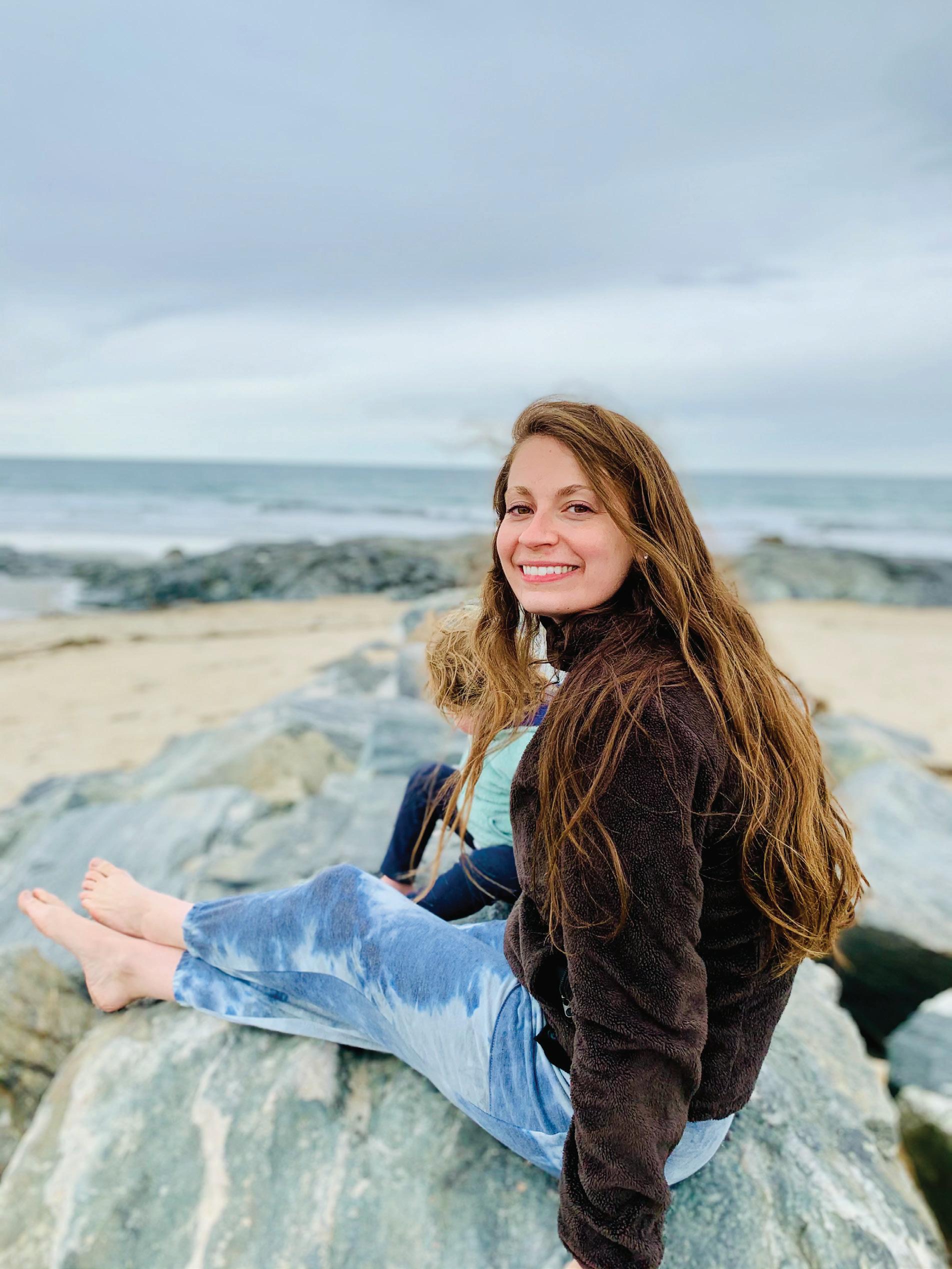
Ronda D. Jones Tobey has been a valued member of the Nonotuck community since 2015. Working as a Clinician in our Cape Cod, Plymouth and Brockton o ces, she also serves an important voice on our Diversity, Equity, Inclusion, and Belonging (DEI&B) committee.
Ronda is a member of the Lumbee tribe, and originally hails from North Carolina. In honor of Women’s History Month, we sat down with her about her career of advocacy, innovation and insight.
Tell me about your background- where did you grow up and how did you get here?
I was raised in a small town called Raeford, North Carolina. I’m of the Lumbee Tribe of North Carolina, one of the largest tribes in the United States; it’s the 8th largest tribe in the nation.
I was raised in a pretty diverse community. My mom always had us go to pow wows on the weekend. We were on the go, traveling the country, hitting di erent tribes, di erent pow wows. She had us go to North Carolina Native Youth Organization, go to {their} national conference- a tribal youth conference— {where I} met tribes from the whole nation— it gave me a strong foundation of who I am today.
I ended up going to New York City as a head dancer at Bear Mountain Powwow, and eventually took the opportunity to move there. {My diverse background} helped me survive the transition.
Education was always important in my family. I got my Bachelors and Masters Degree in Social Work from Rutgers University. After 9/11, with the racism that {was taking place} in New York, I knew it was time for me to go back to North Carolina.
When you returned to North Carolina, you were involved in pushing forward some significant legislation for native children. Tell me about that.
{In Robeson County, North Carolina} 50 percent of the children in foster care were from my tribe. Due to these concerns, I established Red Path Child and Family Agency, the first Native American foster agency in the state of North Carolina; with this platform I helped change the laws there, to allow all tribal members to be under kinship to any child in custody of the State. This helped eliminate the barriers of becoming a foster parent.
Those unique actions are how I ended up in Cape Cod: the Mashpee Wampanoag Tribe asked me to help establish their Health and Human Service Department as their ICWA (Indian Child Welfare Act) Director.
As the Mashpee’s new director, I also help changed regulations with the Commonwealth. By federal law a native child can’t be placed in a non-native American family. In the past, when there was an investigation on a family,
{the authorities} weren’t asking whether either or both parents are of Native American ancestry or eligible for membership in the tribe. Children would be placed in a non-native family, and by the time we found out, the child might be connected with their new foster parent; therefore removed from their tribal culture and ceremonies. To nip that in the bud, this legislation helped get the question asked upfront, so tribes can be aware of the situation and involved in service.
It helps to keep the child in the tribe, not relocating multiple times, and back into a tribal member’s home that they could already be aware of. Plus it keeps them in touch with their tribal routes and tribal family.
That’s how I met my current husband, a member of the Mashpee Wampanoag Tribe: that’s why I stayed, because of that relationship.
Part 2
What attracted you to Nonotuck?
Definitely the morals and values that they have. Being a person that is working a demanding field, always going, going, going, I enjoyed the concept of having the time to take care of yourself, the wellness hour. (Nonotuck o ers employees two paid wellness hours a week to be spent however they like to contribute to their own wellness). {At Nonotuck, I work for} a company that says ‘Let’s slow down and take care of ourselves.’ That allows you to be a better employee, to work harder.
I’m always telling people how Nonotuck takes care of us, takes care of our wellbeing, and treats people as equals. Not only ourselves, but the people we serve. That makes Nonotuck unique.
How would you describe your work at Nonotuck to someone unfamiliar with it?
One of my favorite roles is being a team member.
During meetings, I often tell the person we serve that they are like the CEO, and we’re the board members. We work for them, guide them to help make sure that their goals are heard and met. You have to be a team player, and listen; listening to peoples’ struggles, and their strengths, and build on those strengths.
You’ve a valued member of our Diversity, Equity, Inclusion and Belonging (DEI & B) committee. What’s your favorite part about serving on the committee?
With that committee, you’re able to learn about other peoples’ race and identity, {and it’s} allowed me to introduce other people to my identity as well. Racism is a learned behavior. I respect Nonotuck for having this committee to slow down and stop that act.
If we can relate to each other, that helps us to build a stronger foundation among our colleagues and friendships, to have us be better employees. When we are out in the community, we work with a diverse group of people, not just nationalities, but {di erent abilities}. We have to treat everyone as equal, appreciating their di erences as
well.
It just goes back to respecting our diversity, our equality, and educating as many people as we can, so we can help stop the negativity and oppression in our society.
Who are your personal heroes?
My mother. She definitely gave me my foundation of who I am. She was raised in a small tribal community, raised on a farm. I was raised to be stronger, to know that education was important. She helped so many people in our community go to school, so many people from all di erent areas: everyone was always welcome.
People always bring up that it was her that helped them get into college, if it wasn’t for her, their life would’ve changed. It’s a rare situation in a Native American family that all three of her children went o to a major university and made a di erence in tribal communities; that was a unique accomplishment.
Now—life is a circle, and she lives with me. We almost lost our matriarch in 2022. I thank Nontouck for allowing time o and those wellness hours, so I can take time for myself and my family members.
We’re talking during March, which is Women’s History Month. What does the month mean to you? What Women’s History Month means to me is recognizing the women of the past, how those bumpy roads those women paved helped make the roads today much smoother. Women are marginalized in society, {and I} acknowledge how far we’ve come, but also how far we have to go.
What are your interests outside of work?
I love to travel. When I am able, I will try to go home. I try to take time to visit my local tribal members. I visit my new friends out here, just taking the time to smell the flowers. I try to go to the beach. Relaxing, appreciating the things we have today.
What is one piece of media you’d recommend to someone?
It’s Lumbee Homecoming, Y’All. {a story told from the perspective of an 8-year-old boy enjoying his favorite tradition, Lumbee homecoming} I try to support my nation no matter where I live. There are so many tribes in the United States. We’re fighting for our full federal recognition. No matter where we’re at, I try to educate people about my tribe so they can talk to their senators, or when it’s time for that act, or that law, it can be passed.
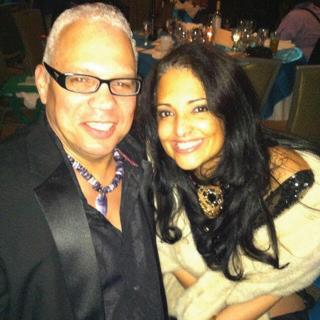
Get to Know: HR Director Gretchen Parker
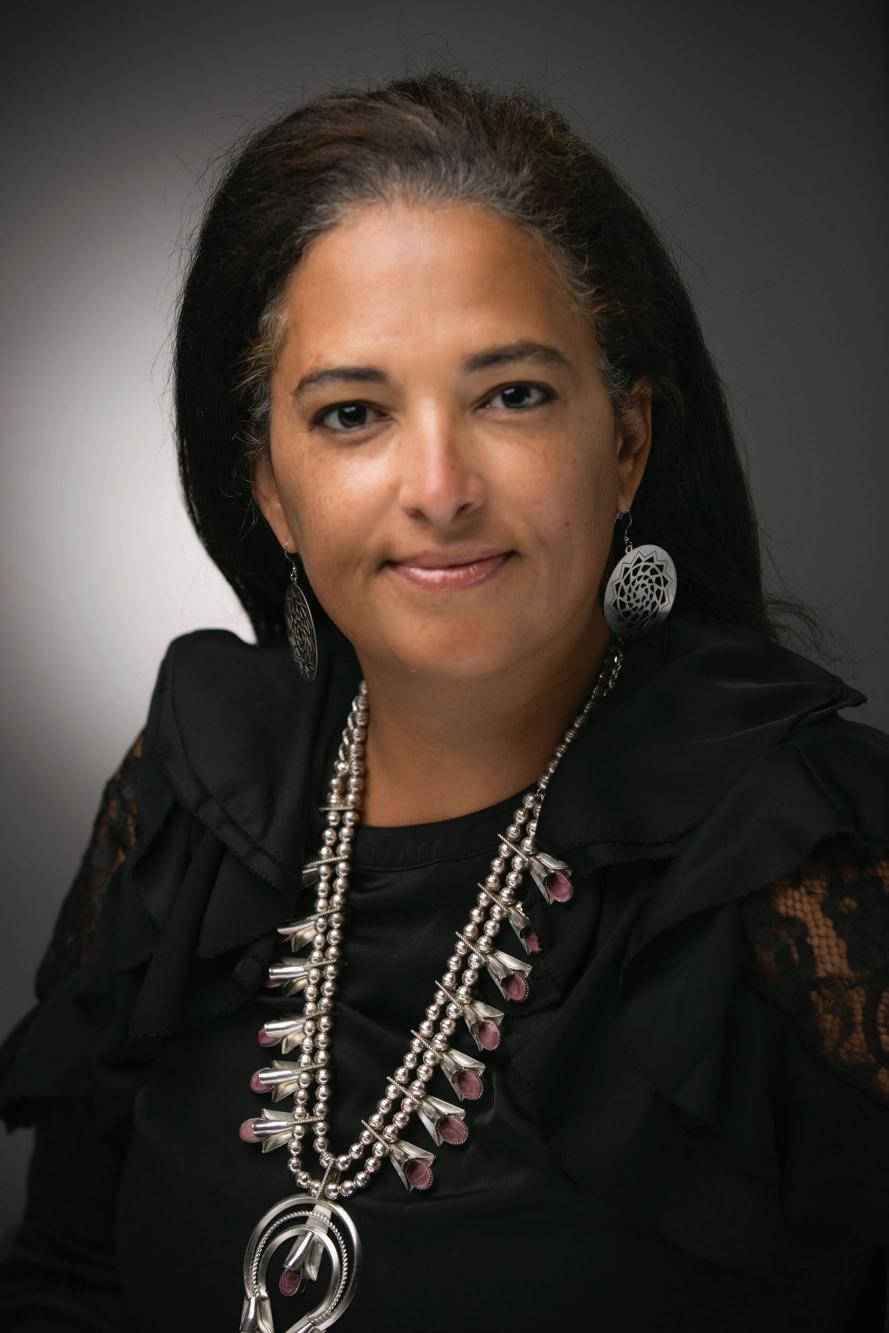
Nonotuck Resource Associates was honored to recently welcome Human Resources Director Gretchen Parker, MBA. Gretchen comes to Nonotuck with 20 years’ experience in human resources, as well as an entire career working with nonprofits.
Parker most recently worked as Associate Director of Human Resources for Highland Valley Elder Services, also working for LifePath, the University of Massachusetts Amherst, and Franklin Regional Council of Governments. She earned her Bachelor’s degree from Mount Holyoke College and Master’s from Fitchburg State University.
She resides in Turners Falls with her husband.
What attracted you to Nonotuck?
I was referred by a friend who works at Lifepath’s AFC program, who worked closely with Kitty {Curtin, Executive Vice President of Operations}. When I looked at the {organization}, I felt good about it, so I applied.
{Also, Nonotuck is} helping people with disabilities; as I get older, it becomes more and more a priority to put a good spin on the world.
What’s your impression of everything so far?
Everyone is welcoming and friendly. {Nonotuck is} really ahead of most other nonprofits as far as tech goes, too: that’s been really refreshing. I’ve never had the tech that we have here, it’s so nice.
I’m very excited to join Nonotuck and am looking forward to getting to know everyone that helps Nonotuck be the agency that it is today.
What are your goals for working here?
My goal is to further my career in human resources, and stay put until retirement, which is hopefully earlier than 65.
What are your retirement plans?
I’d like to dabble in having an antique shop, something low key. We just bought a small house in Portugal, that’s going to be our retirement home.
Why Portugal?
We researched all over. I wanted to be in Europe, I didn’t care where, and my husband, Chris, doesn’t like cold weather. I picked Portugal because it’s really, really, inexpensive, has fantastic weather and food, they are
welcoming to expats, and it’s the third safest country in the world.
Have you traveled extensively?
I’ve done a fair amount of traveling, I’ve been to France, Italy, Ireland, England, Iceland, and New Zealand. Travel is important to me. I love to travel, to try new things, and to see new places. I like to go to the smaller places. I’m not big on something like the Ei el tower, I want to get to know the culture and the people, and the local food.
What is unique about your personality in relation to this job?
I’m approachable, friendly, knowledgeable, I think that’s a good combination for an HR person. I’m here to help sta navigate their career goals while balancing their personal life; I like helping to take the fear out of those things.
What is your specific definition of ‘Human Resources?’
It’s a liaison between the company and the sta , like Switzerland {a neutral party}. My position is paid for by the agency, and I need to look out for agency interests, but it’s important to put the “human” side of Human Resources for the sta so they can put their best foot forward at work while they’re here.
How can you do that?
It’s usually for something that they need- I’m not proactive, I’m reactive. What I can do is answer things, maybe it’s a training that they want to take, or they want to navigate toward a career goal either within the agency or outside the agency.
Most people come to me because {for example}, there’s a death in the family, it’s not one of the people that’s covered in the bereavement policy- how do I handle that? It’s usually questions like those that I’m helping to answer.
I also help with policies, we just worked on a couple policies, {including an updated} performance assessment for Nonotuck employees. I also help people to navigate new software related to HR: I really thrive working as a team and helping people attain their career and life goals.
Have you always worked in HR?
I haven’t. I morphed into it because we were short sta ed in a smaller company and needed coverage for payroll. I liked it and ended up going back for my Master’s degree later in life, that’s where I’ve been ever since.
I was a planning grant administrator, I worked for the Regional Council of Governments in Greenfield, I did a little bit of everything. I was there for almost 20 years, doing grant billing, procurement, homeland security minutes for di erent committees. My favorite part was the payroll and helping sta navigate choosing benefits. {After that,} I decided to get my Master’s degree, that’s when I fully went into HR.
What do you like to do for fun?
We just bought a house in Turners Falls, and we’ve been having a blast decorating the house and putting in period furniture. I also like to read, quilt and walk on the bike path right near my house along the canal.
What have you read lately?
I keep hearing Brenee Brown’s name around Nonotuck—I love Brenee Brown! Otherwise, I love reading historical fiction. I just read The Tobacco Wives, that was really good.
How Can People Get In Touch With You?
508-927-2837
parker@nonotuck.com
Iris Christenson & Lavender Darcangelo: Kindred Spirits
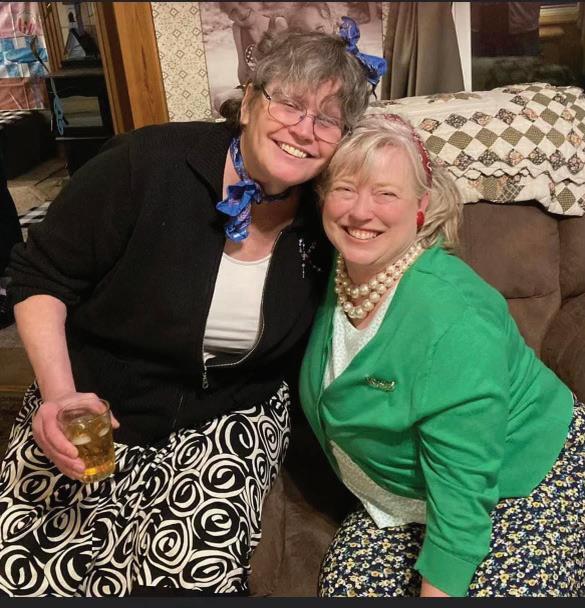
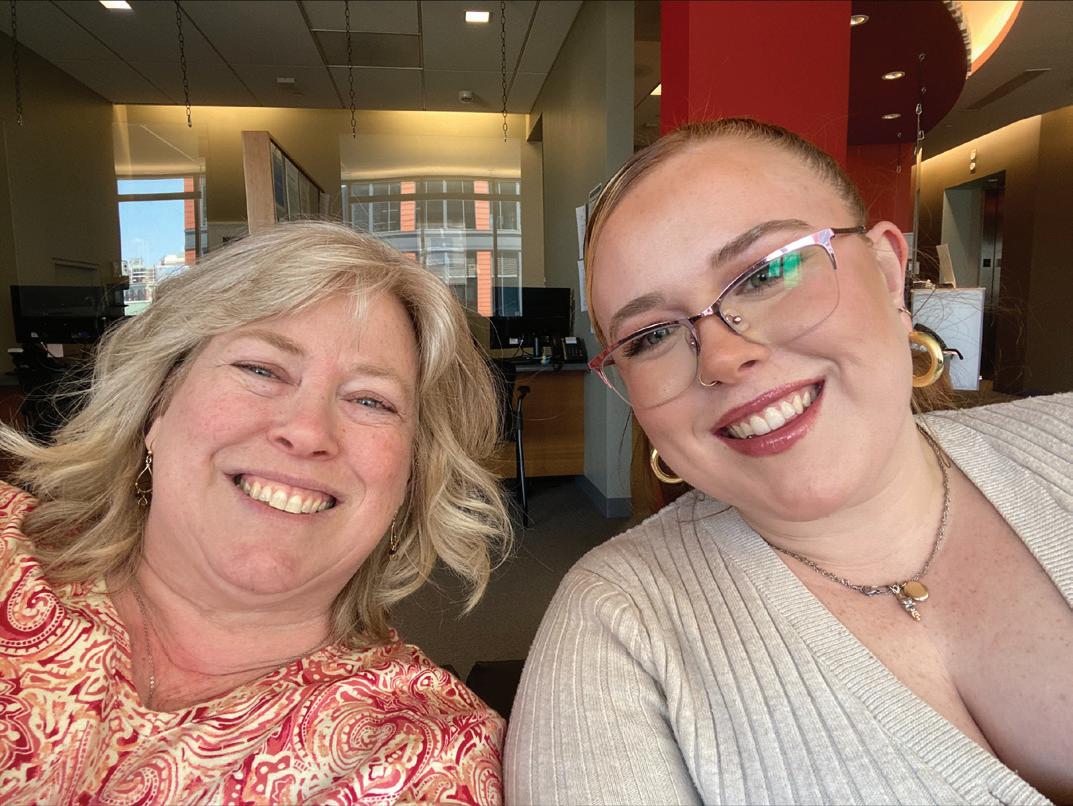
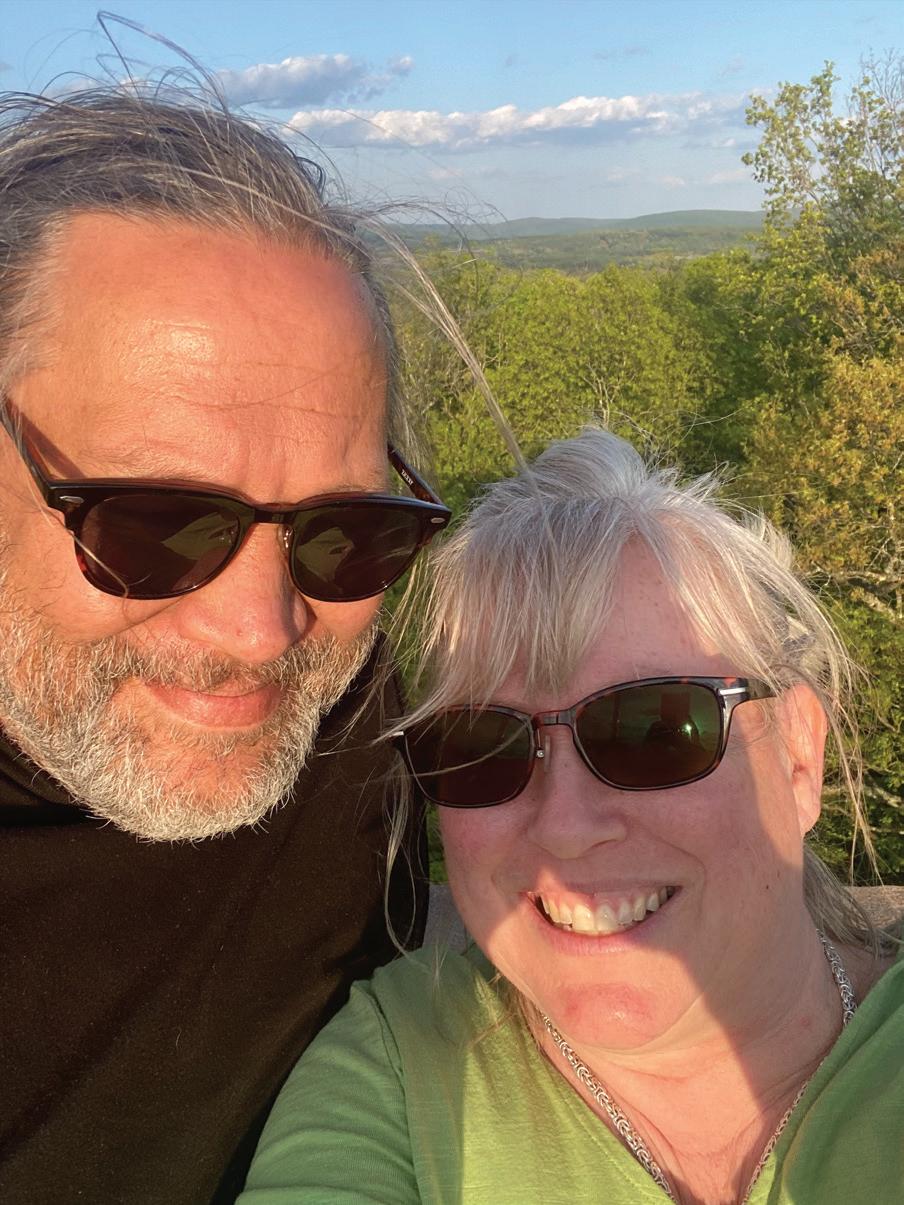
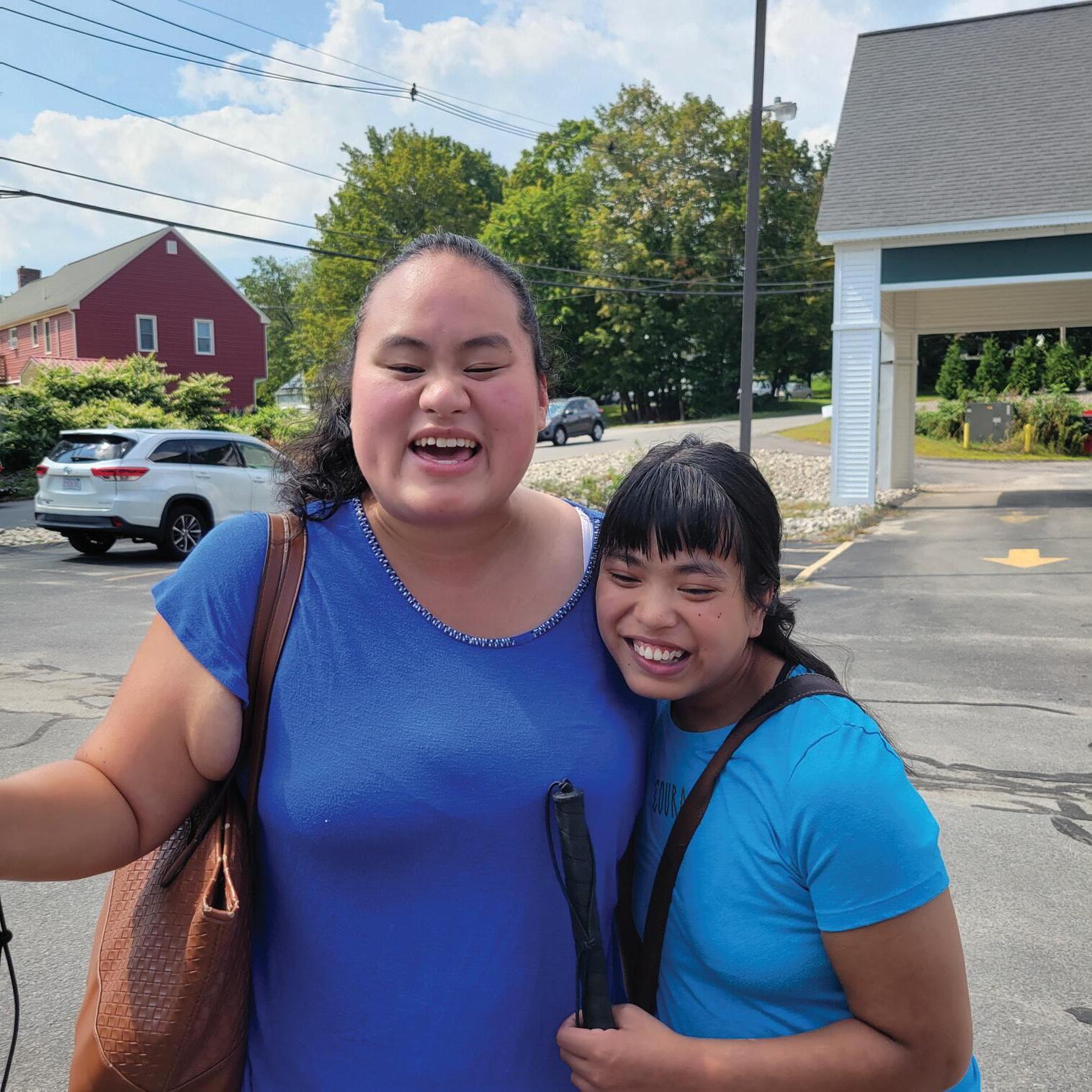
When Iris Christenson walked into a Massachusetts co ee shop this summer, she had no idea that the visit would result in the thrill of a lifetime: a meeting and subsequent friendship with her idol. Iris—who receives services from Nonotuck in Clinton, MA—recently joined Nonotuck Clinician Kate Hucknall on a pilgrimage to Fitchburg, MA, birthplace of her favorite singer, Lavender Darcangelo.
The duo stopped at said co ee shop, The Cozy Corner, where their conversation naturally centered around Lavender, which caught the attention of a fellow patron, Chris Cordio, owner of American Pizza Pie in Fitchburg. Chris o ered to connect them with Lavender through a mutual acquaintance, City Councilor Sam Squailia, who is currently running for Mayor of Fitchburg. Phone calls were made, and Lavender called Kate that evening for an initial introduction. “She said ‘I’m really happy you went to my hometown, I’m so touched. I’d really like to meet Iris,” Kate says. Two days later, Kate facilitated a three-way FaceTime call with Iris and Lavender, and another call a week later.
Lavender recently gained national attention appearing on popular competition show America’s Got Talent (AGT). She is also, like Iris, blind, a commonality that enhances Iris’s already fervent fandom. “Every morning she wakes up and listens to Lavender’s songs,” Kate says. “It’s a huge topic {of conversation} between us.”
During a break from AGT in LA, Lavender was home, and asked if she might be able to meet with Iris on a day outside of the normal time that Kate and Iris meet. Kate drove to pick up Lavender and her boyfriend while Iris’ direct care sta drove Iris to a co ee shop in Leominster, where the pair enjoyed a, lively meeting. “It was spontaneous; she had plans to go to Walmart and Dunkin, and instead ended up at a co ee shop with her idol,” Kate says about Iris. “It was just so positive, fun, loud, and no one seemed to care if it was too loud.”
It goes without saying that the meeting was a once-in-a-lifetime thrill for Iris. “{Meeting Lavender} was fun and amazing! It was almost like it wasn’t real because we had only seen her on TV and heard her music and had a few FaceTime calls together. Then we were all sitting together talking and it was so much fun!” Iris says.
Lavender felt similarly, finding kindred spirits in both Kate and Iris. “My favorite part of meeting Kate and Iris is that I don’t act my age, and finding out that they have similar, loud quirks like me and that they are very wholesome people who like activities that are more for kids, and I thought I was the only adult in the world who likes kid thingies,” she says. “I love it when we pull each other’s legs and I also love how they both have validated my experiences growing up and not feeling like I was heard.”
Unfortunately, Lavender did not make the cut during the AGT finale on September 27th, but nonetheless has big
plans for her music career, including a forthcoming album she calls ambitious, crossing genres and mixing covers and originals. While she might not have prevailed in primetime, she was thrilled for the winner and feels as though the universe was protecting her from being overwhelmed with all that entails from winning AGT, Kate says.
Regardless, Lavender has undoubtedly gained a friend for life in Iris. “My music career is generally very overwhelming and I have a lot to deal with. Their playfulness helps me be sane, and so does recreation when I am not thinking about music or my business in general,” Lavender says.
The feeling is mutual for Iris. “I think we (Iris and Kate) have started to form a nice friendship with Lavender. We have plans to go out again together for lunch when she gets back from her trip to LA for AGT (when she’s ready),” Iris says. “Kate and I are really looking forward to spending more time with Lavender and getting to know each other more.”
Tammy Laurent: Care Manager, Advocate
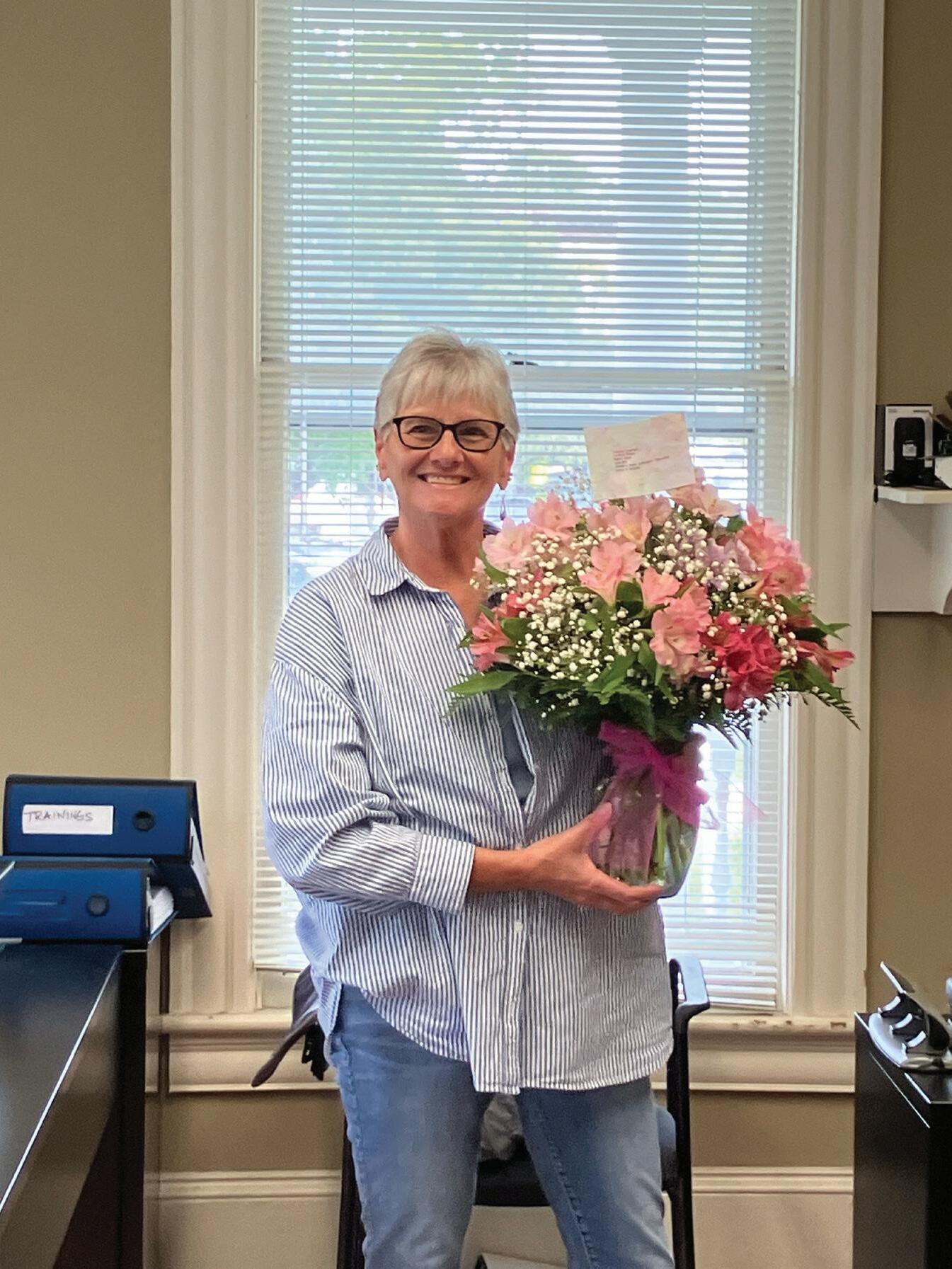
After 24 years at Nonotuck Resource Associates Inc, one word consistently stays relevant for Tammy Laurent: advocate. Tammy, who works as a Care Manager in our Lee o ce, recently put the word to use when she went above and beyond for Joe Delisle, who receives services from Nonotuck in North Adams, MA.
Joe was experiencing medical issues that were not being properly addressed by his doctor for some time. His symptoms progressed to the point where there was a noticeable drop in both his mobility and cognitive ability, causing great concern for Tammy and his shared living caregiver, Steve. Tammy called Joe’s primary care provider (PCP), and again got nowhere. When Joe—who Tammy says never complains of pain—began mentioning chest pains, it was time to take action.
“I knew something was going on with him and his PCP wasn’t taking it seriously,” Tammy says.
When Joe arrived at Berkshire Medical Center, he was in rough shape, to say the least. His body temperature was 91 degrees (98 is average), his red blood cell count, iron, and liver blood tests were alarming, and he was su ering from aspiration pneumonia, sepsis, and atrial fibrillation. As if that wasn’t enough, it was also discovered that Joe had a bulging disc in his back.
The laundry list of ailments meant that Joe needed a lengthy hospital stay, but he is out and on the mend, thanks to Tammy’s vigilance. While some of her colleagues insist she saved Joe’s life, Tammy is unsure, instead expressing sympathy for the pain Joe was experiencing. “I don’t know if I saved his life, I do have to wonder if I hadn’t told Steve to call 911 that day, how long he would’ve survived,” she says. “I can’t imagine how much pain he was in and how cold he was.”
At the end of the day Tammy insists she was simply doing her job. “We have to speak for the people who can’t speak for themselves, who need help to articulate what they are trying to say,” she says.
In other words, to advocate.
Q AND A: AFC Alternative Caregiver
Samantha Chhrech
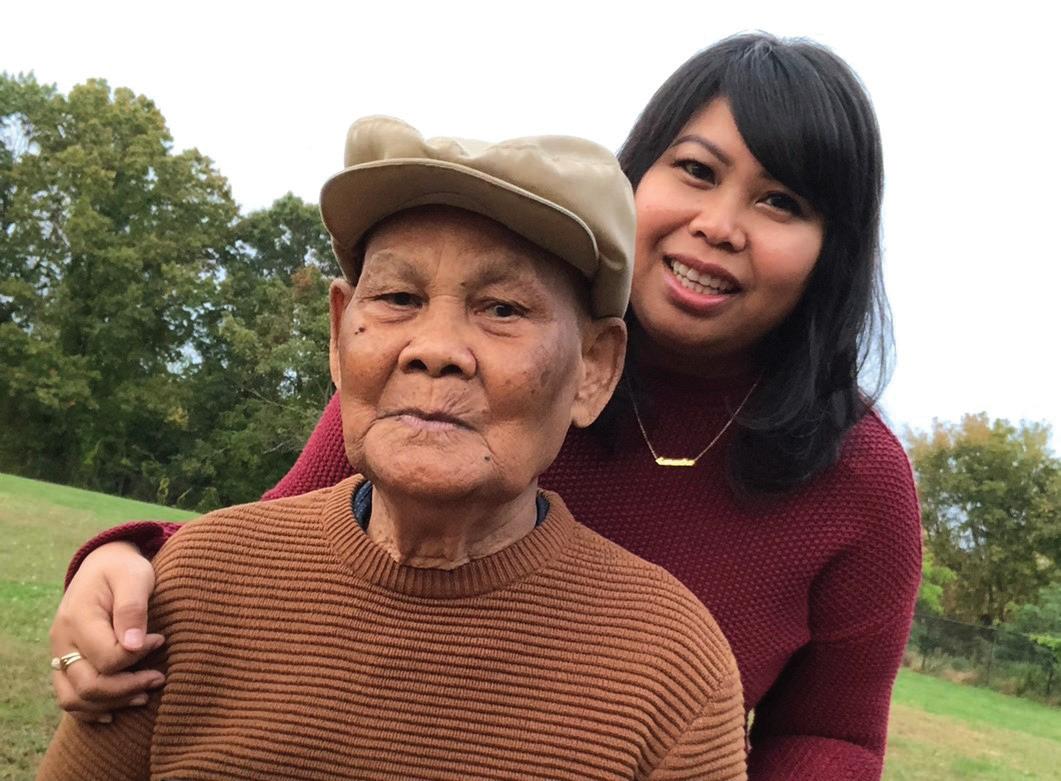
Samantha Chhrech has been an alternative caregiver through our Adult Family Care (AFC) program for 8 years. She assists with care for her father in the Lowell area (her nephew Vantha is the primary caregiver; Samantha assists him), but she views herself as a daughter first. “I’m his daughter; it’s my responsibility to take care of him when he’s sick or getting older,” she says. “Through the AFC Program, I get to spend more time with my dad, building that relationship as an adult with him.”
We recently asked Samantha about her role as an alternative caregiver/daughter, how it’s influenced her relationship with her father, and what it’s taught her.
What’s a typical day for an alternative caregiver like?
In the morning, I check in on him, get him ready, have breakfast with him, and we socialize. I have my nephew and older sister helping with the care too. My older sister comes in the afternoon to care for him, handling meal prep, cooking, and cleaning while I work.
In the evening, it’s my turn to step in to help him again. We talk more; he likes to chant in the evening—he’s a Buddhist—I listen to him chant, and we have conversations. A lot of our conversations revolve around Buddhist teachings. On nice days, we go out for walks, and I take him out to places. With the cold weather, he doesn’t want to do anything, though.
What have you learned from the experience?
I’ve learned to be patient, humble, and to keep an open mind because everyone is just so di erent.
What would you tell someone who is unfamiliar with AFC about working as a caregiver?
I would let them know that it’s going to be challenging, but once you get the routine, there’s always support no matter what. Once you have that flow going, it’s not easy, but it’s rewarding. At the end of the day, you’re going to feel accomplished that you did something good, whether you’re caring for your family or someone else.
Anything else about being an AFC caregiver I didn’t ask you that you think is important?
Others who are caregivers feel the same way: we are the voice for our loved ones, our members, who can’t speak for themselves.
George H. Fleischner Eulogy for Kitty Kelly-Curtin
“I do love nothing in the world so well as you”—William Shakespeare.
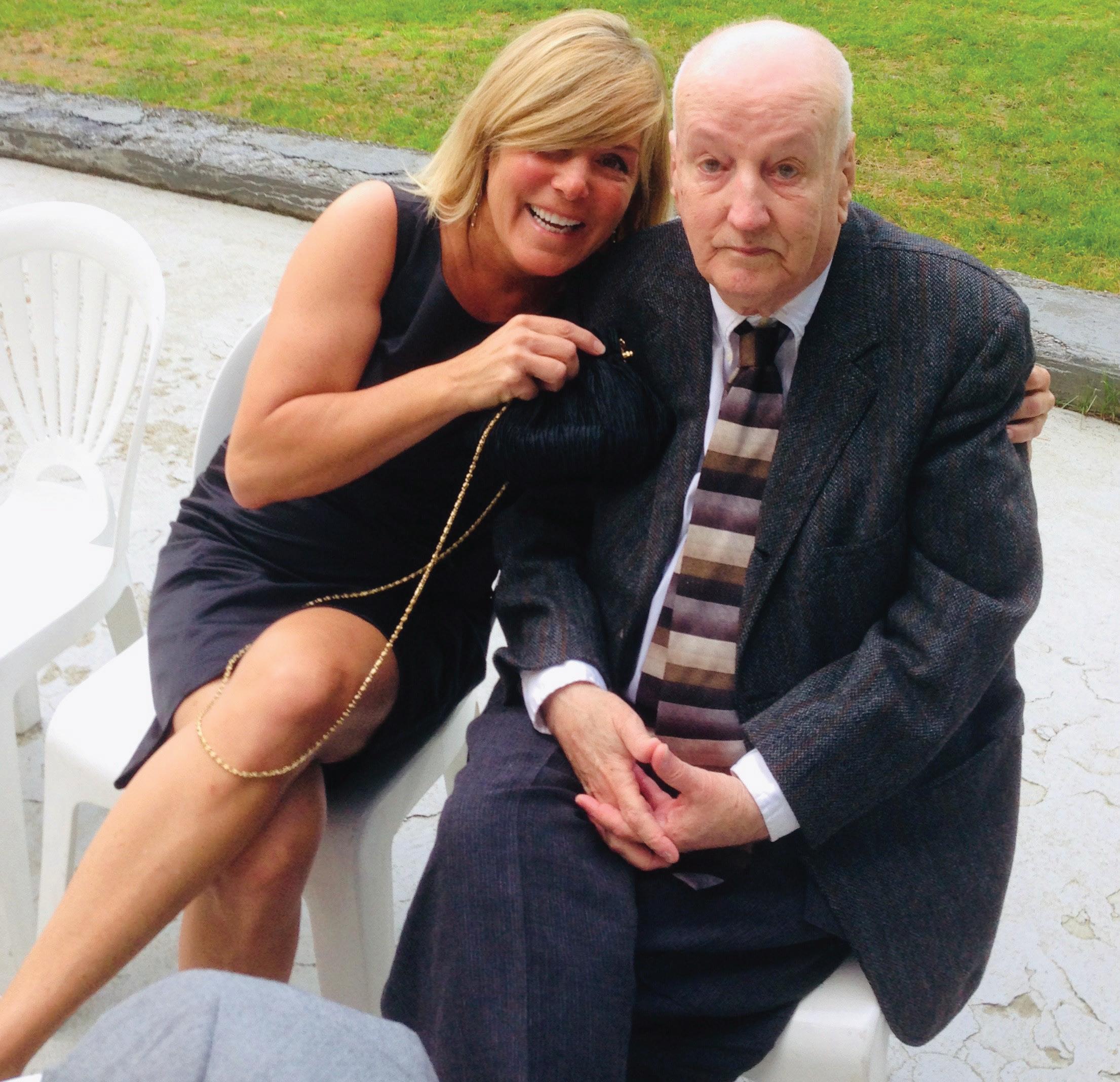
I cannot claim that I am alone in this sentiment for Kitty. To know her was to love her and feel loved by her. To experience her beauty, her empathy, her confidence, and her wisdom was something we may only encounter once in our lifetime. Kitty didn’t just hear what people had to say, she listened without judgement and comforted without hesitation. She could find humor in the most stressful of times, and light in the darkest. The authenticity of Kitty’s heart and depth of her soul was felt by many. And in the face of hypocrisy and hate, she found vulnerability and understanding. Kitty stood up for and with people with disabilities. Not because she felt it was her duty, but because it was who she was. For her, love conquered all.
That love shined so brightly in her connection with her sons, and with all those she enveloped into her family. She was a fierce and devoted mother who loved Devin and Dillon unconditionally.
She extended that love to the young children in her life. Her interactions with Blaire, Meadow and Aiden were filled with an unparalleled presence, joy, and playfulness. She would play with them for hours on end and could often be found dressed as a princess at a royal tea party.
There was something about Kitty. It wasn’t charisma, which overwhelms others, but it was as powerful as charisma. Maybe more so. A thousand times I saw her interact with others, draw them in the most subtle of ways, and capture them for life. It wasn’t overt. It wasn’t a takeover. It was a warm and graceful welcome into her life that people gladly entered.
Kitty had the most infectious laugh. It was spontaneous. A sound free of adult clutter. Her laugh would ripple through my body and bring me pure happiness.
Kitty had a joy of life about her. Here’s an example: When she was learning to play golf she would hit a shot and run with wonderment and excitement to the next shot. She did cartwheels in the fairway. She’d swing and miss and laugh. Oh my, that laugh.
Her most famous golf shot was on the eighth hole at Greenock. A di cult, uphill par 4. She hit a solid drive to the right side of the fairway. She then crushed a low iron up and onto the green. From below players can’t see the hole. We got up to the green and there was no ball to be seen. Kitty started towards the back of the green thinking he shot had carried over. I said” Before you look back there look in the hole” I have on video her reaction to her 2 shot eagle as she pick the ball out of the cup in unending glee. I know I told more people about that shot than she did. The moment in time was a picture of excitement, zeal and happiness that she had about life.
Kitty started playing golf at age 46 and told me she would win her first tournament by age 50. I didn’t doubt her.
There was much about Kitty’s essence that one saw in her pursuit of the game and that goal. For months every late evening as the sun was going down and Greenock CC was empty she would play the first two holes hitting 3 or 4 balls. The second hole is a short par three surrounded by woods. She would empty her bag of golf balls hitting 15 to 20 of them into the woods. Her determination was unequal. Her belief in herself is unparalleled. She had a goal and she was going to reach it. One day after one of these evenings her kids found her scorecard and honest Kitty has put down a 17 on that second hole. She did try to hide it by writing it as small as possible. But Devin and Dillon found it and teased Kitty mercilessly. She told that story dozens of times laughing. This is who she was.
No eulogy about Kitty is complete until her love of Cape Cod, her legacy at Nonotuck and her spirituality is addressed. For Kitty, Cape Cod was her peace, her earthly heaven, her place for renewal. At the ocean she would sit in a beach chair at the edge of the water, her feet soaking, staring out across the sea. Kitty loved Woods Hole, Falmouth, and Chatham. Kitty took pride in the fact that she played 14 di erent golf courses on the Cape. She loved to take day long rides with Danny across the Cape visiting consignment shops. In so many ways the Cape was home for Kitty. Regarding Nonotuck: 26 amazing years living with Dan McDonald. Oh, what a beautiful relationship. In Lee, everyone who knew Kitty knew Danny. Danny spent 50 of his first 53 years of life in the institution at Belchertown State School. He was finally discharged into a group home in Stockbridge where Kitty worked as a nurse. After quickly building a relationship, they knew they’d live their days together. Through a model called shared living, this was made possible for Kit and Danny, and in the mid-90s, the two became lifelong roommates. It was a relationship built on respect and mutual love. They exemplified everything that shared living is meant to be. Through Kitty’s love and support, Danny was able to explore new interests and ambitions. For Kitty she had a companion, a side-kick, a buddy. The two were inseparable.
Meanwhile, Kitty worked 17 years as an employee at Nonotuck. First as a part-time nurse in 2006 where she started Nonotuck’s Adult Family Care program. Over the years the scope of her responsibilities grew along with the growth of the organization. Her final position was as an Executive VP of Operations. Kitty took the AFC program and expanded it from one person to over 800 people across the state. Kitty’s impact on Nonotuck is immeasurable. Not only did she embody everything Nonotuck stands for, in many ways, she helped shape the vision and path the agency is forging. She’s touched hundreds of people’s lives in amazingly positive ways. She was an influencer and leader in the true sense of the word. Nonotuck owes a great debt to Kitty. But to her she was just doing the job she loved.
Kitty felt solace in her religion. Her faith was strong. She had a deep relationship with God and Jesus. We often spoke of the hereafter. About spending eternity together. How we would love each other without the earthly clutter. How she would meet my mother and I hers. And how she would be reunited with her brother Jimmy and of course with Danny.
A life-partner, a daughter, a mother, a grandmother, a sister, a colleague, a caretaker, and a friend – Kitty was so
many things to us. She cared deeply and loved unconditionally. A love that lives on within each of us.
“So are you to my thoughts as food to life, Or as sweet-seasoned showers are to the ground.” Shakespeare
As part of the Eulogy, I asked my son Grayson to sing a song today. He had the song picked out but felt singing it would be too di cult. He asked if he could read the words. This is what he read.
You call me out upon the waters
The great unknown where feet may fail
And there I find You in the mystery
In oceans deep my faith will stand
And I will call upon Your Name
And keep my eyes above the waves
When oceans rise
My soul will rest in Your embrace
For I am Yours and You are mine
Your grace abounds in deepest waters
Your sovereign hand will be my guide
Where feet may fail and fear surrounds me
You’ve never failed and You won’t start now
So I will call upon Your Name
And keep my eyes above the waves
When oceans rise
My soul will rest in Your embrace
For I am Yours and You are mine
Spirit lead me where my trust is without borders
Let me walk upon the waters
Wherever You would call me
Take me deeper than my feet could ever wander
And my faith will be made stronger
In the presence of my Saviour Spirit lead me where my trust is without borders
Let me walk upon the waters
Wherever You would call me
Take me deeper than my feet could ever wander
And my faith will be made stronger In the presence of my Saviour
I will call upon Your Name
Keep my eyes above the waves
When oceans rise
My soul will rest in Your embrace
I am Yours and You are mine
I am Yours and You are mine
ANTHOLOGY