Anthony Eyton at 100
In his 101st year, Anthony Eyton is as productive as ever. Whether painting in oils, or engaged in drawing, especially pastels, he has in recent years turned his attention to subjects closer to home. At his house in Brixton, now also his studio, he continues to paint or draw views of his extensive and richly planted garden, some on a substantial scale. He has also been busily engaged in painting smaller, exquisite still-lifes: a few apples on a ledge or table alongside a jug, with powerful echoes of Cézanne, one of Eyton’s great artistic heroes; or else, perhaps, of a cluster of roses in a vase simply yet judiciously composed, their silvery tones and luscious brushstrokes reminiscent of Manet. Inside his Brixton home Eyton has also painted assemblages of his bookshelves, often seen collapsing under the weight of his art library and yet still for him an irresistible subject for his paintbrush. The titles of some of these – ‘Avalanche’ – no doubt reflect a sense of humour though they may also refer to his slight impatience with those aspects of his domestic life which eat into his precious time for painting.
Eyton has always had a prodigious energy for work and for travel, ever alive to the possibility of new ideas and themes for his art. His subject-matter is wide, over a lifetime of painting embracing landscapes, still-lifes, studies of the nude and – most especially - scenes of what one might loosely call everyday life. In earlier years, for example, when still under the influence of William Coldstream and the latter’s teaching at Camberwell School of Art, Eyton would often paint portraits or domestic and industrial interiors, generally executed in a somewhat subdued palette. A number of these would focus on people absorbed in their work, such as a picture he painted during a short spell teaching at Reading University, A Woman at the Sink,1941 (no.2); or, when later attracted to painting scenes associated with the north of England and its industrial activities, of factory workers packing tiles (no.6).
Then in later years, now using a brighter palette and adopting a looser handling, Eyton began to relish the challenge of painting larger groups in open landscapes, often showing people massing together in crowds or else pilgrims assembling for religious gatherings. He has also drawn or painted striking views of industrial architecture, such as of Bankside or Battersea Power stations (no.19), or of contemporary architectural structures such as those of the Eden Project in Cornwall (no.16). His endless curiosity, and the challenge of finding new subjects, has taken him, via Rome and the hill towns of Tuscany, as far as India, Brazil and Australia. Meanwhile, he has been equally attracted to recording local London scenes, painting the colourful covered market in Brixton or crowds of protestors sitting down in the streets near the public library. This wide-ranging interest in bustling crowds and far-flung places reminds one of his great predecessor in British art, J.M.W. Turner.
Nevertheless, by temperament and inspiration, Eyton regards himself as much closer to Turner’s contemporary, John Constable. Eyton’s first painting made at the age of 15 at Canford School, under the tuition of art master (and Constable specialist), Ian Fleming-Williams, was a Constable-like subject of a watermill seen across a river. Constable is of course well known today for his avowed dedication to sketching in oils in the open air and for attempting to achieve (in the context of early nineteenth-century British art) a more ‘naturalistic’ form of landscape painting. Eyton has similarly attempted to work in the open air for as long as practicalities have allowed him to do so (using pastels in later years), and like Constable has been especially attentive towards changing light conditions. Eyton has stated, in words which might almost have been spoken by Constable himself, that ‘the world observed has always been of prime importance to me. When I am painting direct from the subject the answers can only come from my reactions to it, spontaneous impressions that have to be marshalled into a whole. The answer must be authentic and can only come out of truthful scrutiny’. He once declared that ‘like Constable I rely on response, to make the experience real’.
In describing his painting process, Eyton has also spoken of how he attempts ‘to combine simultaneity with forays into particularity, near and far, calling and answering’. Indeed, he relishes the idea of trying to achieve two apparently opposite aims at one and the same time, aims which intuitively he appreciates are not strictly speaking contradictory but in fact two sides of the same coin. He has spoken about the need to combine complex detail with breadth of finish; and, especially, about the difference between the initial spontaneous response to a subject and the longer term careful, logically thought-out construction of a painting in the studio.
Eyton is also especially interested in the interplay between the inner and the outer view - something he addresses in his pictures which incorporate views through windows, sometimes including figures, sometimes not. He sees this interplay as an interesting dialogue between constraint and containment on the one hand and infinity on the other. Indeed, after a lifetime of painting he continues to question, to consider afresh, the many challenges posed by transcribing a threedimensional world onto a two-dimensional surface. As recently as 2019 Eyton gave the title to an exhibition of his work at Browse & Darby ‘Dilemmas and Solutions’. He continues to savour the dilemmas as much as he tries to find solutions to them - if indeed such ‘solutions’ are ever to be found. As he once explained in an interview with Andrew Lambirth, he often recalls the famous proverb that ‘it is better to travel hopefully than to arrive’. It is, then, the journey which matters most to Eyton, and one looks forward to his further travels to come.
Anne Lyles
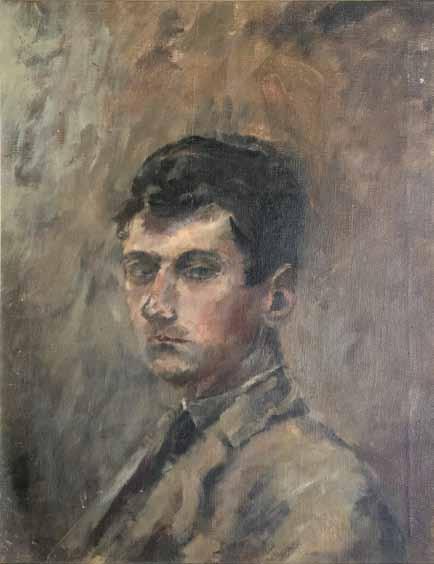 1. Self Portrait, 1941, oil on canvas 18 1/4 x 14 3/8 in. / 46.5 x 36.5 cm.
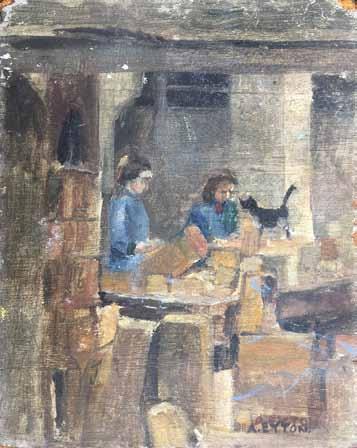 6. Packing Tiles, Factory Cat, 1955, oil on board 9 1/4 x 7 1/2 in. / 23.5 x 19 cm.
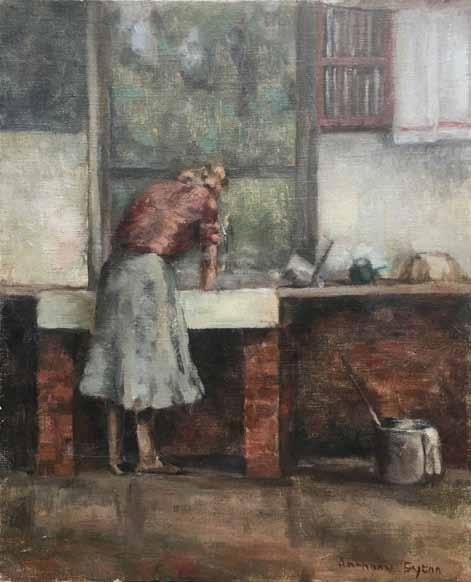 2. Woman at the Sink, 1948, oil on canvas 20 7/8 x 16 in. / 53 x 40.5 cm.
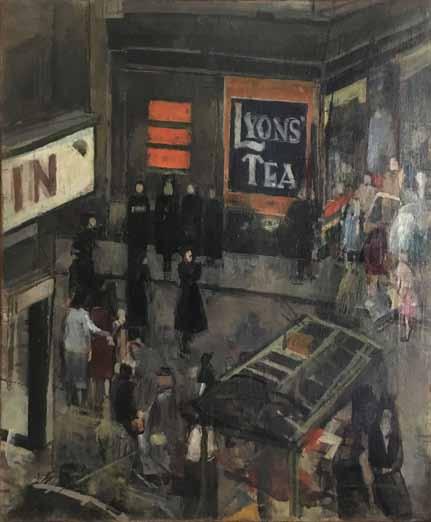 3. Salvation Army, 1950, oil on canvas
24 5/8 x 20 7/8 in. / 62.5 x 53 cm.
3. Salvation Army, 1950, oil on canvas
24 5/8 x 20 7/8 in. / 62.5 x 53 cm.
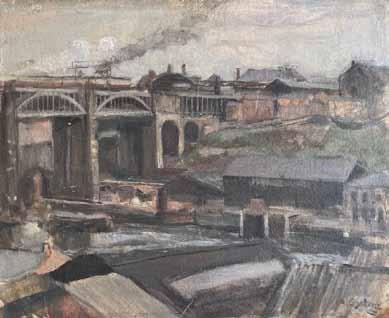 5. High Level Bridge, Newcastle Upon Tyne, 1953, oil on board
9 5/8 x 12 in. / 24.5 x 30.5 cm.
5. High Level Bridge, Newcastle Upon Tyne, 1953, oil on board
9 5/8 x 12 in. / 24.5 x 30.5 cm.
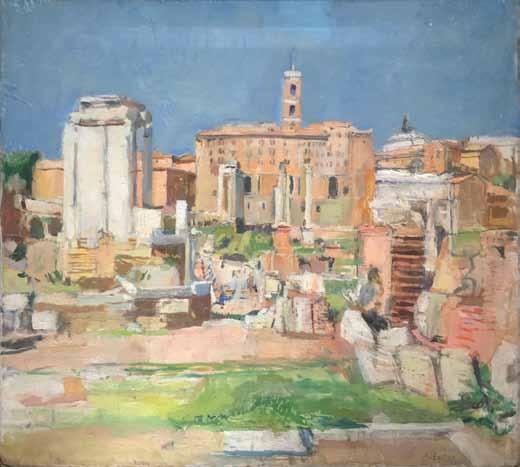
26 3/8
28 3/4
67
4. The Forum, 1951, oil on canvas
x
in. /
x 73 cm.
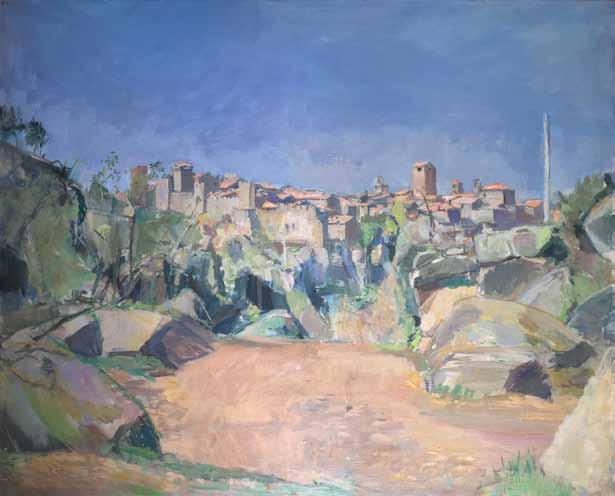 8. Vitorchiano, Italy, 1974, oil on canvas
39 3/8 x 47 1/4 in. / 100 x 120 cm.
8. Vitorchiano, Italy, 1974, oil on canvas
39 3/8 x 47 1/4 in. / 100 x 120 cm.
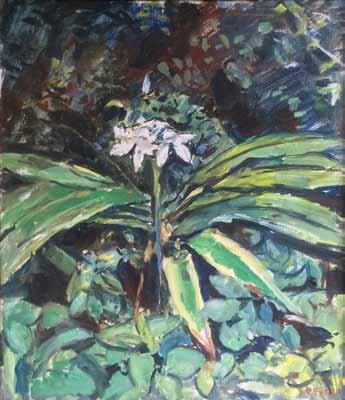 9. Crinum, 1990, oil on canvas 22 1/2 x 19 1/4 in. / 57 x 49 cm.
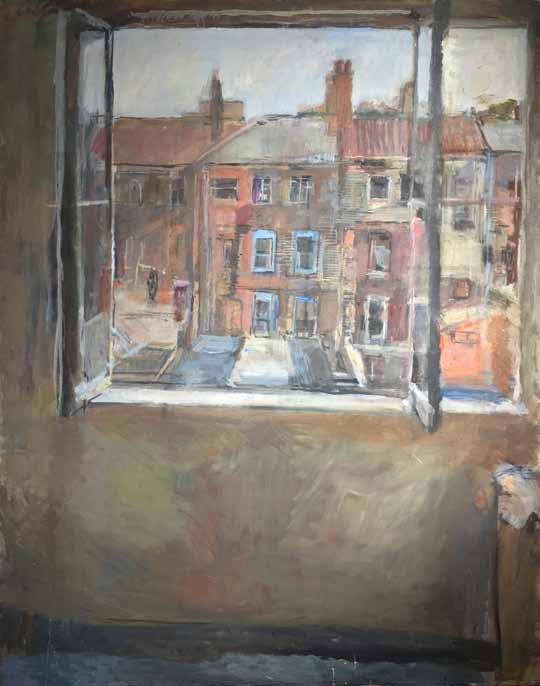 7. Hanbury Street Window, 1974, oil on canvas
57 5/8 x 46 in. / 146.5 x 117 cm.
7. Hanbury Street Window, 1974, oil on canvas
57 5/8 x 46 in. / 146.5 x 117 cm.
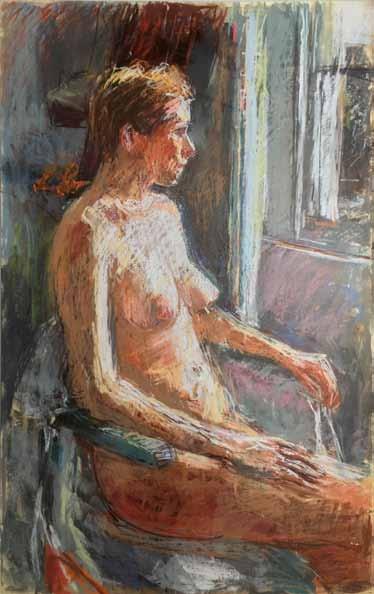 10. Nude in the Bedroom, 1991, pastel on paper 43 7/8 x 28 in. / 111.5 x 71 cm.
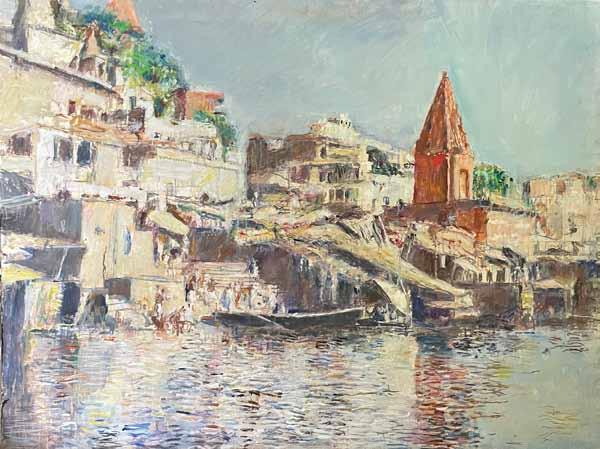 11. Indian Ghats, 1992, oil on board
36 3/8 x 47 5/8 in. / 92.5 x 121 cm.
11. Indian Ghats, 1992, oil on board
36 3/8 x 47 5/8 in. / 92.5 x 121 cm.
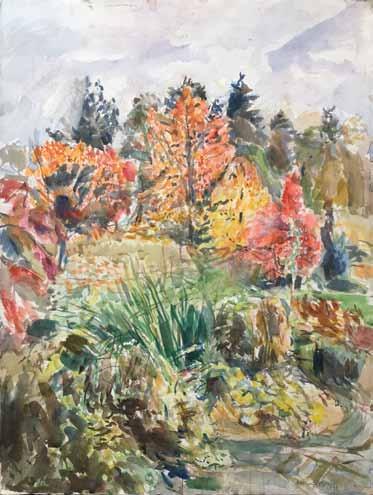 12. Scotland, 1993, watercolour on paper
30 1/8 x 22 1/4 in. / 76.5 x 56.5 cm.
12. Scotland, 1993, watercolour on paper
30 1/8 x 22 1/4 in. / 76.5 x 56.5 cm.
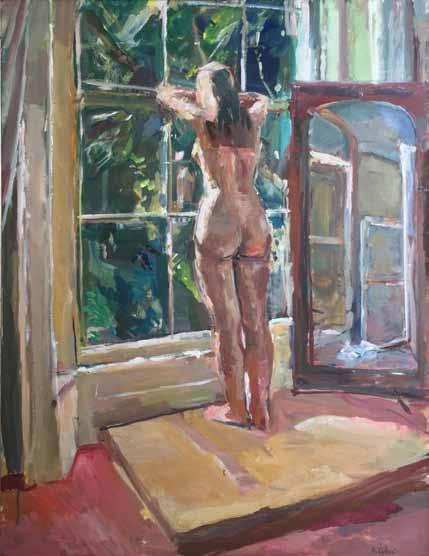 18. Nude By The Window, 2001, oil on canvas 41 x 31 1/2 in. / 104 x 80 cm.
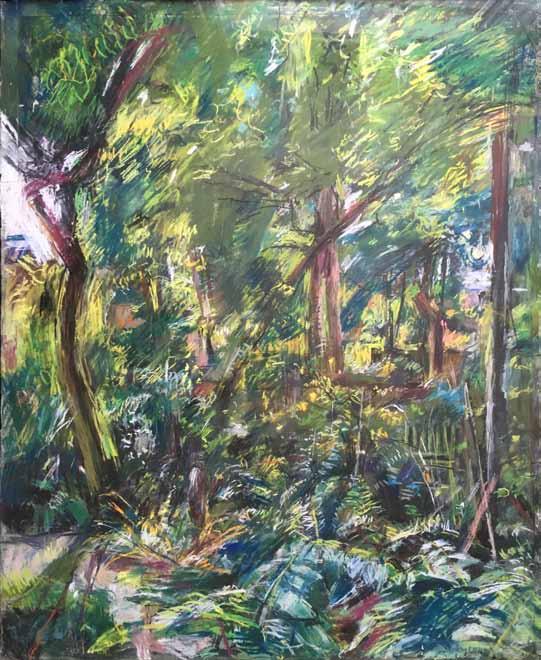 17. Brixton Garden, 2000, pastel on paper
40 3/8 x 33 5/8 in. / 102.5 x 85.5 cm.
17. Brixton Garden, 2000, pastel on paper
40 3/8 x 33 5/8 in. / 102.5 x 85.5 cm.
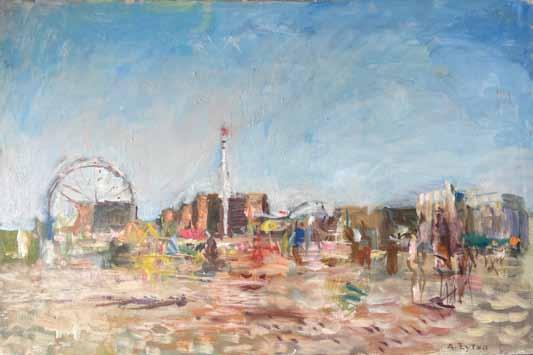 13. Coney Island, 1995, oil on canvas
25 1/4 x 37 3/8 in. / 64 x 95 cm.
13. Coney Island, 1995, oil on canvas
25 1/4 x 37 3/8 in. / 64 x 95 cm.
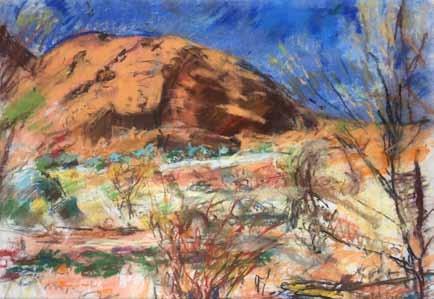 20. Olgas, 2006, pastel on paper 15 x 21 5/8 in. / 38 x 55 cm.
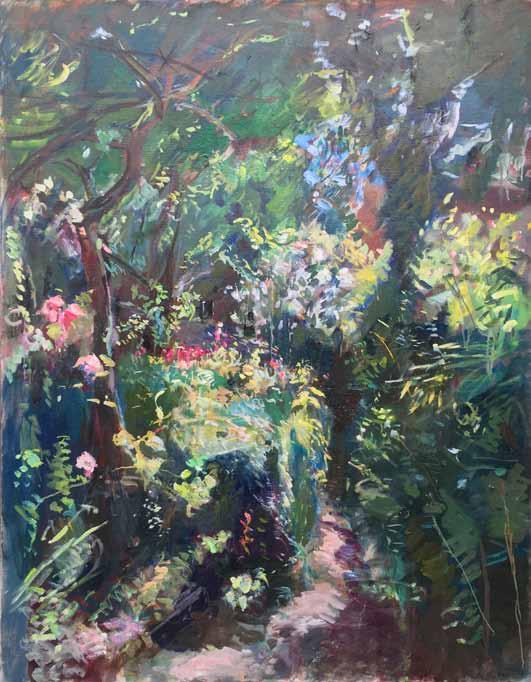 15. Brixton Garden, 2000, oil on canvas
60 1/4 x 46 1/4 in. / 153 x 117.5 cm.
15. Brixton Garden, 2000, oil on canvas
60 1/4 x 46 1/4 in. / 153 x 117.5 cm.
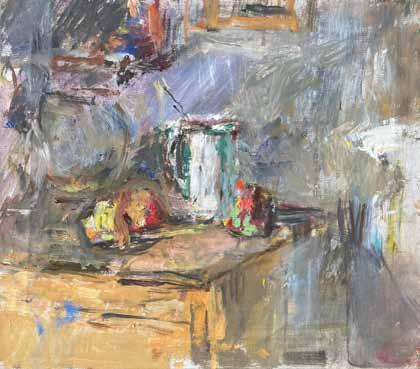 28. Apples and White Jug, 2020, oil on canvas 14 x 15 3/4 in. / 35.5 x 40 cm.
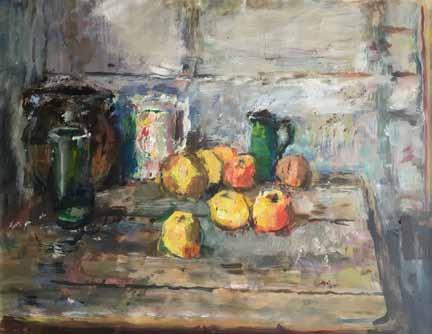 21. Apples, Evening Light 2014, oil on canvas 13 3/4 x 18 1/8 in. / 35 x 46 cm.
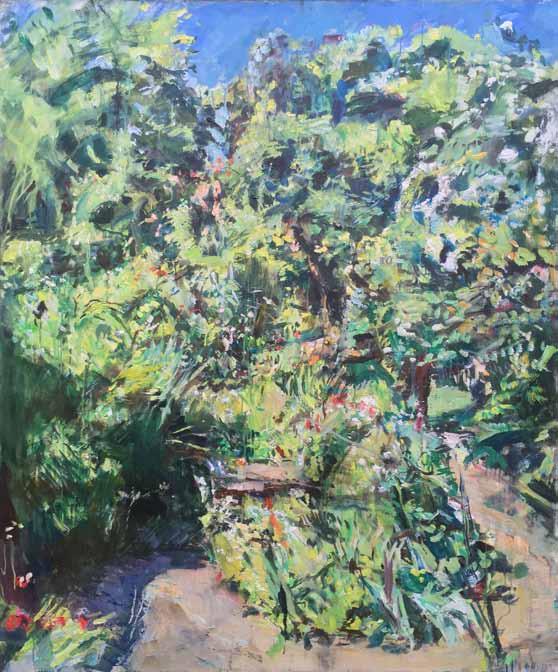 24. Brixton Garden, Early Summer, 2016, oil on canvas 49 5/8 x 41 3/8 in. / 126 x 105 cm.
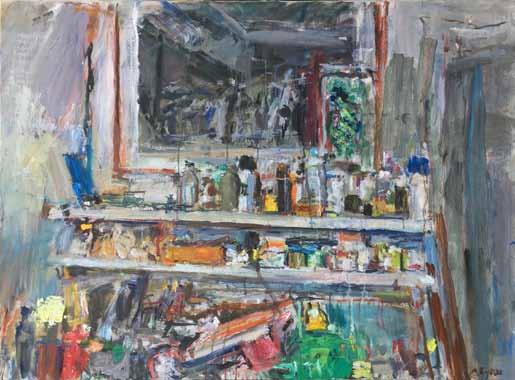 23. Studio Shelves, as They Were, 2016, oil on canvas 30 1/8 x 39 3/8 in. / 76.5 x 100 cm.
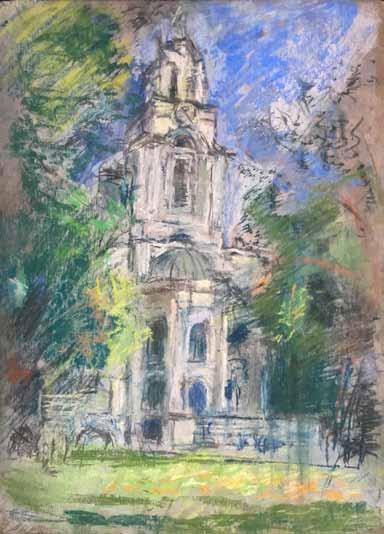 22. St. Annes, 2014, pastel on paper
28 x 20 1/8 in. / 71 x 51 cm.
22. St. Annes, 2014, pastel on paper
28 x 20 1/8 in. / 71 x 51 cm.
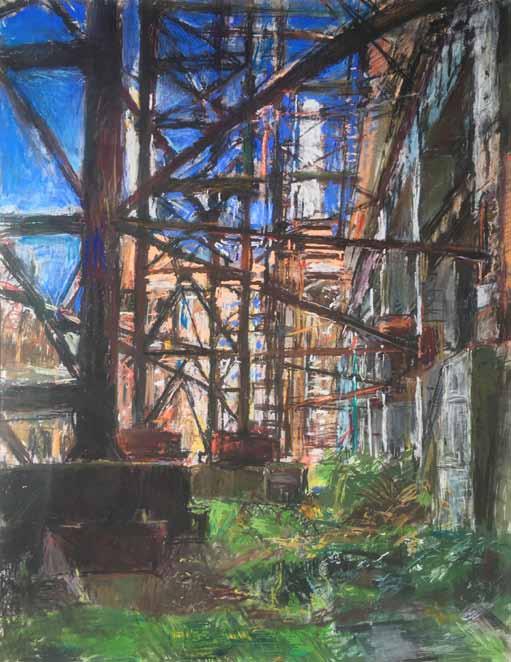 19. Battersea Blues, 2003, pastel on paper
42 1/2 x 34 1/2 in. / 108 x 87.5 cm.
19. Battersea Blues, 2003, pastel on paper
42 1/2 x 34 1/2 in. / 108 x 87.5 cm.
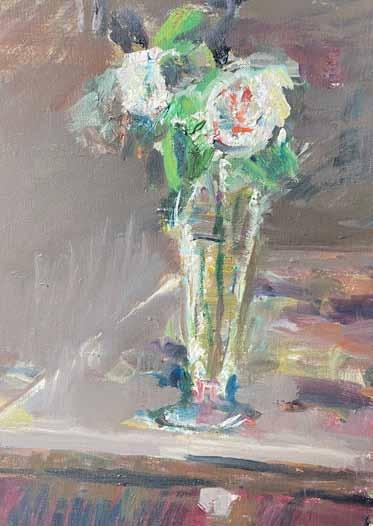 30. White Roses in Vase, 2020, oil on canvas 18 1/8 x 13 3/4 in. / 46 x 35 cm.
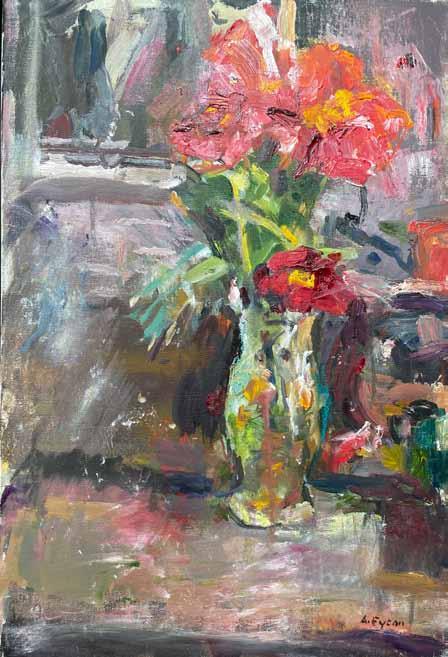 31. Camellia and Roses, 2021, oil on canvas 25 1/4 x 17 3/8 in. / 64 x 44 cm.
ANTHONY EYTON R.A.
1923 Born
1941 Department of Fine Art, Reading University
1947 Camberwell School of Art
1951 Abbey Major Scholarship to work in Italy
1958 Elected member of the London Group
1969 Kingston Whig-Standard Award, Ontario
1972 John Moores Competition (Prize Winner)
1973 Grocer’s Company Fellowship to work in Italy
1975 2nd British International Drawing Biennale, Middlesborough (First Prize)
1984 Member of the Royal West of England Academy
1986 Elected Royal Academician
1988 Member of the Royal Waterolour Society
1989 Charles Wollaston Award, Royal Academy of Arts, London
1993 Member of the Royal Cambrian Academy
1999-2010 Resident Artist, Eden Project, Cornwall
2011 Awarded Honorary Fellowship from the University of the Arts, London
2015-ongoing Resident Artist, Stowe School, Buckinghamshire
Selected Public Collections
Arts Council of Great Britain, London
British Museum, London
British School, Rome
Carlisle Art Gallery
Contemporary Arts Society, London
Guildhall Art Gallery, London
Imperial War Museum, London
Leicester Royal Infirmary, Leicester
London Transport Museum, London
Stowe School, Buckinghamshire
Tate Britain and Modern, London
The Eden Project, Cornwall
The Queens Collection, London
Selected Exhibitions
1952–77 British Painting, Royal Academy of Arts, London
1959, ‘61, ‘68 New Art Centre, London
1971 Boswells Gallery, Kingston, Ontario
1972 Walker Art Gallery, Liverpool
1973 New Grafton Gallery, London
1975 William Darby Gallery, London
1976 Drawings of People, Serpentine Gallery, London
1978-2023 Summer Exhibition, Royal Academy of Arts, London
1979 British Art Show, Arts Council of Great Britain, London
1980 Retrospective, Towner & Plymouth Art Galleries, London, with tour
1980-2023 Browse & Darby, London
1982 Hayward Annual 1982: British Drawing, Hayward Gallery, London
1983 Hong Kong and the New Territories, Imperial War Museum, London
1984 The Hard Won Image, Tate Gallery, London
1986 Royal Leicester Infirmary, Surrey University, touring exhibition
1997 Explorations, A T Kearney, London
1998 Artists in National Parks – Exmoor, Victoria & Albert Museum, London
2006 Drawing Inspiration, Abbot Hall Art Gallery, Kendal,
2007 The Discerning Eye, Mall Galleries, London (Prize Winner)
2009-10 Evolutions of a Cornish clay pit, Eden Project, Cornwall
2011 Spitalfields Paintings: 1968-1984. Revisited 2011, Eleven Spitalfields, London
2014-15 Drawing on Hawksmoor, Eleven Spitalfields, London
2021 London Group, Cello Factory, London
2021 Invited Guests, David Mach, London
2022 London Group at Bankside, Bankside Gallery, London
1. Self Portrait, 1941, oil on canvas, 18 1/4 x 14 3/8 in. / 46.5 x 36.5 cm.
2. Woman at the Sink, 1948, oil on canvas, 20 7/8 x 16 in. / 53 x 40.5 cm.
3. Salvation Army, 1950, oil on canvas, 24 5/8 x 20 7/8 in. / 62.5 x 53 cm.
4. The Forum, 1951, 1951, oil on canvas, 26 3/8 x 28 3/4 in. / 67 x 73 cm.
5. High Level Bridge, Newcastle Upon Tyne, 1953, oil on board, 9 5/8 x 12 in. / 24.5 x 30.5 cm.
6. Packing Tiles, Factory Cat, 1955, oil on board, 9 1/4 x 7 1/2 in. / 23.5 x 19 cm.
7. Hanbury Street Window, 1974, oil on canvas, 57 5/8 x 46 in. / 146.5 x 117 cm.
8. Vitorchiano, Italy, 1974, oil on canvas, 39 3/8 x 47 1/4 in. / 100 x 120 cm.
9. Crinum, 1990, oil on canvas, 22 1/2 x 19 1/4 in. / 57 x 49 cm.
10. Nude in the Bedroom, 1991, pastel on paper, 43 7/8 x 28 in. / 111.5 x 71 cm.
11. Indian Ghats, 1992, oil on board, 36 3/8 x 47 5/8 in. / 92.5 x 121 cm.
12. Scotland, 1993, watercolour on paper, 30 1/8 x 22 1/4 in. / 76.5 x 56.5 cm.
13. Coney Island, 1995, oil on canvas, 25 1/4 x 37 3/8 in. / 64 x 95 cm.
14. Rio, 1998, pastel on paper, 12 3/4 x 21 in. / 32.5 x 53.5 cm.
15. Brixton Garden, 2000, oil on canvas, 60 1/4 x 46 1/4 in. / 153 x 117.5 cm.
16. Eden Project, 2000, pastel on paper, 18 7/8 x 23 7/8 in. / 48 x 60.5 cm.
17. Brixton Garden, 2000, pastel on paper, 40 3/8 x 33 5/8 in. / 102.5 x 85.5 cm.
18. Nude By The Window, 2001, oil on canvas, 41 x 31 1/2 in. / 104 x 80 cm.
19. Battersea Blues, 2003, pastel on paper, 42 1/2 x 34 1/2 in. / 108 x 87.5 cm.
20. Olgas, 2006, pastel on paper, 15 x 21 5/8 in. / 38 x 55 cm.
21. Apples, Evening Light, 2014, oil on canvas, 13 3/4 x 18 1/8 in. / 35 x 46 cm.
22. St. Annes, 2014, pastel, 28 x 20 1/8 in. / 71 x 51 cm.
23. Studio Shelves, as They Were, 2016, oil on canvas, 30 1/8 x 39 3/8 in. / 76.5 x 100 cm.
24. Brixton Garden, Early Summer, 2016, oil on canvas, 49 5/8 x 41 3/8 in. / 126 x 105 cm.
25. Apples and Vase, Noon, 2018, oil on paint box lid, 10 1/4 x 13 3/4 in. / 26 x 35 cm.
26. Avalanche, Collapsed Shelf, 2018, oil on canvas, 39 x 39 3/8 in. / 99 x 100 cm.
CATALOgUE
27. Avalanche, Fallen Shelf, 2018, pastel on board, 11 3/4 x 14 1/8 in. / 30 x 36 cm.
28. Apples and White Jug, 2020, oil on canvas, 14 x 15 3/4 in. / 35.5 x 40 cm.
29. Small White Rose, 2020, oil on board, 10 x 10 in. / 25.5 x 25.5 cm.
30. White Roses in Vase, 2020, oil on canvas, 18 1/8 x 13 3/4 in. / 46 x 35 cm.
31. Camellia and Roses, 2021, oil on canvas, 25 1/4 x 17 3/8 in. / 64 x 44 cm.
32. White and Red Roses, Garage Studio, 2022, oil on canvas, 18 1/2 x 15 3/8 in. / 47 x 39 cm.
33. Irises against Yellow, 2023, oil on canvas, 22 x 15 in. / 56 x 38 cm.
Browse & Darby 34 Bury Street, St James’s - London SW1Y 6AU 3LP
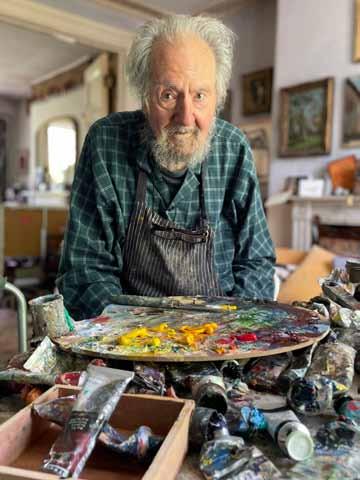 Photo: Sarah Eyton