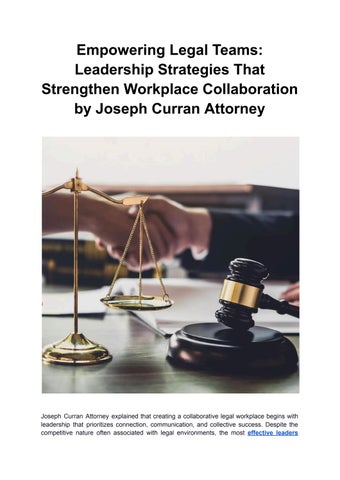
Empowering Legal Teams: Leadership Strategies That Strengthen Workplace Collaboration
by Joseph Curran Attorney

Joseph Curran Attorney explained that creating a collaborative legal workplace begins with leadership that prioritizes connection, communication, and collective success Despite the competitive nature often associated with legal environments, the most effective leaders
understand that teamwork drives superior results When attorneys and staff feel supported, valued, and aligned, they are far more likely to contribute high-quality work and engage meaningfully with one another. As the demands of modern legal practice become increasingly complex, the need for strong collaborative leadership becomes even more essential
A key strategy for cultivating collaboration is fostering a sense of psychological safety Leaders who create an atmosphere where team members can openly share ideas, questions, or concerns without fear of judgment encourage richer discussions and better problem-solving. Encouraging curiosity and acknowledging diverse viewpoints makes the team more resilient and innovative When people feel safe to speak up, legal strategies become more comprehensive and well-rounded, benefiting both the team and the clients they serve.
Another practical leadership approach involves simplifying communication Legal teams often juggle multiple cases, deadlines, and clients, so streamlined communication is crucial Leaders should promote clarity by utilizing centralized communication tools, establishing consistent expectations, and facilitating regular check-ins This structure prevents knowledge gaps and ensures everyone stays informed, ultimately reducing errors and improving workflow. When communication flows smoothly, collaboration naturally follows.
Additionally, leaders can strengthen teamwork by promoting shared ownership of results When attorneys understand how their contributions support the firm’s bigger picture, they feel more accountable and engaged. Leaders can reinforce this by inviting team members to participate in strategic discussions or decision-making processes This involvement not only boosts morale but also enhances the quality of outcomes, as diverse perspectives lead to more effective solutions
Mentorship also plays a significant role in fostering collaboration Leaders who actively mentor junior attorneys help build confidence and encourage ongoing learning Pairing new attorneys with experienced mentors reinforces a culture of support rather than competition. These relationships create a ripple effect: when individuals feel guided and valued, they are more likely to support their peers and contribute positively to team dynamics
Recognizing collaborative achievements reinforces the behaviors leaders want to see, highlighting the value of cooperative success Celebrating teamwork whether through verbal acknowledgment, written recognition, or performance incentives motivates individuals to continue working cooperatively Highlighting successful group efforts, even small wins, strengthens morale and cements collaboration as part of the firm’s identity.