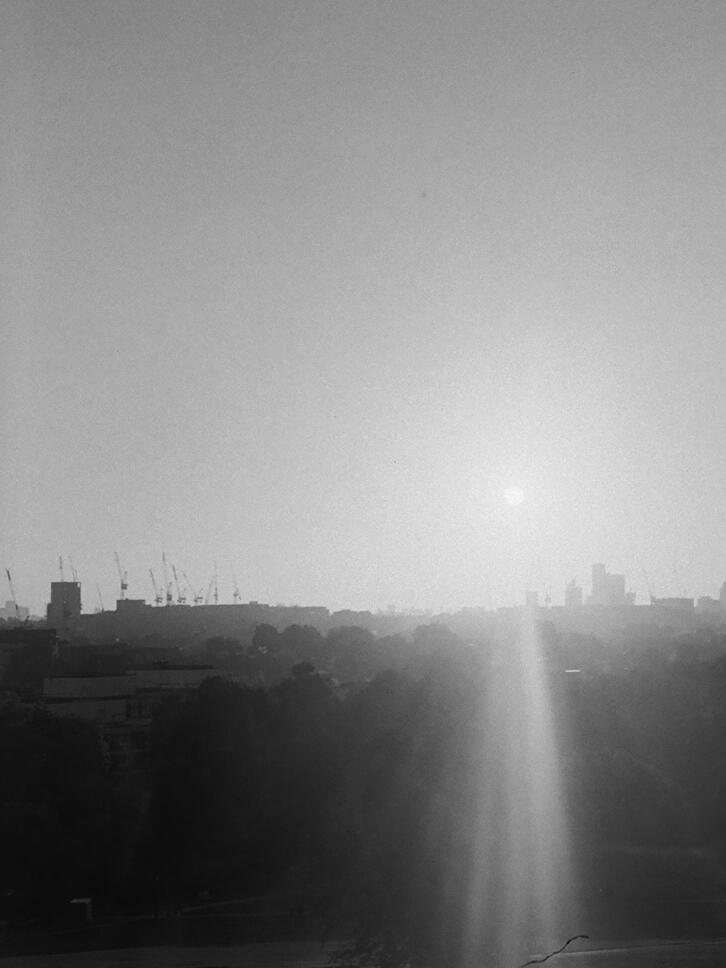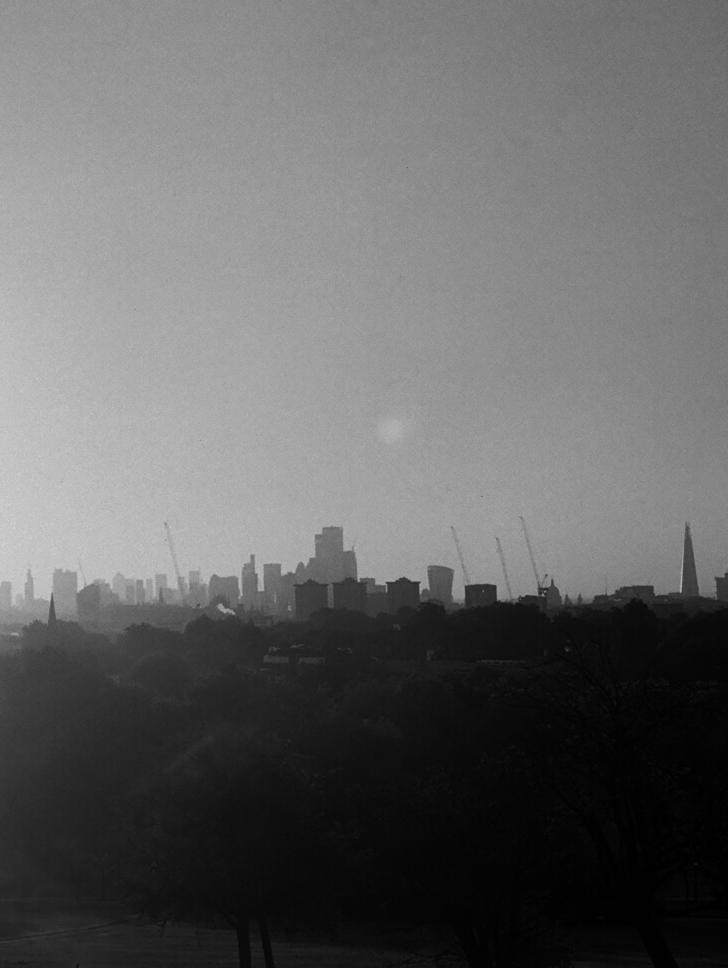
The Cave, The Window,
The City, The
and


Sunlight in Between
 José Luis Hoyos
The Cave, The Window, and
The City, The Sunlight in Between
To think about light. Not only to think about, but to discover, and dis cover as to experiment. That is the starting point. As a contradiction, this idea is born in the absence of it, not of light but of sunlight. This activity, of thinking about sunlight, is born in London around winter’s solstice. Winter here brings hardly any sunlight. Through the lack of it, a fixation on the subject is born. During those months, a thick grey layer of clouds covers the city, completely blocking out the sun, and very rarely filtering some weak rays of sunlight. In those moments of illumination, in its most literal definition, an interest to meditate over the sun and light becomes relevant. More precisely, to reflect in detail on this natural phenomenon and its impact on cities and on those who inhabit them. It’s not just the mere idea of thinking about sunli ght, but profoundly analyse what can be such an ordinary event. It is to explore all the oddities and rareness that sunlight can bring when reflecting on it long enough.
Personal observations on sunlight, during the period of October 2021 to November 2022.
I am sitting in my desk, in my room, in a city with seasons.
It is winter, there is not much light now.
For a minute, the sun comes out.
I stare through the window.
A hint of sun cracks between the space of my house and the one next door.
It sits over the floor, goes all the way up through some brick steps, touching the grass.
It reaches a chair.
Standing right in the middle of that line made of sunlight.
THE CAVE
It is a time-sensitive exercise to do, during winter, to fixate on sunlight, as it becomes a rarity through the days, to have the privilege of being in the presence of such. Being aware of that, when such an event oc curs, the sunlight sticks to oneself more than its visible duration.
On the other hand, it must be admitted that there are aftereffects, im pressions that linger long after the external cause has been removed, or has removed itself. “If anyone looks at the sun, he may retain the image in his eyes for several days,” Goethe wrote.
(Nelson, Bluets 2019)During winter, thinking about sunlight becomes almost an obsessive exercise. In a way, it becomes a race against time to take those mo ments of light, and absorb them in precise detail trying to abstract as much information as possible in the short time they last. Initially, it consists of an exercise of detailed observation and understanding of light in two moments: its origin and its destination. This moment is about registering that information that is visible, trying to retain only what we can see. Spots of light on the floor, flashes in windows, rays of light between walls. That initial moment is about being guided by the light and retaining it for later analysis.
What follows is a short account of how I found the sun inside a room in Camberwell, South London. It is winter and the sun is barely out. There is a piece of furniture, wooden; it is a 1900s mahogany cabinet with some inlay illustrations in a lighter wood, almost golden. The cabinet, old and heavy and covered with a fine layer of varnish, shines in a special way inside the room. There are other pieces of furniture in the bedroom, a white bed frame with some pale green night tables to the side, all of them matte. The cabinet absorbs all the light inside the room. It steals all the attention from the other objects around, as it captures all the light with its particular brightness. It reflects everything around it, in a subtle and blurry, yet visible way. To think of it, the cabinet is the furniture itself and all the other furniture in the room. It is so because its surface absorbs the image of the others, through reflection. In that way, the cabinet is all the other furniture thanks to the light.
Like a magnet, this cabinet attracts all the light from the opposite side of the window. This window is covered by a linen curtain, translucent, that allows light to shine through timidly. At the end of the window, the curtain is open just a few centimetres. Through that small gap of the window that is uncovered, a ray of intense sunlight enters the room with that yellow almost ocre tone, characteristic of winter light. The sun enters the room hitting the cabinet right on the embedded figure of a woman playing the flute.
At that moment all my attention is focused on that decorative figure, as it comes to life. The glow of the cabinet, under the sunlight, highlights the vivid golden colour of the wood grain. The woman, in the centre of the light, flickers, almost moving. The whole cabinet absorbs the light at that point, right where the sun touches it direct ly. The sun becomes a reflector and this room becomes its stage. At a first glance, sitting in the bed, I guide my sight towards that spot of light, staring at the image. That’s the destination of sunlight. Now I’m curious about the origin. I stare opposite the cabinet, towards the window. The woman playing the flute directs me to the sun, I look out the window in search of that great radiant spot in the sky. I look for it, but I can’t find it. I look in several directions, and between buildings, it is easy to lose orientation. I can’t find it. I see in front of me a bright gleam on the facade of a tall building, which I assume must be at least twelve stories high. Around the eighth floor, above the only open win dow, the sun shines incandescently and heads in the direction of the
You will go out sometimes.
Other times you will decide not to appear.
You will always be there, but you will not always be seen.
You have a tendency of getting yourself through the smallest places.
When you are out you make yourself be seen.
People go after you.
You like that, you like to be missed.
It is not very clear how I can change this chair.
As it is not as much the chair I am attracted to.
But the chair being there.
It is the placement of the chair.
Being there just for that fragment of sun.
Make the light stronger.
There needs to be more contrast on the spot that’s receiving light. And the ones that are not.
Emphasize on the color yellow, make it stand out.
Remember light doesn’t touch all surfaces equally, you might want to work on texture.
room where I am standing. The reflection, almost blinding, tells me that the sun is in the opposite direction, behind the house to which this room belongs. That reflection of light reaches me through a sma ll gap. Through a small ‘crack’ in the city.
Technically, the sun is behind me, I could never see it directly from where I am. In front of me is a house identical to the house I’m in. That house, a spitting image of this one, is located a few centime tres to the left, it’s just a matter of centimetres. That offset allows the building behind the house in front to stand out and be seen directly from this window. The building has a flat facade. All the windows are closed, except for one, slightly open. On that window, the gaze of the sun mirrors itself and diverts into the room. I have found the origin of sunlight. Between a space separating two buildings, and the slight inclination of a window the sunlight reaches this room. Not only does it reach this room, but it reaches the piece of furniture and illuminates the flute player, putting her in the spotlight. At that point, I’m aware of light, light coming from the exterior. I realize that the cabinet is gui ding me to the outside, through sunlight. A beam of light becomes an invisible thread that ties together a cabinet, a building, and the sun.
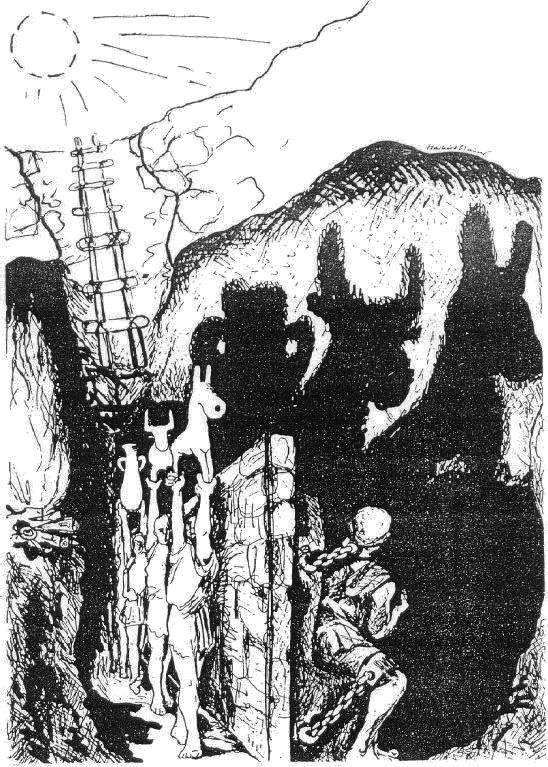
One might believe a 20th-century cabinet has little or nothing to re late with an office building, but to analyse how a ray of sunlight con nects such an intimate space; a bedroom, and the city outside, it is to understand the impact the built environment has over our relations hip with sunlight. Take for example the Allegory of The Cave pre sented by Plato, not on its metaphorical connotation but on a more graphical situation where we can analyse the image he is presenting. Plato describes a group of prisoners inside a cave facing a blank wall. These prisoners watch shadows projected by objects in front of a fire behind them. The shadows are what the prisoners perceive as real; having no other reference to the object other than the shadow itself. This is their reality, what they can see. In a way, this is a distortion of what the objects really are on the outside.
‘Plato’s allegory of the cave can also be read in terms of the disjunc tion between the world known through our senses (as for the empi rical sciences), and one that is only intelligible (known by intellect: a central debate between empiricists and rationalists in the XVII cen tury). In other words, the difference between the reality of the world and of our knowledge of it.’
(Ranalli & Colombaroli, The allegory of the cave: Climate change and... 2021)

I feel warm.
Exposed to this light my squared body reveals what I’m made of.
I can feel again part of what I used to be
Part of the ground
The clay is evident, I feel familiar with others around me.
The soil doesn’t feel so different to me anymore.
In here nothing stands out.
No sunlight stages the chair.
It is an ordinary chair, sitting there.
Mundane scenario, nothing much to be seen.
How many other gardens like this one exist?
What is so special about this. It’s just a cold winter day in London.
The cold, you can definitely feel the cold from staring at this scene.
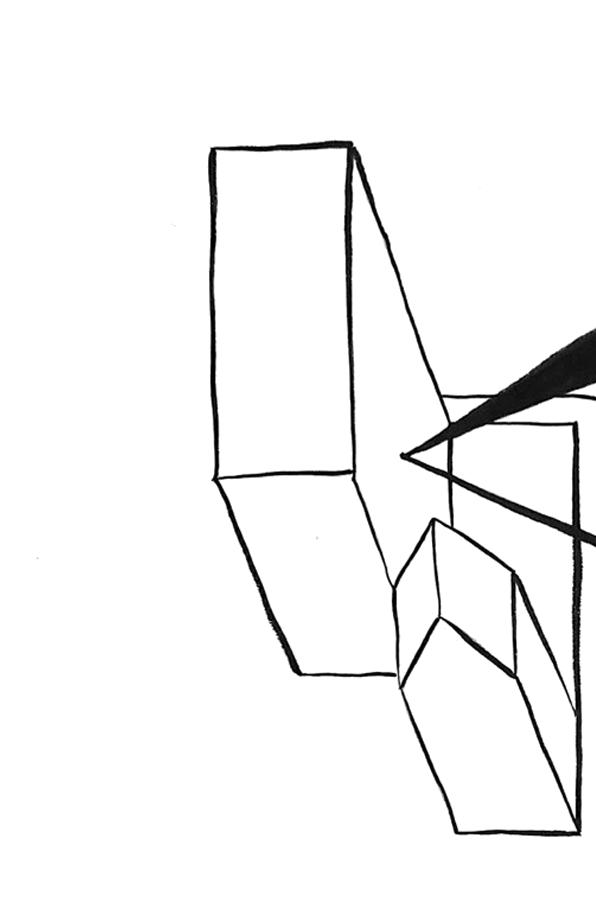
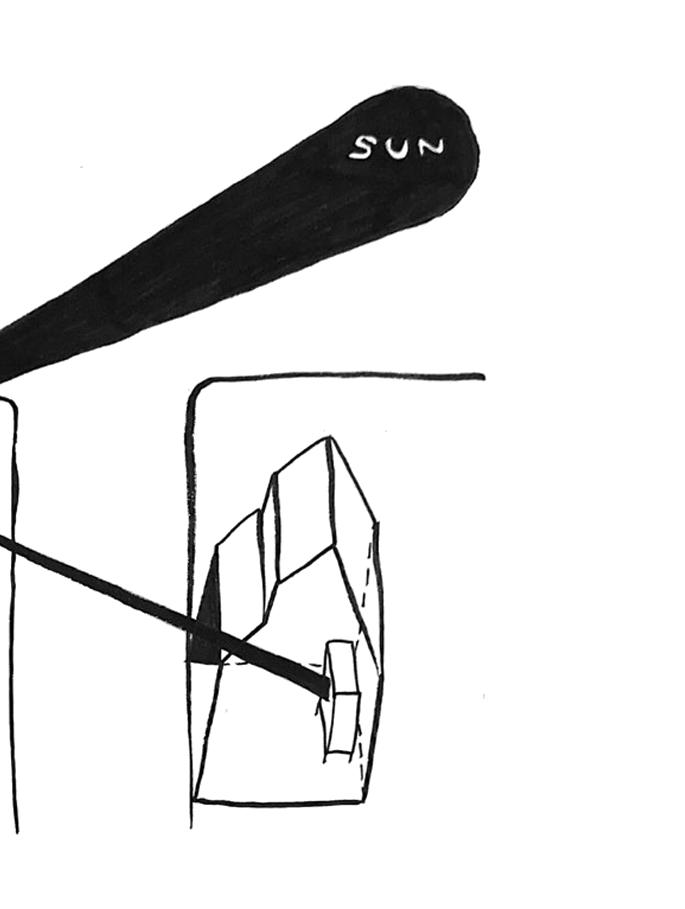
Going back to the cabinet and the building, if we compare the scene of the cave to this one, we could say that the reality of the sun out side is other than that of the sun inside the room. The sun itself is being distorted, not in terms of shape but location; disoriented. The reflected sunlight hitting the cabinet is no different from how direct sunlight would look. However, as the shadows in the cave, this is our knowledge of it, but not the reality. Yes, the light originated from the sun, but was directed to the room by a building. Through our senses, and in this case specifically, vision; when observing a spot of sunlight inside the room one could take for granted the location of its origin, the sun.
‘The sun is traced by means of a specific relation in which the virtue or power of vision stands to it’
(Ferguson, Plato’s Simile of Light Again 1934)
From our most basic knowledge, we know the sun shines, and wha tever surface it reaches it brightens to the touch of sunlight. In such a case, one could assume that if the cabinet is shining from sunlight, the sun is outside the window and facing the room. We believe we identify the origin of sunlight from its destination. That is not the rea lity, as direct sunlight would never reach that space at that time. For that matter, that spot of sunlight becomes disorienting in that sense, in time and space, recognizing the time indicating use the sun has historically been given.
That said, sunlight reaching through that window at that specific time is not the reality of the whole city but only of that room. None theless, that is the reality of sunlight inside that room, according to our knowledge.
‘So direct light is like truth, and the half-light like opinion, though still derived from the sun.’
(Ferguson, Plato’s Simile of Light. Part I. The Similes of… 1921) -
Source: Veldkamp, Gabriele and Maurer, Markus - Veldkamp, Gabriele. Zukunftsorientierte Gestaltung informationstechnologischer Net zwerke im Hinblick auf die Hand lungsfähigkeit des Menschen. Aa chener Reihe Mensch und Technik, Band 15, Verlag der Augustinus Buchhandlung, Aachen 1996, Ger many
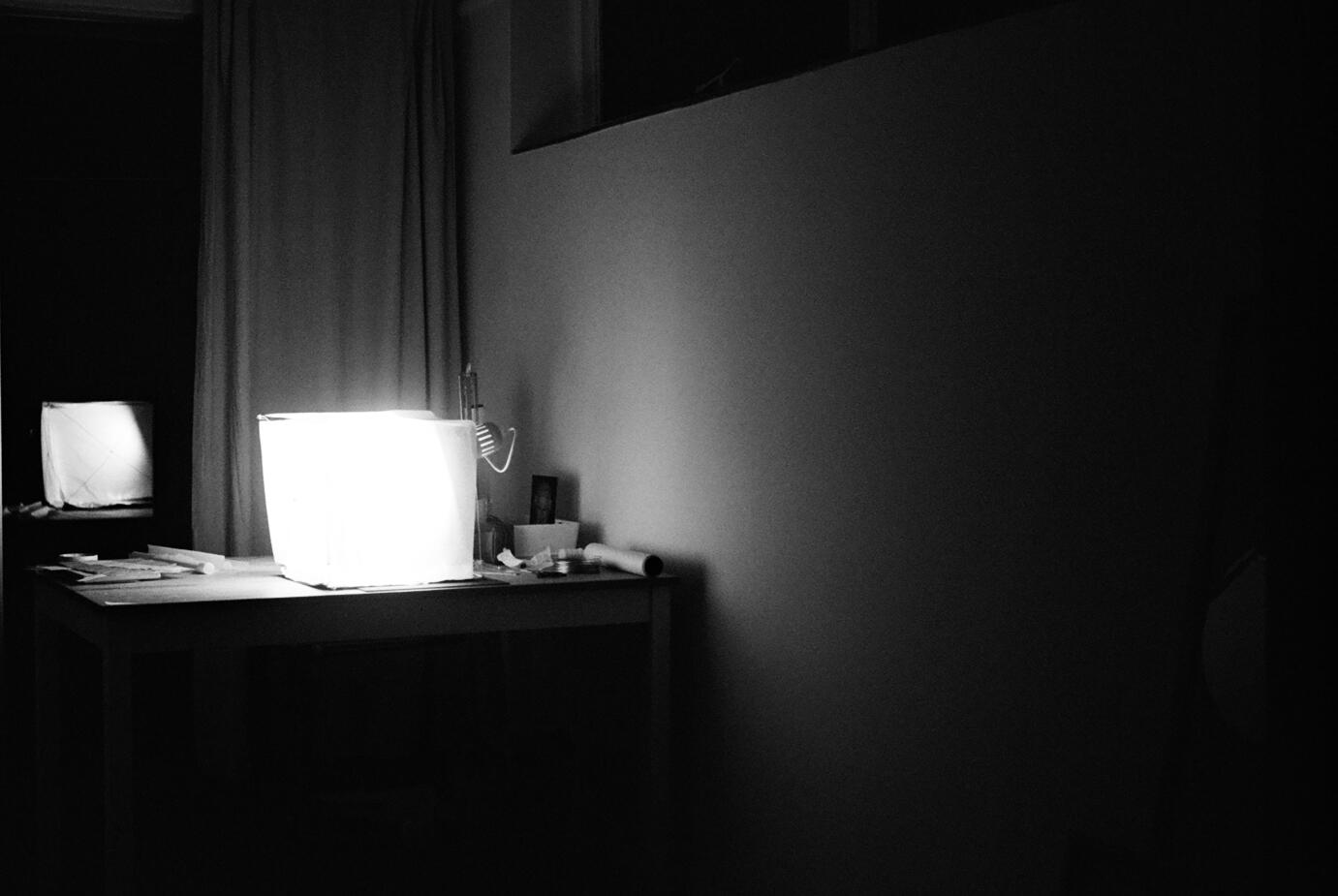
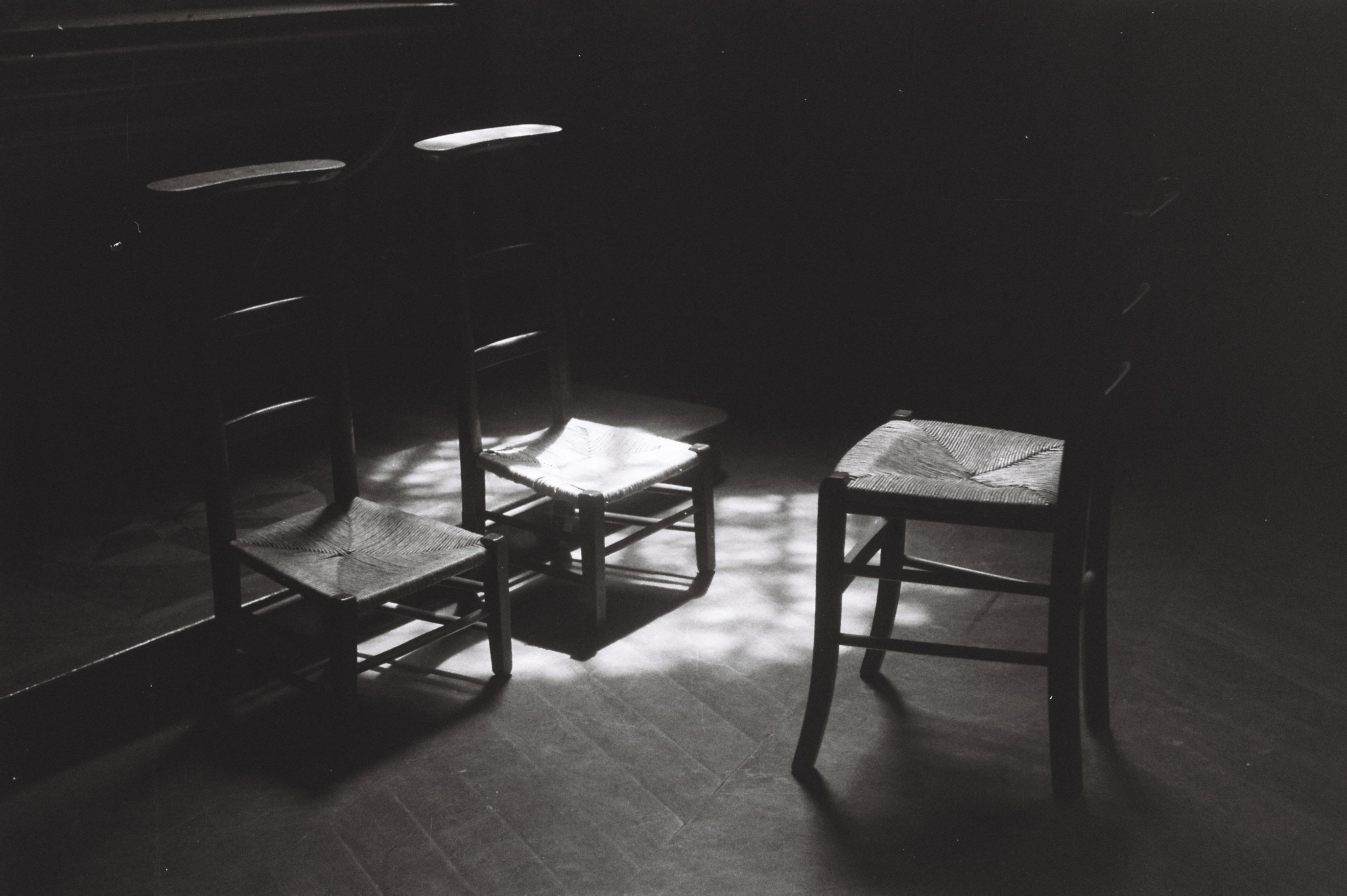
Generous by nature, this object shares everything he sees. Not everything at the same time, as he tends to limit his vision to a very particular frame.
Sometimes transparent, he decides to let light in.
Other times, staring directly into his eyes, he decides to reject what he is receiving, therefore giving it back.
Not maliciously, I like to think, perhaps it is too much of a task to hold all the light yourself, so you just have to give it back.
Normally he does not give it back, but he gives it away, as I said he is generous.
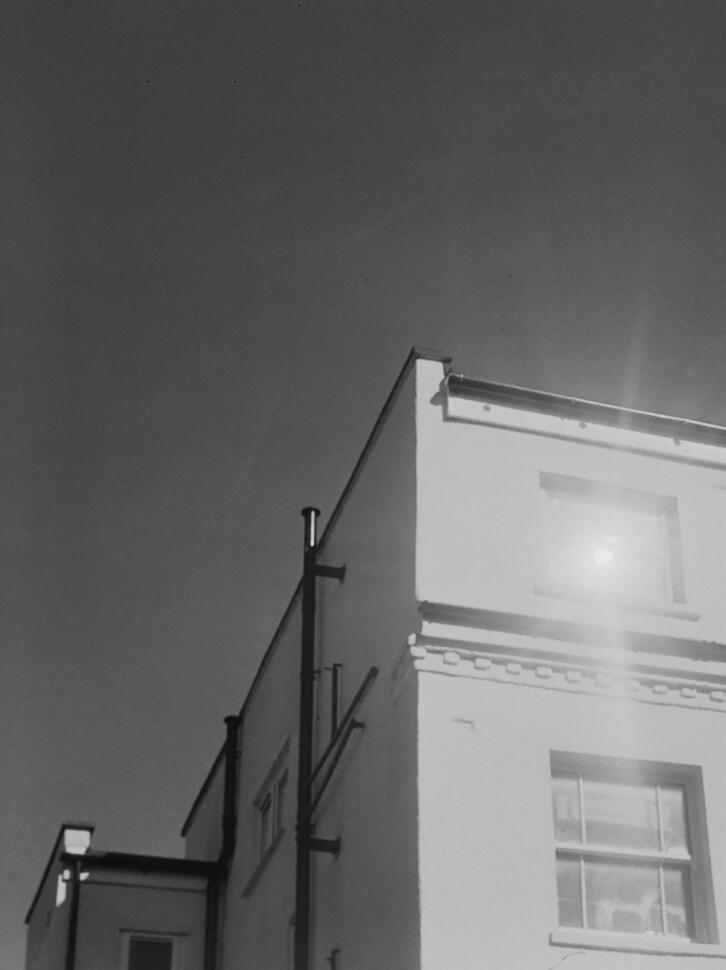
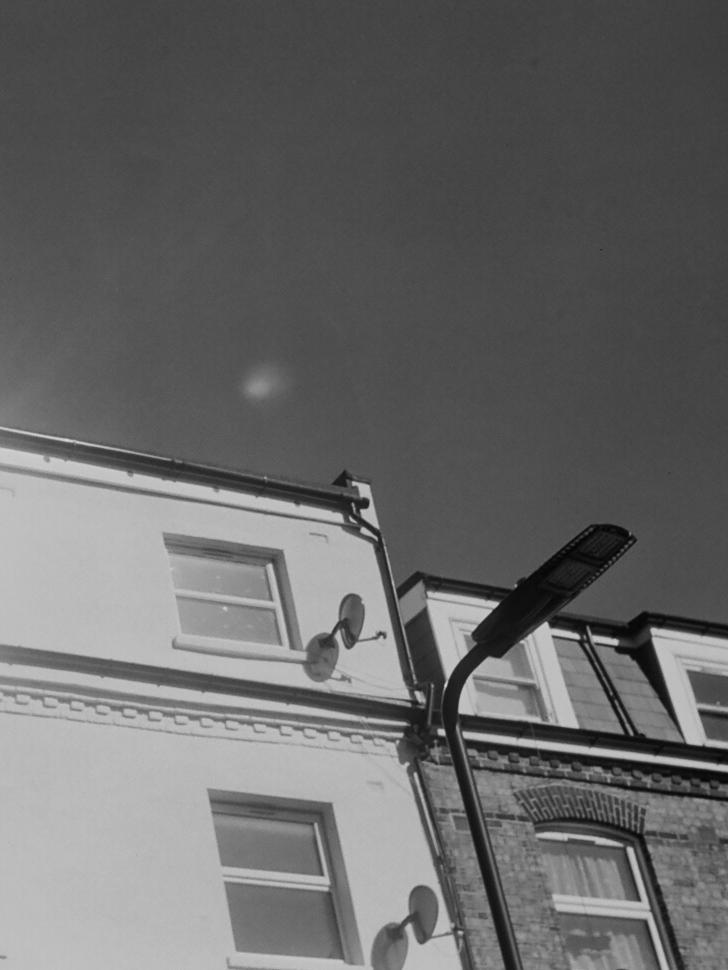
By the time I finish writing this, sunlight will no longer be illuminating these letters, they will be out shadowed.
Only for a few minutes these sentences will be in the spotlight.
Think about light.
This space right here is being touched by the sun, not directly.
Reflected light.
The sun first reaches that window over there, getting inside of that building, and simultaneously reaches this spot, unknowingly.
Sunlight is both enclosed and open at the same time.
It is encapsulated intimately through that glass, inside that room.
However, that glass also incites light to run free, casting the sun over this cold piece of concrete.
A beam of sunshine can be shared, as windows are both captive and liberating.
What you are reading here is a text once contained by light.
The trees are blossoming, showing some hints of spring, yet the sun is still set on winter. The length of the shadows that surround this space, space for light, are long. Winter sun. Long and cold.
Our manipulation of sunlight in cities through the shaping of buil dings involuntarily distorts the sun’s incidence over the built envi ronment, and windows become key elements in that matter. Playing both the medium for reflection and absorption of sunlight, they be come the portal between the inside and outside. There is an element of bringing life into a space by bringing light that comes from the outside.
‘In short, there is a closed space at first. It is an non-existent space or dead space, to which a hole or window is provided, then the space be coming a building. Such recognition is my basic imaginary approach to architecture. For me, engagement in architecture means to provide a hole in an effort to convert the dead space into a live space. Such activities are to perform architecture. Though such performance is architecture, it may be applicable to all people. It may be compared to the start of human being or its consciousness. Then, such cons ciousness is shared by all people. Thus, in my opinion, the window is destined to break the dead space to a live space.’
(Igarashi, Concept of a window 2013)
In that sense, windows are highly responsible for bringing vitality to a space, and in a large part, they do so through the sun. Understan ding sunlight as a vital element in life, we acknowledge its importan ce in a natural context.
‘Windows in particular are focal points for light and can lead to a network of ecological, social, and cultural considerations. At the broadest scale, architecture is determined by its position in relation to planetary cycles, with the sun allowing for the flourishing of hu man life.’
(CCA, Above/below/between: Light on a damaged planet 2021)
In that sense, we can affirm that no living being should inhabit a place without sunlight. In other words, a room in which with a given amount of sunlight a plant cannot live is not a room where anyone should live.
‘¿Un árbol que no necesitara luz? Sería un “árbol motor o de levas” como el que hay en el fondo de la bodega de un barco. No, todos los árboles necesitan luz. Existen plantitas que llegan a poder vivir en la oscuridad, pero no son muy altas. No existe ningún árbol que pueda prescindir de la luz. No necesitan gran cosa, pero ese poco que re quieren es indispensable. La luz forma parte realmente de sus exis tencias.’
(Hallé, La vida de los árboles 2011)
In this case, we can confirm, as Hallé mentions, light is a great part of our existence as human beings who live inside buildings. To unders tand the value of light is to understand the importance of windows in cities that have known artificial light for only 140 years. As a part of that, the sun, as the main source of natural light, has become a sub ject of value. More specifically sunlight, or the control of it. Physically necessary to our bodies, as well as to the carrying out of our daily and most simple activities, the way to take control over sunlight has been done through windows. Under three significant moments throughout history, we can understand how sunlight has been taken under major control by the highest powers. These three moments evidence how sunlight has been manipulated as a material good necessary to our daily life.
Time sets the frame for this text.
At this specific spot and this specific time of the day the ordinary is highlighted.
An ordinary piece of sidewalk stands out.
The texture of this concrete becomes visible, it warms with the touch of sun.
It is not extraordinary, by any means, but it is leading us towards light.
This spot right here is telling us sun is hitting somewhere near, on another surface, and in that way, we can trace the sun.
We stare at the floor, we see light.
We look up and we catch a glimpse of the sun in front of our eyes, reflecting on a window, just to realize it has been standing over our shoulder this entire time.
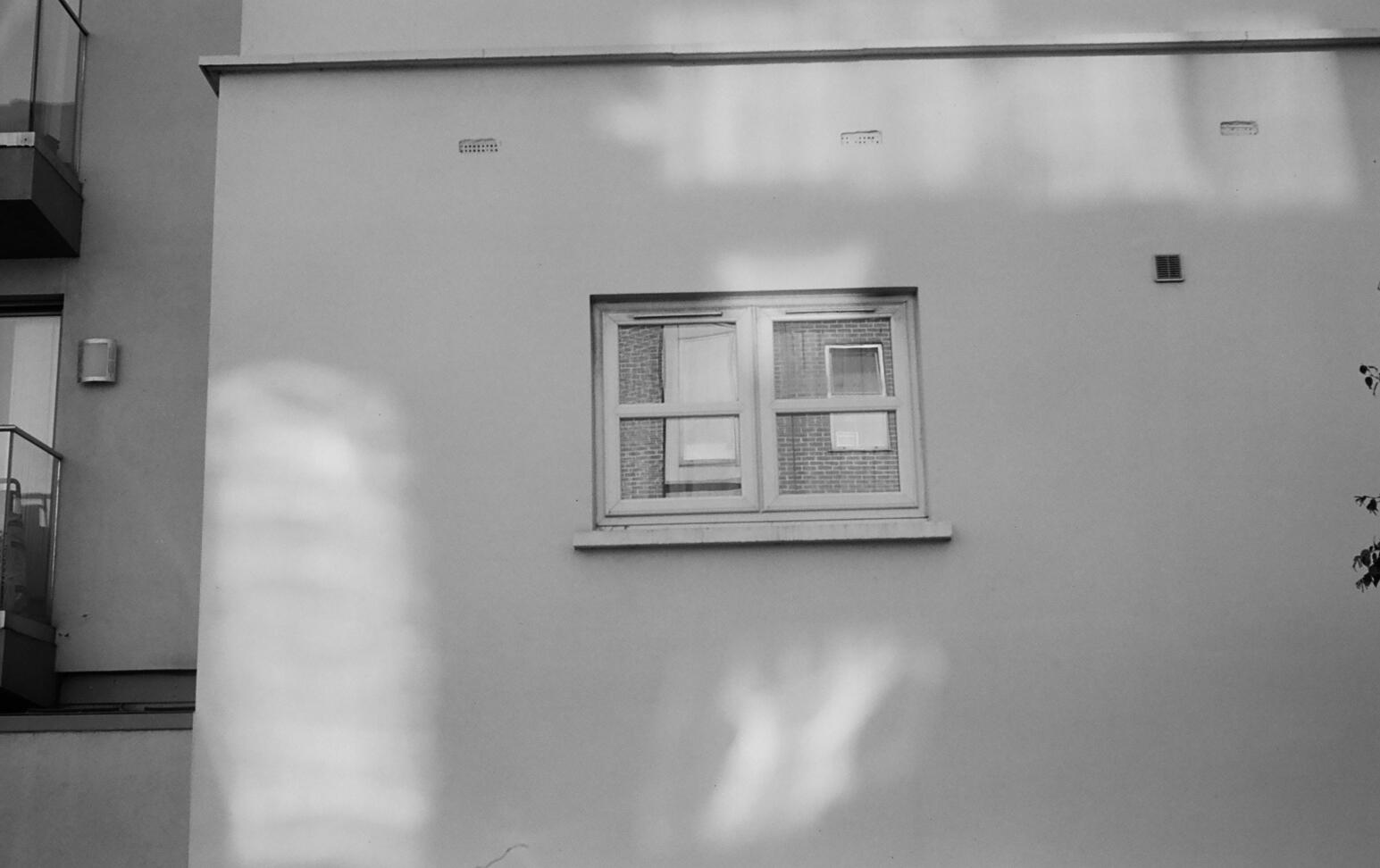
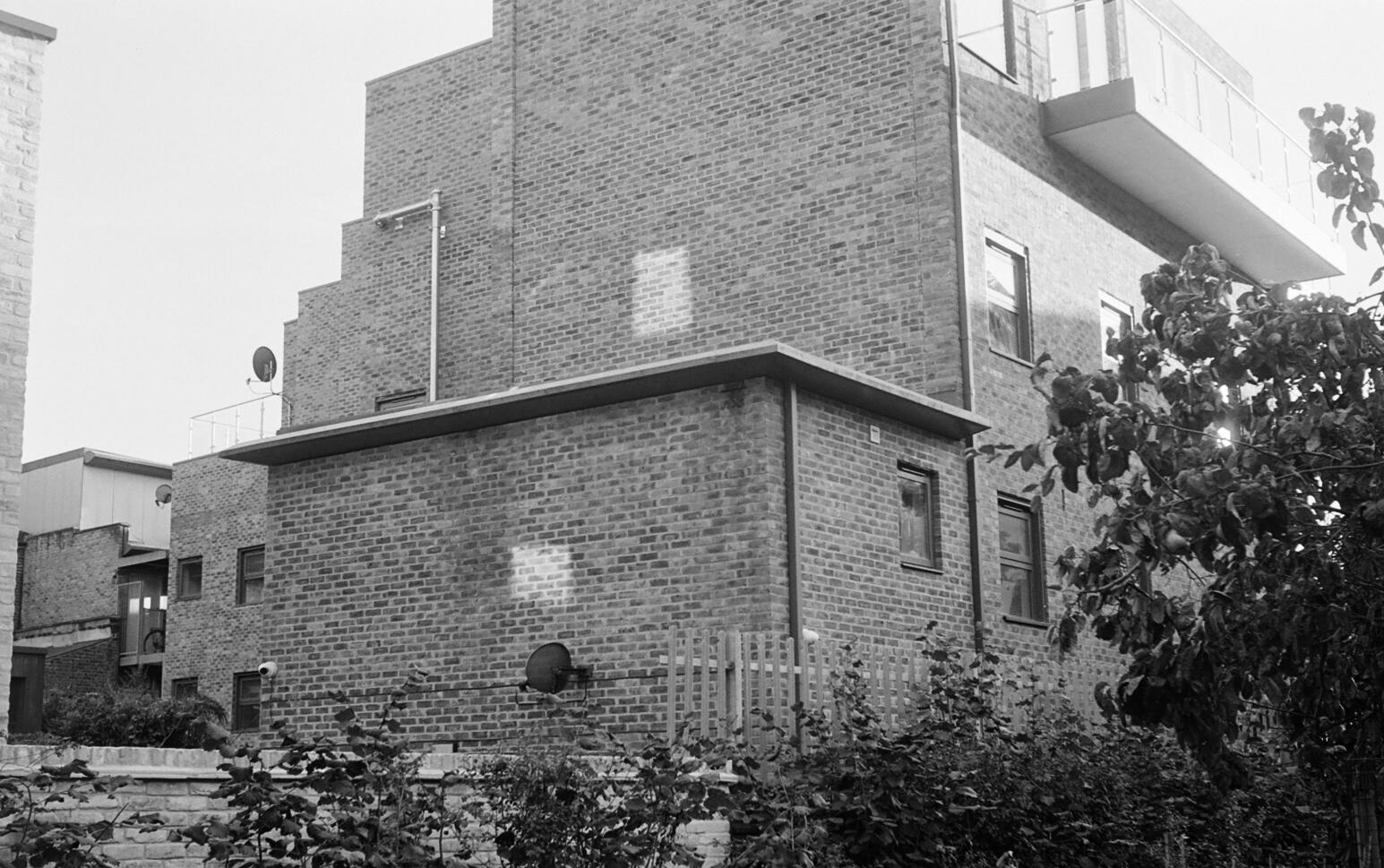
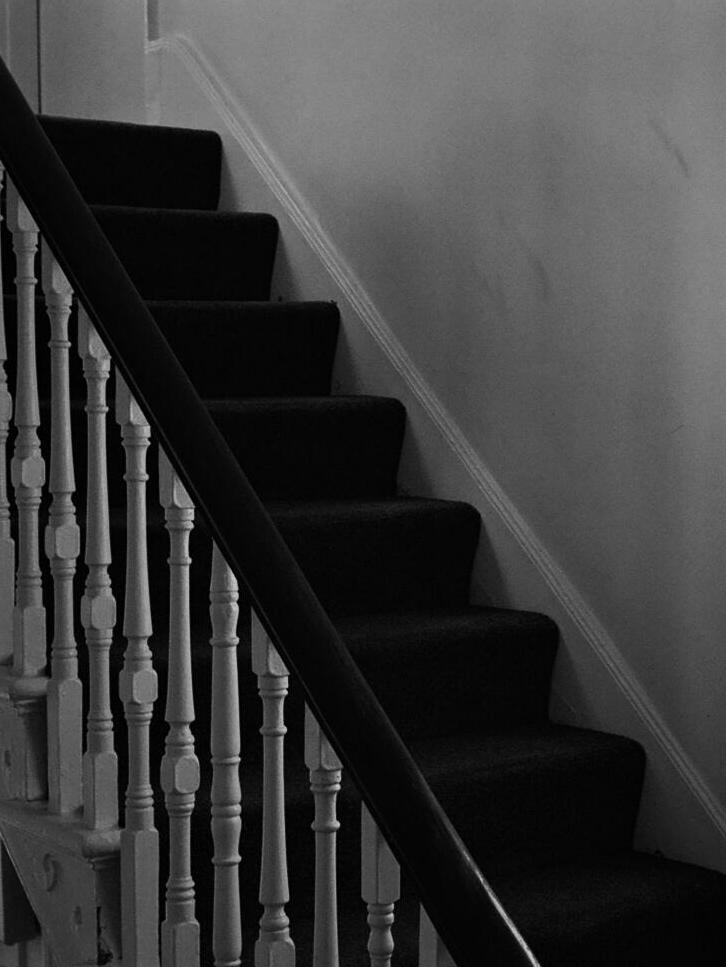
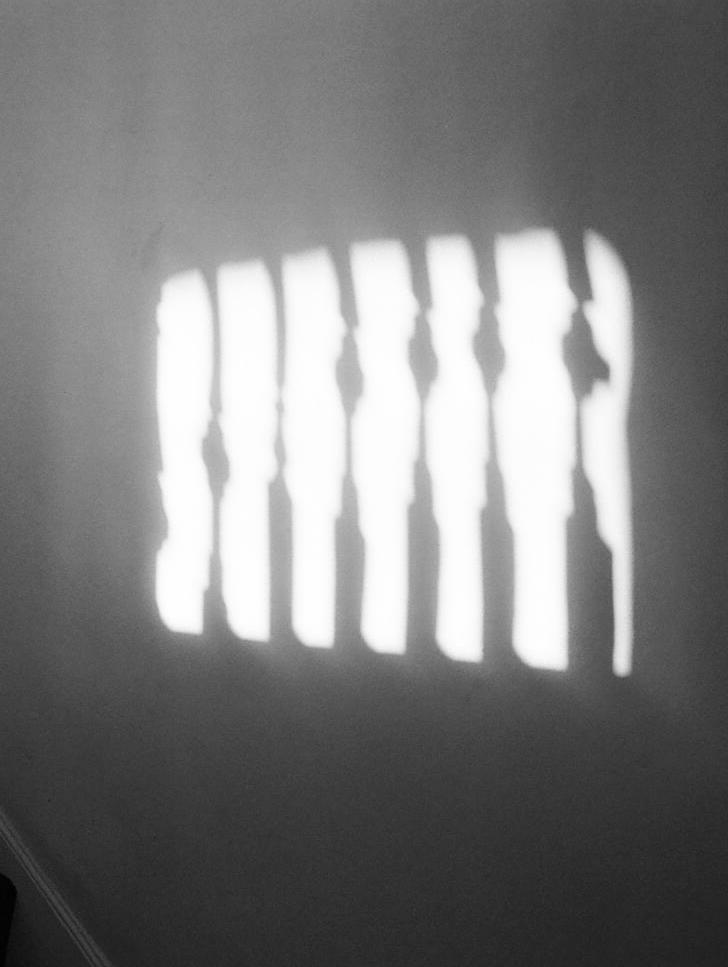
Back in 1696, King William III introduced a tax in England and Wales, in which people had to pay a certain amount of money according to the number of windows in their house. Through the monetizing of sunlight, this tax made evident the difference between social classes, forcing those with less income to block up some of their windows in order to avoid the tax. These blind windows became a rather straigh tforward symbol throughout cities, of how the sunlight was starting to be manipulated as a material element that represented a monetary value. Many of them can still be seen today in London,
The term “daylight robbery” originates from this period, as campaig ners claimed that the window tax was basically a “tax on light and air”.
(Kawashima, Tracing the urban brickscape 2015)
In a far opposite situation, once it was understood the value of sunli ght without the necessity to monetize it, in 1832, access to this natural resource was granted legal protection through ‘…an easement that gi ves a landowner the right to receive light through defined apertures in buildings on his or her land.’
(Law Comission, Right to Light 2014)
Accordingly, this easement was named Right to Light, and it was carried out in a post-industrial time when cities were growing at a high speed and building densification, started limiting the sunlight incidence in most urban areas of the city. This urban planning requirement protects windows that have been receiving natural daylight for at least twenty years, from any construction that would block the window’s access to natural light. These windows are called Ancient Lights. The fact that windows are protected by law stresses the im portance of bringing light into places as a condition for human life. Being the mediators for our access to daylight, windows become a vital element in our life.
The window is the difference between the life and death of a space, yes. You do it wrong, youʼre killing the space. You do it right, you give it life.
(Obuchi & Diaz Alonso, The window is the difference between the life and death of a space 2016)
It is interesting to understand the growth of cities as a dependent va riable attached to the way we shape sunlight in these urban spaces. As we continue to occupy more space on earth, we are also creating more shadows through our buildings. It is easy for sunlight to get lost in the city, as buildings each time rise higher. Windows can only do enough when it comes to letting sunlight in. It is no surprise that we have come up with new ways to manipulate the natural course of sun light in our favour as a way to supply our need for this phenomenon. By 1851, a French photographer living in London, named Paul Émile Chappuis, found it necessary to provide his studio with more natural daylight than the one he was receiving through the window. He came up with the idea to install a mirror in a wooden panel hanging from adjustable chains on top of the window, to deflect sunlight into the studio. Later he patented the idea as a way of maximizing sunlight in the city and started selling what he called Daylight Reflectors. By the end of the 1800s in industrialized London, these reflectors became quite popular as a way ‘… to offer a technical solution to the problem of the narrow courtyard block, which had been built all over Euro pe in the overcrowded citycenters of the period. While such devices could not solve problems related to urban density, both inventions worked perfectly as viewing or lighting devices.’
(Stalder, Windows: Openings and devices 2018)
Once again, the relevance of sunlight in ever-growing urbanism can be seen through how buildings have been manipulating the light to explore its materiality and functionality. Illumination has been sha ped by buildings, therefore by us who inhabit their insides. With great control and planning, we use windows to do that, and when we do, we initially think of them space-inwards and how they transform indoor rooms, but not their effects on the outside. What happens to that light that we have no control over? Windows play both the role of allowing light inside and reflecting light on the outside. We have con trol of the movement of light in the cities through windows and their reflecting surface; voluntarily we decide to allow light inside while at the same time we are reflecting that same light on the outside with no control over it. It is through such a simple element, the window, that we are shaping the movement of sunlight throughout the city. Both inside and out.
‘In essence, making a hole unavoidably involves an element of “time.” Another element of “movement” enters it.
(Igarashi, Concept of a window 2013)
Sol de invierno, sol que pega pero no calienta Ese sol ajeno al trópico, que desconoce de estaciones. El mismo que flota cerca al suelo, no se alza alto sobre el cielo. Sol de invierno, sol lejano y mezquino
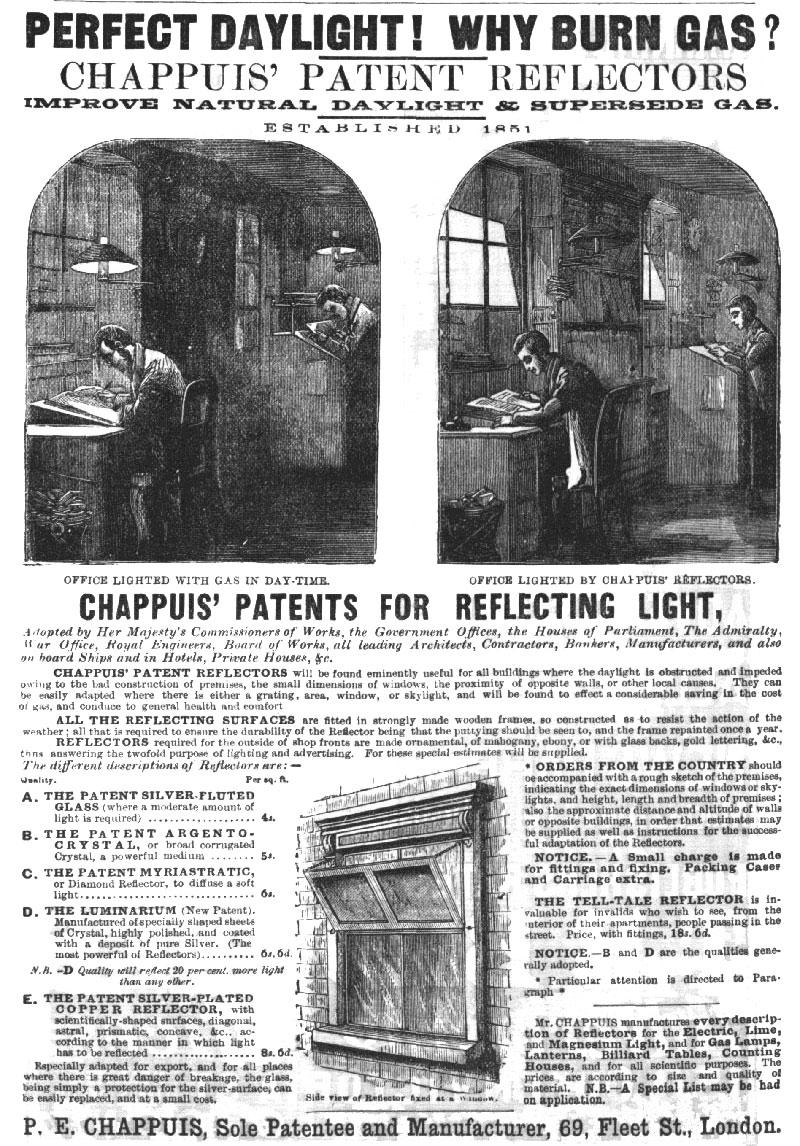
Right: Morning Post – Saturday 24 December 1887

Left: Kelly’s Directory of Wiltshire 1880
Next Page: Tokenhouse Yard – 1915
Source: The forgotten era of Light Reflec tors in London’s alleys
https://www.ianvisits.co.uk/articles/ the-forgotten-era-of-light-reflec tors-in-londons-alleys-41515/
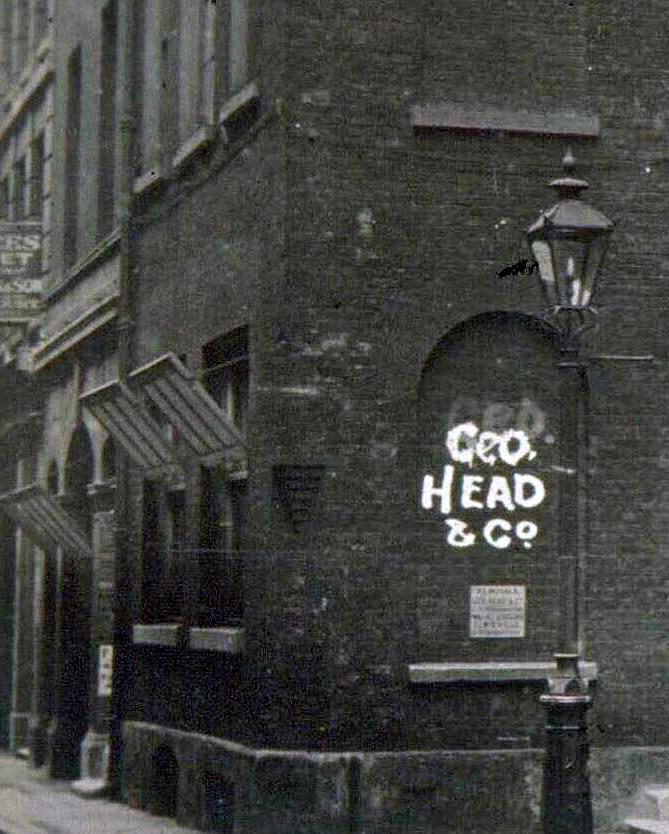
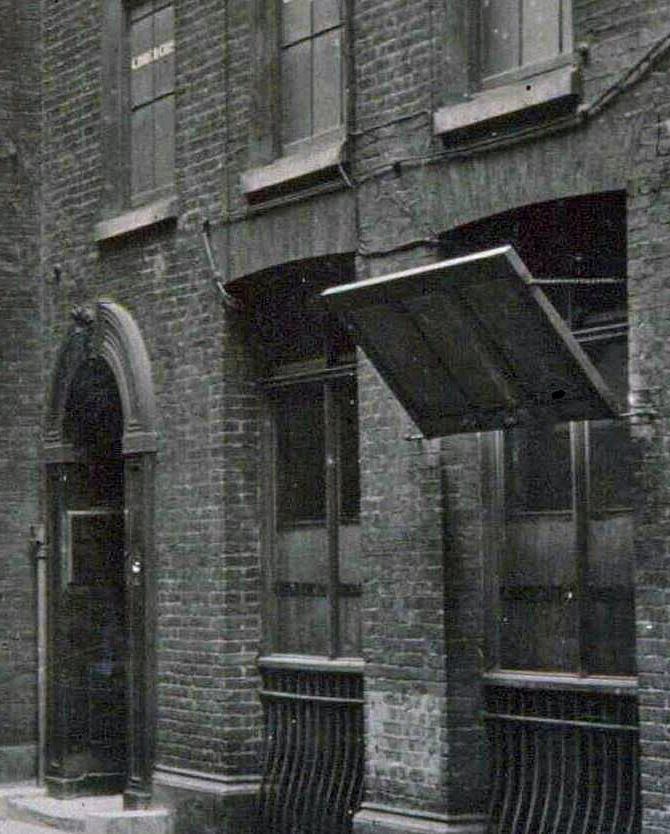
Adjustable Reflector, 1896
Both images: (Stalder, Windows: Openings and devices 2018)
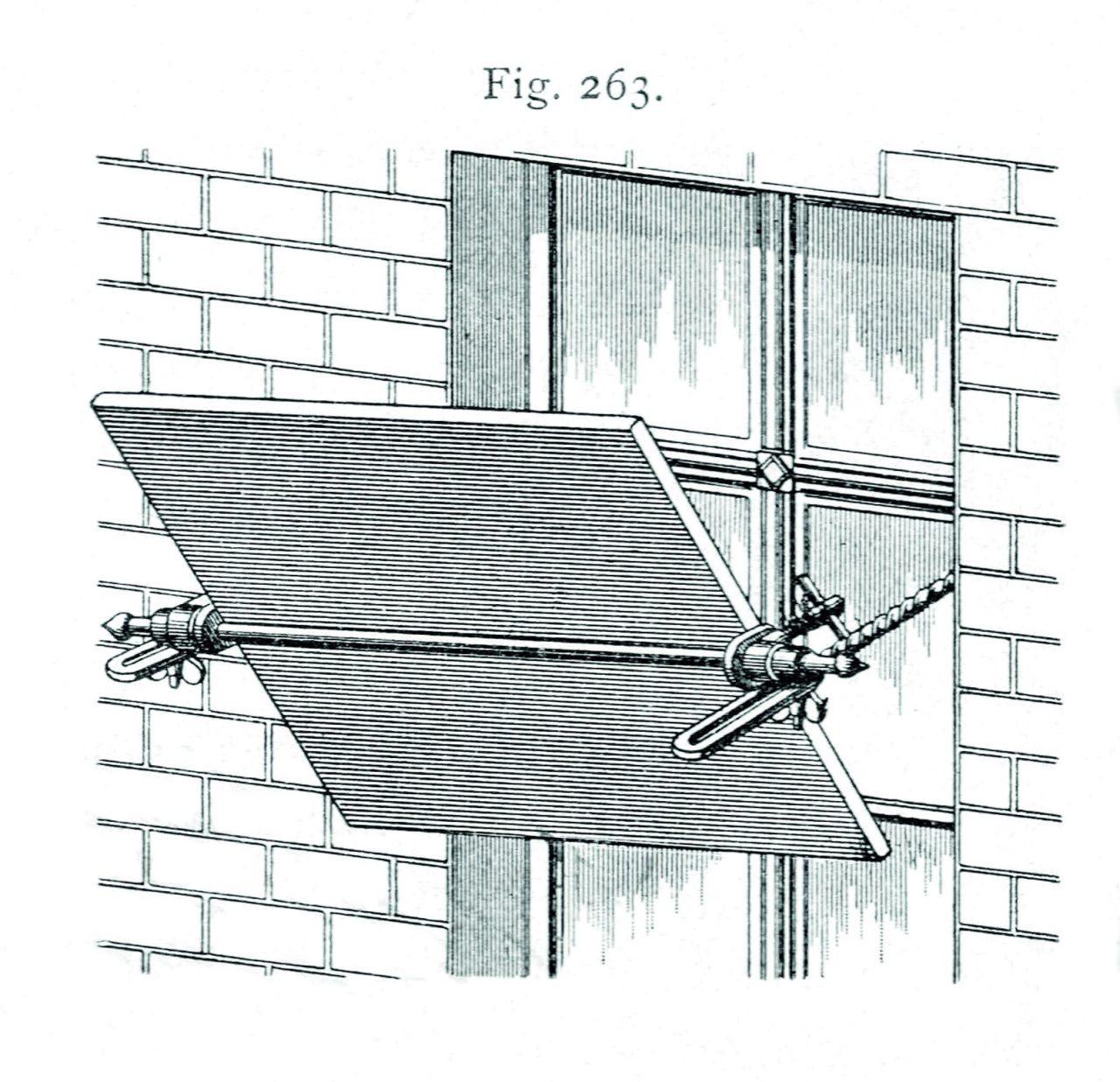
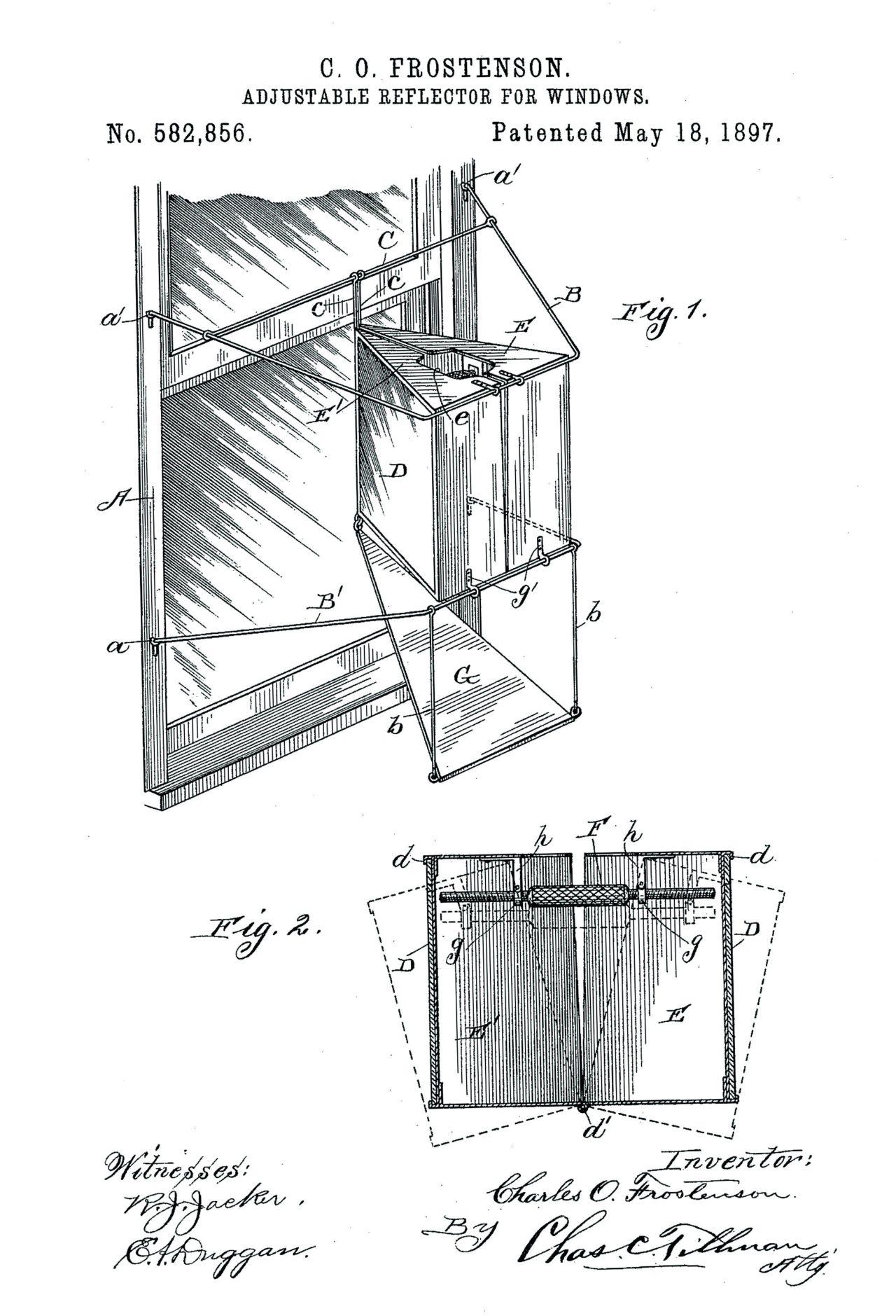
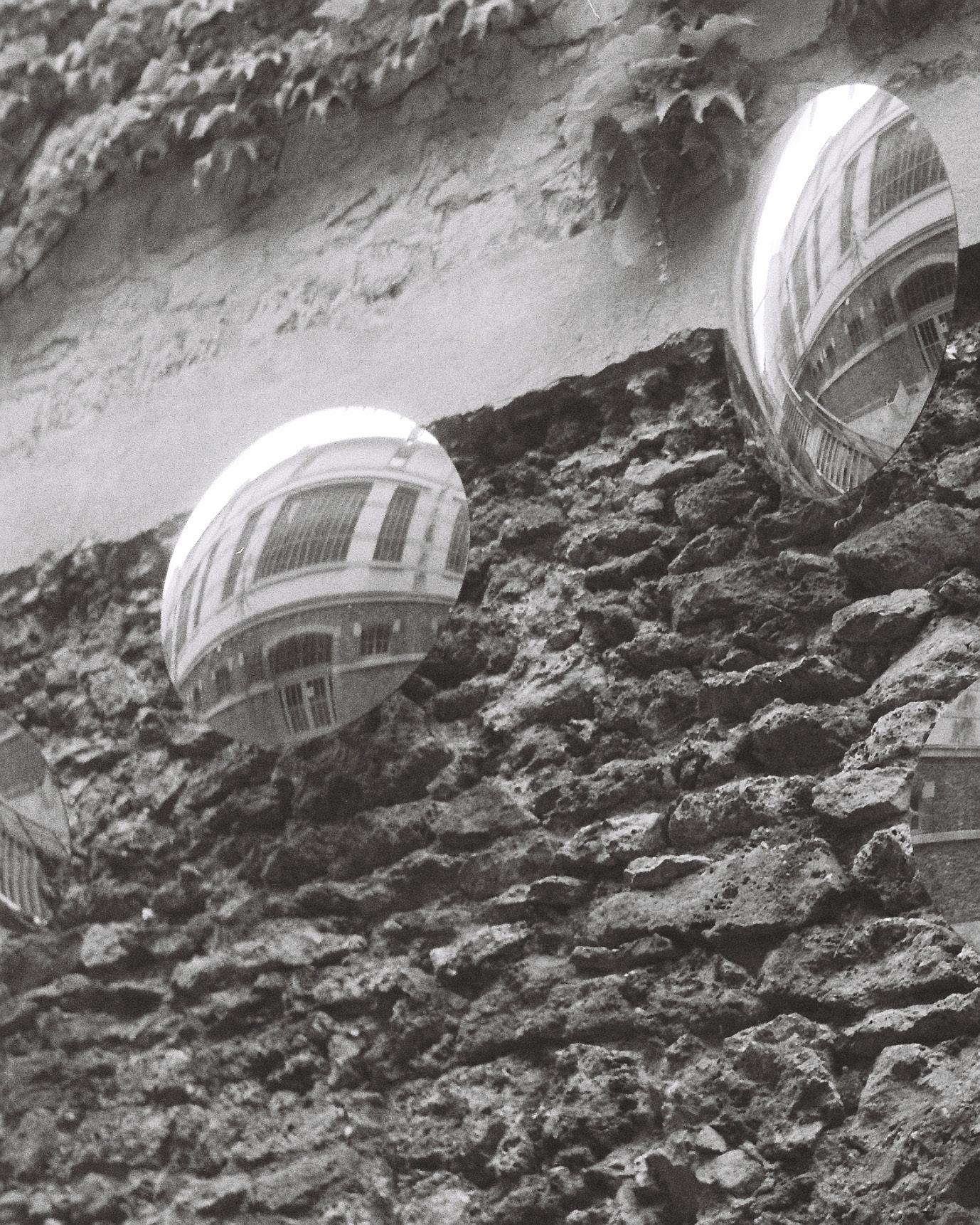
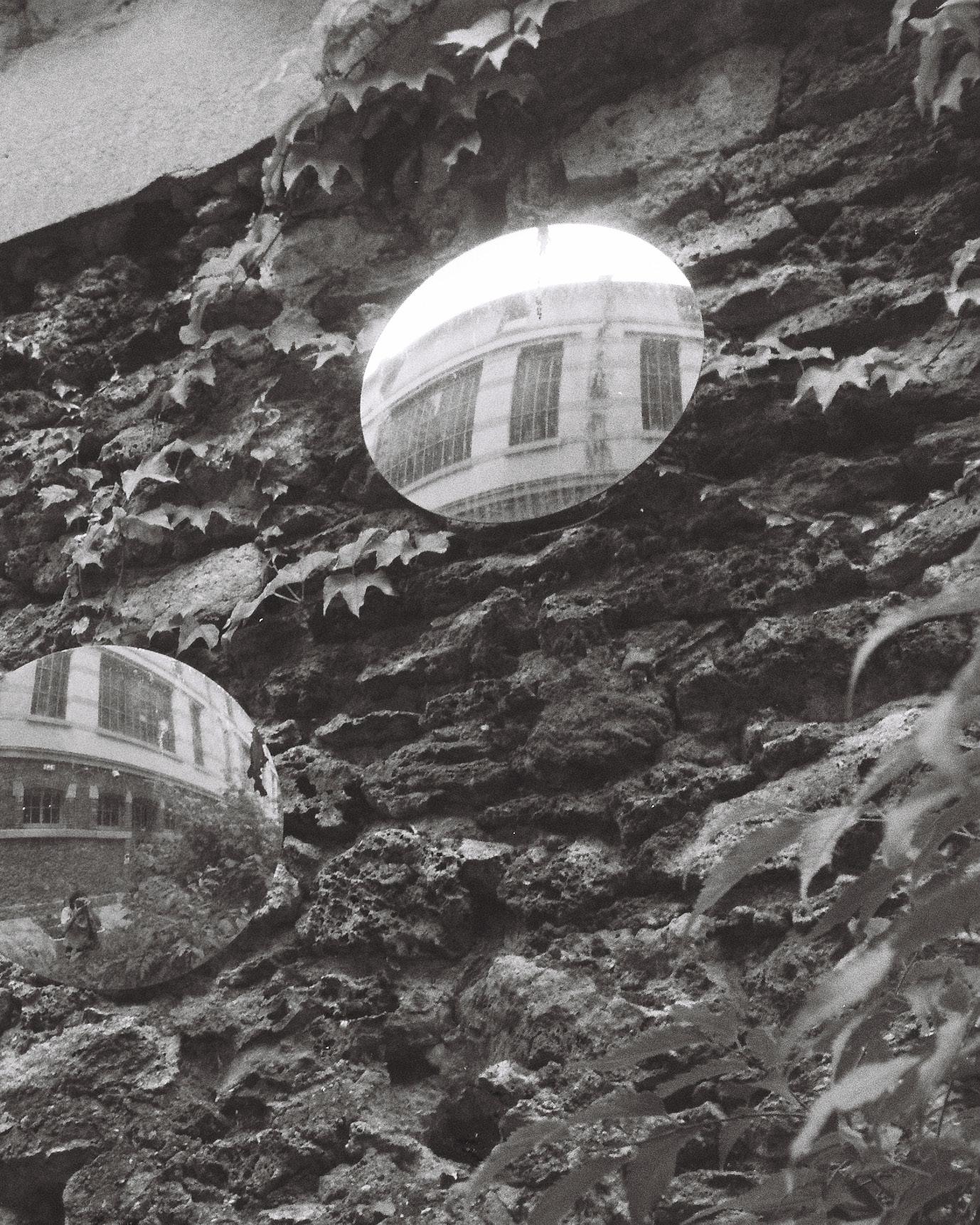
Outside the window, there is the city. Cities and the sun. Separated by one hundred and fifty million kilometres. It is that light that ties us to the sun. But when these rays reach the city they go in all directions, lose their original path, and filter through the small openings of these masses built by human hands. Some rays, find their reflection and head back to the sun. Others manage to reach small corners, submer ged between buildings, illuminating the shadows that we have crea ted by the rising of buildings.
It is curious how we build these spaces, in principle closed, with only a few openings to illuminate them. We have control over how much we want to let the outside into these spaces. We do this in part through sunlight. Therefore, we control the light, or so we pretend. We understand light as a vital element in our lives. We want to live within these spaces, and so we want control over light. We construct our buildings, in part, by considering their location concerning the sun’s path. Architects use a tool to calculate solar incidence, which in Spanish is colloquially called Girasol (sunflower), like the plant, a small detail that affirms the close relationship between the built and the natural world. Like the sunflower, architecture, in principle, seeks sunlight.
Where does it go when I can not feel it in my skin.
Has it gone to warm the cold floor?
Is it reaching under the door to peek inside the room?
It might have found its twin on the shiny glass and has now put its eye some place else.
It stares in my way, and also in other way.
A spot, that is where I find it again. Not a circle and not a square, but it frames that right there.
I might not feel it, but it is just there.
Whether by our nature or by its utility, we always illuminate these spaces, and when sunlight is not enough, we do it artificially. The lamps become the sun in its absence. Inside the city and its architec ture the sun does not reach every corner, some divisions fragment its light. Between levels and horizons, the light is lost. Hence we turn to electricity to pretend the sun to our control, the light bulb.
‘”Now that is terribly wasteful.” When asked what he meant, Einstein pointed to an electric lamp burning in broad daylight.’
(Tanizaki,
In praise of shadows 1933)In that small glass sphere is preserved our way of imitating the sun, radiant and incandescent and on an incomparable scale. In that desire to have control over nature, we decided to have control over light. Being able to manipulate light means that we can shape spaces wi thout doing without it. We build spaces that are completely hermetic to sunlight, isolated from any natural context, to fill them with artifi cial light, because we understand that we need it to live. We unders tand that in the city the sun is lost, sometimes involuntarily. When the sun touches the city, it touches the buildings and begins to boun ce off. Glass and other materials begin to reflect the light in various directions, meaninglessly, aimlessly. Scattered in various directions, the sun’s rays spread out and the sun begins to filter into the corners of that constructed city. Because light, like water, always finds a way to filter through, to make its way.
Urbanism in our cities is in the greater part built of different networ ks. We can say there is a network of light. Sunlight travels back and forth throughout the city through shiny surfaces. It is a network we have no control over, through windows and their reflections sunlight has movement. It is an invisible network that only becomes material until it reaches a surface, where illumination occurs. Sometimes this phenomenon over which we have no control aligns the sun to a speci fic place and time, creating a staging of spectacular conditions where light becomes the main character. These moments happen by chance and we cannot control them.
‘Other factors that affect perception are the way light falls, the dis tance between the perceiver and the perceived, and the perceivers’ previous knowledge of or psychological attitude towards the object.’
(Nelson, Bluets 2019)
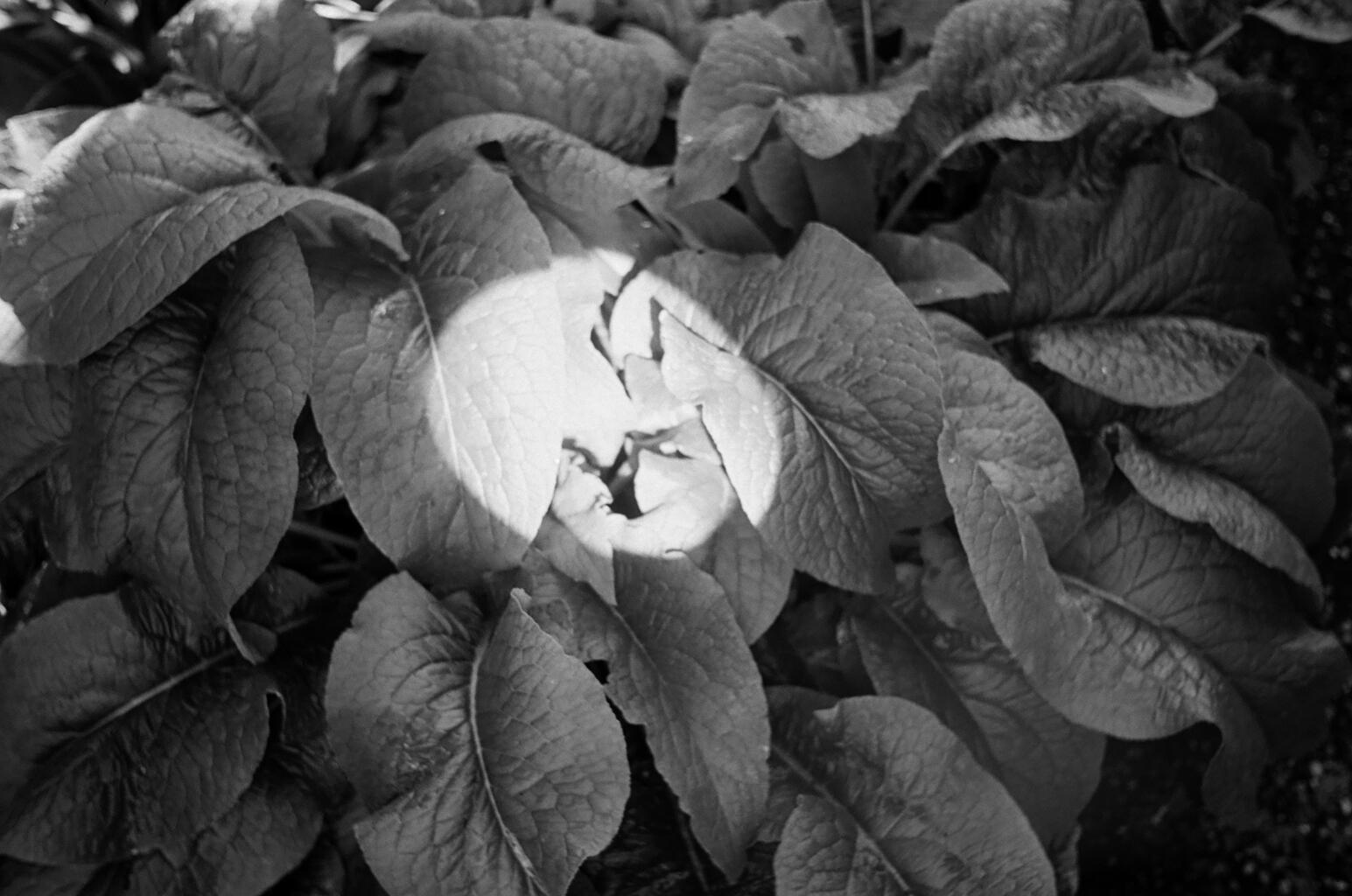
Sunlight diffracted from its origin.
The sun is expanded inside the city. Broken into pieces. Striking on surfaces and slipping away. Light reaches where a shadow is expected.
Sudden moments of illumination take place. Floors and walls
Trees and soil Materials reach the eye. Vertically and horizontally. Corridors of sunlight guide the sun through the fractures of the city.
Reaching and framing and blinding and staging.
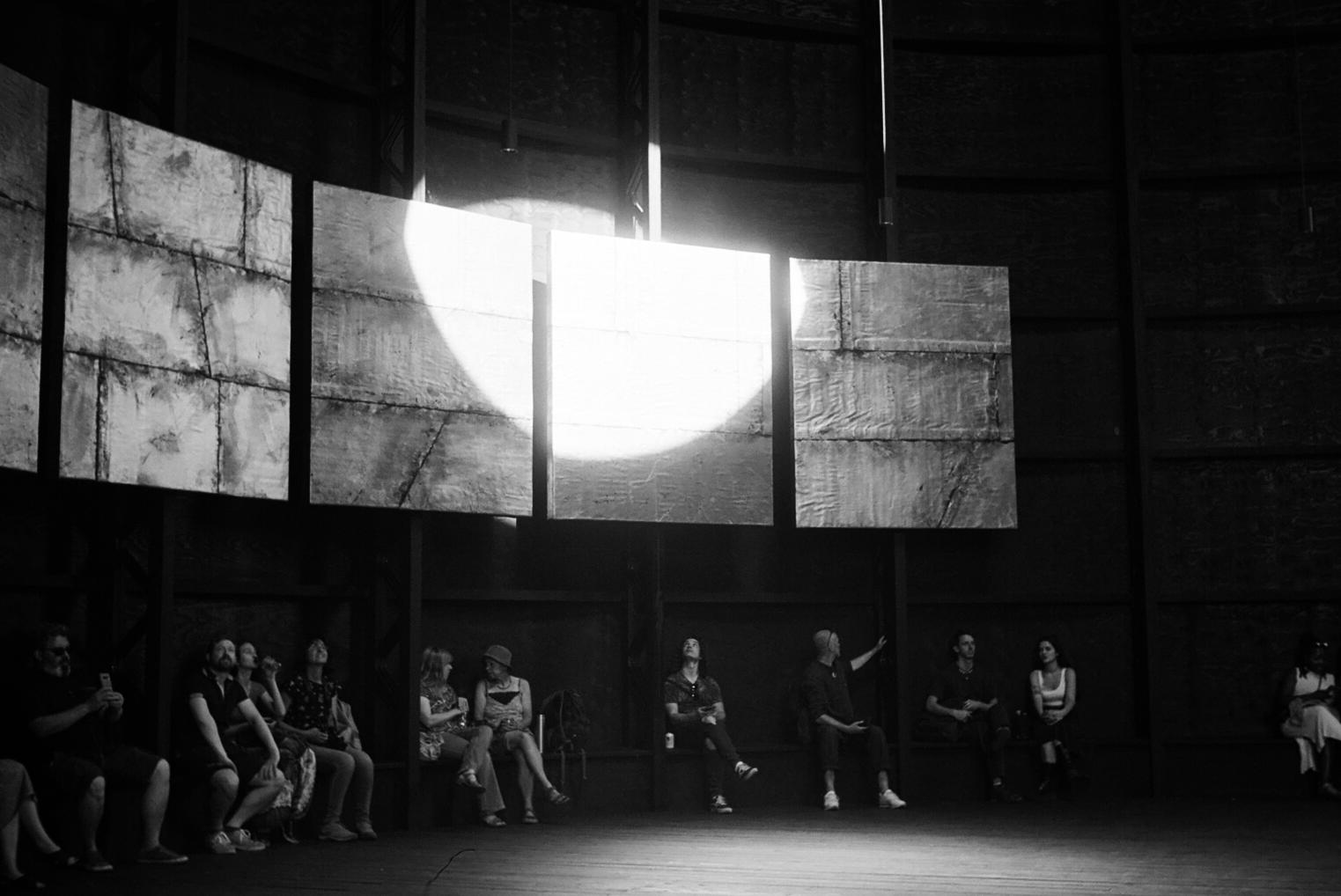
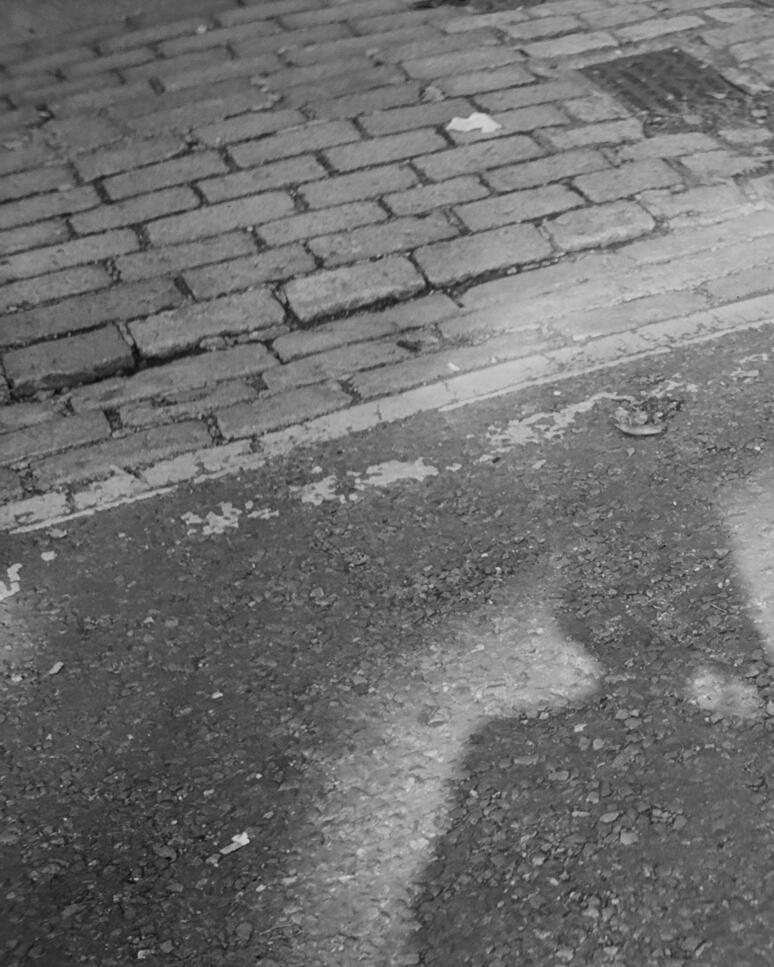

Sunlight has a great impact on how we perceive things in the city, as it not only allows us to see things but through the light we are also reading time. In that sense, there is that incorporation of temporality in the ubiquity of the sun that spreads through the city. And in time there is a sense of position in regards to where we stand, in this case, according to the sun. So, we can say through the light that flows in the city we can grasp where we are, and locate ourselves in the city if not overall in life.
Returning to the city, as a constructed, artificial space, in it we have created confinement, precisely delimited spaces on all its fronts, both vertically and horizontally. We have created boxes. Inside them, light is controlled and premeditated, it makes us feel as if we were taming nature; we decide how much we want to receive, at which intensity, and from where it is coming. As well, we can also decide to block the entrance of light at any moment, making it completely dark in plain midday. We are in control of light anytime we are inside. However, the light outside those boxes runs free from one window to another, unstoppable, bringing reflections to our eyes in the darkest corners, reminding us we can only control as much.
At that moment, when the sun’s rays are diverted and take new direc tions, we understand how the urban landscape can shape the sunli ght and take control of this phenomenon. Those buildings that rise above our cities have the power to change the direction of the sun. We want to trap the sunlight inside them, we do it with windows, and in doing so we receive the light inside a space. This is planned and there is a design behind that intention. But for that ray of light that enters through a window, there is another one that finds its reflection and escapes in another direction. It is almost as if to receive it is necessary to give.
In this chain of reflections, we see in the most evident way, the sun in the city. We see it traced on its streets and walls every time we find ourselves in front of a spot of light, reminding us that the sun is so mewhere, and it has decided to reach here.
Architecture holding time through sunlight.
That which is set free, driven away when finding itself in contemplation.
Light as material. Pieces of that light will be held in our hands. We’ll only take as much as we can grab with two hands.
This is a light diversion.
Today, just for a moment, the light will take a new direction. The sun is rooting itself in the ground. On the longest day of the year, sun rays are being stretched.
This is an act of light.
By bringing sunlight we are bringing life. We are calling for the essential to stay alive.
Bringing air to visibility.
We will take up space by doing so.
By holding light inside this place, we are observing the outside. This place stands still, oblivious to the passage of time. By bringing sunlight we are bringing life.
We are calling for the essential to stay alive.
‘240. All right then, let me try to rephrase. When I was alive, I aimed to be a student not of longing but of light. ‘ (Nelson, Bluets 2019)