




The following possible pathways and recommended combinations of courses are designed to assist you and your parents to make decisions for Year 11 Course Selection. Note: All Year 11 students must select an English and Mathematics course.
SIXCourses/Certificates
MinimumofFOURATAR Courses
ATAR courses, General Courses or Onsite Certificates
Optional: Workplace Learning – ADWPL (Holiday Placement)
ALTERNATIVE ATAR PATHWAY VET PATHWAY GENERAL PATHWAY
Certificate IV Offsite (ATAR 70 Equivalent)
Choice of up to five General courses, Onsite Certificate,
Recommended: Certificate III in Business Workplace Learning –ADWPL
OffCampusCertificate
Choiceofuptofive Generalcoursesoronsite Certificates
Recommended:Certificate IIIinBusiness WorkplaceLearning–ADWPL
SIX General Courses / Certificates
Choice of up to six General courses or onsite Certificates
Recommended Certificate III in Business Workplace Learning –ADWPL
ALL UNIVERSITIES
ALL UNIVERSITIES
TAFE
TRAINEESHIP / APPRENTICESHIP
Allcoursestaughton campus
ATAR70+minimumentry requirementforUniversity Mayneedtomeetadditional prerequisitesasoutlinedby theUniversity Year12studentsmayoptfor astudyline
UNIVERSITY BRIDGING COURSES / EXPERIENCED BASED ENTRY
Combination of courses and certificates taught on and off campus
TAFE EMPLOYMENT
TRAINEESHIP / APPRENTICESHIP
UNIVERSITY BRIDGING COURSES / EXPERIENCED BASED ENTRY
Combination of courses and certificates taught on and off
TAFE
EMPLOYMENT
TRAINEESHIP / APPRENTICESHIP
UNIVERSITY BRIDGING COURSES / EXPERIENCED BASED ENTRY
All courses and certificates taught on campus


Welcome to the first part of moving into senior secondary school: selecting the courses that you are likely to study for the next two years
Before selecting Year 11 courses you should consider the following:
your interests and what you like doing, because the courses are designed to be taught over two years courses you have found interesting and enjoyable in your previous study at school your academic strengths, in association with your Year 10 report from Semester 1 teachers’ recommendations for your suitability in Year 11 courses descriptions of the courses contained in this Handbook, and a range of possible careers that may be of interest to you
While the process of course selection may seem confusing, this Handbook is designed to help you understand the structure of senior secondary study and the pathways that lead to tertiary studies at university, TAFE or employment and apprenticeships
The key to success is allowing students to study courses and pursue certificates in which they are interested and have already demonstrated a degree of success All academic options on offer in Year 11 are equally valid in providing valuable knowledge and skills that prepare students for life beyond school Ultimately, none of the pathways rule out any destinations (including university study directly after school) if students study well and achieve strong results
In an ideal world, by the end of Year 12, our students will achieve the WA Certificate of Education (WACE), which is sometimes called “secondary graduation” If they are in an ATAR pathway, their top four courses will be combined to provide an ATAR high enough for entry to the university degree of their choice If they are on a General/VET pathway, their results will be high enough to be accepted for further study at TAFE, university (via portfolio or experience-based entry), admission to apprenticeships, or direct employment
NOTE: If your child has been receiving support from the Learning Enrichment Centre (LEC), you will be contacted by the Head of Inclusive Education, Emma Black Smith, regarding their Year 11 academic program
There are a number of steps in our Pathway and Course Selection process to assist students with their decision-making during Term 3 including Career Counselling The Head of MYPath (VET and Careers), Susan Leach, is also available to assist students and their parents to decide on the suitability of a student’s course selection In addition, I am available to discuss academic matters with students and parents, in particular, graduation requirements These may also include course selection, School Curriculum and Standards Authority information (SCSA), and University and State Training Providers’ selection procedures
Please read through the first sections of the Handbook before going on to reading through the courses available at John Wollaston Anglican Community School
Scott Robertson DEAN OF TEACHING AND LEARNING
JULY 2025
To the best of the School’s knowledge, all information within this publication was correct at the time of printing and refers to graduation in 2026
All costs provided are approximate and subject to confirmation based on student choices and external providers
July 2025
School and post-school options have changed dramatically since the parents reading this guide attended school Previously, the experience of Year 11 and 12 meant choosing a TAFE or university pathway, or perhaps finishing early to get an apprenticeship Once you had gained your qualification, you entered a career that would see you through to retirement
We are currently living during the most significant disruption in the world of work since the Industrial Revolution Artificial intelligence, automation, globalisation and rapid technological change mean that a young person today is predicted to have five career changes and an average of 17 jobs in their lifetime
Year 11 and Year 12 students today must keep their options open by playing to their strengths and maximising their post-school options
They need to develop transferable skills like problemsolving, critical thinking, creativity, collaboration, communication, and presentation skills that are most likely to maximise their success across different careers and jobs
Modern subject selections and course counselling cannot just be decided on vocational preparation or be about putting ‘all eggs in one basket’. Rather than asking young people, ‘what do you want to do when you grow up?’, a far better approach is to ask what problems they would like to help solve, what their strengths and interests are and how they would like to contribute to society Their strengths and interests are likely to align with a cluster of jobs, accessible through multiple pathways
W A C E - Y E A R 1 1 & 1 2 I N
W E S T E R N A U S T R A L I A
JWACS delivers the Western Australian Certificate of Education (WACE) program for our Year 11 and Year 12 students It is informally known as “high school graduation” and is managed by the School Curriculum and Standards Authority of Western Australia (SCSA)
The School’s academic program consists of School Curriculum and Standards Authority WACE accredited courses. All Year 11 and 12 students can select up to six courses for each year to meet the WACE requirements (see next page)
There are four types of courses:
ATAR courses
General courses
Endorsed programs, and Vocational and Educational Training (VET) qualifications
T
ATAR courses are for students who are on an ATAR pathway, aiming to go to university and have full access to all degrees directly after school These courses require a heavy study load and have examinations as a major part of their assessment structure These courses have minimum prerequisites and do not combine well with off-site VET study
General courses are for all students, and many ATAR pathway students will pick at least one in Year 11 that they drop in Year 12 to create a study line If students are on a General pathway they will select six If they are on a VET pathway, they will select four or five, depending on certificate requirements. They are designed for students who plan on vocationally based training or employment straight from school so do not have examinations and can be combined with off-site VET study General courses may be used for alternative entry to non-quota university courses
E N D O R S E D P R O G R A M S
An endorsed program is a significant cocurricular learning program that has been developed by SCSA, an external provider or a school These programs have been endorsed by the SCSA Examples include the Remote Pilot Licence (RePL), ASDAN and Australian Music Examination Board (AMEB)
All students have the opportunity to achieve graduation by completing the WACE-accredited ATAR and General courses offered by JWACS However, endorsed programs have the potential to reduce the number of WACE accredited courses required for graduation. They recognise student achievements that are additional to minimum requirements and can also provide a safety net for some students who may not meet the graduation requirements through the achievement of WACE accredited courses. It is the student’s responsibility to inform the School by the due date if they wish to include endorsed programs on their WACE/Western Australian Statement of Student Achievement (WASSA)
Vocational Education and Training (VET) engages students in work related learning, built on partnerships between school, business, industry and the wider community The completion of VET programs provides students with credit for nationally recognised qualifications within the Australian Qualifications Framework and can lead to a broad range of post school options and pathways Similar to endorsed programs, achievement of eligible VET qualifications can reduce the number of WACE accredited courses required for graduation Some students may elect to study VET qualifications which may or may not require attendance at a Technical and Further Education institution (TAFE) or another training provider
Across Western Australia Years 11 and 12 are commonly known as senior secondary During this time students study a range of courses that contribute to secondary graduation known as the Western Australian Certificate of Education (WACE)
The WACE has a number of requirements which must be met for a student to graduate from secondary school; these are outlined below
The requirements are determined by the School Curriculum and Standards Authority (SCSA) You can find our more here: http://seniorsecondary.scsa.wa.edu.au/
Note: Two units are covered in one year-long course as each unit takes around a semester to complete
Western Australian Certificate of Education (WACE) Requirements
In the simplest terms the requirements for students graduating in 2026 and beyond are:
Complete –
At least four Year 12 ATAR courses OR
At least five Year 12 General courses and/or ATAR courses or equivalent OR A Certificate II (or higher) VET qualification combination with ATAR, General or Foundation courses
Meet a breadth of study requirements –
Complete 20 course units or the approved equivalent over Year 11 and Year 12 (5 courses a year)
Students must study at least one course from List A (Arts, English, Languages and Social Sciences) and List B (Mathematics, Science and Technology) in Year 11 and in Year 12
Meet a depth of study requirement –
Students need to meet a minimum number of paired units (the course is studied at the same stage for the duration of two semesters).
Two completed Year 11 English units and one pair of completed Year 12 English units
Demonstrate a minimum standard of literacy and numeracy –
Pass the Online Literacy and Numeracy Assessment (OLNA) with a category 3 rating
Students will be required to achieve fourteen C grades in Year 11 and Year 12 units, including at least six C grades in Year 12 units (or equivalents through VET qualifications and endorsed programs).
At the end of senior secondary schooling, all students receive a Western Australian Statement of Student Achievement (WASSA) The WASSA is similar to an academic transcript and will list details of completed course units and grades, endorsed programs, as well as completed and partially completed Certificate qualifications and if applicable, the meeting of literacy and numeracy competence (OLNA result) Students who meet all the requirements for graduation will receive a WACE certificate


Year 10 students who have not yet demonstrated the minimum literacy and numeracy standards sit the Online Literacy and Numeracy Assessment (OLNA) in Semester 1. Students who still do not meet one or more of the standards will have the opportunity to re-sit the assessment in Semester 2 and again during Years 11 and 12 if required
Students must meet the standards in the literacy and numeracy components of the OLNA to achieve a WACE If students do not demonstrate the literacy and numeracy standard by the time they exit secondary school, they can apply to SCSA to re-sit the assessment at any age
In Year 11 and 12, students will study WACE courses or Certificate qualifications These are complemented by endorsed programs and Workplace Learning (ADWPL) A student will study a combination of six WACE courses or Certificates in Year 11
WACE courses have four levels of difficulty, as shown below We do not offer courses are academic courses approved by the School Curriculum and Standards Authority (SCSA) A single course will have Year 11 units (Units 1 and 2) and Year 12 units (Units 3 and 4) The number of WACE courses a student will complete depends on whether they are studying any Certificate qualifications
A student wanting to go on to university would typically study ATAR courses in Year 11 and 12 and possibly complete a Certificate II A student heading to TAFE or another non-university pathway may choose to study some ATAR and some General courses but may also be required to complete a Certificate II or higher qualification
For direct entry to university, students must complete a minimum of four ATAR level courses
For students who are aiming to enrol in a university course direct from school These courses will be examined by the Authority (a minimum of four ATAR courses are required).
For students typically aiming to enter further training or the workforce directly from school May be eligible for alternative university entry
For students who need additional help in demonstrating the minimum standard of literacy and/or numeracy
For students who may need modification to the curriculum to meet their special needs Will not contribute to C grade requirement
School based certificate may be suitable
Certificate II qualification recommended for graduation in combination with General courses completed.
Certificate or endorsed programs including ASDAN may be suitable
Certificates or ‘Certs’ are part of the Australian Quality Training Framework (AQTF) These certificates are recognised Australia wide and is the system used by TAFE John Wollaston Anglican Community School works in partnership with training organisations to deliver the certificates to students on and off-site. Each certificate is broken into small units known as Units of Competence A student must demonstrate proficiency in each component to achieve the qualification
The most basic certification is a Cert I followed by a Cert II. Some Year 10s have completed units towards a Certificate II in Hospitality Some students may go on to complete a Certificate III and commence working toward a Certificate IV or a Diploma
Students will complete certificates in Year 11 and 12 as part of the John Wollaston MYPath General, Vocational or VET Core Pathway
The proposed certificate qualifications that will be offered at school in 2026 are listed below in our list of courses Students should note they would need to be enrolled for two years to complete the Hospitality and Outdoor Recreation Certificates
At the time of publication no agreements have been entered with the Registered Training Organisations for the delivery of the qualification in 2026 We currently have auspicing agreements with the Registered Training Organisations for the delivery of the listed courses in 2025, and on the basis of interest from students in the qualifications listed, the School will enter into agreements with the Registered Training Organisations for the delivery of the qualifications in 2026

RTO - 0386
SIT20316 Certificate II in Hospitality (two year course – start in Year 10 or 11)
SIT20416 Certificate II in Kitchen Operations (Year 12 after successful completion of SIT20316)


RTO 2401
CUA20715 Certificate II in Visual Art (Year 11 and Year 12)

RTO40548
BSB30120CertificateIIIinBusiness (Year12)
SIS20213CertificateIIinOutdoor Recreation(Year11andYear12)
Endorsed programs are significant learning programs developed by the School, community or private provider that are approved by the School Curriculum and Standards Authority for inclusion in the Western Australian Certificate of Education Endorsed programs can contribute to the WACE requirements
There is an extensive list of School Curriculum and Standards Authority approved programs; however, some of the more common ones in which students may already be involved outside school are listed below If you think something you are doing outside school may be considered significant enough to be an endorsed program, please bring it to the attention of the Dean of Teaching and Learning
Australian Music Examination Board
Australian Army Cadets
Elite Sports Program
Scout Association of Australia
Emergency Services Cadets
Girl Guides Australia
Pony Club Association of WA
Commonwealth Society of Teachers of Dancing
Three of the programs that the School runs as part of the curricular or co-curricular program in 2026 include:
ADWPL Workplace Learning Program
Remote Pilot Licence (RePL)
ASDAN
Of the 20 units required for a WACE a student may choose to substitute WACE course units with:
Only certificate qualifications (to a maximum of eight unit equivalents) OR
Only endorsed programs (up to a maximum of four unit equivalents) OR
A combination of certificate qualifications and endorsed programs (up to a maximum of eight unit equivalents with a maximum of four unit equivalents from endorsed programs)
Samples of students’ course choices have been included in this Handbook to illustrate how certificates and endorsed programs can be used. John Wollaston staff will also guide and monitor student selections
All Australian public universities require a student to have an Australian Tertiary Admissions Rank (ATAR). This ranking is what universities use to determine whether the student will meet the cut-off entry mark for their desired course Some university courses also have portfolio and/or interview requirements
To be eligible for an ATAR, students must complete and sit the examinations for a minimum of four ATAR courses As the ATAR is made up of a student’s four best ATAR course scores, it is sensible to do at least five courses that are eligible for the ATAR calculation, in case one course receives poor results. The section What Shall I Study? discusses which courses should be considered for direct university entry
If a student studies an ATAR course in Year 12 they are required to sit an external examination often known as the WACE Examination
If the student does not complete the required external examination, the course is not eligible to be counted toward the graduation requirements of the WACE More information on external assessments can be found in Section 3.
If a student studies a General or Foundation course in Year 12 they are required to complete an Externally Set Task (EST)
To help determine whether students will manage the rigour of the course, prerequisites have been put in place Course prerequisites are part of the Senior School Academic Studies Policy which has been endorsed by School Council. Students will need to meet the prerequisites for the course at the time of course selection to be permitted to choose the course If a prerequisite is not met at the time of the course selection process, students may reapply after the Semester 2 examinations if the prerequisite is met and maintained during Semester 2 of Year 10
In Learning Areas such as Humanities or Science, where students rotate through topics, conditional enrolment will be granted to those students who have not yet completed the relevant rotation but hold similar required grades for other rotations in the Learning Area. Unconditional enrolment will be granted or declined based on results derived from the completion of the required rotation during Semester 2
Year 11 courses offered in The Arts, Health and Physical Education, and Technologies have prerequisites based on students completing a relevant Year 10 option to a nominated standard as outlined in the course descriptions However, if the student has not undertaken the Year 10 option they ill l f h d k l f
Many courses will also have an English competency prerequisite due to the written and examination components within the course Such courses include ATAR level Visual Arts, Physical Education Studies and Human Biology M A I N T A I
Students who have met course prerequisites on their Semester 1 report will need to maintain that level in order to be allowed to stay enrolled in the chosen course. A significant decline in the marks of relevant Year 10 subjects during Semester 2 of Year 10 will cause a student to have to reselect their courses
Students will not automatically advance to the next units of their courses at the beginning of Year 12 There will be a set of prerequisites that the students will need to meet at the end of Year 11 for any of the Year 12 courses * This will generally align to a middle to high C Grade for their Year 11 course. Students wishing to swap to a new course will need to prove ability in a similarly rigorous or structured course

Students should study at the highest level of which they are capable and one that will put them on the pathway to their post-school goals
There are four types of courses which contribute to obtaining the Western Australian Certificate of Education (WACE)
ATAR courses
General courses
Endorsed programs
Vocational and Educational training qualifications


Students considering following a career pathway into employment, TAFE, an apprenticeship, traineeship or other further training should explore whether the offsite VET program or Workplace Learning Program may be suitable Further information regarding these programs is available from page 19
Students studying at John Wollaston Anglican Community School will be able to study Australian Quality Training Framework Certifications alongside or within some courses of study The benefit to this is graduating with a WACE graduation as well as nationally recognised certifications can be advantageous to future TAFE studies or employment options More information about these certifications can be found in the MYPath Vocational Education and Training Section
A sample pathway showing the school-based load of a MYPath off-site VET student attending school four days a week and typically a day at a TAFE.
VOCATIONAL PATHWAY COURSE IN YEAR 11
Certificate in Business (including Workplace
LearningADWPL)
English
Mathematics
Essential
Science in Practice
General Units 1 and 2
General Units 1 and 2
General Units 1 and 2
Certificate II completed off campus
Certificate II or a WACE course
e g Cert II
Hospitality or MDT Metals
General Units 1 and 2
VOCATIONAL PATHWAY COURSE IN YEAR 12
Certificate in Business (including Workplace
LearningADWPL)
English
Mathematics
Essential
Science in Practice
Units 3 and 4
General Units 3 and 4
General Units 3 and 4
Certificate completed off campus
Certificate II or a WACE course
e g Cert II
Hospitality or MDT Metals
General Units 3 and 4
NOTE: This is a sample only and the prerequisites must be met for each course chosen
A sample pathway showing the courses across Year 11 and Year 12 that a student interested in a General pathway might choose: school-based load of a MYPath off-site VET student attending school four days a week and typically a day at a TAFE.
GENERAL PATHWAY COURSE IN YEAR 11
English Foundation or General Units 1 and 2
Mathematics Essential General Units 1 and 2
Certificate in Business (including Workplace Learning - ADWPL) or other certificate or WACE course of choice
WACE course or choice General Units 1 and 2
WACE course or choice General Units 1 and 2
WACE course or choice General Units 1 and 2
GENERAL PATHWAY COURSE IN YEAR 12
English Foundation or General Units 3 and 4
Mathematics Essential General Units 3 and 4
Certificate in Business (including Workplace Learning - ADWPL) or other certificate or WACE course of choice
WACE course or choice General Units 3 and 4
WACE course or choice General Units 3 and 4
WACE course or choice General Units 3 and 4


This pathway is suggested for students who think they may like to go to university but are not sure, have not met course prerequisites or think they will struggle with the rigour of a full ATAR load and examinations Students who have less than five General/ATAR courses are recommended to complete a Certificate II or higher qualification to meet WACE graduation requirements Multiple qualifications may be studied; however, there is a limit on the number of qualifications that can be used to calculate graduation requirements John Wollaston will monitor the combination of courses and qualifications chosen to ensure graduation requirements are met
Universities offer indirect entry methods for those students who do not have a high enough ATAR rank or do not study ATAR courses Examples include the Diploma program through Curtin College, leading directly to second year of university, UniPrep courses or the Experience-Based Entry Scheme offered by Edith Cowan University and The University of Western Australia, FlexiTrack or OnTrack at Murdoch or Notre Dame’s Foundation Year Universities also offer portfolio entries and enabling courses where excellent grades in General courses combined with completed certificates will equate to an ATAR of 70 Students can also access university studies by first completing a Certificate IV or Diploma at TAFE To access these options, the student should do courses at the highest level of which he/she is capable as TAFE entry for some qualifications is quite competitive. Examples of alternative pathways to university are listed on page 16
Direct access to university from school requires students to study a minimum of ATAR level courses to achieve an Australian Tertiary Admissions Ranking An ATAR is calculated from the student’s four best courses English does not need to be one of the top four, although universities generally require a C grade at ATAR level to meet the literacy requirement It is highly recommended that the student’s fifth course is also at ATAR level, to be used as a backup in calculating the ATAR.
Completion of General Course, Certificate II/III or Private Study line
Workplace Learning (ADWPL) Program during the holiday period (optional)
NOTE:Thisisasampleonlyandtheprerequisitesmustbemetforeachcoursechosen **StudentsmaywishtoconsidercompletingaCertificatequalificationiftheysuspecttheymightleavetheATAR pathway.**
A student completing a General or Foundation course in Year 12 will be required to complete an Externally Set Task (EST) during Semester 1 The EST is set by SCSA, administered by the School during Term 2 and marked by the classroom teacher The task is used to ensure comparability within the delivery of General and Foundation courses across the State The EST will be worth 15% of the Year 12 course total
If a student completes an ATAR course in Year 12 they MUST make a genuine attempt at the external WACE examination at the end of the year for the course to be included as part of the WACE requirements listed earlier
For Preliminary courses, the entire mark is based on learning completed at school. For General and Foundation courses, an externally set task (EST) must be completed in Year 12 For ATAR courses, half the final mark is based on school tasks and half is the scaled mark received from the WACE examination. There are a number of procedures and practices involved to ensure students are assessed fairly in comparison to anyone else in the State doing the same course
The external ATAR examinations or WACE examinations are held at the end of Year 12 and are run by the School Curriculum and Standards Authority Each student’s results are given to the Tertiary Institutions Service Centre (TISC) who manage the application process to the public universities. TISC calculates the Tertiary Entrance Aggregate (TEA) for each student using their best four scores This is converted to the ATAR
An ATAR ranges between 99 95 and zero, and reports a student’s rank position relative to all other students in Western Australia. If a student has an ATAR of 70 00, for example, it indicates that they achieved as well as or better than 70% of the Year 12 school leaver age population
The TISC website has information about the application process and a history of university cutoffs for all courses offered The cut-off score for each course is given as an ATAR value A cut-off of 85 means a student needs to achieve an ATAR of 85 or higher to gain entry into the course

The Tertiary Institutions Service Centre (TISC) manages the application process to the public universities including Curtin, Edith Cowan, Murdoch and the University of Western Australia Private universities such as Notre Dame have their own admissions process.
UWA now has a different undergraduate course structure There are only five degrees offered at undergraduate level and these emphasise breadth of education rather than professional qualifications. The degrees are: Arts, Commerce, Biomedical Science and Science (all of which require an ATAR of at least 80) and Philosophy (ATAR 98) After the initial three years students can exit with a Bachelor degree or apply for postgraduate studies in e g Architecture, Law, Engineering or Medicine.
The public universities generally have the following entry requirements:
WACE requirements are met (see page 3).
Competence in English – a school-based grade of C in ATAR English, EALD or Literature Students who meet other criteria but do not meet the literacy criteria may be eligible for the Special Tertiary Admission Test (STAT)
Obtain a sufficiently high Australian Tertiary Admissions Rank (ATAR) for the university and desired course The minimum direct entry ATAR is listed in the table below for each public university in Perth
Satisfy any other prerequisites or special requirements to particular courses e g interview, portfolio of work, UMAT test, required WACE course
ATAR for University Entry 2026:
The table above shows minimum requirements; competitive courses have much higher cut-offs Cutoffs vary from year to year depending on demand and availability of places Generally speaking, a scaled average of 56 across the top four ATAR subjects will equate to an ATAR of 70
It is important to note that entry requirements for the Universities are changing each year Contacting Future Students for the relevant University as outlined on their website is essential to obtain the most current entry requirement information
More information on ATAR, the university application process and university course cut-offs, visit https://www.tisc.edu.au/static/resources.tisc
Each university has pathways that accommodate students who may not have met the required ATAR ranking or do not have an ATAR (did not complete four or more ATAR courses) The pathways and criteria change annually and may be different from those listed below for 2026 university entry Helpful web details for the universities’ alternative pathways have been provided in brackets
TAFE Qualification Recognition: A Certificate IV is sometimes recognised as being equivalent to an ATAR of 70. A Diploma may earn an applicant enough credit to enter directly into second year
Curtin University (futurestudents curtin edu au/undergraduate/p athways/)
Certificate IV or Diploma qualifications
UniReady Online or Summer programs
StepUp to Curtin
Portfolio Entry
Enabling Courses (Science, Health and Engineering)
Curtin College (www curtincollege edu au)
Edith Cowan University (www ecu edu au)
Certificate IV or Diploma qualifications
Edith Cowan College (www edithcowancollege edu au)
Experience Based Entry Scheme (Portfolio Entry) (www.ecu.edu.au/future-students/ courseentry/experience-based-entry-scheme)
University Preparation Courses (www ecu edu au/degrees/uniprep)
Murdoch University (https://www murdoch edu au)
Certificate IV or Diploma qualifications
Murdoch ATAR Rise Entry Awards and Creative Portfolios
OnTrack programs (www murdoch edu au/OnTrack/)
Notre Dame University (www nd edu au/fremantle/alt-entry)
Certificate IV or Diploma qualifications
The Early Offer Program (notredame edu au/freo/early-offer php)
Tertiary Pathway Program
University of Western Australia (study uwa edu au/how-to-apply/alternativeentry-pathways)
Access UWA
Fairway program
First in Family UWAY
Murdoch Institute of Technology (Murdoch University Preparation Course) (www murdochinstitute wa edu au/academic-programs/mupc-pathway/)
The entry requirements for TAFEs are based on a points system There are more than 400 full- time qualifications available through TAFEs across a broad range of areas. Qualifications begin at Certificate I and II level right through to Advanced Diplomas. Depending on the applicant’s knowledge and experience, the entry point into a course will vary
The entry requirements into a TAFE are based on the following:
Meeting the requirements of the Online Numeracy and Literacy Assessment (OLNA) or a completed Certificate I or II.
Selection criteria for entry into competitive courses is based on a points system of which the maximum is 90 points:
Academic achievement to a maximum of 60 points derived from secondary education results or a completed TAFE qualification, whichever is higher
The secondary education score is generated from the three completed full- year course that are awarded the highest points The better the grade, the higher the score
The points awarded for a completed qualification will vary depending on the level of course being applied for, eg a completed Certificate III is worth 35 points when applying for a Certificate IV, but 30 points if applying for a Diploma course.
Work experience/employment/community service/volunteer work to a maximum of 30 points calculated at 0003 per hour workload
Whenever possible students should study at the highest level of which they are capable and complete some Certifications to be competitive
To learn more about the TAFE admission process, or look up courses, visit
https://wwwsouthmetrotafewaeduau/futurestudents/vet dss
https://wwwnorthmetrotafewaeduau/futurestudents/still atschool
M Y T H 1 : T A F E I S E A S Y T O
G E T I N T O
This is not necessarily true For example, a Certificate IV in Preparation for Nursing at Bentley TAFE recently had 40 spaces and 177 applicants, a pattern reflected across other campuses. The list below gives you some statistics on applications:
51% of applicants are applying for the competitive courses
Sometimes there is only 0.25 of a point separating those who receive an offer and those who do not Points required for Certificate II
Electrotechnology (Pre-Apprenticeship) at Midland was 69 points There were 20 spaces and 88 applicants.
The most competitive course is usually Certificate IV in Veterinary Nursing In 2015 the lowest point cut-off was 83 822 with 470 applicants and only 35 places
M Y T H 2 : I D O N ’ T N E E D T O
W O R R Y A B O U T G R A D E S I F I W A N T T O G O T O T A F E
This is incorrect The TAFE points system rewards higher grades. For competitive courses every point counts Study at the highest level you can achieve and complete some VET training
M Y T H 3 : I C A N O N L Y G O T O
U N I V E R S I T Y I F I H A V E A N A T A R
This is a myth. If you want to go directly to Curtin, Edith Cowan, Murdoch or the University of Western Australia you will need your ATAR but all universities offer a portfolio / experienced-based pathway where strong General grades and completed certificates can be used as an ATAR equivalent of 70
There are also alternative pathways to university through university bridging courses, enabling programs, Certificate IVs and short courses through TAFE, Curtin College, Edith Cowan College or Murdoch Institute that can lead to university entrance Private universities such as Notre Dame have their own admissions process. The Early Offer programs also provide entrance into Universities
This is incorrect For the course to be included toward your WACE graduation requirements, you will need to sit the examination.
This is not a good attitude Any course you study in senior secondary will give valuable skills that are transferable to life after school and contributes towards meeting WACE requirements for Secondary Graduation. Choose courses you are interested in and good at and you will get the best grades or ATAR you can Having the best results at the end of Year 12 will create the most opportunities for you when you leave
Vocational Education and Training (VET) is designed to give students the opportunity to participate in training courses such as Certificates recognised by a TAFE or work experience through placement in industry situations
VET can take many forms and involve participation on and off the School site Qualifications and time spent in work experience can count toward secondary graduation (WACE) including the C grade requirement
Certifications also form part of apprenticeships and traineeships, so it may be attractive to a prospective employer if the student has already started on his/her vocational qualification
The off-site program usually occurs over one day per week During this day students generally attend a TAFE or other training venues where they complete a part or full nationally recognised certification During the exam break students generally ‘ go to work’ and experience an employment environment The School cannot guarantee EA support for students attending off-site VET courses
Benefits of participating in the off-site VET program includes:
An insight into careers and industries students may be considering as a post-school option
Having a practical VET component can balance the academic requirements of school and motivate students towards graduation and better school grades for a TAFE entry
An opportunity to try new skills and experience success in a non-academic environment
Students involved may be at an advantage when applying for a TAFE post Year 12
Students may make contact with an employer who will take them on as an apprentice or trainee
Students become familiar with the TAFE and/or employment environment
Having the VET training and work experience contribute to secondary graduation.
Some of the programs pay the students for the days at work.
Students will be eligible for State and National VET awards such as Apprentice of the Year.
The structure of off-site training can be in the form of the following programs:
Students
In 2026, the School will be offering students the chance to complete nationally recognised qualifications as part of some WACE courses The program is sometimes known as VET in Schools Students do not receive a grade or mark; they are rated only on whether they have demonstrated a particular skill When enough skills have been demonstrated and documented they are awarded a certificate or qualification
The nationally recognised certifications that will be offered on the 2026 Year 11 timetable are:
Certificate II/III in Business Certificate II in Hospitality Certificate II in Outdoor Recreation
More information on each of the certifications can be found listed under the certificate titles in the course description section
There will be a modest VET levy to cover the extra cost of delivering the certificates and the certification process
Benefits of participating in the on-site VET programs include:
Students are able to graduate with both completion of WACE courses and TAFE accredited certifications for minimal extra work Students will be better placed to apply for employment, TAFE or other training options Studies are industry based and relevant to students
Students will be eligible for Western Australian VET awards


Work Placement (ADWPL) allows students to experience different employment environments during the year
Students generally complete 2 blocks of 55 hours with employers during the year
The benefits of participating in this SCSA Endorsed Program include:
Experience careers the student may be considering post-school
Make contact with potential future employers.
Contributes up to two WACE points per year (1 point for each 55 hours completed)
Complete hours which can be used when applying for TAFE entry or Portfolio applications to University
Develop skills and learn about industry practices
For students completing some offsite Certificates where there is a work place requirement, ADWPL provides an opportunity for WACE points for both the Certificate and the ADWPL (Students complete 2 logbooks when this occurs )

Students are expected to do the following when participating in ADWPL:
Complete an application
Participate in a mock interview at school
Demonstrate excellent attitude and conduct to remain in the program
Complete the Logbook and submit to the MYPath Office after each workplace visit
Provide their own workwear and any required Personal Protective Equipment (PPE) and comply with the dress requirements of the employer
Research and provide contact information for proposed employers.
Obtain references from 2 current teachers at the School confirming their suitability for the program
Be able to get themselves to and from the workplace and provide a range of suburbs they can access
8 The courses are on offer and will only run subject to numbers and staffing C O U R S E O F F E R I N G S
The Course List on the following pages gives the complete selection of WACE and Vocational courses that will be offered in 2026 at John Wollaston Anglican Community School They have been broken up into ATAR and General/VET pathways to make selection easier When selecting courses and stages, please keep in mind:
1 Staff advice
2. Course prerequisites
3 At least one List A and one List B course is selected
4. An English course is selected
5 A Mathematics course is selected
6 That you will have chosen an ATAR pathway and/or a Certificate II qualification if required
7 That a viable pathway to your preferred post-school option is available
grade (WAC) for Year 10
B Grade for 10
advice from the Head of Learning Enrichment Centre, Dean of Teaching and Learning and Head of English
Willingness to work hard to achieve OLNA Category 3 in Reading and Writing
years or less of study in schools where English is the official language (PP-Y10)
Human Biology ATAR
Human Biology General
C grade (WAC) for Year 10 1, 10 2 or 10 3 Science 55% average in Year 10 1 or 10 2 Mathematics
None Preferred: C grade (WAC) in Year 10 Science & English
Humanities and Social Sciences in Action General A None Preferred: C grade (WAC) in Year 10 Humanities & English
ATAR
Mathematics Foundation
Mathematics Essential General
Mathematics Applications ATAR
Mathematics Methods ATAR
Mathematics Specialist ATAR
Materials Design and Technologies: Metals General
Materials Design and Technologies: Woods General
Materials Design and Technologies: Textiles General
History ATAR
B grade (WAC) in Year 10
By invitation only
Category 2 or 3 in OLNA Numeracy Preferred: C grade (WAC) for Year 10 Mathematics
B grade (WAC) in Year 10 1, 10 2 or 10 3 Mathematics Category 3 in OLNA Numeracy
A grade (WAC) in Year 10 1, 10 2 or 10 3 Mathematics Category 3 in OLNA Numeracy
A grade (WAC) in Year 10 1, 10 2 or 10 3 Mathematics Category 3 in OLNA Numeracy Must also select Mathematics Methods ATAR
C grade in either Year 10 or Year 9
B grade (WAC) in Year 10 1, 10 2 or 10 3 Humanities C grade (WAC) for Year 10 1 10 2 or 10 3 English
Modern History General None Preferred: C grade (WAC) in Year 10 Humanities & English
AllseniorsecondaryEnglishcoursesaimtodevelop students’skillsin:
listening,speaking,reading,writingandviewing createtextsforarangeofpurposes,audiences andcontexts understandandappreciatedifferentusesof language
Studentsalsolearnabouttheconventionsofthe Englishlanguageandhowtocommunicateideas, feelingsandattitudes Studentswillcontinuetowork ondevelopingtheirspelling,punctuationandgrammar skillsandwillalsodealwithmorecomplexversionsof textsstudiedinlowersecondary
Year 10 Result
On advice from the Head of Inclusive Education Dean of Teaching and Learning and Head of English
Year 11
(Units 1 and 2) English Preliminary
Year 12
(Units 3 and 4)
For those who have not yet demonstrated a Category 3 in OLNA - Writing
Students will learn that the use of English is part of expressing their values, beliefs and ways of thinking about themselves and their world They will develop an appreciation of socio-cultural diversity and how to analyse language critically in a wide range of texts
One of the key elements of studying English is to help students acknowledge that the ability to use language effectively is empowering because it allows us to influence people’s attitudes and articulate our ideas in a wide range of situations
Students must study a pair of English units each year to meet graduation requirements A student cannot count the same unit twice toward graduation i e a student cannot repeat their English course
Demonstration of Category 3 for OLNA- Reading and Writing
A minimum of a B grade in Year 10
English on a nonmodified assessment program *
On advice from Dean of Teaching and Learning
Preliminary
Students in Year 10.1, 10.2 and 10.3 English classes who have just missed out on a B grade for the Semester 1 report may select Year 11 English ATAR on probation If must finish the year with a B grade to keep their selection
Mathematics is often a prerequisite of a TAFE, university and other post-school training or employment options. John Wollaston offers a variety of Mathematics courses
The table below lists the courses with the minimum required prerequisite and possible Year 12 pathways Students must pass the Numeracy component of the OLNA to meet graduation requirements
Year 10 Result
Year 11
(Units 1 and 2)
On advice from the Head of Inclusive Education, Dean of Teaching and Learning and Head of Mathematics
Year 12
(Units 3 and 4)

C O U R S E D E S C R I P T I O N
Biology is the study of life, from microscopic cells to entire ecosystems. This course encourages students to explore the complexity of living systems, developing problem-solving skills and a deeper understanding of the natural world
Investigations and fieldwork provide hands-on experience with biological concepts in real-world contexts, including marine environments, endangered species, urban ecology, and biotechnology Students examine ecosystems and biodiversity by analyzing how living organisms interact with their environment and using classification systems to study these relationships They then explore cellular biology, investigating how cells function and how multiple systems interact in multicellular organisms, while using scientific evidence to examine biological issues and advancements throughout the course.
This course is well-suited to those considering careers in medicine, environmental science, biotechnology, or any field that involves the study of living systems. C A R E E R P O S S I B I L I T I E S
55% average in Year 10 1, 10 2 or 10 3 English P R E R E Q U I S I T E S
B grade (WAC) for Year 10 Biology rotation
C grade (WAC) for Year 10 1, 10 2 or 10 3
Science
Ideal students for this course are curious about the natural world and enjoy practical investigations, laboratory work, and field studies. Strong observational skills, attention to detail, and an interest in scientific inquiry will help students succeed
Science Inquiry: 30%
Extended Response: 10%
Tests and Examination: 60%
C O S T
Textbooks - $100
Specialised course fee: $160
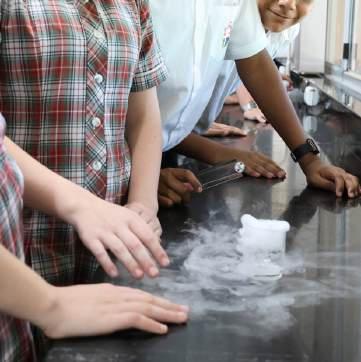
C O U R S E D E S C R I P T I O N
Chemistry is the study of the properties, composition, and reactions of substances that make up the world around us This course explores how atoms interact to form materials, how chemical reactions occur, and how energy is involved in these processes
Students develop practical laboratory skills, analytical thinking, and problem-solving abilities as they investigate chemical systems, making informed decisions about sustainability, resource management, and the safe use of chemicals in everyday life
Chemistry also serves as a bridge between sciences such as biology, geology, medicine, and environmental science. Students explore atomic structure, chemical bonding, and the macroscopic properties of materials while learning to predict and explain chemical reactions These foundational ideas are expanded through the study of molecular interactions, reaction rates, acids and bases, and the properties of solutions
C A R E E R P O S S I B I L I T I E S
This course is particularly suited to students interested in pursuing careers in medicine, engineering, environmental science, pharmaceuticals, or research
P R E R E Q U I S I T E S
B grade (WAC) for Year 10 Chemistry rotation
C grade (WAC) for Year 10 1, 10 2 or 10 3
Science
60% average in Year 10 1 or 10 2 Mathematics
T H E I D E A L S T U D E N T
Ideal students for this course are inquisitive and enjoy problem-solving, experimentation, and working with formulas to understand the composition of substances. They should have strong analytical skills and attention to detail, as well as the ability to think critically about datad patterns
A S S E S S M E N T
Science Inquiry: 25%
Extended Response: 10%
Tests and Examinations: 65%.
C O S T
Textbooks: $185
Specialised course fee: $100
L I S T B | U N I T S 1 A N

The ATAR Computer Science course dives deep into the world of digital systems, programming, and computational thinking
Students with learn how to write programs using Python, explore how computers represent and store data, and discover how hardware and networks work together to power modern technology From creating algorithms to solving real-world problems through code, this course gives you a solid foundation in both theory and practical application
Logical thinking and problem solving, programming and debugging, systems analysis and design, digital communication, project management C A R E E R O P P O R T U N I T I E S
Software developer, data analyst, cybersecurity specialist, computer engineer, systems administrator, AI/machine learning engineer, game developer
C grade (WAC) for Year 10.1, 10.2 or 10.3
English B grade (WAC) for Year 10.1, 10.2 or 10.3
Mathematics
Preferred: B Grade for 10 Computer Science.
They enjoy working through logical challenges, want to understand how technology works, and are eager to develop skills in programming and digital systems. They should be a detail-oriented, independent learner who are ready to tackle new and complex ideas consistently.
40% Project
20% Theory Tests
10% Practical Tests
30% Examinations
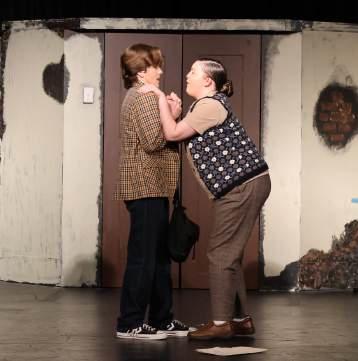
C O U R S E D E S C R I P T I O N
The Drama ATAR course is an academically rigorous and practically engaging program that develops students’ ability to create, perform, analyse and evaluate drama Unit 1 investigates realism and representational drama through Konstantin Stanislavski’s approach, while Unit 2 explores non realism and presentational drama via Bertolt Brecht’s Epic Theatre. Students work as actors, directors and designers, applying drama language, contextual research and production technologies Equal emphasis is placed on practical performance and analytical writing in this course.
T R A N S F E R A B L E S K I L L S
Drama ATAR fosters collaborative leadership, creative problem solving, flexibility, self‑regulation and interpersonal skills These capabilities are invaluable in fields such as education, law, business, health, events management and any profession that values confident presentation, teamwork and innovative thinking
C A R E E R P O S S I B I L I T I E S
Actor, director, playwright, designer, stage manager, event coordinator, presenter, public relations, publicity, teacher, therapist, trainer, marketing, human resources, management, lawyer
P R E R E Q U I S I T E S
B grade (WAC) in Year 10 Drama or Musical Theatre
60% average in Year 10 1, 10 2 or 10 3 English.
T H E I D E A L S T U D E N T
They enjoy performing publicly, being a creative problem solver, and exploring ideas through production roles They actively seek, give and apply constructive feedback, showing resilience and a growth mindset They are interested in the historical, social and cultural contexts of drama texts. They have strong school attendance, work well in teams, and can meet rehearsal and assessment deadlines
A S S E S S M E N T
40% Performance
40% Response (written assessments)
10% Practical Examinations
10% Written Examinations
C O S T
Approx $110, including textbooks and other charges
L I S T A | U N I T S 1 A N D 2

C O U R S E D E S C R I P T I O N
Students will gain an ability to apply economic skills and frameworks to explain and debate much of the world in which we live; from understanding opportunity costs in our personal decisions, through to forming a view about the efficacy of economic policies Units 1 and 2 explores the theory that markets are an efficient way to allocate scarce resources, using real world markets with an emphasis on the Australian economy
U N I V E R S I T Y I N F O R M A T I O N
Studying Economics ATAR in Year 11 and 12 will allow students to have a solid understanding of first year Economics units in degrees such as Economics, Commerce, Business, Finance, Accounting, Marketing and Human Resources
C A R E E R P O S S I B I L I T I E S
Economics and/or Commerce graduates can pursue diverse careers, leveraging their analytical and problem-solving skills in areas such as finance, consulting, government, and academia Some common career paths include economist, actuary, financial analyst, market research analyst, data analyst, and financial planner
R E R E Q U I S I T E S
B grade (WAC) in Year 10 1, 10 2 or 10 3
Humanities Economics and Business rotation
C grade (WAC) for Year 10 1, 10 2 or 10 3 English
They are motivated, organised, and have an interest in business, finance, international affairs, or government policy
S S E S S M E N T
40% Data interpretation, and extended answer responses
20% Investigations
40% Examinations
C O S T
Approx $140, including textbooks and other charges
C O U R S E D E S C R I P T I O N
The English ATAR course helps you become a better thinker, writer and communicator In this course, you will explore a variety of texts such as novels, films, speeches, and articles from different contexts, cultures and perspectives You will learn to analyse texts closely, understand how they are structured, and evaluate their purpose and style
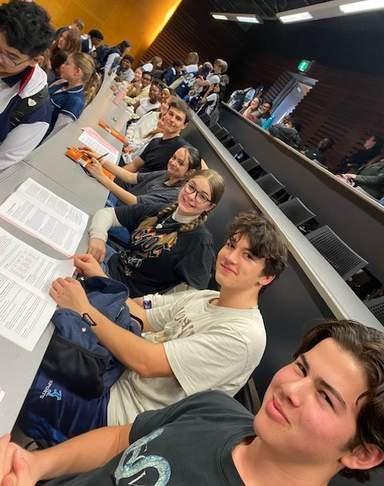
P R E R E Q U I S I T E S
B grade (WAC) in Year 10 1, 10 2 or 10 3
English
T H E I D E A L S T U D E N T
You will also develop skills in writing and speaking creatively, persuasively, and analytically, using a range of formats including essays, presentations, and digital media By engaging with different ideas and perspectives, you will build confidence in expressing your own viewpoints and responding thoughtfully to complex issues This course is ideal for those who enjoy reading, discussing ideas, and creating written or spoken work with depth and impact.
U N I V E R S I T Y I N F O R M A T I O N
A school-based C grade in ATAR English allows you to meet the English language requirement for university entrance.
C A R E E R P O S S I B I L I T I E S
ATAR English opens doors to various career pathways in academia as well as education, publishing, journalism, theatre and media
Enjoys reading, analysis, discussion, interpreting ideas in texts and the construction of texts Confident with writing analytical essays, imaginative, interpretive and persuasive texts Excellent academic success in Year 9 and 10 English English ATAR students must be prepared to complete regular Writing Journal responses beyond required assessment tasks and must engage in a regular study and revision routine
A S S E S S M E N T
35-40% Responding - interpretation, analysis, evaluation
35-40% Creating - imaginative, interpretive, persuasive texts
20-30% Examination.
C O S T
Approx $180, including textbooks, revision seminars and excursions
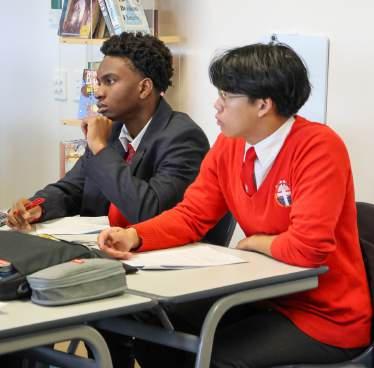
The Year 11 English as an Additional Language or Dialect (EALD) ATAR course is designed for students who are still building confidence in using Standard Australian English but are on an ATAR pathway It helps students improve their speaking, listening, reading, and writing skills by studying a wide range of texts, such as stories, news articles, videos and conversations. In Unit 1, students explore how language and culture are connected and how people express their ideas in different ways In Unit 2, students learn to think more critically about what they read, hear and watch They explore different opinions and attitudes in texts and practise expressing their own ideas clearly and respectfully Students build important academic English skills, such as researching topics, planning and editing their work, and presenting their ideas in formal and creative ways.
T R A N S F E R A B L E S K I L L S
The EALD ATAR course builds strong communication, critical thinking, and research skills. It helps students express ideas clearly, work with others, and succeed in school, further study, and future careers
C A R E E R P O S S I B I L I T I E S
Business, marketing, education, science, health and community services, translation and interpreting, media, journalism, tourism and hospitality, public service, international relations and any career where a good knowledge of academic English is required
5 years or less of study in schools where English is the official language (PP-Y10) Must be selecting an ATAR Pathway
They are dedicated students who have a strong desire to improve their academic English skills Students need to be self-directed as classes take place on-line after school at home, with only assessments completed at JWACS T H E I D E A L S T U D E N T
A S S E S S M E N T
20% Investigation
20% Response
20% Oral Production
20% Written Production
20% Written Examination
C O S T
This course is delivered by AngliSchools International with annual fees of approximately $1200 for their registered international students and $2500 for local students who meet the prerequisites Parents are billed via the JWACS school fees
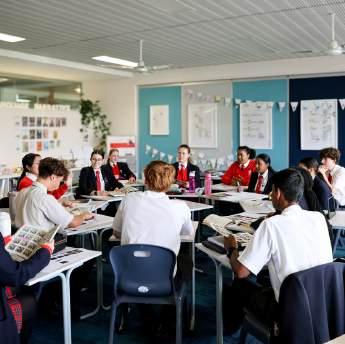
The Literature ATAR course explores different ways of reading and creating stories, poems and plays from different historical, social, cultural, and personal contexts You will examine how language, context, and personal perspectives shape the way texts are understood and interpreted
You will learn about different storytelling techniques and literary traditions, considering how texts connect with audiences Through detailed study, you will uncover key themes and unique qualities of different works You will also develop critical thinking skills by constructing wellsupported arguments in analytical writing Additionally, you will have the chance to experiment with different writing styles and techniques to create your own imaginative pieces
You will also look at how texts relate to each other, examining connections between genres, authors, audiences, and contexts, learning how ideas, language, and structures compare across texts.
Although you will be writing analytical essays, you will also experiment with your own writing too.
A school-based C grade in Literature ATAR allows you to meet the English language requirement for university entrance U N I V E R
C A R E E R P O S S I B I L I T I E S
Literature ATAR opens doors to various career pathways in law, journalism, education, publishing, social work, psychology and counselling
70% average in Year 10 1 or 10 2
English
Preferred: Completion of Year 9 Emerging
Writers course
They love reading and exploring texts, discussing and analysing literature, and comparing ideas across texts They feel confident writing essays and are very interested in learning more about imaginative texts across various styles. Ideal students for Literature have achieved strong results in Year 9 and 10 English because they enjoy working this way. Literature ATAR students must be prepared to complete regular Writing Journal responses beyond required assessment tasks and must engage in a regular study and revision routine.
20-30%- Examination A S S E S S M E N T
10-20%- Extended Written Response
30-40%- Short Written Response
10-20%- Creative Production of a literary text
10-20%- Oral
C O S T
Approx $180, including textbooks and excursions
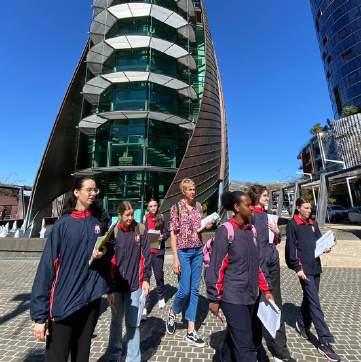
Geographydrawsonastudent’scuriosityabout thediverseplaces,peoples,culturesand environmentsthatshapeourworld.Ithighlights thevitalinterrelationshipbetweenpeopleandthe planet,emphasisinghowthedecisionswemake todaycansignificantlyimpactfuture sustainability
TheGeographyATARcourseexploresourplanet byexaminingbothitsphysicalandhuman dimensions Studentsinvestigatenaturaland ecologicalhazards,assesstheirassociatedrisks andexplorehowtheyaremanaged Inthestudy ofglobalnetworksandinterconnections,the coursefocusesonglobalisationandthegrowing realityofanincreasinglyinterconnectedworld
Geography ATAR develops valuable skills including research and investigation, analysing and interpreting a variety of data sources, written communication, evaluating issues, critical thinking and problem solving
Humanities
C grade (WAC) for Year 10.1, 10.2 or 10.3
English
You are curious about the world and how it works, why places are different, and how people and environments are connected You are interested in exploring real-world challenges, such as natural and ecological hazards, and the consequences of globalisation You enjoy investigating a range of challenges and opportunities facing Australia and the global community You want to build valuable skills, such as researching, analysing data, thinking critically, and problem-solving If you are interested in understanding the world and making a difference, Geography is the choice for you
UWA offers a Geographical Sciences degree that closely aligns with the content covered in ATAR Geography C A R E E R P O S S I B I L I T I E S
Education, meteorology, town planning, geology, GIS, surveying, mining, cartography, agriculture, sustainability consultant, conservation and tourist management and environmental science.
30% Geographical Inquiry/Fieldwork 40% Response /Practical Skills
30% Examination
C O S T
Approx $115, including textbook and photocopy levy
C O U R S E D E S C R I P T I O N
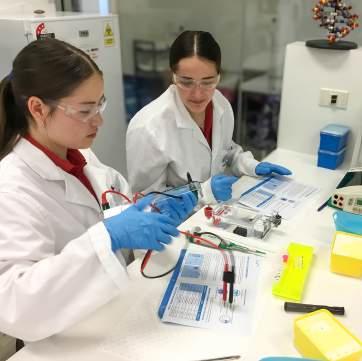
Human Biology explores the structure and function of the human body, the role of genetics in inheritance, and the evolution of the human species. Students investigate how lifestyle choices impact health, how scientific and technological advances can improve medical treatments, and how genetic and environmental factors shape human development Through laboratory work, research, and case studies, students develop a deeper understanding of human biology and its applications in medicine and health sciences Students study the human body’s systems and how they support cellular metabolism, along with the effects of lifestyle choices on body function They also explore reproduction and inheritance, examining how genetic material is transmitted and how genes and environmental factors influence development
C A R E E R P O S S I B I L I T I E S
This course is particularly suited to those considering careers in medicine, nursing, physiotherapy, biomedical science, or sports science.
P R E R E Q U I S I T E S
C grade (WAC) for Year 10 1, 10 2 or 10 3
Science
55% average in Year 10 1 or 10 2
Mathematics
They are interested in human health, anatomy, and genetics. They should enjoy laboratory work, research, and problem-solving in biological and medical contexts. Strong study habits are essential for learning how each system works, and analytical skills will help students succeed. T H E I D E A L S T U D E N T
A S S E S S M E N T
Science Inquiry: 20%
Extended Response: 15%
Tests and Examination: 65%
C O S T
Textbooks: $150
Specialised course fee: $135
L I S T A | U N I T S 1 A N D 2

The Japanese: Second Language ATAR course is designed to further develop students’ knowledge and understanding of the culture and the language of Japanese-speaking communities, providing them with opportunities to gain a broader and deeper understanding of Japanese and extend and refine their communication skills The course focuses on the interrelationship of language and culture and equips students with the skills needed to function in an increasingly globalised society, a culturally and linguistically diverse local community, and provides them with the foundation for life-long language learning
The course connects students to work, further study, and travel, offering opportunities for participation in student exchange programs and sister school initiatives between Western Australia and Japan.
Completing Year 12 ATAR allows students to pursue Japanese studies at university, equipping them with a high level of literacy and a deeper understanding of Japanese culture
C A R E E R P O S S I B I L I T I E S
Hospitality or tourism operator, teacher or academic, journalism/media, translation and interpretation, foreign language teacher, diplomacy, technology/gaming and professionals in Japan.
B grade (WAC) for Year 10 Japanese P R E R E Q U I S I T E S
Students have typically studied Japanese for 200 – 400 hours at the commencement of Year 11 They may have experienced short stays or exchanges in a country where the language is a medium of communication These students have not been exposed to or interacted in the language outside of the language classroom They have typically learnt everything they know about the Japanese language and culture, through classroom teaching in an Australian school, or similar environment, where English is the language of school instruction T H E I D E A L S T U D E N T
A S S E S S M E N T
25% Oral communication
30% Responding to texts
15% Written Communication
30% Examination
(10% Practical/oral and 20% written)
C O S T
Approx $140, including textbooks and other charges
C O U R S E D E S C R I P T I O N
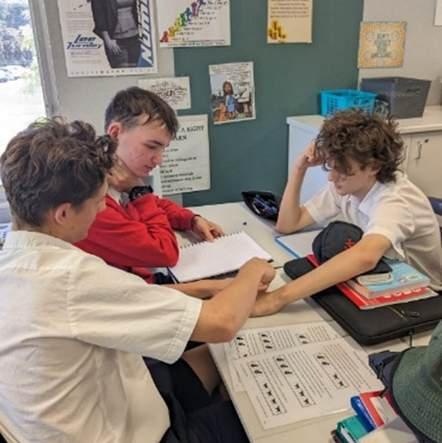
The ATAR Applications course provides a practical and engaging exploration of mathematics, with a focus on applying mathematical concepts to solve real-world problems
Students will develop essential skills, such as managing budgets and understanding currency exchange for travel, as well as applying the compound interest formula to calculate costs associated with purchasing a car or property. The course also emphasizes using mathematical formulas to determine construction costs for geometric shapes in both domestic and commercial scenarios. For instance, students will explore problems such as determining the most economical shape for manufacturing chocolate containers or calculating the cost of carpeting a new home
The curriculum extends into topics like matrices, which have a multitude of applications such as tracking portfolio values, and statistics, which helps students learn how to effectively present and analyse data Linear equations and graphs and trigonometry are studied, reinforcing the practical applications in problem-solving across diverse contexts
U N I V E R S I T Y I N F O R M A T I O N
This course equips students with valuable mathematical tools and insights, ensuring their skills are highly relevant for everyday situations and future opportunities This course is suitable for students wanting to enter university or TAFE
C A R E E R P O S S I B I L I T I E S
Business, finance, physiotherapy, psychology, nursing, software engineering, cyber security, marketing, policy analysis, economics, drafting, 3D design, surveying and construction, data science, education, local government and planning, environmental management, event and project management
Category 3 in OLNA Numeracy P R E R E Q U I S I T E S
B grade (WAC) in Year 10 1, 10 2 or 10 3
Mathematics
T H E I D E A L S T U D E N T
They enjoy mathematics, solving practical problems and are curious about how mathematics applies to real-world contexts. They are motivated, willing to engage with feedback, revise content independently, and seek help when needed Above all, they understand that success in this ATAR course is built through regular homework and study, not just natural ability.
40% Response
40% Examinations A S S E S S M E N T
20% Investigations
C O S T
Textbook required – estimated cost $85
C O U R S E D E S C R I P T I O N
Mathematics Methods is a challenging and rewarding course designed for high-achieving students with a strong foundation in algebra and logical reasoning It focuses on two key themes: calculus, which models change and motion, and statistics, which analyses uncertainty and variation These areas are supported by the study of functions, graphs, and probability Students develop deep conceptual understanding, fluent technical skills, and the ability to solve complex, realworld problems This course encourages critical thinking and precision, preparing students for further study in mathematics-intensive courses Mathematics Methods is ideal for students considering tertiary pathways where mathematics plays a central role It supports learners in developing mathematical confidence, precision in communication, and the analytical thinking needed in our increasingly data-driven world
Quantitative science, medicine, veterinary, engineering, advanced computing, economics, or related fields C A R E E R P O S S I B I L I T I E S
Mathematics
Category 3 in OLNA Numeracy
Textbook cost – approximately $140. C O S T A grade (WAC) in Year 10 1, 10 2 or 10 3
They enjoy mathematics, thrive on analysing and solving challenging problems, and are confident working with and discussing numbers and data. They have experienced excellent academic success across Year 9 and 10 Mathematics They are motivated, organised, and willing to practise regularly to master advanced concepts
S S E S S M E N T
40% Response (tests and assignments)
20% Investigations
40% Examinations
The Mathematics Specialist ATAR course is designed for students who seek to go beyond the challenges of Mathematics Methods ATAR This advanced course empowers learners to master rigorous mathematical arguments and proofs, refine their ability to apply mathematical models extensively, and develop skills that are essential for problem-solving in high-level mathematics Covering essential topics in functions and calculus, this course deepens understanding and demonstrates practical applications across multiple disciplines Students will also expand their knowledge in statistics, and explore pivotal mathematical concepts such as vectors, complex numbers, and matrices key tools used in professional fields such as mathematical sciences and engineering
The Mathematics Specialist course must be studied alongside Mathematics Methods, ensuring students gain comprehensive preparation for university pathways in engineering, physical sciences, medical studies, and mathematics. If you ' re aiming for a future in specialised fields, this course is your gateway to success
Passing Mathematics Specialist ATAR in Year 12 keeps every STEM and data‑heavy university course in WA open and avoids extra bridging units
Statistician, physicist, engineering (all contexts), astronomer, financial analyst, actuary
A grade (WAC) in Year 10.1, 10.2 or 10.3
Mathematics
Category 3 in OLNA Numeracy
Must also select Mathematics Methods ATAR
They enjoy mathematics, thrive on analysing and solving challenging problems, and are confident working with and discussing numbers and data. They have experienced excellent academic success across Year 9 and 10 Mathematics. They are motivated, organised, and willing to spend a significant amount of time mastering advanced concepts. This course runs in conjunction with the Mathematics Methods course.
40% Response (tests and assignments)
20% Investigations
40% Examinations
Textbook cost – approximately $155
The Modern History ATAR course explores the key forces that have shaped our world from the late 18th century to the present day, with a focus on the 20th century Students will investigate major events, ideas, and movements that influenced global change This course develops critical thinking and historical inquiry skills, encouraging students to understand diverse perspectives and the complex nature of modern societies, preparing them to engage thoughtfully with today’s world
Unit 1 investigates Capitalism – the American Experience 1901–41, while Unit 2 explores Nazism in Germany
Students studying History develop transferable skills including critical research, ethical inquiry, source analysis, and evaluation of diverse perspectives They learn to formulate questions, assess evidence reliability, construct reasoned arguments, and communicate effectively using appropriate historical terminology and referencing
C A R E E R P O S S I B I L I T I E S
Academic researcher, museum curator, teacher. History also provides a strong foundation for careers in journalism, law, civil service, politics, policy, business, marketing, publishing, and media The analytical, research, and communication skills developed are highly valued by employers in sectors such as government, education, finance, NGOs, and creative industries
B grade (WAC) in Year 10.1, 10.2 or 10.3
Humanities
C grade (WAC) for Year 10.1, 10.2 or 10.3
English
An ideal Year 11 Modern History student is curious, open-minded, and enjoys conducting research and engaging in critical analysis They question sources, recognise bias, and understand the provisional nature of history Reflective and thoughtful, they use historical insights to appreciate diverse values and develop informed citizenship They communicate interpretations clearly, valuing the role of history in understanding past events and their impact on today’s world
20% Historical Inquiry
20-30% Explanation
20-30% Source Analysis
30% Examination
C O S T
Approx $30, photocopy levy in lieu of textbooks
The Music ATAR course is an academically rigorous and practically engaging program that develops students’ ability to create, perform, analyse and evaluate music Unit 1 investigates Elements. Students respond to music as they explore the creative application of music elements across time, place and culture, while Unit 2 explores Narratives Through the combination of music and narrative, composers can provoke strong emotional responses from audiences. Students work as performers, composers and analysists, applying music language, contextual research and production technologies Equal emphasis is placed on practical performance and analytical writing in this course. C O U R S E D E S C R I P T I O N T R A N S F E R A B L E S K I L L S
Music ATAR fosters collaborative leadership, creative problem solving, flexibility, self regulation and interpersonal skills. These capabilities are invaluable in fields such as education, events management and any profession that values confident presentation, teamwork and innovative thinking
C A R E E R P O S S I B I L I T I E S
Musical artist, composer, songwriter, music production, audio engineering, music management, music director, sound technician, education, therapist.
Students must be learning an instrument, including voice, in or out of school
60% average in Year 10 1, 10 2 or 10 3
English
They enjoy performing publicly, being a creative problem solver, and exploring ideas through written tasks They actively seek, give and apply constructive feedback, showing resilience and a growth mindset They are interested in the historical, social and cultural contexts of music texts They have strong school attendance, work well in teams, and can meet rehearsal and assessment deadlines
S S E S S M E N T
20% Performance – prepared repertoire and other performance activities
30% Written – Aural and theory, composing and arranging, investigating and analysis
30% Performance Exam
20% Written Exam.
C O S T
Approx $100, including textbooks and other charges
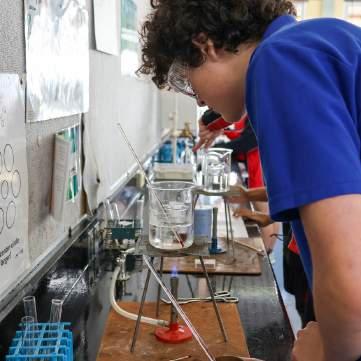
Physics is the study of energy and how it shapes the world around us, from the smallest scale inside atoms to the vast interactions between galaxies This course explores motion, forces, waves, electricity, and nuclear reactions, helping students develop analytical and investigative skills to explain and predict physical phenomena Students will conduct experiments, collect and interpret data, and apply problem-solving skills to realworld challenges, making physics an essential foundation for engineering, technology, and scientific research Students explore thermal, nuclear, and electrical physics to understand heating processes, nuclear reactions, and electricity, all crucial for addressing global energy needs They also study linear motion and waves, examining how objects move, how forces affect motion, and how waves interact with the world.
This course is particularly suited to students considering careers in engineering, aviation, technology, or physical sciences
B grade (WAC) for Year 10
Physics rotation
C grade (WAC) for Year 10 1, 10 2 or 10 3
Science
B grade (WAC) for Year 10 1 or 10 2
Mathematics.
Ideal students for this course are curious about how the world works and enjoy problem-solving, experimentation, and applying mathematical reasoning to scientific questions They should be comfortable with data analysis, working with formulas, and conducting investigations
Tests and Examinations: 70% A S S E S S M E N T
Science Inquiry: 30%
Specialised course fee: $60 C O S T
Textbooks: $235
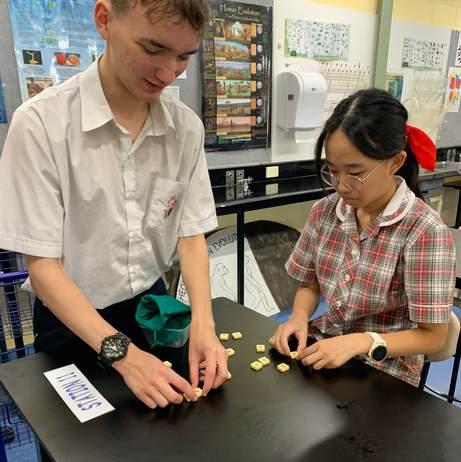
Psychology is the scientific study of thoughts, emotions, and behaviours, helping us understand why people think and act the way they do This course explores how biological factors, cognitive processes, and social influences shape human behaviour. Students engage in research, case studies, and data analysis to develop a deeper understanding of psychological theories and how they apply to real-world situations Psychology is a valuable subject for those interested in human behaviour, mental health, and the way individuals interact within society Students are introduced to psychology as a discipline by exploring theories that explain human emotion, cognition, and behaviour across the lifespan They also examine how social influences, attitudes, and stereotypes impact behaviour, applying key psychological theories to real-world contexts C O U R S
This course is particularly suited to students considering careers in psychology, social work, education, healthcare, or human resources
B grade (WAC) for Year 10.1, 10.2 or 10.3
Science 55% average in Year 10.1, 10.2 or 10.3
English
Ideal students for this course are curious about human behaviour, enjoy critical thinking, and are interested in understanding how people think, feel, and interact. They should have strong analytical and written communication skills, as well as an interest in research and data interpretation
Examination: 30%. A S S E S S M E N T
Science Inquiry: 30%
Response: 40%
C O S T
Textbooks: $90
Specialist course fee: $50

The ATAR Visual Arts course invites students to explore their creativity through hands-on artmaking and critical analysis. It nurtures imaginative thinking, technical skill, and cultural awareness, encouraging students to express personal ideas visually Through studying diverse artists and creating original works, students develop confidence, visual literacy, and a unique artistic voice C O U R S E D E S
B grade in Year 10 Visual or Digital Arts
70% average in Year 10 1, 10 2 or 10 3 English
Students studying the Visual Arts ATAR course develop a wide range of transferable skills that are valuable across many fields and careers Some key examples include creative and conceptual skills, idea generation and innovation, visual storytelling, aesthetic judgment, cultural awareness, project management, communication and collaboration, articulation of ideas and time management
The ideal ATAR Visual Arts student is imaginative, reflective, and passionate about creative expression They enjoy exploring ideas visually, think critically about art and culture, and are committed to developing technical skills They work independently, manage time effectively, and embrace feedback to refine their artistic voice and vision
50% Response (analysis, investigation and written examinations)
50% Production (inquiry, design and making of artwork).
Fine artist, art director, art teacher, curator or gallery manager, art therapist, arts administrator, animator, architect, industrial designer, art historian or critic, exhibition designer, creative director


C O U R S E D E S C R I P T I O N
The Applied Information Technology course focuses on how technology is used to create and communicate ideas and information. Students develop digital solutions using software such as the Adobe suite, Microsoft Office, and web design tools. Topics include graphic design, content creation, word processing, spreadsheets, multimedia presentations, and using the internet responsibly It’s ideal for students who enjoy working with computers and want to gain skills for further study or employment
Digital literacy, communication, project management, graphic design, problem solving, teamwork and ICT user skills
None
Preferred: C Grade for Creative Computing, Cyber Security or Game Design
They are confident using computers and enjoy creating digital content They prefer hands-on tasks, are visually creative or organised, and want to develop useful skills for work or further study
70% Project 20% Short Answer
Extended Answer
Approx $50 C O S T
IT support officer, office administrator, graphic designer, web content manager, business services, digital marketing assistant, content creator
The Children, Family and the Community General course focuses on factors that influence human development and the wellbeing of individuals, families and communities Students explore the health of individuals and communities and the protective and preventative strategies that impact on growth and development They engage in shared research, examine goal setting, self management, decision making, communication and cooperation skills when creating products, services or systems that will assist individuals, families and communities to achieve their needs and wants C O U R S E D E S C R I P T I O N T R A N S F E R A B L E S K I L L S
Empathy, communication, organisation, critical thinking, teamwork, research, planning and interpersonal skills
C A R E E R P O S S I B I L I T I E S
Early childhood educator, social worker, nurse, psychologist, aged care worker, teacher, childcare assistant, youth worker.

P R E R E Q U I S I T E S
None
Preferred: C grade for Year 10 Childcare.
They care about others and are interested in how people grow and change They are responsible, enjoy learning about society, and are keen to understand and support others in their personal and social development T H E I D E A L S T U D E N T
A S S E S S M E N T
30% Investigation
55% Production
15% Response
C O S T
Approx $120
L I S T B | U N I T S 1 A N D 2
The General Computer Science course introduces students to the essential knowledge and skills needed in today’s digital world You’ll explore computer systems, data representation, networks, and problem-solving through programming and design You will use programming tools to build interactive applications and gain experience working through a design process from idea to solution This course is suited to students with an interest in technology and logical thinking, but without the pressure of external exams.
None
Preferred: C grade for either Year 9 or Year 10
Computer Science, Cyber Security or Game Design
They are interested in how computers work and enjoy problem-solving They like working independently on tasks, learning new technology tools, and experimenting with basic coding They can manage their time and enjoy building working solutions to real-world problems
Computational thinking, digital literacy, project management, logical reasoning, and communication
C A R E E R O P P O R T U N I T I E S
IT support, cyber security specialist, web designer, programmer, digital marketing, system analyst, game designer.
60% Project
40% Response (written assessments)
10% Practical Examinations
C O U R S E D E S C R I P T I O N
The Drama General course is a vibrant and engaging course, allowing students to explore all aspects of theatre practice from creation to performance. Throughout the course students will explore both Australian and world drama texts using plays and other materials Unit 1 focuses on the aspects of dramatic storytelling with skills such as voice and movement utilised with the aim to create theatre that has a point of view. In Unit 2 students will explore performance events, looking at different genres of theatre and how these impact the relationship with an audience Throughout the course students will have the opportunities to work as actors, designers and scenographers The course has a strong emphasis on performance, with written response making only 30% of the total course assessments
T R A N S F E R A B L E S K I L L S
Drama General fosters collaborative leadership, creative problem solving, flexibility, self regulation and interpersonal skills Public speaking and communicating ideas with clarity are also strongly developed These capabilities are invaluable all future professions that value presentation skills, collaborative teamwork and innovative thinking that shows awareness of the context around them C A R E E R O P P
Actor, director, playwright, designer, stage manager, event coordinator, media presenter, public relations, publicity, teacher, therapist, trainer, marketing, human resources, management, lawyer
English and Drama or Musical Theatre. P R E R E Q U I S I T E S
None
Preferred: C grade (WAC) in Year 10
T H E I D E A L S T U D E N T
They enjoy performing in public and work well in groups They are interested in live theatre and wish to explore their creativity through production roles They actively seek, give and apply constructive feedback, showing resilience and a willingness to try new things. They have strong school attendance, have strong collaboration skills, and can meet rehearsal and assessment deadlines
A S S E S S M E N T
70% Performance
30% Response (written assessments).
C O S T
Approx $70, including textbooks and other charges
L I S T A | U N I T S 1 A N D 2
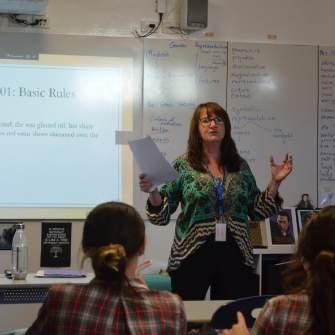
English General is all about building strong communication skills for everyday life, further study, and the workplace This course helps you become a more confident and effective user of English, preparing you for a variety of future pathways
You will develop reading, writing, speaking, and critical thinking skills by exploring different types of texts, including stories, speeches, advertisements, and digital media You will learn how to understand, analyse, and create your own imaginative, persuasive, and informative pieces in a range of formats, such as essays, presentations, and videos
English General is a great choice for those who want to improve their language and literacy skills while working on practical tasks that will benefit them beyond school C O U R S E D E S C R I P T I O N
English General fosters collaborative and communication skills, self‑regulation and interpersonal skills These capabilities are invaluable in range of fields such as business, health, events management and any profession that values confident presentation, teamwork and working collaboratively with others
C A R E E R P O S S I B I L I T I E S
English skills are fundamental to your success in a range of career pathways A minimum C grade in English General is also now acceptable for entry into some undergraduate courses at selected universities
Category 3 in OLNA – Reading and Writing
Note: Students below category 3 will study English Foundation on the next page
Organised, self-disciplined, demonstrates agency in learning, can work collaboratively, can communicate on and off-site with students to complete group tasks, able to demonstrate research, note-making and summarising skills to manage reading material used in the completion of assessments
40-60% - Responding - interpretation, analysis, evaluation
40-60%- Creating - imaginative, interpretive, persuasive texts
C O S T
Approx $80, including texts and other charges
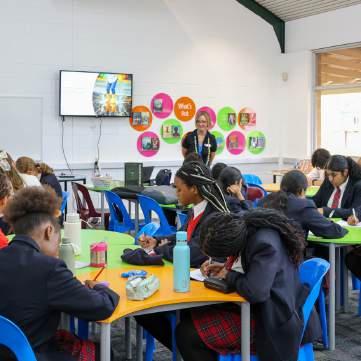
C O U R S E D E S C R I P T I O N
English Foundation is designed for students who need to build their confidence and skills in reading, writing, speaking, and understanding English.
In this course, you will build your literacy skills so you can communicate effectively in everyday life, work, further study, and the community and so you can transition to General English if you achieve a Category 3 in Reading and Writing OLNA
You will develop practical skills in reading different types of texts, writing clearly, and expressing ideas both verbally and visually
You will also focus on improving your spelling, punctuation and grammar
T R A N S F E R A B L E S K I L L S
English Foundation can help you succeed in many aspects of life from preparing for future jobs to expressing yourself and engaging with the world around you English Foundation is a great option for those who want to develop these essential skills in a supportive learning environment.
C A R E E R P O S S I B I L I T I E S
English literacy skills are fundamental to your success in a range of career pathways and to support your ability to communicate and understand a range of texts that you will be expected to deal with in the workforce
P R E R E Q U I S I T E S
OLNA Category 2 or below in Reading and Writing All other students must complete either ATAR or General English, Literature or EALD
Ability to work independently and in small groups on tasks, meet deadlines and manage completing tasks on and off-site, organised and able to engage in conversations and discussions
A S S E S S M E N T
35% Reading - understanding, comprehending,interpreting andanalysing
35% Writing - producing, constructing, creating texts and writing - 35%
30% Oral Communication - speaking and listening skills
C O S T
Approx $80, including texts and other charges
L I S T B | U N I T S 1 A N D 2

C O U R S E D E S C R I P T I O N
In this course, students explore the role of food in our lives from a scientific, nutritional, and social perspective You’ll learn about food preparation, safety, and processing as well as nutrition, consumer choice, and sustainable practices
Practical lessons are a strong component of the course, with students preparing a variety of dishes to build kitchen confidence and creativity
T R A N S F E R A B L E S K I L L S
Practical food preparation, hygiene and safety, organisation, time management, teamwork, nutrition knowledge, sustainability awareness
C A R E E R P O S S I B I L I T I E S
Chef, nutritionist, food technologist, hospitality worker, teacher, health promotion officer, dietitian, food product developer.
None
Preferred: B grade for Year 10 Foods or completion of Café Culture P R E R E Q U I S I T E S
T H E I D E A L S T U D E N T
They enjoy preparing food for others and working practically in the kitchen They follow hygiene principles and safety guidelines responsibly Ideal students in this course can follow instructions accurately and consistently, without requiring constant supervision They work collaboratively with other students and find creative solutions when balancing finite resources and nutritional requirements
A S S E S S M E N T
35-40% Responding - interpretation, analysis, evaluation
35-40% Creating - imaginative, interpretive, persuasive texts
20-30% Examination
C O S T
Approx $180, including textbooks, revision seminars and excursions
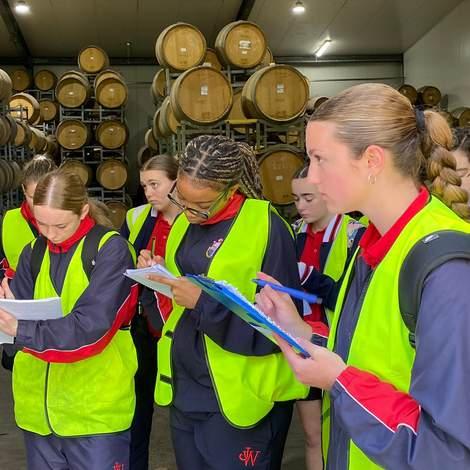
Geography draws on a student’s curiosity about the diverse places, peoples, cultures and environments that shape our world It helps students understand the world’s complexity and diversity, promoting sustainability and awareness of social and spatial inequalities
The Geography General course explores a range of challenges and opportunities facing both Australia and the global community. Students investigate environments at risk (Point Peron and the Great Barrier Reef) and sustainable solutions to the issue In the study of the natural and cultural characteristics of a region (Perth City), the course focuses on the processes that have enabled it to change over time and the challenges it may face in the future.
T R A N S F E R A B L E S K I L L S
Geography develops valuable skills including research and investigation, collecting and recording information, analysing and interpreting data sources, written communication, evaluating issues, critical thinking and problem solving
C A R E E R P O S S I B I L I T I E S
Education, meteorology, town planning, geology, GIS, surveying, mining, cartography, agriculture, sustainability consultant, conservation and tourist management and environmental science L I S T A | U N I T S 1 A N D 2
None
Preferred: C grade (WAC) in Year 10
Humanities & English.
You are curious about the world, how it works, why places differ and the ways people and environments interact You are eager to explore the risks facing Australia’s environments and the strategies used to address them You are also interested in learning more about Perth City, its unique features and its potential as a major tourist destination You are keen to develop valuable skills such as research, data analysis, critical thinking and problem-solving
40% Tests A S S E S S M E N T
30% Geographical Inquiry
30% Fieldwork /Practical Skills
C O S T
$30 Levy to cover the cost of photocopying and in lieu of a textbook.
The Year 11 Modern History General course is a program designed to deepen students’ understanding of the forces shaping local and global issues today By investigating key historical events, movements, and societies, students explore why groups and nations have changed or resisted change over time Unit 1 investigates Russia’s Tsar Nicholas II and the decline of Tsarism, while Unit 2 explores The Authoritarian state: Communist Russia/USSR 1917-1953
Students studying History develop transferable skills including critical research, ethical inquiry, source analysis, and evaluation of diverse perspectives. They learn to formulate questions, assess evidence reliability, construct reasoned arguments, and communicate effectively using appropriate historical terminology and referencing
Academic researcher, museum curator, teacher History also provides a strong foundation for careers in journalism, law, civil service, politics, policy, business, marketing, publishing, and media
The analytical, research, and communication skills developed are highly valued by employers in sectors such as government, education, finance, NGOs, and creative industries.
None
Preferred: C grade (WAC) in Year 10
Humanities & English
An ideal Year 11 Modern History student is curious, open-minded, and enjoys research and critical analysis They question sources, recognize bias, and understand history’s provisional nature Reflective and thoughtful, they use historical insights to appreciate diverse values and develop informed citizenship They communicate interpretations clearly, valuing history’s role in understanding past events and their impact on today’s world
20-30% Historical Inquiry
20-30% Explanation
20-30% Source Analysis
20-30% Test
C O S T
Approx $30, photocopy levy in lieu of textbooks.
The Humanities and Social Sciences in Action course is designed for students who want to become socially aware and active members of their communities. This course helps you develop the skills to make informed decisions about important social issues that affect people locally and globally.
Focusing on human rights and community engagement, the course builds on the History and Civics knowledge you have gained in earlier years You will explore how human rights movements (both past and present) have shaped the lives of people around the world and continue to influence the future
In addition, you will investigate the communities where you live, learn, and work, examining their strengths, challenges, and how they can be sustained for future generations. This course offers a meaningful opportunity to understand your role in society and how you can contribute to positive change
Education, community and social services, government and public policy, research and analysis, media, communications and public relations, cultural and creative industries, corporate sector.
None
Preferred: C grade (WAC) in Year 10
Humanities & English
They are curious about the world around them and passionate about understanding social issues and human rights. They enjoy exploring different perspectives, engaging in thoughtful discussions, and conducting research. They are motivated to become active and informed members of their community, with strong communication skills and a willingness to think critically about complex topics.
30% Social action investigation
30% Commentary (A summary of your learning)
40% Response.
Approx $30, photocopy levy in lieu of textbooks C O S T
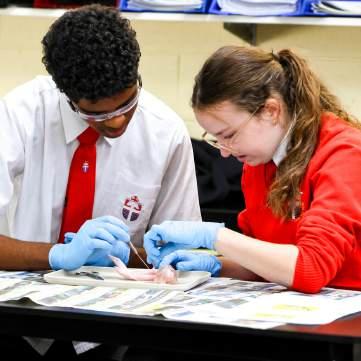
C O U R S E D E S C R I P T I O N
The Human Biology General course explores how the human body functions and maintains balance through its various systems
Students investigate the roles of bones, muscles, nerves, and hormones in coordinating body movements and responses. They also examine the causes and spread of disease, how the body defends itself against pathogens, and the biological processes of reproduction This course provides practical insights into human health, making it relevant to everyday life Students study how cells sustain life, the role of the digestive system in providing essential nutrients, and the impact of dietary choices on overall health They also examine the circulatory, respiratory, and urinary systems, highlighting their roles in maintaining body function and the importance of regular health checks for disease prevention and management
C A R E E R P O S S I B I L I T I E S
This course is suited to students considering careers in healthcare, fitness, childcare, or community services
None
Preferred: C grade (WAC) in Year 10
Science & English
Ideal students for this course have a keen interest in human health and the functioning of the body They enjoy practical, hands-on learning and are curious about topics like nutrition, fitness, and disease prevention T H E I D E A L S T U D E N T
Supervised Written Assessment: 20%. A S S E S S M E N T
Science Inquiry: 40%
Projects: 30%
Practical Assessment: 10%
C O S T
Textbooks: $50
Specialised course fee: $50
L I S T B | U N I T S 1 A N D 2

This course is ideal for students interested in working with metal to design and manufacture practical projects. You will gain skills in welding, fabrication, and the safe use of hand and power tools. Projects may include, but not limited to; metal stools and chairs, toolboxes, fire pits, or small furniture items such as coffee tables etc You will also explore the design process, sustainability in material choices, and how to read working drawings. This course builds confidence, practical ability, and job-ready skills for future trades or engineering pathways
Preferred: C grade in either Year 10 or Year 9 Design and Technology courses P R E R E Q U I S I T E S
None
Problem solving, planning, teamwork, time management, safe tool and machine use, spatial reasoning, design thinking, and project execution
Fabricator, engineer: structural, civil, mechanical, automotive technician, sheet metal worker, industrial designer, boilermaker, architect, teacher, welder, product designer or mechanical fitter
They like working with tools and machinery and enjoy the challenge of making strong, functional products They are focused, safety-conscious, and take pride in producing neat, high-quality work They are prepared to wear appropriate PPE and follow industry standards
25% Design
60% Production
15% Response
Approx $220. C O S T
L I S T B | U N I T S 1 A N D 2
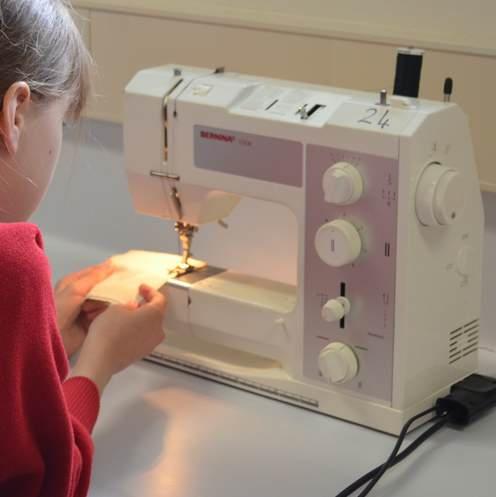
This creative and practical course focuses on working with textiles to design and produce individual and functional products. Students learn about fibres, fabrics, fashion, design elements, and sustainability. Projects may include clothing items, bags, or soft furnishings The course develops confidence in using sewing machines and following design processes from concept to final product
Textiles courses P R E R E Q U I S I T E S
None
Preferred: C grade in either Year 9 or Year 10
They enjoy hands-on, creative work and have an interest in fashion, interior design or crafting. They are organised, careful, and take pride in personalising their work.
Creativity, design thinking, practical construction, planning, attention to detail, problem solving, time management
Fashion designer, costume maker, interior designer, textile artist, upholsterer, retail worker, dressmaker, product designer
25% Design
60% Production
15% Response
C O S T
Approx $70
Students to supply materials

This hands-on course is perfect for students who enjoy building and creating with wood You will learn to safely and confidently use a wide range of woodworking tools and machinery to design and construct furniture and functional wooden products Through practical projects, you will explore the properties and classification of hardwoods and softwoods, learn design principles, and develop critical thinking and problem-solving skills. There is a strong focus on craftsmanship, sustainability, and following industry-standard processes and safety practices
Problem solving, planning, teamwork, time management, safe tool and machine use, spatial reasoning, design thinking, and project execution.
Carpenter, cabinet maker, furniture designer, builder, product designer, construction worker, interior designer, project manager, teacher, architect or engineer: structural, civil, mechanical
None
Preferred: C grade in either Year 10 or Year 9 Design and Technology courses
They enjoy working with their hands, thinking creatively, problem solving and turning ideas into real-world products They are patient, careful, and take pride in quality workmanship. They can work independently and in teams and are committed to safety in the workshop.
Approx $220 C O S T
C O U R S E D E S C R I P T I O N
The Mathematics Essential General course focuses on real-world applications rather than abstract theory, making it ideal for students who enjoy working with numbers in a way that they can connect to their lives Units 1 & 2 explore concepts around managing finances, statistical analysis and data interpretation, as well as measurement, geometry and trigonometry in real-world contexts By the end of this course, students will understand the concepts and techniques in calculations, algebra, measurement, graphs, representing and comparing data, percentages, rates and ratios, and time and motion Apply reasoning skills and solve problems in calculations, algebra, measurement, graphs, representing and comparing data, percentages, rates and ratios, and time and motion. Communicate their arguments and strategies when solving mathematical and statistical problems using appropriate mathematical or statistical language Interpret mathematical information and ascertain the reasonableness of their solutions to problems.
While this course is not designed for high-level mathematics degrees, it can contribute to a university entrance score and is accepted for many courses that require sound numerical and analytical skills It can also provide some credit points towards TAFE entry or vocational pathways U N I V E R S I T Y I N F O R M A T I O N
Business, health, education, social sciences, finance, technology This subject provides students with useful tools and skills to use and apply in the post-school environment It has been designed to cater for students who require preparation for a wide range of occupations within the community C A R E E R P O S S I B I L I T I E S
Category 2 or 3 in OLNA Numeracy
Preferred: C grade (WAC) for Year 10
Mathematics
Students who wish to gain practical mathematical skills for life but do not require a higher level of Mathematics for their intended career path
50% Investigations A S S E S S M E N T
50% Response (tests and assignments)
C O S T
Textbook required – estimated cost $85
This course is only for students who have not demonstrated Category 3 in OLNA for Numeracy Students who attain Category 3 in both literacy and numeracy components in the first round of testing during Year 11 will need to transfer to Mathematics Essential General
The Mathematics Foundation course is designed to strengthen students’ functional numeracy for everyday and workplace use through practical, real-life applications It targets gaps in mathematical understanding by focusing on contexts relevant to young adults Core areas of study include number relationships, measurement, data analysis, spatial reasoning, and chance processes The course emphasises the appropriate application of mathematics, critical reflection on its use, and clear communication of results C O U R S E D E S C R I P T I O N
C A R E E R P O S S I B I L I T I E S
Retail and customer services, aged care and disability support, childcare and early childhood education, hospitality and food services, logistics and warehousing, construction and trades, office and clerical work, community services
OLNA Category 2 or below in Numeracy Entry is by invitation only and all other students must complete either ATAR or General Mathematics
Students who have significant gaps in basic mathematical understanding and application but who have the potential to learn, especially when a learning program connects to their current experience and knowledge
A S S E S S M E N T
50% Response (tests and assignments)
50% Practical Applications
C O S T
Course resource levy – estimated cost $25

The Music General course encourages students to explore a range of musical experiences The course consists of a written component and a practical component The Music General course provides an opportunity for creative expression, the development of aesthetic appreciation and the pleasure and satisfaction that comes from listening to and making music independently and collaboratively with others Studying music may also provide a pathway for further training and employment in a range of professions within the music industry
Music General fosters collaborative leadership, creative problem solving, flexibility, self regulation and interpersonal skills These capabilities are invaluable in fields such as education, events management and any profession that values confident presentation, teamwork and innovative thinking
Musical artist, composing, songwriting, music production, audio engineering, music management, music director, sound technician, education, therapist
Students must be learning an instrument, including voice, in or out of school
Preferred: 50% average in Year 10 English
They enjoy performing publicly, being a creative problem solver, and exploring ideas through music They actively seek, give and apply constructive feedback, showing resilience and a growth mindset They are interested in the historical, social and cultural contexts of music They have strong school attendance, work well in teams, and can meet rehearsal and assessment deadlines
40% Performance
60% Written – oral and theory, composing and arranging, investigating and analysis
Approx $100, including textbooks and other charges C O S T
The General Physical Education Studies course mixes theory and practical activities to help students understand and improve their performance in sport and physical activity Students get the chance to take on different roles such as players, coaches, leaders, and planners The skills they learn can be useful in areas such as sport, health, fitness, teaching, and recreation
Unit 1
The focus of this unit is the development of students’ knowledge, understanding and application of anatomical, physiological and practical factors associated with performing physical activities
On completion of this unit, students should be able to:
Learn and use basic skills in the chosen sports
Understand how to teach or coach a skill
Understand how people learn new skills and different types of movement
Identify the major bones in your body
Understand why biomechanics (how your body moves) is important
Understand components of fitness and how to apply simple tests to measure these
Understand skills and strategies for team building and preparing mentally for physical activity
Unit 2
The focus of this unit is the impact of physical activity on the body’s anatomical and physiological systems Students are introduced to these concepts which support them to improve their performance as team members and/or individuals
On completion of this unit, students should be able to:
Understand different types of physical activity
Learn how the heart and lungs work during exercise
Identify the main muscles in the body
Learn about energy systems (how the body gets energy to move) and how the body changes during exercise
Watch and assess own sport performance
Use mental strategies to boost performance
None
Preferred: C grade in Year 10 Health and Physical Education
They are physically active and interested in understanding the science behind movement, performance, and health They enjoy participating in team or individual sports and are keen to learn more about anatomy, fitness training, biomechanics, psychology, and coaching
Practical: (Skills and game play) - 50%
Response: (tests and assignments) - 25%
Investigation: (journals, training diaries, laboratory reports) - 25%.
Textbook – approx $80
The Psychology General course introduces students to the fascinating study of human behaviour, emotions, and thoughts Students explore key psychological theories, including those by Freud, Eysenck, and Spearman, to understand personality and intelligence They also examine the influence of culture and socialisation on behaviour and relationships Through this course, students develop an understanding of how individuals interact with others and the world around them, while learning about research methods and ethical practice in psychology Students explore personality and intelligence through key psychological theories and examine how culture and socialisation shape behaviour They learn about the importance of verbal and nonverbal communication in relationships and are introduced to various research methods and ethical principles. The study then extends to the human brain and the factors influencing thought, behaviour, and emotion, including development, the interplay of nature and nurture, and the impact of group dynamics and culture on attitudes. Throughout, students analyse data to identify patterns and draw informed conclusions
This course is suitable for students interested in careers in psychology, social work, counselling, education, healthcare, or community services
None
Preferred: C grade (WAC) for Year 10 Science and English
Ideal students for this course are curious about human nature and enjoy exploring how people think, feel, and behave in different social contexts They should have a keen interest in understanding themselves and others, with a desire to apply psychological concepts to real-life situations
Investigation: 30%
Response: 40%
Project: 30%.
Textbooks: $55
Specialised course fee: $30.
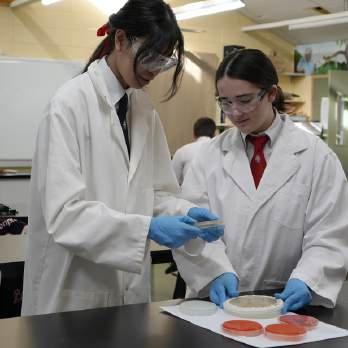
The Science in Practice course allows students to explore the world of science through multidisciplinary and practical activities. Students are encouraged to think critically and reflectively about scientific issues, equipping them with the skills to make informed decisions that impact both their lives and the wider community. Throughout the course, students engage in hands-on investigations and explore real-world scientific challenges, collaborating with others to gain a deeper understanding of the world around them Students examine the role of acids and bases in everyday life, exploring their uses in households, industry, and agriculture, along with their environmental impacts, through an integrated Chemistry and Biology lens They then investigate the science behind rocketry and flight, studying forces, aerodynamics, and Newton’s laws of motion, while using digital technologies to research current developments in space travel, analyse data, and present findings gaining a comprehensive understanding of the principles that enable flight and space exploration
This course is suitable for students considering careers in law enforcement, environmental science, healthcare, or other applied science fields, and who enjoy collaborating with others on meaningful projects
None
Preferred: C grade (WAC) for Year 10
Science and English
Ideal students for this course enjoy practical learning and are curious about how science impacts the world around them They should have an interest in real-world scientific problems, particularly those related to chemistry, biology, and physics
Science Inquiry: 30%
Projects: 30%
Practical Assessment: 10%
Supervised Written Assessment: 20%
Textbooks: $30
Specialised course fee: $60
The General Visual Arts course offers a dynamic, hands-on experience for students who enjoy expressing themselves creatively. It focuses on building practical skills in a variety of media while encouraging personal exploration and visual storytelling Students learn to plan, create, and reflect on their artworks, gaining confidence, problem-solving abilities, and visual communication skills This course is ideal for those who thrive in a supportive, process-based environment and want to develop their artistic voice

None
Preferred: C grade (WAC) for Year 10 Visual Arts and English
The ideal student is hands-on, curious, and enjoys exploring creative ideas through making They thrive in practical environments, are open to experimenting with materials and techniques, and value self-expression They work well independently or collaboratively and enjoy learning through visual and tactile experiences
Students in the General Visual Arts course develop transferable skills such as creative thinking, problem-solving, visual communication, and self-expression They learn to manage projects, reflect on their work, and collaborate effectively skills that are valuable in many careers beyond the Arts
30% Response (analysis and investigation)
70% Production (inquiry, design and making of artwork)
Approx $85
Artist, graphic designer, illustrator, photographer, interior decorator, fashion stylist, set designer, art technician, community arts worker, signwriter, gallery assistant
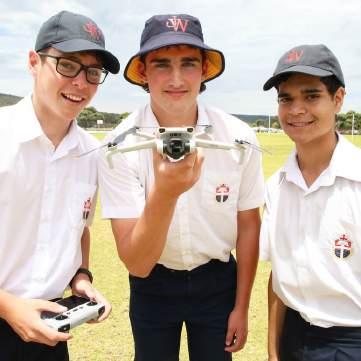
O U R S E D E S C R I P T I O N
The Remote Pilot’s Licence (Repl) is a qualification recognized by the School Curriculum and Standards Authority (SCSA) and is offered in partnership with an external provider This program is delivered by trained teaching staff at John Wollaston Anglican Community School Students who successfully complete the course in Year 11 obtain the qualification to fly drones commercially This course covers a broad range of essential topics, including aviation knowledge, pre-and post-flight checks, operational rules, and airspace management Students will also gain skills in mission planning, aeronautical radio operation, meteorology, and human factors in flight safety, among others. Throughout the year-long course, students will be assessed on their ability to apply practical flight techniques and demonstrate competence in theoretical knowledge In addition to the RePL students have the option to pursue a Certificate III in Aviation (Remote Pilot) through a two-day program. Remote Pilot Licence classes will be scheduled after school for two sessions
A minimum C grade in Drone Pilot in Year 10
However, students who have not completed the Year 10 course and are motivated and work independently are encouraged to apply
Ideal students for this course are those with a strong interest in aviation, technology, and practical learning They should be organized, detail-oriented, and comfortable working with both theoretical concepts and hands-on skills
This course is suitable for students considering careers in commercial drone operations, aviation, or related fields
Assessment for this qualification will be competency based, including practical activities demonstrating flying competence and radio communication The theory is assessed by multiple choice exam
Completion of the RePL qualification contributes the equivalent of one (1) unit towards the Western Australian Certificate of Education (WACE) unit completion requirement Completion of a Certificate (III) contributes an additional 2 WACE points
C O S T
The estimated cost of the REPL qualification is $1050 This is comprised of $750 for the course work and $300 for the hire of the drone from the School.

Students are able to complete a Certificate in Business over Year 11 and 12
The qualification is delivered in class as well as outside class participation in customer service and market activities as well as assignments and tasks to be completed in student’s own time Students should expect approximately 4 hours of homework per week to successfully complete the certificate
As part of this qualification, students will develop and build teamwork, interpersonal skills and organisational capabilities.
To receive a Certificate in Business, participants will need to complete 13 units of competency
The units of competency cover workplace safety and communication, customer service, information technology, sustainable practices, business documents and presentations
There is a focus on personal wellbeing and inclusive practices in the workplace, together with career development activities
A highlight for students is their participation in a market stall in Term 3, showcasing their business and creativity skills. C O U R S E D E S C R I P T I O N
The Certificate can be used towards a portfolio application for university and/or a pathway to TAFE.
There are no essential prerequisites, however, students need to be motivated and work independently
Assessment for this qualification will be competency based, including practical activities such as working with colleagues and role-play scenarios with customers Theory will include tests, assignments and a portfolio of evidence
O S T
The cost of the Business qualification will be $280 each year
This qualification is your entry into the dynamic and fast-paced world of hospitality. Delivered in partnership with a Registered Training Organisation (RTO), Certificate II in Hospitality gives you the practical skills and experience to work in cafés, restaurants, hotels, and catering venues. You’ll develop essential workplace skills like customer service, food and beverage preparation, working safely, using point of sale systems, and operating in a team environment C O U R S

Year 10 Foods: B grade or completion of Café Culture
If none of these courses were studied in Year 10, the student will need clearance from the Head of Technologies
C A R E E R P O S S I B I L I T I E S
Cook, chef, kitchen hand, barista, waitperson, barperson, teacher, food technician, nutritionist, dietician
Practical food preparation, hygiene and safety, organisation, time management, teamwork, nutrition knowledge, sustainability awareness S
Students will be required to attend school for Session 0 (before school) or Session 7 (after school) each week and to participate in functions outside of school hours Students must have a good attendance record.
They have a passion for cooking and want to learn more about working in hospitality They are hands-on learners who enjoy being in the kitchen and learning skills that are useful for life, further study or work. T H E I D
A S S E S S M E N T
Assessment for this qualification will be competency based, including both practical and theory components
Excursion: Approx $110. C O S T
Course Cost: Approx $380 in Year 11 and $380 in Year 12
Chef Uniform: Approx $100
This qualification is part of the Australian Quality Training Framework (ATQF) used by TAFE. John Wollaston Anglican Community School will be working in partnership with iVET to deliver this qualification by teaching staff
The Outdoor Recreation qualification will be delivered over two years Students must commit to remaining in the course for the duration of Years 11 and 12 to complete the qualification
This certificate is designed to give you practical skills and knowledge to safely take part in and help run a range of outdoor activities It’s hands-on and a great opportunity if you enjoy being active, outdoors, and working with others
In Year 11, the course focuses on coaching, snorkelling, and mountain biking You’ll learn how to create game plans and coach beginner-level teams As part of the course, you’ll also be expected to coach a junior sport team (JSAS) after school on Wednesdays to show your skills in action
In Year 12, the focus shifts to kayaking, navigation, and bushwalking The highlight of the year is a wilderness expedition, where you’ll get to put your outdoor skills to the test in an unforgettable experience C O U R S E D E S C R I P T I O N
C A R E E R P O S S I B I L I T I E S
Suitable for students wishing to enter the sport and recreation or fitness industries, sports teaching or seeking further training at a TAFE
Practical activities - including the coaching of younger students in times outside allocated lessons
Theoretical activities - assignments, workbooks and a portfolio of coaching evidence
Snorkelling at Rottnest Island
Mountain Biking
Kayaking at Champion Lakes (Year 12)
Sea kayaking and bushwalking at Kalbarri (Year 12).
The cost of the Outdoor Recreation qualification in Year 11 will be approximately $140 due to the cost of the qualification and resources The cost of this qualification in Year 12 is approximately $450 to include the cost of the Expedition
Students will need a First Aid qualification as part of the course The cost will be approximately $120 (a student who holds an approved First Aid qualification valid until the end of 2027 will be exempt from this requirement)
Work Placement (ADWPL) allows students to experience different employment environments during the year Students generally complete 2 blocks of 55 hours with employers during the year
The benefits of participating in this SCSA Endorsed Program include:
Experience careers that student may be considering post-school
Make contact with potential future employers
Contributes up to two WACE points per year (1 point for each 55 hours completed)
Complete hours which can be used when applying for TAFE entry or portfolio applications to university
Develop skills and learn about industry practices
For students completing some offsite certificates where there is a work place requirement, ADWPL provides an opportunity for WACE points for both the Certificate and the ADWPL (Students complete 2 logbooks when this occurs)
Students are expected to do the following when participating in ADWPL:
Complete an application
Participate in a mock interview at school
Demonstrate excellent attitude and conduct to remain in the program
Complete a logbook and submit to the MYPath office after each workplace visit
Provide their own workwear and any required Personal Protective Equipment (PPE) and comply with the dress requirements of the employer Research and provide contact information for proposed employers
Obtain references from 2 current teachers at the school confirming their suitability for the program
Be able to get themselves to and from the employers and provide a range of suburbs they can access
When is ADWPL carried out:
General students: during the exam breaks in Semester 1 and 2
TAFE students: during release dates from TAFE/RTO (usually one day per week in Term 3 as well as some of the exam breaks and school holidays)
ATAR students: during school holidays
Students wishing to complete Workplace Learning will need a willingness to participate in on the job training and complete a MYPath application and interview process via the Head of MYPath (VET and Careers)
Practical: Students participating in Workplace Learning must complete a logbook that indicates they have completed at least 55 hours for each of their two placements The Workplace Learning Logbook details the requirements of the endorsed program and the expectations, rights and responsibilities of the student in the workplace. The Logbook includes: an attendance record which must be completed progressively by the student a task schedule which must be completed progressively by the student a workplace supervisor›s evaluation of student performance
Theory: The Workplace Learning Skills Journal provides a framework for the student to provide specific examples that demonstrate his/her application of work skills, knowledge and understandings
C O S T
Fee for Workplace Learning is $400 per annum
ASDAN programs recognise the abilities and achievements of all students in Western Australia
ASDAN provides a framework of real-life activities through which personal, social, independent living and work- related skills can be developed and accredited.
ASDAN programs offer curriculum enrichment which are student-centred and flexible to meet the needs and interests of students with a wide range of abilities
The courses are SCSA endorsed earning points towards the WACE Each Module can earn a student two credit points with a maximum of four points per calendar year (eight points in total over two years) A Certificate of completion is awarded at the end of each module. The students may complete more than two Modules per year if selected
The students may choose from a selection of Towards Independence Modules or Short Courses In the past, students have completed the following modules:
Animal Care
Craft Making
E-Safety
Independent Living
Meal Preparation and Cooking
Practical Workshop
Sports Studies
Using a Computer
Portfolios are produced over the period of study that document the knowledge and skills achieved in the Module or course These Portfolios contain evidence of student achievement of a set of requirements in the relevant ASDAN booklet Evidence of student achievement may be recorded in digital images, work samples, transcripts, and several digital platforms including Book Creator, Popplet, PowerPoint and iMovie
P R E R E Q U I S I T E S
For students who meet ASDAN eligibility
A S S E S S M E N T
The student’s portfolios are registered for external moderation twice per year.
C A R E E R P O S S I B I L I T I E S
There are ASDAN Modules that cover knowledge and skills related to a broad range of careers Students are encouraged to select modules that relate to their interests and career aspirations The ASDAN modules are listed on the student’s WASSA and they receive a Certificate from ASDAN that can be evidence of relevant experience.
C O M P L E M E N T A R Y C O U R S E S
Certificates and/or Foundation courses
C O S T
$10 specialised course fee per course.
You are welcome to contact the following people via the School on 9495 8100 or by SEQTA Direct Message for further clarification:
For course selection queries please contact Mr Scott Robertson, Dean of Teaching and Learning
For queries relating to the Workplace Learning program or Vocational Education and Training
please contact Mrs Susan Leach, Head of MYPath (VET and Career)
Students will also receive individual support via our Course Counselling interview process during Term 3
TAFE now comes under Western Australia Department of Training and Workforce Development (DTWD) Information regarding courses and admissions can be found through www.fulltimecourses.tafe.wa.edu.au/ Students interested in apprenticeships or traineeships can access information via www dtwd wa gov au/training#apprenticeships-andtraineeships
Information regarding graduation requirements, courses, examination exemptions and special considerations can be found on the School Curriculum and Standards Authority website; www.curriculum.wa.edu.au.
Information on WACE examinations, scaling, predicted ATAR scores, past university course entry scores and more can be found on the TISC website; www.tisc.edu.au.
All universities have comprehensive websites containing information about courses on offer and prerequisites Each university also has a service for future students which can provide more specific information and help The website for each of the local universities is listed below. Students are encouraged to research courses through the website and make contact with university staff if they need further information
Curtin University
Edith Cowan University
Murdoch University
The University of Western
Australia
Notre Dame University
DefenceForceCareers wwwdefencejobsgovau
DepartmentofEducationandTraining www.education.gov.au
JobOutlook joboutlookgovau/a-zaspx
MyFuture www.myfuture.edu.au
TheFoundationforYoungAustralians (articlesandresearchintowhatfactorsareshapingthefutureof employmentandwhatworkwilllooklike) www.fya.org.au/our-research/
www.curtin.edu.au
www ecu edu au
www.murdoch.edu.au
www.uwa.edu.au
www.nd.edu.au
Australian Quality Training Framework ATQF
Australian Tertiary Admission Rank ATAR
Certificate I,II,III
Cert I, Cert II, Cert III
Externally Set Task EST
Online Literacy and Numeracy Assessment OLNA
School Curriculum and Standards Authority SCSA
A nationally accredited list of qualifications most commonly in the form of Certificates and Diplomas.
A ranking procedure derived from the TEA (see below) which is used by public universities to determine entry.
Accreditation system used by a TAFE and a nationally recognised qualification which is part of the Australian Quality Training Framework (see above) Usually delivered to students through a Vocational Education and Training program
A task completed in a Year 12 General course to help moderate marks between schools
A minimum Literacy and Numeracy benchmark that students must meet to graduate The test is run online in March and September each year
This is the governing body (Authority) mandated by the State Government to oversee primary and secondary education in WA
Senior SecondaryThe final two years of secondary schooling, also known as Years 11 and 12
Special Tertiary entrance Admission Test STAT
Technical and Further Education TAFE
Tertiary Entrance Aggregate TEA
A test administered by the Tertiary Institutions Service Centre for students who have not met one or more university entry requirement e g did not meet a score of 50% Stage 2 English
Government organisation responsible for many post- school qualifications
The score when the best four Course of Study results are calculated
Tertiary Institutions Service Centre TISC The body responsible for public university entry admissions
Vocational Education and Training VET
Programs involving participate in recognised training courses such as Certificates and/or work experience through placement in industry situations Off-site VET program refers to the structured three days at school and two days off-site program.
WACE CoursesCourses (ATAR and General) approved by the School Curriculum and Standards Authority A Year 11 course comprises of two units; a Year 12 course is a ‘pair’ of units
Western Australian Certificate of Education WACE
Western Australian Statement of Student Achievement WASSA
The requirements which students need to meet to graduate from secondary school
The WASSA is issued to all Year 12 students at the completion of their senior secondary schooling Senior secondary school typically takes two years. The WASSA lists all courses and programs that a student has completed and the grades and marks achieved