JCC Masterplan 2024

Page 1


FINAL MASTER PLAN

Envisioning the Future for JCC | 2024

LETTER FROM THE PRESIDENT

Vern L. Lindquist

President

Johnston Community College

Dear Colleagues:

Welcome to the Campus Master Plan of Johnston Community College. This document serves as a strategic road map outlining the future development, enhancement, and maintenance of the physical infrastructure that supports our institution’s mission of academic excellence, student success, and workforce development.

This plan is the culmination of a process that began about a year ago with a dedicated group of Johnston Community College students, faculty, staff, and trustees—led by LS3P—encompassing a thorough review of JCC’s current facilities, an analysis of the institution’s current and future needs, and a detailed consideration of Johnston County itself and the projected growth of population and workforce needs for an educated labor force.

After many discussions, public presentations, needs assessments, stakeholder interviews and poster sessions, the shared intelligence of this group is distilled into this document. It is a strategic framework for prioritizing and executing capital improvements to JCC and is centered on a clear vision of the college’s potential to support the growth of JoCo effectively, economically, and attractively.

As with any facilities master plan, this is not a list of all of the projects that JCC will absolutely be completing in the next ten years. As opportunities arise to improve our physical plant, however, the vision of this plan will ensure that our future improvements are well-designed and will work efficiently towards our long-term goals for the college. Given the quality and comprehensive nature of this plan, potential funders of campus projects can rest assured that our requests are grounded in thorough research, good design principles, and fiscal responsibility.

Thank you for your interest in JCC and your dedication to its continuing success. We look forward to using this plan as we realize our shared vision for JCC and Johnston County.

ACKNOWLEDGMENTS

Katherine Peele Principal In Charge

Chris Roberts Project Manager

BRAILSFORD & DUNLAVEY

Brad Noyes Executive Vice President

Scott Greenman Project Architect

Joe Winters Vice President

Ashleigh Ogden Master Planner

Kevin Mara Senior Associate

Molly Nealon Project Analyst

Huge Thanks to the JCC Steering Committee + Board of Trustees

Dr. Vern Lindquist - President

Terri Lee

Vic McCormick

Gail Rivera

Kelly Uzzle

Pam Harrell

Carrie Pitts-Densmore

Tommy Williams

Hank Daniels

Josh Thompson

Jennifer Horvath

Camille Reese

Lyn Austin

Dee Dee Daughtry

Kismet Matthews

Jeff Pickering

Marc David

Lyn T. Austin - Chair

Hank Daniels - Vice-Chair

Mary Daughtry

Suefan Johnson

Tommy Williams

Lynn Harloe Ragsdale

Reid Williams

Joshua Thompson

Robert Bryant

Antoan Whidbee

Dr. Oliver Johnson

R.S. Lawter Jr.

INTRODUCTION

Johnston Community College has successfully operated since 1969 and continues to serve over 13,000 students annually. JCC is located 30 miles east of Raleigh, in Smithfield, near the junction of I-95 and US 70. The 175-acre main campus offers some 35 occupational programs of study as well as numerous continuing education courses. JCC has campuses throughout the county, including the Johnston County Workforce Development Center in Clayton; the Cleveland Center; and the Howell Woods Environmental Learning Center, a 2900-acre wildlife preserve and teaching facility. A new Advanced Manufacturing Facility is set to open in 2025 in Four Oaks.

The goal of this Master Plan is to update the previous 2015 study and provide Johnston Community College with the necessary information to inform decisions and priorities for anticipated campus growth. The intention of the Master Plan is to measure how wellaligned JCC’s programs are with the regional market, examine current buildings and infrastructure, and illustrate distinct approaches for future campus land development.

Johnston County in North Carolina

MASTER PLAN VISION

Johnston Community College’s diverse campus environment spreads across Johnston County in four unique campus locations. The main campus in Smithfield anchors three satellite campuses with a fifth campus coming soon in Four Oaks. The goal of the 2024 Campus Master Plan is to provide a unified, comprehensive vision for campus development across all five campuses over the next decade and beyond. The plan accommodates new and future campus programs, improves the student experience, proposes renovations or replacements of existing buildings, and improves vehicular circulation in direct response to the needs of the College and the County. The plan also provides frameworks for land use, building use, and mobility with the aim of unifying and enhancing the established campus network with the surrounding context.

The Master Plan is guided by eight Design Principles developed from broad campus input from students and faculty. These principles act as touchstones for decision-making. Space utilization analysis and future growth projections inform a program implementation plan that unites the Design Principles with actionable ways to spark campus development.

Two big ideas help to organize the plan: campus connectivity through campus hubs, and enhancing the student experience with defined activity zones. These frameworks, along with other supporting ideas, help to establish key organizing ideas for development within JCC’s campus, while maintaining a balance between critical campus systems.

This campus plan aims to cultivate a dynamic learning environment that empowers individuals to excel in a rapidly growing county. This long term plan will result in a campus that is a source of pride and identity for JCC and Johnston County.

PLANNING PROCESS

INCLUSIVE APPROACH

The Campus Master Plan was developed in collaboration with campus leadership, department heads, faculty, and staff from April 2023 - November 2023. The design team worked closely with the established Steering Committee to obtain monthly feedback and direction throughout the entire design process. A Student pop-up session at the start of the project captured the student’s feedback.

The design team held engagement sessions with every department at JCC to understand their needs and wishes individually. To reach those beyond campus or those who couldn’t make the in-person sessions, the team developed a website to share progress, receive feedback, and host an online survey.

The overall process included three major phases of work: Inventory and Analysis, Design Optioneering, and Documentation. Each phase was further broken down into tangible milestones to assist in presenting to the Steering Committee.

Phase 1: Inventory and Analysis

Phase 1 focused on assessing existing conditions on each campus as well as current economic drivers in Johnston County. Guided by the success criteria and design principles developed for the project, Phase 1 took into consideration equity, environment, economic, and aesthetic elements. The planning team completed engagement sessions, toured all campuses and their facilities, analyzed existing physical conditions, and completed the space needs assessment. In addition, the team reviewed enrollment trends along with future enrollment projections, and gave careful consideration to the 2021-2026 Strategic Plan as well as previous master plans. An in-depth analysis was done on a regional (county wide) scale in addition to the local (individual campus) scale. The synthesis and analysis of these various data sources informed the development of the planning recommendations.

Phase 2: Design Optioneering

Phase 2 built upon the findings of the inventory and analysis phase to inform the development of different concept designs for the future of the campus. The concepts considered different ways to unite campus internally as well as connections to the surrounding context, with careful consideration of outdoor space and pedestrian accessibility. The Steering Committee advanced the preferred concepts with the goal of arriving at a preferred design that aligned with JCC’s vision, mission, and strategic plan.

Phase 3: Documentation

The final phase of the planning process included the development of the preferred concept designs in greater detail. This report is the outcome of that process, and is intended to serve as a reference and a record of the planning and design recommendations.

CAMPUS MASTER PLAN PROCESS

Phase 1: Inventory and Analysis

MISSION & GOALS

• Project Kick Off and Visioning Workshop

• Institutional Framework and Success Criteria

• Student pop-ups

OPPORTUNITIES, CHALLENGES, & ASSESSMENT

• Demographic Analysis

• Stakeholder Engagement Sessions

• Competitive Context Analysis

• Campus Experiential Analysis

• Existing Conditions Assessments

• Academic Programming Space Needs Assessment

• Identify Potential New Campus Sites

• Survey Implementation and Analysis

Phase 2: Design Optioneering

Phase 1 of the Master Plan process involved intense information gathering from students, faculty, and leadership at JCC. This process allowed the design team to then conduct analysis of both the JCC campuses and the county.

Phase 3: Documentation

CAMPUS MASTER PLAN PROCESS

Phase 1: Inventory and Analysis

MISSION & GOALS

OPPORTUNITIES, CHALLENGES, & ASSESSMENT

Phase 2: Design Optioneering

Phase 3: Documentation

SPECTRUM OF OPTIONS SCENARIO TESTING DRAFT MASTER PLAN FINAL MASTER PLAN

• Potential Master Plan Frameworks

• Existing Campus Accommodation Plans

• Conceptual Master Plan Options Existing + New Campuses

Phase 2 of this process focused on designing a spectrum of options that look at different solutions to the opportunities and challenges that JCC faces. Refinement of these options ultimately produced three schemes that the Steering Committee reviewed and choose for further development.

CAMPUS MASTER PLAN PROCESS

Phase 1: Inventory and Analysis

MISSION & GOALS

OPPORTUNITIES, CHALLENGES, & ASSESSMENT

Phase 2: Design Optioneering

Phase 3: Documentation

SPECTRUM OF OPTIONS SCENARIO TESTING DRAFT MASTER PLAN FINAL MASTER PLAN

• Refine Draft Master Plan

• Phasing and Implementation Plan

• Final Master Plan

• Final Deliverable

The final phase reconciled the conceptual design into a final master plan for JCC. This plan addresses all of the opportunities and challenges the design team heard from students and faculty as well as an implementation plan for the College to follow. The final master plan encompasses all renderings, drawings, and analysis.

STRATEGIC PLAN ALIGNMENT

JOHNSTON COMMUNITY COLLEGE STRATEGIC PLAN: 2021-2026

In 2021, Johnston Community College released the 2021-2026 Strategic Plan. That document clearly outlines the vision, mission, and values of the College, as well as the five strategic goals to achieve success. Those five goals, listed below, will help the College to fulfill its vision for the future.

The Campus Master Plan becomes an extension and physical manifestation of the Strategic Plan so that the design principles, physical recommendations, and program implementation are aligned with and support the College’s strategic goals and initiatives.

PRINCIPLES, PROCESSES, AND POSITIONING

An organizing theme of the planning process is centered on three key aspects: development of design principles to guide decision making, an iterative process to bring the best evidence-based solution forward, and strategic positioning as part of the economic development of Johnston County. These aspects will help to prioritize the most transformative and beneficial projects in the future.

PRINCIPLES 1 2 3 PROCESS POSITION

The Campus Master Plan guiding principles provide a framework to inform and guide decisions about the campus. These principles, directly addressing project goals, act as a lens to filter the analyses and establish a consistent foundation for long-term implementation and new potential projects.

As Johnston Community College continues to grow, and the Johnston County population grows as well, it is important to have a deliberate process in deciding future expansion. The design solutions achieved by an iterative process, and informed by an opportunities/ challenges assessment and local and regional context, will benefit the College now and in the future.

It is important to understand the strategic positioning of Johnston Community College in light of the rapid county population growth. This growth brings great employment opportunities to the county, which coincides with great academic opportunities for students at JCC. With the Campus Master Plan recommendations in place, JCC is on track to redefine its presence in the county and the state.

GUIDING PRINCIPLES

Expand Academic Capacity

The JCC Campus Master Plan supports future enrollment growth, expansion of existing programs, and the addition of new programs while maintaining the character of JCC.

Diversify Academic Offerings Provide Offering to Underserved Areas

A strong focus on diversifying academic offerings to align with the new industries within the county will continue to benefit students and faculty now and in the future.

Enhance Campus Experience

As JCC continues to grow and expand, it is important to continue enhancing the campus experience with updated facilities and amenities. The priority will be creating spaces that foster a welcoming campus environment for all.

Heighten Student Attraction

This overarching principle is a priority for JCC as it sees competition from other community colleges. The Master Plan aims to attract more students to JCC by offering a vibrant and supportive learning environment.

JCC has established a presence in Johnston County over many years. As the county population continues to boom, it is crucial to reach students in underserved areas so JCC can expand its reach.

This plan is intended to help Johnston County align with its existing partnerships, as well as foster new relationships, to be a forerunner in the county’s economic development as more industries move into Johnston County.

Strengthen Student Retention

By providing a diverse range of academic offerings, enhancing campus facilities, and fostering a sense of community and belonging, JCC aims to strengthen student retention rates and support student success throughout the educational journey.

Amplify Community Connectivity, Impact, and Identity

This principle has influenced decision making by prioritizing community involvement, partnerships, and outreach efforts. The Master Plan focuses on strengthening ties with local businesses and organizations to enhance the College’s role as a community resource and catalyst.

BIG IDEAS

CAMPUS CONNECTIVITY

One of the main design strategies used in creating the Master Plan is the idea of creating student hubs within campus “districts” to provide larger campus connectivity.

JCC’s main campus struggles with its linearity and broken pedestrian network. The current Learning Resource Center cannot support the entire campus due to its non-central location. A primary goal of this Plan is to create easier access to student services by dispersing those services between multiple buildings across campus. Students within the defined districts will be able to access the student hubs that serve their district, increasing the use of these spaces due to more convenient access.

The three districts planned are Athletic, Public Services + Trades, and Knowledge. Programs at JCC should be arranged to fit spatially within these districts. The campus hubs are meant to support the students and programs in the district.

Athletic District

Public Services + Trades District Knowledge District

BIG IDEAS

ACTIVITY ZONES

Another main design strategy used in the Master Plan is the idea of energizing campus quads by creating key activity zones. The proposed buildings are thoughtfully arranged to create defined quads that activate the campus.

The idea of activating the quads is supported by activation of the ground floor of the surrounding buildings. The buildings directly adjacent to the quads should have food and beverage options, study areas, and even relaxation areas. The intention is for these buildings to have more transparency at the ground level to unite the exterior and interior spaces.

The design and use of the buildings surrounding the quads will create dynamic and vibrant activity nodes throughout campus.

CAMPUS OVERVIEW

Johnston Community College’s main campus development is intended to happen over the course of many years. The Master Plan is a 10-20 year vision that must be realized over many phases of development and renovation. The Design Principles guided the decisions on which buildings to keep or renovate based on the academic programming analysis. The Big Ideas helped organize the plan’s spacial development. As the College continues to grow, these Master Plan recommendations will inform opportunities for redevelopment.

This Campus Master Plan was completed alongside another effort, a Public Safety Master Plan, to improve the current conditions on main campus and allow JCC to continue to be a competitive institution in North Carolina. The Public Safety Master Plan governed the decisions made in this whole campus Master Plan that related to the Public Safety programs. While some decisions do not follow the recommendations made by the Public Safety Master Plan, many of the moves made in this plan directly follow its recommendations. The goal for this plan is to take into account all programs and their needs, not one program specifically, and to determine how to create cohesive solutions.

MAIN CAMPUS DEVELOPMENT

KEEP:

Wood Building - Engineering

Tart Building

Public Safety Building

Arboretum Greenhouse + Gardens

TOTAL SF: 140K SF

RENOVATE:

Elsee Building

STEAM Building

Wilson Building

Health Sciences Building

Smith Building

Learning Resource Center

TOTAL SF: 275K SF

DEMOLISH:

Sanders Maintenance Building

Britt Building

Transport Tech Building

TOTAL SF: (67K SF)

NEW:

Center for Academic Success

Recreation Center

General Classroom Facility (x4)

Addition to Smith Building

Construction Trades Building

Automotive Tech Building

Maintenance + Operations Facility

Storage Apparatus for Public Safety

Fire Training Tower + Facilities

TOTAL SF: 528K SF

ACADEMIC PLANNING

PROGRAM OBJECTIVES

EXISTING CONDITIONS

Johnston Community College has plans to expand its academic capacity in both the near and distant future. The linearity of the campus and the distance between buildings makes it difficult for students to traverse the campus multiple times a day. This condition creates siloed programs and encourages students to stay in one or two buildings during the day; travel distances also discourage students from interacting with classmates in other programs, or partaking in offerings on other parts of the campus. This condition also causes inefficiencies in space utilization. Some buildings are heavily utilized beyond capacity, while other buildings are open but unable to be used for programs with specific requirements.

Due to the long, linear campus and the challenges associated with it, the Master Plan looks to expand student support services across campus. These services should be improved while also dispersed throughout campus to create a more pedestrian friendly environment that supports all students.

OVERALL OBJECTIVES

The overall objective of relocating the academic programs at JCC is to create a cohesive campus environment that has the ability to be flexible and cultivate a dynamic learning environment. Collaboration and interaction is important in a student’s academic career. Recommendations that enhance the campus environment have the potential to create a domino effect on implementation. After listening to the department heads and Steering Committee, a prioritization list emerged that addresses key projects, and in some instances, what order they must follow to be successful. These priorities were weighed against the Guiding Principles to provide a clear direction.

A waterfall diagram shown on page 22 explains the proposed order for implementation. As new development approaches, focusing on the creation of Campus Hubs and Activity Zones along with the implementation plan will create a welcoming and friendly campus environment that continually attracts students. Renovations of buildings to support new academic and student life needs is a crucial first step to enhancing this campus and setting a standard for future development.

ALIGNING PRIORITIES

Guiding Principles

Expand Academic Capacity

Diversify Academic Offerings

Provide Offering to Under Served Areas

Unlock Greater Economic Development

Enhance Campus Experience

Heighten Student Attraction

Strengthen Student Retention

Amplify Community Connectivity, Impact, and Identity

Core Design Priorities

Relocate Health Science Programs to New Campus

Create a Center for Academic Success

Strengthen Campus Brand with Signature Icon

Create a Unified Campus Identity

Enhance Campus Placemaking

Modify Pedestrian Network

Modify Vehicular Network

Expand Workforce Development Center

Relocate Truck Driver Training

Renovate + Reprogram STEAM

Enhance Learning Resource Center

Incorporate New Automotive Technology Center

Incorporate New Construction Trades Center

Consolidate Key Programs to Health Sciences

Renovate Fire Training Center Key Facilities

Renovate Elsee Building

Renovate Wilson Building

Relocate Maintenance + Facilities Complex

IMPLEMENTATION

RELOCATE HEALTH SCIENCE PROGRAMS OFF CAMPUS: 100,000 - 150,000 SF

CONSOLIDATE CTLA, ECA AND OTHER JCHS INTO HEALTH BUILDING

EXPAND PUBLIC SAFETY EXTERIOR APPARATUSES AND STORAGE AREAS

RENOVATE AND EXPAND SMITH BUILDING FOR PUBLIC SAFETY

COMPLETE RENOVATION OF ELSEE BUILDING

CREATE A CENTER FOR ACADEMIC SUCCESS

CREATE RECREATION CENTER AS A COMMUNITY AMENITY WITH SPORTS FIELDS

CONSOLIDATE STUDENT AND FACULTY TECHNOLOGY IN LEARNING RESOURCE CENTER: 5,000 SF

CONSOLIDATE TESTING AT TART

GIVE CLEVELAND CENTER BACK TO COUNTY

CREATE NEW OPERATIONS AND MAINTENANCE BUILDING: 10, 000 SF

RELOCATE COSMETOLOGY OFF CAMPUS: 6,000 SF

RENOVATE WILSON: COSMETOLOGY WING ONLY DEMOLISH SANDERS

FULL RENOVATION OF WILSON, CONSOLIDATE ADMINISTRATIVE SERVICES TO GROUND LEVEL

CREATE CAMPUS STANDARDS

CREATE A CAMPUS IDENTIFIER

RELOCATE TRUCK DRIVER TRAINING SCHOOL: NEW 6,000 SF FACILITY

DEMOLISH EXISTING TRUCK DRIVER TRAINING BUILDING

MODIFY VEHICLE ROADWAYS

CREATE A NEW CENTER FOR AUTOMOTIVE TECHNOLOGY: 60,000 SF

MODIFY PEDESTRIAN NETWORK

NEW CLASSROOMS AND STAFF OFFICE SPACE AT WORKFORCE DEVELOPMENT CENTER: 12,000 SF

CREATE TEACHING FACILITY AT HOWELL WOODS RENOVATE CURRENT MULTI-PURPOSE ROOM: 6,000 SF

BUILDING PROGRAM

DESCRIPTIONS

RELOCATE HEALTH SCIENCES PROGRAM

Creating a new campus in the high population growth area of Clayton and co-locating the new facility near existing health care focused industries will allow the health science programs to expand to and beyond their existing capacity. The next facility should feature the latest spaces and equipment to facilitate teaching a health science curriculum. With the creation of a new campus, the new location should also include additional general education classrooms, student service spaces, and adequate staff areas.

CONSOLIDATE HIGH SCHOOL PROGRAMS INTO HEALTH BUILDING

After the opening of the new Clayton campus, heavy renovations will be needed to remove program-specific rooms no longer needed on campus, and lighter cosmetic renovations will be needed for the rest of the building. The building will then accommodate the high school programs and create synergies with the programs that use the building. The building will be located near the bus loop allowing for easy drop off and pick up by the local school system bus service.

EXPAND PUBLIC SAFETY

Minor renovations will be needed to the Smith building, after the current programs are able to vacate, which will allow the Public Safety programs to expand into this building. A new training pad and storage building for vehicles, training equipment, and outdoor apparatuses are planned for the perimeter of the campus.

RENOVATE ELSEE BUILDING

The current building’s interior spaces are in need of a major renovation. There is a lack of supporting staff and student spaces to support modern day teaching and learning. After a substantial amount of programs currently in the building are relocated to the new Clayton Campus, a complete renovation of the building is needed for the programs that will utilize it in the future.

CONSOLIDATE STUDENT + FACULTY TECHNOLOGY IN THE L.R.C.

Currently, technology offerings are scattered throughout campus. By centralizing all faculty and student technology for learning and teaching into a single location at the LRC will allow these offerings to be more visible and available. Technology offerings such as podcast rooms, VR rooms, and high end computing and video making are all targets for relocation and offering expansion.

CREATE A CENTER FOR ACADEMIC SUCCESS

As the anchor of the Knowledge District, the new Center for Academic Success will focus on colocating key student life services with teaching opportunities. The new building is meant to be not only a hub of student life and learning, but also a community asset with event and fitness spaces that could be open to the public. Space is included in the building for incubating programs with expected growth(i.e. Culinary and E-sports).

CONSOLIDATE CENTRALIZED TESTING IN TART BUILDING

Co-locating and enhancing all testing centers on campus will create one centralized space so all students know where testing happens. The facility will need to accommodate a variety of testing needs, and care should be given to make the space as flexible and accommodating as possible. Potential additional revenue sources may be available by offering this space as a community asset or partnering with an outside vendor.

CREATE NEW RECREATION CENTER

Utilizing the land across College Road further enhances JCC’s community amenities with additions of new sports fields. This strategy also expands the ability for JCC to teach in new ways. Providing a small new “pavilion style” facility for restrooms and other uses will create a formal outdoor gathering space for the College and community.

GIVE CLEVELAND CENTER TO COUNTY

After the opening of the new Clayton Campus, potentially a few miles down the road, programs currently offered at this small facility can relocate to the new campus and the building can be given back to the county for its intended future use.

BUILDING PROGRAM

DESCRIPTIONS

CREATE NEW MAINTENANCE + OPERATIONS FACILITY

Operating and maintaining the facilities at JCC has become increasingly complex with multiple departments spread across campus. Creating a new centralized location for maintenance and operations will allow for better synergies in how the campus is run. Certain satellite offices will be needed in highly visible locations, such as security. A new climate controlled building for storage of materials is a high priority as the current building is past its useful life. Special care should be given to include fleet maintenance space and parking at the new facility.

DEMOLISH SANDERS BUILDING

The current building is at the end of its useful life, and the new maintenance and operations building will replace this building’s current purpose.

RENOVATE WILSON

After cosmetology has been relocated off campus, renovation of the cosmetology wing of Wilson will be important. This space is needed for faculty offices and classroom spaces. Complete renovation of Wilson will be needed to co-locate administrative services to a central location and re-purpose space for learning after programs have shifted on campus.

RELOCATE TRUCK DRIVER TRAINING PROGRAM

Create a new off-site facility coupled with plenty of parking, truck driver training area, classrooms, faculty offices, and student spaces. An ideal facility would be located close to interstate access and allow the program to expand beyond the current offerings.

RELOCATE COSMETOLOGY OFF CAMPUS

Create a new location off campus for cosmetology at an in-line retail location with plenty of parking for patrons. The ideal location for this would be within the downtown Smithfield area as the current patron population is pulled from the nearby community. The new location should have lab-specific spaces but also classroom and staff spaces.

CREATE CAMPUS STANDARDS + GUIDELINES

Creating standards and guidelines will streamline the budgeting and renovation strategies for ongoing and future projects. Setting a benchmark will allow smaller individual projects to be undertaken at the same level of service. The goal is to elevate the entire campus over time and provide more predictability to budgets.

CREATE NEW AUTOMOTIVE TECHNOLOGY BUILDING

Expansions in the electric vehicle and battery industry have been major economic drivers in the surrounding communities. Creating a new facility focused on training in this new market sector and expanding current internal combustion offerings, beyond the diesel program, will allow for future growth opportunities for the college.

CREATE A CAMPUS IDENTIFIER DEMOLISH EXISTING TRUCK DRIVER TRAINING BUILDING

This idea is meant to spur excitement around campus and placemaking. This project could draw from a variety of ideas depending on the direction of the campus community; examples include a new campus entry, campus mural, or a signature vista.

After programs have been relocated to new buildings, demolish existing building as it will be at its end of useful life and not able to be re-purposed.

BUILDING PROGRAM

DESCRIPTIONS

MODIFY VEHICLE AND PEDESTRIAN NETWORK

Modify the network for pedestrians and vehicles as new buildings are positioned and programs shift. The focus should be on providing safe universal access to all facilities. Special care should be given to make the campus a more vibrant, walkable place. Breaking up the amount of parking and distributing parking closer to buildings allows for more interconnection between buildings and green spaces.

CREATE NEW TEACHING BUILDING AT WORKFORCE DEVELOPMENT CENTER

Classroom and faculty offices are at a premium in the current facility. Creating a new classroom building will allow expansion of offerings at the Workforce Development Center. Renovation of the existing multi-purpose room, expanding lab offerings, and redesigning the front entry will help create a pleasing campus environment. Programming for the full campus should be taken into consideration by the design team in the planning stages. Additional enhancements to the surrounding streets and a new loop road will enhance visibility, vehicle access, and circulation.

CREATE NEW TEACHING FACILITY AT HOWELL WOODS

Create a new facility to house formal classroom spaces and expand current offerings at Howell Woods. The new facility should allow for the renovation of the multi-purpose room for enhanced technology and ADA upgrades.

CAMPUS MASTER PLAN

MAIN CAMPUS

CAMPUS VISION GUIDING PRINCIPLES

The recommendations for JCC’s Main Campus are rooted in the eight Design Principles guiding the Master Plan. The design principles reflect the mission, vision, values, and goals of Johnston Community College. The overarching intent is to strengthen the academic and student life experience on campus through the addition of new facilities, renovations, active open spaces, and the creation of new, dynamic campus hubs.

Expand Academic Capacity

Diversify

POTENTIAL DEVELOPMENT

The Campus Master Plan seeks to strategically align the academic, recreation, and student life facilities on main campus with both current and future needs. This plan suggests a combination of new buildings, repurposing strategies, and significant renovations to better position JCC for success over the next decade. New construction focuses on creating dynamic, multi-purpose, flexible facilities to replace aging single-purpose buildings. Initiatives also include reimagining the student life experience and providing athletic and recreational facilities. Renovation strategies focus on improving scheduling efficiencies with flexible classroom space while also providing top notch technology and student resources.

PEDESTRIAN & OPEN SPACE FRAMEWORK

Several key open spaces, pathways, and trails define the new pedestrian experience on main campus at JCC. The Campus Master Plan first suggests enhancements to the approaches and edges of campus and improved integration of these spaces. Along E Market St and Martin Luther King Jr. Dr, the intent is to create a more porous and inviting campus edge that strengthens links to the surrounding community. New connections at E Lee St and Fuller St are intended to increase multi-modal transportation to and from the College. Jaguar Dr is suggested to have a pedestrian-focused segment that extends the length of the back pond, supporting more pedestrian travel. New open spaces are proposed with the creation of quads as new buildings develop to improve the overall student experience. Another important aspect is the main Campus Walkway that connects the east and west ends of campus with a wide, continuous, and easily accessible pathway. More paths connect students to the recreation area with safe crosswalks across College Rd. The Master Plan also suggests improved trails around the back pond and the Arboretum.

New Elsee Building Green Space
New Quad in Public Safety + Trades District
Future Connection to Existing Assets
Improved Campus Gateways
Pedestrian-focused Segment of Jaguar Dr

VEHICULAR MOBILITY FRAMEWORK

The Campus Master Plan for Johnston Community College aims to improve traffic flow, safety, and aesthetics by addressing key road infrastructure and pedestrian accessibility issues. Currently, the main campus is bordered by two main roads and Interstate 95, with College Road intersecting with limited entry and exit points. To alleviate congestion, the plan proposes a third entrance on U.S. Business 70 near the Arboretum, enhancing access and creating a safer, more inviting campus entrance. Recommendations include upgrading the existing gravel road to a paved two-lane street with a median, as well as enhancing College Road and adding a grassy median. This design feature not only slows down traffic and provides safe crossing zones but also enhances the campus environment aesthetically.

The Master Plan prioritizes pedestrian safety and accessibility by transforming Jaguar Drive into a pedestrianfocused corridor. This corridor will primarily serve parking lots while restricting vehicular traffic, except for service, emergency vehicles, and ADA parking. By eliminating vehicular traffic beside the pond area, the plan aims to create an open, pedestrian-friendly space. Entrances off Martin Luther King Jr. Drive will be reserved for the Public Safety program’s training purposes, separating large machinery and trucks from student and faculty traffic. These measures collectively enhance traffic management, campus safety, and the overall campus experience.

Pedestrian-focused

Segment of Jaguar Dr

SERVICE + PARKING

The Campus Master Plan addresses parking challenges by proposing improvements to traffic flow and distribution. Currently, the main parking lot near the entrance suffers from congestion and limited circulation due to its one-way flow. The plan recommends converting this lot to two-way traffic and incorporating landscape islands to mitigate heat gain. The plan also advocates for distributing parking to individual buildings and program areas, replacing large parking lots with new development and additional buildings across campus. The parking lot in front of the Health Sciences building will remain to allow loading in/out of the Tart auditorium and remain as the bus loop for all high school programs. These measures aim to alleviate congestion, enhance traffic flow, and integrate parking more effectively with campus development.

Landscape Island with Tree Canopy

STUDENT LIFE

This Master Plan reimagines the student life at JCC by proposing a few new student-centered facilities as well as renovating existing facilities to enhance their current offerings. The additions of the “Campus Hubs” is envisioned to restore vibrancy on campus with expanded dining, increased study spaces, and a new green lawn opening to the front pond. The Recreation Center will improve athletic programs at JCC with a designated building for storage, student hangout space, and indoor activities. Currently the Learning Resource Center holds most of the student services, and is not easily accessible to all students. Distributing student services across campus is a priority for this Master Plan, encouraging student and faculty interaction and collaboration. The addition of the main campus walkway will connect all of the student-life facilities while creating a safer environment for pedestrians and cyclists. All of these recommendations will nurture a stronger sense of community on main campus. This diagram shows the intended areas for some of the student services.

CAMPUS HUBS

A key concept of the Master Plan is to create a sense of community on JCC’s campus. The goal is to create student hubs that are dispersed throughout campus, supporting the “Districts” surrounding them, and providing easier access to student services. This Plan suggests the renovation of the Learning Resource Center as well as the addition of two new buildings to support this recommendation. A Center for Academic Success is intended to serve the students and faculty in the Knowledge District as well as the entire campus. The Center should hold all basic services, as well as assembly, community, dining, and study spaces. A Recreation Center is intended to serve the Athletic District and activities that surround it. This facility is intended to hold a new fitness center as well as student and community spaces. The renovation of the Learning Resource Center will allow it to be a more inviting space with increased services. This building, serving the Public Safety and Trades District, will be able to support more student services than it currently can offer. The creation of campus quads, or nodes, supports the idea of campus connectivity with the goal of nurturing increased activity and vibrancy among students in these areas of campus.

An aerial view of Johnston Community College, showcasing the 20-year vision for its main campus.

A view from the Wood Engineering Building, showing social spaces that connect inside to outside of buildings, as well as the east end of the main campus walkway, creating a vibrant campus environment.

The new Center for Academic Success creates a new campus quad overlooking the front pond. The addition of active and transparent first floor uses, coupled with new walkways connecting students to resources and natural assets, creates an active social environment for students and faculty.

A view of the Central Campus Walkway, creating a pedestrianfocused campus that visually and physically connects east and west ends of campus. This path is intended to be the center of activity for main campus, facilitating easier access across campus and interaction among students.

FUTURE CLAYTON CAMPUS

CAMPUS VISION COLLEGE GOALS

The Guiding Principles of the Physical Master Plan inform recommendations for moving the Health Science’s programs away from Main Campus and inform growth opportunities in the northern portion of Johnston County near Clayton, NC. The intent is to strategically expand the academic and research ecosystem near an established medical park, and to reach other students not in Smithfield, to enhance the connections between the College and the county.

Expand Academic Capacity

• As the region experiences rapid population growth, the demand for educational opportunities rises. Expanding the Health Sciences programs into Clayton creates more opportunities for the College, community, and county to grow and expand with the current market.

• By opening a campus in Clayton, NC, the College will have the space and means to add new industry-relevant and community-tailored programs to their curriculum.

Diversify Academic Offerings Provide Offering to Underserved Areas

• JCC will be able to bring educational resources closer to residents in the north and west parts of Johnston County, making higher education more attainable. The positioning of this campus allows for multi-modal transportation to all JCC campuses to be more accessible and beneficial.

Unlock Greater Economic Development

• As JCC expands offerings to meet the demands of evolving industries, there is a potential for increased job creation. Strengthening partnerships with local industries in Clayton and the surrounding county will help boost the economy and attract more investors to the region, stimulating real estate development.

Enhance Campus Experience

• Placing another JCC campus at the intersection of N.C. 42 and U.S. 70 Business cultivates a more welcoming and inclusive experience for students and faculty in a future walkable, vibrant mixed-use town center.

Heighten Student Attraction

• Student attraction will increase with the opening of this campus by offering convenient access, specialized programs, state-of-the-art facilities, and more community engagement.

Strengthen Student Retention

Creating engaging and modern learning environments fosters a sense of belonging and enthusiasm for learning. This keeps students actively involved in their education, reducing the likelihood of dropout. This expansion could lead to new partnerships and internships, allowing students to see a clear pathway to their desired careers.

Amplify Community Connectivity, Impact, and Identity

• The emergence of a campus in Clayton will propel economic development in the county and the Greater Triangle Region by positioning itself as a technology and innovation hub. This strategic focus draws businesses and individuals interested in cutting-edge advancements, fostering a robust community identity with a positive impact.

Program Waterfall

RELOCATE HEALTH SCIENCE PROGRAMS OFF CAMPUS: 100,000 - 150,000 SF

CONSOLIDATE CTLA, ECA AND OTHER JCHS INTO HEALTH BUILDING

EXPAND PUBLIC SAFETY EXTERIOR APPARATUSES AND STORAGE AREAS

RENOVATE AND EXPAND SMITH BUILDING FOR PUBLIC SAFETY

COMPLETE RENOVATION OF ELSEE BUILDING

Why Clayton?

The town of Clayton in Johnston County, NC emerges as an ideal location for opening a new college campus, driven by a combination of strategic factors that make it conducive for educational institutions. One key factor contributing to Clayton’s appeal is its remarkable population growth (a 277% increase over the last decade), making it a thriving and dynamic community. Johnston County’s status as one of the fastest-growing counties in NC further emphasizes this growth trend, and 2020 census data shows a nearly 28% growth rate. The emergence of key industries in Clayton, and the transformative potential of the proposed Commuter Rail station, position Clayton as a prime spot to open a new Johnston Community College campus.

Nestled within Johnston County, Clayton benefits from its proximity to the largest urban center in the state, Raleigh. Clayton is strategically positioned at the crossroads of Interstate 95 and future Interstate 42 (Highway 70), providing excellent connectivity and accessibility for students and faculty. With three interstate roads crisscrossing the county, including I-40, Clayton serves as a transportation hub that facilitates easy access to Raleigh and the broader Triangle region.

JCC’s visionary leadership recognizes the evolving landscape and aims to capitalize on the region’s growth. The proposed campus, strategically located near major employer UNC Health Johnston, reflects JCC’s commitment to aligning educational offerings with the needs of the local workforce. This forward-thinking approach involves the purchase of land in Clayton, facilitating the creation of a Health Science-focused training program tailored to the strengths of neighboring industries.

Future Commuter Rail Station
UNC Health: Johnston Health Clayton Hospital
DOWNTOWN CLAYTON

Growth Projections

Relocating the Health Sciences program to Clayton is a strategic move, given its popularity as one of the top three programs at JCC. The proximity to major pharmaceutical clusters and employers, as well as a medical office park and UNC Health Johnston, offers a unique advantage for Health Sciences students in terms of practical training and employment opportunities.

The location of the potential Clayton campus capitalizes on the demand for healthcare employees in the region and leverages proximity to key industry players. Not only does this open the door for existing students in the program, but it also allows for growth in the Health Sciences curriculum and offerings.

Program Type of Enrolled Students

Students in the red bordered zip live within a 20-30 minute drive of JCC.

SpringbrookAve.

Potential Development

Current Programs to Move to New Campus:

Allied Health (CNA)

Imaging Programs

Nurse Education

Nurse Aide & Health Education

Massage Therapy

Pharmacy Tech

Potential Future Programs to Add:

Surgical Tech

Respiratory Therapy

Home Health

Physical/ Occupational Therapy Assistant

Laboratory Technology/ Phlebotomy

Hospital Sim. Lab

Health Information Management

Dental Hygiene/ Assistant

Opthalmology

DEPARTMENTS: 72,817

Relocate Health Sciences

Consolidate CTLA, ECA, and other JCHS here

Renovate and Expand

for Public Safety

Complete

Campus Existing Conditions

Expand Public Safety Exterior Apparatuses and Storage Areas

Renovation of Elsee Building
Smith Building

JCC Master Plan

The expansion of Public Safety on the main campus is dependent on the Health Science’s programs moving to another campus location. This Master Plan shows the addition and renovation of the Smith building for Public Safety’s use as well as a full build out of Public Safety’s supporting facilities and equipment.

The Public Safety Master Plan guided decisions around the Public Safety District in this Campus Master Plan, while keeping the focus on all of campus.

CAMPUS VISION GUIDING PRINCIPLES

The eight guiding design principles of the Master Plan serve as the foundation for future planning at JCC’s Workforce Development Center in Clayton, NC. The vision centers around the existing partnerships with Novo Nordisk and Grifols and expanding facilities to better support the current activities and programs held here.

Expand Academic Capacity

• Construct a facility that will expand existing offerings to increase collaborations with industry partners

Diversify Academic Offerings

• Enhance facilities to create a flexible working environment able to support multiple different uses for the College and the county

• Increase the marketing of this facility to reach new populations that were previously unaware of offerings

• Enhance the current campus site to allow for future growth in the Biopharma field in alignment with Novo Nordisk and Grifols

• Create a new arrival experience with additional driveways and improved circulation

• Establish outdoor plazas for students, faculty, and the community to enjoy

• Strategically create a workforce-centered environment that directly connects students with future jobs and opportunities in the county Align efforts with industry partners to establish internship opportunities

• Educate new students on the different opportunities at the Workforce Development Center

• Provide new architecture that acts as a beacon to the surrounding community

• Enhance and expand industry partnerships

• Create spaces that support community interaction

CAMPUS VISION

POTENTIAL DEVELOPMENT

The Workforce Development Center in Clayton is adjacent to world-renowned companies Grifols and Novo Nordisk. This campus partners with these companies to provide a career path for its students in the Bio-pharmaceutical industry. Due to continued industry support, the Center has become a countywide resource to all those looking to have specified workforce training. The Campus Master Plan expands upon this idea by proposing a future 12,000 SF general education building adjacent to the current facility. This new building will hold more classroom space, as well as gathering space for community and industry-related events. This addition to the campus creates an incredible opportunity to provide outdoor gathering space, student life services, and enhanced vehicular circulation and parking. The Guiding Principles support a new building that is architecturally captivating, creating a beacon for JCC in the surrounding community.

PEDESTRIAN & OPEN SPACE FRAMEWORK

During the planning process, many faculty and staff members at the Workforce Development Center expressed concerns regarding the isolation of the site and the physical disconnection from surrounding partners. To address this issue, the Master Plan recommends constructing a pedestrian bridge over the adjacent railroad tracks and establishing a strong pedestrian network on the site. This network will connect people at the Workforce Development Center to Novo Nordisk and Grifols. These pathways will also give students and faculty a new outlet for exercise and safer connections to the surrounding community.

To create a greater sense of identity for this campus in Clayton, the Master Plan suggests improved streetscapes along Best Wood Drive and throughout the site. A formal network of paths connect the parking lot to both buildings, as well as the central plaza between the two.

Within the site boundaries is also a heavy forested area beside the new proposed building. This area can act as a “living lab” with stormwater retention strategies for learning and analyzing all year long.

Improved Streetscapes on Best Wood Dr.
Improved Pedestrian network
Pedestrian Bridge Connecting to Novo Nordisk and Grifols

VEHICULAR MOBILITY FRAMEWORK

Several mobility concerns challenge the overall campus experience for the Workforce Development Center. Powhatan Road and U.S. 70 both feed into Best Wood Drive, currently the only way to access the campus. The existing building has no road presence on these major roads and people often have difficulty finding the campus. There are also safety concerns regarding one entrance and exit to the site. This Master Plan suggests a series of moves to help strengthen the mobility framework across this campus. A key recommendation is creating a secondary drive connecting the site to Powhatan Road. This strategy will aid with circulation and alleviate safety concerns. In addition, the Master Plan suggests improving the campus gateways with official JCC branding, marking the arrival to campus. As mentioned in the main campus plan, large JCC pylons are imagined at these two intersections. These strategies together will greatly improve vehicular access to the Workforce Development Center.

Improved Campus Gateways + Intersections
Additional Entrance off Powhatan Road

SERVICE + PARKING

Another concern with this satellite campus was the initial arrival experience. Once at the site, students and visitors are greeted with a parking lot in front of the current facility. This Master Plan suggests relocating this parking lot to behind the current and proposed buildings. With the addition of more parking spaces due to the new building, it is crucial to plan the parking expansion for this site. It is intended that the parcel south of the site, owned by industry partner Novo Nordisk, would allow the parking expansion to happen across parcel borders to support the new development on this campus. This allows for a much improved arrival experience by greeting visitors with a modern, vibrant campus rather than a parking lot.

Improved Arrival Experience

STUDENT LIFE

The addition of the proposed 12,000 SF facility at the Workforce Development Center will allow this satellite campus to expand its student services and community offerings. The new facility will include community and event space, assembly space for larger conferences, and most importantly classrooms and study areas. The intent of this facility is to ease the strain on existing classroom space on this campus, as well as increase the current offerings available. The additional building will be able to hold a small cafe/dining area for students and faculty to enjoy. A dedicated plaza outside of the new facility is intended for student, faculty, and community use. This creates a dynamic campus with seamless indoor and outdoor activities. Not only does this space serve as an outdoor relief area for students, but it can also be used by the industry partners of JCC to hold events and gatherings.

CENTER HUB

The Workforce Development Center campus serves as a central hub for its surrounding partnerships. Located in Clayton, adjacent to Novo Nordisk and Grifols, this site focuses on workforce training that directly feeds into the Biopharma industries. Enhancements from the Master Plan recommendations help position this campus as a leading community asset, while also improving its academic capacity and offering. The outdoor plaza, coupled with the new 12,000 SF facility and renovation of the current facility create a welcoming campus environment that can support student and community events seamlessly. The Master Plan’s intention is to position this campus as a nexus for innovation, collaboration, and professional career advancement.

Event + Gathering Space

The new campus experience at the Workforce Development Center creates an environment for future academic, research, and student service programs to grow. The campus is designed to support collaboration and improve the sense of community while on site.

SATELLITE CAMPUSES

HOWELL WOODS CAMPUS GUIDING PRINCIPLES

Recommendations for the Howell Woods campus are rooted in the design principles while primarily focusing on future facility expansion on this large site. The vision for this unique campus is to continue offering community programs and education, standard law enforcement training facilities, and eventually more curriculum. This 2900 acre site is well-suited for increased educational use as JCC sees fit.

Expand Academic Capacity

• Establish a modern, universally accessible campus environment that can support academic curriculum in this rural area

Diversify Academic Offerings

• Create a unique site with many offerings that could potentially turn into academic programs

• Create environmental focused classes that can be located on this rural site

Provide

Offering to Underserved Areas

• Enhance the current marketing for Howell Woods to the surrounding communities to increase awareness of many assets

• Take advantage of the remote location to capture previously untouched student population

Unlock

Greater Economic Development

• Increase partnerships with local and state-wide law enforcement to generate revenue through training facilities and gun range

• Enhance current gun range to support wide variety of training

Enhance Campus Experience

• Construct a state-of-the-art and environmentally focused facility to house classrooms and conference rooms for Howell Wood’s needs

Heighten Student Attraction

• Market this campus more to existing and future students and surrounding community Provide more activities and programs at this location to increase awareness

Offer more programs and classes that highlight the unique and exciting features this campus has to offer, unlike any other surrounding community college

• Develop more partnerships with surrounding communities, groups, and organizations to increase the use of this campus

• Create programs that support the local community and align with county development

HOWELL WOODS ENVIRONMENTAL LEARNING CENTER

The vision for the Howell Woods Environmental Learning Center focuses on expanding its current offerings in the most efficient way. Most of this 2,900 acre park is located in a FEMA Regulatory Floodway. The remaining acreage falls into the FEMA Zone AE, Special Flood Hazard Area. There is only a small portion of land near the campus entrance that does not fall within these regulated flood zones. The recommendation for future expansion on this site falls within the 26.67 acres outside the flood zone (outlined in black on the diagram to the right) for easiest construction processes. Construction in any of the other areas requires approval and cooperation with the Army Corps of Engineers.

Parcel Owner: JCC Trustee

Total Parcel Acreage: 2,942 Acres

Land Outside of Floodplain: 28.8 Acres Setbacks: (2.13 Acres)

Net Developable Area: 26.67 Acres

Howell Woods Campus Entrance
Zone AE

FOUR OAKS CAMPUS GUIDING PRINCIPLES

Opening in 2025, the Advanced Manufacturing Facility for JCC will continue to support the design principles outlined in this Master Plan. The vision of this campus is supported by the economic drivers in the region and JCC’s commitment to providing state-of-the-art facilities for its students and faculty. The addition of this satellite campus in Four Oaks will allow the College to reach more students and expand their offerings for future generations.

Expand Academic Capacity

• Support more students through additional classrooms and laboratories

• Construct a facility that will expand existing offerings to increase collaborations with industry partners

Diversify Academic Offerings

• Create flexible spaces that allow for change, growth, and additional programs

• Establish a presence in Four Oaks, North Carolina as the Economic Development Alliance is pushed forward

• Create another satellite campus to reach students all over the county

• Align with the Crossroads of America Economic Development Alliance to increase JCC’s competitive edge against other institutions

• Create collaboration spaces that support all learning types

• Establish outdoor plazas and hangout space to support health and wellness

Heighten Student Attraction Strengthen Student Retention

• Set students up for success in the workforce with state-of-the-art facilities and technology Provide the most up-to-date curriculum and facilities making JCC the go-to College for Advanced Manufacturing

Amplify Community Connectivity, Impact, and Identity

• Create partnerships with the surrounding community as well as the county to support students in their careers after graduation

FOUR OAKS ADVANCED MANUFACTURING FACILITY

CAMPUS VISION

JCC is expanding into another part of the County at the heart of the Crossroads of America Economic Development Alliance. There is a commitment in this area for manufacturing and distribution development since it is conveniently located near the intersection of Interstate 95 and Interstate 40. JCC’s campus, along I-95, will serve as an Advanced Manufacturing Hub for all related academic programs. While the first building will be open in 2025, three more buildings are planned for the campus, allowing JCC to expand as needed in the future.

The vision for this campus is to house modern, state-of-the-art classrooms and laboratories that support the needs of the advanced manufacturing programs JCC offers. This campus will support collaboration, wellness, and community connectivity.

CAMPUS PHASING

INITIAL PHASE

PUBLIC SAFETY BUILDOUT

Phasing the new campus development for the JCC Master Plan involves a strategic approach to efficient implementation while meeting the evolving needs of the college and its community. The phased approach allows for systematic progress, enabling the college to prioritize key initiatives and allocate resources effectively.

The initial phase of the JCC Master Plan gives priority to relocating health sciences programs to a new campus and renovating existing facilities to accommodate programs like CTLA and ECA. These steps will immediately help optimize space utilization and enhance program effectiveness. Concurrently, enhancements to support Public Safety programs and renovations to buildings like the Smith building and a new fire tower are planned. Following the Public Safety Master Plan, a 600’x600’ training pad will be added along with additional storage areas and observation towers. Further improvements to the campus infrastructure to meet programmatic needs and create a conducive learning environment are planned, like the renovation to the Elsee building. Pedestrian infrastructure is a focal point, with the construction of the Main Campus Walkway aimed at promoting safety and accessibility across campus. Infrastructure improvements to roads like Arbor Dr and College Road are also slated to improve traffic flow and campus access. Aesthetic enhancements at entrances, such as branded pylons and special brick pavers, aim to create an inviting and distinctive arrival experience. These initiatives collectively establish a strong foundation for the JCC Master Plan’s long-term vision.

Relocate Health Sciences + Renovate Facility

Consolidate CTLA, ECA, and other JCHS here

Expand Public Safety Exterior Apparatuses and Storage Areas

Complete Renovation of Elsee Building
Renovation of Smith Building for Public Safety
Construct Main Campus Walkway
Enhance Existing Entrance with Branded Pylons + Brick Paving
Improve Arbor Dr for Third Entrance + Enhance College Rd. with Grassy Median

PHASE II

CAMPUS HUBS + DISTRICTS

The second phase of the JCC Master Plan focuses on expanding facilities to accommodate increased enrollment projections, particularly for Public Safety programs. The addition to the Smith building addresses this need, while a concerted effort is made to enhance student success spaces. The plan outlines the creation of three distinct districts on campus: the Public Safety and Trades District, the Athletic District, and the Knowledge District. The completion of the Public Safety and Trades District in Phase One is complemented by the renovation of the Learning Resource Center to serve as a student hub. The Athletic District sees the addition of multiuse athletic fields and the proposed Recreation Center, while the Knowledge District is anchored by the Center for Academic Success, offering dining, study spaces, classrooms, and student services. Renovations to the Wilson building and the relocation of cosmetology programs off-campus are also part of this phase. Throughout this phase, a focus on improving the pedestrian network aligns with the Master Plan guidelines to enhance safety and accessibility across campus. This includes new pedestrian pathways, enhancements to the front parking lots, and additional parking lots.

Addition to Smith Building
Relocate Cosmetology Program Off Campus + Complete Renovation of Wilson Building
Renovation of Learning Resource Center
New Recreation Center + Athletic Fields
New Center for Academic Success
Front Parking Lot Improvements

Campus Phase

PHASE III

NEW MAINTENANCE FACILITY + FOCUS ON PEDESTRIAN NETWORK

Phase three of the JCC Master Plan emphasizes pedestrian connectivity and safety, with improvements to Jaguar Drive transforming it into a pedestrian-focused street, primarily reserved for service vehicles and accessible parking. Improvements to the trail network around the back pond and the addition of visitor docks further enhance campus accessibility and emphasize the natural assets JCC uniquely can provide. Additionally, the plan calls for the demolition of the Sanders building to make way for a new Maintenance and Operations facility at the front of campus. Renovations to the Steam Building and the addition of new parking lots around it are also recommended to accommodate future growth and development.

Improvements to Jaguar Drive
Renovation of Steam Building + Additional New Parking Lots
Demolish Sanders Buildings + Construct New Maintenance and Operations Facility
Enhance Total Pedestrian Network + Improvements to Trail Around Back Pond

Campus Phase

FINAL PHASE

COMPLETE BUILDOUT

The final phase of the JCC Campus Master Plan focuses on completing the pedestrian network for full campus connectivity and extending it into the surrounding community to promote multi-use transportation to and from campus. Enhancements to the trail network around the Arboretum are also prioritized. Additionally, this phase includes key recommendations for future development, such as relocating the Truck Driver Training program off-campus and demolishing the Britt and Transport Tech Buildings to make space for new Trades Buildings in the Public Safety and Trades district. As enrollment at JCC grows, the plan outlines the construction of four new educational buildings on an as-needed basis to support the college’s continued improvement and expansion.

The phased approach to new campus development for the JCC Master Plan provides a structured framework for realizing the long-term vision of the College while remaining responsive to evolving needs and opportunities. It allows for strategic growth and expansion while allowing for prudent management of resources and maximizing the impact of each phase of development.

Implement Remaining Pedestrian Network
Construct Additional Classroom Buildings As Needed
Relocate Truck Driver Training Program Off Campus Demolish Britt and Transport Tech. Buildings Construct New Trades Buildings
Enhance Arboretum Trail Network

Main Campus Phase

Development

SUCCESS CRITERIA

UTILIZATION

SURVEY FINDINGS

SURVEY FINDINGS

SURVEY FINDINGS

SURVEY FINDINGS

SURVEY FINDINGS

SURVEY FINDINGS

SURVEY FINDINGS

ENROLLMENT PREDICTORS

Career & College Promise:

ENROLLMENT PREDICTORS

Areas of High Construction Work:

ENROLLMENT PREDICTORS

Male:

ENROLLMENT PREDICTORS

Age:

CASE STUDIES

Lessons Learned:

COUNTY GROWTH PROJECTIONS

ENROLLMENT PREDICTIONS

ENROLLMENT PREDICTIONS

QUALITATIVE SITE ANALYSIS

1.

3.

4.

6.

Novo Nordisk Clayton

What To Build On:

in order to Heighten Student Attraction

Existing, Established Educational Institutions

What To Build On:

What To Build On:

in order to Amplify Community Connectivity

Highly Interconnected, Multi-modal Site Access

JNX Regional Airport
Proposed GoTriangle Light Rail

What To Build On:

in order to Amplify Community Impact

Direct Adjacency to Downtown Core and Social Services

UNC Health Innovation Academy Public Library Selma Elementary

What To Build On:

in order to Amplify Community Identity

Potential to Tie into Surrounding Open Space, Civic, and Faith-based Uses

Things To Overcome:

in order to Amplify Community Connectivity

Limited Recreational Access

SMITHFIELD
SELMA

Things To Overcome:

in order to Amplify Community Connectivity

Limited Recreational Access

SMITHFIELD
SELMA
Neuse River Amphitheater
Smithfield Recreation + Aquatics Center
Smithfield Community Park

Things To Overcome: in order to Enhance Campus Experience

Lack of Pedestrian Connectivity

Things To Overcome:

in order to Enhance Campus Experience

Smithfield City Grid

Comparison to Main Campus

Typical Smithfield Town Block

Things To Overcome:

in order to Enhance Campus Experience

Vehicular Focused Site Plan

Things To Overcome:

in order to Enhance Campus Experience

Poor Arrival Sequence and Wayfinding

JCC Entry Sign

Things To Overcome:

in order to Enhance Campus Experience

Lack of Competitive Edge Compared to Peer institutions

Well Located within BioPharma District

Opportunity to Enhance Local Connections

Challenging Access + Visibility to Current Site

Challenge to Expand within Current Leased Site

Workforce Development Center

Parcel Owner: Novo Nordisk

Parcel Acreage: 7.97 Acres Setbacks: (2.86 Acres)

Net Developable Area: 5.11 Acres

Ex. Building GSF: 31,947

Parking Spaces: 158 Spaces

Novo Nordisk Undeveloped Parcels:

A - 15 Acres

B - 3 Acres

C - 56 Acres

D - 4 Acres

E - 22 Acres

F - 110 Acres

Grifols Undeveloped Parcels:

A - 25 Acres

B - 17 Acres

Remote Location with Limited Services

Leverage Johnston County Parks Regional Recreation Expansion

a Network of

Howell Woods Environmental Learning Center

A Well Connected Environmental Asset

Voluntary

Howell

Smithfield-Bentonville

Sand Hole
Neuse River

Howell Woods Environmental Learning Center

Challenging Conditions for Physical Expansion

Parcel Owner: JCC Trustee

Total Parcel Acreage: 2,942 Acres

Land Outside of Floodplain: 28.8 Acres Setbacks: (2.13 Acres)

Net Developable Area: 26.67 Acres

Sand Hole
Becton,

Center

Good Access from Major + Alternative Transportation Options

Barbour's Grove Park
Johnston-Strickland Kiddie Park

Proposed Clayton Campus A - Healthcare Hub

Well Connected to Healthcare District + Key Partners

Walkable + Vibrant Town Center Campus

Proposed Clayton Campus B - Former WakeMed Medical Park

Former Medical Office Building Suited to Healthcare + Office Uses

Things to Overcome

Lack of Competitive Edge Compared to Peer Institutions

Benchmark

Classroom

Laboratory

Utilization: Weekly Room Hours of Instruction

Station Utilization: Classroom Percentage

Station Utilization: Laboratory Percentage

Benchmark FTE Calculation

Assumption for FTE Contact Hours = 16

Classroom Variables

14 Utilization, Hrs/Wk Room Use

52% Student Station Utilization

Lab Variables

10 Utilization, Hrs/Wk Room Use

55% Student Station Utilization

Benchmark Capacity

Planned Build out Through 2025

(Main Campus + Engineering)

Benchmark Laboratory Capacity in FTE by Main Campus Buildings

Ideal Balance Wanted

Building Benchmark FTE Capacity vs

USER GROUP MEETINGS

• Public Safety

• Workforce Development Center

• Academic and Career Readiness

• Health, Wellness, & Human Services

• VP of Instruction

• Libraries

• Natural Sciences, Engineering, & Math

• Distance Education, Research, & Institutional Effectiveness

• English Humanities & Foreign Languages

• Social Sciences, Health & Fitness Sciences, and Transfer Initiatives & Programs Engagement

• Business, Industry, Logistics, & Transportation

• Health, Wellness, & Human Services

• Health Education & Nurse Aide

• Operations

RECOMMENDATIONS FOR NEW LOCATIONS

• Relocate health science programs to a new campus to provide more space on campus (Approximately 100-150k GSF)

• Programs to move:

• EMS (presence)

• Allied Health

• Imaging Programs

• Nurse Aide and Health Education

• Nursing Education

• New programs to explore adding:

• Respiratory therapy

• Health Info Management

• Behavioral health tech

• Surgical tech

• Pharmacy tech

• Physical therapy assistant

• Physical / Occupation Therapy

• Laboratory Tech

• Medical Assistant

• Home Health

• Relocate Cosmetology off campus to a central location in Smithfield (preferably an in-line retail location with lots of parking) (6,000 SF)

RECOMMENDATIONS FOR SATELLITE CAMPUS

• Expand resources at the workforce development center with new classrooms and staff office space being the primary focus (12,000 SF)

• Create a teaching facility at the Howell woods property and renovate current multi-purpose room to better facilitate events and learning. (6,000 SF)

• Give the Cleveland Center back to the county after new campus opens - programs move to new campus

RECOMMENDATIONS FOR CAMPUS

• Create a campus identifier or signature branding moment

• Reduce classrooms in order to increase staff office locations

• Modify vehicle roadways to provide safer and better access

• Work with public transportation and JCPS to create new central transportation hub

• Modify pedestrian network to allow for universal design concepts

• Review all primary building entrances for universal design concepts

• Explore providing a scooter program

• Create a student hub (what goes in those pieces and how big is it)

• Explore providing a student lounge in every building in or near front entry ideally coupled with food services (coffee/drinks and vending)

RECOMMENDATIONS FOR CAMPUS

• Demolish and relocate the truck driver training school and pad

• Create new 3 classroom 6,000 SF facility

• Create exterior covered observation location at new pad

• Create a new center for automotive technology that would focus on IC engines, EV’s and battery (size 60k SF)

• Consolidate student and faculty technology offerings into a single location that is easy to find and administer services for in the learning resource center (Size 5000 SF)

• Relocate the fitness center outside of a primary classroom building (Size 2000 SF)

RECOMMENDATIONS FOR CAMPUS

• Consolidate and enhance testing and proctoring of exams into current location at Tart that is flexible enough for all testing requirements

• Renovate STEAM to be a facility and operations building.

• Demolish and reconstruct Sanders with proper temperature control storage and maintenance bays (Size TBD)

• Renovate Wilson and consolidate administrative services to the ground level

• Relocate plumbing and increase trade focus offerings to the Britt building

• Consolidate CTLA, ECA and other JCHS into Smith building

RECOMMENDATIONS FOR CAMPUS

• Renovate and re-brand the health science building after new campus is open

• Consider building as two buildings and not one. Current connection is only on the second floor and hard to navigate as one

• Backfill the building with home for some health science capacity, Social Sciences, and humanities programs

• Complete renovation of the Elsee building with focus on academic and career readiness programs

• Replace fire tower as it is at the end of its useful life

• Create campus standards to guide renovations and requests in order to elevate level campus appearance, bring consistency, and control costs

• Classrooms

• Laboratory spaces

• Offices

• Restrooms

Recommendations for New Locations, Satellites, and Campus

Relocate health science programs to a new campus to provide more space on campus

Renovate STEAM to be a facility and building.operations

Relocate the fitness center outside of a primary classroom building

Consolidate CTLA, ECA and other JCHS into Smith building

Replace fire tower as it is at the end of its useful life

Renovate and re-brand the health science building after new campus is open

Renovate Wilson and consolidate administrative services to the ground level

Complete renovation of the Elsee building with focus on academic and career readiness programs

Expand resources at the workforce development center with new classrooms and staff office space being the primary focus

Create a teaching facility at the Howell woods property and renovate current multi-purpose room to better facilitate events and learning.

Give the Cleveland Center back to the county after new campus opens - programs move to new campus

Consolidate student and faculty technology offerings into a single location that is easy to find and administer services for in the learning resource center

Reduce classrooms in order to increase staff office locations

Modify vehicle roadways to provide safer and better access

Create a campus identifier or signaturemomentbranding

Relocate Cosmetology off campus to a central location in Smithfield

Create campus standards to guide renovations and requests in order to elevate level campus appearance, bring consistency, and control costs

Demolish and reconstruct Sanders with proper temperature control storage and maintenance bays

Relocate plumbing and increase trade focus offerings to the Britt building

Modify pedestrian network to allow for universal design concepts

Create a new center for automotive technology that would focus on IC engines, EV’s and battery

Demolish and relocate the truck driver training school and pad

Consolidate and enhance testing and proctoring of exams into current location at Tart that is flexible enough for all requirementstesting

Create a student hub

A Need for an Active Student Hub

Program Recommendations Waterfall

RELOCATE HEALTH SCIENCE PROGRAMS OFF CAMPUS: 100,000 - 150,000 SF

CONSOLIDATE TESTING AT TART

CONSOLIDATE CTLA, ECA AND OTHER JCHS INTO HEALTH BUILDING

COMPLETE RENOVATION OF ELSEE BUILDING

CREATE A STUDENT HUB

GIVE CLEVELAND CENTER BACK TO COUNTY

RELOCATE THE FITNESS CENTER: 2,500 SF

REDUCE CLASSROOMS TO INCREASE STAFF OFFICES

RELOCATE COSMETOLOGY OFF CAMPUS: 6,000 SF

RENOVATE WILSON: COSMETOLOGY WING ONLY

FULL RENOVATION OF WILSON, CONSOLIDATE ADMINISTRATIVE SERVICES TO GROUND LEVEL

CREATE CAMPUS STANDARDS

CREATE A CAMPUS IDENTIFIER

RELOCATE TRUCK DRIVER TRAINING SCHOOL: NEW 6,000 SF FACILITY

MODIFY VEHICLE ROADWAYS

CREATE A NEW CENTER FOR AUTOMOTIVE TECHNOLOGY: 60,000 SF

MODIFY PEDESTRIAN NETWORK

NEW CLASSROOMS AND STAFF OFFICE SPACE AT WORKFORCE DEVELOPMENT CENTER: 12,000 SF

CONSOLIDATE STUDENT AND FACULTY TECHNOLOGY IN LEARNING RESOURCE CENTER: 5,000 SF

RENOVATE STEAM TO FACILITY AND OPERATIONS BUILDING

DEMOLISH AND RECONSTRUCT SANDERS

CREATE TEACHING FACILITY AT HOWELL WOODS RENOVATE CURRENT MULTI-PURPOSE ROOM: 6,000 SF

RELOCATE PLUMBING AND INCREASE TRADE FOCUS OFFERINGS TO BRITT BUILDING

REPLACE FIRE TOWER AS IT IS AT END OF ITS LIFE

MEDIUM PRIORITY

LOW PRIORITY

CAMPUS VISION

Advancing a Lively Campus Environment Enhanced by Community + Place

The Nexus for Innovation, Collaboration and Professional Career Advancement CAMPUS VISION:

Strategies For Creating a Vibrant Student Hub

Central Piedmont Community College Charlotte, NC
Moraine Valley Community College Statesville, NC
Normandale Community College Bloomington, IN
Anne Arundel Community College Arnold, MD

Strategies For Creating a Signature Icon

Northeastern University - Boston, MA
Aims Community College Greeley, CO

Strategies For Enhancing Campus Experience

Oregon State University - Bend, OR
Wake Tech Community College Wake County, NC
Portland Community College Portland, OR
Anne Arundel Community College Arnold, MD
Wake Tech Community College Wake County, NC

Strategies For Enhancing Campus Placemaking

Anne Arundel Community College - Arnold, MD
Aims Community College - Greeley, CO
Aims Community College Greeley, CO Tacoma Community College Tacoma, WA
Mohave Community College - Colorado City, AZ
County, NC

Strategies For Enhancing Campus Identity

Los Angeles Harbor College Los Angeles, CA
Community College Highland Austin,
Elgin Community College - Elgin, IL East Carolina University - Greenville, NC

We Grouped Them into Four Key Themes

We Tested 16 Design Options for the Workforce Development Center Expansion

3 Stood

Out to Meet the Needs of the

Workforce

Development Center

3 Design Options that Amplified Our Goals

Project Goals

Expand Academic Capacity

Diversify Academic Offerings

Provide Offering to Under Served Areas

Unlock Greater Economic Development

Enhance Campus Experience

Heighten Student Attraction

Strengthen Student Retention

Amplify Community Connectivity, Impact, and Identity

Project Goals

Expand Academic Capacity

Diversify Academic Offerings

Provide Offering to Under Served Areas

Unlock Greater Economic Development

Enhance Campus Experience

Heighten Student Attraction

Strengthen Student Retention

Amplify Community Connectivity, Impact, and Identity

Project Goals

Expand Academic Capacity

Diversify Academic Offerings

Provide Offering to Under Served Areas

Unlock Greater Economic Development

Enhance Campus Experience

Heighten Student Attraction

Strengthen Student Retention

Amplify Community Connectivity, Impact, and Identity

A New Campus Collaboratory

Project Goals

Expand Academic Capacity

Diversify Academic Offerings

Provide Offering to Under Served Areas

Unlock Greater Economic Development

Enhance Campus Experience

Heighten Student Attraction

Strengthen Student Retention

Amplify Community Connectivity, Impact, and Identity

Transforming The Innovation Campus Experience

Project Goals

Expand Academic Capacity

Diversify Academic Offerings

Provide Offering to Under Served Areas

Unlock Greater Economic Development

Enhance Campus Experience

Heighten Student Attraction

Strengthen Student Retention

Amplify Community Connectivity, Impact, and Identity

Changing the Character of Innovation + Technology

Project Goals

Expand Academic Capacity

Diversify Academic Offerings

Provide Offering to Under Served Areas

Unlock Greater Economic Development

Enhance Campus Experience

Heighten Student Attraction

Strengthen Student Retention

Amplify Community Connectivity, Impact, and Identity

We Tested 12 Design Options for the Main Campus

We Grouped Them Around 3 Key Themes

Unique Student Hub

Transforming the Student Commons

Campus on the Lake

Stood Out to Ideally Meet the Needs of the Main Campus

3 Stood Out as Uniquely JCC

3 Design Options that Amplified Our Goals

Project Goals

Project Goals

Project Goals

Expand Academic Capacity

Diversify Academic Offerings

Provide Offering to Under Served Areas

Unlock Greater Economic Development

Enhance Campus Experience

Heighten Student Attraction

Strengthen Student Retention

Amplify Community Connectivity, Impact, and Identity

Expand Academic Capacity

Diversify Academic Offerings

Provide Offering to Under Served Areas

Unlock Greater Economic Development

Enhance Campus Experience

Heighten Student Attraction

Strengthen Student Retention

Amplify Community Connectivity, Impact, and Identity

Expand Academic Capacity

Diversify Academic Offerings

Provide Offering to Under Served Areas

Unlock Greater Economic Development

Enhance Campus Experience

Heighten Student Attraction

Strengthen Student Retention

Amplify Community Connectivity, Impact, and Identity

1. A Cohesive Campus on the Lake 2. Uniting Around a Vibrant Campus Core 3. Well Connected Campus Hubs

A Cohesive Campus on The Lake

Uniting Around a Vibrant Campus Core

Well Connected Campus Hubs

Key Design Strategies

1. Enhanced Architecture with Parking Tucked Behind to Improve Arrival Experience

2. Define Open Space to Increase Connectivity between Buildings and Student Interaction

Key Design Strategies

3. Create a Bold Road Presence from Powhatan Rd.

4. Establish a Network of Paths to Connect to Surrounding Partners

Key Design Strategies

1. Define a Series of Student Activity Zones Along a Centralized Spine

2. Create a Series of Interconnected Campus Greens to the Existing Site Features

Key Design Strategies

3. Create Student Hubs Serving the Districts within the Campus 4. Energize Campus Greens with Key Activity Zones Public Services + Trades District Knowledge District

District

Key Design Strategies

5. Establish a Network of Paths Connecting Campus Assets 6. Extend Network of Paths to Increase Community Accessibility

Downtown Smithfield
Commercial Dining
Smith-Collins Park + Community Center

Turn static files into dynamic content formats.
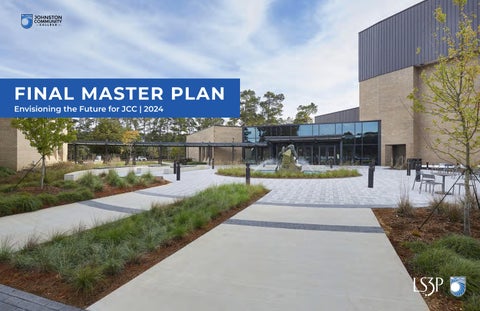
Create a flipbook
Issuu converts static files into: digital portfolios, online yearbooks, online catalogs, digital photo albums and more. Sign up and create your flipbook.