
2026 - 2028
2026 - 2028
Dear Parents and Guardians,
At John Lyon, academic excellence lies at the heart of our curriculum. Every pupil is encouraged to strive for their personal best, with individualised support to ensure they achieve at the highest level. An ambitious and engaging curriculum, combined with inspiring teaching, enables pupils to make excellent progress and attain exceptional outcomes.
We are proud to celebrate the outstanding achievements of our Year 11 students in the Summer 2025 public examinations, with more than 90% of all qualifications graded 9 –5. We were delighted to see over 30% of the cohort achieving grade 9 in English Language, and more than 50% of all pupils securing grades 9 –8 in Mathematics.
Year 10 marks an exciting stage for John Lyon pupils as the formal beginning of their GCSE and IGCSE courses. These qualifications are increasingly valued by universities and will influence the A-Level subjects pupils choose their options for higher education, and ultimately their future careers. It is therefore important that pupils consider their choices carefully.
Narrowing down from 14 academic subjects in Year 9 to just nine in Year 10 can be challenging, but pupils should not feel overwhelmed. We advise them to select the subjects they enjoy most and in which they excel, as this will help ensure the strongest academic outcomes in Year 11. At the same time, it is important to think ahead about which subjects they may wish to continue at A-Level and beyond.
Our curriculum ensures that pupils leave John Lyon not only with outstanding academic achievements, but also with a genuine love of learning, the confidence to embrace new challenges, and the knowledge and skills to succeed in the next phase of their education and in the wider world.
This booklet is designed to help pupils and parents make informed subject choices. The School will use these choices to plan next year’s timetable and, where necessary, recruit specialist staff.
Many members of School staff are available to support this process. Pupils and parents are encouraged to discuss subject suitability with subject teachers. Further guidance may be sought from the pupil’s Form Tutor and Head of Year 9, Miss Millie Limrick. The School’s Careers Advisor, Mrs Charn Bamrah, can also provide advice on which subjects will best support future career aspirations.
Please submit your child’s choices using the “Forms” section of the Parent Portal by Monday 2 March .

Yours faithfully,
Mr Richard Lokier Deputy Head (Academic) RCL@johnlyon.org
Head: Mrs Rose Hardy MA (Oxon)
John Lyon School
Senior School, Middle Road, Harrow-on-the-Hill, London HA2 0HN 020 8515 9400
of Prep: Mrs Sonal Chatrath MSc John Lyon School
School, Hindes Road, Harrow, London HA1 1RX 020 8515 9500
The GCSE (General Certificate of Secondary Education) and IGCSE (International General Certificate of Secondary Education) are simply two different versions of the same qualification. While there is occasional debate as to which is more challenging, official reviews of their relative difficulty show them to be very similar and universities view these qualifications equally.
Throughout this booklet, unless referring specifically to either GCSE or IGCSE, we shall use the term (I)GCSE.
Within (I)GCSE there are a number of different examination boards that set their own curriculum and examination structures. John Lyon encourages its Heads of Department to select the best qualifications and those that provide suitable challenge and enrichment opportunities for our pupils. As such, we source qualifications from a variety of examination boards, some described as GCSEs (accessible only by UK schools) and others as IGCSEs (accessible only by international and UK independent schools).
The government’s education agenda is constantly changing and consequently so are examination board specifications. While the information in this booklet is correct at the time of printing, our Heads of Department constantly reassess the best options for our pupils, therefore the specification we follow may change in the light of those assessments.
Outside each pupil’s academic subjects, they will continue with a programme of Physical Education, Games, Co-Curricular and PSCHE (Personal, Social, Citizenship and Health Education) activities. Other opportunities to demonstrate talents beyond the classroom exist through Extra-Curricular music concerts and drama performances as well as the School’s clubs and societies.
All (I)GCSEs will be assessed by the relatively new 9-1 grading system in 2028.
Grade 7 and above will be achieved by the same proportion as previously achieved grades A*-A.
Grade 4 and above will be achieved by the same proportion as previously achieved grades A*-C.
Beyond this, there is little alignment between the two grading systems and a grade 9 is significantly harder to achieve than an A* was previously.
Whilst most pupils study for nine (I)GCSEs, our most eager pupils should anticipate the opportunity to pursue additional qualifications:
Higher Project Qualification (HPQ)
This is an independent research project that provides pupils with the opportunity to learn about a topic outside those taught in the more traditional subjects. Pupils acquire research skills and report on their learning with a presentation as well as a written report or essay.
An additional Mathematics qualification
Studied by the most able mathematicians by invitation of the Head of Mathematics, this provides a strong grounding for A-Level Further Mathematics. The current course is the AQA Level 2 Certificate in Further Mathematics.
At (I)GCSE all pupils study English Language, English Literature and Mathematics.
English is at the heart of pupils’ intellectual and creative development. This subject invites them to engage with the power of language in its many forms, from canonical literature to contemporary writing, enabling pupils to appreciate the artistry of great texts while also equipping them with the ability to communicate with clarity, sophistication, and critical insight. Pupils are encouraged to explore the way writers shape meaning, construct arguments, and evoke emotion, which develops both their analytical skills and their imaginative capacity. Through both Language and Literature, pupils acquire the ability to read with discernment, write with fluency, and speak with confidence, essential for their future academic and career journeys.
Academic outcomes:
At (I)GCSE, 71% of candidates achieved grades 9–7 (well above the national average of 29%), and 30% of our pupils achieved a grade 9. Pupils progress from English to a wide range of leading universities, reading diverse disciplines including Law, History, and the Humanities. In 2025, 50% of pupils attained A*-A in English at A-Level, significantly above the national average of 24.6%.
Visits and Co-curricular:
Pupils benefit from a rich programme of experiences that extend their love of reading, writing, and performance beyond the classroom. Highlights include publishing projects and creative writing workshops, alongside opportunities to take part in joint competitions with Harrow School and Harrow School New York. Theatre visits to London’s historic venues strengthen pupils’ understanding of set texts, including Hamlet and A Christmas Carol, bringing literature vividly to life through performance.
Daily literacy practice is strengthened through regular spelling and grammar initiatives, while Book Boxes in form rooms promote sustained reading habits. Gordon Surtees Library remains a calm and welcoming hub for independent study, reflection, and academic focus.
Ms Sade Alexander Head of English SCA@johnlyon.org
The John Lyon Mathematics Department is a dynamic team committed to excellence in mathematics education. With highly experienced and passionate staff, the department fosters a supportive and inspiring learning environment. Emphasising both strong foundational skills and advanced problemsolving, our teachers encourage curiosity and confidence in every pupil. Innovative use of technology enhances lessons, making complex concepts accessible and engaging. The department continuously adapts to modern educational practices, ensuring pupils are well-prepared for IGCSE.
Academic outcomes:
In 2025, our IGCSE outcomes were outstanding with 54% of grades at 9-8 and 100% of grades at 9-4. Achievement in IGCSE Mathematics is essential for success in A-Level Mathematics.
Additionally, due to the transferable nature of the subject, success at IGCSE will significantly help pupils in all areas of the curriculum.
Visits and Co-curricular:
All pupils actively participate in the UK Mathematics Trust (UKMT) challenges, with many progressing to the advanced rounds. To support ongoing learning, we run a daily Mathematics Clinic, offering additional guidance and support. We also offer an educational visit for our IGCSE pupils every year.
Mr Pete Muhley Head of Mathematics PWM@johnlyon.org
Pupils are required to choose six subjects from the following:
Creative
Art & Design
Drama
Music
Physical Education
Science
Biology
Chemistry
Physics
Languages
Classical Greek
French
Latin
Spanish
Humanities
Geography
History
Religious Studies
Technology
Computer Science
Design & Technology
Since the decoupling of AS-Levels from A-Levels and the subsequent decline of the AS, universities are increasingly looking to (I)GCSE grades and subject choices to demonstrate both an applicant’s ability and coherency in the choices they make.
Therefore, to ensure a balanced portfolio we encourage pupils to choose:
At least TWO sciences
At least ONE creative or technology subject
At least ONE humanity
At least ONE language
Admission to all (I)GCSE option subjects may be based on aptitude, motivation and proven ability. In some cases, pupils will be interviewed by the relevant Head of Department before admission is granted.
Our current Year 11 pupils are studying:
English Language
English Literature
Mathematics
Art
Biology
Chemistry
Classical Greek
Computer Science
Design & Technology
Drama
Pearson IGCSE 4EA1A
Pearson IGCSE 4ET1B
Pearson IGCSE 4MA1
AQA 8202
Pearson IGCSE 4BI1
Pearson IGCSE 4CH1
OCR J292
OCR J277
CIE IGCSE 0979AY
CIE IGCSE 0994
French Pearson GCSE 1FR1
Geography
History
Pearson IGCSE 4GE1
Pearson IGCSE 4HI1
Latin OCR J282E
Music
Physical Education
Physics
Religious Studies
Spanish
Pearson GCSE 1MU0
OCR J587
Pearson IGCSE 4PH1
AQA 8062/MA
Pearson GCSE 1SP1
Art at John Lyon School centres on teaching pupils traditional artistic skills, from which they can develop and express ideas in a variety of media and styles. We focus on drawing, painting, printmaking and 3D skills as well as developing contextual knowledge related to a broad range of artists. Pupils are motivated and prepared to experiment with both media and ideas to develop a broad range of skills, which they will continue to develop as they progress through the School.
Academic outcomes:
In 2025, 90% of pupils achieved grades 9-4. The Art Department has a consistent track record of supporting pupils to achieve high grades and to progress to study A-Level Art here at John Lyon. Many students then go on to prestigious Architecture and Art & Design courses at top universities, including University College London, University of Bath and University of the Arts London.
Visits and Co-curricular:
Art pupils benefit from frequent visits to galleries and a broad range of exhibitions across the UK. During the last academic year, pupils visited The Tate Modern, The V&A Museum, The National Portrait Gallery and The Saatchi Gallery. The department also runs overseas visits including to locations such as The Biennale in Venice. Pupils also benefit from a broad programme of both internal and external competitions that include ARTiculation (The National Gallery) and The Young Artists Summer Show (The Royal Academy).
Mr Nick Prince-Brown
Head of Art NJB@johnlyon.org

Biology is one of the most popular subjects at John Lyon, attracting a consistently high number of pupils each year. Our curriculum spans the full spectrum of life, from molecules to ecosystems, offering pupils a rich and engaging journey through the living world. Pupils develop a deep understanding of topics such as genetics, ecology, immunity, and neuroscience through a blend of theory, experimental investigations and fieldwork. Lessons connect to major global issues, including human health, food security and biotechnology, inspiring curiosity and critical thinking.
Academic outcomes:
The Biology Department has an outstanding reputation for academic excellence, with consistently impressive results. In August 2025, 39% of IGCSE candidates achieved grades 9–8, with the vast majority of pupils securing high grades overall. Biology has a long-standing tradition of helping pupils gain entry to prestigious universities, including Imperial College London and UCL, to study Medicine, Dentistry, Veterinary Science and other competitive Biology-related courses.
Visits and Co-curricular:
Biology pupils regularly achieve top honours, earning gold, silver and bronze medals in national competitions such as the British Biology Olympiad and commendations in the Imperial College Science in Medicine Prize. Recently, three pupils placed in the top 20 of the prestigious Cambridge Biology Challenge, competing against nearly 1,000 teams. Pupils enjoy trips to London Zoo, the Hunterian Museum at the Royal College of Surgeons and a residential ecology course at Flatford Mill. They also benefit from our vibrant Experimental Biology Club, Biomedical Society and regular Biology Clinics, which provide exciting opportunities to extend their curiosity and passion for the subject.
Dr Raf Kochaj Head of Biology RMK@johnlyon.org
Chemistry is a fascinating subject that attracts a strong following of pupils each year being an investigative, experimental and thoughtprovoking discipline that explores the world at the atomic level. Pupils build a thorough understanding of atomic structure, chemical reactivity and physical changes and the bonding that underpins the mechanisms through which reactions occur. Pupils build critical thinking and practical, science-based skills and a sense of curiosity as to how substances interact, combine, and change, which is essential for advancements in medicine, technology, and environmental science. Additionally, chemistry encourages curiosity and innovation, empowering students to contribute to solutions for real-world challenges such as clean energy and health.
Academic outcomes:
In 2025, at IGCSE, 41% of pupils achieved grades 9–8, and 59% attained grades 9-7. At A-Level, 36% of students attained A*-A at A-Level which is above the national average. Pupils typically progress to outstanding universities such as Queen Mary and Imperial to read a range of science and engineering disciplines.
Visits and Co-curricular:
The Chemistry department has developed into a vibrant centre for pupils to engage in practical activities outside of classroom-based learning. Pupils are encouraged to step forward and lead the Chemistry Club, and engage independently in their studies in Chemistry Clinics. Pupils have the opportunity to attend lectures by university professors, as well as industrybased scientists through both John Lyon’s Excellence programme and Harrow School’s speaker programme. Pupils are also able to attend external workshops and events, such as the ‘Science Live’ lecture series, exposure to forensics, cosmetic laboratories and the Science Museum’s ‘Wonderlab’. The Chemistry department also oversee the School’s beekeeping club, which allows pupils to combine skills learned in Chemistry and Biology for a unique and memorable practice, located within our Sudbury campus.
Dr Lisa Andrews Head of Chemistry LCA@johnlyon.org
John Lyon proudly offers the study of Classical Greek, which lies at the heart of Western civilisation and its historical tradition. It represents the original language and culture of drama, music, philosophy, government, history, mathematics and the sciences. It can be intellectually rewarding for those interested in exploring the roots of human thought and expression. GCSE pupils engage critically with literature, history and philosophy, gaining insight into ideas that continue to influence the modern world. Highly respected as a challenging language that few now get the opportunity to study, Classical Greek is designed to promote high achievement and aspirational outcomes, forming an essential part of an excellent education at John Lyon.
Academic outcomes:
Pupils who studied Classical Greek in previous years consistently achieved outstanding results, with the majority attaining grades 9-7. This strong performance enabled many to continue their studies at A-Level and beyond at leading Russell Group universities, reflecting both the subject’s academic rigour and our supportive teaching approach.
Visits and Co-curricular:
The Classics Department enriches learning with biennial trips to Italy and Greece, exploring major archaeological sites. Pupils also enjoy annual visits to the British Museum, the Ashmolean in Oxford, and theatre productions of Greek masterpieces. In addition, they can attend inspiring classics lectures at Harrow School and compete in internal and external competitions, providing a strong and well-rounded education.
Dr Biagio Gatto
Head of Classics BG@johnlyon.org
In Computer Science, pupils explore the technologies shaping our future. They learn to code using Python, build websites with HTML and CSS, and develop interactive projects using micro:bit devices. As they progress, they tackle advanced topics such as cybersecurity, artificial intelligence, and data science. Our curriculum builds logical thinking, creativity, and digital confidence. Pupils take part in real-world challenges, national competitions, and co-curricular clubs that bring their learning to life, preparing them to be innovative, responsible digital citizens in a technology-driven world.
Academic outcomes:
Computer Science at John Lyon is thriving, with 56% of pupils achieving grades 9–7 at GCSE in 2025. The subject’s popularity is growing, supported by dynamic co-curricular activities such as coding clubs, competitions, and hands-on workshops in Python, HTML, and micro:bit.
Visits and Co-curricular:
We offer enriching Computer Science educational visits designed to inspire pupils in all years. Highlights include a visit to Bletchley Park, where pupils delve into the history of wartime codebreaking and early computing, and LEGOLAND Windsor, which hosts interactive robotics and programming workshops. These experiences bring computing to life beyond the classroom, helping pupils explore real-world applications and future career paths in a fun, hands-on way.
Miss Sarah Aboagye Head of Digital Learning SNA@johnlyon.org
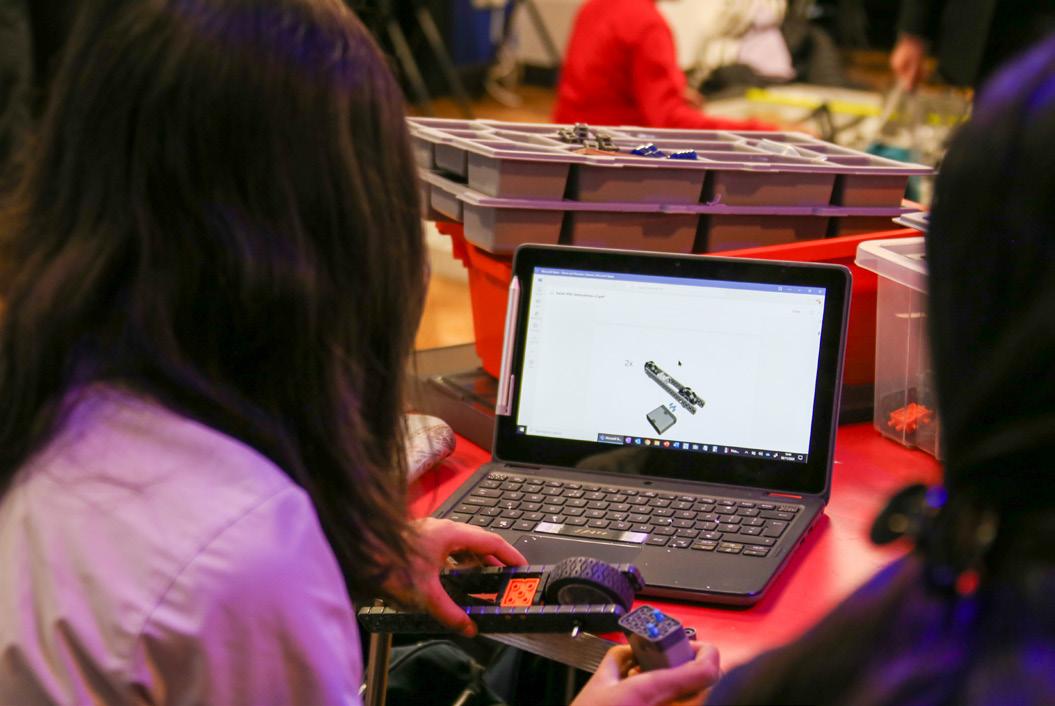
Design & Technology at John Lyon is a creative and rigorous subject that develops both practical skills and intellectual curiosity, and actively encourages pupils to consider the subject at IGCSE. Pupils follow the Cambridge IGCSE in Design & Technology (Resistant Materials) from Year 10, engaging in design thinking, hands-on making, and the use of computer-aided design and computer-aided manufacturing. They work confidently with timbers, metals, and polymers, supported by a well-equipped workshop, including two laser cutters, five 3D printers, and a dedicated Maker Space. The course supports pupils to become independent, reflective designers who enjoy solving real-world problems through thoughtful design and making.
Academic outcomes:
Design & Technology equips pupils with creative and technical expertise, with strong outcomes at IGCSE. Pupils benefit from a balance of theory and practice, building their confidence in coursework, projectbased learning and written examination. In 2025, 30% of pupils achieved a grade 9 at IGCSE, reflecting both their commitment and the department’s rigorous support.
Visits and Co-curricular:
Our Design & Technology provision is enriched with opportunities beyond the classroom. Pupils benefit from a weekly DT Clinic where they can pursue personal projects with staff support. We run an annual IGCSE educational visit to places of interest related to the course. This academic year, we spent the day at the Design museum, exploring its exhibits and taking part in a design workshop.
Ms Kim Coplee Head of Design
and Technology
KCC@johnlyon.org
In an increasingly competitive world, speech and communication skills are more valuable than ever. Through studying Drama at John Lyon, pupils gain a greater sense of self-confidence and an increased capacity to express and communicate effectively their opinions and beliefs. Theatre helps pupils’ spiritual, moral, social and emotional development as they explore Drama’s profound impact and influence on our culture and society.
Pupils are immersed in practical performance, ensemble rehearsal, and the exploration of plays and theatre styles. Through devising, scripted work, and skills-based workshops, they experiment with a broad range of techniques in specialist drama spaces. The course nurtures confident, reflective performers who enjoy building characters, collaborating with others, and using drama as a way to express and examine ideas.
Academic outcomes:
Drama examinations in 2025 showcased the exceptional talent and dedication of our pupils. 100% of the IGCSE cohort achieved grades 9–4, with 50% securing the top grades of 9–7. At A Level, 50% of students achieved grades A*–A, reflecting the strength of both performance and academic understanding within the department.
Beyond these excellent results, Drama develops vital analytical, creative, and communication skills. These skills strongly support progression into the A-Level course at John Lyon and prepare students for further education across a wide range of disciplines, including English, Law, History, and Acting.
Visits and Co-curricular:
Drama thrives on live performance, and our pupils regularly attend productions across London, including the National Theatre, Royal Court, and Lyric Hammersmith. These visits enrich classroom study and provide inspiration for practical work. Each year, pupils also stage a large-scale musical theatre production in the Ryan Theatre, Harrow School, alongside events such as the House Drama competitions and the Spring Showcase. Pupils benefit from workshops with visiting companies including Frantic Assembly and Splendid.
Mrs Ana Costas Director of Drama
APC@johnlyon.org
Learning a modern foreign language enables pupils to distinguish themselves academically while developing skills that are highly valued by employers. French, widely spoken across the Francophone world and used extensively in international organisations, is particularly important for business and global communication.
At John Lyon, French is taught as an engaging and interactive subject that fosters a genuine love of languages while helping pupils develop essential communication skills for a globalised world. At GCSE level, pupils make rapid progress, developing a secure understanding of key vocabulary and grammatical structures, alongside the ability to express themselves clearly and accurately. Lessons develop listening, reading, writing and speaking skills, while also fostering a strong appreciation of Francophone culture.
Academic outcomes:
The French Department consistently achieves strong examination results at both GCSE and A-Level. In 2025, the department achieved 100% grades 9–5 at GCSE, with 46% of pupils awarded grades 9–8. Students who continue the subject to A-Level typically achieve excellent outcomes and go on to study French at leading universities.
Pupils studying French at GCSE develop a wide range of transferable skills, including confident oral communication and presentation skills, analytical thinking through close reading and grammatical analysis, as well as cultural awareness and a strong sense of global citizenship.
Visits and Co-curricular:
The department offers a wide range of opportunities for pupils to experience French language and culture beyond the classroom. Each year, students attend cultural and film events organised by the BFI and the Institut Français, enriching their understanding of both contemporary and traditional Francophone culture.
All pupils are encouraged to take part in residential visits to France. These trips offer valuable opportunities to practise language skills in reallife contexts, while also developing confidence, independence, and cultural understanding.
Mr
Richard Lokier
Deputy Head (Academic) RCL@johnlyon.org
Geography at John Lyon is a thriving, popular and extremely successful department. Teaching in the department is highly respected by pupils at the School, which is partly the reason why it is one of the most sought after qualifications - around three quarters of our Year 10 and 11 cohorts are currently studying IGCSE Geography. The subject itself is dynamic, challenging and ever changing. Additionally, it is the academic core that supports the School’s many sustainability initiatives. Geography is taught in such a way that it touches directly on our pupils’ many and varied personal experiences and perspectives on the world around them.
Academic outcomes:
Geography results at both IGCSE and A-Level are simply outstanding. Year-on-year, our GCSE students achieve results comparable with the best in the country. In 2025, our outcomes were truly impressive with over 30% of our pupils achieving a grade 9, and 80% of our pupils achieving grades 9-7. Pleasingly, this trend continued into 6th form where 100% of students achieved grades A*-B at A-Level. Finally, over half of our 2025 A-Level cohort have gone on to study a Geography-related degree at some of the UK’s best universities – an clear indicator of the success of the department and our students’ love of the subject.
Visits and Co-curricular:
The Geography Department took 50 Year 11-Upper Sixth students to Iceland in October 2024 for a week of unique and memorable physical and human geography experiences. We also run high-quality fieldwork activities at both GCSE and A-Level that help our pupils to secure such excellent results. The department also runs onsite weather and climate fieldwork. Our A-Level students are taken to several lecture days hosted by organisations such as the Royal Geographical Society: these events encourage our students to think more deeply about the subject. The department supports the outcomes of all students with a range of popular, targeted clinics and interventions.
Mr Julian Carrera Head of Geography JCC@johnlyon.org
History is a highly respected academic subject that equips students with a wide range of transferable skills, valuable across all career paths. It inspires curiosity about the past while enabling pupils to understand the forces shaping the modern world. From medieval kingship to the development of modern democracy, pupils build strong analytical and evaluative skills through lively debate, source analysis and independent research.
At GCSE, students study the Russian Revolution, the Nazis’ Rise to Power, the Civil Rights Movement in the USA, and the History of Medicine (1850–1950). This broad and engaging curriculum covers pivotal historical events while emphasising the importance of historical understanding in becoming an informed and active citizen.
Academic outcomes:
History and Politics consistently achieve excellent academic results. In 2025, 75% of pupils achieved grades 9–7 at IGCSE. At A Level, outcomes were outstanding, with 100% of students achieving grades A–B. These results reflect the department’s high academic expectations alongside its supportive and well-structured teaching approach.
Visits and Co-curricular:
Pupils benefit from a rich programme of visits that enhances and brings to life their classroom learning. In Year 10, pupils visit the Imperial War Museum to study the Twentieth Century World, including war, conflict and the Holocaust - events that have profoundly shaped the modern era.
Dr Christopher Clews
Head of History and Politics CJC@johnlyon.org
Latin is a highly academic subject and lies at the core of any excellent independent education. Roman history and civilisation have left an immense footprint upon Western culture, which continues to shape our legal systems, languages, architecture, literature, and philosophy. GCSE Latin offers a wide range of benefits, from academic advantages to cultural and linguistic insights, setting pupils apart by providing them with a set of skills unparalleled at GCSE level. Pupils consolidate and build on their existing linguistic skills and knowledge of Latin in order to read, comprehend, and translate sophisticated Classical Latin texts, accessing ancient minds and engaging with the important ideas they present. The study of Latin is thought-provoking, intellectually ambitious, and an essential part of an excellent education at John Lyon.
Academic outcomes:
Latin consistently achieves outstanding results, with 82% of pupils attaining grades 9-6 at GCSE in 2025 and 100% of all A-Level students securing A*-A. Many continue their studies at leading Russell Group universities, reflecting both the subject’s academic rigour and our supportive teaching approach.
Visits and Co-curricular:
The Classics Department enriches learning with biennial trips to Italy and Greece, exploring major archaeological sites. Pupils also enjoy annual visits to the British Museum, the Ashmolean in Oxford, and theatre productions of Greek masterpieces. In addition, they can attend inspiring classics lectures at Harrow School and compete in internal and external competitions, providing a strong and well-rounded education.
Dr Biagio Gatto
Head of Classics BG@johnlyon.org
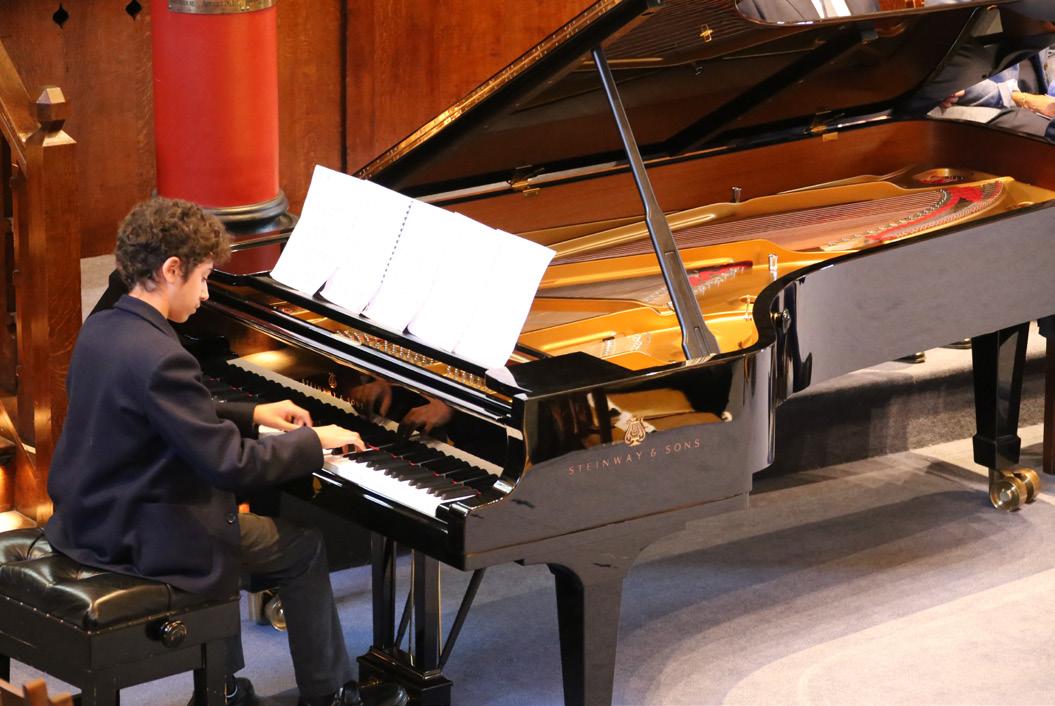
Music is a central part of school life. Pupils are encouraged to explore a wide range of genres through both the curriculum and an extensive cocurricular programme. Regardless of ability, every pupil is supported by highly trained staff who nurture talent and foster exploration across Classical and Popular styles. The department benefits from two concert spaces, each equipped with Steinway pianos, providing professional settings for performance. Partnerships with leading London institutions, including the Royal Academy of Music and the Orchestra of the Age of Enlightenment, further enhance pupils’ skills and offer expert guidance to achieve aspirations.
Academic outcomes:
The examination boards chosen by the Music Department provide a degree of flexibility, enabling pupils to concentrate on areas of particular strength, such as performance or composition. Thus, Music tends to achieve consistently strong results at GCSE and A-Level. In 2025, 75% of pupils gained grades 9-6 at GCSE. At A-Level, pupils have performed exceptionally over multiple years, with most students achieving 100% A*-B.
Visits and Co-curricular:
The Music Department’s co-curricular programme offers around twenty weekly activities, ranging from standard ensembles to additional groups, designed to ensure pupils of all abilities have opportunities to perform. Regular rehearsals and concerts enhance pupils’ vocal and instrumental skills. Performances are held in the school’s two concert halls as well as prestigious venues such as St Paul’s Cathedral. Pupils also benefit from international music tours, with previous destinations including Austria, Italy, and the United States. These experiences broaden cultural awareness, develop confidence, and provide pupils with invaluable opportunities to showcase their musical talents in a wide variety of settings.
Mr Andrew Furniss Director of Music AJF@johnlyon.org
Physical Education is a dynamic and engaging subject that plays a central role in supporting pupils’ physical, academic, and personal development. The subject combines practical sport with the scientific study of how the body and mind work during physical activity, enabling pupils to develop a strong understanding of health, fitness and performance alongside their sporting ability. Pupils explore topics such as anatomy and physiology, movement analysis, physical training, sports psychology and socio-cultural influences - empowering them to demonstrate both their academic understanding and their ability to apply knowledge in real sporting contexts. Through a balanced programme of theory and practical assessment, Physical Education is well suited to pupils who enjoy sport, are curious about how the body works, or are considering future study or careers in sport, health or science-related fields.
Academic outcomes:
Physical Education is a new and exciting subject at John Lyon, providing pupils with the opportunity to combine their practical sporting ability with scientific study, under the guidance of our experienced Physical Education Teachers and Sports Professionals. Those pupils who achieve strong academic results will have the opportunity to continue their study into the Sixth Form through the Cambridge Technical Level 3 qualification in Sport and Physical Activity.
Visits and Co-curricular:
The Sports Department offers a wide range of Co-Curricular opportunities for pupils to develop their practical skills and enhance their subject knowledge. Representative sports training and competitive fixtures allow pupils to develop their practical skills; whilst pupils also benefit from an extensive programme of enrichment activities, including sports seminars delivered by industryleading sports-persons, which provide valuable insight into elite performance, career pathways, and life beyond school sport. In addition to Co-Curricular sport, pupils also have the opportunity to take part in sports tours both within the UK and internationally, offering memorable experiences that combine highlevel competition with cultural enrichment. Previous destinations have included Holland, Barbados and South Africa. These experiences help to develop confidence, resolve, teamwork, and leadership, while giving pupils the chance to perform and compete in a wide range of sporting settings and cultures.
Mr Adam Ling
Director of Sport
ASL@johnlyon.org
In Physics lessons at John Lyon, pupils are encouraged to explore the fundamental principles that explain the world around us, from the motion of everyday objects to the mysteries of the universe. Teaching is interactive, blending clear theory with practical experiments and engaging online simulations, which foster curiosity, problem-solving, and critical thinking. Topics such as energy, forces, electricity, waves, and the structure of matter show how science underpins modern life and technology. In the examination years, we place particular emphasis on applying knowledge effectively to questions, developing strong examination technique, and building confidence for future academic success.
Academic outcomes:
Physics at John Lyon achieves strong results. In 2025, at IGCSE, 61% of pupils achieved grades 9-7 and 50% of A-Level students achieved grades A*–B. Many students progress to Physics, Engineering, or Medicine at leading universities, supported by rigorous teaching that develops analytical skills and academic confidence.
Visits and Co-curricular:
Pupils benefit from a range of immersive visits and activities in the UK and abroad. Typical opportunities include trips to CERN in Switzerland and the Rutherford Appleton Laboratory, where pupils see cutting-edge research in action. Enrichment also includes engaging Science Live lectures in central London from leading physicists, which bring complex concepts vividly to life.
Our weekly Crest Award Club provides a popular space for pupils to develop their interest in Physics beyond the curriculum, giving them the opportunity to conduct exciting experiments with the support of their teachers.
Mr Richard
Golsby
Head of Physics RTG@johnlyon.org
Pupils engage with Philosophy as well as Religious Studies throughout their time at the School. They investigate the big ideas of individual philosophers, including Plato, Descartes, Philippa Foot, Alan Turing, Epicurus and Bentham and develop the ability to express their own perspective on these ideas. They also examine the main religions of the UKChristianity, Islam, Judaism, Hinduism, Sikhism and Buddhism - as well as some lesser-known traditions. They study a combined course looking at Religion and Ethics at GCSE and we offer an A-level in Philosophy.
For the GCSE course, pupils look at the beliefs and practices of two religions - Christianity and Islam - as well as ethical and philosophical issues relating to sex and relationships, matters of life and death, the existence of God, peace and conflict, and crime and punishment.
Academic outcomes:
Over the last two years the average grade at GCSE is grade 7 and grade B and in A-Level Philosophy. Students have gone on to further their philosophical studies in various courses at prestigious universities, including Cambridge, Warwick, Nottingham, Southampton, Loughborough and York.
Visits and Co-curricular:
Sixth Form students have been on external trips to participate in philosophical events lead by leading names including Professors Peter Singer, A.C. Grayling and Nigel Biggar. Pupils get the opportunity to take trips to local places of worship, as well as going to Normandy to visit Mont St Michel, the Bayeux Tapestry, various cathedrals and sites associated with the Second World War. The department runs Junior and Senior Debating and Model United Nations and there are regular fixtures with other schools. For each of the previous two years, pupils have visited Westminster Abbey to receive awards in a national Religious Studies competition.
Dr Ranvir Kanwar Head of Religious Studies
RSK@johnlyon.org
Spanish is taught as a vibrant and engaging subject that opens doors to communication, culture, and global understanding. Pupils are immersed in the language from the start, developing their listening, speaking, reading, and writing skills through a blend of creative, interactive, and structured learning. Our approach balances linguistic accuracy with cultural exploration, ensuring students gain both fluency and confidence. Younger pupils begin with accessible topics such as family, school life, and hobbies, while older students tackle more complex themes including social issues, literature, film, and the history of the Spanish-speaking world.
Academic outcomes:
The Spanish department consistently achieves excellent academic results, both at GCSE and A-Level. In the last examination series, 45% of pupils were awarded either a grade 8 or grade 9 at GCSE. Almost 70% of GCSE students achieved grades 9-7. Many A-Level students achieve outstanding results and go on to read Spanish at university, alongside other subjects such as Economics and Politics.
Given the popularity of Spanish at John Lyon, the department provides numerous opportunities to experience the language and culture beyond the classroom. Recent trips have included visits to Valencia where pupils practise their language skills while exploring the rich cultural and historical heritage of Spain. Co-curricular highlights include the weekly Spanish Club, food tasting and language competitions, which deepen pupils’ cultural awareness and encourage them to use Spanish in authentic contexts. These experiences help foster a genuine enthusiasm for the language and broaden pupils’ global outlook.
Mr Phil Berry Head of Spanish PDB@johnlyon.org