

ESG Report 2021
Acknowledgement of the Country
John Holland pays respect to the Traditional Owners and Custodiams of the land on which we work and live, and their connections to land, sea and community. We pay our respect to their Elders past and present and extend that respect to all Aboriginal and Torres Strait Islander peoples today.
About this report
This is John Holland’s second Environmental, Social, and Governance (ESG) report.
At every level of our business decision-making, we are committed to three key aspects: integrating economic growth, environmental resilience, and social progress because our ambition is to contribute to the community in ways that go beyond the projects we deliver. It is about how we consider our people, the community, clients, our supply chain, and the environment in operating our business.
This report outlines our ESG strategy and performance for the calendar year 1 January 2021 to 31 December 2021.
It applies to John Holland Group Pty Ltd and our wholly owned entities1 and joint venture (JV) partners where John Holland is the principal contractor and has operational control in Australia and New Zealand.
For John Holland’s Australian business this includes key disciplines such as infrastructure, rail, transport,
and building. It addresses both our design and construction projects, as well as operations and maintenance contracts where John Holland has operational control.
This report is aligned with the Global Reporting (GRI) Standards framework, incorporating relevant information and data that meet the framework’s requirements.
Beyond this report, John Holland reports on ESG performance in the following ways:
- Modern Slavery Statement
- Annual Review
- Financial Report
- Regulatory reporting on energy and greenhouse gas emissions in Australia.
For questions about this report, please contact HSES.Wellbeing@jhg.com.au
1. John Holland Pty Ltd (including John Holland Queensland Pty Ltd), John Holland Rail Pty Ltd, John Holland (NZ) Limited
List of Abbreviations
ACA Australian Constructors Association
AMS Activity Method Statement
ASCSS Australian Supply Chain Sustainability School
BIM Building Information Modelling
CCO Chief Commercial Officer
CEO Chief Executive Officer
CFO Chief Financial Officer
COO Chief Operating Officer
CPO Chief People Officer
CCCC China Communications Construction Company Limited
CSO Chief Strategy Officer
OST Operational Safety Team
CDIO Chief Digital and Information Officer
EFSP Employee Financial Support Plan
EGM Executive General Manager
EnFR Energy intensity Frequency Rate
ESG Environmental, Social, Governance
ELT Executive Leadership Team
GBCA Green Building Council of Australia
GHG Greenhouse Gas
GIS Geographic Information System
GMRs Global Mandatory Requirements
GRI Global Reporting (GRI) Standards
HSE Health, Safety & Environment
HSES Health, Safety, Environment and Sustainability
HSR Health and Safety Representative
IMS John Holland Integrated Management System
IoT Internet of Things
ISC Infrastructure Sustainability Council
IT Information Technology
KPIs Key Performance Indicators
LGAs Local Government Areas
LTI Lost Time Injury
NPS Net Promoter Score
NWPA North Western Program Alliance
OHS Occupational Health and Safety
PFAS Perfluoroalkyl and Polyfluoroalkyl Substances
PoCs Proof of Concepts
RAP Reconciliation Action Plan
RIA Rail Infrastructure Alliance
RWG Reconciliation Action Plan (RAP) Working group
SQERM Safety, Quality and Environment (SQE) Risk Management (RM)
tCO2-e Tonnes of Carbon dioxide equivalentStandard unit of measurement for greenhouse gas emissions
TEK Technology, Engineering and Knowledge
TFCD Task Force on Climate Disclosure
TRA Task Risk Assessment
TRIFR Total Recordable Injury Frequency Rate
VDC Virtual Design and Construction
WHS & R Work Health and Safety (WHS) & Rehabilitation (R)
WRA Workplace Risk Assessment
CEO Message

John Holland has been driving positive change in Australia for 70 years. This ESG report, our second, demonstrates our genuine commitment to transforming lives through the work we do and the care we take in doing it.
We’ve always been known for our infrastructure leadership – and we know that also means leading the way when it comes to Environmental, Social and Governance risks.
Our operating environment has changed considerably in the two years since we published our last sustainability report. We’ve met the challenge of a global pandemic and all that came with it. I am proud of what we have achieved despite the ups and downs we have faced collectively and individually.
Some of the highlights we’re proud of include:
Leadership and strategy
- We launched our Digital Transformation Strategy to ensure we continue to embrace technology in the way we do things.
- We are sponsoring the Roads Australia Fellows Program that pairs industry leaders (Mentors) with managers of 10 to 15 years’ experience who exhibit strong leadership potential.
Built Environment
- In 2021, we finalised the first sustainability-linked bonding facility to be arranged in Australia, and one of the largest globally. It is a $1.5 billion facility with a syndicate of banks and insurance companies that embeds four sustainability-linked key performance indicators that are unique to John Holland and aligned to our Sustainability Framework. They are focused on integrating economic growth, environmental resilience, and social progress as priorities in decision-making, with the ambition to create long-term value.
People
- 297 of our managers completed the Black Dog Mental Health training in 2021, bringing our overall performance to 75 per cent of managers being trained by the end of December 2021. We are working towards achieving 95 per cent in 2022.
- Our industry-leading parental leave policy was improved to give any primary carers, no matter their gender, 18 weeks paid parental leave starting within six months of the birth or adoption of their child; no minimum employment requirement to access parental leave; and importantly when a primary carer takes a further period of unpaid leave, they will be paid an additional 18 weeks’ superannuation.
Community and partners
- We continue to increase our spend with Indigenous businesses spending $103 million in 2021 and over 860 Aboriginal and Torres Strait Island people were employed directly or indirectly on our projects.
- We are Social Traders’ top spender across our industry for 2021. We invested a total of $12.7 million with 59 certified Australian Social Enterprise partners in 2021.
- In 2021, our Social Inclusion team developed strategic partnerships with local community organisations that support women who have experienced family violence. We have prioritised employment opportunities and our people have volunteered to support women in gaining skills and confidence as they return to the workforce.
- We also continue to work with community stakeholder groups to provide opportunities for refugees and asylum seekers, people with disabilities, long-term unemployed and Indigenous Australians.
Since 2019, we’ve also taken some time to reflect upon and refocus our sustainability strategy.

For that very reason, we have changed the name of this report from “Sustainability” to “ESG” and refined the list of priorities we want to (and need to) address now and over the next few years.
We will focus on four key areas of risk and opportunity to guide the plan of action set out in this report, along with the resources we will invest to meet the targets against these priorities:
1. Employee attraction and retention
2. Application of smart engineering and technology solutions
3. Resource efficiency and climate change mitigation
4. Supply chain resilience.
We also need to think about how we meet collective challenges like transitioning our workforce beyond COVID, minimising our environmental
impact and positioning ourselves to respond to climate change risks.
We will continue to review our strategy and our investments, and importantly, keep tracking our progress in these reports every two years.
Our renewed ESG strategy is worth celebrating. So is the continuous effort of our people in the various areas of ESG over the past two years.
At John Holland, we believe it is part of everyone’s role to transform lives - for better communities, a better industry and a better future. Our ESG targets are integral to achieving this.
Joe Barr Chief Executive Officer

About John Holland

About John Holland
John Holland has been in the business of transforming lives in Australia and across the region since 1949. As one of Australasia’s largest construction companies, we have had a hand in building some of Australia’s most recognisable and iconic infrastructure, including Canberra’s Parliament House, the Alice to Darwin Rail Link, the MCG’s Great Southern Stand and Sydney Metro.
Today, we are still putting our mark on many of the nation’s leading integrated infrastructure, rail, multi-modal transport and building projects and services. We always aim to have a positive impact on communities and other stakeholders, while continuing to push the boundaries of innovation.

This mindset means we help transform communities by making them more connected, easier to move around and live in.
The legacy we leave for communities is as important as the physical places we build. Our industry has a wide impact on the environment, communities, our people, suppliers and subcontractors and we take seriously the responsibility to conduct our business sustainably.
Our structure
John Holland operates as a corporate group and CCCI Australia Pty Ltd is the Australian parent company. CCCI Australia Pty Ltd is a wholly owned subsidiary of China Communications Construction Company Limited (CCCC), which is dual listed on the Hong Kong (1800.HK) and Shanghai Stock Exchanges (601800SH). CCCC is one of the world’s largest infrastructure construction companies.
In addition to the reporting entities set out in the About This Report section, the John Holland Group includes a range of controlled entities. These entities undertake a variety of functions, including acting as holding or special purpose companies, or supporting the construction and operation of transport infrastructure and services.

Three of these controlled entities are incorporated outside Australia, in New Zealand, Malaysia and the United Kingdom. Of these three entities, only the New Zealand entity undertakes active operations, which relate to rail construction and maintenance contracting. Management control of this entity remains in Australia.
John Holland also undertakes a range of joint venture activities, which primarily relate to construction activities in Australia during the reporting period. We work across Australia2 and New Zealand and our main areas of operation include:
- Infrastructure: Constructing and maintaining infrastructure, such as major roads and bridges, tunnelling, and water and waste-water treatment solutions
- Rail & Transport: Rail and transport operations & maintenance and the construction of rail assets
- Building: Major building projects, such as correctional facilities, hospitals, stadiums, education and research facilities, and commercial and residential development.
2. We undertake the majority of our operations as John Holland but also operate under the business name ‘Territoria Civil’ in the Northern Territory.
John Holland Company Strategy
John Holland in numbers
Number of employees 5580
We have 61 projects in Australia and New Zealand across the following sectors:
Infrastructure:
- Major roads and bridges
- Tunnelling
- Water and wastewater treatment solutions
Rail and transport:
- Design and construction
- Rail systems delivery and integration
- Rail operations and maintenance:
⚪ Bus
⚪ Trams
⚪ Rail
⚪ Metro
Building:
- Stadiums
- Corrections
- Health
- Airports
- Commercial
- Education
Company revenue $5.6b
Projects won in 2021
John Holland tendered almost $5 billion of new awards and contract variations in 2021.
The most significant new awards during the year include:
- Pakenham Level
Crossing Removal
- Greater Sydney Bus Contract 9
- Kidston Pumped
Storage Hydro
- Botany Rail
Duplication
- Marvel Stadium
Upgrade projects
Corporate offices
Sydney
Level 3, 65 Pirrama Road, Pyrmont 2009, New South Wales
Phone: + 61 2 9552 4288
Brisbane
Level 3, 1000 Ann St, Fortitude Valley 4006
Queensland
Phone: + 61 7 3867 7000
Melbourne
Level 9, 180 Flinders Street, Melbourne 3000, Victoria
Phone: + 61 3 8698 9400
Perth
Level 8, Commercial Tower 3, 10 Telethon Avenue, Perth 6000, Western Australia
Phone: + 61 8 9482 2700
Darwin
110 Coonawarra Road, Winnellie 0820, Northern Territory
Phone: + 61 8 8943 1000
Spotswood
1 McLister Street, Spotswood 3015, Victoria
Phone: + 61 3 8331 7500
Hobart
Level 2, 13-17 Castray Esplanade, Battery Point 7004, Tasmania
Phone: + 61 3 6221 8900
New Zealand
Level 2, 56 Parnell Road, Parnell, Auckland 1052
New Zealand
Phone: + 64 9 886 8080

Company awards and recognition
Award Category
Climate Change Business Journal - CCBJ Business Achievement Awards
Australasian Railway Association
Prix Versailles
DRIVENxDESIGN Melbourne Design Awards 2021
National Association of Women in Construction
Advancing Best Practices: GHG Mitigation
Awarded to
Rail Infrastructure Alliance
Employee Engagement Award MTM, Stay Connected at Metro
Rail Sustainability Award
TrackSAFE Foundation Award
Special Prize Exterior, Passenger Station category
Interior Design – Corporate ‘Gold’
Architecture - Public and Institutional ‘Silver’
NWPA, High Street level Crossing
Removal Project, Reservoir Station Sustainability
MTM, R U OK? Day Campaign
Reservoir Train Station
John Holland: NextHome 18 Flinders Street
North Western Program Alliance - Reservoir Station
Young Achiever Award Jess McGrouther
Safety Award Amy O’Neill
Communication, Stakeholder and Media Management Award Kate Kearns
Achievement as a Business Woman Loren Hickey

Award
Good Design Awards
Category
Architectural Design
Quiet Achievers Award
Earth Award 2021 – Project Value
Awarded to
NWPA - Reservoir Station
Marta Vergara-Godoy
Civil Contractors Federation
$10M - $30M (Category 3)
Earth Award (project above $75M)
Victorian Training Awards
Women in Industry Awards
Green Building Council Australia
Grad Connection awards
Australian Institute Building (AIB)
VIC/TAS
Property Council of Australia
LDPRP- C022 – Hardstand Bulk Earthworks and Revetment Wall Upgrade (Larrakeyah Defence Precinct)
Sunshine Coast Airport Expansion Project
Industry Collaboration Award CYP
Social Leader of the Year
Future Green Leader of the Year
Most Popular Internship Employer Award (Small)
Commercial Construction over $60m
Adaptive Use Over $2m
Rider Levett Bucknall South
Australian State Development of the Year Award
Anne Williams
Kate Rowan
John Holland
Flinders Gate
Flinders Gate
Calvary Adelaide Hospital

Our Approach to ESG

John Holland has a longstanding commitment to sustainability, which is reflected in the development and implementation of the John Holland Sustainability Framework and the Sustainability Policy.
The John Holland Sustainability Framework
In 2019, we developed the John Holland Sustainability Framework to guide our efforts and ensure sustainability is embedded in every part of our business. It reflects our holistic approach to sustainability and encompasses action on issues relevant to our people, clients and supply chain, the community, and the environment.
The framework continues to guide our ESG strategy and ensures principles of sustainable development are embedded throughout our business systems, processes and operations. It enables our people and the projects they manage and deliver to understand what is important to John Holland and how we apply the framework to our decision making. We have broken down key elements and priorities which we must apply to implement the framework effectively and achieve sustainable outcomes.
Sustainability has also been integrated into our 2025 business strategy to ensure that all business decisions are guided with these principles front-of-mind.
Sustainability Policy
The John Holland Sustainability Policy outlines our commitment to sustainability. We have committed to integrating economic growth, environmental resilience, and social progress into decision-making at every level of the business, with the ambition to create long-term value.
Sustainability Management System
We have a Sustainability Management System which is used by several our project teams. It includes a Sustainability Management Plan and key procedures, guidelines, forms, tools, and templates to ensure we effectively manage sustainability on a number of our projects3
Our Sustainability Framework is made up of four pillars:
Leadership and Strategy
To drive a more sustainable industry by showing leadership and encouraging innovation in all areas.
Our Built and Natural Environment To enhance infrastructure in a way that is sensitive to local communities and environments.
Our People To encourage the know-how and creativity of our people and empower them to thrive.
Our Community and Partners
To build strong and rewarding relationships with our communities and suppliers.
3. Not all of John Holland’s projects utilise the Sustainability Management System, as sustainability-related requirements are defined by clients. If the system is not used, our projects are often aligned with specific ESG ratings to ensure sustainable outcomes.


Materiality Assessment
To ensure we are focussing on the ESG risks most material to our business, we carried out a comprehensive and independent materiality assessment.
The process was conducted by third-party experts and aligned with the Global Reporting Initiative (GRI) Standards.
The process built on and updated the material priorities identified in the 2019 John Holland Sustainability Report, to ensure we account for the changing operating environment impacted by the COVID-19 pandemic and the evolving priorities of our stakeholders.
1. We conducted a peer, legislative and regulatory landscape assessment to define a long list of material topics and review our existing ESG practices. We identified a long list of 111 material topics which were assessed during the materiality review process.
2. We engaged extensively with internal and external stakeholders to understand which material topics were most important to our business and our key stakeholders. Analysis and outcome
3. We analysed findings and validated the most significant topics through engagement with the company leadership, narrowing the long list of topics to 11 key priorities.
John Holland Materiality Assessment Process Research and peer benchmarking
Stakeholder engagement

Stakeholder engagement
The views of our stakeholders are important to us. We conduct ongoing formal and informal stakeholder engagement, ensuring we account for their priorities when making decisions about our business.
We carried out a specific stakeholder engagement process for this materiality assessment, in addition to our regular stakeholder engagement program.
We spoke to both external and internal stakeholders
utilising qualitative and quantitative methods to help us understand and account for the views of our partners in defining the list of material topics.
Material topics
The assessment identified 11 material topics4 deemed the most important to our ESG performance, as shown in the Materiality Matrix below.
While all are material and will be included in this report, we identified four key topics of the utmost importance that we will prioritise over the next three years.
These include:
1. Employee attraction and retention
2. Application of smart engineering and technology solutions
John Holland Material Topic Matrix
3.
4. Supply chain resilience
Topics chosen were identified as those that present a substantial risk or opportunity to our business and deemed as crucial to address in the immediate term. Health, safety and wellbeing and diversity and inclusion were specified as highly material, however, as our practices and performance in those two areas are more advanced than in the key four topics, they weren’t chosen as priorities to address, but rather to continue implementing good practice and performance as established in the previous years.
2022 material priorities and targets
Material Priority
2022 Targets
Upskill our leaders on the importance of leadership in diversity and inclusion, across the employee lifecycle.
Increase the representation of women in the business with an introduction of the 40/40/20* model.
Review processes to remove bias in our talent programs and succession planning.
95% of all managers to complete the Black Dog Institute’s “Mental Health for Leaders Training” in 2022.
Employee attraction and retention
Application of smart engineering and tech solutions
Develop new RAP during 2022 for 2022-2024 and register it with Reconciliation Australia.
Launch and implement a “Multicultural Leave Exchange” where employees can swap a public holiday for a culturally significant day.
Achieve +20 Net Promoter Score (NPS) for all members of the Executive Leadership Team, based on the 2020 +17 score and the 2019 +19 score.
Achieve +50 NPS for Building business unit, based on the 2020 +48 score.
Achieve +20 NPS for Rail business unit, based on the 2020 +16 score.
Achieve +10 NPS for Infrastructure and Major Projects business unit, based on the 2020 score of -3.
Achieve overall customer satisfaction for all executives at 80, based on the 2020 score of 79.
Establish 3D Design models for significant projects and GIS on priority tenders from 2022.
Launch a central Knowledge Management System in mid-2022 and establish the baseline from which to measure content growth and engagement.
Save 15,000 labour productivity hours through digitisation of processes across John Holland.
Develop three Health, Safety, Environment and Sustainability (HSES) Digital Products to deliver better outcomes for John Holland and its clients.
Climate Change mitigation: develop of an analysis of scenarios, risks and opportunities associated with climate change.
Resource efficiency and climate change mitigation
Supply chain resilience
Energy and GHG: Identify opportunities to reduce our Energy intensity Frequency Rate (EnFR) against the FY2020 target Baseline of 32.97
Circular economy: Further develop a business approach to circularity for key materials and resources waste streams during 2022
Water: Establish a water intensity rate baseline in 2022
Increase social and Indigenous supplier spending by 10% annually on 2021 spend as a percentage of total spend.
Develop and implement a Supplier Diversity procurement strategy.
Progress on our 2019 targets is outlined in Appendix D
*Note: 40% men, 40% women, 20% of any gender.

Leadership and Strategy

Good corporate governance underpins the resilience and integrity of our business. We prioritise integrity, ethics and transparency in the way we conduct ourselves to ensure the best outcomes for our people and clients.
In the next few years – as our operating environment continues to change and we continue to adapt – we will focus on how we apply smart engineering and technology solutions to our projects.

Targets
We have set targets related to John Holland’s ESG leadership and strategy to measure our progress and the effectiveness of our initiatives in this focus area.
Focus area
2022 targets
Establish 3D Design models for significant projects and GIS on priority tenders from 2022.
Launch a central Knowledge Management System in mid-2022 and establish the baseline from which to measure content growth and engagement.
Application of smart engineering and technology solutions
Save 15,000 labour productivity hours through digitisation of processes across John Holland.
Develop three Health, Safety, Environment and Sustainability (HSES) Digital Products to deliver better outcomes for John Holland and its clients.
Business Integrity and Resilience
Our Governance
The John Holland Group Board of Directors
The Board of Directors is responsible for John Holland’s long-term success and for managing the group’s business affairs to the highest standards of corporate governance. As of 31 December 2021, the Board consists of six shareholder appointed directors, two executive directors and one former executive director.
The Board delegates several roles to the Chief Executive Officer (CEO), such as the development of the Strategic Plan, overseeing the company’s day-to-day operations, conducting performance reviews and ensuring corporate governance and internal control processes.
Management Structure and Controls
The CEO has established several management groups to assist with carrying out responsibilities delegated to the CEO by the Board. These include managing the organisation’s impacts on the economy, environment and people.
Chief Executive Officer (CEO)
Operating Officer (COO)
Financial Officer (CFO)
Chief People Officer (CPO)
Chief Commercial Officer (CCO)
Bo Wang Chairman Guangsheng Peng
Jinsong Tang
Glenn Michael Palin Chun Pong Leung Martin Nicholas Hadaway

Our commitment to ethics and compliance is underpinned by a range of policies that set out our internal standards for best-practice conduct. These policies guide our employees in their day-to-day interactions, ensuring that a culture of compliance and ethical business practices permeates our company from top to bottom.
The John Holland Code of Business Conduct
The John Holland Code of Business Conduct (the Code) sets the standard for our commitment to be an ethical business. It guides everyone who works for—or with—John Holland.
The Code reflects the standards and procedures applicable across John Holland and how to practically apply them to our daily operations.
The Code is available here
The John Holland Whistleblower Standard
We want everyone to feel safe and empowered to speak up if they become aware of unethical or unlawful conduct in our business dealings. No person will be personally disadvantaged by reporting wrongdoing.
The John Holland Whistleblower Standard provides significant protections and remedies to whistleblowers who report unethical or unlawful conduct or business practices.
It explains how to report wrongdoing, how we deal with reports of wrongdoing and what protections are available to people who speak up.
There are multiple channels available to all staff, suppliers and contractors to report business misconduct:
- The Speak Up line: An independent hotline operated by experienced staff trained to receive and handle reports of business misconduct and whistleblower disclosures.
- The Company Secretary and Corporate Counsel: Responsible for the governance framework that supports compliance with our Code.
- The Privacy Officer: Oversees John Holland’s privacy compliance framework and manages queries and concerns about the handling of personal information by John Holland.
The Whistleblower Standard is available here.
Anti-corruption and anti-competitive measures
John Holland’s Code of Business Conduct is explicit on avoiding conflicts between personal and business interests. All conflicts (real or perceived) must be disclosed to managers and are recorded on a conflicts of interest register maintained by the Company Secretary.
To ensure the implementation of our ethical business conduct policies, we take several measures to ensure all employees are guided by our standards in their everyday work.
- All new employees receive comprehensive anti-bribery and corruption training during their induction with refresher training every two years via our Code of Business Conduct e-learning training module. Training records are maintained electronically.
- All senior managers are also required to attend a comprehensive anti-bribery and corruption training course externally facilitated every two years.

Cyber Security
Our commitment to protecting the assets and information entrusted to John Holland is unwavering.
Our cyber security program is based on the NIST Cyber Security Framework which we use in a process of continual assessment and improvement. Security is one of the pillars of our IT and systems strategy with controls including:
- Endpoint Detection and Response (EDR) technology
- Cloud Access Security Broker (CASB) cloud security technology
- Best of breed e-mail security
- Risk management program
- Strong identity management including multifactor authentication and conditional access
Our people are the first line of defence in our cyber security strategy. We provide formal cyber security training at least quarterly with pointin-time information throughout the year. This includes phishing courses, malware awareness and information on unsecured networks. This is reinforced through phish testing.
In 2021 there were several major projects aimed at improving our cyber security posture including:
- Logically air-gapped backup system
- Redesign of our cloud architecture to adopt cutting edge “account factory” methodology
- An uplift in compliance programs including both third-party and internal project audits
- Increased resourcing for the cyber security program
Climate Change Management
We are working to minimise the effects and progression of climate change. Our focus to date has been on understanding the business risks associated with climate change and agreeing on an approach. We want our approach to be authentic and genuine. Our 2022-2025 Climate Change Strategy is well advanced and will be finalised in 2022. We are committed to a holistic approach to reducing our carbon emissions and to exploring a pathway towards net zero.
Due diligence will be important to this process to help us better understand climate change risks, our impact on climate change, how to measure it, and set appropriate management strategies to address them.
To date, we have focused on identifying and mitigating climate change risks in our project delivery, addressing design, planning and delivery of projects that are resource efficient, utilising whole-of-life design. We have implemented climate change adaptation processes in several of our current projects. This process involves project and designer workshops to identify risks, and to develop plans to address climate risks for the delivery of the asset and how it will operate in the future
Innovation
Application of smart engineering and tech solutions to deliver the best possible results for our clients has been at the core of what John Holland does since the company was founded.
The Technology, Engineering and Knowledge team (TEK)
The Technology, Engineering and Knowledge team is an internal group of specialists who work across all of John Holland’s operations to help the business win and deliver profitable work.
TEK has a growing team of more than one hundred specialists who provide engineering assurance and technical services across five key areas:
TEK delivers engineering assurance and technical services across five key areas:
TEK’s focus on knowledge and innovation is the key to ongoing delivery excellence. The team works closely with the business to harness the knowledge gained through tender and project experience to be a source of continuous improvement and innovation.


Case Study: Mixed Reality at CYP Project
John Holland trialled Augmented Reality (AR) solutions at Cross Yarra Partnership (CYP). The solution allowed our teams to overlay a digital environment on the physical environment. The solution used was a Trimble XR10 powered by the Microsoft HoloLens technology built into a hard hat. With this innovation, our project team could identify potential issues and resolve them before construction, ultimately providing a greater level of certainty over our construction activities.
The enhanced efficiency in capturing and processing data, producing model information, reduced costs and eliminated the requirement for special resources.
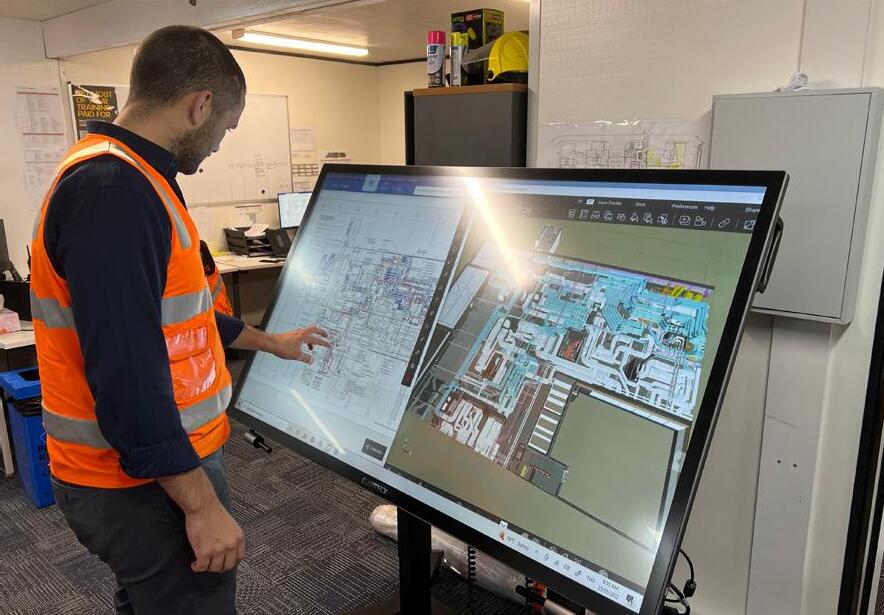
Case Study: John Holland Leads Industry in BIM Delivery
John Holland was one of the first engineering companies in Australia to achieve the internationally recognised British Standards Institution Kitemark™ certification for its Building Information Modelling (BIM) capabilities.
BIM, an intelligent 3D model-based process that provides efficiencies throughout the entire life cycle of a project, helps John Holland achieve the best outcomes for our customers. BIM was used on projects including Perth’s Children’s Hospital, Sydney Gateway, WestConnex Stage 3B and Melbourne Metro CYP.
Digital Transformation Strategy
Digitising our systems is setting a new standard in the construction industry.
In 2021, we introduced a Digital Transformation Strategy to ensure we embrace technology to drive efficiencies, particularly cost and time benefits and improve health, safety, environment and sustainability outcomes on our projects.
We plan to deliver the strategy in 2025, under four pillars.
Enterprise Systems
Enterprise Systems Transformation, part of our IT team, reviews all our processes to ensure sustainability, repeatability and modernisation across the John Holland Group. We are developing an enterprise-wide solution across finance, operations and Health, Safety, Environment and Sustainability to ensure our teams can operate seamlessly, share knowledge and collaborate efficiently.
Emerging Technology
Implementing technologies such as Internet of Things (IoT) sensors, Computer Vision and Digital Twin enable us to converge the physical spaces we typically operate in with a digital overlay. By doing so, we can improve labour productivity and drive positive HSES outcomes through the availability of realtime contextualised data.
Data Insights
Data is a core theme within our Digita; Transformation Strategy. Our multiyear transformation journey will incrementally unlock access to timely, complete, new, and trusted data; putting the right data in the hands of the business and affording our people with trust and confidence to use this information to make informed decisions. We are constructing an integrated Data Lake House platform connecting data from IoT, documents, application systems and digital forms which will allow our people to derive analytical insights to improve business performance.
Digitisation
This pillar focuses on digitalising manual processes. Key functions across the business are collaborating to identify opportunities to optimise how we record and manage data. Digitalisation is driven by each of our executives - whether they be a sponsor of one of the core initiatives or a strong advocate for allowing new technology to come into their line of business.
Industry contributions
We believe industry committees and working groups can contribute to better outcomes for the company and the industry. That is why John Holland is an active member in many of them.
Industry Leadership
Involvement in Infrastructure Sustainability Council (ISC) and GBCA committees
John Holland is a member of the ISC and the Green Building Council of Australia (GBCA) working groups.
As a member, we contribute to support the broader industry’s adoption of sustainability tools.
Involvement in ACA and associated committees and working groups
Our CEO Joe Barr is an active member of the Australian Constructor’s Associations (ACA) Construction Industry Leadership Forum (CILF).
Through this forum, industry leaders are focused on creating a more sustainable industry, addressing concerns around capacity pressures, safety and wellbeing, and resourcing opportunities.
Supporting emerging industry leaders.
John Holland supports industry sustainability and capacity by sponsoring the Roads Australia Fellows Program that pairs industry leaders (Mentors) with managers of 10 to 15 years’ experience who exhibit strong leadership potential.

Case Study: Developing our HSES System
John Holland was previously managing its HSESrelated reporting requirements via two separate corporate systems. While this allowed us to track our compliance and incidents, the system needed a refresh as our projects were, at times, required to adopt third-party tools to address issues and manage client reporting requirements. The use of these systems resulted in data stored outside corporate platforms not being visible for governance purposes. The solution, known as “Soteria”, offers a comprehensive and industry-leading technology platform that supports John Holland’s current and future HSES processes, data collection and reporting requirements. The project is a collaboration between the Group HSES team, IT and numerous key HSE stakeholders from across the Business Units and Projects. The result will be a modernised technology offering (including full mobile capability) that will integrate seamlessly with related internal processes and project systems to drive operational excellence. Soteria will be delivered across JHG in 2022.

Built and Natural Environment

Our infrastructure, rail, transport, and building projects and services reshape the environment we live in. Some of the most impactful decisions made by our engineers concern how we engage with resources, communities and the natural environment.
One of our key material topics is mitigating the effects of climate change and using resources efficiently. We are committed to limiting the effects of climate change by reducing our greenhouse gas emissions, energy consumption, and water use by carefully choosing the materials we use and limiting waste production.

Targets
We have set targets related to our impacts on the built and natural environments to measure our progress and the effectiveness of our initiatives in this focus area.
Focus area
2022 targets
Climate Change mitigation:
- Development of an analysis of scenarios, risks and opportunities associated with climate change.
Energy and GHG:
Resource efficiency and climate change mitigation
- Identify opportunities to reduce our Energy intensity Frequency Rate (EnFR) against the FY2020 target Baseline of 32.97.
Circular economy:
- Further develop a business approach to circularity for key materials and resources waste streams during 2022.
Water:
- Establish a water intensity rate baseline in 2022.
Delivery Efficiency and Adaptability
We know that applying digital methods and solutions is a crucial aspect to better managing environmental and climate change risks and our ability to remain competitive in the market. Our TEK team contributes significantly to approaches we employ and provide to our business.
John Holland project teams hold 20% of all ISC “Leading” Design and 32% of all IS Rating “Leading” As-Built scores across the industry, with “Leading” being the highest level awarded by ISC.
Encompasses the entirety of a facility’s lifecycle. This includes everything from planning to implementation and commissioning, to planned and preventative maintenance and eventually replacement, upgrade or retirement.
Defines how we deliver and manage sustainability on our projects. We continually update this system to ensure relevance and accuracy. At a project level, we develop Environment Management Plans which explain how our IMS and environmental procedures are being implemented on projects to manage and limit our environmental impact.

Case Study: E2G Industry Day
In March 2021, John Holland co-hosted the Infrastructure Sustainability and Erosion and Sediment Control Industry Day, bringing together government and industry representatives to explore solutions for the challenges faced in civil and infrastructure projects in the tropics. Participants shared best practice Erosion and Sediment Control for sustainable outcomes, regenerative methods, end-to-end stormwater treatment solutions, and embedding sustainability into projects. The attendees of the Industry Day included representatives from various local Council, Queensland Department of Transport and Main Roads, Queensland Department of Environment and Science and Local Contractors.
Whole of Life Model
John Holland Integrated Management System (IMS)
Many John Holland projects obtain sustainability ratings, like those facilitated by the Infrastructure Sustainability Council (ISC) and the Green Building Council of Australia (GBCA).
In 2021, many of our projects achieved excellent ISC and Green Star ratings:
Western Program Alliance (NWPA) - High Street Reservoir, Infrastructure 89 Sydney Metro City and Southwest - Tunnel and Station Excavation, Major Projects
NWPA - High Street Reservoir, Infrastructure 5-star
Flinders Gate, Building 5-star
Glasshouse - Macquarie Park, Building 5-star

Case Study: NWPA Leadership Governance
The North Western Program Alliance (NWPA), consisting of John Holland, Kellogg Brown & Root (KBR), Metro Trains Melbourne (MTM) and Level Crossing Removal Project (LXRP), is one of five Alliances delivering the LXRP program works across Victoria.
NWPA has successfully removed eight level crossings and constructed four new stations to date. Achievements include four Infrastructure
Sustainability (IS) Ratings in under four years, including 89 points at the award-winning Reservoir Station.
- NWPA has delivered a reduction of over 75,000 tonnes of carbon, the cost saving equivalent of over $4.5 million.
- NWPA is currently working to remove a further eight level crossings, deliver five new stations and deliver three IS certifications in Preston, Glenroy, Pakenham and Pakenham East. Through empowerment, collaboration and passionate advocacy, NWPA is committed to delivering industry-wide change. Fundamental to this is the award winning ‘Power of the Program’ approach, which leverages the program to continually improve methods, build long-term partnerships and target step-change innovations.

Case Study: Excellence in Green Star processes and integration
Each Cross Yarra Project (CYP) station is required to achieve a 5 Star Green Star Rating utilising the ‘Green Star Design & As Built Melbourne Metro Rail Tool’. To date, CYP stations have:
- Achieved full points to Common Credits Assessment (Design) for commonalities across the five stations.
- Achieved a 6-star Green Star Design Review rating at every station, representing a “World Leadership” standard of sustainability.
Robust As-Built Quality Assurance (QA) solution
To address the challenges of a significantly long gap (four years) between the Green Star Design Review and As-Built Ratings – and as a measure to mitigate high-risk credits – the Project Subcontractor has developed a sustainability compliance confirmation process. This process requires subcontractors and suppliers to prepare and submit a Sustainability Compliance Plan (SCP) prior to commencing work, and confirmation of compliance on completion of works along with confirmed data and evidence (SCP ‘At Completion’ phase).
Data and evidence collected, along with other product approval processes used internally within the Project, are entered into an As-Built data and evidence database on a SharePoint platform.
This ‘first of its kind’ IT solution has been developed to efficiently manage both the complexity and quantum of data and evidence for the Green Star As-Built Ratings and form the basis of the As-Built QA for the volume certification (Common Credits Assessment). This solution is currently in development, and will include:
- Hundreds of inter-connected SharePoint Lists to collate and organise data and evidence.
- A PowerBI dashboard for each ‘common’ credit, demonstrating overall credit compliance.
- QA Checklists demonstrating As-Built credit compliance.
- Integration with actual data via the reporting data collected from over 300 subcontractors and suppliers.
- Millions of data points to be collated, refined and presented in a manner conducive to informed decision-making based on Green Star requirements.
This robust As-Built QA solution gives the Green Building Council of Australia (GBCA) confidence that our Green Star As-Built compliance tracking is fit-for-purpose for the Common Credits Assessment. It will also provide the project team with transparent, current and relevant compliance and completions tracking of the Green Star deliverable. It is anticipated the Green Star As-Built QA will be expanded to become a full data and evidence tracking system for all three sustainability deliverables, including the IS Rating and Contract obligations.

Resource Use Efficiency
We operate in a resource-heavy industry. In our projects, we aim to reduce the resources we use, or find sustainable alternatives, and manage any waste generated efficiently.
Energy use and Greenhouse Gas Emissions
Project energy use
Most of our energy consumption occurs at project sites. We are involved in some of the biggest construction projects in Australia which involves large volumes of fuel and electricity to power plant and equipment.
Our project requirements are often dictated by our clients and wherever possible we introduce energy and emissions efficiency initiatives through modelling and monitoring of consumption data during construction. This includes the on-site use of fuel, electricity, and materials during construction.
There are many opportunities to conserve energy and utilise energy-efficient design and construction practices.
Diesel remains the fuel most used across our projects. This is an industry-wide trend with diesel providing a combination of power density, performance and reliability. We also continue to use a blend of unleaded petrol and ethanol on our projects.
The type of work we do on a project determines our energy and diesel use. Through our Sustainability Framework, we aim to introduce resource efficient solutions on all of our projects. We doubled the use of biodiesels in 2021 compared with 2019.
Our offices and facilities
We operate our offices, facilities and workplaces according to our Environmental Management System to minimise energy, water and waste and prioritise the selection of resource efficient materials, products and services. Each site records the expected types of waste they are likely to generate and the materials, water and energy they are likely to use. We also require them to prepare individual Environment Management Plans to identify specific initiatives to reduce use and improve our efficiency and performance.
Greenhouse Gas Emissions
We are subject to the reporting requirements of the National Greenhouse and Energy Reporting Act (NGER) 2007, which requires us to report annual greenhouse gas (GHG) emissions, energy production, and energy consumption.
We have implemented systems and processes to collect, calculate and analyse the data required and submitted our 2020/21 report to the Clean Energy Regulator on 1 November 2021.
We are currently not reporting on GHG Scope 3 emissions, and when our Climate Change Strategy is finalised, we propose to collect, calculate and analyse these emissions and report on them.

Case Study: Solar Sheds
The Edmonton to Gordonvale Project team identified the opportunity for a renewable energy solution for their off-grid site compounds. The team worked with a local company to develop containerised relocatable solar hybrid generators to power the project’s three satellite compounds.
Combining a battery bank, rooftop solar and a backup generator into a single unit based around shipping containers, these systems have reduced generator diesel usage and associated GHG emissions on site by approximately 70% while also providing reliable 24-hour 3-phase power, giving each compound security lighting and amenities overnight.
These solar hybrid generators are designed to be easily relocated between projects, take up minimal footprint and the internal components can be easily scaled up or down to suit future project power requirements. The clever design has removed the need for specialised contractors and high-risk work to install off grid and renewable power systems on remote sites as the solar hybrid generators are designed to be “plug and play;” identical to a traditional generator setup.
We now have sustainable site sheds on other Projects such as NWPA, Waterloo and Bald Hill Melbourne Water Project. John Holland is continuing to expand this initiative to other projects.

Case Study: WestConnex Low Carbon Concrete
As the most widely used building material in the world, concrete is responsible for about 8 per cent of the world’s total carbon emissions. Concrete production requires vast amounts of natural resources (water, gravel and sand) but concrete’s main environmental impact comes down to its requirement for cement as a primary binder. The John Holland CPB Contractors Joint Venture (JHCPB) was contracted by Transport for New South Wales (TfNSW) to deliver the $3.9 Billion Rozelle Interchange and Western Harbour Tunnel Enabling Works Project, the final stage of the WestConnex road tunnelling program. The four-and-a-half-year construction program was expected to consume over 500,000m3 of concrete, 57,000 tonnes of steel, 477,000 tonnes of aggregate and generate over 7,800,000 tonnes of spoil. JHCPB focused on the following costeffective, high-value sustainable solutions:
- Significantly reduced or removed cement used in concrete by replacing cement with alternatives.
- Used recycled crushed glass sand as a sustainable alternative to virgin sand where it was viable.
- Used recycled plastic fibres in place of traditional reinforcing steel in non-structural applications, where possible.
- Conducted research and development into the use of Geopolymer Concrete (GPC).
This represents a first of its kind opportunity for a major TfNSW road project to trial and prove performance of lower embodied carbon alternatives that utilise recovered waste to traditional concrete.
Research and development in these areas will enable JHCPB to influence the creation of a steady, cost neutral, fit-for-purpose, alternative supply for pavements, bedding and filling applications in NSW. Following the implementation of alternative concrete solutions, JHCPB aims to achieve proof-ofconcept for the performance of alternative binding options and transform the NSW concrete market.


Case Study: Portland Cement reduction Rail Infrastructure Alliance (RIA)
The Rail Infrastructure Alliance (RIA) is a partnership between John Holland, CPB Contractors, AECOM, Metro Trains Melbourne and Rail Projects Victoria, responsible for Melbourne’s Metro Tunnel Project, which is part of Victoria’s Big Build. RIA introduced a strategic and innovative approach to delivering sustainable outcomes, focusing on integrating sustainability into plans, designs and delivery of major infrastructure. By collaborating and building ownership across project disciplines/stakeholders, this approach enabled significant savings in greenhouse gas emissions, including:
- Portland cement reduction – with a target to reduce Portland cement content in concrete by 36%, most concrete now poured is tracking above 43% which is equivalent to 25,129 tCO2-e embodied emissions saved.
- Embodied emission reductions – the Alliance saved 988 tCO2-e of embodied emissions through smart design and sustainable materials in the Gap Road level crossing removal bridge.
- GreenPower – the Alliance has purchased 100% GreenPower electricity for its three main site offices, meaning all electricity consumed is from renewable energy.
- Biodiesel generators – the Alliance uses biodiesel generators with B20 biodiesel fuel to power lighting/ventilation units for tunnel works.
RIA received the award in the category of Advancing Best Practices: GHG Mitigation in the Climate Change Business Journal Business Achievement Award 2021.

Water use and disposal
Water efficiency is factored into our projects as we recognise how important it is to preserve, reuse and dispose of water appropriately.
Waste management
The construction industry is known for generating high volumes of waste. We are focused on waste minimisation and driving reuse and recycling throughout the whole project lifecycle. The ultimate objective is diverting waste from landfill to other more productive uses.
Contributing to a circular economy
We are always discovering new ways to improve how we approach recycling. The Australian-first recycled plastic initiative at the New Intercity Fleet Maintenance Facility (NIFF) project saw projectgenerated single-use plastic waste recycled into safe and reliable asphalt. John Holland has since launched a company-wide Recycled Plastics Project (RPP) that targets recycling soft plastic waste into materials such as asphalt and concrete which can be reused on our projects, closing the loop on soft plastic waste and contributing to a circular economy.
The Recycled Plastics Project includes three key initiatives:
1. Soft plastic recycling – investigating how we can enable the recycling of soft plastics on John Holland projects with the aim of making this practice business as usual.
2. Recycled Plastic Products – renewing our focus on using products with recycled plastic content, aiming to develop a directory of products that are high in quality and cost-effective.
3. Close the Loop – discovering how recycled soft plastics can be directly turned into cost-effective products and materials and re-incorporated on our projects.
These initiatives will be completed collaboratively across John Holland operations. Each initiative is integral to ensuring John Holland is capable of dealing with plastic waste effectively and leading the industry to become more sustainable.

Environmental Resilience
Ensuring environmental resilience and compliance is part of the planning and execution of every project we undertake. We develop Environmental Management Plans for each site, following relevant standards and regulations to minimise our impact on the area we operate in.
Environmental standards
- All sites meet the requirements of Australian and International Standards AS/NZS ISO14001 ‘Environmental Management Systems’
Certification
Reporting
- All projects are certified as complying with the requirements of AS/ NZS ISO14001 by third-party certifier Davis Langdon Certification Services.
- The scope of certification is reviewed at each certification audit to ensure it remains current and comprehensive.
- All project operations produce monthly reports on environmental performance covering issues such as environmental incidents, noncompliances, infringements and complaints.
- Each quarter, an Environmental Compliance Report is compiled, signed off by the CEO and submitted to the Board.
Audits
- Regular environmental audits are planned and conducted by personnel, independent of operations, and third-party auditors to evaluate the effectiveness of environmental practices. Items identified for actions are reported to senior management, and each corrective action is addressed and closed out.

Environmental compliance Penalties
One project incurred a single $15,000 penalty infringement notice under the provisions of the Environmental Planning & Assessment Act 1979 (NSW).
Offences Disputes
There were no convictions for any environmental offences incurred by John Holland.
A commercial settlement was reached with Transurban Ltd and the Victorian State government regarding a number of matters in respect of the West Gate Tunnel project, principally relating to soil contamination.


Case Study: Using IoT for Spoil Tracking
Conventional processes for spoil tracking are labour intensive, time consuming and carry considerable risks of delay, overcharging, illegal spoil dumping, and missed spoil re-use opportunities.
With that in mind, the North Western Program Alliance, of which John Holland is a partner, developed the SpoilTRAC Internet of Things (IoT) system, to automatically locate, classify and track spoil and excavated soil that can’t be reused onsite.
SpoilTRAC delivers spoil management technology to track spoil movement, from extraction to disposal, efficiently and accurately in real time. The spoil movement data is entirely integrated with dashboards, digital maps and user notifications to mitigate the risks above.
By partially automating this process the amount of people hours required to manage spoil cartage is dramatically reduced, in turn reducing costs. Additionally, the system generates detailed records of spoil movement, which can be used for reporting, ensuring accurate removal costs, management of incorrect disposal incidents, and future tenders.
The system has been adopted in the construction of alternatives to three railway level crossings at Preston, Glenroy and Pakenham in Melbourne, and is likely to find use outside of the level crossing removal projects.

Case Study: SiteHive real-time environmental monitoring and management
SiteHive is a real-time environmental monitoring and management solution that transforms how our people manage the environmental impact of construction projects. It harnesses modern technology and innovative ideas to enable the proactive management of environmental impact, helping to protect the environment, keep teams and communities safe, and deliver more sustainable outcomes.
The SiteHive Hexanode monitoring devices allow teams to manage a range of environmental aspects - including noise, dust, water, vibration and weather - all from one place. The devices are small, mobile and automated, making them easy to deploy and use. They capture live and continuous data on noise and dust, as well as rich contextual information such as images, audio files and sound maps.
The system can also be used during pre-construction to build baseline data for modelling that can assist in identifying potential impact on the community from construction. Where impacts are predicted, Projects have the opportunity to review and modify design and/or construction methodologies to prevent or reduce these environmental impacts.
All this information, as well as data from other sources and devices, is available in one place, with graphical presentation, automated visualisation, analysis and reporting, that makes it easy for everyone to see what’s happening on site. The software is cloud-based, so it can be accessed and used anywhere, anytime.
SiteHive Hexanode monitoring devices have been deployed across a number of John Holland projects including the West Gate Tunnel, Kangaroo Island Desalination Plant, Redfern Station Upgrade and Sydney Football Stadium.
“The SiteHive system has been invaluable in providing accurate and readily accessible data to manage and address potential noise and vibration aspects under the Redfern Station Upgrade, New Southern Concourse.”
“The science, data integrity and validation process built into the Sitehive system has importantly provided assurance to approval bodies and other third-parties in regard to compliance requirements.”
“SiteHive has helped with the Project’s Infrastructure Sustainability Council design and as-built submission in regard to discharge credits for noise and vibration and stakeholder engagement credits.” - Larry Melnick, NovoRail (Redfern Station Upgrade)

Our People

We want people to choose John Holland to grow their careers. That is why our employee offering is one of our key focus areas for our business.
Attracting and retaining the best talent in the industry takes some effort. Creating an environment that lets our employees thrive, where they feel safe, and are rewarded for it, allows our business to succeed.
Looking after our employees means that we are providing a safe and inclusive workplace, innovative training, meaningful career development opportunities, and a supportive culture.
Targets
We have set inclusion and diversity targets to measure our progress and the effectiveness of our initiatives in this focus area. We have made significant progress in several areas previously identified for improvement.
Focus area
2022 targets
Upskill our leaders on the importance of leadership in diversity and inclusion, across the employee lifecycle.
Increase the representation of women in the business with an introduction of the 40/40/20 model.
Review processes to remove bias in our talent programs and succession planning.
95% of all managers to complete the Black Dog Institute’s “Mental Health for Leaders Training” in 2022.
Employee attraction and retention
Develop new RAP during 2022 for 2022-2024 and register it with Reconciliation Australia.
Launch and implement a “Multicultural Leave Exchange” where employees can swap a public holiday for a culturally significant day.
Achieve +20 Net Promoter Score (NPS) for all members of the Group Leadership Team, based on the 2020 +17 score and the 2019 +19 score.
Achieve +50 NPS for Building business unit, based on the 2020 +48 score.
Achieve +20 NPS for Rail business unit, based on the 2020 +16 score.
Achieve +10 NPS for Infrastructure and Major Projects business unit, based on the 2020 score of -3.
Achieve overall customer satisfaction for all executives at 80, based on the 2020 score of 79.
People highlights

full-time Aboriginal & Torres Strait Islander people engaged across our projects, by John Holland directly.5
full-time Aboriginal & Torres Strait Islander people engaged across our projects, by our subcontractors.
5. In 2021, Aboriginal & Torres Strait Islander people represented 3 per cent of the John Holland workforce overall.
Inclusive Workplace
Creating a diverse and inclusive culture ensures an environment where people can bring their true selves to work and where they feel supported and valued. It also adds to our performance, productivity, and innovation. Our 2021 diversity and inclusion survey helped us to understand our diverse workforce and their inclusion experiences. This helps to develop our new Inclusion and Diversity strategy, which is focused on gender, Aboriginal and Torres Strait Island people, LGBTI+, disability, other cultural backgrounds, and age.
Our efforts include establishing inclusion networks and diversity-focused initiatives to help our people create a healthy work-life balance, closing the gender pay gap and supporting new parents with gender neutral parental leave scheme.
- The Pride Network is an internal network of LGBTI+ people and Allies (non-LGBTI+ people) at John Holland. LGBTI+ stands for Lesbian, Gay,
Bisexual, Transgender & Intersex. The purpose of the Network is to promote a culture of LGBTI+ inclusion across all levels of the business, ensure support for the LGBTI+ community is brought to light, and provide resources and information to Network members.
- The Celebrate Women in John Holland (CWiJH) Network identifies and implements strategies to attract and retain women and supporting the development of the gender equality strategic plan. It also recognises and promotes the achievements of women and provides a forum within the business to come together to discuss specific gender topics.
- The GROW Network is John Holland’s newest internal network aimed at welcoming and supporting employees who have been in the industry for less than five years. It provides networking, mentorship, and training opportunities. It fosters peer learning and development and is open to everyone in John Holland regardless of experience.
Diversity streams to align strategic initiatives
Gender LGBTI+
- Development of John Holland’s Gender Equality strategy
- Annual review of our like-forlike gender pay gap6
- Initiatives to attract and retain women in non-traditional7 roles
- Women’s Mentoring program focused on providing female employees with tools to achieve career goals and strengthen professional networks Celebrate Women in John Holland Network
- Celebrate Women in John Holland Network
Aboriginal and Torres Strait Islander Initiatives
- The Pride Network
- Gender affirmation policy, leave and toolkits
- Innovate Reconciliation Action Plan
- Indigenous Business Spend
- Bulabul and Reconciliation Action Plan (RAP) working group
(Bulabul is a Workplace page for First Nations employees to post to and connect with each other in)
6. In every annual remuneration review cycle, remuneration is linked to performance and capability, and Total Fixed Remuneration (TFR) increases are analysed by gender. Any discrepancies in proposed increases between male and females are challenged to ensure balanced pay between men and women in the same or similar role.
7. Defined as a person identifying as female that is engaged in a role where women are underrepresented (i.e., occupations where less than 25 per cent are women. Includes all construction trades, metals and engineering, electrical, design, environmental, safety, construction management, civil engineering, architecture (building), surveying technicians, bricklayers & stonemasons, building & services labourers, concreters, crane, hoist and lift operators, earthmoving plant operators, fencers, finishing trades. Excludes traffic control.
We have also developed strategies, processes and activities that enable sustainable social employment of identified job seekers such as:
- People living with disability
- Refugees, people seeking asylum, migrants
- Long term unemployed

- Ex-offenders and young people at risk of offending
- Military veterans
- People impacted by violence
- Aboriginal and Torres Strait Islanders


Case Study: CareerSeekers - internships for refugees and asylum seekers
Over the last four years, John Holland has had a relationship with CareerSeekers to provide paid internships for refugee and asylum seekers. Through CareerSeekers, we break down barriers by employing people who may find it difficult to get a job in the construction industry. We also generate social value and leave a lasting legacy of skills uplift, employment and confidence for the next generation. These are not just nice-to-haves, but expectations of our government clients and the broader community.
- Over the 2020/21 summer, 18 CareerSeeker university students worked across Queensland, NSW and Victorian Infrastructure and Rail projects.
- In 2021, three mid-career CareerSeekers have commenced with John Holland.
- Another two students worked with us over summer 2021/22, including in South Australia and in our Corporate IT team.
Eighty-three per cent of interns continued working with their John Holland project once they had completed their formal internship.
“Refugees have so much to give. We are hard-working people. Our pathways in life haven’t been our choice, but we are so grateful for the opportunities CareerSeekers, and John Holland give us. Personally, I want to give back to the community that saved my life. For many, they’re chasing the lottery. But for me, this opportunity has been my jackpot.” – CareerSeeker on RIA Azizeh Astaneh More information on our partnership with CareerSeekers can be found here

Case Study: Trans4m RailIndigenous participation training and development program
From the outset, the Trans4M Rail team recognised that through genuine community engagement Trans4m Rail had a unique opportunity to build lasting opportunities for members of the local and Indigenous communities.
Trans4M Rail project involved early community engagement which informed John Holland’s successful tender submission. The proposal incorporated local procurement, employment and skill development embedded in project delivery.
At the start of the project, John Holland facilitated nine “Meet the Contractor” sessions for local businesses and individuals. This was to provide the community with information about the upcoming recruitment process, including job and training opportunities.
The Jobs and Skill Hub
The Phase 1 of the project, Narrabi to North Star, is on Gamilaroi country. The alignment extends 171 kilometres through three Local Government Areas (LGAs) with approximately 16.9% Aboriginal and Torres Strait Islander population and a 6.3% unemployment rate, a level higher than the national average.
Initially, John Holland offered employment to the community, but soon realised that local potential candidates lacked skills and confidence to apply for roles.
In response to this, a community-focussed Jobs and Skills Hub was opened. The Hub was developed after meeting with local stakeholders and discussing ways to deliver meaningful, sustainable, and lasting benefits to the community. The Hub promotes career and training opportunities with Trans4m Rail and offers support to those who traditionally face barriers when searching for employment.
- People can seek information about vacant positions and how they can apply, while also investigating some of the available training options provided by TAFE NSW Moree.
- Computers are available for people who need to complete online applications, update resumes, copy training qualifications, or scan licences to attach to applications.
- Applicants who identify themselves as members of disadvantaged groups are invited to meet with the Local and Indigenous Engagement Advisor.
Message Stick Newsletter
To enhance the Indigenous engagement program, the team developed an Indigenous specific newsletter, Message Stick. Message Stick provides an update on the construction progress, information on applying for community assistance funding, Indigenous team member spotlight, an overview of specific engagement activities, such as money literacy program, and NAIDOC Week activities.

Wellbeing Strategy
Wellbeing has had a stronger focus at John Holland over the past couple of years and we’ve made some significant advancements.
Our employees worked with us to develop our Wellbeing Strategy 2019 - 2022 to ensure our policies matched their expectations, boosted engagement, satisfaction and retention levels while also driving business performance.
We are proud of what the strategy has helped us to achieve:
- Defined what wellbeing means to John Holland.
- Promoted awareness of wellbeing through mini campaigns for the four wellbeing elements, Healthy Bodies, Healthy Minds, Healthy Relationships and Healthy Workplaces, and we will continue to do so.
- Created a wellbeing-specific standard supported by a suite of documents including a Wellbeing Procedure and Wellbeing Management Plan.
- Completed a work flexibly pilot with our People team which informed the review of flexibility programs which were updated and re-released in 2021.
- Completed Resilience Training pilot with the Building business with SpringFox. Further work on this was put on hold due to COVID-19.
- Partnered with Black Dog Institute to conduct mental health training for our leaders, which has now been embedded in the standard training matrix.
- Increased Mental Health First Aid training to now have almost 300 accredited mental health first aiders across the business.
- Created and rolled out an Introduction to mental health eLearning module and mandated it for all employees to be completed within six months of starting work.
- Established a network of champions to advocate our Wellbeing Framework, form part of the Workplace Wellbeing Committee, and support workplace Mental Health First Aiders.
2021 Wellbeing Strategy Focus – Suicide Prevention
In 2021 we built on these considerable foundations, by identifying and addressing some of the gaps we believe we still have when it comes to protecting and nurturing the wellbeing of our people.
Suicide prevention is the central focus of our Welbeing Strategy at the moment, as it has been identified as a serious and urgent issue facing our people.
Our industry has aspects that increase mental illness risks resulting in one of the highest rates of suicide. We aim to reduce those risks as much as possible to ensure our people come to and leave work safe, well-balanced, fulfilled and empowered with the information, resources and support they need.
Prior to 2021, we were started tackling some of the risk factors for suicide through programs such as the Move Your Mind podcasts, the Black Dog manager training, our Employee Assistance

Program, Mental Health First Aiders, the Wellbeing webinars and the Better Sleep Program.
However, we identified three additional high suicide risk factors for which we did not currently have sufficient programs or resources.
Critical Risk Factor
Financial Literacy
Throughout 2021 we responded to these risk factors through the creation of targeted educational programs, increased tools and resources and procedure reviews:
Diversity streams to align strategic initiatives
- Financial literacy programs to teach employees how to manage money and also how to create a healthy relationship with money to alleviate some financial stressors.
Physical Health
- Initiatives to support employees to adopt a healthy lifestyle through diet and exercise, leading to healthier and happier mindsets.
Use and Abuse of Alcohol and other Drugs
- Sometimes mental illness can lead to substance misuse and vice versa. We must address this properly in our AOD process.
Flexible Working
In 2019, we launched the John Holland Wellbeing Strategy to reset our approach to flexible working practices, mental health, and business resilience. Our approach to flexible working was particularly important during the COVID-19 pandemic, as our workforce had to adjust our day-to-day operations in a way that would have been unimaginable in the past.


Parental Leave and Return to Work Initiatives
We were the first Australian construction company to implement a paid parental leave scheme. We have recently updated it to be more flexible and gender neutral, encouraging more men to take Paid Primary Carers Leave. John Holland was also one of the first companies in Australia to explicitly make full parental leave entitlements available to employees who experience a stillbirth.
John Holland offers:
- 18-weeks Paid Primary Carers Leave, and three weeks Secondary Carers Leave, for birth, adoption or those who experience a still birth.
- No minimum employment period to be eligible for 18 weeks paid parental leave.
- Superannuation payments while on paid and unpaid parental leave for up to 18 weeks.
- 15 keep-in-touch days while on parental leave.
- Return-to-work program including toolkits for employees and managers.
- Leadership development programs and mentoring opportunities.
Learning and Development
Learning and development should be a regular part of everyone’s role at John Holland whether they are graduate or in the C-suite.
Our learning and development programs help our employees build the skills they need to advance their careers.
John Holland Project Leadership Program
Build capabilities of project leaders to ensure a consistent experience across projects.
John Holland Onboarding Program
Helps new employees settle into their new role.
John Holland Internship Program
Provides development opportunities and onthe-job learning to broaden knowledge and experience in the industry
Frontline Leaders Program The Frontline Leader Program
Designed to equip our Frontline Leaders with the skills and confidence to lead their teams and manage the core functions of their role more effectively.
Female Mentoring Program
Enables women to grow and develop their careers. Women develop working techniques and communication styles, while also raising visibility to a network within John Holland and senior leaders who are involved as mentors in the program.
Performance reviews
Cover 100 per cent of staff in an annual cycle. Employees are given ratings and supported in career progression.
Apprentices and Graduates
John Holland is proud to offer industry-leading graduate, apprenticeship and traineeship programs that expose young people to training in disciplines such as civil construction, electrotechnology, rail infrastructure, mobile plant technology, electrical engineering, sustainability, business, health and safety, administration, human resources, and information technology.
full-time apprentices engaged by our subcontractors across our projects. Additional
full-time apprentices engaged across our projects, by John Holland directly
Trades Female graduate
intake increased from 20 to 40 per cent between 2018 and 2021.
Included carpentry, civil construction, mechanical (automotive and mobile plant), and electrical (electrotechnology, ESI-Power Systems – Rail Traction).
More information about the graduate program is available here.
Health, Safety and Wellbeing
The health, safety and wellbeing of our people is considered at every level of John Holland’s business and all stages of every project. We developed a robust and tested health and safety management system and associated processes, which is implemented at our organisation from top to bottom. We are proud to be an industry leader in health, safety, and wellbeing.
The John Holland Work Health and Safety Management System
Protecting the health and safety of our employees means we need systems and processes to identify and control hazards and risks. The John Holland WHS management system includes relevant procedures, workplace safety management plan and hazard identification, permits, risk management and monitoring activities. It covers all John Holland employees8 8
with all national and state OHS Acts and regulations, including Work and Safety Act 2011 and Victorian OHS Act 2004
Responsibilities and accountabilities, knowledge/competence, Health, Safety, Wellbeing and Environment behaviours
description, competencies, performance and development
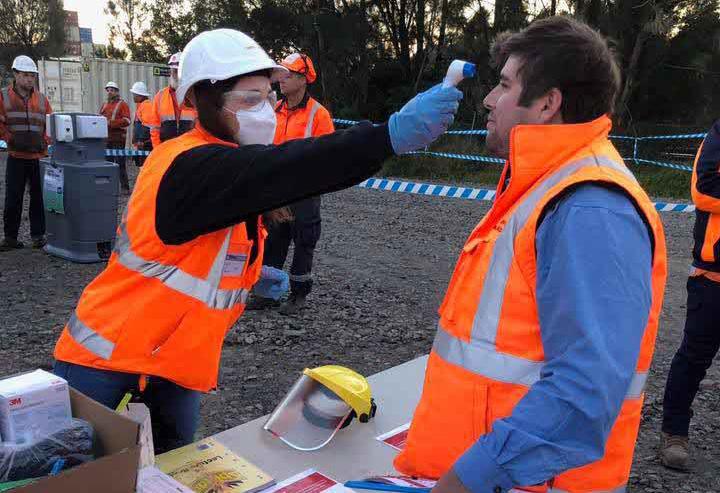
John Holland’s COVID-19 Response
The construction industry was one of the few allowed to continue operating during COVID-19 lockdowns. Such a responsibility carried significant challenges for John Holland’s operations, projects and our employees. Our response to employee health, safety and wellbeing during the pandemic was three-pronged:
1. Protecting employees
2. Business continuity
3. Project-level adaptation and implementation
Throughout the COVID-19 Pandemic John Holland’s approach has been led and coordinated by the John Holland-wide COVID-19 Taskforce. The Taskforce’s primary role was to coordinate crisis and contingency assessments, planning and developing control measures to manage the WHS risks related to COVID-19, development of Occupational Health and Hygiene procedures and tools, COVID-19 guidance documents and checklists as well as communicating available Wellbeing resources. This work continued as the pandemic evolved and new Government requirements came into effect that effect our people and our industry.
Our Group HSES team worked extensively with our
operational business units and projects to navigate practical ways for our workplaces to continue to function safely including:
- Guidelines and comprehensive toolkits were provided for all employees, whether they remained on site or work from home. Each site and project team were able to use and adapt the guidelines for their unique situation.
- In response to social distancing requirements, timing of breaks and shifts, which previously happened at set times, were staggered, and many sites adjusted start or finish times.
- There was extra cleaning of amenity spaces between shifts, and we employed COVID-19 marshalls on site to ensure precautions were followed.
- Teams of skilled tradespeople were kept in bubbles and didn’t mix with wider pools of workers and employees to minimise project disruptions.
- We also trialled several contact tracing solutions including a bluetooth-enabled bracelet that connected users wearing them and alerted them if they were a close contact of a COVID-19 positive case.
These measures and their focus on project-level leadership focused on adaptability, to ensure business continuity allowed us to operate and keep our people employed during such a challenging time.

Our Community and Partners

Community partnerships and careful supply chain management have always been important to the John Holland business. We approach every project by asking what community value we can deliver. We are proud of our record in this area.
We identified supply chain management as one of our key material topics to address and we plan to improve our practices in this area.
Targets
We have set targets related to our impacts on the communities that are affected by our projects so
Focus area
Supply chain resilience
2022 targets
we can measure John Holland’s progress and the
Increase social and Indigenous supplier spending by 10% annually on 2021 spend as a percentage of total spend.
Develop and implement a Supplier Diversity procurement strategy.
Community Value
We try hard to develop strong relationships and partnerships with each of the communities we work with, and we’re happy with the results.
The approach we take to engage and invest in communities allows us to ensure the infrastructure we build supports communities and that they understand how the project will be constructed so we can manage any issues as they arise.
on line with the International Association of Public Participation (IAP2)
For more about our approach to community
visit our website.

Case Study: NWPA Business & Community Engagement Program
Following the impact of COVID-19 restrictions on the Victorian community and the suspension of in-person engagement activities, the North Western Program Alliance (NWPA) communications and engagement team embarked on an expanded business and community engagement program for two of its key Projects.
Taking place between March and May 2021 on the Glenroy and Preston Level Crossing Removal Projects, the engagement program consisted of three key events: The Glenroy Level Crossing Removal Easter Egg Hunt and Festival; The Preston Level Crossing Removal Project Mother’s Day shop local campaign; and festival Greek Cultural Mural at St John’s College (Preston Level Crossing Removal Project). All three initiatives were designed to increase the vibrancy of local communities and support businesses surrounding their projects.
All three events garnered significant appreciation from the community and traders, including unprompted calls to talk back radio praising the events.
The lasting significance of this engagement cannot be understated, achieving a level of community decision making rarely achieved in construction. The reputation of NWPA and John Holland has been significantly enhanced through the delivery of this legacy, cementing strong, positive relationships with highly impacted stakeholders early in the life of these Projects. The combined result of all three engagement events has led directly to outstanding customer satisfaction. Customer commissioned community surveys (completed by IPSOS) have resulted in community satisfaction scores of 77.2 per cent (Preston) and 80.2 per cent (Glenroy), well above the customer required minimum of 70 per cent.
This has been further reflected in the North Western Program audit undertaken by the project owner (The Major Transport Infrastructure Authority), which awarded the NWPA Communications and engagement team the highest ever score of 88.2 per cent for effective community engagement.
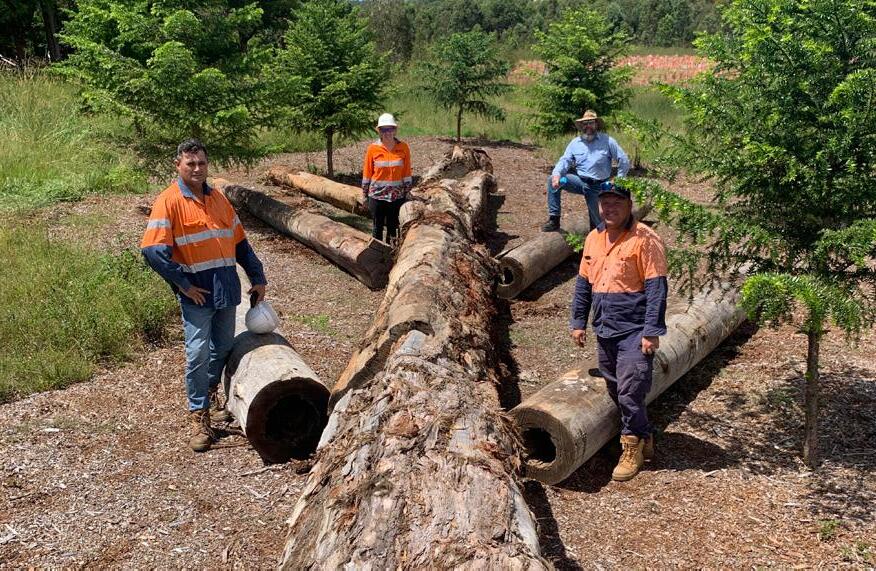
Case Study: Kabi Kabi cultural heritage
Prior to construction starting on the Bruce Highway Upgrade – Maroochydore Road and Mons Road Interchanges project (BHMIP), a number of trees were identified within the project site to be of cultural heritage significance to the Kabi Kabi First Nations People. While every effort was made to preserve as many as trees as possible, some had to be removed.
The Department of Transport and Main Roads (TMR) and the project team, in collaboration with the Sunshine Coast Council and the Kabi Kabi people, organised for some of the culturally significant trees to be returned to country at an environmental off-set site in Doonan. The trees provide fauna habitat stacks, where the rootballs and logs are placed in piles to replicate fallen timbers, creating essential habitat and beneficial ecosystems for many species of flora and fauna. Camera monitoring in the area has recorded numerous species colonising the placed logs including snakes, bandicoots, blue tongue lizards and other small mammals and reptiles.
Other culturally significant trees were transported to a site in Yandina and placed down to create two ceremonial circles for the Kabi Kabi people.
The $301.25 million BHMIP is jointly funded, with the Australian Government contributing $241 million.
Supply Chain
Resilience
The infrastructure, rail, transport, and building projects and services we work on means we engage suppliers from around the world for the products and services needed to complete them.
Key categories of goods and services we procure
Mechanical, electrical and systems
Professional consulting services such as engineering services
Identifying modern slavery risks
We continue to work to refine our understanding of modern slavery risks across our operations and in the supply chain, as per the Modern Slavery Act 2018.
We publish an annual Modern Slavery Statement. This section draws on information in our 2020 Modern Slavery Statement published in June 2021. The 2021 Modern Slavery Statement will be
published in the second half of 2022 and will include our progress on addressing modern slavery risks in our supply chain.
We continuously monitor and seek to act on the risks of modern slavery in our supply chains, engaging with our specialists in procurement, people and health, safety and environment and key operational areas including representatives from relevant controlled entities and joint ventures.
Civil sub-contracts
Building materials and products
Concrete and reinforcing products
Rail systems
Labour hire for our sites
Plant and wide range of equipment equipment
Fabricated steel
Industrial consumables
Fuels and lubricants
Modern slavery risks in our supply chain
Unauthorised subcontracting in the cleaning, catering and site security services
Labour hire firms’ worker exploitation
Labour exploitation PPE and IT procurement
Labour exploitation in materials procurement
Worker exploitation in the offshore service providers of design and other services
Risk of modern slavery in countries where there are reports of forced labour
Supplier screening for modern slavery risks
The starting point for managing modern slavery risks is at the tendering process. We require international suppliers we consider having a higher exposure to modern slavery risks to complete a modern slavery questionnaire and deed poll during the tender process. We ask questions relating to key modern slavery risk factors such as the use of recruitment fees and employer-provided accommodation. The deed poll sets out a range of modern slavery requirements, including an obligation for the supplier to inform us of actual or suspected modern slavery incidents in its operations and supply chain.
The John Holland Procurement Team
Our procurement policy commits us to ‘efficient, effective, ethical and sustainable procurement’ and sets out our expectation that all employees, contractors and business partners including suppliers will uphold ethical business practices and abide by relevant legislation.
Our procurement systems and policies are managed by a central procurement team.
- Business areas across John Holland are responsible for day-to-day procurement activity and we use the same procurement policies and frameworks across all reporting entities and controlled entities.
- We are also involved in construction activities through joint ventures. In projects where John Holland is principal contractor, we are responsible for the operations of the site and execute the project using our own products and systems, including our policies and procedures relating to modern slavery. Where we are not the principal contractor, site operations may be managed using another entity’s processes and systems. We expect all our joint venture partners to maintain high ethical standards, including where they serve as the principal contractor for projects.

Social impact
We are improving our procurement and inclusion practices. For example, we are working with our subcontractors and suppliers to ensure they provide employment opportunities to people from diverse backgrounds. This includes supporting employment either directly or indirectly through social and Indigenous enterprises.
We continue to increase our spending on social enterprise organisations and Indigenous businesses. In some cases, this focus on social enterprises and smaller, local businesses may help us to reduce our exposure to modern slavery risks usually associated with larger international suppliers because we can more easily monitor working conditions and undertake due diligence.
John Holland recognised as #1 in social procurement spend in the category of infrastructure, construction & property for 2021 with Social Traders.
An overview of donations to not-for-profit organisations is included in our Annual Review.
Social procurement, inclusion and diversity (SPID) is becoming more important to our clients, customers and communities. It is a future focus for us. Our longer-term goal is to develop a universal reporting tool for SPID data for projects and joint ventures to better identify the positive social impacts we are creating in the communities in which we live and operate and ensure we capture lessons learned for future projects to ensure we are creating meaningful change.

Giving Back
2021 COVID-19 lockdowns in NSW had a profound impact on Western Sydney, where more than 700 of our Sydney employees and 1,700 subcontractors are based. To show our support for this community, John Holland partnered with Lifeline and local community groups to boost mental health support and targeted services for families doing it tough.
$50,000
helping Lifeline respond to unprecedented demand devices for needy families and targeted mental health support
$50,000
“Western Sydney powers our nation, and the people of Western Sydney are integral to how we deliver the cityshaping infrastructure that is so vital to getting our economy back on track.”
- John Holland CEO Joe Barr


Performance and data

John Holland continues to improve its data collection capabilities for ESG reporting. Wherever we can, we include comparison and progress data, however this has not been possible for all disclosures included. This is a matter we will address in future reports.
Leadership and
Strategy
Communication and training about anti-corruption policies and procedures
Unit of Measure
% of the Board of Directors 100
% of employees
Provision of The Code of Business Conduct
% of business partners
Anti-corruption polices training
Number of the Board of Directors
100
- John Holland seeks to work with suppliers, business partners and other third parties who operate under similar standards to our Code.
- The Code of Business Conduct is provided to all consultants, contractors and suppliers to John Holland.
Further, in December 2021 John Holland adopted a Supplier Code of Conduct which is being progressively provided to existing and new suppliers to John Holland.
6 of 9 John Holland Directors undertook a training course in anti-bribery & corruption facilitated by a specialist risk consultancy firm, Control Risks.
The remaining Directors are due to undertake training in 2022.
Number of the Group Leadership Team
Number of Senior Managers
% of employees
All members of the Executive team undertook a training course in antibribery & corruption facilitated by a specialist risk consultancy firm, Control Risks.
All Senior Managers are required to attend the same anti-bribery and corruption training course facilitated by Control Risks. The course has been offered every one or two years to ensure that new starters attend the training.
100%
All employees receive training in antibribery and corruption during their business/role inductions
Disclosure
Unit of Measure
Number of incidents of corruption
Number of confirmed incidents in which employees were dismissed or disciplined for corruption.
Confirmed incidents of corruption
Anti-competitive behaviour
Number of confirmed incidents when contracts with business partners were terminated or not renewed due to violations related to corruption.
Number of public legal cases regarding corruption brought against the organisation or its employees during the reporting period and the outcomes of such cases.
Number of legal actions pending or completed regarding anti-competitive behaviour and violations of anti-trust and monopoly legislation
Built and natural environment
14. Including: asbestos, asphalt, batteries, bricks, clean fill, comingled recycling, co-mingled recycling, composites, compostable, concrete, containers contaminated with a listed, regulated, hazardous or controlled waste, drilling mud or sludge, e-waste, general /other waste, general/other construction waste, globes and lamps (not containing fluorescent lamps, mercury & mercury compounds), lead and lead compounds, liquid waste, liquid waste - other listed/ regulated/hazardous/controlled, metals, non-destructive digging waste (solid or liquid), oils, greases and hydrocarbons - including oil/hydrocarbon and water mixtures, paper & cardboard, paper/cardboard, plasterboard & gypsum, plastic hard, plastic soft, rock & aggregate, rock, soil/spoil (contaminated), rock, soil/ spoil (uncontaminated), sewage or effluent, solid waste - other listed, regulated, hazardous or controlled waste, solid waste - other listed/regulated/hazardous/ controlled, solid waste – vegetation, solvents, textiles, tiles & ceramics, timber & wood, top soil, vegetation.
15. Including: asbestos, asphalt, batteries, bricks, clean fill, comingled recycling, co-mingled recycling, composites, compostable, concrete, containers contaminated with a listed, regulated, hazardous or controlled waste, drilling mud or sludge, e-waste, general /other waste, general/other construction waste, globes and lamps (not containing fluorescent lamps, mercury & mercury compounds), lead and lead compounds, liquid waste, liquid waste - other listed/ regulated/hazardous/controlled, metals, non-destructive digging waste (solid
or liquid), oils, greases and hydrocarbons - including oil/hydrocarbon and water mixtures, paper & cardboard, paper/cardboard, plasterboard & gypsum, plastic hard, plastic soft, rock & aggregate, rock, soil/spoil (contaminated), rock, soil/ spoil (uncontaminated), sewage or effluent, solid waste - other listed, regulated, hazardous or controlled waste, solid waste - other listed/regulated/hazardous/ controlled, solid waste – vegetation, solvents, textiles, tiles & ceramics, timber & wood, top soil, vegetation.
16 Including: asbestos, asphalt, batteries, bricks, clean fill, comingled recycling, comingled recycling, composites, compostable, concrete, containers contaminated with a listed, regulated, hazardous or controlled waste, drilling mud or sludge, e-waste, general /other waste, general/other construction waste, globes and lamps (not containing fluorescent lamps, mercury & mercury compounds), lead and lead compounds, liquid waste, liquid waste - other listed/regulated/ hazardous/controlled, metals, non-destructive digging waste (solid or liquid), oils, greases and hydrocarbons - including oil/hydrocarbon and water mixtures, paper & cardboard, paper/cardboard, plasterboard & gypsum, plastic hard, plastic soft, rock & aggregate, rock, soil/spoil (contaminated), rock, soil/spoil (uncontaminated), sewage or effluent, solid
- other listed, regulated, hazardous or controlled
– vegetation, solvents, textiles, tiles & ceramics, timber & wood, top soil, vegetation.
Our People
17. Disclosures reported for Singapore for 2021 will only include employee-related data. 18 Majority of John Holland’s employees are based in Australia, hence the detailed breakdown for that region.
Employees by region, gender and age
Employees by region and Business Unit
Diversity of the John Holland Board of Directors and its Committees, and the ELT
Employee new hires by gender, age and regions within Australia
Compensation ratio
The annual total compensation for the organisation’s highest-paid individual to the median annual total compensation for all employees: 7.39.
The ratio of the percentage increase in annual total compensation for the organisation’s highest-paid individual to the median percentage increase in annual total compensation for all employees: 312%.
Gender Pay Gap
WHS Performance21
We continually monitor performance on a number of WHS-related metrics, as per below table. All types of workers (Direct and Indirect) are included in any and all actions taken or underway to eliminate workrelated hazards and minimize risks.
Reportable WHS Metrics22
The number and rate of fatalities as a result of work-related injury
The number of high- consequence work-related injuries (excluding fatalities)
The rate of high-consequence work-related injuries (excluding fatalities)
The
of recordable workrelated injuries25
number of high-potential (1P) work-related incidents
The number of “Near Miss” events
Miss”
Miss” events – 3P or report
21. Data covers both New Zealand and Australia. Employees in New Zealand did not incur any recordable injuries, however, the hours worked in the country are included in the TRIFR calculations.
22. The rates have been calculated based on 1,000,000 hours worked. 23 All John Holland employees (Direct). No group or type of employee is excluded from reporting.
24 All workers who are not John Holland employees but whose work and/or workplace is controlled by the organisation (Indirect).
unweighted
unweighted
25.The main types of work-related injury: Wounds, Lacerations, Amputations and Internal Organ Damage
26. “Weighted” is the John Holland share of joint ventures (JVs). “Unweighted” includes all data from these JVs. John Holland company reporting is usually completed using weighted figures, without splitting up Direct vs Indirect workforce.
Included in the environmental disclosure
will generally be obliged to fulfil these required assessment processes before putting a project to tender.
29. In most instances, the requirement to
framework under which the project is to be
including any legislated need to complete a full environmental impact or environmental effects statement. John Holland’s customers will generally be obliged to fulfil these required assessment processes before putting a project to tender.
30 Requirements to monitor and report environmental and social impacts will generally form part of the project contractual requirements.
31 Requirements to monitor and report environmental and social impacts will generally form part of the project contractual requirements.
32 While most project teams regularly take part in fundraising activities, and often donate the proceeds to local not-for-profit organisations, formal community benefit or legacy programs involving either an assessed grants program or systematic consultation and analysis of local needs are less common. Where
these do exist, they are implemented in line with John Holland’s IMS document, the Community Partnerships Handbook.
33.John Holland’s IMS requires that all projects either incorporate community engagement requirements into the Project Management Plan, or tailor and implement the model Community and Stakeholder Engagement Management Plan. These will include formal enquiry, complaint and grievance processes.
34 The requirement to implement a local community consultation committee will form part of the broader project requirements included in customer contracts. Where these committees are required – including as part of project planning or environmental approvals – they will generally be chaired, managed and convened by customers.
35 Works councils, OH&S committees and worker representation committees will be convened on projects in line with State and Federal workplace relations and occupational health and safety regulations and legislation, unless specifically required by the customer as part of the project contractual obligations.
36 John Holland’s IMS requires that all projects either incorporate community engagement requirements into the Project Management Plan, or tailor and implement the model Community and Stakeholder Engagement Management Plan. These will include formal enquiry, complaint and grievance processes.
Appendices Appendix A
Governance structure and composition
Board of Directors
The Board of Directors comprises of:
- up to six CCCC International Holding Limited (CCCI) nominees
- the Chief Executive Officer of the Company
- the Chief Financial Officer of the Company
- the Chief Operating Officer of the Company.
All appointments to the Board are to be by CCCI as the sole shareholder of the Company. Each Director’s appointment is at the absolute discretion of CCCI for an undetermined period which can be terminated under certain conditions, such as ceasing to be an employee at John Holland, resignation or other date stipulated by the CCCI. As the sole shareholder, CCCI undertakes evaluations
of the performance of the John Holland Board; the John Holland Board does not undertake independent evaluations.
The key responsibilities of the Board, among others, are:
- approving the vision and strategic direction of the Company and significant corporate strategic initiatives
- approving the Company’s Strategic Plan, annual business plan and budget, and monitoring financial performance against budget and prior periods
- promoting good business conduct and culture
- agreeing the Company’s risk profile and framework
- monitoring and guiding compliance with statutory obligations including work health and safety requirements, environmental requirements, the Competition and Consumer Act, and ER/IR requirements including the Building & Construction Code of Practice.
With regards to communication of critical concerns, the John Holland Continuous Disclosure Policy includes the principles and policy for continuous disclosure of material information to Information Disclosure Officers, (namely the CEO, COO and CFO) who may report to the Board of Directors and/or CCCI.
Independence of the Board of Directors and its Committees and the Executive Leadership Team
3 Non-Executive (Rodney Lewis Heale (Rod Heale) *, Glenn Michael Palin (Glenn Palin), Martin Nicholas Hadaway (Martin Hadaway) )
1 Independent Director (Rod Heale*) Governance, Compliance & Audit Committee 1 non-Executive member (David Stewart)
Independent members
4 non-Executive members (Martin Hadaway, Rod Heale*, Glenn Palin, David Stewart) 1 Independent member (Rod Heale*)
& Budget Committee
Non-Executive or Independent members Health, Safety & Environment Committee 3 non-Executive members (David Stewart, Rod Heale*, Glenn Palin) 1 Independent member (Rod Heale*)
Remuneration & Nominations Committee 1 non-Executive member (Glenn Palin) 0 Independent members
Executive Leadership Team N/A
John Holland Board
Chair of the Board of Directors
The Chair of the Board is Mr Bo Wang, who is the Executive General Manager of China Road and Bridge Corporation, a subsidiary of CCCC. The Chair is appointed by CCCI as the sole shareholder of John Holland.
Collective knowledge of the Board of Directors on matters related to sustainable development
The Board receives reports on various matters from its committees, including matters related to sustainable development. The Board also receives ongoing training and updates on various matters, including from external specialist presenters. An example of this includes a presentation from Sarah Barker and Phoebe Roberts from MinterEllison on climate risk governance and disclosure at the Board of Directors meeting on 26 May 2021.
Conflicts of interest
CCCI requires that Directors must take all necessary and reasonable steps to avoid any conflict of interest. Directors are required under the Corporations Act 2001 (Cth) to declare all potential conflicts of interest to the Board. All
potential conflicts and related party transactions are disclosed in the Company’s annual financial statements which are reviewed and approved by the full Board of Directors.
Board Committees
The Board establishes and determines the membership and composition of Board Committees, having regard to workload, skills and experience, and any regulatory requirements. Each committee’s responsibilities and objectives are set out in a committee charter, which is reviewed annually or as required.
The Committees support the Board in overseeing the management of impacts on the economy, environment and people. The Board Committees support the Board in discharging its responsibilities, with a number of functions delegated to the Committees. Key functions are delegated to the CEO, who is supported by a number of management groups to assist with the undertaking and execution of the responsibilities delegated to the CEO by the Board of Directors
Remuneration & Nominations Committee (RNC)
Chairman Members Overview
- Assists the Board in fulfilling its duties and obligations regarding the appointment and remuneration of its executivesand employees.
- The Committee consists of five members, who are appointed or removed by the Board on the recommendation of the Committee in consultation with the Chairman of the Committee.
Glenn Palin - Bo Wang - Yilin Li - Joseph Dominic Barr (Joe Barr) - Guangsheng Peng
- The Committee assists the Board in fulfilling its duties and obligations regarding the appointment and remuneration of its executives and employees. The committee monitors resourcing and retention strategies and monitors the overall cost of remuneration structures within the Company.
- Several members of the RNC are employees of CCCI, which is the entity that owns John Holland, providing views of John Holland’s sole shareholder.
- The services of remuneration consultants, independent from John Holland, are engaged in providing expert market intelligence to assist the Company in informing remuneration decisions.
Company executive appointment and remuneration
- The Committee considers and agrees on John Holland’s remuneration strategy and policies including, policies with respect to total fixed remuneration, incentive plans, retention plans, superannuation, application of Board or Committee judgment (e.g., clawbacks), termination benefits and other benefits.
- It ensures that effective performance management systems are in place to assess the performance of the executives and the company and reviews the capability assessments of the executive and senior leadership teams, and the Company’s talent and succession planning.
- The Committee plays a critical role in the appointment of key company executives. It considers and proposes the appointment of the Chief Executive Officer to the Board for approval; it considers and proposes the appointment of other Company Executives that directly report to the Chief Executive Officer or Chief Operating
Officer, including Operational Executive General Managers, Business Group Executive General Managers and Project Directors.
- It also considers and proposes the remuneration of key executives and project executives.
- With regards to executive incentives, the Committee reviews and approves the Profit Share, Executive Performance Incentive and Retention plans, including any applicable funding formula or cap.
- Fixed pay, incentives and bonuses are linked to executive performance, as assessed through annual balanced scorecard KPIs. All executive scorecards include a quadrant dedicated to People KPIs. A further quadrant is focused on Customer KPIs, including goals relating to the Company’s economic and environmental impact. Further to this, the Company’s values of Caring and being Future Focussed provide an additional focus.
Health, Safety and Environment (HSE) Committee
Chairman Members Overview
- Monitors, reviews, and promotes the Group HSES strategy and approach to standards and practices, and recommends changes to the Group’s policies, standards, and practices.
David Stewart
- Jinsong Tang - Glenn Palin - Joe Barr - Rod Heale
- The Committee consists of five members, including two Non-Executive Directors and two Executive Directors, each of whom is appointed or removed by the Board in consultation with the Chairman of the Committee.
- The Committee monitors, reviews and seeks advice on performance related to HSE and provides strategic oversight of HSE management and performance outcomes.
- The HSE Committee receives reports on various matters related to HSE management and provides regular reports to the Board.
Strategy & Budget Committee
Chairman Members Overview
- Manages the company’s medium and long-term strategy, including responding to changes in the operating environment.
- The Committee consists of up to seven members, each of whom is appointed or removed by the Board on the recommendation of the Committee in consultation with the Chairman of the Committee.
Bo Wang
- Guangsheng Peng
- Chun Pong (Eddie) Leung
- Joe Barr
- Darryn Alfred Ray (Darryn Ray)
- The objective and purpose of the Committee is to support the Board in the oversight of the Company’s Strategic Plan, and overall Company performance. The Committee maintains maintain an ongoing, cooperative, interactive oversight with the Company’s executive management, including the identification, setting and maintenance of strategic goals and expectations as well as the review of Company performance, potential acquisitions and strategic business alliances
- The Committee provides guidance, input and recommendations to the Board and to management with respect to the Company’s vision, strategy and performance.
Governance, Compliance and Audit Committee
Chairman Members Overview
- Monitors the financial performance and disclosures of the John Holland Group, as well as compliance with all applicable laws and regulations, including modern slavery reporting.
- The Committee consist of up to seven members, each of whom is appointed or removed by the Board in consultation with the Chairman of the Committee.
- The Committee members between them must have relevant financial and accounting expertise and have a sufficient understanding of the industries in which the Group operates.
Guangsheng Peng
- Chun Pong Leung ·
- Darryn Ray
- Yilin Li
- Evan Bai
- Joe Barr
- David Stewart
- The objective and purpose of the Committee is to support the Board in monitoring the financial performance and disclosures of the Company and its subsidiaries and in fulfilling its corporate governance and oversight responsibilities, including compliance with all applicable laws and regulations. · The Committee’s key objectives are to assist the Board to oversee the:
⚪ integrity of financial reports and statements
⚪ effectiveness of internal financial control systems
⚪ internal audit function and integrity of process
⚪ independent project review function and integrity of process
⚪ external audit function and integrity of process
⚪ review or investigation of any activities or the undertaking of special projects
⚪ ethical standards and practices within the Group and compliance with codes of ethics and business conduct.
Risk Committee
Chairman Members Overview
- The Committee consists of seven members, each of whom is appointed or removed by the Board, in consultation with the Chairman of the Committee
- The objective and purpose of the Committee is to support the Board’s task of monitoring the performance of the Company and its subsidiaries by overseeing the framework for, and the reporting of, risks including enterprise, project procurement and delivery risks.
Martin Hadaway
- Chun Pong Leung
- Glenn Palin
- Rod Heale
- Joe Barr
- Darryn Ray
- David Stewart
- The Committee’s key objectives are to assist the Board by:
⚪ overseeing the Group’s enterprise risk management framework, policies and procedures, including governance, compliances, system and reporting o
⚪ overseeing the overall framework for management of project risks arising from the Group’s operations and business it undertakes with its clients
⚪ providing assurance of continuity of business during an expected or unexpected disruption
⚪ ensuring the Group’s risk management policy and strategy is communicated throughout the Group to ensure it is embedded as part of the corporate culture.
- The Committee is not responsible for risk relating to HSE which is the responsibility of the HSE Committee.
Ethics & Compliance
Code of Business Conduct
Our Code of Business Conduct (the Code) and governance system are concerned with identifying ways to ensure that strategic or operational decisions are made effectively and in a manner that is consistent with our values. The objective of our governance system is to ensure that we as employees:
- at all times comply with applicable laws
- are accountable to our parent company, customers, government and the community for the decisions we make
- use resources responsibly, efficiently and effectively
- properly understand our responsibilities and the way they contribute to our goals consistent with the Code and our organisational values.
Where John Holland has a controlling position in a joint venture or other similar arrangement, we require that the standards of behaviour contained
in our Code be adopted. We also seek to work with suppliers, business partners and other third parties who operate under similar standards to our Code.
Reviews and monitoring of the Code and investigations into breaches are overseen by the Governance, Compliance & Audit Committee to ensure matters relating to the Code are handled appropriately.
The Whistleblower Standard
The Whistleblower Standard (the Standard) provides clear guidance on how to report wrongdoing in a manner that supports individuals in making a disclosure that is protected under the Corporations Act 2001 (Cth) and the Tax Administration Act 1953 (Cth) where applicable.
The Company Secretary and Corporate Counsel is the owner of the Standard and makes updates to the Standard as required in line with legislative changes and any feedback received from staff in relation to the operation of the internal reporting procedures.
Appendix B
Material topics definitions
Key Topic Definition
Climate change mitigation
Application of smart engineering and tech solutions
Resource efficiency
Employee attraction and retention
Health, Safety and Wellbeing
Diversity and inclusion
Community impacts
Ethics and compliance
Supply chain resilience
Systemic risk oversight
ESG oversight
GHG emissions Scope 1, 2, 3; physical, transition, technology, regulatory and competitive risks; carbon neutral and net zero strategies
Digital engineering and IT; knowledge sharing; industry leadership; innovating to support customer sustainability objectives
Waste management; water management; material use; biodiversity impact; fuel and energy consumption
Compensation and benefits; engagement and culture; recruitment and retention; learning and development; wellbeing
Health and safety management system; employee and subcontractor safety training; COVID-19 management
Employee gender, Disability, LGBTI+, age, Aboriginal and Torres Strait Islander and Cultural diversity; diversity and inclusion training
Stakeholder engagement at project site; local recruitment and training for project execution; community contributions
Bribery and corruption; ethical conduct and compliance; anticompetitive practices; whistleblower protections
Modern slavery; supply chain audits and outcomes; supplier diversity and screening; sustainable procurement practices
Intellectual property protections; modernising management systems; data privacy and cybersecurity
Regulatory compliance; formal ESG oversight structures; the role of the Board in setting sustainability strategy and reporting; reporting and transparency
Appendix C
John Holland 2021 Strategy
01 02 03 04
Growing sustainably.
Optimising the customer experience
Picking the right projects
Changing the risk profile
Creating robust bids
Boosting performance.
Setting up projects and businesses for success
Driving benefits through design management and digital engineering
Delivering predictable projects
Resolving West Gate Tunnel
Returning to profit
Championing people.
Living and breathing a safety culture
Developing our teams
Leading on flexible work
Driving diversity and inclusion
Investing in mental health and wellbeing
Working as one.
One John Holland Way of working
Maximising digital first solutions
Modernising management systems
Breaking down silos

The John Holland 2021 Strategy was relevant for the reporting period, and has been superseded by the John Holland Company Strategy on page 12 of the report.
Appendix D
Progress against 2019 priorities
We revised the material priorities included in our 2019 Sustainability Report, however, we still made progress on goals included in the 2019 report, as outlined in the table below.
Material priority
Climate Change Management
2019 Target
Report our business climate risks against the Task Force on Climate Disclosure (TFCD) Framework.
2020-21 Progress
- We are committed to a holistic approach to reducing our carbon emissions through the development of our 2022-2025 Climate Change Strategy and have committed to exploring a Net Zero Pathway.
Innovation
Strengthen John Holland’s capability in driving construction innovation across digital fronts to realise faster, more efficient outcomes through Building Information Modelling (BIM), Virtual Design and Construction (VDC) and Geographic Information System (GIS).
- In 2021, John Holland was awarded the BSI Kitemark accreditation for ISO19650, a global accreditation that acknowledges JH’s organisational management of digital information, and how we leverage and use digital approaches.
- We established the John Holland GIS capability and a Chief Pilot and Remote Operator Certificate for drone use.
- We commenced several Proof of Concepts, including Digital Twin, Immersive Technologies, including AR, VR and 360 video, Reality Capture, and IoT-connected sites with automated insights.
Delivery Efficiency and Adaptability
Capture and manage knowledge across tenders and projects to learn from past experiences and share innovation across the business.
Implement the John Holland Way initiative to provide a consistent and digitised operating framework.
- We commenced the development of the John Holland Knowledge Management System, a central repository for sharing past project information including lessons learnt, with the launch planned for 2022.
- The program completed its initial and extended scope in 2021 and accountabilities for ongoing improvements have transitioned to business-as-usual.
- The program will complete the transition of remaining governance, control, and change management elements to business owners in 2022 and discontinue as an enterprise initiative.
Material priority
2019 Target
Evaluate GHG emissions, energy, material, water usage and waste generation data.
2020-21 Progress
- We have set targets relating to use of renewable fuels· We have commitments to focus on using resources more efficiently by embedding energy, water, material and waste reduction initiatives into the way we work, the places we create and the investments we design, construct and operate.
Resource Use Efficiency
Inclusive Workplace
Develop a strategy to reduce GHG emissions, energy, material, water usage and waste generation
- We support the use of recycled and reused materials and consider whole-life impacts and benefits to maximise the value of resources and services. An example of this is a company-wide Recycled Plastics Project (RPP) that targets recycling soft plastic waste into materials such as asphalt and concrete which can be reused on our projects, closing the loop on soft plastic waste and contributing to a circular economy. Planning is underway to extend this approach to circular economy.
Improve diversity ratios > 40% at each resourcing phase.
Prioritise closing the gender pay gap and monitoring salaries to ensure any improvement is maintained.
Embed flexible work practices across operations.
- We revised our targets to business unit-specific goals for 2022.
- We will conduct remuneration reviews regularly to continue to close the gender pay gap.
- We have rolled out working flexibly across the business including, toolkits for managers and employees and communications about what flex could mean to different people · In our Inclusion & Diversity survey 80% of our respondents said they have the flexibility needed to manage work and other commitments.
Increase female participation in key operational roles from 13.6% in 2019 to 18.6%.
Deliver on milestones committed to in the John Holland 2020-2022 Innovate Reconciliation Action Plan (RAP).
- We achieved 14.8% operational roles held by women. We have an increased focus on overall participation across business units.
- We made the following progress on the key milestones:
1. Develop and maintain mutually beneficial relationships with Aboriginal and Torres Strait Islander stakeholders and organisations close to our project sites - 100% and ongoing.
Material priority
2019 Target 2020-21 Progress
2. Demonstrate respect to Aboriginal and Torres Strait Islander peoples by observing cultural protocols – 90%.
3. Improve employment outcomes by increasing Aboriginal and Torres Strait Islander recruitment, retention and professional development – 30% complete.
4. Establish and maintain an effective RAP Working Group (RWG) to drive governance of the RAP – 100% and ongoing.
Our Graduate Program has been recognised in:
- 2021 AAGE Top 40 Intern Programs – Ranked 15.
Learning and Development
John Holland Graduate Program placed in the top 10 of the AAGE top Graduate employers list.
Embed technical onboarding and training, building on the John Holland Way operating framework.
- 2021 AFR Top 100 Graduate Employers – Ranked #18
⚪ Most Popular Engineering Employer award – Ranked #2
⚪ Most popular internship program –Small – Ranked #1
- A system of mandatory process induction training is in place and operational for all staff and new starters.
- Process induction training is now embedded into the broader HR-managed learning and development program, and participation is monitored and reported to John Holland Executive.
- Transition High Risk Safety training to Adaptive Learning Platform that ensures 100% competency is almost complete (80%)
95% of all managers to complete the Black Dog Institute’s “Mental Health for Leaders Training”.
Safety and Wellbeing
Improve the Safety Culture, Work & Health (IWH) Organisational Performance Metric survey (the OPM Survey) from the 2019 baseline score of 3.42
- 297 managers completed the Black Dog Mental Health training in 2021, bringing our overall performance to 75% of John Holland’s managers having received this training as of December 2021.
- In 2021 we achieved the result of 3.52 in our OPM survey results.
Material priority
2019 Target
Improve customer engagement to achieve a score of 84 or greater.
2020-21 Progress
- Achieved a customer engagement score of 79 in 2020.
Results for 2020 included:
Customer Outcomes
Community Value
Improve Net Promoter Score (NPS), to achieve 50 or greater
Supply Chain Resilience
Dedicate resources towards enhancing community value for the communities in which we work.
- NPS for all members of the Group Leadership Team: +17
- Overall customer satisfaction for all execs: 79
- Per Business Unit NPS targets:
⚪ Building – 2020: 48
⚪ Rail – 2020: 16
⚪ Infra and major projects: - 3
- We lead an experienced cohort of community and social impact teams on our projects.
- We are dedicated to working with the community to keep them informed and engaged and to add value through opportunities, social procurement and community development.
- Our projects are supported through a central community of practice, and where needed, is complemented by a dedicated supplier panel of approved and values-aligned expert consultants.
Develop social and environmental screening criteria for all John Holland suppliers.
- John Holland evaluates suppliers on, among other things, their social and environmental performance and approach questions. We are embedding this approach into our Operational Management System.
- Minimum standards for suppliers are not mandated but are managed project-by-project.
Undertake a review of modern slavery requirements and implement an action plan
Proactively include Indigenous business screening in the registration of suppliers.
- John Holland published its 2020 Modern Slavery Statement and will publish an updated statement in 2022 providing updates on steps taken.
- Part of our evaluation of suppliers includes identifying and recording their Indigenous credentials. We are embedding this approach into our Operational Management System.
- We value the Indigenous and social businesses that supply our projects and actively promote their engagement.
Statement of use
GRI 1 used
GRI 2 The organisation and its reporting practices
John Holland Group Pty Ltd (John Holland) has reported the information cited in this GRI content index for the period of 1 January 2021 – 31 December 2021 in accordance with the GRI Standards.
GRI 1: Foundation 2021.
2-1Organisational details
About this report
About John Holland: Our structure
2-2Entities included in the organisation’s sustainability reporting
About this report
3, 10, 11 Location of headquarters: Level 9, 180 Flinders Street, Melbourne, 3000, Victoria, Australia.
3 John Holland publishes an annual financial report audited by Ernst & Young. At the time of publishing this ESG report, the 2021 financial report had not been made public. Entities covered by this ESG report are the same as those included in John Holland’s financial reporting. For this ESG report, information collected for all entities has been consolidated and presented as information for John Holland without adjustment to information for minority interests. Material topics have been defined for John Holland including all its entities.
2-3Reporting period, frequency and contact point
About this report
GRI Index
3 John Holland aims to publish a bi-annual sustainability report. The reporting period covered in this report aligns with John Holland’s financial reporting but is not published at the same time.
Activities and workers
John Holland’s last ESG report relating to FY19 was published on 13 October 2020.
For questions about this report, please contact
HSES.Wellbeing@jhg. com.au.
2-4 Restatements of information GRI Index No information restatement has been included in this report.
2-5 External assurance GRI Index
2-6 Activities, value chain and other business relationships
2-7
About John Holland 12, 13, 14, 15
Employees About John Holland: John Holland in numbers
Our people: People highlights Performance and Data: Our people 13, 52, 53, 80, 81, 82
The report has not been externally assured.
2-8 Workers who are not employees
Governance 2-9
Governance structure and composition Leadership and Strategy: Building Integrity and Resilience
Appendix A 29, 93
John Holland disclosed all employee-related information available in disclosure 2.7.
2-10 Nomination and selection of the highest governance body
2-11 Chair of the highest governance body
2-12 Role of the highest governance body in overseeing the management of impacts
2-13 Delegation of responsibility for managing impacts
2-14 Role of the highest governance body in sustainability reporting
2-15 Conflicts of interest
Appendix A 93
2-16 Communication of critical concerns
Appendix A 93, 94
2-17 Collective knowledge of the highest governance body
Leadership and Strategy:
Building Integrity and Resilience
Appendix A 29, 93, 95
Leadership and Strategy:
Building Integrity and Resilience
Appendix A 29, 93, 95
Leadership and Strategy:
Building Integrity and Resilience 29, 93
Leadership and Strategy: Building Integrity and Resilience
Appendix A 30, 31, 93, 94
Leadership and Strategy: Building Integrity and Resilience
Appendix A 30, 93 No critical concerns were communicated to the Board of Directors during the reporting period.
Appendix A 94
2-18 Evaluation of the performance of the highest governance body
2-19 Remuneration policies
2-20 Process to determine remuneration
Appendix A 93
Appendix A 94, 95
Appendix A 94, 95
2-21 Annual total compensation ratio Data and Performance: Our People GRI Index
87 Information supporting the compensation ratio disclosure:
- For salary employees, the annual base salary, superannuation and allowances as at 31 December 2021, plus any bonus received during 2021.
- For wages employees, actual normal time earnings, allowances, superannuation received during the year were annualised, plus any bonus received during 2021.
- In terms of the median annual total compensation, all employees were included in the calculation. For the median percentage increase, only those with yearon-year data were included in the calculation.
Strategies, policies and practices
2-22 Statement on sustainable development strategy Letter from the CEO 6, 7
2-23 Policy commitments Our approach to ESG
Leadership and Strategy: Building Integrity and Resilience
Our Community and Partners: Supply Chain Resilience
GRI Index
20, 21, 30, 31, 70, 71
2-24 Embedding policy commitments
Leadership and Strategy:
Our Community and Partners: Supply Chain Resilience
Appendix A 29, 70, 71, 93
John Holland’s management committees apply the precautionary principle, where relevant, to our management approach.
John Holland policies which are publicly available include:
John Holland Health, Safety and Wellbeing Policy
John Holland Code of Business Conduct Whistleblower standard
Some of John Holland’s policies are not publicly available. John Holland is a privately owned company, and as such, is not required to publicly disclose business policies. The policies that have been shared on our website are published at the discretion of each Policy Owner.
2-25 Processes to remediate negative impacts
Leadership and Strategy: Building Integrity and Resilience
Our approach to ESG
Our Community and Partners: Supply Chain Resilience
Appendix A: Ethics and compliance 20, 21, 29, 30, 31, 32, 70, 71, 97
2-26 Mechanisms for seeking advice and raising concerns
2-27 Compliance with laws and regulations
Leadership and Strategy: Building Integrity and Resilience
Our People: Health, Safety and Wellbeing
Appendix A: Ethics and compliance 29, 30, 31, 64, 97
GRI Index
The total number of non-compliance with laws and regulations include one (1) fine of $15,000 and one (1) non-monetary sanction:
- In February 2021, a Penalty Notice of $15,000 was issued to John Holland Pty Ltd by the Department of Planning, Industry and Environment NSW. This was Penalty Notice s5.14(2) Environmental Planning & Assessment Act 1979 - Failure to comply with a condition of approval for state
significant infrastructure to complete property treatments at all eligible receivers within the stipulated timeframe following commencement of construction.
- In December 2021, a Heavy Rigid truck on N2NS project was intercepted, weighed and found to be overloaded by 70 per cent over Axel Group 2. The truck as a whole was not overloaded, the overloading was a distribution of load issue. A single charge of s96(1)(c) of the Heavy Vehicle National Law was filed against John Holland Pty Ltd on 18 October 2021. The matter was found proven and dismissed without penalty at the Moree Magistrates’ Court.
In the previous reporting periods, there was a one (1) fine in 2020 and two (2) in 2019, all related to environmental non-compliance. 2-28
35 John Holland is an active member of the Green Building Council of Australia (GBCA), Infrastructure Sustainability Council of (ISC), Business
Stakeholder engagement 2-29 Approach to stakeholder engagement
Our Approach to ESG: Materiality Assessment
Our Community and Partners: Community Value
GRI Index
2-30 Collective bargaining agreements
GRI Index
Council for Sustainable Development Australia (BCSD Australia), Australian Constructors Association’s Sustainability Working Party and a founding member of the Australian Supply Chain Sustainability School (ASCSS).
23, 68 John Holland’s approach to community and stakeholder engagement is outlined in a number of documents contained within the organisation’s Integrated Management System. John Holland regularly speaks to and surveys its employees, customers and suppliers to solicit feedback to better its operations and business.
John Holland has in place a Freedom of Association policy that protects the rights of all workers on John Holland projects to join or not join a union. Additionally, John Holland as a Code covered entity is required to demonstrate compliance with all relevant workplace laws at all times, such as the Fair Work Act 2009 (Cth). The Act, ,
GRI 3 Material topics 3-1 Process to determine material topics
Our Approach to ESG: Materiality Assessment 22, 23, 24 3-2 List of material topics
CEO Letter Our Approach to ESG: Materiality Assessment 6, 7, 24
among other things, protects the rights of employees to bargain collectively.
John Holland educates all workers on our projects in respect of freedom of association through project inductions and regular toolbox talks.
GRI 204 Procurement practices 3-3 Topic management disclosures
204-1
Proportion of spending on local suppliers
Our Community and Partners: Supply Chain Resilience 71
Data and Performance: Community and Partners
72, 89 John Holland’s definition of ‘local’ includes Australia and New Zealand; significant locations of operations include Australia and New Zealand.
GRI 205 Anticorruption 3-3 Topic management disclosures Leadership and Strategy: Building Integrity and Resilience 30, 31, 97
205-1 Operations assessed for risks related to corruption
205-2 Communication and training about anticorruption policies and procedures Performance and Data: Leadership and Strategy
John Holland does not carry out operations-specific assessments for risks related to corruption.
76 Anti-corruption policies communication disclosure does not include performance numbers for business partners; however,
205-3 Confirmed incidents of corruption and actions taken
John Holland seeks to work with suppliers, business partners and other third parties who operate under similar standards to our Code.
Breakdowns by category and region have not been included as communication and training are comprehensive and provided to a large majority of groups reported.
77 Information related to the number of incidents and actions taken is not included in the report because of legal prohibitions and confidentiality constraints. The topic management disclosure provides an overview of how such matters are managed at John Holland. GRI 206 Anticompetitive behaviour 3-3 Topic management disclosures
and Strategy: Building Integrity and Resilience 30, 31, 97 206-1 Legal actions for anticompetitive behaviour, anti-trust, and monopoly practices
39, 42
302-1 Energy consumption within the organisation
Data and Performance: Built and natural environment
78 Data for this disclosure does not distinguish between energy consumption within the organisation and outside of it, as the organisation reports to NGER Act 2007, which does not require such a split.
302-2 Energy consumption outside of the organisation
Data and Performance: Built and natural environment
302-3 Energy intensity
Data and Performance: Built and natural environment
78 Data for this disclosure does not distinguish between energy consumption within the organisation and outside of it, as the organisation reports to NGER Act 2007, which does not require such a split.
78 Data for this disclosure does not distinguish between energy consumption within the organisation and outside of it, as the organisation reports to NGER Act 2007, which does not require such a split.
GRI 303 Water and effluents 3-3 Topic management disclosures Built and natural environment: Resource Use Efficiency 38, 39, 45
303-5 Water consumption Data and Performance: Built and natural environment
GRI 305 Emissions 3-3 Topic management disclosures Built and natural environment: Energy use and Greenhouse Gas Emissions 38, 39, 42
305-1 Direct (Scope 1) GHG emissions Data and Performance: Built and natural environment
305-2
Energy indirect (Scope 2) GHG emissions
Waste 3-3 Topic management disclosures
Data and Performance: Built and natural environment
Built and natural environment: Resource Use Efficiency 38, 39, 45 306-3
generated
306-4
GRI 401 Employment 3-3
401-1
New employee hires and employee turnover
401-2 Benefits provided to full-time employees that are not provided to temporary or part-time employees
Our People 51, 52, 53, 54, 55, 58, 59, 60, 61, 62, 63
Performance and Data: Our People 84, 85 The rate of new employee hires is not tracked within the company.
Our People: Inclusive Workplace
Our people: Learning and Development GRI Index 60, 61 Our employee benefits package includes income protection insurance to all our employees and the Employee Financial Support Plan (EFSP) which provides salary continuance for our people where they are incapacitated for work due to one of the following three reasons: work-related injuries/illnesses; injuries arising from travelling directly from work to home and vice versa; and non-work-related injuries/illnesses.
401-3
and Data: Our People 61, 87
403-1
64 John Holland’s Workplace Health and Safety (WHS) Management System is accredited to ISO 45001:2018 and OFSC.
Effective implementation of these systems was achieved in 2019 following an external surveillance audit.
The WHS Management System has been developed and implemented to assist in meeting John Holland’s legal obligations but not to meet legal requirements.
The John Holland Health, Safety & Wellbeing Policy is available at the link.
403-5 Worker training on occupational health and safety
403-6 Promotion of worker health
Our People: Health Safety and Wellbeing 64
Our people: Inclusive Workplace
Appendix C 58, 59
403-7 Prevention and mitigation of occupational health and safety impacts directly linked by business relationships
403-8 Workers covered by an occupational health and safety management system
403-9 Work-related injuries
Our People: Health Safety and Wellbeing
Appendix C 64, 65
Our People: Health Safety and Wellbeing 64, 65
Data and Performance: Our People
88 No workers have been excluded from the disclosure.
The work-related hazards that pose a risk of highconsequence injury, include:
- Traffic, Plant and People
- Excavation and Trenching
- Lifting operations
- Electrical Safety
- Working at Height
- Wellbeing
- Temporary Works
- Isolation
- Environmental Management
- Work on Rail
GRI 404 Training and education 3-3 Topic management disclosures
404-1 Average hours of training per year per employee
These hazards have been determined using John Holland’s Global Mandatory Requirements (GMRs) which include the Health, Safety, Environment, Wellbeing and Rail Standards.
Our people: Learning and development 52, 62, 63
Data and Performance: Our People 87 Data about average hours of training by employee category has been included as per business unit for business units with tracking of such data.
404-2 Programs for upgrading employee skills and transition assistance programs
404-3 Percentage of employees receiving regular performance and career development reviews
GRI 405 Diversity and equal opportunity 3-3 Topic management disclosures
405-1 Diversity of governance bodies and employees
405-2
Our people: Learning and development Our people: Inclusive Workplace 54, 55, 62, 63
Data and performance: Our People 87
Our people: Inclusive Workplace 52, 54, 55
Data and Performance: Our People 80, 81, 82, 83
Ratio of basic salary and remuneration of women to men Data and Performance: Our People
406 Nondiscrimination 3-3 Topic management disclosures
Leadership and strategy: Building Integrity and Resilience
GRI Index
30, 31 John Holland is committed to ensuring our workplaces are safe and take steps to eliminate unlawful discrimination in the workplace. We have robust policies, procedures and complaint mechanisms in place to ensure we are equipped to assess, manage and respond to incidents of unacceptable workplace behaviour, including unlawful discrimination, in a manner which is professional, safe and consistent with our values. We are also committed to continuous improvement of our internal processes and governance.
Our complaint mechanisms provide a safe and anonymous way for employees, contractors, suppliers and other stakeholders to report potential breaches of our policies, procedures, standards and applicable laws, including in relation to unlawful discrimination.
Any reports relating to unlawful discrimination are managed and investigated in accordance with
applicable procedures and reported in line with our governance obligations. Responses to substantiated matters involving employees found to have engaged in breach of applicable policies, procedures and the law include disciplinary action, including counselling, training and coaching, verbal or written warnings and where appropriate, termination of employment.
Information related to the number of incidents and actions taken is not included because of legal prohibitions and confidentiality constraints. The topic management disclosure provides an overview of how such matters are managed at John Holland.
John Holland has a freedom of association policy that protects the rights of all workers on John Holland projects to join or not join a union.
Additionally, John Holland as a Code covered entity is required to demonstrate compliance with all relevant workplace laws at all times, such as the Fair Work Act 2009 (Cth). The Act,
407-1 Operations and suppliers in which the right to freedom of association and collective bargaining may be at risk
GRI Index Modern Slavery Statement
among other things, protects the rights of employees to bargain collectively.
John Holland educates all workers on our projects in respect of freedom of association through project inductions and regular toolbox talks.
Further information about managing our modern slavery risks is included in our Modern Slavery Statement: https:// www.johnholland. com.au/media/3184/ jh_modern-slaveryfy2020.pdf
Information related to the specific operations and suppliers is unavailable. John Holland is in the process of developing an integrated, automatic system, which will perform a supply chain risk assessment for the top 2,000 suppliers (covering 80 per cent of our spend). This risk assessment will include modern slavery-related content and will feed into a live dashboard to monitor supplier risks and assist with executive oversight.
Further information about managing our modern slavery risks is included in our Modern Slavery Statement: https://www. johnholland.com. au/media/3184/ jh_modern-slaveryfy2020.pdf
GRI 408 Child labour 3-3 Topic management disclosures
Our Community and Partners: Supply Chain Resilience
Modern Slavery Statement 70, 71
408-1 Operations and suppliers are at significant risk for incidents of child labour
GRI Index
Modern Slavery Statement
Further information about managing our modern slavery risks is included in our Modern Slavery Statement: https://www. johnholland.com. au/media/3184/ jh_modern-slaveryfy2020.pdf
Information related to the specific operations and suppliers is unavailable. John Holland is in the process of developing an integrated, automatic system, which will perform a supply chain risk assessment for the top 2,000 suppliers (covering 80 per cent of our spend). This risk assessment will include modern slavery related content and will feed into a live dashboard to monitor supplier risks and assist with executive oversight.
The majority of John Holland operations and suppliers are domestically based in Australia, these operations and supply chains are generally considered to be low risk for child labour. All international suppliers are considered medium risk. Modern slavery screening is used for all international supply.
GRI 409 Forced and compulsory labour 3-3 Topic management disclosures
Our Community and Partners: Supply Chain Resilience
GRI Index
Modern Slavery Statement
409-1 Operations and suppliers are at significant risk for incidents of forced or compulsory labour
GRI Index Modern Slavery Statement
Further information about managing our modern slavery risks is included in our Modern Slavery Statement: https://www. johnholland.com. au/media/3184/ jh_modern-slaveryfy2020.pdf
70, 71 The majority of John Holland operations and suppliers are based in Australia, these operations and supply chains are generally considered to be low risk for modern slavery. Further information about managing our modern slavery risks is included in our Modern Slavery Statement: https://www. johnholland.com. au/media/3184/ jh_modern-slaveryfy2020.pdf
Information related to the specific operations and suppliers is unavailable. John Holland is in the process of developing an integrated, automatic system, which will perform a supply chain risk assessment for the top 2,000 suppliers (covering 80 per cent of our spend). This risk assessment will include modern slavery related content and will feed into a live dashboard to monitor supplier risks and assist with executive oversight.
The majority of John Holland operations and suppliers are based in Australia, these operations and supply chains are generally considered to be low risk for modern slavery. All international suppliers are considered medium to high risk. Modern slavery screening is used for all international suppliers.
Further information about managing our modern slavery risks is included in our Modern Slavery Statement: https://www. johnholland.com. au/media/3184/ jh_modern-slaveryfy2020.pdf
The nature of John Holland’s business – building and operating transport, social and commercial infrastructure –means that virtually
GRI 414 Supplier social assessment
3-3 Topic management disclosures
Our Community and Partners: Supply Chain Resilience
Modern Slavery Statement
414-1 New suppliers that were screened using social criteria
GRI Index
Modern Slavery Statement
68, 70, 71
every one of our projects has a significant actual and potential negative impact on local communities, particularly in the delivery phase.
John Holland uses consistent systems and methods to identify and engage diverse stakeholders in disparate locations about a broad variety of projects, in order to ensure that those stakeholders’ needs are well understood and – wherever possible – impacts are minimised and mitigated.
Further information about managing our modern slavery risks is included in our Modern Slavery Statement: https://www. johnholland.com. au/media/3184/ jh_modern-slaveryfy2020.pdf
Information related to the percentage of suppliers assessed is unavailable. John Holland is in the process of developing an integrated, automatic system, which will perform a supply chain risk assessment for the top 2,000 suppliers (covering 80 per cent of our spend). This risk assessment will include modern
414-2 Negative social impacts in the supply chain and actions taken
[Main section: Subsection]
GRI Index Modern Slavery Statement
slavery related content and will feed into a live dashboard to monitor supplier risks and assist with executive oversight. The majority of John Holland operations and suppliers are based in Australia, these operations and supply chains are generally considered to be low risk for modern slavery. All international suppliers are considered medium to high risk. Modern slavery screening is used for all international suppliers.
Further information about managing our modern slavery risks is included in our Modern Slavery Statement: https://www. johnholland.com. au/media/3184/ jh_modern-slaveryfy2020.pdf
Information related to the number and percentage of suppliers assessed is unavailable. John Holland is in the process of developing an integrated, automatic system, which will perform a supply chain risk assessment for the top 2,000 suppliers (covering 80 per cent of our spend). This risk assessment will include modern slavery related content and will feed into a live dashboard
to monitor supplier risks and assist with executive oversight.
The majority of John Holland operations and suppliers are based in Australia, these operations and supply chains are generally considered to be low risk for modern slavery. All international suppliers are considered medium to high risk. Modern slavery screening is used for all international suppliers.
Further information about managing our modern slavery risks is included in our Modern Slavery Statement: https://www. johnholland.com. au/media/3184/ jh_modern-slaveryfy2020.pdf