Just before an issue goes to press, I feel the city pulse. Exhibitions open, studios hum, conversations take shape, and yet none of it has fully settled into history. This is where ArtHouston lives, in that space between the present tense and what will soon be remembered.
Houston is not a city that announces itself loudly in the arts. On the contrary, its thriving art scene remains one of the country’s best-kept secrets. It reveals itself slowly, through persistence, generosity, and a distinctly Texan belief in making things happen. Artists here develop careers over decades. Our institutions evolve through a sustained commitment to presenting first-class exhibitions. Our community grows through a shared dedication to embracing diversity. This issue reflects that rhythm.
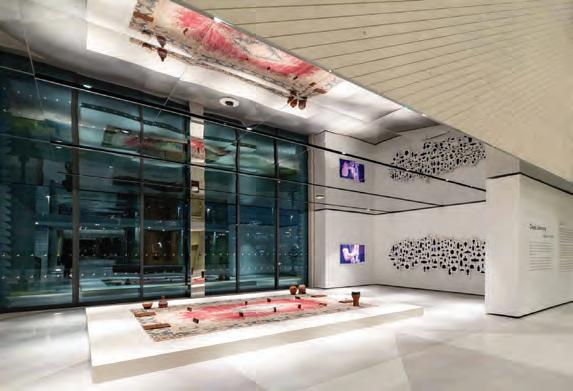
Within these pages, artists, collectors, curators, and writers make their mark. We reflect on the legacy of Wendy Watriss, which has quietly embedded itself in Houston’s cultural DNA. We speak with The DeMontronds about their stewardship of the late David Adickes’s work, a collection shaped by decades of friendship between artist and patron. We also visit Houston’s Ismaili Center, a place dedicated to dialogue, learning, and connection, where the arts serve as a bridge across cultures.
I am continually reminded that ArtHouston exists because of trust. Trust from artists who open their studios and inner lives. Trust from museums that recognize ArtHouston as an essential forum for reflection and cultural continuity. Trust from readers who believe that thoughtful cultural coverage still matters.
As long as that trust holds, ArtHouston will keep its ear to the ground, its eye fixed on the horizon, carrying the city’s creative life into what comes next.
The Orange Show Center for Visionary Art has announced the 39th Houston Art Car Parade, presented by Team Gillman, returning to downtown Houston this April.
The four-day celebration runs April 9–12, 2026, with most events centered downtown. The parade itself takes place Saturday, April 11, when hundreds of artist-transformed vehicles will roll along Allen Parkway and through the city core, turning Houston’s streets into a temporary corridor of spectacle.
Drawing more than 315,000 spectators annually, the Art Car Parade is Houston’s largest free cultural event. Attendance is open to the public, with optional reserved seating available for purchase. For a closer, more immersive experience, VIPit offers a festival-style atmosphere with premium viewing, food and beverages from local restaurants, and private amenities, with packages starting at $250.
Proceeds from VIPit support year-round programming at the Orange Show Center for Visionary Art, including Art Cars in Schools, an educational initiative aligned with Texas Essential Knowledge and Skills standards. Additional details are available at the parade’s website: www.thehoustonartcarparade.com.
JOHN AKOMFRAH
The Menil Collection
Coming to the Menil Collection this spring, John Akomfrah: The Hour of the Dog is an immersive multichannel video and sound installation by British filmmaker and artist John Akomfrah. Commissioned by the Menil Collection and the Baltimore Museum of Art, the 51-minute work examines the history and legacy of nonviolent civil rights activism in the American South, focusing on young organizers who advanced racial equity through marches, protests, and voter registration efforts between 1955 and 1963.
The title draws from the Chinese Zodiac, in which the hour of the dog signifies vigilance and transition. Akomfrah weaves together archival film, photographs, and historical documents with newly filmed material, oral history interviews, and a layered soundscape of protest songs and chants.
For Akomfrah, the convergence of past and present is essential. He describes resistance as something that lingers in bodies, landscapes, and archives, continuing to shape how we remember, mourn, and imagine forward. On view April 24 - October 11, 2026.
Charlie Ewing, Art Car Parade 2025. Photo courtesy of The Orange Show
Installation view of John Akomfrah: The Hour Of The Dog. Courtesy of Baltimore Museum of Art. Photo by Mitro Hood.
GLOBAL VISIONS
FOTOFEST
FotoFest enters its 40th year with the FotoFest Biennial 2026, Global Visions—FotoFest at 40 , unfolding across Houston from March 7 through May 10, 2026. The anniversary edition looks both forward and back, honoring four decades of international exchange while reaffirming the role of photography as a social, emotional, and cultural force.
At the center of the Biennial are newly commissioned works by Lola Flash, Shavon Aja Morris, and André Ramos-Woodard. Presented at Project Row Houses, alongside Round 60 , an exhibition dedicated to photographic practice, these new projects move through Afrofuturism, gender, portraiture, and the affective charge
that photography uniquely holds. The Biennial brings together work by more than 450 artists from over 58 countries, forming a global constellation of voices. Organized chronologically, the exhibition traces pivotal works and ideas from all 20 previous FotoFest Biennials, spanning 1986 to 2024, revealing how photography has mirrored, challenged, and reshaped the world across four decades. Beyond Sawyer Yards, the Biennial extends throughout the city, activating more than 80 participating spaces. As FotoFest reaches this milestone moment, the 2026 Biennial unfolds as both reflection and renewal, rooted in Houston while remaining unmistakably global.
Lola Flash, The Weight of Silence , 2026, from the series syzygy, the vision , 2019–ongoing.
Courtesy of the Artist, FotoFest Biennial 2026 Artist Commission.
50 YEARS ANNIVERSARY
Moody Gallery
A quiet force in Houston’s cultural life
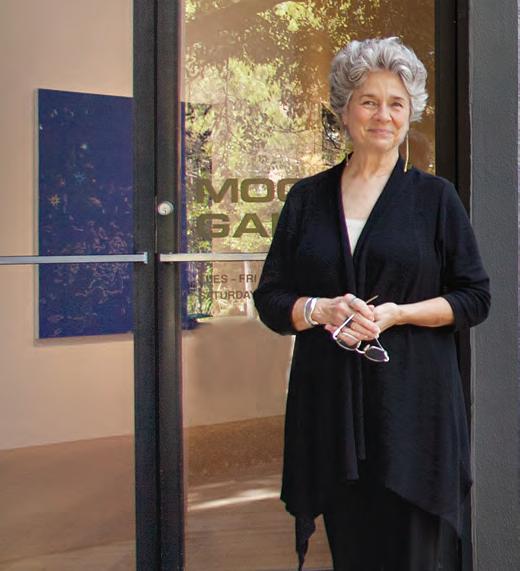
In a city addicted to the next new thing, Betty Moody Gallery marked its fiftieth anniversary last fall, with the quiet assurance of an institution that has never needed to shout. Fifty years in Houston is not merely longevity. It is proof of faith, patience, and a practiced eye.
From the beginning, Betty Moody championed Texas artists with a resolve that bordered on devotion. She understood, long before it was fashionable, that the state’s visual language deserved serious attention, not as regional color but as work of consequence. Her gallery became a place where local artists were not introduced apologetically but presented with
great confidence. The rooms witnessed decades of change, in art and in the city itself, yet the gallery held steady, choosing commitment over spectacle. Artists grew, careers unfolded, reputations were shaped one exhibition at a time.
For those curious about the woman behind the vision, ArtHouston published a revealing interview for her fortieth anniversary in its Spring 2016 issue, which can be revisited on the magazine’s website.
The fiftieth anniversary was less a celebration than a recognition. Half a century later, the gallery’s legacy feels inseparable from Houston’s own story, written carefully, and meant to endure.
ADRIANA CORRAL
Blaffer Art Museum
This upcoming summer, of Houston, in collaboration with the Fine Arts Center at Colorado College, will present exhibition on view from August 21 through December 5, 2026. Through new bodies of work, Corral will examine vulnerability, protection, and the fragile nature of human rights, arguing that such rights often emerge only in the aftermath of violence and loss. Inspired by the hymn anchored by a large-scale transparent ballistic sculpture that serves as both sanctuary and memorial, revealing the paradox of systems meant to protect yet unable to prevent devastation. The exhibition offers Houston audiences a timely opportunity to engage with Corral’s powerful exploration of vulnerability, protection, and human rights.
PAPER TRAILS
Blanton Museum of Art
A new exhibition at the Blanton Museum of Art in Austin offers a rare look at modern Latin American print portfolios, tracing their development through international biennials, corporate commissions, and the rise of a middle-class art market. On view through April 19, Paper Trails: Latin American Art in Print (1950–1995) explores a mid-to-late 20th-century printmaking boom, featuring 15 curated portfolios from the museum’s permanent collection, several unseen for decades, according to assistant curator Florencia Bazzano.
A LARGER VISION
The New Museum, NY
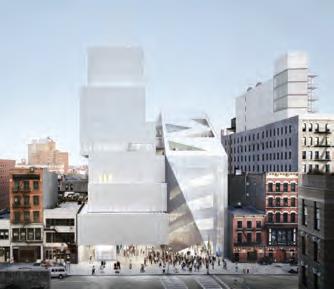
New Museum reopens this March following the completion of its $82 million expansion, doubling the museum’s gallery space and institutional reach. The reopening marks a renewed chapter for one of New York’s most forwardlooking cultural institutions and debuts with a sweeping 150-artist exhibition alongside expanded public programs. The New Museum’s return reaffirms its commitment to presenting cuttingedge contemporary art while serving as a vital platform for experimentation, dialogue, and emerging artistic voices from around the world.
of the exterior of the expanded New Museum. Courtesy of OMA/ bloomimages.de
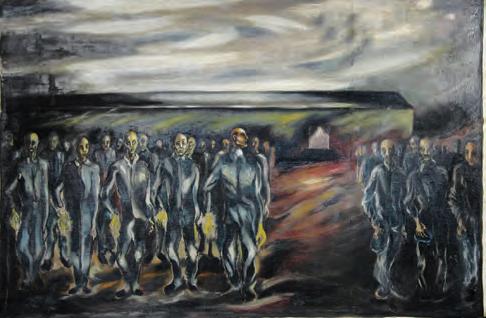
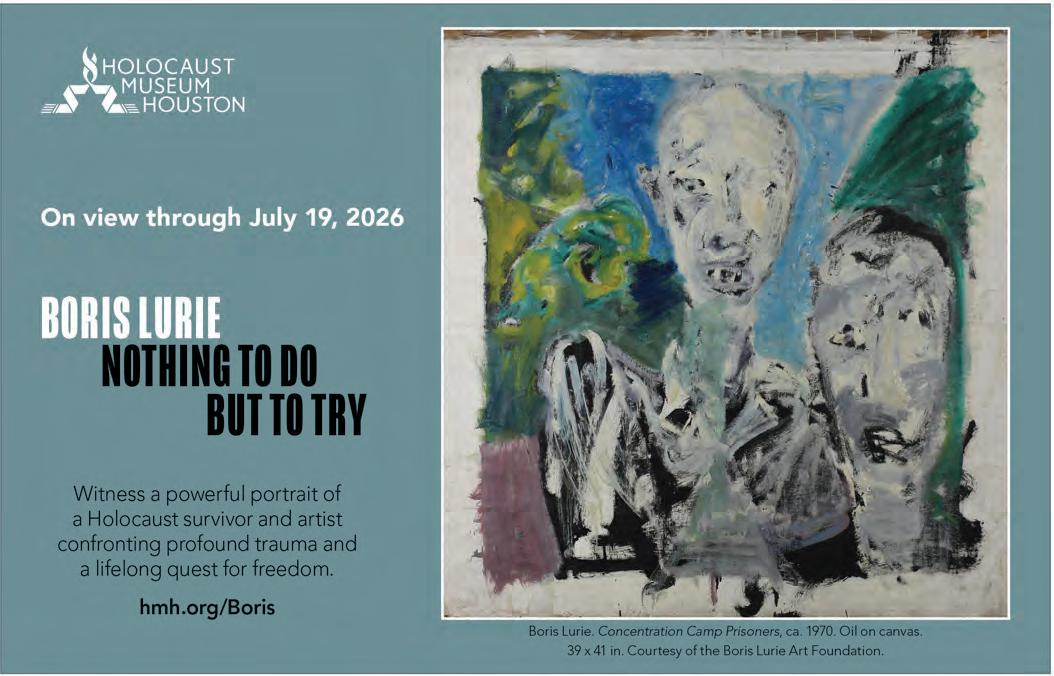
Boris Lurie: Nothing To Do But To Try is a first-of-its-kind exhibition examining the life and work of Boris Lurie, an acclaimed artist, writer, and Holocaust survivor. On view at Holocaust Museum Houston’s Josef and Edith Mincberg Gallery from February 13 through July 19, 2026, the exhibition traces Lurie’s reckoning with trauma, memory, and freedom. Through paintings, drawings, sculptures, and archival materials, many shown publicly for the first time, the exhibition follows Lurie’s journey from childhood in Riga, through the concentration camps and postwar Europe, to the United States and his return to Riga decades later. Photographs, official documents, and personal writings underpin the visual retelling and processing of Lurie’s survival and its crucial function in forming his identity as an artist.
GLADYS NILSSON
Menil Drawing Institute
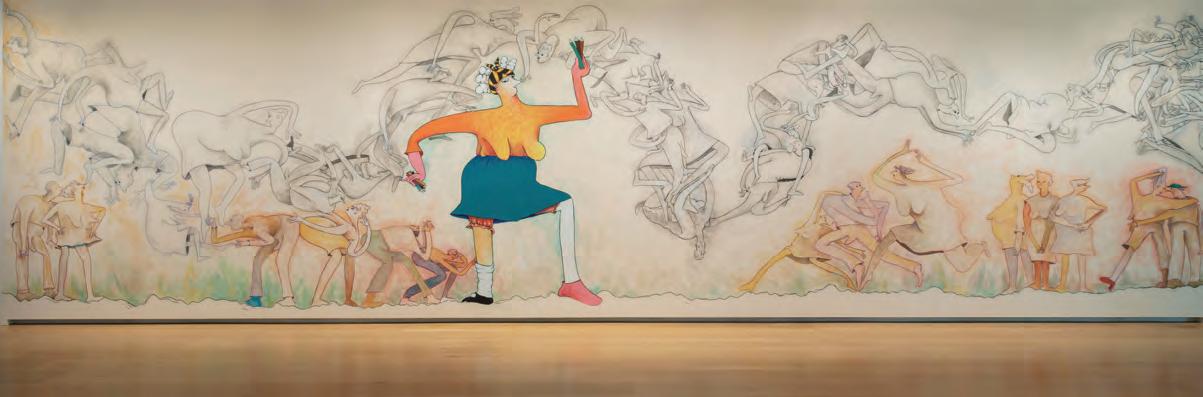
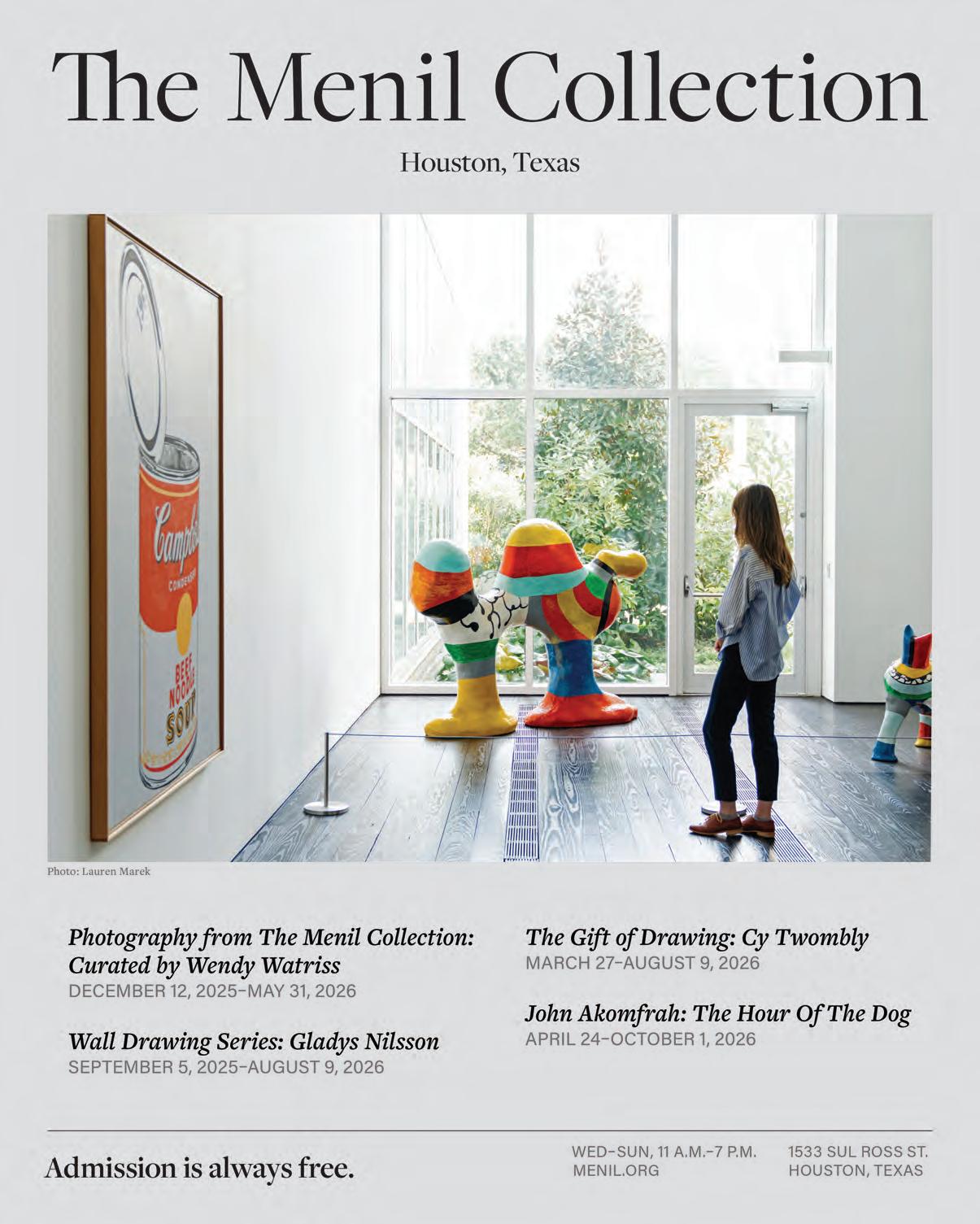
On view at the Menil Collection is a site-specific work titled Drawing by Chicago-based artist Gladys Nilsson. The monumental piece is the seventh installment of the museum’s ephemeral Wall Drawing Series and will is on display at the Menil Drawing Institute until August 9, 2026.
Known for her densely layered and meticulously constructed watercolors and collages populated by distorted figures with exaggerated poses, Nilsson’s latest work presents fantastical, hybrid beings surrounding one oversize figure engaged in the act of drawing. A complex, garland-like arrangement of monochrome characters soars overhead, entangled with one another, while the
bystanders below, set apart by gentle color-toning, observe the scene. The bustling composition is marked by deft and fluid lines using a candy-colored palette of crayon, graphite, and acrylic paint and marker pens. Nilsson’s whimsical creation embodies her distinctive sense of humor and levity while taking viewers on a journey through the peculiar beauty of the human experience.
Boris Lurie, Roll Call in Concentration Camp, 1946. Oil on canvas board. 24 x 36in. Courtesy of the Boris Lurie Art Foundation.
Photo by Paul Hester
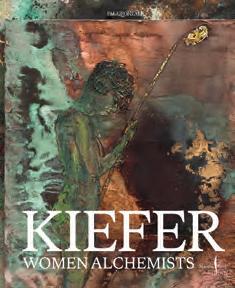
Kiefer: Women Alchemists
GABRIELLA BELLI
This volume examines the gestation and realization of one of the German painter and sculptor Anselm Kiefer’s most conceptually innovative projects to date. Featuring 30-plus large-scale paintings, created by applying multiple layers of varnish, the series offers a poetic reflection on the role of female alchemists in the history of Western thought.
Marsilio Arte
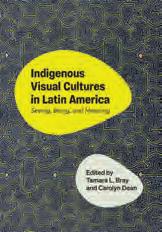
Indigenous Visual Cultures in Latin America
TAMARA L. BRAY AND CAROLYN DEAN
Reframing the study of Indigenous visual cultures, this volume explores how images and objects generate affect and relation in non-Western contexts, foregrounding alternative modes of material engagement and meaning-making.
University of Texas Press
Synthesis
MARI KATAYAMA
Synthesis is a striking artist’s book that brings together six years of work by acclaimed Japanese multimedia artist Mari Katayama. Created between 2019 and 2025 – a period marked by the birth of her daughter and a return to Gunma, the rural province where she grew up – the book brings together nine photographic series, including the brand new Tree of Life, all produced in her home studio. This space becomes both a site of meditation and a stage for transformation. MACK
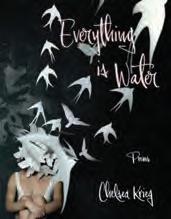
Everything Is Water
CHELSEA KRIEG
This book is an open letter to caregivers, shaped by a partner’s lifethreatening illness, pregnancy, new motherhood, and marriage. Raised on the Virginia coast, the speaker knows water as both danger and refuge, an unease that echoes through her encounters with fear, identity, and loss. The collection returns to water and to creatures of sea, air, and land, all struggling to survive. The reader remains suspended, treading water beside the speaker as she searches for how to live with loss.
Texas A&M University Press
Robert Frank: Visual Diaries
ROBERT FRANK
The Visual Diaries presents, for the first time together, the six introspective volumes that are most critical to Robert Frank’s late bookmaking practice. Originally published between 2010 and 2017, the books imaginatively combine iconic photos from Frank’s early career with the more private pictures he made in later life. Until his death in 2019, Robert Frank remained as innovative and ambitious as ever; Visual Diaries is the primary expression of his steadfast artistic curiosity. STEIDL
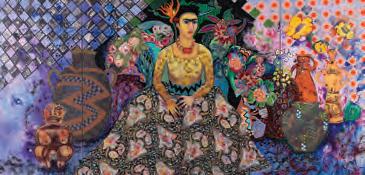
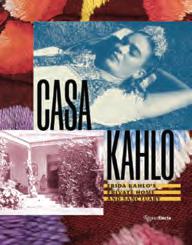
Casa Kahlo
MARA ROMEO KAHLO, MARA DE ANDA ROMEO, & FRIDA HENTSCHEL ROMEO
Curated and written by her greatnieces, who lived in the house throughout their lives, this book offers an unparalleled glimpse into Frida Kahlo, opening a new perspective into this iconic artist’s family home and refuge.
Rizzoli Electa
Robert Rauschenberg
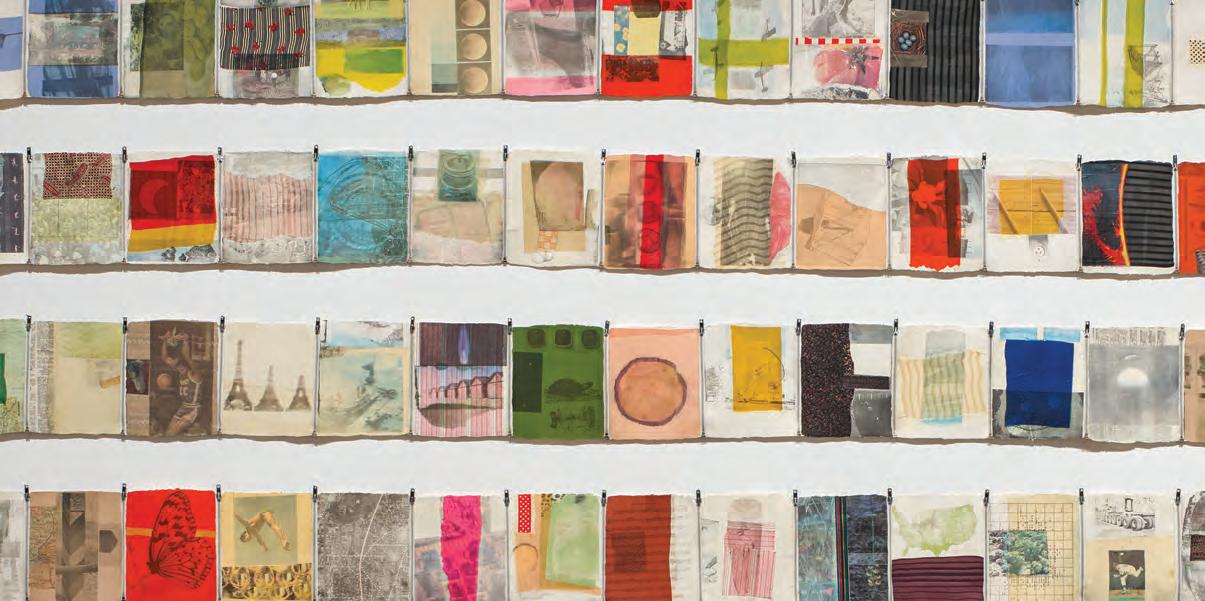
Marking the centennial of American artist Robert Rauschenberg (1925–2008), the Menil Collection presents an exhibition focused on his expressive, conceptual use of fabric as sculpture.
Robert Rauschenberg: Fabric Works of the 1970s examines how textiles connect to his lifelong engagement with choreography, theater, and the body, within a dialogue between materials, movement, performance, and lived experience. menil.org
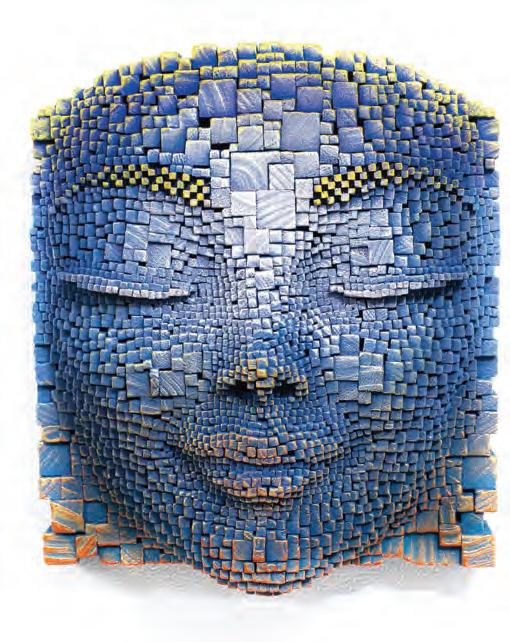
Gil Bruvel
During his more than thirty-year career, Gil Bruvel has passionately followed an ever-changing, organic flow of artistic expression as it has moved through a series of mediums and forms. Each one reflects the artist’s aesthetic sensibility and thoughtful perspective at the time while continuously remaining open to the inner nudges inherent in a truly creative life. laurarathe.com
Robert Rauschenberg, Hiccups (detail) from Fabric Works of the 1970s at the Menil Collection, Houston. Photo by Caroline Philippone
Gil Bruvel, Aligning, 2025, Stacked wooden stickes and paint 11x 10 6.50 in.
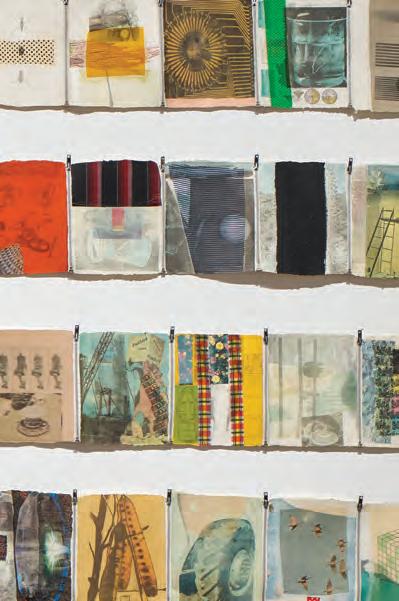
Kathryn Dunlevie
Kathryn Dunlevie is a mixed-media, photographybased artist whose recent series have variously incorporated paint, collage, and photomontage. She has always been intrigued by spatial and temporal inconsistencies, and by each individual’s particular and shifting sense of what is real. hooksepsteingalleries.com
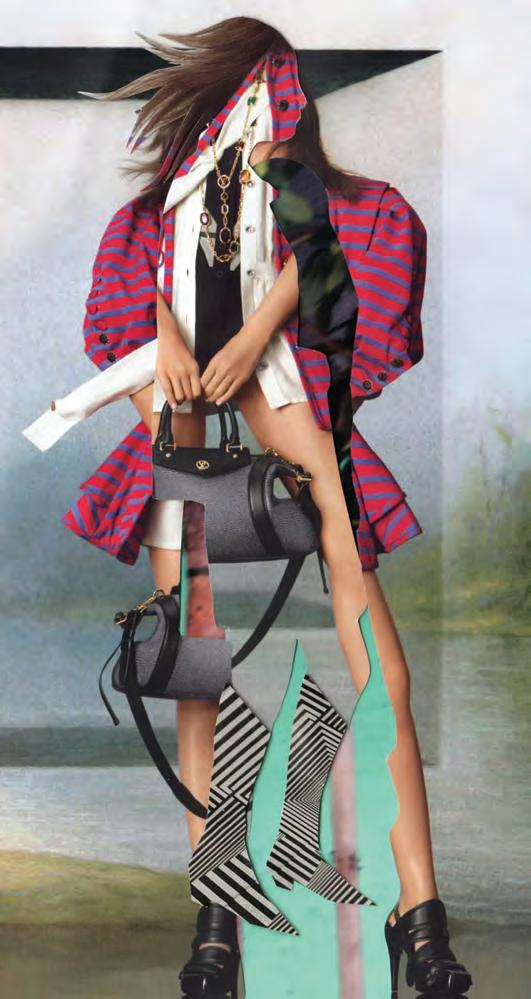
Rachel Ann Stevenson
Rachel Ann Stevenson’s work seeks to capture the impossible: the swirling mist of a dreamer’s mind. She believes that artists are, by nature, daydreamers, and that their task is to seize the intangible, hold it briefly, and offer it to the world. The subjects within Stevenson’s work are inherently autobiographical. She creates starkly beautiful images drawn from vulnerability, love, loss, and the fundamental human desire to be seen and desired. rachelannstevenson.com
Kathryn Dunlevie, Detail from work in progress
HOUSTON
THE GIFT OF DRAWING
THE MENIL COLLECTION
by RACHEL LANE
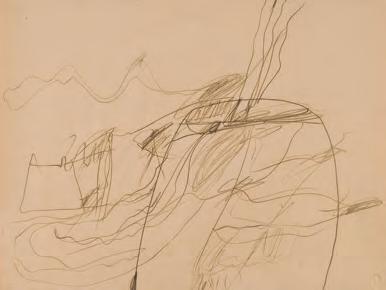
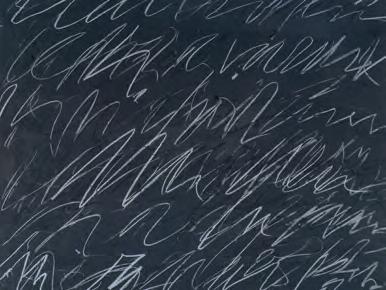
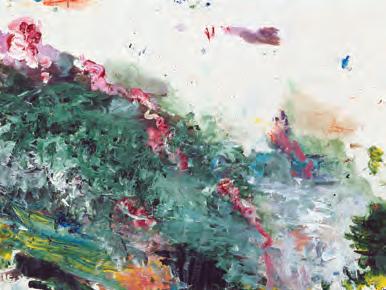
The Menil Collection opens a significant new chapter in its long relationship with Cy Twombly this spring with The Gift of Drawing: Cy Twombly, on view at the Menil Drawing Institute from March 27 through August 9, 2026. The exhibition presents approximately thirty works selected from a landmark gift of drawings donated to the museum by the Cy Twombly Foundation in 2025, affirming the Menil’s position as a leading international center for the study and presentation of Twombly’s work.
Spanning three decades, from the 1950s through the 1980s, the drawings trace the breadth and evolution of Twombly’s practice. The works reveal an artist equally committed to restraint and excess, intimacy and monumentality. Materials range from graphite and charcoal to oil paint and wax crayon, while techniques move fluidly between drawing and collage. Across these variations, enduring themes emerge, including classical antiquity, eroticism, and the natural world, all of which form the emotional and intellectual backbone of Twombly’s oeuvre.
The Foundation’s gift of 121 drawings dramatically expands the Menil’s holdings and transforms the museum’s ability to study and exhibit this essential aspect of Twombly’s practice. It also underscores nearly two decades of sustained investment by the Menil Drawing Institute in elevating drawing as a central, not
secondary, artistic discipline within modern and contemporary art.
“The exhibition celebrates the Cy Twombly Foundation’s generous donation, which now allows the Menil to represent the full range of Twombly’s considerable talents in the field of drawing,” said Edouard Kopp, John R. Eckel, Jr. Foundation Chief Curator at the Menil Drawing Institute. “His experimental mark-making makes him one of the most innovative and consequential draftsmen of the twentieth century.”
Among the highlights are a group of lush, unrestrained landscapes from 1986 that verge on pure abstraction, revealing drawing as a site of physical release and painterly freedom.
Two untitled works from 1970 relate closely to Twombly’s iconic “blackboard paintings,” which are on permanent view at the Menil’s Cy Twombly Gallery, creating a rare dialogue between works on paper and large-scale canvases. Also included is Narcissus (1975), a striking collage combining paper, oil, charcoal, and wax crayon, boldly inscribed with its title in capital letters across the lower edge.
Notably, none of the works in this exhibition have ever been shown in the United States. Seen together, they offer a rare and intimate encounter with Twombly’s thinking hand, where gesture, memory, and myth converge on paper with remarkable immediacy.
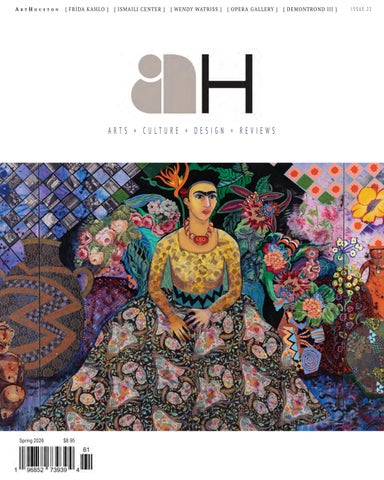
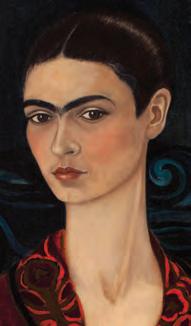
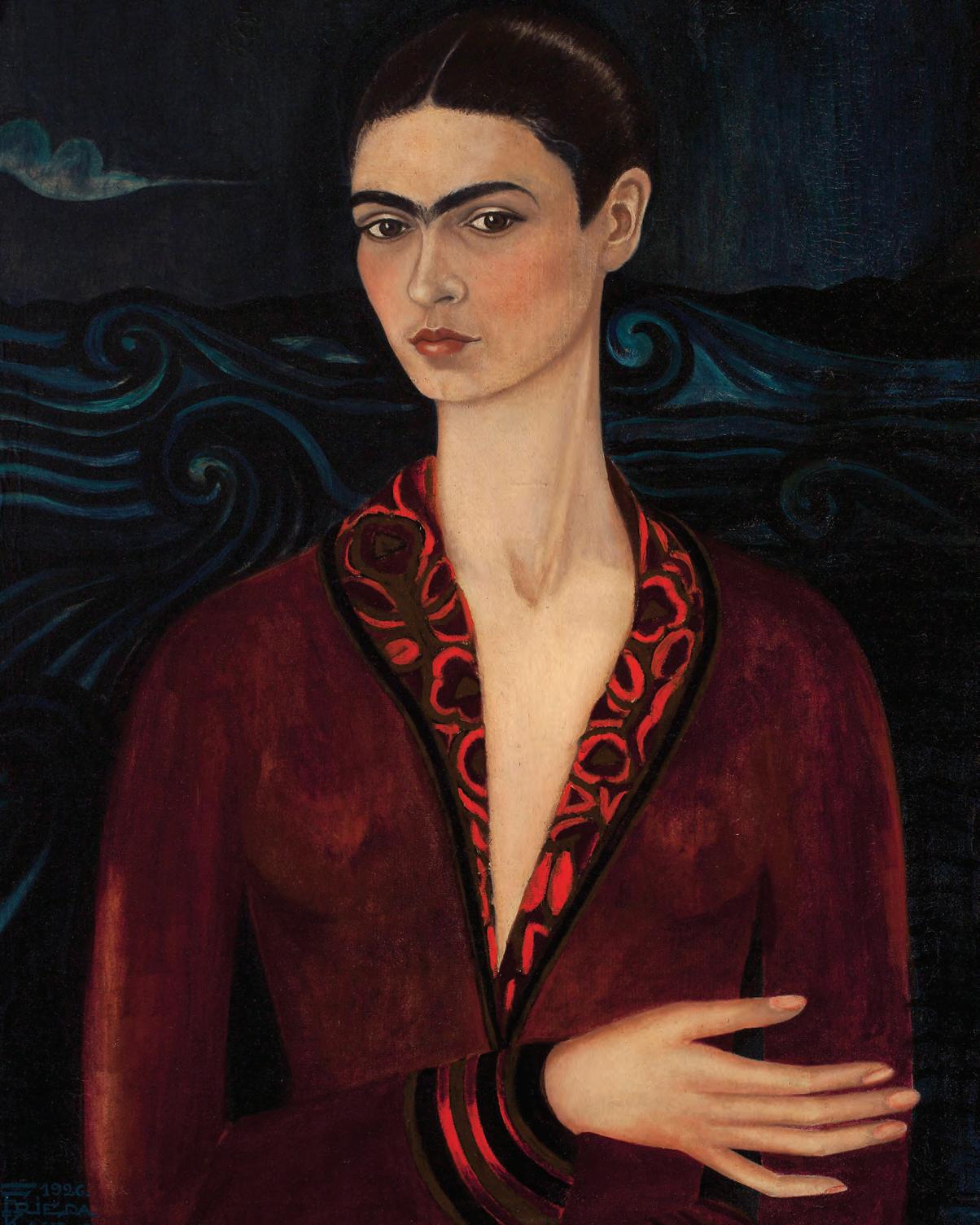
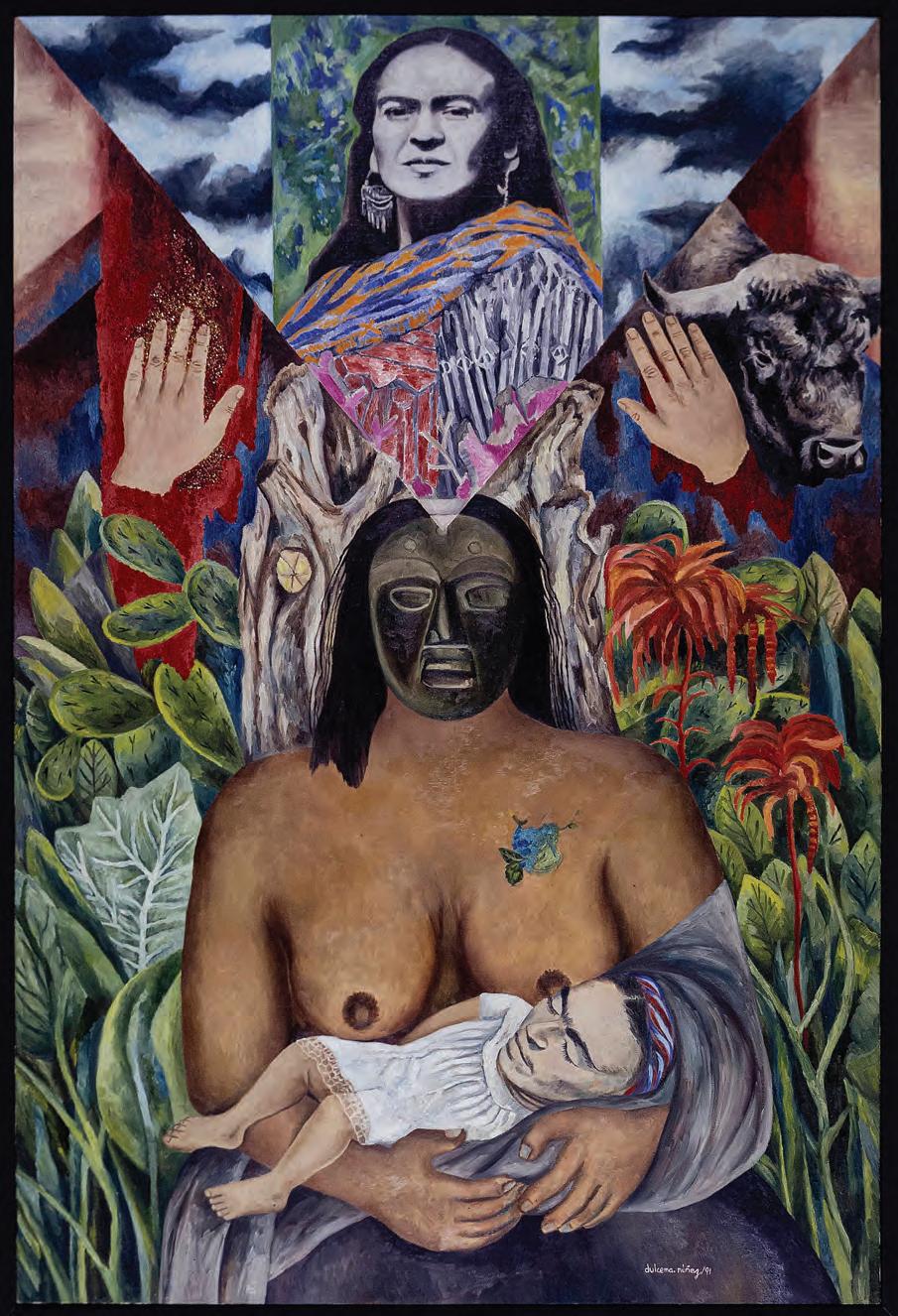
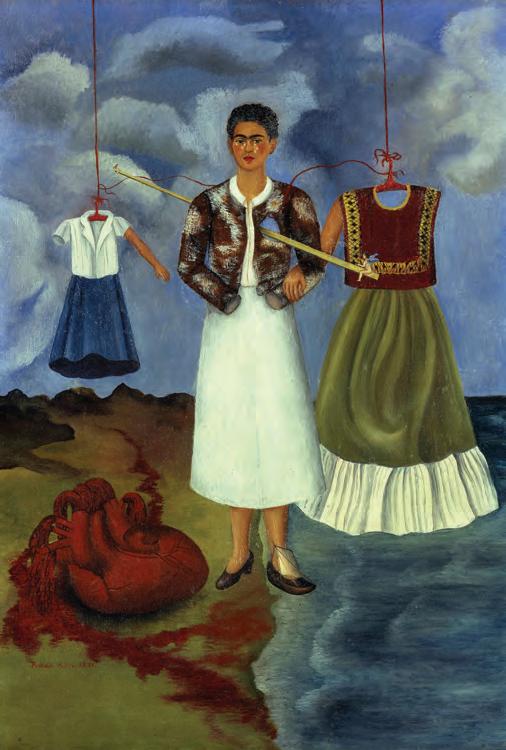
At the Museum of Fine Arts, Houston, a landmark exhibition investigates the complex journey of an artist whose image transcended the canvas to become a symbol of resistance, identity, and mass culture.
Now on view at the Museum of Fine Arts, Houston, Frida: The Making of an Icon does not simply add another chapter to the long exhibition history of Frida Kahlo. Instead, it asks a sharper question. How did an artist whose career unfolded largely “under the shadow of her husband, the world-renowned muralist Diego Rivera,” become one of the most influential and recognizable figures of the last half century?
C urated by Mari Carmen Ramírez, the exhibition traces Kahlo’s posthumous transformation through what Ramírez describes as “sociopolitical, cultural, and economic forces” that reshaped her image and expanded her reach far beyond the art world. The result is not a retrospective, but, as the curator emphasized at the press preview, “the first investigation to trace her evolution from a relatively unknown Mexican painter to the universal icon and global brand now in circulation.”
The e xhibition brings together 35 works by Kahlo alongside works by more than eighty intergenerational artists from around the world. Some were her contemporaries. Others were born decades after her death. What unites them is their acknowledged relationship to Kahlo as a “core reference,” one whose art, persona, and physical image have been repeatedly reinterpreted and recast to address the urgent issues of different eras.
Tho se responses span Surrealism, the Chicano movement, feminist and LGBTQ+ art and activism,
neo-Mexicanism, contemporary art, and disability arts. Organized into seven thematic and loosely chronological sections, the exhibition maps how Kahlo’s work was received, projected, and transformed, revealing how those dynamics helped shape her iconic status over time.
Ar chival materials drawn from the International Center for the Arts of the Americas at the MFAH and the Museo Frida Kahlo in Mexico City deepen the narrative. Photographs, documents, clothing, jewelry, and personal objects illuminate the degree to which Kahlo consciously constructed her public image. That image, Ramírez notes, would later be appropriated through “facial and bodily features, iconographic motifs, or stylistic elements” that artists reworked into “innovative proposals that transcend their source of inspiration while commenting on pressing issues of their own place and time.”
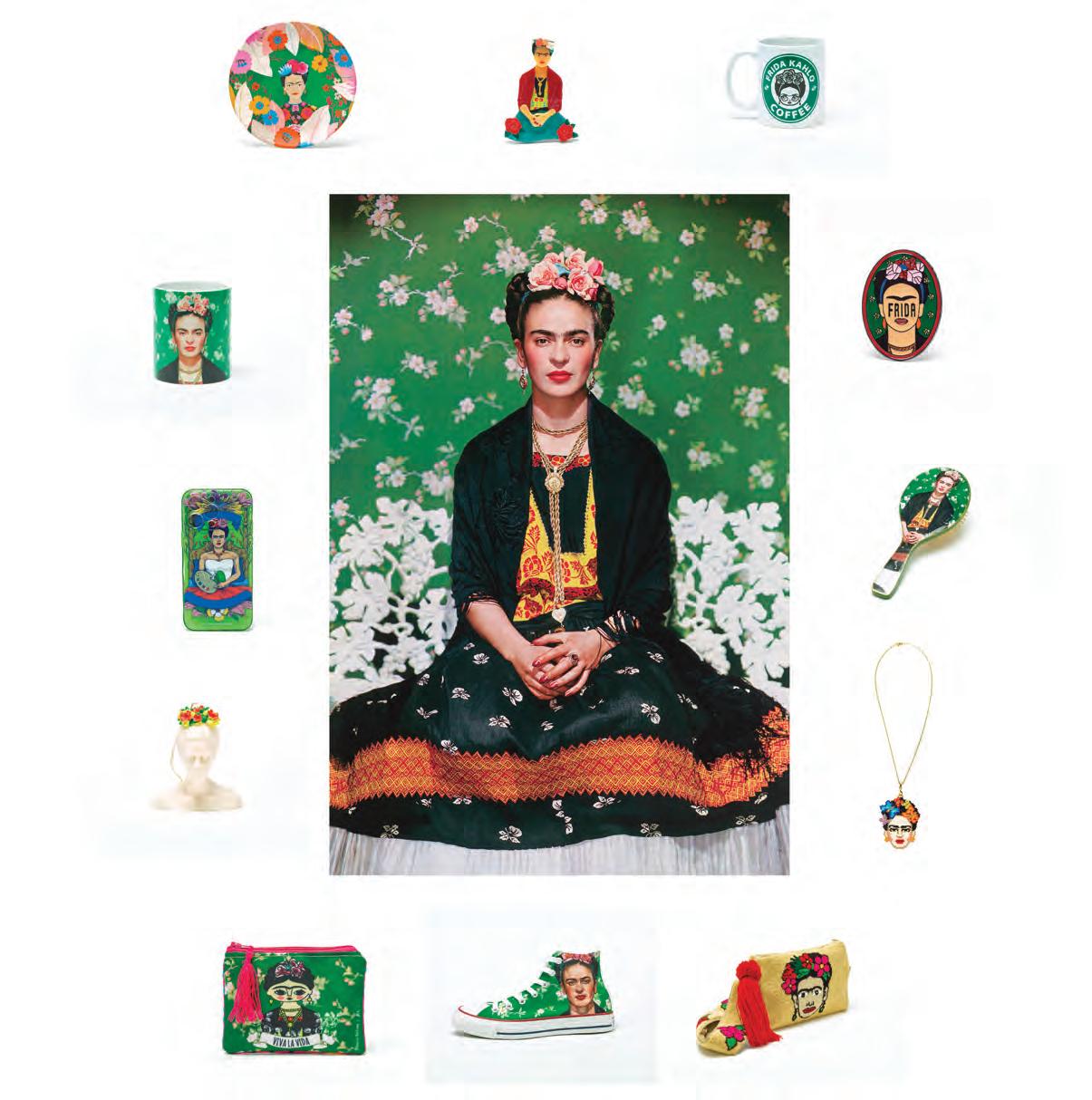
Mo ving beyond biography and art history, the exhibition turns its attention to what Ramírez calls “the Frida phenomenon,” the critical intersection of iconicity, myth, and consumer culture. Kahlo’s image, she explains, extends beyond her paintings into “all aspects of her social image, innermost character, as well as her attire.” This phenomenon includes not only contemporary artistic appropriations, but also fan reenactments and look-alike contests that have proliferated globally since the 1990s.
Thr ough self-portraits and portraits made by others, Kahlo forged an emotional connection that, in Ramírez’s
words, “stimulates a desire in audiences to embody her.”
Citing artist Monica Mayer, she observed that Kahlo effectively introduced “a template for a character that anyone can become,” suggesting that viewers want not only to see Frida, but to be Frida.
Tha t desire finds its most visible expression in consumer culture. A gallery devoted to Fridamania presents nearly 200 objects, from souvenirs to mass-market merchandise, demonstrating how Kahlo’s face has become omnipresent. As Ramírez noted, the availability of these objects allows anyone to pr ivately own a version of the artist’s image, “turning her iconic value into an individualized experience.” This section, curated by ICAA Associate Director Arden Decker, examines the extreme commercialization of Kahlo’s image, a phenomenon that emerged in the mid-1980s and continues unabated.
Yet the exhibition resists a purely critical stance. Despite the threats posed by overexposure and commodification, Ramírez emphasized that Kahlo remains “an icon of remarkable strength and endurance.” Her continued
This exhibition is not about
Frida Kahlo alone. It’s about the devotion she inspired.
relevance, she observed, lies not in market value, but in her reception as “a figure of resistance.”
Kahlo’s struggles as a disabled woman, a conflicted lover, and a striving artist resonate across generations. That archetypal quality, Ramírez argued, allows her image to cut across cultural, social, and political boundaries, transforming her into a symbol of resilience against gender bias, physical suffering, and professional marginalization.
Following its Houston presentation, Frida: The Making of an Icon will travel to Tate Modern in London. At the MFAH, the exhibition is accompanied by a robust program of films, community events, and the “Talking Frida” conversation series, extending the dialogue beyond the galleries.
Ul timately, this exhibition does not seek to diminish Frida Kahlo’s myth, but to understand it. By disentangling the artist from the phenomenon she became, Frida: The Making of an Icon restores complexity to an image too often flattened, and reminds us why, decades after her death, Frida Kahlo continues to matter.
HOUSTON’S NEW ISMAILI CENTER: A GLITTERING JEWEL FOR THE WORLD TO FOLLOW AND FOR ALL HOUSTONIANS TO ENJOY
by ARIANA AKBARI
For full disclosure, dear reader, although you’re most likely these days to find me running around in belly buttonexposing outfits with high-heeled boots, frequenting avant garde arts exhibits and occasionally meddling in community affairs—there was a time when I was a serious, turtleneckwearing Harvard undergrad, whose life was a revolving door of cold weather and researching ancient Islamic architecture.
So, much to my delight, when I found an announcement for a public opening of the new Ismaili Center in Houston just off of Allen Parkway and Buffalo Bayou, I grabbed a leopard print scarf to moonlight as a hijab (if need be—best to be prepared) to go with my classic uniform of belly button-exposing top and cool-girl ripped jeans and headed off.
After parking and walking into the entry hall of the Ismaili Center, I was fortunate to meet a communications officer named Ruhee. She put me at ease, letting me know that all are welcome at the Ismaili Center and also that in the Ismaili tradition they do not actually use the hijab . (Who would have thought?) She then gave me an official walkthrough of the very spacious complex, which totals five floors and an expansive nine acre garden network. As Ruhee guided me through the many halls, stairways, and porticos, she told me about the history, intentionality, and functionality of the space commissioned by the past and present Aga Khan , or the spiritual leader and head of Ismaili Shia muslims worldwide.
In my academic studies, I had spent hours understanding the ways in which various societies and geopolitics shaped the physical spaces of Islamic architecture: People are most familiar with features like the wide domes and pencil-thin
minarets of the Hagia Sophia in Istanbul, Turkey; the bright white marble and calligraphic inscriptions at the Taj Mahal in Agra, India; and the ornamental muqarnas , or stalactite vaults, and lush gardens of the Alhambra castle-fortress complex in Granada, Spain. Each of these spaces reflects commonalities with Islamic architecture and yet is uniquely shaped by their own time, place, builders, and needs.
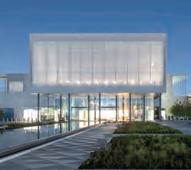
Houston’s Ismaili Center, although contemporary, belongs to this notable family of Islamic architectural buildings. It is a jamatkhana , which literally translates to “gathering home or community place” and which is more particular as a place of worship for Ismailis rather than the more common masjid , or mosque, that is associated with many Islamic traditions. The Ismaili Center in Houston offers a style and repertoire of Islamic architecture that is strikingly refreshing and also somehow uniquely American. Some of its best features are its use of natural, high-quality materials in the construction; the complexity of the programmatic ability of the space, which heavily emphasizes both arts and engagement with the broader Houstonian community; as well as the collaborative nature of the Center’s landscape.
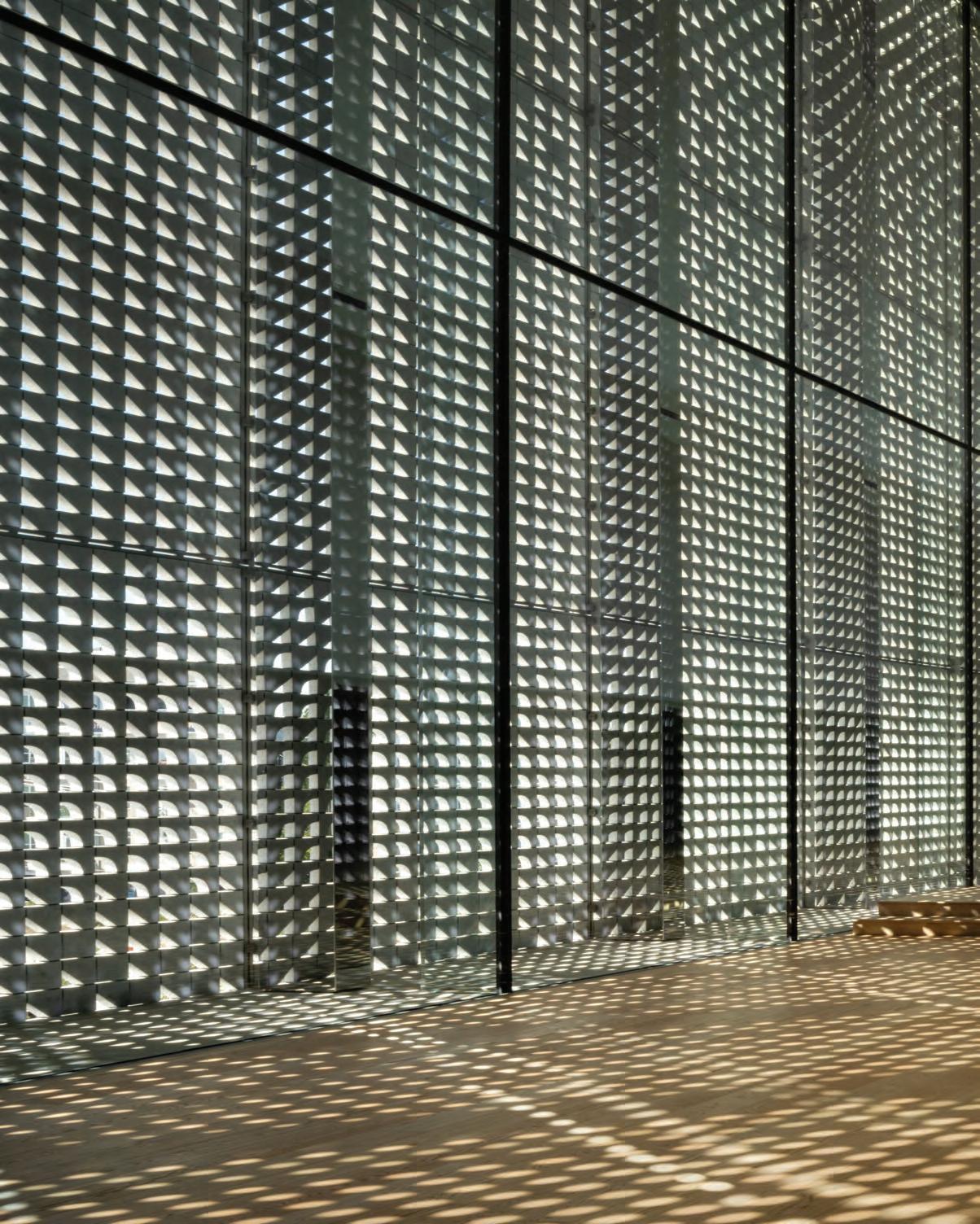
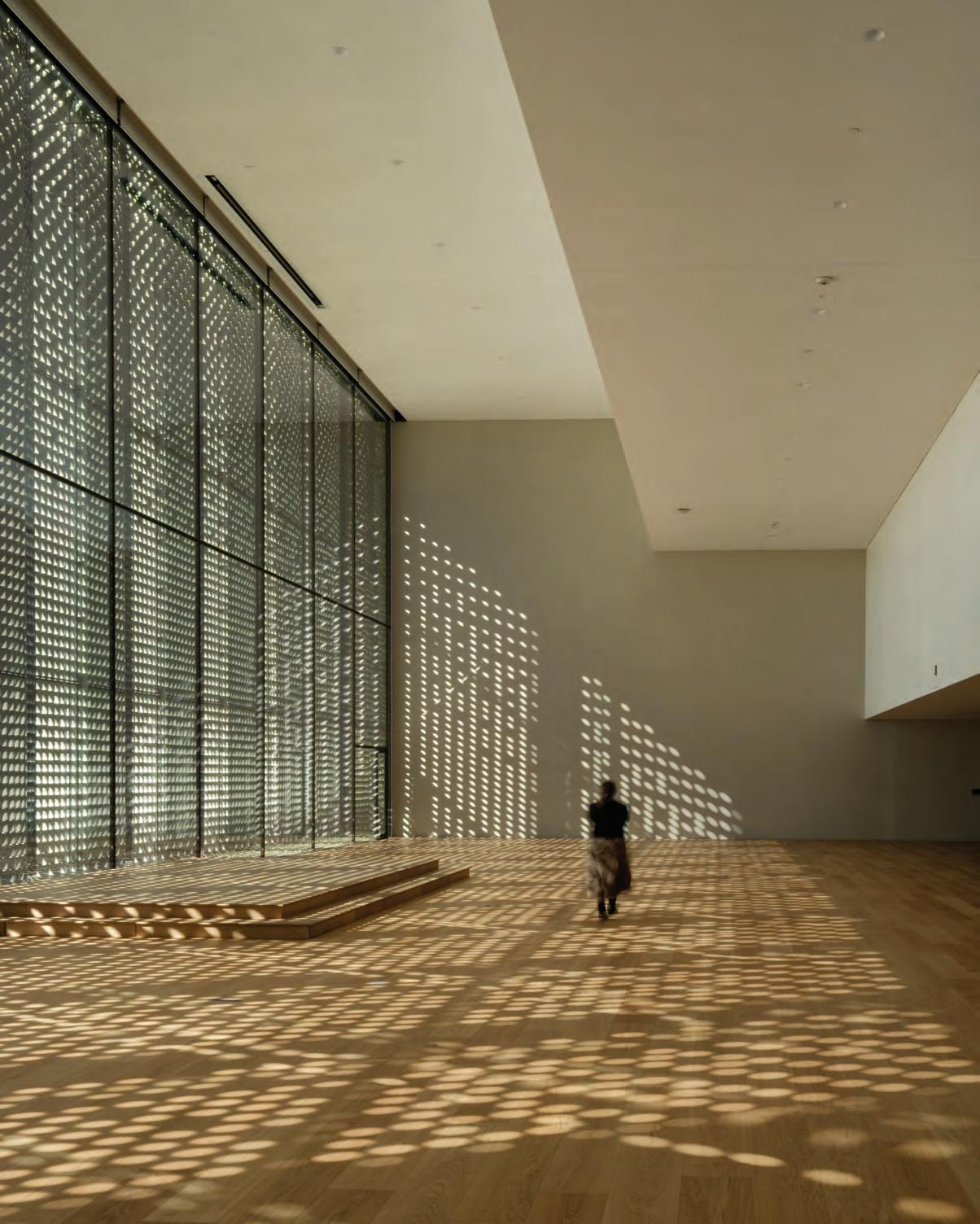
Walking through the Ismaili Center is a wonderful experience: The space is cool, but not cold. The sound made by the materials is hallowed, but not quiet. Natural light streams into the building in a way that is brightening, but not blinding. The exterior is cloaked in blueish-grey tiles that seem to almost happily change color, and the interior is equally inspiring. Various wall panels are made of luxurious, vibrantly-colored silk stretched expertly between panes of glass, and the colors
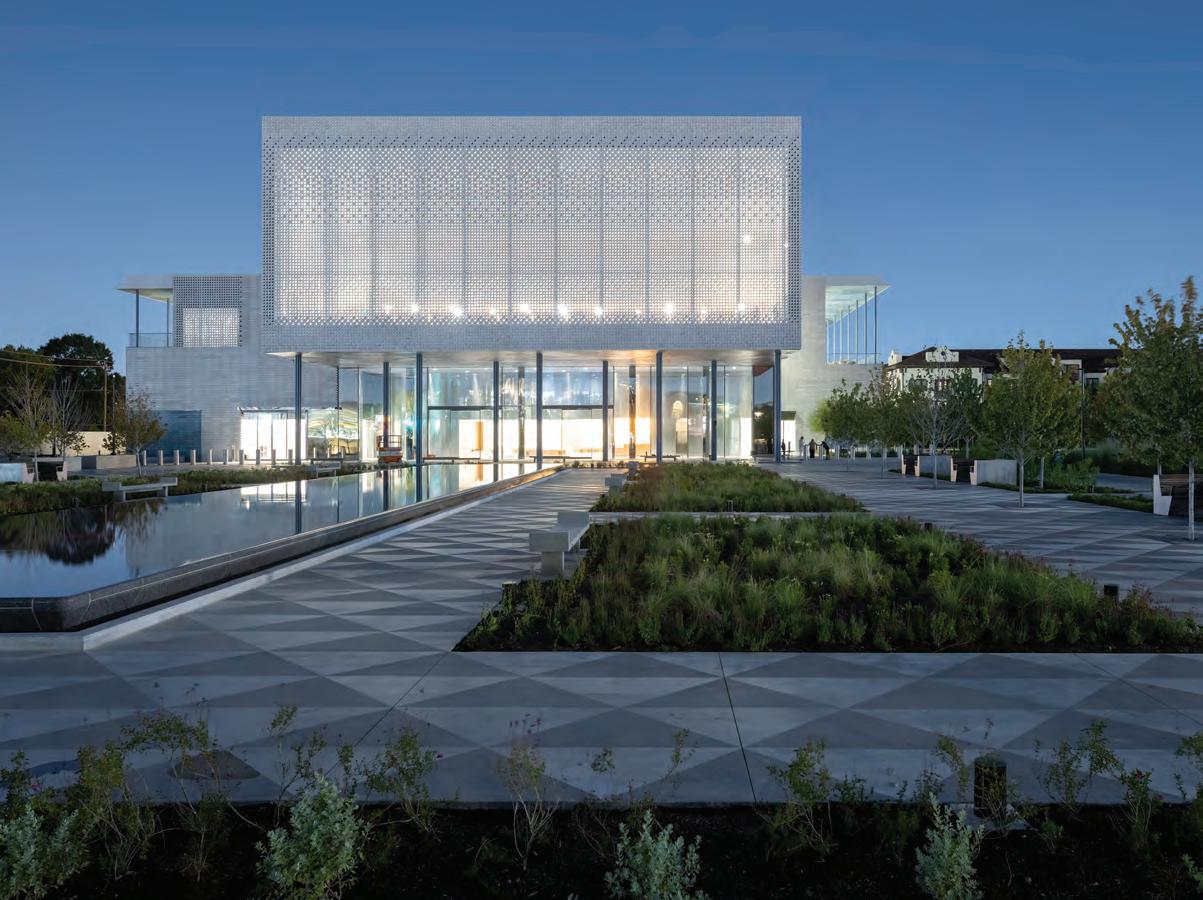
From top clockwise: The Ismaili Center’s façade and Reflecting Fountain, as seen in the evening. Photography by Iwan Baan.
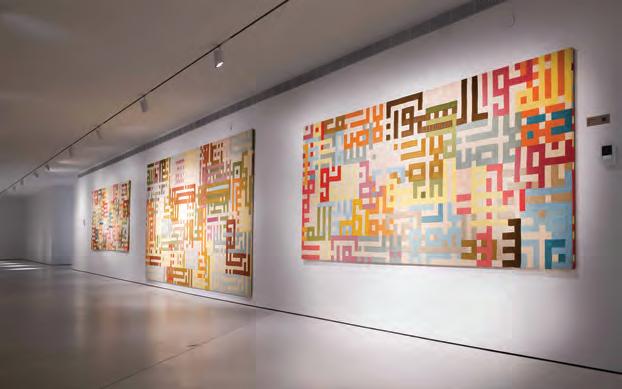
Raheleh Filsoofi, Imagined Boundaries, Photography courtesy of Ismaili Center
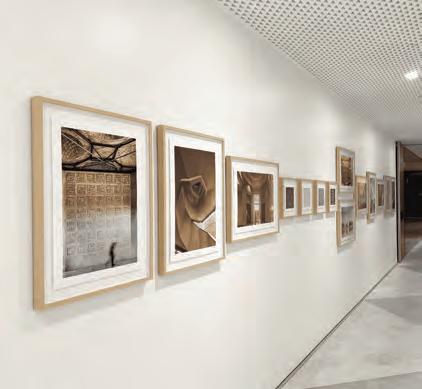
Salina Kassam, Ineffable Spaces: The Seven Ismaili Centers, 2025, Inkjet photographs printed on cotton paper. Photography courtesy of Ismaili Center
Left page: Mohammed Adra, Spiritual Dawn, 2025, Cotton. Photography courtesy of Ismaili Center
Previous spread: Natural light filters into the Social Hall through the expansive stone screen of the Ismaili Center’s façade. Photography Nic Lehoux.
used (jewel-tones like emerald and ruby) evoke the beauty associated with the imaginary of the Silk Road of old. They also act as a method of wayfinding for those inside of the center, directing them to various wings for education, play, or prayer.
Open space patios on the upper floors are strongly-built, acting as a place of safety and respite in the notoriously flood and storm-ridden banks of Houston’s concrete-covered swamplands. Exterior walls here utilize novel folded takes on a modernist glass curtain, adding an intelligently “Eastern” spin to a typically “Western” design strategy.
The internal prayer hall is the only space in the Ismaili Center which cannot be photographed due to its sacred nature. It acts like the heart of the building and features a beautiful qibla wall, which points worshipers in the direction of Mecca, as well as ornate wooden paneling that includes a calligraphic inlay of oyster shells which spell: Allah, Muhammad, and Ali—a lineage important to the basis of Ismaili Islam, of which the Aga Khan represents a living continuation.
The importance of art is reflected throughout the center in its permanent collection on display, as well as through its immersive and interactive rotating exhibit. (Currently— Imagined Boundaries (2017) by Raheleh Filsoofi and ShahTár (2017) by Raheleh Filsoofi in collaboration with musician Reza Filsoofi.)
The importance of art is reflected throughout the center
For performing arts, the Ismaili Center has created a black box theater, complete with glittering, full-size dressing rooms, and has opened other rooms in the center for additional public-facing events like panels, speeches, and debates.
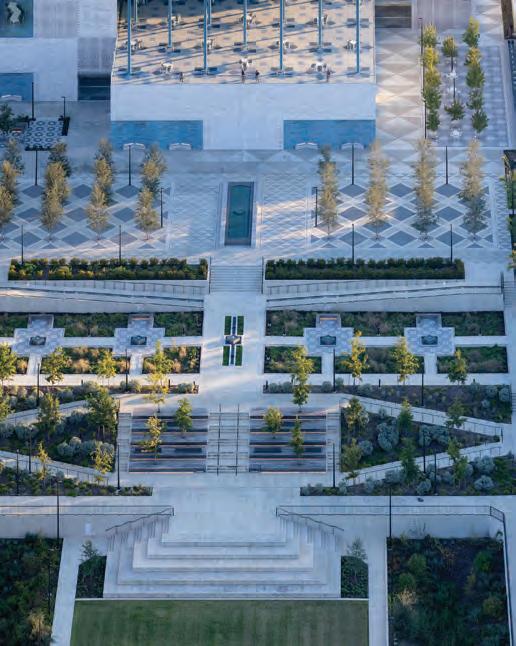
Leaving the building, you can wander through the social and native-oriented landscapes of the North and South gardens. Fashioned in the style of contemporary Islamic gardens, they are divided into separate sections that include representation of ecologies across Texas—from Gulf Coast and Blackland Prairies to Crosstimbers and the Trans-Pecos. These spaces are also exceptionally programmatic—built with the intention of hosting soccer clinics, zumba classes, basketball and pickleball games, farmers markets, and movie events “under the stars.”
Many thank yous to Ruhee Momin and Omar Samji for the tour and informational session—as well as to the Aga Khan and the Ismaili community for creating such a fantastic work of Houstonian architecture for the rest of the world to follow. Many congratulations also to Farshid Moussavi Architecture, Nelson Byrd Woltz Landscape Architects, AKT II, DLR Group, and McCarthy on the incredible collaboration in design and building.
The Ismaili Center is open to the public on Tuesdays, Thursdays, Saturdays, and Sundays, with the gardens open from 8am-4pm and the building open from 10am-4pm. Check out their website for more details!
A series of terraced gardens, each planted with native species from a distinct eco-region of Texas, gracefully elevates the building of the Ismaili Center, Houston. Photography by Iwan Baan
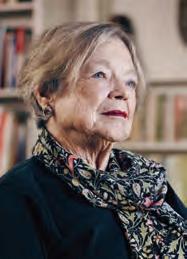
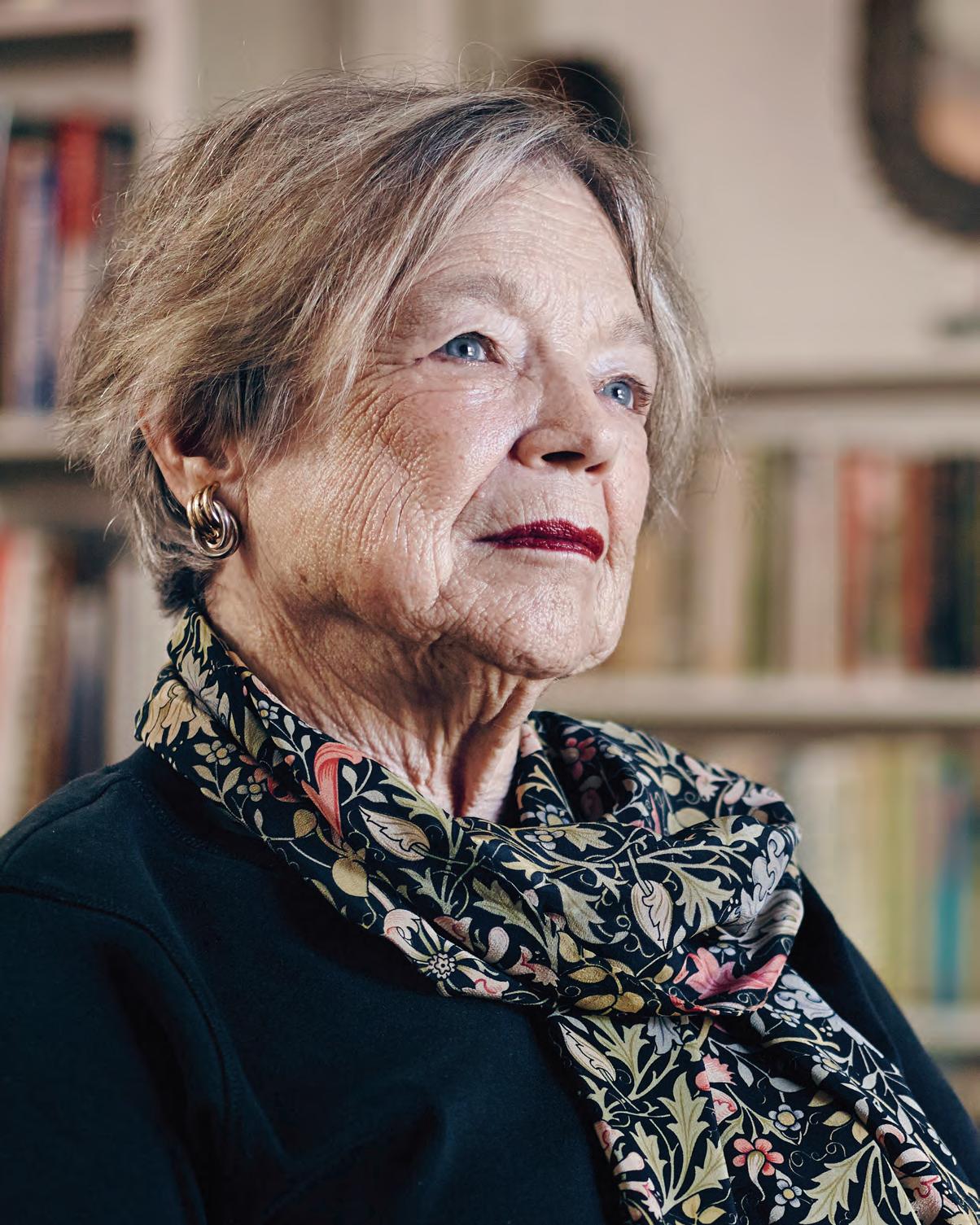
Watriss, FotoFest co-founder and former artistic director. Photography by Casey Dunn
Wendy Watriss
by JOHN BERNHARD
Together, Wendy Watriss and Fred Baldwin co-founded FotoFest in 1983, planting what would become one of the most influential photography events in the world in distinctly Houston soil .
F rom the beginning, FotoFest resisted the idea of a single venue or a closed circle. Instead, it imagined an entire city opening itself to images, ideas, and global voices.
When the f estival was still young, Newsweek captured its improbable scale with unmistakable awe. Writing in 1986, the magazine noted the “pure Texas” ambition of 64 exhibitions, 783 photographers, and thousands of images spread across the city, an entire month devoted to photography that drew critics, curators, and collectors to Houston and proved FotoFest’s mettle from the start.
FotoFest was conceived with an uncommon ambition: to privilege discovery, international exchange, and social commitment, holding the global and the local in the same frame. From the beginning, it was less a festival than an invitation, an attempt to build a structure where artists could sense possibility before they ever found certainty.
Among its many carefully curated exhibitions scattered across Houston, The International Meeting Place has always felt like the festival’s true heartbeat. It is there that photographers gather, portfolios in hand, to sit across from curators, editors, and museum professionals from around the world, measuring their hopes against real attention. I remember arriving in 1994 as a young photographer, one among nearly four hundred others, uncertain, eager, and quietly desperate to find a way into the fine art world. It was there, amid that charged atmosphere of anticipation, that I first met Wendy Watriss.
Four decades later, FotoFest’s stated mission still carries the same clarity and conviction: to unite a global vision of art and cross-cultural exchange with a deep commitment to social issues and community involvement. Few institutions manage to sustain such focus without dilution.
Now, in recognition of this milestone, I sat down with Wendy Watriss to reflect on a legacy that has quietly embedded itself into the cultural DNA of Houston, shaping not only how the city sees photography, but how it understands the power of images to connect, challenge, and endure.
Wendy
JOHN BERNHARD: When people speak of legacy, they often picture monuments or institutions. But when you are alone with your own thoughts, what do you feel you truly left behind, and what do you still hope for?
WENDY WATRISS: My thoughts and feelings about legacy are very much a mixture of my own feelings and the spontaneous comments I hear from artists, curators and the general public. FotoFest was founded very much on our values, a vision about the world and photography’s role in that world. Photography, in its essence and history, is an international medium. Fred Baldwin and I, as photographers and human beings, lived and worked in both a global and local universe.
But very little international photographic work was getting to the U.S. when we founded FotoFest in the early 1980s. In 1982-83, when I won the World Press and Oskar Barnack awards for the photographic story I did on the effects of Agent Orange on U.S, veterans of the U.S.Vietnam War, we were invited to the Rencontres d’ Arles to talk about the Agent Orange work. Our experience in Arles was very exciting: It was an urbane, worldly immersion in photography. We left, wanting to do something like that in the U.S.
We wanted to throw open the doors and windows of the world for artists and their audiences; create new opportunities and career connections for photographers; reach out to talented image-makers who didn’t have access to the centers of curatorial and commercial photography; build an international platform for art and ideas - a platform that would find space for good photojournalism and conceptual photography. We wanted to create a museum-without-walls, a place that would bring the world to art audiences and the general public in the U.S. We wanted to stimulate public engagement in art/photography that reached both young people and adults. And we wanted to create a place where people of different ages, cultures and opinions could meet each other, form networks and new communities. We wanted to do this in a way that was unusually open and affordable. Thinking about the past 40 years, I would say that we, actually and unbelievably, did achieve most of these goals.
In the process, we also changed important aspects of how institutional photography operates in the world.
When we started FotoFest, there were four nonprofit photo festivals of consequence in the world, all in western Europe. Today there are hundreds across the world. Many of them replicate FotoFest’s format and programs. Of the original four photo festivals + FotoFest. only two are still fully operating today, Arles and FotoFest. The Mois de la Photo in Paris may re-start again, after its short hiatus.
Today, as planned, FotoFest is still largely free of charge. Its exhibitions have a truly international profile and a strong reputation. The international Meeting Place Portfolio Review for Artists, created to support and strengthen artists’ careers, remains open to anyone who applies to register. Unlike the exhibits, Meeting Place registrants are not pre-selected or curated, Now, however, the program does require a registration fee, whereas there was no charge for the first four-to five biennials.
When Fred and I started FotoFest with Petra Benteler in the early 1980s, Houston did not have a strong reputation as an art center. But it has proved to be a very good place for art. It is an unusually open and generous city, with a willingness to take risks on ideas which may benefit the city. Moreover, it has the resources to support these ideas. We have worked with city officials, foundations, businesses and many individuals, all of whom have helped make FotoFest a reality and then sustain itself. Foundations, local and national, are exceptionally Important to the formation and support of nonprofit cultural, educational and social service programs.
FotoFest has benefitted from strong and resilient Boards of Directors and talented, hard- working staff. There are many new directions and programs for FotoFest to try –residencies for artists; international internships for Houston and Texas university and high school students; expanded collaborations with arts and community organizations in Houston and abroad; exploration of experiments between artificial intelligence and photography; the utilization of photography and film in public policy, and many other ideas that Steven Evans, FotoFest Executive director, is exploring.
We wanted to throw open the doors and windows of the world for artists and their audiences. ”
JB: FotoFest always seemed driven by discovery, by a sense of responsibility to help photographers reach their full potential. Looking back now, were there moments when you knew that you were on the right track?
WW: It took time to ‘know’ we might be on the right track. Conditions are always changing and you have to keep thinking how to respond or how to get ahead of them. When places like the Smithsonian Institution, the Guangzhou Museum in China, the Daegu Photo Biennale in South Korea, the Abu Dhabi Arts and Music Festival started to ask for FotoFest’s exhibitions, we began to think we were indeed on the right track. The same thing happened when FotoFest staff would arrive at big photo expos like AIPAD in New York or Paris Photo and artists would run up to greet them and report how FotoFest had benefitted their career. The same was true when FotoFest commissioned a new work by a worldfamous artist and we constructed it from scratch, and when he came to see it for the first time, before its opening, and he turned around to say: “It’s better than I thought it could be.” Something was working well!
JB: I participated in many FotoFest portfolio reviews over the years, and they opened doors that would otherwise have remained closed, including connections with museum curators. You have spent so much of your life creating visibility for emerging photographers. Was there ever a moment when you realized that what you were doing was truly making a difference?
WW: Yes, when after the first few years, FotoFest began to receive calls, emails and letters from artists saying what you are saying. This began to happen three or four years after the beginning of FotoFest. And then in the 1990s, there
was a wonderful article in the Wall Street Journal about FotoFest’s portfolio review.
JB: You chose Houston as the home for FotoFest. If the city could speak back to you and ask why you chose it, what would you say?
WW: I would say “thank you” as I have already often done in conversations and speeches. I have lived in many different cities in the U.S. and abroad — San Francisco, New York, Washington D.C., Baltimore, St. Petersburg, FL, Athens, Paris, London, Madrid, Prague, Vienna — and I have never felt the same openness, generosity and sense of possibility in these other cities as I have felt and experienced in Houston. It is truly a city of ‘energy’. Texas is lucky to have Houston.
I want to emphasize that what Jean and Dominique de Menil were doing in Houston was one of the primary reasons that Fred and I decided to move to Houston in 1980. Their worldliness, intellect, individual morality, and belief in the interconnection between art and activism were (and are) very important to both Fred Baldwin and myself.
JB: After carrying FotoFest for so many years, letting go could never be simple. When you entrusted its future to Steven Evans, what did you feel most strongly, relief, hope, watchfulness, or something more complicated?
WW: I felt all those things. And yes, it was, and it remains, complicated. But I trusted Steven’s character, decency, experience with art, and his belief in FotoFest’s originating values. It was a long, three-year search, and we learned all lot in the process.
JB: As you look at FotoFest today, do you recognize the future you once imagined still taking shape?
WW: Yes. As I have said before, I think we accomplished a lot and much has taken shape. But it also needs to keep adapting to changes in the outside world. It is important to have new leadership even while retaining and respecting past accomplishments and FotoFest’s important core values, our sense of morality, worldliness and ethical thinking.
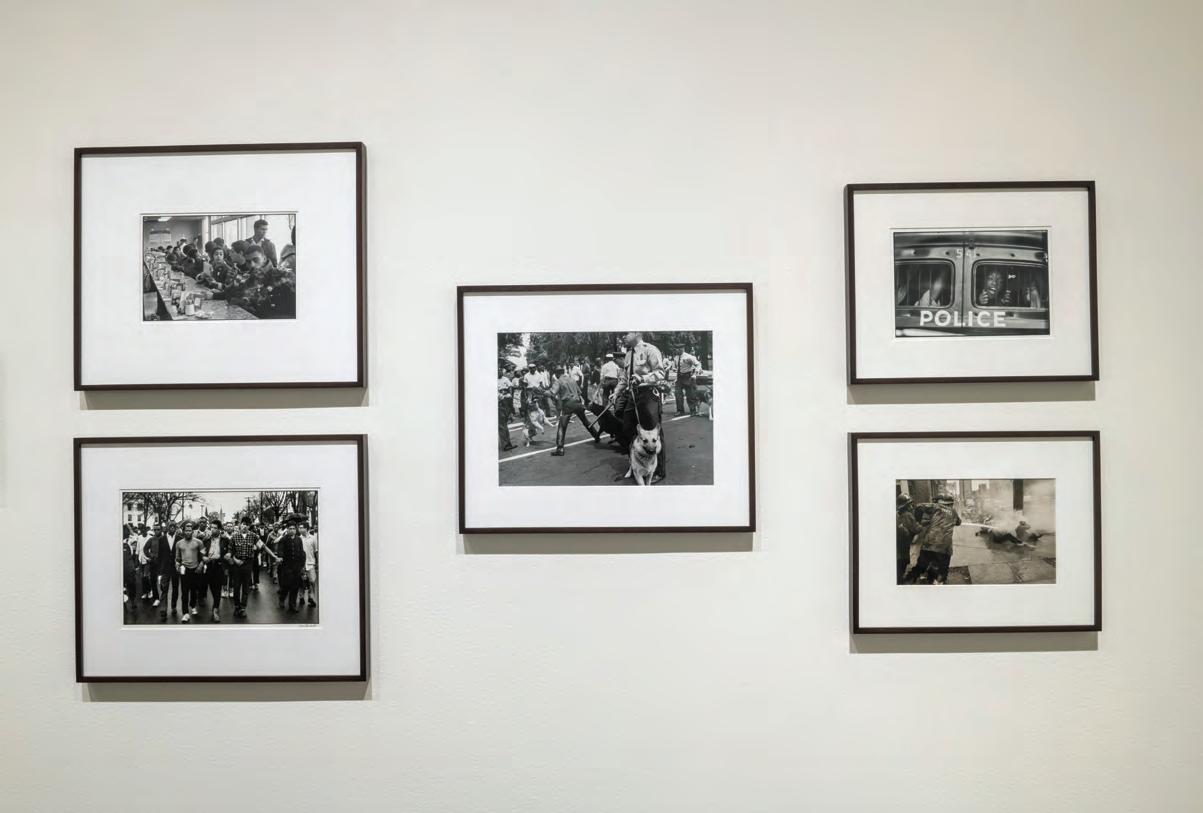
JB: As a closing note, while you are no longer immersed in the daily demands of FotoFest, you remain deeply active in your field. As an award-winning photojournalist, you recently curated an exhibition drawn from the Menil’s permanent collection. (On view until May 31). Could you speak about the documentary sensibility behind your selection of images, and how it reflects your enduring way of seeing the world?
WW: The exhibition has been extended through the summer of 2026, I think.
I came to photography through journalism. I began my working career as a newspaper reporter-writer, then associate producer of television documentaries, and then as a photojournalist-writer. Because I had lived in Europe for many years, I spent a lot of time in museums, and I did study art history. I was particularly attracted to the storytelling character of photography and visual imagery. (I think this is what attracted Jean and Dominique to film and photography as well.) I was particularly interested in documentary photography in my own picture taking. In working with the Menil Collection’s photography collection, I was struck by the first third of the collection which had come together during Jean’s and Dominque’s lifetimes. I think this part of the collection deeply reflects their own interests in both film and photography. I believe they looked at these genres of art
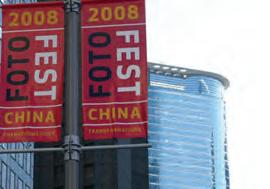
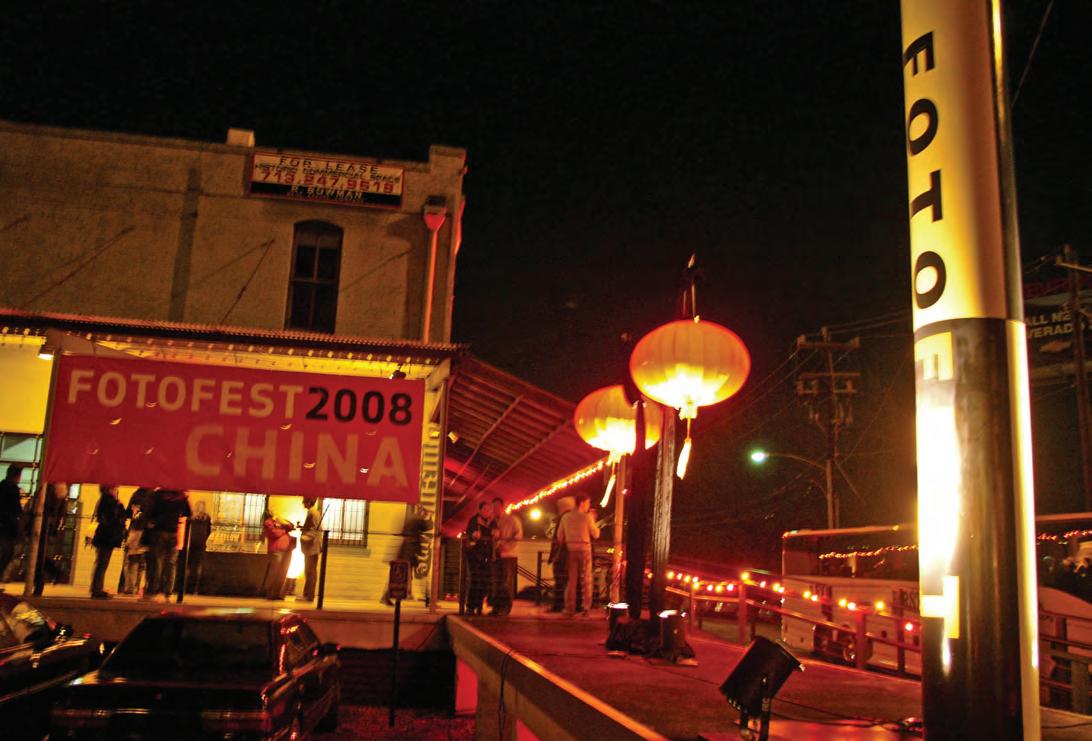
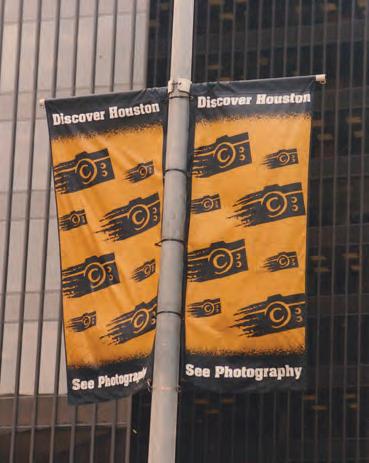
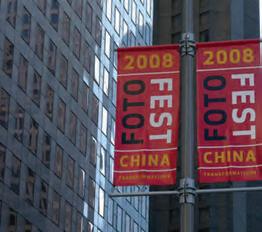
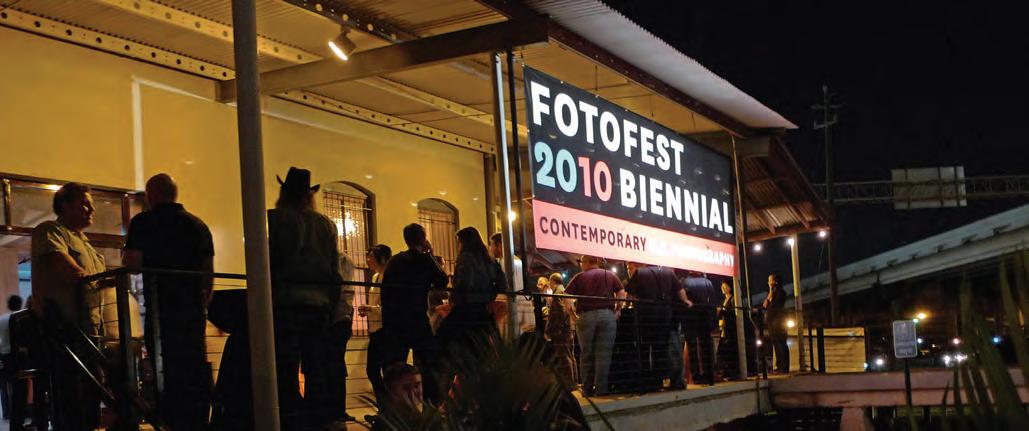
FotoFest Biennial opening night party, 2008 & 2010, Vine Street Studios. FotoFest Biennial banners, 1998 & 2008. All photos courtesy of FotoFest
as portals on the world – the world beyond their everyday lives. Their deep and longstanding interest in the world and their concerns about human rights and social equity are very similar to my own interests and concerns.
Given the political context in which we are living here and abroad, I think it is important to deal with these subjects, and especially important that younger people become aware of people like Jean and Dominique and what they stood for.
As I looked through the images they collected, I wanted to show both their interest in the outside world and civil rights, particularly the African and African American struggle for equal rights.
All of these images bring together a view of our world that defies easy analysis. It is beautiful, painful, strong, delicate, agonizing, and ultimately destructive. That is how I think the de Menils and I see our world and perhaps even ourselves.
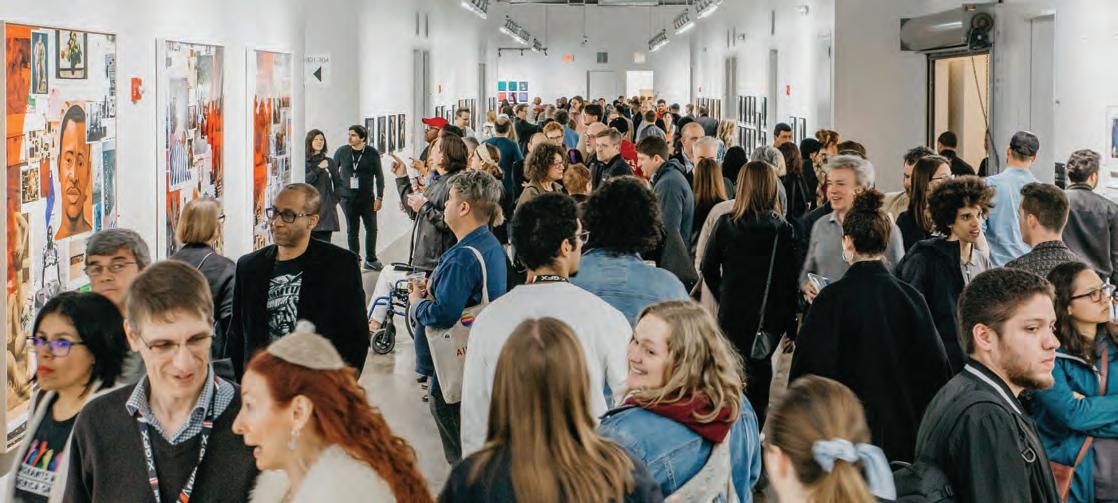
Opening night of the FotoFest Biennial 2020 at Silver Street Courtesy of FotoFest.
Photo by Os Galindo.
PHOTO
GRAPHY P
by JOHN BERNHARD
F ollowing the interview with Wendy Watriss, and in the wake of FotoFest’s celebration, it felt not only natural but necessary to turn toward the exhibition she curated at the Menil Collection.
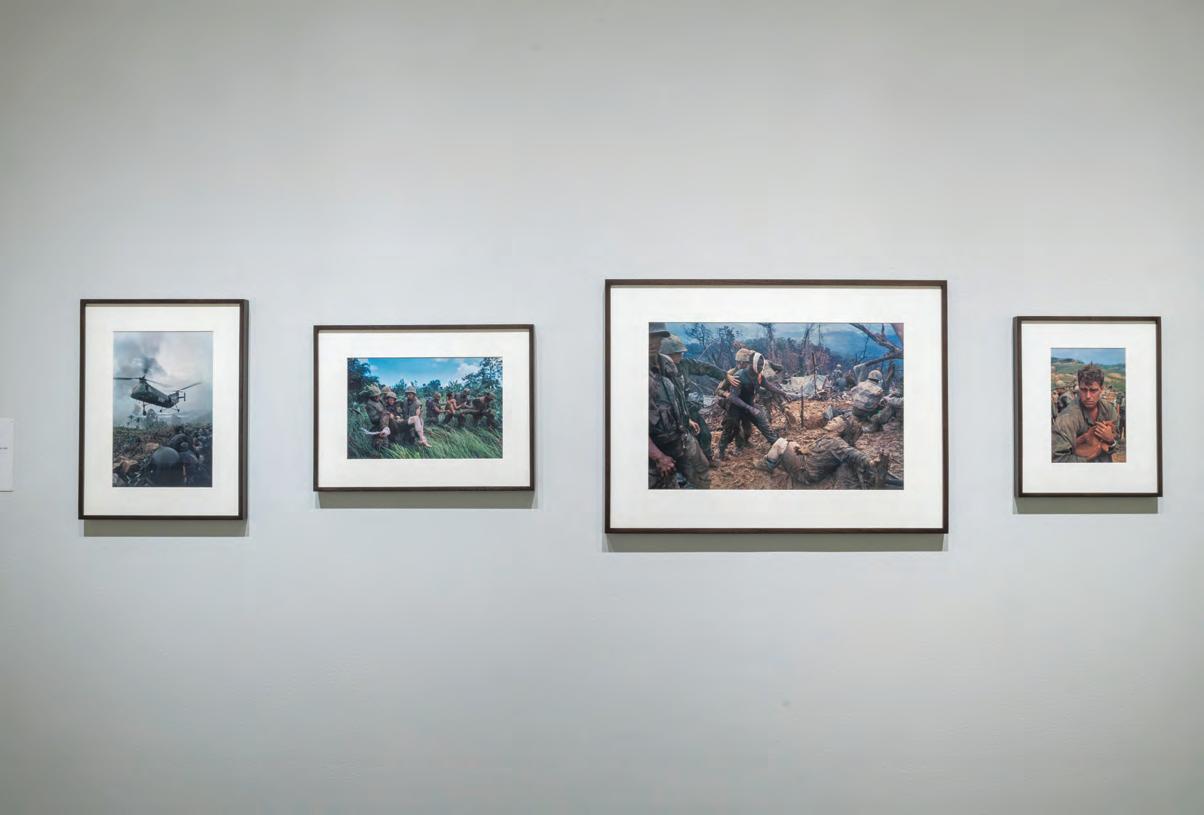
Drawn from an archive of some 5,500 photographs in the museum’s permanent holdings, it reads not as a survey, but as a considered progression, a narrative shaped by intention.
Wendy describes her selection as an unorthodox sequencing of images, guided by three sets of eyes: her own, and those of John and Dominique de Menil. The result is neither linear nor didactic, but quietly insistent, asking the viewer to look again, and then look closer.
The e xhibition opens with single and group portraits made across continents. Faces meet us with an intensity
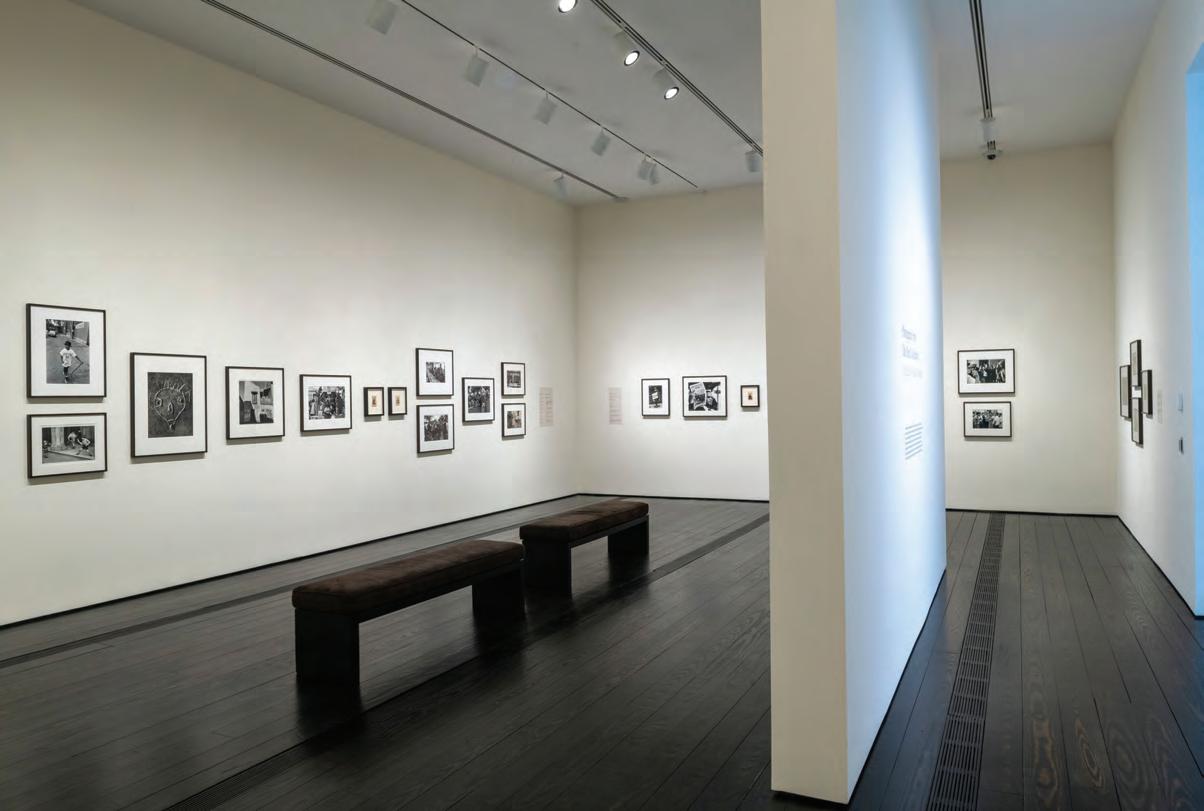
Installation view of Photography from The Menil Collection Curated by Wendy Watriss. Photo by Paul Hester
that resists indifference. These images do not merely depict presence; they demand attention, raising questions about identity and dignity.
As one moves through the galleries, a subtle shift occurs. The intimacy of portraiture gives way to a documentary urgency, where the individual becomes part of a larger human struggle. The focus turns toward civil rights and
political equality in the United States, echoing outward to the Black African fight against apartheid in South Africa. From there, the exhibition advances into war, most strikingly through the unflinching color photographs of Larry Burrows from the U.S. war in Vietnam.
Wha t is most remarkable is how acutely these images speak to the present moment. Especially in the second
This page and opposite: Installation view of Photography from The Menil Collection Curated by Wendy Watriss. Photo by Paul Hester
part of the exhibition, marked by conflict and resistance, photography asserts its enduring power to make us see and to make us feel. It reminds us that the battle for human rights is neither distant nor resolved.
I clo se with Wendy’s own words from the final paragraph of her Menil catalog essay, words that feel especially resonant in this moment: “It is particularly important today
to remember the dual legacies of John and Dominique’s lives and work. They were more than collectors. The images in the museum’s photography holdings are a testament to the interconnection of art and activism, art and human history, and the many contributions the de Menils made to life in Houston and other parts of the world.”
T he exhibition remains on view through May 31, 2026
CLUTCH CITY CRAFT
Houston Center for Contemporary Craft by
PIERRE-ANDRÉ FOLLONIER
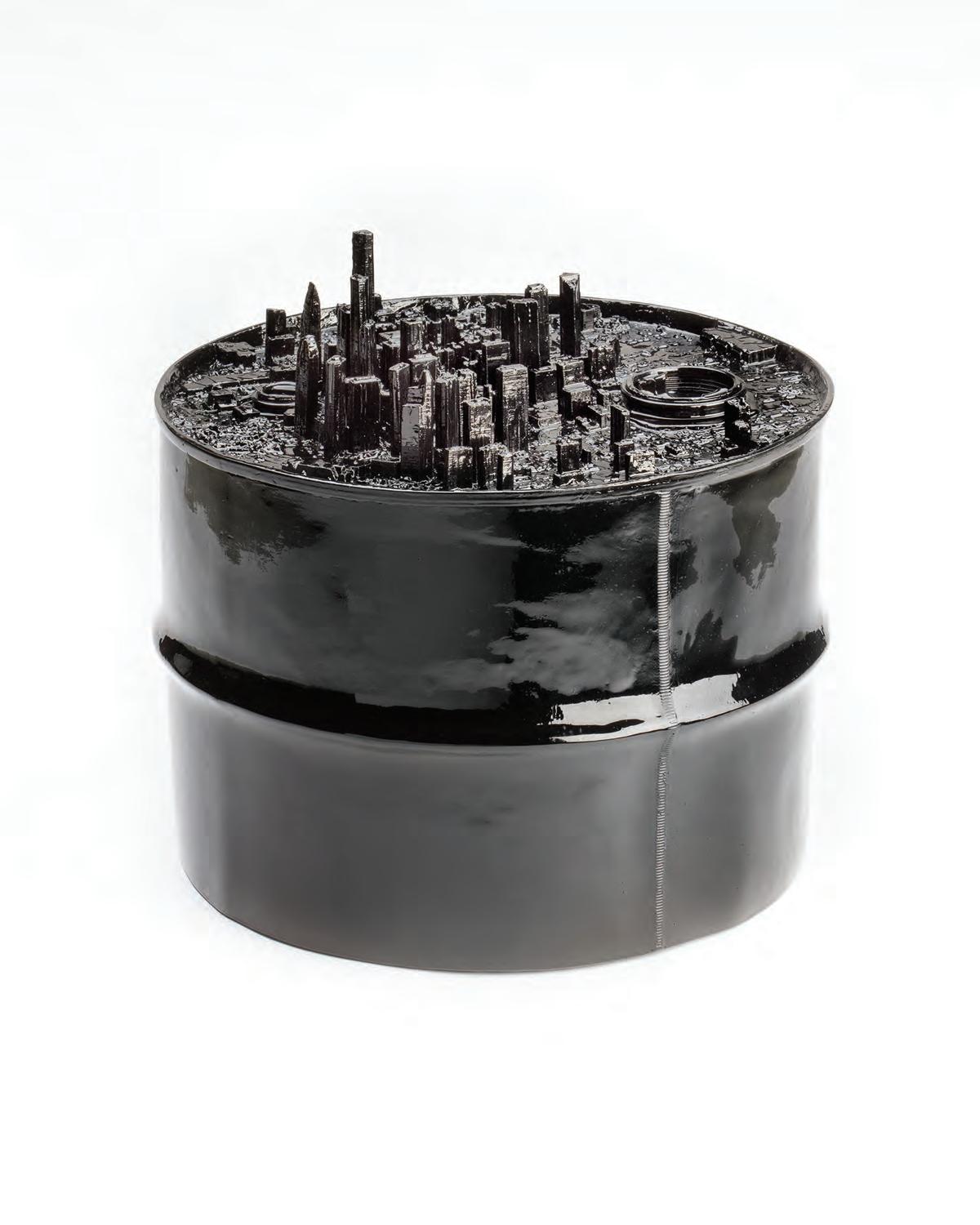
Spanning both the front and main galleries, the exhibition moves with the logic of Houston itself. It begins at street level, with century-old mosaic signs that still speak in fragments of color and civic memory. From there, it slides into the lowrider culture of SLABs, where engineering meets swagger, and into the intimacy of bespoke adornment, from cowboy boots to grillz. The journey ends higher, where materials bend toward the future in the hands of fiber
artists who design spacesuits and preserve the woven interiors of NASA mission control.
Curator Sarah Darro frames the exhibition through Houston’s nickname, earned during the Rockets’ championship years, not as nostalgia but as method. Clutch City becomes a way of thinking, a belief that skill, timing, and resolve can carry a city through pressure. Houston may be known globally for energy and aerospace, yet it also holds the highest concentration of working artists in Texas. Here, craft is not decorative. It is foundational.
Presented in concert with Handwork: Celebrating American Craft 2026 , a national initiative organized by Craft in America and the Renwick Gallery, Clutch City Craft affirms what Houston has long understood. The future is handmade, and it starts here. On view until August 8, 2026. Houston has always made things. Roads, rockets, boots, signs. It has stitched its ambitions into leather and steel, welded dreams into infrastructure, and learned early that the hand is as important as the blueprint. Clutch City Craft , now on view at the Houston Center for Contemporary Craft, gathers this restless ingenuity into a single, expansive portrait of a city that builds with purpose and pride.
Norwood Viviano, Recasting Houston, 2019. Kiln-cast glass. 14 x 14 x 13 in.
Photo by Tim Thayer/RM Hensleigh.
ONE ARTIST.
ONE VISION.
A LIFETIME IN DIALOGUE
In Conversation with George DeMontrond III
by JOHN BERNHARD
photography by HALL PUCKETT
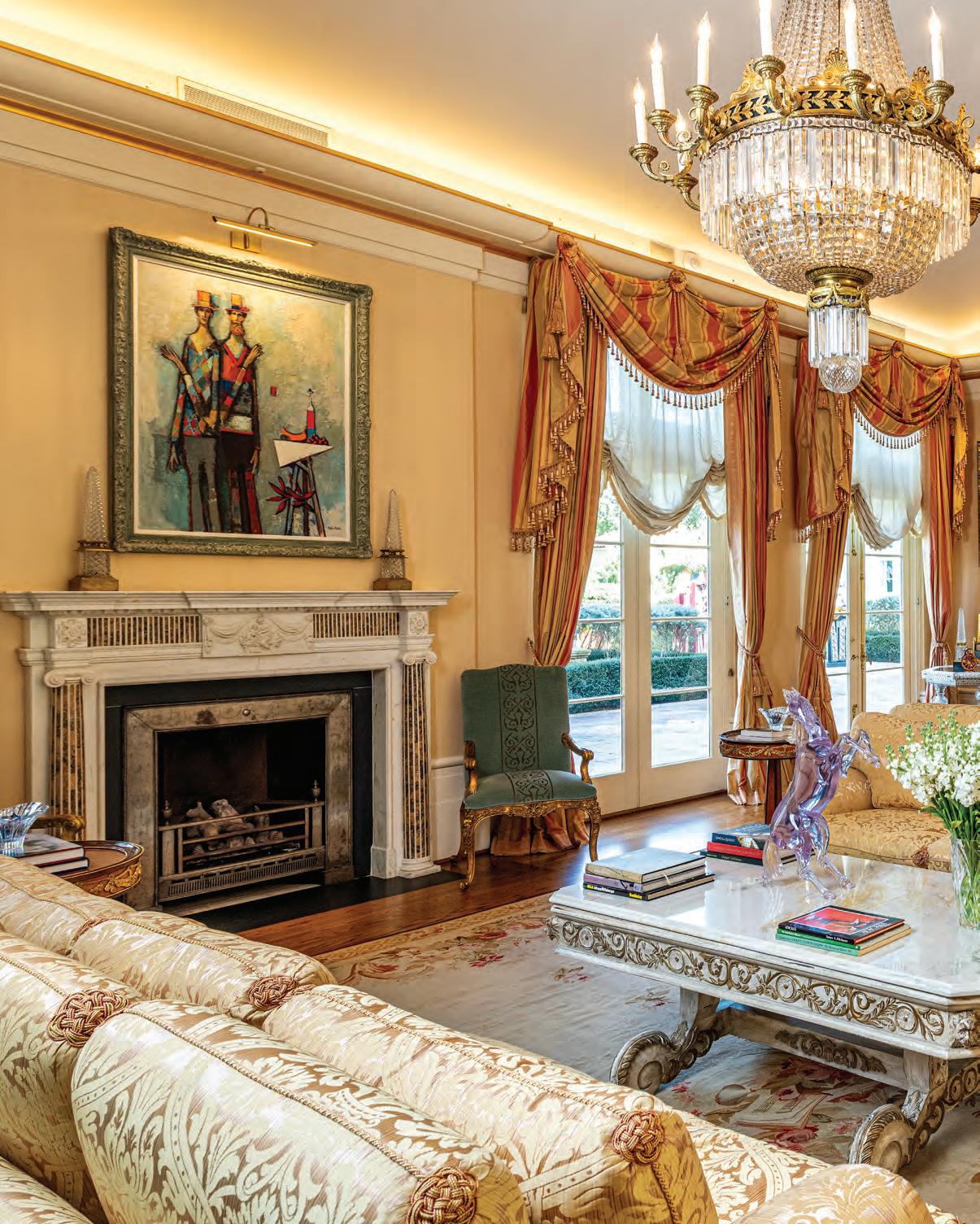
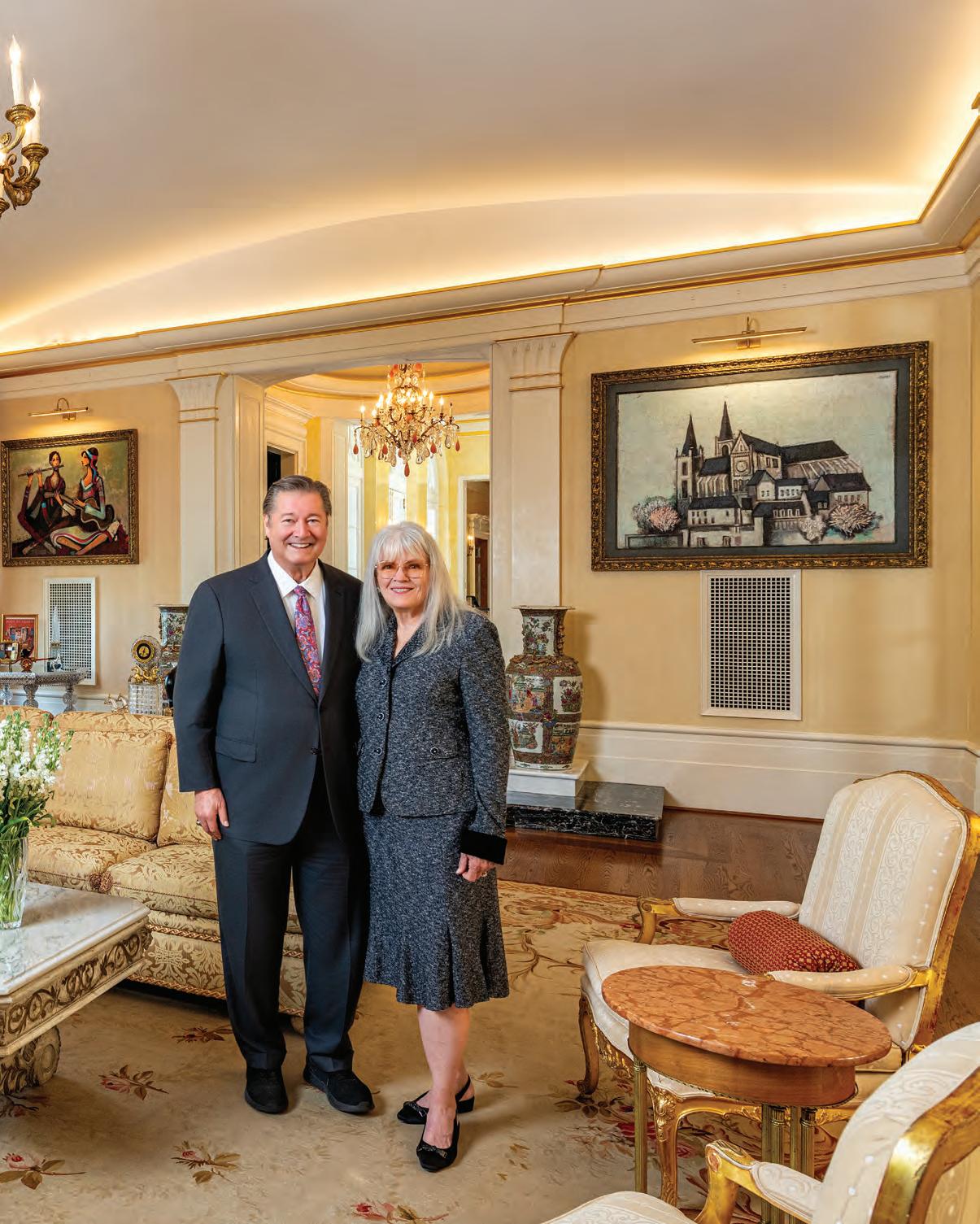
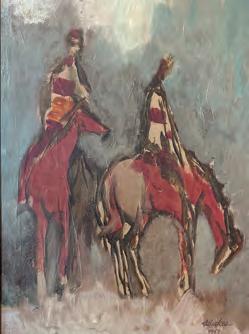
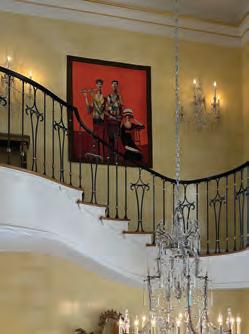
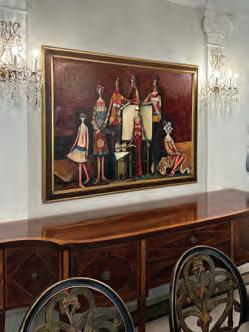
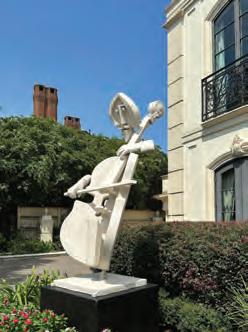
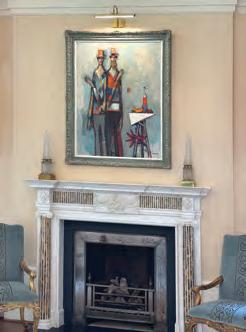
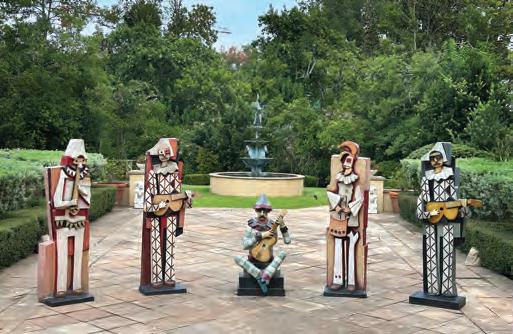
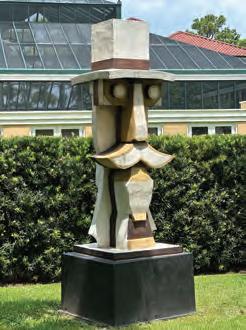
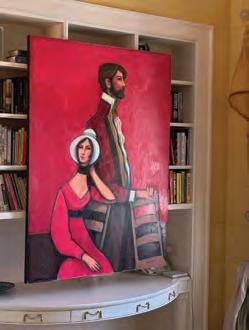
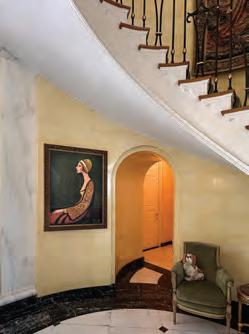
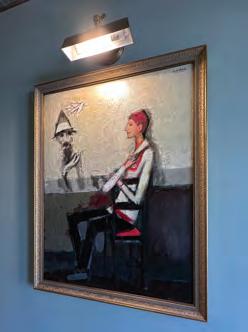
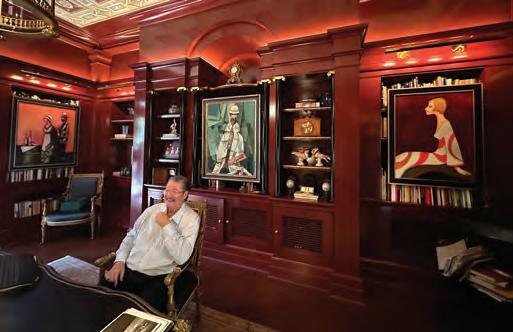
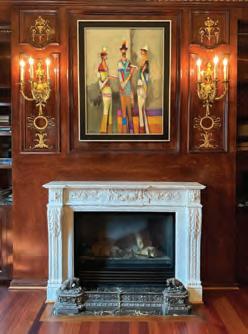
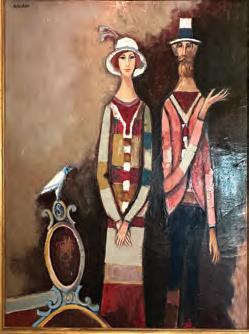
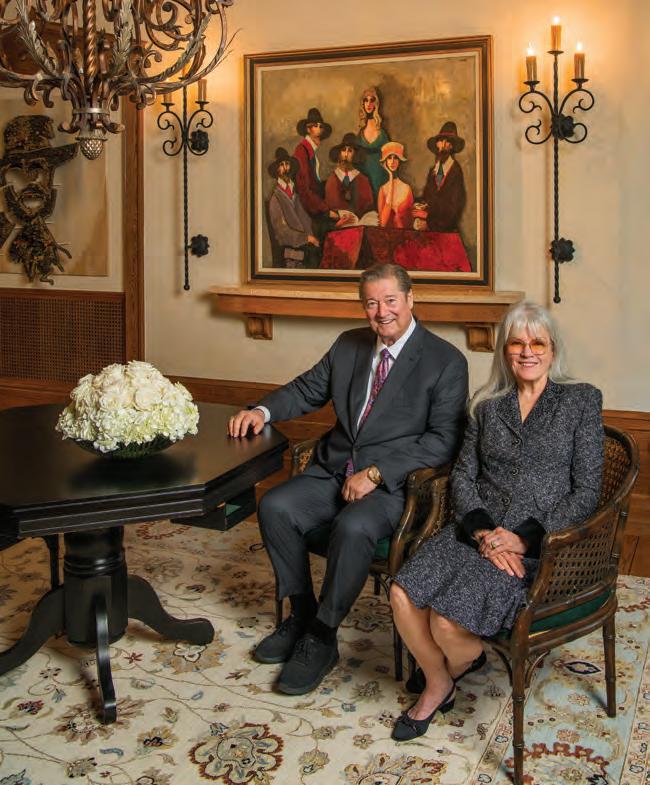
Some collectors wander through the art world like travelers without a map, gathering whatever catches the eye. Others move with a plan, charting their course with precision and purpose. The DeMontronds chose a different path, a narrower, deeper one. What began as a friendship with the late David Adickes evolved into a lifelong conversation between patron and artist. Over the years, that dialogue has filled two River Oaks homes with more than a hundred of his works.
When ArtHoustonvisited, the spirit of Adickes was everywhere: on the walls, in the garden, and in the silence that stayed behind.
JOHN BERNHARD: When did this journey with David Adickes truly begin, before you realized it would become a collection?
GEORGE DEMONTROND III: Linda Ewing, our decorator, had known David since the Virtuoso was created for the Lyric Center on the edge of Houston’s Theater District. She procured two of his paintings for my River Oaks Boulevard house. I hung one in my study and the other in the dining room. I absolutely fell in love with them.
JB: Your friendship with Adickes seems to have shaped not just your taste, but your home itself. What drew you to collect his work almost exclusively?
GD: About six months later, my wife Marilyn and I were introduced to David, right as I was moving into our new home — we kept the older one. I was surrounded by empty walls, so I went to David’s warehouse studio and then to his home, looking for pieces that might solve that “empty wall problem.” That visit changed everything. Meeting David, seeing the breadth of his work up close, it was love at first sight, both for the man and for his art.
Photography by John Bernhard
To stand among the DeMontronds’ collection is to understand devotion in its purest form. It is a dialogue frozen in time, a monument to friendship and artistic faith. Each canvas seems to speak, each sculpture to breathe, reminding us that collecting can be something more than ownership. It can be a way of keeping a voice alive, long after the artist has gone.
JB: Did the connection begin with the man or the art, or are they inseparable now?
GM: The “connection,” while beginning with his art, immediately was extended to the man himself. He was such an engaging person.
JB: Was each acquisition a deliberate choice, or did they arrive as moments of pure impulse, one after another?
GD: Each acquisition was a moment of pure impulse, I never thought about it as adding to a “collection.”
JB: Tell us about the commissioned replica of Adickes’ Virtuoso at the Lyric Center downtown, what inspired you to bring such an iconic work into your front yard?
GD: I once saw a small version of Adickes’ Virtuoso in his front yard during one of my visits to his home. I knew at once it would be perfect for the front yard of our Boulevard house, though it was too small for the space. When I asked David if he would recreate the piece at one and a half times its size, he agreed immediately.
JB: As a successful businessman, do you ever weigh your collection in terms of investment, or is it purely an affair of the heart?
GD: I have never thought about my collection as an investment. It was, and still is, purely an affaire de coeur.
JB: Now that David Adickes is gone, will you seek another artist to champion, or has the chase itself changed?
GD: I will probably seek another artist preferably a local one, to expand the collection. My appetite for David’s art, however, is still not satiated. I will still be looking for additional Adickes’ pieces in the future.
George DeMontrond III and Marilyn DeMontrond at their Houston residence, seated in front of David Adickes’ Rembrandt Enhanced . Photography by Hall Puckett
A R T F U L ROCKPORT’S
HOW A GULFSIDE TOWN BUILT A CULTURAL HAVEN WHERE CREATIVITY DRIFTS AS EASILY AS THE TIDE. by ARTHUR
DEMICHELI
R I S E
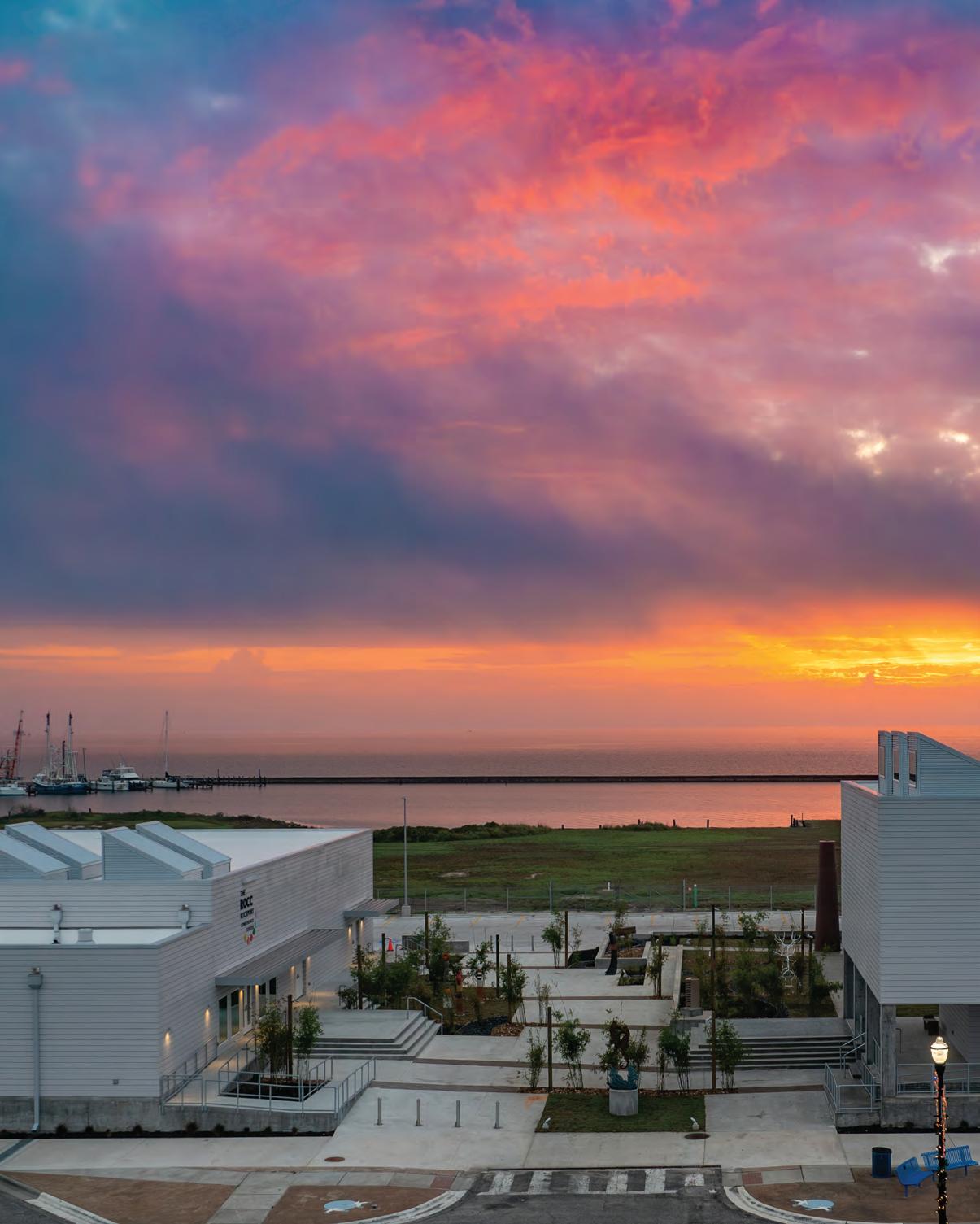
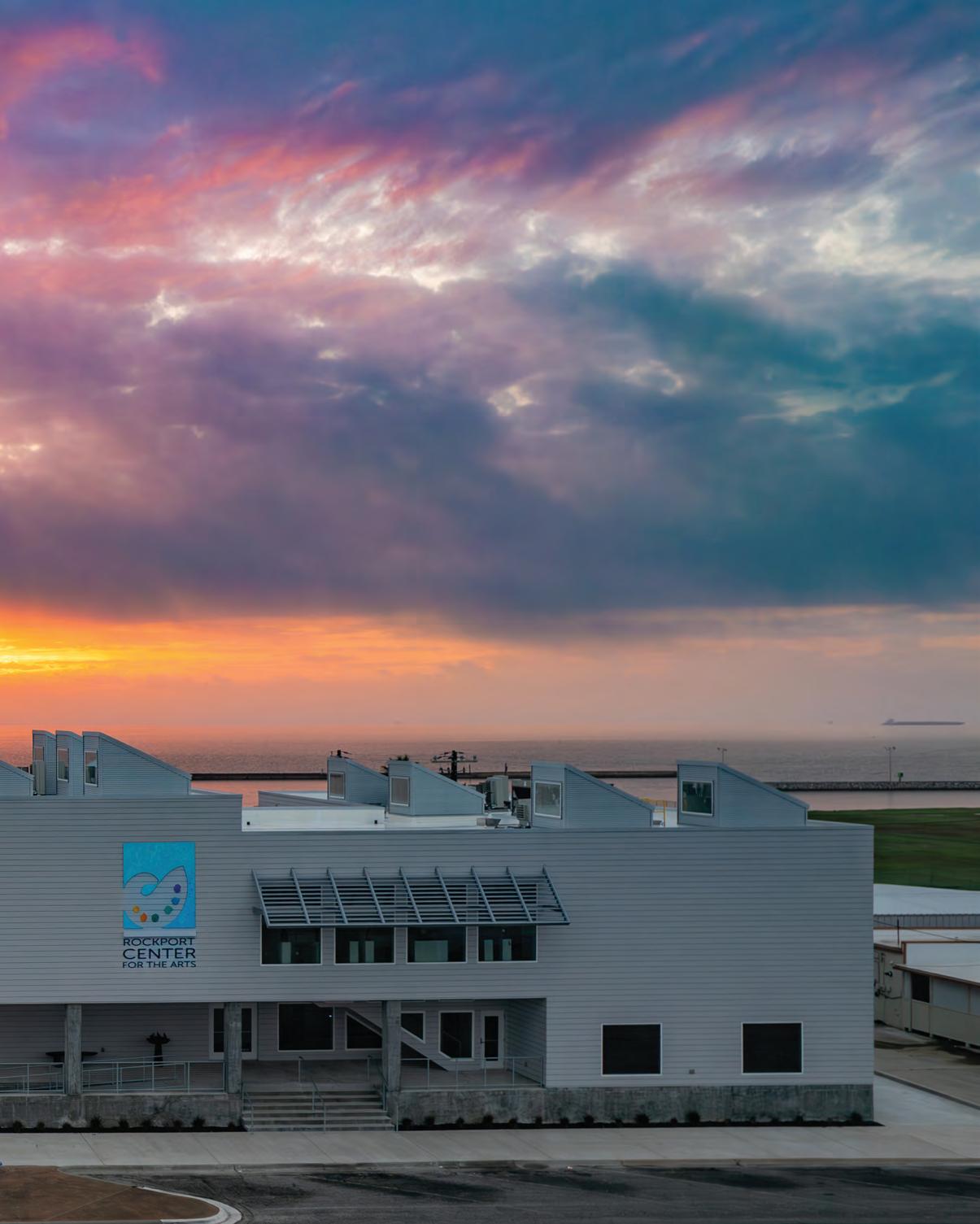
In the coastal town of Rockport, a community of roughly eleven thousand residents situated along the Texas Gulf of Mexico, the shoreline remains the town’s defining landmark. Just off the main scenic drive, where beach grass meets packed sand and the horizon opens wide, stands one of Rockport’s most notable institutions. The Rockport Center
for the Arts (RCA) occupies a modern, thoughtfully designed building that faces the water and serves as a cultural anchor for the region. Its presence signals the town’s longstanding commitment to the arts and reflects the community’s belief that creativity belongs as much to its landscape as the tides that shape its shore.
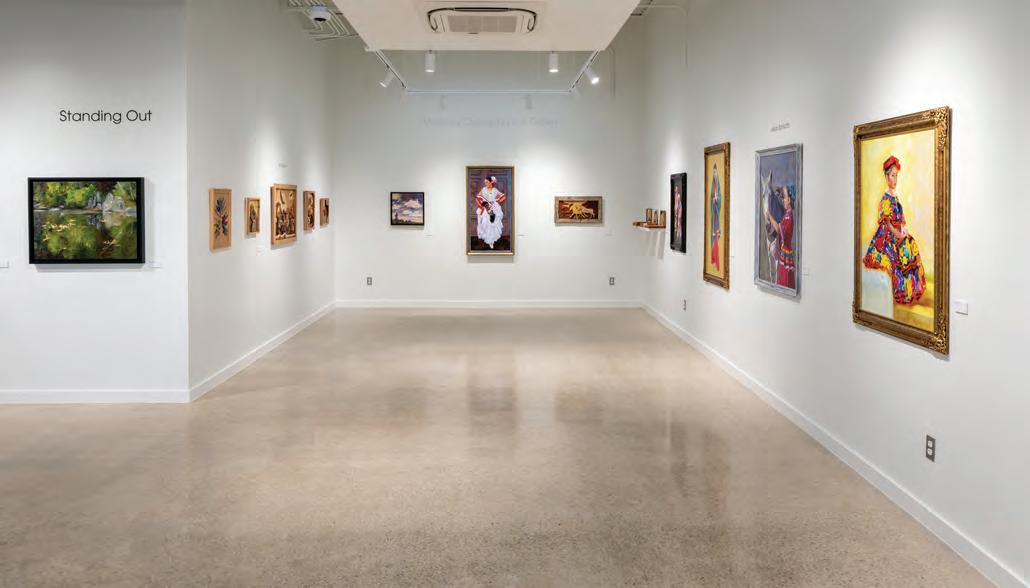
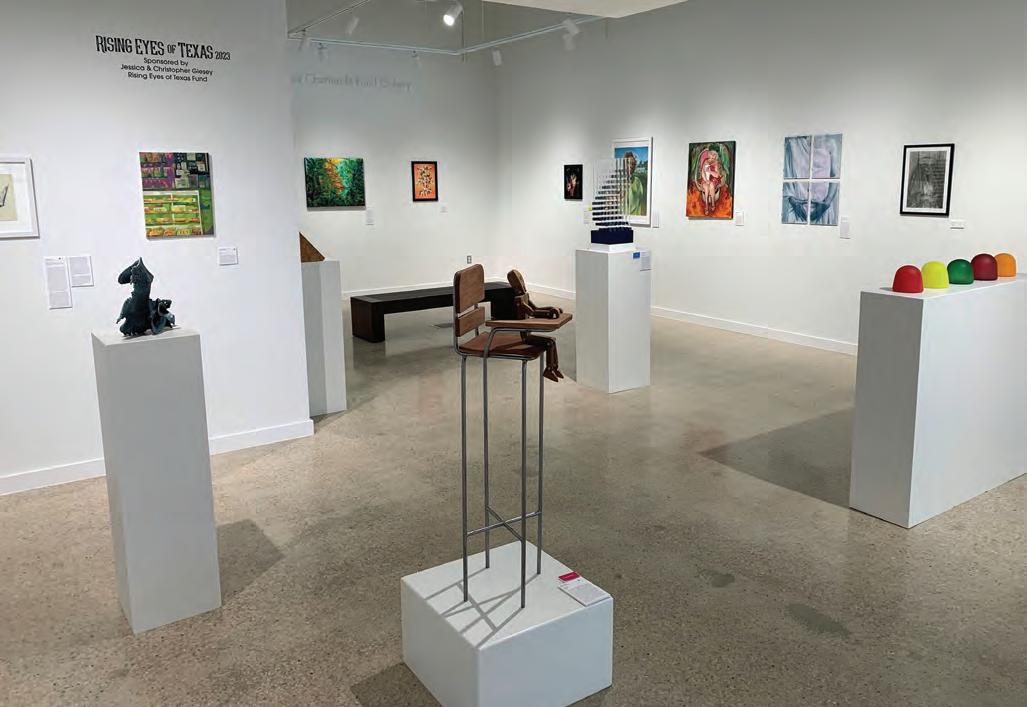
Rockport Center for the Arts, installation views. Photography by Pam Fulcher.
Previous spread: Rockport Center for the Arts, Creation , photography by John Martell
Rockport’s arts community began in the nineteenth century, when small groups of local painters gathered to share their work. By the mid-twentieth century, artists like Simon Michael, John P. Cowan, and Dalhart Windberg were shaping a distinct Texas Coast style, attracting more creatives to the quiet fishing and birding town. A guild formed, then a nonprofit in 1969, which launched the first Rockport Art Festival and set its sights on creating a permanent home for exhibitions and education.
That home arrived in 1983, when the historic 1890 Bruhl/O’Connor house was donated and moved to the emerging museum district. It opened as the Rockport Center for the Arts, hosting early exhibitions in its former parlors and growing steadily. After Hurricane Harvey damaged the building in 2017, the center relocated temporarily while planning a new future. A strategic vision led to acquiring a one-acre site in the Cultural Arts District, raising $13 million, and building a modern campus designed by award winning firm Richter Architects and completed in 2022.
David Richter and his wife, Elizabeth Chu Richter, approached the project with a careful eye, weighing Rockport’s climate, its downtown character, and the town’s layered history. Their design blended coastal sensibility with a contemporary vocabulary, creating a structure that feels both rooted and new.
Light became their quiet triumph. The building’s orientation toward Austin Street and its generous windows invite the north light artists prize, the clean, steady glow that reveals color at its truest. In a coastal place where the outdoors is part of daily life, the design allows visitors to feel connected to the bay even while standing inside. Set directly along the sidewalk, the center becomes a natural extension of Austin Street. Its presence strengthens the rhythm of shops, restaurants, and foot traffic, adding energy to the district and helping to revive the heart of the area.
The new 1.2-acre RCA campus features a two-story, 14,000-square-foot building dedicated to visual arts and education. Its five classrooms support an expanded lineup of hands-on workshops in painting, drawing, jewelry, photography, mixed media, sculpture, and new digital forms, serving students at every skill level.
The former executive director, Luis Purón, was a catalyst for change whose leadership ushered in a remarkable period of growth. With steady vision and a gift for turning plans into reality, he guided the center’s rebirth through a decade marked by expansion, renewed purpose, and lasting success.
“People come from all over to see what we have down here,” said Rockport Mayor Tim Jayroe. “Especially since Luis came, the programs that they have, the people that come in and display, what they have created in their lifetime, has been tremendous; it’s been a huge asset to our town.”
Local resident and world-renowned wildlife sculptor Kent Ullberg, who has exhibited at RCA and whose work is represented in the art center’s public art program, said artists know the value of a strong art center. “Having a place displaying our work where we live… it means a lot,” said Ullberg. “This fine art center is world-class.”
A s Purón’s decade came to a close last year, current Deputy Director Karen Ernst said, “As Luis’s remarkable decade of leadership comes to a close, we celebrate the strong foundation he has built, transforming a small arts space into a thriving campus in the heart of downtown, I see this next chapter as an incredible opportunity. We’ve grown so much and so rapidly, now we’re perfectly positioned to build on our legacy and shape an exciting future together.”
Today, RCA operates as the Coastal Bend’s first multidisciplinary arts organization, offering exhibitions, classes, performances, and public programs for the region. As a thriving cultural hub, it attracts more than 50,000 visitors to Rockport each year.
Guest s will find artwork displayed across four inviting galleries. The H-E-B Gallery and the McKelvey Charitable Fund Gallery present a changing roster of exhibitions, while the Jeanie & Bill Wyatt Gallery offers an intimate setting for small-scale sculpture. Nearby, the Mendez Family Gallery serves as a permanent space for member artists, a quiet testament to the creative community that shaped the center.
Amon g the center’s past exhibitors are Austin landscape artist, Salvador Rodriguez, and longtime local talents such as Rebecca Bridges Rice and David Everett. Houston artists, Mary Jenewein and McKay Otto, have also shared their work here, with Otto unveiling his striking, mind-bending painting and sculpture creations in 2023.
The R ockport Center for the Arts rests at 204 South. Austin Street in Rockport, Texas, a two-and-a-half-hour drive from Houston, close enough for a day’s escape yet far enough to feel like a place discovered. Open six days a week and closed on Mondays, it welcomes visitors with free admission, inviting anyone who steps through its doors to linger among its galleries and let the rhythms of art mingle with the soft breath of the Gulf.
cod e
Encountering Generative Art Beyond the Screen on e t
h wall
by ERICK CALDERON
Photography by FEDERICO FLORIANI
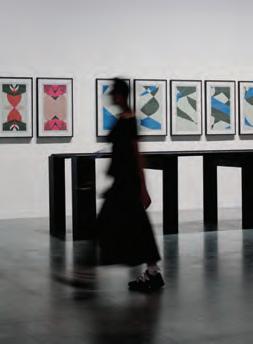
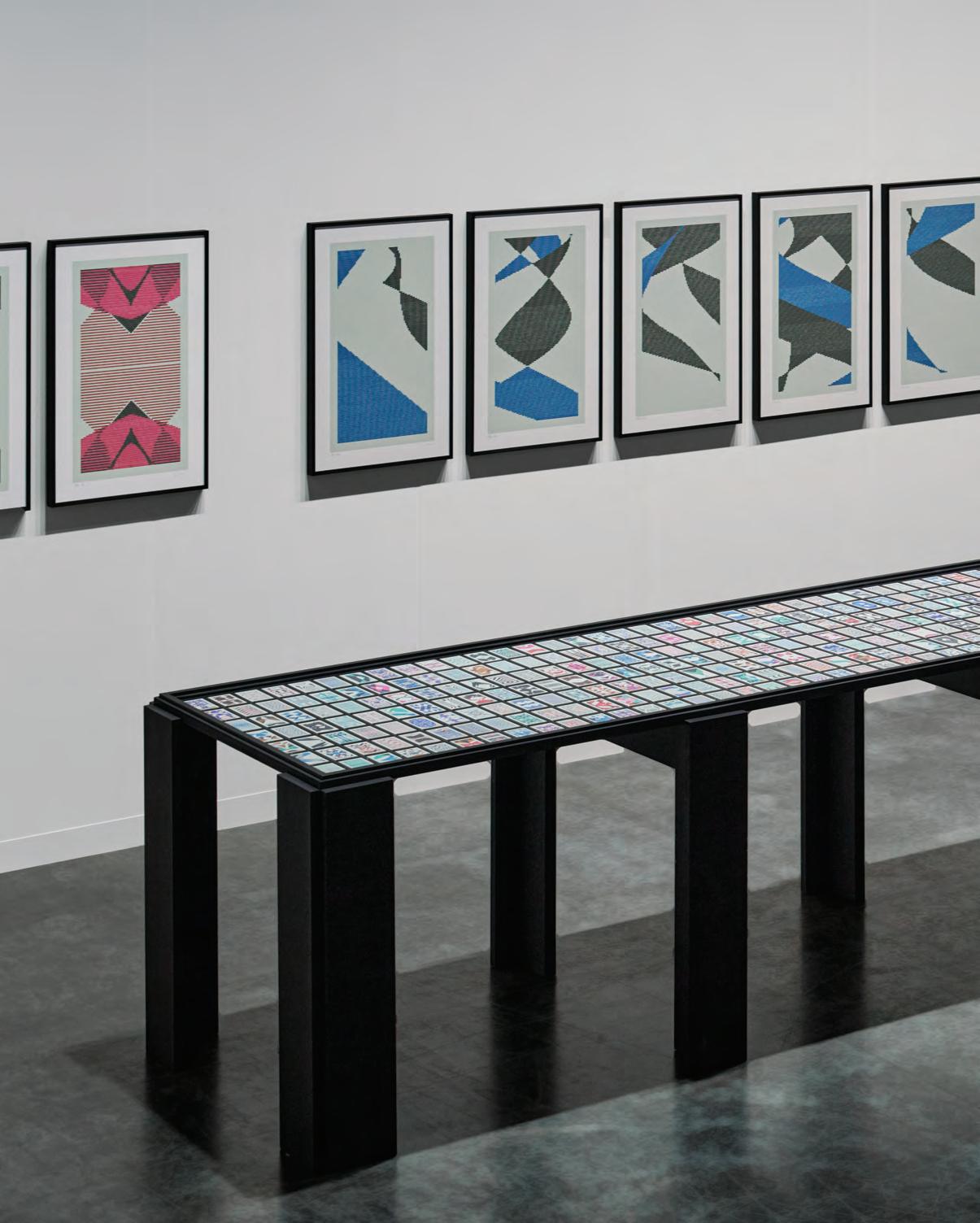
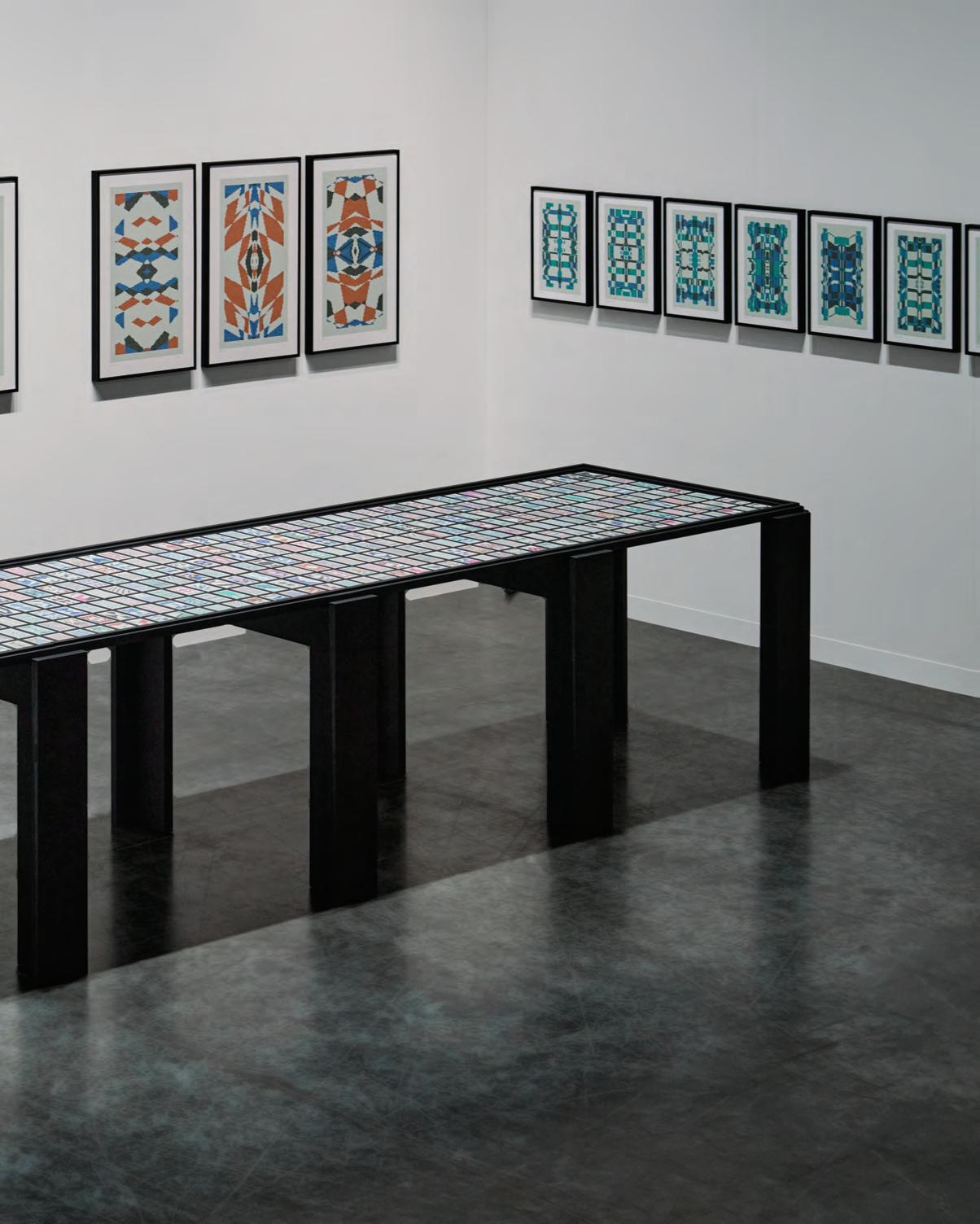
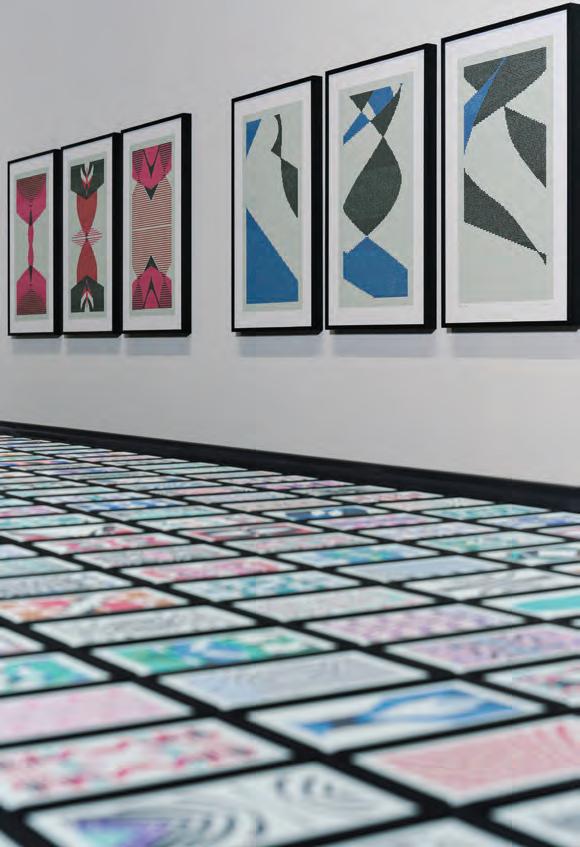
I’m standing in the inaugural Zero 10 section at Art Basel Miami, looking at Quine on the wall, and I’m struck by a sense of recognition. The work has traveled into a broader art-historical conversation, bringing with it a new sense of responsibility. Over five years and 500 projects, what we’ve built at Art Blocks has become a body of work that calls for care and stewardship.
For someone who started in Houston working with gradients and systems, ending up at an international art show wasn’t an obvious destination. While we have a phenomenal art scene here, Houston is a place often defined by industry and making. That awareness has stayed with me as my work moved from ceramic tile to projection mapping, from physical blocks to digital ones. The materials changed, but the questions didn’t.
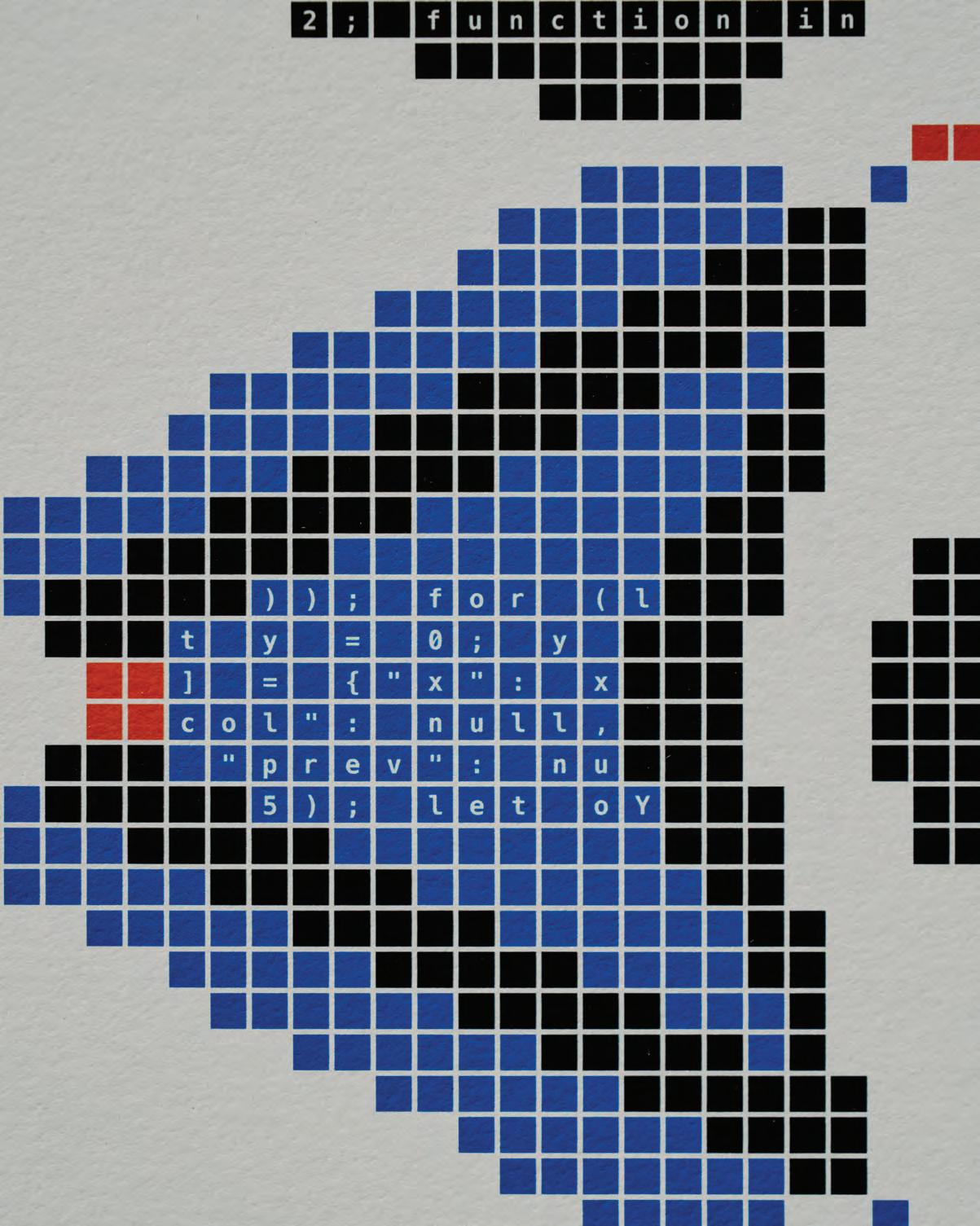
Quine , created by Larva Labs, part of the Art Blocks 500 and the final Art Blocks Curated release made that realization real for me. Seeing the work presented so directly felt like a shift. The code was right there front and center but could be encountered as art, without explanation or framing.
Systems as material
Long before blockchain entered the conversation, I was drawn to systems. My wife Mara, an architect with a deep sensitivity to design, color and structure, encouraged me in my creative pursuits. I began with projection mapping, writing custom software to project color onto three-dimensional forms. Later, I moved into 3D printing, hand mixing colors and painting gradients by hand onto printed blocks, going back and forth between digital instruction and physical execution.
Back in 2004 here in Houston, I founded a ceramic tile company, La Nova Tile. Watching designers manually assemble mosaic murals, I began sketching algorithms to help make the process smoother for my clients, first on paper, then in code. The goal was initially about efficiency but eventually more about continuity. I was curious how a system could produce subtle variation while maintaining coherence and the instruction itself become expressive.
Looking back, it’s clear that blocks were a way of thinking, not simply a motif. Tile, pixels, printed forms, and code each offered a different surface for the same underlying questions about repetition, constraint, and individuality.
Solving the problem of ephemerality
G enerative art has been around for decades but generally exists in a strange space. Is the artwork the code that generates the outputs or the outputs themselves? It’s a medium that often highlights process over object and instructions over results. Each output is one possible outcome among many, and no two moments are the same. That ephemerality is sometimes part of its appeal, but working in the medium I was always looking for ways to capture the moment and preserve it in a way where it was documented and distributed beyond a print.
Encountering digital authorship
In 2017, while exploring blockchain technology, I came across a project by Larva Labs called CryptoPunks . It was a collection of 10,000 unique 24×24 pixel characters that are disarmingly simple at first glance. But structurally, it introduced something new: a way to establish authorship and ownership of something digital.
What intrigued me most was the framework and how the blockchain worked to serve as more than storage. It participated in the distribution of the work by providing an avenue for individuals to acquire each output. I was inspired by the idea that generative art could have a medium capable of holding both contingency and finality.
That realization reshaped how I thought about code in an artistic context. The blockchain became a medium that could hold intention, variation, and permanence at the same time.
“ It’s art shaped by systems, participation, and time.”
Art Blocks as an artistic framework
When I launched Art Blocks in 2020 with my own digital artwork, Chromie Squiggles , the focus was on building a framework where an artist could define a system and let each work emerge in real time. A single algorithm stored on the blockchain opened up near-infinite creative possibilities, shaped only by the limitations of the browser. At the same time, a finite edition was set at the moment of release, with each work carrying its own proof of ownership, authenticity, and provenance.
Once the code was recorded, each work came into being through an act of participation by the person collecting the work. The artist created the instructions and the work revealed itself through emergence. What came out was a single outcome among sometimes trillions of possibilities— fixed forever the moment it was born.
Over time, the Curated series evolved into something closer to a long-form exhibition than a program or platform. Artists used code to explore authorship, constraint, repetition, and chance in public. Seen together, the 500 projects that now make up AB500 form a living archive of provably human-authored generative art that captures a period defined by intention and build-in-public decision-making.
From production to stewardship
Reaching AB500 signaled a shift. The work had accumulated enough mass to ask for care, context, and interpretation. What began as an experimental framework had grown into a body of work that could be studied, exhibited, and encountered as a whole.
This moment carries responsibility. Not just to continue supporting artists, but to help this material reach audiences who may be encountering code-based art seriously for the first time and within the broader language of contemporary art.
Quine : making the system legible
A quine, in computer science, is a program that outputs its own source code when run. It’s a self-referential gesture. It is code that contains and reveals itself. In Quine , Larva Labs extends this idea into visual art. Each work literally and visibly includes the very program that generates it, embedded within the composition.
Instruction, execution, and result collapse into a single surface where the code no longer sits behind the image but IS the image. You don’t need to understand how the system works to understand that the system is the work and that’s a big reason why I think the collection is so special.
In that sense, Quine offers a way into generative art that prioritizes visibility over explanation, presence over abstraction. For audiences encountering code-based work in a fine-art context, it provides a point of entry grounded in form, authorship, and concept.
There’s a symmetry here that I’m excited about. Larva Labs’ work helped me understand digital authorship years ago and now presenting Quine helps Art Blocks make that idea legible to a much wider audience.
Context, not spectacle
Presenting Quine at Art Basel Miami 2025 within Zero 10 (a section explicitly framed around historical shifts in artistic language) felt like context. Code wasn’t treated as infrastructure or novelty. It was allowed to function as a medium, alongside others, on its own terms.
I’m grateful for what this technology has allowed me to do. From a yearly art experience in Marfa that brings together hundreds of people, to seeing works enter museum collections, to the opportunity to show works by Larva Labs at Art Basel Miami, the impact has always mattered more to me than the hype. Over time, I believe it’s the cultural effects that will define this period partly led by the way artists invited their audiences to participate differently in the making and experience of art.
A lot of what drew me to the blockchain was the idea that it brought democratization and accessibility to a broader audience. It’s about being an open ecosystem, driven by curiosity, experimentation, and generosity. Moments like this,
in which code-based art meets a broader art audience, only widen the invitation and frankly are what get me out of bed in the morning.
Standing in the Art Blocks Booth in Zero 10, I felt like code-based art didn’t need to be explained from the margins and instead could simply be encountered, considered, and debated like any other medium. That shift matters to me and to the many artists that have dedicated themselves passionately to the generative medium.
This is the art I can make with the tools available to me today. It’s art shaped by systems, participation, and time. It belongs to the present moment but also belongs to art history. And with that comes a responsibility to care for it, to contextualize it, and to continue inviting others into the conversation.
and previous
Below
spread: Installation view of Quine at ArtBasel Miami 2025. Photos by Federico Floriani
GROUND
swell
by MICHAEL SEAN KIRBY
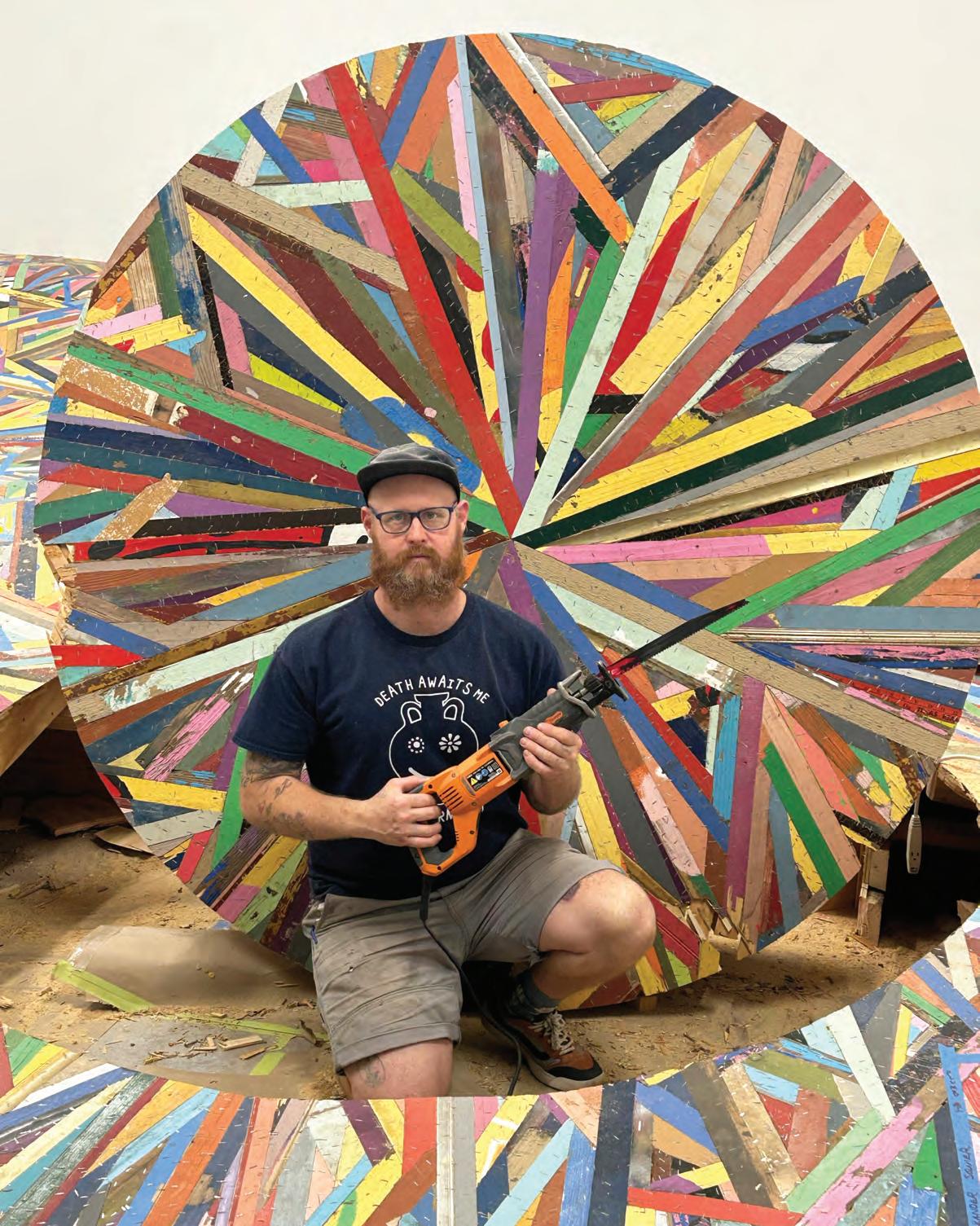
Patrick Renner is a sculptor with an instinctive and genuine calling. Like other visionary artists who have emerged from Houston, he has an uncanny ability to propose ideas that initially seem improbable and then make them feel almost inevitable. A fourth-generation Houstonian, Renner comes from a lineage of makers. His father was an illustrator, his grandfather a woodworker. After earning his MFA at Alfred University in upstate New York, he returned home with a sharpened vision rooted in playful seriousness and sculptural alchemy. He has not slowed since. We first met when Renner was completing Funnel Tunnel , a groundbreaking outdoor installation commissioned by Art League Houston. The 180-foot woven sculpture, described at the time as “a colorful, ground-hugging tornado winding
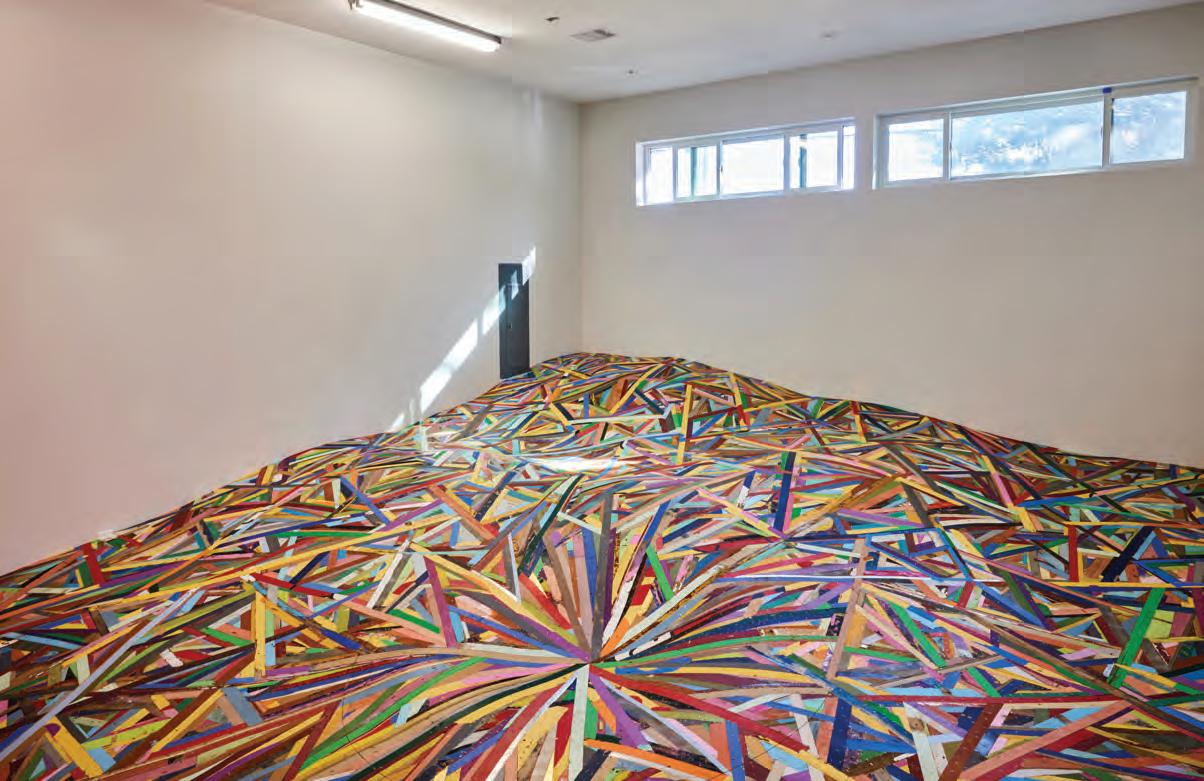
through the trees on Montrose Boulevard,” transformed an ordinary stretch of the city into an immersive experience. Placed on the esplanade of the busy street, it was a striking thing to see, whether from a car or on foot. It made a big impact in the city, and on me. That work marked the beginning of a friendship and the steady unfolding of a bold and increasingly ambitious body of work. Renner is, quite simply, a rare talent. Groundswell , his most recent installation, grew from an idea sketched out and discussed in my studio and eventually took physical form on the lower level of my home. Over fourteen months, the project evolved into something far larger than a single sculpture. It became an ongoing process of transformation and renewal, blurring the boundaries between social sculpture, theater, and what Gordon Matta-Clark once
Patrick Renner, Groundswell , 2025, The artist cut a six-foot circular opening into the sculpture.
described as Anarchitecture. Groundswell presents a rich combination of rebellious audaciousness and genius craftsmanship, and it invites others to engage with it in divergent ways.
As a white-cube intervention, the work is an undulating surface that rises from the floor, merges with the walls, and engulfs the room entirely. There are no paintings, no photographs. The sculptural body is surefooted and immersive. At its highest point, visitors can walk along the wooden contours and look out through ten-foot-high windows, engaging the work physically and spatially. In its future, people gathered around and made contact with Groundswell in all sorts of ways.
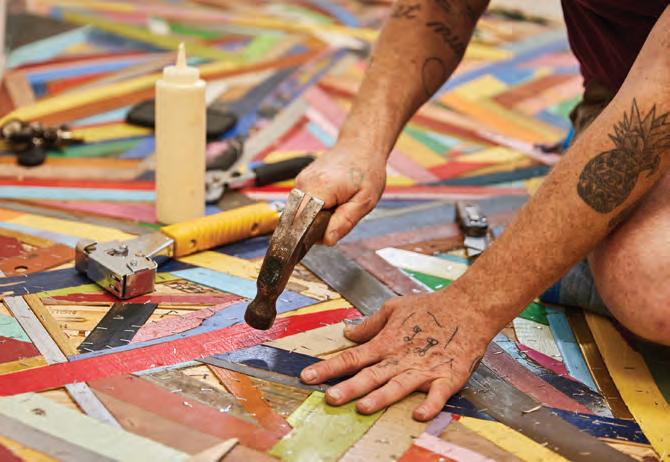
The material of Groundswell is inseparable from Houston itself. Constructed from discarded planks salvaged from demolished houses, buildings, and restaurants, the work is born from the city’s constant cycles of destruction and renewal. Renner has spent years collecting, storing, and retooling reclaimed architectural materials, and this material is central to the work’s conceptual foundation. Transformation is not symbolic here. It is literal.
As the project expanded through its many phases and public activations, Groundswell was realized with support from the City of Houston through the Houston Arts Alliance, Sculpture Month Houston, Redbud Arts Center, and Lauri and Robert Wray.
Over time, Groundswell became a site for a wide range of events and activations. It functioned as an independent cinema, a music venue, a gathering place for neighborhood conversations, poetry readings, performances, children’s art camps, and informal celebrations. It was walked on, reclined on, debated on, and occasionally slept on. For one performance, retitled PLAYgroundswell , the installation served as the stage for a contemporary dance solo. Each activation reframed the work, expanding its meaning and audience.
Renner’s artistic influence connects clearly to Gordon Matta-Clark, whose site-specific interventions in the 1970s challenged architectural norms and explored urban margins. Both artists are drawn to uncharted terrain and to the cultural edges where experimentation thrives. It has been said about Gordon Matta-Clark that, “His eight arms and
six legs were hardly adequate to do what he had to do, and although he often had assistance, he always had to do practically the whole thing himself”. The same could be said of Renner, whose labor-intensive practice requires physical endurance and technical mastery.
Renner’s sculptures often emerge from unexpected hodgepodge of materials and demand a sophisticated understanding of mechanics and construction. Millions of staples, buckets of glue, pounds of screws, fragments of rulers, erasers, and discarded stickers all find their place within Groundswell. It makes no sense and complete sense at once. That tension is central to its power.
In an increasingly data-driven world, Renner’s work reflects a deeply humanist belief in the sanctity of the creative process. Groundswell places the audience at its center, inviting participation from inception to dissolution. It gently mocks the obsession with efficiency and functionality while revealing cracks in formulaic cultural systems. Duchamp would likely have approved.
After more than 400 days, Groundswell moved into its next life. The installation was dismantled, archived, and dispersed, with selected sections exhibited at Scope Art Fair during Art Basel Miami 2025. Its final activation, Tape + Take , invited visitors to mark and remove fragments of the work to carry with them. The gesture echoed the project’s origins in reclamation, drawing the audience directly into the artist’s process. And perhaps now the viewer becomes the subject of groundswell.
Ahead of the event, Renner cut a six-foot circular opening into the sculpture, exposing its underside, what he calls the bummock. Hovering in the space like a full moon, it appeared to model an ideal fragment to take home. Instead, most visitors chose rectangular pieces. The reason remains an open question.
Groundswell is part of an ongoing lineage of artistic succession, shaped by conviction and imagination. Renner moves against the current, embracing friction. In another era, he might have been a seafarer or a knight errant. In this one, he is an artist deeply engaged with the material, social, and imaginative life of his city. Groundswell was a genuine adventure, and it was an honor to witness it from the inside.
In an increasingly data-driven world, Patrick Renner’s work reflects a deeply humanist belief in the sanctity of the creative process.
Above: Patrick Renner, Groundswell , 2025, Installation view.
Right: Patrick Renner at work.
All photography by Michael Starghill.
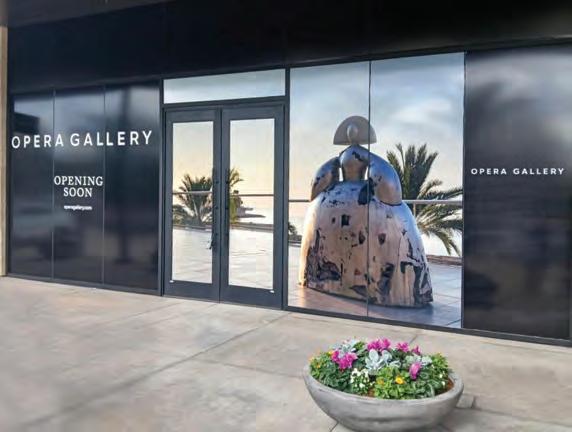
O GALLERY PERA
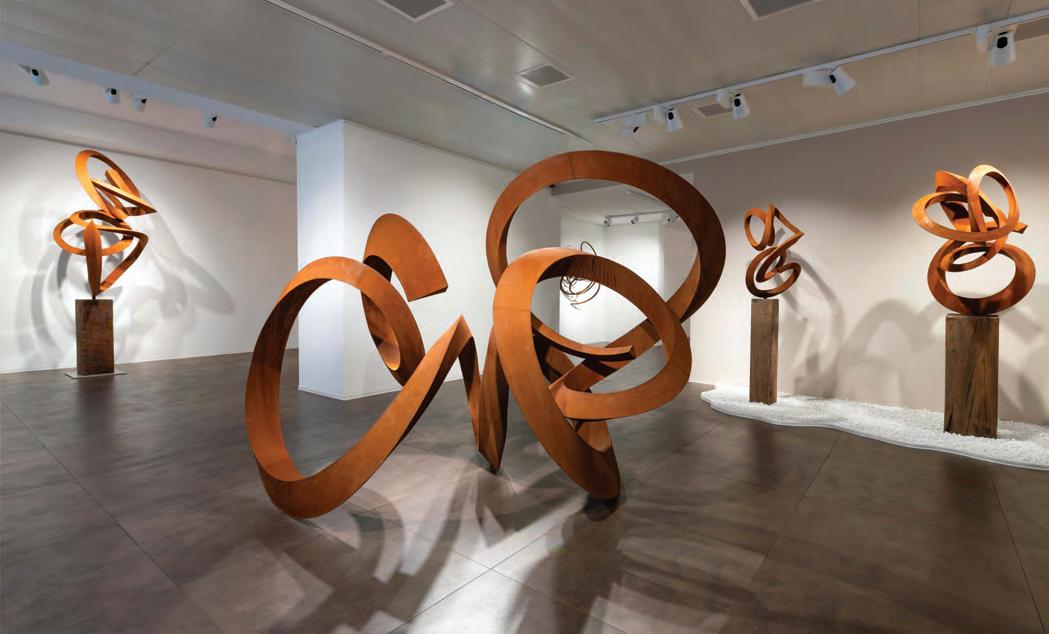
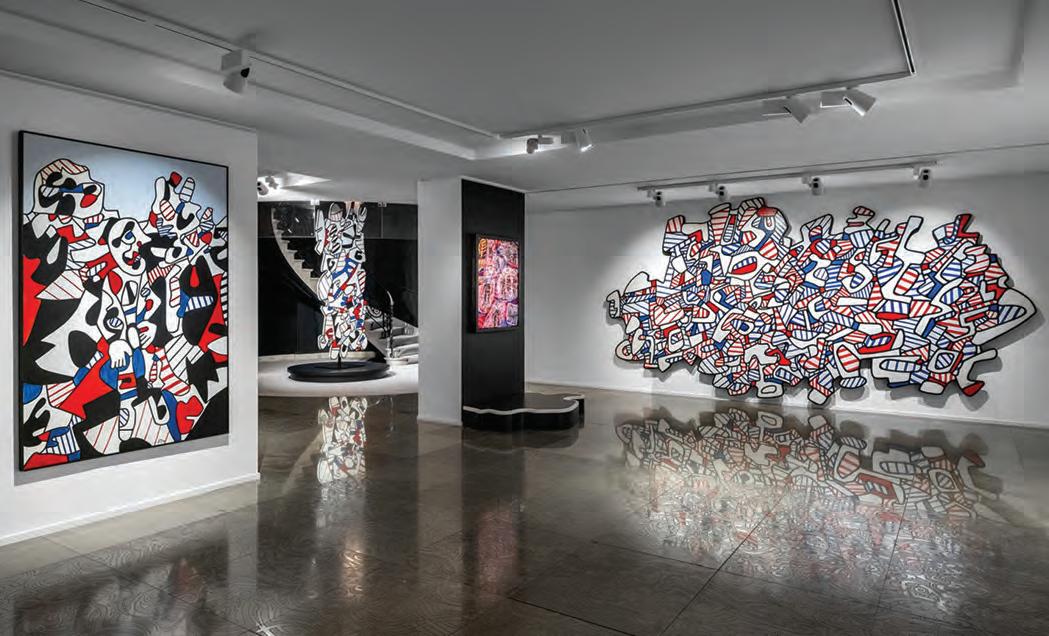
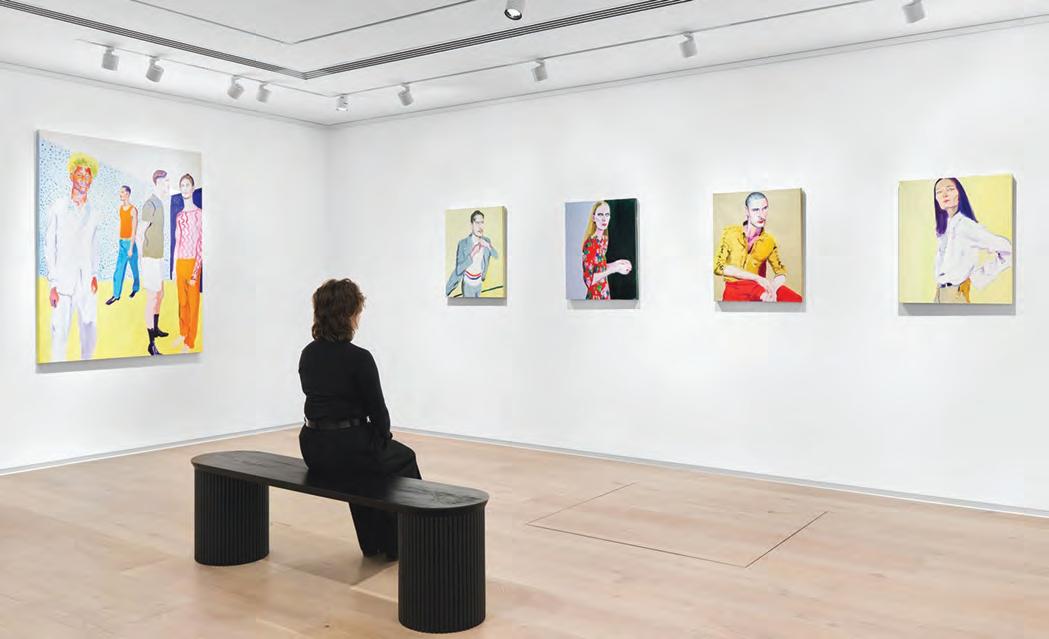
Founded in Paris in 1994, Opera Gallery has grown into a global network of fourteen locations across Europe, Asia, and the Americas. Known for its program spanning modern masters and contemporary artists, the gallery now opens its first Texas location in Houston’s River Oaks District.
ArtHouston speaks with Gallery Director Gregory Lahmi about bringing the gallery to Houston, a family-led vision, and what lies ahead.
JOHN BERNHARD: Opera Gallery began in Paris in early nineties and has since grown into a truly international presence, with spaces in cities like London, New York, Geneva, Madrid, Hong Kong, and Singapore. Texas is a new chapter. When Houston first entered the conversation, did the location feel obvious to you, or did it take time to feel right?
GREGORY LAHMI: By living in
Aspen for almost nine years, we had the chance to meet many Texan collectors when they came for holidays. Our choice to open a branch in Texas was a logical way for us to maintain our presence on the West Coast. Houston is the largest city in Texas and the fourth in the U.S.; the art scene is rapidly expanding, and the demand for fine
art is very strong. Finally, it is always important to stay close to your collectors and offer them something new that they do not yet have in town. Our goal is to propose exclusive museum-quality works of art, artists’ solo shows, public displays, and global experiences for the public at large, collectors, the curious, art lovers, investors, students, and tourists.
Opera Gallery in Houston’s River Oaks District. Photo courtesy of Opera Gallery. Opposite: Installation view, Singapore, 2026. Photo by Oddinary Studios.
JB: This project seems to have been a real commitment from the start. Construction began last September, with a build-out estimated at around seven million dollars. Did the process stay mostly on course, or were there moments when it became more unpredictable than you expected?
GL: As you say, it is a real and deep commitment from us. There is always a certain amount of stress when you start with nothing and have to build everything from the ground up, but our collaborators are extremely professional and understood our needs almost immediately. We are very happy and proud to come to Texas and to be part of the phenomenal expansion of this state, at least on a cultural level. This project will be achieved as planned thanks to all the people involved and their deep commitment.
JB: At this stage, do you have a sense of when the gallery will officially open its doors to Houston?
GL: March 19th will be our grand opening evening!
JB: Opera Gallery is very much a family story. Your uncle is Chairman of the Group, your cousin runs Miami and your brother in Geneva. You came to Houston with your wife and two children. How has the city been treating you so far, both personally and professionally?
GL: Opera Gallery was founded by my uncle, Gilles Dyan, and this year we are celebrating our 33rd anniversary. To endure for such a long time and to be considered today a “blue-chip gallery” by our collectors and the art world, it is not enough to be good at business or to have a sense of trading. One must also
remain faithful to a long-term vision and be deeply devoted to clients. Being a family business is an added value only when there is trust, mutual respect, and genuine collaboration among those who work together. In this sense, Gilles Dyan was, and I must say still is, a true visionary in the art market. He created and continues to expand our international group of galleries, which has today become an influential brand. When you acquire a work of art with us, let’s say a Marc Chagall painting, you are also acquiring the Opera Gallery provenance, our curation, and our solid reputation for quality and authenticity. This represents a true added value in the pedigree of any collection. This is precisely what we will do in Houston: offer only the best selection of works of art, works that will appreciate over time. Houston represents a new
Opera Gallery Geneva, Installation view: Pieter Obels, 2025. Photography by Joao Cardoso.
chapter for the group and for me personally. I can already say that I love this city and the Houstonians, their curiosity, authenticity, and kindness. The energy is strong, the city is vibrant, and its diversity is extraordinary. I can’t wait to fully immerse myself. I am sure we will become great Houstonians.
JB: Houston’s art scene can feel a little hard to pin down. It’s big, diverse, and very independent. As someone arriving from outside, what has stood out to you, and how do you imagine Opera Gallery fitting into that landscape?
GL: Opera Gallery has a long history of establishing itself in cities on the verge of a cultural “boom.” Houston is already a major city, but it is nothing compared to where it will be in three
to five years. The scale and quality of cultural projects are phenomenal, and the Texas economy alone is one of the strongest on the planet. Furthermore, Texas, with its distinct history, has always been deeply engaged with the arts, and the Houston scene is hungry for new ideas, high-end offerings, and fresh experiences. We will simply offer Houstonians a part of who we are, what we do, and a touch of French taste for fine art.
JB: You represent about eighty artists, which is an impressive number. Do you see that rostercontinuing to grow, or are you more focused on deepening relationships with the artists you already work with?
GL: You’re right, it is quite a large number, but our group is also quite substantial by today’s art market standards. As a result, we are always looking for new talent, while at the same time remaining deeply committed to maintaining, supporting, and promoting the artists and estates we already represent.
JB: In addition to exhibitions, you’re also active in private sales, working with important historical artists like Chagall, Picasso, Calder, Dubuffet, and Botero. How do those works usually come to you. Through consignments, long-term relationships, or your own collection?
GL: For almost four decades now, we have operated in both the primary
Opera Gallery Paris, Installation views: Jean Dubuffet, L’Hourloupe et son sillage (1962–1982). Photography by Nicolas Brasseur.
and secondary markets. Today, I would say it is roughly a 50/50 balance: 50 percent in the primary market, working with leading international living artists and estates, and 50 percent in the secondary market. To have access to the names you mentioned, what truly makes the difference is time. It takes years to build a global network, time to develop trust with those you trade with, and time to earn that trust in return. The quality of our secondary market works is largely a result of our long-standing reputation. Important collectors, estates, institutions, and museums rely on us because they know who we are and how we work. It is best understood as a long-term collaboration rather than a series of isolated transactions. Finally, and most importantly, having works by artists such as Picasso, Léger, Miró, Dubuffet,
Matisse, or Monet is not enough on its own. You must also offer them at fair and realistic market prices. This requires a delicate balance between what you are willing to give and what you can reasonably expect in return, in a world where truly beautiful and important works are becoming rarer every day. The ultimate goal, of course, is to continually improve and refine our offering.
JB: And finally, looking ahead to the fall, you’re planning an exhibition of Manolo Valdés, an artist I truly admire and have followed throughout his remarkable career. Without giving too much away, what can you share about what this show will bring to Houston?
GL: We have represented Manolo Valdés worldwide for many years because he is not only a well-known artist, but also one who holds a significant place in art history, a distinction shared by very few living artists today. His works are part of top-tier collections, and he is what I would call a “generational artist.” His art, references, poetry, and visual language speak to collectors of all generations, across cultures and countries. For me, he is a living reference of what a truly global artist is. We will, of course, present a solo exhibition of his work at our Houston gallery, hopefully in 2026, but not only that. We are also planning several major collaborations with local institutions, which I am confident will bring Houston and Texas the broad and welldeserved attention they merit.
Opera Gallery London, Installation view: Xevi Solà, 2025. Photography by Eva Herzog
ART
WHERE ISSERVED
by SABRINA BERNHARD
Irina Anikouchine moves through Lucio’s BYOB the way an artist moves through a composition. She pauses at tables, adjusts a glass, waits for conversations to finish before speaking. The room settles around her. Nothing feels rushed. Nothing feels accidental.
Lucio’s is intimate by design. Low lit, calm, deliberate. Irina is the sole server, greeting every guest and guiding each table through the evening. She works every night the restaurant is open, gliding between the dining room and the kitchen, plating dishes and keeping a watchful eye on every table. She clearly has fun doing it. The energy she gives out, she says, is the same energy she receives back from the people she serves. That exchange is central to the experience. Irina treats everyone the same, whether they come weekly or once a year, whether they arrive dressed for the occasion or wander in quietly. She does not rush tables. Guests are never presented
with the bill unless they ask for it. The goal is simple: to let people relax and enjoy.
Trust builds quickly here. When a guest asks for salad dressing on the side, Irina gently explains why it is better as it comes, perfectly balanced, not drowned. If they do not like it, she promises she will not charge them. “You have to try it as it is,” she repeats. Steak and duck are encouraged medium rare. Duck fat is not something to avoid, but something to appreciate. Regulars do not argue. They listen. She feels it is her responsibility to teach guests how to enjoy the perfect bite.
Lucio’s is co-owned by Irina and her husband, John Sjoberg, the restaurant’s chef, who is entirely self-taught. Irina speaks about him with great pride. “You can judge a chef by how they make a sauce,” she says, adding that his are excellent. Unintentionally, the menu has evolved to be nearly gluten free, made without additives, flour, or mixed seasonings. Even the risotto contains no cream. The food is precise, and deeply comforting.
Irina Anikouchine with The Tulip , oil on canvas, 36x48 in.
It has taken years to get here. This March, Lucio’s celebrates its twentieth anniversary, a milestone that reflects not just longevity, but evolution. With Irina’s eye and influence, the restaurant has shifted into something quieter and more intentional. The space feels like a small European dining room where delicious meals unfold slowly, service is attentive without hovering, and guests linger without being hurried out the door.
Lining the walls are Irina’s paintings. Diners tend to notice them gradually, often mid-meal, as conversations slow and glances begin to wander. The figures feel present rather than posed, their forms unfolding quietly within the room. Behind one table hangs The Rose , where three figures fold
and flow into one another like petals opening. In Impression , the image shifts depending on how it is viewed, abstract from one angle and unmistakably human from another. The paintings do not feel decorative. They feel embedded in the space, as if Lucio’s itself were another medium for her work.
After nearly fifteen years away from painting, Irina returned to the practice with certainty. There was no hesitation, no questioning whether it belonged in her life. Painting, she says, is her true passion and the place where she feels most free. Working in oil allows her to explore texture, color, and depth intuitively, following forms as they emerge rather than forcing an outcome.
Her recent collections, Liberation and Tribute , center
“ The duality of restaurant and gallery offers a furthered unique experience that is not structured casually, but with intention . ”
on the female form, often layered with fruit, floral elements, and abstract gesture. The repetition is intentional. These are not idealized bodies, but evolving ones shaped by memory, strength, and becoming. The work reflects both her own inner world and a shared emotional terrain many women navigate, allowing meaning to surface slowly through color and form.
Hung inside Lucio’s, the paintings take on an added dimension. The bodies on the walls exist alongside meals being shared, conversations unfolding, memories being made. In that context, the work does not demand attention. It simply remains, holding space much like Irina herself.
Irina’s background is in design and visual arts, and it shows not only on the walls, but in how she sees people. She remembers guests who visited once years ago, welcoming them back by name when they return. The recognition often surprises them. It is not hospitality as script, but as memory.
That attentiveness extends to the smallest details. Irina keeps notes on reservations, preferences remembered and favorites quietly honored. For some guests, that means a slice of her homemade apple pie or acquiring an original
piece of her art. The duality of restaurant and gallery offers a furthered unique experience that is not structured casually, but with intention.
When asked whether the fleeting nature of food bothers her, since art is meant to last, Irina shakes her head. She values memories over material things. Food may be temporary, she says, but when it is great, it gives you so much. You will always remember your grandmother’s stew. Guests return asking for the short rib because they have not stopped thinking about it since the last time they were here.
As the night winds down, the pace slows. Tables linger. Conversation softens. Irina moves through the room one last time, checking in, adjusting, observing. When the final guests leave, the restaurant feels momentarily unfinished, as though something essential has just stepped away.
Lucio’s is not inspired by Irina’s art. It is part of it. A living practice shaped by the same eye, generosity, and attention that guide her paintings. To spend an evening there is not just to eat well, but to be remembered, and to leave with something that lasts.
is
Below: Lucio’s BYOB Dining area in Neartown/Montrose. Opposite: Irina Anikouchine with Life
a bowl of cherries , oil on canvas, 24x30 in.
galleryLISTINGS
ARCHWAY GALLERY
2305 Dunlavy St. 713 522-2409
Just Wood—Mostly features works in wood that take Robert Straight’s whimsical streak to its highest level yet.
ANDREW DURHAM GALLERY
1821 W. Alabama St. 713 522-2336
ARDEST GALLERY
25200 Grogan’s Park Drive The Woodlands 832 296-6723
ART IS BOND
4411 Montrose Blvd, #E 713 834-1156
ART MACHINE G ALLERY
1502 Sawyer Street, #215 281 513-1691
ART OF THE WORLD
2201 Westheimer Rd. 713 526-1201
ARTIQUE
1024 Studewood St. 281 467-6065
ART LEAGUE BAYTOWN
110 W Texas Ave. Baytown 281 427-2222
ART LEAGUE
1953 Montrose Blvd. 713 523-9530
ASHER GALLERY
4848 Main St. 713 529-4848
AVANT-ART GALLERY
2625 Colquitt St. 713 657-5802
BARBARA DAVIS GALLERY 4411 Montrose Blvd. #D 713 520-9200
BISONG GALLERY
1305 Sterrett St. 713 498-3015
BOOKER LOWE GALLERY By Appointment 713 880-1541
CATHERINE
COUTURIER GALLERY
2635 Colquitt St. 713 524-5070
CHANDLER ART GALLERY
2639 Colquitt St. 281 772-5333
COLECTOR GALLERY
2623Colquitt St. +52 81 1769 8300
COMMUNITY ARTISTS
4111 Fannin, Suite 100A. 713 523-1616
COTHREN
CONTEMPORARY GALLERY
5016 Allen St. 832 767-8370
DAVID SHELTON GALLERY 4411 Montrose Blvd. 713 516-3660
DEAN DAY GALLERY
2639 Colquitt St. 713 520-1021
DEVIN BORDEN GALLERY
3917 Main St. 713 529-2700
DIMMITT CONTEMPORARY ART 3637 W Alabama St. #160 281 468-6569
ELLIO FINE ART 3201 Allen Parkway, #180 281 660-1832
GALLERY SONJA ROESCH
2309 Caroline St. 713 659-5424
THE GITE GALLERY 2024 E. Alabama St. 713 523-3311
GALVESTON ART CENTER 2501 Market St. Galveston 409 763-2403
HARAMBEE ART GALLERY 10100 Kleckley Frive harambeeartgalleryhtx.com
JOSH PAZDA HIRAM BUTLER 4520 Blossom St. 713 863-7097
HEIDI VAUGHAN FINE ART
3510 Lake St. 832 875-6477
HOOKS-EPSTEIN GALLERIES
2631 Colquitt St. 713 522-0718
HOUSTON CENTER FOR PHOTOGRAPHY 1441 West Alabama Street 713 529-4755
JACK MEIER GALLERY 2310 Bissonnet 713 526-2983
JONATHAN HOPSON GALLERY
904 Marshall St. 832 819-2918
KOELSCH GALLERY
1020 Peden St. 713 862-5744
LAURA RATHE FINE ART
4444 Westheimer Rd. F105 + 2707 Colquitt St. 713 527-7700
LA RUCHE HTX + RUBY PROJECTS
1705 Ewing St. 713 304-0362
LAWNDALE ART CENTER
4912 Main St, 713 528-5858
M c CLAIN GALLERY
2242 Richmond Ave. 713 520-9988
MONT ART HOUSE
1230 Houston Ave. 713 936-9072
MONTERROSO GALLERY
3911 Main St, 281 682-6628
MOODY GALLERY
2815 Colquitt St. 713 526-9911
NICOLE LONGNECKER
1440 Greengrass Dr. 346 800-2780
O’KANE GALLERY
UH-Downtown One Main Street 713 221-8042
OPERA GALLERY
4444 Westheimer, A115 970 710-0908
PABLO CARDOZA GALLERY
1320 Nance St. 832 548-0404
REDBUD GALLERY
303 E. 11th St. 713 862-2532
REEVES ART+DESIGN
2415 Taft St. 713 523-5577
RUDOLPH BLUME FINE ART
10771 Westpark Drive 713 589-9684
SERRANO GALLERY
2000 Edwards St. 713 724-0709
SEVEN SISTERS GALLERY
805 Rhode Pl. Suite 500 346 618-1011
SHE WORKS FLEXIBLE 1709 Westheimer Rd. 713 522-0369
SICARDI|AYER
S| BACINO GALLERY
1506 West Alabama St. 713 529-1313
TEXAS GALLERY
2012 Peden St. 713 524-1593
THORNWOOD GALLERY
7026 Old Katy Road #231 713 528-4278
THROUGHLINE
3909 Main St. 646 338-3997
FOLTZ FINE ART
2143 Westheimer Rd. 713 521-7500
OFF THE WALL GALLERY
5015 Westheimer Rd. Galleria II, Level II 713 871-0940
Rachel Gardner Sitting White Hare , 2026, mixed media with papiermache 46 x 18 x 15 in.
Tom Everhart, Partly Cloudy, 6:30 Morning Fly, 2018. Limited-edition mixed-media print on deckled rag paper, 11.5 x 24.5 in.
PerformingArtsSCHEDULE
THEATRE UNDER THE STARS
713 558-2600
BACK TO THE FUTURE: THE MUSICAL
March 31 - April 5
MONTY PYTHON’S SPAMALOT
April 15 - 26
2026 TOMMY TUNE AWARDS CEREMONY
May 8
BEAUTIFUL: THE CAROLE KING MUSICAL
May 19 - 31
HOUSTON BALLET
713 227-2787
SYLVIA
Feb. 26 - March 8
BROKEN WINGS
March 12 - 22
AN EVENING WITH THE STARS
May 28 - June 7
GISELLE
June 11 - 21
DA CAMERA
713 524-5050
PARKER QUARTET; RAMAN RAMAKRISHNAN, CELLO
March 28
ISIDORE STRING QUARTET
April 6
COLTRANE 100: BOTH DIRECTIONS AT ONCE
April 10
YULIANNA AVDEEVA, PIANO
April 14
MORTON FELDMAN AT 100: “SCHUBERT LEAVING ME”
April 20
HIROMI’S SONICWONDER
May 9
AT THE ELDORADO: LUCÍA
May 17
ALLEY THEATRE
713 220-5700
THE IMPORTANCE OF BEING EARNEST
March 6 - 29
AUGUST WILSON’S FENCES
April 17 - May 10
MISERY
May 29 - June 21
HOUSTON GRAND OPERA
713-228-6737
FLOYD OF MICE AND MEN MACH. 13 - 15
HANDEL, ARR. MOZART MESSIAH Apr. 17 - May. 3
ROSSINI THE BARBER OF SEVILLE Apr. 24 - May. 10
Porgy
HOUSTON SYMPHONY
713 224-7575
BEETHOVEN’S FIFTH SYMPHONY + TIMPANI WORLD PREMIERE
March 20 -22
GRIEG’S PEER GYNT
March 27 - 29
LANG LANG IN RECITAL
April 1
DISNEY’S FANTASIA IN CONCERT
April 3 -4
JOHN MALKOVICH IN THE MUSIC CRITIC
April 14
VÍKINGUR ÓLAFSSON IN RECITAL
April 17
ADAMS CONDUCTS ADAMS & APPALACHIAN SPRING
April 18 - 19
ICON: THE VOICES THAT CHANGED MUSIC
April 24 - 26
ABRACADABRA! A MAGICAL MUSICAL ADVENTURE
April 25
CHANTICLEER: OUR AMERICAN JOURNEY
April 28
DISNEY & PIXAR’S TOY STORY IN CONCERT
May 2 - 3
JOSHUA BELL RETURNS: THE ELEMENTS IN CONCERT
May 7 - 10
John Malkovich in The Music Critic. Written and conceived by Aleksey Igudesman
DINNER & COLLECTORS’ AUCTION
May 8
THE PLANETS + TCHAIKOVSKY’S VIOLIN CONCERTO
May 15 - 17
CHAMBER MUSIC SERIES: ETHEREAL TRANSFORMATIONS
May 17
VALČUHA CONDUCTS MAHLER 9
May 22 - 24
LIGHTS! CAMERA! MUSIC! 100 YEARS OF EPIC FILM SCORES
May 29 - 31
HARRY POTTER AND THE ORDER OF THE PHOENIX™ IN CONCERT
June 26 - 27
CARLOS VEGA FAÚNDEZ
ART OF THE WORLD GALLERY
Art of the World Gallery closed its 2025 fall season with Icons from the Museums, the U.S. debut of Chilean-born, Spain based painter Carlos Vega Faúndez and his celebrated @Museums Series . More than thirty new works filled the gallery’s first floor, blending Pop Art, Photorealism, and an incisive interpretation of the still life.
The exhibition marks a pivotal moment in Vega’s career and introduces him to Houston collectors. His paintings, held in major collections across South Korea, Spain, Mexico, Chile, and Texas, have traveled from art fairs to embassies, universities, and museums worldwide.
Vega bridges two modern movements, the irony of Pop Art and the precision of Photorealism, revisiting art history through museum catalog covers, souvenir imagery, and even comic icons such as Belgian Hergé’s Tintin . Each composition becomes both homage and critique, reflecting on how institutions frame and commodify art.
In the @Museums Series , Vega transforms the familiar ephemera of museum shops like books, posters, postcards, and even souvenir bags into meditations on memory, value, and desire.
His meticulous brushwork and conceptual wit turn Icons from the Museums into a reflection on how art is consumed, remembered, and reimagined in the contemporary age.
LUMINOUS
GALLERY SONJA ROESCH
To close the fall season, Gallery Sonja Roesch unveiled Luminous , an exhibition that brought together two New York artists joined by a devotion to light as something more than radiance. In their hands, it became a tender substance, a material capable of revealing the secret pulse of human feeling. Soledad Arias, allowed light to murmur through language. Her neon sculptures did not speak in words but in the half-uttered sounds that hover between the body and the mind, those fragments of expression that rise unbidden or remain forever withheld. Their soft glow invited a hush, as if to listen more closely to the human voice at its most fragile. Nearby, slender mirrors met the viewer’s gaze and disclosed faint inscriptions, delicate confessions caught in reflective skin. Here, light behaved like a messenger, illuminating the intricate tangle of human relations.
In quiet dialogue, Taney Roniger offered drawings that seemed to breathe with an inner luminosity. Graphite and charcoal shaped horizons, glimmering forms, and the faint memory of distant origins. She continues her exploration of line, structure, and the layered complexity of perception. Her work gestured toward the silence before language, a realm where sensation precedes thought. Together, the two artists coaxed unseen regions of experience into a state of quiet, palpable reality.
Carlos Vega Faúndez, Botticelli @MOMA, 2020, oil on canvas, 64x67 in.
Taney Roniger, Myyrmaki #2, 2022, Charcoal & Graphite on Paper, 50x70 in.
MONICA MELGAR
THE JUNG CENTER
This exhibition of new work, In Formed , unfolds as a quiet drama of beginnings, each painting arising from a single, deliberate line drawn freehand, almost instinctively. From that first gesture, a conversation begins between structure and impulse. Every subsequent line answers the one before it, responding, correcting, and advancing, until the composition arrives at its own equilibrium. There is no literal story being told. Instead, the paintings dwell in the essential language of art itself line, shape, form, and color and in the subtle ways these elements conspire to create motion, tension, and repose. Through shifts in color and rhythm, the works invite viewers to witness abstraction as a living process, one that reveals itself patiently, line by line.
Houston-based visual artist Monica Melgar has been shaping her professional practice for the past thirteen years. Though she studied Graphic Communication at the Art Institute of Houston, her development as a painter is self-taught, guided less by formal doctrine than by intuition and repetition. The origins of this practice reach back to her high school years, when constant doodling became a way to quiet an overworked mind, a private ritual that slowly evolved into a disciplined and confident visual voice.
Reception with the artist April 25, 2026, 5–7 pm.
On view April 18 – May 29, 2026.
VAUGHAN & MARGOLIN
M c CLAIN GALLERY
At McClain Gallery, Houston-based artists Nick Vaughan and Jake Margolin present Around the Corner and Two Blocks Down , an exhibition that feels both intimate and civic-minded. Married partners and longtime collaborators, Vaughan and Margolin continue their multi-decade project 50 States, an ambitious body of work responding to overlooked pre-Stonewall queer histories across the United States.
Their practice is rooted in research but never trapped by it. Drawing from archival investigation, recent scholarship, and sustained collaboration with local LGBTQIA+ communities, the artists transform fragments of lived experience into installations shaped by absence, erosion, and time. Maps blur, materials decay, and documents behave less as evidence than as traces of action, insisting that queer history is something enacted, not merely recorded.
What distinguishes this exhibition is its grounding in the South. For more than a decade, Vaughan and Margolin have foregrounded Houston and the region’s outsized role in national queer rights movements, engaging elders, archives, and community spaces through interviews, commissions, and public programming. Their work refuses nostalgia, instead embracing contradiction and ambiguity as historical truths. Here, history becomes collective labor. On view until March 7, 2026.
Monica Melgar, In Formed, 2025, Acrylic on canvas.
Installation view of Nick Vaughan & Jake Margolin: Around the Corner and Two Blocks Down, 2026. Photos by Thomas DuBrock
UBJECT OBJECT S
Gabriel de la Mora
by FERNANDO CASTRO R.
At first glance the works of Gabriel de la Mora in this exhibit seem at odds with its Sujeto Objeto title, a distinction that has weighed heavily in the history of Western thought. 1 The works are so colorful, playful and
childlike that they do not seem to fit the title under which they are grouped. However, what the viewer readily sees is not what the work is. That fact alone can make this collection of works worthy of their title. It goes without saying that
Gabriel de la Mora, 6,024, 2023. 598 Bovans White A2 hen eggshell fragments, 728 Araucana hen eggshell fragments, and 4,698 ISA Brown hen eggshell fragments on wood, 11 13/16 x 11 13/16 x 1 9/16 in.
de la Mora could have chosen any title for this exhibit, but he did choose Subject Object —improbably in the grammatical sense, and more than likely in the philosophical one.
A serious reflection about the philosophical distinction may be found in Thomas Nagel’s 1986 book The View From Nowhere . According to Nagel humans inevitably possess both a subjective viewpoint and the capacity to think objectively from a detached point of view (a view from nowhere) that aims to ascertain impartial truths valid inter-subjectively. However, in philosophy we often find ourselves in situations in which it is extremely difficult to reconcile the two perspectives. De la Mora’s works establish themselves at the point of reconciliation, where one can talk objectively about some aspects of his works, as well as explore multiple (subjective) interpretations.
D e la Mora’s works encapsulate at least three levels of complexity. One derived from the natural highly complex evolutionary structures (eggshells and feathers) that de la Mora uses. Secondly, the intricate way in which these materials are assembled —a complexity achieved by means
of a manual labor-intensive, meticulous, time-consuming process. Arguably, only the resulting design has that ingenuous appearance that resembles a childlike colorful rendering of human, owl, bird and monkey faces. However, these naive representations together with the more abstract geometric compositions camouflage designs executed with mathematical precision.
It w ould be an encyclopedic endeavor—beyond the scope of this essay—to compare the way different philosophers have dealt with the Subject/Object distinction and de la Mora’s works. One philosopher who made a mark in its long history is René Descartes (1596-1650), whose “I think” of his famous dictum “I think, therefore I am” is precisely that thinking subject (the mind) whose certainty he believes cannot be wiped out even when you doubt everything else. Descartes conceived the subject as a res cogitans (a thinking thing) ontologically different from the material world (res extensa}, thus generating a “subjectobject” (mind/matter) divide that henceforth became an ontological aporia. Material objects were forced out of the
Gabriel de la Mora, 1,849, 2023. Acrylic on turkey feathers on museum cardboard on wood, 13 ¾ x 13 ¾ x 2 ¾ in.
Gabriel de la Mora, 1,759, 2023. Acrylic on turkey feathers on museum cardboard on wood, framed in maple wood with museum glass, 13 ¾ x 13 ¾ x 2 ¾ in.
realm of the mind; and vice versa.
In de la Mora’s creative process there is not a practice like the radical Cartesian skepticism that obliterates all the subjects’ assumptions, but his poetics does include a fragmentation of objects (eggs, wings) that erases their evolutionary function. Thus, the artist collects fragmented eggshells and feathers—one step away from raw matter. His task, as artist, as a thinking subject, is not to restore their original natural function, but to produce with the fragments a new object imbued with an aesthetic role. These objects of art exist because a thinking subject shaped them and instilled them with objective and subjective meanings
In man y ways, de la Mora works like a scientist, but not one that reconstructs originals from their pieces as might an archaeologist, but rather, one that reconfigures and transforms. He said it himself in an interview, “People come to my studio expecting to smell oil paint and see easels, but it’s completely different: it’s like a laboratory. I feel more of a connection to a scientist than to a painter.” For example, the work titled 6,024,2023 , two circles (one white, the other one blue, over a tan background), consists of 598 Bovans White A2 hen eggshell fragments, 728 Araucana hen eggshell fragments, and 4,698 ISA Brown hen eggshell fragments, pasted on wood. 6,024 is the sumtotal of eggshells from the three different hen subspecies. Although, de la Mora is not totally invested in figuration, his 2006-2007 hair-portraits are evidence that he does not avoid it either. In 6,024,2023 , the two circles have the appearance of a solar eclipse that has just happened or is about to happen. However, the materials themselves tell
a different eclipse story. The blue eggshells belong to the Araucana hen which is under threat of extinction not on account of the depletion of its environment, or, caused by overexploitation, but by a lethal recessive gene. When an embryo inherits this gene from both parents, it dies in the shell, leading to low hatching rates (often only 25–55%). Hence de la Mora’s poetics involves investigations of objects and processes, not unlike what scientists undertake. Yet how the artist uses the information and materials is up to his creative persona; subjective in the sense alluded above— certainly not capricious, emotive, or arbitrary—but very directed by his evolving concerns.
Yet what is most relevant to the subject-object topic is also the most conspicuous albeit bewildering aspect of de la Mora’s works: color. It is an attribute not only of these works but of our visual world that has bewildered philosophers for ages. Is color an objective or subjective property of things? (feel free to google the question) The objective fact is that in the color spectrum the wavelength of yellow light is about 580 nanometers. But it is not an objective fact that we all perceive objects reflecting this wavelength as the common color of egg yolks, ripe lemons, canaries, sulfur, and sunflowers. Indeed, as the nearby James Turrell Twilight Epiphany work at Rice University patently shows: the very same sky that looks blue at one moment can look brown when the colors around it change. And yet, color camouflage continues to work for octopi, chameleons and soldiers. Doesn’t color camouflage assume that it will be perceived similarly by the target viewership?
1 The phrase “sujeto objeto” or “objeto sujeto” can also mean “held object” or “trapped object”— an interpretation that does not get us back to the English “Subject Object” phrasing. Nevertheless, in this essay we have not heeded that clever interpretation, but the one closer to their cognate meaning “Subject Object.”
Lijah Hanley
Your photographs feel rooted in the backroads of the American West, where history and myth seem to overlap. When you are standing in those places, what tells you that a moment belongs to a story worth preserving?
The landscape of the American West doesn’t necessarily inspire my images; instead, it serves as a blank canvas—an ideal setting for photographic storytelling. Its vastness has long given rise to iconic figures, and my work aims to tell their stories. Whether a lone cowboy, an outlaw, aliens, or astronauts, the American West provides the perfect backdrop for these characters.
The West has long been shaped by tall tales and visual mythology. How do you see your work extending that tradition while challenging what we believe we are looking at?
I love the magic of the American West. It was the perfect breeding ground for folklore, where a little bit of truth created the tallest of tales. My images aim to continue that tradition—exaggerated stories of what might be out there, just beyond the horizon. I think in todays modern age, we’ve lost a little but of that sense of mystery, and I want to bring that back in my photography.
SPRING 2026 FEATURED ARTIST
You emphasize that every image is made in a single exposure using only practical effects. Why is it important for you that the improbable remains physically real, rather than digitally constructed?
By using practical effects, I am able to create a world of suspended disbelief that still feels tangible to the viewer. True photography promises to show things that actually happened in front of the lens, and practical effects keep that promise. Real sets, lighting, props, and interactions make images feel rooted in reality—even if the
scene is something strange or out of a dream. That realness is what makes photography unique from painting, digital art, or AI, it captures real gestures, textures, and moments. Practical effects are also a lot more fun and challenging, and require a good amount of creativity and teamwork to make everything come together.
Above: Lijah Hanley, Buzzed, the Highlander series.
Left: Lijah Hanley, Joyride, the Highlander series,
Elemental Presence ROPP
by ARTHUR DEMICHELI
William Ropp’s photographs are made for the kind of looking that recognizes intelligence before recognition itself. They do not offer themselves as scenes to be deciphered, nor as documents to be trusted. Instead, they occupy a charged psychological space, where the human figure appears suspended between matter and myth, presence and disappearance. To encounter his work is not to observe a subject, but to confront a state of being.
Known in Houston through his repeated participation in FotoFest, Ropp has long resisted the conventions of contemporary photography. Born in 1960 and based in France, he began his career in the theater, a background that continues to shape his visual language. Performance, gesture, and the tension between control and surrender remain central to his work, even when the stage has disappeared.
R opp first gained recognition in the late 1980s with a series of black-and-white photographs in which human figures were reflected in distorting mirrors. These early works fractured identity, bending bodies and faces into uneasy configurations. The images were unsettling not because they obscured the subject, but because they revealed how fragile self-perception can be. Several books followed, establishing Ropp as a photographer less interested in likeness than in psychological exposure.
B y 1993, he pushed further, abandoning stable poses altogether. In a darkened studio, he allowed his subjects’ bodies to move without instruction, tracing them with a narrow beam of light. The resulting photographs were shaped by accident. Limbs blurred, contours slipped, and
the intrusion of light became an act of interference rather than revelation. What emerged were not images of people, but manifestations of inner states, bodies as sites of instability.
In 20 07, Ropp made a decisive break. Leaving the studio behind, he traveled to Africa and produced what would become one of his most defining bodies of work, later published as Dreamt Memories from Africa. These photographs resist categorization. They are neither reportage nor anthropology, neither symbolic allegory nor sentimental narrative. Children appear frequently, but not as emblems of innocence or deprivation. They are presented instead as autonomous presences, often with closed eyes, absorbed in an interior world that remains inaccessible.
R opp has spoken of asking these children to think of their most beautiful dream, describing the camera not as a machine but as a receptacle. Light, water, dust, and shadow press against their bodies, as though the elements themselves were collaborators. Figures seem to emerge from matter, not staged within it. The result is an imagery that feels pre-cultural, rooted in something older than geography or history.
Today, William Ropp’s work is held in major museum and public collections worldwide. Yet his photographs remain resistant to conclusion. They do not resolve. They persist, holding the viewer in a state of unresolved encounter, where the human figure is neither explained nor redeemed, only profoundly, and unmistakably, present.
William Ropp, Ethiopia
Omo Valley 2020, form the series Uthiopia , archival pigment ink prints
Hahnemuhle Paper
Photo Rag. Photos courtesy of the artist.
Where Meaning
L I N G E R S
by RACHEL LANE
There is something quietly cinematic about the work of Bogdan Mihai. Not cinematic in the grand, sweeping sense, but in the way a scene lingers just a moment longer than expected, inviting the viewer to notice what is usually passed over. A shadow, a fragment between meanings.
Romanian-born and now living in Houston, Mihai works the way memory works. He slips easily between photography, abstract mixed media, and painting, unconcerned with borders or definitions. His images refuse to announce themselves. They do not explain. They hover. Layered and associative, they carry a quiet instability, like recollections recalled long after the moment has passed. Meaning is never delivered outright. It arrives gradually, if at all, waiting for the viewer to meet it halfway.
From his studio at Silver Street, Mihai builds visual worlds from the remnants of lived experience. Urban surfaces, personal histories, and global references are gathered and reassembled into compositions that feel at once grounded and speculative. Reality and imagination overlap here, not as opposites, but as parallel states. What emerges is a visual language that feels intimate without being confessional, abstract yet deeply human.
Before fully committing to his studio practice, Mihai worked in television and international media. That earlier life still hums beneath the surface of the work. One senses it in the pacing, the sequencing, the way images unfold over time rather than deliver themselves all at once. Like a well-edited narrative, his compositions rely on rhythm and restraint,
trusting the viewer to stay with them long enough for meaning to surface. His exhibitions have carried this sensibility across the United States and internationally, including Romania, Argentina, Hungary, and Mexico. Each location brings a new inflection, a new reading. For Mihai, meaning is never fixed. It is shaped by place, by cultural context, by the subtle exchange between artwork and audience. It becomes complete through encounter.
Community, too, is central to his practice. Mihai is the co-founder of Aripa Arte, a nonprofit dedicated to supporting Romanian artists as they navigate both creative growth and professional sustainability. Through mentorship, exhibitions, and educational initiatives, the organization works to bridge the often-fractured space between artistic
ambition and viable careers, encouraging artists to remain rooted in their cultural identities while engaging the wider world. Mihai’s role in the art ecosystem extends well beyond the studio. He is an activecurator, collaborator, and advocate, committed to creating spaces where dialogue takes precedence over spectacle. Whether through exhibitions, talks, or community-based projects,
his approach privileges process over proclamation, conversation over closure. In a cultural moment obsessed with immediacy and certainty, Bogdan Mihai offers something rarer: work that unfolds slowly, rewards attention, and accepts ambiguity as a form of truth. Like the best stories, his art does not tell us what to think. It simply stays with us, asking that we look again.
Above: Bogdan Mihai, Manfred Urbana Revisited, from Urbana Series, Mixed media, in private collection. Opposite: Installation view of Inheritance series at Silver Street Studios, 2020. All photography courtesy of the artist
The Clown Saved Me Clown
by JOHN BERNHARD
I had just arrived in Houston. It was the early 1980s, and I was chasing something dear, something real: a break in the world of freelance photography.
I had heard of the Houston Livestock Show and Rodeo, that sprawling Americana of boots and belt buckles, and decided it would be the perfect subject for a European magazine I was hoping to charm. But I had no official assignment, no credential, only the kind of ambition that sharpens itself in foreign cities. So, I made myself a press badge and showed it at the gate. The woman at the ticket counter looked once, maybe twice, then waved me in.
I wandered through the belly of the stadium, the concrete underfoot sticky with spilled beer and sawdust, the smell of livestock thick as incense. I had barely taken out my camera when a security guard stopped me, his eyes narrowing like someone who’d just remembered what protocol felt like. He walked me briskly to the press office.
Inside, the air was cooler, more formal. Men with clipboards. Phones ringing. I explained my situation, my accent doing half the work, and casually mentioned that I had flown in from Europe just for this. It was a small lie, or a poetic version of a truth I wanted.
The woman behind the desk paused, then handed me an allaccess pass, like it was a kindness she owed to the world.
Back in the arena, someone flagged me down. “Can you shoot John Schneider?” they asked. He was the star of the TV series The Dukes of Hazzard, and at that moment, he was riding in dramatically on a white horse, blond hair and all. He looked like a shampoo commercial set against dirt and dung.
There was something in his manner, a kind of cowboy vanity that struck me wrong. I declined politely, then less politely, telling the handler, “He’s a nobody in Europe.” It wasn’t exactly true, but I felt entitled to one moment of defiance.
Instead, I turned my attention to the chutes. I stood widelegged over one, the metal frame warm beneath my boots, and leaned down to photograph a cowboy being strapped to the
back of a bull. His hand was wrapped tight with a rope, his eyes fixed somewhere between fear and resolve. The energy there was electric, old as the dust, and honest. I zoomed in on the hand and took a few shots.
But the night’s true theater came a few minutes later, down in the dirt, in the middle of the arena, where I had the rare permission to stand.
The ride had ended. The cowboy was flung like laundry, landing in a heap. The bull, still wild with adrenaline, turned not toward his rider, but toward me.
He charged.
I ran with my camera gear bouncing against my chest like panicked birds. Just as I reached the balustrade and began to leap, one of the rodeo referees, already off balance, tripped behind me. Instinctively, he grabbed my leg. And for one surreal second, I dangled, half in the air, half in death’s way.
That’s when the clown* arrived.
He performed a perfect somersault right across the bull’s line of sight like some absurd, painted gymnast from another world. The animal stopped, snorted, and veered, missing my spine by mere feet.
The crowd roared. The announcer rewound the scene on the big screen with relish, narrating it like slapstick. Everyone laughed.
Everyone but me.
Later that evening, a friend called. “You’re on the ten o’clock news,” she said.
And there I was, legs flailing, cameras swinging wildly, caught between fear and spectacle, suspended more by adrenaline than grace.
That, as it happened, was my first American headline.
This story appears here as an excerpt from John Bernhard’s book Short Stories, published by ArtPub in 2025. It is a tip of the hat to the Houston Livestock Show and Rodeo, March 2–22, 2026 where tradition, grit, and spectacle still ride together.
* The clown keeps things from going bad. He’s a skilled cowboy too, under the paint and wild clothes. When a rider is down, he doesn’t joke. He runs in. Fast. He draws the bull’s eye, gets its attention, and leads it away, protecting the fallen rider (or the poor fool with a camera too close to the action). He becomes a kind of living red cape, like those waved in Spanish bullfights, daring the beast away from harm.
John Bernhard, Rodeo 1 and Bronco 1 from the series American Spirit, 1985, archival prints on metal, 30x20 in.
TEXAS ARTISTS TEXAS ARTISTS
ROBBIE BARBER
ROGER COLOMBIK
ROGER COLOMBIK
KEITH CRANE/ DAMON THOMAS HANS MOLZBERGER
KEITH CRANE / DAMON THOMAS HANS MOLZBERGER
SUZETTE MOUCHATY
SUZETTE MOUCHATY
MARK NELSON
MARK NELSON
JIMMY PHILLIPS
JIMMY PHILLIPS
JIM ROBERTSON
JIM ROBERTSON
Donna & Jim Bennett – Rita & Jerred Blanchard – Braun Enterprises
Donna & Jim Bennett – Rita & Jerred Blanchard –
Tyri & David Centanni – Craft Chu PLLC – District Dental, Dr. Andres & Mrs. Erin Villaseñor – Diane & Mike Easley – ENGIE – EQ HEIGHTS/ELEVATE
Tyri & David Centanni – Craft Chu PLLC – District Dental, Dr. Andres & Mrs. Erin Villaseñor – Diane & Mike Easley – ENGIE – EQ HEIGHTS/ELEVATE
HUMANITY, Inc. – Eye to Eye, Dr. Michelle Hung & Mr. Robert W. Raney III
HUMANITY, Inc. – Eye to Eye, Dr. Michelle Hung & Mr. Robert W. Raney III
Linda & Simon Eyles – The Anne Caroline Fant Charitable Fund Greenwood King Properties – Sue & Ken Korthauer
Linda & Simon Eyles – The Anne Caroline Fant Charitable Greenwood – Sue & Ken Korthauer
Lisa & Dion Laurent – Lucas Craftsmanship Inc. – Laura Menefee & Paula Johnson – Morris Strategic Investments, LLC – MouerHuston PLLC
Lisa & Dion Laurent – Lucas Craftsmanship Inc. – Laura Menefee & Paula Johnson – Investments, LLC –
Shunney & Shaji Nair – PrimeWay Federal Credit Union
Shunney & – PrimeWay Federal Credit Union
Cathy & Brian Richard – Chris Silkwood & Gary Milnarich
Cathy & Brian Richard – Chris Silkwood & Gary Milnarich
Kelly Simmons & Keith Crane – Carol & Buddy Welter
to tn team tn team
Kelly Simmons & Keith Crane – Carol & Buddy Welter nonprofit sponsor nonprofit sponsor
Donna Bennett
Gus Kopriva Dean Ruck
Chris Silkwood
Kelly Simmons
Kelly Simmons Kopriva Dean Ruck Silkwood
PUBLISHER, EDITOR-IN-CHIEF JOHN BERNHARD
EDITOR-AT-LARGE PIERRE-ANDRE FOLLONIER
DESIGN JOHN BERNHARD / BERNHARDPUB.COM
CONTRIBUTING WRITERS ARIANA AKBARI, ERICK CALDERON, SABRINA BERNHARD, RACHEL LANE, ARTHUR DEMICHELI , MISHAEL SEAN KIRBY, YARAMI PENA, FERNANDO CASTRO R.
Arthur Demicheli is a freelance copywriter and photographer from New York who has worked in the marketing, advertising, and publishing industries since 1992.
Arthur has been a dynamic part of ArtHouston’s team for many years. He holds an MA in Humanities from the University of Geneva. He is an avid fan of art, film, and photography history.
Michael Sean Kirby
WRITER, SCULPTOR
Michael Sean Kirby is a Houston based artist, sculptor, and currently teaches sculpture at the Glassell School of Art. He received a master’s degree, with honors in sculpture, from the Academia de San Carlos in Mexico City. His work is included in the city of Houston’s Civic Art Collection and is permanently on view at the Houston Hobby Airport.
Fernando Castro R.
WRITER, CRITIC, CURATOR, ARTIST
Fernando Castro R. began his career as a critic in 1988 writing for El Comercio (Lima); since then, he has contributed to ArtNexus, Spot, ArtHouston, Literal, Aperture, etc. His curatorial work includes “Modernity in the Southern Andes” “The States of Pedro Meyer,” “The Art of Risk / The Risk of Art,” etc. Castro has delivered lecture-performances at New York University, and University of St. Thomas. His works are part of the permanent collections of many museums.
Ariana Akbari
WRITER
Ariana Akbari is a female founder, climate activist, and artistarchitect inspired by ritual, materiality, and storytelling. She graduated from Harvard University, where she wrote a thesis on exploratory spaces of religious coexistence rooted in Islamic Art & Architecture. Currently based in Houston, she has been an arts and architectural writer for 10 years now and is excited to help cultivate the area’s interest in fine arts.
Sabrina Bernhard
WRITER
Sabrina Bernhard is a graduate from the University of Texas at Austin, where she received a BA in International Relations and in French. She is working with ArtHouston to fulfill her passion for the arts, while further developing Houston’s admirable cross-cultural reputation. Sabrina is passionate about travelling, la Francophonie, music, and culture.
Hall Puckett
PHOTOGRAPHER
Hall Puckett is a photographer based in Houston. Early on when friends and family asked him what he was going to do with a major in psychology and a minor in photography his response was “I guess I’ll just have to take pictures of crazy people!” Funny how things work out. He currently lives off the north loop in a “transitional neighborhood” with his wife, two rescue dogs, and a cat.
Rachel Lane
WRITER
Rachel Lane is a passionate writer and reporter. Known for her sharp insights and evocative prose, she delves into contemporary art, uncovering emerging talents and cultural trends. With a background in art history and journalism, Rachel bridges the gap between creative expression and storytelling, offering readers fresh perspectives on the ever-evolving art world.
Pierre-André Follonier
WRITER
Pierre-André Follonier is a retired Swiss banker turned writer with a passion for art. Based in Geneva, he is an avid collector whose discerning eye reflects in his prose. A contributing writer at large for ArtHouston, he brings global perspective and cultural insight to the page, blending financial acumen with a lifelong love of the arts.
Erick Calderon
WRITER, ARTIST
Erick Calderon is a Houston entrepreneur, artist, and technology enthusiast. After working in the ceramic tile industry, he turned to art across multiple media, including video projection, computer code, 3D printing, and sculpture. In 2020 he founded Art Blocks, debuting the generative project The Chromie Squiggle. His work is exhibited and collected internationally, and Artnet News named him a 2022 Innovator.
Photo by George Krause
editor’s pick Graciela Hasper
Travelers departing from the new Terminal E at George Bush Intercontinental Airport (IAH) are now greeted by more than ticket counters and signage. They’re stepping into a dynamic visual experience. Buenos Aires-based artist Graciela Hasper adds momentum with her mural Continuous Motion . Made from 322 painted metal elements arranged in rhythmic geometry, the mural captures the pulse of our city—and our airport—constantly in motion. Her use of 75 distinct colors and overlapping shapes evokes the diversity and interconnectedness of Houston’s global identity.