Between Jan 2006 and May 2011, India witnessed around 330 IPOs and FPOs. Nearly 70% of these companies were quite successful in ripping-off investors’ hard-earned money, to make their promoters billionaires or millionaires. Yet, the IPO saga continues unabated in India. Why? And for what?
www.seasonalmagazine.com
10 Issue 6 June 2011
Managing Editor
Jason D Pavoratti
Editor
John Antony
Director (Finance)
Ceena
Senior Editorial Coordinator
Jacob Deva
Senior Correspondent
Bina Menon
Creative Visualizer
Bijohns Varghese
Photographer
Anish Aloysious
Correspondents
Bombay: Rashmi Prakash
Hyderabad: Iqbal Siddiqui
Delhi: Anurag Dixit
Director (Technical)
John Antony
Publisher Jason D
Editorial & Business Office
Cochin: 36/1924 E, Kaloor-Kadavanthra Road, Near IGNOU, Kaloor, Cochin-17. Ph:0484- 2345876, 2534377, 2340080 Mob. 09947141362, 09947258505
Printed & Published by Jaison D on behalf of PeteCarlson Solutions Pvt. Ltd. at Cochin. Printed at Rathna Offset Printers, Chennai-14. All Rights Reserved by PeteCarlson Solutions Pvt. Ltd. No part of this publication may be reproduced by any means, including electronic, without the prior written permission of the publisher.
All India Distributor: India Book House, Mumbai
UAE Distributor: Malik News Agency & Distributors Dubai
India Beware: Pak has Found a New USA EDITORIAL
Here is a quote for you: “Pakistan has made very important contribution to international counter-terrorism cooperation, as well as great sacrifices.” If you thought that was by George W Bush a few years ago, or by Hillary Clinton now, sorry, you are wrong.
That was by a 47-year old woman called Jiang Yu. And no, that quote wasn’t preAbbottabad, but very much after the world’s most wanted terrorist was neutralized in Pakistan, who was not living in a hole like Saddam, but in a plush mansion in one of Pak military’s favourite garrison cities, barely 115 km from Islamabad. Yes, it is official: China is Pakistan’s new USA.
Welcoming an internationally beleaguered Yusuf Raza Gilani to Chinese soil, the Chinese Foreign Ministry Spokeswoman continued, and almost sobbed for everything Paki: “Indeed, Pakistan is the victim of terrorism.” International grapevine is that if Obama cuts the aid lifeline to Pakistan, China is ready as a replacement. It is time for India to be alert.
Isolated and mocked by the US military raid and the subsequent international outpour against it, Pak’s military and intelligence establishment were quick to bark at a nation that has never meant it any harm, nor mocked it even after Abbottabad.
While General Kayani warned India that any “misadventure of this kind will be responded to very strongly”, Foreign Secretary Salman Bashir warned of a “terrible catastrophe”, and even the most criticised official, ISI’s Ahmed Shuja Pasha too joined in saying, that any Abbottabad-like attack by it would invite a befitting response from Pakistan as targets inside India “had already been identified” and “rehearsal” carried out.
Pasha can be ignored because he is the guy who came to know of Osama’s killing from TV - like all of us - despite being that nation’s all powerful intelligence chief. We shouldn’t be too much concerned with the threat of someone who couldn’t save his best friend on his D-Day.
Anyway, India had a good retort this time. Our Foreign Ministry said, “We understand their problem. In fact, we sympathise with them. Our advise is, please concentrate on your domestic problems rather than looking towards us,” the official said, pointing to the scores of terrorist strikes taking place in Pakistan everyday, including killing of a Saudi diplomat in Karachi recently. The Spokesman also added that the Indian armed forces are fully capable to thwart any Pakistani misadventure.
But what was the instigation to the Pakistani outburst? Of course, General VK Singh and Air Chief Marshal PV Naik had recently said in no uncertain terms that Indian Army & Air Force were equally capable of carrying out US-style surgical strikes against outfits like LeT that are housed in Pakistan.
Many doves in the Indian intelligentsia would find fault with our Generals’ words, but if these Generals hadn’t told that after Abbottabad, they wouldn’t be men, let alone men who guard the country. They can’t and shouldn’t be expected to speak like Dr. Manmohan Singh or AB Vajpayee. It is a great thing that Indian military asserted its moral right and capability to annihilate terrorist elements in Pakistan that have killed thousands of innocent Indians.
Of course, many Indians don’t believe that India is capable of surgical strikes inside Pakistan. But why then is Pakistan worried? Simply because they haven’t forgotten what India is really capable of. Forget petty things like surgical strikes, India has in the past carved a new nation off Pakistan, when a double-headed Pakistan became too much of a trouble to our peace. And they haven’t forgotten that it didn’t even take a man to do it.
But the real reason why Pak officials were worried this time might be something else. Already there are reports that it was Indian intelligence agencies that provided US with the crucial tip-off about Osama’s den. This seems very much plausible as Islamabad and its neighbourhoods are areas where Indian intelligence has better access due to geographical proximity. If India was indeed behind the tip-off, there is no doubt that our agencies had taken a definitive step in neutralizing someone who had threatened India multiple times with September 11 style attacks. This kind of silent strategy by India was also visible when Sri Lanka neutralized Rajiv Gandhi’s killer.
There was also another master stroke from India this time. When the incredulousness of Osama living comfortably in Pakistan all this years was fresh in everyone’s mind, India delivered its 50 Most Wanted Fugitives List to Pakistan. Though there was a goof-up regarding one name in this list, this diplomatic master stroke reminded the world community again that the likes of Dawood Ibrahim were still living comfortably in Karachi.
But what should worry India really is the stronger alliance of Pakistan and China. For the first time in several years, India’s huge military expenditure is beginning to make some sense. Both these nations have attacked us multiple times before, and when they get cosier, have no doubt, it is against India.
Expect American overtures to us soon. Pressure is mounting on Obama as well as the Republican hawks to see Pakistan for what it really is, and not what America thinks it is. Pressure is also mounting on US leaders to align with the only true democracy in the region. An Indo-China standoff is also attractive to US arms industry, which influence Washington’s international policies unabashedly. But the challenge before US is that we won’t gobble up their fighter jets and other wares at grossly unfair prices.
Coming to think of it, both Pakistan and China have reached the very limits of foolishness by spending 2.8% and 2.2% of their respective GDPs on military. For China it amounted to a whopping 4 lakh crore rupee last year. For what? Fearing that India would attack them? They foolishly forget that India has never attacked any nation, even before democracy came in. But India has every reason to be more wary about these neighbours than ever before.
But we should also remember to differentiate between a nation’s people and its administration. People of Pakistan shouldn’t be equated with their rogue military. Similarly, the Chinese people shouldn’t be equated with their rogue Communist Party. A day will come in these countries when people power will overthrow these autocratic scoundrels, and India will get recognized for its fairness and friendliness. But until that day, India needs to be on its toes. Not just by keeping military spend high, but by promoting cross-border trade and cultural interactions, and continuing the dialogue. Already, a good voice is being heard from Pakistan, with Nawaz Sharif calling for an end to considering India as an enemy.
John Antony
Musli Power X-Tra that started its incredible journey six years back as a performance drug for couples, is now more things to more users. Customers report its efficacy in infertility, fatigue, geriatric problems, sports performance and lots more. It comes as no surprise, as we at Kunnath Pharma, have always strived to identify, extract, and pack in only the finest herbs and minerals Ayurveda has to offer like safed musli, in optimum ratios, for wholesome health and vigour, even while never compromising on safety. With a new US FDA grade manufacturing facility, and export approvals and export-approvalsunder-processing from over 60 countries worldwide, the power to perform is going global. Now, as a patented medicinal formulation, you can be assured that the secret to a better life is exclusive to you, in your pack of Musli Power X-Tra.
10 Reasons
Why Musli Power X-Tra is Unbeatable
5000 acre own organic cultivation of all herbs
US FDA grade manufacturing facility
Automated Capacity of 1 lakh capsules an hour
Patented as a Medicinal Invention
Ayush approved own analytical lab
Each batch tested for efficacy & purity
Follows WHO & GMP norms
ISO 9001:2008 certified
100% safe as fully Ayurvedic
Over 10 million customers
Patent No: 241602
Dosage: Daily 2 capsules at a time
Results within a week
Official Health Power Licensee for Commonwealth Games
Sponsor of Wayamba Elevens Cricket Club
Director and Sponsor of Viva Kerala Football Club
Former Sponsor of Churchill Brothers Football Club
The Great Indian IPO Rip-Off
Between Jan 2006 and May 2011, India witnessed around 330 IPOs and FPOs. Nearly 70% of these companies were quite successful in ripping-off investors’ hard-earned money, to make their promoters billionaires or millionaires. Yet, the IPO saga continues unabated in India. Why? And for what?..
“Manappuram’s
Strengths are Transparency, Equitable Growth, & Expense Management”
urviving the headwinds facing the NBFC sector, and in line with the official guidance, Manappuram Group’s flagship and listed arm, Manappuram Finance has recorded an impressive performance in the fourth quarter, that successfully ends a remarkable year for the company. It was a year in which it stormed past the Rs. 1000 crore revenue mark, and got elevated as an A-Group scrip in BSE..
Is India and China Attracting Lost Talent Back From USA?
With anti-immigrant sentiment building across USA, and clouds of nativism swirling around Washington, D.C., skilled immigrants are voting with their feet. They are returning home to countries like India and China. It’s not just the people we are denying visas to who are leaving; even U.S. permanent residents and naturalized citizens are going to where they think the grass is greener. As a result, India and China are experiencing an entrepreneurship boom. And they are learning to innovate just as Silicon Valley does. Harvard Law School Researcher Vivek Wadhwa writes from USA..
Sony PlayStation's Credit Card Fiasco
Rumors are swirling around the web that the hackers who took down the..
Aishwarya Rai to Launch a Fashion Line?
What do you think of the idea of a signature fashion line by Aishwarya?..
Audi Q3 Comes With a Volkswagen Engine, from a Volkswagen Factory
Audi India, struggling to grow volumes against German rivals BMW and Mercedes, is bringing into the country its..
PUBLIC ISSUES
TARA JEWELS IPO
Despite Retail, Mainly a Jewellery Exporter
POWER FINANCE FPO: Invest or Wait?
INDIAN BANK FPO: Why the Outlook is Lacklustre
Chocolate can Help Lose Weight, Protect Heart?
Here`s the perfect excuse to gorge on chocolate without a sense of guilt eating the right amount and type of the mouthwatering treat can help one shed flab and protect one`s heart, according to...
Secrets from 17 Great Businessmen of
All Time
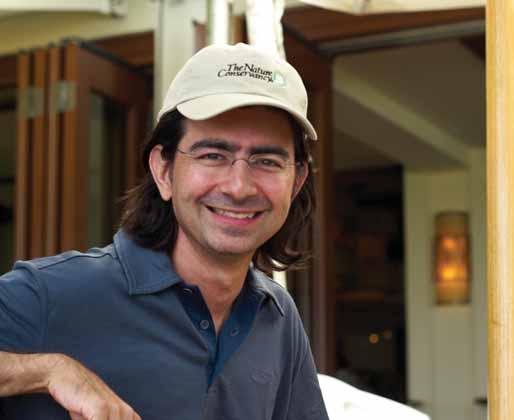
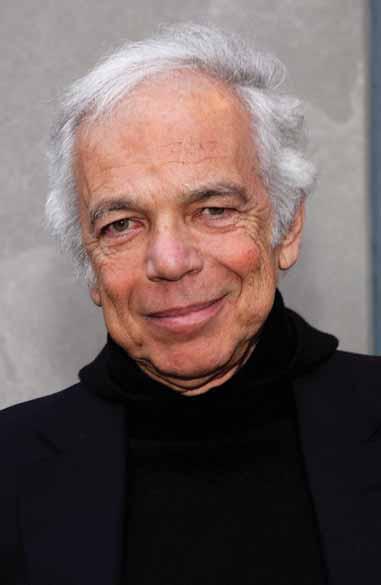
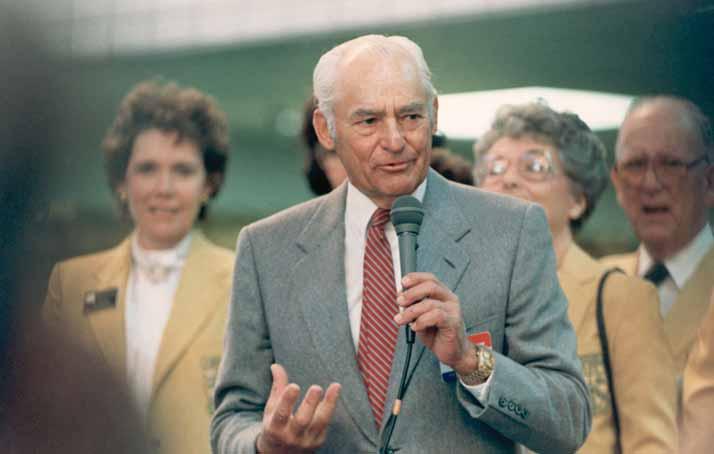
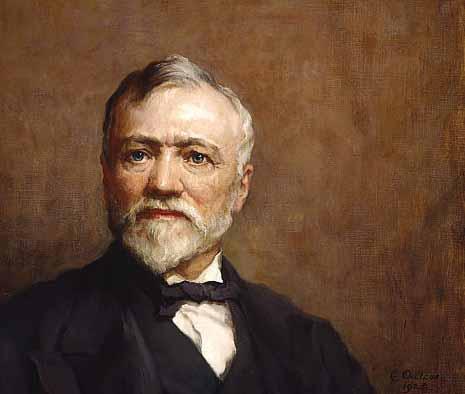
They aren’t just great businessmen. They built enduring brands by delivering exceptional value to customers, thereby filling a small vacuum, which was once a niche, but now a huge space, or the mainstream business in that sector. And they have all ‘survived’ more than they themselves would care about. Some of them have passed away, some of them have moved on to new interests, but the brands and the organizations they have left behind are fine-tuned eco-systems that survive on their founders’ radical thinking. Here is a peek into these productive minds that launched multi-billion dollar empires.
Can Gary’s Guru Deliver?
Duncan Fletcher is now the luckiest but the most envied man on earth. The Zimbabwean took everyone by surprise after BCCI appointed the 62-year old master-brain as Team India’s new..
How LIC Defeated a Tough Year & Ensured 100% Brand Recall
It was one of the worst years in recent history for the country’s life insurance sector. 22 of the 23 life insurers couldn’t face the heat. It is easy to casually remark that, but for LIC things come easy. But an analysis of the insurance industry numbers and dynamics show that LIC’s continued success has got more to do with a more..
Latest in Infertility Treatment: Try Egg Yolk & Soy
Bin Laden's Will Asks His Children to Not Join Al Qaeda
A fter three miscarriages and failed IVF, twins are born ... thanks to a mix of soya and egg yolk..
Why Kate and Wills did not Sign an Agreement
Prince William and his bride did not sign a prenuptial agreement, it was confirmed yesterday.Senior royal sources said no.. legally binding document was drawn up..
Julian Assange: Facebook is a ‘Spy Machine’ for US Intelligence
WikiLeaks founder Julian Assange said Facebook is the "most appalling spy machine" ever invented. Users are creating the "world's most comprehensive database" for U.S. Intelligence...
In a four-page document dated December 14, 2001, claiming to be Osama bin Laden's last will and testament, the terrorist..
Meet The 'Seal Team 6', Who Killed Osama Bin Laden
The military team that killed Osama Bin Laden is an elite special forces group..
Indian Homes That Makes Cities Immaterial
You hate to boast this, but you have seen the world. You can carry out your work from anywhere, even in forests without WiFi. Because work will call you, report to you, or go on smoothly without your intervention. Or you won’t work at all for days, and not because you can afford it. Cities have started meaning less and less to you, and you are often lost for words trying to explain why you sometimes prefer Mumbai over NY. Because what you look for in a home, makes cities immaterial. You prefer selfcontained setups, from where you call the shots, and not just of the business kind. Home for you is for unwinding yet socializing, and whether it is digital or real is blurred. You want top-of-theworld comfort, yet you would give greater marks to rapid access to anywhere in the world. Design and build quality won’t impress you, not because they are unimportant, but because you expect only the superlative. For such Global Indians and Global Citizens for whom India is another home, Seasonal Magazine brings this compilation of fine world-class projects across the country. From developers like DLF, Sobha, Prestige, Puravankara, Unitech, Orbit, Hiranandani, DB Realty, Godrej, Brigade, Mantri, Mather, Rajarathnam, Asset Homes, and a few more.
While Two-Third Banks Perform Ok, One-Third Banks Underperforms, & SBI GIVES SHOCK TREATMENT TO INVESTORS
With the Q4 and FY’11 results coming in for almost all public and private sector banks, there have been only a few outperformances in this quarter. Almost two-third of the banks could only put up reasonable or average performances. The remaining one-third underperformed significantly, mostly on the profits front. But the shock-treatment was reserved for SBI’s investors, when the country’s largest lender, supposedly acting on an RBI cue, decided to clean up its books, thereby wiping away not only 99% of its quarterly profits, but around Rs. 7000 crore from its reserves. The one-time charges were for NPA provisioning and pensions. That this has happened shortly after a change of guard at the helm in SBI, and that this kind of shocking dips have happened even beforemultiple times - after a new Chairman comes in, makes the SBI case not one of financial underperformance, but of serious corporate governance. The stock which was already down around 25% from its 52-Week High, has fell around another 10% after the shocking results. And being the largest bank, SBI’s fall has pulled down almost all other banks, even though many of them had steered clear of SBIstyle tactics and accounting.
India Abroad
Lost Talent
With anti-immigrant sentiment building across USA, and clouds of nativism swirling around Washington, D.C., skilled immigrants are voting with their feet. They are returning home to countries like India and China. It’s not just the people we are denying visas to who are leaving; even U.S. permanent residents and naturalized citizens are going to where they think the grass is greener. As a result, India and China are experiencing an entrepreneurship boom. And they are learning to innovate just as Silicon Valley does. Harvard Law School
Researcher
Vivek
Wadhwa writes from USA
ome call this a “brain drain” others say it is “brain circulation.” It is without doubt, good for these countries and it is good for the world. But this is America’s loss: innovation that would otherwise be happening here is going abroad. Without realizing it, we are exporting our prosperity and strengthening our competitors. There are no hard data available on how many skilled immigrants have already left the U.S. My estimate is that 150,000 have returned to India and China, each, over the past two decades. The trend has accelerated dramatically over the past five years; tens of thousands are now returning home every year. Most authorities agree with these estimates. For example, the Chinese Ministry of Education estimates that the number of overseas Chinese who returned to China in 2009 having received a foreign education reached 108,000: a sharp increase of 56.2% over the previous year. In 2010, this number reached an alltime high of 134,800 (a significant proportion studied in the U.S.).
Why is this important? Because, as research conducted by my team at Seasonal Magazine
Duke, UC-Berkeley, Harvard, and New York University has shown, 52.4% of all startups in Silicon Valley, from 1995 to 2005, were founded by immigrants. With all these immigrants leaving, and the next generation of foreign-born entrepreneurs trapped in “immigration limbo,” we won’t have as many immigrant founded startups in the future. The xenophobes who are lobbying against skilled immigration will cheer; but there won’t be more jobs for Americans; just less startups in the U.S. and more abroad. The U.S. pie will be smaller.
Indeed, a survey we conducted of 1,224 foreign nationals who were studying at U.S. universities in 2009, or who had just graduated, revealed that they believed that the U.S. was no longer the destination of choice for professional careers. Most did not want to stay for very long. Fifty eight percent of Indian, 54% of Chinese, and 40% of European students said that they would stay in the U.S. for at least a few years after graduation if given the chance, but only 6% of Indian, 10% of Chinese, and 15% of European students said they want to stay permanently.
My team researched the backgrounds of immigrant founders, and the U.S. immigration backlog. We learned that the majority came to the U.S. as students; 74% held graduate or post graduate degrees, of which 75% were in science, engineering, technology, or mathematics. On average, immigrants started their ventures 13 years after entering the U.S.
During the last twenty years, we admitted record numbers of international students and highly educated foreign workers on temporary visas. But we never expanded the number of permanent resident visas that allow them to stay permanently. The result is that we have a backlog of more than one million skilled workers doctors, scientists, researchers, and engineers, who are trapped in immigration limbo. They are working for the same companies and doing the same jobs as when they filed their paperwork for gaining permanent residence; this may have been 10-15 years ago. A foreign student who graduates with a masters or PhD in engineering from Duke or Stanford and joins the queue today will have to wait 1020 years, perhaps longer, to gain permanent residence. They can’t start companies or progress their careers during the most productive period in their lives. Why would anyone put up with that?
Indeed, a survey we conducted of 1,224 foreign nationals who were studying at U.S. universities in 2009, or who had just graduated, revealed that they believed that the U.S. was no longer the destination of choice for professional careers. Most did not want to stay for very long. Fifty eight percent of Indian, 54% of Chinese, and 40% of European students said that they
would stay in the U.S. for at least a few years after graduation if given the chance, but only 6% of Indian, 10% of Chinese, and 15% of European students said they want to stay permanently. The largest group of respondents 55% of Indian, 40% of Chinese, and 30% of European students wanted to return home within five years. This is very different than what used to be the norm in previous decades: the vast majority of Indians and Chinese stayed permanently.
Our surveys, in 2008, of 1,203 Indian and Chinese immigrants who had worked in or received their education in the U.S. and returned to their home countries revealed that although restrictive immigration policies had caused some returnees to depart, the most significant factors in the decision to return home were career opportunities, family ties, and quality of life. The move home also served as a career catalyst. For example, only 10% of the Indian returnees held senior management positions in the U.S., but 44% found jobs at this level in India. Chinese returnees went from 9% in senior management in the U.S. to 36% in China. The vast majority thought that quality of life, professional advancement, and family ties were at least as good at home as in the U.S. The majority of the people we surveyed said they planned to start a business within five years.
Our surveys, in 2008, of 1,203 Indian and Chinese immigrants who had worked in or received their education in the U.S. and returned to their home countries revealed that although restrictive immigration policies had caused some returnees to depart, the most significant factors in the decision to return home were career opportunities, family ties, and quality of life. The move home also served as a career catalyst. For example, only 10% of the Indian returnees held senior management positions in the U.S., but 44% found jobs at this level in India. Chinese returnees went from 9% in senior management in the U.S. to 36% in China. The vast majority thought that quality of life, professional advancement, and family ties were at least as good at home as in the U.S. The majority of the people we surveyed said they planned to start a business within five years.
(Vivek Wadhwa is a visiting scholar at the School of Information at UCBerkeley, director of research for the Center for Entrepreneurship and Research Commercialization at the Pratt School of Engineering at Duke University, and senior research associate for the Labor and Worklife Program at Harvard Law School.)
THE TREATMENT INVOLVED A COMBINATION OF NATURAL FATS MADE UP FROM EGG YOLKS AND SOYA OIL.
Latest in Infertility Treatment: Try Egg Yolk & Soy
fter three miscarriages and failed IVF, twins are born, thanks to a mix of soya and egg yolk.
After three miscarriages and failed IVF treatments, Stacy and James Bodle feared they might never have a family of their own.
But they say an experimental fertility treatment using egg yolks and soya oil cured the condition
causing the miscarriages and they are now celebrating the arrival of twins Libby and Harry.
‘I’ve hardly slept for the 13 weeks since they were born but I’m not complaining,’ said Mrs Bodle, 30. ‘They have been the happiest weeks of our lives.
Stacy and James Bodle endured years of heartbreak as they tried to start a family but an undetected medical condition caused Stacy to repeatedly miscarry after falling pregnant.
‘We were trying for three years for a family and we started to think this day would never come. There were so many awful times and to sit here and see our lovely twins staring back at us is wonderful.’
The treatment involved a combination of natural fats made up from egg yolks and soya oil. Doctors believe this intralipid liquid, a calorie-rich potion normally used in tube-feeding sick patients, could help more women achieve their dream of motherhood.
Studies show a remarkable success
We were trying for three years for a family and we started to think this day would never come. There were so many awful times and to sit here and see our lovely twins staring back at us is wonderful.’ “ ”
rate at overcoming an immune system problem in which ‘killer cells’ attack a fertilised embryo.
Mrs Bodle, who runs a garden centre near Doncaster with her 32year-old husband, first became pregnant in 2007 but lost the baby within weeks.
Tests showed she had polycystic ovaries, the most common cause of female infertility, and she was referred to an IVF clinic. Treatment appeared to work and Mrs Bodle became pregnant a second time but then miscarried.
After more IVF she became pregnant again, this time with twins, but in February last year she had a third miscarriage. ‘It felt as though my heart had been ripped out,’ she said.
Fertility doctors at a clinic in Chicago had pioneered the egg yolk and soya beans treatment which led to the pregnancy.
Dr Adel Shaker, medical director at the clinic, said: ‘It’s basically just a lot of calories, but research suggests that it can suppress the natural killer cells.’
A friend then mentioned a condition where a woman’s body has too many of the so-called natural killer cells which support the immune system. Tests at the CARE fertility clinic in Sheffield showed she had the condition and doctors decided on treatment using the intralipids.
Dr Adel Shaker, medical director at the clinic, said: ‘It’s basically just a lot of calories, but research suggests that it can suppress the natural killer cells.’
Doncaster couple Stacy and James Bodle who have finally become parents to healthy twins Harry and Libby.
Can Gary’s Deliver?Guru
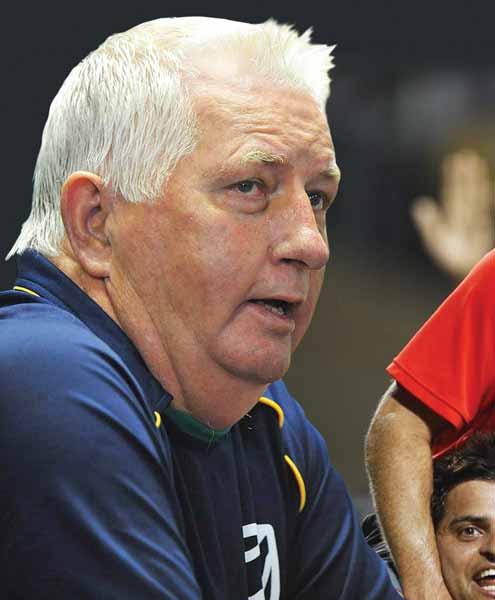
uncan Fletcher is now the luckiest but the most envied man on earth. The Zimbabwean took everyone by surprise after BCCI appointed the 62-year old master-brain as Team India’s new coach. Offers are pouring in for the former England coach, with the salary he would fetch standing at a whopping Rs. 78 lakhs, other benefits being free-air travel and other mouth-watering perks. Fletcher may find the going a lot easier than his predecessor, Gary Kirsten, who came in at a time when India faced a cricketing crisis after Chappell’s horrendous term as the Indian coach. Moreover, Fletcher is destined to coach the world champions of cricket, something that an ordinary human can’t even dream of. But is the stout and burly foreigner up to the task in hand?
Fletcher is a proven deliverer in this field. Under his watchful eyes, England went on to clinch the Ashes after 18 long years of trophy winning drought. He boasts of successful wins to Sri-Lanka, Pakistan and South Africa. Along with the then England captain, Nasser Hussein, the Zimbabwean ensured that England skyrocketed upwards in the ICC rankings from a woeful 8th position to the 3rd best team. In lieu of winning the Ashes after 18 years, Fletcher was conferred with the OBE. On 13 September 2005, Fletcher was awarded British citizenship after a five year wait. He is regarded as England’s best coach.
But then, he has also made revelations like, “I’d like to be a rugby consultant. I have some ideas...I love my rugby; I would rather watch rugby than cricket. I’m passionate about it; it’s the game I’d like to have
been involved in.”
India should decide whether he is the right man for the job? That was the same problem with Greg Chappell. He was a man of many words and puts everything before the media in a blunt and open manner. This was a major problem with the Australian that soon led to his ouster. Perhaps a coach having the characteristics of a Gary Kirsten or a John Wright is more suitable for a sub-continental team where cricket is nothing less than a national issue. Gary’s overall presentation of himself is too good to describe. His wry smile tells it all. While Wright is more of the serious figure among well-known cricket coaches, Fletcher doesn’t have a sombre image to brag off. Usually such gentlemen doesn’t gel along with our culture and style of playing. They would be better off coaching upcoming cricketing nations or even rugby teams.
But Fletcher can’t afford to sit and admire his portfolio as the job in hand is no child’s play. Coaching an Indian cricket team that is as dynamic and proud, and whiich carries a nation’s whole weight, is something foreigners will have to be wary of and they must be well-accustomed in carrying out similar duties. Like all other foreign coaches, Fletcher too has come under heavy criticism from former Indian cricketers like Kapil Dev and Sunil Gavaskar, who opines that an Indian is best suited for the coaching position. Gavaskar reckons that Mohinder Amarnath is the man for the job while Kapil is in favor of either Prasad or Robin Singh to coach team India. But why do majority of cricketing boards stick to choosing foreigners over former national players of their respective countries in coaching their team?
Expertise, international exposure, latest coaching techniques are ready answers but aren’t our former cricket stars capable of undertaking such highquality coaching assignments? The simple reason why foreigners are preferred is because they bring with them the glamour quotient. Fletcher has the resources, he has the men around him to assist, he’s well funded and he has the experience of coaching top teams and yet his credentials are questioned.
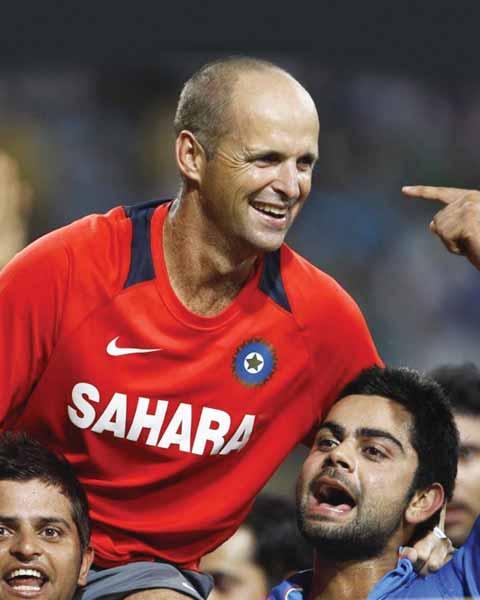
When Gary’s name was recommended by Sunil Gavaskar, many thought Indian cricket went into the wrong hands but didn’t Gary ‘Potter’ prove the many wrong and that too in a fitting fashion. Let us hope Fletcher’s reign takes India to greater heights and he is able to outclass Gary’s contributions to Indian cricket. Ironically, it was Gary Kirsten who recommended the Rhodesian’s name to the BCCI before he took his flight home. The composition of the other coaching staff hasn’t been altered much but it stands to be seen whether India agrees to Fletcher’s capabilities as a full-time coach.
With due respect to the two, Fletcher is more so like a Chappell than a Kirsten. So, Indians can’t expect relief right from the word ‘go’, as Fletcher is the sort of man
who needs time to get along with the core nature of the team. The other success of Gary ‘Potter’ lies in the fact that age was on his side which is not the case for the 62 year old Duncan, as the former could understand the young players’ feelings and emotions and act accordingly. Gary has played against the likes of Tendulkar, and Dravid which made it easier for him to respect the senior pros and even consult them in a few situations.
Fletcher resembles an egoistic character having the mix of both Wright, in terms of cricketing awareness and Gary in terms of nurturing young talent. The rise of Kohli and Raina can be credited to Kirsten who kept playing these bright talents even when they hit a lean patch and the results are there to be seen: Indian cricket is in safe hands now with these youngsters coming to the fray.
As
far as our knowledge about Duncan Fletcher goes, it’s preferable that we follow Kapil’s perceptions about the Rhodesian until he takes over; “Who is Duncan Fletcher?” or even better, Dun’can?
Though the India team resumes International Cricket with a tour of the West Indies in June 2011, Fletcher is unlikely to assume charge till India tours England in late July. Fletcher had bagged the top job in the India national cricket team ahead of names like former New Zealand skipper Stephen Fleming and former Zimbabwe skipper Andy Flower.
All eyes are on Fletcher to coach India to cricketing supremacy as toppling Australia in the onedayers will be his long-term target. If he fails there, Duncan needn’t wait another year after his contract as the best way to please cricketcrazy Indians is to win, win and keep winning. India, under John Wright proved to be world-beaters and under Kirsten managed to be world-champs and under Fletcher the country will be hoping India can forever end Australia’s preponderance because then
But then, he has also made revelations like, “I’d like to be a rugby consultant. I have some ideas...I love my rugby; I would rather watch rugby than cricket. I’m passionate about it; it’s the game I’d like to have been involved in.”
Fletcher can hope to end his illustrious career on a high. With England, he managed to upset the Aussie outfit and that’s just what India expects from him. Coaching a team that is numero uno in Test cricket and that has just been crowned World Champions sounds easy to many a ear but those very facts makes his job even more difficult as a slight slip here and there may lead him to be shown the doors. This is the gigantic pressure with which Duncan Fletcher enters as coach and will it be too hot to handle for the old man? As far as our knowledge about Duncan Fletcher goes, it’s preferable that we follow Kapil’s perceptions about the Rhodesian until he takes over; “Who is Duncan Fletcher?” or even better, Dun’can?
Meet The 'Seal Team 6', Who Killed Osama Bin Laden
he US military team that killed Osama Bin Laden is an elite special forces group unofficially called Seal Team 6.
Officially, the team's name is classified and not available to the public, technically there is no team 6. A Tier-One counter-terrorism force similar to the Army's elusive
Delta group, Team 6's mission rarely make it to paper much less the newspaper.
It shows how important the publicity about Bin Laden's killing is to the U.S. that this morning, Team 6 is front-page news.
The members of Team 6 are all "black" operatives. They exist outside military protocol, engage in operations that are at the highest level of classification and often
outside the boundaries of international law. To maintain plausible deniability in case they are caught, records of black operations are rarely, if ever, kept.
The development of SEAL Team 6 was in direct response to the 1980 attempt to rescue the American hostages held in Iran. The mission was a terrific failure that fell apart at many points and illustrated the need for a dedicated counter-terrorist team capable of operating with the utmost secrecy.
The Team was labeled 6 at the time to confuse Soviet intelligence about the number of SEAL teams in operation at the time. There were only two others.
Team 6 poached the top operatives from other SEAL units and trained them even more intensely from there. Even among proven SEAL's the attrition rate for Team 6 is reported to be nearly half.
There are no names available for current Team 6 members, but the CIA does recruit heavily from their numbers for their Special Operations Group, so it makes sense that they were chosen to work with the CIA on this mission.
Team 6 is normally devoted to missions with maritime authority: ship rescues, oil rigs, naval bases or land bases accessible by water. There are no waterways near Bin Laden's compound. When a former Navy SEAL was called for a comment about this article all he could say was: "You know I'd love to help you man, but I can't say a word about Team 6. There is no Team 6."
Bin Laden's Will Asks His Children to Not Join Al Qaeda
In a four-page document dated December 14, 2001, claiming to be Osama bin Laden's last will and testament, the terrorist mastermind apologises to his children for neglecting them in favour of jihad.
Al Qaeda founder Osama bin Laden did not want his children to join the terrorist organisation, the Kuwait-based Al Anbaa newspaper said citing his last will and testament.
He prohibited his children from taking part in his terrorist
organisation and from "going to the front", the newspaper said.
According to the Arabic daily, the document is written on a computer and signed "Your Brother Abu Abdullah Osama Muhammad Bin Laden." The late Al Qaeda leader predicted he would be killed as a
result of a "betrayal" and ordered his wives to not remarry.
Various reports say bin Laden fathered between 12 and 26 children and married four women.
Bin Laden, believed to be 54 years of age, was killed in Pakistan by US special forces.
The document, which was first published in a Lebanese newspaper in 2001, has resurfaced this week following the insurgent's death at the hands of the Navy Seals six team on Sunday, reports Daily Mail.
US intelligence sources remain sceptical on its authenticity however, despite it being cited in a recent Senate report, said the UK daily.
In the will bin Laden compares himself to a seventh century caliph and suggests his children need to forge their own way in life rather than ride on the back of his name, said Daily.
'As for you my children: Forgive me for not giving you except but a minimum amount of my time since I have begun my call for jihad,' bin Laden allegedly writes in the will.
'And I advise you not to join in the work of Al Qaeda.' This is in direct contrast to what one of his children told the Guardian newspaper in 2009.
Why Kate and Wills didn’t Sign an Agreement
rince William and his bride did not sign a prenuptial agreement.Why?
Senior royal sources said no legally binding document was drawn up before the wedding to safeguard his wealth or ensure she is maintained in regal style if they split. From the moment the engagement was announced, divorce lawyers have said a prenup – popular with Hollywood stars – might be ‘practical’, given the unenviable success rate of recent royal marriages.
A recent decision by the Supreme Court effectively made prenups binding in English law.
Yesterday royal aides dismissed reports that William was advised that
a legal agreement would be a good idea but had refused to sign one.
‘For him to refuse, it would have had to have been suggested to him by someone and it was not,’ said a wellplaced source. ‘There is no prenuptial agreement in place for this wedding.’
William, 28, earns £37,170 a year as a flight lieutenant in the RAF.
But he was left £6.5million by his mother Princess Diana, which through investments is likely to have grown substantially since her death in 1997. In addition, Prince Charles pays the costs of William’s household. Last year he spent £1.6million on personal expenses for himself, his wife and his sons.
And eight years before her death the Queen Mother reportedly placed twothirds of her money in trusts for the benefit of her great-grandchildren.
But the newly-titled Duchess of Cambridge has no income.
She quit her job at her parents’ online party supplies business in January to throw herself into planning the wedding. She had previously worked for retailer Jigsaw.
Without a prenup, it is left to lawyers to battle out a settlement if a couple divorce. The Duchess of York received £15,000 a year from Prince Andrew when their marriage ended after ten years in 1996. But Princess Diana’s lawyers got her a £17million payoff when she divorced Prince Charles. After William and Kate’s engagement, Princess Diana’s former private secretary Patrick Jephson said: ‘If she was my sister, I’d tell her to get a good prenup.’ And he warned: ‘Kate’s not just going into a marriage, she’s going into a business.’
Chocolate can Help Lose Weight, Protect Heart?
ere`s the perfect excuse to gorge on chocolate without a sense of guilt. Eating the right amount and type of the mouthwatering treat can help one shed flab and protect one`s heart, according to researchers.
Dr Lily Stojanovska of Victoria University and Dr John Ashton made the revelations in their new book, `The Chocolate Diet: How to eat chocolate and feel great about it`.
"We set out to dispel the myths about chocolate and help chocolate lovers realise they don`t need to feel guilty about eating it," Dr Stojanovska said. Their book shows that certain properties in chocolate can help with weight loss and protect heart health. Good quality dark chocolate contains the antioxidant epicatechin which increases the rate at which a body burns fat, suppresses the appetite and contains more than twice the antioxidant levels found in red wine, according to them.
Cocoa, a main ingredient in chocolate, is also rich in the alkaloid theobromine, which is known to increase muscle stimulation and energy, as well as widen blood vessels and reduce blood pressure. It also decreases cholesterol levels and reduces incidence of stroke and risks of heart disease.
Cocoa contains natural compounds that help the body produce mood-altering brain chemicals, decreasing the risk of depression, say the researchers in their book.
"We are not saying you can eat a family size block of just any
chocolate. It must be good quality, dark chocolate in moderate amounts, and the bitter the better. Most chocolates that contain 75 per cent or 85 per cent cocoa are usually more bitter than the sweeter milk chocolates that contain a lot less cocoa," she said. The book also contains a 14-day eating plan that incorporates a couple of squares of dark chocolate or a hot chocolate drink before bedtime, as well as an exercise plan, recipes, and interesting chocolate facts.
Sony PlayStation's Credit Card Fiasco
umors are swirling around the web that the hackers who took down the PlayStation Network may have stolen 2.2. million credit card numbers. Not only that, but apparently the database is for sale.
It seems that the source of some of the rumors is Kevin Stevens, a senior researcher at security firm Trend Micro. He told The New York Times that he has seen discussions about the supposedly stolen database on hacker forums. Apparently hackers are claiming to have a copy of the database and are asking for a price “upwards of $100,000.”
“It is not a rumor, it was a conversation on a criminal forum. I never saw the DB so I can’t verify if it is real,” Stevens said in one of his tweets.
There’s more, though. Screenshots from “underground” message boards supposedly frequented by
Kevin Stevens, a senior researcher at security firm Trend Micro, told that he has seen discussions about the supposedly stolen database on hacker forums. Apparently hackers are claiming to have a copy of the database and are asking for a price upwards of $100,000. “It is not a rumor, it was a conversation on a criminal forum,” tweeted Stevens.
the hackers have been surfacing as well. We’ve seen these screenshots posted by security blogger Brian Krebs and on the PSX-Scene forums. One of them even describes the supposed format of the PSN credit card database, which includes credit card numbers, card security
codes and expiration dates.
Sony has previously claimed that there is no evidence that credit card data was stolen, but that it couldn’t rule out the possibility. “If you have provided your credit card data through PlayStation Network or Qriocity, out of an abundance of caution we are advising you that your credit card number (excluding security code) and expiration date may have been obtained,” the company warned in blog post on Tuesday.
So far, there is no confirmation that credit card information has been stolen, that the PSN database is real or that the hackers are trying to sell it. Yet the mere possibility that 2.2 million credit cards could be sold to the highest bidder is an alarming and frightening possibility. Sony is working with the Federal Bureau of Investigation on the matter, but there’s no telling how long it will take them to track down the perpetrators of the attack.
Aishwarya Rai to Launch a Fashion Line?
What do you think of the idea of a signature fashion line by Aishwarya?
Often labeled as the most beautiful woman in the world Aishwarya Rai is a trend setter! Over the years Aishwarya has flaunted her saris and gowns at the grandest of events the world over and now there is word that she wants to launch her signature fashion line.
As reported, Aishwarya has been approached by fashion houses to be the face of their brand and Ash has not been too keen on the idea. Now, several international designers are interested in partnering with her to create a signature fashion line.
It is still unclear if Ash will create her own fashion line or partner with an international designer, she does want the line to have a global appeal. Reveals a source, “she is keen to launch her exclusive fashion line that will travel globally. Whether it will it be prêt or haute couture, or Indian or Western is still up in the air."
From acting in Bollywood movies to a few Hollywood ones, appearing in advertisements for the biggest brands and walking on Red carpets at the biggest events, to say that Aishwarya has been ‘busy’ is an understatement. A signature fashion line may just be the next big thing for her, but as she explains "I've wanted to do this for a
decade, but I had put my plans on a backburner, and now I better get my act together. I always want to give my hundred per cent and more to everything that I do. There was so much happening around me that I had kept it on hold."
Next up for Aishwarya is a visit to Cannes, where she will be walking the red carpet for the 10th straight year. It is not yet clear if hubby Abhishek will join her at Cannes as he is in Russia shooting for Players. However, there will be a trifecta of Indian beauties at the festival as Frieda Pinto and Sonam Kapoor will also make their appearances for L’Oreal Paris.
We eagerly wait to see what Aishwarya Rai chooses to wear for her walk at Cannes this year.
The Great Indian IPO Rip-Off
Between Jan 2006 and May 2011, India witnessed around 330 IPOs and FPOs.
Nearly 70% of these companies were quite successful in ripping-off investors’ hard-earned money, to make their promoters billionaires or millionaires. Yet, the IPO saga continues unabated in India. Why? And for what?
By Special Correspondent, Seasonal Magazine
ut of the 225 IPOs in which investors lost money during these 5½ years, a few of them were so successful, that they stripped investors off 95% or more of their investments. Resurgere Mines and Minerals India Ltd is a typical example. Rs. 1 lakh put in Resurgere in 2007 would be Rs. 3530 now.
Some others were only moderately successful, as they could rip-off only between 50-90% of investors’ funds. That is, until now. Their obscene IPO valuations will cause more damage, sure. DB Realty is an extreme example, which would have made your 1 lakh into 20,000 bucks. SKS Microfinance is a more typical example, which made many investors’ 1 lakh bucks into 30,000 bucks.
Some other issues tried to rip-off, but haven’t been that successful until now. Investors have lost only between 1-50% here. To give credit where it is due, at least some of them have provided brief windows to their public investors to escape. Whether investors utilized those windows is up to them. Anyway, if they had used it, other investors were trapped in that place. A2Z Maintenance, backed by ace investor Rakesh Jhunjhunwala, is the typical example over here, which would have easily transformed an investor’s 1 lakh into 72,000.
The remaining IPOs/FPOs were the good ones. But that is, again, a misnomer. Many of them provided only 1-50% appreciation. With the time-frame being 5.5 years, and considering the cost of funds ranging anywhere between 10-50%, not to speak about the inflation rates, these were really just no-gain / no-loss issues, to put it mildly. But, to give credit where it is due, there were more windows of opportunities to escape, in this segment. Power Grid FPO is a typical example, having appreciated by only 4%. Coal India fares much better at 33% gains now.
The remaining 60 odd public issues were the only ones who provided any kind of meaningful returns. Around 20 of them provided returns ranging from 50% to near doubling in value. Prime Focus at returns of 73% and Rural Electrification Corporation at 84% returns are good examples. Seasonal Magazine
THE GREAT INDIAN IPO RIP-OFF
Another 20 odd IPOs’ returns were between 100% to near tripling in value. Union Bank of India’s 2006 FPO and V-Guard Industries’ IPO are good examples here.
The remaining IPOs - around a dozen only - were the truly outstanding ones, multiplying IPO investments by 3 to 6 times. Bank of Baroda’s 2006 FPO has delivered gains of 272%, while Yes Bank’s 2006 IPO delivered 276%. Even better performers were UTV Ltd (at 279.02% gains), The South Indian Bank Ltd (at 319.64%), Sadbhav Engineering Ltd (at 353.78%), Emami Ltd (363.50%), Opto Circuits India Ltd (395.22%), Page Industries Ltd (499.08%), & Usher Agro Ltd (522.22%).
With the good IPOs being quite few, more interesting would be to know how the ripoff is effected. There are essentially 3-4 tools to the trade.
Valuations:
If in a bull-market, the trick is, of course, to issue shares at the maximum P/E possible. After all, when the secondary market has turned senseless with obnoxious valuations, what is wrong in trying to sell one’s wares at 35 or 40 P/E? Mind you, not trailing twelve months (TTM) P/E, but exotic forward P/E. The more forward, the better. FY’12 is nothing. Any takers for FY’13, 14, or 15? But if in a bear market, the trick is more subtle. Intelligent Book Running Lead Managers (BRLMs) come to the rescue. They know that nothing
heavier than 15-20 one-year forward P/E would fly in a bear market. So the issue will be priced attractively by P/E and heavier by P/BV. Book Value or Net Asset Value will be tweaked as much as possible, to deliver the least book-value at the highest possible price. The tool of choice for this is multiple bonus issues to promoters in the 3-years prior to the IPO. IPOs priced at 5 times the pre-money book-value has also sailed through. For everybody’s convenience, the rule of the land allows something called restated accounts.
Ratings:
Then comes the next tool, which is wielded by IPO rating agencies. Anna Hazare might have told a lie in his lifetime, but not CRISIL, CARE, ICRA, or Brickwork. Only US rating agencies have come under suspicion, not Indian ones or US-owned Indian ones. Exotic ratings like 4/5 (Above Average Fundamentals), or even 5/5 (Excellent Fundamentals) exist to aid IPOs. But crafty promoters have done crazily successful issues with 2/5 or even 1/5 (Poor
RESURGERE MINES AND MINERALS INDIA LTD
VISHAL RETAIL LTD
DHANUS TECHNOLOGIES LTD
GLORY POLYFILMS LTD
KOUTONS RETAIL INDIA LTD
BLUE BIRD INDIA LTD
SANCIA GLOBAL INFRAPROJECTS LTD
TANLA SOLUTIONS LTD
UTTAM SUGAR MILLS LTD
ROMAN TARMAT LTD
XL ENERGY LTD
JAGJANANI TEXTILES LTD
ALLIED COMPUTERS INTERNATIONAL ASIA LTD
PORWAL AUTO COMPONENTS LTD
HOUSE OF PEARL FASHIONS LTD
TULSI EXTRUSIONS LTD
SEL MANUFACTURING COMPANY LTD
ASTER SILICATES LTD
GANGOTRI TEXTILES LTD
KAUSHALYA INFRASTRUCTURE DEVELOPMENT
MAGNUM VENTURES LTD
CAMBRIDGE TECHNOLOGY ENTERPRISES
GLOBAL VECTRA HELICORP LTD
AUSTRAL COKE AND PROJECTS LTD
SITA SHREE FOOD PROJECTS LTD
RISHABHDEV TECHNOCABLE LIMITED
D S KULKARNI DEVELOPERS LTD
ZENITH BIRLA INDIA LTD
EVINIX ACCESSORIES LTD
FUTURE CAPITAL HOLDINGS LTD
PARSVNATH DEVELOPERS LTD
RAJ RAYON INDUSTRIES LTD
BIRLA MACHINING & TOOLINGS LTD
BURNPUR CEMENT LTD
INDOWIND ENERGY LTD
DECOLIGHT CERAMICS LTD
BROADCAST INITIATIVES LTD
GYSCOAL ALLOYS LTD
BIRLA POWER SOLUTIONS LTD
SEZAL GLASS LTD
LOKESH MACHINES LTD
ALPA LABORATORIES LTD
D B REALTY LTD
FIRST WINNER INDUSTRIES LTD
NIRAJ CEMENT STRUCTURALS LTD
BANG OVERSEAS LTD
IVRCL ASSETS & HOLDINGS LTD
NISSAN COPPER LTD
FIRSTSOURCE SOLUTIONS LTD
SEA TV NETWORK LTD
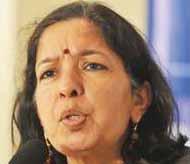
Vikram Akula, Chairperson and Founder, SKS Microfinance
Fundamentals). So much so for the ratings. Anyway, Indian IPO ratings carry an important disclaimer - we haven’t rated the price of the IPO. Now, what does that mean? Only they know. To us it feels like they are rating a Maruti 800 as a BMW 7 Series, and telling us that it is up to us to pay 90 lakhs for it or not. What retail investors need is rating agencies that tell whether that new car coming is a Maruti 800 or a 7 Series, and whether the 800 is coming at 800’s price or a BMW’s price.
Analysts:
Next comes the role of IPO analysts. Most work for broking houses, or has some deep connection with brokers. Now, broking houses are quite honest. They want you to subscribe to all issues, if possible, because they survive on brokerages that we all pay when buying or selling shares. All of us know that, and broking houses can never be accused of being dishonest in this regard. But some IPOs are so obnoxious that it is
difficult to justify or even explain their greedy valuations. Even reputed analysts are using a novel method for this - postmoney book-value. Did you get it? Suppose you are paying 300 bucks for a 10 rupee share. When making their valuations, analysts would add even the 290 rupee premium that you pay, to the book-value to convince you that what you are getting is a good deal. Now, what can be funnier than that? Analysts conveniently ignore the fact that comparisons by post-money book-value is only applicable to investors who have shunned the IPO, and plans to invest post-listing, possibly after a correction.
Oversubscription Hype:
Most issues are nowadays not readily subscribed. Not even by noon of the last day. Then something magical happens. FIIs and DIIs who were sleeping for the last 2½ days, suddenly realizes that after all, here
is a golden IPO. They come in as QIBs at the last moment, making the issue oversubscribed to 2, 5, or sometimes, 25 times. What is the deal? Nobody knows. It is a scam, bigger than 2G, in the waiting. And the tool of oversubscription hype, nowadays, has an ancillary tool - retailers can bid for one more day. And there goes the retailers, the next day, in hordes, entering the next IPO trap.
Listing Day:
Listing day is quite special. Promoters get to bang a gong at BSE or NSE. And respected TV anchors would be ready, reading out the grey market premiums,
setting the stage for the rip-off completion. The main listing day tool is something called price discovery. While all stocks, except front-liners having F&O, have strict upper and lower circuit limits in the secondary market, the IPO scrip would have a free run, ostensibly for price discovery. In practice, it is the perfect tool to rip-off those who missed the IPO. Prices will climb Mount Everest and jump into the depths of Indian Ocean, all within minutes. Not once, but many times during the day.
Initial Public Offers can conveniently be renamed as Indian Public Offers. Because, POs of this kind happens only in India.
How LIC Defeated a Tough Year & Ensured 100% Brand Recall
It was one of the worst years in recent history for the country’s life insurance sector. 22 of the 23 life insurers couldn’t face the heat. It is easy to casually remark that, but for LIC things come easy. But an analysis of the insurance industry numbers and dynamics show that LIC’s continued success has got more to do with a more inclusive vision, rapid adaptability, and above all, strict adherence to the value of trust.
hat LIC has this perennial habit of beating private sector competitors squarely, needn’t be repeated. But this was a year in which the whole life insurance business turned tough for all insurers - largest to smallest, private to public.
In sharp contrast to the previous year’s blistering performance of over 25% growth in first year premiums, FY’11 was quite bad for the business of insuring lives. All insurers taken together struggled to register a growth above 15% in first premiums, which is regarded as the real metric in
LIC’s proven
capability to exponentially scale-up its operations is built up on their brand value of trust.
assessing growth in the industry.
The writing was on the wall. Large sections of the Indian public looked elsewhere for investment, as life insurance industry and its regulator fought hard over ULIP products, with the stock market regulator, SEBI. With agent commissions cut drastically, systematic marketing of these stock-market linked life insurance products nosedived.
The performance of all the 22 private sector insurers taken together, was telling. Together, they couldn’t grow new premiums at even 3%, this year.
In fact, if not for LIC’s outperformance of nearly 22%, the country’s new life policies growth would have touched a record low of all time, not stopping at the final figure of 15%.
With this growth, LIC bettered its position to 69% market share in new premiums, while private sector’s share fell to 31.3%.
What helped was LIC’s long-term vision. When the tidal wave of ULIPs lashed on the life insurance sector a few years back, many were quick to pronounce the death of traditional life insurance. But not LIC.
It pioneered ULIPs, but it didn’t put all eggs in that basket.
And within years, when ULIPs started to struggle to meet the over-expectations arising out of over-marketing, LIC quietly went about strengthening its traditional non-ULIP business.
The SEBI-IRDA tussle may have been premature or of a disruptive consequence, but the fact is that despite being in the thick of things, all insurers except LIC couldn’t ’predict’ this disruption,
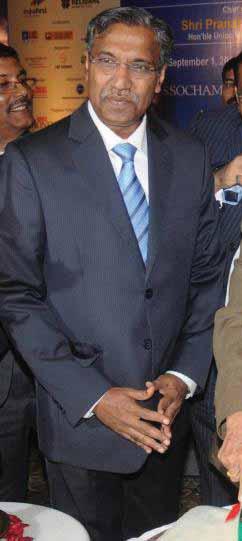
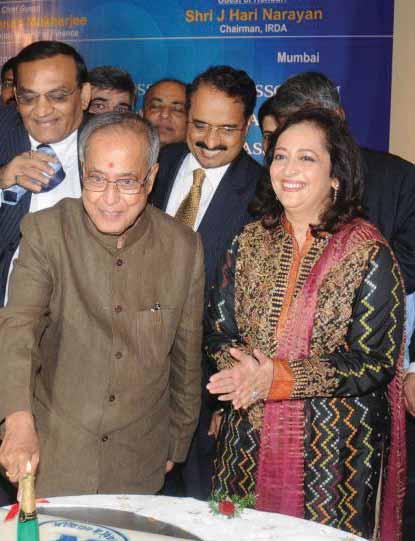
Union Finance Minister Pranab Mukherjee cutting the cake on the 54th anniversary of LIC. Assocham President Swati Piramal (right), and LIC Chairman T. S. Vijayan (left) look on.
which in many ways was only a natural consequence of the industry practices.
But that was not all. LIC’s success is not only about respecting traditional policies. It was about rapid adaptability, as witnessed from its handsome growth in single premiumproducts. Investor sentiment has been gravitating to this new segment, which is one of the late-entrants in life-insurers’ portfolio of products. LIC could correctly gauge investor sentiment in this regard, and had quickly deployed its agent army to focus on single premiums. It paid off.
The strange challenge now facing the private sector is that LIC is even strong in the only segment where private players holds some sway - group policies. Private sector’s reliance on group insurance is so much so that, excluding this corporate participation, these insurers have registered a de-growth of 4% in new premiums, this year. In other words, private insurers have turned quite unpopular among individual investors.
But that was not the point to make. What should worry private insurers more is that in group
There are many who feel that the success of the insurance behemoth is nothing but the early-mover advantage and government support, working to give it an unfair edge. But then there
are examples
to
contradict this
theory. How similar early-movers and state-kids like BSNL, Air India, & SBI are performing is enough proof.
policies, LIC has correctly identified where to put its mightgroup retirement policies. In FY’11, this focus has delivered, as retirement policies helped LIC drive up its non-individual premiums.
Insurance industry will again undergo tumultuous changes. New ULIPs under new regulations are sure to make a comeback. In such a scenario, LIC with its vast individual customer base, and economies-of-scale due to the flexible agent army, is again poised to outperform. Whether private players have learnt their lessons or will again be caught on the wrong foot remains to be seen.
Despite being a giant, LIC has no problem in co-operating with other international giants to deliver customer value. India’s largest institutional investor had recently kicked off its partnership with Japan based international finance major, Nomura, to create one of the largest mutual fund houses in the country, LIC Nomura Mutual Fund.
Similarly, despite being an
A K Dasgupta, MD
Thomas Mathew T, MD, LIC
D.K.Mehrotra, MD
unlisted corporation itself, wholly owned by the Government of India, LIC has been quite successful as a promoter with its listed subsidiary, LIC Housing Finance, which had recently produced another blistering year of performance, registering a 47% growth in net profit. The success of this NBFC major, that recently brushed off allegations of a systemic scam, stands proof to the fact that LIC is capable of spawning off a company worth a banking license.
Life Insurance Corporation of India, of course, has its share of detractors. There are many who feel that the success of the insurance behemoth is nothing but the early-mover advantage and government support, working to give it an unfair edge.
But then there are examples to contradict this theory. How similar
early-movers and state-kids like BSNL, Air India, & SBI are performing is enough proof. While the failures of BSNL and Air India have spawned thriving industries like the private telecom and private airlines, the uninspiring competition provided by SBI has spawned private sector giants like ICICI Bank or HDFC Bank.
That is why the LIC story is more than just being a monopoly during its early years. It has got much to do with never goofing up on an important value, which is incidentally Brand LIC’s core value - Trust.
Adhering to this trust has enabled LIC stick with its tagline for over a decade - ‘Zindagi Ke Saath bhi, Zindagi Ke Baad bhi’.
Just two examples would suffice for how LIC practices this trust
factor. LIC honours the commitments made to customers by erstwhile insurers, that it had subsequently taken over, even after decades. And no insurer even comes close to LIC’s stellar record of claims rejection, that stands around a mere 1%.
LIC’s proven capability to exponentially scale-up its operations is, in fact, built up on this brand value of trust.
The results of a recent brand survey was quite telling. Most Indian and foreign brands didn’t pass the test of 100% brand recall. That is, almost all brands - except one - were unheard of by at least one person in the survey sample. Not SBI. Not Amul. Not Cocal Cola. Not IPL. Not even BSNL.
That is what makes LIC tick.
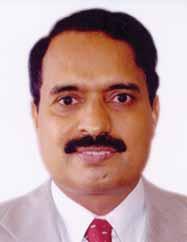
TS Vijayan, Chairman
Mozez Fights with Shah Rukh, Sohail
roducer Mozez Singh picks fights with Shah Rukh and Sohail Khan on Maheep Kapoor's birthday party. Hrithik plays peacemaker.
Maheep Kapoor's birthday on Friday night was marked by two brawls. Producer Mozez Singh (White Noise) managed to rile Sohail Khan and Shah Rukh Khan enough to get them to react.
Says an insider, "All was well at Maheep's party at her Juhu residence. Almost as if out of the blue, Salman's younger bro and Singh got into a tiff.
Sohail was quietly dancing in a corner with his wife and some girls when Singh walked by and passed offensive remarks on the women."
"Initially, Khan didn't react but when Singh grew belligerent and abusive, the short-tempered actor lost it and started shoving the younger man around. Mozez pushed back and the argument showed signs of getting worse."
Adds the source, "The hostess soon came over and sorted it out. By that time, the two men had cooled down and a disgusted Khan was about to stage a walkout. Maheep made sure the two men spoke to each other and make up before they left the party."
Elevator woes
But brawlin' Mozez hadn't had enough. "He decided to leave the party at around 4.30 am and headed to the elevators. Shah Rukh Khan, Riteish Sidhwani, Hrithik Roshan and Karan Johar were waiting for the lift as well.
They were minding their own business and were surprise when Singh began insulting and passing nasty remarks on King Khan."
Sanjay Kapoor and Karan Johar also acted as pacifiers at the bash
After a while, SRK who isn't quick to anger decided he had had enough of the taunts. "Shah Rukh grabbed Singh by the shirt and wouldn't let go. The two continued squabbling until Duggu, who can't stand fights, tried pulling the two apart. SRK's friends pulled him away soon after."
An embarrassed Sanjay Kapoor tried pacifying his guests. Finally, SRK was bundled into the lift with
Hrithik. Later, both came down and posed for pictures."
The Other Side
Initially, Sohail Khan tried to deny the story. "Nothing at all happened. I have met Mozez only once or twice in my life and what issue would I have with him? I would love to hear what you heard because now these rumours are getting funny."
When we told him that there were witnesses to the fight and that some people had found his act chivalrous, Khan says, "Ya, I just told him to relax a bit but nothing as dramatic (as a slap) happened. But I am happy that people noticed and thought I was chivalrous."
Julian Assange: Facebook is a "Spy Machine" for US Intelligence
ikiLeaks founder Julian Assange said Facebook is the "most appalling spy machine" ever invented. Users are creating the "world's most comprehensive database" for U.S. Intelligence.
During the worldwide online celebration, did you post on Facebook or tweet the happy fact that Osama Bin Laden is dead? So many people "liked" an "Osama bin Laden is Dead" page on Facebook that it went viral. But according to WikiLeaks founder Julian Assange, "Facebook in particular is the most appalling spy machine that has ever been invented."
While talking to Russia Today about
recent revolutions in the Middle East and the role of social media, Assange explained that Facebook is "the world's most comprehensive database about people, their relationships, their names, their addresses, their locations, their communications with each other, and their relatives, all sitting within the United States, all accessible to U.S. Intelligence."
In the interesting interview, Assange added that it's not just Facebook, but Google and Yahoo as well as all other major U.S. organizations have developed built-in interfaces for U.S. Intelligence. It helps get around the costly and time-consuming serving of subpoenas.
Not that Facebook is run by U.S. Intelligence agencies, but instead of handing out records "one by one," it saves Facebook time and money to have "automated the process" for spying. Assange believes that all Facebook users should understand
"Facebook in particular is the most appalling spy machine that has ever been invented."
that by adding friends, it connects the dots, builds the databases, and does "free work for United States intelligence agencies."
The EFF previously warned that Big Brother wants to be your friend for social media surveillance. It's no surprise that U.S. Intelligence trawls millions of websites, Twitter feeds, YouTube, and blog posts, looking for connections between people, groups, and events. That job must surely be a madhouse right now. To sort through the sea of online chatter, the DoD and U.S. Intelligence allegedly use real time search, data mining, and predictive analytics provided by Psydex. Google Ventures and In-Q-
Tel, the investment arm of the CIA, both provided funding for the company Recorded Future which offers a Temporal Analytics Engine for predictive analysis, allowing people to "visualize the future, past, or present."
Big Brother using link or predictive analysis is not new. Nor is the question of how online companies work with Intelligence. Consumer Watchdog had even questioned the relationship of Google and NSA. All intelligence agencies data mine social media. But right now, the military may not need to use its army of fake social media puppets to spread propaganda online. Just as Bin Laden's death was a needed psychological victory for most Americans, hopefully the masses cheering the death of Bin Laden will be a huge psychological blow to terrorist networks. U.S. Secretary of State Hillary Clinton said, "Our message to the Taliban remains the same, but today, it may have even greater resonance. You cannot wait us
Assange added that it's not just Facebook, but Google and Yahoo as well as all other major U.S. organizations have developed built-in interfaces for U.S. Intelligence. It helps get around the costly and time-consuming serving of subpoenas.
out. You cannot defeat us, but you can make the choice to abandon al Qaeda and participate in a peaceful, political process."
There may be lots to talk about in Assange's revelations of built-in online surveillance, just as we could look at how SEAL Team 6 used facial recognition devices to identify the terrorists, but right or wrong, I'm too happy today.
Last night, there wasn't much sleep for many of us, but there was an incredible swell of American pride during cheers and chants of "USA! USA! USA!" Just be wise about what you do or say online as it's one giant tool for surveillance by U.S. Intelligence. In the same token, who knows what We the People might see? As Business Insider pointed out, it's doubtful the U.S. will release the video that President Obama watched live of the Bin Laden raid, "but in this age of Wikileaks, anything's possible."
ou hate to boast this, but you have seen the world. You can carry out your work from anywhere, even in forests without Wi-Fi. Because work will call you, report to you, or go on smoothly without your intervention. Or you won’t work at all for days, and not because you can afford it. Cities have started meaning less and less to you, and you are often lost for words trying to explain why you sometimes prefer Mumbai over NY. Because what you look for in a home, makes cities immaterial. You prefer self-contained setups, from where you call the shots, and not just of the business kind. Home for you is for unwinding yet socializing, and whether it is digital or real is blurred. You want top-ofthe-world comfort, yet you would give greater marks to rapid access to anywhere in the world. Design and build quality won’t impress you, not because they are unimportant, but because you expect only the superlative. For such Global Indians and Global Citizens for whom India is another home, Seasonal Magazine brings this compilation of fine world-class projects across the country. From developers like DLF, Sobha, Prestige, Puravankara, Unitech, Orbit, Hiranandani, DB Realty, Godrej, Brigade, Mantri, Mather, Rajarathnam, Asset Homes, and a few more.
DLF Bay View @ Marine Drive, Kochi
Nahar Township, THANE (AMBARNATH)
GODREJ GARDEN CITY
Ahmedabad
INDIABULLS GREENS,
HIRANANDANI PALACE GARDENS
Chennai
Rajarathnam RC Royal Grande @ Thirumullaivoyal, Chennai
EXQUISITE
DB REALTY - ORCHID HEIGHTS
Mumbai
Prestige Golfshire @ Nandi Hills, Bangalore
Sobha Turquoise @ RS Puram, Coimbatore
Mantri Astra @ Hennur Main Road, Bangalore
Purva Midtown Residences @ KR Puram, Bangalore
Asset Homes’ The Portico @ Kadavanthra, Kochi
Mather Veneziano @ Koonamavu, Kochi
Prestige Silver Oak
Bangalore
UNITECH
Gurgaon
PURVA ATRIA PLATINA, BANGALORE
BRIGADE GATEWAY ENCLAVE, Bangalore
CHENNAI
SOBHA IVORY
Pune
Value for Coimbatore, But Value for Money?
Sobha Developers is presenting in Coimbatore, Sobha Turquoise, a beautifully designed gated community of 95 Row Houses. Set within a lush green space of 9.63 acres, every row House here is exquisitely crafted to deliver exclusivity, comfort and most importantly more space. Enjoy privacy with your own private garden in a well designed 3 Bedroom Row House. Located just 10 minutes from RS Puram, Sobha Turquoise features worldclass amenities like Clubhouse, Swimming Pool, Children Play Area, Tennis Court, Gymnasium and lots more. These v aastu complaint three bedroom row houses range from 1886 sft to 2103 sft. Price of Sobha Turquoise starts from Rs. 85 Lacs. Sobha Turquoise, comes from the home of Sobha developers whose vision is to transform the way people perceive ‘Quality’ and the same has been realized in 52 residential projects, 13 commercial projects and 179 contractual projects covering 39.90 million sq. ft. of area in 20 cities across India.. In their 15th year of establishment, they
have already stepped into 50th million sq. ft. of execution, which is a landmark in the industry. Sobha doesn’t just craft luxury homes, but create valuable investment options too.
Sobha Turquoise @ RS Puram, Coimbatore
Prestige Golfshire @ Nandi Hills, Bangalore
Paradise, But Far Away
Placed on the highest point on a 375-acre property, Prestige Golfshire will even have a luxury Marriot Hotel. With a panaromic view of the golf course, the hotel will house 300 rooms including 30 luxury suites, banquet halls, infinity pools, cafes, conference and convention centres. Golfshire Mansions are as charming as the names they go by - Augusta, Aldrich, Beaumount, Burbank, Clairborne and creston. These ultra-luxury 4-bedroom
mansions at Prestige Golfshire come in 6 different, uber-exquisite designs, each with its own private swimming pool. The tropical architectural designs of the mansions by the award-winning MAPS Design, Singapore and Thomas Associates. Bangalore reflect a spirit of serenity, peace and transquility. They, more importantly, mirror your taste. The Prestige Golfshire Clubhouse - Falcon Greens - is owned and managed by Prestige, and will deliver a unique blend of self-indulgent features, contemporary design and impeccable service. Replete with a Wellness zone, Swimming pool, squash court, Tennis court, Gym, a Golf pro-shop and a Coffee shop among other facilities, the clubhouse is where you can pick up equipment or a ‘Pick-me-up’ yourself. With yet another stunning view of the 18-hole golf course of its own, the Marriott Quan Luxury Spa will be set in midst of verdant tropical gardens. Offering classic, and signature rejuvenating spa treatments using sciences as varied as Hydrotherapy, Thalassotherapy and Ayurveda.
Great Project, If Completed in Time
Puravankara, with its 35 year old proud heritage brings to you the contemporary smart home - Purva Midtown Residences. Located before the KR Puram hanging bridge, just off Old Madras Road, these homes are just 4 km from Indiranagar; the new commercial and retail hub of Bangalore city. These 306 apartments with just 20 minutes drive away from the biggest IT corridor of Bangalore, Whitefield, and with access to inhouse amenities you just cannot live without, offer you the residential opportunity of a lifetime. Purva Midtown Residences is your ticket to having it all. These homes are in the vicinity of major IT companies, 5-star hotels, Restaurants, Retail Outlets, Educational Institutions, Hospitals and other social infrastructure. With all this and more, Purva Midtown Residences really is the personification of convenience and embodiment of your much wanted modern lifestyle. Find yourself in the midst of urbanization with your every desire just a hop, skip, and jump away. Luxury amenities include Multipurpose Hall, Billiards, Table Tennis, Jogging Track, Gymnasium, Steam and Sauna, Swimming Pool, Toddlers Pool, Outdoor Basketball Post, Outdoor Children’s Play Area ,
Landscaped Garden, Water Purification Plant, Fire Protection System, Sewerage Treatment Plant, Organic Waste Converter, Noise Barrier compound wall on the railway track side, Vacuum/Argon
filled double glazed windows on the railway track front, Fiber to home (FTTH) connectivity to facilitate multiple services like Internet, TV, Data, Intercom, BSNL Telephone etc.
Purva Midtown Residences @ KR Puram, Bangalore
Mantri Astra @ Hennur Main Road, Bangalore
New Bangalore Near, But Old Bangalore Away?
Time stands still here at Mantri Astra. Miles of greenery, secure hills, and a bountiful natural pond completes your perfect getaway. Perched on a hillock, overlooking a serene pond, this Mantri property takes you down the nostalgic lane. Mantri Astra offers you a slice of nature while being a stone’s throw away from modern day luxuries and amenities, which is a delightful blend, hard to miss. Now you could watch the stunning city
skyline from the comforts of your home and still be minutes away from catching that important flight for your business trip. 2 BHKs start at 68 LACS and 3 BHK units at 78LACS. Areas range from 1100 sq.ft. to 1480 sq.ft. Only 2 Pent Houses are available for Astra, both on the 16th floor. Situated just off Hennur Main Road, access to Bangalore International School, Indian Academy Group of Institutions, and above all, to Bangalore International Airport, is quite easy. At Astra, nothing is too far or too fantastic. You can touch the stars, but at the same time, enjoy a day at fishing too.
Rajarathnam RC Royal Grande @ Thirumullaivoyal, Chennai
Where Aesthetics and Ergonomics Blend to Create Luxury
Rajarathnam Construction (P) Ltd has unfolded RC-Royal Grande that lives it up to its name. Modern aesthetics and ergonomics have blended well to bring you a home that is contemporary in look and traditional in comfort, providing the best of both worlds. RC-Royal Grande is nestled in a well planned layout, that allows one to experience the ultimate value for money and luxurious living too. RC-Royal Grande is a sprawling project of 176 stylish homes ranging from 870 to 1145 sq.ft. comprising of 140 nos. of 2 bedroom & 36 nos. of 3 Bedroom flats in 3.4 acres of land. RC-Royal Grande comes with all essential amenities and is strategically located at Thirumullaivoyal with convenient neighborhoods surrounding. Apart from this, it also boasts of close proximity of reputed schools like Vivekanandha Vidhyalaya, Kendriya Vidhyalaya, Ramaswamy Mudhaliar High School, Venkateswara Matriculation, TI Matriculation, Heart of Mary immaculate Hr. School, and Colleges like St.Peter’s College of Engineering , Veltech College of Engg., Murugappa Polytechmic, Jaya Engineering College, Sriram Engg. College, and St.
Michael’s Polytechnic. Also close to renowned hospitals like Sir. Ivan Stead Ford Hospital, Dr.Ravindranath Hospital, Dr.Bhat’s Eye Hospital and close to IT hubs and Industrial sectors. Architect of the project is
Sathyanarayana Associates, while Structural Design is by SBS Associates. Project financing is by LIC Housing Finance Ltd. The meaning of comfort at RC-Royal Grande is something which makes you come home to more than just four walls. The simple touch of luxury goes with each amenity provided, like, Gymnasium, Library, Association room, A/C Party Hall, Children’s play area, Exclusive Open Car park, Landscape, Back up Generator, Intercom, R.O. plant, Provision for Broad band, Common DTH service etc. RC Royal Grande is a CRISIL 4Star rated project.
DLF Bay View @ Marine Drive, Kochi
DLF Enters Competitive Marine Drive
DLF Bay View packs in quite a few surprises, but the most noteworthy among them is that despite being at the costliest location in Kochi, the project has 1 acre of landscaped gardens. That is 1 acre out of the total 3.78 acres of land which in itself is quite generous at Marine Drive. Secondly, Bay View’s unique design - by celebrity architect Hafeez Contractor - ensures that 95% of the apartments are waterfront units. Then there are so many other USPs like all apartments being air-conditioned, the 20,000 sq ft clubhouse, and so on. DLF Bay View has been buzzing loud recently, thanks to the commissioning of Vallarpadam Transshipment Terminal, which would be a game-changer for Kochi as well as for projects like Bay View. The project just overlooks Bolgatty Island. Not only is the terminal very accessible from Bay View, but the accessibility to the new expressway between the terminal and NH-47 would be a definite plus. Bay View’s design excel in space utilization, and in bringing in natural elements like breeze and sunshine. DLF is known for delivering the most feature-packed projects across the country, and Bay View is no exception. Some cutting-edge features here include WiFi, Boradband, IPTV, 3-Tier Security, Video Surveillance, Guest Suites, Creche, Modular Kitchens, Inbuilt Wardrobes, Integrated Servant Room, ATM, Coffee Shop, and lots more are there. Living up to its fabulous location, there is even a private integrated boat jetty here! DLF is India’s largest
developer by completed space. As a corporate and listed developer, DLF’s financial terms are highly competitive and unlikely to be offered by anyone else. DLF offers 11% interest on all advance payments against upcoming EMIs. They also offer an 11% discount on apartment price if the whole purchase price is made as downpayment. For a Rs. 2 crore apartment this would amount to a savings of Rs. 22 lakhs. And if at all any of the DLF projects are delayed by more than three years - which is their average construction period - DLF will pay the homebuyer a fair penalty per sqft per month.
Will Kochi Accept or Avoid Townhouses?
The concept of townhouses originated in Europe in the late 17th century. Today it has come to epitomize the latest trend in housing, the world over. It is precisely this experience that is replicated in The Portico, at Kochi, by Asset Homes. An elegant facade combined with a classy entrance lounge with wall to wall glazing and the finest flooring, capture the spirit of the townhouses in all its rich glory. Intelligently laid-out interiors give you flexible living spaces. The spaciously designed, airy balconies allow for a generous circulation of natural light and fresh air, keeping you totally refreshed and relaxed. Apart from the contemporary European architecture, every aspect of your townhouse speaks class, elegance and attitude, just like you do. Well conceived interiors blends perfectly with your needs, creating a space that
oozes soul and substance. Things that makes a snazzy den, what you call home. The huge glass windows invite the world into your drawing room, creating a feeling of being in touch with nature. Features include Swimming pool, Terrace garden, Piped in music in lobby and select common areas, Centralized gas supply, Grand entrance lobby, 2 passenger lifts, Health club, Ample green space, Rain water harvesting, Landscaped garden, Video door phone, Broadband internet
connectivity to all flats, Provision for digital cable TV connection through STB, Boom barrier/Automatic gate opening, Intercom facility, Metal strip reinforcement on all joints to avoid cracks, Sharp edges avoided on all fabrications to provide safety, especially for children, and Rubber fenders on parking area pillars to avoid damage to vehicles.
Mather Veneziano @ Koonamavu, Kochi
Any Takers for Venice in Kochi?
Veneziano is a fine example of Mather’s unique approach to living. Through the heart of the project, runs a canal that pays tribute to the waterways of venice. Using greenery and water, Veneziano recreates the magic ambience of Venice, but fuses it with a completely contemporary look to make it truly, the newest in living. A timeless inspiration is created with the canals of Venice, matched with the greenery of Kerala. A post modern design that is spare, harmonious, soothing. A new look, showcased in 3 and 4 bedroom new age villas. Veneziano is designed to enhance your life through clever design, lighting and ventilation. A new mode of living evolves here - Green, Responsible, and Sustainable. A tribute to nature unfolds as a Venetian canal runs through the heart of Veneziano. A change in pace awaits, for there’s ample space for long walks by the water and strolls
through the limitless green. Only 40 homebuyers can claim this, while options include 3 & 4-BHK units.
GODREJ GARDEN CITY, Ahmedabad
The Game Changer forAhmedabad
Close-up observers of Godrej Properties must have been thinking this all along - Godrej can do much better. Yes, much better than even excellent projects like Planet Godrej. The reason is simple enough. Godrej is no ordinary first generation developer. They have a centuries old corporate reputation to live up to. And now, Godrej has provided a fitting reply through their Godrej Garden City project in Ahmedabad. The master-planning and design is by none other than legendary architects Skidmore, Owings and Merrill (SOM), architects who crafted Burj Khalifa, the world’s tallest tower, and the
HIRANANDANI PALACE GARDENS, Chennai
Chennai Falls in Love, With a Township
The developer who taught others how to ship townships by transforming the Mumbai suburb of Powai forever, is back in the game in Chennai, on a higher orbit. If Hiranandani’s selection of the traditional city of Chennai stunned the entire industry a few years back, the actual project - the first phase of which is over - is proving to be a game changer. Located on the outskirts of Chennai, at a 30-minute distance from Chennai Airport, the strategic location of Palace Gardens is appealing to the discerning crowd as it lies between the NH 45 GST Road and the NH 4 Chennai Bangalore Highway. Though the Hiranandanis are known to offer excellent build quality and luxury amenities, there are two difference this time around. One is that Palace Gardens is also eyeing the upper band of the cost-conscious customers. Secondly, apart from expected luxuries like the design and build quality, Hirco, the Group firm behind Palace Gardens, has packed in several extremely practical features that make this township a truly live-work-play affair.
upcoming One World Trade Center in New York. The sheer environment friendliness of the project is evident from the fact that it is one of the sixteen projects worldwide selected by Clinton Foundation to partner for creating zero greenhouse emissions. None other than Larsen & Toubro, arguably India’s most accomplished construction giant is in charge of building Godrej Garden City. And true to Godrej Group’s vision of joint-venture development to cut costs for the company as well as homebuyers, Godrej is partnering with Shree Siddhi Group for this mega project. The scale of the project is a true surprise not only for Ahmedabad, but for the country’s metro cities, as Godrej Garden City will have 13,000 apartments across a 250 acre scenic landscape. Still, wonder of wonders, Garden City falls within the Ahmedabad Municipal Limits, and just off the SG Highway. No road inside the township will be less than 12 metres, while many will be 18 metres, and the central boulevard that will run from end-to-end will be of 30 metres. The first phase of 19 residential towers is now on, and will soon be followed by business parks, schools, hospitals, and all such essential resources. A thoroughly green project, Godrej Garden City will have 40 acres left for clean, green, refreshing open spaces, of which 10 acres will be a park with walkways, jogging tracks, and play areas for kiddies.
Embedded in Palace Gardens is a CBSE/IB school, a Hirco hospital, as well as an extensive Hiranandani Business Park that is sure to attract several Indian and MNC corporates. Other enabling features include a round-the-clock bus service to and from various hubs of the city. Like its Powai township, Hiranandani’s Palace Gardens is also designed by celebrity architect, Hafeez Contractor.
NAHAR TOWNSHIP, THANE (AMBARNATH)
Nahar Enters Affordable Housing at Surprising Price Points
Nahar Group, one of the leading real estate developers in the country, has now entered the affordable housing segment and will be developing a township of 1000 such houses at Chikhloli, Ambernath, in a joint-venture with Happy Home Developers.
This is for the first time, the Nahar Group which is known for creating landmark premium residential buildings including a large residential complex, Sarvodaya Nagar in Mulund and the prestigious township, Nahar’s Amrit Shakti in Chandivali, is getting into developing affordable housing.
Ms. Manju Yagnik, Vice-Chairperson, Nahar Group says “Our decision to enter this segment was determined by our customers who have been persistently requesting us to develop a township of affordable housing. When we were on the look out for an appropriate site, we came across this wonderful location at Ambarnath, which to our pleasant surprise had the same beautiful and scenic backdrop of hills which our Nahar’s Amrit Shakti has in Chandivali. The vast expanse of land available makes it possible for us to offer options of reasonably priced apartments with amenities for leisure, sports and shopping.”
The project at Ambarnath, Sarvodaya Nagar, is conveniently located equi-distantly from Ambarnath and Badlapur railway stations, and is in the proximity of medical centers, educational institutes and the upcoming corporate IT park. Sarvodaya Nagar will have 1000 space efficient homes in sizes ranging from 1-BHK to 3 BHK in each of the 6-storey 16 buildings. In addition to huge parking space, the other amenities include ample play area for children, clubhouse and indoor games facility, swimming pool, conveniently located shopping area with 56 shops, and common area power back-up.
Starting with a price tag of just Rs. 13 lakhs for 1-BHK flat, home-seekers can avail of the housing loan facilities from HDFC, IDBI Bank & ICICI Bank who have approved of the Project.
INDIABULLS GREENS, CHENNAI
Busting Some Housing Myths
Chennai is one of the three cities Indiabulls is focussing on besides their home-turf of Mumbai and the buzzing NCR city of Gurgaon. If you have seen any Indiabulls property in Mumbai, it is sure you won’t believe that this Group was founded in just 2000. Within a decade, what started off as a stock-broking firm has become one of India’s largest conglomerates with major operations in finance, real estate, power, & securities. The Group has four listed companies, with two of them being market leaders in their segments. While Indiabulls Financial Services is India’s largest company by marketcap in the ‘Finance - General’ category, Indiabulls Real Estate is the country’s fourth most valuable real estate firm. What all these has got to do with Indiabulls Greens project of Chennai, you may wonder. The connection is simple - Sameer Gehlaut, Saurabh Mittal and Rajiv Rattan had shocked the brokerage scene in 2000 with a revolutionary new online broking platform, thereby busting the myth that brokerages can’t be any more userfriendly. Again, they had aggressively grown their multiple businesses against conventional wisdom on speed, breaking into closely-guarded bastions like home finance, vehicle finance, and real estate with a matter of years. In short, the very philosophy behind Indiabulls’ growth has been a sort of myth-busting innovation. The same applies for their Indiabulls Greens in Chennai. This 900-homes 15-acre township is making a mark of its own in the traditional city of Chennai by breaking a few myths. Firstly, comes the myth that luxury living can’t be affordable. No luxury amenities have been spared at Greens - from outdoor and indoor games, to fitness centre, to swimming pool, to steam/sauna/ Jacuzzi, to jogging / cycling tracks, to supermarkets, and to premium apartment features like full height windows, kitchen balconies, special kids room, integrated interior designing & furnishing etc - nothing has been spared. Yet, an apartment at Indiabulls Greens wouldn’t cost you a fortune. The magic is created by scale and space - at 900 units in 15 acres, and sizes
PURVA ATRIA PLATINA, BANGALORE
Limited Edition
Luxury
Puravankara Projects is known for their larger projects, be it in their home turf of Bangalore, or in cities like Chennai and Kochi. Even their luxury projects have a sizeable number of apartments, with recent examples being Purva Venezia and Purva Highlands, both in Bangalore. But with Atria Platina, Purva has done a contrarian play - a limited edition offering of just 70 apartments. But how can’t they this time, as the cheapest ultra-luxury offering here would cost Rs. 1.2 crores. This is one apartment complex that is destined to be occupied by not just the successful but the discerning among them. Created on a philosophy that ‘excess will undermine your status’, with the excess here meaning not the amenities but the number of units, Purva Atria Platina is near to one of their larger and earlier launched projects, Purva Atria. But Atria is, of course, cheaper, starting at Rs. 80 lakhs. Anyway, the most striking aspect about Atria Platina is its location in Rajmahal Vilas, or specifically RMV Stage II or Sanjay Nagar. While native Bangaloreans will readily appreciate this advantage, here is the advantage explained for newcomers to the Garden City. While cruising from MG Road towards the direction of New International Airport, past landmarks like Golf Club, Windsor Manor, and Bangalore Palace, comes Mekhri Circle, and RMV IInd Stage is right next to it, and Purva Atria Platina is just a stone’s throw away. The magic is that though it is enroute to the Airport, the location is right inside the city, and RMV has always been known for its posh status. The next impressive feature here is that though it is a costly project to buy, Atria Platina needn’t be a costly project to maintain. In fact, Platina is designed from the ground up as a green building, and as such, uses electricity and water very efficiently, thereby reducing maintenance costs in the long run. Coming to amenities, Atria Platina is being built around the theme of rejuvenation from stress, and all the notable amenities like the green walkways, jogging tracks, swimming pool, spa, Jacuzzi,
UNITECH EXQUISITE, GURGAON
Outdoors as Exquisite as Indoors
Exquisite is the latest offering in Gurgaon from the country’s leading developer, Unitech. Coming up in Unitech’s famed mini-city, Nirvana Country, in Gurgaon, the potential of Exquisite is also making it dubbed as the Nirvana Country 2 or as its flagship project in NC 2. The highpoint of Exquisite will be that equal care has gone into designing the indoors as well as outdoors. Expect manicured landscaping as much as you would expect fine build quality that Unitech is known for. But more than this, indoors will meet outdoors in myriad ways here, of which the large open terraces is just one. In fact, Unitech is sparing no efforts in ensuring this indoor-outdoor match with both world-famous architects and renowned landscape designers being roped in. Exquisite is a mediumsized project that will be home to a select group of 312 discerning families. But what will attract them to Exquisite’s 3&4 BHK homes is much more than the design and amenities, as the location of this new project is hot as hot can be. A 20 minutes drive is all that will take to reach educational landmarks like Delhi Public School, Pathways, or GD Goenka, and the same holds true for hospitals like Apollo, Fortis, & Max. On the amenities front, Exquisite leaves nothing much for imagination, and focuses on four different aspects that are increasingly important for the upwardly mobile families - security, environment, fitness, & sports. While multi-tier security has been built into the project, Exquisite’s environment caring including use of solar energy would match the eco concerns of its residents. And while the unisex gym, swimming pools, and other club-class amenities are found indoors, get ready to play a bit of golf, soccer, or cricket in the greens earmarked for the purposes.
BRIGADE GATEWAY ENCLAVE, BANGALORE
Spacious & Green, Yet Inside the City
When more and more developers are flocking to the outskirts of Bangalore in search of cheap land, Brigade is delivering something not-so-small in the heart of Old Bangalore. Imagine a 40 acre enclave in MalleswaramRajajinagar. It is one of those strokes that only developers of long repute and vision can deliver in an increasingly crowded city like Bangalore. But never anticipate this busy-ness once you are inside Brigade Gateway Enclave. Because it is designed on that endearing old Bangalore charms, laidback and full of greenery and flowery smells. Forget car parks, not even cars would be allowed on the landscape near the towers.
Still, conveniences wouldn’t be hurt a bit as the podium design with two levels of ample car parking would take care of access. The most stunning element of Brigade Gateway is however something else - a manmade lake, right in the center of the residential enclave. Together with the central courtyard of 70-180 feet width that stretches from the property end-to-end, the beautiful lake will make anybody push the pause button on their hectic life. Gateway Enclave offers three ranges of apartments and penthouses. Apartments range from the Gateway Luxury range, to Andromeda premium fittedout apartments, to Altair premium furnished apartments. The master-planning is thoughtfully done with integrated yet demarcated zones for residential, retail, recreational, educational, and commercial areas. The project which is racing to completion will be home to 1200 families and another attraction for them is the Brigade School next to the campus.
PRESTIGE SILVER OAK
17 Acres of Middle East in Cool Bangalore
Bangalore headquartered Prestige Estates Projects is continuing their efforts to differentiate themselves from competition by launching distinctly premium projects like Silver Oak, which is mainly a villa project following Middle East architecture.
The Group continues to be in news and momentum with Irfan Razack recently being bestowed ‘Entrepreneur Extraordinaire 2010’ award by CREDAI & BAI. Prestige has to its credit impressive projects like UB City and Shantiniketan. Prestige has lined up Rs. 7000 crore of new launches in calendar year 2010, of which a few has already been launched.
Prestige Silver Oak is one of a kind lifestyle residential community development from Prestige Group. Spread across 17 acres and located in Whitefield, IT’s newest hub in the city, Prestige Silver Oak is poised to become the next premium luxury destination in Bangalore city. Comprising of 146 independent Villas and 32 low-rise Apartments and set amidst scenic landscapes; this project is all set to give a new meaning to luxurious living in the city.
Prestige Silver Oak promises to be yet another milestone for the company in this segment. The development reflects an introduction to a popular Middle Eastern type architecture
with spatial designs which combines fantasy with the practicality of modern day lifestyle.” The development has been designed to accommodate only 178 units in order to provide a sylvan haven to its residents. The land coverage is only 30% to provide extensive landscape areas.
The Independent Bungalows, ranging across 3606 – 5091 Sft. are 2 storied edifices ensconced in their own private gardens. Eight different models of these elegant villas are available, each including 4 palatial bedrooms. The Apartments spread across 4 floors, with areas ranging between 1851 – 2411 Sft have been designed on an outward looking plan to maximize the views to the surrounding serene greenery.
Keeping in mind the recreational needs of their residents, Prestige Silver Oak also provides an exclusive state-of-theart clubhouse, which comes with every imaginable amenity that is a necessity for modern day premium lifestyle.
One of the main features of this residential development is the centrally located spacious clubhouse. The clubhouse boasts of a full fledged swimming pool, multipurpose hall, coffee shop, spa, gym, atm, indoor sports area, supermarket ,mini theater and outdoor lounges aiming to provide a healthy community living.
Luxury Within, Luxury Without
DB, the Mumbai based developer who quickly rose in stature during recent months as the country’s fourth largest developer by market-cap, behind DLF, Unitech, & HDIL, is all set to prove that this stature is well-earned with projects like Orchid Heights coming up in Mahalaxmi. If Mumbai high-rises are sometimes plagued by not-so-pleasant sights from the 60th floor windows, here is the exception. Making the best of its location, Orchid Heights offers scenic views of the Arabian Sea on one side and the famous Mahalaxmi Golf Course on the other. If DB is all about luxury, Orchid Heights is about exceptional luxury, with features like only 4-BHK apartments. The only other option is the 6-BHK Duplexes in these twin towers of 80 storeys each. The access provided by the project to all traditional and modern city hubs will truly delight the Mumbai connoisseur, with Nariman Point, Bandra-Worli Sea Link, and the Airport, all within short and quick driveable distances. The luxury features at Orchid Heights is truly world-class with 14 feet high ceilings, pre-fitted central air-conditioning, a three-acre podium garden, biometric access / elevators, energy conserving lighting control, 5-Star spa, advanced modular kitchens, designer bathrooms, floodlit tennis court, in-house squash court, and private elevators. As DB Realty’s tagline goes, the Orchid Heights plan truly lives up to the ’The Next Level’.
SOBHA IVORY, PUNE
An Ivory Tower, Not for Everyone
Ivory, just off the buzzing NIBM Road at Kondhwa, is Sobha’s latest luxury addition to their Pune portfolio. A luxury project from the ground up, Ivory has been designed exclusively for the select few, precisely 140 families. No luxury amenities have been spared including Designer landscaping, Club House, Swimming Pool, Jogging Track, Children’s Play Area, Gymnasium, Library, Amphitheatre, Tennis Court, Table Tennis, Steam, Sauna, Jacuzzi, Aerobics Room, Crèche, and a Half Basket Ball Court. Ivory is coming up as two blocks of Ground + 11 Floors in a generous 3.8 acres land, with 19 apartment sizes and styles to choose from. On offer are 2 & 3 BHK spaces in spacious formats. Never going for tall claims as is usual for the Group, Ivory too will follow the Sobha philosophy of What You See Will Be What You Get. Built as a future proof project, Ivory’s special features include Rainwater harvesting system, Sewerage treatment plant, Organic waste converter, Power backup of 1 kW, Reticulated gas supply, Library/Reading room, Card/Carom room, and a Multipurpose Hall with pantry / Kitchen. Don’t be disappointed, however, if your jealous friends regard your home as an Ivory Tower.
DB REALTY - ORCHID HEIGHTS, MUMBAI
INDIAN BANK FPO:
Why the Outlook is Lacklustre
Indian Bank is taking the FPO route to raise around Rs. 1500 crore. The FPO will augment its Tier-I Capital of Rs. 429.77 crore by another Rs. 61.40 crore. The bank had to opt for raising public money, instead of a preferential issue to the promoter, Government of India, as has happened with most PSBs, since GOI’s stake was already high at 80%. But it is not clear why it didn’t go in for a rights issue.
Anyway, since this is an FPO and not a rights issue, existing investors in the Indian Bank counter is in for an earnings dilution, which is significant at around 14.3%. EPS dilution is especially concerning to shareholders, as this PSB had struggled to grow its earnings-pershare by even 10% in FY’11, despite revenues growing by around 21%.
The upcoming dilution rate of 14.3% and the current earnings growth rate of 10% shows that EPS is likely to drop over the next 1216 months, if nothing magical happens.
On first looks, Indian Bank stock enjoys reasonable financial health, with a net profit margin (NPM) of over 16% and Return on Equity (RoE) around 21%, but these metrics have not prevented the scrip from being one of the most underperforming PSB stocks. The year-to-date price performance of Indian Bank now stands at an unimpressive 1.67%, which is not even half of many savings bank
interest rates. And Indian Bank’s price performance compares very poorly with many peers like Bank of Baroda, Canara Bank, Syndicate Bank, UCO Bank, and a few others who all have delivered 25-30% YTD price performance.
Looking closer, we find that the reasons for this serious underperformance might be the bank’s cash flow position, as well as the unimpressive free reserves per share. Indian Bank’s cash flow position had gone negative in FY’10, while its free reserves per share is just over half of its NAV or book-value per share. A query sent by Seasonal Magazine to
The reasons for this serious underperformance might be the bank’s cash flow position, as well as the unimpressive free reserves per share.
Indian Bank CMD, TM Bhasin, regarding these underperforming metrics was unanswered at the time of publication.
While the former metric has prevented discerning investors from being bullish on the Indian Bank share, the latter metric has acted as a kind of danger signal during downturns, as large or discerning investors quickly selloff shares with poor free reserves during bear phases. This explains why the Indian Bank scrip had stagnated or even lost in value during most time-frames like yearly, half-yearly, quarterly, monthly, fortnightly, weekly etc in the current year-to-date. Its best price performance during the YTD was limited to around 13% during the last quarter.
The outlook for the banking sector itself has turned bleak now, with higher interest rates, slower credit off-take, and higher provisioning. RBI is also advocating a new regime to handle NPAs, that would increase provisioning during good times so that the banks can bear the brunt during bad times. But from an investor’s viewpoint, this boils down to expecting sober results even when the bank produces an occasional good quarter, or in other words, this restricts the scope for quarterly results-driven investment play in banks. Seasonal Magazine’s query sent to Chairman Bhasin to find out the bank’s strategy for the new NPA regime went unanswered.
All in all, only the strongest banks are expected to deliver any meaningful returns in the coming 365 days. Whether Indian Bank fits into that slot is doubtful. That is why investors need not rush for this FPO, unless Indian Bank decides to price it very aggressively, may be at a 25% discount to the CMP of Rs. 237.
“Manappuram’s Strengths are Transparency, Equitable Growth, & Expense Management”
urviving the headwinds facing the NBFC sector, and in line with the official guidance, Manappuram Group’s flagship and listed arm, Manappuram Finance has recorded an impressive performance in the fourth quarter, that successfully ends a remarkable year for the company. It was a year in which it stormed past the Rs. 1000 crore revenue mark, and got elevated as an A-Group scrip in BSE. Leveraging their expertise in lowering operational costs, Manappuram Finance has escaped unhurt from the impact of recent regulatory changes affecting gold loans. Going forward, the company is opening up several supplementary revenue streams in a unique fashion, without an all-out diversification from gold loans. The Group’s new ventures, the healthcare wing MAcare, and its jewellery retailing wing are taking larger-than-life steps during the coming quarters. Before taking the metro markets head-on, Manappuram is setting up Kerala’s largest and most advanced diagnostic centre at Kochi, and the state’s largest jewellery showroom in Thrissur. Breaking free from conventional business houses in these sectors, Manappuram is soon tying up with international PE funds, for the national foray. Seasonal Magazine spends a day with Chairman VP Nandakumar to find out what makes Manappuram Finance survive the headwinds, and how the group plans to leverage these strategies in their new ventures. On to the interview:
The results are just in. Are you satisfied with the performance?
Yes, we could keep our guidance, despite some headwinds that started affecting the sector during this quarter. Whichever way you analyze the results, it speaks of outstanding growth. Both quarterly revenue and profits are growing on a sequential as well as year-on-year basis. Annually, while income has gone up by 147%, net profit has gone up by 136%. The Board has recommended for both bonus and dividend.
After this impressive quarterly and annual performance, focus is likely to be back on the impact of the missing priority sector status. What would be the impact and how is Manappuram tackling the issue, going forward?
There is no doubt that the nonavailability of priority sector loans will have an impact on all organized gold loan companies. But if you look at our just announced results, you can see that we have successfully contained the impact. Our primary tool has been aggressive costcutting, and even before this regulation came, we were quite good at systematically reducing our non-interest operating expenses, quarter-to-quarter. That culture will continue, but going forward, we will also focus on opening supplementary revenue streams to comfortably offset the impact.
What about the impact from the higher provisioning requirement?
That too has a direct impact, and if it were not there, we could have put up an even more impressive
AT MANAPPURAM, OUR BUZZWORDS ARE
TRANSPARENCY,
EQUITABLE GROWTH, AND COST-CUTTING. EVERYTHING IS ACCOUNTED FOR, EVERY KIND OF TAX IS PAID, AND THERE ARE NO UNDER-THE-TABLE DEALINGS WITH ANY STAKEHOLDERS, BE IT BIG INVESTORS, EMPLOYEES, OR ASSOCIATES.
performance on the net profit front. Here also, cost-cutting is our primary tool to contain the impact, but here the advantage is that the impact has a diminishing nature, and you won’t feel the impact beyond a couple more quarters.
You recently had a postal ballot for the members that gave out the impression that Manappuram Finance is diversifying into many new fields. What is the actual picture?
No, Manappuram Finance won’t diversify and will remain an exclusive gold loan company. This is a great line of business for all stakeholders including our customers, investors, and employees, and even more importantly, gold loans has been our core competence for more than half a century now. But as I told you earlier, we were exploring different supplementary streams of revenue to more than offset the impact of missing priority-sector loans, higher provisioning etc. That requires not an all-out diversification, but careful and considered utilization of several of our resources that weren’t tapped until now. However, when we went for the postal ballot seeking amendments to the relevant articles and clauses, we thought that for Board’s operational convenience, we wouldn’t limit ourselves and sought full approval for diversification into various fields like securities, travel services etc.
We are not sure that we understood you properly. Can you provide some examples of these unutilized resources?
Well, there are many. To give you quick examples, consider our vast point of presence, across India. We have 2520 branches now, across 21 states. Or consider our vast customer database.
And how are you going to leverage these resources to generate supplementary revenue streams?
We won’t be doing it directly, but tying up with other financial service providers who can deliver their services using our resources. To illustrate this model, one of the first tie-ups we have finalized for the securities business, is with ICICI Securities. They have this huge core competence in the
brokerage business, and they can leverage our branches and our database, for mutual benefit.
Agreed, but won’t such models be limited to one-off or small revenue models only?
Not at all. In fact, all such arrangements would have upfront fees as well as fees on an ongoing or transaction basis. Maybe this isn’t going to be huge like gold loans, but we have realistically chalked out substantial revenues from these new businesses. We are also finalising another big deal with a travel major to offer full travel-related services using our branches. This will also tap synergies possible with our existing foreign exchange and money transfer businesses. And the beauty is that, even with these diversifications, we are not losing our focus or sacrificing our core competence in gold loans, as other service providers will be doing these businesses using our resources.
Coming to Manappuram Group’s diversificationsoutside of your listed
company, Manappuram Finance - where do things stand now?
As you might be aware, Manappuram Group has already diversified into jewellery retail and healthcare. In jewellery, we started off with our first brand, Manappuram Jewellery, which now has around a dozen shops in Kerala and Bangalore. These shops follow a small or medium format in gold retailing. Now, we are all set to launch our second retail jewellery brand, which will follow the large or mega format.
In fact, our first showroom under this new brand will be the largest jewellery showroom in Kerala, at 20,000 sq ft. This is planned for Thrissur, and we have already tied up a prominent space in the city for it. Two more large format showrooms will follow in quick succession, one in Bangalore and the other in Chennai. A new distinct brand identity is being finalized for these showrooms, and it will reflect the aspirations of the upmarket jewellery buyers.
But one thing that strikes an observer is that gold retailing
is not your core competence. In one way it can even be argued that you are following what more experienced players in this sector are doing like Joyalukkas, Josco, or Malabar Gold. If we are missing something here, can you mention what it is, your USP in this line?
We may be new to retailing, but gold is definitely our core competence. There are very few
MANAPPURAM IS ALL ABOUT EQUITABLE GROWTH. WE WANT ALL OUR STAKEHOLDERS TO BENEFIT EQUALLY. THE JUST ANNOUNCED 1:1 BONUS RECOMMENDATION IS OUR THIRD 1:1 BONUS WITHIN THE LAST FIVE YEARS. WE HAVE PAID REASONABLE DIVIDENDS TO OUR INVESTORS FOR THE PAST SIX YEARS.
business houses in India, who understands this precious metal’s dynamics as much as us. And believe me, a lot of gold retailing has most to do with gold’s dynamics, and not designs or other retail-specific aspects. That is why we are boldly opening the largest gold showroom in Kerala. But at the same time, we aren’t taking any chances and have entrusted the best designers who can produce unique jewellery worth design-patents. But our USPs in this line are going to be something else altogether. It is about unchallenged purity standards and the decision to sell only BIS Hallmarked Gold. And it is about how we intend to grow this business exponentially. Manappuram is all set to be the first jewellery group in the country to have attracted overseas PE funds.
That is quite surprising. In one way, we can say that you are using your core competence in raising international private equity… Absolutely. But it is not about competence in raising money, but competence in creating a fully transparent business with high return on equity. Big fund houses trust us absolutely on that front. They have experienced the kind of returns we have provided in the past, with total transparency.
But apart from your immense fund requirement, are you inducting them as strategic investors?
Not really, as they are pure PE funds. But apart from the fund requirement, there is another reason that we chose to go with such high-profile PE funds. With such players onboard, we and our entire team would be inspired to meet showroom targets, revenue
milestones, and ultimately the IPO milestone, all in time. It would be good for us, it would be good for all the stakeholders. What about your healthcare foray? Where does it stand now?
The healthcare division has already been branded as MACare, and our flagship diagnostic centre is coming up at Kaloor, Kochi. Following our larger-than-life philosophy in all ventures, this 20,000 sq ft facility will be Kerala’s largest and most modern diagnostic facility with 164-slice CT, 3-Tesla MRI, and digital Xrays. This single centre is being set up on an investment of Rs. 40 crore. Our second facility is coming up at Vyttila, Kochi, and soon to follow is our dental clinics.
But do you think Kochi justifies such a largeinvestment project in diagnostics?
What you told is correct, Kochi is not really up to the mark as a market
We are working on doubling our bottomline to around Rs. 600 crore, from this year’s Rs. 285 crore. We will go slower than last year on branches, with an estimated 500 new branches in FY’12, as we have more room for significantly more utilization at many of our existing 2250 branches.
for such a big centre, and we have planned all our similar centres at the country’s metro cities. But one advantage with Kochi and Kerala is that, none of the super-speciality hospitals here have comparable equipment. So patients will come to us, as the accuracy, speed, and convenience offered by our diagnostic equipments will be far superior. For example, the time spent by a patient in our 3-Tesla MRI will be much shorter, alleviating the discomfort associated with such procedures. In gold retailing you pointed out the USP of PE funds. Here, in MAcare, what would be the USP, may be attracting equipment manufacturers as equity participants?
No, we are aware of that model, but we won’t resort to it as we
want better deals from the equipment manufacturers like GE, Siemens, Philips, or Wipro, as we have many centres. Also, we don’t have any problem in attracting PE funds for this project also, and discussions with funds are now at an advanced stage.
What would be the timeframe you are looking at for taking these new businesses public?
We are planning for their IPOs by 2014 or nearer. As they are professionally and transparently managed from day one, we don’t expect any hitches to that.
Coming back to the listed Manappuram Finance, do you have plans to pursue a banking license in the near future?
Not really, even though we may be eligible for it. The main reason is that, at Manappuram Finance, we don’t believe in losing focus on our core competence of gold loans. But having said that, I think that the new regulatory framework being planned by RBI, especially by the Usha Thorat Committee, is that the bigger NBFCs should be under a narrower, tighter framework. At our present size we don’t qualify for such stricter regulation, but eventually if things come to that stage for us, we will take a fresh call on the license. In the present circumstances, we believe that a few larger sized NBFCs may be walking into a tighter regime.
What would be Manappuram Finance’s profit guidance for FY’12? What would be the kind of branch expansion during the year?
We are working on doubling our bottomline to around Rs. 600 crore, from this year’s Rs. 285 crore. We will go slower than last year on branches, with an
estimated 500 new branches in FY’12, as we have more room for significantly more utilization at many of our existing 2250 branches.
How do you see the business environment for NBFCs and the economy in general?
Liquidity has certainly improved, and we could recently raise substantial debt at attractive rates.
I think that after new governments arrive in various states, and the scam-related noises subside, Indian economy is in for a high growth curve, despite the inflation that may remain high.
To what do you attribute Manappuram Finance’s success till now? And how will the new businesses benefit from these success secrets?
Our buzzwords are transparency, equitable growth, and costcutting. Everything is accounted for, every kind of tax is paid, and there are no under-the-table dealings with any stakeholders, be it big investors, employees, or associates. Secondly, Manappuram is all about equitable growth. We want all our stakeholders to benefit equally. The just announced 1:1 bonus recommendation is our third 1:1 bonus within the last five years. We have paid reasonable dividends to our investors for the past six years. Our employees enjoy one of the best salary structures among all NBFCs, as well as additional benefits like ESOPs. And above all, our entire 13,000 strong team strives day in and day out to deliver the best deal to our customers - be it our decision to stay open on all Sundays, or our highest loan-tovalue, or our decision to stay competitive by cutting costs and opening up new revenue streams, instead of passing on all cost-rises to customers.
POWER FINANCE FPO:
Invest or Wait?
Power Finance Corporation, the largest listed term-lending NBFC in the country, is attempting to grow bigger through a Rs. 5000 crore FPO. This state-run institution, which is already bigger than several banks by networth, will end up as the fourthlargest lender in the country by networth, post the FPO, ahead of even Punjab National Bank.
ut the question before investors is, of course, whether the PFC FPO holds any kind of unique promise for them. PFC’s track-record in wealth creation is quite mixed. This PSU which had its IPO in 2007, and started its listed journey at Rs. 104, naturally utilized FY’08’s bull run to quickly triple its market cap within a year. But when the downturn hit the markets, PFC overreacted in the reverse direction, going as low as Rs. 86 within the next year. Again, when markets started rebounding in 2009, PFC also made a comeback, this time less dramatic. But 2010 was quite good for the scrip, when it hardened the gains, and even scaled its life-time high of Rs.
383, which is quite impressive, as it amounted to a near 400% gain within 3 years. So the lesson No.1 here is that this BSE-500/NSE500 scrip is a high beta one, that can dramatically go up or down with the market.
Anyway, that gain was for the long-holders, the IPO investors. For those who entered the scrip, at almost any point of time, in the last half-year-to-date and held it till now, it is a different story altogether. PFC has underperformed the market in a weekly, fortnightly, monthly, quarterly, and half-yearly basis. In
fact, on a half-yearly basis, PFC has eroded share-holder wealth by around 42%.
Now the question is how much of that steep fall is due to the FPO plans announced in advance, and how much is due to the fall in core performance. Looking at the last two quarters’ numbers sequentially, the price fall seems more than justified. In the December quarter, PFC could grow its interest income by just 1.77% , while in March the growth was just 1.62%. Even more unimpressively, profits had dipped by 6% and 8% in these last two quarters. This significant
underperformance had started earlier - as a slowdown in the September quarter - and it would seem that for the last six months, PFC has hit some kind of a wall preventing further growth.
In fact, the prime reason why PFC’s FPO is not just a stake sale by Government, but a significant issue of new equity, is this growth obstruction. NBFCs can lend only 25% of their networth to a single company or maximum 40% of its networth to a group of companies. This had prevented PFC’s ability to fund larger power projects of Reliance Power or Tata Power, or to lend more to their parent groups, Reliance Group (formerly Reliance ADAG) or the Tatas. Though the FPO will solve this, and will boost PFC’s loan book in the short-term, whether this will further the downside risks possible on the income and profit front, remains to be seen.
The downside risk shouldn‘t be discarded, as already PFC is suffering from too much concentrated exposure, with 54% of their loan book made up by just 10 borrowers. Despite the hype surrounding large power projects, the ground reality is that these long-gestation projects have upset the calculations of not themselves, but their lenders, and the nation. Reasons are many, including fuel shortage as in the case of coal.
But PFC doesn’t have much of a choice over here - whether to shun or support large power projectsas their other kind of customers, the State Electricity Boards, have been alarmingly worsening in health, for some years now.
Coming to the core metrics and valuations, PFC comes across as
Satnam Singh, Chairman & Managing Director
an average buy. Its Return on Equity (RoE) of nearly 17% is poorer than other term-lending institutions like IFCI’s 21%, or Rural Electrification Corpo ration’s above 18%. However, PFC’s cash flow position was better than either of them in FY’10. Valuation wise, though PFC’s TTM P/E of 9.43 is reasonable, REC is still cheaper, while IFCI is available at around half of PFC’s valuation. Price-tobook-value wise, PFC is comparable to REC at 2 times, but double that of IFCI’s one times P/BV. All these termlending institutions can look up to the hefty valuations of their peer IDFC, which enjoys a P/E
of 24 and a P/BV of 3, but it is highly unlikely that players like PFC would be re-rated to match IDFC, as it finances a more diversified, faster infra growth over there.
All in all, PFC is a same-weight or equal-weight kind of stock, which justifies no rush-investing like in an FPO, but since it is directly coupled with the country’s power sector growth, it can be considered for a 5-10 years time-frame, if picked at the lowest possible price. If the FPO delivers that kind of an attractive price - around Rs. 167 at a P/E of 7.3 times - one can subscribe to this FPO.
Federal Bank’s YoY Performance Good, Sequential Results
Average
Federal Bank has reported its results for the quarter ended Mar ’11. Interest earned for the quarter was Rs 1,100.02 crore and net profit was Rs 171.72 crore. For the quarter ended Mar 2010 the interest earned was Rs 953.14 crore and net profit was Rs 116.85 crore. Though the revenue and profit growth have been good year-on-year, sequential performance is not up to the mark, and signals that the bank is experiencing short-term challenges. Looking at annual results, better performance in the earlier quarters has helped the bank in winding up the fiscal in a high note.
Central Bank’s Revenue Performance Good, Profits Dip
Seriously
Central Bank of India has reported its results for the quarter ended Mar ’11. Interest earned for the quarter was Rs 4,232.30 crore and net profit was Rs 132.70 crore. For the quarter ended Mar 2010 the interest earned was Rs 3155.01 crore and net profit was Rs 171.06 crore. While the revenue growth has been excellent both yearon-year and sequentially, profits have taken a serious dip, both quarter-onquarter as well as year-on-year. This shows that the bank is experiencing significant challenges in the short to medium term. Annual results are impressive, even on the profits front, due to the outperformance in the earlier three quarters.
SBM’s Revenue Sluggish, Profit Growth Maintained
State Bank of Mysore has reported its results for the quarter ended Mar ’11. Interest earned for the quarter was Rs 1,060.86 crore and net profit was Rs 163.83 crore. For the quarter ended Mar 2010 the interest earned was Rs 918.48 crore and net profit was Rs 123.63 crore. While the Q4 revenue growth has been sluggish year-onyear, sequentially it has been stagnant. On the contrary, annual results show that while revenue growth was maintained, profit growth has been unimpressive. Overall the results signal that the bank is going through long-term challenges, which might require a merger with SBI to solve fully.
PNB’s Q4 Revenue Growth Good,
YoY Profits Sluggish
Punjab National Bank has reported its results for the quarter ended Mar ’11. Interest earned for the quarter was Rs 7,440.29 crore and net profit was Rs 1,200.90 crore. For the quarter ended Mar 2010 the interest earned was Rs 5607.63 crore and net profit was Rs 1,135.03 crore. Though the revenue growth is impressive, profit growth has become sluggish, year-on-year. Annual results are impressive on both revenue and profits, but annual profit growth is largely due to reasonable performance in earlier quarters as well as the low-base effect compared with the earlier year.
Allahabad Bank
Maintains Revenue Growth, Profits Dip Alarmingly
Allahabad Bank has reported its results for the quarter ended Mar ’11. Interest earned for the quarter was Rs 3,119.21 crore and net profit was Rs 257.61 crore. For the quarter ended Mar 2010 the interest earned was Rs 2206.57 crore and net profit was Rs 224.51 crore. However, after three quarters of outperformance on the profits front, sequential profits has nosedived this quarter from last quarters Rs. 415 crore. Annual results still look quite good due to the performance in earlier quarters, but the bank seems to be going through definite short-term challenges.
Canara Bank has announced its fourth quarter results. The company’s Q4 net profit was up 79% at Rs 899 crore versus Rs 503.4 crore. Its net interest income (NII) was up 23% at Rs 1,973 crore versus Rs 1,597.6 crore. Sequential profits went southwards, from above 1000 crore levels to sub900 crore levels this quarter. The bank seems to be experiencing some margin pressure in the short-term. However, annual results reveal an outperforming year for the bank.
Andhra Bank Witnesses
Sequential Slowdown in Revenue, Profits
Andhra Bank has announced its fourth quarter results. The company’s Q4 net profit was up 30.41% at Rs 313 crore versus Rs 240 crore, yearon-year, YoY. Its net interest income (NII) was up 16% at Rs 762 crore versus Rs 656 crore, YoY. Its NIM was up at 3.69% versus 3.44%, YoY. However, the sequential results are not quite good, with revenue growth turning sluggish, and QoQ profits even dipping. Annual results look good on revenue, but profit growth comes across as sluggish. The bank seems to be going through short to intermediate term challenges.
Kotak Mahindra Q4 Good, Standalone
Sequential Revenue Growth Slowing
Kotak Mahindra Bank has reported performance in the quarter ended March 2011. It has reported fourth quarter consolidated net profit of Rs 491 crore, a 17.2% growth as compared to Rs 419 crore in same quarter the previous year. Consolidated net interest income increased 21% to Rs 948 crore as against Rs 784 crore in fourth quarter FY10. Net nonperforming asset (NPA) showed improvement at 0.59% on consolidated basis and 0.72% on standalone basis as against 1.48% & 1.73% in Q4FY10, respectively. The bank has posted standalone net profit of Rs 249 crore as against Rs 203 crore and NII jumped to Rs 621 crore from Rs 526 crore on year-on-year basis. However, other income declined at Rs 191 crore from Rs 252 crore. Standalone sequential figures shows that revenue growth has turned sluggish recently, while profits fare slightly better.
Union Bank’s Revenue Growth Impressive, Profits Affected by Provisioning
Union Bank of India has reported fourth quarter net profit of Rs 597 crore as against Rs 594 crore in same quarter the previous year. Net interest income increased 22.9% to Rs 1,716 crore from Rs 1,396 crore in fourth quarter FY10. Net interest margins stood at 3.44%. In a press conference, M V Nair, Chairman & Managing Director of the bank said slippages were Rs 406 crore in fourth quarter as against Rs 765 crore in previous quarter. Gross non-performing assets (NPA) declined at 2.37% as against
2.68% on quarter-on-quarter basis. Revenue growth has been impressive both year-on-year as well as sequentially, while profits would have been better if not for the higher provisioning during this quarter. Still, the bank managed to clock marginally higher profits sequentially as well as YoY. Annual results look quite good on the revenue front.
SBT Revenue Growth Steady, Profits Stage a Comeback
State Bank of Travancore has reported its results for the quarter ended Mar ’11. Interest earned for the quarter was Rs 1,425.65 crore and net profit was Rs 238.32 crore. For the quarter ended Mar 2010 the interest earned was Rs 1126.77 crore and net profit was Rs 217.23 crore. SBT has delivered a reasonably good quarter, with steady growth in revenues, while profits fares slightly better, rebounding from the last three sequential quarterss slump, and surpassing March 2010 quarter, convincingly. Annual results look more impressive on revenues, and less impressive on profits.
SBBJ
Profits
Stage a Comeback, Revenue Sluggish
State Bank of Bikaner and Jaipur has reported its results for the quarter ended Mar ’11. Interest earned for the quarter was Rs 1,329.97 crore and net profit was Rs 187.76 crore. For the quarter ended Mar 2010 the interest earned was Rs 1033.18 crore and net profit was Rs 166.48 crore. After three quarters of poor performance, profits have staged an impressive comeback at the bank, but what is less impressive is the revenue growth that remains average, sequentially. Annual results look slightly better due to better overall performance across the quarters, on the revenue front.
UCO’s Revenue Growth Good, Profits South Bound
UCO Bank has reported its results for the quarter ended Mar ’11. Interest earned for the quarter was Rs 3,068.49 crore and net profit was Rs 225.90 crore. For the quarter ended Mar 2010 the interest earned was Rs 2435.91 crore and net profit was Rs 379.80 crore. The bank’s revenue growth has been impressive both sequentially and year-on-year. But profits has taken an alarming dip, both QoQ and YoY, continuing the profit troubles that surfaced in September 10. The bank seems to be suffering both short term and intermediate term challenges like margin pressure and higher provisioning. Annual results look good on the revenue front, but on the profit front UCO has become one of the few PSBs to register a dip.
Vijaya Bank’s Revenue Jumps Up, Profit Nosedives
Vijaya Bank has reported its results for the quarter ended Mar ’11. Interest earned for the quarter was Rs 1,608.78 crore and net profit was Rs 54.23 crore. For the quarter ended Mar 2010 the interest earned was Rs 1217.86 crore and net profit was Rs 130.92 crore. The bank leads the PSB pack in performance divergence between the revenue and profit fronts. While revenues had a breakout from the sub 1300-1400 levels to reach above 1600 levels, the profits has taken an alarming dip, both sequentially and year-on-year. The fall is strange as profits have nearly become one-third of the previous quarter. The bank seems to be going through pains of provisiong and NPA challenges.
OBC Revenue Growth Steady, Profits Turn Back
Oriental Bank of Commerce has reported its results for the quarter ended Mar ’11. Interest earned for the quarter was Rs 3,232.31 crore and net profit was Rs 333.66 crore. For the quarter ended Mar 2010 the interest earned was Rs 2685.49 crore and net profit was Rs 317.04 crore. While the profit growth has been marginal yearon-year, growth has turned negative sequentially, showing that there are short-term margin pressures. However, annual results come across as impressive, aided by better quarters earlier.
IOB Posts Good Revenue Growth, Outperforms in Profit
Indian Overseas Bank (IOB) has reported fourth quarter FY11 net profit of Rs 434 crore, a 241.7% growth as compared to Rs 127 crore in fourth quarter FY10. Net interest income for the bank in fourth quarter was Rs 1,215.3 crore, more than 48% growth over Rs 820 crore in Q4FY10. In a press conference, the bank said gross non-performing asset declined at 2.72% as against 4.47% on year-on-year basis. Capital adequacy ratio for the same period stood at 14.55%. Total business of the bank grew by 35.2% to Rs 2,59,020 crore from Rs 1,91,566 crore on year-on-year basis. Deposits increased 31% to Rs 1,45,229 crore and advances jumped nearly 41% to Rs 1,13,791 crore. The bank has posted 51.63% growth in financial year 201011 net profit of Rs 1,072 crore as against Rs 707 crore in FY10. With the Q4 results, IOB has shrugged off last three quarters’ sluggishness to outperform, especially on the profits front.
Dena Bank Revenues Impressive, Profits Sluggish
Dena Bank has reported its results for the quarter ended Mar ’11. Interest earned for the quarter was Rs 1,407.49 crore and net profit was Rs 157.00 crore. For the quarter ended Mar 2010 the interest earned was Rs 1063.24 crore and net profit was Rs 137.07 crore. Though profits have improved year-on-year, sequentially it has been nearly stagnant. The yearly numbers look good, but the bank definitely seems to be going through a challenging phase in the short-term, especially on the margins front.
Bank of India’s Revenue Growth Outperforms,
Profits Dip Sequentially
Public sector lender Bank of India recorded a net profit of Rs 494 crore, up 15% year-on-year for the three months ended March quarter, 2011. Its net interest income (NII) was up 49% at Rs 2,306 crore. The board of directors has recommended a dividend of Rs 7 per share on the face value of Rs 10 each for the year 201011. The bank recorded a net profit of Rs 2,489 crore, up 43% in the financial year 2010-11. The bank’s loan book grew by around 26% y-o-y to Rs 2.13 lakh crore while deposit base expanded by 30% to Rs 2.98 lakh crore during 2010-11. Net nonperforming assets (NPA) improved to 0.91% from 1.31% a year ago. In Q4, BoI’s provisions was down 41% at Rs 478 crore versus Rs 809 crore. Its other income was up at Rs 820 crore versus Rs 720 crore. Q4 revenues show outperformance both year-onyear as well as sequentially, while profits have dipped sequentially, even while improving modestly YoY.
South Indian Bank’s Revenue Steady, Profits Impressive
South Indian Bank has announced its fourth quarter results. The company’s Q4 net profit was up 112% at Rs 81.8 crore versus Rs 38.6 crore. Its net interest income (NII) was up 129% at Rs 218 crore versus Rs 95 crore. The Q4 shows that the bank is continuing a steady growth in revenues, while profits have outperformed year-on-year. The profit jump has also more than made up for last sequential quarter’s dip. The annual results are more impressive on the revenue front, not as much as on the profits.
Corporation Bank’s Revenue Growth
Sluggish, Profits Dip
Sequentially
Corporation Bank has announced its fourth quarter results. The company’s Q4 net profit was up 11% at Rs 345 crore versus Rs 312 crore. However, profits has dipped on a sequential or quarter-on-quarter basis. Annual results are good on revenue basis, while they escape criticism on the profits front, largely due to the last three quarters’ better performance.
United Bank Profits Jump on Low Base Effect
United Bank has announced its fourth quarter results. The company’s Q4 net profit was up 210% at Rs 143 crore versus Rs 46 crore, year-on-year, YoY. Its net interest income was at Rs 575 crore. The strong year-on-year jump in profits is largely due to the lowbase effect due to the poor result in the corresponding quarter last year. However, the bank has continued its steady revenue growth in this quarter also. Profits have dipped sequentially, which shows that the bank is experiencing some margin pressures, especially in the short-term. The good looking annual profits also rely largely on the low-base effect, but yearly revenue growth has remained healthy.
Overall, it seems like the bank is experiencing some short-term challenges like margin pressures or higher provisioning due to NPAs.
ICICI Bank’s Revenue Growth Steady,
Profit Growth Turns
Sluggish
Country’s second largest lender ICICI Bank has reported fourth quarter net profit of Rs 1,452 crore, a 44.5% growth as compared to Rs 1,005 crore in quarter ended March 2010. Net interest income for the JanuaryMarch quarter was Rs 2,510 crore, which grew by 23.3% as compared to Rs 2,035 crore in same quarter the previous year. Net non-performing assets (NPAs) declined to 0.94% as
Dhanlaxmi Bank’s Revenue Growth
Steady, Profit GrowthOutperforms
Dhanlaxmi Bank has reported its results for the quarter ended Mar ’11. Interest earned for the quarter was Rs 296.17 crore and net profit was Rs 11.15 crore. For the quarter ended Mar 2010 the interest earned was Rs 150.45 crore and net profit was Rs 5.60 crore. The Q4 reinforces the turnaround that kicked off during the last quarter, especially on the profits front. However, annual results show that only the revenue growth is impressive, and not the profit growth. There is still a huge gap to pass before reaching the profit range of FY’09. The bank has recently attracted
against 1.87% on year-on-year basis. Net NPA was down by 37% at Rs 2,459 crore versus Rs 3,901 crore. The bank made provision of Rs 384 crore in the quarter ended March 2011, which was down by 61% as compared to Rs 990 crore in same quarter of 2010. Fee income increased 18% to Rs 1,791 crore from Rs 1,521 crore on year-on-year basis. Current and savings account (CASA) deposit ratio increased to 45.1% from 41.7% on year-on-year basis. Provision coverage ratio increased to 76% at March 31, 2011 from 59.5% at March 31, 2010 and 71.8% at December 31, 2010. Capital adequacy ratio stood at 19.54% and Tier-1 capital adequacy at 13.17%. Advances of the bank increased 19% to Rs 2,16,366 crore in the quarter ended March 31, 2011 from Rs 1,81,206 crore in same quarter the previous year. Savings deposits increased 26% year-on-year to Rs 66,869 crore from Rs 53,218 crore. Though Q4 profits has increased both year-on-year and sequentially, the QoQ growth has been quite sluggish, indicating that the bank is facing short-term challenges like margin pressures and the need for higher provisioning.
Nandan Nilekani, Aadhar Chairman and Infosys co-founder, as an investor holding more than 1% shares. However, another Infosys co-founder, NR Narayana Murthy’s high-profile investment was not enough to prevent the sharp fall in SKS Microfinance’s share prices post IPO.
Bank of Baroda Outperforms
Both in Revenues & Profits
State-run Bank of Baroda reported a jump of 42.8% at Rs 1,294 for quarter-ended March 2011 compared to Rs 906 for same period last year. Net interest income of the bank was up 49.47% at Rs 2,613 crore versus Rs 1,745 year-on-year. Speaking at a press conference, Chairman and Managing Director MD Mallya said the bank’s operating profit has increased from Rs 4,935 crore last year to Rs 6,982 crore for the current year. “The net profit also showed a very robust growth of 39% from Rs 3,058 crore last year to Rs 4,242 crore in the current year.” Mallya said the robust operating profit and the net profit was on account of substantial improvement in net income of the bank. “The net interest of the bank recorded a growth of 48% during the year 2010-11,” he said. The overall business of the bank also showed robust growth. “The total global business has increased to a level of Rs 5,36,765 crore, which represents a growth of 28%,” he said. A quick analysis of the numbers show that BoB’s Q4 has been all about outperformance, both on revenue and profits, and whichever way one takes a call, year-on-year or sequentially. Q4 further confirms that BoB is the PSB to watch out for in the future, for steady as well as higher growth.
Indian Bank’s Revenue Growth
Sluggish, Profits Dip Sequentially
Indian Bank has declared its fourth quarter FY11 results. The company’s fourth quarter net interest income (NII) was up 22% at Rs 1,111 crore versus Rs 912 crore. Its PAT was up 7% at Rs 438 crore versus Rs 409 crore. Its other income was down 14% at Rs 271 crore versus Rs 315 crore. The company’s CAR was up 13.56% versus 12.71%. Its gross NPA: 0.98% Vs 0.81% (YoY) & Vs 1.02% (QoQ) Net NPA: 0.53% Vs 0.23% (YoY) & Vs 0.57% (QoQ). The company’s NIMs was up 3.75% versus 3.55%. In FY’ 11, the bank’s NII was up 27% at Rs 4037 crore versus Rs 3161 crore. Its PAT was up 10% at Rs 1714 crore versus Rs 1554 crore. The company’s other income was down at Rs 1181 crore versus Rs 1316 crore. Quarterly numbers reveal that while revenue growth remains sluggish, profits have improved only marginally on an year-on-year basis, and actually dipped on a QoQ basis. The bank seems to be experiencing some challenges like higher provisioning. Yearly results look better, largely on better performances in the previous quarters.
Yes Bank Revenue Growth Slows, Profit Growth
Remains Strong
YES Bank has reported its results for the quarter ended Mar ’11. Interest earned for the quarter was Rs 1,222.61 crore and net profit was Rs 203.38 crore. For the quarter ended Mar 2010 the interest earned was Rs 664.60 crore and net profit was Rs 140.03 crore. Despite near doubling of revenue on an year-on-year basis, the Q4 results signal that revenue growth is slowing down. Profit growth remains largely on track, but an outperformance here would require revenue outperformance first. Annual results look quite good, due to the overall good performance over the fiscal.
ING Vysya Bank Delivers Steady Performance in Revenue, Profits
ING Vysya Bank has announced its fourth quarter. The company’s Q4 net profit was up at Rs 91.3 crore versus Rs 67.9 crore. The Q4 numbers reveal that even though there is not much of an outperformance over here, ING Vysya has continued its steady growth pattern in both revenues and profits. Both are up sequentially as well as year-on-year. The annual results also look good and steady on both revenue and profits. ING Vysya it seems is evolving into a bank where there is good predictable growth, even if outperformance is missing.
Axis Bank Sheds Sluggishness to Outperform
India’s third-largest private sector lender Axis Bank has reported 33.33% growth in fourth quarter net profit of Rs 1,020 crore as against Rs 765 crore in same quarter the previous year. Net interest income jumped to Rs 1,701 crore in January-March quarter of 2011, with 16.51% growth as compared to Rs 1,460 crore in fourth quarter of FY10. The company’s gross non-performing assets (NPAs) were down by 12 basis points at 1.01%. Net NPAs declined by 26 basis points. Net interest margins of Axis Bank declined at 3.65% versus 3.75% on year-on-year basis. The bank expects net interest margin to remain in 3.25-3.5% range, says in a press conference. The overall numbers reveal that Axis Bank has delivered an outperforming quarter as well as year, both sequentially and year-on-year. The bank had experienced significant challenges on the profits front during the first two quarters of this fiscal.
Is lip balm addictive? Does expensive conditioner work? A new book separates beauty fact from fiction.
Can you become addicted to lip balm? Does nail varnish really turn your nails yellow? Will an expensive conditioner work wonders on your hair? In this extract from a new book, the top cosmetic scientists contributing to a popular website called beautybrains.com answer key questions about the everyday beauty products we use.
CAN YOU BECOME ADDICTED TO LIP BALM?
Yes. Skin is a complicated organ, with multiple layers. The top layer, the stratum corneum, consists mainly of dead, dried-up cells, and as those cells flake off they send a signal to a deeper layer of skin - the basal layerto produce fresh skin cells.
Hooked: You can become addicted to lip balm as you can train your lips to rely on it to become moisturised
This is the process of cellular turnover. When you apply lip balm regularly, you create a barrier that prevents the evaporation of moisture from the inner layers of skin. Since the top layer isn't drying as much as it would normally, the basal layer stops getting the signal to produce new cells and slows down production.
When you stop using lip balm, your lips dry out and your basal layer must start producing new cells again. But since your lips already feel dry, you apply more lip balm.
Once that application of lip balm has worn off and there are no new, plump, moist skin cells to replace the ones drying out, your lips feel dry again and you have to apply more lip balm. And so on, and so on. Use balm too often and you'll train your lips to rely on it.
WHY DOES NAIL VARNISH TURN NAILS YELLOW?
Some of the darker-coloured polishes can stain nails because of a chemical reaction between the colorant and the nail plate.
This reaction is hard to predict because it doesn't happen to everyone or for every dark colour. It can also take a few days to a few weeks to occur.
Formaldehyde is one of the hardening ingredients used in some nail polishes. It can react with the keratin protein in nails to make them brittle and yellow.
TIPS TO AVOID YELLOW NAILS
Wear a clear base coat under coloured polish to protect your nails from staining.
Choose a formaldehyde-free varnish.
Use a nail varnish remover with a whitening formula - most brands do them - or soak your fingertips in ½ cup of water and the juice of one lemon for up to 15 minutes, once a week, to remove stains. Never try to scrape or file away stains: you'll damage and weaken the nail
DO LIP PLUMPERS WORK?
Yes - by irritating your lips and causing them to swell. That tingly feeling when you apply them is not in your imagination; your lips are reacting to a menthol-type chemical called menthox ypropanediol used to stimulate the skin. The plumping effect is only ever slight, and temporary. It's not a good idea to use them often because they might damage your lips.
IS IT WORTH BUYING EXPENSIVE CONDITIONER?
You should avoid too cheap conditioners that doesn't contain silicones, which are among the most effective smoothing agents.
But other than that, many expensive conditioners have the same ingredients as the reasonable ones.
Even the high-end brands use the same basic ingredients as products costing less.
DOES FACIAL CLEANSER NEED TO BE APPLIED WITH AN 'UPWARD MOTION'?
We've all read the instruction on the packaging - 'apply cleanser in an upward motion' - but we aren't aware of any scientific need for this. Our guess is that this is just marketing-speak. Maybe the manufacturers think that since gravity drags your skin down, pushing your skin up will help get rid of wrinkles. It won't.
Extracted from CanYou Get Hooked On Lip Balm? by Perry Romanowski, published by Harlequin Books S.A.
Hamriyah Free Zone Attracts More Companies From More Countries
Did any nation escape the global slowdown that started in early 2008? Not USA, not India, and not UAE. But for Dr. Rashid Al Leem and his team at Sharjah’s Hamriyah Free Zone, it was a time for contemplation and consolidation, and they went to work quietly but diligently, to make the free zone ready for the global recovery. Today, just into the New Year, and less than one year of global recovery behind them, Dr. Leem was in India with some interesting numbers. Over 1110 companies have started functioning in HFZ in 2010, thus maintaining their credentials as one of the world’s fastest growing free zones for may years now. Not only that, Hamriyah Free Zonewhich was always a regional leader in quality certificationswent for some of the most contemporary and coveted certifications during these two years. Today, there is only one free zone in the whole world - of around 5000 free zones - that is certified SA8000 for Corporate Social Accountability. Even more importantly, HFZ is the first government body in the world to achieve the coveted SA8000 standard. When Dr. Leem was in India recently, he was also pitching for something newHFZ’s new SME E-OFFICE products. The ‘E’ stands for Executive, Economical, Efficient, & Electronic. A quick look at the features of E-OFFICE will be enough to swoon even the most cost-sensitive SME entrepreneur. Imagine getting to start your own
office in UAE for as little as $6850! Now, if you feel that this is only the upfront fee, you are wrong. Included in this tiny amount - which works out to around Rs. 3 lakhs - are office rent for one year, license fee for one year, service charges, initial post box charges, name approval charges, one telephone line charges, and believe it or not, allotment of four visas! In short, everything a commercial or service SME would need to be up and running in UAE is included with the 10 square metre office space. If an SME entrepreneur is looking for a more flexible general trading license, it is available as another E-OFFICE package that costs just $2740 more, but it also includes allotment of one more visa. And of course, the new E-OFFICE packages comes with the four ‘100%’ advantages enjoyed by bigger units in Hamriyah Free Zone - 100% company ownership, 100% repatriation of capital and profits, 100% tax-free
environment, and 100% exemption from all commercial levies. Is there any wonder then Hamriyah Free Zone is now home to over 4900 companies from nearly 125 countries, employing over 60,000 people, with a total investment of $6.5 billion. There are only two more secrets to this mammoth success. One is, of course, Sharjah’s and Hamriyah’s strategic and infrastructural advantages like three world-class sea-ports, and an international airport connecting 230 cities, that make directly addressing 1.5 billion customers across three continents, a snap for HFZ companies. The other closely guarded secret is Dr. Rashid Al Leem himself, who as DirectorGeneral of both Hamriyah Free Zone Authority (HFZA) and Sharjah Ports & Customs, has imbibed in this free zone organization a rare energy and passion, that makes he and his team globe-trotters for this vision.
TARA JEWELS IPO
DESPITE RETAIL, MAINLY A JEWELLERY EXPORTER
Unlike peers TBZ or Joyalukkas, Tara Jewels Ltd which is expected to hit the market soon with a Rs. 200 crore IPO, is basically a jewellery exporter with almost 98% of FY’10 income coming from its worldwide exports business.
However, over the last three years, Tara Jewels has been creating and expanding a smaller retail business, and the current issue proceeds is expected to contribute also to their plans to open 20 new showrooms by this fiscal and early next fiscal. This trend by jewellery exporters to diversify into domestic retail operations has been gaining strength over the last couple of years, due to the increasing competition, lower growth rates, and lower margins in the exports business.
Despite their domestic retail plans, due to the overwhelming presence of the exports business in their balance sheet, Tara Jewels will be considered as only an exporter by potential investors.
In FY’10, on a total consolidated revenue of Rs. 816 crore, Tara Jewels delivered an EBITDA of Rs. 68.6 crore, on an EBITDA margin of around 8.5%, which is not extraordinary, but only in line with the export industry standards. The net profit was around Rs. 24 crore,
on an NPM of just under 3% which is not very impressive.
A question sent by Seasonal Magazine to ascertain whether Tara Jewels is expecting a better net profit margin in the coming quarters, and what all are being done towards that, remained unanswered at the time of publishing.
Though Tara’s export revenue grew during the last three years at a CAGR of 12%, which is sort of okay in its industry, the going
forward should be expected as tougher as the worldwide jewellery export growth is set to shrink to only 4.6% CAGR from 2010 to 2015.
Tara’s return on equity is also not exceptional at just 13.45%, and will fall short of many institutional investors minimum RoE requirement of 15%.
The problem with companies like Tara is that they were delivering better growth and RoEs a few years back, but it is now that they are
tapping the capital markets. For example, Tara’s RoE was an impressive 25-37% in FY’06, 07, & 08.
A query sent to Tara Jewels on whether the company is expecting to deliver a better RoE in the coming fiscals remained unanswered.
Coming to valuations, if Tara is valued at the jewellery export industry average of 14 P/E, the Issue price would come to around Rs.
190, as Tara’s FY’10 EPS is around Rs. 13.60. At this price, the Issue can be attractive, as the share has a pre-issue book-value of Rs. 151.30, and it will translate only to a P/BV of 1.25 times which should come across as reasonable.
But one problem is the valuations of comparable players. Gitanjali Gems Limited (BSE: 532715, NSE: GITANJALI) is available below its book-value, while another noted player, Renaissance Jewellery Limited (BSE: 532923, NSE: RJL) is available at just 0.60 times its book. Tara Jewels is also comparing itself with Titan Industries Ltd, but it remains to be seen how far investors will take that logic.
To its credit, Tara Jewels will be the 8th largest listed player by revenue and the 5th largest by profits after the IPO. But creating headache for Tara Jewels is the quite unimpressive price-performance of the sector within the last three months with 26 out of 30 listed jewellers - dominated by exporters - losing money for investors.
In summary, Tara Jewels needs to price its issue very attractivelysomewhere around its book-value - for this to be a competitive offering.
Secrets from 17 Great Businessmen of All Time
Michael Dell
1965
– present
Michael Dell, CEO and founder of Dell computers revolutionized the PC world by building computers and selling them directly to the customer. This technique allowed for reduced production costs and ultimately lower costs to the customer.
“Eliminate the middle man. Both you and your customer will benefit.”
Bill Gates
1955 – present
Co-Founder of Microsoft, Bill Gates is no stranger to top –entrepreneur lists. His success can be attributed to his pure domination of the software industry. His strategy has been centered on keeping competitors at bay, while continually expanding the market.
“It’s fine to celebrate success but it is more important to heed the lessons of failure.”
Jeff Bezos
1964 – present
Founder of Amazon.com, Bezos understood that the internet was a marketplace. He capitalized on the lower production costs made possible by running a business online and was able to sell goods on his site for far less than retail stores could.
“If you do build a great experience, customers tell each other about that. Word of mouth is very powerful.”
Steve Jobs
1955 – present
Co-founder of Apple, Steve Jobs knows exactly how to design computers and tech gadgets like: sleek and simple to use. Jobs revolutionized the computer world by building and marketing his products to a customer who desired ease-of-use as much as substance.
“Design is not just what it looks like and feels like. Design is how it works.”
Pierrie Omidyar
1967 – present
Founder of the e-commerce site eBay, Omidyar revolutionized the Internet by creating a site where people, artisans and small businesses could sell their products to consumers all over the world.
“What makes eBay successful, the real value and the real power at eBay is the community. It’s the buyers and sellers coming together and forming a marketplace.”
Ralph Lauren
1939 – present
Lauren’s vision for a market in men’s fashion began with stylish ties. By selling a lifestyle, Lauren’s Polo brand pioneered men’s fashion and soon expanded to women’s fashion, fragrances and housewares.
“ I don’t design clothes, I design dreams.”
Oprah Winfrey
1954 – present
“The Oprah Winfrey Show” was the catalyst that turned her into a national icon. From this she built an empire in which she was both the business brains anf the face of it. Her endeavours have taken her into many different markets and have yielded unprecedented success. She has capitalized on her charisma and confidence of the public to become one of the most powerful people in the media.
“ Luck is a matter of preparation meeting opportunity”
Richard Branson
1950-present
Branson’s first project, a mailorder record shop, has come a long way since 1970. Now running Virgin Group, the conglomerate of 200 companies in 30 different countries, Branson is on the verge of sending ordinary people into space on Virgin Galactic. His success lay in his aggressive approach of pushing his companies into new industries.
“ A business has to be involving, it has to be fun, and it has to exercise your creative instincts.”
Sam Walton
1918 – 1992
Founder of Wal-Mart, the world’s largest retailer, Sam Walton saw and capitalized on the market for discounted stores. He bought direct from manufacturers and used economies of scale to deliver the lowest possible prices.
“There is only one boss. The Customer. And he can fire anybody in the company from the chairman on down, simply by spending his money somewhere else.”
Ray Kroc
1902 – 1984
Founder of McDonald’s, Ray Kroc is the poster boy for the American business success story. He espoused long – term growth, not short term profits which ultimately allowed him to build the largest chain of fast-food restaurants in the world.
“You’re only as good as the people you hire”
Andrew Carnegie
1835 – 1919
Built an empire around the production of steel, implementing techniques such as the Bessemer process that allowed for increased efficiency and lower production costs ultimately allowing him to beat out the competition and for America to surpass Great Britian in the output of steel.
“Here lies a man who was able to surround himself with men far cleverer than himself”
Conrad Hilton Sr.
1887 – 1979
Founding the first coast-to-coast hotel chain in 1943 and then the first international hotel brand in 1949, Hilton manifests the essential entrepreneurial quality of perseverance and building from the ground up.
“Success seems to be connected with action. Successful men keep moving.They make mistakes, but they don’t quit.”
Thomas Edison
1847 – 1931
One of America’s greatest inventors, and founder of General Electric, Thomas Edison’s business success can be attributed to one core concept: Innovations alone cannot generate profit; they must be realized into actual, consumer-valued products.
“I have not failed. I’ve just found 10,000 ways that won’t work.”
John D Rockefeller
1839 – 1937
As king of the oil industry, Rockefeller capitalized on the microeconomic concepts of economies of scale and vertical integration to increase efficiency and buy out his competitors.
“I do not think that there is any other quality so essential to success of any kind as the quality of perseverance. It overcomes almost everything, even nature.”
Henry Ford
1863 – 1947
Henry Ford transformed the auto manufacturing process. His assembly lines pumped out inexpensive cars for middle class America. His success lay in turning a luxury product into one available to a mass market by revolutionizing manufacturing techniques.
“Coming together is a beginning, staying together is progress and working together is success.”
Phil Knight
1938 – present
Walt Disney
1901 – 1966
Creator of Mickey Mouse, Walt Disney built the famous Disney Empire. His immense success was not without serbacks including failed films and other studios copying his style. However, Disney always bounced back and continually took risks – character traits essential to all successful entretreneurs.
“All dreams can come true, if we have the courage to pursue them.”
Founder of Nike, Phil Knight knows how to market his company. Capitalizing on innovating advertising campaigns along with endorsements from famous athletes Knight has truly branded his company; and it has worked.
“There is an immutable conflict at work in life and in business, a constant battle between peace and chaos. Neither can be mastered, but both can be influenced. How you go about that is the key to success.”
Audi Q3 Comes With a Volkswagen Engine, from a Volkswagen Factory
Audi India, struggling to grow volumes against German rivals BMW and Mercedes, is bringing into the country its smallest and just launched SUV, the Q3. Anticipated to be priced around Rs. 30 lakh to be competitive with BMW X1, Audi is building this compact SUV at parent Volkswagen's Spanish facility, and is using the 2.0 liter diesel engine found in Volkswagen Passat / Jetta, and Skoda Laura, for its entry-level diesel variant.
Audi seems to be adopting a backto-back launch strategy in India. After the recent launch of the Audi A7 and Audi RS 5 on May 11, reports are coming in that the awaited Audi Q3 will be hopefully launched early next year. Audi A6 is also reportedly to be coming this August. It is sure that, with the launch of Audi Q3, the crossover BMW X1 will be the one that would need to review things.
If we track the aggressive pace followed by Audi, it would not be difficult for anybody to assess that it is the natural out come of Audi’s strategy to increase sales of its cars in India. The company has set a target of selling around 5000 units in 2011. Though it is not a big target and with so many good cars to its credit, coupled with aggressive introduction of new cars in India, it is hoped that Audi will achieve it comfortably.
There would be several engine options available in the Audi Q3 that is expected to hit the Indian market in 2012. Besides a 147kW 2.0L TFSI engine, a 171kW 3.0L turbodiesel V6 and a 210kW 3.6L FSI V6 in the diesel category, the 2.0-liter diesel engine would be the one that will be the centre of attraction. This engine is currently on Volkswagen Passat, Skoda Laura and Volkswagen Jetta.
However, besides the engine, the pricing of the 2012 Audi Q3 SUV is also said to arouse much anticipation and it is hoped that Audi will keep it competitive to BMW X1 which is currently sold for around Rs 29 lakhs. The Audi Q3 will also be a close rival to the same segment Mercedes SUVs and Audi India will make every possible move to bring this compact size yet spacious SUV as the cheapest option in the SUV segment. But even the 'cheapest' from Audi is bound to be costly, taking into account the price of Volkswagen sedans using the same engines. Judging by official pictures, the Audi Q3 is quite
easy on the eyes, though it has to be said that Audi has tried to keep things safe and generally inoffensive. It’s unfortunate though, that the more radical lines of the sexy Q3 prototype didn’t make it to production. While the styling of this Audi may be a little bland, there are a few things that stand out in this department. Like the grille which has fresh-looking upper edges that are tapered-off now. Also, the Q3 has retained the sharply-raked rear windscreen of the concept, and while this comes across as sporty, it will be at the cost of some potential luggage space. Audi has made headlamp and tail light treatment an art form; this is evident from their gorgeous detailing at both ends of the car. While Audi promises impressive interior room, this car is smaller than the Q5 and Q7 and therefore space will be more like a compact sedan. Regarding engines however, all motors should have adequate oomph to propel this crossover. Options include three petrols and two diesel with power ranging from 140 bhp to 210 bhp.
Will Orbit’s Attempt to Revoke Pledged Shares Save Investors?
Pledging a majority of shares by the promoter group is taken by the markets as a deep negative. That was one reason why Orbit Corporation’s scrip was on a free fall during the year-to-date, plummeting by 66%. But now, Orbit promoters are trying to do the reverse - revoking the pledged shares by providing as collateral, a Palace in Mumbai, that they own 50%. Usually this should be a positive for the scrip, but it remains to be seen in the case of Orbit, as already their interest costs are up, and it is not clear whether the financial institutions are really forcing a better collateral, after witnessing the scrip’s fall from Rs. 120 to Rs. 43.
umbai’s last palace, fought over by a feuding family and partly bought by pledging shares, is being used as collateral to free these. Kilachand House is the last remaining palace in Mumbai. A former residence of the Maharaja of Patiala, a sprawling three storeys at the heart of plush South Mumbai’s Napean Sea Road, it would soon be used as a collateral to free Orbit Corporation’s pledged shares. These shares were pledged with financial institutions, Edelweiss and Industrial Finance Corporation of India (IFCI), for Rs 150 crore last year, when Orbit decided to purchase 50 per cent of the palace, now called Kilachand House. To finance the acquisition, the promoters had pledged 77.22 per cent of their holdings in Orbit as collateral to Edelweiss and IFCI. The promoters have 46.9 per cent
in Orbit. They had paid Rs 220 crore for their 50 per cent share. The 121year-old palace is a landmark, known for its regal courtyard, 25 bedrooms, tony balconies, ornate beams and grandiose staircases. In the next couple of weeks, the promoters are planning to swap these pledged shares with the Kilachand asset. Sources told that the developer had spoken to both the institutions and they had, on the face of it, agreed to this transfer of collateral. The company is expecting to put the transaction through by June. “Edelweiss had agreed first and IFCI is expected to follow,” said a source, on condition of anonymity. Confirming the development, Ram Shriya Yadav, chief financial officer, Orbit, said: “We have invested Rs 220 crore in the Kilachand property and now it depends upon the bankers, on how much they value the property at. At present, we are not looking at constructing anything on that property; thus, it can lie as a guarantee.”
The Kilachand property is currently
owned by one of the wealthiest families of Mumbai, but this prime address has been at the centre of a fierce legal battle between 40 members of a fractious family, all branches of the four sons of Kilachand Devchand, one of the original owners. Orbit Corp bought half the palace from Chinubhai and Suresh Kilachand, two factions of Devchand’s four sons and has been trying to negotiate with the other members of the litigious fractions to buy out entirely for a valuation of Rs 500 crore. The original plan was to build uber-lux apartments for very wealthy individuals, but the litigation punctured all plans. But on March 15 this year, the high court at Mumbai allowed the family members to divide the house amongst the various claimants by issuing a preliminary decree of partition. The Aggarwals of Orbit Corp have seized on this opportunity. They have been planning to free up at least a part of their pledged shares from the financial institutions (FIs), but now in one go, they will get to release the entire block. The court order could not have come at a better time for Orbit. The company’s shares have slipped 66 per cent in one year, thereby eroding the value of the shares being held by the FIs. Consequently, the promoters had to increase the amount of pledged shares to 77.22 per cent from the earlier 67.67 per cent. That meant an additional two million promoter shares were pledged to the FIs. Orbit’s share closed today at Rs 48.65 on the Bombay Stock Exchange. The shares were pledged at Rs 120 each. Typically, bankers charge pledged shares collateral at three to five times the loan value. For Orbit, the margin of share collateral was thrice that of the loan value, and as its prices collapsed, the developer also faced an increase in interest rate by 100 basis points. Its interest cost for the loan is around 13 per cent.
“We Suspect that MNC Pharma Like Pfizer is Behind Our Troubles”
Seasonal Magazine caught up with Dr. KC Abraham of Kunnath Pharmaceuticals to find out the latest developments regarding their blockbuster drug, Musli Power X-Tra:
erala Government has recently blocked your product Musli Power X-Tra, and you have obtained a stay on Government enforcing this ban, till May 23rd. What led to all these?
We were quite surprised by this action, as after many efforts to block the product due to alleged inclusion of tadalafil, they have now resorted to invoking the Drugs and Magic Remedies (Objectionable Advertisements) Act to block our formulation. So, the bottom-line now is that only our advertisements are a problem now, and not the medicine. But this is an issue that we have corrected long back. None of our advertisements, for a very long time now, carry any sort of health claim, which is the core thing about the Magic Remedies Act.
How confident are you on winning this court case?
It is for the honourable Court to decide, but our point is that, number one, we haven’t carried any such objectionable advertisements in the recent past, and number two, regulatory action based on Magic Remedies Act comes under the purview of the Central Government.
But why is the administration determined on pursuing you?
That you should ask them. You see, we can blame concerned officials, politicians, and even ministers for all these. But we are more concerned about who is instigating them to do all these, and on what kind of incentives. Everyone knows it was election time, and all parties were in need of funds.
Whom do you suspect as behind all these?
We believe that MNC pharma companies like Pfizer is behind all these. They had an issue with us from our very beginning. They had sued us, lost it, and we settled it out of court. Later, when a half-baked study came claiming that our 100% herbal product is laced with tadalafil, we instantly recognized who was behind it. We sent them a legal notice.
Dr. KC Abraham, MD, Kunnath Pharma Seasonal Magazine
But they denied in their reply, and we didn’t pursue it then. But now, as things stand, our belief on their role is stronger.
But that is just a belief or hunch or suspicion. Can you prove it?
Well, it may not be enough for you, but we have ample circumstantial evidence from various sources, including drug departments of various state governments. Recently, we have also obtained specific leads from some insider sources about how one MNC pharma company planned to acquire us, and another thwarted that plan. We are diligently following it up, and this time, we won’t take things lying down.
How have you been responding to allegations that Musli Power XTra contains Tadalafil, the active ingredient in the erectile dysfunction drug Cialis?
There has been only one allegation, which was made by a Delhi based pharmacy institute. Their study was totally unfounded, as they don’t have facilities for Mass Spectrum Analysis, which as you might know, is the gold standard to accurately find out all the ingredients in a formulation. So, even though numerous studies by drug administration agencies of various state governments had repeatedly proven that Musli Power X-Tra doesn’t contain tadalafil, vardenafil, sildenafil, or any synthetic steroids, we decided to go in for Mass Spectrum Analysis at Bangalore’s Sequent Research Ltd, which is one of a handful of Indian labs doing this quite expensive study. Now their study has also come out which totally disproves the claim that Musli Power X-Tra contains Tadalafil or any other similar allopathic compounds. Even more recently, our product underwent a more detailed study by a top-notch laboratory in Singapore, and this study not only
Our product underwent a more detailed study by a top-notch laboratory in Singapore, and this study not only confirmed the absence of tadalafil, but the absence of around 200 active allopathic molecules that are usually used to adulterate herbal medicines.
Recently, you have strengthened your anti-imitation strategy for Musli Power X-Tra. Has imitative products become a real threat?
Yes, definitely this is a threat, but not only for us, but for our customers. You see, we have this good thing going for us, due to a superior formulation and wide publicity. Some manufacturers of spurious medicines are trying to piggyback on - or downright exploit - our efforts by making similar packs with similar names. Now the latest strategy is offering medical
confirmed the absence of tadalafil, but the absence of around 200 active allopathic molecules. In other words, no allopathic or synthetic active ingredient either invented or likely to be introduced are there in Musli Power Extra.
So, you are not paying anyone the Rs. 5 crore reward for proving Tadalafil’s presence?
Why should we? In fact, we should be suing this Delhi pharmacy setup for making such an irresponsible statement, even while they were perfectly aware that they simply don’t have the facility to make such a claim, that is Mass Spectrum Analysis. But we don’t pursue such things, as we know who is behind these small setups. MNC pharma giants whose sales have been affected by our popularity is behind all these.
shops a profit margin of over 70% to push such products. That is why we have started placing ‘Beware of Imitators’ warning prominently in all our publicity materials. You will be surprised at the kind of nifty designs and names used to feel and sound like our product. We have a collection of them, sent in by our customers and executives. Many customers only check the pack and bottle in detail, only on realizing that the (duplicate) medicine is not effective. So, now we are publicising the different ways in which the original Musli Power XTra can be identified and confidently bought. Apart from the over one lakh medical shops, the product is available directly from our offices, through mail order, and from our website as well as other e-commerce sites approved by us.
Picking Manappuram Makes Religare's Ishank Top Indian Analyst
he Wall Street Journal on Monday published the results of its Asia’s Best Analysts survey, an inaugural sister project to the 19th Annual Best on the Street analysts survey in the U.S. The survey was based on the data collected by FactSet Research Systems Inc. on the analysts’ performance on their buy, sell or hold recommendations. Of 21 sectors and 10 countries that the report covered, six analysts from India emerged as winners across six sectors while 13 analysts made it to the final list. In total, India had 19 winners in this year’s ranking, second only to South Korea, which had 20.
Ishank Kumar of Religare Capital Markets Ltd. was the Indian analyst who ranked highest. He made a top pick with a “buy” call on Manappuram General Finance & Leasing Ltd., which he maintained throughout 2010 for a 130% return.
Vikas Mantri, an analyst with ICICI Securities Ltd. topped The Wall Street Journal’s Asia’s Best Analysts survey in the media sector. Among his top picks were Sun TV Network Ltd., which produces and broadcasts satellite television and radio programming in South India’s regional languages.
Gauri Anand, an analyst with MF Global Sify Securities India Pvt., paid close attention to government
action in the chemicals sector in analyzing stocks in 2010. That strategy put her on the No.1 spot in the chemicals sector in the Asia’s Best Analysts survey.
Percy Panthaki of HSBC Securities & Capital Markets (India) Pvt. earned this year’s No. 1 ranking in the personal and household goods sector in Asia. He went into 2010 with a “buy” rating on watch manufacturer Titan Industries Ltd. because he believed strong consumer demand was helping the watch and jewelry market grow in India.
Pathik Gandotra with brokerage
IDFC Securities grabbed the No. 1 ranking in this year’s Asia’s Best Analysts survey in the banks and financial services industry. Among his star picks in 2010 was Housing Development Finance Corp. that fetched the investors listening to his “buy” call a 37% return on the stock for the year.
Manik Taneja of Emkay Global Financial Services ranked No. 1 in the technology sector. His best call in 2010 was a buy on outsourcing firm eClerx Services Ltd., which he maintained for the whole year. The stock was good for a 162% return.