Focal Points
The Magazine of the Sierra Club Camera Committee
Chair
Programs
Treasurer
Membership
Editor Communications
Instagram Outings Outings
SCCC Leadership
Joe Doherty
Susan Manley
Ed Ogawa
Joan Schipper
Joe Doherty
Velda Ruddock
Joan Schipper
Joan Schipper
Alison Boyle
joedohertyphotography@gmail.com
SSNManley@yahoo.com
Ed5ogawa@angeles.sierraclub.org
JoanSchipper@ix.netcom.com
joedohertyphotography@gmail.com
vruddock.sccc@gmail.com
JoanSchipper@ix.netcom.com
JoanSchipper@ix.netcom.com
AlisoniBoyle@icloud.com
Focal Points Magazine is a publication of the Sierra Club Camera Committee, Angeles Chapter. The Camera Committee is an activity group within the Angeles Chapter, which we support through the medium of photography. Our membership is not just from Southern California but is increasingly international.
Our goal is to show the natural beauty of our world, as well as areas of conservation concerns and social justice. We do this through sharing and promoting our photography and by helping and inspiring our members through presentations, demonstration, discussion, and outings.
We have members across the United States and overseas. For information about membership and/or to contribute to the magazine, please contact the editors or the membership chair listed above. Membership dues are $15 per year, and checks (payable to SCCC) can be mailed to: SCCC-Joan Schipper, 6100 Cashio Street, Los Angeles, CA 90035, or Venmo @CashioStreet, and be sure to include your name and contact info so Joan can reach you.
The magazine is published every other month. A call for submissions will be made one-month in advance via email, although submissions and proposals are welcome at any time. Member photographs should be resized to 3300 pixels, at a high export quality. They should also be jpg, in the sRGB color space.
Cover articles and features should be between 1000-2500 words, with 4-10 accompanying photographs. Reviews of shows, workshops, books, etc., should be between 500-1500 words.
Copyright: All photographs and writings in this magazine are owned by the photographers and writers who created them. They hold the copyrights and control all rights of reproduction and use. If you desire to license one, or to have a print made, contact the editor at joedohertyphotography@gmail.com, who will pass on your request, or see the author’s contact information in the Contributors section at the back of this issue.
https://angeles.sierraclub.org/camera_committee
https://www.instagram.com/sccameracommittee/
November/December 2025
4 Photography as a Tool for Conservation
The author shares the experience of a scientific photographer and how to use a photographer’s platform to raise awareness of wildlife, ecosystems, and conservation. By Marisa Ishimatsu
COLUMNS
16 Trip Report: Fall Color Road Trip By John Fisanotti
24 Trip Report: A Trip to a World of Clay
By Steve Anderson
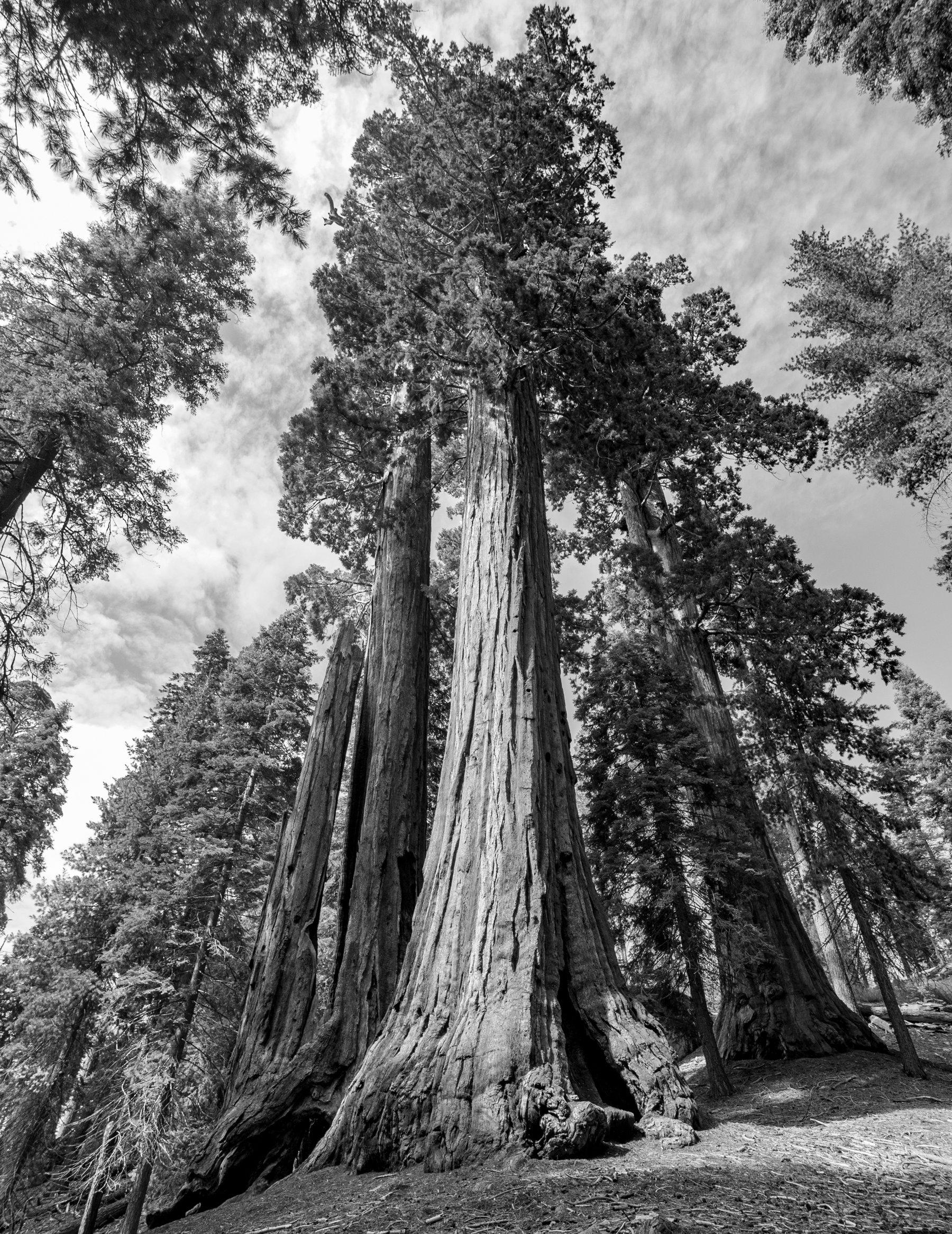
30 Trip Report: Sequoias By John Nilsson
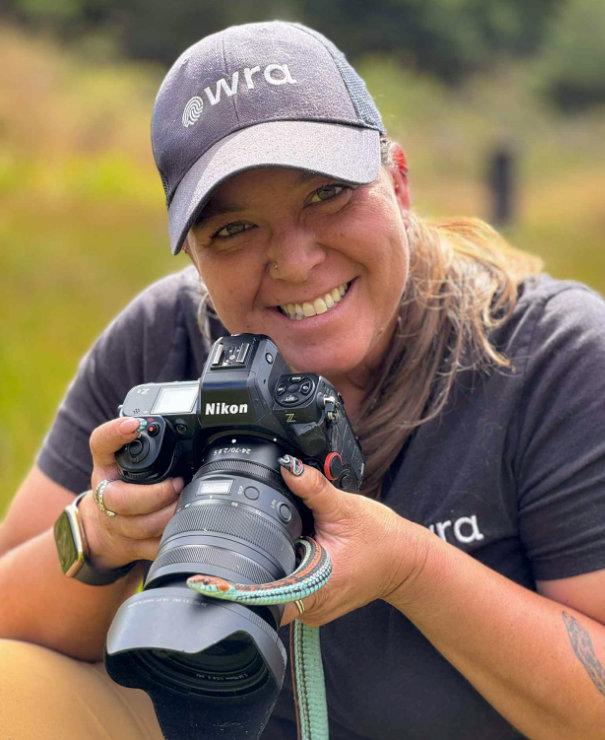
Marisa Ishimatsu holding a Federally Endangered San Francisco gartersnake (Thamnophis sirtalis tetrataenia) (handled under permits). Photo by Rob Schell.
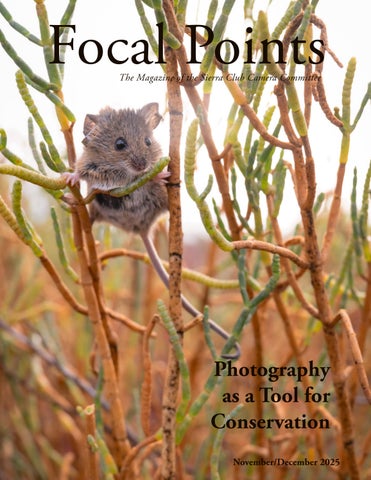
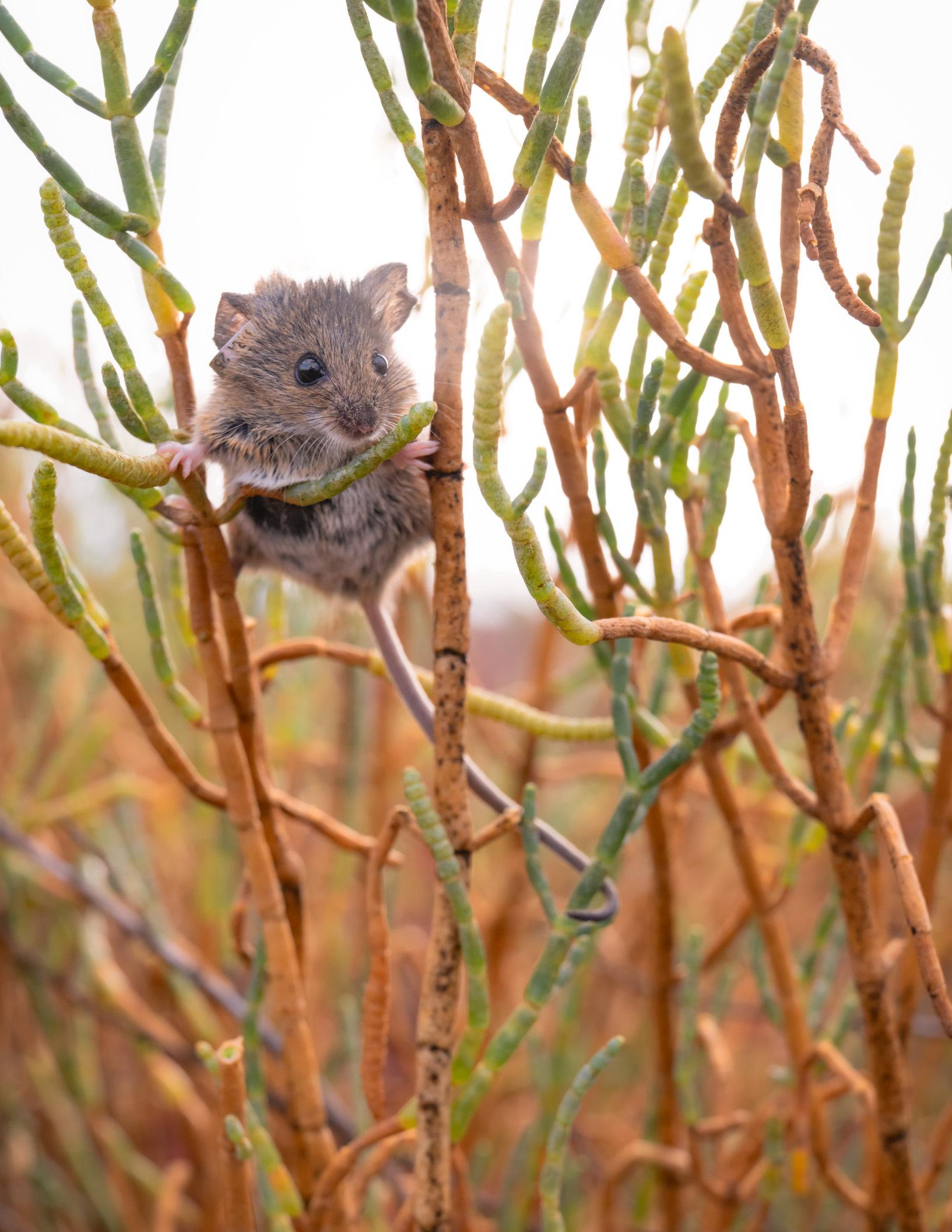
Cover Photo: The salt-marsh harvest mouse (Reithrodontomys raviventris) is a Federally Endangered species from the marshes around the San Francisco Bay. Marshes are a very sensitive habitat that are the target for conservation efforts. Photo © Marisa Ishimatsu
In August 1992 I attended the Sierra Now! Conference in Sacramento. Across the decades I can remember only one specific piece of advice, advice that is echoed in this issue’s cover story by Marisa Ishimatsu. Before we can save an ecosystem, a watershed, a species, a culture, we must love it first.
How do we do that? Well, we must understand it. As I get older I confess that I understand less and less about more and more. It’s not that I’m forgetting what I once learned. It’s just that everything – science, culture, politics – appears to be more complex. Knowledge is more costly as information is more readily available. It has become overwhelming.
I have not thrown up my hands in despair, though. There are still things I can learn, things I can understand, things I can love. One way that happens is through my camera. The lens is not a barrier between me and the world, it is how the world comes into focus for me.
The camera forces me to pay attention. It allows me to pay attention. Creating art gives me permission to pay attention. And I learn to love a place by paying attention.
The next step is tricky. Do I use my art to help others to understand, and possibly to love, the things that I photograph? That depends on how actively I disseminate my work. If it sits on my hard drive or in a drawer it might as well not exist to the outside world. No one is going to come looking for it. So I look for places to show my work.
I used to work for magazines that don’t exist anymore. I learned about my subjects in the process of photographing them, which enabled me to create a photograph that would interest the person viewing it. I was paid because I knew how to do that, to translate my understanding of the subject into an image that would educate/entice/attract the viewer, and possibly make them love it.
The author of our cover story, “Photography as a Tool for Conservation,” understands this concept. Velda and I met Marisa Ishimatsu and her husband Dacklin at an abandoned gold mine in 2020. She was looking for reptiles to photograph with her D850, and he was using LIDAR to create a 3D map of the ruins. We didn’t learn that she is a scientist until much later.
Marisa pushes her photography into the world. Her snake images grace books and magazines. Her wildlife images from all over the globe are central to exhibitions of her work. This is only possible because, as she’s written elsewhere, “[w]hen I photograph, I’m only thinking about one thing- what’s in front of my camera.”
So in these times, when many things we care about appear to be crumbling and the world is out of order, remember to make art. It demands focus and clarity, and a settling of the mind. And do not discount the value of your own art, as the work you create is a unique view of the world. And someone might fall in love with it.
Joe Doherty Los Angeles Dec. 1, 2025
Join us on December 11 at 7pm for the next
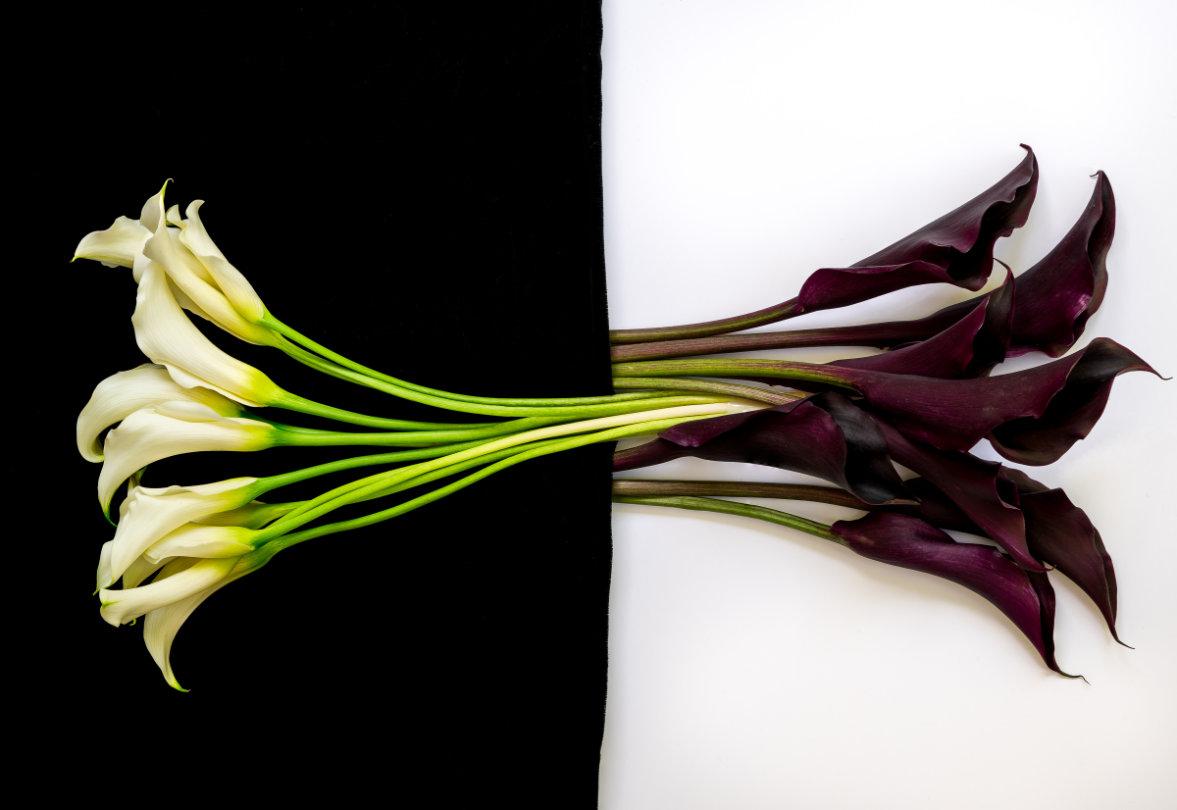
Dark + Light Callas by Velda Ruddock from the December 2024 Member Show
Register for the Zoom meeting here: https://us02web.zoom.us/meeting/register/ eTyCuavXROaYsJiP8o6EKA
Upload up to 10 of your photos for the show here: https://www.dropbox.com/request/ zCJB3xMfwBcCfjXm43k6
If you want images sorted for your presentation, add the sequence number (01, 02, 03, . . , 10) to the beginning of the file name. Images should be sRGB and 2000 pixels on the long side.
Photography as a Tool for Conservation
Photographs and Text
by Marisa Ishimatsu
Why did you take this photo?
Why are you sharing it?
Who do you want to see it?
When it comes to nature and wildlife photographers, there are two main camps. There are photographers who approach their work from an artistic perspective and those who come at their art from a scientific perspective. Both camps may produce similar results but, when asked these questions, they will likely have very different answers.
Artists may speak about the play of light, the texture of the subject, the framing of the
foreground or background etc. Scientific photographers, on the other hand, will likely talk about the subject itself and, inevitably, the phrase “to raise awareness about [insert subject or subject’s plight here]” will be uttered.
Neither camp is right or wrong – art is a deeply personal expression and all reasons for doing art are equally valid. The purpose of this article is to share the experience of a scientific photographer and how to use a photographer’s platform to, yes, raise awareness of wildlife, ecosystems, and conservation.
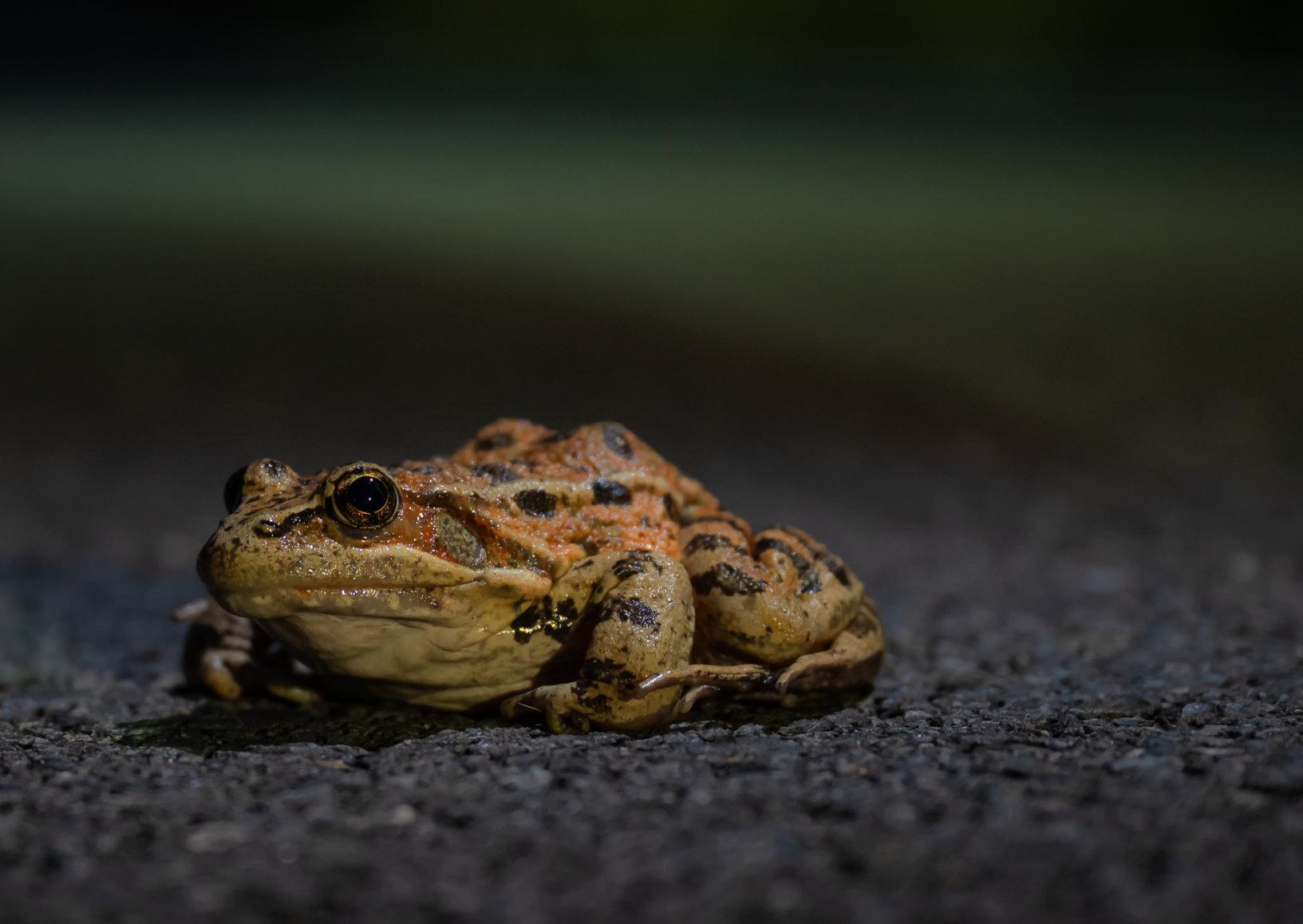
A Federally Threatened California red-legged frog (Rana draytonii) on a road at dusk. Showing photos of frogs like this on a road can help people recognize the pattern and may enable drivers to spot and avoid the animal.
The Basics of Conservation
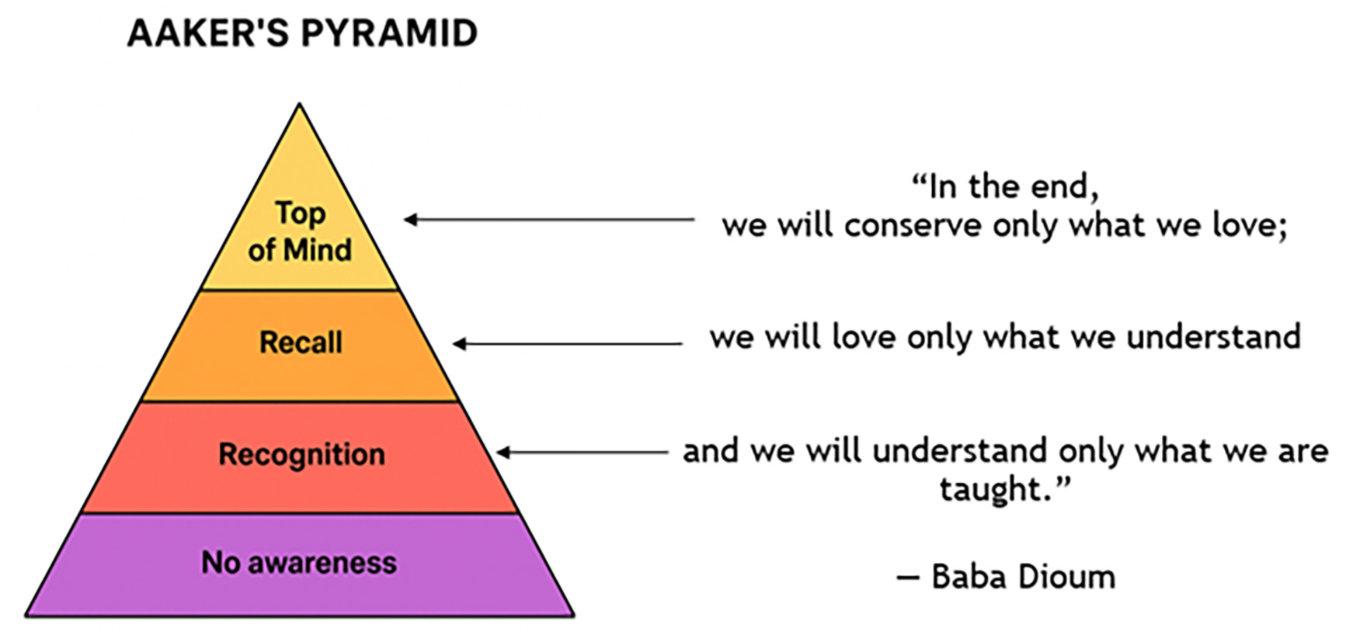
In 1968, a Senegalese forestry scientist named Baba Dioum presented a paper at the triennial meeting of the General Assembly of the International Union for the Conservation of Nature. The paper contained this quote:
In the end, we will conserve only what we love, We will love only what we understand And we will understand only what we are taught.
Let's figure out why this quote is so meaningful by exploring how it impacts the who, what, why, and where of conservation.
The Who
Please allow me to share a little about myself. When I was a kid, I was scared of snakes. I didn’t encounter them often even though I
played outside all the time. I was always warned about the dangers of rattlesnakes at the local parks, and all media told me snakes were meant to be feared. The Bible says they’re the devil in disguise. Harry Potter continues that theme, and even the macho Indiana Jones is scared of them.
When I went to college I met Alex. Alex loved snakes. He and I formed a firm friendship that has lasted over a decade. His passion and enthusiasm for all reptiles and amphibians (colloquially called “herps,” short for “herpetofauna”) is infectious and the two of us wandered around the East Coast looking for every species we could find. I was then introduced to a website called the Field Herp Forum where people would share stories and photos of their outings to find herps. I was entranced by the photographers’ posts –all these beautiful photos of incredible
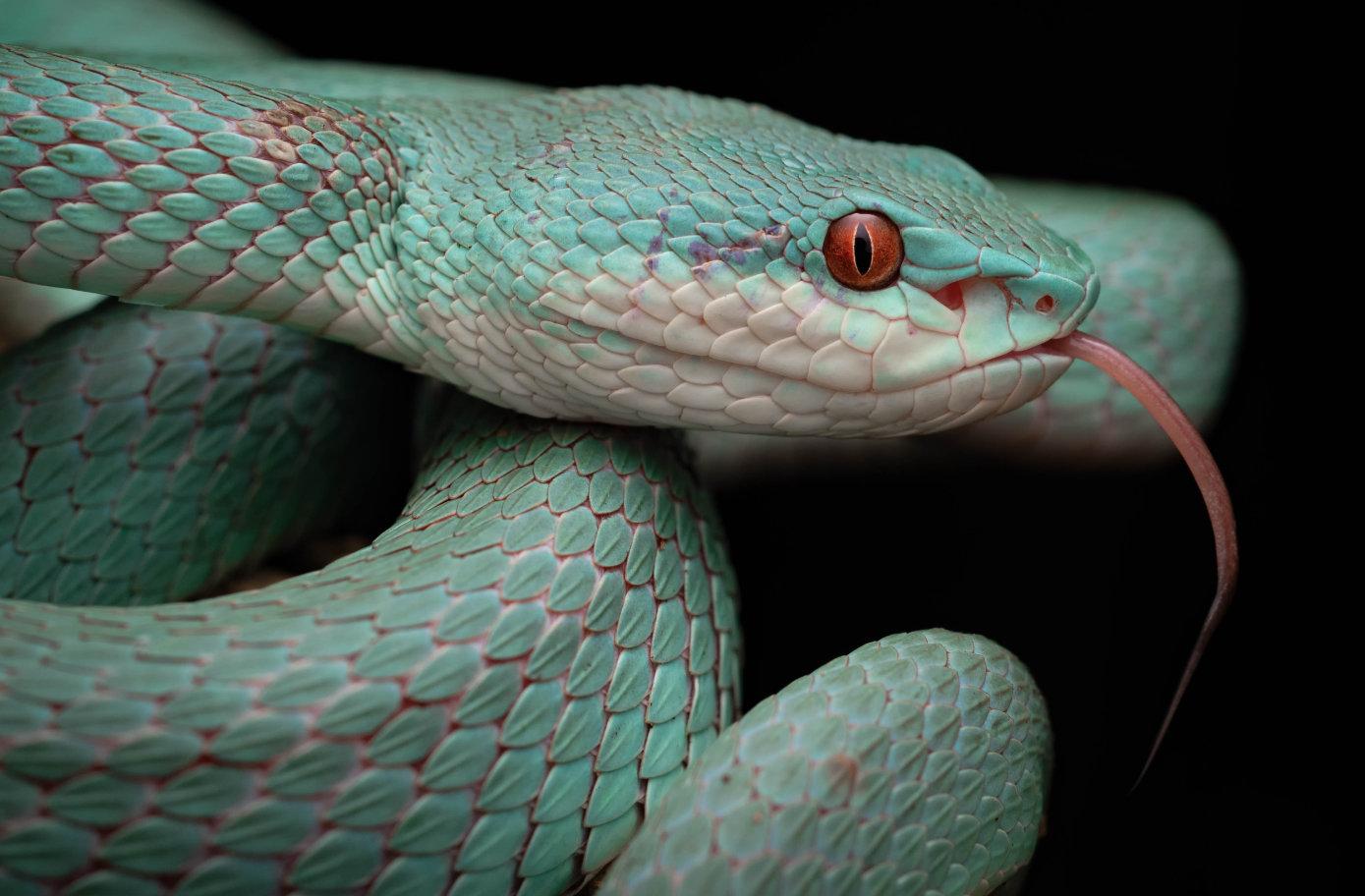
This incredible animal is the white-lipped pit viper (Trimeresurus insularis) from Komodo Island in Indonesia.
animals I had never seen before! Soon I was taking photos of reptiles and amphibians with my first DSLR (a Canon T1i) and thus began my journey into photography.
In this tumultuous world we often forget that people can change. If it wasn’t for Alex sharing his love of snakes, I would have never found the Field Herp Forum. If it wasn’t for the Forum I would have never been inspired to pick up photography. I now sell my photos at farmer’s markets and artisan fairs. Little by little I have had the opportunity to educate and share my passion for these animals with people who may otherwise fear them. Even this small act is a win in the fight for wildlife conservation.
The What
Good scientific photography is a combination of art and science. It may feature an animal in
its natural habitat and/or engaging in natural behavior. It may be a portrait of an animal that focuses on its fur, feathers, skin, or scales. You know what it’s not? It’s not AI.
Social media feeds are flooded with images and videos that to the untrained eye may look real but are AI generated. Birds with fabulous plumages, snakes of every color of the rainbow, even fuzzy woodland creatures jumping on trampolines together – on a small phone screen and without a critical eye, it may be a challenge to tell what is real and what had been generated for clicks. For a realworld example of this, do a Google Image search for “baby peacock.” Real baby peacocks are drab brown, but according to Google Images they are blue, green, white, pink, and even rainbow and some can even fit on the tip of your finger.
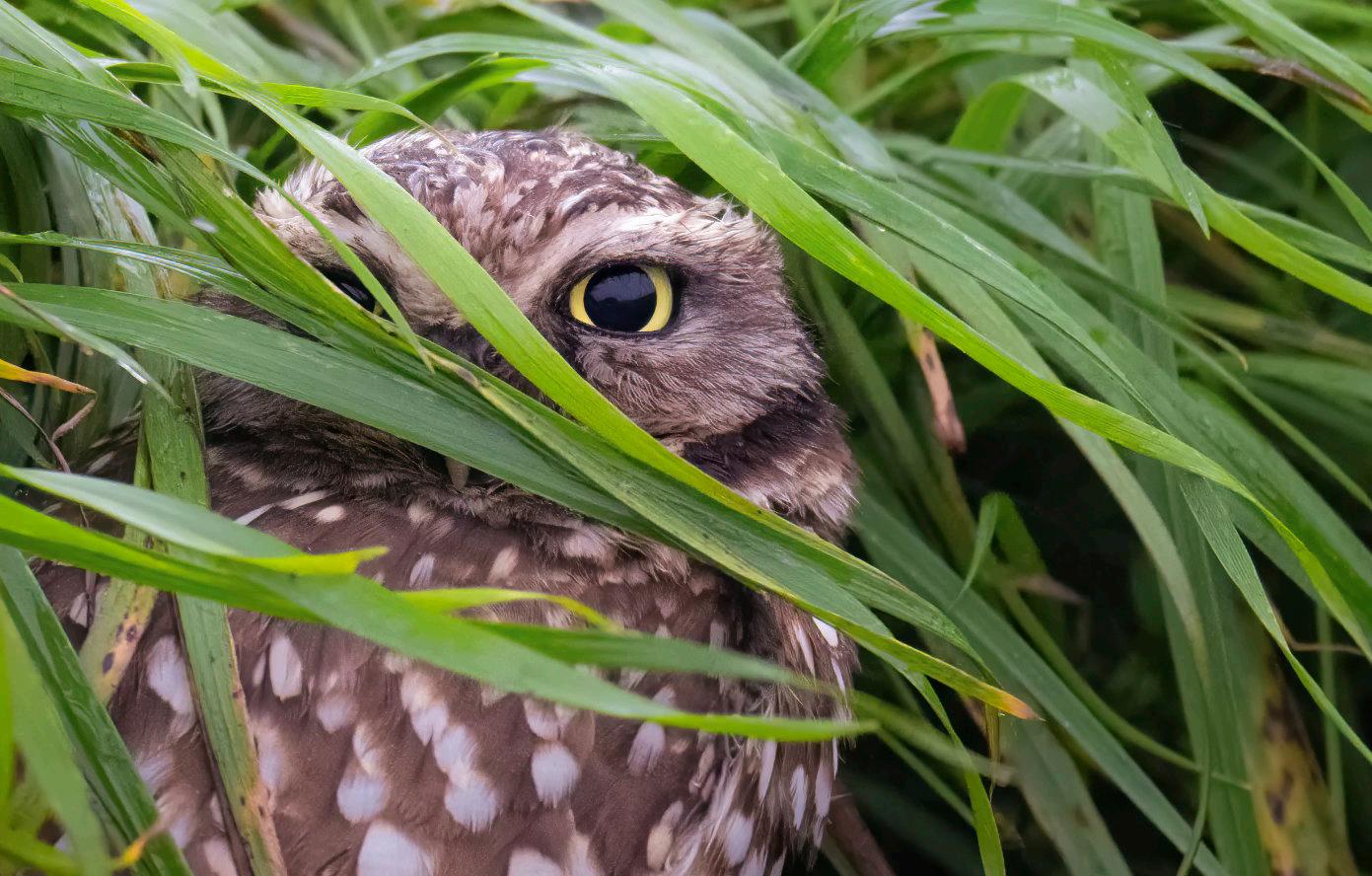
A burrowing owl (Athene cunicularia) stares at me from its burrow. This species lives on the ground and is at risk of being pursued by off leash dogs.
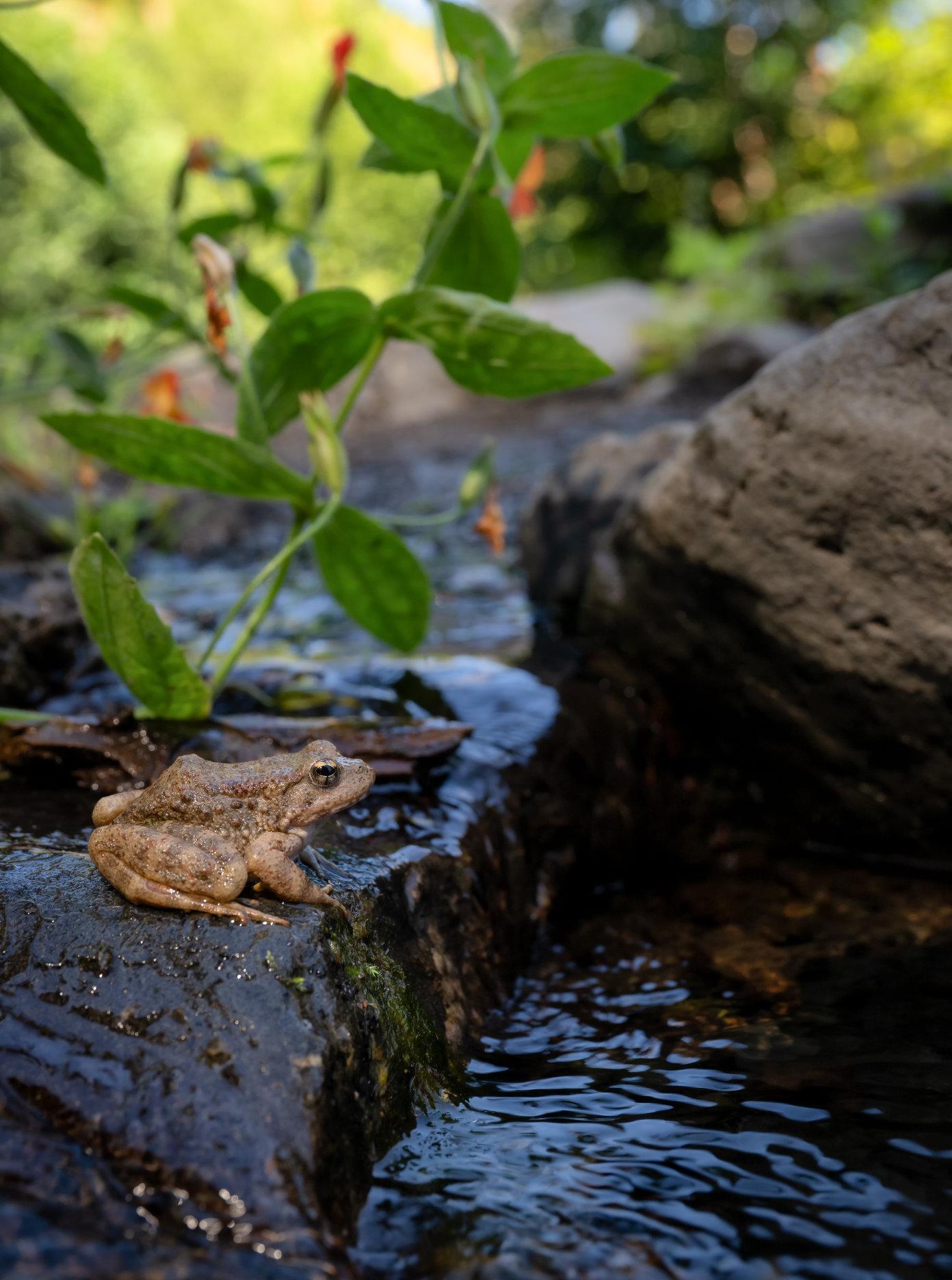
yellow-legged frog (
). This is a California State Species of Special Concern and some populations are State Threatened. This species is sensitive to water quality and has been extirpated through much of its native range.
Foothill
Rana boylii
These images are devoid of meaning and of purpose and are usually full of misinformation. If these AI-generated fantasies are what people think of as “nature” there is nothing to teach, understand, love, or fight to conserve.
Plant biologists have coined the term “plant blindness” for the general public’s lack of understanding of the botanical world. I’d like to extend that to “nature blindness.” After all, we learn about photosynthesis in school but we don’t learn about the species of frogs in our own back yard. We’re not taught to have an emotional connection to the natural world unless we’re lucky enough to have parents, or friends, or a scout troop, or other outside community who engages with us in nature. Scientific photography helps people learn a little more about the natural world. Hopefully this leads to greater understanding, love, and conservation of our ecosystems.
The Why
Why is scientific photography an effective tool in conservation efforts? In order to understand this, we must look at conservation as a brand and consider it from a marketing
perspective. David Aaker is a Professor Emeritus at the University of California, Berkeley's Haas School of Business. He is a specialist in marketing with a focus on brand strategy and developed Aaker’s Pyramid.
Comparing Baba Dioum’s quote to Aaker’s Pyramid, we can see why his words are so effective in promoting conservation as a brand. For biologists and scientific photographers, conservation of the natural world is Top of Mind. The majority of the public are spread between No Awareness, Recognition, and Recall. The power of scientific photography is that it has the power to bring people up the pyramid. Our goal isn’t getting everyone to reach Top of Mind, it’s to bring them up to Recognition and maybe even Recall. We are working to alleviate the public’s nature blindness, one photo at a time.
For example, when I sell my photos at markets, I engage with people about the subject matter. If I see them pause on a photo of a mouse just because it’s cute (see cover photo), I will talk to them about how that is the salt-marsh harvest mouse, an endangered
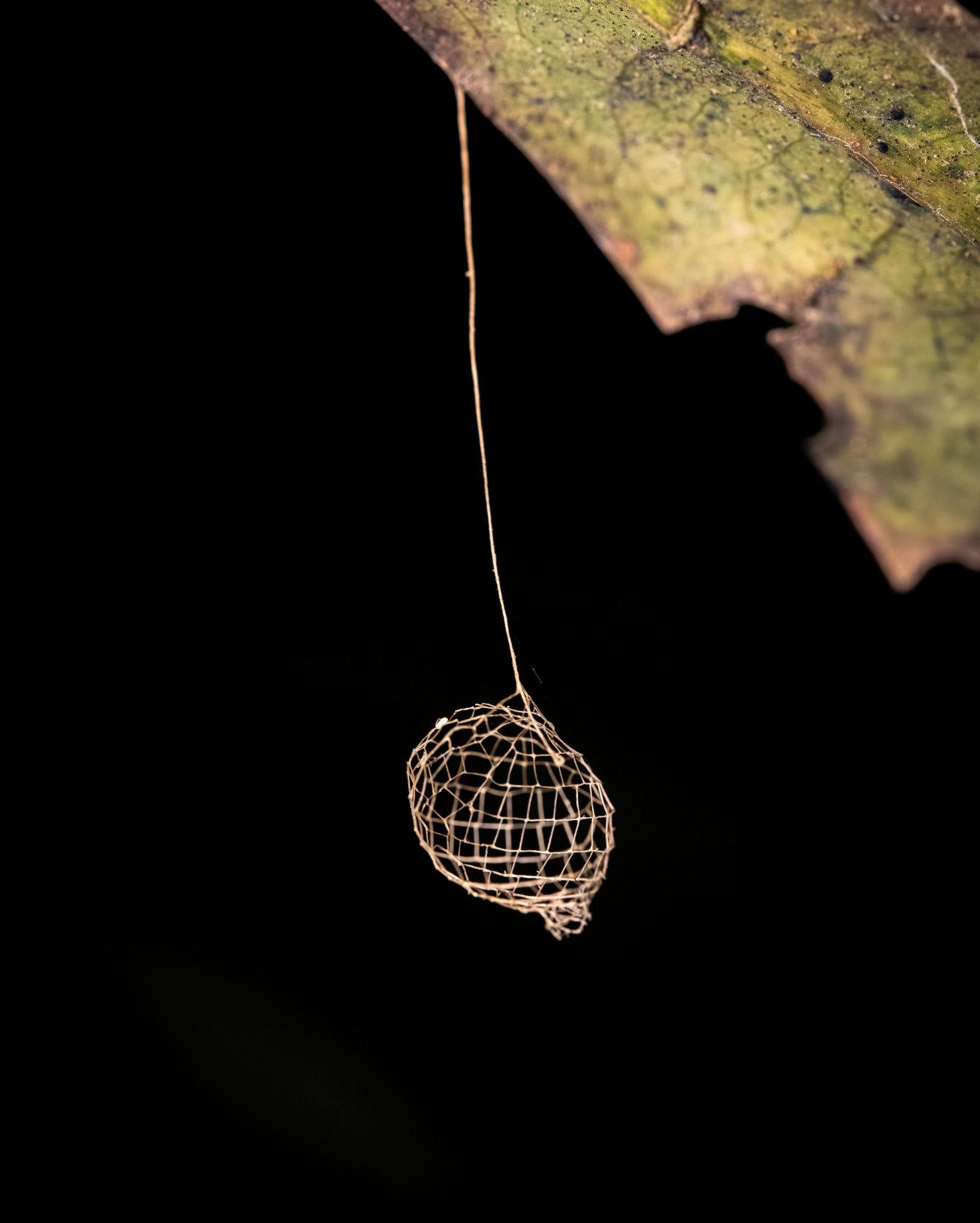
Before reading further, study this structure. What do you think it is? A plant? Animal? Fungus? Slime mold? Alien? When I stumbled across this in the Peruvian Amazon, I had no idea what Kingdom this belonged to. It is the cocoon of a false burnet moth (family Urodidae). The structure is so delicate to prevent ants from predating the larva.
species that is only found in the marshes around the San Francisco Bay Delta. I’ll talk to them about how perfectly this little mouse is adapted for survival in the tidal marshes. Maybe they will be reminded that tidal marshes exist and they will decide to take a walk there and explore a little. Maybe they will come across a sign talking about the saltmarsh harvest mouse. They will remember that they have heard that name before, and even if they don’t remember me or my photo, they have now gone from No Awareness to Recognition. Maybe the next time they drive by one of those marshes, they think about the cute endangered mouse that lives there. They just went from Recognition to Recall. If they hear about that marsh being marked for development, they may have an emotional reaction to the news because they now have a
connection to the marsh and that cute mouse. They may sign a petition or go to a city council meeting to stop the development. Or maybe they’ll just talk to their friends about it. All of these actions are conservation wins.
The Where
Conservation efforts need a hand in all ecosystems. From the Amazon Rainforest to our urban parks, our natural communities are struggling to survive. As scientific photographers, we can help highlight native ecosystems both at home and when we travel.
Close to home, we can highlight invasive species for example. Invasives pose a massive threat as they often outcompete our native species for resources. As scientific photographers, we can use our platform to
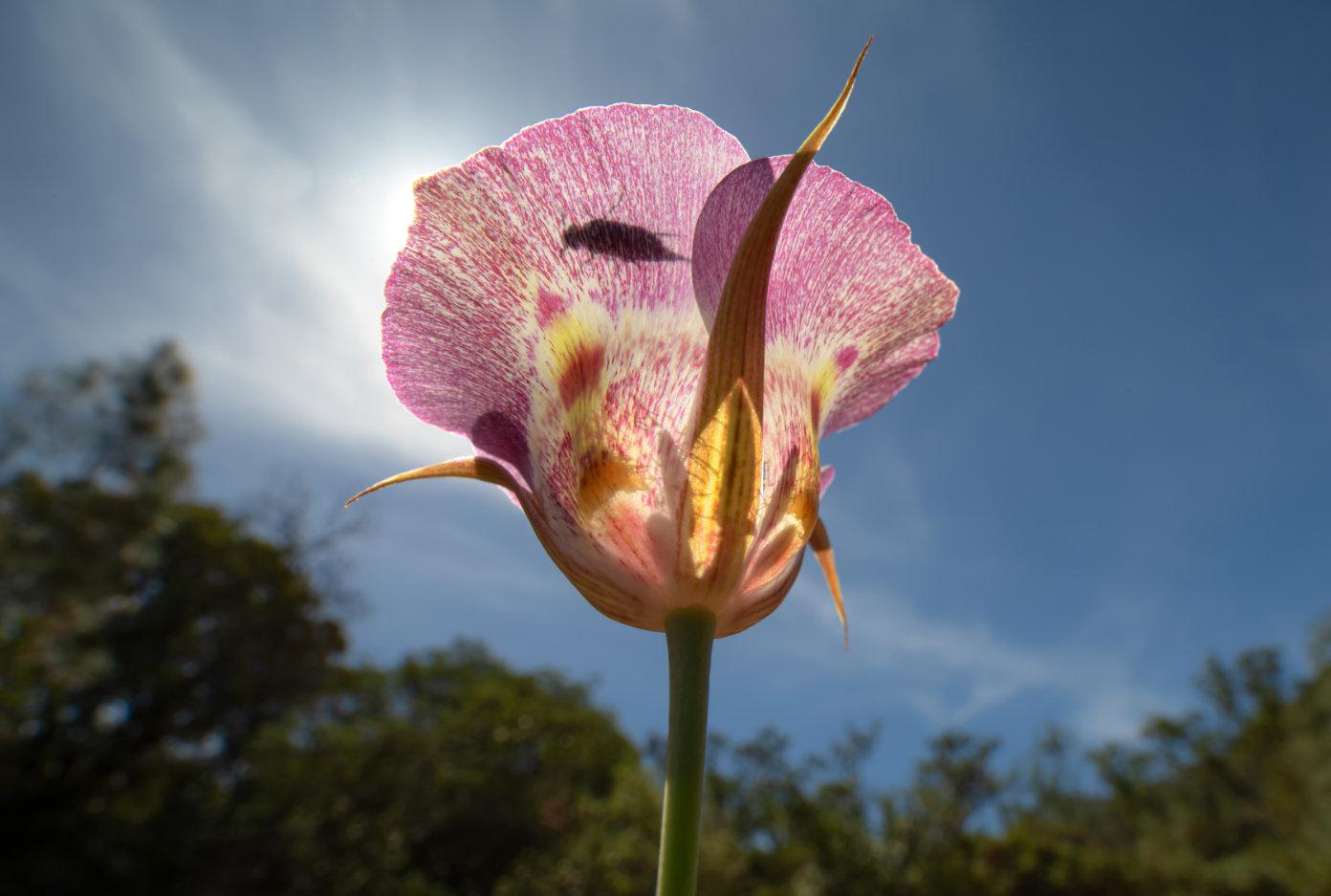
Clay mariposa lily (Calochortus argillosus) with a native pollinator- a tumbling flower beetle (family Mordellidae).
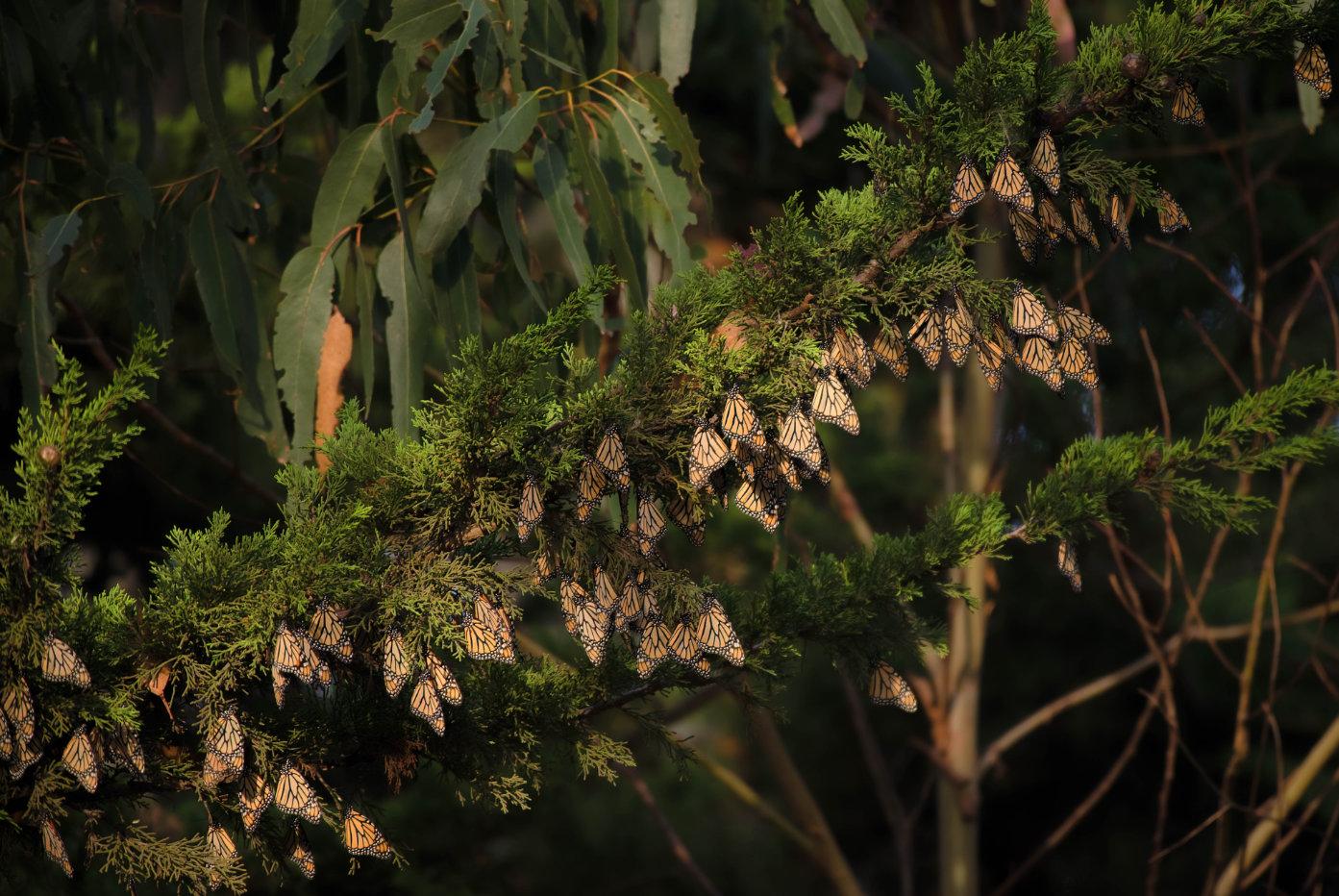
Overwintering monarch butterflies (Danaus plexippus). This photo was taken from outside the ropes protecting the roost trees.
educate people about the harm that invasive species can have on our ecosystems and highlight the native species that are in peril. Exposure to both native and invasive species helps to raise awareness about both and can lead to recognition when people are out in their daily lives. For example, in the spring in Northern California, the hills turn brilliant yellow. Though this display is beautiful, it is also problematic – the yellow flowers belong to black mustard (Brassica nigra). Legend has it that mustard seeds were scattered by missionaries to create “roads of yellow” where they had travelled. These days mustard is ubiquitous and is also allelopathic (its roots leach out chemicals inhibiting other species from growing nearby) so native species don’t have a chance to germinate. Those beautiful yellow monocultures are really a grave marker
for what was once a diverse landscape of native wildflowers1 .
Looking beyond our backyards, scientific photography can help conservation efforts around the world. Ecotourism is an excellent way to help conservation efforts around the world as it helps local communities put a price tag on keeping their biodiversity intact. The tiger safari trips in the National Parks in India employ thousands of people – guides, drivers, hotel staff, restaurant staff, shop owners – protection of tigers and people travelling from far and wide to see them has created a sustainable local economy. These parks are not just protecting the tigers. Tigers are apex predators who thrive with healthy 1 For more information about the history of black mustard, check out the excellent article “The Colonial Roots of the Black Mustard Plant” by Zoie Matthew from PBS SoCal (2022).
ecosystem and healthy ecosystems are dependent on biodiversity. Protecting the tigers protects all other species throughout the food web.
Final Thoughts
Conservation can mean many things. Planting native species in a garden, installing bird safe windows, watching predator-positive programs, and donating to local conservation organizations are all small, meaningful acts of conservation. For photographers, sharing images of native species and species that are overlooked or maligned is a small act that can create visible examples of coexistence that shift that public perception towards valuing biodiversity. Encouraging the love and
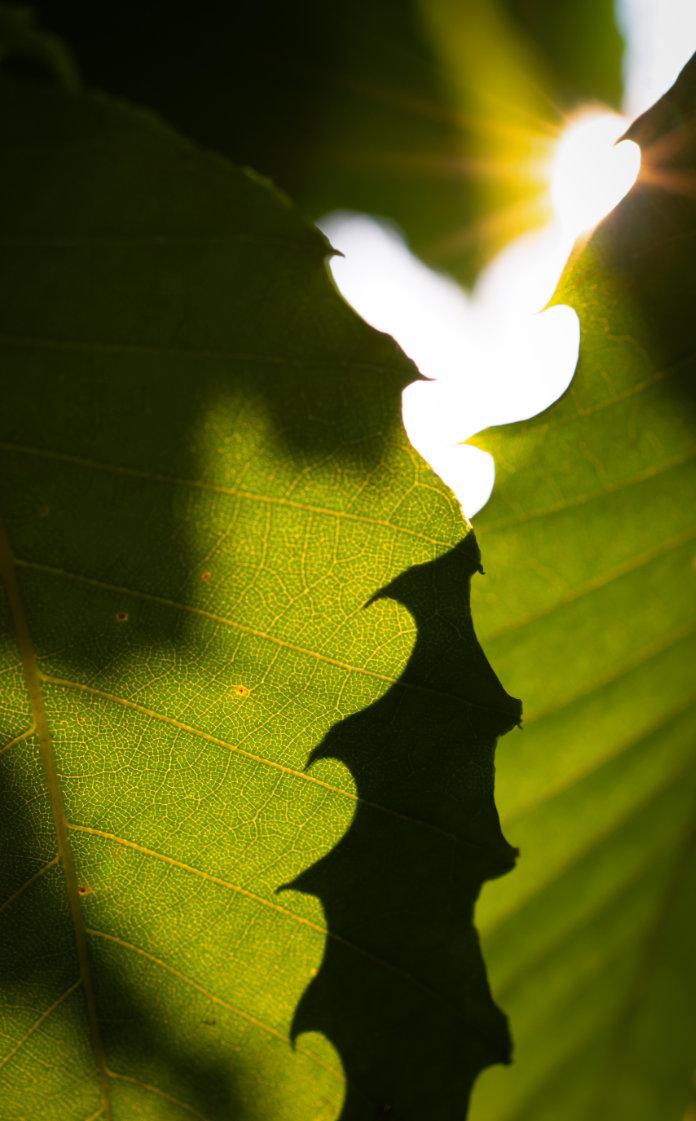
Sunlight through the leaves of an American chestnut (Castenea dentata). Once one of the most common trees in the Eastern and Midwestern US, a pathogen from China wiped all of them out. Since chestnuts are an important mast producer, their loss has a massively detrimental effect on the ecosystem. This over 150 year old tree survived in northern Michigan, isolated and outside of its native range.
understanding of nature and the natural world helps generate the social momentum needed for stronger protections, encouraging policymakers to support habitat restoration, wildlife corridors, and science-based management. In this way, small acts of outreach become the subtle currents that guide society toward more meaningful conservation.
A quick note on ethics: ethical photographic practice is essential, especially in scientific photography. Be respectful of local communities both human and ecosystems. My partner and I were out photographing monarch butterfly overwintering aggregations in coastal California. The local park had installed ropes around the roost trees to prevent people from disturbing the butterflies. My partner and I were standing outside of the ropes taking photos when a guy walked up, walked straight over the rope and started photographing. I asked him to stay behind the ropes and he replied “It’s okay. I’m a photographer.” No, sir, that is certainly not okay. Unless you’re press and are on assignment, a camera does not give you special permission. Set a good example for the community and respect the rules – they have often been implemented to protect you, the ecosystem, and the wildlife. Be ethical, be respectful, and take the shot you have, not the shot you want.
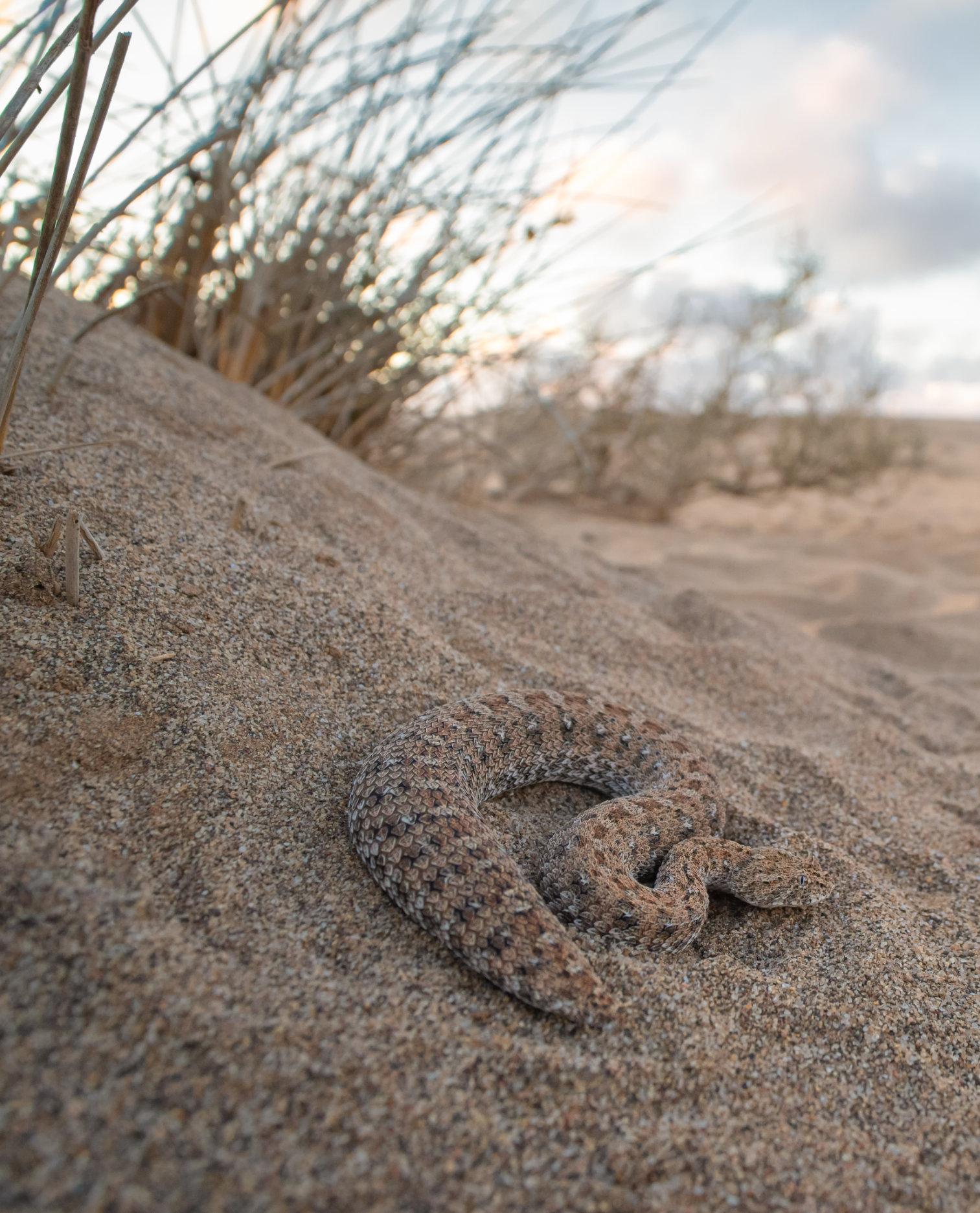
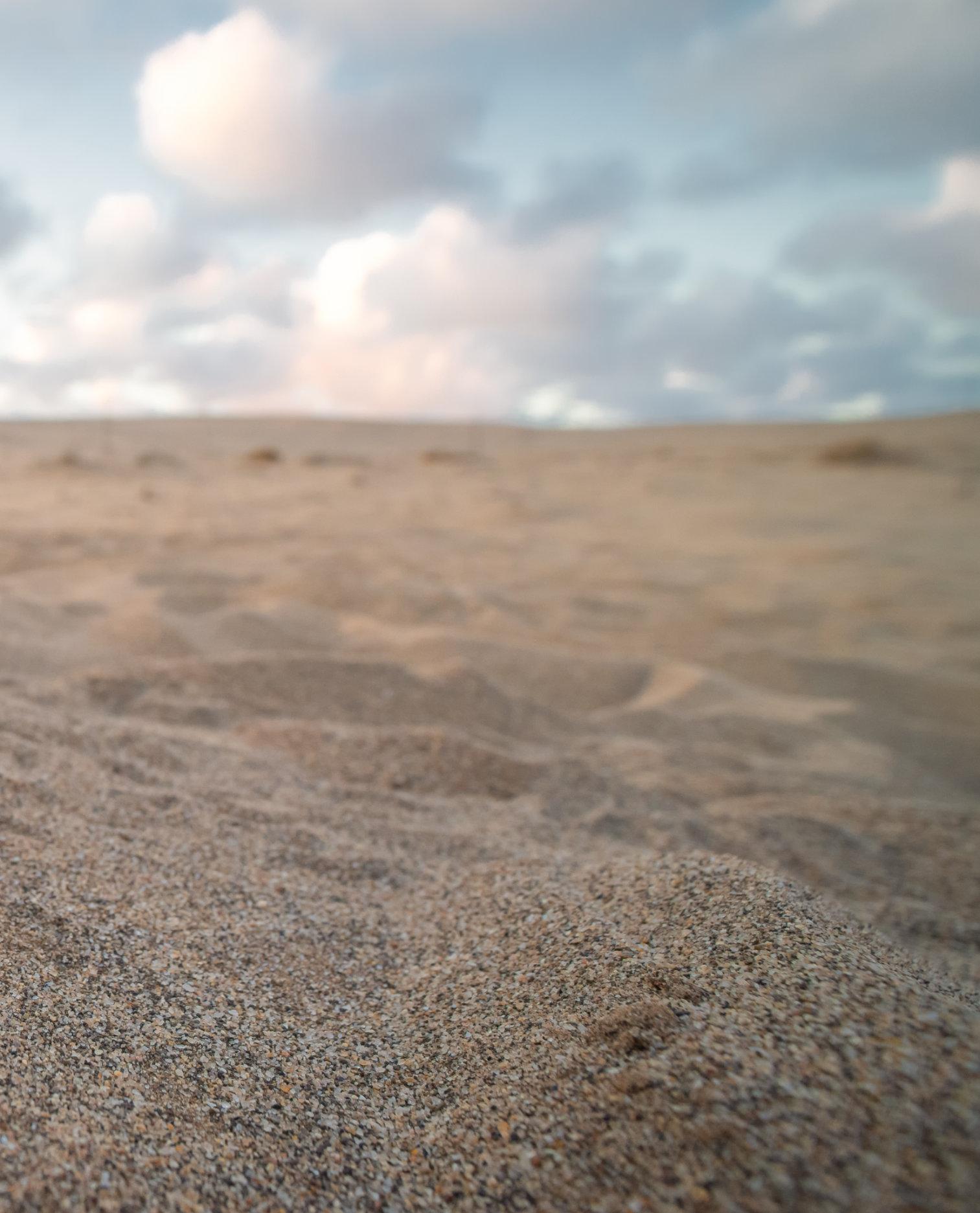
The smallest viper in the world, the Namaqua dwarf adder (Bitis schneideri). These minute snakes top out at just 10 inches and are only found in the small coastal region where South Africa and Namibia meet.
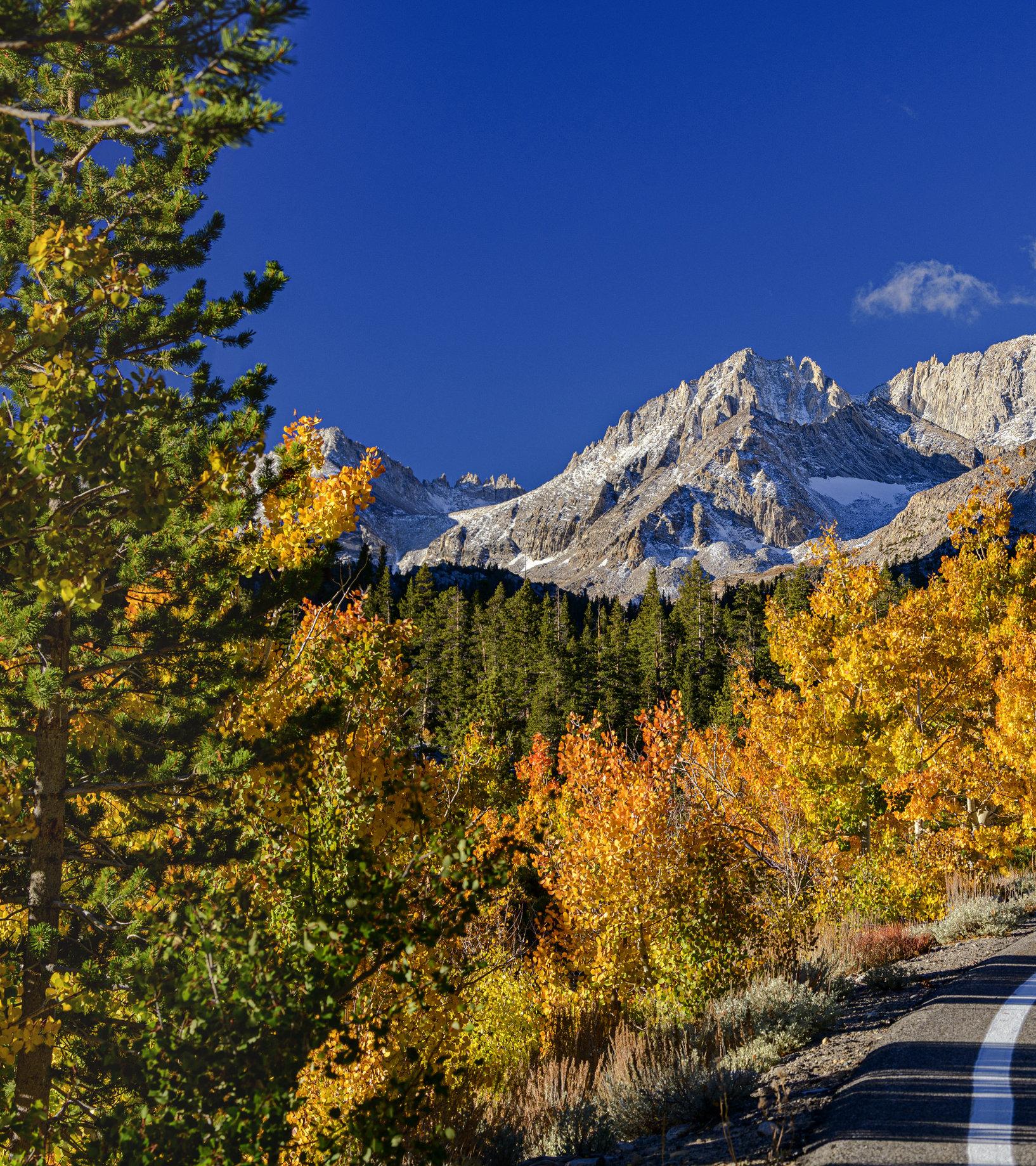
Fall Color Road Trip
Photographs and Text by John Fisanotti
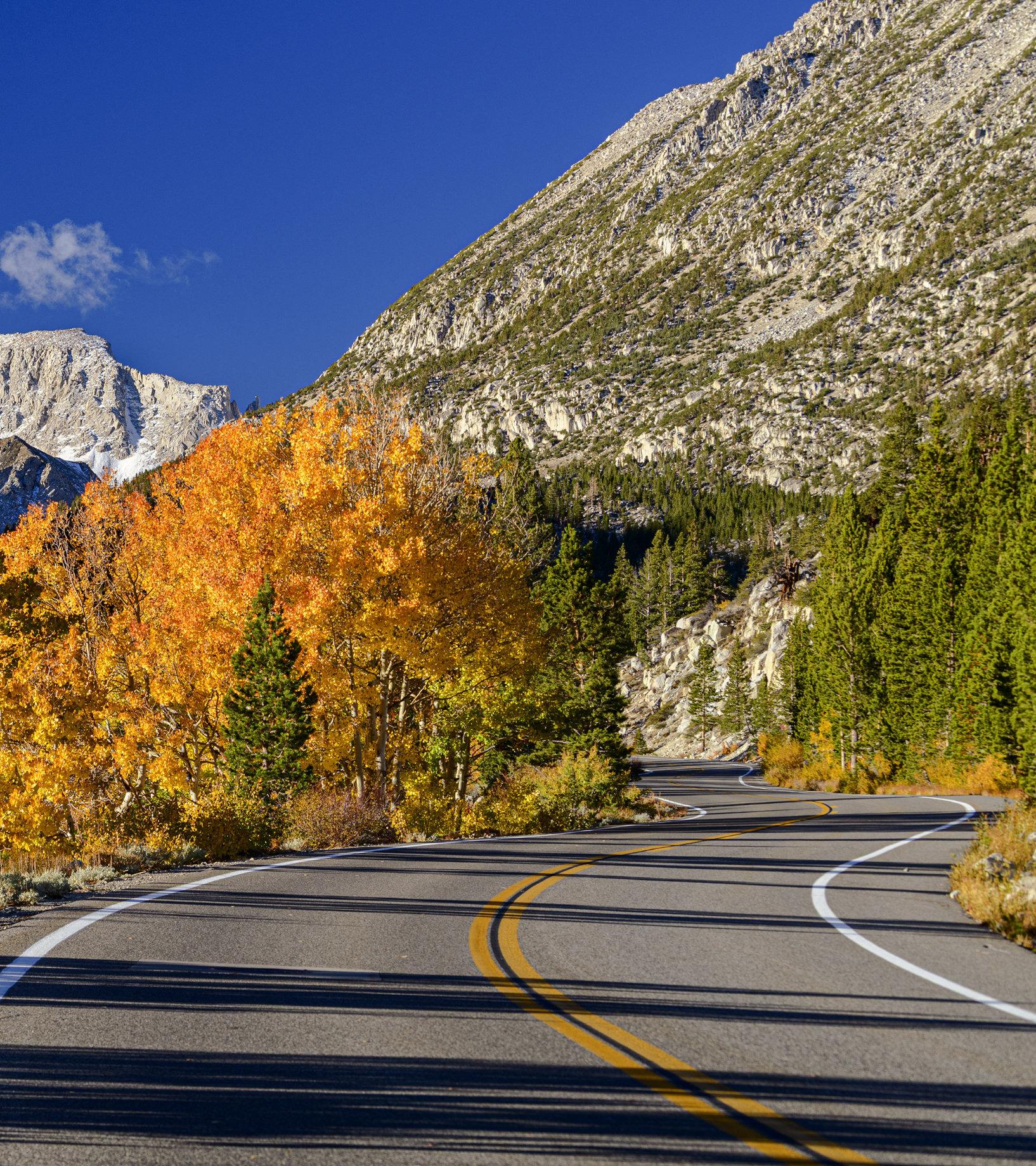
Mounts Dade and Abbott above Rock Creek Road
One day in September, I received an email from John Nilsson, asking if I’d be interested in doing a photo trip to the eastern Sierra Nevada this fall. Hmm…I hadn’t thought about it, but in looking at my calendar, I could get away during the second week of October. It had been one year since John, Mike Caley, and I completed our “No Regrets” fall color road trip to south-western Colorado, and a reprise of that highly successful trip would be welcome.
Unfortunately, neither John nor Mike were available that week so I soloed the trip. I left town on Wednesday, October 8, and stayed in Bishop, California for three nights.
Once there, I got started right away. After dinner on Wednesday, I headed north out of town, aiming for the vista point along US Highway 395 on the Sherwin Grade. Although the primary objective of the trip was landscapes with fall color, it was also an opportunity for astro-photography. From the vista point, the constellation Sagittarius and the center of our Milky Way galaxy, would be over Mount Tom shortly after evening twilight, while the rising moon, one day past full, might provide nice light on the landscape. Therefore, I had added a star tracker and an astro-modified camera body to my gear to be used specifically for astro images.
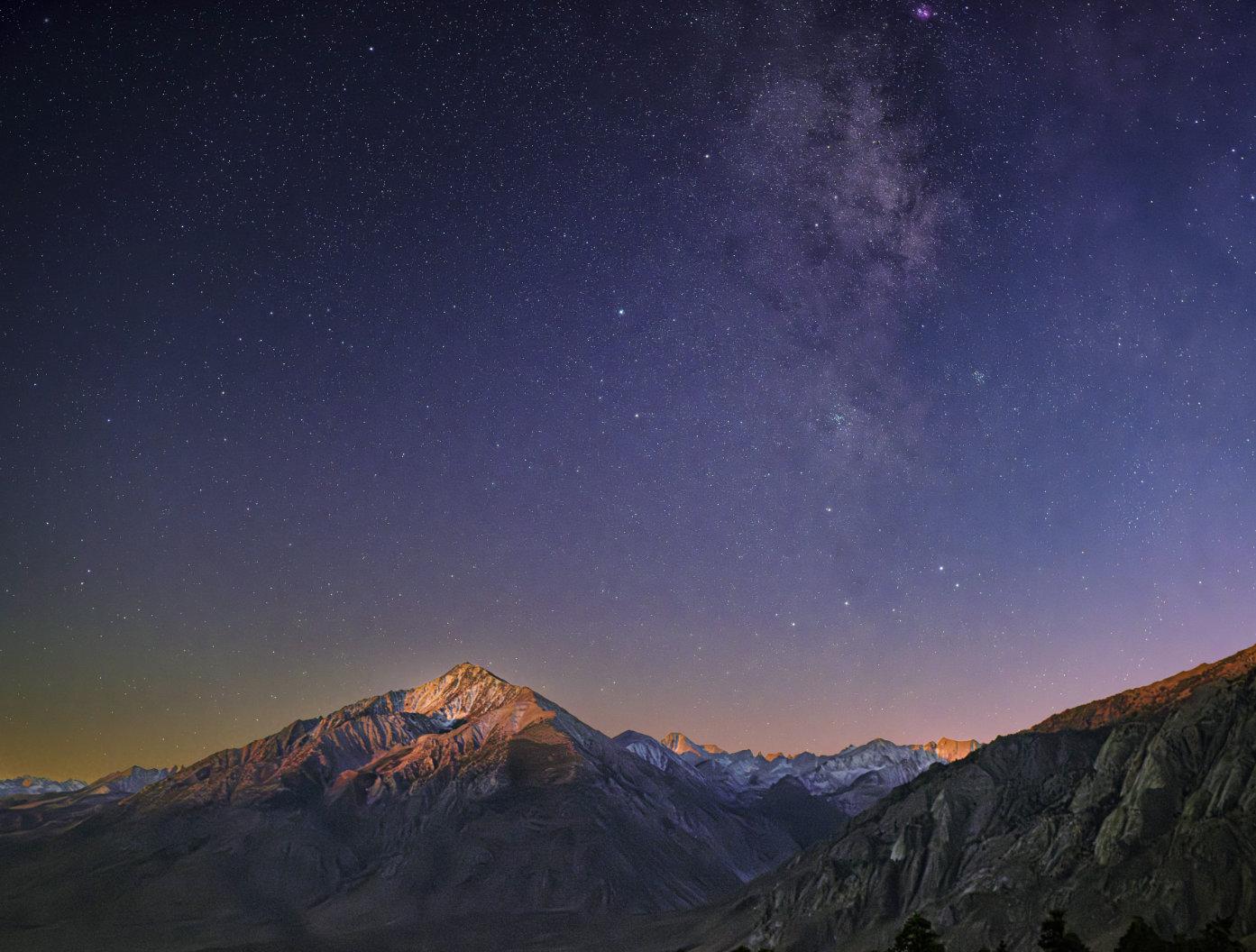
Moonlight on Mt. Tom
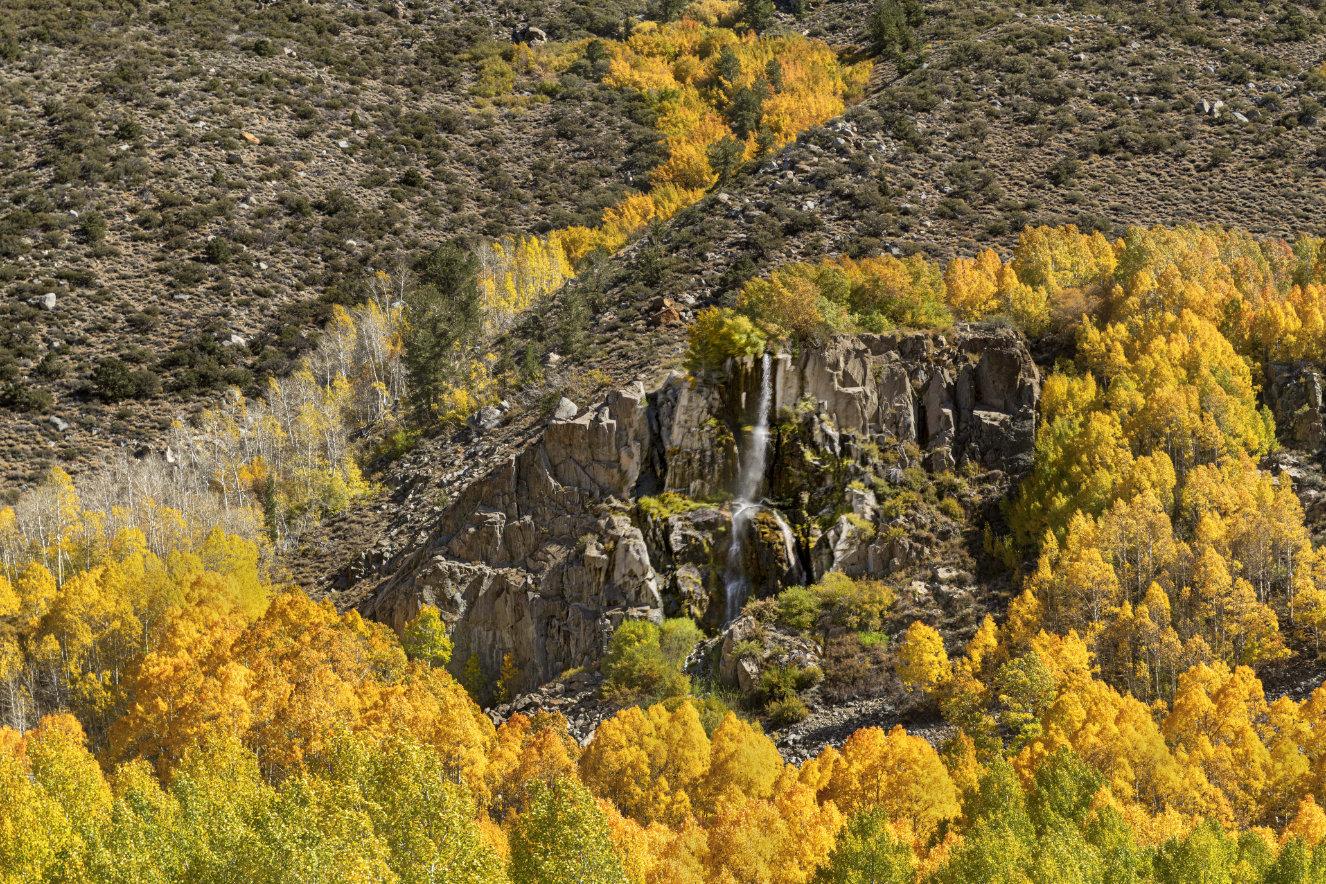
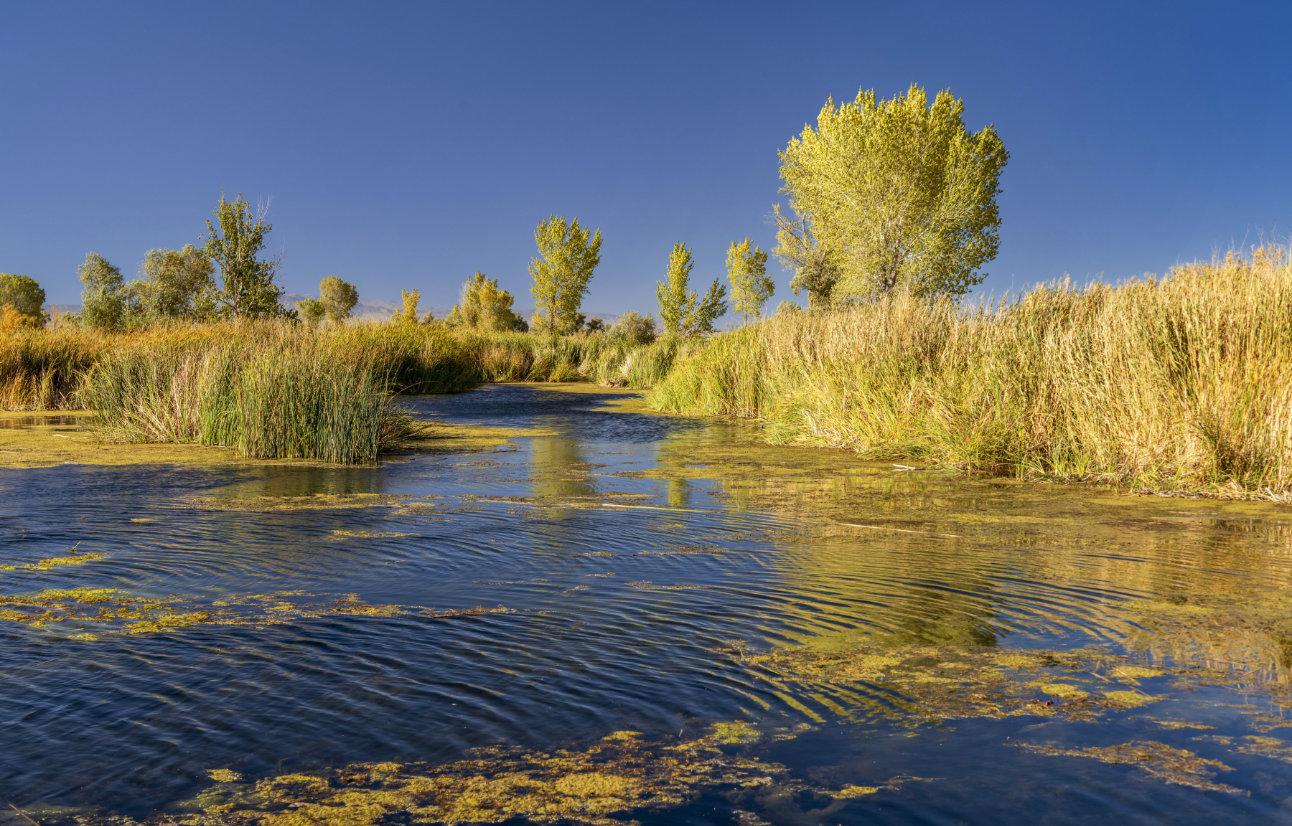
Bishop Canyon Waterfall
Buckley Pond in afternoon light
My final processed image is a composite of two frames. For the sky, I used an image taken while the camera tracked the stars to avoid star trails. This of course, rendered the mountains, a smeared blur, so another shot was taken with the tracking turned off. When processing the image, I layered the sharp landscape portion of one image over the bottom of the tracked sky shot. I’m quite happy that the resulting photo, matches what I had envisioned while at home the night before.
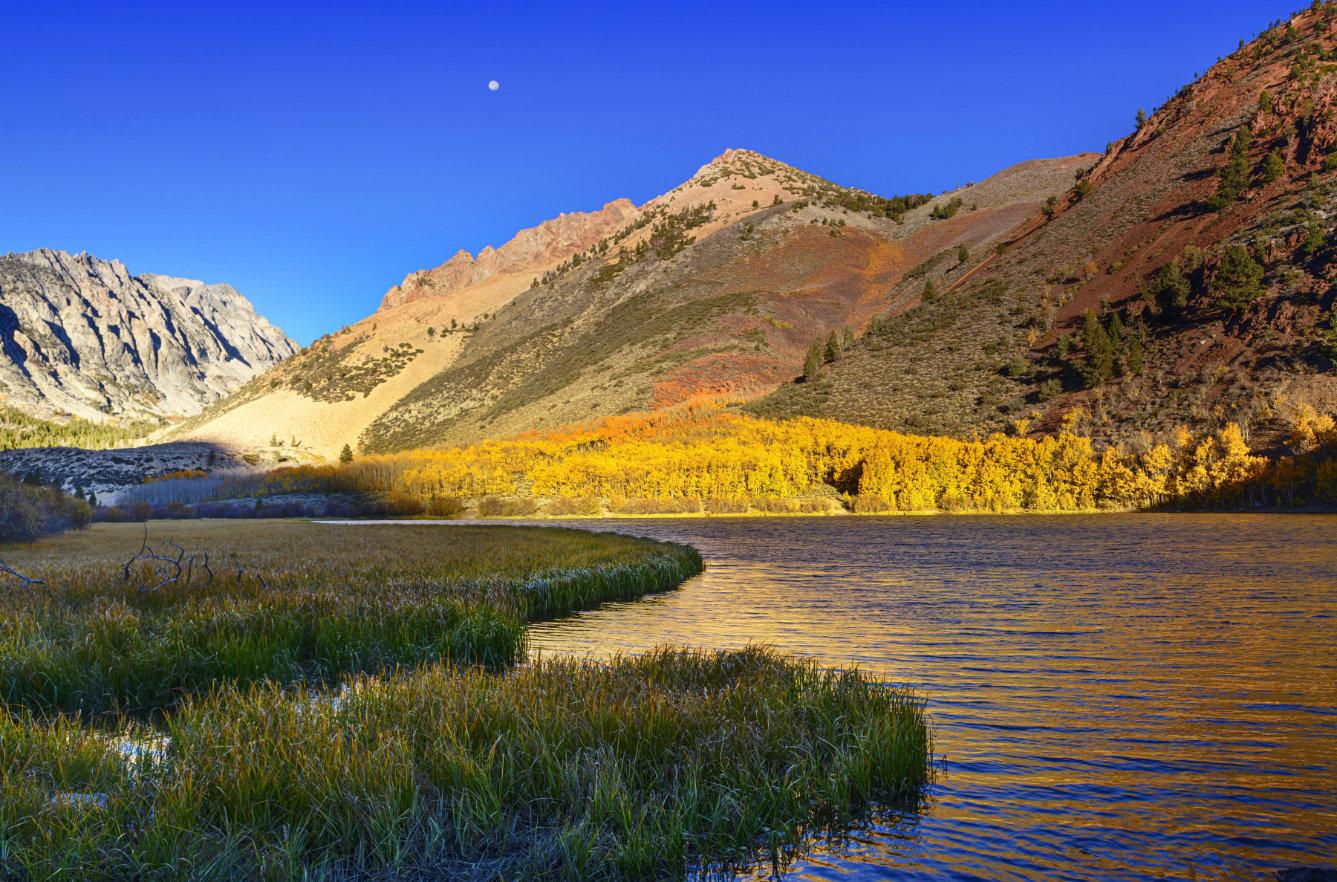
It was still dark, before dawn on Thursday morning when I left the hotel and headed out West Line Street (CA highway 168) for Bishop Creek canyon. That morning, I did a full circuit, from North Lake, to Lake Sabrina, and South Lake, stopping to shoot along the way. Once he light got too high, I
stopped for breakfast at the Cardinal Village Resort, near Aspendell.
Midday was spent relaxing back in Bishop. Later in the afternoon, I drove southeast of town, towards the Owens River, Buckley Pond and Warm Springs Road. I was mostly scouting locations but did take some photos.
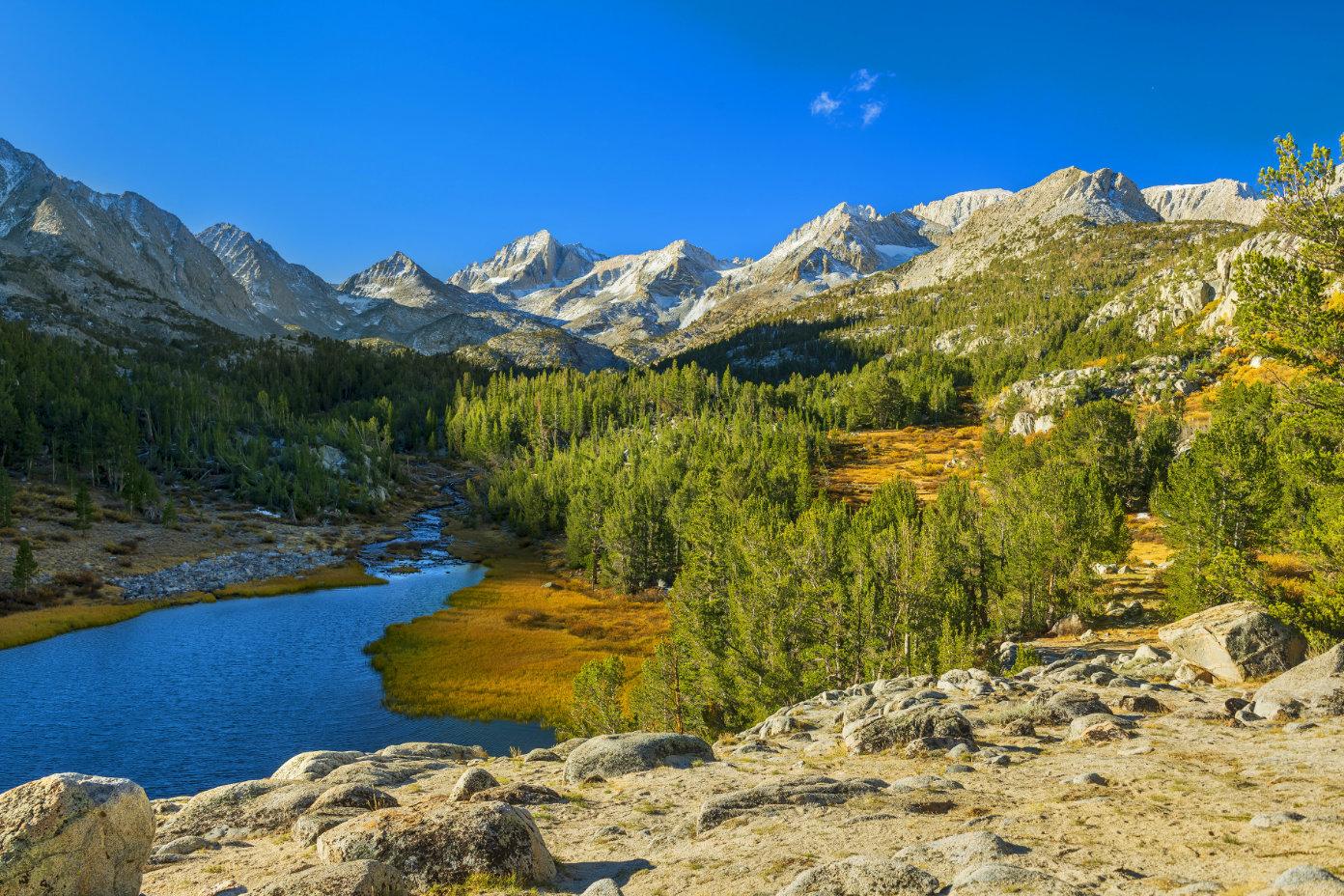
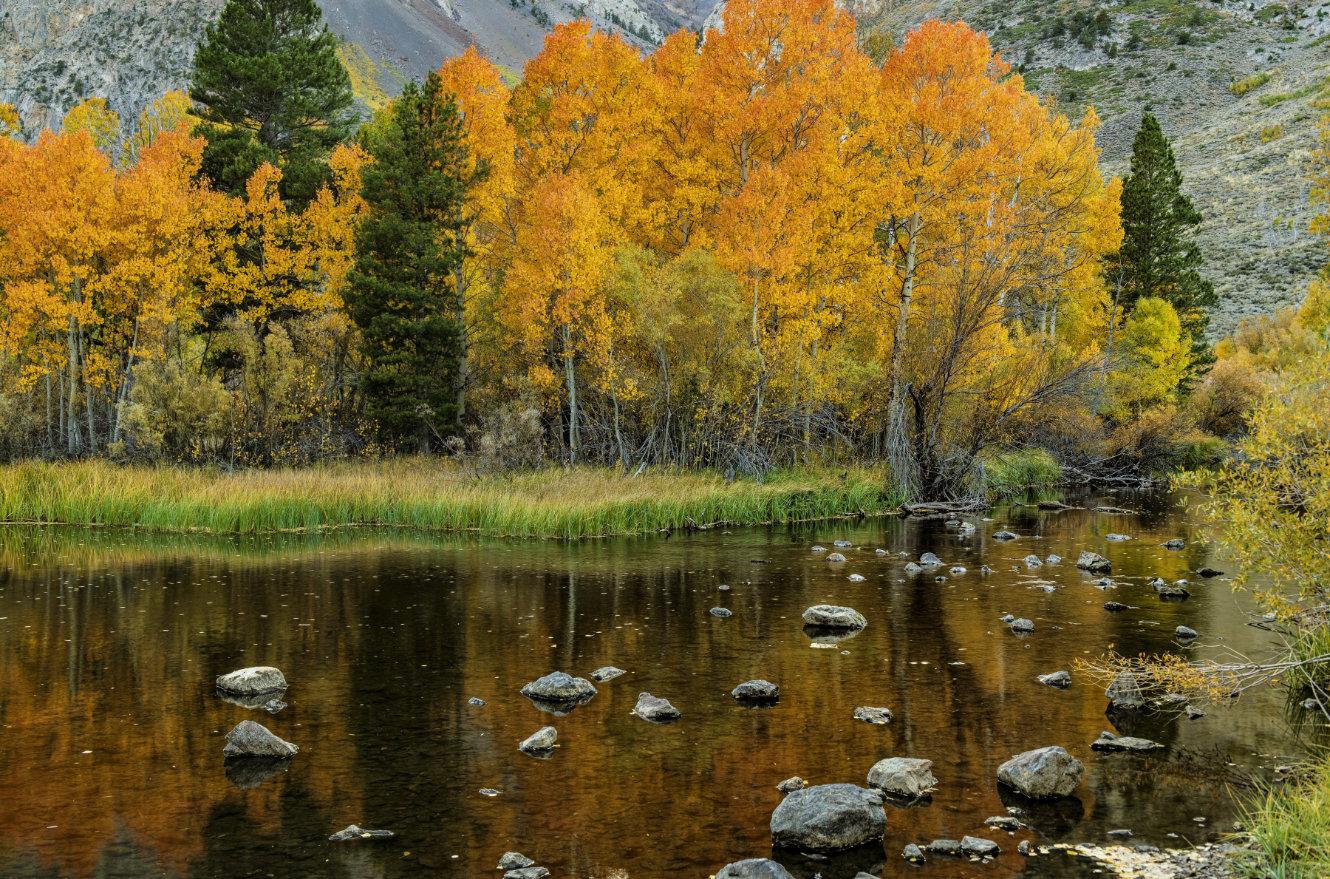
Friday was a marathon that also began before dawn. This time I headed to Rock Creek Road, west of Tom’s Place and spent the morning photographing in Rock Creek Canyon. Here, it was possible to photograph aspens in full autumn splendor backed by high peaks with their first dusting of winter snow. At the end of the road, at Mosquito Flats, I shouldered my photo backpack and hiked in to get views of the mountains above Little Lakes Valley. As if that wasn’t enough
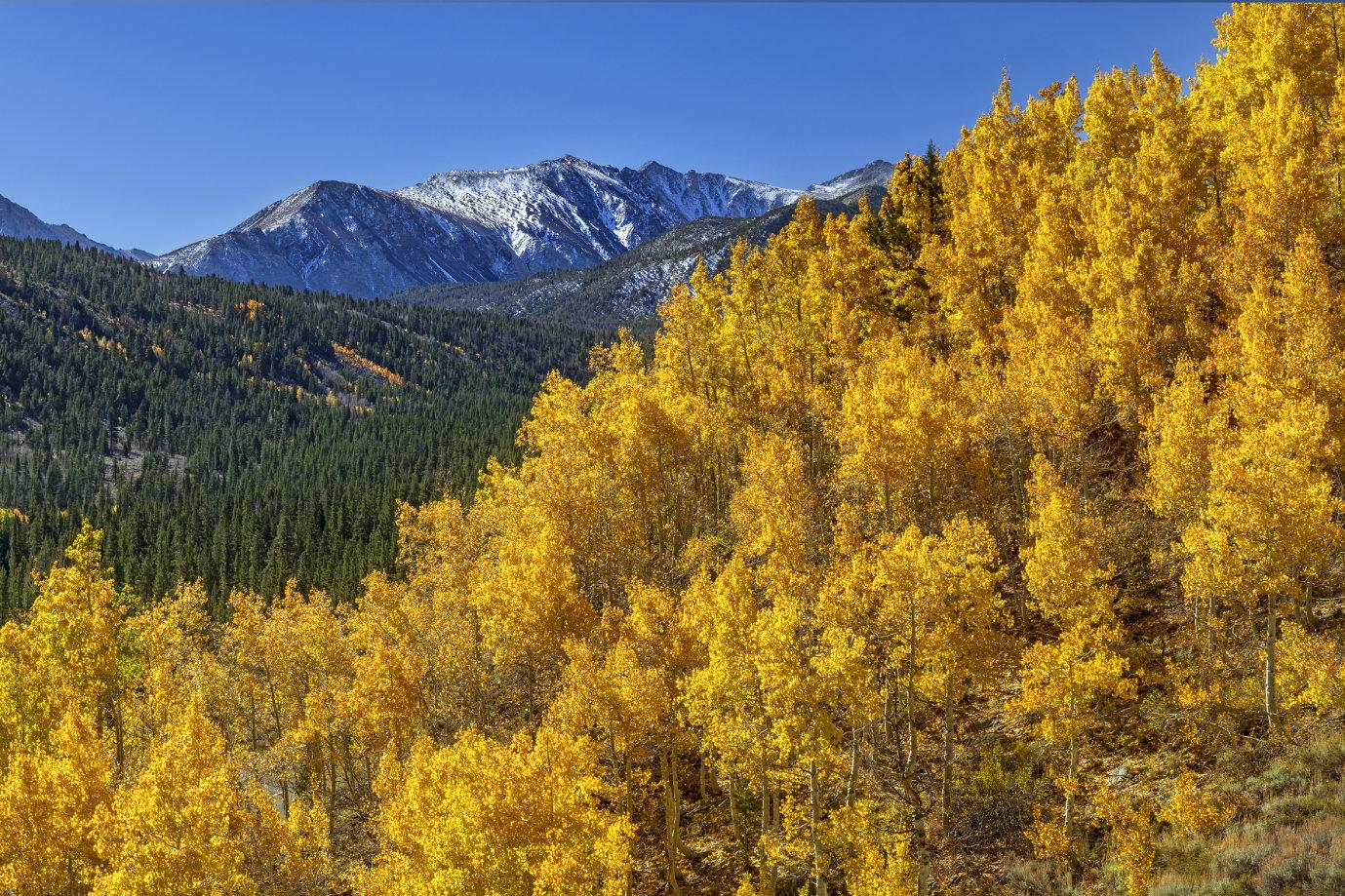
High above Rock Creek
exercise, I also climbed the steep slope above the road – twice – to get into place to shoot aspens with a view of the mountains beyond.
By midday, I was back at Tom’s Place, where I stopped at the cafe for my only meal of the day. After that all-in-one breakfast/lunch/ dinner, I headed north on Highway 395 to the north entrance of the June Lakes Loop. I arrived at Silver Lake in the early afternoon and decided to wait for the light. For the next four hours, I remained within the same half mile of Silver Lake and Rush Creek, largely biding my time and/or scouting until the light improved. It was about 6:30 p.m. when I started back to Bishop.
I returned to the hotel just long enough to get my astro-photo gear. This time, I was headed back to Buckley Pond for a shot of the night sky, above the Sierras, and reflected in the
pond. Here again, my final processed image is a composite of tracked and untracked images, so the stars in the sky, the landscape, and the stars’ reflections in the pond are all sharp. My day ended when I returned to my hotel room at 9:00 p.m., fifteen hours after I had left in the morning!
After checking out of the hotel on Saturday morning, I headed home, but not before making a side trip up Big Pine Creek towards Sage Flat and Glacier Lodge, to check out the fall color there. After that there was only one more (non-photographic) stop: the Indian Wells Brewery on Highway 14 to stock up on beers and sodas to take home.
I’m pleased with the results from this trip and thankful to John Nilsson for his suggestion. I’m only sorry they weren’t available to join me.
Little Lakes Valley
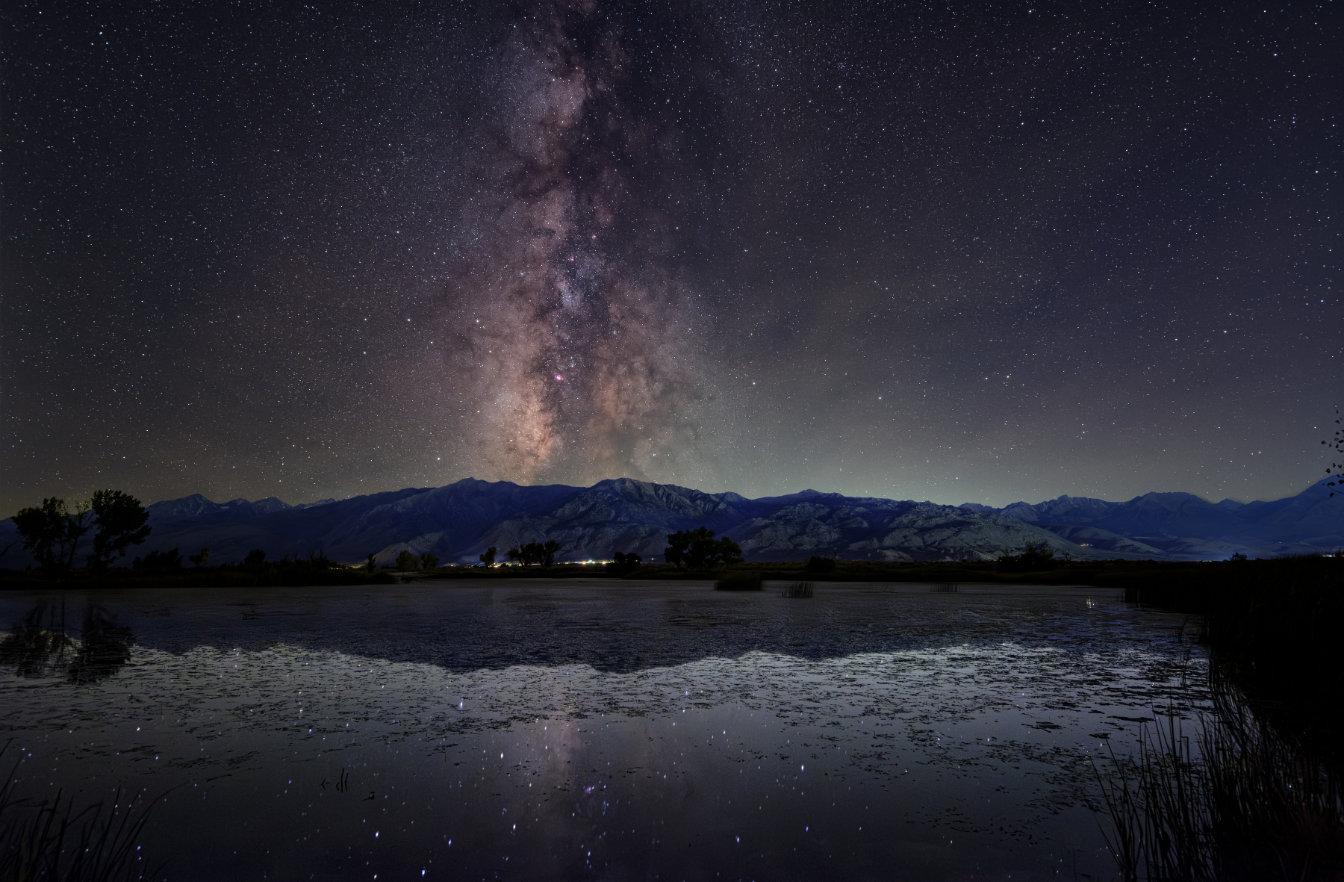
Buckley Pond at night
Rush Creek
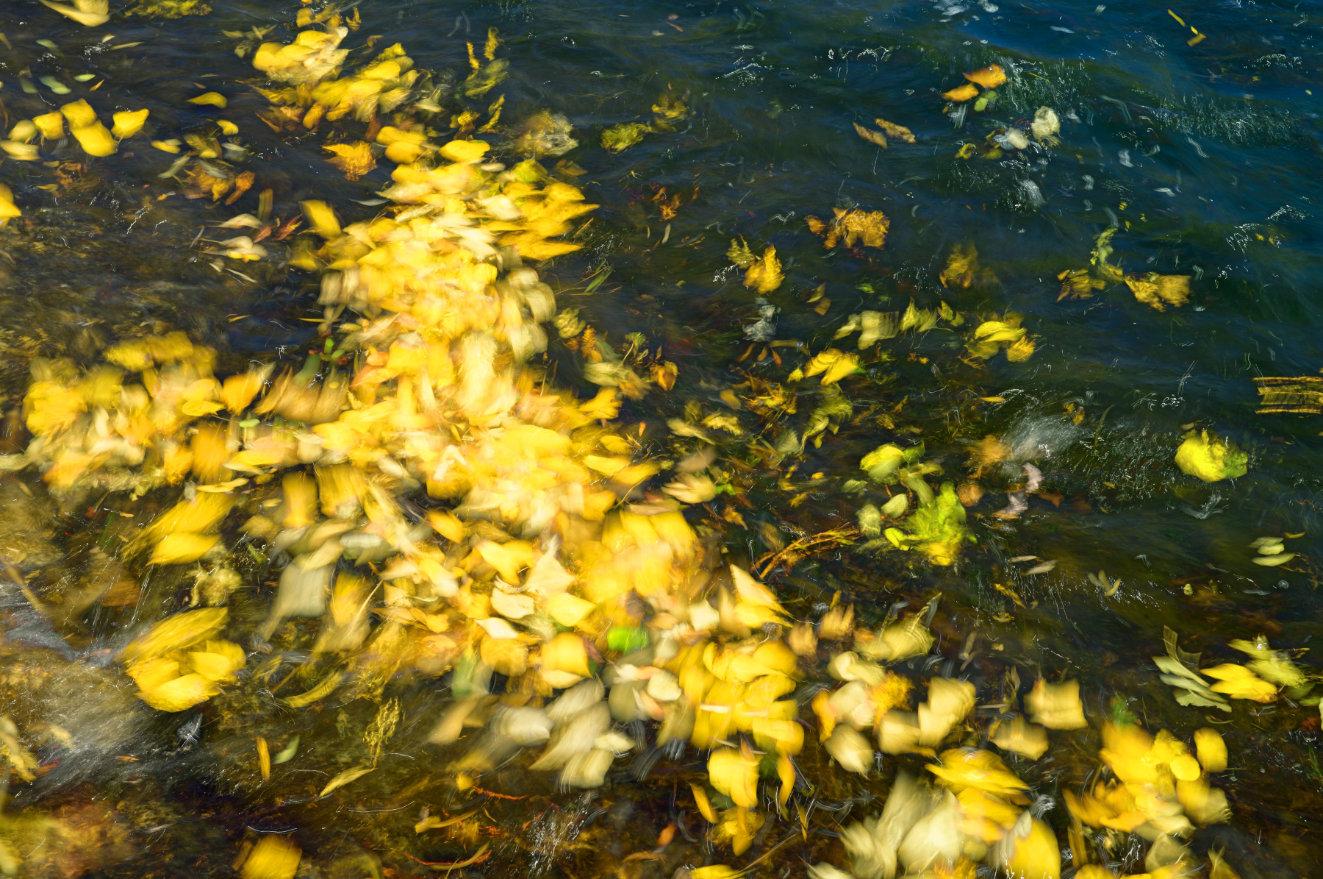
Multi-image slow-shutter composite of leaves on a windy lake
North Lake with Moon
A Trip To A World Of Clay Photographs and Text by Steve Anderson
In 2009 I attended a workshop sponsored by the Viewpoint Photographic Art Center in Sacramento. The workshop involved a twoday self-guided open house of Gladding McBean Company in the town of Lincoln, about an hour drive from Sacramento. Gladding McBean was founded in 1875. A large clay deposit, known by locals in Lincoln, soon became the source of material to produce many clay/ceramic products such as roof tile, sewer pipe, terra cotta
reproductions, and pottery. The company became famous for their old-world craftsmanship employing modern technology. The workshop gave us a chance to roam pretty much freely through their factory, a portion of which was open only to our 20 or so photographers. This was a rare occurrence because although the headquarters and facility at Lincoln is old (~1929) it was still a functioning and busy place.
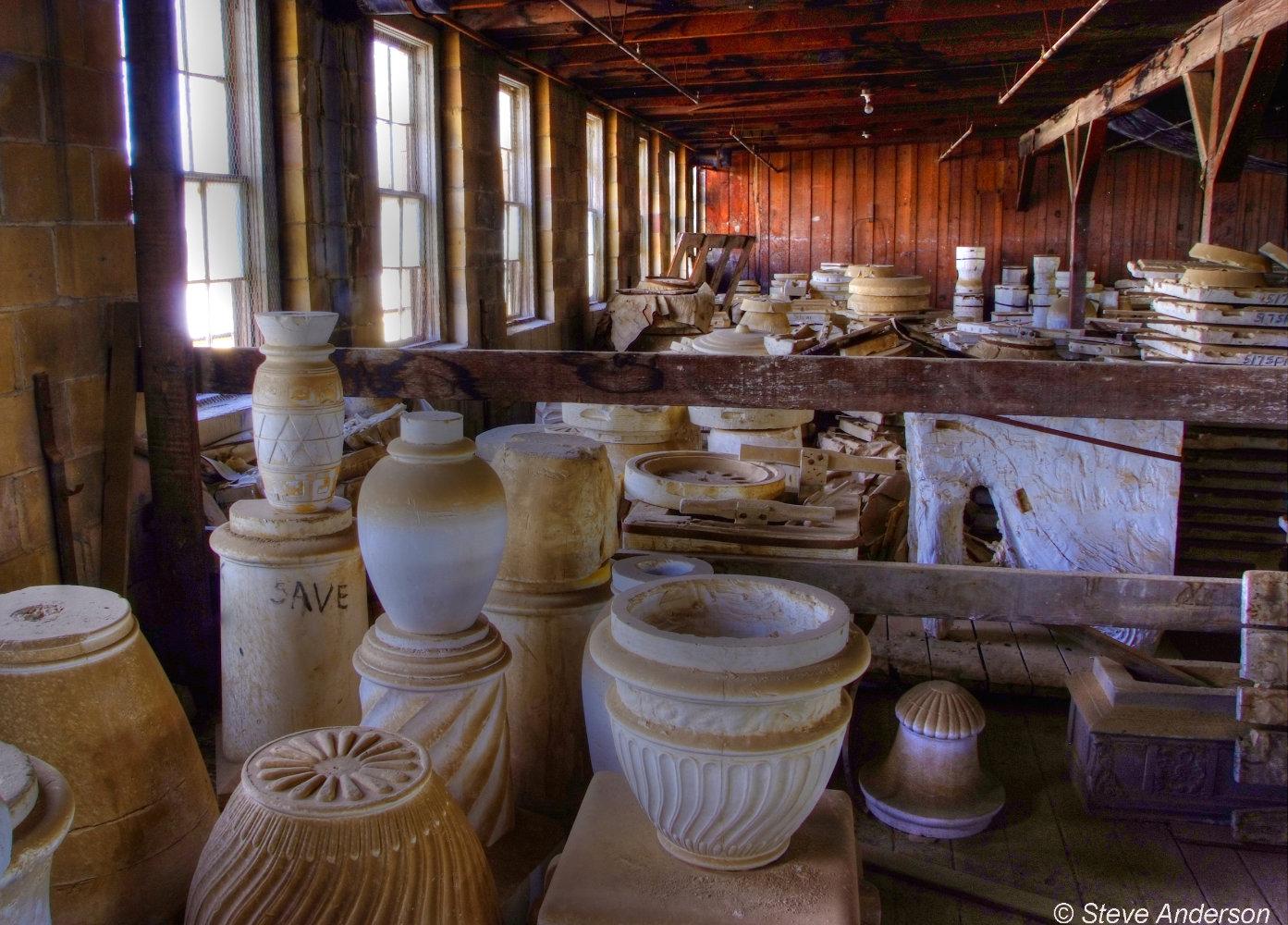

The night before starting the workshop, a meeting of the all the participants was held at the Viewpoint gallery in Sacramento. We were told about what to expect, what we could see, and most importantly, the safety protocols. There were a few places at the Lincoln factory where we weren’t allowed because some production was in progress. But the fun part was being able to discover at a leisurely pace what the three floors had to offer us photographically. There were no restrictions about the use of tripods either. This was of great value since the lighting inside was a combination of natural, tungsten, and fluorescent and mostly of high
contrast. The sunlight generally was filtered through dirty windows. It reminded me of places like the interiors of buildings at Bodie State Historic Park. Because of the high values of light from the open roofs compared to deep shadows on the floors, I took multiple exposures and used Photoshop HDR tools to balance the contrast. My camera, at that time, was a Fujifilm FinePix S5 Pro.
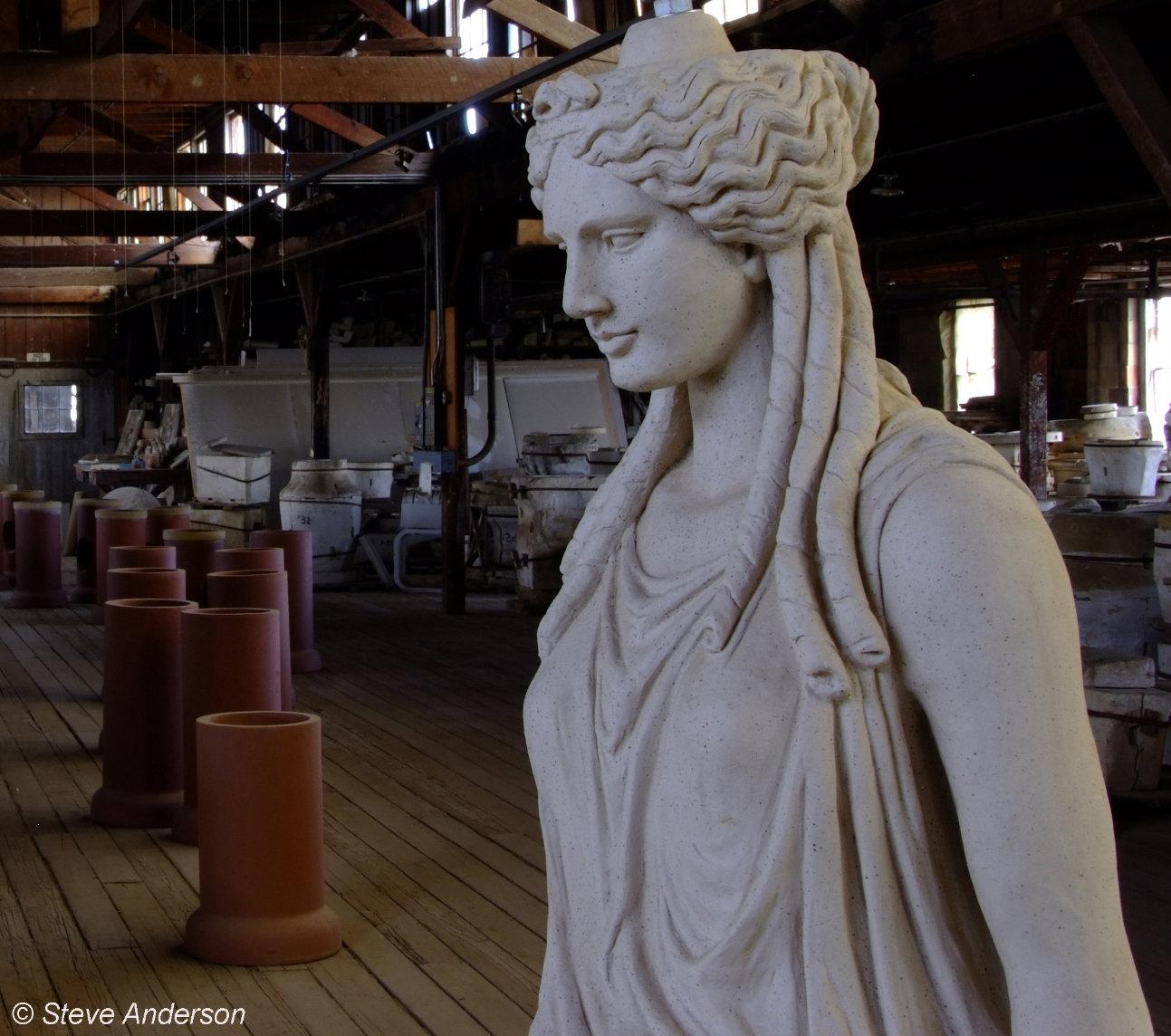
The upper two floors of the main building had displays of older examples of terra cotta work. These included “gargoyle” building elements, reproductions of statues and outdoor art sculptures, pottery of all kinds, and hundreds of two-part custom molds. It
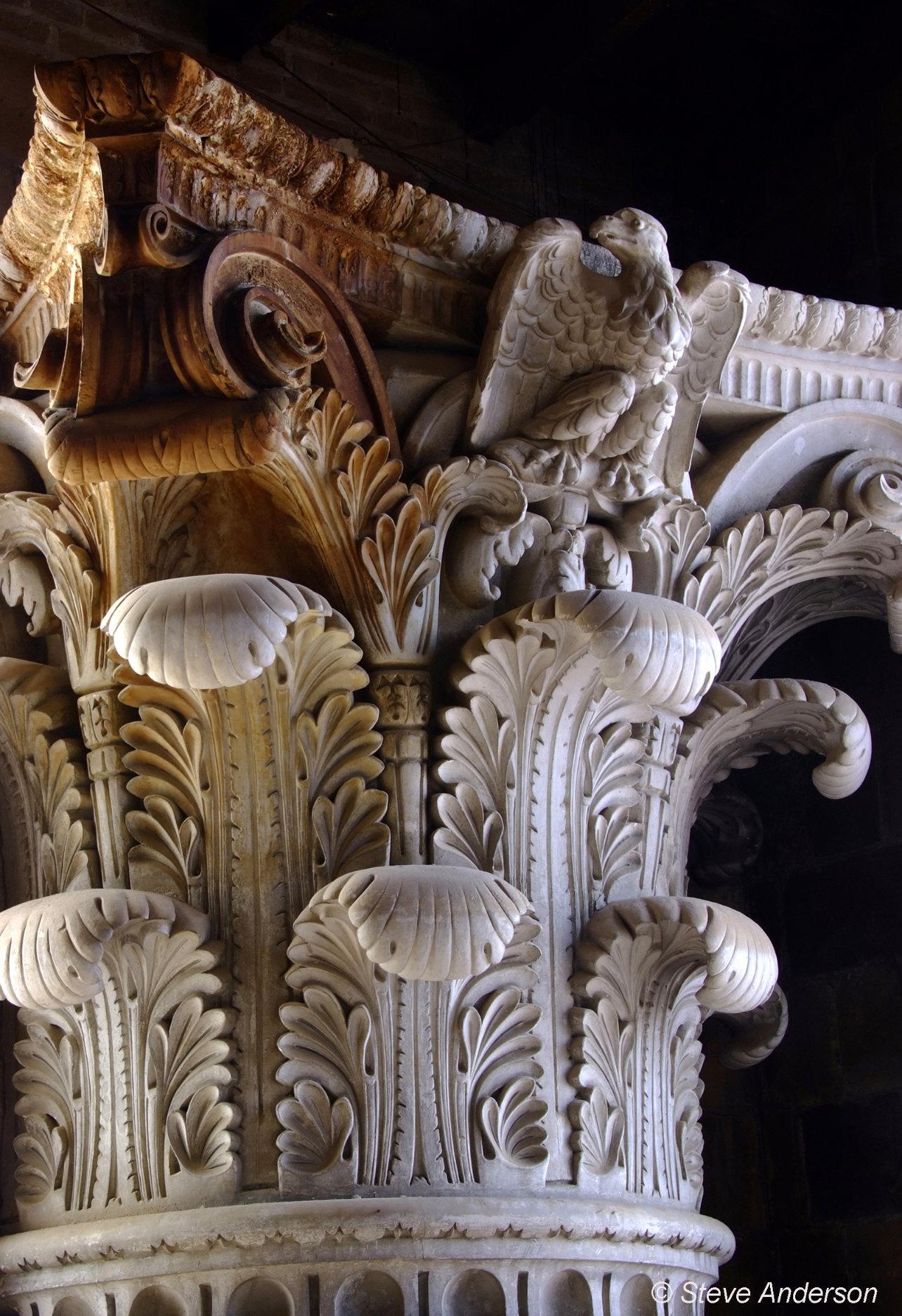
was obvious from the amount of dust that had accumulated, that the pieces hadn’t been moved in quite some time. In fact, we were advised not to touch anything. The place had a museum-like atmosphere although work was strewn about and largely disorderly. The smell of old wood beams and floors, the thick layers of dust, and old clay, lent the environment a kind of mysterious feel. A large portion of Gladding McBean Company’s business had shifted to making
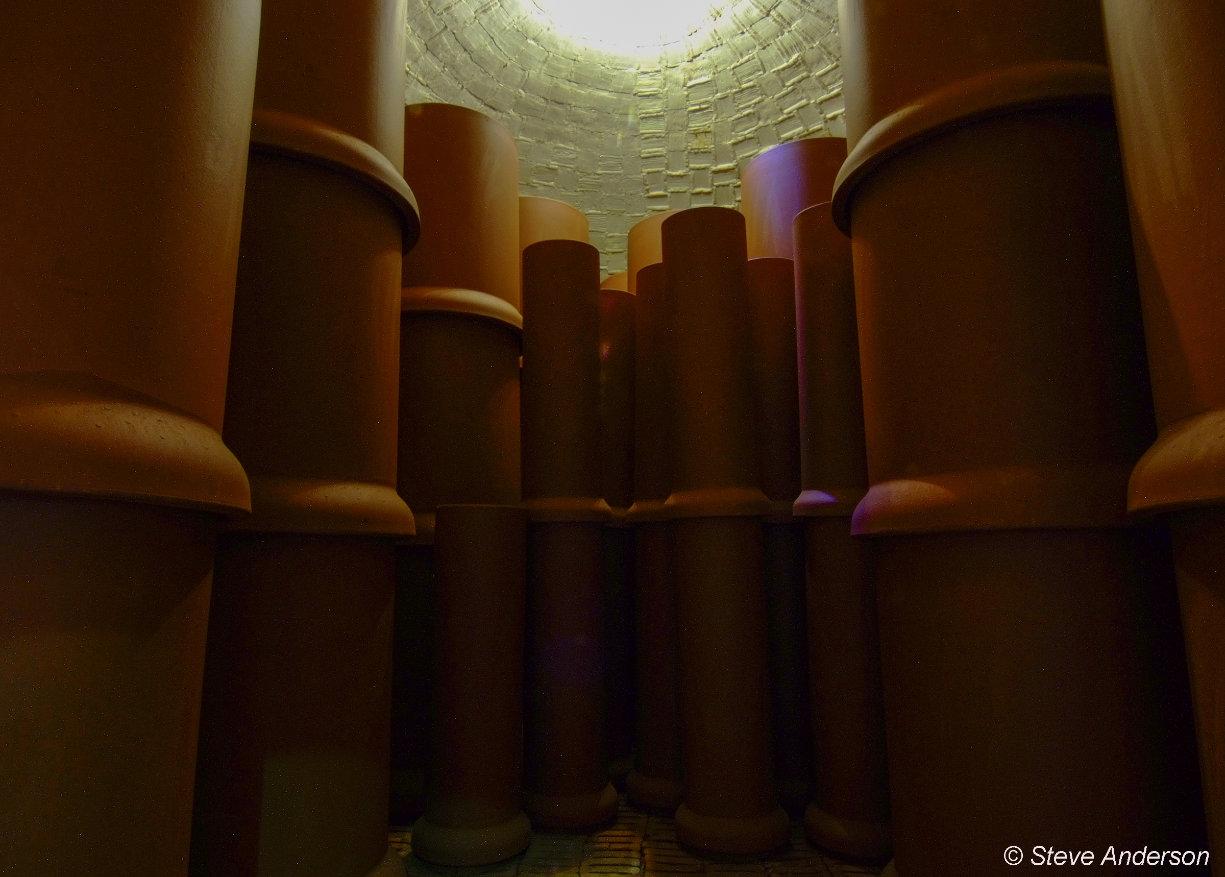
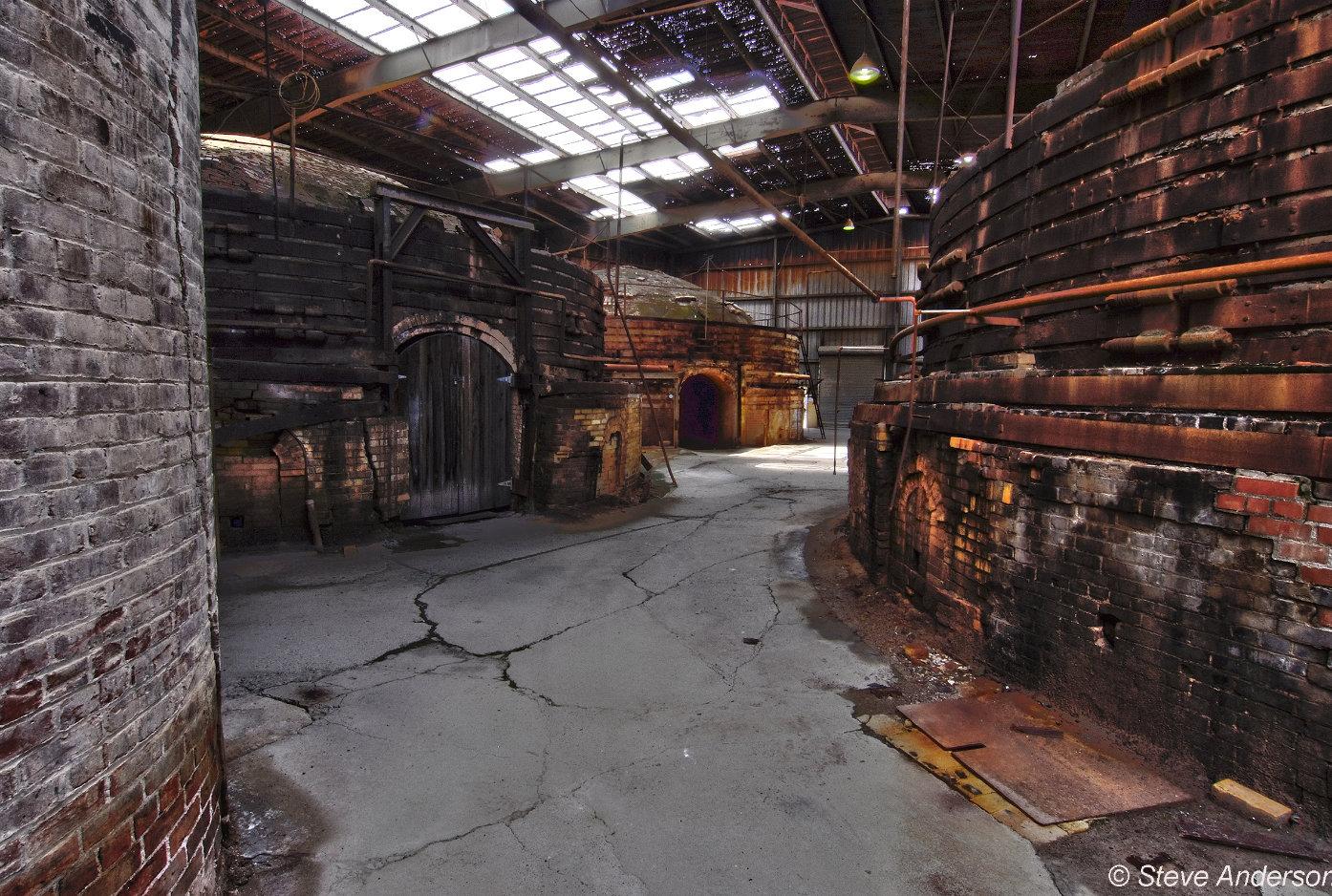
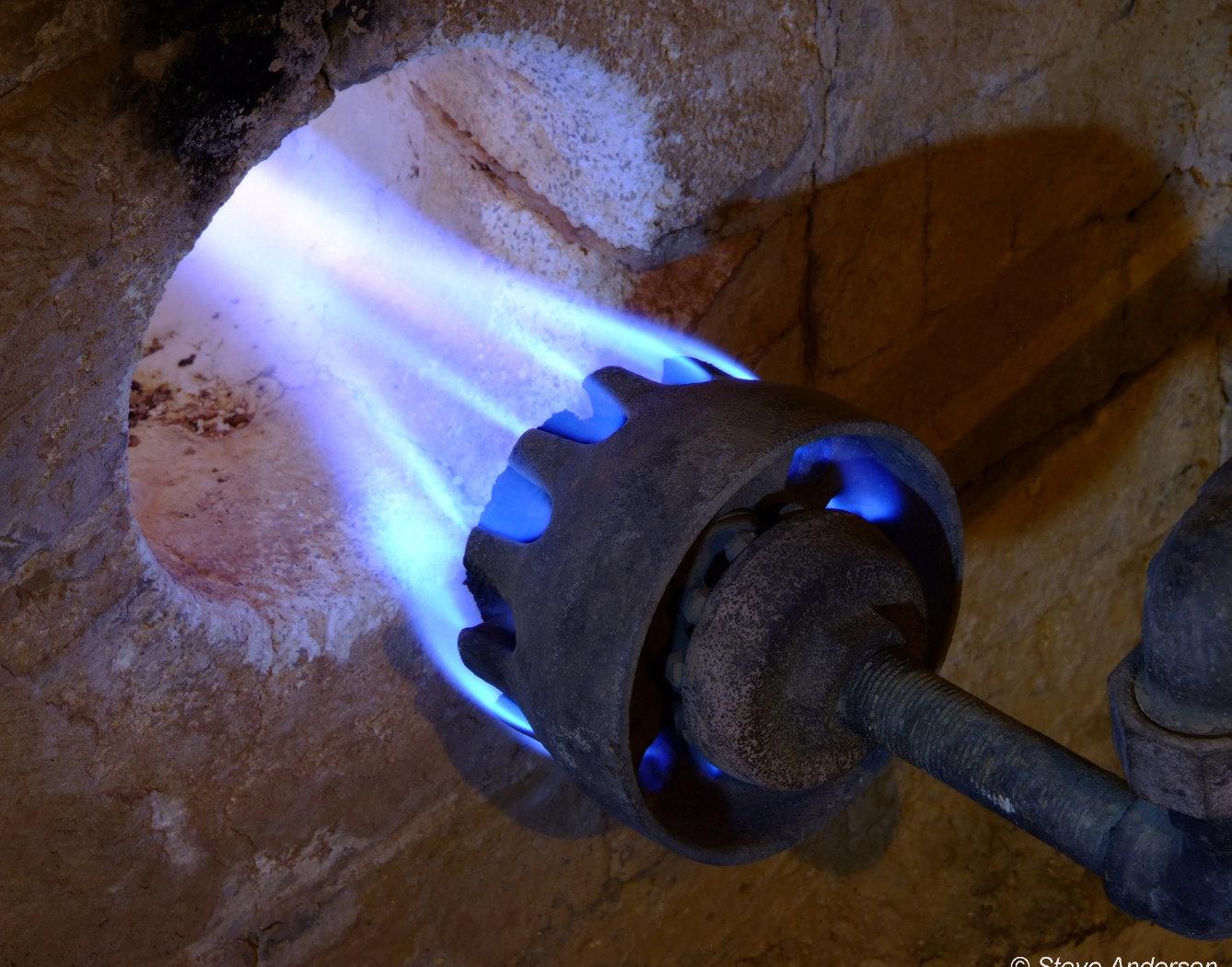
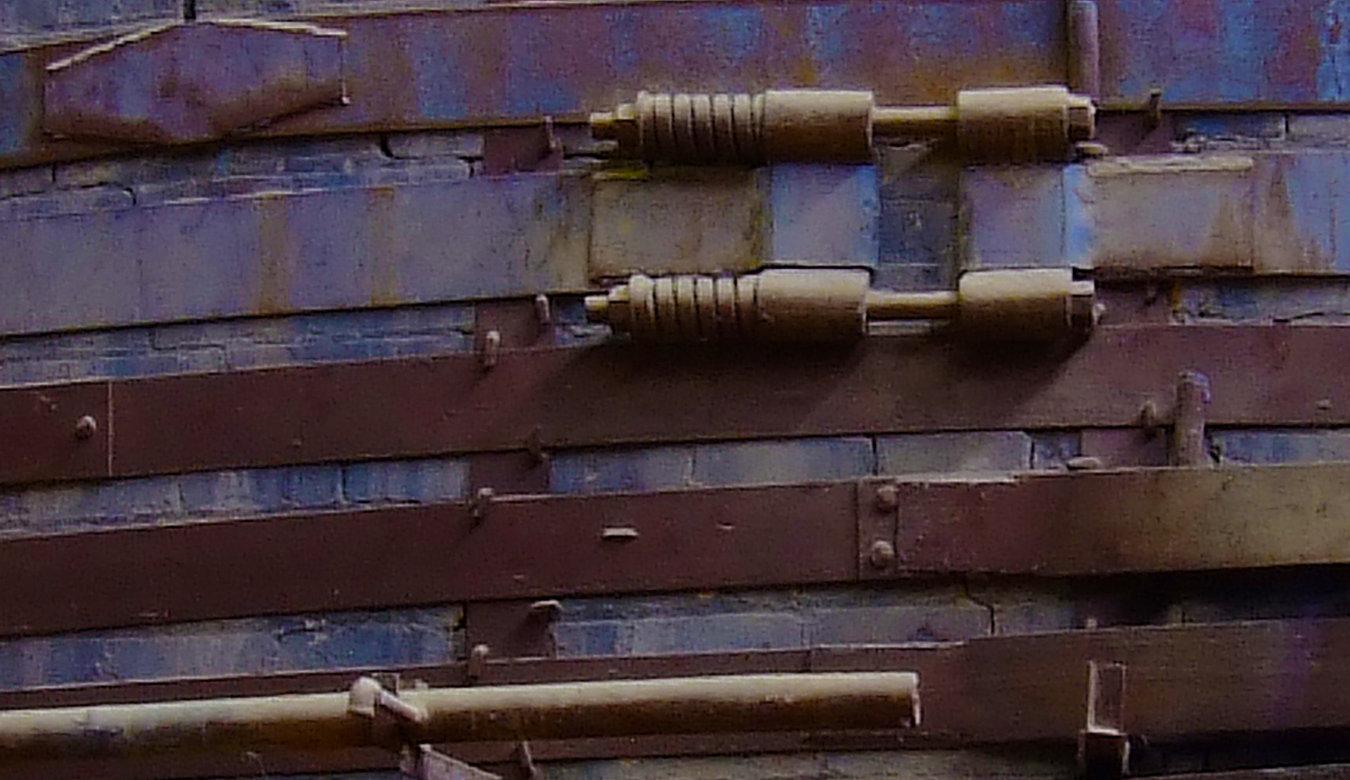
clay pipe in more recent times, and therefore much of the floors were loaded with palettes of extruded clay pipe that was still “green” and needed to be dried before placing in the firing kilns. The construction of the giant kilns was very impressive. They were all circular in design, had numerous openings for placement of gas torches, and inspection ports. All the brick work was strapped together with large steel bands over the whole circumference.
Road Trip: Sequoias
Photographs and Text by
John Nilsson
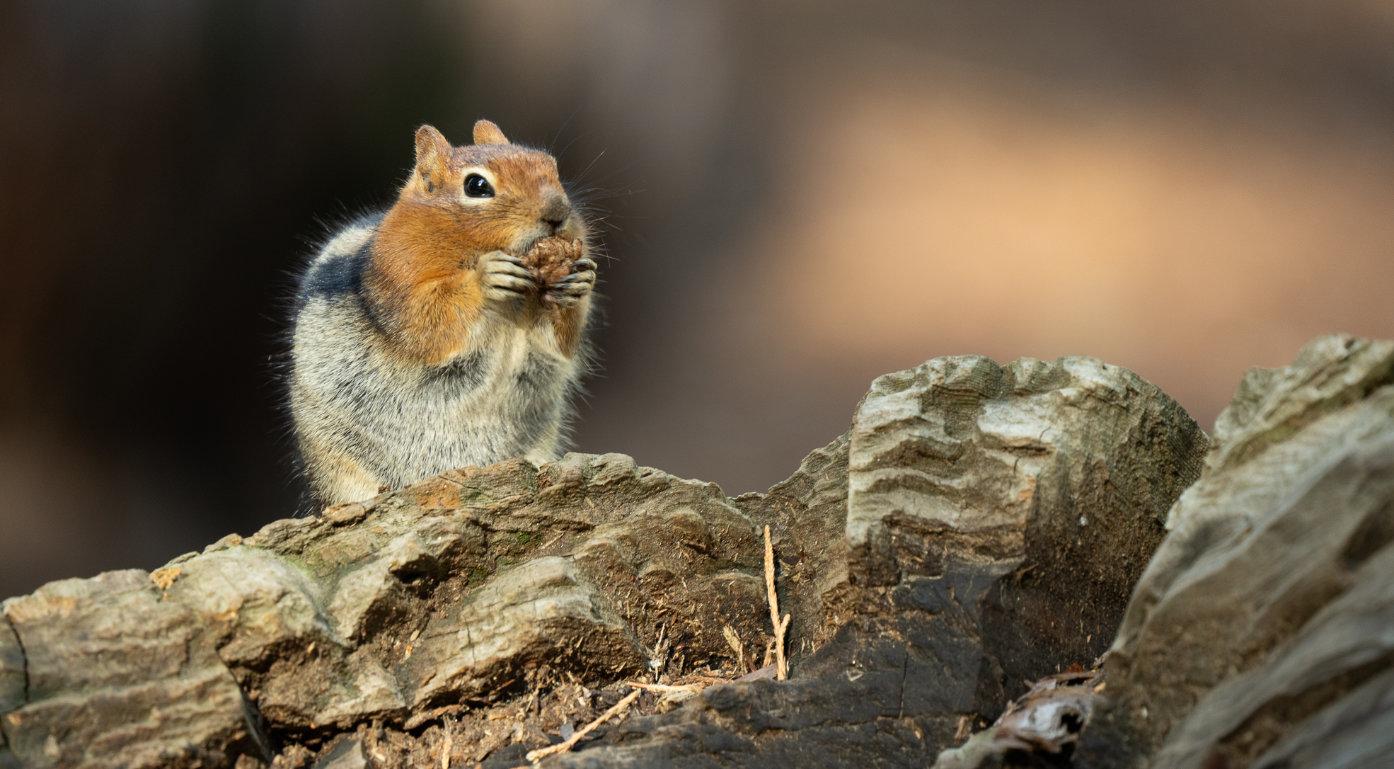
Early this October, fellow SCCC member, Michael Caley, and I booked a quick one-day trip to the Mineral King/Sequoia National Park area with Brent Paull of American West Photo Safaris.
We met Brent in Three Rivers at the main gate of the park at 6:00 a.m. on a foggy, overcast morning. Brent had planned to take us into the little known reaches of Mineral King in the hopes of finding a good deal of late-fall wildlife activity. Unfortunately, after driving 25 miles up the atrociously bad access road, dodging heavy truck traffic the whole way, we were told the road was closed due to maintenance activities. Disappointed, back we went with a change in plans.
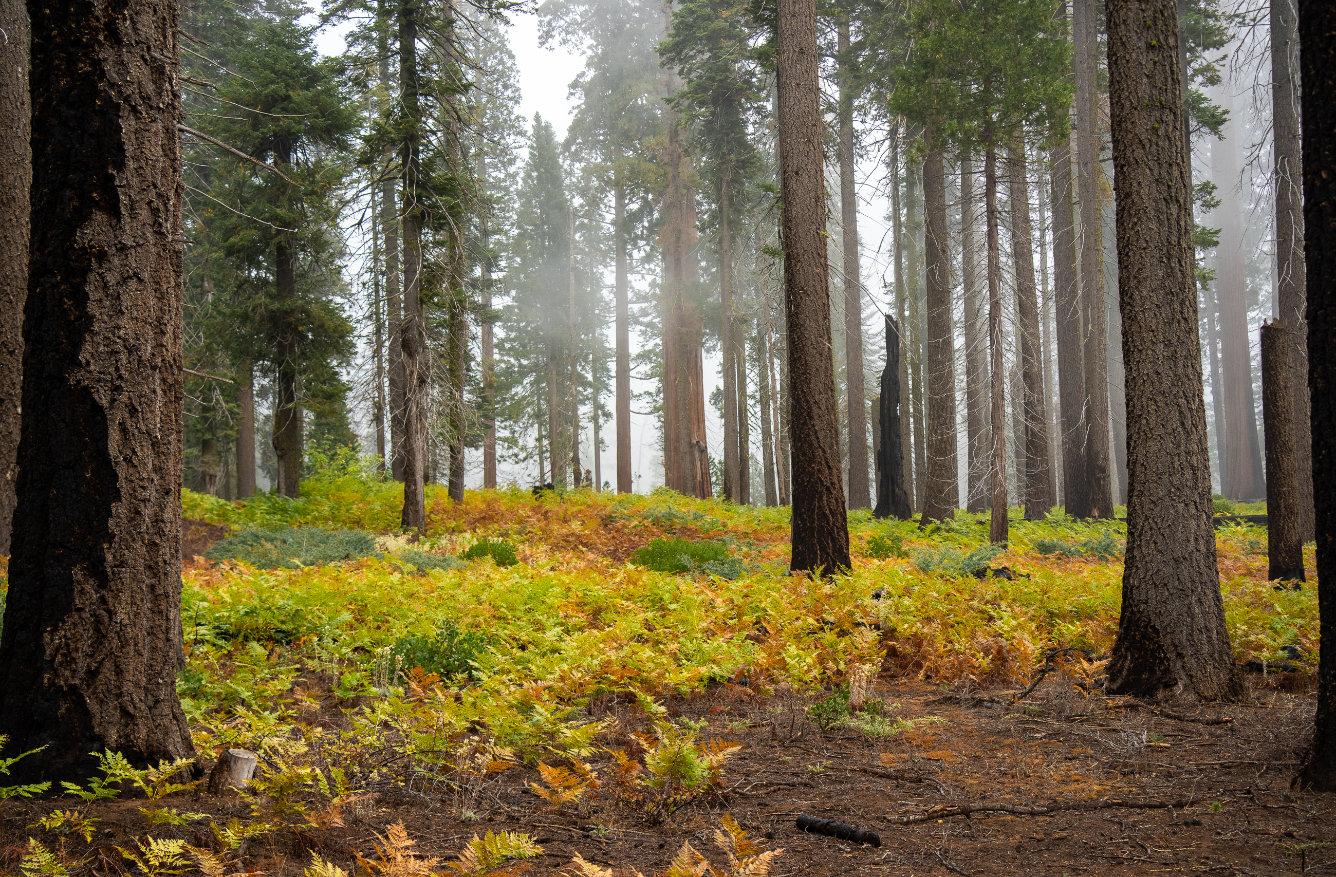
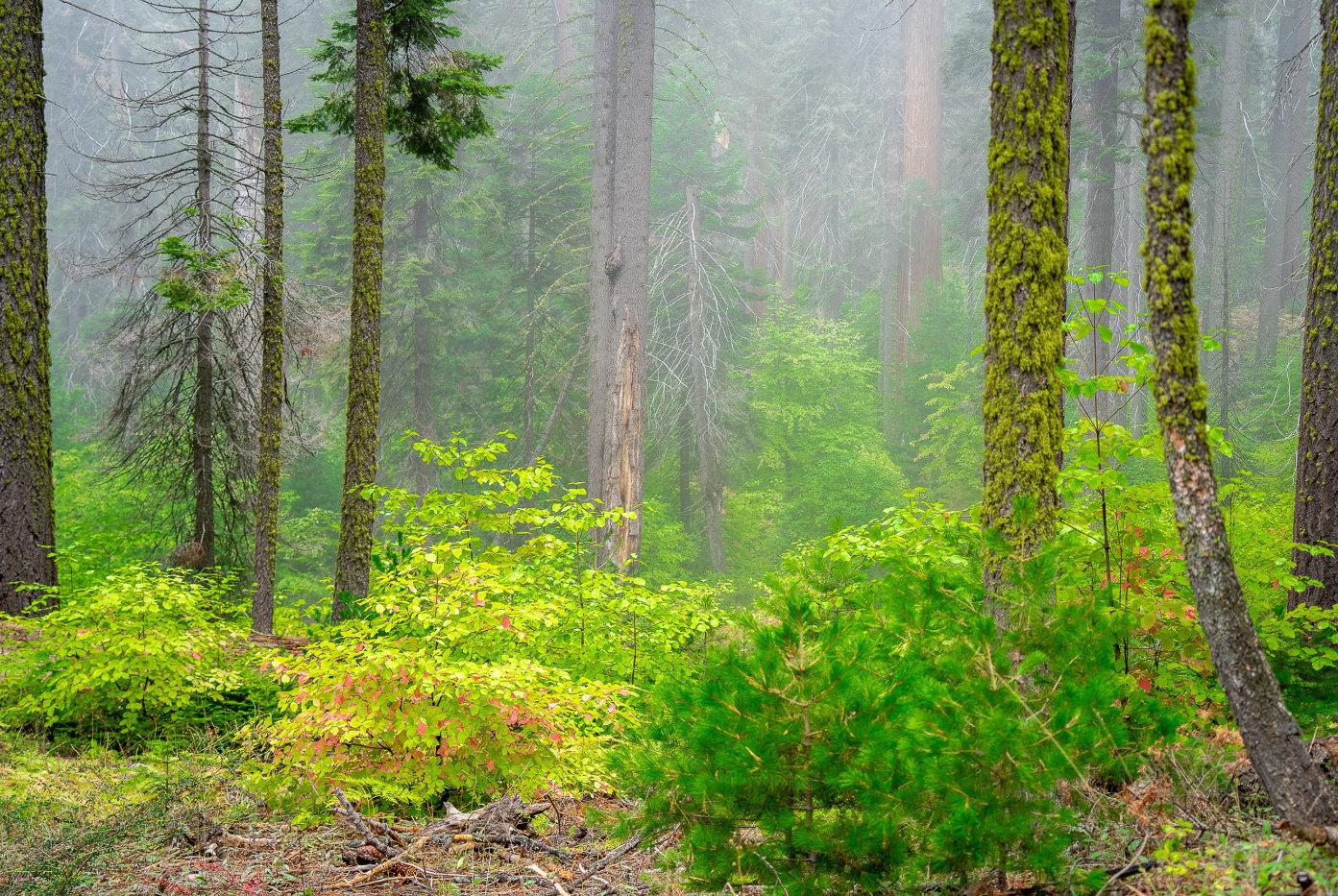
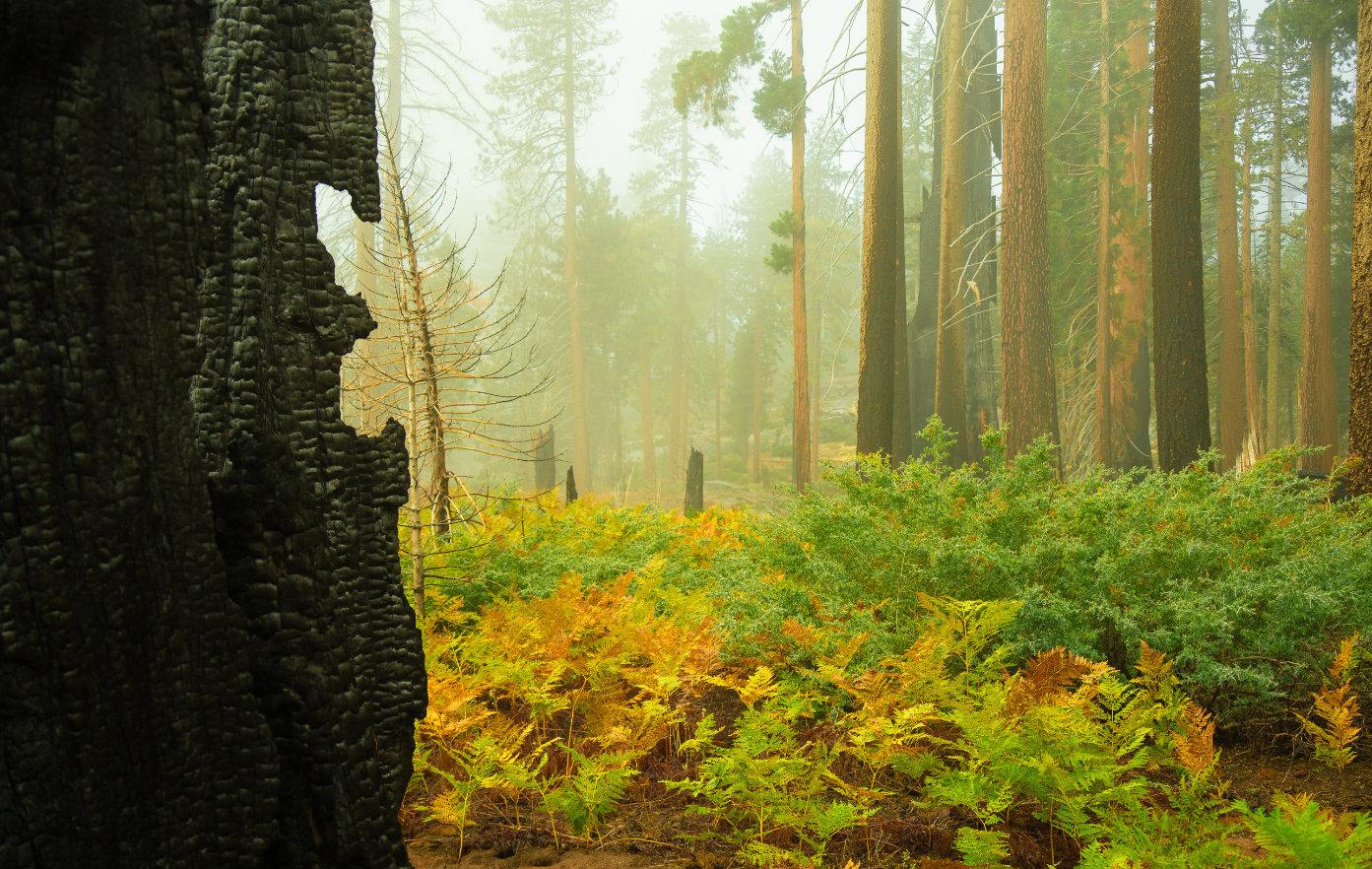
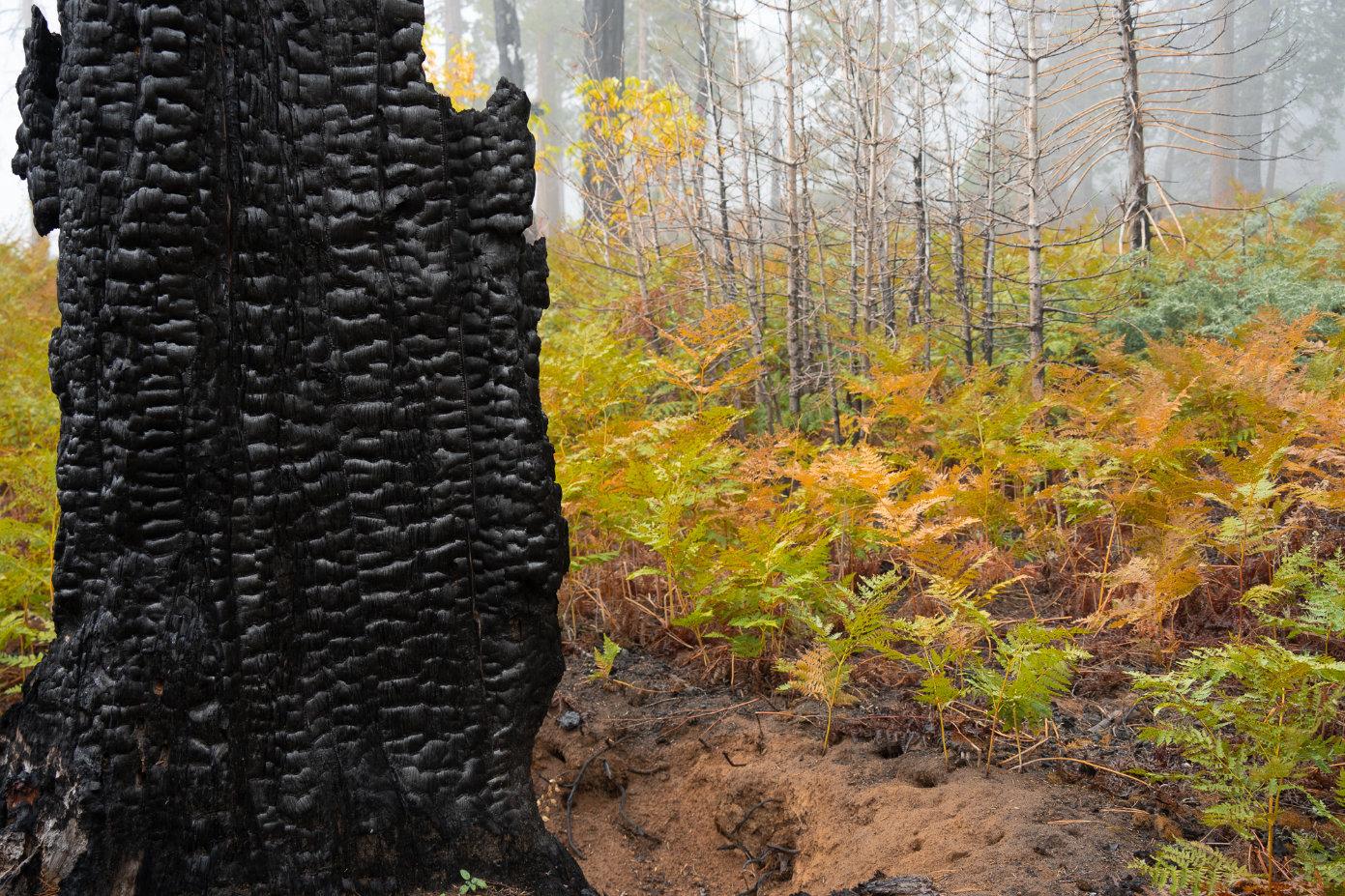
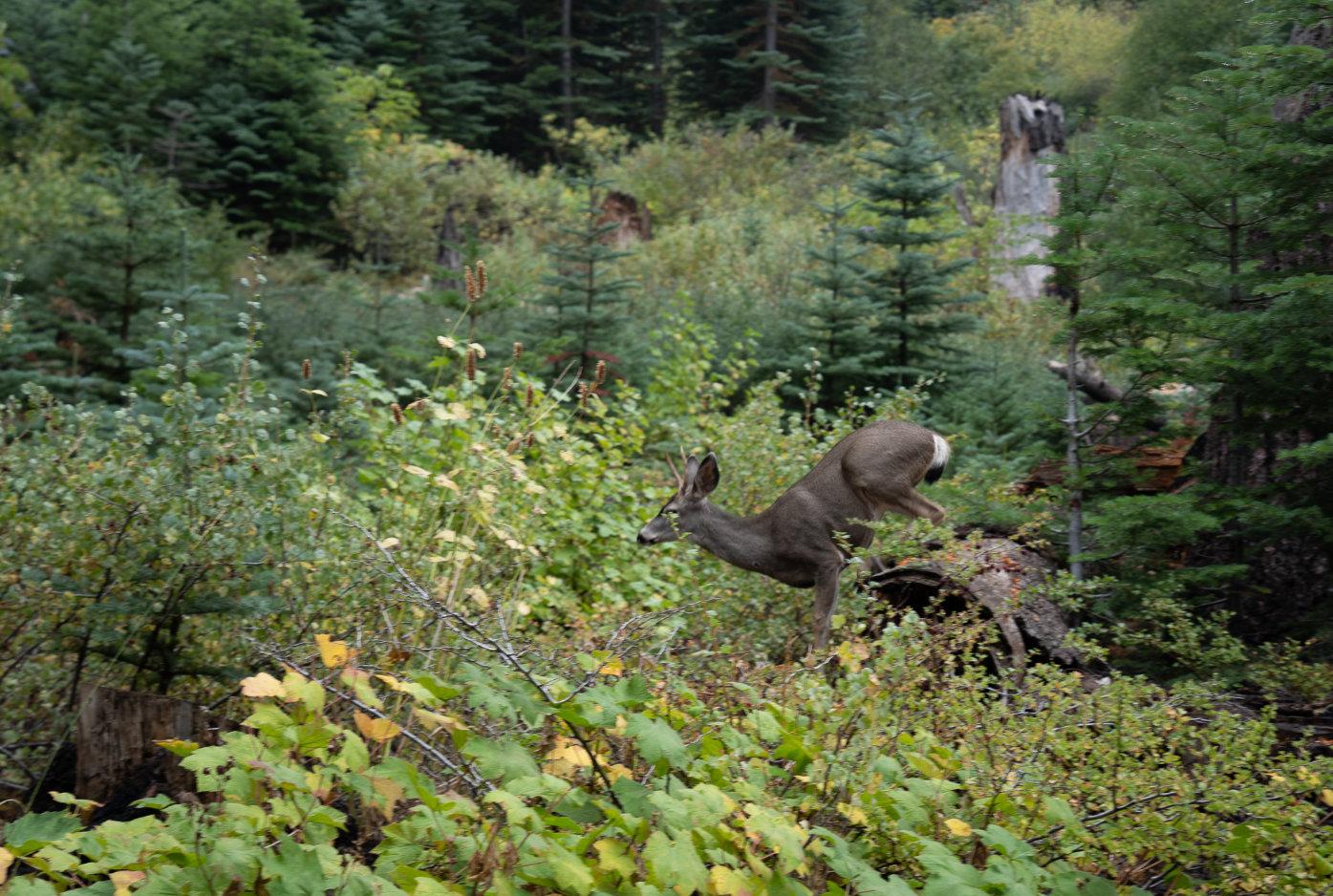
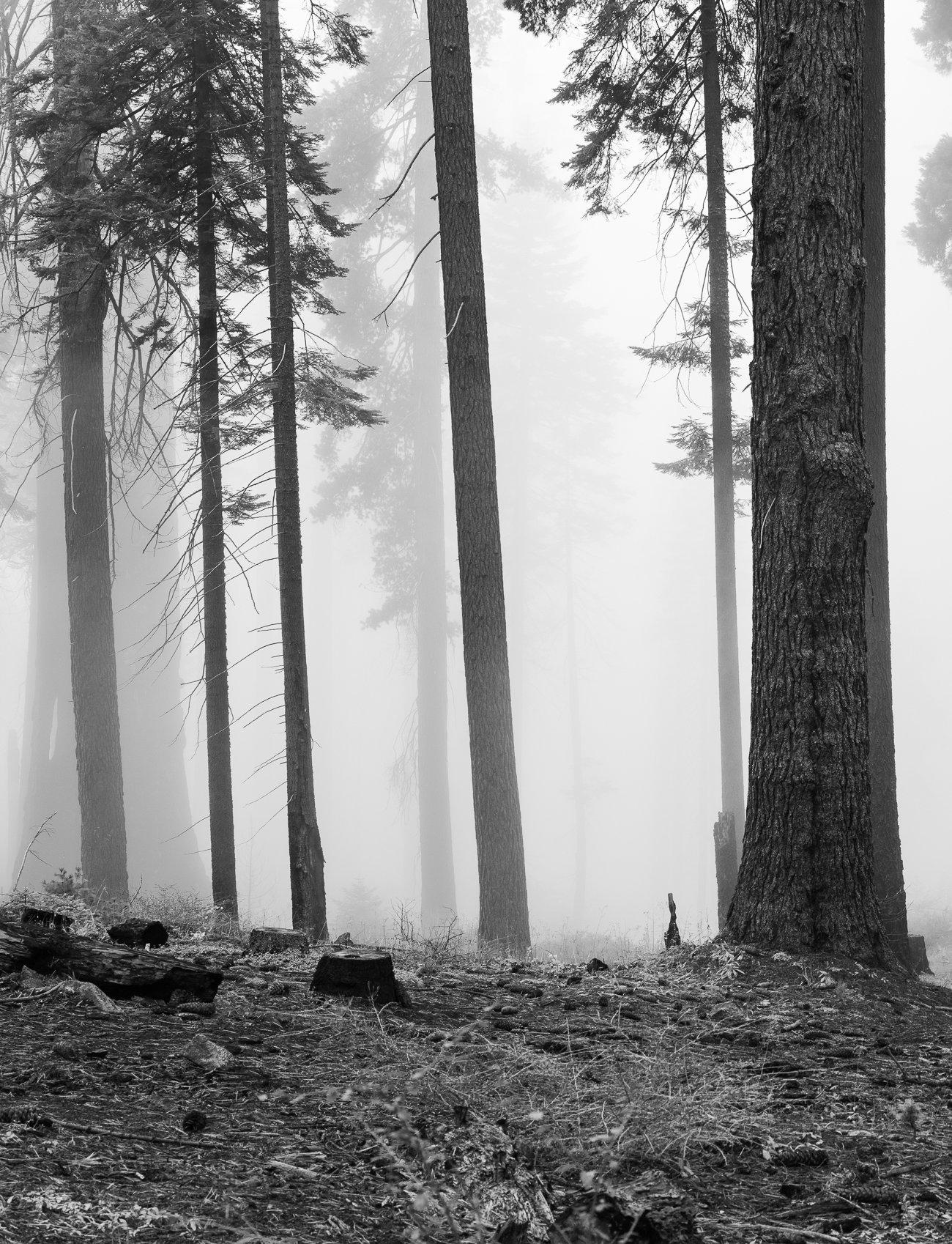
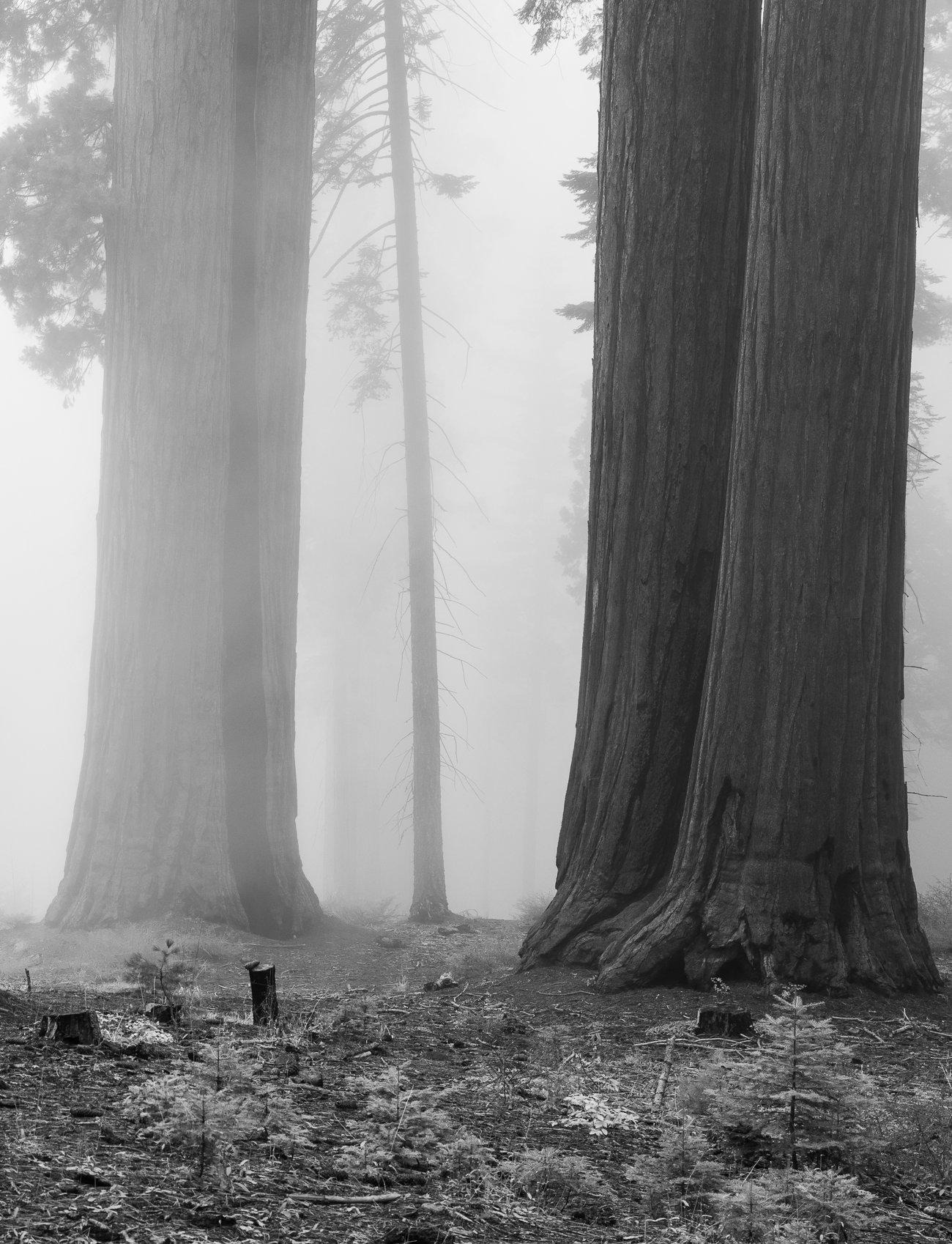
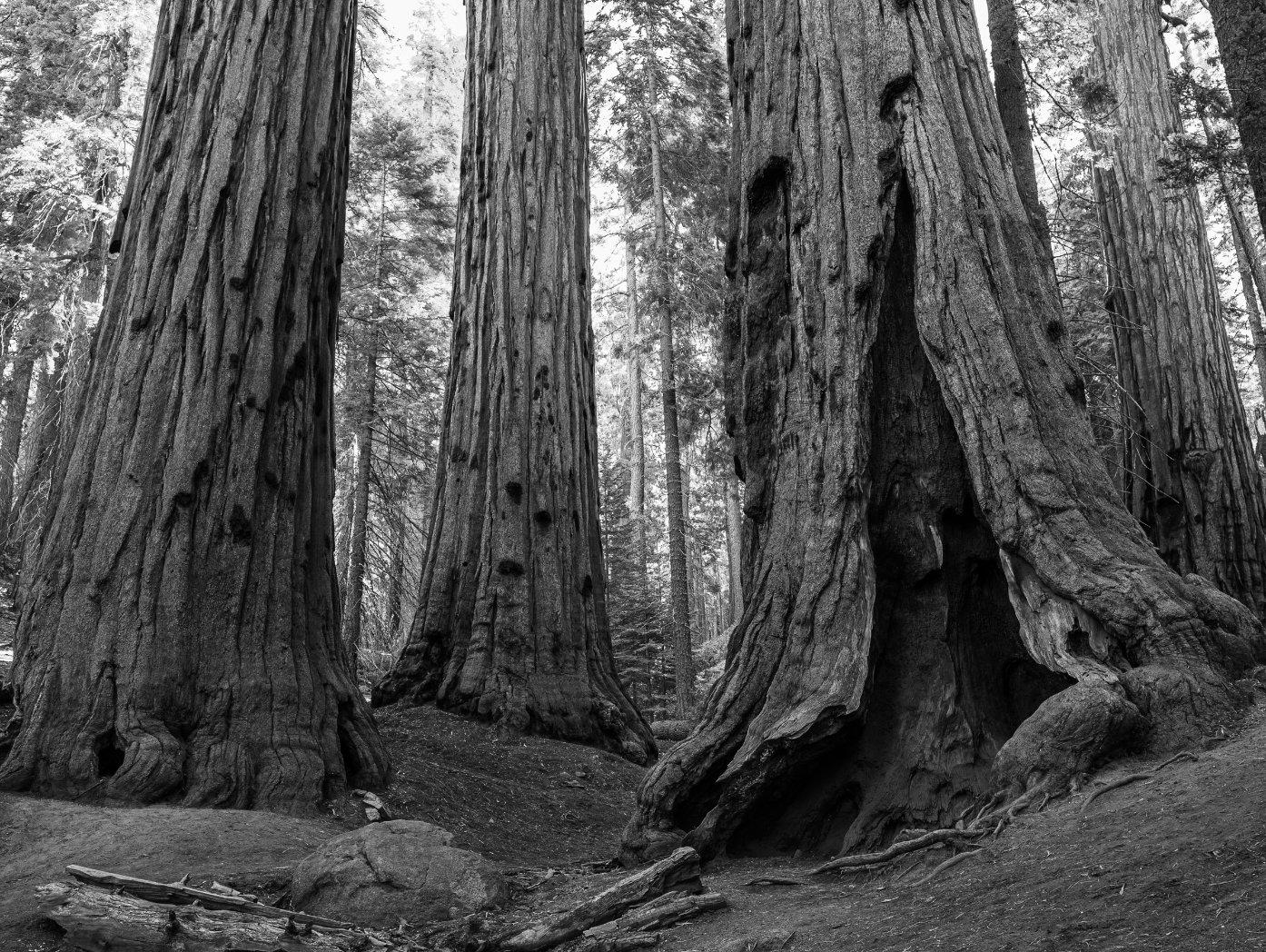
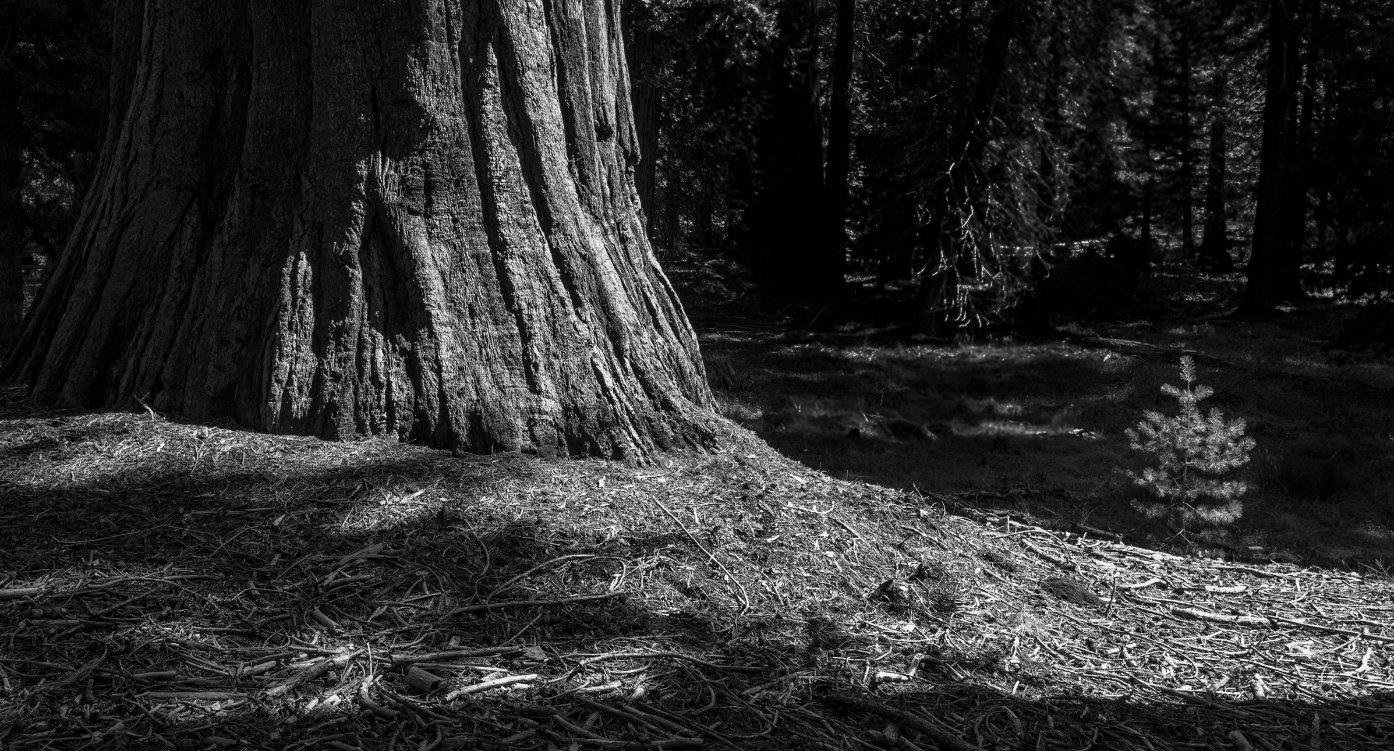
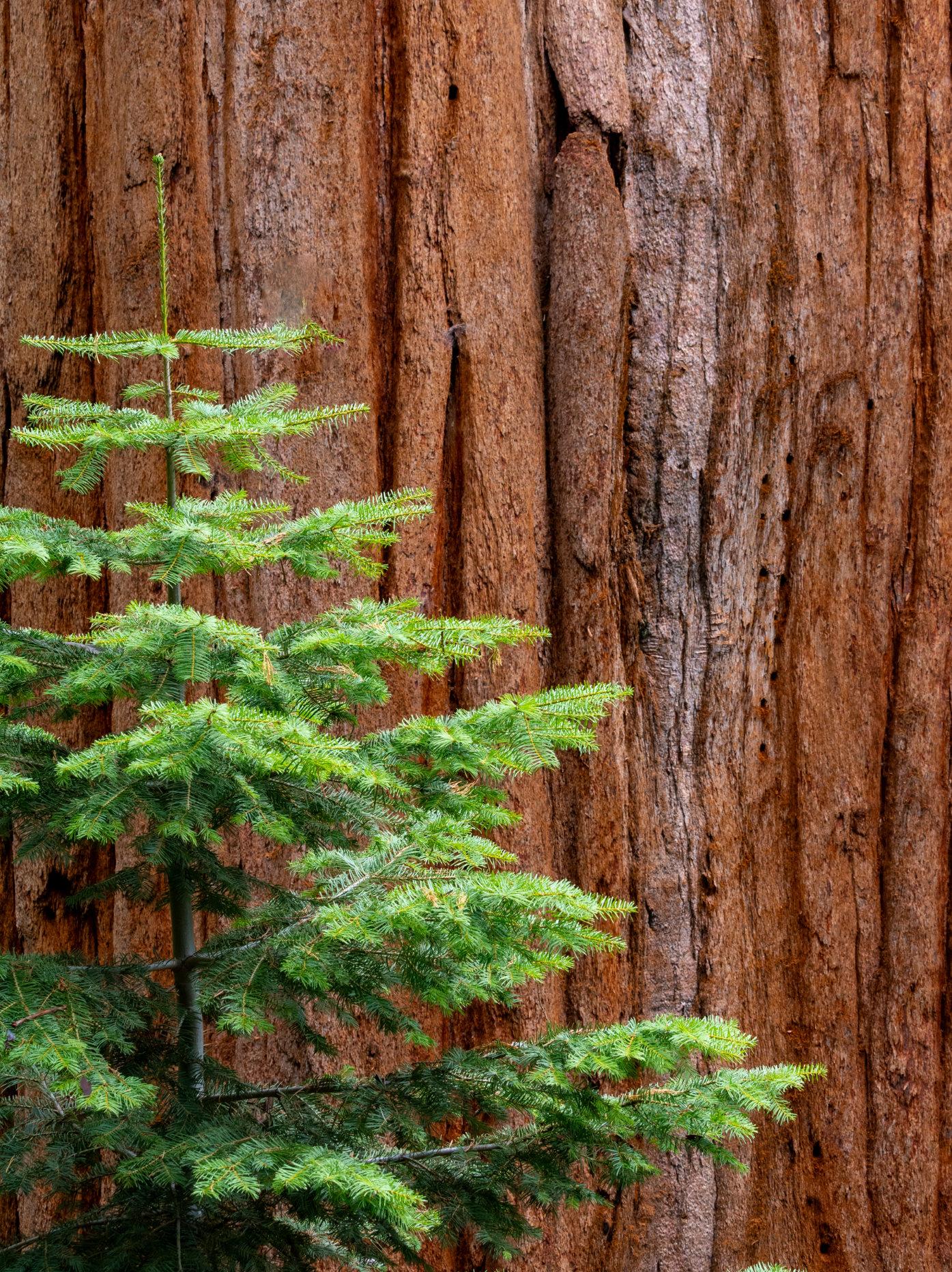
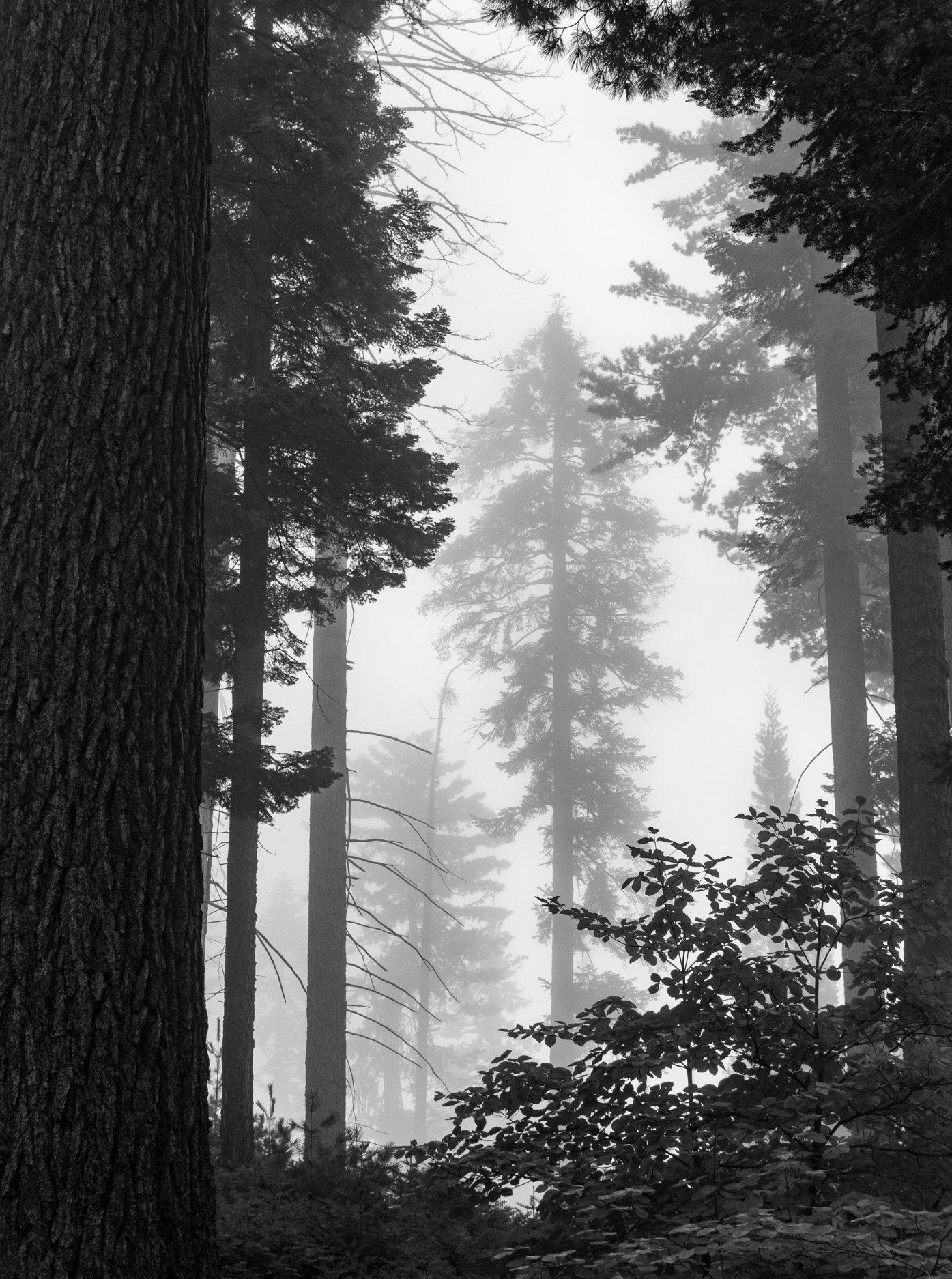
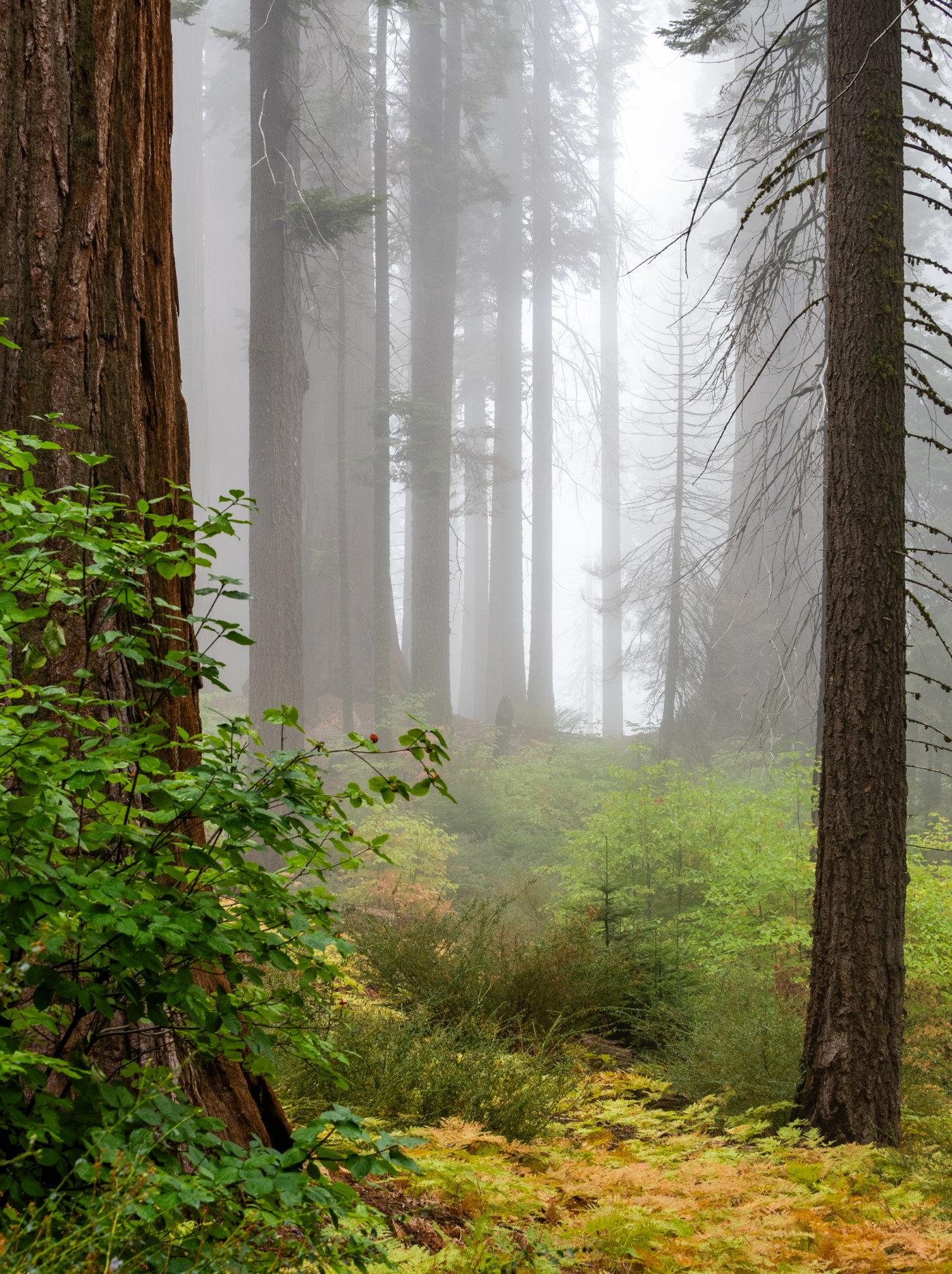
As soon as we were back at the beginning of the cattle trail, we took a right turn onto the Sequoia National Park access road and drove up into the clouds. Here we found a rare photographic treat. The heavy fog bank that covered everything in sight served up some special lighting conditions in the deep Sequoia forest that had suffered a wildfire a few years back. Burned-out trunks and fallen dead trees had been replaced by lush undergrowth that was just beginning to turn color, highlighting the remaining live and burned-out sentinels that disappeared into the fog. Everywhere there was evidence that new Seqouia tree growth was reclaiming the disaster of the recent fire and demonstrating that Mother Nature doesn’t take long to reclaim that which is hers.
Mike Caley
In Good Company
Opposite page: Majestic Sequoia
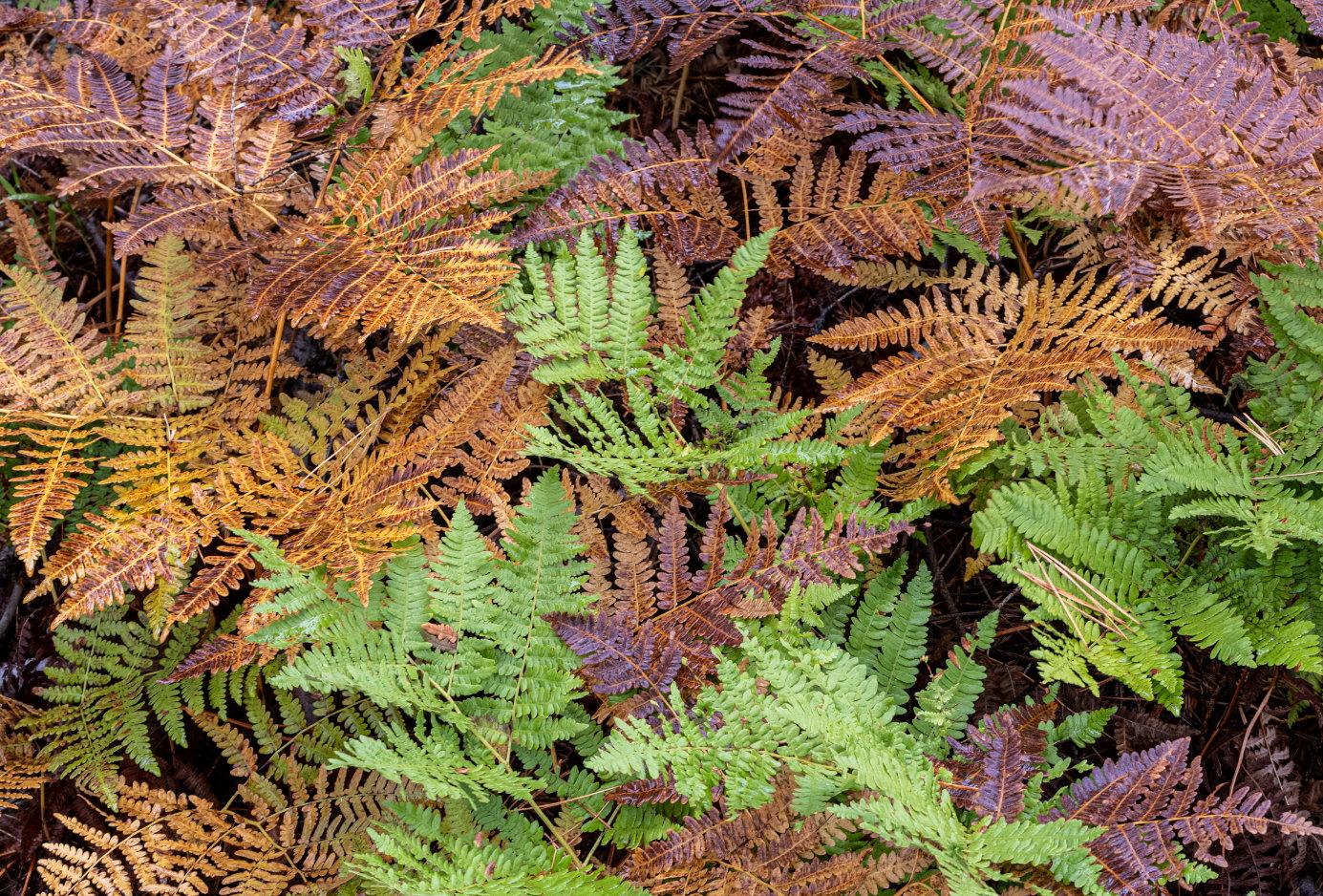
Fern Study Not Far from the Tree
Mike Caley
Mike Caley
Thomas Cloutier
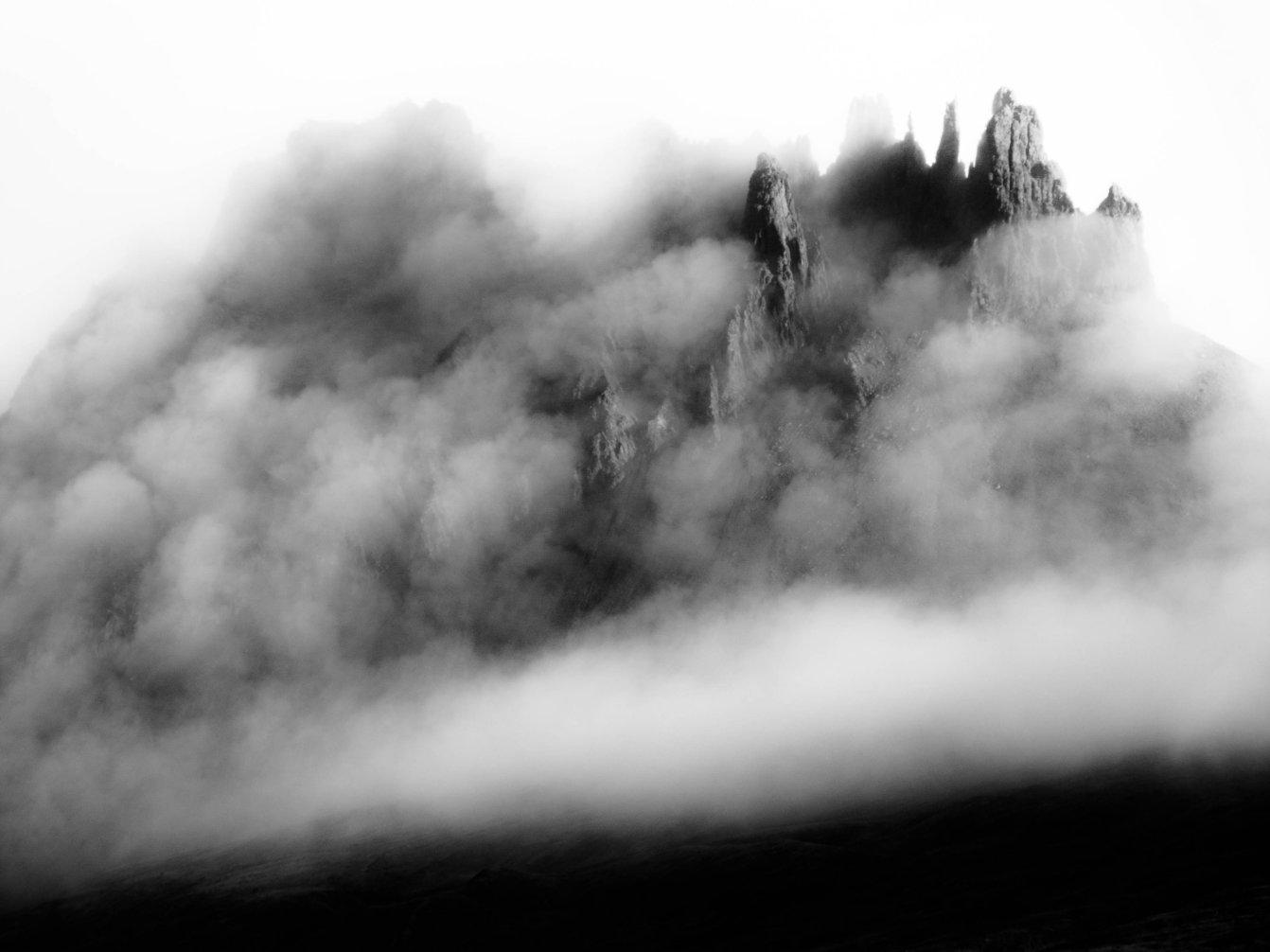
Thomas Cloutier
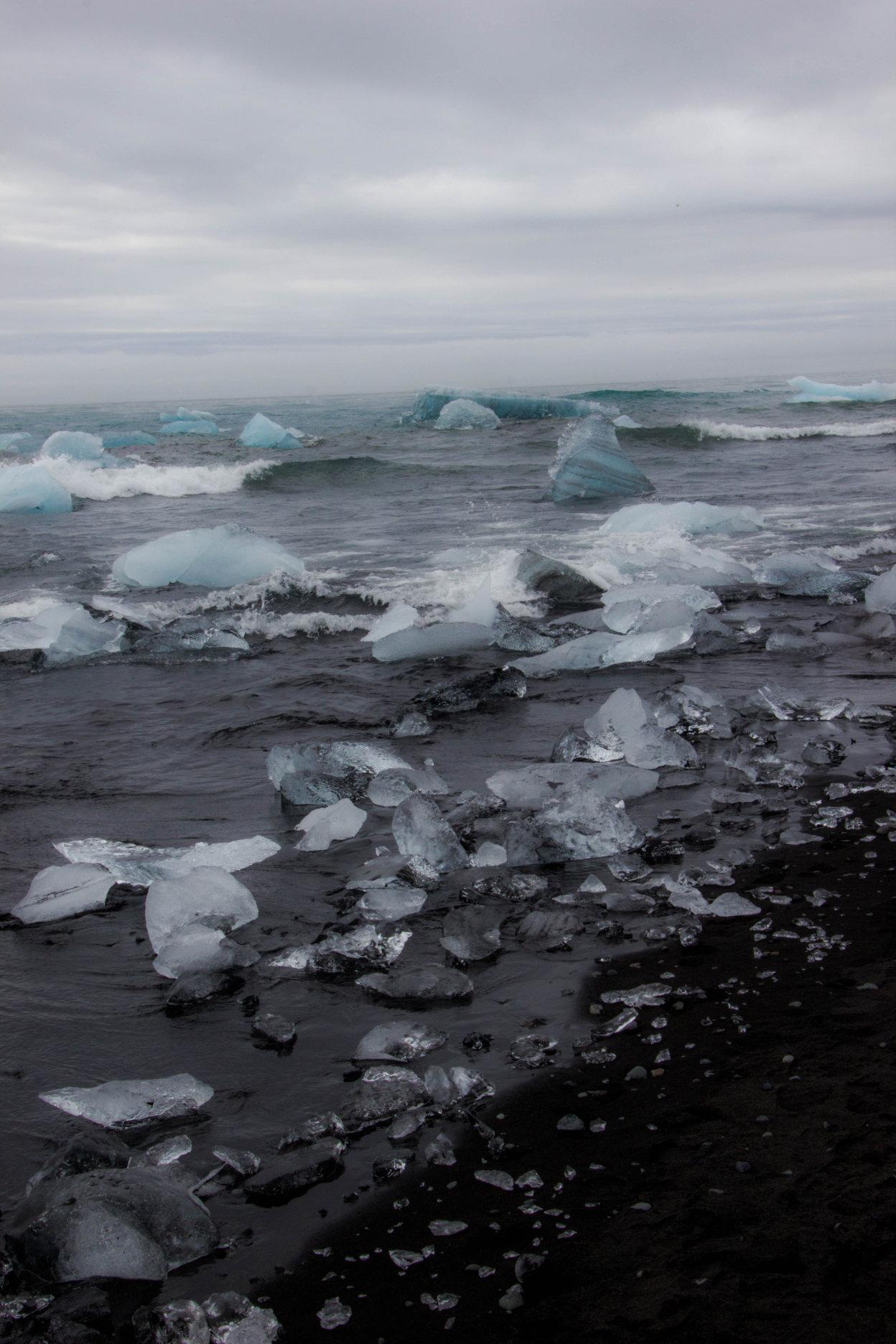
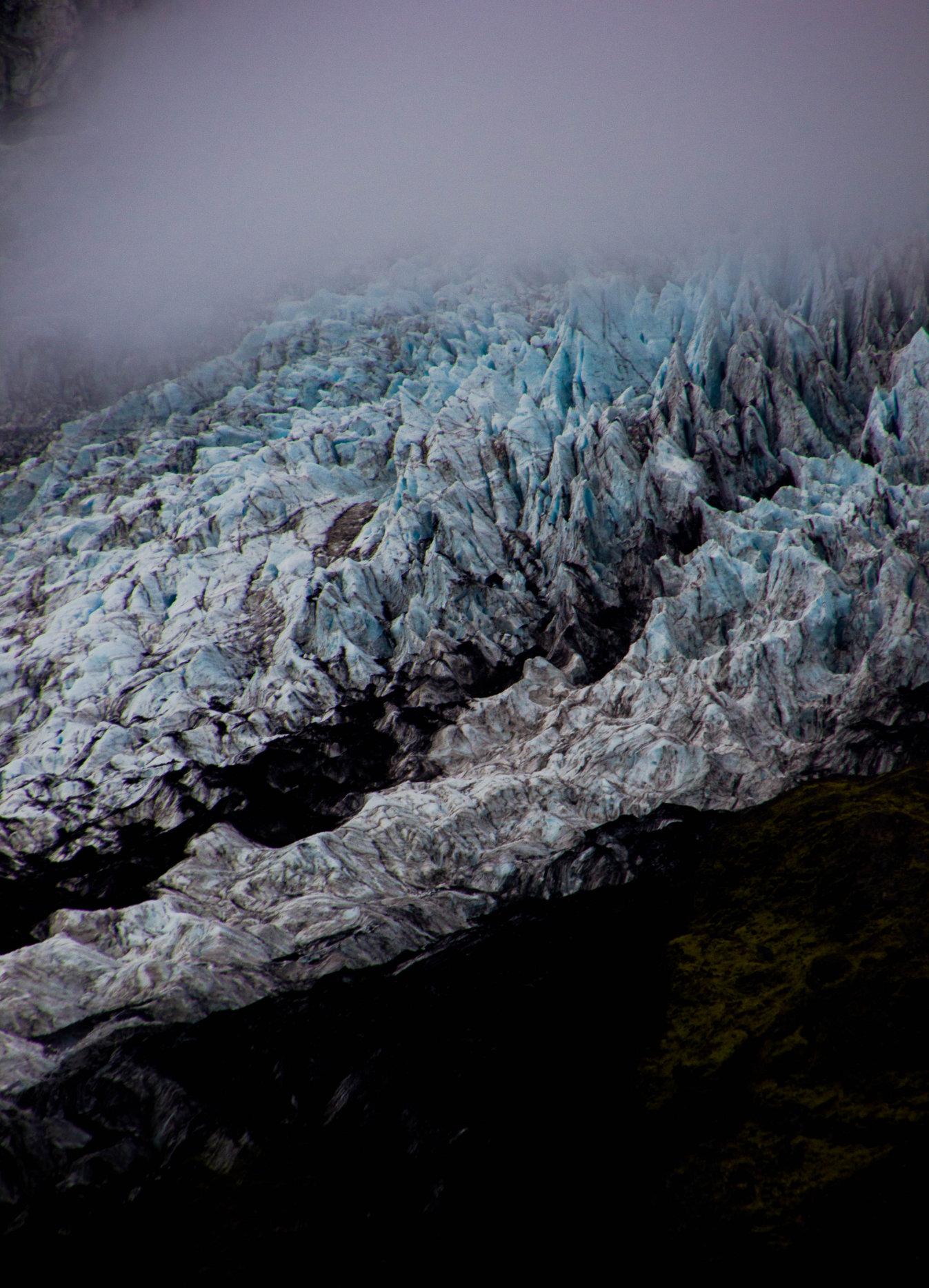
Thomas Cloutier
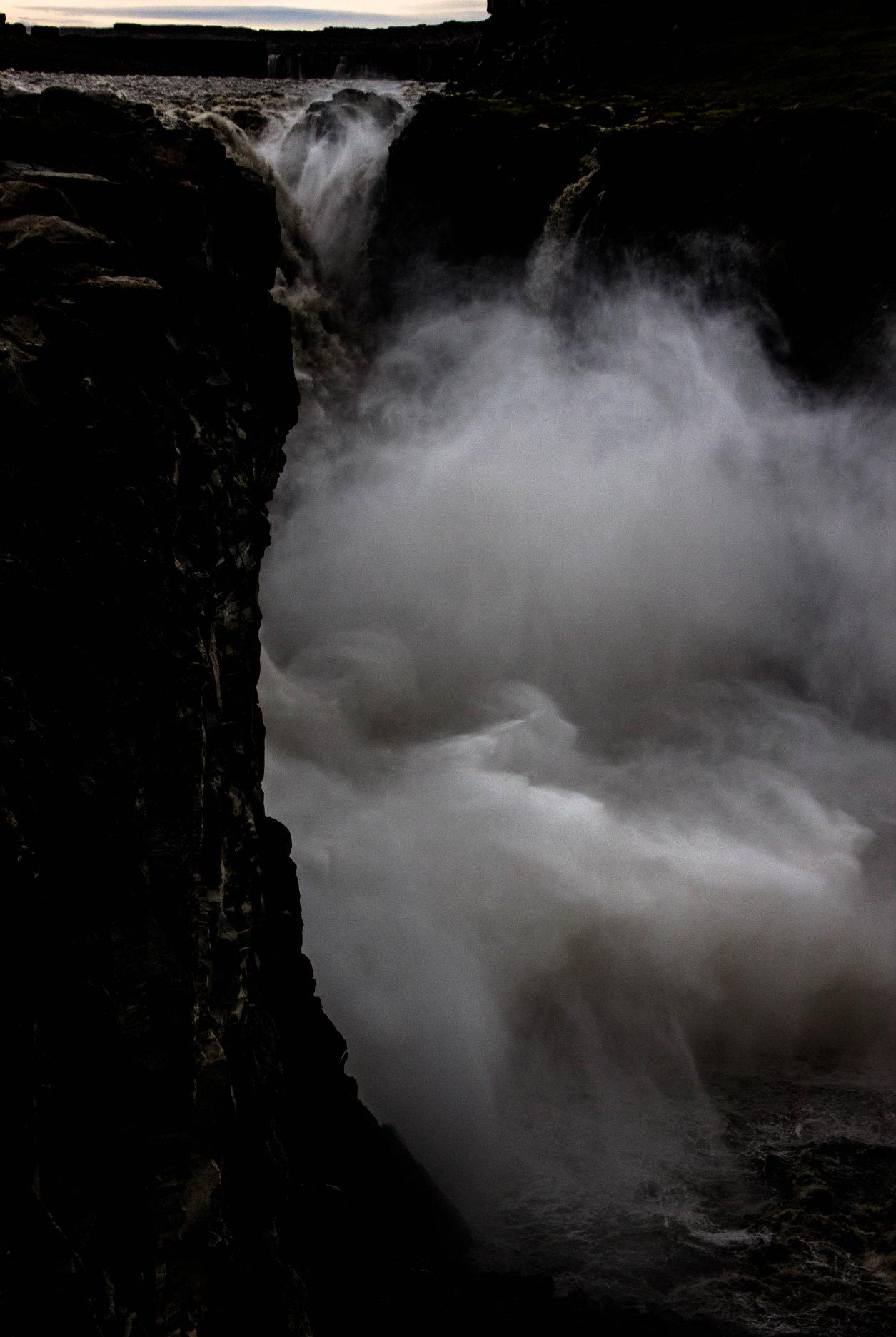
Larry Miller
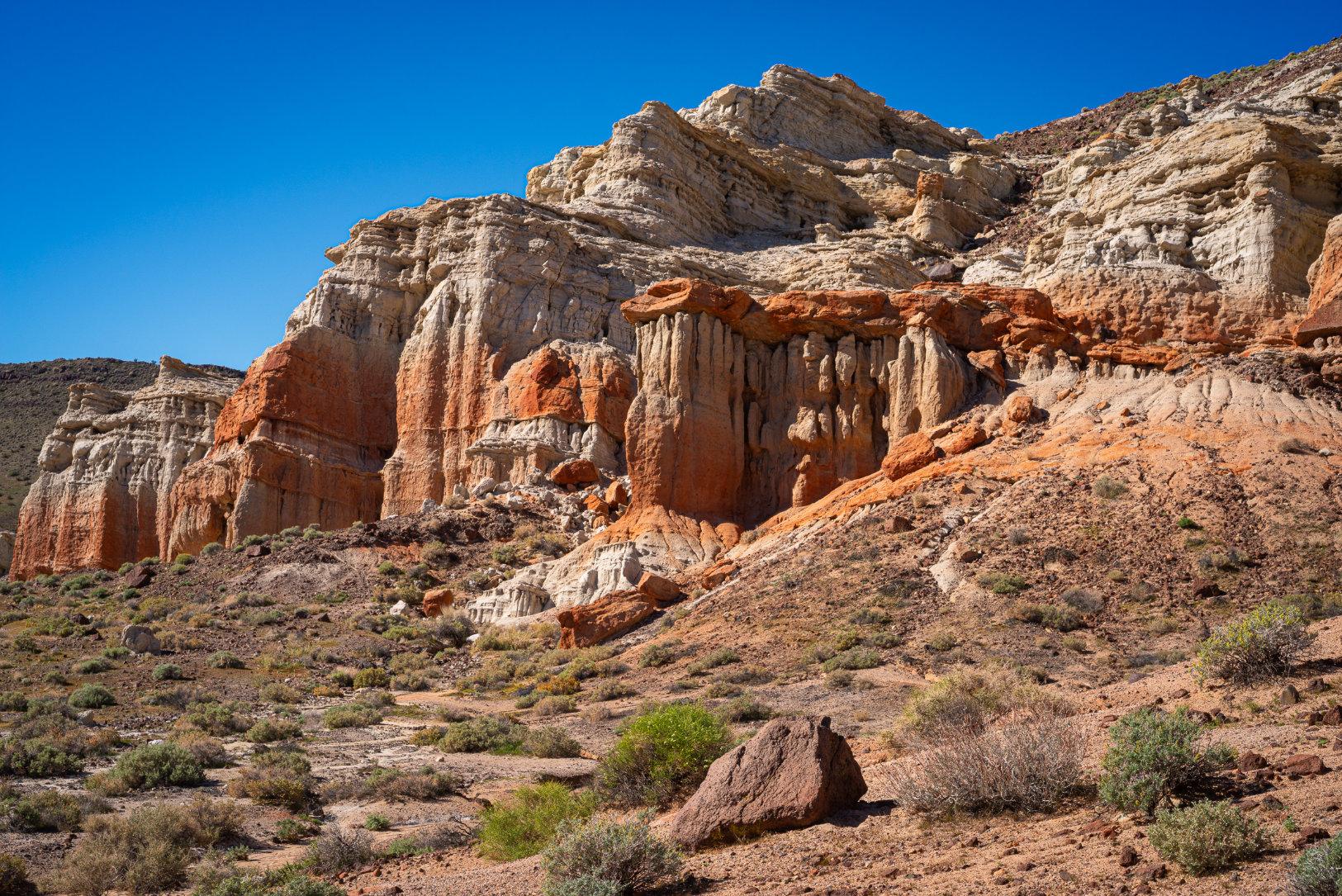
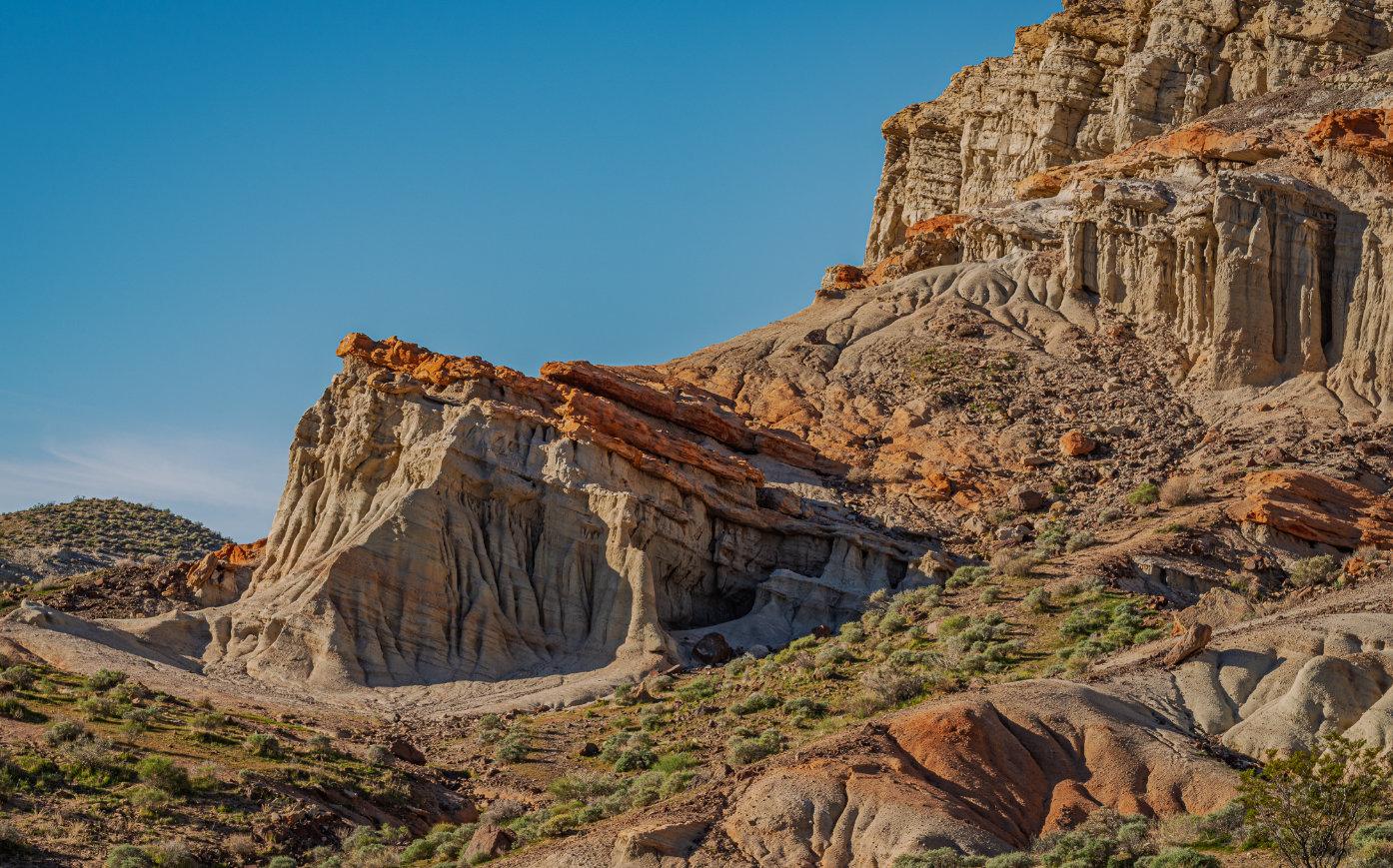
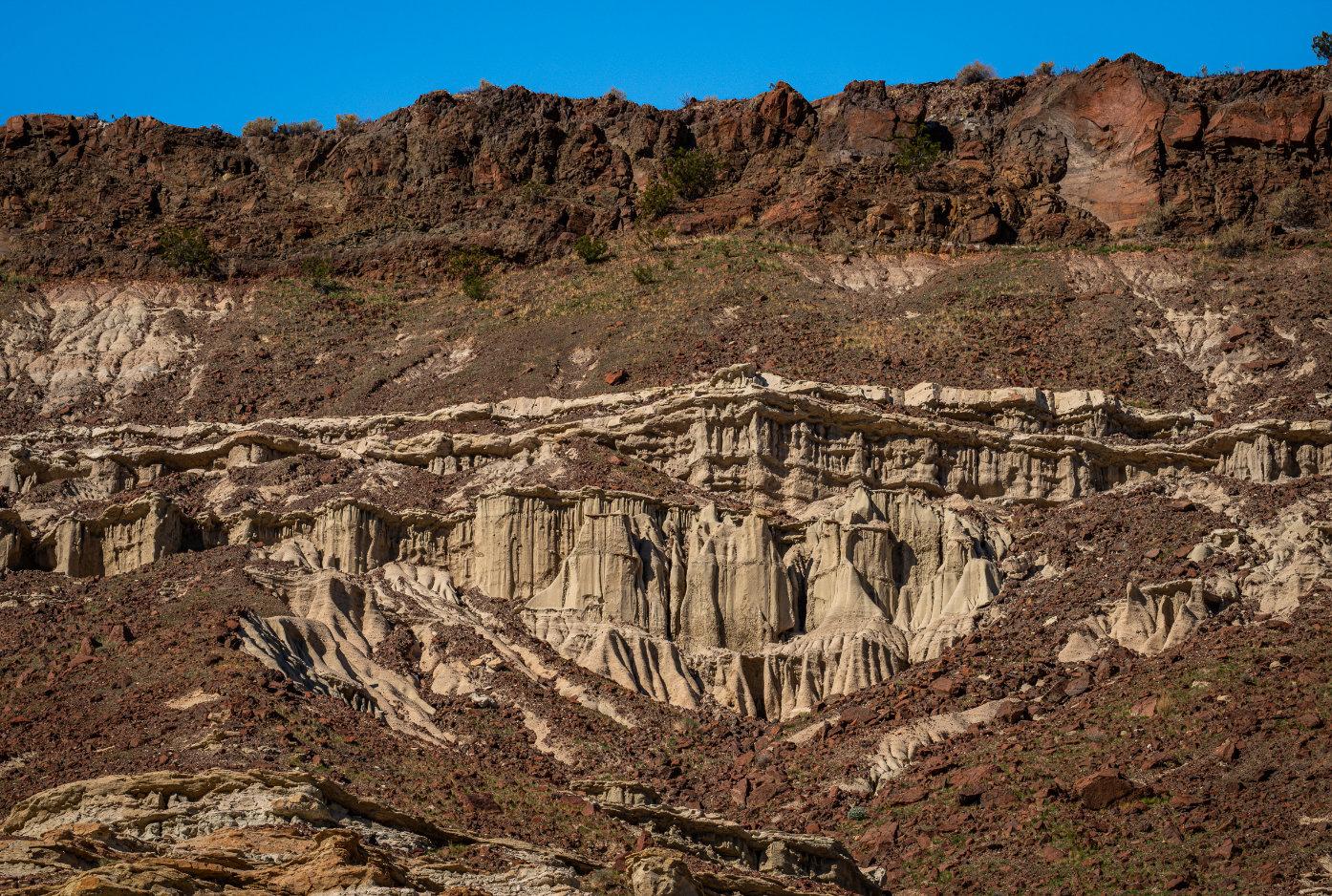
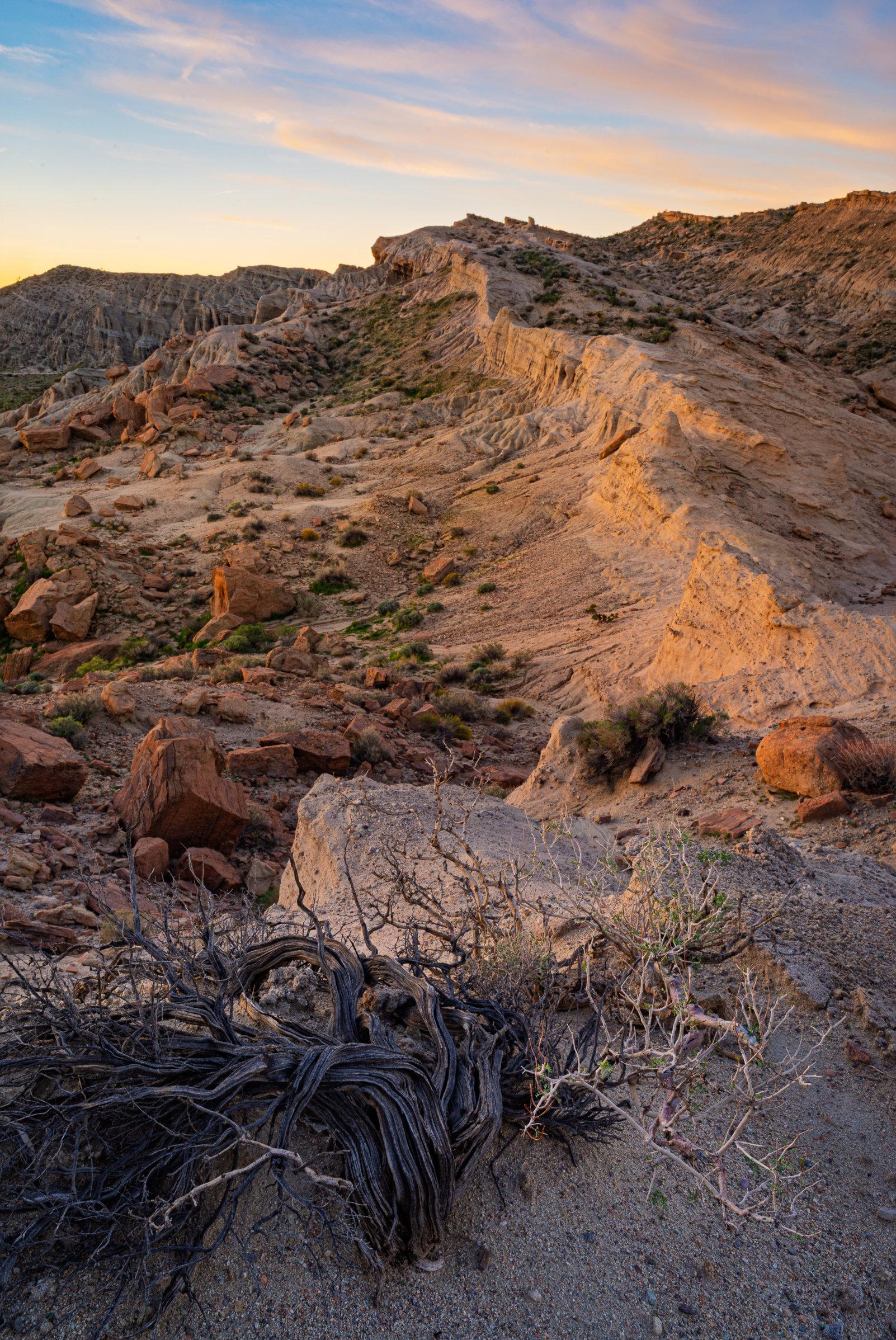
I took these photos during a Halloween day trip to California’s Red Rock Canyon State Park.
Larry Miller
Rebecca Wilks
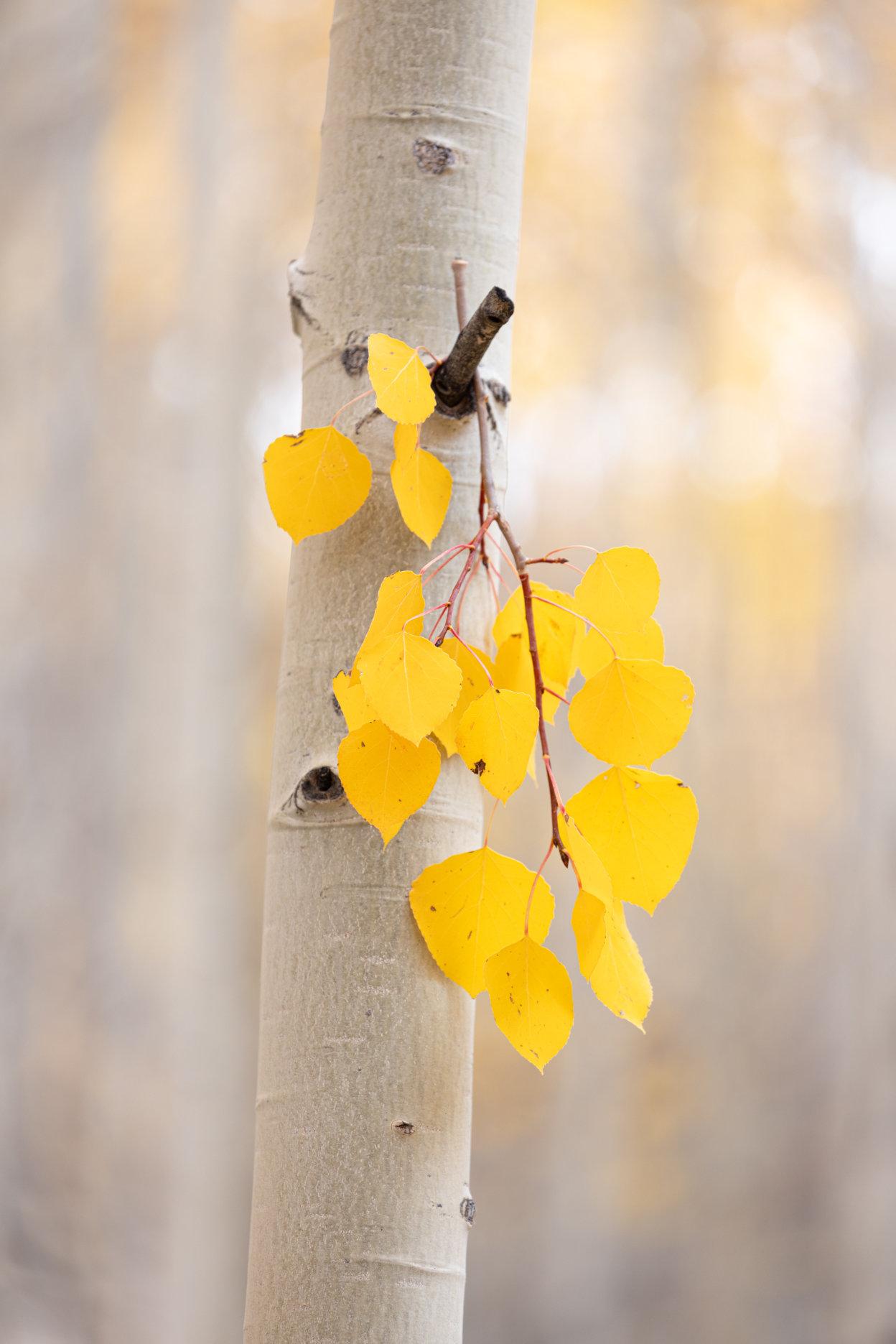
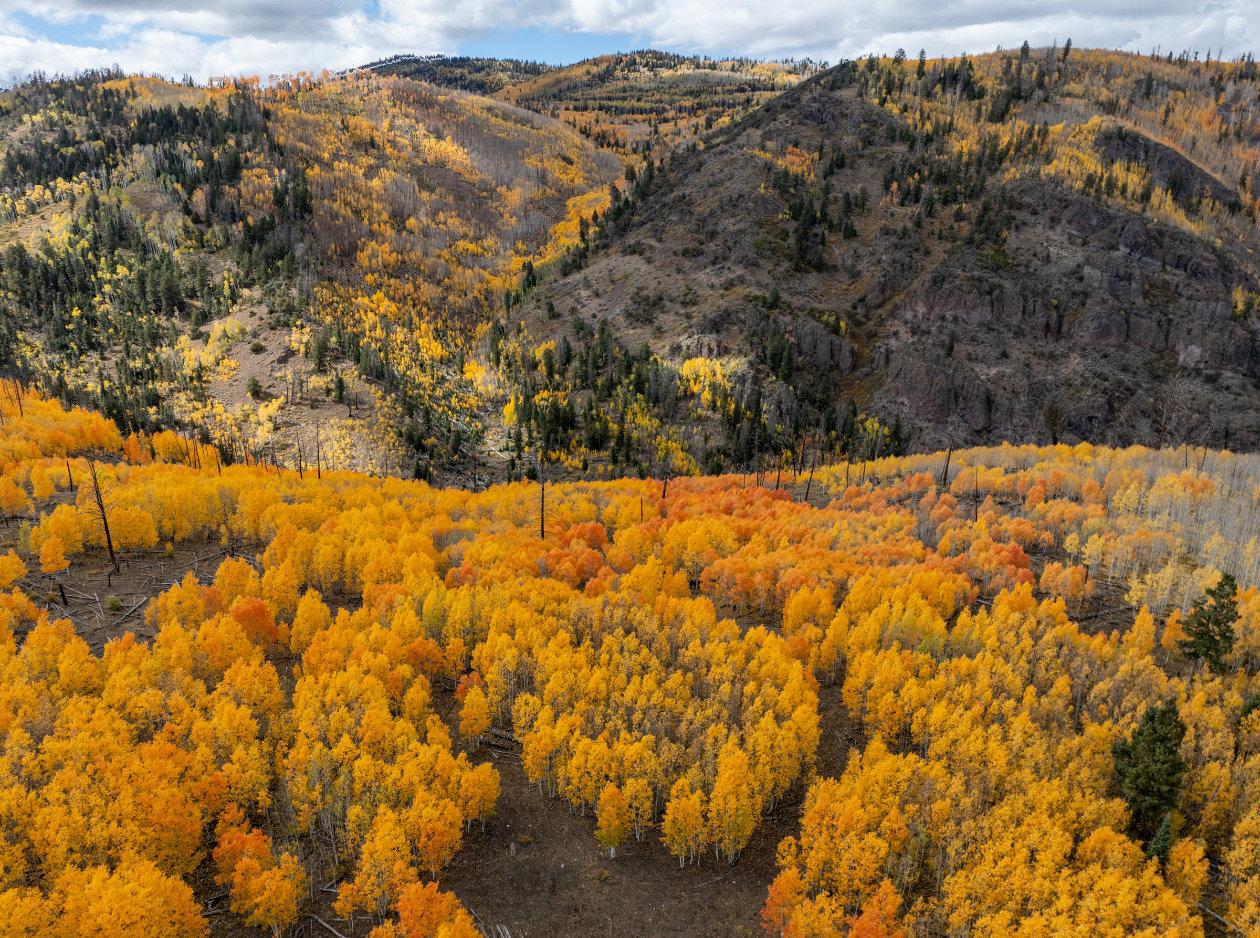
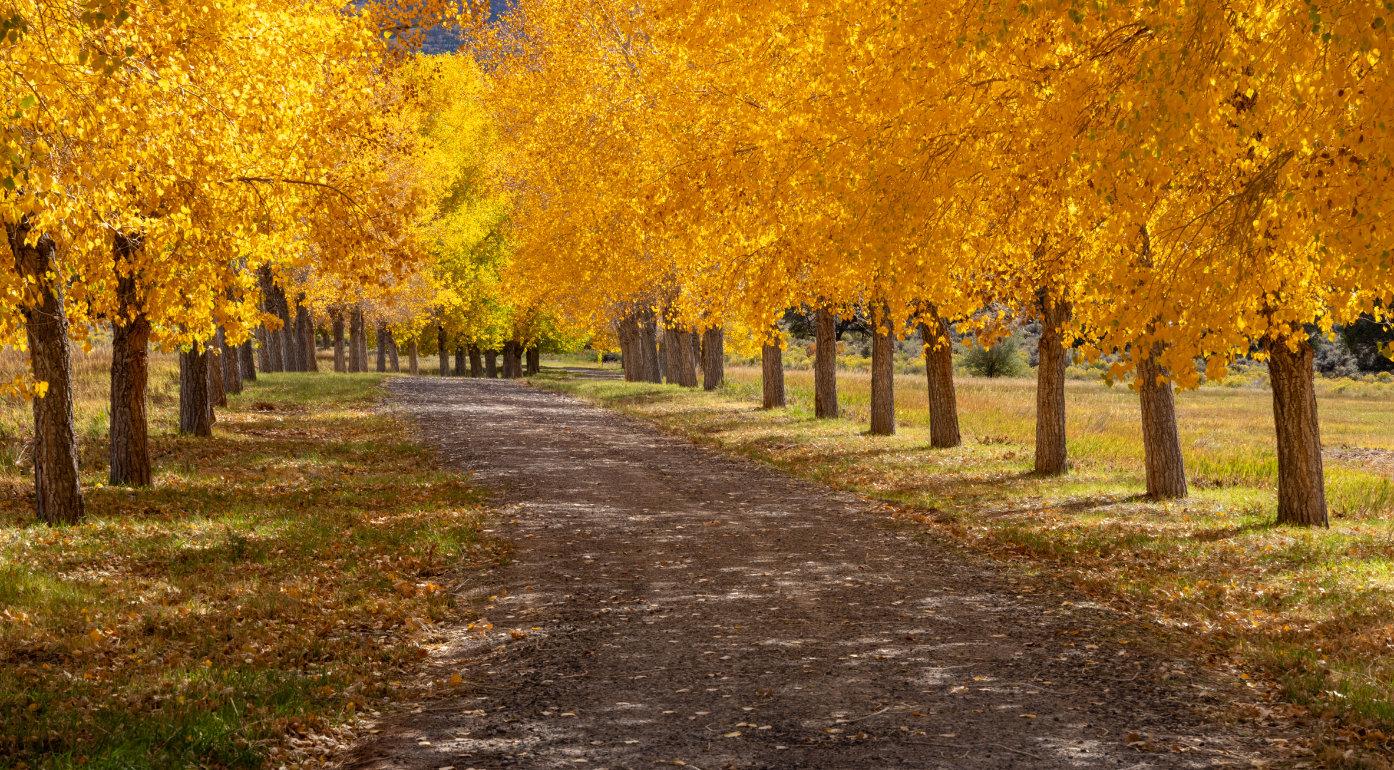
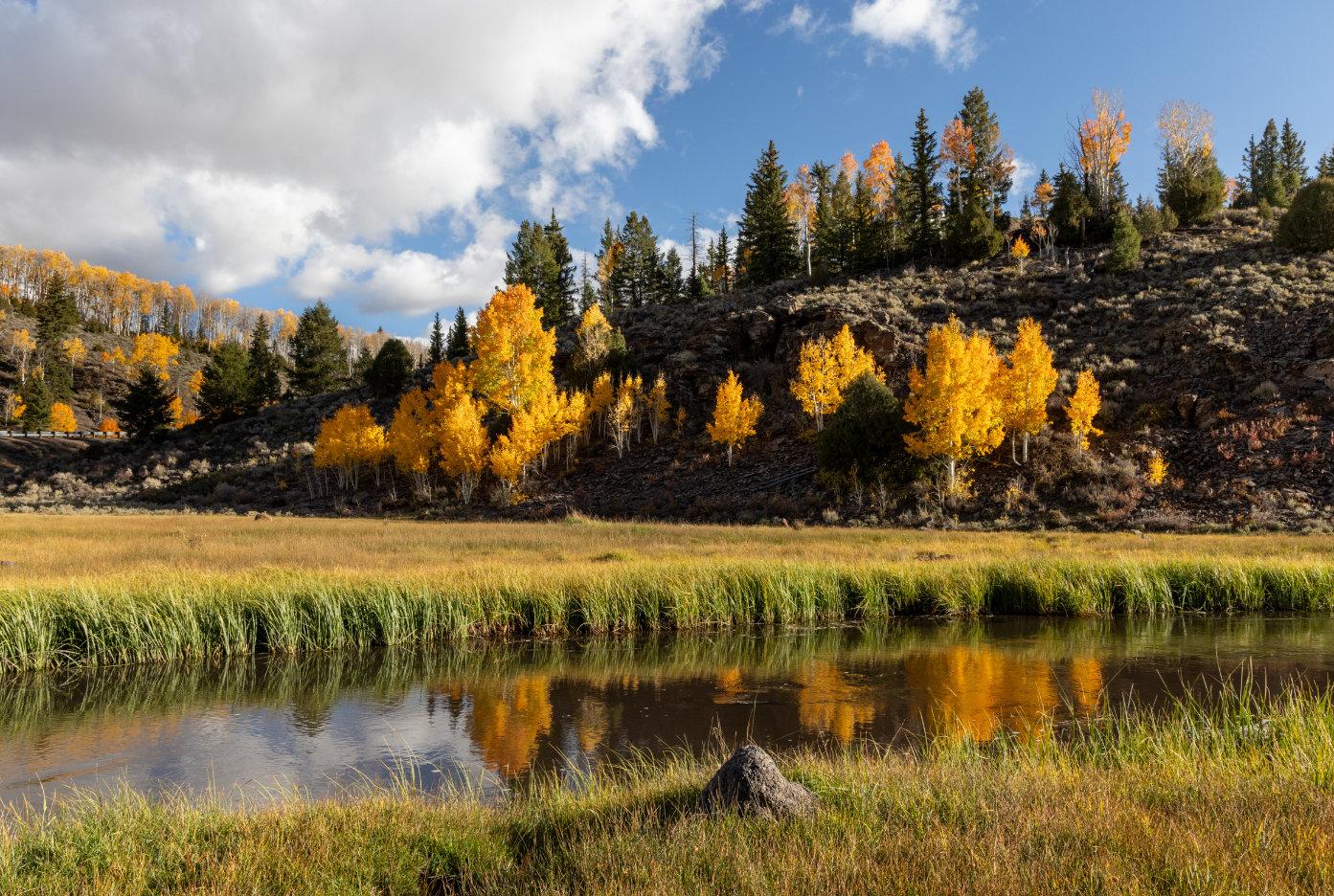
Highlights from a two-week fall color road trip through the Four Corners region. Utah was amazing this year, and we had the good fortune to nail the timing.
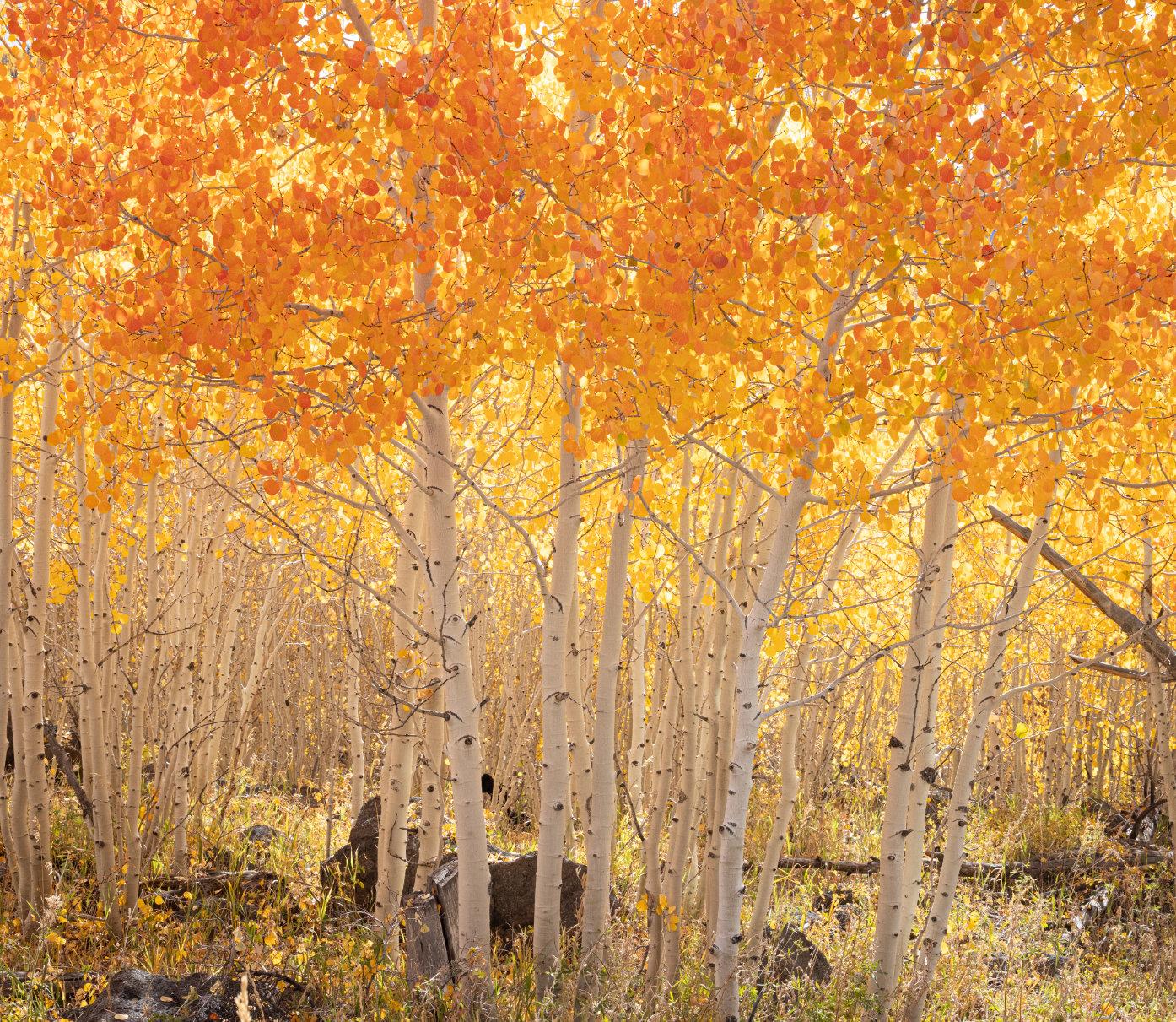
Spectacular backlight on aspens, Fishlake National Forest, Utah
Opposite page: Arrested mid-fall, Fishlake National Forest, Utah
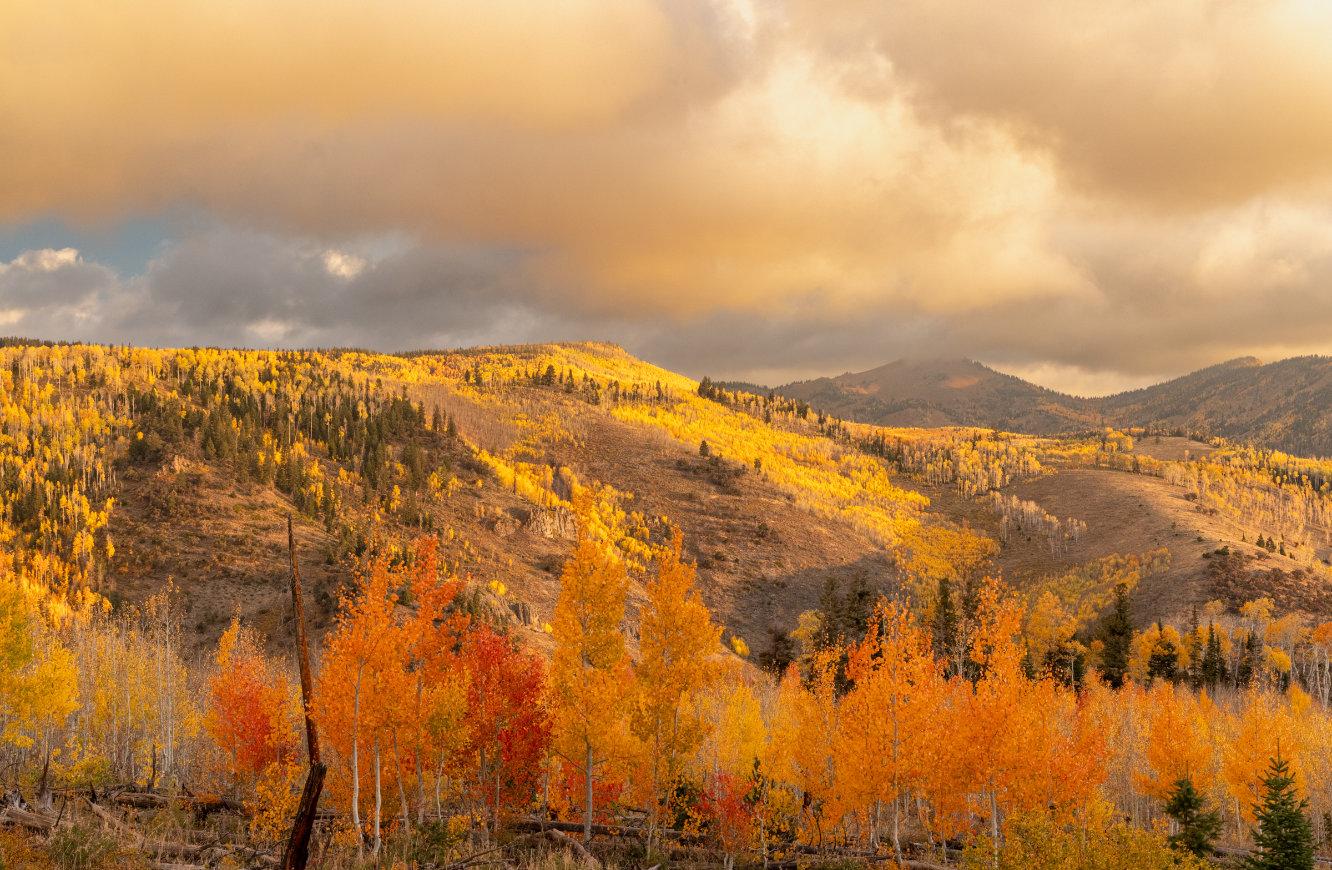
Ombre color at dawn, Fishlake National Forest, Utah
Drone view of geometry and color, Fishlake National Forest, Utah
Rebecca Wilks
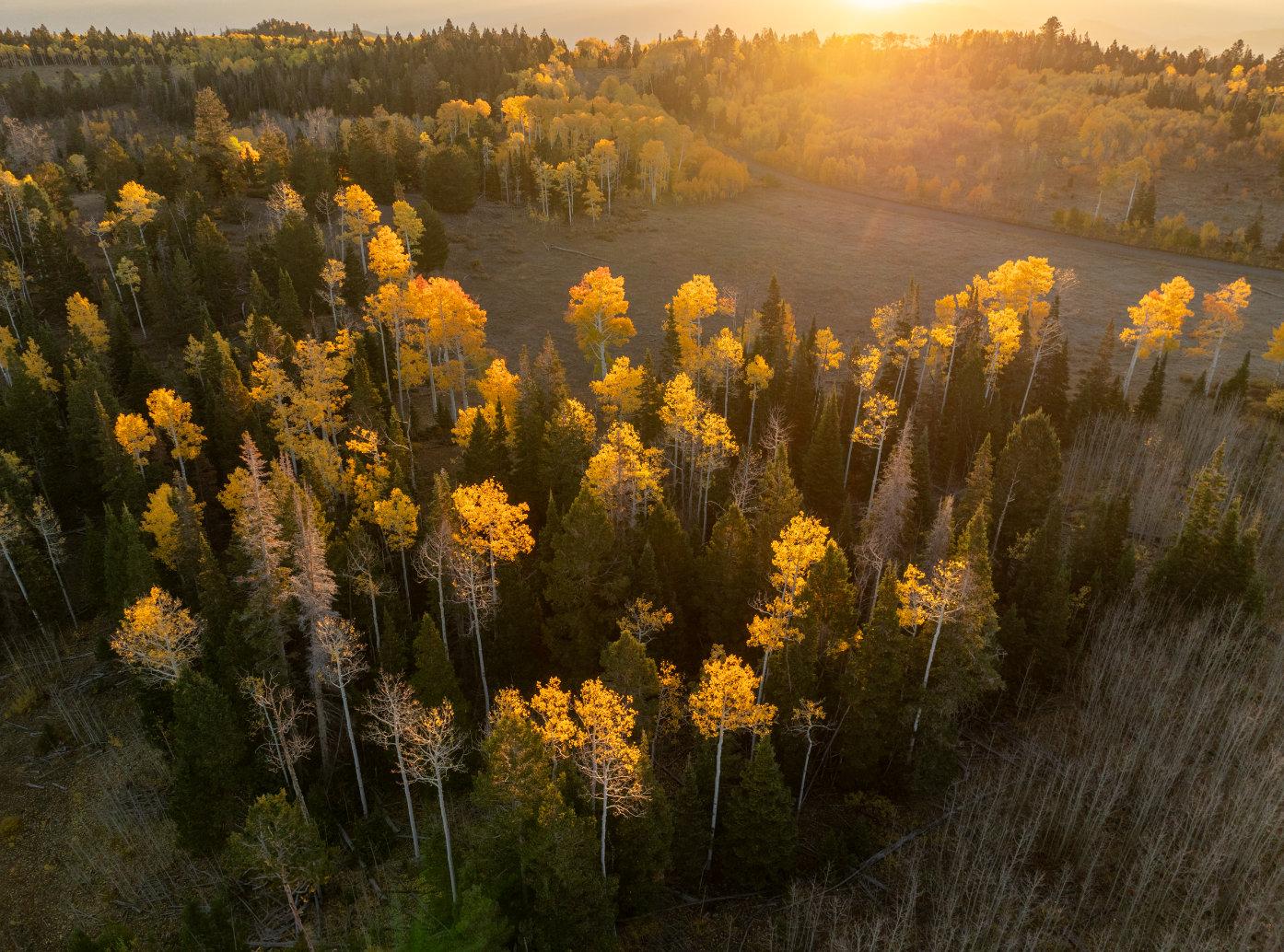
Drone and backlight at sunrise, Fishlake National Forest, Utah
I just can’t resist a tree tunnel, Teasdale, Utah.
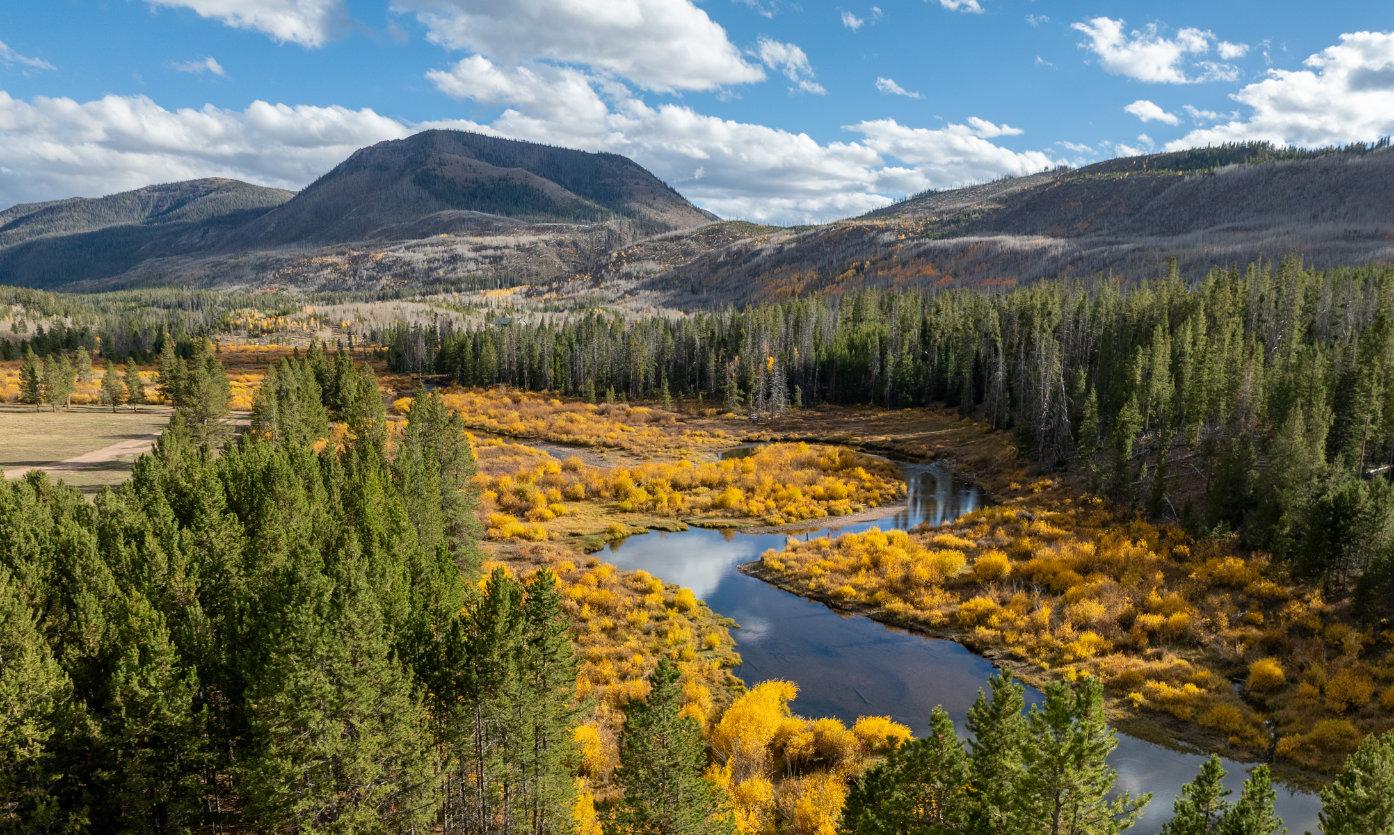
Creekside Willows, East Fork Bear Creek, Wasatch National Forest, Utah
Reflections in the Fremont River, Fishlake National Forest, Utah
Rebecca Wilks
Joe Doherty
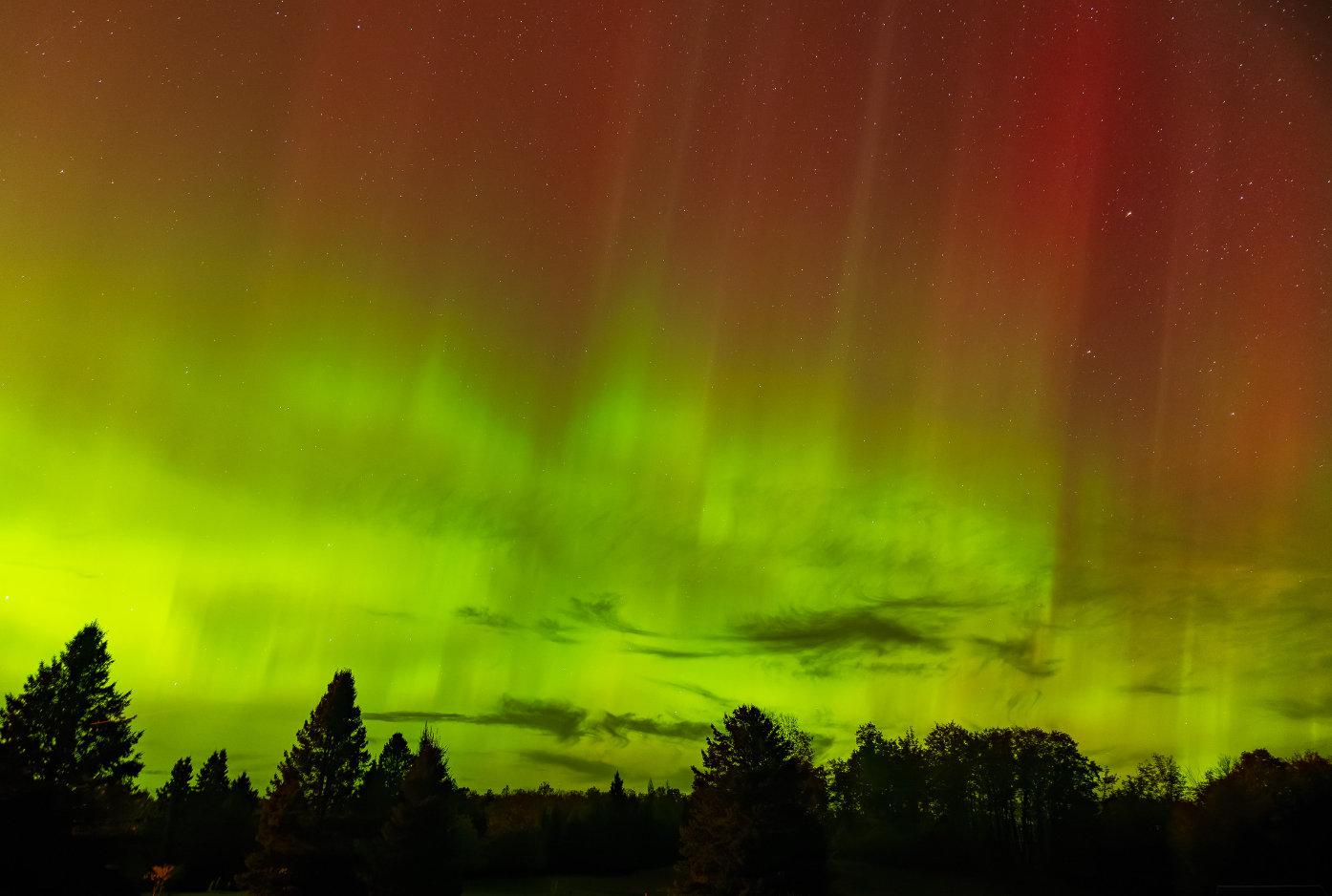
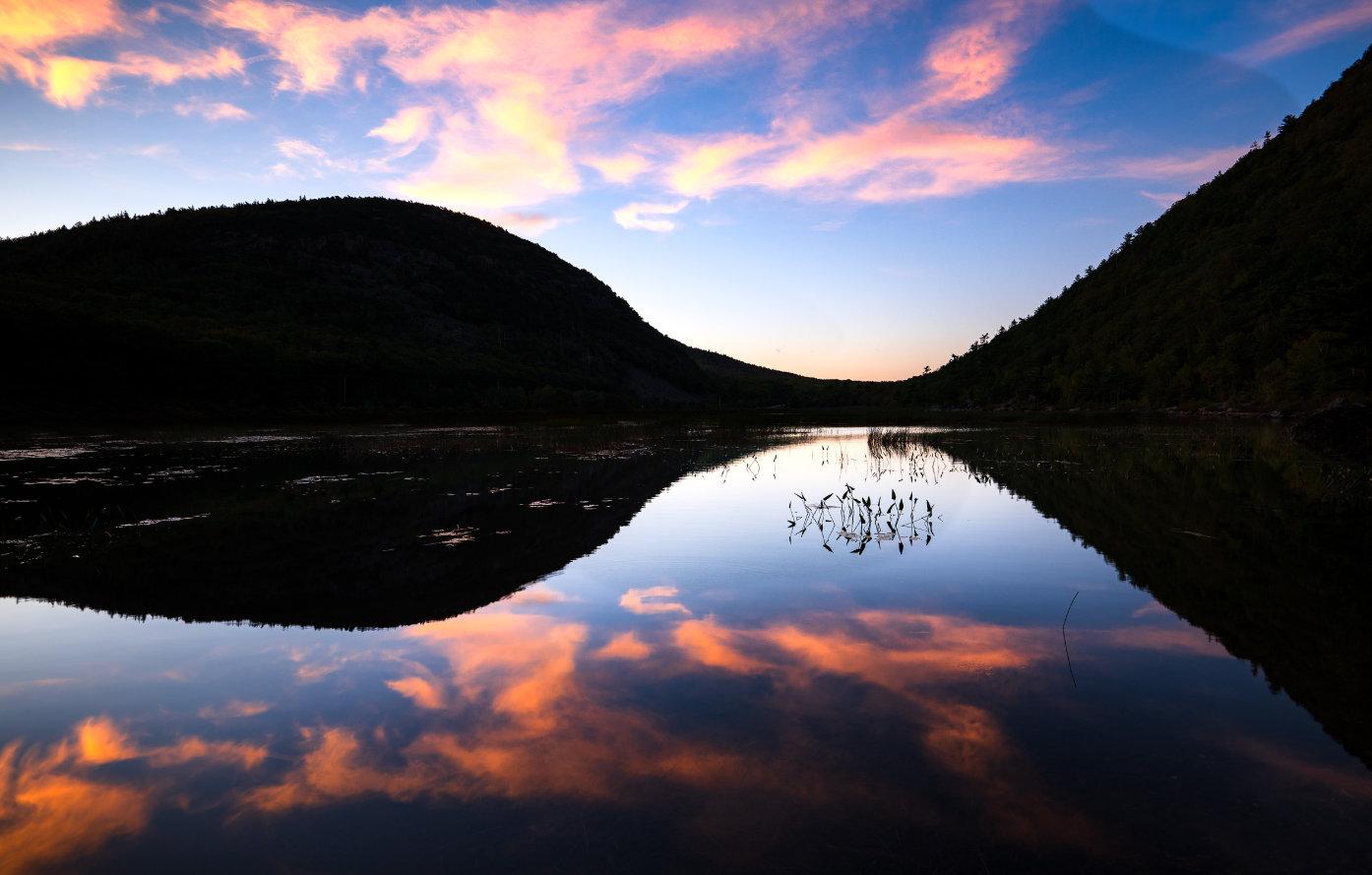
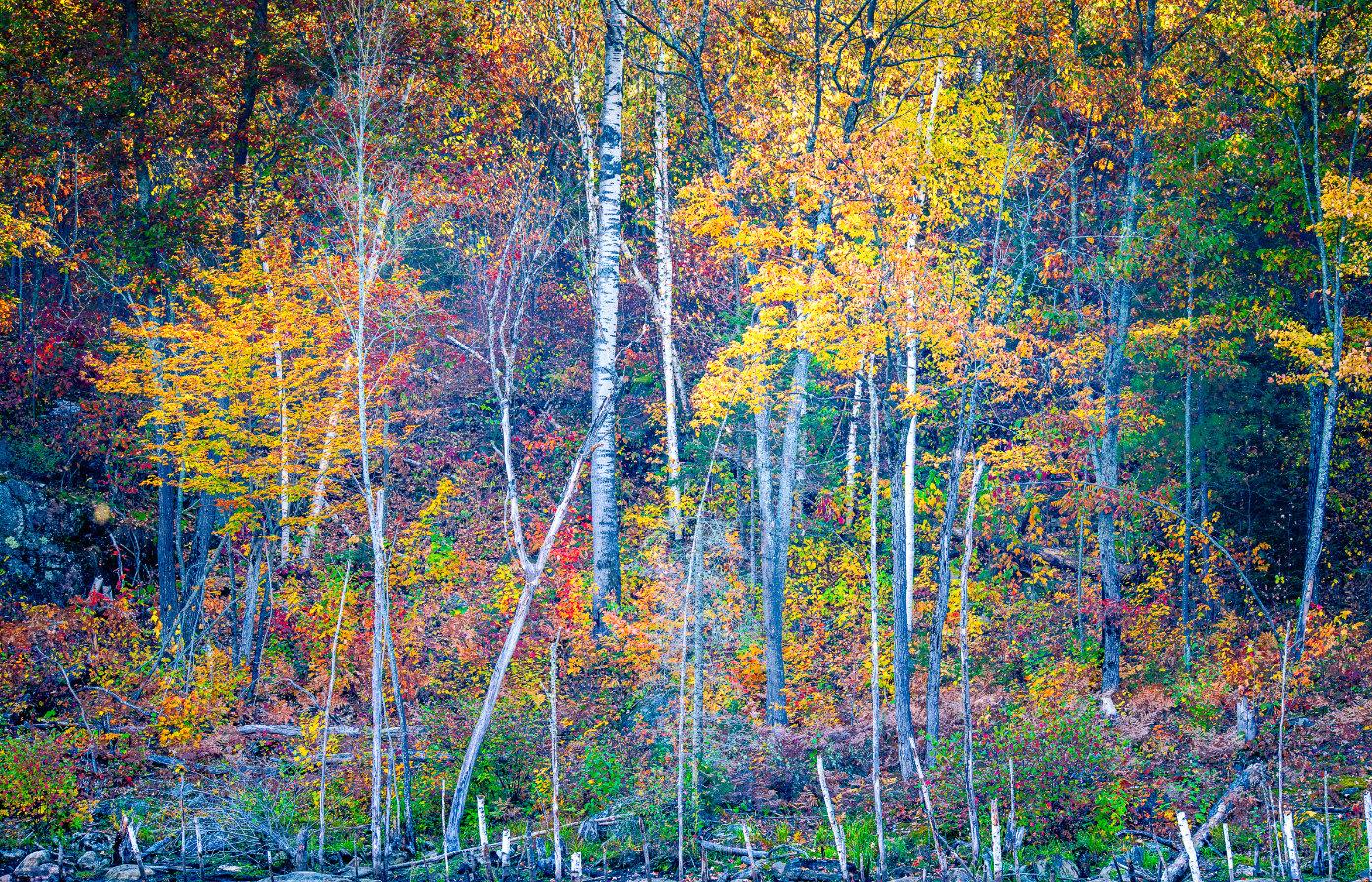
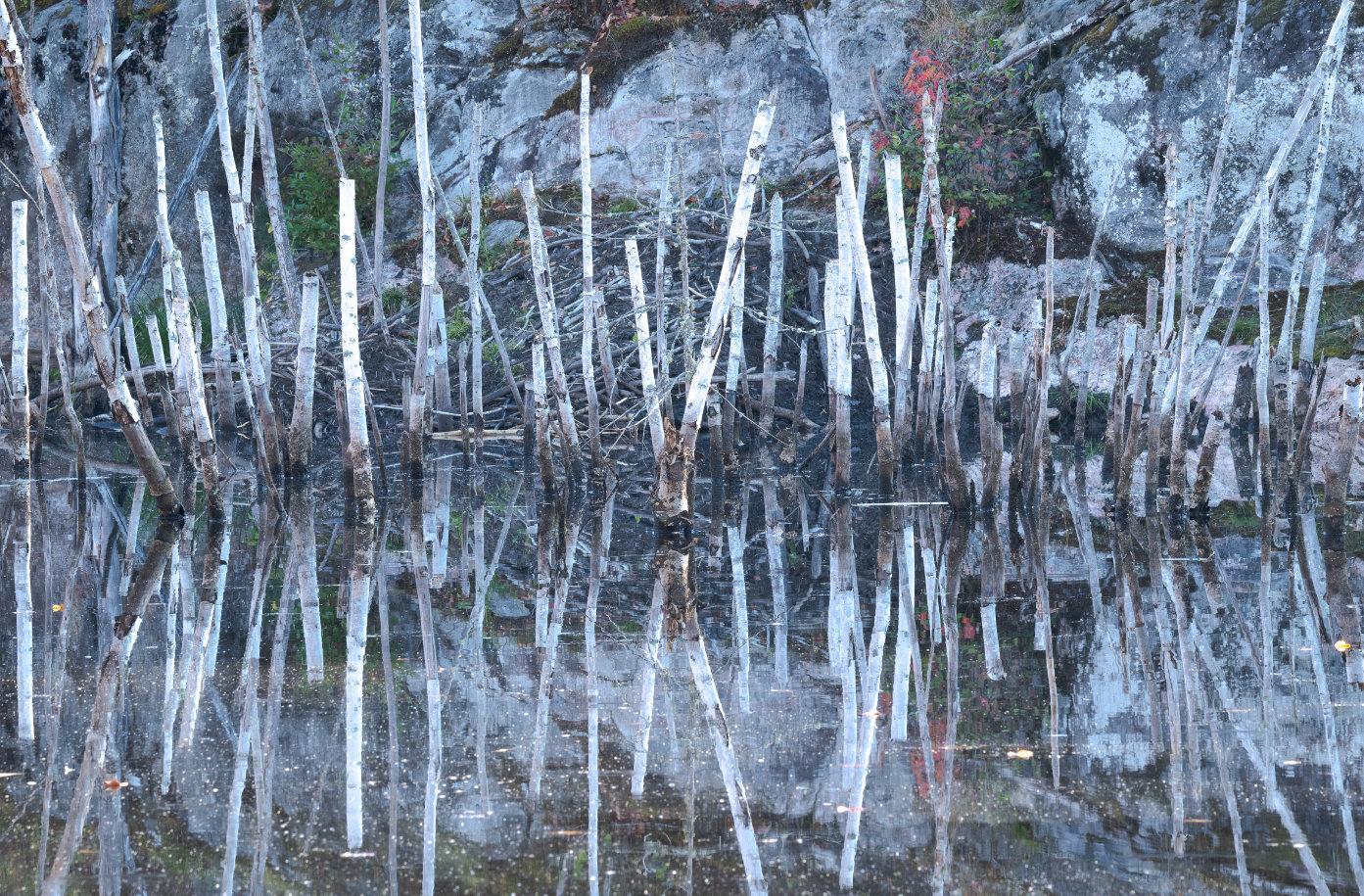
Joe Doherty
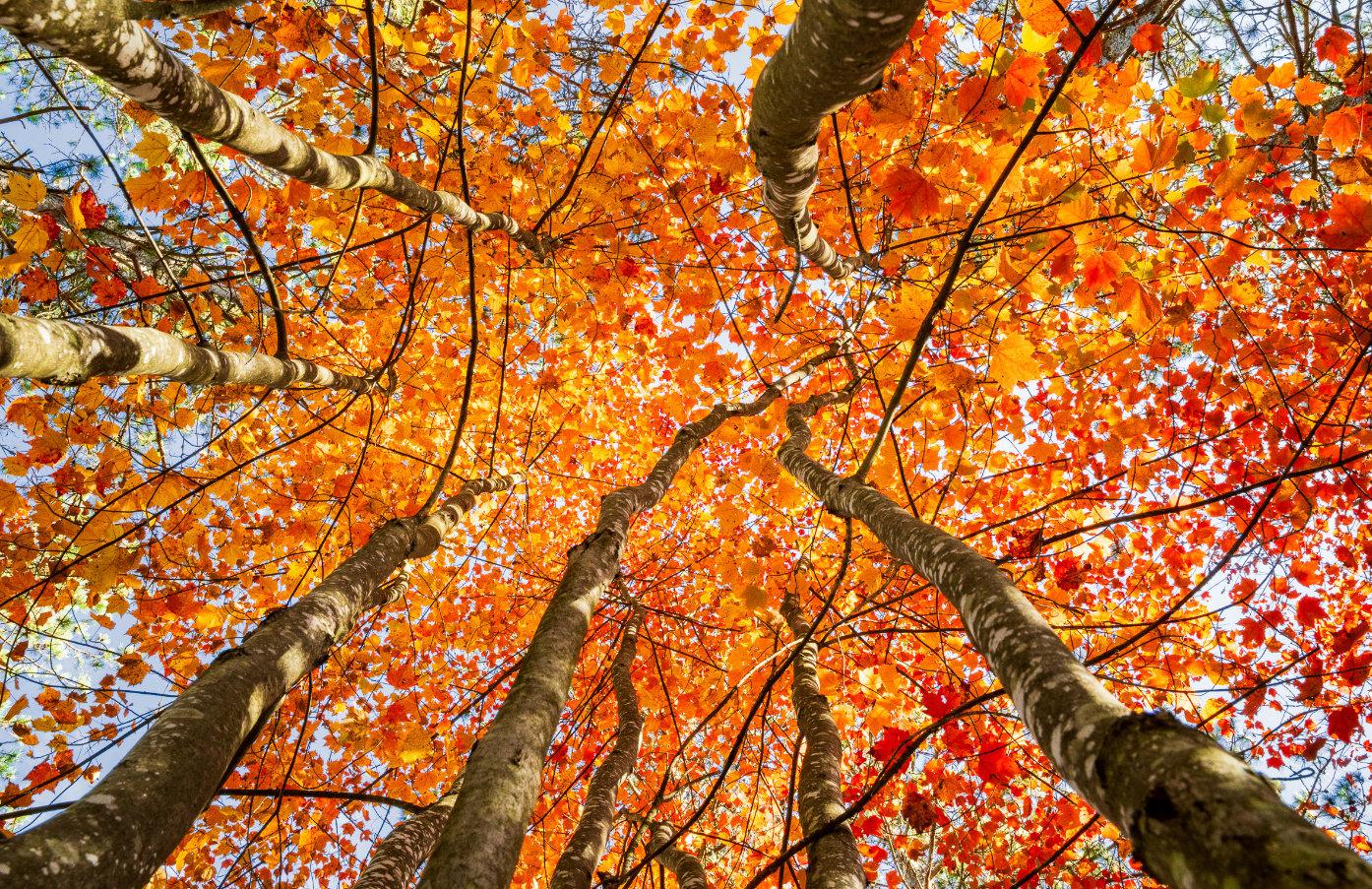
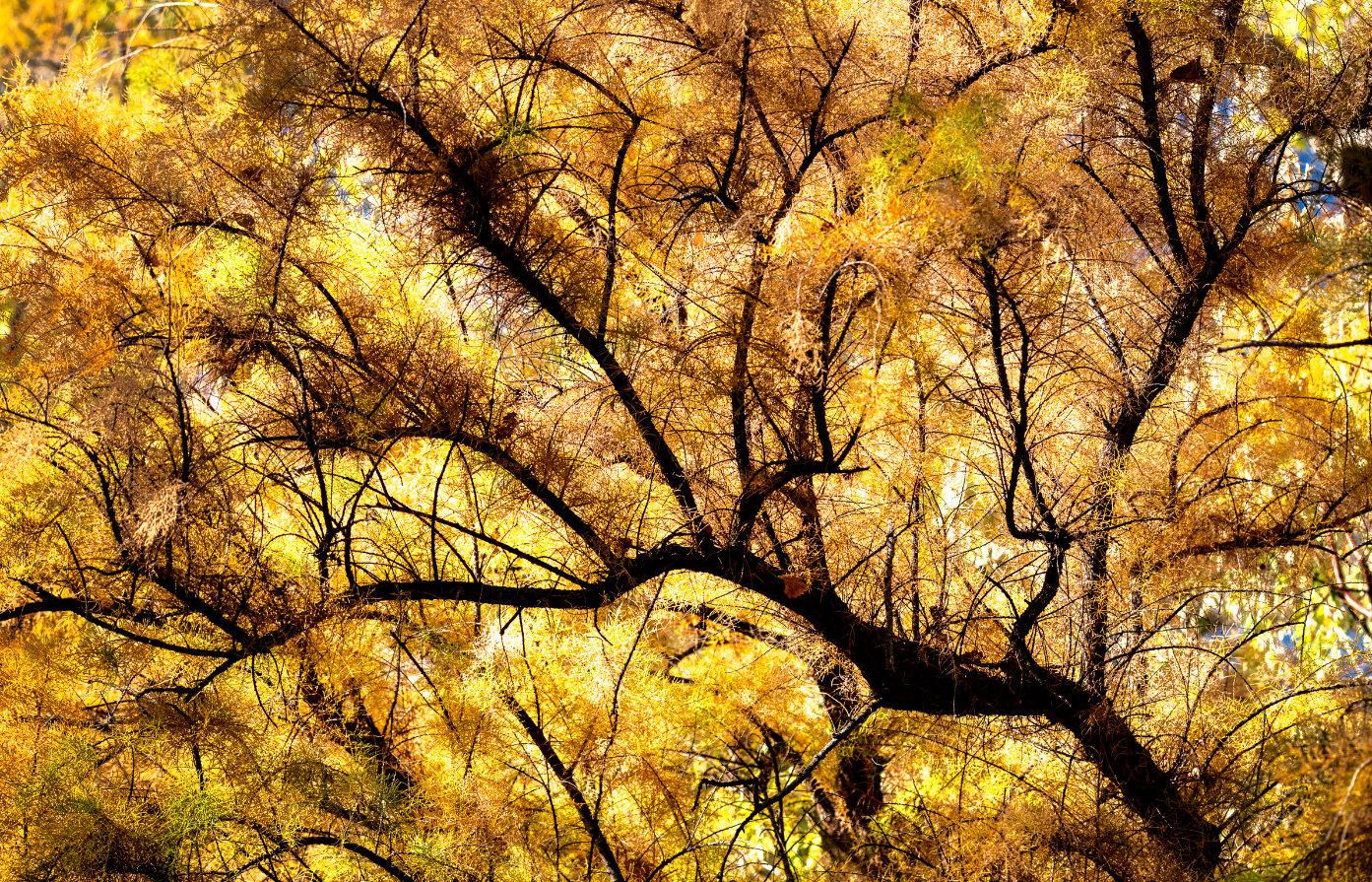
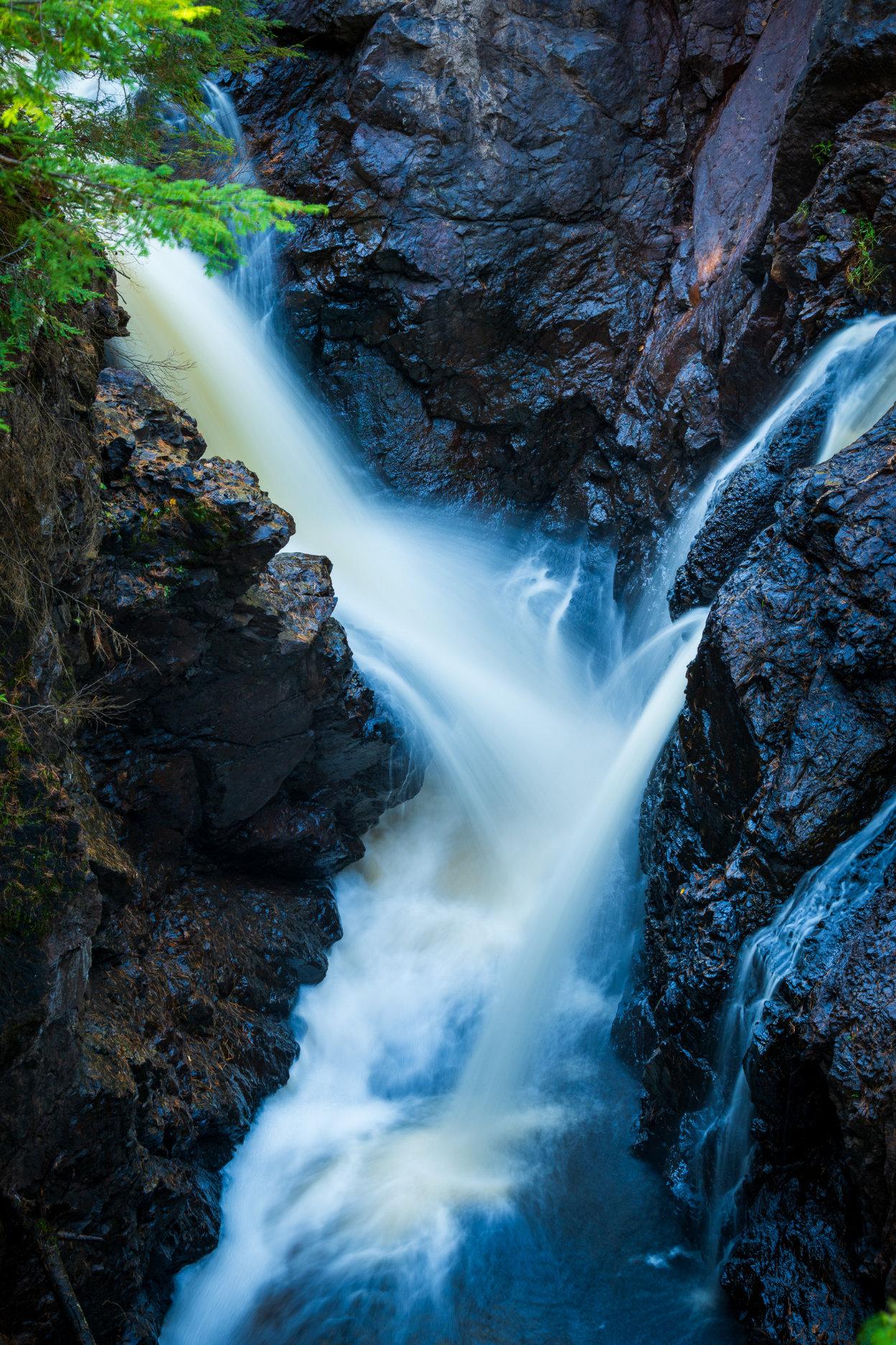
Joe Doherty
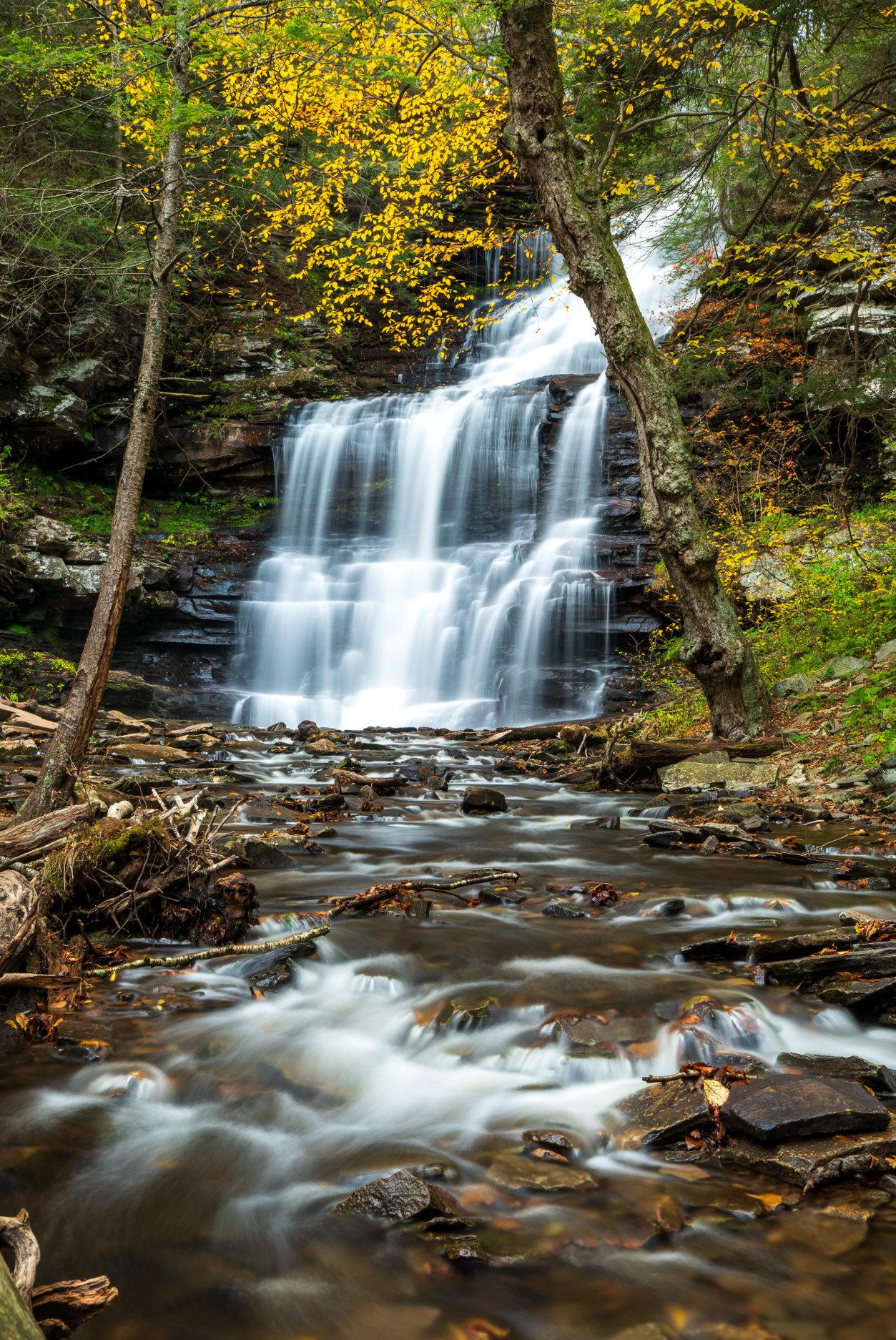
Velda Ruddock
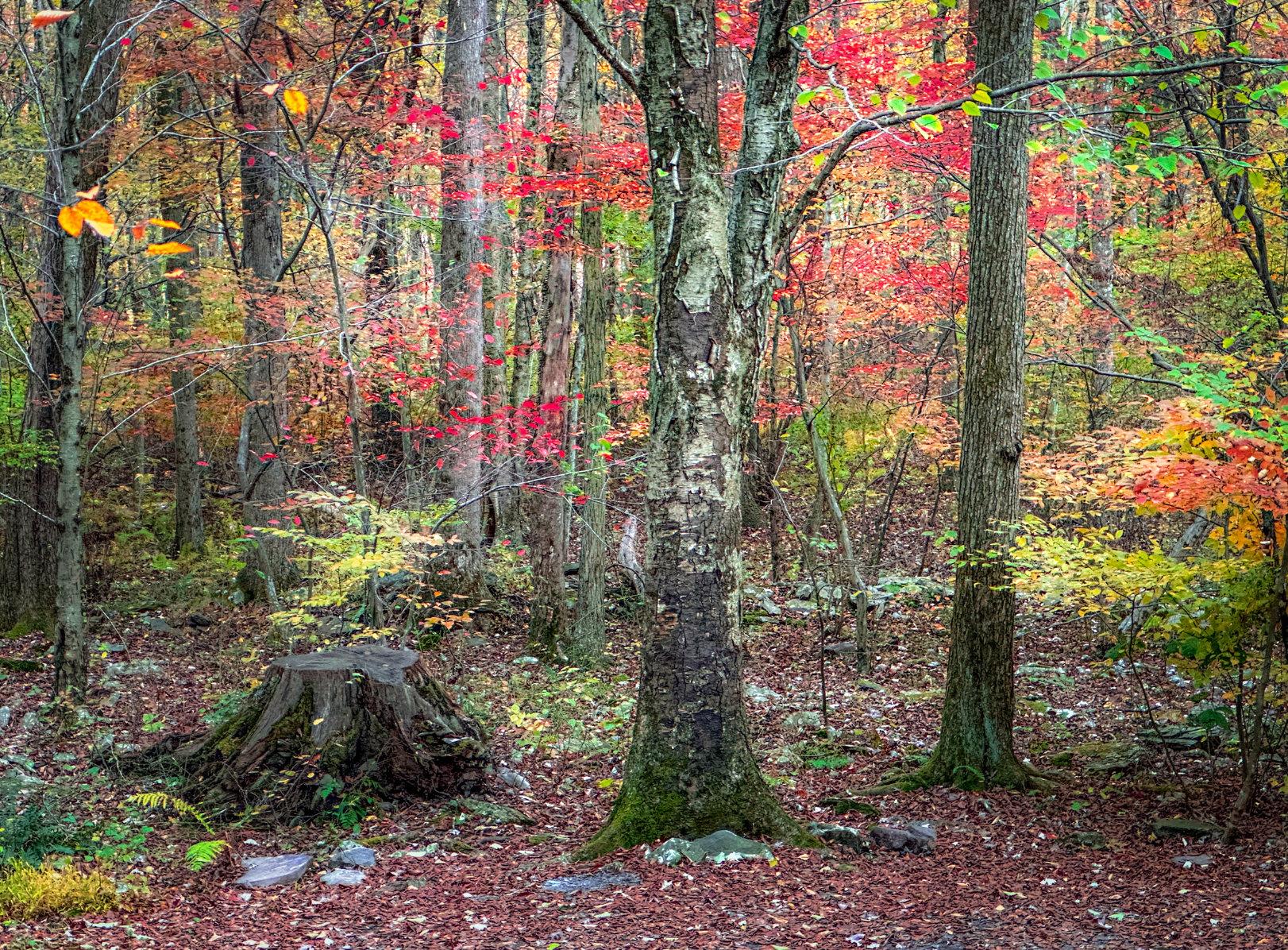
Frances Slocum State Park, Pennsylvania
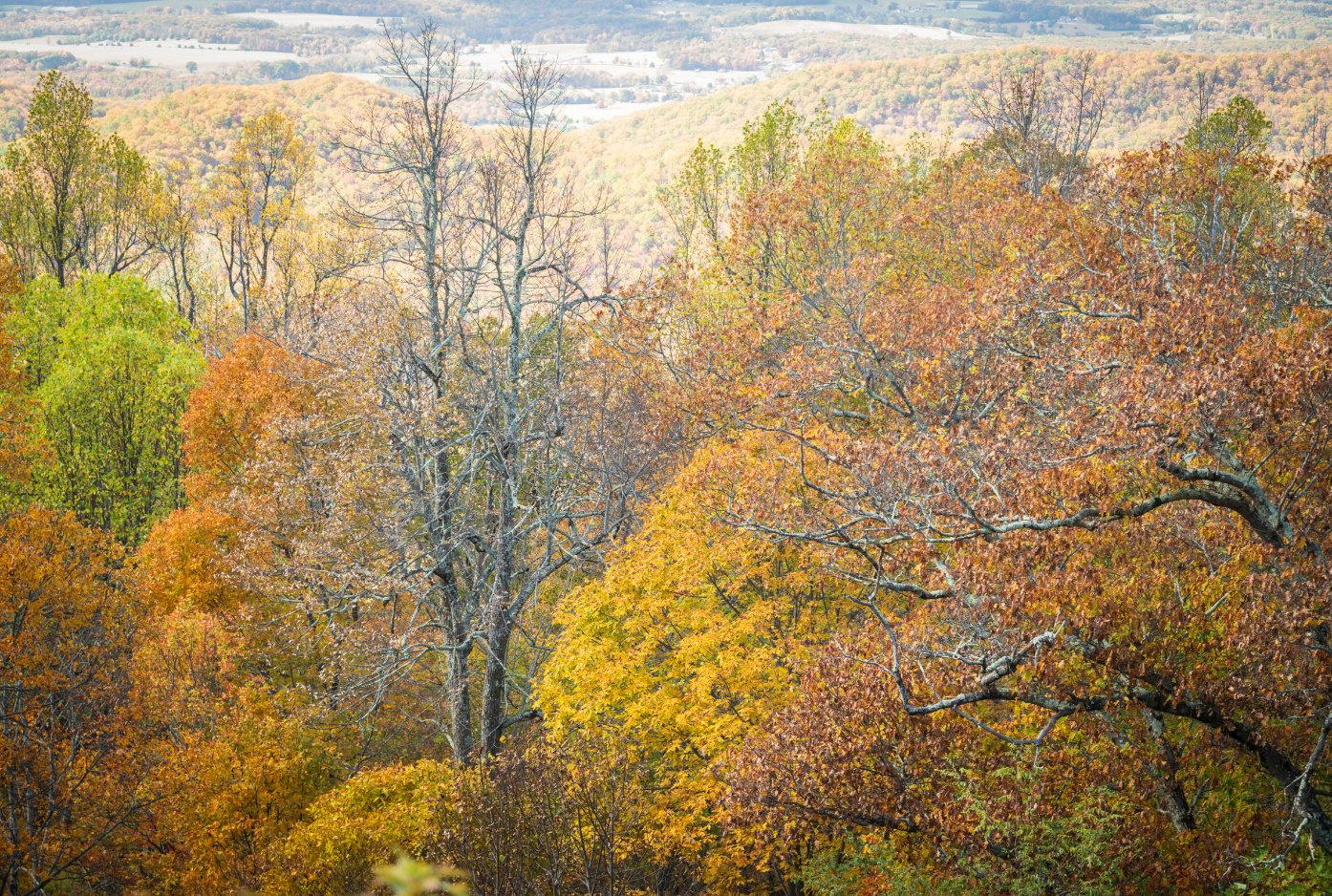
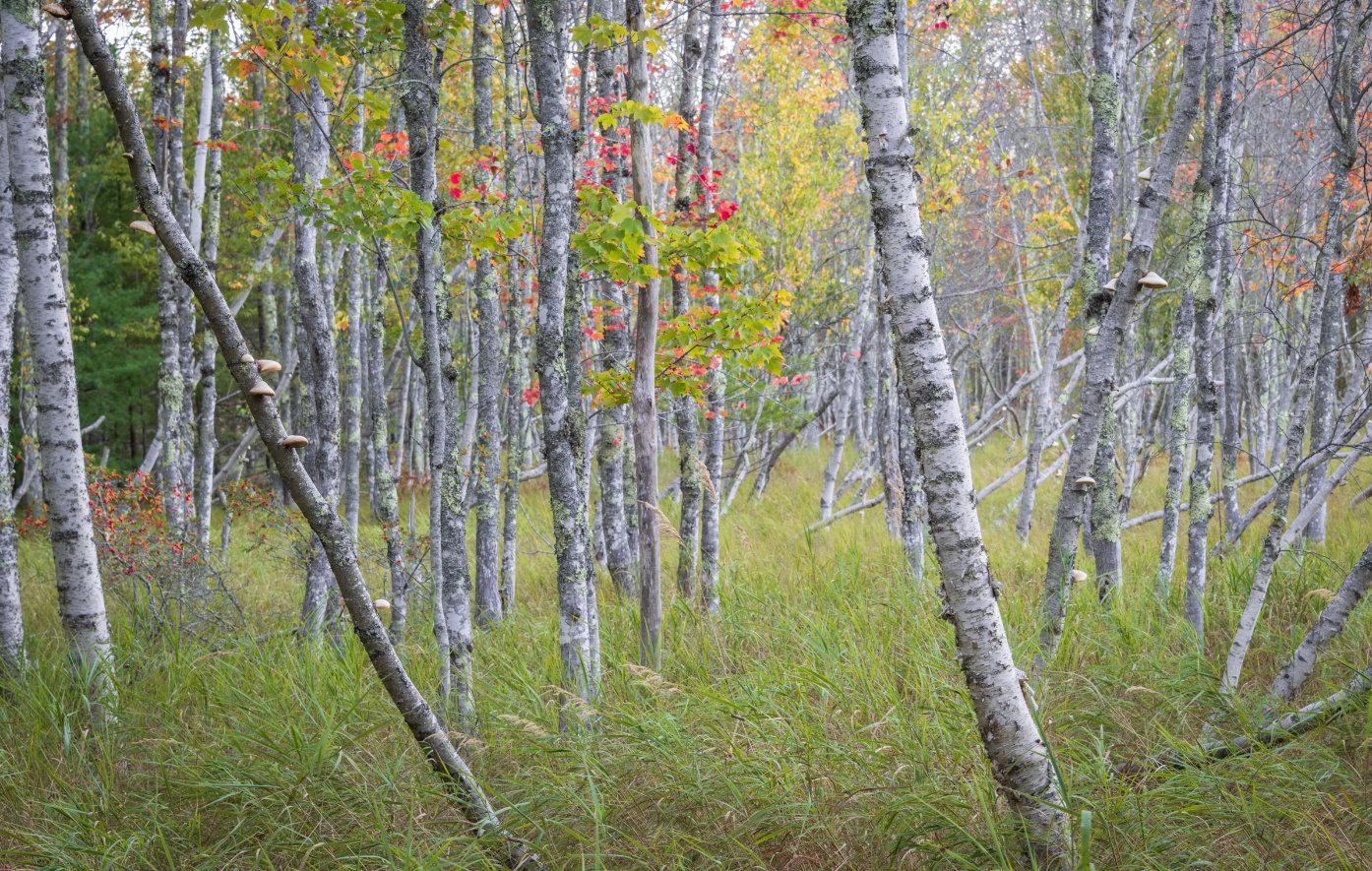
Park, Maine
Shenandoah National Park, Virginia
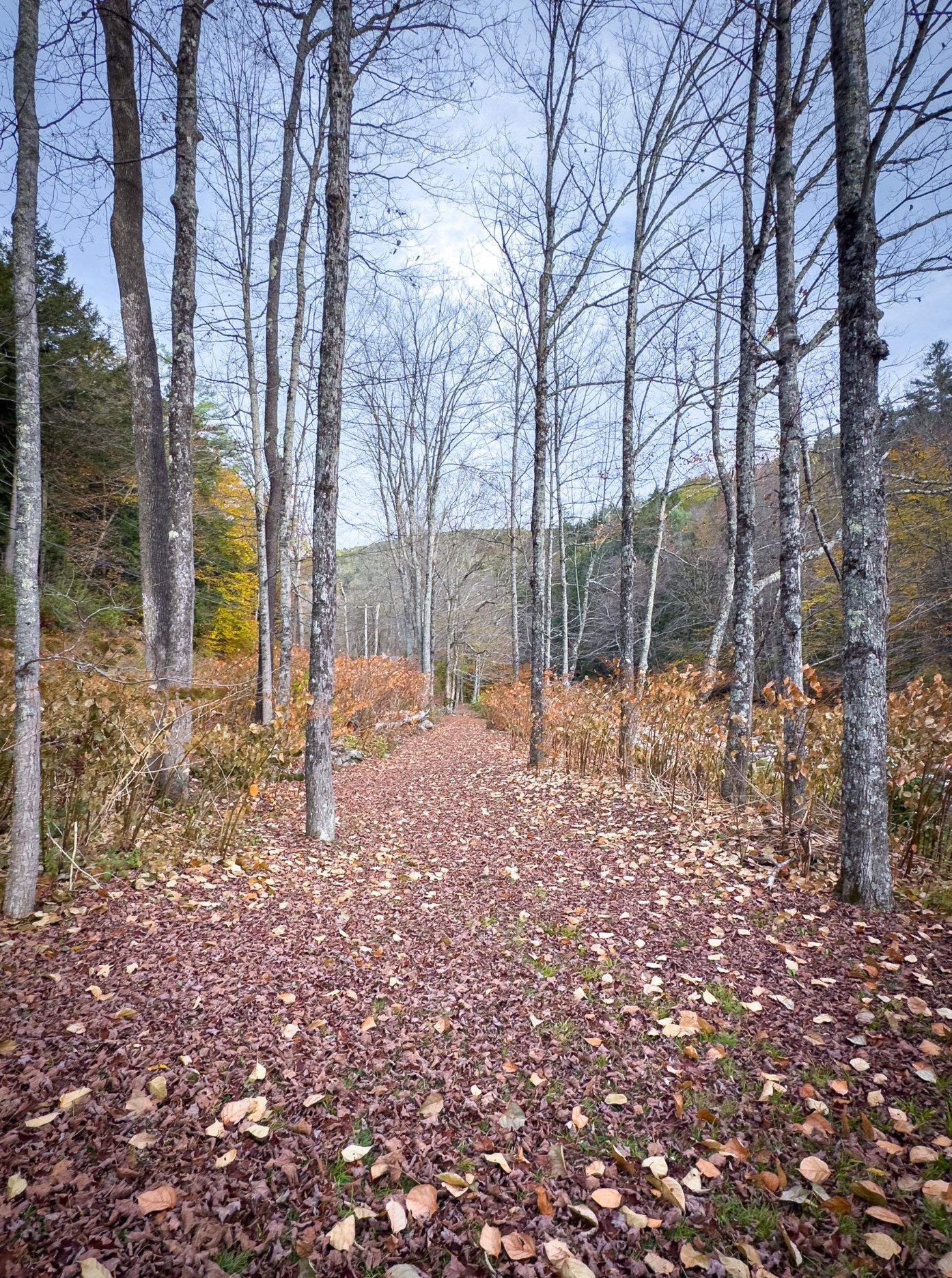
Grafton, Vermont
Velda Ruddock
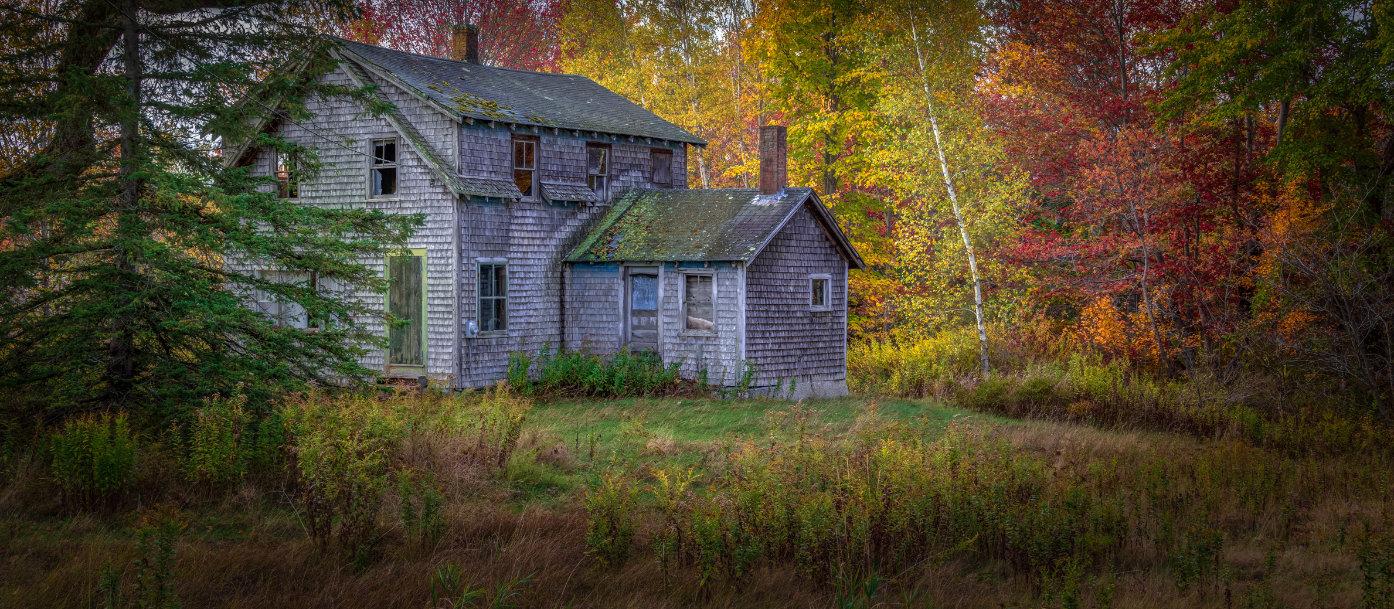
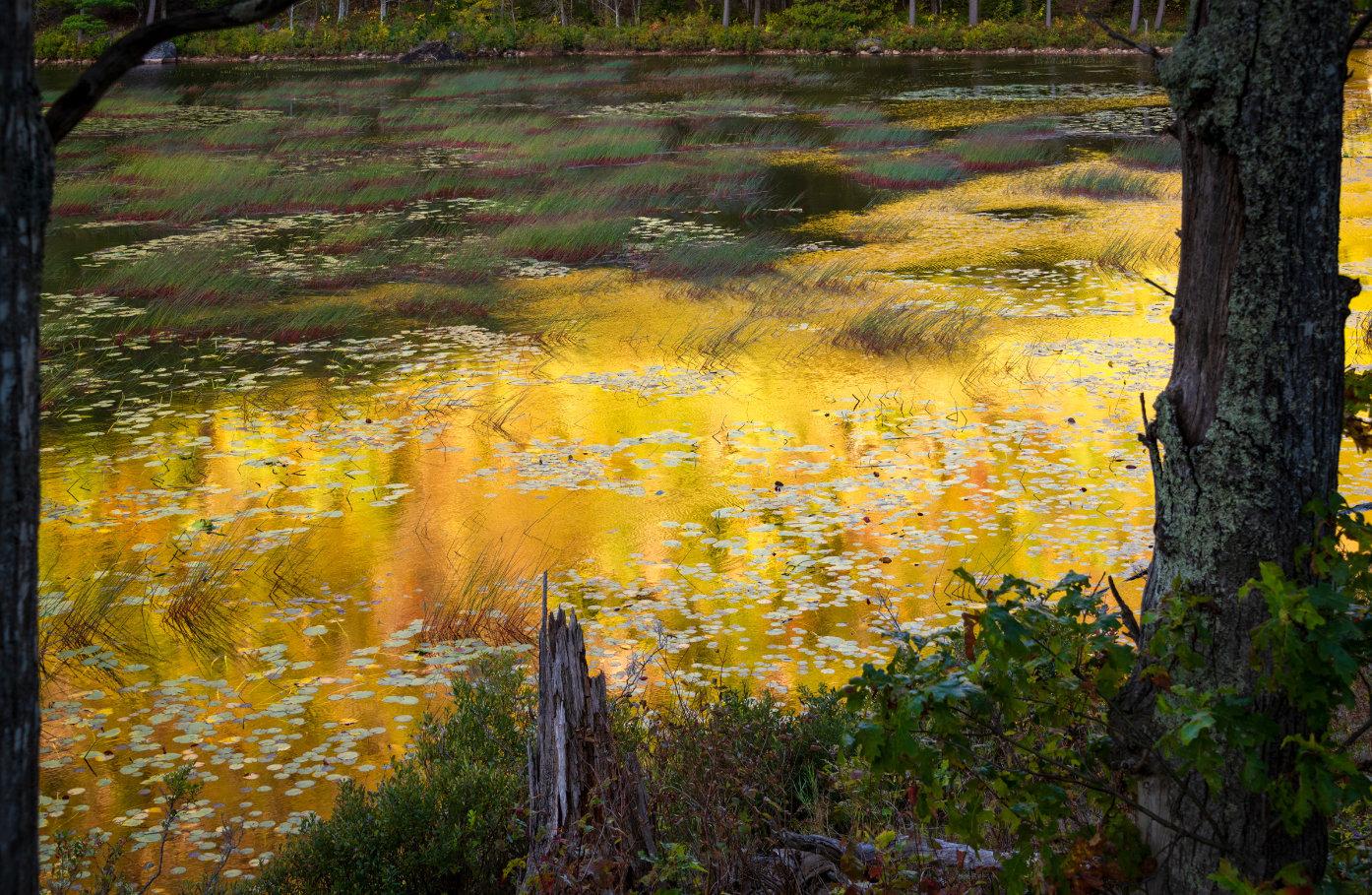
Acadia National Park, Maine
Mount Desert Island, Maine
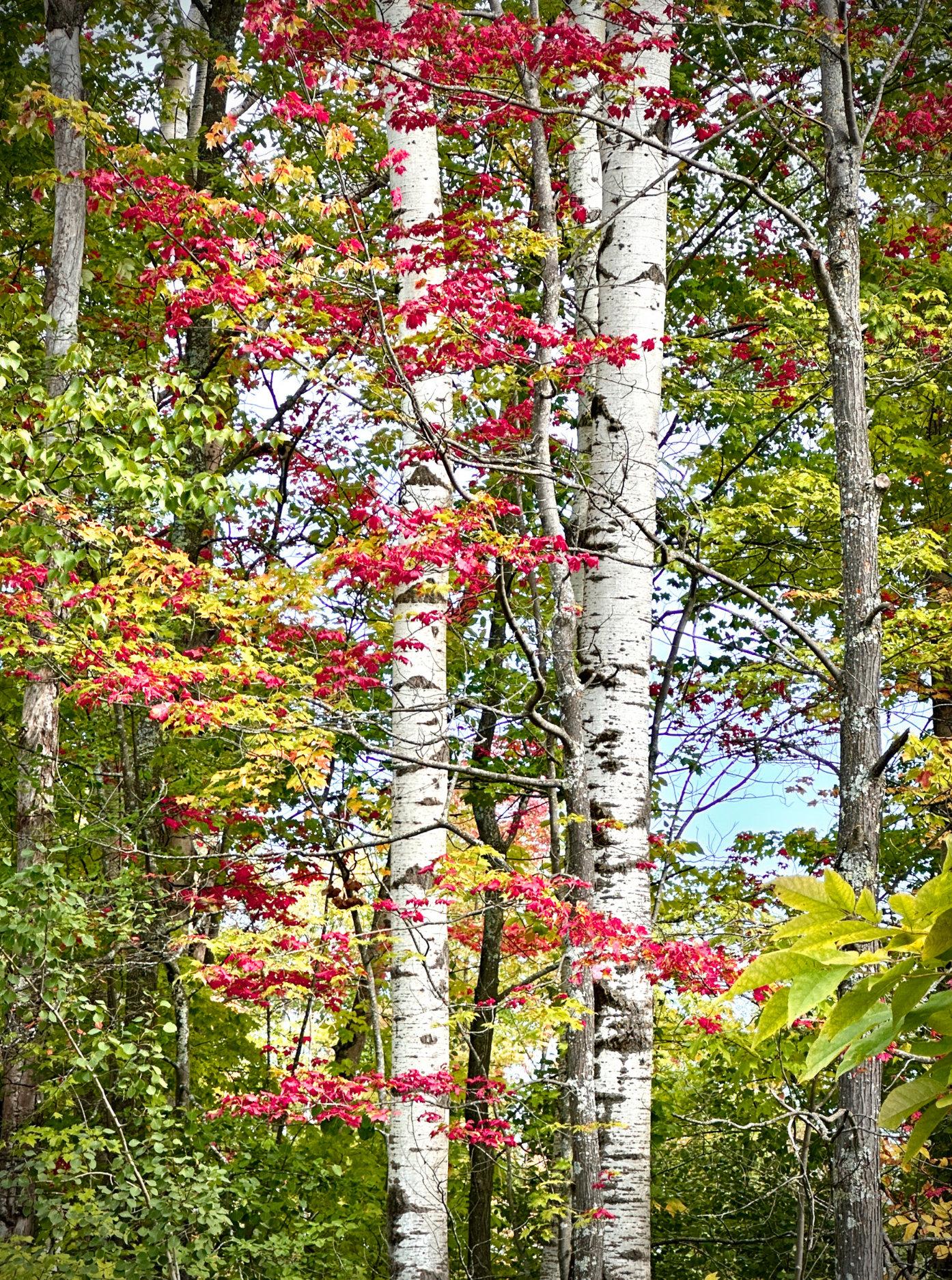
Velda Ruddock
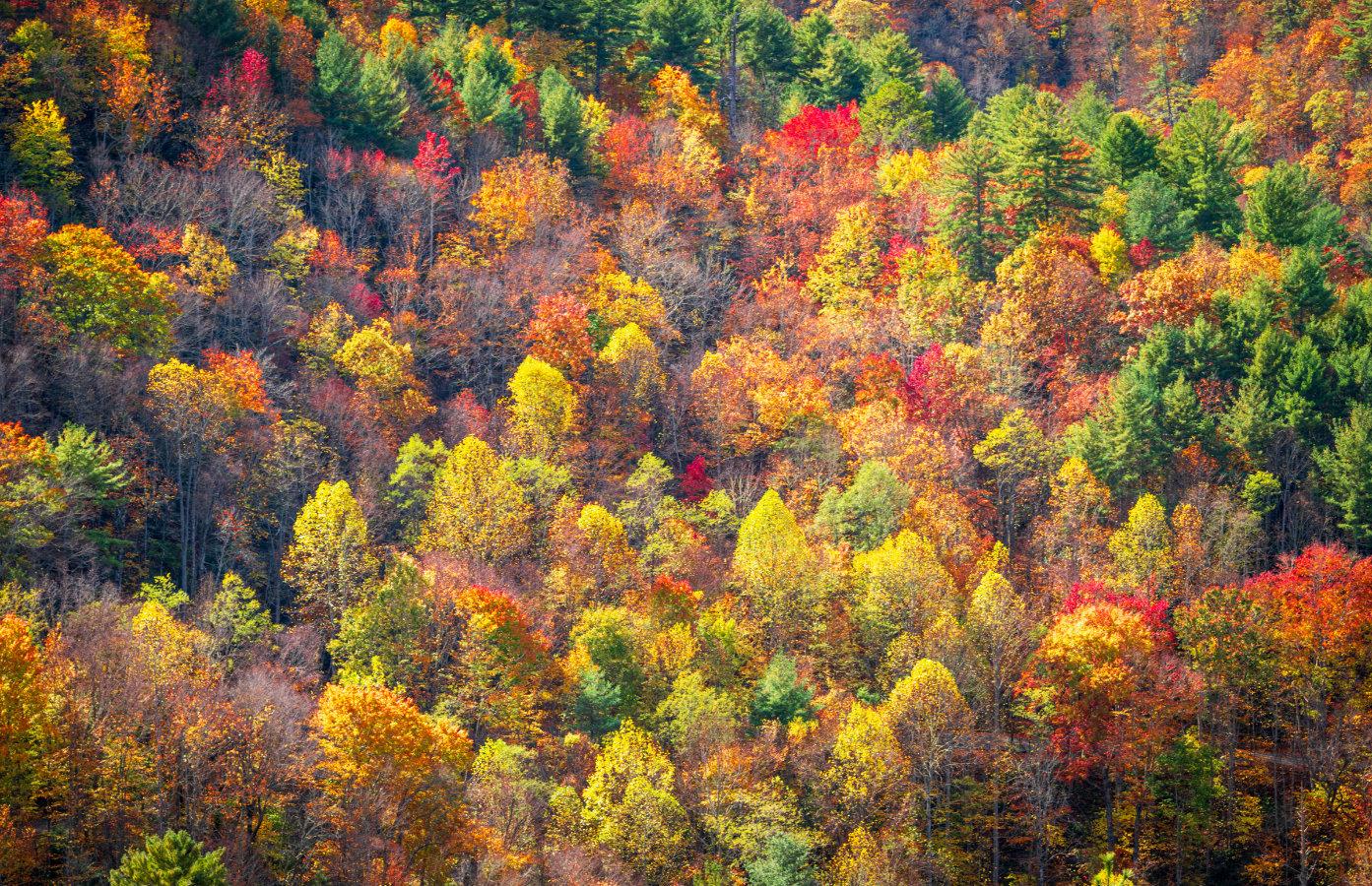
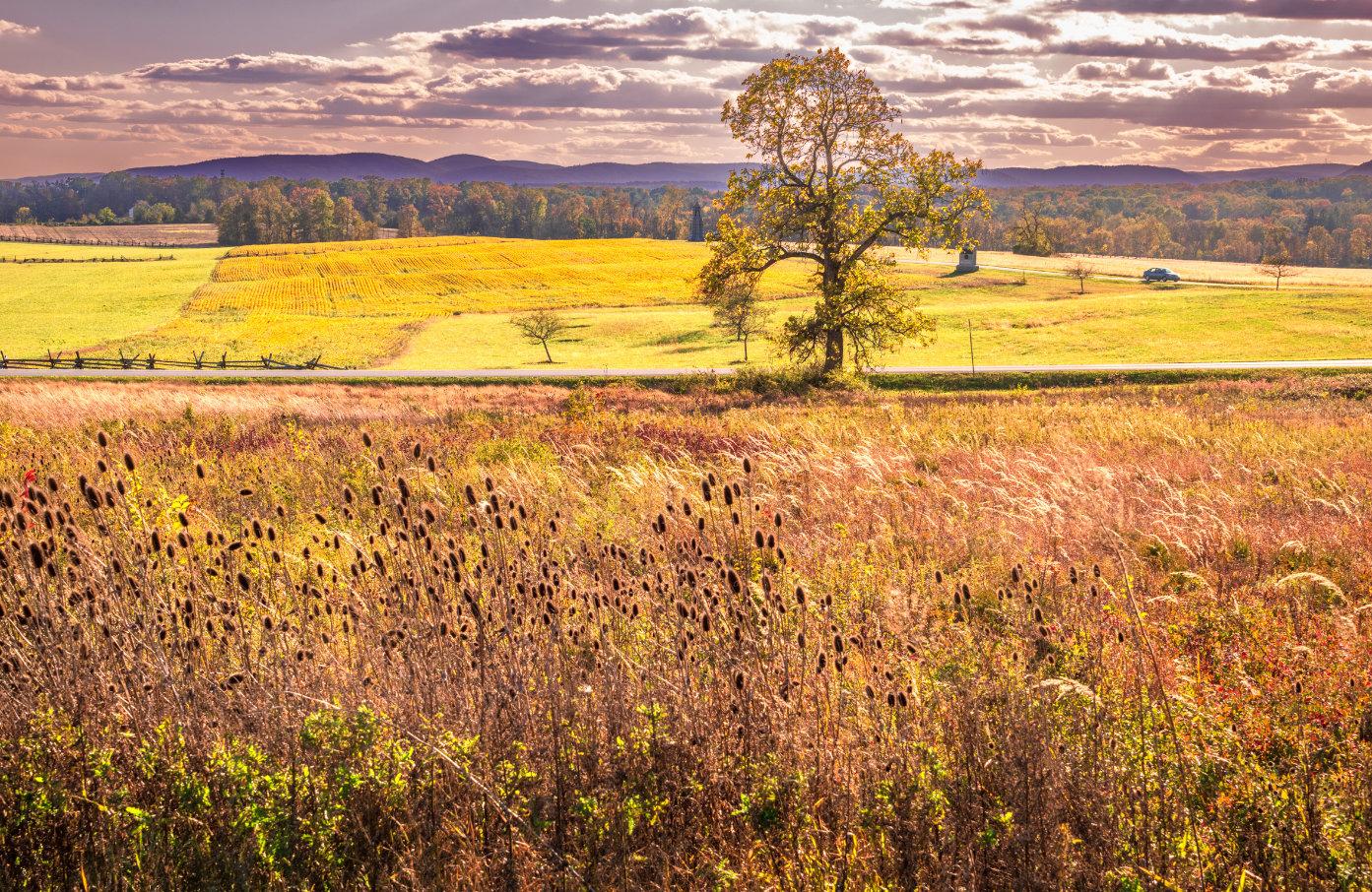
Great Smoky Mountains National Park, North Carolina
Gettysburg National Military Park, Pennsylvania
John Clement
This month images cover random wanderings from the past several years from my yard to farmlands to the desert drylands.
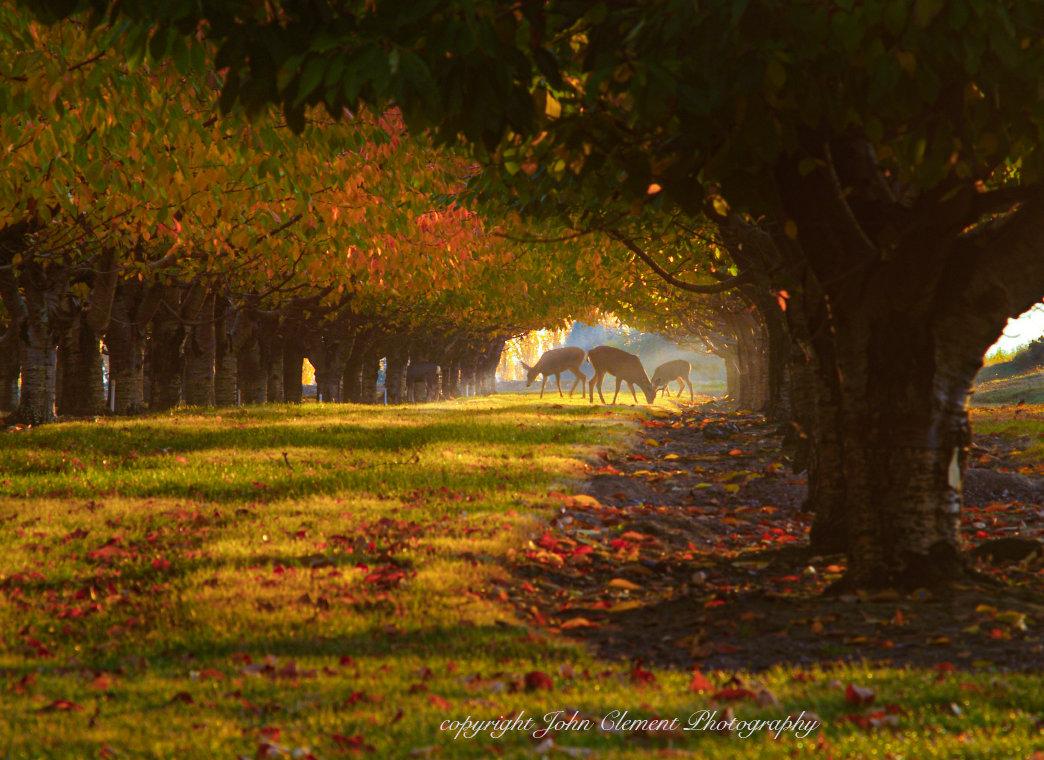
Morning Graze- from my car window as morning light streams through the orchard edge highlighting the deer.
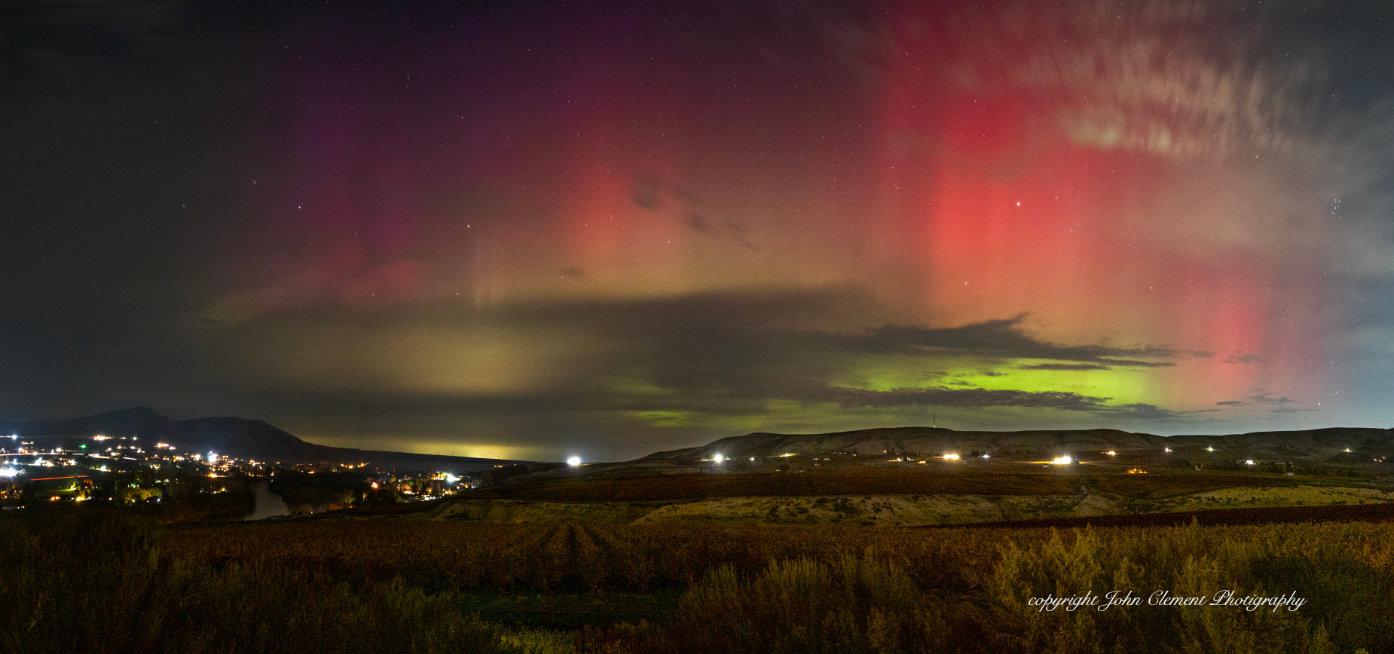
Red Mtn Aurora- 11-12-25 Found a hole in the clouds and waited for the show to begin. tho opening lasted about 15 minutes then the skies closed for the night. Red Mtn is a world famous wine area here in Eastern Washington.
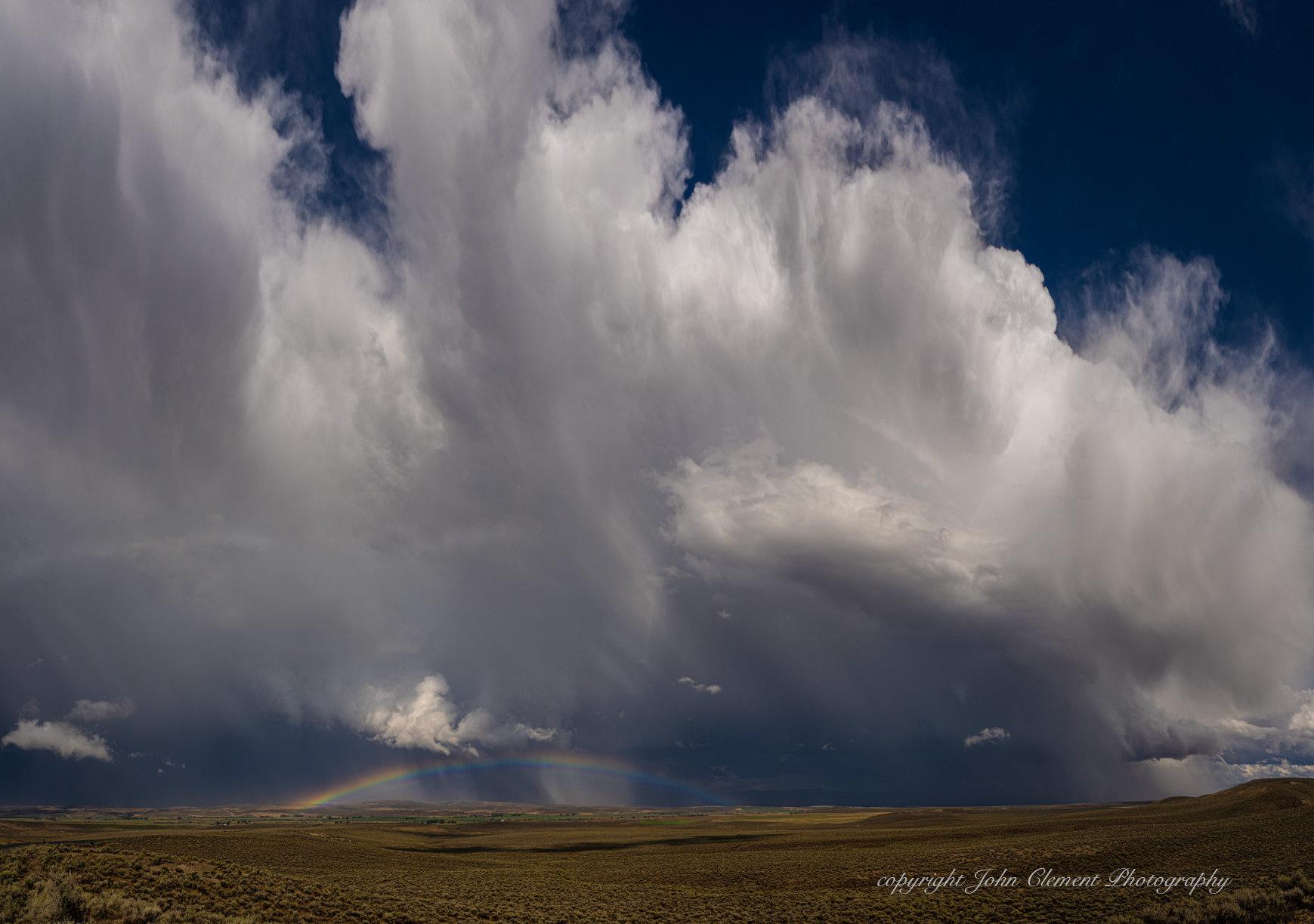
Super Cell Bow- with a funnel cloud on the right side of the image. I was in Baker City Oregon working on my late brothers estate when the storm rolled though the area so I needed a break and chased it for about 40 minutes.
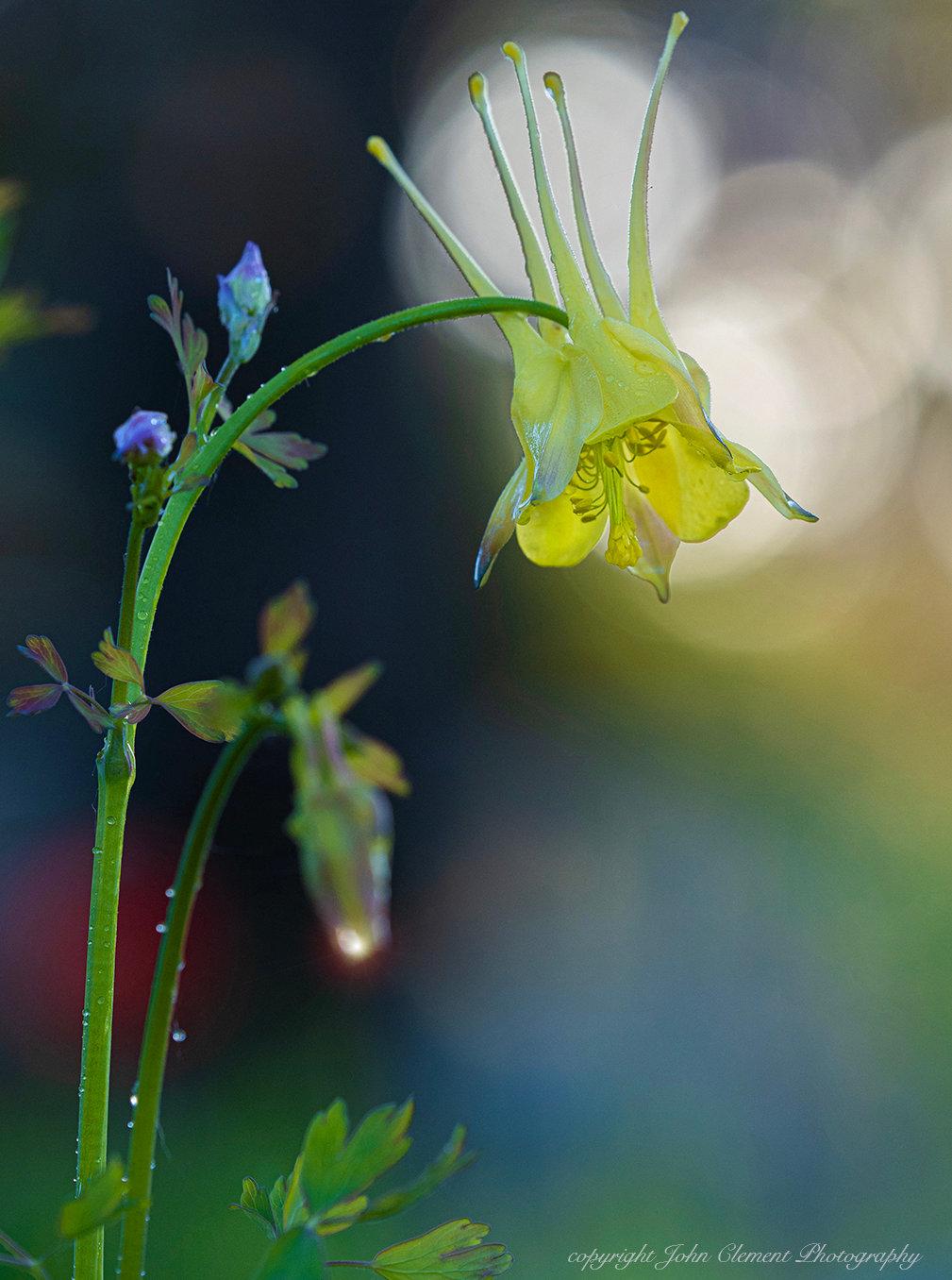
Columbine Gold in my front garden
John Clement
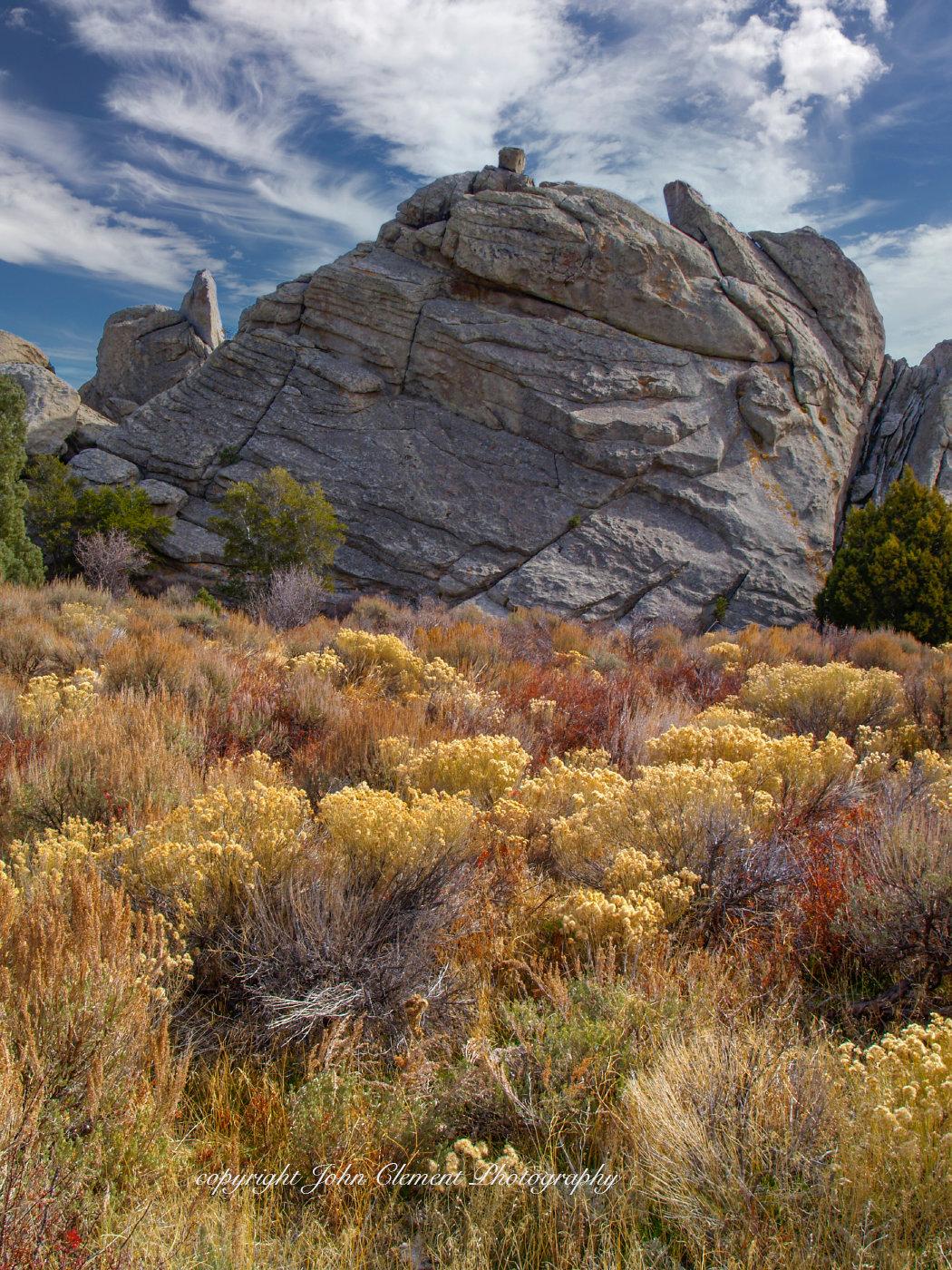
City of Rocks-SE Idaho off the beaten path but worth the trip. Challenge now is rock climbers have found it and it can be hard to get a photograph without people.
John Clement
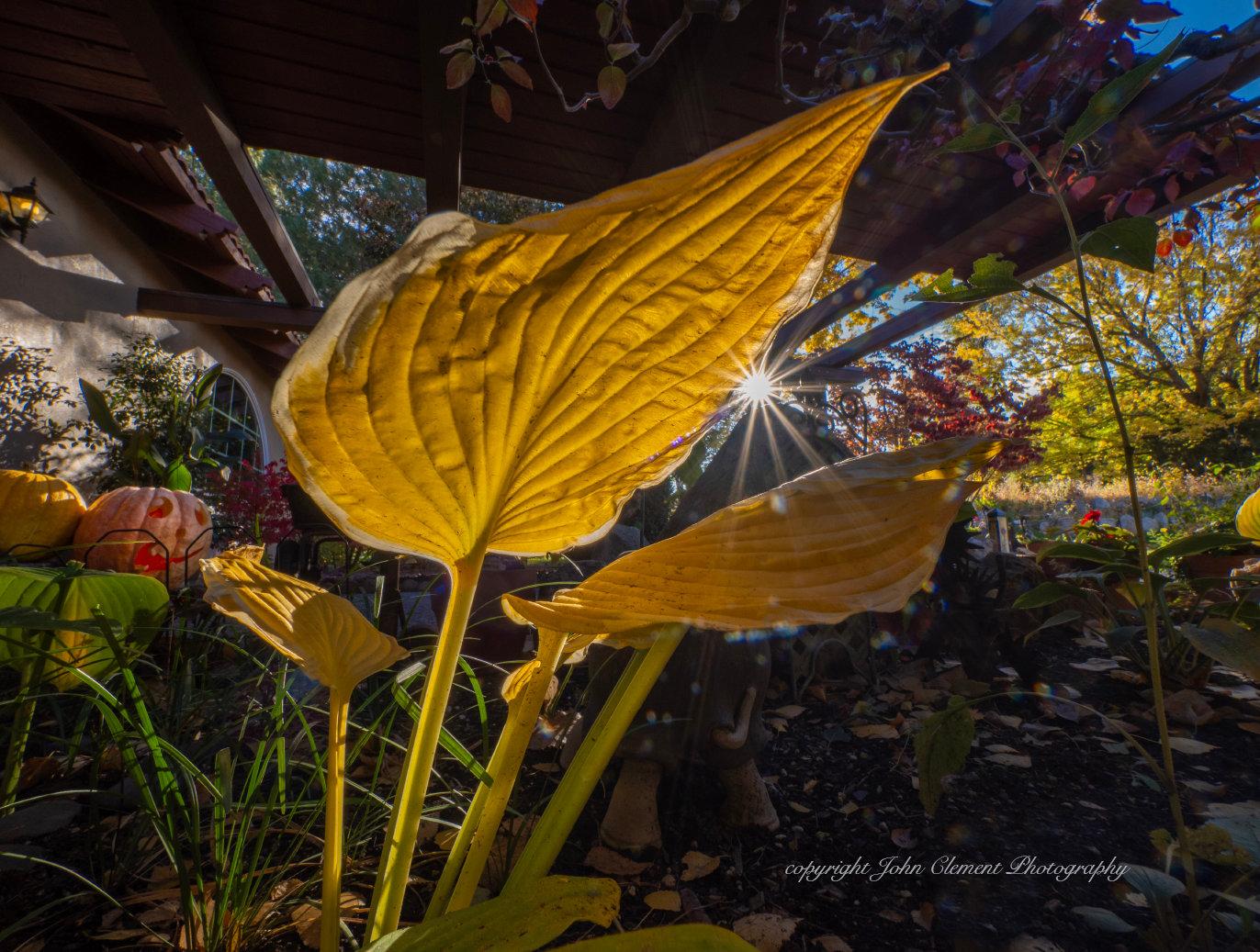
Hosta Gold - in my front garden walkway the morning light caught my eye so back in to grab my camera and 7mm lens.
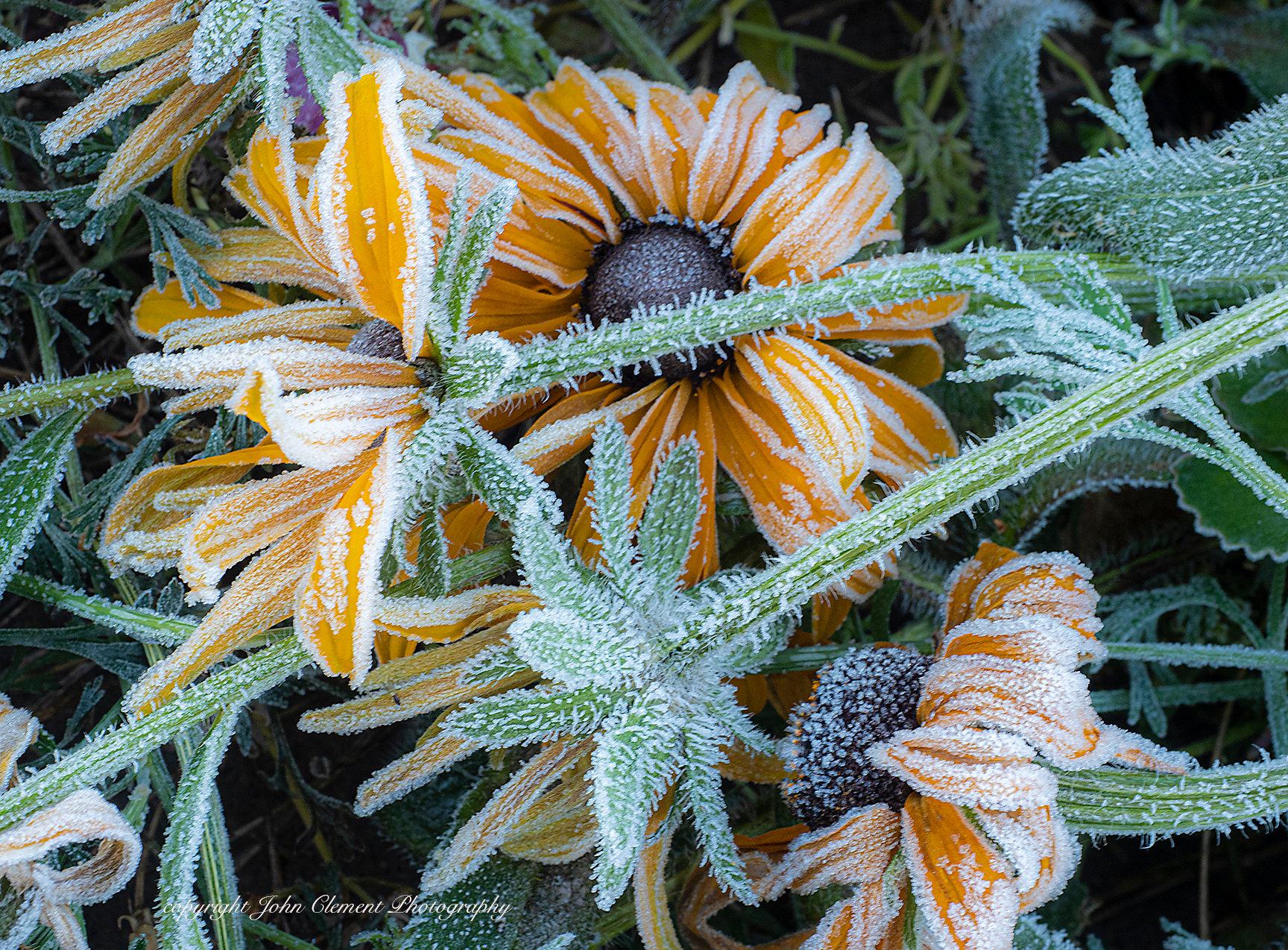
lack of things to photograph.
Frosty Flower Art - in my garden when the temperature hit the low thirties there is no
Holiday Sales from Our Members
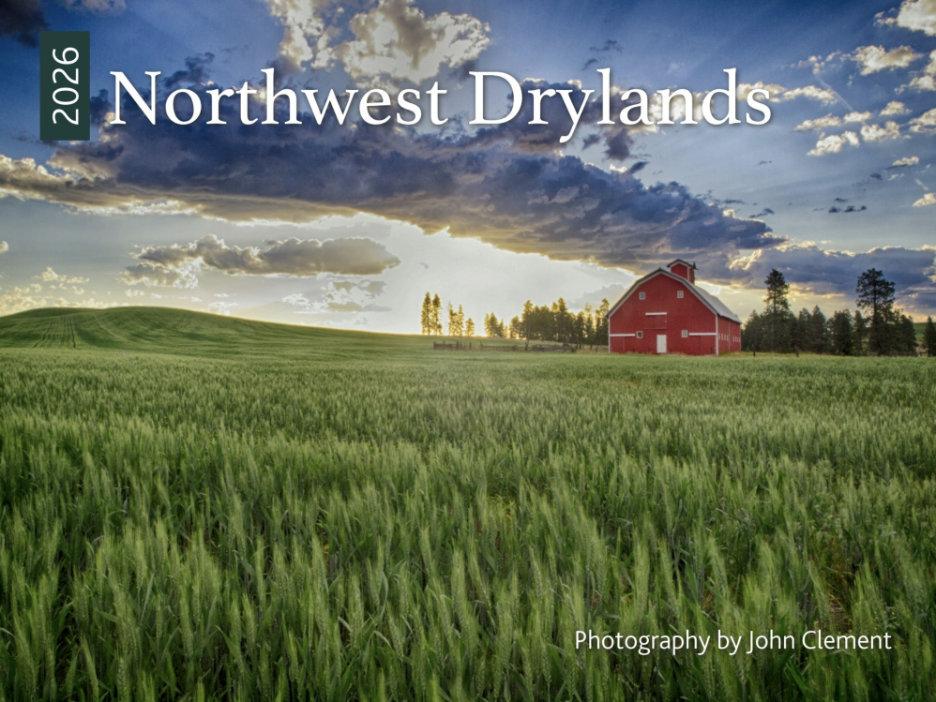
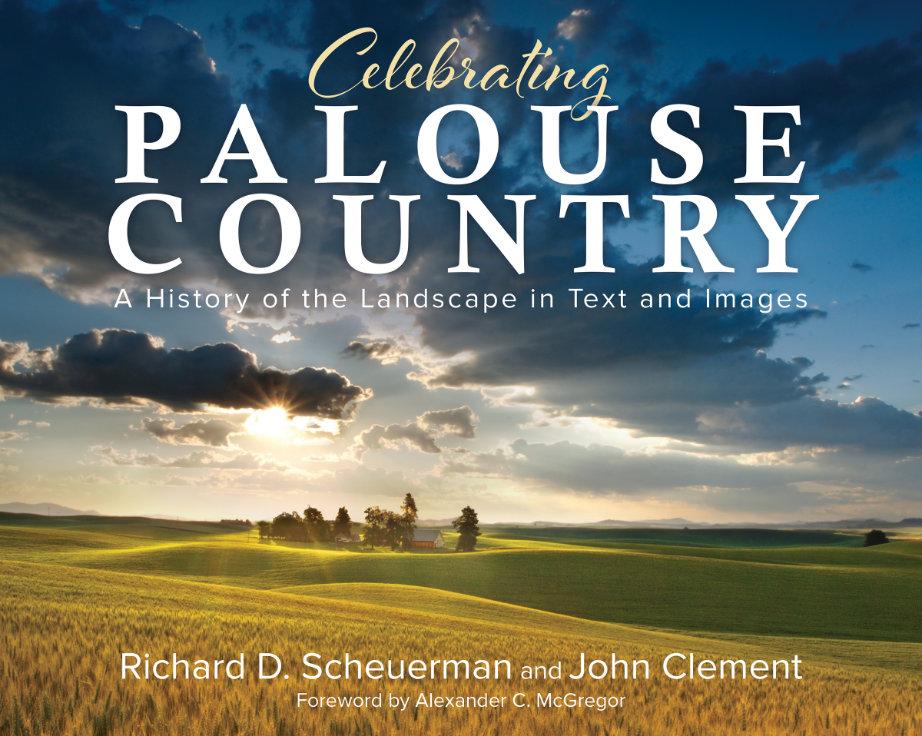
John Clement has produced a 2026 calendar “Northwest Drylands,” and a book “Celebrating Palouse Country.” To purchase contact John by email at john@johnclementgallery.com.
$18 each, includes S&H in the US.
$35 softcover
$55 hardcover S&H calculated at the time of order.
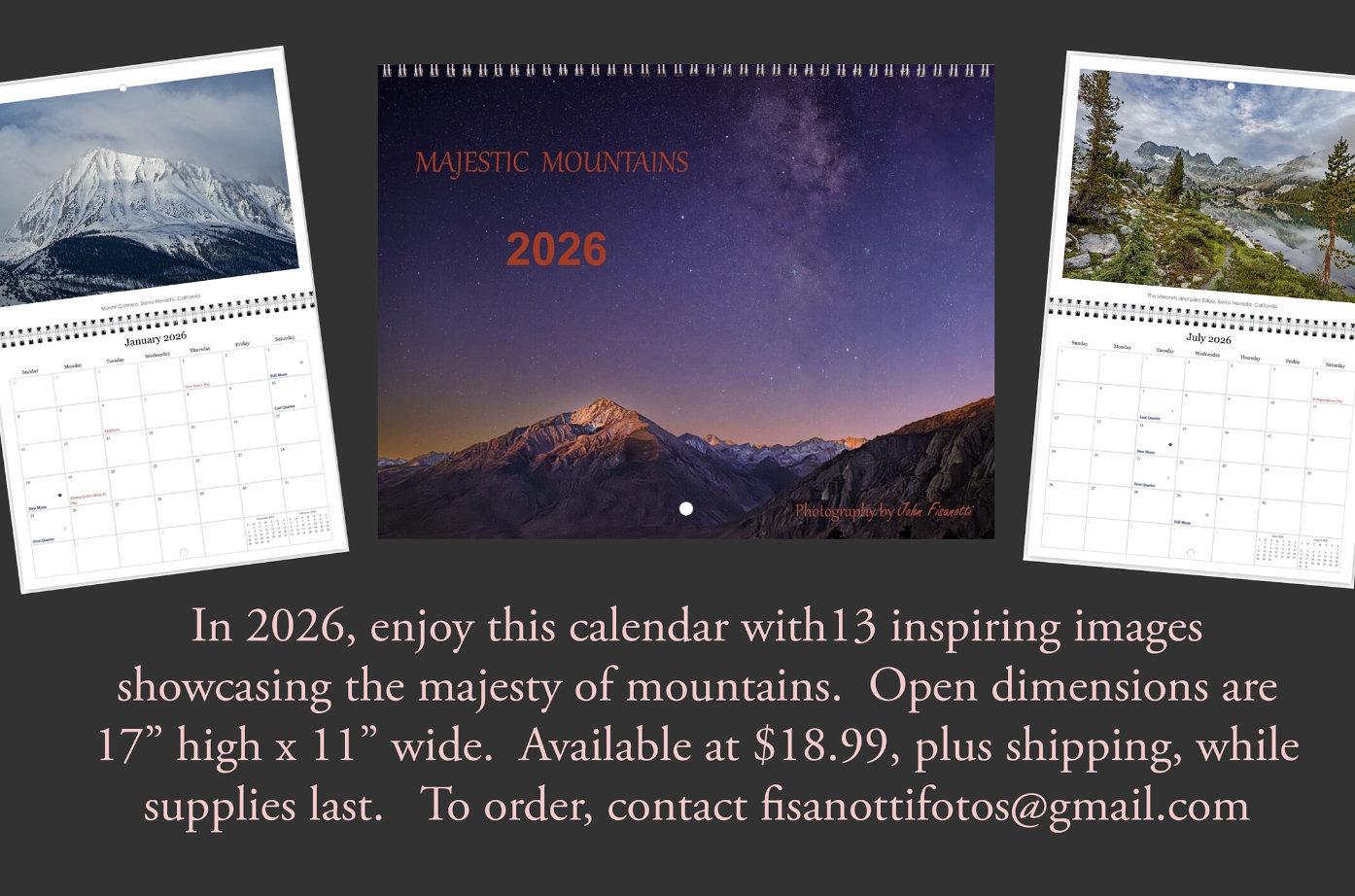
From John Fisanotti
From Velda Ruddock & Joe Doherty: Calendars, Cards, and Puzzles

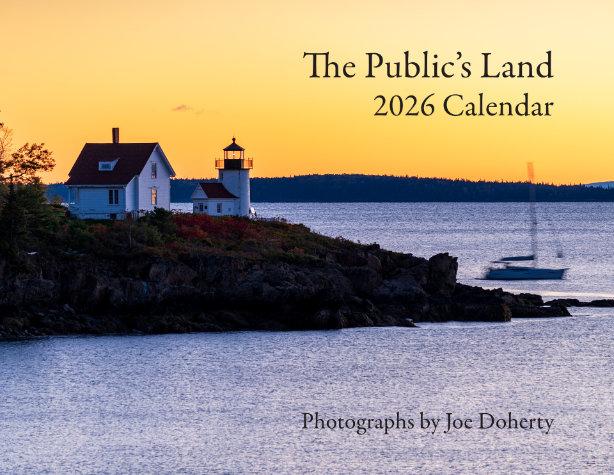
https://www.joedohertyphotography.com/calendars-and-cards
Contributors
Steve Anderson
Steve has explored the natural landscape of the San Gabriel range as well as the High Sierra using conventional film and digital photography for decades. He has self-published four photo books available through Blurb.com.
His interest in making personally significant contributions to theenvironmentalmovement started in college then expanded into becoming a life-time member of the Sierra Club and an Outings Leader. He has been a member of the Mono Lake committee for more than 40 years and was Chair of the Camera Committee for 5 years.
Steve's images haveappeared in Sierra magazine, Images of the West, A Portrait of Bodie, the Angeles Chapter Schedule of Activities covers, and the Camera Committee's Focal Points. He has shown work in local galleries, art shows, and was the San Gabriel Mountains National Monument Artist-inResidence in 2015. Some of his monochrome images in Mono Lake Committee's literature weresignificantin helping to save Mono Lake. sandersonimagery@outlook.com www.pbase.com/spanderson
Michael Caley
Michael Caley was drawn to photography as a teenager, during backpacking trips to Yosemite, where he was inspired by the work of Ansel Adams. Today Michael’s dramatic landscape and wildlife photography are a natural extension of his long career as an architect and his many trips to the Eastern Sierra, Joshua Tree NP, the western United States and five trips to Africa. His work has been exhibited in several different venues including a 2010 solo exhibit at The G2 Gallery in Venice, CA. He can be reached at mcaleyaia@aol.com
John Clement
John Clement began his career in photography in the early 70’s after graduating from Central Washington University with a double major in Geology and Geography. Since then he has earned a Masters of Photography from the Professional Photographers of America. He has received over 65 regional, national and international awards for his pictorial and commercial work. His photographs grace the walls of many businesses in the Northwest and has been published in numerous calendars and coffee table books.
Clement has provided photographs for Country Music Magazine and Northwest Travel Magazine. He has supplied murals for the Seattle Seahawks Stadium and images for The Carousel of Dreams in Kennewick, WA.
Current projects include 17 – 4x8 foot glass panels featuring his landscapes in Eastern Washington for the Pasco Airport Remodel. Last year he finished a major project for the Othello Medical Clinic where almost 200 images were used to decorate the facilities. www.johnclementgallery.com
John Clement Photography (Face Book)Allied Arts Gallery in Richland, WA.
Thomas Cloutier
Thomas Cloutier has been with SCCC since 2001, and he has been contributing to Focal Points Magazine since that time.
Cloutier’s interest in photography coincides with his interest in travel and giving representation to nature landscapes. His formal education in photography comes from CSU Long Beach.
At present Cloutier is a volunteer at CSU, Long Beach where he taught Water Colors and Drawing at the Osher Lifelong Learning Institute (OLLI), designed for Seniors over 45. He also is a docent at Kleefield Contemporary Museum CSU Long Beach. He is Liaison for the Art And Design Departments for a scholarship program for students at CSU Long Beach, Fine Arts Affiliates, FineArtsAffiliates.org.
Cloutier at cde45@verizon.net
Joe Doherty
Joe grew up in Los Angeles and developed his first roll of film in 1972. He has been a visual communicator ever since.
He spent his teens and twenties working in photography, most of it behind a camera as a freelance editorial shooter.
Joe switched careers when his son was born, earning a PhD in Political Science from UCLA. This led to an opportunity to run a research center at UCLA Law.
After retiring from UCLA in 2016, Joe did some consulting, but now he and his wife, Velda Ruddock, spend much of their time in the field, across the West, capturing the landscape. www.joedohertyphotography.com
John Fisanotti
John was a photography major in his first three years of college. He has used 35mm, 2-1/4 medium format and 4x5 view cameras. He worked briefly in a commercial photo laboratory.
In 1980, John pivoted from photography and began his 32-year career in public service. He worked for Redevelopment Agencies at four different Southern California cities.
After retiring from public service in 2012, John continued his photographic interests. He concentrates on outdoors, landscape, travel and astronomical images. Since 2018, he expanded his repertoire to include architectural and real estate photography.
John lives in La Crescenta and can be contacted at either: jfisanotti@sbcglobal.net or fisanottifotos@gmail.com http://www.johnfisanottiphotography.com http://www.architecturalphotosbyfisanotti.com
Marisa Ishimatsu
Marisa Ishimatsu, the artist behind StonePine Studios, is a biologist with a specialty in reptiles and amphibians.Nearly three decades since her first rattlesnake encounter, she travels all over the world to look for snakes and explore all ecosystems. Marisa’s goal is to help reduce “nature blindness” and encourage everyone to observe and appreciate the natural world that persists around us. Her background in biology shows through her photographs- she finds inspiration in native flora and fauna as they have persisted on the landscape for thousands of years. She believes that wildlife photography and outreach are powerful tools in conservation. She has given talks on this topic at universities, nature centers, and large tech companies and she spends many of her weekends vending at local markets where she can talk to the public about what's in their own backyards. You can find more information on Marisa's work at stonepinestudios.com or on Instagram at @marisa. ishimatsu.photography. You can contact her at stonepinestudios@gmail.com
Larry Miller
Larry used his first SLR camera in 1985 to document hikes in the local mountains. In fact, his first Sierra Club Camera Committee outing
was a wildflower photo shoot in the Santa Monica Mountains led by Steve Cohen in 1991. Since then the SCCC has introduced him to many other scenic destinations, including the Antelope Valley California Poppy Reserve, the Gorman Hills, and Saddleback Butte State Park.
Larry’s own photography trips gradually expanded in scope over the years to include most of the western National Parks and National Monuments, with the Colorado Plateau becoming a personal favorite.
Photography took a backseat to Miller’s career during the 32+ years that he worked as a radar systems engineer at Hughes Aircraft/Raytheon Company. Since retiring in 2013, he has been able to devote more time to developing his photographic skills. Experiencing and sharing the beauty of nature continues to be Larry’s primary motivation.
lemiller49@gmail.com
John Nilsson
John has a fond memory of his father dragging him to the Denver Museum of Natural History on a winter Sunday afternoon. His father had just purchased a Bosely 35mm camera and he had decided he desperately wanted to photograph one of the dioramas of several Seal Lions in a beautiful blue half-light of the Arctic winter. The photo required a tricky long exposure and the transparency his father showed him several weeks later was spectacular and mysterious to John’s young eyes. Although the demands of Medical School made this photo one of the first and last John’s Dad shot, at five years old the son was hooked.
The arrival of the digital age brought photography back to John as a conscious endeavor - first as a pastime enjoyed with friends who were also afflicted, and then as a practitioner of real estate and architectural photography during his 40 years as a real estate broker.
Since retiring and moving to Los Angeles, John continued his hobby as a nature and landscape photographer through active membership in the Sierra Club Angeles Chapter Camera Committee, as well as his vocation as a real estate photographer through his company Oz Images LA. The camera is now a tool for adventure! www.OzImagesLA.com
Velda Ruddock
Creativity has always been important to Velda. She received her first Brownie camera for her twelfth birthday and can’t remember a time she’s been without a camera close at hand.
Velda studied social sciences and art, and later earned a Masters degree in Information and Library Science degree from San Jose State University. All of her jobs allowed her to be creative, entrepreneurial, and innovative. For the last 22 years of her research career she was Director of Intelligence for a global advertising and marketing agency. TBWA\Chiat\Day helped clients such as Apple, Nissan, Pepsi, Gatorade, Energizer, and many more, and she was considered a leader in her field.
During their time off, she and her husband, Joe Doherty, would travel, photographing family, events and locations. However, in 2011 they traveled to the Eastern Sierra for the fall colors, and although they didn’t realize it at the time, when the sun came up over Lake Sabrina, it was the start of them changing their careers. By 2016 Velda and Joe had both left their “day jobs,” and started traveling and shooting nature – big and small – extensively. Their four-wheeldrive popup camper allows them to go to areas a regular car can’t go and they were – and are –always looking for their next adventure. www.veldaruddock.com VeldaRuddockPhotography@gmail.com
Rebecca Wilks
Photography has always been some kind of magic for Rebecca, from the alchemy of the darkroom in her teens… to the revelation of her first digital camera (a Sony Mavica, whose maximum file size was about 70KB)… to the new possibilities that come from her “tall tripod” (drone.)
Many years later, the camera still leads Rebecca to unique viewpoints and a meditative way to interact with nature, people, color, and emotion. The magic remains.
The natural world is Rebecca’s favorite subject, but she loves to experiment and to do cultural and portrait photography when she travels. Rebecca volunteers with Through Each Other’s Eyes, a nonprofit which creates cultural exchanges through photography, and enjoys working with other favorite nonprofits, including her local Meals on Wheels program and Cooperative for Education, supporting literacy in Guatemala.
Rebecca’s work has been published in Arizona Highways Magazine, calendars, and books, as well as Budget Travel, Cowboys and Indians, Rotarian Magazines, and even Popular Woodworking.
She’s an MD, retired from the practice of Obstetrics and Gynecology and Medical Acupuncture. She lives in the mountains of central Arizona with my husband and Gypsy, the Wonder Dog.
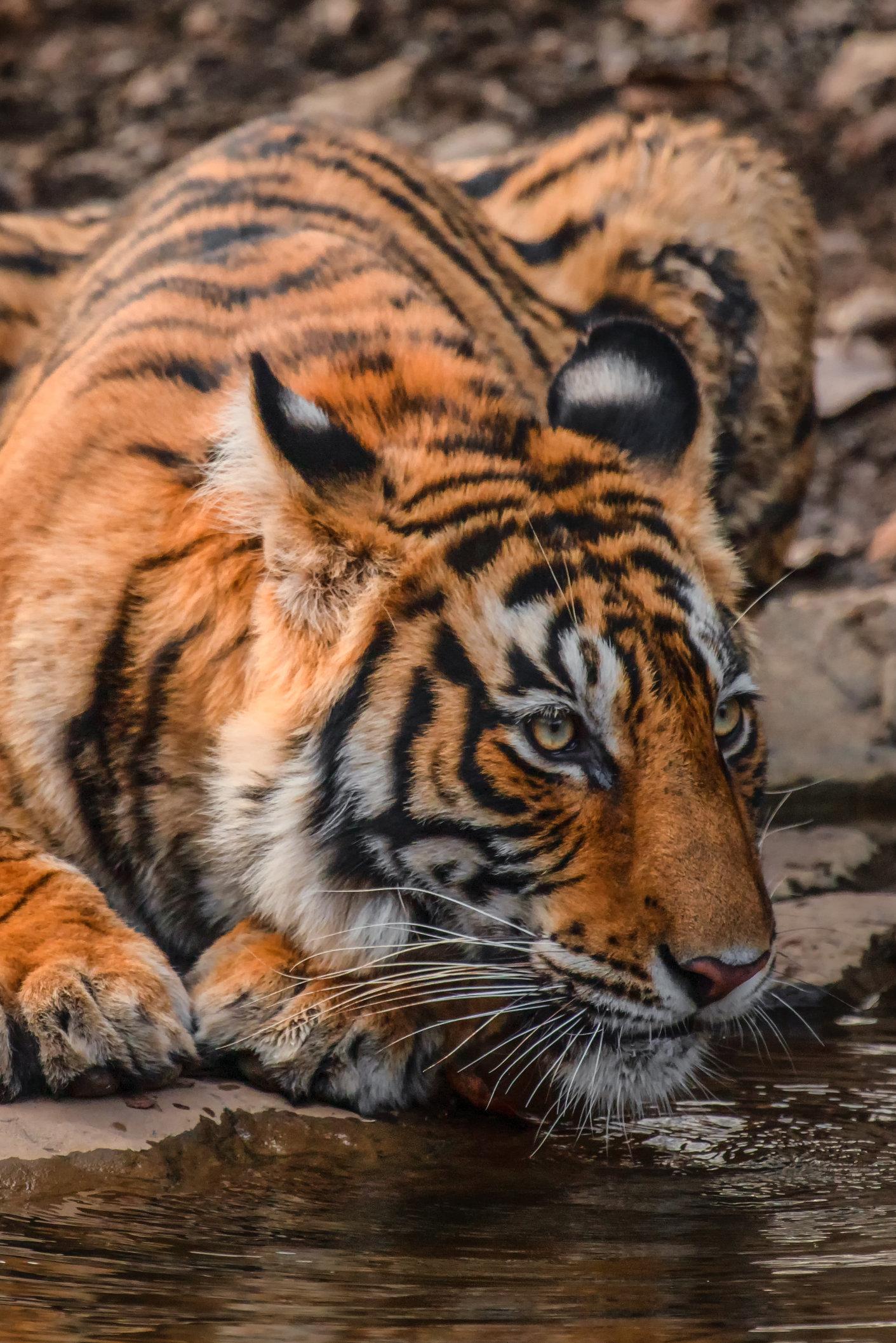
The Parting Shot
By Marisa Ishimatsu