State of Our Streams Report | Second Edition | 2018-2025
State of Our Streams Report
UNDERSTANDING WATER QUALITY IN THE HEADWATERS OF RIDLEY, CRUM, AND DARBY CREEKS
SECOND EDITION | 2018 — 2025
LAUREN MCGRATH & ANNA WALSH | 2026
LAND ACKNOWLEDGMENT | The work of Willistown Conservation Trust takes place on the ancestral lands of the Lenni Lenape. We honor the Lenape and other Indigenous caretakers of these lands and waters, the elders who lived here before, the Indigenous people today, and the generations to come. We acknowledge the Lenni Lenape as the original people of this land and their continuing relationship with their territory. In our acknowledgment of the presence of Lenape people in their homeland, we affirm the aspiration of the great Lenape Chief Tamanend, that there be harmony between the Indigenous people of this land and the descendants of the immigrants to this land, “as long as the rivers and creeks flow, and the sun, moon, and stars shine.” As we enjoy and protect the beauty of Willistown and surrounding areas, we cannot forget its original inhabitants and how their way of life echoes throughout the conservation of this land and its natural resources. While we preserve the land we must also preserve its history and the history of the Indigenous people. By sharing their story with the community, and working with local Native American organizations including the Lenape Nation of Pennsylvania, we can hope to ensure that their legacy lives on with the land.
STATE OF OUR STREAMS REPORT CONTENTS
LAND ACKNOWLEDGEMENT
INTRODUCTION
OVERVIEW OF RESULTS
HOW TO USE THIS DOCUMENT
SECTION 1 | CHEMISTRY
1.1 Water Temperature
1.2 Dissolved Oxygen
1.3 pH
1.4 Discharge
1.5 Total Suspended Solids
1.6 Turbidity
1.7 Specific Conductivity
1.8 Chloride Concentration
1.9 Total Nitrogen
1.10 Total Phosphorus
SECTION 2 | DARBY & COBBS CREEK COMMUNITY SCIENCE PROGRAM
2.1 Overview of the Program
2.2 Data Review
SECTION 3 | BIOLOGY
3.1 Macroinvertebrates
3.2 Freshwater Mussels
3.3 Diatoms
3.4 Wildlife Notes from the Field
CONCLUSION
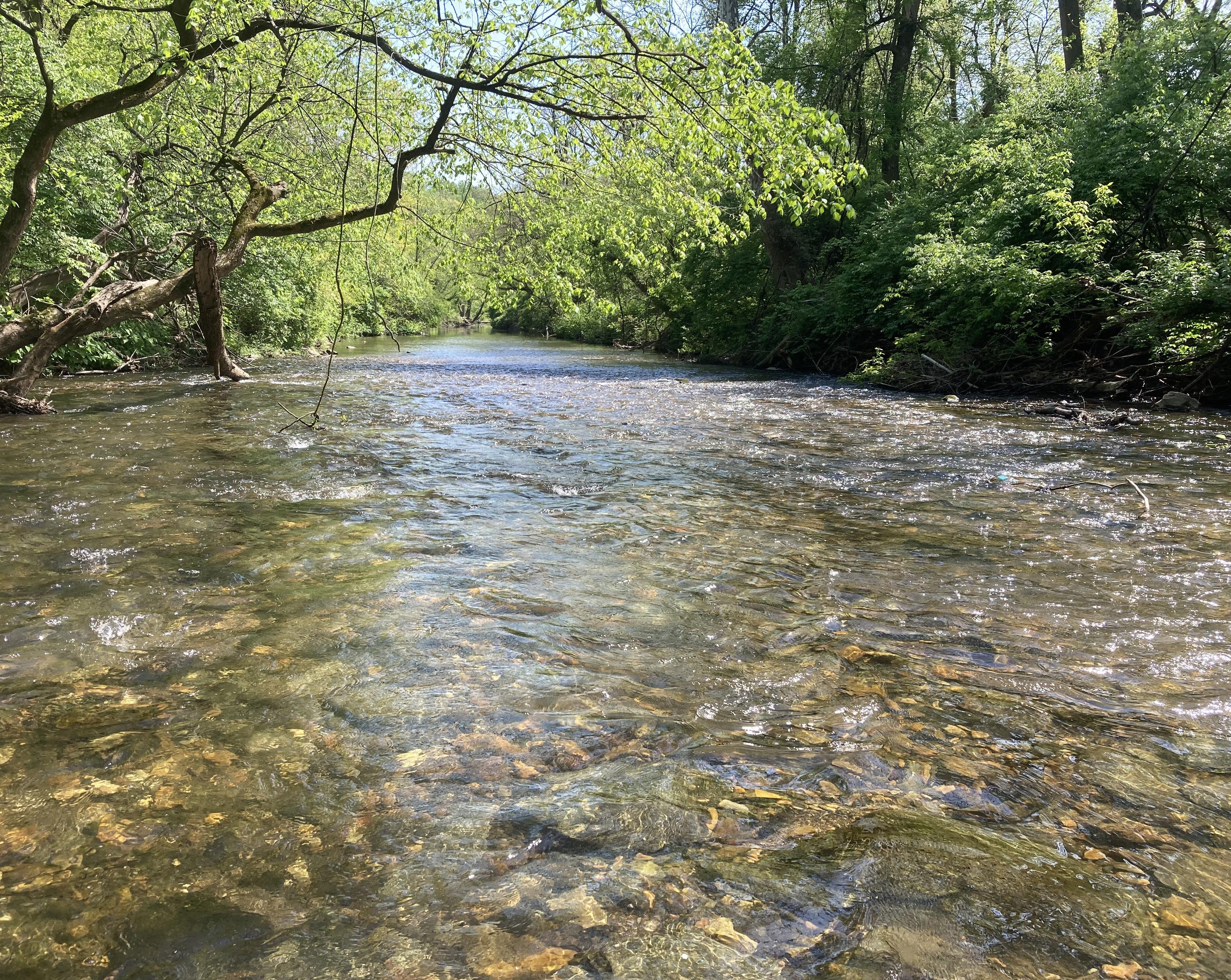
Cover photo by Lauren McGrath
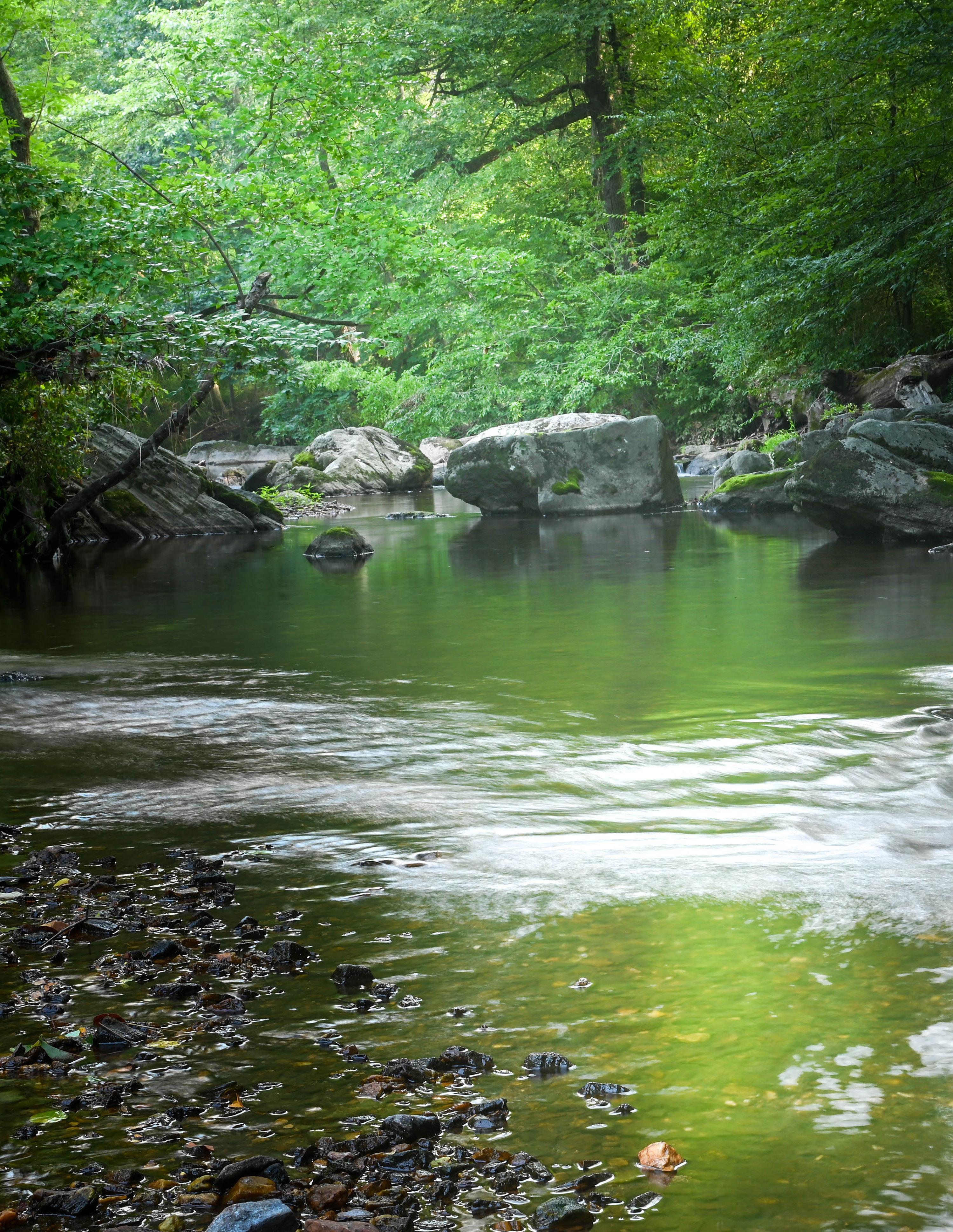
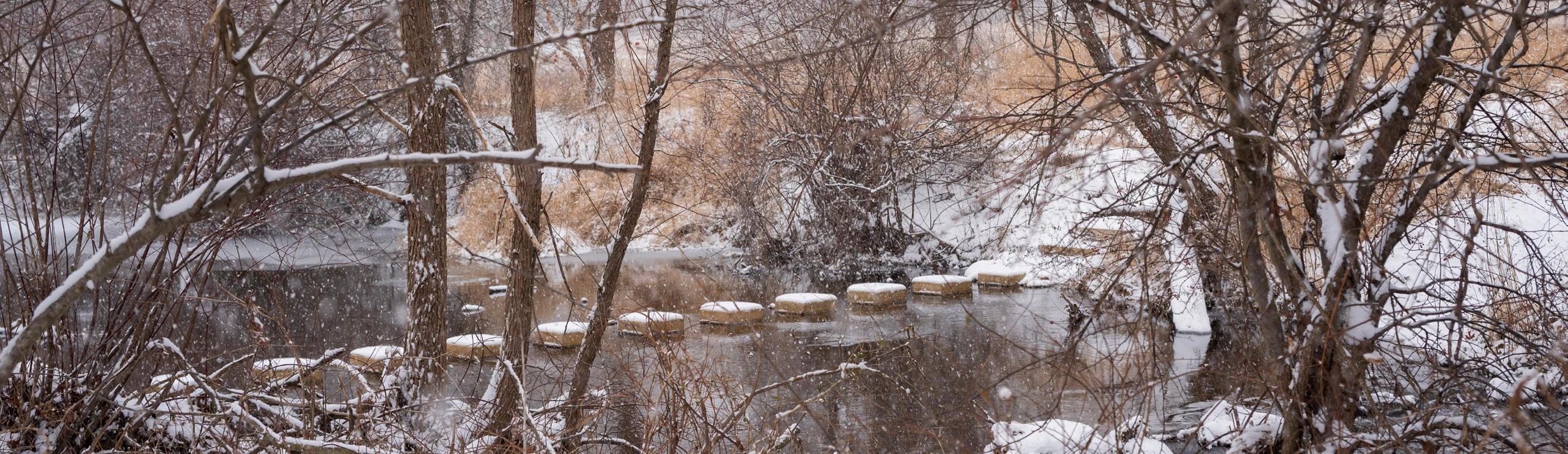
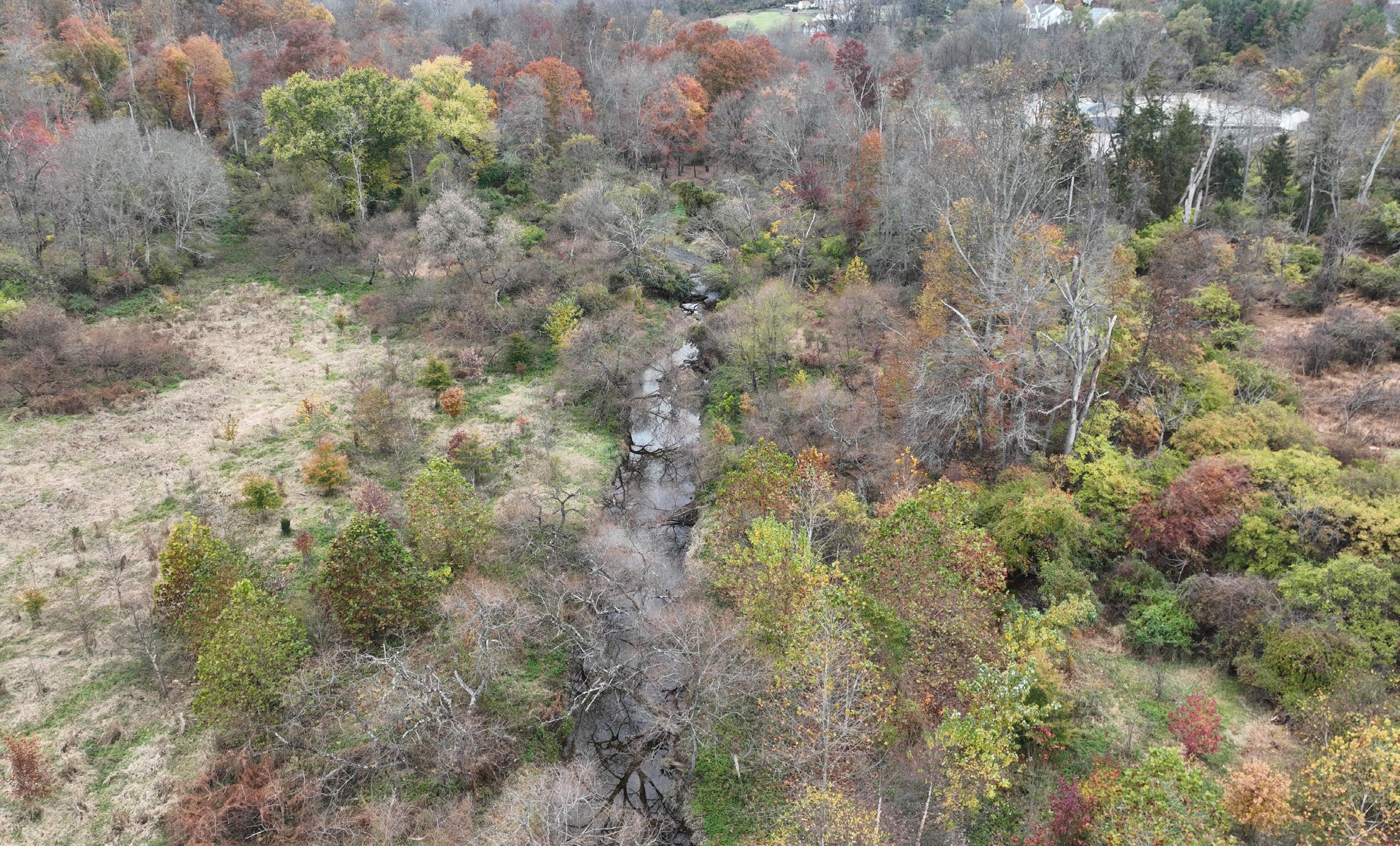
Crum Creek | David Hucker
INTRODUCTION
Welcome to the second edition of the State of Our Streams, a celebration of eight years of monitoring and research by Willistown Conservation Trust's (WCT) Watershed Protection Program Staff. Aquatic ecosystems, like the headwaters of Ridley, Crum, and Darby Creeks studied in this report, face a devastating reality: if human activity continues unchecked, it will result in irreparable harm to these invaluable resources. Studies around the world have shown that climate change and human development have had disproportionate impacts on aquatic systems, causing as high as an 85% decline of all freshwater habitat.1 As water quality declines and species are lost, streams become weaker in the face of future disturbances. At the state level, the Pennsylvania Department of Environmental Protection’s 2024 Integrated Water Quality Report shows that across Pennsylvania, 34% of stream miles are considered impaired for one or more uses.2 More locally, 79% of stream miles in Chester County and 95% of stream miles in Delaware County are considered impaired.2
Ridley, Crum, and Darby Creeks originate in eastern Chester County and northwestern Delaware County, where an agricultural tradition and strong legacies of protecting open space have restrained development. As headwater tributaries merge and these streams flow toward the Delaware River, they transverse increasingly developed landscapes. Humans depend on these waterways, and yet human development and activity threaten the health and very existence of many of these tributaries, with negative consequences for the Delaware River basin as a whole. Degraded water quality, impaired water flow, and regional flooding not only threaten the health of many plant and animal species but also create economic and public safety challenges.
Over the last eight years, Watershed staff have witnessed the increasing instability of these systems. Extreme flooding, like that caused by Hurricane Ida in 2021, triggered substantial erosion and contamination. The historic drought in 2024, where no rain fell in the month of October, led to dangerously low flows and elevated chloride concentration – an indication of road salt buildup in soil and groundwater. It is difficult to overstate the impact that events like these have had on local wildlife. Predictions are that climate changedriven instability will to be a significant hurdle for aquatic ecosystems as we move into the future.
Alongside the observed realities of climate change, Watershed staff could never have predicted the wildlife we would document over the past several years. Despite the combined pressures of land development and extreme weather events, this region retains an incredible ability to recover and support sensitive populations – from freshwater mussels, one of the most at risk groups of organisms globally, to the North American river otter, which had been driven almost to extinction in Pennsylvania due to poor water quality and overhunting.
The resilience of these systems provides hope and inspiration for those who are in search of action. As you move through this report, we encourage you to delve into the data in each chapter. The breadth and depth of information provides a roadmap for how to maintain and protect these resources for an unstable future. From the compelling complexities of water chemistry to the intricacies of macroinvertebrate and diatom communities, similar patterns emerge: these streams have warm water temperature, elevated chloride concentration, an indicator of road salt pollution, and elevated nutrients. However, we do see benefits from concentrated land protection and restoration efforts: streams flowing through less developed areas, especially forested areas, tend to have cooler water, less pollution from road salt, and lower nutrient levels.
This report provides a data-based analysis of the present conditions of our waterways and recommendations for future watershed protection. Collaboration among watershed protection and conservation organizations, with federal, state, municipal, and nongovernmental coordination, will be crucial to protect healthy waterways and mitigate existing damage. In addition, the informed and concerted efforts of the residents of this region, including their support for policies that protect watersheds, will be a critical component of any present and future watershed protection. We hope this report will help community members understand the science behind the state of the streams and offer tangible suggestions for improving watershed health. We know that we can improve the health of our streams when we work together. Life depends on it.
each site every four weeks from January 2018 through December 2025.
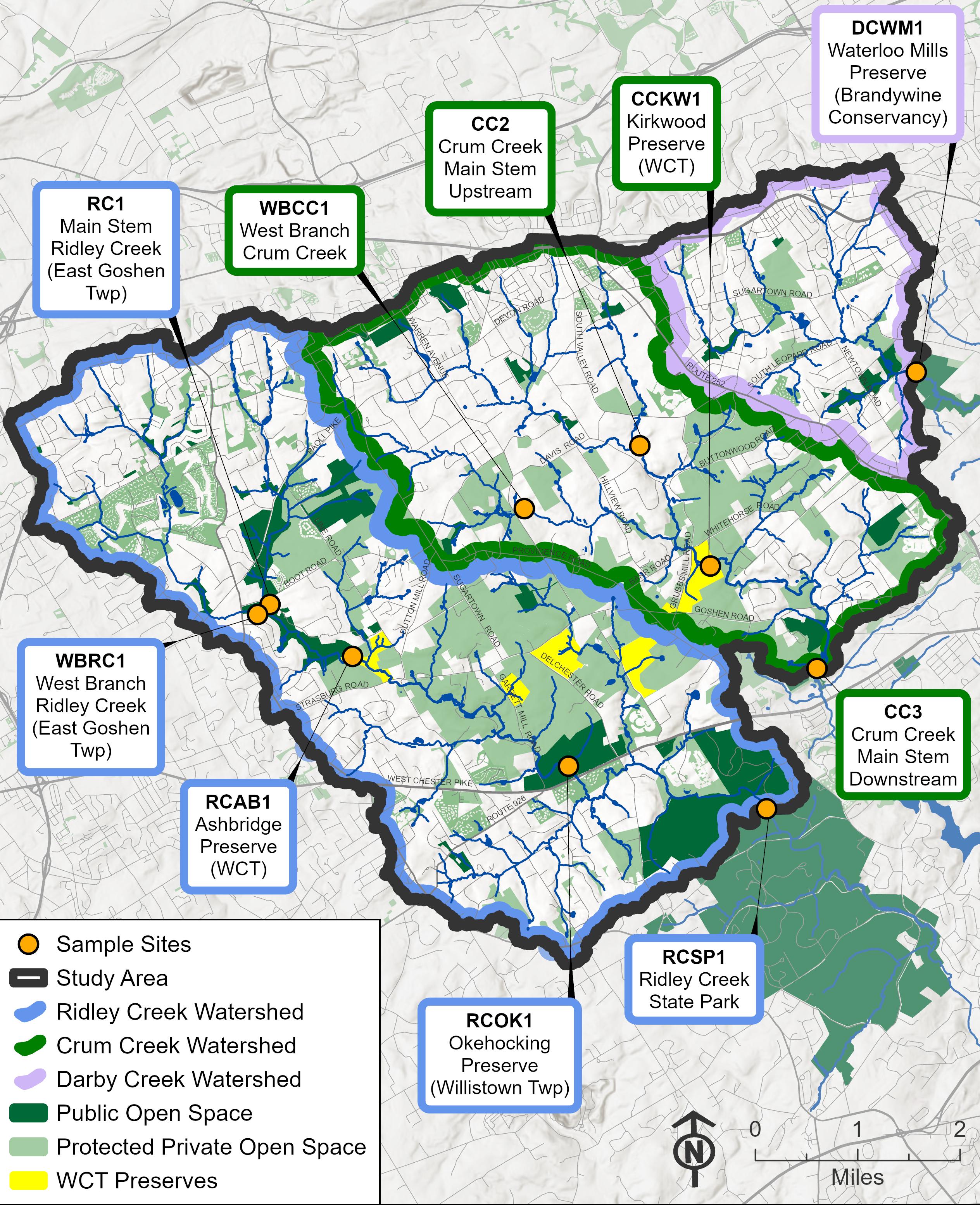
Figure 1. Willistown Conservation Trust’s Watershed Protection Program sample sites. Five sites are in Ridley Creek, four sites are in Crum Creek, and one site is in Darby Creek. Sampling was conducted at
OVERVIEW OF RESULTS
From 2018 through 2025, the Watershed Protection Program conducted monthly sampling at ten sample sites in the headwaters of Ridley, Crum, and Darby Creeks, which are tributaries of the Delaware River (Figure 1). Sampling was paused from April 2020 through December 2020 due to the COVID-19 pandemic. Due to limited access, sampling at Crum Creek Main Stem Upstream (CC2) was paused from October 2023 through March 2024. Since 2018, 91 monitoring visits have been conducted and nearly 15,000 measurements have been taken, allowing for comprehensive analysis of stream health.
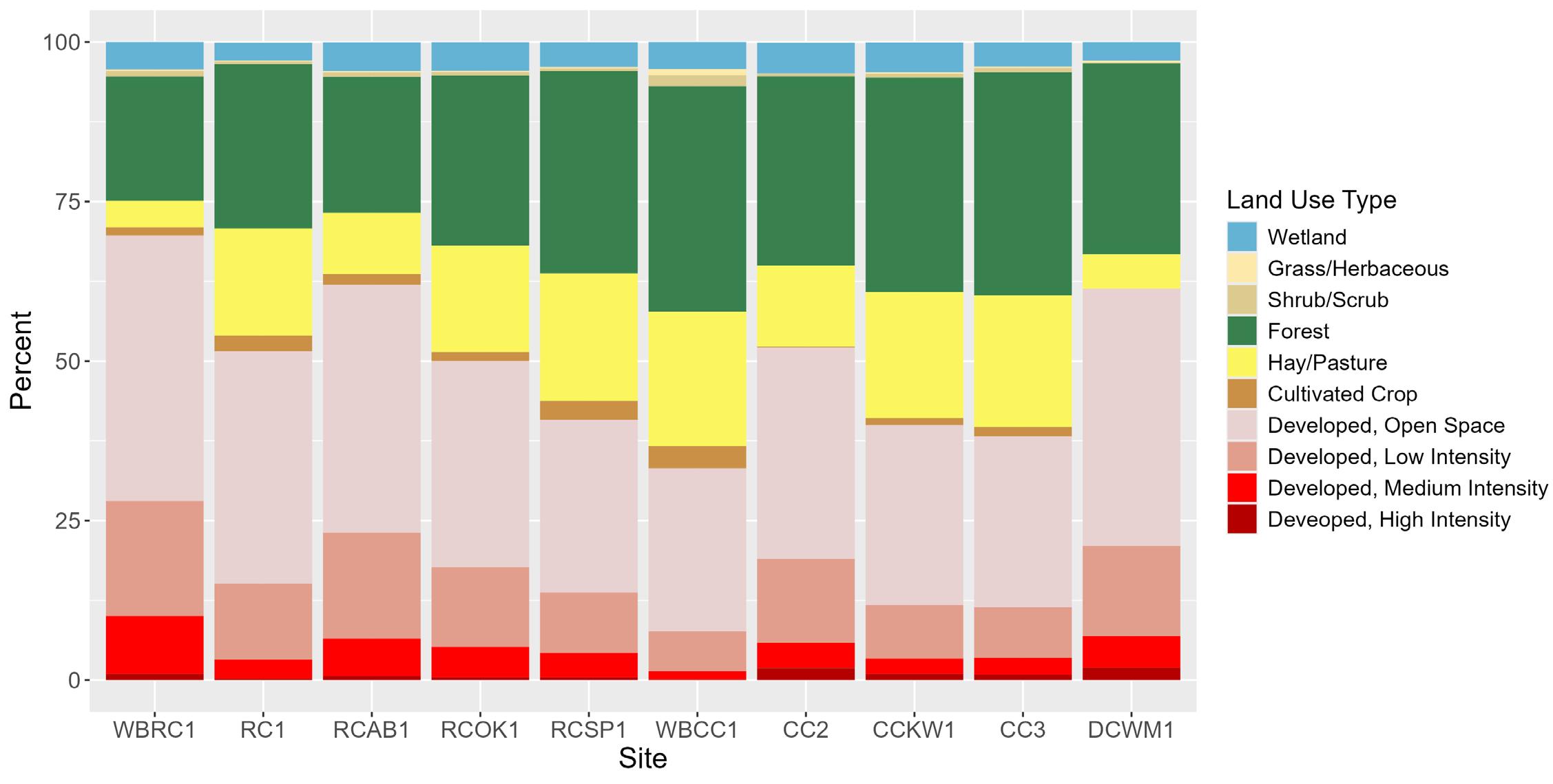
Catchments draining to the sample sites range in size from 5.3 km2 for West Branch Crum Creek (WBCC1) to 55 km2 for Ridley Creek State Park (RCSP1, Table 1). In the catchments draining to WBCC1, Crum Creek at Kirkwood Preserve (CCKW1), Crum Creek Main Stem Downstream (CC3) and RCSP1, the primary land use is forest (Figure 2).3 In all other catchments, the primary land use is developed open space, defined as areas with less than 20% impervious surface cover.3 Impervious surfaces are surfaces that water cannot pass through, such as roads, parking lots, sidewalks, and buildings. Impervious surface cover refers to the extent of impervious surfaces in an area and ranges from 10% at WBCC1 to 21% at Darby Creek at Waterloo Mills (DCWM1, Table 1).4,5
Water quality is moderately impaired at all sample sites by elevated temperature, chloride concentration, and nutrients. Temperature is elevated in all seasons, due to a myriad of factors including development, removal of riparian forests, and climate change. Specific conductivity (SPC) and chloride concentration are chronically elevated, likely due to winter road salt applications that persist in streams throughout the year. Nutrients – nitrogen and phosphorus – are present in concentrations above estimated natural background levels, likely from fertilizer runoff and leaky septic and sewer systems.
These findings align with the Pennsylvania Department of Environmental Protection’s (PADEP) 2024 Integrated Water Quality Report, which listed the studied areas of Ridley, Crum, and Darby Creeks as impaired for their aquatic uses.2 In other words, water quality in Ridley, Crum, and Darby Creeks is not high enough to support the full diversity of fish and other organisms that should live in these streams.2
Water quality is linked to land use, specifically impervious surface cover and forest cover. The sites most impaired by elevated chloride concentration are West Branch Ridley Creek (WBRC1), Ridley Creek at Ashbridge Preserve (RCAB1), and DCWM1, which have high
Great Blue Heron ( Ardea herodias ) | Anna Walsh
impervious surface cover (Table 1). Conversely, WBCC1, which has the lowest impervious surface cover and highest forest cover, is least impaired by elevated chloride concentration (Figure 2, Table 1). Low forest cover helps explain elevated nutrients at WBRC1 and RCAB1. Elevated chloride concentration and nutrients at RCAB1 can also be explained by a wastewater outflow directly upstream of the sample site. Water quality tends to improve as Ridley and Crum Creeks flow through substantial areas of protected open space, highlighting the importance of protecting land, especially forests, for maintaining and improving water quality in our region.
Table 1. Drainage area and percent impervious surface cover in the catchments draining to each sample site.
Figure 2. Land use in the catchments draining to each sample site. Developed, Open Space is defined as areas with less than 20% impervious surface cover; Developed, Low Intensity has 20 – 49% impervious surface cover; Developed, Medium Intensity has 50 - 79% impervious surface cover; Developed, High Intensity has 80% or more impervious surface cover.
2.
HOW TO USE THIS DOCUMENT
This publication is intended for education and awareness purposes only and should be used to help inform land use decisions and raise watershed literacy.
UNDERSTANDING P-VALUES AND SIGNIFICANCE
Statistical tests determine if relationships between sites or variables are the result of random occurrences or if they are patterns with an underlying explanation. Statistical tests produce a p-value, which ranges from 0 to 1 and represents the likelihood that a relationship is the result of random variation. A p-value of 0.05 and below is considered statistically significant; there is a 5% chance or less that the relationship is caused by randomness. Instead, there is likely an explanation for the relationship. A p-value of 0.10 and below is a trend – there may be an explanation for the relationship, but the data are not strong enough to be significant. For example, if a statistical test compares water temperature at two sites and the resulting p-value is 0.02, there is a 2% chance that the difference between the sites is due to random variation. Rather, some phenomenon is leading to a statistically significant difference in water temperature. Conversely, if the resulting p-value is 0.75, there is a 75% chance that any observed difference between sites is caused merely by randomness: there is no significant difference in water temperature between sites.
HOW TO READ SCATTERPLOTS
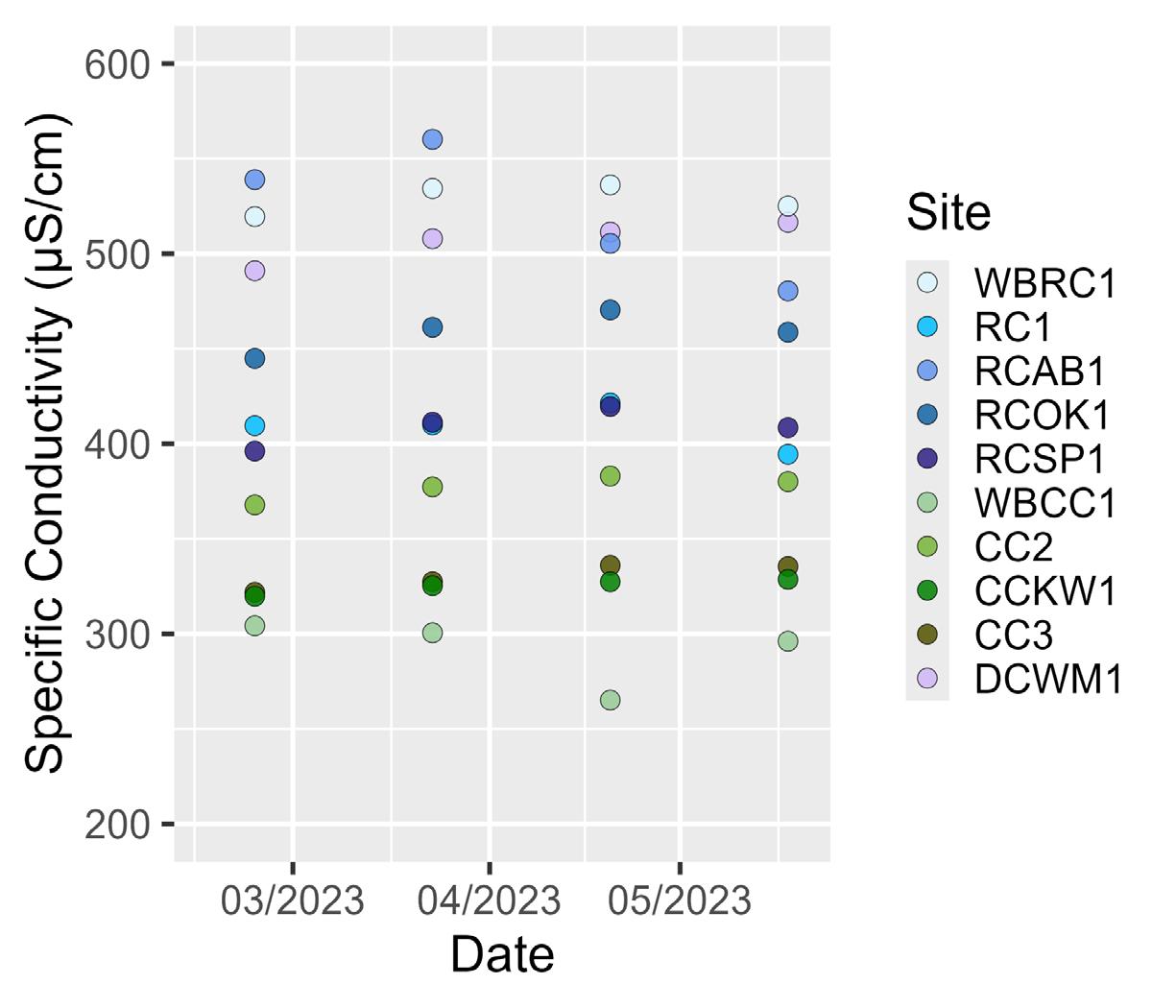
Scatterplots are graphs that show data points as dots. Two types of scatterplots are used in this report: one showing changes over time and one showing comparisons between two parameters. In the first, each dot represents a measurement taken at a sample site and is plotted against sampling date (Figure 3a). These scatterplots visualize changes in a variable over time. Unless otherwise noted, these figures represent data collected from January 2018 through December 2025.
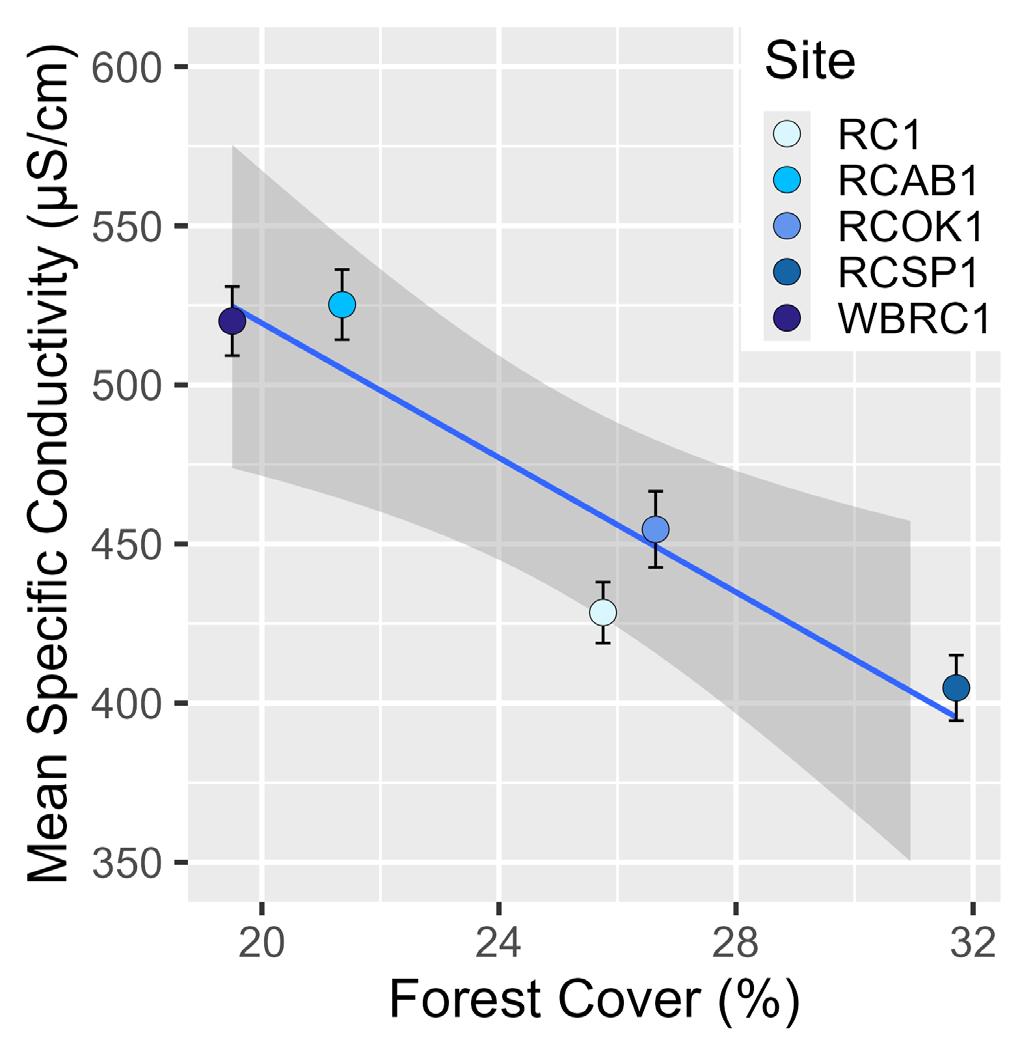
The second type of scatterplot shows either individual measurements or mean (average) values compared to other variables (Figure 3b). These graphs have linear trendlines, indicating if there is a positive (increasing) or negative (decreasing) relationship between the variables and 95% confidence intervals, which reflect the precision of the trendline. When shown, the blue line represents a linear trendline and grey shading indicates the 95% confidence interval. When means are shown, error bars are included. Large error bars indicate more variable data. When shown, error bars show standard error of the mean.
For example, in Figure 3b, mean specific conductivity is compared to forest cover in Ridley Creek. Each point represents the mean specific conductivity at a sample site and the percent forest cover in the corresponding catchment. The blue trendline indicates a negative relationship: sites with more forest cover tend to have lower specific conductivity.
HOW TO READ BOXPLOTS
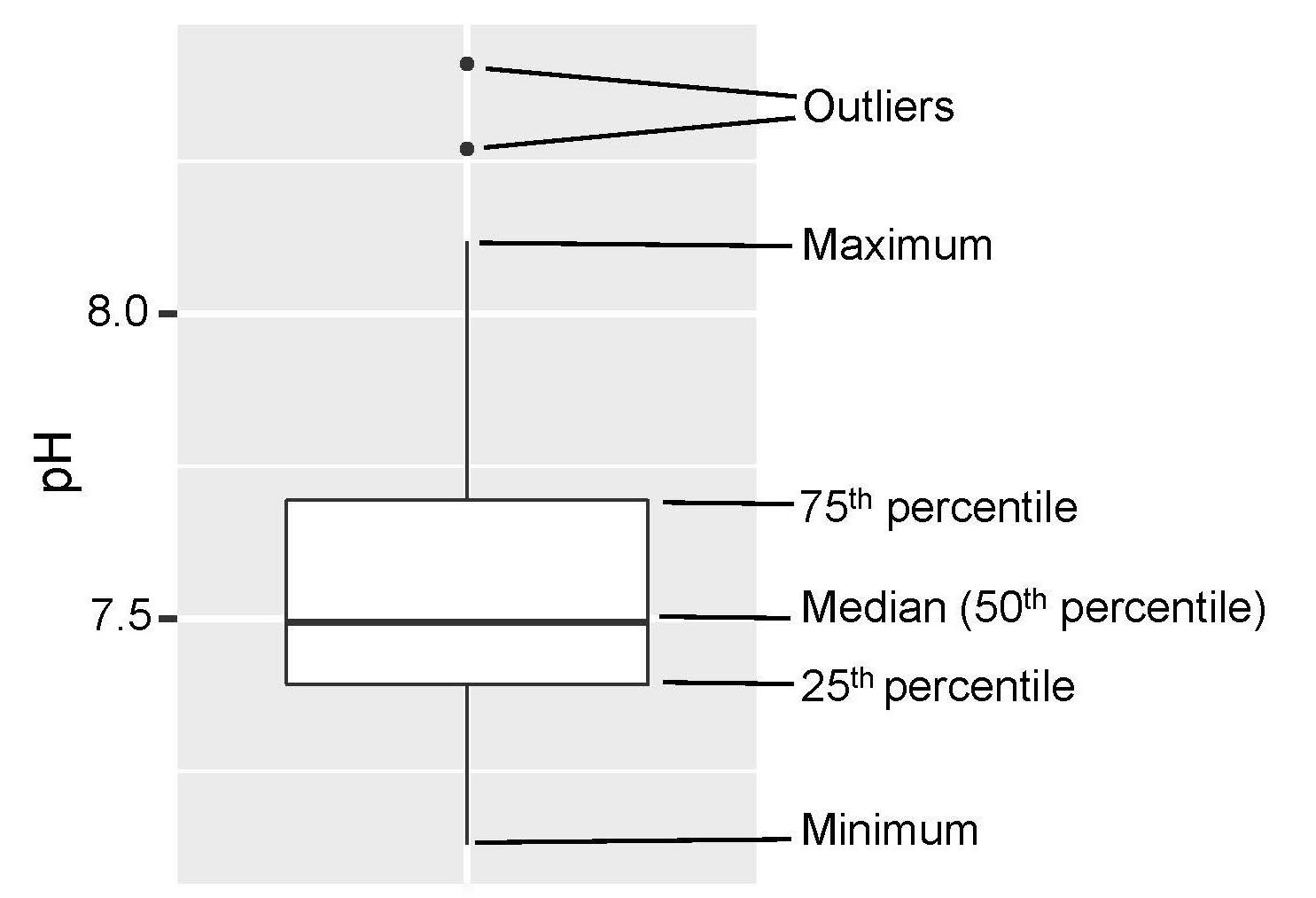
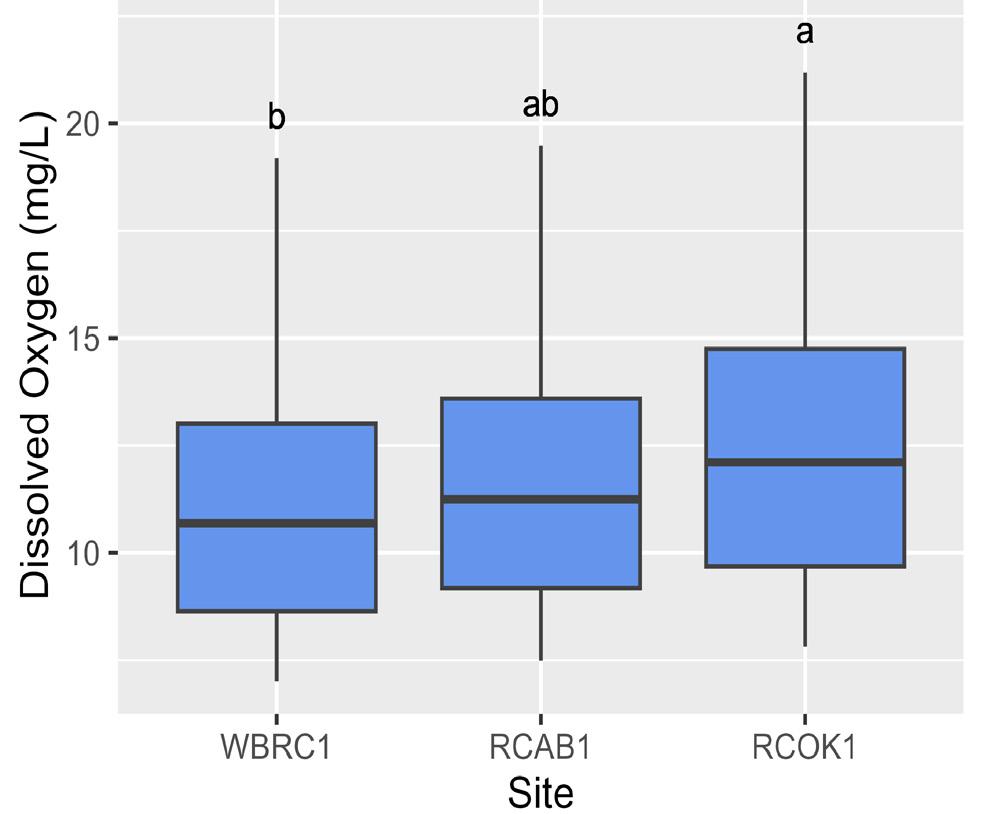
A boxplot visualizes the distribution of all measurements of a specific variable and allows for comparisons between sample sites. Boxplots are made up of two parts, a box and whiskers (Figure 4a). The box shows the spread of the middle half of data points and the median. Whiskers extend to maximum and minimum values. Data points beyond the whiskers are considered outlier values. The size of the box reflects the spread of the data: a small box indicates that most values are similar while a large box signifies high variability. Letters above boxplots denote statistical relationships between sites; sites that share a letter have statistically similar means and sites that do not share letters have significantly different means at the p < 0.05 level (Figure 4b).
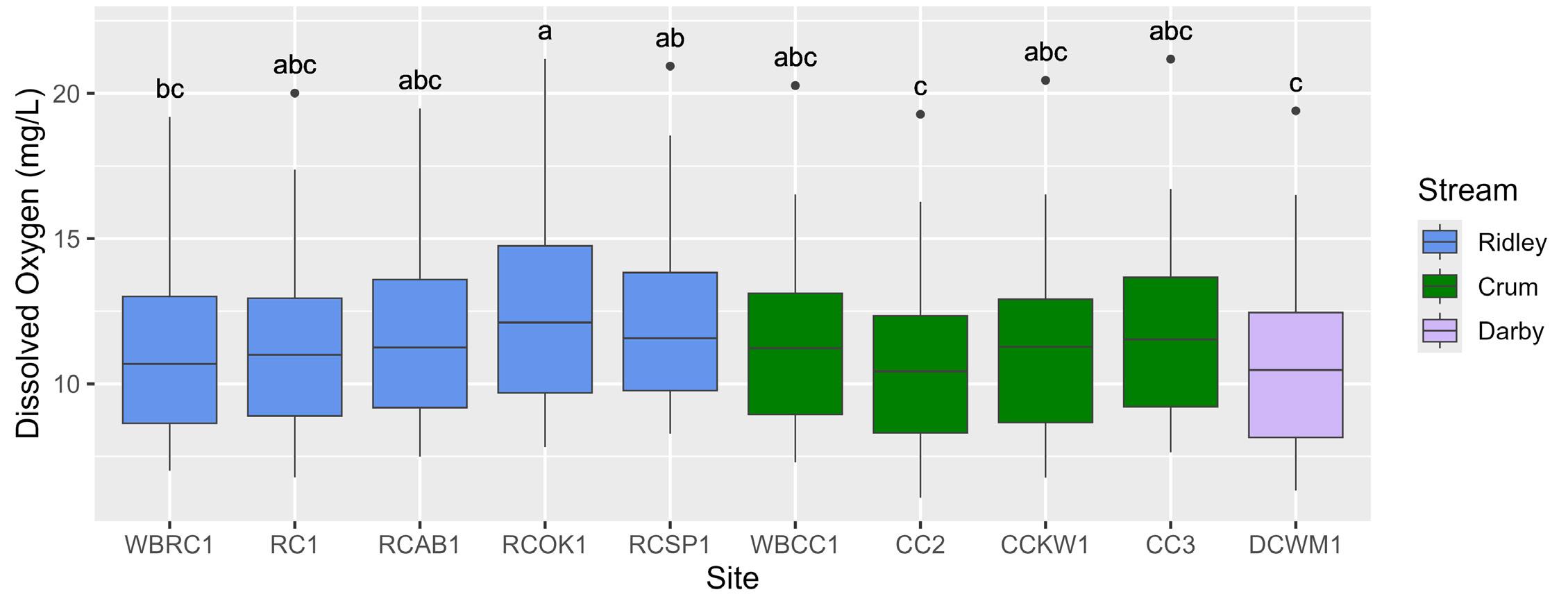
For example, in Figure 4b, which shows dissolved oxygen in three Ridley Creek sites, sites are labeled with either an ‘a’, ‘b’, or ‘ab.’ WBRC1 is labelled with an ‘a’ while Ridley Creek at Okehocking Preserve (RCOK1) is labelled with a ‘b’, indicating that dissolved oxygen is significantly higher at RCOK1 than at WBRC1. However, dissolved oxygen at both sites is statistically similar to RCAB1, labelled with ‘ab.’
Figure 3. (a) Sample scatterplot of specific conductivity from February 2023 through May 2023. Each stack of data points is a sampling day. Each dot is a measurement and the color indicates the sample site. Ridley Creek sites are shown in shades of blue, Crum Creek sites are in shades of green, and the Darby Creek site is purple. (b) The relationship between mean specific conductivity and forest cover in Ridley Creek.
Figure 4. (a) Sample boxplot of pH measurements. The box represents the interquartile, or IQ, range (the spread of the data from the 25th percentile to the 75th percentile) and the line within the box is the median (the halfway point of the data). Whiskers extend to the maximum and minimum values and any dots outside the whiskers can be considered outliers. (b) Dissolved oxygen across three Ridley Creek sample sites with significance letters.
4a
3. 3a.
4b
3b.
SECTION 1 | CHEMISTRY
Water temperature is critical for evaluating stream health and is impacted by climate, weather, shading, water depth, stream size, and land use. Many animals that live in streams are cold-blooded, so their body temperature is dictated by the surrounding temperature. The warmer the stream, the warmer the internal temperature of the animals living in the stream. These organisms have evolved to tolerate a specific range of temperatures. When water temperature drops below the optimal range, they may become slow and lethargic. Conversely, water temperatures above the optimal range cause increased stress, reduced feeding ability, altered growth rates, and decreased reproductive success.6 Studies have found long-term increases in water temperature in streams and rivers in southeastern Pennsylvania, and this trend is expected to continue as the climate changes, threatening temperature-sensitive species.7-9
The PADEP uses water temperature to assign designated uses for fisheries. A cold water fishery (CWF) supports the survival and reproduction of Salmonid fish species – a temperature-sensitive family that includes Brook Trout – while a warm water fishery (WWF) supports only the survival and reproduction of fish that can tolerate warm water, such as bass and carp.10 A trout-stocked fishery (TSF) is a WWF that also supports the survival of stocked trout from February 15 to July 31.10
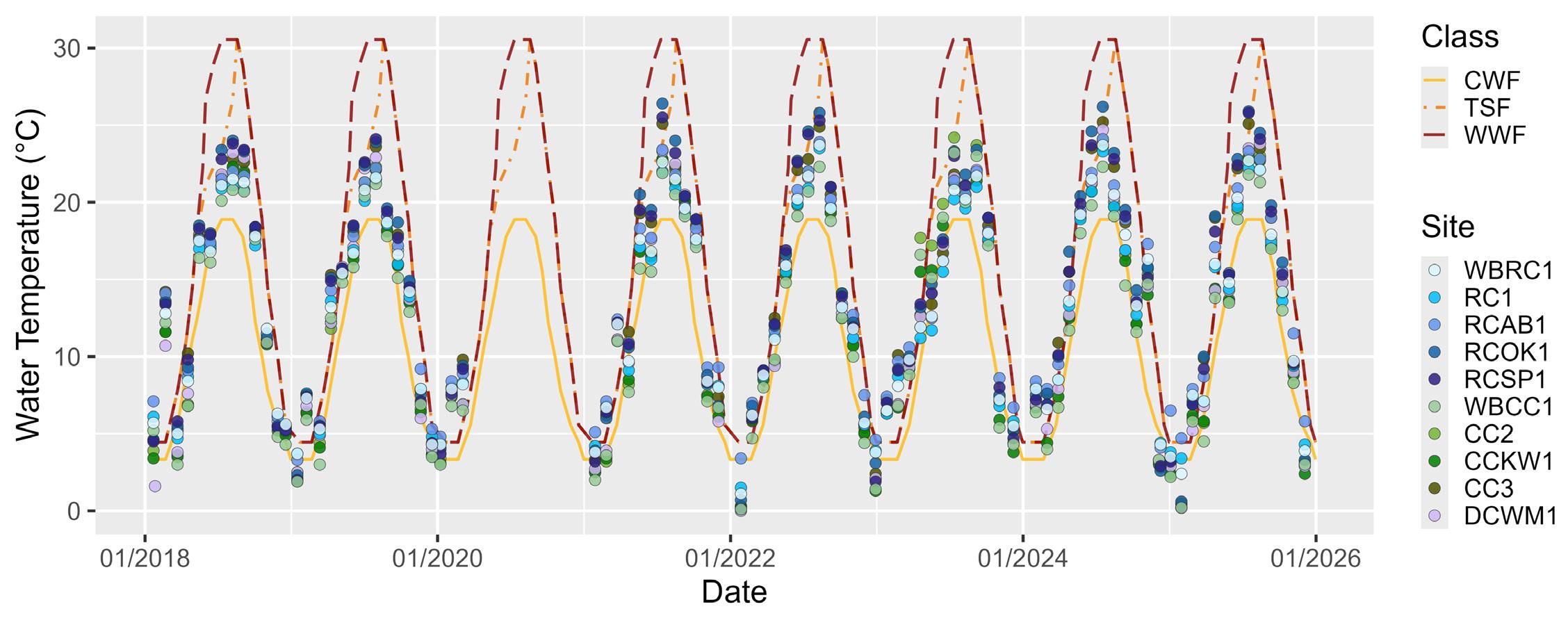
Water temperature is elevated at all sites and regularly exceeds CWF, TSF, and WWF standards.11 Across all sites, 80% of measurements exceed CWF standards, 26% exceed TSF standards, and 22% exceed WWF standards. Water temperature exceeds CWF standards in all seasons, but typically only exceeds TSF and WWF standards in the winter and spring (Figure 5). These findings indicate that water temperature is an impairment in Ridley, Crum, and Darby Creeks and these streams cannot support temperature-sensitive species.
In the study area, water temperature ranges from a low of 0°C at DCWM1 on 1/27/2022 to a high of 26°C at RCOK1 on 7/15/2021 (Figure 5). This large range reflects cold winter temperatures and warm summer temperatures. There is no significant difference in mean water temperature between sites (p = 0.57).
5.
Figure 5. Water temperature (°C) over time at ten sites in the headwaters of Ridley, Crum, and Darby Creeks. The yellow solid, orange dotted, and red hashed lines represent maximum temperatures for a Cold Water Fishery (CWF), Trout Stocked Fishery (TSF), and Warm Water Fishery (WWF), respectively.
1.2 DISSOLVED OXYGEN
Dissolved oxygen (DO) is the concentration of oxygen gas dissolved in water. Oxygen dissolves into water directly from the atmosphere, particularly in riffles, areas with turbulent stream flow. Another source of oxygen is photosynthesis by aquatic plants and algae. Oxygen is necessary for the survival and reproduction of all aquatic life and maintaining adequate DO is critical to ensuring biodiversity in streams. The amount of oxygen that can dissolve in water is dependent on water temperature, salt concentration, and atmospheric pressure.
Salmonids are sensitive to changes in DO and are used by the PADEP for establishing DO standards. To protect spawning salmonids and their early life stages, from October 1 to May 31, average DO over a 7-day period must be at least 9.0 mg/L and can drop no lower than 8.0 mg/L.11 During this period, DCWM1 and WBRC1 have dropped below 8.0 mg/L twice, and CC2 has dropped below this threshold three times. At other times of the year, the 7-day average must be at least 6.0 mg/L, dropping no lower than 5.0 mg/L. While our data do not allow for the calculation of 7-day averages, no sites have dropped below 6.0 mg/L.
Though there are no known naturally reproducing salmonids in the study area, these findings suggest that DO tends to be high enough at most sites to support sensitive species. However, DO is dynamic and changes with temperature, time of day, weather, season, photosynthesis rates, and more. While our monitoring provides insight into DO trends, it does not capture the full DO regime, particularly nighttime lows.
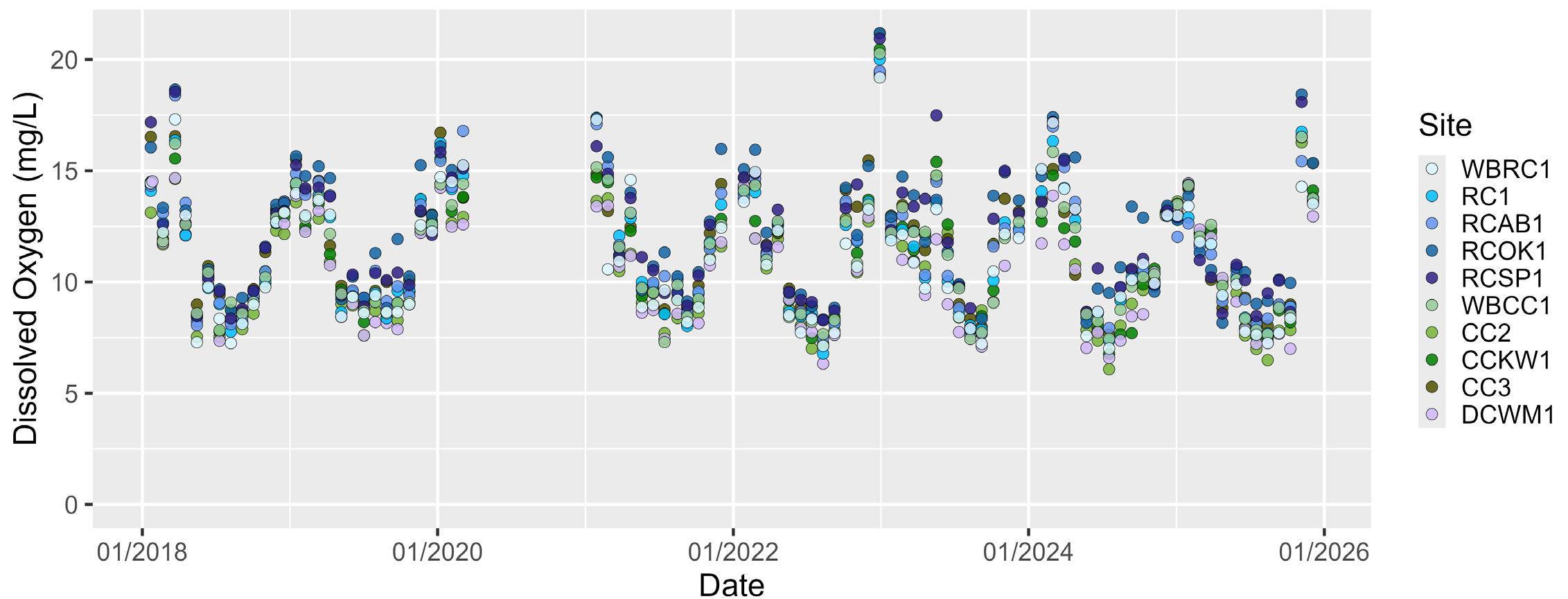
In the study area, DO ranges from a low of 6.1 mg/L at CC2 on 7/18/2024 to a high of 21 mg/L at RCOK1 on 12/29/2022 (Figure 6a). There are significant differences in DO between sites (p = 1.5 * 10-5, Figure 6b). DO at RCOK1 and RCSP1 is significantly higher than DO at CC2 and DCWM1. DO at RCSP1 is also significantly higher than DO at WBRC1.
Some of these differences can be explained by sampling time. During the day, photosynthesis by aquatic plants and algae increases DO. At night, respiration consumes oxygen, reducing DO. Consequently, DO rises during the day, peaks in the afternoon, and falls overnight.12 DCWM1 and CC2 are sampled in the morning, when DO is expected to be low, while RCOK1 and RCSP1 are sampled in the afternoon, when DO is expected to be high.
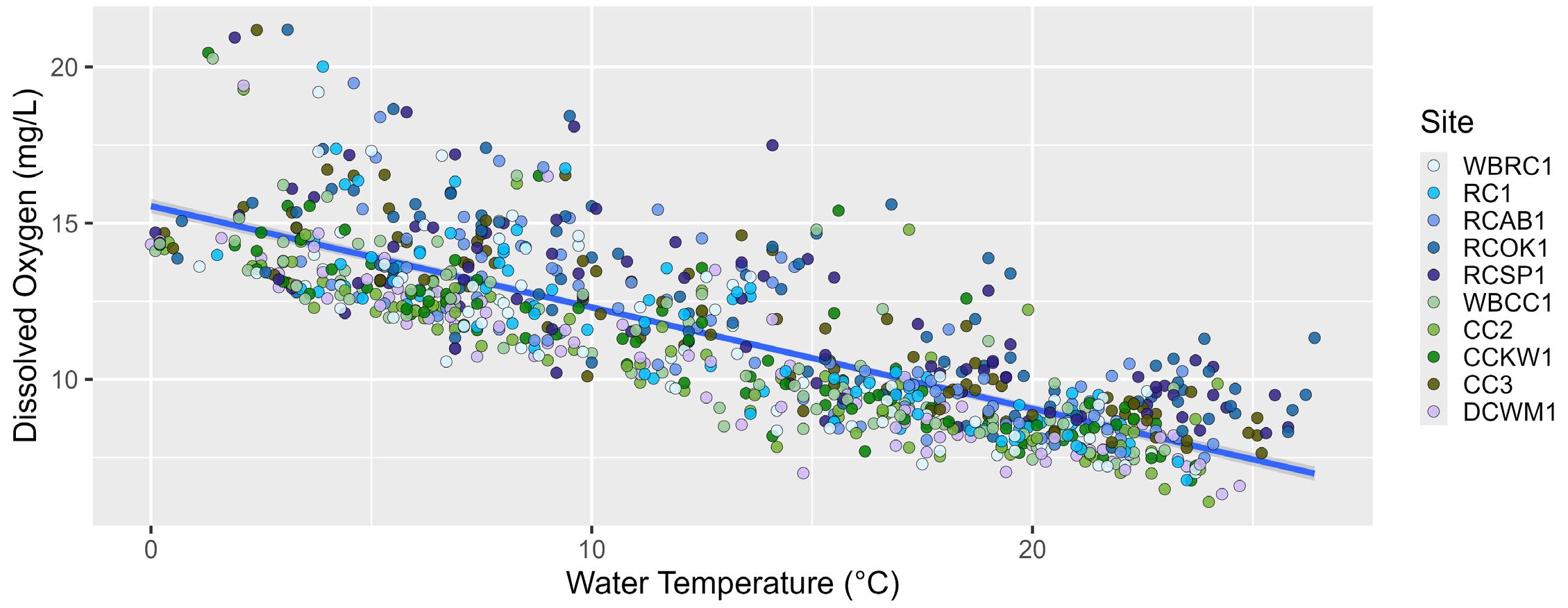
DO is also related to temperature: warm water holds less oxygen. This creates a significant negative relationship between water temperature and DO in the study area (p < 2.0 * 10-16), with 66% of the variation in DO explained by water temperature (Figure 7). This relationship drives seasonal variation, with DO dropping in summer months and rising in winter months (Figure 6a).
the
time and
at ten sites in the headwaters of
Figure 6. Dissolved oxygen (mg/L) at ten sites in
headwaters of Ridley, Crum, and Darby Creeks (a) over
(b) across sites.
Figure 7. The relationship between dissolved oxygen (mg/L) and water temperature (°C)
Ridley, Crum, and Darby Creeks.
pH measures how acidic or basic water is and ranges from 0 to 14. A pH of 7 is neutral, a pH above 7 is basic, and a pH below 7 is acidic. The PADEP considers a pH range of 6 to 9 as safe for stream life.11 When pH is outside this range, it can increase the toxicity of pollutants and reduce the availability of nutrients. In particular, when pH rises above 9.5, ammonium converts to ammonia, which is toxic to fish and other aquatic organisms. Extreme pH can cause outright mortality of many organisms. pH is influenced by the weathering of ions from local rocks and soils, photosynthesis rates, weathering of built materials, and anthropogenic pollution.
pH generally remains within the safe range of 6 to 9 in the study area. pH at RCOK1 exceeded this range once, and pH at RCSP1 has reached over 8.9. The PADEP has listed high pH as an impairment cause at WBRC1, RCAB1, and RCOK1, indicating that pH can rise above 9 at these sites.2
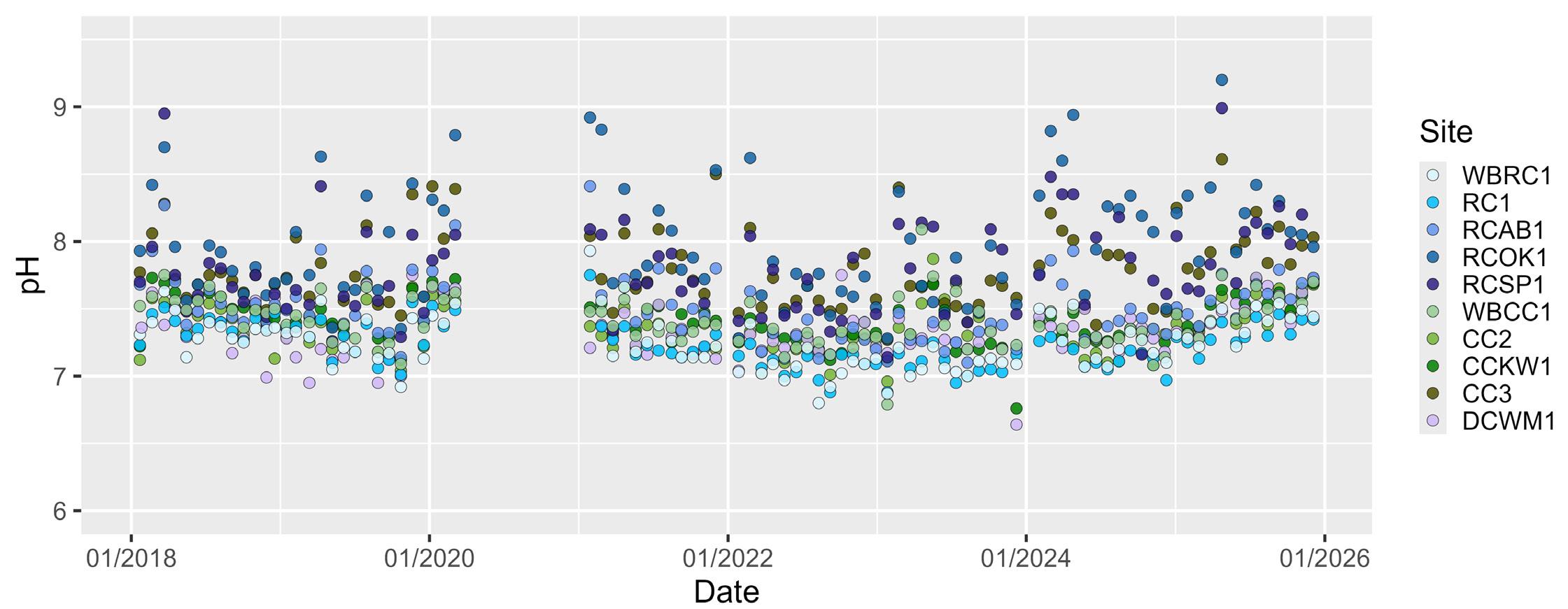
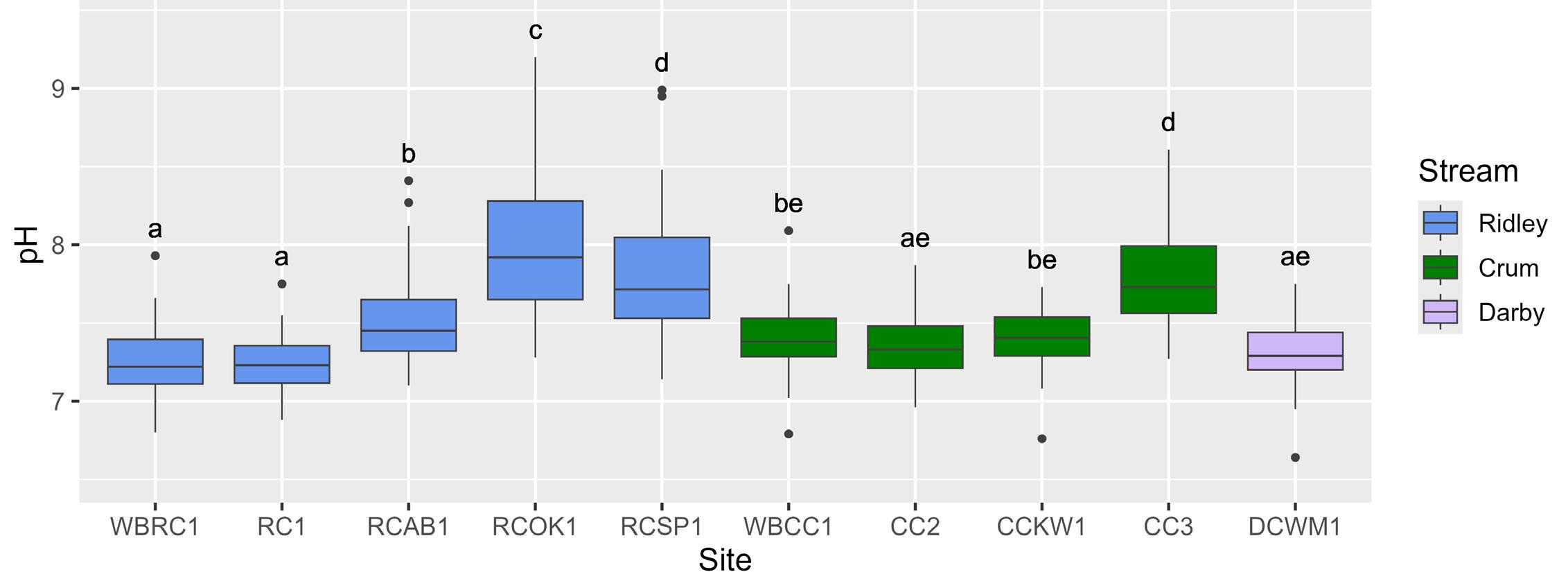
In the study area, pH ranges from a low of 6.6 at DCWM1 on 12/8/2023 to a high of 9.2 at RCOK1 on 4/24/2025 (Figure 8a). There are significant differences in mean pH between sites (p < 2.2 * 10-16, Figure 8b). Mean pH is significantly higher at RCOK1 than at any other site. pH is also elevated at RCSP1 and CC3 compared to other sites. Some variation can be explained by sampling time. As previously described, photosynthesis peaks in the afternoon. In addition to increasing DO, photosynthesis also increases pH through the removal of carbon dioxide from the water. pH rises during the day, peaks in the afternoon, and falls at night.12 RCOK1, RCSP1, and CC3 are sampled during the afternoon, suggesting that photosynthesis contributes to elevated pH at these sites.
Figure 8. pH at ten sites in the headwaters of Ridley, Crum, and Darby Creeks (a) over time and (b) across sites.
8a.
8b
1.4 DISCHARGE
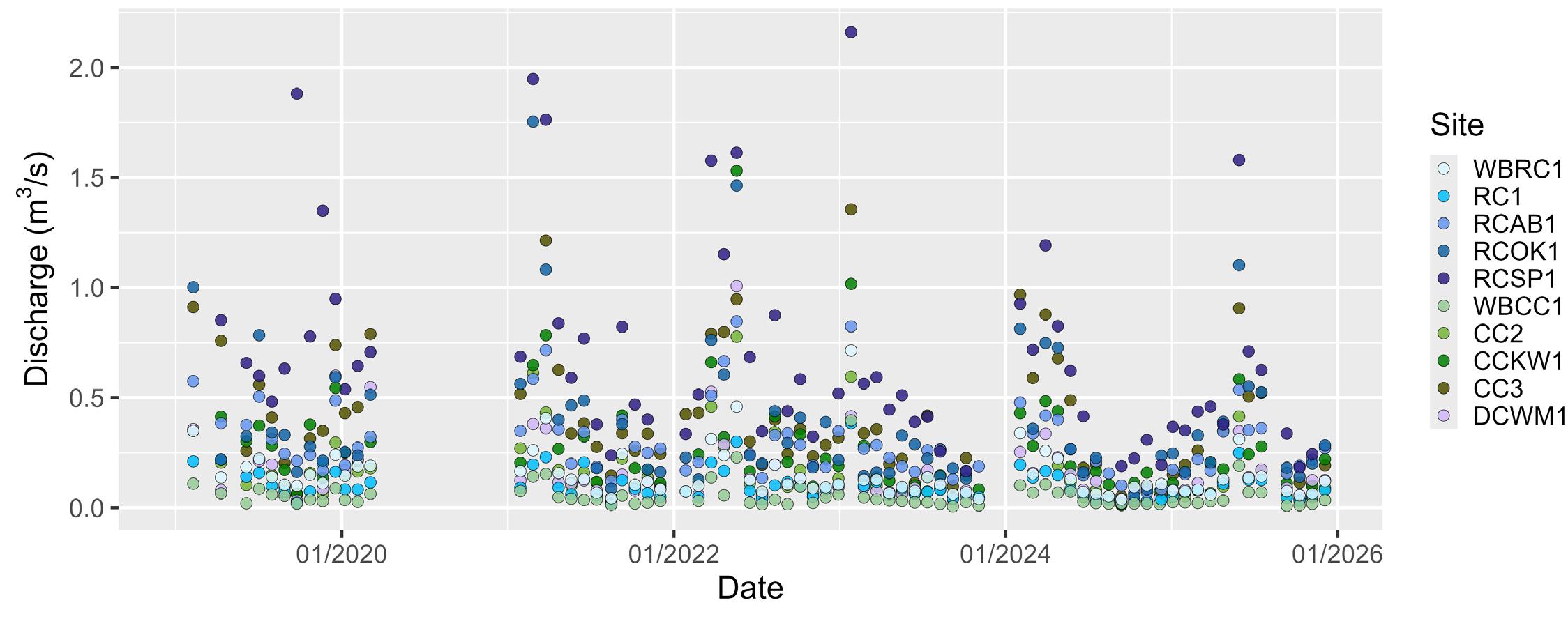
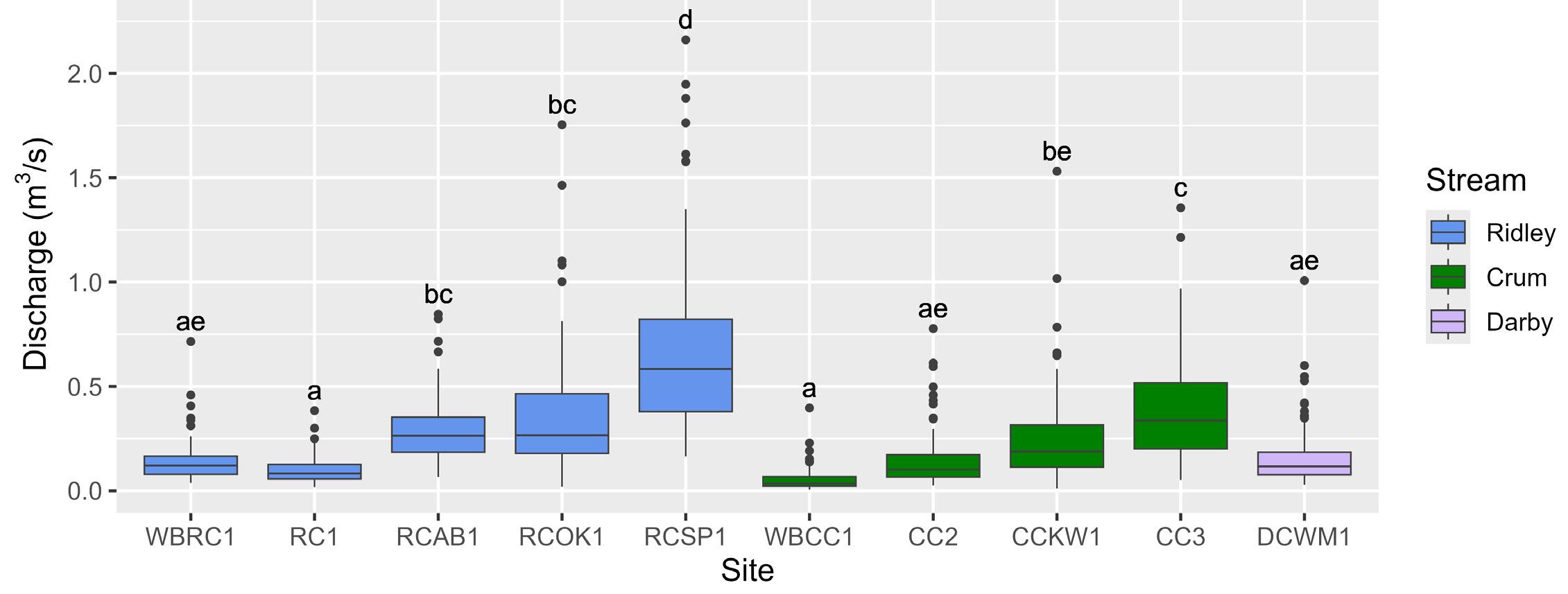
Discharge is the amount of water flowing through a stream at a given time, measured in cubic meters per second (m3/s), and reflects the size of the stream. Discharge increases moving downstream as groundwater and tributaries feed more water into streams. Discharge responds to weather, increasing with precipitation events and decreasing during droughts. Notably, discharge decreased at all sites in the fall of 2024 due to historic drought conditions. Prior to 6/5/2019, discharge was not regularly measured on sample days.
Discharge ranges from a low of 0.01 m3/s at WBCC1 on 9/7/2023 to a high of 2.2 m3/s at RCSP1 on 1/26/2023 (Figure 9a). There are significant differences in discharge between sites, reflecting increasing stream size moving downstream (p < 2.2 *10-16, Figure 9b). Discharge at RCSP1 is significantly higher than discharge at all other sites and discharge at CC3 is significantly higher than discharge at other Crum Creek sites. RCSP1 and CC3 are the furthest downstream and largest sites in their watersheds, so it is expected that they would have the highest discharge.
Figure 9. Discharge (m3/s) at ten sites in the headwaters of Ridley, Crum, and Darby Creeks from February 2019 through December 2025 (a) over time and (b) across sites. Prior to June 2019, discharge was measured quarterly.
9a
9b.
Total suspended solids (TSS) refers to the amount of sediment in a water sample. Though there are no federal or state standards for TSS, the leading cause of impairment in Pennsylvania streams is siltation, or pollution from sediment.2 The PADEP has listed siltation as an impairment cause at Main Stem Ridley Creek (RC1), RCAB1, and RCOK1.2 Sediment destroys habitat, smothers aquatic macroinvertebrates, clogs fish gills, and limits photosynthesis by reducing the amount of light that reaches plants and algae.
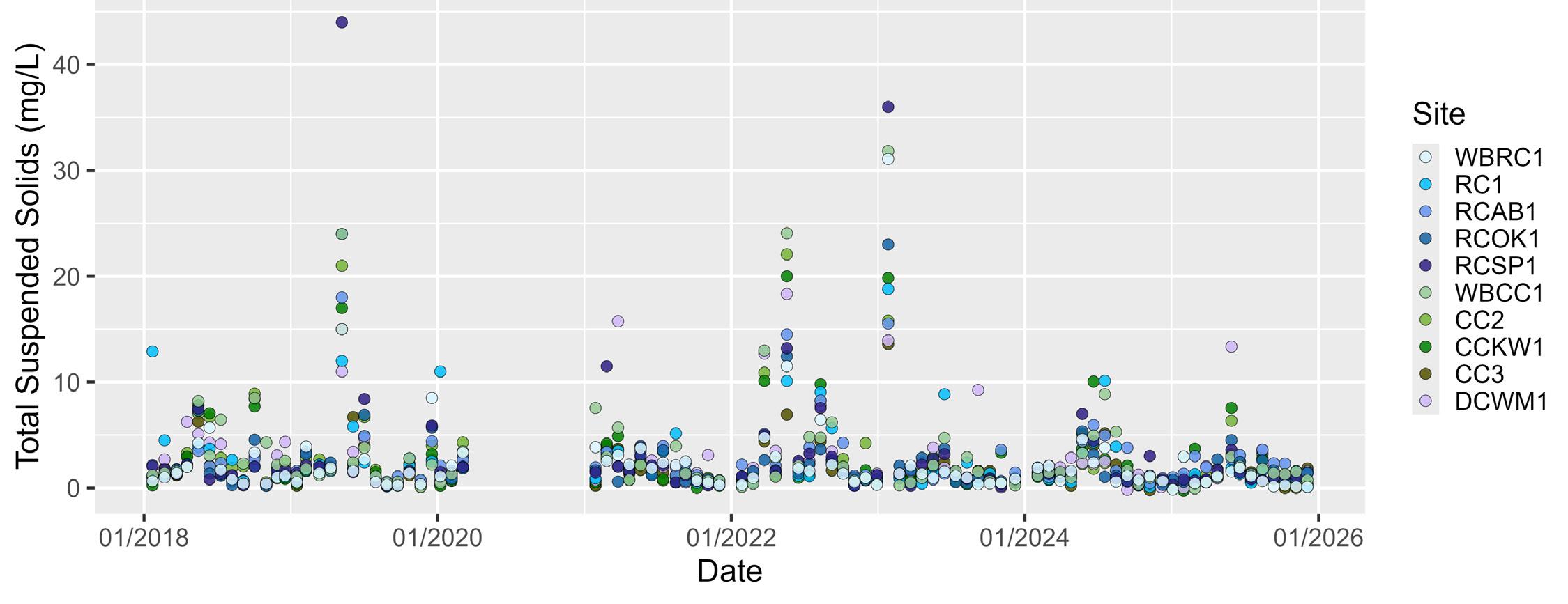
All sites have had TSS measurements below the detection limit of 0.58 mg/L; the highest TSS was 44 mg/L at RCSP1 on 5/8/2019 (Figure 10). There are no significant differences between sites (p = 0.73). TSS can respond to precipitation events, depending on rainfall amount and rate, when runoff washes sediment into streams. For example, spikes in TSS on 5/8/2019, 5/19/2022, and 1/26/2023 were preceded by significant precipitation in the 24 hours prior to sampling (Figure 10). There is a significant, but weak, relationship between discharge and TSS (p < 2.2 * 10-16), with discharge explaining 15% of the variation in TSS.
Figure 10. Total suspended solids (mg/L) over time at ten sites in the headwaters of Ridley, Crum, and Darby Creeks.
1.6 TURBIDITY
Turbidity is a measure of the amount of light that can pass through a sample and reflects the amount of sediment, sand, and other debris in the water. As the amount of sediment increases and water becomes cloudier, turbidity increases.
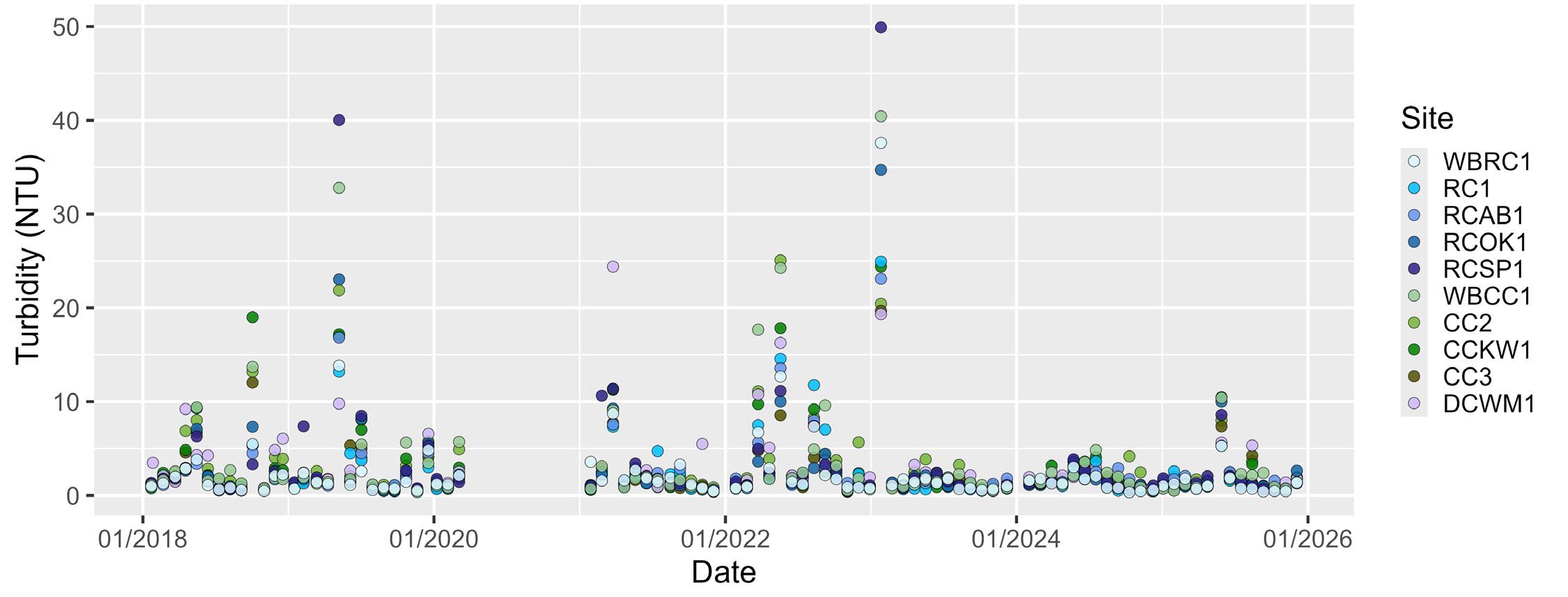
Turbidity ranges from a low of 0.3 NTU at WBRC1 on 10/10/2024 to a high of 50 NTU at RCSP1 on 1/26/2023 (Figure 11). There are no significant differences in turbidity between sites (p = 0.50). Similar to TSS, turbidity can respond to precipitation. Spikes in turbidity, such as those on 5/8/2019, 5/19/2022, and 1/26/2023, were preceded by significant precipitation in the 24 hours before sampling (Figure 11). There is a significant, but weak, relationship between turbidity and discharge (p < 2.2 * 10-16) with discharge only explaining 19% of the variation in turbidity. The weakness of this relationship is likely due to site-specific differences in precipitation characteristics, erosion rates, and sediment type.
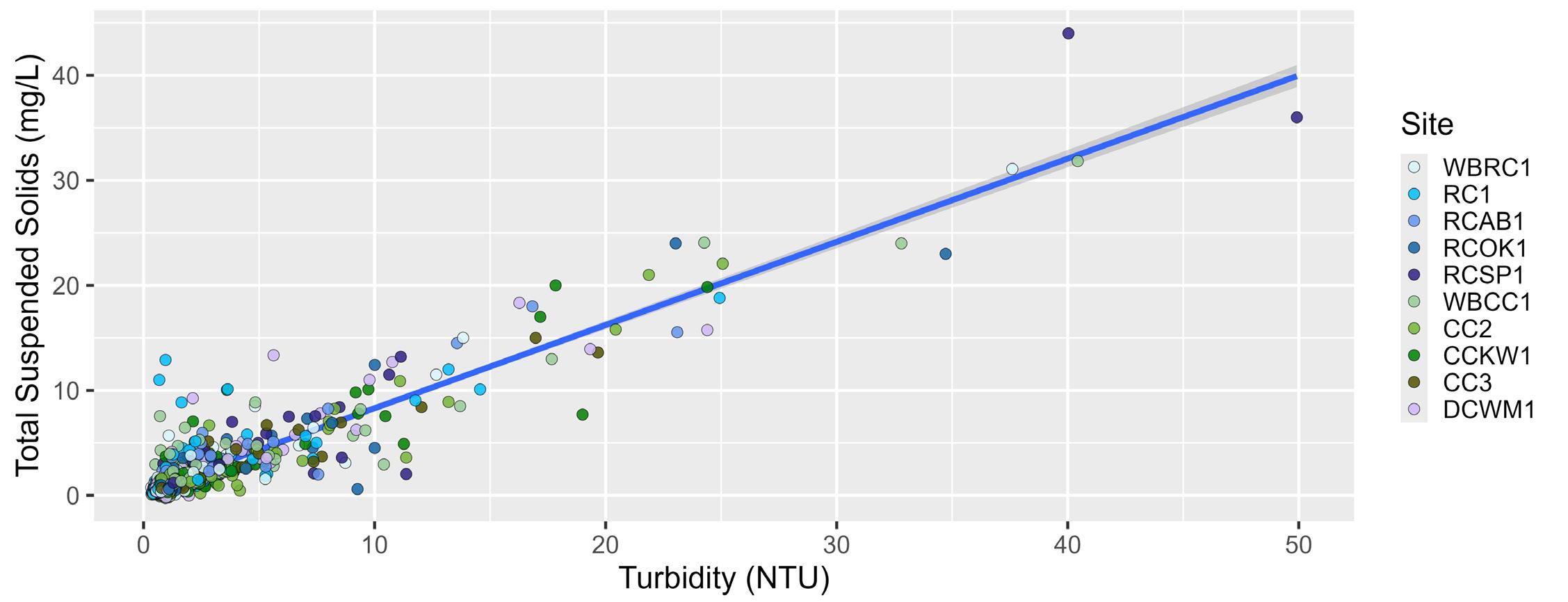
There is a significant positive relationship between turbidity and TSS (p < 2.2 * 10-16) with turbidity explaining 85% of the variation in TSS, indicating that turbidity is a valid proxy for TSS in the study area (Figure 12). The relationship between turbidity and TSS can be stream-specific due to land use and geology of the watershed.
Figure 11. Turbidity (NTU) over time at ten sites in the headwaters of Ridley, Crum, and Darby Creeks.
Figure 12. The relationship between total suspended solids (mg/L) and turbidity (NTU) at ten sites in the headwaters of Ridley, Crum, and Darby Creeks.
1.7 SPECIFIC CONDUCTIVITY
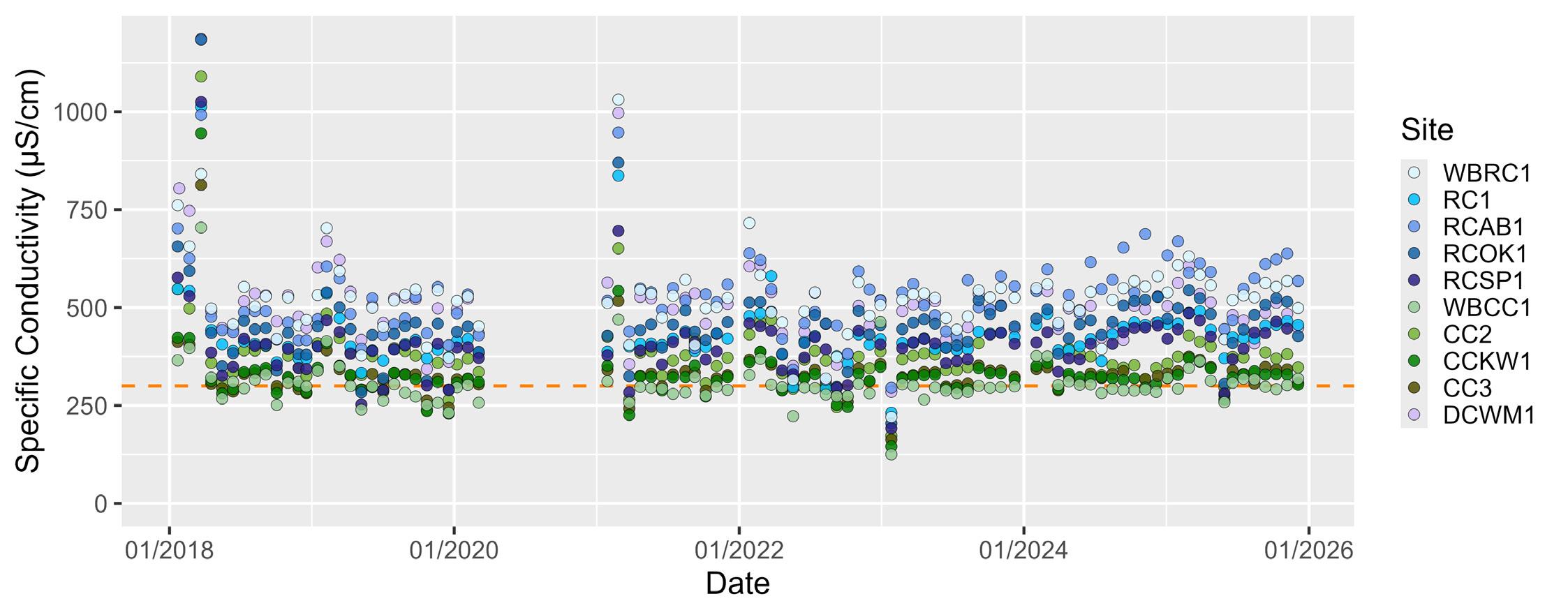
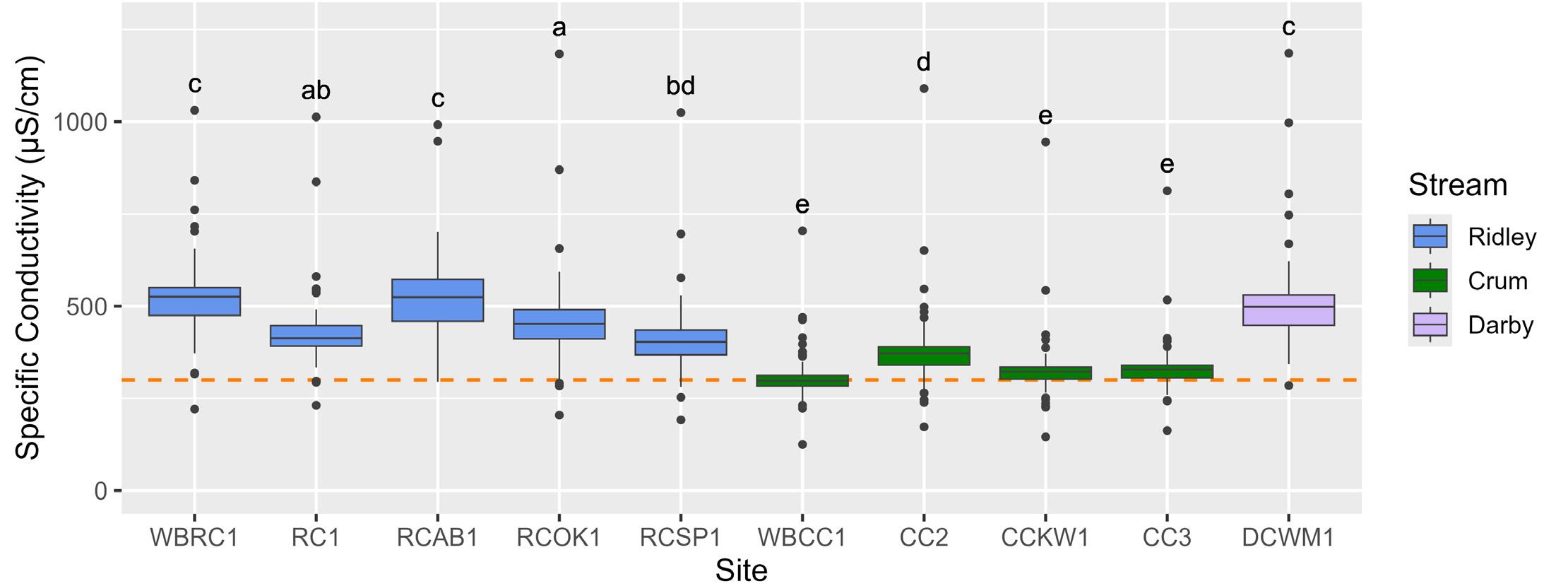
Specific conductivity (SPC) measures the ability of water to conduct an electric current. Pure water is a poor conductor and has low SPC, but the presence of dissolved ions (e.g. chloride, sodium, calcium, etc.) increases SPC. Streams in the study area have a natural background SPC of 75 µS/cm to 90 µS/cm, due to ions released by weathering of rocks and soils.13 Ions from anthropogenic sources, such as road salt, fertilizer, water softeners, and the weathering of built surfaces, increase SPC above natural background levels.14 Elevated SPC does not harm aquatic life but can be indicative of harmful contaminants. While there are no state or federal standards for SPC, research has found negative impacts on stream life when SPC is above 300 µS/cm.15 WBCC1 exceeds 300 µS/cm in 44% of measurements while other sites exceed this standard in 76% to 99% of measurements.
In the study area, SPC ranges from a low of 125 µS/cm at WBCC1 on 1/26/2023 to a high of 1186 µS/cm at DCWM1 on 3/23/2018 (Figure 13a). There are significant differences in mean SPC between sites, with WBRC1, RCAB1, and DCWM1 having the highest mean SPC (p < 2.2 * 10-16, Figure 13b). Ridley Creek sites have higher SPC than all Crum Creek sites except CC2. SPC is lowest at WBCC1.
Figure 13. Specific conductivity (µS/cm) at ten sites in the headwaters of Ridley, Crum, and Darby Creeks (a) over time and (b) across sites. The orange line is the 300 μS/cm stress threshold.
13a.
13b
Precipitation affects SPC: rain decreases SPC as the influx of water dilutes ions in the stream. For example, SPC dropped at all sample sites on 5/19/2022 due to overnight rain prior to sampling. However, after winter precipitation, runoff containing road salt can cause a spike in SPC, as seen on 3/23/2018 and 2/25/2021 (Figure 13a). After the SPC spike, extended winter precipitation can cause a drop in SPC, such as on 1/26/2023, when the amount of water in the stream remained high after the salt flushed through (Figure 13a).
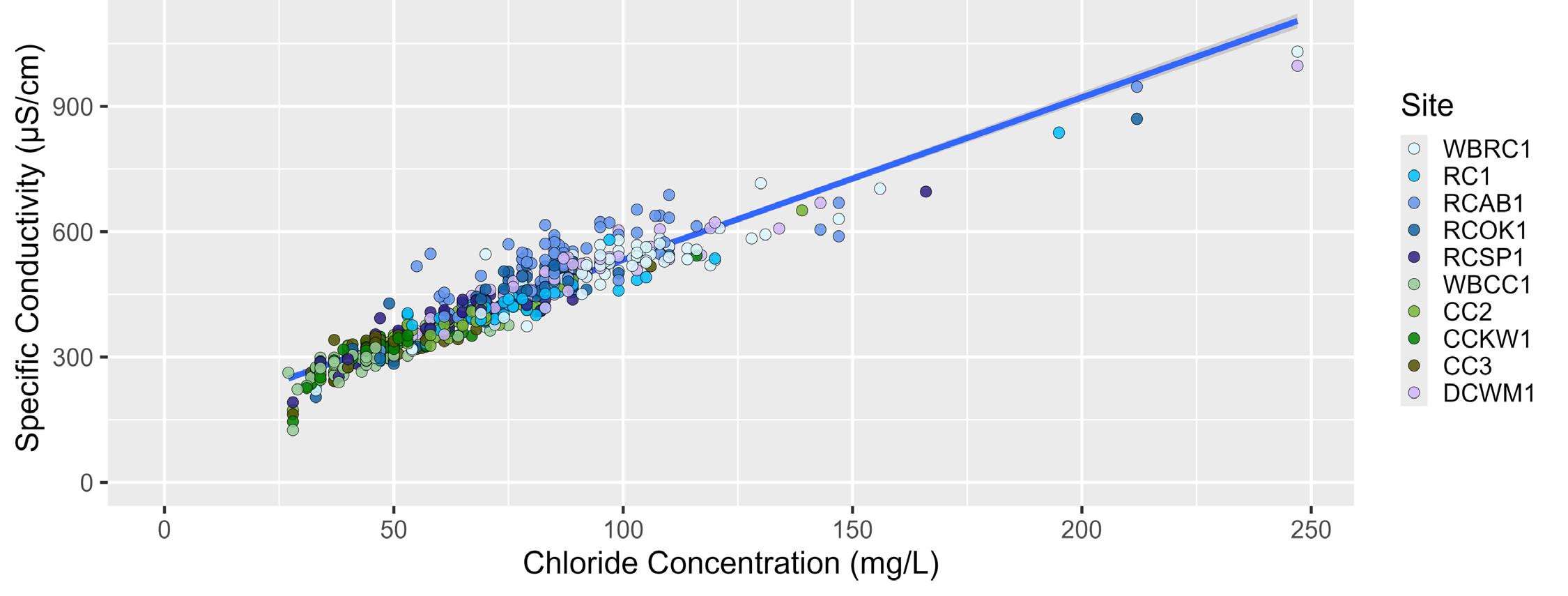
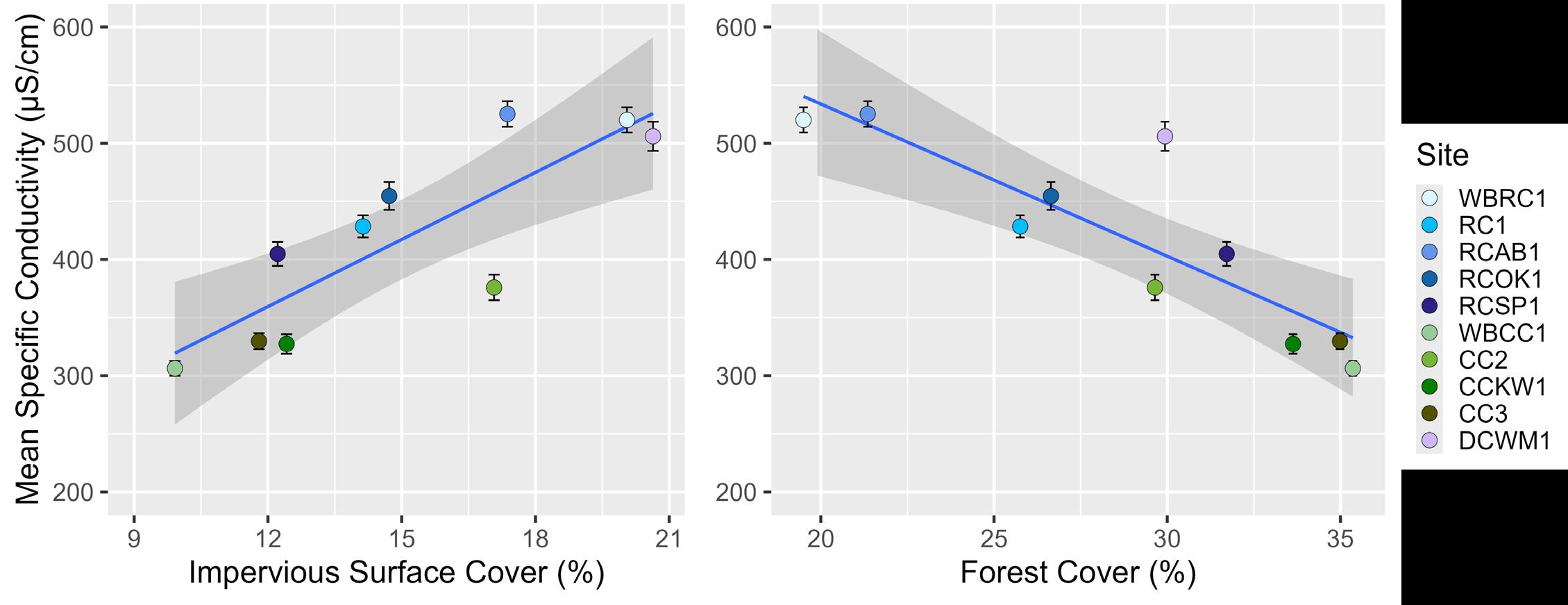
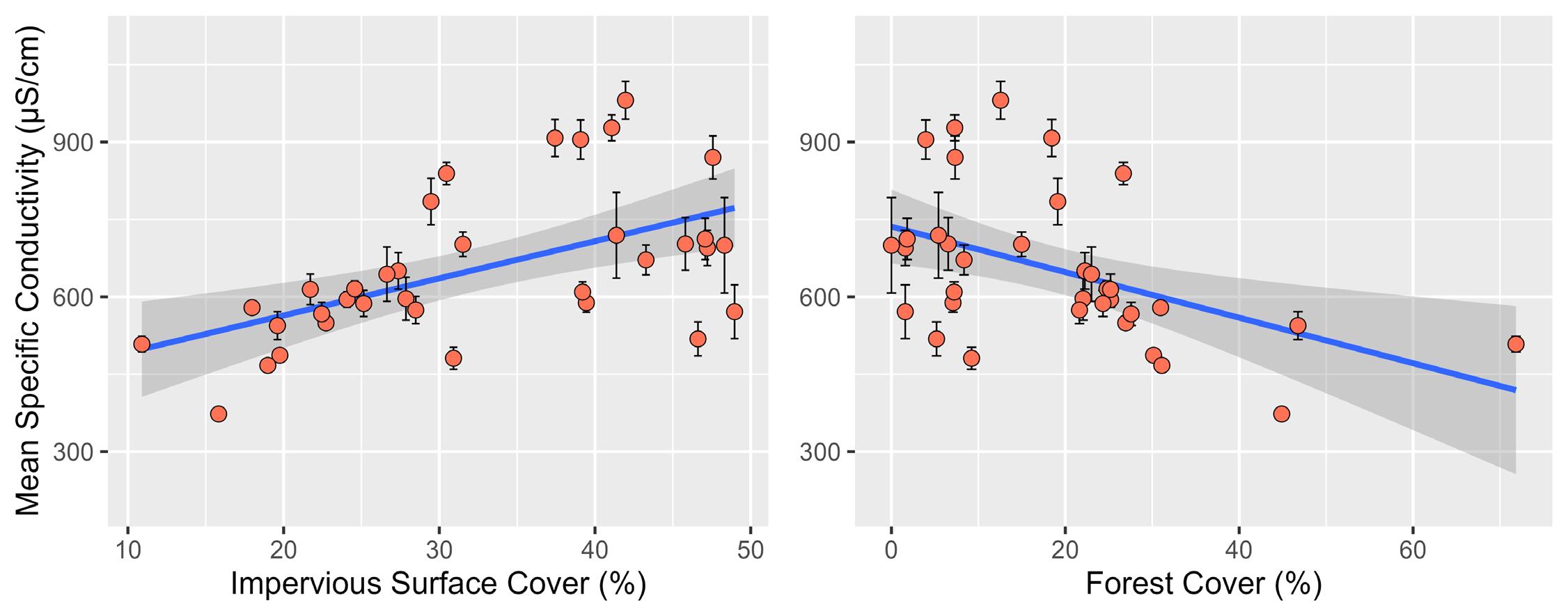
SPC reflects human impact on streams; it does not identify specific contaminants. There is a significant positive relationship between chloride concentration and SPC (p < 2.2 * 10-16), with 89% of the variation in SPC explained by chloride concentration, indicating that chloride drives SPC in the study area (Figure 14). SPC is also linked to land use in the surrounding watershed, mirroring trends found in other research.16,17 Mean SPC is positively related to impervious surface cover (p = 0.0021, Figure 15a) and negatively related to forest cover (p = 0.0011, Figure 15b). These trends are strong: impervious surface cover explains 71% of the variation in mean SPC and forest cover explains 76% of the variation. In other words, streams flowing through watersheds with more impervious surfaces and less forest cover tend to have higher SPC.
Figure 14. The relationship between specific conductivity (µS/cm) and chloride concentration (mg/L) at ten sites in the headwaters of Ridley, Crum, and Darby Creeks.
Figure 15. The relationship between mean specific conductivity (µS/cm) and (a) impervious surface cover and (b) forest cover at ten sites in the headwaters of Ridley, Crum, and Darby Creeks.
15a.
15b.
Chloride is a negatively charged ion that forms when salts and other compounds dissolve in water. In this area, road salt, most often in the form of sodium chloride (NaCl), is the primary source of chloride in streams.18 Lesser sources of chloride include discharge from wastewater treatement plants, fertilizer runoff, and the weathering of rocks and soils.19 Chloride concentration is increasing in streams across the United States, most notably at northern latitudes where road salt is used to melt ice and snow during the winter.19–22
Salt that is applied to roads, sidewalks, parking lots, and other impervious surfaces ultimately ends up in a nearby water body. Melted snow and ice flow off these surfaces into streams, carrying dissolved salt and causing an acute spike in chloride concentration. However, not all salt reaches streams immediately. Salt that is left behind seeps slowly through soil into groundwater sources, where it causes year-round, chronic contamination of streams.16,20 Elevated chloride concentration in summer months is of particular concern as the toxicity of chloride to aquatic organisms has been found to increase with temperature.23,24
Elevated chloride concentration can increase the corrosivity of water, impacting infrastructure such as drinking water pipes.25 Chloride is not removed by water treatment practices, and increases in chloride in streams have been found to increase chloride in drinking water, with potential consequences for human health.26
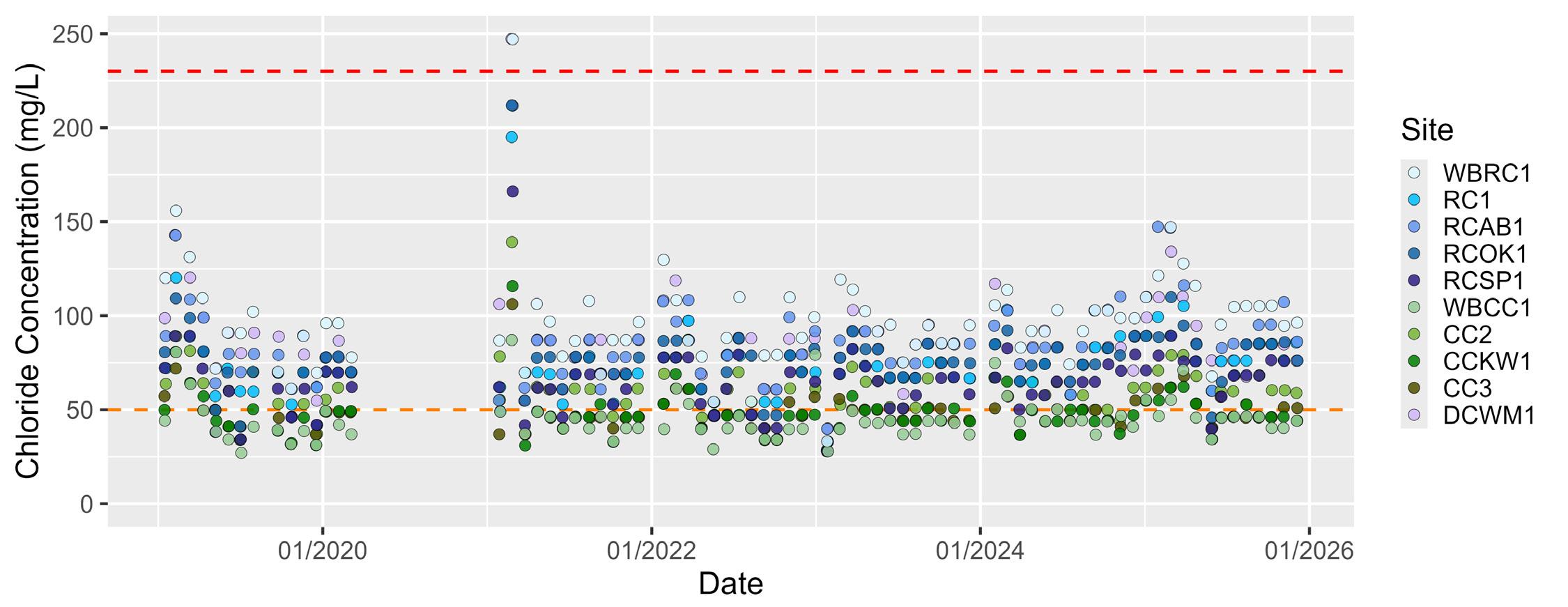
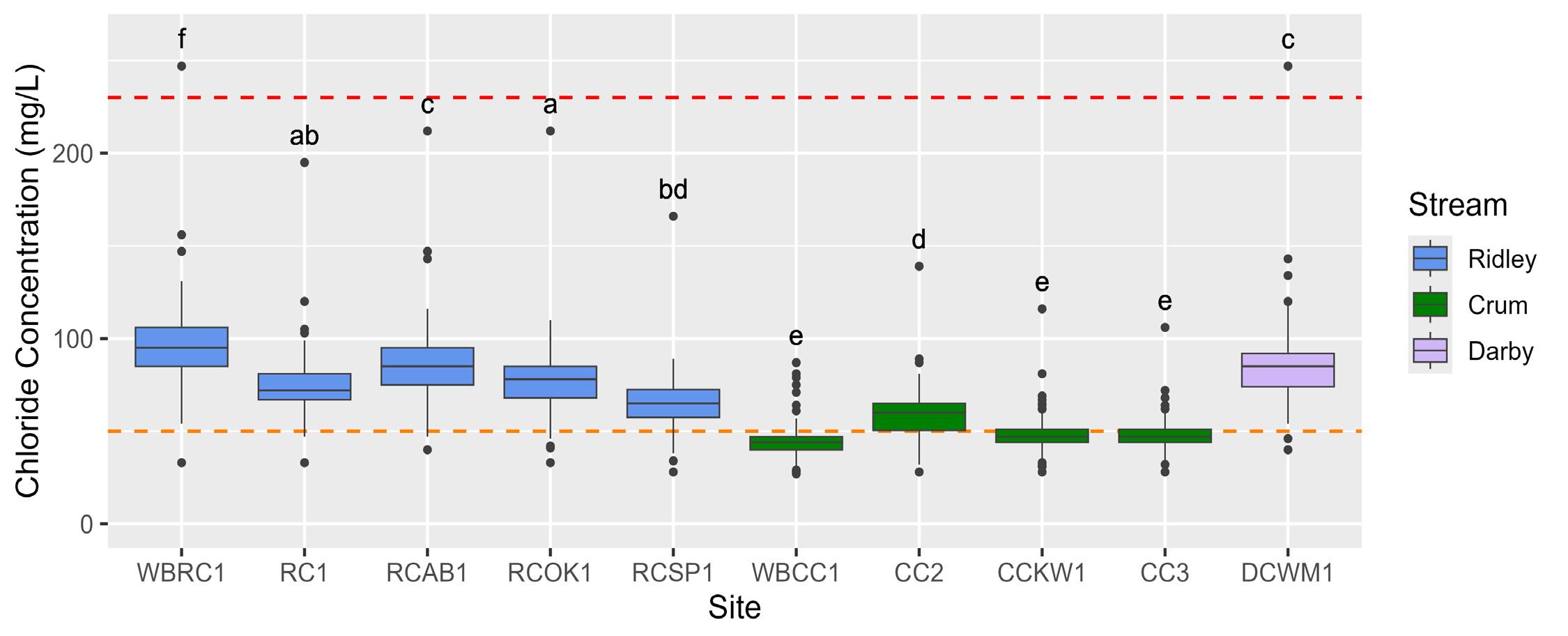
The PADEP maximum chloride concentration for a potable water source is 250 mg/L, but levels as low as 50 mg/L have been found to have negative impacts on stream life.11,27 No sites have exceeded 250 mg/L, but many sites have exceeded 50 mg/L. The 50 mg/L standard is exceeded in less than 35% of samples from WBCC1, CCKW1, and CC3. At all other sites, this standard has been exceeded in at least 75% of samples. The EPA chronic threshold for chloride is 230 mg/L over a four-day average.28 Our data do not allow for the calculation of four-day averages, but WBRC1 and DCWM1 reached over 230 mg/L on 2/25/2021 (Figure 16a).
Monthly chloride concentration measurements began on 1/16/2019. Chloride concentration ranges from 27 mg/L at WBCC1 on 7/3/2019 to 247 mg/L at WBRC1 and DCWM1 on 2/25/2021 (Figure 16a). There are significant differences in mean chloride concentration between sites (p < 2.2 * 10-16, Figure 16b). Mean chloride concentration is highest at WBRC1 and significantly elevated at RCAB1 and DCWM1. Conversely, mean chloride concentration is lowest at WBCC1, CCKW1, and CC3.
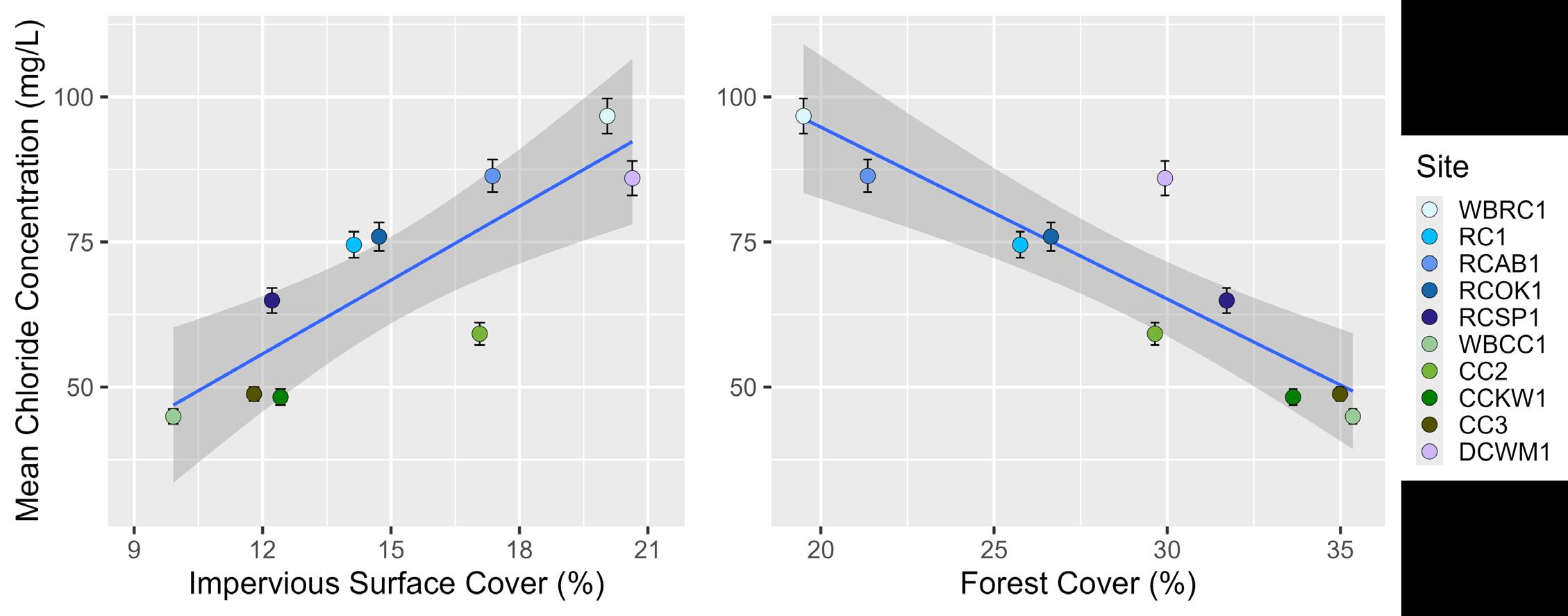
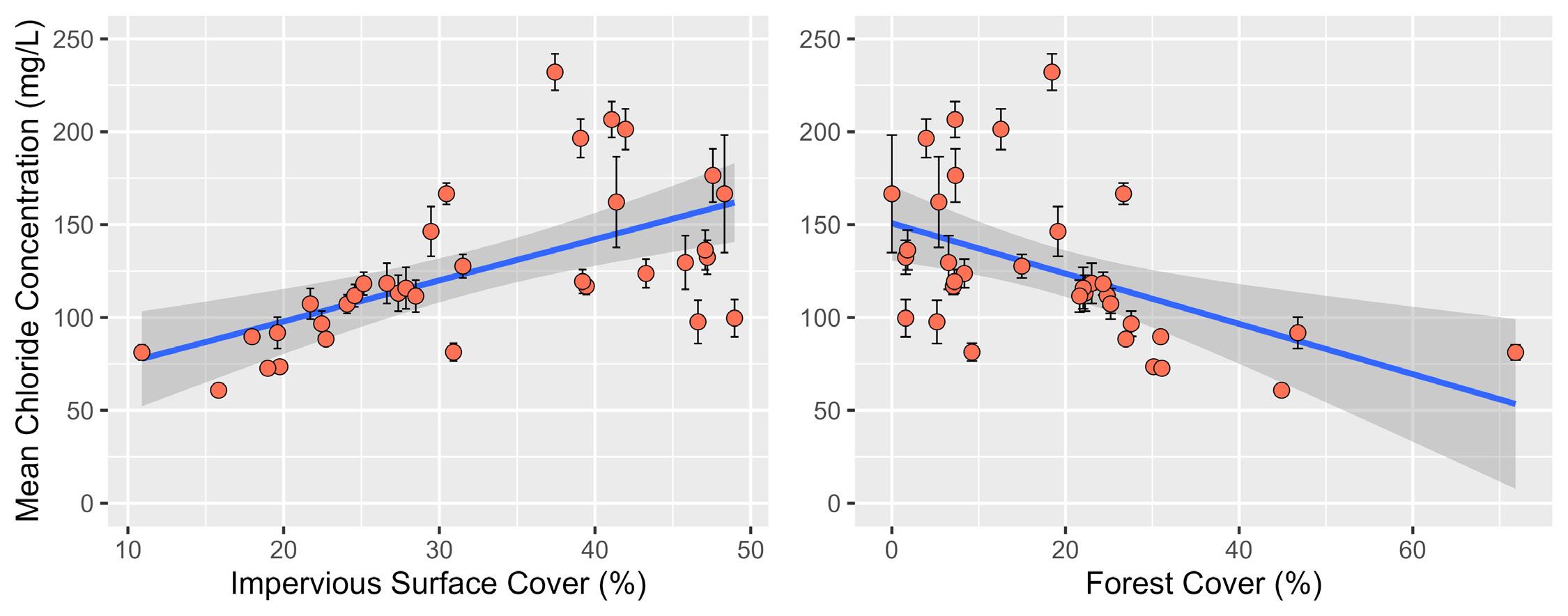
As has been found in other studies, mean chloride concentration is strongly linked to land use in the surrounding watershed.22,29 There is a significant positive relationship with impervious surface cover (p = 0.0020, Figure 17a) and a significant negative relationship with forest cover (p = 4.6 * 10-4, Figure 17b), indicating that streams flowing through areas with more impervious surfaces and fewer forests tend to have higher chloride concentration. These relationships are strong: impervious surface cover explains 72% of the variation in mean SPC and forest cover explains 80% of the variation. This mirrors relationships between SPC and land use, which is expected due to the strong relationship between chloride concentration and SPC (Figure 14, Section 1.7). Chloride is a major driver of SPC in the region, consistent with other studies.18
Figure 16. Chloride concentration (mg/L) at ten sites in the headwaters of Ridley, Crum, and Darby Creeks from January 2019 through December 2025 (a) over time and (b) across sites. The orange line is the 50 mg/L stress threshold and the red line is the 230 mg/L United States EPA chronic exposure threshold.
Figure 17. The relationship between mean chloride concentration (mg/L) and (a) impervious surface cover and (b) forest cover at ten sites in the headwaters of Ridley, Crum, and Darby Creeks.
17a.
17b.
Total nitrogen (TN) is the concentration of all nitrogen-containing compounds, including nitrates, nitrites, and ammonia within a sample. Nitrogen is an essential nutrient for growth, but an excess of nitrogen can lead to eutrophication, the overgrowth of plants and algae that ultimately depletes oxygen through decomposition.
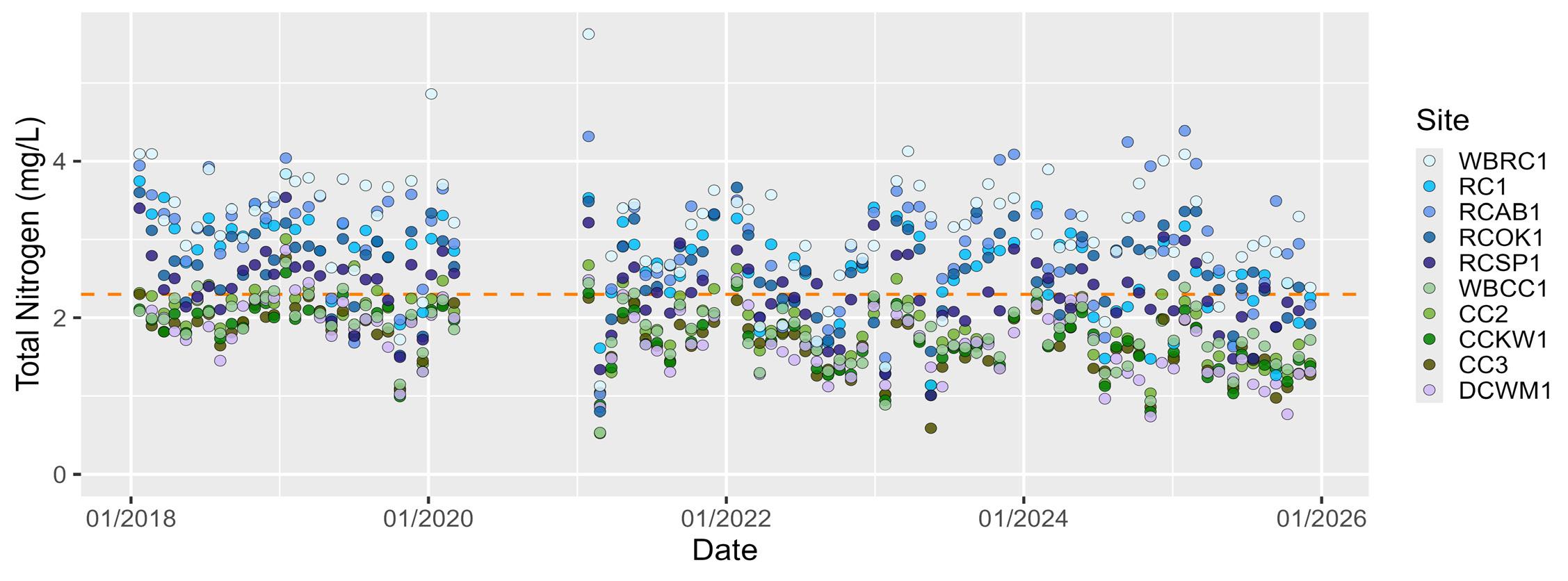
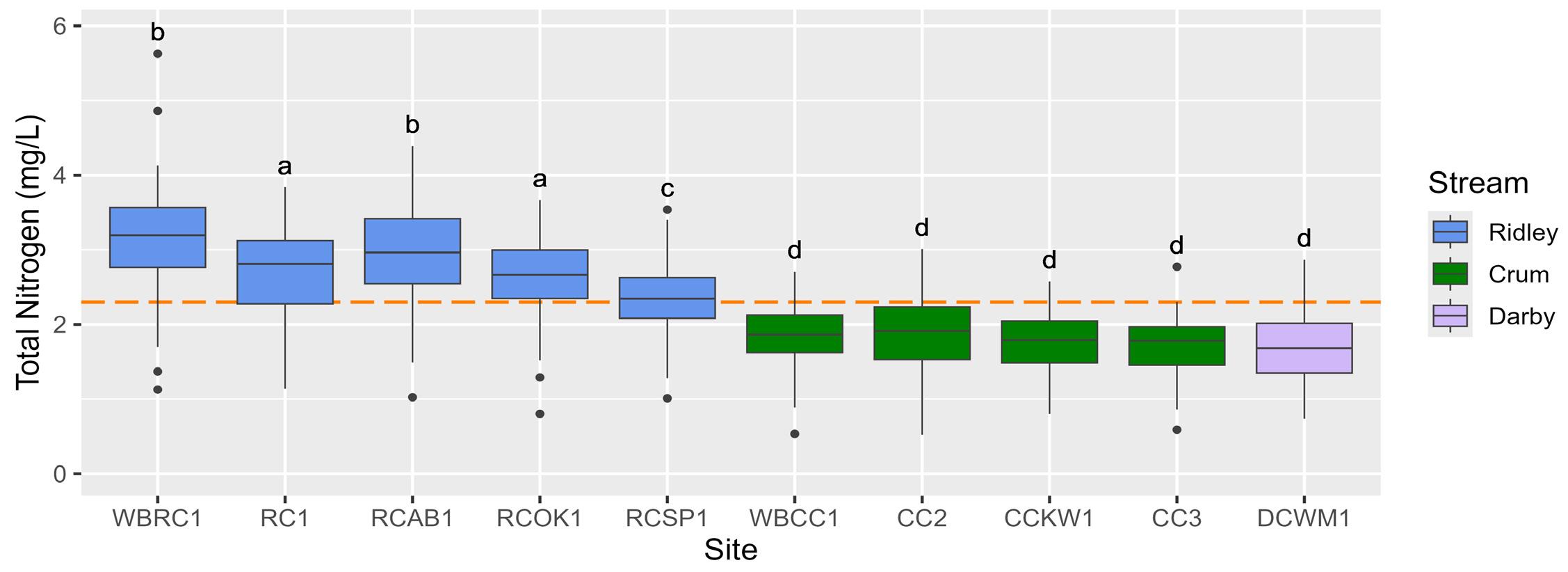
The PADEP threshold for TN in a potable water source is 10 mg/L, which has not been exceeded in any measurements.11 However, in this ecoregion, the nutrient impairment threshold for TN is estimated to be 2.3 mg/L. 30 In Ridley Creek, this threshold is exceeded in 55% of samples from RCSP1 and in over 70% of samples from all other sites. In Crum Creek, this threshold is exceeded in 16% of samples from CC2 and in 10% or less of samples from all other sites. DCWM1, in Darby Creek, exceeds this threshold in 6% of samples. These findings indicate that excess TN is often an impairment in Ridley Creek, but not in Crum or Darby Creeks. As the PADEP lists eutrophication, which is driven in part by excess TN, as an impairment cause at all sites in Ridley Creek, our findings of excess TN in Ridley Creek are expected.2
In the study area, TN ranges from a low of 0.5 mg/L at CC2 on 2/25/2021 to a high of 5.6 mg/L at WBRC1 on 1/28/2021 (Figure 18a). There are significant differences in TN between sites (p < 2.2 * 10-16, Figure 18b). WBRC1 has significantly higher TN than all other sites except RCAB1. TN at RCSP1 is significantly lower than other sites in Ridley Creek. TN is significantly higher at all sites in Ridley Creek than at all sites in Crum Creek and DCWM1.
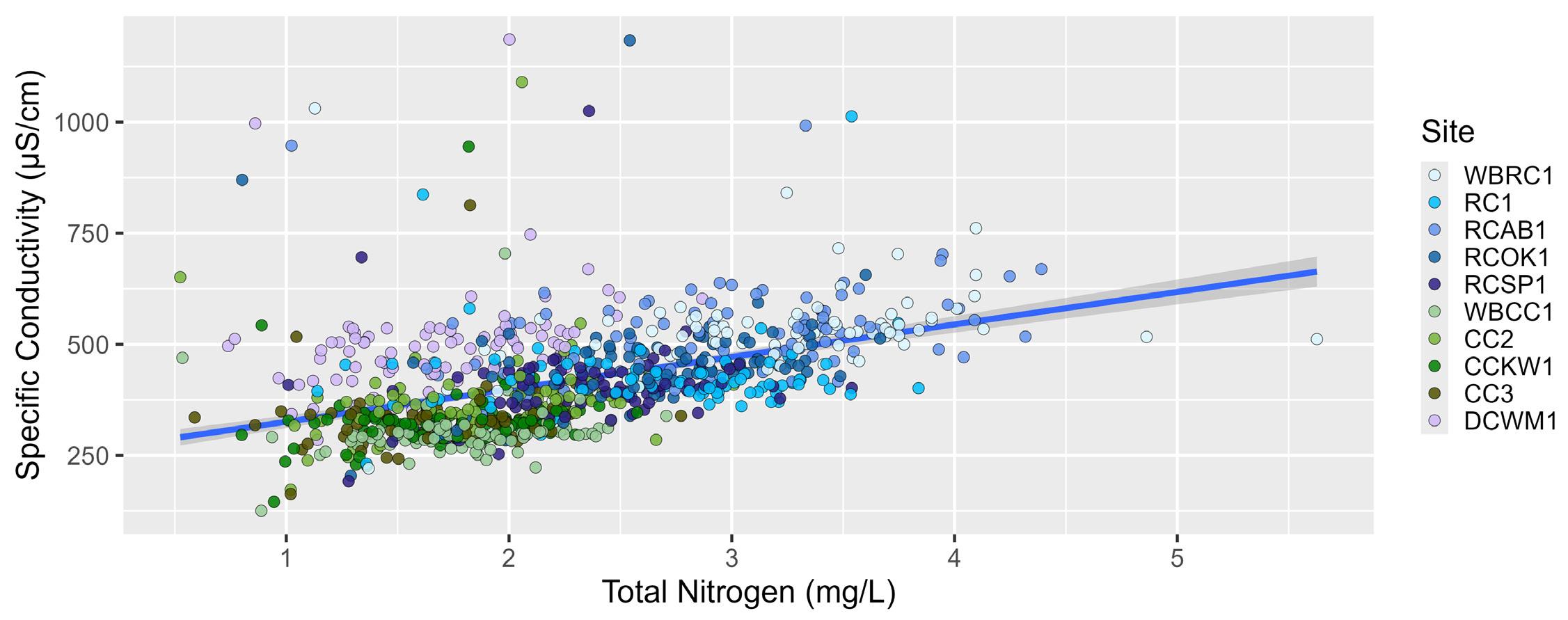
There is a significant positive relationship between TN and SPC (p < 2.2 * 10-16, Figure 19). However, this relationship is weak, with TN explaining only 19% of the variation in SPC. This is unsurprising as TN is present in much lower concentrations than chloride, which also drives SPC.
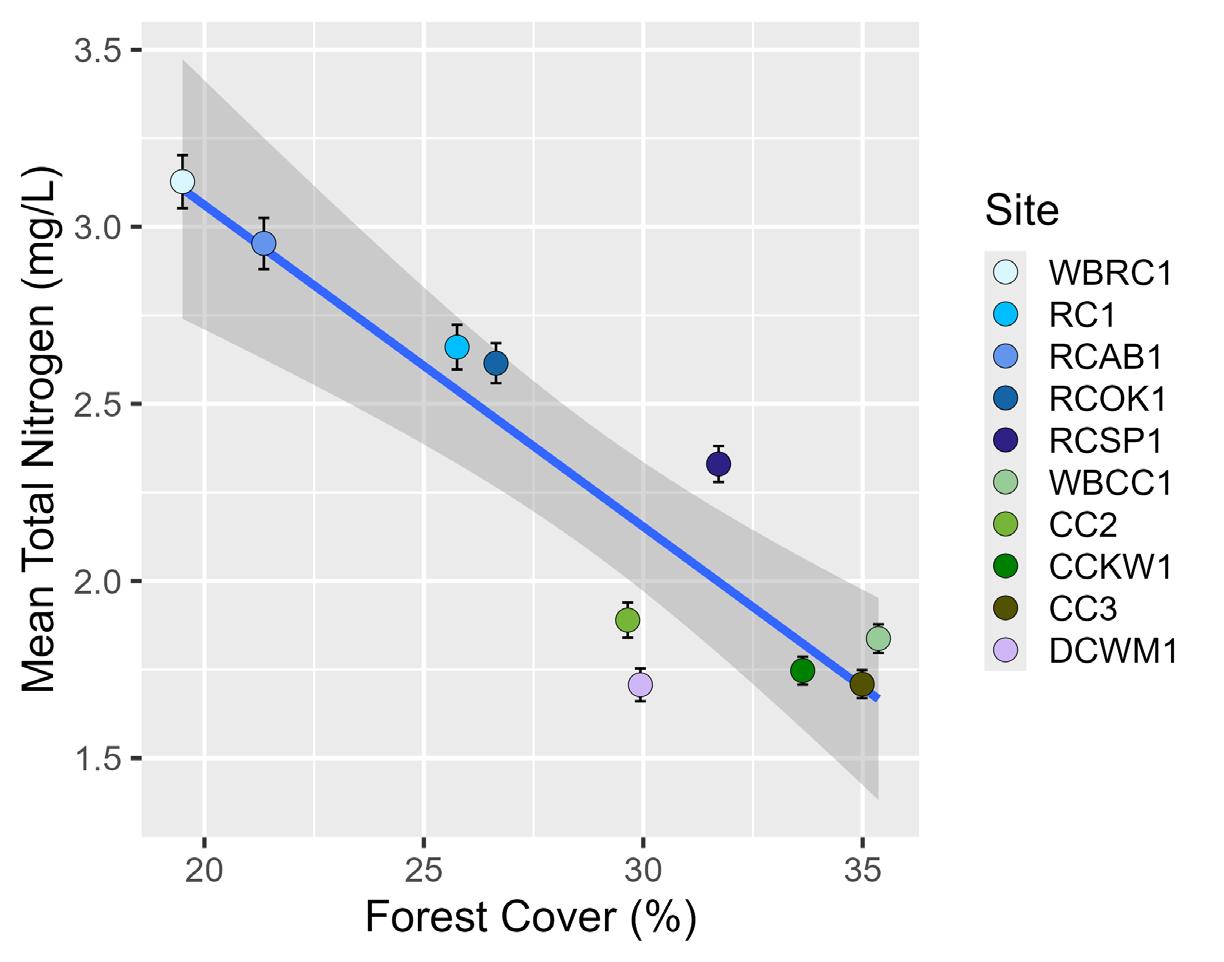
A statewide study of nutrient data in Pennsylvania streams from 2000 to 2019 found that TN was higher in developed streams than forested streams.31 In the study area, there is no significant relationship between mean TN and impervious surface cover (p = 0.28). However, there is a significant negative relationship between mean TN and forest cover (p = 2.8 * 10-4), with forest cover explaining 82% of the variation in mean TN (Figure 20). This indicates that streams flowing through watersheds with more forests tend to have lower TN.
Figure 18. Total nitrogen (mg/L) at ten sites in the headwaters of Ridley, Crum, and Darby Creeks (a) over time and (b) across sites. The orange line is the 2.3 mg/L nutrient impairment threshold.
18b.
18a
Figure 19. The relationship between specific conductivity (µS/cm) and total nitrogen (mg/L) at ten sites in the headwaters of Ridley, Crum, and Darby Creeks.
Figure 20. The relationship between mean total nitrogen (mg/L) and forest cover at ten sites in the headwaters of Ridley, Crum, and Darby Creeks.
Total phosphorus (TP) is the concentration of all phosphorus-containing compounds, such as phosphates. Like nitrogen, phosphorus is an essential nutrient, and can trigger eutrophication when present in excess. Phosphorus is less abundant than nitrogen and typically is the limiting factor for plant and algae growth in streams. Consequently, a small increase in phosphorus can have an outsized impact on stream health.
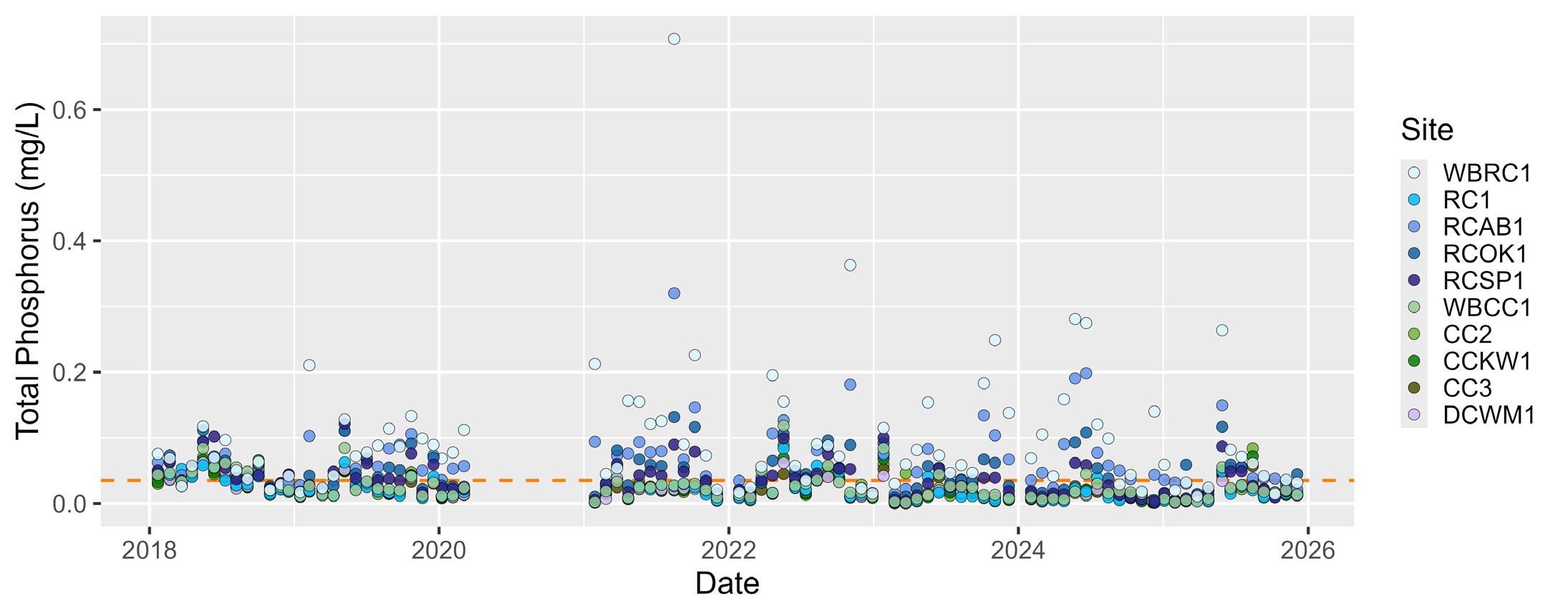
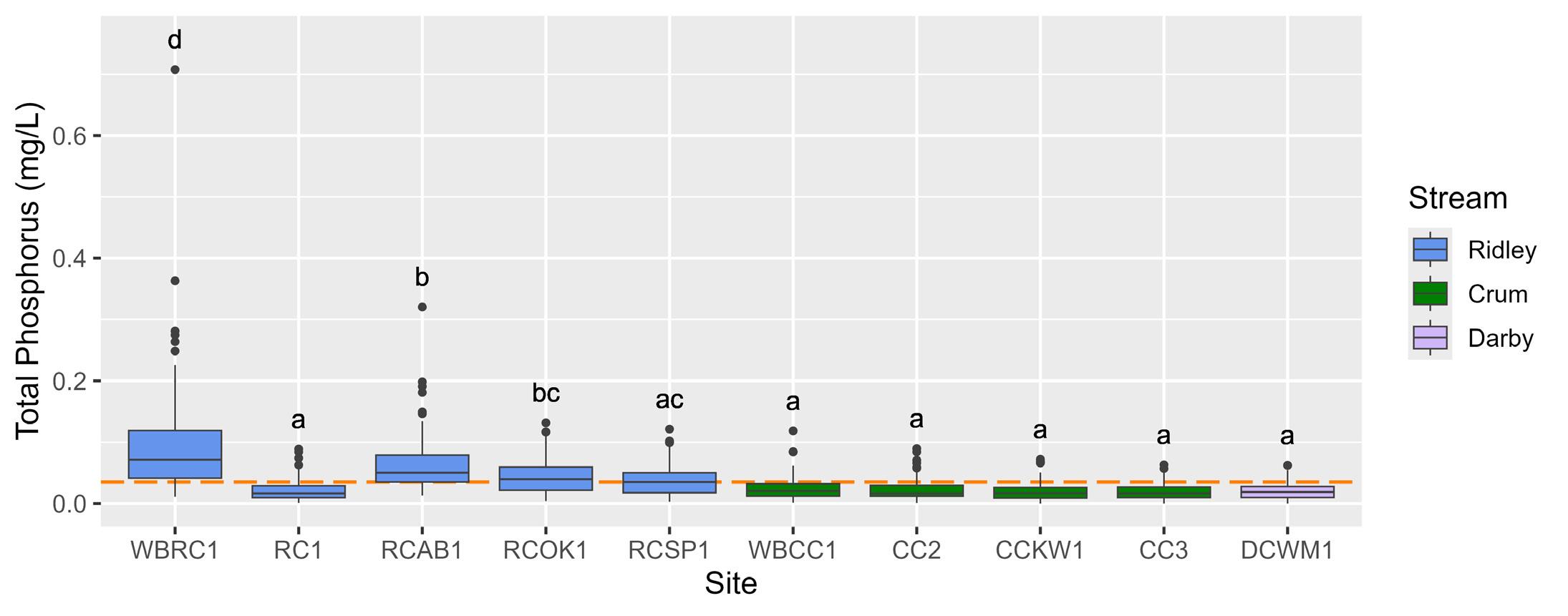
Though there are no state or federal standards for TP in streams, natural background concentrations of phosphorus are estimated to be between 0.025 mg/L and 0.060 mg/L.32 In Pennsylvania, the maximum TP concentration for a stream that is not impaired by nutrients is 0.035 mg/L.30 This threshold is exceeded in less than 25% of samples from all Crum Creek sites as well as DCWM1 and RC1. In Ridley Creek, 79% of samples from WBRC1 exceed this threshold, followed by 75% of samples from RCAB1, 55% from RCOK1, and 50% from RCSP1.
TP ranges from a low of <0.005 mg/L, recorded at CCKW1, CC3, and DCWM1 on 3/23/2023 and at CC3 on 2/23/2023, to a high of 0.7 mg/L at WBRC1 on 8/16/2021 (Figure 21a). There are significant differences in mean TP between sample sites (p < 2.2 * 10-16, Figure 21b). Mean TP is higher at WBRC1 than at all other sample sites. Moving downstream in Ridley Creek, mean TP remains elevated at RCAB1 and RCOK1. Mean TP is slightly elevated at RCSP1, but is not significantly different from mean TP at RC1, all Crum Creek sites, and DCWM1.
21a.
Figure 21. Total phosphorus (mg/L) at ten sites in the headwaters of Ridley, Crum, and Darby Creeks (a) over time and (b) across sites. The orange line is the 0.035 mg/L nutrient impairment threshold.
21b
There is a significant, but weak, relationship between TP and TN, with TN explaining only 5% of the variation in TP (p = 1.3 * 10-12). This suggests that there are links between TP and TN, but they can also impact streams independently. There is a significant, but weak, relationship between SPC and TP, with TP explaining only 2% of the variation in SPC (p = 2.0 * 10-4). This is expected as TP is present in much lower concentrations than chloride and TN.
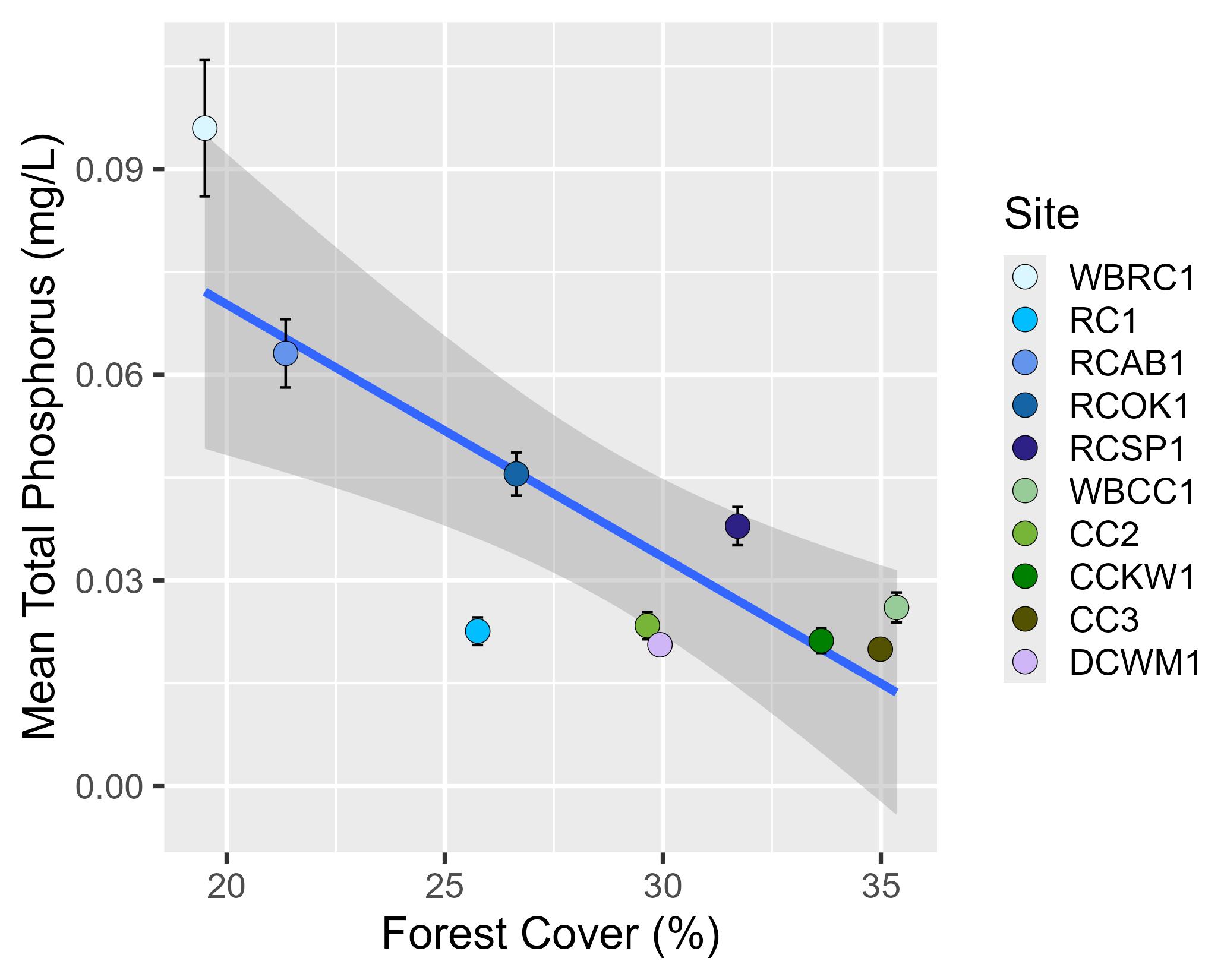
A study of nutrient concentrations in Pennsylvania streams found that streams in developed watersheds tended to have higher TP than streams in undeveloped watersheds.31 Similar to TN, there is no significant relationship between mean TP and impervious surface cover (p = 0.15). However, there is a significant relationship between mean TP and forest cover, with forest cover explaining 66% of the variation in mean TP (p = 0.0041, Figure 22).
Figure 22. The relationship between mean total phosphorus (mg/L) and forest cover at ten sites in the headwaters of Ridley, Crum, and Darby Creeks.
SECTION 2 | DARBY & COBBS CREEK COMMUNITY SCIENCE PROGRAM
The Darby and Cobbs Creek Community Science Program (DCCCS) was established in 2021 by Darby Creek Valley Association and Willistown Conservation Trust, with support from Stroud Water Research Center. The mission of DCCCS is to monitor, protect, and improve the water quality and stream ecology of Pennsylvania’s vital Darby and Cobbs Creek watershed through volunteer community science, education, empowerment, and outreach.
The majority of Darby Creek, including all of Cobbs Creek, its largest tributary, is considered impaired for aquatic life by the PADEP, meaning that these waterways cannot support the full diversity of aquatic life that should be able to live in these streams.2 Throughout the watershed, common impairments include habitat alterations, siltation, and flow variability. These impairments are linked to urban runoff, combined storm sewer overflow, and channelization of streams, all of which are driven by intensive land use and development. Over half a million people live in the Darby and Cobbs Creek watershed, making it imperative to understand the relationships between land use and water quality in these waterways.
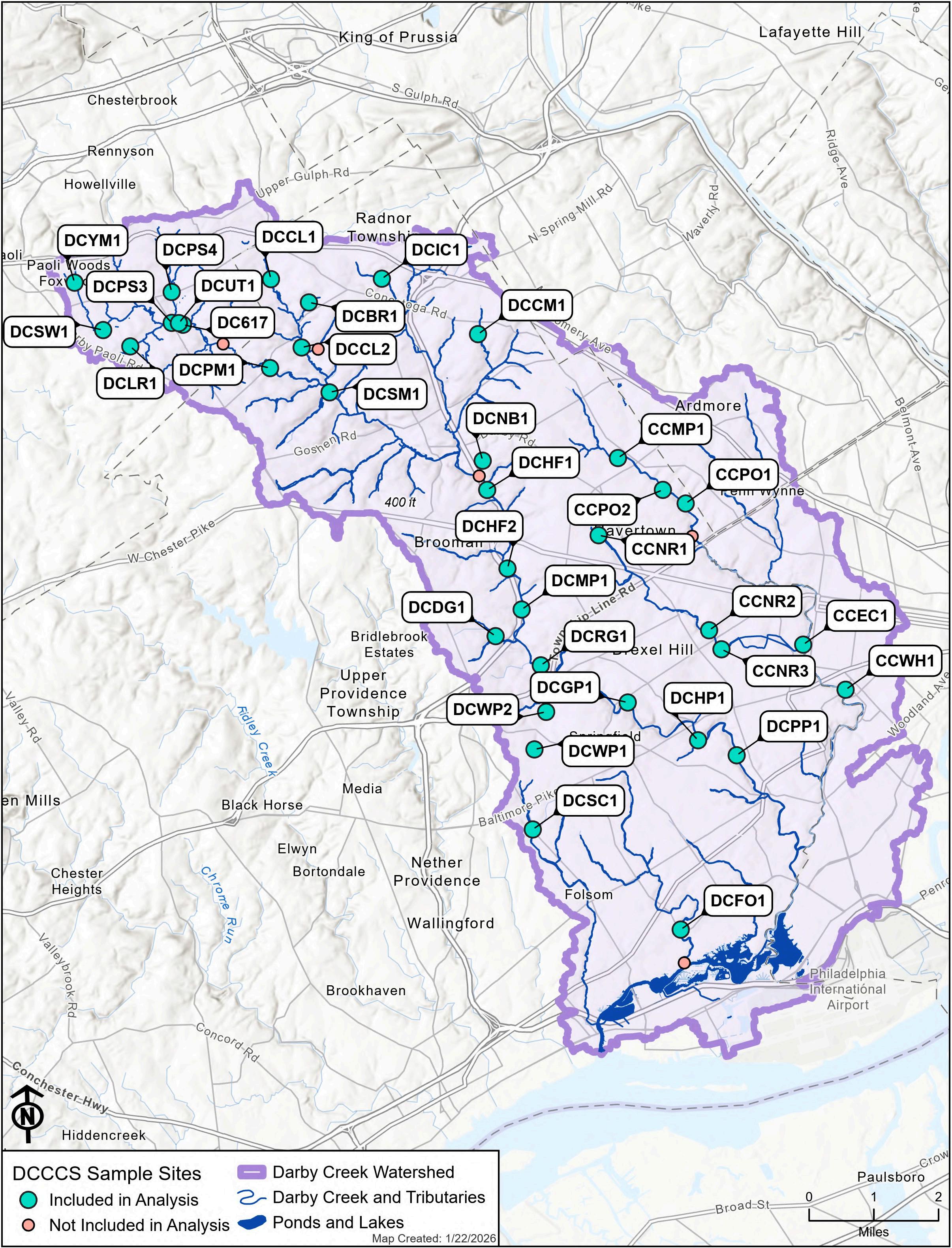
To untangle these relationships, the DCCCS program has established a network of sample sites, extending from the headwaters through the lower watershed, with 37 sample sites currently monitored by over 40 volunteers (Figure 23). Catchments range in size from 0.3 km2 at DCLR1 to 99 km2 at DCPP1. Forest is the primary land use in catchments draining to DCLR1, DCNB1, and DCSM1. In all other catchments, the primary land use is developed, open space, defined as areas with less than 20% impervious surface cover or developed, low intensity, defined as areas with 20% to 49% impervious surface cover.3 Impervious surface cover ranges from 11% at DCLR1 to 49% at CCNR1.4,5 Some sample sites are located in highly urbanized and industrialized areas, allowing for an expanded understanding of how land use impacts water quality.
Volunteers visit their sample site every four weeks, during the same window when Watershed staff conduct sampling, and measure water temperature, pH, specific conductivity (SPC), chloride concentration, and nitrogen concentration. This report focuses on water temperature, SPC, and chloride concentration data. To capture full seasonal variation, only sites with at least 12 months of data as of December 31, 2025 were included in the analysis. Of the 40 sites that have been part of the program, 35 have enough records to be included in the analysis (Figure 23).
The initial goal of DCCCS was to complement the Watershed Protection Program’s monitoring efforts in the headwaters of Darby Creek. However, this program has grown into much more and now aims to empower residents and neighbors of the Darby and Cobbs Creek watershed to collect high-quality data and advocate for clean water. The detailed data collected by volunteers has captured the impact of human activity, such as the overapplication of road salt, as well as the impact of climate-related issues, including the severe drought in 2024. Additionally, volunteers are expanding our knowledge of the wildlife that live in Darby Creek. In 2024, a large bed of breeding freshwater mussels, previously thought to be absent from the watershed, was documented as a result of volunteer sampling (Section 3.2). We are proud to share the data that has been collected by DCCCS volunteers and expand our understanding of this vital watershed.
To learn more about the program and track monthly data updates, please visit darbycreekcommunityscience.com.
Figure 23. Darby and Cobbs Creek Community Science Program sample sites. Volunteers visit sites every four weeks to collect water quality data. Forty sample sites have been established throughout the Darby and Cobbs Creek watershed since March 2021. Thirty-five sites have 12 or more samples and were included in the analysis.
In Darby and Cobbs Creek watershed, there is a clear relationship between land use and water quality: streams flowing through watersheds with high impervious surface cover and low forest cover tend to have poorer water quality. These trends are apparent in water temperature, SPC, and chloride data.
Water temperature is elevated at all DCCCS sample sites and regularly exceeds PADEP thresholds.11 Throughout the watershed, 91% of samples exceed cold water fishery standards, 41% exceed trout-stocked fishery standards, and 34% exceed warm water fishery standards.
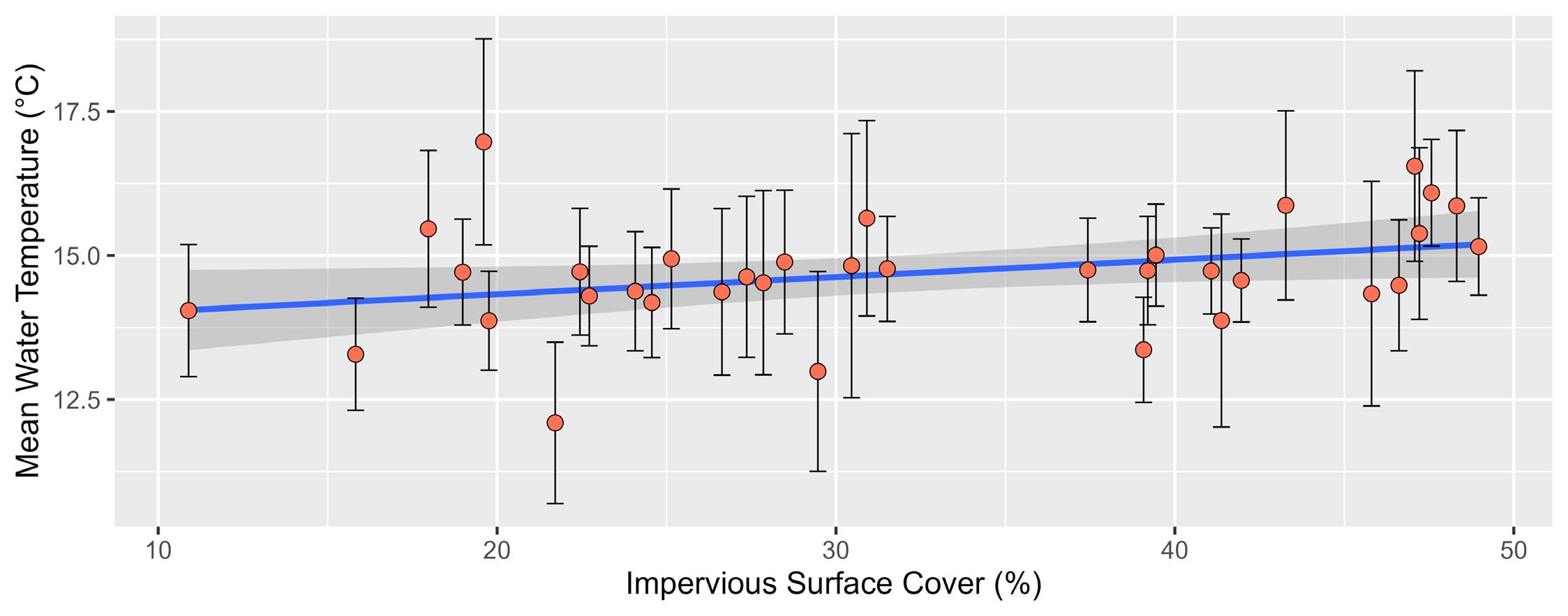
There is a significant relationship between mean water temperature and impervious surface cover (p = 0.044, Figure 24). This relationship is fairly weak, with impervious surface cover explaining 12% of the variation in mean water temperature. There is no relationship between mean water temperature and forest cover (p = 0.21). Studies in the mid-Atlantic region have found a similar link between urbanization, reflected by increasing impervious surface cover, and elevated steam temperatures.7 In summer months, impervious surfaces warm more than forests or soils. Consequently, rain that falls on impervious surfaces absorbs this heat and the resulting runoff can warm streams. In the WCT study area, there is no relationship between land use and water temperature, likely due to the narrower range of impervious surface cover (Section 1.1).
SPC and chloride concentration, two indicators of road salt pollution, are elevated and strongly related to land use. Mean SPC at all sites is above 300 µS/cm, reflecting chronic conditions that are likely harmful to stream health.15 There is a significant relationship between mean SPC and impervious surface cover (p = 5.9 * 10-4, Figure 25a), and between mean SPC and forest cover (p = 0.0048, Figure 25b). SPC is significantly related to chloride concentration (p < 2.2 * 10-16), indicating that chloride concentration is a major driver of SPC in Darby and Cobbs Creek. This relationship is well-documented and is observed in the WCT study area (Section 1.7).18
Chloride concentration mirrors trends in SPC. Mean chloride concentration at all sites is above 50 mg/L, a threshold known to have negative impacts on aquatic macroinvertebrates.27 There is a significant relationship between mean chloride concentration and impervious surface cover (p = 1.8 * 10-4, Figure 26a), and between mean chloride concentration and forest cover (p = 0.048, Figure 26b).
Figure 24. The relationship between mean water temperature (°C) and impervious surface cover at 35 sites throughout the Darby and Cobbs Creek watershed. 24.
These relationships with land use are weaker than the relationships seen at WCT sample sites (Sections 1.7 & 1.8). This is partially due to site location – WCT sites are only in the headwaters and DCCCS sites extend to downstream sections. Land use also varies more throughout the Darby and Cobbs Creek watershed: impervious surface cover in WCT catchments ranges from 9% to 21% while some DCCCS catchments have nearly 50% impervious surface cover. In areas with extensive impervious surface cover, road salt runs off of impervious surfaces into stormwater drains and immediately into streams, causing a spike in SPC and chloride that quickly flushes through the system. As salt washes directly into streams through stormwater pipes rather than flowing over land and seeping into soil, this can reduce the amount of salt that builds up in the groundwater and soil.20 This phenomenon could explain the wide range in mean SPC and mean chloride concentration at sites with greater than 35% impervious surface cover (Figure 25a, Figure 26a).
These findings highlight warm water temperature and salt pollution as impairments throughout Darby and Cobbs Creek watershed. The impact of these stressors is exacerbated in more developed areas: streams draining watersheds with high impervious surface cover have warmer temperatures, higher SPC, and higher chloride concentration. Preserving remaining open space, especially woodlands, is crucial to protect healthy streams and prevent further degradation. In downstream areas, where little open space remains, reducing road salt use, improving stormwater management, and reforesting riparian areas will be key for mitigating impairments and protecting the health of Darby Creek and its tributaries for all.
Figure 25. The relationship between specific conductivity (µS/cm) and (a) impervious surface cover and (b) forest cover at 35 sites throughout the Darby and Cobbs Creek watershed.
Figure 26. The relationship between chloride concentration (mg/L) and (a) impervious surface cover and (b) forest cover at 35 sites throughout the Darby and Cobbs Creek watershed.
26a.
26b.
Darby Creek at Paper Mill Road
|
Deirdre Gordon
SECTION 3 | BIOLOGY
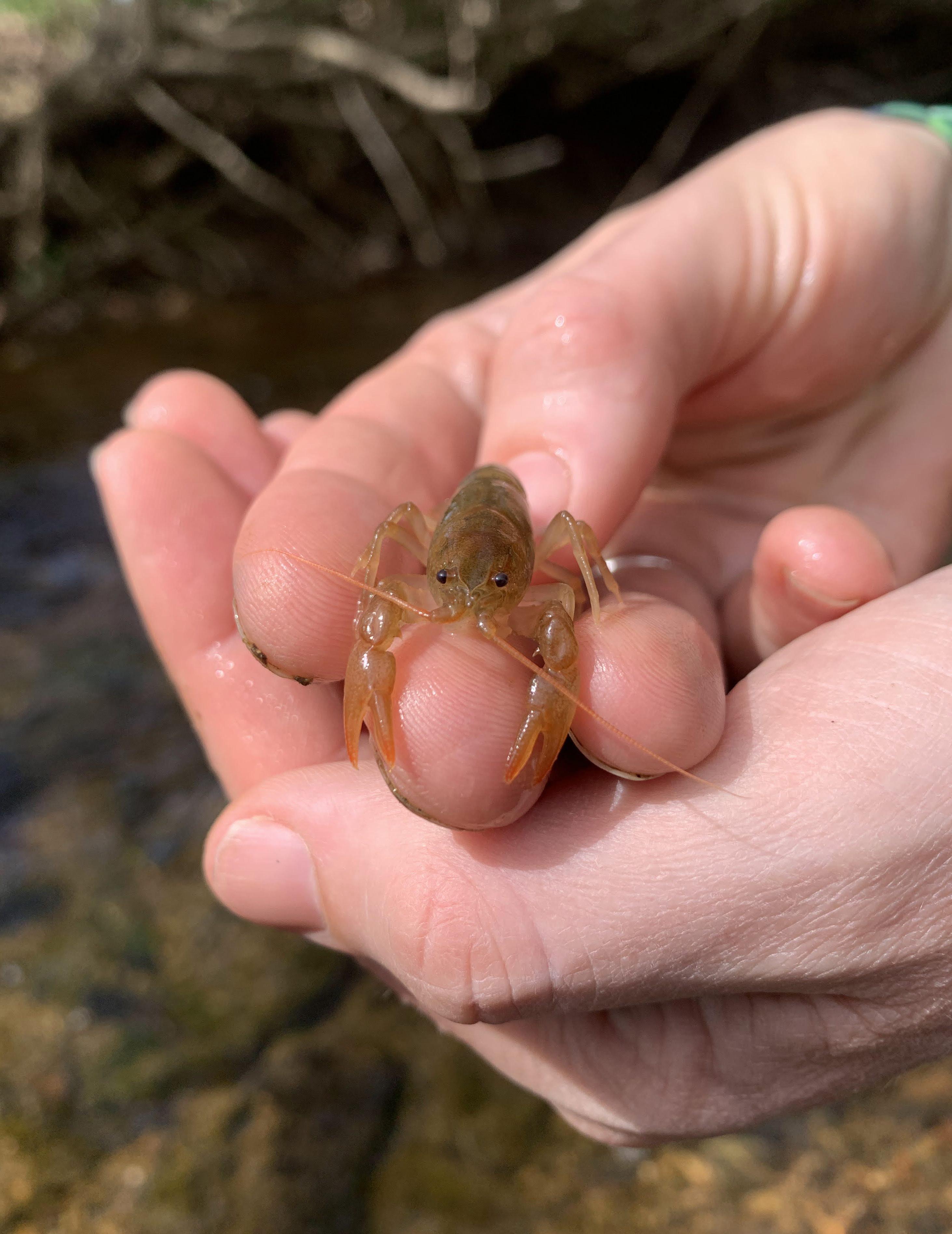
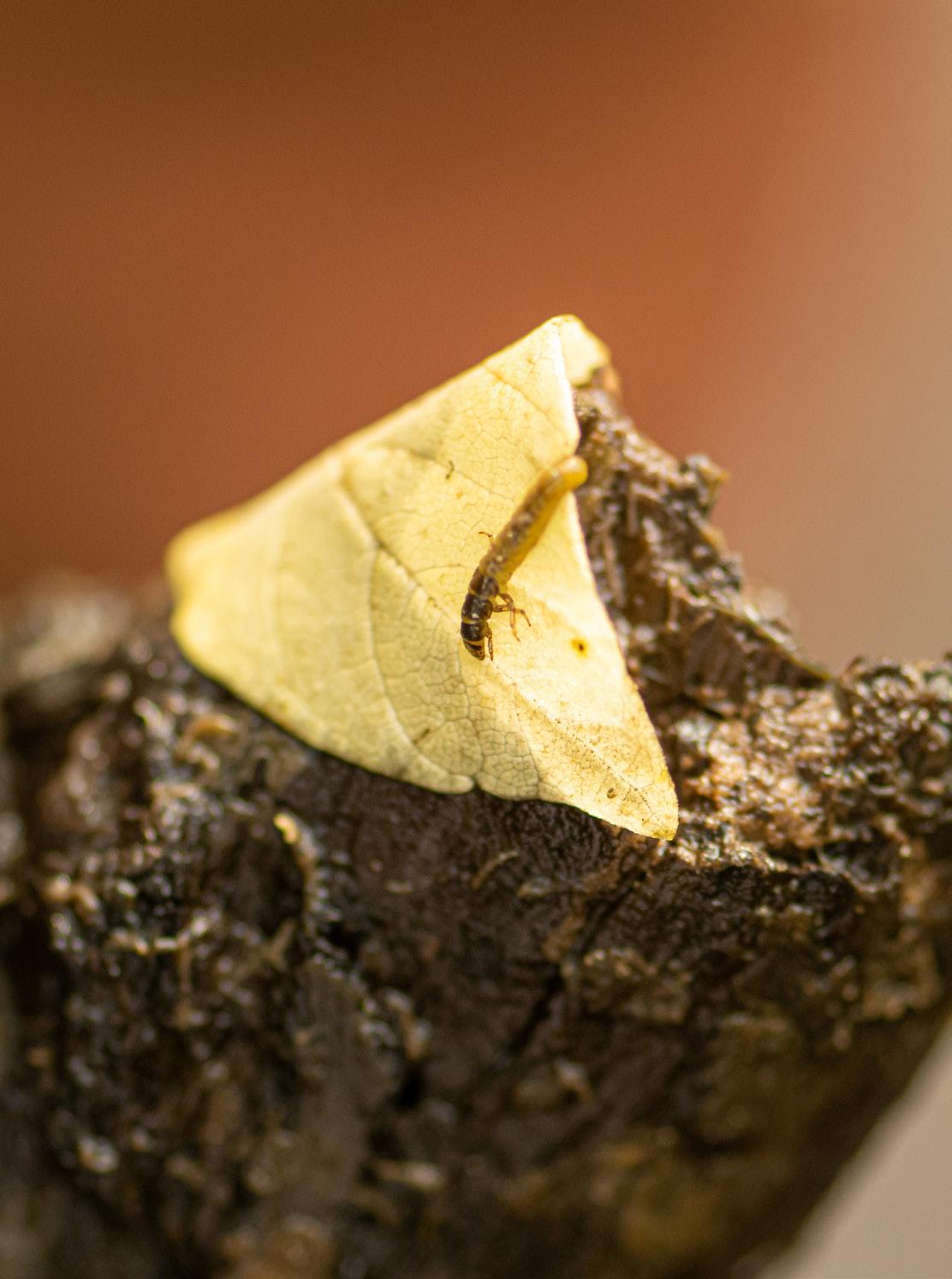
Aquatic macroinvertebrates are small organisms that lack a backbone, are visible to the naked eye, and live all or part of their lives underwater. They form a diverse and abundant group, including insects such as mayflies, stoneflies, caddisflies, and dragonflies, as well as crayfish, snails, clams, mussels, and more. Their significance extends beyond mere existence – they are crucial to ecosystem function. By converting organic plant matter into animal biomass, they form a foundation that supports the intricate web of life in aquatic ecosystems.
With a widespread distribution, sensitivity to changes in water quality, and diverse abilities to tolerate environmental stress, aquatic macroinvertebrates are a reliable tool for monitoring the health of stream ecosystems.33 Their presence – or absence – illustrates the overall well-being of these water bodies. While water chemistry gives a brief glimpse into a constantly changing system, analysis of macroinvertebrate communities gives a longer-term perspective, as macroinvertebrates can live for several years in streams. Over the course of their lives, macroinvertebrates must survive variable stream conditions to reproduce, providing a biological context to water chemistry data.
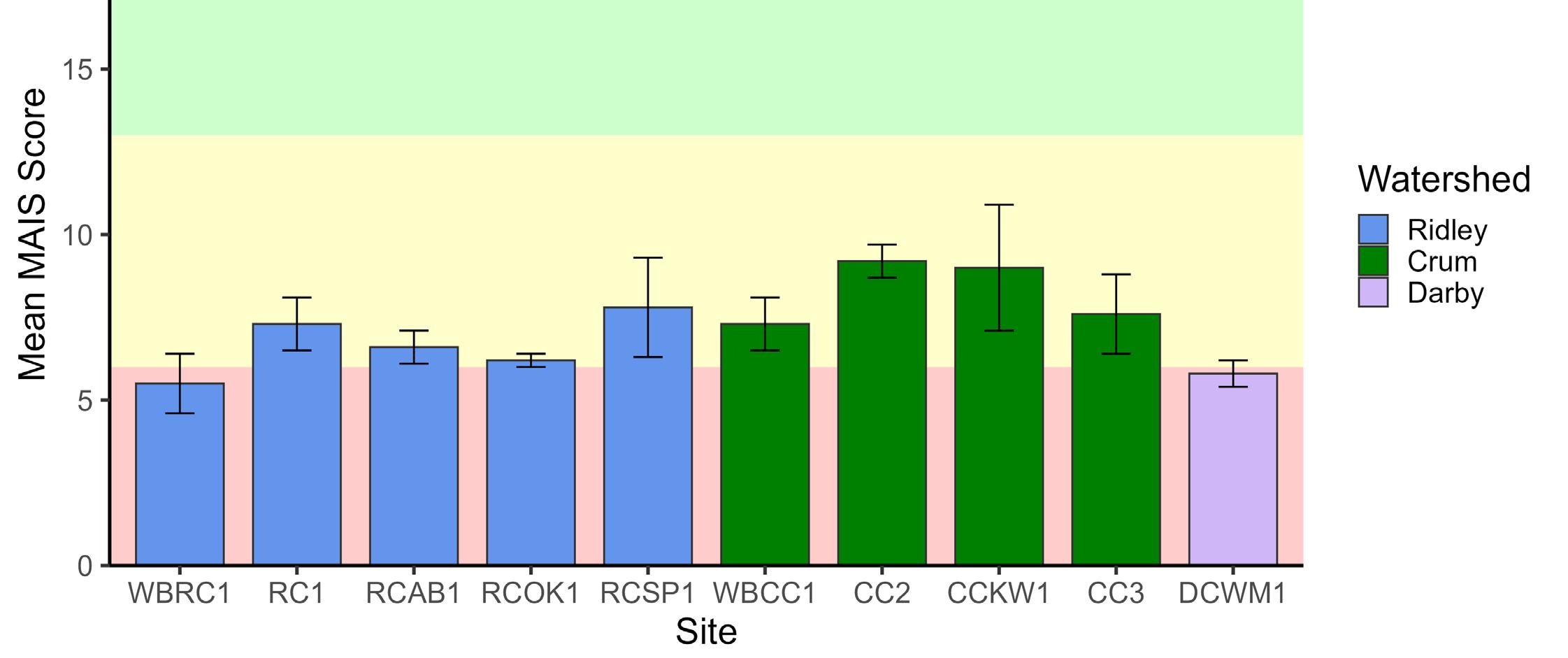
In spring 2018, 2019, 2021, 2022, and 2023, Watershed staff collected macroinvertebrate samples at ten sites in the headwaters of Ridley, Crum, and Darby Creeks to complement monthly water chemistry data (Figure 1). No sample was collected in 2020 due to the COVID-19 pandemic. Samples were sorted and identified in the lab. Macroinvertebrate Aggregate Index for Stream (MAIS) scores were calculated for all years except 2023, for which analysis is ongoing. MAIS (pronounced “moss”) scores combine ten metrics to generate a value which classifies stream health as “Good,” “Fair,” or “Poor."34 The metrics used in the calculation of a MAIS score include taxa richness (or biodiversity) of a sample, as well as feeding groups, habitat preferences, and pollution tolerance. Combining these metrics into one score captures the dynamic nature of macroinvertebrate communities and reflects the function of the entire system.
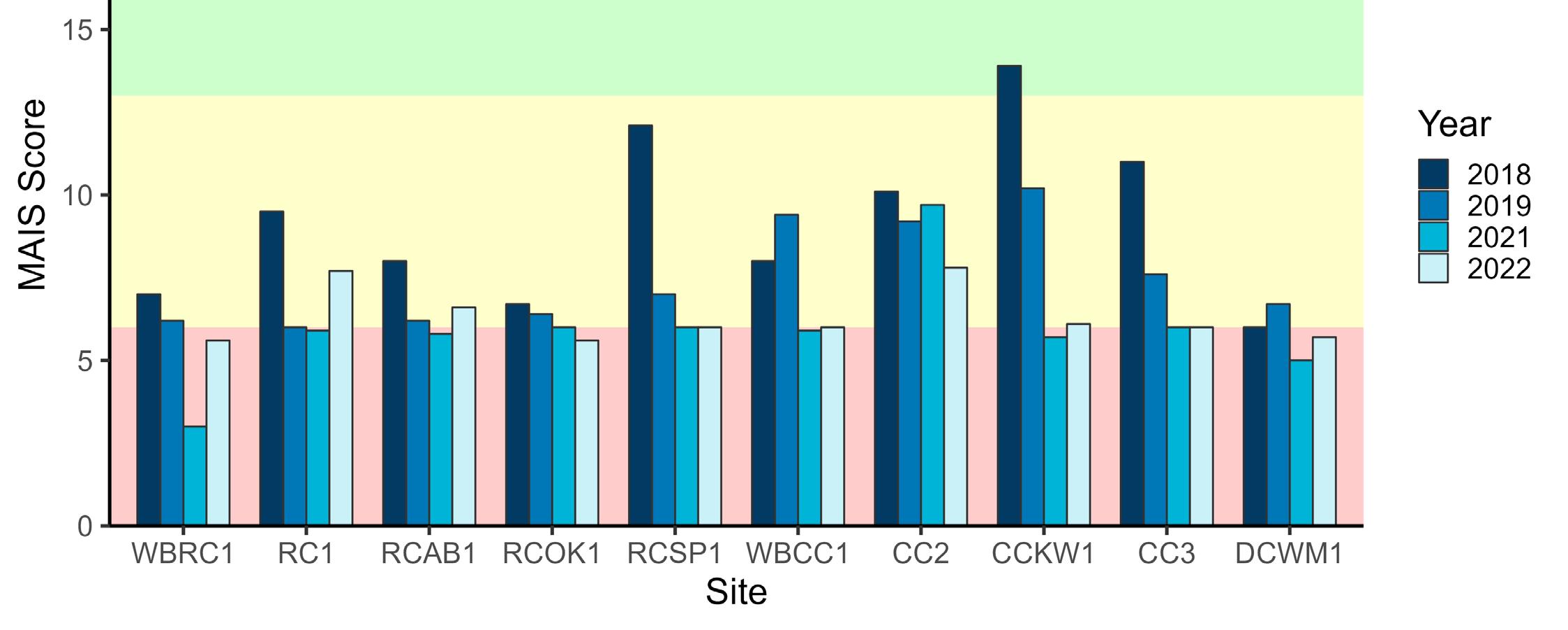
To date, the macroinvertebrate data set aligns with water chemistry data. Mean MAIS scores at eight sample sites were "Good," with Darby Creek at Waterloo Mills (DCWM1) and West Branch Ridley Creek (WBRC1) both scoring as “Poor” (Figure 27). However, when each year is examined individually, there is a considerable amount of variability, with 2018, ranking highest for most sites (Figure 28).
27.
Figure 27. Mean Macroinvertebrate Aggregated Index for Streams (MAIS) scores for ten sample sites in the headwaters of Ridley, Crum, and Darby Creeks. Samples were collected in 2018, 2019, 2021, and 2022. The red shading indicates “Poor” MAIS scores, the yellow shading indicates “Fair,” and the green shading indicates “Good.”
Figure 28. Annual Macroinvertebrate Aggregated Index for Streams (MAIS) scores for ten sample sites in the headwaters of Ridley, Crum, and Darby Creeks. Samples were collected in 2018, 2019, 2021, and 2022. The red shading indicates “Poor” MAIS scores, the yellow shading indicates “Fair,” and the green shading indicates “Good.”
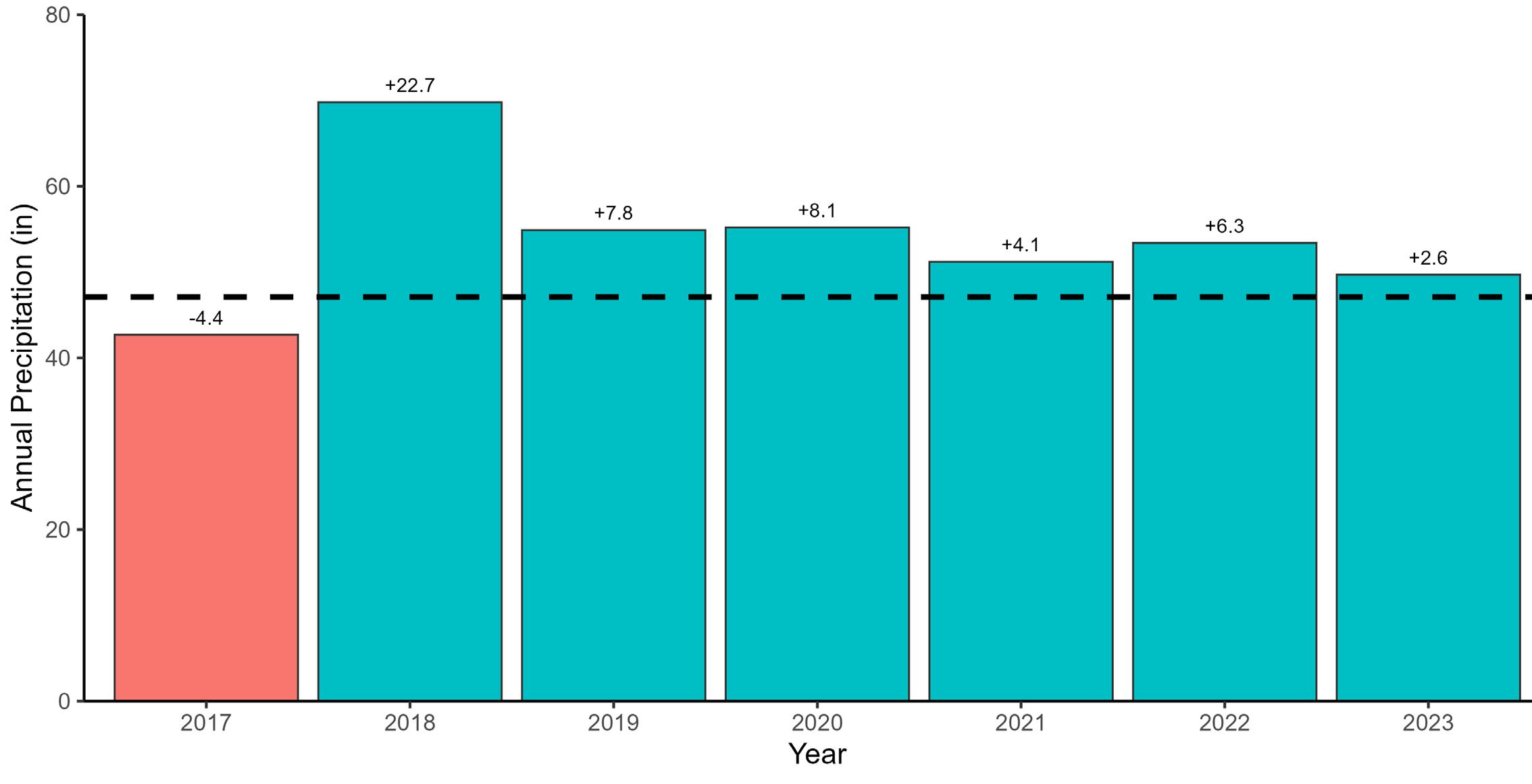
Precipitation, including rain and snow, was far above average in 2018, with the majority of storm events taking place after macroinvertebrate samples were collected (Figure 29).35 Flow data collected by the EnviroDIY Sensor Stations in Ridley Creek at Ashbridge Preserve in 2018 showed an above average number of flood events in the latter half of the year due to saturated soil and heavy rainfall. More frequent violent storms and floods can interrupt the macroinvertebrate life cycle. High flow rates can rapidly erode stream banks and deposit large amounts of sediment on stream beds, smothering macroinvertebrates and reducing the availability of suitable habitat for sensitive species.
While 2018 was by far the wettest year in the sample period, each subsequent year had above average precipitation (Figure 29). In addition to disrupting habitat, excess precipitation can also wash more contaminants into waterways. This impacts macroinvertebrate communities by driving an increase in pollutiontolerant species and a decrease in pollution-sensitive species, a shift reflected in MAIS scores (Figure 28).
When MAIS scores were compared with the chemistry data at the corresponding sites, there were significant negative relationships with specific conductivity (p = 0.012) and chloride concentration (p = 0.0083) and a strong negative trend with total phosphorus (p = 0.067). As these parameters increased, MAIS scores decreased, suggesting that road salt, reflected by SPC and chloride, and phosphorus have negative impacts on stream health and function.
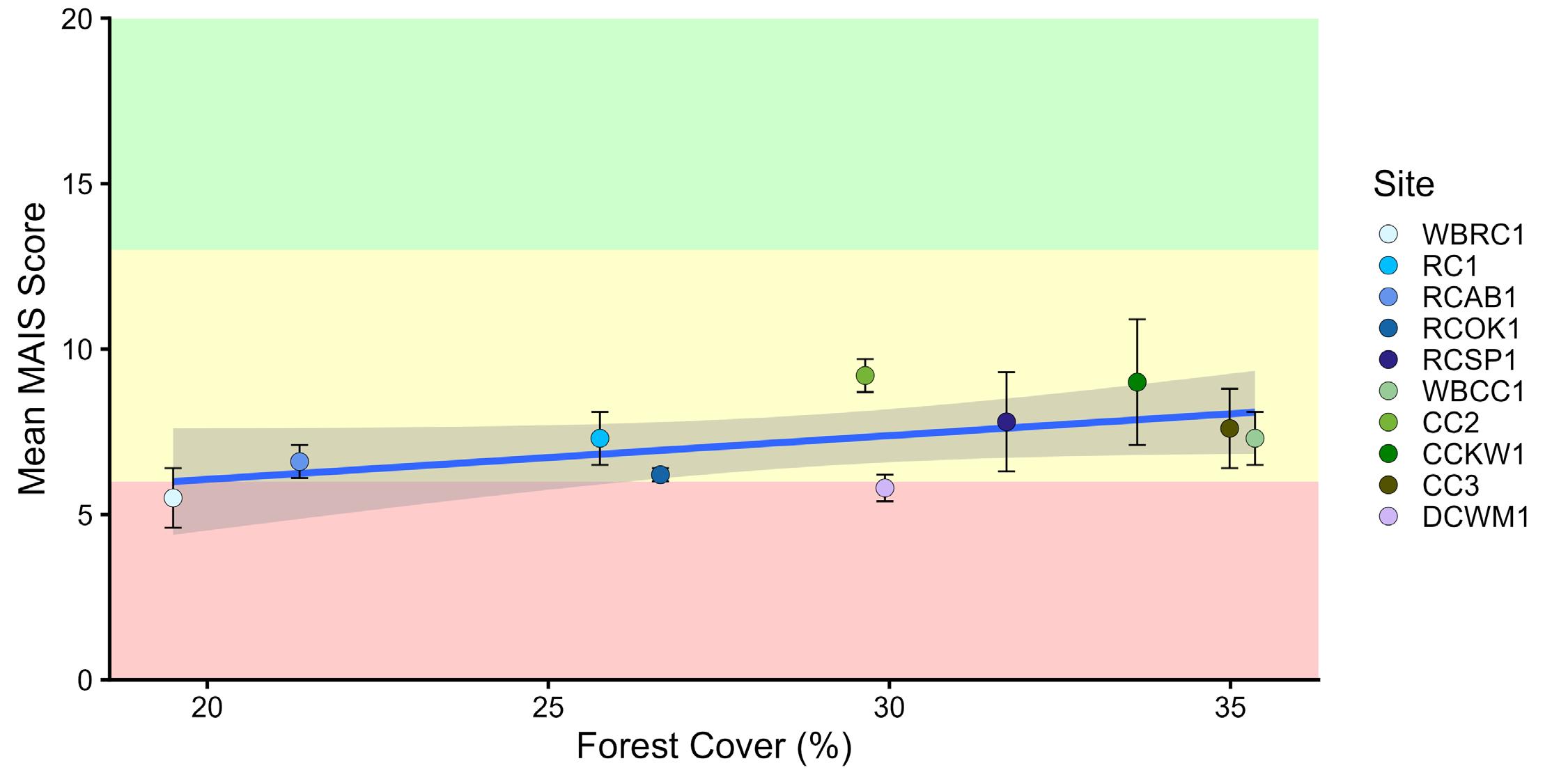
The data also showed a strong positive trend between forest cover and MAIS scores: streams flowing through watersheds with more forests tend to have higher scores (p = 0.078, Figure 30). Forests, especially along stream banks, slow and filter stormwater runoff, shade and cool water, secure the streambank with a robust root system, and provide a diverse source of food and habitat structure, all of which benefit aquatic macroinvertebrates and other organisms.
Together, water chemistry and aquatic macroinvertebrate data highlight where conservation and restoration work can make an impact. As climate change is expected to increase the frequency and intensity of storms, protecting open space and restoring riparian buffers will be crucial to ensuring the health of Ridley, Crum, and Darby Creeks.9 Through addressing contamination issues, such as the overapplication of road salts in winter months and fertilizers in the growing season, and restoring the native plant buffers along waterways, individuals, communities, and organizations alike can protect these critical resources for all life forms.
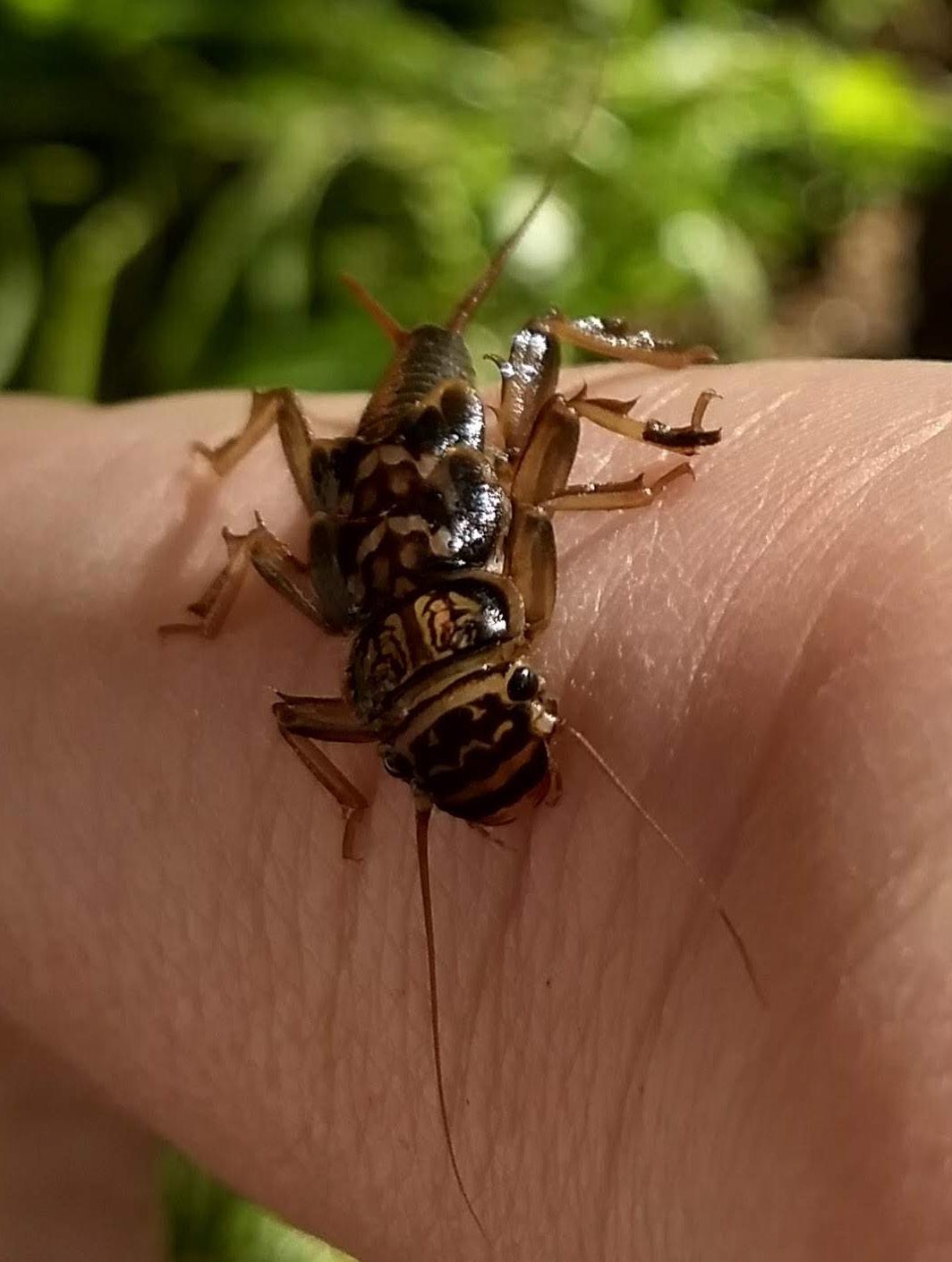
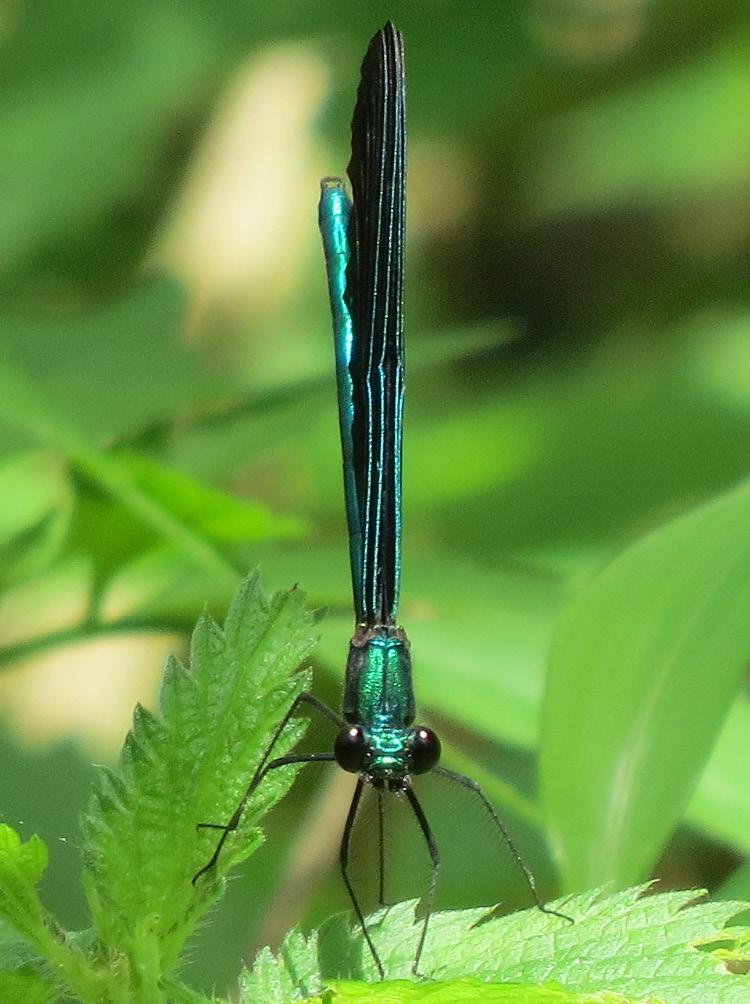
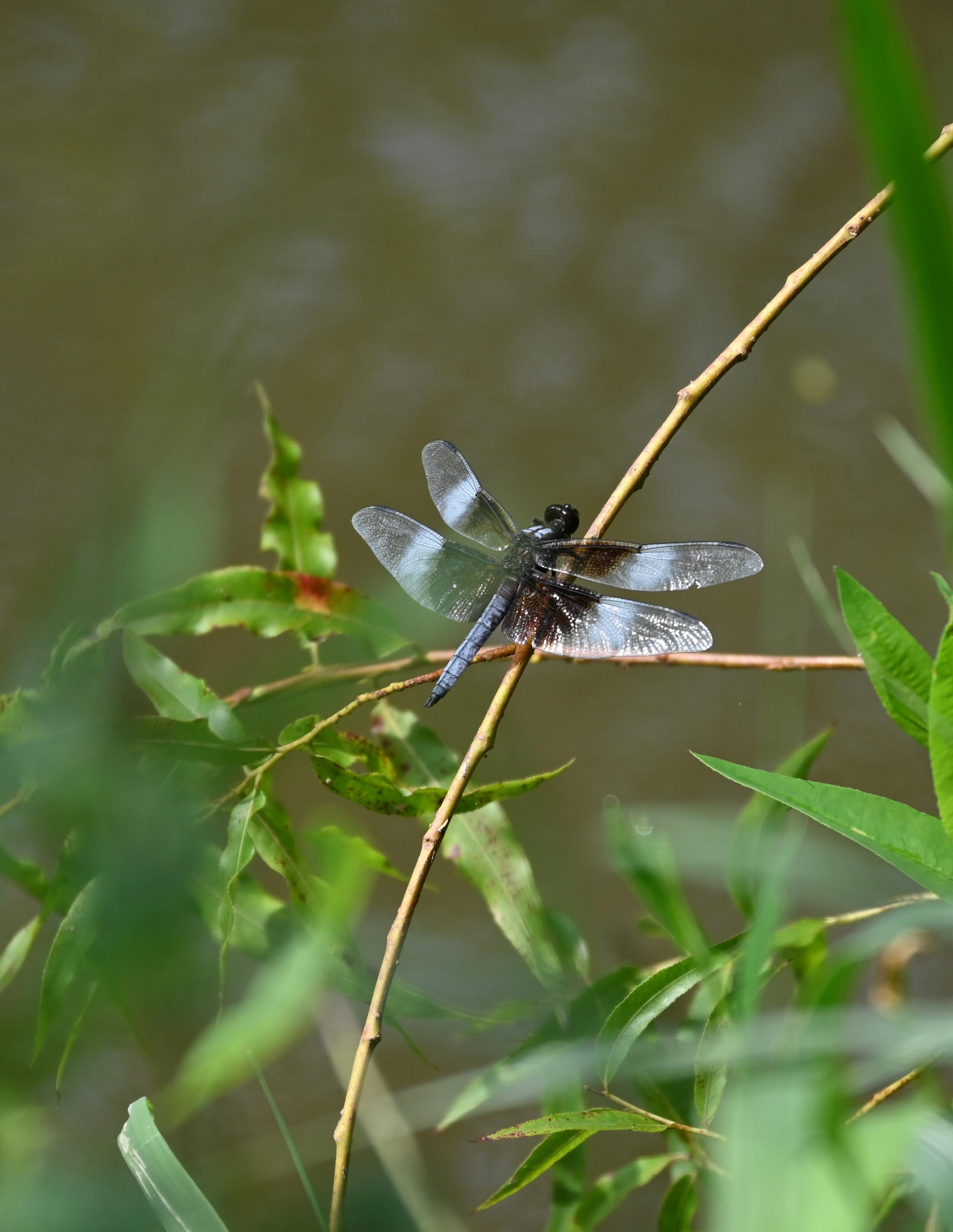
Calopteryx maculata
Lauren McGrath
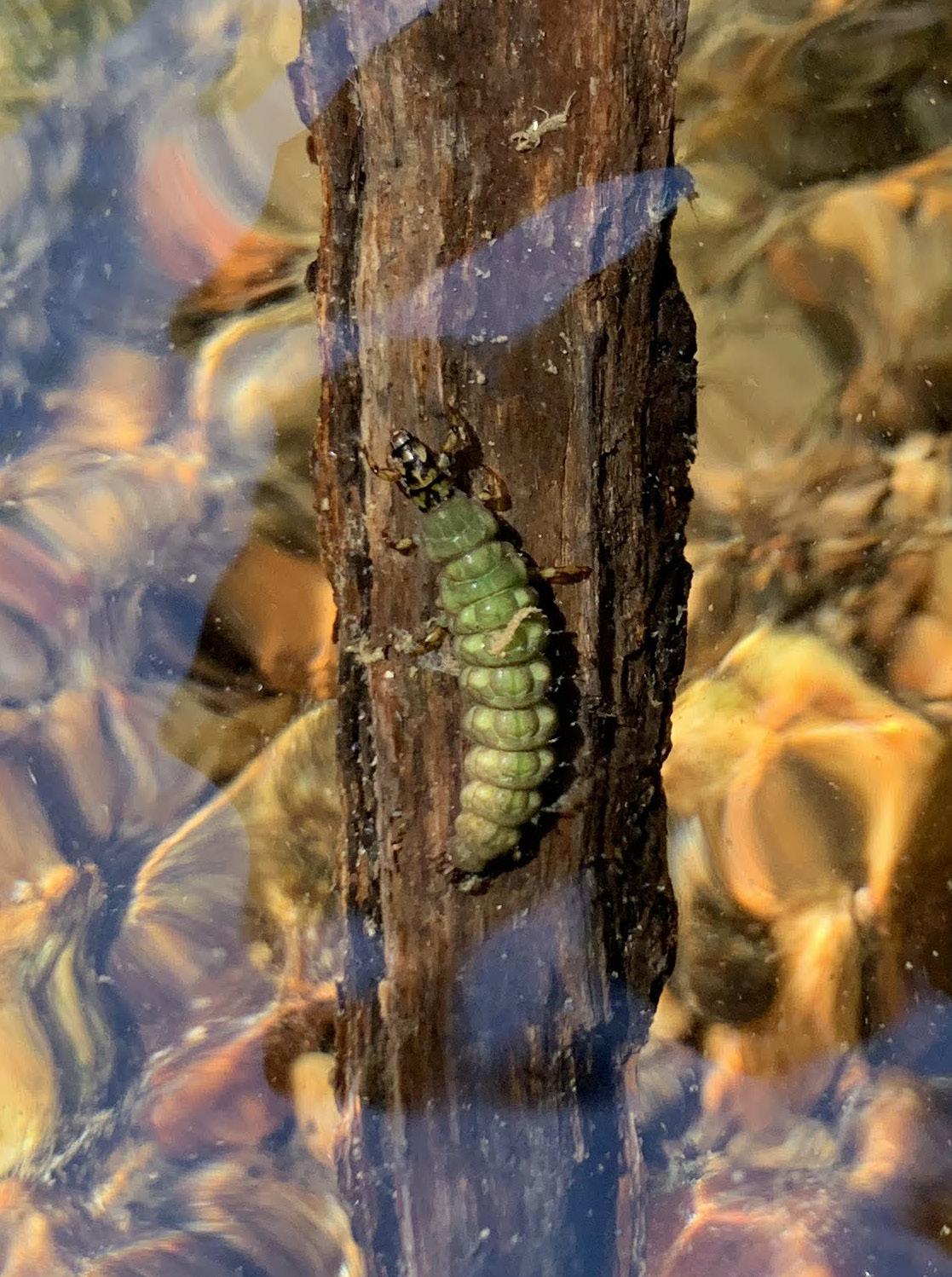
Free-living, Green
Caddisfly
Rhyacophila sp.
Anna Walsh
Figure 29. Annual precipitation for Chester County, Pennsylvania from 2017 through 2023. Annual precipitation includes all rain and snow that falls throughout the year. The hashed line represents the historical average of 47.1 inches of precipitation per year. Text above bars indicates the deviation from historical average. Years with a precipitation deficit are in red; years with excess precipitation are in blue.
Figure 30. The relationship between mean MAIS score and forest cover at ten sites in the headwaters of Ridley, Crum, and Darby Creeks. Samples were collected in 2018, 2019, 2021, and 2022.
Widow
Skimmer Dragonfly ( Libellula luctuosa ) | Anna Walsh
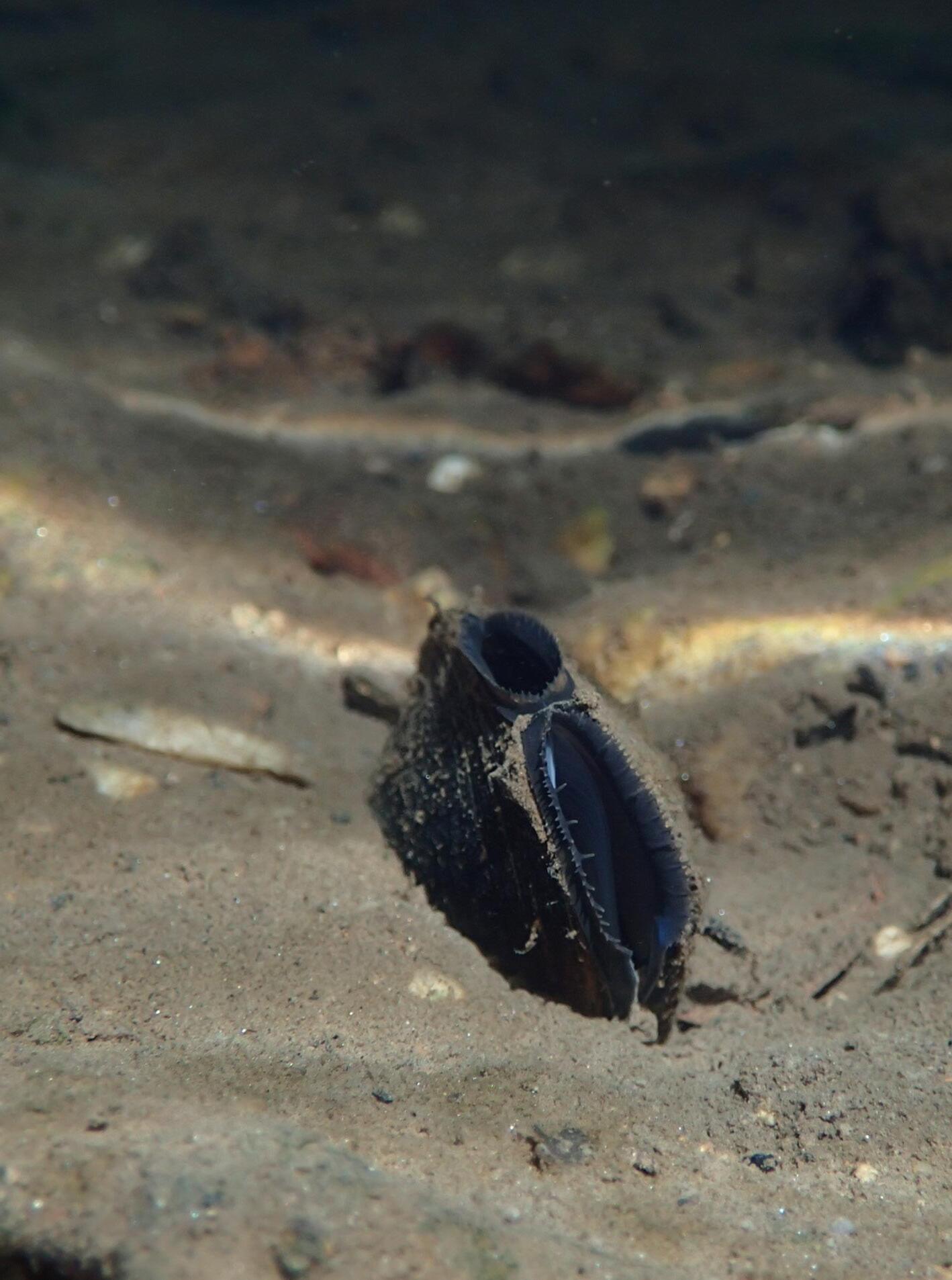
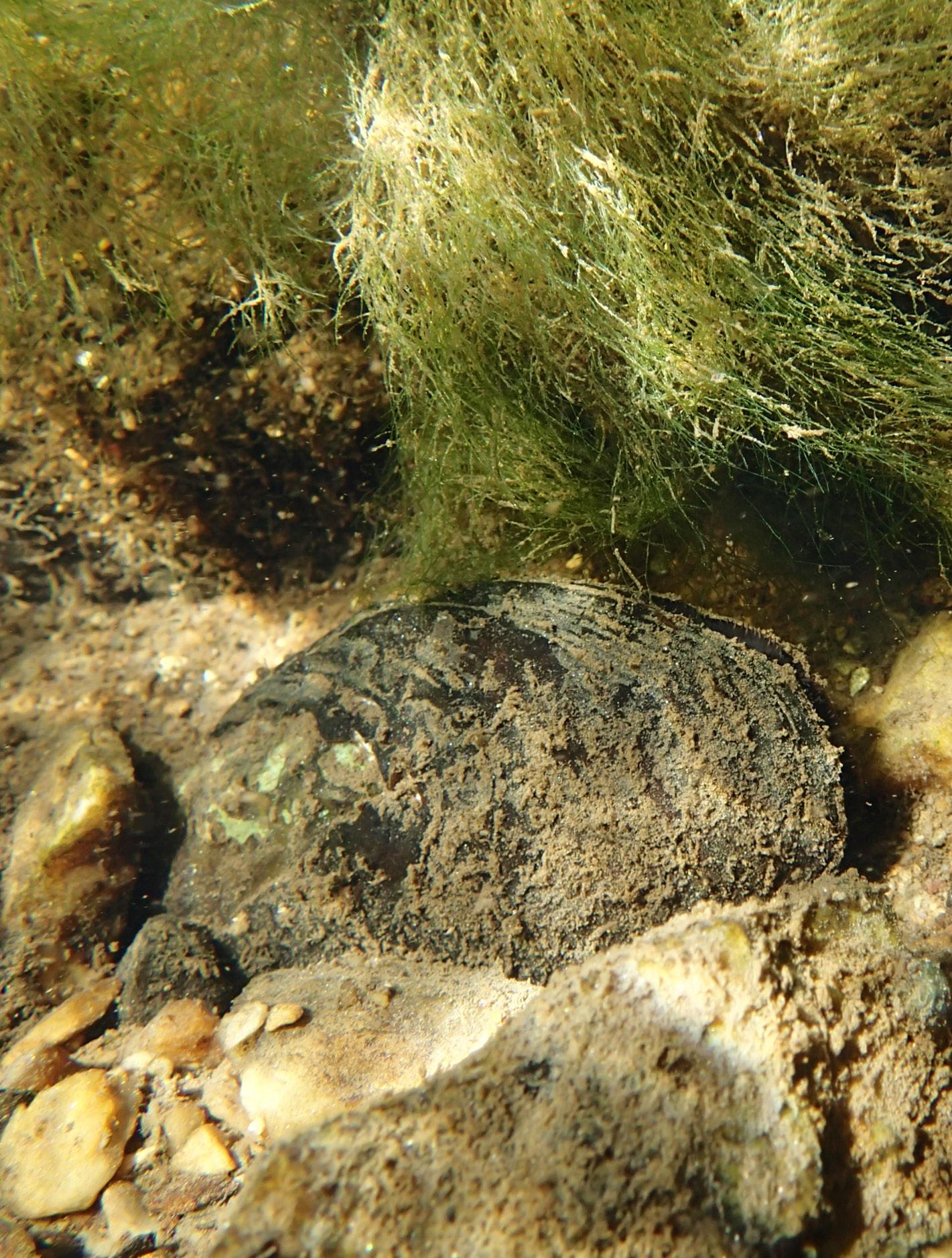
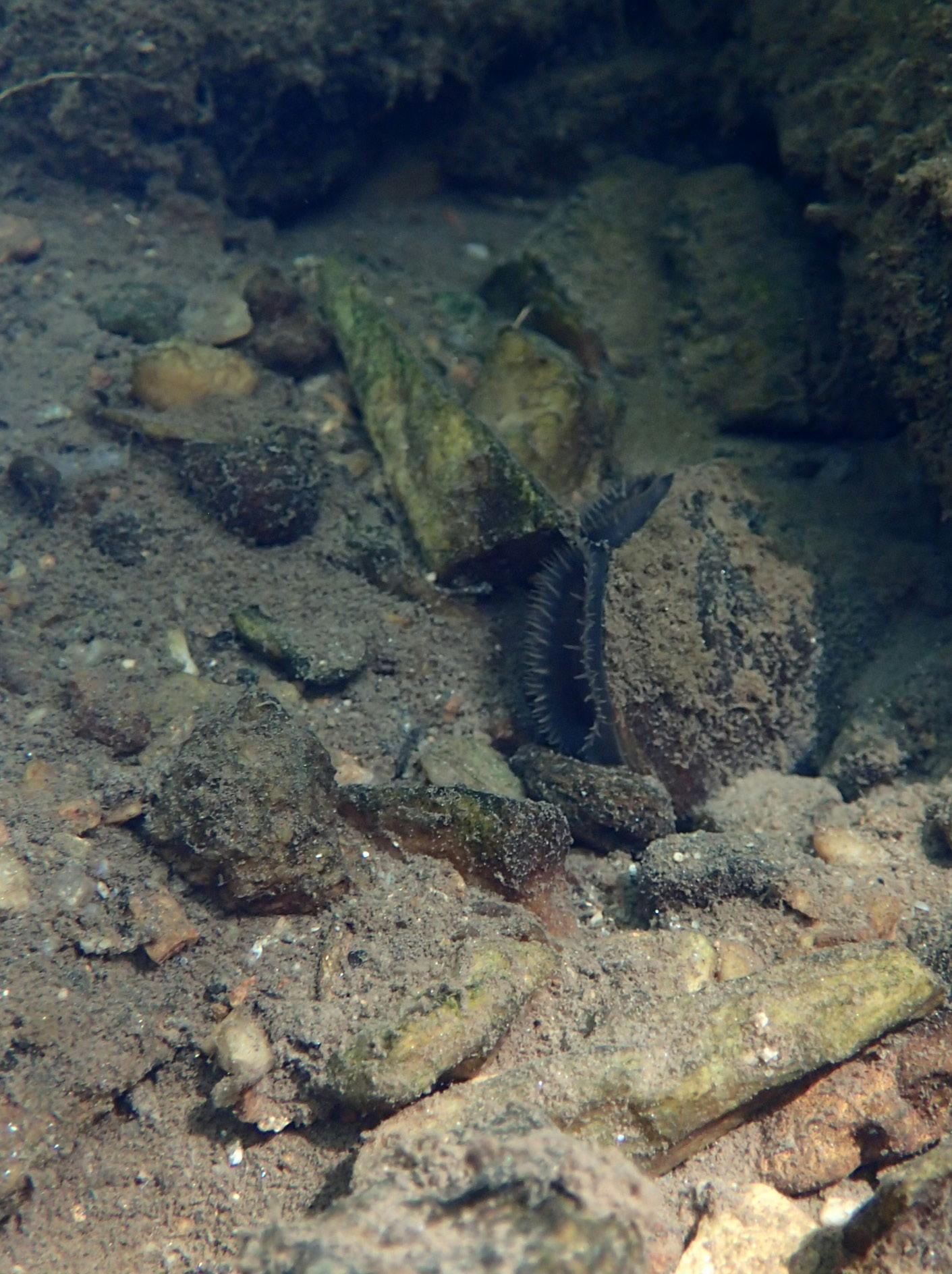
Freshwater mussels (Unionidae) are long-lived, bivalve filter feeders that are extremely sensitive to changes in water quality. They have a complex life history and rely on migratory fish to complete their life cycle, making them vulnerable to dams and other impediments to fish migration. Due to these multifaceted threats, over 50% of freshwater mussel species are considered at-risk, making them one of the most imperiled groups of organisms on the planet.36,37
Surveys from the late nineteenth century and early twentieth century recorded several species of freshwater mussels in Ridley, Crum, and Darby Creeks, but surveys conducted from 1996 to 2016 found only one species present in Ridley and Crum Creeks and no live mussels present in Darby Creek.38 However, surveys conducted by Watershed staff and partner organizations in 2022 and 2024 have documented live mussels in the headwaters of all three watersheds.
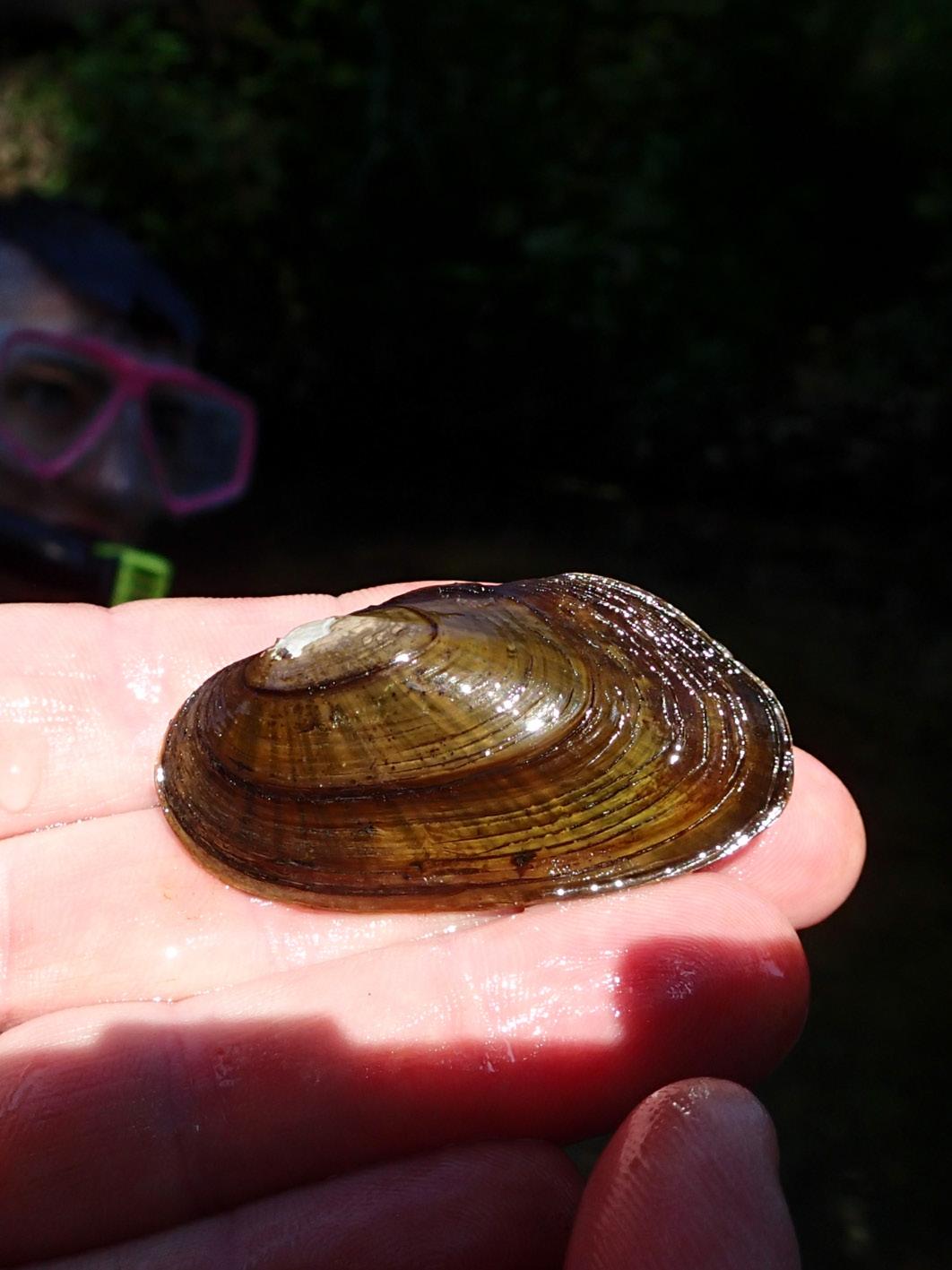
In 2022, following field observations of shells and live freshwater mussels in Ridley and Crum Creeks, the Watershed Protection Program partnered with the Academy of Natural Sciences and the Partnership for the Delaware Estuary to survey and document freshwater mussels within approximately 1 km stretches of each stream. Mussel surveys were conducted at Ashbridge Preserve in Ridley Creek, upstream and downstream of the RCAB1 sample site (Figure 1). A total of 63 mussels were counted, ranging from 57 - 103 mm in length. In Crum Creek, mussel surveys were conducted upstream and downstream of the CC2 sample site, and a total of 77 mussels were counted, ranging from 46 - 94 mm in length (Figure 1). Eastern elliptio (Elliptio complanata) was the only species present at both sites.
Based on size, the mussels found in both streams are estimated to be decades old. No juvenile mussels, which indicate recent reproduction, were observed. Juvenile mussels tend to bury themselves in sediment and are rarely found without more intensive survey methods. The results of these surveys suggest that Ridley and Crum Creeks can support the survival of freshwater mussels, but not their reproduction.
Across 2024 and 2025, the Watershed Protection Program, in collaboration with the Delaware Riverkeeper Network and Darby Creek Valley Association and joined by volunteers from Easttown Township and Brandywine Conservancy, surveyed mussels in the headwaters of Darby Creek. This survey followed the discovery of live mussels by a volunteer participating in the DCCCS Program (Section 2). Surveys were conducted in an approximately 0.85 km length of stream. In two years of surveys, over 1,100 live mussels were found, representing a historically important population. The mussel beds were dominated by eastern elliptio, but two alewife floaters (Utterbackiana implicata) were also documented in the 2024 survey, and one in the 2025 survey. Most mussels were of comparable size to those found in Ridley and Crum Creeks. However, in 2024, there were two eastern elliptio mussels found to measure between 10 mm and 25 mm in length, indicating that these were juvenile mussels resulting from recent successful reproduction.
Though eastern elliptio mussels have been recorded in Ridley and Crum Creeks in the past three decades, the 2022 surveys enhanced our understanding of population distribution in these streams. The discovery and documentation of eastern elliptio and alewife floater mussels in Darby Creek in 2024 and 2025 marks the first time that these species were recorded in this watershed in decades. Additionally, the presence of juvenile mussels is a rare example of successful reproduction in the region. While these two species are not endangered and are listed as species of least concern, they are vulnerable to pollution, particularly from road salt, and habitat destruction.39–41 Further research is needed to understand the extent of their populations, threats to their survival, and conservation needs in Ridley, Crum, and Darby Creeks.
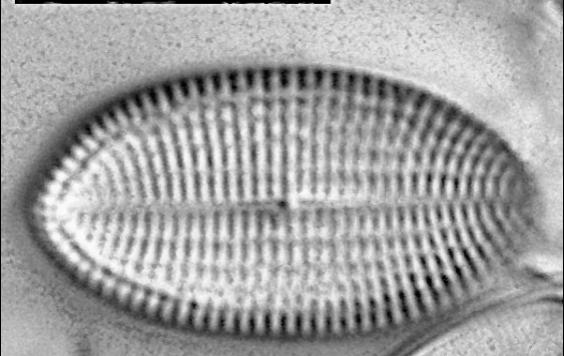
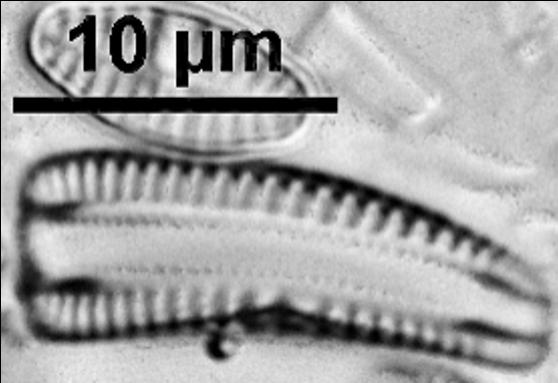
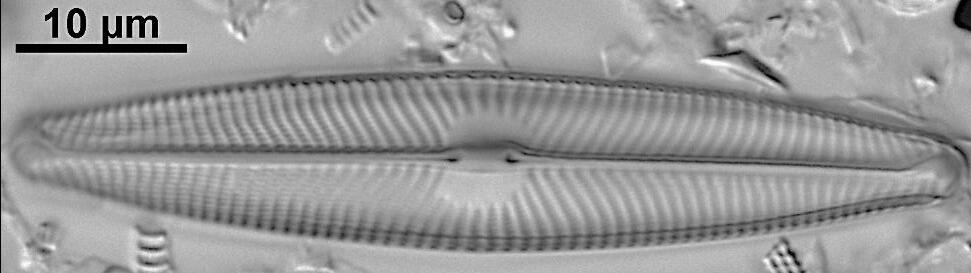
Diatoms (Bacillariophyta) are a group of unicellular microalgae, meaning that each individual organism is one cell, they can only be viewed under a microscope, and they are photosynthetic aquatic plants. The importance of diatoms in nature is almost impossible to overstate: they form the base of freshwater and marine food chains, provide 20-40% of the earth’s oxygen supply, play essential roles in chemical processing, and act as invaluable tools with which to assess the health of an ecosystem.42 Similar to macroinvertebrates, diatoms are bioindicators, meaning they are especially sensitive to changes in the environment and may therefore be analyzed to discover clues about ecosystem health. As diatoms are the most diverse of the microalgae, are found in virtually every aquatic habitat, and are widely studied, they are frequently used to study changes in water quality.43 Their unique silica cell walls also provide resilience against environmental degradation, allowing for them to be more easily preserved and located within layers of sediment. This adaptation makes it possible to construct datasets of habitat changes over vast timescales.
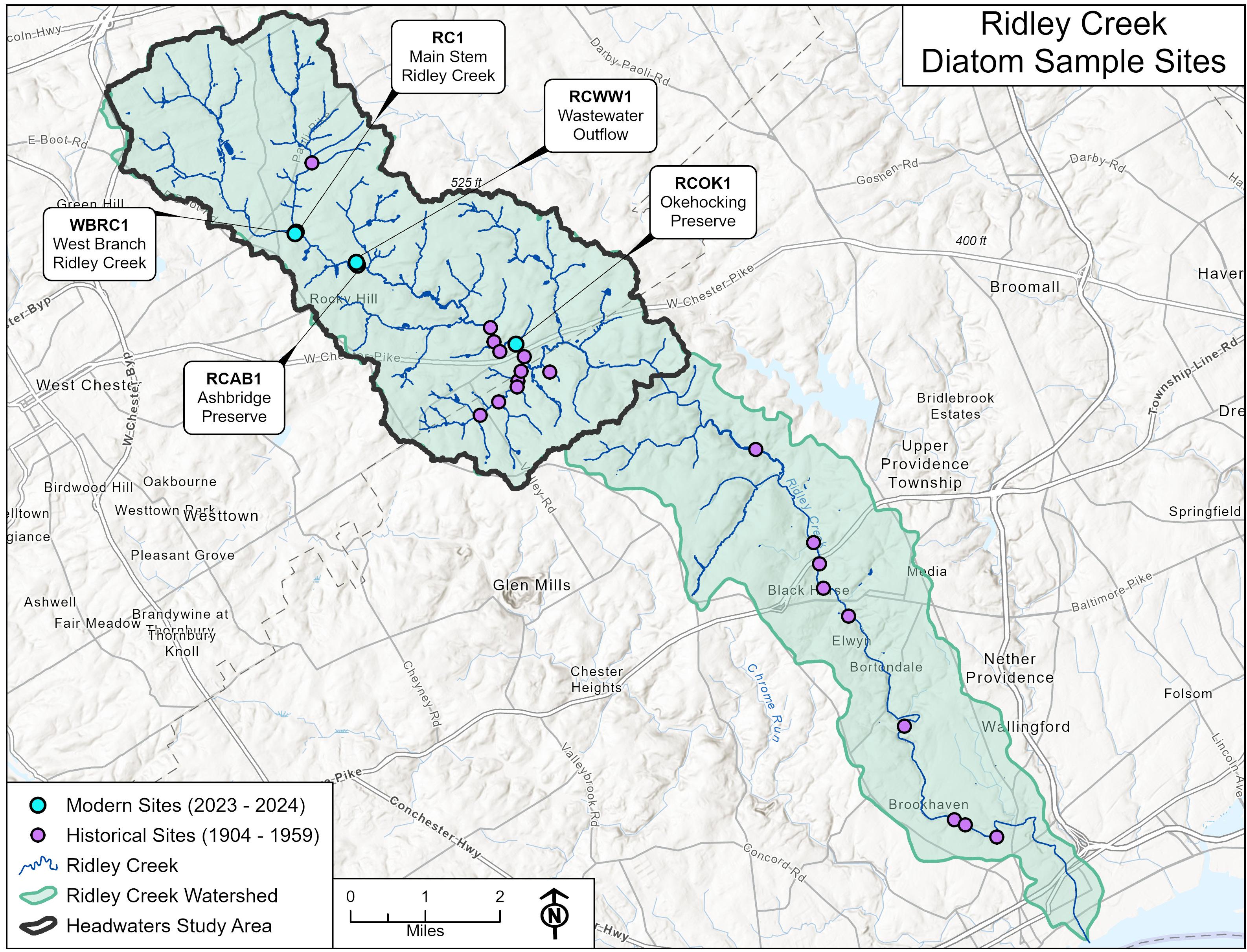
The Ridley Creek watershed has a long and storied history of diatom sampling and study by amateur enthusiasts and famous diatomists alike, beginning in the early twentieth century. Comparing modern samples to historical samples, dating back to 1904 and archived at the Academy of Natural Sciences, enables the construction of a long-term dataset illustrating changes in water quality over time. Modern samples were collected from five different sites along Ridley Creek in 2023 and 2024, including four sites sampled for the Watershed Protection Program’s monthly water chemistry analysis (Figure 31). The historical samples analyzed were collected from headwater sites within WCT’s study area and downstream towards the confluence with the Delaware River. Modern and historical diatom samples were identified, counted, and statistically analyzed, giving insight into how land use impacts on the watershed have changed over time.
Since the end of World War II, road salt use has driven an increase in chloride concentration in streams throughout the mid-Atlantic region (Section 1.8).19 Combined with increasing impervious surface coverage and loss of forested areas, Ridley Creek watershed has changed notably. As a result, the diatom communities counted and identified in modern samples show a different water chemistry influence when compared to historical samples. Modern samples, taken in 2023 and 2024, contained much higher abundances of species that thrive in warm waters with a high chloride concentration; these include Cocconeis placentula, Rhoicosphenia abbreviata, and Navicula lanceolata (Figure 32). In addition, the 2024 samples showed an increase in the abundance of Navicula peregrinopsis when compared to samples from 2023, another species that indicates high chloride concentration and warm water. The increase in N. peregrinopsis is notable as it had previously only been abundant in historical samples taken much further downstream, near Ridley Creek’s confluence with the Delaware River.
Statistically, the most significant drivers of diatom community changes are water temperature (p = 0.001) and dissolved oxygen (DO, p = 0.002). These results suggest that changes on the landscape over the past century have increased chloride concentration, increased water temperature, and decreased DO in Ridley Creek, affecting stream health. In consequence, these chemical influences may be transforming headwater diatom communities into compositions similar to those documented in brackish or estuarine habitats. The complexity of environmental factors and their relationships with one another are difficult to unravel; however, sensitive bioindicators like diatoms can provide a reference point. Further assessment, including more investigation into chemical influences, is required to better understand how these changes compare with historical samples and stream conditions. Data collection and analysis is ongoing, and publication of the entire dataset is anticipated in the upcoming year.
Diatom sample collection and analysis was completed by Sarah Barker, under guidance from Dr. Marina Potapova of Drexel University's Academy of Natural Sciences.
Figure 31. Modern and historical diatom sample sites along Ridley Creek. Modern sites are within the Watershed Protection Program headwaters study area. All modern sites except for RCWW1 are monitored monthly for water chemistry.
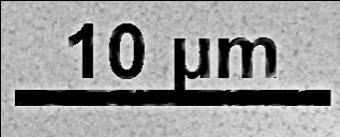
Figure 32. Common diatom species in modern samples: (a) Cocconeis placentula, (b) Rhoicosphenia abbreviata, and (c) Navicula lanceolata. All are indicators of a moderate to high chloride concentration.
32b
32c.
32a.
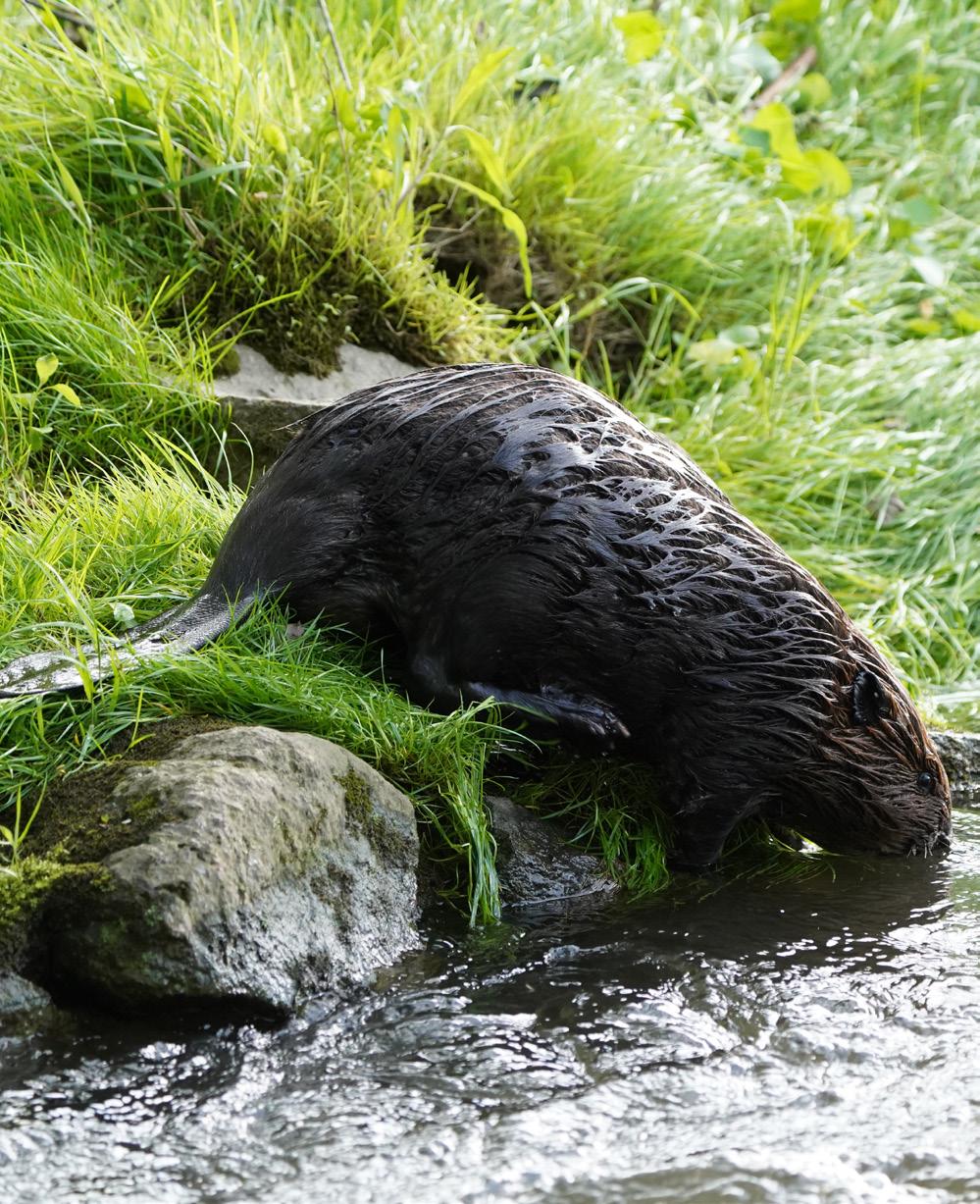
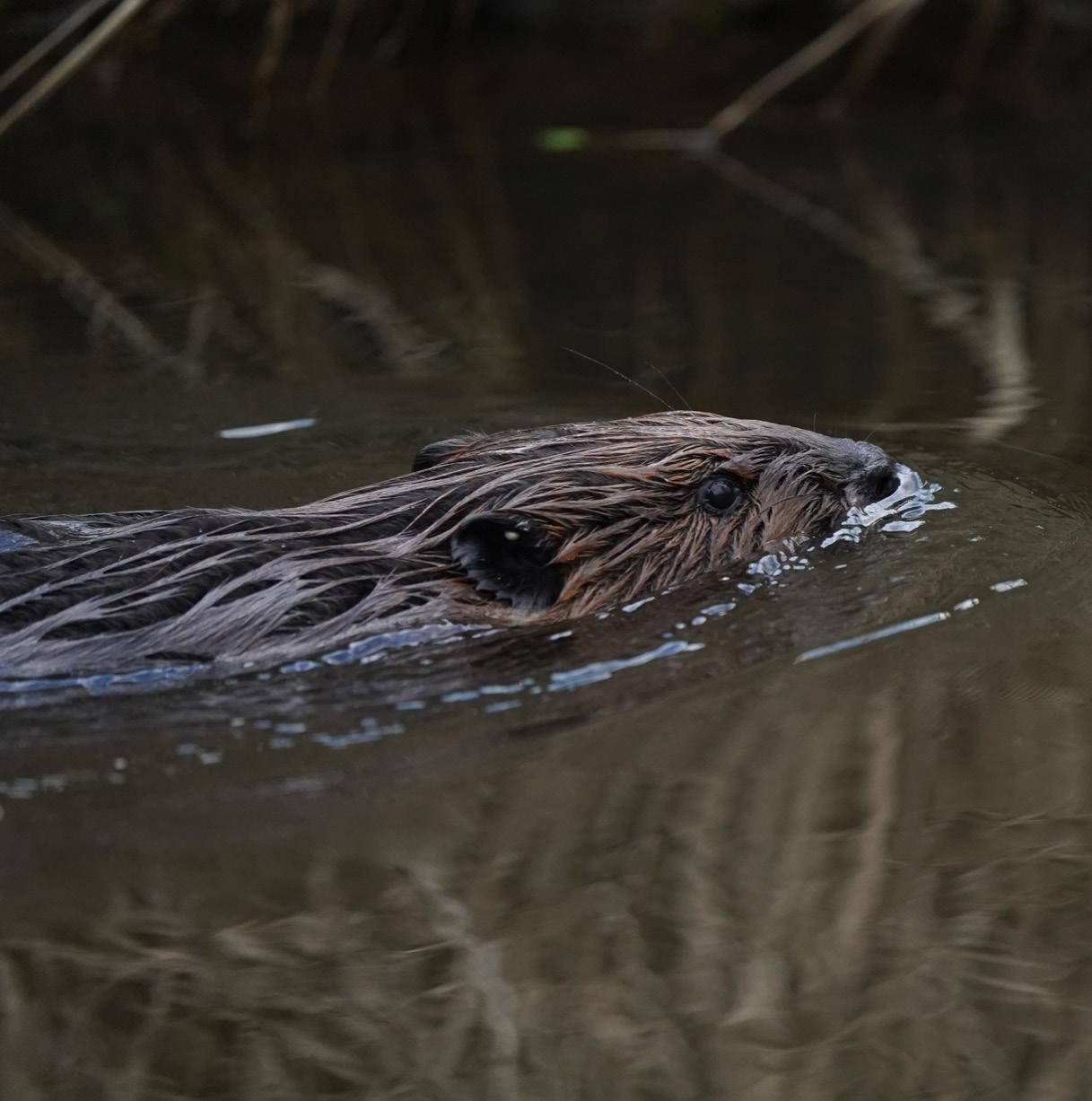
Ridley, Crum, and Darby Creeks are home to wildlife that depend on clean, healthy streams. Field observations of wildlife expand our understanding of the overall health, biodiversity, and function of aquatic ecosystems beyond what can be learned from water chemistry sampling. Two key species observed in the study area are the North American beaver (Castor canadensis) and the North American river otter (Lontra canadensis).
We have observed beavers and beaver activity – chewed branches, felled trees, and dam and lodge construction – in the headwaters of Ridley and Darby Creeks. Beavers were once abundant throughout North America, including in the study area, but were hunted for their pelts to near-extinction by the early 1900s.45 Protection and reintroduction efforts have enabled beaver populations to grow and spread throughout Pennsylvania, though populations remain below estimated pre-colonial levels. Beavers are herbivores, requiring densely vegetated riparian areas, and their occupancy of an area tends to be more indicative of the presence of sufficient vegetation than of high water quality.46 However, beaver activity has been documented as improving water quality over time.47
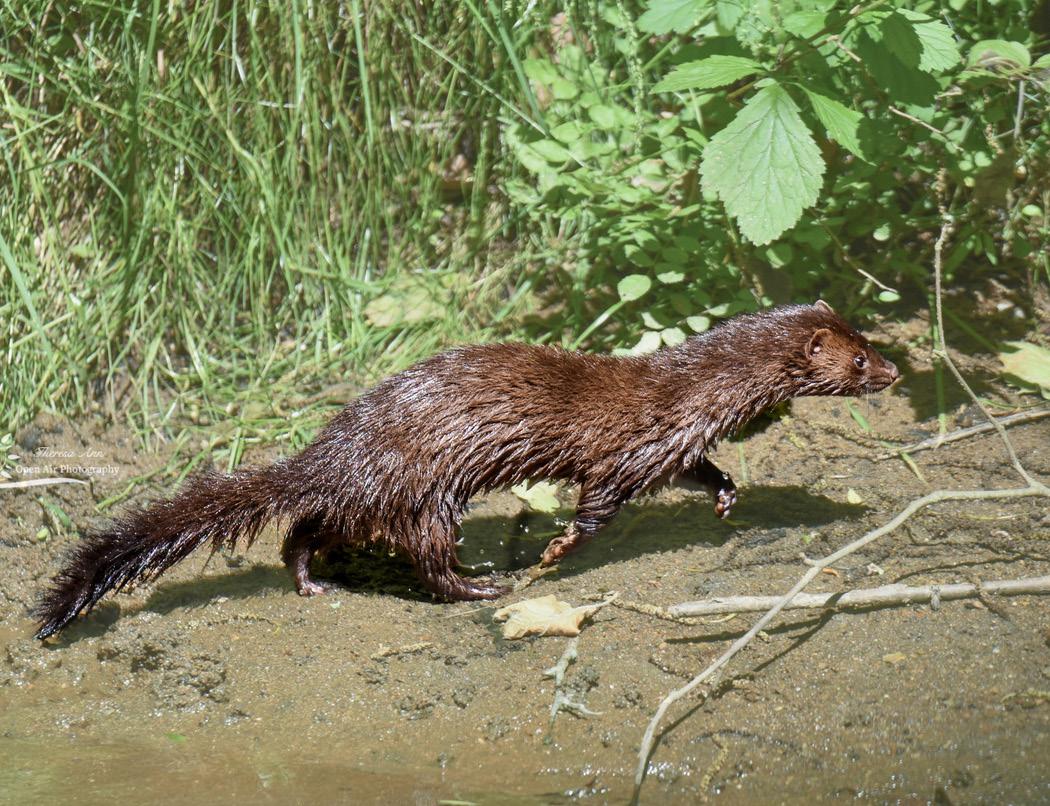
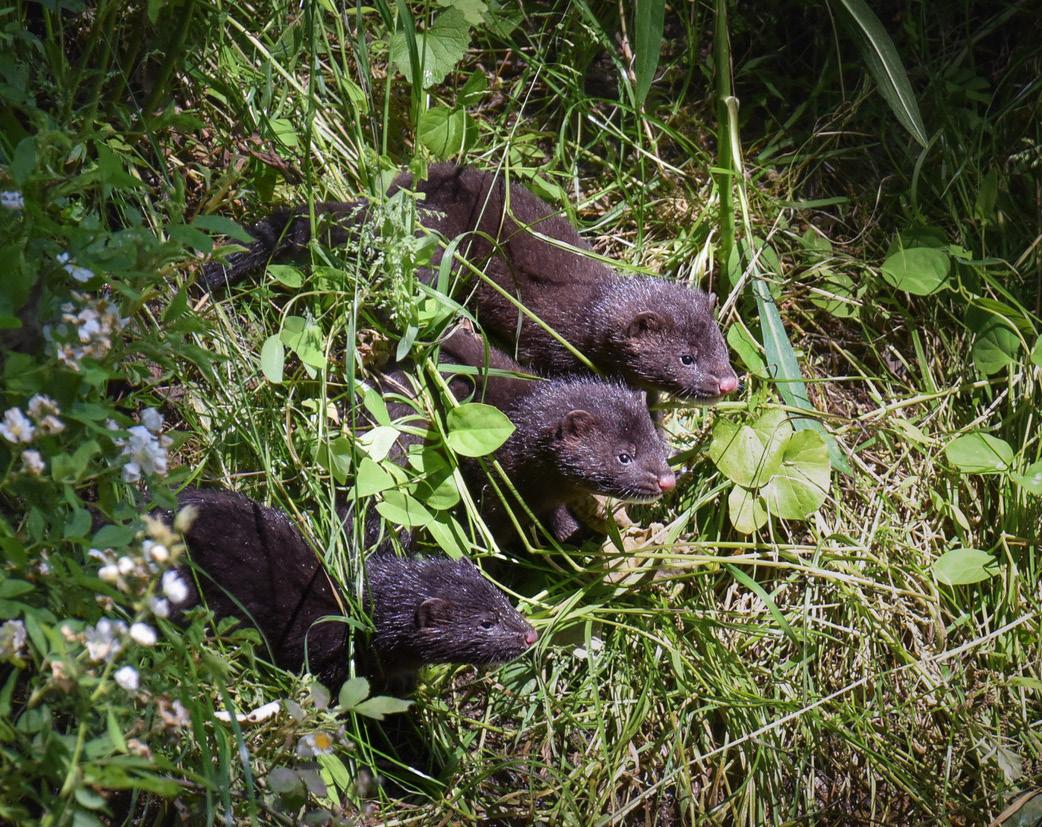
Beavers build dams across streams, creating their preferred habitat of ponds and wetlands, and they construct lodges for shelter. This ecosystem engineering can increase biodiversity, purify water, trap sediment, and mitigate the impacts of floods and droughts.47,48 For example, beaver dams in Ridley Creek at Ashbridge Preserve, near RCAB1, increased the water level in the fall of 2024, despite historic drought conditions. American mink (Neogale vison), muskrat (Ondatra zibethicus), and river otters preferentially use habitat created by beavers, foraging or hunting in beaver ponds and sheltering in abandoned beaver lodges.49 In the study area, lodges are typically built along the streambanks. Through game camera footage, we have observed mink using beaver lodges in Ashbridge Preserve. Beavers in the study area are semi-nomadic and move seasonally between different stretches of stream in search of food sources. Further study is needed to understand population dynamics and the impact of beavers on local water quality.
In December 2023, we captured game camera footage of a river otter in Ridley Creek, marking the first time in over 100 years that an otter was documented in the Ridley Creek watershed. Similar to beavers, otters were once abundant throughout North America, but populations were decimated by overhunting, habitat destruction, and water quality degradation.50 Otters are especially vulnerable to pollution as they are apex predators and can bioaccumulate heavy metals and other contaminants.51,52 Due to reintroduction efforts, clean water regulations, and habitat restoration, otter populations are increasing in Pennsylvania and otters are returning to waterways they historically occupied.53,54 Otters have previously been recorded elsewhere in the region, including in the Schuylkill River, Brandywine River, Chester Creek, and Marsh Creek.55,56
Where they are present, otters are the top predators in an aquatic ecosystem. They primarily eat fish, but will also consume crayfish, mussels and clams, amphibians, reptiles, smaller mammals, and more.54 Streams with a high diversity of macroinvertebrates (Section 3.1) and fish species have been found to have a higher probability of otter occupancy.51 The abundance and diversity of prey required for otters can only be supported by clean, healthy streams.
Otters have large ranges and have been found to prefer areas with limited human impact and dense riparian vegetation.54,57 While it is difficult to draw definitive conclusions about otter populations in the study area from one sighting, the presence of even a single otter is a testament to the success of decades of land protection and habitat restoration in the region. Continued monitoring and research is needed to understand current population distribution and relationships with water quality. Restoring riparian areas through tree plantings and protecting open space will help encourage the spread of otters in Ridley Creek and the return of otters to Crum and Darby Creeks.
Aaron Coolman
CONCLUSION
Long-term, high-frequency water chemistry monitoring like that presented in this report is both rare and critically important, particularly when conducted by a land conservation organization. Though the Watershed Protection Program's research was originally designed to monitor water quality in Ridley, Crum, and Darby Creeks, this work has also documented breeding mussel populations and rare species such as the North American river otter. Together, the chemistry and biology data reveal both the stressors facing these streams and their remarkable resilience.
Overall, the headwaters of Ridley, Crum, and Darby Creeks are moderately impaired and will require sustained, watershed-wide restoration efforts. Compared to more urbanized waterways in the greater Philadelphia region, including those studied through the Darby and Cobbs Creek Community Science Program, these streams continue to function relatively well, largely due to more than 40 years of successful land protection that preserved extensive open space in their headwaters. Still, shared regional pressures underscore the need for continued protection and active restoration.
As presented in this report, elevated water temperature, specific conductivity (SPC), chloride concentration, and nutrients are key threats to stream health in the headwaters of Ridley and Crum Creeks and throughout the entire Darby and Cobbs Creek watershed — patterns consistent with statewide conditions.2 These chemical stressors impact stream biota, particularly macroinvertebrates, where diversity declines significantly with increasing chloride, SPC, and phosphorus. Similarly, the composition of diatom communities shifts in response to these same stressors. Because macroinvertebrates and diatoms form the base of the stream food web, they serve as sensitive bioindicators of long-term ecosystem condition. Together, chemistry and biology data provide a more complete picture of how these ecosystems are responding to cumulative environmental change.
Repeated analyses identify that these stressors — elevated water temperature, SPC, chloride concentration, and nutrients — are exacerbated in watersheds with high impervious surface cover. Conversely, streams that flow through forested watersheds are less impacted. In small headwater streams, air temperature strongly influences water temperature, making riparian forests critical for providing shade to mitigate warming induced by climate change. Forested buffers also stabilize banks, filter pollutants, and improve habitat quality.
To enhance resilience to increasing disturbances such as flooding and drought, land protection must be paired with active restoration throughout both headwater and downstream areas. Best management practices (BMPs) — including tree plantings, rain
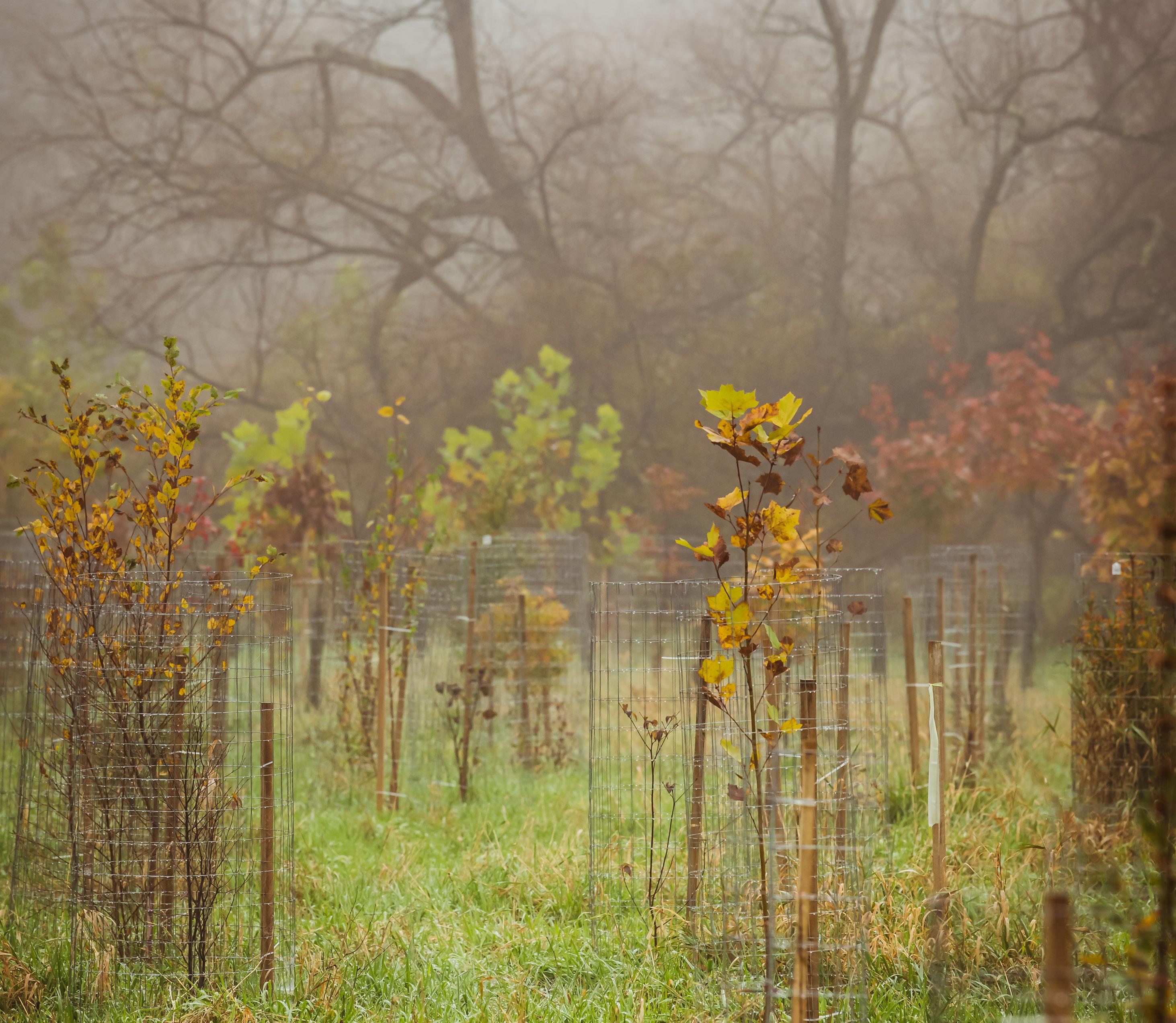
gardens, bioretention basins, and native meadow restorations — slow, filter, and absorb stormwater while improving ecological function. At Willistown Conservation Trust’s Ashbridge and Kirkwood Preserves, more than 2,200 native trees and shrubs have been planted along Ridley and Crum Creeks, providing shade, bank stability, and nutrient filtration while strengthening stream food webs that support insects, amphibians, fish, birds, and mammals.
Restoration extends beyond streambanks. Converting lawns to native meadows increases infiltration, reduces fertilizer use, filters pollutants, and lowers runoff temperatures. Since 2023, WCT has partnered with private and public landowners to replace turfgrass lawns with deep-rooted native plants, strengthening watershed resilience while engaging volunteers in hands-on conservation. Long-term maintenance remains essential, and WCT’s Stewardship Program provides science-based guidance on native plant selection and BMP implementation.
Watershed health also depends on everyday individual actions. Elevated SPC and chloride concentration reflect widespread overapplication of road salt. While alternatives are limited, responsible road salting practices, like sweeping up excess salt after snowmelt, reporting uncovered salt piles to municipalities, and switching from rock salt to a brine, can notably reduce road salt pollution in streams, soil, and groundwater.
This work is made possible by the dedication of WCT staff and community partners who have protected the open spaces where this research occurs. While land conservation remains the most effective long-term strategy, every action on the landscape influences water quality. Increasing watershed literacy alongside restoration efforts will help residents and visitors alike understand their role in protecting these streams and the larger Delaware River watershed. Though challenges remain — from climate change to development pressure — there is strong reason for optimism. Continued monitoring, restoration, and community engagement will help ensure that Ridley, Crum, and Darby Creeks remain healthy, resilient, and valued resources for generations to come.
Tree Planting along Ridley Creek at Ashbridge
Preserve | Zach Smith
ACKNOWLEDGMENTS
This work was made possible through the generous support of the William Penn Foundation and through the “Protect Your Drinking Water” grant program, administered by the Pennsylvania Environmental Council with funding from Aqua, an Essential Utilities company. We want to extend our thanks to Drexel University’s Academy of Natural Sciences for their support in selecting sample sites and running samples; to Stroud Water Research Center for their technical support; and to the Darby Creek Valley Association for their enthusiasm and support in building the DCCCS program! Special thanks to the landowners who graciously allowed us to sample on their properties and to each and every DCCCS volunteer who contributed their time and energy to helping us learn more about the health of our shared ecosystems. We are incredibly grateful to all those who contributed edits, insights, and feedback on the writing of this document. A final, huge thank you to the staff, committee members, board members, and volunteers who braved wind, rain, heat, and snow to collect this data and all those who have supported the Watershed Protection Program throughout the last eight years.
Willistown Conservation Trust
• Lauren McGrath, Director of Watershed Protection Program
• Anna Walsh, Conservation Data and GIS Specialist
• Sarah Barker, Watershed Program Technician, 2023 Drexel University Watershed Protection Program Co-op
• Dejenae Smith, 2025 Drexel University Watershed Protection Program Co-op
• Dan Price, 2024 Drexel University Watershed Protection Program Co-op
• Ryan Ferguson, 2024 Drexel University Watershed Protection Program Co-op
• Calvin Keeys, 2024 Drexel University Watershed Protection Program Co-op
• Rhys Haals, 2024 Watershed Protection Program Intern
• CJ Chen, 2024 Watershed Protection Program Intern
• Sally Ehlers, 2023 Drexel University Watershed Protection Program Co-op
• A special thank you to the Drexel University Co-ops, interns, and volunteers who supported the Watershed Protection Program from 2018 through 2022.
Patrick Center for Environmental Research, Academy of Natural Sciences of Drexel University
• David Velinsky, Ph.D., Professor, Department of Biodiversity, Earth and Environmental Science; Senior Scientist, Environmental Biogeochemistry Section
• Marina Potapova, Ph. D., Associate Professor & Curator of Diatoms, Department of Biodiversity, Earth and Environmental Science
• Melissa Bross, Staff Scientist III
Darby Creek Valley Association
• Aurora Dizel, Watershed Conservation Manager
Delaware Riverkeeper Network
• Erik Sildorff, Restoration Director
Stroud Water Research Center
• David Bressler, Citizen Science Facilitator
• Shannon Hicks, Research Engineer
• John Jackson, Ph.D., Senior Research Scientist
• Juliann Battle, Staff Scientist
• Rachel Leonard, Graduate Student
FUNDING
Portions of the data collection and analysis presented in this report was made possible through a grant from the William Penn Foundation. The William Penn Foundation, founded in 1945 by Otto and Phoebe Haas, is dedicated to improving the quality of life in the Greater Philadelphia region through efforts that increase educational opportunities for children from low-income families, ensure a sustainable environment, foster creativity that enhances civic life, and advance philanthropy in the Philadelphia region. The opinions expressed in this report are those of the author(s) and do not necessarily reflect the views of the William Penn Foundation.
Funding for data collection and the publication of this report was awarded through the “Protect Your Drinking Water” grant program, administered by the Pennsylvania Environmental Council with funding from Aqua, an Essential Utilities company.
American Mink pups at Kirkwood
Preserve
| Thersa Erbstein
REFERENCES
REFERENCES
1. Living Planet Report 2024 - A System in Peril. (WWF, Gland, Swtizerland, 2024).
2. Pennsylvania Department of Environmental Protection. 2024 Integrated Water Quality Report.
3. Jon Dewitz. National Land Cover Database (NLCD) 2021 Products. U.S. Geological Survey https://doi.org/10.5066/ P9JZ7AO3 (2023).
6. Funk, D. H., Sweeney, B. W. & Jackson, J. K. Oxygen limitation fails to explain upper chronic thermal limits and the temperature size rule in mayflies. J. Exp. Biol. jeb.233338 (2020) doi:10.1242/jeb.233338.
7. Kaushal, S. S. et al. Rising stream and river temperatures in the United States. Front. Ecol. Environ. 8, 461–466 (2010).
8. Reid, A. J. et al. Emerging threats and persistent conservation challenges for freshwater biodiversity. Biol. Rev. 94, 849–873 (2019).
11. 25 Pa. Code § 93.7. Specific water quality criteria. https://www.pacodeandbulletin.gov/Display/pacode?file=/secure/ pacode/data/025/chapter93/s93.7.html&d=reduce.
12. Nimick, D. A., Gammons, C. H. & Parker, S. R. Diel biogeochemical processes and their effect on the aqueous chemistry of streams: A review. Chem. Geol. 283, 3–17 (2011).
13. Olson, J. R. & Cormier, S. M. Modeling spatial and temporal variation in natural background specific conductivity. Environ. Sci. Technol. 53, 4316–4325 (2019).
14. Kaushal, S. S. et al. Freshwater salinization syndrome on a continental scale. Proc. Natl. Acad. Sci. 115, E574–E583 (2018).
15. Clements, W. H. & Kotalik, C. Effects of major ions on natural benthic communities: an experimental assessment of the US Environmental Protection Agency aquatic life benchmark for conductivity. Freshw. Sci. 35, 126–138 (2016).
16. Rumsey, C. A., Hammond, J. C., Murphy, J., Shoda, M. & Soroka, A. Spatial patterns and seasonal timing of increasing riverine specific conductance from 1998 to 2018 suggest legacy contamination in the Delaware River Basin. Sci. Total Environ. 858, 159691 (2023).
17. Morgan II, R. P. et al. Stream Conductivity: Relationships to Land Use, Chloride, and Fishes in Maryland Streams. North Am. J. Fish. Manag. 32, 941–952 (2012).
18. Moore, J., Fanelli, R. M. & Sekellick, A. J. High-Frequency Data Reveal Deicing Salts Drive Elevated Specific Conductance and Chloride along with Pervasive and Frequent Exceedances of the U.S. Environmental Protection Agency Aquatic Life Criteria for Chloride in Urban Streams. Environ. Sci. Technol. 54, 778–789 (2020).
19. Kaushal, S. S. et al. Increased salinization of fresh water in the northeastern United States. Proc. Natl. Acad. Sci. 102, 13517–13520 (2005).
20. Mazumder, B., Wellen, C., Kaltenecker, G., Sorichetti, R. J. & Oswald, C. J. Trends and legacy of freshwater salinization: untangling over 50 years of stream chloride monitoring. Environ. Res. Lett 16, 095001 (2021).
21. Kaushal, S. S. et al. Freshwater salinization syndrome: from emerging global problem to managing risks. Biogeochemistry 154, 255–292 (2021).
22. Kaushal, S. S. et al. Five state factors control progressive stages of freshwater salinization syndrome. Limnol. Oceanogr. Lett. 8, 190–211 (2023).
23. Lawson, L. & Jackson, D. A. Salty summertime streams—road salt contaminated watersheds and estimates of the proportion of impacted species. FACETS 6, 317–333 (2021).
24. Jackson, J. K. & Funk, D. H. Temperature affects acute mayfly responses to elevated salinity: implications for toxicity of road de-icing salts. Philos. Trans. R. Soc. B Biol. Sci. 374, 20180081 (2018).
25. Stets, E. G., Lee, C. J., Lytle, D. A. & Schock, M. R. Increasing chloride in rivers of the conterminous U.S. and linkages to potential corrosivity and lead action level exceedances in drinking water. Sci. Total Environ. 613–614, 1498–1509 (2018).
26. Cruz, Y. D., Rossi, M. L. & Goldsmith, S. T. Impacts of Road Deicing Application on Sodium and Chloride Concentrations in Philadelphia Region Drinking Water. GeoHealth 6, e2021GH000538 (2022).
27. Wallace, A. M. & Biastoch, R. G. Detecting changes in the benthic invertebrate community in response to increasing chloride in streams in Toronto, Canada. Freshw. Sci. 35, 353–363 (2016).
28. U.S. Environmental Protection Agency. Ambient water quality criteria for chloride. (1988).
29. Stets, E. G. et al. Landscape Drivers of Dynamic Change in Water Quality of U.S. Rivers. Environ. Sci. Technol. 54, 4336–4343 (2020).
30. Clune, J. W., Crawford, J. K. & Boyer, E. W. Nitrogen and Phosphorus Concentration Thresholds toward Establishing Water Quality Criteria for Pennsylvania, USA. Water 12, 3550 (2020).
31. Clune, J. W., Crawford, J. K., Chappell, W. T. & Boyer, E. W. Differential effects of land use on nutrient concentrations in streams of Pennsylvania. Environ. Res. Commun. 2, 115003 (2020).
32. Smith, R. A., Alexander, R. B. & Schwarz, G. E. Natural Background Concentrations of Nutrients in Streams and Rivers of the Conterminous United States. Environ. Sci. Technol. 37, 3039–3047 (2003).
33. Rumschlag, S. L. et al. Density declines, richness increases, and composition shifts in stream macroinvertebrates. Sci. Adv. 9, eadf4896 (2023).
34. Smith, E. P. & Voshell, J. R. Studies of Benthic Macroinvertebrates and Fish in Streams within EPA Region 3 for Development of Biological Indicators of Ecological Condition. (1997).
35. Current Water Levels for Chester County. Chester County, PA https://www.chesco.org/5267/Current-Water-Levels.
36. The IUCN Red List of Threatened Species: Unionidae. IUCN Red List of Threatened Species https://www.iucnredlist. org/en.
37. Lopes-Lima, M. et al. Conservation of freshwater bivalves at the global scale: diversity, threats and research needs. Hydrobiologia 810, 1–14 (2018).
38. Kreeger, D. & Cheng, K. Living Resources: Freshwater Mussels.
39. Cummings, K. & Cordeiro, J. IUCN Red List of Threatened Species: Elliptio complanata. IUCN Red List Threat. Species (2011).
40. Bogan, A. E., Cummings, K., Cordeiro, J., & Daelyn Woolnough. IUCN Red List of Threatened Species: Utterbackiana implicata. IUCN Red List Threat. Species (2015).
41. Blakeslee, C. J., Galbraith, H. S., Robertson, L. S. & St. John White, B. The effects of salinity exposure on multiple life stages of a common freshwater mussel, Elliptio complanata. Environ. Toxicol. Chem. 32, 2849–2854 (2013).
42. Benoiston, A.-S. et al. The evolution of diatoms and their biogeochemical functions. Philos. Trans. R. Soc. B Biol. Sci. 372, 20160397 (2017).
43. Stevenson, R. J., Pan, Y. & van Dam, H. Assessing environmental conditions in rivers and streams with diatoms. in The Diatoms: Applications for the Environmental and Earth Sciences (eds. Stoermer, E. F. & Smol, J. P.) 57–85 (Cambridge University Press, Cambridge, 2010). doi:10.1017/CBO9780511763175.005.
44. Hintz, W. D., Fay, L. & Relyea, R. A. Road salts, human safety, and the rising salinity of our fresh waters. Front. Ecol. Environ. 20, 22–30 (2022).
45. Beaver. Pennsylvania Game Commission https://www.pa.gov/agencies/pgc/wildlife/discover-pa-wildlife/beaver.html.
46. Wang, G., McClintic, L. F. & Taylor, J. D. Habitat selection by American beaver at multiple spatial scales. Anim. Biotelemetry 7, 10 (2019).
47. Thompson, S., Vehkaoja, M., Pellikka, J. & Nummi, P. Ecosystem services provided by beavers Castor spp. Mammal Rev. 51, 25–39 (2021).
48. Kroes, D. E. & Bason, C. W. Sediment-Trapping by Beaver Ponds in Streams of the Mid-Atlantic Piedmont and Coastal Plain, USA. Southeast. Nat. 14, 577–595 (2015).
49. Swimley, T. J., Brooks, R. P. & Serfass, T. L. Otter and Beaver Interactions in the Delaware Water Gap National Recreation Area. J. Pa. Acad. Sci. 72, 97–101 (1999).
50. Bricker, E. A. et al. Conservation Status of the North American River Otter in the United States and Canada. in Small Carnivores 509–535 (John Wiley & Sons, Ltd, 2022). doi:10.1002/9781118943274.ch23.
51. Holland, A. M., Schauber, E. M., Nielsen, C. K. & Hellgren, E. C. Stream community richness predicts apex predator occupancy dynamics in riparian systems. Oikos 127, 1422–1436 (2018).
52. Wainstein, M. et al. Highly contaminated river otters (Lontra canadensis) are effective biomonitors of environmental pollutant exposure. Environ. Monit. Assess. 194, 670 (2022).
53. River Otters. Pennsylvania Game Commission https://www.pa.gov/agencies/pgc/wildlife/discover-pa-wildlife/riverotters.html.
54. Hardisky, T. River Otter Management in Pennsylvania 2013 - 2022. (2013).
55. Silver, B. Where to See River Otters Around the Philadelphia Suburbs. Main Line Today https://mainlinetoday.com/ life-style/sports-outdoors/river-otters/ (2024).
56. Hickey, B. Yes, more otters are calling the Schuylkill River in Philadelphia home. PhillyVoice https://www.phillyvoice. com/yes-there-are-more-otters-phillys-schuylkill-river/ (2016).
57. Holland, A. M., Schauber, E. M., Nielsen, C. K. & Hellgren, E. C. River otter and mink occupancy dynamics in riparian systems. J. Wildl. Manag 83, 1552–1564 (2019).
REFERENCES GLOSSARY OF WATERSHED TERMS
AMMONIA: A form of nitrogen that is found in chemical fertilizers, decomposing organic matter, and human and animal waste. Ammonia is a nutrient, though it can be toxic at high concentrations in streams. Ammonia takes two forms, NH3, and the ammonium ion, NH4 + .
AQUATIC MACROINVERTEBRATE: An organism without a backbone that lives in water for at least part of its life and is visible with the naked eye. Examples include dragonflies, mayflies, and stoneflies.
BEST MANAGEMENT PRACTICE (BMP): Methods that have been determined to be the most effective and practical means of preventing or reducing pollution to achieve water quality goals. BMPs include both measures to prevent pollution and measures to mitigate pollution.
BIODIVERSITY: The variety of living organisms in a given area. The more species in an area, the more biodiversity that area has.
BIOINDICATOR: An organism that is used to indicate the health and function of an ecosystem. Aquatic macroinvertebrates and diatoms are bioindicators that reflect water quality.
BIVALVE: An organism that has a paired shell connected by a hinge, such as a clam, mussel, oyster, or scallop.
BOXPLOT: A chart that visualizes the distribution of all measurements of a specific variable, such as pH.
CATCHMENT: The area of land that drains into a given body of water. For example, any drop of rain that lands in the Delaware River Catchment will ultimately end up in the Delaware River (see Watershed).
CHLORIDE: An ion (Cl-) that is naturally found in water due to weathering of rocks and soils. Chloride also forms when road salts and, to a lesser extent, fertilizers wash into water bodies and dissolve.
COLD WATER FISHERY (CWF): A body of water that supports the survival and reproduction of Salmonidae fish species and other aquatic organisms that are indigenous to a cold water habitat.
DIATOM: A single-celled, photosynthetic microalgae. Diatoms have unique silica cell walls that enable longterm preservation and are reliable bioindicators for water quality.
DISCHARGE: The volume of water moving through a stream or river at any given time, often measured as cubic meters per second (m3/s).
DISSOLVED OXYGEN (DO): The concentration of dissolved oxygen gas in water. Oxygen enters water either through direct absorption from the atmosphere or from photosynthesis by aquatic plants and algae.
ENVIRODIY SENSOR STATION: An in-stream sensor that records water temperature, depth, specific conductivity, and turbidity every five minutes. The Watershed Protection Program manages three EnviroDIY sensor stations in Ridley Creek with support from Stroud Water Research Center.
EROSION: A natural process in which materials, such as rocks or soil, are broken down and moved, often by water. While weathering simply refers to the breakdown of material, erosion refers to the breakdown and movement of material. Development can increase the rate of erosion to unnaturally high levels.
EUTROPHICATION: The process by which a body of water becomes enriched with nutrients, often nitrogen and phosphorus-based compounds. Eutrophication leads to excessive algae and vegetation growth, which ultimately depletes dissolved oxygen as these producers die and are decomposed.
HEADWATERS: The source of a stream or river.
IMPAIRMENT: A physical or chemical condition of a habitat that prevents the survival and reproduction of the organisms that live there.
IMPERVIOUS SURFACE: Any surface, often made by humans, that water cannot pass through, such as roads, parking lots, buildings, sidewalks, and driveways. Impervious surface cover refers to the amount of land covered by an impervious surface.
INFILTRATION: The movement of water from aboveground into the soil.
ION: An atom or molecule that carries a positive or negative electric charge.
MACROINVERTEBRATE AGGREGATED INDEX FOR STREAMS (MAIS): A score that combines ten metrics to assess the health of a stream based on its aquatic macroinvertebrate community. MAIS scores classify stream health as Good, Fair, or Poor.
NITRATE: A nitrogen-based nutrient, NO3.
NITRITE: A nitrogen-based nutrient, NO2.
NITROGEN: An element that is found in many nutrients. In streams, nitrogen-containing nutrients are present at a low concentration, though runoff from fertilizers can increase the concentration of these compounds.
NUTRIENT: A compound that is essential to the growth and development of an organism.
PADEP: Pennsylvania Department of Environmental Protection.
p H: A measure of how acidic or basic water is as indicated by the concentration of hydrogen ions. Pure water is neutral at pH 7. Water with a pH above 7 is considered basic. Water with a pH below 7 is considered acidic.
PHOSPHORUS: An element that is found in many nutrients. In streams, phosphorus-containing nutrients are present at a low concentration, even lower than nitrogen-containing compounds, though runoff from fertilizers can increase the concentration of these compounds.
PHOTOSYNTHESIS: The process by which green plants and some other organisms use sunlight to produce sugars and oxygen from carbon dioxide and water.
POTABLE: Water that is safe to drink.
POTABLE WATER SUPPLY (PWS): A body of water that is used by the public after treatment for drinking or other domestic uses. Potable Water Supplies are regulated at the federal and state levels.
p-VALUE: A value that ranges from 0 to 1, representing the likelihood that a relationship is the result of random variation. A p-value of 0.05 or less is considered statistically significant (see Statistical Significance).
SALMONID: A fish that is a member of the Salmonidae family, which includes trout and salmon species as well as others. Salmonids are sensitive to changes in water temperature and dissolved oxygen, and are used as indicators of water quality.
SCATTERPLOT: A graph that shows individual data points as dots. Each dot represents one data point — in this case a measurement at a sample site — that is plotted against two variables, one on the horizontal axis (x-axis) and one on the vertical axis (y-axis).
SEDIMENT: A solid material, often soil, dirt, or sand, that is transported to a new location, usually by water. When present in high concentrations in water, sediment is considered a pollutant.
SPECIFIC CONDUCTIVITY (SPC): A measure of how well an electrical current passes through water. Pure water cannot carry a current easily, and higher specific conductivity indicates the presence of ions.
STANDARD ERROR: A measure of the statistical accuracy of an estimate, equal to the standard deviation of the theoretical distribution of a large population of such estimates.
STATISTICAL SIGNIFICANCE: A claim that a result from data generated by testing or experimentation is likely to be attributable to a specific cause rather than randomness. An observation is considered statistically significant if there is less than a 5% chance of it occurring due to randomness (see p-Value).
STORMWATER: Water that comes from heavy rainfall or snowmelt events. If managed improperly, stormwater can wash high concentrations of pollutants into streams and cause severe flooding.
TOTAL NITROGEN (TN): The total concentration of three nitrogen-containing nutrients: nitrates, nitrites, and ammonia.
TOTAL PHOSPHORUS (TP): The total concentration of all phosphorus-containing compounds in streams.
TOTAL SUSPENDED SOLIDS (TSS): A measure of the amount of sediment and other debris in a given volume of water, often measured in milligrams of sediment per liter (mg/L).
TROUT STOCKED FISHERY (TSF): A body of water that supports the survival of stocked trout from February 15 to July 31 and the survival of other aquatic organisms that are indigenous to a warm water habitat.
TURBIDITY: A measure of how light scatters when it passes through water. Higher turbidity indicates cloudier water.
WARM WATER FISHERY (WWF): A body of water that supports the survival and reproduction of fish species and other aquatic organisms that are indigenous to a warm water habitat.
WATERSHED: The area of land that drains into a given body of water. For example, any drop of rain that lands in the Delaware River Watershed will ultimately end up in the Delaware River (see Catchment).
WEATHERING: The process by which natural materials, such as rocks or soil, are broken down.
Dejenae Smith sampling at Ridley Creek State Park
| Anna Walsh
LAUREN MCGRATH Director of the Watershed Protection Program
Lauren McGrath has been the Director of the Watershed Protection Program at Willistown Conservation Trust since 2017. She has a Bachelor of Science from Ursinus College where she focused her independent research project on the impact fracking has on macroinvertebrate populations, and a Masters of Environmental Studies from the University of Pennsylvania where she studied the aquatic macroinvertebrates with Stroud Water Research Center. Lauren is passionate about studying the human impact on our waterways, and understanding how to protect freshwater resources to ensure clean, safe water for all.
ANNA WALSH Conservation Data and GIS Specialist
As the Conservation Data and GIS Specialist at Willistown Conservation Trust, Anna supports the work of all program areas through mapping, research, and data analysis. Additionally, Anna has experience conducting research on nitrogen fixation in mosses, as well as studying stream salamander ecology while at the Hubbard Brook Experimental Forest. Anna has a Bachelor of Arts in Conservation Biology from Middlebury College.
ABOUT WILLISTOWN CONSERVATION TRUST
Found 20 miles west of Philadelphia, Willistown Conservation Trust (WCT) focuses on 28,000 acres within the watersheds of Darby, Crum, and Ridley Creeks of Chester and Delaware Counties. Since 1996, WCT has helped permanently conserve over 7,500 acres, including three nature preserves open to the public: Ashbridge Preserve, Kirkwood Preserve, and Rushton Woods Preserve, which is home to Rushton Conservation Center and Rushton Farm. The Trust offers six renowned programs for public engagement and research: the Bird Conservation, Community Farm, Education and Outreach, Land Protection, Stewardship, and Watershed Protection Programs.