



































A lifelong Illinois resident, Rick Johnson resides in La Grange with his wife, Cathy, and has been an Illinois Farm Bureau member for the past four years. Johnson is involved at the local level with the Cook County Farm Bureau’s Agricultural Literacy team and teaches agricultural business at the well-known Chicago High School for Agricultural Sciences.
QWhat is your favorite Illinois location to visit in the spring?
I enjoy biking or camping anywhere in the state. We once took a week to travel old Route 66 with our pop-up camper. Camping in different areas of the state has given me new connections to the land.
QWhat do you think is the best restaurant in Chicago, from an insider’s perspective?
I think the 312 Club, located near City Hall, typifies the landmark-eating experiences available all over the city.
QWhat types of agricultural lessons do you teach your students?
I teach from an entrepreneurial perspective – marketing, accounting and economics. We apply the lessons immediately to our student-run farm stand. We only sell things that we grow, items we make or services the students provide.
QWhat do you think is the most important agricultural issue today?
To me, the biggest issue is encouraging appreciation of our state’s agricultural resources. The best way to move that process forward is to initiate a statewide campaign that spotlights “locally grown.” Once we built our “locally grown” awareness at the farm stand and supplied the products, we quickly developed a following of loyal customers.
“To me, the biggest issue is encouraging appreciation of our state’s agricultural resources.”
Just wanted to let you know how much I liked the copy of your new Partners magazine. Although my husband Ray and I are not farmers, I enjoyed each article and read it front to back. I especially liked the story “Cozy Up to a Good Book,” which gave me a Christmas gift idea for my 15-year-old son. He is a big Stephen King fan, and I think he would enjoy Dan Simmons’ A Winter Haunting.
I enjoyed reading the Winter 2008-09 issue. I do have one comment regarding the “Energy to Burn” article. It has been proven that the resulting miles per gallon (mpg) of E85 is less than that of regular gasoline. The average driver would actually need to use a higher volume of E85, thereby offsetting the price differential. What is being done to engineer corn ethanol to provide equal or greater mpg?
Editor’s note: Thanks for sharing your view, Kevin. E85 does produce fewer miles per gallon. But during much of 2008, the lower price of E85 more than offset the lost mileage. The total cost of fuel per mile gave E85 an edge. Even when E85 is more costly on a permile basis, many motorists are willing to pay extra for a renewable fuel just to guarantee a future for this homegrown product.
Please visit our associate editor Martin Ross’s blog at ilfbpartners.com , where he weighs in on agricultural issues that face all consumers (including his response to this particular letter). We hope you’ll share your views in the comments section.
E-mail us at ilfbpartners@jnlcom.com. We welcome any feedback, ideas or requests to become our featured reader.
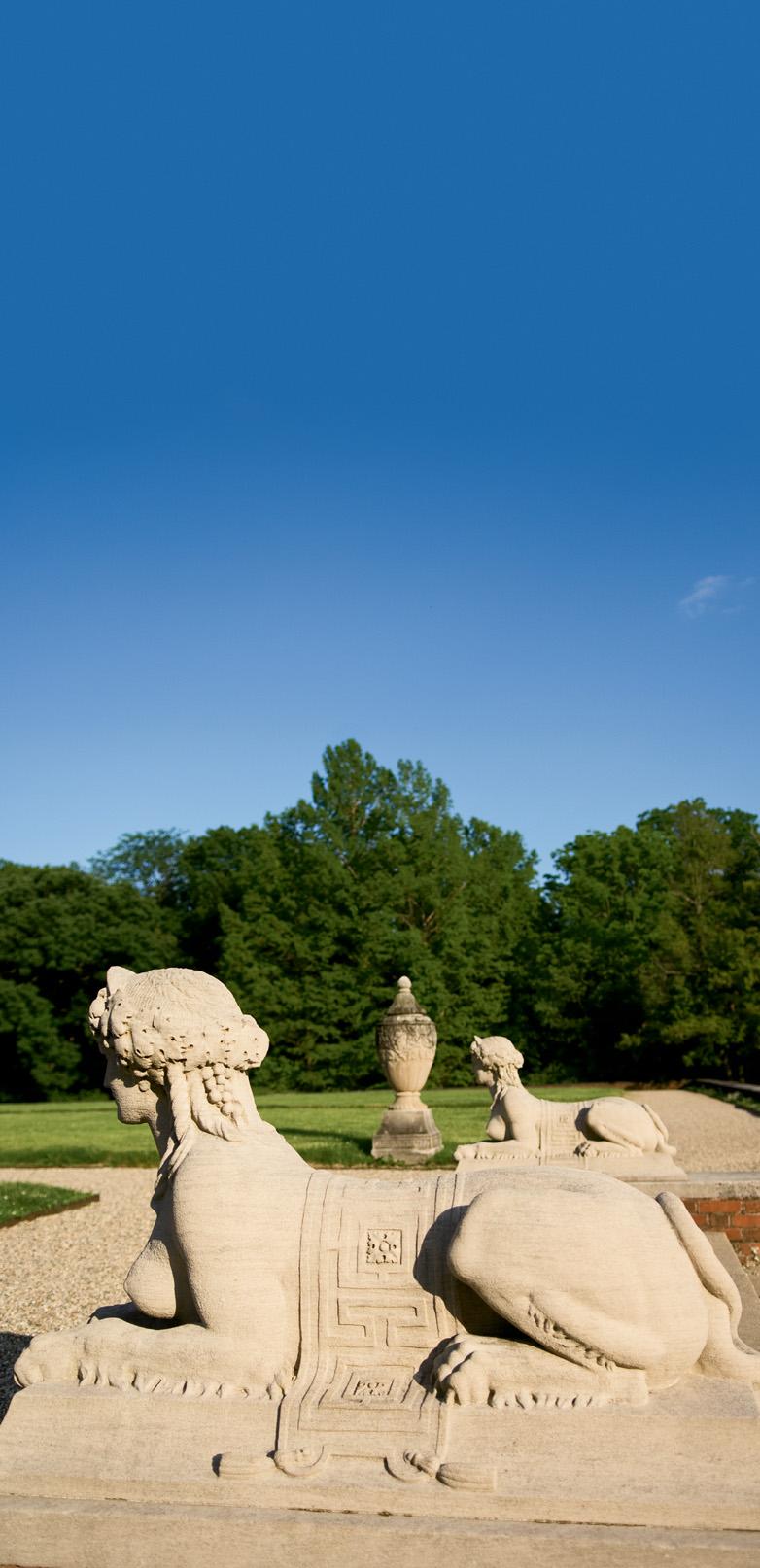
Formal gardens and unique sculptures make Allerton Park a sight to see
Southern Illinois’ Shawnee Hills region is ripe for a wine-lover’s weekend
Today’s Illinois farmers are armed with crop-yield monitors and biotech hybrids

This city bubbles over with good times
A gardening masterpiece
Springtime at the petting zoo
Brother, can you spare $85,000 for long-term care?
Spring forward with a horseradish-inspired meal
Use gardening “cents” when buying flowers
Things to do, places to see
Evergreen Lake in Bloomington
Watch videos, read stories and browse photos at ilfbpartners.com .


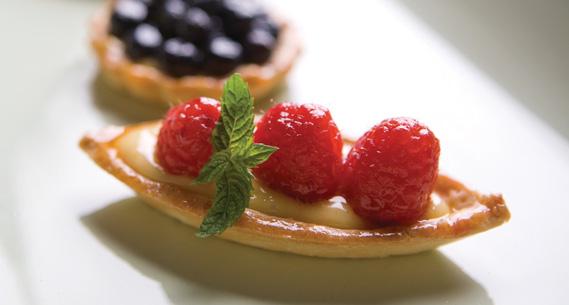

Read more home and gardening tips, and ask Jan Phipps, our resident gardening expert, your springtime questions.
Check out the Food section for more recipes, including more dishes featuring spring vegetables and Illinois-grown products.
All recipes can be printed or e-mailed.
Submit your favorite Illinois destinations to be featured in an upcoming issue. Tell us about the best restaurants, attractions and shopping across Illinois through our feedback forms.


“There are only 350 whooping cranes in the United States, and three of them are in Illinois.”
Watch wildlife and trek the trails at the Douglas Hart Nature Center in Mattoon. See this and more Illinois videos at ilfbpartners.com
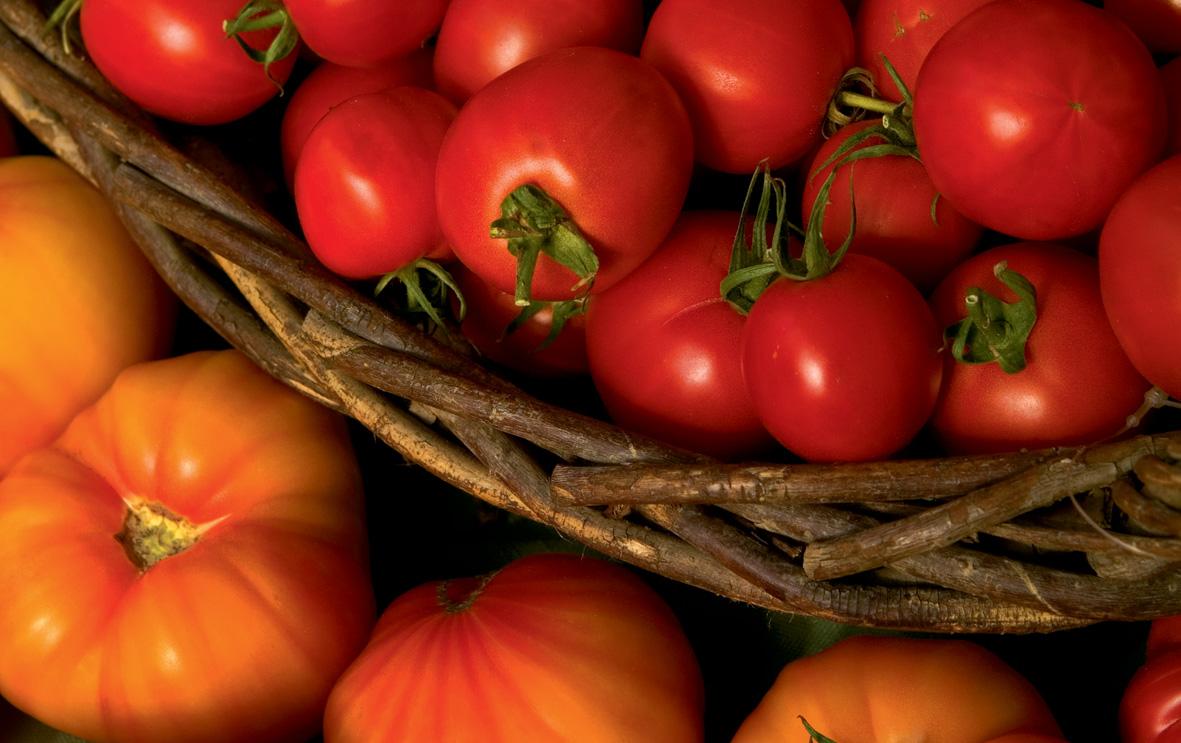
My only artistic skills bloom in the vegetable garden. In fact, my elementary school art teacher handed me the only “C” in my schooling career. At home, the soil serves as my canvas and seeds my paintbrush. In the winter, I sketch my vegetable garden plans on grid paper. When spring arrives,
I plant and watch the miracle of how a tiny seed produces food. The buttonweed and lambsquarter weeds surround my miracle, but I remove their first rush, and the garden’s beauty reigns.
Mom has been my garden teacher since my earliest childhood memories. I always knew spring was near when she started to prepare the soil. I followed Mom’s every footstep while she guided the tiller, which turned the crusty brown surface into a soft, black bed for vegetable seeds and plants. As soon as Mom’s heel lifted, I put mine down in her footprint. I stretched my stride to reach each one. We paced back and forth across the garden soil, slower than a bride gliding down the aisle.
Today, I realize my entertainment also caused soil compaction, but Mom allowed it. I will, too, when my daughter is old enough to make the strides. The activity will occupy time, but more importantly she will learn as I did from the garden. Weeds will grow back if you only
pull the tops. Broccoli-colored worms will try to eat the broccoli. Garden-fresh tomatoes far outflavor those on a store shelf. For many sunsets, I grab lemonade and step outside to gaze at the evening glow on the garden plants I painted across the soil. Then, I feel smart for eating fresh food and for the self-sufficiency my masterpiece provides. Twice I have overcome reasons to buy my produce at the grocery store. When we first married, my husband and I lived in town with a garden-less yard. We removed an area of sod only to uncover clay soil too wet for gardening but, determined to plant green peppers, bought lumber and hauled soil from my parents’ farm. In a small raised bed, we owned the only sweet corn and green bean plants on the block. Another year, I gave birth to our second child when I would have been planting red-skinned potatoes. A month after delivery, Grandma watched our toddler and newborn as I tilled the garden. I pulled off a successful green bean and zucchini crop, but planted those early-season peas a few weeks too late for high yields. That didn’t matter to me. After all, you have to make footsteps if you want them to be followed.

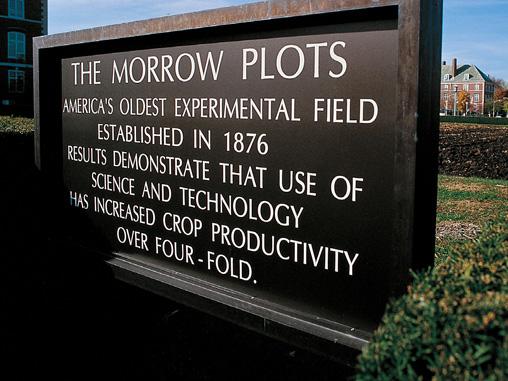
The crops of yesterday and today owe a lot to Morrow.
As the first soil experimental plots used by an American college, Morrow Plots is the country’s oldest experimental crop field and the world’s second oldest.
The field, located at the core of University of Illinois at UrbanaChampaign, was first laid out in 1876 and is still in use today. Though only three of the original 10 plots remain, Morrow Plots continues to yield important research information about the effects of fertilizer use, the depletion of natural soil nutrients and more.
Visitors are welcome to view the plots, located at the intersection of Gregory Drive at Matthews Avenue in Urbana.
Roll out the red carpet; the Princess is still here.
Off and on for decades, the Princess Theatre of LeRoy has been producing wide-screen entertainment in a family-friendly environment.
The theatre, originally built in 1916, now blends the traditions of old cinemas with Hollywood’s new motion pictures. Visitors of all ages enjoy its sentimental value and affordable ticket prices.
The Princess Theatre is also available for special events like birthday parties, promising all guests are treated like royalty.
Learn more about this historic theatre at www.princesstheatre.org





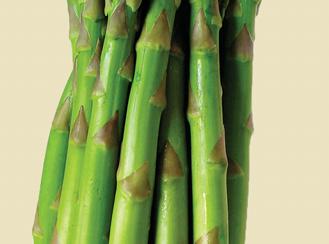
If you’re starting asparagus in your garden this year, remember that you’ll have to wait three years after planting for your first crop. But patience pays off, because once planted, an asparagus plant can keep producing for 20 years. It’s definitely the veggie that keeps on giving.

Learn more about asparagus in the University of Illinois’ online vegetable directory, found at www.urbanext.uiuc.edu/veggies .


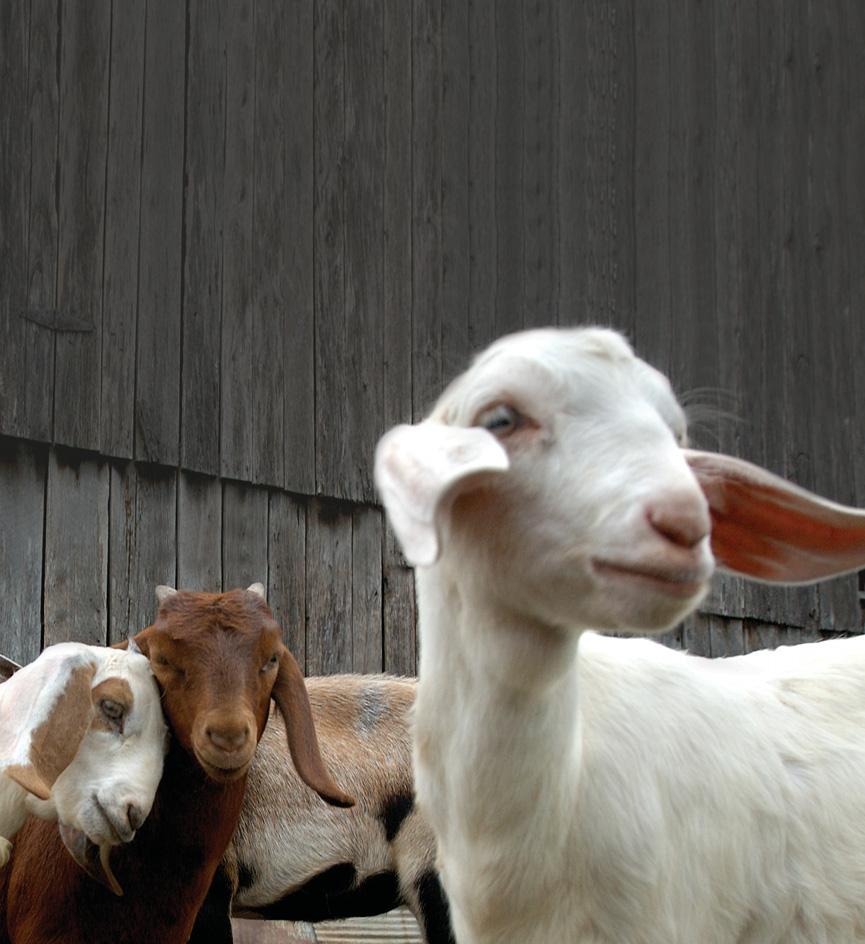
Animals, check. Rainbow, check. All it lacks is a giant wooden boat.
Some 200 animals reside at Rainbow Ranch, a petting zoo and exotic farm near Okawville.
From domestic animals like goats to exotic ones like camels, the range of species at Rainbow Ranch is certainly eclectic.
Rainbow Ranch Baby Bonanza, which shows baby animals in the spring, and Rainbow Ranch Christmas in the Barn are a couple of the ranch’s annual events.
Visitors are generally prohibited from feeding the “critters,” ensuring friendly and calm interactions with the animals.
Rainbow Ranch is open Wednesday through Sunday during the warmer months and by appointment during November through March.
For more information, visit www.rainbowranchzoo.com

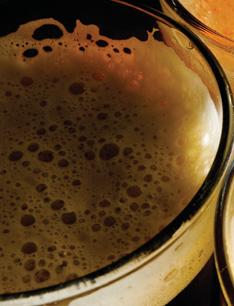
The Chicago Beer Society was founded in 1977 as a nonprofit educational association dedicated to the appreciation of beer. Members gather monthly for special events and trips to learn more about different types of beer and the history behind the brews.
Check out the society’s website at www.chibeer.org
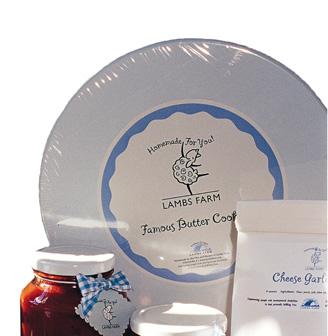


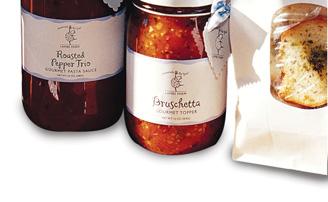


Founded in 1961, Lambs Farm is a nonprofit organization that caters to adults with developmental disabilities.
Lambs Farm has grown from a small pet shop in Chicago to a 72-acre campus including a country store and bakery located in Libertyville, where opportunity flourishes for the more than 250 men and women served.
For a full listing of products (anything from pasta sauces to pet gifts) and ordering information, visit www.lambsfarm.org.
STORY BY Ralph Loos
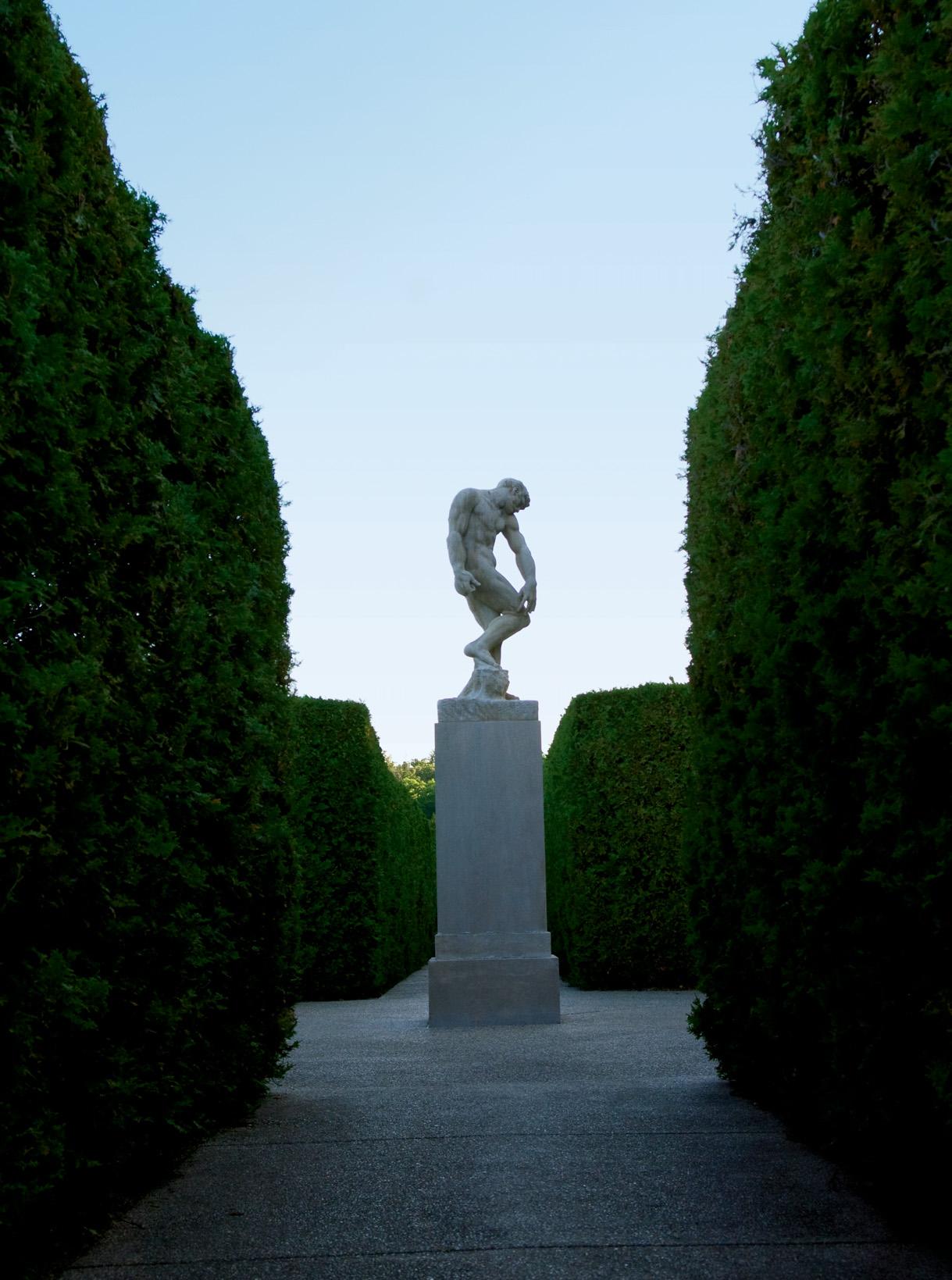
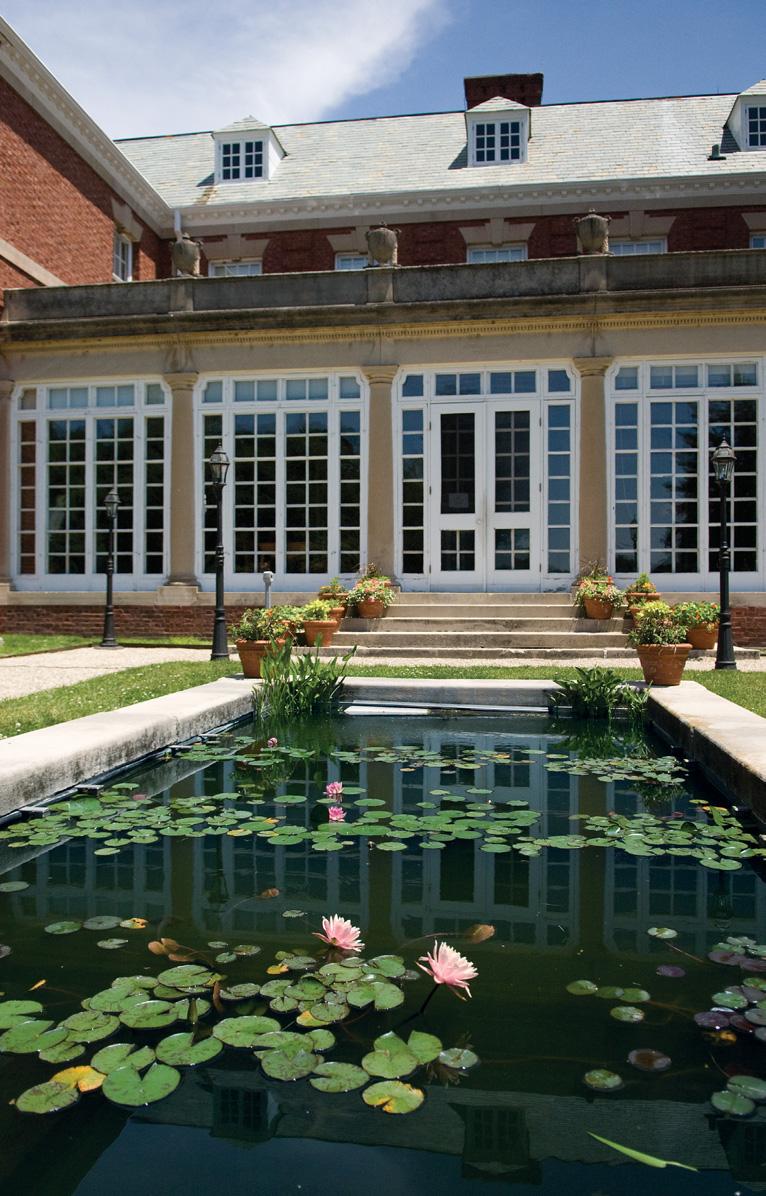
It’s difficult to say which is a more surprising find: the English-inspired mansion rising from Illinois corn country or the formal gardens and unique collection of sculptures that surround it.
Robert Allerton certainly had flair, and today the 1,500-acre park in Piatt County that bears his name is symbolic of the state’s dueling personalities – “artistic” versus “nature lover.”
The combination has made Allerton Park and Retreat Center so unusual that it was named one of the Seven Wonders of Illinois by the Illinois Department of Tourism.
“To say the place is rare is certainly
understating it,” says Sue Gortner, director of the chamber of commerce in Monticello, a small town located three miles to the east.
Aside from the mansion and its sizable reflecting pond, the park is made up of woodlands, meadows, hiking trails, and prairie landscapes – an ideal setting for visitors who enjoy the outdoors.
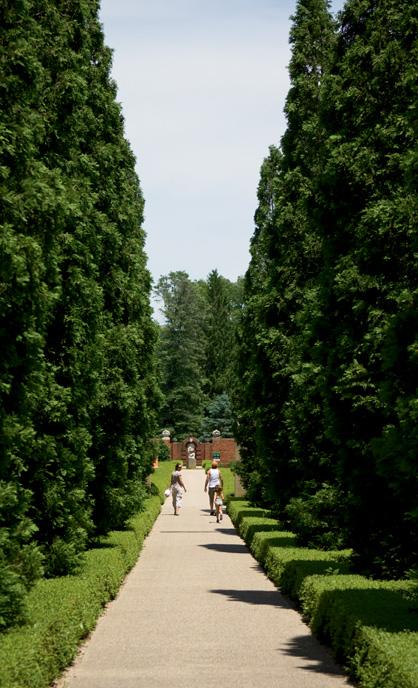
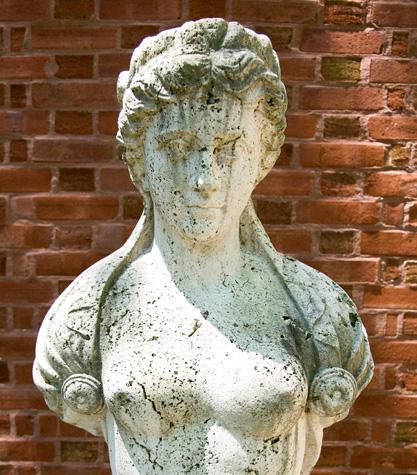
Those who are more aesthetically inclined are attracted by mazes of perfectly manicured hedges, a sunken garden, vine-lined walkways connecting the attractions, a reflecting pond, and several pieces of small and large art, including a stunning 15-foot sculpture of the Greek god Apollo.
Allerton Park has become a popular destination for weddings, with many held outdoors in the gardens and others inside the breathtaking mansion. The staff can handle all the arrangements, from rehearsal dinner to the reception, and overnight accommodations also are available.
Much of East Central Illinois benefits from the 100,000 people who visit Allerton Park each year. Roughly half of the tourists are from Illinois, while the other half comes from neighboring states and across the country. They come for peonies and irises and just about every other plant and species of winged wildlife Illinois has to offer.
“The park is open year-round, and we get people here in all seasons, but the peak season begins in April when people flock to see spring wildflowers,” Gortner says. “Summer is popular because of the gardens, and fall brings color to the trees and garden.”
Allerton, a 20th-century farmer, land baron and patron of the arts, donated the property that contains Allerton Park to the University of Illinois in 1946 as an educational and research center, wildlife and fauna reserve, and public park. The university’s Urbana-Champaign campus is located 25 miles to the east, and the school still owns and manages the park.
Allerton’s gift was once the center of a 12,000-acre agricultural enterprise acquired in the late 19th century by his father, Samuel Allerton, who owned a total of more than 80,000 acres of farmland and was a major stakeholder in Chicago banking and stockyard industries.
Robert Allerton eventually managed his father’s Illinois farm holdings, but his true passion was art. He was an avid collector and philanthropist, as well as an artist who admittedly used the Allerton-owned landscape as his canvas.
Robert Allerton, who died in 1964,
transformed the property into a Central Illinois showplace during the 1920s and early 1930s. In 1946, after the Great Depression and World War II, he moved to Kaua’i, Hawaii.
His love of art is more than evident at Allerton Park and Retreat Center. A major star is “The Sun Singer,” a 15-foot-tall sculpture of Apollo. Other visitors flock to the Sunken Garden, where a whisper from one end can be heard on the other – 70 yards away.
The most popular attraction remains the 100-year-old mansion, the 40-room Allerton home located north of the Sangamon River. The mansion, modeled after a 17th-century house in Surrey, England, is not open on a daily basis, but visitors can call ahead for tours.
“If people are interested in beautiful things, they will find it here,” says Jessica Hampson, one of the park’s administrators. “Our formal gardens and the more than 100 garden sculptures create quite an atmosphere.”
When the Seven Wonders of Illinois were announced, many wondered how a state with a rather flat landscape could land five natural sites on the list.
A visit to places such as Robert Allerton Park provides a quick answer. “Actually, our parks are very different compared to the land and terrain around them,” says Jan Kostner, deputy director of the Illinois Department of Commerce and Economic Opportunity. “When you visit one of our state parks or nature sites, you’re stepping into a place that stands out, and I think that’s what a ‘Wonder’ is supposed to be.”
The Seven Wonders are:
Northern: Starved Rock State Park, Utica.
Central: Allerton Park and Retreat Center, Monticello.
Western: Black Hawk State Historic Site, Rock Island.
Southern: Rend Lake, Benton.
Southwest: Meeting of the Great Rivers Scenic Byway, following a 33-mile strip of river through Alton, Grafton, Hartford and Elsah.
Chicago: Wrigley Field.
Chicagoland: Baha’i House of Worship, Wilmette.
The Seven Wonders of Illinois program was launched in early 2007, when Kostner invited people to nominate their favorite Illinois attractions. The bureau received more than 3,700 nominations during the first month. From that list, 84 destinations were chosen to compete, 12 from each of the state’s seven regions. Residents then went to the Illinois Bureau of Tourism website to vote on their favorite places.
Details of each of the Seven Wonders can be found at www.enjoyillinois.com .
Travel down the Shawnee Hills Wine Trail for






























STORY BY Charlyn Fargo
BY Jeff Adkins
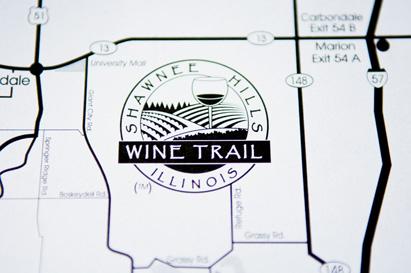
Looking for a weekend getaway? Just past Marion sits a rolling landscape that rivals Wisconsin for its hills, sunshine, wildlife and meandering roads that wind through the impressive Shawnee National Forest. It’s home to the Shawnee Hills Wine Trail, the state’s most established wine region, made up of 12 wineries, cozy bed and breakfasts, and artisan shops.
“All the other wine trails in the state are modeled after the huge success of the Shawnee Hills,” says Megan Pressnall of the Illinois Grape Growers & Vintners Association.
Wine trails, where vineyards connect with other wineries along a specified route, have become as popular as summer festivals. There currently are more than 70 wineries throughout Illinois and five total wine trails, including the Shawnee Hills.
“I think visitors are looking for more information to link and make a weekend excursion,” Pressnall says. “The wine trails do that with a regional focus. My husband and I did the Shawnee Trail recently. It’s marked so well with signage, and all the wineries are close.”
While the winding roads may link wineries together, their
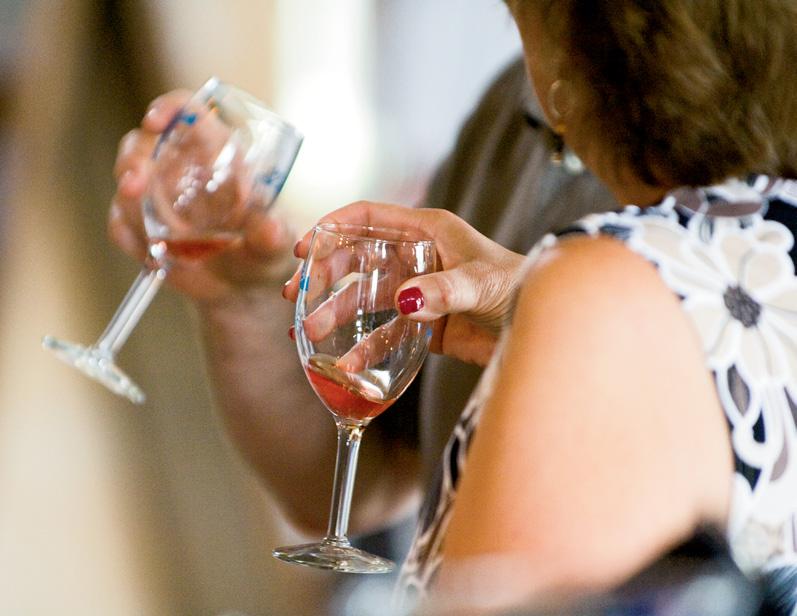
Here’s a general rule to follow: the sweeter the wine, the sweeter the food to serve; the drier the wine, the more savory the food.
So a sweet red complements a slice of chocolate cake, and a drier Chardonnay prefers a more savory onion tart.
Salty foods also pair well with wine, since the salts cancel the acid on the palate.





individual strengths set them apart.
“Wineries reflect the personalities of the owners and towns nearby,” Pressnall says. “For example, Pheasant Hollow has more fruit wines. They get a lot of hunters, so they play that up.”
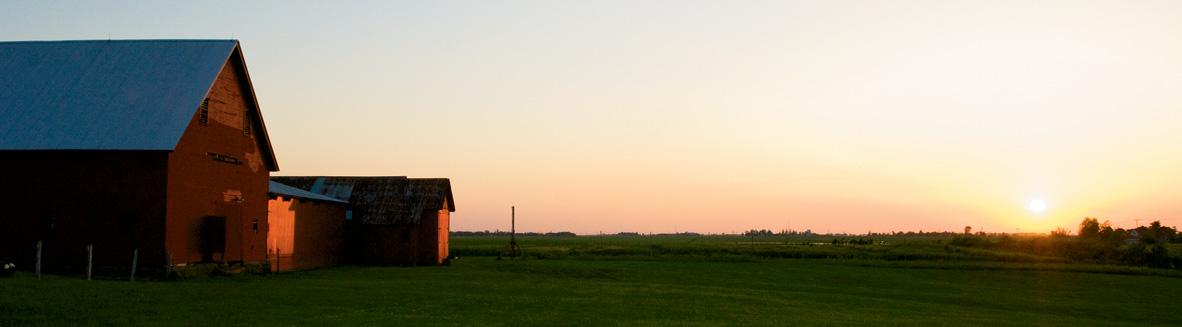
Eric Pool of Claremont started Berryville Vineyards as an alternative to growing corn.
“We had these old hills that wouldn’t grow corn or soybeans,” Pool says. “When I graduated from the University of Illinois, corn was $1.80 a bushel. You couldn’t make money at that, so I looked for an alternative. We are the same latitude as the famous wine regions of France, so I looked into growing grapes.”
And the experiment has turned into a successful business for him.
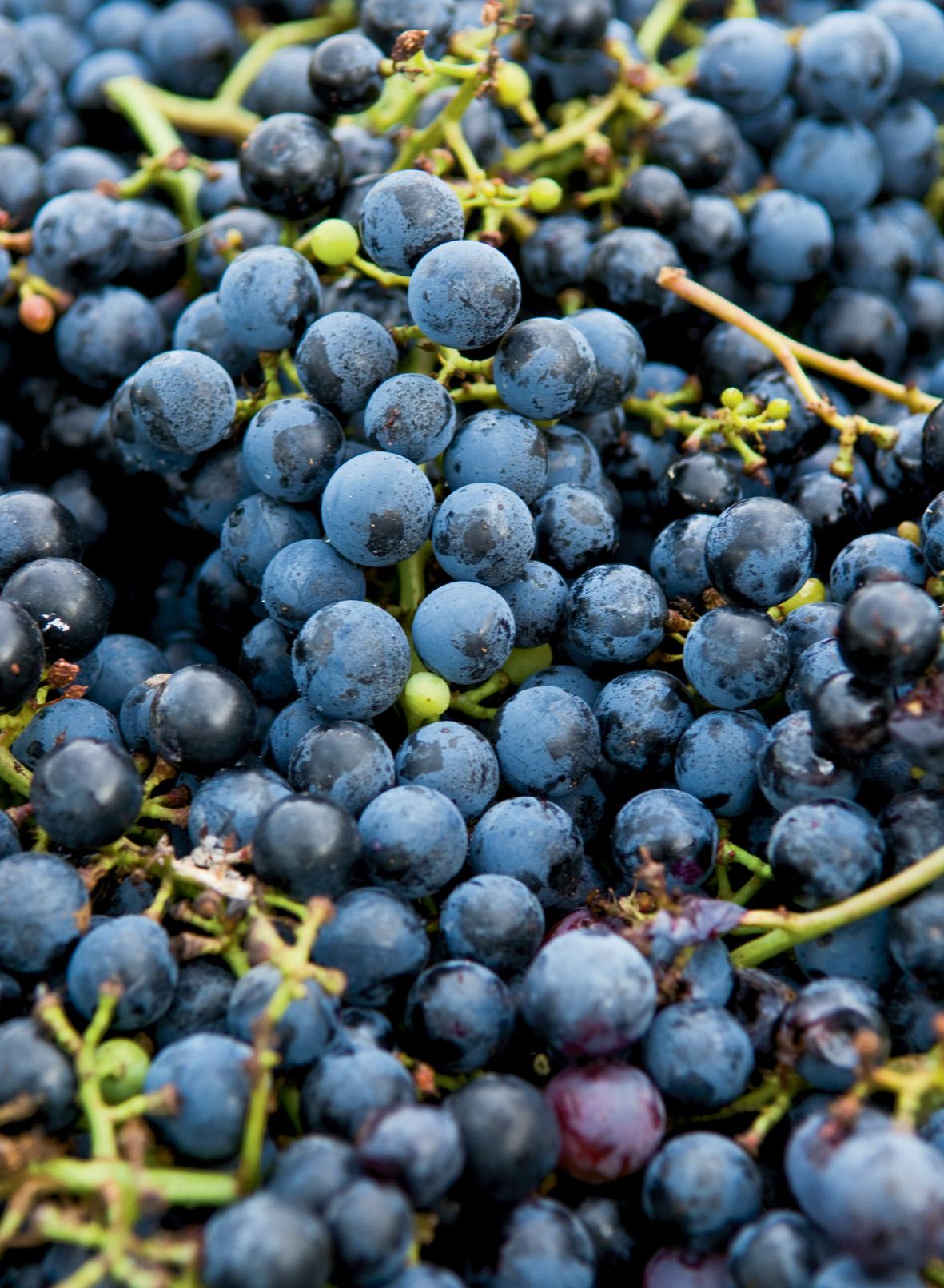
“The No. 1 thing grapes like is well-drained soil,” Pool says. “We have that on these Southern Illinois hills. They also like sunshine. My whole concept is to keep my grapes in the sun.”
Pool says he does that through pruning four to five times a season.
“In Illinois, we grow French-hybrid grapes,” Pool says. “Coming up with a new wine variety is like playing the lottery – you’re always looking for the one that will be a hit.”
He prefers drier wine varieties, such as the Vignoles, a type of grape. For years, wines have been commonly named after the grape that is crushed to create the variety.
However, Pool has had more success lately naming his wines after events. His current best seller is the Earthquake, named after a recent Southern Illinois event.
“No wine is made closer to the epicenter,” Pool boasts. “I only use what I grow myself. I’m a farmer. Making wine is a way to preserve what I grow.”
And it’s beneficial to the consumer as well.
“There’s a whole movement to buy local, serve fresh,” Pressnall adds. “I think that includes Illinois wines as well. It doesn’t make sense to buy everything at a local farmers’ market and then serve a wine from across the world.”
The Shawnee Trail boasts 12 wineries, all within a few minutes of each other in Southern Illinois. You can start the trail from either end or hop on somewhere in the middle.
Alto Vineyards
Alto Pass (618) 893-4898
Blue Sky Vineyard Makanda (618) 995-WINE
Hedman Vineyards
Alto Pass (618) 893-4923
Hickory Ridge Vineyards Pomona (618) 893-1700
Inheritance Valley Vineyards Cobden (618) 893-6141
Kite Hill Vineyards
Carbondale (618) 684-5072
Orlandini Vineyard Makanda (618) 995-2307
Owl Creek Vineyard Cobden (618) 893-2557
Pomona Winery Pomona (618) 893-2623
Rustle Hill Winery Cobden (618) 893-2700
StarView Vineyards Cobden (618) 893-WINE
Von Jakob Vineyard
Alto Pass, Pomona (618) 893-4500

For more information about planning your trip and details about each winery, visit www.shawneewinetrail.com
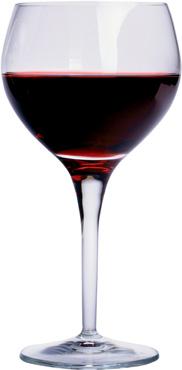
Visit ilfbpartners.com to submit your own tips for tasting wine. Click on the online version of this story and add your comments.
There’s a difference between drinking wine and truly tasting it. An Illinois vineyard owner teaches us to taste.
“When I’m tasting wine, I remember the five “S’s,” says Eric Pool, owner of Berryville Vineyards in Claremont.
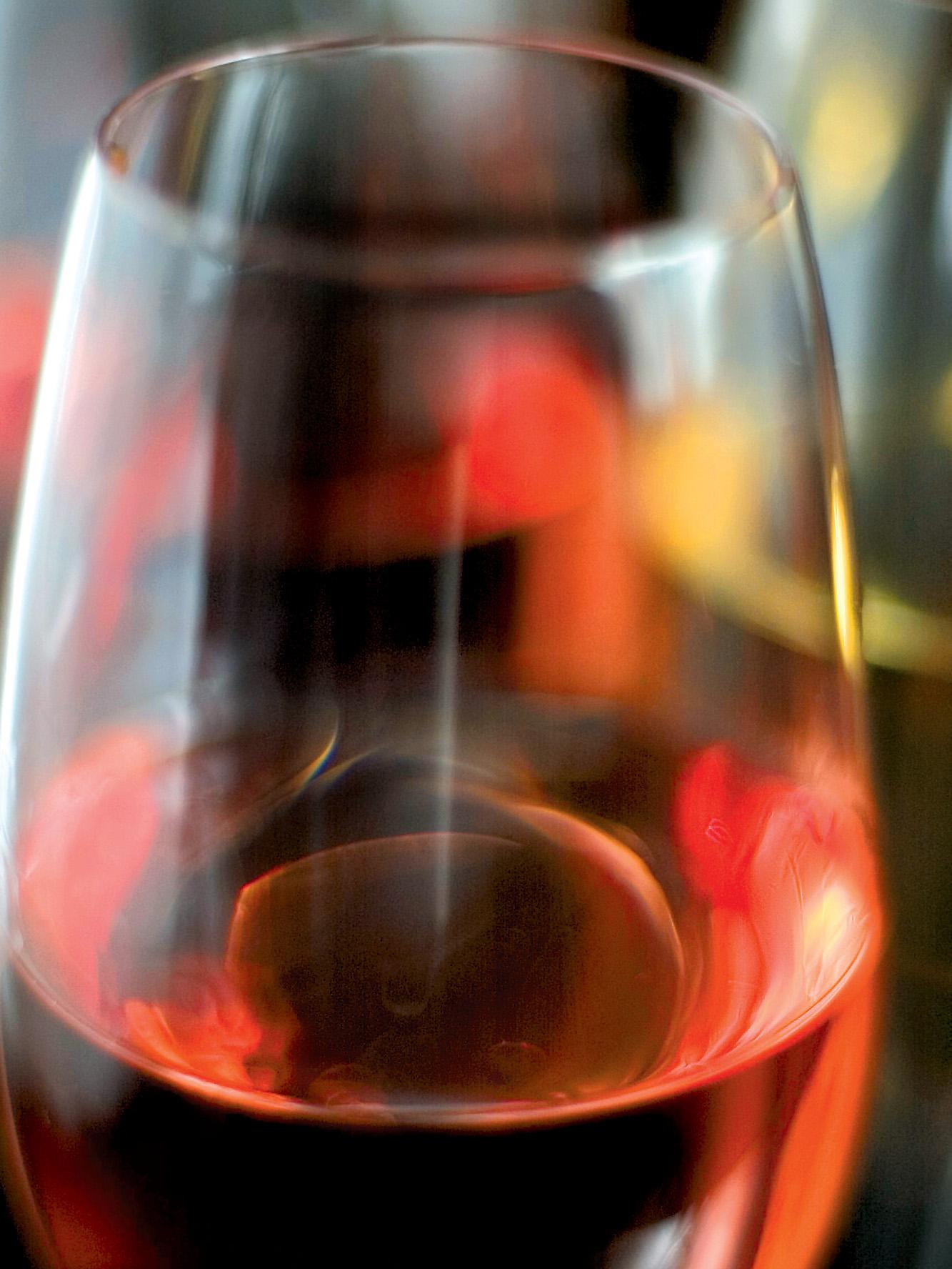
It should be clear, and if it’s red, have a very deep color. The darker the better, Pool says.
Swirling releases the bouquet.
Smelling allows you to capture the flavor with your nose as well as your tongue.
Let it sit on the top of your tongue to suck the air through it. It helps the wine to get more air through it.
Tilt your head back and let it run down your throat.
The temperature of a wine should be close to that of the underground temperature, Pool adds.
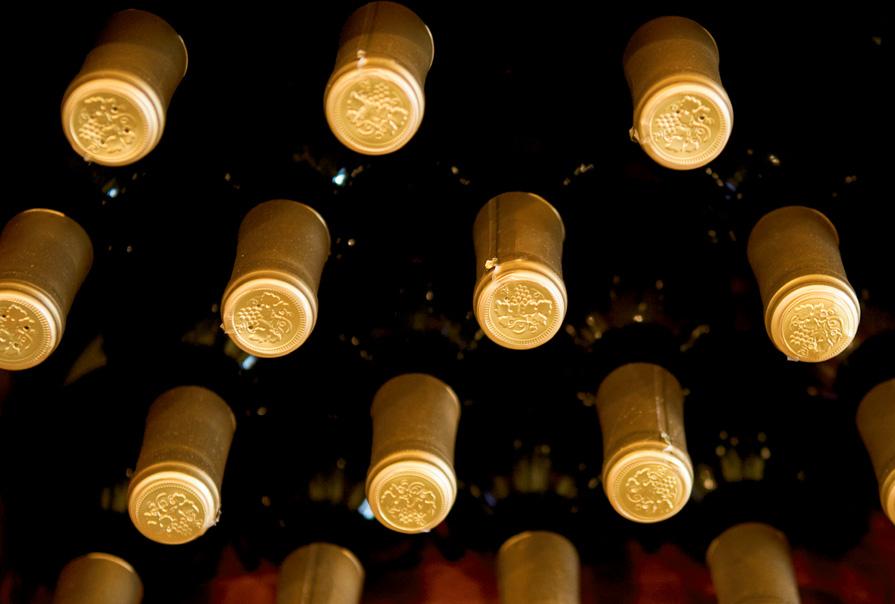
“I have a geothermal temp in my winery,” he says. “Ideally, you want low 60s. All chemical reactions occur slower at a cooler temperature. The idea is to keep the cork wet, so I keep the wine stored upside down in transport, then I sit it on its side to store it. Wine likes a constant temperature.”
That constant temperature is more important than the actual serving temperature, Pool says.
–
Charlyn Fargo



Long-term health care is growing more costly. A recent study by Fidelity Investments found that a 65-year-old couple often spends an average of $85,000 to insure against their own long-term care expenses.
By definition, long-term care provides specific personal-care services when you are unable to take care of yourself without assistance for an extended period of time.
Most often, people think of nursing homes for long-term care, but care also includes the type provided in assistedliving facilities and adult day care and by in-home care.
Government estimates expect the number of Americans using long-term care services to increase from 13 million in 2000 to 27 million by 2050. And, according to the U.S. Department of Health and Human Services, nearly 60 percent of people older than age 65 will require at least some type of long-term care during their lifetime.
Here are some tips for planning for long-term care:
You’ll want a sound, stable, highly rated company.
Many policies offer inflation protection so your benefits keep pace with inflation. With health-care costs increasing between 4 and 6 percent annually, this benefit is crucial.
Look for a policy that is qualified for income tax
purposes. This means that any benefits you receive from the policy would generally be considered tax-free.
Be sure you understand what your policy covers and does not cover. Some policies offer the option to stay at home or receive care in a nursing facility.
Just like shopping for gifts during the holidays, you’ll find the best selection of choices if you shop early. Many companies offer preferred rates if you’re healthy (another reason to apply when you’re younger) as well as discounts if your spouse purchases a policy as well.
Long-term care insurance is truly an evolving area, and a financial professional can help you arrive at what’s best for your situation. Investigate your options. It might be worth it.
You might even save a dime – or 850,000 of them.
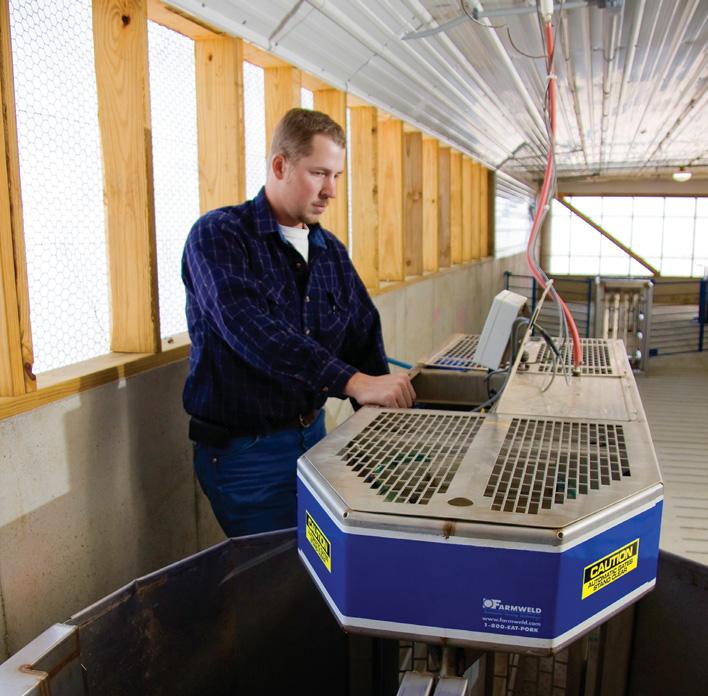
Armed with global positioning systems, field sensors and biotech hybrids, today’s Illinois farmers are


rom plowing fields to harvesting crop data, John Reifsteck sees technology development in American agriculture as “a pretty good success story.”
Necessity has always been the mother of agricultural invention, and the corn and soybean grower near Champaign has been an early adopter of on-farm technology.
Reifsteck uses sophisticated monitors to map crop yields and advanced genetics to fight destructive pests with fewer chemicals.
His farm is a virtual research lab where he experiments with fertilizer levels and shops corn hybrids in a quest for the most bushels from each bag of seed.
“Part of the business of agriculture today is being willing to look at new technologies and utilize them when they’re appropriate –having an open mind about new ways of doing things,” says Reifsteck, who has been farming full-time since 1977.
Reifsteck has been a pioneer in “precision farming” – use of satellite global positioning systems, high-tech field sensors, crop yield monitors and computer mapping to pinpoint where fertilizers are needed and, as importantly, where they are not needed. That reduces potential for excess chemicals winding up in lakes and rivers, while coaxing more profit from each acre.
New technologies are helping farmers strike a balance between environmental sustainability and the need to feed a hungry world. University of Illinois agricultural policy analyst Robert Thompson estimates that by 2050, the world’s population will rise 38 percent and global food demand will grow 50 percent.
Thompson adds that a disproportionate share of that growth will occur among lowerincome populations. Explosive middle-class growth in China and India will further fuel the world’s food demand.
“I can’t think of any scenario where Asia can be self-sufficient in food,” says Thompson, a former World Bank rural development director. He hails “the power of agricultural
research” to boost worldwide harvests.
Biotechnology companies are pouring millions into what Thompson calls the effort to produce “more crop per drop” through genetic drought tolerance. High-yielding drought-tolerant corn may reach the market by 2012, and Reifsteck sees the technology extending the Corn Belt into places where it couldn’t exist before.
Reifsteck admits new ag technologies are not cheap, but he also believes they are essential to feeding a crowded world.
“We need to gear up to produce more,” Reifsteck says. “Farmers are buying new equipment that lets them plant and harvest crops in a more timely way. They’re buying new biotech hybrids and varieties that yield more. They’re paying more attention to things like fertilizer.”
He adds, “The economic system works in agriculture just like it does everywhere else. You can’t have cheap food and expect the world to start increasing production.”
Today’s farmer wears a number of caps – food producer, amateur botanist and chemist, marketer and manager. University of Illinois scientists hope to offer busy producers a mechanical “hand” in the field. U of I developed the Ag Tracker (known as the Ag Ant) to move through rows of corn, apply fertilizer, sample soil and examine plants for disease. Infrared sensors measure distances from the robot to corn stalks and keep the robot equal distances from both sides of the plant.





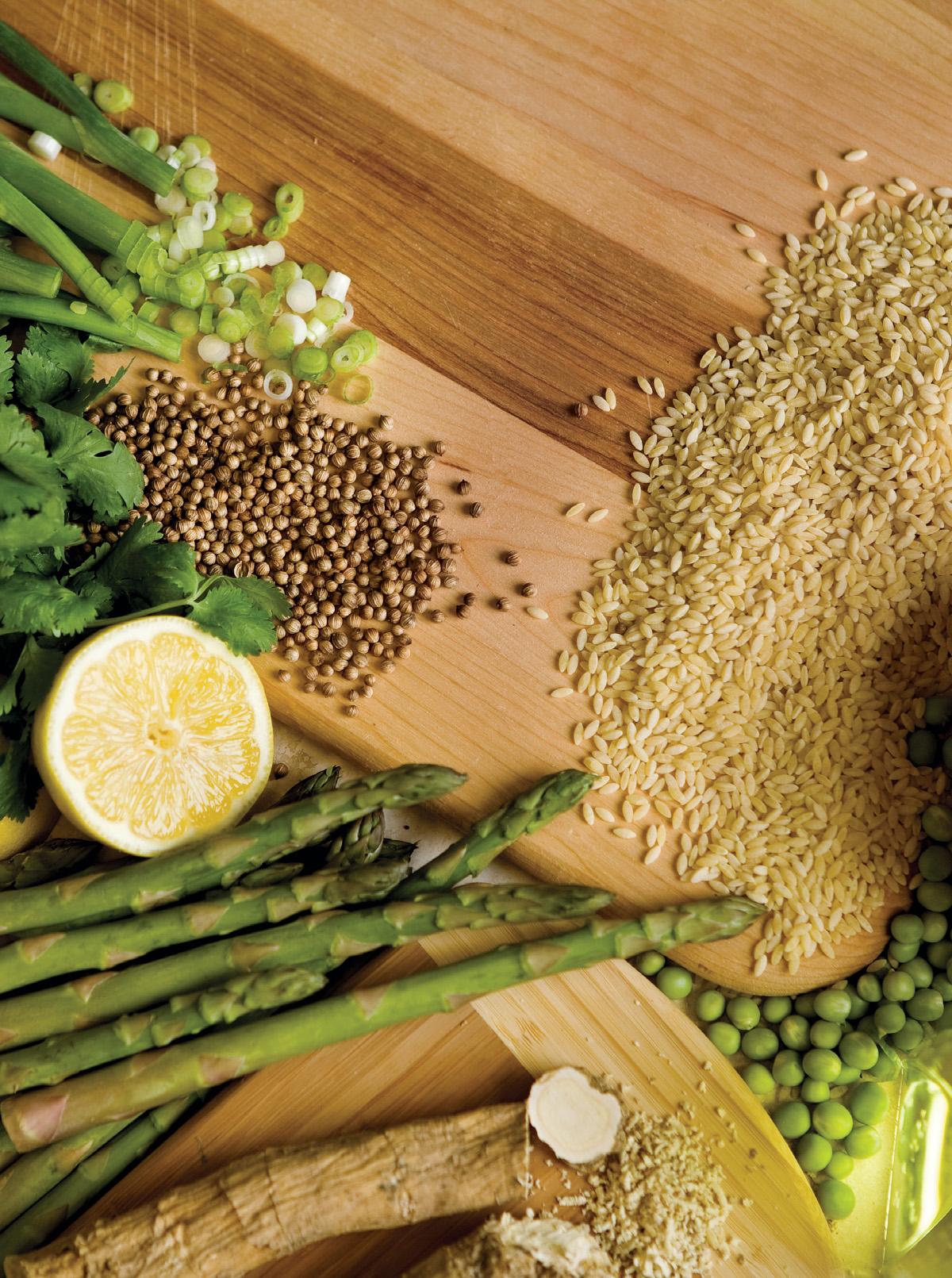

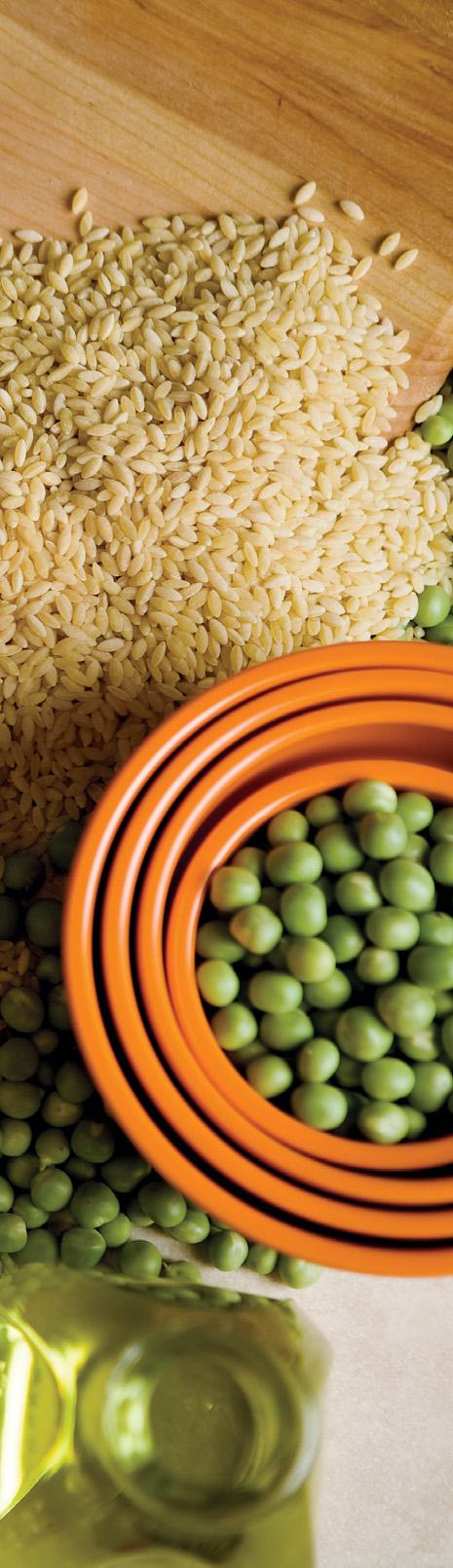
Few things are quite as refreshing as the sight of tiny green herbs and vegetable plants popping up from the soil after a long, cold winter. Yes, it’s almost spring, and that means time to hit up your local farmers’ market for some fresh produce and head for the kitchen.
Whether you’re having company for dinner or just cooking for the family, this spring menu is sure to please.
Our Risotto with Peas is as tasty as it is healthy, with Arborio rice, green peas, and minced herbs cooked in white wine and tossed in savory butter and fresh-grated Percorino and Romano cheese.
For the main course, try our Orange and Horseradish-Crusted Pork Tenderloin.
Horseradish is easy to find in Southern Illinois – the region is said to produce 85 percent of the world’s horseradish, and the city of Collinsville proudly calls itself the Horseradish Capital of the World. In this dish, pork tenderloin is rolled in breadcrumbs, spices, and horseradish before being roasted to perfection and topped with a tangy, sweet orange marmalade sauce.
Roasted Asparagus complements this meal wonderfully and couldn’t be easier to prepare. Asparagus spears are simply coated with olive oil, salted, roasted until tender and drizzled with lemon juice. Enjoy!
Horseradish contains no fat and no cholesterol. And, during the late 1800s, horseradish was commonly believed to cure headaches by rubbing the root on the forehead.
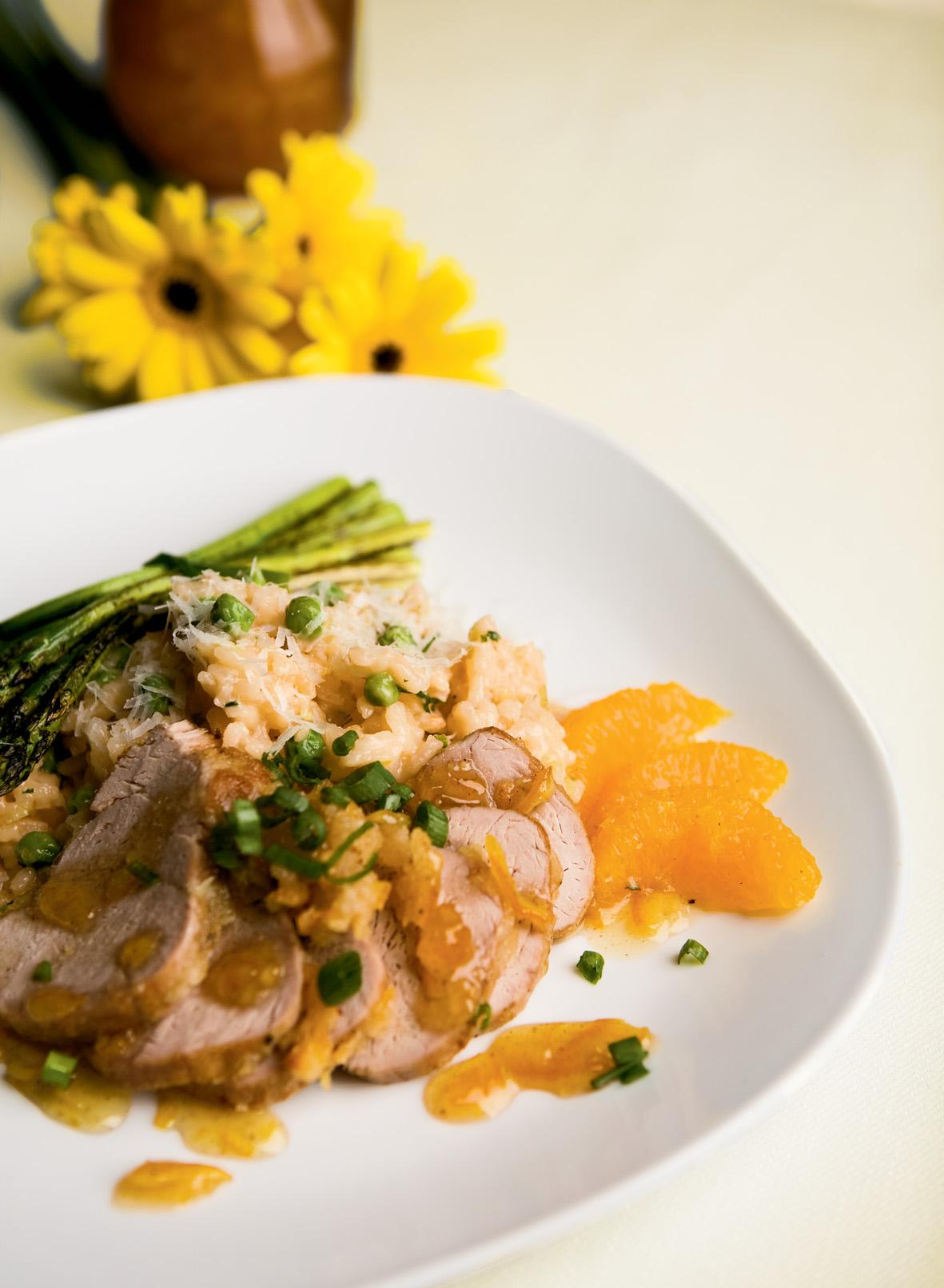

1 cup orange marmalade
2 tablespoons horseradish

¼ teaspoon each, ground coriander and allspice
½ cup bread crumbs
1 pork tenderloin
Salt and pepper
1 teaspoon oil
¼ cup each, chopped green onion and cilantro
1. Mix the marmalade with the horseradish and ground spices. Mix half of marmalade mixture with the breadcrumbs. Set both aside.

2. Season the pork with salt and pepper. Add oil to a hot skillet and sear all sides of meat. Remove pork, and coat with the breadcrumb mixture.
3. Place pork in a lined roasting pan and roast at 350 degrees until the internal temperature is 160 degrees.
4. Cool pork for 10 minutes before serving. Heat the additional marmalade mixture and stir in green onions. Spoon marmalade over the pork tenderloin when serving, and top with cilantro.
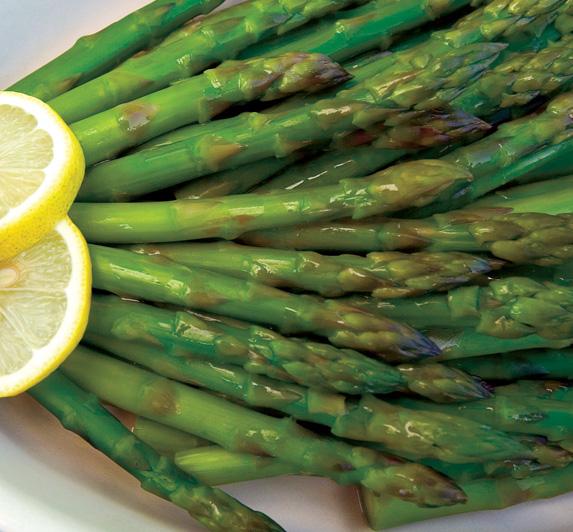
1 pound fresh asparagus
1 tablespoon olive oil
½ teaspoon sea salt
2 tablespoons lemon juice
1. Preheat oven to 450 degrees Fahrenheit.
2. Wash asparagus and trim off tough ends. Place asparagus on baking sheet and drizzle with olive oil, rolling spears to coat evenly. Salt lightly.
3. Roast until just barely tender, usually between 8 and 15 minutes, depending on the thickness of the spears.
4. Drizzle with lemon juice and serve.
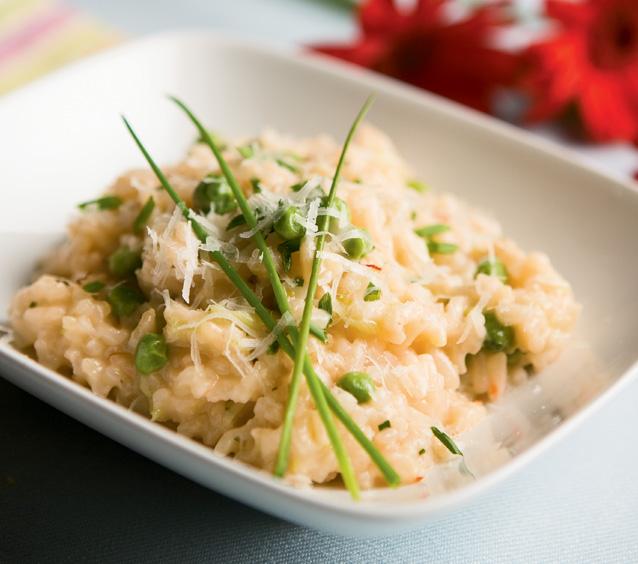
2 tablespoons olive oil
3 tablespoons butter, divided
1 medium leek, thinly sliced
¾ cup dry white wine at room temperature
1½ cups Arborio rice
6 cups chicken broth
½ teaspoon saffron
1 cup green peas (if fresh, lightly steam)
1 tablespoon each, minced parsley and chives
4 tablespoons grated Pecorino-Romano cheese
Salt and pepper
1. In a large skillet, heat the olive oil and 2 tablespoons of butter over medium heat. Add leek slices and cook until wilted. Remove leeks from pan.
2. Add wine to pan and reduce until almost evaporated. Add rice, stirring to coat each grain. Cook for five minutes, stirring constantly.
3. Add 1 cup stock. Cook rice, stirring, until stock is almost absorbed. Add the saffron and stir well. Add the remaining stock slowly until rice is tender, about 30 to 40 minutes from when first cup of stock was added.
5. Stir in minced herbs, leeks and peas. Add remaining butter and cheese. Stir well and then let rest for 3-5 minutes. Add salt and pepper to taste.





You spent the winter researching and planning your new perennial garden. For a splash of color, you learned to use three plants of the same variety. You plan to get seven kinds of perennials to have color spring, summer and fall.
So far, so good.
And then you take a look at the price tag. Yikes! The most common perennials start at $7, with many priced much higher.
It’s time to learn to garden on the cheap.
The most obvious way to cut costs is to use seeds instead of transplants. It takes longer to get mature plants, but watching them grow is half the fun.
Another idea is to purchase annuals instead of perennials. Annuals are much cheaper, so for
the first few years buy only some of the perennials and use annuals to fill in the gaps. Most annuals have the added benefit of blooming all summer instead of just part of the growing season. And there is always a wide selection of transplants at nurseries in the spring.
Time is another way to lower the cost. Buy one perennial this year and four years from now, you can divide it to get three plants. Many plants self-seed or send out runners. For a formal garden, transplant these where you want them, or let them flourish where they sprout for a more relaxed effect. Shop for plant sales at nurseries in August and September. You can get some great bargains, but always check the root ball to make sure the roots are still healthy. Make
QCan I cut down my daffodils once they finish blooming?
Not if you want them to bloom next year. Bulbs need their green leaves to collect energy from the sun to build the bulb for next season.
sure to get the plants in the ground as soon as possible, so they have a chance to get established before winter.
Choose a live evergreen tree for Christmas this year. After enjoying it inside for the holidays, it can be moved outdoors to become part of your landscape.
In late fall, determine where the tree will be planted. Then, dig the hole, saving and storing the soil in a garage where it won’t freeze. When you’re done with holiday décor, plant the tree using the saved soil. It won’t matter if the rest of the ground is frozen.
Check out your county’s Soil and Water Conservation District (SWCD). In the spring,
the SWCDs have a list of perennials and trees at great prices. Pay close attention to spacing for trees even though they might look too far apart the first decade.
And don’t forget about your friends. The biggest money saver for me over the years is having a good friend who is also an avid gardener. She lets me know when she thins her perennials, and I return the favor. She is at the top of my list for overflow asparagus and strawberries, neither of which she grows, and I get her extra tomatoes.
QWhere is my butterfly bush?
Have patience! They are notorious for emerging later than other perennials. Last year’s growth is dead and should be removed. New shoots will appear in mid to late spring.
E-mail your gardening questions to Jan at ilfbpartners@jnlcom.com.
Jan Phipps farms, gardens, writes and podcasts near Chrisman. She’s been a University of Illinois Extension Master Gardener for 10 years and finds new budgeting ideas each year.


f champagne calls to mind fun times, celebrations and fond memories, it’s no wonder the town that shares a name with the bubbly drink has the same effect.
Located in East Central Illinois, Champaign is a city that’s pulsating with cultural, educational, and recreational opportunities that compel visitors to come back again and again. Here are our best recommendations for your next visit to the Champaign area; submit yours at ilfbpartners.com via the comments section of the online version.
Catch a flick or watch a play at the newly renovated Virginia Theatre, a historic landmark owned and operated by the Champaign Park District. Built in 1921, the timeless 1,525-seat Virginia Theatre continues to entertain citizens and visitors to Champaign as it has done for more than 80 years.
Once a thriving vaudeville house, The Virginia Theatre boasts extraordinary architecture. The exterior of the building is done in the Italian Renaissance style, while the interior offers a Spanish Renaissance design.
Another impressive entertainment venue is Assembly Hall at the University of Illinois at Urbana-Champaign. Praised as one of the two largest edge-supported domes in the world, the massive 17,000-seat arena hosts Broadway

shows as well as top-of-the-line entertainers such as Pearl Jam and Kenny Chesney.
Prefer classical tunes? Plan to attend a performance at the Krannert Center for the Performing Arts, also located at the University of Illinois at Urbana-Champaign. The stunning center encompasses two city blocks and is home to the Champaign-Urbana Symphony. It features an elegant lobby, a gift shop that sells fine arts, a café and four main theaters, the most famous of which is the acoustically superior Foellinger Great Hall.
If you’re more in tune with sports than with Beethoven, catch the Fighting Illini in action at a University of Illinois basketball game. Don’t forget to wear your orange and blue.
Chestnut and Neil Streets was officially named REO Speedwagon Way in 2001.
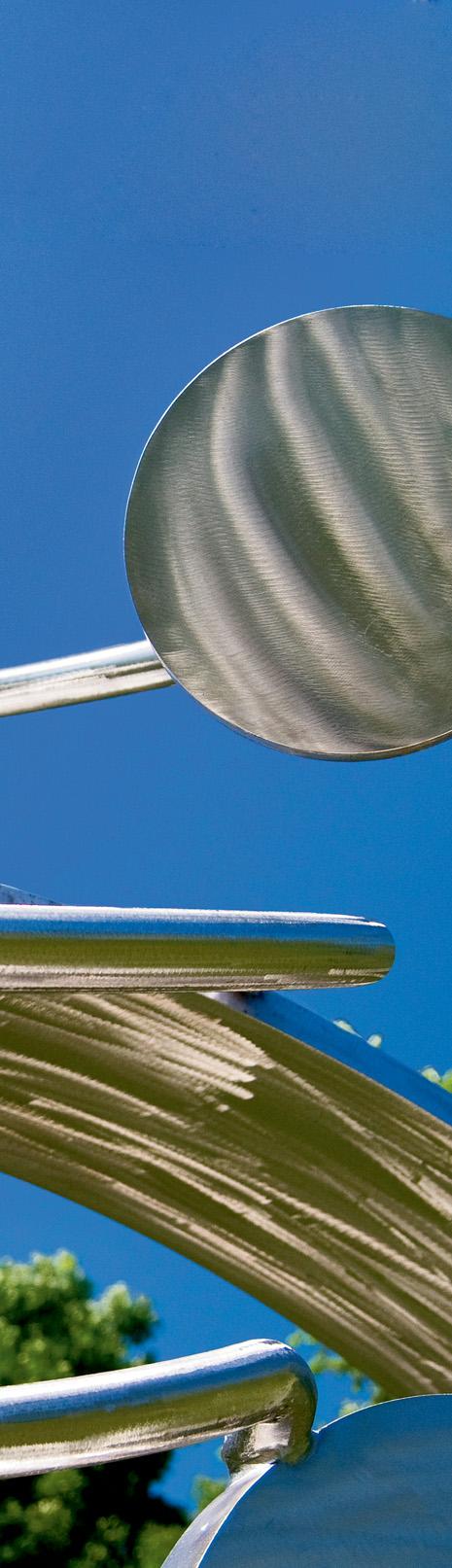
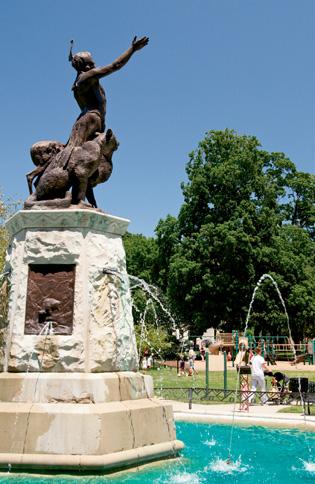
Take a hike through West Side Park and the captivating Prayer For Rain sculpture and fountain will surely catch your eye.
Sculpted by Edward Kemeys, the sculpture was first dedicated to the City of Champaign in 1899 and depicts an American Indian, a panther, and a deer keeping watch over the park. The historic artwork was restored and rededicated to the city in 1999 for its 100th anniversary.
Then venture over to the Wandell Sculpture Garden in Urbana, where largescale pieces sit along a three-mile trail that doubles as a pathway for walkers and bikers.

Nearly everybody knows the words to the lovesick ’80s ballad “Can’t Fight This Feeling Anymore.” But not everybody knows that REO Speedwagon, the rock group that took the hit song to No. 1 in 1985, had its roots right here in Champaign. In honor of the city’s famous natives, Main Street between







Take the kiddos to the Orpheum Children’s Science Museum for a day of fun learning. Housed in Champaign’s 1914 Orpheum Theatre, the museum offers kids of all ages the chance to manipulate levers and pulleys, work as a blacksmith in the Miniature Castle, and come face-to-face with turtles, tarantulas, and even hissing cockroaches.
Make plans to attend Pulitzer Prize-winning film critic and screenwriter Roger Ebert’s annual film festival, Ebertfest, at Champaign’s Virginia Theatre in April.
An Urbana native, Ebert has been hosting the popular film festival in Champaign for 10 years. The film industry icon got his interest in journalism while a student at Urbana High School, where he wrote for The News-Gazette in Champaign.
Ebert later attended the University of Illinois at UrbanaChampaign, where he was editor of The Daily Illini. His first movie review was published in The Daily Illini in 1961.
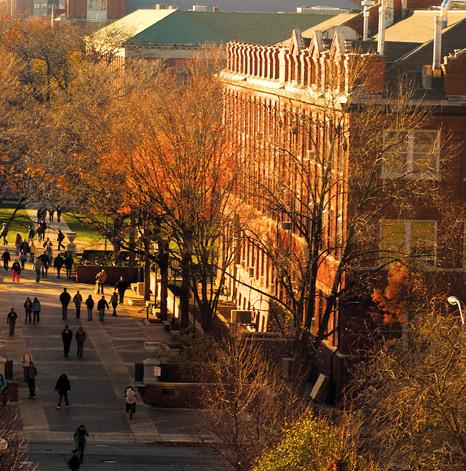
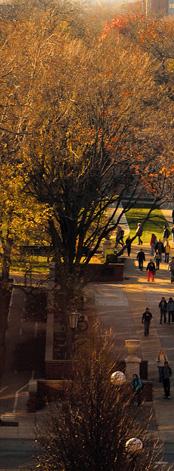
University of Illinois campus
Taste exotic coffees from around the world at Columbia Street Roastery, where the owners are dedicated not only to producing flavorful coffees but also to educating customers about the faraway people who grow the coffee beans. The roastery offers a monthly tasting event called “Sit & Spit” when the public is invited to learn about the different coffees that originate in places such as Africa, Indonesia and South America.
If reading is more your cup of tea, be sure to drop in Jane Addams Book Shop, an antiquarian bookstore in downtown Champaign. Open since 1984, Jane Addams Book Shop carries out-of-print titles, used books, vintage postcards, old photographs, and other jewels from the past. Simply put, it’s a bookworm’s paradise.
Search for treasures at Carrie’s Antiques & Jewelry, a nifty little shop overflowing with vintage clothing, retro furniture, linens, tableware and toys. You never know what you’ll find at Carrie’s.

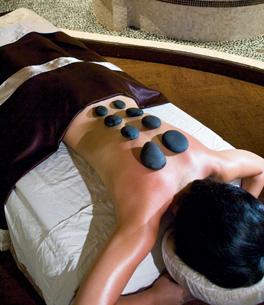
Soak in a hot bath, get a massage and sink into luxurious bed linens at The Senator’s Inn and Pub in Savoy. The inviting bed and breakfast is housed in a handsome 1915 brick building, and at one time, the 25-room mansion was the largest in the community.
Today, the inn’s six guest rooms play host to visitors from around the world who are seeking peaceful accommodations in a historic setting.
Fora dining experience you won’t soon forget, sink your teeth into a freshly made buckwheat crepe stuffed with shrimp and scallops, curried chicken and green apple, or even beef stroganoff at Carmon’s restaurant, a French bistro on Neil Street.
The restaurant has served Champaign as a popular diner since the 1950s, but in 2007, new owners completely renovated and redecorated it and gave it a French twist. Now the eatery is attracting attention for its unusual menu and tranquil atmosphere, with artwork adorning the walls and accents inspired by the French region of Brittany.
“We wanted to make it feel like your favorite pair of slippers,” says Mike Nelson, co-owner of Carmon’s. “It’s considered fine dining, but it’s not pretentious. It’s cozy and comfortable, and you don’t have to get dressed up.”
Nelson got the idea for the French bistro from a similar restaurant he enjoyed dining at in Chicago before moving to Champaign. The menu offers dishes that aren’t typical of Illinois.
“We’re known for our grilled steak frites, which is marinated hanger steak with bleu cheese butter and our homemade crispy potatoes,” Nelson says. “We feature fresh fish that changes daily, and we prepare it in simple but wonderful ways.”
And, of course, there are crepes, because it wouldn’t be a French restaurant without them. In addition to several varieties of Breton-style hearty buckwheat crepes, Carmon’s offers sweeter dessert crepes such as the peach crepe with pecan streusel and house-made whipped cream and the bananas foster crepe with ice cream and hot fudge.
Bring the taste of Carmon’s to your home. Discover its Curried Cauliflower Soup recipe in our Food section of ilfbpartners.com .
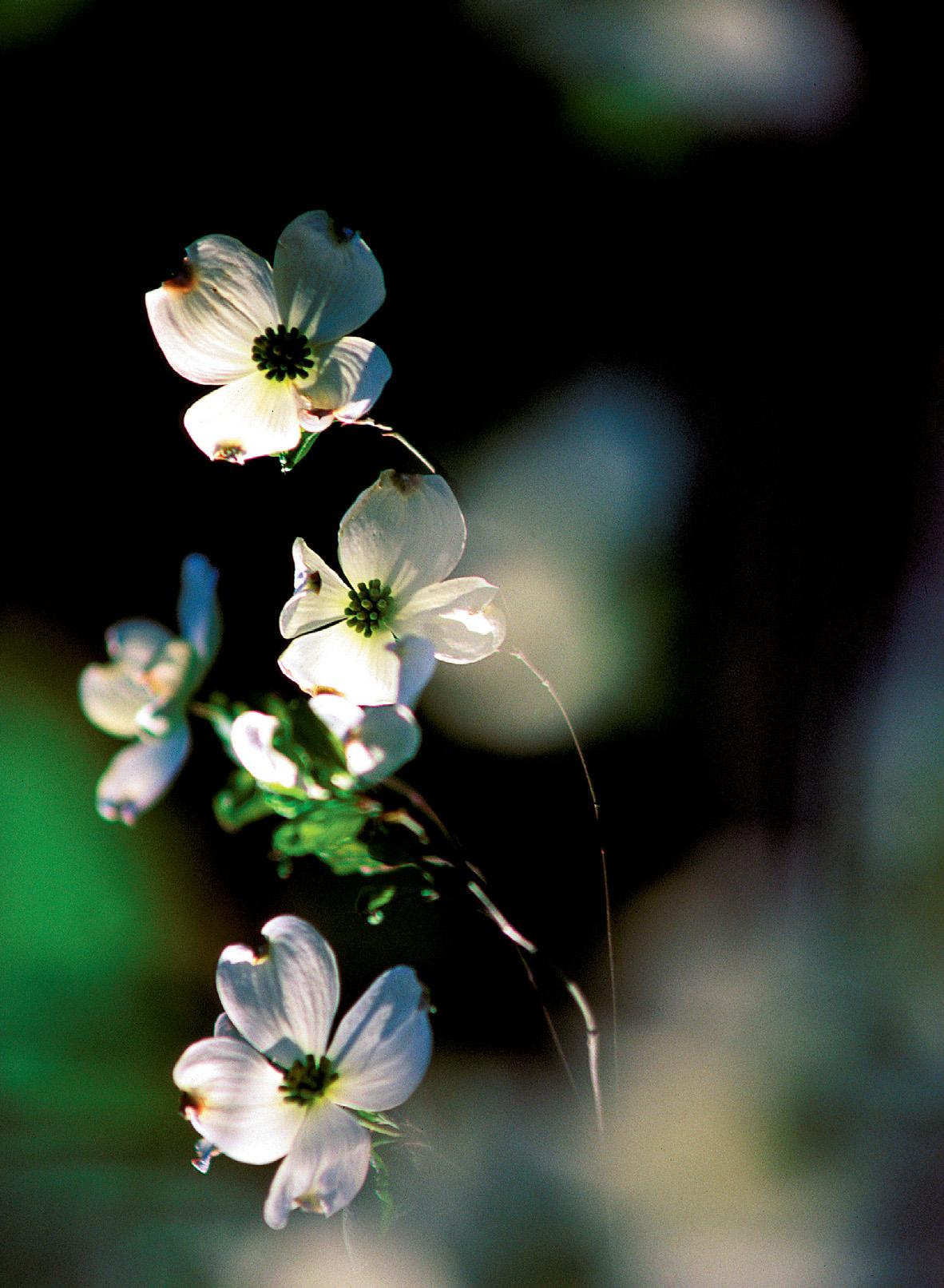

Travel to Quincy in Western Illinois each spring, and it’s no secret why this town has been dubbed Tree City USA.
Each May, the town hosts the Quincy Dogwood Festival, and this year’s event is planned to be one of the best ever.
“It is kind of the first thing after the big long winter, so I think people are ready to get out and see a parade,” Mary Efferin of the Quincy Dogwood Committee says. “We don’t have too many parades in Quincy, so when one comes, everyone shows up.”
Efferin says the festival, now in its 35th year, is always held the week before Mother’s Day and is kicked off with a pageant to announce the little Dogwood King and Queen. The parade starts at 9:30 a.m. on Saturday with more than 125 entries and ends downtown at the carnival site.

For more information, call (217) 222-7980 or visit www.quincychamber.org
This listing includes a few events to add to your calendar in March and April from around the state.
Dates were accurate at press time but are subject to change. Please check with the contact listed before traveling long distances to attend. Additional information on Illinois events also is available online through the Illinois Bureau of Tourism’s website, www.enjoyillinois.com
MARCH 14 CHICAGO
Chicago is known for many things –shopping, sports and food, just to name a few. But it’s also famous for dyeing its main waterway bright green in honor of the patron saint of Ireland.
The St. Patrick’s Day celebrations in Chicago date back to 1843. And in step with a 45-year tradition that started by accident, the Chicago River is dyed green for the event.
As the story goes, in 1961, Stephen Bailey, along with the plumbers union, ran into a local plumber who was using a green dye to track waste leakage into the river. The dye used today isn’t that particular type, but Chicago locals enjoy the tradition just the same. The emerald green color is identical to the greens of Ireland from where it got its name, The Emerald Isle.
The biodegradeable dye will spread throughout the river at 10:45 a.m., and the annual St. Patrick’s Day parade kicks off at noon. Highlights of the parade include marchers, floats, bagpipers and more.
For more information, visit www.choosechicago.com.
APRIL 17-18
ROCKFORD
Rockford’s ArtScene in April is a free event that attracts thousands of visitors who can mingle with watercolorists, sculptors, photographers, potters and
artists of other mediums.
The open-door style show features more than 30 galleries. The venues will be open Friday from 5 to 9 p.m., and on Saturday from 3 to 9 p.m.
For more information about the event, go to www.springartscene.com or call (815) 963-6765.
APRIL 18
DEKALB
DeKalb is proud to host the only musical tattoo of its kind in the Midwest each year. The 2009 Heartland International Tattoo Music and Dance Festival will be held Saturday, April 18, at the Sears Centre Arena on the Northern Illinois University’s West Campus in DeKalb.
A tattoo consists of military exercises offered as evening entertainment, and this particular one is patterned after the Edinburgh Music Tattoo in Scotland.
The tattoo will include 250 musicians and singers – both military and civilian.
Drum and bugle corps, wind bands, bagpipe bands, drill teams, brass bands, flag corps, and dancers will perform as well. The performers represent many different countries and nationalities.
For more information about this event, call (815) 756-1263 or visit www.heartlandtattoo.org
APRIL 24-25
ST. CHARLES
The National Antique Decoy and Sporting Collectibles Show is the largest of its type in the country. The annual show, held at Pheasant Run Resort in
St. Charles, features hunting and fishing memorabilia from duck calls to décor. Organizers expect this year’s event to display more than 20,000 items. For more information, call (312) 337-7957 or visit www.midwestdecoy.org.
MARCH 20, APRIL 20, APRIL 24
The Shyrock Auditorium on the campus of Southern Illinois University in Carbondale has hosted its fair share of fame. Ray Charles, the Russian National Ballet and the Chicago Symphony Orchestra have graced the stage, among many other well-known musicians.
This spring, the lineup includes the Vienna Boys Choir, Garrison Keillor and Lily Tomlin.
For information about upcoming events, call (618) 453-2000 or visit www.southernlightsentertainment.com.
Country Mutual Insurance Company
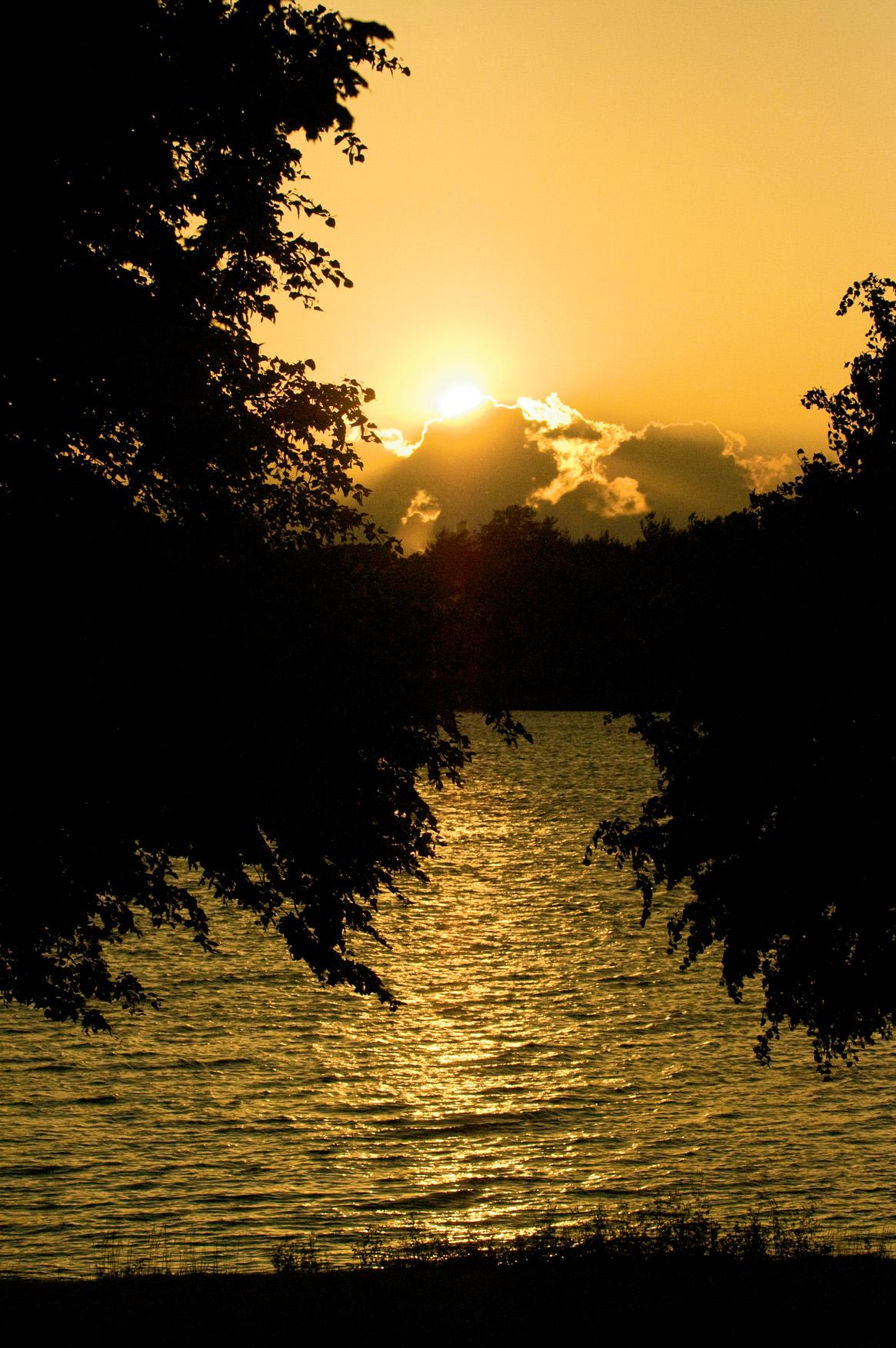
and prime fishing, plan a visit to Evergreen Lake in McLean County. This 900-acre lake has produced state-record breaking walleye, big muskie and bass, not to mention countless beautiful sunsets.
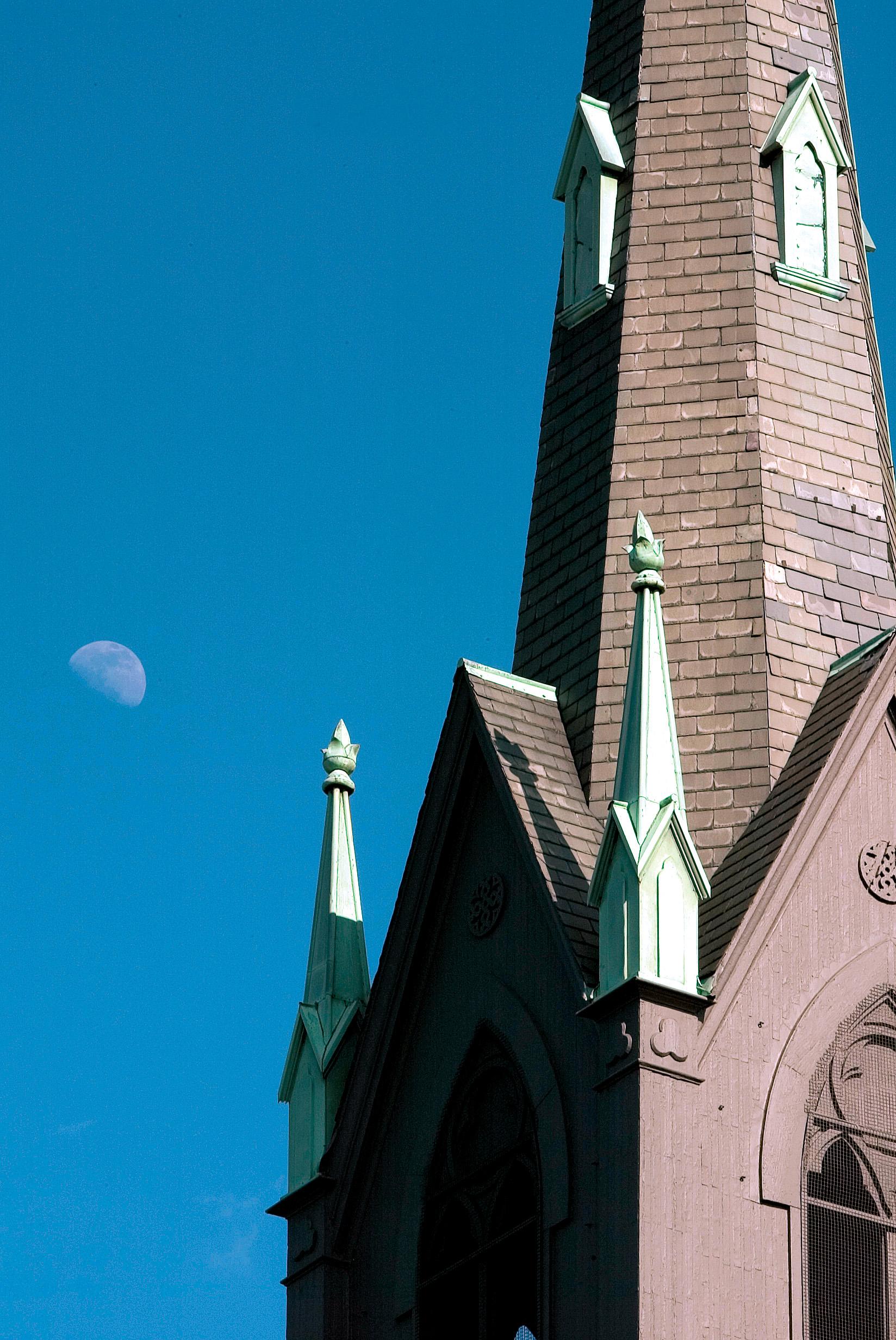
has served as a Kankakee landmark for more than 150 years. The church is located on West Merchant Street in downtown Kankakee and serves the St. Rose of Lima parish.