-Assisted with monthly window design and store layout
-Maintained plants and store cleanliness
-Responsible for opening/closing store
2020- 2022
Nanny
- Worked full- time taking care for three children, aged 8 (boy), 11 (boy), 12 (girl).
- Managed an active calendar of appointments including sport practices, dance lessons, piano lessons, and doctor appointments.
- Managed medication schedule.
- Tutored youngest in assigned summer homework
- Organized fun trips and games.
- Supervised daily assigned chores, providing assistance when needed.
- Deescalated arguments and disagreements.
House Sitting and Pet Care
- Maintained house while family was away.
- Responsible for plant care, pool, and collecting mail.
- Cared for dogs, cats, and horses.
- Responsible for feeding, watering, and exercising.
20202024
Education Community Service
2024Present 2018 2019 2016-2020
University of Nebraska- Lincoln
- Master of Science in Architecture
- GPA: 3.5
- Study Abroad: London & Rome Fall 2024
University of Nebraska- Lincoln
- Bachelor of Science in Design: Architecture
- Graduated with High Distinction
- GPA: 3.8
- Study Abroad: Spain Summer 2023
Omaha Central High School
Susan G. Komen Race for the Cure
Food Bank of America
Omaha Downtown Clean Up
Omaha Marathon
Heartland Marathon
INDEX
ACADEMIC
01 Atlas F Missle Silo: Ice Drilling Research Facility 04- 13 pg
02 The Bridge: Multifamily Housing 14- 19 pg
03 Mixed Use Residences 20- 25 pg
04 Museum of the Moving Image 26- 29 pg
05 Single Family Residence 30- 35 pg
STUDY ABROAD: SPAIN
06 Spain: Model Making 36- 39 pg
07 Spain: Observational Sketching 40- 41 pg
ATLAS F MISSILE SILO: ICE DRILLING RESEARCH FACILITY
In Collaboration with Olivia Hordvik- Chaussee, Teia Kilian, Elizabeth Pernicek
Associate Professor Brian Kelly
Seward, NE Fall 2023 | 13 Weeks
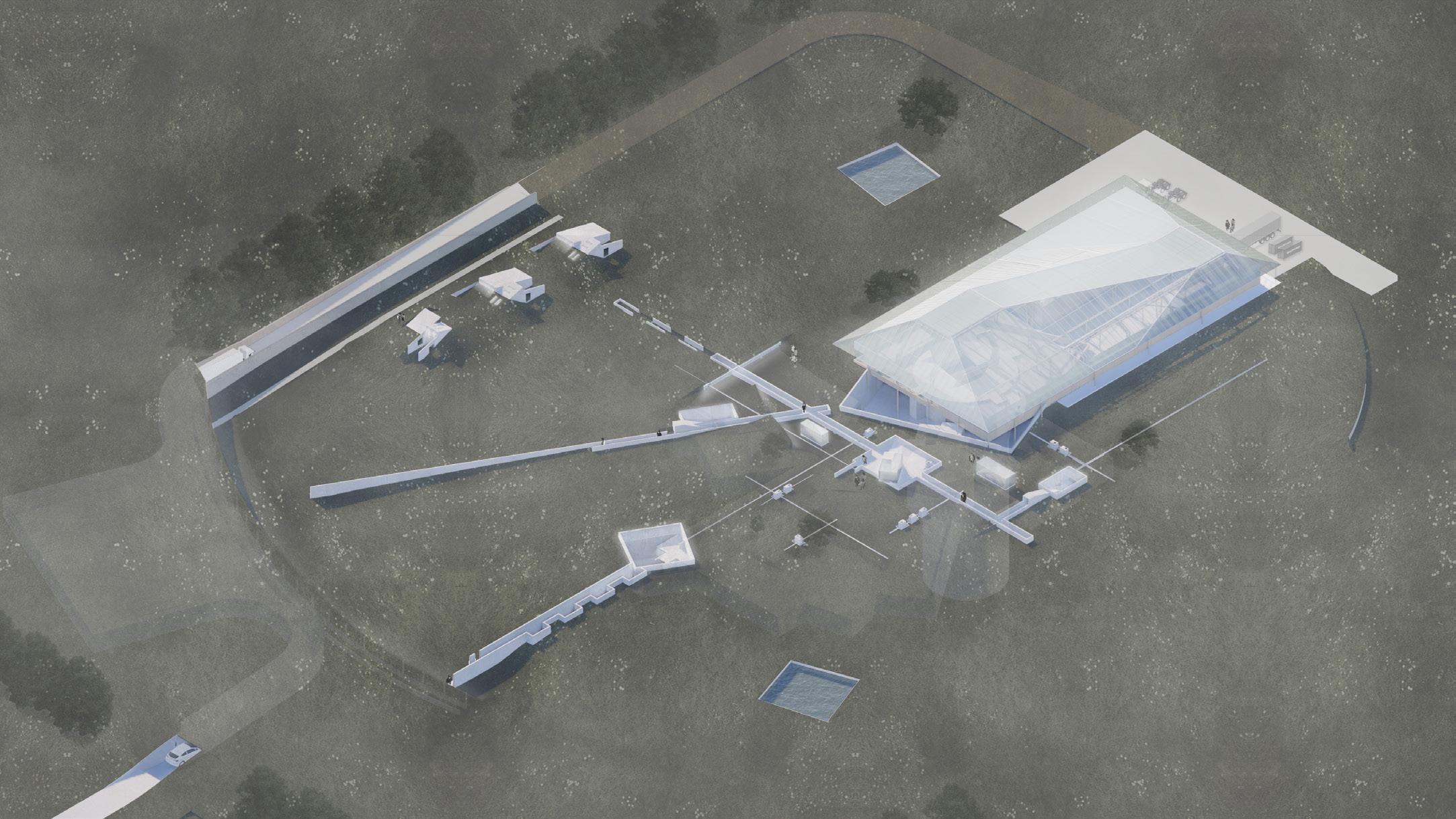
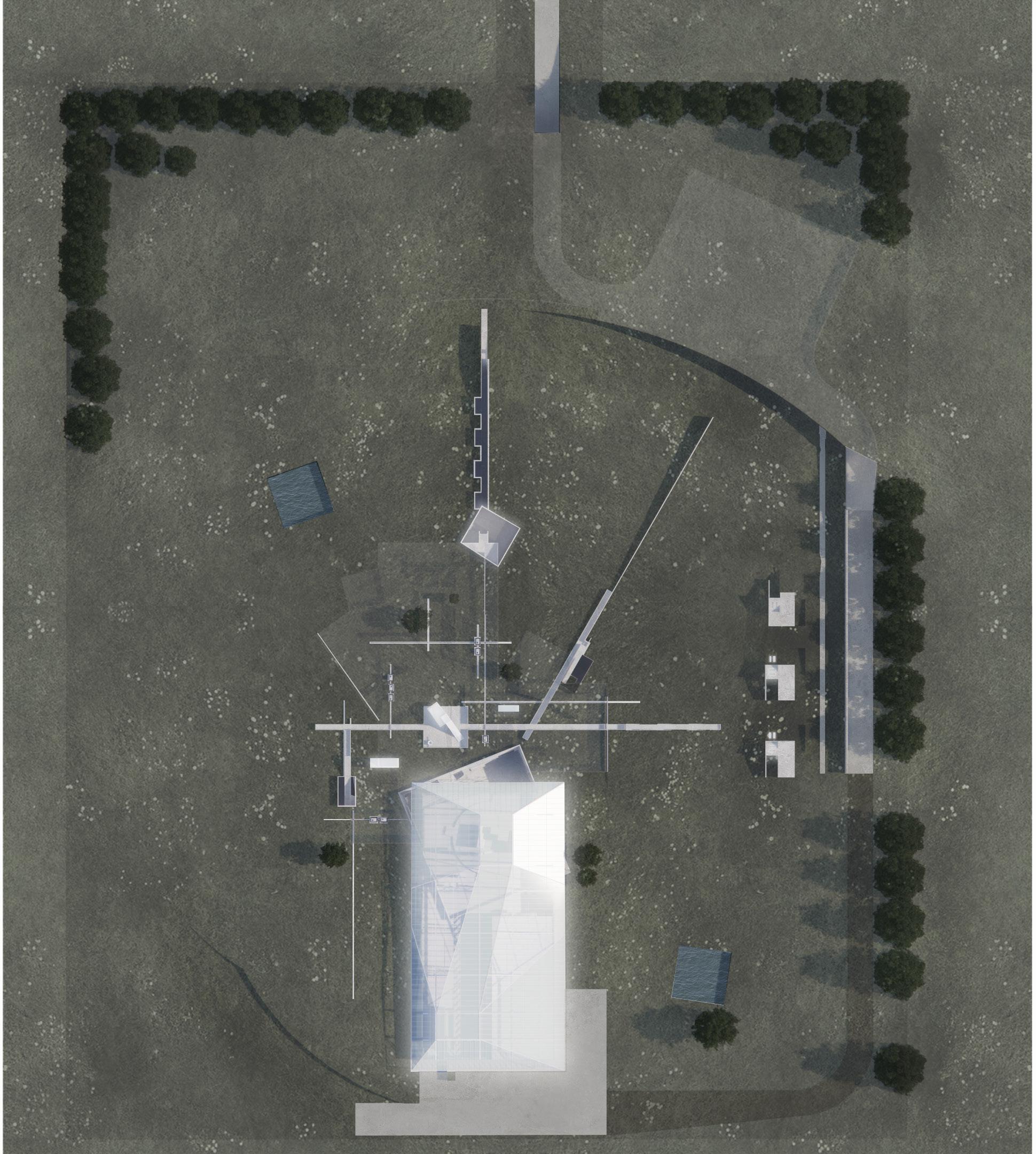
This project tackles the proposition of an ice drilling research facility in Seward, Nebraska’s abandoned Atlas F missile silo. This missile silo was a reaction to the panic resulting from the chance of nuclear war during the Cold War era. Now the structure sits abandoned and unusable after sixty years of neglect. The researchers apart of this facility will test ice drilling equipment to send to Antarctica to work towards ways of combating climate change.
Our project integrates the conflicting narratives of climate change and Cold War defense architecture into a cohesive narrative that educates, facilitates, and serves as a way to encourage for a better future. This proposal exposes the Cold War structure in a sensitive and intimate way, pushing for visitors’ reflection and interaction. Through materiality and the manipulation of the ground plane, a dialogue between old and new, destruction and rebuilding, has the opportunity to flourish.
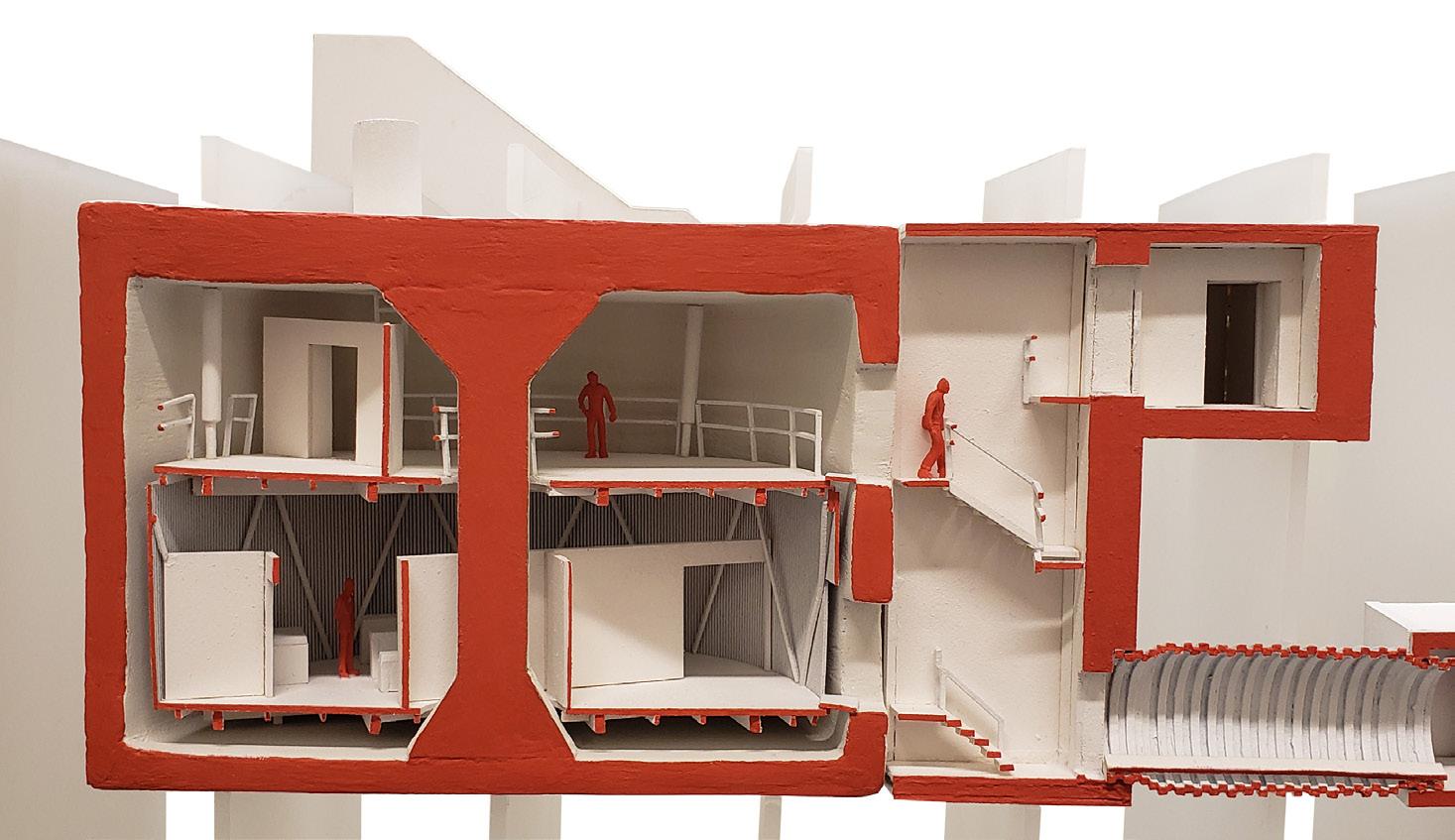
Seward Atlas F Missile Silo Section Model
In Collaboration with
Olivia Hordvik- Chaussee, Elizabeth Pernicek, Lauren Wilwerding
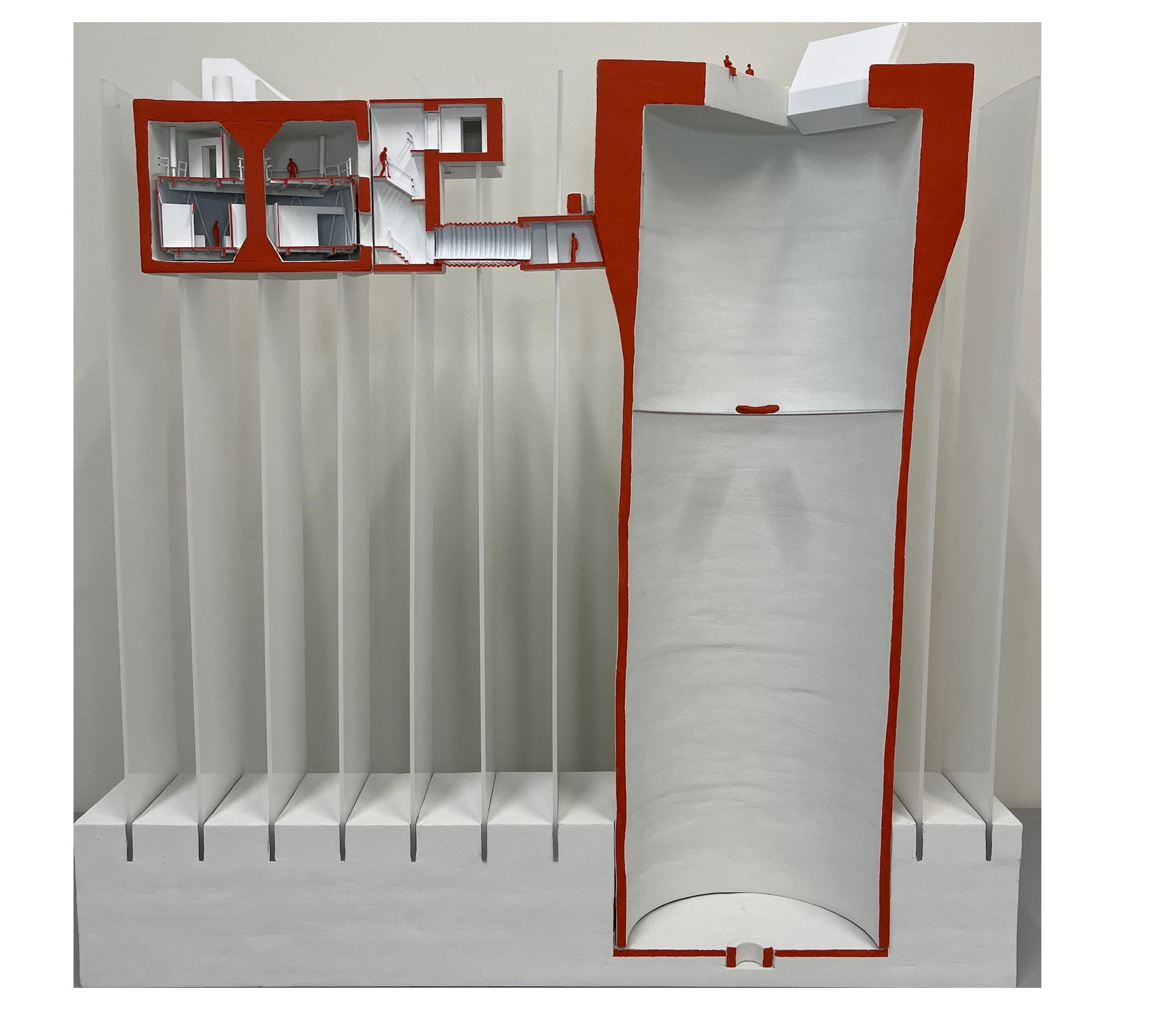
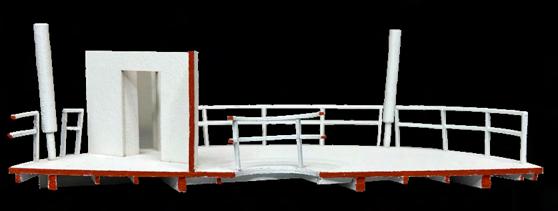
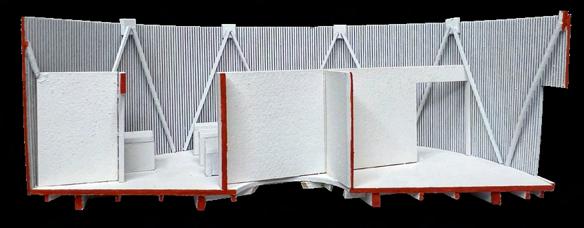
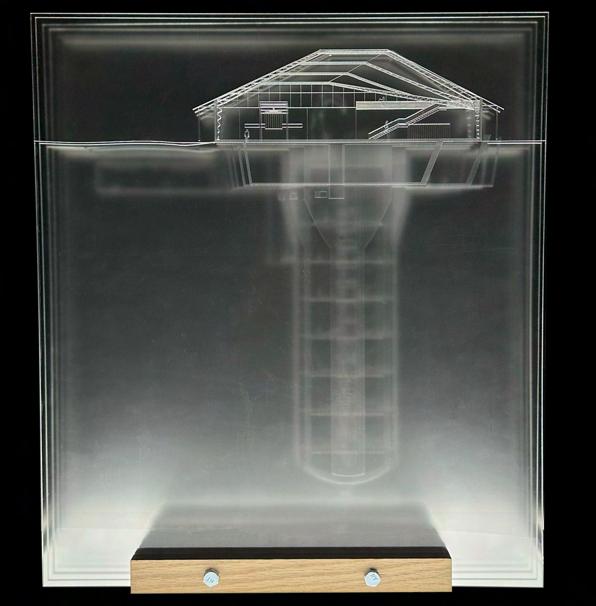
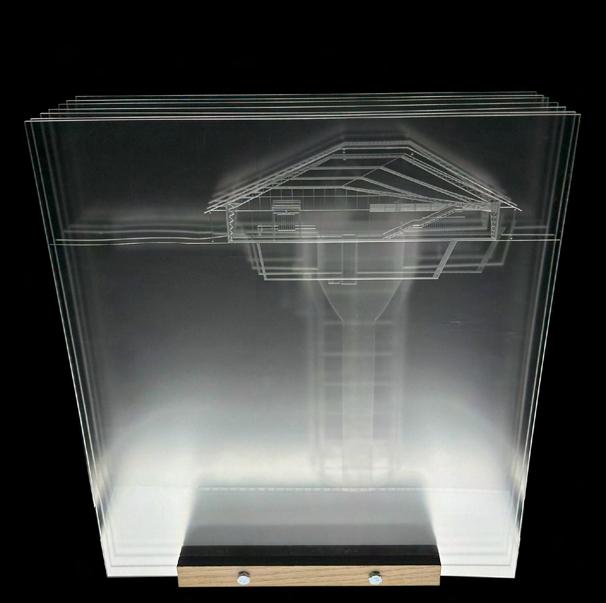
This model represents the Atlas F missile silo in its entirety, viewing it sectionally. It shows the launch control center, LCC, in its original state while the main silo shows how it exists within the Seward site with the blast doors welded open along with the water level. Th shell of the LCC, the full silo, and the base are made of rigid insulation foam and covered with joint compound. The inner pieces, central stair and utility tube were constructed out of matboard and split modeling dowels. Acrylic fins slide into the base to support the LCC, central stair, and utility tube.
Launch Control Center (LCC)
1. Lobby 2. Archive 3. Cold War Exhibition
Full Experience
5. Drilling Exhibition
6. Missiliers Exhibition 7. LCC Experience
Classroom 9. Event Space
Silo Experience
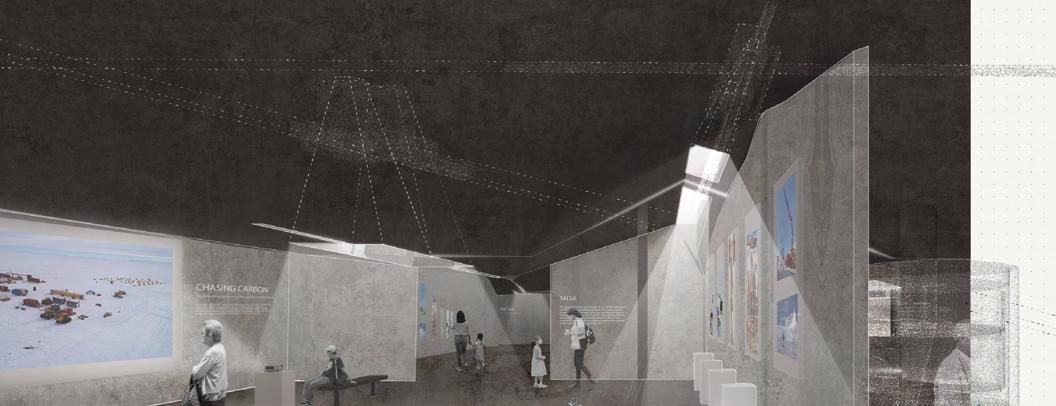
SALSA Exhibition
Nuclear War Exhibition
LL FLOOR PLAN
The Exhibition
In conjunction with the research facility on site, there is also a museum to showcase the findings of the research as well as the Cold War and silo’s history. The skylights shown provide natural light to the space and provide a sense of wayfinding once one returns to the surface layer.
The Launch Control Center
The LCC is an original portion of the silo which would be restored to its original state allowing visitors to experience how the missileers lived. The utility tube would be open to visitors so they could experience the depth of the silo and view the ice column.
The Void
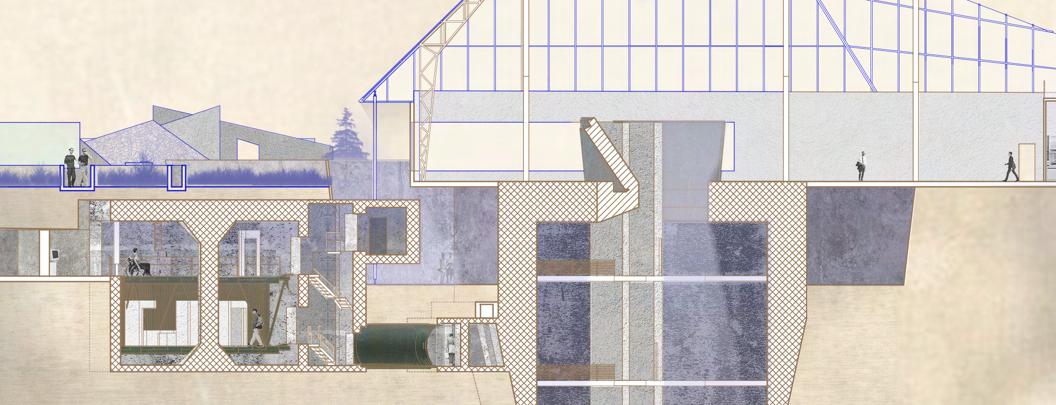
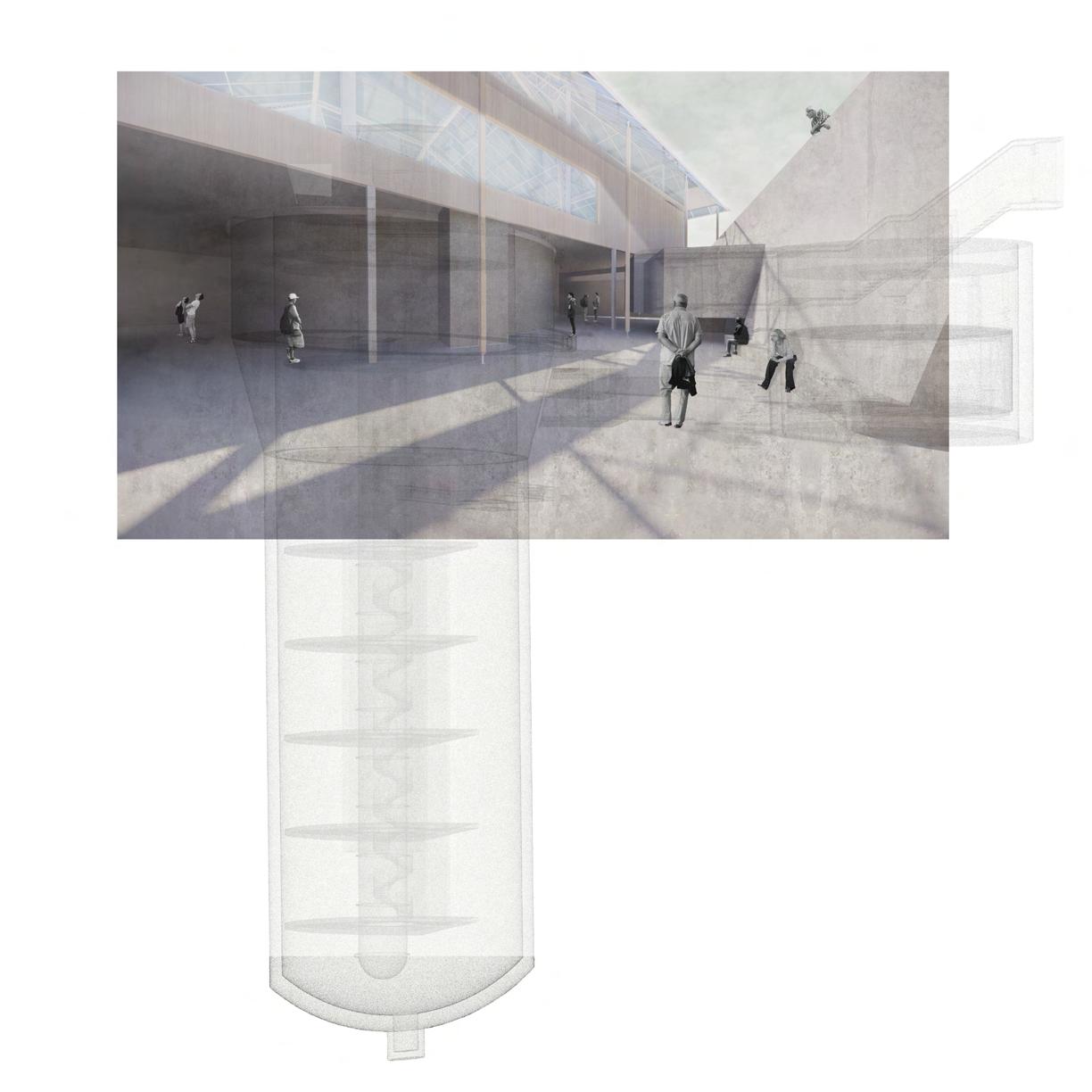
This outdoor area was excavated to expose the silo and a portion of the access stair. This was done to allow visitors to experience the volume of the silo while also creating tension between the void space and the shop above.
1. Workshop Area 2. Material Storage 3. Office
4. Conference 5. Lab Storage
6. Electrical 7. Lab
8. Lab
9. Break Room
10. Ice Drill Testing
SHOP FLOOR PLAN
The Shop
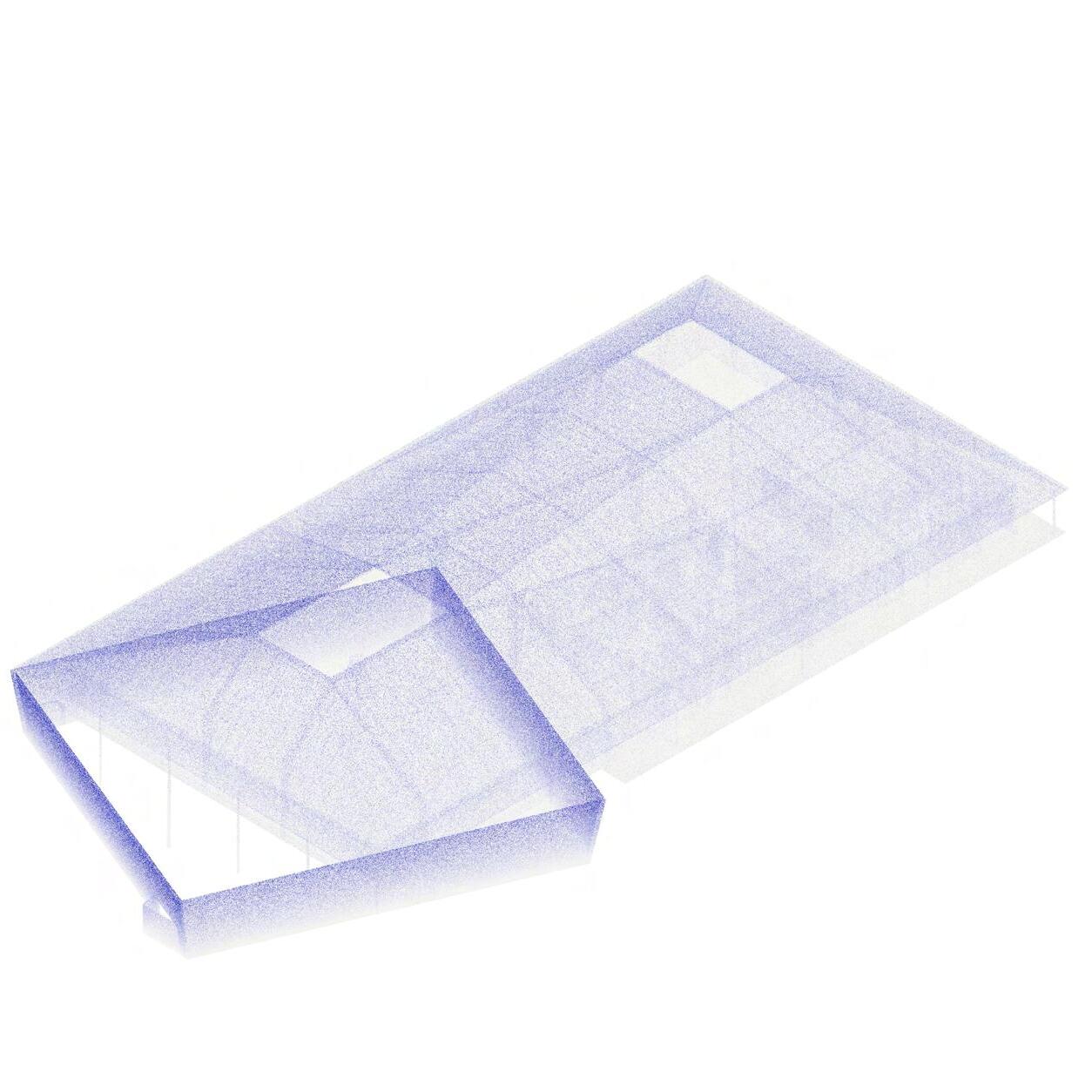
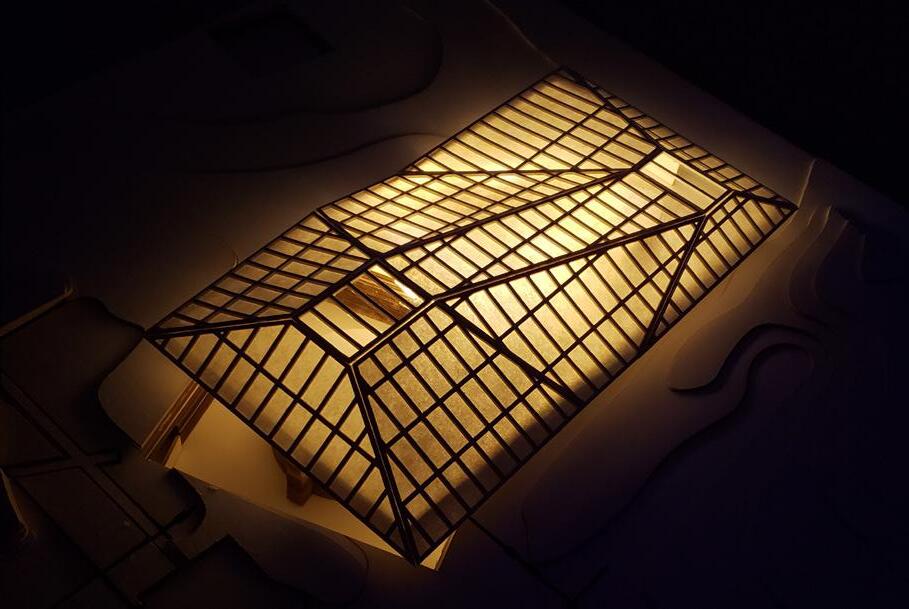
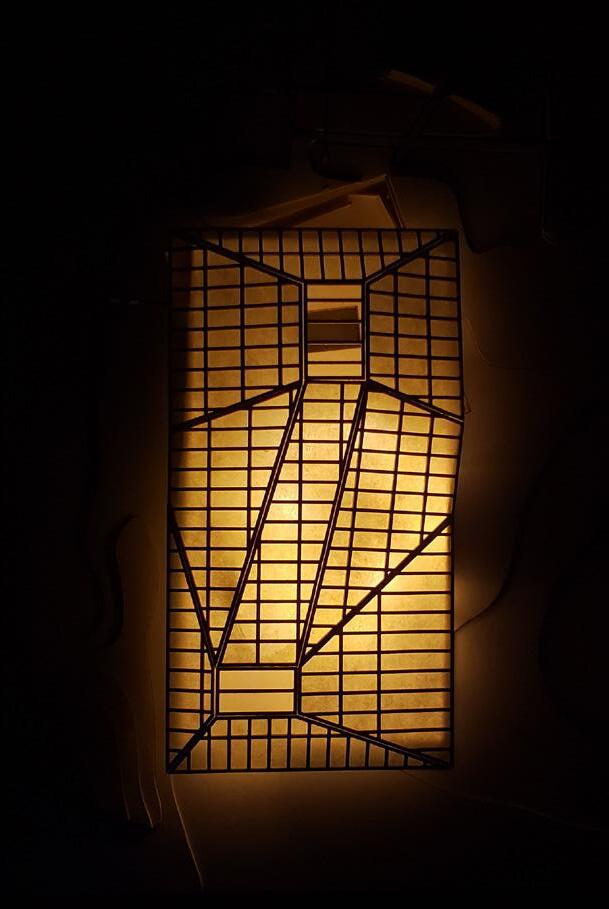
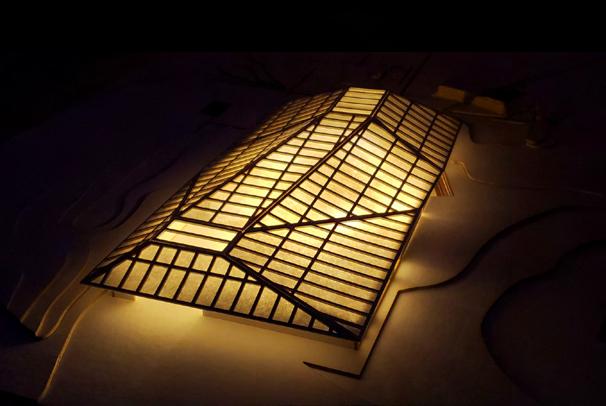
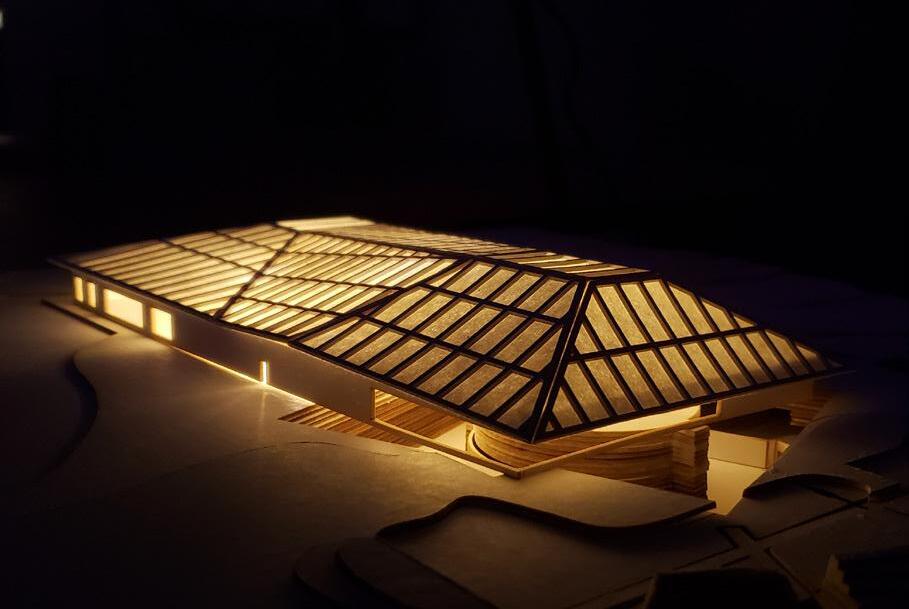
This view shows how the drilling researches will interact with the silo and the designed shop. The KalWall roof system allows for defused light to enter the space and the large window on the north east corner allows for sight lines for both researchers and those visiting the museum.
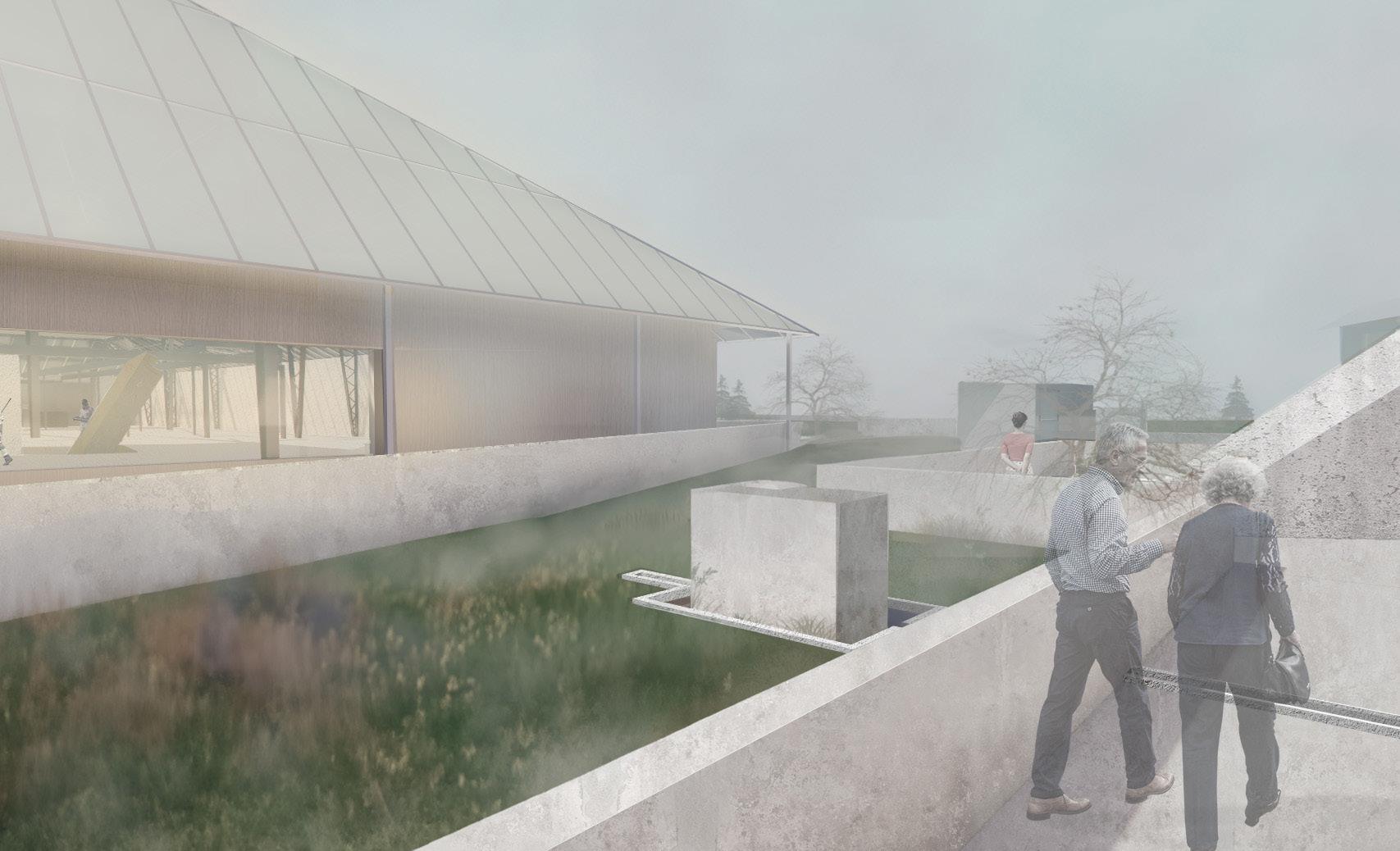
Exterior Render
Shows the relationship of how people move through and interact with the designed landscape along with the sight lines into the shop.
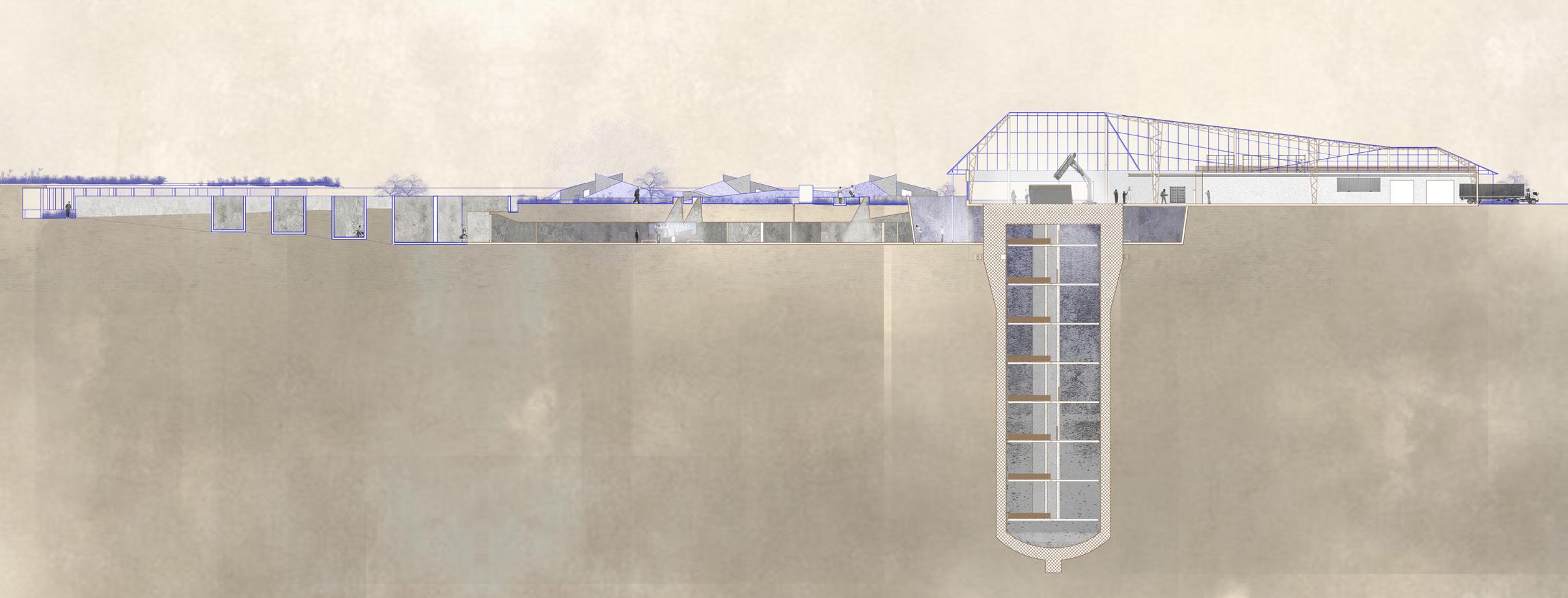
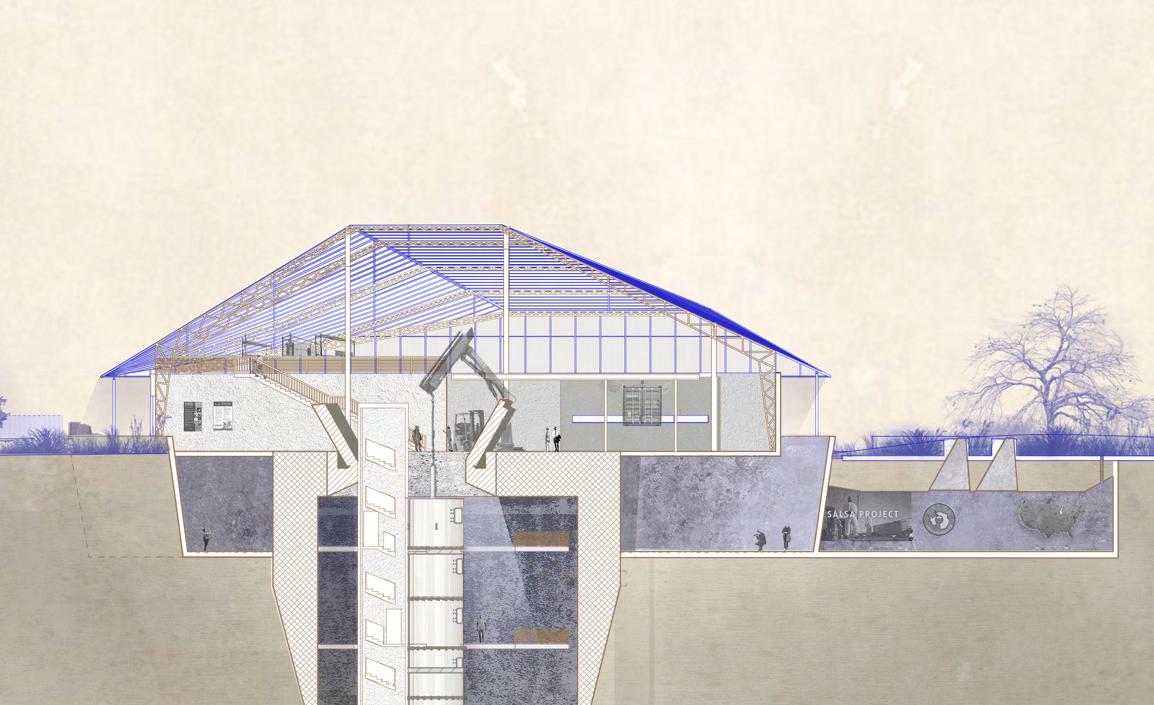
Short Section
Shows the relationship between the shop, silo, void, and exhibition space. This is also the first section cut in the section relief model.
Physical Models
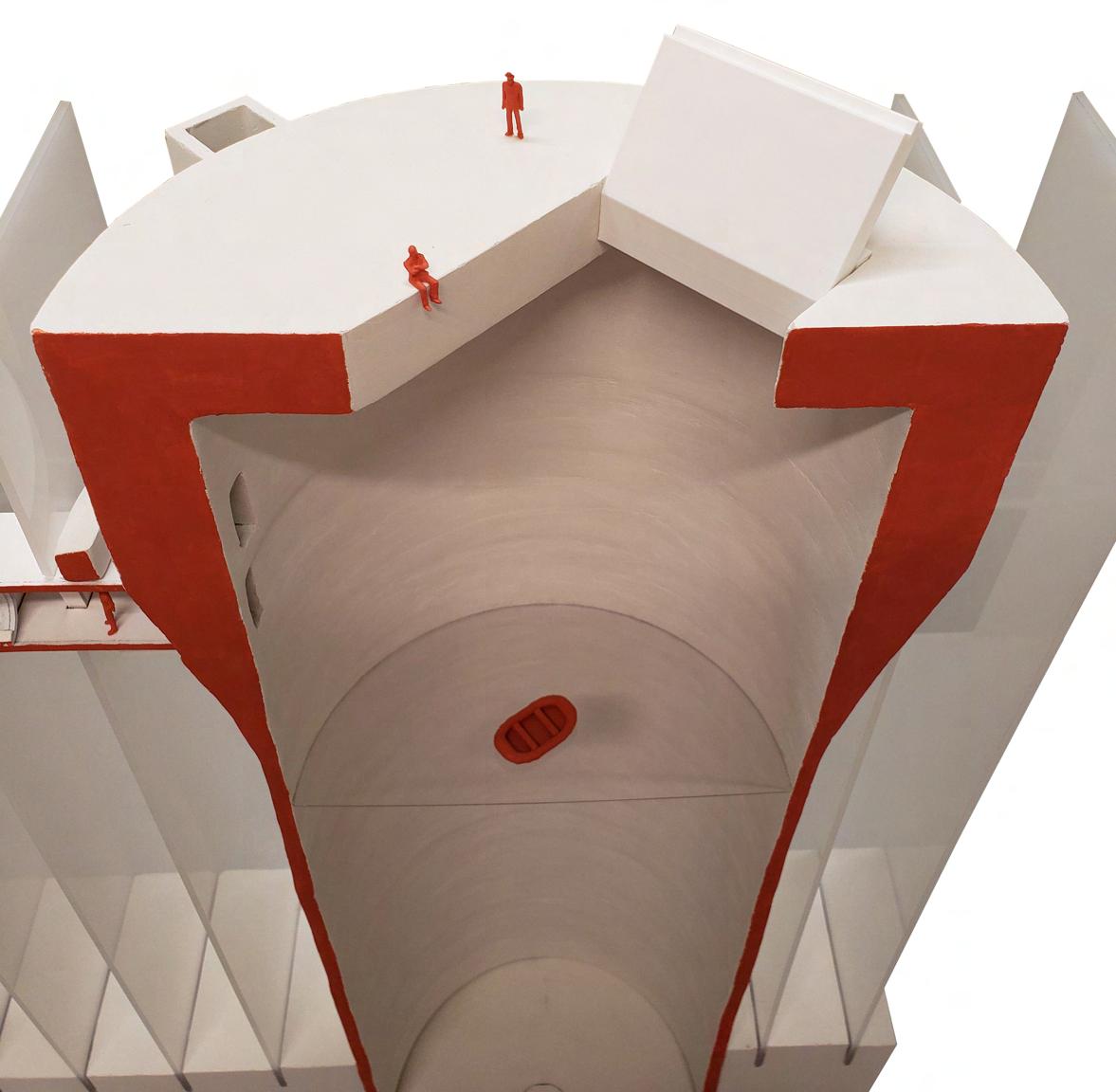
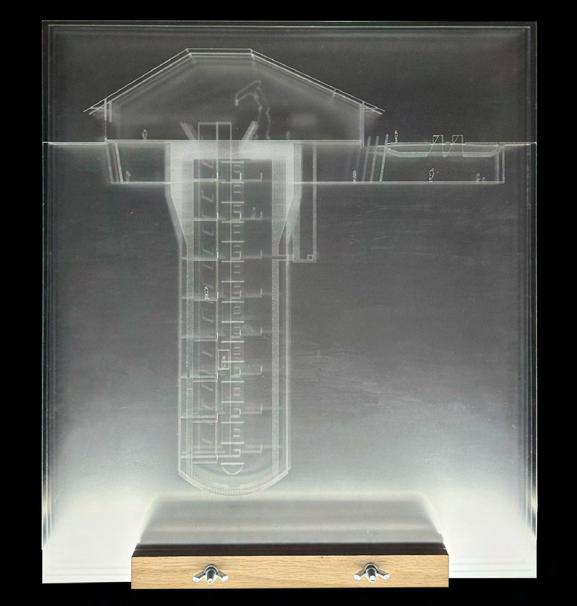
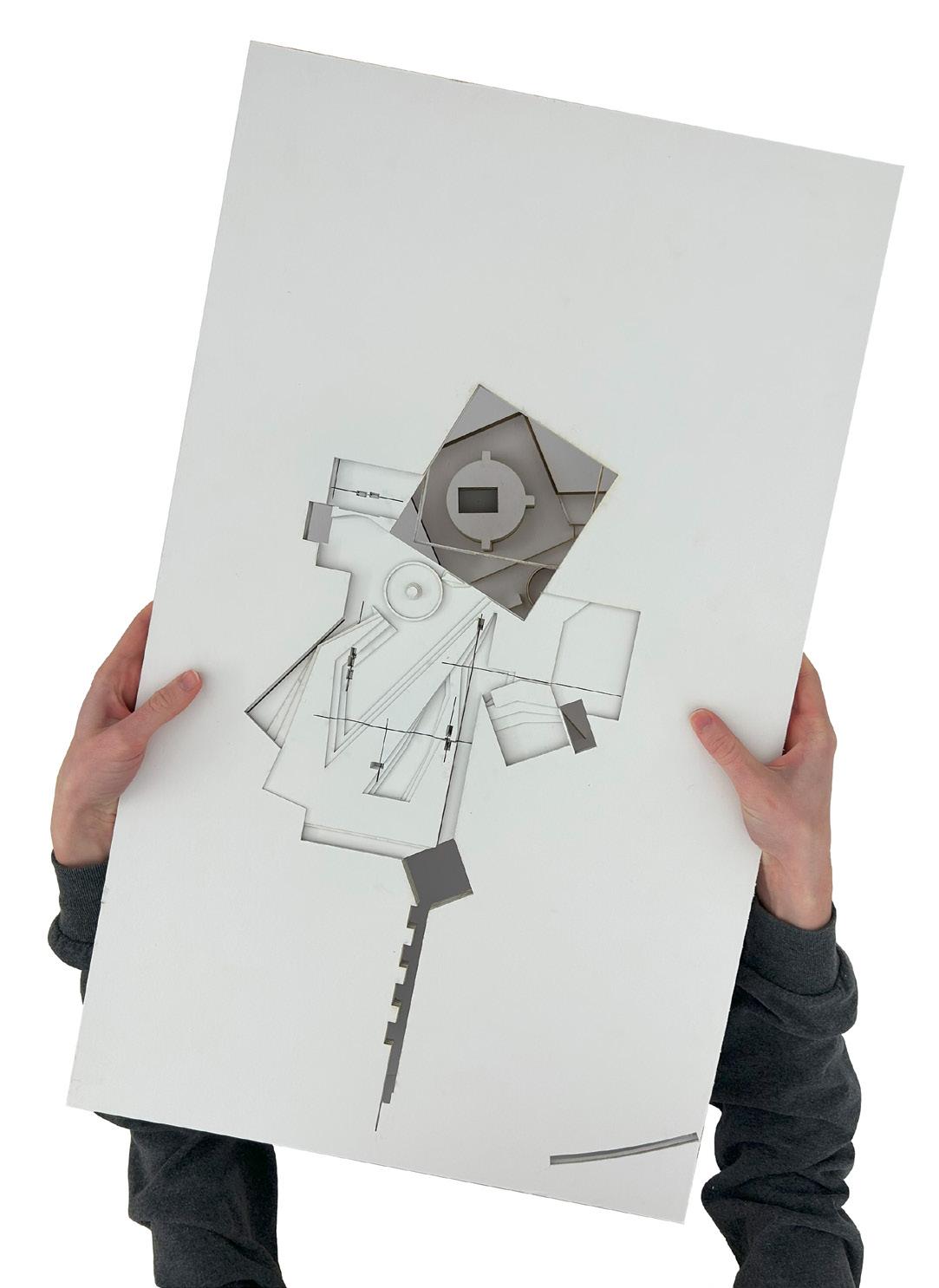
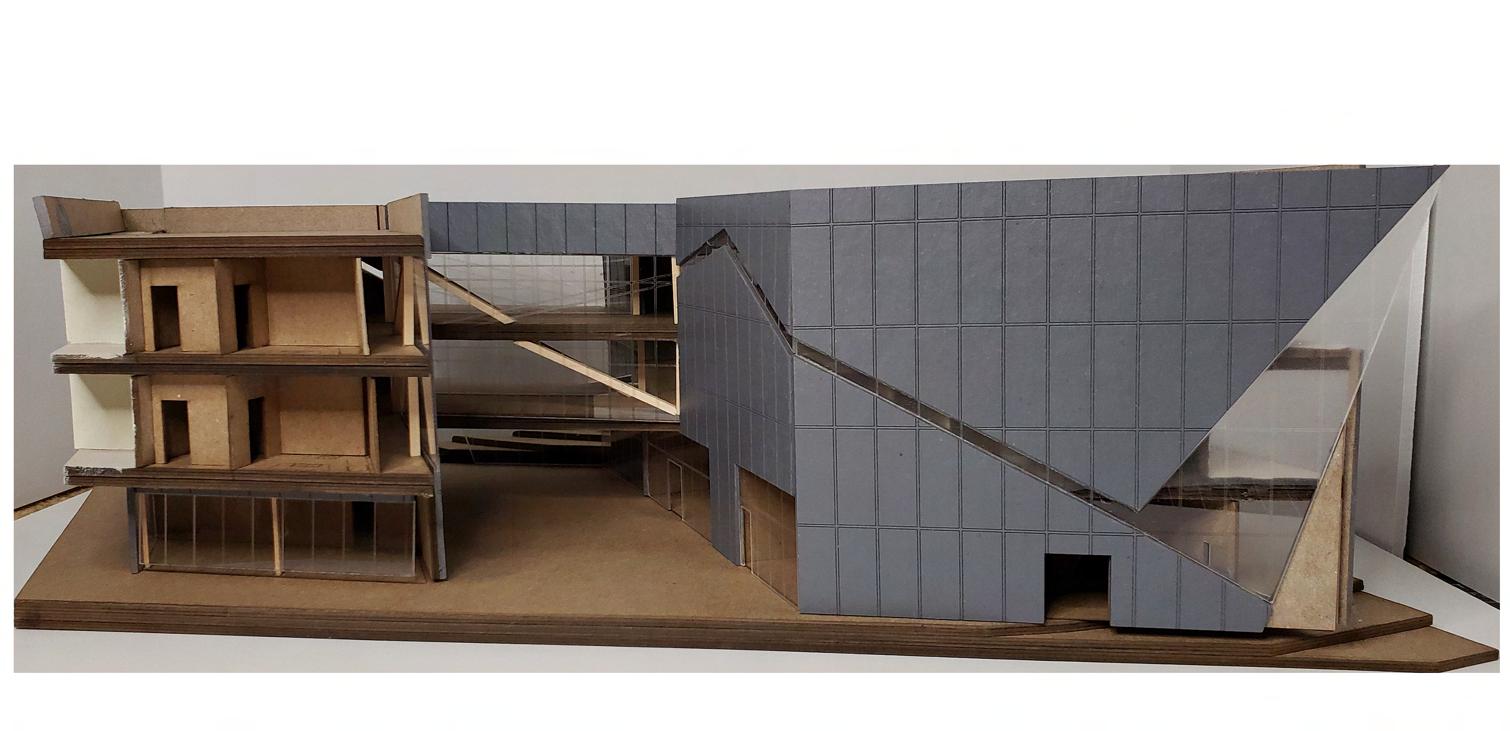
Two physical models were produced for this project. The first was an eight-section cut section relief model. This shows the relationships between the shop, silo, ice column, void, and exhibition space. Because this model was made out of acrylic, it shows the shifting of the void’s walls as well as the volumetric shape of the silo.
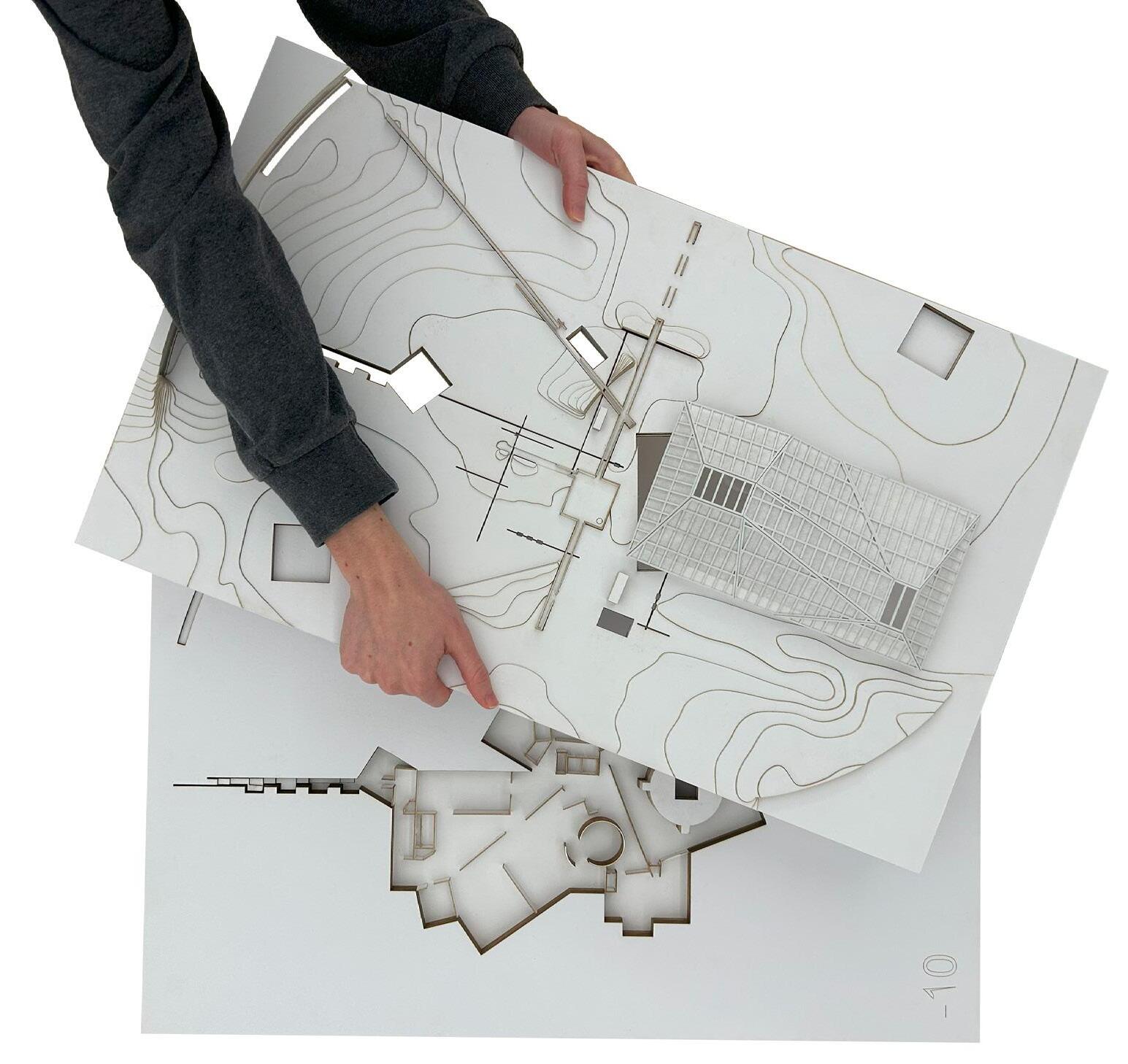
The second model is a site section model that shows the relationships between all of the built elements and the landscape. It shows the exhibition walls, the circulation paths and voids in the landscape, and the shop volume. This model was made out of matboard and shoji paper.
Front View
Back View
SITE SECTION MODEL
Roof Detail
Roof Detail
Roof Detail
THE BRIDGE: MULTIFAMILY HOUSING
In Collaboration with JJ Miller
Assistant professor of Practice: Michael Harpster Lincoln, NE Spring 2024 | 12 Weeks
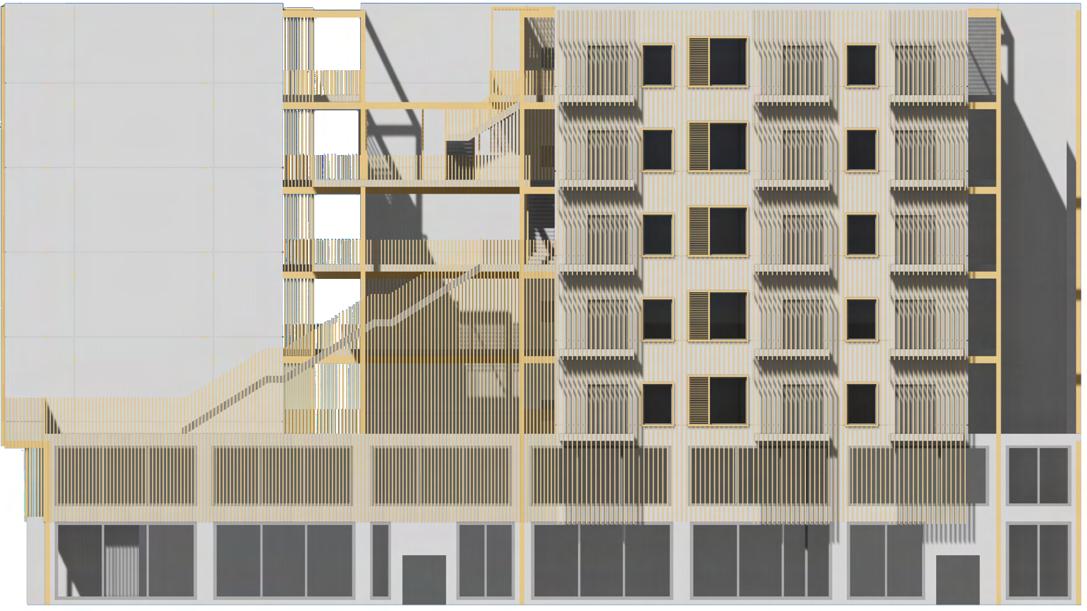
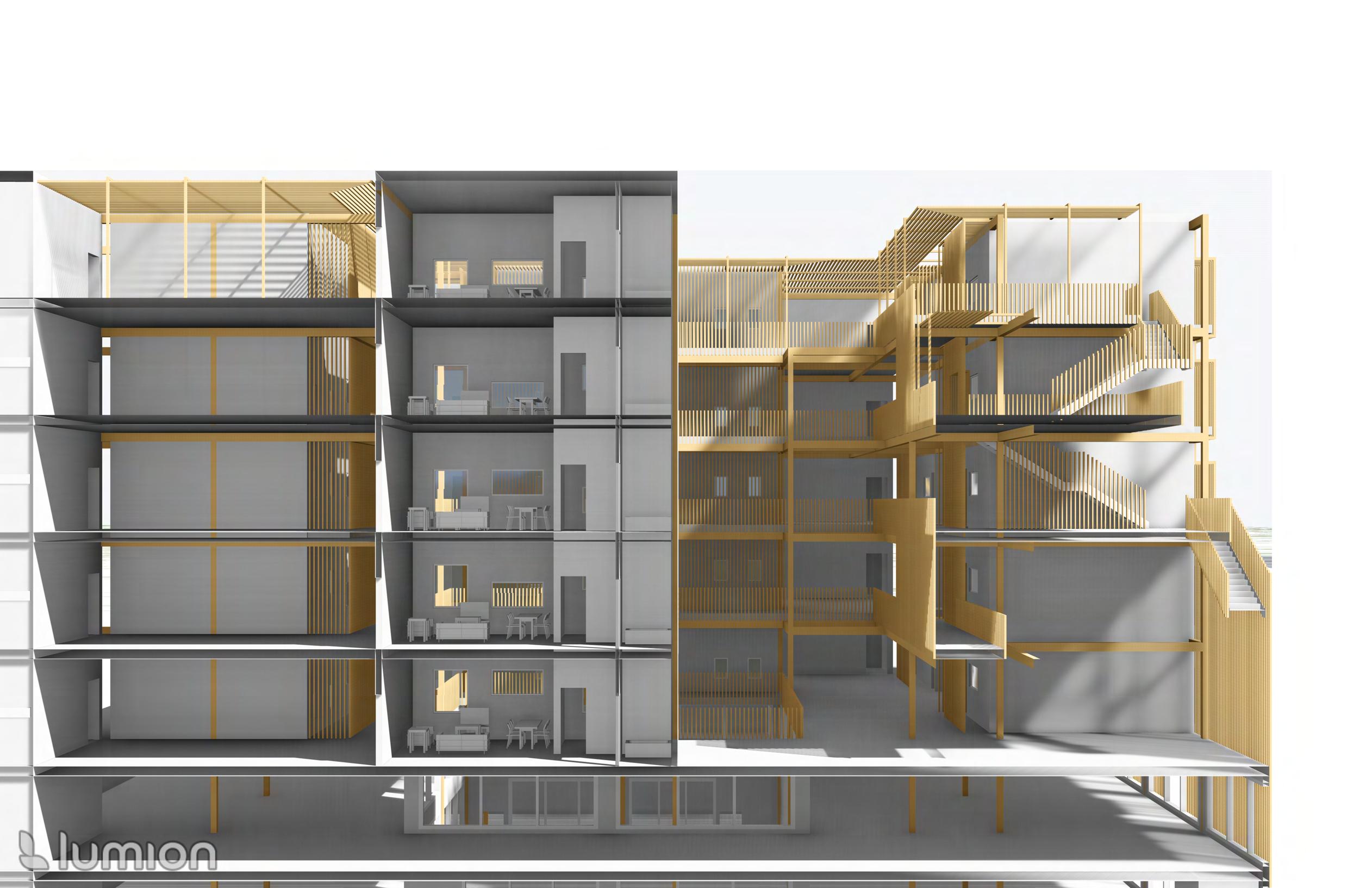
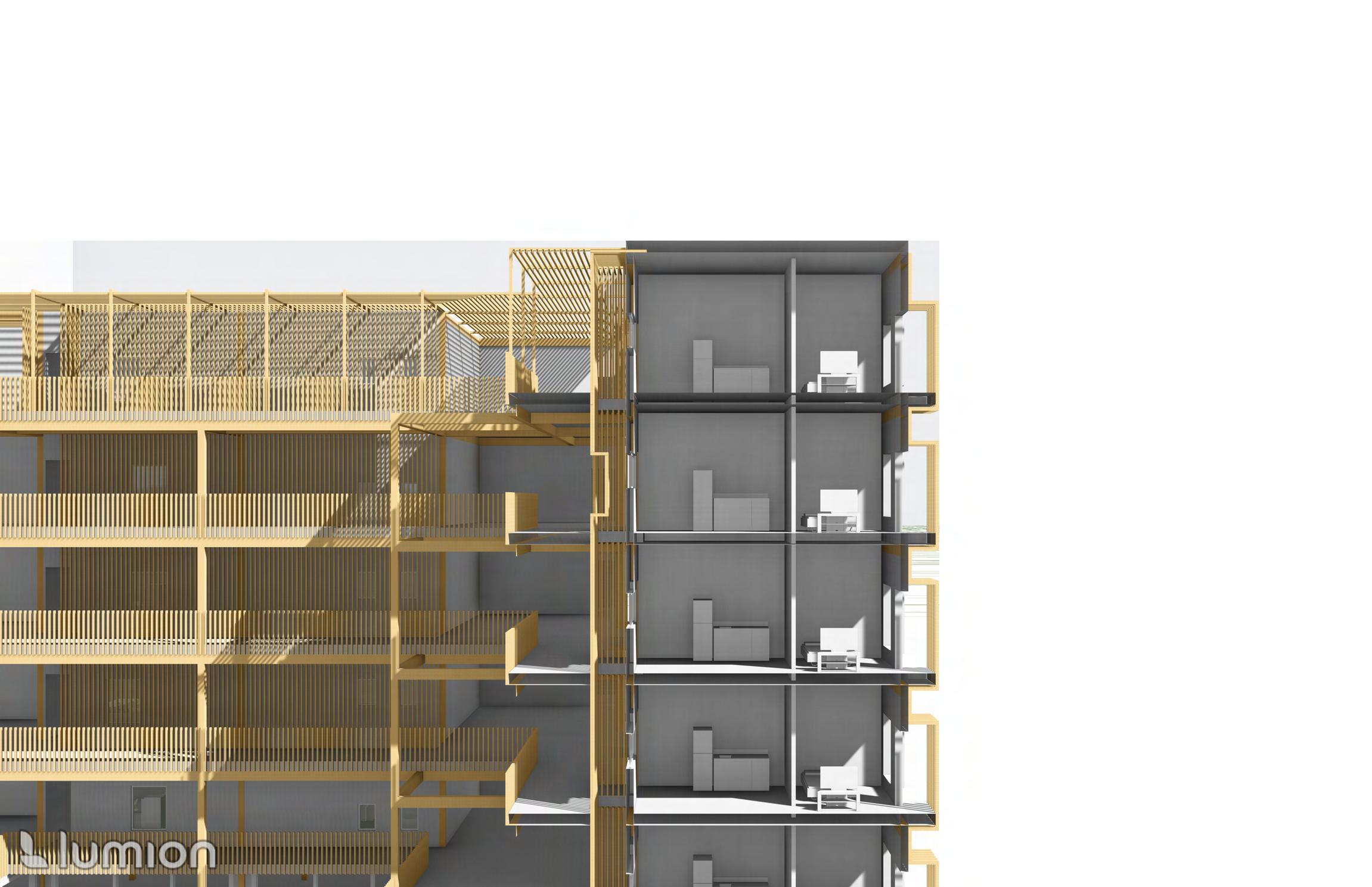
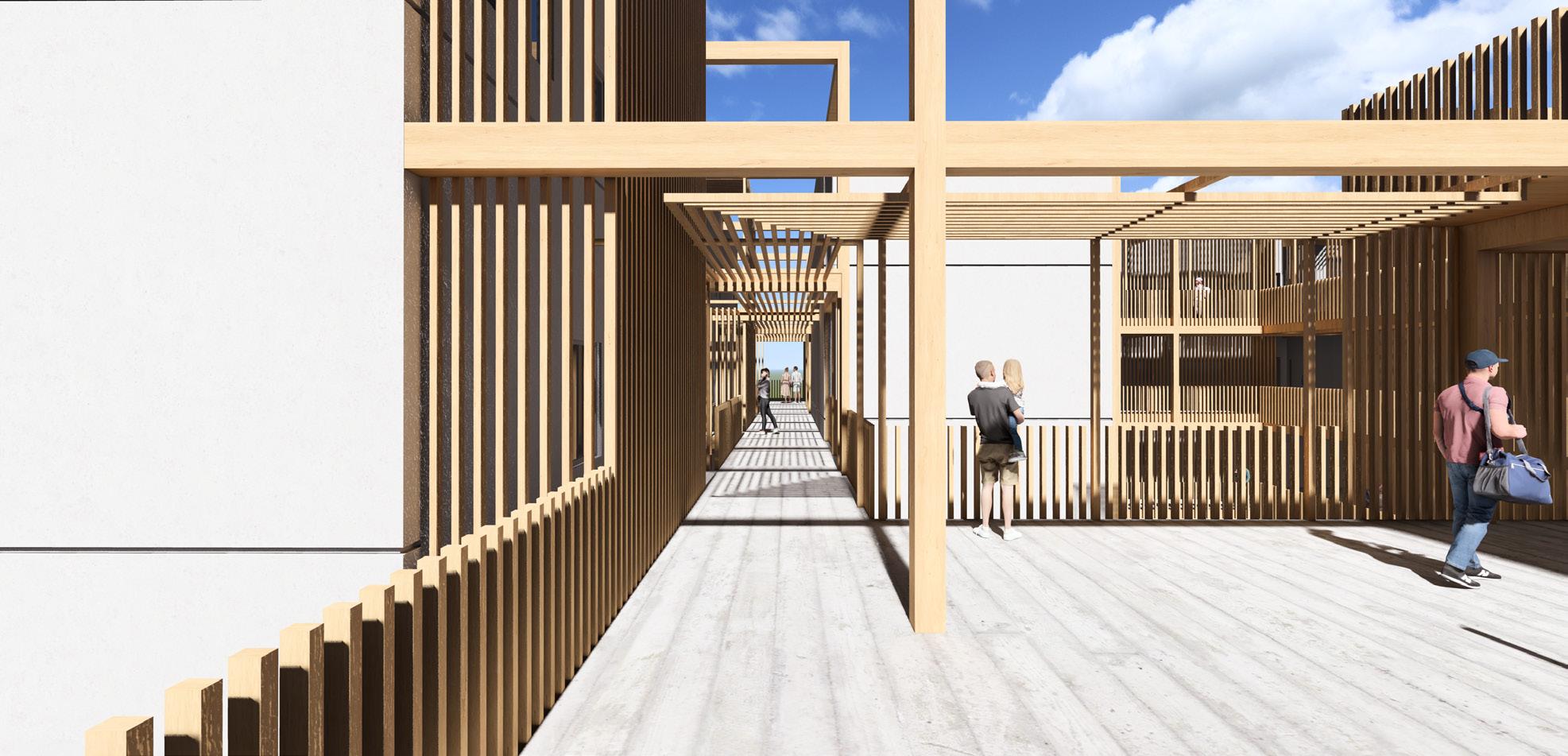
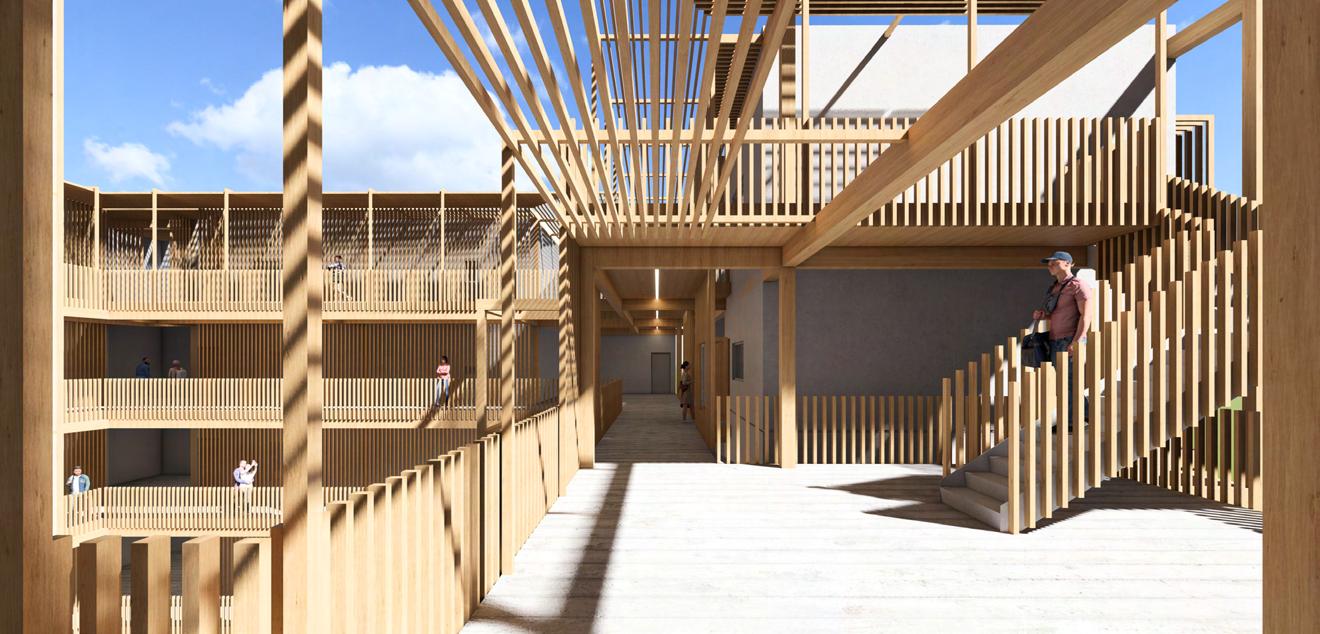
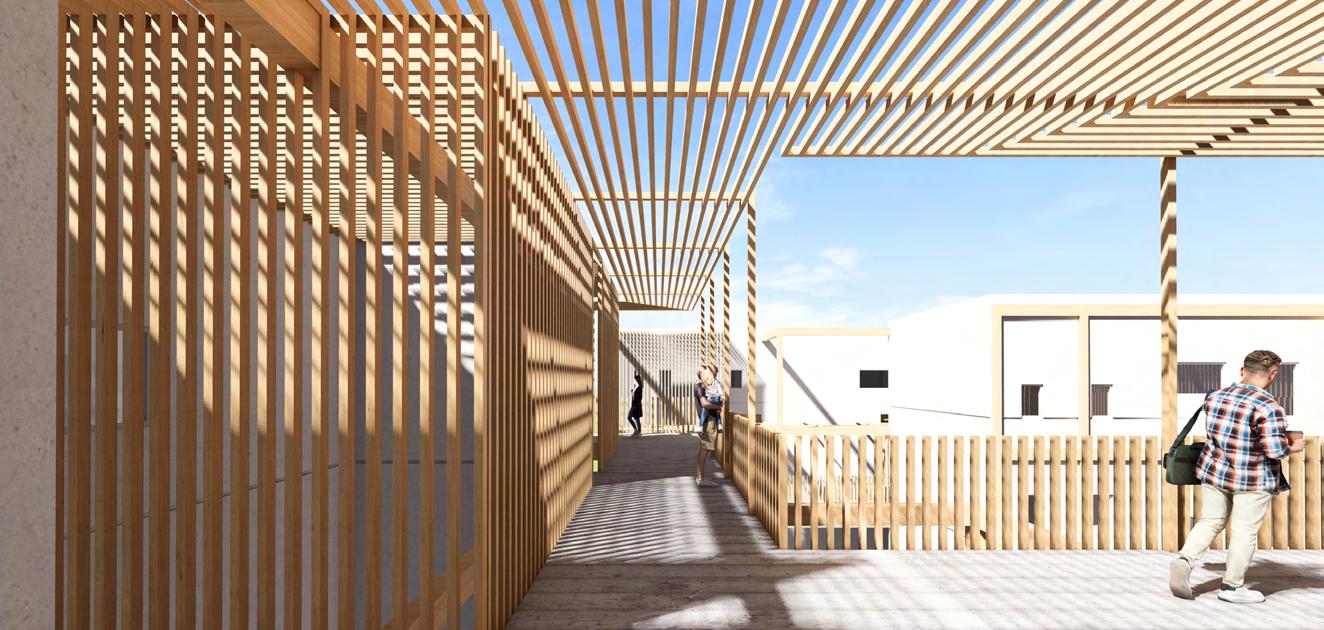
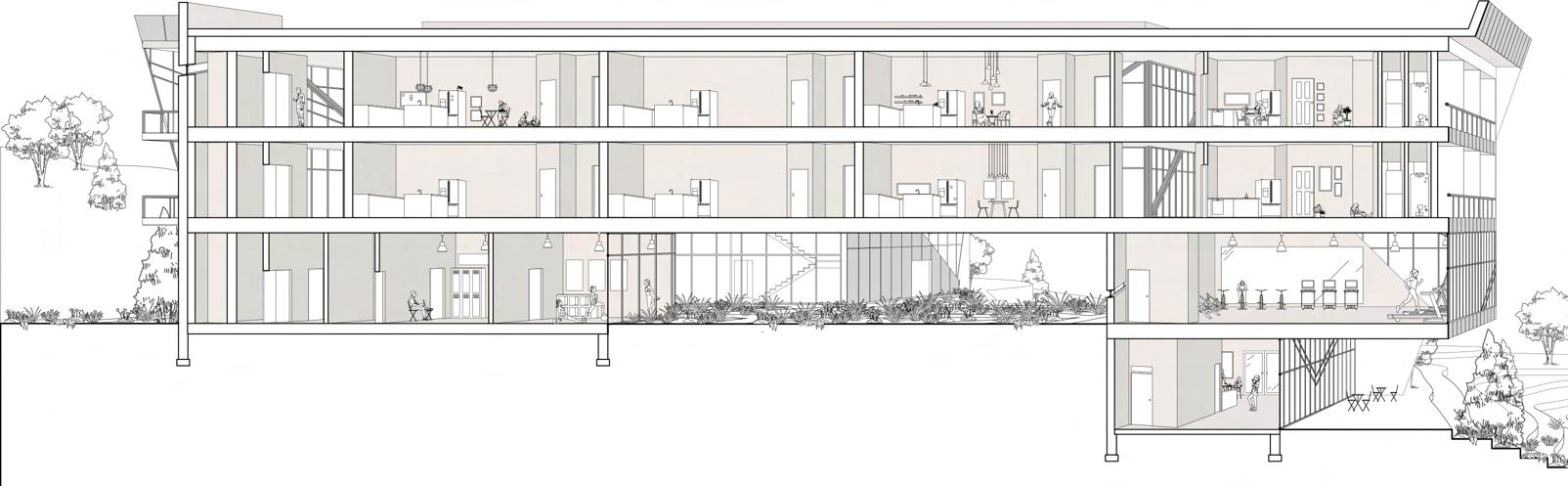
Starting with the base conditions of our site, we chose to keep the Bennett Martin Library and build directly on top. Creating our residential towers required eliminating the corner and central conditions of the base which forms three distinct locations that would house our residents and act as isolated community sections. Once we have solidified the locations of our residential towers we then infilled the open spaces with horizontal external circulation paths that act as connections between the towers and connections between communities. Along the horizontal circulation paths are variations in the floor plates that are open shared spaces, these spaces are the more public communities for all residents to experience and enjoy. After finalizing exterior spaces, we then applied a multi-purpose vertical wooden slat screening condition that translates from the exterior facades into the circulation and shared spaces. The screen acts as a shading device for the exterior façades, a privacy break between the circulation paths and the units, a railing for safety purposes along with seating and personalized shelving, and lastly the overhead track that shelters residents from the environment.
SECTION PERSPECTIVE
This project has distinct tower units grouped by unit types, fostering specific communities within each tower based on location and user demographics. These separate towers are linked by horizontal circulation, facilitating seamless connection between them. This horizontal circulation creates a platform for fostering meaningful social interactions and connections, presenting unique opportunities for community development. Screening conditions will be incorporated to provide solar protection, privacy, act as a sound buffer, and provide massing identification and design aesthetic.
SIXTH FLOOR PLAN
FIFTH FLOOR PLAN
ENLARGED ELEVATION
SIXTH FLOOR CIRCULATION- NOTRH
SIXTH FLOOR CIRCULATION- EAST
SEVENTH FLOOR CIRCULATION
MIXED
USE RESIDENCES
In Collaboration with Olivia Hordvik- Chaussee & Emily Lorius Lecturers Zeb Lund & Emelia Alvis
Steamboat Springs, CO
Spring 2023 | 9 Weeks
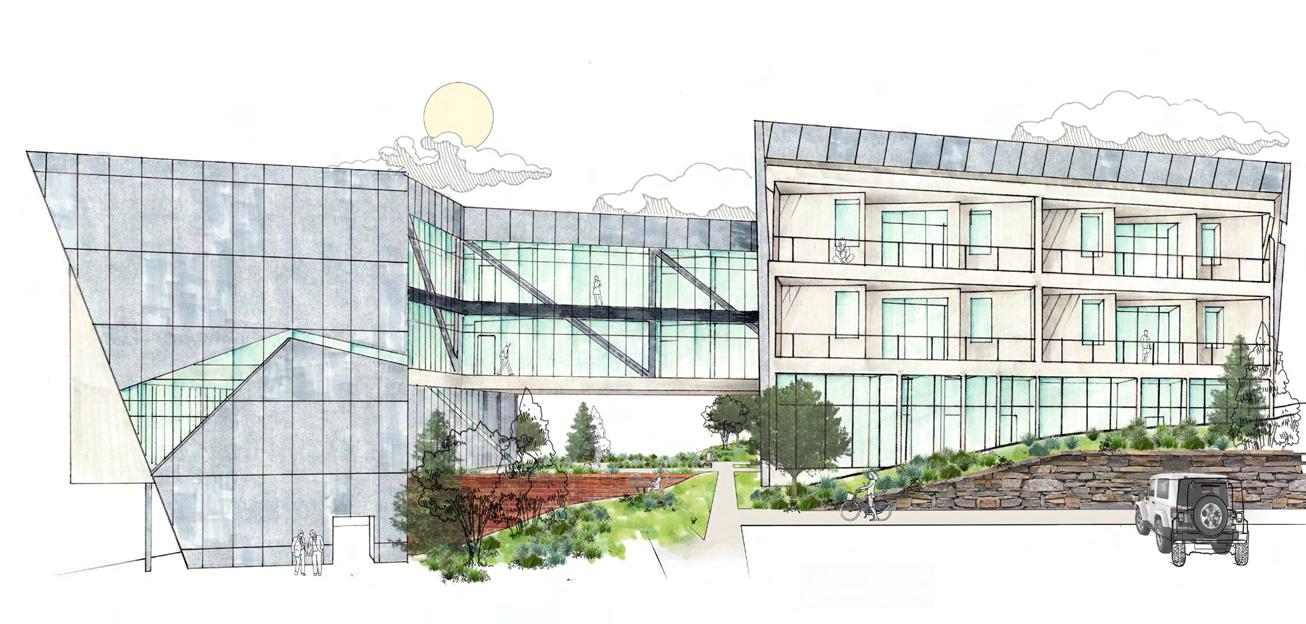
This project focused heavily on incorporating the site context as well as the physical features of the site into the building design. The site has a one-hundred-foot elevation change which posed many challenges for the design of the building. This project contains two main programs, affordable housing and mental health services, specifically for the permanent residences of the town. The economic relationship within Steamboat Springs in challenging because it is heavily dependent upon people coming in for snow related sports for a few months of the year. Because of this there are many multi-million-dollar condos that people only live in a few months out of the year, leaving those that live there all year long struggling to make ends meet. This was another driving factor in the programmatic design.
SITE COFFEE SHOPS
YOGA STUDIOS MENTAL HEALTH FACILITIES
*Time: Personal/ Public Transportation
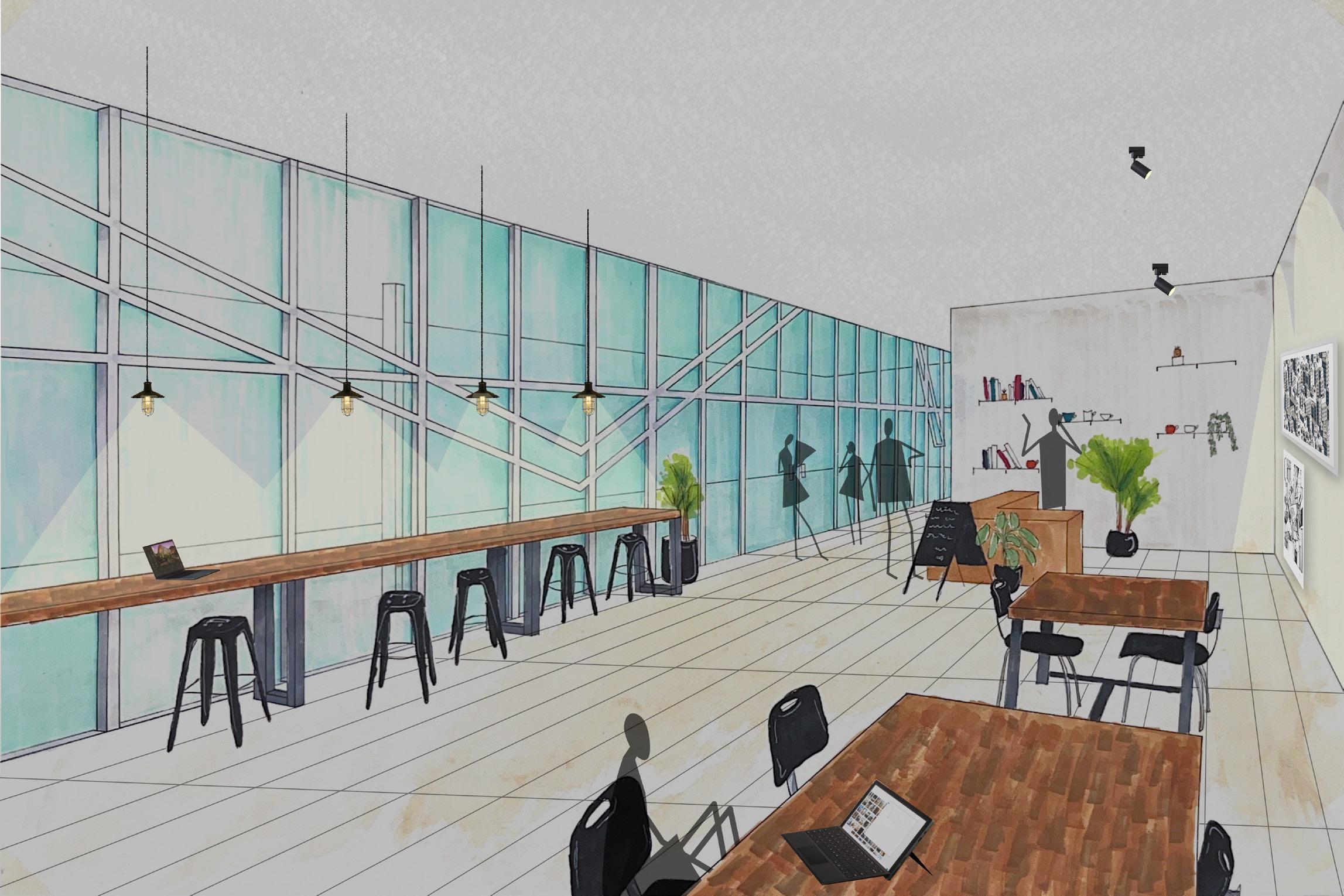
Suicide is the second leading cause of death in people ages 15- 35 in Steamboat Springs. Due to this the group focused on mental health related services; including a mental health clinic, coffee shop, and a yoga studio. These services were mapped out in relation to our site with estimated drive times and is one was using public or private transportation. Our site is located outside the main city core and if someone living on or around our site needed these services, their travel time could be what prevents them from getting that help.
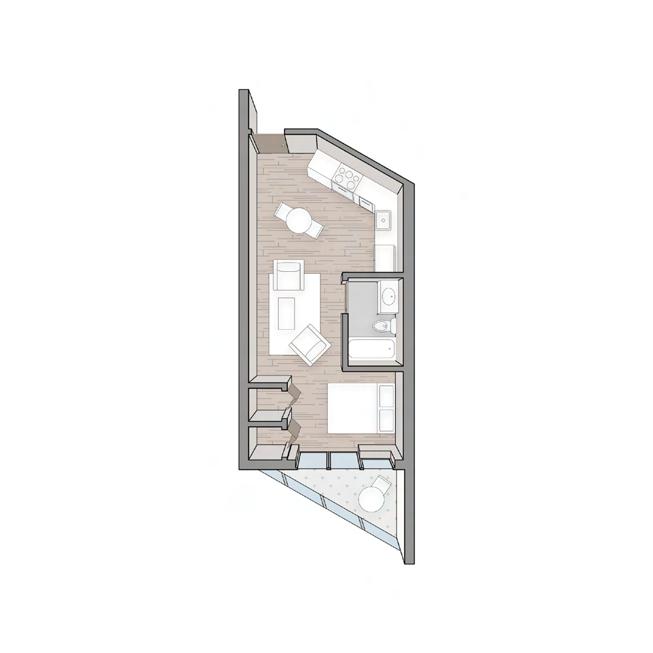
STUDIO UNIT PLAN
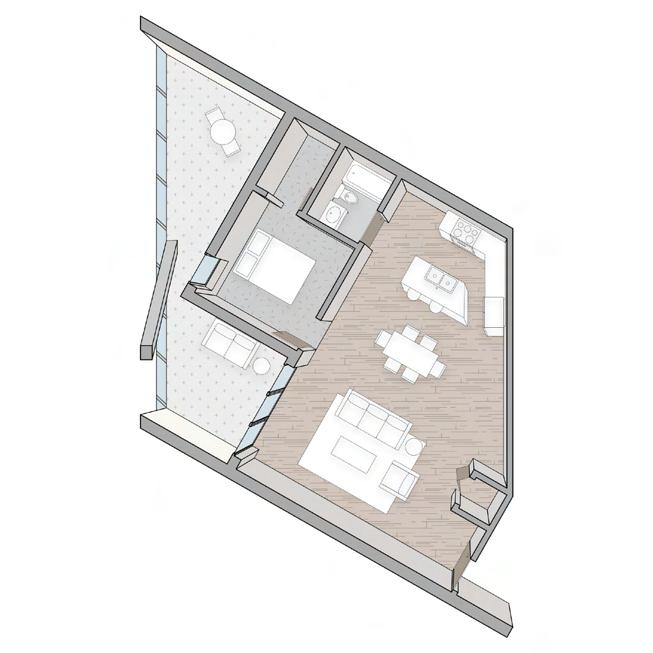
1 BEDROOM UNIT PLAN
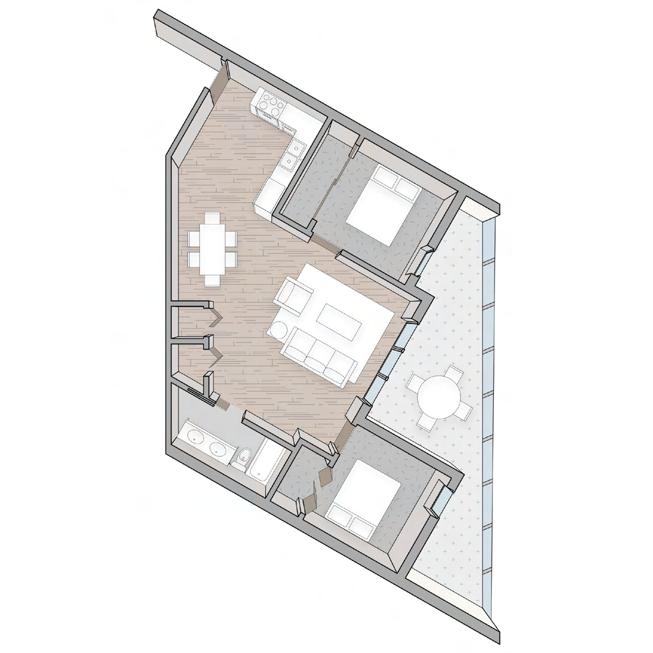
SECOND & THIRD FLOOR PLAN 2 BEDROOM UNIT PLAN
COFFEE SHOP RENDER
MUSEUM OF THE
MOVING IMAGE
Associate Professor David Newton
Lincoln, NE
Fall 2022 | 5 Weeks
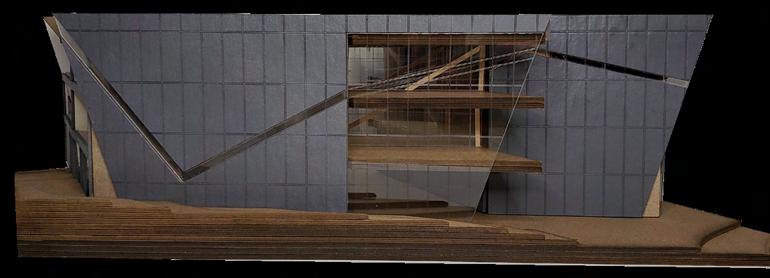
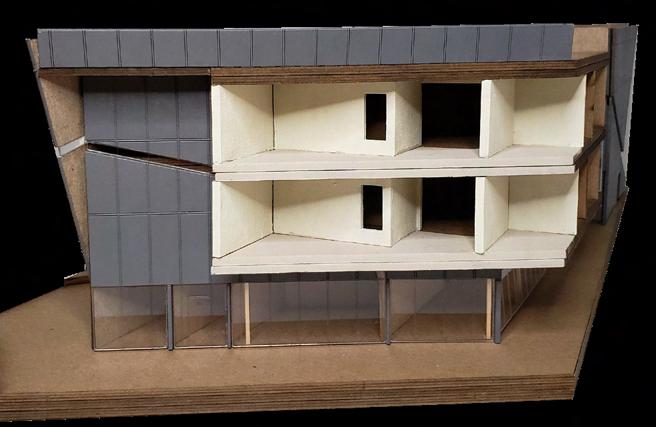
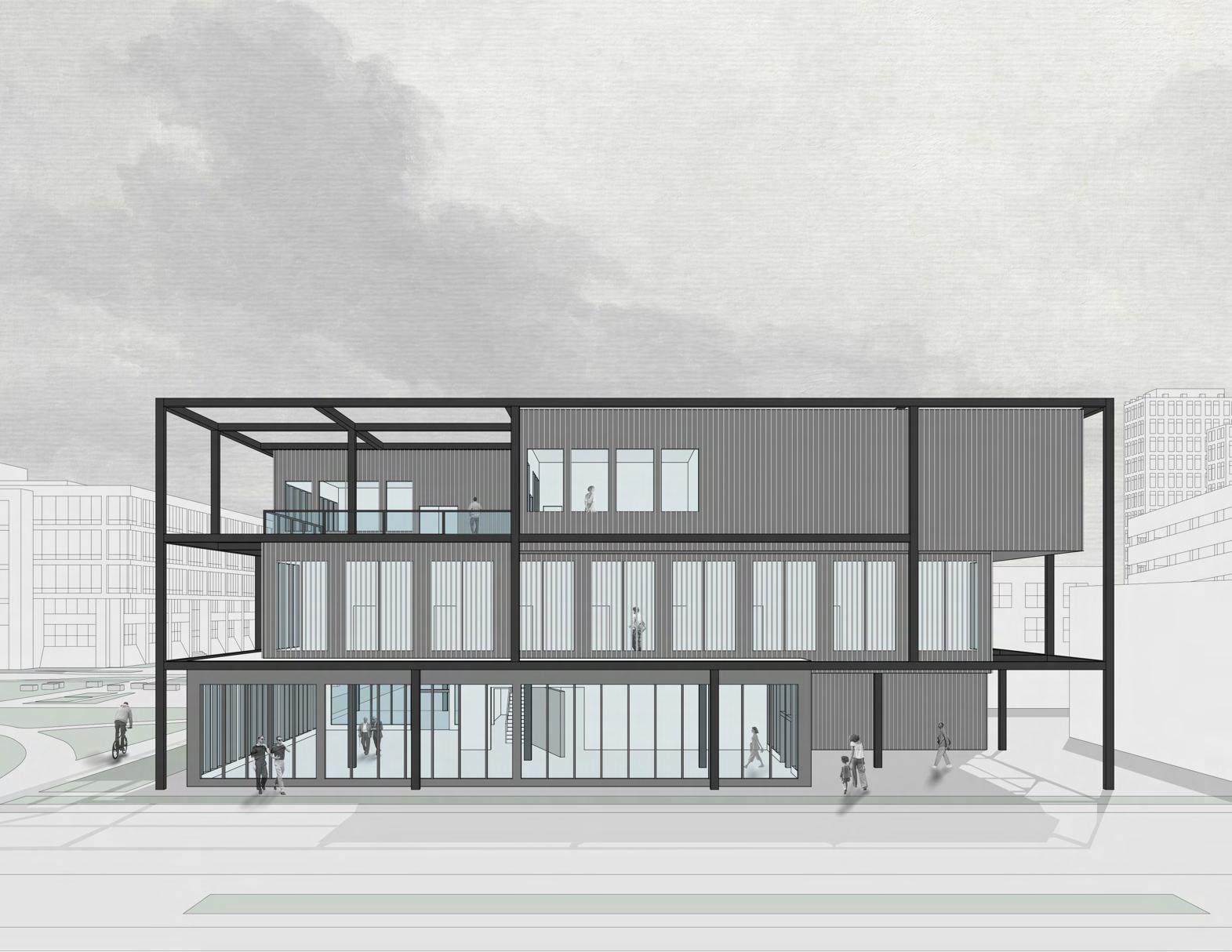
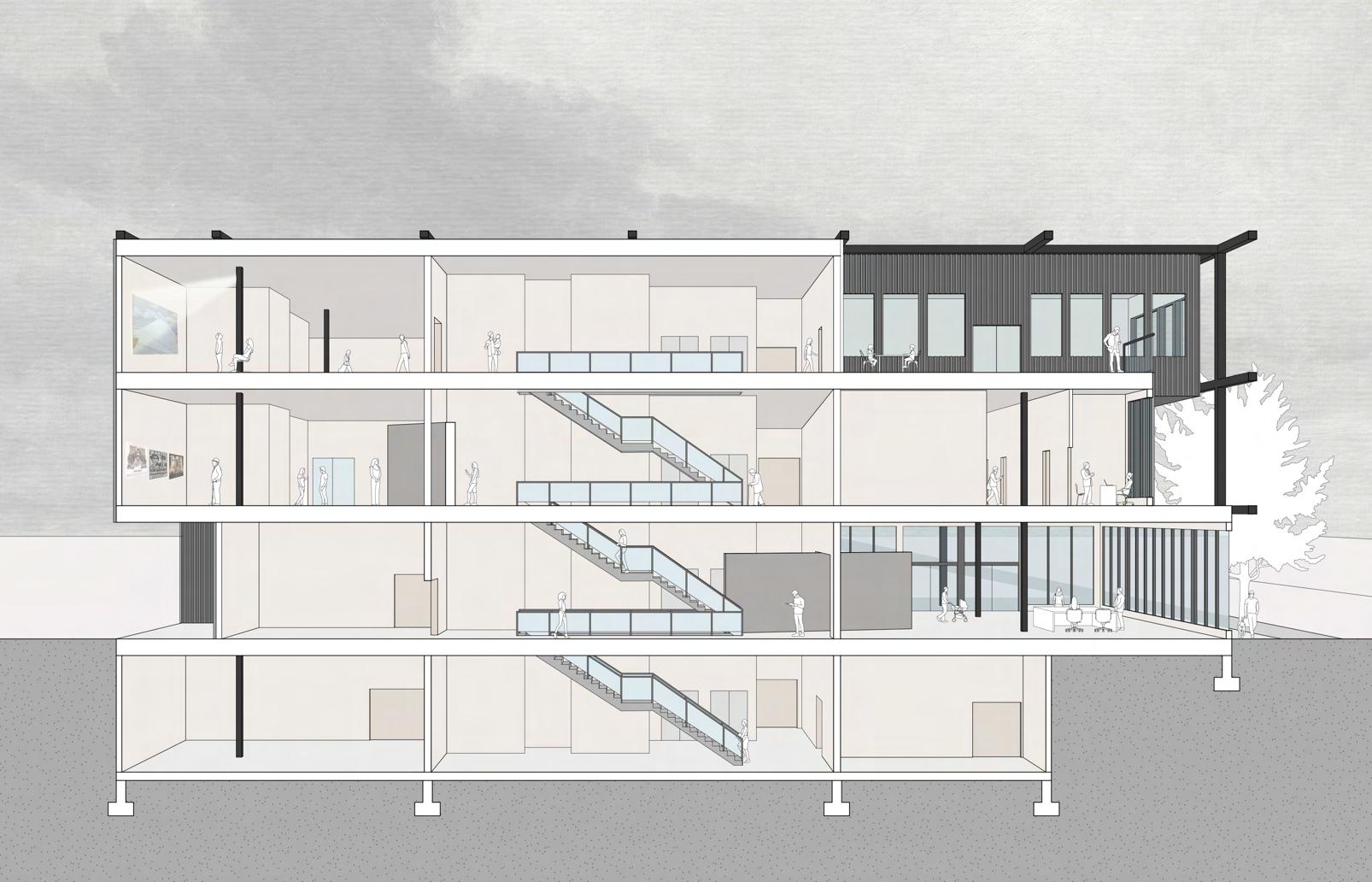
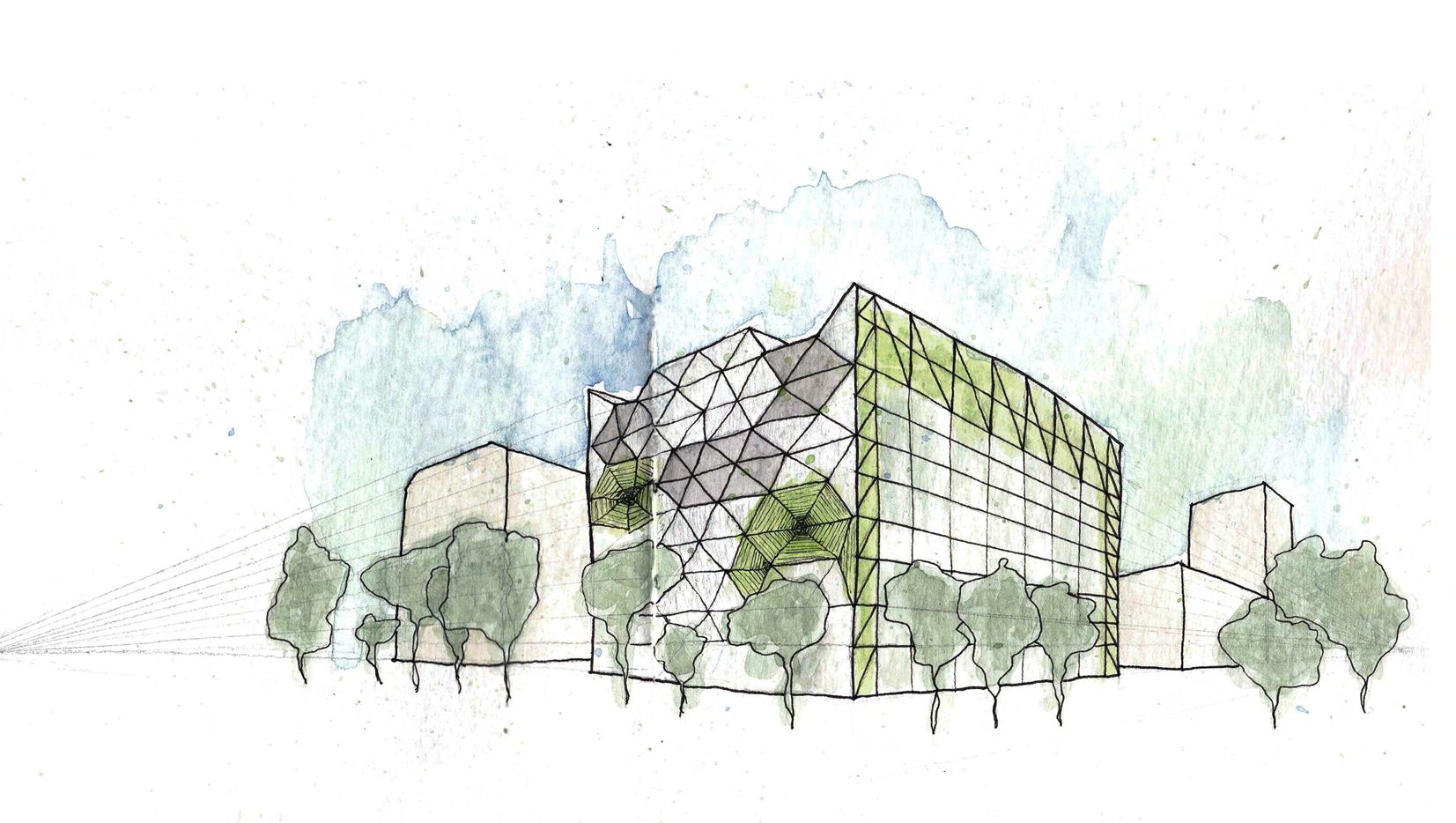
The Museum of the Moving Image was designed around concepts taken from film and how a director can tell a specific story through the camera lens. The design concept of this building was derived from Terrence Malick’s The Thin Red Line, with the design focusing on the notion of containment. This was portrayed through a non- structural grid encasing the building as well as zinc louvers wrapped around the building that limit the amount one can see into the building at various locations around the site.
Wall Layers
1.Zink Solar Shade
2.Zink Panneling
3.1” Air Gap
4.2” Ridgid Insulation
5.Class I Vapor Barrier
6.Non Paper- Faced Exterior Gypsum
7.2x6 Steel Stud With Ridgid Insulation
8.Gypsum Board
9.Class III Vapor Barrier
Floor Layers
15. 1” Metal Form Decking
16. 3” Concrete Floor Slab
17. Sound Barrier
18. Floor Material
1’ 5’ 10’ 20’
SECOND FLOOR PLAN
1. Admin Offices
2. Orientation Gallery
3. Visiting Gallery
THIRD FLOOR PLAN
1. Outdoor Learning Space
4. Outdoor Gallery 5. Storage 4. Storage
2. Workshop
3. Perminate Gallery
Lecture Hall 6. Workshop
SINGLE FAMILY RESIDENCE
In Collaboration with Olivia Hordvik- Chaussee & Emily Lorius Lecturers Zeb Lund & Emelia Alvis Bertrand, NE
Spring 2023 | 4 Weeks
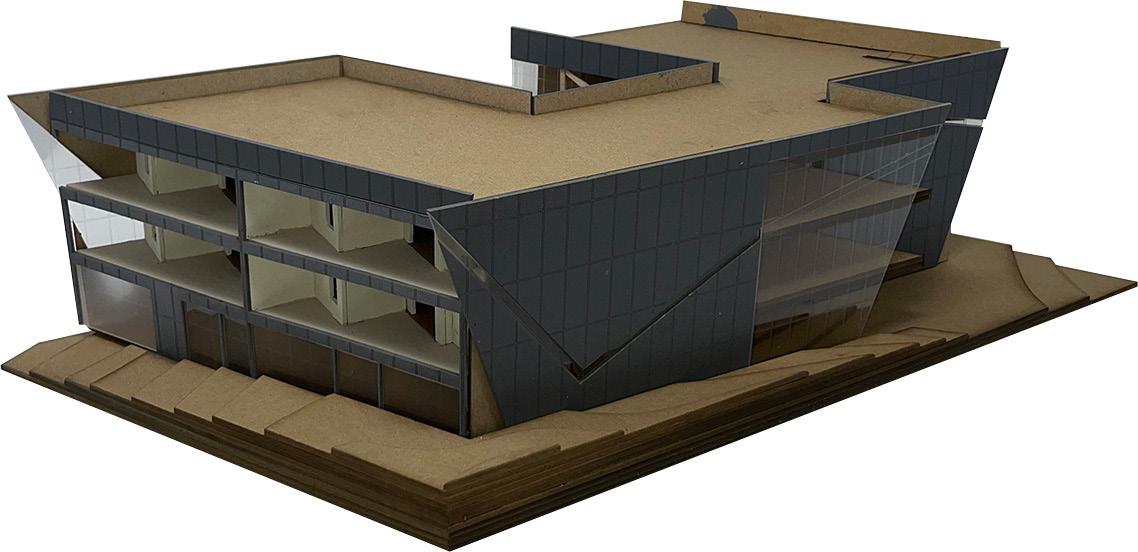
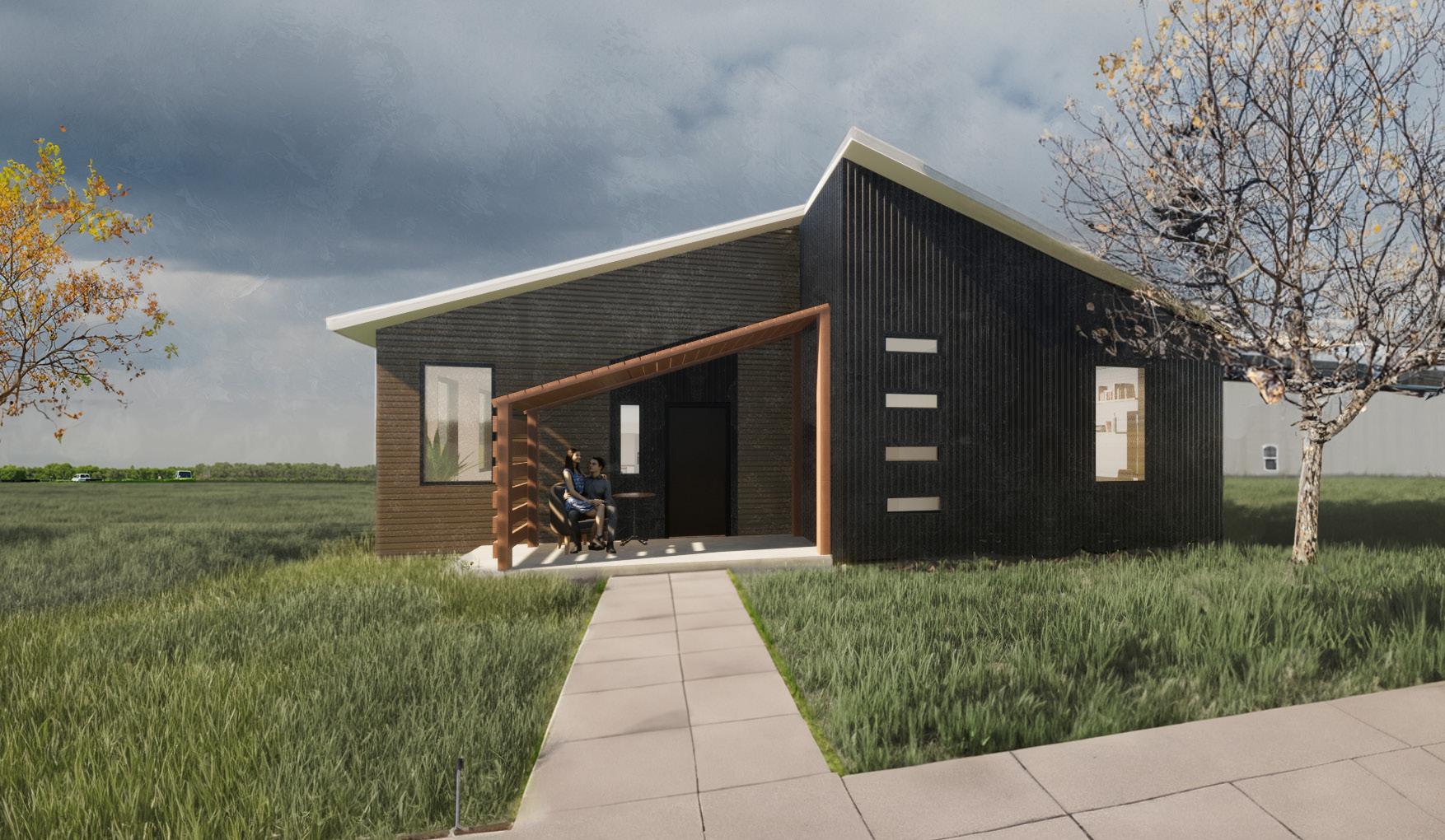
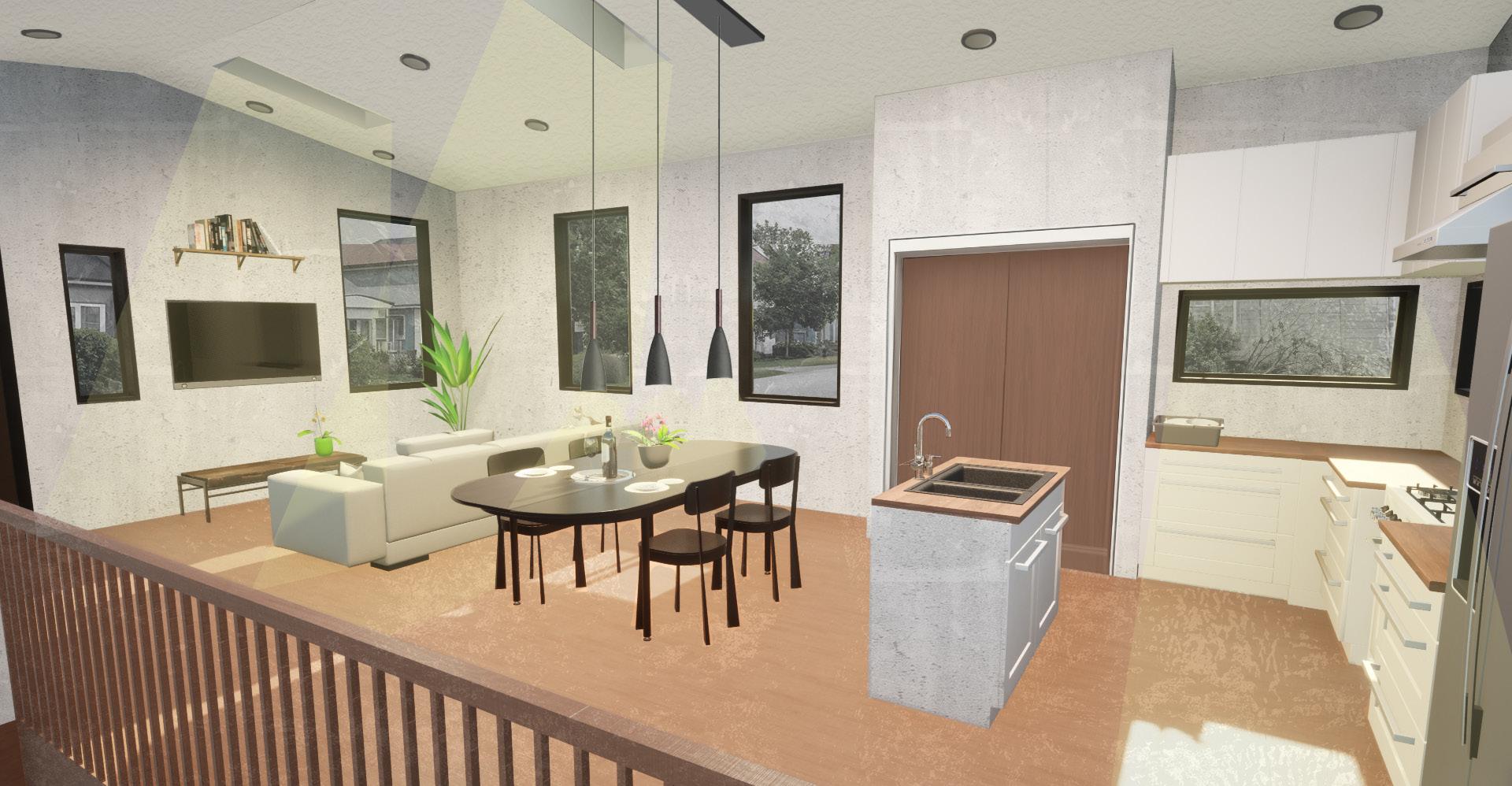
This 1200 SQFT house was designed for a committee affiliated with Bertrand, Nebraska that was looking for an affordable housing project located off of their town’s golf course. This development focuses on the separation of public and private spaces within a home. To achieve this, the two halves of the house were offset seven feet to convey this design intention. As a group, we wanted to develop a house that would be unique while still being respectful to its context. To do this, the form and roof are more traditional to small town Nebraska and we allowed the materiality to be what stood out. Zinc cladding and clapboard siding were chosen along with Eastern Red Cedar or reclaimed barn wood to be used for the pergolas that cover the main and back entry points.
EAST FACADE
MAIN FLOOR PLAN
BASEMENT PLAN
11’-9” 10 5/8”
Asphalt Shingles
5/8” Roof Sheathing
2x6 Ceiling Rafters and Joists
R-30 Ceiling Insulation
2x6” Top Plate
2x6 Studs @ 16” o.c w/ R-19 Insulation
1/2” Clapboard
1” Sheathing
1/2” GWB
Treated 2x6” Bottom Plate
Sill Plate
1/2” Anchor bolts
16” TJI @ 16” O.C.
8” CMU Foundation
4” Concrete Slab
10x16” CIP Footing
5 No. 1/2” dia. rebar
DETAIL WALL SECTION
2” Fill 10’
SPAIN: MODEL MAKING
Associate Professor Brian Kelly
Atelier La Juntana
Liencres, Spain
Summer 2023 | 1 Week
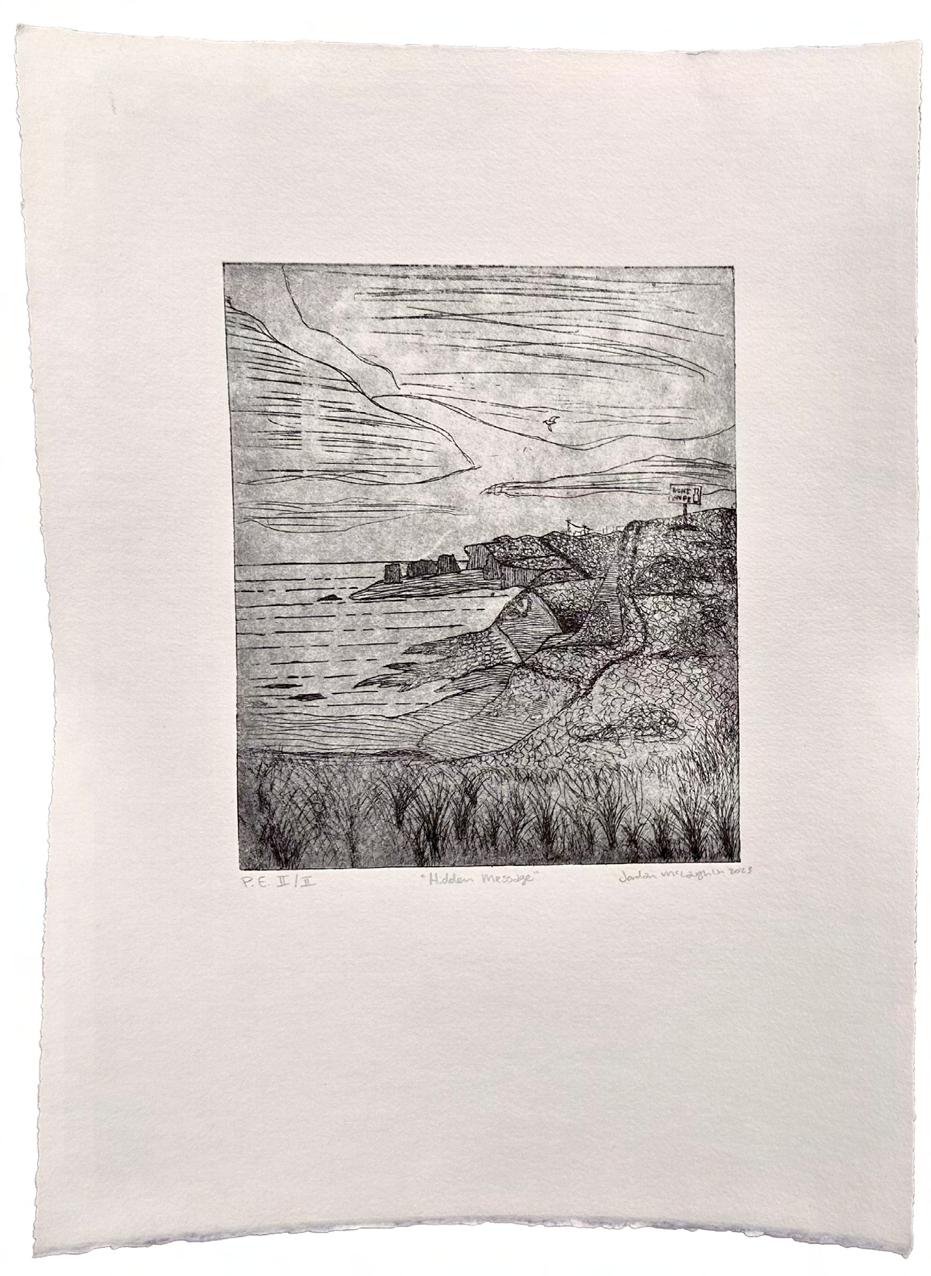
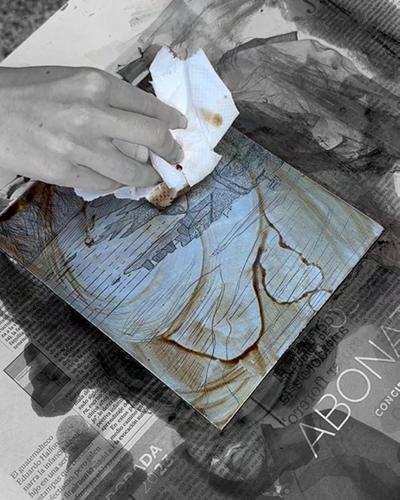
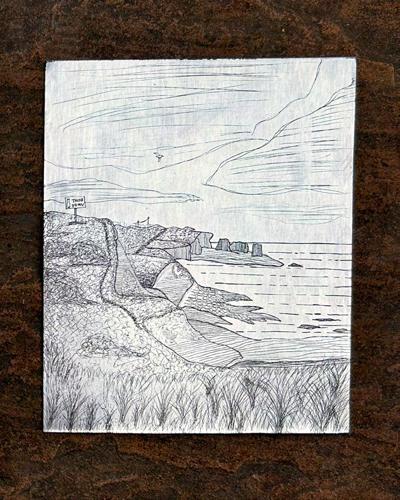
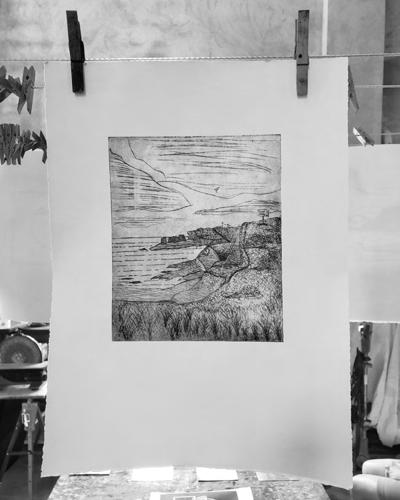
As a part of UNL’s study abroad program led by associate professor Brian Kelly, we spent a week in Liencres, Spain, and were hosted by Atlier La Juantana for a model making workshop. While there we were taught many different types of model making techniques including casting with resin, concrete, plaster, and bronze. We were able to develop ceramics as well as ink prints using a type of metal etching.
Metal Etching & Print Making
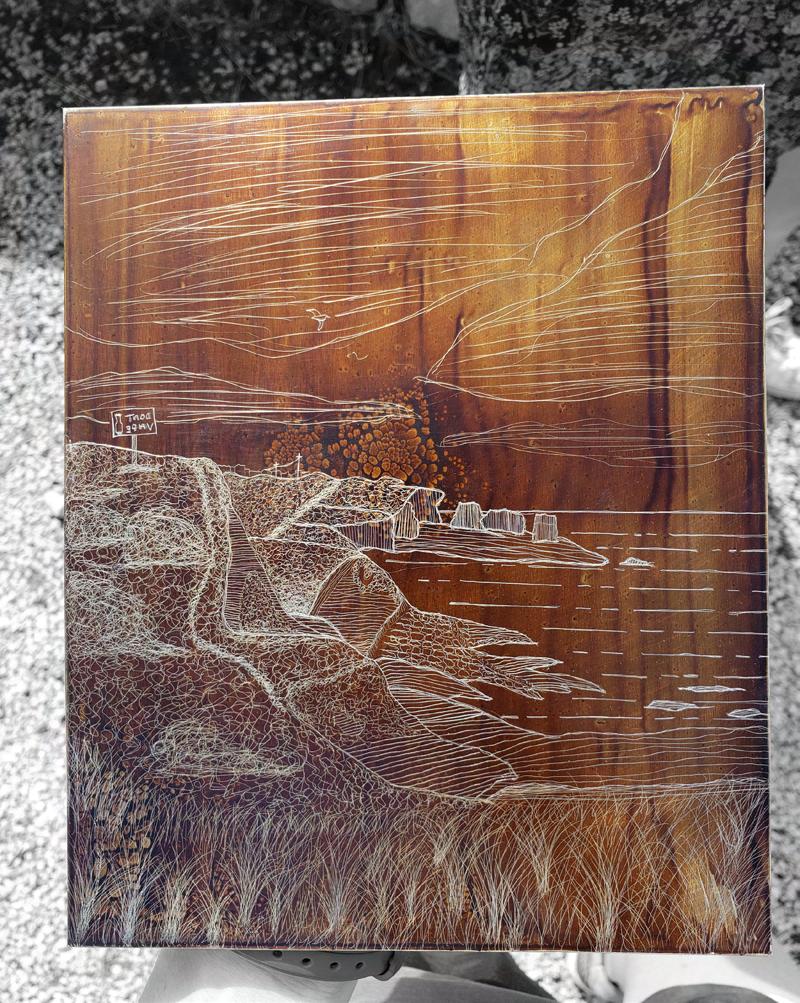
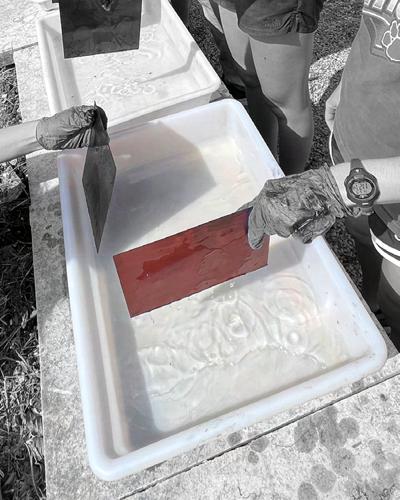
For this project we were tasked with making a print. To do this we were given a zinc plate. Once the plate was sanded and two different protective coatings were properly placed, we needed to scratch our design onto the proper face. After our designs were scratched onto the zine plate, we placed them into a diluted acid bath that removed small amounts of zinc, creating our template. After the brown coating was removed, a thin even layer of ink was placed over the zinc plate and our final prints were made.
Ceramic Casting
In Collaboration with Payton Winkler
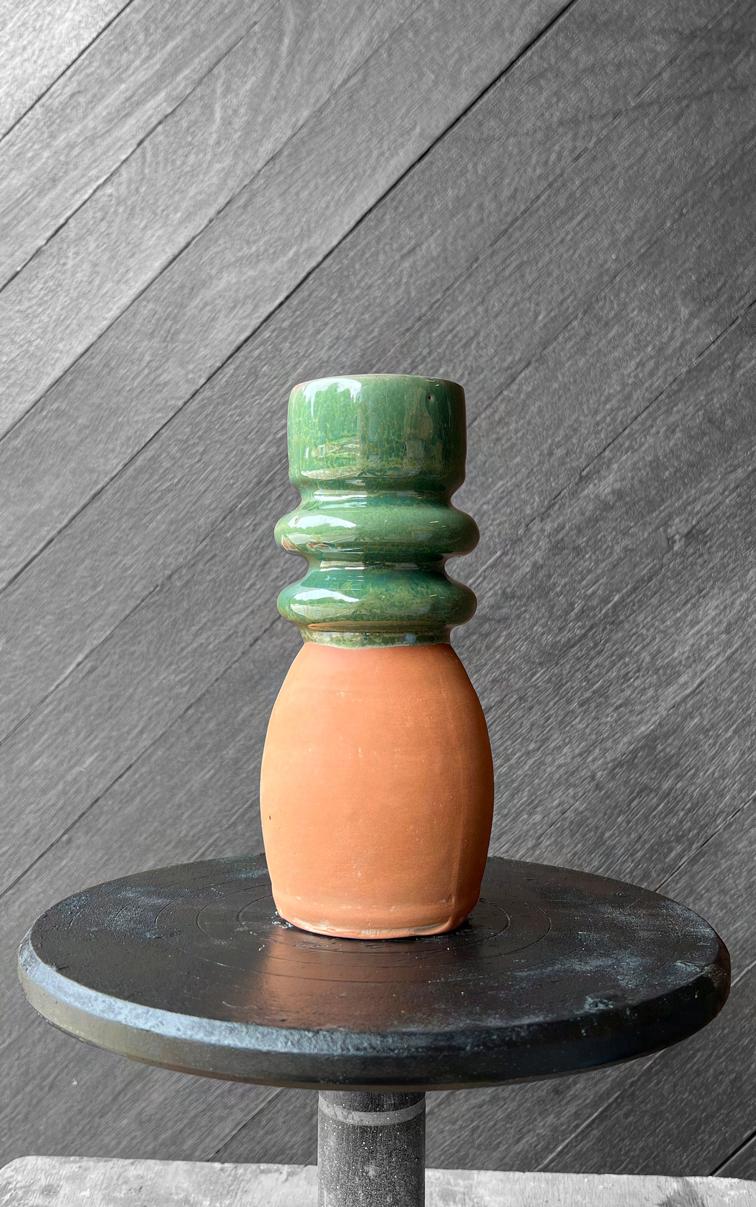
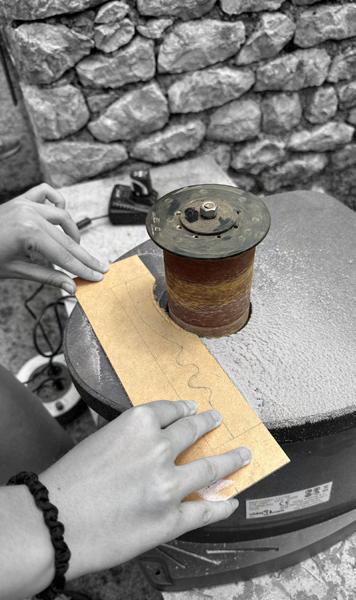
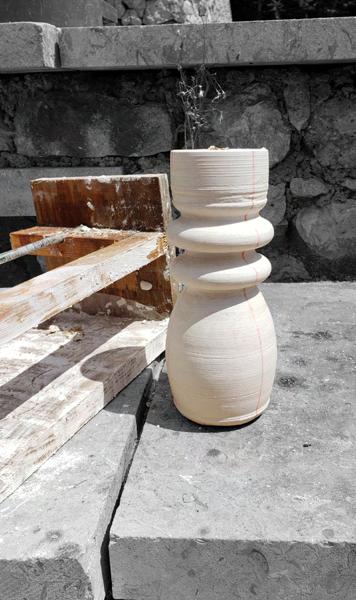
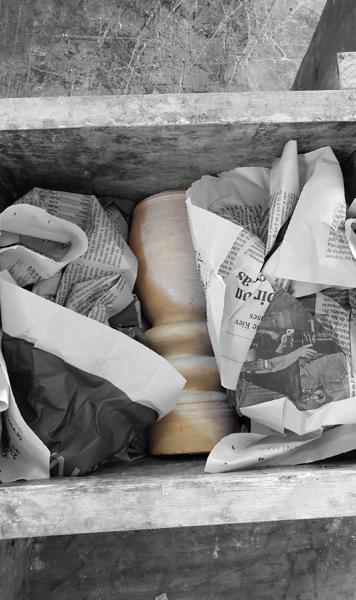
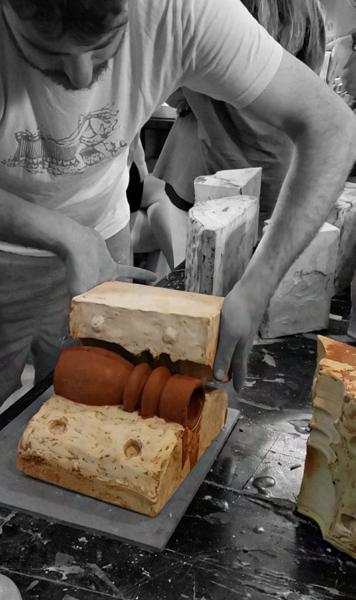
One of our first projects was creating a ceramic vase. To do this we first started by designing a profile and tracing it onto a piece of particle board. My partner and I designed around the intent of being easily held around the neck of the vase so the ridges were measured around our hand shapes. After cutting the profile and attaching it to a wooden box with a rotating axis, we slowly poured plaster over the axis and let it mold to our profile. Once we had a plaster master, we were then able to make a plaster mold around the form. After the mold was complete, we were then able to use ceramic slip to make the final product.
Subtractive Casting
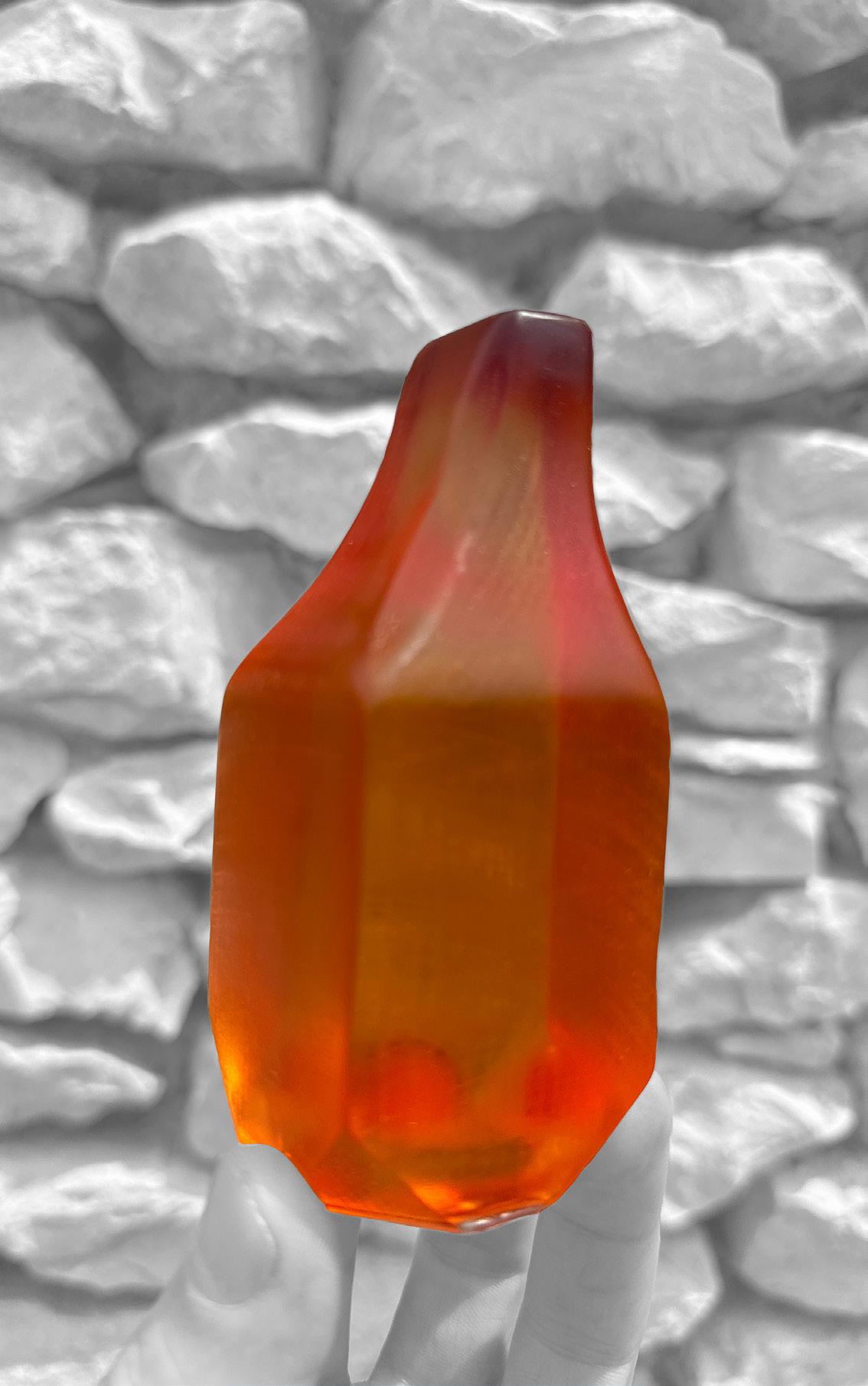
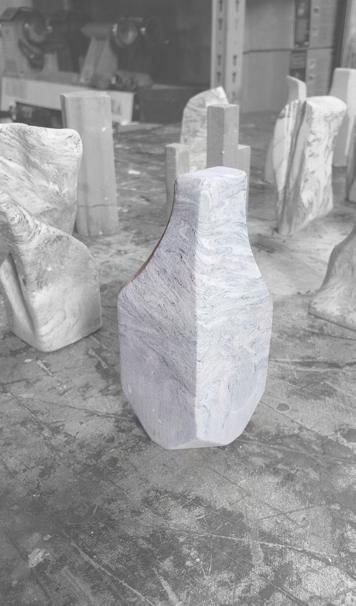
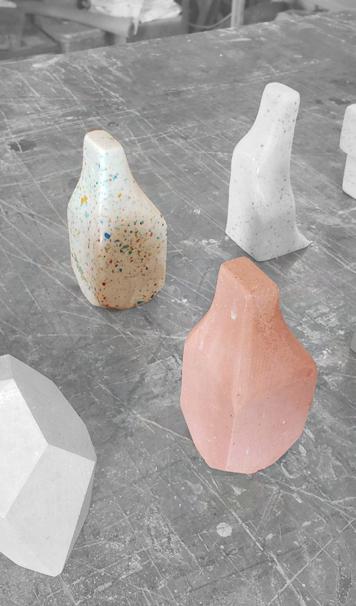
For this process we started by removing portions of a wood block to create a wood master. This master piece was used to make a silicone mold that would be used to cast many different pieces. With this silicone mold we were able to make models out of resin, concrete, and dyed plaster.
Lost Wax
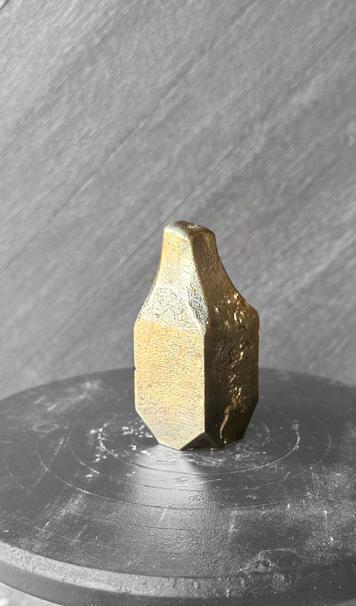
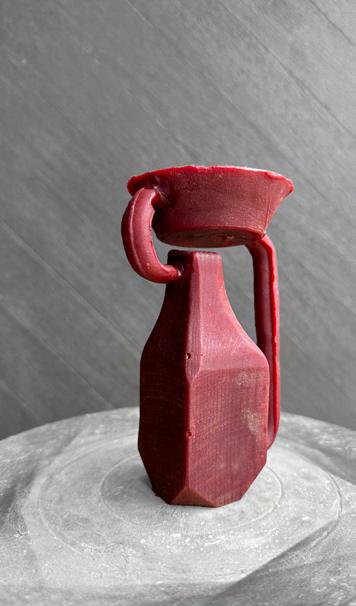
To make our bronze casts we used the Lost Wax technique. We used our silicone molds to make a wax cast. This wax was then fitted with a small funnel and two connection pieces that would allow the molten bronze to the entire form. After the wax mold had all of its pieces it was placed into a metal container and filled with a sand plaster mix. Once this cured, the wax was melted out and the bronze was poured into this this new mold. The plaster mix was then washed away and we were able to cut off the connection pieces and the cast was able to be cleaned up.
SPAIN: OBSERVATIONAL SKETCHING
Associate Professor Brian Kelly
Barcelona, Spain Summer 2023 | 2 Weeks
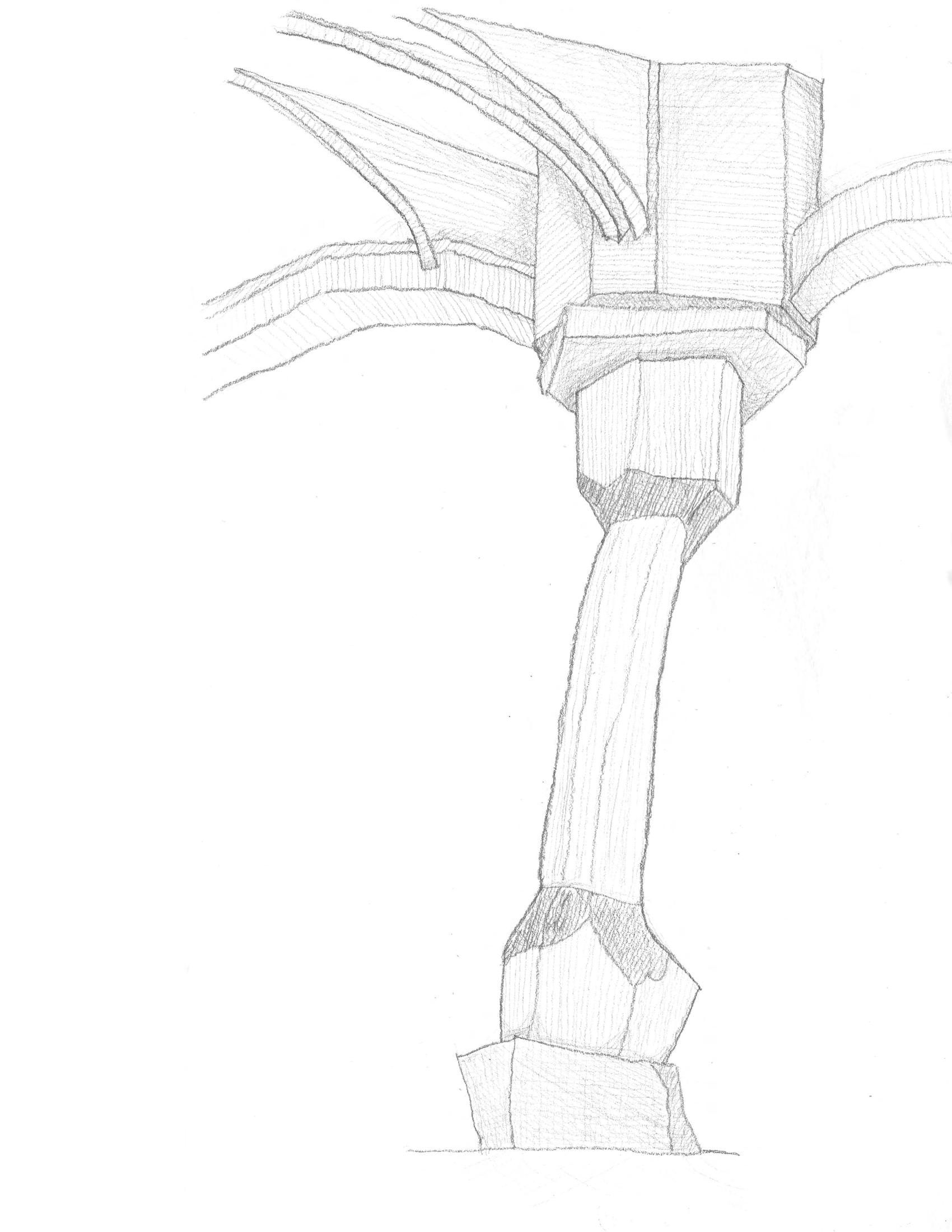
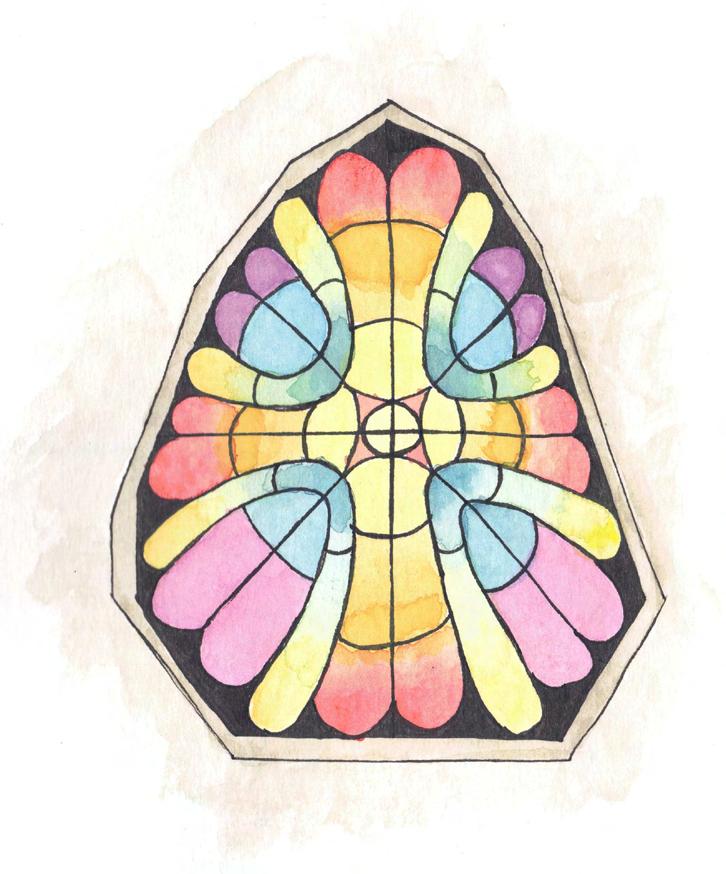
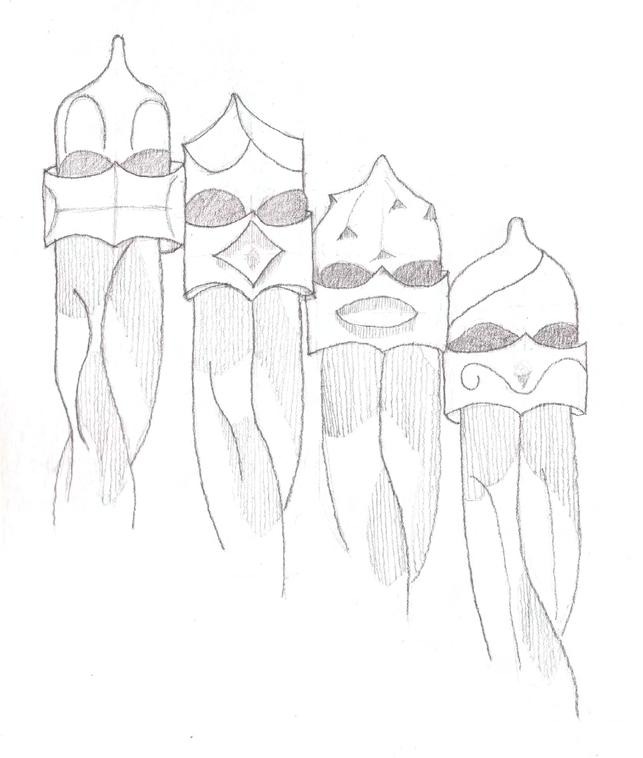
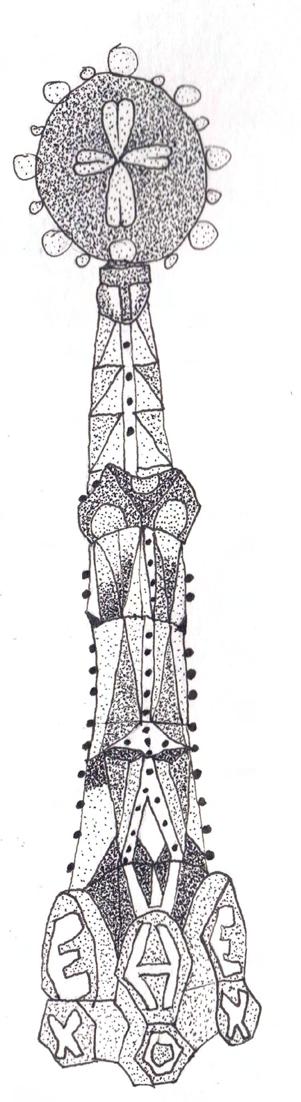
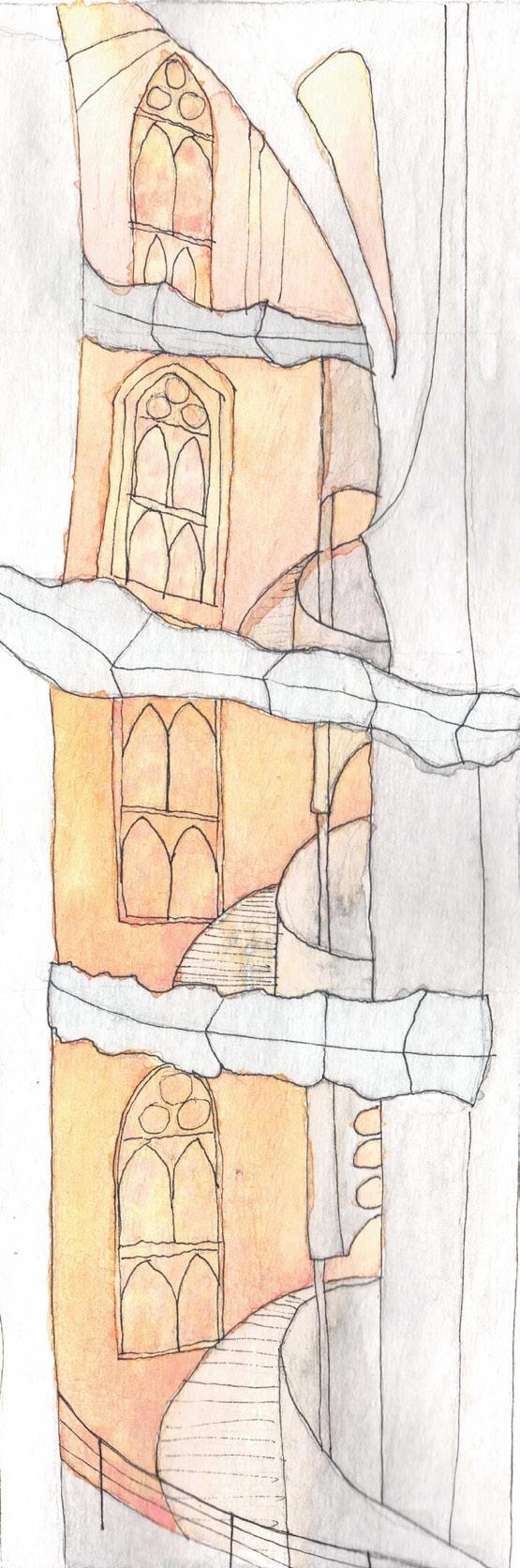
As a part of UNL’s study abroad program conducted by associate professor Brian Kelly, we spent two weeks in Barcelona, Spain developing the technique of observational sketching. Within those two weeks we were also able to experience the city’s culture and history. Brian would lead us through tutorials on specific techniques and have us apply them to our sketches. We developed a familiarity with watercolor and ink wash, as well as capturing light, shadow, and materiality with graphite and ink.