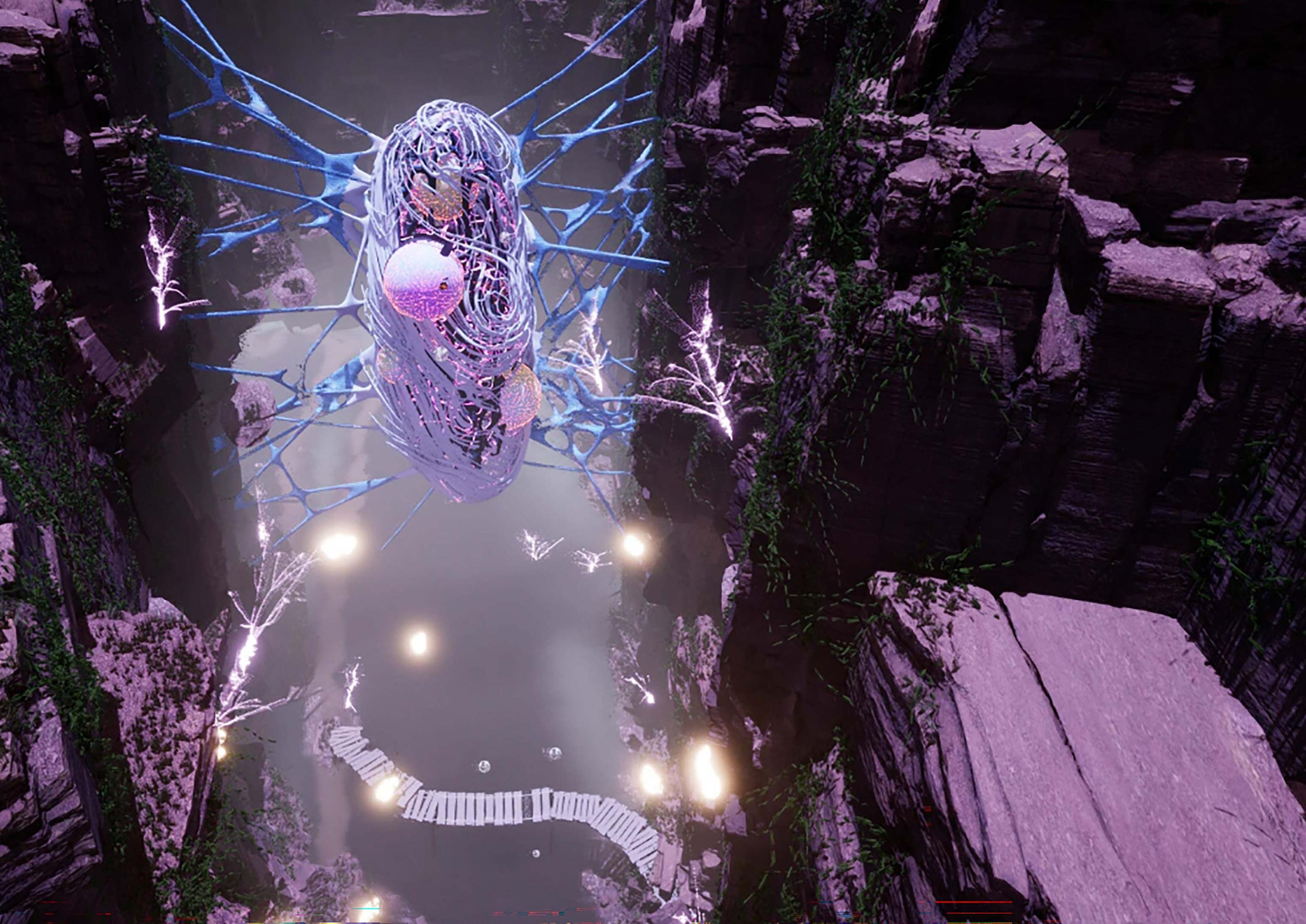
PORTFOLIO - REAL FANTASY
Yen-Chen Liu
Selected Works 2018 - 2024
Yen-Chen Liu
Selected Works 2018 - 2024
Education
Sep 2022 – Oct 2023
The Bartlett School of Architecture, UCL
MArch Architectural Design

07377204706 London, N8 0ER
Living Architecture Lab - AI and Autonomous Architecture
Sep 2014 – June 2019
Ming Chuan University, Taiwan
BArch Architecture
Yearly scholarship for being ranked top 3 student
Ranking: 2nd (2/56)
Summary
As an architecture graduate, I see architecture as an important aspect of social connection as it is a storyteller of culture and history. Through diverse experiences in AI and autonomous architecture, animation, and VR/AR design, I've cultivated a diverse and forward-thinking perspective of technology and innovation, furthering my appreciation for the various possibilities within art and design.
Skills
Game Engines – Unity, Unreal
3D Software
Houdini, Maya, 3DS Max, Blender, Rhino, Grasshopper, Revit, Lumion, Twinmotion, Sketch, AutoCAD
Design Software
After Effects, Premiere Pro, Lightroom, Photoshop, Illustrator, InDesign, Animate, Clip Studio Painter

Professional Experience

yenchenliu0528sophia@gmail.com
National Science and Technology Council – VR/AR Designer
• Created concept art and architectural visualization for HoloLens VR/AR projects
• Designed an interactive futuristic museum located at Cheng Long Wetlands
• Developed VR immersive experience and AR app UI in Unreal Engine 5
Freelance Environment Designer/ Visual Development Artist
• Designed and modelled 3D environments, both photorealistic and stylised, for multiple projects
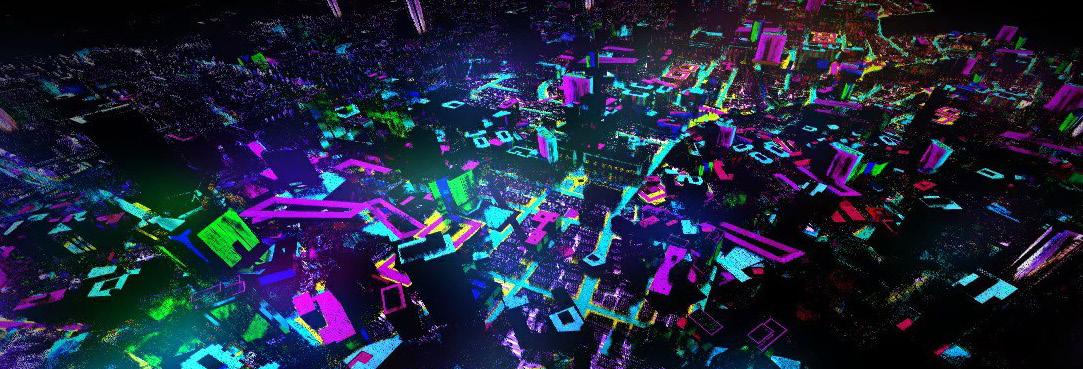
• Created a cyberpunk city and architectural spaces for eLearning content for BigByte Education (2024)
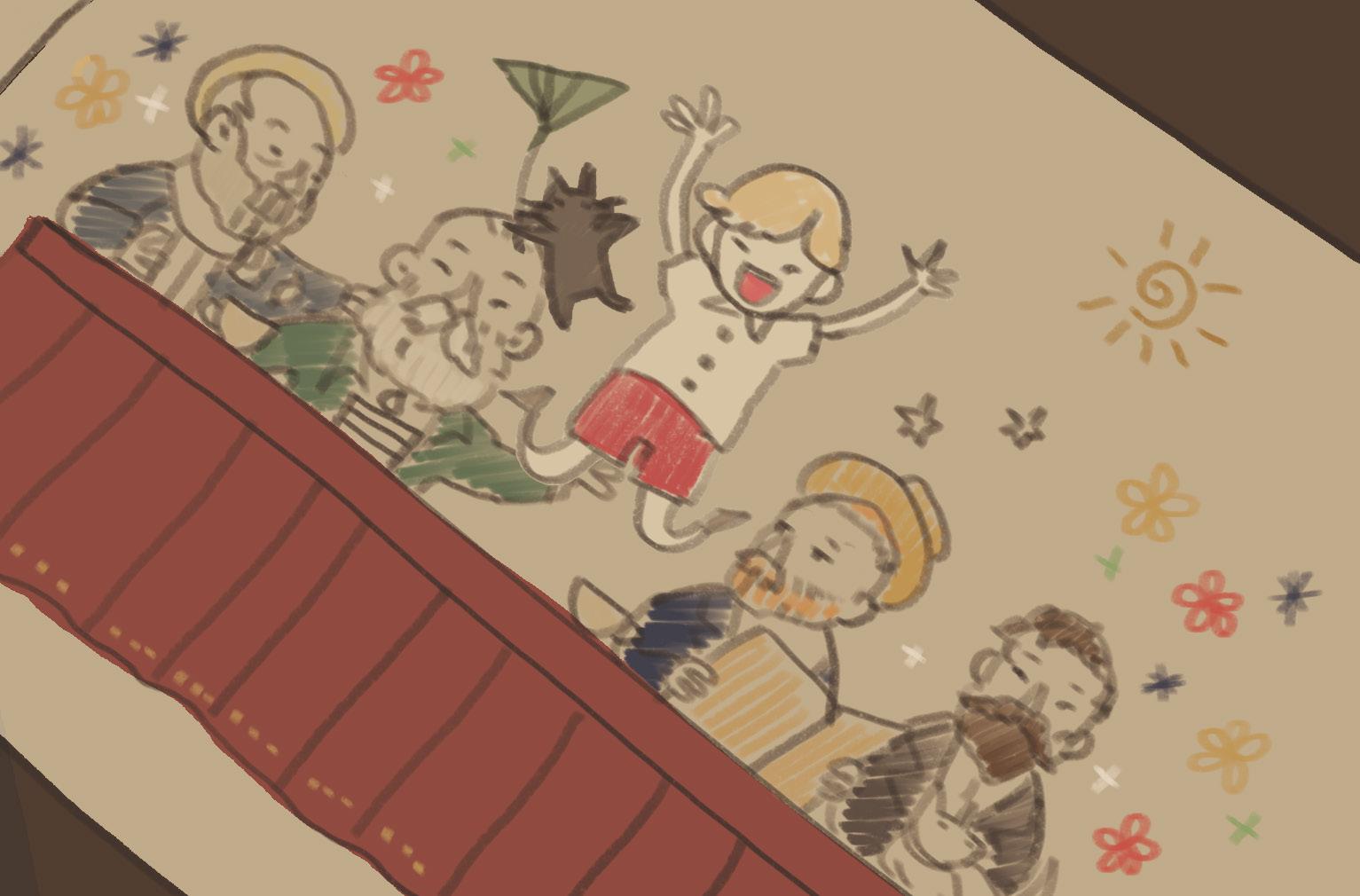
• Created concept art and 3D props used in an AR picture book called SUNBRELLA (ISBN 978-957-43-9134-9) (2022)
• Designed digital creatures and props for AR project used in Taiwan Children Art Centre for Ministry of Culture (2022)
Freelance 2D/3D Animator
• Modelled and compelled the movement of environments, props, robots and creatures for multiple projects (2024)
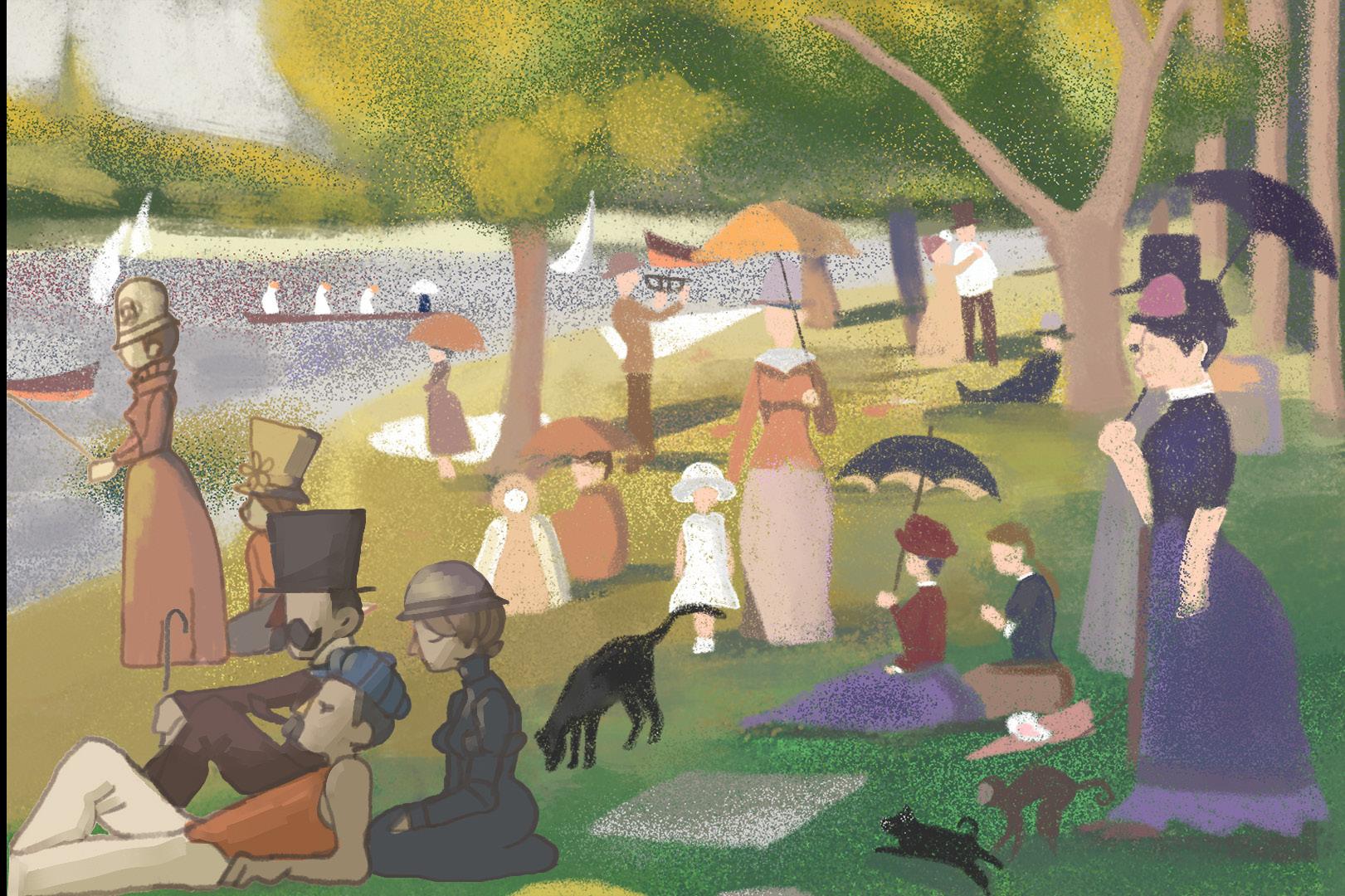
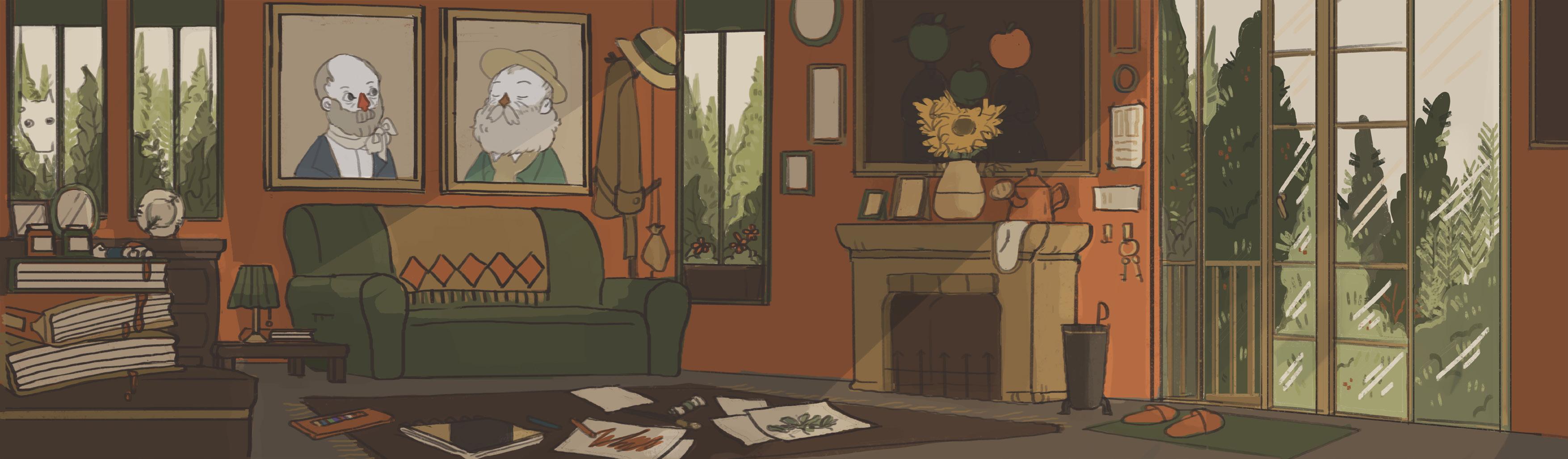
• Designed animation character and storyboard for Hidemeowmeow Animation Studio (2023)
• Made models and 2D animation for Hidemeowmeow Animation Studio (2023)
NYUST Centre of Sustainable Development and Social Practice – Environmental Designer UI Designer
• Translated 2D art into an immersive art installation that enabled audience interaction through movement
• Developed a VR exhibition centre, promoting awareness and action for the UN's 17 Sustainable Development Goals
• Designed UI for several projects and built them in Unity
DNA x CAT – 2D Computer Animator
• Created storyboard and planned storytelling animation frames
• Made 2D animation of DNA x CAT animated series season 3
Hidemeowmeow Animation Studio – Interactive Product Designer
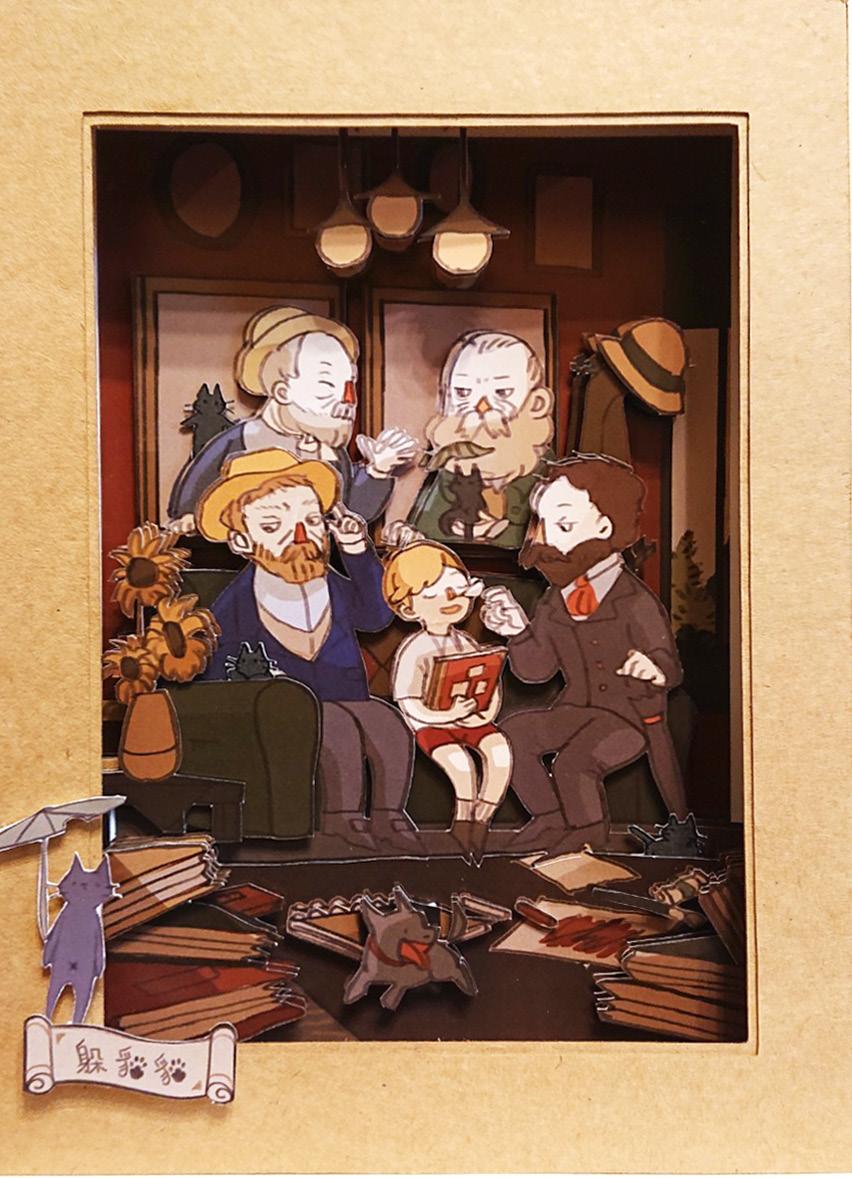
• Designed and made 3D paper cut box with interactive paper-engineered elements
Chi Ti-Nan Architects - Architecture Assistant
• Participated in a design competition to revitalize a historic paper factory
De Shang Construction Company - Field Summer Intern
• Worked with design team on a residential project from preconstruction to final inspection
Languages Awards and Honours
English, Mandarin, Japanese
CulTech Hackathon, Ministry of Culture - Shortlisted Project
Taiwan Architect Magazine - Nationally Selected for Graduation Project Publication (vol.290)
New Taipei City Architects Association Student Competition - Honourable Mention
Container Park Design Student Competition - Shortlisted Project
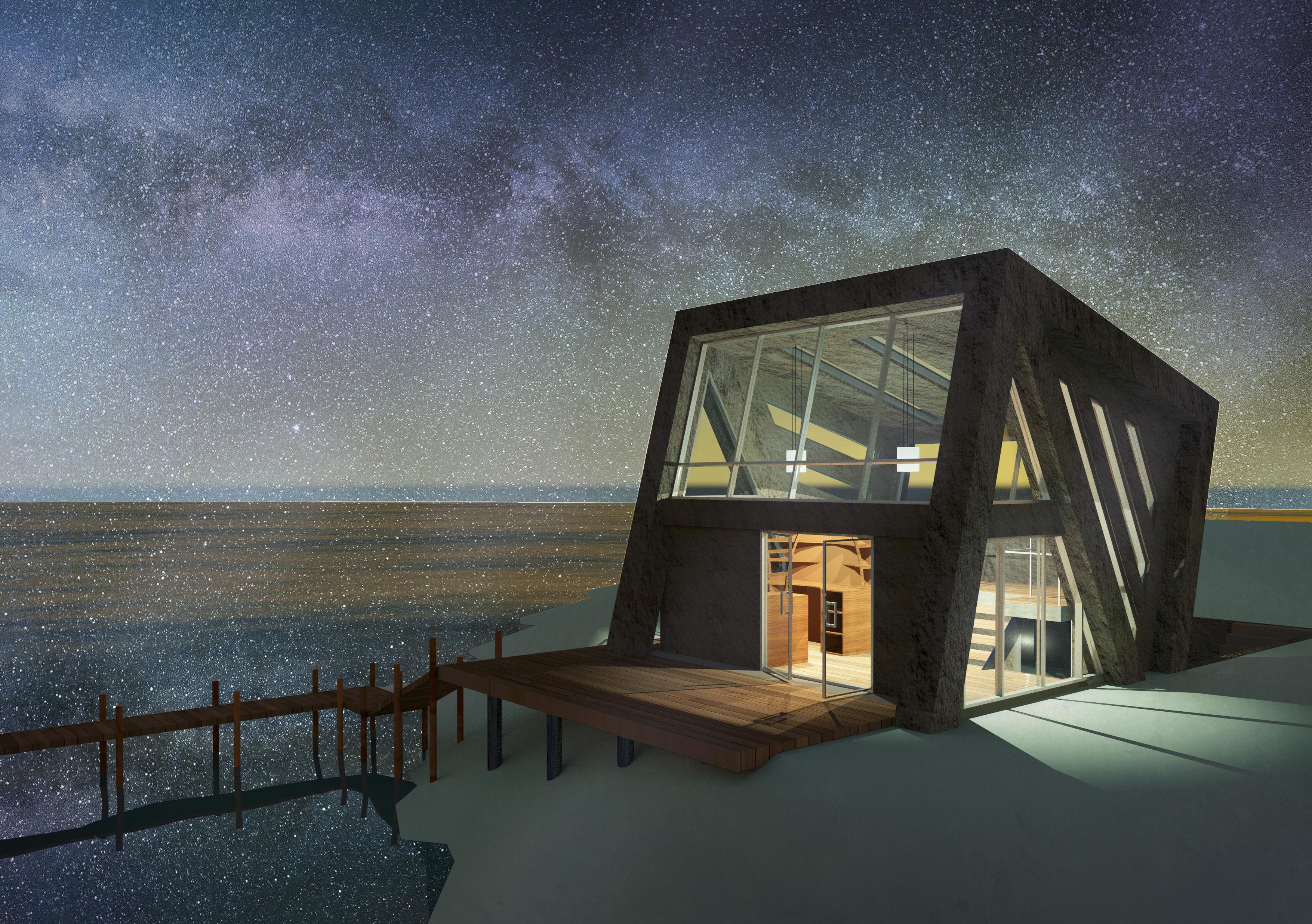
a Blank Page with Creativity and Imagination
Honour - Container Park Design Student Competition
Shortlisted Project
Academic Project
Intergenerational Living - Vertical Cohousing Community
Building Design
Academic Project
The New Resilient City - Infrastructure Meets Community Fabric
Urban Design Computational Fluid Dynamics Analysis
Academic Project
Real Fantasy - Filling a Blank Page with Creativity and Imagination
Reinterprets Playground for Children's Experience
Chi Ti-Nan Architects - Architecture Intern
• Designed and created model of student activity centre for a design competition
De Shang Construction Company - Field Summer Intern
• Worked with design team on a residential project from preconstruction to final inspection
Reception Group Volunteer
International Exhibition of Architecture Graduation Design
• Provided explanation of exhibitions in English and Japanese
Honour - Taiwan Architect Magazine (vol.290)
Nationally Selected for Graduation Project Publication
Honour - New Taipei City Architects Association StudentCompetition
Honourable Mention
2D Computer Animator - DNA x CAT
• Created storyboard and planned storytelling animation frames
• Made 2D animation of DNA x CAT animated series season 3
VR Project - VR Exhibition
• Developed a VR exhibition centre for NYUST
Academic Project Valley Nymphs
Game Design Unreal / Houdini / Blender
Academic Project - (re)2 BOT
Refugee Rehabilitation Through Robotic Agent AI and Autonomous Architecture Design Unity / ML- agent C# / Python Houdini
UI Project - Immersive Wall Installation
Chi Ti-Nan Architects - Architecture Assistant
• Participated in a design competition to revitalize a historic paper factory
• Translated 2D art into an immersive art installation
AR Project - ELearning English Content
• Created a cyberpunk city and architectural spaces for eLearning content for BigByte Education
VR/AR Project - Interactive Futuristic Museum
National Science and Technology Council
Interactive Product Designer - Hidemeowmeow Animation Studio
• Designed and made 3D paper cut box with interactive paper-engineered elements
Talent Development Program - Taipei Comic Artist Labor Union
• Completed art, animation, and illustration courses and workshops, learning from industry professionals
• Developed complementary skills and used them on my own project
Ming Chuan University, Taiwan BArch Architecture
Yearly scholarship for being ranked top 3 student
The Bartlett School of Architecture, UCL MArch Architectural Design
Living Architecture Lab - AI and Autonomous
AR Project - Plant A Plan
• Developed VR immersive experience and AR app UI in Unreal Engine 5
• Designed an interactive AR space for Children Art Centre for Ministry of Culture
• Modelled creatures and props
• Shortlisted in CulTech Hackathon
AR Project - SUNBRELLA
• Created concept art and 3D props used in an AR picture book
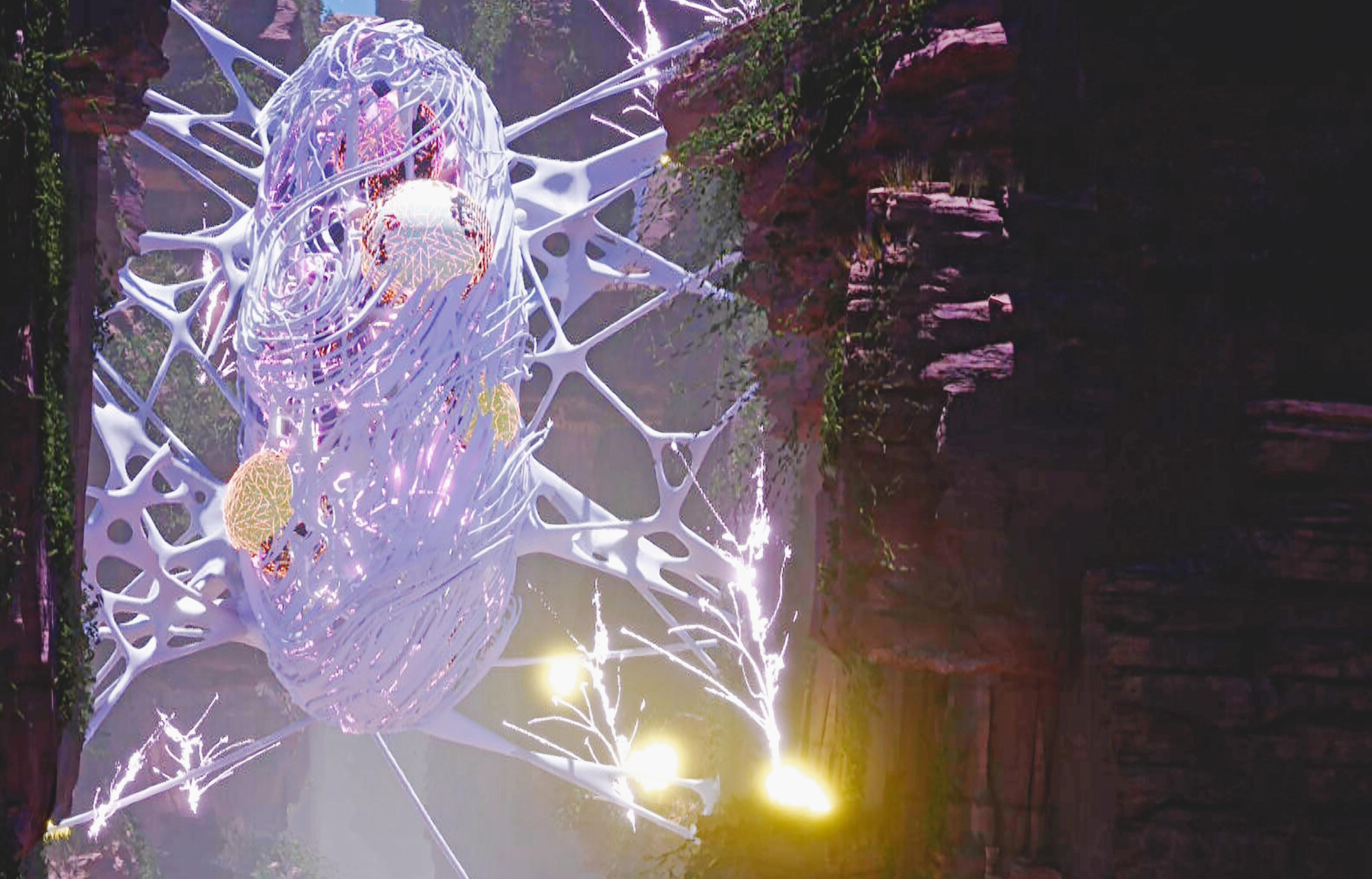
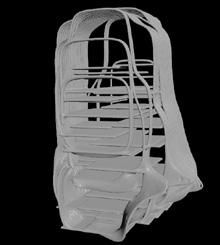
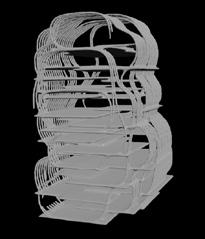
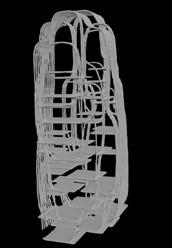
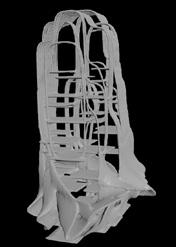
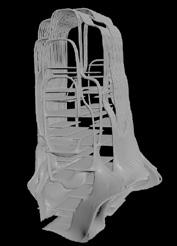
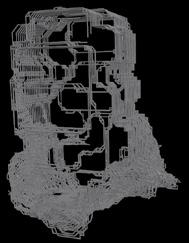
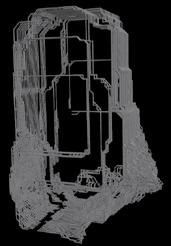
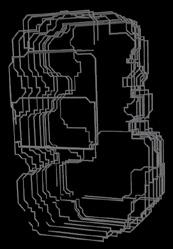
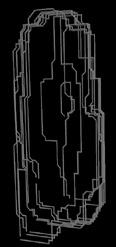
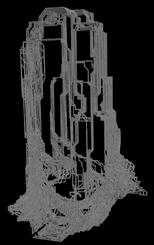
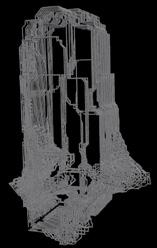
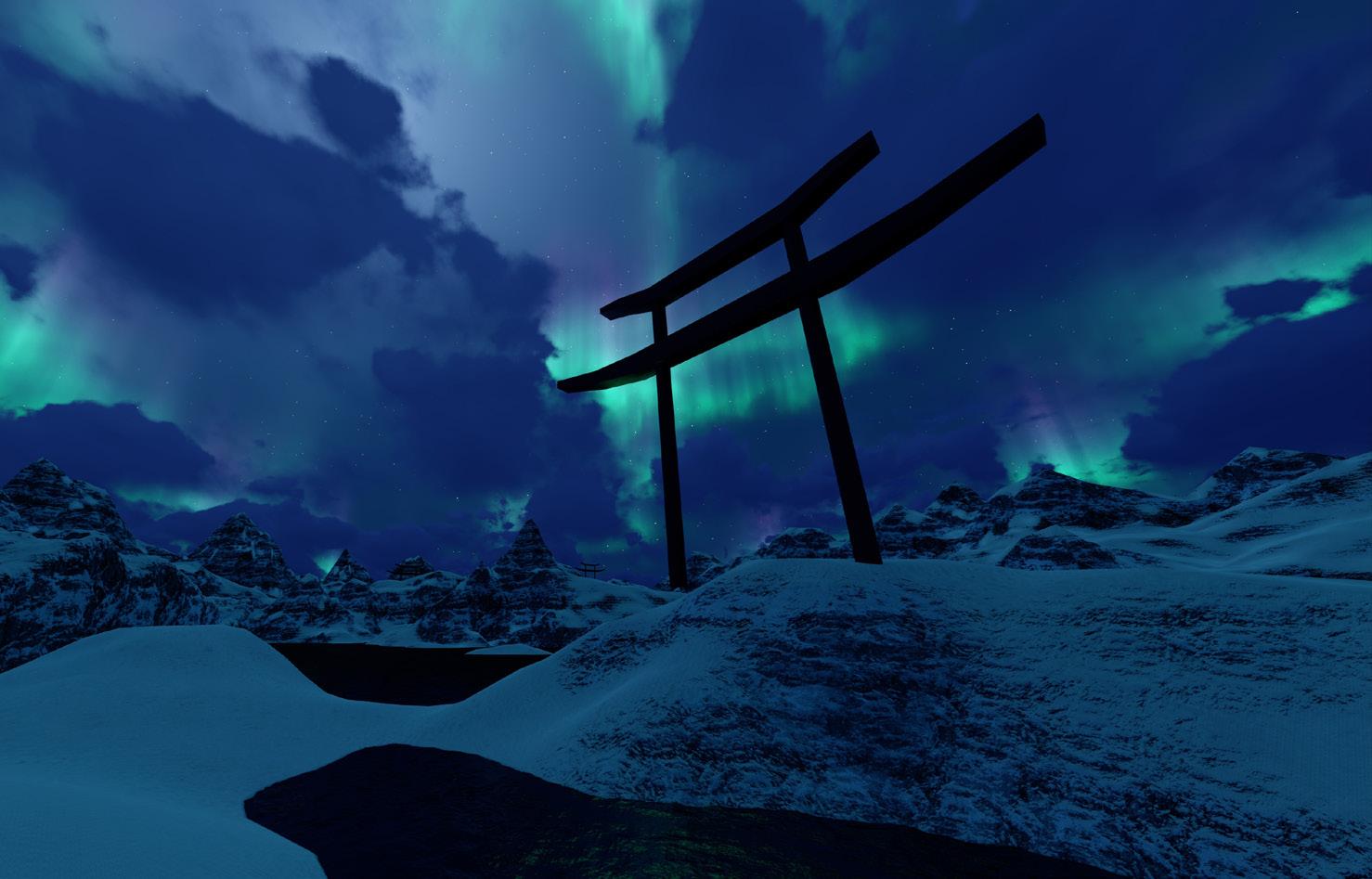
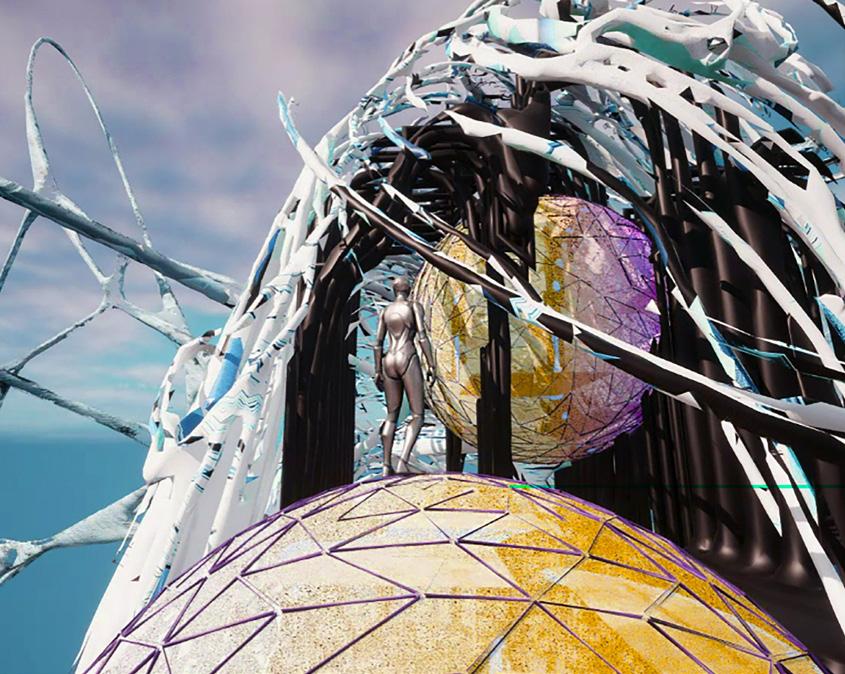
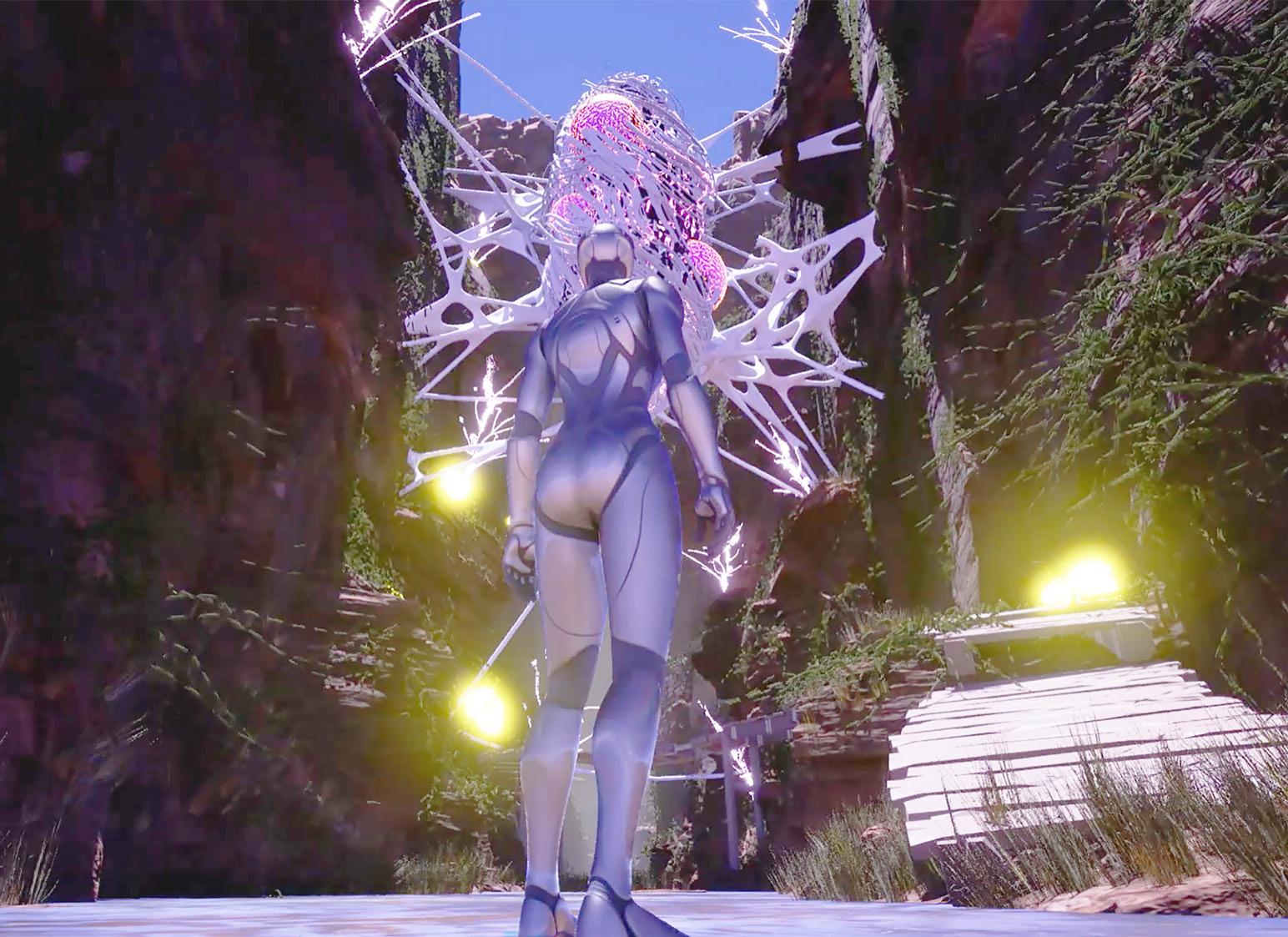
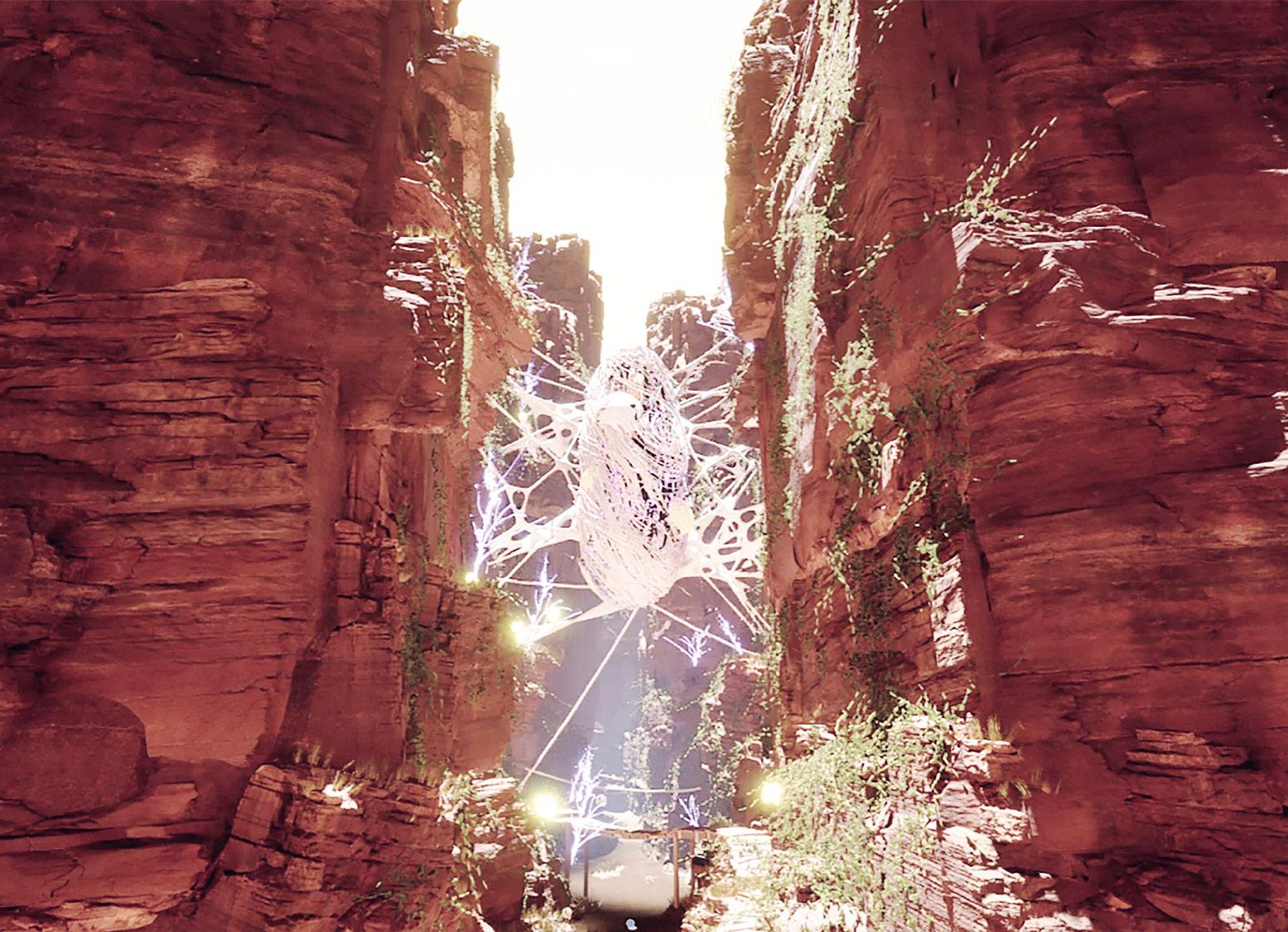
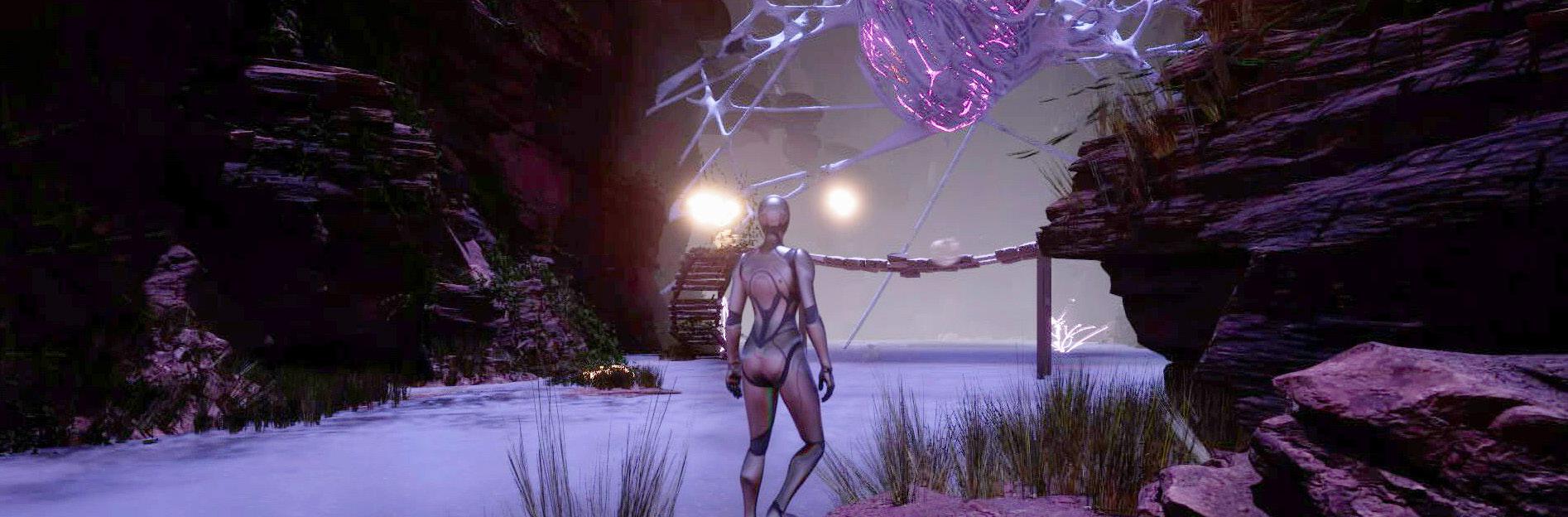
The story is set in a post-apocalyptic version of the world recovering from the aftermath of an extinction event. The rapid decline in human numbers has led to the unprecedented rise of unknown civilisations.
The decline of cities, the deterioration of the natural environment and the endless wars have led to a shift in colonies of these creatures inhabiting extreme environments. This has resulted in a variety of unique architectural structures adapted to different contexts.
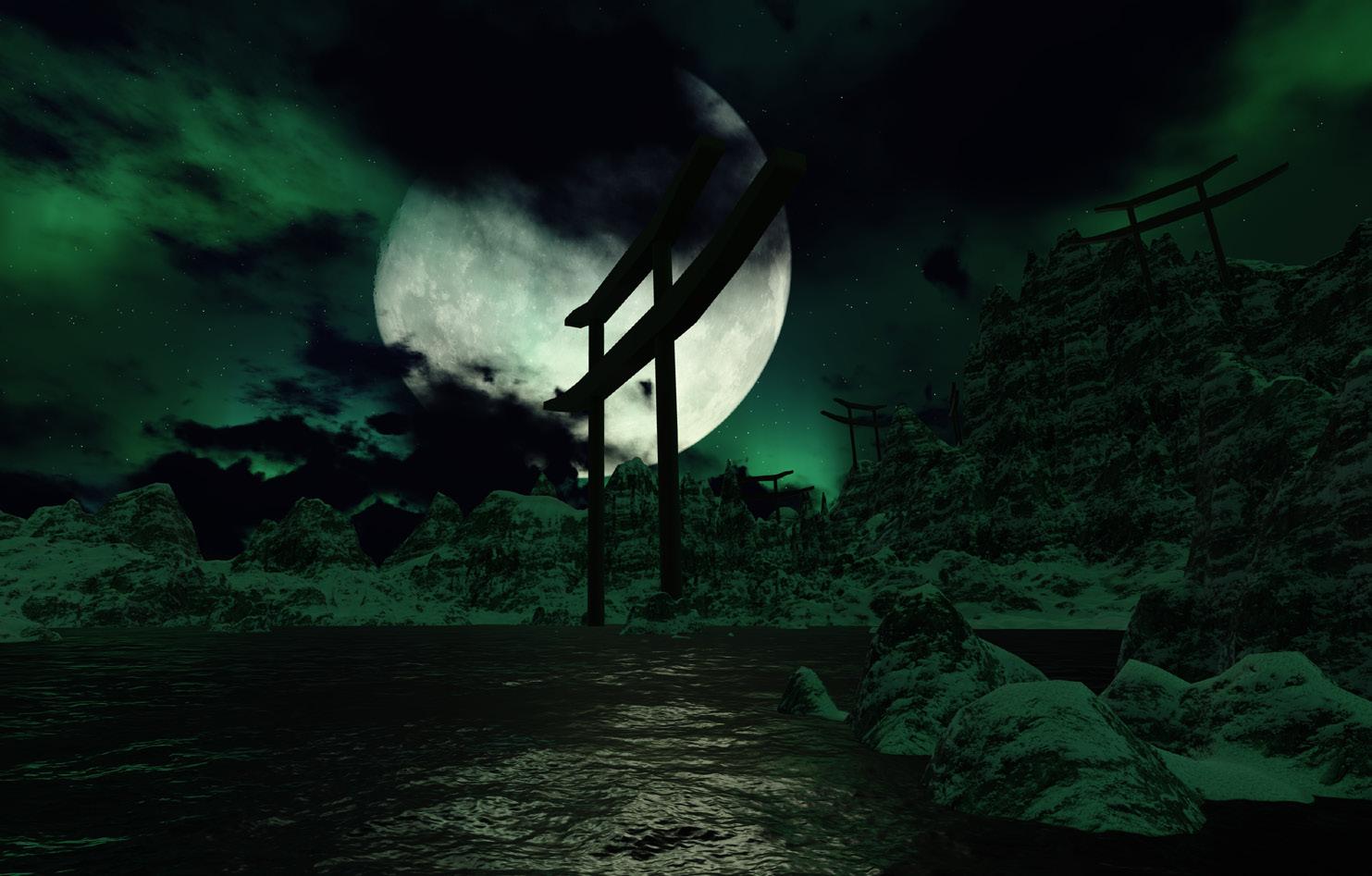
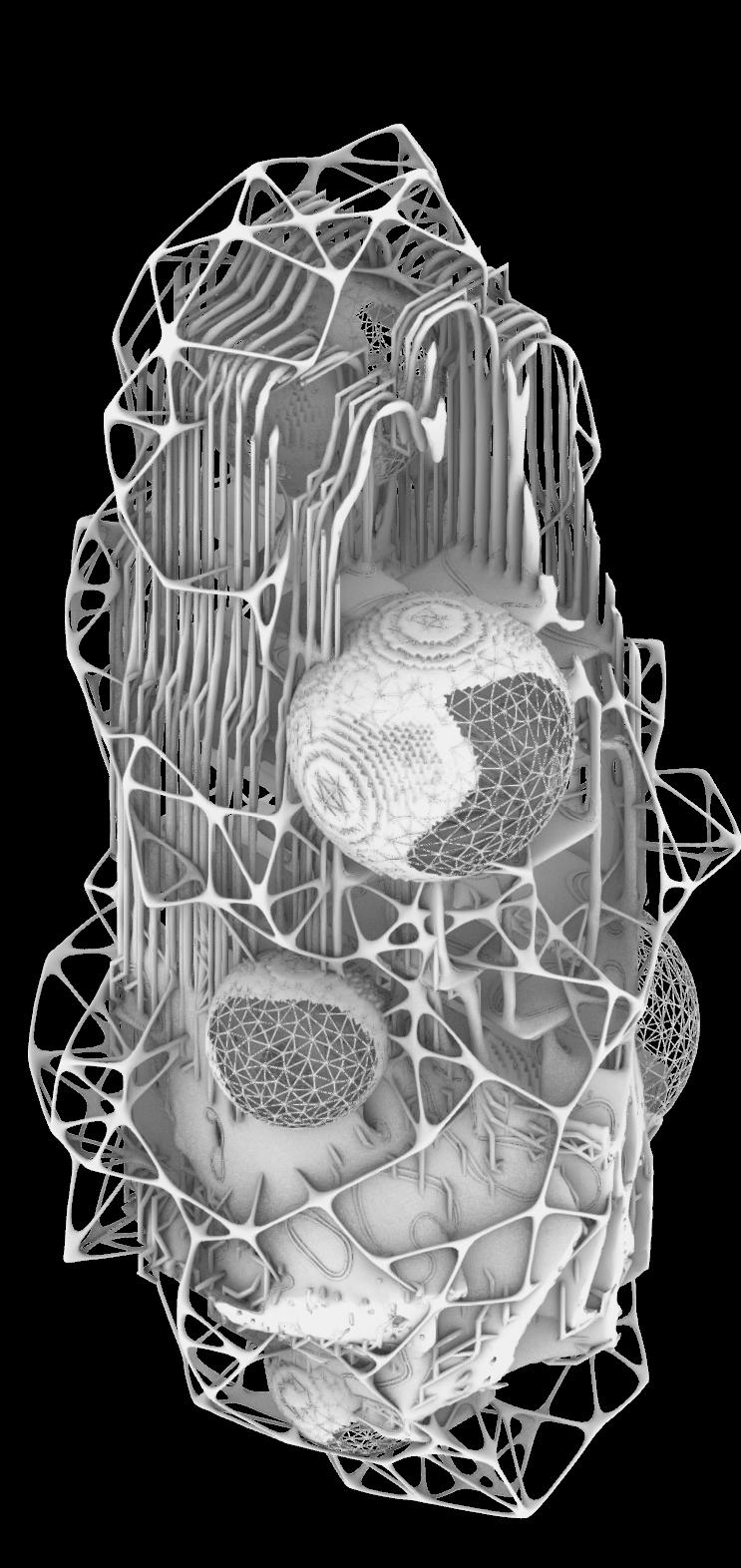
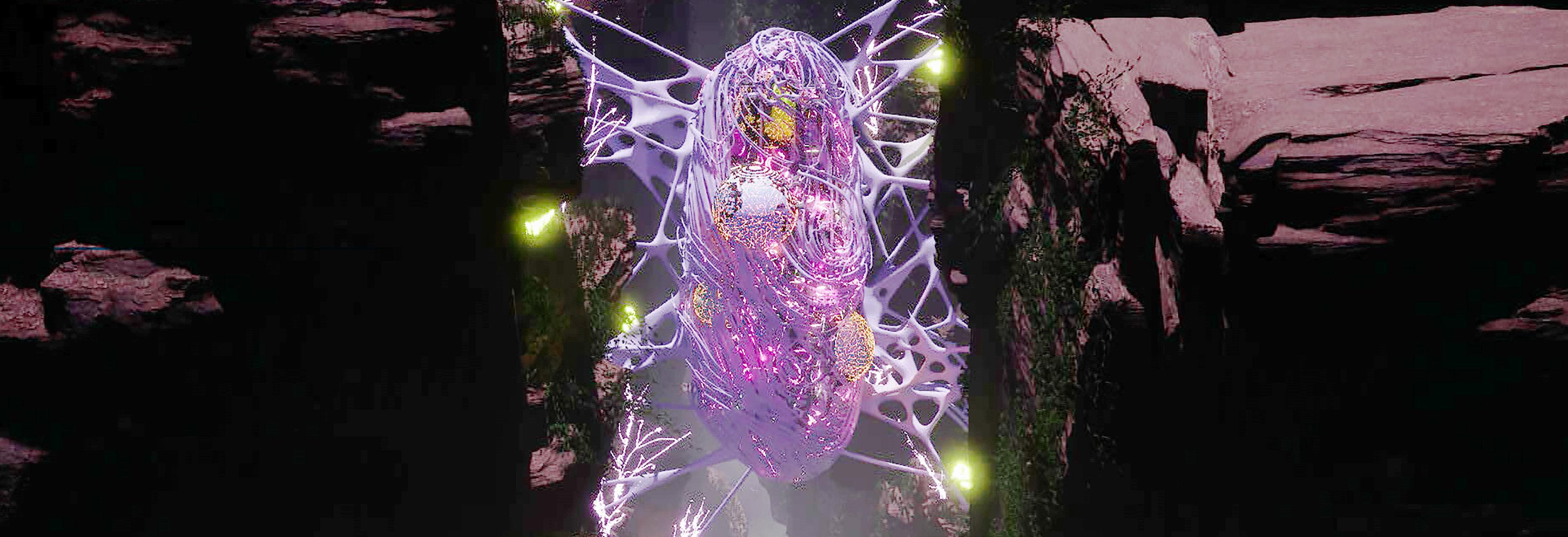
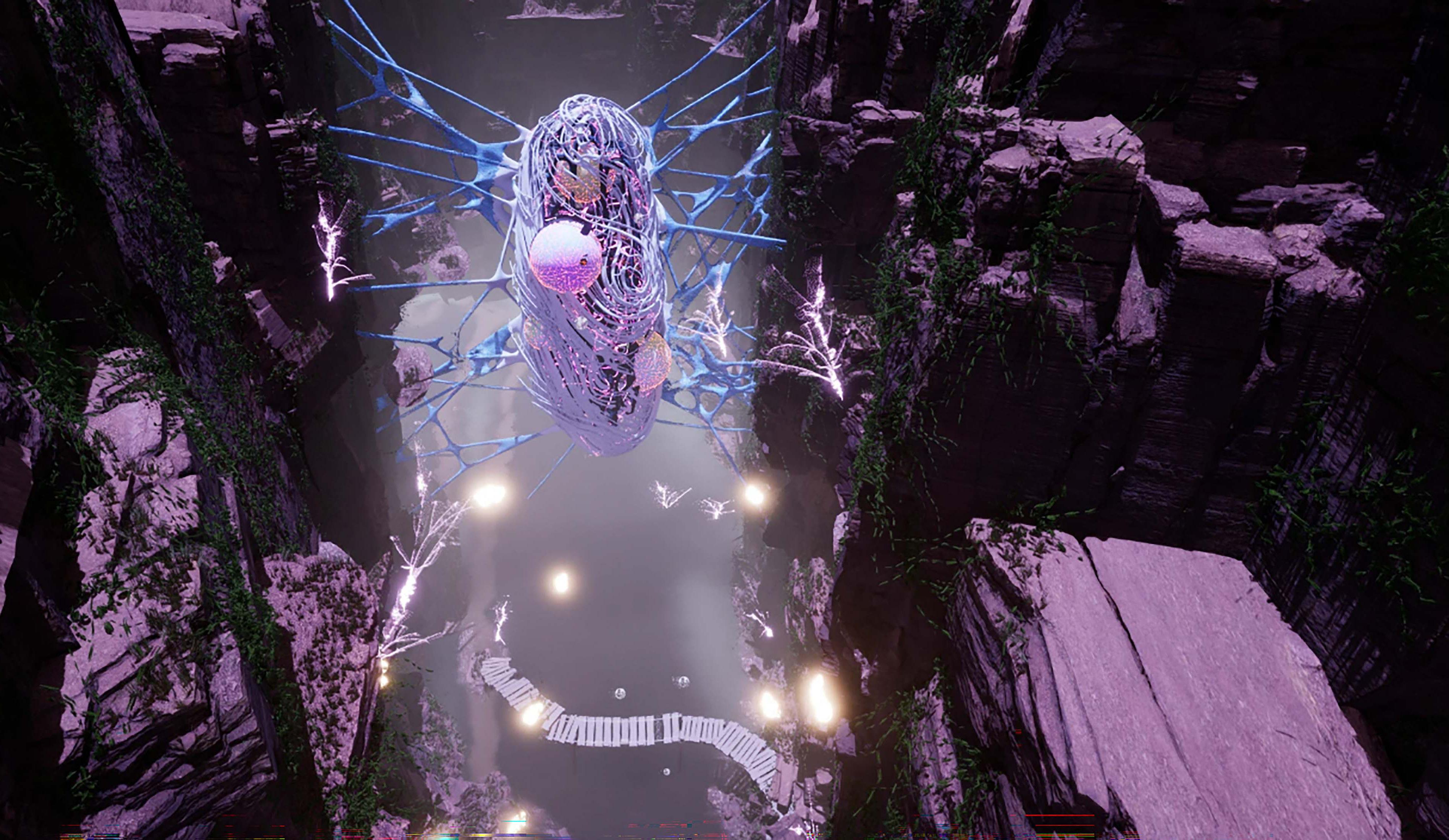
The creature's nest-like structure inhabits the valley through a thirdperson perspective. The pristine structure floats anti-gravitationally through the valley, pulled by sticky threads, in stark contrast to the decaying natural environment around it...
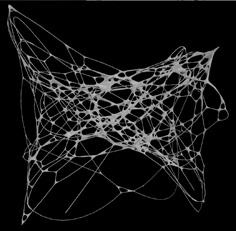
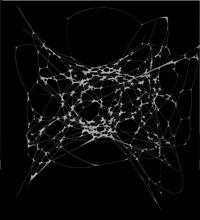
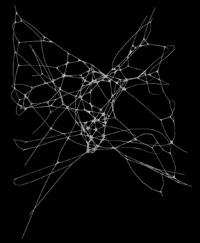
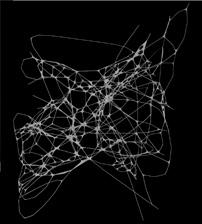
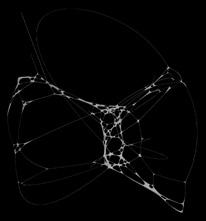
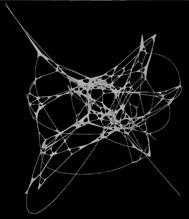
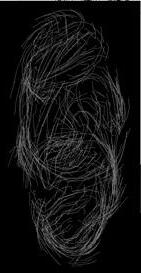
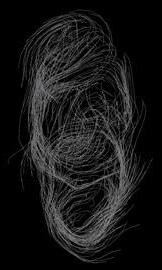
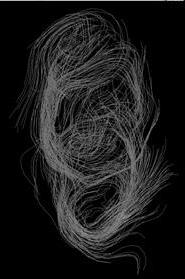
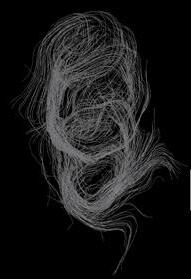
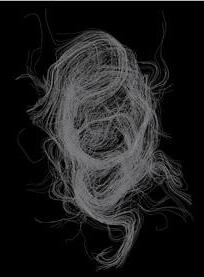
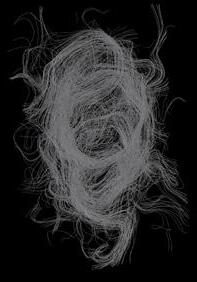
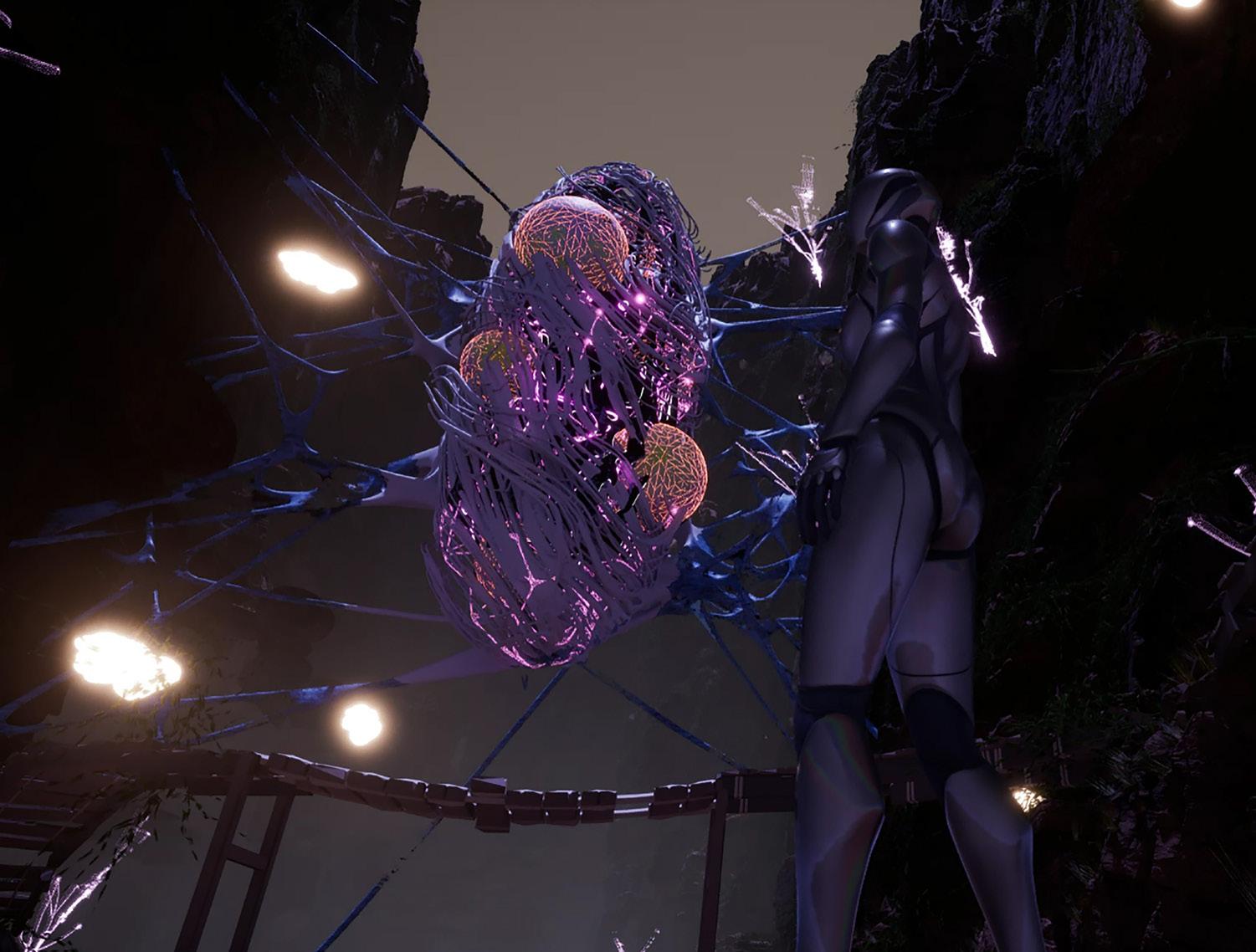
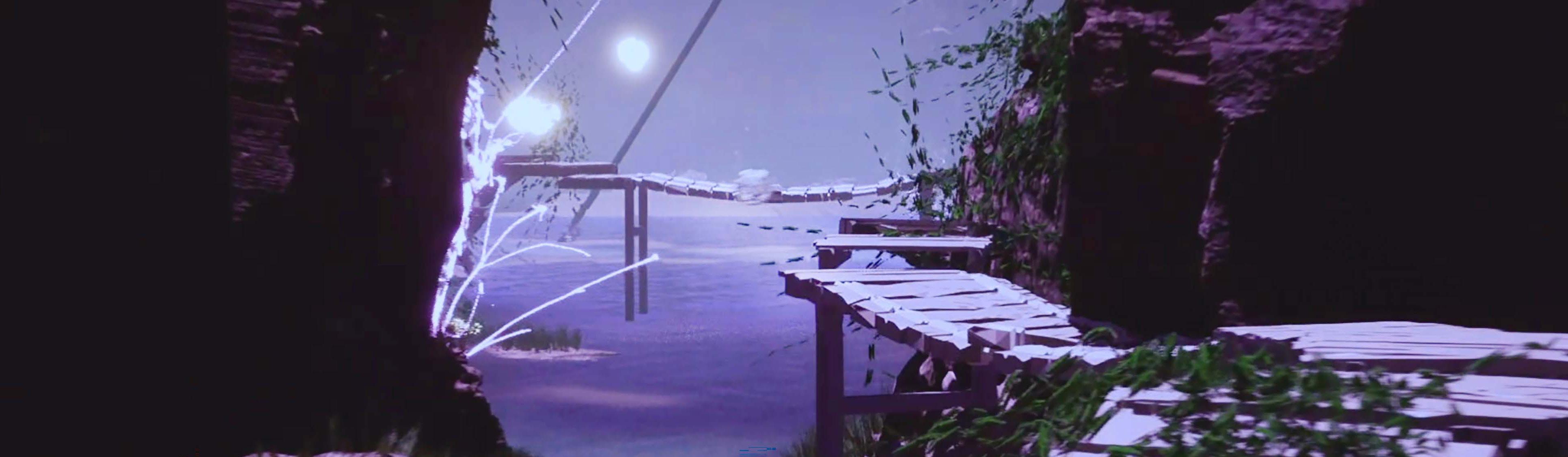
The pristine structure floats anti-gravitationally through the valley, pulled by sticky threads, in stark contrast to the decaying natural environment around it.
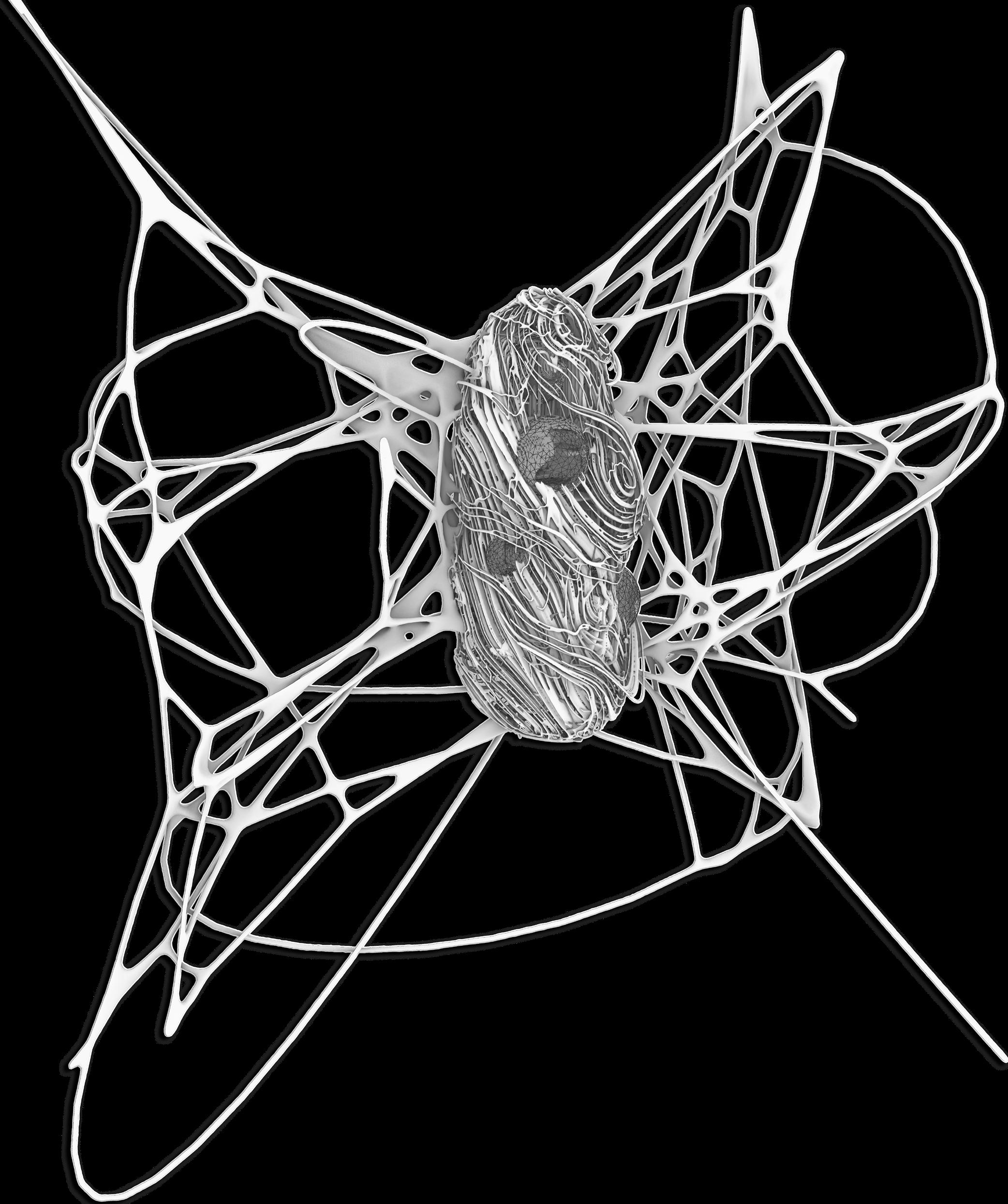
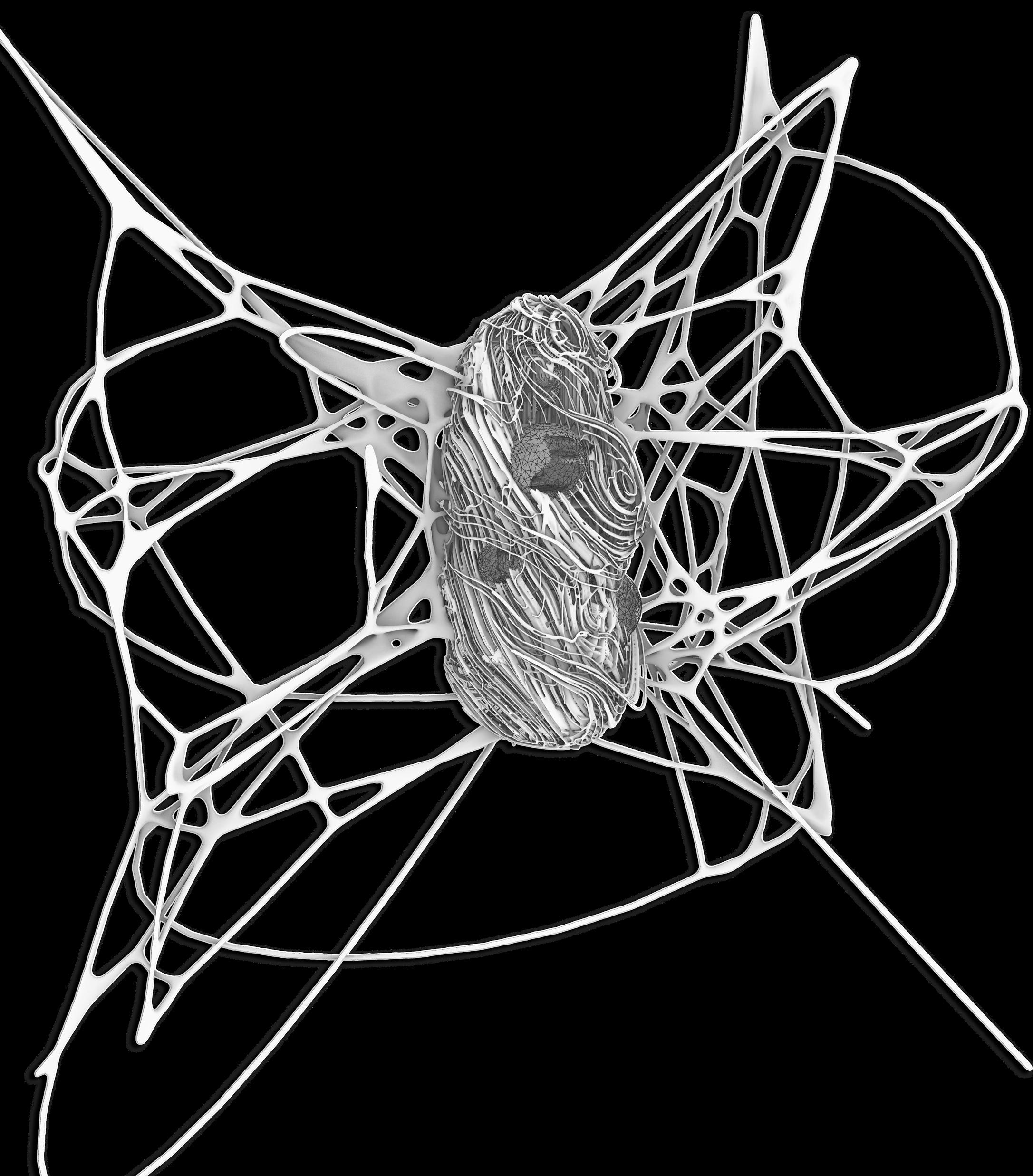
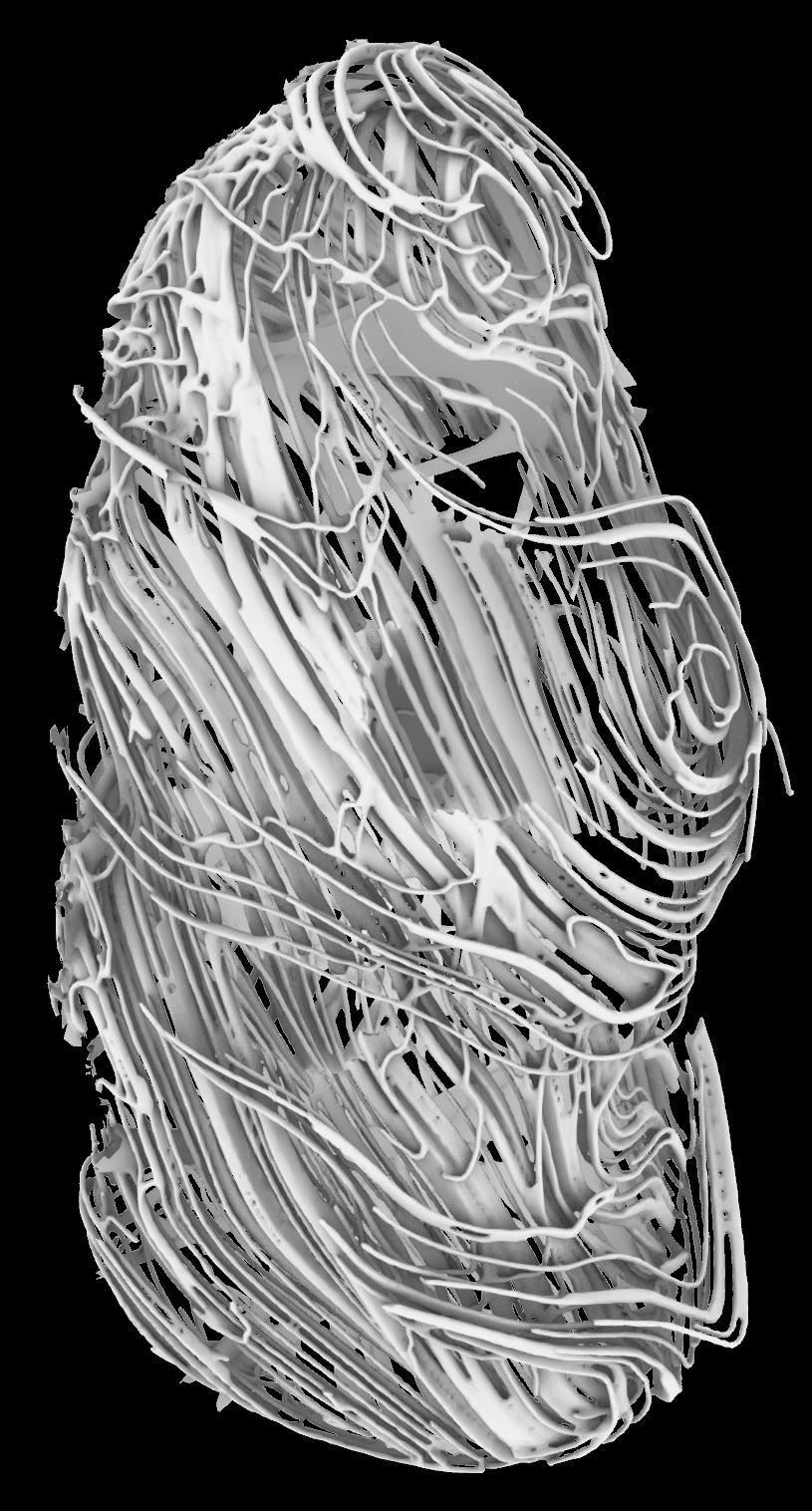
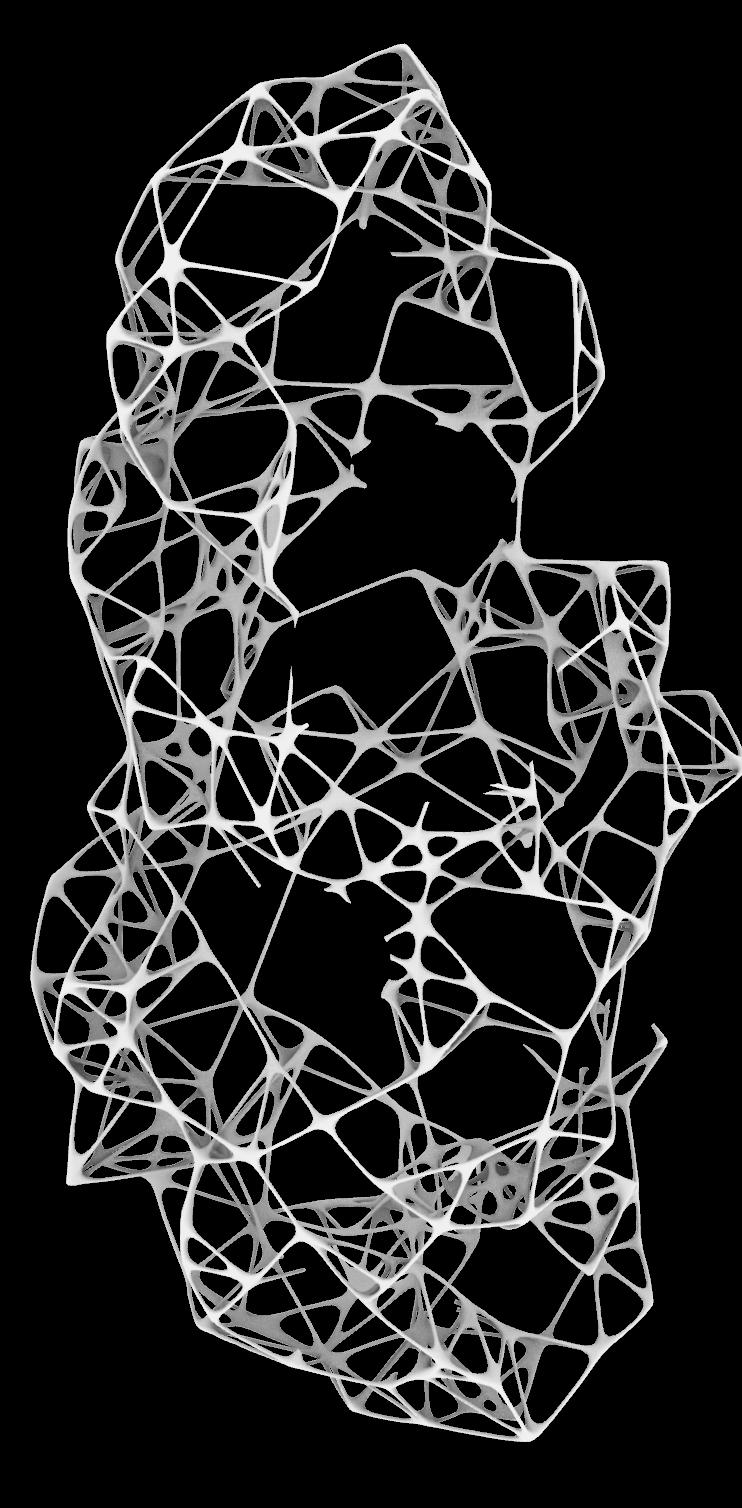
NET SURFACE
The surface is the key element for creating atmosphere, attracting the explorer to go closer in order to capture prey and experience the entire anti-gravity structure.
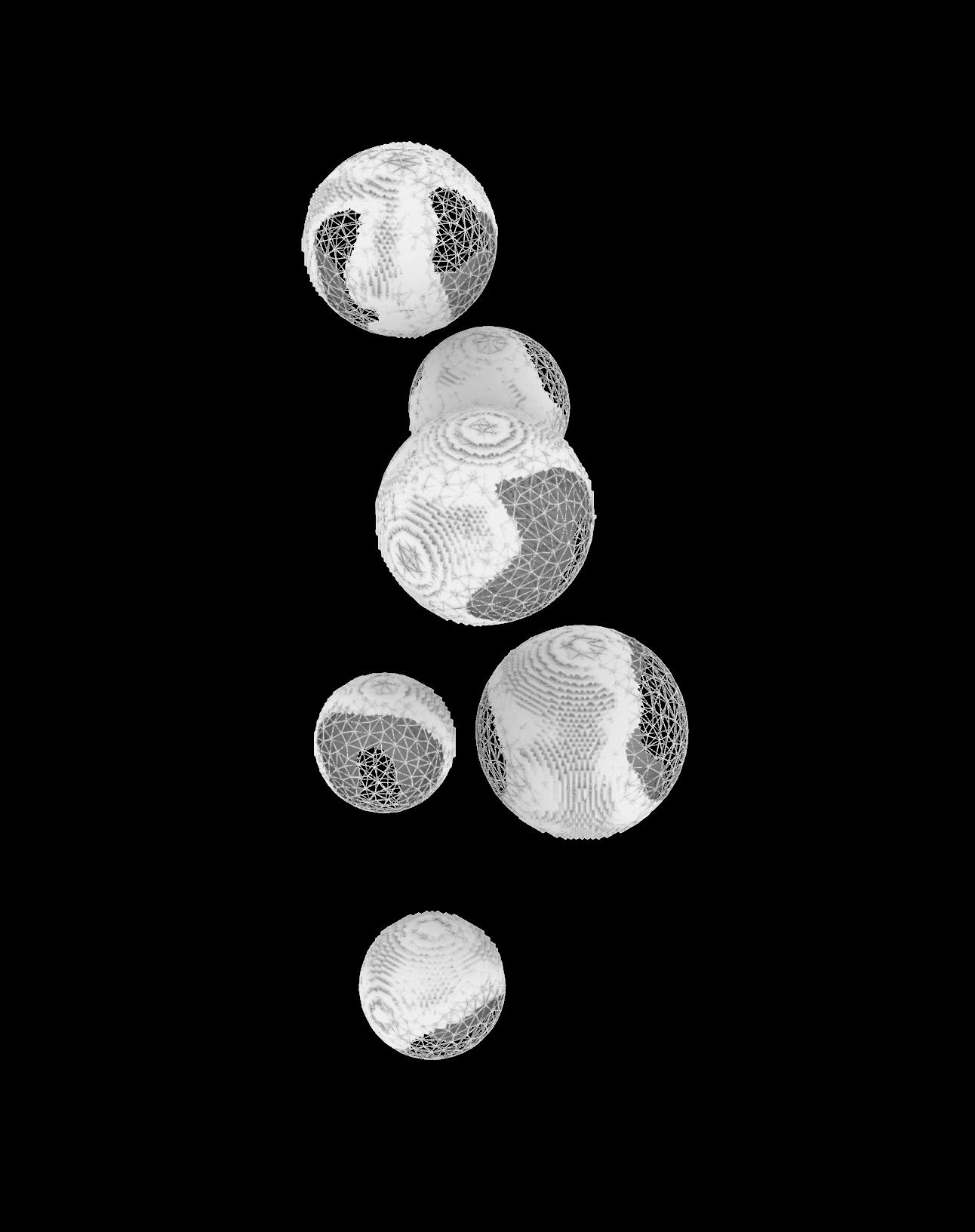
BUBBLE SPACES
The bubble spaces play an essential role in the whole structure which are both used as a transportation centre and an energy supply station.
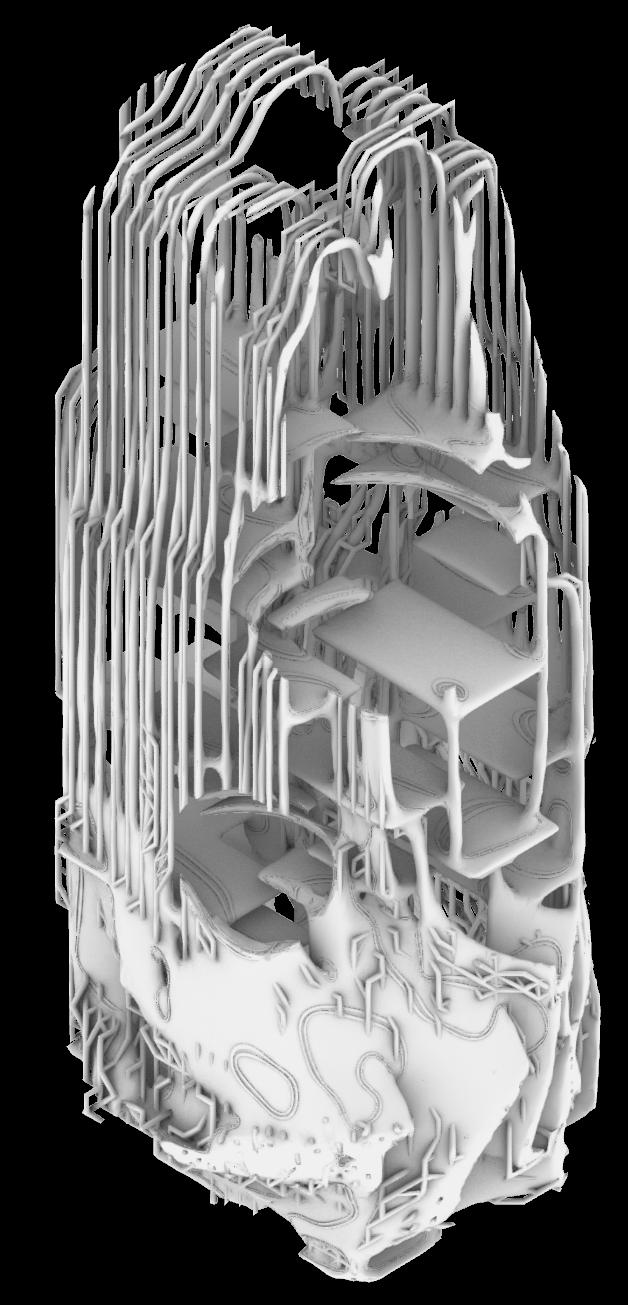
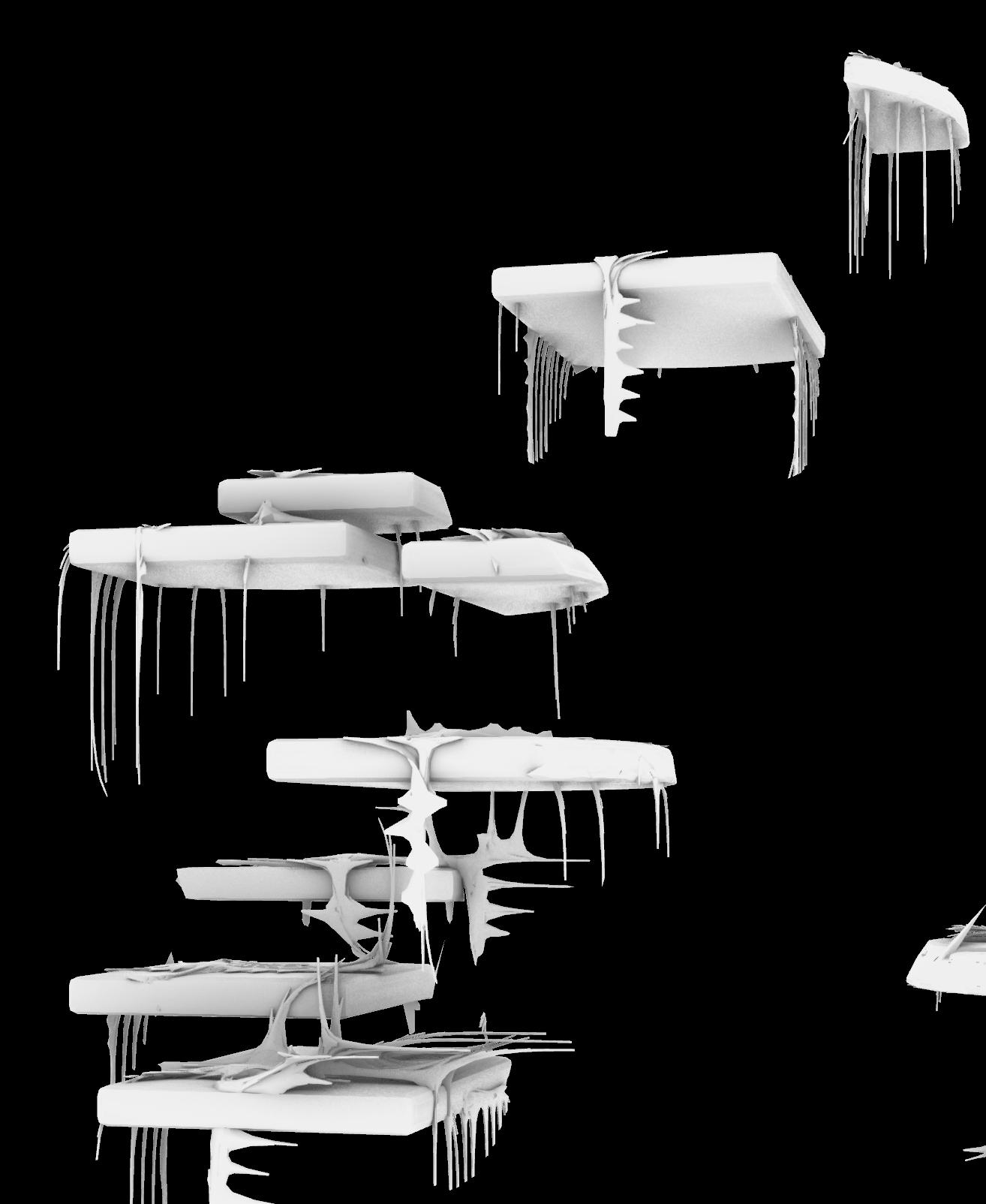
SUPPORT FRAME
The supporting frame builds a solid foundation of the floating structure. The futuristic spirit is reflected in the flexible structures and organic connections.
INTERIOR SPACE
Compared with the dancing façade, the interior space is relatively normal which provides a clear area for multiple general purposes.
BUBBLE SURFACE
The gentle transformation of the surface of bubbles blurs the edges between different materials.
INTERIOR BUILDING
The interior building contains both the bubbles and platform spaces. A mix of squares, circles, hardness and softness make up the whole richly layered collection of spaces.
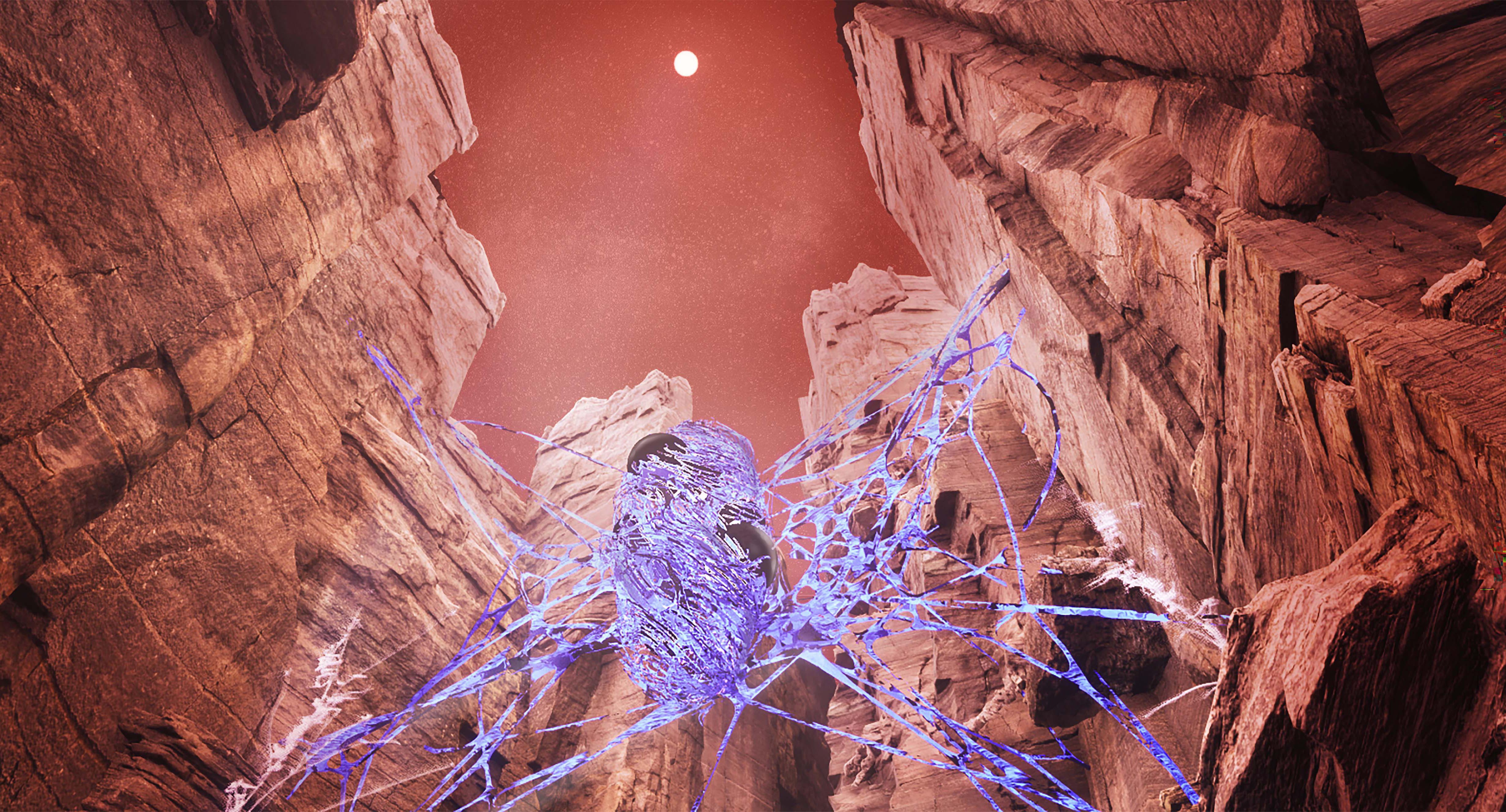
Thanks to the rich settings of UE5 and the clear demonstration of tutors, we had the opportunity to create flexible and complex movement circulation which let the explorer go through the space in multiple ways and experiences a variety of interesting senses.
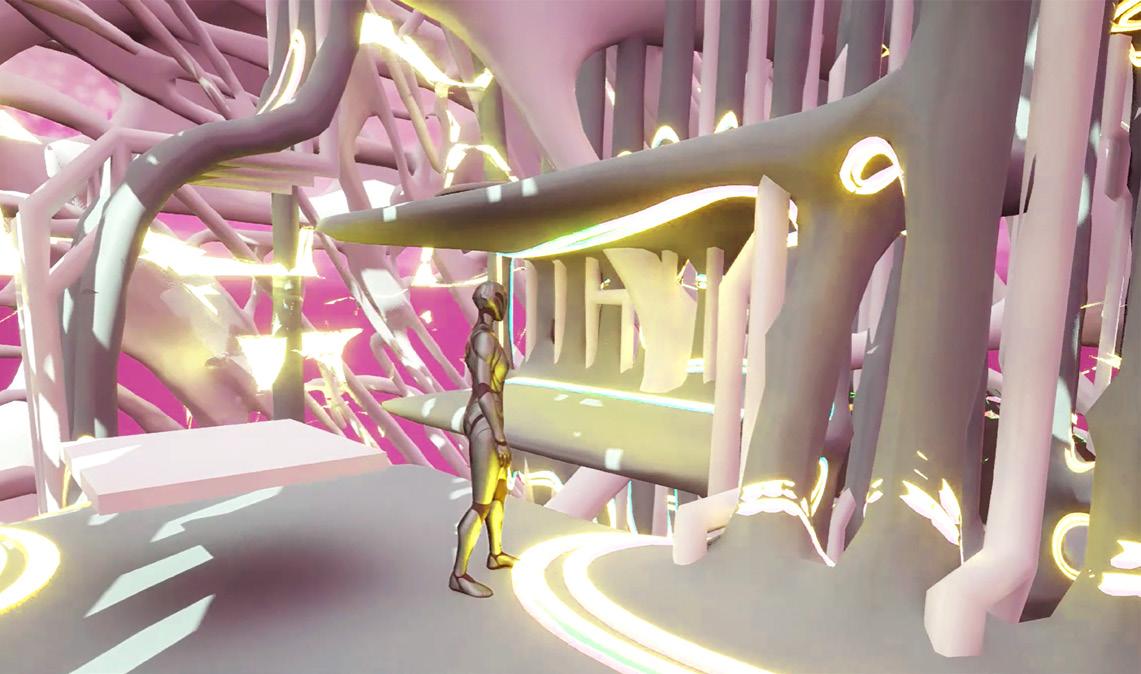
Inside the building, there are autonomous and manually activated floating panels which allow the explorer to freely experience the entire environment, while also being aware of the dangers it contains.
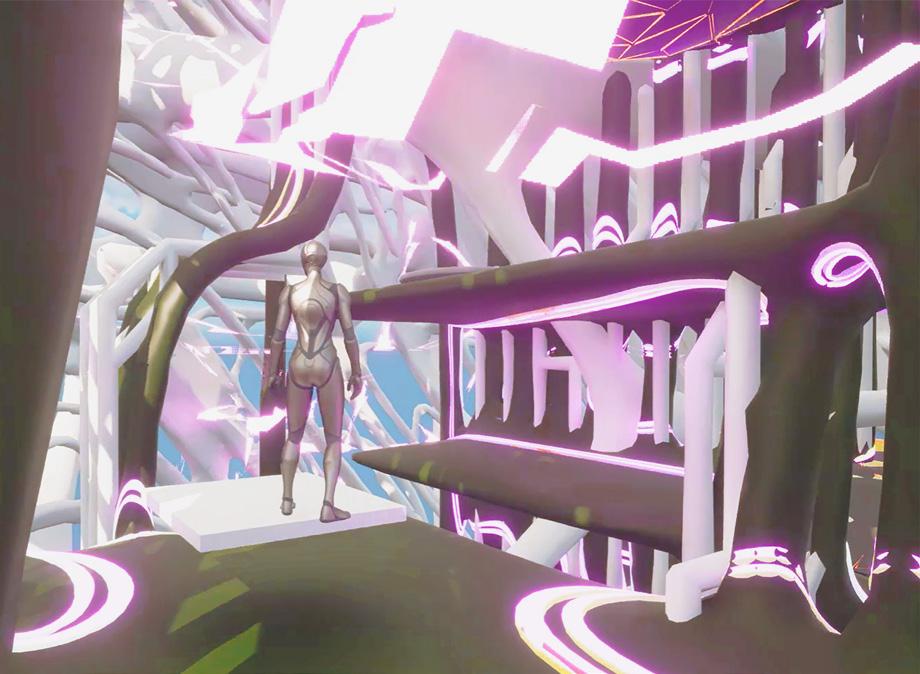
The bubbles were made out of transport material, with their frames consisting of lightweight metal such as titanium and other aviation materials which create a strong contrast with the solid structural material.
Real Fantasy-Filling a Blank Page with Creativity and Imagination
Reinterprets Playground for Children's Experience
Graduation Design / Individual Project / 2018-19 Academic Year
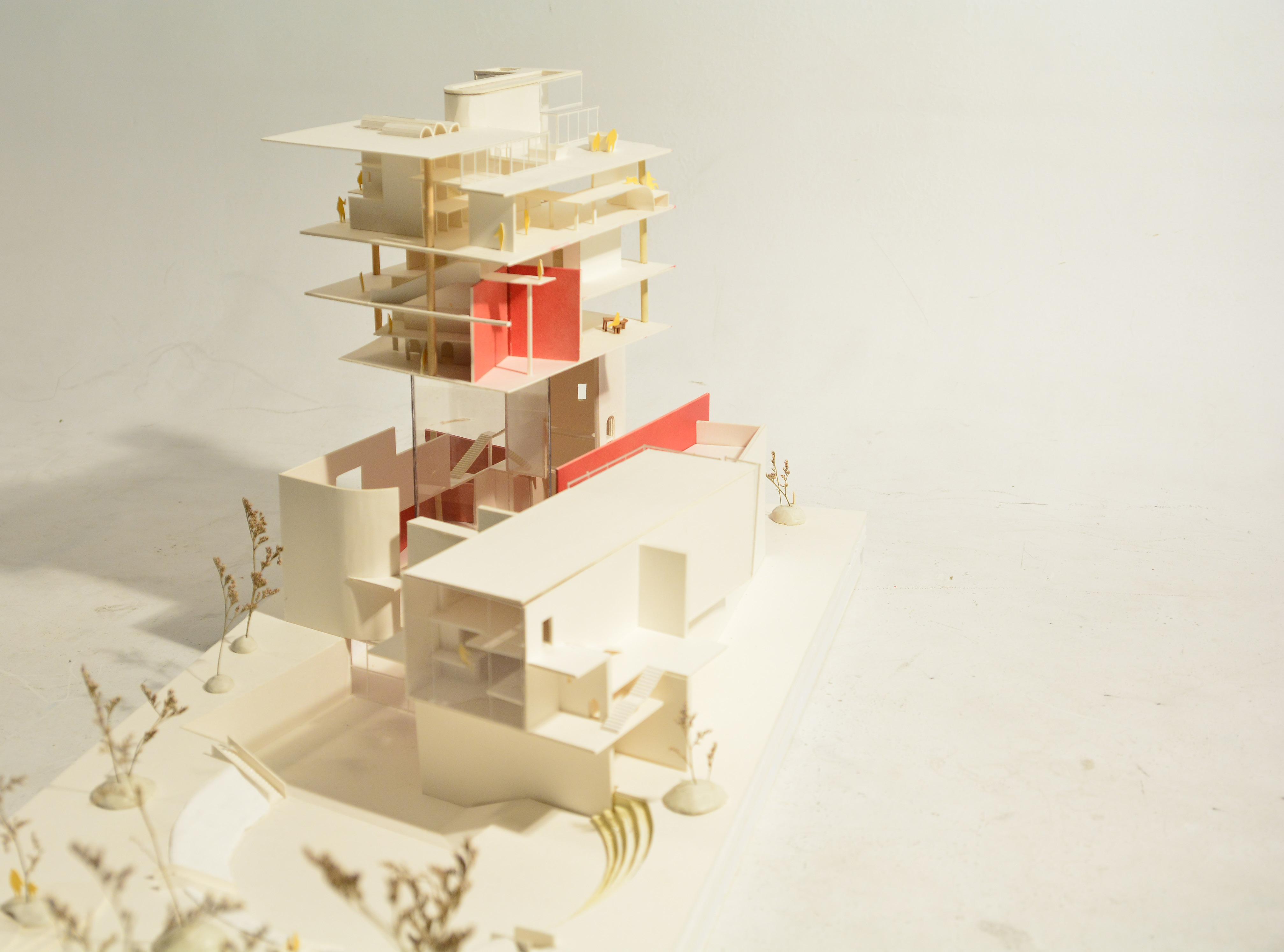
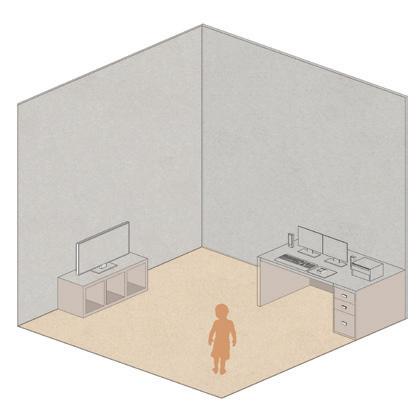
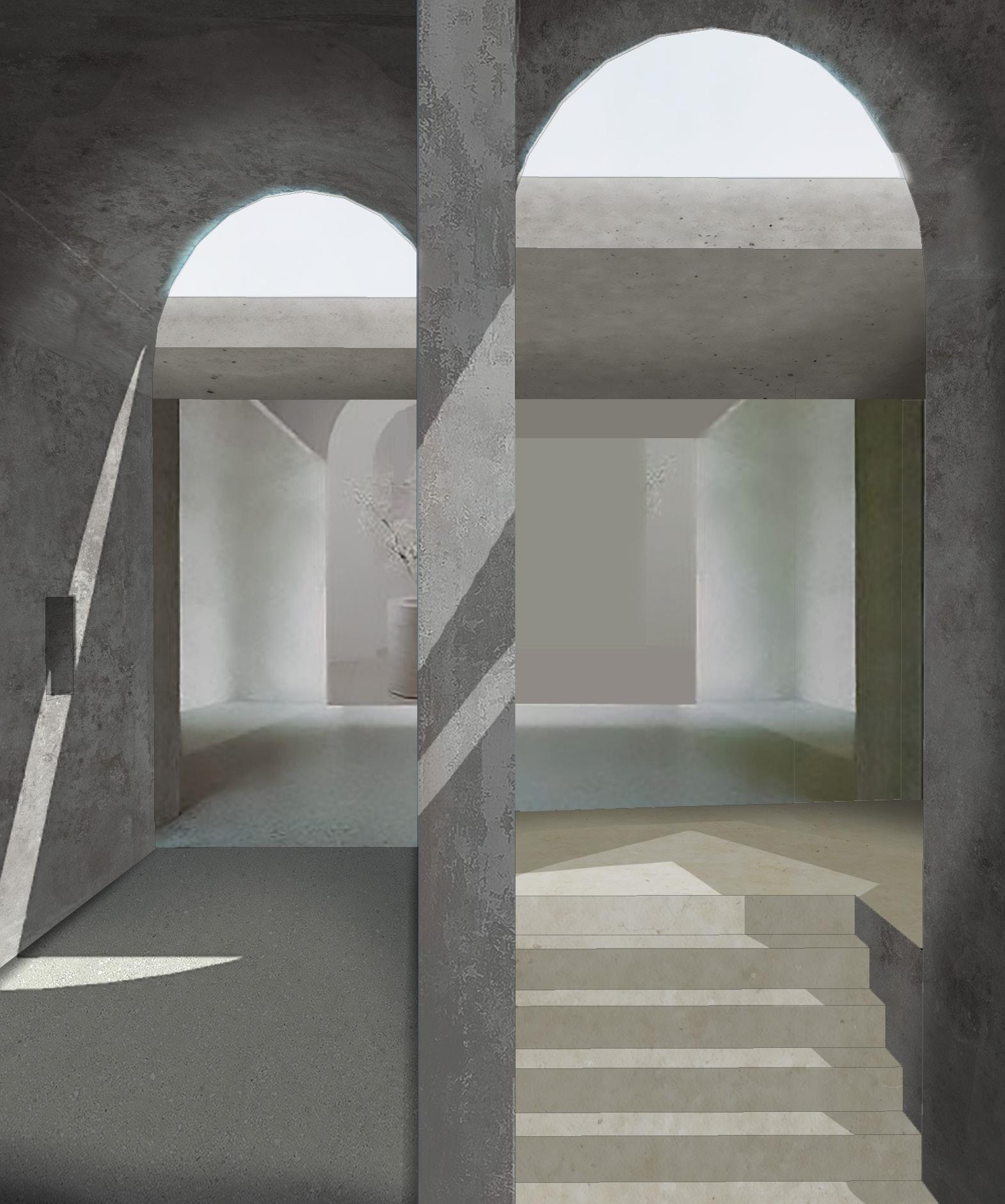
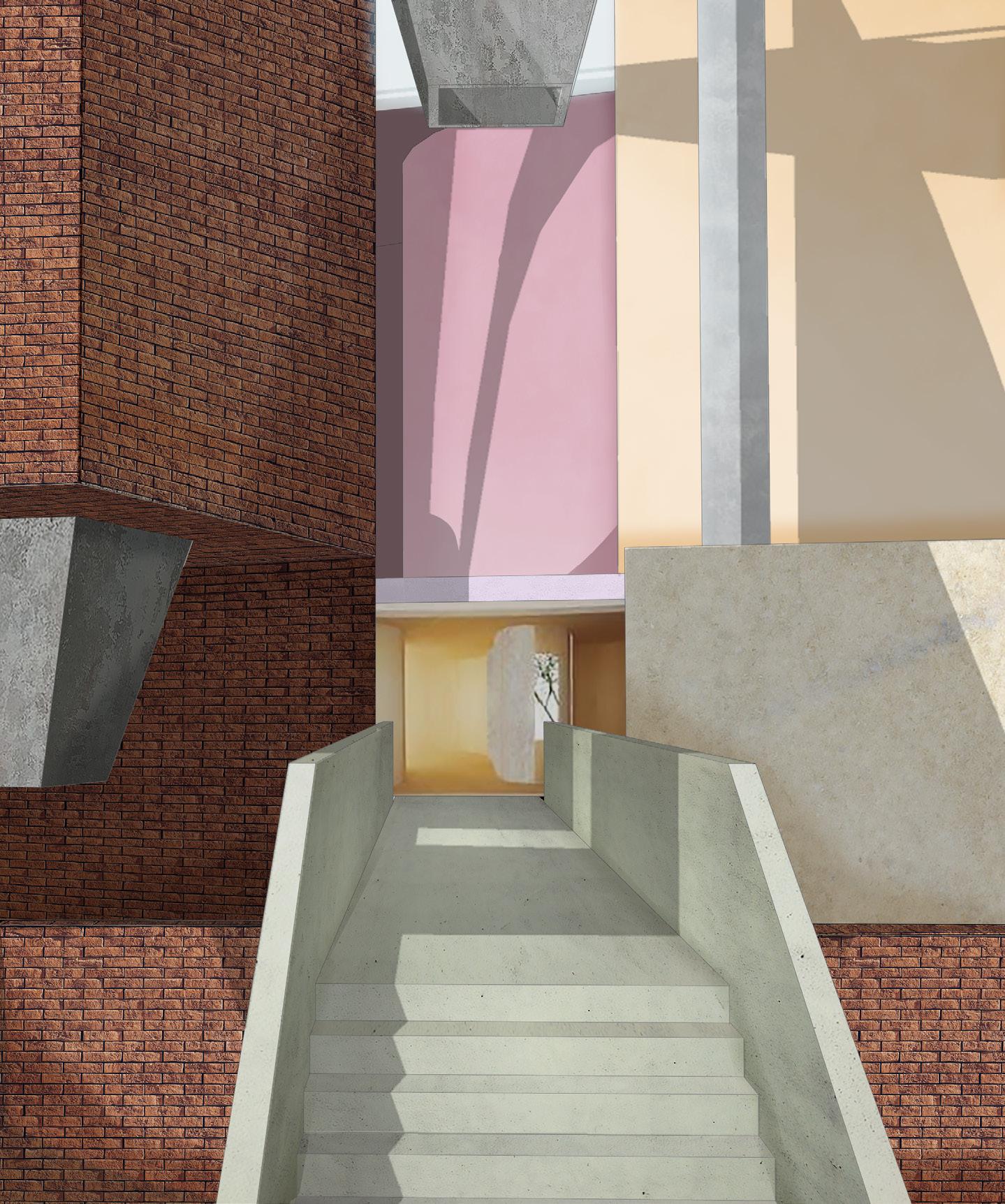
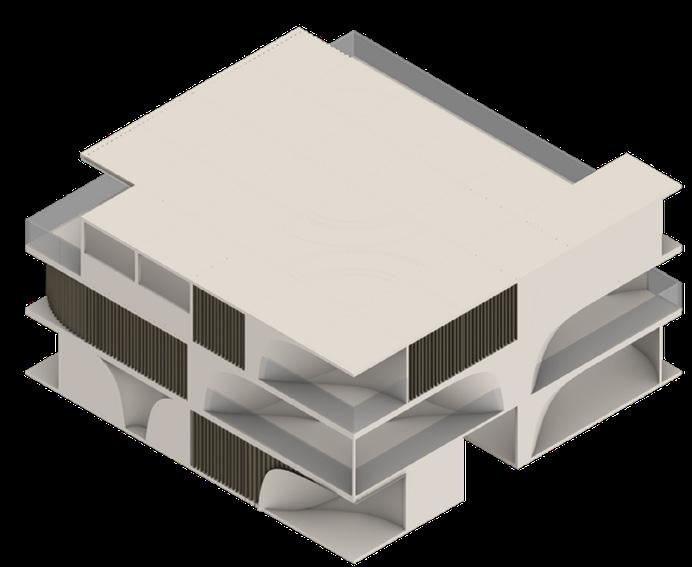
The world certainly looks different through the eyes of a child; enormous, intriguing, and somewhat overwhelming, and it has long been believed that what we encounter as children shapes our perspective of the world. The project was designed to create a “space of opportunities”, an abstract building for imagination and play that enacts a universal story.
Our memories are products of our body’s experience of physical space. I wanted to create a playful piece of architecture that would stay in the memory of the children when they have grown up and design spaces that enable natural creativity and freedom of playing and exploring.
The project is located at the Pier-2 Art Center, Kaohsiung's most popular cultural spot with the collision of an old area and new fine art. I wanted to design not only a playground promote exchange and discovery but a place where its history can be experienced in a playful way.
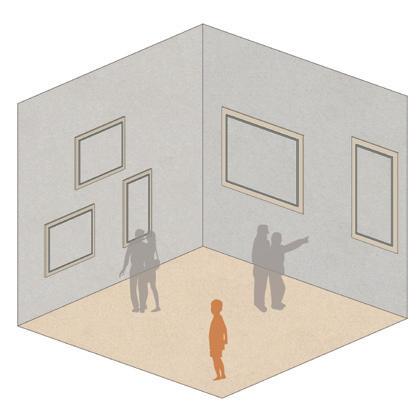
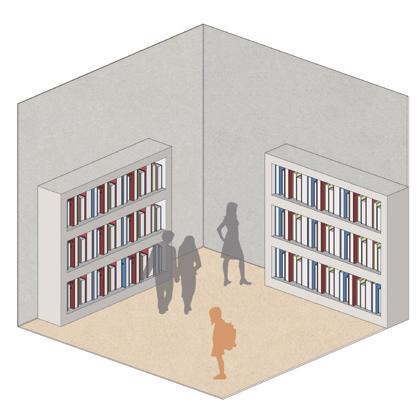
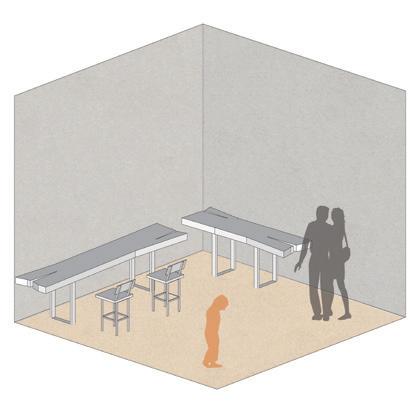
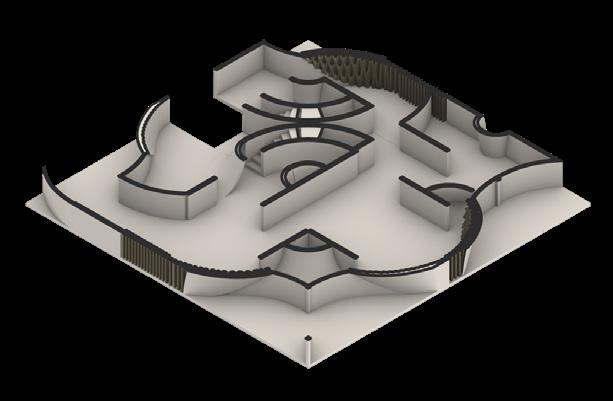
I wanted to design a building from a child’s point of view. Spaces built for children should be scaled down to match their height and spatial needs, so that they are able to move around and interact with the space without the intervention or help of an adult.
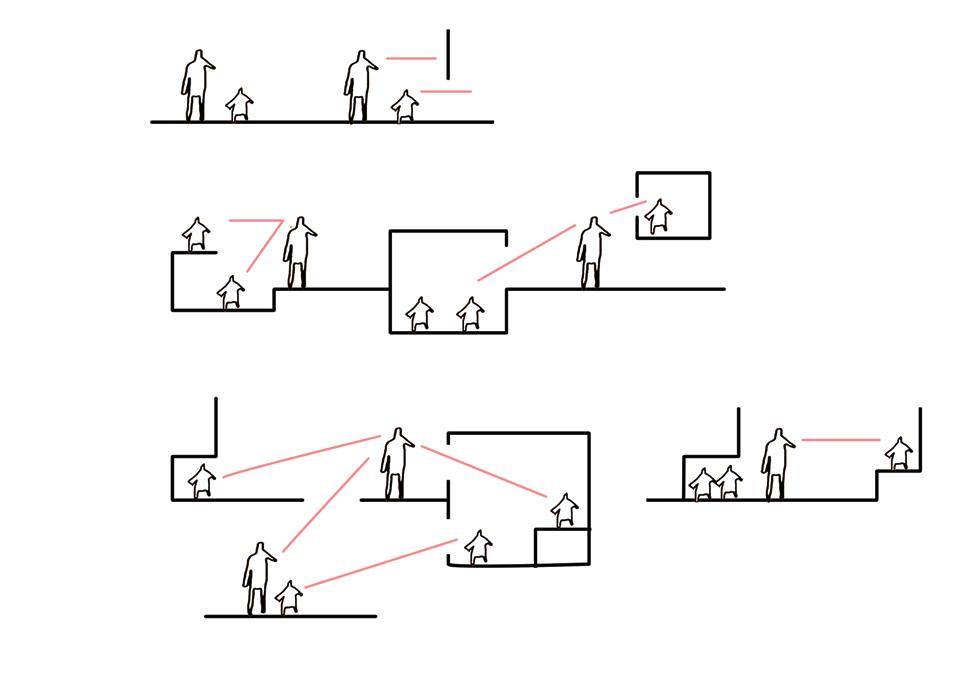
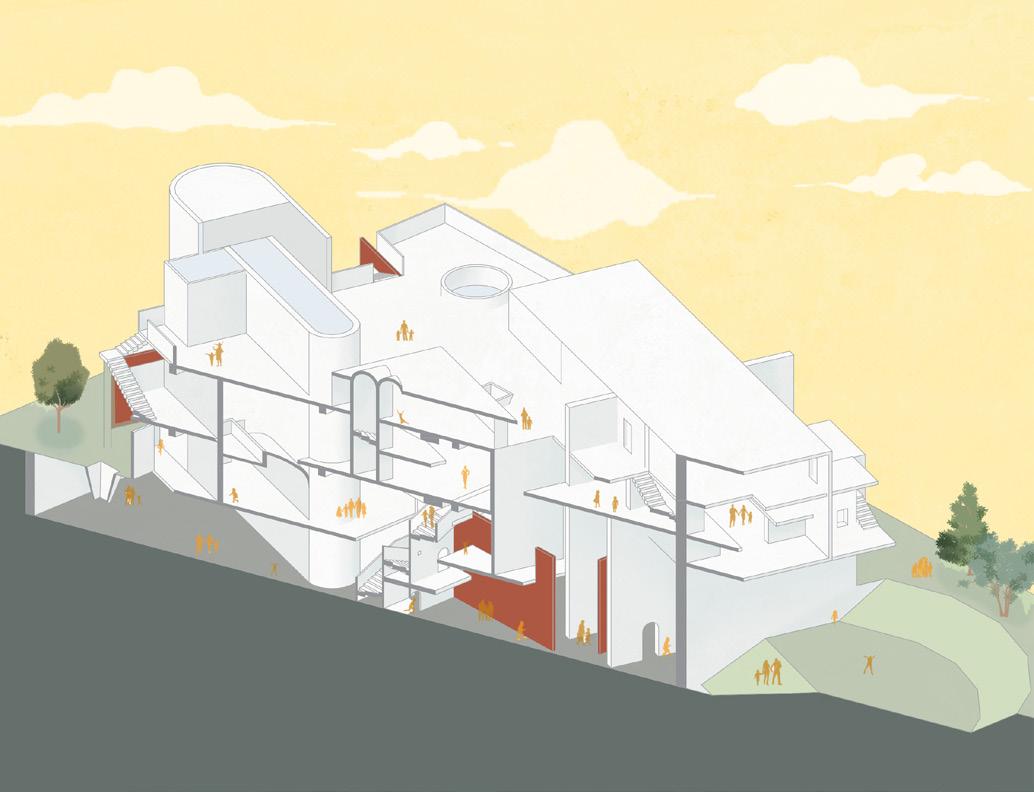
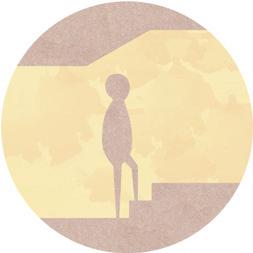
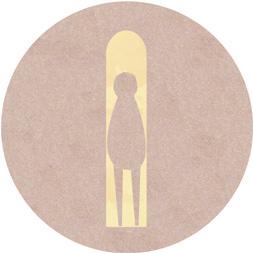
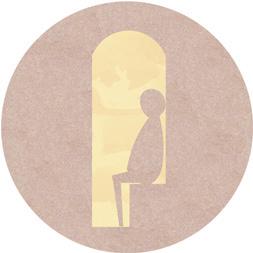
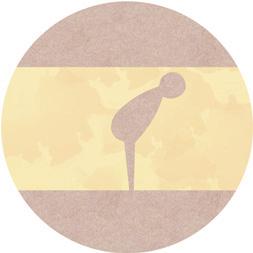

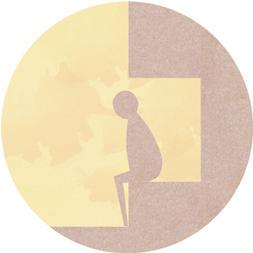
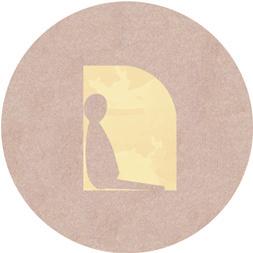
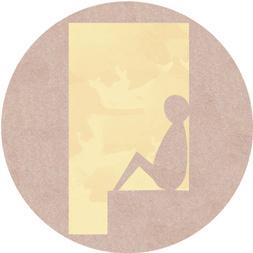
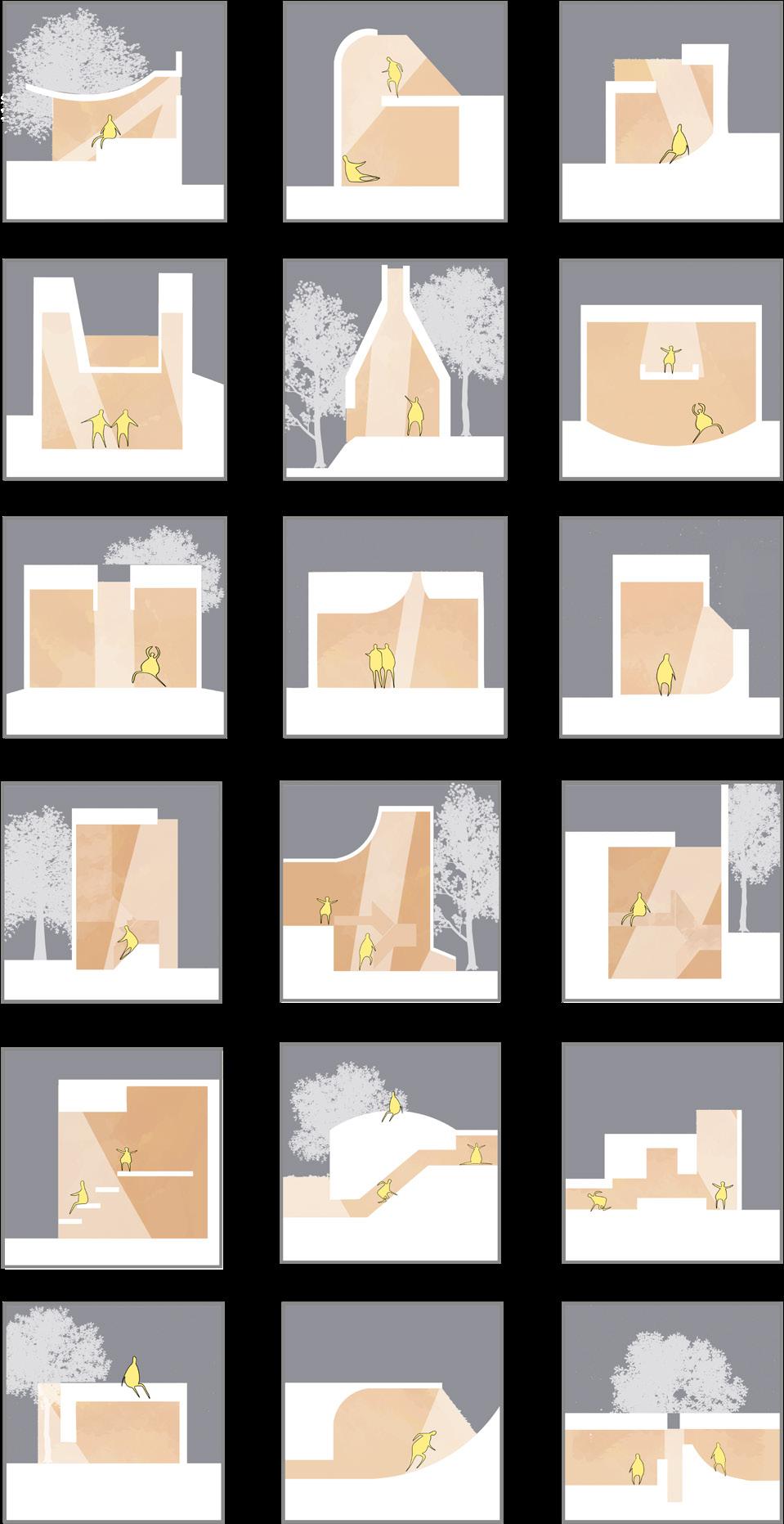

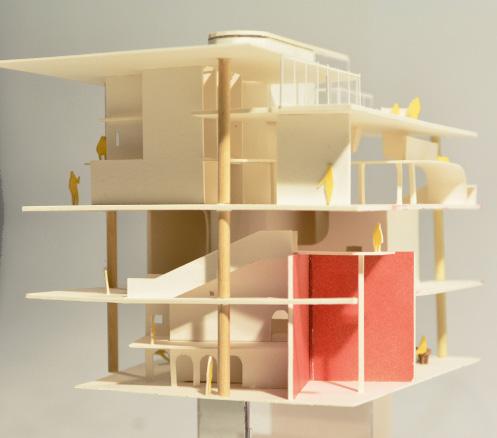
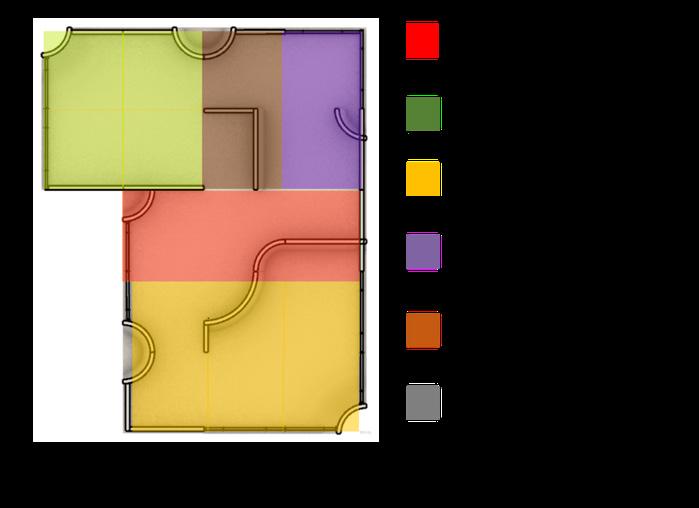
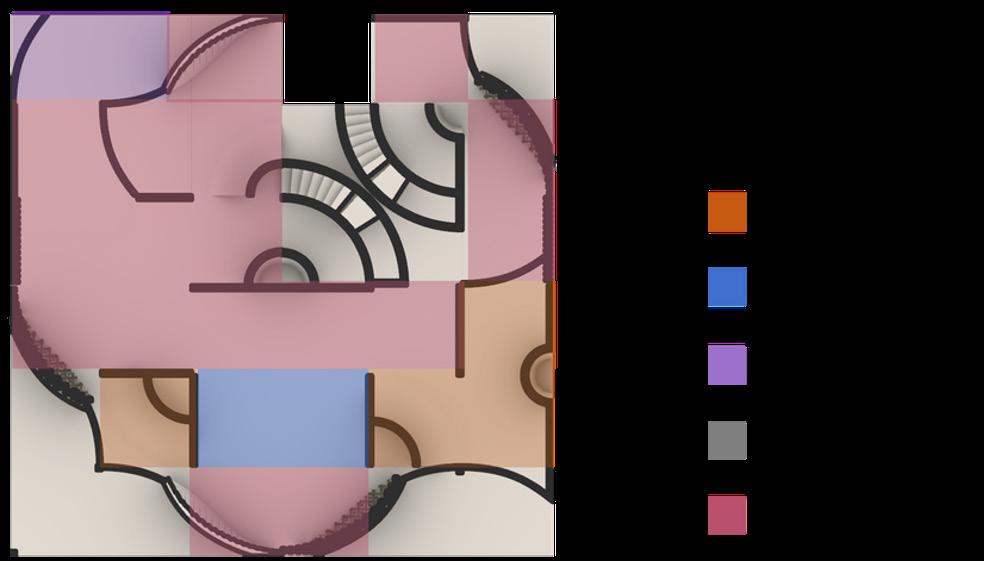
The 8 elements in my place design open up a wide variety of possibilities. The design provides multiple means of access to any location. These decisions produce escalating challenges for the kids; mitigating risk and ensuring the correct age-range have access to the more treacherous areas instead of withholding them entirely. Older kids climb over while younger crawl under. The child, the conscious adult, and the prepared environment, all joined together and codependent on one another.
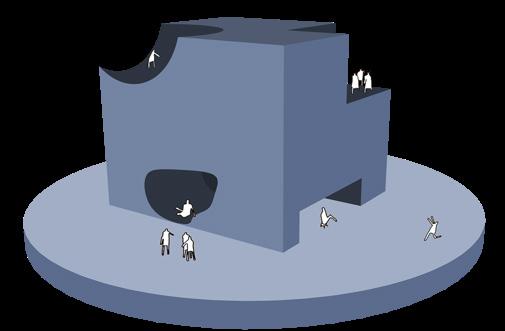
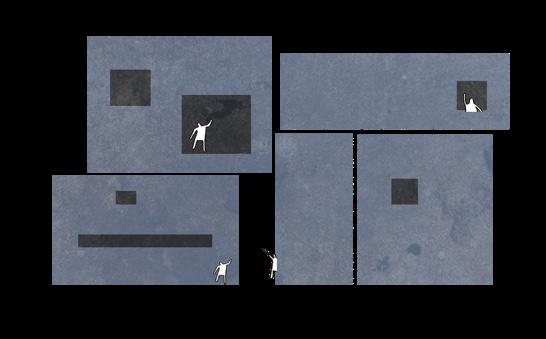
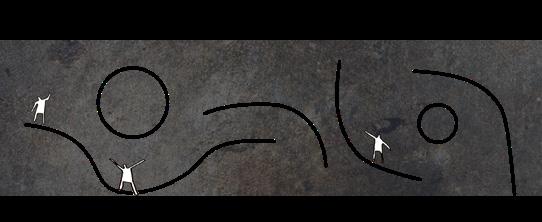
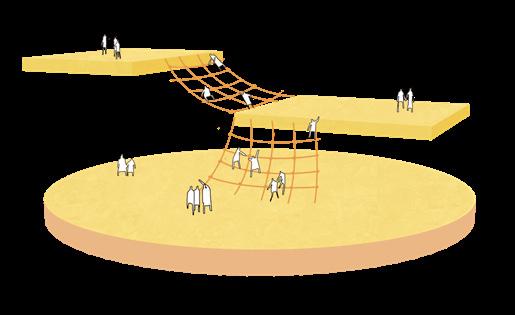
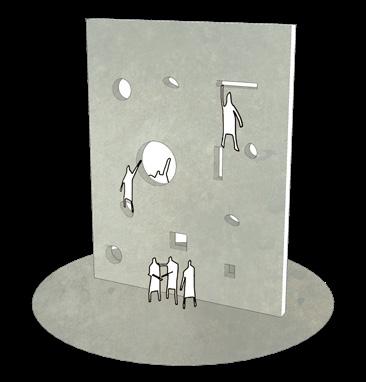
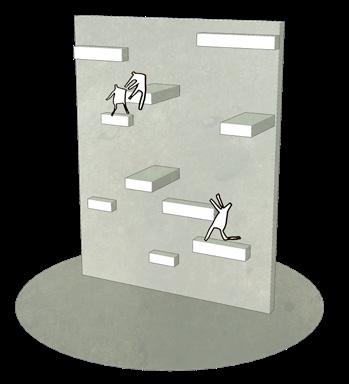
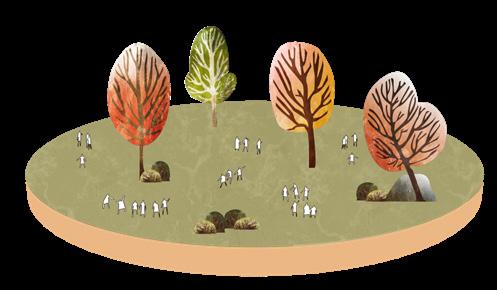
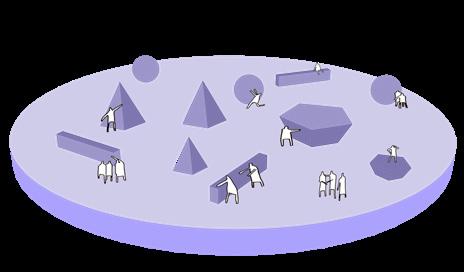
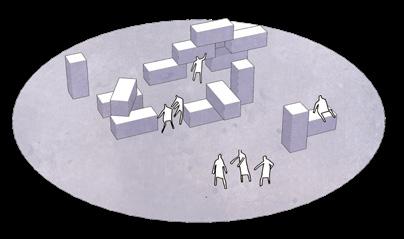
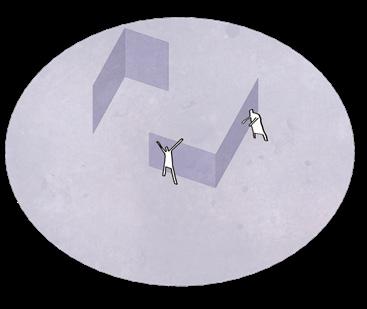
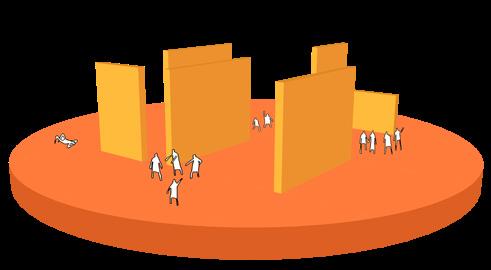
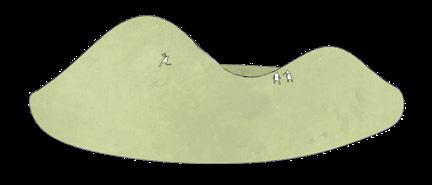
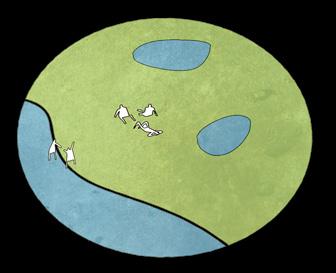
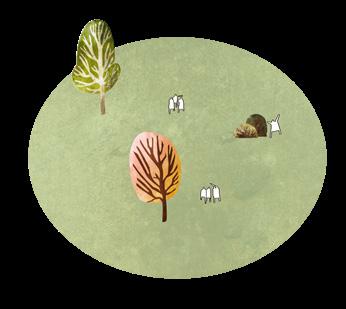
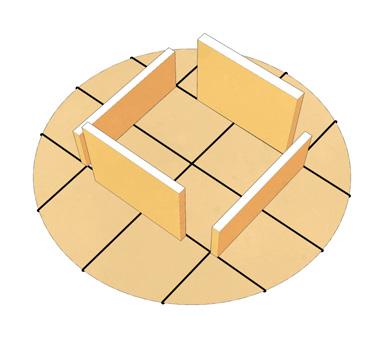
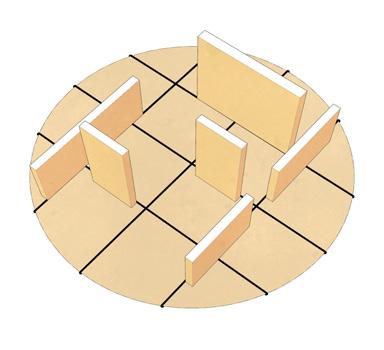
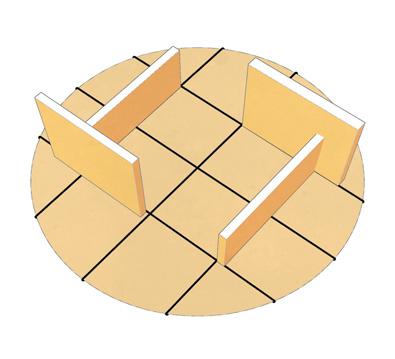
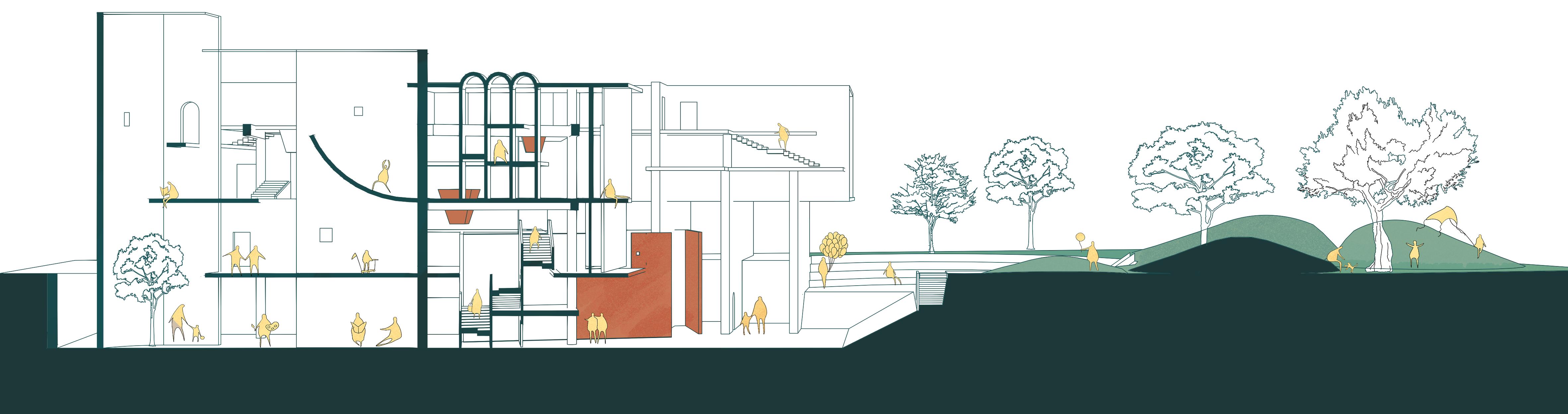
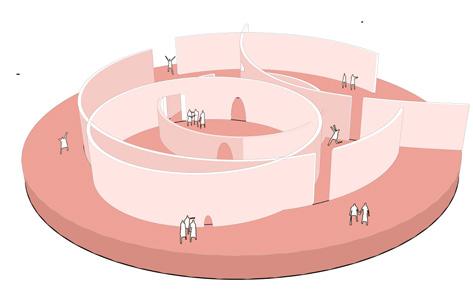
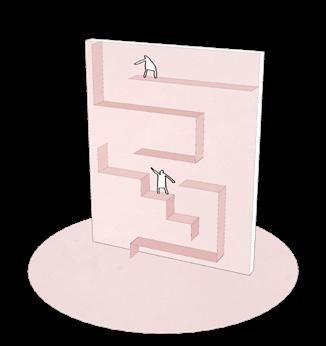
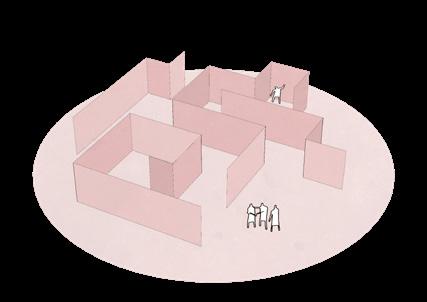
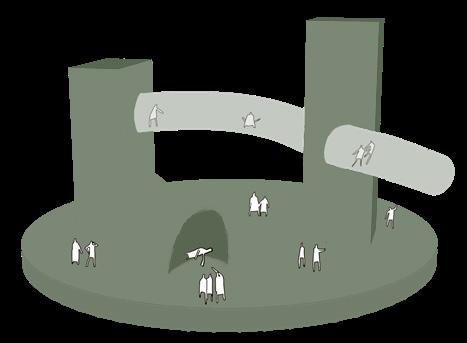
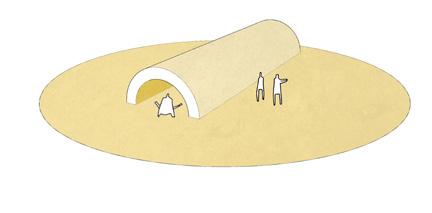
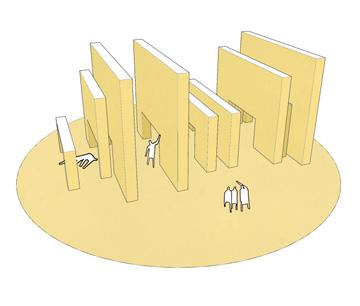
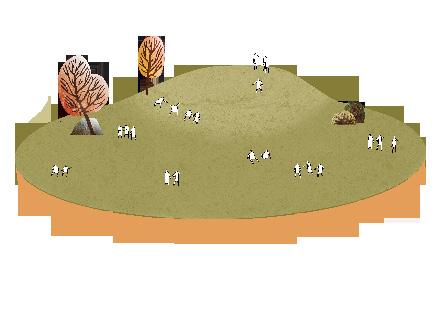
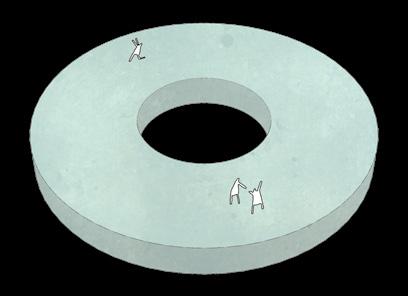
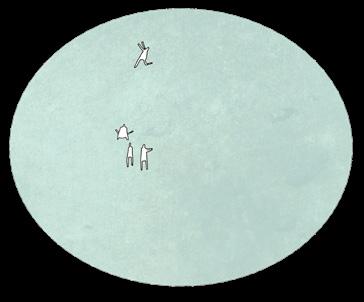
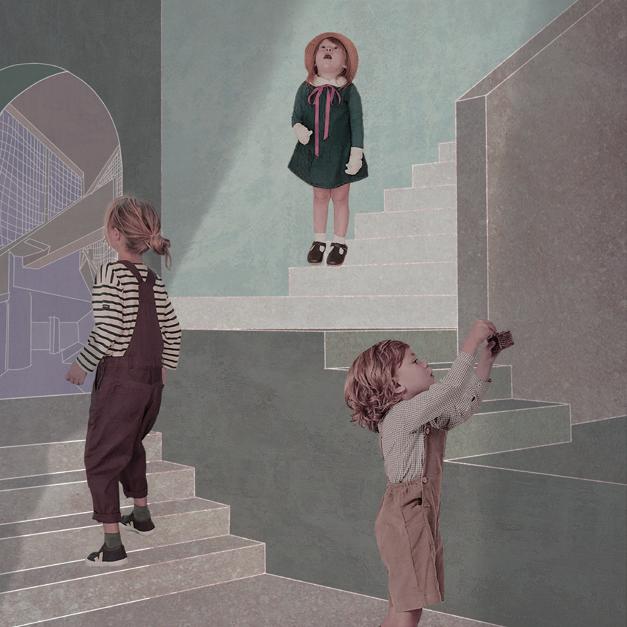
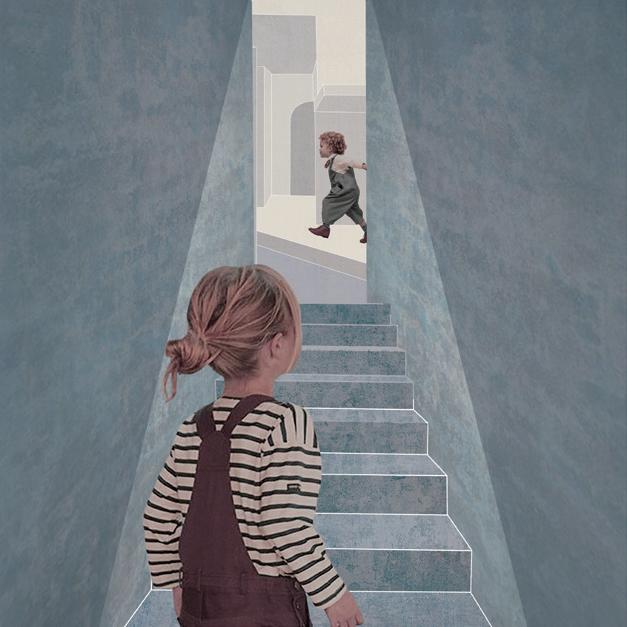
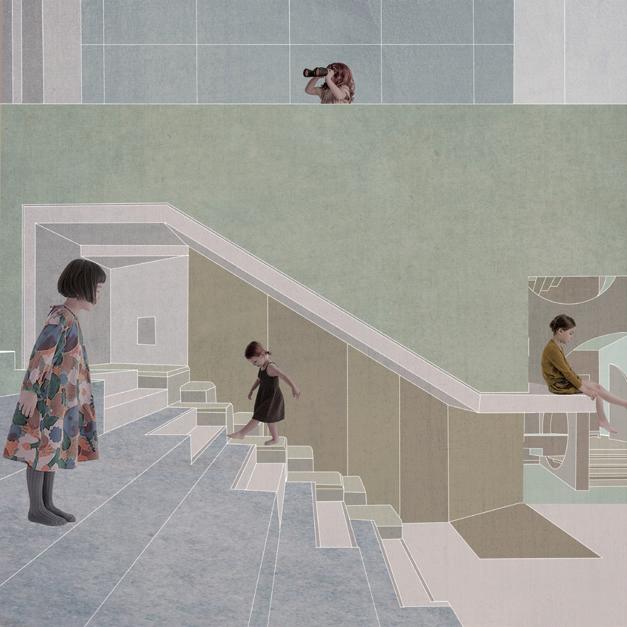
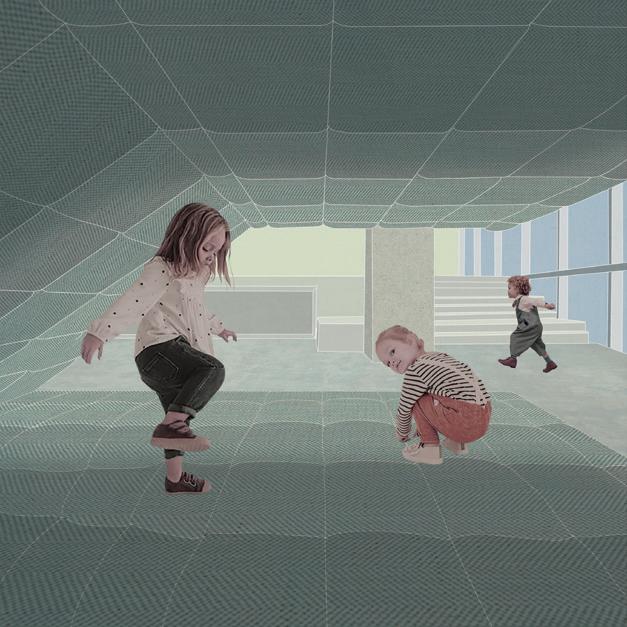
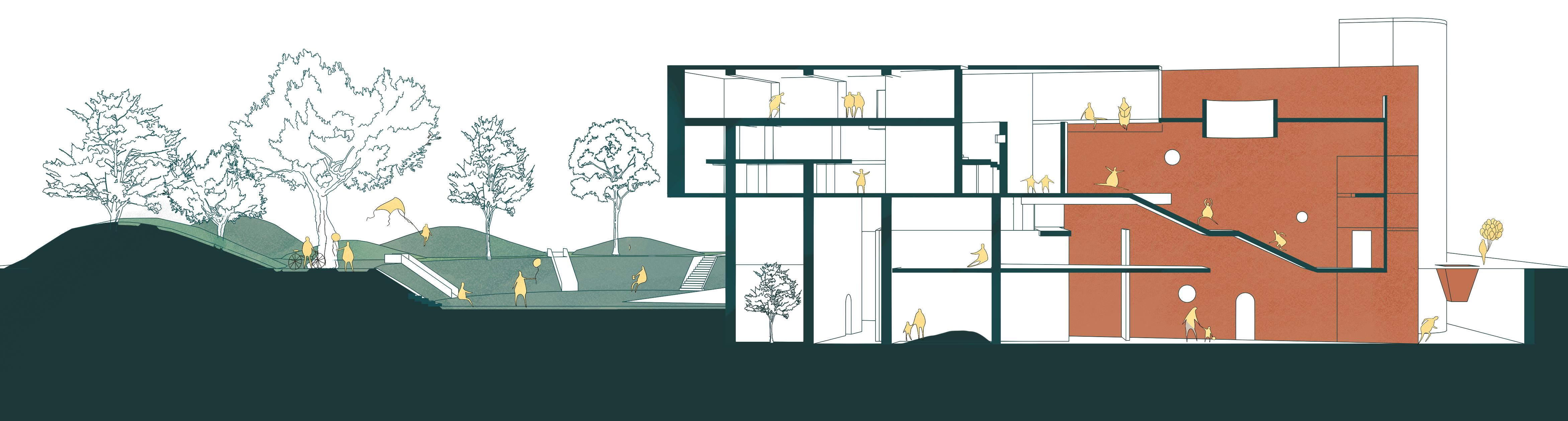
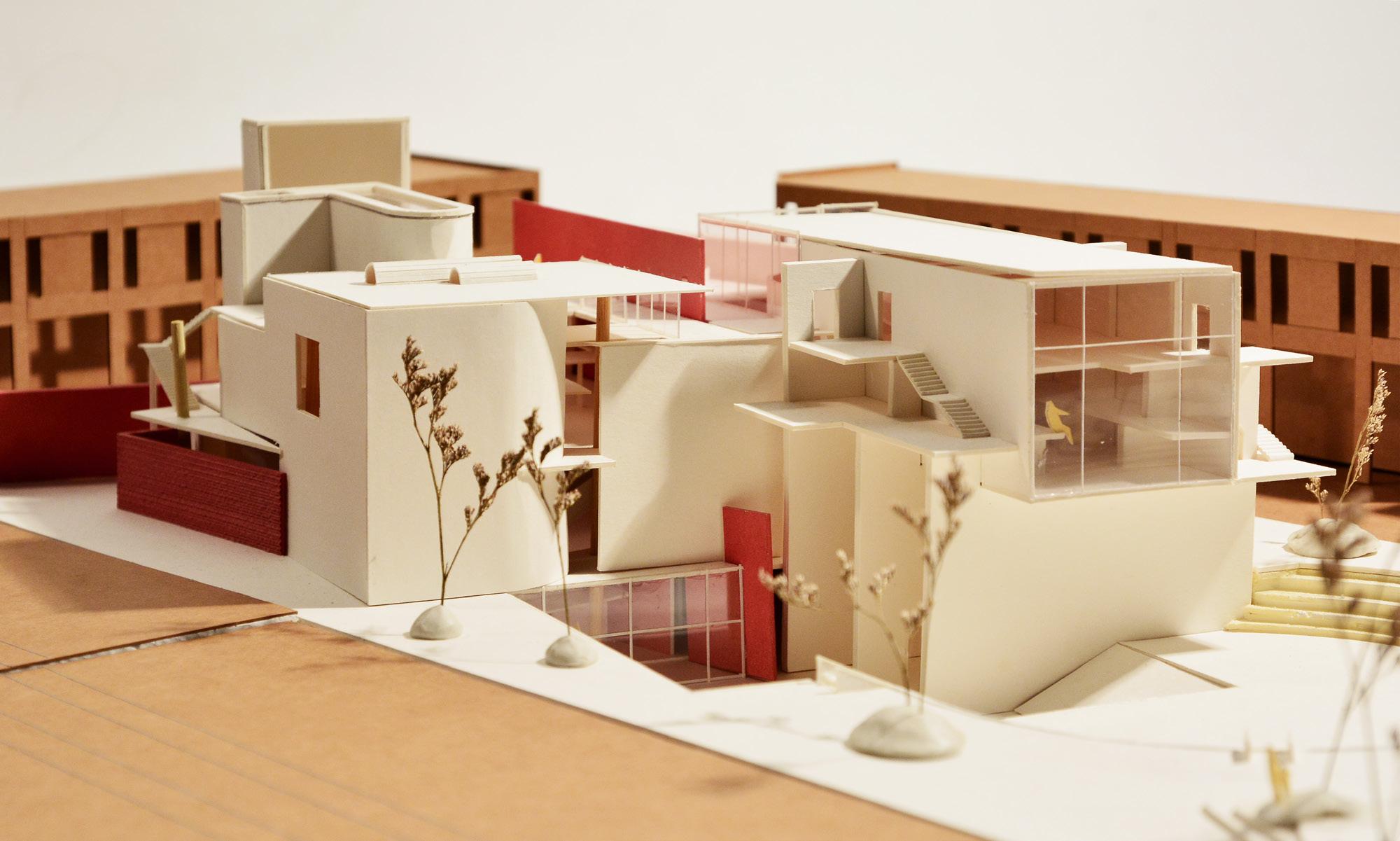
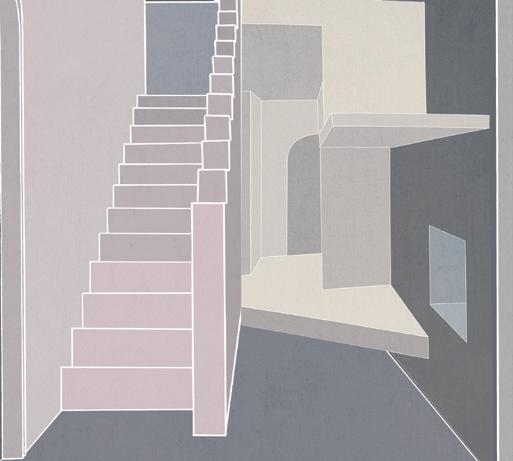
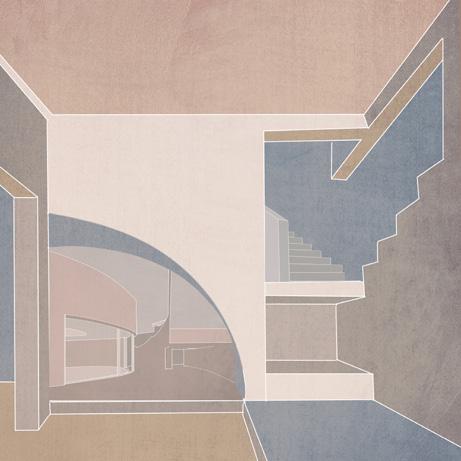
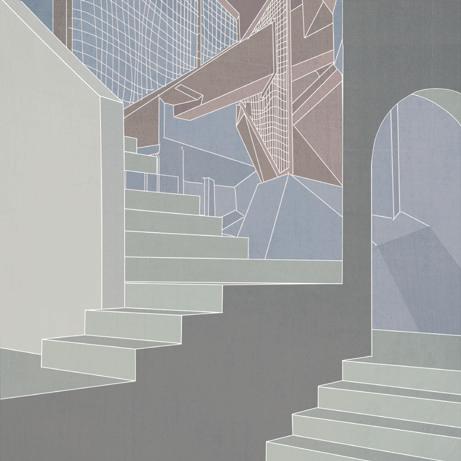
The project tries to break up the traditional closed arrangement, improve indooroutdoor relations, stimulate the desire to explore the unknown. Flexible spaces are designed to enhance children’s creativity and active participation. Interior spaces are scaled down to match their height and spatial needs, so that they are able to move around and interact with the space without the intervention or help of an adult.The spaces are accessible to adults, but have been shrunk in order to slow the adults, liberating the kids to fly through the spaces.
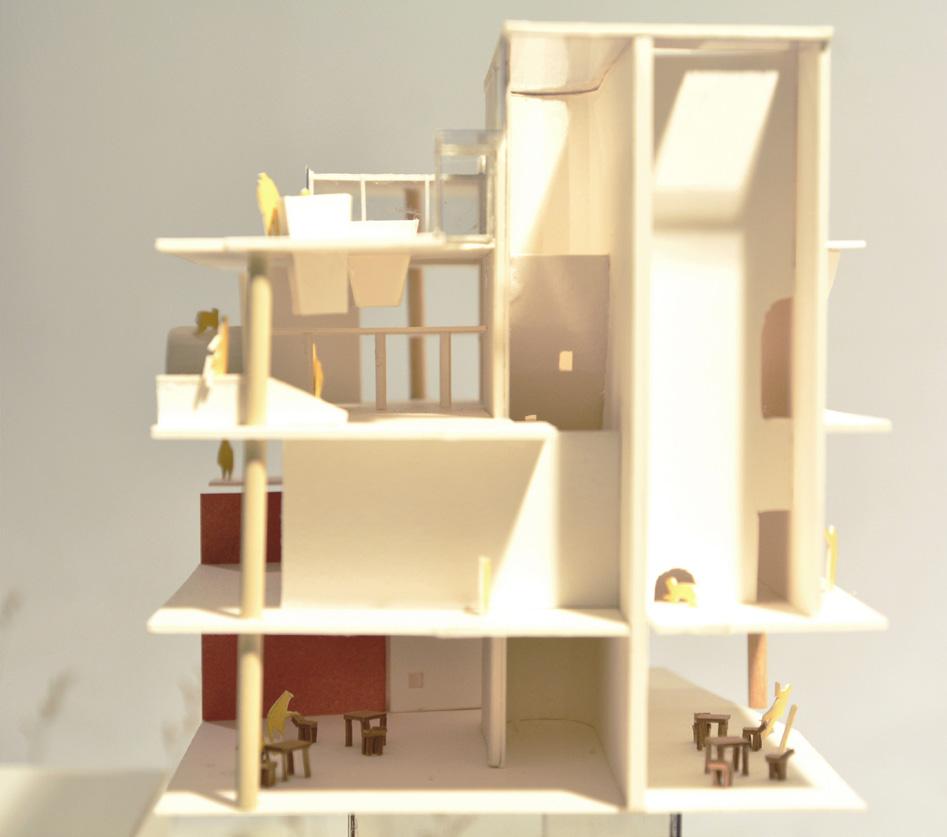
The emphasis on natural lighting
Intergenerational Living - Vertical Cohousing Community
Building Design / Individual Project 2017-18 Academic Year
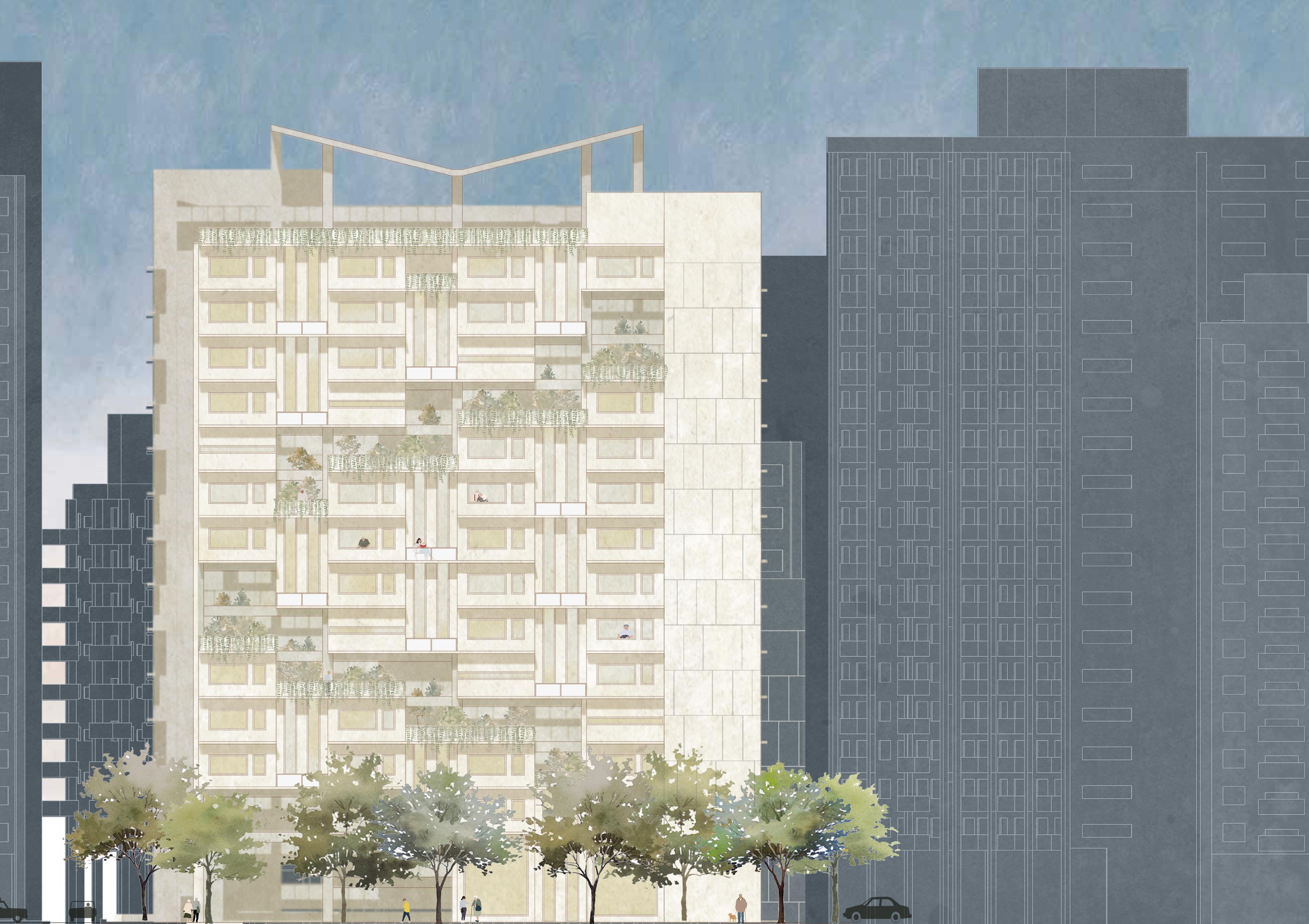
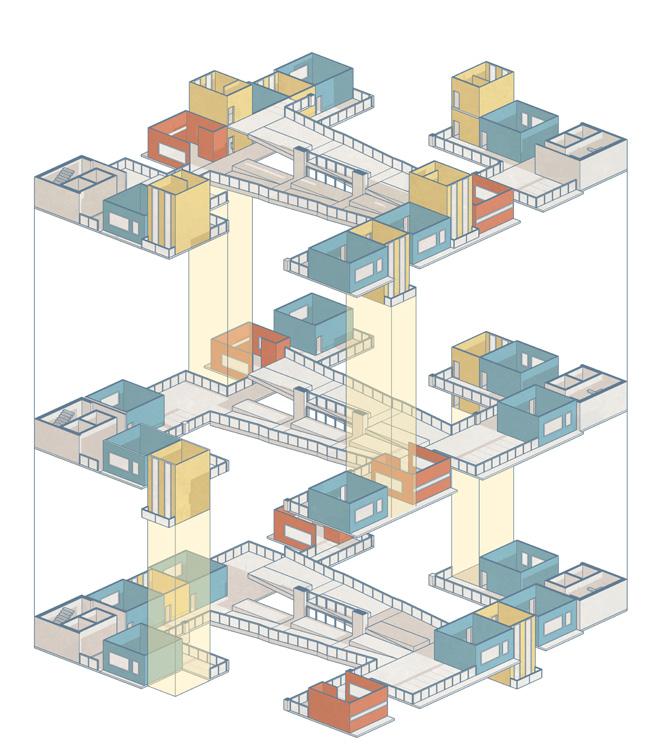
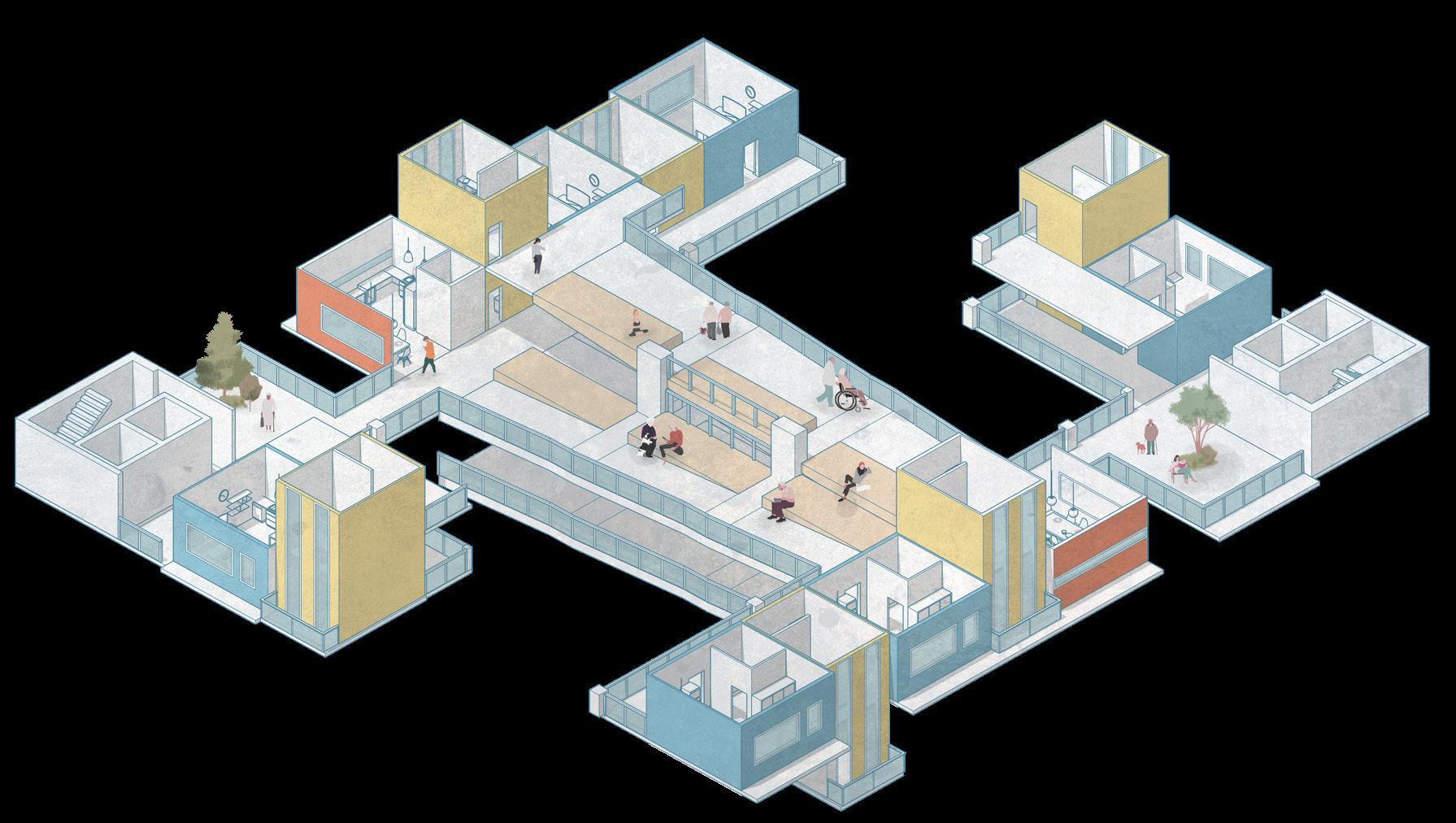
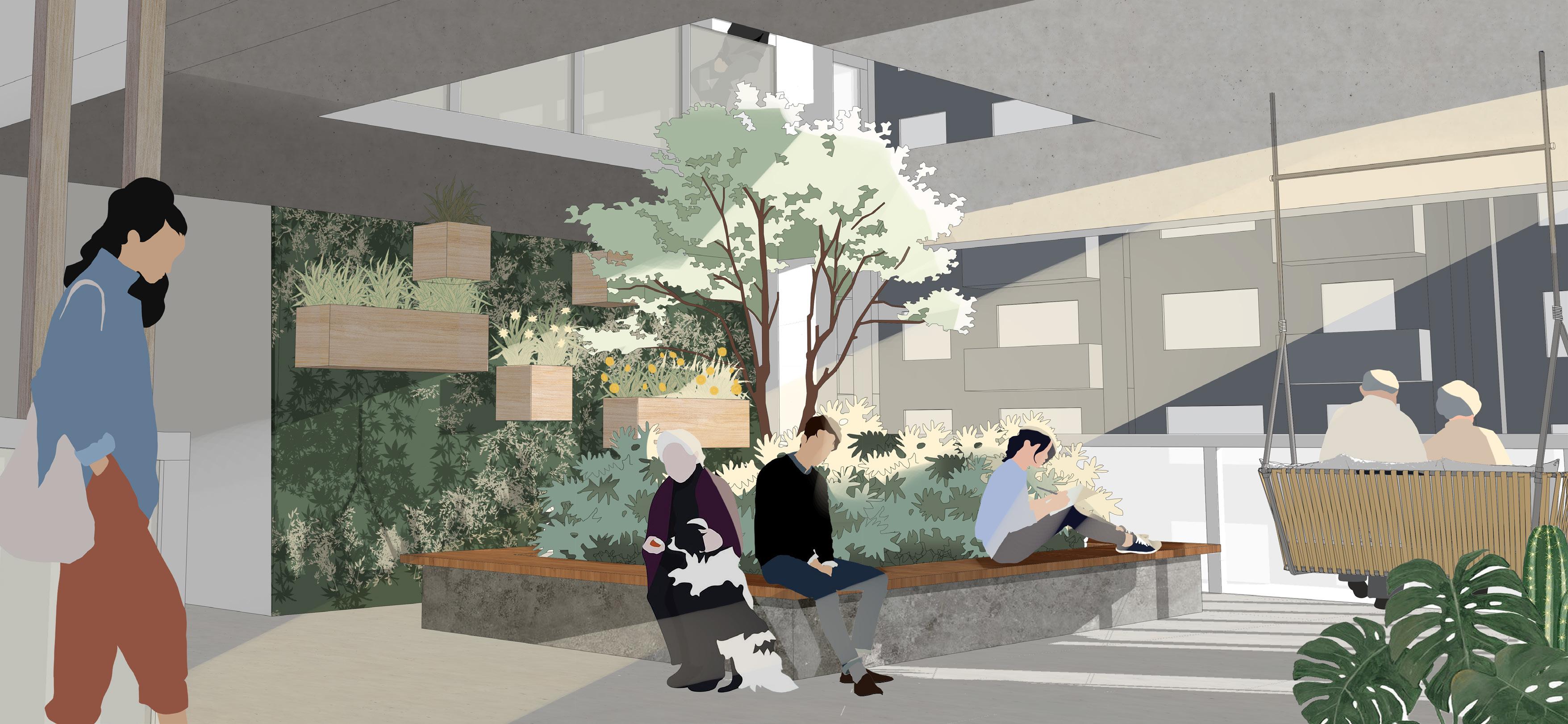
The demographic landscape of Taiwan is changing fast, as its cities grow and the population ages. The goal behind the project is to essentially create an age-friendly community for intergenerational living , not only in terms of a physical collection of homes, but also a social collection of individuals. People of different ages can share their living spaces mutually benefit, while also living independent, modern lives. Young adults can enjoy a spacious home at a discount. In return, they share their space and time with senior citizens, who often crave a meaningful connection.
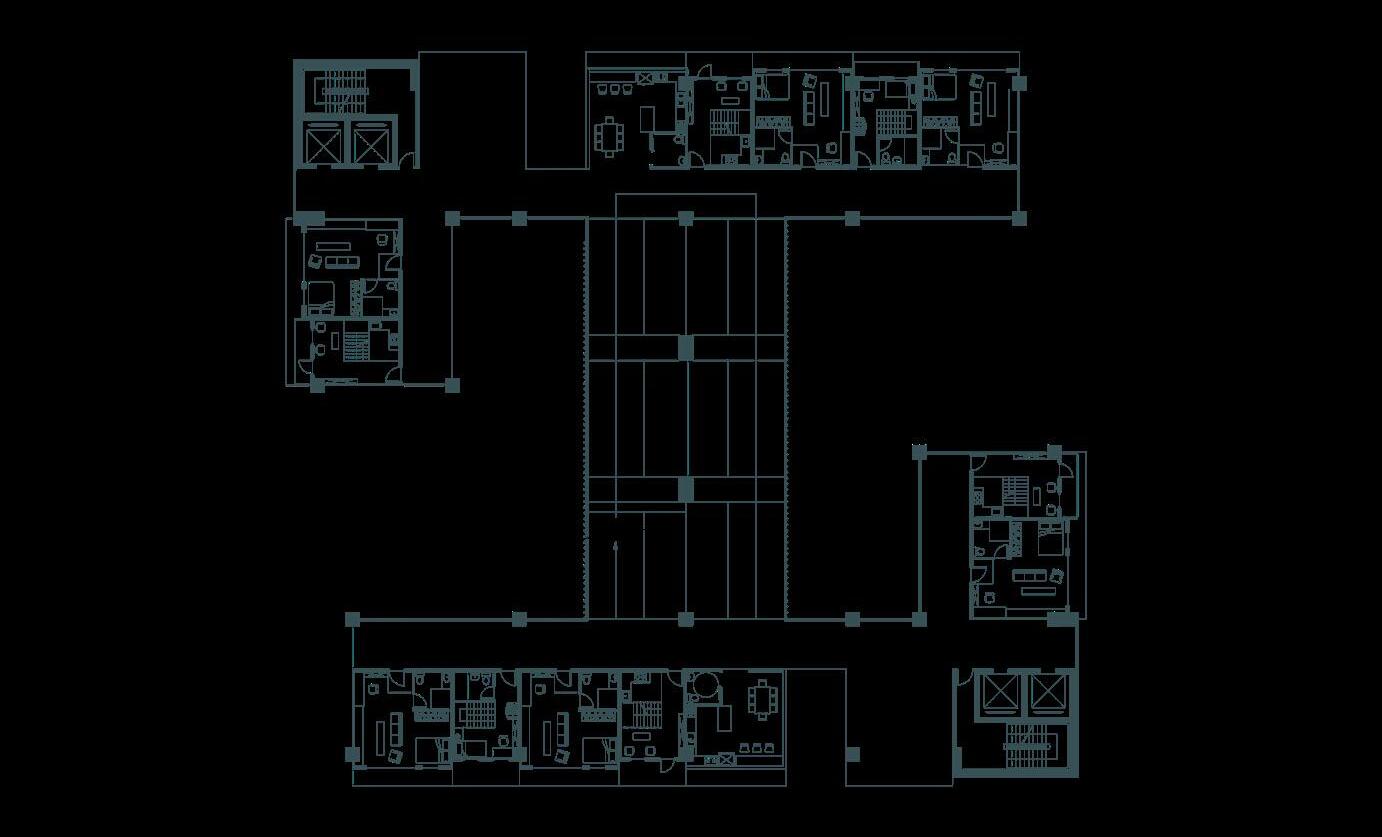
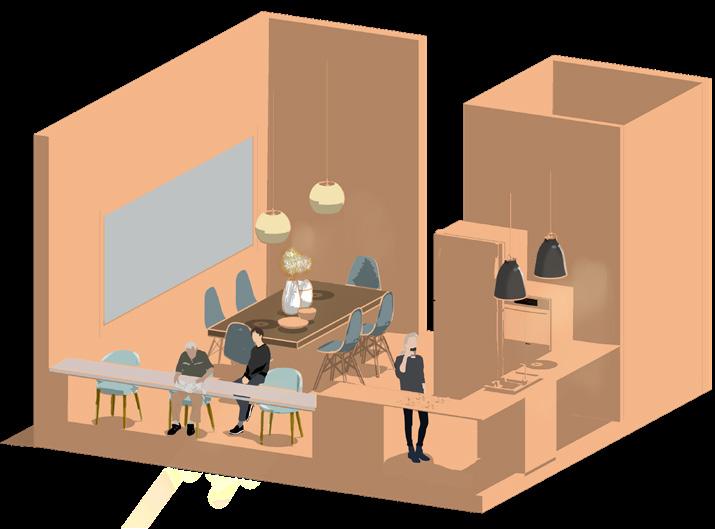
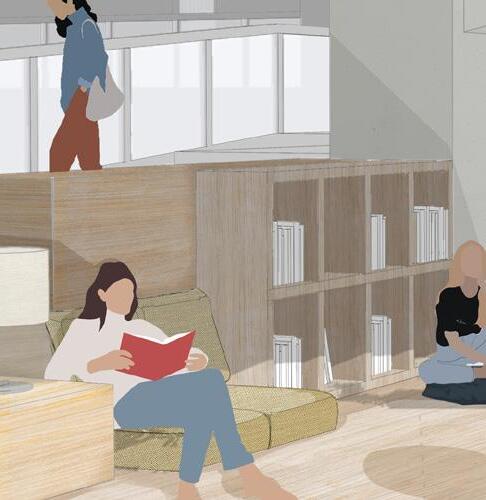
The project is located at Xindian Dist., New Taipei City, a residential district with high population density. For those used to living or working in an impersonal building where neighbors don’t even know each other’s names, an integrated vertical community could be life changing. The design combines private homes of different sizes and styles alongside shared facilities, such as gardens, a gym, a library, and a large kitchen and dining room that provides ample opportunity for intergenerational mingling.
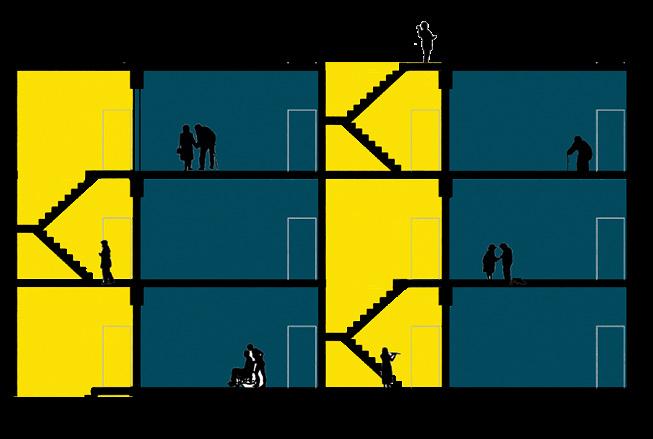
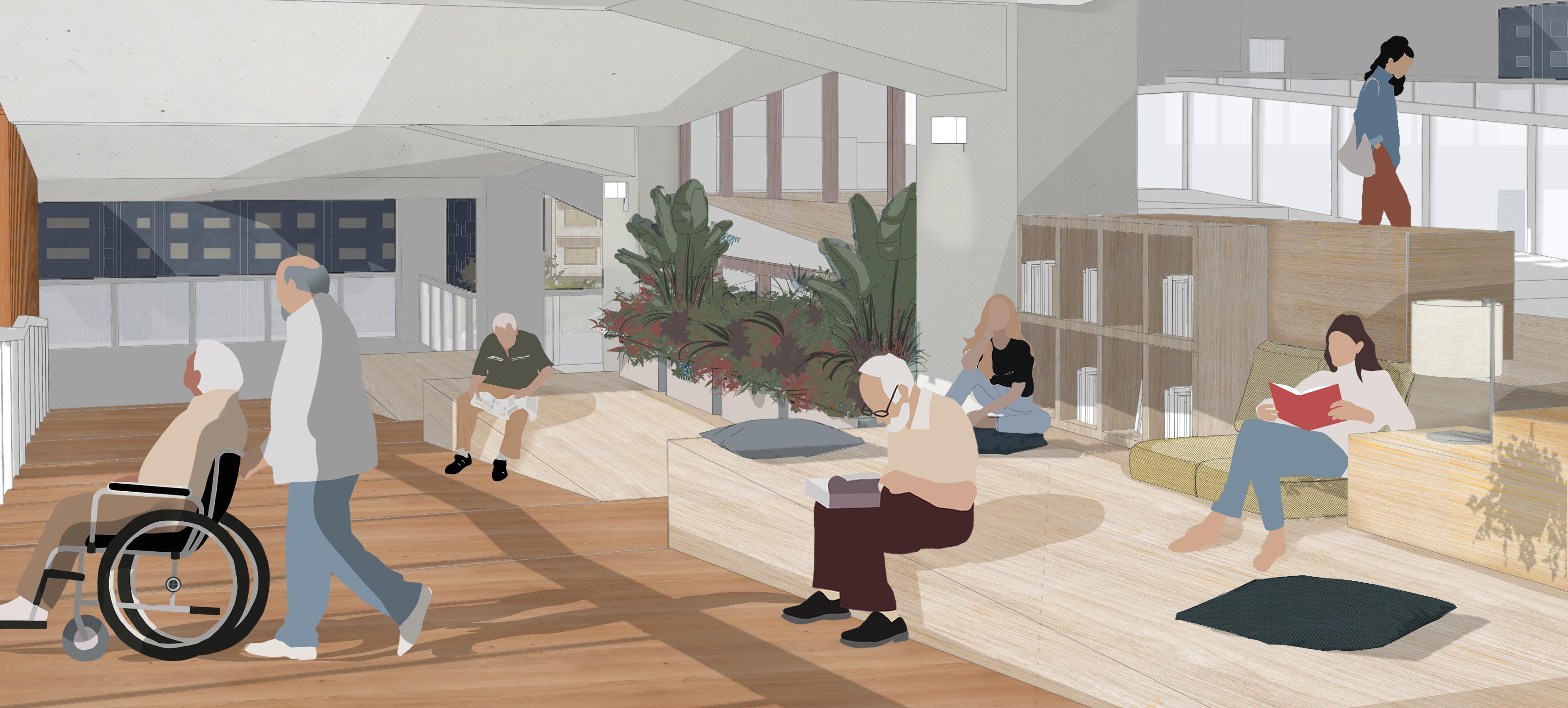
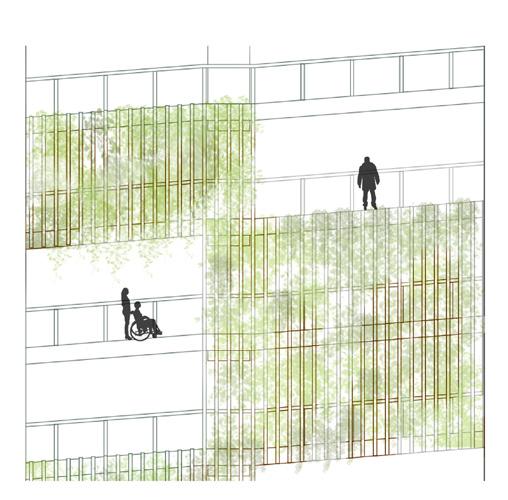
A common problem with some of the existing old-age home designs is narrow entrances and staircases, which limits wheelchair accessibility. Walk-friendly infrastructure and access to destinations and services have been found to be positively related with higher physical activity and walking among older adults. designed an external wheelchair ramp, allowing access to everywhere, wider doors and clear passageways to create appropriate accessibility for all

Sharing the Kitchen
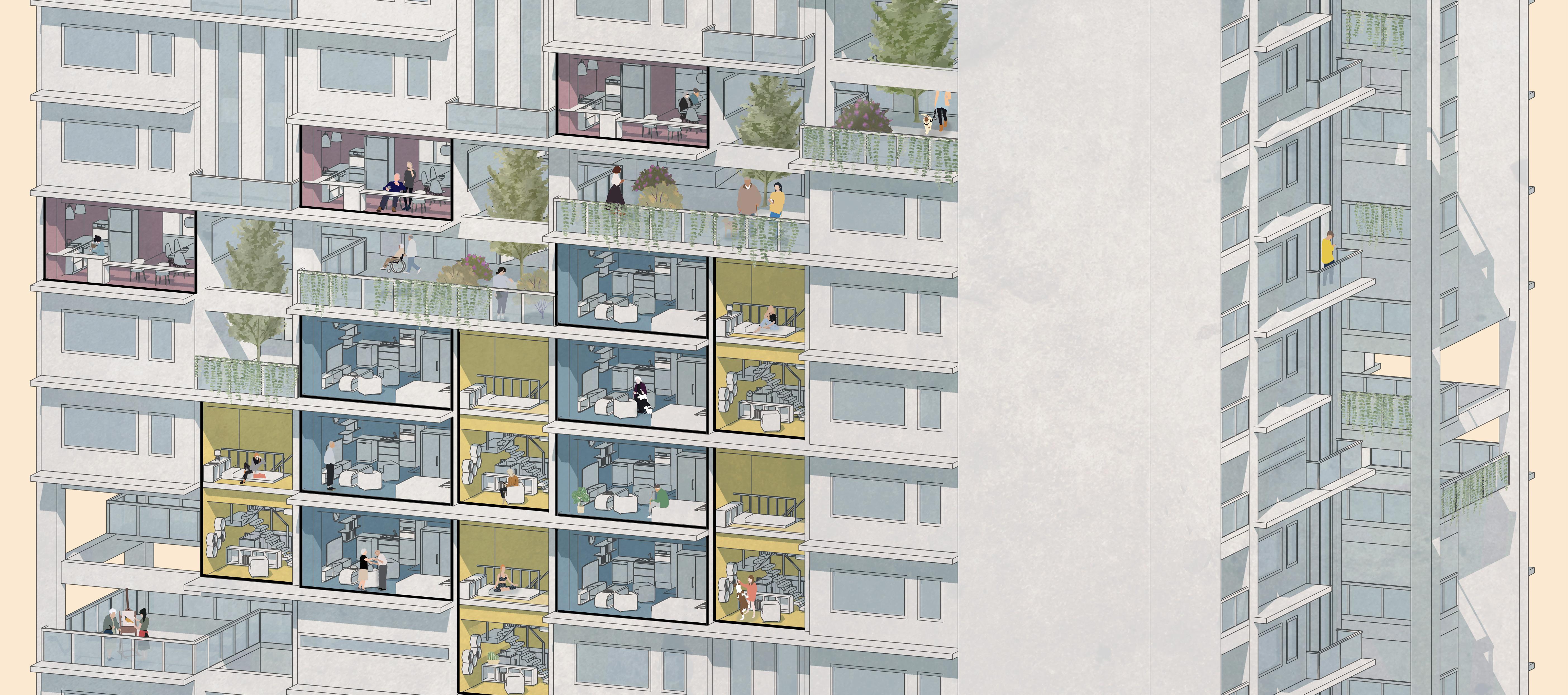
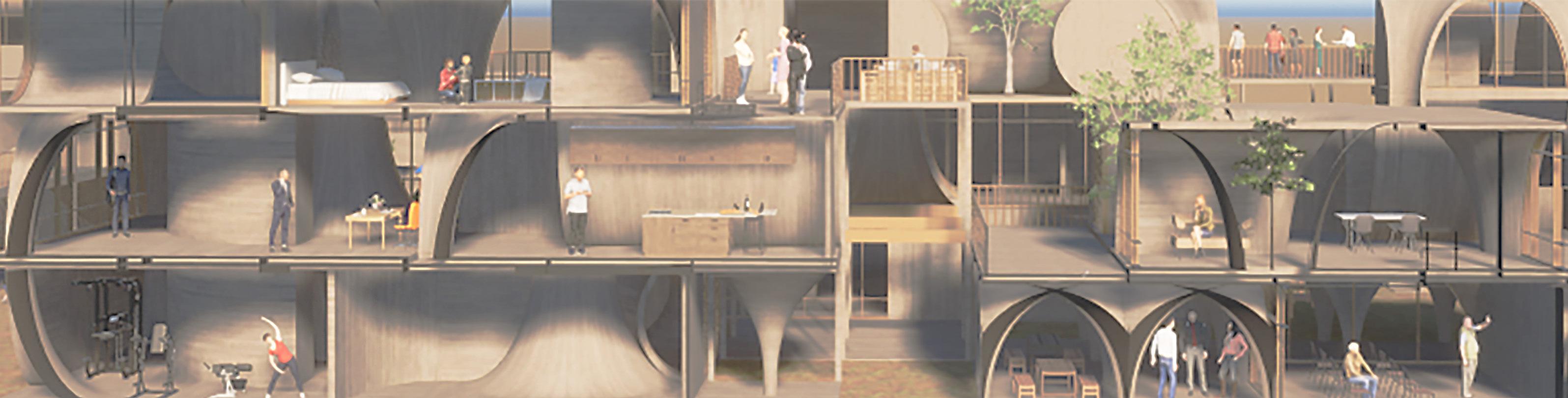
The current trend of having an open kitchen at home renders meal-making social and fun process. In a space where the living room and kitchen co-exist, more possibilities of social relations arise.
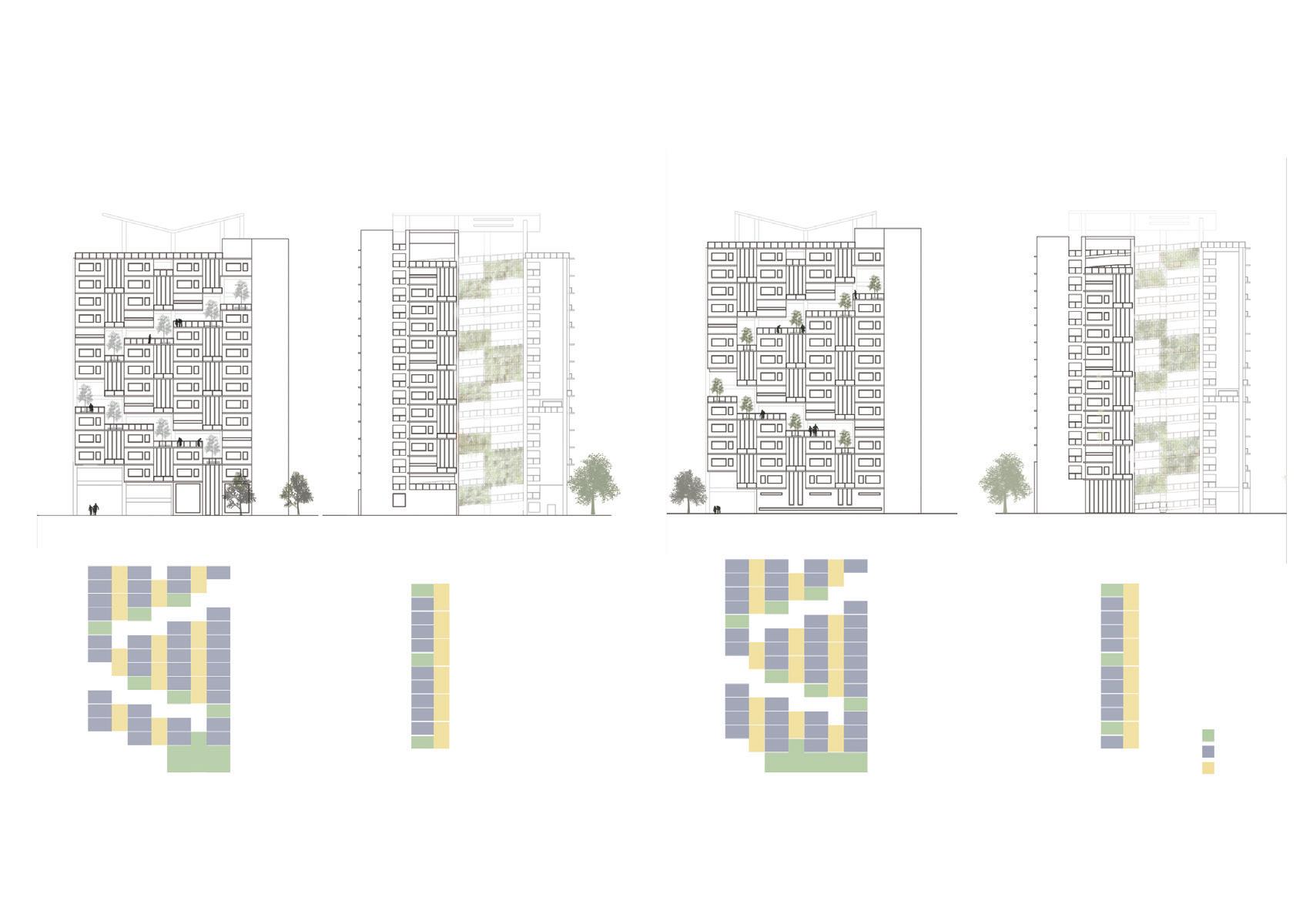
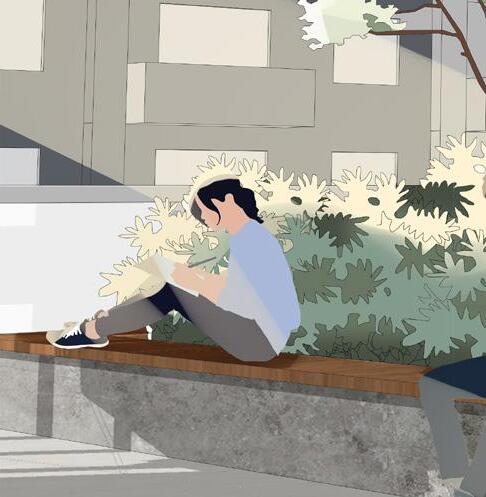
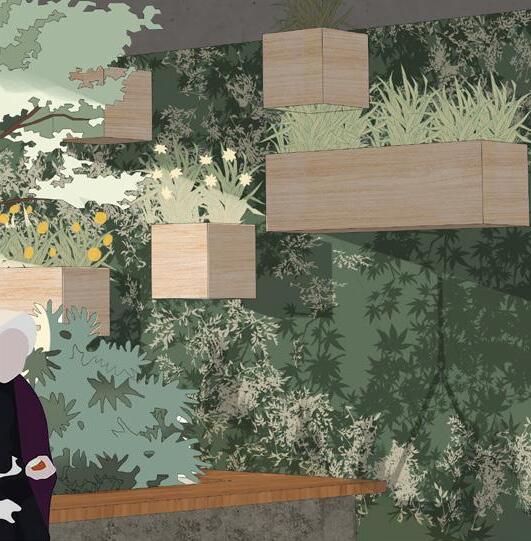
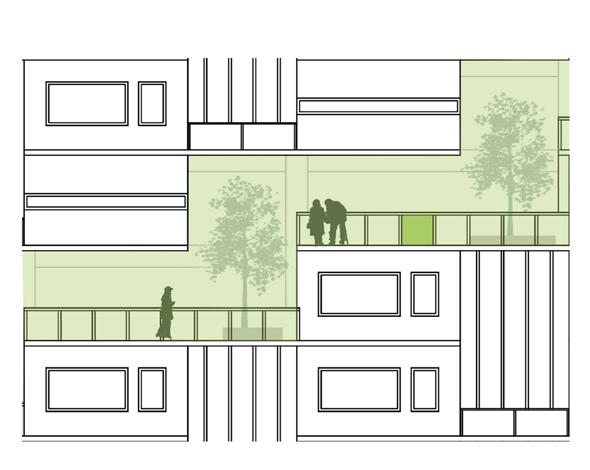
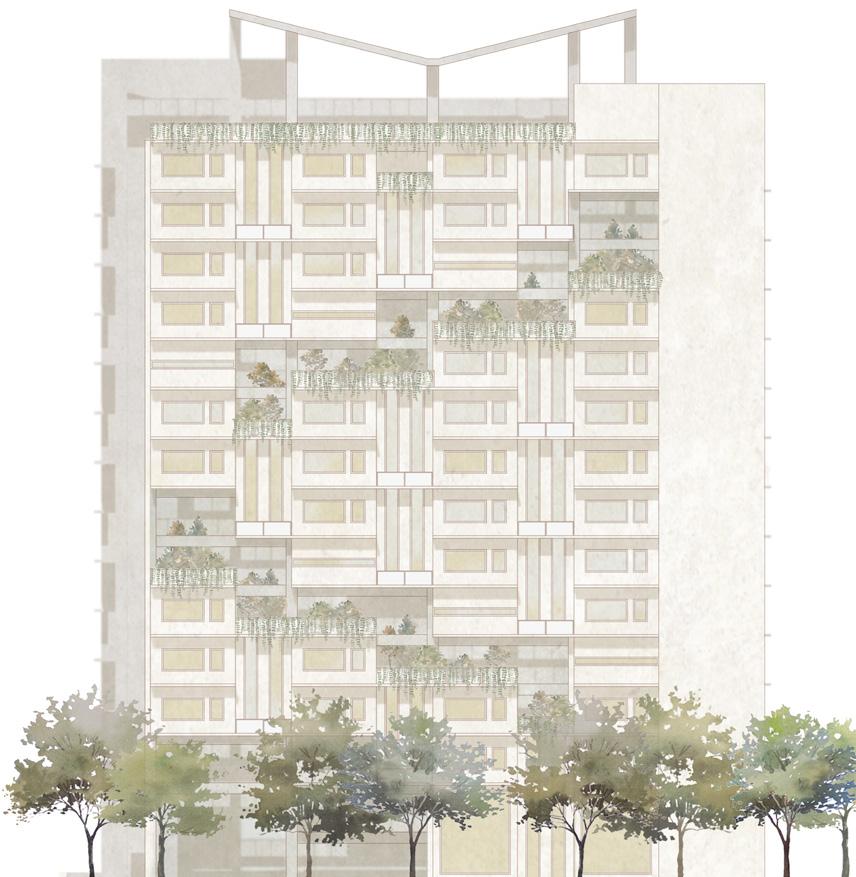
Vertical Green Space
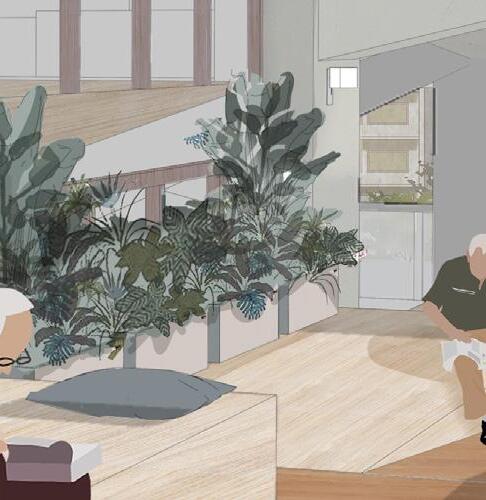
The building’s green space includes gardens and orchards. More green space in the neighbourhood and more visits to green spaces have been associated with lower mortality in the older population.
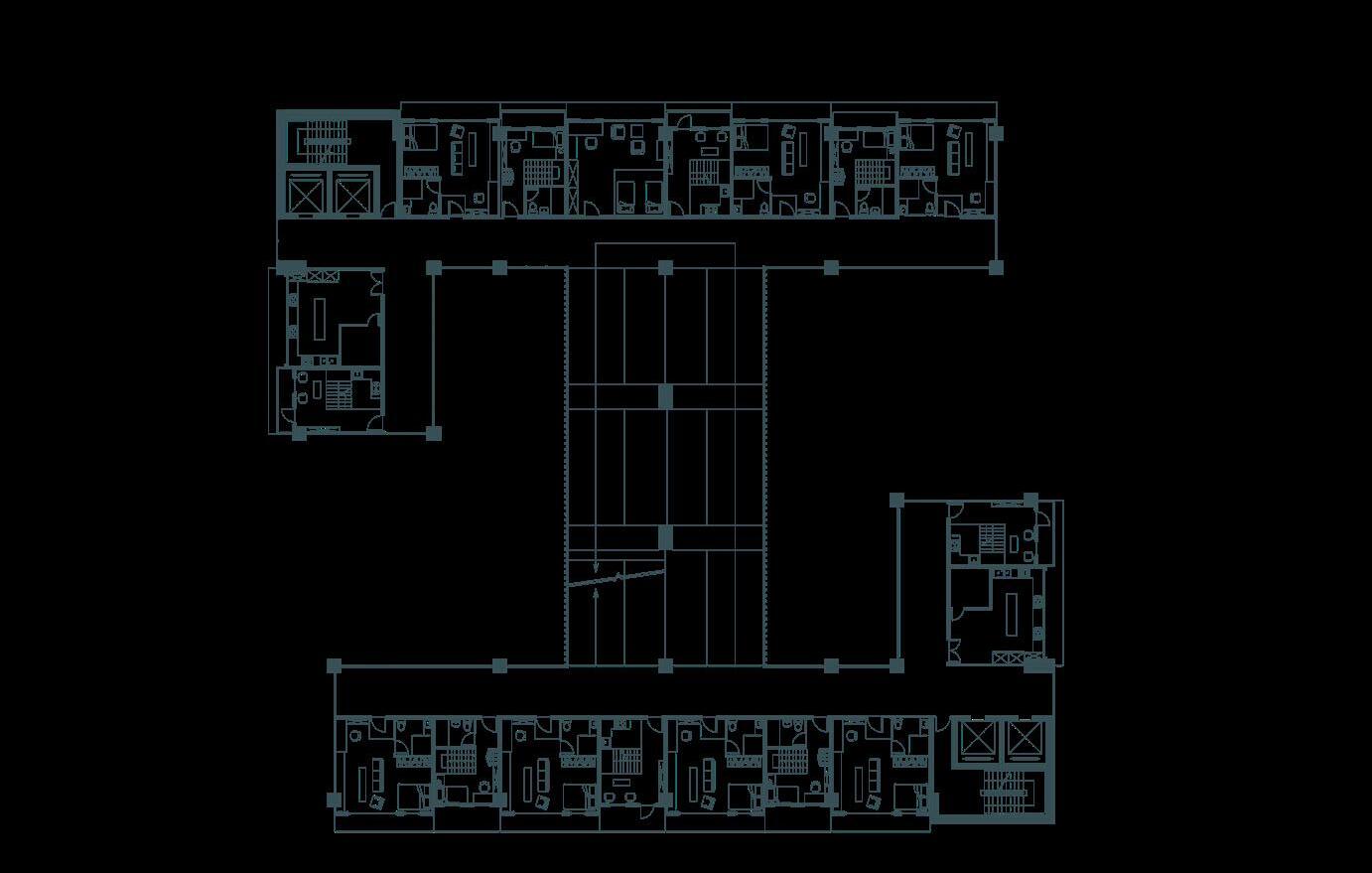
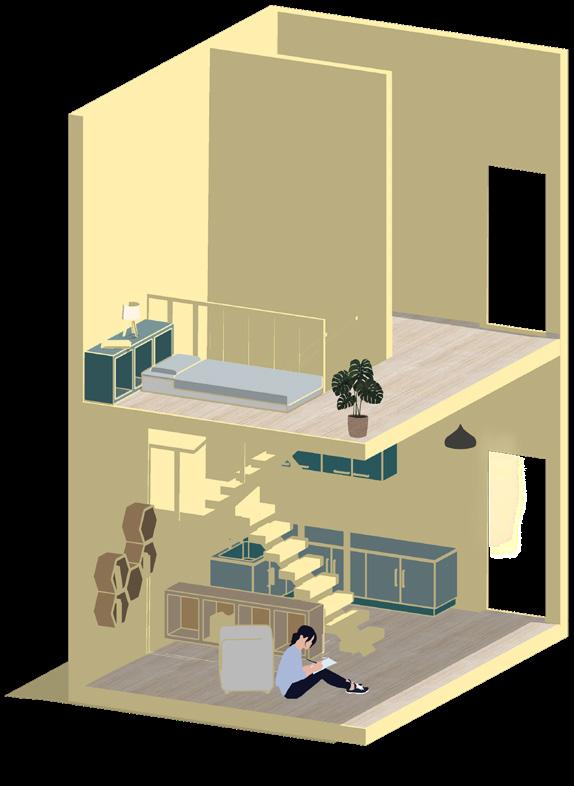
Residential Units for Young Adults
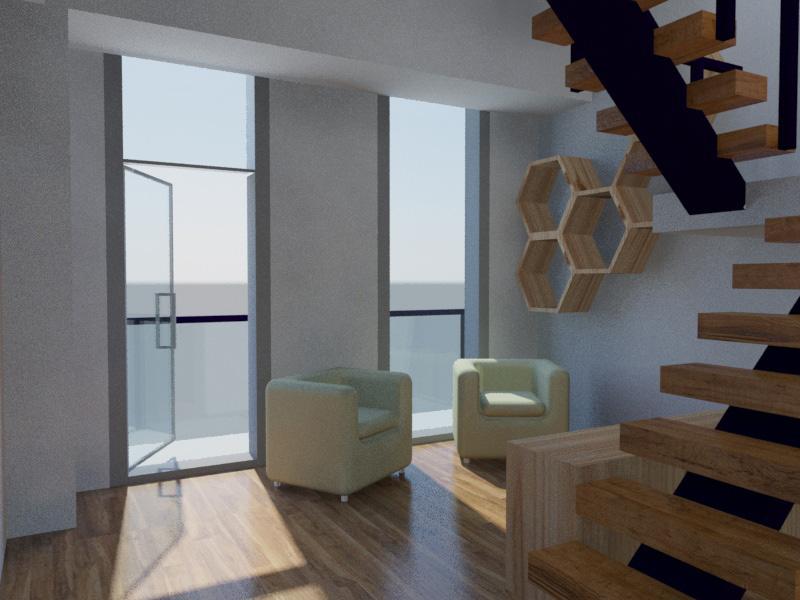
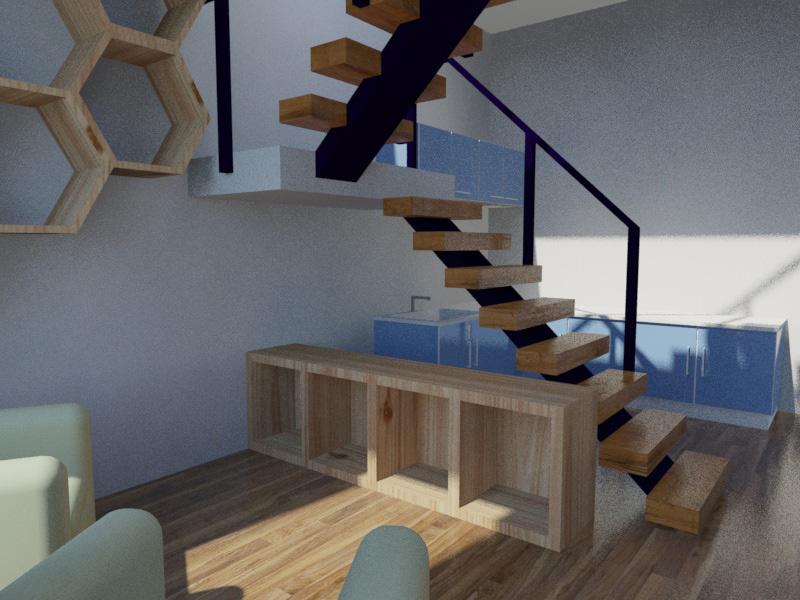
Units consists of two floors and have two entrances on each floor to create connections and access to all of the building’s common areas.
Entertainment and Recreation Space
Community spaces that can be utilized for formal and informal events and gatherings throughout the year.


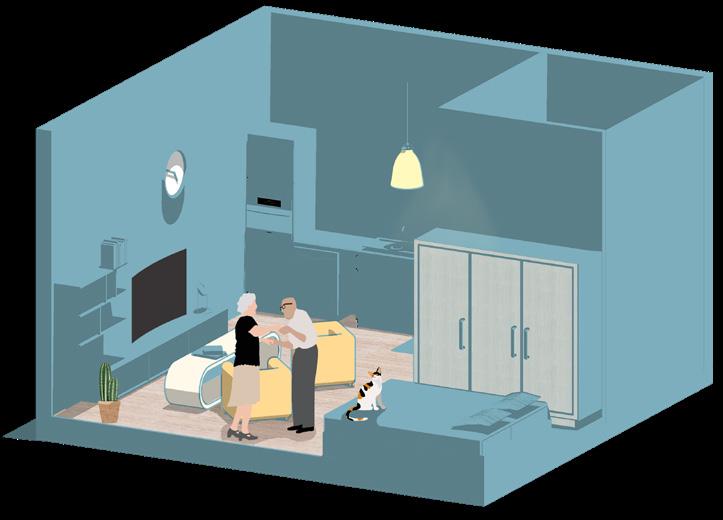
Residential Units for Older Adults
A large open room with bedroom, living room, and kitchen in one space. There are handicap accessible units for wheelchairs, handrails in the bathroom and stairs have been excluded.
More green space in the neighbourhood and more visits to green spaces have been associated with lower mortality in the older population. According to WHO assessments, the green space per person should be 9 square meters for a healthy life. Though studies on the older population are limited, exposure to green spaces has been associated with various health outcomes. Older adults living in neighbourhoods with more green space have reported to have a better general health, more life satisfaction, and less stress.
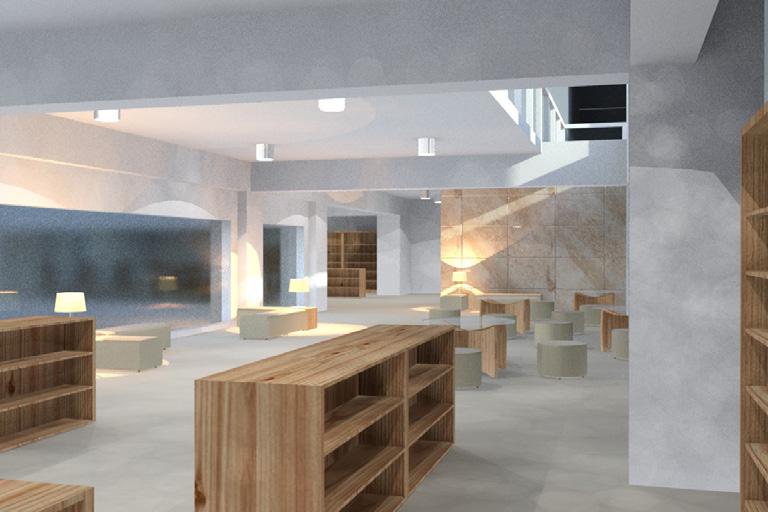
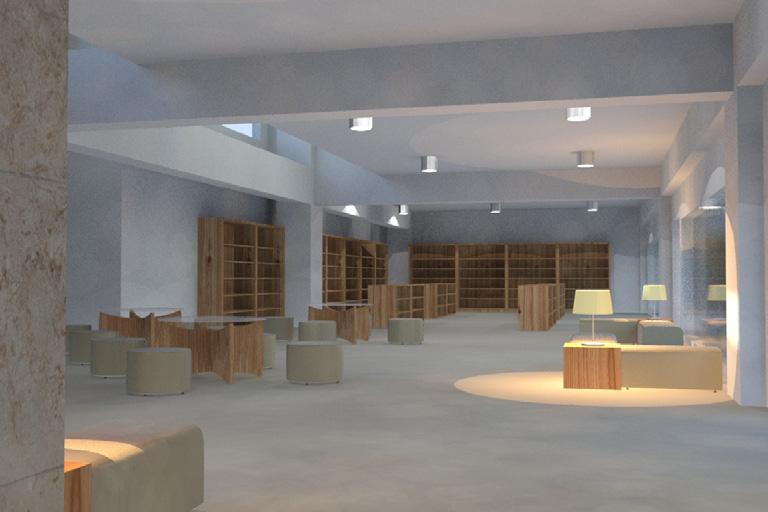

The New Resilient City - Infrastructure Meets Community Fabric
Urban Design Individual Project 2017-18 Academic Year
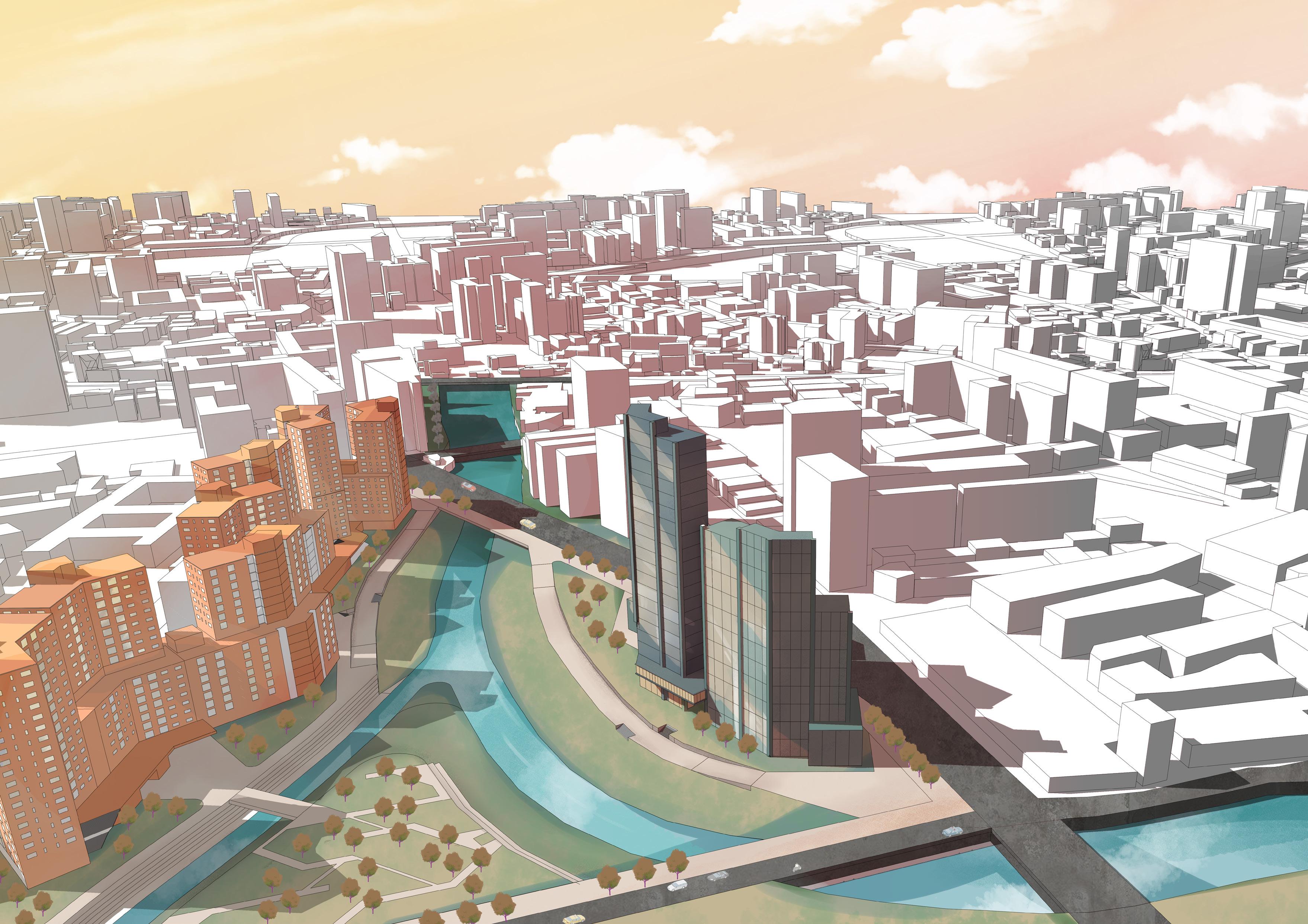
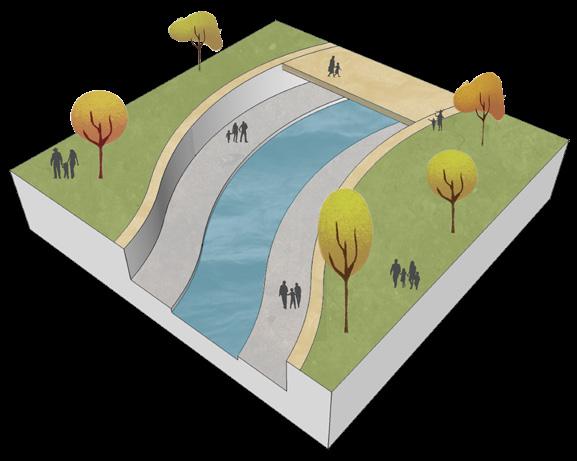
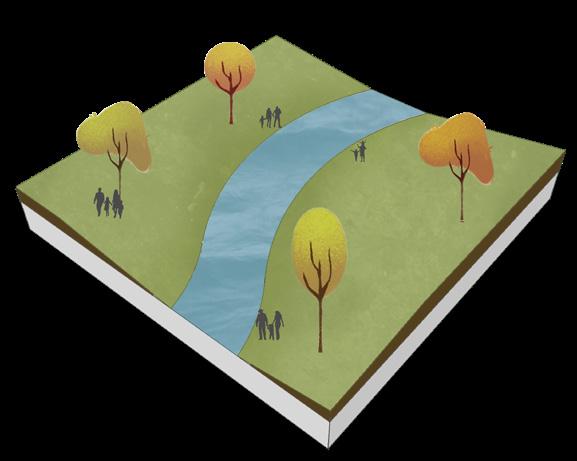
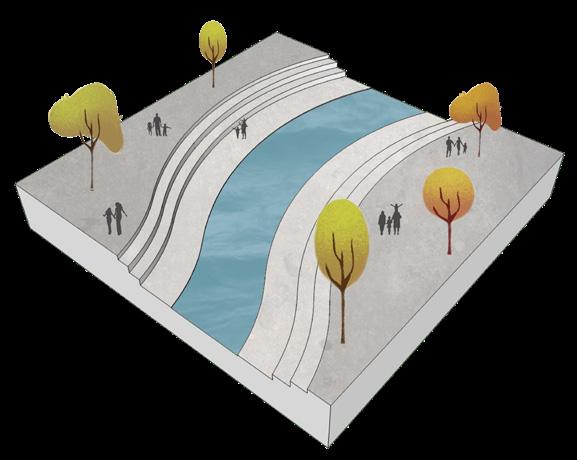
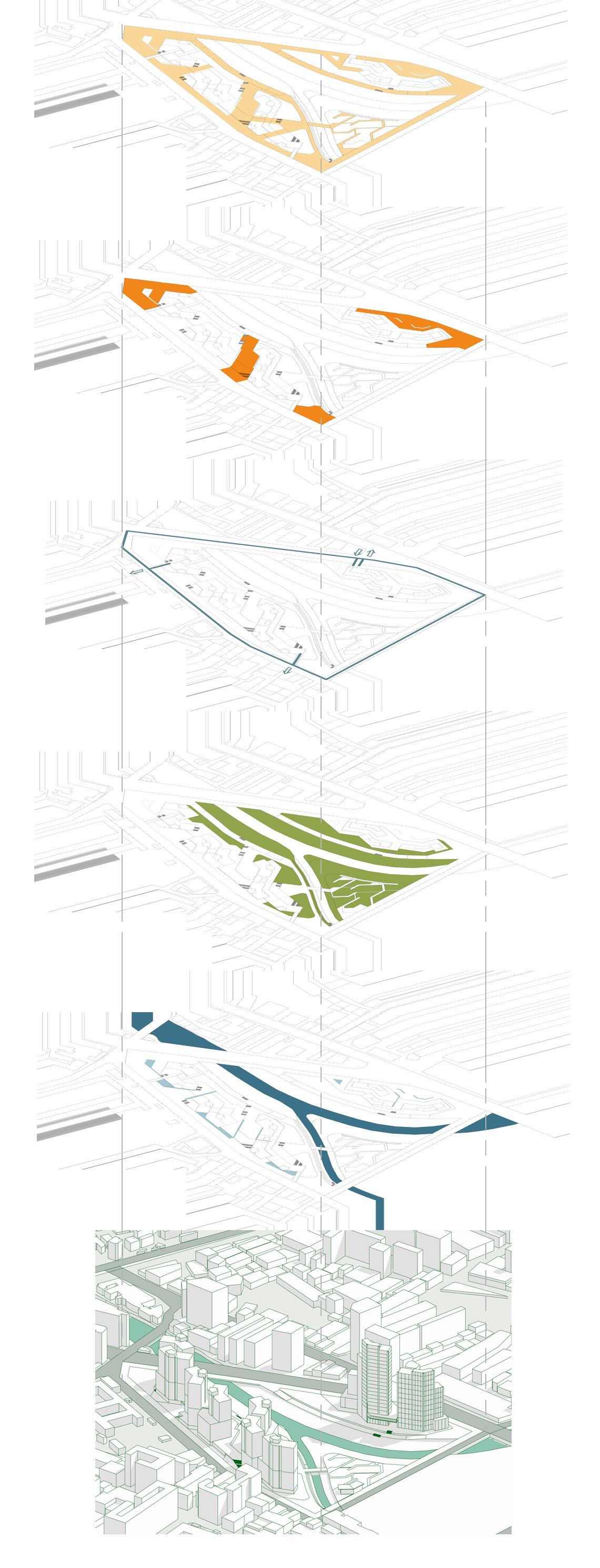
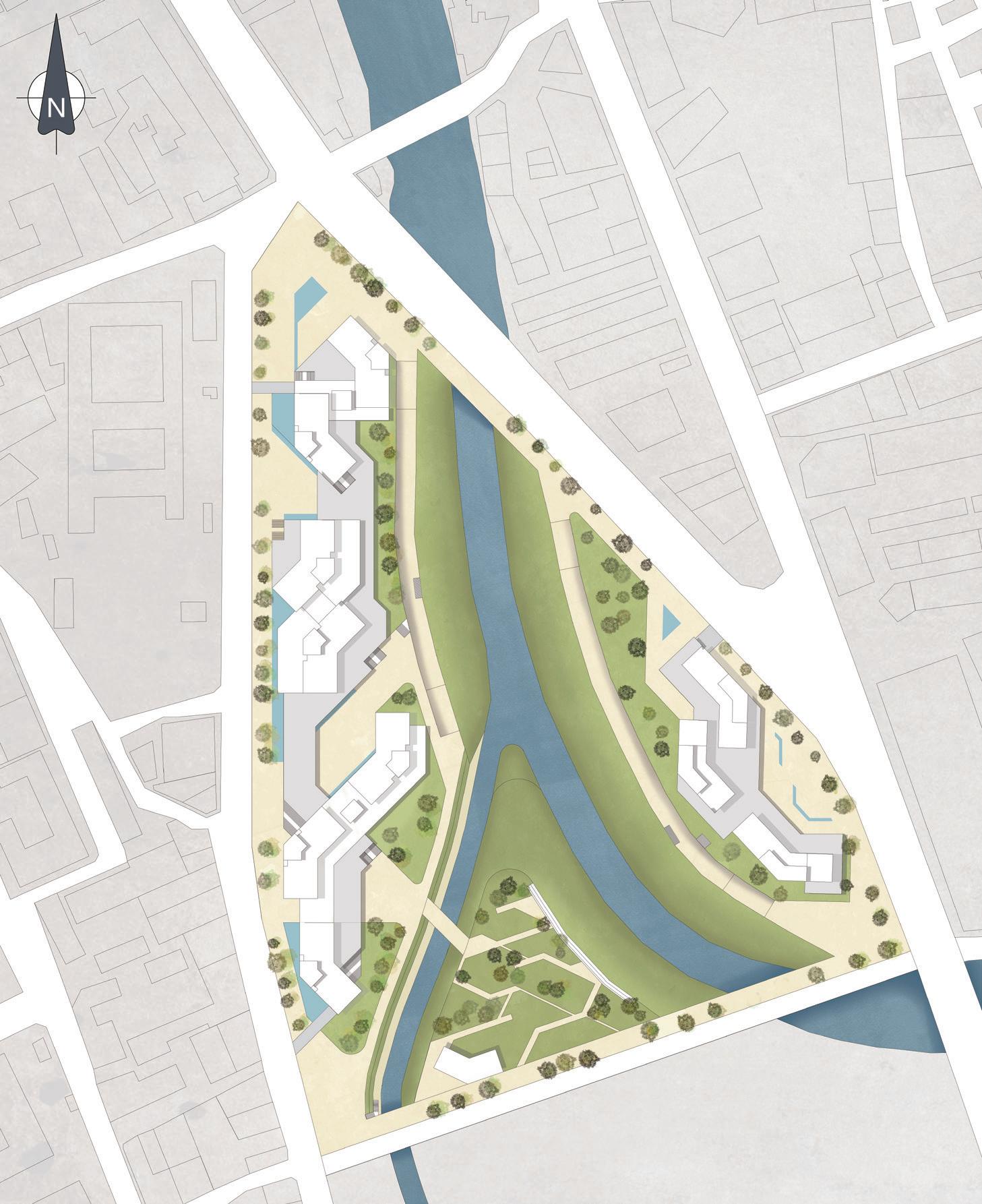
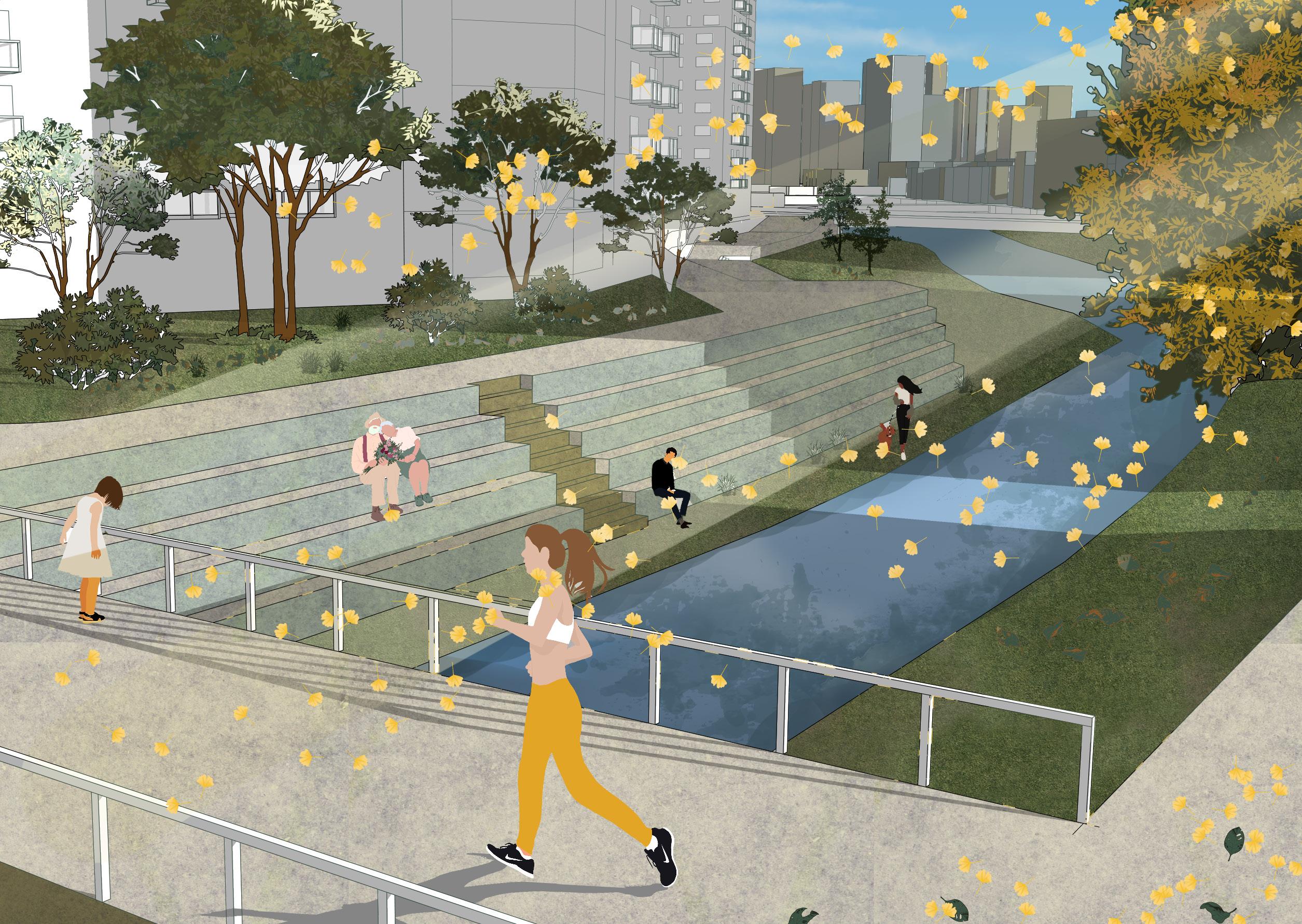
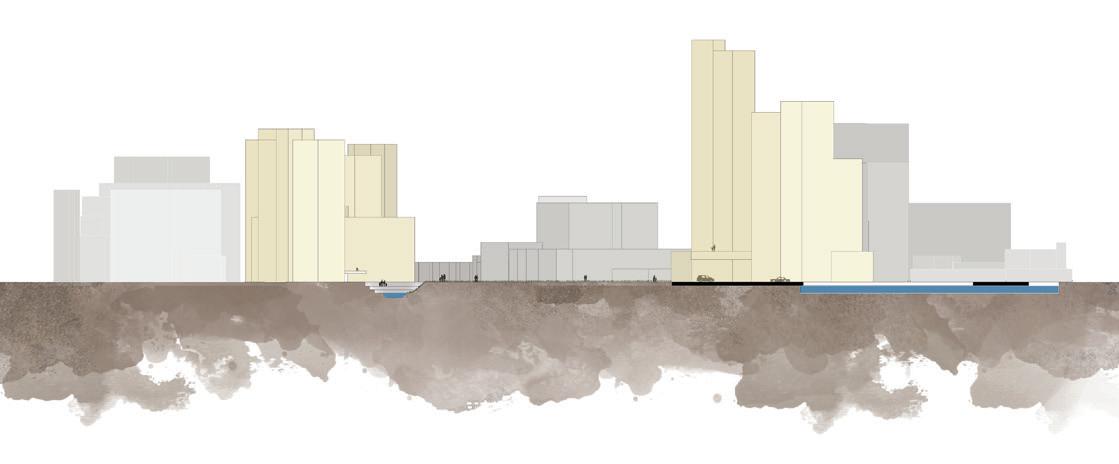
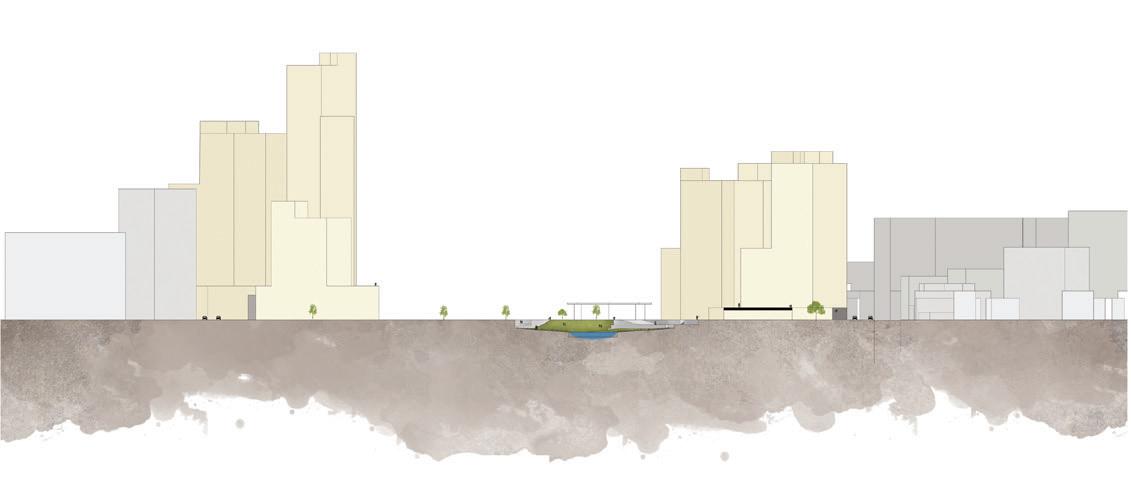
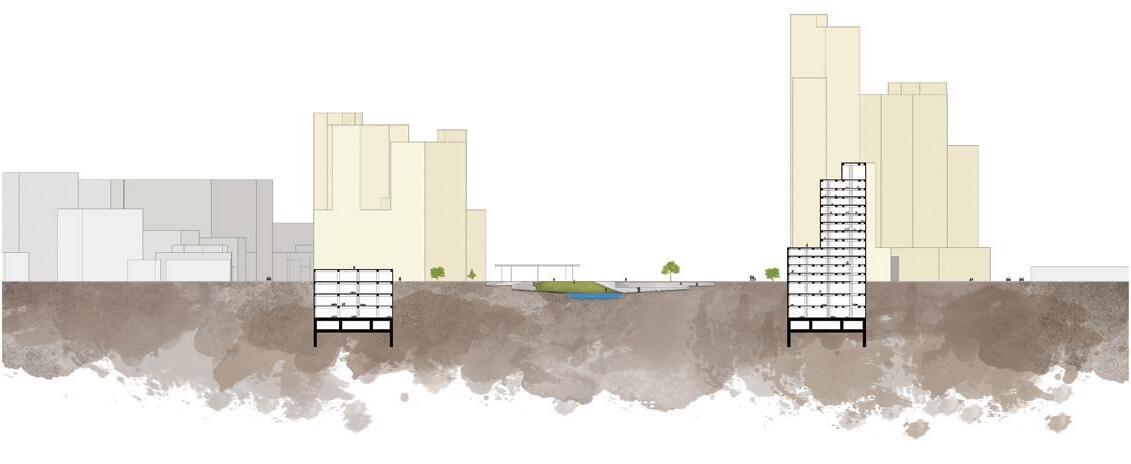
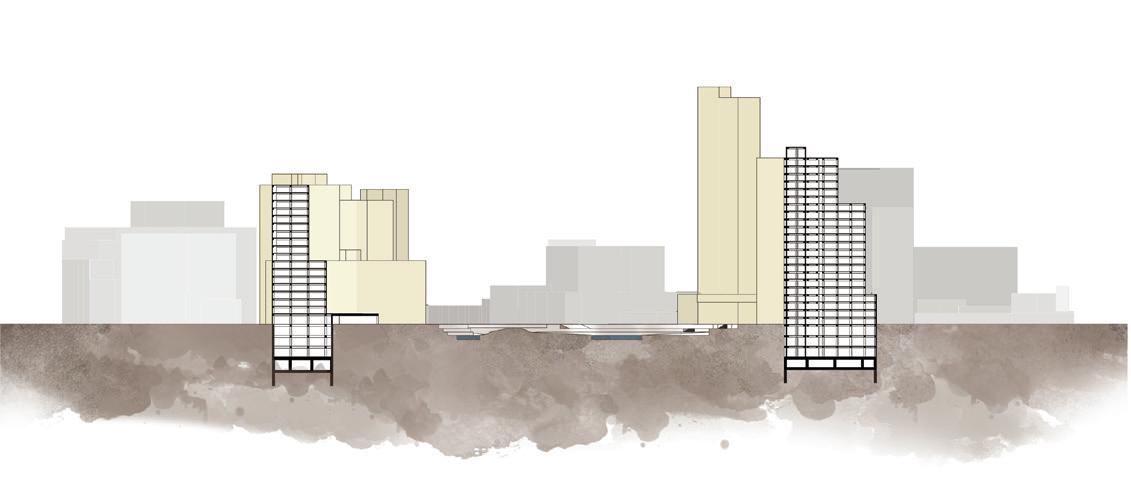
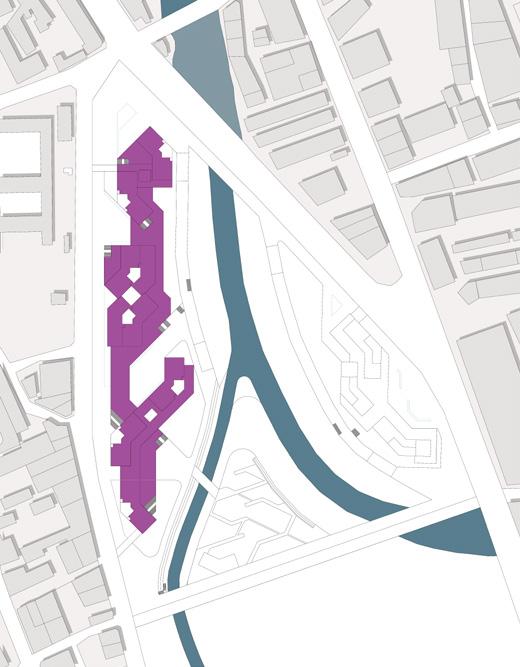
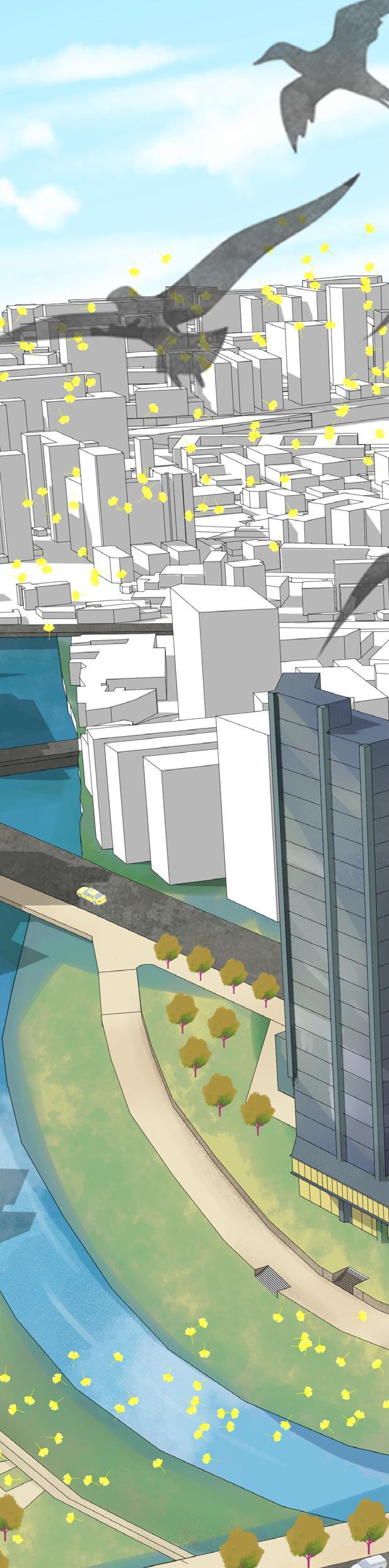
Resilience has become an important goal for cities, particularly in the face of climate change. Every summer, sudden torrential rains from a tropical depression caused severe flooding across Taiwan. Thus urban resilience has become a pressing issue in the face of the multiplication of risks. The project was designed to reintegrate the river with the city and based on a floodplain concept, during rainy season the site works as a channel and, when the water level is low, the soft riverbanks can be used for recreation, allowing people to get close to the water.
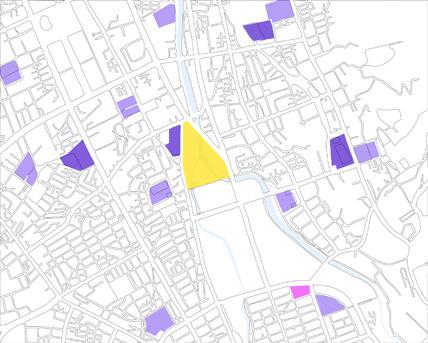
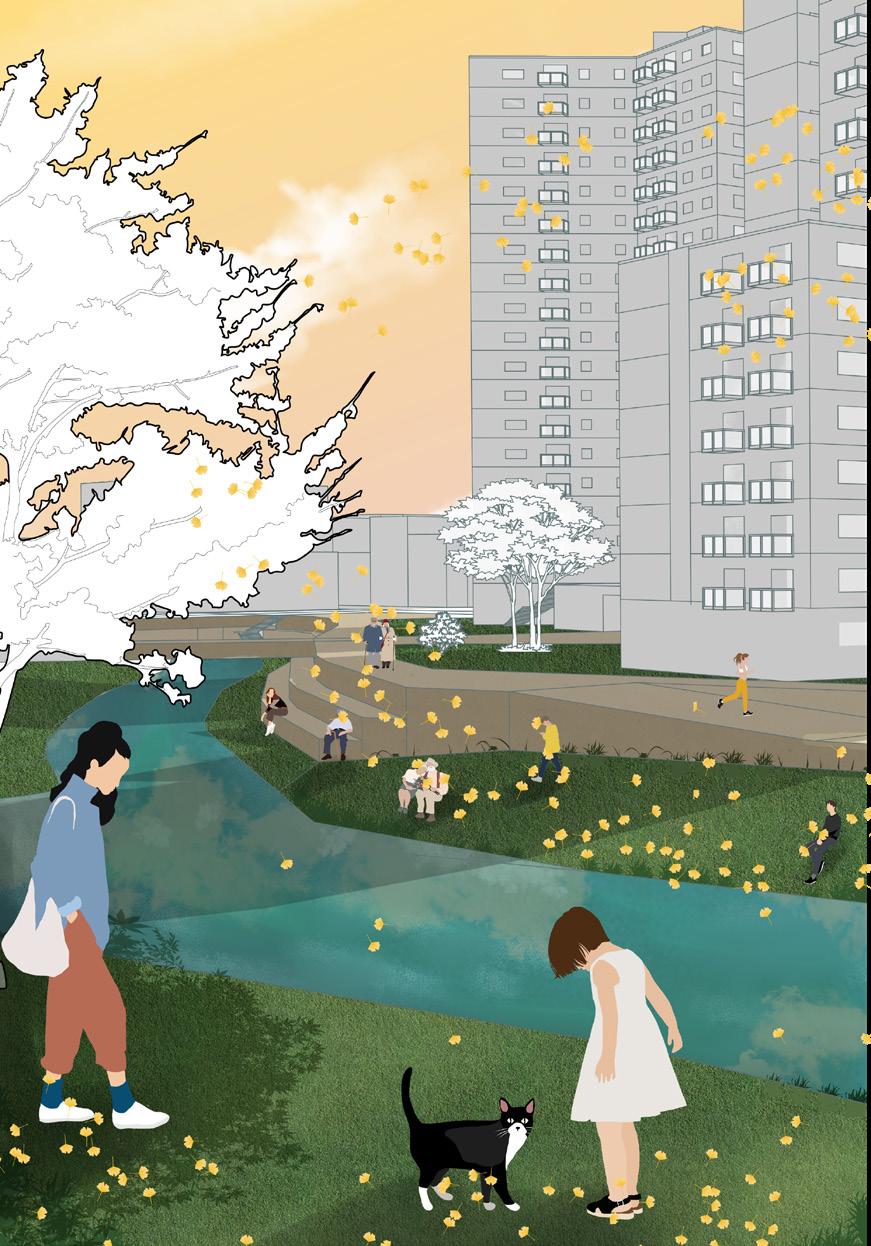
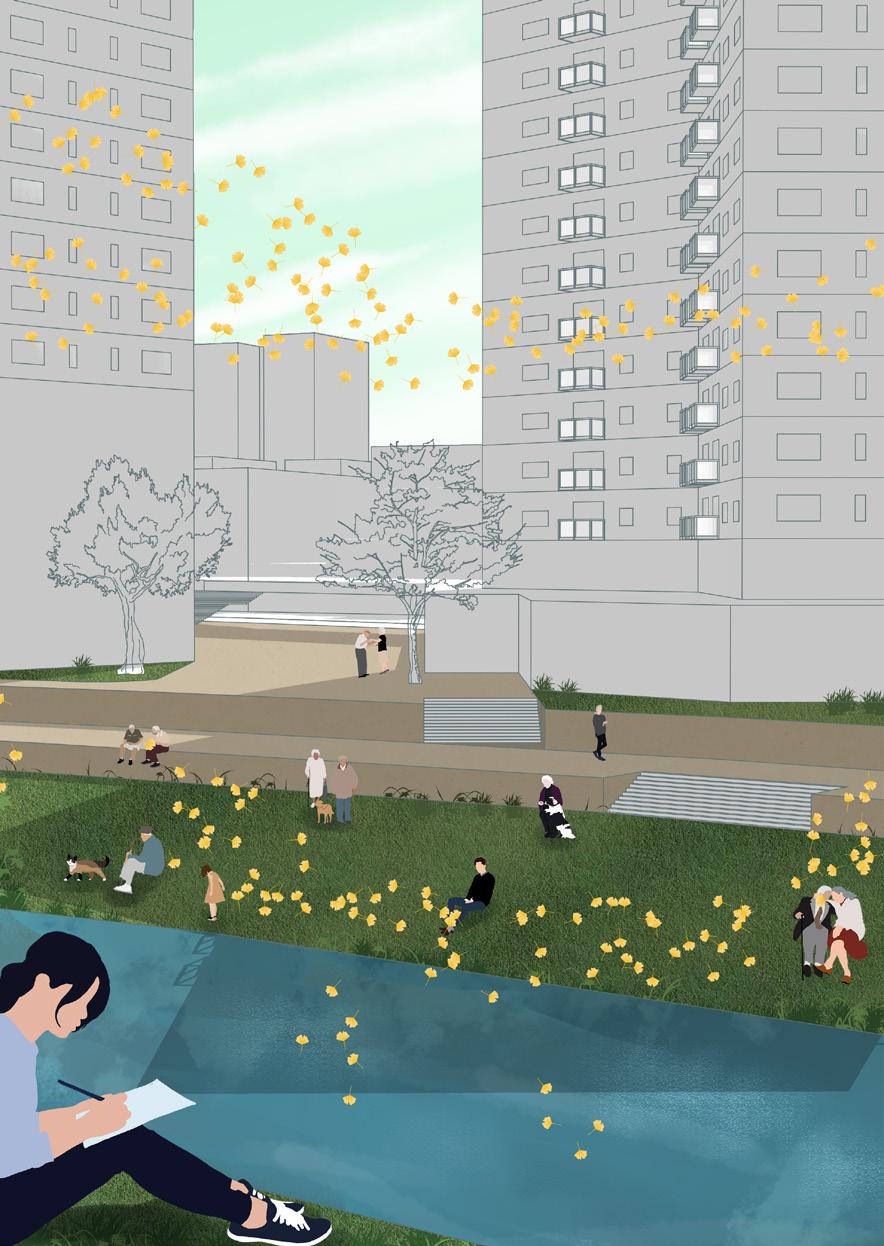
The project is located at Taoyuan City, which is cut by the Xiaokuai River. I try to find new ways of collaborating between public, private and civil society actors, and to promote social ties in cities. We remove concrete walls, create green areas which allow the river to flow freely, storm water to be absorbed, and wildlife to return, and design walkways to make the waterfront publicly accessible. So the river will no longer be a division but a connection.
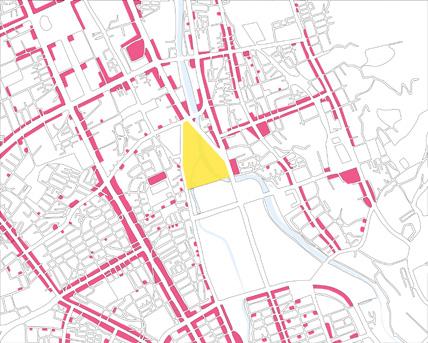
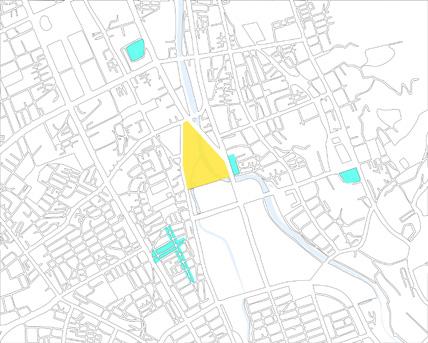
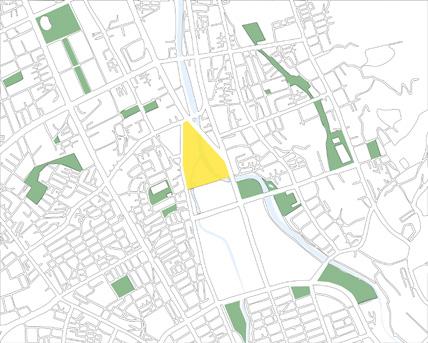
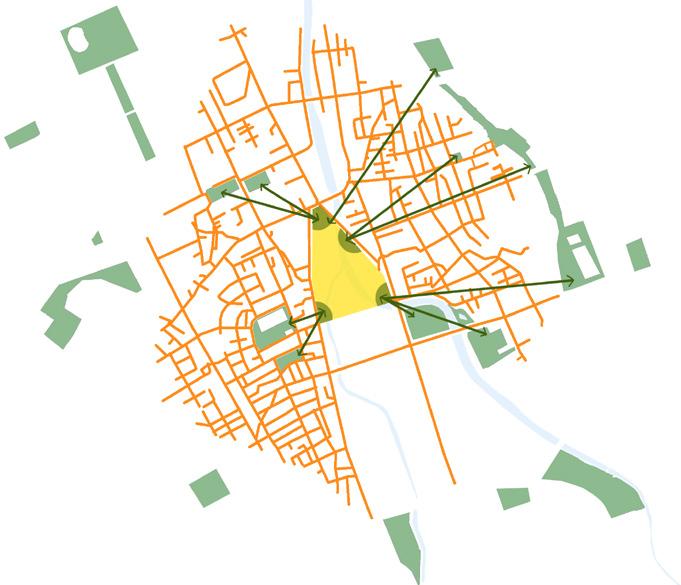
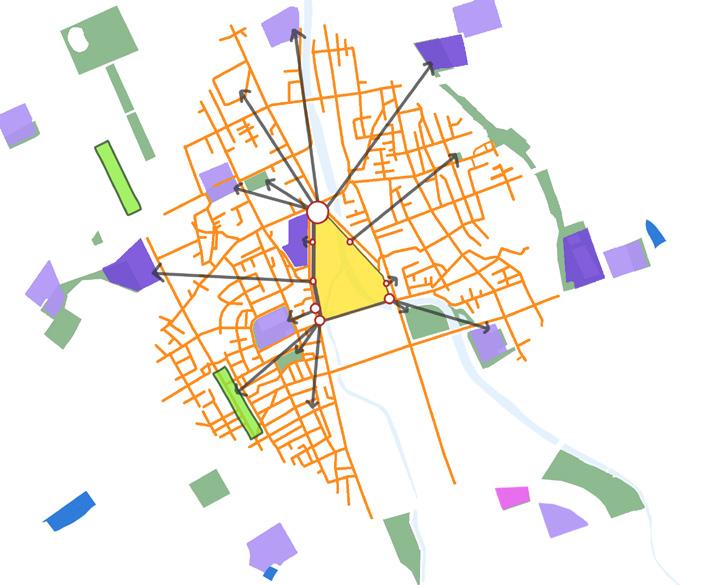
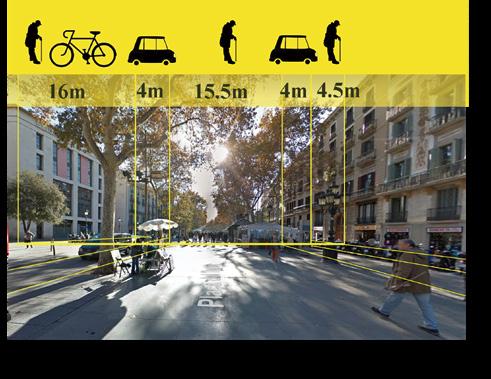
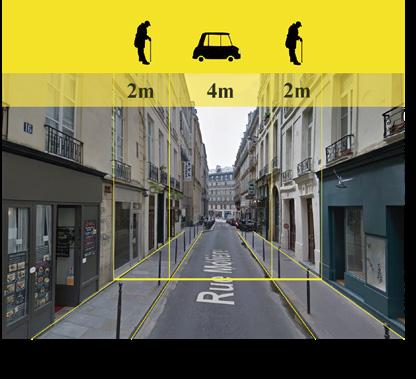
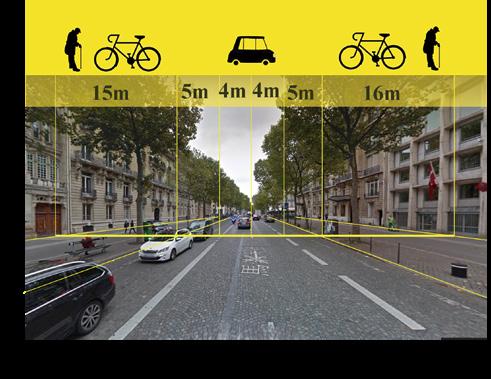
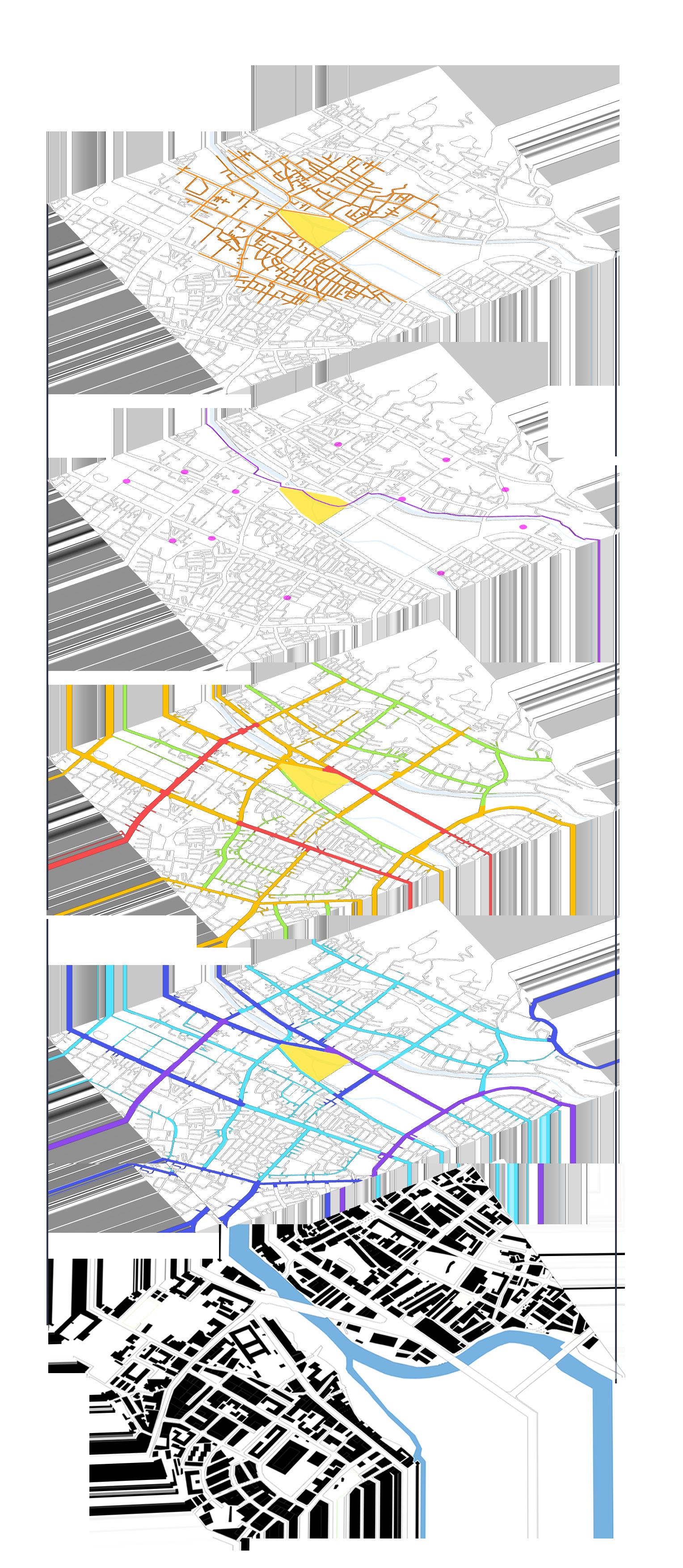
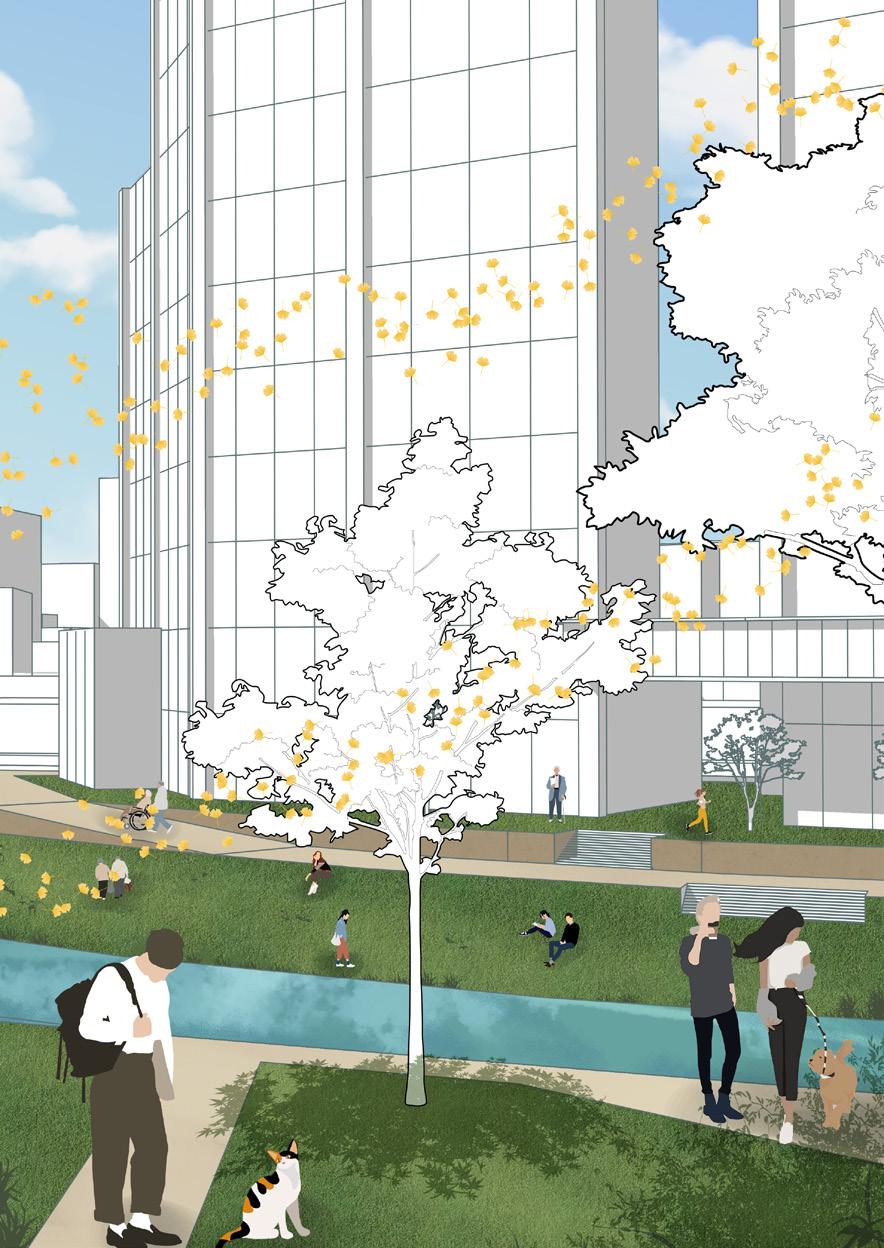
Rivers have enormous potential to attract and activate public life in a city.
The project encompasses the creation of attractive green areas and walkways.
The green area that replaced the formerly inaccessible riverbanks improved the relationship between city residents and nature, inviting people to look at rivers not as obstacles, but as vital and connective urban components. So river will no longer be a division but a connection.
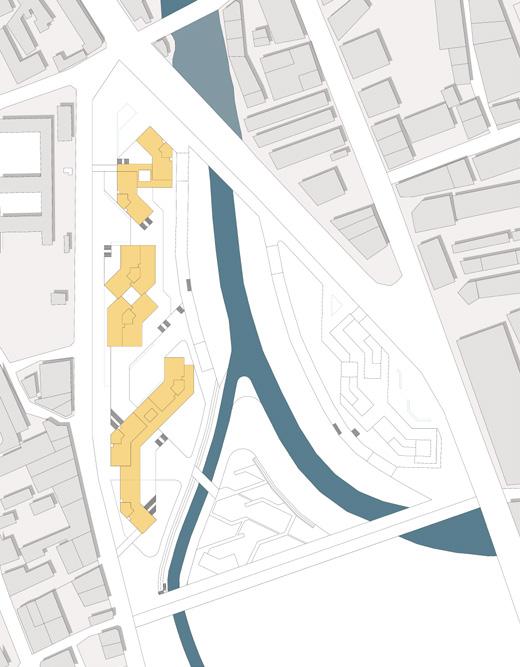
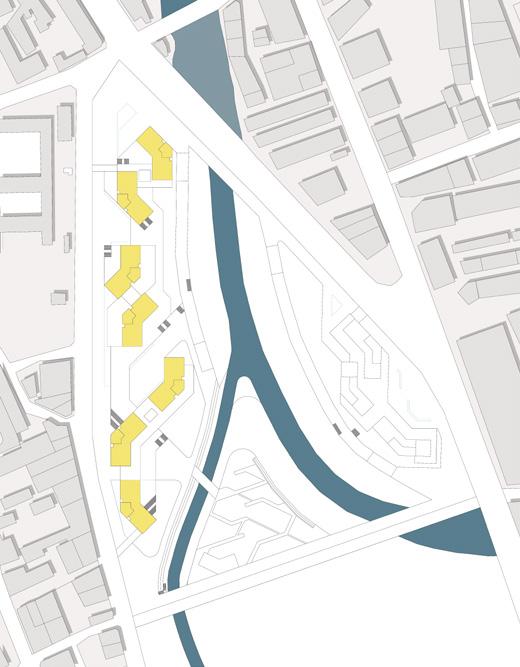
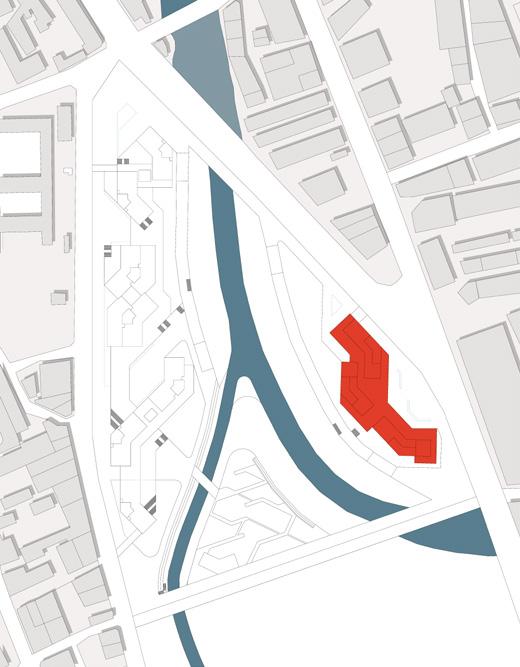
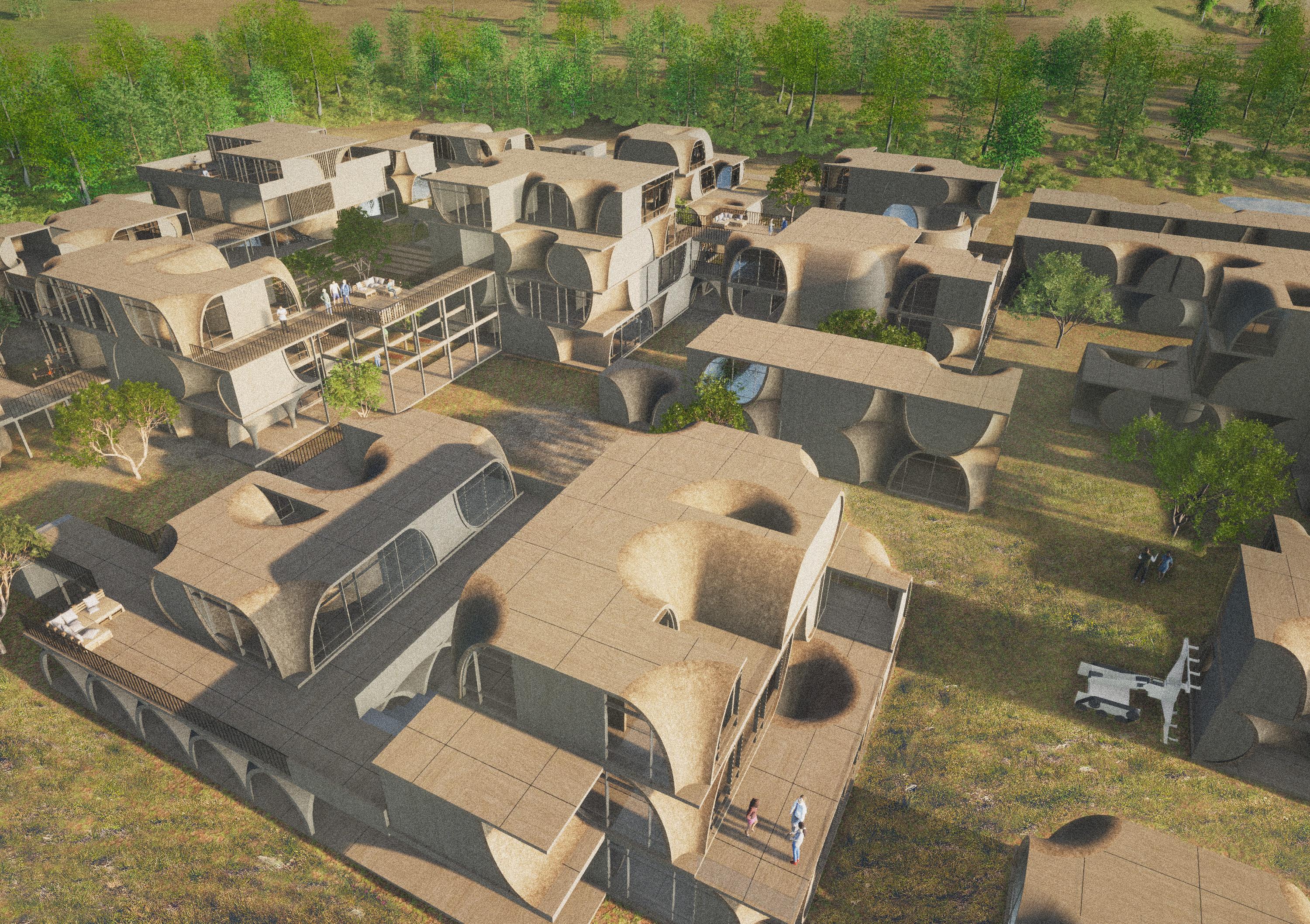
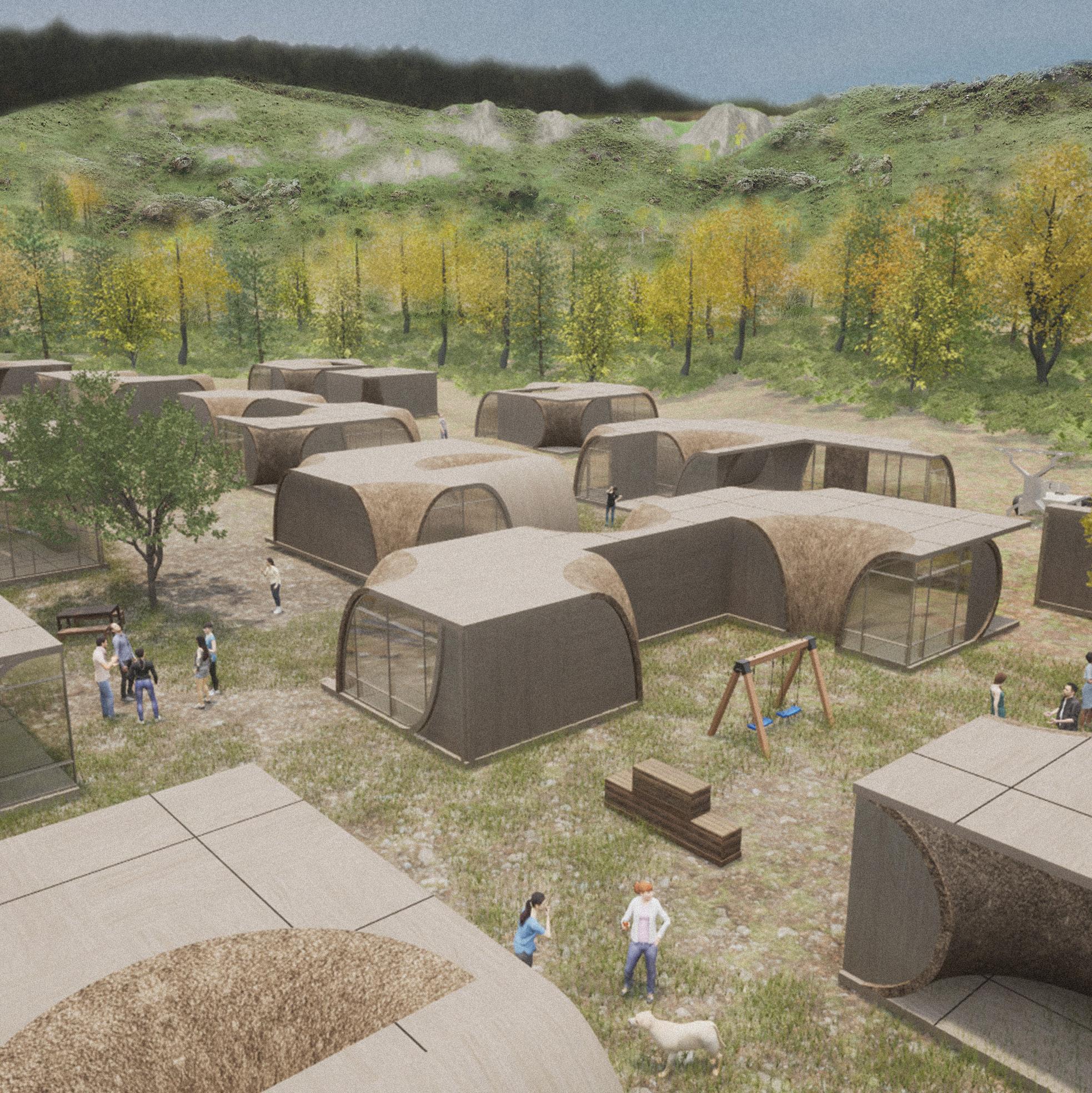
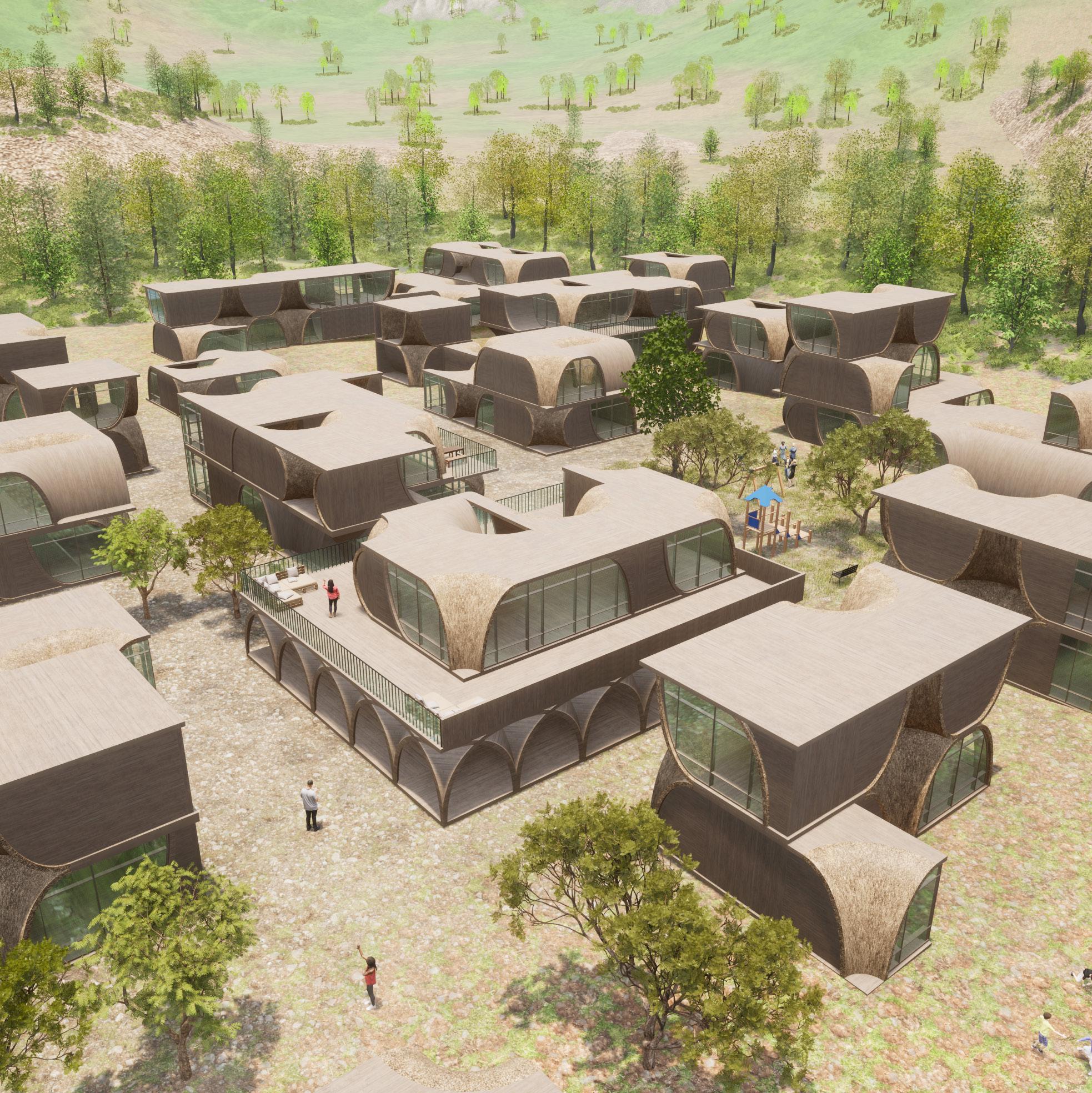
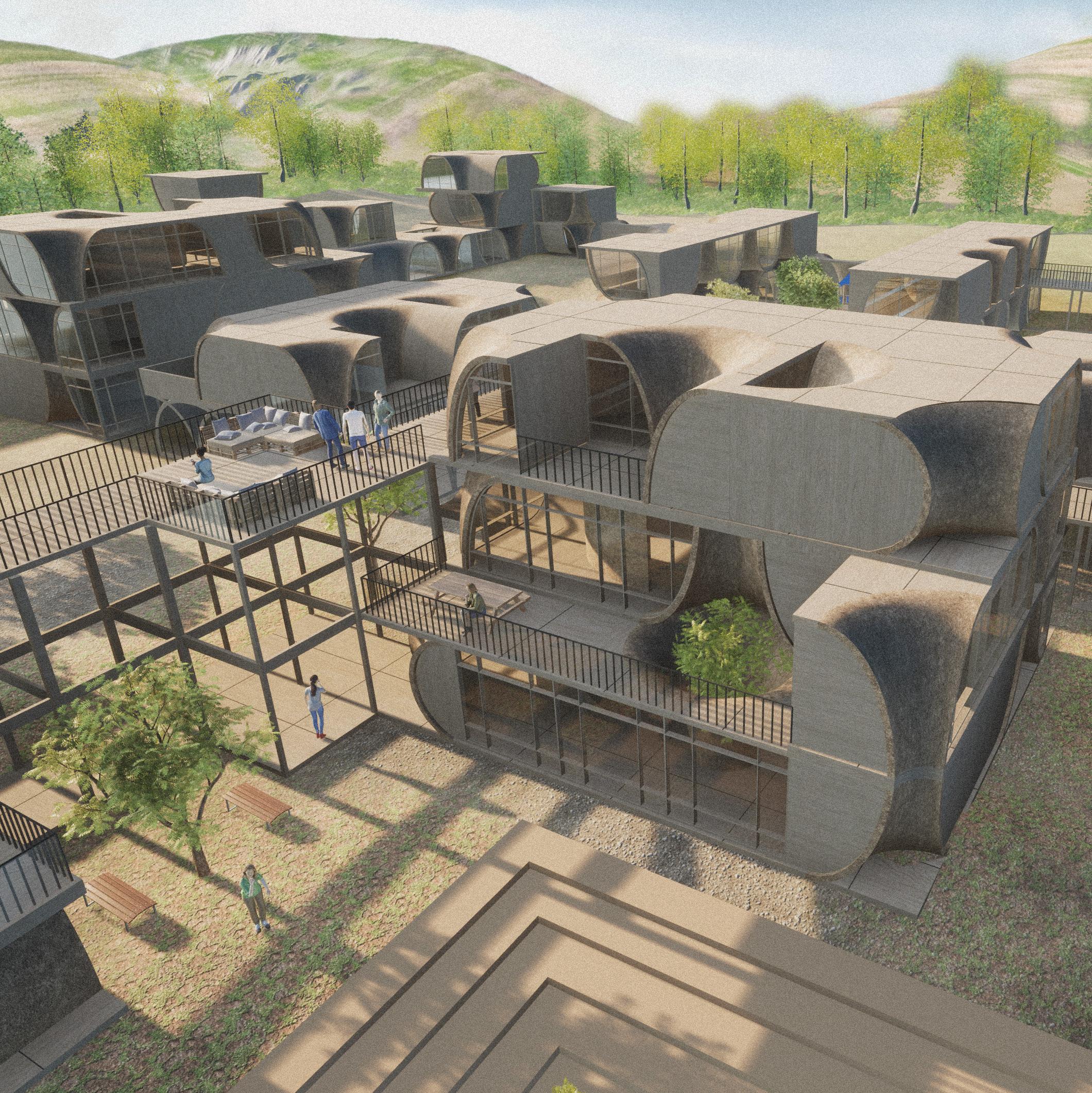
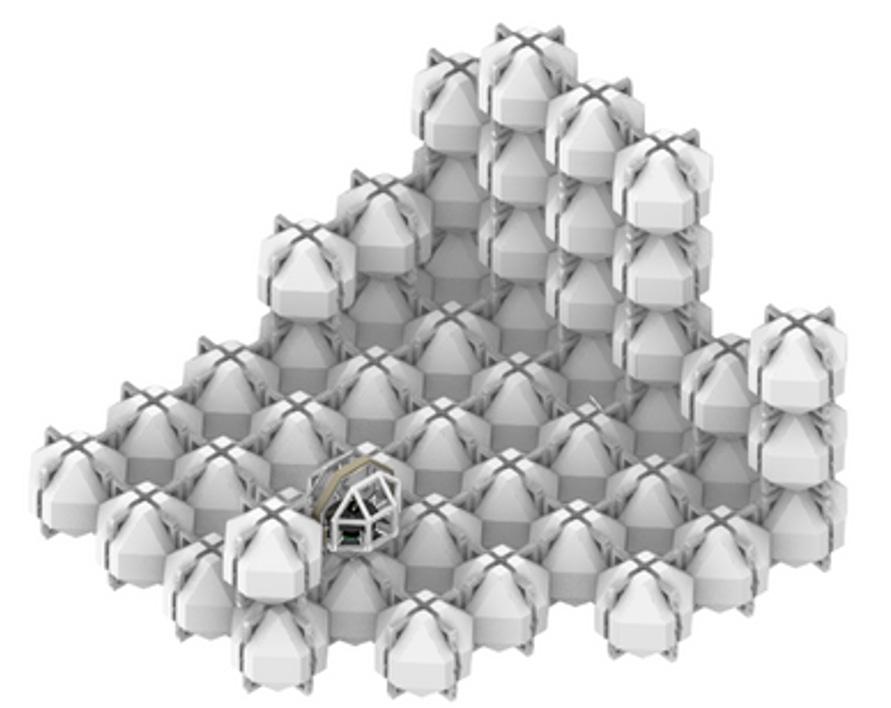
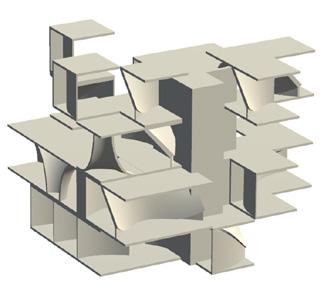
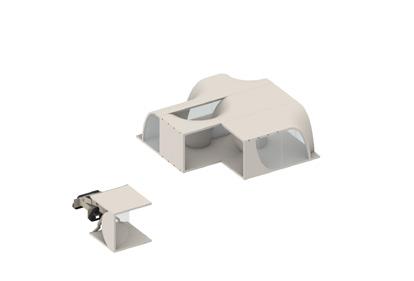
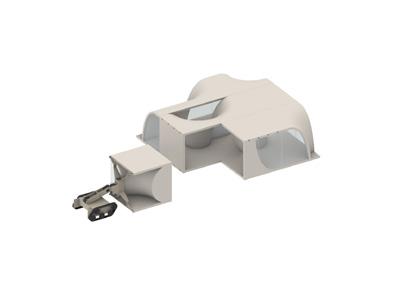
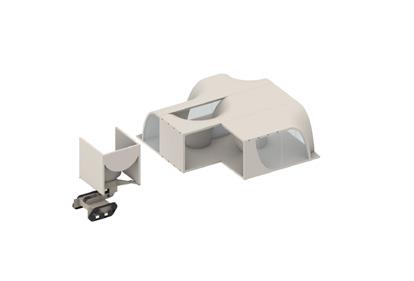
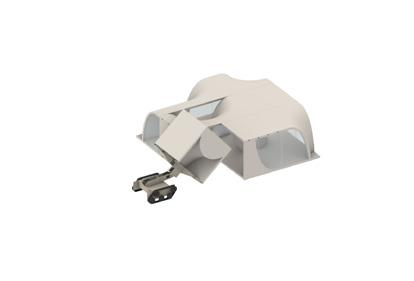
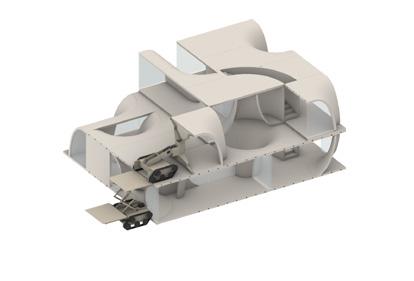
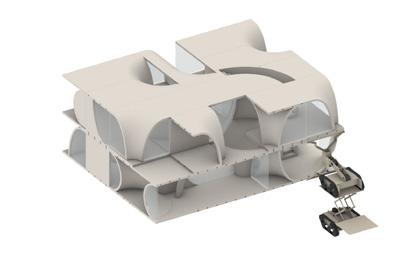
The (re)2 BOT system revolutionizes modular construction, focusing on disaster relief and refugee scenarios. It boasts a unique feature – effortless assembly, disassembly, and reconfiguration via large-scale robots. It extends beyond short-term solutions, aiming to create sustainable communities by evolving rapidly deployable camps into enduring settlements.
Key to (re)2 BOT is its lightweight, reversible monocoque components, prefabricated with eco-friendly materials in on-site micro-factories, closely collaborating with large-scale robotic assembly systems. The project harnesses cutting-edge computational algorithms, such as constraint solving and reinforcement learning, to generate, construct, expand, and reconfigure spatial layouts, adapting to evolving refugee community needs.
Urban Design Individual Project 2017-18 Academic Year
Resilience has become an important goal for cities, particularly in the face of climate change. Every summer, sudden torrential rains from a tropical depression caused severe flooding across Taiwan. Thus urban resilience has become a pressing issue in the face of the multiplication of risks. The project was designed to reintegrate the river with the city and based on a floodplain concept, during rainy season the site works as a channel and, when the water level is low, the soft riverbanks can be used for recreation, allowing people to get close to the water.
The project is located at Taoyuan City, which is cut by the Xiaokuai River. try to find new ways of collaborating between public, private and civil society actors, and to promote social ties in cities. We remove concrete walls, create green areas which allow the river to flow freely, storm water to be absorbed, and wildlife to return, and design walkways to make the waterfront publicly accessible. So the river will no longer be a division but a connection.
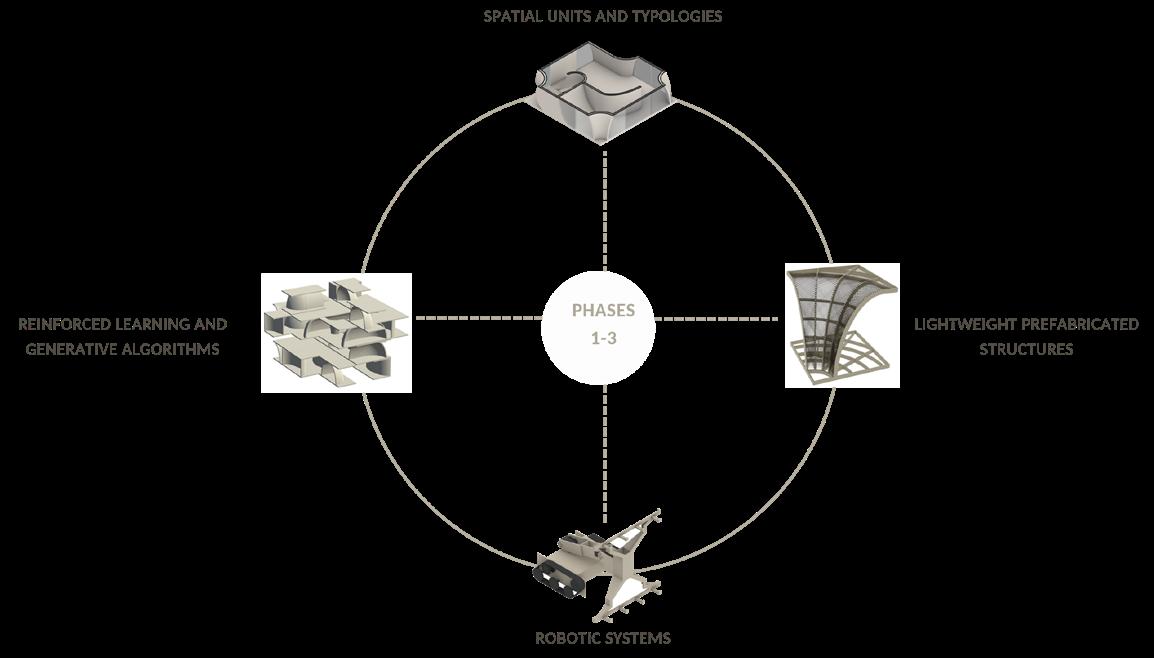
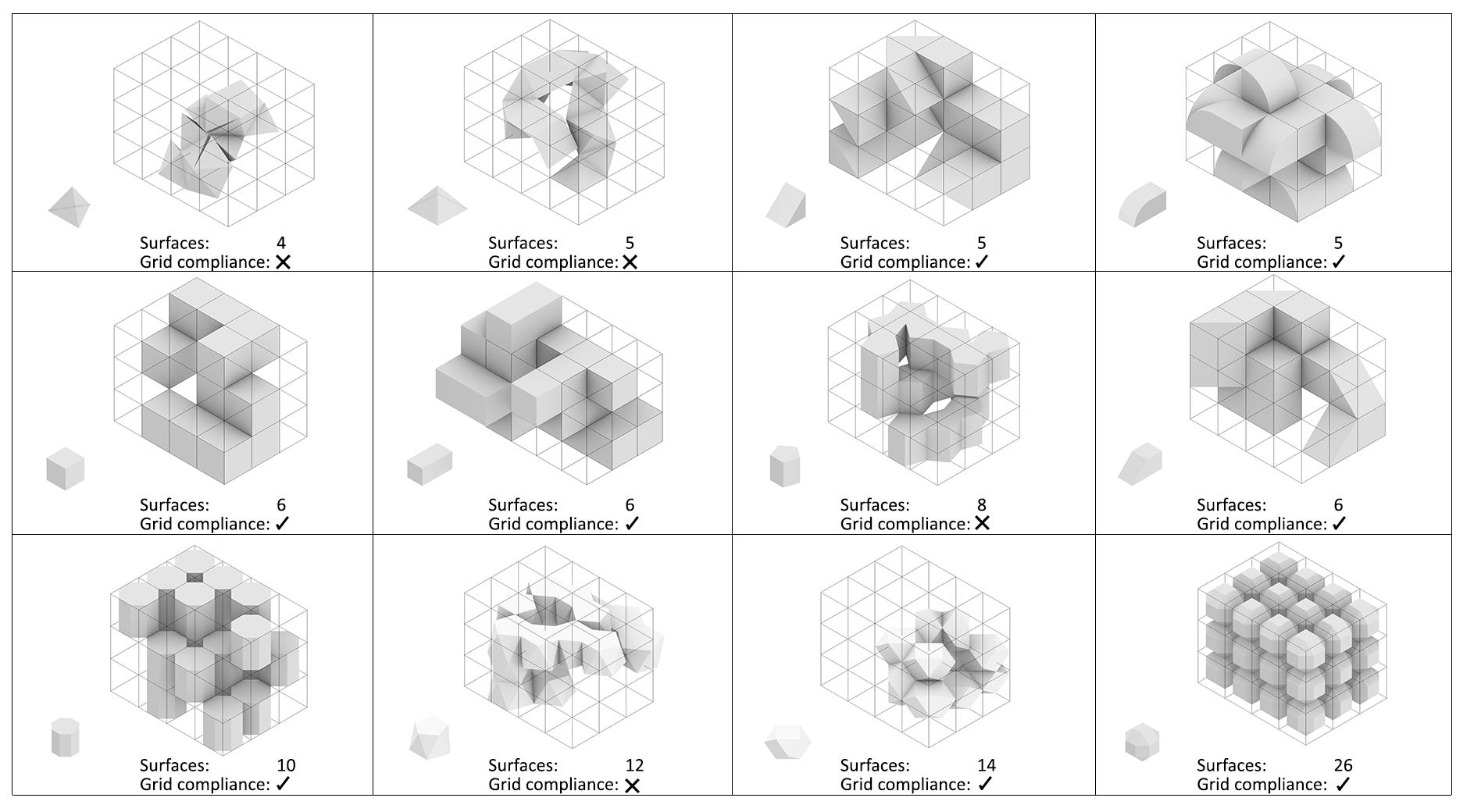
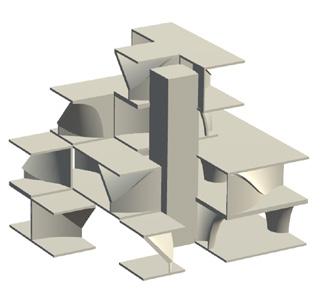
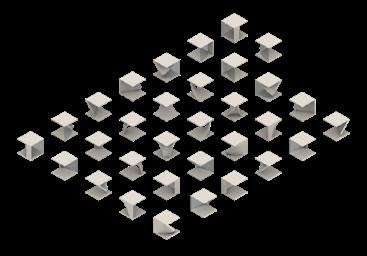
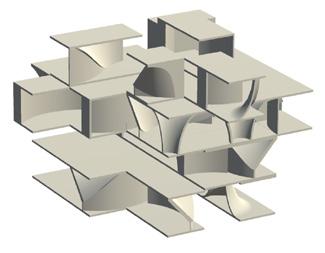
The initial studies for spatial systems, robotic systems, and computational algorithms laid the foundation for spatial exploration, establishing a framework of constraints and rules to guide further geometric investigations. These fundamental constraints and rules are as follows:
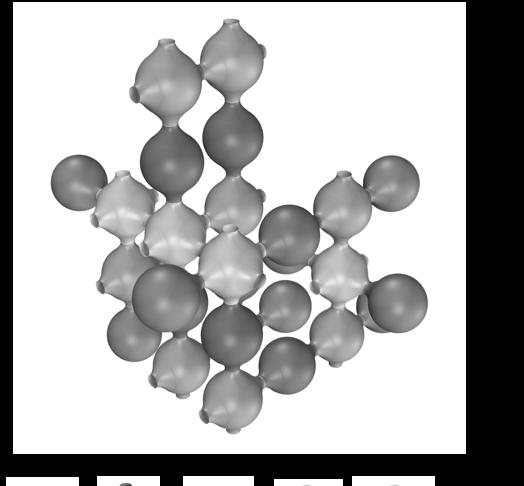
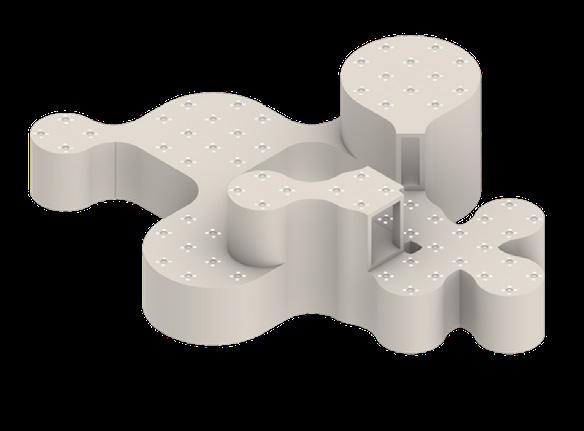
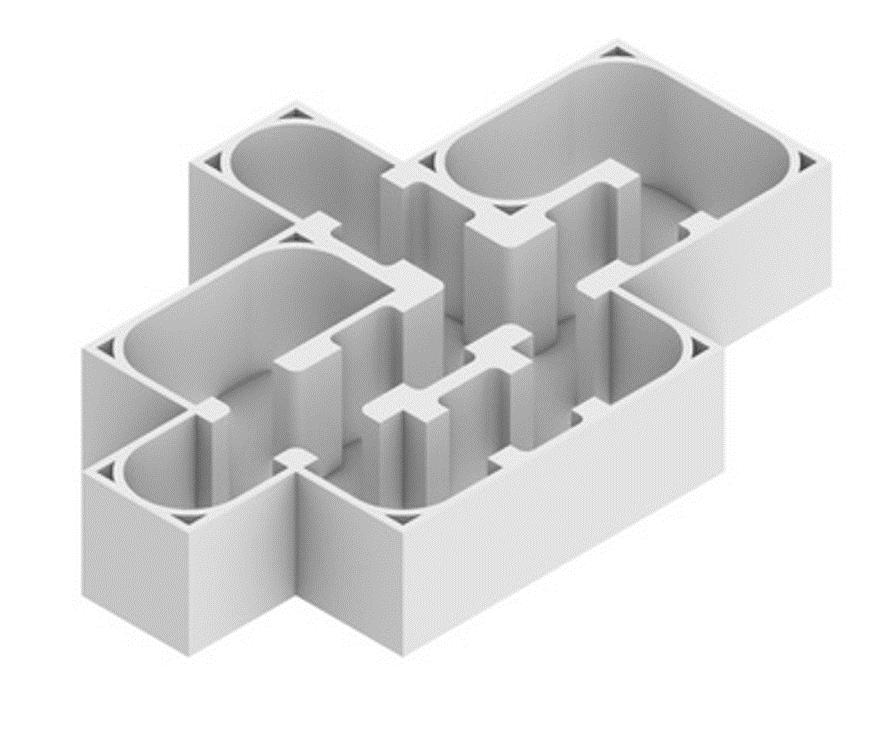
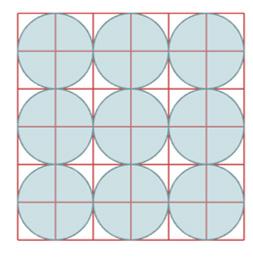
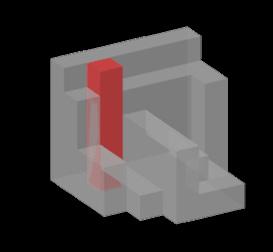
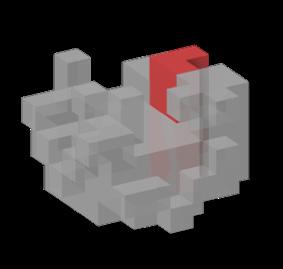
Grid-Based Geometry: The geometry adheres to a grid structure, with each grid cell measuring 3m x 3m, providing a standardized area of 9 square meters, the proposed space for temporary housing for a single individual. This grid system extends across the site, effectively allocating spatial functions within evolving communities. Each typology of structure has a predefined maximum area it can occupy within this site grid.
Scale Analysis: Extensive analysis of different scales was conducted to determine the most suitable geometrical scale. This analysis considered both the human-geometry scale and the robotic agent-geometry scale. The potential for multi-scale geometries using individual cells and multiples of cells was also explored, ensuring adaptability to varying spatial requirements.
Grid-Based Geometry - Grid compliance analysis of different geometries
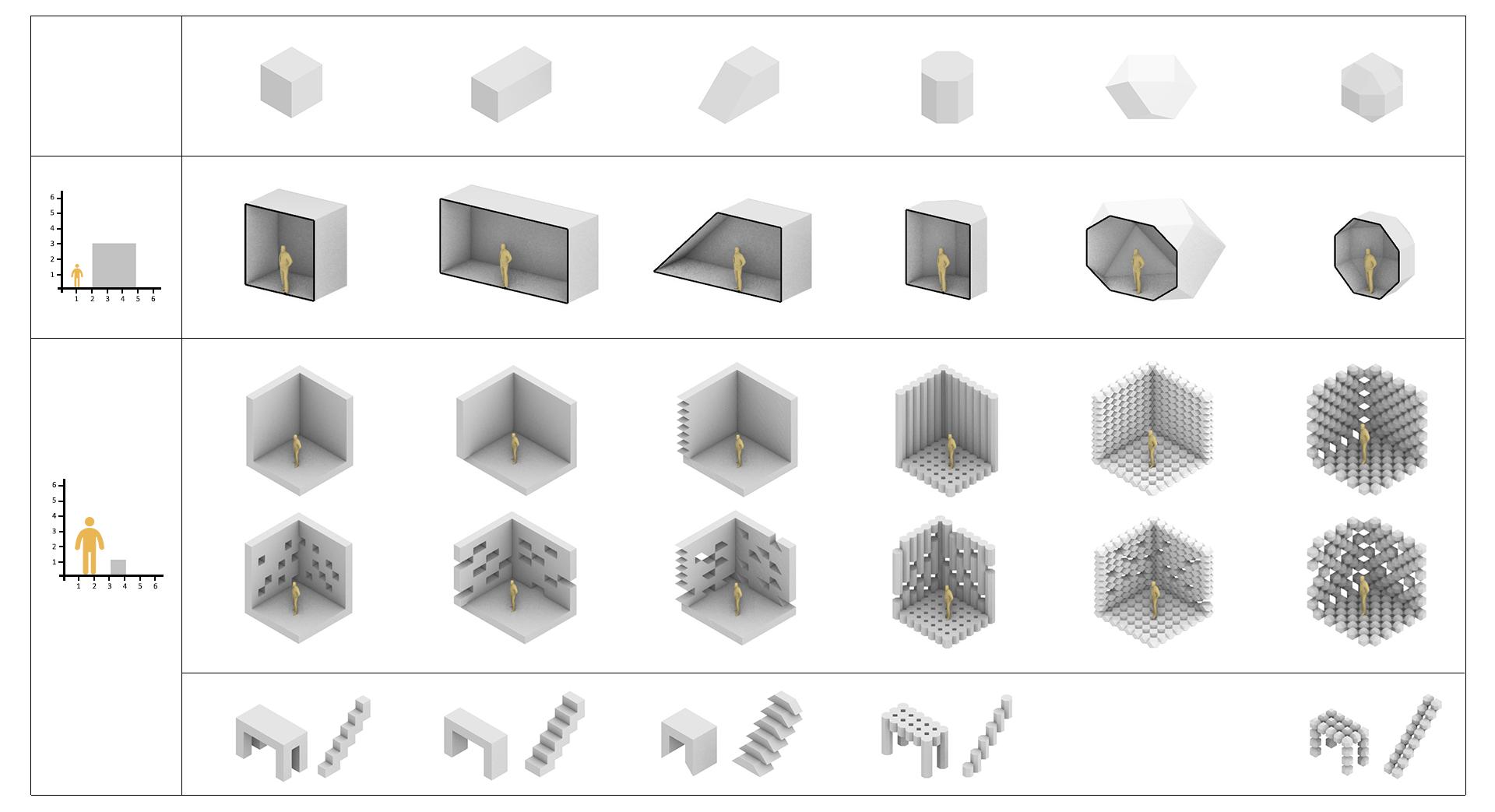
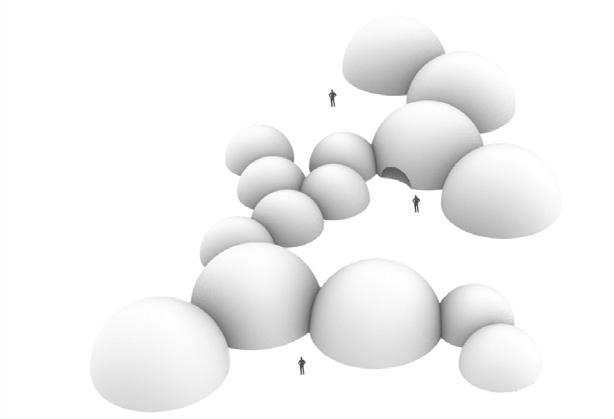
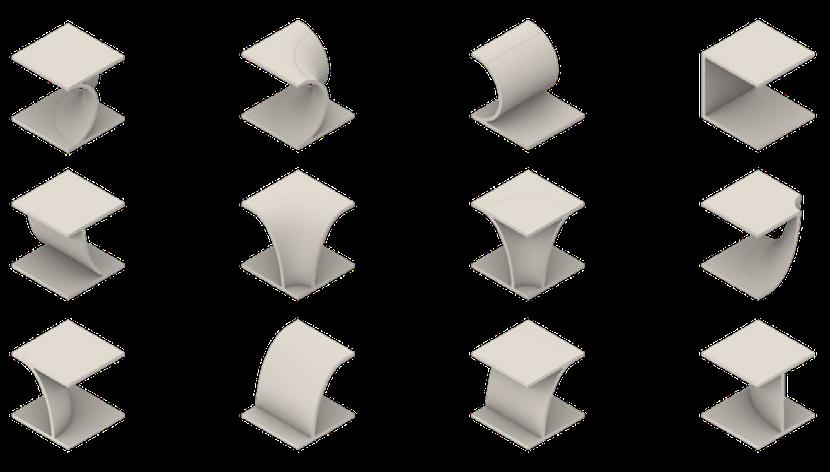
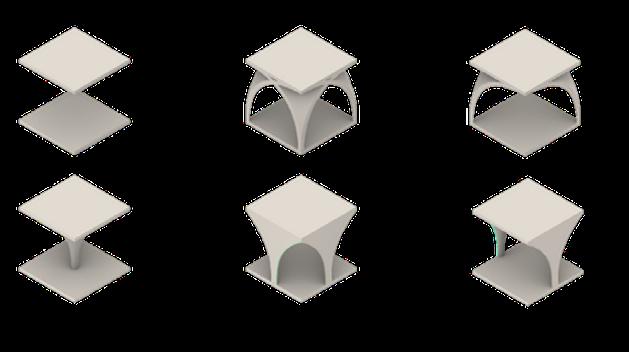
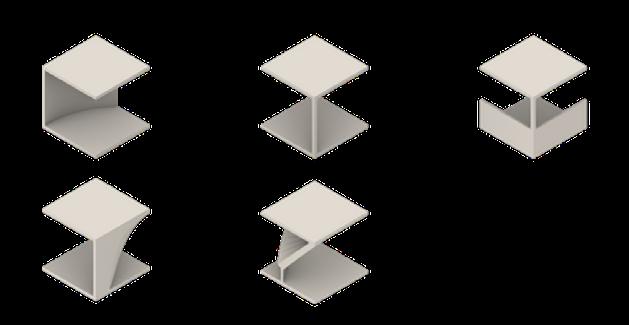
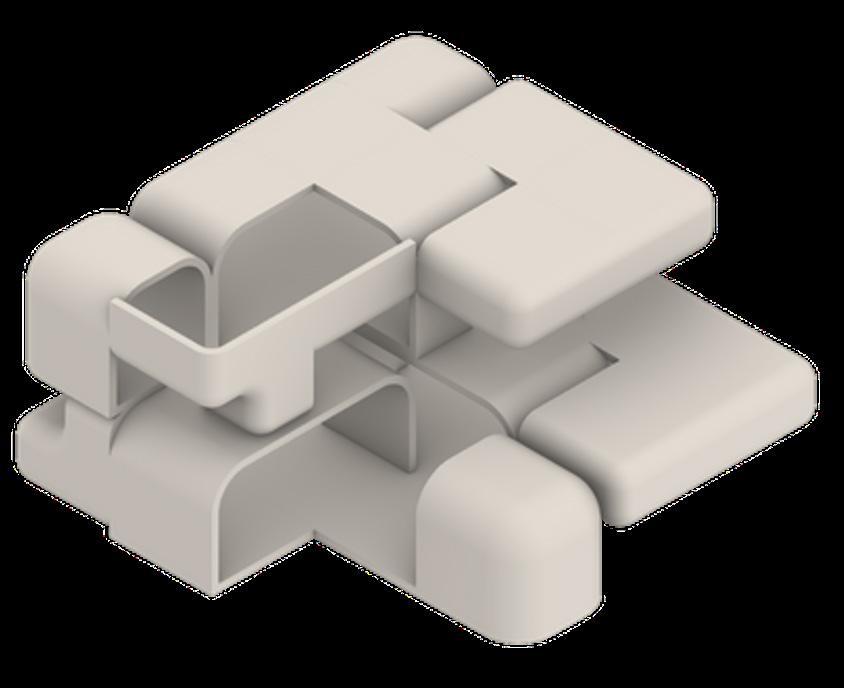
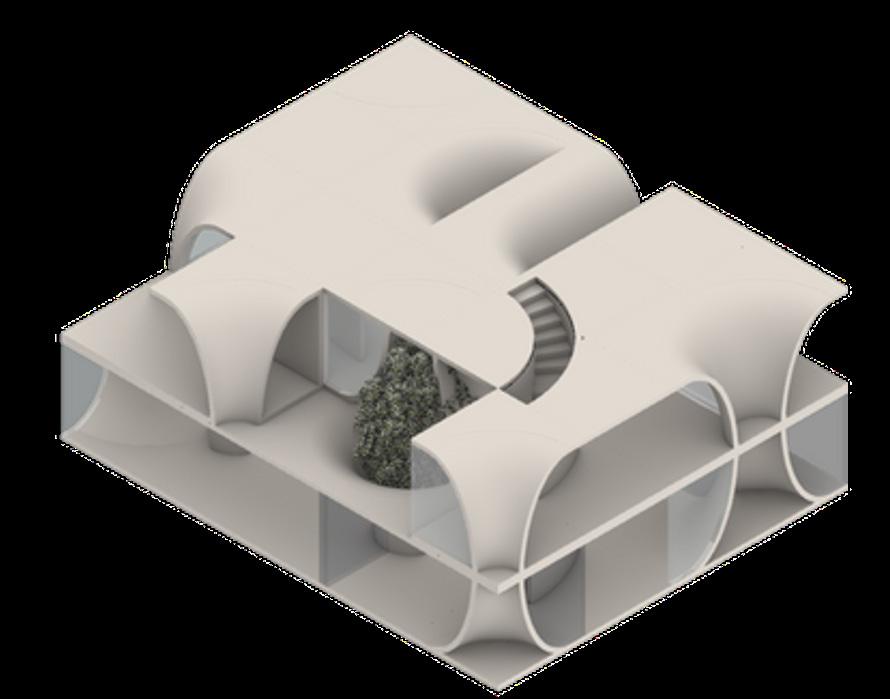
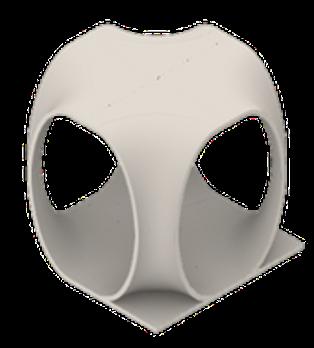
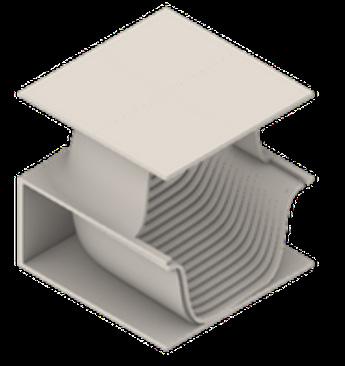
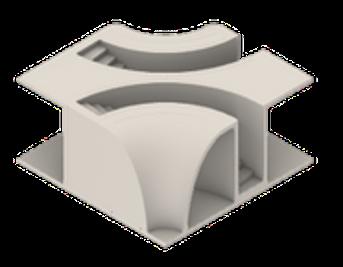
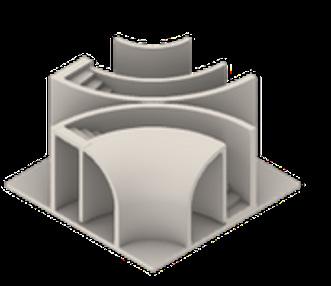
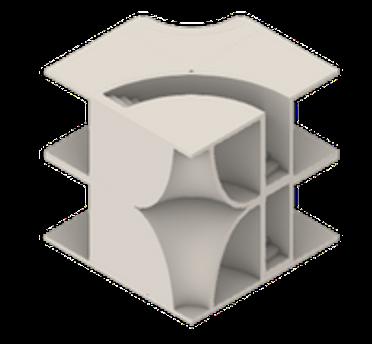
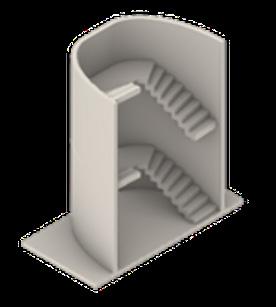
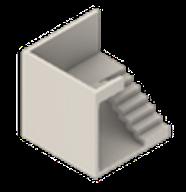 Scale Analysis - Geometry Scale Comparison with Human
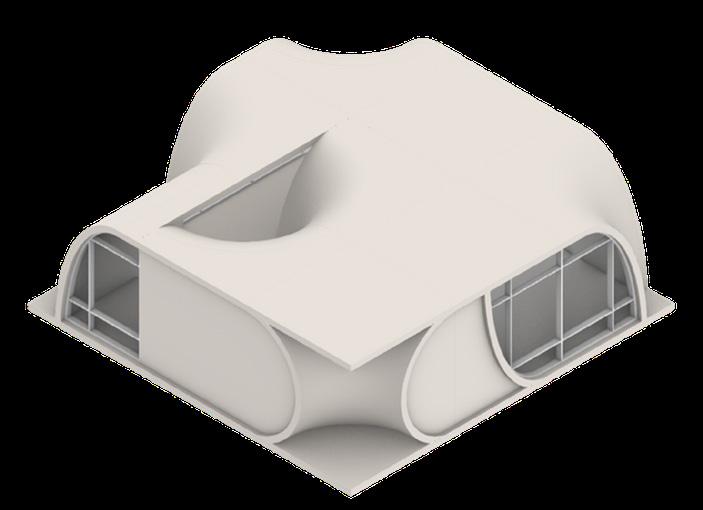
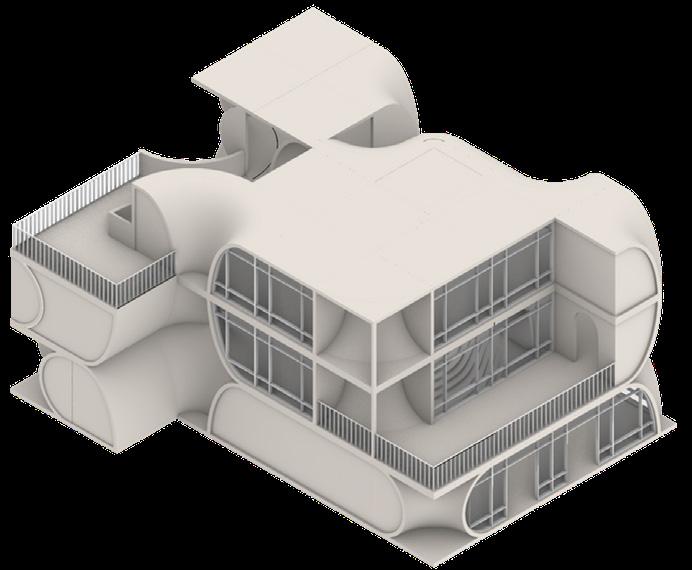
By combining spatial units from both the core and extended catalog, we gain unparalleled flexibility in designing layouts and arrangements. This versatility gives rise to seven distinct building typologies, each tailored to meet the evolving needs of refugee rehabilitation. These typologies span from initial quick-fix solutions to adaptable, enduring long-term structures, ensuring a holistic approach to refugee support and sustainable living.
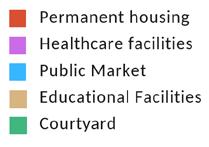
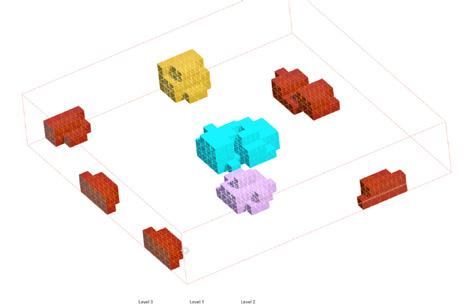
The seven typologies encompass a comprehensive range of architectural solutions, addressing the diverse needs of refugee rehabilitation. They encompass temporary and permanent housing, public markets, community centers, healthcare and educational facilities, as well as recreational spaces. This holistic approach ensures that the architectural response is well-rounded, facilitating both immediate relief and enduring support for refugee communities.
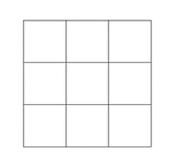
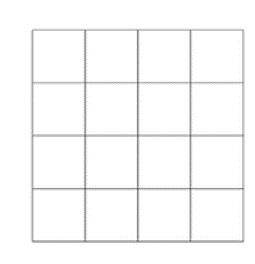
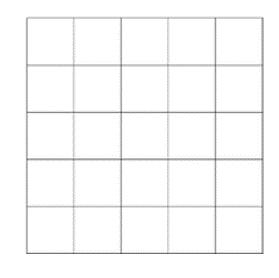
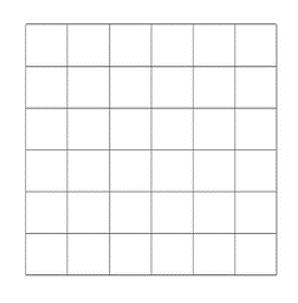
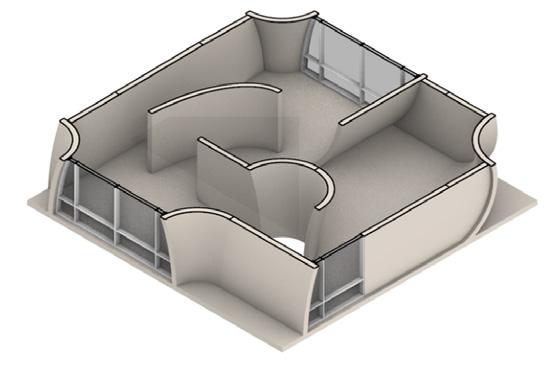
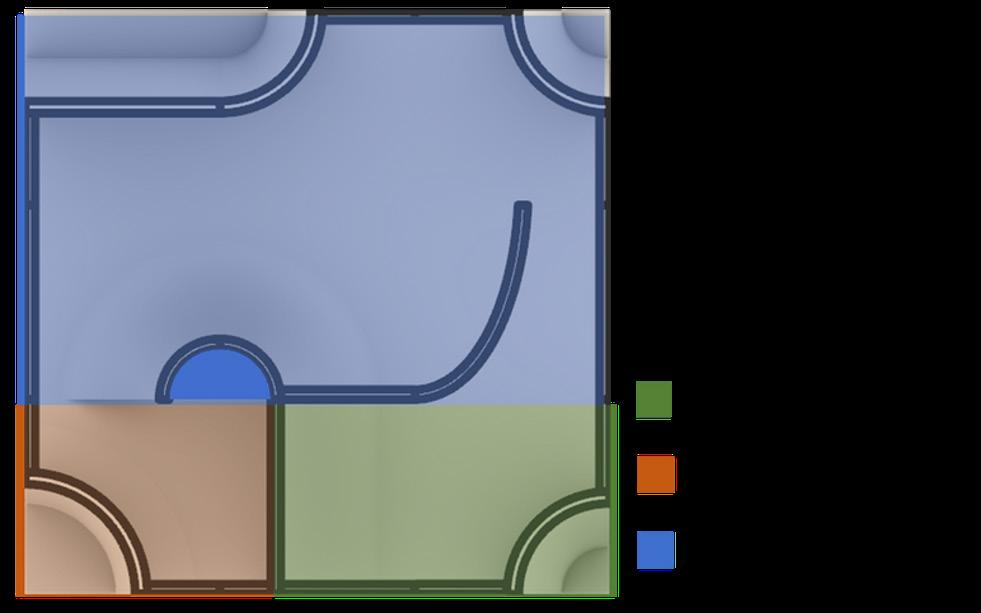
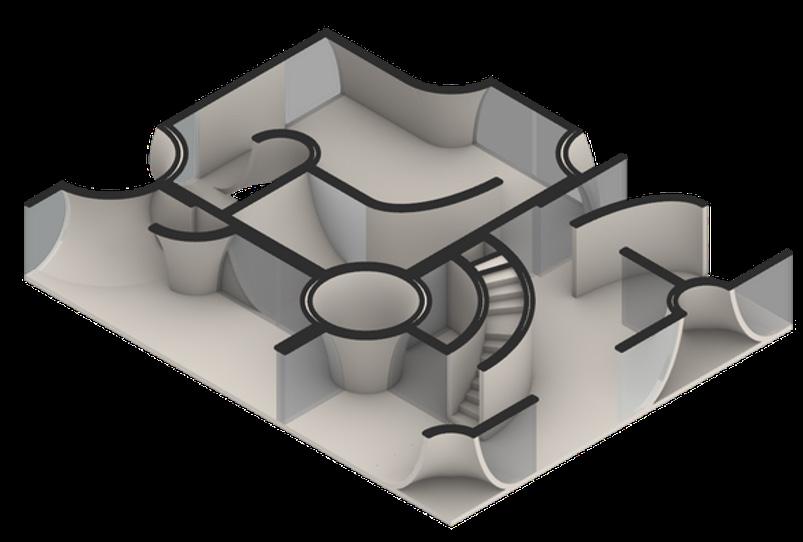
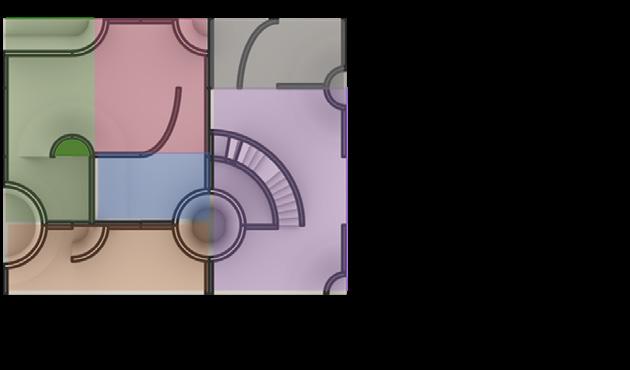
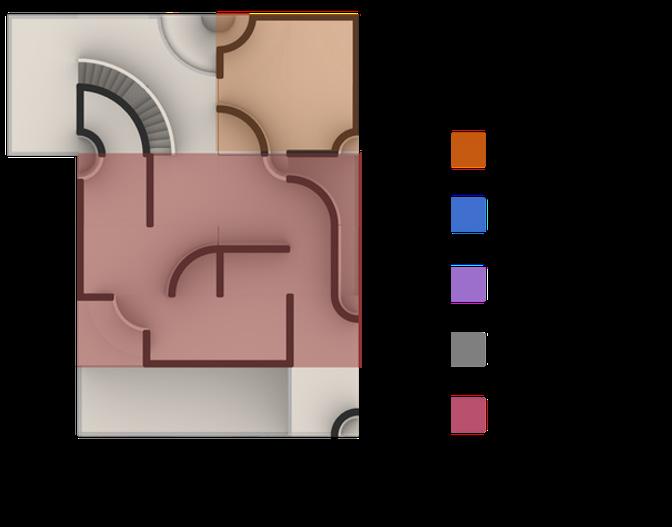
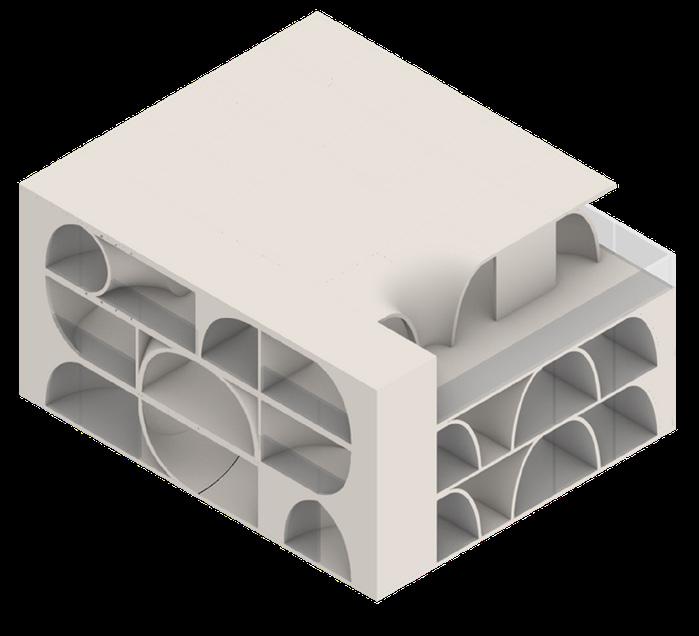
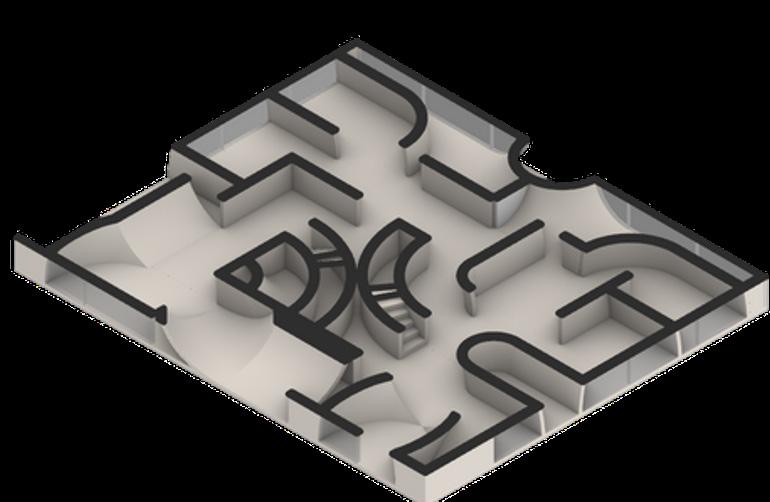
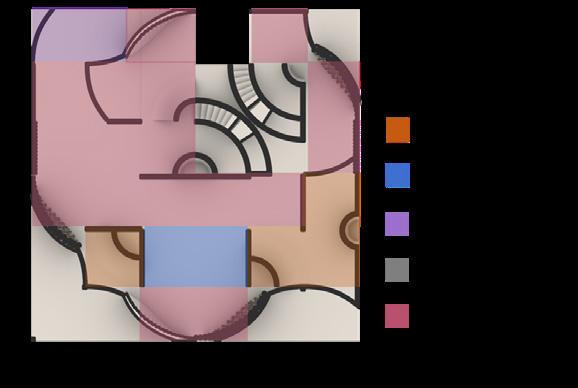
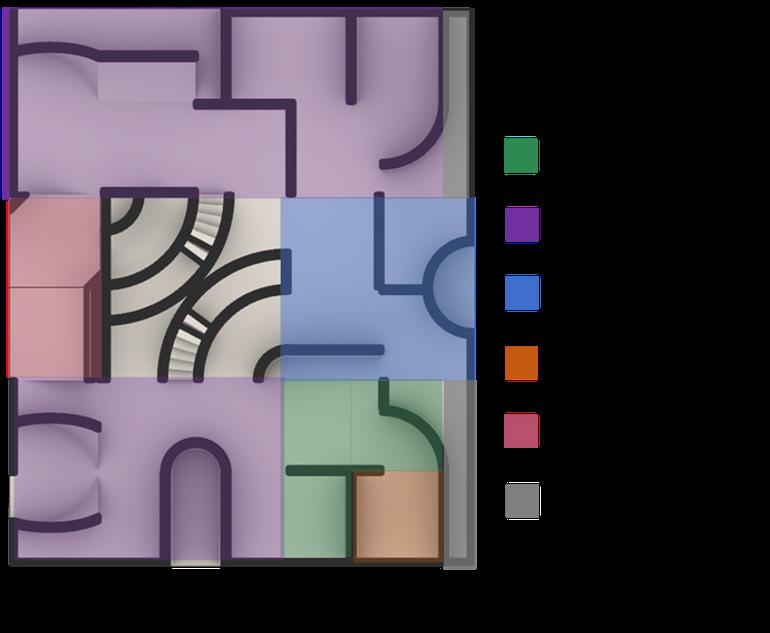
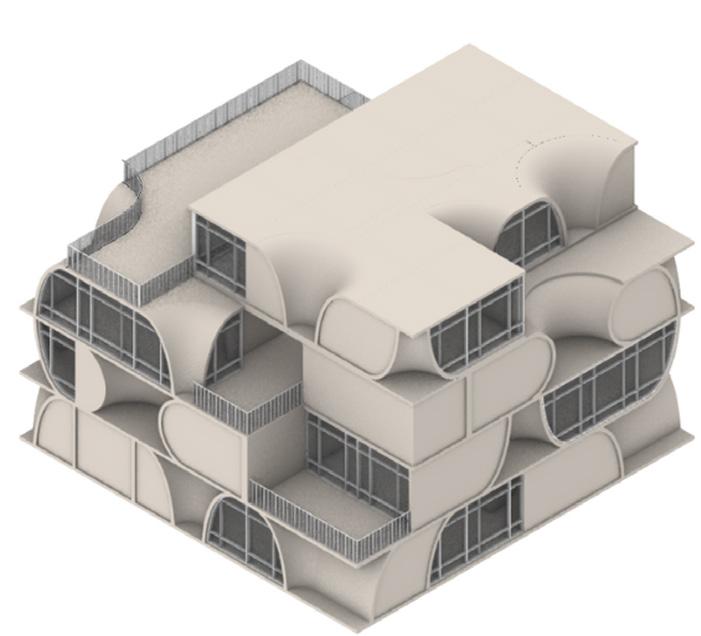
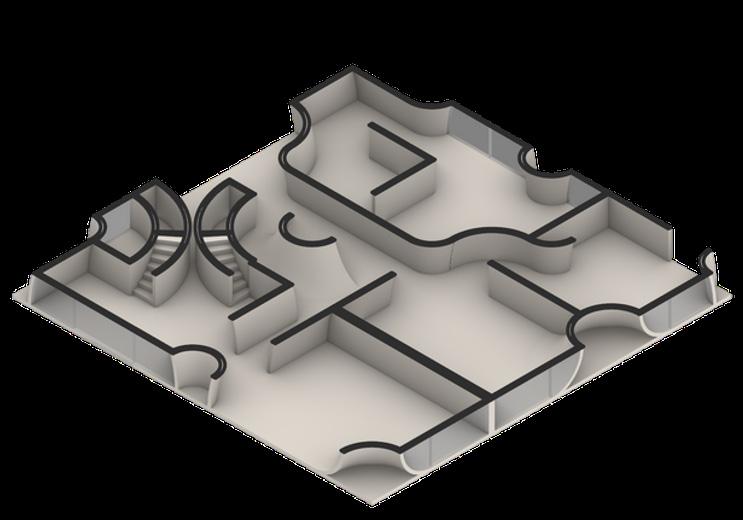
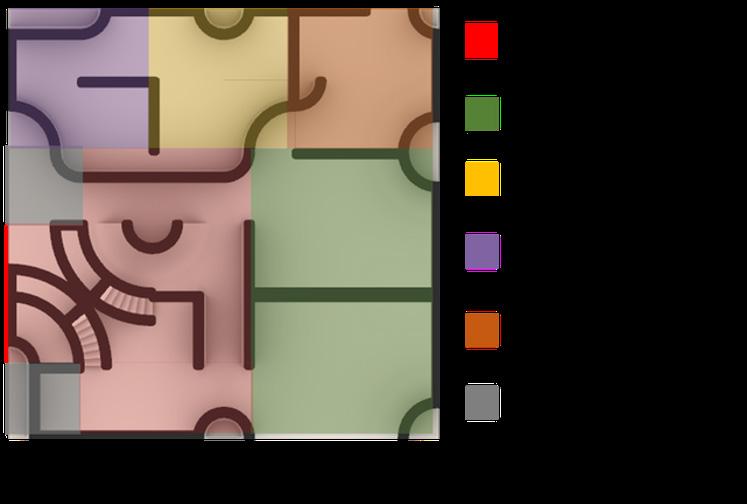
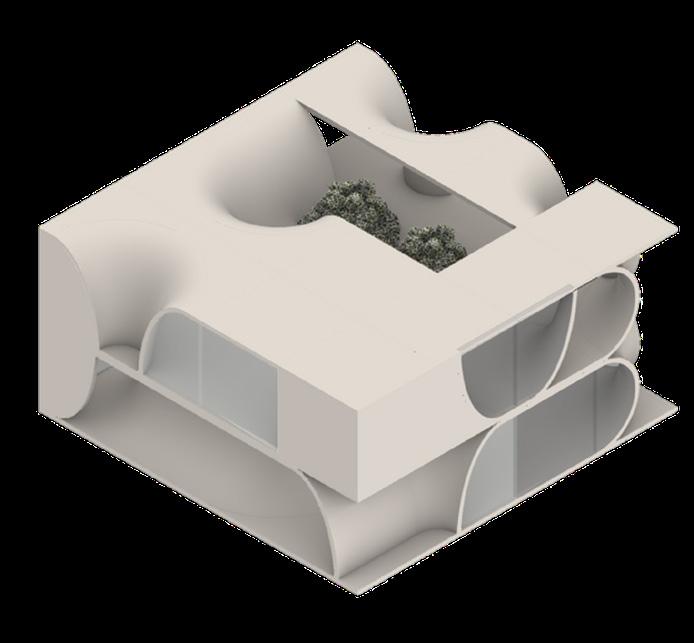
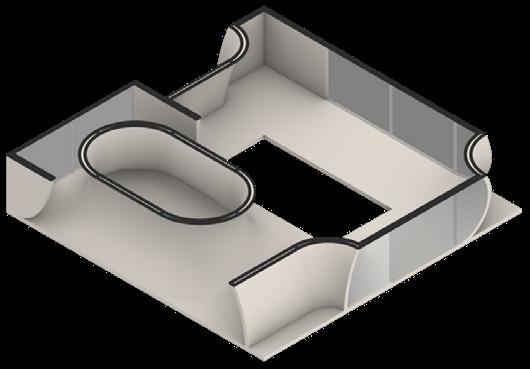
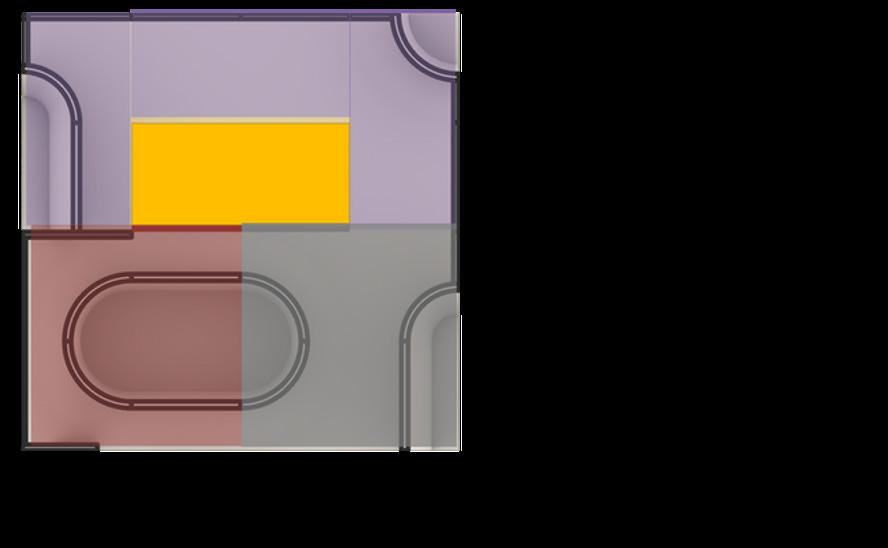
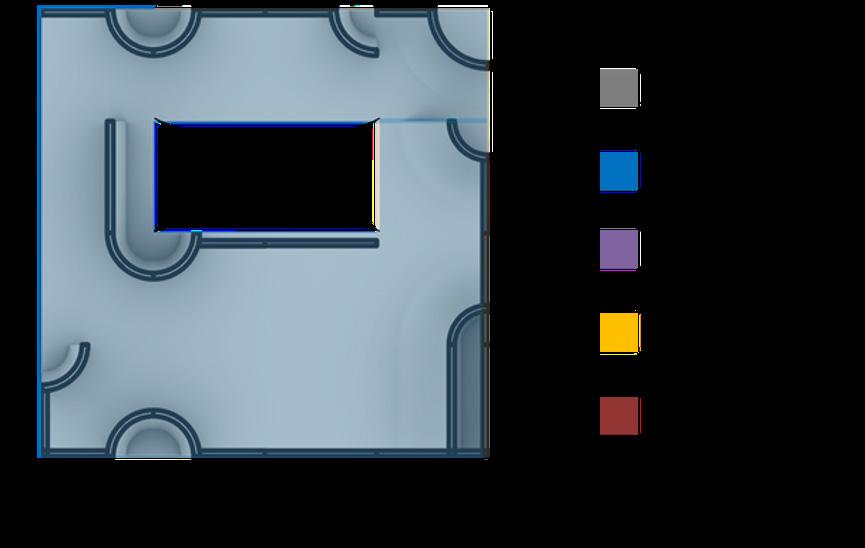
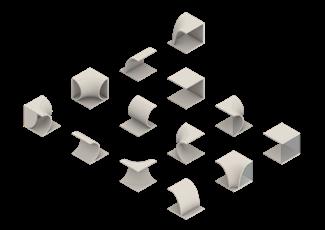
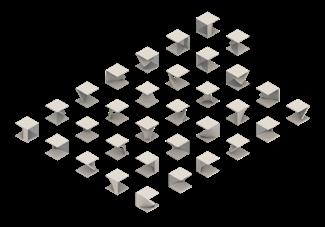
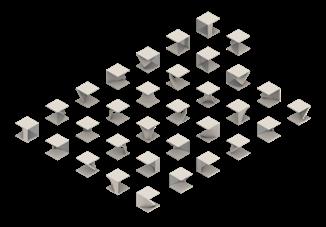
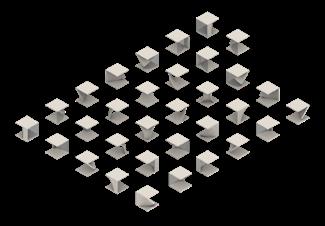
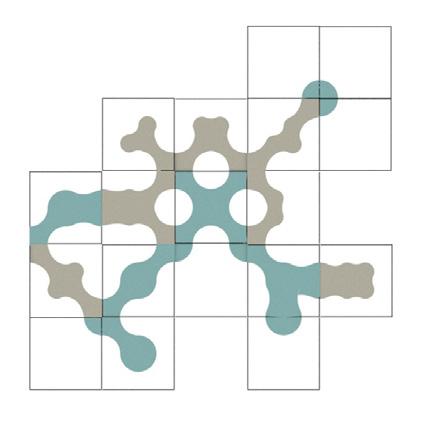
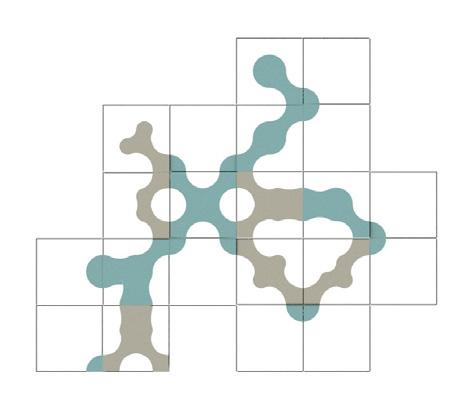
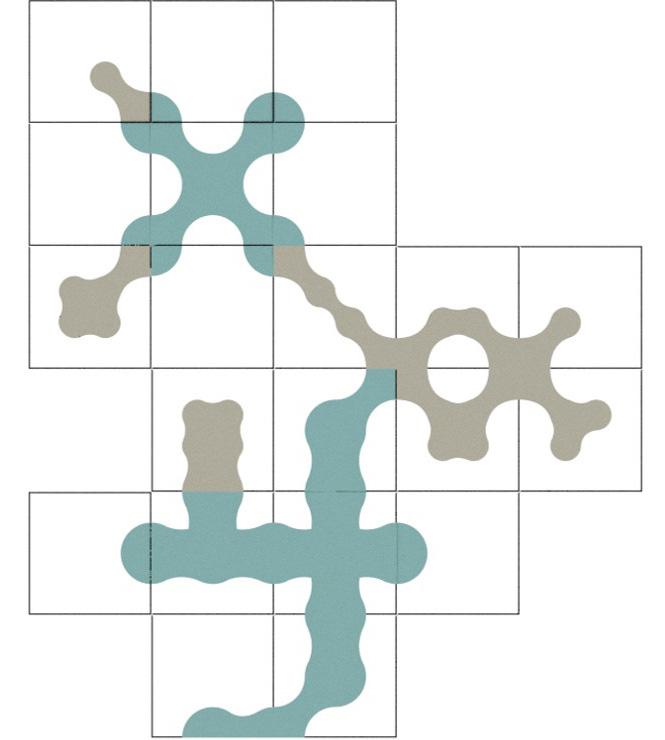
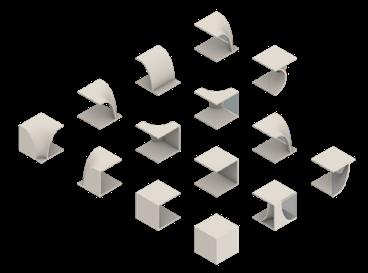
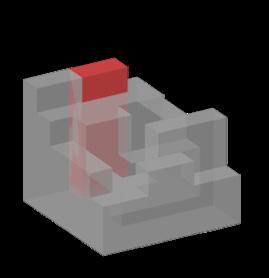
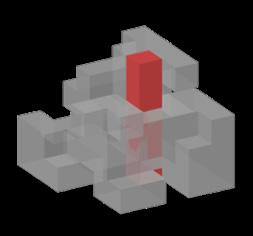
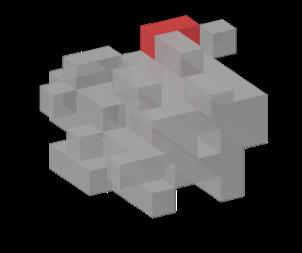
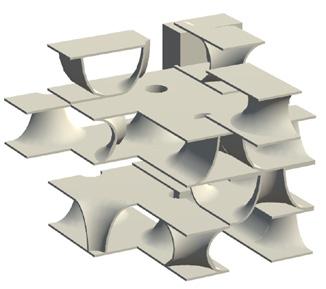
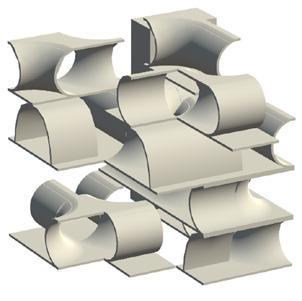
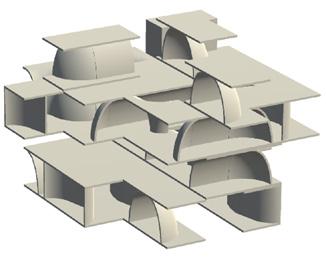
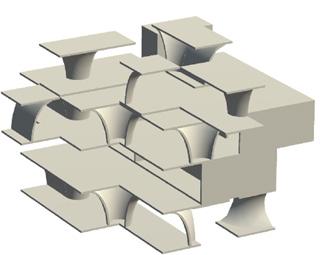
Wave Function Collapse (WFC) is a computational algorithm used in computer graphics and procedural content generation. It takes a small input pattern, propagates its constraints, and progressively generates larger patterns that adhere to those constraints, making it a versatile tool for creative and technical applications .To comprehensively investigate the spectrum of connecting patterns within multiscalar spaces, we established two distinct scenes for analysis: one with identical-sized elements and the other with elements of differing sizes, providing comprehensive insights into the design possibilities.
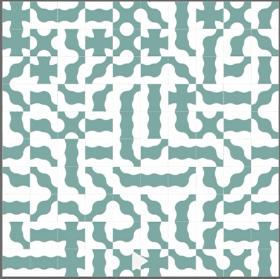
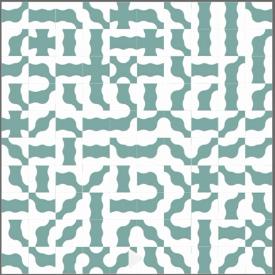
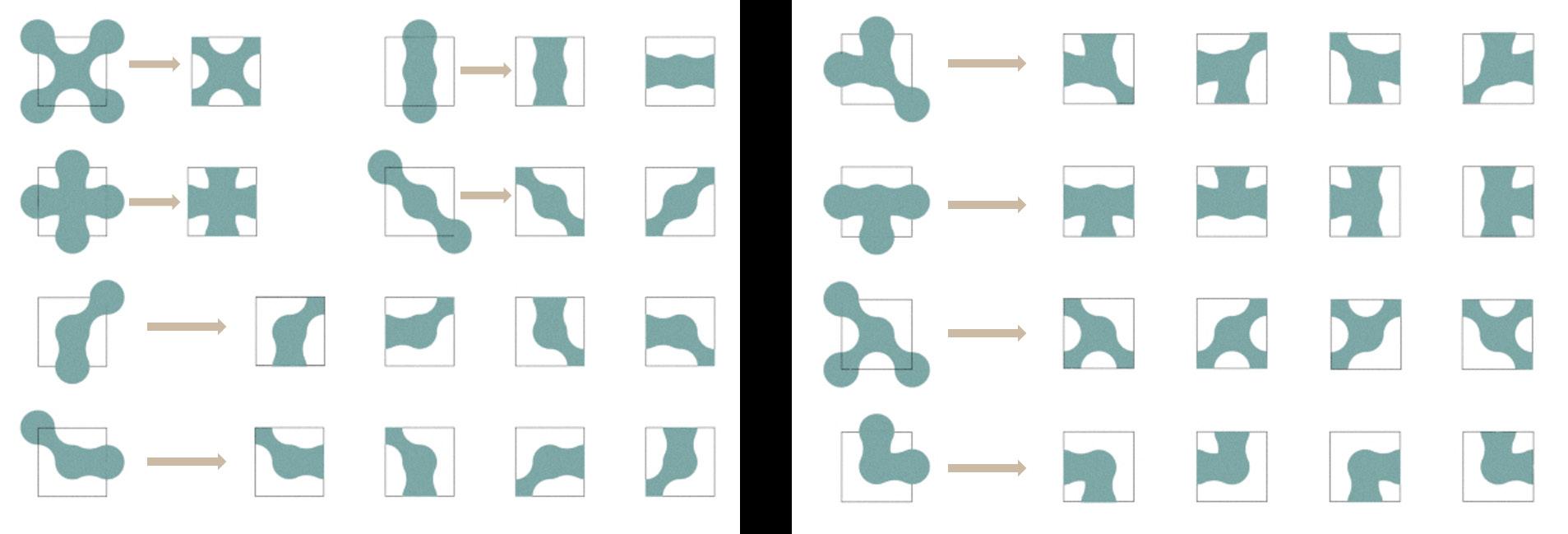
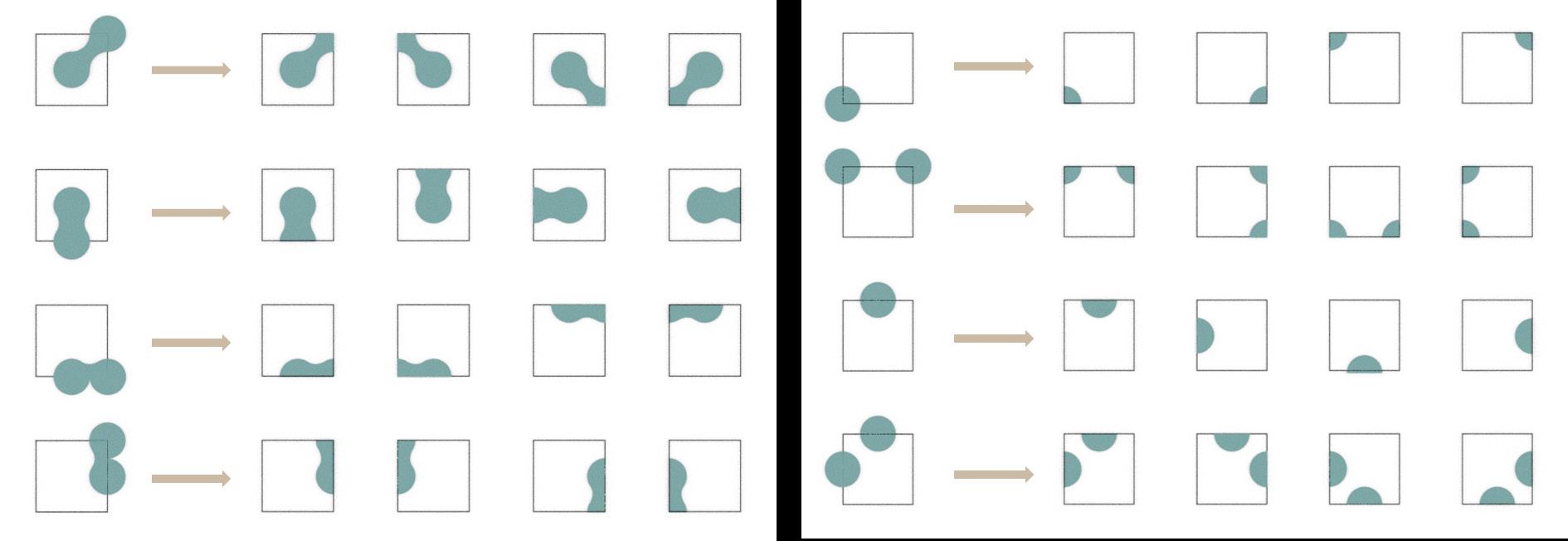
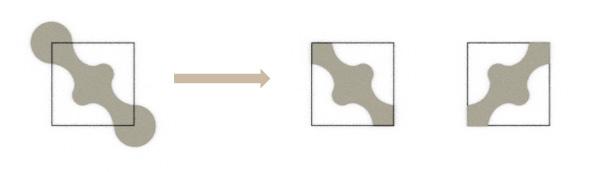
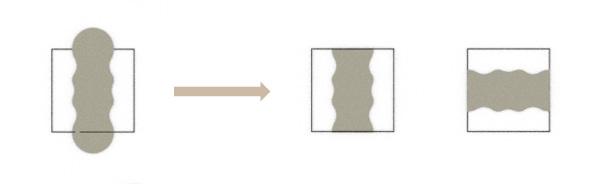
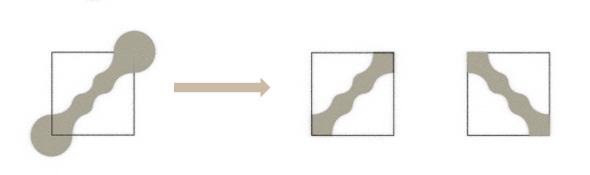
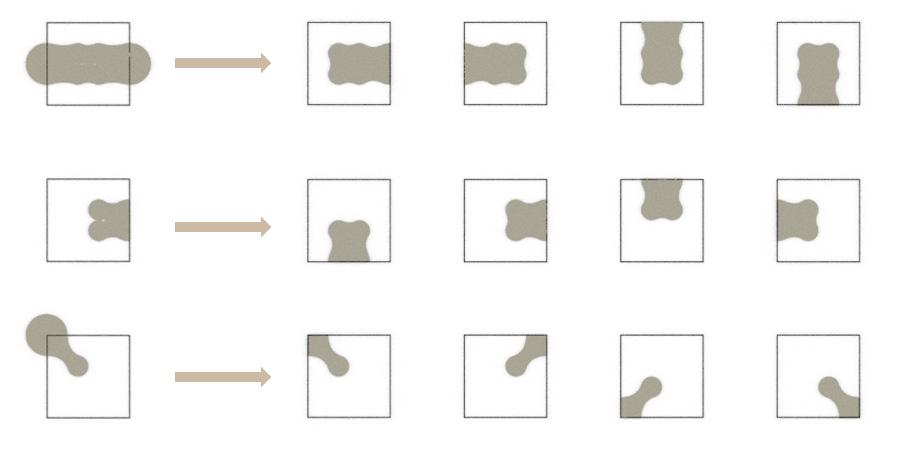
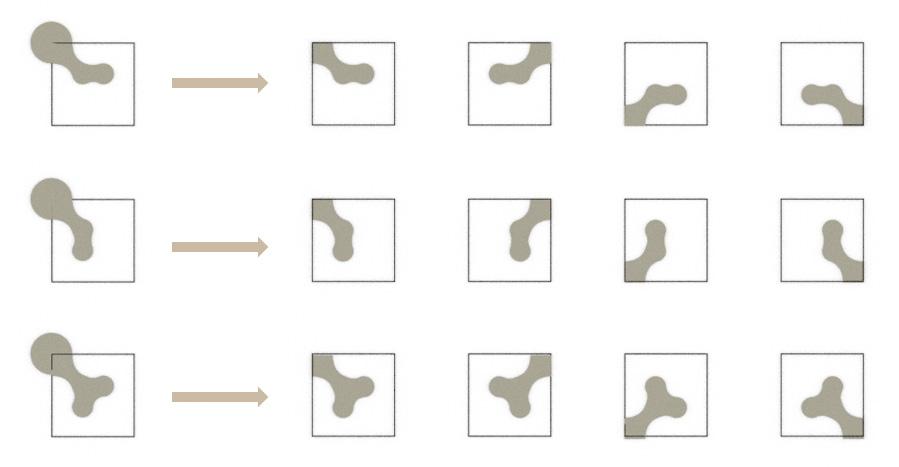
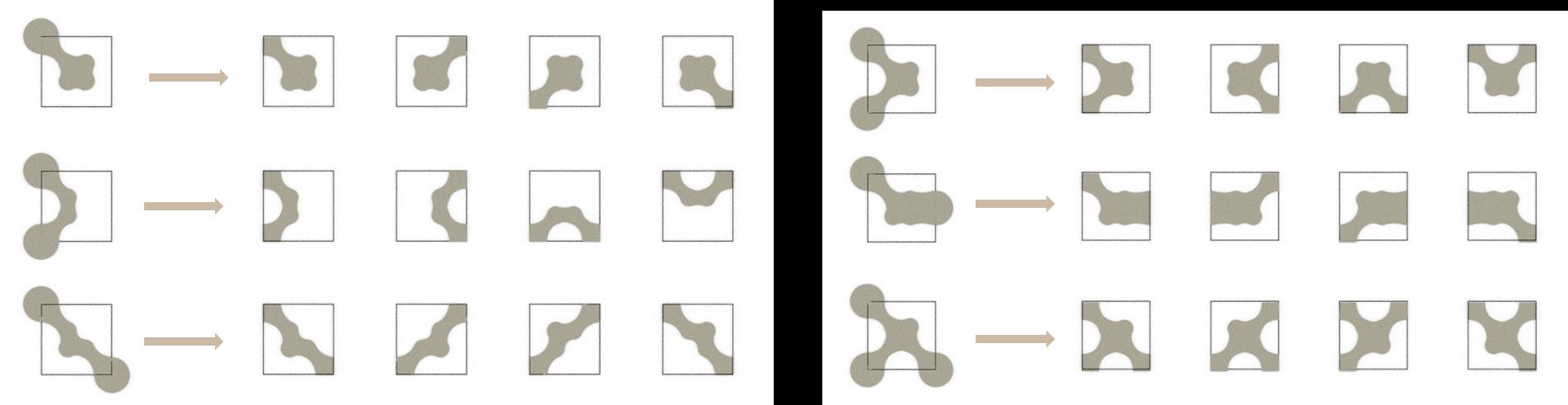
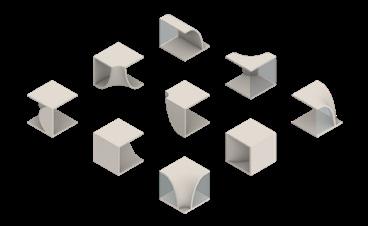
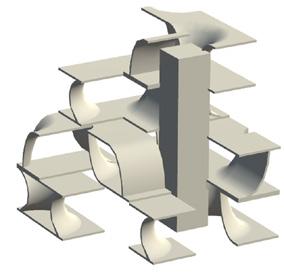
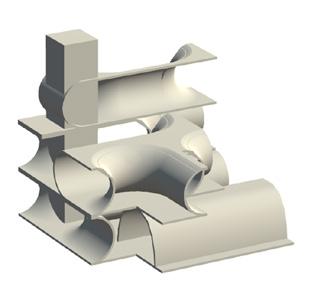
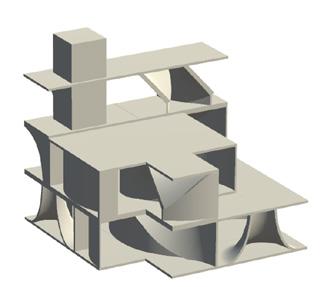
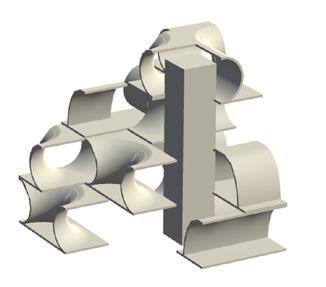
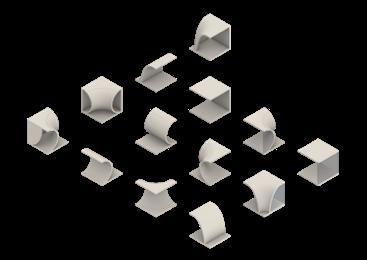
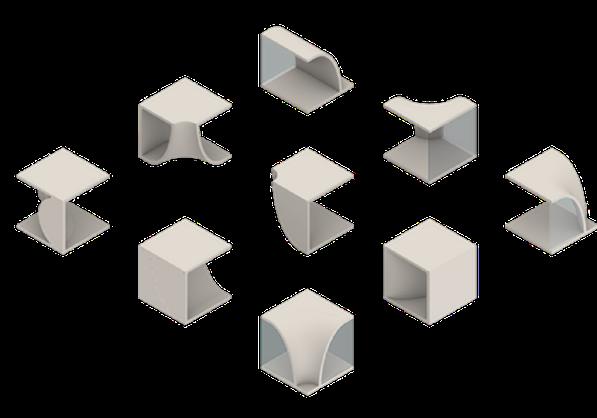
Building upon the foundational grid modules, we dissected them into multiple tiles to thoroughly explore and analyze various connection options These tiles, when assembled in adherence to predefined rules and constraints, yield multiple iterations of module patterns. These patterns are not only specified but also customizable to precisely match the user's needs.
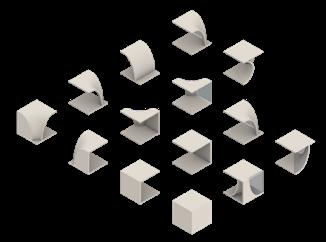
In Unity software, we employed the Wave Function Collapse 3D algorithm, utilizing a set of parameters. These parameters included both constant and variables like the Y count, spatial unit tiles, and their connecting relationships. The variables were tailored to match specific typologies, allowing for dynamic adjustments and optimization while maintaining the below parameter as a consistent reference point.
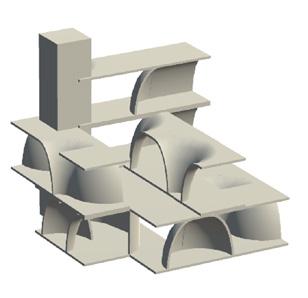
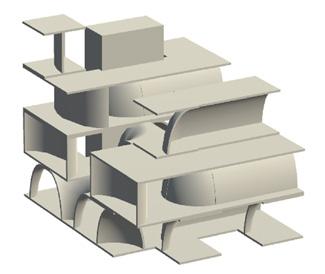
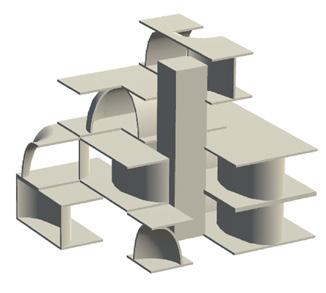
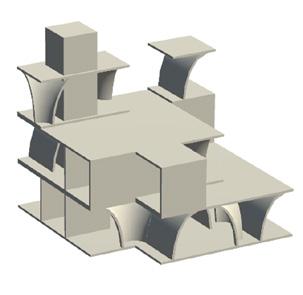
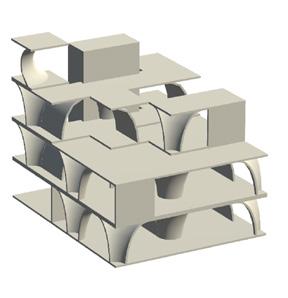
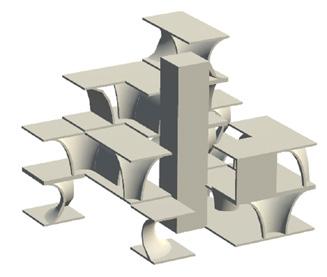
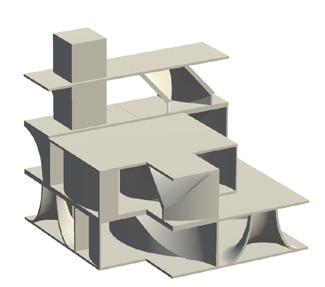
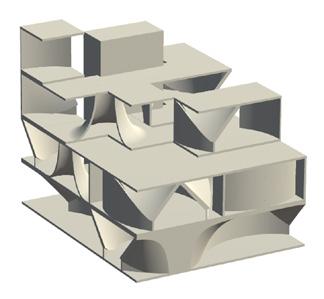
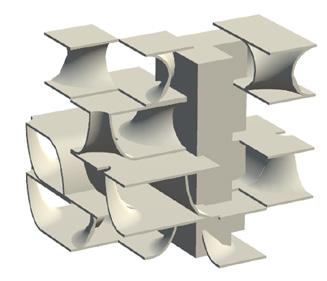
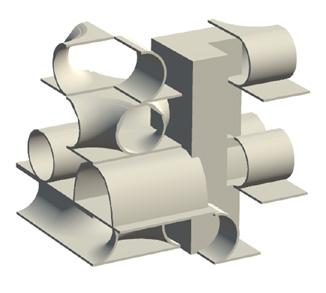
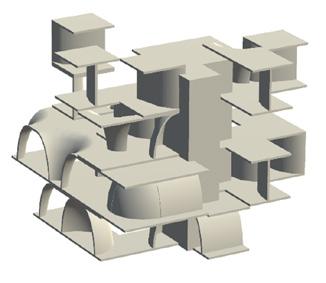
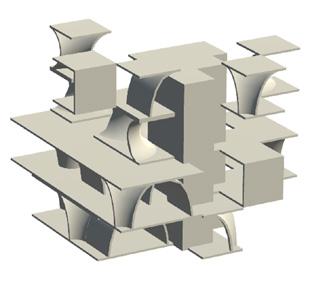
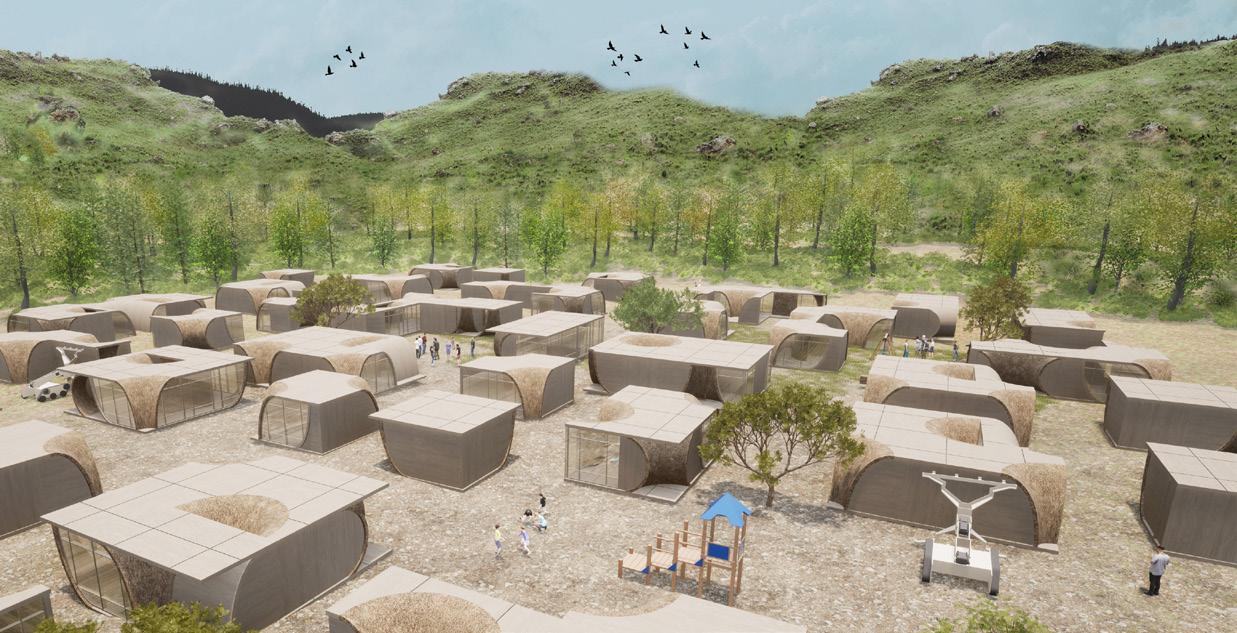
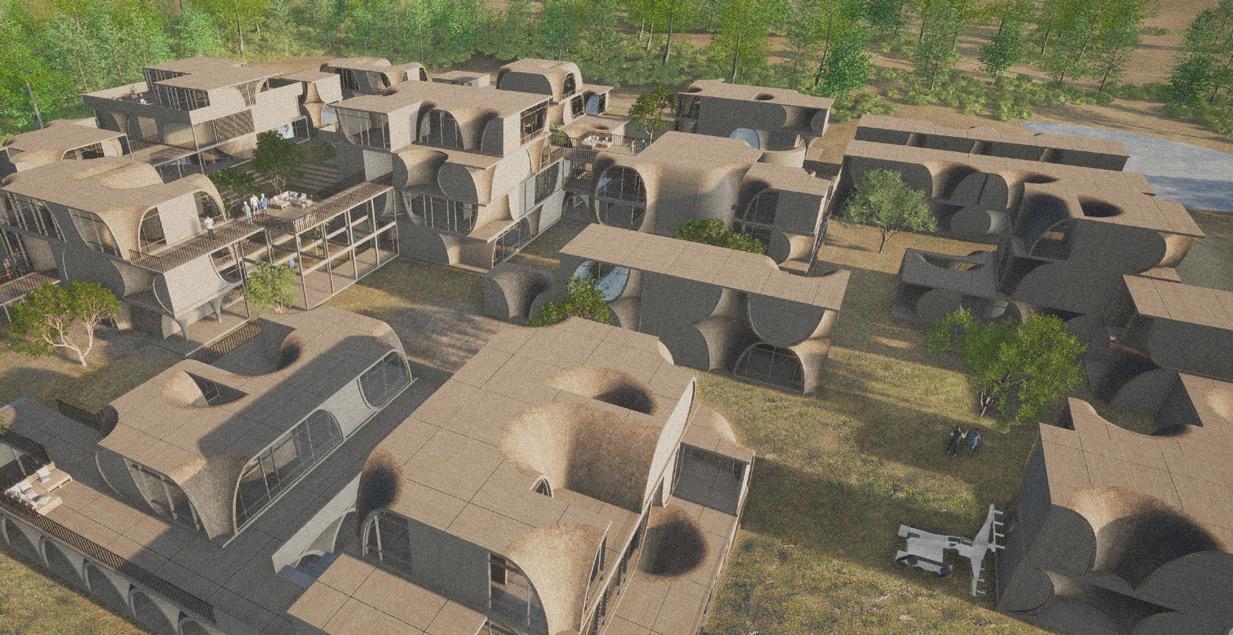
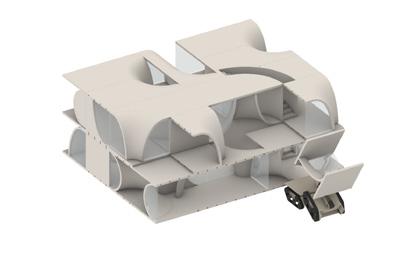
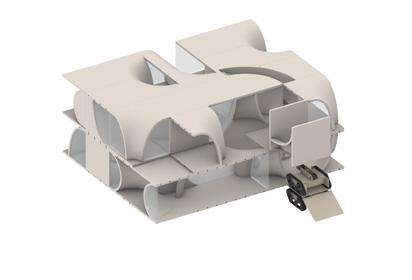
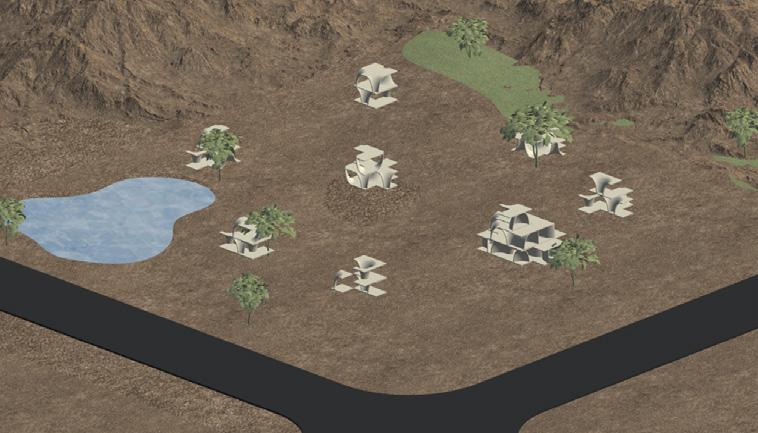
We studied various precedent case studies to In our demonstrative project scenario, we integrated all our research threads. The project's aim aligns with our research objective: to rehabilitate refugees using a modular construction system that can be assembled, disassembled, and reconfigured by a fleet of large-scale robots. This transformation from temporary to longterm solutions unfolds over three distinct phases within the (re) BOT project demonstration. The three phases are as follows:
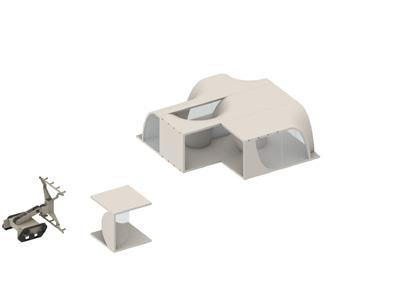
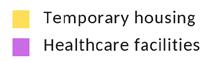
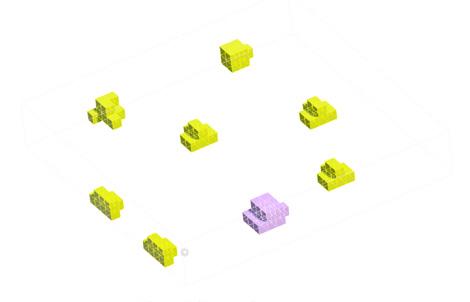
Phase I: The Rapid Response Stage: This phase focuses on immediate needs. Refugees can utilize a community application to request expansion or reconfiguration opportunities. For example, during the transition from temporary to permanent housing, users can select their preferred plot for expansion, specify their requirements, choose layout configurations, and place fabrication orders. This ensures a systematic and adaptable growth of the community in response to refugees' evolving needs.
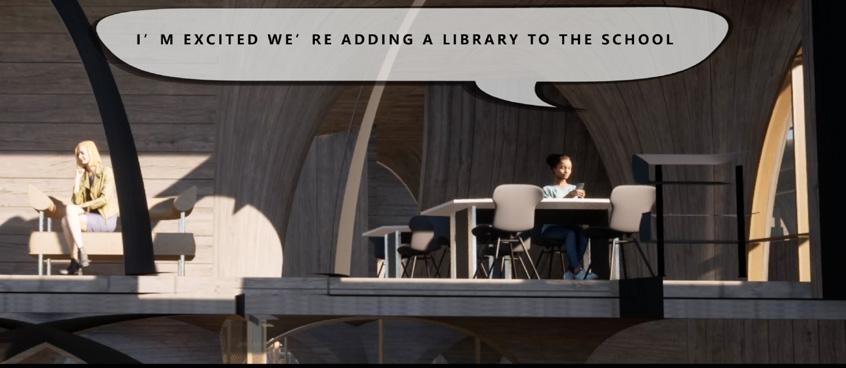
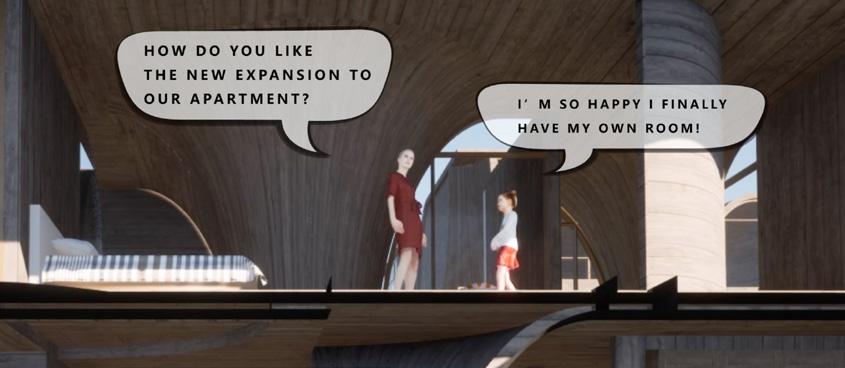
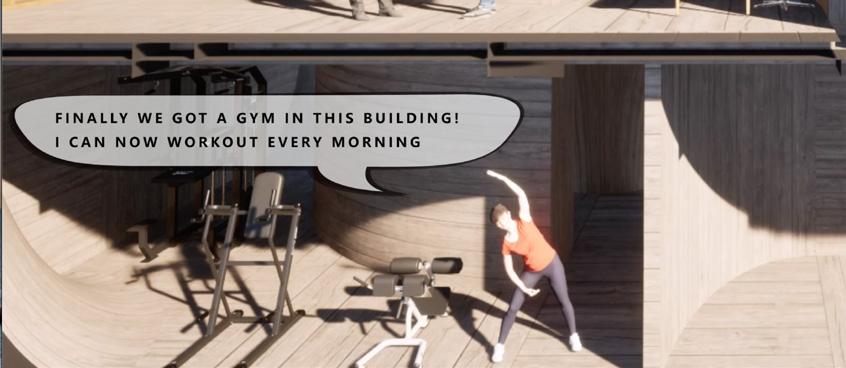
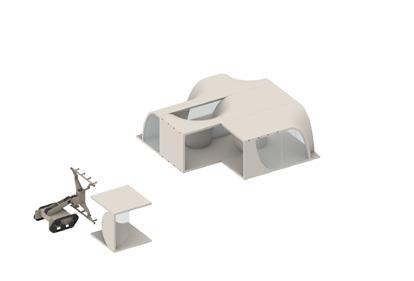
Phase II: The Expansion Stage: During this stage, the community undergoes expansion. Permanent housing solutions are introduced, along with additional facilities such as healthcare, public markets, and educational infrastructure. The community application remains a pivotal tool for users to participate in shaping the growth of their community.
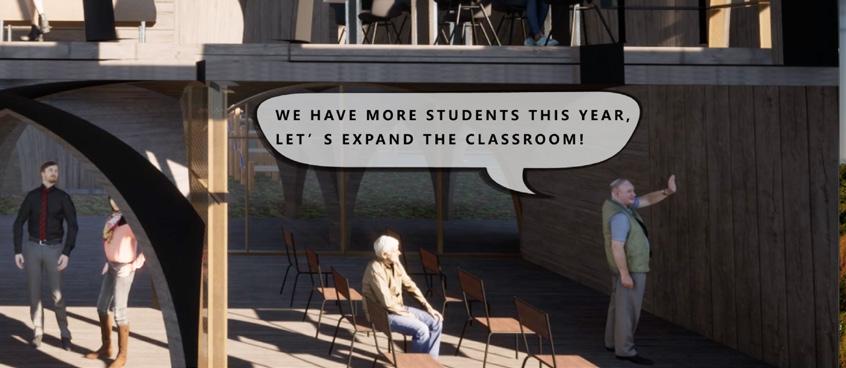
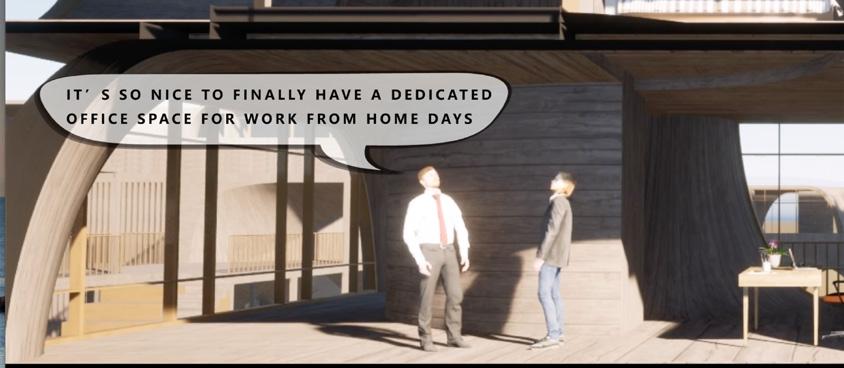
Phase III: The Reconfiguration Stage: In this phase, the community becomes highly adaptable. Users can request reconfigurations, and the system responds accordingly. Facilities can be expanded, and the layout can be adjusted to meet changing requirements. The community application continues to facilitate userdriven decisions, ensuring that the community remains flexible and responsive to the dynamic needs and desires of its inhabitants.
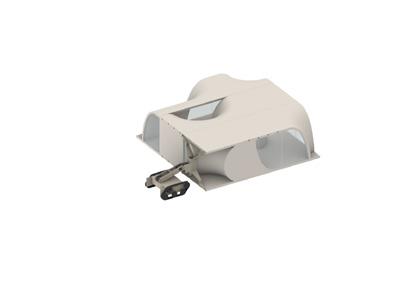
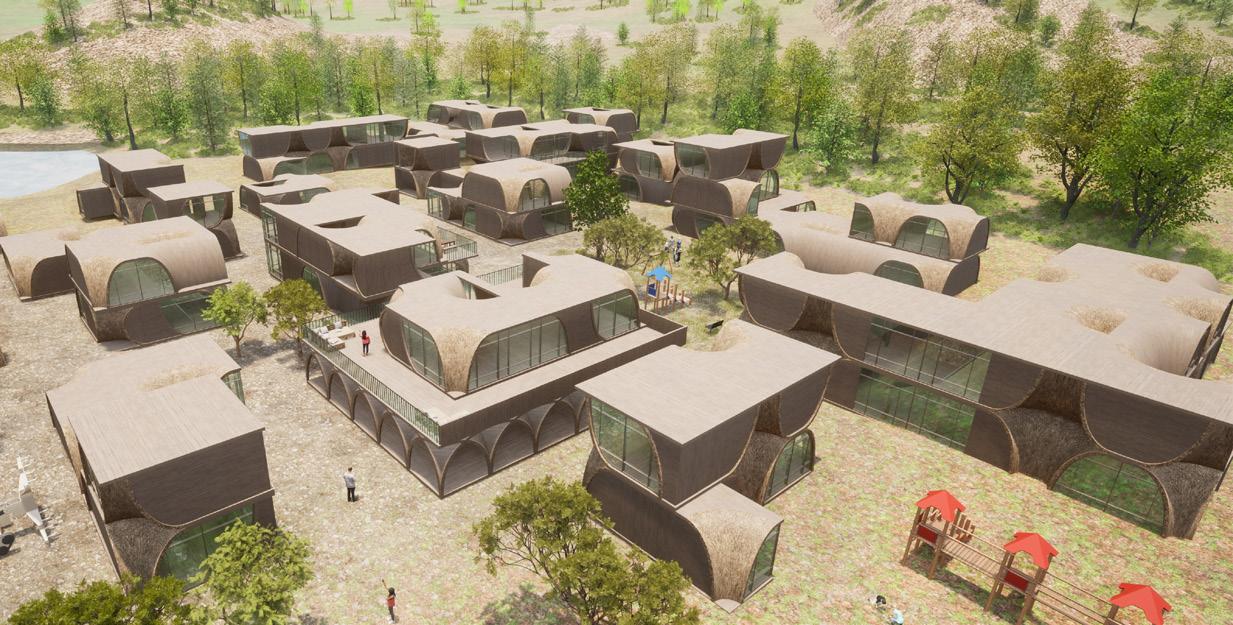
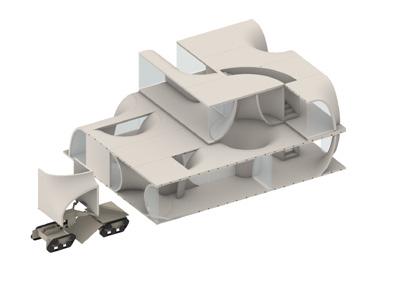
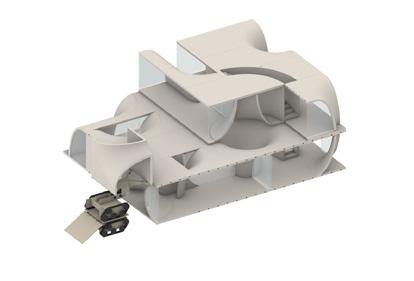
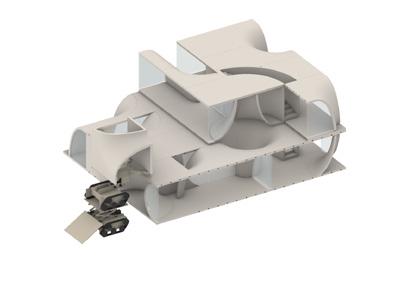
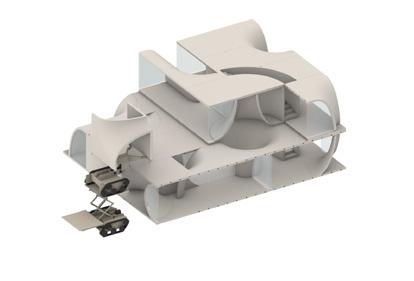
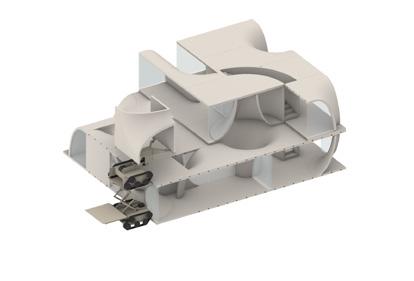
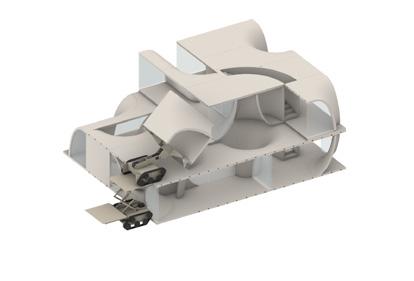
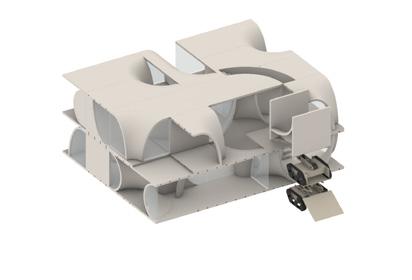
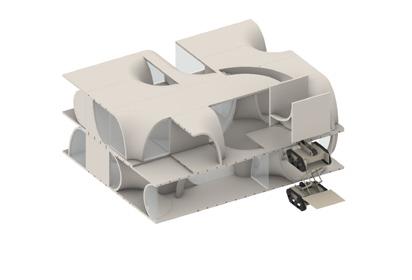
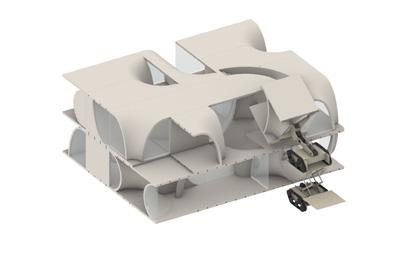
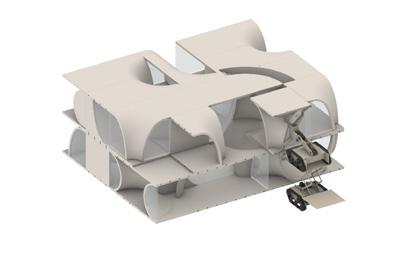
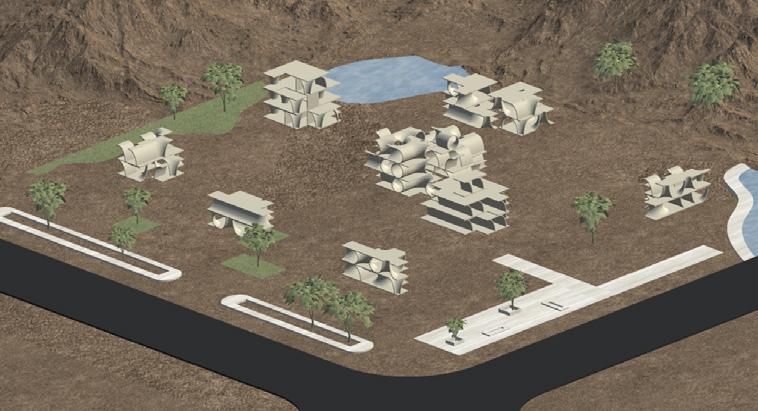
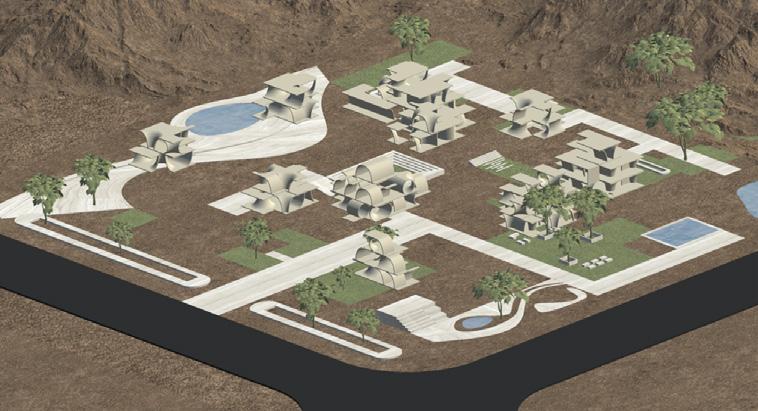
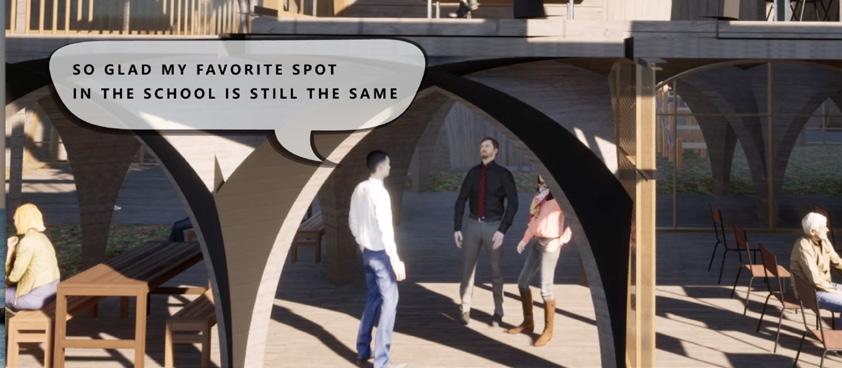
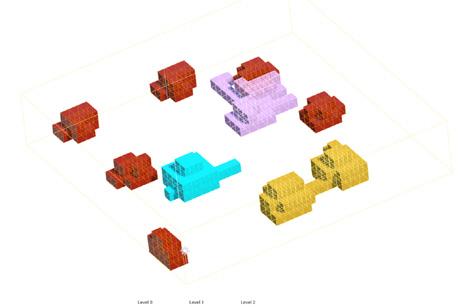 Phase I: The Rapid Response Stage
Phase II: The Expansion Stage
Phase III: The Reconfiguration Stage
Phase I: The Rapid Response Stage
Phase II: The Expansion Stage
Phase III: The Reconfiguration Stage
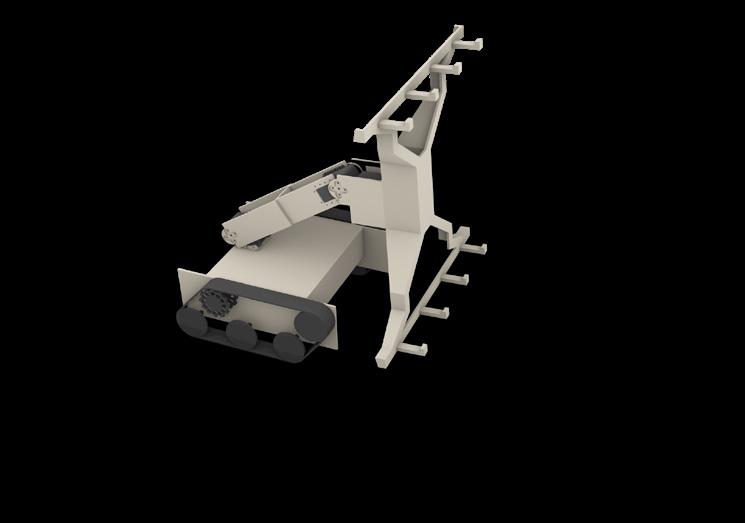
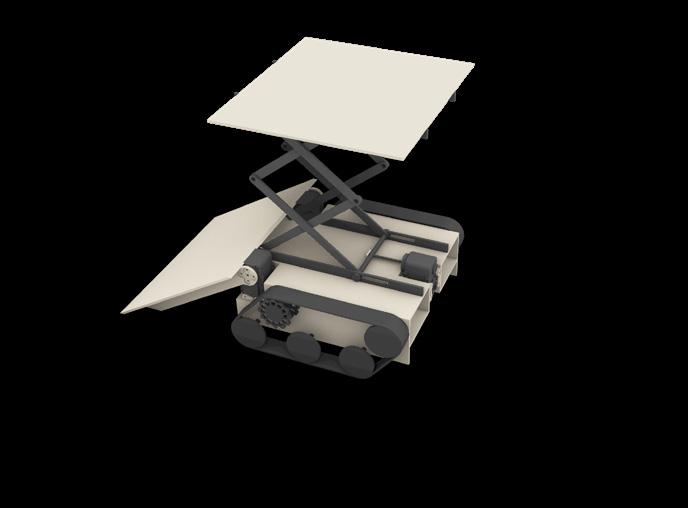
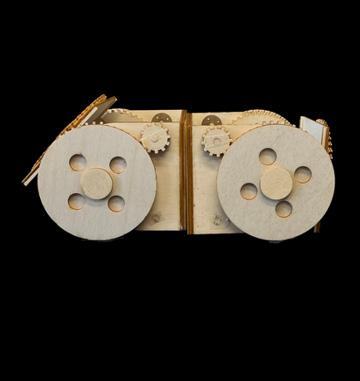
Final robotic arm prototype
Basic Functions - Locomotion on X and Y axis
Rotation Roll, Pitch
Degree of Freedom: 5
No. of Motors: 6
Collaboration Level with other Robots: Low
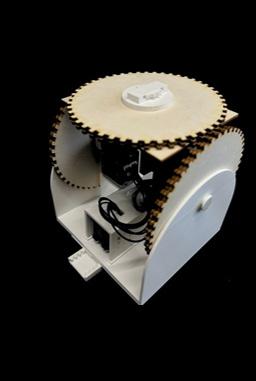
Basic Functions - Locomotion on X, Y and Z axis Rotation Roll, Pitch
Degree of Freedom: 5
No. of Motors: 5
Collaboration Level with other Robots: Medium
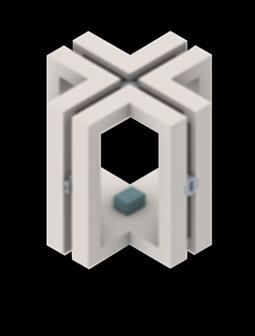
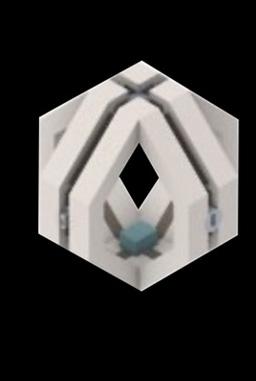
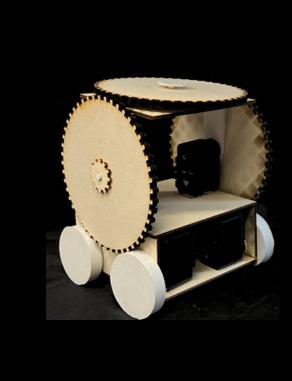
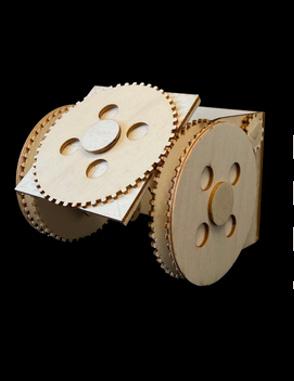
No. of Motors: 6
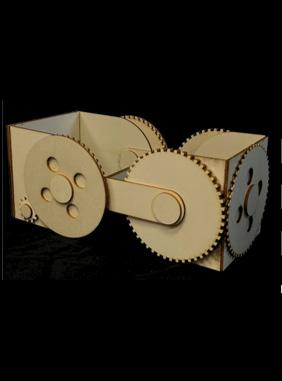
Degree of Freedom: 3
No. of Motors: 6
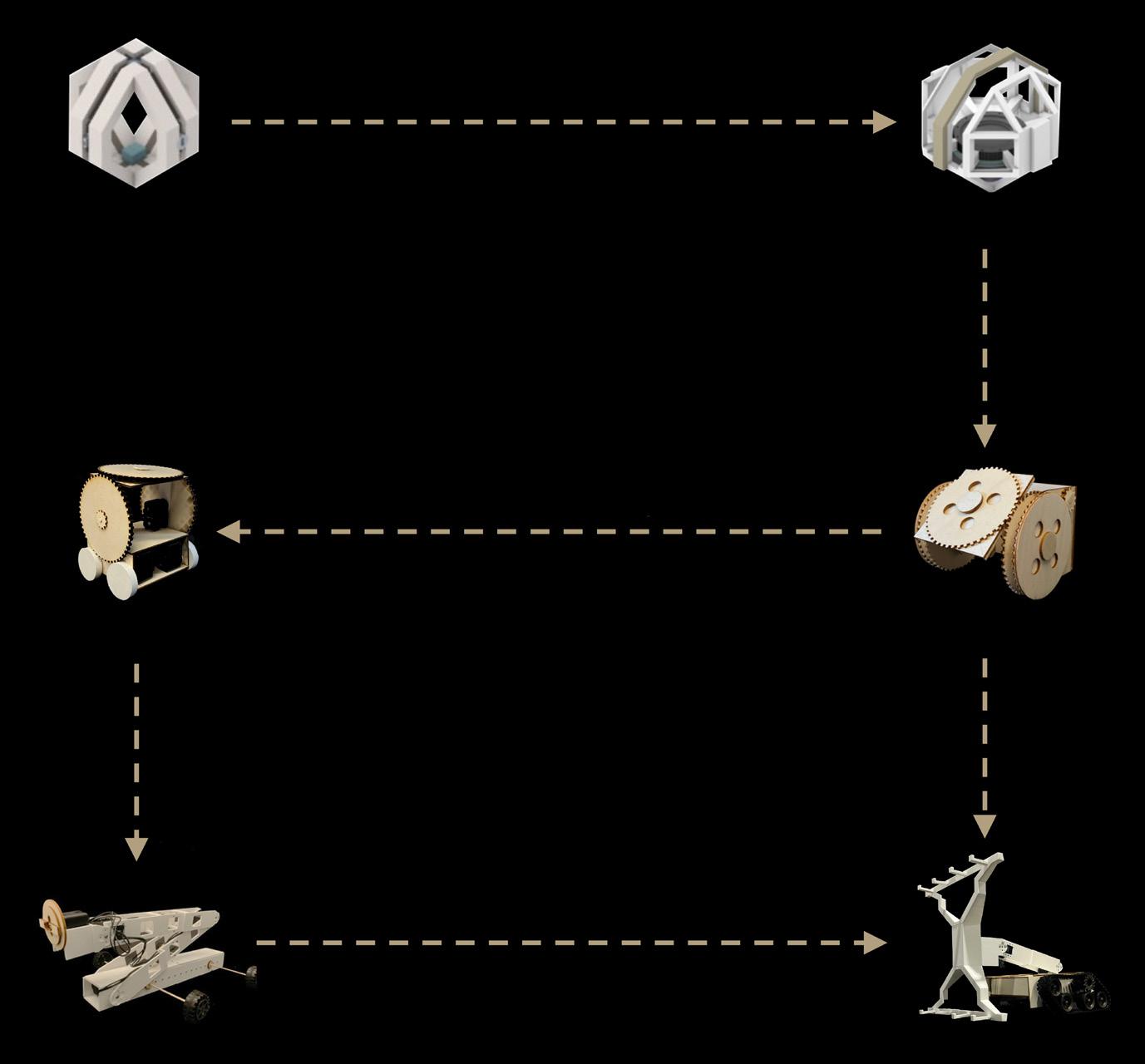
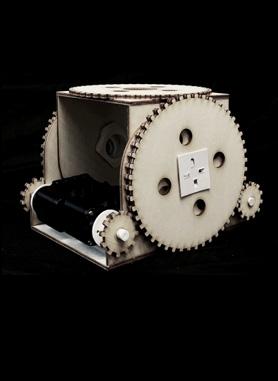
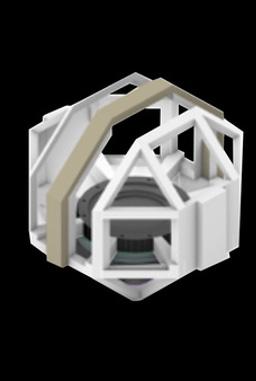
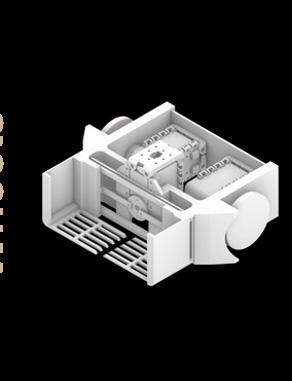
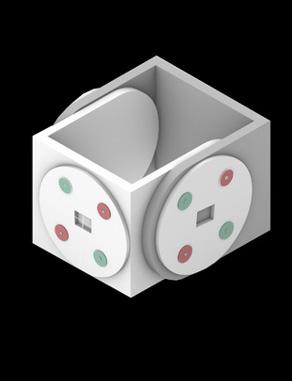
Collaboration: High
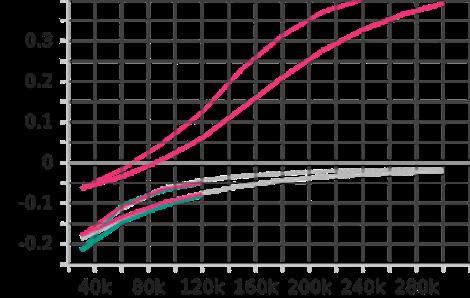
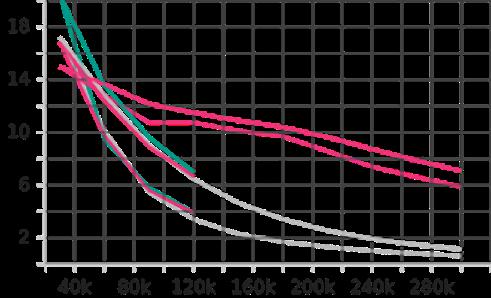
Reinforcement learning is a machine learning approach that utilizes a reward-based system to reinforce desired behaviors and discourage undesired ones. Our objective is to equip our robots with the capability to perceive and understand their surroundings, take actions, and acquire knowledge through a process of trial and error.
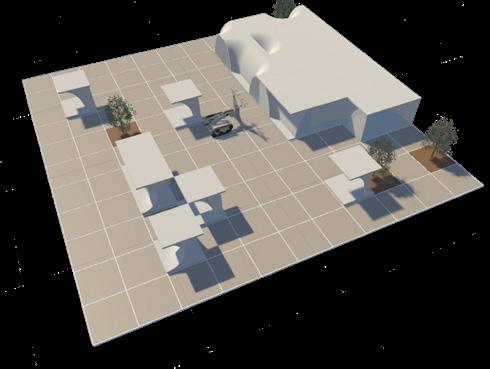
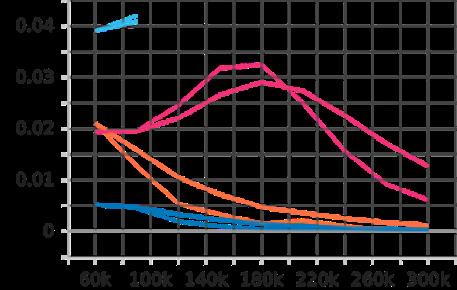
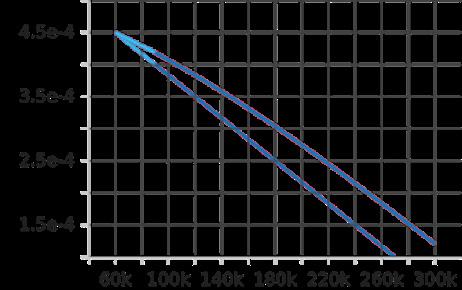
To train our robotic agents in tasks such as locating spatial units, employing the shortest path for movement, and placing them in desired locations without encountering obstacles, we devised nine distinct scenarios. We meticulously documented the learning progress through graphs, illustrating the disparity in performance between the robotic agents after undergoing deep learning (S1 and S2) and their initial performance, which was human-based and served as a baseline.
Motors: 5
Collaboration: High
Collaboration: Medium
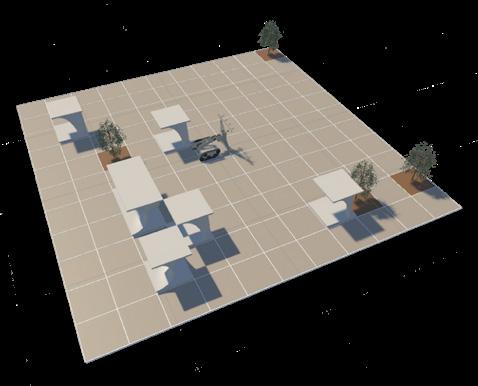
if the distance to target < 3.5
if the distance to target < 5
if the distance to target < 6.5 - 0.3 if the distance to target < 10 - 0.5 if the distance to target < 12 - 0.1 if the agent touches the obstacle - 1.5 if the agent fell off the platform -0.01 Existential penalty
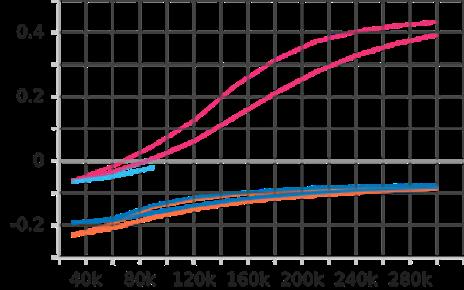
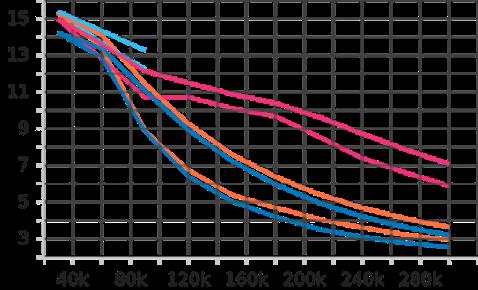
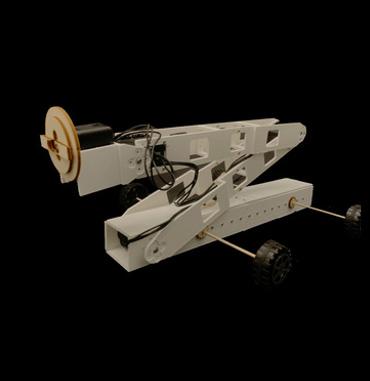
Function: 4
Degree of Freedom: 4
No. of Motors: 5
Collaboration: Medium
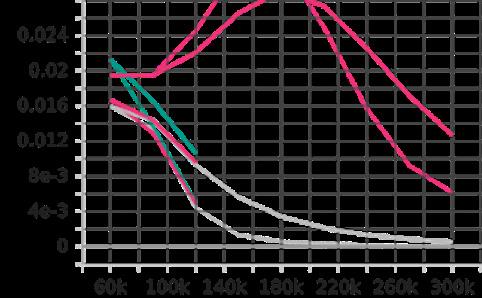
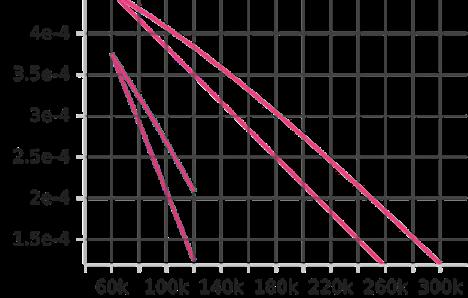
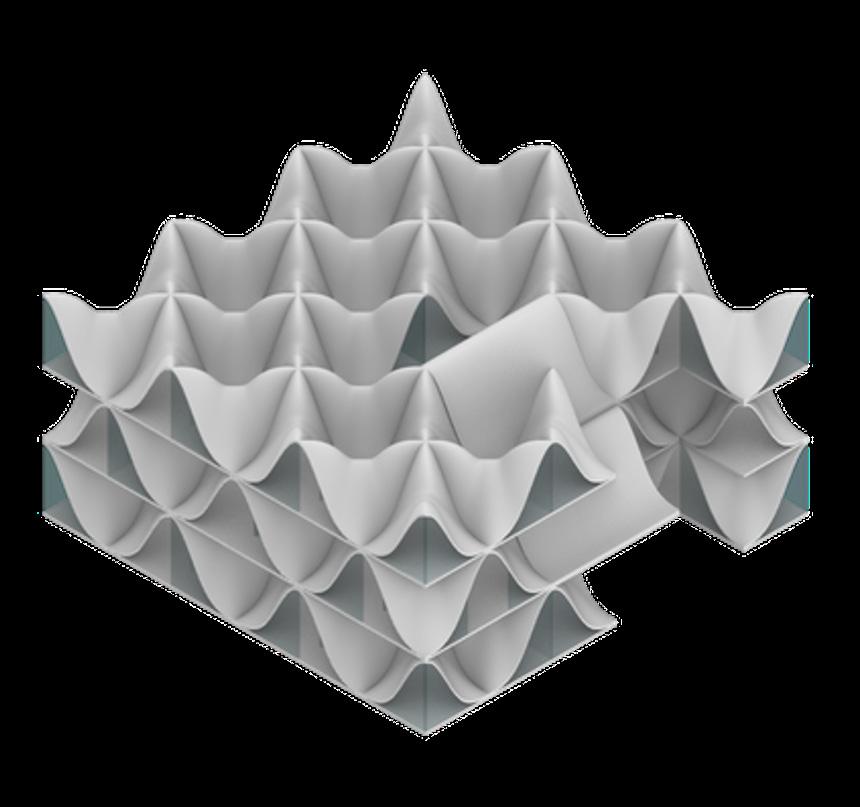
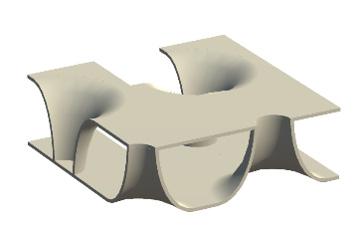
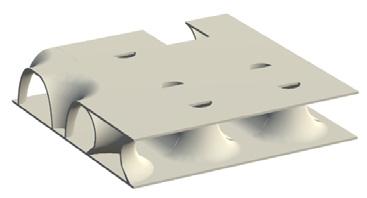
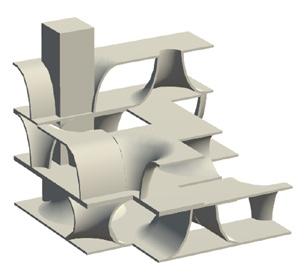
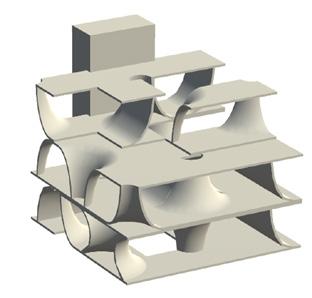
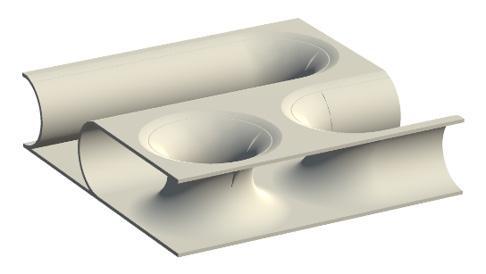
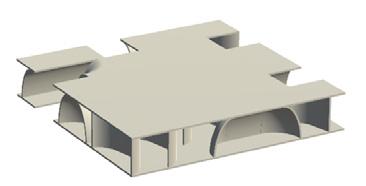
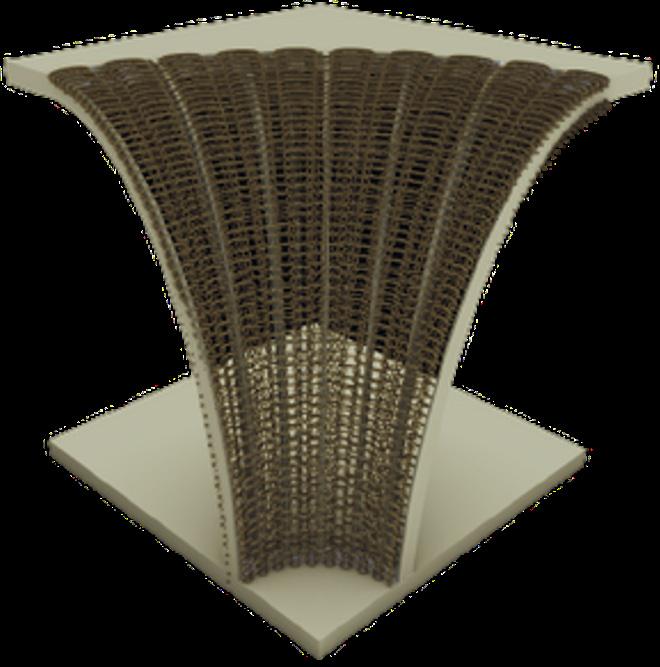
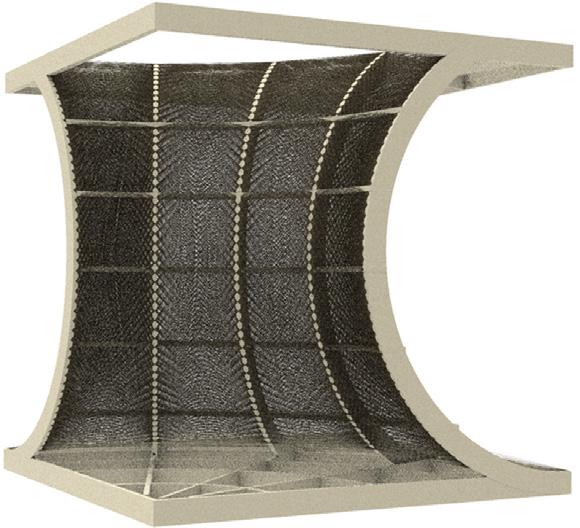
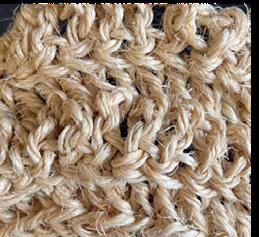
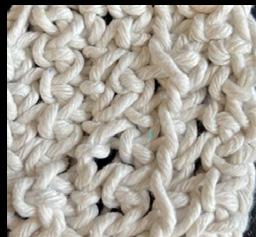
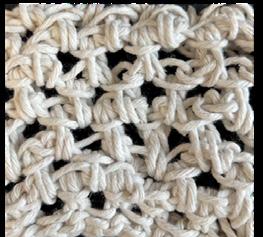
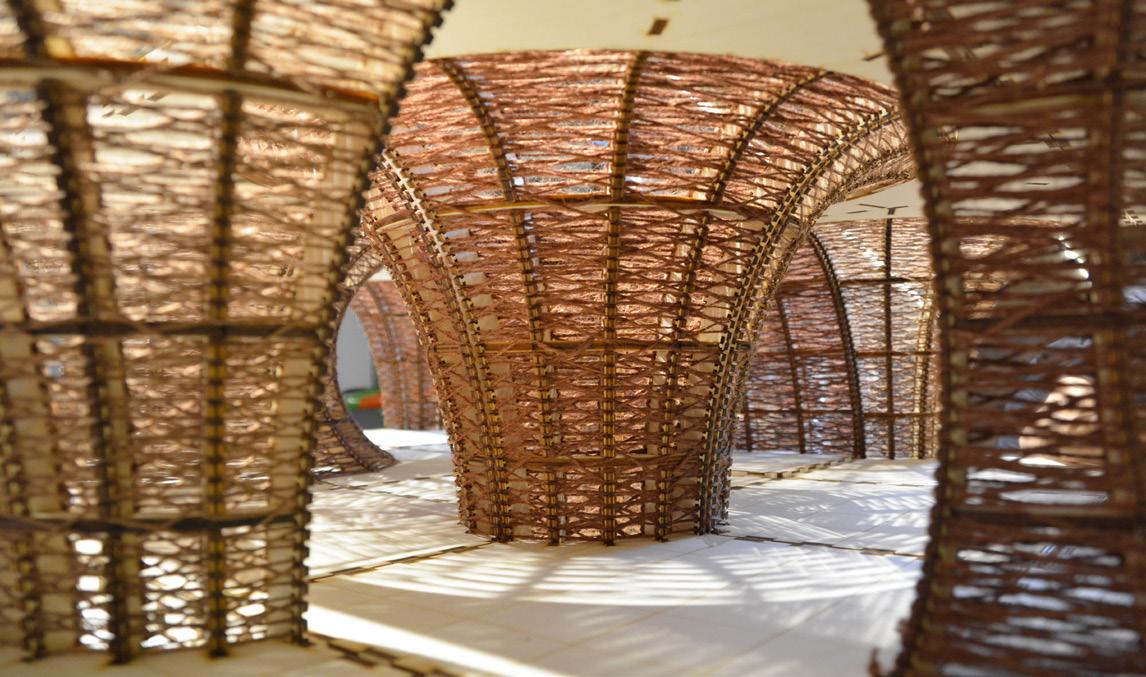
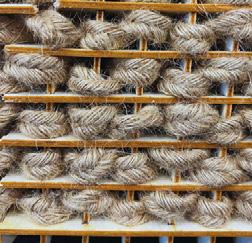
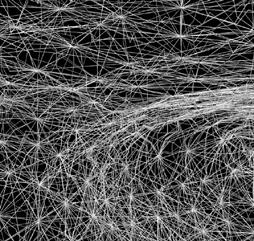
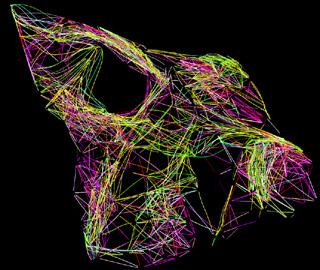
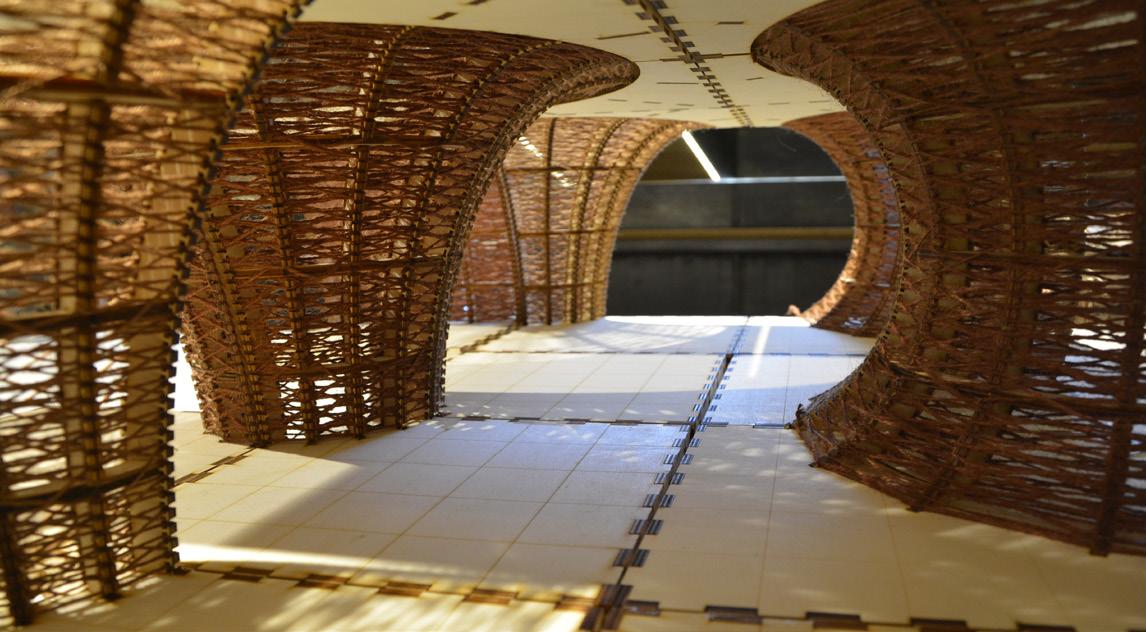
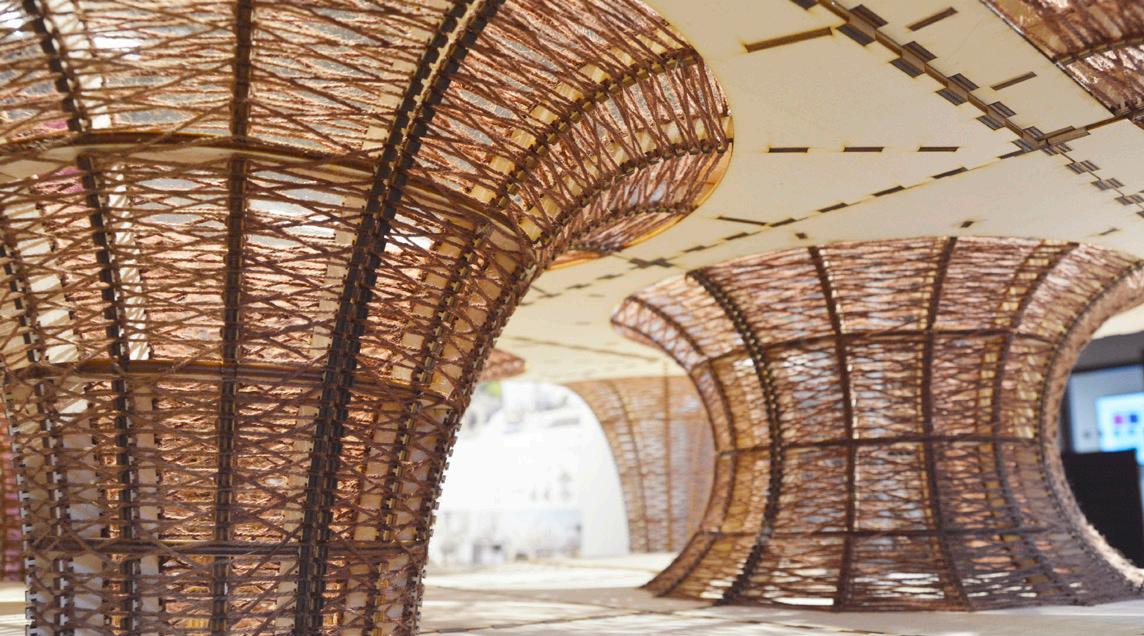
Our in-depth research into the design of structures and materiality commenced with a comprehensive study of monocoque structures. Monocoque represents a structural approach in which stresses are absorbed by a thin membrane or shell of material, as opposed to a network of beams. Our study involved the examination of physical prototypes, focusing on monocoque ribbed structures with varying degrees of curvature and rib densities to gain a thorough understanding of their characteristics and behavior.
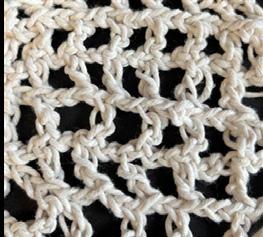
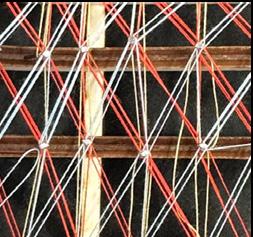
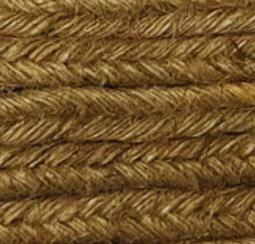
Houdini Computational Experiments
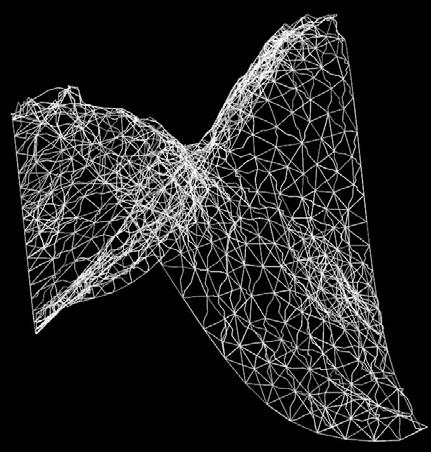
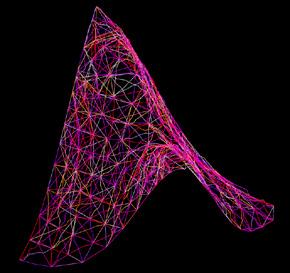
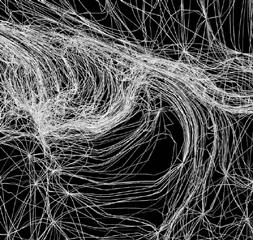
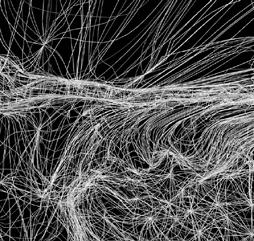
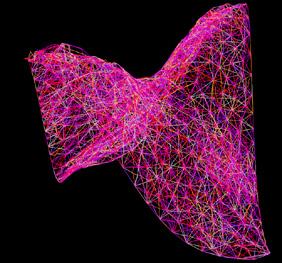
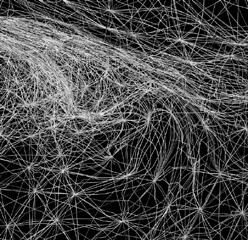
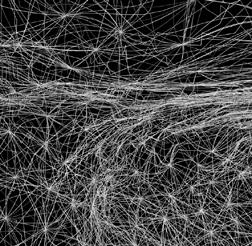
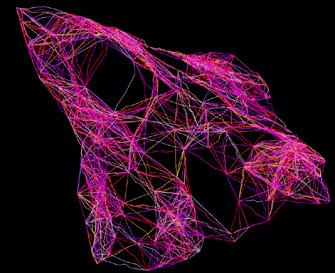
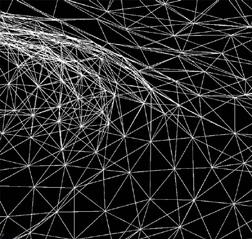
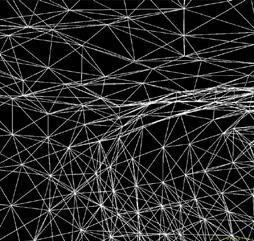
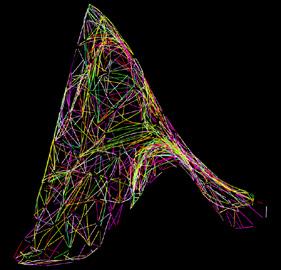
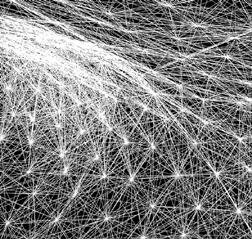
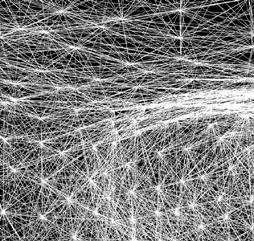
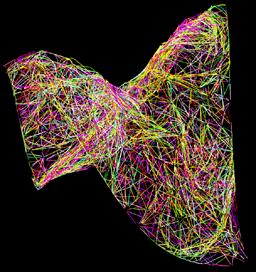
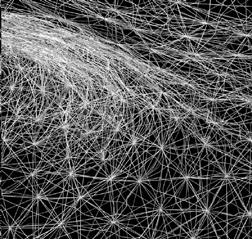
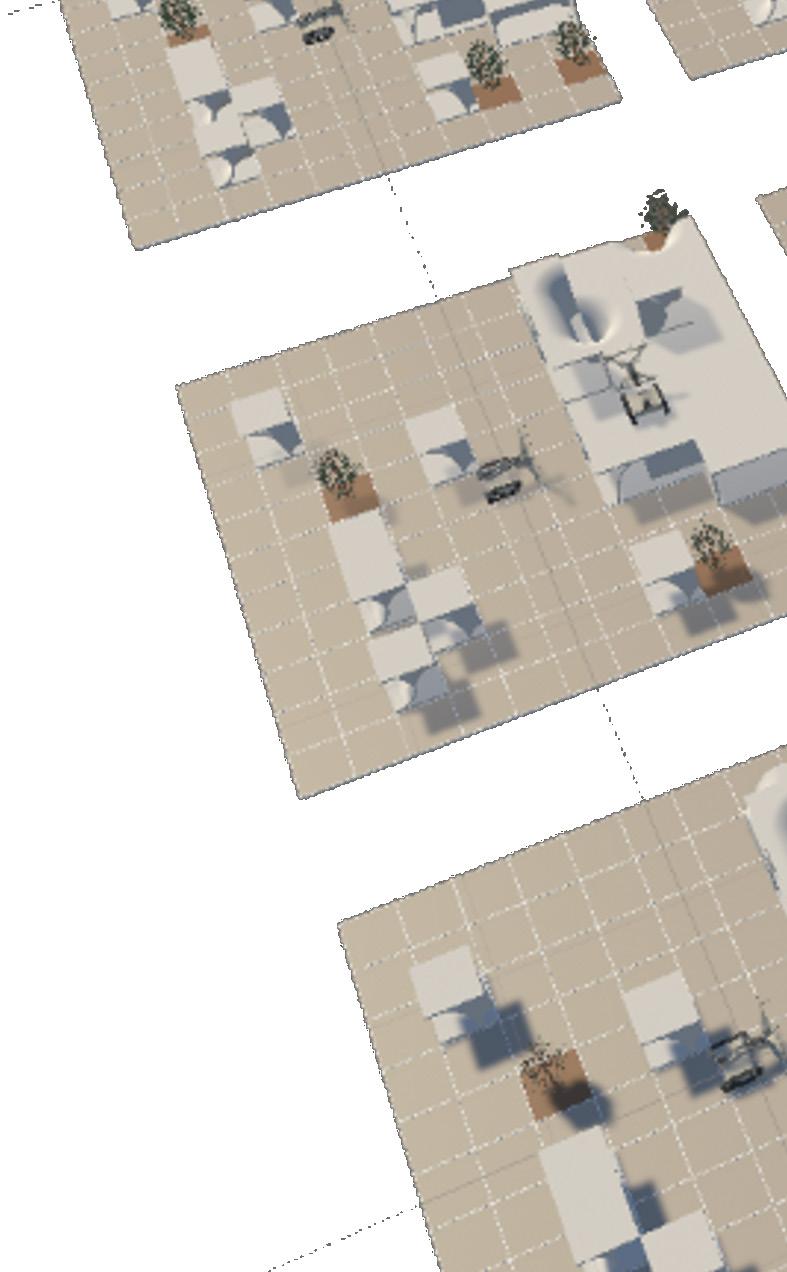
The research utilized a spatial planner and its algorithms to investigate various possibilities for community growth. Several parameters were manipulated during this exploration, including area percentages and neighboring typologies. Additionally, different occupant capacities for various typologies were tested to gauge their impact on the evolving community.
Moreover, changes in neighboring typology parameters were examined to explore diverse options for community planning. The process commenced with a 2D version and aimed to assess the integration of multiple space functions within the community. Four scenarios were considered, with two of them focusing on community growth from the center outward, while the remaining two explored growth from the edges toward the center. This comprehensive analysis allowed for a deeper understanding of the dynamics of community development and planning.
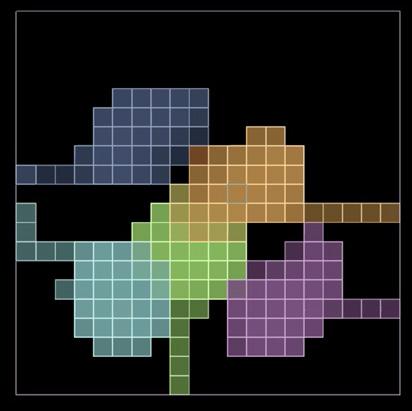
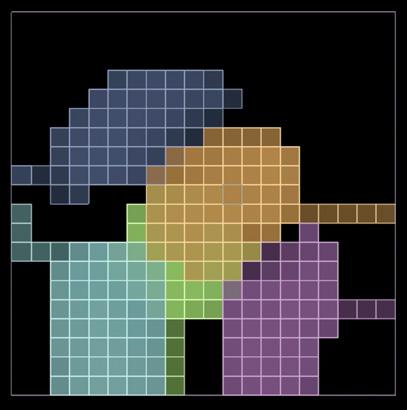
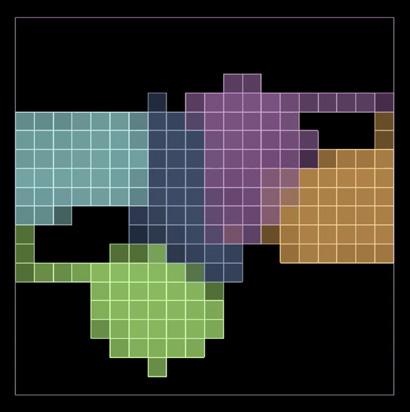
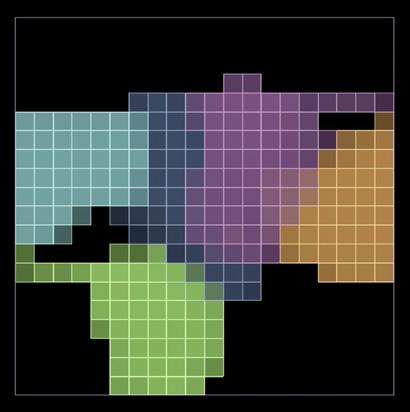
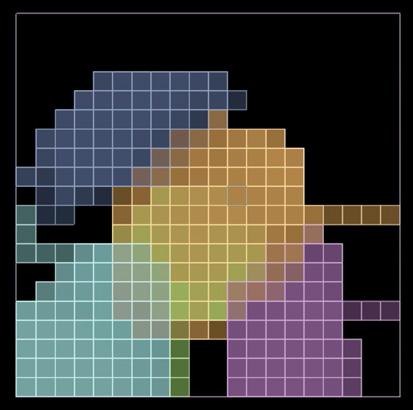
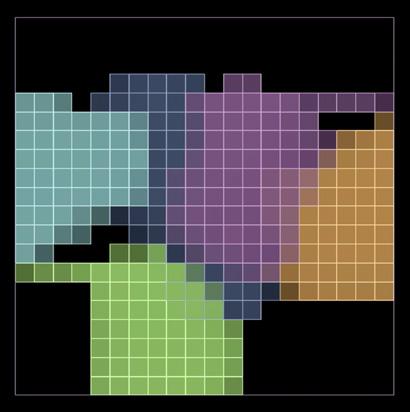
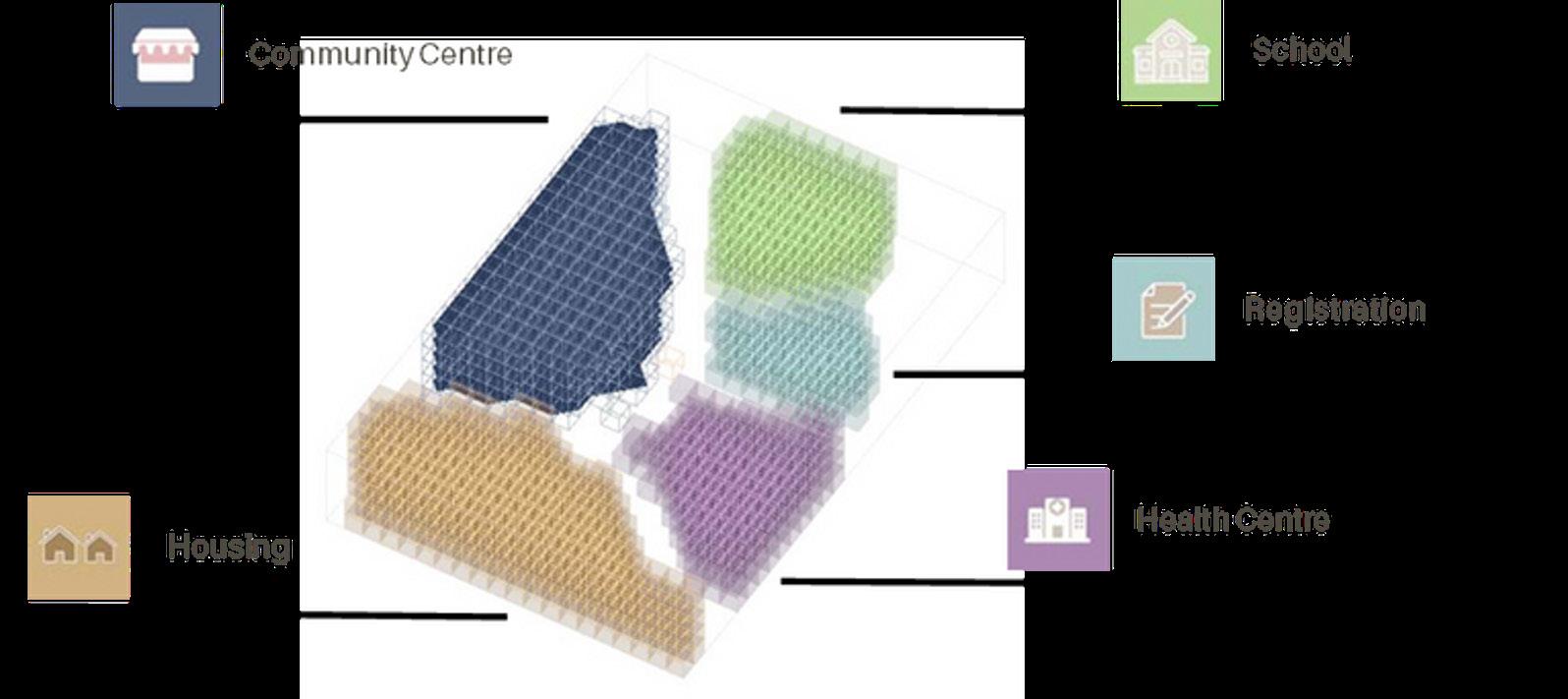
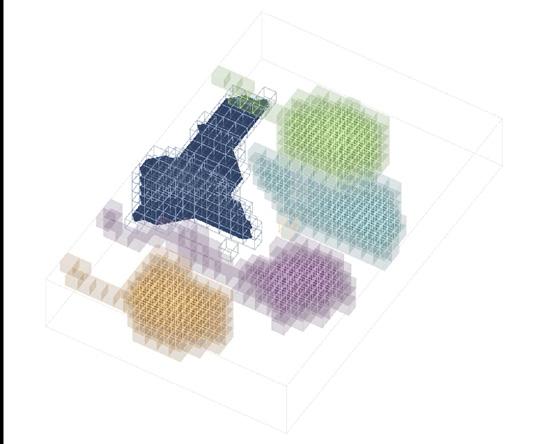
Following the 2D simulations of community growth, the research transitioned to a 3D spatial planner. The shift to 3D allowed for more comprehensive exploration of community expansion, encompassing a wide array of configurations and spatial combinations.
In the first iteration of the 3D simulation, the focus was on altering neighboring typology parameters. Specifically, the simulation placed public spaces at the center while situating housing units on the periphery. This strategic arrangement aimed to assess the dynamics of community development with varying typology placements, offering further valuable insights into spatial planning and design.
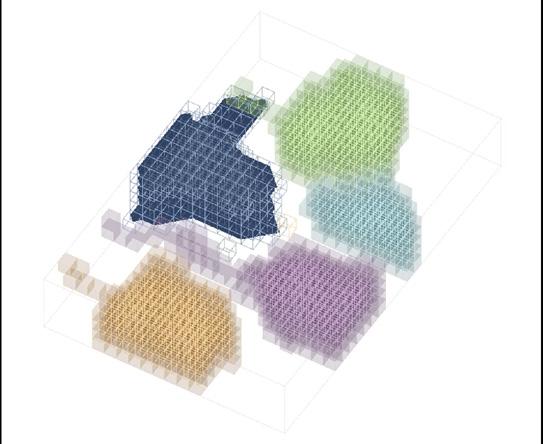
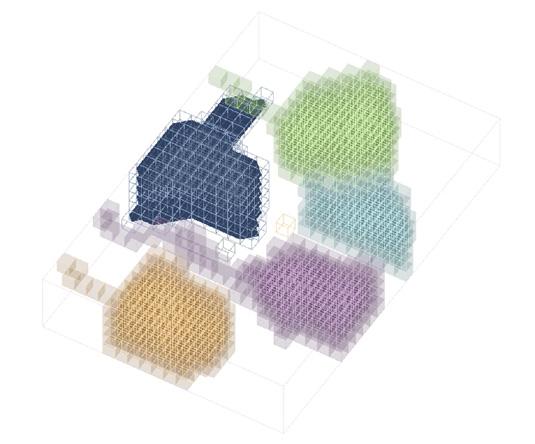
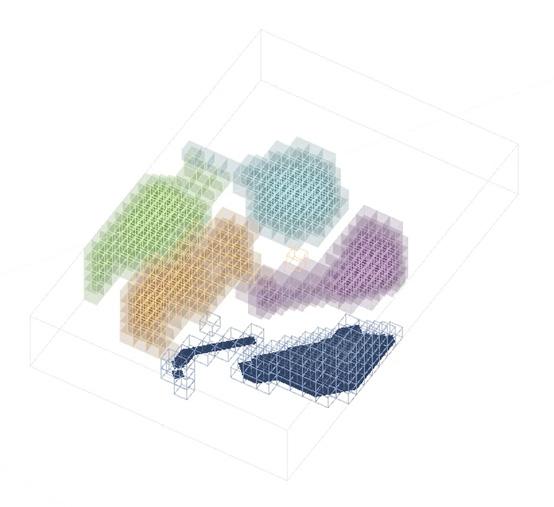
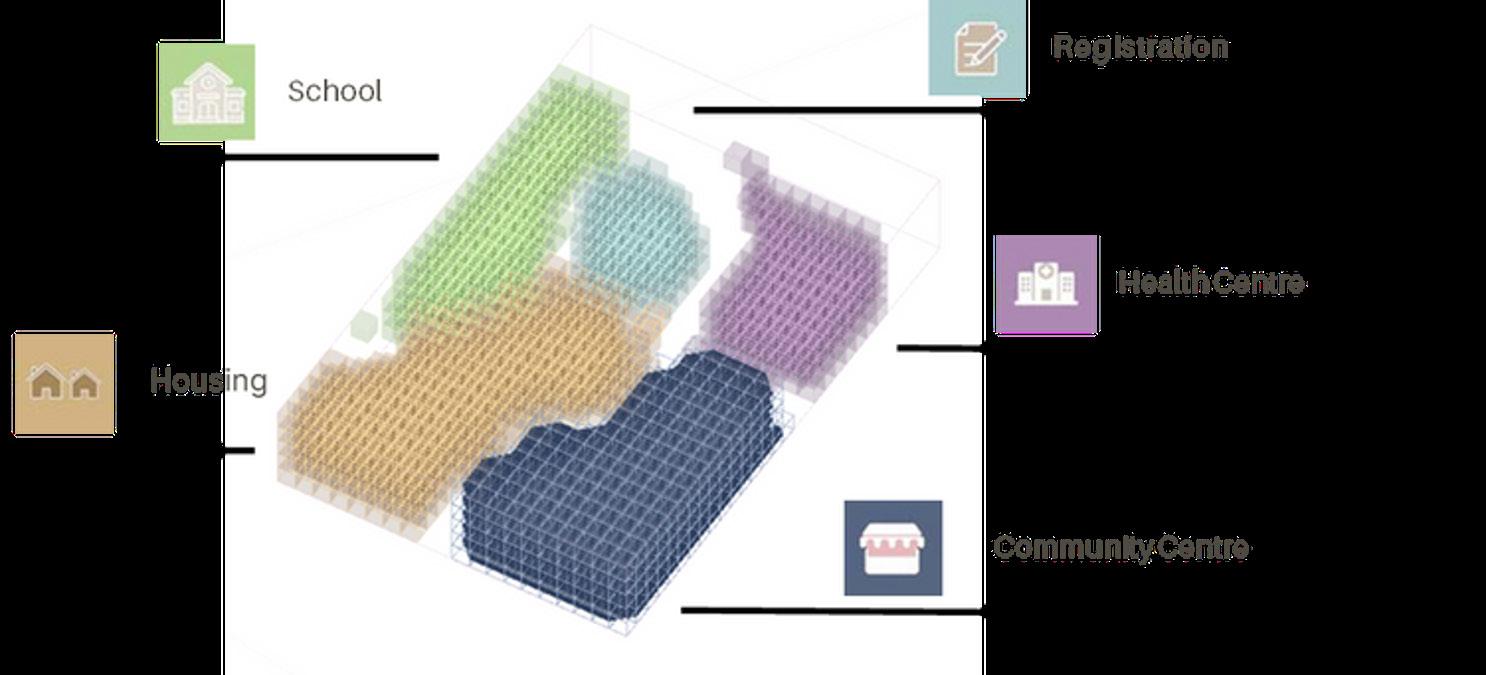
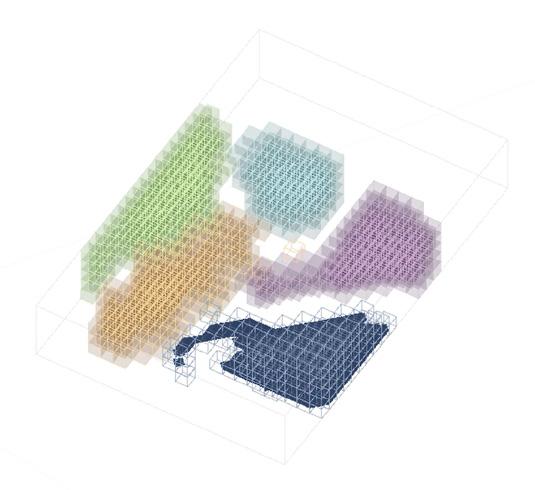
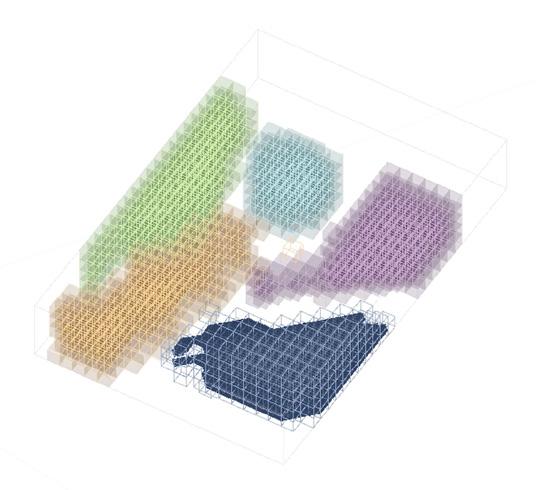 Neighboring typologies
Patterns Study
Spatial unit ribs with woven pattern
Neighboring typologies
Neighboring typologies
Patterns Study
Spatial unit ribs with woven pattern
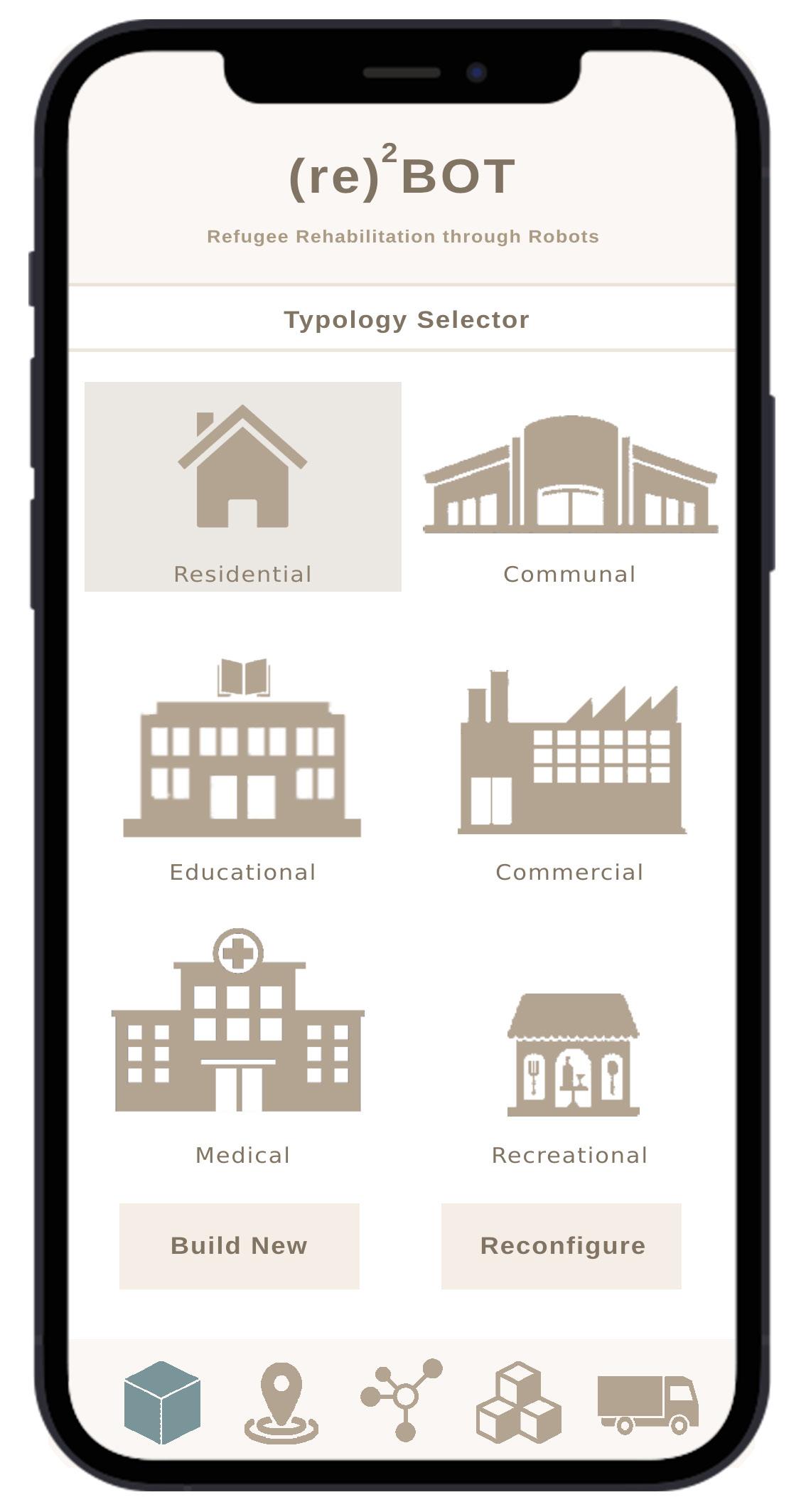
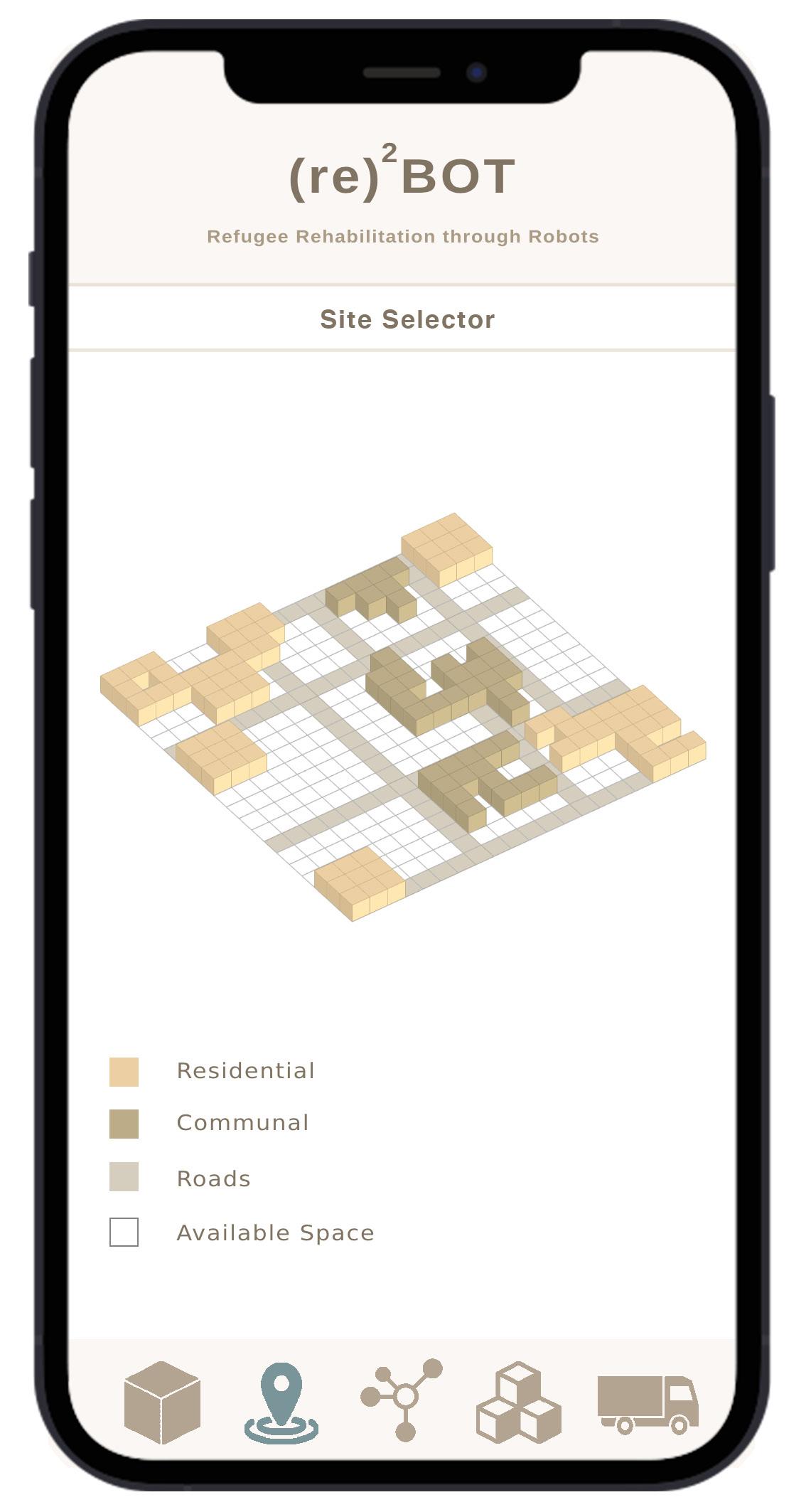
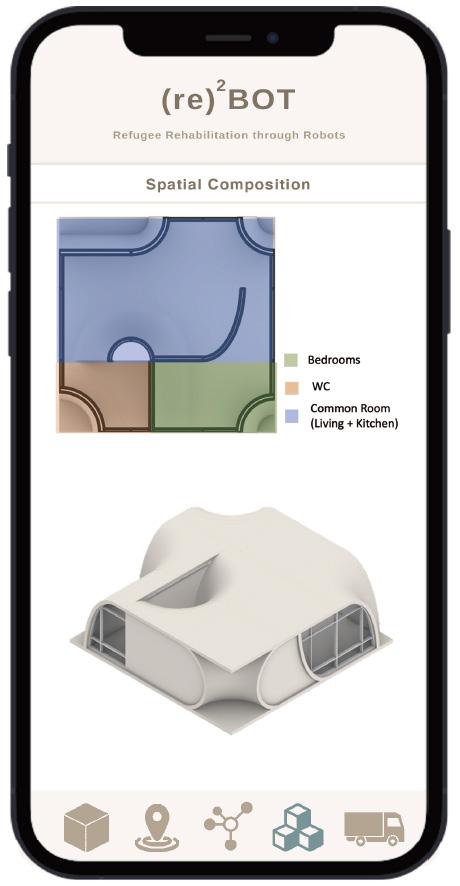
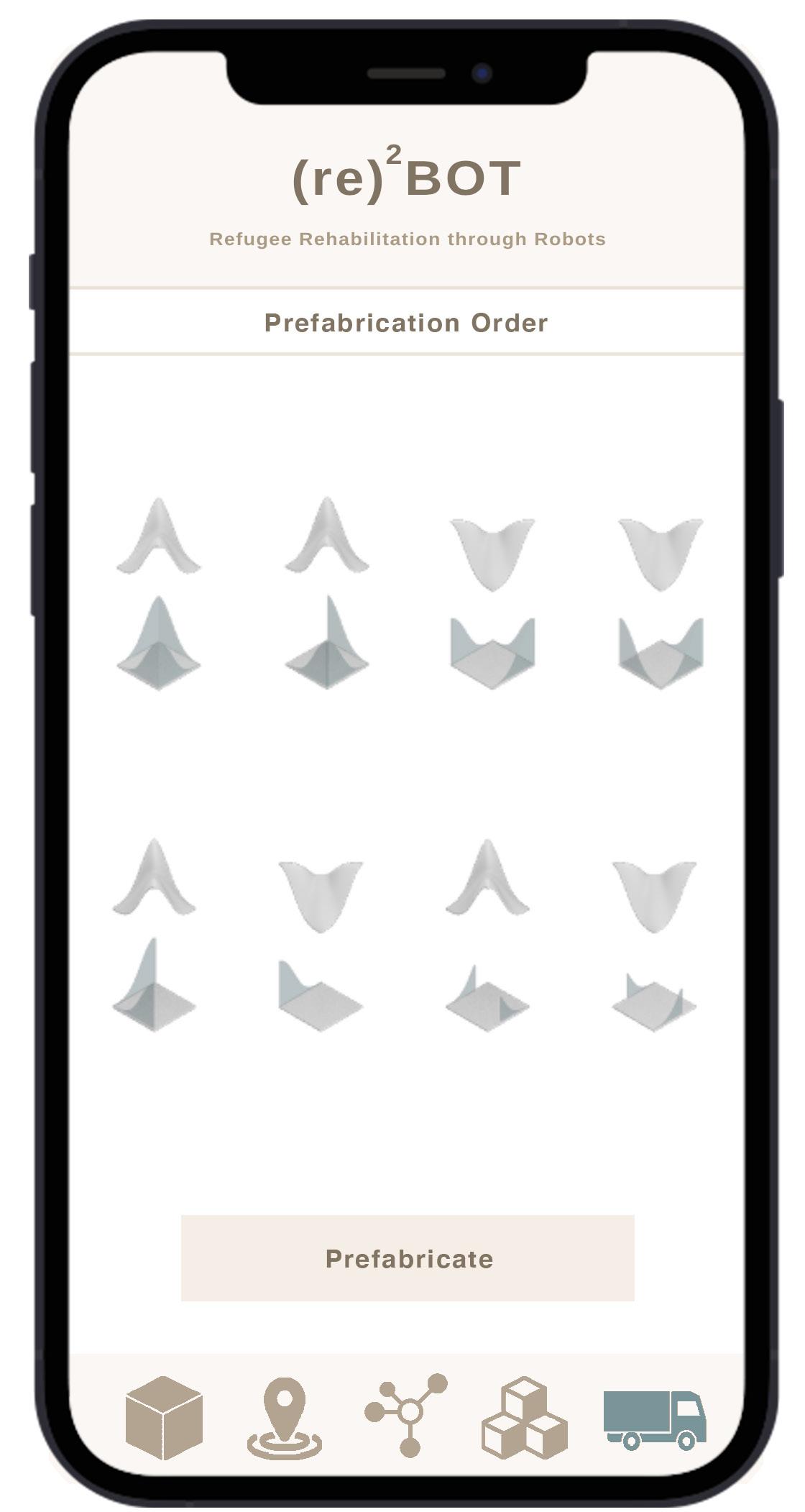
The first stage of the user interface involves the refugee deciding their spatial requirements and design through the help of the application. The first page of the application requires the user to select the type of space they need and whether they want to build a new space or reconfigure an existing one.
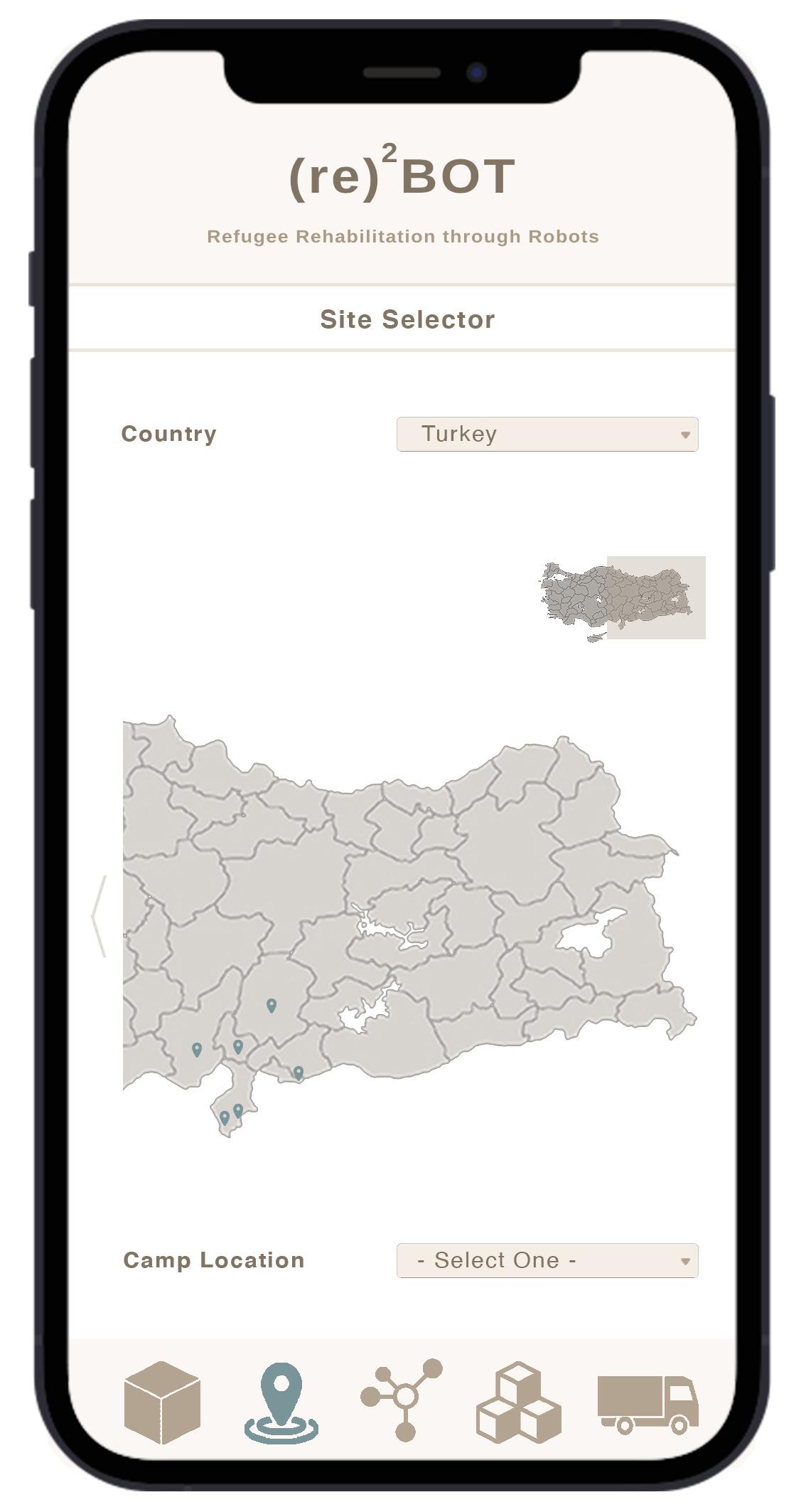
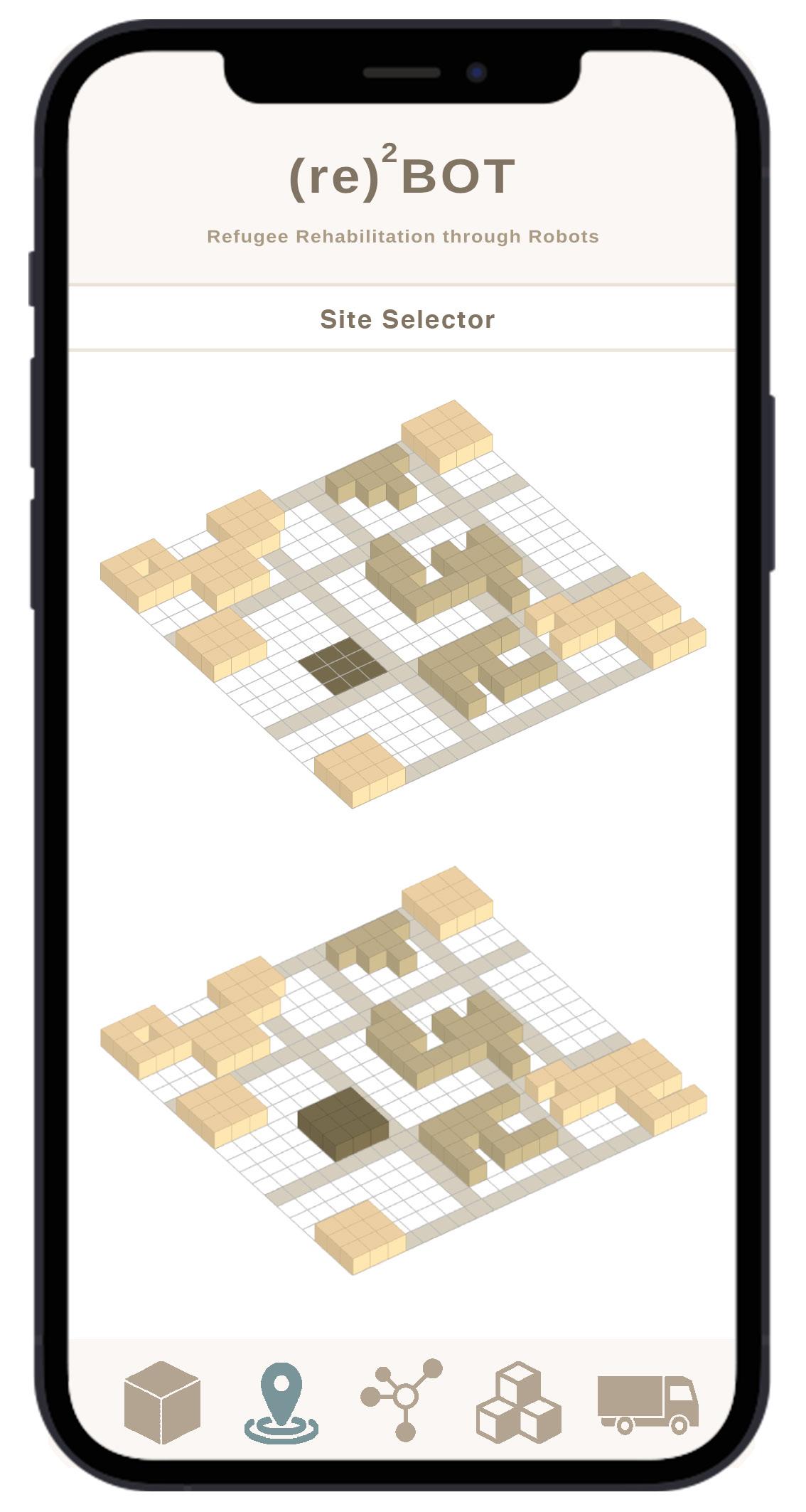
The user selects the land they want to build
The maximum size of land they can select depends on the typology of space they previously opted for.
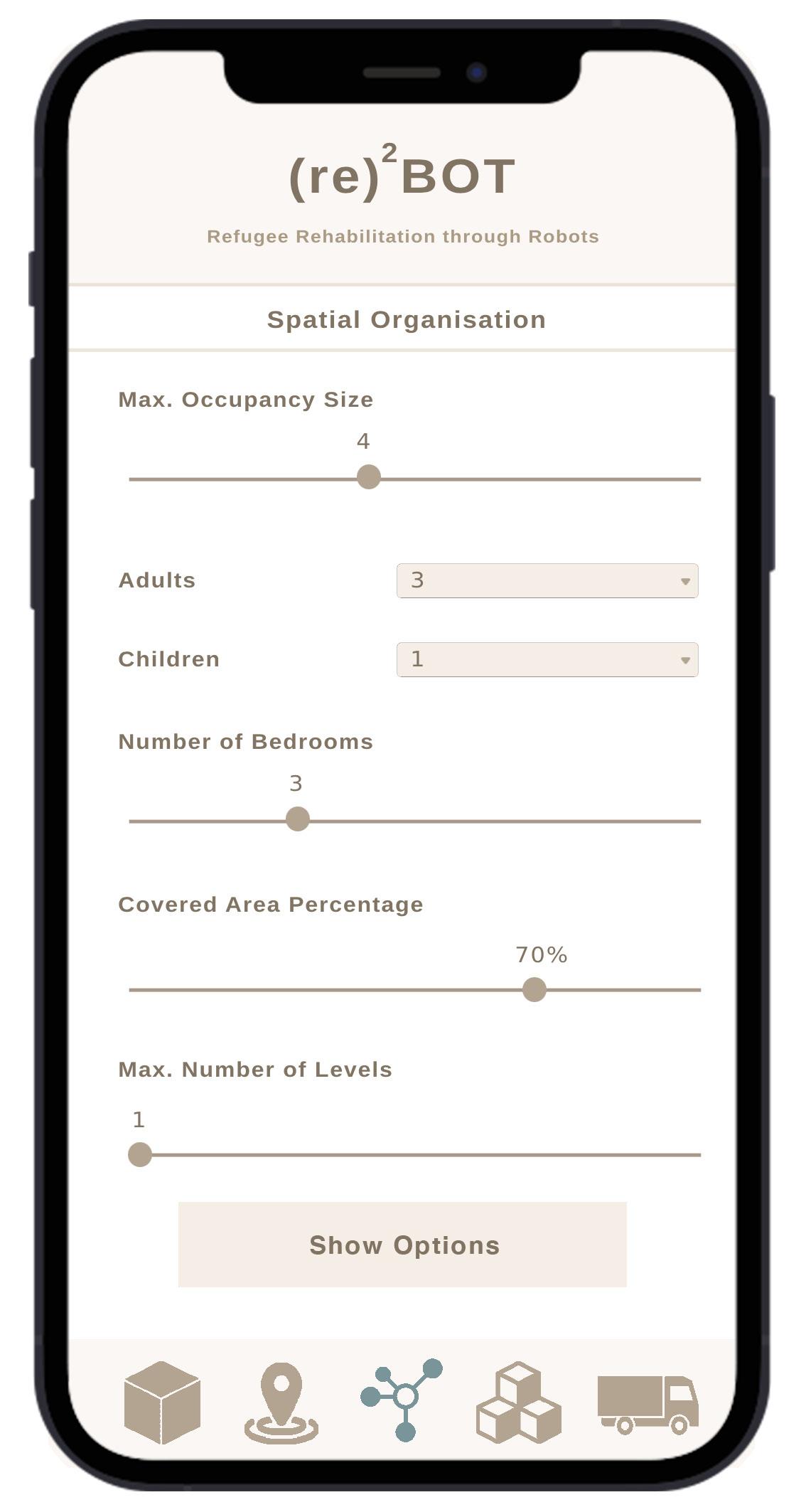
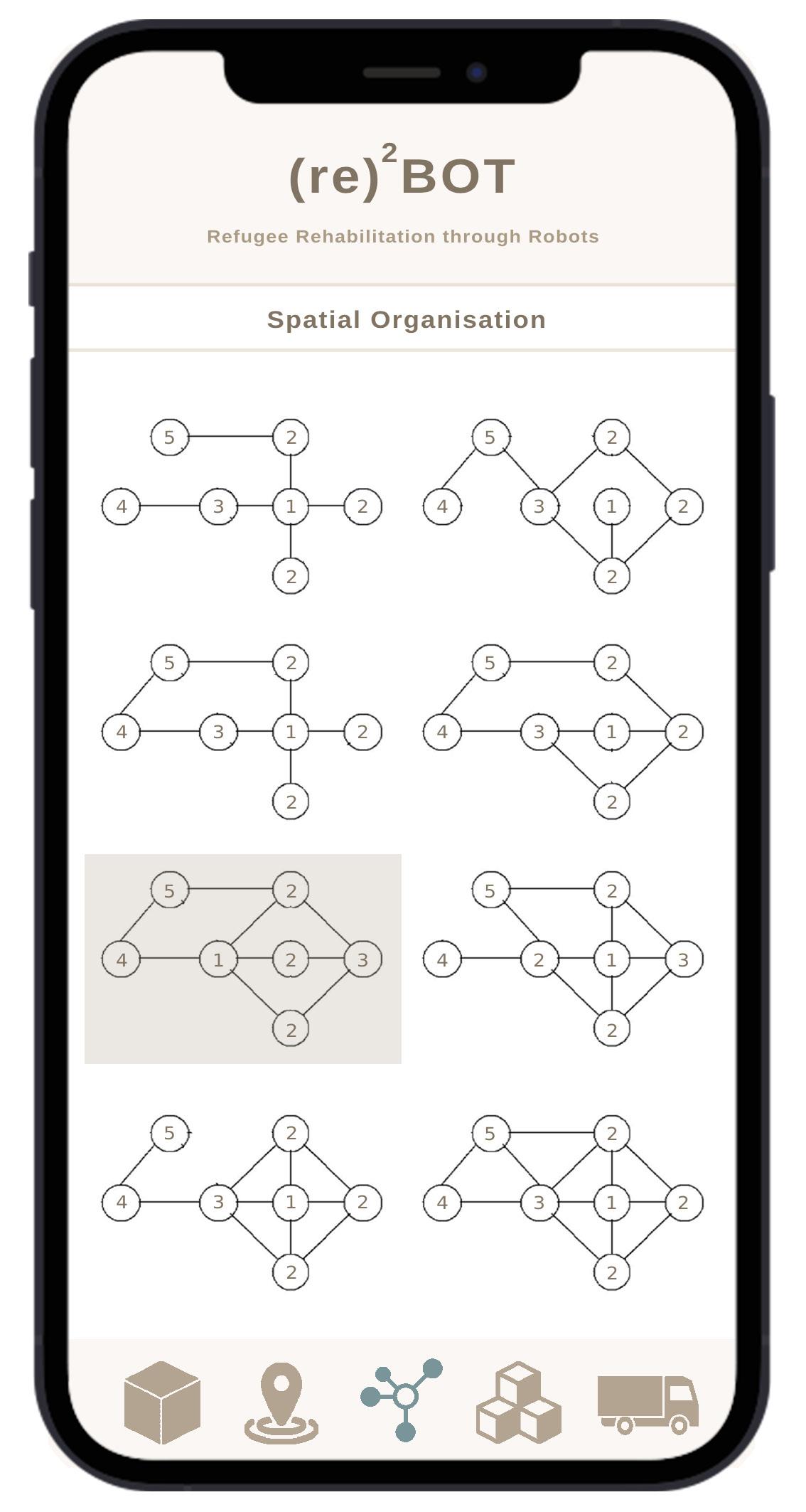
the user enters their spatial requirements into the application. After which the applications shows the possible algorithmic outcomes of how the layout of the spaces can be organized according to their requirements. The user selects their preferred option.