
Sustainable activity and supply chains Code of Conduct for Business Partners
Sustainable activity and supply chains Code of Conduct for Business Partners
The VIVATIS Holding AG including all affiliated companies (hereinafter referred to for short as VIVATIS), are committed to corporate governance that is environmentally and socially responsible and is in line with healthy economic development. This requires our employees to observe and comply with the principles of ecological, social and ethical behaviour that are anchored in the Code of Conduct and in the corporate culture. In addition, VIVATIS is committed to continuously optimising its business activities, products and services in the interests of sustainability and calls on all employees and business partners to also make a positive contribution in the spirit of a holistic approach.
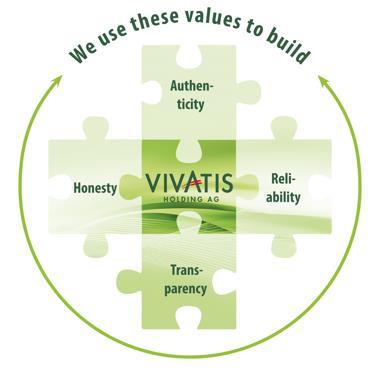
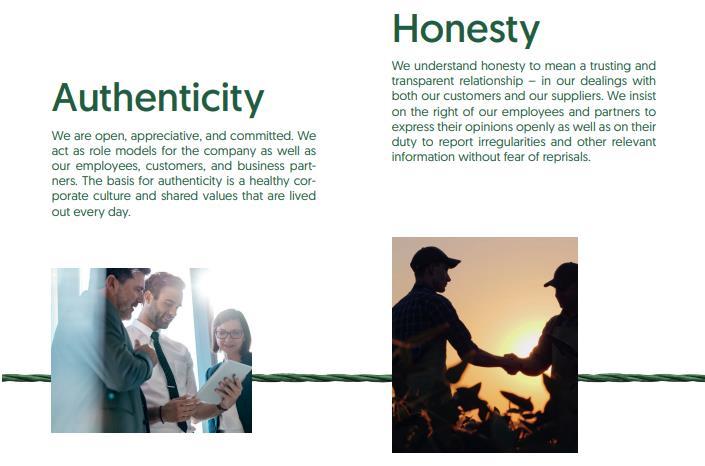
The central pillars of the corporate philosophy are as follows:
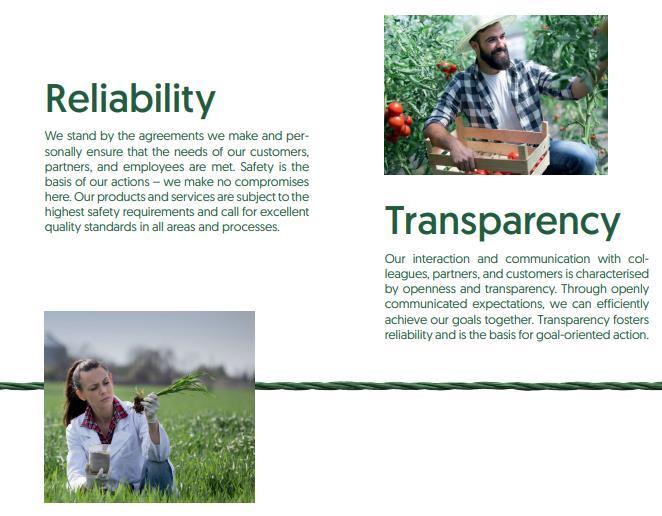
All direct and indirect business partners (hereinafter referred to as business partners) of VIVATIS must take steps to ensure that the principles and requirements of this Code of Conduct are met and adhered to along the entire activity and supply chain. A breach of this Code of Conduct may give VIVATIS cause and reason to terminate the business relationship or contractual relationship prematurely.
The Code of Conduct is based on laws and regulations at both the national and international level. It includes, in particular those of the European Union and international conventions such as the United Nations Guiding Principles on Business and Human Rights, the Guidelines for Multinational Enterprises on responsible business conduct of the Organisation for Economic Co-operation and Development (OECD) and the fundamental principles of the International Labour Organization (ILO) as well as the UN Global Compact.
In the context of the ESG approach (ESG stands for Environment/Social/Governance), the following provisions arise for the business partners of VIVATIS due to applicable legal requirements for due diligence and control systems along the activity and supply chains:
At VIVATIS, the focus is on people. Social responsibility towards our own employees is of central importance. They are the ones who help to produce, store, transport and market high-quality food, beverages and tobacco and, in doing so, make a significant contribution to ensuring that the population receives the necessary supplies. This means that, within the group of companies, as well as along the activity and supply chains, attention is paid to human rights and compliance with the applicable fundamental principles of the ILO. We also expect the same of our business partners with the aim of continuously improving the standard of living of the employees. This is based on the following requirements:
• Respect for human rights
Respect for human rights is an essential criterion for a business relationship with VIVATIS. Business partners are therefore expected to do their utmost to ensure that human rights are respected not only in their own business environment, but also along their activity and supply chains. This means that regular risk analyses must be carried out.
• Equal opportunities and non-discrimination
VIVATIS expects its business partners to promote equal opportunities and equal treatment for their employees and that they prevent discrimination in all its forms (this applies in particular to recruitment, promotion and training opportunities). In particular, there must be no discrimination on the basis of gender, nationality, social background, skin colour, disability, political conviction, religion, age, pregnancy or sexual orientation. The personal dignity, privacy and personal rights of each individual must be respected. In any case, the ILO Convention 111 concerning discrimination in respect of employment and occupation must be complied with.
• Exclusion of forced labour
The business partners shall comply with ILO Convention 105 (Abolition of Forced Labour). No forced, slave, trafficked or similar labour may be used. All work must be voluntary (ILO Convention 29) and employees must be able to terminate their work or employment relationship at any time. The EU regulation prohibiting the placing of products on the Union market which have been made with forced labour must also be complied with.
• Prohibition of child labour
Business partners are obliged to refrain from any form of child labour and, if they become aware of any along their supply chains, to take immediate action to remedy the situation. In any case, the ILO Convention 182 (Worst Forms of Child Labour) must be fulfilled by all business partners. Business partners are also required to comply with the recommendation in ILO Convention 138 concerning the minimum age for admission to employment. This means that the age at which anyone can be employed should not be less than the age at which compulsory general education ends and, in any case, should not be less than 15 years. Minors under the age of 18 may only be employed for work that is compatible with the relevant legal provisions.
• Freedom of association
The right of workers to freedom of association must be respected in accordance with local laws and possibilities along with their right to join trade unions, to contact an employee representation or to be members of works councils. Workers must be able to communicate openly with the management without fear of reprisal or harassment. Business partners must comply with ILO Convention 87 (Freedom of Association) and ILO Convention 98 (Right to Organise and Collective Bargaining).
• Prohibition of undeclared work
Business partners refrain from illegally employing workers, withholding employee contributions to social security, failing to pay relevant taxes or organising undeclared work.
• Minimum wage and working hours
VIVATIS expects its business partners to have a fair remuneration policy that complies with all local laws on labour and remuneration. Insofar as there are no legal or collectively agreed regulations, wages and social benefits are based on contractually negotiated compensation and performance that is specific to the industry and typical for the respective location and which ensure an appropriate standard of living for employees and their families. All business partners must comply with the ILO Convention 100 (Equal Remuneration).
Working hours must comply with applicable laws or industry standards. Overtime is only permissible if it is worked on a voluntary basis and does not exceed 12 hours per week. Employees must be given at least one day off after six consecutive days of work. Weekly working hours must not exceed 60 and overtime must not be worked on a permanent basis (exceptions are short-term emergencies and extraordinary circumstances). Regulations under collective agreements must be observed.
• Health protection and safety at work
Business partners must take responsibility for the health and safety of their employees and provide a safe and healthy working environment. Our business partners must take the necessary precautions to prevent accidents and damage to health that may arise in connection with the work of their employees by establishing and applying appropriate occupational safety systems. In addition, employees are to be regularly informed and trained about applicable health and safety standards. Employees are to be provided with access to drinking water in sufficient quantities and to clean sanitary facilities.
• No expropriation
Business partners must not participate in the unlawful appropriation, destruction or deforestation of land, water or forests that form the basis of human existence. Where applicable, our business partners are obliged to obtain the free, prior and informed consent of all affected parties and to provide appropriate compensation for land use. In any case, the ILO Convention 169 on the Rights of Indigenous Peoples must be observed.
• Complaints procedure
Our business partners are responsible for establishing an effective complaints mechanism at their operating levels for individuals and communities who might be affected by negative impacts. VIVATIS has a complaints system at www.vivatis.at.
VIVATIS expects its business partners to take appropriate measures to reduce greenhouse gas emissions and, by doing so, contribute to the achievement of the Paris Agreement. Sustainable energy sources, environmental protection measures, strengthening biodiversity, careful use of resources and promoting recycling are the main pillars for the following requirements:
• Energy consumption and energy efficiency
Our business partners are encouraged to find economical solutions to improve energy efficiency and minimise energy consumption and greenhouse gas emissions along their activity and supply chains. Companies should monitor and document their own energy consumption, ideally with their own energy management system. Every effort must be made to achieve the objectives of the EU states for switching to CO2-free and sustainable energy sources.
• Environmental protection and resource consumption
VIVATIS attaches great importance to environmental protection and the conservation of resources (especially of valuable food). This is why VIVATIS expects its business partners to be familiar with and comply with the relevant and applicable environmental regulations and standards. Business partners are called upon to use valuable resources as sparingly as possible along their activity chains, to continuously implement optimisation measures, to protect the environment, to strengthen biodiversity and to promote a circular economy. This applies in particular to raw materials, packaging and goods.
• Treatment and discharge of industrial wastewater
Wastewater from operations, manufacturing processes and sanitary facilities must be classified, monitored, checked and, if necessary, treated before it is discharged or disposed of. In addition, measures should be introduced to reduce the production of wastewater.
• Managing air / noise and greenhouse gas emissions
General emissions from operations (such as air and noise emissions) and harmful greenhouse gas emissions must be classified, routinely monitored, checked and, if necessary, treated before they are released. Business partners are also encouraged to find economical solutions to minimise any emissions.
• Handling of waste, hazardous substances and conflict materials
Business partners are to follow a systematic approach to identifying, managing, reducing, responsibly recycling or properly disposing of waste. Chemicals or other materials that pose a hazard if released into the environment must be identified and managed in such a way that safety is ensured during handling, transport, storage, use, recycling, reuse or disposal. If necessary, chemical substances must be properly registered in the central database of the REACH authority.
Business partners must ensure that their products do not contain raw materials from conflictaffected and high-risk areas and are encouraged to establish due diligence processes throughout their operations to promote responsible supply chains for minerals from conflict-affected and highrisk areas. These must also comply with the EU Corporate Sustainability Due Diligence Directive (CSDDD) and the guidelines of the Organisation for Economic Cooperation and Development (OECD).
• Ecosystems and deforestation
The protection of forests and other valuable ecosystems plays a central role in mitigating climate change and preserving biodiversity. VIVATIS expects all business partners along the activity and supply chain to contribute to achieving net-zero deforestation. All business partners must endeavour to ensure that no primary forests or other areas particularly worthy of protection are cleared for the extraction of raw materials and that compensation is provided in the form of reforestation in the event of legal deforestation. In this context, attention is also drawn to compliance with the EU Deforestation Regulation (EUDR) in connection with critical raw materials (including timber, rubber, coffee, cocoa, palm oil, soya and beef). The business partners agree to provide VIVATIS with all the documents it requires for this purpose.
VIVATIS prefers to have business partners who already comply with the OECD Guidelines for Multinational Enterprises, the BSCI Code of Conduct or the UN Global Compact. In any case, the following ethical aspects must be observed in their corporate governance:
• Respect for the law
All business partners of VIVATIS must respect and comply with all applicable local and international laws, rules, regulations, ordinances and treaties.
• Honesty and trust
The business partners and their employees act with authenticity, honesty, reliability, transparency and fairness in all their business dealings along their activity chains and avoid any behaviour that could damage or contribute to damaging the integrity and reputation of VIVATIS.
• Fair competition / ban on cartels
VIVATIS expects all its business partners to carry out their business in compliance with the principles of fair competition and in accordance with all applicable laws on fair competition. In addition, all applicable antitrust laws, in particular those of the European Union and the respective country, must be strictly observed.
• Confidentiality / data protection / intellectual property
Business partners are obliged to meet the reasonable expectations of VIVATIS, suppliers, customers, consumers and employees with regard to the protection of private information, as well as the applicable legal requirements. All business partners must comply with data protection and information security laws and the official regulations when collecting, storing, processing, transmitting and passing on personal data and information. Intellectual property rights must be respected, and technology and know-how must be transferred in such a way that both intellectual property rights and customer information are protected.
• Avoiding conflicts of interest
All business partners must always act in the best interest of VIVATIS. Business partners must avoid any contact or behaviour that could lead to a conflict between their own interests and those of VIVATIS, be perceived as such, or otherwise damage the reputation of VIVATIS.
• Integrity / Combating fraud and corruption
The highest standards of integrity must be applied in all business activities. Business partners must pursue a zero-tolerance policy towards all forms of bribery, fraud, corruption, extortion and embezzlement. Adequate internal procedures for monitoring and enforcing the standards are to be applied in order to ensure compliance with the respective anti-corruption laws. VIVATIS prefers business partners who have their own compliance and risk management systems. In addition, the VIVATIS reserves the right to demand that business partners implement such processes.
• Money laundering and taxation
VIVATIS expects its business partners to comply with all relevant legal obligations for the prevention of money laundering along their own value chains and not to participate in money laundering activities. In addition, all tax and duty laws and regulations must be observed on a country-specific basis.
• Animal welfare criteria
VIVATIS expects its business partners to comply with national laws on animal protection and animal welfare. In addition, appropriate measures must be taken to ensure that the husbandry systems used for farm animals are adapted, as far as possible, to meet the needs of the animals. The aim is to ensure that the animals are not subjected to pain, injury or any other form of suffering, either during transport or during the stunning and slaughter process.
• Product safety and quality
Business partners must comply with all applicable legal requirements and provisions regarding product safety, in particular the legal requirements for the safety, labelling and packaging of products as well as those for the use of hazardous substances and materials.
When planning, developing, manufacturing or implementing products and services with VIVATIS, the business partners should strive for a healthy balance between economic, social and ecological requirements. In addition, the products must be designed in such a way that, when they are placed on the market, the current state of knowledge and technology over the entire product life cycle is taken into account. Product quality must meet the requirements and specifications of VIVATIS.
• Transparency / Traceability / Duty to provide information
VIVATIS expects its business partners to establish appropriate processes for tracking and documenting their own activity and supply chains, provided that this is practically possible and economically justifiable and in particular if VIVATIS requests such. In addition, the business partners must do everything in their power to ensure that contractual relationships in the relevant activity and supply chains also comply with the values and standards highlighted in this Code of Conduct. The goal is to create the greatest possible transparency and traceability together with all business partners, and to be able to actively manage and minimise potential risks. Business partners must always be able to provide VIVATIS with information and documents as proof at any time.
Business partners are expected to regularly identify risks in their own activity and supply chains and to have appropriate plans in place for their prevention and remediation. In the event of a suspected violation or in the case of activity chains with increased risks, business partners must always inform VIVATIS and outline their measures for improvement or remediation.
VIVATIS monitors compliance with the rules and standards set out in this document by means of a selfassessment process and by conducting audits at the business partners' locations. The business partners agree that VIVATIS may carry out such audits to verify compliance with this Code of Conduct on their premises during normal business hours, after reasonable advance notice and through persons authorised by VIVATIS. Business partners may object to individual audit measures should these violate mandatory regulations, in particular data protection regulations. The information provided by business partners in questionnaires and the findings from audits are incorporated into the assessments of VIVATIS. The business partners agree that VIVATIS may also use industry-standard IT tools for the assessment or may commission its own testing and certification bodies to do so. VIVATIS prefers business partners that have implemented audit and certification processes themselves.
The business partners must report violations of mandatory provisions of this Code of Conduct to VIVATIS immediately after becoming aware of them. In the event of violations, VIVATIS, will work with the business partners to determine appropriate measures to resolve the problem, unless something different has been contractually agreed. For this purpose, programmes for the elimination of grievances can also be developed in stages, and VIVATIS must be kept informed of their progress. If no agreement can be reached or if the agreed measures are not implemented or not sufficiently implemented by the business partners, VIVATIS reserves the right to prematurely terminate the business relationship or the contractual relationship. VIVATIS is granted the right to also obtain reviews of the status quo in this context. The right to claim damages and the right to extraordinary termination without setting a grace period remain unaffected.
Business partners are required to implement the legal requirements for setting up internal (anonymous) reporting channels for reporting violations of all kinds, including violations of human rights and the environment. As a result, a general complaints management system is to be set up and made known to the company's own chain of activities and suppliers (and, in this way, also to VIVATIS).
At VIVATIS itself, violations can be reported in person, by phone, by email to compliance@vivatis.at or via a dedicated whistleblower platform at www.vivatis.at (also anonymously, of course). VIVATIS guarantees the highest level of confidentiality and protection for whistleblowers. VIVATIS strictly rejects reprisals of any kind as a result of reports.
By entering into a business relationship with VIVATIS, business partners automatically agree to act fairly and responsibly and to comply with the principles and specifications set out in this Code of Conduct. The business partners are obliged to take all of the necessary precautions to ensure that this Code of Conduct can be implemented along the entire activity and supply chain.
Contact person in the Group:
Prok. Walter FRANEK
Head of Strategic Central Purchasing and Sustainability Management
VIVATIS Holding AG
Lindengasse 8
AT-4040 Linz, Austria
Tel: +43 (732) 771933-0
Email: w.franek@vivatis.at
Web: www.vivatis.at
Company Registration Number = FN 119190f
AT-Linz, December 2024