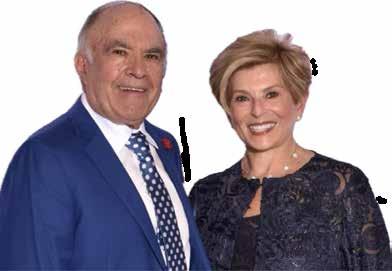
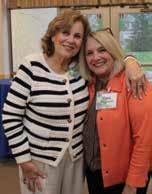
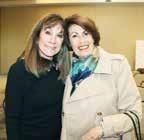
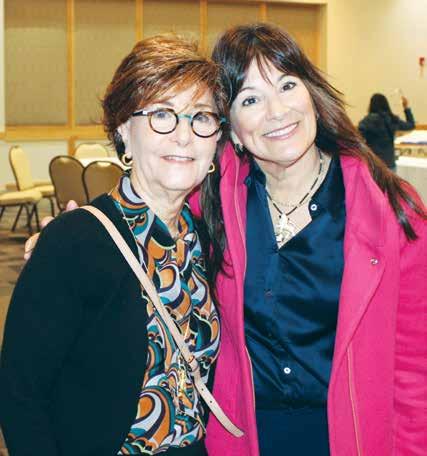
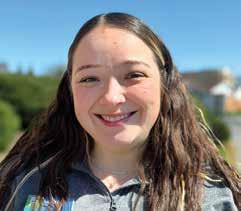
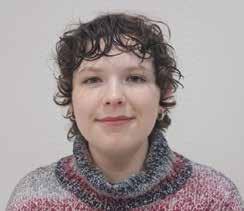
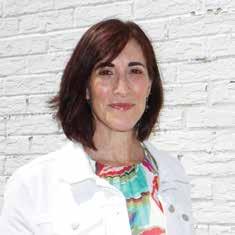
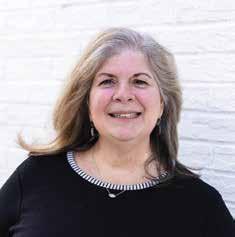
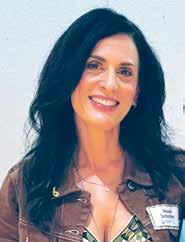
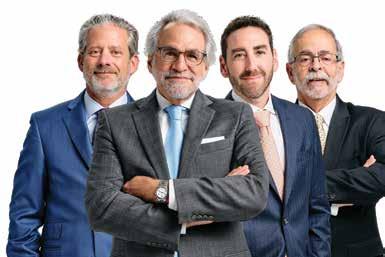
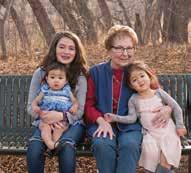
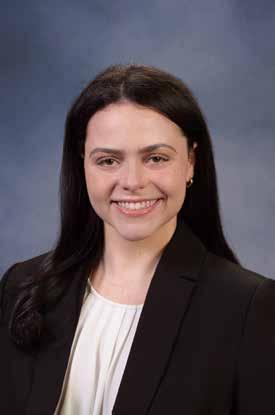
Beth Kozinn is joining Carol Bub Fromer on the national Women’s Philanthropy board. What might they accomplish together? p5
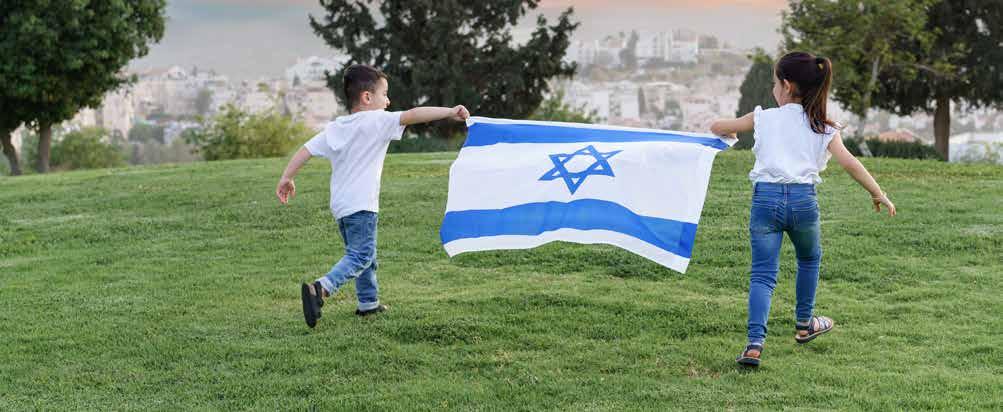
Israel has needed a good celebration. Fortunately, it’s that time of year. See our Celebrating Israel reports from here and there. p22-30 and throughout FROM THE DESK OF JERI ZIMMERMAN p3
LVJF TRIBUTES p8
JEWISH COMMUNITY CENTER p10-11
JEWISH DAY SCHOOL p12
JEWISH FAMILY SERVICE p13
COMMUNITY CALENDAR p31
Beauty queen and IDF vet urges women to stand up for Israel
By Carl Zebrowski Editor
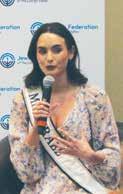
It’s hard to beat this elevator pitch for Israel advocate: Nerdy Israeli farm girl who spent a year in the hospital fighting a serious blood disorder grows up to serve in the Israel Defense Forces, enters Miss Universe competition at her mother’s prodding, wins the Miss Israel crown, gets called back to active military duty after the October 7 Hamas attacks, and turns her unlikely run of experiences into a global platform to change minds about Israel.
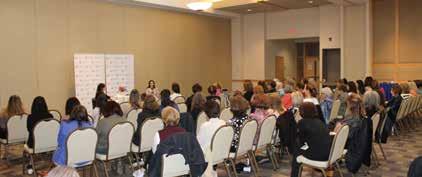
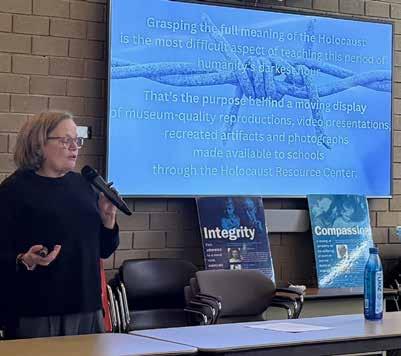
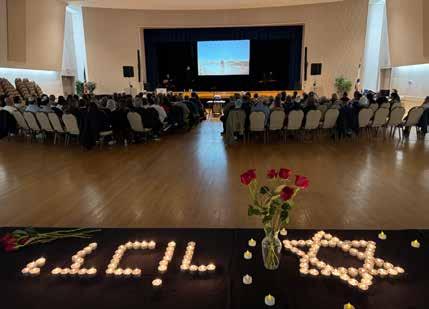
Noa Cochva brought her unique story to the Jewish Federation of the Lehigh Valley’s Women’s Philanthropy 365 Dollar-a-Day Spring Event at Temple Beth El on April 30. She spent the
evening revealing surprising detail after detail of her “Beauty and Bravery” journey that brought her to her current role as a woman inspiring Jewish women to stand up for Israel and the Jewish community in this time of increased antisemitism and anti-Zionism.
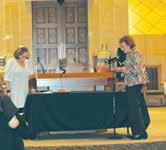
After Lynne Shampain was presented with her Lion pin, Ellen Sosis, who organized the event along with her co-chairs Marilyn Claire, Gia Jones, and Amy Sams and Women’s Philanthropy president Lauren Rabin, introduced Cochva to the audience and led a conversation with her. She emphasized what Cochva is doing for the cause and how regional community members can pull together through the Federation to make an impact as advocates
themselves while making sure those who need help get it.
“Contributing to Federation is huge,” Sosis said. “This does so much for just a dollar a day. What do we do? For local seniors, we are able to give them food and socialization, the human touch and love.” The Federation also supports synagogue programming and other Jewish institutions along with kids in the Jewish Day School, the JCC, and summer camps. “We’re able to have this amazing homeland,” she continued, highlighting support for Israel and the current wartime focus on rebuilding and helping displaced Israelis.
Sosis led Cochva into her
personal story of growing up in central Israel. It was a rural Eden. “I remember waking up to the sound of birds and walking around barefoot,” Cochva said. Then illness set in. She
Broadway celebrates the Lehigh Valley Community
By Gia Jones
Unity in the Community 2.0 Committee Member
to unite for a
Aliette and Dr. Marc Abo have been leaders in the Lehigh Valley Jewish community, known for their decades of service, philanthropy, and hands-on involvement.
Marc, a medical professional and educator, and his wife Aliette, a former educator, have consistently played a role in strengthening community ties through their work with the Jewish Federation of the Lehigh Valley and Congregation Bnai
woke up one morning, age 13, with blue hematomas all over her legs. Her dad rushed her to the hospital. The eventual diagnosis was a rare blood
festive night in support of Israel and the Jewish people
Shalom in Easton. As longtime donors, volunteers, and event chairs, they have helped shape and support numerous initiatives that bring people together in meaningful ways.
Continuing their legacy of leadership and dedication to the Jewish community, they currently serve as the driving force behind and chairs of “Unity in the Community 2.0: Broadway Celebrates the Lehigh Valley.”
This show on Thursday, May 28, in the Muhlenberg College Empie Theatre stars Tony Awardwinner John Lloyd Young (Jersey Boys), Andrea McArdle
(the original Annie), and acclaimed comedian Judy Gold in a celebration of hope, resilience, and connection. The evening reflects the Federation’s vision of a community united through entertainment, generosity, and shared purpose
“Unity in the Community 2.0” began with a phone call from Wayne Gmitter, who owns a boutique booking agency representing Broadway legends. What was that conversation like, and how did it evolve into a Broadway tribute to the Lehigh Valley?
ALIETTE: Wayne’s call wasn’t just a routine call. It was such an emotional phone conversation. We discussed the devastating attacks on Israel on October 7 and the alarming rise in antisemitism and incidents, including the violence in places like Boulder, Colorado. I was just so overwhelmed by getting such a heartfelt phone call. I just expressed my deepest gratitude to him for not only his friendship but also his unwavering support.
I just can’t express it in words. Then he shared his conversation with Judy Gold. That moment, those words resonated deeply with me.
Wayne shared his vision of a community concert, an event that’s about standing up against hatred through pride. He shared with me the names of artists who could perform, and I thought, how could I say anything other than yes?! He had a vision of creating something joyful and inspir-
ing that would bring people together. Wayne wasn’t just offering support; it was a call to action, and that sincerity and emotion inspired everything that followed. Wayne, who is not Jewish, chose to stand up. I am the child of a Holocaust survivor, and before the war, we had 300 family members. We were left with only 20 family members after the war. My mother
Beauty queen
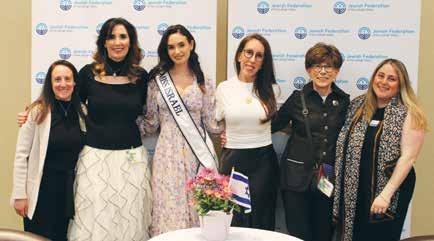
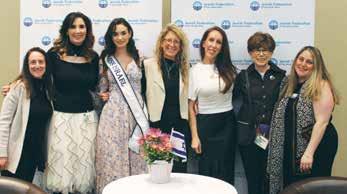
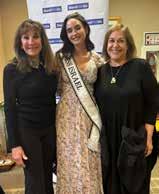
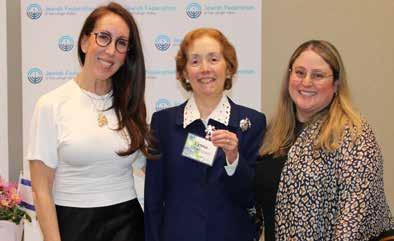
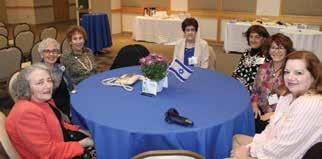
Gia Jones, event co-chair; Ellen Sosis, event co-chair and moderator; Noa Cochva, Miss Israel 2021 and IDF veteran; Lauren Rabin, Women’s Philanthropy president; Marilyn Claire, event co-chair; and Lee Kestecher Solomon, Jewish Federation director of community engagement.
Dr. Marc and Aliette Abo
Lisa Scheller
First Trust Bank
Muhlenberg College
Aliette and Marc Abo Hotel Bethlehem
Anonymous
Julius Cohen Memorial Endowment
Karen and Peter Cooper
Wayne J. Gmitter and James Barnish Jr.
Scherline Family Fund
Hof & Reid Personal Injury Law
St. Lukes University Health Network
The Chicken Lounge
Think Iconic Artists Agency
Leonard Abrams and Family
Wendy and Ross Born
Mara Cohen
Robert Cohen
Jim Fernberger
Eileen and Roberto Fischmann
Carol and Gary Fromer
Sandra and Harold Goldfarb
Bonnie Hammel
Ellen and Phil Hof and Family
Beth Kozinn
Lynda and Stuart Krawitz
Vicki Wax
CHE Mechanical
Taste of Italy Ristorante Working Dog Press
FRIENDS OF UNITY
Robert and Laura Black Charitable Fund
Marisue Cummins
Beth and Scott Delin
Barnet and Lisa Fraenkel
Carol and Barry Halper
Julie and Aron Hochhauser
Val and Nelson Kopyt
Ricky and Les Hochhauser
Suzanne Lapiduss
Pat and Vito Loguidice
Joy & Tod Mammuth
Jane and Billy Markson
Roberta and Alan Penn
Karen and Arthur Popkave
Vickie Semmel
Audrey and Art Sosis
Ellen Sosis and Scott Anderson
Susan Sosnow
Melissa and Ron Stein
Eileen Ufberg
Marie Ann and David Wendells
Cheryl and Marty Zawarski
Anne Fontaine Designer
Ashton Funeral Home Inc.
Embassy Bank
Good Human Improv Company
URI Compressors
Lesavoy Butz & Seitz Attorneys at Law Northern Valley Affairs
Phoebe
Special Events Tent & Party Rentals
Sponsors as of 5/5/26
Presenting Sponsor: $10,000
of Unity: $500
May 28, 2026
Co-chairs: Aliette and Marc Abo
MEET THE STARS!
Join us for Unity in the Community 2.0, starring Tony® Award winner John Lloyd Young (Jersey Boys), Andrea McArdle (the original Annie), and acclaimed comedian Judy Gold in a Broadway celebration of hope, resilience, and connection. This event reflects our vision of a community united through entertainment, generosity, and shared purpose.
Advance Purchase Required. Tickets not sold at the door.
Scan the QR code or visit the link below to purchase tickets, and to learn more about becoming a sponsor.
General Admission: $100 each NextGen Affinity Group (ages 30-45): $50 each
From commemoration to celebrations
As spring unfolds across the Lehigh Valley, our community moved through the special events of remembrance, reflection, and celebration. During this Season of Independence, we honor our past, recognize sacrifice, celebrate resilience, and look ahead with hope.
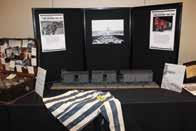
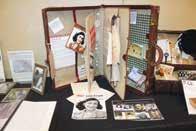
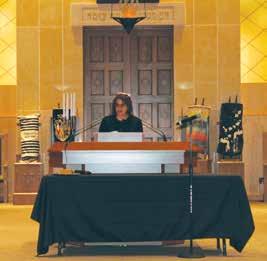
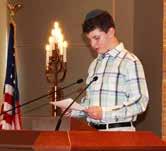
We began with Yom HaShoah, a solemn day of remembrance for the 6 million Jews who perished in the Holocaust. Through memorial programs and moments of reflection, and the students’ reading of the names of those who perished, we reaffirmed our responsibility to remember, to educate, and to ensure that the lessons of history endure for future generations.
This year, our community welcomed speaker Lois Roman, from the Memorial Scrolls Trust, which safeguards Torah scrolls rescued from devastated communities, serving as enduring symbols of survival and continuity. We were privileged to learn about the rescued Torah
scrolls in our community with moving presentations from Temple Beth El, Brith Sholom, Keneseth Israel, and Jewish Day School, who all brought personal meaning to this day of memory and honored the Torah scrolls in their care. We were also privileged to highlight the work of our Holocaust Resource Center led by Shari Spark.
Soon after, we observed Yom Hazikaron, Israel’s Memorial Day, when we honor the soldiers and victims of terror who gave their lives in defense of the State of Israel.
As part of our observance, we featured Gilad Segev, who presented Project Heroes, also known as the Jewish Heroism Experience for Humanity, to reshape the narrative of the Jewish people from one of victimhood to one of heroism. Their mission is to highlight timeless Jewish values of courage, resilience, and moral strength, as reflected throughout history and in the present day.
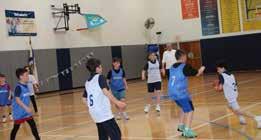
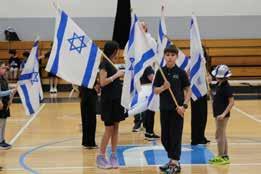
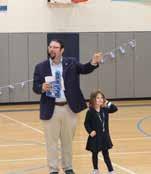
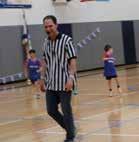
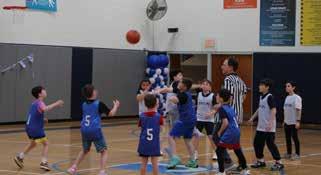
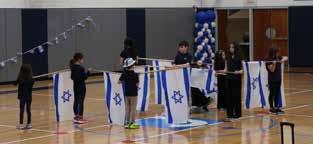
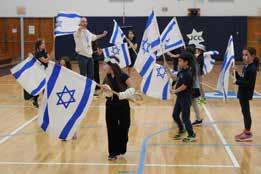
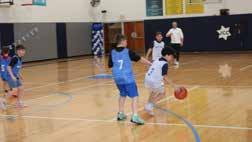
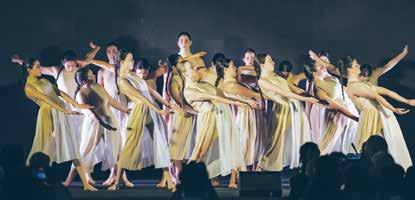
The Season of Independence transitions almost immediately into the joy of Yom HaAtzmaut when we celebrate the founding of the State of Israel and its remarkable achievements. This emotional progression, from mourning to celebration, captures the resilience and enduring spirit of the Jewish people. We were delighted to welcome JDS and JCC students for a blue-andwhite basketball game, and we all enjoyed the JDS flag dance ceremony.
As one season concludes, the Jewish Federation of the Lehigh Valley is proud to celebrate a time of achievement, growth, and community connection. This time of year brings a special opportunity to recognize the accomplishments of our graduating students, each one a testament to dedication, resilience, and the strong values nurtured within our community.
From high school seniors preparing to embark on new academic journeys, to
IN HONOR
JEANETTE AND EDUARDO
EICHENWALD
In celebration of your granddaughter
Lyla Golding’s Bat Mitzvah
Marilyn Claire
SUSAN ISRAEL
In celebration of your daughter
Chloe’s marriage to Josh Klaber
Lisa and Barnet Fraenkel
LYNNE SHAMPAIN
In celebration of your Special Birthday
Marc Freedline and Bill Johnson
Aaron Gorodzinsky and Jennie Schechner
AMY SILVERMAN
In celebration of your Special Birthday
Cindy Schneider
LAURIE AND ROBBY WAX
In celebration of your son Ben’s engagement to Jillian Krim
Marilyn Claire
VICKI WAX
In celebration of your grandson Ben’s engagement to Jillian Krim
Marilyn Claire
BARBARA WEISMAN
In celebration of your 100th Birthday!
(Grandmother of Alex Mishkin and Philip Mishkin)
Lisa and Barnet Fraenkel
IN MEMORY
SUE KIRSHNER
(Wife of Ken Kirshner)
Marilyn Claire
Lisa and Barnet Fraenkel
Roberta Kritzer
EVELYN TOFF
(Mother of Ken Toff)
Lisa and Barnet Fraenkel
DINA VINCOW
(Mother and grandmother of Jaspan/ Vincow Family)
Eileen and Roberto Fischmann
college graduates stepping into careers and advanced studies, we honor their hard work and perseverance. These milestones are not only personal achievements, but also reflections of the support systems of families, educators, mentors, and community institutions that have helped guide them along the way. We extend our heartfelt mazal tov to all graduates and their loved ones.
At the same time, the Federation is looking ahead to our Annual Meeting and Celebration, which will take place on Wednesday evening, June 10. This gathering will provide an opportunity to reflect on the past year’s impact, celebrate communal successes, and share a vision for the future. Together, we will recognize
outstanding leadership and renew our commitment to strengthening Jewish life throughout the Lehigh Valley and beyond.
The annual meeting is more than a tradition. It’s a moment to come together as a community, united by shared purpose and values. Whether you are a longtime supporter or newly engaged, your presence and participation help shape the direction of our collective work.
We look forward to gathering in person to reflect on the past year and to embracing the opportunities ahead. Together, we are Here for Good, continuing to build a vibrant, caring, secure, and connected Jewish community.
HAKOL STAFF
CARL ZEBROWSKI Editor
CHARLENE RIEGGER Director of Marketing
BILLY THOMPSON
HAKOL is published 11 times per year for the Jewish communities of Allentown, Bethlehem, Easton and vicinity by the Jewish Federation of the Lehigh Valley. COMMUNITY SUBMISSIONS
Submissions to HAKOL must be of interest to the entire Jewish community. HAKOL reserves all editorial rights including, but not limited to, the decision to print any submitted materials, the editing of submissions to conform to style and length requirements, and the placement of any printed material. Quotes may be edited for grammar and clarity. Articles should be submitted by e-mail or presented as typed copy; “Community Calendar” listings must be submitted by e-mail to hakol@jflv.org or online at www.jewishlehighvalley.org. Please include your name and a daytime telephone number where you can be contacted in the event questions arise. We cannot guarantee publication or placement of submissions.
MAIL, FAX, OR E-MAIL TO: JFLV ATTN: HAKOL 702 N. 22nd St. Allentown, PA 18104
LEE KESTECHER SOLOMON Director of Community Engagement
DR. WILLIAM MARKSON JFLV President
WENDY EDWARDS Office Manager
GINGER HORSFORD Donor Services Associate
All advertising is subject to review and approval by The Jewish Federation of the Lehigh Valley (JFLV). JFLV reserves the right to decline, withdraw and/or edit any ad. The appearance of any advertising in HAKOL does not represent an endorsement or kashrut certification. Paid political advertisements that appear in HAKOL do not represent an endorsement of any candidate by the JFLV.
JEWISH FEDERATION OF THE LEHIGH VALLEY
MISSION STATEMENT
In order to unite, sustain, and enhance the Lehigh Valley Jewish community, and support Jewish communities in Israel and around the world, the Jewish Federation of the Lehigh Valley is dedicated to the following core values:
• Supporting Jews in need wherever they may be. Supporting Israel as a Jewish homeland.
• Supporting and encouraging Jewish education in the Lehigh Valley as a means of strengthening Jewish life for individuals and families.
• Supporting programs and services of organizations whose values and mission meet local Jewish needs.
To accomplish this mission the Jewish Federation of the Lehigh Valley is committed to the following operating guidelines:
• Raising and distributing funds to support the core values.
• Developing Jewish leaders.
Building endowments to support implementation of core values.
• Committing to ongoing Jewish community strategic planning. Fostering cooperation among organizations and community building.
• Evaluating all decisions with respect to fiscal responsibility.
• Identifying unmet needs and investing in community initiatives to help get them started.
• Coordinating and convening a community response as an issue or need arises.
• Setting priorities for allocation and distribution of funds.
Acting as a central address for communication about events, programs and services of the Jewish community as a whole.
Approved by the JFLV Board of Directors on November 15, 2000
Continued from page 1
and grandmother survived because of the kindness and courage of a non-Jewish family who helped them. I recognize and appreciate Wayne’s support.
Even before this project, you both had a history of integrating Broadway and philanthropy within the Lehigh Valley Jewish community. Could you tell us more about those previous efforts?
ALIETTE: It was a period of over 35 years. We brought, believe it or not, 7,000 people to see 85 Broadway shows from the Lehigh Valley and beyond. We raised funds for all capital improvements for what is now Congregation Bnai Shalom in Easton. What’s also remarkable is that with money we raised from those trips, we bought a defibrillator and we used it to save someone’s life at an event at our synagogue.
MARC: When the theater program started, our first trip was to go see “City of Angels,” which had lyrics written by David Zippel, one of a congregant’s sons from Bnai Abraham (later merged into Bnai Shalom) in Easton—now he’s a big Tony Award winner. That’s how it all started. You could say these theater trips were “unity in the community” back then because it
was advertised for the Jewish community, but many of the people were (not Jewish) community members, like nurses in the hospital and other friends. They had no problem helping to support the synagogue. So, in a way, “unity in the community” started then.
ALIETTE: Marc and I met when we were 13 and started seeing shows together by the time we were 15. Before we could even afford a ticket, we would do standing room only. We could only dream that one day we could sit in a theater and sit in a seat. We never forgot that moment.
When we started doing these shows (to raise money for the synagogue), we were very cognizant of those who could not pay, and we never denied anyone a chance to see the show because of that. People could pay what they could or pay over time.
Marc, in addition to your medical career, I understand you are an accomplished thespian who once played Tevye in “Fiddler on the Roof.” Could you share a bit about your passion for theater?
MARC: One play! We had friends from Phillipsburg, where I worked, (who were involved in) Phillipsburg Light Opera Company. Our daugh-
ters were in “The King and I.” Then they said the next show is going to be “Fiddler on the Roof.” I said, “Geez, I really would like to try out for that.” So I tried out for Tevye. I took voice lessons. I never had any acting experience and I did it. I think this was 1986 or 1987. We had five performances. Two thousand people came to see it. I was Tevye. My oldest daughter, Alyssa, was one of the daughters. Jessica (my youngest daughter) was one of the villagers, and Aliette sold the tickets. So that was a family affair. That was an unbelievable experience. I grew a beard. It was a great time. I think I was 11 at the time I saw my first Broadway show, “Milk and Honey,” which was a story about Israel. That was really when I was bitten by the (theater) bug. Aliette and I are always going to the theater in New York or Florida. It’s always been a big part of our lives.
“Unity in the Community 2.0” is a major undertaking. What has it been like organizing an event of this scale, and how is the planning process progressing?
ALIETTE: It’s a major undertaking, but for me it isn’t just an event; it’s a production. You’re bringing people together. You’re bringing Broadway talent, community leaders. You’re sorting out sponsors, volunteers. What is incredible is the commitment.
People aren’t just involved; they’re deeply invested. There is a genuine sense of this is bigger than any one of us. It’s been challenging but energizing, because every detail is being handled with the utmost care. It becomes more than just a performance for me. It becomes an experience people will feel and remember. I have a passion and turn it into action. So that’s the goal: Be successful—bring people together, lift them up, and unite them. It’s challenging for me because I’m doing this out of two states (going back and forth between Florida and Pennsylvania).
MARC: Aliette likes to pay a lot of attention to detail. There are a lot of details with this, and it takes a lot of time. It’s tough doing the majority of this out of Florida, but she has a committee and certainly Jeri Zimmerman (Jewish Federation executive director) and her staff have been very involved. It’s a major, major undertaking.
ALIETTE: I couldn’t do any of this without a great committee and volunteers, and Jeri and her staff have gone above and beyond.
What’s the primary message or experience you would like people to take away from this event?
ALIETTE: There is so much division in the world, and this event is about choosing connection over separation and
understanding over fear, and probably for me, having pride over silence having people make their voices heard.
MARC: Everyone coming together. Between Wayne (Gmitter), John Lloyd Young, and Andrea McArdle, the only person who is Jewish is Judy Gold. So it’s about people coming together and showing their support for this difficult time for the Jewish people and community.
ALIETTE: What makes it so meaningful is we want to raise funds. We will do things locally and globally.
MARC: In addition to helping our local community, we will be helping Soroka Hospital (in Be’er Sheva, Israel), which has many innovations and medical breakthroughs and advances, including the pill cam, the exoskeleton. It’s wonderful to be helping them because this hospital is a mega hospital that has been damaged more than has been let on in the press. I’m glad we can help both communities in this endeavor and have an impact locally and internationally.
Doors for “Unity in the Community 2.0” open at 6:30 p.m. on the 28th and the show starts at 7. Tickets are $100 each, $50 for the Federation’s NextGen affinity group (ages 30-45), and are available at jewishlehighvalley.ticketspice.com/unity-in-thecommunity-20.
Beauty queen
Continued from page 1
disorder. Sosis said, “She actually spent a year in the hospital.”
The traumatic experience was life changing. “That’s something that completely shaped me,” Cochva said. When she later came of age to serve in the IDF, she thought immediately of medic work.
But the IDF administers a battery of medical and physical tests before enlistment. Cochva failed. But she didn’t give up. Repeatedly contacting army officers in an effort to win them over, she eventually was enlisted as a medic combat commander, an officer who trains medics for service at the front.
After her army service ended, she returned home. She fell for a young man. Who dumped her. “I was lying in my bed everyday crying,” she said.
Her mother’s unpredictable solution was to enter her for an audition in the Miss Universe pageant, which she read was seeking young women in Israel to compete. “I’m this farm girl that has never put on mascara,” Cochva said.
But she went along with it. She spent the next six months learning to put on makeup, do her hair, and walk the walk. She won the 2021 Miss Israel crown, even though that wasn’t her actual goal.
“All I really cared about was to represent my country,” she said.
She lived the life of Miss
Israel for a year, then continued to travel, working to get a modeling career off the ground. Then came October 7, 2023. Her dad, a 40-year-veteran air force squadron commander, was following the news that morning. Images of chaos were everywhere. “I had a feeling I’d be called back to the reserve,” Cochva said.
She got the call, and her dad insisted on driving her to the base. “He gave me the longest hug we ever had in my entire life,” she remembered. She soon saw her old IDF friends, who she hadn’t seen since her service ended.
Things would be different this time. They’d be needed where the fighting was happening. “We had zero experience,” she said. “I was a commander, teaching, but I was never a medic in combat.”
Three weeks later they were sent toward Gaza, encamped 500 yards from the border. “You have to sleep with your shoes on,” she said. “You’re on call 24 hours.”
The medics got their first call, and Cochva came face to face with her first downed soldier. “He had the same eye color as my youngest brother,” she said. “I just froze. My paramedic snapped me out of it.” And she launched into doing what she had previously trained others to do.
Combat medics frequently come upon wounded enemies. Since the IDF medics take an oath similar to
the physician’s Hippocratic Oath, they’re pledged to save life, no matter whose life. “I treated Hamas terrorists,” she said. “We did not get to choose. We had to treat them. “We are showing them that we are not like them. We are the State of Israel, and this is what the State of Israel is doing.”
When her second stint in the IDF ended, Cochva carried truths like this into online and in-person Israel advocacy efforts. Hoping to grab attention, she and some friends did a video depicting her transformation from beauty queen to soldier.
The video went viral. At that moment, she became what many would call an influencer—influencing on behalf of Israel and the Jewish people. Her platform only grew from there.
Soon she was invited to visit the United States to broaden her advocacy mission. Things went well. And not. “Whenever you speak about Israel, especially wearing our uniform,” she said, “the hate comes with it.”
Her first stop was a San Francisco synagogue, and the hate she expected was waiting for her in the form of screaming protestors. “They showed up dressed as beauty queens,” she said. Their pageant sashes read, “Miss Genocide.”
In New York City, things only got worse. “A girl with a knife came up to us and started threatening us when we were filming content for Israel.” Cooler heads prevailed. At a more recent visit to the city, “People showed up with Israeli flags dripping
with (fake) blood.”
At one talk on a college campus, she told the audience about her combat medic experience, including that they treated wounded Hamas members. She emphasized that the goal of her visit was simply conversation, to find the humanity in each other and hopefully reach some level of understanding: “I just want to speak with you, from person to a person.”
Though she keeps trying to do just that, it hasn’t been easy. “We wanted to speak,” she said, “and (the protestors) wanted to silence us. The problem is that they just don’t want to listen to us.”
Their strategy often works. There’s an implied threat of agitation, rising tempers, anger, maybe physical confrontation. This response-inadvance is too common: “The police told us not to come.”
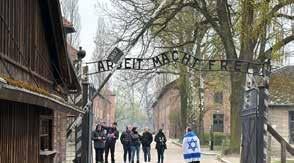
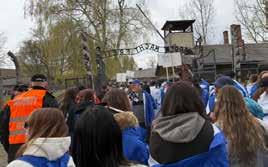
But Cochva continues to come. She brought up her grandmother, a prisoner at Auschwitz. The story was often told of her grandmother boldly standing up for her sis-
ter in the camp. “I remember hearing this story my entire childhood,” she said.
Her dad has put a finer point on it. “Remember your grandmother,” he told her. “She couldn’t do what you are doing right now. We have a privilege right now. We have a privilege that our ancestors never had. We need to use that power and use that strength.”
For Cochva, that means speaking out loud for Israel. She told the audience to keep doing what they’re doing, that they’re all already doing the right thing. “Every single person here is doing so much for Israel,” she said. “No platform needed, whatever you’re doing.”
You can join Federation’s Women’s Philanthropy in standing up for Israel and the Jewish people, helping those who need it, and ensuring that our local Jewish community keeps thriving into the future. Contact Lee Kestecher Solomon, Jewish Federation director of community engagement, at lee@jflv.org.
Monday, June 1, 2026 6:30 PM | JCC
Registration is required.
To register, scan the QR code or visit:
jewishlehighvalley.regfox.com/ be-aware-training
HAKOL
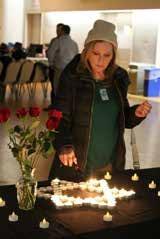
“Years ago I found my mother’s Pom pin and that was a sign for me to become a Pomegranate,” Lynne Shampain said on receiving her Lion pin at the Women’s Philanthropy event. “Now I think she would be very proud of me becoming a Lion.”
Kozinn joins Fromer on national Women’s Philanthropy board
By Carl Zebrowski Editor
Beth Kozinn of Allentown is joining the board of the Jewish Federations of North America Women’s Philanthropy. The board is made up of 200 of the most influential women leaders in Jewish philanthropy from more than 60 Federations across the continent. Kozinn will work alongside Carol Bub Fromer, who was appointed to the board in 2021.
Kozinn talked with Hakol about the Jewish Federation of the Lehigh Valley, her local philanthropy efforts, and what she hopes for the future as she adds national volunteering and leadership to her resume.
You’ve long been a familiar, respected presence in the Lehigh Valley community. Can you tell us how you got here and what drew you to getting so involved in volunteer, leadership, and other philanthropic efforts over the years?
I came to the Lehigh Valley because my husband (Dr. Wesley Kozinn z”l) took a position as the director of infectious diseases at the Easton Hospital (in 1978). We lived in Bethlehem for five years; we moved from Manhattan. I heard about Federation, and I went on a mission to Washington (D.C.). I think it must have been in 1981 or ’82, and it just drew me in. I really believed in a lot of the work that they did. My Jewish identity is very strong, so I wanted I became involved. In those years, you kind
of moved up the ladder. You went on a board and then you had a chairmanship. Marilyn Claire and I were campaign chairs (of the Jewish Federation of the Lehigh Valley Annual Campaign for Jewish Needs). And then I was the JFLV Women’s Philanthropy president for three years. I’ve been involved ever since and very committed. All the wonderful Jewish organizations are terrific. I salute them all. But Federation—a friend of mine, Joan Bass, once said to me, “It’s the umbrella for the Jewish world,” and so I figured I’m going to stand under that umbrella.
Tell us about some of the roles that you’ve filled, which efforts you’re most proud of, and what impact you’ve seen from them?
I’ve seen the respect of what women do for the campaign over the years. When I started in the eighties, it was a boys’ club, and they’re the ones that ran the show. Now, that’s certainly not the case. Women are as well respected as the big boys, and we wear big boys’ pants now. We’re raising a large part of the (Federation) campaign. Having an executive director like Jeri Zimmerman and a person like Aaron Gorodzinsky (director of development) running the show—I think that they’re the best we’ve ever had. Right now, what we have at Federation is the best I’ve ever seen. I will sing the praises of all you guys forever.
I feel very grateful that I’m
in a position to be able to assist those that need help. How many baubles could one person have? I didn’t grow up well to do. My dad was in the service. My mom worked part of my childhood. They always were very active in Jewish War Veterans (of the United States of America). My mom was a leader. I think I learned that from her. She was president of Hadassah (the women’s Zionist organization) in Florida, as was my mother-in-law, and my sister-in-law was a national president of Hadassah. We’re a family that takes it very seriously that we take care of each other. We Jews must take care of each other, because no one else is going to. All people have to live with some dignity. If I can help with that, that’s the best thing I can do in my life.
Can you think of any specific examples of impact that you may have witnessed or been a part of?
I won the George Feldman Award (Jewish Federation award for young leadership). And I got the Kipnis-Wilson/ Friedland Award. It’s a national (Women’s Philanthropy) award. When I started out, I was not giving what I give now. I was not in that position. I had kids. We had tuition. Wes and I always did what we could. I support my temple (Temple Beth El), and I still support all the agencies here separately, aside from what I give to Federation. It’s important that we all do our part, no matter how big or small it is. I always try to tell young people, if you’re not in a position now, don’t feel that you won’t be at some point. Whatever you can do now is important. Just stick to the game.
So what does your appointment to the board mean to you? What excites you the most about stepping into that role?
I’m flattered that Jeri and Lee (Kestecher Solomon, Federation director of community engagement) thought of me. I’m a little nervous, because I’m not sure that I’m in the same category as a lot of these women. Many of them are much younger than I am, but I’m excited to be in a position to learn new things to bring back to our community. We’re never too old to learn.
How do you think your experiences here in our local community will shape your contributions at the national level? Are there lessons that you’ve learned here that you could apply there?
This is a real Jewish community that looks out for each other. I can teach some of the bigger fish in the sea that when we work together as a community, there’s no end to success. For the number of Jews that we have here, we do an amazing job. We can always do better. I think one of the problems today is the non-affiliation with our institutions, temples and day schools and things like that. That’s a little disheartening. Maybe we have to think along different lines. We always have to continue learning what it is that people need.
In what ways do you hope that new position will allow you to expand or deepen the impact of your work, both nationally and at home?
I’m hoping I can learn more and learn better ways of raising more funds, having people realize the importance of what we do. There’s never enough, and what we’re doing is so important. What’s the best message we can convey to our community to encourage them to participate with us?
What motivates you to continue giving your time, energy, and resources to volunteering and other philanthropic efforts? What might you say to others, especially women who may be considering getting more involved in Jewish communal leadership and philanthropy?
I think it’s just a passion I have. I will probably have that passion until they put me in the ground. Continue to support Federation because it’s the umbrella that takes care of our needs here. It takes care of our needs abroad. And don’t kid yourself: there are plenty of needs, not even just Israel, which is
my passion. Having grown up after World War II and the Holocaust, it just makes me feel like there’s some place, although it’s not always a safe place, we can go if, God forbid, we get thrown out of here. It’s important that we stand strong together and that the world knows we’re strong together.
Do you have any thoughts on joining the national board alongside current member Carol Bub Fromer, past president of the Lehigh Valley Women’s Philanthropy and fellow former winner of the Kipnis-Wilson Friedland Award?
I don’t put myself on the same level as Carol. She’s a superstar. She’s a doctor. She’s involved in Federation. As an older woman, I look up to her. She was on the board before me. So, I’m hoping to figure out the ways, though Carol will guide me. I couldn’t think of a better person from this valley to serve with.
Carol Bub Fromer, fellow Lehigh Valley Women’s Philanthropy member and five-year member of the National Women’s Philanthropy board, is excited to have Beth joining the board. “Her generosity, spirit, compassion, and commitment already shine,” Fromer said, “and I’m so grateful that she accepted this honor and that we will have a new opportunity to work together, making a difference, side by side.
“There’s something uniquely powerful about women coming together in philanthropy—sharing ideas, lifting one another, and multiplying the good we can do in the world. Our collective voice and purpose create lasting change far beyond what any one of us could achieve alone. Beth’s energy and fun personality are a perfect fit for the board. They, and I, are lucky to have her.”
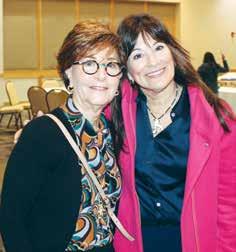
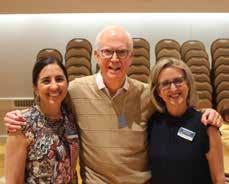
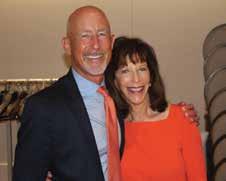
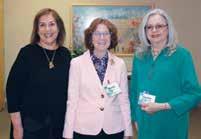
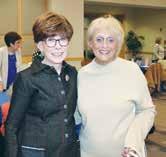
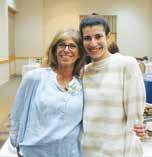
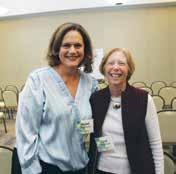
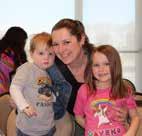
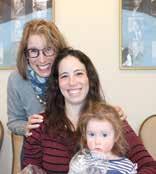
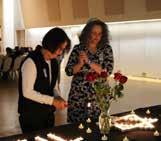
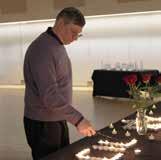
Beth Kozinn and Dr. Carol Bub Fromer at the JFLV Women’s Philanthropy Dollar-aDay Spring Event on April 30.
Maimonides: Here’s to years of lifting the Jewish community
The time has come for the Jewish Federation of the Lehigh Valley’s night of celebration for the 40th anniversary of its Maimonides Society—the very first society of healthcare professionals in the Jewish Federations of North America. Today there are dozens.
The special guest for the big event is Dr. Dorit Nitzan, director of the School of Public Health and head of the Master’s Program in Emergency Medicine at Ben-Gurion University of the Negev and former Regional Emergency director of the World Health Organization
European region (including Israel). Nitzan is giving community members at Temple Beth El at 7 p.m. on May
7 her unique, hard-earned insights on the important and intriguing topic “The Future of Healthcare: Strengthening Emergency Preparedness and System Resilience.”
“At Ben-Gurion University’s Faculty of Health Sciences,” Nitzan told Hakol, “we are helping shape the future of healthcare by moving care closer to where people live, through smart urgent care linked to primary care and rehabilitation, advanced technologies such as robotics
and better data management, and a model in which people truly hold their health in their own hands. In my lecture, I will show why emergency preparedness, communitybased care, and resilience are no longer separate ideas, but the foundation of a stronger, more responsive health system for the future.”
Registration to attend the event is required in advance at jewishlehighvalley.regfox. com/maimonides-community-wide-presentation. A contribution to the Jewish Federation’s 2026 Annual Campaign for Jewish Needs is also required.
Dr. Art Altman
Dr. Peter Anson z”l
Dr. Jay Apfelbaum
Dr. Donald Belmont
Dr. Stanley Benzel
Dr. Douglas Blake*
Dr. Jeff Blinder
Dr. Charles Brooks
Dr. Sam Bub
Dr. Michael Busch
Dr. Ian Carlis
Dr. Arnold Cook z”l
Dr. Abbott D’ver
Dr. Tamar Earnest
Dr. Stewart Fox
Dr. M.J. Friedberg
Dr. Michael Geller
Dr. Karl Glassman
Dr. Gene Ginsberg
Dr. Harold Goldfarb
Dr. Joseph Goldstone z”l
Dr. Michael Gordon
Dr. Jerome Grossinger
Dr. David Hyman
Dr. Herbert Hyman z”l
Dr. John Jaffe
Dr. Robert Kaplan
Dr. Bette Karron z”l
Dr. Mitchell Katz z”l
Dr. Steve Klasko
Dr. Jay Kloin
Dr. Wes Kozinn z”l
Dr. Neal Kramer
Dr. Harold Kreithen
Dr. Robert Kricun
Dr. Samuel Lerner
Dr. Charles Levine
Dr. Larry Levitt
Dr. Howard Listwa z”l
Dr. Richard London
Dr. Robert Luber
Dr. Gerald Melamut z”l
Dr. Mark Mishkin
Dr. David Ostfeld
Dr. David Prager
Dr. Bob Post
Dr. Sheva Rapoport z”l
Dr. Lester Rosen
Dr. Norman Sarachek z”l
Dr. Eric Schenkel
Dr. Alan H. Schragger
Dr. Stuart Schwartz z”l
Dr. Mark Shampain
Dr. Stephen Shore
Dr. Bruce Silverberg
Dr. Howard Silverman
Dr. Arthur Sosis
Dr. Ronald Stein
Dr. Frederic Stelzer
Dr. Daniel Sullum
Dr. Sylvia Sussman z”l
Dr. Jonathan Tenzer z”l
Dr. William Trachtenberg
Dr. Mickey Ufberg z”l
Dr. Ron Wasserman
Dr. Larry Weisbrod z”l
Dr. Alan Wolson z”l
SECURITY SQUARE WITH TIM BROOKS
Have you ever visited the Secure Community Network website? If it’s been a while, you may want to check it out, because there’s a great deal of safety and security information at your fingertips there. One excellent feature of the website is our resource library. You can access it here: securecommunitynetwork.org/resources.
You can listen to previous Nonprofit Security Grant Program webinars (or any of our other webinars), see safety and security one-pagers on many different topics, and find templates for various emergency and other operations plans. There are over 120 resources available. Stay informed. You can also sign up for our daily Nonprofit Security Grant Program and training updates.
Don’t forget, if you see something, report it at jewishlehighvalley.org/incidentreporting.
Tim Brooks Regional Security Advisor 872-400-0239 or tbrooks@securecommunitynetwork.org.
JEWISH FEDERATION
Jewish Federation of the Lehigh Valley
Wednesday, June 10, 2026, 6:00 p.m. at the JCC
The Board Nominating Committee recommendations are: (as of May 1, 2026)
DIRECTORS WHOSE TERM EXPIRES 2029
Dr. Zach Goldsmith Bruce Reich
Vickie Semmel Debi Wiener
HONORARY BOARD MEMBERS
Robert J. Grey
Rita Scheller
Nati Lerner, Mayor of Yoav
The Officers Nominating Committee recommendations are:
President Dr. William (Billy)
Markson
Vice Presidents
Iris Epstein
Beth Kozinn
Lauren Rabin
Bruce Reich
Dr. Israel Zighelboim
Secretary Aliette Abo
Treasurer
Richard Bub
Past Presidents
Gary Fromer
Robert Wax
HONORARY
President
Ross Born
HONORARY
Vice Presidents
Leonard Abrams
Wendy Born
Daniel E. Cohen
Barnet Fraenkel
HONORARY
Treasurer Roberto Fischmann
Trustee
Vera Schiff
Pursuant to the Jewish Federation of the Lehigh Valley by-laws, “any twenty (20) members of the Federation may, by petition, present to the Secretary the name of any one qualified member for nomination. No member may sign more than one such petition. No person shall be eligible for election as a member of the Board of Directors unless his or her name shall thus have been submitted to the Secretary or nominated by said Nominating Committee.”
Park cleanup for Earth Day
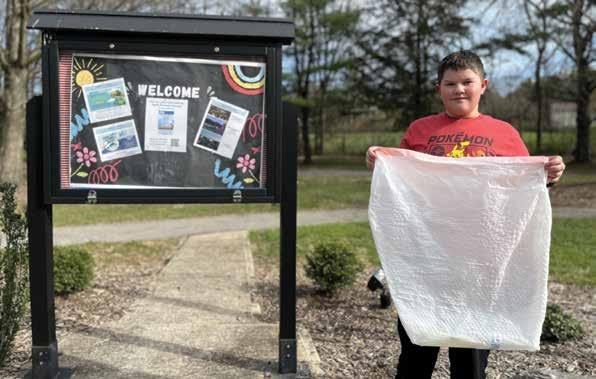
Elijah Miner, a seventhgrade student at Springhouse Middle School, will be called to the Torah as a bar mitzvah at Temple Beth El in Allentown on May 16, 2026. His parsha is Bamidbar, in which Moses counts the members of each tribe of Israel. One lesson Elijah learned through studying this parsha is that each of us has something to offer that makes our Jewish community and our world a better place and that we’re stronger when we work together. Taking care of our environment is important to Elijah. He often
picks up trash on his own when exploring the outdoors, so when it was time to choose a mitzvah project, he decided to take the lesson of Bamidbar to heart and bring the community together for a springtime trash pickup. With permission from South Whitehall Township, he organized a park cleanup at Covered Bridge Park on April 12. With plastic gloves and trash bags, friends and community members gathered to remove garbage from the public park. After the cleanup. Elijah treated everyone to pizza as a thank-you for their ef-
forts.
Elijah’s parents, Bill and Marielle, are proud of the way Elijah took a cause that was important to him and brought people together in the name of tikkun olam.
In addition to his mitzvah project, Elijah has made his first adult gift of tzedakah to the Jewish Federation of the Lehigh Valley Annual Campaign for Jewish Needs.
For help developing a mitzvah project, contact Abby Trachtman, project coordinator, at abbyt@ jflv.org or call her at the Jewish Federation office at 610-821-5500.
IN HONOR
SYLVIA AND SAM BUB
In celebration of your granddaughter Jenna receiving her PhD from MIT
Beth Kozinn
JEANETTE AND EDUARDO
EICHENWALD
In celebration of your granddaughter Lyla’s Bat Mitzvah
Beth Kozinn
CAROL BUB-FROMER AND GARY FROMER
In celebration of your daughter
Jenna receiving her PhD from MIT
Beth Kozinn
SUSAN AND ROBERT GADOMSKI
In celebration of receiving the Lifetime Achievement Award from the United Way of the Greater Lehigh Valley
Carol and Barry Halper
AMY GOLDING
In celebration of your daughter
Lyla’s Bat Mitzvah
Beth Kozinn
DIANE AND GARY MILLER
In celebration of your grandson
Griffin’s Bar Mitzvah
Roni and Tom Englert
Rise and Jerry Gelfman
AVIVA AND EVAN MARLIN
In celebration of your son
Gabriel’s Bar Mitzvah
Aliette and Marc Abo
Aaron Gorodzinsky and Jennie Schechner
LYNNE SHAMPAIN
In celebration of your Special Birthday
Marc Freedline and Bill Johnson
SUSAN AND STUART
SHMOOKLER
In celebration of the birth of your first grandson, Lev Roberta Kritzer
LAURIE AND ROBBY WAX
In celebration of your son Ben’s engagement to Jillian Krim
Aliette and Marc Abo
Beth Kozinn
VICKI WAX
In celebration of your grandson
Alex’s engagement to Nikki Idelson
Aliette and Marc Abo
Beth Kozinn
VICKI WAX
In celebration of your grandson
Ben’s engagement to Jillian Krim
Beth Kozinn
IN MEMORY
BROTHER
(Brother of Jay and Bobbi Needle)
Jeanette and Eduardo Eichenwald
FREDELLE GABRIEL
(Mother of Mike Gabriel)
Lanethea and Jonathan Schultz
JANE GOODMAN
(Mother of David Goodman)
Randi and Donald Senderowitz
RITA GUTHRIE (Wife of Thomas Guthrie)
Aaron Gorodzinsky and Jennie Schechner
SUE KIRSHNER
(Wife of Ken Kirshner)
Wendy and Ross Born
Jeanette and Eduardo
Eichenwald
Sandra and Harold Goldfarb
Audrey and Art Sosis
Eileen Ufberg
IRIS KLEIN
(Partner of Joan Epstein)
Rita and Mike Bloom
Jane and Rob Cohen
Merry Landis
EVA LEVITT
(Wife of Larry Levitt)
Merry Landis
JONI MOSELY
(Daughter-in-law of Kathi and Seth Katzman)
Wendy and Ross Born
Jeanette and Eduardo
Eichenwald
Lynne and Mark Shampain
ANNE NADER
(Mother of Miriam Sinclair)
Roni and Tom Englert
DAVID OSLON
(Father of Brett Oslon)
Jaime Sherman
SELMA ROTH
(Mother of Judd Roth and Adam Roth)
Kelley Banach and Richard Mongilutz
Aaron Gorodzinsky and Jennie Schechner
Gloria Ginsburg
Renee and Rod Hasterok
Lynda and Stuart Krawitz
Alice and Mark Notis
Shari and Fred Schenk
Randi and Donald Senderowitz
Linda and Bob Steinberg
Eileen Ufberg
Cherie and Rick Zettlemoyer
NORMAN SARACHEK
(Husband of Jett Sarachek)
Merry Landis
LOLLY SIEGEL
(Wife of Sheldon Siegel)
Beth Kozinn
EVELYN TOFF
(Grandmother of Jason Toff)
Jeanette and Eduardo Eichenwald
We gratefully acknowledge those individuals who have offered expressions of friendship through recent gifts to the Lehigh Valley Jewish Foundation. The minimum contribution for an Endowment Card is $10. Call 610-821-5500 or visit jewishlehighvalley. org to place your card requests. Thank you!
Earn income for life while aiding our Jewish institutions
By Mike Miller Lehigh Valley Jewish Foundation Chair
The Lehigh Valley Jewish Foundation (LVJF) recently adopted a new charitable gift annuities policy that may be a meaningful opportunity for you and the Lehigh Valley agencies, synagogues, and organizations (ASOs) you support. The opportunity is for you to receive a dependable lifetime income, with the ASOs receiving distributions on the remainder balance in perpetuity.
Are you concerned about
your sources of annual income and “running out of money”?
Many prospective donors have expressed a desire to strengthen the future of our Lehigh Valley ASOs while also planning wisely for their own financial needs. A charitable gift annuity allows you to do both.
With an LVJF charitable gift annuity, you make a one-time gift of a minimum of $25,000 to an LVJF designated fund. Upon the death of the annuitant, a minimum of 30% of the distributions is payable to the Jewish Federation of the Lehigh Valley, and the other 70%
is payable to the ASOs of your choosing. In return:
• You (and/or a loved one) receive fixed payments for life
• You receive an immediate charitable income tax deduction
• A portion of your payments may be tax-advantaged
• After your lifetime, the remaining funds support the missions of the Jewish Federation and the ASOs
• The Jewish Foundation will be responsible for the actuarial risk and the administrative burden
This arrangement can provide financial security and
peace of mind, while helping ensure that our Jewish community continues to thrive from generation to generation.
A charitable gift annuity is simple to establish and can often be funded with cash or appreciated securities. Please ask us about the alternative of funding through your IRA account. Payment rates are based primarily on age and are designed to provide stable income. Current rates range from about 5.7% for age 65 to about 9.1% for age 85.
If you would like to learn how this might work in your situation—with no obliga-
tion—we would welcome the opportunity to speak with you confidentially. We can provide a personalized illustration showing potential income, tax benefits, and the future impact of your gift. Contact Aaron Gorodzinsky, Jewish Federation director of development, at 610-821-5500 or aaron@jflv. org.
This article is providing educational information and not tax or legal advice. Prospective donors should discuss their situation with their own tax and legal advisors.
Giving should be a given. But don’t take our word
By Mike Miller
Lehigh Valley Jewish Foundation Chair
The Torah places a strong emphasis on charitable giving, often framing it as a moral and religious obligation rather than a voluntary act. Since the Torah was written, there have been numerous comments on the subject by famous people. They address these common themes:
• Giving enriches both the giver and the receiver
• Charity is both a moral duty and a personal privilege
• Even small acts of kindness can have a big impact
• Material wealth is less meaningful than what you do
with it
Here are some quotes from various individuals through history on generosity, philanthropy, and the purpose of giving:
Maimonides: “The highest degree of charity is to support a fellow Jew by endowing him with a gift or loan, or by entering into partnership with him, or by finding him employment, in order to strengthen his hand until he need no longer be dependent upon others.”
Hillel the Elder: “If I am not for myself, who will be for me? But if I am only for myself, what am I?”
Rabbi Jonathan Sacks: “Charity is universal. Tzedakah is
particular. Charity is about the kind of person I want to be. Tzedakah is about the kind of society we want to build.”
Golda Meir: “Those who don't know how to weep with their whole heart don’t know how to laugh either.”
Albert Einstein: “Only a life lived for others is a life worthwhile.”
Shimon Peres: “The greatest contribution we can make to humanity is to improve ourselves.”
Anne Frank: “No one has ever become poor by giving.”
Bob Hope: “Lacking charity in one’s heart is the worst kind of heart trouble.”
Winston Churchill: “We make a living by what we get, but
ADVOCATES for security and combats antisemitism
ALLOCATES funds
ARRANGES programming to meet the needs of our community
ASSURES the continuation of our Jewish community
AMPLIFIES your voices and values locally and in
we make a life by what we give.”
Eleanor Roosevelt: “Think of giving not only as a duty but as a privilege.”
Melinda Gates: “Philanthropy is not about the money. It’s about using whatever resources you have at your fingertips and applying them to improving the world.”
Andrew Carnegie: “Wealth is not to feed our egos, but to feed the hungry and to help people help themselves.”
The Lehigh Valley Jewish Foundation has many opportunities for tzedakah that provide the donor ways to help the Lehigh Valley Jewish community beneficiaries, Israel, and Jews around the
for it
world with endowments in perpetuity. If you’re interested, contact Aaron Gorodzinsky, Jewish Federation director of development, at 610-821-5500 or aaron@jflv.org.
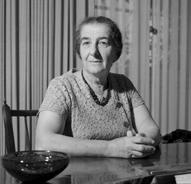
Golda Meir (1964) Willem van de Poll, CC BY-SA 3.0, via Wikimedia Commons
Welcome Jen Moyer, Early Childhood Education Assistant Director
Spring Brings Nature-Focused Hands-on Learning to ECE
Spring Brings Nature-Focused Hands-on Learning to ECE
By Lisa Yoskowitz ECE Director
By Jen Moyer Early Childhood Education Director
By Jen Moyer Early Childhood Education Director
The sun is beginning to stay out longer and thoughts are turning toward outdoor activities that challenge and delight our children. At the JCC, outdoor play is considered an integral part of our educational day. We encourage our teachers to extend their learning out of the classroom and into the outdoor area.
The sun is beginning to stay out longer and thoughts are turning toward outdoor activities that challenge and delight our children. At the JCC, outdoor play is considered an integral part of our educational day. We encourage our teachers to extend their learning out of the classroom and into the outdoor area.
The phrase, “It takes a village” could not be truer than when applied to the field of Early Childhood Education. During my 5.5 years here at the JCC, I have worked alongside many in my community to create and continue to build a successful program. So, I am excited to introduce Jen Moyer, our new Assistant Director in Early Childhood Education. With a passion for fostering young minds and a wealth of experience in early childhood development, Jen brings a
Something that we love to
Something that we love to
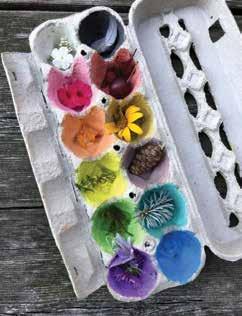
do at the start of spring is take the children on a guided nature walk around our outdoor area. We start this activity in the classroom by giving each child their own recyclable egg carton. The children are encouraged to paint each opening with a different color.
do at the start of spring is take the children on a guided nature walk around our outdoor area. We start this activity in the classroom by giving each child their own recyclable egg carton. The children are encouraged to paint each opening with a different color.
curriculum, professional development, and family engagement. We look forward to the positive impact she will make in our community!
plants, but to instead look for items that have already fallen from the plants. This teaches them about being a good friend to the Earth.
plants, but to instead look for items that have already fallen from the plants. This teaches them about being a good friend to the Earth.
offering a curriculum designed to engage children through
Once the egg carton is dry, the class goes outside and each child is encouraged to find nature items that match the colors in their egg cartons. We remind the children not to pluck any leaves or flowers from any living
Once the egg carton is dry, the class goes outside and each child is encouraged to find nature items that match the colors in their egg cartons. We remind the children not to pluck any leaves or flowers from any living
fresh perspective to our team. She holds a degree in English Language and Literature and is currently working towards a Masters in Early Childhood Education (with a focus in administration, management and leadership). Jen has worked in various early childhood settings, demonstrating a deep commitment to creating nurturing, inclusive environments that support both children and educators. As Assistant Director, Jen will work closely with staff and families to ensure the continued success and growth of our programs, with a focus on enhancing
The Early Childhood Department at the JCC is currently enrolling for the 202627 school year. We currently have openings in our Pre-K, Young Preschool, and Young Toddler ages, but spots are filling quickly! For more information about our curriculum or to schedule a tour, please visit lehighvalleypreschool.org.
The Early Childhood Department at the JCC is currently enrolling for the 202627 school year. We currently have openings in our Pre-K, Young Preschool, and Young Toddler ages, but spots are filling quickly! For more information about our curriculum or to schedule a tour, please visit lehighvalleypreschool.org.
ECE registration for the 20252026 school year will open on February 1, 2025. And with that, we are excited to announce the opening of a new preschool classroom this upcoming fall! As with all our classrooms, this classroom will provide a nurturing and enriching environment where young learners can grow, explore, and develop essential skills. Our goal is to foster a love for learning from an early age,
JCC Honors Eve Peterson’s Legacy with Second Annual Pickleball Event
JCC Honors Eve Peterson’s Legacy with Second Annual Pickleball Event
By Danielle Brown Sports and Fitness Director
By Danielle Brown Sports and Fitness Director
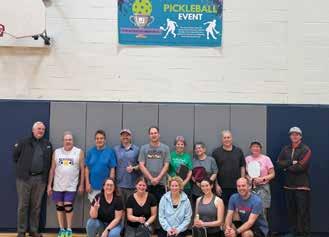
On Sunday, April 12, we gathered to honor the late Eve Peterson, a beloved member of our community whose passion for pickleball left a lasting impact on all who knew her. Eve played a key role in introducing pickleball here
On Sunday, April 12, we gathered to honor the late Eve Peterson, a beloved member of our community whose passion for pickleball left a lasting impact on all who knew her. Eve played a key role in introducing pickleball here
at the JCC, helping to spark interest and enthusiasm for a sport that was new to many at the time. What began as a small initiative, fueled by her energy and dedication, has since grown into a vibrant and well-loved staple program that continues to bring people together week after week. There was no better way to celebrate her legacy than
at the JCC, helping to spark interest and enthusiasm for a sport that was new to many at the time. What began as a small initiative, fueled by her energy and dedication, has since grown into a vibrant and well-loved staple program that continues to bring people together week after week. There was no better way to celebrate her legacy than
through the game she loved so deeply.
through the game she loved so deeply.
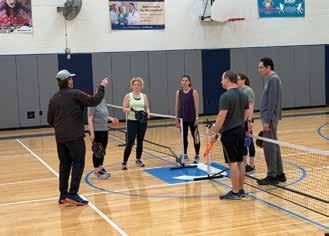
The day began with a beginner’s clinic designed for those new to pickleball, offering a welcoming and supportive environment for participants to learn the basics, build confidence, and experience the joy of the game for the first time. Eve always believed in making
The day began with a beginner’s clinic designed for those new to pickleball, offering a welcoming and supportive environment for participants to learn the basics, build confidence, and experience the joy of the game for the first time. Eve always believed in making
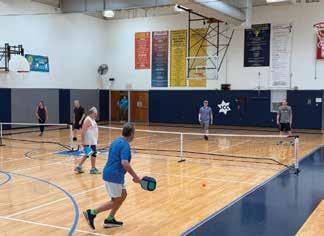
the sport accessible to everyone, and this clinic reflected that spirit perfectly. Following the clinic, a friendly open play session brought players of all skill levels together on the courts, creating a lively and inclusive atmosphere filled with laughter, encouragement, and camaraderie.
the sport accessible to everyone, and this clinic reflected that spirit perfectly. Following the clinic, a friendly open play session brought players of all skill levels together on the courts, creating a lively and inclusive atmosphere filled with laughter, encouragement, and camaraderie.
Thank our Chai Society and Keystone Society Donors
Thank our Chai Society and Keystone Society Donors
Chai Society
For a full list of donors, please visit lvjcc.org/OurDonors
For a full list of donors, please visit lvjcc.org/OurDonors
Donors who have pledged at least $1,800 Keystone Society
Donors who have pledged at least $750
Sara and Marcos Martinez
Sara and Marcos Martinez
Leonard and Enid Abrams Family Foundation
Abeloff Foundation
Abeloff Foundation
JoAnne Kushner Abrams
JoAnne Kushner Abrams
Wendy and Ross Born
Wendy and Ross Born
Sam and Ann Born Foundation
Sam and Ann Born Foundation
Kathy Zimmerman and Peter Fisher
Kathy Zimmerman and Peter Fisher
Lisa and Barnet Fraenkel
Lisa and Barnet Fraenkel
Susan Engelson Friefeld
Susan Engelson Friefeld
Bonnie Hammel
Bonnie Hammel
HSA Mechanical Services, LLC
HSA Mechanical Services, LLC
Jeff Hunter Charitable Trust
Jeff Hunter Charitable Trust
Jewish Federation of the Lehigh Valley
Jewish Federation of the Lehigh Valley
Amy Katz
Amy Katz
Leonard and Enid Abrams Family Foundation Air Products Foundation
Air Products Foundation
Kristine Schultz and Aaron Mendelson
Kristine Schultz and Aaron Mendelson
Michael Miller
Michael Miller
Lynn Wilson and Michael Alterman
Lynn Wilson and Michael Alterman
Kline Foundation
Kline Foundation
Anonymous
Anonymous Chelsea and Elliot Busch
Chelsea and Elliot Busch
Rill Ann and Steve Miller
Rill Ann and Steve Miller
Shannon Smigen and Alex Mishkin
Shannon Smigen and Alex Mishkin
Kobrovsky Family Fund
Kobrovsky Family Fund
Marc Nissenbaum
Marc Nissenbaum
Nancy and Michael Busch
Nancy and Michael Busch
Lynda and Stuart Krawitz
Lynda and Stuart Krawitz
Margo and Eric Lightman
Margo and Eric Lightman
Luther Rhodes
Luther Rhodes
Perkin Fund
Perkin Fund
Stabler Fund
Stabler Fund
Mary Beth and David Weinstein
Valeska and Israel Zighelboim
Mary Beth and David Weinstein Valeska and Israel Zighelboim
Michelle and Robert Cohen CuroAI
Michelle and Robert Cohen CuroAI
Ophira Silbert and Jeffrey Fleischaker
Ophira Silbert and Jeffrey Fleischaker
Emily and Brian Ford
Emily and Brian Ford
Carol Bub Fromer and Gary Fromer
Carol Bub Fromer and Gary Fromer
Sandra and Harold Goldfarb
Sandra and Harold Goldfarb
Carol and Barry Halper
Carol and Barry Halper
Muhaddasa and Aejaaz Issa
Muhaddasa and Aejaaz Issa
Fred J. Jaindl Family Foundation
Fred J. Jaindl Family Foundation
Gia and Matt Jones
Gia and Matt Jones
Nancy and Andrew Kahn
Nancy and Andrew Kahn
Susanne and Marty Katz
Susanne and Marty Katz KRE Security LLC
KRE Security LLC
Laurie and Buddy Lesavoy
Laurie and Buddy Lesavoy
Amber and Drew Lopez
Amber and Drew Lopez
Jane and Bill Markson
Jane and Bill Markson
Barbara and Marty Port RKL, LLP
Barbara and Marty Port RKL, LLP
Shellie and Rashid Santiago
Shellie and Rashid Santiago
Loren Ellis and Marvin Sasson
Loren Ellis and Marvin Sasson
Lillian Schwab Memorial Fund
Lillian Schwab Memorial Fund
David Shaffer
David Shaffer
Jenny Hayden and Nathan Siegfried
Jenny Hayden and Nathan Siegfried
Stephanie and Adam Smartschan
Stephanie and Adam Smartschan
Abby and Mark Trachtman
Abby and Mark Trachtman Melissa and Matt Unger
Melissa and Matt Unger
Beverly and Ronald Wasserman
Beverly and Ronald Wasserman
Martin Westman
Westman
Working Dog Press
Jeri and Len Zimmerman
Working Dog Press Jeri and Len Zimmerman
Jessica and Scott Zolotsky
and Scott Zolotsky
Jen Moyer, ECE Assistant Director
Friendly Faces, New and Old at Camp JCC
Camp JCC Welcomes Maya and Moran, Israeli Emissaries
Spring Brings Nature-Focused Hands-on Learning to ECE
By Heather Lavin Program Director
By Alaina Schaeffer Youth and Camp Director
By Jen Moyer Early Childhood Education Director
enthusiasm and genuine love
A
We are thrilled to announce that this summer, Camp JCC will have two Israeli shlichot this summer. We welcome back Maya Katzab and introduce a new member from Israel, Moran Pikris. Continuing our tradition of cultural exchange, they arrive with enthusiasm and a wealth of Israeli music, dance, and stories to share.
As Camp JCC prepares for another exciting summer, we are looking forward to welcoming both new faces and familiar ones—each bringing energy, experience, and heart to the camp experience.
The sun is beginning to stay out longer and thoughts are turning toward outdoor activities that challenge and delight our children. At the JCC, outdoor play is considered an integral part of our educational day. We encourage our teachers to extend their learning out of the classroom and into the outdoor area.
Welcoming Back Maya Katzab
Something that we love to
We are delighted to welcome back Maya Katzab from Yoav, Israel as the Israeli Adventure Specialist. Maya previously spent a summer with us, sharing her vibrant Israeli culture through music, dance, and storytelling. Her infectious
This year, we are proud to introduce our new Youth & Camp Assistant Director / BBYO City Director, Alexis Calhoun. Alexis is no stranger to the JCC community, having spent the past four years in a variety of roles across Early Childhood Education, JLounge, and Camp. She brings with her a strong background in Jewish culture and applied behavior analysis (ABA) services, and is currently on track to earn her master’s degree in psychology with a focus on applied behavior analysis. Known for her positive energy and dedication to youth development, Alexis is a natural fit for this leadership role, and we are excited to see her continue to grow and make an impact.
By Danielle Brown Sports and Fitness Director
Camp JCC is also thrilled
By Jodi Lovenwirth Aquatics Director
On Sunday, April 12, we gathered to honor the late Eve Peterson, a beloved member of our community whose passion for pickleball left a lasting impact on all who knew her. Eve played a key role in introducing pickleball here
As we head toward the summer, time in and around the water becomes one of the greatest joys for our families. Whether it’s the pool, the shore, or a backyard gathering, water brings us together. As the Aquatic Director, I also see this as an important time to pause and think about safety, because drowning is fast, silent, and preventable.
do at the start of spring is take the children on a guided nature walk around our outdoor area. We start this activity in the classroom by giving each child their own recyclable egg carton. The children are encouraged to paint each opening with a different color.
favorite among our campers. We
plants, but to instead look for items that have already fallen from the plants. This teaches them about being a good friend to the Earth.
Once the egg carton is dry, the class goes outside and each child is encouraged to find nature items that match the colors in their egg cartons. We remind the children not to pluck any leaves or flowers from any living
to welcome two new Israeli emissaries (shlichim) who will be joining the team for the summer and living with host families throughout the community. These connections are a cherished part of camp, helping to build meaningful cultural exchange and deepen campers’ understanding of Israeli life and traditions.
Ella Aldema, from Ramat Gan, will serve as the camp’s Music Specialist. Ella brings a passion for performance and education, having spent five years in the scouts, serving as a teaching soldier during her military service, and studying music throughout high school. With her enthusiasm and confidence on stage, she is sure
Moran is a 20-year-old from Rishon Leziyyon, Israel and will be Camp JCC’s Music Specialist. She is an experienced song leader who can play guitar and loves to rock climb. Moran volunteered as a scout leader for two years and also at “Tzaad Kadima” for adults with special needs. She has been playing electric and acoustic guitar for 7 years and studied music at a conservatory.
At Camp JCC, we prioritize fun
different culture and strengthen their roles as young ambassadors representing Israel. By summer’s
at the JCC, helping to spark interest and enthusiasm for a sport that was new to many at the time. What began as a small initiative, fueled by her energy and dedication, has since grown into a vibrant and well-loved staple program that continues to bring people together week after week. There was no better way to celebrate her legacy than
educating our community about
excited to engage in this cultural
to bring music and spirit to every corner of camp.
about Israeli holidays, food, and daily life, fostering bonds that will last for years to come. Their interactions will enrich our campers’ understanding of a
The Early Childhood Department at the JCC is currently enrolling for the 202627 school year. We currently have openings in our Pre-K, Young Preschool, and Young Toddler ages, but spots are filling quickly! For more information about our curriculum or to schedule a tour, please visit lehighvalleypreschool.org.
Joining her is Lihi Ben Assa, from Kfar Saba, who will take on the role of Israeli Adventure Specialist. Lihi’s background is equally dynamic—she was a dancer throughout her youth, spent two years guiding in the scouts, and served as a firearms instructor during her military service. Following the events of October 7th, 2023, she also volunteered in shelters, leading activities for children. Her resilience, leadership, and warmth will bring a unique and meaningful presence to camp this summer.
We are proud to continue the Shlichim program, fostering connections between Israeli and
through the game she loved so deeply.
embodying the hope and joy that
these two remarkable young women to the Lehigh Valley this year. Summer is just around the corner, and we can’t wait to see them!
American cultures and creating lasting relationships within the camp community.
JCC Honors Eve Peterson’s Legacy with Second Annual Pickleball Event
While there are exciting new additions to the team, we are also proud to celebrate the strength of our returning staff. With over 70% of staff coming back this summer, campers can expect to see many of the familiar faces they know and love. This strong retention reflects the positive, supportive environment that makes Camp JCC not just a place to spend the summer—but a place people want to return to year after year.
Together, these friendly faces— both new and old—help create the welcoming, vibrant community that defines Camp JCC.
Safer Summers Start Now: Water Confidence and Drowning Prevention
Chai Society
The day began with a beginner’s clinic designed for those new to pickleball, offering a welcoming and supportive environment for participants to learn the basics, build confidence, and experience the joy of the game for the first time. Eve always believed in making
the sport accessible to everyone, and this clinic reflected that spirit perfectly. Following the clinic, a friendly open play session brought players of all skill levels together on the courts, creating a lively and inclusive atmosphere filled with laughter, encouragement, and camaraderie.
Thank our Chai Society and Keystone Society Donors
For a full list of donors, please visit lvjcc.org/OurDonors
Donors who have pledged at least $1,800
Abeloff Foundation
JoAnne Kushner Abrams
Wendy and Ross Born
their eyes on them and remain within arm’s reach for younger or less experienced swimmers. At group gatherings, it’s helpful to designate a “Water Watcher”, an adult whose sole responsibility is to monitor the water without distractions, rotating every 15–20 minutes. Additional layers of protection, such as pool fences, self-latching gates, and alarms, also play a key role in preventing accidents.
Amy Katz
Kline Foundation
Kobrovsky Family Fund
Sam and Ann Born Foundation
Kathy Zimmerman and Peter Fisher
Lisa and Barnet Fraenkel
Susan Engelson Friefeld
Bonnie Hammel
HSA Mechanical Services, LLC
Jeff Hunter Charitable Trust
Jewish Federation of the Lehigh Valley
Drowning remains one of the leading causes of accidental death in children, and what surprises many people is how quickly it can happen, often in less than a minute and without splashing or shouting. It doesn’t look like what we see in movies. That’s why awareness, supervision, and preparation are so critical. The most important safety tool we have is active supervision. When children are in or near the water, adults should always keep
Lynda and Stuart Krawitz
Margo and Eric Lightman
Luther Rhodes
Perkin Fund
Stabler Fund
Mary Beth and David Weinstein
Valeska and Israel Zighelboim
Equally important is making sure children learn how to swim. Swimming is not just a recreational activity it is a lifesaving skill. Formal swim lessons have been shown to significantly reduce the risk of drowning, while also building confidence and comfort in the water. At the JCC, our swim lesson program is designed to meet each swimmer at their level—from young beginners just getting comfortable in the water to more advanced swimmers
refining their strokes and building endurance. We also proudly offer lessons for adults who may have never learned to swim or who feel a fear of the water. It’s never too late to learn, and our supportive, low-pressure environment helps swimmers of all ages gain confidence at their own pace. For those looking to take things further, we offer more advanced training opportunities as well. In addition, we offer youth swim lessons on the weekends for all levels beginning in June, held in our outdoor pool, an ideal way for kids to build skills and confidence while enjoying the summer environment.
Keystone Society
Donors who have pledged at least $750
Sara and Marcos Martinez
Leonard and Enid Abrams Family Foundation
Air Products Foundation
Lynn Wilson and Michael Alterman
Anonymous
Chelsea and Elliot Busch
Nancy and Michael Busch
Michelle and Robert Cohen CuroAI
Ophira Silbert and Jeffrey Fleischaker
Emily and Brian Ford
Kristine Schultz and Aaron Mendelson
Michael Miller
Rill Ann and Steve Miller
Shannon Smigen and Alex Mishkin
Marc Nissenbaum
Barbara and Marty Port RKL, LLP
Shellie and Rashid Santiago
Loren Ellis and Marvin Sasson
Lillian Schwab Memorial Fund
Sandra and Harold Goldfarb
Carol and Barry Halper
Muhaddasa and Aejaaz Issa
Fred J. Jaindl Family Foundation
Gia and Matt Jones
Nancy and Andrew Kahn
Susanne and Marty Katz
KRE Security LLC
Laurie and Buddy Lesavoy
Amber and Drew Lopez
For our older children and teens, we are proud to offer the American Red Cross Babysitting Certification Course. This program provides participants with a two-year certification in CPR/AED and First Aid, along with training in child care, safety, and emergency response. It’s
Carol Bub Fromer and Gary Fromer
an excellent opportunity for young people to gain practical, real-world skills while building confidence and responsibility. Whether they are babysitting for family, friends, or as a first job, this certification helps prepare them to handle a wide range of situations safely and effectively. Water should always be a place of joy, not fear. With the right preparation, awareness, and education, we can ensure that every child—and adult—has a safe and positive experience in and around the water. If you’ve been considering swim lessons or looking for a meaningful program for your family, this is a wonderful time to take that next step. A small investment now can make a lifelong difference in safety, confidence, and peace of mind.
David Shaffer
Jenny Hayden and Nathan Siegfried
Stephanie and Adam Smartschan
Abby and Mark Trachtman
Melissa and Matt Unger
Beverly and Ronald Wasserman
Martin Westman
Working Dog Press
Jeri and Len Zimmerman
To get started with your summer water safety education, visit lvjcc.org/YouthSwim.
Jessica and Scott Zolotsky
Jane and Bill Markson
Summer of Cultural
Maya Katzab, Israeli Adventure Specialist Moran Pikris, Music Specialist
Alexis Calhoun Youth & Camp Assistant Director
Ella Aldema Music Specialist
Lihi Ben Assa Israeli Adventure Specialist
The JDS journey from Lag B’Omer to Shavuot
By Joanna Powers Head of School
As we wrap up the “Yom” season from the somber observances of Yom HaShoah and Yom HaZikaron to the joyous excitement of Yom HaAtzmaut, we hold our love for Israel and our people as we move forward toward an interesting dichotomy of springtime holidays. Mr. Ariel gets a few days to take a breath, and then he and all of us at the JDS plunge back into giving the students a Jewish year they build upon grade after grade and will never forget.
Each spring, as the Lehigh Valley begins to bloom, the Jewish calendar leads us through a period of counting, reflection, and growth known
as the Omer, which began on Pesach. For our students at the JDS, this time is not just a countdown between holidays but a journey of character, community, and connection. Two key moments along this path, Lag B’Omer and Shavuot, offer an opportunity to explore how joy and responsibility work hand in hand in Jewish life. Lag B’Omer, the 33rd day of the Omer, is celebrated with the famous JDS Field Day replete with music, races, games, and inflatable obstacle courses and bounce houses. Historically, the day is associated with the end of a plague among the students of Rabbi Akiva, as well as the yahrzeit of Rabbi Shimon bar Yochai, a sage whose teach-
ings emphasized the hidden light within Torah. We add to its significance with ice pops. We enable kid-friendly holidays, and the students who had to hide their Torah study by appearing to play in the woods with bows and arrows would probably have enjoyed a popsicle, too. Our kids, however, are not trying archery.
In our classrooms, Lag B’Omer is experienced as a day of connection, joy, and discussions about respect and kindness, values rooted in the lessons of Rabbi Akiva’s students. Our older students learn the rabbinic answer as to why the plague occurred: these students did not treat one another with sufficient respect, and this resonates deeply. It reminds us that learning alone is not enough. How we treat one another is equally essential. This message feels especially relevant in today’s world. In a time when communication is constant but understanding can sometimes feel limited, Lag B’Omer encourages us to pause and recommit to empathy, patience, and community. The traditional Lag B’Omer bonfire (another element experienced only in print and video media at the JDS) becomes a powerful symbol, one of individual sparks coming together to create something bright, warm,
and enduring.
From this moment of celebration, we continue counting toward Shavuot, the festival that marks the giving of the Torah at Mount Sinai. If Lag B’Omer is the spark, Shavuot is the flame fully realized.
Shavuot invites us into a very different kind of experience. It is a holiday rooted in learning, introspection, and renewal. The JDS classrooms come alive with exploration as students learn Torah texts, ask big questions, and connect ancient teachings to their own lives. Through art, discussion, and study, they experience Torah not as a distant inheritance, but as a living, evolving source of meaning. The “Torah, Torah” song helps too.
One of the most powerful ideas we emphasize is that the excitement at Sinai was not a one-time event confined to history. Instead, Jewish tradition teaches that each generation and each individual has the opportunity to receive the Torah anew. For our students, this means discovering their own voices within the tradition, asking questions, and finding personal relevance in timeless teachings.
The connection between Lag B’Omer and Shavuot is central to how we understand Jewish growth. Lag B’Omer teaches us about community and showing up for one another with kindness and joy. Shavuot challenges us to take that sense of community and ground it in shared values, learning, and responsibility.
In many ways, this progression mirrors the educational journey we strive to create every day. Education begins with a spark of curiosity and excitement that draws students in. But it does not end there. True learning requires commitment,
discipline, and a willingness to engage deeply. By the time we reach Shavuot, that initial spark has grown into something more lasting. Our JDS students develop a sense of purpose and connection.
We are endlessly fortunate to be part of a vibrant and supportive Jewish community. Our students see firsthand what it means to belong to something larger than themselves. Whether participating in community events, engaging in acts of tzedakah, or celebrating holidays together, they learn that Jewish life is strengthened through shared experience.
As parents, teachers, community members, and the lady who keeps wandering away from her office to learn with the students, we are continually inspired by the way our students embrace this journey. They bring energy to Lag B’Omer celebrations and thoughtfulness to Shavuot learning. They ask insightful questions, form meaningful relationships, and grow not only academically but also as compassionate members of the community.
This season reminds us that Jewish tradition does not separate joy from responsibility. They must be woven together. The screeches from a Lag B’Omer relay race and the quiet focus of Shavuot study are not opposites. They are complementary expressions of a rich and dynamic heritage.
As we move from the sparks of Lag B’Omer toward the enlightenment of Shavuot, we should all be inspired to nurture both joy and depth in our lives. Let’s strive to strengthen our connections with one another and deepen our engagement with the Torah. May our community continue to grow in warmth, wisdom, unity, and cheesecake.
More Than Services; Creating Community for Older Adults
Since 2019, the Older Adult Services department at Jewish Family Service has been quietly transforming the way older adults in the Jewish community are able to access support, connection, and care.
The department was created when JFS recognized that case management alone was not enough. Connecting older adults to services and resources to address emotional, financial, and physical challenges did not address the gap in their connection to the Jewish community. In response, JFS identified a clear need for programming designed specifically for Jewish older adults.
Older Adult Case Manager, Carah Tenzer, LSW, serves as the first point of contact. She works directly with community members, initially meeting them in their homes to better understand their needs in a comfortable and familiar setting. Conversations focus on
everything from activities of daily living to social interests. From there, Carah works collaboratively with each person to identify next steps for connection to resources and programs.
“I can spend hours thinking about a community member and trying to come up with ideas, programs, or resources that might support them,” Tenzer said. “My goal is to ensure people can remain independent in their homes for as long as possible.”
Over the past 7 years, JFS has developed a roster of programs that promote connection and emotional well-being. Programs include social and creative offerings facilitated by staff member Carol Wilson, LSW, with the support of JFS volunteers. From music-based gatherings like Musical Memories to hands-on activities like Creative Connections, participants engage at their own comfort level with no
Musical Memories
Enjoy an afternoon of fun in a cabaret-style setting with Tom the piano player, who leads a wide range of beloved songs. No singing experience is needed, just a willingness to join in and have fun. Connect with others as you reminisce and make new memories through music.
Creative Connections
special skills required. In addition, Mazel Meals provides Shabbat and holiday meals that bring a sense of celebration and engagement with JFS each month.
The impact of Older Adult Services cannot be overstated. As one family member shared, “The staff and volunteers became a true extended family. We are grateful to, all who give their time, compassion, and energy to offer emotional, physical, and spiritual support to our mom.”
Through individualized support and community-based programming, JFS continues to ensure that older adults receive not only the care they need, but also a deep sense of connection and belonging.
To learn more about the older adult programs and services, contact Carah Tenzer, olderadults@jfslv.org or 610.821.8722.
Put your mind to the test in a lively setting that celebrates a lifetime of knowledge. Each week features a new game designed to engage in friendly competition, great company, and tasty noshes.
Explore your creativity alongside Cedar Crest College art students in a welcoming environment. No artistic experience is necessary, as the focus is on the creative process. Weekly studio projects come together in a culminating showcase of your work.
IN HONOR
MELISSA HAKIM
(Happy birthday)
Audrey and Richard Nolte
CARAH TENZER
(Happy birthday)
Ginny and Zac Cohen
Meryl Heller
Audrey and Richard Nolte
Celebrate the traditions of Jewish cooking with a monthly delivered meal. Each delivery includes one dairy and one meat option, perfect for Shabbat or the current holiday. While it may not rival your mother’s cooking, it’s made with care just for you.
SIMA PELEG
LILIANE DRESNER
(Mother of Jerry and Vicki)
Robin and Alex Rosenau
SUSAN KIRSHNER
(Wife of Kenneth Kirshner; Mother of Allison and Keith)
Rita and Michael Bloom
Henry Lehrich and Paige Bluth
Jett Sarachek
Coleen and Mark Zimpfer IN MEMORY
Stephanie and Stephen Szilagyi
(Ex-wife of Ilan Peleg; Mother of Gil and Talia)
Maria and Richard Ain
SELMA ROTH
(Mother of Judd, Roth, Kyle, Adam, and Melissa)
Barbara Sussman
DOLORES “LOLLY” SIEGEL (Wife of Sheldon Siegel; Mother of H.B. and Harris)
Cooky Notis
FLORENCE “FLOSSIE” ZALES (Wife of Jerome; Mother of David and Stephen)
Barbara Sussman
Carol Wilson, LSW
Carah Tenzer, LSW
Naomi Schachter bears witness in March of the Living
By Naomi Schachter Special to Hakol
There are moments when you feel called to show up not because it’s easy but because it matters. This is one of those moments. This April, for Yom HaShoah (Holocaust Remembrance Day), I participated with 7,000 others in the International March of the Living in Poland. Fifty Holocaust survivors ages 80 to 98 led the way from Auschwitz to Birkenau. I went to bear witness, to stand in the places where so many lives were stolen, and to honor their memory not just in silence but with presence, intention, and voice.
Before I left, people gave me names of family members murdered in the Holocaust. It was my honor and privilege to carry the names with me. I will say Kaddish for them in the camps. I held them in my heart as I walked. We are their voices. We remember. Always.
April 12. Krakow
My taxi driver tried to teach me Polish and gave me the word chrząszcz, beetle. I need a few more vowels. We both laughed the entire ride.
I wandered the city alone to get a feel for it. I had the chance to read a bit of the history of Poland and realized how little I knew before the 20th century. A country shaped by shifting borders,
occupations, and resilience.
It feels warm and welcoming here. People love to laugh and share their favorite parts of the city they love so much. I definitely felt embraced.
Dinner turned into an unexpected moment of connection. The staff and other diners were so kind. Quince liquor was poured and passed around. The pierogis were incredible.
This is the normal, tourist part of the trip. And even as I allowed myself to enjoy it, I could feel myself bracing for what was coming.
April 13. Krakow, Jewish Quarter and ghetto
We walked through the Jewish Quarter and stood before the remnants of the Krakow Ghetto. Places that hold both unimaginable pain and enduring memory.
Before the Holocaust, Krakow was home to more than 200,000 Jews. Today there are about 1,500.
The ghetto, established in 1941, forced Jews into a confined area, cutting them off from the rest of society. Families were packed into small apartments. Food was rationed. Disease spread. Deportations began quickly, sending Jews to concentration camps and extermination camps.
Standing there, it became clear how systematic it was. It did not begin with killing. It began with separation, with language, with stripping people of identity and dignity.
And yet, within what remains, I saw something unexpected. There is a growing interest among Polish people in Jewish culture, music, food, and history. It felt like a quiet effort to remember, to rebuild, to acknowledge what was lost. Something fragile but real.
We ended the day with a moving ceremony, lighting candles for those murdered
and those who survived. What continues to humble me most is the spirit of Holocaust survivors. So many speak not with hatred, but with love. Not with revenge, but with hope. If they can still believe in humanity, then we must as well.
April 14, Yom HaShoah. March of the Living Today we walked from Auschwitz to Birkenau with nearly 10,000 people. I am still trying to process what it means to walk on that ground.
Auschwitz began as a concentration camp in 1940 and became part of a vast system. Birkenau was built for mass extermination.
The train tracks lead directly into the camp. Upon arrival, selections were immediate. Children, the elderly, many women, anyone deemed unfit for labor, were sent directly to gas chambers. Most were murdered within hours.
Zyklon B was used in chambers disguised as showers. Crematoria operated continuously. When they could not keep up, bodies were burned in open pits. There are no words that can hold what it feels like to stand there. To touch the barbed wire. To press your hand against the bricks. To stand where so many took their last breath. You are walking on hallowed ground. You feel it immediately. The air is not the same. Your body understands before your mind can process. You feel it in your bones, in every step, in the silence that somehow carries sound.
And yet, even there, I saw something else. I saw thousands of teens who showed up to remember, to carry the story forward. I met Mahmoud, a young Israeli Arab, who proudly told me he was the only Arab teen there. His presence, his pride, his joy,
in a place built on hatred, felt like defiance. Like possibility. I held a man from Bulgaria, the son of a survivor, as he broke down sharing his story. Two strangers, bound together in grief and memory.
Before walking through the arch, I placed the names entrusted to me in the ground between the railroad ties as an act of solidarity. I said Kaddish. For everything that was taken. For everything that will never be. And I cried.
A survivor said, “I was here, the gas chambers to the right and the crematorium was there on the left. And now I am here again. I am still here, and they are not.”
That is why we walk. We are here.
April 15. Auschwitz and Birkenau
Walking through Auschwitz, what struck me most was not only the brutality, but the calculated efficiency. Death was engineered. We saw rooms filled with human hair, approximately 80,000 pounds, taken from women and used for industrial purposes. Thousands of shoes, only a fraction of what was taken. The rest redistributed throughout Germany. Suitcases labeled with names. People were told to mark them so they would not be lost after their “showers.” The names were so carefully written so they would be easier to find. Even in their final moments, they were being deceived.
We saw standing cells where prisoners were forced to remain for days. Barracks where people were packed into impossible conditions. Execution walls. Numbers mattered. Not names. Not lives.
Then Birkenau. It stretches farther than the eye can see. Wooden barracks. A train car, remnants of a gas chamber and crematorium.
We were able to walk
through a women’s barrack. Could this have once held Anne Frank? No one knows, but to see how they “lived” is hard to comprehend. Bunks, three levels, so many people forced to sleep together in one bunk. I touched every surface trying to understand, connect and hold a piece of all of those we lost.
We witnessed the ruins of gas chambers and crematoria the Nazis tried to destroy to hide their crimes. But they did not succeed. The evidence remains. The truth remains.
After Auschwitz. The Labyrinth
We visited the Labyrinth by Marian Kolodziej, a Polish Catholic and Auschwitz prisoner. He was prisoner No. 432. His artwork is overwhelming. Raw. Unrelenting.
For decades, he did not speak about what he endured. Only after suffering strokes in 1993 did he begin to create, using art to process trauma and reclaim his voice. His prisoner number appears again and again in his works. There was something deeply meaningful about hearing the truth of these atrocities affirmed by someone who was not Jewish. It reflects a painful reality that Jewish suffering is often questioned or minimized. His work does not soften anything. It forces you to confront the darkness. And yet, even within that darkness, there is a struggle for meaning, for faith, for understanding. Survival itself becomes an act of defiance.
April 16. Tykocin and Treblinka
We began in Tykocin, standing in one of the oldest synagogues in Poland. The exterior is original, but inside they recreated the finishings.
March of the Living continues on page 15
March of the Living
Continued from page 14
The walls were covered in the communal prayers, and the acoustics were fantastic. You could feel the energy and history reverberating as we said Kaddish and the Shema together.
Then we went to a forest nearby where 3,000 Jews were marched, forced to dig pits, and shot. An entire community erased. The trees were too new to have witnessed the horrors, but they stand tall and strong as monuments to their memory.
Treblinka was built solely for extermination. Between 700,000 and 900,000 Jews were murdered there, often within two to four hours of arrival.
The camp was dismantled. Today it’s a clearing with a powerful memorial. There are 17,000 stones of varying sizes symbolizing Jewish headstones honoring the victims. Two hundred sixteen of the stones bear the names of the cities and towns from which Jews were transported, each representing a once-thriving community, now completely decimated.
It is quiet. And yet the silence feels loud.
April 17. Majdanek, Lublin, and Warsaw
Today we traveled to Majdanek concentration and extermination camp. By this point, you might expect the shock to lessen, but it didn’t. Walking into this camp and seeing how close it is to the town was chilling. The houses may not have been as close then as they are now, but this was not hidden away. It existed alongside everyday life.
Again, I thought nothing could surprise me anymore, but I was wrong. We learned that Jews were often gassed in front of others. Carbon monoxide was frequently used because it was easier. Yes, Zyklon B was used, and you
could still see the blue residue staining the walls, but much of the killing was done using truck exhaust. They created the illusion that Majdanek was just another stop along the train route, not a place of death.
I walked into the rooms, but this felt different. It smelled different. It felt heavy. I couldn’t breathe. I felt sick. The wooden structures held the air in a way that made everything feel suffocating, as if the walls themselves carried memory. I had to step outside.
Then I entered the room filled with rows and rows of shoes. These were the ones the Nazis deemed unworthy to send back to Germany. The rest had already been taken. I kept thinking about all the Germans who were living with the stolen lives of Jews, wearing their shoes, their clothes, using their belongings, living in their homes. Everything was taken. Their homes stolen, their possessions stolen, their lives stolen. Millions of lives, stories, hopes, and possibilities stolen because of lies, fear, hatred, envy, indifference, and moral decay.
We continued on and saw a monument created by a prisoner forced to incorporate the eagle of the Third Reich. But if you look closely, the eagles resemble pigeons, an act of quiet resistance hidden in plain sight.
We learned about the behavior of the camp commandant. He used the heat from the crematoriums to warm the water for his showers. He benefited from the burning of bodies. Prisoners were forced to go through the remains, pulling gold teeth and fillings to be melted down and sent back to Germany. There is gold in circulation that once sat in the mouths of
murdered Jews.
We ended at the mound of ashes. It is enormous, covered with gravel so it will not be blown away. Standing there, it felt impossible to comprehend the scale of what happened.
We left with heavy hearts and drove through Lublin, where Jewish life once thrived. The buildings are still beautiful, now repurposed as hotels and businesses, but the life that filled them is gone.
We returned to Warsaw and visited a museum housing the hidden testimonies from the Warsaw Ghetto. Letters and documents were buried so that the truth would survive. Unearthed years later, they are a priceless record—memories, voices, and proof of what was done. A testament to courage in the face of unimaginable darkness.
Shabbat
And then came Shabbat. We gathered for Kabbalat Shabbat with more than 500 Jews in a place where Jewish life was almost entirely destroyed. That reality alone was overwhelming. To stand there, surrounded by so many Jews from around the world, in a country where entire communities had been erased, felt nothing short of extraordinary.
The room was full, the voices were strong, and the prayers carried a different weight. This was not just a service. It was a statement. It was resilience. It was continuity. It was a living answer to everything we had witnessed.
There was something deeply powerful about hearing the same melodies that had once been silenced in this land now rise again with strength and unity. It felt like we were not only praying for ourselves, but also carrying the voices of those who no longer could. In that moment, Jewish life did not feel diminished. It felt unbreakable.
I had the honor of standing next to a survivor, Rose, and her daughter. I wrapped my arms around her and held her tight. She is a living monument to strength and perseverance. Her warmth was healing, her smile unforgettable, and her humor undeniable. She joked that she wanted some of my height, and I asked for some of her strength. I got the better deal.
Singing “Hatikvah” (“The Hope”) with her beside me made every word land differently. It was no longer just a song. It was a declaration that we are still here, still standing, and still hopeful.
April 18. Warsaw We attended services at the Nozyk Synagogue, the only surviving synagogue in Warsaw. It was filled with people from around the world, united in the same prayers said for generations.
We walked through the remnants of the Warsaw Ghetto. At its height, over 450,000 Jews were confined to a small section of the city.
And then the bricks. Our guide told us that every time there’s a new development, bricks from the ghetto are uncovered. They’re still there just beneath the surface, often lying in the streets unnoticed. I picked them up. I needed to feel them. To touch what once confined our people and now exists as fragments of history.
It was here that one of our guides said something that has stayed with me: “The Shoah is not Jewish history. It is German history that happened to the Jews.” That distinction matters.
April 19, Warsaw Ghetto Uprising anniversary Today marked the anniversary of the Warsaw Ghetto Uprising. We visited memorials and the Umschlagplatz, where Jews were deported to Treblinka.
We witnessed a ceremony honoring those who resisted.
A man began to sing “El Malei Rachamim.” Then “Hatikvah.” Then “Am Yisrael Chai.” I was crying, and Polish strangers came to comfort me. That moment will stay with me.
Final reflection
You really cannot know how you will respond until you stand in it. There’s a deep humbling in realizing that the things you once believed about what you would have done are just that, beliefs. In reality, there were no good choices. Only impossible ones.
The Shoah did not happen all at once. It was gradual. Deliberate. Systematic. And that is what makes it so dangerous.
But that is not the end of the story. We are not victims. We are survivors. We carry those who were taken from us. They are not distant. They are not abstract. They sit with us at our Passover seders. They stand beside us as we light our candles. They are in our prayers, our songs, our traditions.
They are in the laughter of our children. They are in the pride we feel watching them grow. They are in every act of continuity. They are within us.
We carry them in our memory. We carry them in our identity. We carry them in our resilience. We carry them in our DNA. We are living proof of their survival. And because of that, we have a responsibility. To live fully. To live proudly as Jews. To refuse to hide who we are. To speak when it is uncomfortable. To stand up when it would be easier to stay silent. To choose connection over fear. To choose life over despair.
Gilly Leibowitz, a junior studying biomedical engineering at Washington University in St. Louis, has been selected as the Melvin M. Goldberg Research-inIsrael Fellow for 2026. The fellowship awards a college junior or senior $5,000 to put toward travel and accommodations or other expenses as they spend the summer in Israel.
“I feel incredibly lucky to receive the Goldberg fellowship,” Leibowitz says. “I have always felt an immense connection and sense of responsibility to Israel, and
it means the world to me to go back this summer and be a part of and contribute to its academic community.”
Born in Israel and raised in the United States, Leibowitz completed Israeli National Service (Sherut Leumi) at Shaare Zedek Medical Center before beginning her undergraduate studies. She’s currently a research assistant in the Genin Lab at Washington University, working on projects in mechanobiology and materials science.
demonstrates initiative in and enthusiasm and aptitude for their chosen field of study. Once selected, the winner works with an advisor at their own college to confirm a university or research center willing to sponsor them in Israel. Due to the current situation there, Leibowitz may begin the research program working from home until flights into the country are more readily available.
Leibowitz plans to conduct research at the Technion in biomaterials and regenerative medicine, focusing on engineering hydrogels for tissue repair. She hopes to apply her research to realworld clinical challenges.
Each year, a Goldberg fellowship winner is selected by Ken Goldberg, a professor at the University of CaliforniaBerkeley who co-founded the program along with his mother Ann Goldberg and family friend Len Abrams in memory of his father, Dr. Melvin M. Goldberg z”l. The fellowship funds are administered by the Lehigh Valley Jewish Foundation.
The fellowship is awarded to a junior or senior who
“I truly believe this will be a meaningful experience for me both professionally and personally,” Leibowitz says. “Thank you so much to Professor Goldberg and everyone else involved for making this possible for me.”
TRUNK SHOW
have worked hard to build what you have. Take a moment to make sure it is working just as hard for you and for the future you want to create.
For more information, contact Aaron at the Jewish Federation of the Lehigh Valley at (610)821.5500 or aaron@jflv.org or visit lvjfgiving.org lvjfgiving.org
Visit our website to learn more
Put Bank Merger Bull Behind You
Convenient locations throughout the Lehigh Valley 610-882-8800 • embassybank.com
From competitive athletes to everyday adventurers, you deserve orthopedic care powered by the nation’s #1 health network for quality, safety and patient experience.
At St. Luke’s Orthopedic Care, our experts provide innovative, patient-centered treatment for bones, joints, muscles and movement, supported by the latest technology and evidence-based practices. From nonsurgical approaches to minimally invasive procedures that get you home the same day, we help you heal quickly and safely so you can stay active and keep chasing your goals.
We’re dedicated to restoring strength, preserving mobility and helping you return to what you love confidently, capable and ready for what’s next.
St. Luke’s Orthopedic Care. Start here. Go farther. Schedule online at sluhn.org/ortho or call 484‑526‑1735
and opportunities on college campuses. Each director made their selection based on the student’s work on campus and elsewhere, appreciation of the needs and concerns of the wider Jewish community, and promise as a future community leader.
Below are the nominations each director submitted, followed by an essay written by each student. The submissions were edited for length here as needed.
HUNTER BRAUN
Muhlenberg College
Nominated by Ira Blum, director of the Muhlenberg College Hillel at the Leffell Center for Jewish Student Life:
Hunter is one of those students who “gets it.” He has demonstrated the lessons he
and his social responsibility. He is a regular and vocal contributor to our Reform Shabbat service and our new Friday afternoon pre-Shabbat jam sessions. He regularly volunteers his time and energy to clean up Shabbat dinners. He’s helped appoint our Hillel Executive Student Board by interviewing candidates and deliberating with peers. He’s also active in our weekly Wellness Wednesday gatherings and volunteer opportunities, including leaf raking around the Lehigh Valley in collaboration with the Jewish Federation and Jewish Family Service.
I’m inspired by Hunter’s gentle and exemplary approach. He understands that it’s not volume or confidence, but presence, compassion, and relationship that drive
BILL MUTIMER
Federation salutes undergrad leaders at 3 Valley Hillels
make others aware of the challenges and together build a more connected and engaged community.
We are inspired by what Hunter adds to the student experience, both at Hillel and across campus. Having known the Levys z”l, I feel that Hunter proudly emulates their passion, kindness, and love of community in building an enduring Jewish life on campus.
Braun’s essay: At Muhlenberg, I am working on building a tight-knit community within the inherently tight-knit community of a small college. I have noticed many discrepancies regarding sense of belonging, inclusion, and well-being on campus. Although I have found community at Muhlenberg and in the greater Allentown community, I’ve noticed that is not the case for everyone. Through my work, I hope to
Coming to college, I wanted to be a part of a community where I could teach by example what it means to be leader and a good citizen. As a resident advisor, I serve as a role model to first-year students, while educating them about how restorative practices and community building can prevent and resolve conflict.
Helping to create and live within a living-learning community facilitated by open dialogue and active listening has taught me how unconventional education leads to advocacy, inclusion, and cooperation. As someone interested in a career in public humanities, I am passionate and curious about how learning happens not just in the classroom.
Being an active member of my community is a big part of being a Jewish leader. Growing up, I recall telling my parents I wanted to attend Friday night Shabbat services every week. I will always remember the bonds I created at my local synagogue by committing simply to being there. There’s a misconception in leadership training that leaders always need to have an answer and be a perfect example. This creates unrealistic expectations and unnecessary pressure. Simply showing up allows us to be there for others.
In Judaism, it’s obligatory to help others. I’m so fortunate I have the opportunity for community service at Muhlenberg, such as volunteering with Adopt a Grandparent. Almost every Sunday I go with a group of volunteers to the senior living community Phoebe, where we play board and card games with residents.
For a long time, I didn’t identify as a leader. Growing up, I thought you have to be the loudest person in the room to be a leader. But being an active member of many different communities, whether through music, Judaism, or my residential environment, I’ve discovered there’s no one-size-fits-all leadership. Anyone can be a leader, and
you don’t need a special title or role.
A lot of Jewish people feel intimidated by Judaism, that there’s a set way to practice and observe it. What I’ve learned during my time in college is that I have a lot of agency in deciding how to make Judaism meaningful and intentional to me. Just as there’s no one way of being a leader, there’s no one way of being Jewish.
Outside of Jewish and academic life, I love music and playing the trumpet, and I’m excited to perform as a member of the Hawthorne Caballeros Drum and Bugle Corps and at the Drum Corps International Championships in Indianapolis this summer. Next spring, I plan to study and complete an internship in Washington, D.C., as part of Muhlenberg’s Washington Semester Program, to pursue my passions in public humanities, community engagement, and museum education. I plan on continuing to be active in Jewish life on campus, attending events and collaborating with friends to make and share Jewish music through jam sessions/religious services.
SHAINA GARB
Lehigh University
Nominated by Rabbi Steve Nathan, Lehigh University endowed director of Jewish student life and associate chaplain: Shaina has been involved with Hillel and Jewish life at Lehigh since her first year. As you can see from her statement below, Jewish life at Lehigh has been such an important part of her time at Lehigh. She has been the face of Hillel for so many students for almost her entire time here.
I don’t know that there’s much that I can add to what she wrote other than to say that she has clearly left her mark on Lehigh Hillel and will be sorely missed after this May.
Garb’s essay: My experience with Lehigh Hillel and the Office of Jewish
Shaina Garb
Hunter Braun Noah Schnipper
Levy Hillel awards
Continued from page 18
Student Life has profoundly shaped my undergraduate journey, providing me with a communal sense of belonging and opportunities for growth that have defined my time at Lehigh. From the very first day I stepped into the Jewish Student Center for Faux Friday Shabbat during freshman orientation, I felt an immediate sense of warmth and belonging. I was welcomed by enthusiastic students who were eager to share their love for Hillel and introduce me to the community. I was also privileged to meet Rabbi Steve Nathan and our office coordinator, Jane Hontz, both of whom were incredibly welcoming and generous with their time.
Growing up as one of the only Jewish students in my public school, I was not accustomed to having such a vibrant and accessible Jewish community surrounding me. As I progressed through my college experience, my involvement with Hillel naturally deepened.
What began as attending weekly Shabbat dinners soon expanded into participating in events throughout the week, celebrating the High Holidays with the community, and enrolling in the many fellowship programs the Hillel offers. These fellowships were particularly impactful for me. In these smaller, discussionbased settings, I was able to engage more deeply with Jewish learning and form meaningful connections with other students. I was fortunate to participate in a fellowship nearly every semester, and through these experiences I met many of my closest friends.
My growing involvement with Hillel eventually led me to take on leadership roles. In the spring of my sophomore year, I was honored to be selected vice president, a role that allowed me to contribute more intentionally to the community that had provided me with so much. Beginning in the spring of my junior year, I had the privilege of serving as president, working alongside an incredible team of student
leaders and staff to foster an inclusive and welcoming Jewish community on campus. In this position, I was able to help guide programming, support student engagement, and ensure that Hillel remained a place where every Jewish student could feel at home.
That same semester, I also joined the Office of Jewish Student Life student staff, which gave me the opportunity to contribute to Jewish life on campus from behind the scenes. Through this role, I assisted with planning and coordinating events, helping organize Shabbat dinners, and supporting the logistical work that allows our community programming to flourish. Beginning in the fall of my senior year, I became a senior student staff member, which has given me the opportunity to mentor and lead the other student staff members while continuing to support the many initiatives that sustain Jewish life at Lehigh.
Through Hillel, I have also had countless opportunities to engage with the broader Lehigh and Bethlehem communities in ways I would not otherwise have experienced. From connecting with members of the Lehigh Valley Jewish community to volunteering at various events that support Jewish organizations throughout the area, my involvement has allowed me to see the profound impact that a strong and connected Jewish community can have.
One of the most rewarding aspects of my experience with Lehigh Hillel has been the friendships I have formed along the way. The relationships I have built within this community have been among the most meaningful parts of my college experience, and I am immensely grateful for the connection and sense of belonging they have brought to my life. Lehigh Hillel and the Office of Jewish Student Life have provided me with a home away from home. They have shaped my growth as a leader, strengthened my connection to my Jewish identity, and created a college
experience that I will cherish forever.
NOAH SCHNIPPER
Lafayette College
Nominated by Rabbi Alex Malanych of the Lafayette College Hillel Society:
Over the past year and a half working at Lafayette College, I have gotten the opportunity to know Noah as a general board member, however, Noah’s work on behalf of the Lafayette Jewish community precedes my own time at the college. Before my arrival, he had also served as the vice president of religion and culture, a role in which he was key to creating working documents on service-leading for those who fill the role now. As a general member, Noah still took on significant work to elevate spiritual life on campus. He spearheaded a revised Haggadah for our campus Passover celebrations and acted as the leader for our annual interfaith seder.
In the day-to-day, Noah was also an advocate for increased educational programming; it was his organizing that generated traction for more regular Saturday morning Torah study. Even in something as mundane as board meetings, Noah acted with interest and passion discussing the social programming and outreach that would make Hillel a more vibrant place for students. His work consistently demonstrated mentorship in action, helping younger board members to understand Hillel’s traditions while welcoming change and cheering on their creativity.
On a personal level, Noah happens to be an incredibly kind, organized, and articulate person. He leads with
curiosity and thoughtfulness, taking the time to imagine how smaller details fit into a bigger picture. Perhaps this is his training in engineering, or maybe it’s a natural gift, but Noah has an uncanny ability to notice, assess, and recalibrate when challenges arise.
Schnipper’s essay: I view the Jewish community as being centered around shared values. Regardless of my other obligations, the blend of spirituality, learning, and ritual found in Judaism has continued to capture my interest and imagination. The focus of Jewish organizations and community members on reflecting these priorities is remarkable and has influenced me to be proud of my faith identity.
In my small hometown in Massachusetts, the strong Jewish community supported my religious and educational pursuits through an expectation of curiosity and hard work. At services, youth group events, and religious school, I experienced the culture and absorbed the liturgy of the Jewish people. As a part of a yearlong high school research project, the Global Competence Program, I explored the history of Israel and the way in which it impacts contemporary society. In addition to learning from various articles and books, I engaged in interfaith dialogue and peacebuilding with Kids4Peace Boston to cultivate an inclusive environment. We analyzed controversial topics, while remaining respectful and curious about each other’s perspectives and religious backgrounds. I also visited Israel twice, which reinforced my connection to the people and the land and revealed the country’s recent
modernization. As a counselor at my Jewish overnight summer camp, I mentored and lived in a bunk of a dozen campers and taught ultimate frisbee.
As a part of the Hillel at Lafayette, I joined the board as vice president for religion and culture. The ritual of Kabbalat Shabbat services quickly became a touchstone for me at the end of a busy week and an opportunity to share a meal with students and faculty. Together with interfaith council meetings and interfaith Passover seders, I connected with other faith communities and shared Jewish traditions and values. Despite a wide expanse of opinions across the political spectrum, the Hillel board supported one another to provide space for prayer and reflection as a unified Jewish community. On the one-year anniversary of October 7, I created and guided an emotional candlelight vigil, rooted in Jewish prayers for healing and mourning. Additionally, for Rosh Hashanah and Yom Kippur services each year, I joined Congregation Bnai Shalom, the local synagogue in Easton. Despite concerns over security, due to antisemitism, they always welcomed Lafayette students. I plan to be a part of the Jewish community in graduate school and in the future, wherever I’m living. The connectedness created by a sense of shared spirituality and a shared history is unique and inviting. Jewish leaders have provided support for me to find my place both as a Jew and as a person throughout my life, and I feel proud of what I have contributed to my own local communities through my identity as a Reform Jew.
Kids learn about Passover at unique Sensory Seder
By Billy Thompson Digital Marketing Associate
The Jewish Federation of the Lehigh Valley’s PJ Library and JCC Early Childhood Education celebrated the Jewish Exodus from Egypt at a stimulating, hands-on seder on Sunday, March 29. Kids attending the Sensory Seder were invited to visit seder-themed stations that engaged their senses. Sandwiching educational moments between activities designed to engage youngsters through stimulation
of their developing senses created the opportunity to explain Passover traditions and their significance without disengaging the listeners.
The kids began at the plague list coloring station, where scented markers gripped by little fingers worked hard. They were asked to make seder boxes next. They learned about the traditional seder plate through toys and knickknacks, which functioned as kid-friendly alternatives to an actual seder plate: better a
toy egg than a real one waiting to make a mess. All the activities engaged the kids in using their senses and fine motor skills.
By moving through each station at their own pace, kids were able to explore, create, and connect with the story of Passover in a way that felt natural. Each activity reinforced both learning and play, keeping their experience lively and accessible.
The event closed with a call-and-response PJ Library story.
By Carl Zebrowski Editor
The Holocaust Legacy Exhibit that Shari Spark took to Springhouse Middle School late in 2025 made an impact. After seeing the displays of suitcases filled with items of the sort that Holocaust victims may have packed when they were sent to concentration camps, Parkland School District officials invited her to set up some of them and make a presentation about the education program to its Multicultural Awareness Committee.
“One of the goals of the exhibit is to suggest lessons that can be taken from the Holocaust,” Spark, coordinator of the Jewish Federation of the Lehigh Valley’s Holocaust Resource Center, told those attending the committee meeting. “The middle school exhibit is about starting to get the students to think about not just the history, not just numbers. We want them to be able to relate it to an individual person and their circumstances.”
The primary goal of the program, she said, is to transform students from bystanders to upstanders. It’s important for witnesses not to simply watch passively when someone is doing something hurtful or hateful but to stand up against it. Hearing about personal Holocaust experiences hopefully helps listeners feel a
connection with the Nazis’ victims and fully understand how the consequences of not standing up can be tragic.
Spark offered those gathered Holocaust stories of some local families. She told of Eduardo Eichenwald, a current resident of Allentown whose family’s synagogue in Germany was burned down on Kristallnacht (Night of Broken Glass), the anti-Jewish riots that the Nazis unleashed throughout the country in 1938.
Allentown’s daily newspaper, the Morning Call, had pictures of Kristallnacht devastation on its front page. Spark used the fact that this news made it right away to this paper in this smaller American city to make the point of the horrific enormity of the Nazi actions. “If it was here in the Morning Call, you can be assured people everywhere knew about it,” she said. “This wasn’t the New York Times or Wall Street Journal.”
With children as her primary target audience, Spark makes sure to include children in her program. Displays feature toys and dolls and objects like a violin taken to music lessons. Spark adds video and other digital content when possible since there’s more than enough text. “There’s a lot of reading,” she said.
Spark told some more Holocaust stories, accompanied by a slide presentation.
Then she moved onto the good news. The end of the Nazis.
“One of my ‘favorite’ parts of the exhibit is the liberation,” she said. She told of a U.S. veteran of the 194445 Battle of the Bulge who participated in the education program.
He offered students his recollections of the end of the war. “I liberated Dachau,” he said, referring to the prototype concentration camp set up near Munich. He said that GIs were sent through the liberated camps to witness and document the horrors. “It was actually encouraged by our government to take pictures,” he said. The purpose was that the abundance of evidence would make it difficult for anyone to later deny what happened or argue that the atrocities were exaggerated (obviously not difficult enough).
The Jewish Federation offers this Holocaust education program featuring displays and local Holocaust survivors and their descendants telling personal and family Holocaust stories at Lehigh Valley schools and other locations free of charge. Hundreds of students get these personal insights into this Jewish tragedy in hopes that they take away a better understanding of the Jewish perspective and to help ensure that even small acts of antisemitism don’t go unnoticed and uncontested.
CELEBRATING
We are on the same boat
By Rabbi Michael Singer Congregation Brith Sholom
The story goes that a group of people were sitting in a boat sailing along when one person in the group pulled out a hand drill and proceeded to drill a hole beneath their seat. The fellow passengers started screaming, “What are you doing?!” The person responded, “What do you care? I’m only drilling under my seat, not yours.” The others shouted, “We are all on the same boat in the middle of the ocean together! You are sinking the whole boat!”
This parable is not a new one but comes from the Talmudic sage Rabbi Shimon bar Yochai. Its message is timeless. Our actions, though individual, impact the whole. We are bound up together. What affects one of us will inevitably affect us all. Furthermore, we cannot opt out, since inaction or attempts to dissociate ourselves from one another doesn’t make the challenges or problems go away but only worsens them.
Most often we use Rabbi Shimon’s teaching to argue about environmental impact, climate change, and our responsibility to sustain and take care of our planet. Indeed, the boat in the story can be substituted for our precious planet Earth, and no amount of money, power, or ignorance absolves us of our collective responsibility and need to confront our changing climate. Pollution does not know state or national borders. Nor do infectious disease, extreme weather, and global climate change. However, I would like to
extend the wisdom of Rabbi Shimon’s teaching on a much narrower scale—to our Jewish community.
I believe firmly in healthy and respectful debate (machloket l’shem shamayim). After all, that is how some of our greatest Torah is created (think the Talmud). It would be a very confining and, frankly, boring Jewish community if we all suffered from groupthink. In fact that could lead to atrophy and ossification that could end Judaism. Debate and diversity are good for Judaism and, I would argue (pun intended), good for society, whether in academia, government, science, religion, or elsewhere. However, healthy, respectful, and fact-based debate is different from rabble-rousing division (e.g., Korach, and Datan and Abiram, from the Book of Numbers), which seeks power and control through dividing people, praying on fears and prejudices, and seeks instead to separate people into categories of “us” and “them,” the latter possibly including the insidious dehumanization “other.” Throughout history, this type of division has led to hate, abuse, tyranny, destruction, and death.
In the Jewish community, we recall such a time in the Rabbis’ account of the destruction of the Second Temple. They taught, in the story of Kamtza and Bar Kamtza, that sinat chinam (baseless hatred) among our people led to the Romans’ destroying the Temple, our loss of independence, exile into Diaspora, and other horrors throughout our history. They set a day of communal mourning, Tisha B’Av, to recall the dangers of hating one another and what can happen when we’re so divided that we see one another as the enemy instead of seeing the true challenges we face. Furthermore, they sought to dispel the fallacy that we can escape our shared
destiny if only we don’t count ourselves among our people, but try to blend in amongst the nations, renounce our heritage, give up our tradition, or shift the responsibility and blame to anyone but ourselves. The Rabbis remind us that the pious and the righteous also suffered the destruction and went into exile and were murdered. We’re all bound up together. In Mishnah Avot, Hillel taught, “Do not separate yourself from the community.” He understood that we’re all on the same boat whether we like it or not (2:5).
It deeply troubles me that these lessons are not being remembered right now, even after October 7 and the wars that Israel is fighting against Iran and Hezbollah, which are soul-shatteringly painful and immensely complicated. Israel is not perfect by any stretch. We don’t have to walk in lockstep with every decision the Israeli government makes. Healthy debate and criticism are necessary for a vibrant democracy. That is why Israelis take to the streets, protest, and debate vociferously even when (and all the more so since) they send their sons and daughters into harm’s way or mourn their ultimate sacrifices. Yet to hear American Jews join in chanting “From the River to the Sea” or saying “Israel doesn’t have a right to exist” or “Israel is an evil colonizer” or “Israel controls America” or “Israel isn’t important to Judaism” is beyond the pale, an absurd and dangerous delusion.
In the midst of the worst crisis of antisemitism, which began long before the war (attacks in France, Germany, Pittsburgh, Charlottesville, Virginia, etc.) and has normalized in both the left and right around the world and here in America, to believe that the “good Jew” that denounces Israel carte blanche, separates themselves
from the mainstream Jewish community, and joins or associates themselves with those who spew antisemitism will be spared or overlooked shows ignorance of Jewish and world history. There is no opt-out as a Jew. Hitler did not care if a Jew was observant or not, had only one grandparent who was Jewish or had a Jewish mother, had blonde hair and blue eyes or dark hair and brown eyes, light skin or dark skin, was politically liberal or conservative, rich or poor. In the end the trains went day and night to the same destination.
We must wake up! When the National Education Association, the largest teacher’s union in the country, almost bans the Anti-Defamation League from helping in its antisemitism and anti-hate education and curricula because they support Israel’s right to exist, or when antisemitic acts are met with tepid condemnation or indifference because “they deserve it!,” we all have a problem. When being a part of civil rights coalitions, college clubs, or anti-hunger organizations is met first with litmus tests on whether a person supports Israel, we have a problem. When AI can be corrupted to spew antisemitic hate online, and more Jews are afraid to wear a kippah or a Jewish star or attend Jewish community or synagogue events, we have a problem. When our synagogues become more
like armed fortresses than respected sacred spaces, we have a problem.
Now is not the time to demonize one another, to abandon the Jewish community, or to actively join with those who would see the secondlargest Jewish population in the world eradicated. We are all on the same boat. We should work for and advocate for justice and more peaceful solutions. We should own our failings and be accountable. We should work against all hate and bigotry and also advocate at the top of our lungs against the scourge of antisemitism we are facing. We should not lose sight of our common history and destiny as Jews and as human beings. We can and must do these things together because (you guessed it) we are all on the same boat.
As we solemnly remembered those who gave their lives in defense of Israel or were murdered by terrorist attacks on Yom HaZikaron and then turned to lift our voices in jubilation on Israel’s 78th Independence Day (Yom HaAtzmaut), may we remember that we as Jews are all on the same boat. What happens in Israel impacts Jews around the world, and we are therefore responsible for one another, as the Talmud reminds us in Tractate Shevuot: “kol yisrael arevim zeh bazeh” (39a). Yes! Vilify, divide, and abandon? No! We are in this together. Am Yisrael Chai!
CELEBRATING
Extended stay in Israel due to war
Even with sirens screaming and missiles bearing down,
By Judith Lasker Special to Hakol
Netanya, Israel, March 29, 2026
Today marked four weeks since the first siren, the one that signaled to me instantly that my plans for returning home to Allentown were being upended. More importantly, that first siren foretold that the entire region was about to experience serious disruption, death, and destruction.
Israelis had been anticipating this war, some with resignation, others eagerly, hoping that this one would finally remove the endless threats from Iran and the unending attacks from its proxies. I don’t share this optimism about the outcome, but I hope they’re right.
I was asked to write about what it’s like being here now. I’m very fortunate never to have been in a war zone before. I can speak only from my very limited perspective, my own experience here. There are, of course, many different realities and experiences of wartime existence.
Friends and relatives in the United States send encouraging messages of worry and support, which I greatly appreciate. I reassure them that I’m fine, that my situation is, relatively speaking, quite good. Most of the time, it’s hard to comprehend that I’m actually in a war zone.
I’m staying with my daughter, her husband, and their delightful 2-year-old, and fortunately, we get along very well. And they are especially happy that I’m here while all the schools and daycares are closed. My being “stuck” in Israel has value for my family here, and it’s an opportunity to spend more wonderful time with them than I ever would have had. Seeing and participating in my granddaughter’s daily development, the explosion of her verbal and physical abilities, and her joyful laughter and play is like watching a miracle up close.
The closure of programs for children is a huge challenge for much of the population. It means that Israeli families with children have them at home full-time, while parents are still expected to work in most cases. This is intensified for many by Pesach (Passover) preparation and constant shifting of plans for the holiday. Children can be especially resilient, but it’s still jarring
to hear a siren and to have to run to a shelter. My niece, who lives in the center of the country and works from home, tells me that her three youngest children are all showing signs of trauma and anxiety.
My granddaughter sleeps in the safe room so she won’t be awakened to go there in the middle of the night, and she knows that a siren means go to the room. Otherwise, she is mostly oblivious to what is going on and is enjoying her time at home, with a lot of attention from her parents, two grandmothers, and a terrific babysitter. We are grateful for that.
We are also very fortunate to be in a part of the country that is not a main target, so trips to the safe room are rarer than elsewhere, averaging one or two per day. We celebrate each morning that follows a night without sirens. We are also fortunate to have our own safe room, easily accessible. Several times per day, there is an alert on our phones advising us to be close to a shelter, signaling that there may be Iranian missiles coming this way. Usually nothing happens after that, but when missiles do come closer, a loud siren sounds outside, and we have 90 seconds to gather in the safe room. When there’s a siren with no advance alert, fortunately rare, we assume it’s an attack from Hezbollah in Lebanon, much closer than Iran, and therefore with no time for advance warning.
The stay in a shelter or safe room is 10 minutes, enough time for debris from the Iron Dome interceptions to fall to the ground, which can and does cause injuries and deaths. The 10 minutes go quickly, especially if our 2-year-old is awake and jumping around and entertaining us.
I’m constantly aware of how much more difficult it is for many others. A private safe room next to where I sleep is a real privilege. I have friends who live on the sixth floor of an apartment house near Tel Aviv, where attacks are more frequent. When the alert goes off, they must take two small children down six flights of stairs to the common shelter in the basement. And back up again. Over and over. Other friends and family members have to leave their homes and run to a shelter two blocks away. Elderly and disabled people are hampered in their ability to seek protection.
And most people in this regional war zone have no shelters at all. Israeli Arab towns are less likely to have them than Jewish communities. Palestinians in the West Bank and Gaza have very few. Same for people living in Lebanon, Iran, and the Gulf States, all under attack.
So, I’m fortunate. I’m especially grateful to the inventors of the defensive systems, such as Iron Dome, and to the people who work around the clock tracking incoming attacks and setting off the sirens. They prevent the missiles, rockets, and drones from wreaking the widespread devastation they are intended to cause. The uncertainty about what will happen with the war and how I’ll get home is pretty constant. I’ve read and been part of lots of conversations about the variety of ways Americans have found to return home, paired with as many accounts of failed attempts. I have booked many flights and each was canceled. (At the time of this writing) I have two tickets for next week, one out of Tel Aviv and a backup out of Amman (the Amman ticket was canceled a few hours after this writing and the Tel Aviv ticket two days later).
it’s an incredible place
ing in food, feeling sluggish and lazy and anxious about the situation. Israelis know they can probably find a shelter when needed, and when I do go out, it seems like many people are leading a “normal” life, with the malls and cafes crowded, people biking and even sailing. I attended a very joyous bris, which ended with guests having to go into the synagogue shelter. This is “normal” life here, too.
The U.S. embassy provides buses for Americans to go to Amman and to the Egyptian border (the buses have since been suspended). People joke about the irony of going down to Egypt from Israel to get home for Passover, but many Americans have crossed the border from Eilat into Egypt, then taken a three-hour cab ride to Sharm-el-Sheikh airport, a flight to Europe, and a flight home. Not something I was willing or desperate enough to undertake.
I miss my family, my two extraordinary grandsons, and friends in Allentown. I am reluctant to go out walking more than a few blocks in case there’s a siren. If I drive somewhere nearby, I want to be sure there’s a shelter there. It reminds me somewhat of Covid, spending a lot of time in the house, watching Netflix, and order-
War, conflict, and attacks are a big part of the story of the young State of Israel. The toll is heavy and tragic all around.
Every time I visit here, not during an active war, someone at home asks if I’m not scared to be in Israel. I surprise them by responding that I feel more secure here than in the United States, where young children are closely guarded, gun violence is widespread, and older women like me are afraid to walk alone at night. This lesson came home to me again yesterday when I ventured out to a bakery or café. Five girls sat at the table next to mine, the oldest looking to be around 11 years old. I guessed that three of them were younger than 5. They came to the café without adults, purchased their snacks, sat nicely to eat them, and eventually
packed the youngest into a stroller and headed back out. The 11-year-old was clearly in charge of all the other children, with some help from what appeared to be an 8-year-old. I cannot imagine a scene like this back home, where young children could go out on their own without concerns, and a preteen could be trusted to take care of so many little ones. But this is Israel. I hope by the time you read this, I will be home again (she is), trying to process it all. And I very much hope the war will be over long before this appears (it isn’t).
Yom HaShoah crowd hears story of Torahs surviving Nazis
By Carl Zebrowski Editor
“Tonight we’ll be welcoming in four sefer Torahs,” Rabbi Michael Singer told community members gathered at Temple Beth El on April 13, Yom HaShoah (Holocaust Memorial Day), to remember the Holocaust, and the hope and resilience of the Jewish people moving forward from it.
The four sefer Torahs (handwritten Torah scrolls), each on permanent loan to Jewish institutions in the Lehigh Valley, stood on this night as physical reminders. Representatives of each institution got up to talk about the scroll in their synagogue’s safekeeping, about where it came from, how it got to the Lehigh Valley, and how much it means to their congregation to have it.
The profound importance of the Toral scrolls was immediately evident from the care and reverence shown by the people who carried them into the TBE sanctuary. Jay Needle and Sam Ford of TBE, Ron Ticho of Congregation Brith Sholom, Rabbi Shoshanah Tornberg of Congregation Keneseth Israel, and Joanna Powers of the Jewish Day School talked to the audience about each of their scrolls.
“To those who are entrusted with these scrolls,” said Rabbi Tornberg, “they are a symbol of hope as well as sorrow. Let us use the scrolls to remind people about what binds them together every day.”
These four scrolls are part of the collection of the Memorial Scrolls Trust based in London. The story of the 1,564 scrolls in that collection begins in Czechoslovakia in the 1930s. When the Nazis took over the country, all those scrolls could have been destroyed. Instead they survived, and eventually the trust has been able to lend them to Jewish communities
around the world for use and safekeeping.
Lois Roman, U.S. East Coast representative of the trust, visited for the Yom HaShoah event, presented by the Jewish Federation of the Lehigh Valley, to tell the scrolls’ survival story. She explained that Jews lived all over Czechoslovakia before the Nazi years. “Antisemitism was somewhat muted,” she said. Jews had civil rights, held good jobs, and filled influential roles in society.
Then the Nazis started gaining momentum in Europe. “The Jewish community of Czechoslovakia was watching in fear,” Roman said. Before long, the Nazis arrived. We know they eventually murdered over 6 million Jews in Europe. Yet the Czech scrolls, against the odds, survived—thanks to what Roman called “four miracles.”
Miracle No. 1 was the rescue of these sacred objects early on. “Prague Jews manipulated the Nazis into collecting all movable Judaica in the land,” Roman explained. That included the scrolls, all of which were sent to the Jewish Museum in Prague in 1942. “The curators worked to save as much as they could before they themselves were sent to the (concentration) camps,” she continued.
No. 2 was surviving the Nazi occupation. “Unlike the Jews,” Roman said, “most of the Torah scrolls survived.”
Despite all the damage and destruction of World War II, hardly any found its way to the scrolls. Eventually, one of the curators who survived the camps returned to the museum and was put in charge.
Miracle No. 3 was surviving Communist rule after the Soviets defeated the Nazis and took control of Czechoslovakia. The Communists were desperately seeking funding wherever they could find it; the savvy curator persuaded them to sell the scrolls. “What
better money maker than a collection of useless religious artifacts?” Roman said. A collector in London brought the collection, and the Memorial Scrolls Trust was set up to take care of it.
No. 4 was restoration and safekeeping into the future. The trust repaired as many scrolls as it could and began lending those and the others permanently to Jewish communities all over the world for continued restoration and protection.
A sefer Torah is a living thing, including its ability to evoke emotions and make connections, Roman told the audience. Rabbi Moshe Re’em of Temple Beth El related an anecdote told by a concentration camp survivor.
There was a particular German soldier at the camp who brought a sandwich wrapped in paper every day. One day, the prisoner noticed that the wrapping looked different. Upon closer inspection, he realized it was paper from a Torah.
“Please give me this page,” the prisoner said to the soldier. “(It’s) a passage from a sacred book that I studied at home.”
Moved by the brief interaction, the soldier handed the paper to the prisoner, who took it back to his quarters and showed it to his fellow prisoners. “They all perceived the significance of this page of the Torah,” the prisoner wrote. They made sure the paper remained accounted for at all times. “When the page was secure,” the prisoner explained, “we felt secure as well.”
Roman emphasized the importance of telling and retelling the Holocaust story
as a critical part of ensuring “never again,” expressing her gratitude that the scrolls will be with us for the sake of future generations. “We have an obligation to tell the Holocaust story just like we do the story of the Exodus at Passover,” she continued. The sacred surviving Torah scrolls will remain as living protagonists of the story of tragedy, survival, and resilience.
The commemoration event ended with the annual lighting of the candles by commu-
nity members in memory of Holocaust victims. “Tonight we have welcomed Torahs into our midst,” said Shari Spark, coordinator of the Jewish Federation’s Holocaust Resource Center and organizer of the event. “When they are within us, each of us becomes a Torah.
“Sharing the Shoah with others makes you part of the legacy. (The Torahs) too have stories to tell. They rely on us to speak for them.”
Yom HaZikaron singer hails
By Carl Zebrowski Editor
This year’s community Yom HaZikaron (Israel Memorial Day) commemoration was about remembering Israel’s fallen while shifting the Israel narrative from victimhood to heroism.
“Today we gather to remember the 25,648 fallen soldiers of Israel and victims of terrorism,” said Lee Kestecher Solomon, director of community engagement for the Jewish Federation of the Lehigh Valley and organizer of the April 20 event at the JCC. “We stand here as one family, mourning together. We remember the smiles and the dreams that were cut short.”
The audience had come to pay tribute and to immerse themselves in a multimedia presentation that included video and live music with Gilad Segev and two musicians from Project Heroes, the nonprofit organization that Segev founded to honor Israelis who responded heroically in lifethreatening situations.
Segev started his program with the October 7, 2023, Hamas attacks on Israel and the toll they have taken and continued to take on Israel. He talked about the commemorative events Jewish communities have typically participated in over the last two-plus years.
“We usually focus on the victimhood and less about the heroism,” he said. “They talk a lot about loss, and they talk about the pain, but I think that today we should also talk about light. This evening is about light, and it’s about the light of heroism.”
Segev is a singer and songwriter who has written songs about victims of the Hamas attacks killed while saving other people’s lives: the fallen heroes of October 7. Each song focuses on one hero, and the heroes’ families gave their blessing to and often even contributed to the songwriting effort.
The first song Segev sang, accompanied by a strings player and keyboardist as video played on a large screen, was one he wrote about Yonatan Elazari, a 19-year-old IDF corporal killed while off duty from basic training. Spending the Simchat Torah (Rejoicing of the Torah) holiday at Okafim, the yeshiva he’d attended before miliary service, he was
unarmed when the attacks came and decided to gather rocks to fight back with them.
“He picked up a stone just like King David and started to fight,” Segev said. King David was a hero of Elazari’s, his mother told Segev. “Since the age of five,” Segev said, “Yonatan used to dress up as King David.”
Elazari found a gun as he advanced and picked it up. From a rooftop, like David, he targeted the enemy below. Until their bullets found him.
The hero of Segev’s next song, Amit Man, grew up wanting to be a paramedic or a music star. She decided on paramedic to focus on helping people. On October 7, she responded during the attacks on Kibbutz Be’eri. She treated the injured there for over seven hours under fire before falling to fire herself.
Segev met with her mother later. She gave him selfie video of Amit singing, thinking that maybe he could use it somehow. Segev said, “She asked us if maybe we could fulfill Amit’s dream of playing to audiences around the world.” And there she was at the commemoration event, in a cell-phone video playing large for the JCC audience, her powerful voice singing Adele’s “Hello” along with the musical accompaniment played live on the stage.
“So, hello from the other side,” she sings in the deeply haunting clip. “I must have called a thousand times / to tell you I’m sorry for everything that I’ve done / but when I call, you never seem to be home?”
Another song was about Hersch Goldberg-Polin, only son of Rachel Goldberg-Polin, an American Israeli who had moved to Israel with her husband Jon and three children 18 years before the attacks. Hersch was ready to leave on a world trip that December. Instead, he was wounded and taken hostage by Hamas terrorists.
Rachel and Jon worked tirelessly over the following months to get the hostages released. But on day 328 of the hostage in captivity, terrorists executed Hersch in a tunnel in Gaza.
Rachel spoke about her son at his funeral, and Segev wrote a song from what she said, with her
permission.
“What have I done in the past life for you to be mine, the perfect present, the perfect son, my own personal ray of light?”
Segev recalled. “Please just tell me you’re all right.”
Her public advocacy continued, same as before. “She still kept fighting for the other hostages,” Segev
said. “We’re very lucky to have this kind of heroism.”
The evening of remembrance, heroism, and hope ended with a song written not by Segev, but by the iconic Jewish American singer-songwriter Leonard Cohen. “Today, on the saddest day,” Segev said, “it’s a good idea to recite a prayer
for what we wish for.”
“I did my best. It wasn’t much,” he sang. “. . . I’ll stand before the Lord of Song / With nothing on my tongue but Hallelujah.”
The audience joined him for the chorus: “Hallelujah, Hallelujah, / Hallelujah, Hallelujah.”
Independence, snacks, and basketball CELEBRATING
Blue and white was the theme of the Yom HaAtzmaut celebration (Israel Independence Day) on Wednesday, April 22. Kids from the Jewish Community Center’s JHoops
(blue) and the Jewish Day School of the Lehigh Valley (white) squared off in a short game of basketball refereed by Eric Lightman, JCC executive director, and Len Zim-
merman, player Liav Busch’s saba (grandfather).
Parents cheered while the players’ siblings snacked on Magen David (Star of David) soft pretzels and blue-
and-white cookies. During halftime, Ariel Solomon, JDS director of Hebrew and Judaics, directed the JDS flag team in an elaborate flag dance.
After the halftime show,
the blue-and-white basketball competition was fierce (and fun)! In the end, blue won. But the kids from both teams had a great time playing and celebrating.
Despite our complex reality, Israelis choose to celebrate CELEBRATING
By Dr. Libat Kaminsky Yoav-Lehigh Valley Partnership2Gether Director
Recently, the State of Israel marked the two most significant days on our calendar: Memorial Day for Israel’s fallen soldiers and victims of terrorism, and the Israel’s 78th Independence Day. This year, as we stand in the shadow of a ceasefire with Iran while still facing a complex security reality, these days carried a deeper and more powerful meaning than ever before.
As mayor of the Yoav Regional Council, Nati Lerner wrote to the community: “Recent years have shown that security challenges have not ended, and the October 7th disaster and the ‘Iron Swords’ war have expanded the circle of bereavement here in Yoav as well. More heroes have joined, against their will, the ranks of the fallen who carried the security and existence of the State of Israel on their shoulders.”
Every year, the sharp and rapid transition from Memorial Day to Independence Day is almost unbearable. It’s a moment where tears for those no longer with us mingle with the joy of independence. This transition is a poignant reminder of the heavy price we pay for Israel’s independence, but on the other hand, it represents a profound acknowledgment and deep gratitude to the fallen and the bereaved families for the unimaginable price they paid for our freedom.
This year, a special
spotlight was given to the stories of our fallen council graduates: Nachshon Gal, Guy Shalev, Gal Grossman, Guy Golan, and Ariel Ohana of blessed memory. For us, the bond with Lehigh Valley was expressed in a moving way through your partnership in the commemoration project in memory of Ariel Ohana. This project, which supports lone soldiers and provides assistance to young people suffering from trauma in the North and South, is living testimony to your commitment to the growth and resilience of Israeli society. This support proves that we are one big family, even across the ocean.
We felt this pain and pride deeply during the moving ceremonies held at the cemeteries in our council and in Kibbutz Negba, as well as during the central council ceremony held at the Tzafit school. It was especially heartening to see the school’s students, musical ensembles, and dancers taking a significant artistic part in the ceremony. The presence and talent of the younger generation reminded us all for whom and for what we continue to strive and build.
Even as we celebrated our independence, we did not forget for a moment that our northern border remains under attack. We want to send a warm embrace and deep gratitude to all the soldiers of the Israel Defense Forces—in regular, career, and reserve service. We salute the extraordinary resilience of the residents
and the servicemen and women who left everything behind to protect our home. Your willingness to show up time and again is our source of inspiration and the reason we could mark Independence Day with pride.
In these days more than ever, we feel the importance of the unbreakable bond between Israel and the Diaspora. The partnership between Yoav and the Lehigh Valley community is a true brotherhood and a significant tailwind for
us in Israel. Despite the complex reality, we chose to celebrate Israel itself— its achievements and its unbreakable spirit, and we look toward the future with great hope and optimism.
“Mrs. Lilienblum’s Cloud Factory,” by Iddo Gefen, translated by Daniella Zamir, Astra House, 2025, 288 pages.
By Sean Boyle Jewish Day School Librarian
Award-winning short story writer Iddo Gelen’s first novel, “Mrs. Lilienblum’s Cloud Factory,” is a satire about a startup Israeli tech company that turns sand into rain clouds.
The story starts with Mrs. Lilienblum being found in the middle of a giant crater near where she lives in the Negev Desert, wearing a burgundy bathrobe and drinking a martini. Eli, her adult son, attempts to find out where his eccentric mother has been for the previous three days. Then he sees a viral video of her vacuuming sand in the desert, stirring up
her, their resident robotics teacher and wacky inventor, form a tech company. They all hope to get rich together, as their decades-old plan to create an alpine-like ski resort with sand skiing has completely failed.
Eli’s older sister, who returned from Tel Aviv when their mom was missing, takes charge of the startup business.
Eli’s father continues his job running the local ski lodgeturned-hostel, hosting international backpackers intrigued by the mysterious and nowlegendary disappearance of an Irish hiker named McMurphy.
Eli bounces between his new love interest, Tamara; investigating McMurphy and interviewing people who’ve met him; and trying to figure out where his mother had been for the three days she was missing.
ousness. To name a few of the issues: the ritual of traveling for self-discovery after Israel Defense Forces service, international tourist backpackers, family secrets and relations, and managing expectations in romantic relationships.
Although Eli has recently completed his IDF duty, there is no discussion of what he did during it. Nor is there any mention of IDF operations or terrorist attacks.
Gefen was inspired by Moshe Leib Lilienblum, the noted author, scholar, and early Zionist, and gave his character that surname. The village and crater are based on the village of Mitzpe Ramon at Ramon Crater in the Negev Desert.
The book is highly recommended for ages 14-120, especially for anyone interested in
MEMORIAL DAY Remembering those who served
A lightly sweet treat from Israel
By Sandi Teplitz Special to Hakol
Many of the desserts I tasted in Israel were quite sweet. These delicious cookies, however, are low in sugar, with a crumbly, delectable flavor, delicious with an afternoon cup of tea.
3 1/2 cups unbleached flour
1 teaspoon baking powder
14 tablespoons chilled salted butter, cubed
2/3 cup corn oil
1 tablespoon rosewater
Halved pecans (75)
Process the first 4 ingredients in a food processor. Add the next 2 and process for 5 seconds more. Form 75 balls and divide them among 3 greased cookie sheets. Make an indentation in each cookie and place a pecan half in each, pressing down lightly. Bake at 325 degrees for 10 minutes. Cool completely. Serve at room temperature or store in a closed tin.
HAKOL
*A Glatt Kosher meat meal under the supervision of the Lehigh Valley Kashrut Commission
MONDAY, MAY 11
De-escalation Security Training
6:30 p.m., JCC
De-escalation training equips participants with the knowledge, skills, and techniques to defuse or reduce tension, hostility, or conflict in a situation. Led by our regional security advisor, Tim Brooks, in the Jewish Federation Meeting Room (formerly Holocaust Resource Center). Registration required at jewishlehighvalley.regfox.com/ de-escalation-training.
TUESDAY, MAY 12
Sons of Israel Civics and Schmear
Noon, Congregation Sons of Israel Join Sons of Israel for a Lunch and Learn conversation with Pennsylvania Treasurer Stacy Garrity. Light lunch will be provided free of charge. Registration required at forms.gle/HhVhMkrgxUrUqfCC8.
TUESDAY, MAY 12
Parkland High School Jazz Band Community Concert
6:30-7:45 p.m., JCC
All are invited to attend this performance sponsored by Rance and Sheryl Block. Admission is free, but tickets required at form. jotform.com/JCCLV/CommunityConcert.
WEDNESDAY, MAY 13
Spring into Giving Food Drive
4-7 p.m., Meals on Wheels, Allentown Congregation Keneseth Israel is partnering with Lehigh Valley organizations for a “helping hour” to benefit Meals on Wheels. Come to Meals on Wheels at 1302 North Sherman Street for networking, snacks, and drink tastings. All are encouraged to bring a donation of nonperishable foods. Visit kilv. org/event/spring-into-giving-food-drive.html for more information and a list of preferred items. Rain date is May 20.
FRIDAY-SATURDAY, MAY 15-17
Brith Sholom Scholar in Residence Congregation Brith Sholom, Bethlehem Rabbi Amy Eilberg, co-chair of the Racial Justice Subcommittee of the Conservative Movement’s Social Justice Commission, is scholar in residence for the weekend beginning Friday at 6 p.m. with dinner and “Mussar for Trying Times.” Saturday focuses on “The Jewish Practice of Fighting for Democracy” at 9 a.m. and on “Sacred Conflict” in the afternoon. “A Woman’s Journey in the Rabbinate” ends the weekend at 10 a.m. Sunday. Contact 610-866-8009 or tammy@ brithsholom.net with questions and for reservations.
SUNDAY, MAY 17
Philly Jewish Music Festival
Late morning to 10 p.m., South Philly (exact location tba)
The first-ever Philly music festival begins with live music for kids programmed by jkidphilly and moves on to musical performances for adults alternating between two stages for continuous music until 10. Rapper Matisyahu will headline the event, emceed by comedian Eitan Levine and featuring saxophonist Ken Ulansey and his klezmer ensemble, singer-songwriter Avi Wisnia, and progressive rockers Souls on Fire, R&B group Jodavi, Sephardic-Ladino artist Lily Henley, and more. For security purposes, the exact location will be provided later to ticket purchasers. Get information and buy tickets at phillyjewishmusic.org/.
FRIDAY, MAY 22
Community Calendar
Bnai Shalom Erev Shavuot and Shabbat
Celebration
6 p.m., Congregation Bnai Shalom, Easton
Join Bnai Shalom to celebrate Shavuot and the giving of the Torah at Mount Sinai. Enjoy a dairy/vegetarian dinner followed by a traditional Kabbalat Shabbat evening service, with special Shavuot additions of standing and receiving the Ten Commandments and hearing portions of the Book of Ruth. A Yizkor service will be held after the Shabbat service, followed by a festive dairy oneg, complete with blintzes and cheesecake. Registration is required to attend in person; call the synagogue at 610-258-5343. The service will be livestreamed on the synagogue’s YouTube channel.
THURSDAY, MAY 28
Unity in the Community 2.0: Broadway Celebrates the Lehigh Valley
7 p.m., Muhlenberg College Empie Theatre
Join us for Unity in the Community 2.0, starring John Lloyd Young (Jersey Boys), Andrea McArdle (the original Annie), and acclaimed comedian Judy Gold in a Broadway celebration of hope, resilience, and connection. Doors open at 6:30 p.m. Tickets are $100 for the general public and $50 for the Federation’s NextGen group (ages 30-45). A pledge to the Federation’s 2026 Campaign for Jewish Needs is also required (you can still make your pledge!). Seats are limited and available only by advance purchase; buy tickets at jewishlehighvalley.ticketspice. com/unity-in-the-community-20. Help make this inspiring celebration possible by joining our other sponsors at one of our five sponsorship levels at jewishlehighvalley. givingfuel.com/unity-in-the-community2-sponsorship.
TUESDAY, JUNE 2
Jewish Heritage Night at the IronPigs
6:45 p.m., Coca-Cola Park, Allentown
Come out to the ballgame and celebrate Jewish heritage with your friends in the community, root for the Lehigh Valley IronPigs against the Rochester Red Wings, and enjoy the rare treat of a kosher hot dog at the ballpark (where they, of course, taste better!). Tickets are $20 for a field-level seat and $25 adding a glatt kosher meat meal. Both include a special Jewish Heritage Night ballcap. Get more information and buy tickets at jewishlehighvalley.ticketspice.com/ jewish-heritage-night-june-2-2026.
SUNDAY, JUNE 7
L’dor v’dor: A Celebration of Generations at KI
4-7 p.m., Congregation Keneseth Israel
The celebration will feature an Israeli BBQ, silent and live auctions, and activities for all ages. Dress is casual. Tickets are $54 per person over 18; children under 18 are free. Register at kilv.org/event/gala1.html.
SUNDAY, JUNE 14
97 Wild TBE Years
Evening, Temple Beth El
Saddle up and ride over to TBE to celebrate its 97th anniversary and honor president Jay Needle at a dinner and night with the Nefesh Mountain bluegrass band. Call the synagogue at 610-435-3521 with any questions. Visit bethelallentown.org/form/tbe97th-anniversary-celebration-2026.html for ticket and sponsorship information.
ONGOING EVENTS
FIRST SUNDAY OF THE MONTH
Bnai Shalom Cash Bingo
1 p.m., Congregation Bnai Shalom
Join Bnai Shalom for its monthly bingo game fundraiser, the first Sunday of every month (except October, when there’s no game). For more information call 610-258-5343.
MONDAYS
Yiddish Club
2-3:30 p.m., JCC of the Lehigh Valley via Zoom
Experience the joys of Yiddish via Zoom as part of Adults at the J. The group meets weekly to discuss topics like cooking, humor, music and all kinds of entertainment in the Yiddish language. All are welcome to join this lively, weekly discussion. There is something for everyone no matter if you know a few words or are a fluent speaker. Enjoy fun, fellowship, stories and more. Participants Zoom in from 5 states. No cost. Call 610-435-3571, ext. 501.
MONDAYS
Unpacking the Igros
After Maariv (40 minutes after Mincha), Congregation Sons of Israel May a couple opt for artificial insemination? Can I use a timer to cook on Shabbos? Is veal kosher? How does Judaism approach abortion? Study responses of the leading rabbi of the 20th century, HaGaon HaRav Moshe Feinstein zt”l, and find out the answers to these questions and much more.
WEDNESDAYS
Sons of Israel “Mysteries of the Midrash” Noon, Congregation Sons of Israel Rabbi Moshe Kurtz will teach this weekly class. Light lunch will be served. All are welcome.
WEDNESDAYS
Yoga with Miriam Sandler: Chair-Supported Yoga
1-2 p.m., Congregation Brith Sholom in person and via Zoom
Be seated in a comfortable chair, preferably armless (folding works well). Some standing poses holding onto the chair are offered, though students may choose to remain seated. Modifications are given. Open to the public in person and live stream available to all via Zoom. *$10 drop-in fee payable to Congregation Brith Sholom. For more information email mbserow@gmail.com.
WEDNESDAYS
Torah Studies: A Weekly Journey into the Soul of Torah
7 p.m., Chabad of the Lehigh Valley Torah Studies by the Jewish Learning Institute presents Season Three, 5786, a 12-part series. Cost is $54 for the course, including textbook. For more information, call 610-351-6511 or email rabbi@ chabadlehighvalley.com.
Explore of variety of topics through a Jewish lens. Students drive the thematic focus as the group dives deep into traditional sources and queries contemporary challenges. The coffee is hot, and snacks are encouraged. The group does not meet Nov 27, Dec 25, Jan 1. Register at kilv.org/event/learn-listenlisten-learn.html.
THURSDAYS
Basic Yiddish Class
4-5:30 p.m., JCC via Zoom
Learn to read, write, speak and comprehend Yiddish. Textbooks from Yiddish Book Center available for purchase. Contact 610-4353571, ext. 501.
FRIDAYS
Kol HaEmek
9-10 a.m., WMUH 91.7
“The Voice of the Valley” radio show. For information go to muhlenberg.edu/wmuh.
SATURDAYS
KI Torah Study
9:30-11 a.m., Congregation Keneseth
Israel
Join Rabbi Shoshanah Tornberg for a study session making sense of the week’s Torah portion. Enter the building through the 23rd Street door. For more information, contact Rabbi Tornberg using the form at kilv.org/ form/contact-rabbicall.
SATURDAYS
Wisdom of the Talmud Class
After Shabbat Lunch and Schmooze, Congregation Brith Sholom
Join Rabbi Michael Singer in a discussion about Jewish law, ethics, customs and history as found in the pages of the Talmud. Any necessary books are available in the synagogue office. No previous Talmud study required. For information email tammy@ brithsholom.net or call 610-866-8009.
LAST SATURDAY OF THE MONTH
Shabbat Yoga
10:30-11:30 a.m., Congregation Keneseth
Israel
Jett Ulaner Saracheck and Ann Friedenheim lead this experience of Shabbat through movement. Bring a mat, blocks, or anything else that will bring you comfort in the practice. All are welcome. For questions, call Ann at 610-462-2549 or Jett at 610-762-1450. Register at kilv.org/event/shabbat-yoga1. html.
DAILY
Jewish Broadcasting Service
JBS is a Jewish television channel featuring daily news from Israel; leading Jewish figures, issues and events of Jewish importance and holiday services for those at home; children’s programs; films; music; books; and entertainment. Visit jbstv.org.
DAILY
Congregation Sons of Israel Minyanim Shacharit on Mondays and Thursdays 6:30 a.m.; Tuesdays, Wednesdays and Fridays 6:45 a.m.; Sundays 8:30 a.m. Congregation Sons of Israel welcomes all to the daily Shacharis and Mincha/Maariv services, which are conducted in the main sanctuary of the synagogue. Please check the synagogue at sonsofisrael.net for the weekly listing of the starting time for Mincha/Maariv. If you have any questions, call the synagogue office at 610-433-6089.
MONDAY THROUGH FRIDAY Daily Online Meditation
12:30 p.m., Institute for Jewish Spirituality
One of their master teachers will lead a live daily guided meditation. Join with people from around the world to share 30 minutes of Jewish mindfulness. Open to all, no experience needed. Sign up at jewishspirituality. org/get-started.
FRIDAY, MAY 1 7:40 PM
FRIDAY, MAY 8 7:47 PM
FRIDAY, MAY 15 7:54 PM
THURSDAY, MAY 21 8:00 PM
FRIDAY, MAY 22 8:01 PM
FRIDAY, MAY 29 8:06 PM
FRIDAY, JUNE 5 8:11 PM
FRIDAY, JUNE 12 8:15 PM
FRIDAY, JUNE 19 8:18 PM
FRIDAY, JUNE 26 8:19 PM
THE SEASON OF LEGENDS LEADS HERE
Lehigh Country Club Sept. 28–Oct. 4, 2026
In 2026, the legends of the game converge in the Lehigh Valley. The Jefferson Lehigh Valley Classic presented by Sodexo brings world-class competition and unmatched access — from Pro-Ams and private cabanas to elevated hospitality experiences.
Opportunities are limited — and going fast. Secure your place at an event built for those who expect more from the game.