

(Founded in 1920)
David Finkelstein
President
Annette van de Kamp-Wright
Editor
Will Fischer
Creative Director
Claire Endelman
Sales Director
Lori Kooper-Schwarz
Assistant Editor
Sam Kricsfeld
Digital support
Mary Bachteler
Accounting
Jewish Press Advisory Board
David Finkelstein, President; Margie Gutnik, Ex-Officio; Joseph Abrahams, Helen Epstein, Andrea Erlich, Ally Freeman, Dana Gonzales, Mary Sue Grossman, Hailey Krueger, Chuck Lucoff, Sara Rips, Stewart Winograd and Bob Yaffe.
The mission of the Jewish Federation of Omaha is to build and sustain a strong and vibrant Omaha Jewish Community and to support Jews in Israel and around the world. Agencies of the JFO are: Institute for Holocaust Education, Jewish Community Relations Council, Jewish Community Center, Jewish Social Services, Nebraska Jewish Historical Society and the Jewish Press Guidelines and highlights of the Jewish Press, including front page stories and announcements, can be found online at: www.jewishomaha.org; click on ‘Jewish Press.’ Editorials express the view of the writer and are not necessarily representative of the views of the Jewish Press Board of Directors, the Jewish Federation of Omaha Board of Directors, or the Omaha Jewish community as a whole. The Jewish Press reserves the right to edit signed letters and articles for space and content. The Jewish Press is not responsible for the Kashrut of any product or establishment.
Editorial
The Jewish Press is an agency of the Jewish Federation of Omaha. Deadline for copy, ads and photos is: Thursday, 9 a.m., eight days prior to publication. E-mail editorial material and photos to: avandekamp@jewishomaha.org ; send ads (in TIF or PDF format) to: rbusse@jewishomaha.org
Letters to the Editor Guidelines
The Jewish Press welcomes Letters to the Editor. They may be sent via regular mail to: The Jewish Press, 333 So. 132 St., Omaha, NE 68154; via fax: 1.402.334.5422 or via e-mail to the Editor at: avandekamp@jewishomaha.org.
Letters should be no longer than 250 words and must be single-spaced typed, not hand-written. Published letters should be confined to opinions and comments on articles or events.
News items should not be submitted and printed as a “Letter to the Editor.”
The Editor may edit letters for content and space restrictions. Letters may be published without giving an opposing view. Information shall be verified before printing. All letters must be signed by the writer. The Jewish Press will not publish letters that appear to be part of an organized campaign, nor letters copied from the Internet. No letters should be published from candidates running for office, but others may write on their behalf.
Letters of thanks should be confined to commending an institution for a program, project or event, rather than personally thanking paid staff, unless the writer chooses to turn the “Letter to the Editor” into a paid personal ad or a news article about the event, project or program which the professional staff supervised. For information, contact Annette van de Kamp-Wright, Jewish Press Editor, 402.334.6450.
Postal The Jewish Press (USPS 275620) is published weekly (except for the first week of January and July) on Friday for $40 per calendar year U.S.; $80 foreign, by the Jewish Federation of Omaha. Phone: 402.334.6448; FAX: 402.334.5422.
Periodical postage paid at Omaha, NE. POSTMASTER: Send address changes to: The Jewish Press, 333 So. 132 St., Omaha, NE 68154-2198 or email to: jpress@jewishomaha.org
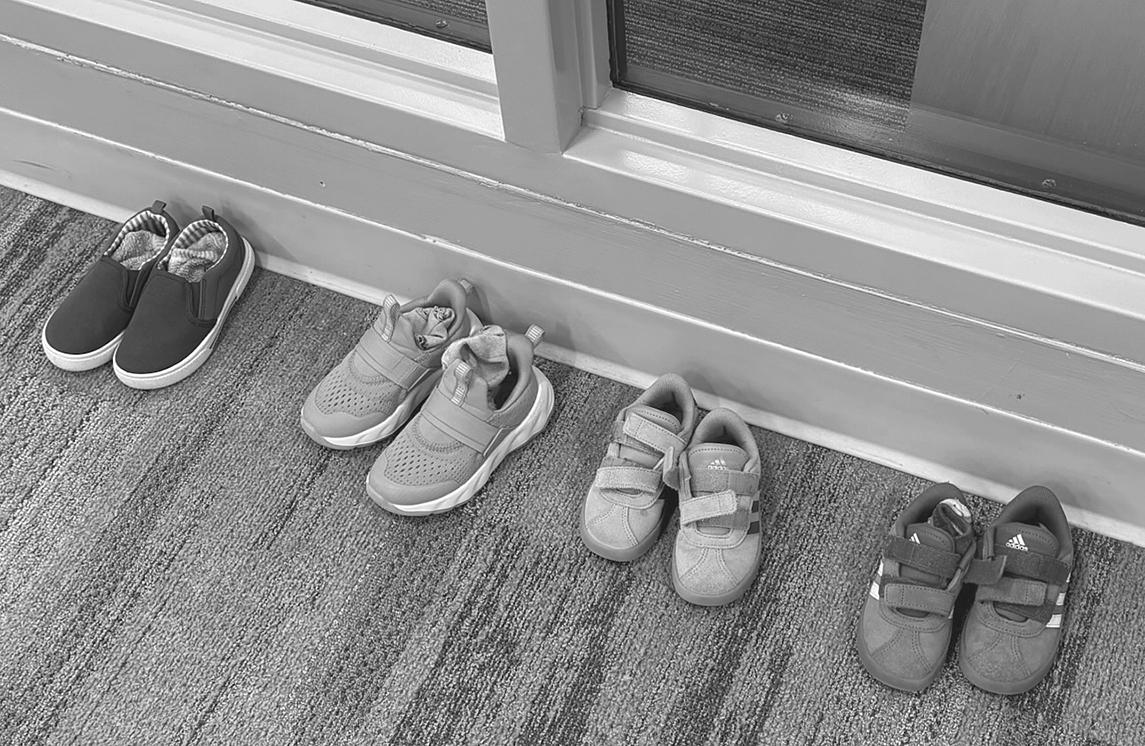
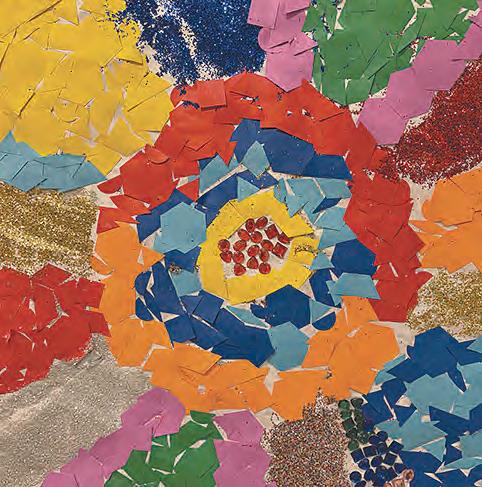
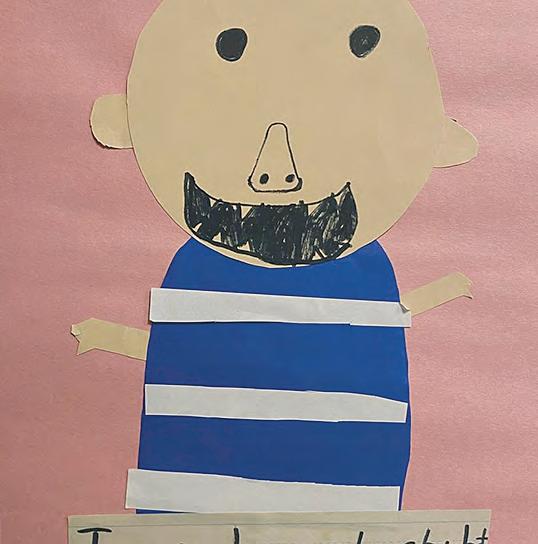
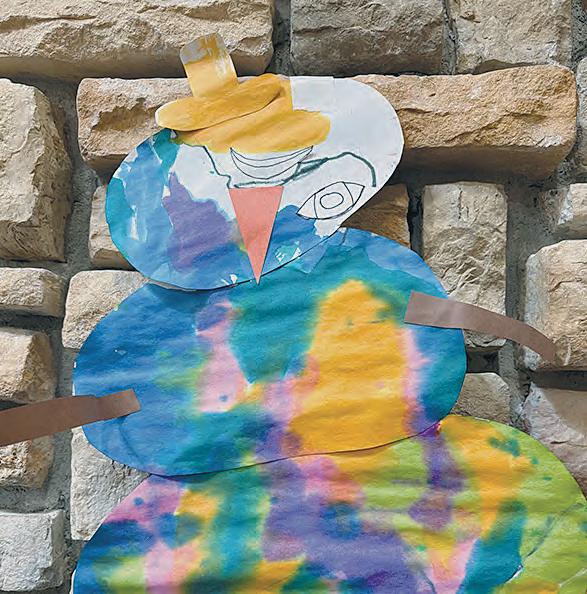
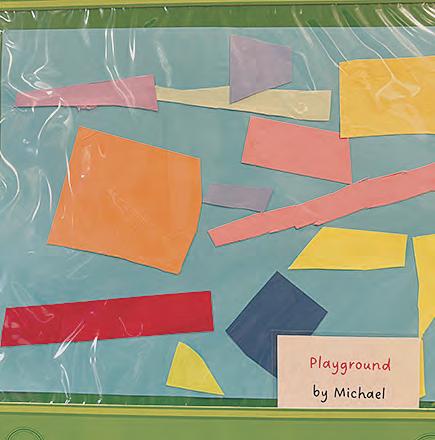
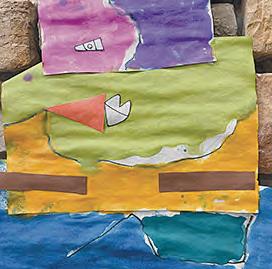
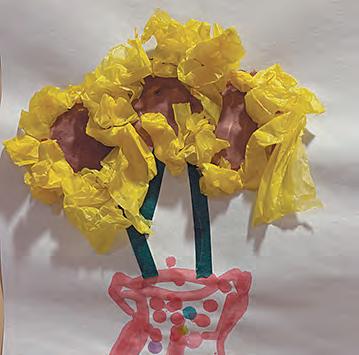
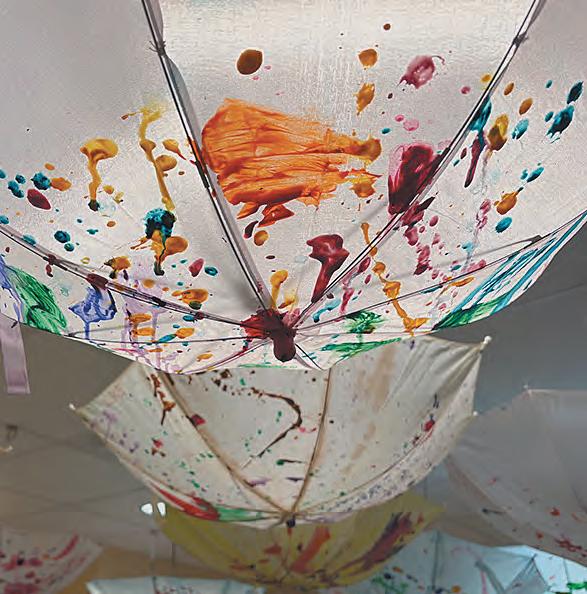
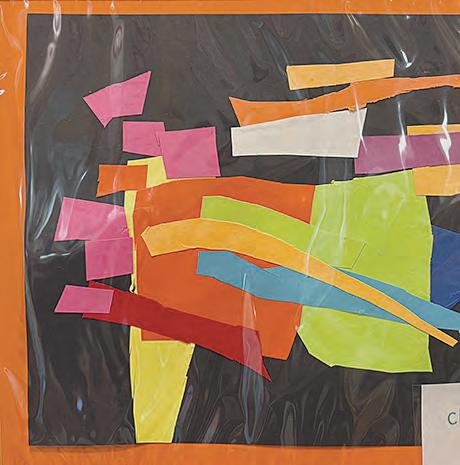
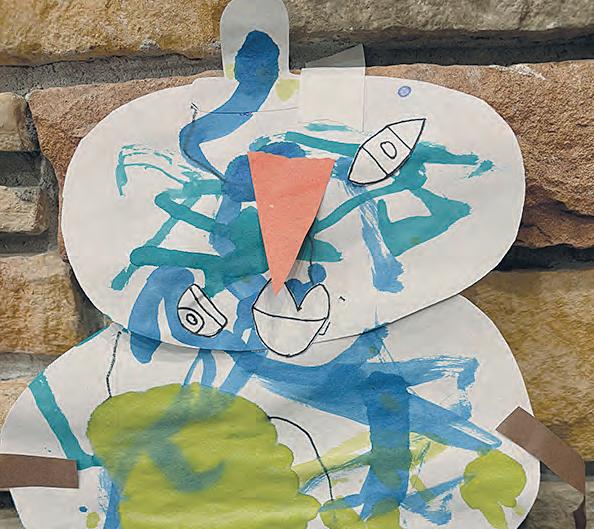
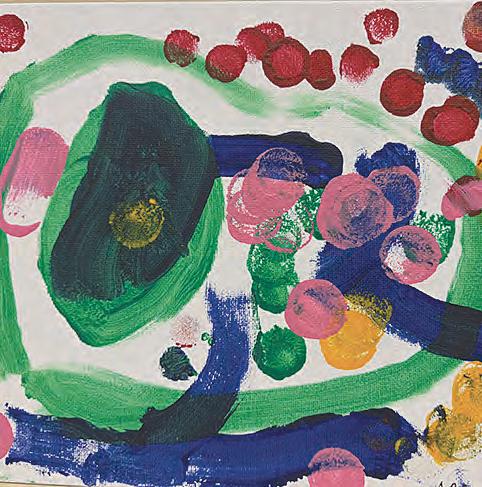
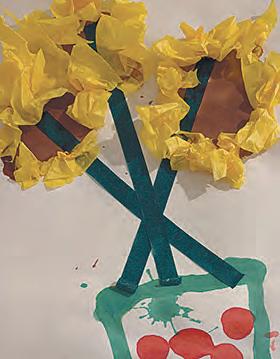
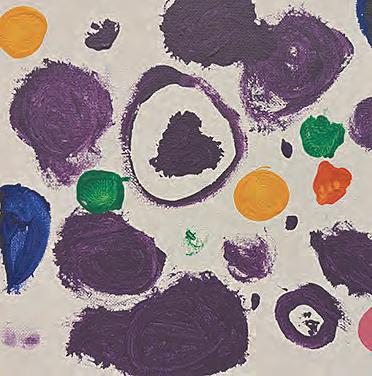
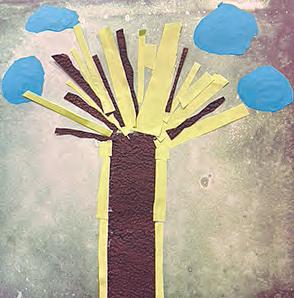
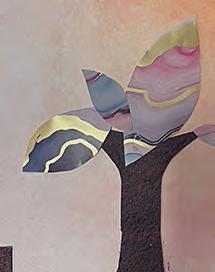
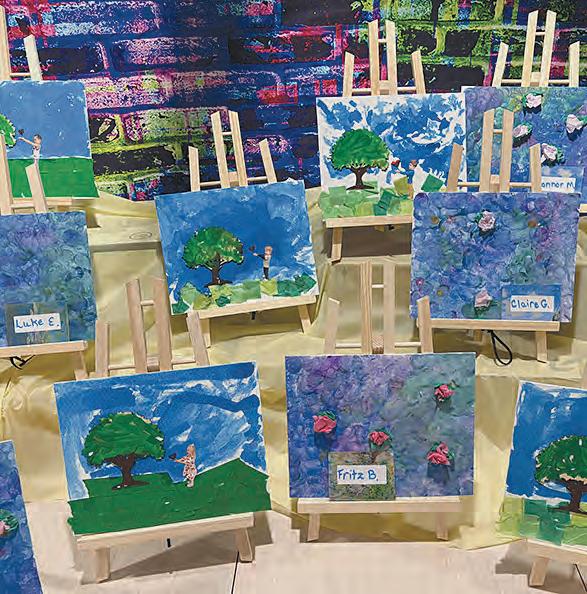
What makes this Passover edition different than all the other Passover editions? It’s all about the kids, starting with the cover page. We decided to hand over control, and let the 18 & under members of our community set the tone. Because when they do, life gets more exciting. There is a very specific image that comes to mind when I try to explain why I love working at our Jewish Federation. It’s the hallway-which has nothing to do with creating a newspaper, and everything with the kids. Often when I come out of our office area, I see a line of tiny shoes sitting against the wall. Their owners are dancing inside the studio. I know this, because I hear the music when I’m behind my desk (we don’t have very sound-proof walls). Some of those dancers travel all the way from the Early Learning Center, like a row of ducklings. Every once in a while, one of them knows me and yells “Hi, Miss Annette!” I live for those moments.
Other times, the Eisenberg Gallery is filled with young and young-ish actors, getting ready for their latest Musical Theater performance. Or the Friedel Jewish Academy students take over the Alan J. Levine Performing Arts Theater to practice their Hanukkah play, or their graduation. Kids come in to rehearse their Hebrew with Eileen Clignett for their B’nai Mitzvah, or are picked up at Kids’ Inn after their parents work out.
Now is also the time I overhear many kids complain that the outside pool isn’t open yet. And in a few short months, J Camp will start, and the summer atmosphere will take over the campus. Just try to find a place to park! Yes; those hallways were ab-
solutely meant for running.
The message is clear: this building belongs to the kids. They are our future. And they have things to say.
We want to thank the adults who made this possible, starting with the staff at both the Pennie Z. Davis Early Learning Center and Friedel Jewish Academy, BBYO Director Idan Zaccai and everyone else who helped out.
I also thank the Jewish Press staff: Lori, you’re my rock star; Claire, thank you for never giving up; Will, I could not have dreamed you’d rise to the occasion so well. Sam, I still can’t completely let you go, but one of these days I’ll admit you are a grown-up.
Most of all, we want to thank every young member of our community who wrote, drew, submitted and claimed their own little corner of this Jewish Press. You are all amazing. If you see your (grand)child on these pages, niece, nephew, sibling or neighbor, make sure to tell them they did great.
One more thing: on random pages in this paper, you will see a matzah ball. Count them, email your number to avandekamp@jewishomaha.org and you get a prize, which you can pick up at the Jewish Press office! Answers need to be emailed by the last day of Passover, which is sundown on April 9. The catch: you can only participate if you are no older than 12. Start counting!
And that’s enough adult talk. Happy reading, and a Chag Pesach Sameach!
ANNETTE VAN DE KAMP-WRIGHT Jewish Press editor
Teddy Dunning, son of Toba and Eric, was born and raised in Omaha. He wants it to be known that he learned from his parents how to calibrate space lasers. All jokes aside: he lives his Judaism intentionally, and has amazing things to say. The Jewish Press thanks him for his contributions-not only here in answering our questions, but to our community as a whole. What does Judaism mean to you?
Judaism is the foundation upon which I base my morals and everyday actions. It also means community and friendship.
How would you describe growing up in Beth Israel?
Growing up at Beth Israel was a wonderful experience. It provided me with fun opportunities, like NCSY Shabbatons with Rabbi Yoni Dreyer and lifelong memories. What is your favorite part about Beth Israel?
The Rabbis. I've always had a great relationship with each rabbi, and I learn from each one. Rabbi Mordechai Geiger is amazing and we share some similar hobbies. He makes classes and services a meaningful experience. Each rabbi has been a terrific mentor to me and helped me figure out what kind of lifestyle I wanted.
I really loved it when Rabbi Ari Dembitzer would bring the SEED guys in, creating lasting memories and connections during different times of the year. The people would often change depending on their availability to be in Omaha, but it was a fun and interesting opportunity to learn and do activities together. How does what you learn at shul affect other segments of your life?
What I learn at shul inspires me to make a positive impact at school and on people around me.
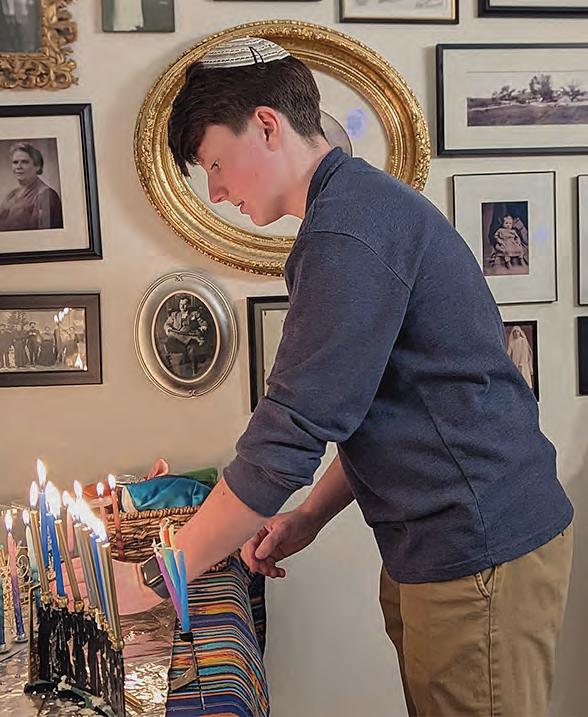
Rabbi Yoni Dreyer really impressed me, and when we moved to west Omaha I wanted us to have a kosher kitchen and be more observant. I'm so happy we are within walking distance of the shul.

spending time with my cousins and really enjoy our big family dinners.
What do you remember from your Bar Mitzvah-and how has life changed since then?
One of my favorite memories was studying with Donald Gerber. He really helped me with my Hebrew and taught me so much about leyning during services. He gave up so much time for me and I took it very seriously. Mr. Gerber gave me skills that I use today and appreciate so much.
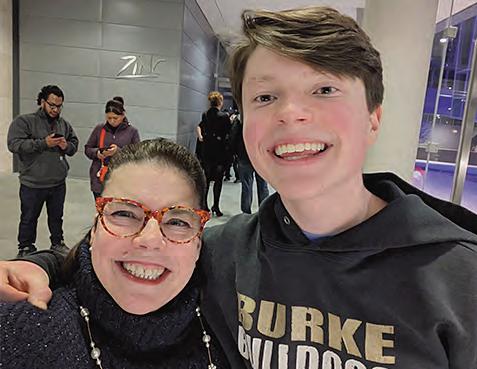
What’s your favorite holiday and why?
Being a Nebraskan, if you can withstand the winter until Pesach, you know spring is coming! The Passover story is really the foundation of Judaism. For my family, everyone comes together either at our house of Uncle Mike's and Aunt Karen's. I love
What are your hopes for Jewish Omaha/ what would you like to see happen in the next ten years or so?
I would like to see Rabbi Geiger develop a kollel in Omaha and grow our community. I would also like to see the Jewish Community Center have a kosher cafe. We have a really large kosher community, and need more options to eat out.
Tell me three important things you have learned from your parents.
1) I have responsibilities to my family, community, neighbors and friends. My parents both grew up in homes where there was an emphasis on giving back. Eleanor and I work really hard to emulate their efforts.
2) Making sure the Jewish community is here for future generations. Tzedakah is an important value, and one in which everyone should participate. My See Future generations page A5

SHAYNA FELDMAN
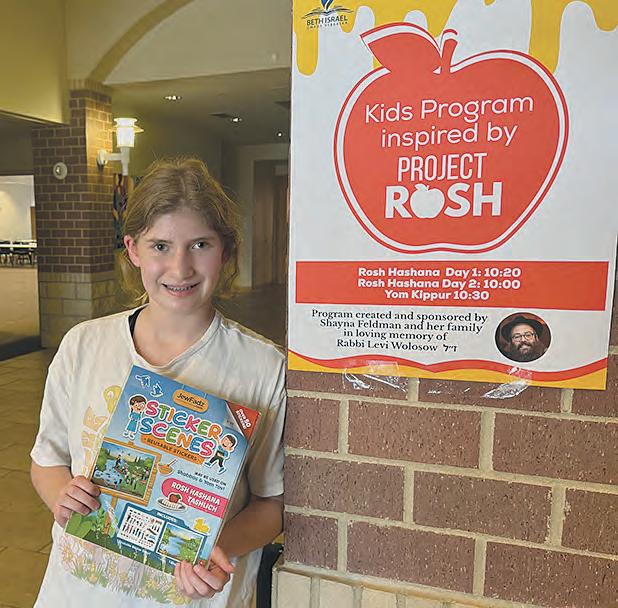
Pesach is the story of freedom - but for me, it's also the story of identity. Every year when we sit at the seder and tell the story, I think about what it means to be Jewish right now as a teenager in Omaha. Judaism isn’t just something I learn about-it’s something I practice, question, and grow into every day.
My name is Shayna Feldman and I’m a Jewish teen living in Omaha. I’ve been living in Omaha for 4 ½ years. I spent my life going to a Jewish day school from the age of 3 to 14. I’m grateful for all the Jewish knowledge I
gained from The Hebrew Academy (where I lived in NJ) and Friedel Jewish Academy. I'm grateful for all my Jewish studies teachers. They taught me how to read Hebrew, learning about the Jewish holidays, learning about the parsha every week, mishnot, advocacy, and so much more! I live with all I learned every day, reflecting back to it. Since I’m no longer in a Jewish day school I always try to learn to gain more knowledge.
I love engaging in Omaha! Whether it's Tzedek Teens, PJ Library or Beth Israel, I can show who I am. One of my proudest moments was back in September for Rosh Hashanah. I put together a special kids program at my syn-

agogue to honor the blessed memory of my Rabbi in NJ. It was amazing to see all the kids at my program, the looks of joy on their faces and how the parents were so happy that their kids were doing something Jewish and fun while they were davening.
After Oct. 7 it was hard to think about what was happening in Israel while I was in America. I knew about the antisemitic attacks that were happening on college campuses, and at a point I was scared. I still stood loud and proud. Over the summer I was walking back to shul with some friends and all of a sudden a car pulled very close to us and rolled down their window and yelled
See Jewish Teen page A5







ANNETTE VAN DE KAMP-WRIGHT
Jewish Press editor
Saturday March 28 at 7 p.m. and Sunday March 29 at 2 p.m., it’s time for Circle Theater’s Descendents. Based on the popular Disney Channel Original Movies, Disney’s Descendants: The Musical is a brandnew musical jam-packed with comedy, adventure, Disney characters, and hit songs from the films! Imprisoned on the Isle of the Lost – home of the most infamous villains who ever lived – the teenaged children of Maleficent, the Evil Queen, Jafar, and Cruella De Vil have never ventured off the island… until now. When the four troublemakers are sent to attend prep school alongside the children of beloved Disney heroes, they have a difficult choice to make: should they follow in their parents’ wicked footsteps or learn to be good? Tickets cost $20.
On April 4 at 6:30 p.m., come to enjoy a Candlelight concert! The best concerts are performed under candlelights with live performers. This is an external rental performing at the Alan J. Levine Performing Arts Theater. For ticketing questions or concerns, please reach out to hello@feverup.com
Friday April 10 at 1 p.m., Jewish Family Service will present James Bond: No Time to Die, part of their “Films and Friends” series. All our movies are FREE to attend, and concessions will be available for purchase. For community members 55+.
Saturday April 11 at 6:30 p.m., we will host a cocktail hour, followed at 7:30 p.m. by Live at the Levine: Sisters in song.
What do you get when you bring together eight powerhouse, professional women singers, songwriters, musicians and musical directors from Omaha and Lincoln? You get a night to remember by Sisters In Song!
Founded in 2023, through their common professions and experiences, Sisters In Song has developed into solid friendships and a true sisterhood. Coming together to bring you an evening of some of their favorite music, with a variety of styles ranging from pop, jazz, & blues, to standards and originals, you won’t want to miss this one-night-only performance!
Tickets are $20 in advance, and $25 the day of the show. For up-to-date information about what’s happening in our theater, please visit jccomaha.org/performing-arts

Continued from page A3
mom would take Eleanor and me to the Jewish Federation each year of our young lives to make a donation to my great grandparents' fund that helps with programming at the Rose Blumkin Jewish Home. I am really fortunate to live in a thriving Jewish community. I hope it will always be this way for Omaha.
3) Kindness is the third thing I have learned from my parents. You don't always readily understand what another person is going through. It's important to always be kind to others, as you would hope someone does that for you. Tell me three important things you have learned from your rabbi(s).
1) Rabbi Yoni taught me how to keep a kosher kitchen and how to kasher items in the mikvah. I understand why it's important to foster a space where your community members can come together. My mom is an amazing cook, and it's so much fun to cook together and host friends and family.
2) Rabbi Ari and all of our wonderful shlichim have taught me the importance of Israel. I will be very excited to take my first trip while I'm in college and visit very dear friends who have made aliyah.
3) I have learned from several rabbis how to feel confident on the bimah. Favorite Jewish food (and do you make it at home?)
Yes - I make the best bagels. I found a recipe I really liked last year and taught myself how to make them. They are outstanding and my family and friends love it when I make time to do this.
Continued from page A4 hateful slang towards us. That's when I knew I was going to always be proud of my religion.
I recently attended Cteen’s international shabbaton in NYC. There were over 5000 teens there from all over the world. After hearing so many incredible stories by other teens, Oct. 7th survivors, and adults saying proudly how we can’t let hate pull us down and that we need to stand strong because we are proud Jews and nothing will stop us from being true to ourselves and our Judaism. It made me think about Omaha, my Jewish education/knowledge, and standing up for myself. Being there with all those Jews singing and dancing with them was a life-changing moment for me.
What Judaism means to me is to be who I am and be proud, and express it every day. I shouldn't hide. I should stand out and embrace my Jewish identity. Show the people around me that I am a proud Jew. Share my favorite holidays and Jewish stories with my non-Jewish friends. What Judaism is to me is to be who I am. Each and every day.
ANNETTE VAN DE KAMP-WRIGHT
Jewish Press Editor
If chocolate paste or melted cheese-matzah-pizza are the wildest things you’ve ever done with your matzah, think again. How about Mexican Huevos Rancheros: Roasted tomatillo salsa, fried egg, and extra hot sauce? Or maybe you’ll want to try this Mediterranean Mashup, which asks for Baba ghanoush, tahini, chopped egg, and pickled jalapeños. You can also elevate your chocolate-caramel coated matzah (a must in and of itself) by topping it with safeto-eat edible cookie dough (if you can find some that’s kosher for Passover) and sprinkles. And have you heard of Fairy Toast? Butter, cinnamon sugar, and rainbow sprinkles.
The Lincoln Jewish Community wishes you a Sweet and Joyous Pesach!
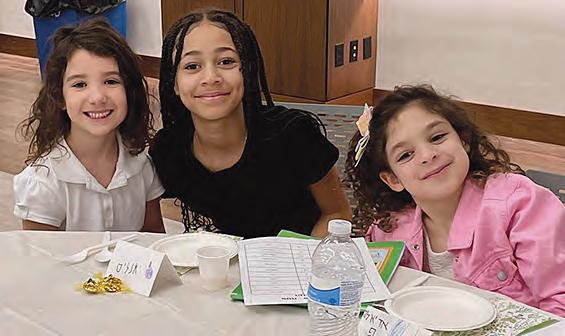
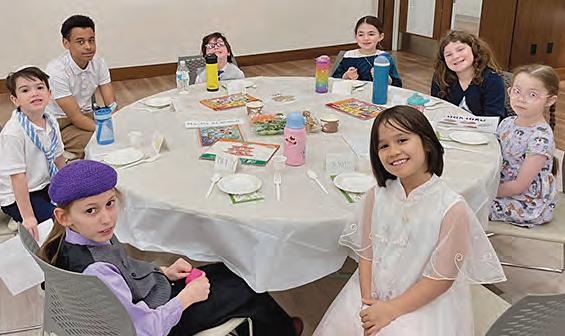
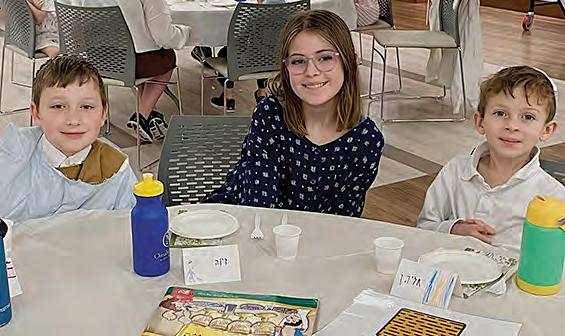
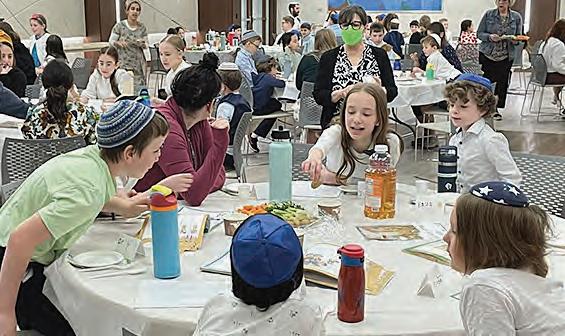
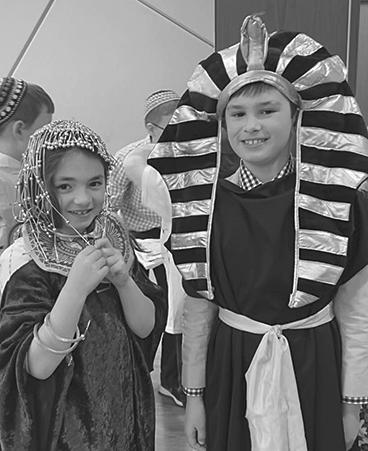
Friedel Jewish Academy students are an integral part of our Staenberg Omaha JCC-and our Federation. Below are some comments the current 7th graders would like to share with you.
My teacher is amazing in many ways. For starters, she is very funny and lets us joke around in class. Another reason she is amazing is because she explains the work that we do very thoroughly. She is also very patient and will (usually) not crash out on you even if you are being annoying! She is all around a great teacher to have and I am glad that she is our teacher!
My favorite part of the Passover seder is the play. During the play you get to see all the kids having fun and they are laughing. It is one of the most educational parts of the seder because everyone gets to learn about the story and the kids who act get to learn the Hebrew for the play. It is just an amaz-
I love Friedel in lots of different ways! Just to start, all the teachers are great and very patient. Another reason is because the school lunch is good, it used to not be good but with our new chef (Nicki) it is AMAZING! There are also specials, where you get to do lots of fun things like P.E., swim, personal fitness etc. There are also Jewish studies where you can learn lots of Hebrew things like the language itself, Torah and others!
ing experience. My teacher is great because she makes learning fun. She always finds ways to make us laugh. She is always

so cheerful. I am very grateful for my teacher!
My favorite part of the school seder is all the delicious food we have. It’s always fun to learn about Passover all over again, hiding the matzah, and having the Passover play. Learning about Passover is good because It’s a
have fun together.
My teacher is great because she helps us learn. She is really good at science and math. She is very fun to be around and it’s great to come to school every day. She makes learning fun and I like the way she teaches. I love hanging out with everyone in our class every day.
great refresher about everything that happened during Passover and traditions we do. Passover is a time when everyone in school can celebrate and
My favorite thing about the holiday is the food. I love all the classics like matzah ball soup, brisket, charoset, and hard-boiled eggs, but I also love matzah! Matzah is so good with cream cheese and a chocolate spread. It's delicious! Unfortunately, I don't still participate in the Passover play but I love to watch it! It's very entertaining and the younger kids have such good impressions of Pharoah, Moses, and Aaron, and all of the sheep.
Our school seder is great. We have food, learn about the plagues, hide the afikomen, and have a play. The play is fun and shows the Jews asking Pharoah to let them go. The play goes See Friedel page A7

Continued from page A6 through all the plagues and how all the Greeks were affected but all the Jews who followed Hashem and didn't worship idols were fine and didn’t get affected by the plagues at all. My teacher is great because she understands how to act and behave with teenagers nowadays. She tries to actually resolve problems instead of forcing kids to apologize and accept apologies and hiding the problems away. She’s great with younger kids and older kids. She tries her best and it’s more than enough support, kindness, and love for her whole class. She is very bright in technology, which we need nowadays, and helps make boring lessons fun and entertaining. She really is the best teacher I could’ve asked for.
Mrs. Starkey is great, because she makes the class fun and she is skibidi. I love Friedel because the students and teachers have a bond. Friedel always has fun activities like swimming and music.
The Jewish Press will be closed on Thursday, April 2 for Passover. The deadline for the April 10 issue is Monday, March 30, noon; Questions? Call 402.334.6448.
The Jewish Federation of Omaha’s Tzedek Teens program empowers Jewish youth with tools to donate money, time, and energy to causes that are important to them.
Through planning and carrying out Tzedek projects, teens can earn service-learning hours needed for high school graduation requirements.
There are multiple ways to be involved! Depending on each teen’s preferences, time commitments, and interests, there is a way to give Tzedakah. In 2024-25, the teens cooked dinner for cancer patients at Hope Lodge, and participated in a spring cleanup at the Town & Country Animal Shelter,
During the past year, Tzedek Teens have supported two local Omaha nonprofit organizations: Foodbank For The Heartland and Angels Among Us. For that organization, they created toy kits for newly diagnosed pediatric cancer patients
Tzedek Teens joined other volunteer groups at the Foodbank For The Heartland when they suited up in aprons, gloves and hairnets to pack individual family-sized bags of frozen peas that will be available to families in need. During the two-hour shift it is estimated the volunteers packed 2,400 pounds of frozen peas.
Just two weeks later, the Tzedek Teens once again volunteered their time during the Jewish Federation
of Omaha’s Hair for Hope event. Community volunteers committed to donating at least 12 inches of hair to support Wigs for Kids, a nonprofit that provides high-quality, human hair wigs to children experiencing hair loss due to medical conditions.
A few months later, they visited the Stephen Center where they received a tour of the building, and volunteered with clients of the Stephen Center’s Pettigrew Emergency Shelter.
After the tour, the teens went right to work. They grabbed rags and disinfected the dining room following the lunch service, refilled napkin dispensers, and organized and straightened up the dining room's library.
The teens then paired up and sat at tables with shelter residents, playing games of the residents’ choosing.
The next Tzedek Project will take place in collaboration with BBYO on Sunday, April 19. Teens will be volunteering with Rose Blumkin Jewish Home residents, as well as supporting a local animal rescue.
Feeling inspired? You can enroll in Tzedek Teens and start an account by visiting www.jewishom aha.org and navigating to Jewish Youth and Families.
For more information, please contact Naomi Fox at nfox@jewishomaha.org
Kurt A. Davey | Mary C. Dek | Gina DiRenzo-Coffey
Elizabeth A. Larson | Patrick J. Steinauer
TAYLOR TAUBER
BBYO Mother Chapter Gizbor
For me, BBYO was never just about having fun with my local friends from Omaha. Ever since my first regional convention, my eyes have opened in a way that’s hard to describe. Recently, I came back from my first International Convention, which was held this year in Philadelphia. Getting to bond and connect with Jewish teens from around the world really cannot be overstated. It’s a feeling you can’t get anywhere else. Truly, you meet some of the nicest and most welcoming Jewish people in the world.
The BBYO experience is especially meaningful to me because I’ve sometimes had trouble bonding with kids at my school, since they felt too different from me. At IC, I could introduce myself to someone, ask where they were from and what their name was, and immediately start talking to them like I had known them my whole life. It’s an experience you can really only have at these conventions. You realize the world isn’t just what’s going on in



Omaha or at your school. It’s so much bigger than that. This one-of-a-kind experience encourages me to embrace and be proud of my Judaism.
One thing I love about BBYO is that even routine brotherly dinners at Flagship Commons with the guys on the board can still be the highlight of my week. Another thing I appreciate is that you get to do things people can only dream of doing, and you do them not with strangers, but with friends you met at convention who all share one thing in common: being Jewish.
BBYO is the embodiment of a unique community where people can find their true selves. They don’t have to fake a personality or act differently to fit in, because when you are in BBYO, being yourself is enough to build friendships with people from all over the world.
Personally, I have formed countless relationships through BBYO. Even just in the past six months, I’ve built friendships with people from across the United States and from other See Hed page A9

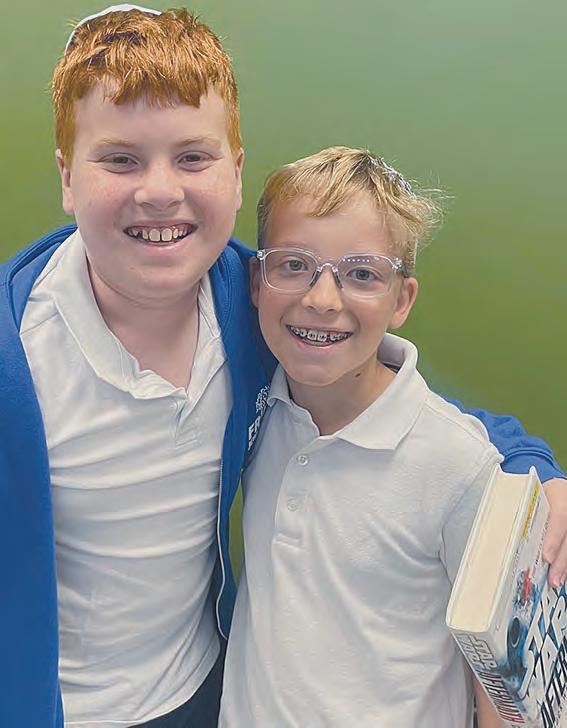
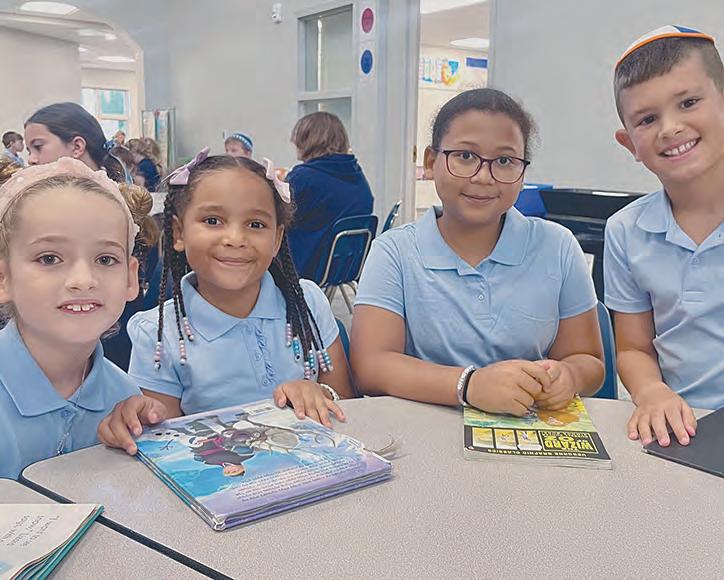










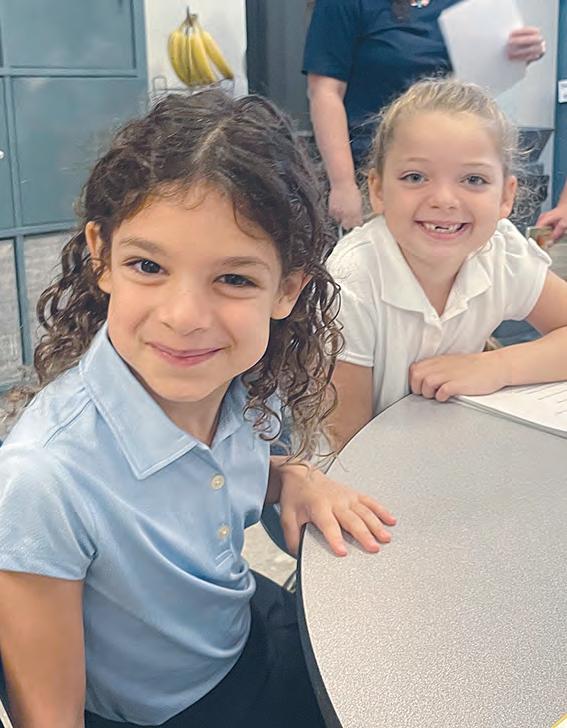


On days when school is out, but parents are working, the Staenberg Omaha JCC offers special programming. We even offer before- and after-care! You can find details about times, pricing and sign-up links at jccomaha.org.
Tuesday April 7 it’s Mario Mania: join in on the Mario mania that is happening and have Mario-themed fun. We will make Mario snacks and crafts, play our own version of Mario games, and maybe even play Mario Kart.
On Wednesday, April 8, we’re having a Passover Party! Step into the story of liberation where ancient traditions meet modern excitement! We will bring the spirit of Passover to life through engaging activities, crafts, and games.
Gameshows Galore will be on Thursday, April 9, so let the games begin! We will challenge each other in Family Feud, Jeopardy, Password and other popular Game Shows. Who will be the ultimate Game Show champion?
Friday, April 10 is Futuristic Friday.
In the future, will cars fly? Will people live on the moon? We will let our imaginations run wild as we imagine what the future will look like.
Our theme for Friday, April 17 is “Spring is Sprung.”
Spring is here so let’s celebrate. We will enjoy some spring-themed crafts, snacks and games and hopefully get to enjoy the spring weather.
Monday, April 20, we are having a pajama party. Let’s take it slow this Monday and enjoy a casual pajama party. We will enjoy some simple games and crafts, swim in the pool, and relax with an afternoon meeting.
Note: Children should bring a dairy based lunch (no meat) with them every day. We will refrigerate lunches if needed. Please do not send items that need to be heated. Also, a snack will be provided.
For further questions you don’t find answers to on our website, please stop by Member Services, or call the youth department at 402.334.6409
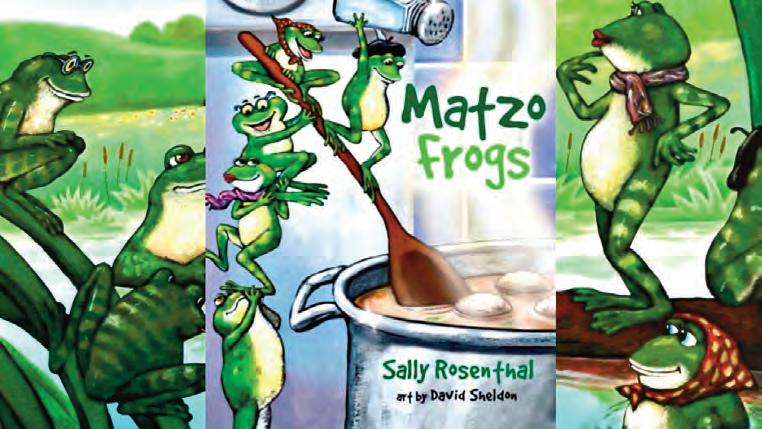
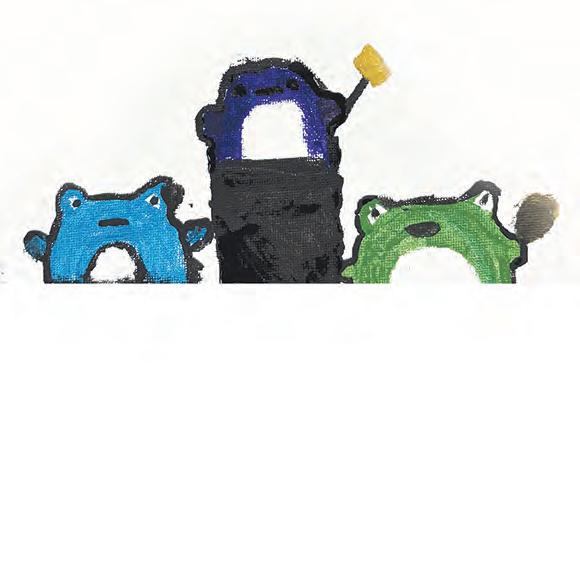
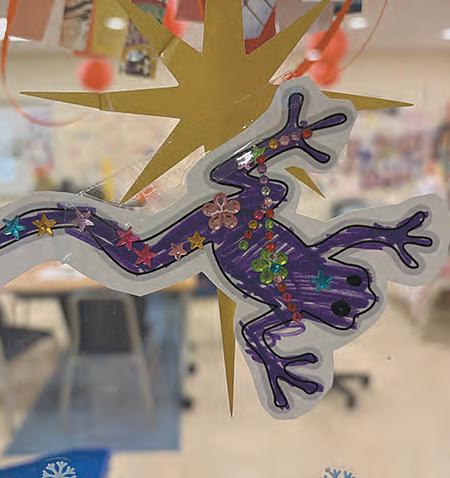
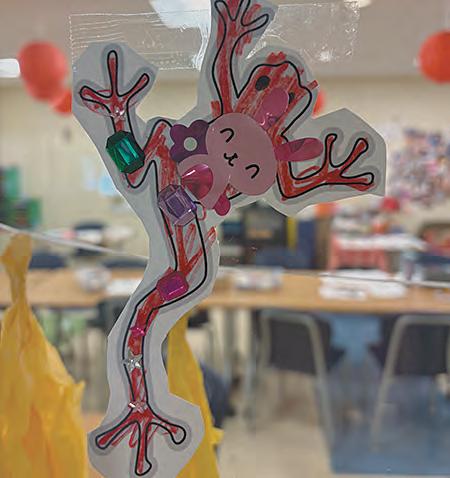
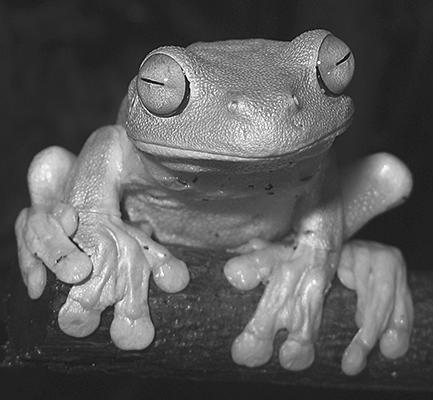
In Sally Rosenthal’s book, Matzo Frogs (illustrated by David Sheldon), Minnie Feinsilver finds herself busy cooking matzo ball soup. Of course, things go wrong-she spills the soup, and has no time to cook something else in time for Shabbat. Enter the frogs-not as a plague this time, but as kitchen helpers. The story is as unlikely as it is entertaining - especially for young readers. While it’s not Pesach-themed, and the notion of Jewish frogs named Gilda, Dinah and Sol is definitely a new one, we still heartily recommend this PJ Library book for story-time. And the Illustrations are definitely worth it. As a bonus: the story includes Minnie’s recipe. To learn more about PJ Library, please contact Jonnie at jrobinson@jewishomaha.org
Continued from page A8 parts of the world. Because these connections have been within the Jewish community, they’ve given me a strong sense of shared identity and belonging despite differences in geography and background. Just as important, these friendships have been genuinely fun, whether through conversations, shared traditions, or simply spending time together. Through these relationships, I’ve learned from others’ experiences and perspectives while strengthening my connection to the broader global Jewish community. Reflecting on all of this, the relationships I’ve built and the experiences I’ve had through BBYO have meant a great deal to me. From meeting Jewish teens across the United States and around the world to simply having fun and creating lasting memories, it has become an important part of my life. Because of this, I would recommend BBYO to any Jewish teen who wants to build real friendships, grow as a person, and feel a stronger connection to the Jewish community.









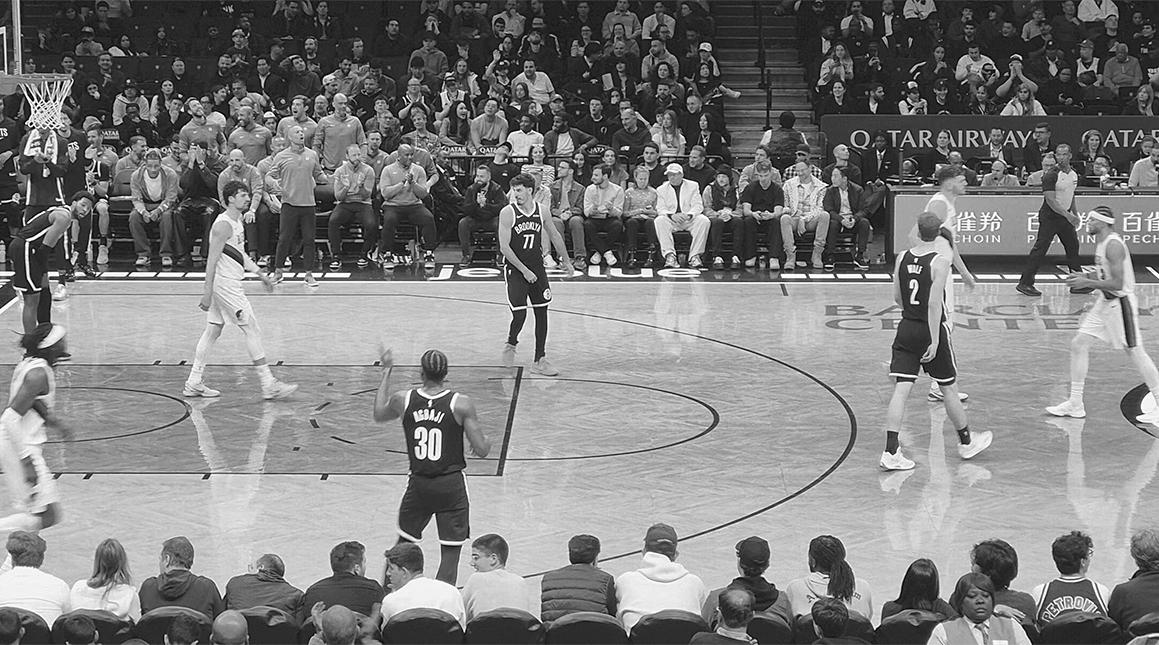
The Barclays Center had the energy of a bar mitzvah party on Monday night, as kippah-clad basketball fans and kids waving posters with Hebrew words of encouragement came to cheer on an NBA first: a game featuring three Jewish players — all Israeli citizens.
The Brooklyn Nets were hosting the Portland Trail Blazers — whose forward Deni Avdija recently became the first Israeli All-Star in the league.


He joined Danny Wolf and Ben Saraf, two Jewish players who have galvanized the Nets’ Jewish fanbase since joining the team this year. Saraf was raised in Israel and got his start in basketball there, while Wolf grew up in Illinois and secured Israeli citizenship to play for Team Israel in international competitions.
Avdija, who normally averages about 25 points per game, struggled to find a rhythm on Monday night, as did Wolf, who has intrigued scouts with the ballhandling skills of a point guard despite his nearly 7-foot height. But Saraf impressed, scoring 15 points and notching four assists and four steals in 24 minutes of play.
Saraf’s efforts were not enough to buoy his team, though, and the Nets lost to the Trail Blazers, 114-95.
That hardly dimmed the enthusiasm of the crowd, who thrilled at seeing Avdija and Saraf hug on the court before the game and exchange jerseys after the game in a show of respect and friendship.
Some draped in shawls printed with a fusion of the Israeli and American flags lingered court-side for a chance to get Avdija’s attention. At times when the game was quiet, some fans could be heard shouting “Deni! Deni!” Some wore hats with “Brooklyn Nets” spelled in Hebrew.
Avdija said in a postgame press conference that he had been surprised to see the arena sold out and that the energy reminded him of the Menora arena when he played for Maccabi Tel Aviv.
“I haven’t fully processed it yet,” he said about the significance of having three Israelis on the court. “It’s tough that many people from Israel couldn’t come because of the war. I hope everyone is okay. Representing on the biggest stage — it’s emotional for me and for many others. One of the most fun nights I’ve had.” Saraf, too, said the game was a highlight for him.
“A very emotional night. It’s too bad that we lost, but it’s bigger than that. The number of Jewish and Israeli fans here — when Deni was introduced, the whole crowd stood up. Every basket, it was emotional for me, for Danny Wolf, for everyone. It was a big event.”
He added, “Three Israelis on the court at the same time was something very special.”
It is possible that the trio represents not just all of the Israeli citizens but all of the Jews currently playing in the NBA. A fourth player was reportedly exploring converting to Judaism, but he has not publicly disclosed whether he completed a conversion.
The previous record for number of Israelis in an NBA game was two. It came on Oct. 30, 2023, when Omri Casspi and the Houston Rockets played the Dallas Mavericks and Gal Mekel, whom the Mavs had recently picked up, made his debut with the team. They were the first and second Israelis in the NBA.
The game also appears to tie the league record for the number of Jews in a single game, set on Nov. 10, 1953. In that game, Dolph Schayes scored 11 points for the Syracuse Nationals, while Irv Bemoras and Red Holzman both took the court for the Milwaukee Hawks.
“Nothing G d creates is for nothing. If not for the frogs, how would G d have taken retribution on the Egyptians?” (Midrash)
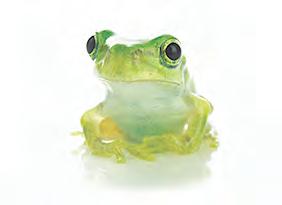
As a child, I always found the frog plague the least scary. I grew up next to the town’s park, where we would collect frog eggs in spring, put them in a jar which we’d keep in our bedroom. Nowadays, I question why our parents allowed that, but it was the 1970s and we didn’t have seatbelts either. The eggs, once turned into tadpoles, would be dumped back in the pond, where they could grow into 3— inch frogs. And that was with their legs stretched out — they were tiny. Of course, the actual plague did not have cute little frogs—they were probably bigger, possibly poisonous (I made that up) but definitely came in very large numbers. Frogs covering every inch of your home, your furniture, your food? Not so friendly after all. Still, those frogs had a job to do — and I think they went after Pharaoh’s people, and not after the Jews. It’s time to learn a little bit more about them.
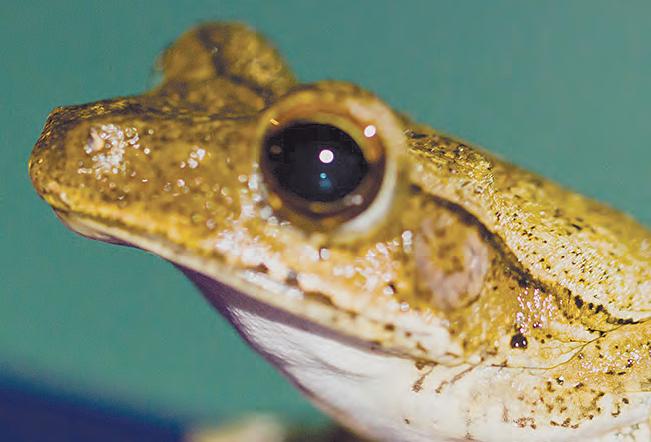
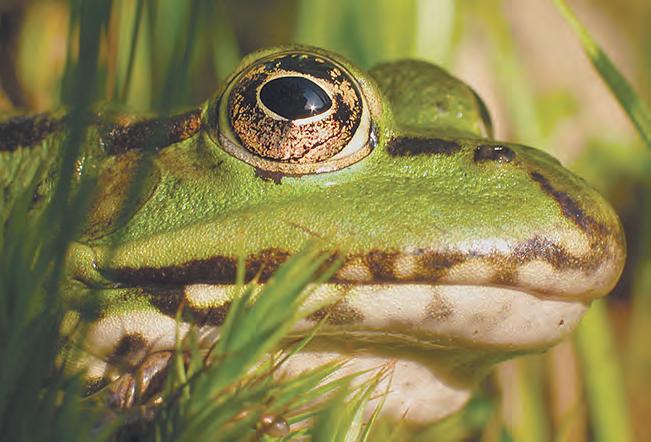
There are many types (around 6,000 at last count, on all continents except Antarctica, and scientists keep finding more), but let’s start with the differ-

ence between frogs and toads. Turns out, all toads are frogs, but not all frogs are toads! Toads have different distinctive features than what typically characterizes a frog. Often toads have drier, bumpier “warty” skin and prefer drier habitats. They usually have shorter hind limbs and rounder, stouter bodies than most typical frogs. Toads also have poison glands in

their skin to keep predators from eating them and oftentimes produce a funny smell when handled.
Sometimes there are frogs that are called toads but are technically frogs, and this makes things very confusing. There are also frogs that have bumps on their skin and toads that have smooth skin.
is actually a reptile!
Like all amphibians, frogs are coldblooded, meaning their body temperatures change with the temperature of their surroundings. When temperatures drop, some frogs dig burrows underground or in the mud at the bottom of ponds. They hibernate in these burrows until spring, completely still and scarcely breathing. But: they still breathe during hibernation. Since amphibians can breathe through their skin, they can absorb oxygen in the water. They have to hibernate in water that has a good amount of oxygen in it and sometimes will actually swim around in the water during winter to maintain proper oxygen levels.

And there is the Horny toad, which is not a frog or toad; it


There are a few frogs that can stop their heart and breathing completely and still survive. They are able to do this by keeping a high level of glucose in their blood that acts like antifreeze and protects their vital organs. When the weather warms up, they wake up and their heart and breathing will resume normally. Do NOT try this out yourself. This is a frog-specific skill. Nobody really knows whether frogs See Frogs page A12

Continued from page A11 actually sleep. At this point in time, there has been very little research in frog sleep patterns. It is known that they close their eyes, but no confirming brain scans have determined whether or not they actually have a true sleep period.
Frogs do not have external ears like us. However, they do have eardrums and an inner ear. The frog ear is called a tympanum and is the circle you see behind a frog’s eye. Some frogs have small tympanums, while others have ones that are larger than their eyes. The size of the tympanum and the distance between them are relative to the frequency and wavelength of the species male call. Their eardrum works like a regular eardrum with one very special adaptation…it is actually connected to their lungs. The lungs vibrate and are almost as sensitive to hearing as the eardrum. This allows frogs to make really loud sounds without hurting their
own eardrums! The lungs are capable of doing this by equalizing the pressure differences between the outer surface of the eardrum and the inner surface of the eardrum. This adaptation may also be important in a frog’s ability to locate where other sounds are coming from. Frogs do not drink like we do; they absorb water directly through their skin in an area known as the ‘drinking patch’ located on their belly and the underside of their thighs.
to attract females and defend their territory, so if you see a frog calling it is probably a male. Frogs were the first land animals with vocal cords. Male frogs have vocal sacs — pouches of skin that fill with air. These balloons resonate sounds like a megaphone, and some frog sounds can be heard from a mile away. The throats of many male frogs are darker than the females. In certain species, it can be easy to tell the difference. In Bullfrogs, the males are larger and have a larger
Here is a fun fact: frogs use their eyeballs to swallow. Frogs eat their prey whole and their eyeballs actually sink down into their mouth and push the food down into their throat. It can be difficult to tell the difference between boy and girl frogs. It depends on the species. In many species, the female is larger than the male and the males sometimes have larger toe pads used during mating to grab onto the female. Males also call
(t
tympanum (these are ears — the circles located directly behind the eyes). In many tropical frogs, the males have brighter and more vibrant colors. Most frogs lay their eggs in water, but there are exceptions. Frog eggs do not have a shell, so they need some kind of moisture to keep them from drying out until they hatch. Some frogs have come up with amazing ways to keep their eggs wet besides laying them directly in water. There are frogs that lay eggs under leaves above water in damp rainforests and when they hatch the tadpoles fall into the water where they can develop into little froglets. There are some frogs that carry their eggs on their back and the male Darwin frog actually swallows the eggs and keeps them in his vocal sac until they hatch!
Many frogs can change color. It helps them hide from predators by matching the colors of their surroundings. They also change color to help control their body temperature, since some colors absorb more or less light and can cool or warm them up. They use pigment cells called chromatophores to change color. Most frogs cannot completely change their color, instead they change the shade (lighter or darker) of their basic color. To blend into the environment, the Budgett's frog is muddy brown in See Frogs page A14

IHE & JCRC Program & Communications Manager
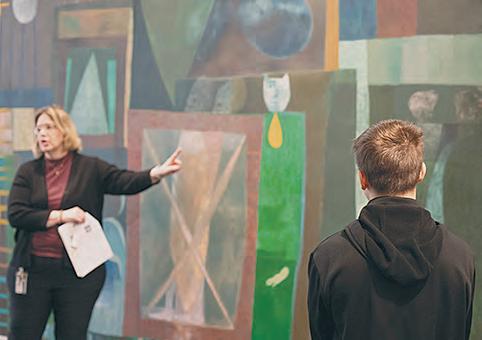
Freshmen from Louisville High School stepped off the bus one by one and into the intimate gallery of the Samuel Bak Museum: The Learning Center, in Aksarben. There, they split into three groups, each exploring the Holocaust through a different lens.
The innovative “Searching for Humanity” fieldtrip, a partnership between the Institute of Holocaust Education (IHE) and Samuel Bak Museum: The Learning Center (SBMLC), uses the history of World War II as a starting point.
what a typical day looked like for them — from waking up at home to attending school, using transportation, and communicating with friends. Nesbit then guided them year by year through the laws enacted by Nazi Germany that systematically excluded and persecuted Jewish people across Europe in the years leading up to deportations. As each new restriction was introduced, students crossed off the corresponding right or activity from their own lists.

The program challenges students to consider past genocides, to seek out expressions of humanity amid atrocity, and to reflect on their own responsibility to others.
“It provides a wonderful jumping off point for any Holocaust unit,” Louisville High School teacher Elin Petersen said. “The art, activities, visuals, interactions, and memorable stories make the material accessible to students and provide talking points that can easily be continued in the classroom.”









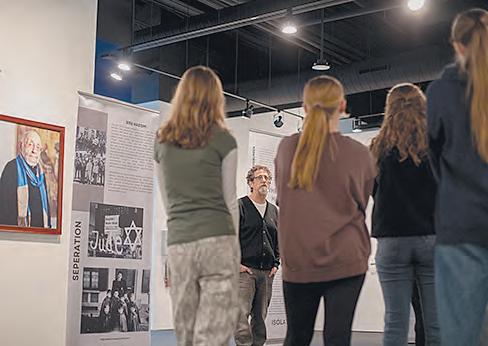







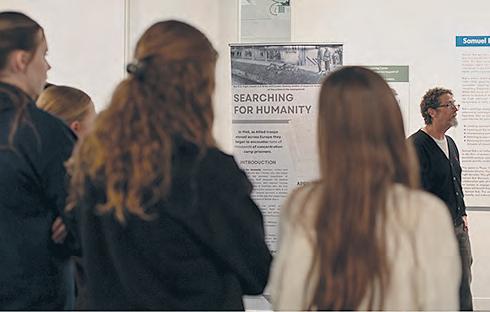
One group, led by Scott Littky, IHE Executive Director, experienced an emotional account of the Holocaust through the eyewitness reports of U.S. Army Staff Sergeant Clarence Williams who documented the atrocities he encountered as he entered the Dachau concentration camp in the spring of 1945. His letters were presented alongside photographs and testimony of Nebraska Holocaust survivors.



By the end of the exercise, everything had been eliminated: home, transportation, communication and entertainment. The visual impact of seeing an ordinary day reduced to nothing made the lesson both powerful and deeply personal.
“It opened my eyes for all the basic human rights and needs that were being taken away,” student Lila Kozeny said. “This visit [changed] my understanding of prejudice.”
While that group explored the Holocaust through photographs, the second group gathered in the gallery’s classroom. Jane Nesbit, IHE Education Director, led students in an interactive exercise, called ‘A Normal Day,’ that connected the experiences of Jewish families in Germany to the students’ own daily lives.
Students began by writing down
The experience encourages students to think more deeply about their role in their own community. “I hope students walk away reflecting on the exhibit’s essential question, “What is my responsibility today?” Jane Nesbit said. “The program asks them not only to learn about the past, but to find their own voices and to be upstanders.”
See Searching for Humanity page A15

Continued from page A12 color, while the Vietnamese mossy frog has spotty skin and bumps to make them look like little clumps of moss or lichen.
Some frogs are slimy because they are covered in a mucous coating. This coating helps them keep their skin moist which helps them breathe through their skin. The mucous often contains other chemicals, like antibacterial or anti-fungals to help protect the frog. Other frogs actually secrete a waxy coating that they spread across their body to help retain moisture in areas that have high temperatures or if they are active during the day.
Some frogs or toads secrete noxious chemicals as deterrents to predators. These secretions can be relatively mild to highly toxic. If you see white stuff on an amphibian skin, do not touch it! The amphibian is feeling very threatened if it starts oozing stuff and some can even ‘squirt’ it out at predators’ eyes, so keep your eyes protected and leave the amphibian alone. It’s a behavior you can also see in salamanders, so the same rule applies: Don’t Touch!
Frogs have lungs like we do, and if their lungs fill with water, they can drown just like us. Since they can also breathe through their skin, they need to keep it moist. If their skin dries out, they are not able to absorb oxygen.
They use their skin to absorb oxygen when underwater, but if there is not enough oxygen in the water, they drown.
Frogs eat their own skin when they molt, so they won’t waste all the nutritious
are set far apart from each other and protrude out of their heads to give them an almost 360-degree view of their surroundings. This helps them see potential predators and prey to either make a quick escape, or catch their dinner.
protein found in their skin. Frogs shed their skin periodically like most animals, but they do not slough it off and leave it behind. Frogs actually push the shedding skin into their mouth and eat it. It’s ultimate recycling! You may have noticed frog eyes stick out. It’s so they can see behind them, and to the sides without having to turn their head around. The large eyes

nosaurs.
The world's largest frog is the Goliath frog of West Africa — it can grow to 15 inches and weigh up to 7 pounds. One of the smallest is the Cuban tree toad, which grows to half an inch long.
While the life spans of frogs in the wild are unknown, frogs in captivity have been known to live more than 20 years.
Frogs have excellent night vision and are very sensitive to movement. Launched by their long legs, many frogs can leap more than 20 times their body length.
The Costa Rican flying tree frog soars from branch to branch with the help of its feet. Webbing between the frog's fingers and toes extends out, helping the frog glide.
Many poisonous frogs, such as the golden poison frog and dyeing poison frog, are boldly colored to warn predators of their dangerous toxic skins.
Those eyes also help them see underwater: frogs have a third eye lid that covers their eyes so they can keep them open underwater. The eyelid is called the nictitating membrane and also helps the eyes to stay moist when they are not in the water. There is evidence that frogs have roamed the Earth for more than 200 million years, at least as long as the di-
Some colorful frogs, such as the Fort Randolph robber frog, have developed the same coloring as a coexisting poisonous species. Although their skins are not toxic, these mimics may gain protection from predators by looking dangerous.
The wood frog can live north of the Arctic Circle, surviving for weeks with 65 percent of its body frozen. The Australian water-holding frog is a desert dweller that can wait up to seven
See Frogs A15
Continued from page A13
The third group toured the museum’s art exhibit with Kati Larson, SBMLC Director of Education. As they explored the collection of art created by survivors of genocide, including the museum’s namesake Samuel Bak, students examined symbolism and discussed how artists convey emotion through their work.
“Stories are powerful, and hearing pieces of Samuel Bak's story made his art more profound,” added Petersen. “The details he wove into the four paintings for his grandparents were especially touching.”
After rotating through all three learning experiences, they had lunch and heard the story of a Holocaust survivor who settled in Nebraska.
“Students leave with a deeper sense of empathy and understanding,” said Nesbit. “The Holocaust can sometimes feel distant in time and place, but when students see Samuel Bak's work or hear from a 2nd Generation speaker, history becomes present.”
Through testimony, art and personal reflection, the program encourages students to not only remember the past, but to act with empathy, awareness and courage in their own communities.
Schools can book the free exhibit monthly throughout the academic year. Funding for the current program and exhibit was provided by the Shirley & Leonard Goldstein Foundation.
For more information or to register your classroom for the Searching for Humanity fieldtrip: https://ihene.org/for-students/searchingfor-humanity/
Continued from page A14 years for rain. It burrows underground and surrounds itself in a transparent cocoon made of its own shed skin.
Frogs are freshwater creatures, although some frogs such as the Florida leopard frog are able to live in brackish or nearly completely salt waters.
A group of frogs is called an army.
Not all frogs are green. There are brilliant, colorful species in every color of the rainbow. Red, blue, orange, yellow, and purple. Some are multi-colored, with patterns, spots, or stripes. Their eyes vary in an array of colors and patterns, too. Most of the bright, colorful species are found in tropical regions.
Frogs have teeth! The small teeth on the roof of their mouths are not typically used to bite or chew; they keep the frog’s dinner from escaping before it’s had a chance to swallow it. However, if a frog feels threatened, or you hand-feed a pet frog, certain species have been known to bite.
Not all frogs can jump. While most long-legged species are quite good at it, those with shorter back legs can only hop, crawl, or walk. The South African sharp-nosed frog holds the world’s record for the longest jump. It jumped 44 times its body length. This 3-inch species leaped more than 130 inches. To match that, a five-foot-tall person would have to jump 220 feet in one leap.
The world’s tiniest frog is the Paedophryne amanuensis. It’s about the size of a common housefly. It lives in leaf litter in the rain forests of Papua New Guinea.
The golden poison frog, native to Central and South American rainforests, has the distinction of being the most poisonous animal in the world, despite being about the length of a paper clip. Its skin secretes enough nerve toxin to kill 10 humans. Unlike most species, poison frogs are active during the day.
The study of amphibians and reptiles is called herpetology, and those who study them are called herpetologists.The name comes from the Greek word herpeton which means “something that crawls”.
Sources: Burkemuseum.org;AMNH.org farmersalmanac.com
Earthrangers.com


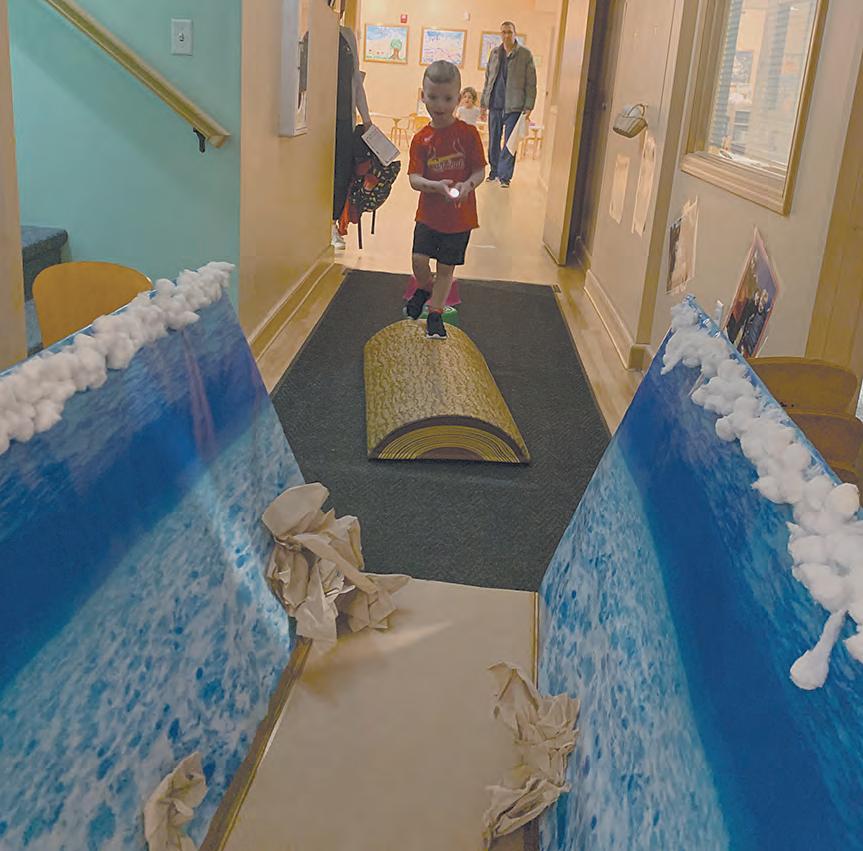
Ahelpful supplement for your Haggadah, recorded verbatim from students at the Pennie Z. Davis Early Learning Center.
“God sent frogs to Pharaoh, the bad guy. He would not give God the people back. He took everyone to his home and made them do mean stuff. God helped the people. Moses saved everyone by saving everyone. We have special food like carrots. I like when God saves the day.” - Skyler
“It’s in Egypt making the pyramids. They were tired because they couldn’t stand up. Pharaoh said ‘I won’t let these people go.’ The rain turn into fire. The Burning Bush fell down. Moses helped the Jewish people. The mom put him in the river before the princess came and then he got stuck in the weeds. So the princess found him and went to the castle. Pharaoh’s baby’s brothers died.” - Gus
“The water turn into blood. The baby, Moses, his mommy put him in the basket and pushed him in the water. Somebody found him. The girl said ‘Ooh, this baby! I’ll go with my daughter!’ He went to a castle. Here he
growed up. He was a baby still but then he grew up. He helped the good guys get away from the bad guy. The people were working and they got caught working hard and they couldn’t stand. The good guys

say, ‘Let my people go!’ And then the bad guy say, ‘No, no, no.’ He give them one more chance but then he said, ‘Okay!’ He said,
get across and then he said, ‘God, what should I do?’ and then he said, ‘I can open the bridge so you can go.’ On Passover we pass over stuff.” - Ben
‘Get those people!’ They went on the part of the bridge and then God helped them to
“There was blood in the water cuz Haman did it. There was frogs everywhere jumping on Haman. He was doing something bad. The baby name is Alex. He was a baby. Moses do plagues. There was frogs everywhere. There was a banana in the story.” - Avi
“Moses, ‘Let my people go!’ He did it. Pharaoh say, ‘I won’t let your people go.’ They were mad because he did the thing.” - Ari
“The water turned into blood, the bad guy did it, Pharaoh. He said, ‘No no no, I will not let my people go.’ Moses, he said, ‘Yes, yes, yes, let my people go!’ The baby fell in the water. The princess find him. He put him to the bad guy to his home. And then the bad guy saw him. And then all of them died. The bad guy did the blood. There was froggies on the toes.” - Shay W.
“The Jewish people were walking through the river and then the other people were in there, then the water came back. Pharaoh turned us into slaves. He tells us what to do. Nobody See Story of Passover page B4



Camp Gan Israel (Gan Izzy) was launched by ChabadLubovitch in 1956 as a way of adapting Jewish study and values into the secular, summer-break centric schedule most kids have today. The Rebbe (Z”L) hoped to bring Jewish pride to kids who might not have had access to it before, to create a space that equates Judaism to love and joy for the next generation.

For the past few decades, Chabad of Nebraska has been realizing that vision in Omaha. Every summer kids and young leaders, from toddlers to adults, get together to celebrate Judaism at the best camp in the universe.




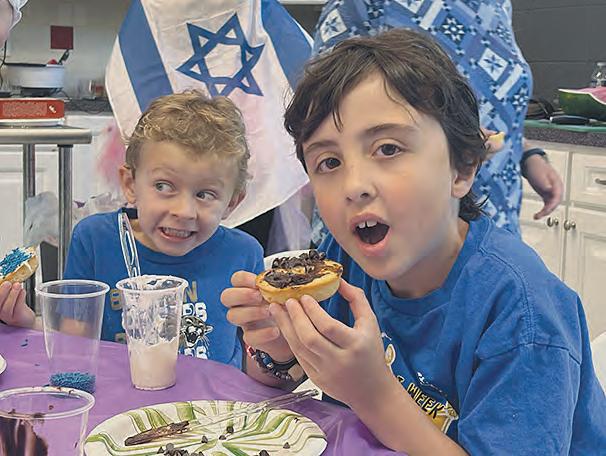


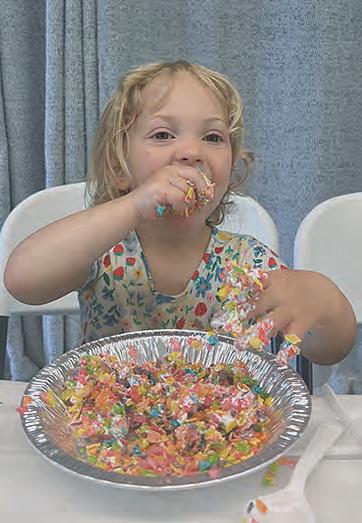
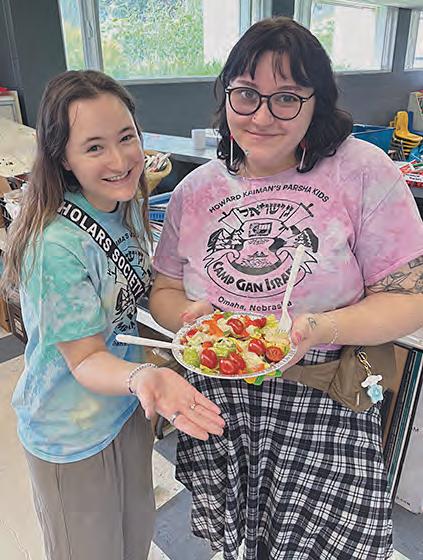


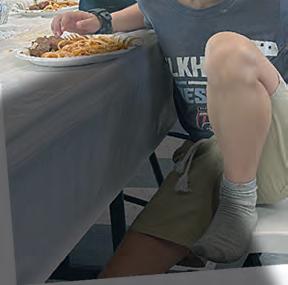
In camper Ayala Benton’s words: “It’s funner than other Jewish events. I like it because you get to meet new people and you get to do and learn stuff you probably never did before.” Ayala en-






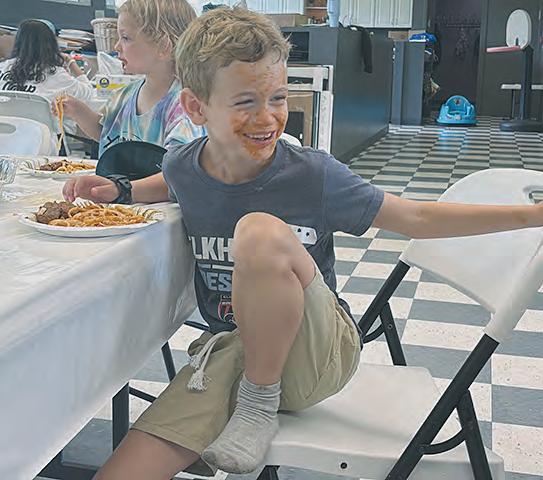





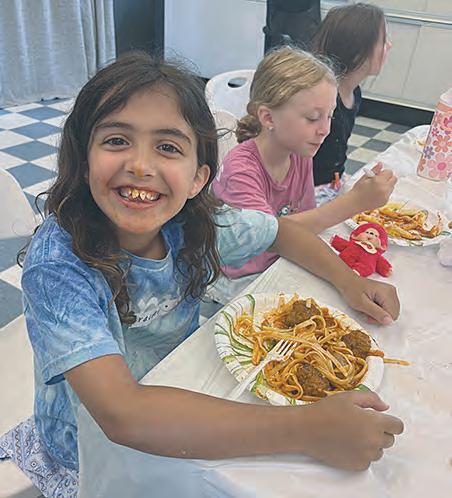




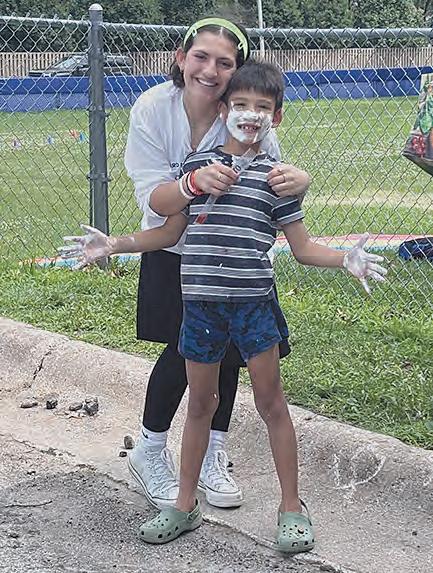

joyed some of our educational activities, like when the Children’s Museum visited to teach about the physics of flight, or when they took a field trip to Baker’s to find Kosher ingredients for Gan Izzy’s Master Chef competition. Returning-camper David Eisner says his favorite part of camp was playing outside. When asked if he could get more specific, he said he loved all of it from swimming, to sports, to our water-filled ball pit. David also likes camp for the chance to spend time with his Friedel friends outside of school. Something special about Camp Gan Israel is that there’s space for everyone. If the heat is overwhelming, there’s an art project indoors with your name on it. If meal prep is your style, you can help Rabbi Eli set up the table-spaghetti for lunch. If you’re full of energy, Gan Izzy counselors are there to race with you until your legs give out. Whether Jewish pride to you looks like eating Kosher, singing Shema in the morning, or dancing all day to Hebrew music, Camp Gan Israel is a place you See Camp Gan Israel page B3

Continued from page B2 can call home.
It’s an environment that keeps people coming back to camp, even as adults. Harper Gordman, recent college graduate, said “When I think about being a kid, Camp Gan Israel is one of the first things that comes to mind! It helped solidify my Jewish pride and joy.” Harper can still be found at Gan Izzy helping foster that joy in the next generation.
Seventy years after its formation, Camp Gan Israel has hundreds of thousands of campers worldwide from Australia to Hong Kong to here in Omaha, all shouting the shared mantra: “Everybody say ahh! Everybody say ooh! Everybody say I am proud to be a Jew!”
Registration started in February, but if you’re interested in joining us this summer, it will be open until May 17th at ochabad.com/camp
The Jewish Press Passover issue April 14, 1976 included a story by Barbara Simon titled Rev Gendler-a shochet recalls Omaha’s great matzohselling days. Gendler came from Chumsk to Omaha in 1921, and soon began working for a butcher shop. He earned the title “Reverend” because of his special training as a shochet.
“In 1930, Rev. Gendler joined his father-in-law, Max Peltz, and rabbi Grodzinsky in the annual business of wholesaling most of the matzoh sold in Omaha. In those days,” Simon wrote, “the rabbis often sold matzoh and homemade wine to supplement their salaries.
“In Omaha, Passover brought important extra dollars to many people. The community, poor as it was, gave the chance to earn money to those even poorer. At Passover, widows went around the neighborhoods to take orders for matzoh and other foods, placing their orders with Rev. Gendler, who sold it to them at wholesale price. They in turn delivered the orders on wagons and sold it at retail price. Matzoh was 15 cents a pound in 1925.”
JTA
Three years ago, my wife, Rabbanit Leah Sarna — one of the first women Orthodox rabbis — was preparing to play an important role for our lay-led synagogue in suburban Philadelphia, Congregation Sha’arei Orah. Her task was to sell the community’s hametz, or leaven. It’s something that observant Jews undertake to fulfill the Torah’s commandment to eliminate hametz, or leavened food, before Passover…without exactly doing so: They sell their leavened food to a non-Jew for the duration of the holiday. Despite not being our synagogue’s official leader, Leah volunteered to facilitate the sale. All we needed was a non-Jewish buyer.
hesitated. Precisely because it includes non-Jews, selling hametz also entails significant Jewish vulnerability: It reveals some of the strangest aspects of Judaism. How would I even explain it to my colleagues?
That should have been easy. The reason we’d moved to Philadelphia and joined this synagogue two years earlier was for my job as a professor of biblical studies at Villanova University, a Catholic university nearby. I’m the only full-time Jewish professor in a theology department of several dozen Christian colleagues, with whom I maintain relationships of both professional collaboration and genuine friendship. Selling hametz is a rare example of a traditional Jewish practice that not only accommodates but actually requires this kind of community with non-Jews. “Just ask one of your colleagues,” Leah suggested. I agreed. Yet when I went to reach out to them, I

“It’s an actual sale of random food in all these people’s homes — like, you’re really buying it — but don’t worry, you don’t have to keep it, because we’ll buy it back afterward — but you can keep it if you want, because, really, it’s an actual sale!” Just the thought felt ridiculous. Eventually, with Passover approaching, I took a deep breath and sheepishly asked several colleagues whether they’d do us this favor. I was surprised by the response: genuine enthusiasm across the board. Scholars from numerous Christian denominations and traditions eagerly volunteered. I thought I’d be begging for help. In the end, I was turning people down!
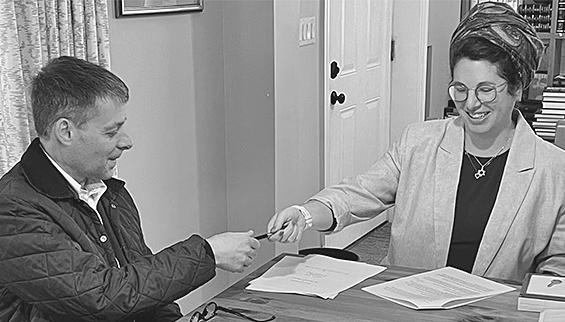
The lucky winner was Philip A. Cunningham, a Catholic theologian and expert on Jewish-Catholic relations at another local university. Before Passover, Phil came to our house to buy the hametz. Leah also invited the whole synagogue, beyond those serving as Jewish legal witnesses, and several people took up her offer. In their presence, Leah and Phil reviewed the terms of the sale and undertook several transactions to ensure its effectuation. For instance, she gave him a key to our garage, a portion of which he would be leasing, because immovable property transfer is
See You need a non-Jewish neighbor page B4




Continued from page B1 liked it. We were getting tired of him telling us what to do. Moses said, ‘Let my people go.’ He said ‘No, no, no, I will not let them go.’ Frogs! The water turned to blood! The plagues! Then his other people died. Moses led the way out of the river.” - Shay B.
“The baby was Moses.” - Penny S.
“Pharaoh say ‘Let my people go!’ No! All the people go because Pharaoh not nice for him. Because him the bad guy. A baby, he sleep in the basket. The princess come get him, the baby wake up! Then him bring the baby her home. Them not being nice. The bush got fire. Yeah! The froggies jumping on Pharaoh’s head!” - Lola
“Baby Moses was a baby. The princess found her and go to the castle. He growed up. He told Pharaoh to let people go. Pharaoh was the bad guy because he was not letting people go. Pharaoh said ‘No, no, no, I will not let the people go.’ Pharaoh says ‘No, no, no.’ Moses sent frogs everywhere. They were jumping all over him. They put blood on the side of the doors so God knows they’re safe. Then Pharaoh says ‘Fine, I’ll let them go.’ Then Pharaoh says ‘I’m joking!’Then Pharaoh says ‘Then go!’ Then Moses and the people went. God pushed and made the water opened. They could walk through. Then God closed the water. Then Pharaoh sinked. I like when the princess found Baby Moses.” - Amelia
“God had a stick and some frogs on his face. Haman didn’t let the Jewish people go.” - Lily C “Pharaoh is the bad guy. The Baby Moses came to save the Jewish people. He said ‘Let My People Go!’ Pharaoh stopped them. Baby Moses came. We set up for Passover.” - Sylvia
“The Pharaoh won’t let them go. They had slaves. Moses! They worked so hard!” - Nicky
“Baby in the water, he’s in him basket. He grow. Baby Moses.” - Collin
“The Jewish people have slaves and Moses split the Red Sea in half and some a bush. It was talking. ‘Let my people go!’ Moses split the Red Sea in half cuz the people want to go somewhere else. Maztah, it’s bread that’s heated it. It gets crunchy.” - Rory
“Slaves and Pharaoh. We celebrate.” - William S.
“I think I don’t know the words. I know there’s matzah in the Passover story. I’m at the Seder. Baby Moses, I think the Arrow throw her in the river. I went and put her in a basket so now she’s floating in a basket. Well, someone’s in the song, and then they find her. And then, I think, what else? I think they’re getting boo boos on their face. I think Moses tell Pharaoh ‘Let my people go!’ Pharaoh say ‘No, no, no I won’t let your people go.’ I think he didn’t and then he changed his mind. Well God breaked all the water and split it apart. I think we eat new foods.”Violet
You need a non-Jewish neighbor
Continued from page B3 more straightforward in Jewish law. Leah affirmed Phil’s right to request access to any hametz indicated in the contract. This was, after all, a real sale. Watching this, I understood why I had initially hesitated. Given my scholarly background, I felt intensely aware of how the hametz sale, an intricate process of circumventing the Torah’s apparent meaning, aligns with Christianity’s negative stereotypes of Judaism as narrowly legalistic and unconcerned with deeper religious meaning. In fact, in the New Testament, Jesus warns, “Beware the yeast (i.e., hametz) of the Pharisees, which is hypocrisy” (Luke 12:1). Playing on Passover, Jesus turns hametz into a metaphor for those aspects of Judaism that should be rejected. And I was supposed to ask Christians to participate in a strange practice that was all about this hametz? Could I really blame them if they saw these legal acrobatics as “hypocritical”? Fortunately, the hametz sale completely upended my concerns. In this vulnerable moment, here was a Christian who, despite the long Christian tradition of anti-Judaism, treated the granular details of Jewish law with seriousness, curiosity and admiration. In fact, he was literally buying into it. Jewish-Christian dialogue often operates in the lofty realm of theology. This was the opposite of that — but for precisely that reason, it felt more real. The fact that it happened in a year when (as in 2025) Passover and Easter coincided, necessitating some scheduling maneuvers, only underscored the concreteness. Since then, Leah (now officially our synagogue’s spiritual leader) and I have treated this practice as an annual affirmation of Jewish-Christian partnership. Each Passover, we invite a different Christian scholar, representing various denominations and academic fields, to buy our synagogue’s hametz. We encourage the whole community to attend — not
simply to watch but to get to know the buyer. Last year, for example, we sold to my Villanova colleague Massimo Faggioli, an expert on 20th-century Catholicism, including that era’s revolution in Jewish-Catholic relations. In addition to meeting many community members, Massimo recorded a short video for the synagogue’s WhatsApp group in which he shared that his participation was especially meaningful as a native of Ferrara, an Italian city with a rich Jewish history. More lightheartedly, one synagogue member covered the cabinets where they had stored the food with signs that read “Massimo’s hametz.” The sale is not an anonymous operation. It’s a real relationship between communities.
I mentioned that in the New Testament, hametz symbolizes what should be avoided. In recent Catholic writings, however, it has become positive: as the catalyst of basic sustenance, it symbolizes productive social change. Pope Francis has written, “The local has to be eagerly embraced, for it possesses something that the global does not: it is capable of being a leaven, of bringing enrichment. … Each individual can act as an effective leaven by the way he or she lives each day. Great changes are not produced behind desks or in offices.”
Perhaps this explains why selling hametz is such a meaningful manifestation of partnership between Jews and non-Jews. Ultimately, it is in local, personal relationships — down to nitty-gritty business transactions — that the real work of building shared community is found. If your synagogue sells hametz, then, by definition, you live among people who are doing that real work. This practice, often overlooked or taken for granted, can be an annual opportunity for us to reflect on how fortunate we are that this is the case. Especially in the difficult times we live in, it is these seemingly small moments that have the potential to feel the most hopeful, and the most redemptive.




Our Pennie Z.
Davis Early Learning Center has a stellar reputation as the best preschool in Nebraska. The Jewish Press has no actual hard evidence to back that up, but we will argue that point with anyone. What we do have, however, are some wise and insightful words from the youngest students in our building. In honor of Pesach, they were gracious enough to answer two questions: 1. What will I eat at my seder, and 2. Who will I invite to my seder? That’s all they had time for, unfortunately. We wanted more, but there were mud pies to bake and playground dates to honor.
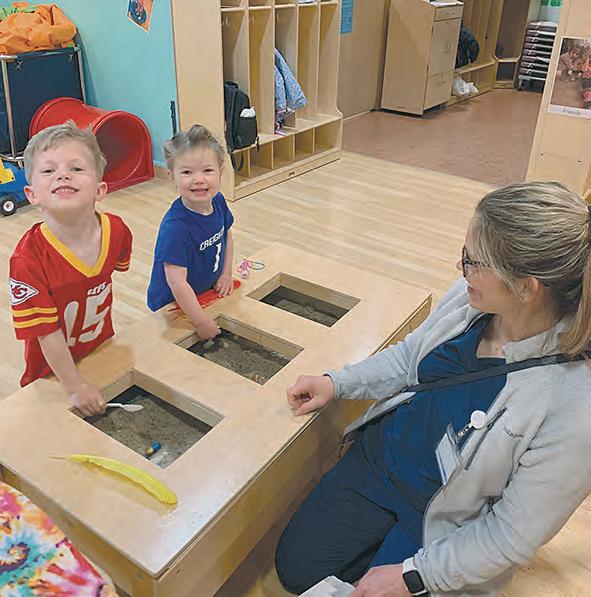
like it but now she doesn’t. I love it. So yummy!Amelia Eggs. - Ari Toast and bacon and frosting and chocolate cake. - Avi Candy…a lot of candy… all kinds of candy. - Benjamin Pie. - Calvin Orange carrots. I actually love carrots and chicken. Chicken too.
My daddy makes the best carrots when it’s Grandma's birthday. He made the best carrots ever.
- Jane
Chicken nuggets in ketchup. - Jed Popcorn. I have popcorn in my lunch right now sticking out of my lunchbox. - Leah Cheese. - Lola
and my teachers.
- Freyja I will invite my friends, my neighbors, you, Miss Amy. I think my friends, I think Rome.
Daniel Tiger is just in a cartoon, I think I will invite my brother. - Jack Jane. - Lily C.
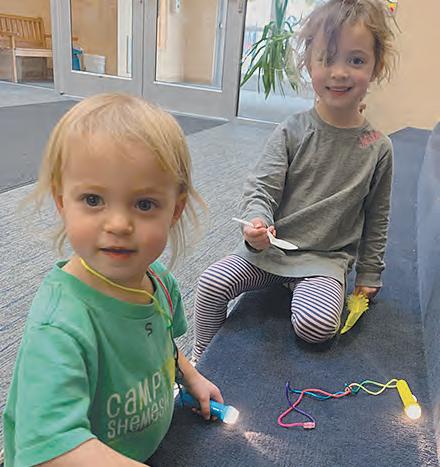
I’m gonna invite my grandma and my aunt and my cousin. I think it’s gonna be Sylvia and Rory and Freyja from school. I’m gonna get Jasmine and Cinderella and Ariel. I think we’ll have a dance party.Lily M.
What will I eat at my seder?
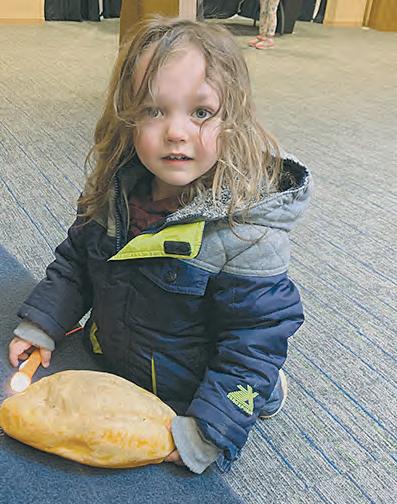
Eating the candy, the cake, the donuts. On top of the cake has Chase on it. - Collin Mac and Cheese. - Elam Cake. - Freyja French Fries!Lily C. I hope I get to eat chocolate matzah with sprinkles!Lily M. Some matzah! And some juice, that’s my wine.Miles Matzah! - Penelope Salad. A salad isn’t dinner! I’ll eat broccoli! - Rome Mac and Cheese. - Rory Noodles cuz they are so good. - Sean I thought I would have matza at home. I have matza at home. - Violet Meat, and like a potato, and chicken and after that, birthday cake. - William D. Matzah. - William S.
I like Velveeta Mac and Cheese. My sister used to

Crackers with Jelly. - Lucy Chicken. Actually, turkey. - Mary Broccoli. My mom’s broccoli is delicious. And once my sister added too much sugar to the popcorn and the popcorn is flying out of the bowl! - Penelope Chocolate with sprinkles on it. - Shay B Mac and Cheese, chicken. - Shay W. Carrots — the purple ones. - Skyler Rice and noodles. - Willa
Who will I invite to my seder?
Chase from Paw Patrol to play Chase games. I’d play Chase games, I’d play games with Chase. - Collin Mom, Dad, Brother. - Elam My mom, my dad, and my sister, my friends,
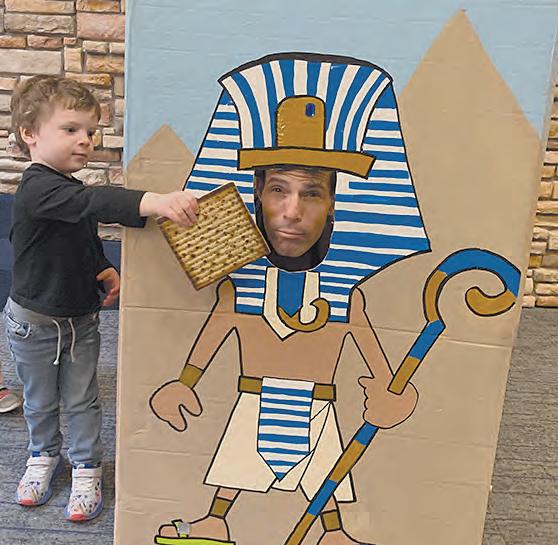
All my grandmas, my grandpa, and my mommy and my dad and my sister, Nicky. I think that’s all. - Miles Grace, Collin, Colm, Rome, Penelope, Violet, Sean, Sylvia, Reese, that’s all. In my family Emily, Jack, Joe, my mommy, my dad, and Moana. That’s all.Nicholas Nicky!Penelope K. Miles because Miles is my best friend.Rome
My Nana and Poppy , my aunt, Miles. - Rory
Aseanti, my mom, daddy, Nicky, and Elam, my brother, Mr. Aaron.Sean
I thought my mommy and daddy would be at the Seder. - Violet
Q, it’s my brother. Piper, she’s my best friend. - Piper








MULTIFAMILY PROPERTY MANAGEMENT








COMMERCIAL SALES, LEASING & MANAGEMENT






COMMERCIAL PROPERTY CONSTRUCTION
COMMERCIAL FACILITIES MAINTENANCE
MULTIFAMILY CONSULTING, AUDITING, & TRAINING SERVICES
A SOLUTION FOR ALL OF YOUR REAL ESTATE NEEDS

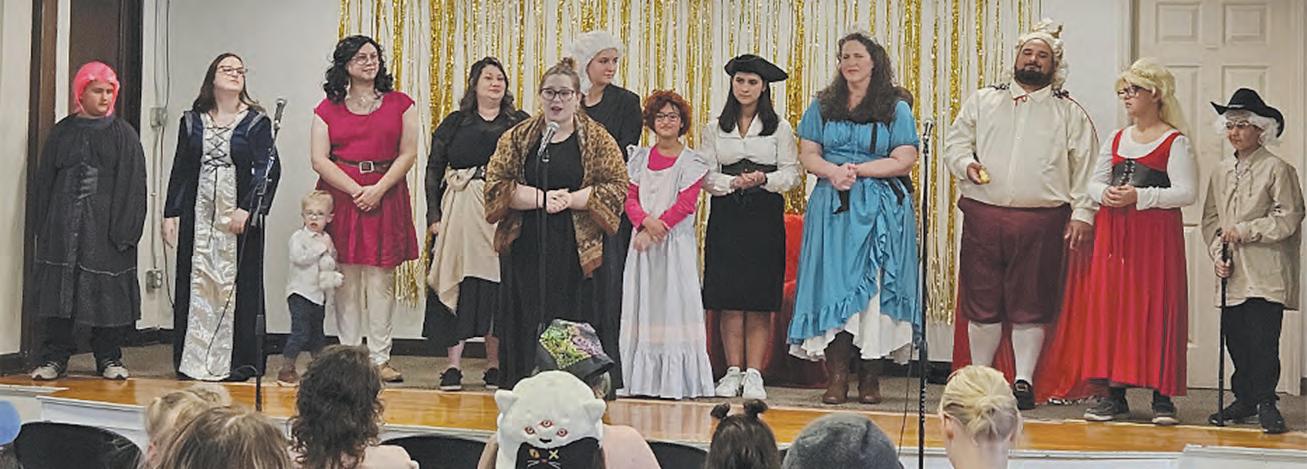
Lincoln’s Jewish community blends the traditional with unique at Purim, bringing members of both congregations together to celebrate the holiday. The celebrations began with a Megillah Reading at South Street Temple, and as always, the reading was paired with a visit from Happy D. Clown. The reading alternated with clowning and magic, and was followed by snacks and Happy making balloon animals in the social hall. Kids and adults gave the service glowing review, and Happy reports he looks forward to coming by every year!
Celebrations continued with
the Purim Spiel. For the first time, and helping inaugurate recent renovations, the spiel was held in the social hall at South Street Temple, rather than in either the Tifereth Israel social hall or South Street’s sanctuary. Again putting a modern spin on the traditional, Tye Chappelle directed Esther: A Persian Musical a parody of the hit musical Hamilton. With a cast led by Amy Muriello, Avigail Muriello, Frank Muriello, and Oliver Ward, the spiel did not throw away its shot at entertaining. Immediately following the spiel was another edition of
We will be publishing our annual High School
Graduation Class pages on May 22, 2026. To be included, fill out the form below or send us an email with the student’s name, parents names, high school they are attending, the college they will be attending and photo to: jpress@jewishomaha.org by May 12, 2026.
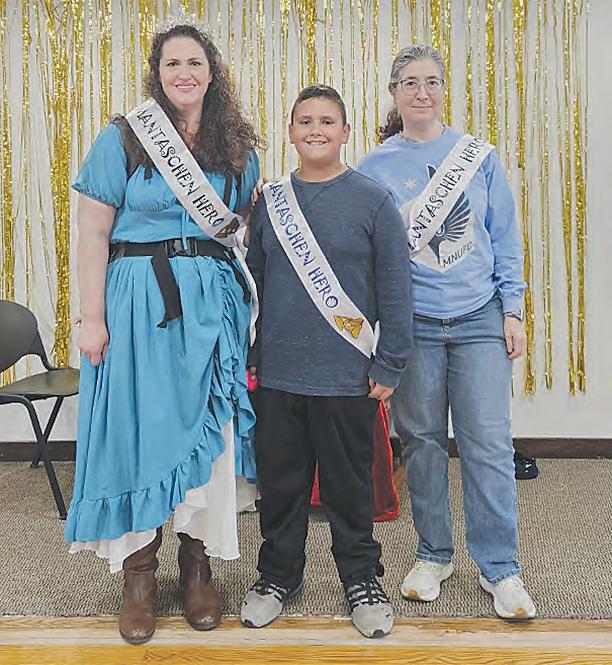
Hamantaschen Hero, the annual Lincoln Jewish Community Hamantaschen contest. This year, an expanded contest saw awards given out for three categories: Best Regular Hamantaschen, Best Gluten-Free Hamantaschen, and Kids’ Choice Hamantaschen. Amy Muriello won the first category with savory hamantaschen filled with goat cheese, sauteed onion, and everything bagel seasoning; Sarah Kelen pulled off a three-peat victory with her Gluten Free Cranberry-Cherry hamantaschen, and Josiah Muriello won the Kids’ Choice with blueberry filling in cream cheese dough. All hamantaschen were, however, wildly popular, and there were not many leftovers sent home at the end of the contest.
Whether it’s a clown at the Megillah Reading, a Hamilton spiel, or savory hamantaschen, the Lincoln Jewish Community manages to put unique and popular spins on the traditions of Purim without sacrificing the core of the holiday. And, more importantly, the whole community comes together in a spirit of fun and celebration!
Photo credit: Connor P. Mullin







“All of my books are the same book,” said Dara Horn, the author of seven novels and the 2021 essay collection, People Love Dead Jews, which may be the most talked-about Jewish book of the past several years.
The subject, she said, is time — how Jews mark it, how they preserve it, how they understand where a moment goes once it is passed. Her 2006 debut, A World to Come, toggles between present-day New Jersey and 1920’s Russia. Her 2018 novel Eternal Life, meanwhile, is about an immortal woman, born in Jerusalem, who experiences countless lives over 2,000 years.
She took the title of her 2009 Civil War novel, All Other Nights, from the Passover Haggadah, which she calls a book about “the collapse of time,” expressed in its injunction that “in every generation a person is obligated to see themselves as if they left Egypt.”
One Little Goat appears to be adjacent to that project — helping middle-schoolers understand the way their own family history is an accumulation of Jewish lives and experiences reaching back through time and marked each year at the seder table.
The story was inspired by two seders that Horn, who was raised and still lives in Short Hills, New Jersey, grew up attending. At the first, hosted by her parents, Horn and her three siblings would perform
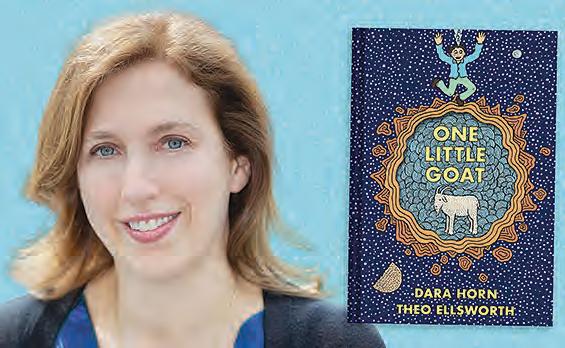
It’s a verse that becomes literal in her latest book, the middle-grade graphic novel One Little Goat: A Passover Catastrophe. In it, a young boy escapes a seemingly endless family seder in the company of a talking goat, who drags him back through a “hole in interdimensional space-time” and to the seder tables of historically iconic Jews, including Sigmund Freud, the 16th-century philanthropist Doña Gracia Nasi and the Talmudic tag team known as Rav and Shmuel.






The book is both a history lesson, and a lesson about history. “The seder is not just about the Exodus from Egypt. It’s also a commemoration of a commemoration of a commemoration,” said Horn, noting how the traditional Haggadah itself includes descriptions of at least two prior seders, the very first one in Egypt and one held in the Land of Israel after the destruction of the Second Temple. Quoting the late American historian Yosef Hayim Yerushalmi, Horn said Jewish culture makes a distinction between history and memory, and Jews are more interested in memory: investing a historical event with eternal, inheritable meaning.
“When I say I write about time, I mean specifically, how do we live as mortals in a world that outlasts us?” she said. “That’s the central question that I’m exploring as a writer.”
History and memory were the subjects of People Love Dead Jews, where Horn proposes that in its fascination with the ways Jews suffered and died, the world either overlooks or devalues the way they actually lived and live. Even well-meaning efforts like Holocaust-education mandates and Shoah memorials ignore the layers and layers of Jewish history and complexity, leaving Jews as convenient abstractions for antisemites and conspiracy theorists.

The conversation sparked by the book — “People Love Dead Jews ate my life,” she jokes — turned the novelist and Hebrew and Yiddish scholar into a go-to expert on the recent rise in antisemitism. An alumna of Harvard, she gave an interview to a Congressional committee as a member of Harvard’s Antisemitism Advisory Group, formed in the wake of Hamas’ Oct. 7, 2023, attack on Israel. In recent months she launched a nonprofit, Mosaic Persuasion, which aims to supplement Holocaust and history of religion units in K-12 education with curricula about the foundations of Jewish civilization and the causes of antisemitism.
“There are 29 states in this country where people are required by law to learn in school that Jews are people who were murdered,” she said, referring to Holocaust education mandates. “There’s not a single state in this country where anyone is required to learn, like, who are Jews? What’s Israel? What the hell do they have to do with the Middle East? We’ve outsourced that to TikTok.”
songs and skits, riffing on pop culture. The second she describes as a “large multigenerational gathering” that included Holocaust survivors, including some who had participated in the Warsaw Ghetto Uprising on Passover of 1943, and former Soviet “refuseniks” were active in the Free Soviet Jewry movement. Although frustrated that the kids played only a supporting role in the second seder, it left her with a kind of vision. “I felt like the room I was in was a lighted box that’s sitting on a tower of lighted boxes of other seders, including the seders that these people at this table have been at in the past,” she said.
The idea germinated for years before she contacted the decorated graphic novelist and illustrator Theo Ellsworth, a favorite of her children, and suggested they collaborate. Ellsworth, who is not Jewish, seemed to get it: If he wasn’t familiar with the Passover story, he understood its potential as a children’s adventure. Horn calls their book a “portal” story, like the Harry Potter books or C.S. Lewis’s Narnia tales, in which children slip through a passage into a fantastic world beyond.
“That’s so resonant for children because children’s lives are really small, and they’re completely managed by the adults in their lives,” said Horn. “That’s why children are looking for that access point to a life bigger than theirs.”
Horn said Ellsworth’s art — black and white, heavily inked, with an underground comic’s sensibility — appealed to her because it wasn’t “cute and cuddly.” Which raises the question: When are children ready to encounter a Jewish history of persecution and slaughter?
One answer is provided during the seder itself, which often ends with the traditional song Chad Gadya, or one little goat in Aramaic. It’s a “cumulative” song about a baby goat that is eaten by a cat, who’s killed by a dog, who’s beaten with a stick, culminating with the Angel of Death being slain by God. One interpretation is that the goat represents the Jewish people, and the climax of the song signals the redemption of the Jews. It’s a dark theme smuggled into an upbeat if macabre children’s song.
Making light of the seder’s darker themes is a Passover tradition all its own, and Horn is on board with it.
“By the time children are old enough to appreciate [the darkness], they own the story. They’re characters in the story, and they know that about themselves and that this is a story about us,” said Horn. Horn embraces that darkness in her book, which See Time-traveling book page B9
Continued from page B8
includes an appearance or two by the Angel of Death. Horn recalls that the seder in the Torah is described as the Night of Watching. It takes place before the actual flight from Egypt, with the Jews at the table uncertain if they will survive.
“I can’t look at that scene anymore, of that first seder, without thinking of a ma’amad, the bomb shelters and safe rooms, where people in Israel were hiding on Oct. 7, and where everybody goes during missile attacks, where you’re hiding with your family trying to wait out the Angel of Death,” she said. “That’s where my mind was when we were finishing the book.”
Horn’s own seders are hardly grim affairs. She, her husband and four children stage extravaganzas, with a sort of Passover funhouse experience in the basement, laser lights and fog machines to simulate the parting of the Red Sea, and homemade movie and television parodies.
For Horn, Passover is a story about how Jews lived and how they survived. The history of persecution can’t be avoided but it is only part of the story.
Before People Love Dead Jews, said Horn, she would speak in bookstores about her novels and ask the audience two questions: How many people can name four concentration camps? And, how many people can name four Yiddish writers? Most could answer the first question and few could answer the second. “I’d say, ‘85% of the [Jews] killed in those concentration camps were Yiddish speakers. This is a very literary culture. Why do you care so much about how these people died when you really don’t care about how these people lived?’
“What I find really important about Jewish history is not this litany of horror — which I don’t think you can avoid talking about — but that the story of Jewish life is about this amazing creative resilience.”
Reprinted from the Jewish Press of April 14, 1976
For much of Omaha Jewry at the turn of the century, that was the name: Grodzinsky.
It meant Rabbi Henry Grodzinsky, the scholar, the author, the teacher and the first orthodox rabbi in Omaha. A man to whom the “huddled masses” of Emma Lazarus’ great poem looked when they crossed the Missouri into the burgeoning city that was Omaha in the late 1890s and early 1900s.
He was the rabbi who helped newcomers get settled in the new country and also helped them maintain their traditional ways.
But he was more than that-he was a rabbi of world-class stature, and author of books read around the globe. In the story of his death at age 90 in 1947, the Jewish Press said he “was one of the most colorful personalities in Jewish life, being known as one of the greatest scholars of his day and a “Torah giant” in true rabbinic tradition of the past.
But even so, Rabbi Grodzinsky was a man among the masses because his story was like theirs in that he, too, was a newcomer. He had come to Omaha from Lithuania in 1891 and so he understood their problems.
And he also celebrated their joys.He celebrated the holiday of Passover in all its reclining, resplendent glory. He dressed for the holiday in his kittel-a long, white ceremonial gown-and he had a special velvet pillow to place behind his back on this night, so that he might recline as his forefathers did when they came “out of the land of Egypt, out of the house of bondage.”
“That first seder was not for their ancestors, but for them. It was their freedom, that’s what it emphasized,” says William (Bill) Grodinsky, sixth of Rabbi Grodzinsky’s seven children (the “z” was
dropped from his name).
The Rabbi read from the same Haggadah in Omaha that he had in Lithuania years before.
“The Sedorim were a big thing. It was a real festival,” says Grodinsky, referring to congregants in his father’s synagogue, which was once located at 24th and Nicholas Streets. Passover, he said, “really meant a lot to everybody at that time.
“There was a strong feeling of celebration, not only in our house, but in all the houses. Most of the heads of households had come from Russia or other parts of Eastern Europe. Of course, the first Jews in Omaha were probably Reform Jews from Germany, but others came here and while they had hardshipsit was never easy transplanting themselves from one culture into another- they nevertheless felt very fortunate to be here, to be free and not have to fear a lot of things.
“In the preparations, in everything, there was really a feeling of peace and gratitude to the Almighty.”
The children back then joined eagerly in the excitement of preparing for Passover, recalls Grodinsky. It was their most favorite celebration, they waited for it and looked forward to it.
Born in Omaha in 1894, Bill and his brothers and sisters lived at 13th and Pacific until 1908 and had a Hebrew studies tutor daily after school.
The neighborhood was crowded but cosmopolitan:
“I’d say there were all the ethnic groups in a radius of 12 blocks of us,” he says today. He recalls that “while we didn’t live very lavishly” there was always enough to eat. His father was busy with the community and “spent all of his spare time writing those books.” His mother, Bertha, spent her day grocery shopping-food could be kept only a short time in an icebox.

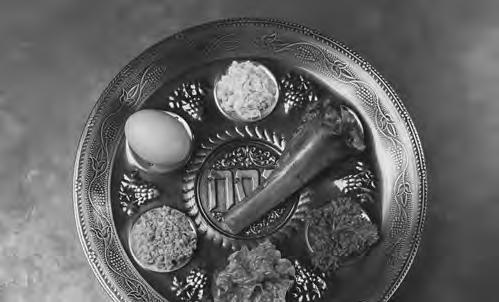




B’NAI ISRAEL SYNAGOGUE
618 Mynster Street Council Bluffs, IA 51503-0766
712.322.4705 www.cblhs.org
BETH EL SYNAGOGUE
Member of United Synagogues of Conservative Judaism 14506 California Street Omaha, NE 68154-1980 402.492.8550 bethel-omaha.org
BETH ISRAEL
SYNAGOGUE
Member of Union of Orthodox Jewish Congregations of America 12604 Pacific Street Omaha, NE. 68154
402.556.6288 BethIsrael@OrthodoxOmaha.org
CHABAD HOUSE
An Affiliate of Chabad-Lubavitch 1866 South 120 Street Omaha, NE 68144-1646
402.330.1800 OChabad.com email: chabad@aol.com
LINCOLN JEWISH COMMUNITY:
B’NAI JESHURUN
South Street Temple
Union for Reform Judaism
2061 South 20th Street Lincoln, NE 68502-2797
402.435.8004 www.southstreettemple.org
OFFUTT AIR
FORCE BASE
Capehart Chapel 2500 Capehart Road Offutt AFB, NE 68123
402.294.6244 email: oafbjsll@icloud.com
TEMPLE ISRAEL
Union for Reform Judaism (URJ) 13111 Sterling Ridge Drive Omaha, NE 68144-1206
402.556.6536 templeisraelomaha.com
LINCOLN JEWISH COMMUNITY:
TIFERETH ISRAEL
Member of United Synagogue of Conservative Judaism 3219 Sheridan Boulevard Lincoln, NE 68502-5236 402.423.8569 tiferethisraellincoln.org
Monthly Speaker Series Service, Friday, Apr. 10, 7:30 p.m. with our guest speaker. Our service leader is Larry Blass. Everyone is always welcome at B’nai Israel!
For information about our historic synagogue, please visit our website at www.cblhs.org or contact any of our other board members: David Alloy, Renee Corcoran, Rick Katelman, Gail Kenkel, Janie Kulakofsky, Howard Kutler, Ann Moshman, Mary-Beth Muskin, Debbie Salomon and Sissy Silber. Handicap Accessible.
Services conducted by Rabbi Steven Abraham and Hazzan Michael Krausman.
IN-PERSON AND ZOOM MINYAN SCHEDULE:
Mornings on Sundays, 9:30 a.m.; Mondays and Thursdays, 7 a.m.; Evenings on Sunday-Thursday, 5:30 p.m.
FRIDAY: Nebraska AIDS Project Lunch, 11:30 a.m.; Kabbalat Shabbat, 6 p.m. at Beth El and Live Stream.
SATURDAY: Shabbat Hagadol Zimra, 10 a.m at Beth El and Live Stream; Jr. Congregation (Grades K12), 10 a.m.; Havdalah, 8:20 p.m. at Beth El & Zoom.
SUNDAY: BESTT (Grades K-7), 9:30 a.m.; Adult
B’nai Mitzvah, 9:30 a.m. with Hazzan Krausman.
MONDAY: Women’s Book Group, 1:15 p.m. We will discuss Hotel Cuba by Aaron Hamburger. Newcomers are always welcome.
WEDNESDAY: Shacharit/Siyyum B'khorim followed by Biur Chametz, 7 a.m.
THURSDAY: Passover Day 1 Morning Service, 10:30 a.m. at Beth El & Live Steam; Passover Seder, 6 p.m. at Beth El.
FRIDAY-Apr. 3: Passover Day 2 Morning Service, 10:30 a.m. at Beth El & Live Steam; Kabbalat Shabbat, 6 p.m. at Beth El and Live Stream.
SATURDAY-Apr. 4: Passover/Shabbat Morning Service with Yizkor, 10 a.m at Beth El and Live Stream; Jr. Congregation (Grades K-12), 10 a.m.; Havdalah, 8:30 p.m. at Beth El & Zoom.
Please visit bethel-omaha.org for additional information and service links.
FRIDAY: Torah from Omaha, 6:45 a.m.; Shacharit, 7 a.m.; Mincha/Kabbalat Shabbat/Candlelighting, 7:26 p.m.
SATURDAY: Shabbos Café, 8:30 a.m.; Shacharit 9 a.m.; Tot Shabbat, 10:30 a.m.; Youth Class, 10:45 a.m.; Soulful Torah 6:35 p.m.; Mincha 7:20 p.m.; Kids Activity/Laws of Shabbos 7:50 p.m.; Havdalah, 8:27 p.m.
SUNDAY: Shacharit, 9 a.m.; Mincha/Ma’ariv 7:30 p.m.
MONDAY: Torah from Omaha, 6:45 a.m.; Shacharit, 7 a.m.; Monday Mind Builders 4 p.m.; Mincha/Ma’ariv 7:30 p.m.
TUESDAY: Torah from Omaha, 6:45 a.m.; Shacharit, 7 a.m.; Mincha/Ma’ariv 7:30 p.m.
WEDNESDAY: Torah from Omaha, 6:45 a.m.; Shacharit, 7 a.m.; Biur Chamets, 11:30 a.m.; Character Development, 1:30 p.m.; Mincha/Ma’ariv, 7:30 p.m.; Candle Lighting, 7:31 p.m.
THURSDAY: Office Closed for Pesach; Shacharit, 9 a.m.; Tot Shabbat, 10:30 a.m.; Youth Class, 10:45 a.m.; Candle Lighting, 8:32 p.m.; Beth Israel Community Seder 8:40 p.m.
FRIDAY-Apr. 3: Office Closed for Pesach; Shacharit, 9 a.m.; Tot Shabbat, 10:30 a.m.; Youth Class, 10:45 a.m.; Mincha/Kabbalat Shabbat, 7:30 p.m.; Candlelighting, 7:34 p.m.
SATURDAY-Apr. 4: Shabbos Café, 8:30 a.m.; Shacharit, 9 a.m.; Tot Shabbat, 10:30 a.m.; Youth Class, 10:45 a.m.; Soulful Torah, 6:35 p.m.; Mincha, 7:20 p.m.; Kids Activity/ Laws of Shabbos 7:50 p.m.; Havdalah, 8:35 p.m.
Please visit orthodoxomaha.org for additional information and Zoom service links.
Join classes via Zoom. Go to ochabad.com/academy. Visit the Passover site at ochabad.com/ passover. For more information or to request help, please visit www.ochabad.com or call the office at 402.330.1800.
FRIDAY: Shacharit, 8 a.m.; Lechayim, 5:30 p.m., go to ochabad.com/lechayim to join; Candlelighting, 7:26 p.m.
SATURDAY: Shacharit, 10 a.m. followed by Kiddush and Cholent; Shabbat Ends, 8:26 p.m.
SUNDAY: Sunday Morning Wraps, 9 a.m.; Model Matzah Bakery & Seder, 4 p.m. contact Mushka at mushka@ochabad.com;Yud Aleph Nissan Farbrengen, 6 p.m. at Chabad, RSVP at ochabad.com/nissan11
MONDAY: Shacharit, 8 a.m.; Personal Parsha, 9:30 a.m. with Shani; Intermediate Biblical Hebrew Grammar, 10:30 a.m. with David Cohen; Parsha Reading, 6 p.m. with David Cohen; Translating Words of Prayer, 7 p.m. with David Cohen.
TUESDAY: Shacharit 8 a.m.; Aramaic Grammar, 10 a.m. with David Cohen; Intermediate Biblical Hebrew Grammar, 6 p.m. with David Cohen; Introductory Biblical Hebrew Grammar, 7 p.m. with David Cohen
WEDNESDAY: Shacharit, 8 a.m.; Introductory Biblical Hebrew Grammar, 10:30 a.m. with David Cohen; Parsha Reading, 11:30 a.m. with David Cohen; Light holiday candles at 7:31 p.m.
THURSDAY: Shacharit, 8 a.m.; Introductory Biblical Hebrew Grammar, 10 a.m. with David Cohen; Advanced Biblical Hebrew Grammar, 11 a.m. with David Cohen; Talmud Study, noon; Introduction to Alphabet, Vowels & Reading Hebrew, 6 p.m. with David Cohen; Code of Jewish Law Class, 7 p.m.; Light holiday candles after 8:32 p.m.
FRIDAY-Apr. 3: Shacharit 10 a.m.; Lechayim, 5:30 p.m., go to ochabad.com/lechayim to join; Candlelighting, 7:33 p.m.
SATURDAY-Apr. 4: Shacharit 10 a.m. followed by Kiddush and Cholent; Shabbat Ends, 8:34 p.m.
LINCOLN JEWISH COMMUNITY: B’NAI JESHURUN & TIFERETH ISRAEL
Services facilitated by Rabbi Alex Felch. All services offered in-person with live-stream or teleconferencing options.
FRIDAY: Kabbalat Shabbat Service, 6:30-7:30 p.m.
ANNETTE VAN DE KAMP-WRIGHT
JEWISH PRESS EDITOR
The word Afikoman actually means “dessert.” During the seder, we take the middle matzah from below the seder plate, and break it. As is usually the case when you break a matzah, the halves don’t come out equal, so we put the smaller piece back, and hide the larger half. Why the larger half? Because it’s a reminder the best part of our future is still to come.
The Talmud says something about why we do that: “We snatch matzahs on the night of Passover in order that the children should not fall asleep.” But, really, we wrap it so it doesn’t get mixed up with the rest of the matzahs.
The word “seder” literally means “order.” That is because there is a clear structure
to the seder, with specific instructions on what to do and when.
Since the original Exodus, the central element of the seder meal was roasted lamb or kid goat, known as the Korban Pesach (“Passover Offering”), which was slaughtered in the courtyard of the Holy Temple and then taken home to be roasted and enjoyed together with family and friends. Luckily, we are not expected to do that these days, and you can buy your meat without having to do the actual slaughtering yourself. We also don’t make burnt offerings in 5786, because since the destruction of the Holy Temple in Jerusalem, we’ve replaced offerings with prayer.
The maror, or “bitter herbs” are a topic of contention. Should it be the really strong
led by Rabbi Alex at SST followed by an Oneg; Shabbat Candlelighting, 7:28 p.m.
SATURDAY: Shabbat Morning Service, 9:30 a.m. led by Rabbi Alex at TI; Torah Study 12:30 p.m. on Parashat Tzav via Zoom; Havdalah, 8:29 p.m.
SUNDAY: LJCS Passover Play/Family Ed; LJCS Class, 9:30 a.m.; Men’s Bike/Coffee Group, 10:30 a.m. at Rock 'N' Joe Coffee, 5025 Lindberg St, Lincoln. For more information or questions please email Al Weiss at albertw 801@gmail.com
WEDNESDAY: Men’s Lunch Group, 12:15 p.m. at Horisun Hospice, 8055 O St #300, Lincoln. We meet in the conference room. Bring your own lunch and beverage. For more information, contact Albert Weiss at albertw801@gmail.com; No LJCS Hebrew School Classes this week - Pesach Break.
THURSDAY: Offices Closed for Pesach; Passover Services, 9:30 a.m. at TI; Lincoln Community Seder, 6 p.m. at TI. Please RSVP or volunteer to events@so uthstreettemple.org
FRIDAY-Apr. 3: Offices Closed for Pesach; Kabbalat Shabbat Service, 6:30-7:30 p.m. led by Rabbi Alex at SST followed by an Oneg; Shabbat Candlelighting, 7:35 p.m.
SATURDAY-Apr. 4: Shabbat Morning Service, 9:30 a.m. led by Rabbi Alex at TI; Torah Study, 12:30 p.m. on Pesach via Zoom; Havdalah, 8:36 p.m.
FRIDAYS: Virtual Shabbat Service, 7:30 p.m. every first and third of the month at Capehart Chapel. Contact TSgt Jason Rife at OAFBJSLL@icloud.com for more information.
In-person and virtual services conducted by Rabbi Benjamin Sharff, Rabbi Deana Sussman Berezin, and Cantor Joanna Alexander.
FRIDAY: Drop-In Mah Jongg, 9 a.m.; Shabbat b’Yachad Service, 6 p.m. In-Person & Zoom.
SATURDAY: Torah Study, 9:15 a.m. In-Person & Zoom; Shabbat Morning Service, 10:30 a.m. In-Person & Zoom.
SUNDAY: 5th Sunday Breakfast, 9 a.m. at Stephen Center— In-Person; Grades PreK-7, 9:30 a.m. In-Person
TUESDAY: Exploring Rabbi Lord Jonathan Sacks, 11 a.m. with Rabbi Bienstock — In-Person & Zoom; Mah Jongg Made Easy, 1:30 p.m. In-Person.
WEDNESDAY: Yarn It, 9 a.m. In-Person; No Youth Learning Programs this week.
THURSDAY: Temple Israel Second Night Seder 5:30 p.m. RSVP Required — In-Person.
FRIDAY-Apr. 3: Drop-In Mah Jongg, 9 a.m.; Shabbat b’Yachad Service, 6 p.m. In-Person & Zoom.
SATURDAY-Mar. 28: Torah Study, 9:15 a.m. In-Person & Zoom; Shabbat Morning Service, 10:30 a.m. InPerson & Zoom; Jammies & Jeans: A Young Family Passover Seder, 10:30 a.m. RSVP Required — In-Person. Please visit templeisraelomaha.com for additional information and Zoom service links.
kind that makes your eyes water, or can we have the red type that doesn’t hurt our sinuses quite as much? Whichever you prefer, you are not supposed to really like it.
The reason we eat the maror is the following Torah verse: “They embittered our lives with hard work.”
Ideally, the maror should be eaten in one mouthful. Swallowing it whole without tasting it does not count!
So, what’s a “Hillel sandwich?” It comes from a dispute between the rabbis about when and how the maror should be eaten; Hillel stated it should be sandwiched between two pieces of matzah, and that’s how we ended up eating it two different ways. But, at least, we can dip that Hillel sandwich in some yummy and sweet haroset.
Dear Editor,
I am a subscriber and assume you will include something about what happened at Temple Israel in West Bloomfield. As a current resident of Omaha, recently relocated from the West Bloomfield community I wanted to share some thoughts with you. I am writing to offer some personal perspective about the West Bloomfield, Michigan, community. Although I moved to Omaha from West Bloomfield a couple of years ago, I spent decades living and working there, including serving as a counselor and administrator in the West Bloomfield School District. My temple, Temple Kol Ami, sits next door to Temple Israel, so the community and its people are very close to my heart. West Bloomfield is an amazingly rich and diverse community. In my neighborhood alone there are large populations of Jewish, Black, Arabic, Chaldean, and Asian residents. For decades we lived side by side in harmony. Our children played together and attended school together. We shopped at many of the same stores, ate in the same restaurants, and shared in each other’s cultures—especially when it came to food, which often brought us together in joyful ways.
Abram (Abe) Wisnia passed away on March 20, 2026 in Omaha. Services were held on March 23, 2026 at Fisher Farm Cemetery.
He was preceded in death by parents, Ben and Sara Wisnia. He is survived by wife, Shelley Wisnia; daughter, Lisa Wisnia; son, Adam Wisnia; grandson, Preston; sister, Marcia (Mike) Silverman; brother, Harry Wisnia; brother-in-law, Bob Adler; sisterin-law, Shari Asplund; and nieces, Rebecca and Jana Silverman. Abe enjoyed his career in computer programming. His family and faith were very important to him. He was a major KC Chiefs and Husker fan. He loved to talk politics, watch old movies and loved his Diet Pepsi and pizza. Memorials may be made to American Cancer Society.
The Jewish Press will be closed on Thursday, April 2 for Passover. The deadline for the April 10 issue is Monday, March 30, noon; Questions? Call 402.334.6448.
My experience there was one of kindness, mutual respect, and neighborliness. Those relationships and that sense of community are what I remember most strongly after all these years.
Since moving to Omaha, I have been grateful to find that same spirit of kindness here as well. Because of that, it is important to me to share that the people of West Bloomfield are caring, welcoming neighbors to one another. What we witnessed at Temple Israel does not reflect the character of the broader community or the unity that has long existed there.
Thank you for the opportunity to share this perspective.
SINCERELY,
LISA GRAFF OF OMAHA



ATTENTION ADVERTISERS! For $225/25 word classified you can advertise in over 120 Nebraska newspapers. For more information contact your local newspaper or call 1-800-369-2850.
HELLO NEBRASKA! Introducing www.nepublicnotices.com, a new public notice website presented as a public service by all Nebraska newspapers. Free access, fully searchable – because democracy depends upon open government and your right to know.
BANKRUPTCY RELIEF! Help stop Creditor Harassment, Collection Calls, Repossession and Legal Actions! Speak to a Professional Attorney and Get the Help You NEED! Call NOW 844-215-3629
AFFORDABLE PRESS Release service. Send your message to over 120 newspapers across Nebraska for one low price! Call 1800-369-2850 or www.nebpress.com for more details.
DENTAL INSURANCE from Physicians Mutual Insurance Company. Coverage for 350 plus procedures. Real dental insuranceNOT just a discount plan. Do not wait! Call now! Get your FREE Dental Information Kit with all the details! 1-855-490-4149 www.dental50plus.com/81 #6258
GET DISH Satellite TV + Internet! Free Install, Free HD-DVR Upgrade, 80,000 On-Demand Movies, Plus Limited Time Up To $600 In Gift Cards. Call Today! 1-877-688-4784
HELP WANTED
DISMAL RIVER Club Now Hiring! Seasonal positions open in Housekeeping, Laundry, Kitchen Staff, Receptionist, Server/Bartender, Massage Therapist, Greens Keeper, Irrigation Technician. Housing Available! dismalriver.com/about/careers/ 308-5462900
HOME SERVICES
DOES YOUR basement or crawl space need some attention? Call
Thrasher Foundation Repair! A permanent solution for waterproofing, failing foundations, sinking concrete and nasty crawl spaces. FREE Inspection & Same Day Estimate. $250 off ANY project with code GET250. Call 1-844-958-3431
PREPARE FOR power outages today with a Generac Home Standby Generator. Act now to receive a FREE 5-Year warranty with qualifying purchase. Call 1-402-899-2584 today to schedule a free quote. It’s not just a generator. It’s a power move.
BECOME A Published Author. We want to Read Your Book! Dorrance Publishing-Trusted by Authors Since 1920 Book manuscript submissions currently being reviewed. Comprehensive Services: Consultation, Production, Promotion and Distribution Call for Your Free Author`s Guide 1-877-858-2822 or visit dorranceinfo.com/Nebraska
WANTED TO BUY
WE BUY 8,000 cars a week. Sell your old, busted or junk car with no hoops, haggles or headaches. Sell your car to Peddle.