


SARA KOHEN Friedel Jewish Academy Director of Advancement
There are Jews in Nebraska?” is a question I often hear when people ask where I live. The answer is yes—Omaha has a vibrant Jewish community, including an outstanding Jewish day school, Friedel Jewish Academy. At Friedel, we are proud to be part of that community and connected to the broader Jewish world through organizations such as Adamah’s Jewish Climate Leadership Coalition. Friedel is a community Jewish day school serving stu-
dents from kindergarten through eighth grade. We joined the JCLC in 2023, and it has been an invaluable resource— offering guidance on climate action, financial support, and opportunities to learn from organizations with similar goals and challenges.
Even before joining JCLC, our school leadership had identified environmental education and sustainability as goals. We seek to develop positive middot (“character traits” in Hebrew) in our students, including preparing them to be responsible stewards of our world and working to reduce our See Climate Action page 2
JFO Community Shaliach
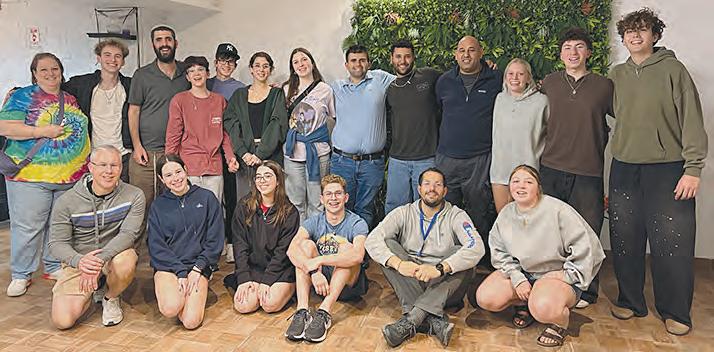
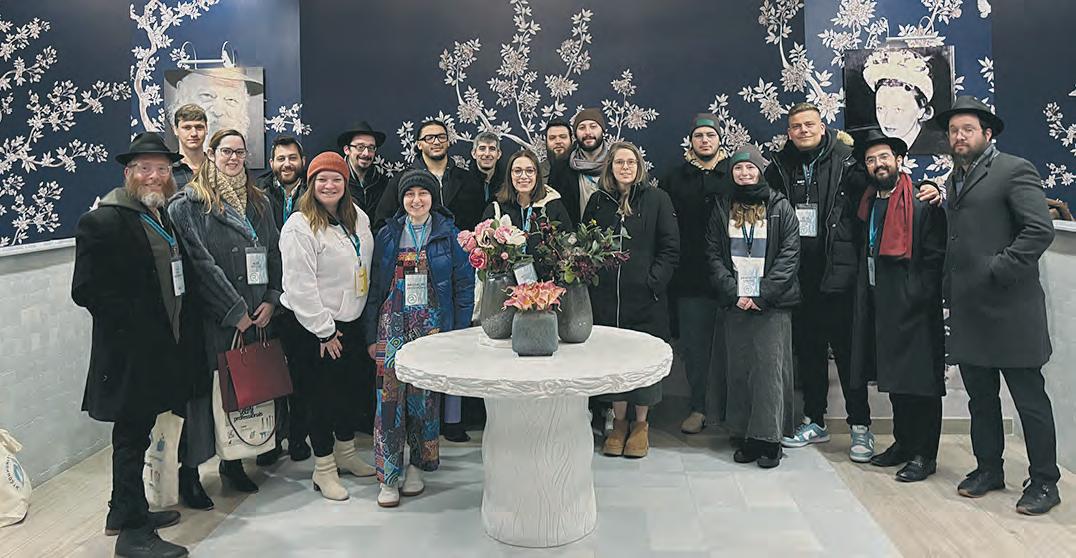
In December of 2025, Itay, our community shaliach, accompanied Jay Katelman and synagogue leaders on the Jewish Omaha teen trip to Israel. You
read about Jay’s impressions in our Jan. 23 edition. This is part III of Itay’s story. We began Saturday morning with synagogue services and then rested. On Sunday, we woke up to a rainy, gloomy day, but it didn’t stop us. Although we couldn’t go to Masada or Ein Gedi, after many hopes and prayers the road to the Dead Sea opened, and we made it. We floated in the water, covered ourselves in mud, laughed, and enjoyed the moment — and of course met the camel “Pistachio,” Jay’s second great love.
The next day, despite the rain, we traveled to Caesarea, saw remains of See Return Home page 2
ANNETTE VAN DE KAMPWRIGHT
Jewish Press Editor
With celebrating holidays and milestones come congratulatory cards. It is not often those cards are Jewish-themed, so when Margie and Bruce Gutnik’s daughter Julie, 28 years ago, designed Jewish greeting cards for Hallmark, Margie and Bruce were understandably filled with nachas. To this day, they keep the cards framed in their house.
“I grew up with strong ties to my
Judaism,” Julie said, “through efforts by my parents and because of friends I grew up with, from preschool through high school graduation. And they're still my closest friends today. That's a special thing, to know and love people as long as I've known my family. I grew up very curious about the world, asking a lot of ‘why’ questions.”
“When I designed these cards, I was the editorial director of the Tree of Life card line (among others),” she See Tradition page 3


Continued from page 1 the Roman Empire, and learned about the site’s history. We continued to a special lunch in Zichron Yaakov — traditional Ethiopian food — and learned about the Ethiopian Jewish community. From there, we arrived at Kibbutz Yassur, met our partnership community, and the families opened their homes and hearts to host our teens. It was a truly unique experience — each teen got to experience what an Israeli family feels like.
flavor. And with all that abundance around me, all I really wanted was a pita with kebab and tahini — and that’s exactly what I got.
From there, we drove to Holon, to the organization “Save a Child’s Heart.” It is an Israeli-based international organization that saves the lives of children from around the world by providing life-saving heart surgeries in Israel. Watching the teens play with the children, laugh with them, and volunteer so naturally was an incredibly powerful moment. It connected them to real, meaningful action and gave me perspective as well — reminding me how much impact simple human connection can have.
WEST MAPLE | 3655 N. 129th St. | 402.933.0091
LINCOLN
OLD MARKET | 1308 Jackson St. | 402.933.5168 MILLARD | 17664 Welch Pl. | 402.702.8800 OMAHA
HAYMARKET LINCOLN | 601 R St. #100 | 402.261.9388
SOUTH LINCOLN | 5730 Hicote Dr. | 402.318.5188
SUSHI | JAPANESE | CHINESE www.Hiro88.com
The following day, we collected the teens from the kibbutz and drove to Ofek High School in Kibbutz Evron. The students gave us a tour of the school, and our teens interacted with Israeli students — talking, laughing, and forming new connections. From there, we continued to Rosh HaNikra. We took the cable car down, saw the Mediterranean Sea beneath our feet, and the border with Lebanon. The place was stunning, and I felt a deep sense of nostalgia — the last time I had been there was first grade.
IF THIS IS AN EMERGENCY, MOVE TO A SAFE AREA AND DIAL 9-1-1
CALL the JFO’s Safety and Security Team 402-334-6446
EMAIL JCRCreporting@jewishomaha.org
SCAN the QR code below to fill out the Incident Reporting Form
From there, we traveled to Kibbutz Liman and painted a bomb shelter together. Turning a place associated with fear into something colorful and alive was deeply meaningful for me, especially watching the teens work together with such dedication and heart. That evening, we drove to our hotel in Tel Aviv.

We work directly with law enforcement, Secure Communities Network, and the Anti-Defamation League.
If you experience antisemitism, there are ways to report an incident or hate crime: If you see something, say something.
The next morning, we woke up for a walking tour along the Independence Trail in Tel Aviv, learning about the city’s history and the founding of the State of Israel. From there, we visited the Peres Center for Peace and Innovation — and that’s where it really hit me. Seeing how many Israeli inventions and startups impact the world — things we use every day without realizing they began here — was absolutely mind-blowing. It filled me with pride and even made me think that maybe one of the ideas sitting in my phone notes could one day become reality.
We then continued to Sarona Market, a food complex that feels like traveling the world in one place. Every culture, every
That evening, we arrived at the Old Train Station complex in Tel Aviv for a “Silent Disco.” At first, it felt a bit awkward — everyone wearing headphones, no music in the air. But slowly, everyone opened up. We started dancing, singing, letting go. People on the street stopped, smiled, and some even joined us. We were singing and dancing in the middle of the street with headphones on, spreading so much light and joy to everyone who watched. It was pure freedom. At the dinner my father arrived with Star of David necklaces and handed them out as farewell gifts — of course, only until the next time. We ended the trip playing volleyball on the beaches of Tel Aviv.
This trip was incredibly meaningful and special for me. We laughed, we sang, we danced, we bargained with vendors in the market, tasted new and unbelievably good food, learned Krav Maga, and met people from so many different worlds within Israeli society. This trip was so fascinating and special for me.
Watching the teens from the side and sharing this journey with them brought me pure joy. They are the ones who made this trip what it was. Without them — it wouldn’t have been the same.
We are looking for your handwritten family recipes. Please contact Jane or Annette if you are willing to share: jrips@jewishomaha.org avandekamp@jewishomaha.org

‘Write With Us,’ our small and intimate writing workshop (no need to be nervous) continues in the winter and early spring. Upcoming workshops are scheduled for the following Thursdays: Feb. 26, March 26 and April 30 from 5-7 p.m. in the Noshery at the Staenberg Omaha JCC. Register by contacting Jessi at jtaylor@jewishomaha.org or Annette at avandekamp@jewishomaha.org. There is no cost to attend, although donations are always welcome.
If you have wanted to write your family’s story, that great American novel, or you have always wanted to try your hand at poetry, join us! Maybe you are already an accomplished writer, but you would benefit from being in a room with other writers. Perhaps you have convinced yourself you can’t write at all, but would love to try. Everyone, from absolute beginner to professional, is welcome to attend. We will provide the kosher snacks and the writing prompts.

Continued from page 1 school’s own climate impacts.
We had taken steps in this direction—including a regular environmental education and garden class and multi-stream waste disposal—but we wanted to do more. We also were planning a capital campaign to build a commercial kitchen so that we could bring food service in-house. We wanted this project to be both environmentally and fiscally responsible.
The JCLC helped us turn these goals into action. With its support, we created a clear climate action plan that helped us assess our current practices and plan for future improvements. As we designed our kitchen, we knew our choice of appliances would lock in emissions for years. We wanted electric, energy-efficient equipment, but like many small Jewish organizations, cost was a major barrier. The electric options were, in many cases, more expensive than the gas versions. This is where the JCLC was instrumental.
Through the JCLC, we received an Adamah North American Climate Grant to purchase electric, energy-efficient kitchen equipment. That commitment helped us secure additional funding from local partners, including the Lozier Foundation, the Shirley & Leonard Goldstein Supporting Foundation, and the Special Donor-Advised Fund of the Jewish Federation of Omaha Foundation. We are also grateful for the support of the
many other individual and institutional donors who supported this project.
We finished construction in December of 2025, and we began food service in January. Our new chef creates delicious, fresh, kosher, and plant-based meals and snacks for our students, and we are exploring ways that we can serve as a kosher food resource for the whole community.
Thanks to Adamah and the JCLC, we have reduced emissions from cooking and cut waste by replacing packaged foods with meals made from scratch. We are also working toward eliminating disposable plates and utensils altogether and are holding a “kitchen shower” to help make this a reality. If you would like to contribute any items to the new kitchen you may purchase them for Friedel from here: https://www.dreamlist.com/for/dgmo2g7p71
The initial financial support from Adamah and our other funders also allows us to operate the food service in a way that saves the school money over time. This, in turn, helps us to continue to focus on our mission: providing the educational foundation to develop inquisitive learners who confidently engage with the world through Jewish values.
Our involvement in the JCLC continues to support this mission, and we recommend it to other organizations that are considering joining.
Lo Ta’amod appears in the Torah as a prohibition against standing idly by in the face of harm. Jewish tradition has long understood it as a warning about silence and delay, not only overt wrongdoing. Antisemitism has taken shape in laws, institutions, and in the everyday decisions that allow harm to endure. Jewish history also records moments when Jews and allies alike recognized what was at stake and chose to act, not because success was assured, but because remaining silent was not acceptable. This article is part of an ongoing series examining those moments.
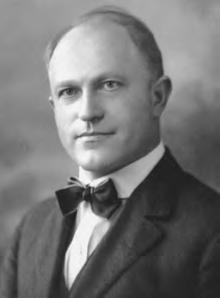
David Kaufmann lived far from the places where the Holocaust is most often narrated. He did not operate in occupied Europe or face arrest for hiding families in attics or cellars. He lived in Grand Island, Nebraska, thousands of miles from Nazi Germany. Yet his life belongs squarely within the moral framework of Lo Ta’amod, precisely because he acted from a place where distance made inaction easy, respectable, and common.
My interest in Kaufmann’s story was renewed recently when Marty Ricks and Shane Kotak recounted his role following the passing of Marcel Kahn, one of the individuals Kaufmann helped save. Their telling linked a life rescued in the 1930s to a loss felt in the present, underscoring how decisions made nearly a century ago continue to echo across generations.
binding documents in which an American citizen guaranteed full financial responsibility for immigrants. Sponsors were liable if those they supported failed to find work or required public assistance. During the Great Depression, most Americans declined to assume that risk.
Kaufmann did not.
He began by sponsoring one family, then another, and then many more. Over the following years, he signed affidavit after affidavit, corresponded with U.S. consular officials, navigated delays, resubmitted paperwork, and assumed responsibility for people he often had never met. His actions were not symbolic. They were sustained, procedural, and financially conse-
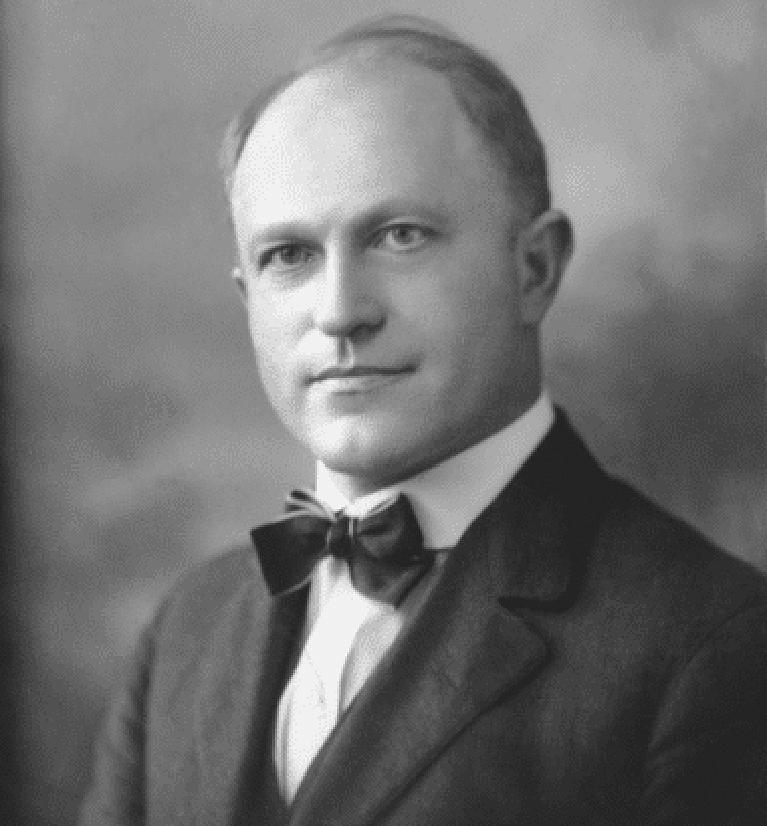
Kaufmann was born in Germany in 1875 and immigrated to the United States in 1903. He settled in Grand Island, where he built a successful business career and became a respected civic figure. He owned the Grand Theatre, participated in local development, and was known as a steady and reliable presence in community life. He was not publicly identified as a political activist or humanitarian. Nothing about his outward life suggested that he would later become one of the most significant individual sponsors of Jewish refugees in central Nebraska.
That changed in the mid-1930s, when Kaufmann began receiving letters from relatives and acquaintances still living in Germany. Those letters described the rapid narrowing of Jewish life. Businesses were confiscated. Employment disappeared. Children were expelled from schools. Public humiliation was no longer sporadic but sanctioned by law. By 1936, escape was no longer theoretical. It was urgent. Escape, however, required an American sponsor. United States immigration policy at the time was intentionally restrictive. German immigration was capped at roughly 26,000 visas per year, and Jews faced additional informal barriers. Central to the process were affidavits of support, legally

Across the sources now available, including Nebraska TV reporting, archival research, and survivor testimony, a consistent picture emerges. Kaufmann sponsored approximately eighty Jewish families, representing more than 200 individuals whose lives were directly saved through his intervention.
Historians emphasize that this figure is conservative, reflecting only those cases that can be reliably documented through affidavits, immigration records, and family accounts.
His assistance extended well beyond paperwork. Accounts document that Kaufmann regularly sent financial support to families still trapped in Germany while they awaited visas. He often enclosed $50 checks, sums shaped by the limits and uncertainties of sending money abroad at the time, but nonetheless substantial sums at the time and equivalent to more than $1,000 today. The funds helped cover food, housing, and travel costs. He tracked applications, followed up when files stalled, and continued to assist families after their arrival in the United States.
The people he helped came from across Germany and, later, Nazi-occupied Europe. Some were relatives. Many were not. In several documented cases, one sponsored family pleaded on behalf of others, siblings, parents, and cousins, creating chains of rescue that extended far beyond Kaufmann’s immediate circle. Each additional affidavit increased his legal exposure. He continued anyway.
What is perhaps most striking is how little of this was known publicly during Kaufmann’s lifetime. He did not seek recognition. He did not publicize his efforts or frame them as moral leadership. Even many in his own community were unaware of the scope of his actions. His rescue work surfaced later through survivor testimony and descendant accounts, eventually coalescing into a fuller historical record, including See David Kaufmann page 4


Continued from page 1 said. “As the first Jewish person to work on the line, I brought them new ideas such as a humor line that felt more in-line with Jewish humor, as well as a heritage-like line that was meant to highlight objects that have been passed down through families. These two cards were part of that line.”
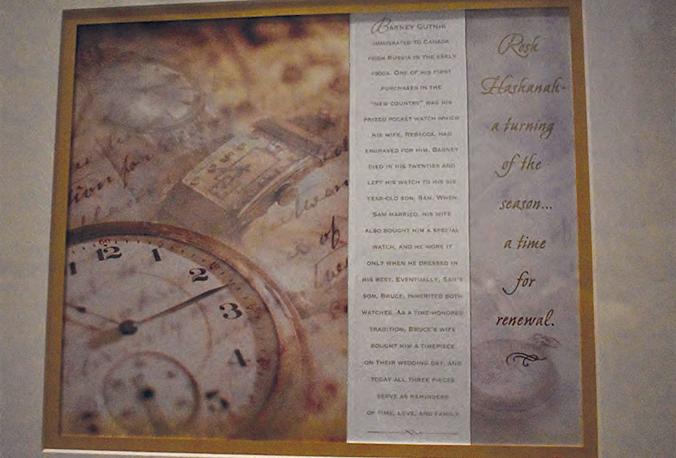
Rosh Hashanah-a turning of the season, a time for renewal, one card reads. The accompanying text tells the story of Barney Gutnik, who immigrated from Russia to Canada in the early 1900s:
“One of his first purchases in the ‘new country’ was his prized pocket watch, which his wife, Rebecca, had engraved for him. Barney died in his twenties and left his watch to his six-year-old son, Sam. When Sam married, his wife also bought him a special watch, and he wore it only when he dressed in his best. Eventually, Sam’s son, Bruce, inherited both watches. As a time-honored tradition, Bruce’s wife bought him a timepiece on their wedding day, and today all three pieces serve as reminders of time, love, and family.
The text is, of course, accompanied by photos of the actual watches.
The other card is for Hanukkah, and states, “To be nourished by love, tradition, and strength; truly, this the spirit of Hanukkah.” It features a photo of cooking utensils, which once belonged to another of Julie’s ancestors, and it says:
“In the late 1800s, Minnie Schwartz came to America with her seven children to escape religious persecution. She brought a single possession from her Russian homeland- her pots and pans. To Minnie, these pots represented what she held most dear…keeping Jewish tradition alive. Cooking kosher holiday meals was the only safe way she could celebrate her identity with her children. Since then, her treasures have been passed from granddaughter to granddaughter, bringing a bit of Minnie’s strong spirit to every holiday feast.
“Unfortunately, I don't know much about Minnie nor Barney,” Julie said. “Since they died long before I was born, I never met them. The information that's on the cards is honestly all the information I have! We had to take some creative liberties.”
These days, Julie lives in Kansas City, MO, with her husband Michael. Their twins Sofia and Noa are freshmen in college. “I work at a creative agency as a strategist, specializing in crafting consumer experiences for brands,” she said. “You can't outrun who you are, so I made a career out of the ‘whys.’”
Looking at the cards all these years later, Julie is still proud of the work she did. “It was my first job after college.” She said. “Having a voice in the room with senior creatives meant a lot. To bring my family and culture into a traditional institution like Hallmark felt like an early win in my career.”
At the time her hope was it inspired others to think about their lineage. “While I still feel that,” she added, “now I hope it also sparks curiosity about and opens the aperture of what culture means in our country. That's so important, especially now.”
B’NAI B’RITH BREADBREAKERS
The award-winning B’NAI B’RITH BREADBREAKERS speaker program currently meets Wednesdays via Zoom from noon to 1 p.m. Please watch our email for specific information concerning its thought-provoking, informative list of speakers. To be placed on the email list, contact Breadbreakers chair at gary.javitch@gmail.com

Continued from page 3
the biography Doorway to Freedom. The research and publication of the book were made possible through the support of Ted and Sarah Seldin, whose funding helped bring Kaufmann’s story to wider public attention.
That record was further amplified through the documentary A Life Well Lived, independently produced through Chimney Rock Media with significant research support from the Hall County Historical Society and collaboration with many individuals and institutions, including the Institute for Holocaust Education. The film has been screened in communities across Nebraska, including a screening at the J in October 2024, bringing Kaufmann’s story to audiences for whom this history is both communal and personal.
not the millions who were ultimately murdered. American immigration policy remained restrictive, and public resistance to Jewish refugees remained strong. Kaufmann’s story does not redeem that history. It exposes it.

The voices of those he saved, and of their descendants, are necessarily retrospective, but they are consistent. Survivors describe disbelief that a man in Nebraska would assume responsibility for their fate. They speak not only of survival, but of dignity, of being seen as worth the risk when the world had decided otherwise.
Descendants recount that Kaufmann’s name was spoken in their households with reverence, even when little was known about him personally. He was remembered not as an abstract benefactor, but as the reason grandparents survived to marry, parents survived to be born, and families existed at all. Several interviewees explicitly trace their presence, children, grandchildren, and great-grandchildren, to the affidavits he signed. It is important to be clear about what this story does and does not claim. Kaufmann did not dismantle an unjust system. He worked within it. His actions saved dozens of families,
That contrast is the moral core of this Lo Ta’amod account. Kaufmann did not act under immediate physical threat. He acted under moral pressure, in a context where doing nothing was normal, defensible, and widely practiced. He used the tools available to him, citizenship, financial stability, and credibility, to accept responsibility that others declined.
David Kaufmann did not confront soldiers or defy mobs. He confronted forms, quotas, and indifference. His refusal to stand aside was quiet, administrative, and sustained. Lo Ta’amod does not demand heroics. It demands responsibility. Kaufmann’s life reminds us that history often turns not on who speaks the loudest, but on who signs their name and honors it, again and again, when it would have been easier to look away.
As this series continues, we invite members of the community to share stories, documents, photographs, and artifacts that reflect how individuals confronted antisemitism or stood with others when it mattered. Preserving these histories helps ensure that future generations understand not only what our community faced, but how it responded.
This series is a collaboration between The Nebraska Jewish Historical Society (NJHS) and the Jewish Press. For questions and or more information about the NJHS, please contact executive director Jane Rips at jrips@jewishomaha.org, or visit nebraskajhs.com
Following a vibrant holiday season, January proved to be a month of momentum, deepening our roots within the Omaha Jewish community while looking toward the global stage.
We kicked off the Spring Semester with a high-stakes local favorite: cheering on the Creighton Bluejays. This kickoff event wasn't just about the game; it was a celebration of our local pride and the joy of coming back together after the winter break.
The focus then shifted to internal growth and leadership development. Our chapters dedicated time to AIT (Aleph in Training) programs, ensuring that our newest members are welcomed with the tools they need to lead. Meanwhile, the sisters of MZ Yoshannah put their problem-solving skills to the test, successfully navigating an escape room. This exercise in teamwork and communication perfectly mirrors our core
values, showing that when we work together, no obstacle is too great to overcome.
Looking to February, our community goes global as we head to the BBYO International Convention (IC) in Philadelphia. We are proud to have a delegation of 14 teens representing Omaha. They will join thousands of Jewish peers from around the world to explore their Jewish identity, develop leadership skills, and strengthen the bonds of our global community.
Whether it’s breaking out of an escape room or standing among thousands in Philadelphia, BBYO continues to be the heartbeat of Jewish teen life in Omaha. We are building a legacy of leadership and inclusivity, one program at a time. Are you ready to see what’s next? For more information on upcoming events or how to get involved, please reach out to izac cai@jccomaha.org or call 402-334-6404.
Explore important themes of the Durham Museum’s featured exhibition, The Negro Motorist Green Book, with a series featuring guest speakers and more! Reflect on Omaha's jazz roots through music with North Omaha Music and Arts (NOMA). In addition, visitors are invited to watch a powerful screening that explores the relationship between race, freedom and the road.
Our Feb. 19 event features exhibit viewing from 5-6:30 p.m., followed by an introductory presentation by Eric Ewing, executive director of The Great Plains Black History Museum, and Kristine Gerber, author and educator. Afterwards, there is a performance by North Omaha Music and Arts (NOMA) Ensemble and Jewel Rodgers.
The museum will be open after-hours for guests to view the exhibition starting at 5 p.m. At 6:30 our community partner Eric Ewing, Director of the Great Plains Black History Museum, will give a brief talk on his sister exhibition focused on Nebraska's Green Book Sites including recognition of a local OPS student research project documenting Omaha's surviving sites.
Cash bar and snacks will be available for purchase.
Please note, the museum will close to regular visitors at 4 p.m. and re-open at 5 p.m. for the event.
Advanced registration is encouraged. Regular-admission rates apply, but events are free for museum members! Thursday, March 12, the Museum presents Dr. Cynthia Robinson, UNO Black Studies professor, and a screening of the PBS documentary, Driving While Black: Race, Space and Mobility in America
Thursday, March 19, we welcome Dana Murray, executive director of NOMA, and there will be a jazz performance by NOMA.
Museum Members: Free; Non-Museum Members: $15 adults, $12 seniors & military, $8 kids 3-12. To register online for any of these programs, please visit Durhammuseum. org and click on the green "Register" icon (Please note, your registration is not complete until you've clicked the "Check Out" button), call 402.444.5071 or email reservations@ DurhamMuseum.org
The Durham Museum thanks exhibit programming partners: Great Plains Black History Museum and Eric Ewing, Making Invisible Histories Visible and Kristine Gerber, North Omaha Music & Arts and Dana Murray, Dr. Cynthia Robinson, Preston Love, Jr.
HIGH SCHOOL SENIORS AND PARENTS

We will be publishing our annual High School Graduation Class pages on May 22, 2026. To be included, fill out the form below or send us an email with the student’s name, parents names, high school they are attending, the college they will be attending and photo to: jpress@jewishomaha.org by May 12, 2026.








For much of modern history, sport was not an obvious place for Jewish women. Competitive athletics demanded public strength, physical assertion, and visibility, qualities that often sat uneasily with expectations placed on women and, at times, with how Jews were expected to move through public life. For Jewish women, the calculation was often doubled: how much strength could be shown, when visibility helped or hurt, and who ultimately controlled the terms of participation.
And yet, across generations, Jewish women entered those spaces anyway. Sometimes by reshaping them and sometimes by enduring their limits. Their stories are not simply about medals. They are also about who set the rules and how Jewish women asserted competence and authority in arenas that were not built with them in mind.
SENDA BERENSON ABBOTT
ing systems not designed for her, she did not ask whether women belonged in sport. She built institutions that made their participation part of everyday life.
LILLIAN COPELAND
A generation later, Jewish women were no longer only shaping sports. They were competing at the highest levels.
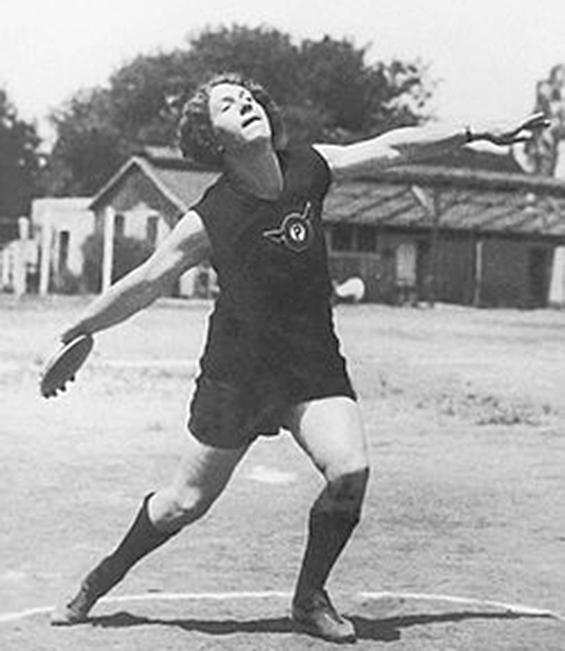
Lillian Copeland, born in 1904 to a Jewish family in New York, emerged as one of the dominant American track and field athletes of the interwar years. She specialized in strength events, including the discus, shot put, and javelin, setting world records and winning national titles in disciplines that directly contradicted prevailing stereotypes about women and Jews as physically inadequate.
At the 1932 Los Angeles Olympics, Copeland won the gold medal in the discus, becoming one of the most prominent Jewish women athletes of her era. Her performance challenged assumptions about who could throw, lift, and win. Away from competition, Copeland pursued legal studies, enrolling at the University of Southern California Law School after the 1928 Olympics. Although she did not go on to practice law in a traditional sense, her legal education shaped how she navigated institutions and authority. It informed her later work in athletics administration and advocacy, where rules, governance, and access mattered deeply.
Copeland remained closely connected to the sport after her competitive career ended. She coached, lectured on physical education, and served in leadership and advisory roles within amateur athletics, including the Amateur Athletic Union. She also competed in masters sporting events later in life, reflecting a lifelong commitment to strength and discipline.
RABBI BENJAMIN SHARFF
Temple Israel Senior Rabbi
This is the second installment of daily updates from Rabbi Sharff as he traveled to Israel in January 2026. If you have not had the pleasure of experiencing an Israeli breakfast, you are missing out on one of life’s great pleasures. From the pastries to the salads, from the full-fat cheeses to the breads, it is all just so mouth-watering and delicious. So European in style, these breakfasts will keep one going through much of the day.
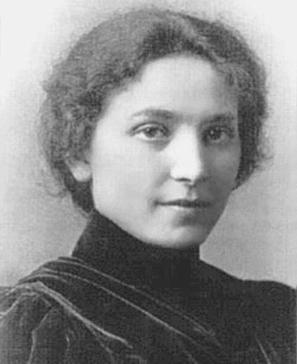
Senda Berenson Abbott was born in Lithuania in 1868 and immigrated to the United States as a child, part of a Jewish family navigating the pressures of assimilation in late nineteenth century America. Her entry into athletics was not driven by competition, but by necessity. As a young woman she struggled with her health and turned to exercise to build strength and resilience, an experience that shaped her lifelong belief that physical education was essential to women’s development rather than a distraction from it.
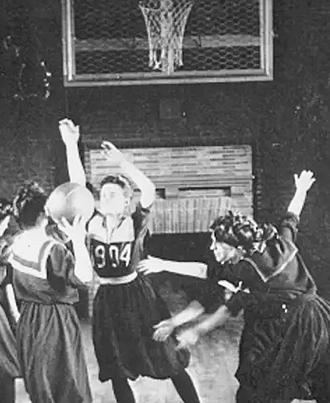
While teaching physical education at Smith College in the early 1890s, Berenson encountered basketball, a new game invented by James Naismith only a few years earlier. Women were effectively barred from playing it as designed. Rather than argue for inclusion on men’s terms, Berenson adapted the game specifically for women. She modified the rules, divided the court into sections, limited physical contact, and emphasized cooperation and control over physical dominance.
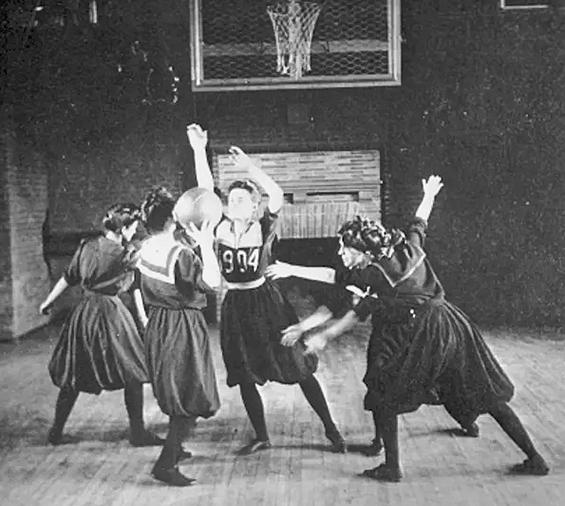
In 1893, Berenson organized and oversaw one of the first collegiate women’s basketball games, played between Smith College classes and closed to male spectators. She continued refining the women’s rules over the following years, publishing them and promoting their adoption at women’s colleges across the country.
Berenson did not invent basketball, but she created the framework that allowed women to play it seriously and sustainably. Her rules shaped women’s basketball in the United States for decades. Beyond the court, she spent her career shaping the field of women’s physical education itself. She wrote and lectured on exercise, health, and pedagogy, arguing that physical competence was inseparable from intellectual and moral development.
By embedding physical education into academic life, Berenson helped normalize women’s participation in organized sport. As a Jewish immigrant woman accustomed to navigat-
As antisemitism intensified in Europe during the 1930s and World War II unfolded, Copeland used her resources and standing to support Jewish relief efforts. She contributed to fundraising initiatives and communal efforts aimed at aiding Jews facing persecution and displacement, aligning her athletic success with acts of public responsibility. Her engagement reflected a broader pattern in her life. Copeland understood that achievement also meant obligation. Her support of causes that mattered to her community at a moment of profound crisis represents Jewish leadership.
The early decades of women’s athletics required Jewish women not only to compete, but to justify their presence in public space at all. Berenson and Copeland navigated those demands differently, one by reshaping institutions from within education, the other by asserting physical excellence on the world stage. Together, their stories show how access and authority were built incrementally, often under scrutiny, and never guaranteed.
In Part Two, the story continues with athletes whose lives were shaped by global catastrophe, Cold War politics, and modern media. From Holocaust survival to Olympic gold and public moral leadership, the next generation of Jewish women athletes would inherit the space these pioneers carved out and redefine what could be done with it.
We thank the Nebraska Jewish Historical Society for preserving and sharing the stories that make work like this possible. As always, we invite readers to share memories, photographs, or family stories that can help deepen our understanding of Jewish life and experience in Nebraska. In particular, we welcome stories about Jewish women athletes from Nebraska, whether their achievements were widely recognized or remembered primarily within families and communities. Many such stories remain undocumented, and preserving them is part of how we ensure they are not lost.
The Jewish history series is a collaboration between the Nebraska Jewish Historical Society and the Jewish Press. For questions or additional information about the NJHS, please contact Executive Director Jane Rips at jrips@jewishoma ha.org or visit nebraskajhs.com
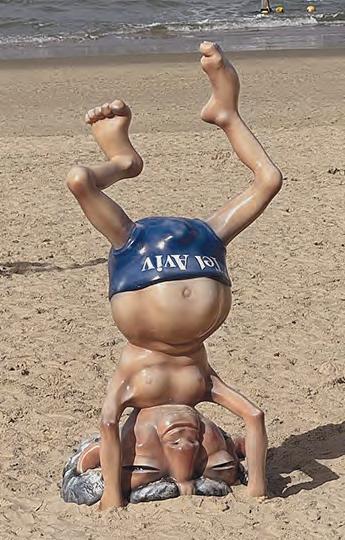
Following my dining, I went for a walk along the Promenade this morning along Jerusalem beach. While walking, I saw Israelis, mostly fellow Jews, doing all the normal activities: walking, jogging, walking their dogs, surfing, rollerblading, pushing strollers, chatting endlessly, and of course, playing what can only be described as a combination of volleyball and soccer (volleyball but played with your feet and heads).
I mention this because it was all very normal. A profound reminder that Israel isn’t an idea or a concept to be debated, but an imperfect country made up of very real people leading very real lives. In many ways, lives that mirror our own, albeit with warmer weather.
Later on, I had lunch with colleagues in the Carmel Market, the largest open-air market in Tel Aviv, before returning to the hotel for a nap. I am still very much adjusting to the eight-hour time difference
I was glad I did, as we had a powerful opening night dinner at Beit Kandinof, where we broke bread, not just with each other, but with some of our MARAM (Council of Reform Rabbis). Some of these colleagues serve congregations, while others are regional rabbis serving the larger community. They continued to share their journeys with us, along with their hopes, dreams, frustrations and fears.
Beit Kandinof is located in the Old City of Yaffo (Jaffa). It was an exquisite fusion of Mediterranean cuisine, and the beets were particularly fantastic. If you are ever here visiting, it is certainly worth checking out. Just be forewarned, the food just keeps coming, so it is best to pace oneself.
As our guide pointed out to us, this evening was also special because it marked the Muslim observance of Isra and Mi’raj holiday, which commemorates when Muhammed was spirited to Jerusalem, ascended to heaven and received several directives including the instruction to pray five times a day. In addition, this week’s Torah portion is Beshallach, where we retell the story of the Israelites experiencing the miracle of the crossing the Sea of Reeds, to begin their journey to become the Jewish people.
So, as I begin this journey, I was reminded in profound ways how the journey of all that has transpired in the Middle East was really about unexpected, miraculous journeys. Nothing here is pre-ordained, and nothing is set in stone. To build a better future, more time needs to be spent breaking bread, sharing stories, and understanding different cultures. We all have deep abiding connections to the land, and I do believe much is still possible. But right now, there is so much heartache and hurt and pain that, at this moment, just being able to show up for each other may be the best we can do.
I’ll wax philosophical more as my program progresses, and hopefully as I get a little more sleep as well. Until then, my prayer is that more people can come and visit this amazing country and talk to Israelis and Arabs alike. To break bread with them and learn their heart-breaking stories and share in their hopes and dreams.
If these past two years have taught us anything, it’s that when we talk about people in the abstract, it’s easy to be an absolutist. But if we meet them where they are, we can learn so much more about how maddeningly this whole situation is, and about how so many truly do want a peaceful coexistence where they, too, can just go about enjoying their day, like everyone else.



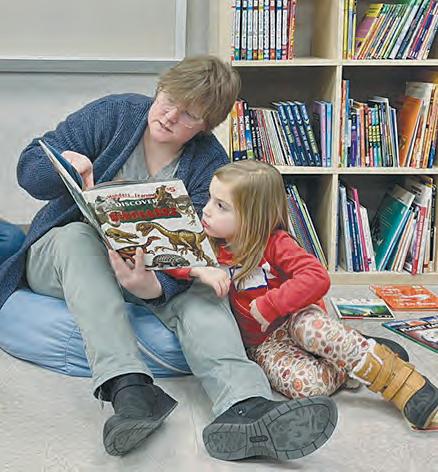
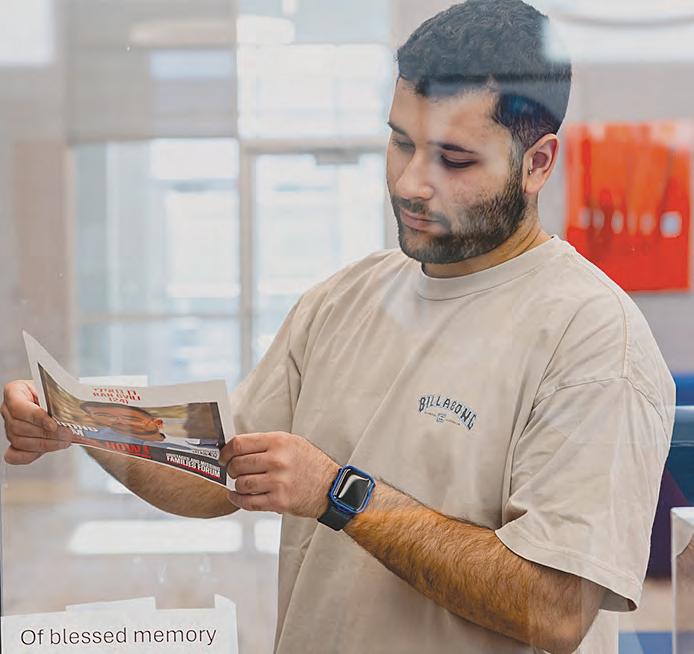
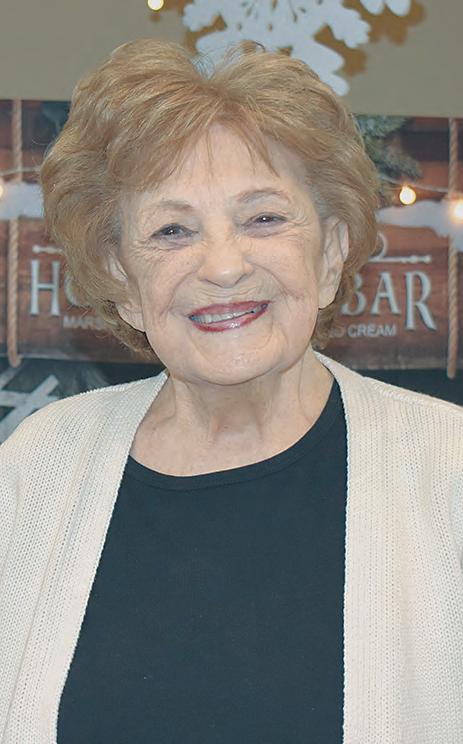
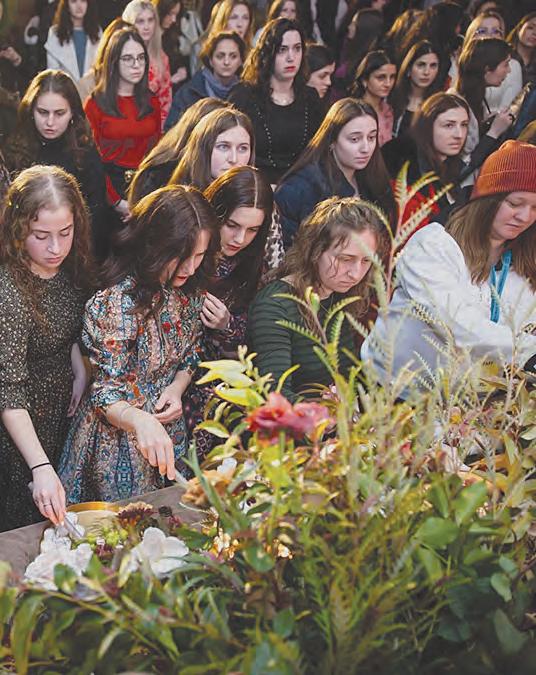
JFO Library Specialist
Who among us hasn’t read F. Scott Fitzgerald’s The Great Gatsby? It probably was back in college or maybe even as far back as in high school, but it certainly was one of those required books we probably all read. Join the Kaplan Book Group on Feb. 19 at 1 p.m. when we will meet to discuss Jillian Cantor’s Beautiful Little Fools, a reexamination of The Great Gatsby from the perspective of the women in Jay Gatsby’s life.
Jillian Cantor introduces a new character named Detective Frank Charles. He is not convinced that the three deaths in Fitzgerald’s original novel are the result of an accident, murder, and suicide. Detective Charles questions each of the women who were involved in one way or another for the last six years of Jay Gatsby’s life. Detective Charles suspects that each of the women, Daisy Buchanan, Jordan Baker, and Catherine McCoy are all lying and hiding some secret about the untimely deaths of Myrtle Wilson, Jay Gatsby, and George Wilson. Can he prove that each death was actually committed by one or more of these ladies?
During Detective Charles’s investigation, he seeks answers to questions about each woman's connection to Gatsby’s death. For Daisy Fay Buchanan, there is the question of what the relationship and obsession Jay Gatsby maintained with Daisy. For Jordan Baker, it is a question of what dark secret she
is hiding from even her best friend, Daisy, and what that has to do with Gatsby. For Catherine McCoy, it is a question of just how far she will go to protect her sister Myrtle from two abusive men in Myrtle’s life.
The voice of Nick Carraway, narrator of the original Great Gatsby takes back seat to the points of view of Daisy, Jordan, Catherine, Myrtle, and Detective Charles.
Cantor skillfully examines both love and its consequences throughout Beautiful Little Fools as along with Detective Charles, the reader uncovers what happened to Myrtle, Gatsby, and George. Cantor also forces the reader to confront the consequences of abusive relationships, obsessions, and misguided love. The abuse may be both mental as is the case for Daisy by her husband Tom, or physical as is the case of

The characters of Cantor’s novel are all obsessed in one way or another. Gatsby is obsessed with the Daisy he met and remembers from years ago; Tom Buchanan is obsessed with women and the resulting numerous affairs he has; Jordan is obsessed with her golf game. One might even say that Detective Charles is obsessed with finding the truth behind the deaths of Gatsby and The Wilsons. The misguided loves of Gatsby for Daisy and Catherine, George has for his wife Myrtle, and sisters Catherine and Myrtle ultimately lead to serious consequences for all those involved.
We live our lives until the past finally catches up to us, but inevitably we learn you can’t live in the past.
Join us on Feb. 19 at 1 p.m., as the Dorothy Kaplan Book Discussion Group gathers for their monthly meeting in person in Conference Room A of the Staenberg Omaha Jewish. Community Center or via Zoom for this month’s discussion of Jillian Cantor’s Beautiful Little Fools. The Dorothy Kaplan Book Discussion Group meets on the third Thursday of every month at 1 p.m. New members are always welcome.
The Group receives administrative support from the Community Engagement & Education arm of the Jewish Federation of Omaha. For information about the group and to join in the discussion, contact Shirly Banner at 402.334.6462 or sbanner@jewishomaha. org

JFO Community Engagement & Education
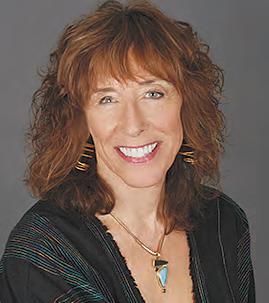
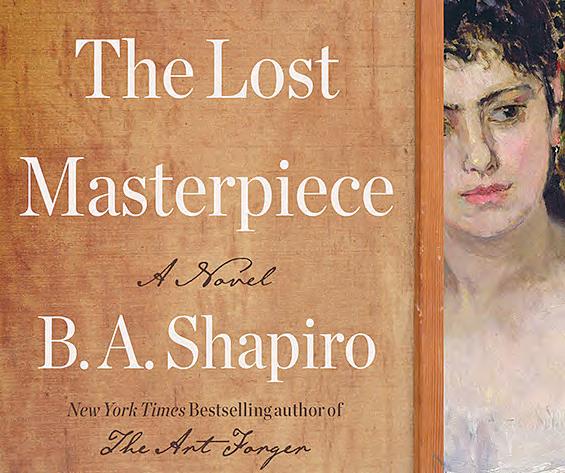
The Jewish Federation of Omaha will host an evening of intrigue and literary conversation on Monday, March 30 at 6 p.m. with bestselling author B.A. Shapiro. Among Shapiro’s works are The Art Forger, The Muralist: A Novel, The Collector’s Apprentice and her most recent work, The Lost Masterpiece: A Novel. Her books are widely acclaimed as literary thrillers with a strong focus on art, history, and psychological complexity. The event promises to be a highlight for our Jewish community, and a special treat for readers who enjoy stories that probe the mysteries hidden behind famous works of art.
The Lost Masterpiece: A Novel is inspired by real historical events surrounding the looting of art during World War II. The novel blends fact and fiction to examine questions of ownership, memory, and moral responsibility. Set in both the past and the present art world, the novel focusses on “Party on the Seine,” a long-lost painting believed to have vanished during the Nazi occupation of Europe. When the artwork unexpectedly resurfaces decades later, it ignites a complex legal and ethical ownership battle that spans generations. Shapiro’s narrative moves deftly between past and present, illuminating the history of the Morisot-Manet family into modern times while maintaining the suspense of unraveling a high-stakes mystery. During her talk at the Spring Author Event, Shapiro will discuss the inspiration behind the novel, her research process, and the real-life stories that influenced the book’s central themes. Attendees can expect insight into how historical records, art provenance, and personal testimonies shaped the fictional narrative. The event offers an opportunity not only to meet a nationally respected author, but also to reflect on how literature can help preserve and examine historical truth. For book clubs, history enthusiasts, and art lovers alike, the evening promises both intellectual depth and compelling storytelling.
Following the presentation there will be time for audience

questions, allowing readers to engage directly with the author about her work and creative journey. A book signing will follow, giving attendees the chance to purchase copies of The Lost Masterpiece for signature by Shapiro.
Appetizers, desserts and beverages are provided. Fee for the event is $18 and registration is required. Scan the QR code with this article or visit the Jewish Federation of Omaha’s webpage, jewishomaha.org to secure your place.
Whether you are already familiar with Shapiro’s work or discovering it for the first time, this event offers a rare chance to hear directly from an author whose novels continue to captivate readers around the world.
Please direct any questions to Naomi Fox at nfox@jewish omaha.org or Mark Kirchhoff at mkirchhoff@jewishom aha.org or 402-334-6463.
This Author Event is generously supported by the Shirley & Leonard Goldstein Supporting Foundation, the Carl Frohm Memorial Foundation, the Dr. Bernard H. Bloom & Dr. Bruce S. Bloom Memorial Endowment Fund, and the Milton S. & Corinne N. Livingston Foundation.



The Jacobson Leadership Tomorrow (JLT) Summer Internship returns for its second year in 2026 — offering Jewish high school seniors and college freshmen and sophomores a unique, paid opportunity to explore leadership and careers in serving Jewish life.
Made possible through the generosity and vision of Joanie and Richard Jacobson, JLT is more than a summer job. This immersive, six-week experience connects young adults with Jewish professionals and lay leaders across the Jewish Federation of Omaha and its Agencies — providing hands-on experience, mentorship, and a meaningful introduction to nonprofit leadership.
Whether you’re curious about community leadership, nonprofit work, or making an impact in Jewish life, JLT offers a powerful starting point.
Stay tuned for details — and get ready to apply. Questions? Please contact ashivvers@jewishomaha.org
HEIDI HEILBRUNN
JCRC Program and Communications Manager
Nebraska candidates for the U.S. House of Representatives and the U.S. Senate have been invited to speak during an election-year series of Henry Monsky Lodge Breadbreakers luncheons co-hosted by The Jewish Community Relations Council. From February through May 6, the series is offered the second and fourth Wednesdays at noon in the Shirley & Leonard Goldstein Community Engagement Venue at the Staenberg Omaha JCC. All candidates currently running have been invited. Crystal Rhoades, running for House of Representatives, spoke on Feb. 11. Currently scheduled candidates include John Cavanaugh on Apr. 22. Each candidate will give a presentation and answer questions from the audience. A kosher lunch will be offered. Registration is recommended; to register for Breadbreakers: https://us02web.zoom.us/meeting/register/YVjv 6uB0QB-6bQurxdBb6g. For more details, please visit Om ahajewishpress.com, or contact Pam Monsky at pmon sky@jewishomaha.org


(Founded in 1920)
David Finkelstein
President
Annette van de Kamp-Wright
Editor
Will Fischer
Creative Director
Claire Endelman
Sales Director
Lori Kooper-Schwarz
Assistant Editor
Sam Kricsfeld
Digital support
Mary Bachteler
Accounting
Jewish Press Advisory Board
David Finkelstein, President; Margie Gutnik, Ex-Officio; Joseph Abrahams, Helen Epstein, Andrea Erlich, Ally Freeman, Dana Gonzales, Mary Sue Grossman, Hailey Krueger, Chuck Lucoff, Sara Rips, Stewart Winograd and Bob Yaffe.
The mission of the Jewish Federation of Omaha is to build and sustain a strong and vibrant Omaha Jewish Community and to support Jews in Israel and around the world. Agencies of the JFO are: Institute for Holocaust Education, Jewish Community Relations Council, Jewish Community Center, Jewish Social Services, Nebraska Jewish Historical Society and the Jewish Press Guidelines and highlights of the Jewish Press, including front page stories and announcements, can be found online at: www.jewishomaha.org; click on ‘Jewish Press.’ Editorials express the view of the writer and are not necessarily representative of the views of the Jewish Press Board of Directors, the Jewish Federation of Omaha Board of Directors, or the Omaha Jewish community as a whole. The Jewish Press reserves the right to edit signed letters and articles for space and content. The Jewish Press is not responsible for the Kashrut of any product or establishment.
Editorial
The Jewish Press is an agency of the Jewish Federation of Omaha. Deadline for copy, ads and photos is: Thursday, 9 a.m., eight days prior to publication. E-mail editorial material and photos to: avandekamp@jewishomaha.org ; send ads (in TIF or PDF format) to: rbusse@jewishomaha.org
Letters to the Editor Guidelines
The Jewish Press welcomes Letters to the Editor. They may be sent via regular mail to: The Jewish Press, 333 So. 132 St., Omaha, NE 68154; via fax: 1.402.334.5422 or via e-mail to the Editor at: avandekamp@jewishomaha.org.
Letters should be no longer than 250 words and must be single-spaced typed, not hand-written. Published letters should be confined to opinions and comments on articles or events.
News items should not be submitted and printed as a “Letter to the Editor.”
The Editor may edit letters for content and space restrictions. Letters may be published without giving an opposing view. Information shall be verified before printing. All letters must be signed by the writer. The Jewish Press will not publish letters that appear to be part of an organized campaign, nor letters copied from the Internet. No letters should be published from candidates running for office, but others may write on their behalf.
Letters of thanks should be confined to commending an institution for a program, project or event, rather than personally thanking paid staff, unless the writer chooses to turn the “Letter to the Editor” into a paid personal ad or a news article about the event, project or program which the professional staff supervised. For information, contact Annette van de Kamp-Wright, Jewish Press Editor, 402.334.6450.
Postal The Jewish Press (USPS 275620) is published weekly (except for the first week of January and July) on Friday for $40 per calendar year U.S.; $80 foreign, by the Jewish Federation of Omaha. Phone: 402.334.6448; FAX: 402.334.5422.
Periodical postage paid at Omaha, NE. POSTMASTER: Send address changes to: The Jewish Press, 333 So. 132 St., Omaha, NE 68154-2198 or email to: jpress@jewishomaha.org
ANNETTE VAN DE KAMP-WRIGHT
Jewish Press Editor
Recently, I saw a news story about a social media platform called Upscrolled. Now that it is partowned by a known Zionist businessman, TikTok has been much more on the ball when it comes to keeping antisemitism reined in, as has Meta. The rats are fleeing the ship, so to speak-and finding a warm welcome at Upscrolled.
Fine. It might not be a bad idea to have them all in one place-as long as I don’t have to visit.
It’s weird: our Jewish Press social media is usually pretty tame. Sure, we receive questionable messages every now and then, from strangers who want us to find Jesus. They live in places like Manchester, UK, or Ethiopia, or Panama. Their posts are accompanied by what I imagine is meant to be a stern talking to. Also, pictures of flames and lions. We are going to hell-they are here to stop that from happening. I block their accounts, and move on with my day. I don’t worry when someone thousands of miles away is bored enough for those types of messages.
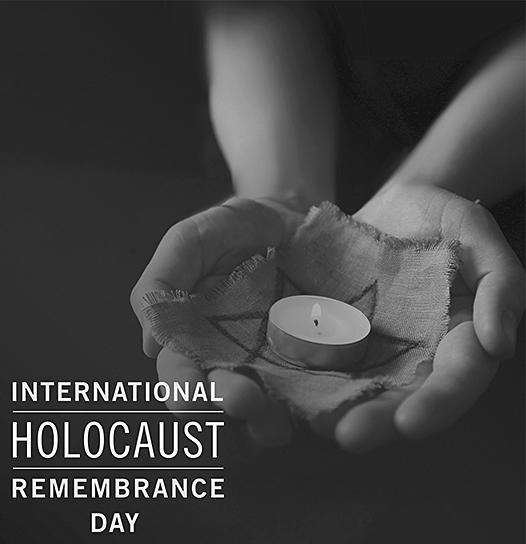
But late January, something odd happened. I posted a graphic for International Holocaust Memorial Day on our Facebook page, and instantly found Meta had flagged some of the responses. They were nasty, cruel (as the administrator I could access them, but they were not publicly visible). I blocked, and limited who could comment, but then noticed something else: people began leaving laughing emojis.
They were spread out over the better part of a
Editorials express the view of the writer and are not necessarily representative of the views of the Jewish Press Advisory Board, the Jewish Federation of Omaha Board of Directors, or the Omaha Jewish community as a whole.
week. During that time, I went back in several times a day to check; it was like a slow-drip. And somehow, those emojis bothered me in a way the nasty words didn’t. I blocked each user, of course, but it didn’t help. It didn’t’ feel like it was done and over with. And I wonder, why is that?
The place of Joy in Judaism is an important one-joy is our birthright, part of our foundation, as Torah regularly commands us to feel joy. Joy happens when we light candles, when we come together during holidays or shabbat, when we help others, when we connect.
It has no place in remembering the Holocaust. To leave a laughing emoji, to imply that the memory of six million murdered Jews brings you joy, it’s sick. Especially when it takes so little to leave that smiley face-minimal effort, maximum hate. And I can remind myself they are probably stupid teenagers doing this, or sad and lonely people, that does not help at all. Because thinking there is an uneducated child on the other end, or someone who is so unhappy they have to spread it to others, it does not make this all right.
this.
I’ve been quietly simmering since January 27. This is new: the simmering, if you can even call it that, since October 7 and even before that, is rarely quiet. This time, it’s taking up space in my head like nobody’s business. Frankly, it’s incredibly annoying. How will I teach my kids to stay strong if I cannot do it myself? After this many years as a Jewish professional I should know better than this. After this many years as a Jew, I should be better at
Yet, I’m not. So maybe there is a lesson: I don’t know everything. Some days, I know nothing. I may think I’ve read and seen a lot, but I can still be surprised. Hate can, forever, come out of left field-as can my own response to it. Luckily, that joy is also a weapon, and I will wield it, hard. For every smiley face, for every ugly comment, a mitzvah. That gives me a to-do list of 16 for this past week, but I did one half-way decent one, so 15 left. And I’m counting Itay’s Arayes Pita recipe I’m making this shabbat, because it will bring joy to my family. So there.
I traveled from Israel to Spain to convert new Jews.
RABBI HAYIM LEITER
JTA
I’ve been to Madrid twice, both times to perform ritual circumcisions, and both trips overlapped with some of the saddest yearly Jewish commemorations: Tisha B’av and, this year, International Holocaust Remembrance Day. The timing gave both visits a somewhat somber tone.
On my outbound journey last week, I was stopped by Israeli security to check the contents of my bag. My Brit Milah tools often raise questions. “I’m a mohel,” I informed the security personnel, although the additional information seemed to have little effect.
It’s been a while since I’ve had one of these inspections. I developed a system through experience that usually averts complications — don’t try to hide them, take the tool boxes out so they’re visible on the conveyor belt.
“They can’t be opened because they’re sterilized,” I warned the guard who paced, frantically searching for his superior.
When the manager arrived, I began to show him cell phone images to ensure none of the contents were sharp. “I don’t need that,” he said with a smile. “What’s the purpose of your trip?” I explained that two families needed brises in Spain.
I wondered if this was the beginning of a longer interrogation. I was subject to such scrutiny once in Bulgaria when purchasing a last-minute return ticket. Airline security didn’t see a traveler; they saw a red flag.
However, on my way to Madrid, the conversation took a different turn. “What an amazing mitzvah you’re doing!” he exclaimed. I thanked him, even though I was still unsure where all this was headed.
“Where were you born?” he continued. “Philadelphia,” I told him. “It’s amazing to see people like you, who’ve chosen to live in Israel. Best of luck,” he said as he handed me my tools. I finally exhaled, knowing I was on my way.
It felt strange being cheered on while headed toward a political lion’s den hostile to the Jewish State. This past September, diplomatic tension reached a surreal fever pitch when Prime Minister Pedro Sánchez — while announcing a suite of sanctions against Israel — lamented that his country lacked
the nuclear leverage necessary to halt the offensive in Gaza. “Spain, as you know, doesn’t have nuclear bombs,” he said. The retort from Jerusalem was swift: “Apparently the Spanish Inquisition, the expulsion of the Jews of Spain, and the systematic mass murder of Jews in the Holocaust are not enough for Sánchez.”
There was a profound irony in the timing. While some European leaders speak of Israel as a problem that needs solving, others are still choosing to bind their fate with Am Yisrael. Both of these brises were for conversion. Since neither was bound to the traditional eighth day, a troubling question arose: Was International Holocaust Remembrance Day an appropriate time for such an occasion?
days, even to the coldest locations.
As I headed to the airport, Madrid’s rare January snow — the first signs of Storm Kristin — began to fall. I was able to escape just before the worst of the blizzard hit, shutting down the city behind me.
Tractate Yoma describes how, during the Temple
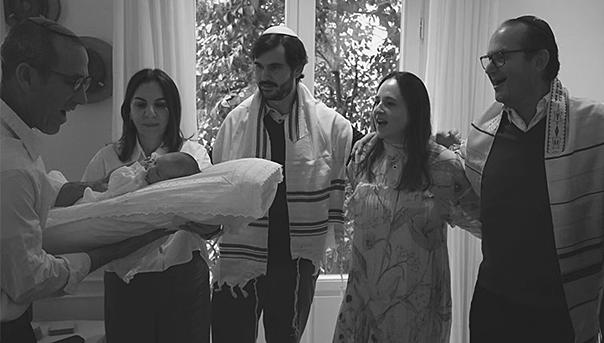
I once asked a colleague a similar question regarding Yom Hashoah. His response was unwavering: “I can’t think of a better day to make another Jew.”
As beautiful as the Spain brises were, they were held in private residences. It gave them a subdued feeling, as if being hidden from public view. It was much like the warning I received from close friends in the area. “Do you have a hat?” the couple checked as I left their home. “It’s one of the most frustrating parts of living here, but it’s necessary.” Although in my heart I only donned the hat for rain protection, it still made me feel like a hiding Jew.
Later, when speaking to the hotel concierge, I realized I had taken the hat off. “Does he know I’m Jewish? Does he care?” I wondered.
“You’re on the fifth floor,” he instructed me.
“Thanks,” I replied.
He leaned in with a smile. “Sababa.”
It was the most impactful word of my trip. This tiny interaction didn’t repair the Spanish government’s hostility, but it shattered the isolation. It was a reminder that even in the most unfriendly places, there are individuals who wish to bridge the gap — even if their leadership is intent on widening it.
No matter how unjustly countries treat Israel and their local Jewish populations, we traveling mohalim must make the journey to ensure our most sacred tradition continues — even on the hardest
period, a crimson thread was used in the Yom Kippur service. If it turned white like snow, it was a sign that the nation’s sins were forgiven. The snowfall in Spain did not serve this ancient purpose; there’s still a long way to go. But I pray that it’s an indication of things changing — that all of Europe will finally learn from its past and embrace the Jewish community, both at home and abroad, so we can soon see a better day.
Rabbi Hayim Leiter is a rabbi, a wedding officiant, and a mohel who performs britot (ritual circumcisions) and conversions in Israel and worldwide. Based in Efrat, he is the founder of Magen HaBrit, an organization protecting the practice of brit milah and the children who undergo it.
The views and opinions expressed in this article are those of the author and do not necessarily reflect the views of JTA or its parent company, 70 Faces Media.
If you do business with any of our advertisers, please tell them you saw their ad in the Jewish Press. It really helps us!
B’NAI ISRAEL SYNAGOGUE
618 Mynster Street Council Bluffs, IA 51503-0766
712.322.4705 www.cblhs.org
BETH EL SYNAGOGUE
Member of United Synagogues of Conservative Judaism 14506 California Street Omaha, NE 68154-1980 402.492.8550 bethel-omaha.org
BETH ISRAEL
SYNAGOGUE
Member of Union of Orthodox Jewish Congregations of America 12604 Pacific Street Omaha, NE. 68154
402.556.6288 BethIsrael@OrthodoxOmaha.org
CHABAD HOUSE
An Affiliate of Chabad-Lubavitch 1866 South 120 Street Omaha, NE 68144-1646
402.330.1800 OChabad.com email: chabad@aol.com
LINCOLN JEWISH COMMUNITY:
B’NAI JESHURUN
South Street Temple
Union for Reform Judaism
2061 South 20th Street Lincoln, NE 68502-2797
402.435.8004 www.southstreettemple.org
OFFUTT AIR
FORCE BASE
Capehart Chapel 2500 Capehart Road Offutt AFB, NE 68123
402.294.6244 email: oafbjsll@icloud.com
TEMPLE ISRAEL
Union for Reform Judaism (URJ) 13111 Sterling Ridge Drive Omaha, NE 68144-1206
402.556.6536 templeisraelomaha.com
LINCOLN JEWISH COMMUNITY:
TIFERETH ISRAEL
Member of United Synagogue of Conservative Judaism 3219 Sheridan Boulevard Lincoln, NE 68502-5236 402.423.8569 tiferethisraellincoln.org
Monthly Speaker Series Service, Friday, Feb. 13, 7:30 p.m. with our guest speaker, Cpt Jessica Wagner. Our service leader is Larry Blass. Everyone is always welcome at B’nai Israel!
For information about our historic synagogue, please visit our website at www.cblhs.org or contact any of our other board members: David Alloy, Renee Corcoran, Rick Katelman, Gail Kenkel, Janie Kulakofsky, Howard Kutler, Ann Moshman, Mary-Beth Muskin, Debbie Salomon and Sissy Silber. Handicap Accessible.
Services conducted by Rabbi Steven Abraham and Hazzan Michael Krausman.
IN-PERSON AND ZOOM MINYAN SCHEDULE: Mornings on Sundays, 9:30 a.m.; Mondays and Thursdays, 7 a.m.; Evenings on Sunday-Thursday, 5:30 p.m.
FRIDAY: Kabbalat Shabbat, 6 p.m. with Cantor Gil Ezring at Beth El and Live Stream followed by free dinner with Cantor Ezring (dinner registration was required by Feb. 9).
SATURDAY: Red Shabbat/Simcha Shabbat, 10 a.m. with Cantor Ezring followed by Lunch & Learn with Cantor Ezring; Havdalah, 6:30 p.m. Zoom Only.
SUNDAY: Morning Minyan, 9 a.m. Zoom Only.
TUESDAY: Baking Day, 10 a.m.; Sefer HaMiddot, 10:30 a.m. with Rabbi Abraham; USY Foodbank Program (Grades 8-12), 5 p.m.; Board of Trustees Meeting, 7 p.m.
WEDNESDAY: BESTT (Grades 3-7), 4 p.m.; Hebrew High (Grades 8-12), 6 p.m.; Gesher Lounge Night (Grades 6-8), 6 p.m.
THURSDAY: Mincha/Ma’ariv, 5:30 p.m. Zoom Only.
FRIDAY-Feb. 20: Kabbalat Shabbat, 6 p.m. at Beth El and Live Stream.
SATURDAY-Feb. 21: Shabbat Morning Services, 10 a.m.; Jr. Congregation (Grades K-12) 10 a.m.; Kiddush sponsored by Rabbi Steven Abraham & Pam Berkowitz, noon; Havdalah, 6:40 p.m. Zoom Only. Please visit bethel-omaha.org for additional information and service links.
BETH ISRAEL
FRIDAY: Nach Yomi, 6:45 a.m.; Shacharit, 7 a.m.; Mincha/Kabbalat Shabbat/Candlelighting, 5:38 p.m.
SATURDAY: Shabbos Café, 8:30 a.m.; Shacharit, 9 a.m.; Tot Shabbat 10:30 a.m.; Youth Class 10:45 a.m.; Mincha, 5:30 p.m.; Kids Activity/Laws of Shabbos 6 p.m.; Havdalah, 6:40 p.m.
SUNDAY: Shacharit, 9 a.m.; Mincha/Ma’ariv 5:40 p.m.
MONDAY: Nach Yomi, 6:45 a.m.; Shacharit, 7 a.m.; Mincha/Ma’ariv, 5:40 p.m.
TUESDAY: Nach Yomi, 6:45 a.m.; Shacharit, 7 a.m.; Mincha/Ma’ariv 5:50 p.m.
WEDNESDAY: Nach Yomi, 6:30 a.m.; Shacharit, 6:45 a.m.; Mincha/Ma’ariv 5:50 p.m.
THURSDAY: Nach Yomi, 6:45 a.m.; Shacharit, 7 a.m.; Mincha/Ma’ariv, 5:40 p.m.; Smichat Chaver
Men’s Class, 7:30 p.m.
FRIDAY-Feb. 20: Nach Yomi, 6:45 a.m.; Shacharit, 7 a.m.; Mincha/Kabbalat Shabbat/Candlelighting, 5:46 p.m.
SATURDAY-Feb. 21: Shabbos Café, 8:30 a.m.; Shacharit 9 a.m.; Tot Shabbat 10:30 a.m.; Youth Class 10:45 a.m.; Mincha 5:40 p.m.; Kids Activity/ Laws of Shabbos, 6:10 p.m.; Havdalah, 6:48 p.m. Please visit orthodoxomaha.org for additional information and Zoom service links.
Join classes via Zoom. Go to ochabad.com/academy. For more information or to request help, please visit www.ochabad.com or call the office at 402.330.1800.
FRIDAY: Shacharit, 8 a.m.; Lechayim, 5 p.m., go to ochabad.com/lechayim to join; Candlelighting, 5:37 p.m.
SATURDAY: Shacharit, 10 a.m. followed by Kiddush and Cholent; Shabbat Ends, 6:39 p.m.
SUNDAY: Sunday Morning Wraps, 9 a.m.
MONDAY: Shacharit, 8 a.m.; Personal Parsha, 9:30 a.m. with Shani; Intermediate Biblical Hebrew Grammar, 10:30 a.m. with David Cohen; Parsha Reading, 6 p.m. with David Cohen; Translating Words of Prayer, 7 p.m. with David Cohen.
TUESDAY: Shacharit, 8 a.m.; Aramaic Grammar, 10 a.m. with David Cohen; Intermediate Biblical Hebrew Grammar, 6 p.m. with David Cohen; Introductory Biblical Hebrew Grammar, 7 p.m. with David Cohen
WEDNESDAY: Shacharit 8 a.m.; Introductory Biblical Hebrew Grammar, 10:30 a.m. with David Cohen; Parsha Reading, 11:30 a.m. with David Cohen.
THURSDAY: Shacharit, 8 a.m.; Advanced Biblical Hebrew Grammar, 11 a.m. with David Cohen; Talmud Study, noon; Introduction to Alphabet, Vowels & Reading Hebrew, 6 p.m. with David Cohen; Code of Jewish Law Class, 7 p.m.
FRIDAY-Feb. 20: Shacharit 8 a.m.; Lechayim, 5 p.m., go to ochabad.com/lechayim to join; Candlelighting, 5:46 p.m.
SATURDAY-Feb. 21: Shacharit 10 a.m. followed by Kiddush and Cholent; Shabbat Ends, 6:47 p.m.
LINCOLN JEWISH COMMUNITY: B’NAI JESHURUN & TIFERETH ISRAEL
Services facilitated by Rabbi Alex Felch. All services offered in-person with live-stream or teleconferencing options.
FRIDAY: Shabbat Candlelighting, 5:41 p.m.; Kabbalat Shabbat Service, 6:30-7:30 p.m. led by Rabbi Alex at SST.
SATURDAY: Shabbat Morning Service, 9:30 a.m. led by Rabbi Alex at TI; Torah Study, noon on Parashat Mishpatim via Zoom; Havdalah, 6:42 p.m.; LJCS Havdalah @ Carlson's.
SUNDAY: No LJCS Classes this week; Men’s Bike/ Coffee Group, 10:30 a.m. at Rock 'N' Joe Coffee, 5025 Lindberg St, Lincoln. For more information or questions please email Al Weiss at albertw801@
gmail.com; We can do this - Feed the Children, 11 a.m.-1:15 p.m. at Belmont Community Center. Questions? Susie at 402.570.4922 or Aimee Hyten (SST Lead) 240.475.0747; Adult Ed: Understanding Worship Services: the Hows, Whys and Whens, noon at TI; Jewish Book Club 1:30 p.m. via Zoom. For more information, please contact Deborah Swearingen at: devra60@gmail.com.
WEDNESDAY: Men’s Lunch Group, 12:15 p.m. at Horisun Hospice, 8055 O St #300, Lincoln. We meet in the conference room. Bring your own lunch and beverage. For more information, contact Albert Weiss at albertw801@gmail.com; LJCS Hebrew School, 4:30-6 p.m.
THURSDAY: Jewish Day of Action, 8:30 a.m.–1:30 p.m. at the Capitol Rotunda.
FRIDAY-Feb. 20: Shabbat Candlelighting, 5:49 p.m.; Kabbalat Shabbat Service, 6:30-7:30 p.m. led by Rabbi Alex at SST.
SATURDAY-Feb. 21: Shabbat Morning Service, 9:30 a.m. led by Rabbi Alex at TI; Torah Study, noon on Parashat Terumah via Zoom; Family Potluck and Game Night, 6 p.m. at SST. Bring a dish to share for the potluck beginning at 6 p.m. Games are available to play, but feel free to bring one of your favorites! Games begin at 7 p.m.; Havdalah, 6:50 p.m.
FRIDAYS: Virtual Shabbat Service, 7:30 p.m. every first and third of the month at Capehart Chapel. Contact TSgt Jason Rife at OAFBJSLL@icloud.com for more information.
In-person and virtual services conducted by Rabbi Benjamin Sharff, Rabbi Deana Sussman Berezin, and Cantor Joanna Alexander.
FRIDAY: Drop-In Mah Jongg, 9 a.m.; Classic Shabbat Service, 6 p.m. In-Person & Zoom.
SATURDAY: Torah Study, 9:15 a.m. In-Person & Zoom; Shabbat Morning Service, 10:30 a.m. In-Person & Zoom.
SUNDAY: No Youth Learning Program this week.
TUESDAY: Mah Jongg Made Easy 1:30 p.m. In-Person.
WEDNESDAY: Yarn It, 9 a.m. In-Person; Grades 36, 4:30 p.m. In-Person; Hebrew CHAI: Grades 8-12, 6 p.m. In-Person.
THURSDAY: The Zohar: Thursday Morning Class, 11 a.m. with Rabbi Sharff — In-Person & Zoom.
FRIDAY-Feb. 20: Drop-In Mah Jongg, 9 a.m.; Tot Shabbat, 5:45 p.m. RSVP Required — In-Person; Classic Shabbat Service, 6 p.m. In-Person & Zoom.
SATURDAY-Feb. 21: Torah Study, 9:15 a.m. In-Person & Zoom; Shabbat Morning Service, 10:30 a.m. InPerson & Zoom.
Please visit templeisraelomaha.com for additional information and Zoom service links.
ASAF ELIA-SHALEV JTA
Since the end of World War II, Vienna has functioned as an Ellis Island for Jewish refugees from Europe and the Middle East, a place where survivors, dissidents and religious minorities arrived with little more than documents and hope, and departed toward new lives.
That role has come to an end: HIAS is shutting down its Vienna operations and laying off dozens of employees who worked there, following the Trump administration’s decision to halt the U.S. refugee program and terminate the federal grant that funded the Resettlement Support Center in Austria, which HIAS had operated for more than 25 years.
HIAS said the move has left more than 14,000 Iranian religious minorities — including hundreds of Jews and thousands of Baha’i, Christians, Zoroastrians and Sabean Mandaeans — stranded in Iran after having already been vetted and approved for resettlement in the United States. Several hundred Eritrean and other asylum seekers in Israel have also lost their pathway to resettlement following the closure.
“This decision leaves thousands of families in danger, with no pathway to safety,” Beth Oppenheim, HIAS’ chief executive officer, said in a statement.
The Trump administration has said the suspension of the refugee program is necessary because local communities lack the capacity to absorb additional arrivals, citing concerns about assimilation. In an executive order, the White House said refugee admissions should resume only if they align with U.S. national interests and do not compromise public safety, national security or taxpayer resources.
Oppenheim said HIAS continues to advocate for the restoration of refugee admissions and the reopening of lawful pathways for people fleeing religious persecution, and continues to provide services to thousands of refugees and asylum seekers around the world.
“For generations, the United States has stood as a beacon for those fleeing religious oppression, and we will fight to preserve that legacy,” Oppenheim said.
The closure of the Vienna office marks the end of an institution whose history closely mirrors the
modern history of Jewish displacement.
Known then as the Hebrew Immigrant Aid Society, HIAS began operating in Vienna in the aftermath of World War II, when Austria became a central transit country for Jewish survivors leaving displaced persons camps across Europe. During that period, the organization helped resettle roughly 150,000 Holocaust survivors to communities in the United States, Canada, Australia, South America and later Israel.
Vienna again emerged as a refugee crossroads after the 1956 Hungarian Revolution, when thousands of Jews fled Soviet-backed repression and passed through Austria on their way to new homes overseas. In later decades, the city became a key waypoint for Jews leaving the Soviet Union, particularly from the late 1970s through the late 1980s.
During that period, Vienna served as the first stop in what became known as the “Vienna-Rome pipeline,” the migration route used by more than 400,000 Jews from the former Soviet Union as they resettled in the United States and other countries. For U.S.-bound refugees, the Vienna office coordinated case preparation, documentation and interviews with American authorities.
JACK NOODELL
Jack Noodell passed away on Jan. 29, 2026. A memorial service was held on Feb. 1, 2026 and was officiated by Rabbi Deana Berezin.
He was preceded in death by parents, Chaim and Mollie (Dolgoff) Noodell; sister and brother-in-law, Pauline (Pat) Zebker and Phil Zebker.
He is survived by wife of 66 years, Maxine (Pred); son, David (Ann) Noodell; daughter, Marcy Noodell (Corey Kirshenbaum); grandchildren: Molly Gauthier (Corey), Ben Noodell (Ashley), Ryan Kirshenbaum (Elisa), Kylie Levine (Elliot); great-grandchildren: Lily, Noah, Emma.
Jack was a long -time teacher and a dedicated volunteer. Memorials may be made to the Rose Blumkin Jewish Home, Temple Israel or the organization of your choice.
Queen Esther was a vegetarian, so she would not break the kashrut laws. Because of this, we have a tradition to eat peas and legumes on Purim.
We are supposed to send our mishloach manot, not just give them to one another. For that reason, we should use a go-between. And yes, the US Postal Service counts.
In 1945, a group of American GI’s held belated Purim services inside Nazi propagandist Joseph Goebbels’ confiscated castle.
According to JTA coverage at the time, the Jewish chaplain “carefully arranged the candles over a swastika-bedecked bookcase in Goebbels’ main dining room,” and Jewish soldiers explained the holiday to their Christian comrades in attendance. When we have a leap year, Purim is only celebrated during the second Adar.

By becoming part of the past. This publication is available from ProQuest Information and Learning in one or more of the following ways:
• Online, via the ProQuest® information service • Microform
CD-ROM
Via database licensing
more information, call 1-800-521-0600, ext. 2888 (US) or 01-734-761-4700 (International) www.il.proquest.com
What stronger anti-drug message is there?
For more information call: 1-800-648-4444 http://www.prevlink.org
Dear Editor,
On the top part of the front page of the Thursday, Jan. 29, 2026 edition of the WSJ, the title reads: Israel Mourns Last Hostage Returned by Hamas with a photograph of the casket of Ran Gvili. Regrettably, this was patently false information.
In the editorial section of the WSJ of Friday, Jan. 30, 2026, there is a section titled 'Hamas Loses Its Last Hostage'. The editorial correctly establishes that Hamas did not release or return the remains of Ran Gvili. This editorial states: ‘Hamas Hands Over Body of Ran Gvili’, read the New York Times headline-before it was changed to reflect that Hamas did no such thing. Israeli forces had to find and extract his corpse.’
So the WSJ self-righteously brings to our attention the error of the New York Times, but fails to admit to its own erroneous reporting.
Placing flagrantly false information on the front page of a newspaper, whether it is the New York Times or the WSJ, does its immediate damage with significant lingering effects. Subsequent corrections or retractions do little if anything to repair the damage that is done by conveying false information. Publications such as the WSJ and New York Times have a moral and fiduciary responsibility to their readers to report the news truthfully and accurately the first time, and should take particular heed until their information is corroborated.
STEVEN J. WEES
Announcements may be e-mailed to the Press at jpress@jewishomaha.org; or mailed to 333 So. 132 St., Omaha, NE 68154. Readers can also submit announcements -- births, b’nai mitzvahs, engagements, marriages, commitment ceremonies or obituaries -- online at www.omahajewish press.com/site/forms/. Deadlines are normally nine days prior to publication, on Wednesdays, 9 a.m. Please check the Jewish Press, for notices of early deadlines.


ANNOUNCEMENT
ADVERTISE STATEWIDE for $225/25 word classified ad. Over 120 newspapers with circulation of more than 237,000. Contact the Jewish Press or call 1-800-369-2850.
HELLO NEBRASKA! Introducing www.nepublicnotices.com, a new public notice website presented as a public service by all Nebraska newspapers. Free access, fully searchable – because democracy depends upon open government and your right to know.
BANKRUPTCY RELIEF! Help stop Creditor Harassment, Collection Calls, Repossession and Legal Actions! Speak to a Professional Attorney and Get the Help You NEED! Call NOW 844-215-3629
AFFORDABLE PRESS Release service. Send your message to 155 newspapers across Nebraska for one low price! Call 1-800369-2850 or www.nebpress.com for more details.
FOR SALE - INSURANCE
DENTAL INSURANCE from Physicians Mutual Insurance Company. Coverage for 350 plus procedures. Real dental insuranceNOT just a discount plan. Do not wait! Call now! Get your
FOR SALE - SATELLITE
FREE Dental Information Kit with all the details! 1-855-490-4149 www.dental50plus.com/81 #6258
GET DISH Satellite TV + Internet! Free Install, Free HD-DVR Upgrade, 80,000 On-Demand Movies, Plus Limited Time Up To $600 In Gift Cards. Call Today! 1-877-688-4784
HOME SERVICES
PREPARE FOR power outages today with a Generac Home Standby Generator. Act now to receive a FREE 5-Year warranty with qualifying purchase. Call 1-402-899-2584 today to schedule a free quote. It’s not just a generator. It’s a power move. DOES YOUR basement or crawl space need some attention? Call Thrasher Foundation Repair! A permanent solution for waterproofing, failing foundations, sinking concrete and nasty crawl spaces. FREE Inspection & Same Day Estimate. $250 off ANY project with code GET250. Call 1-844-958-3431
SERVICES - PUBLISHING
BECOME A Published Author. We want to Read Your Book! Dorrance Publishing-Trusted by Authors Since 1920 Book manuscript submissions currently being reviewed. Comprehensive Services: Consultation, Production, Promotion and Distribution Call for Your Free Author`s Guide 1-877-858-2822 or visit dorranceinfo.com/Nebraska